DIAGRAMS AND CHARTS FOR 1970 0620
Class held on multiple days
Saturday, June 20th, 1970
Verbatim, unedited transcriptMultiday Class Held in Columbus, Ohio
with Anthony Damiani (AD)
June 20-21-22-23, 1970
PB Books; Hidden Teaching; Astrology
TOPIC: PB Books
SUBJECT: Hidden Teaching Beyond Yoga
SUBSUBJECTS: Mentalism, Epistemology, Astrology, Witness-I, Overself, Meditation, Metaphysics, Insight, Sage (and Avatar), Zen, Ego
CONTENTS:
1970 06/20 (day 1)
OVERVIEW OF THE HIDDEN TEACHING BEYOND YOGA; THE RELATIVITY OF SENSE IMPRESSIONS
THE RELATIVITY OF SPACE AND TIME
THE RELATIVITY OF KNOWLEDGE
HOLDING HIGHER AND LOWER POINTS OF VIEW SIMULTANEOUSLY
INSEPARABILITY OF OBSERVER AND OBSERVED
INSEPARABILITY OF SPACE AND TIME; RELATIVITY OF SENSE-KNOWLEDGE
DIFFERENCE IN APPROACH BETWEEN MYSTIC AND PHILOSOPHER
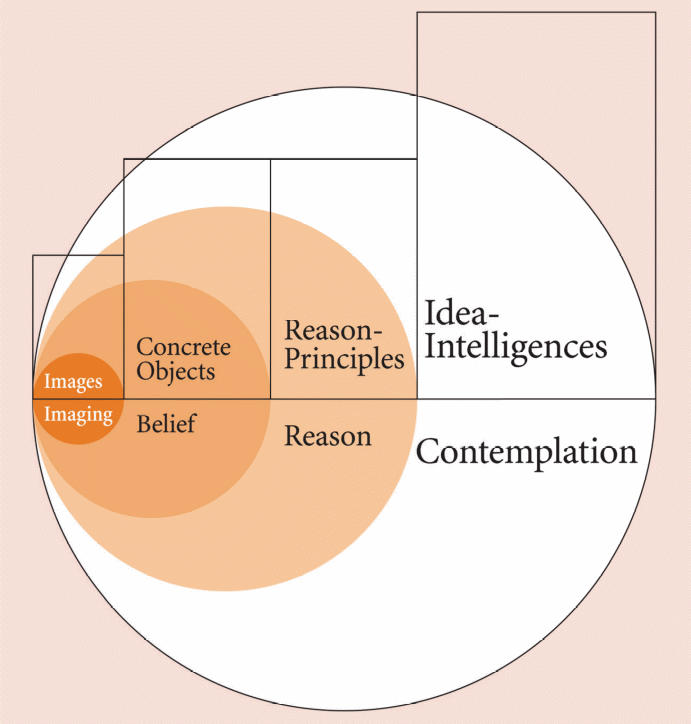
DIVIDED LINE
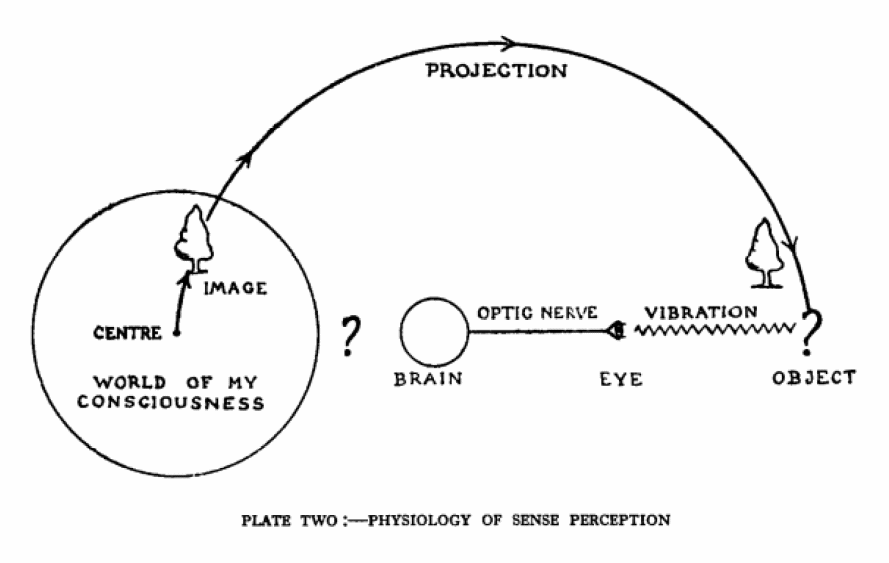
PHYSIOLOGY OF SENSE-PERCEPTION
MIND INTERPRETS SENSE-DATA, PRODUCES SENSATIONS
MOLECULAR ACTIVITY IN THE BRAIN NOT TO BE EQUATED WITH THINKING/AWARENESS OF OBJECT; WHAT IS MOTION?
ALL WE KNOW FOR CERTAIN ARE OUR SENSATIONS, NOT "THINGS OUT THERE"
IDENTITY VS. CONTINUITY OF AWARENESS, HINDU AND BUDDHIST VIEWS
WORLD KNOWN ONLY THROUGH IMMOVABLE SPECTACLE OF THE SENSES; EMOTIONS INTERFERE WITH THE REASONING PROCESS, ARE PROVOKED BY THE UNCONSCIOUS
REBIRTH BEGINS THE PROCESS OF SELF-DISCOVERY
JOSCELYN TO VISIT PB, "COME WITHOUT EXPECTATIONS"
WE ARE NOT AWARE OF SINGLE ISOLATED SENSATIONS BUT ONLY OF THE COMPLETED PERCEPT; SIX STEPS FROM STIMULUS TO RESPONSE; BOTH PHYSIOLOGICAL AND IDEATIONAL COMPONENTS INVOLVED IN PERCEPTION
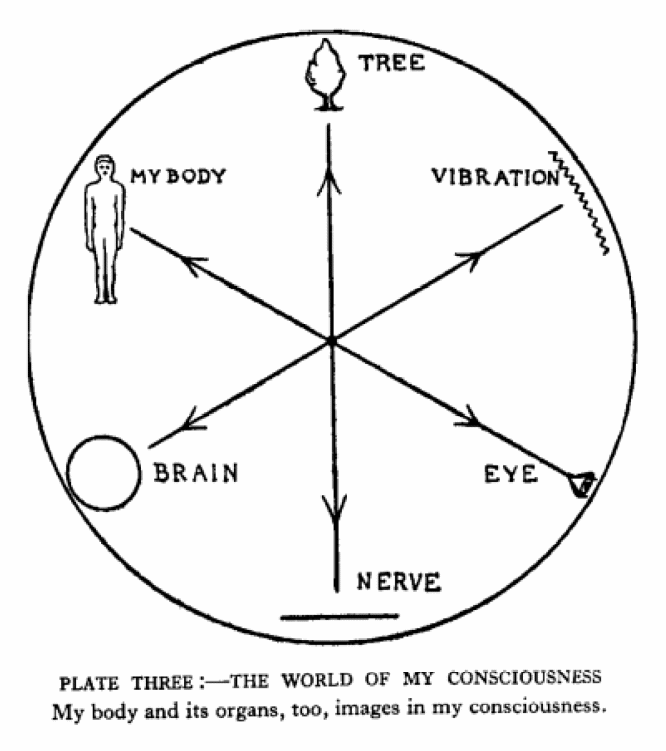
BODY AND OBJECT ARE INTERNAL TO THE MIND; MIND EXTERNALIZES ITS PERCEPTS
1970 06/21 (day 2)
HOROSCOPE FUNDAMENTALS
SATURN: STRUCTURE OF THE EGO
SUN/MERCURY, SUN/MOON; DEGREES AND ASPECTS
DIFFERENT SYSTEMS OF HOUSE CALCULATION; ASTROLOGICAL TWINS
ANALYSIS OF A STUDENT'S CHART
HEMISPHERES; RETROGRADE PLANETS
COMBUST
TIME/PLACE/MANNER OF BIRTH PREDETERMINED
IMPORTANCE OF HUMILITY; THE SHADOW
ASTROLOGICAL ANALYSIS OF SPECIFIC EVENTS
FOUR ELEMENTS AND TWELVE SIGNS; FOUR TRIADS
RULERSHIPS; CUSPS; DRAGON'S TAIL
READING AN EPHEMERIS; TRANSITS TO AD'S AND PD'S CHARTS
INTERCEPTIONS
ASTROLOGY AS A TOOL FOR SELF-UNDERSTANDING; PREDICTING DEATH
PLUTO IN LEO GENERATION
DISCUSSION OF MISCELLANEOUS ASTROLOGICAL TOPICS
CHARACTERISTICS OF THE SAGE; RAMANA MAHARSHI
CYCLES OF TIME; KALI YUGA; PLATONIC YEAR
BODY AND OBJECT ARE INTERNAL TO THE MIND; MIND EXTERNALIZES ITS PERCEPTS; PROJECTION
ILLUSIONS AND THE POWER OF MIND
DISTINGUISHING ILLUSIONS AND HALLUCINATIONS
ALL PERCEPTIONS ARE MENTAL IN CHARACTER; WHERE AND WHAT IS MIND
MIND PUTS FORTH ITS OWN CONSTRUCTIONS, PRODUCES SPACE AND TIME
TO A SAGE, THE WORLD IS A MANIFESTATION OF SELF
THE IMAGE IS FIRST
WITNESS-I; FOURTH STATE OF CONSCIOUSNESS
THE WORLD IS A PRESENTATION OF MIND TO ITSELF (NON-DUALITY); MIND CONTROL; LIBERATION
GREATNESS OF SAGE AND EFFECTS OF HIS PRESENCE; JUNG'S MYSTICAL EXPERIENCE; MIND IS UNLIMITED; PB'S EXPERIENCE OF THE LIGHT; PB AND RAMANA
WORLD-MIND IS SOURCE OF WORLD
1970 06/22 (day 3)
WITNESS-I; MEDITATION
MIND, WORLD-MIND, OVERSELF
KARMA; FREE WILL
IMPORTANCE OF FRAMEWORK IN QUESTION AND ANSWER
DEFINING METAPHYSICS, ONTOLOGY, COSMOLOGY; IDEAS MORE REAL THAN THINGS
SAGE'S EXPERIENCE OF THE WORLD INCLUDES BEING; SAGE'S EXPERIENCE OF BEYOND BEING EXCLUDES THE WORLD
DIFFERENCE BETWEEN SAGE AND AVATAR
KARMA AS CONTINUITY
INSIGHT VS. INTUITION
AUTOBIOGRAPHY OF HAN SHAN
THE WEST MUST ESTABLISH ITS OWN TRADITION; NINETEENTH CENTURY THE TRUE DARK AGE; COMMENTS ON HINDU, CHRISTIAN, AND NATIVE AMERICAN TRADITIONS
SUGGESTED NOVELS TO READ; COMMENTS ON BOOK BUSINESS, BOOKSTORE
AGITATION OFTEN PRECEDES GRACE; DIALOGUE WITH YOUR FEELINGS, DON'T RUN AWAY
HOW DO YOU KNOW ANYTHING?; WHO IS THE KNOWER?; KNOWLEDGE SITUATION DEMANDS SUBJECT, OBJECT, RELATIONSHIP
CONVERSATION WITH A SCIENTIST: IS MOLECULAR ACTIVITY IN THE BRAIN TO BE EQUATED WITH THE THINKING WHICH PRODUCES THE OBJECT/IMAGE?; WORM EXPERIMENT; DISTINGUISHING MEMORY, PERCEPTION, THINKING
THE IMAGE IS FIRST
DISTINGUISHING COSMIC AND INDIVIDUAL THINKING
ALL MONISM NEGATES EXPERIENCE; YOUR A PRIORI ATTITUDE DETERMINES YOUR METAPHYSICS
MORE DISCUSSION OF THOUGHT, PERCEPTION, MEMORY
COSMIC CONSCIOUSNESS STILL A FORM OF IGNORANCE
CAN THINGS BE THOUGHTS?; CONCRETING AN IMAGE THROUGH CONCENTRATION; PARANORMAL PHENOMENA
CONCEPT OF ENERGY; IMPORTANCE OF OPPOSITION IN PHILOSOPHIC DISCUSSION
MORE DISCUSSION OF WORM EXPERIMENT, THOUGHT, PERCEPTION, MEMORY
WORLD INSEPARABLE FROM MIND THAT KNOWS IT; THE TWO ARE ONE
MORE DISCUSSION OF WORM EXPERIMENT, OTHER SCIENTIFIC EXPERIMENTS; FACTOR OF TELEPATHY IN SCIENTIFIC EXPERIMENTATION WITH ANIMALS
THE PERCEPT IS THE THING; E.S.P. EXPERIMENT
OBJECTIONS TO MENTALISM; MIND AND BRAIN
PRIMACY OF CONSCIOUSNESS
ORDER OF QUESTIONS IMPORTANT; EGO'S RESISTANCE TO INQUIRY; IMPORTANCE OF HUMILITY, MENTAL DISCIPLINE, AND PERSEVERANCE IN STUDY
WORLD-MIND'S THINKING
THE POWER OF SOUND; SHABDA YOGA
1970 06/23 (day 4)
WORLD-MIND PROVIDES THE MATERIAL, INDIVIDUAL MIND PROVIDES THE FORM; PANTHEISM
NOTHING CAN BE KNOWN APART FROM THE KNOWER
THE PERCEPT IS THE THING; OBJECTIONS TO MENTALISM; ORDER OF QUESTIONS IMPORTANT; MIND AND BRAIN
PRIMACY OF CONSCIOUSNESS; PHYSIOLOGIST'S GAP
MIND ONLY KNOWS IDEAS
BODY IS MENTAL; FORCE OF PROJECTION; EPISTEMOLOGY IS AN EXPERIMENT YOU HAVE TO DO; "MENTAL COPY" THEORY
TRADITIONALISTS, ALAN WATTS; KANT; THOUGHT PRODUCES OUR EXPERIENCE
BOOKS / JOURNALS READ FROM OR REFERENCED:
Paul Brunton, The Hidden Teaching Beyond Yoga
Paul Brunton, The Wisdom of the Overself
Paul Brunton, Discover Yourself (also published as The Inner Reality)
Paul Brunton, The Quest of the Overself
Paul Brunton, A Search in Secret India
Paul Brunton, The Secret Path
J.J. van der Leeuw, The Conquest of Illusion
Ashtavakra, Ashtavakra Samhita
Vyasa, Bhagavad Gita
Swami Nikhilananda, The Mandukyopanishad with Gaudapada's Karika and Sankara's Commentary
Sir Arthur Eddington (Scientific Works)
Locke, Berkeley, Hume, Kant, Schopenhauer (Epistemological Works)
Plotinus, The Enneads (MacKenna translation, 4th ed.)
Plato, Parmenides
Alvin Boyd Kuhn, India's True Voice
Trevor Leggett, The Tiger's Cave and Translations of Other Zen Writings
King James Bible, John (1:5, 3:3)
Grant Lewi, Heaven Knows What
Marc Edmund Jones, Astrology, How and Why It Works: An Introduction to Basic Astrology
Marc Edmund Jones, The Astrology of Concepts
E. Parker, Coba Goedhart, Astrology and Its Practical Application
R.D.M. Shaw (tr., ed.), The Blue Cliff Records: The Hekigan Roku
W.J. Stein (ed.), The Present Age, Vol. 2 (1937)
Hans Hasso Baron Von Veltheim, W. J. Stein (ed.), Indian Journeys
Sister Nivedita, Ananda K. Coomaraswamy, Myths and Legends of the Hindus and Buddhists
Bertrand Russell, The Problems of Philosophy, Principia Mathematica
C.G. Jung, CW 13, Alchemical Studies
H. Rider Haggard, She: A History of Adventure
C.G. Jung, Memories, Dreams, Reflections
Mundaka Upanishad
Sri Venkataramiah (Swami Ramanananda Saraswati), Recorder, Talks with Sri Ramana Maharshi
Ernst Cassirer, The Philosophy of Symbolic Forms, 3 volumes
The Diamond Sutra
Garma C.C. Chang, The Practice of Zen
Herman Hesse, The Glass Bead Game (Magister Ludi), Siddhartha
Johannes Anker Larsen, The Philosopher's Stone, Martha and Mary, A Stranger in Paradise (All Works)
Will L. Garver, Brother of the Third Degree
Edward M. Gurowitz, The Molecular Basis of Memory
Louisa E. Rhine, ESP in Life and Lab: Tracing Hidden Channels
Julius Evola, The Doctrine of Awakening
H.P. Blavatsky, The Voice of the Silence
Ramamurti S. Mishra, The Textbook of Yoga Psychology
Mircea Eliade, Yoga: Immortality and Freedom
Sir Charles Sherrington, Man on his Nature
L.C. Beckett, Neti, Neti (Not This, Not That), Movement and Emptiness, etc.
Alan Watts, The Supreme Identity
Alan Watts, The Book: On the Taboo Against Knowing Who You Are
DIAGRAMS and CHARTS appended to this transcript:
FIGURE 1970 0620-1. Divided Line.
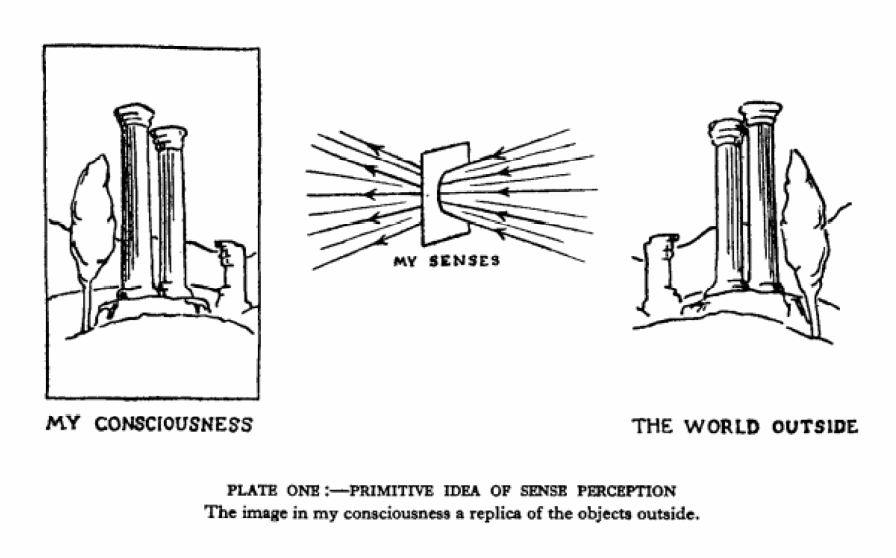
FIGURE 1970 0620-2. Primitive Idea of Sense Perception.
FIGURE 1970 0620-3. Physiology of Sense Perception.
FIGURE 1970 0620-4. The World of My Consciousness.
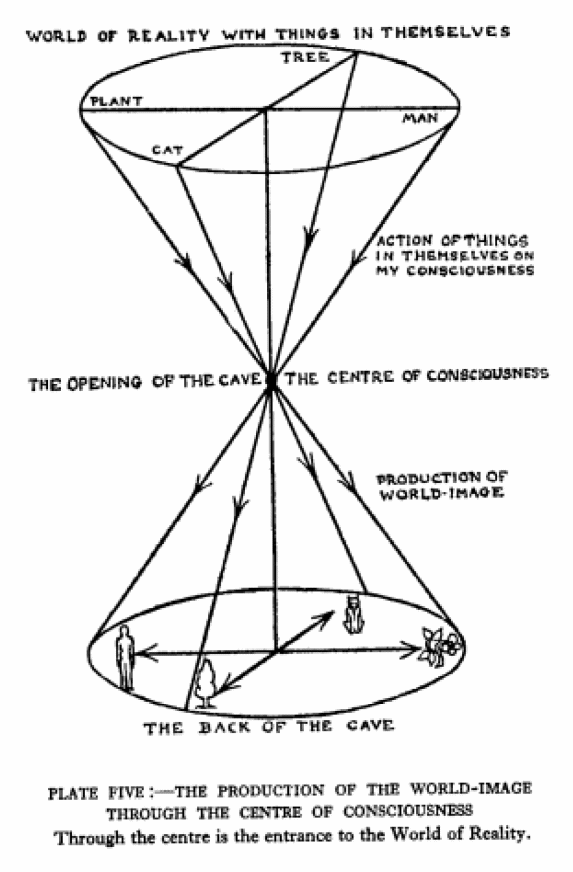
FIGURE 1970 0620-5. The Production of the World-Image Through the Centre of Consciousness.
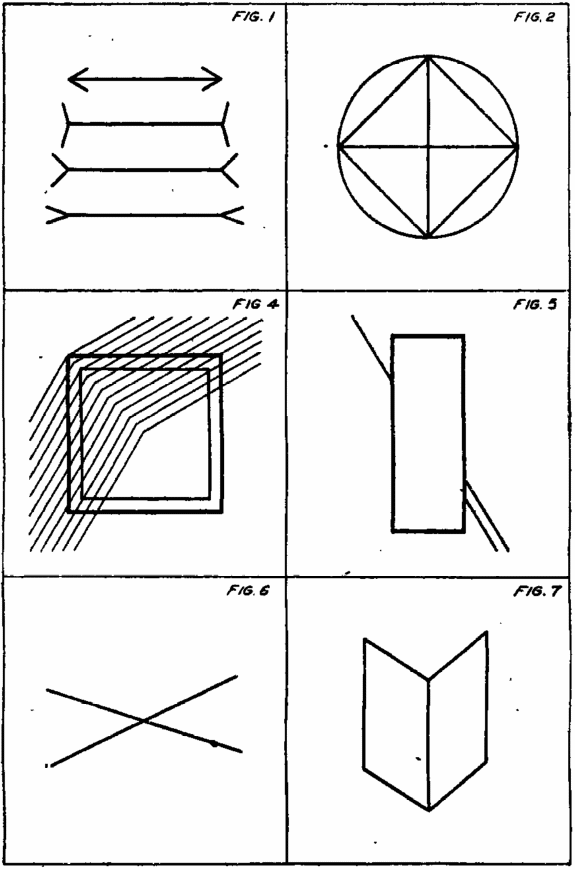
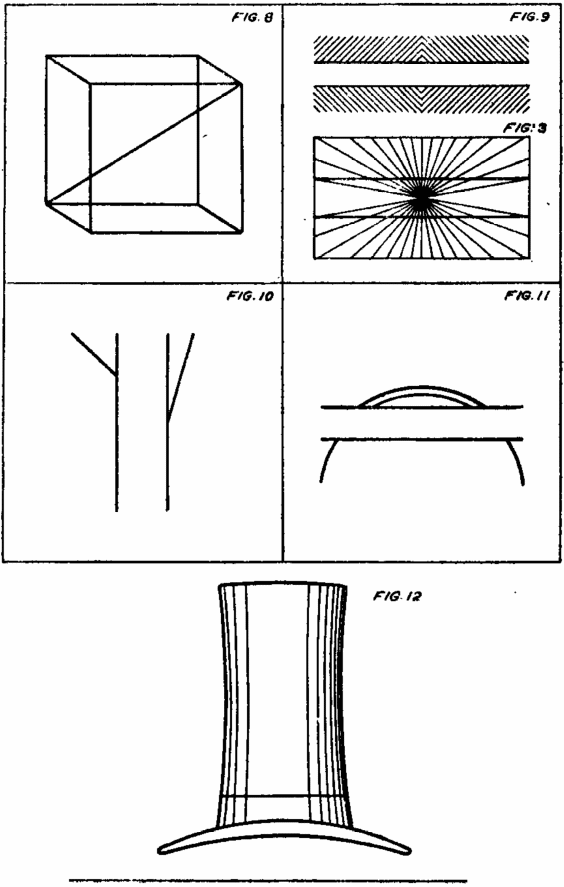
FIGURE 1970 0620-6. Optical Illusions.
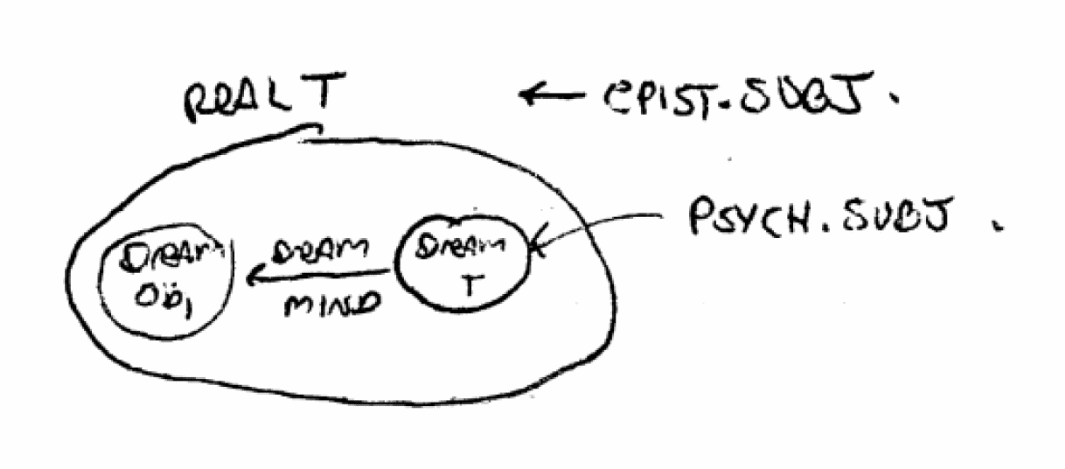
FIGURE 1970 0620-7-AB. Real Tony and Dream Tony Knowing Dream Objects.
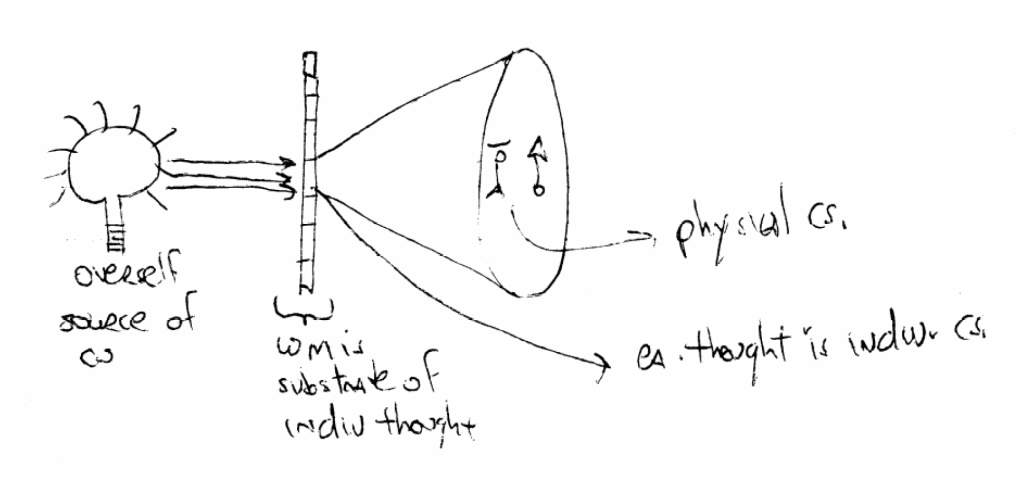
FIGURE 1970 0620-8-AB. Overself, World-Mind's Thinking, and Physical Consciousness.
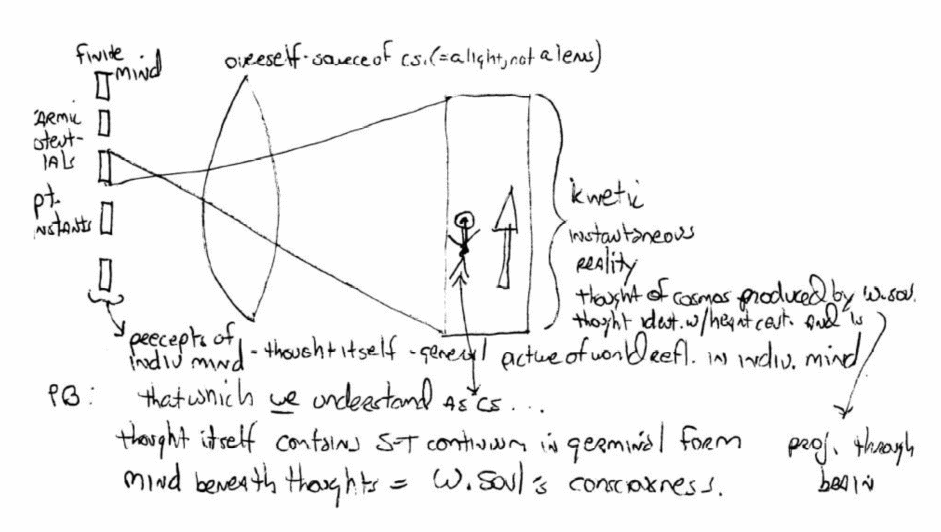
FIGURE 1970 0620-9-AB. Finite Mind, Overself, and World-Image.
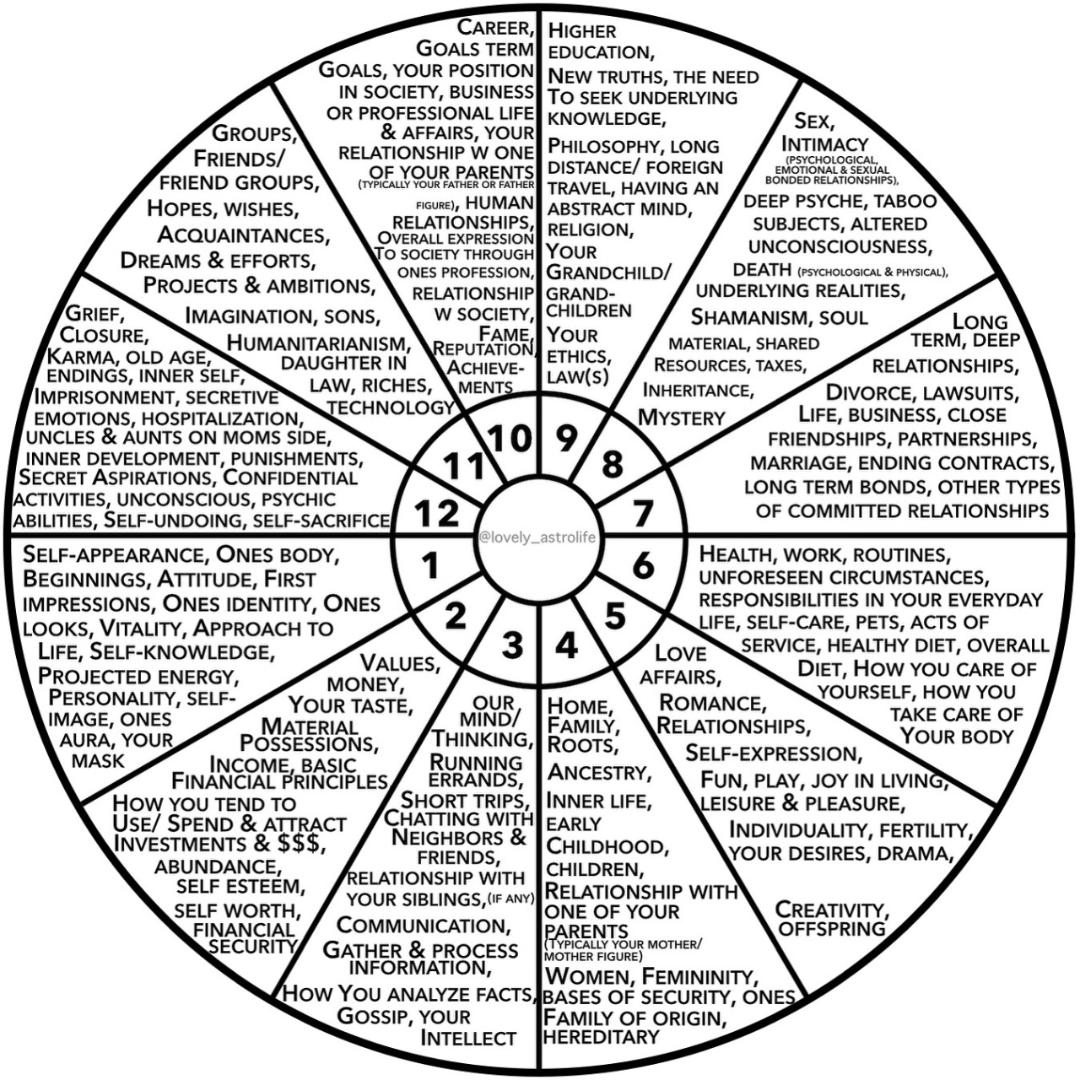
FIGURE 1970 0620-10. The Twelve Houses.
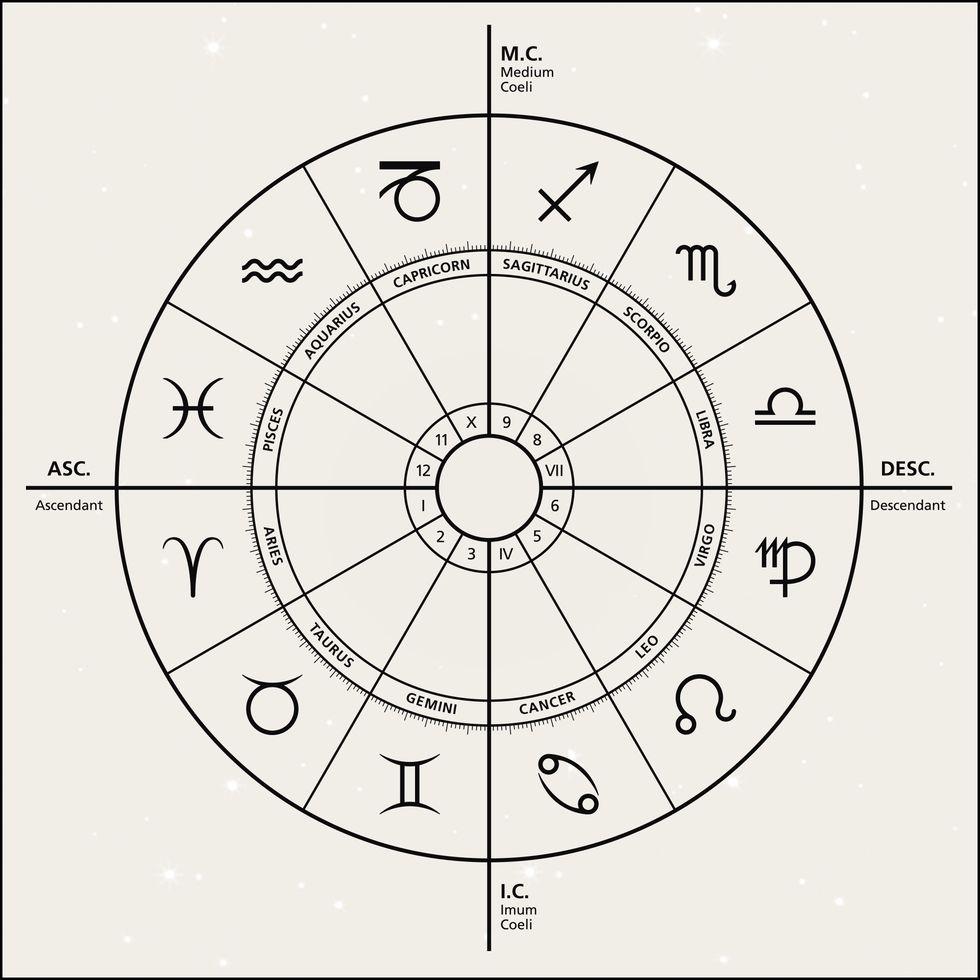
FIGURE 1970 0620-11. The Twelve Signs and Cardinal Cross.
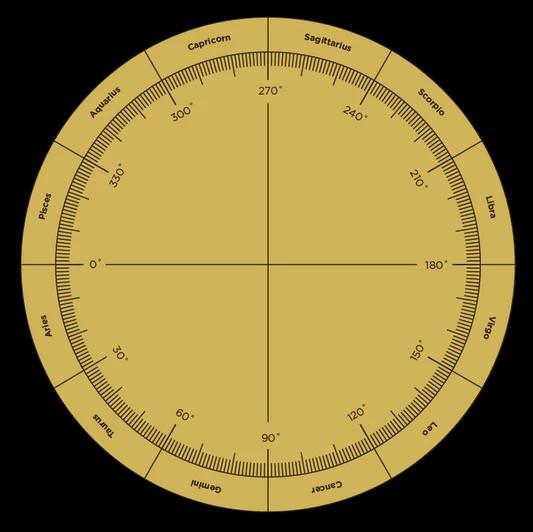
FIGURE 1970 0620-12. The Twelve Signs and 360 Degrees.
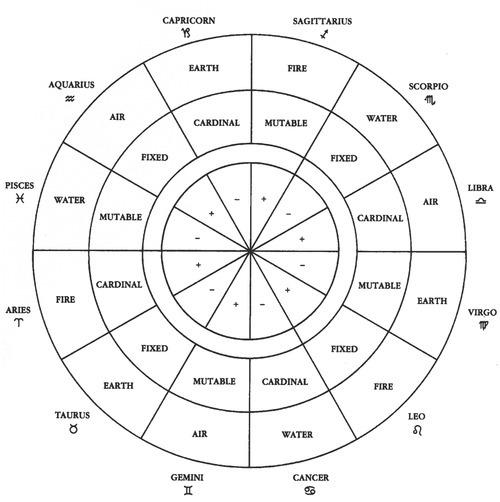
FIGURE 1970 0620-13. The Twelve Signs, Four Elements, and Three Modalities.
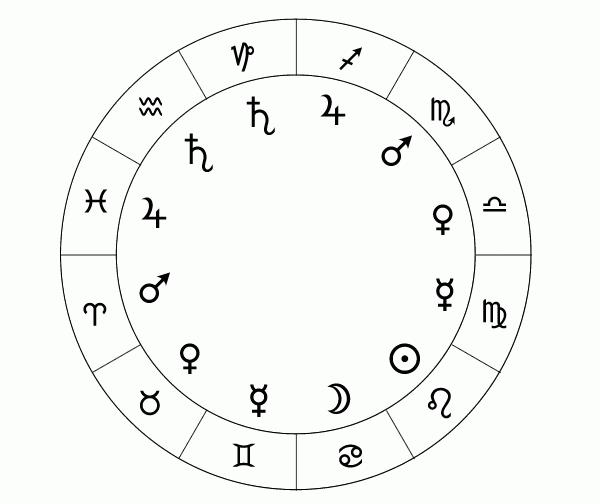
FIGURE 1970 0620-14. Signs and Rulers.
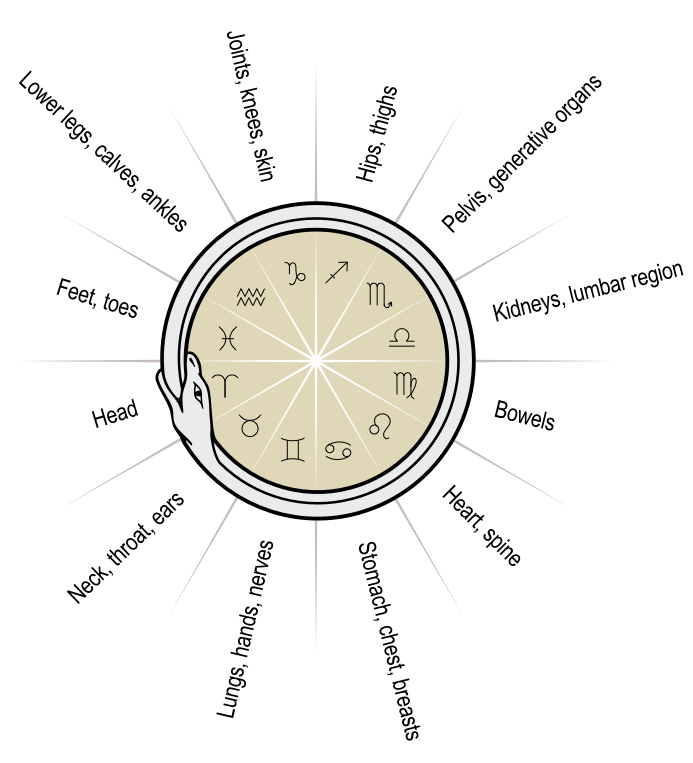
FIGURE 1970 0620-15. Signs and Body.
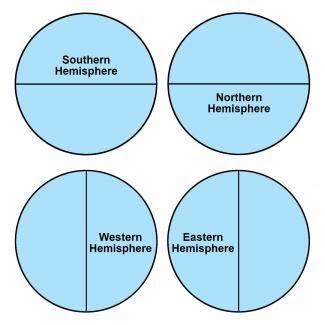
FIGURE 1970 0620-16. Four Hemispheres.
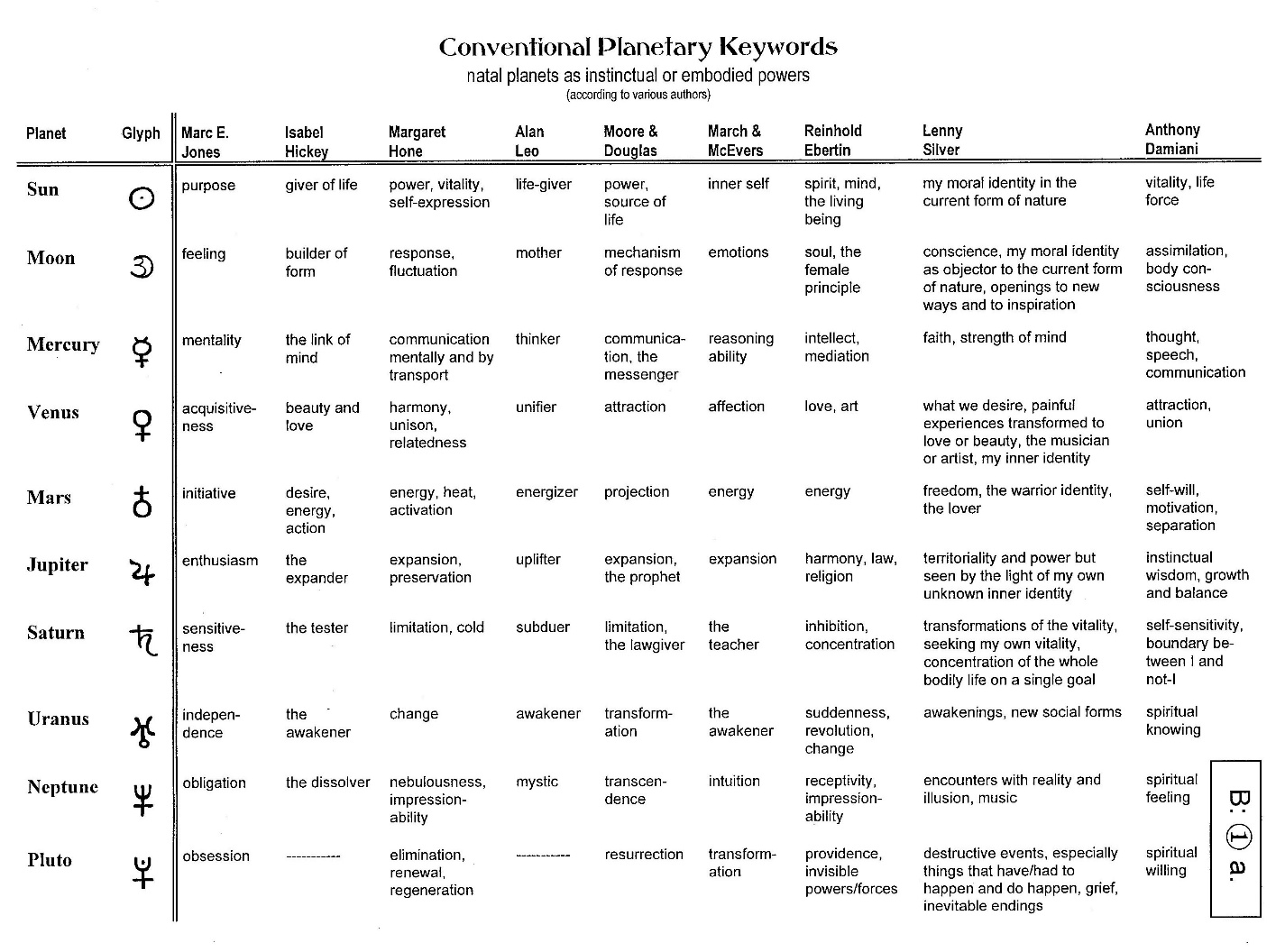
FIGURE 1970 0620-17. Planets, Glyphs, and Keywords.
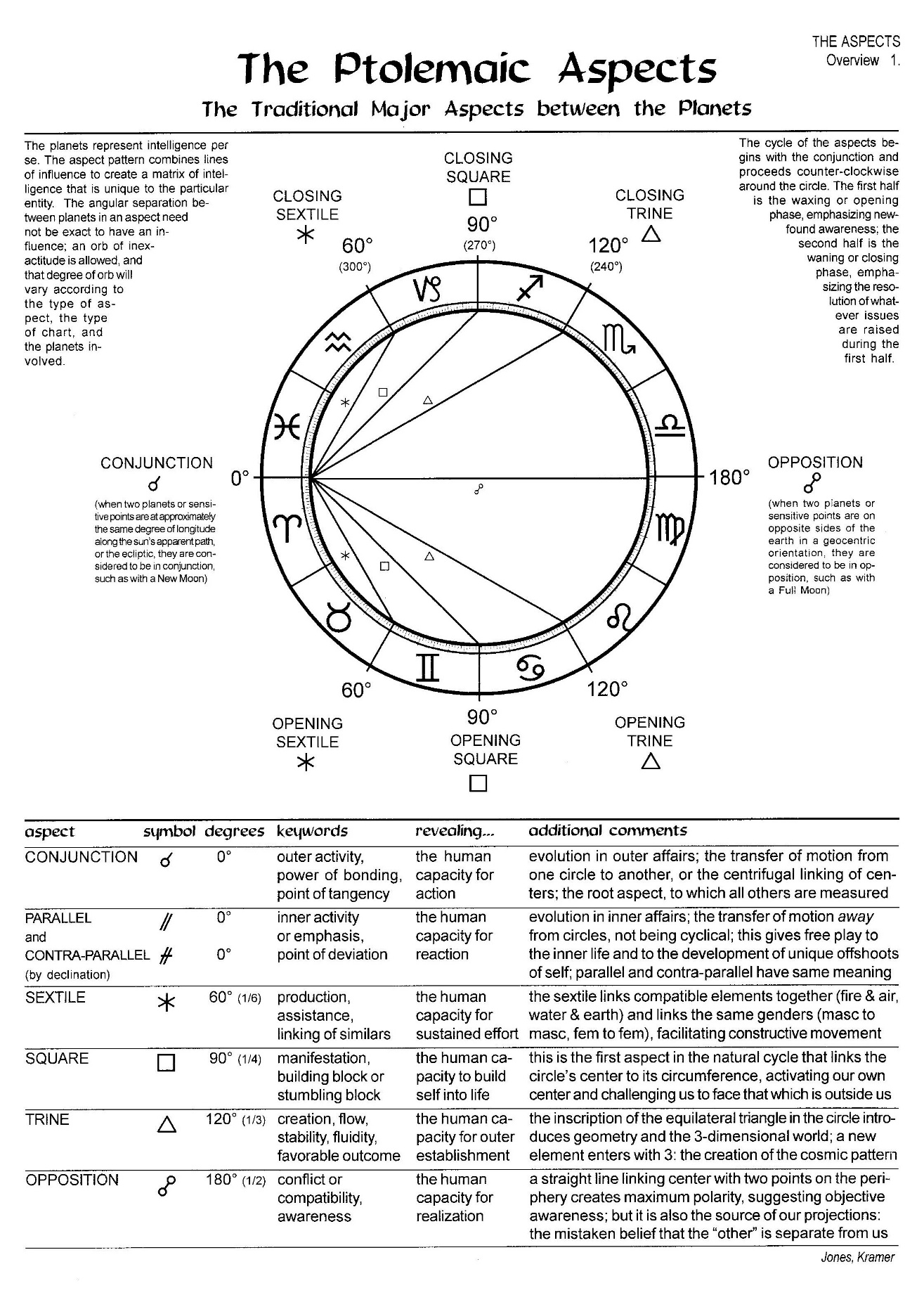
FIGURE 1970 0620-18. Ptolemaic Aspects.
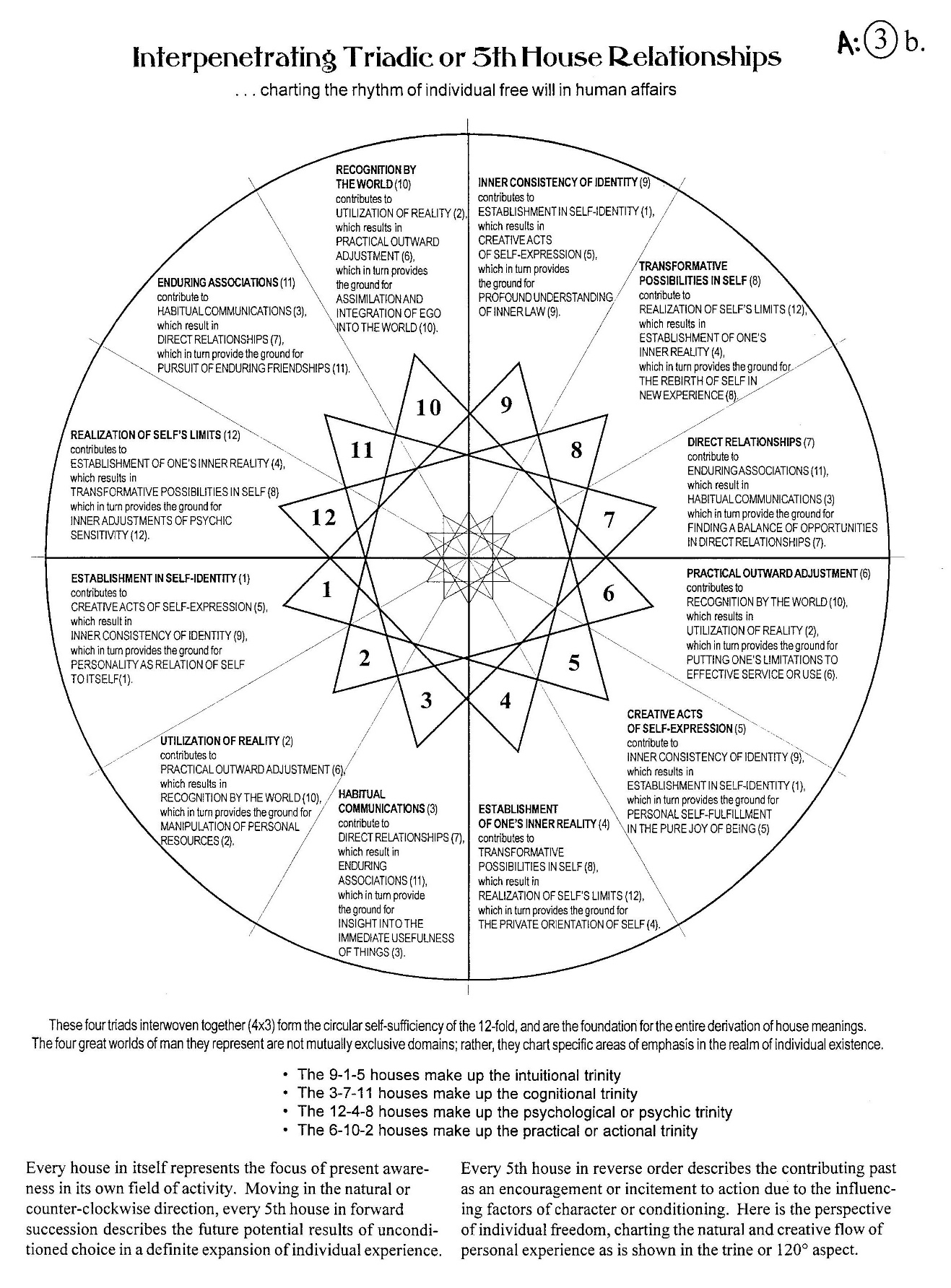
FIGURE 1970 0620-19. Interpenetrating Triadic Relationships.
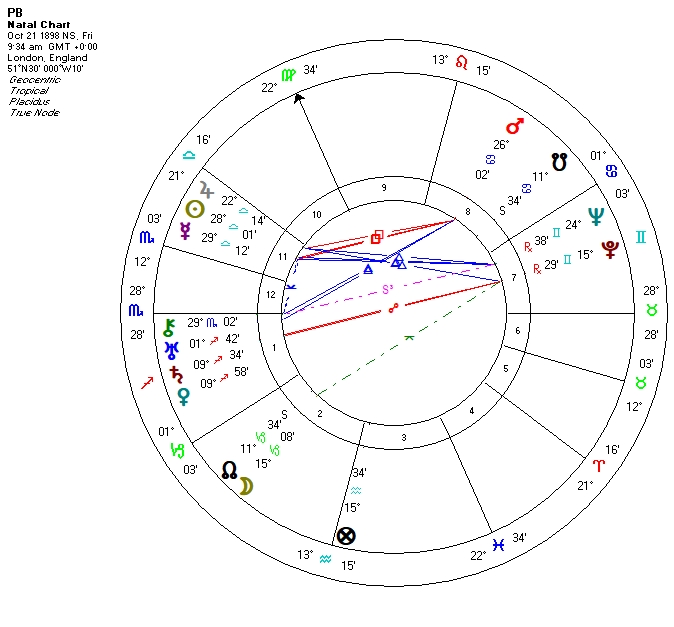
FIGURE 1970 0620-20. Paul Brunton (PB) Natal Chart ("official").
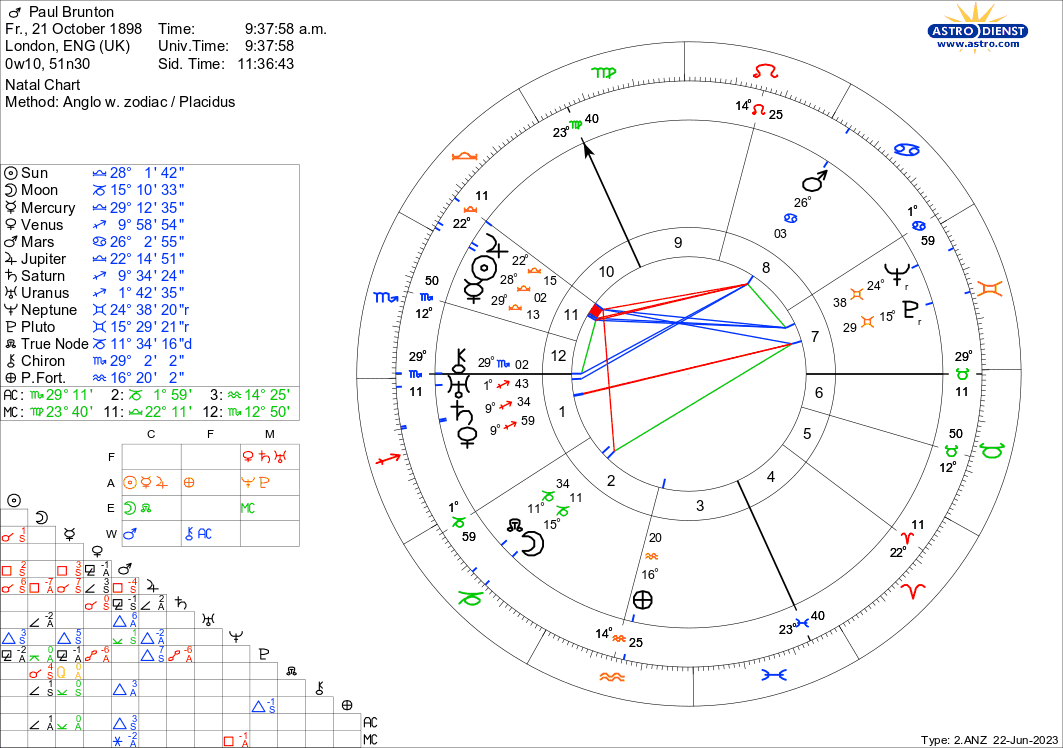
FIGURE 1970 0620-21. Paul Brunton (PB) Natal Chart (TS rectified).
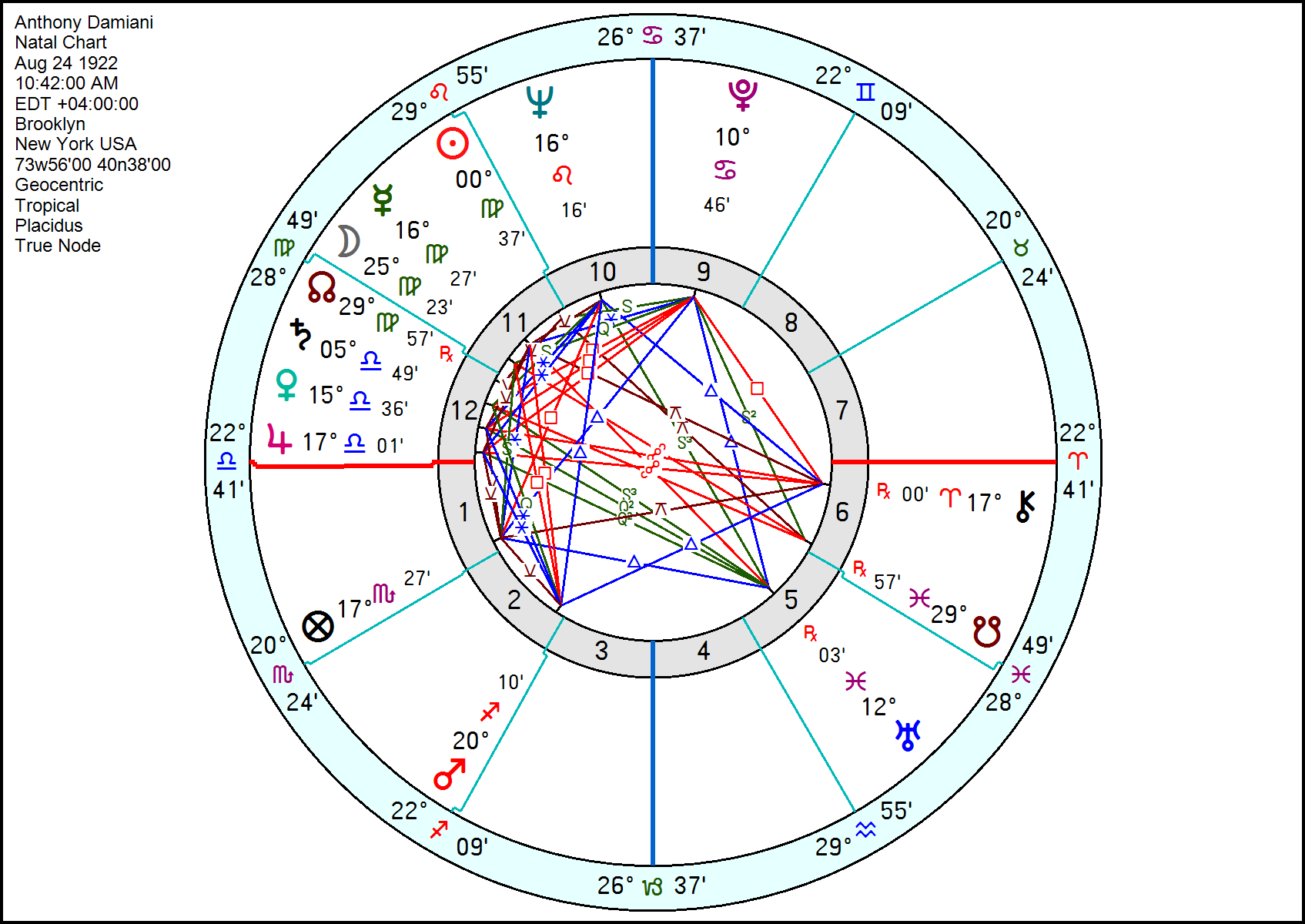
FIGURE 1970 0620-22. Anthony Damiani Natal Chart.
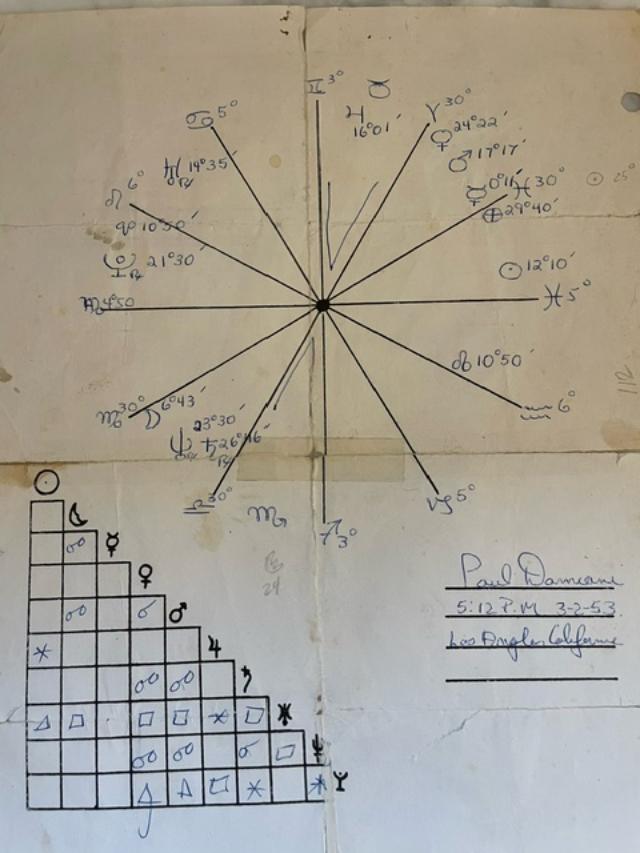
FIGURE 1970 0620-23. Paul Damiani Natal Chart.
Other diagrams referred to are not with this transcript version. [Transcriber note: [diagram] means the speaker is referencing a diagram as he or she is speaking. If someone is drawing or writing, with audible sounds of chalk on a blackboard, I indicate this by [drawing] or [writing].]
SABIAN SYMBOLS: Taurus 12, 13
NOTES:
AD = Anthony Damiani; RW = Richard Witter; EMD = Ella May Damiani; PD = Paul Damiani
IT determined the dates of this event were June 20-21-22-23, 1970.
TRANSCRIBED Verbatim by IT 2019; Subheads and Table of Contents added by JRM 2019-2020. In 2024, IT updates prefatory matter and footer, relabels audio files correctly, alters Subheads to make more accurate, fixes errors/typos, adds new notes within transcript, adds twenty-two diagrams in addition to the one previously appended and references within transcript to these diagrams. In 2025, IT updates audio file markers to match new REP audio. Archival verbatim transcript – V14.1a.
AUDIO FILES: 1970: 01, 01b, 02, 03, 04, 05, 06, 07, 08, 09, 10, 11, 12, 13, 14, 15, 16, 17
[Note 1: "Tape" refers to original audio cassette tapes that were later digitized into .MP3 Audio Files. Note 2: Audio files/cassette tapes are not labeled by date. The dates were figured out using context clues within the transcript. Audio content on 10 (formerly 11) runs over from day 2 into day 3. This transcript includes "DATE" breaks to assist reading. Note 3: Some audio files were out of order but have since been relabeled correctly. See below. Note 4: In 2025, REP Studio combines audio files 08 and 08b into one file, cuts dead air and non-class related material from files 16 and 17, and converts files 04, 05, and 07 from WMA to MP3.]
| NEW FILE NAME | OLD FILE NAME |
| 01-09 | 01-09 |
| 10 | 11 |
| 11 | 10 |
| 12, 13 | 12, 13 |
| 14 | 15 |
| 15 | 14 |
| 16, 17 | 16, 17 |
1970 06/20 Class Held in Columbus, Ohio (Day 1 of 4-Day Event)
PB Books; Hidden Teaching Beyond Yoga; Astrology
Archival Verbatim Transcript
OVERVIEW OF THE HIDDEN TEACHING BEYOND YOGA; THE RELATIVITY OF SENSE IMPRESSIONS
[Audio File 1970, 01 Begins]
AD: --5 and 6, alright, because they're chapters that you can understand yourself. You shouldn't have any difficulty with those first (few) chapters. "Beyond Yoga" is-- and "The Ultimate Path" is kind of autobiographical in the sense PB speaks a little bit about himself. In the third chapter on "The Religious and Mystic Grades", he makes certain divisions, which we'll go into very briefly.
The fourth chapter, "The Hidden Philosophy of India," he-- he gives-- he gives reason why he-- he thinks that India is really the cradle of most (of) [one word inaudible] India actually is the only place in the world where the tradition has to some extent remained alive. In most countries, like for instance in Greece-- [aside: Thanks.] in Greece-- [aside: Oh, thank you Chris.] in Greece they used to have the Mysteries. You ever hear of the Mysteries in Greece? You know what they were about? The same thing, Platonic doctrines, the Orphic doctrine, was about the same thing. Well then, at any rate it died in Greece, you know, it perished. As a matter of fact, Proclus was the last of the great Greek Platonist(s), he-- I think he died around 485 and the Emperor Justinian closed the academic schools from 500 to 30, 525, so that most of the Platonists left and moved to Persia in the Middle East, ok, so the tradition died in Europe. Strangely enough, the Platonic tradition, which was carried into the Middle East, later on was picked up by the Sufis. I don't know if you're acquainted with the Sufi mystical philosophy of the-- the Gnosticism of the Moslems. They picked it up and they used it as the background or the prop to support their mysticism, alright.
So, then the fifth chapter is concerned with philosophical discipline. Now, the fifth chapter is basically psychological. It points out certain qualifications that anyone has to sooner or later acquire if he expects to get all the way to the end of this teaching. The sixth, "The Worship of Words," well there we get into semantics.
The-- these are the-- these are rough chapters, 8, 9, 10, 11, and 12, alright. Chapter 8 is "The Revelation of Relativity," 9, "From Thing to Thought," "Secret of Space and Time," "Magic of Mind," "Downfall," and I think if I concentrate on those chapters, then I can go into The Wisdom of the Overself, alright? [S, faint: Yeah.] So that the other chapters-- the other chapters, like I say, you can do on your own. This is my copy.
S (very faint): Exactly.
[short pause]
AD: I should say Paul's copy. [12 second pause, flipping of pages] Alright uh-- In Chapter 8 he deals with rel-- relativity. Now he's not concerned basically-- he's not concerned basically with the mathematical equations that we-- we use in relativity. [student assents, very faint] That's unimportant. What we're-- we're going to be concerned with is try to get a psychological insight into what relativity means. [short pause] Well, allow me a few minutes to warm up and as we go along-- At the bottom of the page he starts off, he says--
[Transcriber note: I am using The Hidden Teaching Beyond Yoga by Paul Brunton, E. P. Dutton & Co., Inc., New York, 1969, c1941 by Rider and Company, London.]
PB [The Hidden Teaching Beyond Yoga, "The Revelation of Relativity," pp. 208-209, AD reading]: "The alarmed reader may however be immediately reassured. He is not asked to doubt the existence of this world which is the first fact that confronts his eyes every morning and the last one that he shuts his eyes on every night. He is asked to question the truth of the sights, sounds and feels of which he is aware and the reality of the objects thus seen, heard or felt, all of which nobody but a lunatic would think of dismissing as non-existent. These are two separate and distinct questions which demand different treatment; it will suffice therefore to consider in this chapter how far our knowledge is basically true and to reserve for the following chapter how far what is known is also basically real."
S (very faint): Uh-hm.
AD: Alright? Now you can underline that because that's all this chapter's going to deal with. Alright, I'll give it to you in a very brief sentence. Here's a stick and it's in the water, alright, and when you're looking at the stick it's bent. [S, very faint: Uh-hm, that's right.] And you take the stick out and you see the stick isn't bent. Well, well, something's wrong here. Now either the s-- either there's something wrong with the organs that you use to apprehend, ok, and if that is so, alright-- Suppose, suppose you make the discovery-- you make the discovery that this is so. In other words, this stick is not really bent but you see it as bent. Well, then if that is so where do you draw the line? What is there that you see, hear, taste, and smell that may not be, so to speak, you know, a piece of false knowledge? Would you know where to draw the line, Charlie?
S: Mm.
[15 second pause]
AD: Well he goes on to say something like this.
PB [The Hidden Teaching Beyond Yoga, "The Revelation of Relativity," p. 209, AD paraphrasing]: "One of the few supreme events in the scientific world in our generation was the principle of relativity which was formulated by Einstein."
S (faint): Ok.
AD: By the way, Einstein thought up the theory of relativity long before the Michelson-Morley experiment, right? Do you know?
S: He got the idea from-- from one of the-- didn't he-- didn't Ouspensky come up with that in-- before him, or am I thinking of something else?
AD: You're thinking of something else. As far as I remember, he speculated and thought about this for about ten years before he even put it down. I think it was around 1905. As a matter of fact he speculated like a philosopher should do, you know, gave it a lot of thought. But anyway that's-- it's unimportant. The point-- the point is that it really introduced into our-- into our whole framework of reference a factor of variability that can be quite frightening, you know, because once you take out fixity out of your framework you're going to have to deal with flexible framework and most people don't want to do that. Alright, and he says over here--
PB [The Hidden Teaching Beyond Yoga, "The Revelation of Relativity," p. 210, AD reading]: "[For] mathematics is only a kind of logical shorthand whose symbols yield conclusions from given data with a quickness unknown to logic."
AD: They're subject to the laws of logic like, you know-- [short pause] Alright, he starts getting interesting around the top of 212, he says--
PB [The Hidden Teaching Beyond Yoga, "The Revelation of Relativity," p. 212, AD reading]: "Relativity has taken the unalterable fixity out of time and turned it into a variable dimension. [AD: Now put into plainer language that means something like this.] … [For] the sense of time is not an absolute actuality but an interpretation of both clock and star made by a conscious being. It is the way sensations arrange themselves in the mind. There is no such thing as an absolute measure of time. Close analysis will reveal that all our measurements [AD adds: are] based on planetary revolutions [AD adds: which] are ultimately nothing else than our relative impressions. Einstein began to point this out but he did so without realizing its [AD reads: the] fullest consequences."
AD: And even now of course scientists still don't realize the full consequences of that. Suppose we were to think of a couple examples, you know. Alright? Try to think of a couple examples, the relativity of all sense-impressions. Well, what kind of a world does an animal see? Like a dog too, does he see color, the horse, dog, do they see color?
S (faint): They're not supposed to.
AD: Hm? But--
S (simultaneously): They're not supposed to.
S: Dogs I don't know.
AD/S(?) (faint): Yeah but--
AD: Which world is more real, his or yours? Take for instance if you were turned into a tiny amoeba, alright, and put into a tube with a-- about ten-- ten pieces of charcoal and ten pieces of salt, alright. Do you think he would see the same color you and I see?
S (faint): Uh-hm.
AD: You see, what's interesting here, the cognitional apparatus, the means that you use with which to apprehend the world, alright, is already determining for you what kind of world you're going to see. It's like a man who puts on blue glasses, all he's going to see is blue.
S: Dogs could hear sounds that we can't hear.
AD: Yeah, that-- that's very true.
S: And instruments can pick up vibrations we can't.
AD: Well, you see there again you would have to interpret it by another conscious being, that the instruments don't pick up anything.
S: A person who is, you know, like-- you could-- if you thought of the instrument as part of his apparatus or--
AD (simultaneously): An ex-- an extension of his apparatus.
S (simultaneously): Yeah.
AD: Yeah, but don't you see, there again you have to interpret it by [student assents] a conscious being.
S: How far that goes is his ears, his eyes are really the instrument that's connected directly to his nervous system.
AD: Ok, ok.
S (simultaneously, faint): Because they don't like to go (further).
AD (simultaneously): Alright, so you see that it's like an extension, [S: Yeah.] alright. So the kind of intellectual apparatus you have to work with is already predetermining what you're going to see, alright? This is what relativity basically means from a psychological point of view. You can alter, for instance, the-- the body, alright. You can induce by drugs a change so that you don't perceive the world the way you perceive it now, alright. That's relative, yeah, yeah.
S (simultaneously): That's what I was thinking about in terms of Ouspensky time. Didn't-- he-- he had something in there, I think that he said that we perceive three dimensions and the fourth dimension of time simply because that's all we can perceive is three dimensions directly and fourth and all higher dimensions he says [couple/three words inaudible]
AD: Well, you're going to see that that's-- [S: His idea.] that's not philosophic, see. It's alright for-- you know, it's like a toy to play with in the beginning but you're going to see that time is basically an internal form that consciousness takes. It's an appendage to the way consciousness operates. Well, we'll get to that. Ouspensky was a good mathematician but a bad philosopher. Alright so, he goes on to say something like this.
PB [The Hidden Teaching Beyond Yoga, "The Revelation of Relativity," p. 213, AD reading]: "When Einstein said that there was no position in the universe which was absolutely at rest and therefore no position from which the shape and measurement of an object could be ascertained and hold good under all other conditions of observation, he said in effect that science was impotent to come to a final calculation about the world."
AD: How does that strike you, mathematically? Well, you're a chemist, right?
S: Yeah, I'm cursed.
AD: How does that sound, pretty accurate?
S: Sure, that's right.
[27½ second pause]
AD: Would someone like to read the footnote, page 211?
S: I will.
AD: Good.
S (faint): Uh-hm.
S: Oh.
AD: Read that whole footnote.
S: Uh-hm.
AD (faint): This is a footnote.
S (faint): Uh-hm, but what's next?
[short pause]
S (faint): Uh-hm.
S: There's nothing about her [one word inaudible]
AD (very faint): Well why don't you (read uh--)
S: This--
S: As Einstein formulated-- oh, I see.
AD: It's actually an example. There's two examples but--
S: This is about Einstein again without a doubt.
PB [The Hidden Teaching Beyond Yoga, "The Revelation of Relativity," pp. 211-212, footnote, S reading]: "Light plays a unique role among the elements. A light-ray is the quickest travelling thing known to science and it is the most important means of human communication with the world outside. The introduction of the theory of relativity into scientific thinking owes its origin to a famous experiment on the speed of light performed by the Americans Michelson and Morley towards the end of the last century. Their work determined that the speed with which light travelled remained the same no matter in what direction it did travel or to what body in space it was moving to meet. The experiment showed that light moved at the same rate relative to the earth whether the latter was approaching it or receding from it. It was difficult to reconcile this discovery with the fact that the earth is moving through space. We should expect the rate of movement of light to be greater when [S adds: the] light is approaching the earth. This is on the same principle that the combined speeds of two trains approaching each other from opposite directions is greater than the speed of a single train. Therefore an observer situated on a planet which was advancing rapidly towards an approaching ray of light ought to discover that its rate of movement was higher than when he was receding before it. But the experiment ascertained that the speed of light remained unaltered, being exactly the same, 186,000 miles a second, as before the mutual motion was taken into account. This fantastic result was therefore arithmetically equal to 2+1=2!
"Why did not the rays of light increase their rate of travel as according to known laws they should have done? No explanation of this peculiarity that was really adequate was forthcoming until Einstein gave it. He pointed out in mathematical language that all previous reflection on the matter was evidently based on principles which themselves wrongly interpreted the experiment, and that it would be wiser to modify those principles until they fitted the facts it revealed. But this put on trial the whole question of the way in which the speed of light was measured, and the way in which every instrument and every observer using the instrument arrived at the time and space dimensions which resulted. If this were done it would then be found necessary to alter inherited and prevalent notions of time and space themselves. They had previously been regarded as something fixed for all time and in all places and under all conditions, but the old standards with respect to them had been proved fallible by this experiment made on the behaviour of light in a rapidly moving system. By making a change in the character of these standards, by depriving them of their assumed fixity and putting them in fundamental dependence on the situation of the observer, by recognizing that all spatial measurement is the comparison of the relative positions of two things in space, and by accepting that there is nothing ultimately constant about time or movement or measures of length, a new world-view would come into being which would not only satisfactorily explain the problem of light's uniform speed but would also explain other physical problems which recent advances in science had brought up. Such were the beginnings of the principle of relativity. Einstein then applied the principle to the influence of solar gravitation on passing rays of light and by its aid made a precise calculation of the deflection they would undergo. When in 1919 astronomical observations during an eclipse confirmed his prediction the principle of relativity was magnificently vindicated before the world of scientists. They could no longer continue to ignore it. The basis of all conventional scientific thought about its own position had to undergo a vital change."
[short pause]
AD: Alright, so up to that time, most of the eighteenth century and nineteenth century science had these notions of fixed time and space and this kind of work showed that it was irrelevant, alright. It brought us to that position that I mentioned before, that here's the stick in the water and it's bent. Now one of us two has got to be out of focus. Either the apparatus that perceives it isn't functioning or the stick isn't-- is really bent, alright, and we know the stick isn't bent so it has to be our material, our psychological functioning that's off base, alright. So, in other words, what happened? And this is very strange--all knowledge became suspect. I don't know if you know of the impact that might have on some people. All of a sudden you realize that all that you know is a lie, huh? What do you do? For some people it de-- demanded a complete mental somersault. So that when they started to realize that all knowledge was relative and they were forced into a situation to reconsider all previous principles, you really came at a crossroads, and I would say about that time it really started happening when the nature of matter itself became subject to scrutiny and they started wondering, "What are we talking about?" you know, "Well we're not talking about matter, we're talking about symbols or concepts that deal with matter but we haven't got any idea what we-- we're talking about." Eddington is pretty good on that if you'd like to investigate it further from the scien-- scientific point of view, and although he's about thirty or forty years old, he's still quite up to date. He was ahead of his time, so that if you read him now, you know, then you'll be just about caught up.
Well at any rate, and although this may sound irrelevant to what-- you may think it's irrelevant to philosophy. The reason why I'm starting with this chapter is because I want you to kind of become suspicious of what you think you might know, first. If-- if your knowledge is-- isn't under suspect, if you don't doubt it somewhere along the line, there's no sense studying philosophy, ok? [student assents, very faint] So this is a good chapter to put a big question mark around it. Alright, so-- [short pause]
If the notion that Heraclitus said, that you can't step into the same river twice, alright, is now suddenly proved, that this universe is basically a flow, you know, it's not a-- it's not a static structure but a dynamic process in continuous operation and that there are no positions in it that are fixed and unalterable, that puts the human being and all of his knowledge in a very precarious situation and he starts wondering if the possibility of truth is available. And of course, you know, most scientists say that ultimate truth is not available. It is impossible to arrive at (an/a) ultimate truth. But that's because they think that ultimate truth has to come to one through the thinking processes. And this experiment should right away have made it obvious that thinking itself is now suspect. But, they didn't want to go that far. Alright. Uh-- [short pause] He gi-- he gives a few examples, and I don't think it's necessary for me to repeat them because actually I want to get into more difficult portions of the doctrine, of-- of the doctrine.
THE RELATIVITY OF SPACE AND TIME
PB [The Hidden Teaching Beyond Yoga, "The Revelation of Relativity," p. 216, AD reading]: "[Thus] we arrive [again] at the basis of Einstein's [AD reads: of the Einsteinian] doctrine which is that space has no ultimate standard of measurement in itself and that it is not the same under all circumstances. Space in the ultimate analysis does not possess the properties implied by Euclid in his postulates and axioms. [AD adds: And] Such is the conclusion of relativity. But long before Einstein both Zeno and Pythagoras in Greece and several sages in India had found the contradictions which inhere in the idea that space has a characteristic existence, an unalterable fixity of its own."
AD: Can you imagine space having an existence?
S (very faint): [few words inaudible]
AD: Is there any quality that the intellectual or the cognitional apparatus, so to speak, receives? Like for instance, let me try to be more specific, the-- they tell you that the light is reflected off a certain object and then it enters the retina and all that. Well tell me, what is reflected off space that you should have a perception of space? Any philos-- any philosopher (would've/would have) stopped right there. But of course, scientists don't work that way, see they-- they work empirically and they have to-- they have to be convinced the hard way, and in that sense we're very fortunate, you know. Because, with these fellows it's got to be in black and white(,) they have to see it. And by the way, if you want to get a good idea of how Zeno operated, read Plato's Parmenides, in case you're interested. Alright--
PB [The Hidden Teaching Beyond Yoga, "The Revelation of Relativity," p. 216, AD reading]: "They saw that from one point of view [AD: That is, space.] it is measurable, purely relational and finite but from another [AD adds: point] it is quite immeasurable and infinite in every direction. From the first we may limit it to its parts, which can easily be marked out from the other parts in the extension occupied by physical objects, but which from the second viewpoint have no independent existence separated from the whole and we can impose no limits on its indefinite continuance. For when we try to put all its parts together we can never arrive at an aggregate which is the whole of space; whatever we think of as being the whole will always have some more space extending beyond it and so on in an endless regress. Thus if you think of space as a lesser part you deny its existence as a whole. If both views cancel each other out in this way then we must conclude that space is more a subjective idea than an objective element."
AD: Ok? Let me give you a picture. If you have a dream at night, alright, and in the dream you walk over to the table and then you come back from the table, alright, and in the dream you say "I-- I walk from here to there, back and forth," and then you wake up, alright. What kind of motion was there? Was there any motion? Hm?
S: No, it was just your idea of motion.
S (whisper): Yeah.
AD: Yeah, alright? Yeah, just your idea of motion. And that comes pretty close to what we're talking about, right? But anyway, it's hard, you know, we believe we live in a real world so consequently we said, "Yes, but that w-- that's a dream, you see."
S (faint): We take it [one word inaudible]
PD: Well how about another picture, when you look at a full moon just rising over the horizon shine through a tree and you'll notice how large it looks, then when it gets up in the heavens you'll notice how small it looks. Now where is the comparison, where is the size actually, does-- does the Moon change size?
S: No, it's your perception of it.
S (simultaneously, faint): That's your perception of space.
AD: Yeah, you can pick out thousands of example which show the relativity of our knowledge at every step of the way. Alright? Thousands, they're literally impossible to name but it's strange that we had to wait for the scientists and mathematicians of the twentieth century to prove this in an irrefutable way once and for all, you know. But Heraclitus pointed that out. The Buddha pointed out, you know, all these people have pointed it out but-- Like PB points out, he says evidently it had to wait for the twentieth century mathematician to prove this once and for all. [25¼ second pause] Alright, the next page he-- on 219 he says something like-- when he starts talking about-- 218.
PB [The Hidden Teaching Beyond Yoga, "The Revelation of Relativity," p. 218, AD reading]: "When we look more deeply into space it tends to change its character from what appears to be an outward fact to what is really an inward mental factor. We must, in short, begin to mentalize space and spatialize mind. So far from being a property of the external world, space begins to appear as a mysterious subjective element which conditions our perception of the entire external world."
AD: Now, all he's doing now is dropping a few hints here and there. He's not-- he's not taking out the big guns, not-- not quite, alright. He just drops a hint, another hint, alright. He does the same with the notion of time.
PB [The Hidden Teaching Beyond Yoga, "The Revelation of Relativity," p. 219, AD reading]: "Such is the relativity of time that the slow turtle which lives for a century may not feel that it has endured more than the swift insect which appears, grows, mates, and dies in a single week, for it determines its experience from a different standpoint. The point is how many sensations pass through the mind; if the number is equal in both cases then years do not count."
AD: But, let's try to-- let's try to see now what's slowly infiltrating. If we begin to get a clue into relativity, alright, we begin to realize the absolute validity that time has for every single living center of reference, an ant, a mouse, a turtle, an elephant, alright, human being, god, if there is such a thing, who lives for a million years, alright? We begin to realize that there-- there are-- there's a-- they-- a-- the possibilities are so varied, so complex, that it's impossible for the human mind to comprehend it, alright. If you consider all the forms of life and each form of life as having its own peculiar time span; and then consider the possibility that there may be forms of life, and there probably are, that are inconceivable, that this universe-- what do they measure it now, fifteen billion light-years? It gets more every year. But when you begin to realize that there could be forms of life that are literally inconceivable and unimaginable, alright, we begin to see that each one of these life forms has a time span which is relative and just as valid for it as your time span is to you, right?
S (very faint): Ok.
AD: But this is beginning to make a big mess of everything. After all, now we don't have a 24-hour day. You know, for-- for an insect that day may be the whole cycle of its life. But that cycle of its life is just as valid for it as our 80 years or 70 or 60 are for us. Are we-- you're beginning to get the picture now, that feeling that time is not such a fixed thing? And you know, very often like in any kind of mystical experience this becomes very obvious, that the-- the totality of a whole series or whole life experiences could be compressed into an instant or they could be telescoped into its-- into a whole life, alright. You see, basically the technique he's using here is to try to make you aware of this variable dimension which exists within the mental factor, and if it's a mental factor then it's got to be in you. Well I'm-- this is a coming attraction, so to speak, but this is what he's trying to lead you to, ok?
PB [The Hidden Teaching Beyond Yoga, "The Revelation of Relativity," p. 219, AD reading]: "The point is how many sensations pass through the mind; if the number is equal in both cases then years do not count."
AD: And you know, the simple example like when you're-- (when/where) you're having a nice time, you're enjoying it, a day seems like a couple hours. You're having a-- one heck of a time and one hour seems like a whole day, alright. Again, you see, the sensations are determining-- are very very important, they're determining for you what and how much you think time has gone by. [21½ second pause] He gives some other examples, a man who lives on the planet Venus, or, for instance, the very dramatic case.
PB [The Hidden Teaching Beyond Yoga, "The Revelation of Relativity," p. 220, AD reading]: "Consider as contrast the case of an invalid who has accidentally fallen on a hot stove, and is unable to lift himself up quickly! To him each intensified second will seem as long as an hour!"
AD: Alright? You see, as soon as you intensify the sensation, the-- the increase of time's duration becomes almost measurable, in your imagination anyway.
S: Yeah.
PB [The Hidden Teaching Beyond Yoga, "The Revelation of Relativity," p. 220, AD reading]: "We never [really] measure time itself [AD: he says]. Even clock-time is only a measurement of [a] motion in space, [i.e.,] a relation between two things."
AD: We follow that? That's all clock time is, you're measuring motions of celestial (body/bodies). Right? You know of any other kind of time? So you see how indirect it is, you don't-- you never even get to time directly. You always get to what you might say, an indirect reference to time.
[short pause]
PB [The Hidden Teaching Beyond Yoga, "The Revelation of Relativity," p. 220, AD reading]: "We are compelled by Nature to see everything as existent in space and time [AD reads: time and space]. Time is immutably presupposed in the thinking process [AD reads: processes]. Space is a necessary condition of the perceiving process. We can never separate a single thing from them. Yet we never see space and time themselves!"
[student assents, very faint]
AD: Well isn't that strange?
PB [The Hidden Teaching Beyond Yoga, "The Revelation of Relativity," p. 220, AD reading]: "We get no direct sense-impression of pure space or pure time. We cannot clothe the bare idea of space in any mental image; we can only think of a thing occupying distance, extension; hence we know space only as a property of things and time as a property of movement."
AD: Suppose I-- I mention the word "square", alright, or "circle". Do you notice the tendency for the mind to immediately try to spatialize? In other words, you can't s-- you can't live with the idea as a bare abstraction so immediately you clothe it with some kind of form and you imagine it, alright, you spatialize it. You notice you're always doing that? [short pause] It's almost like it's inherent in the way people think. Alright, take another example, an interesting example. For the men, they look at a woman, they get very, you know, interested, and they go to sleep and then at night they have a-- a beautiful scenario, alright, and they dream that they're with this woman. Now here was a very abstract idea, no schemata attached to it, it now resides-- it drops into the unconscious and then it unfolds like a play, alright, and here's all the scenes, the character, the events. This idea, so to speak, spatialized itself and lived out a performance. You see the-- the mind's tendency is always to externalize ideas. [student assents, very faint] And of course in-- in our or-- in our culture this emphasis is really very intense, tendency to always externalize, alright. It's very-- very seldom that you come across in American culture, least of all in American philosophy, any person who-- who wants to try to get to the root of his own thinking. He's always so preoccupied with the objects of his thinking that he gets lost in those objects.
[short pause]
PB [The Hidden Teaching Beyond Yoga, "The Revelation of Relativity," p. 221, AD reading]: "Observe anything that grows, a grass seed for example. Can you state at what precise moment the seed becomes a plant? This is quite impossible. Then where is that moment when the seed was no longer a seed but a plant? If it exists anywhere, it must be in your mind or imagination. Thus the time-changes are really your own experiences. Moments do not really exist. Time is not an addition of non-existences."
AD: Well if we think about it. If you ever try to locate the present moment, you can't, right, because of its-- dissolve if you try to think it. And if it is a zero and you add up millions of zeros you always come up with zero, right? You can't add up-- add up non-existent time and come up with time. And yet we all believe in its reality. [hits board with chalk] Uh--
PB [The Hidden Teaching Beyond Yoga, "The Revelation of Relativity," pp. 221-222, AD reading]: "When we push our reasoning still farther [AD reads: further] we have to admit that our sense of time may contract just as our sense of space may enlarge, and that when we measure the flight of time, the mind somehow and to some degree creates it. Relativity teaches that the forms which time takes in experience are never [S simultaneously: In thinking.] final. They are aspects which may alter in the wildest [AD reads: widest] manner. Yet there is one inseparable element which persists through all their alterations and which unifies and holds them all. And that [AD reads: this] is the factor of mind."
[short pause]
THE RELATIVITY OF KNOWLEDGE
AD: Alright, move on to the third part of this chapter as briefly as we can.
PB [The Hidden Teaching Beyond Yoga, "The Revelation of Relativity," p. 222, AD reading]: "The value of Einstein's work in proving the truth of relativity by physical facts instead of metaphysical fancies is immense. What he has unconsciously achieved has been a critique of knowledge albeit he has limited his enquiry to scientific methods of measurement. The entire principle of relativity raises a gigantic question-mark against all our experience of the universe and hence against all our definitions of knowledge. What do we really know? The world is no longer a hard fact but a harder problem.
"[AD adds: Now] Relativity is a fundamental law which underlies all physical events, all objects in Nature. Nothing is known that is not known in relation to other things. Hence the saying of Lotze [AD reads: Lao Tzu], that to exist is to stand in relation. The idea that there are any closed systems in the universe disappears under the searching light [AD reads: searchlight] of relativity. Each is only a tentative stage in the approach to truth and never the final step. The universe requires a constant re-interpretation."
AD: How about trying to-- well, see if we can get into what-- what we mean about that now. Scientists, for instance, you're a chemist, alright. I think we got a couple engineers in here. Would you like to tell me about any fact that you know of in Nature? Do you know of any fact, anywhere, any time, any place, now?
S (very faint whisper): Well I can't think of (any fact/anything).
AD: Can you think of a fact? Hm?
[short pause]
S: No.
S: Whatsoever you sow, so shall you reap. It seems to--
S: What?
S: --be born-- Whatever [AD simultaneously: Oh no--] you sow, so shall you reap. It's born out of experience--
AD (simultaneously): Linda, try to be very-- well, try to be very practical, think of a fact.
S: It's the only fact I know.
AD (simultaneously): Any fact, like this building is a hundred feet tall, ok? How about that, engineers would be good at that, you know, mathematicians, chemists, alright?
S: Well I didn't-- alright.
AD (simultaneously): This is a fact, isn't it? Alright?
S: Well it depends on that bar they have over in Europe that says "this is one foot". (student laughs) They have it in a little glass case.
PD (faint): [couple/three words inaudible]
AD: No there's something more basic than that.
S: (Well there is), huh?
AD: Right? We were talking about the cognitional apparatus before, alright. The cognitional apparatus is how you apprehend the world, the means or the tool that you use in order to apprehend the world. And if you say that this is a hundred feet tall, are you really saying anything except a certain relationship that exists between the cognitional apparatus that you work with and what it is dealing with? Are you saying anywhere, anytime, anything else but that this is a relationship? Aren't you really saying that there is no brutal fact in this universe, [student assents] anywhere you go?
S (faint): Yeah.
S: Well all observations are comparative in some sense.
AD: Yeah. And they're all [S simultaneously: It still doesn't make it-- make it a fact.] rela-- they're all relationships aren't-- they're all relationships aren't they?
S: Yeah, yeah, right, within comparative [one/two words inaudible]
AD (simultaneously): Every one of them, every one. Alright so, you see now instead of the universe being a nice hard monolithic structure with granite edges, you know, from one end to another, now all of a sudden it's dissolved, alright. But you see what hasn't dissolved is your framework yet. The contents are beginning to crumble.
S: Well I can see that-- that your observations and facts are all relative to-- to both your cognitional apparatus and-- and the way it compares the things that it perceives. But I don't quite get from that to the dissolving yet. Usually you're only concerned to make a comparison which is good for your purpose. Like if you say that the house is-- is seventy-eight feet tall, usually for your purpose it doesn't matter whether you're off a few fractions of an inch or a hundredth of an inch or however much you measured it. You know, most of the time it's-- the precision of your comparison is only as good as you need it to be. And-- and so you can still function in-- that can function reasonably well with the comparisons, even though, you know, strictly speaking they're all comparisons.
AD: Well it isn't a question of the accuracy or the precision from the mathematical computations. What's being brought into question here is that you are taking as the ultimate validity and criteria of knowledge your particular cognition, your particular-- in other words, the intellectual standards of the human-- you-- the human being. But if we have found out that this is not a valid procedure, in other words, it is an interpretation which is strictly determined by the way he operates, alright, in other words, the scale of perception that he uses determines for him what he's going to see, [student assents] alright, then we haven't got the right to make any more statements as to our knowledge being final and ultimate.
S: Oh, I don't think anybody claims that knowledge is [AD simultaneously: Ok?] (final), do they?
AD: Well, if this is so then we-- we have no brute-- (some laughter) we have no brutal facts, right? We have only relationships. There is [student assents] no brutal fact. You can't even say of yourself that you're ultimately a brutal fact, because even that would be found to be relational.
S: Well [AD simultaneously: Well--] assume you establish that. So what? I mean, once you [AD simultaneously: Oh, you're in a rush.] establish there's no brutal fact-- (laughter)
AD: You're in a rush, huh? (bit more laughter)
S: He sure is. (bit more laughter)
S: Randy would run to the bottom.
[short pause with a bit more laughter]
AD: Well, there's a lot of consequences that stem from that, you know. I wanted to go slowly, you know, I'm [one/two words inaudible] (laughter) But we're almost through and then we get to the epistemology, then we get to the-- to the problem, it's just a little more here. I'll keep that in mind. (bit of laughter) Consequently, as we said, if the-- all these things are relationships, alright, then what we're dealing with is never an-- a thing but a certain appearance that the thing makes. This is [S simultaneously: Right, right.] what-- this is what we're coming to, this is the big thing that we're coming to. Alright, around 225 or 226 he says something like this.
PB [The Hidden Teaching Beyond Yoga, "The Revelation of Relativity," p. 226, AD reading]: "The difference of [AD adds: the] standpoint [AD adds: that we adopt] will always be fatal to [AD adds: the] uniformity of [AD adds: the] observation [AD adds: we make]: the appearance of what the earth-man sees cannot be separated from his own position in space. The shape of a thing, the position it occupies and the place in time and space which it possesses are after all appearances…"
S (very faint): Uh-hm.
AD: You see how big the-- how big it is now? Alright.
S: They're appearances, yeah ok.
PB [The Hidden Teaching Beyond Yoga, "The Revelation of Relativity," p. 226, AD reading]: "…presented differently to different observers. [AD adds: And] This is the implication of Einstein's General Theory of Relativity."
AD: So in other words an ant looks at what you're looking at and he has one appearance, you look at it and he has another, an elephant looks at it he gets another. And to each individual observer that is looking at that same thing, what appears is individually determined by the scale of perception that he is operating with.
S (faint): Uh-hm.
AD: Alright? Now this is kind of strange: something appears but we don't know what it is. Do you want to say you know what it is? Think for a minute. Would you know what it is that appears? How would you know?
S: When you say something appears and you don't know what (it) is, alright.
AD (simultaneously): Well something appears right here, I see [S simultaneously, very faint: Ok.] something, it [S simultaneously: A thought pattern.] appears, ok? But what is it?
S: A thought pattern?
AD: Huh?
S: A thought pattern?
AD: Well that's not going to help us any, is it?
S: No, but you're asking basically what appears.
AD: What appears.
S: Cigarette lighter. It's what I see.
S: Yeah, but you got to get to that before--
AD (simultaneously): Do you see a cigarette lighter?
S: Oh, this gets back into [few words inaudible]
S (simultaneously): I see a form there.
AD (simultaneously with previous S): Yes, alright.
S: And I think it's a cigarette lighter.
AD: Alright, forget the name "cigarette lighter," what do you see there?
S: Forms.
AD: You see a form--it has [few inaudible student words simultaneous with AD] certain color, certain dimensions, certain sizes, a certain hardness, alright. What--
S (simultaneously): Are you going to get back to how it got there in here?
AD: No, we're not going to-- Let-- look-- look-- (some laughter)
S: I never did understand that, Tony, from last time but I really would like to (leave the door), is that ok?
AD (simultaneously): Let's-- let's-- that's why-- that's why I'm working at it very slowly(,) [S simultaneously: Yeah, I noticed that.] to try and see. (S laughs) I want to try to lead you step by step and actually put you into a corner that you can't get out anymore, alright?
S: Gee I've been there all my life, now can you [AD simultaneously: Well--] help me come out a little bit? (laughter)
AD: There is-- there is-- there is an exit, you know, [S: Yeah.] but we first have to be brought to a realization, and-- and it-- and it is important, to recognize the limits of our knowledge. Because it is only when we recognize that we don't know that maybe we could start beginning to know, [S simultaneously: Beginning (with it), yeah.] you know? [S, very faint: Right.] So, it's-- it's very-- it's very important that you study philosophy in a series of steps and that you get to the real, so to speak, progressively. It would be impossible for me to explain to Richard or to anyone else the meaning of the term Mind-in-Itself or the Authentic Existent, alright, or the way Plotinus says the One, it would be out of the question. Aristotle stayed with Plato for twenty years and still misunderstood. Alright? It--
S (simultaneously): Now I feel a bit better.
AD: Alright, yeah. [S, faint: (Alright/Ok).] These things were never-- they were never easy. My experience has been, and it took me a good twenty years to finally once and for all grind-- ground this doctrine down, nail it down once and for all, and my experience has been, and this is with a lot of university students at Cornell, alright, with PhDs, who have a real struggle on their hand. So you have to be a little patient with yourself, you know, allow for the fact that it takes time, alright?
S: So you're saying, what is the ultimate reality of matter.
AD: No, I'm saying [S simultaneously, faint: No.] something appears, [S simultaneously, faint: When something appears--] alright? What is it?
S: A point within [one word inaudible]
S (simultaneously): (Just) [one word inaudible] (S laughs)
AD (simultaneously): See, we-- you see how we're constrained now? Now we're starting to get skeptical, alright, now we're starting to get-- "Well, I don't know what it is, but I know it had such and such characteristics." Ok? Characteristics, color, dimension, size, hardness, and all this, alright? We're forced into that position. As soon as you say, "Well, this thing," you've said nothing.
S (faint): Right.
AD (faint): Yeah.
S: Are you saying that we're-- that we're fooled by the words and the form of the [few words inaudible]
AD (simultaneously): Well yes, yes, many of us are misled by words. Sure.
S: And the form [few words inaudible]
AD: Because actually, the first hurdle we have to overcome is the naiveté that we have concerning and surrounding our own psychological structure and make-up. Alright--
PB [The Hidden Teaching Beyond Yoga, "The Revelation of Relativity," p. 226, AD reading]: "The shape of a thing, the posit…"
AD: We said that, alright, let's go on.
PB [The Hidden Teaching Beyond Yoga, "The Revelation of Relativity," pp. 226-227, AD reading]: "One standpoint which is higher than another will reveal a wider horizon. Even the shallowest experience of life shows that many things are not what they seem at first sight, that the naive immediate impressions of them prove to be insufficient when we move to a deeper enquiry into them. It is the first lesson of philosophy and the last lesson of experience. It is the difference between what actually is and what only appears to be, between what is substantial and what seems to be substantial; we meet this contradiction of experience everywhere. It is to be found in [AD adds: a] human society as well as in [AD adds: the] planetary processes. The course, size and distance of a starry body do not yield to the gaze, look at it as long as we will. We must put forth intellectual effort, take instruction from astronomy, and then only can we wrest its secret from the seen. If everything revealed its whole nature to [AD adds: the] first uncorrected impressions, science would never be needed and philosophy would never have to fatigue itself by following on the heels of science. The wide discrepancy between experience and the truth of experience compels us to press onward [AD adds: and] beyond the plausible fact to [AD adds: the] challenging reflection upon the [AD reads: that] fact.
"To stick always to a single position and take things from that position only because it is troublesome to find a fresh one or because everybody else sticks to that position, is ultimately unsafe and philosophically unwise. From what point [AD reads: standpoint] of view are we seeking truth? On what point of vantage do we stand when gazing at what we deem truth? For all that will determine both what we see and how far what we see is true. The meaning of what we believe to be truth and the value of a judgment are entirely conditioned by the standpoint we take up."
AD: Alright. Any questions of-- as of now? Don't be bashful, I mean throw up the questions for-- if you have any. Only up to the material we're dealing with, no c-- you know, don't [S simultaneously: Uh-hm.] jump ahead, alright? [16¼ second pause] Alright, on page 229, we'll go as quickly as we can through this chapter.
HOLDING HIGHER AND LOWER POINTS OF VIEW SIMULTANEOUSLY
PB [The Hidden Teaching Beyond Yoga, "The Revelation of Relativity," pp. 228-229, AD reading]: "We have already seen how science offends the common-sense standpoint. Then how much more will the latter be offended by whatever takes up a stand which is higher even than that of science? This higher view is not only unquestionably necessary but happily possible. Philosophy alone provides it because it alone climbs to the very summit and refuses to limit itself to"compartmentalism" but surveys the whole of existence, including the surveying mind itself."
AD: And let's not forget that part.
PB [The Hidden Teaching Beyond Yoga, "The Revelation of Relativity," p. 229, AD reading]: "Philosophy seeks to fill the lack created through the"compartmentalism" of practical life and scientific research by taking the utmost care that no aspect of mental and material existence--however insignificant it be [AD reads: is to be] regarded by others--shall be omitted from its wide [AD reads: wider] purview and unique co-ordination.
"[AD adds: Now] Science can never complete its task alone. Its adventure is a grand one but it can come to no terminus. When it gets weary of this circle-travelling it shall seek for [AD adds: a] respite; not by weakening into the soothing arms of dogmatism [AD reads: mysticism] but by rising into the arctic air of philosophy shall it find enduring peace. [AD: And he goes on somewhere down further.] … The concept of the world which arises out of the utmost pure reflection is different from that which arises out of the first sensual impression. We must distinguish sharply between them. For the first is perfect whilst the second is premature. The first standpoint is that of the universe itself, the second is that of man: the first sees from the viewpoint of the whole universe and not merely from that of the knowledge of any particular man, hence it is absolute and true, whereas the second sees only anthropocentrically, hence always relatively."
AD: Do we understand now a little bit of what he's trying to say? [S, very faint: Yeah.] He said the point of view that we're trying to grasp now is a point of view that is true and this necessarily would be an impersonal point of view and a point of view, so to speak, from the whole, alright, whereas science has to work with bits and pieces. And there's no end to experimentation, and because the variety of standpoints is unlimited they can never come to a conclusion in regard to these matters. Disagree, agree?
S (very faint): (Uh-hm.)
S: We go on our senses, our first impressions?
AD: Well most of us do, don't we? Takes a long time.
S (simultaneously): There are feeling people and there are the analytical, you know, the-- so the feeling people are--
AD: No, basically he's talking about a naïve kind of empiricism that we all live by. You look up and you see, you know, the land and the sky meet and you assume now, after a little learning, that this isn't so, alright. [student assents, faint] So you don't take the senses for granted all the way. [S: Yeah.] But generally we follow them in our life, alright? [student assents, very faint] Now he says--
PB [The Hidden Teaching Beyond Yoga, "The Revelation of Relativity," p. 229, AD reading]: "The change-over from the lower to the higher standpoint taken by the hidden teaching can come only after one climbs up the scaffolding of long experience of life or after one struggles across the river of deep reflection about it."
AD: He goes on to say--
PB [The Hidden Teaching Beyond Yoga, "The Revelation of Relativity," p. 231, AD reading]: "[Moreover], it must not be thought that to take this [AD reads: the] higher [AD adds: point of] view is to destroy the lower one."
AD: Alright? Now try to remember this because it'll come up a little later on.
PB [The Hidden Teaching Beyond Yoga, "The Revelation of Relativity," p. 231, AD reading]: "The antithesis between them belongs to the world of elementary thought and does not dislocate the springs of everyday action. They can be coordinated according to individual circumstances. The two viewpoints can be distinguished but cannot be separated, cannot be divorced. We may study one apart from the other but in doing so we make a mere abstraction of both whereas the real is the whole."
[student assents, very faint]
AD: So, in a sense, for instance, when a scientist speaks about this as composed of molecules and atoms, you know, you don't see molecules and atoms, alright. And it seems to do violence to everything that your senses tell you about the chair and the chair that [couple/three words inaudible] you know, indestructible (colors) and all that. And so these two points of view have to exist simultaneously in your mind, the lower and the higher, alright, and it isn't that the higher destroys the lower, you still sit down and use the chair. This will come up in astrology too, for instance, when you get interested in astrology. On the one hand you have to operate with a heliocentric astrol-- astronomy and on the other hand astrology of the geocentric, ok? And as far as most people are concerned, this so violently opposes everything that they understand. "How could this be?" Now you study a little psychology and you'll see how it could be. Very interesting. [S, very faint: Yeah.] You could entertain two contradictory points of view and still be able to survive.
S (very faint): Ok. (laughter)
AD: Well, look at what we have in psychology. In psychology and psychotherapy and psychiatry you have ten, fifteen different theories as, you know, what causes a man's illness. [student assents, very faint] And sometimes they even use contradictory hypotheses and they both work.
S (faint): That's a good one, they both work.
AD: And how about in science when we start dealing with intra-atomic obj-- subjective data? It's the same problem like in psychology--if you want to try to observe unconscious processes, by observing them you interfere with them and so you can't observe them. Alright? Problem keeps coming up but in different disguises. [student assents, very faint] However, somebody told me that-- somebody told me that I shouldn't be teaching astrology.
S (faint): Oh, oh, who?
AD: Yeah. Say after all it has nothing to do with the ultimate standpoint of view. It's a strange point of view about (astrology/it). [student assents, very faint] And then he goes-- at the bottom he says something which is very good. He says--
PB [The Hidden Teaching Beyond Yoga, "The Revelation of Relativity," p. 231, AD reading]: "[Thus] it is enough that we keep perpetually present in knowledge the roundness of our earth and not demand that sight and touch should also tell us of it [AD reads: tell us that it is round]. [AD adds: And] It is enough that the philosopher remain a sensible human being, so long as he holds firmly to the principles that generalize the truth behind all the changing scenes of his daily diorama."
[15½ second pause, flipping of pages]
AD: I think, I think if you read this chapter now you'll be able to see what he's leading you to or leading you into. [10¼ second pause, flipping of pages] Or on page 236 there is a chapter or two-- a paragraph or two that might be quite important when he says--
INSEPARABILITY OF OBSERVER AND OBSERVED
PB [The Hidden Teaching Beyond Yoga, "The Revelation of Relativity," p. 236, AD reading]: "Science had [AD reads: has] absorbed itself in the study of the external world but omitted to take into reckoning the student himself, the conditions under which he worked and the preconceptions with which he worked; yet all these were factors which entered into the observations themselves and consequently modified the results obtained. To think of the objects apart from the men who study them is to think of abstractions. It is like two ends of the same stick, you cannot have one without the other, do what you will."
AD: And of course that should be obvious from what Einstein said about relativity. Every observation, so to speak, includes the observer, or, the other way around, every observer is in the observation he makes, you can't separate them, see. Little by little he's-- he's, so to speak, surrounding you, you know, he's putting his arms this way and getting you into the fold. You know what's going to happen next? If every observer is included in the observation he makes, alright, you're going to come into a situation where you cannot have knowledge without an observer, and that anything that you have or anything that you know must be within the knowledge situation. Alright, this is a coming attraction, Richard. Alright? Everything that you-- anything that you speak of, anything that is, anything that exists, can only be within the knowledge relationship. To speak of what might be outside of knowledge would be a pure abstraction. This is what he's leading to gradually. It sounds simple but if you try to penetrate that you see how awfully difficult it is. It's like being enclosed in your own suit of clothes, you know, your own skin, and do what you will you can't jump out of it. Oh, it goes on a little later--
PB [The Hidden Teaching Beyond Yoga, "The Revelation of Relativity," p. 236, AD reading]: "To treat them otherwise is to [AD reads: an] abstract one… Relativity plainly states that the observer cannot be separated from his observations, that space is not a wide void in which objects are hanging nor time a broad stream in which they are standing. The shapes we perceive, the measurements we make, depend on the position of the one who perceives and measures. Let him shift his position and new shapes and new measurements will present themselves [to his gaze]. Therefore empirical knowledge is perpetually exposed to revision. We [AD reads: He] can never arrive without philosophy at a determination of the character of the universe which shall be and shall remain absolute.
"The inner meaning of relativity is that the world may be known differently in the experience of different human beings."
AD: Paul, would you get me India's True Voice?
PD/S(?): I'll do it.
AD: Well, bring the box of books out here. [short pause] Now how carefully this man is working at-- at this-- at this object, it-- it is really very fascinating. So rather than-- You know I'm prejudiced, right?, I mean, so I can't give you a-- a real unprejudiced view. So I'll quote one or two other people to give you an idea of what some others may think of it. PB has been criticized. But that kind of criticism I ignore because it was always on personal grounds and that means a lot of nonsense. A thing is true or not regardless of the man who says it and I'm not interested in the man as much as what-- what the doctrine is. And most of those criticism were from people-- well, he had made a lot of remarks about the Hindu ashrams, you know, the way they meditate two hours and now they are holier than everyone else and they sleep for the other twenty. Well he made certain remarks about the people who sit on their fanny who think they're holier than the others. So some of the-- s-- some of those early criticisms were really very unjust. [15 seconds of shuffling about, AD and student talking in background] Alright, leave that one (out) now, this is the one that-- [AD flipping through pages] Say Paul, why don't you come here and this way you can look up things for me and-- My memory (is just-- it's with me). "Lens of the Mind", the chapter before "Lens of the Mind". [short pause] Alright, look, he gives you an interesting example for instance on page 2-- 2-- 238.
PB [The Hidden Teaching Beyond Yoga, "The Revelation of Relativity," p. 238, AD reading]: "If the earth looks flat and is actually round, seems stationary but is continually rotating, where is the error to be sought [for]?"
AD: In the observer, right? [student assents, faint] In the mind.
PB [The Hidden Teaching Beyond Yoga, "The Revelation of Relativity," p. 238, AD reading]: "Obviously in the observer himself, for his senses are at work in moulding and presenting the picture of the earth to him."
[short pause]
AD: On (page, on) bottom of 239.
PB [The Hidden Teaching Beyond Yoga, "The Revelation of Relativity," p. 239, AD reading]: "Relativity reigns in the mental world equally as in the physical. Belief colours or conditions perception."
AD: The-- he's-- he'll-- he's working up into something else too, right, you'll see this later on when he starts criticizing the mystics. PB criticizes mystics, you know that. He really hammers at them. And you can see why, because of this lack of philosophical perspective.
INSEPARABILITY OF SPACE AND TIME; RELATIVITY OF SENSE-KNOWLEDGE
PB [The Hidden Teaching Beyond Yoga, "The Revelation of Relativity," pp. 239-240, AD reading]: "Relativity reigns in the mental world equally as in the physical. Belief colours or conditions perception. Predilection is selective and shuts out whole strata of facts from observation. Egoism is deceptive and often sees only what it likes to see. Assumption falsifies even that which it does see. Emotion overweights the trivial, deflects the mental and ignores the substantial. Imagination effortlessly manufactures the most improbable data.
"[Moreover], Einstein's work not only strips both time and space of their independent reality, but leads logically to another point which should not be overlooked. When he makes it clear that a man on the moon would have a different kind of time to a man on the earth, the time-reference is shown to be somehow mixed up with [space-reference]."
[Audio File 1970, 01 Ends]
[Audio File 1970, 01b Begins]
PB [The Hidden Teaching Beyond Yoga, "The Revelation of Relativity," p. 241, AD reading]: "How comes it that we seem to find space and time as separate realities? It is because the mind has unconsciously picked and partitioned them out to some degree from itself and then arbitrarily imposed them as objective discoveries upon itself. Thus the structure of the world depends partly on the structure of the mind. We must not overlook that the mind is constantly interpreting the world for us, constantly at work behind every measured movement [AD reads: moment] in time and every measured thing in space. The farthest point to which science has gone is that space-time is the ultimate matrix which moulds the objects and events that emerge into being: it is both their mysterious source and the fourth dimension of matter."
S (very faint): Uh-hm.
AD: [three/few words inaudible] [student assents, very faint] [short pause, flipping of pages] Joanie, bottom of page 241 for me, the last sentence at the end of the page.
S: You mean that 241 where the "Truth…"
AD: "Truth as it exists in itself…"
S (faint): Uh-hm.
AD (faint): Alright.
PB [The Hidden Teaching Beyond Yoga, "The Revelation of Relativity," pp. 241-242, S reading]: "Truth as it exists in itself, unconditioned, is in Einstein's belief unattainable; truth as it exists in relation to the faculties of individual men is alone possible of attainment. The hidden teaching emphatically disagrees with this pessimism, pointing out that entity exempt from all relation can only be of a common mental nature and [that] it might be apprehended through a non-individual approach."
AD: I want you to underline that word "non-individual approach," and you see how mysticism has to go out the window. [student assents, very faint] Ultimately, not in the beginning, but ultimately it has to go out of-- out of the window; because mysticism which is concerned with feelings can't handle this. If it's not individual then you won't feel anything. [student assents, faint] But remember now, let's keep perspective, ultimately.
[9¾ second pause]
PB [The Hidden Teaching Beyond Yoga, "The Revelation of Relativity," p. 242, S reading]: "Anyway, somehow and to some extent the principles which determine human knowledge exist within the human senses and the human mind and not definitely beyond them in the universe. Without the aid of mind we are unable to know anything at all. This proposition is irrefutable. Thus…"
AD (simultaneously): Just--
S (faint): Yeah.
AD: Go on, come on.
PB [The Hidden Teaching Beyond Yoga, "The Revelation of Relativity," p. 242, S reading]: "Thus in the stage to which we have travelled the world hinges largely upon ourselves as observers of it. But what are we without our instruments of observation, without the five senses? Nothing! Everything is received through them. The earth on which we walk and the chair in which we sit, enter into our awareness only because they are registered on the skin, the eyes and the ears. The world we know is a sense-world, whatever else lies beyond it or outside it. It will vary as our five-fold sensations themselves vary. What they tell us constitutes our world. And they can tell different things to men who are differently placed. This is the fundamental lesson of relativity. Relativity introduces an individual or group character into all observations. Unreflective people do not understand that part at least of what they take to be outside themselves exists rather as sense-impressions within themselves. What is believed to exist beyond these impressions is not definitely known."
AD (faint): That's enough, thank you. Any questions?
S (faint): Not yet.
AD: Don't you want to loosen up a little bit?
DIFFERENCE IN APPROACH BETWEEN MYSTIC AND PHILOSOPHER
S: I would-- I want [AD simultaneously: Yeah.] you to talk more about this non-individual approach that I'm [AD simultaneously: Well--] trying to-- I don't understand.
AD: Well, we're going to get to that. Basically, if I can give you a brief idea, you don't mind I stand up. We're going to find out that when big Richard-- You know, he says in this book, he said that this whole book is devoted to one thing, to explain the phrase, "I see a tree." Now for the ordinary man, this sounds very, you know, simple. "I see a tree," why what's-- what's difficult about that? And then when you tear down, break down the-- yeah, through epistemol art-- epistemological analysis you try to find out how is it that we can see a tree, you find out that you have to blot out, so to speak, certain factors which are individual and certain which aren't. But you come out with this net result, that there's something operating in-- in us which is super-cosmic or let me say an ontological principle which transcends the human being, alright. This is what he means that it's non-individual, and this is what the whole Wisdom is devoted to, explicating that, bringing that out into the open. I'll move very rapidly in a few minutes to cover that question.
S: He said something about this, partly the problem with the mys-- the mystic is that he-- it may be [AD simultaneously, aside: Oh thank you.] personal--
S (very faint): Yeah.
AD: Well the [S simultaneously: (--thinking--)] mystic gets wrapped up in his feelings. The philo-- PB says somewhere, I forgot the quotation, he says the mystic is concerned about his feelings about God, alright, or call it the Supreme Principle, it doesn't matter. But the philosopher is concerned about God. You notice the difference?
S (faint): Yeah.
AD: You see how subjective one is and how ontological the other is? So one is concerned about ultimate reality, the other's concerned about his feelings about ultimate reality. And these are two totally different positions, [student assents, faint] (alright/uh-huh). But that doesn't mean that you could dispense with mysticism. Ok? (bit of laughter) That's the funny-- that's the difficulty, [S simultaneously, faint: Oh no.] see.
S (faint): Right.
AD: Can I take the liberty of quoting from a man by the name of Alvin Boyd Kuhn who I don't think we can accuse of being prejudiced. He is a graduate of Columbia and this is from the Academy Press and that was PB's student (in/from) Columbia, and this is going back to 1955 copyright, so, anyway-- Anyway-- Would you read this for me Paul, "The practice…"? This is a quotation from the beginning of the chapter, alright, of The Hidden Teaching.
[Transcriber note: I am using India's True Voice; A Critique of Oriental Philosophy by Alvin Boyd Kuhn, Academy Press, Elizabeth, New Jersey, 1955.]
Alvin Boyd Kuhn [quoting PB, India's True Voice, p. 108, PD reading]: ""The practice of meditation did not lead him to self-sufficiency. This was because the external world was always confronting him on his return with the silent demand that it also be thoroughly known and properly understood. Unless, therefore, he inquire [PD reads: inquires] deeply into its real nature and unite the resulting knowledge with his mystical perception, he would remain in the twilight and not in the full morning sun, as the entranced mystic thought himself to be. Most mystics in attempting to know themselves metaphorically shut their eyes to the profounder enigmas [AD, very faint: Yeah.] of [the] surrounding world, but that act did not lead [PD adds: it] to its dismissal.""
AD: Alright, now here's a very advanced mystic. PB was an advanced mystic by the way in his early years so don't be fooled by The Search in Secret India, you know, that he was a (caitin), a greenhorn when he went to India, he was quite advanced. And he had achieved a certain state of development in meditation, mystical meditation, he was able to go into a trance state. And after a while, a m-- a mystic gets to a point where his develop-- his development is entirely inward. And then when he comes back into the world he is faced with this huge problem of living in the world, and it gets-- it gets to be a pretty frightening affair because he can't understand how something as divine as the soul could inhabit a body and live in this world, you know, he just can-- can't reconcile these two things. And so a kind of despondency takes place and then even a dark night, a very-- a very cruel test for any mystic to go through. And this I think was one of the things that drove him to India, to try to find an answer to this question, alright? At any rate, if I'm-- may be allowed--
S (very faint): Right, (go ahead).
AD: Now we're-- now I'll-- this is the author of this-- of this book.
S (faint): Go ahead.
Alvin Boyd Kuhn [India's True Voice, p. 109, AD reading]: "If the soul, once on earth, attempts through mistaken persuasions [AD reads: through a mistaken persuasion] to annul the outer world's experience and withdraw into the inner subjective sanctuary, it renounces a degree of its lordship over its consciousness and lays itself open to the haunting by the same phantoms it was beset with [in] the mystic heavens. Out of his own experience Mr. Brunton testifies to this. Speaking of meditation, he writes:
""When wrongly done or when carried to excess, it becomes a hindrance to philosophical activity, breeding fresh…""
[Audio File 1970, 01b Ends]
[Audio File 1970, 02 Begins]
Alvin Boyd Kuhn [India's True Voice, p. 109, AD reading]: ""…breeding fresh evils, whims and fancies which will need to be overcome."
"Then [AD reads: That] he registers a strong point in the argument:
""The philosophical [AD reads: philosophic] aim is definitely different from that of mysticism. In the latter [AD: That is, in mysticism.] the neophyte rises in the scale by repressing thought [AD: By repressing thought.]; here [AD: In philosophical activity, that is.] he rises by exerting thought. The one teaches inertia, emptying [of] the mind, whilst [AD reads: while] the other teaches activity, [the] expansion of the mind…. The mystic stills the mind in order to get thought control, but once the control is attained, he should begin to think vigorously.""
AD: Alright, which is not what the mystic does!
Alvin Boyd Kuhn [India's True Voice, p. 109, AD reading]: ""Thus he should kill thoughts only to use them better later. Meditation practice must in this more advanced stage be set behind the study of philosophy; the correct order now is to begin with [the] one and finish with the other.""
AD: It's like a pianist who practices piano for twenty years. Now he has acquired the virtuosity to play and he stops playing. This is what happens with a mystic. Now he has acquired the control over his thinking processes, he stops thinking. It don't make sense, alright. So you can see the subtle stabs that PB's making at the mystics for having misled so many people. This is a general cr-- indication. For instance, some of the-- in our own Western tradition, Plotinus, Plato, and Eckhart, they've all made the same remarks about these mystics who forget what mysticism is for.
S: Tony, I don't know if I can put this into words but why is it then that-- [short pause] Nobody answered it.
AD: No, it's-- try.
S (simultaneously): No, I think you've answered it. Well I-- you read so often in the various books and in hearing various people that you cannot get to the ultimate truth through the intellect alone but you have to transcend intellect. But I see what you're saying, that to transcend it doesn't mean you can ignore it.
AD: Yeah.
S (very faint): Yeah. [few words inaudible]
S (simultaneously): You have to use it.
DIVIDED LINE
AD: You also have to remember that what PB is speaking about, he's speaking about the reason, the higher reaches of the reason. In other words, the intelligence could function-- Can I use that board?
S: I guess, uh-hm. You turn it around there's nothing on the other side.
AD (simultaneously): (No), I have a diagram.
S (very faint): Uh-hm.
S (very faint): The diagram.
S (very faint): Uh-hm.
[Note: See FIGURE 1970 0620-1, Divided Line, appended to this transcript for the following. This diagram is from Astronoesis, p. 129.]
AD: Do (you/we) have a pi-- there is [S simultaneously: Chalk in the box, yes.] a piece of chalk (there/here)? Good. Alright. Let me see if I can give you an idea. I'm going to-- I'm going to give you-- For instance, in Plato, we have this kind of-- [drawing] we've got this kind of a deal. Opinion, ok, belief, then reason, and then intuition [diagram]. [short pause while AD draws] Now, most people are-- go as far as this [diagram], some go a little farther [diagram], ok, and the scientists go as far as that [diagram], ok? Now the intelligence that's operating here [diagram], for instance, is certainly not an extraordinary kind of intelligence. It's-- for instance, a man sees that a-- the leaves of a tree are green. Ok, fine, ok. But reason can tell him why that is green, right, right? Alright, this kind [diagram] is the kind that's unknown, intuition, or intellectual cognition in the sense that the philosophers use the word, not intellect in-- in the sense of opinion, alright. Now, over here [diagram] you deal with you might call sensibles, sensible data, things that you can see or-- alright, and here [diagram], so to speak, you have the-- the images of these things. [drawing] Alright.
Alright, now with reason you start dealing in a more universal sense. For instance, you know the definition of a-- of a circle, alright. Now, all circles will have to fall into that category, I don't care which circle you talk about, right? Ok? So you have a relatively-- [drawing/writing] relatively universal idea. Now it doesn't matter who it is. This form, the form of the circle, whether an engineer uses it or high school boy, alright, the form of the circle is something that's within his soul and anytime there's a ci-- circle he will recognize it, alright. This is a relatively universal idea. The philosopher is interested in this [diagram] which is absolutely universal. And I'll show you that these four-- Now remember, these are not separate compartments, a human being isn't divided up into four sections, that is, his cognitional apparatus isn't divided up into four sections. He's a unity, and in any item of knowledge that he may operate with all these four may be functioning at the same time, alright. Sometimes one more than another, alright, and-- for instance, a scientist is working, he'll be operating more here [diagram] than anywhere else but he still has to observe data, he still has to look at the empirical experience, you know, and relate it to his reason, ok? Alright?
And now let's-- let's see if we can understand this here [diagram]. It's going to be with the intellectual intuition that he's going to eventually be preoccupied with. This is what the philosopher strives [AD indicates on diagram]. This is what the scientist strive [AD indicates on diagram], alright, and you're not going to transcend this [diagram]. This [diagram] is what you transcend, this, even-- even reason you transcend, but you'll never transcend this [diagram]. Can you see that Paul? Alright, this is what they call intellectual cogitations, PB calls it insight, the-- Plato refers to it as the eye that's worth more than ten thousand eyes. The Tibetan Buddhists refer to it as the third eye, alright, the transcendental eye of knowledge, ok? So we'll have to clarify our terms and you will see that there's a-- there's really some precision and a tremendous precision in the way these people are speaking. But if you don't understand them you're in trouble. Oh. Alright so, this man is saying something like this, um-- Oh, let me read this other quotation. [S, very faint: Ok.] He quotes from PB saying, and this is from The Hidden Teaching--
Alvin Boyd Kuhn [India's True Voice, p. 110, AD reading]: "[And] in another passage he [AD reads: Dr. Brunton] utters a truth of such transcendent import that it is impossible to stress it too heavily, when he exposes the terrible danger from the sweep of powerful feeling unregulated by the intellect: [AD: And he quotes.]
""Strong gusts of emotionalism therefore provide a barricade against which the attacks of reason are futile. Emotion unchecked by reason is one of the great [AD reads: greatest] betrayers of mankind.""
AD: Ok? Now you're beginning to get a glimpse of the way PB-- what he's trying to lead you to? He's not trying to take mysticism away from you, he's trying to fully develop it, bring it up to the highest possible pitch. Alright? Now, now we got an-- an interesting-- we're going to talk about something interesting. This is, I think, what's been bothering--
S: Tony, before you--
AD: Yeah.
S: Now he also-- somewhere, doesn't he distinguish between intuition and insight and point out--
AD (simultaneously): No, no, you see now I was [student assents] using this as the old timers use it, the Platonists, [student assents] the medieval mystics, ok. For-- for PB, this [diagram] would not be intuition, this would be [drawing] insight.
S: That-- yeah, that which [AD simultaneously: Alright?] is true.
AD: Yeah, this would be insight, see. But, for-- for instance if you read Plato, he doesn't use the word "insight," he [S simultaneously: Ok.] uses an entirely different term, [student assents, faint] "intellectual intuition". This is also the term the Sufis use, [student assents, faint] you know, the Sufis like Suhrawardi or any of the medieval Sufis, they tell you study philosophy without mysticism, you're wasting your time, study mysticism without philosophy, you're still wasting your time. It's like a cripple, you know, you're walking with one leg.
S: Uh-hm.
AD (very faint): Alright.
S: Who are these Sufis?
AD: They're medieval-- they're the Islamic mystics, [S simultaneously, faint: Oh, ok.] ok, and they inherit the Platonic tradition because [S simultaneously, faint: Oh.] it died in-- in our tradition, alright? [S, very faint: Ok.] It's still pretty active, that's why I mention them. These boys have been--
S (simultaneously): Yeah, and you've said that last time you were here.
AD (simultaneously): Yeah, they're still pretty active.
S: Weren't the Magi, Sufis?
AD: Hm?
S: Weren't the Magi, Sufis?
AD: How do you spell that?
S: The Magi, [couple/few inaudible student words simultaneous with S] you know, the wise men who came from the East to Jesus first, were they not Sufis?
AD (simultaneously): Oh no, no, no the Sufis-- the Sufis came into existence about 953, that would be about 1200, [S simultaneously: Right.] yeah. They came-- they followed Muhammad, they're followers of Muhammad, they're Islams, you know. [student assents, very faint] The theory is that they were Chaldean. But I don't know. They probably were astrologers. (laughter) And we're going to get concerned with a very interesting problem.
PHYSIOLOGY OF SENSE-PERCEPTION
[AD drawing]
S: Oh no, the tree.
AD: The tree.
S: Tree, the tree!
S: Great.
[students assent, very faint]
S: 24,000 (trees).
[Note: See FIGURES 1970 0620-2, Primitive Idea of Sense Perception, and 1970 0620-3, Physiology of Sense Perception, appended to this transcript for the following.]
AD (simultaneously): Alright? Now, there's [drawing] the eye, ok, it sees an eye [diagram], alright. They call these vibrations [diagram], I don't know, the kids have picked up that language, (bit of laughter) alright, and then there's the optic nerve [diagram]. I want to try to condense two or three chapters in PB. And then there's the brain [diagram]. [short pause] Reason we're going to emphasize this is because if you don't understand this, The Wisdom-- The Wisdom of the Overself is a closed book. [short pause] Even if you read it. Very often I found out that it's better not to read it if-- if you don't get through this here because the misrepresentations are utterly-- On cha-- in chapter 9 he speaks of "From Thing to Thought". Alright. Now if you follow the strict line of reasoning that he's going to follow now, and there's a certain sequence built into this line of reasoning, he p-- he removes certain questions, he will not answer certain question until the time is (ripe/right) for them. It isn't that he's not going to answer them but to-- to prematurely ask a question is just a sidetrack. The question will be answered but at the right time. So if you have a question I want you to ask it because then we could see the-- through a-- you know, our conversation what he's working at.
PB [The Hidden Teaching Beyond Yoga, "From Thing To Thought," p. 243, AD reading]: "We are now on the threshold of an ancient mystery. … And this mystery is the relation [AD reads: And this is the mystery of the relationship] between the things of our experience [AD reads: experiences], the senses and the mind."
AD: The things of our experience, there's a tree [diagram], the senses, there's the eye [diagram], and our mind, which we don't know. Well, you should put a question mark.
PB [The Hidden Teaching Beyond Yoga, "From Thing To Thought," p. 243, AD reading]: "[For] we have come to see at this stage that every separate thing of which man is or can be aware of is apparently a product of two ingredients, the mental and the material, and not of the material alone. But in what proportions the two are mixed is a question which we have yet to answer. …
"We know that there is around us a world of common objects such as brick houses and leafy trees. But what we really know of this world depends on how we come to know it."
AD: Now this question in the second paragraph could be your first question as far as this paragraph is concerned.
PB [The Hidden Teaching Beyond Yoga, "From Thing To Thought," p. 243, AD reading]: "[But] what we really know of this world depends on how we come to know it."
AD: And if you want to, why don't you think of an example? Try to bring up an example to me. Remember the one we gave before, if you wear blue glasses whatever you see is going to be blue, right?
S (very faint): Uh-hm.
S: No, like the computer.
AD: Yes, you can on--
S (simultaneously): Information is fed in, you're only going to get certain answers if any information's there.
AD (simultaneously): That's exactly so, uh-hm.
PB [The Hidden Teaching Beyond Yoga, "From Thing To Thought," pp. 243-244, AD reading]: "The forms which we see on every side do not explain themselves. If we want to know the truth about them we have to make rigorous enquiry."
AD: Alright, 245.
PB [The Hidden Teaching Beyond Yoga, "From Thing To Thought," p. 245, AD reading]: "Our senses tell us something about an object but never tell us more than a fraction of the facts concerning it. For they function within a well-defined and limited range of vibrations."
AD: And Linda gave the example before, a dog hears high frequencies where we hear nothing, alright. We see certain things within a certain vibrational range and beyond that we see nothing.
PB [The Hidden Teaching Beyond Yoga, "From Thing To Thought," p. 246, AD reading]: "[Moreover] the function [AD reads: functions]… Thus they [AD reads: We] can perceive a large number of different things both far off and quite near within a few moments whereas [AD adds: with] touch, for example, [AD adds: it] is restricted to those immediately at hand."
AD: So he's going to talk about sight. That's one of the first things to try to-- And we'll try to get into it that way.
PB [The Hidden Teaching Beyond Yoga, "From Thing To Thought," p. 246, AD reading]: "Vision is by no means the simple process that it seems to be. It is a highly complicated process. First in the series to be noted is that it shares with the other senses the need of a physical stimulus which will arouse it into activity. Waves of sound will arouse the ear [AD reads: ears] when they touch its drum and it is waves of light that beat upon the eye and arouse [AD reads: rouse] it into action. Light is its actual stimulus. The nerve-tissue of the eye is sensitive to the light as nothing else."
AD: Alright, here's your fountain pen [diagram]. Shall I change that to a fountain pen or can we leave it as a tree? We'll leave it.
S: Tree.
AD: No. Let's change it. Let's change it to a fountain pen because this can get a little confusing without having-- [drawing]
S (very faint): And I'm confused.
AD (faint): I don't know, it's a fountain--
S (simultaneously): Looks like a cigar.
S (faint): Cigar. (laughter, student/AD words)
S: It's a boy. (bit more laughter)
AD: He says--
PB [The Hidden Teaching Beyond Yoga, "From Thing To Thought," p. 246, AD reading]: "Here is a fountain pen. Rays of light must therefore take their point of departure in this object by being thrown back from its surface and then they must travel and stimulate those amazingly effective mechanisms which are Nature's optical instruments--the eyes."
AD: And he gives a description, the physiological anatomical structure of the eyes and goes on.
S: [one word inaudible]
PB [The Hidden Teaching Beyond Yoga, "From Thing To Thought," pp. 247-248, 250, AD reading]: "This retinal structure possesses microscopic fineness and consequently permits detailed pictures to form upon its surface of a precision and clearness unequalled by the data furnished by any [of the] other senses. We must not forget that the presence of such a picture is nothing more than the mere influence of light upon the retina.
"In order to see any external object at all it must have a background of colour, for it is by [the] contrast of one colour against another that we distinguish the shape and size of the object, but in order to be coloured it must be lighted for colour is a product of the rays of light. … [9½ second pause while flipping pages]
"[Thus] we do not see things directly but rather the light which they reflect or emit. It is not the pen that actually impinges upon the eyes; [AD: And, of course that's obvious.] it is the light rays alone which travel from the pen and impinge upon the eyes. The superstition which science explodes is that colours are part of the things themselves. They are not. They are the result of waves of white light broken up. The light is not in the things themselves. It is only reflected by them. Scientific experiment has effectively proved this but a simple instance will well illustrate its truth. Sunset [AD reads: The sunsets] lessens the light inside a house and with it things change their hues and darken. Brown tables become black and green curtains become grey. For their colour is not really their own essential property.
"It might [AD reads: may] be said with actual truth that the only world we ever see is a mysterious world of light, as was once mystically affirmed by ancient cults and is now experimentally demonstrated by [modern] science. But philosophy cannot stop there. It must penetrate to the very root of things. It must ascertain whence [AD reads: where] even light itself derives its own existence. … [10¼ second pause]
"[Again], some people are born colour blind. Until their attention is called by others to this peculiar defect in their eyes they may not even know that their vision is peculiar. They may assert of two differently coloured things placed before them that they see the same colour in each thing. They may blankly assure you that a pink rose possesses the same colour as a yellow marigold, merely because they are incapable of seeing. They are unable to distinguish between unripe green strawberries and ripe red ones, or between the green lamp on a railroad signal which indicates the [AD reads: a] safe passage and the red lamp which warns of danger. … [AD: Alright--] The lesson to be got from analysing this defect is that the wrong colour, not being a part of the lamp or the strawberry, must be a part of the image which falls on the retina, and that the brain is limited to the material found in the retinal representation, not to that which is available in the external thing itself. [AD adds: Now] The essential point here is what we do see, not what we should see according to ordinary observation.
"All that the eyes can offer, in the case of our fountain pen, is contained in the sensitive portion of the retina and [AD adds: it] consists of a picture which is less than one inch in diameter, which is upside down and which has [the] two dimensions of height and width only."
AD: Try to remember this now. That's the only image you get.
S: No depth.
AD: Hm?
S: No depth.
AD (simultaneously): No depth. Now here's the pen [diagram], alright, and the light that's reflected, the vibrations, alright, go into the eye, correct, and here's the retina of the eye, alright, and the retina of this eye, so to speak, communicates through the optic nerve by a galvanic disturbance a certain message. What it communicates is certainly not the color. What goes through the optic nerve is not a color, it's a disturbance, a rise and fall in potential, and that's what's going to reach the brain. Keep this in mind, it's very important.
S: I remember when I read that fountain pen bit first, I almost went nuts, I didn't understand it. (laughter)
AD (simultaneously): Alright, we'll-- yeah, we'll talk about it and try to explain it.
PB [The Hidden Teaching Beyond Yoga, "From Thing To Thought," p. 250, AD reading]: "[But] the pen which is actually there is six inches long and not one inch…"
AD: Just like if that was a tree, the tree that you saw there is a hundred feet high, not one inch high.
S (very faint): Yeah.
PB [The Hidden Teaching Beyond Yoga, "From Thing To Thought," p. 250, AD reading]: "…[AD adds: it] is upright and not upside down, and possesses the three dimensions of height, width and depth so that it stands out in solid relief. [AD adds: Now] Here are three pointed hints that the external pen present to our sight is not the perceived pen [AD: Alright? It"is not the perceived pen] of which the mind becomes aware and that the popular belief that we see things-in-themselves is sheer illusion."
AD: You don't see things-in-themselves. You can't, no matter what you do.
PB [The Hidden Teaching Beyond Yoga, "From Thing To Thought," p. 250, AD reading]: "[For] the image with which the brain deals is within our eyes, i.e., within our body, [hence] within ourselves!"
AD: Do we get this?
S (very faint): (No I don't.)
AD: The image with which the brain deals, alright, we're not even going to talk about the mind because that'll complicate everything, but the brain deals with this image, alright. The image that comes through, this vibration that comes through the retina, alright, is not the pen. Alright? It is an-- as we said, a disturbance which reaches the brain. Now you never see this pen directly under any condition.
S: (Tony/Tell me), "galvanic disturbance".
AD: Electrical impulses.
S: Electrical impulses.
AD: Electrical impulses, [S simultaneously: Alright, ok.] it's a-- alright? You can call it anything you want, optic-- This is the optic nerve [diagram], this is the one that carries the message-- message.
S (simultaneously): Yeah.
[short pause]
AD: So let's understand that.
PB [The Hidden Teaching Beyond Yoga, "From Thing To Thought," p. 250, AD reading]: "[For] the image with which the brain deals is within our eyes, [i.e.], within our body, hence [AD reads: and] within ourselves!"
AD: We could never get to that pen, do what we want.
PB [The Hidden Teaching Beyond Yoga, "From Thing To Thought," pp. 250, 251, AD reading]: "We cannot even get beyond it. This means that we see pictures, appearances, and that these are [AD reads: and that is] always relative to the observer--a lesson which we learnt in the previous chapter… [short pause]
"The eyes' message of the pen's existence is the only account which the brain can hope to receive for it is too remote from the pen. Yet physically speaking quite clearly it offers only an inverted miniature. Such an imperfect message does not square with the external pen and cannot be taken literally. It must be worked upon until the pen is accurately represented by what is seen, i.e., it must be interpreted."
S: Is that what would explain that you can see things but they don't register, you know, and when you look at something, you know, sometimes it just doesn't--
S: You know, when your attention is (either/even)--
S (simultaneously): [few words inaudible]
S: Right.
S: (Construct.)
S (faint): Yeah.
AD: When your attention [couple inaudible student words simultaneous with AD] is elsewhere--
S: Beg your pardon?
AD: When your attention is elsewhere?
S: When you're focusing on something your attention is not on that, you're not aware of a thing.
AD (very faint): Yeah, ok.
S (simultaneously): But yet you do see them.
S: Yeah, your personal vision like picked them up or, you know, but it doesn't--
S (simultaneously, faint): Yeah, but it might be your karma.
EMD: Your mind is elsewhere.
AD: Uh-huh, yeah.
S (simultaneously): That's what they mean there, ok. You can go on. I just have to get things.
AD: No, it's alright, let's-- Uh--
MIND INTERPRETS SENSE-DATA, PRODUCES SENSATIONS
PB [The Hidden Teaching Beyond Yoga, "From Thing To Thought," p. 251, AD reading]: "The message reaches the brain therefore in the form of a physiological Morse code. To imagine that the visual image itself travels along the optic nerve is equivalent to imagining that actual words and not corresponding short or long electrical impulses travel along a telegraph wire. These impulses splutter out at their destination in the form of meaningless sounds until taken up and interpreted according to the Morse code by an operator, a human being whose mind translates them into significant alphabetical letters and words. [Moreover], a telegram itself is nothing more than a series of black marks on a sheet of white paper. These marks have to be deciphered and converted into thoughts by the person who reads it. The mind must similarly set to work to decode the wave-like nervous impulses which the brain has received and translate them back into awareness of the corresponding impressions of their original physical stimulus, which in this case is a pen. It is extremely difficult to define the word mind, as most [recent] scientists and philosophers have confessed. [AD adds: Now] The hidden teaching thoroughly understands the significance of what lies behind this little word but that significance can only be fully revealed near the end of this course… [However] for our present purposes we may briefly, simply and tentatively define mind as being that which makes us think of anything and which makes us [AD emphasis] aware of anything."
AD: If you got questions on that, now is a good time.
[short pause]
S: Does that mean that that is where the thought originates? Or that's what makes us aware of the thought?
AD: Oh, you really jumped up high, you [S simultaneously: Yeah. (S laughs)] jump up-- you jumped up-- Basically yes, yes, you see. But right now he's asking us to accept the definition of mind simply as a presupposition, alright. It is that which, so to speak, makes it possible for us to know anything. Without it we can't know anything. The best example I could give you literally speaking is like a light, alright, the light lights up ever-- all the objects, alright. Now without consciousness, it is not possible for any knowledge to come into being for us. [AD knocking or drawing on board with chalk]
PB [The Hidden Teaching Beyond Yoga, "From Thing To Thought," p. 251, AD reading]: "It must transpire in the mind…"
PB [The Hidden Teaching Beyond Yoga, "From Thing To Thought," pp. 251-252, AD reading]: "Such interpretation must necessarily be a mental activity. It must transpire in the mind for it demands the positive activity of intelligence rather than the passive receptivity of eye, nerve and brain. Intelligence implies consciousness of some kind and [as] we are normally unaware of such a process we must conclude that it occurs beneath the threshold of ordinary consciousness and is wholly subconscious. We know only the results of this unseen work. They appear to us as an accurate vision of this beautiful writing instrument."
[short pause]
AD: Alright, now he goes into some detail. He gives an example here.
PB [The Hidden Teaching Beyond Yoga, "From Thing To Thought," p. 253, AD reading]: "An orange is known to us [AD: On page 253."An orange is known to us] because it looks round and yellow, tastes sweet and feels pulpy. These are its well-known characteristics. But how do we become aware of them? We can do so only by experiencing the immediate effects which the orange produces in our mind through the senses. Each individual effect, such as the pulpy feeling of the orange alone and not the whole orange itself, which arises in our consciousness is technically called a sensation."
AD: Do they have some coffee now? You people are very-- they're so quiet, the students, I'm sorry, no tomatoes to throw, nothing. (some laughter) Now, [drawing] we get the tree again, here's a tree-- no, we get an orange, let's get an orange this time, alright? And through the eyes we get the color, orange, alright. Now, if you put your hand on it you get a certain feeling, a c-- a-- let's say it's-- it's a hard orange, ok, alright. Then you taste it and it's sweet, ok? You think of all the qualities this orange has, every one of these qualities, alright, and you will see that basically like vision, it is always a mental interpretation. It is a characteristic, so to speak, of the way you get to know. Sweet, right, is something of the taste buds, alright, the hardness is a feeling, you know, because-- You remember when Samuel John-- not-- was it Samuel Johnson? Ben Johnson, [Note: Dr. Samuel Johnson] when he heard of Berkeley's theory about the only thing that existed are ideas in the mind and he goes over and kicks a rock [AD kicks something], "That's what I think of Berkeley's ideas." [S: Hm.] Ridiculing an idea may be alright if you're a writer, but if you're a philosopher you want to understand the idea and unfortunately Mr. Johnson wasn't interested in understanding, just in writing plays I guess. At any rate, don't confuse this with Berkeley or-- by the way. Anyway, what we have to get through-- through our understanding, we've got to try to understand, that no matter what the object is that we come into contact with, it is always indirectly, it is through one of the sense organs. No matter what the object is. Think of anything you want in the universe. Whatever it may be, it must come to you through, ok, through your sense organs--sight, hearing, taste, alright, any one of these. Even your feeling, for instance, of the body is internal pressure, it's a muscular pressure. [short pause] Alright--
PB [The Hidden Teaching Beyond Yoga, "From Thing To Thought," p. 253, AD reading]: "Each individual effect, such as the pulpy feeling of the orange alone and not the whole orange itself, which arises in our consciousness is technically called a sensation."
AD: This is philosophical jargon, you'll hear it again and again. So you have the sensation of the color, the sensation of the sweetness, the sensation of this, alright. Now when you put these all together, [drawing] you know, all these together, they call this a mental construct, a mental construct, ok. So, you begin to feel after a while that you're becoming philosophic, a mental construct. You're making a building, alright, the orange. [short pause] Uh-- Down at the bottom of page 254.
PB [The Hidden Teaching Beyond Yoga, "From Thing To Thought," p. 254, AD reading]: "[The] lights and shades which play upon… When we pick up the pen and look more closely into its beautiful appearance, we experience sensations of purple, grey, gold and black. [AD adds: Now] The science of physics knows that the different rates of vibration of one and the same light-ray are read by the eyes as different colours. The colour of a thing is therefore an optical interpretation. What we perceive as colour is not perceived separately from ourselves."
AD: It's not separate from ourselves the color, this (color), alright. [student assents, very faint] Fellow who's colorblind, for instance, what he sees is not separate from him.
S (faint): Ok.
[short pause]
PB [The Hidden Teaching Beyond Yoga, "From Thing To Thought," p. 255, AD reading]: "Where do the sensations of hardness and roughness, for instance, originate? Are they in the thing or in the observer of the thing? A little analysis will show that they are in the observer, superficially in his body but actually in his mind. [Similarly] the sensations [AD reads: sensation] of heaviness and roundness are not to be found in the material things themselves but in our sensations of them."
AD: You see how he's gradually moving you over little by little? First he started out, there was a material world with objects in it, now he's beginning to bring in the fact that there's a mental factor involved here, alright? So you have the physical plus the material a-- But now he's beginning to-- he's beginning to point out that you-- you never come across that physical factor. Although it's there somewhere, the only thing you come across with is always a mental factor, this sensation, that sensation, the other sensation, ok, and you combine these sensations, although this-- this is done for you unconsciously. You never do it consciously, ok. This happens, alright. They're combined for you, alright, and then you become aware of the object. Think of a dream, for instance, alright. In a dream you see the table, green legs, black top, you know, people walking around it, alright. The mind is manufacturing all these things for you, ok, and you actually believe there's a table there, alright. Ok? That's an analogy now, don't go too far, I'm only using an analogy, I'm not saying the world is a dream, please. [short pause]
See, that's the trouble, sometimes people run ahead and jump to conclusions, you know, and a lot of the-- like the college students, they say, "Well I studied philosophy, I had Berkeley, big deal," alright, "I studied Kant, big deal." I tell them, "Look, this has got nothing to do with them." Kant has a little bit, Berkeley has a little bit, Locke has a little bit, David Hume has a little bit. I says, "Then tell me, why are you so confused all the time?" They all-- [few inaudible student words simultaneous with AD] "You should have a big pot full of knowledge but you don't! (laughter) You got nothing but confusion. Why?" Because a little bit doesn't help, you know, you've got to have the whole story straight, alright, and certainly Berkeley, Kant, and Hume have made their-- [aside: Thanks (Paul).] have made their contributions to Western philosophy and I don't deny it. But I think they also added considerable confusion. If you don't believe me, try it. Try a man like Berkeley, you see he gets-- he gets awfully confused. You may think he's an idealist but you'll find out he's more of a materialist than the idealist [one/two words inaudible] Alright, he says--
PB [The Hidden Teaching Beyond Yoga, "From Thing To Thought," p. 255, AD reading]: "Where do the sensations of hardness and roughness, for instance, originate? Are they in the thing or in the observer of the thing? [AD adds: And] A little analysis will show that they are in the observer, superficially in his body but actually in his mind. [Similarly] sensations of heaviness and roundness are not to be found in the material things themselves but in our sensations of them."
AD: Right? The blue that you see is not on the object, alright, it's part of the mental interpretation.
S: Wait a minute now, but if somebody was color-blind and saw red and it really was green--
AD: Well then it would show you that it wasn't in the object but it was his [S simultaneously: Isn't--] interpretation [student assents] of the object.
S: Right, alright.
AD: Ok?
S: Ok.
AD: Now you say, "Well everybody sees that blue so collectively we all [S simultaneously, faint: Yeah, that's right.] see the same hallucination." We're still in the same boat. (laughter)
S (faint): Right.
AD: And that could happen, you know, [S simultaneously: Yeah, I would guess.] that can happen. But this is not an hallucination, we don't want-- Like PB pointed out at the beginning, there's a world there that we have to account for, we got to understand it, alright, and we may have to go some-- through some very strange territory. And people who want quick answers are going to be disappointed because it's a long tedious process, alright? First of all, you got to break down a lot of your own prejudisms, [student assents, faint] because as you start going across some of this stuff, you say, "No, that's not so." You go out and you check it and verify it and you find out it is so, ok? Now one of the two are going to change. Either you're going to change your prejudisms or you're going to live with them. You can accommodate them, fine, but don't go around claiming that you're looking for the (Truth/truth). [short pause] It becomes harder when you get into the psychological bit and you try to understand your little hang-ups.
S (very faint): Yeah.
[short pause]
MOLECULAR ACTIVITY IN THE BRAIN NOT TO BE EQUATED WITH THINKING/AWARENESS OF OBJECT; WHAT IS MOTION?
AD: Alright, look at this example, he says--
PB [The Hidden Teaching Beyond Yoga, "From Thing To Thought," p. 255, AD reading]: "Where is the point when a man becomes conscious of having smelt the rose? Is it when the rose approaches the nostrils? [AD: Alright?] Is it when the minute particles of perfume touch the inner membrane of the nostrils? Is it when the olfactory nerve registers the disturbance? [AD: The olfactory nerve which travels up to the brain.] Is it when the disturbance reaches the brain? [AD adds: At any time--] No! [AD: He says,"No!] He does not know and he cannot know what the rose smells like until his mind takes up the registration, [AD adds: that is] until he thinks it into existence."
AD: This-- this is strange.
S: What if one of the synapses is impaired and he gets it, you know, he gets it up to, you know, the-- the inner membrane, the nose, and he gets it up into the olfactory--
AD (simultaneously): You're missing the point, you're missing the point, [S simultaneously: Oh, alright.] alright. I'm going to-- I'm going to stop you right there and say, ok, here's-- let's get back to the tree, here's our tree, [drawing] [S simultaneously: Yeah.] ok? Now imagine that this process is very slow. We're going to-- we're going to deflect it, you know, we're go-- we're going to go very slow. The vibrations in slow motion, [S simultaneously: Uh-hm.] ok, move into the eye, alright, and here's the retina of the eye, they fall on the retina of the eye. Now this tree in the retina of the eye is upside down, you know, [S: Right.] tiny little image, alright. Certainly, the tree that you see is not this one [diagram] [S, faint: Uh-hm.] because the tree you see is out there, [S simultaneously: There, it's not in your brain.] it's (on--) ok? [S simultaneously: Yeah.] And it's a hundred feet high.
S: Yeah, and it can't be in there. [AD simultaneously: Alright.] And I already got that point.
AD: So it's not here [diagram]. Now this tree travels through this optic nerve [drawing] and it's a series of dots and dashes or code, you know, disturbances, alright? Then it reaches the brain, alright. Now this is the great pet, the engineers say, "Ah, here's where it is," the mathematicians, doctors, (right). "Here's [AD indicates on diagram] where it is," ok? Alright, now, this [diagram] is nothing but a rise and fall-- an electrical impulse, let's use a simple word, alright, and it creates a certain motion in the brain cells. Is this brain cell the same as this tree out here?
S: No, it's a sensation.
AD: Huh?
S: It's a sensation.
AD: It's not that tree out here, is it?
S: No.
AD: Ok. Nobody ever saw an idea in the brain, did they?
S (faint): No.
AD: Anybody? Everybody says "I got an idea in my head." You need an awfully big head.
S: Alright, but what-- you know, like a person that's impaired part way or like, you know, they have-- they have something wrong--
[sounds like dog barking in background]
AD: Well, look, can-- [bit of laughter, more barking] can I ask you to first make sure we understand that? I'll [S simultaneously: Yeah, ok.] bring-- I'll bring up the impairment right along.
S: Ok.
AD: I'll show you how that work. So evidently, nowhere along this line can we say where the tree is. Well where does the tree come from then that we see? Certainly it can't be this m-- here, [S simultaneously: In your brain.] right? [S: Right.] When a scientist tells me that the molecular activity that takes place in the brain cells is to be equated or identified with the thoughts or ideas, I can only laugh at that. I mean he's not only deaf dumb and blind, he's stupid on-- besides.
S: Yeah but when I go to explain this to somebody, then I feel stupid and dumb and deaf and blind because I can't go-- I can explain it like you do, you know, but then I get into the brain and you get into somebody that's, you know, knows all about that stuff in there--
AD: Knows all about what?
S (faint): Yeah, right.
S (simultaneously): Well--
S: Yeah.
S: Then [AD simultaneously: Knows all--] they start telling you and I kind of don't understand that Tony [one word inaudible]
AD (simultaneously): What are they going to tell you about?
S: Well they tell me a whole bunch of stuff I don't quite understand. (S laughs) So go-- that's where I want to-- you know, that's--
AD: Can't you remember anything that they tell you?
S: Yes, they do get into that [couple words inaudible]
AD (simultaneously): How about the encelograph readings, [sic; encephalograph, short for electroencephalograph] right?
S: Yeah.
AD: How about the encelograph readings, alright?
S (faint): Ok.
AD: What does an encelograph reading tell you?
S: A disturbance.
AD: And what does that mean?
S: (On/An) object.
AD: It means motion, right?
S: Motion, yeah.
AD (simultaneously): And that they're going to interpret this motion, right?
S: Right.
AD: Now, is the motion to be equated with an idea? Is an idea motion, is motion an idea, a thought?
S: Is a motion an idea?
AD (simultaneously): Let me, let me ask you even something more fundamental. [S simultaneously: Well (I'm not following yet).] Does anybody-- does anybody know what motion is? [short pause] Alright, [S simultaneously: You would have a-- yeah.] if they give you trouble, you know, if they give you trouble, ask them, "What do you mean by motion, what is it that is moving?"
S: Ah, well wait a minute, there wa-- we did have some kind of a discussion about that. Something about inside the-- well they kind of came up, it was that-- like that galvanic thing that you said, the electrical stimulus that-- the motion, the impulse. [AD simultaneously: Well, look--] And so I tried to tear that down, you know, like well what was that impulse. So then we got back into the-- into the brain and the mind.
AD: Well look, for instance, when they give you a lie detector test, what do they detect? They detect [S simultaneously, faint: Yeah.] lies? (some laughter) Well what do they detect?
S: Impulse. [couple words inaudible]
AD (simultaneously): They-- the sweat registration, right?
S (simultaneously): Right, yeah.
AD: Alright, the-- the sweat that comes out of the gland. That's not a lie detector. All they're detecting is certain pathological disturbances. Now, if you come across a pathological liar, [S simultaneously: Liar, you're out of luck.] you're out of luck, alright. [S: I know. (laughter)] So half of the states in the union don't accept it as legal evidence, alright. [S: Oh yeah.] There's another-- there's an interesting book, for instance, called The Tiger's Cave written by Trevor, and he gives an example where these doctors have studied some of these Zen monks in the Zen monasteries, alright, and some of these people who have acquired the efficient-- you know, the meditative technique that they can, so to speak, restrain all thinking; and to some they've given drugs and to others not drugs, you know, they experimented, [student assents] and it doesn't make any difference to them. One man they gave drugs and he had tremendous, you know, [S simultaneously: Wavelength.] motion on the (graph), [student assents] alright. Ano-- another one who was just as efficient had none at all.
S: And he was on dr-- he was subdued by a drug?
AD: It didn't bother them one way or another, whether they had drug or not. As a matter of fact one said "So now what?" (bit of laughter)
S: Oh, I'm really surprised.
AD: You are?
S: Yeah.
S: Who was this--
AD: Tiger's Fang [Note: Tiger's Cave by Trevor Leggett.] is the name of the book. (bit of laughter) Trevor is the author, [writing] T-r-e-v-o-r Leggett, L-e-g-g-e-t. And Rider is the publisher. [Note: First published: London: Routledge & Kegan Paul, 1964.] English. Ok? Don't listen to these people, they don't investigate these things. If they investigate it, fine, but most of them don't investigate. We have this problem over and over again, it's the same nonsense. The basic problem here is, the point of view of the-- the researcher, the materialistically oriented researcher is he says something to this effect--that the i-- the motion of-- the molecular motion that's going on in the brain cells is what he equates with thinking. And that's like saying [writing] "x = y".
S (simultaneously): Equals y.
AD: So you got two unknowns. Before you had one, now you got two, yeah.
S (simultaneously): That's (right), now you got two.
S (very, faint): Uh-hm.
AD: x = y.
S: That wouldn't explain how--
AD (simultaneously): Tell me-- Hm?
S: That wouldn't explain how--
AD: Tell me, do you know what an idea is to begin with? Is an idea a tangible thing? Is it something you can hold with your hand? [S: Right.] Can you taste it with your tongue? Can [S simultaneously: No.] you see it with your eyes?
S: No, but you said earlier though [AD, very faint: Yeah.] that everything that we do think, you know, has to come through the five senses, which I kind of pondered when you said that because then that would mean that you couldn't think of anything beyond.
AD (simultaneously): Sensible-- sensible data, sensible data. Certainly ideas don't come through the senses.
S: Oh, alright, they're-- yeah.
AD (simultaneously): Sensible data, [S simultaneously: Sensible data.] empirical data [S: Ok.] [one/two words inaudible] Alright now, we were talking about the idea, right? [S, very faint: Uh-hm.] It has no kind of [couple inaudible student words simultaneous with AD] sensible existence, [S, faint: Right.] so when you're looking in a brain what are you going to be looking for?
S: Not tables and chairs and trees and sense.
AD: Well if it has no sensible existence, how could you possibly find it in the brain? Could you find, for instance, the perception of space in the brain?
S: (Now/No) that's just like the computer, the brain is, that's not--
AD: No, it's not like a computer, this is the whole point. The most fundamental thing about the human being is this element of awareness. You can't identify that with a piece of flesh, whether you call it the brain or anything else. The body is as much an idea within the mind, alright, as anything else, and certainly the brain is much less than the body. Well we'll answer some of these objections as we go along and you'll be able to see that.
S: Tony, the-- the idea that the molecular motion is the thought, that's-- that--
AD (simultaneously): I'm sorry Cha--
S: The idea that the molecular motion is the thought that you're talking about, isn't that essentially just an assumption they make? Like you saying, you know, "x = y", the molecular motion--
AD (simultaneously): That's they're assumption.
S: Yeah, that's what it is, it's just an assumption.
AD: Yeah.
S: And if you ask them "Why is that the thought?", they get stuck.
AD: As a matter of fact, from our point of view, it's the other way around. Motion is a thought. You don't know of it through any other way.
S (simultaneously): Another way.
[short pause]
AD: Because a basic fact of life is thinking. Everything else is secondary. Motion, time, space, anything you'll name, the Intelligible heavens, the Gods, whatever it is, you only can know these things through thinking, that is, it has to [S simultaneously: A thought pattern.] come to you through knowledge. And we're trying to find out what knowledge is and here we got a tree [drawing] and here we have the vibrations [diagram] and here we had the eye [diagram] and here we had the optic nerve [diagram], ok, and here we had the brain [diagram] and we had vibration in the brain but here's the tree [diagram]. And this tree is a hundred feet high, [S: Uh-hm.] and it's green, and it's brown here and it's got all these qualities, and you're trying to tell me that this molecular activity that's going on in the brain cells is the same as this tree [AD indicates on diagram]? That's why they're-- that's why they tear their hair out, they can't figure out, "How does this happen? How do we know that tree?" Alright, and it seems so unimportant. "Why should we know how we know the tree? Why waste-- what are you going crazy about? You know the tree, don't you? Forget about it."
[short pause]
S: Oh no.
S: Hurry up and get [couple/three words inaudible] (laughter)
AD: What?
S: Is that-- do (you/we) just stop there?
S: No, [couple/few inaudible student words simultaneous with S] it goes on and on and on and on and on and on and on. (S laughing, laughter)
AD: I just want you to sweat a little bit.
S: He just comes to make you (dizzy). (S laughing, laughter)
S: But Tony, the brain then is not a computer?
AD: I'm sorry?
S: The brain is not a computer?
AD (simultaneously): No. There's some similarities between the brain as a computer. Actually, it's more like a radio.
S: It [S simultaneously: Oh.] registers there though, doesn't it?
AD (simultaneously): Yeah, registers.
S (simultaneously): I mean, well that's what I meant, you know, when you s--
S (simultaneously): But what makes it register there and what--
S (simultaneously): Yeah, that's what he's getting to.
AD (simultaneously): Yeah, they're right insofar that they-- oh, the scientists haven't made a mistake. I mean [S simultaneously: Right.] they know up to here [diagram] that they're right.
S: Yeah.
AD: But then, see-- the point is over here, then, [drawing] ok, what happens?
S (faint): Yeah.
S (faint): Uh-hm.
S: (Thank you.)
AD: How do I know this tree? [S: Right.] Don't give me this business, "Well, here it is," [AD indicates on diagram] you know, "it's got to be from here." There [couple/three inaudible student words simultaneous with AD] may be something in-- wrong in this whole logical chain of reasoning. You see how important this is going to tie in with mysticism. You're going to see that the whole basis of, you know, mystical philosophy, the practice of meditation, is this here, alright. And if you understand this here, then you will know precisely what it is you're trying to do when you meditate instead of knocking your head against a wall, so I sit down and say, "Now what do I do?"
S (faint): I agree.
S: (We) agree?
S (faint): Uh-huh.
S (very faint): Ok.
[short pause]
ALL WE KNOW FOR CERTAIN ARE OUR SENSATIONS, NOT "THINGS OUT THERE"
AD: Let's read this paragraph here, on 255.
PB [The Hidden Teaching Beyond Yoga, "From Thing To Thought," p. 255, AD reading]: "He does not know and he cannot know what the rose smells like until his mind takes up the registration, until he thinks it into existence. Only at this point does the physiological intercourse which has taken place between the rose and himself assume meaning for him. The interpretation of the impressions of physical experience communicated by the nerves is followed by a reconstruction of the resultant sensations in mental experience. Each sensation is, therefore, speaking in terms of physiology only, a purely mental response into which a material nerve stimulus has [AD emphasis] somehow translated itself. Each sensation is a mental affair, it is within consciousness whereas sense-impressions are within the body.
"It is easier to grasp this point by considering what happens when we cut a finger with a knife. A feeling of pain arises. That feeling is indubitably within ourselves and in nobody else; [AD: Right?] moreover, it is a state of [AD emphasis] our consciousness and not a state of the knife. [AD: Alright?] It is in short a sensation of pain."
AD: You can translate this all the way up and down in terms of knowledge.
PB [The Hidden Teaching Beyond Yoga, "From Thing To Thought," pp. 255-256, AD reading]: "Similarly if we place our hand upon a book the act gives rise to a sense of resistance as the surface of the palm meets with [AD adds: the] resistance from the surface of the book. We then say that we feel the book but this is not the case; what we actually feel is that part of our skin which the book touches and from the skin a message is sent to the spinal cord and thence to the brain until a sensation of resistance is born into [AD reads: in] our individual zone of awareness. [AD reads the next sentence with some intensity] [Hence] we do not feel the book but rather what is happening to our [own] self."
AD: Now how clear do you want it!? Kant, Berkeley, Hume, all these people missed up on a simple point like this. [short pause] Try the next example.
PB [The Hidden Teaching Beyond Yoga, "From Thing To Thought," p. 256, AD reading]: "Where is the bitterness that we taste on eating an unripe fruit? Actually like all tastes it is a sensation derived from the tongue, [for] it is primarily an awareness, an item furnished by consciousness. It must be identified with our mind. Therefore, as an experience it is in us yet we unconsciously project it outside on the fruit. The fruit produces the sour taste in us but we wrongly say it is itself [AD reads: it itself is] sour. [AD: Ok?] A state of consciousness is thus erroneously ascribed to an external thing!"
AD: If you bite the apple, is the apple sweet? Or is the sweetness in your tongue? You say the apple is sweet.
S (very faint, possibly part of background): Uh-hm, yeah.
AD: Alright? Let's go on.
PB [The Hidden Teaching Beyond Yoga, "From Thing To Thought," pp. 256, 257, AD reading]: "The sensations are, therefore, not only the first things we know about the clock [AD reads: about things] but [actually] the last [things also]. … When we cut deep down into the foundation of our knowledge of the world, we find this primal fact of sensation is its support and [AD adds: its] origin. No such knowledge is at all possible unless sight, hearing, touch and other sensations or their revived memories are [AD adds: at] first present. …
"We may know many things but the only things we know for certain are the conditions of our consciousness, i.e., our sensations and nothing else."
AD: Alright?
S: Are you-- are you saying that we can never know any projecting-- we can never know anything as it is in itself?
AD: Well we found out that was so relatively speaking, right? Because of our position in time and space, whatever [S simultaneously: Right.] we know (is/was) always determined by the time and space. Alright?
S: And yet there is a common world.
AD (simultaneously): And now we're finding out that everything we know is not only determined by time and space but is also a characteristic of the way our mind functions.
S (faint): Right.
AD: Little by little you're getting isolated, huh? You--
S: Uh-hm, uh-hm.
AD: Do you people mind if I smoke? I'm [S simultaneously, faint: (Oh please.)] beginning to [few inaudible student words simultaneous with AD] [couple/three words inaudible] You're all so saintly and quiet. [students assent, faint] Don't you have [few inaudible student words simultaneous with AD] questions of any kind, don't you disagree?
S: Some day.
[few seconds of background student talking]
[tape break]
IDENTITY VS. CONTINUITY OF AWARENESS, HINDU AND BUDDHIST VIEWS
AD: [one/two words inaudible] considering the computer. Now I'm going to try by an analogy to see if I can shape-- shape up something inside you and try to get you to recognize this. I told Jim, consider an event that happened maybe twenty years ago, thirty years ago. And the event that happened twenty or thirty years ago, alright, he did not have the same body, nor the same thoughts, nor the same feelings or emotions, alright. Now, this is such a delicate question that I'm going to propose that it could very easily fly away from you. (Now) you think back thirty years ago or twenty years ago and you think back now or you bring yourself to the present position and you'll notice something very peculiar. And this is of course way ahead and this is going, really jumping ahead. Now the consciousness or the awareness that, so to speak, was the background, or let me say-- let me try to put it this way, that awareness of the event that happened twenty years ago and the awareness of what's happening now is in principle identical. It hasn't changed. There is no parts to it, there is no beginning to it, there's no end to it. There is a beginning to the bo--
[Audio File 1970, 02 Ends]
[Audio File 1970, 03 Begins]
AD: (--went) the event of twenty years ago. In other words, what I'm trying to say is that behind the-- the entire series of content that your mi-- your consciousness has of all the events in your life, alright, there was something which is different and other than these things. Which means that this consciousness or this awareness is unitary. Here, let me give it to you this way. [drawing] Here's event 1, event 2, event 3, event 4, 5, and you go on, ok? Alright. Now, if you were this here, ok, then you became this here, then you became that there, alright, in other words, from here to here [diagram] as events went by, well how would this one [diagram], alright, be known by this one [diagram] and how would this one [diagram] be known by this one [diagram]? Because-- this is the Buddhist position by the way. The Buddhists would say, you're not the self-same identical person for two days or two moments, alright. And this is obvious, ok? Well if that's so, then how can I possibly remember something that went on before? Because if I wasn't there before to remember it, how could I possibly remember it?
S: And they say you're not?
AD (simultaneously): You see this Jim? Huh?
S: They say you're not?
AD: The Buddhists say that there is no such thing as an "I".
S (very faint): Oh.
AD: Alright? But they're doing it for other reasons than you suspect. In other words-- in other words, here's-- here's one year of your life, here's the second year of the life, third year of the life [diagram]. Now this person you are now is so completely changed [S simultaneously: Change(d).] he's another person, alright, [student assents, faint] then another person, alright. Well who remembers all these people? Here, you have a bundle of perceptions, alright? If you have a bundle of perceptions that means that someone perceives them. Who? The Hindus don't answer the "who" because they know it's difficult enough, but to say that there is no "who", alright, is to fly in the face of the facts. Because there is a definite remembrance of an "I" who witnessed event-- an event twenty years ago. In other words, I remember the contents of my memory, alright? That doesn't mean that the "I" and the contents of the memory are the same thing.
S: They say-- they say that there is no permanent self, don't they?
AD: Uh-hm.
S: But the permanent self and the "I" can be distinguished apart.
AD: There is no permanent self and the "I" can be distinguished, go on.
S: Because there is an "I" that goes all the way through 1, 2, 3, 4, and 5 [diagram] but there's no permanent self.
AD: Well what is it that goes through the 1, 2, 3, 4, 5 then?
S: Well 2 is number 1, 3 is a complex of 1 and 2, 4 is a complex of [S simultaneously: Continuity.] 1, 2, and 3. So they're--
AD (simultaneously): In other words, in other words what they're saying is there is continuity but no identity.
S: Yeah, but he still comes back and says well then who is thinking all about the continuity.
AD: No, the point is if there is continuity, ok-- [S: Right.] you have a river-- this is what they say, here you have a river, it's going on. Now you can't step in this same river twice [S simultaneously: Right.] because the second time it's a different river, ok? [student assents, very faint] Alright, think of the human being, alright. Now, he's never the same for two succe-- successive instants in time, ok? This is what the Buddhists say. There is no "I" there, ok? Well then who is it that knows this?
S: Yeah. Who am I?
S (simultaneously): And in the case of number 3, it's the complex of 1, 2, and so (forth) [couple words inaudible]
AD (simultaneously): Yeah, in other words, what they say is that this is included in this [diagram], and this is included in that [diagram], and this is included in that [diagram], right? But aren't you saying the same thing? Because this [diagram] will be different from that [diagram], that [diagram] will be different from that [diagram], and that [diagram] will be different from that [diagram].
S: But you still have to have a beginning.
S (very faint): Right.
AD: Then who knows about the change?
S (very faint): Yeah, right.
S: (Too late.)
AD (intensely): If this changes, if 1 becomes 2, who knows it? Don't you see, if you say that there is change you must say that there is someone who's outs-- outside of change who knows that there is change. If you say there isn't change, alright, if you say there is no change, then you're faced with the opposite problem--"But I see it all around me."
S (faint): [one/two words inaudible]
AD: There's no simple answer to these questions, you'll see that as we go along. Everyone thinks that they have it. The Buddhists for instance say here's a cause, alright, A [diagram], [writing] and this is B [diagram]. Now the Hindus say that A causes B, alright. The Buddhists say, how could that be? If B is different from A, how could it come from A? So the Hindus say, well it's inherent in A, alright, it's immanent in A. Well then why should it ever leave A and become B? Uh-huh. You think there's-- you think these questions are simple? Just be patient. (laughter) No, they are very difficult questions. The point is I'm surprised you're aware of (it/this), you know, because generally people don't want to s-- they don't want to struggle with this. When you first hear the Buddhist doctrine you can get pretty frightened and shook up, you know, because there's so much truth in it. They point out that this "I" that you're talking about, that's only a psychological bundle of aggregates. What are you talking about, what "I"? Alright? And didn't Harry Stack Sullivan say that the ego, [S, faint: Yeah.] that's only an empirical [S simultaneously, faint: Definition, yeah.] definition, it has no em-- reality? For Harry Stack Sullivan the notion of the ego is purely a sociological concept. There is no such thing. The same like the Buddhist. [S, very faint: Alright, yeah.] But the Hindus are not talking about that empirical ego, they know that empirical ego is not the "I". It's a content within the "I" but it's not the "I". You see now, in hi-- in his own way, this position that Jim offered, which is not-- you know, it's a common one. It's the same thing like identifying the mind with the brain.
S: (Wow./Well--)
AD: The same thing, exactly the same. "Ah. Well it's not waves here, [chalk on board sounds] these waves, so to speak, are the thing, you know, right? No, no that's too crude." So they turned that into the mind. But if you turn the brain into the mind you're going to run to-- run into the same complications, and probably much worse complications. The point here is to recognize that not only is the brain, but also the body which includes the brain, a thought within the mind. Once you begin to recognize this you begin to make a distinction between a thought, which is the body, and that which perceives the thought. Now your body changes. In ten years, fifteen years, it'll be different, but that which perceives it, is that different? You can't say anything of it because we don't know what it is yet.
S: Tony, does that go on too?
AD: What-- what goes on?
S: The mind?
AD: What are you talking about? How could the mind go anywhere, be anywhere, do anything? You talk about it as though it's a thing already. You're acquainted with it, huh?
S: Uh-hm.
S: Well I don't know, every-- but, you know--
AD (simultaneously): Well this-- you see, the-- these are the questions that are starting to come up as you read PB, alright, (you)-- [S simultaneously: Yeah, right, they are.] these are the questions that are going to come up, alright?
S: I'm not allowed to answer that yet, huh [one word inaudible]
AD: Well, let's read at the bottom of the page 257, he says over here--
WORLD KNOWN ONLY THROUGH IMMOVABLE SPECTACLE OF THE SENSES; EMOTIONS INTERFERE WITH THE REASONING PROCESS, ARE PROVOKED BY THE UNCONSCIOUS
PB [The Hidden Teaching Beyond Yoga, "From Thing To Thought," p. 257, AD reading]: "The point which must be grasped--and it will need…"
AD: Now-- now he makes a point of this. He says--
PB [The Hidden Teaching Beyond Yoga, "From Thing To Thought," p. 257, AD reading]: "The point which must be grasped--and it will need a concentrated subtlety of thought to grasp it--is [AD reads: it is this] that we never know the panoramic external world in itself. We see that world only through the immovable spectacles of the sense-reports which we receive concerning it."
AD: And that includes your body. There is no other way you know your body.
PB [The Hidden Teaching Beyond Yoga, "From Thing To Thought," p. 257, AD reading]: "We cannot bring it under direct observation. What we directly observe is--our [own] mental reaction [to it], i.e., ourselves!"
AD: See if you can understand this because if you get this you've got a real handle to grasp. You can't never know the external world in itself, right? Because we realized that this tree which is out there, if we put our hands on it, we can't get to know it through our hands because all they're going to convey is messages to the brain, alright. [S: Yeah.] And we'll stop there. Jim (says/said) this is the computer, ok. [S: Uh-hm.] We see it but they're only images going through our eyes into the brain, again, right? We-- if we e-- we even taste the leaf and again the same pro-- [S, very faint: Right.] So we can't get to that tree no matter what we do. There's always the senses in between us and the object. We follow this?
S: Uh-hm.
S: Yeah, yeah.
AD: Alright, let's read the point again.
PB [The Hidden Teaching Beyond Yoga, "From Thing To Thought," p. 257, AD reading]: "…we never know the panoramic external world in itself. We see that world only through the immovable spectacles of the sense-reports which we receive concerning it. We cannot bring it under direct observation. [AD adds: And] What we directly observe is--our mental reaction to it, i.e., ourselves [AD reads: our own mental reactions to ourselves]!"
AD: He goes on, and this is italicized.
PB [The Hidden Teaching Beyond Yoga, "From Thing To Thought," pp. 257-258, AD reading]: "Without ever being conscious of this certain and simple truth we live day and night in no other world than that whose form is figured for us through what is termed sensation."
AD: If you don't know this, you cannot make the first step in philosophy. It's like a man whose got blue glasses tied around his eyes and no matter what all he sees is blue. Alright?
S (faint): That makes me sad.
AD: That makes you what?
S: I feel sad.
AD: Oh, don't react emotionally. (some laughter) There's better stuff coming. (laughter, student words)
S: So-- so that anything you can observe, even the thoughts, the emotions, you are still the observer of that, just [AD simultaneously: Uh-hm.] as you're the observer of the out-- the external world.
AD: You begin to feel a kind-- like she says she feels sad, I don't know why, but you begin to feel a kind of isolation. Well you're beginning-- "Gee, I [S simultaneously: I'm upset(--/.)] live in this world but I don't know it. I live in this [S simultaneously, faint: Exactly why I'm sad.] body but I don't know it. I only know what the senses tell me about the body. I don't even know what this body is."
S: Yes but you go on-- you-- intuitively you go on an emotional basis and that's so important.
AD: We want to wipe that [S simultaneously: No.] out, don't we? (bit of laughter)
S: I don't know. No, I don't really know that.
AD: Oh, [S, faint: That's right.] to u-- to understand you gotta-- you gotta get these things out-- these feelings out of the way.
S: Yeah, but you know you said the scientist-- no, you shouldn't go by facts because, you know, facts, the-- it's not always right. But the emotional--
AD (simultaneously): But we're going by reason. We're reasoning step by step.
S (simultaneously): No, the intui-- intuition though down at the bottom [diagram]-- [Note: See FIGURE 1970 0620-1, Divided Line, appended to this transcript.]
AD: [drawing] Do you remember what I said? That was like insight.
S (simultaneously): Insight.
S (simultaneously): In-- insight, alright. But that's important.
AD: Oh sure. But the point I'm trying to get is, look, when you're trying to reason something out, right, and your emotions come into the way, they'll interfere with you. (bit of laughter) Do-- do you ever noti--
S (simultaneously): Yeah, but you got to understand them. Right?
AD (simultaneously): Look, look, you're-- suppose you're doing a problem in calculus, alright, and all of a sudden--
S (simultaneously): Not me! Not-- (laughter) [few words inaudible] (S laughing, laughter)
AD (amidst laughter): Well, you're doing a-- you're doing a difficult problem [S: Alrighty.] and all of a sudden they're playing a very beautiful Beethoven quartet and your feelings get aroused and little by little you're getting excited. You know how far you're going to get with that problem?
S: Yeah, right, right at [S simultaneously, very faint: (In that moment.)] that particular moment but then I want to become very involved in Bach but then I'll get back to that.
AD (simultaneously): Then you'll have to put the book away.
S: Yeah right.
AD: Ok?
S: Right.
AD: That's all I'm asking you to do.
S (simultaneously): Is that ok though if I do?
AD: All I'm asking you to do is put the emotions aside for now because they'll only interfere with the reasoning pro-- process.
S: Right.
AD: If you notice, affe-- affects, emotions, [S simultaneously: Emotion(s).] if you notice they tend to emphasize the uniqueness of the individual, [student assents, faint] alright, whereas your reason kind of broadens you out, you-- makes you feel like, "Well, it's all within this domain [AD indicates on diagram]," you know, and it has a much more calm and liberating effect.
S: Uh-hm.
AD: Emotions can be very serious bondage. Unless they're properly directed [S simultaneously: Right, they're an enemy too.] by reason, they can be the worst kind of bondage.
S (faint): Ok but--
AD: So, we're trying to get to-- we're trying to get to some truth. And the truth may be more liberating than you suspect. It may be-- it may be a greater-- a greater happiness than any emotion. (Was--)
S: You left [one word inaudible] (out).
AD (simultaneously): Let me remind you of something else too, the emotions are definitely and deliberately provoked by the unconscious, you have no control over them. If you ever notice, you can't say "I'm going to be happy."
S: Oh, mind over matter. Why not?
AD: Try, [S simultaneously: I do, I--] try-- try going out today and saying "I'm going to be happy" and see if you are happy.
S: I really do that Tony, no kidding, I'm appealing (to that).
AD (simultaneously): You're stronger than I suspect.
S: Yes sir.
AD: Because-- (bit of laughter)
S: No, I do, I think people have a mental ba-- they have their-- they go-- Monday, blue Monday is a typical thing, everybody "blah". And that's very bad so you should say, "It's going to be a terrific day, it's going to be great," and the first confrontation you have, you know--
AD: We're not talking about the same thing honey.
S: Oh, right. Right, we never are talking-- (S laughs, laughter)
AD: No, look. Try to notice, try to notice the way your emotions come up and you will notice that they are always from an unconscious depth and that you have very little to do with them. You'll find that the moods overcome you, alright. Now as you get older you get more and more free of them, but the younger you are the more you're subject to this kind of bondage, alright. The moods come over you, a person is very happy, very sad. Now depending on the person, a very passionate type of person would be more subject to it, a less, less, you know. And all I'm trying to basically get at is that they're provoked by the unconscious and you really cannot dictate to emotions.
S: Why are they [S simultaneously: I don't understand.] provoked by the unconscious?
AD: Well there's certain psychological reasons. You-- you know, we'll talk about that maybe in astrology or something where [three/few words inaudible]
S (simultaneously): I hope we get to that because that seems to be very important.
AD/S(?): Well--
S (faint): Right.
PD (simultaneously): They're part of those glasses you see the world with, [AD assents or laughs a bit] regardless.
S (simultaneously): Well I think I'll take mine.
S (simultaneously): What world? (bit of laughter, student words)
AD: No, no. What he means is that the emotions are part of your psychological predispositions, [student assents] and they determine a great deal of what you understand, see.
S: Yeah. (Now/No) I'll go that far.
S (very faint): Uh-huh.
AD: Alright.
S (simultaneously): But you can't dictate to them.
AD: No, not in the beginning, takes a long time to be able to dictate to them. Affects are produced not by the conscious personality. [S simultaneously: So how--] Do you ever notice for instance a person that's ill, there's a loss of feeling? [S simultaneously: Feeling, yeah, very much so.] He has very little to say about it. [student assents] Ok? [student assents] And the same in nor-- even normal life. These feelings overwhelm you, overcome you, and you begin to-- if you're very sensitive you begin to realize, boy, this is a bondage that I'd like to-- Ok?
S: Yes, but that-- if it's a-- if it's a bad feeling or if it's a feeling that you do not want to associate with, you should be able to release yourself from that bondage.
S: But there's a big difference between suppression and control.
S: That's right, that's right.
AD: Alright, suppose we wait, we'll get to that.
S: Ok, good.
AD (simultaneously): Well, we'll get to that.
S: Good.
S: The tree.
S: Not in my mind. (S laughing) He definitely never heard that one. I'm sorry to get you off.
AD: No.
S: Would you read that over Tony, again, 'cause I--
AD (simultaneously): Yeah, we'll read this once more because this is-- this is the stream, you know. By the way, I might put it for your-- for whatever you might think it's worth, make out a distinction here. For instance, the Hindus and the Buddhists and most of the traditional metaphysicians [S simultaneously: Uh-hm (one/two words inaudible)] point out that no matter whatever kind of knowledge we have, you see, if it's knowledge which is governed by the intellectual apparatus, they call this ignorance. Even the most sublime and exalted knowledge, for instance, engineers, scientists, saints, philosophers, they call this ignorance. The only kind of knowledge that they call knowledge is when the person, so to speak, can get to this reality, whatever it may be, alright; everything else is ignorance. So that even-- what they do is they end up with two kinds of knowledge. And in Hinduism they call one kind the lower knowledge and the higher kind or what we would-- their terminology is Brahmavidya, alright, the ultimate path, they call that the higher kind. Now that knowledge, as long as it's theoretical, is still a lower. It's only when the person actually realizes it that they-- they say he's achieved a higher knowledge, he's become self-realized, alright. Alright, so we-- we see this distinction coming up over here, and that is--
PB [The Hidden Teaching Beyond Yoga, "From Thing To Thought," p. 257, AD reading]: "…that we never [AD adds: see or] know the panoramic external world in itself. We see that world [AD repeats: alright, we see that world] only through the immovable spectacles of the sense-reports which we receive concerning it. [AD adds: Now] We cannot bring it under direct observation."
AD: That is, this world, we cannot bring it into direct observation, it's like we always have to look at it through glasses, or somewhere else he uses the image, space-covered eyes and time-spreaded hands. No-- no matter how-- how we try, no matter what we do, whatever we perceive always has to be in space and in time, alright, and it has to be under the operations of the senses. And if you don't understand this, you cannot take the first step in philosophy. That's all he's saying. But yet that-- that's enough to initiate you into higher philosophy. Because you become aware that something appears but what that something is, alright, and reality are two different things as far as you're concerned. [student assents, very faint] [13 second pause] In a way you can see, therefore, that he even is in a sense saving you because if you ever-- like a lot of people say, "Well, you know, when I die my soul will be eternal and endure." And when you try to find out what their soul is and you find out, you say, "Better off that that dies," you know, (AD laughs) because there's got to be something better than that!
REBIRTH BEGINS THE PROCESS OF SELF-DISCOVERY
S: Tony, I had a question about that. When Jesus said unless one is born again he cannot enter the kingdom of heaven, [Note: "Jesus answered and said unto him, Verily, verily, I say unto thee, Except a man be born again, he cannot see the kingdom of God." John 3:3, KJV] now he wasn't referring to the rebirth as the final ultimate realization, was he?
AD: Unless one is reborn?
S: Yeah. Because it couldn't be.
AD: Do you-- you know the whole passage?
S: Not verbatim.
S (very faint): Yeah, (where--)
AD (simultaneously): Alright, try again.
S: Where's Discover Yourself?
S: Unless one is born again, he cannot enter the kingdom of God. He-- so--
AD (simultaneously): And you-- and you want to know?
S: Well, my interpretation is that this wouldn't be the final revelation, the final ultimate self-realization or whatever you want to call it, [AD simultaneously: Oh no, no.] because if it has a beginning it couldn't [AD simultaneously: No, yeah.] be the ultimate.
AD: No that's-- that's the beginning of the process.
S: This is your fir-- your awakening to the--
AD (simultaneously): Yeah, this is your awakening, alright. [student assents, faint] It's your awakening in the sense that you realize that there is the possibility of rebirth. I think the word that he used was "mentanoia," [sic; metanoia] something like that, which means actually repentance or a change of attitude. That's basically what he meant, alright.
S: Uh-hm.
AD: In other words, as long as you go on thinking in terms of your common humanity, alright, you will go on being a human being, alright, but to find the eternal life you have to, so to speak, be reborn. Now to be reborn means that there has to be a change. And this change is so fundamental, but it's an inner change, [student assents] alright. Basically, the whole tradition of mysticism is based on the fact that a person seeks to be reborn and finally does get reborn and then starts this long process of finding his-- himself, self-rea--real-- realized.
S (simultaneously): When is this-- this particular point of rebirth? Is this after mastering the mystical? I mean [AD simultaneously: It-- no.] does it come at any point?
AD: There's all different levels of interpretation. For instance as far as I'm concerned, the process of rebirth has started with most of you. How else can it be, otherwise-- Look, [S simultaneously: We wouldn't be here.] you look out at the world outside you and you see these people chasing cars, women, going to bars, alright?
S: Uh-hm.
AD: You see the difference?
S: Yeah.
AD: Whereas you're trying to find out who you are, you see? It's [student assents] so obvious. Isn't that rebirth?
S: Yes.
AD: The only thing is, don't think of it as something that happens in a minute and ends in a minute because it's a long process.
S: Uh-hm.
AD: If you read for instance in alchemy they have pictures and diagrams and parables and legends and the process. They break it up into all kinds of different steps, you know, putrification, nigredo, oh boy, they go through the whole thing, so that you begin to realize that rebirth starts the thing but then you got a long process ahead of you.
S: Can't ever go back to before.
AD: No, no, then you'll be turned into salt. (some laughter) Then you'll be turned to salt. Once-- [S simultaneously, faint: You can't (one/two words inaudible) leave again.] once the process starts-- [student assents, faint] Jesus said many things but they're mostly mystical, see, they weren't philosophic, you know, they weren't for ultimate purposes but they were-- [student assents, faint] he was concerned mostly with a band of people that were mystically and religiously developing, see, they weren't philosophical, alright. [student assents, faint] Shankara, for instance, had to deal with philosophical students, alright. Depends on the level. In other words, the teacher has to teach you at the level you're operating at, alright. [student assents] Like I had a teacher in school who was telling me, "Look, don't give me no more half-truths Tony, you're-- you're always giving me half a truth and then a year later I found-- find out a little more." I says, "Who do you teach?" He says, "I teach kindergarten 1a." And I tell him, "Do you tell her the full concept all at once?" "Oh no, they won't grasp it."
S: And here's the same thing, right.
AD: We grow, you know, a little at a time. I-- I-- I'm growing too, you know, as I teach I grow a little too. [S: Uh-hm.] As a matter of fact--
S (simultaneously): I'm sure glad you keep coming back. (student laughs)
AD: Oh no. (bit more laughter) I must be devoted to drive eight hours. (laughter) Must be out of my mind too! (AD laughing, laughter) To get behind a wheel for eight hours? Oh. Well I got Joscelyn, he did about three hours (worth/work).
S: Thanks Paul, [S simultaneously: Well that's not fair.] you're great.
AD (simultaneously): No, Joscelyn--
S: Oh Joscelyn.
JOSCELYN TO VISIT PB, "COME WITHOUT EXPECTATIONS"
AD: Yeah. By the way, he went to see PB, he'll be out there either Tuesday or Wednesday, he's got an interview with him.
S: [couple/three words inaudible]
S (simultaneously): Shopping, where?
AD: Switzerland.
S: Oh, out there.
AD: Yeah. So as usual he forgot his passport and he had to come back all the way to Cleveland for it, alright. (bit of laughter)
S (faint): (Well he seemed like sibling.)
S (faint): Uh-hm.
AD: You may like to meet him. I think some of you met him, right?
S: We met him, yeah.
S (simultaneously): We met him at Barbara's when you--
AD (simultaneously): Yeah.
S: He will be coming back here in the fall?
AD: Yeah, he'll be-- he teaches at Cleveland so he'll-- [S simultaneously, faint: Right.] [S, faint: Invite him down.] he'll be back in the fall.
[student assents, very faint]
S (simultaneously): We'll be sure and get him down, won't we? [few words inaudible] (S laughing)
AD (faint): Well I-- I think he's a little excited, that's why he probably forgot him-- his passport. (bit of laughter)
S: Gee, I wonder why.
S (simultaneously, faint): I wonder why. (laughter)
S (amidst laughter): Ohh.
S: Ohh.
AD: But, it was really remarkable, the letter he got from PB, PB says, "Yes you can come, providing you come without any false expectations."
S: (Preventing/Providing) false expectations?
AD (simultaneously): Expectations. That's what you call a prince of philosophers, right?
S (faint): Yes, alright.
AD: He gives you the doctrine in [student assents] two words. But, [S: Oh.] be patient. You'll see why later on. [short pause with background student talking] Where we are?
S (faint, possibly part of background): You can't say anywhere, yeah, right [few words inaudible]
AD (simultaneously): Alright--
WE ARE NOT AWARE OF SINGLE ISOLATED SENSATIONS BUT ONLY OF THE COMPLETED PERCEPT; SIX STEPS FROM STIMULUS TO RESPONSE; BOTH PHYSIOLOGICAL AND IDEATIONAL COMPONENTS INVOLVED IN PERCEPTION
PB [The Hidden Teaching Beyond Yoga, "From Thing To Thought," p. 259, AD reading]: "A sensation is not further divisible by analysis, since it distinguishes a single basic quality of the object. But we are not normally aware of a single isolated sensation. That is to say we never see the golden colour of our fountain pen [nib] apart from its shape as a nib. Colour, for instance, does not come into consciousness divorced from size and form. Nobody can examine one apart from another by the light of consciousness."
AD: So in other words, when we're examining that tree, alright, we don't get the green, then the browns, then the reds, [student assents, very faint] alright. All these sensations are fused into one image and this is the only way we get an image. But for the purposes of analysis and for the purposes of discussion we're, so to speak, tearing it apart. But remember, you cannot do this in actuality. When that tree comes to you, it's all tree. Ok?
PB [The Hidden Teaching Beyond Yoga, "From Thing To Thought," pp. 259-260, AD reading]: "Such a thing exists for us only in theoretical study and is the consequence of theoretical analysis. This is because what we are aware of is a variety of different experiences at one and the same moment, [AD adds: and] a rush of several sensations simultaneously. Thus the feeling that here is something that is hard to the touch arrives simultaneously with the feeling that here is something that is smooth-surfaced and with the visual recognition that it is purple-coloured and round-shaped. All these separate qualities, if taken in isolation, would not tell us that the object is a pen. Just as a jumbled heap of bricks [AD reads: brick] produces nothing more than a sense of chaotic confusion until they are built up to make a house, so the sensations have no rational value until they are brought into [AD adds: a] related and intelligible order."
AD: And still the computer system doesn't break down here. We still haven't hit that yet. The computer system is still allowed to function.
PB [The Hidden Teaching Beyond Yoga, "From Thing To Thought," p. 260, AD reading]: "We must not only form sensations; we need to be able to distinguish one thing from another, we need to be able to discriminate the form of the pen from the form of a bottle, for instance.
"We see a flower. We also touch it and smell its perfume. The sight, feel and smell of the flower are single sensations. The entire group of sensations must combine before they can constitute the flower for us. … [AD: Alright?] All sense-experience is impossible without the association of an equivalent act of thought. Everything from infinitesimal microbe to [AD adds: the] infinite space is first an object of thought, an image or an idea.
"Thus bare sensations remain meaningless until they are gathered up, not in [AD adds: a] series but simultaneously, and constructively put together to form a perceived thing by the mind which experiences them."
AD: Now if we understand him right, he's saying the green of this tree, [drawing] the brown of the bark, the fe-- the taste of its leaves, alright, the hardness of the bark, the weight, all these things that we know about the tree, so to speak, come to us simultaneously. We do not get any sensation in abstraction, right? Now, the computer's going to start having difficulty, and you'll see why in a little while. Make sure you understand this. You cannot isolate, you never get orange divorced from a size and a shape. You always see orange on an object. Right? You never see it divorced from the object. The green, the yellow, is always-- you see a yellow tree or yellow peach, it's on a peach, it's not hanging up in the air by itself.
S: How about just a color smear on a palette?
AD: On a what?
S: On a palette.
AD: Well isn't it on a palette? And besides, isn't the color composed of chemicals, isn't it on a substance?
S: Right.
S: It's very good.
AD: No, they-- [S simultaneously: Yeah, that's alright.] you've got to think these things out to the--
S: Ok.
[short pause, student shows AD a picture]
AD: What about it?
S: The persimmon, this persimmon--
AD: Yes, there-- there's nothing on it.
S (simultaneously): They're on nothing.
AD: Hm?
S: This is the Zen, they're on nothing, symbolizing this type, the mind. Have you never seen this one before?
AD: Oh yes, I've seen it.
S (simultaneously): He did, yeah.
AD (very faint): But--
S: You were talking about you always have to see something in relationship to something else on something.
AD: Uh-hm.
S: It brought this to my mind, on (void).
AD (simultaneously): Well, even most of the Zen paintings, if you look at them, they don't have any empty space. The space is always filled. There seems to be an intensity or filling (of/a) form. You ever look at (any paintings)? And also in their-- in their paintings, if you notice, because the-- you see, the tradition, this tradition dominates Zen like it dominates the Buddhists and the Hindus, to them there's no such thing as empty space, how could that possibly be? You stop and think, scientists have begun to realize that. Space is qualified just as much as time. But that's for later, that's for a later--
S (very faint): Uh-hm.
AD: Alright, so we get to this.
PB [The Hidden Teaching Beyond Yoga, "From Thing To Thought," pp. 260-261, AD reading]: "The identification of any [AD reads: an] object involves a creative process of implanting adequate meaning and giving significant association to the elementary sensations. [AD adds: And] This can arise only after [all] the salient sensations have been brought together in a single united experience. [AD adds: Now] This is precisely what does happen and thus sensations are converted into the thoughts of things or events as we ordinarily know them. Mind arranges, synthesizes and constructs these single and simultaneous sensations into complete thoughts or images. Each thought is contemporaneously compounded from two or more associated sensations. … We have a sensation as the first subconscious reaction to a physical stimulus from outside things and we have a conscious thought as the first conscious reaction to the sum of sensations. The whole series [appears], then, as a stimulus to the sense-instrument by an outside object, then a sense-impression, next a nerve-transmission, fourth a brain-response, fifth, a subconscious mind-response, [(sensation)] and finally a fully conscious response…"
AD: Alright. Now that's an outline of what goes on. And this may be very boring, but philosophically it's-- it's really important.
S (simultaneously): Very important, ok, 'cause they bring it up. (S laughing a bit)
[student assents, very faint]
AD: Now he says--
PB [The Hidden Teaching Beyond Yoga, "From Thing To Thought," p. 261, AD reading]: "We ordinarily know [AD reads: We know ordinarily]…"
AD: And you notice he used that word "ordinarily"? It means maybe there's others that might know differently. (bit of laughter)
PB [The Hidden Teaching Beyond Yoga, "From Thing To Thought," p. 261, AD reading]: "We ordinarily know only the sixth stage in this series because it is the finished and familiar conscious experience whereas the fifth is only the raw material for such experience. … [AD: He goes on to say--] The mind must first interpret and then creatively form its own image of the pen not only out of the [AD reads: those] impressions gathered by the senses but also out of those associated with the memories of earlier experiences of seeing and handling pens [AD reads: of seeing and hearing]. … [AD: And he gives a list.] (1) Association with past [similar] experience, (2) anticipation of new experience, (3) personal interpretation peculiar to the experiencing individual. [AD: And he says] The most important of these elements is the first."
[short pause]
AD: Now, we clear up to here? Any questions up to here? Any you--
EMD: Didn't you just break down the computer?
AD: No.
S (very faint): No.
AD: This still acts as a computer, the brain still acts as a computer.
EMD: When you've said in the brain is (subconscious) to the--
AD: No.
EMD: No?
AD: All the information that's being poured [drawing] into the brain, so to speak, alright, all that information is being poured into the brain, ok? The breakdown of the computer happens when this is synthesized [diagram], ok. [Note: See FIGURE 1970 0620-3, Physiology of Sense Perception, appended to this transcript.]
EMD: Oh, you mean the creative part?
AD: Yeah, the creative part, alright. For instance, you take for instance examples of, what do they call them, aphasia, [S: Uh-hm.] where the personality may have brain damage.
S: Yeah, this is what I was getting at earlier.
AD: Alright. Take the example of one person, for instance. And the example I like to use is, there's a man in the corner over there and he's sweeping the floor. [student assents] Now this man's physiological brain has been damaged, [student assents, very faint] and all he can see is a line, alright, and another line moving this way and that way, alright. Physiologically, ok, there's something wrong with his senses and his brain. And they ask him, and he says, "That's a man sweeping," alright. No problem. Even though he doesn't see what's there, he could interpret what's there, alright.
S (very faint): Uh-hm.
AD: Now take another example of aphasia where this time the ideational component is broken down. This man could see what's there but he can't [S simultaneously: He can't te--] tell you what it is.
S: Right.
AD: Alright? So let's say he sits in a wrong-- Here's the doctor over there and he-- the doctor-- I'm the doctor and there's the person, and I say "Raise your right hand," alright, and he raises the same hand [S simultaneously: Hand that you raise(d).] opposite of me. [S: Uh-hm.] He can only imitate the sensual. He can't think the sensual, alright? So, even he--
S (simultaneously): Now I got this guy, now what does he do?
AD: Hm? What do you mean?
S: Yeah, I think I'll be quiet and then just maybe let you tell me.
AD: No, you-- you see what's happening here, on the one hand you have the sense part which-- alright?
S (simultaneously): Which is not functioning.
AD: Yeah, well, regardless, here's the sense part [diagram], this is the sense part that's operating, the [S simultaneously: Ok.] physiological, ok? [student assents] But there's something that comes from somewhere, we don't know where, the ideational component. Why should that man who sees only a line immediately infer that that's a man sweeping with a broom?
S: Because there's a man sitting there sweeping with a broom.
AD: But he can't see it, all he sees is a line!
S: Yeah, but why does he say it's a man with-- sweeping the broom?
AD: Why? (laughter)
S (amidst laughter): [couple/three words inaudible]
AD (amidst laughter): The idea-- in other words, the ideational--
S: You tell me! (more laughter)
S (laughing, amidst laughter): Why?
AD: The mental factors, the mental-- the mental interpretation is not broken down; although the physiological part of his brain may be, the mental part is still functioning.
S (faint): Ok then, alright.
AD: So you see, we have two factors here. We have on the one hand the physiological and something which is not physiological.
S: The awareness of the mind, right.
AD (simultaneously): The ideational component, right? And this is-- this is what's going to keep coming in [S simultaneously: Yeah, yeah.] more and more, alright? [short pause] Let's see if we could--
[short pause]
S: Oh wait a minute. If-- if an individual didn't have anything in that computer, you know, it was completely blank, it didn't have any association with past similar experience, you know, the 1, would he or it still be able to visualize out there because of the awareness and the mental aspect?
AD: If he had no past associations?
S: Uh-hm.
S (faint): Right.
S: Yeah.
AD: Well, do you remember the example PB gives about a man who was blind and then suddenly can see, [S simultaneously: Could see, right.] how he has to make the [S: Adjustments.] adjustments [S simultaneously: Yeah, yeah.] gradually and be able to relate size, dimensions, and depth? See there's always these two-- [S simultaneously: He still can do that.] there's always these two component factors that have to operate, the sensuous part and the ideational part, and none of us function only in one, always the two, always. But the one in-- the difficulty is going-- what's going to turn up is this here. We're going to see that the ideational component is the most important, and after a while that whatever we're left with is going to be nothing but mental. But then we have to understand what is mental, alright, [student assents] so-- [S simultaneously, faint: Right, ok.] Alright? Alright let's move on to the chapter on-- chapter 10.
S (faint): Yeah.
AD: He says-- in the second paragraph he says something like this. Well first--
BODY AND OBJECT ARE INTERNAL TO THE MIND; MIND EXTERNALIZES ITS PERCEPTS
PB [The Hidden Teaching Beyond Yoga, "The Secret of Space and Time," p. 269, AD reading]: "We must now enter the most difficult stage of our enquiry into the process whereby we perceive external objects, that is to say, of our enquiry into the nature of human experience of the external world. … [AD: Now-- He goes on, second paragraph, says--]
"It is impossible to think of the world, or of anything in the world, without thinking of it as existing in space and time."
AD: Right? Can you think of anything without it being in space and time?
S (faint): Uh-hm.
AD: Even thought, which is not in space, is still in time. [student assents, very faint] And pretty rigidly determined, right?
PB [The Hidden Teaching Beyond Yoga, "The Secret of Space and Time," p. 269, AD reading]: "This, [as] has been shown, [AD adds: it] is because the mind itself plays a most important part in pre-determining how we shall see the world, compelling us to see it in terms of separate and successive images. Therefore, the Indian sages said that thinking itself cannot reach and observe the world's reality or [AD adds: its] essence."
AD: Alright? Indian Sages have said this very very often. As a matter of fact, in the beginning of the book he recommends three very beautiful books, the Ashtavakra Gita, the Bhagavad Gita, and the Mandukya Upanishad and they're-- they're three very lovely books. I'm sure that they'll drive you to lunch. (AD laughing, laughter) As a matter of fact, the Mandukya Upanishad is so advanced in its thinking that although it was written thousands of years ago it makes most Western philosophy look like, you know, infants playing with toys. You see, like in this Mandukya Upanishad, the author, who was the teacher-- Gaudapada was the teacher of Shankara. For instance, when we try to understand what knowledge is, we do it only from the point of view of wakeful consciousness and if it doesn't fit into the consc-- category of wakeful consciousness, we don't think it has much value. But the Hindus Sages have insisted that because life includes not only being wakeful but also includes dreaming and also includes sleep, that if you exclude any one of these states of consciousness, you're telling us a partial truth. And so they investigated these three realms of consciousness and-- and they came out with I think a much more accurate answer. [student assents, very faint] Whereas the Western man says, "Well, if it's not based on wakeful consciousness it can't be true," you know, see. You see the criteria, see, the criteria is always the external world. That's why we said it's got to be that way. But there's good reason for that too. Now--
PB [The Hidden Teaching Beyond Yoga, "The Secret of Space and Time," p. 269, AD reading]: "What is immediately seen as the [AD reads: an] outside thing is really the [AD reads: a] mental picture."
AD: Now you-- you realize this now, [student assents, very faint] right? Anything you see, anything you taste, touch, smell, anything you know of the outside world is a picture. It's an appearance. What is appearing you don't know but you know it's now an appearance because, like to a little ant, you know, who is in a test tube and there's, let's say, charcoal and salt, well to the ant one is black and one is white and to the human being who's looking at it it's all grey, alright. So you know that the-- all these things are appearances.
PB [The Hidden Teaching Beyond Yoga, "The Secret of Space and Time," p. 269, AD reading]: "[AD adds: Now] Science has slowly begin to realize this. The older scientific…"
AD: Well, we'll ignore that.
PB [The Hidden Teaching Beyond Yoga, "The Secret of Space and Time," p. 270, AD reading]: "That a thing which is touched, [AD adds: taste] seen and tasted is as internal to the mind as it is external to the body, and that the body is in its own turn just as internal to the mind, irritates their common sense. Only the deepest reflection can show that the sensations derived from the human body itself are really as objective as sensations derived from fountain pens because they are capable of being observed by mind, the subject. Thus second thought refutes what first impression asserts."
AD: Now how does that strike you?
S (faint): Well--
S (very faint): Tony, (it's) ok.
PB [The Hidden Teaching Beyond Yoga, "The Secret of Space and Time," p. 270, AD reading]: "[That] a thing which is touched…"
AD: Touch something, alright, [AD hits something with chalk] table, chair, your foot, anything, yeah. I mean anything but your body, alright. And what he is saying here is something like this. He's saying that anything that you know, alright--
PB [The Hidden Teaching Beyond Yoga, "The Secret of Space and Time," p. 270, AD reading]: "[That] a thing which is touched, seen and tasted [AD reads: touched, taste, seen] is as internal to the mind as it is external to the body…"
AD: Now when I touch this cup it is external to the body, my body is spatially related to that, alright?
S: Uh-hm.
AD: Yeah. And it is internal to the mind. Alright.
S: Oh alright, ok.
PB [The Hidden Teaching Beyond Yoga, "The Secret of Space and Time," p. 270, AD reading]: "…and that the body is in its own turn just as internal to the mind…"
S (very faint): Yeah.
AD: How's that? [S, faint: Would he--] Would you buy that?
S (very faint): Uh-hm.
AD: In other words, anything that you know to your-- of your body, or the whole body, alright, or any pain in the body is a fact or an idea that is perceived by the mind. Now if it is perceived by the mind, it is internal to the mind. [student assents, faint] If it is internal to the mind, can you see the consequences? Where's the mind?
S (faint): But where is it?
AD: Where's the mind?
S: [few words inaudible]
AD (simultaneously): Hm?
S (very faint): Yeah.
S: Certainly not in the brain.
AD: Can you say, "Where is the mind?"
S: No.
S: Uh-uh.
AD (simultaneously): Ok.
S: No, absolutely not. As a matter of fact, I wonder where mind is sometimes.
[short pause]
AD: Make sure you understand this part, otherwise you slide into [student assents, faint] solipsism. And solipsism is the strange notion that you are the creator of the world, which you are not. [students assent, faint] Now this object with which my body is spatially related to, in other words, it's external to my body but I can ex-- relate to it spatially, alright, this object is internal to my i-- to my mind and also is the body which I work with internal to the mind, it's an idea in my mind, alright. Now all the time you have the supposition that the mind is in the head. And he's saying you can't be. Because if the object which you see is out there, and the mind is in here, alright, inside your head, then how could it ever see that object out there? Think about it for a while. [short pause] He goes on to say something like this.
PB [The Hidden Teaching Beyond Yoga, "The Secret of Space and Time," p. 270, AD reading]: "[However], it would be quite a mistake to suppose that this teaching asks us to believe that visible objects are not seen outside our [own] body, that because it describes these objects as mental perceptions they must therefore be placed somewhere inside our body…"
AD: "No, that's not what I'm saying," he's saying.
PB [The Hidden Teaching Beyond Yoga, "The Secret of Space and Time," pp. 270-271, AD reading]: "…that [the] glazed window before which we are seated is no nearer than [AD adds: that] yonder twinkling star. To attempt to place a house within the bony skull of a man is the futile endeavour of those who have [AD emphasis] failed to understand this doctrine, which, it need hardly be said, is entirely exempt from any [AD reads: an] expression of such absurdity. No material object of such a size could possibly exist within the material head of a man. [AD: Alright?] Such impossible and improbable beliefs belong to the annals of lunacy and not to the annals of the hidden philosophy [of India]. [AD: Now] The latter does [AD reads: This philosophy] emphatically agree that we see [AD adds: the] objects like houses and trees outside our bodies and certainly not inside them and that all such objects are most undoubtedly seen to be at a distance from us as well as from each other. What it does assert is that the perceptions of the objects being purely mental and it being impossible to assign any spatial location to the mind, it is consequently impossible to say that these objects are seen at a distance from the mind itself.
"The notion of the body's existence as separate from [AD adds: the] mind, from awareness, is the fashionable fallacy entertained by the materialistic. To invest the body with the qualities which should be ascribed to the mind is strangely to misinterpret all experience. We have no right to treat our knowledge of all external objects as mental but that of our own body as material."
S: Tony, if we're here in this world to-- you know, as a learning ground, and if our mind is a part of all of these things, then why do these-- why do we try to separate them? Why--
AD (simultaneously): Why do we try to separate--
S (simultaneously): You know, like if this is mind, why up here does it say that you're looking at it and it isn't part of your mind? Do you see what I'm saying?
S (very faint): Yeah.
AD: But look-- Yeah, although I didn't want to bother with that question now. Tell me, if the mind [S simultaneously: Oh, oh, it's alright.] creates-- No, no--
S (simultaneously): Yeah, I'll hold it.
AD: It's a question that'll be answered as we go along but if the mind creates these objects, don't you-- it's got to believe in their reality, no?
S (laughing): Yeah, but that's almost like saying that this isn't rea-- you know, this isn't it.
AD (simultaneously): Look, let me give you the analogy of a dream, right? In a dream, the mind creates this dream [S simultaneously: Yeah, right.] for you and then believes it!
S: Yeah, right. Right, ok. (student laughs)
S (very faint): Uh-hm.
AD: Now, the thing to do is to question, what does this mean? Now it's obvious is--
S (simultaneously): Yeah, that's why I said if we're here in this world trying to get out--
AD (simultaneously): Well that's what we're trying to do, we're trying to get to the meaning of what-- you know, [S simultaneously: Why (one/two words inaudible)] we want to know why we are going through this. [S: Right.] But eventually you're going to see that if the mind doesn't do this, then you cannot have any experience. And if you have no experience, you can't grow.
S (simultaneously): Can't relate and grow, ok. Well, alright.
AD: What counts here is-- what we're getting at is that the soul has to grow but in order for the soul to grow it must have experience. And the only way it could have experience, it must take its ideas and externalize them or differentiate itself from its ideas, in other words, make them other than it is [S, faint: Yeah.] and then relate [one/two inaudible student words simultaneous with AD] to it, alright. [S: Ok.] But as long as these ideas are internal to us, then we cannot have no experience of a world. So you have a dream and in the dream there's a whole scenario, alright, and all these events take place, all the scenario, all the characters, and you get up in the morning and you had this experience, ok? [AD snaps fingers] And you learn some-- you-- sometimes you even, "Ah, that's what the dream is trying to tell me," you see, experience, ok? It's a very strange thing that we have to go through but--
S: Yeah, it seems to be futile.
AD: It-- no, there's metaphysical reasons for it which we're not touching yet. There's very stupendous metaphysical reasons for it.
S: Are we going to?
AD: I don't know. [S, very faint: Yeah.] I don't know. Yeah, we can continue. It's 11:30 so it's up to you people.
S (very faint): Right.
S (faint): (He doesn't) believe me.
S (simultaneously): Oh don't stop! (Here he comes.) (S laughing) This is terrible.
S (faint): No, sorry, go ahead.
AD: This never stops I don't think, this never stops.
S: That's true, well you did get to [couple/three words inaudible]
AD (simultaneously): Once you become a student it's a lifelong-- a long, you know, endeavor, a continuous goal. It's not-- it's not something that can happen overnight, you know, and anyone who wants to stay on could stay on.
S: Right, that's what--
S: Uh--
AD: But, you've got to remember there that you can only absorb [S simultaneously: Exactly.] a certain amount, [S simultaneously: That's true.] and after that its meaningfulness starts-- I [S simultaneously, faint: (Exactly.)] notice for instance even in the group that I have to teach that after two hours the span of attention [S simultaneously: Attention.] cole-- completely [S simultaneously: Which one?] collapses.
S: That is right.
AD: And it's--
S (simultaneously, faint): (Yeah/Do it).
S (very faint): Yeah.
AD: And all this is all elementary. [S simultaneously: Oh yeah.] All this is elementary. (bit of student laughter)
S (faint): It's elementary?
AD (faint): This is all elementary.
S: Who's (watching/walking)?
S: Alright, the morning program (start at) 10 o'clock and the afternoon program in regard to-- (after) Mr. Damiani's talk on astrolo--
[Audio File 1970, 03 Ends]
1970 06/21 Class Held in Columbus, Ohio (Day 2 of 4-Day Event)
PB Books; Hidden Teaching Beyond Yoga; Astrology
HOROSCOPE FUNDAMENTALS
[Audio File 1970, 04 Begins]
AD: And, the real you, so to speak, is right here, center [diagram]. Now the center has no-- doesn't really exist. The "I" is never in manifestation, the true "I", ok. What manifests is a certain structure of the personality. And the structure of this personality is what you are acquainted with which you refer to as your ego, your "I", alright. And, very briefly, the moment you are born is very important because at that moment in time, the universe has a certain quality, alright, and that moment in time that you are born, those qualities are inhere in your structure. So, that's why in a sense, we really have to insist that you know or get your time as precisely as possible. Now sometimes a few minutes off one way or another is not really important because-- This here which we refer to as the ascendant [AD indicates on diagram], alright, and let's say it is 9 degrees. If you're born four minutes later, it moves one degree, alright, eight minutes later it moves two degrees, alright. So for every four minutes, so to speak, this moves one degree, you see. So you can see that very often it's not important but let's say-- [drawing/writing] let's say that this is 29 degrees, alright, and 15 minutes. Four minutes later puts you into another sign. [student assents, faint] You have another ascendant. So instead of-- instead of let's-- let's say having Aries here and then you find yourself that you've got-- you got Taurus, and the difference is like day and night. The ascendant that you have can-- well it's obvious, you know. One person who has an Aries ascendant has a certain way of acting and thinking and another person who has a Taurus ascendant operates quite differently. Ok, so in that sense it becomes important. And you say, "Well it should be obvious." No, it isn't obvious. Because very often, for most people, they really don't understand how they operate. So astrology teaches you some kind of self-observation, you begin to say, "Well is this the way I really operate?" alright, and then you say, "Yeah."
Now you know, in the beginning, when you study a subject, whether it's astrology or anything else, you have the difficulty that everything is undifferentiated, you know, everything is one huge blob of confusion, yeah, just like if you go and live with, let's say, Chinese people or black people. The first time you get acquainted with them, you can't distinguish one from another. And then after you live with them for a while you're able to distinguish one Chinese from another one and another one, and little by little as you become more acute in your observation and more capable of differentiation you're capable of seeing the differences between individuals, alright. Now you recognize this in ordinary life. Well the same applies in this study. When you first study astrology, everything is just one blob, you know, everything is confusion. And then as you get into it and you begin to familiarize yourself with the concepts you begin to make distingui-- alright, you know, you're able to distinguish. So you have to be patient and allow yourself to grow in the understanding. Just like in-- in metaphysics, you have the same problem. Problem seems very complicated, you repeat it, you keep hitting it, and after a while it clarifies little by little. But the ego is very pretentious. It sits down and reads a sentence and says, "What do you mean I don't understand it?" Alright? So, always be suspicious of the motives the ego operates with, always. Alright.
[Note: See FIGURE 1970 0620-10, The Twelve Houses, appended to this transcript for the following.]
Here we-- what the astrologer does is to divide this pie into twelve sections, the house into twelve sections, this circle into twelve sections [diagram]. [drawing] I'm going to avoid being too detailed. And he ca-- and he calls this the first house, this the second, this the third, this the fourth, and this the fifth, sixth, seventh. [drawing] Ok. That's how he calls these houses. And as far as he's concerned, you're moving in this direction [diagram], alright, you're going around in this direction. And this house is called-- at the beginning of the house is called a cusp. This is called the house-- the cusp of the first house, this is the cusp of the second house [diagram]. In other words, it's the beginning of the house. That's referred to as the cusps. Any quarter book or any dollar book on astrology gives you all this information. Now, each house deals with a certain activity of life. For the purposes of just general orientation, you might say that all the experience you could have of life is symbolized by this circle, all your experiences, alright? And that we divide it up for the sake of convenience into twelve different departments or twelve different ways of looking. And this first house is "I am", the naïve-- the pseudo-ego, what you present-- the appearance you present to the world, yeah, very early environment, alright. [student assents, faint] This [diagram] refers to your possessions, things that you own, the substance of what you own. It even refers to your body. Like you can see for instance in these-- in these two houses that are opposite each other [Note: second-eighth], very often when planets are in here, it indicates very strong self-destructive urges. [phone rings] So this is like the body [AD indicates on diagram], (alright/ok)? I didn't know we had a phone here.
S (very faint): Oh yeah.
S: Let me get it.
S: (very faint): I think that's for you.
AD: Alright, so the first house is "I am", this is "what I have" [diagram], alright? [57¼ seconds of dealing with phone call; background student and AD talking] Ok so, we said that this second house represents your possessions, ok, personal property. And for many people, the body, that's a possession, ok? Remember yesterday we were saying the body is only an idea in the mind, it's a possession. Most people make the mistake of thinking that they are that possession. The confusion of course is-- is really ludicrous. Like you lose an arm and you say I am less than what I was before? Something happen to the "I"? Nothing happened to the "I", it can lose two arms, two legs, a couple of organs, and you still-- you still feel perfectly "I". So this is a possession, ok. This third house [diagram] refers to the lower mind, the ordinary, everyday intellectual mind that you have, that you operate with, alright. Refers to brothers and sisters too. And this fourth house [diagram] refers to the home, the psychological womb, the matrix from which you come out of, so to speak, mentally. And by tran-- trans-- trans-- translation we very often refer to this as the psychological womb. In other words, you're not only born in a certain family from certain parents but also in a certain mental atmosphere, see, by translation, alright. And this very often in astrology is referred to as soul, alright.
S (faint): What?
S (faint): And it's the home(./?)
AD (simultaneously): Soul. Soul, yeah. [student assents, very faint] Alright, now you can see that these first four houses, so to speak, up to here [diagram], are what we refer to as the biological processes which refers simply to the individual as an individual before he comes into contact with anything else. There's a kind of-- this is like a kind of devouring biological process which operates independently of our thinking about it. This is-- these are the life processes, so to speak.
And then the fifth house [diagram], this has to do with children, creativity, alright, speculation, love, courtship, all these-- all these things. [short pause] The sixth house [diagram] has to do with health, service, work in the world, alright, and [short pause, AD draws or knocks on board with chalk] that [diagram]. So, so to speak, this is-- this fifth house is very peculiar because this is where the "I" comes into being, so to speak, alright, and then the service he has to perform in the world, the work, whatever it is, and the seventh house [diagram] has to do with marriage, partnerships, society, business association(s), the fine arts. So you create art over here [Note: fifth house], but once you create a piece of art and it becomes an entity in its own right, you know, let's say they put it in a museum, then it's ruled by that house [Note: seventh house], you see. Alright.
The eighth house [diagram] is very ha-- difficult house to understand because it deals-- it deals with death, rebirth, regeneration, collective values of the society which you're born into. That's-- that's kind of hard to understand because, so to speak, you're born into this cultural way of operating, these mores, and you're not aware of it. You know that? If the-- the time you're aware of it is when you go to another society and all of a sudden you say, "But they do everything differently. These people are crazy," alright. So immediately the contrast reveals to you, "Wow, there's two ways of doing these things, maybe there are ten ways, maybe there's twenty ways," alright. So the anthropologist, of course, is-- gives you some good ideas on how completely you're dominated by s-- cultural mores. But the hard thing about this house to understand is death because there's all kinds of death. There's the kind of death for instance that the fa-- that the philosopher willingly undertakes, to separate the soul from the body. And there's a kind of death that Nature brings about. Everyone has to participate in the kind that Nature brings about but this kind only the philosopher undertakes and so they give it the name of re-- [drawing/writing] rebirth, alright, rebirth, regeneration, alright, all-- all that is ruled by the eighth house so you can see why in a sense it's mysterious.
And this is even more mysterious, the ninth house [diagram], and I often refer to this house as the house of God, (you know/yeah). Well, don't take it too literally. But the ninth house has to do with the understanding of the higher mind, prophetic intuition, alright. It is the a priori attitudes with which you come into the world, the basic presuppositions, and you don't know these things. Nobody knows his presuppositions, see. It is, you might say, your metaphysics, and this you're going to live out. Whatever that metaphysics is, you're going to live out. So the man who says, "Ah, philosophy, all junk," you know, "why waste your time with it," he's philosophizing, isn't he? [student assents, faint] He's saying something about philosophy. And like Aristotle pointed out, he says, "Look, if you're going to philosophize, and you have to, you might as well learn to do it the right way," alright. So the man says, "Well I don't believe in it." Well that too is an-- is-- is an opinion or an idea, and if you investigate as to how you came to it you may-- you may get quite a shock, alright. So thi-- [AD taps on diagram] this is the house of understanding, alright, the house of understanding, and in that sense I call it God's house.
And the tenth house [diagram] has to do with your standing in the community, alright, your professional activities that are going on in the world that everyone knows about. Your honor, they use that word a lot, the honor, ok, manifestation you make. The eleventh house [diagram] is another strange and beautiful place. This they call the fortunate house, because [drawing] over here indi-- is indicated your hopes, your ambitions, alright, friendship, the refinement of the ego, the way the ego is refined in the process of living, (right/alright)?
S: Tony, the sixth house was the house in services. Would you also put [AD simultaneously: Work.] your profession in there or your work in there or [AD simultaneously: No, work.] would you put it up there in ten?
AD: No, I would put profession in ten.
S: In ten?
AD: But sixth is the house where you-- the work you have to do, the service you have to perform, the commitment you make. It's a hard place because that's where you go out and get-- make the contacts. So it's like over here [Note: fifth house] the man finds out he's an ego, alright, and then he has to move into society, and that conflict. You see it in a child when he's faced with getting into society. He's overwhelmed by it.
S (faint): Well ok.
AD: You'll see that these houses are connected--this and this and this is connected [diagram], just like you'll see one, five, and nine are connected [diagram]. You'll see this as-- Alright. The twelfth house [diagram] they call the mystery house because this is the house of suffering, grief, sorrow, confinement, limitation, and occultism. (bit of laughter) It refers to the subconscious, the personal subconscious. This, as you notice, stands behind the "I am" [diagram], alright, so the-- the immediate subconscious of the personality, this is what supports him in the background, so to speak, right behind him, it's right behind him. (Alright.)
[11 second pause]
S (faint, possibly part of background): Here's to you, too.
AD: Alright. That's a very brief survey of astrology in terms of what the houses mean. [short pause] Of course astrology is quite useless unless you have your chart. The only way astrology becomes really significant is when you see it in your own chart. [11½ second pause] Now from just a couple of dozen factors that we have in astrology you co-- you can come up with such a remarkable assortment of-- You have twelve signs, alright. The signs, [writing] Aries, Taurus-- You've heard of this? You've heard of them, right, they're kind of popular today. [S: Well, right.] [drawing/writing] Gemini, Cancer, Leo, and (the/then) Virgo. Then you have Libra, Scorpio, Sagittarius-- I don't-- I make them anywhere, Capricorn, Aquarius, and Pisces. These are the twelve signs. [Note: See FIGURES 1970 0620-11, The Twelve Signs and Cardinal Cross, appended to this transcript.] I'm not going to talk about the signs. They're very hard. There's-- they're primeval. In philosophy they might be referred to as creative intelligences, the intelligences that operate the universe, so to speak, that are base-- the presuppositions. [short pause] Then you have the planets. Sun-- You finish Paul, almost?
S (very faint): Very interesting.
EMD (faint): Almost.
AD: Hm?
S (faint): Very interesting.
AD: Oh. Hold on for a minute Paul, because you won't be able to get all these charts. So we'll work on it. [short pause] So, we'll try to-- we'll try to work it in more detail. Alright, the Sun, [drawing/writing] Venus, Mercury, Mars, Jupiter, Saturn, then Uranus--the-- these are the symbols they use for these planets--Neptune, and Pluto. [Note: See FIGURE 1970 0620-17, Planets, Glyphs, and Keywords, appended to this transcript.] The planets we'll talk about a little bit, alright? You got a copy-- you got the Heaven Knows What around here? [students assent] Good. Alright, just out of curiosity, Linda, just out of curiosity, ok?
S (faint): Ok.
S (very faint) Linda.
AD: We'll go around with individuals. You have the Sun in Virgo, 3 degrees. [flipping of pages] No, the Sun is in Libra. The Sun is in Libra. Why don't you find the Moon, Paul. (bit of laughter)
S (very faint): [couple/few words inaudible]
S (very faint): Uh-hm.
AD (faint): Ok.
PD: Scorpio.
AD: Moon in Scorpio, alright? [15 second pause, flipping of pages] Read this and see how much of it you think applies because that is the first-- we have to first establish Sun Moon. [very quietly to himself] Sun is in Libra, Moon in Scorpio.
[9 second pause]
S: Sounds ok to me.
AD: Alright, go ahead, read it.
[Transcriber note: I am using Heaven Knows What by Grant Lewi, Doubleday, Doran & Company, Inc., New York, 1935.]
Grant Lewi [Heaven Knows What, Libra Sun Scorpio Moon, S reading]: "Independence of mind and action, thought and expression, are the outstanding traits of your nature. You are quick mentally, with a penetrating and absorbing curiosity, so that you are a ready student, precocious and facile. You make rapid strides in the world and [are] stamped with a keen ambition the following of which is an intimate need with you. You are interested in broad, sweeping matters--in ideas, philosophies, the arts and sciences…"
S: I never thought that I was ambitious. (bit of laughter)
S (faint): You have a drive (to do).
S: Really?
S (faint): You have a drive.
AD: No, Linda, the reason I'm asking you to read it out loud is because when you read these things about yourself, you say "That's not me." But if you read it in company of people that know you, you see, and they start saying, "Oh no, you don't know that that's you? [S, laughing: Yeah.] This is the way you work," (laughter) alright.
S (faint): You (sad/scared)?
S: Linda [couple/three words inaudible] (some laughter)
S (simultaneously): Broad, sweeping matters, I do agree.
Grant Lewi [Heaven Knows What, Libra Sun Scorpio Moon, S reading]: "Your interest is in the minds of men--what they have done and what they can do--and your respect for yourself is rooted in your respect for your own mental processes. In some way or another you will"live by your wits"--that is, by ideas rather than by hard work; and this may be in literature, science, or politics. You are, in any case, a radical, on the side of change, progress, and novelty. You are a natural born rebel, and will always be found where a battle of wits or ideas is in progress--and…" (student laughing)
S: Jeannie, does it fit her? (some laughter)
Grant Lewi [Heaven Knows What, Libra Sun Scorpio Moon, S reading]: "…[S adds: you're] very likely in the minority corner. You are a keen controversialist, for you think with [S adds: a] sharp precision and express yourself so as to leave no doubt about where you stand. You're not without your…" (bit of laughter, student words)
S: And that gets me in trouble. (laughter)
S (amidst laughter): I think you already were in trouble. (laughter)
S (simultaneously, amidst laughter): [couple/three words inaudible] to live in your essence.
S (very faint): That's right, uh-hm.
Grant Lewi [Heaven Knows What, Libra Sun Scorpio Moon, S reading]: "You're not without your peculiar kind of tact, but you despise a pussy-footer or a kowtower and will say [AD talking to PD in background while S reads] so to his face if the opportunity arises. (laughter) You don't like to hurt people's feelings but will risk that rather than abandon the truth as you see it. You are staunch in support of merit wherever you find it and will espouse new or [S reads: and] losing causes with all the fervor of a zealot. (laughter) You are an enthusiast in loves, hates, intellectual or artistic matters, or politics. Emotionally you are ardent and intense, and although you think of yourself as being self-sufficient, you really are not at all and do best when you've settled your emotional life by having someone around you to balance your enthusiasm, [S simultaneously, faint: That's true.] [student assents, very faint] (student laughs) although you would probably hoot at the idea that you need anyone at all."
S (faint): No, of course not.
S: He--
AD: Alright, now, Linda, of course you must understand that you don't take everything he says there, [S simultaneously: No.] but there are chief characteristics [student assents] that come out.
S: Yeah.
AD: You know, this men-- this man, Grant Lewi, was an-- an English professor at Dartmouth. He got interested in astrology and said "Enough with English" and so he started [student assents] getting [one word inaudible] involved in it. [S simultaneously: Yeah and I thought--] And he writes like a novelist but--
S (very faint): He what?
SATURN: STRUCTURE OF THE EGO
AD: Now le-- let's get a little more detailed, alright, now let's concern ourselves with the structure of your ego, the abstract structure of the ego, alright, [student assents, faint] that would be symbolized by the planet Saturn. And now, if your Saturn is in Leo, alright. Just this paragraph, ok?
Grant Lewi [Heaven Knows What, Saturn in Leo, S reading]: "This position directs your personality to defend itself against life as dramatically as possible. If the total personality is aggressive, you will find self-justification in the public eye. Nothing will justify you in your own eyes if you aren't attracting attention. Not for you the obscure job with the big pay: you'd rather lead the parade for nothing, and may even pay for the privilege. People who are eager to subscribe to books that print their name very likely have Saturn in Leo. The need for approval and the public gaze is linked to [S reads: with] the ego-protective centers, and the limelight becomes the Sun of Life. If the total personality is passive rather than active, the need for attention is no less present, but you may get it in a variety of ways. Invalidism [S reads: Individualism] is a favorite; some variety of physical ailment with a neurotic background is frequent [S reads: frequently] in this sign, (bit of laughter) and if you think there's anything the matter with you, it's worth analyzing yourself, or being analyzed, to see if it isn't a means of stealing the show of your private life. If the dramatic urge leads into constructive channels [S reads: into a constructive channel], you will go far and high; but the danger is that, loving drama, acclaim and glory for their own sake, you will seek them regardless of aim and motive. Be careful of hurting others in your attack on life; be careful also that you don't hurt yourself. Too much limelight blisters the skin, and it is possible with this position to be too smart for your own good."
AD: Alright now, you start getting some hints as to the way the ego operates, [student assents] you know, see. Now, don't expect no precision, you know, life isn't like a [student assents] checkerboard, ok? You start getting some hints. Alright, now that was concerned with Saturn in Leo, alright?
S: Uh-hm.
AD: Now Saturn, this one here [diagram], represents the way the ego is structuralized. Now everyone has an ego, and it operates in a certain way, alright, so you look at the chart and you say, "Ah, here's Saturn," ok, [student assents, faint] and you find that Saturn in this-- is in this sign Leo, ok? You look up the sign Leo, alright-- you don't find it there-- and Leo tends to be a sign-- well, the best way to put it is that symbolically it's ruled by the Sun, alright, and Leo is concerned with it's own inwardness, it's concerned a great deal with this feeling of "I am". Now, if the structure of the ego is in this-- in this sign, you can see that it's going to be built around this-- this feeling of "I am" very intensely, ok? [student assents, faint] So you combine Saturn and you combine these two signs, alright, [student assents, very faint] and you get the feeling of how the ego operates. In your case it's in Leo, right? [student assents, faint] Your Saturn is here in Leo [diagram], ok? That's in the eighth house soundly and you look so right away it's in the eighth house. And that's a tremendous-- [10¼ second pause] But now-- You know what we're doing, we're working actually, see, too much abstraction is no good, we'll work actually so let's-- let's look up what the sign Leo means, and-- [47¾ second pause with background student talking/whispering, flipping of pages] Alright now, Linda look at what he says. This is another indication now. Saturn is in Leo and it's also in the eighth house, and this gentlemen says here that--
[Transcriber note: I am using Astrology, How and Why it Works by Marc Edmund Jones, Sabian Publishing Society, New York, 1955, c1945.]
Marc Edmund Jones [Astrology, How and Why it Works, Chapter 14, "The Mastery of Circumstances", AD reading]: "Saturn in the eighth house centers all personal motivation in any necessary conformity to social pressure. This position creates a special sensitiveness to the psychological adjustment of [AD adds: the] personality to its lot in life. The native at his best is able to bring depth to every [AD adds: kind of] self-ordering, [AD: How he orders his life around, right?] thereby contributing [AD reads: and he contributes a] real poise to others, and at his worst he is [AD reads: he's] apt to rebel against every challenge to his own potentials [AD reads: development]."
AD: Alright? Now, see if you can catch the picture, we said-- we said that the eighth house had to do-- you remember we said the eighth house has to do with cultural mores, the way the-- the group that you're born into, how they operate. [student assents, very faint] And Saturn in there would be occupied and would be very sensitive to the mores of the group. [student assents, very faint] You get the drift now? So you're bringing together this here [diagram], this here [diagram], and the house [diagram].
S: It seems like one says I'm independent and a rebel and then another says that I'm very sensitive to the mores of the culture. How can this be?
AD (simultaneously): And do you notice this conflict in you?
S: Yes Tony, very much.
AD (faint): Yeah. Alright?
S: Especially now.
AD: Now there's no clear cut-- there's no clear cut indication that says, "Well this is what the person is like and that's all," see. [student assents] Because-- I wish it was that simple but it never is. There's always all these conflicting impulses that are operating, alright. Now let's say Saturn was-- let's say Saturn was in your seventh house, alright? Now, the basic preoccupation of sensitive-- sensitiveness would be to learn through marriage or the experiences that marriage brings you, not in terms of what the eighth house or the cultural mores are concerned about. And generally people with Saturn in the seventh house, that's where their most significant lessons in life come from, from marriage. Alright? You see, I'm trying to give you the feeling of Saturn, alright. It's a-- it's a keen point, it's a very sensitive point, it's an extreme sensitivity, alright? [S, very faint: Yes it is.] And where that planet is would give you an indication, give you a feeling for what-- that activity. And so you begin to see how that is structuralized.
[student assents, very faint]
S: This that you just read, was that the interpretation of Saturn now in Leo?
AD: What she just read?
S: No, what you just read out of this book here.
S (very faint): Uh-hm.
AD (simultaneously): Yeah.
S: That's what that was?
AD: Yeah.
S: Alright.
S (very faint, possibly part of background): Want me to check?
S: Can that ever change (life)?
S (very faint): Not here.
S (faint): Not in there?
AD (simultaneously): Well, it changes, it [S simultaneously, very faint: Right.] changes, but you remember what I was telling you about the five different ways this person has to get to work, [S simultaneously, very faint: Oh yeah (few words inaudible)] alright? Now, in this sense it changes, that the more highly evolved the personality becomes, alright, the more refined the ego becomes, and the more subtle it becomes in its-- let's say instead of being a-- an aggressive attack on life it becomes a more subtle, alright. So it doesn't have to be crude, it doesn't have to go over and club someone, but it could ju-- be just as effective by going over and stating its position and doing what has to be done. [S simultaneously, faint: Be done.] So the personality development is very important. That's the only way you can tell how he's going to operate. That's why I say, in astrology you have this tremendous difficulty and unless you know the person and you know at what level he's operating, you can't tell what-- what he's going to do, alright. Um-- It would-- it would be impossible, it would be impossible to, you know, give you astrology so-- in a sense of a complete theory, it's out of the question. So all I want to acquaint you with is a way of attacking it so that you can understand it, alright.
S: But the presence of Saturn in a particular house means that because of its presence there you are particularly sensitive to those--
AD: In that particular area more than anywhere else. Alright?
S: So Saturn in itself is a pretty powerful planet.
AD (simultaneously): Yes, it's very-- it's a very important-- yeah, it's very-- As a matter of fact, when you study astrology you begin to realize that's the planet of destiny. [student assents, faint] The way that goes so do you.
S: And the other planets listen to it.
AD (simultaneously): Yeah, and I'm-- I'm willing-- later on, even if we don't make out the chart I'm-- I'll show you, when she broke her leg Saturn was in a position of importance. [student assents, very faint] Saturn or Mars. Mars represents the energy, the drive, the push.
S: And Saturn represents the sensitivity of that.
AD: The sensitivity, yeah. So sometimes we have to learn something, and the most sen-- quick-- the quickest way to learn it is through our most sensitive point. (The/Your) body is a very sensitive point.
S: Well, now would you say if she has her Saturn in the eighth house that she would learn more quickly in a group situation than in an individual confrontation?
SUN/MERCURY, SUN/MOON; DEGREES AND ASPECTS
AD: No, her learning-- her learning is al-- have also-- you also have to include in order to get at her learning is to see where her Mercury is. You see, her-- her Mercury is 13 degrees Virgo. [couple/three inaudible student words] Alright, her Mercury and her Sun are in conjunction, they're ten degrees apart, and as far as I'm concerned that's a conjunction. I'll try to explain that by way of-- Marc Edmund Jones refers to this in a very peculiar way, and I find it very-- a very useful device.
The Sun represents the pattern of will, the way the will is patterned, the way the will has to operate. If you have the Sun in Aries, for instance, alright, [student assents, faint] Aries is the sign of aggressiveness, bursting forth, courage, um-- And there's a kind of fearlessness or positive approach to life, it just rushes out and meets life, ok. The Sun in there [AD indicates on diagram], alright? Now the Sun in Taurus, the pattern of the will there is a little different. Taurus is concerned with building fundamental-- a bedrock security, ok. So when this person has the Sun in Taurus he's a kind of worker that keeps at it, builds up a gradual-- gradually builds up a secure foundation. He has to have security, that's very important for him. And he can go on operating, ok? So wherever the Sun is, it's going to operate according to the zodiacal sign. Like for instance in Libra, the scales, if you have the Sun in Libra, eventually your life will balance out, there (won't/will)-- a lot of factors will be brought into relationship so that you can balance out, you know, have an equal kind of development, alright. If the Sun is, for instance, in Virgo, you tend to be very analytical, very discriminatory, tear things down, rebuild them, tear them down, rebuild them, alright. And-- like it rules the sixth house, so that means you would also be concerned with health because health is the sixth house. So people who have the Sun in Virgo tend to be faddists, vegetarians, crackpots of all kind, go on this diet, that diet, you know. (bit of laughter) They're very fastidious, alright. (bit of laughter) If like the stocking's on the floor they got to pick it up and put it away and they get very upset, you know, that they're living in a house of disorder. They're great for filing stuff, yeah. They think that they're boxes.
S (simultaneously) Well Patrick-- Patrick is a Virgo and he's not two years old and he closes every door that's open. [S simultaneously: Oh yeah.] It's amazing, he cannot stand an open door.
AD/S(?): Yeah.
S (faint): (Ok.)
AD (simultaneously): No. You see, this is the way the will is patterned, ok? Alright? And you can see that the Sun in a certain sign has to operate according to the strong dictates of that sign, alright? Now, this is what I'm trying to get at. This planet, Mercury, represents thought, communication, thinking processes, alright? And if the Sun and Mercury are together, you know, like they're close, they're in conjunction, then this here [Note: Mercury] is going to do what the Sun wants or what the Sun proposes to do. In other words, the will power is under the subjection of the Sun. I mean the [S simultaneously, very faint: You mean the Saturn.] thinking is under the subjection of-- of the Sun or the will power. It's too closely tied, it's too close to the Sun, too close to the will. It's not free to do anything it wants. Well, I see why there's confusion, I left-- I left out something that you should right away-- When we say that-- [drawing/writing] Here's the circle, alright? And this circle is divided into 360 degrees [diagram], alright. [Note: See FIGURE 1970 0620-12, The Twelve Signs and 360 Degrees, appended to this transcript.] And this is 30 degrees, ok, and this is 60 degrees, alright, then you've got 90 degrees, alright, and you go around, alright? 120, alright, and 150, and this is 180 over here at this-- you see? This is 180, alright, that's half the circle. Then over here would be 270, and when you come back over here it'll be 360, zero. So every house has 30 degrees. Alright? [few faint inaudible student words] Every house has 30 degrees. Now, if for the sake of helping you to get on to this understanding as quick as possible, because-- These are all elementary facts that you could learn from any astrology book and no-- there's no need, you know, for me to spend the time on that. The interpretation is what's very difficult. That's extremely difficult. Now, if let's say you have on the cusp of this-- What have-- what have you got Linda, on the cusp, on the ascendant? This is [S simultaneously: Sagittarius.] called the ascendant [diagram].
S: Yeah.
S: I didn't hear you.
S: Sagittarius.
AD: You got Sagittarius, what degree?
S: 8 degrees, 10 minutes.
AD: Alright, 8 degrees, that'll be enough, ok? Alright, so-- If we say that your Sun is in 8 degrees Sagittarius-- let's say 10 degrees, then we have to put the Sun right in here [diagram], alright? Because what's on the cusp of the second?
S (faint): Uh-huh.
S: Capricorn.
AD: Capricorn? What degree?
S: 11?
AD: 11 degrees, alright?
S (simultaneously, faint): Yeah.
AD: Now if your Sun is in 8 degrees Sagittarius it goes here [diagram], if it's 20 degrees Sagittarius it still goes in the first house. If it's 29 degrees Sagittarius it still goes in. If it's in 2 degrees Capricorn it still goes in the first house, alright?
S (faint): Uh-hm.
AD: Let's say now it's in Capricorn 15 degrees. [drawing] Then it goes over here in the second house [diagram].
S: Uh-hm.
AD: Alright? That's all. It's very simple, it-- all you have to do is once you see that your chart is made out, once you see that your chart is made out, so to speak, and on the cusp of each house there is the zodiacal sign, ok, Sagittarius, and the degree, alright, then if you look up-- you see a planet, and you look it up and you see in what sign it's at, then you just look at where that sign is on your chart and you put the planet in there, it's really all very elementary. It just means you have to work with it a little while. But what does the Sun in Sagittarius mean is the problem. So the mechanics of astrology if you want to you could learn in about four, five hours, [student assents, faint] the whole-- the whole business.
Alright, so we said that this circle is divided up into 360 degrees. [short pause while drawing] Alright. And on this here you had Sagittarius and it was 8 degrees, alright. Now, over here the-- they call this the descendent [diagram]. And opposite Sagittarius you would have Gemini. Right? [student assents, faint] Ok? And on-- on that it has to be 8 degrees too. [student assents, very faint] Alright. Now this-- let's say you have a planet over here, 8 degrees Sagittarius, alright, let's say the Sun is-- 8 degrees Gemini, ok, and let's say you have a planet over here that's in 8 degrees Sagittarius [diagram]. Now you can see they're directly opposite each other. So they ca-- they-- they would say that the Moon is in opposition, alright, to the Sun. It's 180 degrees apart. Now if the Sun was over here [diagram], they would say the Moon is square the Sun because it's only 90 degrees apart, alright? [student assents, very faint] Now, if the Moon let's say was over here-- I-- I mean the Sun, [drawing] if it was over here [diagram], they wou-- it's 120 degrees from here [diagram], ok, so they would say it's trine. That's all these things mean. These words, "Sun"-- "trine," "square," "opposition," "conjunction," simply-- simply indicate how far away it is in terms of degrees. [Note: See FIGURE 1970 0620-18, Ptolemaic Aspects, appended to this transcript.] A conjunction for instance-- here you have the Sun [diagram] and let's say over here you had Mercury [diagram], alright, and they're both-- let's say this is 10 degrees and this is 7 degrees, they call that a conjunction. The planets, so to speak, are close together, they operate together, alright.
S (simultaneously, faint): Uh-hm.
S: Is that the sign for a conjunction?
AD: Yeah, this one here [AD indicates on diagram], like that.
S (very faint): Oh.
AD: That's a conjunction, alright. This is [drawing] an opposition--two circles, so to speak, opposing [diagram]. This square [diagram], alright. Very simp-- very simple symbology, ok? The trine [diagram]. Trine, 120 degrees. This is 90 degrees [diagram], alright? Opposition is 180 degrees [diagram]. Then when you get into more refined work, you get-- you get s-- you get even more minor aspects, alright, like the septile--
S (simultaneously): [one/two words inaudible] after kind of.
AD: This is [drawing] the sextile [diagram]. Is this what you mean?
S: Yeah.
AD: Well, 1, 2, 3, 4, 5 [diagram]--these are the important ones. This-- the sextile is 60 degrees, alright? 60 degrees, alright. Now remember, if the Sun, so to speak, is opposite the Moon, not exactly 180 degrees but let's say 170 degrees, still an opposition, because the Sun has a very wide orb of influence, alright. They usually allow the Sun anywhere from 15 to 17 degrees, the Moon 12 degrees, and the other planets 10 degrees. So let's say you have-- let's say you have the Moon here [diagram] and the Sun, let's say, is in here [diagram], not exactly 90 degrees, let's say it's a 100 degrees. They still consider that a square. [student assents, very faint] And with the Sun and Moon you'll see it. You'll see a square between the Sun and the Moon, you'll see it operating in a person, alright. Then you have other aspects that are very strange like a septile or quintile. They're-- they're harder to understand.
S: Tony, what about like they said, you know, like equal house method and then the [one/two words inaudible] method. Just give me a real short like understanding of that, why would they differ so much.
AD: That's in the mathematics of-- of it. That's-- that's much more complicated, alright. You're better off staying away from that right now. Until you get the mathematics straight you won't understand that, 'cause that depends on a lot of factors.
S: Yeah but they do differ, you know, when you do them, they come up differently. [AD simultaneously, faint: Uh-hm.] But should they come up the same, or is that the [one word inaudible] he does it?
DIFFERENT SYSTEMS OF HOUSE CALCULATION; ASTROLOGICAL TWINS
AD (simultaneously): Well, that brings up an interesting problem. [S: Yeah, that's what--] You could use different systems in astrology.
S: Yeah right.
AD: Alright? What's important in astrology is not that one system is better than another or superior than another. What's important is that whatever system you use, it falls back on a mathematical regularity of moving points. Ok?
S: Ok.
AD: So you could use any series of moving points. You could have five planets, ten, twelve, it doesn't matter, as long as the movements are regular, you can de-- you can count on the regularity of the celestial motions. That's what counts. [short pause] That's why I was telling her then, the scientist says, "Unified field theory will prove astrology," he's not even talking our language. They don't even know what we're talking about. When we say "Saturn" they look up there and, "Oh, is that what you mean?" No, that's not what I mean, I'm talking about the structure of your ego, I'm not talking about that. It's a symbolic language to help us understand, alright. Now we know that there's some-- there's some connection, alright. Somehow these things do affect, we don't understand how, and I'm not going to use the term "cause" because I don't know what that means. How does this cause that? You explain to me what "cause" means and then I'll tell you if it applies or not.
S: Tony, does this-- this chart here stays the same, it's fixed throughout your whole life, right?
AD: Well unless you're going to be born again.
S: Not for a while. (bit of laughter)
AD: Alright, the moment you're born that's the chart. In other words, the moment you were born that's how the heavens looked at that moment of time, [student assents, faint] and that will never be repeated. [student assents, faint] Can you see that? [S: And that--] That will never be repeated.
S: To work on in this life.
AD: Uh-huh.
S (faint): Yeah, sure.
AD: Now it's true no-- that's the time and the place you were born. Now for instance two people could be born at the same time and the same place, ok, you say they have the same chart. They do, and they are what we call astrological twins. And they usually have similar experiences in life. The only--
S: Identical twins-- what-- what about if there are differences?
AD (simultaneously): Identical twins? No, [S simultaneously: Yeah.] there would be differences.
S: Five minutes.
S (simultaneously, faint): Uh-hm.
AD: Sure, [S simultaneously: Yeah.] five minutes is enough to make a-- As a matter of fact, we know someone who has twins, you know, a girl who has a twin brother and sister, and they were born practically two minutes apart and they have the same chart and one's a boy and one's a girl. But the chart means something else to a boy than to a girl.
S (faint): Oh I get it, I get it.
S (simultaneously): But even people born at the same time, even if they were-- they couldn't [S simultaneously, faint: Probably born (at/in) the same time.] be born in the same place at the same time too.
AD: Well, [S simultaneously, faint: I agree.] within two minutes you would say, you know, they have the same identical chart. [student assents] As far as making up the chart, except for a minute, they would have the same identical chart. But when you look at a chart, and you look at a girl's chart for instance, and you want to see her relationships with her father, ok, you look at the Sun, for instance, if she was born in daylight hours, and the aspects the Sun makes, and you get an idea of the father-image she has in her soul. [student assents, faint] Alright? Now if you take the boy's chart, alright, and you look at the father-image, ok, you get an idea of the father-image this boy carries in his soul, alright. But the image that a male carries in his soul, for instance, Jung refers to as the a-- animus, alright, as the anima, and the image that the girl carries he refers to as the animus. So the interpretation of the same symbol is going to be different because of the sex differences. Very often you can see the relationships you have with your parents just by looking at the Sun, the Moon, and Saturn. And you can almost get a feeling of how you're related to your parents. Very many people never relate to their parents, they only relate to the-- to the symbol of their parents, the image that they have.
S (very faint): Uh-hm, that's a technical term.
AD: Like the diver, you know, a-- a diver who goes down to the bottom of the, let's say, the ocean to get something. So he puts on a diving suit and then he jumps down. He gets the pearl and comes up. And we're the same way. Only we don't put on a diving suit that you can see. But you immerse yourself in a certain image and then you go out and you meet life. So like little boys grow up with the idea that they're going to be Sir Galahads, you know. They go out into the world with that image in the back of their mind and they play out that role. Or--
S (simultaneously): And is that (inherent/inherit) that young? I mean--
AD: It's inherited? [S simultaneously: And, you know, that young is not (young).] Sure, that-- that's with you all the time.
S: You can't say then that you're a product like of the environment, you know, the psychologist (would/wouldn't) [one word inaudible]
AD: No, it's not the product of environment because the environment is going to squeeze or operate through that image that you have of the environment.
S: But you didn't know you had that environment [AD simultaneously, faint: Uh-hm.] from way way back, but it [AD simultaneously: No.] was there and-- [AD: Yeah.] and now you're just playing it out.
AD (simultaneously): No, most people do not know it, they are completely unconscious.
S (simultaneously): Oblivious to it.
AD: But if you examine very carefully your role or the attitudes you've taken in life, you will see that very often you're born with a certain attitude and then as life progresses you give up one attitude and you start living another one, [student assents, faint] alright, and you drop them as-- as you evolve, you see. Most people do it unconsciously, [student assents, faint] (you know).
S (simultaneously): Would that be different if, you know-- well like, you know, the wo-- werewolf that were born together in the jungle, born (for/through) a-- I cannot think of the Greek mythology.
S (very faint): [three/few words inaudible]
S (simultaneously): Thank you very much. They were born to the parents of wolves, the two twins.
S: Romulus and Remus.
AD (simultaneously): Oh, Romulus and Remus.
S (simultaneously): Romulus and Remu-- yeah those guys. And now let's say that they-- you know, they were-- this is a-- this is brought up quite a bit in the psychology classes, that if you would take those two individuals and put them in another environment, you're saying that they would really have been the same.
AD: Uh-hm.
S: So you can't-- am I right?
AD (simultaneously): Of course this legend--
S: That really shoots the psychiatrist [AD simultaneously: Oh yeah.] at the end, (S laughing) you know that don't you?
AD/S(?) (very faint): Uh-hm.
S: Hm. (bit of laughter)
S: 'Cause they say very definitely that people are a product of their environment. [AD: Yeah.] And if you take them out of the environment, like this inner city school situation right now, [AD/S(?) simultaneously, faint: Uh-hm.] if you take them out of there they'll be better.
AD: Maybe that accounts for why the world's in such a mess, huh?
S: Oh yeah.
S: But not all psychologists do. They try to-- many of them operate (independent/independently) [few words inaudible]
S (simultaneously): Uh, Tony? The thing that I found difficult was like taking a book Heaven Knows What, you know, sort of (doubt it) and trying to, you know, draw out the chart (and/in) what we can say. I didn't come up with the same thing that you have. What kind of chart does-- does he have, is it just [couple/three words inaudible] thing?
AD (simultaneously): Oh no, that's-- that's a-- that's a popular thing, you see. That's-- that's really just to give you some kicks and to play around with. He doesn't make out charts in that way. The way to make out a chart is you watch Paul and you'll see.
S: See that's what I was asking you before, [AD, very faint: (Uh-huh.)] 'cause you come up with so many different things when you go to do it from different authors.
AD: No, we use-- we use one system, the Placidian system of houses. It's been in use for hundreds and hundreds of years and we found--
S: Platedian?
S (faint): Uh-hm.
AD (simultaneously): Placidian. How-- is that how you say it?
EMD (simultaneously, faint) [one/two words inaudible] Placidian.
AD: Placidian?
EMD (very faint): Placidian.
AD: You know how to spell it?
S: Uh-uh.
S: P-l-a-c-i-d-i--
EMD (simultaneously): P-l-a-c-i-d-u-s is the [one word inaudible] uh-hm.
AD (simultaneously): [writing] A-c-- what?
EMD: P-l-a-c-i-d-i-a-n would be Placidian.
AD: [writing] "I" or "e".
EMD (faint): I-a-(n).
[student assents, very faint]
AD: Good, it's Placidian system. There's the Campanus [AD says: Campus] ho-- method and the equal house system now.
S (simultaneously): Yeah right, that's--
AD: I use this here, I've-- I find this the best.
ANALYSIS OF A STUDENT'S CHART
S: But suppose that you have grown. I mean if you come-- if you come into this life with a set of fixed sort of primes and you know that you have evolved from this, is there another way that you can progress a-- a chart to see where you are now? Or do you always-- [S simultaneously, faint: Maintain.] or maintain, there's a fixed--
AD: Well, that chart that you have, alright, your natal chart, always is. I mean that's the pattern, the blueprint of your life, so to speak, you know. What that means is not-- not very obvious, you know, it takes time to understand it. Uh-- You got your chart with you Barbara?
[student assents, very faint]
S: Yeah, how do you tell where you are in any particular house?
AD: What do you want to do that for?
S (faint): Oh. (bit of laughter)
AD: Oh you want to-- you want [S simultaneously: Tim--] to stop working. "Ah, I've progressed." (bit of laughter)
S: Well, I would hope that we all-- I mean you either have to progress or fall back.
[45 seconds of background student talking, laughter, while AD draws]
AD (faint): Go ahead.
S: Tony?
[9 second pause]
AD: [drawing] Don't have an idea that the-- my interest in astrology has got nothing to do with, you know, mundane matters, I couldn't be less concerned. [student assents, faint] My [S simultaneously, faint: No, I understand.] basic interest is to try to understand. Now thi-- this-- this is a very advanced type of thing I'm gonna tell you now Barbara. When, for instance, you try to understand, this is the house of the soul, [drawing] we said this is the home [diagram], ok.
S (faint): Uh-hm.
AD: Now, in terms of the home, I would say with Mercury and the Sun in the fourth house, un-- under the sign of Libra, I would say that you had a very pleasant home, home life as a child, you grew up in a nice atmosphere. There seems to be [drawing] a certain amount of awareness of thinking, alright. There seems to be some ki-- kind of sunshine in your life down there. Now was your early child--
S (simultaneously): And I was extremely close to my father. Would that show a little where the intellectual (thinker/thing)-- [AD drawing or indicating on diagram] A thinker.
AD: Alright? Now you see the Sun there?
S (very faint): Uh-hm.
AD: Now look at the relationships i-- You (have/had) the Sun-- no, let's see what time were you born, 11 pm, ok. [flipping of pages] 11 pm. So I look at Saturn, alright, as the image of your father. In other words, if you were born at night--when I say night I mean [EMD, faint: After sunset.] after sunset, yeah [student assents, faint]--then I look at Saturn, that's the image of your father. And Saturn is trine the Sun, which is usually a pretty easy-going favorable way of operating in relu-- in-- in regard to the image of Saturn, ok? You have it square to Venus, Saturn square Venus. And I'll talk to you about that later. And Mars in opposition to Saturn, and Jupiter square Saturn. So you had to-- you really had to look up to him. He's a-- he's a very overpowering image.
S (faint): Uh-hm.
AD: [couple/three words inaudible] alright? Alright, now this thing here [diagram], so to speak-- Now it's-- it's very peculiar. This kind of image here that is created in your soul, alright, this image that you operate with, alright, when you try to understand the third house, the ordinary intellectual mind, you will operate through these archetypes, the archetype that is represented by Mercury and represented-- [student assents, very faint] alright? A noble mind. I got to make up language as I [S simultaneously: I understand, uh-hm.] go along, alright. And so when you try to get into the third house, alright, when you try to understand what the intellectual-- you-- with the soul archetypes, this [diagram] comes into your third-- third house. When you try to get into the fifth house, alright, when you try to understand the fifth house, then again there's this noble type of idealism. You see how-- In other words, this [diagram] determines the pattern of your third house thinking. It is, so to speak, the foundation on which your thinking is built. This [diagram] you don't know, you can't see this. You can only see the results, the idealism, over here [diagram]. This in itself you can't see. [student assents, very faint] Alright. You can see it when you come into the fifth house and your creative expression, whatever that might be, alright, and your artwork, things like that, whatever you might do, alright. I think you said you like to paint, alright, and you like music, alright. [student assents, very faint] What have you got in the fifth? Oh sure, Dragon's Head, [drawing] Jupiter, Venus. So you see how important this part of the chart is for you? This is where, so to speak, your development will take place. The Dragon's Head, this here, indicates the way you have to develop, the future development, alright, and this is in Sagittarius, Sagittarius is the philosophic sign. So you have to get to understanding these things to-- through a creative endeavor. This [diagram] will give you beautiful children by the way. [short pause] One of them or maybe-- maybe more will be on the unusual side. So, how could you say "Have I evolved?" You have to evolve, what choice do you have? Because it--
S: Well you know what I-- the way I read it, it just seems like it sort of spoils--
AD (very faint, aside): Thank you.
S: There's a kind of idealism there that sort of spoils the mundane life. Now do you read it that way?
AD: Spoils the mundane life?
S: Uh-huh.
AD: That's this one here [diagram]. [drawing]
[students assent, very faint]
S: Mars in Saggi--
S (faint): Uh-huh.
AD: Alright? Now this here, Mars in the third house, it's in the sign Virgo. Mars in the third house generally tends to make you-- it agitates the ordinary intellectual mind. If this wasn't here you wouldn't feel that, you wouldn't feel that agitation, that provocation. Then another one, another thing, this is (in/an) opposition [diagram]. The opposition means that you have two points of view. This one at the base of your soul [diagram], the inward, alright, the subjective, and this is the external [diagram], outside, the world-- the objective structuralized world outside. And these two seem to be in conflict. Now right now it can be severe. But eventually what you have to do is you have to reconcile and bring them together. If you have two opposing points of view, ok, now there's only one way out of the-- the mess. You have to find a superior idea that reconciles the two of them and brings them together. Otherwise you'll feel like you're sitting on the fence all the time, and only when there's an agonizing situation and the decision is forced upon you do you get off the fence. So you have-- you have to account for this here [diagram] in opposition to that [diagram], and this here in the third house [diagram]. And you-- and you begin to get an idea of the influences that are playing in your mind. [student assents, faint] But, I would say off-handedly that with this Dragon's Head in the fifth house [AD indicates on diagram], your basic development is going to take place through a-- an endeavor, creative endeavor, alright, to develop your artistic and creative abilities. [student assents, faint] That's the way your development will be. The opposition, the Dragon's-- the Dragon's Tail is in the eleventh house. Am I right?
S (very faint): Uh-hm.
S: What is the Dragon's Tail?
S: Yeah, what is it (to do it)?
AD: Oh, well, that's where you can get into trouble if you're not careful. Because, very often the Drag--
S (simultaneously): [few words inaudible] the Dragon.
AD: Hm? Let me see if that--
EMD: You may have been hitting the Head and the Tail.
AD: And I-- yeah. Head, Tail, same difference.
S: Looks like [one/two words inaudible] [AD simultaneously: (Tammy--)] both.
AD: Oh, you're working with it? Oh. Uranus-- [short pause] Let's see just for the fun of it if I could perform(--/.) She's got Saturn-- see-- see if you can figure out when Saturn hit her Dragon's Tail, ok?, about.
PD: When?
S: Tony, what would it mean if I-- if all you have in this third, fourth or fifth house is the Dragon's Head?
AD: What do you mean all you have? You got signs [S simultaneously: What?] on the cusp of every house.
S: Uh--
AD: Everybody has a sign on--
S (simultaneously): Yes. Well yes, but a planet I mean on--
[short pause]
S: The only planets I have is the Moon and the--
AD: Oh, you want more than the others?
S (faint): Uh-hm, I know.
AD: Everybody has only ten planets.
S: Well-- (bit of laughter) [AD simultaneously: And they will be somehow there.] [few words inaudible] and--
AD: Well, basically when you have no planet in a certain house, that means that the activity that symbolizes that house is just normal, [student assents] it's not emphasized. But where you find the planets, that activity is emphasized. Now Barbara for instance has two-- two planets in the fifth house and the Dragon's Head. Tell me something about-- you mentioned that you like to paint, alright. You like music? Oh yes, that's right, you wrote to me. You're generally interested in art some way or another?
S: I paint, yes. It's very interesting, I-- it means-- it-- this is what I say about the tropics is the mundane life, I like to paint very much but I have no desire to-- to promote the painting. It's very funny, there's a real conflict there. The activity of doing it is great. After that, it's over.
AD: But that's exactly the point, isn't it? This [Note: fifth house] represents the creative activity. This re-- this doesn't represent the exploitation of that activity. Do you remember we said, here's where the painter makes a great painting, alright. [student assents, faint] When it becomes a great painting then it goes into the seventh house.
S (faint): Well yeah. Yeah, I know.
AD: What do you got in the seventh house?
S (faint): Got nothing.
AD: You got nothing. You won't even care.
S (very faint): Uh-hm.
AD: But let's say you had [drawing] some planets in the seventh house, you'd create and then you'd want something in there, you know, you say, "Well, I want to be recognized for this," see. So you-- basically, this is where the activity is, the fifth house. This is the house that's ruled by the Sun, creative expression, ok?
S (very faint): Uh-hm, repeat that.
S (very faint): Yeah.
AD: Yeah I will. So consequently your concern is going to be with the activity, not with the results.
S (very faint): Yeah, ok.
S: And the same thing would be true with children too, would it not?
AD: Well, that's much more complicated.
S (simultaneously): Well there's possibility to let go.
AD: That's more complicated with children because then you have to look at their charts and see how they relate with you. You can't interpret children only in terms of your chart, just like a hou-- a husband and wife, you have to put the both charts together and see where they-- where the points of, [S simultaneously, very faint: (Conflict.)] you know-- you know, contact and where they disagree. You can't look at one chart (student laughs) and make a decision on the basis of that.
S (faint): [couple/few words inaudible] this diagram.
S: What does the tenth house deal with?
AD: The objective world. In other words, that world outside, you go to work out there, and people know you, the job you're doing. The objective world, and your standing in the community and all that, alright?
S (faint): Ok.
S (faint): I see.
AD: She's got Uranus here for instance [AD indicates on diagram].
S: I've got a-- well my Sun is in that house. Does that mean--
AD (simultaneously): Sun in the tenth house?
S (faint): Yeah.
AD: That's usually beneficial. But, let's-- [S simultaneously, faint: Maybe that's (couple words inaudible)] have you got the Parker book?
S (faint): Yeah, I've got it.
S: 75.
S (very faint): Oh dear.
AD: Look up in the Parker book Uranus in the tenth house and I'll give Barbara an idea of what that's doing in here.
[Audio File 1970, 04 Ends]
[Audio File 1970, 05 Begins]
AD: --money would make out well with it, you see, from the mundane point of view, alright. But I-- I have no interest in those things. But it's in opposition to Uranus, so you would have to watch what that's doing because if you catch it when it's in affliction then you would lose money, alright. But Jupiter, Venus in the fifth house generally people make-- are good at speculation, stocks, bonds, things like that, making money in strange ways, alright.
S (faint): Uh-hm.
S (very faint): Yeah.
EMD: You said Uranus in the tenth, right?
AD: Yeah.
S: Uranus in--
EMD (simultaneously, faint): [one/two words inaudible]
AD: Yeah, read it for--
[Transcriber note: I am using Astrology and Its Practical Application by E. Parker, translated from the Dutch by Coba Goedhart, Amersfoort, Holland, P. Dz. Veen, 1927.]
E. Parker, Coba Goedhart [Astrology and Its Practical Application, p. 117, S reading]: "Uranus in 10 [S reads: tenth] indicates somewhat peculiar occupations in a social-ethical direction. Uranus is the planet of altruism and inspiration, and posited in the house of calling indicates a field of activity whereby the weaker people of the world are protected, educated, and generally supported. Nursing, morally as well as physically, emancipation of women, the relief of the outcasts of society--all…"
AD (simultaneously): Alright, good, alright. You see, you see what you're doing? You see why you may find it an-- you may find it meaningfuls to have a class discussing [student assents, faint] PB's books? [S, very faint: Ok.] Uranus deals with archetypal values. It's not concerned with the ordinary mundane, it just doesn't care about it. And this planet Uranus is often referred to as the awakener, alright. It galvanizes people, you know, it just-- it suddenly makes them aware of what's going on, and any time that planet transits another planet, ok, something happens to the person. When did you get interested in philosophy, for instance, in this?
S: 1962 I started reading.
AD: 1962. May I have that Paul? 1962, that's about eight years ago. So Uranus was-- Look up 1960, you got the 1962? Just a rough quick '62, see where Uranus was, and see if-- and s-- Barbara see if you can tell by what he tells you.
S (faint): What?
PD: What-- what part of the year?
AD: Well what sign was Uranus?
S (simultaneously, faint): (Around) summertime.
S: In the summer.
AD (faint): Summer.
PD (simultaneously): Summer?
S (very faint): Yeah.
S: Spring or summer. July.
S: June.
S (simultaneously, very faint): July or August.
S: June.
S (very faint): June, ok.
AD: '62, Uranus would be in Virgo, right? Ok? What have you got in Virgo?
PD: June of '62 Uranus is 27 Leo.
AD: Go on.
PD: Pluto's 8 Virgo.
AD: Pluto's 8 Virgo? [student assents, very faint] Go on.
PD: Neptune's 11 Scorpio. Jupiter is 12 Pisces. Saturn is 10 Aquarius.
AD: Jupiter is 12 Pisces?
PD: Yeah.
AD: When was that?
PD: June of '62.
[short pause]
AD: Coming into conjunction in the eighth house. Jupiter and Saturn conjunction in the eighth hou-- in the eighth house, house of Libra.
S: Uh-huh.
S: That's what you said a [S simultaneously: Well--] little while ago, [S simultaneously: No, he has (one word inaudible)] you've got this Saturn, and I wrote down here [couple inaudible student words simultaneous with S] and I said it'll be 1962!
S (simultaneously): '62, me too! (S laughs)
S (faint): Yeah.
S: That's it.
AD: And you see now, this what's changed your life [S: Uh-hm.] wasn't certainly a subjective delusion. It had ontological significations. In other words, there was an indication in the universe that this was going to happen in you.
S: Oh, right, ok.
S (faint): Uh-hm.
AD: Now for somebody else for instance who wasn't at your level of development, something else would have happened. He might have withdrawn from the world, he might have retreated, ok. A-- a person even less developed, for instance, than that would become miserly. The-- it's the same basic ramifications, so to speak, are coming within-- into the self, and a miser for instance or a packrat goes around collecting things and keeps them to himself, alright. That's a very low manifestation of the same thing, ok. But on a higher level is so to speak this-- the attention is suddenly turned back upon itself.
AD: Where was Uranus in '63? [short pause, flipping of pages] Was [S simultaneously, faint: Tony?] '63 important for you?
S: Uh-hm. And it's the period all in there was just--
AD: That I think was even more significant.
S (simultaneously): That's when I met you.
S: Yes, I met Cleta then.
AD: You met s-- yes, I think that was more significant.
PD: Wait, what time?
AD: Uranus [S simultaneously: September.] on her Neptune.
S (faint): Uh-hm.
S (simultaneously): The compass.
S: Yeah right, right.
AD: Ok?
S: Yeah.
AD: She has Neptune, 18 degrees in Virgo.
S (very faint): Feeling kind of left out (now).
PD (simultaneously): Well, September '63--
S (very faint): (Uh-hm/Right).
AD: September '63--
PD: --Uranus was [S simultaneously: '64?] 6, 7 Virgo.
AD: 6, 7 Virgo? [S simultaneously, faint: Oh my God.] Go on.
S (very faint): And it was (transiting)(--/.)
PD (simultaneously): Pluto was 12 Virgo.
AD: Pluto was 12? Oh, she had them both going then.
S: Well I (never--) [one/two inaudible student words simultaneous with S] '64 I think Jan.
AD: When did it hit again, '63?
S (simultaneously): September [one/two inaudible student words simultaneous with S] '64.
AD: '64, look at '64. [short pause, flipping of pages] Let's see if we could reverse it. Her Neptune is 18 degrees, alright, let's see when Uranus was at 18 degree and let's see if we could go backward, you know.
[11 second pause, flipping of pages]
S (very faint): Well, it shouldn't be real clear.
AD (simultaneously, very faint): Yeah, yeah.
S: That period of my life was a period of about three or four years that I just got everything turned upside down. I-- all the-- all the values-- No, I was sick, I had-- my face was paralyzed on both sides, I had--
AD: Why don't you use McCraig's? It don't have to be [student assents, faint] precise. [S simultaneously: Should--] Paul, you got it?
PD: Uranus is 18 Virgo, and so was Pluto 18 Virgo.
AD: Wow.
PD: '65 November.
AD: '65? When?
PD: November.
AD: November '65, 11/65? [writing] Alright well, one degree before.
PD: What, you mean when it was 17?
AD: Yeah, one degree. Pluto and Uranus, one degree before that 18 would've been when?
PD: (Then it's/That's) from the second week in October and what? [flips a page] Up to the third week in November, it was that period.
AD: Alright now, let me see if I can give you an idea. These three planets came together, Pluto-- [drawing/writing] Neptune, Pluto, ok, and Uranus came together, were coming together about '63, '64, they entered into your-- into that sign and into that house. Now, Neptune for instance is concerned in a very strange way with mysticism. It's concerned with transcendental feelings, it's concerned with fantasies, alright, mythological thinking, alright? Ok? Try to get the feeling of what I'm saying. Pluto is concerned with an obsession. It's an obsession with something. And the example that I quoted to Cleta, it's like an oyster. When an oyster gets a piece of sand in it, then it starts going over it and over it and then you get a pearl, alright. [student assents, very faint] It gets obsessed and it keeps pouring out this substance, you know, and make-- and then finally there's a pearl. But it doesn't care about the pearl. It wants to get rid of this foreign thing in its body, so it produces a pearl, alright. Uranus is like lightening. It strikes, bang!, and all of a sudd-- "What happened?" you know? Alright. So these three came together. What house?
S: Eight, we were in the eighth, eighth house. Isn't that what you--
AD: No, no, over here [diagram]. See they came together [S simultaneously: Oh, gotcha.] in this sign, in Virgo, [S simultaneously: Oh, in Virgo, uh-hm.] alright? Second house? What did I say the second house deals with?
S: Money [S simultaneously, faint: Body.] and possessions.
AD: And the body.
S: And the body.
AD: Alright?
S (simultaneously, faint): Mars.
S (very faint): Uh-hm.
AD: So you see what was going on? [student assents, very faint] You started becoming preoccupied with the body. You started getting sick, and very often that will happen. You started to think in an entirely different way. These three came together, second house, also on the cusp of the third if I see here. By the way, I might as well remark that when a planet is on the cusp, see-- this is-- this is the first house and this is the second house, right, we said this is the second house, when a planet, let's say-- this is 2 degrees and a planet is over here [diagram]-- well, m-- make these-- this is 10 degrees [diagram], and you've got a planet over here, let's say Mars, alright, 7 degrees [diagram], alright, it operates in both houses very strongly, and espec-- especially in the second house. Because it's like at the very beginning, see, it's at the very-- a-- anything within three, four degrees of the cusp of the house, it acts very strongly into the next house. So you can see they were all gathering up [student assents, very faint] you might say on the doorstep of the third house and they operated in both, the lower mind and the body. And so you started getting--
S (very faint): Uh-hm.
S: Shut the door.
S: Go ahead Joan.
S (simultaneously): Shut the fan.
S: How do you determine which zodiacal sign [AD simultaneously: How do you determine--] is in which house?
AD: How do you determine what?
S: Which zodiacal signs are in which house, because like, you know, Barbara's are different than mine and yours in a different one.
AD: Alright, you see, [S simultaneously: Those are mechanical--] but those are-- those are questions of mathematics, Paul can explain that to you in private, [S simultaneously: Ok.] see, because how to set up the chart, alright, is what Paul does. To set up a chart, once he knows your time and place of birth and the year, he goes through certain mathematical calculations, he establishes these two [diagram], alright, and then he gets the degrees on the cusp of each house. That's all done mathematically, then you look up in the ephemeris and you see where the planets are, in what signs, and you place them in the signs, alright? Then you make further calculations, the Sun's here [diagram], the Moon's here [diagram], and you see they're in opposition and you make further calculations, you see. That's all the dirty work. That's what he does. (bit of laughter) That takes-- it takes a little bit of doing.
S: Yeah. (student laughs a bit)
AD: But you could learn it. It's not too hard.
S: Doesn't someplace PB say that the first 28 years of your life are more or less given to your past experiences and only [AD simultaneously: Yeah.] after-- Now you see, this is in my 29th year. [AD/S(?), whisper: Yeah.] This is '65.
EMD: The Saturn touched its (AD laughing) natal position.
S (simultaneously): Yeah. (student laughs)
S: Alright.
AD: Ok. Alright? Here's your Saturn [diagram], ok, now-- This is-- this is really-- this is really the big-- this is the one that kicks everything off. You know, Saturn has often been referred to (it) as the planet of destiny. And almost all the great men, Napoleon, Hitler, Kaiser, every one has been ruled by that planet. Saturn takes 28 to 29½ years to go around the circle completely, [drawing] alright? [student assents, faint] Here's the twelve signs, twelve houses, just imagine everything's on the board, ok. And your Saturn let's say is up here, right in the midheaven [diagram], ok? And it goes through one sign in 2½ years, alright. Let's put Taurus here [diagram]. And the next sign is Cancer [diagram], alright. This moves through one sign 2½ years, alright, then another sign 2½ years, alright, 2½. And it goes around, alright. So you can see, it'll take roughly about 29 years for it to come back to its place. [student assents, very faint] Alright? Once it comes back to its place, something's going to happen, something usually [student assents] very important. So important that for some people it's a major catastrophe, for some people (their/the) whole life is changed. Ev-- everything happens. Now in her 29th year, 28, 29th year, Saturn had gone all around and started coming back and almost was on its own position, in her 29th year, alright. When-- when that happened, this was going on too. [student assents, very faint] So, when Saturn comes back on its own position you do something like this here. You say, "Well this is the way I've been living. I don't go for it. I don't buy," ok, "there's something wrong." So you re-evaluate everything. You re-evaluate for the purposes of re-grasping your destiny. It isn't that you want to throw it away, you want to live differently, alright. So it's like shedding the old, you say, "Well, that's not the way I want to go anyway," and so new ideas have to come in and the other planets take care of the new things, you see.
S: Well this comes into the question that I had, can you-- like you know, this is Neptune and Saturn in the eighth house. Then would this be indicative of rebirth throughout your life or maybe just during that conjunction? Could you have like, you know, rebirth maybe at different times then during your life or would that be then under a different planetary influx?
AD: Well, I-- I don't know if I understand you precisely Joan. Let me put it this way: it isn't a one thing affair, [S: Oh, ok.] you see. At the time that Saturn had made the cycle and gone around, alright, [S: Uh-hm.] something had to be done, she had to change her [student assents] way of-- of understanding. [student assents, faint] And at the same time Uranus was coming around to Neptune. Now when Uranus hits Neptune, what happens? On the [one/two inaudible student words simultaneous with AD] level that you operate, you get released from your mythology, [S simultaneously, faint: Mythology.] see, your own personal mythology, that is, [student assents] alright, and you see yourself in a different light. Pluto coming around there kills something and then, so to speak, the work starts going on, alright, it--
S (simultaneously): Yeah but like this happened again, you know, another twenty year--
AD (simultaneously): On a higher level.
S: On a higher level but it--
AD (simultaneously): Yeah, but it won't happen in this life, see.
S (very faint): Ok, (good). (student giggles)
AD: Won't happen in this life, because it takes Uranus [S: Well (I'll) be 70.)] 84 years to go around.
S (very faint): You'll-- you'll be 102.
AD: Alright?
S (simultaneously): Oh, oh, ok, yeah.
AD: Saturn 29 years, Neptune twice-- about 165, 170 years, and Pluto over 200, alright.
S: Alright.
S (simultaneously, faint): Yeah.
AD: So you can see that the [couple inaudible student words simultaneous with AD] time you're born this whole plot, this whole scheme is outlined, [student assents, very faint] planning, alright? But, that's only one way of rebirth, there's many other ways. Saturn Sun conjunction gives you a death experience, you die, [student assents] alright, [S simultaneously: That-- yeah.] you die to the old and you get re--
S (simultaneously): Jump to the new. Well that's what I was talking about, this rebirth thing, ok.
AD (simultaneously): Yeah, there's many different approaches.
S: Approaches.
AD: Like she has to get philosophy through creative expression, [student assents] see. I have to get it through teaching. [student assents] Other people have to get it through study. If you look at Cleta's chart she's got about four planets in the [S simultaneously: It's not very--] ninth house, alright. [S: Yeah.] So she's got to work at this, [S simultaneously, laughing: Yeah, I'm--] she's got to get it out (on--) alright? And it's like a psychological burden, it's like a big bag every time she walks by. (laughter)
S (laughing): [couple words inaudible]
S (amidst laughter): Every-- everything is true.
AD: Alright? So, like [S simultaneously: You do.] she can't-- she looks at a book and she's got to start studying it, and if she doesn't, she feels very frustrated, she feels "my(--) life doesn't have a meaning anymore".
S (simultaneously): Pluto is also [couple/few words inaudible]
AD (simultaneously): Pluto is obsession, yeah, Pluto is obsession. I know, 'cause I got that too in the ninth house, alright, but I only got [S simultaneously, faint: I don't have anything in the ninth house.] Pluto so I'm-- I'm a little happier than you are. (laughter) But if you don't-- if you don't do what you're being-- what you're being directed to do you'll feel awfully frustrated. [S simultaneously: Oh, yes, uh-huh.] So it's really a humdinger. Alright? [student assents] Just like a-- like when you have a square in a chart, now most astrologers get frightened of squares but I love them. Because that means work, you got to work at this, you gotta keep hammering, working away. [students assent, very faint] Alright, so the lazy people don't like that, I can see it, you know, I got my lazy days too [one/two words inaudible]
S (simultaneously): Well if you know the direction you're supposed to be going in, then the hard-- you can control, the harder you work, the more [three/few words inaudible]
AD (simultaneously): Yeah but you see, if you work-- alright, let's say you're working at something and you say, "Well this is what I have to achieve," now the [student assents] work becomes meaningful, [student assents, faint] see. So the work in itself-- as a matter of fact, every great adept-- [student assents] you know PB's chart had about ten oppositions? [Note: See FIGURES 1970 0620-20, 21, Paul Brunton Natal Charts, appended to this transcript.]
S (very faint): Uh-hm. Oppositions.
AD: Oppositions, all over the place. An opposition is always indicative of intelligence, awareness. Because look, if you're being pulled apart by two different ideas, you've got to come up with an answer, (laughter) alright. And if you got-- if you got ten of them pulling you apart, well you've got to come up with a real superior understanding. So oppositions are very often really great for the development of the intelligence. The-- the astrologers look at it, "Ooh, God, catastrophe," you know. What kind of nonsense is this? See, but that's because to them if you lose a thousand dollars it's a major catastrophe. You lose your soul, that don't matter. (laughter)
S: I'm not going to worry about that.
S (laughing): Then argue about it.
S: Now, is my Saturn here [diagram]? Thinking that [couple words inaudible]
AD (simultaneously): Yeah, your Saturn is in the eighth house, alright.
S (faint): Uh-hm.
AD: How old are you now?
S: 23, 4.
EMD (faint): First square to [couple words inaudible]
S (simultaneously, very faint): [couple/three words inaudible]
AD (faint): No.
S: I don't have anything.
S (laughing): Well you-- now I can't find it.
AD: Alright, your Saturn is right about here [diagram] now, it's--
S (simultaneously, faint): Yeah, it should be now, it's where it should be.
S: [three/few words inaudible]
AD (simultaneously): It's right about here, it's going under this whole thing, alright. It's going through your fifth house. [S: But--] Alright, when it goes into the sixth house that's where I like to work. Then when it comes over here [diagram], when it hits Uranus, you would really get some development. I'll talk to you about it later in private. [S: Uh-hm.] These things I would rather talk in private.
S: What if I start crying, would you-- would you be sympathetic? (S laughs a bit)
S: Nope. (bit of laughter)
AD: Uh-huh. I'll probably cry with you.
S: Oh will you? Oh good. (laughter)
S (faint): That's ok.
S: Ok.
S: He could-- he can see where your repressions are.
AD (simultaneously): It's going to be square the Uranus? [few inaudible student words simultaneous with AD, sounds like part of background talking] [couple words inaudible] Well, don't let that bother you, you've got the cusp, right?
S: Yeah.
HEMISPHERES; RETROGRADE PLANETS
AD: So that means these activities go on normal. [student assents, faint] But by the way, let me tell you something else. They very often refer to this part of the chart as the subjective [Northern Hemisphere], alright, this is the subjective, [student assents] alright, and this is the objective part of the chart [Southern Hemisphere], alright? [Note: See FIGURE 1970 0620-16, Four Hemispheres, appended to this transcript.] This is the part of the chart-- this part of the chart, for instance, on this side here, ok, represents fate [Western Hemisphere]. This will be no matter what you say. And this part here represents free will [Eastern Hemisphere], what you have to say in the matter. So you can see, your planets make all kinds of relationships. [student assents, faint] You could have one here, one here, one here, one here and here [diagram], alright. This-- this kind of activity, for instance, let's say here [diagram], you got a planet in here--you're destined to get married. [S, very faint: Yeah.] No choice in the matter there, see.
S (very faint): Well, on the other (hand--)
AD: You got Uranus there.
S: I'm married, so--
S (very faint): Ok.
AD: And it was kind of sudden?
S: No.
AD: No?
S: It--
S: This was just--
AD (simultaneously): How long was your courtship?
S: Two years.
AD: Two years.
S: And before that I went with a guy for four years (at/had) my own--
AD (simultaneously): But see, stationary retrograde and (see--) (laughter)
S (amidst laughter): But she doesn't do anything.
AD: That's very unusual.
S (very faint): [couple words inaudible] for four years.
S (simultaneously): What?
S (faint): What does it mean?
AD: Stationary retrograde, see. When a planet is-- is moving-- Like, you look at a planet and it's moving this way [diagram], ok, around the Earth, and they call it direct motion, ok, and then all of a sudden it looks like it stopped and it looks like it's going backward. [S simultaneously: Backward.] And when it looks like it's going backward, they call it retrograde, alright. And then it stops, and then it starts going forward aga-- again. Now, at the moment it stops, at the day or days it stops, they call that stationary retrograde. Now the psychological function of the planet is intensified. Becomes twice as unusual.
S: You mean even more so than when it (did/hit) the degree.
AD (simultaneously): Than-- yeah, when it was direct, yeah. And you can't tell too much about retrograde planets because basically their activity is in the unconscious.
S: But you mean when it's stationary retrograde now it's even-- it's even more dominant than when it's just plain retrograde.
AD: Yeah. It becomes a persistent psychological function, becomes almost twice as persistent as ordinarily is, alright. So, it's a-- it's a stran-- it's a-- it's a beautiful kind of symbolism in a sense. You know like when Mercury, for instance, is moving around, is going direct, ok, and, you know, the-- the person's mentality is extroverted, he looks out into the world and everything is fine. But if that Mercury suddenly stops or slows down and then goes backward, alright, and in your chart this happens by progression, then this attitude of externality, of looking out into the world, is turned around and looks at itself. And this is-- this is like a standing upside down on your head. It completely introverts the personality. And very often it does so even in spite of the instinctual forces that are operating in the biology of the person. It'll go against them, alright. A retrograde Venus could be pretty nasty too that way and it'll-- Venus, for instance, has to do with affections, emotions, you know, things that you evaluate. If it goes retrograde you can become an ascetic, see. Almost-- almost like it works against itself. But we're-- we're starting to get confused, aren't we, we're running off into all kinds of directions? [student assents or disagrees] Alright, so we said that the lower part of the chart represents the subjective factors, alright, the upper part of the chart represents objective factor, and you notice most of your planets are on the objective?
S: Uh-hm.
AD: Ok? The west side of the chart, this side of the chart [diagram], represents fate. Most anything here is fated to be, [student assents, faint] alright, and this side of the chart, the eastern side [diagram], represents where you have the choice to choose. You decide the issues, alright, and then whatever the consequences will be you will, so to speak, be informed in your next incarnation.
[9½ second pause]
COMBUST
S: Could you go into sort of a little bit of the detail here? You have a chart here that-- Sun is 11 degrees 12 minutes on the midheaven, and then Mercury is right beside it conjunct at 12 degrees 18 minutes. Could you explain that combust a little bit? That just confuses me.
AD: [drawing] Alright. Where's your Sun?
S: It's in Taurus. It's 11 degrees 12 minutes.
AD: 11 degrees 12 minutes.
[short pause while AD draws/writes]
S: And that's right on the midheaven now. That has anything (to do--)
AD (simultaneously) This is in your birth chart, your natal chart?
S: In the natal chart, yeah.
AD: And you Mercury is--
S: Mercury is [AD drawing/writing] 12 minutes-- 12 degrees 18 minutes.
AD: So you have what is known as a conjunction, right?
S: Right.
AD: And they're both in Taurus?
S: Yeah.
AD: Alright. Tenth house or ninth?
S: Tenth.
AD: Yeah. [9¾ second pause] Well we referred to the fact before-- uh-- Do you want me to tell you or do you want to try to see what happens?
S: I'd like to see what happens.
AD: Ok, let's-- let's see if this helps you in a way. Twelfth hou-- and the planets. Alright, they're over here. Alright, let's get a little bit of i-- an idea. Now Taurus--
E. Parker, Coba Goedhart [Astrology and Its Practical Application, pp. 34-35, AD reading]: "[AD adds: It] Makes for a quiet, calm and kind demeanour, prone to contemplation and meditation. [This is very attractive], especially in youth before the specific characteristics of this type are fully developed. Later on when a difference of opinion arises, [a] Taurus becomes"too fixed" to give up his conviction.
"Sometimes his placid manner alternates with outbursts of great passion and on certain subjects a stubbornness manifests which renders argument impossible.
"Especially in youth the"Bull" [AD reads: Taurus] gives great bodily strength, a compensation for possible afflictions in the horoscope with respect to health. When illnesses occur his strong constitution makes for recovery.
"The character is honest and trustworthy; but there is a possibility of self-delusion, and it is only very intimate friends or those who are greatly admired who are allowed to express their faultfinding with this type or whose remarks are taken to heart."
AD: Ok, a little choosy, you know.
E. Parker, Coba Goedhart [Astrology and Its Practical Application, p. 35, AD reading]: "[But] once a fault has been recognised, it is immediately and readily removed--if that be possible.
"Appreciation of what is beautiful in nature always remains keen and therefore helps the native materially to obtain solace and strength when life's circumstances prove to be unfavourable."
AD: How much of this do you find true, uh--
S: Most of it.
AD: By the way, what's your name, I'd rather call you by it.
S: I'm Bob Meeders.
AD: Bob?
S (faint): Right.
AD: Alright, you find quite a bit of this to be true, alright?
S: From my understanding, yes.
AD: Alright now, about the Sun for instance, he says something like this. What the-- what does the Sun signify? We s-- I said before that the Sun represents the pattern of the will, alright. Now here is the way he puts it.
E. Parker, Coba Goedhart [Astrology and Its Practical Application, p. 14, AD reading]: "[As] the Sun is the heart and the generator of our sol…"
AD: Oh, let's cut that out now.
E. Parker, Coba Goedhart [Astrology and Its Practical Application, p. 14, AD reading]: "It represents all that aspires, and the Sign in which it is placed manifests our Individualities [AD reads: Individuality]."
S: [couple words inaudible]
S (faint): Oh.
S (faint): Yes.
AD: Uh-- it is-- let me put it this way, the Sun-- He's too wordy. The Sun represents the focalization of consciousness in a certain way of being patterned. It organizes, let's say, the consciousness, and it focalizes it in a certain way, alright. And it focalizes it the way Taurus indicates, alright. So with the Sun you have-- you have these kind of words: "self-confidence," "vitality," alright. The Sun also means um-- uh-- noble-minded, generous. I mean all the thing that the Suns wo-- that the Sun would remind you of, alright. Now take the notion of what the Sun reminds you of and put it in the sign Taurus and what do you come out with? What kind of feeling do you come out with?
S: Probably very aesthetic, and--
AD: Alright, he does this for us, ok. The Sun in Taurus is something like this.
E. Parker, Coba Goedhart [Astrology and Its Practical Application, pp. 42-43, AD reading]: "Like all earthy signs this type is very receptive of lofty motives and [ideals] which are so completely assimilated that they become identified with the person who works at them with the utmost power of will and perseverance. These [AD reads: The] two characteristics power of will and perseverance are present, but do not manifest until interest and ambition are aroused; a thing which may happen slowly, seeing the"fixed"ness of this sign [AD reads: seeing that this is a fixed sign]. Once a definite task has been grasped, no pains, no time, no energy will be spared to reach the goal. … For in an atmosphere of hurry and unrest Taurus' thoughts are apt to wander, [AD: He doesn't like that, he doesn't like hurry.] and an attack of temper may spoil his pleasure of work. [On the other hand] Taurus has a certain sense of humour which enables him to keep his courage in some straits and to see the good or comical side of the situation. … Usually Taurus makes uncritical, trustful, obedient, conservative, gentle, and kind-hearted but at the same time somewhat self-willed and stubborn, [AD: This is-- I've noticed this about Taurus too.] and should differences of opinion arise. Taureans like to give to those poorer than themselves, but feel very bad when they themselves lack anything."
AD: 'Cause security is important to them. [short pause] Well-- [S, faint: (Expensive.)] Now you got the Sun in Taurus, alright, and it's in the tenth house. Now remember what we said about the tenth house, what it deals with? Now do you feel that this applies as far as what you feel you should be doing in the world? Do you feel that these things are important for you? Because if you have the Sun and Mercury in the tenth house, [drawing] alright, up here [diagram], alright, Sun and Taurus in the tenth house, alright-- This is the house of your standing in the public, you know, your standing in the community, the house of honor you might say, alright. And so, I would say, just by looking at this here, that this has a certain value for you, it's kind of important that you make your way in the world according to your own ideas, alright.
S: It's very true.
AD: Ok. Now comes the important thing. You ask me, what does this mean [diagram], alright? The Sun and Mercury are in conjunction. Now if this represents the will [diagram], alright, and this represents the mentality [diagram], [drawing/writing] alright, thinking, can you see what's going to happing-- happen to that?
S (very faint, possibly part of background): Is it getting closer?
S (very faint, possibly part of background): Closer?
S: At first--
AD (simultaneously): All your-- wouldn't all your thinking be about-- about what-- what you want to do?
S: Well this is where I'm mixed up, I don't know whether the Sun actually dominates that or Mercury influence or what.
AD: Yes the Sun dominates. In other words, your thinking will be dominated by the will that the Sun represents. The Sun represents the will, right? And if Mercury is so close to it, ok, that the will, so to speak, tells the thinking what it's going to think about, ok, and so this is what preoccupies you, that is, what has preoccupied your thinking. Marc Edmund Jones gives a nice little example. He says like for instance, here's a father and he's walking with his boy, ok. And the boy runs ahead, you know, like five blocks ahead, alright. Now the boy, you know, sees his father all the way down there and he look around leisurely, (curiousca), look at anything he wants, you know, it feels free and all that. He's more than seventeen degrees away from the Sun, Mercury is free to do this, I mean the mind is uninhibited, it's untrammed, [sic; untrammeled] ok. When, for instance, the boy is with his father and his father's holding his hand, like your Sun is holding Mercury, alright, alright, then the boy has to do what his father is doing, ok, the father crosses the street, the boy's got to cross the street 'cause he's holding his hand, alright. You get the picture now? [student assents, very faint] So this thing is dominated by the Sun, that's what they mean by combust.
S: Well, then the question arises as to what the will is, and the origin and this kind of thing.
AD: Well, the wi-- [S simultaneously, very faint: Because--] the will is symbolically the Sun in Taurus, isn't it? In other words, the basic way of operating is for you that you achieve what the Sun wants you to do, in other words, establish yourself in a world, alright, in an objective world, and build up, so to speak, a certain structure around that. That's very important for you. That's what the will is going to go out and do. And if you wanted to, just out of curi-- You had your chart made out?
AD/S(?) (very faint): Uh-huh.
AD: Paul, let me see that for a minute.
S (faint): I don't know if we can read it or not, I hope so.
S (faint): Uh-hm.
[short pause]
AD: Well just check the Sun degree and his Mercury degree in the ephemeris. 12 degrees in Taurus. [19 second pause, flipping of pages] Bob, see how this sounds to you. I'm going to give you a symbolic reading of what the Sun in 12 degrees Taurus means, because that's the degree of your Sun. And this wa-- these degrees were done by Marc Edmund Jones and a whole group of people who for thirty years studied astrology and tried to come out with a degree-- a picture for each-- the degree of the zodiac. Now your Sun is 11 plus degrees, so we read 12 degrees Taurus, alright?
S: Why would you-- why would you read 12 degrees instead of the Sun degree?
AD: Well this is-- this is the way they arrange it. If-- if this-- if this was 11 degrees and 1 minute you read it 11 degrees, ok. If it was 10 degrees and 20 minutes you would read it 11 degrees. It's just the way they've divided the zodiac, alright. So that this here [diagram] for instance you would read thirt-- 13 degrees, alright, this here [diagram] you read 12 degrees. Anything past 1 minute you read the next degree. That's all. It's his system, see. You start out with 0 and you gotta-- you gotta work it that way. Anyway, he says the Sun at 12 degrees. And this is the symbol that they come out with.
Marc Edmund Jones [The Astrology of Concepts, Taurus 12, AD reading]: "A quite youthful young couple is walking down a busy street, stopping to peer into every window with joyful glee."
AD: Now, this is the kind of interpretation that follows.
Marc Edmund Jones [The Astrology of Concepts, Taurus 12, AD reading]: "[AD adds: Now] This is a symbol of the sheer inner interest in outer life by means of which all the great achievements of experience have their first and final expression. Positively it is a degree of projective consciousness; [AD: Follow that--"a degree of projective consciousness".] negatively, of [AD reads: it can be] accentuated sensitiveness."
AD: It could operate either way, alright. Taurus, 13 degrees, would be your Mercury now. Now this is what the Sun is-- the symbol that-- of the Sun. Now this is the symbol of Mercury, 13 degrees.
Marc Edmund Jones [The Astrology of Concepts, Taurus 13, AD reading]: "A man very cheerful in his working clothes is handling a mountain of baggage the best [AD adds: that] he can."
AD: And, it goes on.
Marc Edmund Jones [The Astrology of Concepts, Taurus 13, AD reading]: "This is a symbol of the joy [AD reads: job] of effort put forth, and of an extreme of [AD adds: a] dependence upon the strength and resources of [AD adds: the] self. Positively it is a degree of faith in the eventual results of a simple plunging ahead in things; [AD adds: and] negatively, it is an acceptance of separation from reality."
AD: Now these are two degrees of symbols which these two represent, and so little by little you begin to get-- build up what this chart begins to mean. You want to read it for yourself?
S: Yeah, at some point, but where did you get this stuff? Is this-- is this published?
S (faint): No (right).
AD (simultaneously, faint): No, that's not published in this(--/.)
S (faint): Tony? [S: These lessons.] I think at the bookstore, and you spoke about the-- well you've (read) each of them getting into this book.
AD: Well where are you at, Bob?
S: Getting here [S simultaneously, very faint: Close to us.] in Columbus.
AD: Right here in Columbus?
S: Around the west side.
AD: Uh-huh.
PD(?): Uh-hm.
S: He's (done my) part of the class.
S: Now are these-- are these part of the lessons that you received from Marc Jones?
AD: Oh, they're about-- they're from 1935.
S (faint): Hm.
AD: They're mimeograph lessons if you notice, they're not available.
S: On all three horoscopes that you have illustrated, the Sun is in a conjunction with Mercury. Is that common?
AD: Well yeah, sure. About half the charts have that. See, [student assents] because Mercury could never get too far away from the Sun, nor can Venus get too far away from the Sun.
S (very faint): I'm sorry, (what/Venus)?
S (faint): (Correct.)
S: What kind of person would you have if it was? I mean it'll-- it's just an opposite?
AD: What's the most it can go in degrees?
PD: Mercury can go no farther than 28 degrees.
S: What is it-- what kind of person would have it as its limit?
S: Wouldn't be a human being.
S (very faint): Yeah, yeah.
S: It would be a lower.
AD (simultaneously): There'd be-- What, what was that?
S (faint): It would be a lower [one/two words inaudible]
PD: What do you mean?
S: Someone that would have the-- the will far away from the (thinking).
AD (simultaneously): Oh no, no, no.
PD (faint): Uh-hm.
AD: It just means that a person who has Mercury far away from S-- the Sun has a freer mind, a mind that's-- a mind that you might say is uninhibited, completely uninhibited. I got, for instance, Mercury is about seventeen degrees away from my Sun. It's not under the dominion of the will, alright. I have to have a kind of mentality that could plunge into anything and leave the will behind, or, let me put it this way, self-interest I'll leave behind. They're just different ways of operating. It isn't that one's better and one's worse, they're different ways of operating, you know, doing something. That's one of the words I like to leave out in astrology, "good" and "bad". Because that-- that already expresses a scheme of evaluating experience, "this is good and that's bad." Well, for who? [student assents, faint] What may be good for you may be very-- very bad for me, and what's bad for me may be, you know, the other way around.
S: And what sometimes you think is bad for you [AD simultaneously: Turns out to be very good, yeah, yeah.] turns into being good for you.
AD: Many of our--
TIME/PLACE/MANNER OF BIRTH PREDETERMINED
S: But how is a child born of cesarean section instead of a natural birth or an induced birth, how does this affect the chart?
AD: Doesn't.
S: It doesn't, and it's when the child actually comes into this body.
AD: And even that's predetermined. [student assents, very faint] Cesarean birth isn't something that-- those things are pretty well determined. [student assents, faint] As a matter of fact, we all think-- like for instance, you remember, there was a story about this woman who wanted a child born at a certain time, precisely at a certain time, and then she made arrangements with the doctor and all that.
S (faint): And then?
AD: So, she went to the hospital when the child was to be born and the birth was induced and then she forgot to account for Eastern Standard Time. (laughter)
S: Oh no!
S (laughing): Oh!
S: You mean even-- well now I know when I had Patrick he was-- the doctor said after he was induced, and the doctor said afterwards that he really was not ready to be born for another two weeks, that the second-- the fontanel hadn't closed yet and-- I wondered after that, you know, if we really had messed up his horoscope because of that.
AD: No.
S (faint): Adventurous horoscope.
S: (How'd he--)
AD: That-- that would fit in with his horoscope. 'Cause the time you're supposed to be born you're gonna be born at that time, even if it has to be induced birth. [student assents, very faint] You know, some kids are born seven months. [student assents, faint] If there could be, you know-- There is no-- I mean we can't say offhand, but I'm inclined to believe that if a person is born in seven months there's a reason for it which may be beyond my understanding. But if I regard this universe as an expression, you know, a manifestation of the Divine Will, it has to be what it is. And it's just for me to fit in and try to understand why it is the way it is and not try to figure out why this mistake occurred because it may not be a mistake. (AD laughs a bit) It might be exactly what had to happen.
S: That it can go in the same hand in hand then of conception. You know like, some people, a couple, will try for years and almost [AD simultaneously: Never succeed.] maintain sterility and then succeed, or vice versa.
AD: Yeah, sure.
S: So really, you're not doing too much to do anything with it. It's just meant to be.
AD: Yeah, after a while you begin to realize that you're only a vehicle for these [three inaudible student words simultaneous with AD] forces and they operate regardless.
S (simultaneously): Right, yeah, and you better slow down because--
IMPORTANCE OF HUMILITY; THE SHADOW
AD (simultaneously): Yeah. You do what they're going to tell you to do, [student assents] yeah. So, it is-- it is very complicated. You-- at the very most, if you regard yourself as a student and that you always want to go on learning, you know, there's no end to this process, and like Ramana Maharshi pointed out, until the day that you're liberated, just regard yourself as a student, go on meditating, studying, getting into yourself, [S simultaneously: Your humility.] right? Yeah [one/two words inaudible] [student assents] humility. Because he used to object to bookworms, you know, he used to get annoyed with them. He says, "There's nothing wrong with learning, that's fine," he says, "but there is something wrong with the pride of learning." So if you could--
S: Pride?
AD: With pride, you know, with being proud about it, you know. And if you really consider very carefully, you'll regar-- you'll regard yourself as a little worn crawling on the surface of a speck of dust, [S: Dust.] alright, and you get all puffed up because you're finding out a little-- little knowledge. But if you keep that humility, you know, and a really religious person is inwardly humble. I don't mean that you go outside and you say-- you let people step on you, I don't mean that at all. But in the face of this Supreme Principle just keep a humble attitude. And it'll pour in, the knowledge just pour in, more and more in-- gradually. You can't get too much at one time because I've had the experience of sometimes teaching people a little too much and they get inflated, their ego gets inflated. And so the very thing I'm trying to do I-- I failed, you know, because once the ego gets too inflated, alright, then something's going to happen. For most people they float up to the ceiling.
S: Yes, but just with a mere sentence or two and you can very nicely bring them back.
AD: Oh boy. You're not acquainted with psychology, huh?
S (faint): Uh-uh.
AD: You haven't seen a shadow battle yet.
S: A shadow battle?
AD: Yeah. Very often when a person gets too many-- too much knowledge or so-- so-called too much understanding [student assents] at a theoretical level, then his ego blows up.
S: Yes, and then [couple words inaudible] back down.
AD (simultaneously): Then the negative qualities of the personality take over that information, [student assents] and then the negative personality starts operating. [student assents] You (have/got) a real fight.
S (simultaneously): Now, yeah, this is really [S simultaneously, faint: It's true.] extreme though, I'm--
AD (simultaneously): It's not extreme, ev-- every one of you will go through this.
S: Ok, right, I agree. But--
AD: Do you ever notice, for instance, when we speak metaphysics, have you noticed that you got sleepy?
S (faint): Uh-hm.
AD (simultaneously): Tired?
S: Yes.
S (simultaneously, faint): Yeah, uh-hm. (student laughs)
AD: No?
S: Yes.
S (faint): Yeah it's a contradiction.
AD: Some of the kids come down to the s--
S: Last time, yeah, but this time I'm not.
S: [few words inaudible]
AD (simultaneously): Well some of the kids come down to the store and they tell me they're almost two-thirds of the way and they turn around and go back, and they wonder why. They want to come in the worst way. What's (happened/happening)? The shadow takes over.
S (very faint): Uh-hm.
S: Will you have a great desire to talk while those things are going on?
AD: (Uh-hm), [S simultaneously: I think it's the shadow, I do.] Julia, we all have shadows, you know that, I mean, you cast a shadow. And, in a psychological way that simply means that the very negative aspects of the personality or those aspects of the personality that you have never assimilated operate independently of you.
[student assents, very faint]
S: Yeah but if (you look in, then) again [AD simultaneously: That takes-- that--] it negates them somewhat?
S (simultaneously): Yeah [couple/three words inaudible]
AD (simultaneously): No, you don't want to negate them, you want to assimilate them. [student assents, very faint] Because that has great power.
S (simultaneously): You mean you can't just negate their influence on you?
AD: Yeah, but that takes tremendous moral courage. Who wants to recognize the darker side of his own personality? He'd rather negate it, or what he usually does is project it onto somebody else.
S (simultaneously): Somebody else, yeah, right.
S: I don't mean [one/two words inaudible]
S (faint): I don't mean it has to mean--
AD: To see it is very hard.
S (simultaneously): Can't you just by looking at it--
S (faint): No.
S: Oh.
AD: Remember what Jesus says, [S simultaneously: Oh, right, he said--] you see the mote in your brother's eye first.
S: Oh.
S: Uh-hm.
S: Sun--
S: And even, [S: Yeah, uh-hm.] can't-- is there any way that you can look at yourself?
AD: Yes, you can, sure you can.
S: Can't you do this through psychology?
AD (simultaneously): But it's very hard. Huh?
S: Don't you do this through psychology?
S: "Who am I?"
AD (simultaneously): Yeah, that's why-- that's why I use astrology as a [student assents] way of getting into yourself. [S: Right.] Later on, you look at the chart and you can see the shadow. You can see where you operate negatively.
S: The shadow is what you would call the darker side of yourself, right? The shadow is the darker side of [AD simultaneously: Uh-hm.] yourself.
AD: Yeah.
S (simultaneously): But few people want to see the darker [student assents] side of themselves.
S: Well now how do you see this in a chart?
S (simultaneously, faint): But you see [couple words inaudible] don't you?
S (faint): Yeah.
AD (simultaneously): That's very complicated Barbara. But, I would say if you have a T-cross, look at the short-- You see, [S simultaneously: Well that's true.] that's something I haven't-- In a chart, for instance, you'll have a planet here and a planet here [diagram], they're in opposition to each other, and then you have one planet that's square both of them, ok. This planet here, the short leg [diagram], usually represents your shadow.
S: Because I have that.
S (possibly same S as above): (But yours a thing.) (S laughs)
S: Is this--
AD: Jupiter and Venus, alright, more, (and Venus/Uranus), Saturn. Yeah.
S: So that's the shadow, and it what? It will [S simultaneously, very faint: That's great.] work this way through Jupiter [diagram]?
AD: No, in your case it's going to work in the opposite. You're going to project it out here [diagram]. You're gonna project it into the eleventh house.
S: Hopes and desiring wishes.
AD: I'll talk to you about it.
S: Tony, it's [S simultaneously: What--] 12 o'clock, we need to stop and prepare lunch and eat a bit. I think you're supposed to interpret someone's chart whenever [couple words inaudible]
S (simultaneously): I get him for a little while. (S laughs, bit of laughter)
S: And, maybe before lunch, and then after lunch some--
[tape break]
ASTROLOGICAL ANALYSIS OF SPECIFIC EVENTS
S: --forgot the date, now, um--
AD: Is there the '70 ephemeris there?
EMD: It was there.
AD: It was Tuesday of May?
EMD: The last Tuesday or the 25th(./?)
S: Is this the accident [S simultaneously: Yeah, that seems about right.] with the car?
AD: Yeah.
S (simultaneously): [few words inaudible] then. I think that was then.
AD: What-- what date was it?
S: 26th.
S (simultaneously): (Try/Or) the week before that.
AD: A little before that? Look at the week before.
EMD: The 19th.
AD: The 19th. Where was Mars the 19th of May?
S: Yeah.
[short pause]
EMD: 20 degrees 48 minutes Gemini.
AD (very faint): Alright. [drawing/writing]
S (faint): Found it.
AD: Ok, you see that [diagram]? Exact conjunction, 28 degrees 20-- Read that again?
EMD (simultaneously): 48-- 20 degrees 48 minutes.
AD: 20 degrees 48 minutes, just the degree is off. 20 degrees, exact conjunction. This-- this is the house of death [Note: eighth house].
S (faint): Yeah, but I wasn't dying.
S (faint): She wasn't dying though.
AD: So she's--
S (simultaneously): Well how come she didn't die?
AD: Something was protecting her. Read off the aspects that day.
EMD (faint): Here, Paul you're better at it. The 19th.
AD: Maybe something did die.
S (laughs): Yeah.
AD: You know, we [PD simultaneously: 19th?] don't die [S simultaneously, faint: 19th (at 9:10).] all at once, we die in bits and pieces.
S: Hm.
S: Well you know, she had been at my house just before she left. And really just such a negative feeling came out sitting around the table that came up. No, I felt so angry and Cleta did too.
S (simultaneously): Yeah, we thought it was between us and we have never had a fight.
S (simultaneously): And we thought, "But we'd never had any trouble." [S simultaneously: (Oh, right/Alright).] And, you know, what good is that and all of a sudden we just got so provoked with each other. And we felt this and after she left I just (started thinking) and I was so-- I just felt awful.
AD: Do you [S simultaneously: Yeah.] see the [S simultaneously: Yes!] influence that [three inaudible student words simultaneous with AD] you were subject to?
S: Yeah.
S: Yes!
S: Yeah.
AD: You see how negative and [S simultaneously: Yeah.] a kind of [one/two words inaudible] in the fast-- alright.
S: [few words inaudible]
S (simultaneously): Yes. We couldn't have foreseen this.
AD: Oh no.
S (simultaneously): She called me, you know, after I got home and started talking to me about it, you know, and, you know, getting it out in the open and talking about it and then I told her that "I'll talk to you later, I just-- I just totaled the car." And so-- (slow/well) it--
S: I guess I said, "I think we are taking this personally and there is nothing personal involved." I've-- I have a feeling it was something karmic that was just this-- [S simultaneously: It was (couple/three words inaudible)] it was that negative thing that-- I thought why--
AD (simultaneously): Do you think-- you think that negative thing died after that?
S: Yes.
S: But we had never had anything [AD/S(?) simultaneously, faint: (Uh-hm./Well--)] like that before our kids. It was--
AD: That you're aware of.
S (very faint): Yeah.
S (faint): Yeah, aware of.
AD: Was it any of--
PD: Mercury was conjunct Saturn.
AD: Mercury was conjunct Saturn that day?
PD/S(?) (very faint): (Uh-hm.)
PD: Still in Taurus though. Mercury in-- the Mercury Saturn conjunction in Taurus though.
AD: Mercury Saturn conjunction in Taurus.
PD (simultaneously): 13 degrees 14 minutes.
AD: Where was Jupiter?
PD: Um--
AD: You can't tell.
PD (simultaneously): 28 Libra, retrograde.
AD: (Well) [one word inaudible] one, two, three. 28 Libra, and Venus?
PD: 26 Gemini.
AD: Ok? How does that (sit)?
PD: Mercury in the eighth house.
AD: Alright? Venus was in here [diagram], [drawing] 26 degrees. That's where your protection was. Jupiter and Venus are usually looked upon as beneficent. They kind of help you out of even a bad situation. I had my heart attack, alright. [drawing] Here's Saturn [diagram], here's the Dragon's Tail [diagram], ok? That's deadly, that's-- No, that was in the sixth house, I'm sorry, ok, but over here was Jupiter, right on the ascendant, kind of protection, you know, kind of-- So-- Anybody else have an accident who has a chart? We don't know what's going to happen, we just--
S (simultaneously): (Yeah if we) pull in the opposite--
AD: Huh?
S: The pull in the opposition like here with the-- you said you were having some-- a little bit of trouble and I imagine a certain memory when you said you were-- you just weren't sure. Would the-- would the Saturn be influencing the Mercury there and causing sort of lower-- lower thoughts?
AD: Yeah. Anytime Saturn transits or goes over your Mercury or Mercury goes by Saturn, the mental attitude is immediately depressed.
S (faint): Uh-hm.
AD: And you'll see it that day, you'll see it.
PD: Besides Mercury was slowing down.
AD: Mercury was slowing down?
S: Oh, isn't that irritating, to have to be subject to that?
AD: Ah, but you want to transcend that, right?
S: Yes, right. (S laughing)
AD: Alright? And you remember PB says, we are not our perceptions? And this is the way to get above that. So, that day that you feel very negative you say, "Well that's not me, why should I do that?" you know, you stop-- you s-- you try to understand that this negati-- negativity is an expression of a certain influence which is not you. You are superior, you're always are [one/two words inaudible] as simply as he says it, you are not your thoughts. And that's very obvious, it's just like a man saying "I'm my suit of clothes." How could that be? You get rid of suits of clothes, don't you, you get another suit. Alright, so you have a thought, you get another thought, you get rid of one thought you get another one. So the-- the thing is not to identify yourself with these processes, alright. The ancients used to call it the sublunar world which is subject to corruption and decay, continuous process of becoming.
S: Tony, then you can be happy even-- (laughter) even if you're sad.
AD: Do you notice how you can be happy? You see the eff--
S (simultaneously): Mind over matter, by stating.
AD: Yeah, yeah.
S: But see earlier you said "no".
AD: Well, you know why, don't you?
S: No, I didn't understand that.
AD (simultaneously): In a very blithe way you said it.
S: What?
AD: You see how much effort it takes to understand what this mind is that's gotta go over matter?
S: So you were just trying to get me to go through the channel of understanding.
AD: Yes.
S: But that what I was saying was right and [student assents, faint] I was going on intuition.
AD: What matter?
S: Oh, alright.
S (faint): Uh-hm.
AD: "Mind over matter"--mind over what matter?
S: Well--
AD: Reminds me of the joke that the teacher had in college who couldn't ever explain these problems, he says, what was it, "Never mind, it doesn't matter," or-- (some laughter) Something [S simultaneously: What?] like that, "Never mind, it doesn't matter," [S simultaneously: Never mind, it doesn't matter.] you know. You ask him which is which, mind is matter and-- is mind matter or matter mind, he says "Never mind, it doesn't matter." (laughter)
S (amidst laughter, very faint): He couldn't answer it.
AD: Couldn't answer it. Anybody else have an accident? Anybody who's a parent?
EMD (simultaneously): Yeah, she said she had an accident.
AD: Yeah (Betty)?
S: Um-um--
S (faint): Last time we tell (him). (bit of laughter)
S: It was Friday, no--
AD (simultaneously): Anything broken?
S: --Thursday-- No. A little boy's skin. (S laughs a bit)
AD: No.
S: I mean it was another kid and I hit him.
AD: You hit another kid?
S: A pedestrian, yeah.
AD: Ok. Let me have the chalk Linda. When was it?
S: It was about Thursday, the 11th of June, [AD writing/drawing] and it was about 5 o'clock in the afternoon maybe, 5 or 6.
AD (simultaneously): Was 6-- 6/11 this June?
S: Uh-hm, couple weeks ago.
AD: Couple weeks ago? [drawing/writing] Betty's got a-- a lulu here too, ninth house is so big that I gotta make room for it, Uranus, Mars, and Saturn are in the ninth house. Saturn is 22 degrees, Mars is 23 degrees, and Uranus is 26 degrees. On the cusp we got Taurus 1 degree and Gemini over here is 4 degrees [diagram]. You got the ephemeris out Paul?
PD: Yeah, but--
AD: June the 11th? Where was Saturn?
PD: 17 degrees.
AD: Saturn was 17 degrees. [drawing/writing] Go on.
PD: Well the Mars [AD simultaneously: Mars.] was 6 degrees Gemini.
AD: Ok.
[short pause while AD draws/writes]
PD: So-- Mercury is 27 degrees Taurus.
AD: Mercury is 27 degrees Taurus. [writing/drawing] Alright, you see the conjunction [diagram]?
PD: Yeah.
AD: One degree conjunction. Mercury has a lot to say about transportation, you know, they [few inaudible student words simultaneous with AD] usually-- they-- you remember, they call it the winged god, it was the messenger of the gods so he was always, you know, busy running around, going places, giving messages to various gods telling them what was going on. Ok. And this here, Uranus, you remember what I said? When it acts, it acts suddenly, it happens and there's lightning. Get hurt serious, the boy?
S: No, fortunately, very very fortunately. But--
[short pause]
AD: Anybody who's a parent, you know. You did Barbara? You remember the date?
S: Uh-hm.
AD: Now, don't think that we know what-- or understand what this means, we don't! Don't let-- don't listen to the astrologers that they know what astrology is, that's baloney. We don't know. (AD laughs a bit) We're students, right, we're trying to understand, ok. Keep that attitude until you get liberated, even if it takes eighteen kalpas. (bit of laughter, student words) Alright, Barbara.
S: February 18th.
AD: February 18th?
S: Ninet-- does-- you didn't say it had to be this year.
S (very faint): Yeah.
S: 19--
AD: You lost a parent this year?
S: No. Doesn't have to be this year, 1965.
AD: '65? [writing]
S (very faint, possibly part of background): [few words inaudible]
AD: Oh yeah. When did you lose the father?
S: Oh.
AD: Let's see now-- February 18th, '65. Alright, Paul. [couple inaudible student words] I'll do this on-- I'll do it here first, because I don't know which one is going to be hit. Give me the transits for that day.
PD: February 19th. The Sun, 1 degree Pisces.
S (very faint): 18th.
AD: Sun, 1 degree Pisces. That's not it.
PD: Venus, 17 Aquarius.
AD: Although the Sun's in the house of death, eighth house. Venus, where?
PD: 17 Aquarius.
AD: No.
PD: Mercury, 26 Aquarius.
AD: Mercury 26 Aquarius? [student assents] And Venus?
PD: 17 Aquarius.
S (faint): That's right, uh-hm.
AD: Mercury right on the cusp.
S (faint, possibly part of background): [couple/three words inaudible]
PD: Saturn, 7 degrees Pisces.
AD: Saturn, 7 degrees Pisces. Go on, go on.
PD (simultaneously): Jupiter--
S (possibly part of background): Hm?
S (possibly part of background): Like if you and I [couple/few words inaudible]
AD (simultaneously): Saturn, 7 degrees Pisces?
PD (very faint): Yeah.
AD: House of death, the image of the father.
S: Uh-huh, yeah.
AD: Alright, go on.
PD: Jupiter's on 19 Taurus.
AD: Jupiter no problem, Jupiter wouldn't be involved in this.
PD: Mars, 25--
AD: What was Jupiter?
PD: 19 Taurus.
AD: 19 Taurus?
AD/S(?) (faint): Yeah, yeah you're right.
PD: Mars, 25 Virgo.
AD: Mars, 25 Virgo. Ok, stop. Mars-- Mars, 25 Virgo.
S: Did you explain that before?
AD: Well, try to look at a chart. Saturn, alright, is in the house of death, eighth house, alright. That's an indication that's the image of the father, it went into the house of death. Mercury was right on the cusp, exactly on the line. And you remember what I told you? A planet there is extremely powerful. It provokes the house into tremendous agitation. Alright, the big one, Mars conjunct its own place. 25 degrees in a natal chart, it's 24 [degrees] 19 minutes.
PD: Well and also the Pluto and Uranus is Virgo.
AD: Pluto and Uranus is in Virgo too?
PD: Yeah.
AD: What degrees?
PD: Uranus 13, Pluto 15, both retrograde. And Mars is retrograde too.
AD: I might as well put this on the board, this-- this will show you. Alright, (oh--) [drawing/writing] She's got Saturn here [diagram] and it's 15 degrees, so many minutes, and the day her father dies Saturn was in this house [diagram], 7 degrees. It's not a conjunction, ok. Alright. Now Pluto, alright, was what degree?
PD: 15 [one/two words inaudible]
AD (simultaneously): 15 degrees, [writing/drawing] Pluto was 15 degrees. In what sign, Virgo, right?
PD: Yeah.
AD: You see? Exact opposition [diagram]. Exactly a hundred-- Now remember, with these things here we only allow one degree.
EMD: On transits.
AD: On transits we only allow one degree. On that day, these were exactly opposite [diagram]. And Mars, of course, Mar-- your Mars is over here, your Mars is over here in the third house in Virgo and it's 24 degrees and 19 minutes [diagram], and the transiting Mars that day, ok, was 25 degrees, [S: Hm.] in opposition to the father, ok? And this is the-- [AD indicates on diagram] In here [diagram] is usually, you know, kind of (elimination).
[short pause]
S: Saturn in the eighth house is what did you say?
AD: Saturn in the eighth house? You see her natal Saturn, here [diagram], ok? And you see Pluto in direct opposition to that [diagram]?
S (faint): Yeah.
AD: See, it's 15 degrees. Pluto on that day was exactly 15 degrees, alright, in the sign that's exactly opposite, 180 degrees. Barbara you were born at 11 pm so you-- you remember what I told you? The image of the father is Saturn if you're born in the hours [student assents] when the Sun isn't shining, and it's the Sun if the light was shining, that the image of the father depends on what time of the day you were born, alright. So, for you of course Saturn would be the image of the father and this is how I would find-- This is what I usually look for, Saturn. He's the one-- like I say, he-- that's the planet of destiny, what that thing is doing is so important that you could almost, you know-- You study Hitler's chart, Napoleon's chart, you just go around, you know, you-- as he rises, so was Saturn, as he falls so does Saturn fall.
S: Well now what kind of significance does that have from a higher standpoint?
AD: Do you think I could tell you that? (student laughs)
S (very faint): (I hope so/Well hopefully).
AD (simultaneously): Do y-- do you think I could tell you what your father meant to you?
[short pause]
S: No.
AD: No, it would be-- I mean, you (would/wouldn't) be expecting me, you know, to operate in very deep waters.
S: Well, alright, I-- I know, I-- but his-- the death, the ou-- the outer death of the figure meant that I had finished with something, right? [short pause] From--
AD: Pluto opposition to Saturn. Generally when Pluto opposes a planet, it sucks that planet in. It pulls it right out of this world. So your Pluto opposed Saturn, that means that the image of authority that he basically represented [student assents, faint] was pulled right out. But I didn't want to talk like that because like I say Barbara I cannot put myself [student assents] in your place, and what that image meant for you is something you have to find out for yourself. Now for some people, the image of a fa-- of a father can be a very a beautiful image, but it's still an authority image, [student assents, faint] alright. So it could be a nice image but it's still something that has to go in order for the personality to be developed. For others it doesn't need that. [student assents, very faint] If you-- if you generalize in astrology you won't end up with astrology, you'll end up with the factory stuff that they're producing in America by the millions. And there are no two charts that are the same. There are no two people that are the same. [student assents, very faint] You know, most people know astrology through a Sun sign and that's-- that's really very commercializing. That's really bringing it down to the lowest common denominator, lowest level. [short pause] Go ahead.
S (very faint): Uh-hm.
S: Well, generally--
AD (faint): Yeah, go ahead (Barbara).
S (simultaneously): Would you say that that would be the ending of a minor neurosis or something? Couldn't we say that, a neurosis or something, if that had to--
S: You mean that the [AD simultaneously: It's this--] father figure was authority?
S: Yeah. [student assents] I think-- I figured I have all this in the fifth--
AD: Well look at the aspects you have [S simultaneously: --house.] to Saturn. You have a trine to the Sun, ok, but you have Saturn square to Venus, [student assents, faint] alright, you have Saturn in opposition to Mars, and you have Saturn in square to Jupiter. Now these three aspect(s) shows that in some way there was tremendous underground friction.
S (faint): Uh-hm.
AD: Alright?
[short pause]
S (faint, possibly part of background): Yeah it could be.
S (very faint): Uh-hm.
[Audio File 1970, 05 Ends]
[Audio File 1970, 06 Begins]
AD: [couple/three words inaudible] and give you nice offspring.
S (faint): I know what it's gonna be (though).
[few seconds of background student talking, continues for a few seconds as AD talks]
AD: The Moon is very important, in a man's chart if he can find his wife or his mother, alright. In secondary progressions it can tell you what kind of circumstances we're gonna find. Very important in terms of secondary progressions [three words inaudible] Ten years from now my Moon would be in a certain sign, now what kind of circumstances am I faced with? You have to look to the Moon for that. So, it has-- it has a lot of these meanings, now-- Let's see if we can understand. If the Moon represents, alright, feeling, alright, and the Sun represents will--
[tape break]
AD: We're just talking at random, ok? You do the work yourself.
FOUR ELEMENTS AND TWELVE SIGNS; FOUR TRIADS
S: I've got Pluto in fire!? Oh no!
S (faint): Oh then it would be(,) (especially) how they do it.
[Note: See FIGURE 1970 0620-13, The Twelve Signs, Four Elements, and Three Modalities, appended to this transcript for the following.]
AD: Alri-- these are-- these are extremely-- these are extremely difficult to understand. Aries, for instance, is a fire sign. [drawing/writing]
S: Tony, these are fixed? These-- like fire is always-- Aries is always fire is it? Is it--
AD (simultaneously): Alright. Fire is Leo, Aries, and Sagittarius [diagram]. These are the fire signs.
S: They're always fire signs.
AD: Always fire [student assents] signs, ok? These are the water signs [diagram], Pisces, Cancer, uh--
S: This one?
S: The Moon?
S: Aquarius? No, no, that's air.
S (very faint): The Sun?
[AD writing/drawing]
S: Scorpio.
AD: Scorpio.
S: Oh.
AD: Good. Alright. The next is earth signs. [drawing/writing] Alright? Who wants to call out an earth sign?
S (faint): [couple words inaudible]
S (simultaneously): Virgo.
S (simultaneously with previous S): Scorpio.
AD: Taurus. [drawing/writing]
S: Virgo.
AD: Virgo. [drawing/writing]
S: Isn't [S simultaneously, faint: Scorpio.] Uranus(--/?)
S (very faint): No, it's not.
S (simultaneously): Capricorn.
S (very faint): Uh-hm.
AD: Capricorn. [drawing/writing] Ok?
S (very faint): I don't really like Scorpio.
AD: You don't like Scorpio? Scorpio's nice. (bit of laughter) They're all nice.
S (very faint): Scorpio. (bit of laughter, student assents, faint)
AD: Alright? [drawing/writing] [couple/three inaudible student words simultaneous with AD] Now-- now the air signs, alright. Give me an air sign.
S: Libra.
S (simultaneously): Libra.
S (faint): Aquarius.
S (simultaneously): Aquarius.
AD: Libra? [drawing/writing]
S: Mars?
S: Aquarius?
AD: No, those are planets.
S: Oh, oh, oh, oh, oh.
AD: Planets, see?
S (very faint, possibly part of background): Gemini's an air sign.
S (simultaneously): Obviously doing [couple words inaudible]
S (simultaneously): Gemini.
AD: Gemini? [drawing/writing]
S: Gemini, (uh-hm).
S: Aquarius.
AD: Aquarius, yeah. [drawing/writing]
S (faint, possibly part of background): Scorpio's [S simultaneously, possibly part of background: Oh.] in there.
AD: Scorpio is a water sign. Alright, I see-- I see that there's a little confusion here [S simultaneously, faint: That sounds like confusion, yeah.] so we talk, we'll-- we'll talk a little about it, alright. A fire sign is Sagittarius, [drawing/writing] which rules the ninth house, alright, Aries, which rules the first house, and Leo, which rules the fifth house [diagram], alright. The sign(s) Sagittarius, Aries, and Leo are referred to as fire sign(s). Now fire signs basically are-- Now look, when we call these elements don't confuse them with chemistry, chemical elements, right? These are certain modes or ways of experiencing the world, alright. They're certain modes or ways-- characteristic ways of experiencing the world. So when we say fire sign alright, or when we say a water sign or a water sign or an earth sign, [AD indicating on diagram] we're referring to a particular way of experiencing the world. Let's start with an easy one that you can understand--air signs, alright. Now, at a very mundane level, air signs refer to the mentality, the ideation, alright. Libra for instance is an air sign, Gemini is an air sign, and Aquarius is an air sign [AD indicating on diagram]. And let's say-- let's say that you have the Sun in Gemini, alright, and you start thinking about something, there is a-- a fantastic proliferation of ideas. You get one idea, you break it in two, then you have four, then you have eight, then you have sixteen, alright, and a Gemininian turn-- can-- just multiplies ideas like, you know, like a jungle, [S simultaneously: You got it.] ok. [student assents, very faint] See, so Gemini refers to air, ok. Libra is the same way. It's an air sign, it refers to the mental processes, alright, and Aquarius, alright. Now Aquarius rules the eleventh house [diagram] and it's very impersonal, [drawing/writing] alright. Libra rules the seventh house [diagram], partners, business associations, marriage, alright, and it's the sign of the scales, [drawing/writing] right? Gemini rules the third house [diagram] and that's the lower mind, what we call the lower mind, alright?
S: I didn't get one thing, Tony. Just the signs that you have on that-- in each house, I don't quite see what you're saying. Uh, [couple/three inaudible student words simultaneous] aren't-- they do not correspond with-- like my Sagittarius is not in my ninth house, I mean it--
AD: No, it shouldn't be. Where is your Sagittarius?
S (simultaneously, faint): Well I just really don't understand, um--
AD (simultaneously): Where is your Sagittarius?
S: Second house.
AD: Alright. I'll tell you in a minute how-- how it work, ok? No, everybody's chart will be different. And these will be on all different houses on everyone's chart, they're never the same, it's very unusual. When you make out a prototype chart they put Aries on the first, you know, Taurus on the second, Gemini in the third, Cancer in the fourth, and they go around. But that chart is-- is only a prototype, a plan, a pattern, and you always follow that pattern, ok. But when you're born, the moment you're born, on the ascendant if you have 18 degrees Scorpio, that's what you start with, Scorpio, and you go around to the next and the next and you make the circle here, alright. [student assents, faint] Now, the best way to understand, when a planet is at the cusp of the house, that means that the way you get into the activity of this house is indicated by the zodiacal sign on the cusp of that house.
S: Oh.
S: Yeah.
AD: Alright? So now, look at an activity that you're very familiar with. Where do you have a lot of activity going on, [one/two inaudible student words simultaneous with AD] ninth house, right? Four planets? What's on the cusp of the ninth house?
S: Cancer.
AD: Alright. Now, how would you describe your approach to the so-called higher (studies/study)?
S: Through the feeling sensitivity.
AD (simultaneously): Feeling? Ok, you see? You have to get into the ninth house through your feelings, alright? I got Gemini, ok, that means proliferation of ideas. Like, if I read about philosophy I gotta circumvent it, I gotta go make a wide circle, read all the histories I can put my hands on, you know, get acquainted with biographies, blah, blah, blah, you know, it goes on forever, alright, then I plunge in. See, so that determines it. Caroline, what do you got at the cusp of your ninth house?
S: Leo. Yes.
AD: See, this is the cusp of your ninth [diagram], right?
S (faint): Oh cusp of the ninth [three words inaudible]
AD: Cusp of your ninth, see.
S: No.
AD: Oh I'm sorry, this is [S simultaneously: That's him, that's Leo.] the cusp, yeah, Leo.
S: Leo.
AD: Alright now, how would-- how would Leo get into the cusp of the ninth house? What did we say about Leo, you remember? [S simultaneously, faint: I thought--] I didn't want to sound--
S (simultaneously): He's noble.
S: Yeah, he is noble.
AD (simultaneously): Kind of egotistical?
S: He's very egotistical.
S (faint): Power.
AD (simultaneously): Ok.
S: Yeah, I know now. We don't need--
S (simultaneously): Wields power.
AD: Yeah, [S: Power.] it could be anything, of course, but that's looking at it (at) a much lower level because the beautiful thing about a Leo ascendant, if people have a Leo ascendant, once they learn to step back, that means that they've learned a lesson a little bit about humility, they're really great, because they know that there's something wonderful about inwardness. But the person who's not aware, he's always, "I want center stage," you know, "Wow, look at me," you know, (blasting gods), ok. But if you grow up out of that and you say, "Oh, wait a minute," you know, "this is really the ego," so he steps back and then he-- you got a beautiful person.
S (very faint): Uh-hm, yeah.
S: You tell me what the Taurus would mean on the cusp of the ninth house then.
AD: There it seems to be preoccupied with the building-- the building. There the-- is more involved with security, a ninth house is something that he's concerned with more in terms of security. His thinking will be centered around that.
S (very faint): Uh-hm.
S: Being [AD simultaneously, faint: Uh-hm, yeah.] an earth sign it would be--
AD: He would want to see it practically, he'd want to see a concrete manifestation of that, uh-huh. So that's just the way he would-- "Oh, I'm getting interested in this." Why? "Because well this is very practical, you know, I'm going to save my soul." [students assent] That is practical, you know, for some people very much. So the cusp of the ninth-- the cusp of any house, the sign you have on there, shows how you get into those activities. Now, it also shows who rules that house. Now she's got Leo for instance on the cusp of her ninth. That means Leo is ruled by the Sun, so lu-- the Sun rules the ninth house [diagram].
S: No, no, say that again now. How--
AD: You have Leo on the cusp of the ninth.
S: Right.
AD: The ruler of Leo is the Sun, [S, faint: Oh, alright.] see.
S (very faint): It was right.
AD: Alright?
S: So that's very strong here.
AD: Yeah, but I didn't want to jump into that. Let's-- l-- let's try this here, ok? Now earth signs, Capricorn, Virgo, and Taurus are earth signs. And these people who have a predominance of planet in earth signs want to see actual concrete embodiments and manifestations. They don't want theory, they want to see it established, ok. So a person, for instance, who has the Sun in Virgo, alright, he puts his-- he puts the mentality to work in terms of analysis, tearing things down, alright. [writing/drawing]
S: It could be-- could correlate it to Jung's functions-- sensitivity?
AD: Well, [S simultaneously, faint: (few words inaudible) can't you?] how would you-- how would you relate it? Yeah look, how would you relate this?
S: Feeling.
AD: You would say that this is what, intuition [diagram]? [drawing/writing]
S (faint): [one/two words inaudible]
AD (faint): Well I won't die.
S (simultaneously): No.
S: Oh wait, yeah.
AD: Would you say this is [drawing/writing] feeling [diagram]?
S: Yeah.
AD: And would you say this is sensation [diagram]?
S: Sensation.
AD: And you would say this [drawing/writing] is thinking [diagram]?
S: Yeah, intellect.
S (faint): So did he.
S: Yeah.
S (faint): Uh-hm.
AD (simultaneously): Ok?
S: Uh-hm.
AD: Alright, these are the four-- these are the four ways that the human being, so to speak, apprehends. Now, if you have a lot of planets in Virgo, alright, you want to see concrete embodiments. Let's say you're an artist, alright, and you have no-- no real strong indications of concrete manifestation in your chart, well you can get beautiful themes but you can't put anything down, you can't make it into something concrete, yeah. And the same in the water. In the water you have Pisces, Cancer, and Scorpio [AD indicates on diagram]. This is like ice [diagram], [S simultaneously, very faint: How about Scorpio?] ok, it's frozen. [student assents] Tremendous power in Scorpio, alright. This is like the Mother [diagram]. As a matter of fact, we do refer to Cancer as the Great Mother. Watch a crab--comes out of the water, grabs something, then goes back in, drags it in [AD demonstrates/makes noise], (bit of laughter) alright, and [S: That's me! (S laughs)] brings it down to the bottom of the ocean and nurtures it, [student assents] you know, either devours it or nurtures it, one or the other. So people who have very strong Cancer, they-- they have a very strong instinct for, you know, fostering the growth, alright. Pisces is-- No one knows what Pisces is. (AD laughs, laughter) She's a Piscean too? [students assent, faint] A Sun Piscean? [students assent, faint] Well, a Pisc-- a Piscean-- like we try to say, water represents emotionality, alright, and many things could be understand through the un-- emotions, not through thinking. So sometimes you may not understand certain things through the intellect but you can apprehend them through your feelings and you feel that this is right. In other words, you're evaluating by your feelings. Now this is just as valid as any other way of operating, alright. Ok? All these ways are valid. There isn't one that's better than the other. Could you imagine with one of them missing what it'd be like? (bit of laughter) Alright?
Alright so, these planet-- I mean these zodiacal signs, these are the hardest thing to understand. That's why I always keep putting it off. [couple inaudible student words simultaneous with AD] They're very hard to understand, they're so primeval. They're so primeval in the sense that they're-- there's such basic presupposition, alright. They're very hard to understand. The ancients and the Hindus, for instance, say that the world is made up of these four qualities. Everything is either in this state [diagram], in this state [diagram], in this state [diagram], or this state [diagram]--liquid, fire, air, you know, it's got to be in one of these states, and so is the human being, alright. So take a person who has for instance eight planets, alright, in fire. He's always got to be doing something. Regular dynamo, you know. PB had what, seven planets in Sagittarius. [Note: See FIGURES 1970 0620-20, 21, Paul Brunton Natal Charts, appended to this transcript.] Sagittarius, traveler's planet, you know, traveler's sign. You got planets in Sagittarius you're going to keep going around the world. (student laughs)
S (very faint): Well, that's like (Cleta).
S (very faint): Uh-hm.
S: Who has-- you said if you had someone who had seven planets in their--
S (simultaneously): PB.
S: PB.
S: PB.
S: Oh.
S (faint): PB used to love to travel. (student laughs)
S (very faint): That's what you call [one/two words inaudible]
S (faint): How many do you have?
S (simultaneously): I'm--
S: How many fire signs [S simultaneously, faint: Uh-hm.] do I have?
AD: That-- you getting a feeling, a little bit at a time, [student assents, faint] these are the fire signs [AD indicates on diagram], ok. Now, look at this very stran-- this is very strange now if you look [student assents, faint] at this this way. [drawing/writing]
S (very faint): [couple/three words inaudible]
S (simultaneously): [few words inaudible] (student laughs)
[Note: See FIGURE 1970 0620-19, Interpenetrating Triadic Relationships, appended to this transcript for the following.]
AD: Now the fire planet-- the fire planets are very peculiar. Here's-- here's your chart, ok. Now, the first house is Aries, fire, ok. The fifth house is Leo. Alright? Fire. The ninth house is Sagittarius, the fire. One, five, and nine, ok? So you can draw, so to speak, the triangle [diagram], ok? [student assents, very faint] [drawing] That's the fire triangle, right? And if you notice, for instance, this is the pseudo-intellect of the person, this is the pseudo-ego, "I am, this is what I'm like," [Note: first house] which is the result, so to speak, of this here, ninth house, what he-- In other words-- Let's say in the past life you lived a certain life and after all the experience you went through you distilled a certain ex-- wisdom, alright, and you said, "Ah, this is what it all meant." And now this becomes incorporated in you, alright, and you say "This is what I should believe in." And so when you reappear, this here [Note: ninth house] which is the background, the basis, the a priori attitude, is manifested over here [Note: first house], the pseudo-ego that shows itself to the world, alright. And this fifth house represents the projection, alright, of the pseudo-ego. In other words, this is the house of children, ok, your creative expression. So this [Note: first house], so to speak, is projected into the fifth house and you see that he pr-- he p-- he, so to speak-- this is a continuation, an extension of this here. This [diagram] is an extension, so to speak, alright? This [diagram] is an extension of this here [diagram], ok. And so you can see the triangle, so to speak, coming around and these fire signs are very indicative.
S: Tony though, if it's-- the child's not really an ex-- physically it's an extension of you but the soul-- [S: (Uh-huh.)] It's kind of-- and expound on that a little bit, what you just said now.
AD: Well, it is true, [S simultaneously: 'Cause I had a--] it is true that each soul is its own surveyor, [student assents] you know, he's the lord of his own being, but it's also true that the child that is born to you, alright, you give him the physical body, [student assents] and the father more or less imprints upon it the archetypal structure that he's going to inherit. And then he works through that and it'll take him, you know, 25, 28 years before he really finds himself. But he's given this apparatus and he works through it and then goes out of it, see. So in that sense you're creative because you're giving him something which is part of yourself. Your-- your particular-- like the woman provides him with the physical body, you know, [student assents, faint] and also with a certain amount of emotionality, alright. [student assents, faint] Alright. And the father gives the archetypal structure, what they call the astral body, the blueprint, the pattern. And together the child inhabits that and starts functioning, and then little by little he finds himself and then when he finds himself he's gone, he's no lo-- no more yours, right? [student assents] Then we take him out, we take the child out of the fifth house and he goes into the seventh house because now he becomes an entity in his own right. But until that-- until a certain age he's completely dependent on you.
S: Why does he go to seventh house?
AD: It-- when it becomes an entity on its own, when a child grows up and gets his own will, then you can't impose your way on him no more. Just like here. This girl makes a very excellent painting, alright. In the process, the creative act has got to be separated from the creation, the thing that is made, alright. This is the creative act [Note: fifth house], this is the thing that is made [Note: seventh house], this is the entity that results from the creative act, and they're separated, that's all we're saying. Now look, you could do this-- you do this also with the other signs. You take the chart, ok. [drawing] Now we said Aries was in the first. In the second house, alright, you got Taurus, alright, and in the sixth house you got Virgo, right? And in the tenth house you got Capricorn. [students assent, faint] Alright? Two, six, and ten [diagram]. This is concerned with possessions [Note: second house], this is concerned with the service to the world [Note: sixth house], ok, and this is concerned with your standing in the community [Note: tenth house]. You see how they are ruled by earthly signs? Because they are objective manifestations. Your service to the world is not imaginary, it i-- either is or it isn't, alright. Your standing in the community, let's say you're a doctor, this is an objective manifestation. Your possessions, your substance, you either have them or you don't, ok. These are concrete. So this is ruled by Taurus [Note: second house], this is ruled by Virgo [Note: sixth house], alright, and this is ruled by Capricorn [Note: tenth house].
S: Or by earth signs you said?
[student assents, very faint]
AD (simultaneously): Yeah, earth sign, these are the earth signs, alright?
S: I know that.
S (faint): Yeah, yeah [one/two words inaudible]
AD (faint): So--
S (simultaneously): But you were talking about the houses then you--
AD: I'm talking about the houses.
S: By that sign.
AD: Yeah, I'm trying to show you that the second house which is ruled by Taurus, ok-- This is-- this is the-- don't look at your chart.
S: Alright, I was thinking that that was same.
AD (simultaneously): Don't look at your chart.
S: Ok now, alright.
AD (simultaneously): No, thi-- this is just to give you an idea, to show you. Now the same thing happens here, right? You got-- you got a triangle from here, the cusp of the [student assents] second house, to the cusp of the sixth house, and to the cusp of the tenth house, so you have another triangle [diagram]. And you'll end up with four triangles. You do the same with the other signs you'll end up with four triangles. Isn't that in that Elements of Astrology?
S: Yes.
AD: Did you see that in there?
S (very faint): Yeah.
RULERSHIPS; CUSPS; DRAGON'S TAIL
S (simultaneously): Yeah I did, and I have-- [background student talking; continues until the end of audio file] One thing I-- I don't know for sure, according to the Elements of Astrology it said that you have certain house is ruled by a certain planet.
AD: Yeah.
S: Is that fixed?
AD: Hm?
S: Is that fixed? Like, the first house ruled by Mars and the Sun--is that always true?
AD: Aries.
S (simultaneously): Or the second house by Mercury [one/two words inaudible]
AD (simultaneously): No, it's [few inaudible student words simultaneous with AD] ruled by Mars, not by the Sun.
S: It said the Sun also in there I think.
AD: The Sun-- the Sun is exalted in Aries, it doesn't rule Aries.
S (faint): Oh I go off into Cancer. And then--
AD: Yeah, like for instance, Jupiter rules the ninth house, ok? But that doesn't mean that your Jupiter is going to be in the ninth house, Jupiter could be in any one of these houses. [S simultaneously: Right, I understand.] And Jupiter also rules the sign Sagittarius. So what we say of the planets is like they are the administrators of what these signs represent. Do you accept?
S (simultaneously): Jupiter-- Jupiter also rules Sagittarius?
AD: Yeah, Jupiter is the ruler of Sagittarius and ruler of the ninth house, alright.
S: No, that book doesn't say that.
AD: Oh no, that book doesn't say a lot of things.
S: Yeah, I know.
[Note: See FIGURE 1970 0620-14, Signs and Rulers, appended to this transcript for the following.]
AD: Saturn rules the [S simultaneously, faint: Why?] tenth house, alright, and Saturn rules [drawing/writing] the eleventh house and Jupiter rules the twelfth house. And Venus rules-- Venus rules the second, Mercury rules the third, right, [student assents] Cancer rules the four-- I mean the Moon rules the fourth, the Sun is rule-- ruler of the fifth, Mercury is ruler of the sixth, alright. Over here, in the seventh house, Venus again rules the seventh, Mars rules the eighth, Scorpio, Jupiter in the ninth, Saturn [one word inaudible] So let's say, let's say for instance in your chart, do you have any planet-- let me see.
S: The only exalted one is Jupiter in the ninth house. That's the [few words inaudible]
AD (simultaneously): Well Jupiter, Jupiter is in the sign of Leo, alright, so that means--
S (simultaneously): (It's in) the sign of Cancer.
AD: Cancer? But it's in the ninth house. So that means that in your-- in your chart Jupiter is in its natural position. [S: Yeah.] That gives it a lot of strength. Jupiter rules it. [S simultaneously: Well I understand.] Now if Jupiter was in-- also in Sagittarius it would be even stronger, see? [student assents, faint] Alright, it's a system of evaluating different values, alright?
S: Uh-hm, yeah.
S: Alright, won't you just briefly say or tell what the-- the different aspects, fall, detriment, exalted--
AD: You don't need that.
S: They're referred to in the various--
AD: You don't need that right now. But generally, generally for instance, you say this-- if you start with the Sun, [drawing/writing] the Sun is the ruler of Leo, alright, and it's exalted in Aries, and it has its fall in Libra [diagram]. Now, does that mean anything to you right now?
S: No.
AD: So you-- But there should be a list of that there.
S: Well there is but it doesn't-- it isn't that (fair/there).
S (simultaneously, faint): Yeah, it's an intellectual--
AD: Well what do you do?
S: Well, I took the shot at the book, it says that the first house, that Mars and the Sun rule. And the second--
AD (simultaneously): Mars and the Sun.
S: And the second, Venus and the Moon, the third Mercury, fourth is the Moon, Jupiter, and [one/two words inaudible] The fifth is the Sun [diagram]. It's the only thing they have up there. But this is--
AD (simultaneously): Yeah. Do you notice-- didn't that strike you?
S: Yeah but why? Oh but you pretty much said that. And also children and all those pleasures [couple words inaudible]
AD: Yeah, but see it has one ruler, Sun [AD indicates on diagram].
S (faint): Oh I see.
S: And the sixth was Mercury, seventh is Venus, and there's a Saturn according to the book.
AD: Yeah, because Saturn is exalted in Libra. It doesn't rule Libra, it's exalted. That means it acts in a very refined way, alright. Now Mars is the ruler of Scorpio, for instance, alright, the eighth.
S: The eighth? Well, it says-- I have-- Let's see what it said. Pluto and Mars in the eighth. But evidently Pluto is the whole--
AD: (Now--) No, I leave out the transcendental-- trans-Saturnian planets, they don't rule anything. Pluto, Uranus, [few inaudible student words simultaneous with AD] and Neptune I leave out, they do not rule anything. [students assent] They are trans-Saturnian planets.
S (possibly part of background): Where you're at [couple/three words inaudible]
S (simultaneously): Well, alright, that makes it that in the first house is-- in the first house, only Mars should be in that [couple words inaudible]
AD: That's all.
S: And the second--
AD: Venus.
S: Venus, ok. The third Mercury, the fourth--
AD (simultaneously): The third Mercury, the fourth Moon.
S: Moon?
AD: Moon. The fifth the Sun, [S simultaneously: Sun.] the sixth Mercury.
S (simultaneously): Mercury. Seventh--
AD: The seventh--
S: Venus.
AD: Venus.
S: The eighth Mars, the ninth Jupiter, ten--
AD (simultaneously): The eighth Mars, the ninth Jupiter, tenth Saturn. Tenth is ruled by Saturn [S simultaneously, very faint: Tenth is ruled by Saturn in Capricorn.] in Capricorn. And the eleventh is ruled by Saturn in Aquarius.
S (simultaneously, faint): But why (does it say the/is that a) Capricorn?
S (faint): Capricorn?
AD: Capricorn?
S (faint): Yeah, and you said ten Saturn Capricorn.
AD: The tenth house, which has Capricorn on the cusp, is ruled by Saturn.
S: But you see, not in my chart. This is what I don't understand.
AD (faint): What do you mean not in your chart?
S (possibly part of background): Check it.
S (faint): Leo is what I have in my chart.
AD: Where's your Capricorn on the chart? Over here, right, the fifth house.
S: Capricorn in my third house.
AD: Oh I'm sorry, I was looking at the-- Alright, Capricorn's on the cusp of your third house and this house is ruled by Saturn in your chart. In other words, what you saying is, why don't I have Capricorn on the tenth house, cusp of the tenth house? But why should you?
S: I'm try-- I'm trying to understand what is fixed (in all) [one/two words inaudible]
AD: There's nothing fixed in the chart, that whole chart moves around.
S: Yes, but what moves? Or there's a planet that moves or--
S (simultaneously): I think he went through that today.
S (faint): But if you say [possibly few words inaudible]
AD (simultaneously): Alright, if you find-- if you find, for instance, that you got Saturn in the tenth house that means that Saturn is very strong there, ok? But you may have Saturn in the third house.
S: Oh I may have known [couple/few words inaudible] Jupiter (is in the) ninth house.
AD (faint): Which rules the ninth house. [one or two student comments made amidst many students talking at once in background, inaudible] The natural ruler of the ninth house.
S (possibly part of background): Guess they both--
[Audio File 1970, 06 Ends]
[Audio File 1970, 07 Begins]
PD: Jupiter is 11 Pisces.
AD: Alright, [writing/drawing] 10 degrees, alright, and Jupiter 11 degrees, right on the cusp [diagram], ok? You know, when you see this-- when you see a planet nailed on the cusp of a house, alright, something very important's happening.
S: Ohh.
AD: Oh, well for instance we made out a ch-- a girl's chart. She was paralyzed at 16 completely from the neck down. Five planets [drawing] were in the cusp of the house. Just like she was being crucified, nailed down. Uh-huh. We made out Ramana Maharshi's chart the day of liberation. [drawing or hitting board with chalk] Five planets nailed on the cusp of the houses [diagram]. So something's happening, we don't know what, but something is happening, ok? In Ramana Maharshi's case it meant liberation, in this girl's case it was paralysis. And what else, where was Mars?
PD: Over its natal position.
AD: Mars was 3 degrees. So you see, it wasn't an accident you married. See, even the day you married was determined.
S: I know that. (S laughs a bit)
S (very faint): Yeah.
AD: So you think God stopped ruling the world, huh? (bit of laughter) (Go ahead.)
PD: Dragon's Tail was conjunct Saturn too.
AD: The Tail?
PD: The progressed-- yeah, I mean the transit Saturn was conjunct the Dragon's Tail.
AD: What house?
PD: Well, the fourth house.
AD: Fourth house?
S (faint): Tony--
S (faint): 17 and 19.
S (faint): Tony, what was that?
AD: The Tail was down here conjunct that [diagram]?
PD: Yeah, I'm talking about the transit, not your natal.
S: Oh.
AD: Yeah, the transit, yeah. [student assents, faint] That was down there?
PD: Yeah.
S: We're all convinced.
S: What is the Dragon's [S simultaneously: We're all (convinced/confused).] Tail again?
AD: Point of undoing. (laughter)
S (amidst laughter, faint): Point of undoing?
S (amidst laughter, faint): That's (why she bought--/what she thought.)
S: You know, that-- that is a nice fourth house, the natal chart [three/few words inaudible]
AD (simultaneously): Do you remember what I said though? That point of undoing, alright, from a physical or a mundane point of view from a spiritual point of view can be a great spiritual advantage. Remember that? [student assents, faint] And, of course you can see that in a sense, like you were telling me that after the accident you and Richard grew closer together, you understood each other better. [student assents, faint] On the one hand you had a physical catastrophe and on the mental hand you had a more mutual receptive understanding that brought you closer together, alright. But very often that's the way it operates, on a mundane it's like a catastrophe, and on the physi-- on a mental, you know, it becomes a real spiritual gathering together, alright? It's unfortunate that people look at a-- have their attention so completely externalized and they place such an ultimate value on the physical thing, which is relatively so unimportant compared to the reactions that you have to that physical thing which is really what counts. You know, like Jesus says, as it be it-- as it is in your heart so [student assents, faint] be it with you. And you know, the Hindus pointed out or the Bhagavad Gita says you're judged more by your intentions [S: That's right.] than by [student assents, very faint] what you actually do. 'Cause sometimes you have no choice to do what you have to do 'cause karma say, "You gotta do this, you don't like it, too bad, you do it," alright. But, for instance, a soldier very often is forced to go out and kill but he doesn't have to hate the guy he kills, he doesn't even know the guy, alright. [student assents, very faint] And this is-- this is very important.
READING AN EPHEMERIS; TRANSITS TO AD'S AND PD'S CHARTS
S: What's going on right now?
AD: Where?
S: Today.
AD: You want to know the transits for today?
S: Yeah.
S (simultaneously): Uh-hm.
S (very faint): Uh-hm.
AD: Read them out Paul.
S: What's that called, transfer-- transits?
AD: Transits.
S: Transits. (Like/Is that) the planet there?
AD (simultaneously): Transit means what the planet-- where it [S simultaneously: Ok, ok, ok.] is today, alright, what it's doing today.
S: Now that read on that ephemeris?
AD: Ephemeris.
S: Ephemeris, uh-hm.
AD (simultaneously): You take out the ephemeris for the year 1970 and today is June--
S: 22nd.
S (faint): (Today's) 21st.
S (simultaneously): 21st.
AD: 21st? [students assent, faint] [writing] 6/21, ok, alright.
PD: Well, Sun (in/is) [AD writing] first degree Cancer; [short pause while AD writes] Venus is 6 degrees Leo; Mercury's 13 Gemini; [short pause while AD writes] the Moon's--
AD: (Oh/Well) that's pretty hard.
PD: That's the Moon in Aquarius though (here).
AD (simultaneously): It's in Aquarius?
S (faint): Right now.
AD: Alright, we'll [writing] just put down in Aquarius, 'cause the Moon moves very fast, the Moon moves in one day, what, 13 degrees? [PD assents, very faint] About 13 degrees, so you can see it really can run around fast.
PD: Saturn's 18 Taurus; [short pause while AD writes] Jupiter's stationary direct 26 Libra; [short pause while AD writes] Mars is 13 Cancer; [short pause while AD writes] Uranus is 4½ degrees Libra; [AD, very faint: Uh-huh.] [short pause while AD writes] Neptune's 29 degrees Scorpio; Pluto's 24½ Virgo.
AD: Ok? Can you relate to that anybody?
S (very faint): (Uh-uh.)
PD: Dragon's Head 6 Virgo.
AD (simultaneously): Huh?
PD: The Dragon's Head is 6 Virgo.
AD: Dragon's Head?
[short pause while AD draws/writes]
S: Now what are we supposed to be doing? I don't understand what we're supposed to be doing here.
AD: Well she wanted to know what the--
S (very faint): What we're doing today, yeah.
AD: Uh-hm. [writing/drawing]
S (faint): I don't get it.
AD (simultaneously): This is where the planets are today, ok. Now, for most people this doesn't mean anything, [student assents] alright. [short pause with faint background student talking] Can you relate it to your chart?
S (very faint): Yeah.
S: And you would have to take where your signs are and relate what you've got.
[Note: See FIGURE 1970 0620-22, Anthony Damiani Natal Chart, appended to this transcript for the following.]
AD (simultaneously): Yeah. See where there's a point of contact. [22¾ second pause while AD draws] I'm putting my chart up on the board [diagram] since she don't-- ok? [10½ second pause while AD draws, background student talking which continues for a while as class continues] I don't remember. Paul, do you remember? Pluto was what, 10 Cancer?
PD: Yeah. [AD drawing/writing] (Some point) Cancer's up here.
AD: Huh?
PD: (Oh/No), I was looking at that one.
AD: Oh, alright. Neptune was--
PD: 16.
AD: [drawing/writing] 16 Leo. Sun 1 Virgo, Mercury's-- Mercury's 17, the Moon 26, alright, (to/too/two)-- I don't have room, Uranus. I got Saturn here, Saturn, Jupiter, and Venus in Libra.
PD (faint): Yeah, that's fine I think. You're probably right.
AD (faint): I think the Venus is around what, [writing/drawing] 15 [degrees] 6 [minutes] degrees.
PD (very faint): That's right.
AD (faint): In what? [16½ second pause while AD draws] Now you-- you see-- you see how-- what's happening in my chart?
S (very faint): No I don't. (student laughs)
S (very faint): I don't remember.
AD: Ok look. [AD indicates on chart as he speaks] The Sun is in the ninth house, is in my ninth house, ok. Venus is in the tenth house with Neptune, alright, there's no con-- conjunct here. Mercury is 13 degrees in Gemini, ninth house, alright. The Moon is in Aquarius, fifth house, alright. Saturn is 18 degrees Taurus, right on the cusp. Jupiter is 26 degrees Libra, on my ascendant, one degree. Mars is 13 degrees Cancer. That would-- that would put it in the ninth house. So you see, everything is bunching up into the ninth house, [student assents] alright. Uranus is in Libra, twelfth house, conjunct Saturn. [S, very faint: I see.] It's-- goes direct, didn't it? It went direct.
PD: It went direct last week.
AD: Last week.
PD: Jupiter's also stationary.
AD: Jupiter's stationary? Neptune 29 degrees Scorpio, second house, and Pluto 24 degrees Virgo right on the Moon [diagram]. You see what's happening? You called me, you told me to come this week, alright. You just [student assents, faint] take a look at my chart and you see why it was this week and not September. You had-- you had to wait until Uranus went direct in my chart, because I can't teach until it does. Because this is basically the structure of my chart, all my planets are here [diagram], alright, like this, alright, and this is Uranus here [diagram], ok, so it acts-- everything comes out through here, alright, that's-- that's the nozzle, alright, and that's in the fifth house. When I opened the store it was in the fourth house and then they kept asking me to give lectures. I didn't give lectures until Uranus went into the third house, the lower mind. I didn't open the store till Saturn went into the seventh house by transit, and by progression it went into the tenth house. Public, both, alright? [student assents, very faint] So after a while you say, "Ah, the Lord's will." (bit of laughter) [student assents, faint] The Lord's will will be done, yeah.
[student assents, very faint]
S: Tony, you briefly took my chart and looked at it and you said, "Oh, somethings exciting is about to happen," (well/and) you never said anything more. (laughter)
S: You don't think that [three words inaudible]
AD (simultaneously): No, she has Uranus 24 degrees. How far away is that, Paul?
PD: What, Saturn?
AD: Yes, 24 degrees in Taurus, how long before Saturn hits it?
PD: I don't think it hits it this year.
AD: Oh. (laughter, student words) Sorry, next year, try again. (AD laughing, laughter)
S (amidst laughter, faint): Well I saw that.
S (laughing): Nothing exciting this year [couple words inaudible]
AD (simultaneously): But, a Uranus Saturn conjunction is provocative, it's very-- it's productive of very tremendous tension.
S: Does that mean (you'll have) tremendous tension?
AD: So--
S: Again.
AD: Yeah, [S simultaneously: Again. (S laughs)] alright, now the point-- the point is, what will you do with this, [S simultaneously, very faint: Yeah right, now.] what will you do with (this/it)?
S (simultaneously): Yeah.
AD: Alright, now where's your Uranus, can you see where it is? [few inaudible student words simultaneous with AD] It's right here [diagram], ok? You see it, it's in Taurus, alright.
[couple seconds of background student talking; continues for few seconds as class continues]
S: (In other words) you're saying, this one is Uranus right here, isn't it?
AD: Yeah that-- and that's in Taurus, alright.
S (simultaneously): It reminds me of my name because then in Taurus [few words inaudible]
AD (simultaneously): Yeah, that represents Taurus. Now when Saturn hits-- hits that, very often what could happen is that this tension, if it's properly directed, becomes provocative of tremendous insight. Look, [student assents, faint] Saturn represents the ego [S: Uh-hm, right.] and Uranus is like the awakener, [S; Uh-hm.] they come into collision, you're going to get an insight into your ego.
S (very faint): Ok.
S: And that's only about a year away.
AD: A year away. But it will only work that way if you prepare yourself for-- for it.
S (simultaneously): Oh right, that's true.
AD: If you don't prepare yourself for it then you'll have an accident. But one way or another, you're going to tear down an old structure for something new. [student assents, faint] But that tension is for real, I got that going on now. S-- Uranus and Saturn is in the twelfth house, they're in conjunction, alright, and I keep getting tremendous insights, you know, I see things that, you know, like years of study I couldn't see, and now all of a sudden, boom! I see what's going on, you know, and I'm-- I walk away quite flattered and pleased, you know, but I-- I know-- I know in a sense that it had to wait for the right time and this is the right time. But you see, the point-- the important thing is that you prepared for it.
S: Yes.
AD: Alright, if you don't prepare for it, nothing [S simultaneously: Get nothing, uh-hm.] would be-- yeah. So, that's why-- you remember the story about the Buddha when somebody came to him and says, "Well look, if these things are going to happen, why should I do anything about it? You know, I'll just sit back and wait." And the Buddha says, "Huh, the first heretic." (some laughter) You know, I--
S (simultaneously): He said what?
Couple students at once: The first heretic.
AD (simultaneously): The first heretic.
S (faint): Heretic.
S: Heretic.
S: Heretic.
S (simultaneously): Heretic.
AD (simultaneously): Yeah.
S: Oh, [student assents, very faint] alright.
AD (simultaneously): He wasn't gonna do anything, he was gonna wait, you know, and Buddha said-- This is the trouble with telling people some of these things, right away they think that they can abuse this knowledge, alright. Whereas if you prepare for it then it's really a very useful wonderful tool to work with. [short pause] Well, I'll give you an idea with Paul's chart [diagram], look at Paul. Now how old-- how old are you Paul?
PD: 17.
[Note: See FIGURE 1970 0620-23, Paul Damiani Natal Chart, appended to this transcript for the following.]
AD: 17. Paul's got [drawing/writing] Jupiter in Taurus, intercepted [diagram]. That's a rough thing to understand, that interception. Alright? Now what's intercepted here, Scorpio [diagram]?
PD (faint) Yeah.
AD: Huh?
S (faint): Uh-hm.
AD: Anything else you want to put down?
PD: Saturn on the cusp of the third house.
AD: Alright, he's got Saturn here [drawing/writing] and Neptune conjunction [diagram]. What are they--
PD (faint) Three degrees apart.
AD: [writing] 3 and 5. And they're in Libra, right? Ok?
PD: Well but, those aren't the degrees.
AD: No. Well what are the degrees?
PD: 23 for Neptune and 27 for Saturn.
[AD drawing/writing]
S (faint, possibly part of background): What is this?
AD: Ok? They're right at the cusp of the third, is that right Paul?
PD: Yeah.
AD: Ok? Alright, now you see, these are in opposition, they're opposite one another, alright. Jupiter is (an/in) oppo-- opposition to this [diagram]. Don't look at my drawing because that-- that's [PD simultaneously: Oh yeah.] a (torture).
S: Uh-huh. [one/two words inaudible]
PD (simultaneously): In the nat-- there's no opposition(s).
AD: Go on.
PD: But this month there were two--
AD (simultaneously): This month, what happens this month?
PD: Saturn-- transiting [AD writing/drawing] Saturn was sitting on Jupiter, [AD: Alright.] transiting Jupiter was sitting on Saturn.
AD: [drawing/writing] Alright.
S: So what does that mean?
S: Well [S simultaneously: What does that mean? Go on.] what does that mean? You-- go on.
AD: Well, now look. [S, faint: This person--] [few student words simultaneous with AD] Now if Saturn-- if Saturn and Jupiter represent the inner motives of the personality, you know, this Jupiter represents how the-- how life flows out, you know, the spontaneity of the s-- expression of the soul, and Saturn represents the form, ok, now if they reverse positions, alright, suppose-- suppose you reverse positions, right now think of it for a minute. What does that mean? What would that mean to you? A complete reversal, right? A [S simultaneously: Well, somewhat.] complete reversal. So all of a sudden you're 15, you know, 16 years old, whatever it is, a complete reversal takes places, alright, and you'll leave that guy behind. You see what's happening? [student assents] It's almost like a rebirth. (You're/Your)-- the shedding of the old and the putting on of something new. And Jupiter and Saturn, Saturn represents the form and Jupiter represents, so to speak, the spontaneity, alright, and they reverse positions and the positions that they reverse are in the third house and the ninth house [diagram], alright, and Paul's gotten extremely interested in philosophy, alright, and that's what he wants to get into in depth, alright.
EMD: But they really have to know something about-- you used to be very ath-- athletic, liked to play and-- and do his studies and all of a sudden that switch came. He studies music, doesn't have to be told to practice, he-- [S simultaneously: I want to be like him.] every moment he's got he's studying and even in the metaphysics class with professors and all that business, there's been a complete switch in his way of living.
[student assents, faint]
INTERCEPTIONS
AD (simultaneously): Alright, and this interception is a complex-- it's a very complicated thing to understand because an interception means that something unconscious in the personality is operating and you don't know it. And when the person, so to speak, when this is operating, that person disappears, alright. It's like two people in one, alright. Then when this isn't operating, he comes out and you see the person again. Interception is a-- Anybody has a-- an interception in his chart?
S (very faint): Uh-hm.
S (very faint): I do.
S: (What/Where) is it?
AD: I usually draw an interception like this, like [drawing] here's two planets and I make so-- a sign like this [diagram] and I put the planet in here.
S (faint): That's how he makes them (in) [one/two words inaudible]
S: I have one, yeah.
S (simultaneously, faint): (An interception), yeah.
S: You have a key?
S (simultaneously, faint): [few words inaudible]
AD: Oh yes, yeah. Well here's a good example. [short pause with background student talking] Alright, Barbara has, in the fifth house, Barbara has in the fifth house Sagittarius intercepted [diagram], alright. On the-- on the cusp of one, she's got Scorpio, and on the cusp of the other she's got Capricorn. Alright. Now intercepted in these signs, alright, is Venus, Jupiter, and the Dragon's Head, alright. In opposition to the Dragon's Tail, we won't worry about that. Alright. What does that tell you about-- about your artistic endeavor?
S (simultaneously): Philosophy.
S (faint): Philosophy became with a [one/two words inaudible]
AD (simultaneously): Well, Jupiter, alright-- Jupiter is the ruler of Sagittarius. But it's not in the ninth house Barbara. It's not in the ninth house, it's in the fifth house.
[student assents, very faint]
S: So it comes through creative-- well--
AD: When you started painting, was it a planned out thing or did it just start happening automatically?
S: Just started happening.
AD: That's what I mean by a conflict, ok? And I said then later on, I mentioned to you that if you learn philosophy it's going to be through this place, through this house [diagram], alright. We all make different approaches. If a-- if a person has nothing in the ninth house, it doesn't mean that he can't get into philosophy. But that's not his way, it's not a direct attack, alright, it's through artistic endeavor. You know, Plato wrote some of the most beautiful works in the world, alright. Artistically they were really fabulous. [students assent, faint] Alright. Some people get-- get into it through the twelfth house, the subconscious. They understand the structures of-- and they get into philosophy that way. [student assents, faint] The approaches are varied, there-- there's no one particular approach. But this thing [diagram] operates, alright. When this thing starts operating, whether you know it or not, all of a sudden you start doing what it tells you, you start painting, you say, "What-- what am I painting for?"
S (faint): I love it, love it. (laughter, student words)
AD: You can't help yourself, you can't define it, no. Interceptions are very interesting. I was telling Bob that so-- oh, in about fifty charts of musicians and artists you('ll) find always interceptions. They're alwa-- they always-- they all have interceptions. Because an artist, you know, he has to, so to speak, disappear when he's doing any work. And so the interception is an absolute necessity. Otherwise, you know, he gets distracted by the world but with a-- with an interception he could disappear. He's right there in the room but he's not! [student assents, very faint] Alright, I think you begin to see that it has some kind of objective validity although we don't know what it means.
ASTROLOGY AS A TOOL FOR SELF-UNDERSTANDING; PREDICTING DEATH
S: In other words, through astrology you might be able to avoid nervous breakdowns, neuroses, psychoses that-- that happen or not. Or can you be prepared for them so that [AD simultaneously: (We/You) can be prepared.] you don't let these feelings [AD: Yeah.] overcome you?
AD: Overwhelm you, sure. Um--
S (simultaneously): Can you see that in your chart coming?
S: What you said to me is that it amounts to that there is an energy that's going to be dissipated [S, faint: That's right, uh-hm.] at a certain point and how-- [S: Uh-hm.] [few inaudible student words] [S simultaneously: Help channel.] where you are at that point or what you have done with that's going to determine its outcome, its manifestation.
S: Right.
S: So it's-- it-- as you were saying, (if/as) such you have an accident, you-- you're not going to avoid it by any means, but, you might let the energy dissipate in another area.
S (simultaneously, faint): Area.
AD: I put it this way: very often the astrologer knows something is going to happen but he doesn't know what. Now some astrologers are very intuitive, you know. Now I'm not an intuitive man at all. I got Virgo and Libra, you know. Well they-- they're too demanding, they want to know the details. But the intuitive person just sees something, you know, he doesn't know why he sees it but he sees it. Some astrologers are really un-- they're uncanny. They s-- they look at your chart, "Ah, this is going to happen," you know, [student assents, very faint] right. Then you walk away, you wonder what's going on, you know, how does he know. But astrology-- astrology in the sense that we're doing it is a kind of recognition and understanding of the psychological structure and to prepare and to help yourself grow, you know, and work with it. These influences are not against us. So in that sense it can be a pretty good tool.
S (faint): Sounds like astrology is infinite, no?
S (very faint): Uh-hm.
S (faint): Or quite [one word inaudible]
AD (simultaneously): Yeah, how would this-- how would [student assents] this strike you, just-- just off the bat here. [drawing] Ok, here's Leo, and here's Virgo. I got the Sun 1 degree Virgo, ok? 1 degree Virgo. I got the Moon 26 degree(s) Virgo, ok. Now, this is what we call progressions. One year of your life corresponds to one day of the movement of the Sun. So the second year of my life, alright, [AD indicating on diagram] the Sun is in 2 degrees Virgo, the third degree of my life it's in 3 degrees Virgo, alright, the fourth year-- Alright, so the 25th year of my life, the Sun is in 25 degrees Virgo, ok? [drawing or indicating on chart] I meet PB.
S (very faint): The full Moon.
AD: Progressed Sun gets on top of the-- gets on top of the Moon, direct conjunction [diagram]. Is that important? It's an ontological fact of extreme importance. [drawing] If you take this here, for instance, alright, if you take this axis [diagram], and this here moves to here [diagram] in seven years, ok, and it moves to here [diagram] in seven years, this here, over here, this Libra ascendant, ok. Seven years, seven years, that's fourteen, and it moves here, that's twenty-one [AD indicates on diagram], ok, moves to the Sun, 25th year. I meet PB. [student assents, very faint] The ascendant is on top of the Sun exact, by progression. Alright? So after a while you get the feeling that the natal chart that you have is like a blueprint of your life. It's the ground blueprint. Alright, now you want to know what's on the fifth store, your fifth year. So you gotta, so to speak, make the chart out for that fifth year, you got to progress the planets to the fifth year, alright, and the transits for that particular month or day that-- and you see something of what's going to be at that time. [student assents, faint] Ok? John Leidenfrost went to see PB, the exact day he saw him, he had, what was it, a septile.
PD: I think a Sun to the Uranus in the ninth house.
AD (simultaneously): Uranus, I-- Now a septile, a septile is what they call a-- an aspect with an indication of fatality. The chance-- it's such a tight thing. It's-- what is it, 51, 30--
PD: 51 degrees 26 minutes.
AD: 26 minutes, alright. And that day he had it when he met PB, you see, an indication of fatality, so--
PD (simultaneously): Well here's an interesting one, when she said she started teaching the-- having the classes eleven weeks ago, [AD, faint: Uh-hm.] she has Uranus 7 degrees some minutes in Taurus. That's just when Saturn hit (the--/that.)
AD (faint): Well Saturn, yeah.
PD: That hit the I think--
AD: Saturn Uranus, uh-hm.
S: Oh.
S: The same thing Barb, the Moon.
S: What is that?
S: I can't believe this.
S: The what?
S: It's the same thing, her (thing) is following mine.
PD: Well the same one, Saturn came across its natal place in your chart.
S (simultaneously): I know, I know but I, you know--
AD: Alright, so if we take-- if we take for instance the meaning of Pluto to be obsession, Neptune to be advanced or transcendental feelings, obligation that you have to society, and Uranus to mean the awakener, [student assents] sudden awakener, Jupiter is spontaneity of the soul as it flows out to its-- to life, you know, Saturn the form or that sensitivity of the person, Mars as the energy, the drive, [student assents, faint] alright, Venus as that which you evaluate, possessions, things like that, you know, what you evaluate, Mercury as the mentality in a very broad sense, and the Sun as the pattern of will, alright, then the Dragon's head you can take to mean as the indication of where your future development, your future spiritual dev-- development takes place. So you see where that Head is and you can see which way you should be following. Where the Tail is, is what you've already accomplished, [S, faint: Accomplished.] alright, it's your past. You can always fall back on it, it's-- it's something you did and you know how to do and you can get into very easily, alright. And the Pars Fortuna would be an indication of where the person is really interested. This is, so to speak, his unashamed self-interest. [PD/S(?), faint: Yeah.] Alright. And now you have-- you have these psychological functions, alright, to deal with. So if you see that Mars, the energizer, and the Sun, the will, are in conjunction, you say, "Well, this man is very willful."
S: The Dragon's--
S (simultaneously): Oh.
AD: Alright?
S: Dragon [S simultaneously, faint: Uh-hm.] (pushing me). The Dragon's Head is what?
[background student talking; continues for a while as class continues]
AD: Your future spiritual development.
[short pause]
S: Could you tell me where my Pars Fortuna is, how do you figure Pars Fortuna?
AD: There's the computer that does it. (AD laughs a bit)
S (faint): But I wanted you to look for me and look at it in my chart.
AD (simultaneously): [few words inaudible] 'Cause you have [couple/three words inaudible]
S (simultaneously): [couple words inaudible] for her own father and death. This had some impact on her life. Now-- But the death happened to her father, so necessarily in her father's chart, [AD simultaneously: It would--] something-- it would have had to be [AD simultaneously: Yeah, it wouldn't explain it.] somehow linked together.
AD: Oh yes, definitely.
S: So that they both happen to him, [AD: Yeah.] the repercussions are with her.
AD: Yeah, as a matter of fact, you know, what's very peculiar is like for instance let's say a father dies and then has a wife, children, grandchildren, ok. [S: Oh right.] And when you make out the charts of all these people, the indications will be different for each person, [student assents] you see. Now for one person the father may be a very dear possession and-- and like it shatters completely the personality, ok. With another person--
S: Maybe a release, maybe [couple/three words inaudible]
AD (simultaneously): Yeah. You know, I had one girl, oh, we made out a chart, and there was Saturn, you know, the death scene and everything when we put up the chart, and then this very funny thing happened. Jupiter appeared on the ascendant. I started pulling my hair, you know. What is this, you know. Here's the beneficent planet, you know, the real, you know, Santa Claus, you know, in the chart. How could this be on the ascendant, what going on over here? So I spoke to the girl. And she says, "Oh no, that was the greatest time in my life," I says, "What do you mean?" She says, "That day I grew up. I had to take care of the whole family, they depended on me." And that Jupiter, so to speak, was the flowing out of the soul and she was able to encompass and handle the circumstances, keep the family together and that [student assents] [couple words inaudible]
S (simultaneously): Is-- is a death-- can this be seen on the chart or will it only show as a conjunction of certain things (or will it) be the same patterns at that time?
AD: You can't see death on the chart, that's why [S simultaneously: No.] no astrologer who's got any intelligence would try to predict it.
S (simultaneously, faint): Uh-hm.
S: Because I was just gonna say--
AD: Because when you die or I, what does this mean to me, ok? Which astrologer knows that?
S: Uh-hm. But I mean, just the event itself, just because I'm trying to interrelate all this, that the event occurred in her father's life, therefore probably one of the two or three most important things in his whole lifetime, therefore--
AD: Not for him.
S: Oh, isn't your death--
AD: He will never know! (AD laughs a bit)
S: Well, she will. I mean death is important as birth surely.
AD: Yeah it does mean something, sure it does. [S simultaneously: But then (one/two words inaudible)] But there again, death to one person will mean death [student assents] to--
S: But I mean I'm not talking about the meanings, I'm just talking about the event will occur.
AD (simultaneously): There will be indications.
S: There will be indications that something of very [AD and student assent] important-- [AD: Yeah, yes.] very important [couple words inaudible]
AD (simultaneously): And usually, usually there has to be a minimum of three or four indications. Otherwise-- alright?
S (faint): Yeah, well I understand that some people are-- you know, get very frightened by death, others consider it a great release, you know, that certainly I understand, I was just trying to interrelate how--
AD (simultaneously): Yeah, to some-- to some people, they have a Moon Neptune conjunction the day they die. It seems to indicate that these people can't wait to get out and get going.
S: They want to move to a higher plane of consciousness.
AD: But for the-- for the people they leave behind it looks like such a terrible (fate).
S: Well I'm sure I don't-- don't know the ground rules here, (S laughing) I just-- but I (get--)
AD (simultaneously): No, there's no ground-- there's no ground rules, (no ground rules).
S (simultaneously): No, but I mean when you're saying-- I don't know the terms and the terminology as yet so I'll get that together sometime.
AD: Alright, so when you start speaking for instance in The Wisdom of the Overself, you start hearing a word like the World-Mind, that should really shatter your confidence that you understand what it means. This is not the World-Mind [diagram]. This is only an aspect of a lower, a much lower order of intelligence.
S (faint): Overmind? Is that in the realm of the overmind?
AD: Huh?
S: Overmind?
AD: Yeah. What PB refers to as the World-Mind in The Wisdom of the Overself.
S: Yeah.
AD: Well, don't confuse it with [S simultaneously: No.] this here [diagram], alright.
S: This would be in the overmind, wouldn't it [one/two words inaudible] and that--
S (simultaneously): Does PB have a planetary overmind [S simultaneously: Planetary overmind.] in the Hidden Teaching?
S: He refers to it in Discover Yourself, [student assents] the occult and [student assents] (others) he brings in there.
AD: I remember now [couple words inaudible]
S (simultaneously): He calls it the planetary overmind, we just don't have (the/a) book.
AD: Do we have a copy here?
S: I think I have it in--
S: I haven't seen Discover Yourself.
S (simultaneously): Discover Yourself is right there.
AD: Alright. Would you like to look that up?
S: I have it right here, I wrote down what PB said.
[11 second pause with background student talking]
AD: Well, I mean, [S simultaneously: See I had trouble to read--] did you remember the context? Read the context.
S (simultaneously): Uh--
[Transcriber note: I am using Discover Yourself by Paul Brunton, Samuel Weiser, Inc., York Beach, Maine, 1996, c1939 by Rider and Company, London.]
PB [Discover Yourself, "Errors of the Spiritual Seeker," pp. 251, 263, S reading]: (p. 251) "Men, you will say, have performed [S reads: A man can perform the] marvels of spiritual healing either upon themselves or upon others. …but it is [S adds: it is however] the result of an occult, not a spiritual power, and all occult powers are powers of the mind, not of the Overself--latent or, little known, perhaps, but still powers of the mind, and [of] that part of it which I [S reads: which one may] call the overmind. There is no such thing as spiritual healing in the sense of direct… [S: Of course we're not talking about healing here but--] … (p. 263) All occult powers belong to the plane of mind. [S, faint: Ok.] They are phenomena within the region of the [planetary] overmind. [Transcriber note: The next sentence is a paraphrase of the first sentence of the paragraph on page 263 being read from and the last sentence could not be found anywhere in the chapter.] To understand the overmind, one must picture it as a great ocean with myriads of inlets, each representing an individual mind. The overmind exists with the whole of its attention spread over past, present, and future."
S: This would be the-- this isn't spiritual, astrology isn't spiritual, it would be [one/two words inaudible]
AD (simultaneously): No, no.
S (very faint): Spiritual, make up [couple/three words inaudible]
S: That makes-- how I've written it down here makes sense to do it [one word inaudible] He doesn't talk to-- you know, talk too much or discuss too much before.
AD: No-- no, that's the-- how did we do it, you remember?
S (simultaneously): This-- this is the first-- well I'm trying to think, it might-- it's probably in the index, check yours to see if it-- it might answer your question.
S: I think he uses--
S: I think he uses the term again [S simultaneously: Go ahead.] in The Hidden Teaching.
[few seconds of background student talking]
AD: 251, 263. [16¾ second pause, flipping of pages] 251 and 263 he says in the index. [21 second pause with background student talking] Uh-huh. Alright, I see what he's talking about. [19½ second pause with background student talking] This? Uh-hm. This here is one, two.
S (very faint): Uh-hm.
S (possibly part of background): Yes. Is it working?
AD: Yeah, in a sense, in a sense, with astrology that's what we would be roughly dealing with, those kind of influences, you see, and--
S: But why study astrology if it's of a lower mind than the spiritual ideal mind? Why not study that, to that aspect, or go--
AD: Well we're doing that too, aren't we?
S: Well, why study the lower?
AD: Well, this is basically to help you to understand yourself.
S (simultaneously): You have to deal with the lower as well.
[short pause]
S: Isn't--
AD (simultaneously): In other words, you have to try to get some understanding of yourself, how you operate, why you operate the way you do.
S: On the lower plane, not spiritually [one word inaudible]
AD (simultaneously): On the lower plane, yeah, well that's-- that, yeah-- that's very important.
S (simultaneously): In God's-- in the-- in idea, yeah.
AD (simultaneously): That's-- that's very important. If a person, for instance, has Neptune right in-- right on the ascendant, alright, [student assents, faint] and he has a good-- he has a good mind, and this is a real concrete example. Now he has a good mind, alright, but he has a psychological block. Every now and then he'll suddenly-- he'll suddenly start operating in a way which is almost diametrically opposite, you know, his intelligence. And so, if he studies a little astrology and he-- and he says, "Well there is some truth in this, it'll help me to understand myself," and he begins to realize that very often with Neptune on the cusp, you know, the first house, somebody will be talking to him and he'll suddenly disappear, alright, and then return and s-- and say-- and catch a word or two and then pounce on you.
S: I see, so it's being more aware of what's going [AD simultaneously: Yeah.] on [couple words inaudible] uh-hm.
AD (simultaneously): Now you can study psychology for instance, alright, instead of astrology. But you must eventually come into some kind of grap-- you must grapple with the nature of your own being, what kind of person you are, how you operate. For instance, a lot of people tell me, "You know, I just can't concentrate. I concentrate for ten minutes and I get sleepy," alright. Now, there is a certain reason for that, it just doesn't happen haphazardly.
S: But if you develop you can have self-mastery over this, [AD simultaneously: And how would you develop?] be on a higher plane.
AD: How would you develop?
S: By studying, understanding, and being aware of yourself.
AD (simultaneously): Alright, now suppose, suppose you do study, alright, [S: Yes.] and your psychological apparatus distorts that which you study, how would you know it?
S: Then I'll ask you the question, how would you know it?
AD: By self-observation and self-study, [student assents, very faint] alright, study the-- this is-- this is what you have to work with, the ego, with all its qualifications or mis-qualifications. Whatever you have, this is what you got to work with. So you try to make (the/a) tool as useful as possible. Now for most people-- like in monasteries you tell them, "No will, alright, only the Superior Father has the will and you just obey him." But you won't buy that today. [S, faint: Hm.] Would you?
S: Kids don't.
PLUTO IN LEO GENERATION
AD: Kids won't, [S simultaneously: They won't do it.] they won't, yeah. Alright. No, they certainly will-- [S: No.] will not, Pluto in Leo forbids that. That whole generation has got Pluto in Leo.
S: Oh.
S (simultaneously): Which generation is that?
S (faint): [couple words inaudible]
AD (simultaneously): Generation.
S (simultaneously): This one right now.
S: This one right now.
S: Which age?
S: Which age? Our kids' age. (bit of laughter)
S: Our kids' age?
S: Our kids' age.
AD: And any-- anyone who's got Pluto in Leo get-- in Leo gets obsessed with his own individuality, he thinks it's something [S simultaneously, faint: Yes (couple words inaudible)] so unique that it's never been around before.
S (faint): Uh-hm. (bit of laughter)
S: But you can see that today, I mean all the nuns are coming out of their convents, the bad things, you know, that (are/aren't) going [few words inaudible]
S (simultaneously): [few words inaudible]
[couple seconds of background student talking]
S: Another important thing to understand(--/.)
AD: Now you know what Pluto is referred to? King of the underworld.
S: What do you mean?
AD: He tears down, he tears down the roots, the foundations. You don't know it, see, then all of a sudden the building topples--broom!
S (faint): Uh-hm.
S: Must be obvious today 'cause [S simultaneously: That's (one word inaudible)] they're all (over).
AD (simultaneously): Well it's not obvious 'cause if you tell them they-- they think you're crazy.
S (simultaneously): Yeah but that is what's happening.
S (simultaneously): But it's also regeneration, it's a fresh [AD: Yeah.] regeneration.
AD: But first it has to tear down what's there, alright. So this Pluto in Leo can be a very good thing. In other words, a lot of these young people, I've been wearing this out, really-- really have a spiritual impulse. They know that there's something. You can't tell these college kids today, "Oh you're just a fortuitous concurrence [S simultaneously: Penny.] of atoms." They'll go (bit of laughter) "Phooey on you," and they'll then go out and take-- make an acid trip. Ok? They got the spiritual impulse, they get no help from them, ok, these people who are supposed to know better tell them, "There's really nothing really superior about a human-- being a human being. Just like any other animal." And they go and take an acid trip and say, "You're wrong." No one's around to tell them what-- where to go. So a lot of these kids really-- they're really up a wall. They'll take drugs and they'll take every possible way to get out of this trap. And--
S (simultaneously): Is there a way out?
AD: Oh, that's a theoretical question.
S: Well, you were saying Pluto in Leo is pulling this but then there's a higher spiritual level of awareness and thinking.
AD: Yeah, reform the world.
S: Well, I don't mean that.
AD: Well reform the educational system. Try.
S (faint): I wouldn't (know how/want) to do that.
AD (simultaneously): Try to reform the educational system according to spiritual lines and see what happens. [S simultaneously: What happens?] They'll put you-- they'll put you in Willard or a state hospital.
S: Well PB says that, I think, that mentalism will be taught in the schools by the end of this century. Now that indicates a certain reform is coming.
AD: And by that time Pluto will be in the next sign. We're talking about this generation, right? As a matter of fact next year you're going to see a lot of changes, Neptune will be going into Sagittarius.
S: Which means what?
AD: I think you'll find mysticism really coming out into the open.
S: That's kind of plain.
S: Well we are thirsty now, that hidden mysticism [possibly couple/three words inaudible]
PD (simultaneously): It came out, went to Sagittarius for a half year [couple words inaudible]
AD: It was there and then it pulled back, went back into Scorpio, and now it's going to go back into Sagittarius and it'll be there for how long, fourteen, fifteen years. And then Pluto will be moving into what sign? [S simultaneously, faint: Pluto's (couple words inaudible)] It's in Virgo now and will be going into Libra, [student assents, very faint] ok. Now a planet like Pluto, for instance, I usually use that to give me an indication of the generation that I have to deal with. Pluto in Cancer is one thing, Pluto--
S (simultaneously): Could you give--
S: I'd like to hear some about some basic things (the chart--)
AD (simultaneously): Yeah but you see-- you see, I don't like to talk about that because that's basically theoretical.
S: Sure.
S (faint): Uh-hm, well--
AD: And the only way I can understand Pluto is when I see it in the chart of a person, alright. Now for instance, Be-- Betty there I think has Pluto in Leo, right?
AD/S(?) (faint): (No.) (bit of laughter)
S: Doesn't--
AD (simultaneously): Doesn't she have the Pluto Saturn conjunction?
PD: No.
AD: No?
PD: She has Pluto in Leo though.
AD: She has Pluto in Leo?
PD: You never know.
S (simultaneously, faint): I didn't have Pluto on it.
S (faint): Well maybe Betsy.
PD: There's Uranus Saturn Mars.
AD: Uranus Saturn and Mars in the ninth house?
PD (faint): In Scorpio.
S: Doesn't Libra indicate a balancing out or--
AD: Yeah. Yeah that's (true), but it depends, it depends, like for instance in the Sun-- if the Sun is there, then you'll work to balance out the will, alright. If the mentality is there then you'll eventually balance out the thinking, alright. See, it depends on what planet is there, alright. For instance, it's a hard thing to understand too because like I-- I gave the example of Freud, he had Mars in Libra, alright, he was preoccupied with excavating into the soul of society and finding out what kind of dirt was at the bottom. Libra being at the cusp of the seventh house rules society, rules fine arts, partnerships, associations, ok, marriage, and all that. Will you--
S: Is it-- would there have been any way to foretell that-- the campus disorders that-- [S: No.] sort of has there any [AD: Well the--] general astrology that you can see it somehow--
AD (simultaneously): This has been going-- yeah, this has been Pluto in Leo, this has been going on all over the world, it's not only here.
S (simultaneously): Yeah, oh I know that.
AD: It's an excessive preoccupation with the correctness, the rightness of one's own individuality.
S: Doesn't Paul Brunton say in this time that the extreme of-- doesn't he call it individuation will finally come to its extreme expression before it'll go back the other way? Which is what's happening [AD simultaneously: Yeah, which is--] today, everybody's so unique to himself. And this is what is happening, nobody wants to go by the rules or what anybody else does, it's just, you know--
AD: Alright, now you know what Leo represents? Leo is ruled by the Sun. You remember-- if I were allowed to talk about it, [drawing/writing] and we said-- we said that-- Let me give you an idea, a quick idea. This is ruled-- I'm sorry, this is Aries and it's ruled by Mars. This is Taurus and it's ruled by Venus, ok. This is Gemini and it's ruled by Mercury, ok. This is Cancer and it's ruled by the Moon, alright. This is Leo and it's ruled by the Sun, alright. And this is Virgo and it's ruled, again, by Mercury [diagram]. [Note: See FIGURE 1970 0620-14, Signs and Rulers, appended to this transcript.] Alright. Now, with this kind of a chart, with this chart here the way that it says, for instance, this rules the head, alright, this rules the neck, the physiological portions, alright, this the arms and the chest, alright, Cancer rules the breast and the stomach [diagram]. This rules the heart [diagram]. [Note: See FIGURE 1970 0620-15, Signs and Body, appended to this transcript.] [drawing] [S simultaneously, faint: You mean the Sun?] The fifth house rules the heart, ok? Now the heart is the center of the human being, alright, and it is ruled by the sign Leo. Now Leo rules the fifth house and the Sun is the ruler of that house. Now, take the Sun away, alright, but you still have Leo on the cusp which is concerned with the creativeness--you know, the Sun always symbolically represents creativity, you know, alright--and substitute in there this planet, Pluto, alright.
Now, if this represents the heart or what the individual thinks is so unique about him, his own center of creativity, you know-- This is where, you remember like Ramana says, when you say "I" you point here. You don't point here, you don't say "I", you say "I", alright, the heart, ok. Now if Pluto is in the sign of Leo and Pluto represents obsession, can you see what's going to happen? You're going to be obsessed with your own uniqueness. [student assents, very faint] Ok? [student assents, very faint] Your own inwardness is something that you're obsessed with, you think, "By God, this is the greatest thing that ever came." Of course you're right in a way, you know. [student assents, very faint] The point is, where do you draw the line? (AD laughing, bit of laughter)
DISCUSSION OF MISCELLANEOUS ASTROLOGICAL TOPICS
S: Tony? Well I've got that Pluto in Leo but it's in the ninth house.
AD: And it's in Leo, ok?
S: Yeah.
AD: Alright. And now, in-- in what we said about this here, see if you can unders-- see if you can, for yourself, try to understand what this means. You got Leo on the cusp of the ninth? Or is it in the midheaven?
PD: Cusp of the ninth.
AD: Cusp of the ninth? And you got Pluto in-- how many degrees?
PD: 2.
S: 4 degrees 24, what does that mean?
AD (simultaneously): 4 degrees, alright. Alright. Alright, what did we say that this ninth house deals with?
S: House of God, understanding, [AD simultaneously: Understanding.] the higher ma-- mind.
AD: (Alright.) Alright? Now, have you noticed, Caroline, has there been some kind of preoccupation and it seems to be getting steadily more and more (student laughs) concerning these affairs? (laughter)
S: Yes, it's quite a bit.
AD: Quite a bit?
S: Quite a bit, [AD: Alright.] yeah.
AD: By the way, I got Pluto here [diagram] too, ok, [drawing], only it's in the sign of Cancer.
S (faint): Oh.
AD: I think you have that too Cleta, don't you, ninth house? Who else has Pluto in the ninth house?
S: And it's also Cancer.
PD: No, it's Leo.
S: My--
AD (simultaneously): Yeah. Her-- yours will be Leo, you-- Cancer, you would have to be as old as me, you don't want that to be.
S: Uh-huh.
S (simultaneously): Oh it is, it's Plu-- oh-- yeah, Pluto in Cancer.
S (simultaneously): You have (Cancer) on the eighth house and Leo on--
S: The cusp of the ninth house.
S: Oh you--
AD: Well have Jane help you.
S (simultaneously): I want his last name on it. (S laughs)
[background student talking for a few seconds as class continues]
S: The Pars Fortuna engenders the self-interest. What does that mean?
AD: You better smack him in the head, no? (bit of laughter) That's a special thing Barbara, I have to really ponder that I guess. I really gotta dig that out.
S: Will it kill me?
S (faint): Uh-hm.
S: Like Linda said?
AD: In spite of the fact that I'm a book man, that I know more books than twenty-five bookmen put together, I have tremendous difficulty locating the information that I want to get to. I haven't found one book that gives me an understanding of what the Pars Fortuna is, any accurate description at all, any kind of help. And I-- you know, I used to manage Samuel Weiser's. I hope Bob you don't think he learned those titles because he knows them.
S (very faint): Samuel Weiser.
AD: Samuel Weiser's. I built up his whole Oriental section.
S: Is that right?
AD: He di-- he don't-- he don't know a Sanskrit from an English title. (laughter) Nobody told (him).
S (faint): Better get to that [couple words inaudible]
AD: But he's a very shrewd operator. Every time I mentioned one title, he immediately put it down on an index card.
S: Oh, uh-huh.
AD/S(?) (very faint): [one/two words inaudible]
AD: He's good though, Don's alright, yeah.
S: Tony, could I-- Part-- Pars Fortuna in-- in 1 degree 12 Pisces (which) my fourth house. I (take/think) that to mean because-- preoccupation with the ninth house matters all of a sudden, the-- not only home but end of life and soul (that may) (enter/entered) Pars Fortuna.
AD: Well, in Pisces, that's one of the most difficult of all signs to understand, ok. Pisces is a watery sign. And generally a watery sign is almost-- It's like you take a glass of water and you-- you dump it on the table, and it goes in all directions, spreads everywhere, it assimilates all experiences. And when you're dealing with Pisces element, how do you understand this, alright? [S, faint: Right.] It's very difficult. But Pars Fortuna in the fourth house, I'm inclined to believe that basically your concern, your real basic unashamed self-interest is in the soul, alright, the psychic processes, and getting into them and finding out what they're all about. But, like I say, I'd rather not talk or explain about Pars Fortuna now. She's got it smack in the midheaven. What'd you say now?
S (simultaneously): Within the thought.
S (faint): Midheaven? [AD simultaneously: What?] I don't--
AD: Vertical axis. You see, the vertical axis here [diagram] is a very peculiar thing because although I call this the ascendant [diagram], alright, and this is the kind of ego that you present to the world, the naïve ego, you know, everyone sees and says, "Yes, I know that person, I'm…" ok, this represents the true ego [diagram], what he really wants to be. This is the mask [diagram]. This is what the man really is like, over here [diagram]. [Note: See FIGURE 1970 0620-11, The Twelve Signs and Cardinal Cross, appended to this transcript.] And even-- even a fellow like Ebertin [Note: Reinhold Ebertin] doesn't help me in getting-- in understanding that and he's been doing a lot of work on it. Ebertin is German and they're working very methodically trying to understand what's going on.
S (faint): Yes.
[Note: See FIGURE 1970 0620-16, Four Hemispheres, appended to this transcript for the following.]
S: Below the ascendant line is subjectivity and above [AD, faint: Yeah.] is objectivity?
AD: Yeah, below over here, the subjective [diagram]; above, the objective [diagram].
S: What does that mean, I-- those terms in a sense, I-- I'm not sure that--
AD: Objective is something that is actually and concretely manifested, ok.
S: Yeah, uh-hm.
S (simultaneously): Projection outward.
S (simultaneously, faint): Uh-hm.
AD: Yeah.
S: Yeah.
AD: It's what you can [S simultaneously, faint: Everything (couple/three words inaudible)] see, so to speak, alright; whereas these are processes that are subjective, they're more concerned with the inward, [S: Inward.] alright, the subconscious, alright. [student assents, very faint] On this side of the chart [diagram], you're dealing with things that are already foreordained. Anything to the west, alright, anything to the we-- Anything to the east [diagram], this is where you have the freedom to choose, right? So you can see, if you got planets in this chart, everything is interrelated so you have freedom of choice here, no freedom there to do that, but you can't do this, ok. (So), there is a certain qualification.
S (very faint, possibly part of background): What do you mean?
[few seconds of background student talking]
S: That's strange and it'd be strange.
AD (simultaneously): You will find-- you will find-- you will find that there is nothing as complex and as complicated to understand as a human being.
S: Hm.
S: Well astrology--
S (simultaneously): Well I agree with that, yeah, sure.
AD: It's only a naïve psychology that says, "Oh sure, we'll give you a battery of examinations and we'll know what you're all about." Don't-- don't ever believe that.
S: Were you able to work out [one/two words inaudible] like remember what I talked to [AD simultaneously: Yeah.] you over the phone?
S (faint): Who is that?
AD: We'll give it a try, give it a try, that's the one the date wasn't certain.
S: The date was certain, [AD simultaneously: The time.] the time was not certain. I have no idea as a matter of fact.
S: Tony do-- do PB's writings follow any kind of a-- this maybe sound like a dumb question, right, any kind of like a timing astrologically and how the he-- you know, you said they were graded according to-- well then could you translate that into act-- into plan? Would that be possible?
AD: Well, without even knowing astrology I would tell you right off the-- or right offhand now that any really great spiritual writing is something that is predetermined, so to speak, by the spirit. Absolutely. [student assents, faint] Sacred scriptures, all sacred scriptures, are revealed at a certain time to influence a certain people in a certain way and towards a certain end. [student assents] And, the scriptures for instance of the Hindus or the Buddhist(s) or of the Moslems, it doesn't matter what sacred scripture you deal with, you're dealing with something that is a-- an event that's way, you know-- a-- absolutely out of the hand of any individual.
S (very faint): Uh-hm.
S: Now i--
AD: Didn't he say, didn't he say in The Quest of the Overself, didn't PB say something, that "I would never have written this book unless I was assured [student assents] of cooperation."
S: Yeah.
S (faint): Yeah, that could come right in.
S: And he also-- he makes different references. For instance, at his birth the star of cold reason was in conjunction--
AD (simultaneously): Yeah, Uranus and the Sun and Venus.
S (very faint): Uh-hm. Yeah.
PD (simultaneously): Well no. She's talking about Uranus conjunct Saturn. Cold reason and quixotic strangeness. [Note: See FIGURES 1970 0620-20, 21, Paul Brunton Natal Charts, appended to this transcript.]
S (faint): Uh-hm.
S (faint): Uranus Saturn.
AD (simultaneously): Is that--
S (very faint): It helped out.
AD: Yeah.
PD: That's the progression [AD simultaneously: Yeah that--] when he had his enlightenment.
AD (simultaneously): Yeah, that would-- that would be Uranus and Saturn. Qui-- quixotic would refer to Uranus. Like we said, it's very peculiar, acts very strange, suddenly, alright, and Saturn would refer to this absolutely cold reason, Saturn, the planet of destiny, [S: Yeah.] ok? "You got this lesson to learn." "I don't want to learn it." You'll learn it. It's very thorough, very thorough. Anytime Saturn does something, it's done once and for all. It's really done, ok. And so the two of them were in conjunction when he was born. By progression, when he was in his forties, then Uranus came into conjunction with the Sun, and all of a sudden the will like lightening was, you know-- I'm quite sure Uranus Venus and the Sun was involved in that (one). Venus is very beautiful, Venus is one of the most beautiful of all the planets to understand. Because by progression it indicates how much the person has been able to grow in love. Any more questions?
S: Yeah. (student laughs)
AD: This is easy to work with, you know. It's like when you ask questions on the overmind, the World-Mind, [S: Uh-hm.] you know--
S: And this is easy to work with. (bit of laughter)
S (faint): Ah.
[tape break]
S: --about my father in my image, that father image, that Saturn--
AD (simultaneously): And you were born at 7:28, Sun trine-- [short pause] Sun Saturn-- It doesn't-- you know, something good. Looks like friction.
S: Uh-hm.
AD: You see, for instance, here's the Sun, alright, [student assents] and here's Saturn [diagram]. [S, faint: Saturn, uh-hm.] [background student talking till end of audio file makes some student and AD comments partially inaudible] They're in opposition, ok. Now, you look at-- you look at the Sun which symbolically represents your father, ok, you looked at the Sun, you got trine to the Moon, alright, then conjunct this Mercury but look at what happened. Opposition, [S simultaneously: Oh opposition.] opposition, opposition, septile, square [diagram].
S: But deep down inside I [couple words inaudible] even though it's in opposition [three/few words inaudible] Would that be shown here?
AD: Respect for what?
S: For his being, you know, or father. You know, you look up, you want--
AD (simultaneously): You know why?
S: You want his approval and had it--
AD (simultaneously): Do you know why? Look at where the Sun is.
S (faint): Ok, it's in-- it's in Scorpio.
AD: It's in the twelfth house, [S: Yeah.] [S: Oh.] and that's the house of the subconscious, alright. [student assents] It's in the house of the subconscious, it's the immediate subconscious, alright, and that means that it has a very important influence, whether you like it or not.
S (simultaneously): Or not, it's there.
AD: It's there, ok. A person who has Saturn in the twelfth house, for instance, has a lot of respect for elders. No, you see the point I'm getting at? [S: Yeah.] Something in the twelfth house has a very important influence in the subconscious. So a person who has Saturn in the twelfth house, he respects elders because Saturn symbolically typifies elders, alright. So a person who has Saturn in the twelfth house has respect for elders and even listens to them. Alright, so he gets into a lot of trouble because he should be living his own life instead of letting the elders live it for him, see.
S: Um, gotcha.
AD: (Ok?) Now for instance, if you have Venus there, alright, very many people who have Venus in the twelfth house get involved in all kinds of strange love affairs, you know, alright.
S: Gee I ought to have that all over the place, (you know)? (S laughs)
S (faint): Well Uranus is in--
S: Where's Venus [one word inaudible, possibly another student]
AD (simultaneously): Where's your Uran-- look at your Uranus, that'll give you an i-- What's your fifth house like?
S: Um--
S (faint): (Venus/Uranus) is there.
S: I have [few words inaudible]
AD: Aries. Alright [few words inaudible] very aggressive. It's in opposition to Venus, exact opposition to Venus but Aries on the cusp can be pretty aggressive.
S: I mean-- (student laughs)
AD (very faint): (It can be) aggressive.
S (faint): I'm tired. (S laughs a bit, bit of laughter)
S (faint): Well, that would be interesting to know my (family).
S (simultaneously): (Family.) (S laughs)
S: Oh no, it's against the law.
AD (simultaneously): Oh well look, look, here's another thing. You see Venus is right on the cusp of the eleventh house?
S: Uh-hm.
AD: The eleventh house has to deal with hopes, wishes, friends, alright, and they would valuate that very highly, speak very highly of that. There's Mars in there too which means that there's going to be quite a bit of contentiousness, arguing with friends.
S (simultaneously): With friends, ok.
S (faint): Is this what happened?
AD (simultaneously): [one/two words inaudible] (Mars). And if (you have an ambition/you're having a vision) thing it's shot up pretty fast too.
S: So Mars is--
S: My ambitions are shot up?
S (faint): Friends.
S: My friends?
AD: In relationship with others, you know, you-- if you have like, let's say you want to relate to this person [S simultaneously, possibly part of background: Oh I see.] and you're afraid of him.
S: Oh.
AD: In that sense.
S (faint): Oh, oh.
AD: And this-- this Mars is really [one word inaudible] he's a pusher, he gets things really [one word inaudible] [short pause with background student talking] Alright, Neptune in the [few words inaudible] imaginative. That makes for a very dramatic extreme career in life. It's almost unpredictable. Like there's nothing too definite about it, Neptune in the tenth, so there's-- But it can be a transcendental excuse to try to avoid contact with the world. Were you-- you ever afraid of the world? Did you feel that it was a--
S (simultaneously): I had to be [one word inaudible] in a certain-- in the middle of [couple/few words inaudible]
AD (simultaneously): Uh-hm. [couple/three words inaudible]
S: Yeah.
AD: You feel that like they're-- they're ready to devour you when you went out? [student assents] I'm talking about like when you trans-- made the transition [couple/three words inaudible] you were-- go out and face the world. What kind of feelings did you have about doing it?
S: Kind of like this insecurity [few words inaudible] I have done-- I rehearsed it so much that, you know, that it seemed to be a problem, that--
AD: Alright, you see that's what you have to do.
S (possibly part of background): Well, can be [couple words inaudible]
S (simultaneously, possibly part of background): Is it [one word inaudible]
AD (simultaneously): [one word inaudible] yeah. Dragon-- Dragon's Head.
S: Oh.
S: Uh-hm.
S (simultaneously): When--
AD: Dragon's Head, that's [one/two words inaudible]
S (simultaneously): So I had to overcome that and I thought it [one/few words inaudible]
AD (simultaneously): You had to overcome that, you have to overcome that. That's where your development-- that's how your development will take place. By overcoming that, you have to pull together a lot of psychological factors, unify them, you know, and conquer (the world).
S: Because of Mars.
AD: Yeah. [few seconds of background student talking; possibly one or more students make a comment to AD but there's so much background talking that it's indistinguishable] It has a very wide scope, Caroline, you know. The understanding, like I say, is quite meaningless, you begin to realize you're doing a lot of things because this is what you're supposed to be doing.
S (simultaneously, faint): Yeah. You're supposed to be doing them.
AD: So now you do them maybe a little better.
S (simultaneously): [couple words inaudible] Yes, relaxed in that you (respect) and in that ninth house I ought to go into the in-- insight and--
AD: Yeah, see, and a-- a person could be-- Look, I had a heart attack [couple words inaudible] Saturn and Tail conjunct. And they took me to the hospital and they thought I (needed--) I told him, "Get (it) away from me you (idiot)," you know. I'm trying to enjoy the lovely, you know, presence and this maniac keep punching you. (How much longer do you live) [couple words inaudible] Get out of here you-- That composure like-- I knew that I would come out of it, you know, something was just-- Just this maniacal disposition on the part of these people that they're going to save me.
S: Oh, yeah.
AD: I went to the doctor and he told me, "Well how do you know you had a heart attack? I'll write you out a prescription." I call the hospital to get (a car). So I took the car and went to the hospital, you know. [couple/few words inaudible]
S: Did you have (a normal) in terms of-- Was there lots of pain?
AD (simultaneously): It froze, yeah, it froze on me, the [student assents] pains were pretty nasty, you know, I knew I--
S (simultaneously): Now you're on the phone when you're telling the doctor this?
AD: No, I went and told this.
S: Oh, he didn't believe you?
AD: No.
S: Oh, well what kind of doctor was he?
AD: He's a doctor. (some laughter)
S: Physician.
AD: Then I called a doctor of (coloscopy) and then [one word inaudible]
S (faint): Maybe an electric current through you?
AD (simultaneously): But if I had-- if I had allowed this kind of cunning to throw me off, that would have been the end right then and there. And I knew that my time wasn't up yet.
S: Now, did you know that by your chart?
AD (faint): I knew it intuitively, yeah.
S (simultaneously): Just intuition.
S: Intuition. See, that's why I tried. But I didn't get any.
AD (faint): Yeah but I go over--
S (simultaneously): And you were trying to make me pull it out.
AD: Yeah, yeah, but intuition is-- can be a very dangerous thing. Remember the chapter here-- [S: Yeah, uh-hm.] You remember The Wisdom of the Overself, he's got a whole section on the development of the intuition and how-- how you can confuse intuition with your egotistical prompting? It's very hard to distinguish intuition from what your ego wants you to do, alright. One of the first--
S (simultaneously): But what if you feel that it's right?
AD: Intuition-- intuitions don't operate through feeling. When an intuition comes, it's like something on a wing, it flies by, it's absolutely calm. If there's feeling, the ego is trying to push you. Anytime there's emotion involved, it's not intuition. So I have a pretty good idea what you're talking about when you talk about intuition but nonetheless I say this takes a lot of development. And if you read The Wisdom of-- he's got a whole chap-- a whole section of a chapter devoted to the development of intuition. Step-by-step, he lists seven steps how to develop, how to distinguish it from false prompting, false ego, you know, wish fulfilling, alright, and he tells you how to distinguish it and how to separate it and work with one. Like sometimes people wait for an intuition, alright, and they wait and they wait and they never get an answer. And he says, "Look, maybe you're not supposed to get an answer, see, and that's why you're not getting it," alright. But the person by hoping and wishing and waiting finally produces it for himself, you know. (AD laughs, some laughter) Alright? So-- and you'll begin to see-- Look, I can assure you, the ego is so clever that it can outwit you at every stage of the game, every step of the way, alright, and you gotta get wiser than that. Boy, it's a real job. You say "I'm going to study real hard tonight." You sit down, you read, and ten minutes later finally--
S (simultaneously): Yeah.
S: Oh that, [S: Yeah.] sure.
S: Is that the ego?
AD: Of course! That-- can't you see that that's internal resistance?
S: Yes.
S: But what do you do?
S: But what do you do to combat that because you really don't want to study.
AD: Yeah, but there-- there's no one way to cure these things. Everyone's approach and attack has got to be different, alright, and it depends on the individual. That's the only way. I can't prescribe in generalities. Don't you get the feeling after we've been talking awhile [S: Yes I do.] how I dis-- detest [S simultaneously: Yes you do that.] people who talk in generalities? That-- that person there is a world in itself, here's another one in itself, here's another world in itself. It's only in our culture that we all become numbers and all are identical.
S: And-- and that culture?
AD: In our culture [S simultaneously: In our culture.] [student assents] it's becoming very paramount, you know, we're all the same as--
S (simultaneously): That we are numbers.
S (faint): Uh-hm.
AD: After all, we have this egalitarian notion--we're all equal. (some laughter) We're not all equal. [student assents, faint] I'm not--
[Audio File 1970, 07 Ends]
[Audio File 1970, 08 Begins]
CHARACTERISTICS OF THE SAGE; RAMANA MAHARSHI
AD: Chinese philosophy [couple words inaudible] [student assents, faint] unbelievable rites, you know. At any rate, this was recorded and comes from The Transmission of the Lamp. [Note: The Jingde Record of the Transmission of the Lamp, often referred to as The Transmission of the Lamp, is a 30 volume work consisting of presumed biographies of the Chan (or Zen) patriarchs and other prominent Buddhist monks.] It then describes-- well, this is a list of the characteristics of a fully enlightened man. And it's going to sound like a fairytale but you want to listen to it?
S: Uh-hm.
S (simultaneously): Sure.
AD: Uh-huh. Alright--
[Transcriber note: The following quote is from The Blue Cliff Records: The Hekigan Roku, translated and edited by R.D.M. Shaw, London: Joseph, 1961. I have access only to parts of the quote, quote needs to be checked.]
R.D.M. Shaw [The Blue Cliff Records, "Note on the Character of the Enlightened Man as portrayed in the Blue Cliff Records," pp. 291-292, AD reading]: "The fully enlightened man realises the difference between the Absolute and the Relative (No 2).
"[AD adds: He] Sees the Truth in and through Beauty (No 7).
"[AD adds: He] Transcends all distinctions (No 8). …
"[AD adds: He] Promotes the orderliness of Heaven (No 68).
"[AD adds: He] Overturns the worldly order.
"[AD adds: He] Sees through the outward forms. [AD: That is, through death, life.]
"[AD adds: He] Attains deliverance from his own selfhood.
"His mind is impenetrable.
"[AD adds: He] Is like a sheer cliff.
"[AD adds: He] Is never one-sided.
"[AD adds: He] Has the spiritual eye.
"His will is inflexible.
"Has an innate dignity.
"Has assurance and confidence.
"Is not afraid to enter the tiger's den.
"[AD adds: He] Is detached from outside things (No 6).
"[AD adds: He] Is 'at one with himself' (No 6).
"[AD adds: He] Is free and self-determined (No 7).
"[AD adds: He] Lives a disciplined life (Nos 3 and 8). …
"[AD adds: He ] Investigates all things (No 4).
"[AD adds: He] Is sincere (No 33).
"[AD adds: He] Can make instant decisions (No 35).
"[AD adds: He] Is humble towards others (No 33).
"Controls his own senses (No 6).
"[AD adds: He] Is competent (No 66).
"Is [AD reads: He's] sympathetic with others.
"[AD adds: He] Is ready for all eventualities.
"[AD adds: He] Dispels illusions and is careful in his use of the words.
"[AD adds: He] Can stop all criticism.
"[AD adds: He] Perceives the [AD adds: exact] psychological moment (No 39).
"[AD adds: He] Expresses his thoughts clearly (No 21).
"[AD adds: He] Makes no false claims (No 32).
"[AD adds: He] Does not rely on rituals (No 31). …
"Knows how to meet any crisis (No 41).
"[AD adds: He] Does his daily chores carefully and cheerfully (No 12)."
AD: Ok(./?)
S: Yeah.
AD: That's from Transmission of the Lamp. I'm going to read you a little quotation, this is a magazine that was published around 1937 called The Present Age. And in this magazine there's a report written by a German, Baron Munstein [Note: Hans Hasso Baron Von Veltheim]. You will see he's German as you read. Oh but-- And he talks about an interview that he had with Ramana Maharishi, alright. [Transcriber note: The Sanskrit terms Mahaṛṣi and Maharṣi can be transliterated into English as Maharsi or Maharishi or Maharshi, using the IAST transliteration scheme. I use Maharishi here because that is the way AD pronounces it.] And it may be a little extended but I think it is worth your while, alright? And then we'll get it. This men-- this man, Baron Munstein, had gone to India in search and looking around and he read Paul Brunton's Search in Secret India and he found out about the Ramana Maharishi was living in this-- South India, you know, holy man. Actually the Hindus regard Ramana Maharishi as a Sage. So, he took a train and he went down there and he said he was-- he wanted me to-- he wanted to meet this here man, you know, and finally he gets to see him. [short pause] And he asked him a few questions of course to him. One of the questions, for instance, he-- he asked-- he asked Ramana is--
[Transcriber note: The following excerpt is from The Present Age magazine, Vol. 2, published by The Present Age, London, 1937. The article is by Hans Hasso Baron Von Veltheim, edited by W. J. Stein. It is also published in Indian Journeys (extracted from The Present Age Vol. 2 No. 9 - 10 and 11 - 12 , 1937). I have no access to the magazine or the book, quotes need to be checked.]
Hans Hasso Baron Von Veltheim [The Present Age, Vol. 2, AD reading]: ""What value do you attach to the various religions? Is there one universal religion which in your opinion is the best and the most valid for today?"" And Bhagavan answered, "All the dogmatic religions are only single ways and auxiliary devices which at best can bring us as far as the point where they all meet, but this crossroad is only the beginning of true religion. It is a fact that everything is God and God is everything. The more really, ordinarily and terrestrially one realizes this, the more one is merged with God. There is then actually no longer a separation of this world and the other world. Everything in this world is the ultimate expression of the next world. It is not a spiritualizing of matter but a real knowledge of the inseparability or totality of life. To be or not to be, as you quoted, or existence and non-existence are only individual viewpoints of space-time from which we look towards eternal totality. True wisdom does not see or know an addition, be it ever so great, but sees the totality of the macrocosm in every microcosm.""
AD: Alright, he gets to talk to him a little and-- [12¾ second pause] Maharishi at that time was about 65 or 66 years old, something like that. [16 second pause, flipping of pages] The Maharishi had a 67th birthday on a Thursday 1936 and this is when this interview took place.
Hans Hasso Baron Von Veltheim [The Present Age, Vol. 2, AD reading]: "He is already an old man, especially by Indian conceptions. In ordinary wakefulness, his head which is inclined a little to one side, rocks very slightly to and fro all the time, whereas this rocking ceases entirely during the state of samadhi. In the waking condition he usually fans the incense rising before him. In samadhi this fan sinks and no part of his body moves.
"But most striking of all is the total change in his eyes. In ordinarily life they have a constant mild almost roguish highly benevolent smile and he blinks often. In samadhi, they have a truly majestic and august look, giving the impression of coming from timeless distance and going into endless space. It seemed to me as if broad golden brown beams were shooting out of those magnificent eyes, (including) the whole room and wrapping everything in peace and calm. As far as may be observed, the state of samadhi has no particular immediate cause but comes and goes uncontrolled. From the ordinary state, sometimes in the middle of a sentence, whether important or trivial, the Maharishi passes into samadhi.
"During the few days of my sojourn I never heard him talk while in this state. But if a sentence which had been begun was interrupted by samadhi, it would be continued after the passing of samadhi, no matter how long samadhi lasted, and exactly at the same point without repeating anything that had been said before. Thus he sat before us in samadhi, suddenly he returned and with that he said,"You have written down questions for me. Bring forth your paper and begin at about the middle of the second page." [S: Oh (no/my).]
"I must remark here that I had informed no one of the presence of the questionnaire and my intention to ask questions. At the part of the questionnaire indicated the following questions stood."Have you perceived a few decades before or during your and my lifetime a particularly striking change in the spiritual atmosphere of our Earth, the latter being conceived as a living organism? If so, when for the first time or since when has such a change been ascertainable? Is it something entirely new or a return of something which has already been before?" I put this question in English and it was translated into vernacular sentence for sentence by an old swami. At the last words, the Maharishi passed into samadhi, lasted a few seconds, after which he answered very earnestly, "Yes you are right. We mean the same thing. The event about which you asked occurred in 1909. In this former taking place in this Earth's atmosphere it is something entirely new and hitherto unknown. It will continue for many generations, change everything, and then disappear again as something unique." Thereupon, while the swami was translating, the Maharishi again passed into samadhi. [AD: Alright.]
"Paul Brunton sitting beside me asked very excitedly,"What is it that you mean?" After I had noted down the translation, the Maharishi suddenly looked at me in samadhi. The swamis and Brunton at once stopped asking me question(s). Or did I only no longer hear them, as I seemed suddenly to be enveloped in a deep stillness. In any case, I pondered over the astonishing reply I had just received. Although he was looking at me, I reread my notes, always coming to a halt in my thoughts in 1909 because I had hitherto placed this event in the 70's of the last century. A case of the transmission of thoughts was thus out of the question. We now looked into each other's eyes. How long I could not say as I passed into a non-corporeal state, spaceless, in which time also lost its meaning. I had a purely physical feeling of extension and lightness similar to that which can be observed when one consciously observes his own falling asleep, and in dreaming, or when one in a state of narcosis, one still hears and participates in everything.
"This developing bodily condition was accompanied by an increasing wakefulness which I can only call an awakening into an extraordinary state of consciousness of logical clarity of thinking. I can only compare this degree of consciousness with that which I sometimes achieve in certain meditations, feeling it then as a special dispensation. Such a condition occurred quite without warning and at a time inexplicably for the first time soon after the completion of my 21st year when I passed an examination as a private."
AD: Alright, he goes on. I'm going to leave out a little bit and go right to the matter.
Hans Hasso Baron Von Veltheim [The Present Age, Vol. 2, AD reading]: "It is not easy to indicate this condition just because it is so simple, non-problematic, and natural. I only wish I may recall it very clearly at the hour of my death. My eyes immersed in the golden depths of the Maharishi who was abiding in samadhi, something now occurred which I can only say briefly and speak with the greatest timidity and in all modesty but truly. The deep black of his body gradually changed into a white. This white body become bright and then brighter as if illuminated from within and it began to shine. When I became mentally aware of this experience I was so astonished that I immediately thought of suggestion, hypnosis, and all of those things which many of the readers of these lines are now also thinking. Accordingly, I started so-called controls--looking at the watch, taking out my notebook, reading in it, putting on glasses, pinching. [AD: You know, the usual (one word inaudible)] Then I again looked at the Maharishi who had not looked away from me with the same eyes which had just been able to read an entry in the diary and saw him as a luminous figure sitting on his tiger skin on the divan.
"Looking at him thus eye to eye however there was nothing that could astonish me (in me as) a phenomenon which his appearance presented. Calmly and logically I pondered and said to myself that it is after all just as if I am traveling in the train through a region unknown to me, as now in India, and suddenly see something entirely new for which I was not prepared by books or in any other way."
AD: Ok, so, that's a kind of diary of Baron Munstein, you know, the German writer who had gone searching and found-- he found this holy man, Ramana Maharishi.
S: What--
S: This was confusing to me. I thought Ramana Maharshi would never have gone into a trance, I thought he was in that state all the time.
AD: You mean in a state of perennial trance, whereas this was a state of what you might call Nirvikalpa samadhi. In other words, like he was going down a step.
S: Uh-hm.
AD: (What's the difference?/It's a different--) In other words, it was like a relapse into a state that you would consider lower. But it's a pleasant relapse.
[short pause]
S: Well, how could you relapse? I mean once one had attained--
AD: Maharishi is an exception, very unusual. He's an avatar, in my opinion, this is my opinion. And, the man is so unusual, alright, that he represents a unique case totally outside of the scope of our traditional doctrine. You're thinking of perennial trance where the man doesn't have to lapse into trance, yeah [one word inaudible] Now he's even beyond that. But he was very old, 67, you see, and samadhi was a way for him to rest. Just withdrawing his body and getting some rest. He died a few years later, you remember, about 72. He's a very unusual man. 17, 18, he was completely illuminated, enlightened. You-- you read something like that.
S: Uh-hm.
S (faint): Uh-hm.
S: Now this 1909--
S: Yeah.
S (faint): That's what I want to know about.
S (simultaneously): That's [couple/three words inaudible] you learn.
AD (simultaneously): Well, we won't talk about that now, we might talk a little bit about it when you talk about some astrology, there was definite indications of a great major event taking place.
S (faint): Right.
[short pause with faint background student talking]
AD: But you can see the world has been radically changing right away and-- and Mars Saturn conjunction [few words inaudible] [students assent, very faint] Few years later major world war(s).
S (faint): Isn't (that/then) what we mean (by/an) Aquarian age those [one/two words inaudible]
AD: No, Aquarian age is something else.
PD: Yeah.
[10 second pause, shuffling about, noises]
CYCLES OF TIME; KALI YUGA; PLATONIC YEAR
S: Tony, would we be getting off the subject if we kind of expounded on the age of the Kali-- what is that, Kali Yuga?
S (faint): Kali Yuga.
S: Kali Yuga.
S (simultaneously): Kali Yuga?
S: Kali Yuga.
AD: Well yes because [S: I figure.] that would involve explaining the entire notion of the Hindu theory of the cycle of time. You see, they don't have the notion of time like the Westerners have.
S: Right.
AD: As a matter of fact, no traditional society except ours, they believe that time is cyclic, alright, and-- [student assents] and this would correspond like the notion of the Platonic year which takes 26,000 years. In other words, the precession of the Sun as it goes backward through the equinox. And when it does a complete circle, there's 26,000 years, this is a great year, alright, and a certain number of them add up to an eon, and this eon is more or less what they refer to as yugas.
S: And we're right now in a pretty--
AD: No, because then between, so to speak-- Kali Yuga's divided up into four Yugas, you know, gold, silver, bronze, and iron. Then each Yuga is divided up, has sub-cycles in it with four Yugas in them.
S: Oh.
AD: It's a very complicated thing. But if you want to study it, I mentioned to Bob, The Myths, Legends of the Buddhas by Coomaraswamy, [Note: Myths and Legends of the Hindus and Buddhists by Sister Nivedita and Ananda K. Coomaraswamy, D.D. Nickerson, 1910.] [S: Oh.] the appendix is-- [S: That (couple words inaudible)] is on that, yeah.
S (faint): Do you think we're going through--
S (faint): (I don't know.)
S (faint): Well wait.
S (very faint, possibly part of background): [few words inaudible]
AD: Alright, let's get right to where we left off last night.
[25 second pause, shuffling about, noises]
AD: Does anyone have a copy of A Search in Secret India on him?
S: You brought one, yeah.
AD: I brought one?
S (very faint): Yeah, you did.
AD (faint): Oh [one word inaudible] to know.
S (faint): But he bring it?
AD: Alright, alright, alright.
S (simultaneously, faint): That's what she said.
[short pause]
AD: (Own--)
S (very faint): Ok [few words inaudible]
S (simultaneously, faint): I'm going through last time you--
S (very faint): Yeah.
BODY AND OBJECT ARE INTERNAL TO THE MIND; MIND EXTERNALIZES ITS PERCEPTS; PROJECTION
AD: Not easy. I don't know what to say. Paul, when you move very-- [short pause] I'm glad you found it. I don't know Union edition. I mean the English editions which are in paper I don't know where the pages are so-- [short pause] Alright, yesterday [couple words inaudible] left off on this-- on this part here, "Secret of Space and Time", Chapter 10. [9¼ second pause] And we left off I think something like this.
PB [The Hidden Teaching Beyond Yoga, "The Secret of Space and Time," p. 270, AD reading]: "That a thing which is touched, seen and tasted is as internal to the mind as it is external to the body, and that the body is in its own turn just as internal to the mind, irritates their common sense. [AD adds: And] Only the deepest reflection can [AD reads: will] show that the sensations derived from the human body itself are really as objective as [AD adds: the] sensations derived from [AD adds: the] fountain pens [AD reads: pen] because they are capable of being observed by the mind, the subject. [AD: Alright?] Thus second thought refutes what first impression asserts."
AD: Now up to this point what we've all pretty well-- well, you know, did we all follow pretty well?
S (faint): Uh-hm.
[16 second pause with faint background student and AD talking]
S: Tony? A "thing" also includes the body. If you-- you think of the-- the body as a thing, then it would say that it's internal to the mind and external to the body. The body, you know, if you think of that in-- in the realm of so-called matter.
AD: Well the body is an object of perception, right? [student assents] You know the body as an idea. Anything that you know a body-- about the body. For instance, somebody comes over, you take your hand and you put it in the fire, ok, [student assents] alright, and you experience not the fire, but pain. [student assents, very faint] This is a characteristic of the mind, this is the way the mind, so to speak, interprets this experience that the body is going through. So that the body is as much an object as the book that I'm touching with my hand which [student assents] is outside the body, spatially related to the body. But the-- the thing to keep in mind is that both the book and the body are, so to speak, internal to the mind.
S: Uh-hm.
AD: Alright? Now, in a little while we're going to question what that word "internal" means. [student assents, very faint] Otherwise, you see what you would be saying is you would be saying that whole world outs-- outside, alright, is only, so to speak, a projection of my mind but my body is real. Alright. You give your body a status which it doesn't have. So it's not only the world outside but it's also the body which is part of that world. Now the reason you may get confused here-- Now I'll write some of these things down. The reason why you may get confused here is because of this situation that exists. On the one hand, on the one hand, [short pause] you have the world [drawing] and you have the "I", alright. On the one hand you are in the world, alright, your body is in the world, your activities take place in the world, alright, and you feel that this is in that [diagram], ok? And that is true; you are part of the universe that's in manifestation. But, insofar that you know it, now follow, insofar that you know it, you transcend it, you're outside of that. [Note: See FIGURE 1970 0620-7-AB, Real Tony and Dream Tony Knowing Dream Objects, appended to this transcript. This diagram is not from this class but is used as a stand-in to help follow along.]
S (very faint): Uh-hm.
AD: Can you see that?
S: Uh-hm.
AD: The universe doesn't know you're, so to speak, you transcend that relationship. Only the subject that understands can ever possibly appreciate this situation. So it's a funny thing--on the one and the same time, you're in the world and you transcend it.
S (very faint): Uh-hm.
AD: Now what is in the world? It's the body, right?
S (simultaneously): Well physically.
AD: Physically, so to speak, or in terms of-- And on the other hand, at the same time, you also transcend it insofar that you understand this relationship.
S (faint): Uh-hm.
AD: Can you see that?
S: Yes.
AD: And so a lot of time, very often you'll have the two different points and they'll be confusing you. On the one hand you know you transcend it, on another hand you don't know how. [student assents, very faint] And we'll see that, that it takes place mostly in thinking. Down at the bottom he says--
PB [The Hidden Teaching Beyond Yoga, "The Secret of Space and Time," p. 270, AD reading]: "What it does assert is that the perceptions of the objects being purely mental and it being impossible to assign any spatial location to the mind, it is consequently impossible to say that these objects are seen at a distance from the mind itself."
AD: Ok?
S: But we're-- [AD simultaneously: Now--] outside of the mind you couldn't see--
[Note: See FIGURE 1970 0620-3, Physiology of Sense Perception, appended to this transcript for the following.]
AD (simultaneously): Alright, now-- now this is-- this is the very interesting thing, because the diagram we made last night, we made a tree, alright, [drawing] there was a tree, and then according to the theories of science there was vibrations, alright, that were caught by the retina of the eye and then they travel through the optic nerve and they went to the brain, ok, [student assents, very faint] alright, and then we do not understand how we saw this tree. Because this tree, alright, comes through as vibrations, the breakdown of light, and then this was a series of galvanic disturbances, and then molecular motion took place in the brain. But molecular-- molecular brotion-- motion of the cells in the brain is not the same as this tree that you see out here. The tree you see out here, alright, is a hundred feet high. There is no tree inside the head. [student assents, faint] You don't have a tree, the idea of a tree, in the head and an idea-- and you say, "Ah, that's it." There's no such thing taking place. Is there?
S (faint): Uh-uh.
AD: Do you remember the example PB gives? He says, "What surgeon ever opened up the cranium and saw ideas there?" Alright. Is there any ideas in here? Did anybody ever see them? Do they walk around, do they take up space?
S (very faint): Uh-hm.
AD: And imagine what a big head you would need to contain all the ideas you have from the time you're born to the time you die. Alright, so the idea of the tree somehow got into the brain and now we have the problem, how come we see the tree out here, we don't see it in here. We see the tree a hundred feet high and what we get here is molecular motion of the brain, of the brain cells. And even the tree here is only a tiny little image and certainly that's not what we see. Nowhere in this process that the physiologists speak about does the idea or the image of the tree appear. Well then, if it doesn't appear anywhere along here [diagram], how are you going to come out with it over here [diagram]? Alright? Turn to the page-- turn to page 303 if you have this book, and look-- we'll give you just a little insight into the problem.
S: What page?
S: 303.
AD: 303?
EMD (faint): Some of them have paperback, Tony.
AD: Oh yeah I'm sorry. Well anyway, I'll read it. It's only one sentence, follow it carefully, this will give you the clue.
PB [The Hidden Teaching Beyond Yoga, "The Secret of Space and Time," p. 303, AD reading]: "The images are not produced by experience, but themselves produce our experience."
AD: We don't produce this image. It is produced and then we have the experience of it. Alright. That's just a clue so you don't get anxious and say, "What's it all leading to?" Alright, let's get back to this thing here. Alright so, we're stuck over here, we cannot find out how we get to know the tree; we just can't find out this way. And I defy any physiologist to show me how this becomes-- how you become aware of the tree. And let's not-- let's not [drawing] leave this [diagram] out, because this is the big problem.
S: The consciousness does work through the body and through the senses though.
S: Yeah.
S: Right.
AD (simultaneously): Well what-- what does that mean, Linda, it "works", consciousness "works"?
S: That's what we're trying to find out.
S (faint): Uh-hm.
AD (simultaneously): Ok. (laughter) And he went on--
PB [The Hidden Teaching Beyond Yoga, "The Secret of Space and Time," pp. 270-271, AD reading]: "The notion of the body's existence as separate from [AD adds: the] mind, [AD adds: or] from awareness, is the fashionable fallacy entertained by the materialistic. To invest the body with the qualities which should be ascribed to the mind is strangely to misinterpret all experience. We have no right to treat our knowledge of all external objects as mental but that of our own body as material. Such a distinction is illogical and unjustifiable. If it be true to say that everything is known through the mind, it will be true not only of external objects but also of our own body, with its head [AD reads: heads], hands, trunk [AD reads: trunks], legs and feet. [AD: And I might include brain.] … There are no grounds whatever for thinking that they come in [a] different class from that of external objects. We must, therefore, treat the body in exactly the same way in which we treat all other objects and regard our awareness of it solely as the awareness of thought."
AD: Now that these problems are complicated is very obvious, you know, and if you feel a little upset and anxious, don't let it bother you. When a-- when a big brain like Bertrand Russell, you know, says a question like this: he says, "Berkeley says that all we could really know are states of our consciousness." He says, "Logically the position is irrefutable. You know, it's irrefutable, I can't contradict it. But I'll ignore it, I'll go on, because I think he's wrong." Bertrand Russell, the author of Mathematic Principia, in this book called Problems of Philosophy, page 32 if you're interested. Look it up. And if a big man like that can get stumped, I mean don't feel uneasy that you're having difficulty digesting it. Just takes time. Alright.
[short pause]
PB [The Hidden Teaching Beyond Yoga, "The Secret of Space and Time," pp. 271-272, AD reading]: "The fact is [AD: he says down in the next paragraph] that most men confuse their skin with their mind. They do not comprehend that the distance that extends from the surface of their body to the nearest thing is emphatically not the distance that extends from the latter to their mind. The cardinal error is to mistake extra-bodily existence for extra-mental existence. Mind unconsciously projects its perceptions into space and then views the things of its own making. … [short pause] To talk of an object being even outside the body is to talk of it being outside [AD adds: of] a thought, [i.e.], outside [AD adds: of] a mental thing, [AD: he goes on to say] [i.e.], outside the mind--which is impossible."
AD: Now this should stump you. [S, faint: Yeah.] Right?
S: Uh-hm.
S: I don't understand.
AD: How can you talk about something if it's outside the mind? How can you talk about that chair, you know, if it's outside the mind? You could never ever know it.
S: Can you go back to the bottom of page 271, the last chapter-- the last sentence [AD simultaneously: Yes, read it Bob.] in the last paragraph?
PB [The Hidden Teaching Beyond Yoga, "The Secret of Space and Time," p. 271, S reading]: "Mind unconsciously projects its perceptions into space and then views the things of [S reads: from] its own making."
AD: Of its own making.
S: Of its own making. Back a little bit further he says that we couldn't define mind in a spatial center, circumstance, so how can you say that we're projecting this perception into space if we can't define the mind spatially?
AD: Well he's not defining mind spatially, he's just pointing out that this is what it does. In other words, you have an idea and this idea is projected, alright. Now let me give you an analogy.
S: Well I think "projected" is the thing that's fouling me up. Projected from what and to what?
AD: Try. Try again.
S: I think pro-- the word "projects" is the thing that's fouling me up right here because since I don't have a very good understanding of mind, I can't see-- Generally when you think of projection you think of projecting from some place to some place else.
AD: Alright, now, Bob, let me give you an example. You have a dream, ok. Now the dream is only to give you an analogy, something to hang on to, get an idea. You have a dream, alright, and in this dream a certain sequence of ideas are, so to speak, dramatically exemplified, alright. Let's say you have-- let's say you go to bed and you're angry, alright, and you go to sleep and you have a dream and all of a sudden in the dream a tiger appears, a huge ferocious crawling tiger. Alright? Now this tiger, so to speak, symbolically represents the idea of anger, alright, which is coming back to you, alright. [student assents, very faint] Now, the idea "anger" is an abstract idea compared to-- to the symbolical form of the tiger that the idea assumes, alright. Now this idea, so to speak, extern-- is externalized by the mind, in the mind, and for the mind. It doesn't take place anywhere else, does it, in the dream? When you're looking in the dream you see the tiger cam-- coming at you. Where does this dream take place? In the mind.
S: In the mind(?/.)
AD: And who's looking at it? The mind. Yet, doesn't the dreamer get scared and jump up? He got scared of his own creation. Isn't that strange? The mind creates it and then believes in it.
[short pause]
S: So you're saying here basically that the mind projects and sees its own projections.
AD: Yeah. Alright, let me give you-- let me give you a real example, this is from one of the journals of Jung. He talks about-- he talks about this soldier in the army in Africa, a young colored boy who was on patrol duty, and he was to watch and guard, you know, the camp. And, while he's walking back and forth with his musket, he heard his name being called and he turned around and he heard the name coming from that tree. He dropped his gun, alright, and went to get a big axe and started chopping down the tree as it was calling his name. Ok? Now this is-- this is an authenticated case, it's a narrative. And the case came into prominence because he was caught off duty, you know, chopping down this tree and wondering what was going on and he was subject to a court martial. And the psychologist recognized that something very strange was happening with this young colored soldier, you know, who was really taken out of the bush country. His mind was basically still in the state of largely undifferentiation. And that the mind was in a process of developing where he wa-- it-- he was projecting, he was taking, so to speak, a part of his mind, project it onto the tree, and then that part of the-- his mind which he projected onto the tree was calling back to him, alright. [Note: See C.G. Jung, CW 13, Alchemical Studies, "The Spirit Mercurius," p. 199 ff.]
You know what this means. This means that the individual's-- the individual was developing his mind, and the mind develops through a process of differentiation, of one part knowing another part, so that the ideas that are within us, by being put out there, are then-- then we could relate to it and see it as something other than ourselves and then we have-- have an experience, alright? But if the idea remained internal, he could never know anything about it. Just like if the idea of ang-- anger which you have is not externalized in the dream as the tiger, you may be completely unaware that you are in a state of anger and that you hate or have hostility about someone. Are you getting the picture now?
S: So was it self-persecution? [S simultaneously: Yeah.] Why--
AD (simultaneously): Wait. Ok, wait.
S: I mean why did he chop the tree down? Because he was persecuting?
AD: Well, he got scared. What would you do? (AD laughs a bit)
S (very faint): [one/two words inaudible]
S: Well, it answers my original question, yes, but it also brings up another fairly minor question, and that is can the "I" really see itself.
AD: The ("I"/eye) doesn't see itself.
S: I mean not just-- not just physical "eye", but the entity itself, can the seer see the--
AD: Now you must understand that when this person saw-- heard the tree calling to him, that calling was utter and distinct from him. He-- you cannot tell a projection, a projection happens unconsciously. It's not something you do consciously. And this process is so deeply rooted in the human development process that a man will marry a woman because it fits into the image of the soul of the woman that he has in his soul. And then he thinks he's in love with the woman. This is what we call projection. And Jesus put it another way. You see-- he said you see the mote in your brother's eye because it's in your eye. [student assents, very faint] This is projection. We're always doing this. We hate the other guy for doing something that we are guilty of. Alright? This is a technique that's always going on.
And, in terms of the world we're always doing it all the time. We project certain qualities. We look at the birds singing, you know, and we say, "Look how happy and free they are." You're crazy. That creature is bound by instinct with chains. He's not-- he doesn't think he's happy and free, he's running around doing what he's got to do. (bit of laughter) 5 o'clock in the morning the poor things gets up. (laughter, AD laughing) You-- and you say, "Ah, look at how free." See the-- you see the projections that are constantly going on? You talk to your wife or your-- your husband talks to you, and this husbands and wives know, they accuse each other of doing the opposite. Husband says, "You said it." "No, no, you said it," and they're projecting. (laughter) It's an important thing because if you don't recognize projection, sometimes you accuse people of doing things to you which aren't so.
You take for instance a beautiful painting of the Mona Lisa, ok. Now this is what we call the projection of an archetype, the anima archetype. And in the case of this here painting, of course, it's almost like a perfect reproduction of what the archetype is, alright. This is-- this is a process always going on, you never can recognize it until you really become very in-- self-introspective, alright. And, let's say Bob you meet a very beautiful girl, alright, and you fall instantly in love. Watch it, it's a projection. I don't say you shouldn't marry her but watch it, (student laughs) it's a projection. You ever read a book called She, Rider Haggard? [S, very faint: No.] [few words inaudible] Well man-- many of your novels are an-- very good example of the projection that constantly is going on between people.
Alright, I turned it into psychological but it also operates on epistemological basis. So we project, we constantly project, alright, and we're doing it without even realizing, just like in a dream you create this room with the tables, chairs, and people, you're externalizing a whole scene, alright. You're projecting, alright. In the dream you see space. Where's that space? You see yourself walking to the table. Who's moving, what's moving? Alright.
S: You're saying though that in our waking state we're doing those same things as we're doing in the dream state, of projecting--
AD: Well, I'm not saying you're doing it but I am throwing up a hint.
S (very faint): Ok. (student laughs)
S: But he doesn't create this world. Like that tree [AD simultaneously, faint: Well, yeah.] presents itself to him whether he (wants to--)
AD: He doesn't create it, no. But I'm presenting [S simultaneously: No.] a hint (at) the possibility of this operation taking place so-- [students assent, faint] Alright, look at the following example, he says--
PB [The Hidden Teaching Beyond Yoga, "The Secret of Space and Time," pp. 271-272, AD reading]: "Let us sum up these statements by applying a little analytical treatment…to this [AD reads: the] word external. Nobody has ever seen an object outside the mind but only outside the body. Putting aside [AD reads: Now put aside] the practical standpoint and speaking philosophically it is wrong to talk of external objects for even the body is known ultimately as a thought and is therefore mental: [thus] nothing at all is ever really external. To talk of an object being even outside the body is to talk of it being outside a thought, [i.e.], outside a mental thing, [i.e.], outside the mind--which is impossible. Those who use the word external ought to define whether they mean external to the body or to the mind. [For] if to the body then it has been shown that the body itself is internal to the mind, so the objects themselves must also be internal to the mind. And if to the mind, then the notion of inside and outside is wholly inapplicable. Hence we may not accurately say anything is external; we may only say it exists. The word contains its own contradiction. It belongs to an [AD reads: the] irrational and superstitious jargon."
AD: Do we follow this? Anything that you know, anything that you say exists, no matter what it is, it must exist as a thought. That's the only way you can know it. Now if it's a thought, alright, it can't be external to the mind because if it was external to the mind you can't know it. So it has to be internal to the mind, alright. So to say that something is external to the mind is a contradiction. And yet people say, "Well that's outside my mind." Yeah. [S, very faint: Ok.] And you catch yourself and you get caught in your own phrases, and then you start believing them. So when this-- when this aborigine said, "That tree is calling out to me," he was being tricked by his own mind.
[short pause]
S: So then actually that kind of raises that-- raise the question in myself as-- as to what the limits (are) [couple words inaudible] personal mind are spatially. Spatially speaking I mean.
AD: Oh yes, yes.
S: Spatially [AD simultaneously: Well--] speaking (you/we) could all be-- all of our individual minds actually in one mind spatially.
S (simultaneously, faint): Mm, uh-hm.
AD: Alright now, if you stop and consider, what does the word "spatially" mean to the mind?
[short pause]
S: Well I-- I don't know, I just assume that what it-- it would probably mean that anything that-- well identifies [few words inaudible]
AD (simultaneously): Bob, let me give-- let me give you a more accurate example, ok? Let's go back to this dream. Now the-- I like to use the dream because you have a higher standpoint you could look down. Like I said, you can criticize your own dream. In the dream you see an object, alright? Is it inside the mind? Is it outside the mind? Can you say that the mind has any dimensions?
S: Well maybe that's where the difference is, maybe it's a completely different dimension from space or (in/is) space. Maybe I'm trying to think of it in terms of space and I shouldn't.
AD: But Bob, don't you see you're getting tied up every time you try to un-- work with this word "mind"? You see how it tri-- keeps tripping you? Because you always think of it in terms of it being an entity.
S (faint): Uh-hm.
S (faint): Yes I know.
AD (faint): Yeah, well--
S: Well why does he use the word "mind" then like if it's so confusing? (laughter) That's it. Got to think of a better word or something. (S laughs a bit)
S (very faint): Uh-hm.
AD: Well, in a little while he starts making very clear distinctions as to what mind is and as to what consciousness is-- consciousness is, and how one of (them/the) function and the other doesn't. [student assents] You have to remember, he's trying to get you-- he-- Let me put it this way. He is trying to order-- give you a series of questions, and as you answer one question another question develops and then another and so in a very logical sequence, alright, one thought following one thought, one after another, alright, and he's directing this here whole sequence of thinking so that he can get you to the position where you can see for yourself. But if you-- if you-- if you study this very carefully, you see that the questions are even more important than the answers. Because the-- the order of which you propose the questions, alright, is not only determining the final outcome but it shows that there's a method involved which prevents confusion. If you start ask-- if you start asking certain questions before the time arise, in other words, before you get to them, you're only going to introduce tremendous confusion. So you'll watch and you'll see very carefully there's a developed logical consistency and it's a-- it's a very carefully calculated way of getting you right into the very depths of this very difficult doctrine. You just have to have the faith that this man knows what he's doing, alright. And, I think you'll see this in a little while. [short pause with faint background student talking] He says over here at the bottom--
PB [The Hidden Teaching Beyond Yoga, "The Secret of Space and Time," p. 272, AD reading]: "From the first beginnings of consciousness each object is incessantly presented to the mind as being something apart and independent. We not only recognize a thing but we recognize it as having a particular shape and size and standing at a certain distance away from our [own] body and from other things. We recognize it to exist in space. We are seeing it spatially. We possess an inveterate conviction [AD reads: a conviction], for example, that the wall which we see is situated out there in space and we feel that we dare not desert this conviction without losing our sanity."
S (faint): [one/two words inaudible] yeah.
AD: Ok.
S (simultaneously, faint): Uh-hm, yeah.
PB [The Hidden Teaching Beyond Yoga, "The Secret of Space and Time," p. 272, AD reading]: "But [AD: he says] we must begin [AD reads: now we have] to face a [AD adds: very] queer problem. If no sensation can extrude itself beyond the periphery of the body, because every sensation is supposed to be the internal result of the operation of a bodily sense-instrument, why do we perceive the finished thought as a form extended in space?"
AD: Alright, we're back-- we're back to this problem, alright.
S (faint): Uh-hm.
AD: We-- he says, here's the tree, and according to the scientist it reaches over here to the brain, alright, and then a molecular activity takes place. And he says, now, if according to the physiologist all sensations are internal in the body, alright--
PB [The Hidden Teaching Beyond Yoga, "The Secret of Space and Time," p. 272, AD reading]: "If no sensation can extrude itself beyond the periphery of the body…"
AD: In other words, you have molecular activity of the brains going on here, the molec-- of the brain cells, alright. Now this cannot extrude itself out to the tree. It cannot, so to speak, project an image. Ok? You see that? Because it's part of the body. And you're not going to take part of your brain and throw it out there, alright.
PB [The Hidden Teaching Beyond Yoga, "The Secret of Space and Time," p. 272, AD reading]: "If no sensation can extrude itself beyond the periphery of the body, because every sensation is supposed to be the internal result of the operation of a bodily sense-instrument, why do we perceive the finished thought as a form extended in space?"
S: It's something that the mind manufactures. I can't conceive how we could think unless we created the times and the space and put our thought in it.
AD: How about that, what do you think (it--) Here's an internal sensation, it's in the body, right?
S: Uh-hm.
AD: Right? And the result of that sensation is eventually that you witness it out in the world.
S: It's a limitation, isn't it?
AD: Is it?
S (faint): [few words inaudible]
S (simultaneously): I mean later on.
S (faint): (Is about.)
AD: Hm?
S: Would the space-- whatever space is be within the body then as well.
AD: Is space within the body?
S (simultaneously): Uh-hm.
S (faint): Yeah, right.
S (simultaneously): It seemed like it would be to me.
S: Probably not.
S: I don't see how you can get away from it.
AD: Well look, here's this tree, you're looking at this tree, right, and according to them there's certain sensations, they're internal to the body. They're not out there, they're internal. Alright? This is the problem. How does that sensation extrude itself? How does it get you to see a tree which is out there? [S simultaneously: How do you know--] Now this is a question which is so fundamental that if-- if a-- if a physiologist does not answer, he's kidding himself that he understands what's going on. Let's go on, he says--
PB [The Hidden Teaching Beyond Yoga, "The Secret of Space and Time," p. 272, AD reading]: "All objects [AD adds: which are] said to be external stand in [AD adds: a] spatial relation to each other but how can our ideas of them [AD reads: of these objects], which are apparently all that we know, be considered as having positions in space? If it has been shown that our thoughts or observations of these objects really are our experiences of them, why is it that this self-same experience confutes our reasoning for it reveals the objects as standing entirely separate from and outside [AD adds: our] bodies? How can an image [AD: Alright,"How can an image] which is said to be internal appear to us as an object which is external and which possesses spatial characteristics?"
AD: Now here's the image of the tree [diagram], right?
S (faint): Uh-hm.
AD: And then it goes through here [diagram] and then it brain-- it ends up in the brain and it causes certain electrical disturbance. Now this disturbance somehow has got to translate itself into this object that you see, the tree. How? No physiologist has answered that. Nor will they answer it, it cannot be answered.
S: So the-- the brain makes associations, and, if I stick my finger on an iron, hot iron once or twice, if every time that I see an iron I'm going to hesitate sticking my finger on it because they-- the brain has made the association that that iron might be hot, right? It's a pro-- that's a projection in a way, and it's basically projected because the brain has [one word inaudible] into the habit of knowing that that iron might be hot. Now I wonder if the mind might do something similar to the bra-- I think you said the other day that there is something out there, we don't know exactly what it is. And I just wondered, we will-- we perceived an object, and we, over a number of times, eventually walk up to that object. Within our mind we've made an association of perceiving that object and then walking up to the object. Now do you suppose, let's say we've done that five times, six times, and the mind is able to perceive the object as being there ahead of time the same as the brain can tell us that that iron might be hot?
S: Yeah, but what do you do on the first time?
AD: In other words your theory is alright providing [student assents] you don't presuppose the first time.
S (simultaneously, faint): Yeah.
S: You really don't know what it is the first time.
S: Why?
S: Well that's just like the inference.
S: You're aware of it the first time.
S: Yeah but where do you get-- if you implicate-- assume reincarnation, you've been here many many many times before, [student assents] and our mind, according to Buddhist doctrine, is the build-up of-- of all of our past experience.
AD: Alright but you see, we don't want to get into suppositional dogmas, alright. Suppose you're a Christian and you don't accept that, ok. We got to build up our doctrine on reason, alright, and on a reason that could stand on its own feet independent of any doctrine, any orthodox or unorthodox doctrine. And I asked again the question, if this here image, so to speak, which ended up as a series of electrical impulses in the brain, certainly this is not your knowledge of the outside world, impulses in the brain. Your knowledge is of the tree out here. And you are faced with the dilemma, that is, you, I, all of us, who accept the scientific explanation of explaining how we ever become aware of a tree. The tree that we are aware of is out there, hundred feet away, it's 200 feet high, green, brown trunk, and all that. And you're not going to explain it according to their theories. You try, keep trying.
S: Remember when he was talking about the pen, and he said the whole series appears then as a stimulus to the sense-instrument by an outside object, then a sense-impression, next a nerve transmission, and etc, etc, etc? [AD simultaneously: Uh-hm.] And then he goes on to say that pen, three other mental contributions inevitably enter into each act of perception and mingle with the material supplied by sensation.
AD: Yeah, I know.
S: That association with past similar experience always comes up, that that's number one.
AD: I don't think-- I don't think you understand the problem I'm propounding here or that he's propounding.
S: Tony, is it because that they're one and the same?
AD: Hm?
S: Not only the body, these things that register the sensation are the same as that object.
S: It's just [S simultaneously, faint: (True.)] a different molecular set-up?
S: It's all mind. You can never know this object--
S (simultaneously): It's all mind.
AD: I know it's all mind, let's not solve the problem so quickly.
S: Yeah, we got to work there, I mean--
AD: We got to work it out, [S simultaneously: I--] you gotta understand it.
S: Alright.
AD: Because then this is a dead-end, right, there's [S simultaneously: Right, ok.] no explanation this end. [S simultaneously: (Oh yeah?)] Evidently there's something wrong with this theory, it doesn't work. [student assents, faint] So when the physiologist-- when you go in a physiology class and he tells you, "This is how you see a tree," you can go like that [AD gestures].
S: I've already done it.
AD: Ok. (student laughs)
AD/S(?) (faint): [three/few words inaudible]
S (simultaneously): You're going to have request a [one word inaudible]
S (simultaneously): And I did, yeah. [one/two inaudible student words simultaneous with S] As a matter of fact-- (bit of laughter)
ILLUSIONS AND THE POWER OF MIND
AD: Uh-- He goes on, he says, "Well, ok, let's try to get some light on these questions."
PB [The Hidden Teaching Beyond Yoga, "The Secret of Space and Time," p. 273, AD reading]: "The process whereby we become conscious of an illusion [AD: he goes on to say] cannot be [AD reads: is not] different from the way in which we become conscious of any [AD reads: an] ordinary thing."
AD: Alright? So now he's going to work in an example on the nature of illusions. [student assents, very faint] Um--
S: (faint): Oh ok.
S: Are you still on "Secret of Space and Time?"
AD: Yeah we're still there.
S (faint): (Uh-hm/Ok).
[Note: See FIGURE 1970 0620-6, Optical Illusions, appended to this transcript for the following.]
AD: And on-- in my book, on 282, he has a series of about ten different illusions, alright. And for instance, you have an illusion here, he gives one illusion. Here's a book, you know-- How does it go, something like this I think?
S (faint): Yeah, geometric illusions.
AD: Geometric illusions.
S (faint): Yeah.
AD: And when you keep looking at a page, sometimes it flips in, sometimes it flips [S simultaneously: Flips out, uh-hm.] out, alright. As a matter of fact, if you-- if you want to do an interesting experiment, you make a cube, [drawing] you know, out of black wire, alright, make a cube out of black wire, put it on the floor, walk ten, twelve feet away, look at it, and you can see that thing actually get up and walk around, just by looking at it. Just like when you look at this here [diagram], sometimes it's in and sometimes it's out.
S (faint): Uh-hm.
AD: I'm sorry I didn't think of that, I should've done that.
S: It's your mental processes that make that thing jump around, (right)?
AD: Is anything moving there?
S: No, certainly not. (laughter) I mean it's-- it's your mental processes which make it appear to jump around.
AD: Ok. Alright. Take a look at some of the illusions on the following page, you know, and if you look at them, where he has a square inscribed in a circle, every-- every-- at every intersection that circle is flattened out. Now if you take a compass and do it you'll see that that circle is perfect, but yet your eyes persist in seeing it as flattened out. In the first diagram you got four lines all of the same length but with different endings, and each line looks different inside from the others, alright. You go through the whole series and something is going to have to-- is going to wake up in you. The mind is always playing tricks on you. The mind is always functioning, alright, and is always operating and it creates these illusions for you, you cannot change them. Look at that as much as you want and you cannot change it. An illusion that persists after you recognize the fact that it doesn't exist! Fantastic.
S (faint): Uh-hm.
[short pause]
S: This is funny--are you really there? (laughter)
S (amidst laughter): [few words inaudible]
S: Are you really there? (laughter)
AD: What's really there is what you should ask. (laughter) [short pause] Alright, let's go back and see what he says about these. [short pause] Alright, you remember the example I gave you too about the stick in the water, it's bent, it appears bent, and you pull it out and you say it's not bent, alright, and now you start questioning, "Ah, there's something wrong with the way I perceive the external world. Maybe there's something wrong with my apparatus. [student assents] Or maybe the lens are broken, I don't know." (bit of laughter) He gives different examples but let's go right to the--
[short pause, flipping of pages]
PB [The Hidden Teaching Beyond Yoga, "The Secret of Space and Time," p. 278, AD reading]: "The fact that [such] natural illusions do exist and are possible is itself a critique of our knowledge of the world and its validity."
AD: On my book it's 278, pages.
PB [The Hidden Teaching Beyond Yoga, "The Secret of Space and Time," p. 278, AD reading]: "If the senses can deceive us in these cases [AD: of, you know, illusions] is it not likely that they can deceive us in others which pass unnoticed? These instances should give us ground not so much for distrusting the senses--for they are not directly to blame [AD reads: to be blamed] for these errors--as for distrusting our interpretations [AD reads: interpretation] of the reports of the senses."
AD: Alright, this is something different. The senses report what they see. They don't lie, they're not interested, you know. They just tell you, "This is what I see." [student assents, very faint] But some kind of mental factor comes in and interferes with the interpretation of that sense report. Alright? He gives an example.
PB [The Hidden Teaching Beyond Yoga, "The Secret of Space and Time," p. 278, AD reading]: "Why do the last hundred yards of a four-mile walk seem much longer than the first hundred yards when the impressions made on the senses of sight and touch are still the same as before, still as accurate? The answer is that the tired muscles have suggested a different series of exaggerated sensations, which produce the illusions of magnified movement and lengthened duration. The sensations, we must remember, are mental."
AD: The green that you see is a mental sen-- thing, it's a sensation, it's mental, alright. The sweetness you taste is a mental sensation, ok?
[short pause]
PB [The Hidden Teaching Beyond Yoga, "The Secret of Space and Time," pp. 278-279, AD reading]: "Enter a room which has been somewhat darkened and let the light of a small window fall on a green-coloured coat. Look at it through a piece of red glass. You may be startled to discover that it appears black. Then look at a red garment through blue glass and it also will seem to be black. Fit a green electric bulb and look at a blue coat with your naked eye. It too will appear black! Or fit a red bulb and gaze at a bunch of yellow primroses. The flowers will look strange for they will look red. And it is a common experience to find that certain shades of cloth which look green in the daylight change their colour to brown in the artificial light."
AD: Alright, you see, he's starting to cast a little doubt into what you think you understand.
PB [The Hidden Teaching Beyond Yoga, "The Secret of Space and Time," p. 279, AD reading]: "When you gaze at a patch of green-coloured cloth for some time and then turn to look at a different patch of grey-coloured cloth, the latter will assume a rose-red tint. The sense-impressions of grey colour cannot have changed . What is wrong is that the mind has misinterpreted them because present sensations are relative to the previous ones and affected by them because in forming the images of experience the mind works on what it receives."
AD: Alright, let's turn to the next page.
PB [The Hidden Teaching Beyond Yoga, "The Secret of Space and Time," p. 280, AD reading]: "Here is a wooden telegraph pole. When we apply a measuring rod we find it to be forty feet high. If we walk some distance away from it and view it, it appears somewhat smaller. And if we proceed considerably farther in the same direction and again look at it the [AD reads: look at its] height [AD adds: it] has been brought down to a mere few feet. Is the pole this little stick which is now visible? Is it the object which [was] so clearly and so convincingly forty feet long when measured? Here are three different heights which the pole appears to possess. Which one represents the real as apart from the apparent [height]?"
[12½ second pause]
AD: Alright so, we move on.
[short pause, flipping of pages]
PB [The Hidden Teaching Beyond Yoga, "The Secret of Space and Time," p. 286, AD reading]: "It would be a gross error [AD: he goes on to say, around 286] to dismiss all these illusory effects as unimportant geometrical curiosities. They are psychological tutors. [AD: They're teaching you something.] They possess [AD adds: a] profound significance because they provide special clues to elucidating aright the most advanced phases of the process of perception. They demonstrate that the mental interpretation becomes mixed with the physiological impression, and in [the] consequent confusion it is easy to perceive the projected mental image as super-imposed upon the printed figure. …
"It is necessary to note a further strange point about the mechanism of these illusions. Continued observation does not lead to better observation."
S (very faint): Yeah.
S (faint): Uh-hm.
AD: Alright, so you look out there and the land and the sky meet. [student assents, faint] You know that they don't, but you go on seeing it as they do. Right? You can't improve that situation. You're in a desert and you see a mirage. You know it's a mirage and you can't do anything about it, it's still there.
[short pause, flipping of pages]
PB [The Hidden Teaching Beyond Yoga, "The Secret of Space and Time," pp. 286-287, AD reading]: "No matter how familiar you may become with the same simple diagram, different interpretations of its form fluctuate before your eyes although your reason tells you that it is fixed by printing ink to the white paper!"
AD: You look at that [diagram], it moves in and it moves out. You know that that can't be! You know that that chalk is fixed on the board and nothing in the world will convince you otherwise, yet you see it move in and you see it move out. Or how about the other one, I can't do it. Does anyone know about the two vases that are kissing? You look at them they look like girls kissing, and then you look at them again and they look like two vases. Ok? Do you notice something peculiar? You can't see both at the same time?
S (very faint): Uh-hm, (same time).
AD: Have you noticed that?
S (simultaneously): Ok. Yeah right.
AD: You think you are the master in the house, huh? Some people don't know it. You don't know that one?
S (very faint): Yeah I (do).
AD: I don't know, I can't draw so, uh-- [9¾ second pause while drawing, faint background student talking] Do you know anything? (bit of laughter) Oh, you'll have to look that one up so-- (AD laughing a bit)
S: Must have an artist somewhere up there.
S (very faint): Right(./?)
[Audio File 1970, 08 Ends]
[Audio File 1970, 09 Begins]
AD: Alright? You getting a feeling of projection? All we're trying to do is explain this one word "projection".
[couple seconds of background student talking]
S: [three/few words inaudible]
S (simultaneously): Yeah there's just a crude drawing of the two profiles [one/two words inaudible]
AD: Oh yes, yes. Here would you-- you want to look at it? [few students at once, few words inaudible] You can pass it around. Thank you. [few seconds of background student talking] Alright, so he goes on to say--
S: Tony, wait a minute. Is [AD simultaneously: Yeah.] this-- he says here that--
PB [The Hidden Teaching Beyond Yoga, "The Secret of Space and Time," p. 287, S reading]: "If it means anything at all it means that errors of sensation, i.e., the results of processes which takes place within the observer's [own] body…"
AD: Uh-hm.
[short pause]
PB [The Hidden Teaching Beyond Yoga, "The Secret of Space and Time," p. 287, AD reading]: "…the results of processes which take place within the observer's own body and mind may be projected from him so as to appear as physically outside things!"
AD: Alright?
S (faint): Uh-hm.
AD: Alright, anytime you feel weak, fall back on the analogy of the dream. Look back at the dream and in the dream you see something happening, alright, [student assents] and in the dream you project this happening outside and you relate to it externally, ok?
S (simultaneously): Oh, ok. Ok, alright, that's very good.
AD: Always try to use analogy and pictures because abstract thoughts sometimes do confuse and a picture is worth a thousand words.
S (simultaneously): Thousand--
S (very faint): Uh-hm.
PB [The Hidden Teaching Beyond Yoga, "The Secret of Space and Time," p. 287, AD reading]: "You must therefore be ready to accept if necessary the startling notion that your visual impressions of the "outsideness" of a thing may be an utterly erroneous interpretation of those impressions. For the tricks of the senses are beginning to appear as [AD adds: the] triumphs of the mind."
[18½ second pause, flipping of pages]
AD: Alright, let's take the example he gives on page 290.
S (very faint): Uh-hm.
AD: Here's a man walking in the woods, and he sees a brigand where there's a bush, ok.
S (faint): Uh-hm.
PB [The Hidden Teaching Beyond Yoga, "The Secret of Space and Time," p. 290, AD reading]: "If the illusion is produced by the man's own mind then its substratum is not to be sought in the swaying bush but in himself. The brigand in the bush is ultimately peculiar to himself; it is a part of himself. When it is closely analysed the illusory thing ceases to be external and becomes internal to his mind. The mind has put itself into a frame of vivid expectancy and intense anticipation, which has moulded through morbid fear or cowardly timidity the very image that it perceives."
S (very faint): Uh-hm.
AD: Alright now let's-- let's take this example. You're walking in the woods. It's a dark, gloomy night, alright. And as you're walking through the woods, and you're starting to anticipate, you're getting fearful, you know. You're already in a bad mood to start off (AD laughs), alright, and there's this kind of fear inside you when you're looking around and there's a bush and the wind is making it sway, and you see a terrible monster there coming at you, (some laughter) alright. Now where [S simultaneously, faint: (couple words inaudible) remind me. (student laughs)] does this exist? Huh?
S: Right.
AD: Where does this exist, where does this monster exist? It's only your own [S simultaneously, faint: In the mind.] fears, right? But look at the magic the mind produces. It projects that fear, spatializes the fear, puts it onto that swaying bush, dresses the bush up to look like a brigand, alright, and then it believes that that's a brigand and runs away. Alright?
S: And a child does it all the time, [AD: Yeah.] (with/if) the shadows in all the bedrooms.
S (very faint): Uh-hm.
AD: Well the grown-ups have their own fears.
S: I was just going to say I have a lot of shadows in my bedroom. (laughter, student words)
[short pause with faint background student talking]
AD: Alright, now you see, he still is not saying and he hasn't gone so far to say, he hasn't gone this far yet, and say that there is no material thing out there, alright. There's something out there, alright, but now he's kind of convinced you that you really don't know what's out there, alright. You're beginning to doubt that you know anything. (bit of laughter)
S (very faint): Uh-hm, yes.
AD: Ok. (student laughs) That's good, ok. You know, like Descartes, he doubted everything and he got so furious.
S (faint): Right.
S: [couple words inaudible]
AD (simultaneously): As a matter of fact, Descartes was the founder of [S simultaneously: Insecure, you know?] analytic geometry. He got so furious because he couldn't get questions one day he jumped in a stove, locked himself up in there and wouldn't come out for a whole day. He wanted answers to these questions. And he was a really a very brilliant man. Extraordinary but, like I say, he too had his problems. [student assents] (laughter) No guru to guide him, you know, how is he going to find out?
S: Yeah. (more laughter)
S: (It's possible/Impossible).
AD (faint): No.
S (faint): (No.)
S (faint): Ok.
PB [The Hidden Teaching Beyond Yoga, "The Secret of Space and Time," p. 291, AD reading]: "Shall we raise our eyebrows in astonishment at these provocative paragraphs or shall we merely dismiss them with a tremendous sneer?"
AD: Which is what the academic world does, just like in its investigation of ESP and all these others.
S (faint): Why do they though?
AD: Very often there's an unconscious fear of what this might say, you know, or what it might mean.
S (very faint): Uh-hm.
S: Yeah but how can some men, scientists do that?
S (simultaneously): If they really want to get to the source, it's true with anything.
PD(?): Well--
S: If it's like, (you know--)
AD (simultaneously): Just look at our society, you know, the kind of education they got to go through. They had to build up an objective mind, learn to think objectively. It's not easy for them to make a somersault. But there are many other scientists who believe quite the contrary, who know that these things have validity.
S: And they're not being heard.
AD: Well, they're coming out more and more. More and more they're being heard. No the--
PB [The Hidden Teaching Beyond Yoga, "The Secret of Space and Time," p. 291, AD reading]: "Shall we hesitate to admit that the mind possesses the power to put forth and retract images that are seen externally to the body? For this would indicate that men unconsciously possess a kind of magical power. But is it not heresy to declare this?"
AD: After all, you know, in our epistemology, modern epistemology is of the opinion that here's the human being, ok, and here's the world out here [diagram]. The world's out here and this is the human being [diagram], and through the relationship of his senses he comes into contact with a world. This is here, that's there and never the twain shall meet, ok? This is the attitude of modern epistemology. And yet if we-- we know now that if that were true we could never know anything about anything. Because the relationship that establishes, so to speak, the relationship between the subject and the object makes that impossible. Somehow this world is one. We don't know how, but somehow it has to be one, it can't be many little pieces. [short pause] Down at the bottom he brings up an interesting thing, he says--
PB [The Hidden Teaching Beyond Yoga, "The Secret of Space and Time," p. 291, AD reading]: "This is the [starling] implication of the impregnable logic of these facts. For it opens up the strangest possibilities. If a single illusory object may be thus perceived, why should not a world-wide range of illusory objects also be perceivable within [AD adds: the] self?"
AD: Alright?
DISTINGUISHING ILLUSIONS AND HALLUCINATIONS
PB [The Hidden Teaching Beyond Yoga, "The Secret of Space and Time," p. 292, AD reading]: "There are two kinds of illusions, [AD: he goes on to say] those which deceive us about what we do physically see and those which deceive us into seeing something that is not founded on any physical stimulus at all. The second kind is called [AD reads: is the] hallucination and is an error of thought alone whereas the first is an error caused by imposing a mental image upon a physical object [AD reads: physical fact]."
AD: Alright, so in an hallucination, for instance, a hypnotist comes over to you and he hypnotizes you and you're out in the cold snow and he says, "Gee, it's hot," you know, and temperature must be a hundred. And here this man out in the cold snow starts sweating, alright, takes off his coat, alright. All-- he's translating a thought and he's making it a reality. That's an hallucination. The other kind where there is a bush swaying, alright, and the man imposes his fears upon it, this is a different kind, this is not an hallucination. This is an illusion, not an hallucination.
S (faint): Tony--
AD: Yeah.
S (simultaneously, very faint): [one/two words inaudible] illusion.
S (faint): This may be off a little bit. I've been trying to work (into these) [one word inaudible] it was about recent research in Psychology Today was talking about a hypnotist, you know, that they don't really know anything about hypnosis. They admitted [AD simultaneously: Uh-huh.] that they don't even know there is such a state. But one hypnotist has proved whatever (you call/he called) the subject into, you know, a trance state and then he would say "You no longer [one word inaudible] you no longer hear me now," and he would answer, "No, I don't hear you."
S: How could he answer if he didn't hear him? [students assent] How could he say "I don't hear you"? (bit of laughter) Isn't she right here?
S (very faint): Yeah, uh-hm.
S: And he answers, "I don't know."
S: (You're drawing a) [one word inaudible]
S (simultaneously): That's a good example, he believes in something for sure.
S: I know that.
S (simultaneously): Does he answer that the second time or could it be that the idea didn't sink in until the original sentence was heard? That's a possibility.
S: No he-- you know, the hypnotist will suggest, "Do you hear me now?" And he would say, "No, I don't hear you."
S: Oh.
S (faint): Does he keep doing this or was that [one/two words inaudible]
S (simultaneously): No, I-- you know, just an experiment, you know, noticing different states that subject will do, well, the conjecture of [couple words inaudible, possibly another student] "Well did you hear me?", says "No, I don't hear you." He never heard anything, (would've happened).
S (faint): No.
S (faint): Yeah, that's it.
ALL PERCEPTIONS ARE MENTAL IN CHARACTER; WHERE AND WHAT IS MIND
AD: Alright, that's [couple words inaudible] let's go on. Now he sneaks in something very-- very carefully down (the/here) page, he says--
PB [The Hidden Teaching Beyond Yoga, "The Secret of Space and Time," pp. 292-293, AD reading]: "The roots of false perception and illusory sensation lie precisely where the roots of right perception and normal sensation lie--[AD adds: that is] in the mind. From the standpoint of psychology there is no antithesis between the hallucinations of madmen and the illusions of the sane. Both are so closely related at bottom that [the] one class passes by imperceptible degrees into the other. Hallucination is the strong conviction that something is present when it is not. The insane, the delirious and the feverish are attacked by wild beasts or hear strange voices which obviously exist only in the patients' own imaginations [AD reads: imagination]. The fact that hallucinations may arise out of such abnormal sources as disease, exhaustion and drugs does not diminish their value for helping to understand the normal processes [AD reads: process] of perception."
AD: So now we're beginning to realize that the same process in physiology is operating when you see an hallucination, alright, as when you see the real tree which is out there. Now the reason he's bringing in this whole notion of illusions and hallucinations is to show you that basically if the process is alike in both, alright, then we're getting closer to the fundamental problem of what perception is. [15¾ second pause] Alright, on page 296 in my copy, couple pages later, there's a paragraph and it starts off--
PB [The Hidden Teaching Beyond Yoga, "The Secret of Space and Time," p. 296, AD reading]: "We may now understand that illusions and hallucinations are ultimately mental in character merely because all sensations and all perceptions are mental in character. There is no difference in the ultimate origin of both for although one seems subjective and the other seems objective they arise alike from the same source--mind.
"The second [noteworthy] lesson from hallucinations and illusions is their bringing things into awareness that are seen to be extended in three dimensions of space, lit, shaded and coloured, and are nevertheless nothing but ideas, mental pictures. Where have we seen the illusion? It has been seen outside the body. Where is the illusion found to be when we thoroughly investigate it? Inside the mind. The conclusion can only be that ideas can be projected so as to appear outside the body and that the common belief that ideas are only to be seen within one's head is a false belief. So far as any illusion is an act of perceiving something, it stands on the same footing as the ordinary and authentic perception of every-day life. … The final conclusion is that the analysis of illusion verifies the primary character of the mind's contribution in the knowledge of external things and vindicates the doctrine that ideas can be objectified into space-relations with the body."
AD: This is an enormous point that he's gained now.
[short pause]
S: Would you read that again?
AD: Sure.
S (faint): Yeah, ok.
S (faint): If I continue?
S (very faint): Uh-hm.
AD: Yeah, alright, you read, ok? "The second noteworthy lesson…"
S: We got it.
[16½ second pause with faint background student and AD talking]
AD: You want me to read it (Joan)?
S (faint): Yes, please.
S: Yes please.
AD: Alright.
PB [The Hidden Teaching Beyond Yoga, "The Secret of Space and Time," p. 296, AD reading]: "We may now understand that illusions and hallucinations are ultimately mental in character…"
AD: Now, do you remember the illusion, you saw that thing moving, alright, [S, faint: I understand that.] and the hallucination when you see a beast or blue snakes attacking, an hallucination [S, faint: Uh-hm.] are both ultimately mental in character. You know that that's not moving. [S, very faint: Yeah.] So the illusion of the movement that you see can only be in you, certainly not in that, alright.
PB [The Hidden Teaching Beyond Yoga, "The Secret of Space and Time," p. 296, AD reading]: "There is no difference in the ultimate origin of both [student assents, faint] for although one seems subjective and the other seems objective they arise alike from the same source--mind.
"The second noteworthy [AD reads: The next] lesson from hallucinations [and illusions] is their bringing things into awareness that are seen to be extended in three dimensions of space, [AD adds: that is] lit, shaded and coloured, and are nevertheless nothing but ideas, mental pictures."
AD: Alright? Now you take this vision, you're looking at the swaying bush and all of a sudden you see a brigand there, a robber, and look at what you've done. This idea, which is a force lying latent in the mind, translates itself into an image, the picture of a man who's got all these, you know, dimensions, size, (coloring). Right? [student assents, very faint] And--
PB [The Hidden Teaching Beyond Yoga, "The Secret of Space and Time," p. 296, AD reading]: "Where have we seen the illusion? It has been seen outside the body."
AD: You see it over there, ok.
PB [The Hidden Teaching Beyond Yoga, "The Secret of Space and Time," p. 296, AD reading]: "Where is the illusion found to be when we thoroughly investigate it?"
AD: Now there's the brigand on that bush.
S (very faint): But it's projected.
AD: Alright. Now you investigate and you find out that that brigand which you imposed on the bush is something that the mind has manufactured for you, [S: Yeah.] alright. Well then where is the mind? Certainly where that bush is. It's got to be there too. I mean I'm just trying (to/a) metaphor dramatically, alright. The mind can't be in the head and the bush out there because the mind has created that bush so you cannot exclude the mind from that area.
S (faint): So [three/few words inaudible]
AD: Evidently everything could be in the mind, whatever it is, whether it's that tree over there, alright, or this brigand here. In other words, he's (taking/taken) the mind out of your head. You begin to realize that the mind is not something you could put in here. Let me give you a dramatic example. Tonight you go to sleep, you dream about me.
S: Don't do that. (laughter)
AD: Alright?
S (very faint): (You had me.)
S (faint): No.
AD: You dreamt about me. (laughter) Alright, I like to use this example Janet, I'm 175 pounds, [S simultaneously: (When/And) I go and you were preaching all night long.] I'm 5'10" and you dream about me. Ok? (laughter) And you dream about me, are you going to put me in your head? Can you put me 5'10" and 175 pounds in your head?
S: No.
AD: Where am I?
S: You're in my mind.
AD: Yeah. And where's your mind? You see [S simultaneously: My mind is (nowhere/never here).] what a jolt it is when I finally say "where"? (laughter)
S (amidst laughter): Mind--
AD: You can't say the mind is here or there or up here.
S (simultaneously): No, it's-- it's all over.
AD: It isn't all over. It isn't anywhere. "Where" is in the mind, the mind isn't in "where". You can't say the mind is like a box and you could put things in it.
S (faint): No, I wasn't--
AD: Well if it has no-- if it has no spatial position, you can't say it is here or there.
S: It exists.
AD: Alright, now you're comfortable. (laughter) You stopped kidding yourself that you know, you know? You see, you, I, and all of us stopped kidding ourselves that we know what the mind is. We don't.
S (faint): No.
AD: We don't.
S: We don't know what the objects are either.
AD: Well you have a better idea of the objects, [student assents] alright. You know that you can relate to this chair, you know that you can sit down on it, alright. [S simultaneously, faint: But you're still not there yet.] You know that it has certain qualities, [student assents] alright, but you have doubts as to its ultimate nature.
S: Exactly.
S: Yes.
AD: Alright, a scientist goes in and enquires further, well let's see what is it made up of and he tears it apart, alright. Alright. But the mind, the one who knows this, we don't know him!
S: How do we get to call it "mind" then?
AD: Well you can call it anything, you know.
S (simultaneously, faint): Oh I see.
S (very faint): Ok.
AD: Call it anything.
S (faint): Because (they're) just idea of thought and the mind isn't-- they're becoming [one/two words inaudible]
AD: See the point is-- the point is that we're pointing to something that's in us. You want [S simultaneously: And that's mind.] to call-- you want to call it a mushroom-- I don't care what you call it.
S (very faint): Call it [one word inaudible] (bit of laughter)
AD: Blob. [S simultaneously, faint: Well, it just-- see I--] Electrical impulses. [few inaudible student words simultaneous with AD] Call it anything you want. Call it anything--
S (simultaneously): Is this one--
S: Sounds like it has to be [couple words inaudible]
S (simultaneously): But all of those things are-- can be symbolized some way [S: Yeah.] or form, the mind does this.
S: It has-- yeah, right.
S (simultaneously): I mean you say mind you think of something, I mean it doesn't necessarily have to be in the head but you think [couple inaudible student words simultaneous with S] is this automatic. You think out here [diagram] or it could be, you know, it--
S: It doesn't have form.
S: Yeah it's-- it's something, it's--
AD: The (bowelcheck) on the table is sideways.
S: The what?
AD (simultaneously): Do you notice what you did? Immediately your mind projected and tried to understand.
S (very faint): Ok.
S (faint): Uh-hm.
AD: Did you notice that? Notice? The mind, just like it poured out, says, "What-- what is that, I gotta grab it, I gotta see what's there," ok. But there was nothing there. [students assent, very faint] And if I had used a verb you would have put something in there right away. See, so that even language constructs our meaning for us, it draws it out of us.
S (simultaneously): But everything has symbols then too. I mean, even our language then has I'm-- As we internalize it, we interpret(--/.)
AD: Alright. And you know, Wittgenstein, for instance, who discovered the fact that language is something that we have created believes that it has no meaning.
S (very faint): Well (that's true). (student laughs)
S: I can appreciate that.
S (simultaneously, very faint): [three/few words inaudible] you have to internalize.
AD: He thinks it's something new, he doesn't know it's as old as the hills. In the Vedanta and Zen, that's part of the training you go through, [S: Yeah.] to block the mind from projecting meanings. Alright? But he thinks it's brand new, you know, great idea, he just discovered it.
S: Oh.
S: Tony, can you not define mind at all then?
AD: You cannot [S simultaneously: Yeah right.] define it because it's presupposed.
S: Would you then [couple words inaudible]
AD: How could you define it? Wouldn't you have to first start with it?
S (very faint): Oh yeah.
S: Well, in terms of how it functions or--
AD: Well we can say, for instance, we can use a synonym, we could say "Mind is that which makes you aware of anything," alright. Anything that you're aware of, ok. But I already, so to speak, am using the term "mind" what it means, awareness. Alright, so I'm giving you a synonym and I make it sound like I'm defining it. But I'm not defining it.
S (simultaneously, faint): [few words inaudible] the tree, I know that.
AD: Hm?
S (laughing): I-- I went home last night.
AD: Dreamt about trees.
S (faint): Yeah.
S: You look--
AD: Were you lost in a forest?
S (simultaneously): --you look at a tree differently [S simultaneously, faint: Yeah.] [S, whisper: Yeah.] when you realize you don't know it.
AD (very faint): Uh-hm.
S: That must be what you mean when I-- when you said it's outside but you see it-- you can look at it.
AD: Uh-hm. It's quite an amazing thing, isn't it. [student assents, very faint] You take it for granted. And yet probably the most amazing thing is the unique act of eternal existence itself. Now don't-- let's not jump to no conclusions. We don't know what's going on but we're starting to get some ideas. We're beginning to realize that the mind, so to speak, is operating in a very mysterious fashion, alright. Turn-- let's move a little faster so that we're-- let's go on to around 299.
S (very faint): Ah.
[short pause with faint background student talking]
MIND PUTS FORTH ITS OWN CONSTRUCTIONS, PRODUCES SPACE AND TIME
S: Give me a hint of the paragraph.
AD: Oh--
PB [The Hidden Teaching Beyond Yoga, "The Secret of Space and Time," p. 298, AD reading]: "Mind puts forth its own constructions. All these analytical processes which make sensation possible and all these synthetic workings which present us with an external object are ultimately of the nature of mind itself. Perceptions have all the spatial qualities and all the spatial relations, all the solidity [and] all the resistance to touch, all the coloured surfaces and all the lines, angles or curves when they appear before the mind, that we believe the outside objects to have. Nevertheless it is unavoidable human habit to objectify and spatialize its images and solely [AD adds: to] attribute them to a non-mental, i.e., [AD adds: to a] material basis."
AD: Now when this is-- when the scientist or for instance the natural scientist speaks of an object, he says this object, which is brown, alright, this orange, alright, which is brown, has a certain feeling, a certain taste and (all the--/only), that there is an object, so to speak, and it-- there is a material basis, that there is something underneath all these qualities upon which they hinge. So he calls-- he calls this "mass", alright, or basically you can even use the word "inertia", I like that even better. Alright, but the physicists use the term "mass", alright, and this is-- this is what the physicist claims he's dealing with. Now from our point of view, mass is energy, it's a manifestation of mind. Any activity that you become aware of is energy and energy is an activity of the mind. So that all the physicist knows, as far as we're concerned, is the mind itself but in its different modes, different being, alright. But anyway, we're jumping ahead. Uh--
S (possibly part of background): I know.
AD: The-- he gives this here example here right on the next page. [short pause] Oh, here-- here we are.
PB [The Hidden Teaching Beyond Yoga, "The Secret of Space and Time," p. 299, AD reading]: "…the [AD reads: a] pole is [about] forty feet high. Do you see a forty-feet image? No, you actually see upon the spectacle lenses [AD reads: lens] an image which is one hundredth its size [AD reads: one six-hundredth small]. Now remember that the pair of spectacles are simply like projected portions of the eyes but slightly larger than the eyes themselves. What appears to be seen as though it were in the lens of the spectacles is very little larger in size than the image which appears on the retina of the eye [AD: the back of your eye]. It is quite impossible for the optic nerve to report to the brain and hence to the mind any dimension larger than the dimensions [AD reads: dimension] of the retina itself."
AD: That stands to reason. This retina is only a tiny little thing.
PB [The Hidden Teaching Beyond Yoga, "The Secret of Space and Time," p. 299, AD reading]: "The mind never learns directly the size of the external pole but only the size of its greatly shrunken image. [AD: Which is in the retina of the eye.] The up and down, right and left movements of the eyes produce muscular sensations of the pole's distance, position and direction. The image of the scene pictured on the retina is a spatial one, [i.e.,] it has length and breadth. But no such spatial picture can itself be conveyed to the brain by the optic nerve but only"the telegraphic code"…"
AD: In other words, when it looks at the pole, it doesn't report the space there. It cannot see space, alright.
PB [The Hidden Teaching Beyond Yoga, "The Secret of Space and Time," p. 299, AD reading]: "[But] no such spatial picture can itself be conveyed to the brain by the optic nerve but only"the telegraphic code" vibration [AD reads: that is, vibrations] concerning it. Therefore, the mind has somehow to imagine, construct and project such a picture as well as the space needed for its background. This it does and then an image arises. The space, the space-properties and the space-relations of the pole are therefore purely mental creations.
"The flow of sensation is uninterrupted. We are continuously giving birth to numerous thoughts, for that is the essential meaning of human experience, and the mind must discriminate one [AD adds: thought] from another. Every perception of an object must be different from every other if it is to be perceived [AD emphasizes next two words] at all. The mind must determine a separate form for all its images. This is does by spatializing them, by spreading them out, by setting up each image in space dimensions of length, height and breadth. Consciousness could not operate otherwise in the form of perception unless it did this, for failure to do so would mean that no image could exist separately and therefore could not exist at all."
S: That's like cause and effect or black and white. You have to have the opposite (for/before) you--
S (faint): (Uh-hm.)
AD (simultaneously): Yeah, you have to have-- you have to have contrast. [student assents, faint] There is no idea that can stand on its own. [student assents] It must always have a contrast. So if you have night, you must have day. [student assents, very faint] You cannot have night without day, as strange as it may sound, [student assents, faint] alright. So people call these opposites. No, they're not opposites, they're complementary.
S (faint): Part of it--
S (faint): Yeah, yeah.
AD: Alright, faulty use of the language, again you slide into faulty understanding. Alright, so somebody comes along--"Why can't this world be all good?" Because then you couldn't experience good. You wouldn't know it! It has to have bad too, alright. So pain, pleasure-- So this whole world, alright, is a mixture of these opposite qualities. And for instance in Hinduism, liberation means to be free of the opposites, (bit of laughter) the complementary qualities, [S simultaneously: (one word inaudible) (go out the window).] pain and pleasure, alright. [S simultaneously: Not a whole (one word inaudible)] So a Sage, if you flatter him, yeah, if you annoy him-- He's free of the-- these opposites, he don't operate in that way anymore. The symbolific consciousness, the consciousness that you know, operates this way. It is the only way it can operate.
S (faint): The only way we can--
S (faint): Yeah.
AD (simultaneously): The only way you can operate, alright. So you see yellow. If everything was yellow, you see nothing else. You can't see anything, period, so you've gotta have different colors, alright. [short pause] Now--
PB [The Hidden Teaching Beyond Yoga, "The Secret of Space and Time," p. 299, AD reading]: "No object could ever be visible to us unless it appeared to be outside us in space."
AD: That sounds like a truism, alright. Now, for instance, let's take a very concrete example. Most of you people know this doctrine, but you don't know it consciously. Why? Because it's buried in the depths of your being. In order to know it, you have to study it. That means you have to bring it out, pull it out, you know, like pulling out teeth, alright. You gotta take these ideas and objectify them, present them to yourself--"Ah yes, that's so," alright. Just like that man didn't recognize that he had hostile thoughts and then in the dream the tiger came--"Ah." And if he's a psychologist he says, "I was angry." When that tiger comes, it's ferocious, you know, it's growling, alright. So we have to take these ideas, separate ourselves from them, and then we recognize them and we could relate. But as long as we don't do that, we cannot understand ourselves, alright. Now the man who has an image of-- of let's say a beautiful woman in the recesses of his soul and then he looks, and this is an actual story of a 60-year-old professor who had a very highly developed-- a very highly differentiated intellect, never paid attention to his feelings, but there was lurking in his soul the image of a red-head. And one day there was an 18 or 19-year-old girl who came into the class and two days later I understand they eloped. [students assent] In other words, that image was externalized and he projected it onto her. He called it love at first sight. Psychologists call it something else. Not that it's not valid. That doesn't mean that there will-- can't be a very beautiful relationship.
S: But--
AD: But it would be worthwhile to know who's hiding under that image. (AD laughs)
S: Yeah, alright, I mean-- But isn't it-- isn't that true in Jung though, that, you know, and the masculine and the feminine is all-- you know, projected out before it can be internalized?
AD: Yeah. You see, what Jung says for instance is, he says if this thing is buried in-- in the depths of your being, and you never externalize it, alright, then it provokes and leads you to an uneasy state, [students assent, very faint] and you feel agitated and you get moods and you don't know what's going on, alright. But if you can take this and bring it out into the open, whether it's the shadow, the anima, the-- the archetype of the wise man, any of these archetypes, and see them operating, then you're relieved, alright. Just like this man who saw that-- who heard that tree calling to him, alright. Now he has to recognize that this conflict that was in him by externalizing it and get-- and being able to relate it, now he can be free of it. Whereas before he used to think that trees had souls, alright, rocks, trees, you know, this had power, that had power. So now he's freeing himself of these animistic conceptions. He's growing up, and that takes time. Alright, to get back, we were saying that in a sense you too, by working and studying something, what you're doing is externalizing all this inner knowledge that's within you, alright. The kingdom of heaven is within you.
S (faint): Uh-hm, uh-hm.
AD: Alright, now you gotta to find it.
S: Ok. (S laughs a bit)
[short pause]
AD: And he goes on to say--
PB [The Hidden Teaching Beyond Yoga, "The Secret of Space and Time," p. 300, AD reading]: "If, therefore, the mind is to possess the power to perceive any particular object, it is compelled to form such perception by externalizing the object and thus [AD reads and that means] extending it in space. Mind must set out all perceptions in space, [i.e.,] localize them, and it must project them outside the body and thus finally perceive the entire result as an extended and [AD adds: an] external object. The space however is not really a property of the perceived object; it is a property of the mind itself and is bestowed by the mind upon the object."
AD: And now let me give you an example. For instance, a very-- a very enlightened and highly progressive mystic, St. Theresa for instance, alright, she would concentrate on the image of her Lord Jesus, and constantly pray to him alright, and she'd get on her knees and she'd stay there for hours and pray to him. And then suddenly she would start getting mystical visions. She would see Jesus in her mind's eye and it would appear to her just as real as I appear to you now. In other words, the thought became so concrete and so externalized that she was able to see it in front of her and relate to it, alright. And if you remember, in the practice-- in The Quest of the Overself, PB talks about this practice. He says you take the image of a beloved figure, someone that you have very high veneration for, and you start meditating on that image. And the stronger, the more concentrated your mind becomes, alright, then actually (you could) focalized all this energy and you can see this image, alright, you can see it right in your mind, [aside: Thank you.] you can see it right in your mind's eye. And then after a while it becomes so real that you go like this [AD demonstrates], alright. Now, he gives an examples of Rama Tirtha.
S (faint): Who?
AD: He gives an example of this Hindu professor in mathematics who suddenly renounced a brilliant career in mathematics and went off to the jungle and become a hermit, a yogi, and he picked up the practice of concentrating on Krishna. And within a few years he so concretized the mind that the image of Krishna appeared, alright. Then there's a further step in mystical development where the image dissolves and you're left just with the presence. [student assents, faint] This is when you get completely overpowered, alright. Mystics have to go through this training, so don't, you know, (play) your mystics under. It's a tremendous development that has to take place.
S: Yeah, that's why we sh-- really should meditate earlier but--
AD: When you pick on the-- you pick on the image of an individual that's a very, you know, spiritual man, PB or [S simultaneously: Oh, oh, ok.] Jesus or Buddha, ok [one word inaudible]
S (simultaneously): Oh, alright. That type of thing.
AD: Yeah, because now the mind gets concretized. But you see this process going on even here in the mystic's vision. Can you see it?
S: Uh-hm. [couple words inaudible]
AD (simultaneously): He's externalized the image, alright, the thought, and now he relates to it. But of course, this is-- this is quite an advanced stage [S simultaneously: Stage.] of development. [short pause] Now he goes on to the next paragraph and he says--
PB [The Hidden Teaching Beyond Yoga, "The Secret of Space and Time," p. 300, AD reading]: "Precisely the same necessities apply to the mind's need of setting up images in time. It is forced to put them into sequence, to make them succeed each other, in order to put them into existence at all."
AD: Now if you have an image, alright, then another image, and then another image, well one image following upon the other, the sequence of images now creates the feeling of time. So as you put the images in space you are also putting them in time, if there is any se-- sequence at all. Ok? You follow this?
PB [The Hidden Teaching Beyond Yoga, "The Secret of Space and Time," p. 300, AD reading]: "Everything crowded together in one point and one moment would be equivalent to nothing appearing."
AD: Now you see how impossible it is to understand the nature of the World-Mind. To the World-Mind, everything appears to it simultaneously, in one glance, alright. So what takes like a million years for us, it's the wi-- the wink-- winking of an eyelid (to) the World-Mind, [student assents, very faint] alright, and it's inconceivable what the World-Mind is to ordinary mortals.
PB [The Hidden Teaching Beyond Yoga, "The Secret of Space and Time," pp. 300-301, AD reading]: "Hence the need of time, which [AD adds: the] mind accordingly makes for itself. Thought becomes possible only through the mind making it take its passage through time. [AD reads the following sentence slowly and with emphasis] Time is the very form of [AD adds: all] thought. [AD rereads: Time is the very form of all thought.]"
AD: Alright? Now think for instance, in a state of deep sleep where there is no thinking going on at all, alright, no dreaming, there is no time. You have no sense of a passage of time. But soon as you have a thought, then time comes with that thought, alright. You have a dream and in a dream there time is a complete variable, you know. Like three weeks could take place in one minute. [S, very faint: That's so.] [short pause] Alright.
PB [The Hidden Teaching Beyond Yoga, "The Secret of Space and Time," p. 301, AD reading]: "Why is it that despite the fact that we are all travelling through space at a speed of not less than one thousand miles an hour…we feel no sensation of this enormous velocity at all? Why is it that the passenger in an aeroplane who shuts his eyes can hardly realize a sense of journeying and notices its movement only to the degree that it proceeds more slowly and not more quickly? The answer is that the world of time is entirely based on relativity, which is ultimately mental. Time is so elastic that it is a completely variable relation and its power over us is due to the peculiar way in which the mind naturally works, to the manner in which thought manufactures the arbitrary distinctions between slow and fast, present and future. … In the case of distance it will be found that sight is unable to determine by itself without the aid of judgment, i.e., without the aid of mind, the relative distances at which objects are placed from the eyes and from one another. The impression of the pen is mental, hence inside us but we think of it as being outside us. We refer the [AD reads: to] perceptions of it outward to space, projecting its qualities to points or to areas external to the body; we think of it as existing at a distance from us, [AD adds: and] although the sensation which constitutes the first conscious knowledge of it occurs within ourselves [AD reads: ourself]. Thus the appearance of its spatiality is mind-born."
AD: Now, you remember the Hindus, they speak about this being called the Self [diagram]? You see what happened? If all this is the Self, alright, not only this here but that, that [diagram], all is the Self.
S (faint): But yeah, it's not the Self, right?
AD: Huh?
S (faint): They say it's not-self.
AD: That's before realization.
S: Non-atman?
AD: Look, (if) all this [diagram] is a manifestation of Atma, right?
S (faint): Non-atma. Then [AD simultaneously: No?] extend yourself.
AD: No, all this [diagram] is a manifestation of Atma. There cannot be no manifestation without the principle.
[short pause]
S (faint): I don't understand the point.
AD: Well then, try to-- try to follow me. In the dream, alright, there's a whole panoramic scene, alright. Isn't this a manifestation of the mind? Is it other than the mind?
S (faint): (Well/But) it's the mind, yeah.
AD: It is the mind, isn't it?
S: Non-atma. Mind is not the-- Alright, well--
AD: We're getting into semantic difficulties here. What I'm saying is that this dream is a manifestation of the mind. It's not other than the mind. It can't be something else, it's got to be a manifestation [S simultaneously, faint: Oh, yes.] of the mind. [S, faint: Ok.] Alright. [S, faint: Yes.] So now, if you're a person in the dream and you wake up and you say, "Ah, this whole thing is mind, it's mind, you know, it's me. What am I worried about?" alright. So if you become enlightened and you say, "Ah, this whole world is me, what am I worried about? All the time I thought it was other than me." (bit of laughter) What do you think enlightenment is? You start saying there's no world?
S: You talk awful fast. (some laughter)
AD: "You talk awful fast," I-- (AD laughing, some laughter) I haven't said a word.
S (simultaneously): That's the second person that told me that. (S laughing)
AD: Let me remind you what the Buddha said, "I never said a word." And he said this after he was preaching for 44 years. Alright, it's just a question of approach, Cleta.
TO A SAGE, THE WORLD IS A MANIFESTATION OF SELF
S (faint): I mean it's only the Sage who realizes this.
AD: Yeah.
S (faint): Yeah. (That's what) I thought.
AD (simultaneously): But this is-- this is the point I'm trying to get at, the Sage has realized this. [S, very faint: Ok.] So the world is not other than himself.
S (faint): Ultimately it is himself.
AD (simultaneously): (Yeah.)
S (faint): (Oh), ok, ok.
AD (simultaneously): This is ultimate realization. So when they told Ramana, "You're dying," he says, "What are you talking about?"
S (faint): Yeah, I know the story.
AD: Says, "What are you talking about, I'm dying, where could I go!?" Alright. Where could I go? In other words, he pinned (him/them) right down, he says, "You think this is"I", and I told you, I've been teaching you, this is not "I". [S: Uh-huh.] This is a body," alright. You put on a suit of clothes, you don't say, "This is me." You take the suit of clothes off, you throw it down, you don't cremate the suit of clothes, alright. Alright, try to get the point of view of the Sage who operates with that complete, you know, freedom. [S: (Yeah.)] This whole universe is nothing but the manifestation of a-- of the Self, [S, faint: Yeah.] and he is the Self.
S: Alright.
S: I wonder if it would be better to say that this world is not anything more than my perception of it instead of my self.
AD: Yeah, the point is you're going to find out what that word "my" means.
S (faint): Yeah.
S: Is--
[couple students at once, few words inaudible]
AD (simultaneously): What do you mean, "my perception"?
S: Write-- write it down.
S (simultaneously): Yeah, what is perception?
AD: Yeah, when [S simultaneously: But--] you say, "I see a tree"--
S: Because a little while ago you said that there is something else there.
AD: Uh-hm.
S: So right now I can say that what I per-- I can say that I can perce-- what I-- this world is what I perceive but there is something else.
AD: Yeah but this is the same problem like Russell and Berkeley had. When you say, "I perceive," who is this "I" that you're talking about? Certainly it's not this little brain over here.
S: No, that's just [S simultaneously, faint: No.] the mind and the projections of the mind.
AD: Well-- ok?
S (very faint): Ok.
S: The mind is the "I"?
S (faint): The mind isn't.
THE IMAGE IS FIRST
[Note: See FIGURES 1970 0620-3, Physiology of Sense Perception, and 1970 0620-4, The World of My Consciousness, appended to this transcript for the following.]
AD: When we say-- when we say, for instance, I'm talking about-- I'm talking about now in a very large sense, you say, "I perceive a tree," and we found out that this [diagram] does not create the perception, right? But there's something which seems to operate through it and makes possible the perception of this image. Now I'm jumping ahead, alright. Well then you begin to realize that this-- this thing, this (eye/"I") [diagram], which is a nucleated structure of thought-- In other words, this body is a nucleated structure of thought, the tree which I perceive is nucleated structure of thought, ok, then what are you going to come to, what kind of conclusion?
S: Uh-hm.
S (simultaneously): Right now, right now, as far as I've gone in this book, I know that that tree is two things so far, it's something else and it's also my sense-impressions of it.
AD: It's your sense-impressions? No, we go back. Here's the little senses [diagram], right? Here's an eye, here's the tree, it's upside down. It travels through this here as an optic nerve, it reaches the brain and it makes motions. Is that a sense-impression?
S: Well, it's a projection of the mind we could say.
AD: This is as far as we got [diagram], right? Then all of a sudden, we see this tree and we say evidently something happened here, a big question mark, something happened here, and we see a tree. And now we've realized that some-- that something [drawing] which is happening here [diagram], alright-- and here's the s-- here's the-- here's the clue, here's the solution to the whole problem. I put a circle or a square around this, alright, and make this one unified image. And I take the eye out, this eye [diagram], [drawing] I take that out, and there's the whole solution right there.
S: Tony?
AD: I didn't [S simultaneously: I (have) little thought.] answer you yet. I didn't answer you yet. Can you see that Bob?
S: Not yet.
S (very faint): Uh-hm.
[12 second pause]
AD: Oh wait, I got an idea, maybe something-- [short pause with faint background AD or student talking] Got a minute's patience?
S (very faint): Yeah.
AD: Alright. This is a biography of Carl Jung.
S: Which one is that?
S (faint): Memories, Dreams, and Reflections.
AD (simultaneously): Spiritual-- Memories, Dreams, and Reflections. Carl Jung went on a trip to Africa. And while he was in Africa-- while he was in Africa this very strange thing happened. Uh--
[9¼ second pause]
[Transcriber note: I am using Memories, Dreams, Reflections by C.G. Jung, recorded and edited by Aniela Jaffe, revised edition, New York: Vintage Books, 1989.]
C.G. Jung [Memories, Dreams, and Reflections, Chapter IX, "Travels," p. 255, AD reading]: "I walked away from my companions until I put them out of sight, and savored the feeling of being entirely alone. [AD: This is in dark Africa, ok?] There I was now…"
AD: And he looked up this hill and he saw this warrior with a spear, you know, standing like this and this whole image was impressed on his soul.
C.G. Jung [Memories, Dreams, and Reflections, Chapter IX, "Travels," pp. 255-256, AD reading]: "There I was now, the first human being to recognize that this was the world, but who did not know that in this moment he had first really created it.
"There the cosmic meaning of consciousness became overwhelmingly clear to me."What nature leaves imperfect, the art perfects," say the alchemists. Man, I, an invisible act of creation put the stamp of perfection on the world by giving it objective existence. This act we usually ascribe to the Creator alone, without considering that in so doing we view life as a machine calculated down to the last detail, which, along with the human psyche [AD reads: psychic], runs on senselessly, obeying foreknown and predetermined rules. In such a cheerless clockwork fantasy there is no drama of man, world, and God; there is no "new day" leading to "new shores," but only the dreariness of calculated processes [AD reads: procedures]."
AD: Alright? You get the feeling of what Jung is trying to say? I-- He thought that the-- he speaks about an old Pueblo friend, Indian, who had been-- helped his father, the Sun, to-- this Indians-- you know, the Indians say that they help the Sun go over the-- tra-- transverse the sky, and he was thinking about him. He says--
C.G. Jung [Memories, Dreams, and Reflections, Chapter IX, "Travels," p. 256, AD reading]: "Now I knew what it was, and knew even more: that man is indispensable for the completion of creation; that, in fact, he himself is the second creator of the world, who alone has given to the world its objective existence without which, unheard, unseen, silently eating, giving birth, dying, [heads] nodding through hundreds of millions years, it would have gone on in the profoundest night of non-being down to its unknown end. Human consciousness created objective existence and meaning, and man found his indispensable place in the great process of being."
AD: This is a psychologist, alright. Try to get this feeling now. Here's-- oh, I erased it. Here's the world, which we [drawing] represented symbolically as the tree, and the perception, and the brain [diagram], alright, and none of this was in any sense-- makes any sense, and then all of a sudden we say, "We can solve this. Let's make the image first, let's put this [diagram] first." Alright? Then this whole thing is expi-- explains itself. If the image is first, there's no problem! How's that sound?
S: Let me think on it for a while.
AD: Yes, please, all of us, let's think about it, yeah.
S: Put it first where?
AD: Hm?
S (simultaneously): Wasn't that-- wasn't that what [AD: Look--] Paul just said and I'm--
AD: Yeah, go back-- go back to the dream now, alright, and in this dream you-- the dream comes into being, alright, all of a sudden it gets activated. The person in the dream and what he see in the dream [S simultaneously, faint: Oh I see.] [AD snaps fingers] simultaneously exist. [student assents, very faint] They both come together, [student assents, faint] alright. So that means the image is there. The person who's in the dream looking at the dream table sees the dream table but he has to exist simultaneously as the dream table. The image comes first. If the image come first, then you got no problem, what are you talking about? You don't have to explain how did I get the thought of the tree, because the thought is first! [students assent, very faint] Right?
S (faint): The thought is the tree.
AD: Of course!!
S (very faint): Yeah.
AD: You peo-- poor people [S simultaneously: You didn't want to (ruin it).] have been sweating all this time wondering what the solution was.
S: Well--
S: Now wait a minute, what goes through then those-- the nerve-channel and all that and-- on the brain? [S, faint: Uh-hm.] That's (still) impression.
AD (simultaneously): Alright.
S (faint): [one/two words inaudible] (on, right).
AD (simultaneously): Alright, now we said-- we said that thought is first, alright, [S: Yeah.] alright, and when we say the thought, now I'm not saying the tree is the thought, I'm saying this whole image [diagram] is the thought.
S: Yeah.
AD: You are part of that world-thought. Ok?
S: You don't have to have previous, you know, that number one, association.
AD: Oh no, that's part of the world. [S simultaneously: (No/Oh).] Because this is the first image, then you have another im-- [S simultaneously: Yeah, right.] another im-- Alright, you have to remember that this manifested universe is like a series of images that are shooting one after the other. You remember he gives the example [S simultaneously: Of a c--] of the cinema? [S: Yeah.] Right? Ok. And we stop one of these images, and if we try to find out well where and how do we get knowledge of this tree, alright, and we start with this complicated process we come up with no results. But if we realize that this whole thing is simultaneously taking place, that the body is part of this world-scene, alright, and that consequently it's involved in this world-scene, then the image, so to speak, comes with the body because it's part of the image, alright.
S: You can't see more [S simultaneously: Do you mean more like--] than one at a time.
AD: You cannot see more than one image at a time, no, because thoughts go through the mind in an uninterrupted series but they go through so fast that you're not aware of it. And the technique of meditation of course is concerned with slowing down [S simultaneously: This down, right.] this flow of images through the mind or any kind of thinking to the point where in slowing it down you become aware, so to speak, of the link between one picture and another which is mind itself.
S: He just (said) something [few words inaudible] [student assents] I forget the exact wording but it went something like this. Who can increase their height, I'll say three inches? If your body is a series of mental images within your own mind--
AD: "Who can increase his stature by thinking about it?"
S: Right.
AD: Uh-huh.
S: So if your body is a series of mental images, couldn't you increase size of the mental image with time?
AD: Can you? And which "you" are you talking about?
S: The physical body.
AD: If you're talking about this here [diagram] you can't do it.
S: Why?
WITNESS-I; FOURTH STATE OF CONSCIOUSNESS
AD: Because that's not the "I". That's-- that's a nucleated structure of thought. We're going to stop now just for a minute and I'm going to try to make an-- another distinction to help you understand this a little. It's a little more difficult to understand but-- In this dream that you have, for instance, where there's all these scenes going on, alright, have you ever felt that there was an observer looking on at all this when you're dreaming, have you ever felt this? [students assent, very faint] Have you ever felt that there was someone looking on at what you're doing now, [student(s) assenting] some kind of impersonal observer? [Note: See FIGURE 1970 0620-7-AB, Real Tony and Dream Tony Knowing Dream Objects, appended to this transcript.] [student assents, very faint] Alright.
S (simultaneously): Oh. I didn't think anybody else had that.
AD: Huh?
S: I didn't think anybody else had that.
AD: Oh, you don't think so?
S: No, I said I didn't think up until just now that you said that 'cause I never heard anybody else say that.
S: And so that--
AD (simultaneously): Well, the Hindus even have a name for it, don't they?
S: What is it?
AD: I think-- I think they refer to it as the antahkarana, the bridge between the lower mind and the higher mind, the Witness.
S: Yeah, I feel like I have somebody witnessing.
AD (simultaneously): You feel that? You ever hear of the analogy they have about two birds on the same tree? And one bird descends and he eats the fruits and some are bitter and some are sweet, and the other bird just looks on. [Note: See Mundaka Upanishad.]
S: Dumb bird. (bit of laughter)
AD: Which one? (laughter)
S (amidst laughter): Ah.
S: So this observer sees the tree and the sensation of the tree simultaneously?
S (very faint): Isn't this [couple/three words inaudible]
AD: Well [one/two inaudible student words simultaneous with AD] to him the whole picture is presented [S simultaneously: Brain.] simultaneously, right?
S: Crystal--
S: Uh-huh, yeah.
[Note: See FIGURE 1970 0620-8-AB, Overself, World-Mind's Thinking, and Physical Consciousness, appended to this transcript for the following. This diagram is not from this class but is used as a stand-in to help follow along.]
AD (simultaneously): Alright, let's try this way, let's try again this way. There's a Witness in us. This Witness we refer to as the principle of awareness. This awareness, so to speak, is like a searchlight. Anything that comes into it gets lit up. Alright? You know, like you put on a light and everything gets lit up, alright? [student assents, faint] Now anything that passes through this lighted room [diagram] gets lit up, alright? [student assents, faint] So thoughts pass in front of this awareness and they get lit up, and then they disappear and then another thought takes its place, alright. Ok?
S (faint): Uh-hm.
AD: Thought after thought comes and they come rapidly, stream after stream. Now you have immersed yourself in the thoughts. Alright, follow?
S (simultaneously, faint): Uh-hm, I follow.
AD: But the real you is that which is aware of the thoughts, not the thoughts.
S (faint): Uh-hm.
AD: Now this real you, for instance, you go to sleep at night, ok, and there's no ego because when you're sleeping there's no thinking, there's no ego there, ok? Then you get up and you say, " I know I slept". Now how did you know you slept? You weren't there. How would you know it?
S: The observer, [S simultaneously: (Was there--)] the observer.
S: I'm not that sure that I knew that--
AD: You go to sleep tonight, now--
S: I've got the answer once out of the book but I forgot it but the question I had was, why do we say (you--)
AD (simultaneously): Well Linda, if you forgot it, if you forgot the answer, good. Let's try to think it out right the way we are.
S (simultaneously): Ok, how-- how did I know--
AD (simultaneously): You go to sleep at night, right?
S: Yes.
AD: You wake up the next morning, [S: Uh-hm.] you say, "I slept".
S: Uh-hm.
S: No.
S (faint): No you [one word inaudible]
AD: Alright, this is what you say, right?
S (faint): I dream (at night).
AD: Alright? Because this is going to be just like dying. [S, faint: Cleta-- uh-huh.] You're going to wake up and say, "I de-- I was dead, how it happened, what happened," you know, alright. But let's take the analogy of sleep, that's a little easier. You go to sleep, you wake up, and you say, " I slept". But the ego, by definition, is not functioning when you're sleeping, so the ego cannot know that you slept. Who knows it? Because you remembered that you slept. And don't tell me you don't remember that you slept.
S: Yes.
AD: Evidently there has to be something there that witnesses the fact that you slept. Because if you remembered something, alright, that you slept, you remembered, and a remembrance is an inference, an inference of something. Well who remembered? Try answering that.
S (very faint): Uh-hm.
S: But I'll have to think [S: What?] about it. This is certain?
AD: Is it in the--
S (simultaneously): Scientists, would they say memory banks, you know, would they come out-- Well now I'm just-- now I mean don't attack me, I'm thinking. (S laughs)
AD (simultaneously): No, no, I'm trying-- I'm trying to say, isn't-- isn't this the same question?
S: Yeah, it is.
AD: You say, "Well, I remembered that I slept."
S (very faint): [couple words inaudible] way.
AD: But in order for there to be me-- remembrance of something there has to be something there which perceived it and remembers it.
S (faint): Right.
S: This doesn't always [S simultaneously, faint: Would it be your (brain)?] work ('cause) you got some--
AD: It doesn't always work?
S: No because some people, I mean and I myself have fallen off or drifted to sleep and-- and waking up a little bit later and the only reason I know that I have drifted off to sleep is I look at the clock and it's fifteen or twenty minutes or half an hour later.
S: Or somebody tells you you've been sleeping.
S: Or somebody tells you you've been sleeping.
S (simultaneously): You're not aware of having (drifted) off.
S: You don't remember sleeping [few words inaudible]
S (simultaneously): You just assume it, you don't [couple words inaudible]
S (simultaneously with previous S): I wonder if you really do remember sleeping [S simultaneously, faint: Why?] or whether you remember because the rejuvenation (of/in) the body because you're no longer tired or something [one/two words inaudible]
S: You remember waking up.
S (simultaneously): He's still arguing.
AD: Oh come, you're getting tied up in your own words. You mean you wake up from a sleep and you don't-- you don't recognize the transition to wakefulness?
S (simultaneously): Well--
S: Yeah I-- yeah, this I-- the translation from-- transition [couple/three words inaudible]
AD (simultaneously): Now, now, now, now-- now wait a minute, let's not play with words. This is actual. You go to sleep and you don't recognize the state of wakefulness? What are you trying to do, kid me?
S: No, I'm trying to give you the facts.
AD: Yeah, let's try.
S: But the fact--
AD (simultaneously): Anybody else here who wakes up and recognizes that he's not awake?
S: I think he-- what he's pointing at is this-- maybe for a person who has been drifting, perhaps resting, and you're not sure that you were sleeping.
AD: How would you know it then?
S: Well I don't know, but I mean I think [couple/three words inaudible]
AD (simultaneously): I mean he's talking about it, how would you know it?
S: But there are different levels of sleep.
AD: I'm [S simultaneously: It may be light.] talking about sleep. Now sleep has got one definition--the cessation of thought. Anything else is a different state. And if you stop thinking, you're in a state of sleep or you're in state of profound trance.
S: Samadhi.
AD: Samadhi, alright. Or maybe under either. (bit of laughter) But this is the definition of sleep. Now you tell me you become awake and you're aware that you're not aware. Go ahead.
S (simultaneously, faint): Uh-hm.
S: No, I'm not saying that. I don't think I'm saying that. What I mean-- what I'm saying is that I can't remember the process of sleeping.
AD: No, you cannot remember that. That I guarantee you. [S simultaneously: I-- I remember-- I remember (the dream).] Because the ego-- you cannot-- in order for you to remember that you slept, that means that the ego was awake while it was sleeping, and by definition you can't. When you go to sleep, there is no thinking, there is no mental activity whatsoever. Ok?
S: No dreaming either.
AD: That's not sleep, that's dreaming.
S: I (see now), [S simultaneously, faint: That's consciousness.] I-- now, now--
AD: You're sleeping, you're in a profound sleep, there is no mental activity. The ego isn't functioning. You cannot know that you're sleeping. [couple inaudible student words] Right? [S simultaneously, faint: That's right.] At that time. Then you wake up. And you mean to tell me from the s-- from the state of wakeful consciousness to the sla-- state of deep sleep, you don't know the transition?
S: I know the transition. That is--
AD: Now, how could you know something that, so to speak, you weren't there? If your ego is in a state of profound slumber and is not functioning, you wake up and you say, " I was sleeping". How could you know?
S: I could know because of the transition coming from unconsciousness to consciousness, wakeful consciousness.
AD (simultaneously): Yeah, but you only know the-- [S, faint: Dreaming.] you only know the wakeful consciousness, right? The sleep-- the sleep unconsciousness you only know by inference. But if you know it by inference that means someone witnessed the fact that from a state of deep sleep you awoke and became conscious. Who is it that knows that transition?
S (faint): (Well/Oh) I think I know what you mean now.
AD: That's hard, isn't it, [student assents, faint] to see that point. Because that throws you back on the Witness-self. If you witness the fact-- now look, let me give it to you this way. In sleep you have no thoughts. Now what you know is that there is a lack of all thinking. And in this sense you could say that in a state of deep sleep you are aware of your total ignorance, in other words, the lack of all thoughts, all objects. Ok? This is how you know sleep. Now the ego does not know this, so there has to be something else which is behind the state of sleep and behind the state of consciousness which knows when you come out of sleep and go into consciousness. Because in order for you to be able to compare one state with another, you gotta have two states. And if you have two states you gotta have a background that compares them. [S simultaneously, faint: Or a background (one word inaudible)] But if you only think of the ego, you have only one and you can't make the comparison and you would never know that you slept.
S (faint): I've gotcha now.
AD: Got it?
S: And the background then must be changeless for it to--
S (faint, possibly same S as above): [couple/three words inaudible]
AD (simultaneously): The background needs to be changeless, yes, [student assents, faint] because in order for contrast to be meaningless you have to have that which is beyond contrast.
S (faint): Meaningful.
AD: Look--
S: Meaningful, (he/you) said meaningful.
S (simultaneously, faint): Meaningful, meaningful.
AD: Does that make sense Bob?
S (faint): Does now.
AD: Alright? [S simultaneously: It's exciting.] Now in Hinduism-- in Hinduism they speak of the four states of consciousness. The fourth state of consciousness [drawing/writing] they refer to as transcendental consciousness, alright, and then you have one, two, and three, alright. You have sleep, you have dream, and you have wakeful consciousness, alright. Now all these three states exist within the fourth state of consciousness. If, for instance, this is wiped out, alright, that sleep consciousness, this is still functioning, alright. Any-- any one of these, you only operate in one state, so to speak. You know you operate in the dream state, then all of a sudden you wake up and you say, "Ah, I had a dream," alright. But you notice there was a consciousness behind the two of them. Always this transcendental state is behind, alright, and you begin to get the feeling, every now and then you say, you know, "Who's looking in?"
S: Yeah, that's true.
S: (Yeah that) true.
AD: Ok. This is the Witness-self. Now this is not-- this is-- in the practice of meditation they ask you to identify with that feeling of someone being a witness [student assents, faint] and stop identifying with the personality.
S: I think everybody [S simultaneously: But--] feels this.
AD: Oh, of course.
S: Who is it that knows who I am.
S (faint): [one word inaudible]
S (faint): Yeah.
S (very faint): Uh-hm.
[short pause]
THE WORLD IS A PRESENTATION OF MIND TO ITSELF (NON-DUALITY); MIND CONTROL; LIBERATION
AD: Alright, so at the top of page 303 we have a sentence that's a gem. It's worth its weight in gold. Poor Immanuel Kant didn't have to knock his brains out if he had read this sentence.
PB [The Hidden Teaching Beyond Yoga, "The Secret of Space and Time," p. 303, AD reading]: "The images are not pro…"
[tape break]
AD: Let's read the paragraph before, he says something like this.
PB [The Hidden Teaching Beyond Yoga, "The Secret of Space and Time," p. 302, AD reading]: "The situ…"
[Audio File 1970, 09 Ends]
[Audio File 1970, 10 (formerly 11) Begins]
PB [The Hidden Teaching Beyond Yoga, "The Secret of Space and Time," p. 303, AD reading]: "In short, [AD: Down the next paragraph."In short] so long as we continue to experience the world, we must perforce experience it as an appearance in space and as an event in time. This is a predetermined condition of human existence and applies to everyone, and nobody, not even the philosopher can escape from this condition. The very principle which accounts for our knowledge of the existence of this world accounts also for its space-time characteristics. They are but necessary factors in the formation of our sensations. We are ourselves its source."
AD: Now stop and think for a minute, any-- any item that you want to think of, and you see you immediately throw it into time and into space. You cannot help that. There's other attributes you also bring in, like substance, causality, alright, attributes. All these you immediately-- as you think of something, it must have all these qualities or you cannot think of it. Now don't ask me how I used to be. (laughter)
S: Oh.
PB [The Hidden Teaching Beyond Yoga, "The Secret of Space and Time," pp. 303-304, AD reading]: "For practical purposes we believe and we cannot but believe, that the printed book which lies so plainly before us, is perceived outside ourselves but inside space. The very constitution of human awareness tells us so with an irresistible authority that cannot for a moment be denied. Any other assertion runs contrary to common-sense. Yet we have previously proved that space is a constituent of the mind, that without its presence the mind would refuse to function. In short, space dwells within the mind. This leads us inexorably to the next conclusion. If the book exists in space, and if space exists within the mind then the book can exist nowhere else except in the mind itself. That which we are perforce compelled by Nature to see as the printed page outside us, i.e., as the seeming not-self, is none other than a perception of the self itself, a refraction of its own light, a presentation of the mind to its own sight.
"People think that the mind must dwell only within the confines of the skull. But if the mind is the secret manufactory of space how can it be itself tied to spatial limits? How can it be limited to this or that point in space? How can it be placed only in each man's head? We shall look in vain for a plummet which shall fathom the mind's depth or a rod which shall measure its breadth and length."
AD: And now, if you really understood so far (where/what) we go, it should be like a little earthquake going on.
S: Backs you into the corner and you can't get out.
AD: Yeah. And these are only the facts of life itself, the experiences, the way they point out the meaning of life. [12¾ second pause] Now you can see to an extent why the major objective and the major goal of the yogis was to bring the mind under control. Now it's beginning to make sense. Before you thought it was a very simple affair--"Well I just control the mind and I get enlightened." Now, in the traditional societies, you know, like in India where they have the Advaita Vedanta, alright, or in Buddhism where they have the Madhyamika Buddhists, and boy they're strict logicians-- You know, they were talking about the logical a priori categories 3,000 years before Kant ever heard of them, alright. Or in Taoism in China, see, they know this doctrine, so you don't have to explain to the person who's going to study Yoga why he had to control the mind. He knows the mind is what's doing all this, alright. So he knows and he just goes ahead and sit-- sits down and starts-- starts in with it. But does-- the Westerner, he-- he has to be brought to an understanding of this through his own conscious development and he has to realize it for himself. You can't tell him, "Accept it or else." But once his reasoning process shows him that this is so, then he accepts it and gets to work at what has to be done.
S: Now this is interesting because that's what-- exactly what he says. Places knowledge in the second chapter and then he goes on [couple words inaudible] and so forth on after that. So you have to have a knowledge first before you can [few words inaudible]
AD (simultaneously): Yeah, and it ends up with knowledge too. Right? It ends up, chapter 18, there's a-- there's a-- a des-- there's a description insofar that the-- the final liberation can only come through knowledge. Remember?
PD(?) (faint): Uh-hm.
AD: Pat, do you remember?
S (simultaneously): It's a different kind of knowledge though.
AD: Jnana yoga, yeah.
S: Doesn't he say that liberation is a combination of knowledge and birth?
AD: Well liberation transcends knowledge too. See because knowledge is like a picture (on) the screen. And no matter what knowledge you have, no matter how exalted it may seem, it's still a fairytale. Like Plato, you know, he said of science, "It's a likely story."
S (very faint): Ok.
AD: Alright. And many physicists are beginning to realize, it's a likely story. You know. Eddington says, "We know that something, which we don't know, is doing something we don't know." Eddington is pretty shrewd, he-- he's a very good scientific writer, I think you'd enjoy him. But they're beginning to realize that we're really dealing with imponderables, we don't understand what's going on. We give it names, you know, call it this, call it that. But when the Hindus speak about being liberated, liberation is even from knowledge, because any kind of knowledge, no matter how exalted, sublime, it's still a form of ignorance.
S (very faint): Uh-hm.
AD (very faint): Yeah.
S (very faint): Yeah.
S: You said you were-- that whatever we see outside (us/uh) [couple/three words inaudible] as not-Self is really a discussion of the Self.
AD: Itself.
S: Of Self itself.
AD: Yeah, of Self itself.
S: Of the Self.
AD: Of the Self, yeah. In other words, it's just like-- it's just like this here.
S: But that's non-duality.
AD: Yeah, that's non-duality. [S simultaneously: And I (say/think)--] It's not two.
S: Yes.
AD: Non-duality means it's not two.
S (faint): Right, non-dual, yeah. Right.
AD: So this is a presentation of mind to itself. What else is it? It's mind itself. They're not two. There's only one here.
S: But when you see that, um--
AD: Well look, Ramana made it very clear, he pointed out, he said, if you consider the world real in itself, you're wrong, you're dead wrong. But if you consider the world as a manifestation of God, yes, you're right. Ok? You see the difference? In-- on the one hand, you say the world is its own principle. This is utter nonsense.
S: Yes but you have to go through the process of, you know, saying what it's-- figuring out what is not Self.
AD: Yeah, this is what we're doing here.
S (faint): Yes, according to what we're doing.
S: The Sage then sees a world?
AD: He sees the world, sure. But the way he sees the world--and this is what was bothering you before about [student assents, faint] Ramana Maharishi--you cannot see the world in it's-- you cannot see the ultimate Reality in its aspect of ultimate Unity and the world at the same time.
S: Well all of us-- say that again.
AD: You cannot see the ultimate Reality in its aspect of ultimate Unity and the world. It's one or the other.
S: Oh, so this would be-- But it's not simultaneous?
AD: Even perennial samadhi, you know, what they call Sahaja, alright, you know that God is a manifestation of the world and this process is always going in, it's blinking in and out, alright. So you know that this world is a manifestation of the ultimate Reality. But if you want to know the ultimate Reality in its total state, that is, ultimate Reality, alright, then there is no-- nothing else but the ultimately Real. And in that state, the Sufis refer to it as the aspect of the Divine Unity, and that excludes knowledge of the world. Alright? These are very very highly advanced states, you know, these are states that you might speak about the Buddha having them, you know, Ramana, PB get these rare, very unusual [one word inaudible]
S: Well if they did have that state, would they then travel or write or do anything?
AD: If-- Ramana never wrote, you know, except in his young days wrote a few poems and hymns and-- Ramana never did write, Jesus never wrote, the Buddha never wrote, they, I mean-- The others write, the disciples, the students. Turn to page 303 of the Wisdom. You got a copy?
S: Uh-hm.
S (faint): I didn't bring it.
AD: Well-- [11 second pause] Let me see now, I think this is the page. No, I was wrong. Yeah. Patrick got a thistle. (bit of laughter)
S: He's starting young.
S (faint): He reaches for that book quite often. (bit of laughter)
AD: Already? (laughter)
S: He's such a little child.
S: He got-- he was waiting on that (one/book)! (S laughing)
S: I'll bet.
S (faint): Yeah.
AD (faint): Let me look at my copy. Try to look. [short pause with faint background student talking] Well here.
S (faint): Is it an (ugly) book? Is it hardbound?
AD (faint): Yes, hardbound and it's-- [students talking in background simultaneous with AD, looking for book] he bound it. [few words inaudible]
S: Jill--
S: Sorry.
GREATNESS OF SAGE AND EFFECTS OF HIS PRESENCE; JUNG'S MYSTICAL EXPERIENCE; MIND IS UNLIMITED; PB'S EXPERIENCE OF THE LIGHT; PB AND RAMANA
AD: No, don't worry about it, I don't know [couple/three words inaudible] This is an older copy so-- [short pause] I'm sorry, that was 298. Would you read that fountain-- that paragraph?
[Transcriber note: I am using The Wisdom of the Overself by Paul Brunton, Rider and Company, London, 1943.]
PB [The Wisdom of the Overself, "The World-Mind," p. 177, S reading]: "Now and then there arises a Man who has gone far from the common track, who has discovered the Absolute Being and returned to share the discovery with his fellows. But he soon finds that only a few can absorb what he has to tell them, the few who become his closest disciples. What he brings to others appears to them like the blazing sun at full noon, so dazzling that they raise their hands to shade their eyes, preferring the more comfortable half-darkness to the dazzling light. The consequence is that within a century or two, sometimes within a generation or two, the comprehension of the half-illumined many supersedes the comprehension of the wholly-illumined few. The ripples of influence spread into ever-wider circles amongst those who, because they lack the faculty of properly comprehending the true doctrine, misunderstand and mangle it. The meaning of his message becomes narrowed, the emphasis is laid upon the letter rather than the spirit. The forms of doctrine, the organizations of men become more important than the living truths behind the doctrine, the personal character of those men. Righteous deeds become of less account than hypocritical acquiescence in erroneous dogmas."
AD: Ok, you get the picture? See, you get close to these men, like in the article-- I didn't read all the article of Baron Stein [Note: Hans Hasso Baron Von Veltheim] or even PB and a few others would tell you that those people who came to see Ramana, each one was affected very differently. One person would start bursting out, you know, in hysterical screams and fits of crying. Another one would smile and sit quietly and be absolutely absorbed, alright. Each one reacting entirely different. To get close to a man like this-- That's why I read you this thing here about the characteristics of the enlightened man. It is utterly inconceivable to the Western mind what this means yet. You see why now, when people tell me about the ultimate paths, you know-- I've been studying it thirty years and every now and then I get a little glimpse! "Ultimate path." (Now/No) here this little gnat crawling on the surface of the Earth and says I want to pray. What are you talking about!? What makes you think you're even worthy of prayer to this man, to this Being which is so inconceivable, alright? So little by little you begin to get a feeling of what you're really grappling with. And the immensity of this doctrine is so fantastic that all I can do is try to give you a little hint now and a little hint then, alright. And so if you say, "Well, maybe I gotta spend twenty lives to get to it," you'll do it (then slightly). Everything else is utterly inconsequential. Now here's-- here's a psychologist, ok. Some of you read this book?
S (very faint): Uh-hm.
S: Yeah.
AD: Do you remember-- do you remember the vision he had? [students assent, faint] He gets a heart attack, right?
S (faint): I've only [one word inaudible]
AD (faint): Right?
S (simultaneously): [one/two words inaudible] have, yeah.
S (very faint): Ok, uh-hm.
AD: I don't know, where's the heart attack? Oh, you look it up.
S: I don't know where.
AD: "Visions", look under "Visions", look in the table of content(s). And af-- while he's hanging on in life and death, alright, [S simultaneously: What'd he say?] he's on the borderline, he starts realizing that the entire universe, so to speak, is something that exists within the mind. And he looks down and he sees the Earth like thousands of miles away, alright. And [S simultaneously: Here.] Rudolph Steiner says, for instance, when a man dies, he immediately expands to include the entirety of the universe within himself. And when he's born the reverse process comes, so to speak, all the forces gather, and he is located in the body. And the Greeks used to say that when a man is born, it's time for sorrow, when he dies is a time for rejoicing. They considered the body a tomb. That's what they called it, they call this the tomb. Yeah--
C.G. Jung [Memories, Dreams, and Reflections, Chapter X, "Visions," p. 289, AD reading]: "It seemed to me…"
S (simultaneously): But we're not in a body.
AD: He's having an attack, alright, and they injecting him with camphor and oxygen and all kinds and he says--
C.G. Jung [Memories, Dreams, and Reflections, Chapter X, "Visions," p. 289, AD reading]: "My nurse afterward told me,"It was as if you were surrounded by a bright glow." That was a phenomenon she had sometimes observed in the dying, she added. I had reached the outermost limit, and do not know whether I was in a dream or an ecstasy. At any rate, extremely strange things began to happen to me.
"It seemed to me [that] I was high up in space. Far below I saw the globe of the earth, bathed in a gloriously blue light. [AD: Like the astronauts mentioned.] I saw the deep blue sea and the continents. Far below my feet lay Ceylon, and in the distance ahead of me the subcontinent of India. My field of vision did not include the whole earth…"
AD: See so, his-- his vision was limited, whereas the yogi, he operates with that complete vision, sees everything. One traveler came to Ramana Maharishi and says, "Well, you know, I was visi-- visit-- I went to such and such a place and visit." Ramana, who never moved out of that place, said "I saw it too." (bit of laughter) [S: Right.] After all, if you realize now, like you're beginning to get a clue, a hint here, that the mind is not in the head, and you're not identifying the mind in the head, and you stop this ridiculous process, well then little by little you're going to disidentify yourself with the body, eventually come into realization of what the mind is, and the mind which includes the whole universe has got no limitation. This is a hint as to what Nirvana is, what freedom is. Here's another little extract. This is from PB. PB writes about this at the end of his visit to Ramana Maharishi.
[Transcriber note: I am using A Search in Secret India by Paul Brunton, Samuel Weiser, Inc., York Beach, Maine, 1994, c1934 by Rider and Company, London.]
PB [A Search in Secret India, "Tablets of Forgotten Truth," p. 304, AD reading]: "I remember that the Maharishee has never suggested that I should attempt to force the stoppage of thinking."Trace thought [AD reads: thoughts] [AD adds: he said] to its place of origin"…[AD: His-- he keeps telling him this.] "watch for the real self to reveal itself, and then your thoughts will die down of their own accord." So, feeling that I have found the birthplace of thinking, I let go of the powerfully positive attitude which has brought my attention to this point and surrender myself to complete passivity, yet still keeping as intently watchful as a snake of its prey."
AD: Alright. So he's meditating now, his mind is completely absorbed on the job and he's paying attention.
PB [A Search in Secret India, "Tablets of Forgotten Truth," pp. 304-305, AD reading]: "[AD adds: Now] This poised condition reigns until I discover the correctness of the sage's prophecy. The waves of thought naturally begin to diminish. [AD to sneezing student: God bless you.] The workings of logical rational sense drops towards zero point. The strangest sensation I have experienced till now grips me. Time seems to reel dizzily as the antennas [AD reads: antenna] of my rapidly growing intuition begin [AD reads: begins] to reach out into the unknown. The reports of my bodily senses are no longer heard, felt, [AD adds: or] remembered. I know that [at] any moment I shall be standing outside things, on the very edge of the world's secret. . . .
"Finally it happens. Thought is extinguished like a snuffed candle. The intellect withdraws into its real ground, that is, consciousness working unhindered by thoughts [AD reads: consciousness is now working without thoughts]. I perceive what I have suspected for some time and what the Maharishee [has confidently] affirmed, that the mind takes its rise in a transcendental source. The brain has passed into a state of complete suspension, as it does in deep sleep, yet there is not the slightest loss of consciousness. I remain perfectly calm and fully aware of who I am and what is occurring. Yet my sense of awareness has been drawn out of the narrow confines of the separate personality… [AD: Alright.] … For something that is far superior to the unimportant personality which was I, some deeper, diviner being arises into consciousness and becomes me. With it arrives [AD reads: arises] an amazing new sense of absolute freedom, for thought is like a loom-shuttle which is always going to and fro… [AD: He goes on and on like that.]
"I find myself outside the rim of world consciousness. The planet which has so far harboured me, disappears. I am in the midst of an ocean of blazing light [AD reads: of a blazing ocean of light]. [The latter], I feel rather than think, [AD adds: this] is the primeval stuff out of which [AD adds: the] worlds are created, [the] first state of matter."
AD: Somebody later on had asked Ramana what does that mean. You know, he read PB's book, he says, "What does that mean?" And Ramana said, "('Cause) that's the mind when it operates in its infinite mode." And every time you read of any real mystic, he'll talk about that light. Well-- I'm sorry we got off the track.
S (faint): (Well), what time is it?
S (faint): (Uh-hm.)
AD (simultaneously): Quarter to 11.
S: (Is the alarm on?)
AD: Quarter to 11. I--
S (simultaneously): Go to sleep.
AD: Yeah, good for you.
S: Let's say--
S: We talk about that light, but really light is a manifestation.
AD: No, not that light he's talking about. That light that you see, that mystical light, is not light as you know it. It's not a material light. This is a material light. [AD hits board with chalk] Alright? Like when you have a dream, you see the objects in your dream, right? What light is it that you see them by? Is it a material light? You see? Your eyes are closed, right, there's no light coming in and yet you see these objects. With what light do you see them?
S: I don't know.
S (faint): The light [one word inaudible]
S: You mean it wouldn't even transcend that light?
S (very faint): Yes.
AD: Oh yes, it transcends that. This light that PB speaks about, alright, when the mystic has the experience it, utterly transcends all kinds of light that you've ever come across. It's that (difficult/different).
S (simultaneously): But that light isn't transcended. This--
AD (simultaneously): This light [diagram]?
S: Yes.
AD (faint): Yes, even that is eventually [couple/three words inaudible]
S (simultaneously): It-- it is.
S: Is that uh--
S: Yeah.
AD: That's-- that's like almost the final phase. That's-- that's what they call the (samapatta/samahata) trance. The next one is--
S: When the Witness aspect disappears.
AD: Yeah, even the Witness aspect disappears, all aspects disappear, now you're in a state where there's only one state beyond this and that was what the Maharishi-- And you can see that even though, for instance, the Ma-- PB used to criticize the ashram, you see, but still he was-- Do you remember where he says, "To my most beloved and revered Master, Ramana"?
S (simultaneously): Yeah, he went back to his-- But-- and he said that he went back to his Master.
AD (faint): Oh.
S: Yeah.
AD: But he didn't hesitate to criticize the ashram. He said, "What do you think, you people are holier than anybody else because you-- you meditate a big two hours a day?" He's very critical of the ashram people. And, when you get to know the Indians, a lot of them are extremely lazy.
S: Extremely what?
AD: Lazy.
S (simultaneously, faint): [one word inaudible] (what)?
AD: They meditate two hours and then they-- they're like parasites on the society.
S: But didn't you say ones that are not-- they seem like [couple words inaudible] (in here), thinking that somebody who's going to these ashrams, that they reached a certain limit because they felt they had arrived but it was all more or less for their own emulation in a sense but that he felt there must be something beyond this.
AD: Oh yes.
S (faint): And, getting [one/two words inaudible]
S (simultaneously): There was, and that's why he [one word inaudible]
S: But that they had stopped and-- (except) I don't remember.
AD (simultaneously): They stopped, yeah, and this is [S simultaneously, faint: Yeah.] what happens to many mystics. They stop. They think that the state they reached is [couple inaudible student words simultaneous with AD] final. And then he--
S (simultaneously): Well I read it's hard to give it up.
AD: Yeah.
S (faint): Uh-hm.
AD: All you-- all you have to do is study a few people, a few mystics, and (you/you'll) see that they don't want to give this up. It's your transcendental excuse.
S (faint): They wanted to hold their own.
S (faint): But they don't really like [couple/three words inaudible]
[background student talking for a bit as class continues]
S: Well it's-- it's really a very subtle form of materialism.
S: It is.
S (very faint): Yeah.
AD: But, you know, it's a high state, it's a very advanced state. A mystic could reach this level and then fall back because it's really extraordinary effort is going on, an extraordinary-- And PB really had-- when he had left England and got to India, he was already a very advanced mystic, he was very advanced. As a matter of fact in England, where he was meditating, he-- in a vision, you know, Maharishi told him, "Ok, come on, come to India. You got work to do."
S: Yeah, well I didn't know if that was what he said.
AD: And so a lot of people who criticize PB didn't know that PB and Maharishi were working hand in glove. But PB's message is for the West. You can't pick up the Talks with Maharshi, alright, and understand them. Like for instance, he says-- this is Maharishi--
[Transcriber note: I am using Talks with Sri Ramana Maharshi, recorded by Sri Venkataramiah (Swami Ramanananda Saraswati), Sri Ramanasramam, Tiruvannamalai, 2006.]
Swami Ramanananda Saraswati [Talks with Sri Ramana Maharshi, Talk 275, p. 241, AD reading]: "[Sri Bhagavan said:"Is it so?] No one told me [this before]."
A devotee asked, if it was not [AD reads: A devotee asked, is not] saktipata (descent of divine power)?
M.: Yes it is. A madman clings to his samskaras, whereas a jnani [AD reads: jnana] does not. That is the only difference between the two. Jnana is [AD adds: a] madness of a kind."
AD: And the Westerner won't understand it. "What the hell is he talking about?" (student laughs) So somebody had to give this message in a Western tradition, a Western dress, in a Western culture, in a-- so that the Westerner can say, "Ah yes, I understand what this is-- what he's saying," see, alright. And it was very strange, one of the students in the school, I mean in the class that we have at the store, one night had a dream and in the dream he asked Ramana, he saw Ramana and he asked him, he says, "Is PB a Master?" And Ramana turned around, it was written on the back, "Yes, for the West." (bit of laughter) This fellow score-- is always looking for Indian masters, he's always looking for an Indian guru, alright. And I don't know why they got this strange idea that they've got to go to India to find a guru. Why can't you find him in America?
S: Uh-hm.
AD: They're there. I admit they're rare. But there's some around who can teach you. And there's a lot of people who have the strange idea that because they go to India they're going to find a guru. And I ask them, "Are you qualified?" The guru doesn't just suddenly say, "Ah, my beloved." Maybe you're not qualified and he'll run away from you.
WORLD-MIND IS SOURCE OF WORLD
EMD: Tony, if the images create our experiences and they're all in the mind, how can we see it with an individual mind?
AD: Huh?
EMD: If the images create our experiences and they're all in mind, how can we only see it with our individual mind(s)?
AD: Yeah, that's another problem, that comes up later because then what we're going to say is well, ok. Here's a person and here's an object and we know, we know that when I look at that tree and she looks at that tree, I know I don't create the tree nor does she create it, alright. Well then what is it-- why is it that we both see the same tree or the similar tree? It's not identically the same, alright. So this forces us back. It makes us realize that there has to be in your mind as well as my mind an idea which is superimposed upon me. In other words, it works through my unconscious and obliges me to perceive this tree and it obliges her to perceive this tree. So consequently, this principle that's operating through all of us is a supra-individual principle. It's a principle that goes beyond the individual, and this is what they refer to as the World-Mind or the-- the principle of Intelligence, alright, and it operates through every center of finite consciousness. That's-- that's a little further on. That's in the second and third chapters of the Wisdom, alright. So that, when you say "I see this tree," and she sees it, and the other, and ten people see it, and then twenty and a hundred and a thousand, now we know that there has to be a common substratum that subjects every one of us to see a similar tree. Now we know that it cannot be a thing there because there's nothing there except a mental thing. Anything we know about that tree is all mental. There is no physical object underneath the tree. Because that tree is nothing but the sum of all these mental qualities--the taste, the touch, the-- the-- the hardness. Anything you say about that tree is a mental quality no matter how you try. Well then, what is it that forces my mind to see the tree there? Alright? In other words, what obliges my mind to operate in the way it does? Ok? That becomes the main problem then. Alright, and that's-- that's concerned with the World-Mind, how the World-Mind, so to speak, plants or operates through all the individual minds.
S: Tony, is this individual aspect though that-- or this Witness that you were speaking of, is this the Overself?
AD: No, no.
[couple students at once, few faint inaudible words]
S: Alright. Ok.
AD: No that's not the Overself, the Overself is utterly transcending that.
S: You're not saying that the tree is not there?
S: No, no.
AD (simultaneously): No, no. [S simultaneously, very faint: That's not--] No. The tree is there.
S (simultaneously): That scared me.
AD: Leave it (alone).
S (simultaneously): And I just somewhat got this.
S (very faint): It's ok.
S (simultaneously): You were gone like a mole. (student laughs)
AD: But something, something in you is forcing you to see that tree, [student assents] alright. Something in you. Now it has to be, so to speak, a mental thing, it's not a physical thing, so it's a super-individual thing. And this is what they refer to, for instance in Platonism they call this the World of Ideas, PB calls it the World-Mind or a super-cosmic individual principle, alright. In Hinduism they refer-- they refer to it in a still other way, Hiranyagarbha, all kinds of terminology, alright. In Buddhism they refer to it as the alayavijnana, which is the World-Mind, the receptacle of all-- all thought, see.
S: But it is a common ground of [couple/three words inaudible]
AD (simultaneously): It's the common ground, [S: Thought.] common ground, alright, and this provokes us, alright, you and I and everyone, to see that tree. But remember, you got two factors now. You got the individual mind, alright, and the World-Mind, and together, together, by a cooperation of the two, alright, you, so to speak, create this world because this forces you to create it. So that you become the center of your world, and each one becomes the center of his world, and yet we share the world in common. [student assents, very faint] But you have to manufacture the time and space. And the tre-- and the-- and the World-Mind provokes or it tells you that you have to experience this and that and the other thing, alright. That all works up in The Wisdom of the Overself. But you see how you're forced, how little by little--
EMD (simultaneously): Is that where that creativity comes? That yesterday when you were saying the brain, it was like a computer but beyond that, is that where the creativity comes in [few words inaudible] (stem) from it?
AD (simultaneously): Yeah. Because actually what the brain does, what the brain does, it picks up certain radiant-like messages that are coming from the heart center and it magnifies and amplifies. You see, if the person-- if the person did not have a brain, so to speak, he would evolve at the state of the dream. He would-- he would live in a state of consciousness which is very similar to that of dream consciousness. In other words, the intensity of consciousness, alright, is less than it is when you're awake. When you're asleep, dream consciousness is more diffuse. When you're awake it gets more intense. It's like the magnifying glass is focusing, alright. And in dream it gets less focused, alright, and then in sleep it's out of focus. Well if we get to-- if we talk tomorrow night we'll [S simultaneously: I didn't (get it).] go right into this [one/two words inaudible]
S (simultaneously): Are you going to talk about the Wisdom tomorrow night?
AD: If they want to.
S: That's fair.
EMD (faint): I agree.
S (simultaneously): Yes.
S: (Or) rather than something else?
S (very faint): Yeah.
S: Yeah tomorrow maybe we can finish up this quote and then try on what is (a thought).
AD: But we only had one chapter in here that I want to finish, that's "The Magic of the Mind". [student assents, very faint] And then in the Wisdom I only want to touch chapter 2-- chapter 3, "Birth of the Universe". I will not touch the other [one word inaudible]
[tape break, Audio File 10 (formerly 11) continues on next day]
1970 06/22 Class Held in Columbus, Ohio (Day 3 of 4-Day Event)
PB Books; Hidden Teaching Beyond Yoga; Astrology
WITNESS-I; MEDITATION
[pause following by background student talking, 0:32:00.5-0:33:00.1, Audio File 1970, 10 (formerly 11)]
[tape break]
S: --last night we were talking about, and I thought about it all the way home. The Witness aspect is the bridge to the Overself, which is the real you, if you can say it in this way, the Witness aspect of what the ego-mind functioning, the ob--objective. It's the way-- the Witness aspect would be the subject?
AD: Yeah, it's a clue to the nature of the subject. It isn't the true subject.
S (simultaneously): It is not the subject.
AD: It is not the true subject, but it's a kind of clue, you know. When we were given the example about when a person is asleep and then he awakes, and we pointed out that there had to be some kind of consciousness present while you were asleep. Because if you remember(ed), something witnessed the fact that you were asleep.
S: Would this be the Overself? No, no, you said--
AD (simultaneously): No, this is not the Overself, see. This is only a clue as-- as to the presence of this Overself or use the term "awareness", see. Basically what I was trying to get you to-- to feel was this aspect which is always operating. And you can't even use the word "operating" because you can't say it's in motion, you know. [S simultaneously: Right, right.] You can't describe it function, see, alright.
S (simultaneously): Pure awareness. Yes, it has no function, uh-hm.
AD (simultaneously): And, in this-- in this state of sleep, for instance, where the ego is not functioning and cannot know that thoughts have ceased, [student assents] because by definition the ego is but a stream-- [student assents] you know, a succession of thoughts, therefore we have to by inference postulate that there has to be some awareness. Otherwise you could never, you know, remember [student assents] that you have gone to sleep. After all, remembrance is the perception, it is the recall of a perception. Now, who perceived it if the ego wasn't there?
S: Uh-hm.
AD: It's [S simultaneously: Well see this is a--] sort of sly thing but--
S (simultaneously): Yes it is, and I-- the point, it seems to me like in the Discover Yourself, PB leads you to believe that that behind the scene is the Overself, the observer and not the observed.
AD (simultaneously): Uh, it's-- it's a clue. This is what you have to work with, this is the thing that you have to start working with and identify yourself with. Let me see if an analogy helps. In the dream (state), when you're having a dream, and, for the purposes of making this analogy clear, you are one of the dream characters, [students assent, faint] and you are aware of a dream situation, [student assents] alright, and you're aware of relationship to other dream characters. [student assents] Now this dream character has an-- a feeling, he has an awareness of the situation in the dream. [student assents] Who's awareness? Isn't it in a sense the awareness of the ego, as you know the ego, well, an awareness which has been constrained and restricted? And now this dream character, alright, thinks that this awareness is-- is its awareness. [students assent] You see the point [student assents] I'm getting at? Alright? Now, at our-- at the level we function at, the level of ego consciousness that we function, [student assents] this transcendental awareness, so to speak, is imminent in us. And we have the feeling that this awareness, alright, is peculiarly ours, mine, you know. But you can see by the very nature of awareness it cannot be individuated, it cannot belong to anything or anyone.
S (very faint): Right.
PD/S(?): [few words inaudible]
S (simultaneously): Well it can't belong because ult-- uh--
AD: You remember the quotation from PB? Have I got (the--) here?
PD: You want that summary?
AD: No, the quotation about the mystic immanence. Oh, it's alright, don't worry about it.
S: Well, the three states that-- of consciousness and mind, the waking, the dream, deep sleep state, they're [AD simultaneously: Uh-hm.] going [one/two words inaudible] soon, the fourth state transcends these, it-- it includes them. [AD simultaneously: Yes.] It is the pure awareness or [AD/S(?) simultaneously, faint: Yeah.] waking plus--which is a paradox, you know--plus the deep sleep.
AD: Yeah. Now from-- [S simultaneously: Right.] that's from this point of view looking up at it.
S: Yeah, that's all we can try to do.
AD (simultaneously): From that point of view, there isn't any [student assents] other state, there's only it, you know. There's [student assents] no bifurcation into these various different states of consciousness.
S: Yeah, I figured.
AD: There is a point of view--
S (simultaneously): Alright, I think he says that this transport-- transcendental state is the Overself.
PD: I think it's in the chapter, "Secret of the I".
AD (faint): Alright, get a little closer.
S: Good morning.
S: Good morning Jan.
AD (very faint): (From the point of view)(--/.)
S: It says that in the fourth state, transcendental state, is the Overself. It is the-- [AD: Yeah.] the waking and the deep [AD simultaneously, faint: Uh-huh.] blissful, you know, combined. [AD, faint: Yeah.] Then we can understand it.
AD (simultaneously): It's in The Mandukya Upanishad, for instance, they point that out very clearly there. The transcendental awareness, alright, is not only a clue, it's-- but, so to speak, supersedes completely all the other states and that fundamentally, alright, there is no other state, there's only this state of awareness.
S: Yeah, yeah, (that's) now?
AD (simultaneously): As a matter of fact, the Mandukya points out there's no liberation. There's no one in bondage.
S (simultaneously): That's right, there's no bondage. (S laughs a bit)
AD: But you'll have to keep in mind that point of view that is being expressed, for a person who read this Mandukya Upanishad, agree with it on a theoretical level and hasn't realized it at an actual level is only kidding himself.
S: That's right.
S: Yeah.
AD: You find that?
PD (faint): Yeah.
AD: Go ahead.
PB [The Wisdom of the Overself, "The Secret of the I," p. 87, PD reading]: "Once we comprehend this situation then it becomes possible to find the answer to [PD adds: the] questions like why if the person is itself owned and is not the ultimate owner does it seem to own the self; and, why does it yield the feeling of being substantially our real self? The answer is that the witnessing self is present in hidden association or mystic immanence in the personal self and reflects into that self the feeling of its own real existence."
AD: Alright, just read that sentence again. Just the sentence.
PB [The Wisdom of the Overself, "The Secret of the I," p. 87, PD reading]: "The answer is that the witnessing self is present in hidden association or mystic immanence in the personal self and reflects into that self the feeling of its own real existence."
S (very faint): Yeah.
S: Yeah.
AD: You see now why I give you the example of the dream analogy to try to get you closer to that feeling? [S, faint: Uh-hm.] Because in a dream analogy, it's much more easier to see it. When you think back of a dream, you're at a higher level, alright, and you can move back [student assents] and see, "Well this is how the situation is there." In other words, you're sort of outside the situation and you're looking into it, [student assents] alright. And so when the dream character has this feeling that "I'm aware of the fact that there's another dream-- dream character," although he doesn't say it's a dream character, [student assents, faint] because in the dream it's not a dream, [student assents, faint] alright. And he has this feeling that "I'm aware of that dream character," this awareness cannot belong to the dream character. How could it?
S: No because in dream I have also been aware that I am dreaming. [AD simultaneously: Alright, but--] But this is a dream, yeah.
AD (simultaneously): Yeah, but that's another-- [S: Too (small).] that's an-- You excuse the expression? It's irrelevant.
S: I'm sorry.
S: Uh-hm.
AD (simultaneously): Ok? [S: Uh-hm.] You see because, I got to try to focus you into-- into trying to get this feeling that in this ordinary wakeful consciousness as you are operating now, alright, and this consciousness and awareness which is aware of the symbolific activity of consciousness, alright, is immanent in you now. [student assents] And it's not your property.
S (faint): Well, yeah.
S: But that's what you are, that's--
AD: Yeah, [S simultaneously: Or you take a different standpoint.] you wouldn't say that, you won't say that that's what you are. Ultimately this is what you are, [student assents] yes. Now, naturally, because of this constant and re-- repetitive identification with the contents [S, faint: Right.] of the consciousness, [S, faint: Right.] and one of the contents of the consciousness is the body, its thoughts, [S simultaneously: Thought, being, uh-hm.] its possession, so naturally the "I" or this awareness principle is always being dragged down, alright, to this level, [student assents, faint] and you're always identifying it with the body. [student assents, faint] And it is not that. Because if this-- if this principle wasn't, so to speak, behind, alright, and "behind" is meaningless-- Behind what?
S (faint): Well, yeah [few words inaudible]
AD (simultaneously): In front of what, above what, below what, you know. You see how totally inadequate the [student assents, faint] language is?
S: Or we can't stand-- if you (still) identify with the observer, the Witness aspect, then that dissolves, when you realize that and are stabilized in that Witness aspect, it dissolves, there is no Witness aspect. That is the Overself. Is that--
AD: Yeah, and-- and then there-- I mean there's a totally unrelational state. Like the Upanishad says, there can't be no pragmatic relationships in the Supreme Principle.
S: There's only one reality [AD simultaneously, faint: Yeah.] but different degrees of (it).
AD: So how could there be any relationships with it? Because to-- to say that there's a relationship with it implies that there is an object other than that, you know. In other words, there's two infinities, you know, to deal with. This infinite principle and other contents. Well if there's contents besides the Infinite, how can you call it the Infinite? In other words, if God is infinite, alright, then how could you account for the fact that there are also creatures besides God?
S: There's isn't.
AD: No, there can only be God so-- [S simultaneously: Right.] so the Upanishad says there's only Brahman, there's nothing else. Now the point is that you may catch this on the wing as we're speaking about it. [S: Yeah, I know.] You have to keep [student assents, faint] going back and hammering it until, you know, it becomes very clear. And one of the best ways to work with these things is always to go back to analogy, picture ideas. Language is at times totally inadequate.
S: Tony, is the Witness-self and consciousness are what gives images as--
AD: No, consciousness and the Witness-self are quite-- they're [S simultaneously: Yeah.] really two very distinct [student assents] things from-- looking at them from down here, alright. On the one hand, the consciousness is a function, alright. It is always presenting a series of pictures, continuous series of pictures. There is no interruption unless a person is drugged or falls asleep or goes into trance. But there's this series of pictures which sometimes are very abstract and you call them abstract thoughts, you know. [student assents, faint] But there's a constant stream, there is never an interruption. And this stream, alright, is not the same as that which is aware of it. But our identification is really so close with the symbolific activity of the function of consciousness that we just can't seem to step away from it. And really--
S: In other words, like when you're meditating and you're trying to stop the thoughts or, you know, the ideas, which are the consciousness, right? And when they are finally quieted, you still have this feeling of awareness and that is the Witness-self that we--
AD (simultaneously): Don't-- yeah, well first of all don't try to stop the thoughts, you can't. It's like trying [S simultaneously: I'm (stopping) them.] to stop the o-- Huh?
S: Well, go ahead.
AD: That's like trying to stop the waves on an ocean.
S (faint): Uh-hm.
AD: So the best-- the best thing is the advice that PB gives and all of them give, and that's simply to watch them, try to see where they come from. Just keep your focus pivoted on trying to observe or get to the origin.
S (faint): Uh-hm.
AD: They'll slow down by themselves if you keep watching (them/that). But if you attempt to bring them to a halt yourself, it's really (an) enormous undertaking. And very often you-- what you do is aggravate the situation. [student assents, faint] They start coming much more rapidly. I'm afraid of a [one word inaudible] going on, now they really enjoy it. So, the wisest thing is just to try to observe and trace the origin of thinking, see where it's coming from. There seems to be a point somewhere in consciousness where they suddenly take on a form, appear, alright, and that point where they seem to suddenly appear from the unmanifest is where you have to keep looking at. [student assents, faint] And it's like looking into a-- you know, a vacuum. And that's why many people prefer to concentrate on the center here [AD indicates].
MIND, WORLD-MIND, OVERSELF
S: Tony, the thing that sent me home last night was because my mind wasn't working right, my own--
AD: Was (in character).
S (simultaneously): You said something about filling a vacuum and you lose the con-- and you take the fullness out of the vacuum and all you have [AD simultaneously: Oh.] left is the Void.
S: Fullness? No!
S (simultaneously): Oh yes, yes it was, (uh-hm).
S (simultaneously): And you don't see anything?
S: Was (he) [AD: I--] fullness or--
AD: I was--
EMD (simultaneously): Yeah but you'll remember [S simultaneously: Were you playing with me?] [few words inaudible] fullness out of the Void you (wouldn't/won't) have fullness anymore.
AD (simultaneously): No. No I-- I was just [S: Yeah.] pulling everyone's leg there but it is-- it is true.
S: I knew it. (bit of laughter)
AD: It is true. As a matter of fact in the Upanishads it says that very beautiful--take the fullness out of the fullness and you still have fullness left.
S: (Enlightenment.)
S (simultaneously): Because you can't take the fullness out. I mean there's-- there's a--
AD: No it-- what is here-- what is involved here is a truly metaphysical position and that is that the Supreme Principle which contains all-- the totality of all possibilities cannot be exhausted by any finite point of view. You can't even conceive the realm of total possibility which the Infinite Principle is what you're dealing with. Total possibilities? Don't you fall back, stagger, and go hide your head under a pillow?
S: Or is that a way of saying (that/that'd) be that it also forces you to jump, to make a leap beyond the world of logic and reason to-- to something that is totally out of the human being's ordinary means of comprehending.
AD: Yes, as long as a human being works with the logical rational discursive intellect, this kind of metaphysics will remain a closed book, absolutely closed, because it is-- in metaphysics there has to come into play the intellectual intuition and finally the whole-- and eventually the, well, third eye is sort of opened up, you know. [one/two words inaudible] When-- when you consider that (if--) you know, when you speak of universal, you know, or the Supreme Principle [one/two words inaudible] there are contained within it so many degrees, so many possibilities that completely stagger the human imagination. It is inconceivable to us. All these possibilities are simultaneously realized in the Supreme Principle. How could you possibly empty out these?
S: How could you possibly what?
AD: Empty it.
S (faint): Yeah.
S (faint): Oh, I see.
S: No, the only way then that you (could/can) get into it is through intuition.
AD: Well, in the final-- yes, in the final. Like Eckhart said a long time ago, he says there is something in the human being which is uncreated and uncreatable and that is the Intellect. Now he's not referring to the intellect the way PB uses it. He's referring to it in the sense that you use the term "insight". And this-- this is not-- well-- this is not fantasy, this is actuality because certain cultures, for instance, emphasize and get involved in the World-Ideas. And for them the World-Idea's revealed as possibilities which are utterly, absolutely unlimited from our point of view. [11 second pause] It is no addition of a finite number. You cannot, by adding up, you know, a number of possibilities come to totality represented in the Universal Mind. [S, faint: Ok.] And even a human being, so to speak, exists simultaneously on many different levels. Now, as you are now. There's many other aspects to your being and (they're living on/there really are) different levels.
S (faint): Could you explain that a little bit?
[short pause]
AD: Well not really, and after the first level it's off by meanings. But, if you were to regard the-- the-- the Overself from our point of view now, and if you consider that a totality of incarnations all reside at one and the same time in the comprehension of the Overself, you know, then it should be obvious that there's parts of you that are so far ahead from your temporal point of view that you can't conceive them, just as there are parts up this way and that way. I'm trying to-- trying to give a picture, a description, [student assents, faint] alright. So that if you consider, for instance, the degrees of existence, alright, there are many such thing-- the degrees of existence. From the-- the point we're situated at, alright, we can-- we-- we know of seven definite planes of existence, and through meditation very often you can find yourself at another level of consciousness, another plane. Ramakrishna, for instance, speaks about seven planes of consciousness. Of course from point of view of the One or the ultimate Reality, there aren't seven planes, you see. So, read that paragraph, you know, "Psychologically summing this up…" Always fall back on this paragraph, I think you'll find it extremely practical.
S: 227.
S (faint): Is that in The Hidden Image?
S: No, Wisdom.
AD (faint): The Wisdom.
S: Oh is it?
S (very faint): Uh-huh.
PB [The Wisdom of the Overself, "The Unveiling of Reality," p. 194, PD reading]: "Psychologically, all this may be summed up as follows: When Mind is active in knowing and distinguishing one thing from another, it is finite consciousness. When it assumes forms and qualities, it is the things themselves. When it is centralized as an [PD reads: the] individual observer of these presented objects it is the"I". When it is centralized as the observer through the Overself of all [the] innumerable separate observers, it is [PD adds: the] World-Mind. When it is passively at rest, it is itself, Mind."
AD: Alright, now this gives you a kind of psychological summary. And whenever a question is asked as to what PB means by this and you give an answer, you have to remember your answer will be qualified and you'll find it located in that paragraph. Now, read the second sentence.
PD: Second sentence.
PB [The Wisdom of the Overself, "The Unveiling of Reality," p. 194, PD reading]: "When it assumes forms and qualities…"
AD (simultaneously): "When it assumes forms and qualities," alright. Now when the mind assumes forms and qualities, now you can see that this-- this is the infinite realm, it could assume any form and quality. The Sufis refer to this as the Divine Names of God. And there are as many levels and planes of references. At another place PB for instance points out, he says (there/they) are forms of life which utterly and completely transcend our most inconc-- you know, they're inconceivable to our way of understanding.
And, you can see ('em) easily, the anthropomorphic view of the physical scientist who can only consider life in terms as he-- as he understands it, that is with this particular form, alright, or any particular form, like protoplasm. Any kind of protoplasm, alright, now he can-- now he can consider like-- But there-- there are other forms of life, right? What protoplasm would re-- be required, for instance, if you were in the state of dream evolution? You wouldn't even need a physical body at all. And can you say that the person in this-- in a dream world and living a dream consciousness has no existence? That would be very naïve, wouldn't it? That would be to determine all existence according to the standards that you have made of wakeful consciousness. In other words, it has to have a certain mass, inertia, density.
So you see, any determination on the part of the person, any determination as to what extent there may be or what limits to the functioning of this World-Mind, he's absolutely erroneous. [student assents, faint] He's ascribing onto the World-Mind certain ways of understanding which are purely anthropomorphic. And this was one of the reasons why it was so important that you understood the notion of relativity. Because relativity once and for all kicks that idea out of your head, that your standard of reference is final or the only one, or the only one that has any validity. It's only one out of innumerable possibilities. Can you imagine the consciousness, for instance, of an angel? No. Doesn't have to function with a symbol-- with a symbolific consciousness at all. As it knows something, it is-- it is that something. In other words, the content of its intelligibility, its perception of that intelligibility, are one and the same thing. We couldn't function like that. Alright, this is very advanced metaphysics now.
S: It's great.
S: [one/two words inaudible]
S: Tony, I know, I realize I'm dividing this-- this one up in parts to understand it but-- which we do anyway but, this is something else, I've thought about this several times. You can never go beyond the Overself. It is distinct but not separate.
AD: You cannot go beyond that relationship. [short pause] That's no small matter, you know.
S: Hm. (S laughs a bit)
S: You say-- now she says you cannot go beyond the Overself and you can't-- you say you cannot go beyond that relationship. You really are saying [one word inaudible] you're saying something else.
S: There is no relationship is what it sounds like.
AD: Well, I'm saying something slightly different, it's a little different, alright, and if you try to-- if you try to realize the [one word inaudible] (reasons) in the Overself, he speaks of the One, the ultimate Reality; then he speaks of the World-Mind, which is like a-- a determination within that ultimate Reality, alright. And then he speaks of the Overself as part of that World-Mind, a facet of that World-Mind. Now these three are one, these three are one, alright, so when you're dealing-- when you're dealing with trying to realize the Overself, so to speak, alright, you really have to try to understand that although you can identify, you can through identity realize your essence with the Overself, you are not therefore to assume or to think beyond that point because you-- there's nothing beyond that.
S: Who is realizing your essence with the Overself?
AD: Again, (stick) to that paragraph, alright, and ask yourself, from what point of view are you asking this question? [student assents] Go ahead, read that paragraph.
S: That's the whole problem is the point of view. That's why you're in bondage. When you change your-- your point of view there is no bondage, so there is no [one/two words inaudible]
AD (simultaneously): Read the paragraph. Out loud, for all of us.
PB [The Wisdom of the Overself, "The Unveiling of Reality," p. 194, S reading]: "Psychologically, all this may be summed up as follows: When Mind is active in knowing and distinguishing one thing from another, it is finite consciousness. When it assumes forms and qualities, it is the things themselves. When it is centralized as an individual observer of these presented objects it is the"I". When it is centralized as the observer through the Overself of all the innumerable separate observers, it is World-Mind. [S rereads sentence: When it is centralized as the observer through the Overself of all the innumerable separate observers, it is the World-Mind.] When it is passively at rest, it is itself, Mind. The universe cannot help eventually but move from the Many to the One. This…"
AD (simultaneously): Alright, now do you see why when you ask the question you can only get an answer from one direction? You cannot from [S simultaneously, faint: Yeah (I-- uh-hm).] the individual point of view say who is it, alright, you can't ask-- ask it except from that point of view. Well consequently from that point of view it's the individual observer who gets enlightened. Certainly the World-Mind can't get enlightened.
S: Right.
AD: The Ov-- the higher s-- the Ultimate Principle-- Principle can't get enlightened. So who gets enlightened?
S: That's right.
AD: It has to be the [S simultaneously: Well it--] individual, right?
S (simultaneously): That's right, yes.
AD: Alright, then you say, but there is no longer any individual. Alright, but now you're not answering the question from that point of view, now you've-- you've changed your framework.
S (simultaneously): [couple words inaudible] Ok.
AD (faint): Alright.
S: When Atmananda was asked that question, he was asked that question by someone else, he didn't ask it. Would that be the same thing, that-- he-- in operating in that-- in that consciousness, he could say there is no liberation because there's no bondage.
AD: Because there's no ego, so he's not answering that from--
S (simultaneously): Because there's no ego but--
AD: He's not-- he's not--
S (simultaneously): That's right, but he's from-- he didn't ask a-- the question. He would never ask that, right?
AD: Do you see that the way he answered the question show that you-- he was not answering the question from an individual point of view. Now the person who asked [S simultaneously: Yes, I can definitely see that.] Atmananda the question, for instance, [S simultaneously: Yes.] alright, now that was an individual point of view asking him, you know, who is it that's enlightened. [student assents, faint] Now certainly you cannot tell that individual who is talking to Atmananda that there was no Atmananda.
S (faint): Right.
AD: Alright. Ramana says the same thing, he says once you're enlightened, [S simultaneously: (Enlightened, yeah.)] you're like a burnt-- a burnt rope. You know, it still has the form of a rope and if you touch it, it falls apart. But nonetheless there is that form that you are relating to. Now it is true, you cannot understand the nature of a jnana, alright, but that doesn't mean that on this level, alright, from-- that's from your point of view you cannot get an answer. And PB made this very clear.
S: Yeah.
S (very faint): (Uh-hm.)
AD: The same thing like, then who would I be talking to? Well I'm talking to PB. Well no, there's no PB, there's only the World-Mind. Well nonsense, I can't talk to the World-Mind except through an expression, through a vehicle through which it might reach me. Now the lack of-- the lack of distinction and clear understanding, you know, the ability to be able to phrase your meaning and say precisely is something that most of these people don't have. And you know why? Very simple. [S: 'Cause they--] They don't know, [S simultaneously: That's right.] they can't understand. It isn't a complicated metaphysical or mystical meaning, they just don't know. And I had this trouble through these-- through these absurd, you know, relics from a museum who claim to understand metaphysics.
S: If we took-- took this same question from our-- the individual point of view and took all of us sitting right here in this room.
AD: Yes.
S: We are now in a separate stage in form. If we look at it from this point of view we all-- we have form, and yet, when we know that there is something that has no form, that is actually a-- that is enlarging the view from the individual to the Overself? When we-- when we get-- you know, if you took-- how can I say it-- if you took the-- all of us sitting here and-- just like ordinary people, we're-- we're separate. And yet if we have an awareness that there's something else flowing, that while we have form (as) it appears that there's something else that's flowing here that unites us.
AD: Yes, but that's in the formless realm, that's [S simultaneously: That's in a formless realm.] still not the Ov-- that's still not the Overself.
S: And now what is-- can we give that-- that-- that is the starting--
AD: Yeah that's like an indication of the Witness-self. For instance, [S simultaneously, faint: (The Witness.)] when you look at the-- when you look at the sky, alright, it has no form, it's formless. And when you consider a principle like Intelligence, it has no form, it's formless, but it is still in manifestation. It is still objective insofar that it is manifested, it's part of the universe, alright.
S (faint): Uh-hm. Uh-hm.
AD: Again, now you begin to see how I have to push you even further [student assents, faint] back beyond the formless realm.
S (very faint): Uh-hm.
S: Ok, if-- when we took it one step-- I just think maybe we could just take it from here, [AD simultaneously: (You'll/She'll) find out.] just try to take everything one step as far as-- as could be.
S (faint, possibly part of background): [couple words inaudible]
AD: Go ahead, keep-- [S simultaneously: If--] keep kicking it over again.
S: If we-- if we got this thing that's joining us together and then all of a sudden we make it jump and we get a Witness, you witness all of this, you know, your mind can hit it just by cultivating it, you'll get this Witness aspect seeing us all in a certain-- from that point of view, that's the Witness-self, right? Now, when one is totally identified with the Witness so that one is seeing all that but is the essence of this also, not obliterating it, this is the Overself, right?
AD (faint): Yeah but you don't see the essence.
S: Would you what Tony?
S: You don't see the essence.
AD (simultaneously): You never see the essence.
S: You can never know the essence.
S (faint): See it. Excuse me for correcting (him/you).
AD: And you can't even know it.
S (simultaneously): Even know it.
S: You can't know it. You can be it.
AD: Yeah, this is what I've been--
S (very faint): Uh-hm.
[Audio File 1970, 10 (formerly 11) Ends]
[Audio File 1970, 11 (formerly 10) Begins]
AD: [drawing] I hope I'm forgiven. This-- (bit of laughter)
S (faint): I think you're leading your shadow [few words inaudible]
AD: Or [one word inaudible] [9¼ second pause while drawing] I'll try not to make up PB's terminology, alright, so that when you go back to it-- [short pause while drawing] If you insist on thinking of PB's terminology, this would be Mind-in-itself, alright, Mind [diagram], this would be the World-Mind [diagram], and this would be the Overself [diagram]. Ok?
S (faint): Uh-hm.
AD: If you wanted to use the terms that Plotinus used, he called this the One [diagram], ok, [student assents, very faint] then he called this the Authentic Existence or the Intellectual-Principle [diagram]-- [drawing] See I'm going to give you some comparison, [S simultaneously: Uh-hm, that's good.] comparative, ok. The Intellectual-Principle, and this the Universal Soul [diagram]. [short pause while drawing] Alright?
S (faint): Uh-hm.
AD: Now, this is not even the world, this is not e-- this has got nothing to do with the manifested universe. And these three by the way, of course, are one. [S, faint: One.] Ok? [student assents, very faint] Alright. Now, down here somewhere you can put [drawing] the world, ok, down here somewhere [diagram].
S (faint): Oh yeah.
AD: Alright? Now, what we speak when we speak of the ultimate principle, Mind-in-Itself, the way PB is speaking, or the way Plotinus is speaking or the Neo-Platonists, you know, Plotinus, Iamblichus and Olympiodorus--you'd be surprised what a wonderful tradition you had in the West--they refer to it as the One, alright, and that's beyond Being, that's ab-- utterly beyond Being. Now, I'm going to try to give it to you-- a picture. Now Beyond Being, alright, now you conceive of the first and the primordial determination within Beyond Being. Here's-- here's a blackboard, ok, and that represents Beyond Being and now I set up [AD hits board with chalk] a dot on that, alright, and that's Being. Now, in Christian Theology this is as far as you can go. They can't conceive of anything beyond that. But in this metaphysics Beyond Being, alright, then the point appears on the blackboard, ok, and then a line is drawn which indicates more or less that this Being, alright, is being determined. Let me try again. Consider the immensity-- what do the scientists say, that our universe-- Right now they come to a figure like fifteen billion light-years in all directions, ok. This is the extent of our total universe, alright, and this symbolically is represented by the dot on the board. Ok?
S (faint): Uh-hm.
AD: You see, the total notion, the total manifested universe is like a dot within the infinite principle. And you could see that in terms-- in terms of the board or in terms of Beyond Being, Being, this dot, is strictly null and void. There is no possibility of equating or having any symmetry between Being and Beyond Being.
S: Well, why did they ever come up with the word, "World-Mind"?
AD: Excuse me?
S: Why did they ever come up with the word "World-Mind", because world seems to be limiting, is limited to this planet. That's my concept.
AD (simultaneously): Well, yeah, very often they'll use the term "Universal Mind". [one/two inaudible student words] Plotinus uses the principle-- Intellectual-Principle, alright. [student assents, faint] In Samkhya Yoga they use the term, "the Great Mahat, Buddha", alright. That would refer to the Intellectual-Principle. You see the immensity of metaphysics?
S (faint): Uh-hm.
AD: And this is absolutely staggering, you'll fall back and you'll realize when you're speaking about the Supreme Principle, alright, and then the total manifested universe which could extend fifteen billion light-years, maybe next year they'll make it twenty billion light-years, you know, they keep it changing it. They're-- they're so naïve, you know. They're so utterly naïve. When scientists try to become philosophers it's really-- it's really humorous, you know, I have to go to the bathroom and laugh. Alright. Now this principle, the Intellectual, the Authentic Existence, the World-Mind, alright, has functioning-- and if you remember PB points out, we're-- here we have the notion of karma coming in. PB says of the World-Mind that it is eternally self-begotten. There is no beginning to it, there is no end to it. It is the fundamental law of its being. It's the fundamental law of its being. And we spent about four weeks and we haven't even explained that-- that sentence yet. That which makes it to be what it is, fundamental law of its being, naturally because it participates in this here [diagram], alright, and this is eternality, immutability. Ok? And then you call this the World-Mind [diagram]. Now you can see that what we were speaking about before, the po-- the total number of possibilities, that it would be this here [diagram], alright. Now when the-- these possibilities, so to speak, are considered in terms of their individual aspect, then we're speaking about the Overself, or a determination. In other words, the World-Mind determines certain aspects, and these determinations are considered how the World-Mind functions through the Overself. So we say of it this is Being, but now Being is starting to determine itself, it gives itself a certain structure. Follow?
S: Then Being determines itself through the Witness-self?
AD: Forget that word.
S: Ok.
AD: I-- I want you to forget completely right now the terminology we use, I'm-- because I'm introducing a-- an analogy. When we say that Being determining itself, alright, this is the Overself. Now, you say, "Well how can the Overself be determined? We know that it's unlimited." Yes, from our point of view it is unlimited. But, you remember the example we gave, for instance? If you realize your Overself, alright, you realize that in essence you are identical with me, ok? But, in essence. From the point of view of historical relativism, insofar that you have a series of incarnations from 1 to 10, alright, and I've had a series from 1 to 10 or from A to Z, alright, now your incarnations and mine are different. Ok? They're not the same. You had a series of experiences which were different from the series of experiences I (have/had), so that there is some historical determination that, so to speak, makes you distinct from me. Distinct, not separate. Alright, so this is [chalk on board sounds] what we mean when we say Being determines itself. The Overself, so to speak, is now operating, and insofar that in the-- you know, in-- in the Overself, it knows of all the incarnations that you will go through, alright, hundreds and thousands, it knows them not the way you know. It knows them totally, all at once. Now you and I have to go through a series of events and then through time and then look back and say, "I went through all this, you know, and--" Ok? The Overself doesn't operate like that, alright. And this also refers to the fact that the Overself is eternal, immutable, its awareness is not something that's broken up by events. [S simultaneously: Ok.] Its awareness is an integral awareness, alright.
S (faint whisper): Ok.
S: (No.)
AD: Alright? So, this kind of is beginning to give you an idea of what we're talking about. Now this [diagram] refers to the chapter in PB, alright, where he speaks of Mind-in-Itself, the Ultimate Reality. This [diagram] refers to the chapter on the World-Mind. This [diagram] refers to the chapter on "The Hidden Side of Selfishness", you know, "The Immortal Overself", the chapter on "The Immortal Overself". And you get-- you get some kind of clue as to what metaphysics is talking about. So when we start talking about this here [diagram], alright, and you say well the Sage is, you know, totally identi-- identified with his essence, alright. Now, some people say well the universe is suddenly going to collapse. The Sage doesn't-- doesn't even, you know, he doesn't wink. Big deal, universe is going to drop. So? You see what he's identified with?
S (very faint): Yeah.
AD: So, PB says like for instance, this entire manifested universe appears like a cloud in the sky and dissolves. Appears and dissolves. It's intermit-- intermittent show, alright. Now you can see that there could be many intermittent shows and from the point of view of metaphysics, this-- this show goes on forever. Why? Because it is the fundamental law of Being. This Beyond Being [diagram]. [S simultaneously, faint: Beyond Being.] The World-Mind has a continual self-begotten perpetuation. It exists eternally and so does the universe. Why? Because the universe participates in the eternal nature of the Overself, in the World-Mind. But if it participates in that nature, then it has to have what you would say a perpetual subsistence in time. There's no end and no beginning. There is a show and there-- the show has an intermission and then the show resumes again, back and forth. But insofar that it participates in the eternal nature of the World-Mind, there can be no beginning or end.
And they usually symbolize it, you know, by something like the circle eating its own tail, symbol of eternity, the uroboros. Or they'll symbolize it [drawing] by the swastika, alright, or by the circle in itself because the circle is a-- a circle can very easily-- the circle is a symbolical-- Alright? There's a point, there's a line, and then you rotate the line and you have a circle. So here's-- here's the point, so to speak, which you could refer to Beyond Being [diagram], alright, and this you can refer to as Being [diagram], and this you can refer to as the determination on-- of Being [diagram]. Because once you rotate that line, you're going to have a (proscribed/prescribed) circle and no other circle. So that-- that determination is what they call as Being determining itself. The kind of universe that's going to appear is structured by certain laws, and the manifestations of-- the manifestations that occur, alright, and which the scientists study, what they're simply studying is how the mind operates through certain laws.
S: I've got two questions for-- if I understand what you're saying. When you were using the analogy to (this/that) Being as a dot on the blackboard, and Being determined is a line, is that supposing that the dot extends itself into a line and into some form? When you're talking about the difference between a dot on the blackboard and the line is the difference between Being and Being determined.
AD: Would you say it again? You better get me another cup of coffee. (laughter)
S: When-- you were just saying, the Being-- that Beyond Being [AD simultaneously: Yeah.] is just the blackboard, Being is like a dot [AD: Yeah.] [student assents] which would be some point of origin, and Being determined is like a line. Does that mean that the dot extends itself, takes some form, is this the-- the difference between [AD simultaneously: When--] the dot and a line or--
AD (simultaneously): Yeah, when Being determines itself, alright, we refer to as the line in this analogy. [S: Right.] But we-- I was using a different analogy when I was saying the dot on the board would represents Being, [students assent, faint] alright, and consequently if you-- we use that former analogy, alright, then we can [drawing] always come up with the-- is a line. [student assents, faint] Alright? Now that line, symbolically speaking, symbolically speaking, is the energy complex or what we refer to as karma itself, [S, faint: Alright.] the immutable law of karma.
S (faint): Uh-huh.
KARMA; FREE WILL
AD: Now, you remember PB points out that karma is an eternal law. Has to be in there, there we go. "Birth of the Universe", you'll find this in here. [13½ second pause] On page 48 in my copy he said this here.
PB [The Wisdom of the Overself, "The Birth of the Universe," p. 29, AD reading]: "Karma is a twofold law, one being general and the other special. [AD adds: Now] The first [AD adds: that is] is ultimate, [AD: The first, yeah.] and [AD adds: is] applicable to everything in the universe for it is simply the law of every individual entity's own continuity."
AD: You see how ultimate it is.
PB [The Wisdom of the Overself, "The Birth of the Universe," p. 29, AD reading]: "Whether it be a planet or a [AD reads: or whether it be] protoplasm it has to inherit the characteristics of its own previous existence and thus adjust effect to cause. The second [AD adds: law of karma] is immediate, and applicable only to individuals who have attained self-consciousness, thus limiting the start of its operations to human entities. This makes the individual accountable for thoughts and for deeds born of [his] thoughts."
AD: Now I'm not count-- I'm not talking about the second part of this law. [S, faint: Uh-hm.] I'm talking about first part which is ultimate, alright. Now this karma, as you can see, is an ultimate law, and it-- for instance, it applies at this very high range when Being determines itself, alright, it produces a certain type of universe. Now the type of universe it produces depends upon what was previous, alright, it inherits those characteristics. That means there's a certain hereditary transmission, alright. So that if you plant corn you get corn, you don't expect potatoes, alright, and if you (plan/plant) a certain (universe), if there is in existence and in manifestation certain type of universe and then pralaya sets in and that dissolves, the next universe that comes into being is going to be similar to the one that went before it. Not identical, but similar, alright. Just like when you talk about cause producing a certain effect. Now that effect has to be similar from-- to the cause. If it-- if it's completely dissimilar, then it cannot come from that cause. Alright?
S: Why can't it be identical?
AD: Because if it was identical then it would remain a cause.
PD: There's no milk.
AD (faint): That's alright, I don't care [one/two words inaudible]
S (faint): [couple/three words inaudible]
S (faint): [three/few words inaudible]
AD: Oh ok, yeah I'll take-- I'll take it that way too. Do you see the point? You see, if you take for instance this example, cause [one/two words inaudible] If you take the example, [drawing/writing] this is the cause, A is the cause, alright, and then the effect is B. If you say the-- the effect is identical with the cause, there would be no need for this ever to leave it. It would remain within the cause. If you say it is utterly different from the cause, then that [diagram] couldn't possibly cause that [diagram]. So, what we do is, this relationship [diagram], alright, is the closest possible interval between A and B, alright. Now, the Buddhists for instance say, the Madhyamika Buddhists say, you cannot have an effect from this cause because it's not the same, and if it's not the same, how could it come from it? [student assents, very faint] Alright. But they're speaking from the transcendental point of view, [student assents, very faint] alright, and that's not going to help us. Because at the empirical level there is cause and there is effect.
Now let's try to understand what this cause and effect is, alright. So, the Neo-Platonists for instance would point out that from the cause to the effect, the slightest interval, alright, is all that we need. So all you have to posit is one-- one class of being like identity and difference, similar and dissimilar, and immediately from the cause you can have an effect. And that relationship between the cause and effect is divided up into three different ways, which I really don't want to go into, it's kind of very difficult. But each one of these entities [diagram], alright, have three effect(s), and this here, for instance, has the power to be [diagram]; this is the internal power to make it-- to make it what it is [diagram]; and this is the external power of producing or certain effects [diagram]. This relationship [diagram] also has that kind of triadic relationship. This relationship had the power to be a relationship, it had the internal power to make it to be what it is, this relationship, and it had the external power to produce a cause [diagram], alright. Then this effect [diagram] also has that. It has the potential power to be an effect, the internal power that makes it to be an effect or maintains that internal cohesion, and it has the external power to produce the effect [diagram]. [student assents, faint] Alright? And you can see the law of karma [student assents, faint] operate. [student assents] Do you know where I had to dig this information? Out of the Neo-Platonists. Because none of the Buddhists handled it, the Hindus have it hidden away in books that nobody could find, and so I had to go to people like Plotinus and Proclus.
S (faint): Hm.
S (very faint): Uh-hm.
S: [few words inaudible] (interested) in that, just maybe--
AD: Yeah, go right ahead.
S: This is maybe so basic and elementary that it comes to.
AD (faint): Yeah.
S: Is it-- Like I ask myself in the morning, why do I get up half an hour early to study and to meditate or why do we come here, why do any of us come here. Is this because it's inevitable?
AD: Are you asking me a question about free will?
S: [couple/three words inaudible]
S: That's a-- it's a (tornado).
S (simultaneously, very faint): [three/few words inaudible]
S: I hadn't thought of it in those terms, but I'm also trying to see it in terms of karma.
[short pause]
AD: Well obviously by what I said about karma you s-- you see [student assents] that in a sense there is a large predetermination in almost all our (action). I-- I don't like to get into that question because it's again another metaphysical question. You have to understand, what do you mean by free will? The will can never be free. How could the will be free? It's only the Self that's free. [student assents, very faint] The will is a determination and a specification within this Self. So how can it be free? (Knowledge/No one) understand thi-- this very naïve question. Can the arm be free of the body? The will is only a certain aspect of-- of the Self. Any manifestation on the part of the Self immediately employs the will and consequently predetermines that will. [student assents, faint] Your freedom always lies in the Self, never in the will. Let me give you an example. Name me an instrument in the orchestra. Come on.
S: Cello.
AD: Alright. Name me an instrument in a piano-violin duet.
S: Piano.
AD: Alright. You notice what happened? You see the immediacy of your response when I ask you what the name of an instrument in a piano-violin duet, [student assents, very faint] and you notice how you hesitated when you have free choice? Out of fifty instruments you have-- have to take a minute to deliberate?
S (faint): Yeah.
AD: Ok. The will was free in the first case, but look at the use it made. (bit of laughter)
[short pause]
S: And since (I proved) the question I was really asking of, maybe it kind of answered it but-- I think one thing is that as we evolve and we try to develop ourselves to obtain liberation, do we do this because we have to do it? It would be easier not to do it from-- you know, from effort standpoint. [S: Most definitely.] But there's something that keeps you doing it and-- I mean I think in different type of-- that the (realm) [one/two words inaudible] Is there karma that--
AD: Yeah, you've probably initiated the courses previously. I mean it isn't-- it isn't exactly a random choice. (No/You know) probability. You've started the ball rolling some time ago, yeah, and it's gathering momentum.
S: But I think what--
AD: There will-- yeah.
S (simultaneously): --what she's building up to is, is there a sort of a plan that all is evolving, you know, physically, mentally, and spiritually towards something or is this just-- [AD simultaneously: Well--] are we sort of being-- sooner or later we have to, you know, come into this or awaken, ('cause this) keep going on cycles of birth. [student assents] Is there some plan or this master plan behind it that says that we're going to evolve?
AD: Yes, [S simultaneously: (one word inaudible) right.] yes, but it's not a plan the way we understand it.
S: Now I specif-- I remember reading something he said about it, about evolution, and I can't remember what it was, I (couldn't) say--
AD (simultaneously): Well, PB does remark and make the point that it's a rational ordered universe, that there is ultimately a meaning behind it for us, [student assents] not for the World-Mind, the World-Mind [students assent] has no [S simultaneously: That must hurt.] purpose for itself. And to that extent-- But, believe me, it's quite different than what we think a plan is, you know, because when we think of a plan we think like an architect, you know, who has blueprints and all that, and naturally doesn't allow for the possibility of choice and it doesn't allow for preferences and things like that. However, alright, there is-- You know, just like the sunflower can't help following the Sun going all (over this planet). In that sense of course, that's what he meant. This diversity is moving towards unity insofar that this power of attraction, you know, the Good is always leading us on and upward, and, in that sense there-- I think you can speak of a plan. But not in this itemized detailed way that, you know, an architect (would like there--)
IMPORTANCE OF FRAMEWORK IN QUESTION AND ANSWER
S: I'm hearing that there-- there really are no yes or no-- [AD, faint: I know.] yes or no answers, that everything has to be yes and no. (S laughs a bit)
AD: Well you see how we try to handle that when we try to answer the question and you-- the first thing you have to establish when you'll get a question is exactly in what frame of reference is this question being asked. Once you can establish that, then you could give an answer according to that framework. If you don't stay within the framework, alright, it's not-- it's not feasible. Suppose a little deer who lives in his own little world, alright, came over and it was possible for you to understand what he was saying, see, and he said something to you. Well you would have to translate the meaning-- the world of meaning you live in, so the answer that you would give from your world of meaning, you would have to translate it back into his frame of reference in order for it to be meaningful. If you were to give him an answer from your frame of reference, it would be utterly irrelevant (to him) and he would think you were out of the-- out of this world. You are out of his world, alright. So you see, on a much different scale, but still the analogy is very appropriate. You cannot answer a question outside of that frame of reference within which it is being asked. [students assent, very faint] And, when a metaphysician, a philosopher or a lecturer or anyone else does this, boom!, he's in trouble, or when he's an-- answering a question.
S: And that capacity to understand a frame of reference is one which you label it, you label it (discernment)?
AD: Yeah, a certain [student assents, faint] largeness of soul, you know, (all these) conflicts, and mind which reflects [few words inaudible] description. Have you ever met with this very annoying feature, you ask someone a question who's a mystic and he says it's all Mind. Then you ask him another question, "How do I get to such and such a place?" "It's all Mind." "What am I supposed to eat tonight?" "It's all Mind." After a while it can be very annoying.
S (faint): Well, yeah, huh.
S (very faint): Uh-hm.
AD: See, he's not-- whoever does that, for instance, is not giving you no-- no help.
S (faint): Uh-hm.
S: Unless he were coming back at you it seems with the same discernment that you ask it. (S laughs a bit)
S: What (is) [one word inaudible]
S: That's what I'm thinking of, exactly, that this is the comment that PB made--it's all Mind--and perhaps he might-- one might have, in pointing out something very subtle here, that there's no discernment [AD simultaneously: Yeah, well we'll--] between Mind and the products of Mind.
AD (simultaneously): Yeah. Well when PB makes a remark the first-- you can rest assured that I'm watching (him/it). [student assents] And this is precisely at that moment, you know. It wouldn't be an answer that he-- I mean it's not an answer based on [one word inaudible]
S (very faint): Uh-hm, right.
S: And--
AD (simultaneously): He's very precise as a matter of fact. "PB, how do I get to Eighth Avenue?" "You go this way, that way, up, down, and around." Now you see I lived in New York twenty five years and he just comes to visit and he's telling me how to get around. Very precise, law, logic, mind, ordered, alright. "Let's go to a restaurant." "Oh we can't eat this here." And I know that that day I should be fasting. So he wouldn't tell me it's all Mind. I don't need to be told that. [student assents, very faint] But some people need it so-- I've noticed that with PB, he always-- he (was/is) very specific in his reply and it's always to the individual who's here. And that's one of the dangers when you read a book like Talks with Ramana, alright, because he's answering a very specific question to this person who's in need, let's say, of devotion. Alright, he says, "Shall I do japa every day?" And Ramana says, "Yes, every day and as often as possible." And so you say, "Ah, that's the clue," and you go back, and you go in the backroom and start doing japa, say "What am I?" (student laughing) [three/few words inaudible]
S (very faint): [few words inaudible]
AD: It's just like, for instance, you learn piano, you go to a teacher, the teacher has tailored his un-- his-- his remarks to suit your particular stage of growth. And if he doesn't do that he's not a teacher. He's a shmo.
S (faint): Uh-hm.
DEFINING METAPHYSICS, ONTOLOGY, COSMOLOGY; IDEAS MORE REAL THAN THINGS
S: The term "ontological" I really didn't get. Would you--
AD: Continue this way now.
S: He--
AD: Where?
S: Doesn't he? I don't know [S simultaneously: What (one/two words inaudible)] where, I thought it was in the Wisdom. Ontological idealism.
AD: I'm the one who used it there.
S: I was going to say, it's the one Tony used.
S (simultaneously): No, but he's used it, I've heard that before you used it.
AD: Sure you've heard it. (laughter)
S: Oh well is all fine. (S laughs, laughter)
S: I'm sorry.
AD (simultaneously): Ontological means Being, it refers to Being. Cosmology, for instance, refers to the universe, alright. Metaphysics refers to what's beyond the physical universe. In our sense of the word, metaphysics refers to this here [diagram], Beyond Being. Ontology refers to Being, the second class. And cosmology would come down here, the laws that structure the ordering of the universe. That's cosmology. And so you can see like you study like astrology it would be cosmology, [student assents] whereas the study as to what participates in Being would be a stru-- a study of ontology. So when you study, for instance, the-- the manifestation of Being in any of its form, you're speaking about ontology. [student assents, faint] [couple words inaudible]
S (simultaneously): So ontological idealism--
AD: Would mean that Being, I-- Ideas have Being.
S: Would it be that they are unfolding one by one?
AD: No, no, that Ideas have Being. They're more real than the physical thing that appears, alright. And in the East, for instance, Shankara's, you know, Advaita Vedanta is basically ontological idealism. PB says this in the book somewhere, he says now this universe-- this universal-- the world-- the Mind, for instance, puts forth or constructs for itself, alright, Ideas. And we are not to consider that mentalism ends up with the notion that Reality and Ideas are to be identified, because Ideas are not the ultimate Reality, there is something beyond that, alright. [student assents, faint] But nonetheless, he does convert everything of int-- of the universe, or everything in the universe into Ideas. There is no such thing as matter. There are only Ideas. Now this is ontological reali-- ontological idealism, (in so sense) that the basic structure and the basic beings are ideal. They're Ideas in the Mind of God, let me put it that way, [student assents, faint] alright. So when you say Wisdom, or when we speak of Sophia or when we speak of Compassion, any of these terms that determine the structure of the universe, these are ontological Ideas. They have a reality.
In other-- in medieval Europe for instance, when we spoke of Idea, they were more real than the things that-- you know like today you say, "Well this [AD knocks on something] is more real than the Idea, the Idea is, you know, pseudo-- it's an abstract thing, has no real existence." But for the Medievals and for Plato the Ideas are more real than the thing, things aren't real. How can you say that this is real when you no sooner speak of it and it isn't, because it's always in a process of becoming? [student assents, faint] If you consider this universe, like PB says, as a structure, a flow, alright, a river that's constantly on the move, and Heraclitus says you can't step in it twice, alright? So the universe is always in the process of becoming. The Buddha says you can't even step in it once because it's only a name and a form, right? Alright, when you begin to realize then you can understand that from the point of view of the metaphysician, the Idea's more real. Because after all when you say-- Let's say you say "circle". Well this circle you draw on the board can be erased. But you can never erase the idea of (a/the) circle. [student assents, faint] That has a, what you might say a perpetual [student assents, faint] subsistence. And if it wasn't in your mind, then you could never recognize the circle outside. So the form of the circle or the idea of the circle exists perpetually in the soul that deals with the circle which is outside of it.
S (very faint): Uh-hm.
[13 second pause]
SAGE'S EXPERIENCE OF THE WORLD INCLUDES BEING; SAGE'S EXPERIENCE OF BEYOND BEING EXCLUDES THE WORLD
S (faint): I have another question.
AD: Yeah, go-- yes, that's what it's for.
S: When we were discussing last night, I-- that little thing that you put on the board about World-Mind and then Beyond Being, Mind, the consciousness of the Sage, are we saying that a Sage has consciousness of World-Mind? That really isn't true, I mean, is it, that if he-- it has to be beyond the-- He has both. But he doesn't have them simultaneously, this is the thing that I can't seem to get straight.
AD: Well you'll be-- you're referring to when I spoke about the Divine Unity [students assent, faint] [S simultaneously: The Divine--] and in that-- and that in that aspect there cannot be knowledge of the unity, in other words.
S: Uh-hm.
AD: Yes. That's-- [S, faint: Uh-hm.] if you turn to that page--
S (very faint): Right.
S: I see. Because if you did you would then be bifurcating it, it's-- yes, it's-- yes, ok, yes. It would be whatever the awareness would turn to and-- yes.
S: It would be-- what did you say Barb?
S: What the awareness would turn to if it were whole in itself. And then if you-- if you turned it to--
S: You mean Beyond Being.
S: Yeah.
S: [couple words inaudible] alright.
S (faint): Isn't that the same thing as the container paragraph that you read?
S: Uh-hm.
S: It's where they're the same point of view?
S: I think maybe this is-- maybe I'm looking at it from the other direction, or trying to.
AD: Let's take an analogy, ok? Perhaps it helps. You know the television tube has a certain picture, alright, and this picture that it presents on the tube is nothing but electrical impulses, right?
S (faint): Uh-hm.
AD: There's no picture there, but why do we see a picture?
S (very faint): Go on.
AD: You keep seeing pictures, right? I'll just keep-- And they're only electrical impulses.
S: Because the tendency of the mind to carry over.
S (very faint): Is it?
S: It is(--) of the image-- it is the tendency of the mind, of the image that (it/is)-- that it comes in here to-- to carry it over.
AD: Well look--
S (faint): We don't [couple/three words inaudible] differentiation.
AD (simultaneously): Yeah, let's look it at this way. Here's a [drawing] television tube, ok, and here's the picture, let's say a picture of-- oh, let me think of some (good-- but) that's only confusing. Maybe we ought to make a picture of a man, ok, something to that(--) ok? Now, when the Sage is looking at that, let's say, he knows that this is a manifestation, alright, the ultimate principle, he knows that symbolific consciousness is nothing but an appearance within the World-Mind, alright. Alright, when we look at it, our focus, so to speak, of consciousness is on the picture. We don't see the fact that this picture is nothing but a [drawing] series of electrical impulses, we don't see that. We're not aware of it. All we are aware of is the picture. Now in a sense the Sage is aware of the picture and is aware of that which is the picture, what the manifestation of the picture is of.
S (faint): Uh-hm.
S (very faint): (I/You) know.
S: But they're not aware of them both at the same time.
S (simultaneously): [couple/three words inaudible] Yeah.
AD: Well, no, not at the same time. [S simultaneously: Ok, yeah.] If he lives in the Divine Unity, then there is no picture anymore.
S: Yeah that was-- this is the thing.
AD: Then there's no picture anymore. But at the lower level, the so-called level where his perennial samadhi is operating, you see, he's constantly aware. He's aware. But if he wants to recognize the Unity, if he wants to be in the Unity, then the whole picture drops (off), alright. And that's why very often a man like Ramana would simply not be there. Alright.
S: When he was going into that samadhi, was he-- is that what he was doing or (was) he--
AD: My-- my personal opinion is that Ramana was an avatar.
S: Can you explain the difference between an avatar and a Sage?
AD: Well, it's--
EMD (simultaneously): Tony, before you get off on that--
S (simultaneously): And a seer.
EMD: Isn't what Judy said right, that Barbara was trying to see the one thing with two frames of references? Paragraph that you made Cleta read again, is that where the confusion is? About [couple words inaudible] (you know).
S: I'm getting it too.
EMD: Being (the--) [couple words inaudible] wasn't she trying-- wasn't she mixing up the two kinds of references at one time?
AD: Well, I don't know, let me put it this way, that when we re-- [drawing] when we're speaking about this here [diagram], we're speaking about that intermediate stage, Being. [student assents] When we're speaking about the Divine Unity, we're speaking about Beyond Being.
S: Yeah.
AD: This would be the easiest [three/few words inaudible] Now, this is where we're at of course, we're speaking about this level of Being, alright, we're speaking about Being determining itself in the world that we live in, and so we can group these together, so to speak, alright. But when you speak about that state which is even beyond, alright, the-- the aspect of immutable Unity, this even goes beyond even anything that we can really (say/stay) in the body. Don't worry too much about that because that-- that comes in degrees. We don't want no--
EMD (simultaneously): No, but you said we have to always stay within the same frame of reference and if she's trying to see one thing from two frames of reference then-- that that's where the confusion comes in or the difficulty.
AD: Not in regard to his here, [EMD simultaneously: No?] because PB points out that the-- this is a difficult thing for the undeveloped intellect to see, but for-- for the Sage, he can see that both these states exist simultaneously within (him).
S: But he sees(,) the Sage--
EMD (simultaneously): No, well she's not talking about this--
S (simultaneously): --but realizing-- It's like the earth jar, the ceramic pottery jar--you could see the form and you can see the earth at the same time?
AD: Uh-huh.
EMD: Her-- then her original question was that she couldn't understand how he could be in samadhi and-- and then come out of it, that-- That was what started that discussion.
[short pause]
AD: I don't-- I still don't follow.
EMD: Barbara, what was your original question that you couldn't explain [three/few words inaudible] [S simultaneously: Uh-hm.] Would you repeat it?
S: I think it was that the-- it seems that if the Sage has the Divine Unity in the consciousness, he-- I asked does he see a world, that was my original question. Does the world exist for the time [couple/three words inaudible] you know. And it seems that sometimes we say yes, there is a world, but it seems the-- that there couldn't really be a world in this very highest state. And yet we say, "Yes he does," and so this-- it-- it seems to me that if when he does see a world it's sort of a step down [student assents, faint] to him. That's really what I was trying to get at.
AD: See, PB speaks about this. He points out that for the Sage who has insight, he recognizes the Reality, alright, and the appearance within that Reality, alright, and that he functions in that. But when you speak about the aspect of Divine Unity, you're going even beyond that. There you've got to go up to that first level, Beyond Being. What PB was speaking about was that [drawing] stage of Being and Being determining itself, [student assents, faint] right? Now the traditional metaphysics points out, and this-- this is Hinduism, Sufism, Buddhism, that the stage of Divine Unity is beyond any possible world. That doesn't exclude the world, it includes the world. [students assent, very faint] There's no exclusion, there's an inclusion, so that it is total-- (in this/it is) total state. Well-- well, let me see if I can give you an example, think of an example. [short pause]
Alright, now, let me try it this way. Paul, see if you can get this here. The Intellect with which you apprehend the world, alright, the awareness, let me use the term "awareness", by which you, so to speak, realize that there is a world, alright, this in itself is intangible, right, it has no size, no dimension, no qualities or anything, ok. Yet you apprehend a world which has size, qualities, dimension, all sorts of aspects, ok? Now how is it that that intangible principle, that undimensioned principle, the Intellect, can grasp that which has dimensions? In other words, the Intellect, the uncreated Intellect, alright, apprehends created object. [10 second pause] Just think of it, how you know anything, alright, let me put it this way. No matter what it is that you know, you know through this intangible, alright, undimensioned, unfeatured principle, Intelligence. It has no qualities, it has no way of being recognized. You can't say of it "it is", you cannot say of it "it isn't", you cannot say it is "either both or neither". And yet it makes possible for a universe to appear and disappear. Now which one is more real?
[9¼ second pause]
PD: You an-- you answered the-- the question when you asked it.
[short pause]
AD: Well think about it for now, you don't have to-- we don't have to always come up with definite answers and very often it's not wise to come up with definite answers now that I can go-- go around the back. [S, very faint: Uh-hm, yeah.] But in philosophy you find out very often it's wiser to strive to understand something than to worry about the answer.
S (very faint): Uh-hm.
EMD: Well that drawing you had the equivalent-- same idea but we had the World-Mind and (then) you had the [one/two words inaudible] (parked) in the tree, unless you did that same [one/two words inaudible] which [student assents] is more real, the mind-- World-Mind (and) Sage or the individual mind and the tree there.
[9¼ second pause]
AD: But is this [EMD simultaneously: Because you put--] a comment or fairytale that the--
EMD (simultaneously): Well, you're left with the idea that-- that the World-Mind and the individual mind actually together bring about that tree because we have to supply the--
AD (simultaneously): Oh, but I didn't-- yeah, but we didn't work that out. That was just a quick coming attraction [few words inaudible] [S simultaneously: Can you go over--] Because I have to show you how the individual mind--
EMD (simultaneously): So then which is more real if they both have to work together? And that's why I'm encouraging the question you just (asked).
AD (simultaneously): Well now, what would your definition of real be? [short pause] Hm? [short pause] Come on. What's your definition of real? [17½ second pause] I'm the only one that's supposed to be sleeping. What's your definition of real now? You used the word.
EMD (simultaneously): That which is I said.
AD: Alright. So doesn't that answer it?
S: What did you say Ella May?
EMD: That which is.
S: Yeah, ok, that which is stable, unchanging, fixed.
[students assent, very faint]
AD: Alright. So let's stay away from that because I only gave a quick brief, you know, projection into the next few chapters that I-- I expect to handle. We have to show how the individual cognitional apparatus in conjunction with the World-Mind's Ideas, when they work together produce a manifested universe. That the individual actualizes the potential forms or the poten-- the Ideas which are in the World-Mind. Without the individual apparatus operating, there cannot be no manifested universe. [student assents, faint] Without the universal possibilities or the Ideas, the Ideas in the World-Mind, there cannot-- there cannot exist a manifested universe as you know it, alright. (No/You know), we won't hit that second chapter, "The Birth of the Universe".
EMD: Well I just-- it just brought up because the question you asked Paul [couple words inaudible]
PD: No this is-- this is only speaking about the nature, and you're trying to find out the Self, you know, (to the Logos), to find out (if there's anything) at all that's comfortable.
DIFFERENCE BETWEEN SAGE AND AVATAR
S: Tony, what is the difference between a Sage and avatar?
S (faint): Yeah.
AD: One of Power.
S: Would you elaborate it?
AD (simultaneously): Degree of Power. No, why sh-- why should I elaborate?
S: Well-- (S laughs a bit)
S: What causes the [S simultaneously: Well we're--] difference in Power?
AD: (What) causes the difference in Power? You-- an avatar is commissioned, you might say. (laughter, student words) Can't you see that?
S: He is not within the cycle of rebirth.
S: He comes over after (death).
S (simultaneously): But was Christ an avatar?
AD (simultaneously): No, take for instance the incarnation of a man like Buddha, ok. Can't you see the mighty Power behind him? Take the case of a Sage or a person who's realized the Self, alright. Let me mention a-- an obscure person, Dattatreya, ok, who lived in the thirteenth century. Alright, he was a Sage, alright, and the Buddha was for instance a Sage. What's the difference? You can't see it? You can't see that Buddhism moving-- moved Asia?
S (faint): Oh, I see.
S: Say the Buddha who's a Sage [one/two words inaudible]
AD (simultaneously): Buddha weighed a hundred pounds of gold and the Sage weighs one pound of gold. They both are gold, alright, but one weighs one pound and the other weighs a hundred pounds. The Power behin-- behind the impetus of a man like Buddha, alright, this was a-- a commission, you might say, by World-Mind. He was deputized, "Go over there to those benighted people." And so he introduces this tremendous spiritual impulse into that whole civilization and it becomes the presiding idea for maybe a thousand, two, three thousand years. Now can't you see the difference in Power? Whereas this little man Dattatreya influenced maybe a dozen people or two dozen and it rippled through the centuries, you know, let's say maybe a few hundred.
S: But I was wondering what's the difference, and that is just the difference is (in that) evolvement of the two.
AD: The difference is in Power.
S: But that doesn't answer anything to me.
AD: It doesn't? You can't see the difference in the Power of one man like [S simultaneously: I-- I--] the Buddha and a Sage?
S (simultaneously): And you could-- you could see that difference, yes.
S (simultaneously with AD and S): I can see that difference but I was wondering why, why the difference in Power.
AD: Well, what possible value could that be to your understanding?
S: Well not right now.
AD: Not at all, not at all.
S: We said last night (that) the Overself was a difference in power from the World-Mind.
AD: It is a specification and a determination within the World-Mind.
S: Well would this be the same analogy that--
AD: Yes, if you want to, but the-- the question he's asking is really very esoteric because he's try-- he smells something going on here, you know, he says, "Well this man is commissioned, alright, the other one is self-realized and it-- it's the big boy, he goes down there and he predetermines a whole civilization for a couple of thousand years." Did you ever notice that, for instance, about Mohammed? Alright, he predetermined the entire Middle East culture for a thousand years. The Buddha comes down 600 B.C., alright, and he's born in India. But Buddhism was not meant for India, alright. But if he wasn't born in India, he wouldn't be recognized in China or Japan or anything like that. So he had to be born into that cultural soil that, so to speak, accepted his ideas. In other words, "Well, what the Buddha is saying, yes we can understand that," ok. So Buddhism gets planted in India for a few hundred years and then finally gets exported--goes to China, goes to Tibet and Burma, Siam, and spreads all over Asia, alright--and it's meant more for the Far Eastern man than it is meant for the Hindu, alright. And you can see it being transported. Finally it dies in India and it manifests all over the Far East, alright. Now this presiding idea which predetermined the entire cultural context of this civilization-- It permeated, for instance, the Japanese tea ceremony, yeah, the flower arrangement, their arts, their sciences, their code of relationship. You can-- you can't see the Power behind this spiritual impulse? Whereas a little Sage meets a few people and enlightens them and he goes his way and they go their way, and it's like nothing ever happened as far as this whole civilization is concerned.
S (simultaneously, very faint): Uh-hm.
S: So is that a difference in understanding, and so [few words inaudible]
AD (simultaneously): No, no, the i-- the-- in-- the Sage and the avatar recognize the identical essence. There's no difference in their identity with the essence. But one has this tremendous Power to plant this impulse and spread it all over the world or that particular world, like Jesus spread it in the wor-- Western world, you know, and Mohammed in the Middle East.
KARMA AS CONTINUITY
S: Well is it just the particular accidental make-up of the one individual that it happened to turn out that this one has all the Power and this one doesn't?
AD: There's no accidental make-up.
S: Alright, [S simultaneously: But (he/then)--] then I'm asking, what causes the make-up of the one to be like he is and the other to be like he is?
AD: Well you're asking me, what-- what is it that makes one individual what it is and another individual what he is.
S: Right.
AD: Alright, now what-- what did we just read?
S: A little bit ago you-- you just told her that the difference is the experiences that you gain through the incarnations.
AD: Go on, go on.
S (simultaneously): Each has diff-- each has different experiences and therefore they're going to end up differently.
AD: Alright, and you remember the paragraph we read from "The Birth of the Universe"?
[short pause]
S: About karma?
S (very faint): Uh-hm.
AD: Yeah.
S (simultaneously): Yeah, the second.
AD: Do you remember this-- this paragraph--
PB [The Wisdom of the Overself, "The Birth of the Universe," p. 29, AD reading]: "Karma is a twofold law, one being general [and] the other special. The first is ultimate, and [AD adds: is] applicable to everything in the universe for it is simply the law of every individual entity's own continuity."
AD: Remember that?
S (faint): I do.
AD: Well, you see how fundamental that law is now? What makes the avatar to be the avatar and what makes the Sage to be a Sage?
S (very faint): Uh-hm.
AD: This is the working out of an-- the inexplicable, you know, the law of karma. Now, evidently the Sage had gone through the process of becoming a Sage, right? This was the law of his being, he had to find himself, and the avatar too.
[short pause]
S (faint): Sounds simple.
AD: Oh, no, this is not simple.
S: Yeah you-- I mean [one word inaudible]
AD (simultaneously): Here.
PB [The Wisdom of the Overself, "The Birth of the Universe," p. 29, AD reading]: "…it is simply…"
AD: Now don't let this word throw you off. Anytime PB uses the word "simply" put a question marker. (laughter)
PB [The Wisdom of the Overself, "The Birth of the Universe," p. 29, AD reading]: "…it is simply the law of every individual entity's own continuity."
AD: Leave out "simply", alright. Now try to understand it.
PB [The Wisdom of the Overself, "The Birth of the Universe," p. 29, AD reading]: "…the law of every individual entity's own continuity."
AD: What in the world is that? "The law of every individual's own continuity." Do you know what that means?
S (faint): Tell me.
AD: Do you use the word?
S: Well aren't we trying here to understand World-Mind? It seems to me we are(,) just trying to see what experience(--/.)
S (very faint): [couple words inaudible]
AD: Well, we're trying to understand a lot of things.
S (simultaneously): Yeah.
S: You know, it seems like once you're there it's so simple. (S laughing a bit) It's getting there is not simple.
AD: Yeah but, can't you see that here you're dealing with almost like the [S simultaneously: Oh.] bedrock or the foundation [students assent] of the manifested universe. And this notion of karma, alright-- We could use another term. Somewhere else he uses and points out that it is the activity of the mind. But this still leaves us, so to speak, with a big question mark.
S (simultaneously): Well I-- I can see that as far as individual mind goes now, to the individual it would be an activity of the mind. When you get above individual-- individual mind it's-- it was harder to think about.
AD: Yes it is, it's much harder. That's why this rough diagram I painted hasn't even touched anything, because probably the most difficult problems there are in the world of Ideas where we have to deal with the actuality, you know, the notion and the actuality of Ideas.
S: Well then actually, dharma, which is something that I've been thinking about, (by all account) I can't figure it out, might actually relate more to World-Mind than to individual mind.
AD: Dharma(--/?)
S (very faint): Yes.
AD: There again, isn't that similar to what we're trying to understand? What exactly is the person's karma at a particular time and a particular place, and this is what he should be doing, right, that-- this would be his dharma.
S (faint): Uh-hm.
AD: And you can see how astrology is-- how it might help.
S (simultaneously): And I was-- I was rela-- I was relating this to that chart that you had on the board yesterday whereas there is something behind the individual mind that causes all of the individual minds to see the same thing, and this is why I was associating dharma more with that thing that causes a man to do a certain thing or see a certain thing than it would be with the individual mind.
[short pause]
AD: Well you-- we don't-- I see what you're driving at. We don't associate dharma with the Ideas in the World-Mind or with the World-Mind. The World-Mind has no dharma(s). Now unless you're using the word "dharma" in a very exalted and unusual sense, you know, such as "the law of its own being", that is "the eternally self-begotten", that it provides the ground, alright, upon which these karmic potentials are (manifesting/manifested), unless you're using it in that way then ok, I'll buy, I'll buy, you know. But dharma usually applies to individual entities and the working out of their karma and if it's in alignment with what their he-- in alignment with their previous characteristics and an unfoldment, you know, towards [S simultaneously: Well that-- ] furthering evolution.
S: That sounds good until you come to the idea that there is something in back of man making man or influencing all of mankind to see pretty much the same thing, that-- to see the very same picture, [AD: Yeah.] relatively speaking.
AD: Well Bob, we'll get into that tonight. I think we're talking tonight? We'll get into that chapter on "The Birth of the Universe."
S: Ok.
S: And [S simultaneously: Will we?] he'll tie it all in I think.
INSIGHT VS. INTUITION
S: Ok, let me ask you one more question--a nice way to try to relate three words--imagination, insight, and intuition.
AD: Well, insight-- Let me give you some other words that you might use synonymously with insight. It would correspond to what Eckhart calls the Uncreated Intellect, to what the Tibetans call the Transcendental Eye of Knowledge. Plato referred to it as the Eye which is worth ten thousand eyes--e-y-e-s, alright. In Plotinus he calls it the Authentic Intellectual Existent. In other words, it is the true Intellect in us, alright. It is that which, so to speak, is used to apprehend or to get to Reality. It is through that and only through that. Uh-- [12 second pause] I'm trying to think of other ways to help you understand insight.
PD: Well, in the Gita where he gets to see the universal form, [AD, faint: Yeah.] the first part of that chapter he says he has to give Arjuna the celestial eye.
AD: Yeah, celestial eye.
S (simultaneously): Now is that the insight or intuition?
AD: No.
S (very faint): Insight.
AD: Intuition--
S (simultaneously): What?
AD: Intuition operates in the realm of dualities. Intuition-- for instance, you can have an intuition of a horse that's going to win.
S: Oh, then that's-- that's where I'm getting confused [few words inaudible]
AD (simultaneously): Yeah, or you could have an in-- yeah, you could have an intuition, you get the answer to [AD snaps fingers] a question that's been plaguing you, you know. Even a metaphysical question, you get an intuition, "Ah, [AD snaps fingers] this is the answer," ok? It's still in the realm of dualities, but insight is entirely beyond the realm of dualities.
S (faint): [few words inaudible]
AD: It's where-- it's where the perception of ultimate Reality, alright, the perception of the ultimate Rea-- Reality, the seeing, the thing seen, and the seer are one and the same. There is no distinction, no separation.
S: That's insight now.
AD: That's insight, yeah.
S: But how does insight develop?
AD: It doesn't develop.
S: It is. (student laughs)
AD: Doesn't develop.
S (simultaneously): Doesn't PB say that insight comes from the Overself and intuition is colored by a perspective ego mind.
AD: Yeah, you see, so immediately intuition develops [S simultaneously: Upon recognizing(--/.)] on a much lower realm, alright. But, although it's lower, it's still a very useful tool. As a matter of fact, in The Wisdom of the Overself, what chapter was it, he speaks on the development of the intuition and he gives seven clearly delin-- he delineates seven steps of the development of intuition, which are extremely valuable and important. To be able to distinguish between an intuition and the prompting of the ego is, you know, really fundamental. Otherwise you're going to be misled again and again and again. Like for instance he remarks, he points out, an intuition always operates in a very calm way. It comes like-- it flies by, you know, and you got to catch it on the wing or not see it, whereas an ego prompting, you can see it because there the emotions are involved. "Go ahead, go do it, hurry. That-- that's the right thing," you know, your emotions push you into it. Put a question mark, "Ah, wait a minute, that's not like intuition," see. It's a very beautiful chapter on intuition.
S: It's not like insight, [S simultaneously: Uh-uh.] insight.
S (simultaneously, faint): Or intuition you mean.
S (faint): Uh-hm.
S: He says, [S simultaneously: Is the intuition--] if-- if the emotions are involved, be leery of it because it is intuition and not insight.
PD: No.
AD: No, no, no.
S: No? I--
S: So what would he call that?
PD: In-- in the chapter, "Initiation into Mystical Experience", there's a-- a long passage on [student assents, faint] development of intuition.
S (faint): No, I didn't know that.
S (simultaneously, faint): It's intuition.
AD: Development of intuition is what we're talking about now. And by explaining to you what intuition is, alright, and not explaining to you what insight is, alright, I'm giving you a contrast, I'm trying to give you a contrast. Yeah. Now, you've probably had this experience very often, you get a hunch about something, alright. Try to notice very carefully, sometimes the hunch is very calm, alright. It flies by, alright, flies by and (sort of) you reflect upon it, you say, "Yes, that was an intuition." Whereas very often you get a hunch, but it's so emotionally laden that it's trying to push you into something. That's not an intuition.
S: What do you call a hunch?
S (faint): It's [one word inaudible]
AD (simultaneously): Well, it's like a feeling, you know, like the ego is trying to get you involved into something, you know, and so you got to be careful when that operates. Now very often you try very hard to get an intuition on something and none comes. That's possible too. And you know, he gives the example of, what was that French scientist working a conical equation? Alright, he gave up the struggle, you know, and one day he bent to tie down-- to tie his shoe and the solution came into his mind, [AD snaps fingers] he intuited, you know. Or another example, like Ernst Cassirer, the fellow who wrote The Philosophy of Symbolic Forms. He stepped on a bus and all of a sudden he had an intuition of a further manifestation of Kantian philosophy which he called the philosophy of symbolic form. But in that one second, he got an intuition into this whole thing. It took him ten years to write it out.
S: Right, and you can prepare yourself by studying and meditating and-- for intuition but you-- there's no way you can prepare for insight [couple words inaudible]
AD (simultaneously): As you're preparing for intuition you're preparing for insight.
S: Oh is that right?
AD: Yeah.
S: Actually because of--
S: Oh, I see. The Secret Path, isn't that [student assents] initiation into intuition, that's one of the chapters in there [student assents, faint] that he builds up to.
AD: And that intuition is very important, it has to be developed. And the more that develops, the more you prepare yourself for the eventual opening of the third eye.
S: Well where does imagination--
[Audio File 1970, 11 (formerly 10) Ends]
[Audio File 1970, 12 Begins]
AUTOBIOGRAPHY OF HAN SHAN
AD: So, this is only about-- well this is a very important criteria. If the sense of humility in any way is deepened, I would say it-- it has the potential for real experience. If in any sense the ego is deepened, watch it. And if you (can't) distinguish between the two, then you've never even been on the Path. [students assent, very faint] [aside] How much longer? (Turn) [three words inaudible] Uh-- [short pause, bit of laughter] I wish I could find the direct-- what was it, the-- Well, let's try the index, that's a help. 85. [14 second pause] Have you ever read any Zen stories, Zen literature?
S (faint): Very little.
AD: Are you going to school?
S (very faint): Yeah.
AD: Oh, well that's difficult. (S laughs a bit) [short pause] I was lucky, I quit. I was a dropout of 1943.
S: The year I came in. (AD laughs, laughter)
S (faint): Yeah, you can't do that now.
S (faint): Oh.
S (very faint): Oh (boy/good).
AD: This is the Zen-- this is an autobiography of a Zen Master, Han Shan. I'd like to read you a little selections from it. Han Shan is a great sixteenth century Zen Master. He wrote some commentaries, for instance, on the Diamond Sutra. And the Diamond Sutra is practically unintelligible unless you have a commentary, alright. Generally when I read the Diamond Sutra, I have about eighteen commentaries, you know. I read one sentence and go through all the commentary, you know, go back, still don't mean anything. (AD laughs) This book is not in print though. Don't bother searching for it. It's been stolen three times from the store and three times I've brought it back. But I know they're planning a fourth. (AD laughs, laughter)
S (faint): [couple/three words inaudible] same party. (more laughter)
S (very faint): Alright, go ahead.
S (very faint): Yeah. (student giggles)
[Transcriber note: I am using The Practice of Zen by Garma C.C. Chang, Perennial Library, Harper & Row, New York, 1970, c1959.]
Garma C.C. Chang [The Practice of Zen, p. 118, AD reading]: "I was born at [AD reads: in] [Chuan] Chiao in the country of Nanking. My mother, a pious Buddhist, [AD reads: My mother was a pious Buddha and] had been a worshipper of the All-merciful Kwan Yin all her life."
AD: Kwan Yin is the Goddess of Mercy.
Garma C.C. Chang [The Practice of Zen, p.118 , AD reading]: "In 1546, when I was twelve months old, a serious illness carried me to the point of death. My mother prayed to the All-merciful One and vowed that if I recovered she would offer me to the monastery to become a monk. When I recovered, she duly enlisted my name in the Monastery of Longevity.
"[When] I was three years old, [AD adds: and] I preferred to sit alone and did not care to play with [the] other children. My grandfather would always exclaim,"This child is like a wooden pole!""
AD: Alright, so you get a feeling for his early years. Let's go to some of his later years.
Garma C.C. Chang [The Practice of Zen, pp. 120-121, AD reading]: "In 1555 I was ten. My mother was pressing me to study so hard that I was unhappy about it.
""Why should I study?" I asked her.
""To get a position in the government," she replied.
""And what kind of position can I have later in the government?" I asked.
"Mother said,"You can start in a low position and it is possible to rise to become [AD adds: even a] Prime Minister."
""[AD adds: And] Even if I become Prime Minister," I said, "what then?"
""That is as far as one can go."
""What is the use of becoming a high government official? To toil all one's life and get nothing is futile. I want to attain [AD reads: obtain] something of eternal value."
AD: Ten-year-old boy.
S (faint): Same argument today [couple/three words inaudible]
S (simultaneously): Yeah.
Garma C.C. Chang [The Practice of Zen, p. 121, AD reading]: "My mother exclaimed,"Oh, a useless son like you can be nothing but a wandering monk!" (AD laughs, laughter) …
""A monk," she said, "is a disciple of the Buddha [AD: He asked,"What is a monk?"] and can go anywhere in the world. He is a man of true freedom. Everywhere people will give him offerings and serve him." …
"When I appeared surprised at this, my mother continued,"There have been many Chuang Yuan (Champion Scholars) [AD reads: "There has been many Yuan, that is, scholarships] in this world, but Buddhas and Patriarchs do not often appear."
""I have such merit," I insisted, [AD: said this young boy] "but I was afraid you would not let me go ahead.""
AD: Until finally he talks her into letting him go into a monastery, he goes to the monastery. And then he spends a lot of time learning from some of the teachers, and of course they didn't still have the-- the tradition in China, you know, the Zen monasteries like (Ma-tsu) and-- was enormous. It-- In the Sung Dynasty, (Ma-tsu) was heard all over China, he was known as one of the greatest masters. And they say that from his monastery over eighty people came out with complete illumination or realization. And this is a kind of rare thing, you know. Well anyway, that may be just legend, I don't know.
Garma C.C. Chang [The Practice of Zen, p. 126, AD reading]: "In 1566 I was twenty-one. [That winter] I attended the lectures on the Fa Hua Sutra [AD reads: lectures of Hua Sutra] given by [AD adds: the] Master Wu Chi. I [had] made up my mind to go [far] away for a meditation period and was looking for a suitable companion, but had not found the right person."
AD: Alright. Now look-- look at how advanced these people are. So these two people, he found a companion, and they're going to-- for a walk, I told you this, this is where it comes from, and they get to a river and they meet a-- a female monk, alright, and he picks her up and carries her to the other side and puts her down and they continue on their journey. Then about an hour later, alright, his friend remarks to him, he says, "You know it's against our rules to touch a woman." And he turns around and tells him, he says, "But I put her down over an hour ago. You've been carrying her ever since." (bit of laughter) See how advanced these people are? In other words, he knew that this man was carrying these ideas, he was thinking about them, and consequently he had never overcome the sexual impulse. He was suppressing it. And now it came out into the open and he pointed it out to him--"I put her down over there but you've been carrying her ever since." And of course, he had-- he-- he went ahead without this man as his companion. You see, they-- they had the same problems then, you know [one/two words inaudible] Alright, so he spends a lot of time in meditation. He spends time in reading, studying, meditation. [20¾ second pause] Alright, here we go.
Garma C.C. Chang [The Practice of Zen, p. 131, AD reading]: "In 1576 I was thirty-one years old. [AD adds: And] Although I had attained this [AD reads: the]"Wu" experience, [AD: Which is a certain stage on the way.] there was no Master at hand to certify or approve it. Therefore, I read the Leng Yen [Surangama] Sutra [AD reads: Therefore, I read the Surangama Sutra] with the hope of testing my "Wu" experience [against it]. Since I had never studied this sutra with any Master, its contents were not known to me. I decided to read it, using only my intuition, and to stop whenever even the slightest intellectual reasonings began to arise. In such [AD adds: a] manner I read the sutra for eight months [AD rereads last sentence two more times]…"
AD: You see the state of mind? No reasons-- no reasonings arising? You see the serene reflection? No reasoning, alright.
Garma C.C. Chang [The Practice of Zen, p. 131, AD reading]: "In October of that year [my patron], Mr. Hu, invited me to stay at his house. [AD: Well let's go on.] [His friend, Mr. Kao, asked me] to write a poem for him. I replied,"There is not a single word in my heart now.""
AD: Alright? Again, another hint as to the state of mind.
Garma C.C. Chang [The Practice of Zen, pp. 131-132, AD reading]: ""How can I write you a poem?" However, both he and Mr. Hu earnestly entreated me to write a poem. [AD adds: And] After their repeated insistences, I could not refuse. I then glanced over some old and contemporary books of poetry to stimulate my thought. In casually turning over the pages, my mind suddenly became keyed to inspiration. Verse poured from me, so that a few minutes later, when Mr. Hu returned, I had written some twenty poems. Suddenly I became aware of the danger in this and warned myself: "Notice, this is just what the devil-in-words, your habitual thought, is doing to you!" Immediately I stopped writing. I gave one of the poems to Mr. Kao and kept the rest of them secret. Nevertheless, I could not seem to stop the creative outflow I [had] started. It was as though all the poems, books, or sayings I had ever learned or seen in my life appeared simultaneously [AD adds: spread] before me, cramming the space and [AD adds: the] air. Even had I thousands of mouths all over my body, I could not have exhausted the word-flow. Confused, I could not discern which was my body and which was my mind. Observing myself, I felt as if I were about to fly away. I did not know what to do.
"The next morning I thought to myself,"This is just what Master Fa Kuang calls [AD reads: called] the Zen-sickness.""
AD: He had it! Zen sickness, did you ever hear of it?
S (very faint): Uh-hm.
S (very faint): Uh-hm.
Garma C.C. Chang [The Practice of Zen, p. 132, AD reading]: ""I am now right in the midst of it [AD reads: this]. [Oh], who can cure me of it?""
AD: In other words, what happens now is he starts regurgitating everything he ever heard, everything he ever read, everything he ever studied. There's no end to it. It flows out like a s-- like a river. This is the Zen sickness, just like vomiting. But instead of vomiting food now you're vomiting every thought, every perception. You never heard of Zen sickness, huh?
S (very faint, aside): Thank you.
S: (Is) this a purification?
AD: Uh-uh. No, it's a regressive state. For him it's a regressive state, for us it's, you know-- [S: Yeah.] but for him it's regressive. He stepped down, he says he keyed himself to inspiration. He opened up the creative doors and so all this has to come out. And it requires a Master to cure him.
Garma C.C. Chang [The Practice of Zen, p. 132, AD reading]: ""I am now right in the midst of it. [Oh], who can cure me of it? Well, since there is no one here who can do so, the only thing for me to do is to sleep--to sleep as long and [as] soundly as I can.""
AD: This is one of the cures.
Garma C.C. Chang [The Practice of Zen, pp. 132-133, AD reading]: ""I will be lucky if I can sleep like that!" I then barred the door tightly and forced myself to sleep. Not being able to do so when reclining, I took a sitting posture. Before long I forgot that I was sitting and fell asleep, deeply and soundly. Some time later, the servant [boy] knocked on the door, but could not rouse me to answer. He tried to open the door, but found it fastened. [When] Mr. Hu returned home and learned of this, he ordered the boy to break in through the window. Finally, gaining entrance to the room, they saw me sitting there unmoving. They called to me, but I did not respond. They tried shaking me, but could not move my body. Then Mr. Hu caught sight of a small bell which lay on a table. He remembered that I had once told him it was used in cases of emergency to wake a yogi from a deep trance. Immediately he held a bell to my ear and struck it slightly many times. Gradually I began to awaken. When I opened my eyes, I did not know where I was or why I was in that position. … [AD: And he goes on to say--] "Why, I thought only a single breath of time had passed [AD: since he had fell asleep].""
AD: And here it says that-- it goes on to state that he was asleep for three and a half days. He had gone into trance.
Garma C.C. Chang [The Practice of Zen, p. 133, AD reading]: "I then recalled my past experiences, and both they [AD reads: them] and the present ones seemed like events in a dream--no longer attainable or available. … All images and shadows dropped away into the great, [all]-tranquil Voidness."
[tape break]
AD: So-- He stopped everything, you know, and then said one poem, and he wrote--
Garma C.C. Chang [The Practice of Zen, p. 133, AD reading]:
"When perfect stillness reigns,
"True Illumination is reached.
"Since serene reflection includes all space
"I can look back on the world again,
"Which is filled with nothing but dreams!
"Oh, today I really understand [AD reads: understood]
"How true and how faithful is the teaching of [AD adds: the] Buddha!"
AD: And he goes on to say this was only a step on the way. And there-- there are many experiences he speaks of. This is a very short biography, I mean it's a rewrite. The man who wrote this, his name is Chen, I think he's teaching now at University of Wisconsin where they're giving a program-- you can get a doctorate on-- or a PhD in Buddhism. So the-- the initi-- there's a kind of initial-- Harvard is coming up with a lot of studies and Yale is starting to institute many studies on Eastern and comparative religion. And Wisconsin just started and he was invited to go out there, and there'll be more and more of this, and in due time I have no doubt that the doctrine will be better understood, alright. It is true, it is true that the younger generation today is breaking down the doors to this obstinate and insistent naïve materialistic notion that still has so much to say in our academic circle(s), ok. And I give them-- I-- I think they're quite good, I think they're doing very good, you know. It's important, see. But then, the other-- the other thing is that they should keep in mind that now that they have the spiritual impulse they should seek the correct guidance, and--
S (simultaneously, very faint): Energy needs guidance.
AD: Hm?
S (faint): Energy needs guidance. That's what you were saying.
S (very faint): The energy [S simultaneously: Energy--] needs guidance.
S (faint): Right.
S (very faint): Or energy the correct guidance [few words inaudible]
THE WEST MUST ESTABLISH ITS OWN TRADITION; NINETEENTH CENTURY THE TRUE DARK AGE; COMMENTS ON HINDU, CHRISTIAN, AND NATIVE AMERICAN TRADITIONS
AD: Yeah. And, of course, it's very important for us to establish our own tradition and have our own teachers, you know. That's important. And I don't mean Allen Ginsberg or Timothy O'Leary [sic; Leary].
S: Uh-huh.
S (faint): Thank you.
S: Call my mother. (bit of laughter)
AD: Oh no, I-- I'm pretty much against the older generation because they're really--
S (simultaneously): Oh I am too but I-- yeah.
AD (simultaneously): They're really stuck in the mud, you know.
S (faint): But if people are the same and his point about [student assents, very faint] [one/two words inaudible] when people try to reform, people will try faster after we become the older generation, right?
AD: Yeah but you see, in a sense, you will have done a lot of preliminary work, I mean, you would have knocked down a lot of the prejudisms in the universities, in the academies, ok, and the teachers will have to recognize the fact that these kids will not buy this baloney that life doesn't mean anything, that it's only an animal kind of procreation, you know, that we eat, sleep, and procreate and die and that's it. The kids don't buy that today. When you tell them that they're nothing but, you know, a conglomeration of molecules and atoms, they don't buy, alright. This is wonderful, this is wonderful.
S: You mentioned that--
AD: You know I was of that generation and I remember what these teachers told us. It wasn't a lie. It was actually luciferian. Ok? Because to me the darkest age of history was the nineteenth century. Not the twelfth, not the thirteenth--the nineteenth century.
S: It was dangerous because men thought that they were thinking.
AD: Men thought that they were things. The materialism of the nineteenth century.
S (simultaneously, faint): So we have regressed instead of progress.
AD: Huh?
S (faint): So we've regressed instead of progress.
AD: Yes, in terms of our thinking we have regressed, not in terms of our technological improvement. But in terms of our thinking, our spiritual values, we went back and back and back. All you have to do is look at 1914, the blood bath. 1940, another blood bath. We still haven't realized.
S (faint): What about the great wars in China and-- and Japan and any war? In India they had the caste system.
AD: Yeah. The caste system of course is a de-- degradation of what was once a very good idea. There's-- there's-- there's no denying that you'll always have wars and human institutions will always become corrupt, alright. It's the very nature of human institutions to become corrupted, alright, but that doesn't mean that on the other hand it shouldn't always be renewed. Or as it's dying on one hand you try to bring in more life on the other. That's the process, that's the nature of the universe.
S: Yeah, you mentioned that it's very important for us to have our own teacher(s). I was connecting that thought with many other thoughts. So would-- As the books that you were reading, you have mentioned that this has been translated and you use the word "no-thing" to make it more understandable for the American, right? Well, I was-- the teacher who was teaching me about Communism, he said that each Communism is different in the land which roots [one word inaudible] so that the philosophy sort of that we borrow, they would be changed or translated slightly so that they fit our way of life. Or will our way of life change to fit that?
AD: To fit what, [S simultaneously: Well um--] the Communist ideology?
S: No, no, no, no, no. At the ashram I had an experience where everyone was trying to be an Indian, which is really ridiculous so see some Irish people trying to be Indian, you know. It's dumb when you get down to it. (some laughter, AD laughs) And, finally it just seems that you would take the ideas and sort of adapt them to the way-- what you want, I mean, give them a teacher. You mentioned he has a teacher because-- so--
AD: You see (this/his) picture?
S (faint): He's the teacher.
AD: (Alright/Uh-huh). Now, if you-- if you ever get the opportunity to meet him, you will find out he's British. He's very reserved, every inch in a gentleman, he believes in our cultural values and thinks that, you know, there's some value to them. He doesn't try like-- he doesn't try to be an Indian. He spent twenty, thirty years in India. As a matter of fact, at the ashram he brought along his own chair. (laughter) He wasn't going to Hinduize himself, alright. He-- he was a Westerner, alright.
S (faint): Uh-hm.
AD: There's nothing wrong with that.
S: Yay! I'm here to (say that/stay then). (bit of laughter)
AD: Of course! Anyone who thinks that the tradition is some-- some kind of geographical, you know-- Nonsense [one/two words inaudible] It doesn't belong to any one nation. It's true, it is true that India has preserved a living tradition because it has died in other places. Like in-- in our own, you know, it died in about 535 when the Emperor Justinian closed the Platonic Academy. Alright, it died, you know, [student assents, faint] and then the Christian tradition came to life, alright, [student assents] and then it became really a very great tradition about-- up to about the twelfth century, it was a marvelous thing. A man could live without food but he couldn't live without his God. He could accept poverty, he could accept it, but don't tell him to accept the fact that he was, you know, a bunch of atoms running around in space, empty space.
S: Right.
AD: Alright, anyway, and then that tradition started dying and about the turn of the eighteenth century, it was dead. From then on you had the Church, not-- not religiousness, you know.
S (very faint): Yeah, (uh-hm).
S (very faint): Uh-hm.
S (faint): I don't think you're [one/two words inaudible]
AD (simultaneously): But that's always a danger, you can't help that, because every time you organize a religious experience and turn it in-- into an institution, it dies. You know like PB quotes Emerson, it's very beautiful. Emerson said, "Souls can't be saved in bundles."
S (faint): Uh-hm.
AD: Everyone's got to do it for himself! (AD laughing) Alright, yeah. But that doesn't-- that doesn't mean that we can't work together as a group and then each one-- the group breaks up and each one goes his own way and develops further and then maybe later on the group will meet again and don't know what they're all doing together, you know. "What are we all doing here?" you know. But you see, that's the karmic chain that cause-- brings these effects into final manifestation. I'm sorry Barbara.
S (faint): What about the American Indian(s)? How-- the American Indian(s). How high did their teaching, how esoteric was it?
AD: Well I think they were aware. I haven't studied that much. The only people I've looked into has been, who was it, John Yeats Brown who wrote on the Sioux and the Navajos, and I-- the understanding I-- I got was that they-- they were aware, you know, in terms of a-- a real God, you know, a Great Being that governed all manifestation and they preferred to develop certain qualities, alright. They weren't of a contemplative nature, they were basically more of a nomad nature. They were warriors. And they would develop certain qualities. And you know that there (was/were) certain Indians, for instance, that put on a certain insignia which mean they would not come back from battle. Ok? They will not come back from battle. So they were developing this quality of courage. And you can see it when you see a Zen Master like Han Shan sit down there and say, "I don't get up until I get enlightened. I'll die here first." You can see that quality come right through. Alright, now it isn't the quality with the bow and arrow or with the spear, but it's still that quality, that courage, that fortitude that finally when the intelligence has been awakened, he realizes, "This is what it's for." (And/You) remember the Buddha sat down and (says/said), "I do not awake-- I do not arise from here until enlightenment." And so he meditated all night and then the-- the star twin-- started twinkling and the illumination broke through. Remember reading about that?
S (very faint): Uh-hm.
S (faint): The Aztecs had a very high civilization (too).
AD: Yeah, but of them I know nothing, I've never investigated, you know.
S (faint): [inaudible] and it seems that some tribe, I think it was South American tribe not as technically developed as the Aztecs, [S, very faint: Right.] had extremely developed philosophy that (they could not) concentrate on (the span) of the realities, they developed such religious thoughts that are very very hard for any, in particular Westerners, to touch, [student assents, faint] you know, and a few of these (things) happen (to be aware). And of course the Dalai Lama [few words inaudible] but they develop(ed) really [one word inaudible] How like everyone now is tapping (the) Buddhism.
S (very faint): [one/two words inaudible]
S (faint): But that--
S (very faint): The Buddhists [three/few words inaudible]
S (faint): But that Tibetan (Buddhism)(--/.)
S (very faint): Yeah [few words inaudible]
S (very faint): [few words inaudible]
S (very faint): Well--
AD: Yes.
S (very faint): Yeah, then they had very highly--
AD: Yeah, so you see what I mean when I say that the eighteenth century was the darkest age in mankind? (You/You'll) never find any civilization, any culture, without this background, without this metaphysical presupposition, this presiding idea which governs the growth of that particular culture towards a certain end. It's only in our culture that you found this atheism, so to speak, (that's/this) belief in a matter, which is only a conceptual inference, you know. It's really very strange, very strange. But every culture that you will come across, you'll see that very clearly, alright. But evidently this was something that the white man had to go through. It seems that we have to exhaust certain inferior potentials in our make-up so that we can get rid of it and then be free of it, you know. Maybe that was one of the reasons, maybe not.
SUGGESTED NOVELS TO READ; COMMENTS ON BOOK BUSINESS, BOOKSTORE
S (faint): You suggested on a preliminary reading of some books that you had suggested that we read a book called [couple/few words inaudible]
AD: No, I suggest that there are many novels that are novels in the sense that are worth reading, you know. They're occult novels, they give out with some information, a little, you know. But, what's important about some of the reading of novels is that it gives you a kind of enthusiasm, you know. I found that many people get carried away when they read novels and it gives them an impetus to do a little more, dig a little more, you know. And so some novels are very beautiful and-- like you read Magis-- Magister Ludi and Siddhartha and you felt a kind of inspiration. Ok, that's--
S (faint): Well I just-- I did read that (feller) [couple words inaudible] [AD: Uh-hm.] and they proposed the idea there [three words inaudible] and that(--) I wondered how much the other people--
AD: Well there probably is because the Atlanteans spread out into a wide arch, they went into Egypt, you know, and they-- they established civilization in Egypt. And we don't know, like for instance the Greek civilization in twelfth, thirteenth century B.C., you know. Homer is writing in Greek, beautiful Greek, classic Greek. What happened, where did it come from, you know. Where did Sanskrit come from? The further back you go, the more perfect the language is. We don't know. The same with Hebrew I understand. Evidently these were some kind of languages the-- The Hindus claim that Sanskrit was given to them by the Gods and was perfectly evolved, you know. Well, what does this legend mean, I mean, I don't know. Remember what we said, we're only students, right? So if some things fascinate you, enquire, you know, look into them. But there are many beautiful novels about this here. One of the novelists that PB was very fond of was Anker Larsen. And he collected every one of his books he could get a hold of--Philosopher's Stone, Stranger in Paradise, Martha and Mary, on and on. And he was a Danish mystic, pretty highly evolved, and wrote very beautiful novels. He got the-- he got a prize for The Philosopher's Stone, such a beautiful novel. But I don't know if you can find these books, (you) see.
S (very faint): They have it (at/in) the library here.
AD: They have it in the library? Oh, well get them and read them because they're very fascinating, you know. There's a book like the Brother of the Third Degree by Garver which gives you an indication of some of the work that was being done at the turn of the century, the French Revolution took place where many of these initiates decided to bring, you know, the kind of in-- government institutions that we had, to bring them down, you know, tear them down, because they were getting-- they were getting really out of control, they were becoming tyrannical and really abusing. So that there was a kind of idea among the-- these-- this group of people that somehow or another the idea of brotherhood should more and more permeate, you know, the world. But, you have to remember, these people think in terms of long stretches of time, whereas we think in terms of fifty years, twenty years, a hundred years [couple words inaudible] I can someday, if you wish, I can make a list of books and I could even, you know, novels and I might send it to Bob and Bob could find-- You got a green pig at home, Bob?
S (very faint): Not here.
AD: Well, you know what the green pig is, don't you?
S (very faint): No I don't.
AD: You're going to have to-- you're going to have to come to Ithaca, I gotta teach you the book business. (bit of laughter)
S (faint): I mean I could (do) a lot.
AD: Yeah, it's a-- it's a device that's put out by the publishers that list all the publications that are in print, and you look through it, see.
S (faint): I think they cost something like (thirty/forty) five dollars, yeah.
AD: Yeah, they're very expensive. But you can go to the library. A big library usually has a set. And you could look through there and see what books are in print and you could tell the group, you know. I know-- I know immediately if my son was here he would say, you-- you're a lousy businessman, you're giving away secrets, ok. But I also know that there's something better than commercial interests here involved, alright, to spread-- this information has to be spread out, be spread out. The more of it that we can spread out, the better, make it available to people, because actually the kind of education that they've had to go through has really conditioned them, it's really turned them into robots. They can't think for themselves anymore. You go to a library and you ask her what's a good book, she doesn't know. You know why? Because she uses this green pig to find out what books are good. How does the green pig know? Well somebody who makes the book, alright, so you got to get it from this person, alright. So like I say, when they write their PhD's, they have all these extensive footnotes and they quote authorities but the people they quote, alright, were maybe more stupid than them. But now that they're quoted they become authorities, alright, and this game goes on and on and on. Everybody quotes everybody else and everybody becomes an authority. [10¼ second pause] But that probably could be easily arranged and we could look through green pigs and find what books are available and make a list of them and you might find--
S: Be a good-sized job.
AD: Yeah, it is, it is. I work mostly by memory, you know. In other words, I'm too lazy to look up in-- look it up and I usually depend, fall back on memory. Oh yes [three words inaudible]
[short pause]
S (faint): Little by now I've (banged) the shops more and more of it. But they have to have that money to go with it. [AD simultaneously: Oh yeah.] I talk to them and I also happen to have a knowledge (of) which ones we've got. So they don't stock [three words inaudible] I don't stock, really don't like them. Now I could be wrong but--
AD: Well, you know how to work them(./?)
S (simultaneously, faint): If I don't-- if I've read a book I don't expect that I-- I ask somebody else that's read it that I know that he's read the book fairly well and [couple words inaudible] find it I just don't stop. If somebody asks me I might order a few [few words inaudible]
AD: Yeah well you see, I work on entirely different proposition, I just-- I order from a publisher and I know what books I want. And if they dare send me anything else I'll send it right back, alright. Then I put the book on a shelf and somebody picks it up and comes back, you know, and tells me, "Gee, it's a great book." I says, "Yeah, I know. You're finally finding out." You know, that thing has been on the shelf for two and a half years. Well now you found out it's a great book. So, in a sense, I'm not really a book man, I'm not interested, you know, in that way of operating with a bookstore. My purpose is to make this stuff available, you know. [student assents, very faint] But I can't ram it down their throat because then they'll resent it. So I just put the title there and let them look at it, (so) they read a paragraph, take in a little bit more, alright, and then they get immersed. But it's a step-by-step process, I practically have to spoon-feed them. And these are-- some of these people got PhD's. So it's a problem.
S (very faint): Uh-hm.
AD: And, the other thing, you're probably finding out that the prices of books are getting so out of hand, you know. It's really a shame what the publishers--
S (simultaneously, faint): Well I-- I don't know if you sell very many 7.98, 8.98 books but very few people buy them and then they-- But then I hate to stock the paperback because-- you know, especially like when it's Wisdom. When that was in the stock that was a 7.95-- 7.95. No it wasn't.
AD: 6.95.
S: Was it 6.95? You sure about that?
AD: Yeah, it might be that the last few copies they, you know, jacked up.
S: That's pretty expensive for a book. For somebody that's studying this type of philosophy, generally speaking I don't think they have a whole lot of money. I'm just generally speaking (here).
S (simultaneously): I'm (told) that! (S laughs)
S (faint): But--
AD: Yeah.
S (faint): They can't afford really expensive books so--
AD: Well none of us can--
S (simultaneously, faint): But then the paperbacks don't move out there.
AD: You know, like I said Bob, if a student that become a student is not willing to spend money on books, [S: Yeah.] he's not much of a student. [S, very faint: Well--] It's true, it's not going to come easy, it's a sacrifice. But, you know, compare the value. Compare the value you get out of something like this, you know, compare it with anything that you could buy. 'Cause now you're at the stage where this signifi-- significance or-- is really vast. Alright, you can go out and buy let's say some kind of-- well, any object, you know, any product, and there's no relationship to what you get out of these things now. For the other man that may have value and this may not, but not once you become a student.
S (faint): Right.
AD: And anyone who quibbles about these things, you know, I mean-- First of all, you don't establish the price. So it's not even you that's [S simultaneously, faint: Sure.] concerned, you know. So when they start arguing, you know, "Put the book back, don't bother with it." One fellow came in and picked up a very good book that I like. I'm very fond of this book that I-- And it was very reasonably priced, thirteen dollars for a two volume set. And he bickered with me. And I says, "Put the book back," you know, put it back, and I changed it to twenty-three dollars. So you don't bother me at all, you know. (bit of laughter) By the way, John went out and bought the book, he found the same book here in Cleveland I think, and paid twenty dollars.
S (faint): Which one is that?
AD: One of Chamberlain's books. He's not worth twenty dollars.
[short pause]
AGITATION OFTEN PRECEDES GRACE; DIALOGUE WITH YOUR FEELINGS, DON'T RUN AWAY
S (faint): I'm starting to think that at a certain point in your enquiry a restless mind [couple/three words inaudible]
AD: A what?
S (faint): A restless mind?
AD: A restless mind?
S (faint): He uses that phrase, he says when-- when the restless-- when at a certain point in the incarnation, a restless mind can-- This is the clue that I guess the restlessness on the outside is what will start-- wants to turn inward?
AD: Where does he say this, can you-- any i--
PD (simultaneously): Isn't he's speaking about the first occurrence of grace is dissatisfaction outwardly?
S (faint): He does say that the restless mind manifests.
S (faint): Uh-hm.
[9 second pause]
AD: I don't know, Barbara, I-- now I'm falling back on some of my own experience and I do know that very often before grace occurs, there precedes a state of such agitation and restlessness, you know. It's like instead of saying the calm before the storm, the storm before the calm.
S (very faint): Yeah.
S (faint): Yeah that (really/was he) talking about the [one word inaudible] that pretty bad states of depression sometimes and (like that).
AD: Well, if I know what they're referring to, they're referring to when there's-- when grace is going to occur, it's almost like the ego smells it a mile away and starts getting hypercritical and hypersensitive and hyperirritable and really in a state of confused agitation, alright. And, I've experienced this very often where it's so uncanny, you know, and like this mood that wants to overwhelm me, you know, with this restlessness, this motion, this mobility, do this, do that. And right away I start getting suspicious: uh-uh, something's coming, alright. The ego knows it before I do, alright. The con-- it seems like the contents just boil up, you know, and all the stuff, all the-- if you can use that phrase, all the mud at the bottom is coming up to the surface. But grace does have that effect very often. And then after that then comes-- then it comes and there's this period of vast calm, you know, serenity and peace, and then you know why you were agitated, you know. And of course--
S (simultaneously, faint): But you're still operating in-- within the framework of the opposites.
AD: Oh yes. See, but it-- it gets less, the conflict, so to speak, isn't-- isn't the same all the time, it's always at a different level. For instance, well, fifteen years ago I might have hated someone for saying something, alright. Ten years ago I only was a little hostile.
S: Now you love 'em. (S laughs)
AD: Eight years ago, I can understand why he says it but I hate him anyway and I'm still hostile. Five years ago, alright, I started reversing. Again the [one word inaudible] the [one word inaudible] started going up, I started becoming very hostile, very agitated, very irritable. I was approaching a cri-- a peak, the heart attack, but I wasn't aware of it. And now, the agitation became increasingly more and more difficult to handle and I finally almost approach mental hysteria, alright, I couldn't control anymore. And then that hit, alright, you know, boom! The confrontation with it two weeks later. Now someone could say something and I'll disagree with him right down the line, with love. Because the disagreements takes place in the realm of the imagination. They're just words! (Ok.)
S (faint): Interesting that you should say that because I-- I (know how to celebrate) danger myself, I used to argue about a lot of things. I still do, in fact I-- but usually not, um-- It used to arouse feelings so I went away from people sometimes and I didn't feel so well about it but anymore I really just don't care one way or another. And it's very seldom-- every once in a while I'll get in a little bit of argument but-- but, I just walk away from it and generally that's the end of it.
AD: Yeah but you see Bob, my attack was different.
S: So it doesn't--
AD: My attack was different, I went right into those feelings.
S (simultaneously): And I can't-- I can't say-- I can't say I love a person or anything like that.
AD: Yeah you see, it would be wiser if these feelings which are really undifferentiated when they overwhelm you, don't go away. Stay there. See them for what they are.
S (faint): Uh-hm.
[short pause]
AD: They-- basically--
S (simultaneously): I don't-- I don't think I have any feelings anymore, I guess maybe that's what it is [couple words inaudible]
AD (simultaneously): No, they should be faced because evidently they're undifferentiated and they [couple inaudible student words simultaneous with AD] want to be specified and determined, and the only way this can happen is by you bringing your understanding to bear on them and see what it is that they're trying to tell you. They're trying to tell you something. Have a dialogue with them, talk to them, call them names, give them a name and start talking.
S: My feelings?
AD: Yeah.
S: Gotta find them first.
AD: No, I'm talking about when it comes up like that, when it-- when they gush up, you know. Have you ever noticed for instance when you get agitated and you start talking to yourself and you continue the argument and you keep wondering what it's all about? You'll get mad at somebody, you walk away, and you're still talking about it to yourself, alright. Well this dialogue, which is really a monologue, alright, turn it into a dialogue. Give this other entity in your psyche a name, say, "Alright Sam. Now, why should this bother you?" ok. "Well, he punctured my ego." "What do you mean by that?" you know. Have a conversation, see what-- see what it's trying to tell you, alright. It's a good technique. After a while the feelings make themselves more and more known, and they're not-- they wouldn't be foreign to you. Whereas for most people, their own feelings are like foreign entities. "Well-- well what are you doing in my house? Get out!" you know? Instead of saying, "Oh yeah, come on in, you're a-- you board in here too," you know.
S: Well I'll tell you what I did, and every once in a while it sort of worries me now, in a way. Well several years ago I read about a method or I heard about it or something, I forget now where I got it, but anyway, every time you get in an argument or something like this, just-- just sort of place yourself over here to the side and look at the argument or what's going on. So I put that into practice and I did it, and-- I don't know where the transition was from there to where I was immersed in the argument to now where I don't get immersed at all, but I don't place myself out there anymore. I don't get immersed anymore either and it's just not that much-- Maybe I just carried it on for too much of a [one word inaudible] or something. Or else I place myself over there unconsciously and I-- I don't even realize it now. [short pause] And it worries me to the extent-- well it doesn't really worry me, but I think about it every once in a while because, in Theosophy at least they teach that your emotions, the lower emotions have to transform into the higher emotions. If you don't have any emotions, or a whole lot of emotions, then what am I going to end up with? [short pause] It's not really much of a problem when you get down to it but it-- think about it every once in a while. [29¼ second pause] Well--
[short pause]
HOW DO YOU KNOW ANYTHING?; WHO IS THE KNOWER?; KNOWLEDGE SITUATION DEMANDS SUBJECT, OBJECT, RELATIONSHIP
AD: Relationship is off(--/.) [tape break] [drawing/writing] You have questions. [10 second pause] Charlie, any question(s) as up to the material [one/two words inaudible]
S: Even though it's something bad, good question.
S (very faint): Uh-hm, but that's [one word inaudible]
AD: That's already some kind of [one/two words inaudible]
S (very faint): Yeah.
AD: No questions, right? Good, I'll assume that you all understand everything.
S (simultaneously, faint): You all understand [one/two words inaudible]
S (simultaneously, laughing): (Can we) start in [one/two words inaudible]
AD (simultaneously): So go ahead.
S (simultaneously): [three/few words inaudible] (some laughter)
S (faint): (Go ahead/Ok).
S (faint): Ok.
AD: Shall we make a quick short summary for the purposes of [S, very faint: Uh-hm.] refreshing our memory? [students assent, very faint] Alright, this whole book is concerned with one thing, to understand, alright, what we mean when we say "I see a tree", this is what PB says, alright. And, to the ordinary person, this is a question of in-- no consequence. "I see the tree, why should I worry?" And he's quite happy to let things go and go on his merry way. But, in the human race there's some peculiar creatures (AD laughs) and they want to know, you know, "How come I see a tree? How can I account for this?" And actually it's another way of putting the question, a-- a very important question, alright. The question is that-- is the way-- if I were to formulate it the way Kant formulate it, he would say, "How is experience possible?" Alright? Now, now that sounds very fundamental, you know. We use big words and sounds better.
[Note: See FIGURE 1970 0620-3, Physiology of Sense Perception, appended to this transcript for the following.]
And so we started by putting our tree up on the blackboard. [short pause while drawing] And we ex-- we ex-- gave the usual physiological explanation that they give us, alright. There's (the/a) vibrations coming from the tree and then here's the little tree up here, in the upper corner of the eye somewhere, in the retina, upside down, ok, and then this traveled through the optic nerve as a disturbance and then it reached the brain, alright, the brain [diagram], and then we were faced with the problem of trying to understand, once this reached the brain and there was a certain molecular disturbance in the brain, how this translated itself into our perception of the tree. Right? Ok, we follow now?
And, we pointed out, we pointed out the fallacy of most of the modern thinking about it or human thinking about it in general. That when we-- when we start out this way and we end up with this activity going on in the brain, then the big question arises, "But how does this translate itself into the perception of the tree?" And we have found that there was no plausible explanation that was offered or an explanation that might withstand any kind of criticism. Now most of the thinkers claim that this iden-- this activity that goes on in the brain, alright, is to be equated with thought. Alright? You follow that? And this, of course, we very emphatically deny. We very emphatically (denied/deny) that molecular activity is the same as thought. I hope some people would disagree so that we can, you know, try to--
S: I disagree. (laughter)
AD (faint, amidst laughter): Alright.
S: [one/two words inaudible] I disagree.
AD (simultaneously): (Well/Now) why do you disagree?
S: 'Cause she doesn't like (it). (S laughing)
S (faint): Uh-hm. (student laughs)
AD: (They're) not worth struggling to find.
S: Alright, how do you know that an idea is not molecular motion, I mean--
AD: Well now let's try to understand that now. What do we mean when we say an idea?
S: What do you mean when you say an idea?
AD: Yeah, well, what do we mean?
S: Go ahead. (S laughs)
AD: Oh, I see, I see, [S simultaneously: God.] she-- you're trying to-- Alright.
S (faint): Answer quick, Linda.
AD: Uh--
S (simultaneously, faint): So long that you're asking the question. (S laughing)
AD: Yeah, because this is really very fundamental. Certainly, certainly when you look-- when you think of an idea, alright, on-- let's take for instance a physical idea, this is the physical. In other words, the sensations. And let's take an abstract idea which exists independent of-- of sensation, alright. And, we're faced with the problem which is fundamentally something like this. Think for a moment and you will recognize the fact that-- Diagram, pictures. [14¾ pause while drawing] Well, let me ask you a very practical question. Suppose you have an idea of a circle. Alright? Could you tell me where this exists?
[short pause]
S: But where does the idea of the circle exist?
S: In my mind.
AD: In your mind. Alright, now, when you say in your mind, is that the same as saying in your brain?
S: No.
AD: No one's ever found-- found it in the brain.
S: But at one time I would have said yes.
AD: One time-- and why would you have said yes?
S: Well because you-- you (are) limited by the body, you look out from the body through the eyes to the outside world. Therefore you identi-- you identify with what's inside, so to speak, and you look at the ideas, the brain, the mental functions process(ed) within the head. This is the idea that you hold. But all this, the mental process, are going on inside here [diagram]. The only way we can know the external world is through the senses that bring it in to the brain.
S (faint): [few words inaudible]
AD (simultaneously): Tell me, do you feel-- do you feel that the ideas are in your head when you're dreaming?
S: Yes, you can-- you can feel that way.
AD: Do you actually feel that way? Not can you feel that way, do you actually feel that they're in your head?
S: You feel that it's projected, that you're looking at it as though it were a scene that we are observing, the dream, and maybe one of the dreams is observing [one word inaudible]
AD (simultaneously): Well, if the dream character, does he feel that ideas are in his head?
S: No, he's seeing it as a-- an actuality, a reality, so it-- so it'd go with what I say. (Because if) the dream I look out, and if this were a dream that I'm having, this is the way I would still see it, that's why I'm standing here and (that's) real.
AD: Alright, we use the dream analogy because that gives us an uplift. In the dream analogy, when the dreamer, the dreamer character, has these visions of a scene, ok, he too thinks that he is perceiving something which is external to him, doesn't he?
S: Uh-hm.
S: Uh-hm.
AD: Is it external?
S: No.
AD: Is it internal?
S: Yeah.
S (faint): What do you mean by that?
AD: Don't you get suspicious about the whole scheme? I mean, if you look back into the dream world, alright, you begin to realize, well look, perception's no proof of reality. Right?
S: Because there-- or I can see what you're saying. However, even though I know that I can never know what this table is, you know, I identify, I see it because of many (forms). I've been taught that this is a table. And that you'd see it in a certain way, it's a certain coloring that I've been told, that that's blue or grey.
AD: Alright, let me try it this way. You say that you feel that the ideas are in your head. Alright? Alright, we'll just take it like (Kant). Alright. Is this feeling itself an idea or isn't it?
S: Yes.
AD: Where is that feeling?
S: It would also have to be in your head if (the mind's in there), that the brain, whatever--
AD: So in other words, what you're telling me is something like this--I think the ideas are in my head because I feel them in my head.
S: Uh-hm. Because you feel limited. You cannot feel that you can be anything outside of this.
S (very faint): But you just said you do.
AD (simultaneously): But no, that's not the question Cleta. I'm asking you, you feel that the ideas are in your head.
S: Yes you do.
AD: You can say, "I think the ideas are in my head," or you can say, " I feel like…" I'm indifferent to whatever term you [S simultaneously: (Alright.)] want to use.
S: Alright, yes.
AD: In either case, in either case, isn't there-- isn't there a kind of awareness of this fact?
S: Yes.
AD: And, do you-- do you feel that the awareness is in your head too?
S: Yes.
AD: Well-- Alright.
S: I know that it isn't but I'm saying I can see--
AD (simultaneously): Yeah, well, I want you to disagree, I don't want you to agree. Alright, this feeling that the idea's in your head, alright, is an idea. It's in the mind, [student assents, faint] alright, and it's given to the person who calls himself "I". Now is this idea the same as this feeling that he has?
S: I'm sorry, I lost you Tony, I'm--
AD (simultaneously): Well, the person who calls himself "I", "I feel that the idea's in my head," alright. Now this feeling of "I", is that in the head too?
[11 second pause]
S (very faint): [couple words inaudible] head.
S: Uh-hm.
S: Yes.
AD: Do you feel that that's in the head?
S: Yes.
AD: Where do you feel it, in the head?
S: Yes.
AD: Do you feel this in the head?
S (laughing): (Yeah/No).
S (very faint): No.
S (very faint): No?
AD: No.
S: If my mind's in the head, that's where I feel it. (S laughing)
AD: No, but you feel the pain there, you don't feel it in the head.
S (faint): But it's a process in the head that makes you feel it.
S: But it doesn't because--
AD (simultaneously): Oh you could say that, yes.
S: But it's only-- it's because my attention's directed to the body.
AD: Uh-hm. And if you're-- and now you-- now you're going to use the back door to get out?
S: Yeah, you gotta. (student laughs)
S (very faint): [few words inaudible]
AD: You see, the crux of the matter is something like this, you-- you have a feeling, this feeling is given. To whom is it given?
S: To me.
AD: And who is this "me" to whom it's given?
S (very faint): I don't know.
AD: If you say it is the body to whom it is given, alright, then you're identifying at one and the same time the cause and the effect as identical, [student assents, faint] and we can't even relate them. How does that follow? Does that sound crazy?
S: Yes.
AD: Sound--
S: Uh-hm.
AD: Sounds too far up?
S: No, I-- no, I know what-- yes, I-- yes, I know what you [one word inaudible] But it does sound crazy. I believe it but it sounds crazy. (S laughs a bit)
S: Tony? Oh boy. You know the whole picture appears to everybody as they peer out of [one word inaudible] window(s). Now what happens if-- well, you know, she said if you-- earlier in that statement, that we are taught that this is a table, you know, as an infant. What if we were taught that this was a bear and this wasn't a table. Would it still appear in the mind, the Universal Mind, that this really is a table and that it really isn't a bear or it was because we were taught that it was a bear--
AD: I don't want to buy that because I don't know what you mean by Universal Mind. You look at a table and you call it a bear, it'll still appear as a table [student assents] won't it?
S: Now, even to an infant who has never had any past-- you know, that first of all you have to have association [S simultaneously, very faint: (Well, yeah, it's hard.)] with past similar experience?
AD: Uh-hm.
S: Now he doesn't know, he has not been taught that this is a table yet. He doesn't know that, does he? (bit of laughter)
AD: He doesn't know the name.
S (very faint): (I hope not.)
S: But he knows that it is a table.
AD (simultaneously): But he perceives the object, [few inaudible student words simultaneous with AD] perhaps not precisely how you would.
S: So he-- he perceives that it-- it's-- it's an object of a table.
AD (simultaneously): That's distinct and-- distinct from him, other [S simultaneously: Ok.] than him, and this of course gets specified more and more.
S: And what if he was in an environment that said that this is a bear, you know, he learned--
AD: A growling bear?
S: That n-- well yeah, right, right, a growling-- now I'm just making it silly but you know. That he-- he is taught, he looks at this and he sees a table in his visual patterns but he is now taught "bear" rather than "table" and he lives in this environment till he's five or six. Then he goes out of that environment and now they're calling it a table which, you know, has-- is used entirely differently, for something different. Would he then still be able to relate to the original table? You see I-- you see I keep coming back to you with this because of association with past similar experience, you know, that first one [AD, faint: Uh-hm.] that we have to learn by. And since the brain has functioned in so many ways to see this picture, I'm trying to say if something's wrong with that brain or if some-- that individual is taught wrong, then it seems to me that his outcome would be wrong or the way he would perceive would be wrong. And my question to you is, would he really?
AD: I don't think I really your understand your question Caroline, but let me try. If I understand you right, you think that there is some kind of normal standard insofar that when you perceive an object, everyone will perceive it.
S: The same way.
AD: But no one can perceive the object the same way. Even from an elementary point of view, if there are two observers, there are two positions in space from which the object is observed. So even in an elementary way you cannot perceive the identical object. You remember, this was one of the reasons why we pounced upon the notion of relativity, to show that our perception of an external world is always relative to that which perceives it, [S, faint: Perceives it, right.] alright, so that what the object is, so to speak, in itself, is a question that is quite meaningless. We only have the right to speak of an object as it appears to us in knowledge. This is the only thing that we can speak of. Alright?
S: And that's always limited.
AD: And that is always determined and strictly predetermined by the cognitional apparatus that a person has to work with. If you had eight senses you would see an entirely different object than the one I'm looking at with five senses. If you inhabit a different kind of a body with a different cognitional apparatus, the object would vary accordingly to what you have to deal with. But as long as you persist in saying that there is an object there which is independent of my perception of it, then you're always going to get involved in going back to that as the standard of reference.
S (very faint): Look--
S: If the brain didn't have any knowledge placed in it, [S: Oh, (will you be) (couple words inaudible)] so, if it didn't have any past similar associations to pull out of-- [AD drawing] Is that alright?
AD: Yeah, go on.
S (simultaneously): Yeah ok. If it doesn't have any of that, you know, it's not a computer [one word inaudible] very well, would it still be able to tr--
AD: Now look, if the brain, like the sense-organs, are already, so to speak, formulated, they are, so to speak, manufactured and constructed in a certain way, there is, so to speak-- the realization has to-- has to be forced on you that this will determine how and what you're going to see. You cannot hear frequencies that are, let's say, below sixteen with [student assents] the ear, no matter what you do, unless you put on some kind of amplifiers or extend it, ok? So that already determines the range, the hearing range is already predetermined, ok? [student assents, very faint] Now, you ask me, well what would it sound like above that frequency? Ok?
S: Well, they (practically) does have sound though.
S: I know.
AD: But then you would have to put some kind of subject there to interpret it. You're asking me again, you're asking me this question. What does it sound like when the tree falls in the forest and no one is there to hear it? And I'm telling you that unless you put a subject there, you cannot even speak of it. Even when you say that, you are unconsciously, so to speak, putting a subject there who is interpreting this. In other words, I-- I defy you to get out of the knowledge situation. If we speak of knowledge, you've got to speak of this here [diagram], alright, a subject, an object, and a relationship. [Note: See FIGURE 1970 0620-7-AB, Real Tony and Dream Tony Knowing Dream Objects, appended to this transcript.] This is what you mean when you speak about knowledge. Alright? Now you tell me for instance, well I don't-- I don't know, suppose the tree does fall in the forest and no one's there, alright. Does it still make a sound? But don't you see what you're saying?
S: You're supposing.
AD: Yeah. Or if you leave out the subject, alright, you are unconsciously presupposing it or better still, let me put it this way. [writing] You have said 1+2=3. But this is what you're doing, ok. You're taking that out, alright. [students assent, faint] Then you say, well, now I got to put in the subject, you know, because of that-- that situation.
S: Tony, in that--
S (simultaneously): But it seems to me though--
AD: In other words, I'm not going to permit you, I'm not going to permit you while we're discussing this doctrine, to make suppositional questions. What would it be like if? Let's disregard that. The practical problems in life are really too demanding for us to start wasting our time on. This is where we find ourself. This is the knowledge situation. The-- there cannot be no knowledge unless we have a subject and an object and the relationship that goes between them, ok?
S: Got it.
AD: Alright, anything outside of that that you can think of, don't you see what you would be doing? You would immediately be postulating a subject and then proceeding. [student assents, very faint] Alright?
S: Ok.
AD: Now, I know what's bothering you. You're going to say, "Well if there isn't a human subject, is the world obliterated?"
S: Yeah. (student laughs)
S: No--
AD: But don't worry [S simultaneously: No.] about that problem now.
S: But you know, like there could be so much, you know, that we have learned , you know, I mean there's got to be more and I would really like to grasp it. You take away my 2 in there between my 1 and my 3, and then that kind of, you know--
AD: I would rather see you climb five steps and know every step of the way than to climb a hundred and fall back a thousand.
S (faint): Thank you.
AD: No, I would rather secure your foundations in a little bit than a great deal. This is part of the fault of our educational system. You ever take a course in-- in philosophy?
S: No.
AD: They give you like ten books to read; oh Plotinus, Kant, you know, something like that. Plotinus has taken me twelve years. But you're supposed to do it in five months over there.
S: Right, I haven't. [AD/S(?): Uh-hm.] (S laughs) I--
AD: Well we're not interested in extension, we're interested in intensity, we're going to probe [tape break] into (one) [tape break] [one word inaudible] [tape break] until we come out on the other side. You were going to say something?
[Audio File 1970, 12 Ends]
[Audio File 1970, 13 Begins]
AD: --(he) inquired into as far as the object itself was, you-- you know, we come up with the startling conclusion, alright, that all these were mental. And then, we came to a further conclusion, we began to realize that the mind could project certain qualities, alright, and one of them for instance is you have no perception-- you have no sensation of space, yet you provide an object [student assents, very faint] with space. There is no per-- there is no possibility of perceiving time, yet time is included as one of the fundamentals in this category of perceiving objects because your perceptions automatically include time, you have one thought, then another, then another. Boom. Presupposed is time because as soon as you have a sequence or a way of ordering events, you automatically include time. I won't go in-- any further into that right now. Alright. Anyone else? Can you see a way out of this bag? Yes.
CONVERSATION WITH A SCIENTIST: IS MOLECULAR ACTIVITY IN THE BRAIN TO BE EQUATED WITH THE THINKING WHICH PRODUCES THE OBJECT/IMAGE?; WORM EXPERIMENT; DISTINGUISHING MEMORY, PERCEPTION, THINKING
S: Would you be willing to say that in order to recognize the tree a second time, the information gained in the first visualization would have had to be stored?
AD: You mean after-- [S, faint: Uh-hm.] you would have to have remembered it.
S (simultaneously): Well store it in what we're [S simultaneously: Keep in--] calling the mind or the brain.
S (simultaneously): So that your second perception would be colored by the first?
S: Well, it would be a recollection rather.
S (simultaneously): No, it would be recollection, he's using it as like a computer again.
S: Now I'd like to go back to your first question that you wanted somebody to object to and I'll be a second objector.
AD: (Alright.)
S: Whether or not this is molecular. Hm?
AD: Uh-hm.
S: Ok? Now, if I were able to prevent that perception by a molecular means, would this be demonstration of the perception having molecular origin?
AD: If you were able to prevent this perception [S simultaneously: Yes.] by molecular means--
S: Yes.
S: The visualization of the tree?
S: Right.
S: Oh, he was able to stop the perception of the tree molecularly, you know, s-- set up some kind-- That's what I was getting at too. (bit of laughter)
AD: No please, go on.
S: You know, like if some part that you could damage in the physical realm so that the brain would not receive the perception of the tree, would you then still see the tree? Is that right David?
S: Well in a sense, [S simultaneously, faint: (No.)] but the idea of memory has to get into this anyways.
S (simultaneously): Or would the tree still exist?
S: Yeah.
S: Uh-hm. If one [S simultaneously: Yeah.] can learn something and store it, you know, if we call this memory, this is repeated perception. Right? Now if I can interrupt the memory process by a molecular means--from a point of view of logic this may be a difficult word and (promise me) but--then it would follow, would it not, that the concept of the visu-- visualization in this which I am adding to only in that we're going to do it more than once and as a consequence call it memory, would in fact then have a molecular base. Let me tell you the kinds of experiments-- I presume you're willing to allow the interjection of experimental sciences--
AD (simultaneously): Of course, of course.
S (faint): Uh-hm.
S: --since you've already used one. One can in fact interrupt the memory process from a molecular approach. The hypothesis that goes with this is because the molecules that we call protein, and very large, have a potential of storing information at a molecular level. Furthermore, the hypothesis believes that in order to remember, which is repeated perception, one has to synthesize at the time of perception new protean molecules, rather like one would store new information in a computer. Now if one can interrupt the synthesis of protean molecules during the process of perception, theoretically we should shut-- not theoretically but by the hypothesis, one could shut off then the ability to remember to the next event, and this can be demonstrated as impossible. Another way of doing these experiments or another way of getting at the same concept of-- of memory, which is a dual or a larger than dual perception and concept, as being molecularly oriented is, and this is more definitive, it can be substantiated, is that if we could transfer that perception to a new organism by a molecular transfer then (your honor) would almost have to conclude that it would have molecular origin. [S: I think--] And this can be done also.
S: Yeah.
AD: I don't think I followed the last step.
S: Alright. Let us say one teaches an organism to do something.
S: Such as?
S (faint): Uh-hm.
S: Well, [S, faint: Kind of (gross) (one word inaudible) (bit of laughter)] these kinds of things have been done with worms primarily, which have a nervous system, alright. And, one teaches this organism some act, some kind or other, which of course is a perception. He may be taught by some mechanism to enter door that is colored red as opposed to one that is colored green, then you-- [student assents, very faint] Then if you extract from the brain (a/the) molecular species of some kind or other and give it to a second organism who has not been so trained, he is now trained.
AD: You mean his memory will improve.
S: His memory not only improves, he picks up this concept that he never had before.
AD: Uh-hm. [short pause] And your question now?
S: And my question is an objection actually to the concept that it cannot be of molecular [S, faint: Origin.] orientation. See, we have information molecules in the brain. They can carry lots and lots of information. We can also reduce memory by molecular means by injection of certain protein synthesizing inhibitors for example in the diencephalon, [student assents, faint] which reduces the-- the capacity to remember and makes the organism-- Hm, [S simultaneously: That's simply amazing.] loss of memory, what's-- what's the loss of memory term?
S (very faint): Amnesia?
S (simultaneously): Amnesia?
S: Amnesia.
S (simultaneously): Amnesia. [couple/three words inaudible]
S: But I--
S (simultaneously): So, there is a big input for me here, I think, as I looked at mentalism to at least allow discussion of the question as to whether or not it's of molecular origin.
S: It seems to me that you're talking about storage rather than the process of perception.
S (simultaneously): Yes I start-- no, you started out with that as the presupposition of the discussion, if one would allow the-- you have one perception which you are saying here or asking the question, is it molecular or is it not molecular. And so if we put in from second one--
S: But I don't want you to.
S: (Oh) I know.
S (simultaneously, very faint): (I'm listening.)
S (simultaneously, very faint): Uh-hm.
S: But if you put in a second one then you're talk-- I mean, if we have to talk in terms of the second one you're talking about the storage problem.
S: Well that was only one [couple inaudible EMD words simultaneous with S] phase of what he's saying.
S: Well--
S: No, but ok, you said what if you could interrupt this perc-- perception the first time.
S: Uh-hm, yeah.
S (simultaneously): Yeah, why does that-- one time you said that, [S, faint: Right.] the first time, if you could interrupt this perception, then you would stop the person's memory of it. But you wouldn't [S simultaneously: This is one uh--] stop the next-- his original, [student assents, very faint] he could still perceive it again.
S: No but, if you're asking the question as to whether it is molecular, which was the original question, or the original element [couple words inaudible]
S (simultaneously): Well the storage can be molecular then.
S: Well--
S (simultaneously): Oh it could be stored molecularly but not be molecularly originally? Well, I mean, I wouldn't buy that.
S (simultaneously): Who is it that controls the working of this molecular stuff? Like if I want to recall the name of somebody, [S, faint: Uh-hm.] I-- my brain does certain things molecular that allow me to reach into the-- whatever this nebulous mind is and pull out a piece of information. Who is it that controls or wills what's to be brought out?
S: Well I think you're going well beyond the original [S: Yeah.] question or comment as [S simultaneously: Yeah.] visual to me, sort of, [S, very faint: Yeah.] you know. Tony said we want to go one step at a time, [S, faint: Not too much.] [S: Yeah.] and you're skipping about a hundred of them for me and so--
S (simultaneously): Yeah.
S: Oh ok.
S: Now volitions--
S: But, I mean, you can speak of the brain as an instrument, [S simultaneously: Maybe.] even if it is a molecular instrument, you know.
S: You (can't/can) think of it as--
S: You can.
S (faint): Oh then--
AD: Uh-huh.
S: Basically what you're saying is that the image can be a molecular arrangement or something to do with the structure of the-- of the molecules.
S: Yeah. You know, otherwise we couldn't do such things as transferring it or interrupting its formation by molecular means or things of this kind. I'm simply-- well, we can't be dogmatic in such a discussion, I'm simply throwing this in as a-- an item of dialogue [student assents] here, being willing to be an objector, you know.
AD: Oh no, I prefer it that way, alright, I'm-- I'm digging.
S: I wonder now, that if I can say one more thing here and then I'll shut up, but I wonder if we would advance this up into the human level and if we were to form a certain percept, well say on molecules, of an exterior object, now this is getting away from mentalism just very briefly, and then we extract that memory from that individual, let's say place it in another, or break that memory, hypnotize that individual, and then ask him if he has that concept, (then/and) what would happen.
S: Which individual, the first one or the second?
S: First one. The one that you had molecularly extracted the-- [S, very faint: Uh-hm.] the images from.
S (simultaneously): Well of course you destroy the organism if you do that.
S: (simultaneously, faint): [one/two words inaudible]
S: Right.
S: We destroy-- you-- well, we destroyed the physical organism but in-- under hypnosis, and you're starting to deal with the subconscious level and I'm wondering he-- if he would still have the same percept.
S (simultaneously): Oh, you're just saying if you could pinpoint the anatomical location of the molecular storage and take only that and leave all the rest.
S: If it would be possible, I'm-- yes. This is what I'm wondering.
S (simultaneously): Well, this is not a possible experiment at the present time, the techniques are not worked out to that extent. And theoretically that would be possible.
S: Going down to this little worm--
S (simultaneously): This is assuming that [S simultaneously: Uh-hm.] the site of molecular storage of concept was different than the subconscious alteration imposed by hypnosis.
AD: Well Dr. Moore, if you'll allow me, I'm going to start and float around your question and see if I can hit it [S simultaneously: Yeah.] where I think it might be meaningful. (Uh/Um)-- [36½ second pause] I can't rush my thinking processes.
S: Please let it go and don't--
AD (simultaneously): No, no.
S (faint): No. I want to see it through.
S (faint): Yeah, me too, yeah.
[15 second pause]
S: Is it possible that the brain, physical brain, (and/in) the storage could be a link between something and the electrical impulses, just the same way as the electrical impulses link the brain and the eye? Could that simply be another--
AD: I'm sorry, I wasn't--
S: --distinction, the link there? Is that po-- is it possible that-- you see, you have a whole chain here, vibrations go to the eye and then optic nerve and then to brain. Couldn't the brain be a link to something else? Is that a possibility?
AD: Oh the brain is [S simultaneously: Yeah it is.] a link to something. As a matter of fact, as a matter of fact, the criticism Dr. Boore-- Moore make doesn't at-- doesn't touch this epistemology at all. It has nothing to do with this epistemology. I wonder if you can see that Dr. Moore.
S: Um, yeah, yeah, I'm simply objecting to the-- to the statement that it's not of a molecular origin I guess.
S: The thinking isn't. Isn't that what-- what you said, thinking isn't molecu--
AD (simultaneously): Is it possible, is it possible Dr. Moore for me to present to you an object that you have never seen before and that you would perceive that object?
S: Yes.
AD: Alright? So then it certainly doesn't interfere with our epistemology, right?
S: Well, no.
AD: Alright. Another point, I think, I think what you're basically working on, and this is why I was-- I have to, you know, go backward, when you're speaking about the patterns that have already been established in this-- in the molecular structure of the brain, this has nothing to do with the perception that we're speaking about.
S: Uh, well I guess I would object to that--
AD: Ok.
S (simultaneously): --and --and we've injected the-- the concept here, in order to explain some phenomenon, sometimes it's prudent to put in a second and companion phenomena in order to demonstrate a hypothesis. And, one that I put in was a recall, [AD simultaneously: But wouldn't you say--] what we call memory.
AD: Yeah, wouldn't you say that memory is simply reflex on a perception? You're not dealing with perceptions.
S: Well-- Where does the molecular storage of memory cease and the non-molecular perception begin?
S (very faint): Uh-hm.
AD: Where do the molecular storage of memory--
S: Cease, [S: Cease.] and your non-molecular perception begin. [student assents, very faint] Otherwise they must be the same, from a point of view of logic and reason.
[short pause]
AD: I still didn't grasp the question.
S (very faint): Uh-hm, nor did I.
S: If we can consider a first perception and a memory of that perception as being a continuum, and the question is, where does the molecular memory cease and the initial perception which you're calling non-molecular begin. Otherwise they have to be the same.
S (faint): But they are in a (container) [few words inaudible]
S (simultaneously): Why?
S (simultaneously with previous S, faint): That's (right).
S: Two sets of--
S: Huh?
S (simultaneously): What is memory then? Memory is the recall of a perception.
S (simultaneously): Memory is an imprint. It's only an imprint, it's not--
S (simultaneously): You're agreeing with (it/me).
S: It's an idea though.
S: (I know) it's an imprint which is molecular.
S (simultaneously): The memory, yes, but not perception, you're equating the two.
S: I'm simply saying that memory is a-- is the recall of a perception. If it isn't-- [S simultaneously, faint: (Store(s) perception.)] if it isn't molecular [S simultaneously: Storing perception.] to begin with, then when does it cease being non-molecular and begin being molecular?
S: [one/two words inaudible]
S (simultaneously): You're saying if memory is molecular why isn't perception molecular.
S (faint): Uh-hm.
S (simultaneously): It's got to be.
S (faint): Yeah.
S (faint): Uh-hm.
S: Well, I don't know how to answer but I know that it isn't.
S: There has been cases where people have had areas of the brain damaged and had still functioned quite normally.
S: Oh yes, because-- and the answer to that of course is that the molecular storage of perception is localized, indeed it's localized in the diencephalon actually and if it were that part of the brain that had been damaged then recall would have not been possible but--
S: Ok, (leave it), then would that individual would be able to perceive something new?
S (simultaneously): No. No they would not.
S: Ah, I don't think that's right. [S, faint: Well--] Because what would stay--
S (simultaneously): On what basis do you think it's not right?
S: Because then you're saying that, that's what I asked Tony the other night, if something's damaged, then that individual supposedly doesn't have the silver cord of perceiving, he's just not allowed to do that. And, just because he might not be able to-- through the senses be able to receive it, that certainly doesn't mean that he still can't perceive it.
S: Yeah but because--
S: What you're telling me is if you don't have eyes you can still see.
S: That's right, [S simultaneously: Uh-hm.] through other senses. [S: Uh-hm.] Your awareness level is still there.
S: Yes I know, but you'd have to stimulate the same nerve-endings which currently are the optic nerves in order to see.
S: You don't [S simultaneously: No, definitely not.] see through the optic nerves. No, you don't see through the optic nerves if you're blind. That--
S (simultaneously): Then you don't see.
S: The-- that's right, the vibra-- but your awareness level is still present.
S: Not by vision.
S: No, no, but through another sense. But perception--
S (simultaneously): (Well/But) that's not what you said.
S (simultaneously, faint): [one/two words inaudible] you say [couple words inaudible]
S (simultaneously): But perception doesn't need--
S: How can, you know, sleepwalkers get up in the middle of the night, their eyes shut, not seeing visually, and yet walk, you know, on a very slim fence or something without falling off, alright, [S simultaneously: Yeah (couple words inaudible) fall asleep.] or down a, you know-- If you (sleep/see)--
S (simultaneously): Do sleepwalkers have their eyes open?
S: No.
S: They what?
S (simultaneously): (The/In a) recent study, Psychology Today, this is something they're working on.
AD: Have you ever noticed that you see if you're blind?
S: We're evading the question (in) [one/two words inaudible]
S (simultaneously): Yeah, you do that.
S (simultaneously): (David), go on.
S (simultaneously): Dave, you don't-- you don't see just through your [S simultaneously: They don't care.] one sense, the eye.
S: They have this thing now, the [one word inaudible] and science industry, that they're working on seeing through the back, that they're wor-- be-- now what-- what is this, they found that--
S: You sure that's not hearing?
S: No, seeing.
S: Seeing.
S: It is seeing, that--
S (simultaneously): Doesn't make any difference to me, (yeah).
S (simultaneously): That--
S: There's no reason why we need to be limited to just five senses, that's--
S (simultaneously): Hey, let's go back to the-- the molecular [S simultaneously: (Me) too.] set-up of the brain. Let's go back [S simultaneously: It's where we were.] to--
S: Yeah, it's still we're back the same original's question.
S (simultaneously): [few words inaudible]
AD (simultaneously): Yeah, yeah, that's--
S (simultaneously, faint): [few words inaudible]
RW: [couple words inaudible] [S simultaneously: Oh go on.] wants for (you/me) to rephrase your question again, I--
S (faint): Uh-hm. (bit of laughter)
RW: Just your original question, just state it again.
S: Well Tony made the statement, which he had hoped somebody would object to, that perception was not molecular.
RW: Ok.
S: And I objected, because I think there's definite and experimental science.
RW (simultaneously): Now then your-- what was your question following that?
AD: Did I-- Dr. Moore, did I say that perception was not molecular or did I say that the thought processes were not to be identified with the molecular activity of the brain?
[short pause]
S: I heard you say, I thought, that the-- the act of perception was not molecular.
AD: Did I say that?
RW: Yeah, that's what I heard.
S (very faint): (I don't know.)
S: Now what [few words inaudible]
RW (simultaneously): But then you came up with a question that was interesting, about when does one begin and one end. Ask that question again.
S (faint): Uh-hm.
S: Well I put in a small little input (student laughs) which allows you to work with the question, which (is/as) that if you perceive something once and store it so that you recognized it a second time, which we call memory, [RW: Uh-hm.] and if the storage is molecular then the perception would be molecular, if you're dealing with the (word). Now, if then one can demonstrate that memory, or the recall of perception, is molecular, it ought to follow that a perception [one/two words inaudible] because you cannot make a molecular storage without a molecular input.
S: So we're-- you're talking about the process of perception. Is that--
S (simultaneously): Well, if you want to use the word "process", you don't need it, just "perception" is enough.
S (simultaneously): Ok, ok, perception. Is that process the thought?
S: Is it possib-- [S simultaneously: I--] is it possible-- can you-- can we say in any works of the-- the hypnotist to have worked along the lines of projecting consciousness away from the body and having that consciousness-- that consciousness can go out, perceive objects and then come back and report? In other words, a perception of these objects would be completely separate from the brain? You've-- you never read anything in that--
S (simultaneously): No, (believe me).
AD: How long ago was this experiment carried out, Dr. Moore?
S: They're actually being conducted right now, there are--
AD: They're still valid? They haven't come up with a negative result on that?
S (simultaneously): Oh yes. Fact is, there was a symposium just a few moths ago which is collected together in a book. It's called The Molecular Basis of Thought and Memory. [Note: The Molecular Basis of Memory by Edward M. Gurowitz, Prentice-Hall, 1969.] That's a, you know--
AD: Well I'm not--
S: Collected works [AD simultaneously: Yeah.] of a large number of very outstanding scientists and [AD simultaneously: I--] I-- you know, [AD simultaneously: I'm--] the--
AD: I've heard of it and I [few inaudible student words simultaneous with AD] thought that they had come out with negative results on that, that they had decided that they were--
S: Well, the planarian experience, of course, has been questioned. That was the very first one. But work with larger organisms, fish and rodents and so on, seem to substantiate the earlier experiments that [one/two words inaudible]
AD: In other words, in other words, your-- your thinking on this subject leads you to believe that it is possible to transfer, let's say, mental impressions which are supposedly imprinted on the brain by feeding to other animals, right? And then consequently they would benefit by this. Or, [S simultaneously: (Learn) it.] let's-- let's look at the question in a more fundamental way, that there is such a thing as heredity, that we-- there is a transmission of certain traits.
S: Oh yes.
AD: Isn't this what you're really saying in another way, another disguise?
S (simultaneously): Oh no, that's-- that would be in a separate area which of course is genetic informational transfer. All of us of course then (get) this very clearly. And that we know very definitely is on a molecular basis, no question about that.
S: But it would also hold true for-- then if this little worm that learns something was fed to another worm, then everything that we eat we are absorbing a memory bank from the things that we eat then, I mean if the thing holds true then. Wouldn't that be the same thing on a larger scale?
RW: Who knows?
S (very faint): Oh no.
S: Tony, can I ask (that then)?
S (simultaneously): But we don't mean "fed" too literally.
S: Hm?
S: When they inject [three words inaudible]
S (simultaneously): Might as well give you synthetic.
S (simultaneously with both S's above): This is literally what's happening in these worms, that these other--
AD (simultaneously): Yes, of course, this is the logical extension of what he's saying, you know.
S (simultaneously): Sure. The worms are eating the other [S simultaneously, faint: No.] worms and these worms perform in a-- in a better manner than other worms and then we eat them.
AD (simultaneously): And so we come back to that old ancient saying [S simultaneously: So the things--] that the food you eat is what you become.
S: So then we eat animals, you know, who might have certain traits or other things, so a lot of [one/two words inaudible] and then we (share/should've) [couple words inaudible]
S (simultaneously): Yeah but [one word inaudible] to get your intuition.
[couple seconds of background student talking]
S: Well, it might be safe to say, I mean [few words inaudible]
S (simultaneously): Tony, Tony, what I don't understand is, what is the point of it all? I mean if you understand, as I think you should, that it is mentalism which affects everything in your daily life, then what-- what does it really matter whether something is molecular now?
AD (simultaneously): It matters-- it matters to me to [S simultaneously: You know.] understand Dr. Moore. That's all I--
S (simultaneously): No, I can understand that, but in your spiritual development along the spiritual path, whether or not it's molecular or, I don't know what your position is because you hadn't said it, if it's not molecular, what-- what are you putting opposite it?
AD: Well, suppose we try to answer that question now, alright?
S (simultaneously): Now wait. May I also [AD simultaneously: Sure.] put in a que-- a comment here. If, as one studies some philosophy or some thought in order to reach an ultimate truth, as Tony has already said this evening, it seems appropriate that each step of the way he demonstrated is the truth also.
[students assent]
S: Right, absolutely. And what are you saying, say it again then?
S: Everything-- Tony, everything that our consciousness--
AD: Do you remember what I told you the other day, that the scientists are more sincere seekers and questers for truth than the philosophers you'll find in our schools, and I'd rather listen to one of them than ten philosophers.
S (faint): That's right, you said it.
S (very faint): Uh-hm.
RW (simultaneously): I would like to question something you said. You made-- made a statement that you cannot make a molecular storage without a molecular input. Now is it possible, if they might putting [one word inaudible] [S, very faint: Go ahead.] is it possible that you could've had, uh, um-um-- let's see, how am I going to say (it/this), a-- a disturbance that would make this impression for storage that was not necessarily molecular at the beginning?
S (simultaneously): There's one other possibility they know about, it could be electrical.
RW: Right, ok, now-- that's what we know about. Now, when you start talking about other powers that we don't understand, maybe this is where you gave me this-- the face sort of thing, isn't it possible that you could make your molecular impression without having some other molecule that made that original impression?
S: Well, the-- the evidence--
RW (simultaneously): There has to be the original molecule, you know.
S: But the evidence against that is this, and you'll understand this probably better than anyone else here Rich, one can put this on a temporal scale. If you teach an organism some act, which is a-- a-- a learning process which is incorporated then and an extension of perception, and if you interfere with the formation of protean in the brain, new protean, then you can prevent the recall of that learning process. And what we're saying here is that there has to be new molecular storage in order for there to be perceptual extension of the original [one word inaudible]
AD (simultaneously): You know why this is important Chris? Because if what this man says is true, alright, then every mystic who claims that he has died and his body has disintegrated could not possibly have any experience. The organism, so to speak, annihilates the person.
S (very faint): Uh-hm.
S: It's materialism, isn't it, I mean is it--
AD (simultaneously): Of course it is, [couple inaudible student words simultaneous with AD] it's a very subtle form but it's still the same thing. After all, according to these people, you see, it comes through here, right, and hits the brain and then [AD hits board with chalk] it gets stored here. And we don't deny this.
S: Uh-uh.
S: Now he does not.
AD (simultaneously): We don't deny this [S simultaneously: Yeah.] at all, do we?
S (simultaneously): He does not, no.
AD: I mean, did you ever hear me say of trying-- try to function without your brain? That would be very foolish.
S: Are you denying it's molecular then?
AD: No.
S: No.
AD: Now, now, let me say in response to-- to what he's been saying because I've got to think about the man, you know, I've got to see his point of view. [student assents, very faint] Ok, let's look at it this way. Now if I s-- if I stated it wrong before I apologize and I'll restate it. I said that the molecular activity, alright, that goes on in the brain should not be equated with thought. If I said with perception, strike it out. It should not be equated with thought. [student assents] Molecular activity that takes place in the brain is not thinking. [chalk on board sounds]
S (very faint): Right.
S: Sense-impression, right.
S (simultaneously): I guess the question I would have immediately then, if-- if that is not thinking, what is?
AD: Well that's what we're trying to find out.
S: Are you saying that molecular activity has to do with materialism (and that's) [couple words inaudible]
AD (simultaneously): What I am saying here, no, what I am saying here is that you have this electrical impulse coming into the brain and it creates a certain disturbance in the brain, alright? [student assents, faint] I am saying that [AD hits board with chalk as he talks for emphasis] this disturbance is not the thought or the perception of this object.
S: That it comes from a higher sense.
AD: I'm not saying where it comes from. But I-- I refuse to see the logic or the connection in calling this activity, this molecular activity, identifying it or equating it with thought.
S: That wasn't the original statement, "thoughts are real". [student assents] Original-- Now that's better. Maybe the thing that I guess was in question was whether or not the perception--
AD: Well, Dr. Moore, what I have to establish, the primary thing I have to establish is that thought is first and perception follows.
S (very faint): Uh-hm.
S (faint): Uh-hm.
AD: Ok? Now, if I said that you can see [S simultaneously, faint: Ok.] that I obviously would be wrong right down to the middle. I have to establish the primacy of thought first in order to make mentalism something that's workable. You follow my logic?
S: Uh-hm.
AD: Ok.
S: Are you saying that there is-- there is something--
AD (simultaneously): I think I can come up with an answer if you give me a little time, the other part of the brain is working too. Now-- Ok.
S: Tony, "From Thing to Thought", and I kind of-- I don't know if this goes along but it seems to very much to me, he says that--
PB [The Hidden Teaching Beyond Yoga, "From Thing To Thought," p. 262, S reading]: "When we recognize the sensation of hardness in handling a piece of wood, our memory automatically connects and classifies it with the store of previously experienced sensations of hardness. The remembered hardness fuses, as it were, with the new sensation of hardness. We graft familiar old impressions or unconsciously reproduce past experience on the new sensations. Thus old experience is revived and put with the new, appearing to us in the form of an actual perception."
AD (faint): Ok.
S: Let's latch on to the phrase, "new perception".
S: Ok. Every [S simultaneously: Is thought--] perception's new, isn't it?
S: And every thought?
S: Well now he's asking, see he asked [S simultaneously: (one/two words inaudible) thought identical.] before, when does that molecular set-up stop and when are you actually perceiving it [S: Thinking it.] all over again and it's not [one word inaudible]
AD (simultaneously): No, read the whole paragraph again Caroline.
PB [The Hidden Teaching Beyond Yoga, "From Thing To Thought," p. 262, S reading]: "When we recognize the sensation of hardness in handling a piece of wood, our…"
AD (simultaneously): What is recognition?
S (faint): Function of memory [one/two words inaudible]
S (simultaneously): Memory.
S: Yeah.
AD: And what is memory?
S: (Move.) Molecular [S simultaneously: Molecular (set-up).] set-up?
AD: Recollection of a previous--
S: Experience.
S: Of a pre-- yeah, right.
AD (simultaneously): Previous experience?
S: Association [student assents] with past similar [student assents] experience. Because he says that that, you know, elaborating in the final thought of recognition.
S: Yeah.
AD: Alright.
S: Ok?
AD: And consequently this whole process, if you notice, is a mental process.
S: Got it.
AD: Alright? Now you see how fundamental (his/this) critique is?
S: PB's?
AD: No, his. The criticism Dr. Moore made.
S: How fundamental this is. Yeah but what I'm trying to get at is-- to answer that question of molecular set-up and when does it stop and when do you actually see it.
AD: Well, let's not worry about that part now, let's start with the very premises that he's making first. [S simultaneously: Ok.] If we-- if we destroy those premises, [S: Alright.] you don't have no problem with the conclusion. Right?
S: Right. So what are you asking me? I forgot.
AD (simultaneously): Read the paragraph and see if you can make sense of what I'm saying now.
S: Read it again?
AD: Yeah, read it again, what's the difference?
PB [The Hidden Teaching Beyond Yoga, "From Thing To Thought," p. 262, S reading]: "When we recognize the sensation of hardness…"
AD: "When we recognize…" Now what did he say there? "When we [S simultaneously: We become cognizant of a--] recognize…" In other words, here's-- here's a perception, right?
S: Right.
AD: We started off with the question. Don't go any further. [students assent, very faint] Here's a sensation of brown [diagram], right?
S: Yeah.
AD: There's the problem we're faced with!
S: Alright.
AD: Why bother going any further?
S (simultaneously): Further, alright.
AD: This is what we still have to understand.
S: Why do we see it?
AD: Yeah.
S: Are you [S simultaneously: Why it that?] saying that there is something beyond the molecular activity that gives you recognition, a higher something with which you perceive that is a non-materialistic something?
S: That functions through the brain.
AD (simultaneously): I'm not [S simultaneously: That function--] saying any of these things.
S: No.
S: But still I am [one word inaudible]
AD (simultaneously): All I am saying is, here is a perception of an object, alright.
S (simultaneously): Well what's the point!? What is the point of it all? [S simultaneously, faint: We have to know to the body, we have to--] When we can't even control our hostilities towards our neighbors, what is the point of this kind of discussion?
AD: Well this is supposedly a philosophic discussion, not a psychological one.
S: I know but, I can see what the point of mentalism is. I can certainly see what you're saying as a very valid thing and if you say something beyond, but what is the-- I can't see why the point of the-- of the whole discussion. What are you getting at?
AD (simultaneously): Well, Christie, it's very simple. If Dr. Moore is right, and if it is matter that produces thought, then it is useless for us to worry about anything further.
S: But he doesn't say that it's matter.
S: Uh-hm.
S (simultaneously): Yes he does.
S: Yes he does.
S (simultaneously): Molec-- you said that--
S (simultaneously): He does. That's what molecular activity is.
S (simultaneously, faint): Uh-hm.
S: Well how do we know that, how do we know that it's not a cosmic force, say, that is beyond us, that molecular [one/two words inaudible]
AD (simultaneously): Well that too would be a molecular force.
S: That would be molecular.
S: But isn't that-- it-- but it [S simultaneously, faint: It's still matter, right?] could be something beyond matter.
S: It's still matter.
S: It doesn't have to.
AD (simultaneously): Well this is what he's denying.
S (faint): Speaking of molecular set-up is matter, molecular, if it had--
AD: Not Dr. Moore personally, the position that he's stating, the criticism that he's stating.
S: Well--
PD: What was the criticism, I didn't (catch it). (laughter)
[few seconds of background student talking]
S: But if you are after what some of you people call the ultimate reality, then there is no other discussion other than that, is there? You can't divide it into psychological or philosophical, there is only one ultimate question.
S: We divide it by being right here. We stay and it's divided.
AD: The purpose, the purpose of a step-by-step discussion and reasoning out and a logical sequence is to help to establish a firm conviction, alright, that nothing could ever shake you from this position. It is known once and for all and it's irrefutable, alright? Now if that isn't established, as Westerners I think we will be very unhappy. It's true that you can have a mystical experience where you can completely transcend the body and still go on having perceptions, whether you have a memory bank or not. Alright? But that is not our approach.
S: I think the interesting thing is that when we see a tree, the fellow next door to me here sees a tree that's very similar, not necessarily in every detail the same, but nevertheless whether he comes from China or whether he comes from [couple words inaudible]
AD (simultaneously): Yeah, no, it's similar, alright, it's similar, yeah.
S (simultaneously): --it's very similar so-- and even--
AD: So all that this says is that we are similarly constituted. You have a brain, I have a brain, you have eyes, I have eyes, ok? What else does it tell us?
S (simultaneously): And that we're al-- always limited. We're always limited. We have to see that, that's very important.
AD: Yeah, alright.
S: No, not necessarily because if memory-- if memory is a remembrance of a certain particular pattern, then each person would definitely see a different object, perhaps depending upon the-- the-- the original molecular arrangements as they are [one/two words inaudible]
AD (simultaneously): But-- but don't you see, I'm trying to pivot your attention on something here. There's the object, alright, and I perceive that object, and this is the process [drawing] and then there's a disturbance here [diagram], [S, faint: Yeah, there's (one word inaudible)] alright. Just follow this sequence of events, alright, and now what we want to know is--how do we become aware of the thought?
S (faint): Could you repeat please?
AD: How do we become aware of this object?
[short pause]
S: Can I question your talking about, you know, that the-- your-- (as) typical experiment used-- used to demonstrate the molecularly-- molecular activity with the worms, the planarian worms. Ok. Now you have taught this-- see if my interpretation is correct, you have taught this group something. This group of worms that learn have used a-- what you are likening to a thought process, very elementary. Ok, you take the molecules from them, put them in another group and they are able to demonstrate what was taught to these worms?
S (very faint): Uh-hm.
S: Can [one word inaudible]
S (simultaneously): But, [S simultaneously, faint: Those worms could (one word inaudible)] does-- does this involve thought?
S: If it's a smart worm.
S: I mean, is it involving consciousness that we're talking about?
AD: You know, you could very simply try to an-- ask him the question, again we're getting away from what I want to teach, but you could very simply ask him, doesn't this make it more-- In other words, the organism to whom you feed the brain or the-- those proteins that have assimilated a certain content, when you feed that to the other worm, it-- isn't it all that you're simply doing is bringing it to a maturation and a structuralization much sooner than ordinarily would've been the case?
S: Yeah, it's like they both have a--
AD (simultaneously): And this has nothing to do with the process that we're speaking about.
[students assent, very faint]
S: Well this is what my point then, that's my point then.
AD (simultaneously): In other words, in other words, in other words, you take a child, you take a child that's two years old and you find a device whereby suddenly he physically maturates and becomes twelve years in one year and now he could recognize something that ordinarily he would have waited until he was twelve years old, see, and recognized then. Now you say, well now he recognizes it at three years. But you simply maturated physically, structuralized it at a-- at a-- at a much faster time. But this has nothing to do with the process we're talking about. Can't you see the distinction?
S: Yes, that's my point. This was his example to refute what we are talking about. And I'm saying that the example is not valid.
AD (simultaneously): Do you see what I'm speaking about Dr. Moore?
[short pause]
S: Well--
AD (simultaneously): That's one of your presuppositions. Another one, has there-- has there been checks, for instance, on telepathy, the transmission of thought from the human to the creature?
S: Has there been what?
AD: Checks on telepathy.
S: What do you mean by checks?
AD: Well some s-- [S simultaneously: Yeah, there'd still be--] [S simultaneously: (couple words inaudible) both way(s).] in other words, that the tran-- there wasn't a transmission of thought going on. You know, human beings do that. Did you ever hear of the Everfield horses, who were able to solve the conical equations and you remember what they came out with? The horse was picking up the unconscious processes that were going on in the animal trainer.
S: Tony?
AD: Uh-hm.
S (simultaneously): Which then-- which doesn't that [S simultaneously: Right.] prove that there is a [one/two words inaudible]
AD (simultaneously): I'm not-- I'm not ready to really go into and criticize that-- what you're-- what you're doing now, because I think that's-- that goes for a private discussion, you know, when we--
S: I think it's less (than a) beginning [couple/three words inaudible]
AD (simultaneously): But I think, I think that if you identify what you said with what I'm trying to do, I think you're way off the track.
S: Tony, is this molecular activity, let's say the molecular activity in the worm's brain that is causing him to know a certain thing, remember a certain thing, c-- is-- this is a stimulus too, isn't it? Like it cro-- it's a stimulus that you might react to in thinking the same as getting a burn?
AD: I don't know.
S: A stimulus or-- [AD simultaneously: I don't know.] even if it's in the brain-- in the brain [few words inaudible]
AD (simultaneously): I know, for instance, that-- I know that for instance when the Japanese started eating more milk, more eggs, ok, more of these dairy products, that the average stature of the Japanese has climbed to six inches. So instead of the average being five feet now, it's 5½ feet or 5'8", alright? And I know-- I know consequently from this here it would be possible for instance to take an animal and bring him to physical maturation at a much quicker time than ordinarily the cycle would permit and consequently this would also involve the fact that the cognitional apparatus with that animal would grow accordingly and it-- perception would come into focus or let's say a recognition of objects would come into focus much sooner. But even that has nothing to do with this problem. Because it doesn't matter-- it doesn't matter at what scale-- it doesn't matter at what scale we are dealing with, whether it is at the level of the worm or whether it is at the level of an angelic being. This-- this is still the problem. And I hope you can see this. [short pause] Do you think a person who has amnesia and no memory doesn't perceive, doesn't see a thing?
[short pause]
S: I don't know.
AD: Huh?
S: I (would/wouldn't) say that.
AD: No, I'm just-- I'm just saying, you know. [S, very faint: Uh-hm.] Now of course she reads a certain point there, and this point is being emphasized out of proportion. Suppose you read that again. I got a septile in my chart, I could read a paragraph eighteen hundred times if I have to. So you [S simultaneously: With a mouth full of apples?] have to be tolerant. (bit of laughter)
PB [The Hidden Teaching Beyond Yoga, "From Thing To Thought," p. 262, S reading]: "When we recognize the…"
AD: Now look, now look [couple inaudible student words simultaneous with AD] at that. "When we recognize…" We've already assumed that we know the epistemological presuppositions in this.
S: Recognizing and perceiving are not the same thing.
S: One has understanding. Is that what you're saying, one has [one/two words inaudible]
S (simultaneously): Well he's already, [S simultaneously: It's barely aware.] see, in-- [S simultaneously: Yeah.] two-- two paragraphs back, he's already said that the whole series appears out there, you know, in front. Then he says--
PB [The Hidden Teaching Beyond Yoga, "From Thing To Thought," p. 261, S reading]: "…as a stimulus to the sense-instrument by an outside object…"
S: And then he goes into that. Or do you want me to read it?
AD: No, I just want you to read that paragraph.
S: Well, when you say, "When we recognize", now what's he saying, he's already said it back here.
AD: Now look, [S: No.] look Caroline, Caroline, [S simultaneously: Yes.] you recognize this, right?
S: Got it.
AD: But you had to perceive it first.
S (faint): Yeah.
S: Right.
AD: Alright. [S simultaneously: That's--] How-- now what-- this process of perception, what does it entail?
S: It entails--
AD: Ok, we're back to the problem?
S: Right.
S: Uh-hm.
S: Oh alright, ok. (bit of laughter)
S (faint): I thought you were [one word inaudible]
S: That's what we're working on, yeah.
S (very faint): It's done.
S: Well why are you making me read this!? You've made-- you're making me--
AD (simultaneously): Well I don't know if they-- if they got the point yet.
S: Oh, I thought-- I un-- I've got it. I thought you meant me. Yeah, I know what--
S: Alright, if you have it, what do you have?
S: Uh-hm.
S (faint): Well I have to get (it/up) to tell you about it.
EMD: She had to look at the chalk and then the recognition came after. [one/two words inaudible]
AD (simultaneously): You know what [one/two inaudible student words simultaneous with AD] Aristotle said? Aristotle a long time ago, "You think you understand something, try explaining it."
S: You have to [S simultaneously, faint: Yeah.] explain it first. (student laughs)
S: You're saying [S simultaneously: That's right.] that there's an understanding beyond a perception which is the physical object.
AD: I'm saying that we don't know what perception is.
S: That there is something beyond physical thing.
S (simultaneously, faint): Yeah, yeah.
AD: Beyond the physical thing? No. No, I'm not saying any--
S (simultaneously): Beyond it affects that area so now--
S: He hasn't said it.
AD (faint): I haven't said that.
S: He hasn't said it yet.
AD: Here's what's-- [S simultaneously: Well definitely not.] here's what we're faced [S simultaneously: Yeah, it's a whole--] with, here's what we're faced with. Here's this object, this tree, and all I've-- that I know about this tree is the sensations I get about this.
S: Right.
AD: Alright? That's all I know about the tree. It is-- it is only inference on my part that leads me to think that there's something besides these sensations. That's pure inference. [student assents, very faint] There-- I'll take my stand and disagree with any scientist in the universe. How about that Red?
RW: I'm not at all sure that you're disagreeing, uh--
AD: You see, from my point of view, you have to remember that whenever you do investigate the world, you're just investigating certain attributes the mind has. [short pause] But, let's come back to this, ok? We're-- we're in this process. Would you agree or disagree with this [diagram], Dr. Moore? Would you say that this is about [S simultaneously: That's the way-- right.] what a picture, alright, and this is where we get stuck, right here [diagram]?
S (faint): Uh-hm, (yeah).
S: Yes.
AD: How are we going to [drawing] translate this molecular activity into a thought? Alright?
S (very faint): Uh-hm, ok.
AD: Now, we said yesterday the solution to the problem is very simple. If we turn to the pa-- top of page 303 and we read that line there?
[short pause with background student talking]
RW: Is the problem how do we change molecular activity into a thought or how do we change [AD simultaneously: You can't.] a thought into a molecular activity?
AD (simultaneously): You can't change molecular activity into a thought.
RW: That's what-- yeah, that's my point.
AD: Look here.
[background student talking for a while as class continues]
RW: I think in asking your question-- Well I know the game you play but I think if you just turn that around you'd have your answer.
AD: If you turn--
RW: I don't think the problem is how do you change molecular activity into a thought, it's how did you get thought into molecular activity.
AD: How do you get thought--
RW (simultaneously): I don't think anybody made the statement that the molecular activity was the original thought.
S (faint): Yeah.
AD: Well I think that's what you could reduce his argument to.
S: Yeah, I do too, yeah.
S: No you can't because that isn't what my thought is.
RW: No, I don't think so.
S (simultaneously): Isn't that more just [one word inaudible]
S (simultaneously): No, he didn't.
AD (simultaneously with previous S): Oh, I don't-- I don't mean you personally.
RW (simultaneously): I don't think-- I don't think this is what he just asked.
S: Wasn't that perception?
S: No, uh-uh.
S: What did you just say?
S (simultaneously): What's your original word did you say?
S: Everything.
S: Wait a minute, "perception", original word.
S: To me this is dumb but just thinking--
AD: To perception. Is that what you said, to perception?
S (simultaneously): Can it [one/two words inaudible]
S (simultaneously): And it's also what you said.
S: Confusion with what you said. And for the Emmy you must (clear up) the--
EMD (simultaneously): Dr. Moore said in perception and [couple words inaudible] he included the two of them, so he included the two steps there, the first perception [couple/three words inaudible]
S (simultaneously): Don't we have to differentiate between perception and thought in the-- in this whole (lineage)?
THE IMAGE IS FIRST
AD: Well that's what we're going to do right now. [students assent, faint] That's precisely what we're going to do now. Alright, if I may read this. Now this image, alright, [drawing] this image here that we're speaking about, PB says that--
PB [The Hidden Teaching Beyond Yoga, "The Secret of Space and Time," p. 303, AD reading]: "The images are not produced by experience, [AD: Ok.] [student assents, faint] but themselves [AD: that is, the images] produce our experience."
AD: In other words, what he is saying is the thought is first, [S: Right.] alright, and then we have a perception of it. Once you have a perception of the thought, yes, now you can bank it in the memory bank.
S: You mean you think of a tree before you see the tree?
S (faint): [one/two words inaudible]
AD (simultaneously): Exactly.
S (faint): Uh-hm.
S: How do you know to think of a tree? Why do [few words inaudible]
AD (simultaneously): That's another question, that's another question now, alright? And I don't want to jump to that. Let's see if we understand this one here right now. [student assents, very faint] Alright.
S: But--
AD: Questions have to come in a certain order or they'll just, you know, make for confusion and chaos. Yes?
S: But are we-- alright, you have made a statement, are we accepting this-- are we just accepting this or are we understanding it?
AD (simultaneously): Well it isn't a question of acceptance. Do you have any alternative?
S (very faint): Uh-hm.
S: That's-- yeah, that's-- alright.
AD (intensely): Do you have an alternative here [AD knocks on diagram]? If you put the thought first [AD knocks on board as he speaks, indicating on diagram] and then you have a perception of the thought and then it gets stored in the memory bank, there's no problem. You have no problem here, you-- then you say, "But how [AD hits board with chalk for emphasis as he speaks] does the brain make this become a thought!?"
S (whisper): Yeah.
S: But then the [S simultaneously, faint: Ok.] natural question is what causes a thought?
AD: That's another question!
S: Another one. (bit of laughter, student words)
S: And why do we need [S simultaneously: I have all that (now/down).] to have all that perception if we-- if we already have the thought? Oh, I get it, it's just a mechanism for--
S: (Storming the pulse.)
S: --storing it.
S: Uh-hm.
[few seconds of background student talking, bit of laughter]
AD: This is the problem. Now look. Try to-- try to grasp it and then we can criticize it if you disagree. But this is the problem, this is what the physiologist says, ok? This here [diagram], there's a light reflection, goes into the retina of the eye, there's an inverted image, ok, [S, faint: Right.] and then it travels through the optic nerve and then it reaches the brain. But how am I aware of this tree, which is out there, it's not in my brain, it's out there! And what I see is out there, it's not in my brain, it's not in my head. And so I-- I have a big question mark, I can't explain how I see that tree out there if I follow the logic of the cause and effects that they postulate, ok?
S: Uh-hm.
AD: In other words, what they say is, here's [AD indicates on board as he speaks] 1+2+3, alright? How come we don't get 6, no? All we get here is 0!
S: Your brain is only perceiving the tree to be out there.
AD: Does the brain perceive anything?
S (very faint): No.
S: Well that's what we were asking.
S (simultaneously, faint): [one word inaudible] (focus).
S (faint): Which is first(./?)
AD: Does the brain perceive anything?
S: No.
S (simultaneously): It perceives itself.
AD: Does the eye see anything?
S (faint): Nope.
S: No.
AD: Isn't it the mind that sees through the eye?
S: Uh-hm.
S (simultaneously): Through the brain.
AD (simultaneously): But wait a minute, now we're jumping [student assents] off again, let's get back to this thing here. How about that Dr. Moore, how does that sound to you?
S: I'm sorry, I was reading.
AD: How does that sound to you?
S: What?
AD: If we say that the thought is first, alright, and then we have a perception of that, alright, and we explain this here [diagram] and it gets back there [diagram], ok? Now we have no problem how did the thought arise, I mean how did the perception of the thing arise. In other words, when we have this molecular activity going on in the brain, alright, then we are aware of the tree. "Then" is a big word. How did it come about? How did this molecular activity which is taking place in the brain suddenly transform itself into the awareness or the perception of the tree?
S: Seems to me in that order of events, you're separating what you're calling a thought from the perception (a) rather long distance. [S, very faint: Right.] I guess my tools would put perception and thought really close together.
AD: You would put perception and thought right together.
S (simultaneously): Yeah. You know, I have to work with the tools that I have and--
AD: I think we share them in common.
S: The-- I guess I would have to ask the question, what evidence do you have that the thought precedes the physiological event which in turn is followed by perception. I'll buy the last half of it. But how do you know the thought comes first?
PD: By reason [couple/three words inaudible]
AD (simultaneously): Well suppose you remove thought.
[short pause]
S: Well how do you do that?
AD: Well, when you go to sleep. You're not thinking.
S: Right.
AD: Then what happens?
S: I don't see a tree.
AD: You don't see anything, do you?
S (very faint): No.
[short pause]
AD: How about going into trance? No thinking processes going on whatsoever. You certainly will not perceive a tree, for that matter anything else.
S: But that still isn't evidence of what event occurs first. [student assents, very faint] You are not aware of what you now have agreed to call an electrical event except as it is a perception and the perception and the thought might appear simultaneously as opposed to the thought preceding the perception.
AD: Oh I see, you're taking this in terms of time, this-- this is [few inaudible student words simultaneous with AD] first, second, third, fourth [diagram]?
S: You know, we think time-wise.
AD: Alright, why-- why not consider it as happening simultaneously?
S: Alright. I like it better that way rather.
AD: You would have to, because if the thought is first, then it has to include in its entirety this whole thing.
S: Right.
AD: Alright.
S: Yeah.
AD: But suppose [drawing] now this thought, alright, is not only the object that you perceive but let's say it's also this body that's within that. How would that sound, even more accurate or less?
S: That the thought isn't in the total image?
AD: In other words, let's consider now the thought to include not only the tree but the relationship between the subject [drawing] and the object.
[short pause]
S: And the question?
AD: Hm?
S: And the question is then?
AD: Well, how would that sound, I'm asking. If we make thought primary, in other words, as I perceive that tree, alright, the subject and the object and the relationship all have to exist simultaneously. Let me give you-- fall back on a dream analogy. When the dream character perceives a dream table, they all come into existence simultaneously. It isn't that there's first a dream character and then he perceives the-- the table or there's first a table and then a dream character.
S: Well I don't know that-- that the thought, the perception, or the molecular event and the perception has to occur simultaneously. If one thinks about the physical aspects of this, they appear simultaneous because our perception of speeds like of light and sound and so forth are not clearly registered on our brain. We don't perceive of the 186,000 miles a second of light, for example, effectively, that number is without-- that's sort of like being outside the spectrum of sound that we get because we do not register a cognitive significance to 186,000 miles a second so it appears to be-- appears simultaneous.
AD (simultaneously): I know what you're driving at Dr. Moore. In other words, if my leg was a mile long then it would take me two minutes to feel the sensation of [S simultaneously: Right.] pain at the other end.
S (very faint): Yeah.
AD: Alright, now you see [S simultaneously: On the other--] why I say that this has to be-- the whole thought has to include-- the thought has to include the entirety of this appearance, the subject, the object, and the relationship?
DISTINGUISHING COSMIC AND INDIVIDUAL THINKING
S (simultaneously): But the thing, of course, that follows in my thinking about this is one-- is the question then, if you think about a tree without seeing a tree, do you in fact see it? [short pause] You have seen a tree, you think about a tree, it registers on your mind, you would not see it.
AD: I don't think I follow you quite yet.
S (faint): You're equating--
S: Well you got-- you got three events that you had talked about, thought, a molecular event of some kind or other that you've (drawn/thrown) out there and then a perception. But if we isolate the three, which is the way a scientist would (prefer to) operate--
AD: Can you isolate the three?
S: Well I'm-- [S simultaneously: No.] I'm asking you [three/few inaudible student words simultaneous with S] what if we have then a thought without there being a tree out there, do we then see it? [S simultaneously, very faint: See it.] And if the statement that the thought precedes the events of conception, then I should be--
AD (simultaneously): In other words, if I think a dollar, will I find a dollar in my pocket?
S (very faint): Yeah.
S: No, no, no.
S (faint): No, no. [S simultaneously: Yeah.] No.
S: Different question.
S (simultaneously): Can I see something that's not there?
S: Yeah.
S (simultaneously): Yeah, right.
S (simultaneously): Yes.
S: So that's what he said with the dollar. What's the difference?
PD (faint): ('Cause/Could) you [few words inaudible]
S (simultaneously): It's what he thinks.
S: No.
S (faint): He does.
S: No, because that's what Richard is saying.
S (simultaneously, faint): No, that's like a mirage and-- well, you can explain mirage [one/two words inaudible] in a--
S: Oh, but what's in your mind's eye [S simultaneously: (It's kind of) the same thing.] is kind of the same thing as what Tony said, if he thi-- if he thinks a dollar in his pocket, is he going to [S simultaneously: At least not in here.] really pull out a dollar in there? That's the same as-- [S simultaneously: Pulling out is different than seeing it.] same as seeing a tree and [few words inaudible]
AD (simultaneously): Don't you see-- don't you see how you're-- you're using the word "thinking"? I'm not [S simultaneously: Yeah right.] using it that way. You're using it in an anthropomorphic sense. You're thinking of thinking as something that is an indi-- individual affair. I'm using the word "thought", ok, in an ontological sense.
S: Yeah but you're using-- you have isolated the thought of a tree. Did you not?
S (faint): Right.
S (faint): Not the tree.
PD (faint): (He's) not using--
AD: When I speak of my seeing the tree, right, this act of perception certainly doesn't take place in a vacuum. There's the whole world with it that comes with it. Only for the purposes of analysis am I isolating each particular item in my experience and wondering how I perceive it. [student assents] You see, here's where we come to something very interesting. We think that we know what this word means. [drawing/writing] Ok? And little by little I think the recognition is bekin-- beginning to dawn on us that thinking is a cosmic phenomena of which we have very little to say about or any control over except on the individual basis. Here, let me put it to you this way. This tree which I perceive and you perceive, alright, certainly has some kind of ontological basis which seems to be other than our thinking about it. Now notice-- notice the presupposition that is in this kind of thinking. You are in a sense saying something like this: well when I think of a tree, that doesn't make a tree appear. Alright? Now on the other hand, I am saying that in order for this tree to be, we first have to think it. In other words, the thought processes have to be going on. Alright? Alright, now this is the quest--
S (simultaneously): But you-- but wait a minute, let's-- let's not move quite so fast. If I think of a tree, I can't see it?
S (very faint): Uh-uh.
EMD: You can't look at a tree and--
AD: You can't bring it into a se-- you can't bring it into being.
PD: (If you take out) the word "I" there, that personal "I" Tony.
S: No he said "you".
AD: Yeah, [few inaudible student words simultaneous with AD and S] [S simultaneously: (few words inaudible) here.] if you think of a tree, if you t-- if you think of a tree, it will not come into being.
S: Oh no, no, of course not.
S (simultaneously): That's just like the dollar in his pocket.
S (faint): [few words inaudible]
AD (simultaneously): But you can think of a tree and in your private imagination even have one appear.
S: Uh-hm, right.
S: Of course.
AD: Alright? Now evidently, on the one--
S (simultaneously): But none of it proves that the thought precedes the perception.
AD: Hm? No, no, I'm trying to make-- I'm trying to make a distin-- I'm trying to distinguish something. On the one hand, we pointed out that this tree, everything that we know about this tree is mentally constructed. And we have this anthropomorphic conception or understanding that thinking is a subjective thing, alright, and now all of a sudden there's introduced a notion that the thought processes which produce this tree are certainly not personal. Because if the thought precedes the perception, then this thought has to have a cosmic origin.
S: You've already used the conditional.
AD: Yes, yes.
S: Which is philosophic.
AD: Let's go over this for a minute. Let's go over this for a minute. Because, you see, we have a problem. When we think of something, alright, let's say your own subjective or private idea, it seems to have a kind of weakness, a kind of illusive quality, a kind of subjectiveness, alright. And when we use the same word "think" to speak about a tree which has qualities of hardness, you know, weight, dimension, all that, alright, there seems to be a difference here. On the on hand you think about a tree, alright, and it doesn't appear and on the other hand, you see a tree, alright, and you say, "Well how could thought be involved in both cases? On the one hand, here's my private theories about it or my private thinking which doesn't produce it, and yet, all that I know about a tree comes through thinking processes." Now notice the peculiar thing that's going on here. Try to notice, this is a very important point. What is in question here is not that there is not thinking involved in both cases but an intensity or a difference of degree. This you have to think whether you will it or not. [student assents, faint] You're going to see a tree there. Ok? This is cosmic, this is superpersonal, this is being imposed on your mind whether you wish to see it or not. On the other hand, your subjective fantasies, you can think about them or not. But the difference-- the difference is not here in kind, but the difference is here in one of degree! Can you get this distinction?
S (very faint): (Oh, this is true./Oh, is this true?)
AD: Alright? You take for instance a hypnotist, puts a person into hypnosis and tells him he is cold. Now this man's in a very hot room and he starts freezing. Does he have a percept--
[Audio File 1970, 13 Ends]
[Audio File 1970, 14 (formerly 15) Begins]
AD: [one word inaudible] taking (his) professorship and went out and practiced devotion to Krishna and meditated on the picture of Krishna until the intensity and the focusing of consciousness reached such a pitch that he actually perceived Krishna as an object which was out there, located in space and in time, alright, and which had all the characteristics and all the reality of any object that you could perceive.
S: Hardness.
AD: Hardness. Or how about Theresa, who spoke to the shadow and got answers? Correct ones.
S: That other people could hear?
AD: You see, what I'm trying to bring it out-- bring out here is that we think we know what we're talking about when we say "think", when we say "mind". And here I ask you a simple thing. You asked me, can I turn-- can I turn-- imagine I have a dollar and turn it in-- and have really a dollar. But you're asking me is really something like this: Can you so will the thinking processes to intensify to such a degree that you can bring that into being? Think of what you're asking me to do now.
S (very faint): I didn't (know).
AD: You see what you're asking me?
S: Let's see, what was the thought that you put before I asked. I lost it.
AD: It couldn't be important.
S (very faint): (Why not?)
S: I lost mine too.
AD: Again, let's repeat it, alright, let's repeat it. What we're being asked now to consider is that on the one hand, all this, whether you perceive a tree or whether you perceive a thought in the mind, and I'm using the word "perception" loosely, alright, a thought in the mind or the tree. Now you say, "What are you talking about, these are of the same kind!?" And the mentalist says, "Yes." The mentalist says, "Yes." On the one hand, there is a cosmic origin to your perception of the tree. On the other hand, there is a subjective and individual origin to the perception of the thought you have in your mind. [short pause] How does that sound, for a beginning?
S: [one/two words inaudible]
AD: Ok. So if we go back to this now, if we go back to this diagram, and we realize that if we follow the scientific explanation, which has a certain amount of validity but doesn't go to the end, alright-- that's what PB says. He says, "They are correct as far as they go, they don't go all the way," alright. And we [drawing] start out with this object, ok. We start out with this object and we come to the conclusion that if we follow the chain of reasoning, we come here to a dead end. There is no possibility of explaining, alright, the perception of the object in terms of this-- of this sequence of thought. But if we stop and if we say, "Well the thought is first," alright, the thought, the image is first, and this image is what produces our experience, and when I say "image", I mean the whole bland(--) blooming confusion that we call the universe. Because you always have an image of the universe going through your mind, alright; and we've chosen and isolated one factor in our experience of this room, that tree. [student assents, very faint] Well I should use that pole (from/I'm)-- Alright? And we've isolated it and we're trying to understand this and we stick to this sequence of reasoning, we will be inevitably forced to come to the conclusion that we first have a thought and then perception follows. But it isn't that you have perception first and then the thought follows. And if we cannot establish this, we cannot establish mentalism. Alright? Now I defy, and I don't mean to be hostile, ok, any criticism from this point of view. You get out of this bag that we're in, this subject-object relationship, ok, you show me how I can get out of it in any other way. [11¾ second pause] How about you Paul, you're usually pretty good with your hostility.
ALL MONISM NEGATES EXPERIENCE; YOUR A PRIORI ATTITUDE DETERMINES YOUR METAPHYSICS
PD: Well I can't understand that scientific point of view for one big reason. They try to negate similarity in the understanding and they have just pure dissimilarity between what they call matter, and which I don't know what they're speaking of, and then their thought of it. Now, if they have any knowledge of it, they must have something under-- underlying it which makes relations possible. There's no relation possible then don't speak of it. See what I think?
AD (simultaneously): Well, I don't think they followed you there.
PD: Well, [S simultaneously: Yeah, sure.] if you know something, you must be able to relate to it. [S, faint: Yes.] Right? Speak of something that you can't relate to, and as soon as you've spoken of it you related to it. [student assents, very faint] Right? In other words, there's got to be a basic similarity between your thoughts, your attention, and what you call your object. [student assents, very faint] There always has to be similarity and dissimilarity in the understanding. There has to be a difference. And you take this distinction between your knowledge and a thing and you try to drive it all the way back.
[9 second pause]
AD: Well, I asked you to be hostile. (some laughter)
S (faint): He's-- he's in samsara now.
S (simultaneously): Is he saying that if there was no similarity and dissimilari-- and dissimilarity, then it just wouldn't be, [S: Right.] like cause and effect. It has to have the opposites to know one from the other.
AD (faint): Uh-hm.
S: You have to know what white is to know what black is. [few words inaudible]
AD (simultaneously): You see, the danger of materialism, the danger of materialism, although the materialists don't recognize it, is the danger of all monism. [drawing] It negates experience. Well, it's a [S simultaneously, faint: (one word inaudible) word.] strange thing. [S: Uh-hm.] All materialism, like all idealism, negates experience, the possibility of experience. If everything is one, how in the world do you account for the plurality of, you know, the object-- objective world, and the plurality of experiences that come from that? And so you have-- you have this very naïve swing on the part of the materialists who turned their face away from Christianity in the early years because they says, "You people don't know what you're talking about," and so they commit the same error of saying, "Well--" First they said, "These people said God caused it all," now these people say "Matter causes it all." And so our understanding is always being negated, denied, and we never reach some kind of fulfillment. You see what I'm trying to get at? It's the spirit of the age, so to speak.
RW: I don't accept that though. I don't think that-- I find myself riding both courses here, being a materialist to some extent and also accepting this other. Now, I think it's difficult for me to generalize and say anybody is a materialist or spiritualist or whatever they happen to be. In fact, I don't personally know anybody who is exactly one or the other.
AD: Well, Red, let me put it this way. Everyone that I spoke to and finally broken down to his fundamental presuppositions, he will fall into one or the other. Ok, that's been my experience. And for instance, the subtlety of the argument that Dr. Moore presented about these experiments wasn't-- was basically the same thing. Back we go. The origin of all is matter. And of course the scientists say, "What matter, what are we talking about?"
[short pause]
S: How can you perceive?
RW (simultaneously): Now, would you have me, from this argument then, would you have me categorized-- pick as a materialist?
AD: I don't know you Red, I haven't-- I haven't--
RW: Well would you then?
AD: Well I'd have to talk to you and get down to your--
RW (simultaneously): Do you categorize him as a materialist?
AD: Dr. Moore? No. I don't know him that well. I would have to get into your basic presuppositions. What is your a priori attitude? I would have to get into that and that's not no easy thing to do.
RW (simultaneously): I don't know what an a priori attitude is. (RW laughing, bit of laughter)
S: It's one that arises without evidence.
RW: Oh. (RW laughs)
S (faint): What is what?
S (very faint): A priori attitude.
S (simultaneously): Let-- let's go back here to the [couple words inaudible]
AD (simultaneously): Red, what I'm saying is that a person fundamentally and basically, now I'm speaking psychologically, alright, is going to live out his psychology. What his metaphysics are, he's going to live them out.
MORE DISCUSSION OF THOUGHT, PERCEPTION, MEMORY
S: Can we go back to the diagram here just for a second and [AD simultaneously: No.] I-- I want to see if I can get what he was saying into this. In the case of worms, I'd say that they don't have any ability to create thought for themself or any of this apparatus within themselves. So let's say that a man causes a thought to happen. Now in the case of a human being let's say this is-- this-- this is something we're trying to find. We're trying to find the origin of thought now. Alright, now let's say that thought projects itself out--
AD: Projects itself out from where?
S: Alright, let's say that thought is what we perceive as an object.
AD (faint): Alright.
S: But we can only perceive that thought after it has projected itself and then returned to the brain, this physical brain.
AD: Well what are you talking about when you say projected? Projected from where? What's projected?
S: Well now when we see a [one/two words inaudible]
AD (simultaneously): If the universe is a series of-- or a stream of thought that goes by with the rapidity and the oscillation of frequencies which only engineers can really inform you about, can you tell me where this comes from?
S: Where what comes from now, the thought?
S (faint): The thought.
AD: Yeah.
S: No, no, I'm-- I'm just sort of bypassing that question right now because like you said that's another question but let's say that the primordial thought is there and then we perceive that thought and that perception--
AD: Gets stored in the bank.
S: --we perceive when it enters the brain.
AD: Yeah.
S: Now let's-- let's say this happens-- well we can't-- we prove-- there's no comparison in time, just a fraction, a millionth of a second or so it takes place and-- In this particular case, the thought would come first but the perception of the thought might be connected with the brain because you said now when we are not in waking consciousness, we can't have thought of an object exterior to ourselves.
AD: But it is connected with the brain, isn't it, it goes right into the brain.
S: Yeah. So in this-- in this case, to a certain extent, perception of that original thought is connected with maybe the physical-- with the protein molecules that he was talking about.
AD: Yes.
S: So that if-- if there were a possibility of separating these protein molecules, injecting them in another being, that other being would have the same perception as the one originally that had the thought.
AD: In other words, it-- what you're-- you're saying what he was saying. Now we take this brain which has had so many perceptions and are stored up and we feed it to someone else, alright, and this, so to speak, will help him to recognize a perception much sooner.
S: He will have the perception of the other o-- of the other thing that had the original thought.
AD: In other words then when you feed this to another animal, he would be seeing something which isn't there.
S: No, I'm not saying feed it to another animal necessarily. (student laughs)
AD: Well inject it. I don't care how you get it in there. But is that-- isn't that what you're saying? In other words, what you're saying is this becomes a memory bank, ok, it has registered, so to speak, all these perceptions. Now you take this here, you inject it into another animal and now he will perceive the objects out there that were stored in this bank.
S: Right.
S: Without a thought.
AD: Without the thought.
S (simultaneously): Without a thought. Then must be a paradox.
S (simultaneously): Yeah but did he have it originally?
S: No.
AD: Forget the originality, just-- just think [S simultaneously: He might have.] of the absurdity of this situation we find ourselves in.
S (simultaneously): But the thought was first in the analogy here.
S: Yeah.
S: Then you would bypass the thought, and so you have no thought even though you see it.
AD: That ought to be interesting.
S: Why is the perception necessary if a thought comes first?
AD: Because if the thought doesn't come first, you won't have no perception. Because you think the world into being. [student assents, faint] Although we don't know what we mean by that yet.
S: But why do you have to have the perception then [S simultaneously: Yeah well--] if you've already got the thought.
AD: You have the thought?
S: The thought comes first.
AD: Yeah, you have the thought? Aren't you making the same mistake now, you're confusing the kind of thinking we're talking about?
S: In order for the thought to get to--
AD (simultaneously): The tree is in you? Huh?
S: --the thought-- in order for the thought to get to my perception.
AD: In order for the thought--
S: The thought exists but it's not necessarily my thought?
S: The thought is cosmic.
AD (simultaneously): Of course! If-- after all, if you're looking at that tree and I'm not looking at it, or let's say I'm not where the tree is, he sees the tree and I don't see the tree. If I come there, I see the tree, right?
S: But if the thought comes first-- Ok, so there's the thought of the tree. If I've already got the thought of the tree, why does the light have to come into my eye--
AD (simultaneously): But don't you see you're saying that the thought is yours? Don't you see you're-- you're anthropomorphizing this whole conception? The thought is yours.
S (simultaneously): Are you saying thought-- thought is cosmic, is that what you're saying, and a perception is personal?
AD: It has to be that way. Can it be any other way?
S: Oh that's easy to see, why couldn't we have just said that to begin with? (some laughter)
AD: But why should we say it to begin with if there's all this doubt and confusion? Don't you want the doubts out in the open?
S: It's not [couple words inaudible]
S (simultaneously): You couldn't say it before this though. You never--
S (simultaneously): Yes I could, I came here thinking that. Margaret says it very simply.
AD: Oh you're wonderful Chris. (AD laughs a bit)
S: No, I mean Margaret has always said that very simply, that thought is lit by a higher consciousness and it's a perception.
S (simultaneously): Yes, you-- alright, on that but on-- in this kind of a discussion you could not recognize the point, right? None of us could recognize the point that-- that this was being made and if you can't take it to any situation that you go into, you don't know it. You know what Margaret said or [one word inaudible]
S (simultaneously): No, but I do know it, I do know that the thought that I have or-- I can see what he said, he's saying that basically that it's materialistic. I know he says that.
S: The problem is, if you know it, why aren't you liberated?
S: Why aren't I liberated? Because it's-- while the thought comes from cosmic sources, I consider it to be this way, the energy or the thought or the cosmic source comes through me but I have a-- I have a way of using that energy or that thought which is personal and that's what gets me into trouble, which I see as-- as in the perception, the perception of the thought is what gets me into trouble.
S (simultaneously): Yeah, (well you're) using the word "energy" but not material.
S (very faint): (Uh-hm.)
S: I see it as a spiritual thing, I see it as a cosmic--
S (simultaneously): Yeah but you use(d) the word "energy".
S: Yeah, yeah, she did.
S (possibly same S as above): Uh-hm.
AD: You wouldn't like [S simultaneously: I see it as a (force).] to try to define that, would you?
S: I see it as a force or something higher than my personal self.
S (simultaneously): Alright, then use E=MC2.
S (simultaneously): But (it's a/if you say) [one word inaudible] (student laughs a bit) This is what I think gets people into trouble, when you say the duality is the use of that cosmic consciousness that has to come through us, it gets us into trouble because it forms duality.
COSMIC CONSCIOUSNESS STILL A FORM OF IGNORANCE
AD: Well cosmic consciousness is still a form of ignorance in this doctrine.
S: It's form of what?
AD: It's a form of ignorance. You have to be patient to get to that. But eventually you'll find out, even cosmic consciousness is another barrier that you have to overcome.
S: Well what do you mean by ignorance?
AD: It's a form.
S: Well what do you mean by--
AD (simultaneously): It's a perception of a thought.
S: It's the object.
AD: It's still an object, it's still-- it's still something that--
S (simultaneously): The cosmic consciousness is a form of ignorance, is this what you said?
AD: Sure.
S: And what do you mean by ignorance?
AD: Anything that, so to speak, separates you from what is ultimately real.
S: Not-self.
S (very faint): Uh-hm.
S: The not-self is ignorance.
AD: I didn't say that, no. I didn't say that. I said anything that separates you from ultimate reality is a form of ignorance, and it could be the most extended and universal form of consciousness, it is still a form of ignorance. You know an interesting thing, Chris? In the Advaita Vedanta, they list on one side Purusha or the Pure Spirit and on the other side they list Prakriti. And listed under Prakriti are 24 principles and the first of them is called Buddhi or the great Intelligence, [S simultaneously: Yeah, I know, I--] the principle of Intelligence. Can you-- can you recognize the fact that they consider that a form of ignorance, a form of matter? We're dealing with the Advaita Vedanta basically.
S: Well, you know, Tony, there are a lot of people in the world who are good talkers and they can take most anything and turn them around and ask questions and say questions but that doesn't mean that it's necessarily so and you have to watch when you get-- get up against people who are good at talking, because a lot of it is just talk.
AD: Well that's true Chris.
S: A lot of it's just talk and a lot of it's double talk, you know, there's a guy that makes his living on the Johnny Carson Show and things like that by doing double talk and he can take anything and turn it around.
AD: I don't make a living that way, I make it by going to work on the throughway, eight hours a day, five days a week.
S: Lawyers make their living by double talk.
S: I know.
AD: Ok?
S: Chris, truth is truth, it doesn't matter.
AD: Well Chris, look, look, this has to be a kind of open discussion, if there's doubts they should come out. Some people grasp it with no trouble, others have difficulty, you know. And anytime you got a group you gotta expect this. There's different levels functioning, and I think that everyone has a right to try to bring out his doubts so that we can try to understand them. Now that doesn't mean that I am in a position to understand everybody. You notice how I had to struggle to get to the core of his question? I have the same problem in Ithaca in the bookstore. Sometimes kids ask me a question that throws me back twenty feet. And you can ask Paul, there's two kids I told them, "I can't answer your question, give me a month." I have no concern, I mean, the last thing in the world I want to do is glorify my ego, I couldn't be less conc-- I had to be pushed into this activity, honey. Actually somebody gave-- came along and gave me a kick, you know, gave me a heart attack and says, "Alright," alright? Said, "Now you get out there and you talk a little bit." "But I got nothing to say!" "Never mind, get out there." Alright, so I've been doing it, you know. But I always suspect myself. Yeah, yeah. That's the last thing in the world a Virgo has is confidence in himself.
S: Are you a Virgo?
CAN THINGS BE THOUGHTS?; CONCRETING AN IMAGE THROUGH CONCENTRATION; PARANORMAL PHENOMENA
AD: Yeah. Tremendous ability to analyze and discriminate and tear things down, but he still lacks confidence. Anyway, Dr. Moore, how does that sound to you, what we started talking about now? Now we got a problem here, right? We pointed out, [drawing] we pointed out this situation, ok, and we come to the realization that from a-- even a point of view of reasoning, if we make the thought first, then we are not involved in these absurd situation where we start making remarks like the motion or the molecular activity that's going on in the brain is to be equated with thought. And suppose, suppose we go into that a little further, alright? Suppose we talk about the subject. Let's talk about the subject for a minute, let's see if we can really try to get into the core of this. You say-- you say something is given to you, a tree, a table, a house, any object that is given, alright, and this has, so to speak, co-- cosmic determinations, you have no choice in the matter. There's the brick wall, alright. And even though you know that everything about that brick wall is, so to speak, mentally produced, you are still faced with the fact that that brick wall which weighs 50,000 tons, alright, is so utterly different in-- in what seems to you even in kind from thinking as you know it, that you refuse to accept the fact that in either case, in both cases, it is still thinking. On the one hand it seems when you think, they look like fairy tales, they look like castles built in air and here is a solid structure, alright. And yet you refuse to recognize the fact that it is only an intensity or a degree of intensity which presents that to you as a brick wall, ok, and this as a private subjective fancy. You say, "No, I'll never buy this." Isn't this what we're saying? Isn't this the doubt that lurks in everybody now?
S (faint): Yeah.
S (faint): That's the relationship.
S (faint): Yes we were so (nice).
S (faint): Uh-hm.
S: The one.
AD: Yeah.
S: The ones imposed by the individual mind-- I mean, one is created by our own individual mind, the other is imposed on us.
AD: Alright, at-- alright, let's say it's imposed on us and we don't know who's imposing it, alright. And it doesn't help to say it's cosmic. It doesn't help to say it's a super-individual. It doesn't-- none of these terms help. But we have to be forced in-- into this recognition of the fact that here we are faced with thinking, [one/two inaudible student words] where on the one level you have the individual thought which seems to be so weak and here's this thought, like let's say Mount Himalaya, 30,000 feet high, weighing millions and billions of tons. How can we possibly identify this or say that they're similar? Ok?
S (very faint): That's the one (disciple). [couple words inaudible] last night.
AD (simultaneously): Isn't-- isn't that a lulu? Isn't that a lulu?
S: Tony, if they are similar, wouldn't it be possible for some conditions or some people or something to strengthen an original thought or do something with it so that it is able, shall we say, to compete more favorably with maybe a-- a small cosmic thought or a small outside thought. But could you vary the level of intensity, so to speak, of your own thought, [S, faint: He already said that.] materialize something or influence a material thing with that?
AD: Don't you think this is what the yogis are doing? When a yogi, for instance, sits down, alright, and practices the art of concentration, which is some-- which is something that is, you know, very hard to understand, alright. Let's-- let's do something like this, and you're all welcome to try the experiment, alright, you're all welcome to try this experiment. You take-- today you're going to sit down and you're going to concentrate, and you're going to concentrate on A. [drawing] Alright? And so you started. For a half hour you're going to concentrate. Your thought is going to be strictly tied to that. So you're thinking of A. Up comes B, C, Z, alright. "Oh, I got to think of A," ok? You think of A and on you go. 1, 5, potatoes, peas. "A, I got to think of A," ok? After about six months of strenuous trying, alright, now you can think of A, ok, for about like five seconds without letting go, and then in comes Z, Y, 1, potatoes, peas, A comes in again. After about five or ten years of intensive effort, just in case you people have any delusions about the art of concentration, suddenly you start thinking of A, ok, and you can think of it almost for about thirty seconds before the chain is broke, ok? Boom! Another five years go by and now you can hold the thought of A and you can so rigidly determine it in your mind, alright, that you can keep the thought for one minute or a minute and a half without any break. You know what's going to happen? [drawing] This thing starts appearing, it starts concretizing.
S: It's like the laser beam. You know, ordinary light spreads, the laser beam is concentrated on one spot and it's very powerful.
AD: Well, I don't know about the laser beam, I'm just--
S: Yeah, that--
S (simultaneously): Well, this idea of the concentrated light rather than diffusing.
S (faint): It's [one word inaudible]
AD: Oh, I see.
S (faint): Uh-hm.
AD: Alright now, what do you think is going to happen to the mind that's doing this?
S (very faint): [couple words inaudible]
S (simultaneously): It's going to go psychotic. (bit of laughter)
AD: Psychotic? It's the only time you're going to begin to feel like a human being. You know what-- what this process does to the human being? By the way, I can assure you that very few people do this. The last people in the world to ever do this are, for instance, mediums, psychics, alright. They don't know what we're talking about. We live in two different worlds. They get impressions. We break them up, we block them, we have nothing to do with that. What we think, and only what we want to think of, [AD knocks on board] is what's going to go on when I sit down there for an hour. Alright, so you watch a Japanese student in a Zen monastery taking up meditation and if at the end of a-- an hour you see be-- beads of sweat coming down, you have an idea what he's doing. Don't think that these kids who talk about Zen are doing Zen. [student assents, very faint] You know, you could put on all the paraphernalia, you could wear a beard and beads and get dressed with a-- with appropriate-- That's got nothing to do with this here.
So now, let's go further. Let's imagine now that this person, like the example PB gives of this Hindu professor, finally after the-- you know, he used to spend ten, twelve, fourteen hours a day doing this, ok, finally he can-- he can concretize the image of the person whom he's devoted to with such an intensity, alright, that it materializes. Did you ever hear, Dr. Moore, about taking a picture of a group of people, like nine, ten people, and a person who was dead maybe five years ago appears in the picture?
S: I never heard of that.
AD: You ever hear of phenomena like that? Would you say that the thought materialized that was residing in the unconscious of these people? Where else could it come from? [short pause] Just--
S (simultaneously): Just say that again Tony, the picture one.
AD: Yeah, for instance, if you read like the ESP journals or things like that, here they take a picture, ten people take a picture, a group picture, [S: Uh-huh.] and there's eleven people in the group. When they take the picture, alright, a person appears who has been dead for over five or ten years.
S: How many people are thinking of that person?
AD: Well we don't know.
S: Uh-hm.
S (simultaneously): Oh, I see.
AD (simultaneously): We don't know.
S (faint): Maybe (none/not).
AD: But something strange happened here, huh? A thought materialized.
S: Oh, ok, alright.
S: Ted [one word inaudible]
S: Yeah, [AD simultaneously: Who?] uh-hm.
S: Ted [one word inaudible]
S: Uh-hm.
S: You know, [AD simultaneously: Well--] he-- you know he was [few inaudible student words simultaneous with S] murdered [few words inaudible]
AD (simultaneously): Yeah, you see, you see the-- one of the problems that the scientists are faced with is, and I think that more and more is being forced-- they're being forced to recognize it, that if you start at this end of trying to explaining like you were doing, you always have to account for phenomena that is utterly [S simultaneously, faint: Yeah, absolutely (mysterious).] inexplicable. Whereas, again, if you go here and you say thought is first, alright, then a lot of phenomena starts becoming explicable. You can now work at it, you can begin to explain it. Otherwise, how are we going to account for the animals who know to fly 5,000 miles to their home without radar? I can't even go the next block without getting lost. There's-- there-- it makes-- it makes sense in understanding it this way. Let's say you don't agree with it. Alright, so this-- this Rama Tirtha with this supreme effort at concentration finally succeeds in materializing this image of Krishna. Now if you read The Quest of the Overself-- you ever read that?
S (faint): Uh-hm.
AD: Alright. Do you remember the exercise they call the ex-- the eye gazing exercise? Do you see what it's based on now?
S (very faint): Yeah.
AD: Ok? Now, when this image appears, alright, and in The Wisdom of the Overself, for instance, PB points out, he says, it doesn't matter, he says if you're a Buddhist, a Hindu, Christian, whatever you are, you take this-- this person that you're devoted to and you pray to it, alright, and suddenly the figure of Jesus appears, alright, and you become ecstatic and all that, ok. Now this is the interesting thing. The psychologist comes across and says, "Well that's all conditioning, you know. I mean you've been brought up in a Christian society and you think that Christ is God and all that and so it's all conditioning." And he's right. Ok? But he's wrong in another way. The Buddhist will have the same experience and he'll see, let's say, Buddha, alright, concretizing, alright. And each one, so to speak, will-- will have his own image, alright. What's interesting here is that from a psychological point of view, yes, this is exactly what happens.
But, the most important thing about it all is forgotten, and that is that when the image, so to speak, is superseded and you rise above the image, ok, then you feel the presence of this personage that you're meditating on. And this presence is really an overpowering ecstasy. Now, when the psychologist recognizes that the symbolism of the Christ, so to speak, is culturally motivated, he's right, but he's wrong in recognizing-- in not recognizing that there's an ontological validity to the fact of grace or ecstasy of which he can have no awareness of. You see how it explains even this kind of phenomena?
And the funny thing about-- the funny thing about this here is here's where it becomes a real problem. If-- if you are-- if you are mediating on, let's say, the picture of Christ and you reach this stage of development, the same time that you become ecstatic, the activity of the mind which interprets this experience is simultaneously with-- is simultaneous with the prese-- presentation of the image, alright, and so this ecstatic pouring out has, so to speak, the imprimatur, and now you think that this doctrine which, so to speak, you followed, is-- got absolute validity. Can you see that? Because, so to speak, it's so overpowering. After all, the ecstatic experience and your cultural mores all interfuse to one, alright. You become as dogmatic as everyone else. Now your doctrine is the only doctrine. Alright? And so the Buddhist, his doctrine is the only, alright. And you can see the fanaticism that flows out from this approach. [student assents, faint] [9 second pause] Alright, let's-- If there are any questions, ok? If not--
S: These things are concretized, are they visible to other people or only to the personal self?
AD: Are they visible to other people?
S: In other words, are they concretized to the point where they can compete favorably to another observer? That--
AD (simultaneously): Oh no, no, another person will not see it.
S: Other persons can't see thought forms how I see them.
AD: It is true, under some exceptional circumstances, some rare phenomena does happen, you know. Like you remember the example we read last night about Ramana Maharshi and Baron Munstein [Note: Hans Hasso Baron Von Veltheim] was looking at him and he seemed to be glowing, alright? Well you'll notice this about a Sage, there's a-- they have a very peculiar quality around them. If you're sensitive in any way, you'll notice it. If you're dense, that's another story.
S (faint): (Canceled) privilege.
AD: Is-- can we go on? Shall we go on?
S: Yes.
S: Uh-hm.
AD: You know, we haven't even started yet on this doctrine.
S (simultaneously): I wanted to get to "The Birth of the Universe" tonight.
AD: There is no birth of the universe, by the way. He points out that it's got no beginning and no end.
S: Well PB said "The Birth of the Universe".
S (faint): Uh-hm.
S: Yeah.
CONCEPT OF ENERGY; IMPORTANCE OF OPPOSITION IN PHILOSOPHIC DISCUSSION
AD: You know, Dr. Moore and Red, this doctrine, I won't pick it up now but I've tried to understand the concept of energy. It's utterly hopeless.
S (faint): Yeah it's a tough one.
AD: From the philosophic point of view, I can't-- could never understand what they're talking about.
S (faint): Only three.
S (faint, possibly same S as above): Ask him.
AD: Well, that's something we ought to talk about later.
RW (simultaneously): Well I-- I can't help you on that.
S (very faint): Say it again?
S: That's right.
RW: Start talking about different kinds of energy then I get--
AD: I can understand when they talk about work, you know, energy in terms of the work it does, but when they speak about energy in the abstract, I'm just-- I'm just paralyzed, I-- I can't follow it from one sentence to another.
RW: The danger of words like that is they-- they get used to explaining unexplainable things and then to somebody who's explaining them by electrical-- molecular or electrical force or some molecular force of some kind, they're talking in two different things, there's no-- there's no common language.
AD: Well I do try, Red, I do try whenever I try to understand another point of view, I drop my frame of reference, ok, and then try to absorb his point of view, his frame of reference within which he is working. Otherwise I know that I will be defeating my own understanding. Just like when we were talking last night and we pointed out that the ant perceives the world and within his frame of reference that world is just as valid for him as our world is for us, as it is for the turtle within his frame of reference. Whatever the center of finite life which is operating, it has a valid frame of reference, alright, and then, you know, we brought in the notion of relativity, how all these frames of reference, so to [student assents] speak, are relative, that there is no absolute standard reference, ok? Now, philosophically, I would assume that if I was speaking to people they would automatically as-- you know, understand this but I don't-- I no longer assume that. I used to but I no long-- I immediately have to submerge into their frame of reference and either pull them out of it and acquaint them with mine or reverse the process.
RW: I think explaining the-- not entirely but to use this as an example, but to play the devil's advocate in a-- a situation like this is a lot more helpful than to be able to go speedily on through the chapter.
AD: Oh yes, yes, definitely.
S (simultaneously): Yes, yes, and I agree.
RW: Now I felt a-- I felt a lot of hostility about it.
S: [couple words inaudible]
AD (simultaneously): No, why I-- [S simultaneously: No.] I felt relieved he started something. (AD laughs a bit, bit of laughter)
S (simultaneously, faint): [couple/three words inaudible] hostility.
S: I didn't feel hostility.
S (simultaneously): Yeah, I'm elated.
AD (simultaneously): You know, it's only in the face of opposition that meaning really comes out into the open.
S: I think it clarified it for me quite a bit.
S: Uh-hm.
S: Sure did for me.
S (simultaneously): I can make [one word inaudible] from that.
S (simultaneously): I really felt frustration. (laughter)
S: I think you think you've got all wheels start turning [S simultaneously: In-- in frustration.] and you've got to start to think about how we're going to answer this.
S: I understand it.
S (simultaneously): Well it seems to [S simultaneously: Alright.] me if we are only willing to hear what we are willing to listen to--
AD: Yeah, we're in trouble.
S: Yeah.
S: We're in real trouble.
S: Uh-hm.
S (simultaneously): Right.
S: That's right.
S (simultaneously): So, you know, only the person whom they don't want to hear is the double-talker.
S: That's right.
S (simultaneously): And, you have to avoid that if you're going to have any-- you know, if you're going to reach a kind of ultimate truth, then you have to weed it out as it goes and not just accept blindly.
EMD (faint): Uh-hm.
MORE DISCUSSION OF WORM EXPERIMENT, THOUGHT, PERCEPTION, MEMORY
S: I still can't figure out how that worm gets the-- its-- the physical transference from the brain of one worm to another worm enables that worm to [AD simultaneously: Recognize sooner.] utilize this brain matter. After all, the brain is a storage house.
RW: Now wait a minute, you're-- [S simultaneously: Is that the--] one-- the one danger here is that you're talking about worms and you're not talking about people.
S (faint): Yeah.
S: Yeah.
S: It's--
S: [few words inaudible]
RW (simultaneously): You have a whole different identity system, [S simultaneously, possibly part of background: Yeah, it's up to you.] everything's, you know--
S: I know but it's just that--
S (simultaneously): Yeah, but it's-- the principle's valid.
S: Yeah, right.
S (faint): Now we're even, we're-- you know--
[background student talking; continues for a while as class continues]
RW (simultaneously): Well the other thing that happens too is the fact that you're taking a memory bank, as I understand it, and placing it into another organism, [student assents, faint] [S simultaneously: You need to move it all in one framework.] and, the way I read the experiment that I read was that this-- whether they're rodents or worms or whatever, they could take this memory bank and then use that to learn faster, that they didn't automatically--
S (faint): No, the experiments (showed that today).
RW: Oh were there? I haven't known about the others. Now I can-- would you have trouble with that, taking the memory bank and using that to help you learn faster?
S: No, that [S simultaneously: You're asking--] is [one word inaudible] [possibly another student: from the body].
S (faint): It's the same principle either way.
S: But that's easier.
AD (simultaneously): It's the same thing.
S: But you're not really--
RW (simultaneously): Now that's a little easier to understand then.
S (simultaneously): 'Cause the worm has a little better-- you-- you know, the convolution and all. [S: Never.] You know, there's already a little head start there.
S (simultaneously): [three/few words inaudible] do assume this. Don't you think?
S: I don't know.
RW: Well listen, I have not been involved in any of these kind of-- I just read about them and-- have you seen any of this done?
S: But you weren't really saying that the worm would in effect see. I mean he wouldn't experience it and-- You know, I mean-- I know that I'm figuring he wouldn't anyway but I-- but I--
S (simultaneously): But what are you saying, you're not just saying--
S: --saying that-- that--
EMD (simultaneously): Says if she sees a worm she's going to crush it! (EMD laughs, laughter)
S (amidst laughter, faint): Now leave out the ingredients that I (bring up in this) story tonight here.
S (simultaneously): That's the-- but that's the point of the whole thing, [S simultaneously: You must-- you must accept this. Otherwise you can't talk about--] this argument as saying that man's consciousness is through the physical. In other words, that if you-- if you crunched a worm, you'd kill it. And you couldn't have consciousness, you'd [one word inaudible] with that.
S (simultaneously): You have a new perception. [couple/three words inaudible] you-- you're able to store it, recognize another time you've had it. I would-- would accept that.
S: How could you then [couple words inaudible]
S (simultaneously): How could you by eating something [S simultaneously: Yeah it's the (honor). You'd have two perceptions together.] take on the consciousness of the thing you eat? That's the function of the body.
S (faint): Well, I--
S (faint): Wouldn't [couple words inaudible]
S: Could it be assimilated? Is the function then (what takes place)?
S (simultaneously): No, never!
S (possibly part of background): Because I already ate.
S (simultaneously): Because-- because your fee-- your feelings, several layers, [S simultaneously: (Memories/Memory).] are not physical thoughts.
S: Well you can get them through environment.
S (simultaneously): They're mental.
S: Yeah.
S: No, memory isn't something (cheaper).
S (simultaneously): Huh?
S: Go and get [one/two words inaudible] by our ego.
S (faint): Oh that would be [one word inaudible]
S (simultaneously): Ok, alright, I'll just go around that then.
S (faint, possibly part of background): It's only beyond memory still [couple/three words inaudible]
S: You end up memory [couple/three words inaudible]
S: Ok I'll--
S: Ok.
S: Go ahead now.
S (simultaneously): But perception is not a thought.
S: I don't quite understand.
S: You don't have to.
RW (simultaneously): You have to be very careful with terms that you use when you-- when you try to interpret what somebody else says, or--
S (simultaneously): And where you're standing and where they're standing.
[students assent, very faint]
RW: Right.
S: Yeah.
EMD: Yeah.
S: Yeah, right.
RW: Tony keeps going back to a word and this-- Yeah it--
[students assent, faint]
S (possibly part of background): And I was (going) about, you know, to the top or--
AD (simultaneously): I keep-- what was that Red?
RW (simultaneously with S): You keep dragging people back to a word, pay attention to the word in the sentence.
AD: Oh yes, (yeah).
RW: And when-- when he talked about perception she immediately used the word "thought" in her own mind and he wasn't saying thought, he was saying perception.
S: Uh-hm.
S: No but we were (spending/expending) thought.
AD (simultaneously): And one of the first-- one of the-- one of [RW simultaneously: Yeah.] the first things you have [S simultaneously: And that's why I wasn't (couple words inaudible)] to immediately watch out for is any emotional reaction.
RW (simultaneously): But he was not even saying what you were saying.
S (possibly part of background): I'm not ok.
S: Tony, is it [S simultaneously: That's what I was trying to challenge.] bad to use these terms of "thought" before we have come to a good definition of it?
S: (What do you mean about nothing?)
AD: Uh--
S: And we've been using the word "thought" and it's not real clear to me exactly what we mean by thought.
AD: Well, one of the things that-- one of the ways I work is never to come up with a precise definition until towards the end of a discussion when we really begin to understand what we're talking about, alright. But we have to use words in the beginning, you know, get to know what we're saying, alright, and so we have to play around. But eventually after a while, I start getting tighter and tighter and I demand a greater precision in our conceptual constructions so that we know exactly what it is we're saying and what we're implying and what we're not saying. And there is no danger, and you need fear none, because I think fundamentally the problem here is that what we have to recognize along with Dr. Moore and all the others is that what is-- what's called into question here is a real fundamental distinction between the lump of flesh that we call the body, alright, and the thoughts or the consciousness. Now this distinction has to be made very clear, but it's a distinction that grows gradually, you know. It's not something that's obvious.
S: But you think you know.
AD: Yeah. Yeah it is(--/.)
S: When you-- when you--
S (simultaneously): Maybe what's so difficult because you think that the--
AD (simultaneously): For instance, [S simultaneously: Oh, yeah, I got that.] I can take-- Goodnight Dr., thank you.
S (simultaneously): Goodnight, goodnight.
WORLD INSEPARABLE FROM MIND THAT KNOWS IT; THE TWO ARE ONE
AD: I can take-- I can take a position which, in a sense, could negate everything you're saying. For instance I could say that the only thing that I know with certainty is "I", alright, [S simultaneously: Uh-hm, yes, I can accept that.] and-- and someone could come along and say, "But you're composed of nothing but atoms and molecules." And I would say, "To whom is that thought arisen?" Ok? [S: Uh-hm.] And always a subject. And who is this subject, the body? Nonsense, the body is another object that is given to consciousness, alright, and you could say anything you want and you'll always be forcing the person into the corner. You have to-- you remember we were talking about the subject and the [drawing] object and this relationship? [Note: See FIGURE 1970 0620-7-AB, Real Tony and Dream Tony Knowing Dream Objects, appended to this transcript.] This is-- this is your center of reference, this is the point that's strongest [AD taps on diagram]. Anything you know [AD taps on diagram] is known by someone. Ok?
S: Yes.
AD: Whatever it is, I don't care, whatever it is. This has an indubitable existence [diagram], this has not [diagram]. You can say, well you-- you know, how about the body? That too is given in consciousness. [Note: See FIGURE 1970 0620-4, The World of My Consciousness, appended to this transcript.] Right?
S: Uh-hm.
S (faint): Right.
AD: But that kind of argument won't lead to greater understanding. Whereas the kind of argument where you really get fouled up and confused and you don't know, [S: Yeah.] this forces you, you know, [S: Yeah.] to think and to reason and to understand.
S: I think what I'm trying to understand is the relationship of the brain in the-- in the philosophy that you're presenting.
S (very faint): Uh-hm.
AD: The relationship of the brain to philo--
S (simultaneously): Where the brain fits in.
AD (simultaneously): Where the brain fits in in this-- in this scheme of things? Oh sure, we'll get to that now, we'll get to that.
S (faint): Oh, yeah.
S: Tony, is it alright for you physically-- I mean you were really hitting-- you were-- you were getting real--
AD: I was warming up.
S: Yeah, you were. (bit of laughter) Will that hurt your heart in any way?
AD: My heart?
S: Uh-hm.
S (faint): Uh-huh.
EMD: No, [S simultaneously: No.] Tony enjoys the pain. (laughter)
S: I know he does but is it safe for him to do this. I was really getting kind of concerned there because you were really-- you were really--
AD (simultaneously): Oh no, I got a-- I'll-- I have to redo this--
S (simultaneously): --outpoured and [AD simultaneously: Yeah.] stimulated and I-- I was waiting for-- I was looking for all the signs, I was-- I was almost going to run up there with my stethoscope (S laughing) and check your-- your-- yeah.
AD (simultaneously): They don't know how I got out (a) heart attack.
S: Oh, ok.
S: Well, we all do. [S, faint: Right.] You're going to provide us-- (student laughs)
AD: Because two days later everything was back to normal.
S: Oh ok.
S: But what--
S (simultaneously): But I was just-- I was kind of concerned for you.
AD: Oh, thank you.
S: You know, I just-- you know [one/two words inaudible]
AD (simultaneously): Alright, I'll--
S: I was-- you know, I just didn't want-- I-- you know you came here. (S laughing)
EMD (simultaneously): I thought you were going to start [S simultaneously: I--] reading that book. (laughter)
AD: Alright look, let's do this here, let's turn to-- let's turn to something like this. On page 310, we'll go through this very fast.
S: Well what's the subject matter there? You see we've got this paperback [few words inaudible]
S (simultaneously): See we've got these paperbacks, [AD simultaneously: Alright.] Tony, and they just don't--
PB [The Hidden Teaching Beyond Yoga, "The Magic of the Mind," p. 310, AD reading (simultaneously with S above)]: "Remove mind from our picture of the world…"
AD: The paragraph that starts with that.
PB [The Hidden Teaching Beyond Yoga, "The Magic of the Mind," p. 310, AD reading]: "Remove mind…"
S (simultaneously): "Magic of the Mind".
AD: Yeah, "Magic of the Mind".
S: "Remove mind from the picture of the world…"
S: Yeah.
S (faint): One, two three, [S: Yeah.] after fourth paragraph.
[few seconds of background student talking]
AD: You should be able to follow this.
S (simultaneously): Here.
PB [The Hidden Teaching Beyond Yoga, "The Magic of the Mind," p. 310, AD reading]: "Remove mind from our picture of the world and we remove space and time from it; we knock the bottom out of it. [S, faint: Yeah.] The world as idea exists for some mind or it cannot exist at all. For every object seen there must exist a seer. In other words, whatever is known is known by some mind. Nothing has ever been known and nothing can ever be known apart from a knower. [AD emphasizes this last sentence] This is incontrovertible."
AD: And this we must either agree with or stop, don't go any further.
S: Yeah.
AD: If you got a doubt, now it's gotta come out.
[short pause]
PB [The Hidden Teaching Beyond Yoga, "The Magic of the Mind," p. 310, AD reading]: "No object can exist alone and unknown."
S: (But you) [couple/three words inaudible]
AD (simultaneously): So you say, "I walk away, you mean to tell me that the chair is dissolved?" You are not understanding what he's saying.
S (faint): I've got it.
[short pause with faint background student talking]
S: Can you explain that passage then a little bit easier, in a little bit more simpler terms, something like that?
AD: "For every object seen there must be a seer." That--
S (simultaneously): Yeah, "No object can exist alone and unknown."
AD: --known. If we speak of an object, we must speak of an object that is known. We cannot speak of anything which is unknown.
S: And spatially in-- [S, faint: Yeah.] related.
AD: It doesn't matter, [S simultaneously, faint: Oh.] it doesn't matter, Caroline. Whatever the object is, it must be something known.
S: Yes.
AD: Otherwise there is no object.
S: Ok.
AD: You could look at it this way. You can say that there is a primal substance over here, alright, look at it this way. As soon as any cognitional apparatus enters into this primal substance, it immediately establishes a field of relationship of a subject and an object, alright? You can put it that way if that helps you.
S: Yeah.
AD: But the point is if you wipe out the subject there is no object.
S (faint): There's no object, right.
AD: Now you say, well then what's there? That question can-- you can negate it, it just doesn't exist.
S: Yes.
AD: We only have the right to speak of what is known. If we work through that, we will eventually get to what is primeval in experience, what is fundamental. But you certainly can't get to the truth if you're going to start speculating about what is there that is unknown.
S (faint): Ok.
S: How well must it be known just on a-- [AD: It--] Enough just to say something about it or have factual knowledge about it I mean?
S (faint): Oh, that's right.
AD: Anything that you know in objects from the most obscure beginnings to the profoundest itemized detail is still within the realm of knowledge.
S: Ok. And then that would include a new theory that somebody just thought of.
AD: That would be-- yes, that too would be in it, alright.
S: Yes because see in that way then you'd-- you could-- you'd have to stimulate a wanting to know what's out there, and you have-- you have-- we all have to have that or else there wouldn't be any progress.
AD (simultaneously): Alright, when we say-- when we say that we know this chair, that doesn't mean we know the chair completely. It simply [S simultaneously: Oh, yes.] means that in order for us-- [S simultaneously: Ok.] for this chair to be we have to know it.
S (faint): Alright, ok.
S (simultaneously): Uh-hm, ok.
AD: Alright?
S: Alright.
AD: Now, we start investigating the chair and we get to know more and more and more about it.
S (simultaneously, faint): More and more. Ok.
AD: But never can we [student assents, faint] speak of anything outside of that situation.
S: Uh-hm.
S: Two levels of "know" involved there.
S (faint): Well I had one idea.
S (faint): Go ahead.
S: What?
S: One mother down.
AD (faint): Yeah.
S (very faint): Uh-hm.
AD: The next paragraph--
PB [The Hidden Teaching Beyond Yoga, "The Magic of the Mind," p. 310, AD reading]: "When the scientific principle of relativity says that the observer is part of his observation, this means that the person who has experience of anything is part of his experience."
[short pause]
AD: Right?
S: Uh-hm.
S: Yeah, then you're all there.
AD (simultaneously): Isn't that fantastic? Yeah. He is part of what he experiences.
S (very faint): Uh-hm.
S: Yeah.
S (very faint): Yeah.
S: Well that's, you know--
PB [The Hidden Teaching Beyond Yoga, "The Magic of the Mind," p. 310, AD reading]: "We may carry this further and now say that it means that the thought is part of the thing thought of."
AD: Remember Einstein says every observer intrudes into the observation? There cannot be an objective observation. Impossible! by definition, ok?
S (faint): Uh-hm.
S (faint): Wouldn't that be karma then?
S (very faint): (Ok.)
S (very faint): Oh, ok.
AD: Alright, so he goes on and he says--
PB [The Hidden Teaching Beyond Yoga, "The Magic of the Mind," p. 310, AD reading]: "[AD adds: Now] If we ponder well upon this statement, we shall see that the mental factor is inseparable from every object known. And if we ponder deeper we shall find that the two are really one."
AD: Because everything we know about this object is mental. Therefore, how can we say that there's something besides the mental? When the scientist says mass, inertia, it's still a mental characteristic. He knows this now through ideas but it's still mental. Right?
S: Yeah.
S (faint): Ok.
AD: Is-- isn't weight mental? Isn't speed mental? Isn't it an observation between two positions?
S (very faint): Uh-hm.
S: Yeah, ok.
S (faint): Goodnight.
S (faint): (I'm going to get) the door.
AD: Goodnight.
PB [The Hidden Teaching Beyond Yoga, "The Magic of the Mind," pp. 310-311, AD reading]: "We cannot hold existence and the perception of existence apart from each other, and so we are forced to form the conclusion that the two are not two in reality but indissolubly one. The thing and the sensation of the thing live in fundamental and inseparable union. Thus there is nothing else but awareness. Ask yourself whether that [AD reads: this] statement will explain all your experience and you will find that it will do so quite adequately. Try on the other hand to discover whether the theory of the materialists will explain your experience of the world, the theory that there is nothing else but independently existent physical things and you will find that it does not and cannot explain the existence of thoughts and feelings. For if you believe that you can put something material into a test tube you cannot do the same with thought."
MORE DISCUSSION OF WORM EXPERIMENT, OTHER SCIENTIFIC EXPERIMENTS; FACTOR OF TELEPATHY IN SCIENTIFIC EXPERIMENTATION WITH ANIMALS
S: But that's what he was trying to say.
AD: Yes, [S: Uh-hm.] fundamentally this is what Dr. Moore [S simultaneously: All the time, yes.] was saying, his experim-- these experiments(,) believe him. By the way, I don't know but one of the boys, one of the professors at Cornell told me that these results were invalidated.
S: Uh-hm.
AD: And the only thing I would suggest, if any of you have the time, look it up.
S (faint): Ok.
S: Well, an awful lot of those kinds of experiments have been done. He might [S simultaneously: Yeah.] have been referring to a set. And there are probably so many that it'd take quite a little bit of research to run down all of the experiments on that.
AD: Well, this fellow's a biochem PhD. [S: Yeah.] He would [S simultaneously: Well, ok.] know what he was talking about, [student assents] but yeah, he would know what he was talking about. Well, he's one, you know-- I never go by one reference. Half a dozen, a dozen, two dozen. (student laughs)
PD: Yeah.
AD: But, Bob Geyer and uh-- uh--
S (simultaneously): Can the men--
AD: Hm?
S: Can the mentalistic doctrine encompass this, that the-- [S: Sure.] can it accommodate that?
EMD (simultaneously): Tony, perhaps what he was saying [couple words inaudible] the beginning when he said the first percept-- perception and the second, didn't he roll together the recall and the act of perception which he was brushing off like nothing really, that--
AD (simultaneously): No, he wasn't brushing off, he was-- Very simply stated, this is the situation. There's a brain, it has a memory bank, and this memory bank is fed to other animals and then they--
EMD (simultaneously): Yeah, no, no, you-- you're missing what he first said though, that at first--
AD: I didn't miss, I finally [S simultaneously: Yeah.] got to what he was saying, but this is what I'm trying to say. Alright?
EMD (simultaneously): And that's what Judy was arguing with him about before too, when she (started).
S: What he was saying, that he was trying to say there wasn't some--
S (faint): [one word inaudible]
AD (simultaneously): See, there are so many variables in this experiment. But even ignoring all that, you see, the presupposition is over here that their experiments are valid. First of all, that the worm, you know, that recognizes quicker one thing than another, alright, what i-- what is being doubted here is like I tried to give you the example that when certain people-- when people eat certain foods they come to physical maturation quicker, alright, and mental maturation, and at this very low scale where me-- there's hardly mental processes as we know them, alright, the assimilation could take place, so to speak, and the maturation of the-- the organism could take place much-- much quicker, alright, and consequently recognition will take much-- place much quicker.
S: I don't think that I--
AD (simultaneously): It-- it doesn't mean, it doesn't mean that the rec-- recognition-- the results of the experiments don't necessarily follow in this order. It doesn't mean that the recognition of an object sooner is because there is a transmission of memory from one to the other, it doesn't come to that at all.
S: I don't think he was trying to imply maturation so much because [couple words inaudible]
AD (simultaneously): I know he wasn't implying that. I know that.
S (simultaneously): But I mean, I don't-- I don't even think he had that in mind.
AD: Let me give you another experiment. For instance, they had an experiment where they fed an animal from a bottle a certain number of ounces and they fed the animal from the mother's breast a certain number of ounces, they were both the same, alright. One animal, the one that was breastfed, grew faster, quicker, and maturated and the-- than the other.
S: Oh I see. [S simultaneously: Well that's content.] This is common knowledge.
AD: That's what?
S: That's content.
AD: No, the content of the milk was conditioned to be the same. All the-- all the experiment-- you know, they couldn't come to a conclusion and then one of them said, "Why, it's very obvious, what are you doing? The animal that's fed by the mother, alright, the quality of its digestive processes, the whole emotional temper, (it/it's)--"
S (simultaneously): It's different.
S: ('Cause I think--)
AD (simultaneously): Utter-- utterly different. [S, faint: Sure.] But the presuppositions were that a quantitative determination as to the contents of its food was going to determine its maturation. Do you see that?
S: Yes, I do now.
AD (simultaneously): Ok. The same thing-- there's presuppositions here, alright.
S: But one worm would never have perhaps with-- through his whole lifetime chosen the red door over-- top of the green door.
AD: First of all, I doubt very seriously that it can tell the difference between a red door and a green door.
S (simultaneously): Well, not necessarily a red door but this is being done by that-- white mice in colleges every day.
S: And that's the [S simultaneously: Yeah.] basis for formulae.
S: Yeah.
AD: Yeah, try to keep the other thing in mind, you remember what I told you, the telepathic transmission that takes place.
S (simultaneously): Yes, right.
S: Exactly [three/few words inaudible]
AD (simultaneously): Because in the Everfield horses, these were horses who were able to solve equations to the third and fourth degree, who were able to give you the square root of numbers running up to three digits. [student assents, very faint] Ok? They tapped them out. [AD taps on something] And their answers just amazed people, they couldn't understand (it/them), until they recognized that there was the factor of unconscious telepathic processes going on.
S: I remember reading something about that, I can't go into a detailed-- I remember they recognized this and substituted something so they got this telepathic influence out and the animal still did the very same thing.
S: They're doing this [one word inaudible] right now.
AD (simultaneously): Well, it's not--
S (simultaneously with S and AD): I can't-- I can't cite an example, I mean I can't cite [one/two words inaudible] but--
PD (simultaneously): How are they going to get the telepathic influence out? You--
S (simultaneously): What's a telepathic insulator look like?
S: Sure they could, (uh-hm).
AD (simultaneously): A transmission of thought that takes place unconsciously.
S: Charlie! (S laughing, laughter) Telepathic insulator.
S (simultaneously): Yeah, tell them-- think of it by-- simply by changing down a case of a rat, if he was trained to go to one door and not the other they could just-- the scientists that trained him would know which door the rat was going to go through, all they have to do is simply is trade scientists. Send the one on a vacation and [S simultaneously: Right.] bring in another one and [three/few words inaudible]
PD (simultaneously): The same experiment, has the [S simultaneously: Yeah.] same thought behind it though.
S: But it's completely different scientists though, the one (scientist--)
PD (simultaneously): Doesn't [one word inaudible] the point, [S simultaneously: No, the primordial thought.] the scientist (isn't thinking) the same thought.
S: Oh, you know [couple words inaudible]
S (simultaneously): The prim-- primordial thought is there.
S: Right.
S (simultaneously): So you mean that thought is left [S simultaneously: New (one word inaudible)] in the atmosphere [S simultaneously: Yeah, and that rat picks it up.] and that man brings up that thought.
S: Yeah, [S simultaneously: Yeah.] right.
S: Is that what you're saying?
EMD (in background to a student, faint): But she said [S simultaneously: No.] rat picks it up. (EMD laughs, bit of laughter)
PD: Barbara did.
S: Well you're getting into some-- into some kind of telepathy then between the scientist that leaves and the scientist that comes.
S: Or else a predisposed pre-existing thought.
S (simultaneously): Well, either that or a [S simultaneously: Or that you're operating from.] thought that just stays in the laboratory like the air.
S: Or a thought just stays in the laboratory. Is this what you were trying to say?
PD: Do you actually think you-- you control thought, manipulate it?
S: That's a good question, I don't really know.
PD: (Isn't/Is in) a way all science just unfolding one idea, the scientific method?
S: Yeah that's good, yeah.
AD: Uh-huh.
S (faint): Yeah.
PD: Pretty big intuition.
S (simultaneously): That is.
S: Well let him say it once again, I didn't hear.
S (simultaneously): Listen.
PD: Isn't all science just unfolding one idea, the scientific method?
S: The method of evaluation and testing.
AD (simultaneously, faint): Yeah.
S: Yeah.
S: And it will just go unfolding.
AD (simultaneously): In other words, it's predetermined in its [S simultaneously: It's predeter-- it's-- yeah.] origin, it's predetermined. That's why every time when you get a new idea, these scientists really gets clubbed over the head for bringing it out.
EMD: See, theory of relativity is a theory(--/.) (bit of laughter)
AD: Well that took a long time getting accepted too, and even now there's quite a great deal of resistance to it.
S: Uh-hm.
S: Well why doesn't the one-- why doesn't two rats in the same room (take/pick) it up then, is this predetermined also? [background student talking for a while as class continues] In other words, if you sent the two to another (alley) then they're-- the one that [one word inaudible] range in this particular manner, why wouldn't he go to one door in particular? Is that just because it's not in the plan? I don't-- I think I don't understand your thoughts.
S (simultaneously): Yeah, you're (taught).
AD: Well, I think we're talking in the abstract because unless we know in detail what the experiments were, how they were carried out, I couldn't really give a--
S: Yeah, that's true. We'd have to really be [couple/three words inaudible]
EMD (simultaneously, possibly part of background): Actually that the discussion was between Dr. Moore and Judy.
S (simultaneously): I worked with rats in-- in psychology in college and I found that they-- so far what I've said. Now-- now I have never tried, I had never tried substituting people and eliminating the telepathic idea but we had rats.
AD: You have found this to be true about rats? What to be true about rats?
S: That we can train them to go to a certain particular location.
AD: Yeah.
S: If we put rats in the very same cage indefinitely they just do the-- they had the same reactions. So this would-- this would tend to almost eliminate the lingering thought idea.
S (faint): Yeah.
AD: I'm sorry, I-- My procedure is to get acquainted with the entire experiment. [tape break] You can't criticize an experiment and I don't like to. I can see certain presuppositions, you know, and I could work them over. But, in this particular example, I-- I mean there's no problem there. [student assents, very faint] There's no problem here. The presupposition is he misunderstood what I was saying. Of course the brain has a valuable function.
S: Well this is what I'm trying to find out.
AD (simultaneously): Oh yes, yes. But again like I say, if we don't follow a certain order and a certain series of question and answers, we're going to be-- we're going to come up with a chao-- chaos, a jungle, alright. But if we follow in a certain series, alright, and you get to the final conclusion and you get the whole doctrine, then any question that comes at you from any side, you will be able to handle. But if you don't have the whole thing in your hands, the whole doctrine, you won't, see. There'll always be all kinds of confusion coming in.
S: But how do we get that doctrine unless we ask questions along the line?
AD: Yes, you have to ask questions but these questions have to submit to a certain order and a certain routine. I don't deny that if that light is broken that there-- if that bulb is broken that we won't get no light. But I certainly refuse to confuse the bulb with electricity.
S (faint): Yeah.
S (faint): Thanks.
S: Peace. See you tomorrow Cleta.
AD (simultaneously): Peace? (bit of laughter)
S: Cleta?
S: Happiness?
AD: Om shanti.
S: Alright, Om shanti.
S (simultaneously): [three/few words inaudible]
S: (Come on.)
S: Cleta?
S: I just wish you all go to bed.
S (simultaneously): Only read two more, ok?
S: 'Cause oh, fine thank you.
S: And mine was in here.
[tape break]
THE PERCEPT IS THE THING; E.S.P. EXPERIMENT
AD: Hang on. Alright. That means we have to work this phrase over again, ok?
S: Where is it?
S: Can't find it.
AD (simultaneously): It's 311. [student assents] Here is the tree. [drawing] It's got all these colors, all these qualities, and all these attributes. The eye sees the color, alright, the sense of touch the hardness, ok, all these qualities, five, six different qualities, whatever you-- whatever the tree has, ok. Now, you do not see a tree, ok, with the qualities one here and one there, you see the tree as a total unified construct. Ok?
S (faint): Uh-hm.
AD: So what they're saying is something like this. If you add up all the sensations, the color that the eye produces or comes through the eye, the feeling through the fingers, alright, now the brain takes all these sensations and adds them up and gives you a picture of the thing that's outside. [S simultaneously: Alright, that sounds good.] This is what they mean by a percept. [S, faint: I like (one word inaudible)] And PB says baloney. (laughter) Percept is the thing! You don't have-- you don't have an idea of this tree in your head and project it out there and then say, "Ah, I see it." Because the first thing he would ask you is, "Did anybody ever see one in the cranium when it was open?" And if you had the idea of that in your head, why is it you don't look at that and compare it with the tree? There is only one percept and the percept is the thing! Try again. The psychologists say that when you add up [drawing/writing] all the sensations that go to make up this object, it adds up to a mental construct, alright, which they call a percept. It's a big-- it's a fancy word but it doesn't mean that much, alright. This is a technical jargon in philosophy. Now, the psychologists and physiologists go on further to say that your percept of the tree is not the tree. And we say, "But it is the tree. I don't know anything else but that percept." I don't have a private, special idea of that tree in my mind. It's true, I could walk away and think of the tree and have a subjective i--
[Audio File 1970, 14 (formerly 15) Ends]
[Audio File 1970, 15 (formerly 14) Begins]
AD: But this is actually what they're saying. PB says "No, the percept of the tree is a total unified image which is given to you!" [short pause] Do you follow that?
S (very faint): Uh-hm.
S: You know what the fundamental problem is right now is that you're just now waking up and we're just now going to sleep.
S: Alright, what we're actually seeing is an archetype then.
AD: You're not seeing an archetype, you're seeing the tree!!
[short pause with background student talking]
S: I'm-- I thought you just said I was seeing my percept.
AD: Which is the tree.
S: I'm seeing my percept-- I thought my percept--
AD (simultaneously): Well naturally because if I close my eyes I won't see it.
S (simultaneously): But my percept is given to me you said. So whate-- what is it before it's given to me?
AD: What is it before it's given to me?
S: Yeah, it has to be something before it's given to me to-- to see it.
S (faint): It isn't there before you see it.
S: It isn't.
S (faint): No.
S: No.
S: Let him just--
AD: Bob, I think-- I think again we're straying away from what we're trying to get at. Aren't we? Aren't we getting away? All that-- all that we're saying here--
S (simultaneously): Well, I'm trying to get an idea of what's really going on here and it's very difficult to follow. Very difficult as a matter of fact.
S: Would you read that [one/two words inaudible] part again?
AD: Sure.
PB [The Hidden Teaching Beyond Yoga, "The Magic of the Mind," p. 311, AD reading]: "It must [therefore] be emphatically repeated that a percept is not a mere copy of something external."
AD: In other words, it isn't that your head is like a little camera and there's the object out there and you take a picture of it. It's nothing like that. This is what you're led to believe when you study most of the academic sciences, isn't that so?
S (faint): Yeah.
AD: Ok? [S, faint: Yeah.] He says "No, that isn't so." The tree that you see is out there, where you see it, alright, and as it is. [student assents, faint] This is what he is saying. [student assents, faint] That percept is over there. It's not in here. You don't see the tree in here, you see it over there.
S (faint): Well you know it. That doesn't-- but that's not an issue.
AD: Do we know what's in the head?
S: Yeah.
AD: Well sure we know what's in the head, the brain. Alright? And the image we p-- this image produces a certain experience, a percept, and it comes into us, right, and then it's stored in the-- in the-- in the brain, and you can evoke this image whenever we want, this pattern.
S: Ok.
AD: Ok?
S (faint): Ok.
AD: Is that hard to understand? You see, in school, in psychology, you took psychology, physiology, alright, don't they say this here? They say that you have a picture of the tree in this little box over here which is like a-- like a camera and it takes pictures of things going on and then you know these pictures? Don't they say this?
S: It's not what I got out of it.
AD: What did you get out of it? [S simultaneously: Right.] What did you get out of it?
S: Believe it or not I got out of it what you were telling us every little bit ago that actually this is where it's something out there and through the vibrations it comes in through our optic nerve and finally it's impressed upon our brain.
AD: What's impressed upon your brain?
S: Electrical impulses [couple/three words inaudible]
AD (simultaneously): Is an electrical impulse the same as the tree out there?
S: No.
AD: Then you did get the same version like she got. No?
S: Well, that it's the representation of (a/the) tree, so what you can't-- it's not a real good explanation, that's for sure.
AD: It's the representation of the tree that takes place in you? Isn't that another copy, isn't that a copy of the thing out there? We're back to where we started. In other words, these people tell you that the tree which is out there, alright, there's a camera in here, click, click, click, now you got a picture, "Ah, I know there's a tree out there."
S (faint): That's right.
AD: Isn't this-- isn't it? Alright. Ok?
S: Yeah.
AD: We got this straight? PB says baloney.
S (simultaneously): No tree-- there's no tree out there.
AD: Well there's no tree out there, the world dissipated? (student laughing, AD laughs a bit) Sure, we wore it down. (AD laughs) Can you see this Bob? If you can see this, this is an enormous point that you've gained. This is the theory that you've been brought up with in school and you've been brainwashed and conditioned as a kid to think that this is-- they know what they're saying.
S (very faint): Uh-hm.
S: The worst part about it is it makes sense. (student laughs)
AD: It doesn't make sense because you remember you arrived over here at the brain and all you come out with is electrical impulses [diagram].
S: Right.
AD: But electrical impulses aren't the world!
S: No, that's true.
AD: Can you equate electrical impulses in the brain with the panoramic scenery that's all around you?
S: No.
AD: Well then there's gotta be something wrong with this here [diagram]. This picture of what's going on must be wrong. They say, "Well this somehow translates itself into the world." What do you mean, "somehow"!? "Oh, we'll solve the question, don't worry, give us a few more years." They've been saying that for a hundred years! And in the meantime, generations and generations are being fed this garbage.
PD: Try the picture. If-- just take the stick analogy that you-- If that tree has to have spatial relations, right? You ever know a tree that doesn't have spatial relations? Then how could it ever come from such a thing which is itself determined by spatial relations? So I mean if the brain could only exist in space itself, how could it give space relations?
S: I'm not saying necessarily that the brain [S simultaneously: Uh-hm.] is the knower, I'm just saying that the brain is the receiver and a storer of the image that I see but the knower is something beyond the brain [one/two words inaudible]
AD (simultaneously): It doesn't store images, it stores electrical impulses.
S: Stores electrical impulses [AD simultaneously: Yeah.] and then I-- my concept is there is a mind translating that.
AD (simultaneously): Certain patterns, [S, faint: Exactly.] right, certain patterns, but patterns [S simultaneously: (There you go.)] are not images. Don't you see-- you remember the way we insisted on Caroline reading the-- I insisted, read the same paragraph ten times? The same way I insist upon you to say the same thing ten times till it finally gets into you what-- what they're telling you. You know about reflex theory, right? You ring the bell, the poor dog comes running out, waiting for his food, alright, and then the-- This is what we gotta go through, we gotta uncondition ourselves because of the certain mores that we've been brought up with. And philosophy demands this discipline, over and over again till you see through, even if it's a little crack, once a little light comes in, that's it, you've got it made. And you've got to see that this-- this is utterly absurd, electrical impulses in the brain equated with a universe that extends fifteen billion light-years with billions and millions of stars, with feelings, emotions, understanding, creative endeavor.
S: I can understand to the point--
AD: Let me give you-- let me give you a little experiment that Professor Rhine carried out, ok? They found out, and you could look this up, ESP in the Laboratory, [Note: ESP in Life and Lab: Tracing Hidden Channels by Louisa E. Rhine, Macmillan, 1967.] they found out that under certain-- and this is under test conditions, there's two people there carrying on ESP experiments, you've heard about them, ok. They take the same experiment which had-- which rated about 75 to 80 percent correctness, they separated the people by thousands of miles, alright, and the results were the same.
S: Uh-hm.
AD: Now what does this lead you to suspect?
S: These are telepathic experiments.
AD: Yeah. What does it lead you to suspect?
S: Well I haven't read the experiments so I-- so I wouldn't really know.
S (simultaneously): But, what was it [few words inaudible]
S: Space and time off?
AD: Huh?
S (faint): Space and time off.
AD (simultaneously): There is no transmission of energy involved. There was no transmission of energy involved in telepathic experiments.
S: Hm.
PD (simultaneously): It was even done by a separation in time too.
S (very faint): Uh-hm.
AD (simultaneously): Separation in time too.
S (very faint): Oh, that makes it better.
AD: Yeah. (bit of laughter) And if you heard for-- have you heard about where they had one what they call a sender and one is a receiver and they had the receiver in a submarine, nuclear submarine that goes down to the bottom of the ocean where there is no radio communication and the-- the sender stayed in Norfolk, Virginia and the communication was established between these two telep-- and the average was pretty high, 75, 72, something like that. [S: And how--] Certainly was not attributed to chance.
S (simultaneously): How can you conclude that there is no-- there is no transmission of energy just from that?
S: Because all energy inversion obeys the inverse square law. No known energy doesn't.
S: If it's known--
S (simultaneously): So what does that mean?
S: What?
S: There's no known law.
S (simultaneously): Well that means that just the farther away you get the dimmer it gets. Just like if you had a lamp, it won't illuminate the moon very well.
S (simultaneously): But are we talk-- are we-- are you trying to put thought in the same idea as energy then?
AD: I'm-- no, I'm trying to show you--
[few students at once, few words inaudible]
S (simultaneously): [few words inaudible] this telepathic process does not involve any known form of energy, that's all.
S (simultaneously): Well I-- I knew that before, but that doesn't explain very much, [S: I didn't know that.] to me. That just means that-- that the transmission of thought might be so instantaneous that [S: Instantaneous.] [few words inaudible]
S (simultaneously): But that time, in that [S simultaneously: Yeah.] time, there is no energy movement.
S: How do they both get the same, you know, information?
S: There's no movement between them.
S: Because there [S simultaneously: It has to.] is no world, that's what he has been-- (laughter)
S (amidst laughter): Go home!
S (amidst laughter): There is (preparation).
S: How-- how are you relating that back to the original [few words inaudible]
AD (simultaneously): Alright, let's-- let's go back. Let's go back. [S: Yeah.] [short pause] Let's go back to the-- well, we won't include but let's go back to this.
[few seconds of background student talking]
PB [The Hidden Teaching Beyond Yoga, "The Magic of the Mind," p. 311, AD reading]: "It must therefore be emphatically repeated that a percept is not a mere copy of something external. It is primal and not secondary. [AD adds: So] This should not be overlooked because it is a key to correct understanding of"mentalism"…"
AD: Alright? So now we're beginning to realize something. When he says--
PB [The Hidden Teaching Beyond Yoga, "The Magic of the Mind," p. 311, AD reading]: "The pen is a construct in consciousness. Its being is being known. There are not two pens, a material one and a mental copy of it. There is only one. The image which is immediately before consciousness is the pen itself."
AD: There is no other! Ok?
[short pause]
PB [The Hidden Teaching Beyond Yoga, "The Magic of the Mind," p. 312, AD reading]: "Thus mental experiences are the visible things that we take to be outside us. The thing itself is admittedly existent but the character of the thing is what we have now found out and we have found it to be quite other than it is commonly thought to be. Those who would declare [AD adds: that] there are two separate facts, the fact of perception and the fact of an external material object have made a false analysis of sensation."
AD: Now, this is a fantastic analysis of the whole epistemological problem with a sequence and an ordering of questions which inevitably leads you to understand. You have no choice if you follow question, answer, question, answer.
PB [The Hidden Teaching Beyond Yoga, "The Magic of the Mind," pp. 312-313, AD reading]: "Once this point is grasped then one may say to himself:"I am aware of my awareness of this thing," and he will then perceive that he cannot strip the second awareness from the thing [in] itself; they constitute an indivisible entity [AD reads: unity]. [short pause] Those who want to divide the fact, the thing known into a percept of it on the one hand and its material substantiality on the other, who make perception a mental act [AD reads: fact] and substantiality a non-mental thing, who posit mind against matter, fall into a [grievous] fallacy. What we know is an idea, what we perceive is not a discovery but a mental construction. Those who deny this put themselves in the predicament of explaining away the inexplicable."
OBJECTIONS TO MENTALISM; MIND AND BRAIN
AD: Which was the problem that we had before. [S, very faint: Uh-hm, ok.] Now he says--
PB [The Hidden Teaching Beyond Yoga, "The Magic of the Mind," p. 313, AD reading]: "Comes a further [AD reads: another] objection:"Do you mean to tell me…that the abstract objects of my imagination, [the phantasmagoria] of my dreams, the pictures of my reveries…[AD: etc, etc] are as real, are as existent and are as substantial as the twenty-ton locomotive engine which draws yonder [AD reads: that] train [of coaches]? Do you mean to say that this engine is nothing more than a thought in my brain like those other fanciful thoughts? If that be so, why is it I cannot think such an engine into immediate existence…"
AD: It sounds like the question Dr. Moore asked, huh?
PB [The Hidden Teaching Beyond Yoga, "The Magic of the Mind," p. 313, AD reading]: "…and step into the train and be driven away? The contrast between a supposed train and a real train is so strong as to make the suggestion that they are in any way similar, quite absurd. There is the [AD reads: a] real train standing clearly and distinctly before me, I can confidently step into it, I can hear its powerful engine roar and puff, but I cannot see my imaginary train so solidly before me nor can I get anywhere in it except in self-delusion. Therefore I cannot accept your doctrine of mentalism."
AD: You know, like PB didn't know these questions were going to come at him.
S (very faint): Right.
PB [The Hidden Teaching Beyond Yoga, "The Magic of the Mind," p. 313, AD reading]: "There is a trick in it somewhere… The perceived train is most useful to me but the imaginary one is useless."
AD: Alright. Then if we ignore this here and go on right down to the bottom. He gives examples where, you know, the intensity of consciousness can make an object appear as real but, he says here, in the next page--
PB [The Hidden Teaching Beyond Yoga, "The Magic of the Mind," p. 314, AD reading]: "Suffice it to say that our critic is right in making the latter part of his objection for it is not contended by the hidden teaching that the individual mind, the ego, of any man can create his familiar world at its sweet will."
AD: So, evidently PB is aware of this question, right, and he's going to try to answer it. But he says, "Not now. Let's put this question aside now," right?
S (faint): Uh-hm.
AD: He says first we have to-- before we can answer this question, we're going to have to understand--
PB [The Hidden Teaching Beyond Yoga, "The Magic of the Mind," pp. 314-315, AD reading]: ""What then is the real nature of the independent objects which cause these thoughts [AD reads: objects] to be presented? You tell us that what we see are only thoughts. Admitting this point, there is [still] a question which troubles us and which all this demonstration has completely if not cleverly avoided. [Even] if it be admitted that we know only the thoughts of things, there are still the things which seem to make the impressions on our sense-instruments and so bring these thoughts ultimately into existence. If what we perceive is only a thought felt to be external, what becomes of the object which gives rise to this thought? Surely you would not ask us to identify the real thing with the mere thought of it? Surely that which causes the mental image to arise is not the same as the image itself? … How is such a thought created? You have told us how the thing thought of is produced but not how a thought itself comes into being.""
AD: Ok? Now he's isolated that next question--how does this thought come into being? And he says--
PB [The Hidden Teaching Beyond Yoga, "The Magic of the Mind," p. 315, AD reading]: "What is the independent object? How does the brain communicate with the mind? Certainly these two questions may now properly be asked for they have not been explained so far. But can the existence of anything rightly come under consideration until what it is that is known to exist has been made clear?"
AD: Alright? You first have to know what it is that exists. Now you know it's only thoughts that exist. Alright? That has been established. He says "Ok." Now, what is known to exist has been made clear, constructs, mental construct.
PB [The Hidden Teaching Beyond Yoga, "The Magic of the Mind," p. 315, AD reading]: "Yet [AD reads: Now] this in turn depends on how we come to know it. Therefore, it will be easier to see clearly the answer to the first question when we have learnt the answer to the second one. We shall therefore begin with the latter."
AD: In other words, how we come to know what we know determines what it is that we can know. You see how clever the order and the-- the sequence is? Whatever it is you know is going to be determined by how you know it. Ok.
PB [The Hidden Teaching Beyond Yoga, "The Magic of the Mind," p. 315, AD reading]: "Let us begin by noting that each sense-experience is a two-fold fact, first the physiological impressions experienced by the body and second the consciousness of these impressions. [This] consciousness may be termed the perception of the object. The combination of these two factors, physical impression [on eye, ear, etc.,] and conscious thought constitutes [AD reads: constitute] our perception of it."
S: Now, [S, faint: Hm.] let's go with that-- from the beginning of that paragraph [S simultaneously: (No.)] again.
S (faint): [one/two words inaudible]
S (faint): That'd be good.
S (faint): Uh-hm.
S (faint): Can we understand that tonight?
S (faint): Ok, (right).
AD (simultaneously): Read just a little bit more and then we start all over again, ok?
S (simultaneously): Alright.
PB [The Hidden Teaching Beyond Yoga, "The Magic of the Mind," p. 315, AD reading]: "[Hence] when we smell a rose we co-ordinate a state of mind with a state of physical disturbance. [But] how can the latter resolve into the former?"
AD: That is, how can a state of physical disturbance, alright, be reduced to a former state of mind?
PB [The Hidden Teaching Beyond Yoga, "The Magic of the Mind," pp. 315-316, AD reading]: "How can mind take in what is non-mental [AD adds: non-mind]? A physical disturbance is the very antithesis of a mental one. Where is the medium, the connecting link which can bridge the striking gap between both these opposites?"
AD: Alright? You want to go back to the beginning now?
S: No, that's alright, go on. You can go on now.
AD: Ok? And you could see, this is another fundamental dichotomy in the materialistic notion that you can reduce the universe to matter. How does thought arise from matter? Hm? How can the process of reasoning, emotions, love, value, all these things come from matter? [student assents, very faint] If you say that they're all contained in matter then it's not matter no more you're talking about. He goes on to say--
PB [The Hidden Teaching Beyond Yoga, "The Magic of the Mind," p. 316, AD reading]: "How does [AD adds: the] mind make the miraculous leap from a physical to a non-physical immaterial entity like sensation? How can mind testify to the existence of anything outside [AD adds: of] itself? Nobody has ever been conscious of the mind taking this distinct step of attending to and interpreting the activity in the grey matter of the brain. To say that we are never aware of the process whereby a sensation is born and to say that the nerve-vibration is converted into unconscious thought is to take a leap in the dark and to land on entirely different territory. To make the process a subconscious one does not solve the difficulty…"
AD: You know, just like the Theosophists say, "Well this man is evil, well that's his past karma." That doesn't answer the question of evil. Then why was he evil then? "Well be-- before that he was." Alright? Well when did this stop, when do we get an answer to the question? And so the Theosophists are backed up against a wall because they don't want to understand what this karma is. Ok? They got the same problem. So you can see that in a sense the Theosophists fundamentally turn out to be very subtle materialists and don't know it!
S (very faint): But I'm getting sleepy.
AD: Well-- Now he goes on and says that the answer that they provide us with does not bring the two together, the physical disturbance and the state of mind that coordinates with that physical disturbance.
PB [The Hidden Teaching Beyond Yoga, "The Magic of the Mind," p. 316, AD reading]: "It leaves them precisely where they are. It bridges the chasm by using the word somehow…"
AD: "Then," "if," "how," "we don't know but we will know," you know.
PB [The Hidden Teaching Beyond Yoga, "The Magic of the Mind," p. 316, AD reading]: "It accepts the chasm [AD reads: It accepts it] and them assumes that it is not a chasm [AD reads: that it is not there]. When therefore the science of physiology says that the gap is somehow closed although it is quite unable to say how it is closed, it is indulging in a play of speculative fancy, not in a discovery of ascertained and verified fact. The [AD reads: This] leap it makes is not natural but arbitrary. [Thus] we return to the troubling question: How is it possible to relate mind which is immaterial to the brain which is material?"
AD: And he goes on and says--
PB [The Hidden Teaching Beyond Yoga, "The Magic of the Mind," pp. 316-317, AD reading]: "All such efforts have failed because they failed to understand the connection between mind and matter. Those who complacently assert that the crowning function of the nervous system is to"produce" thought beneath the bony rind of the skull, assert a miracle more marvellous than any. Let them take up a measuring-rod and mark the distance between one idea and another…"
AD: Ok? An idea is immaterial. There's no spatial dimensions in i-- in an idea, you can't say, "Ah here's one, here's another." Just notice how naïve it is.
PB [The Hidden Teaching Beyond Yoga, "The Magic of the Mind," p. 317, AD reading]: "…between one conscious thought and another. They cannot do it. For nobody knows where the mind begins or ends. Is it not foolish to imply that in nodding their visible heads men nod their invisible minds [AD reads: mind] at the same time? For under no conceivable circumstances can the mind be seen to reside in the head. Yet materialists accept unthinkingly the vague belief which regards the mind in the same way as it regards material objects."
AD: The next paragraph--
PB [The Hidden Teaching Beyond Yoga, "The Magic of the Mind," p. 317, AD reading]: "Perception is a mental process, i.e., thought, and reason demands that the thought be referred to some subject to which it occurs, to some consciousness whereto the process happens. We must not therefore mistake the movements of material molecules in the fleshly [AD reads: fleshy] brain for conscious thoughts. (bit of laughter) Those who cannot grasp the difference between both, can never grasp the meaning of sensation--which is the most elementary fact of psychology."
AD: You put your hand in the fire, you do not experience fire, you experience pain, which is a psychic state. Ok? That's an elementary fact of sensation.
PB [The Hidden Teaching Beyond Yoga, "The Magic of the Mind," p. 317, AD reading]: "And the first steps in psychology are inescapable steps in philosophy."
AD: You notice that? You don't understand a little psychology you will have trouble in philosophy.
PRIMACY OF CONSCIOUSNESS
PB [The Hidden Teaching Beyond Yoga, "The Magic of the Mind," p. 317, AD reading]: "No microscope has ever discovered consciousness and no opening of the skull has ever done it either. It is not observable."
AD: How is that? Try to observe consciousness.
PB [The Hidden Teaching Beyond Yoga, "The Magic of the Mind," p. 317, AD reading]: "It must be treated for what it is, a separate and distinct fact. To treat the physical brain as identical with full consciousness is to deal in pure fancy. The attempt to explain perception away as being merely a matter of nervous functioning is nothing less than to beg the question."
S (very faint): Uh-hm.
AD: How about that, Judy, what do you think of that?
PB [The Hidden Teaching Beyond Yoga, "The Magic of the Mind," p. 317, AD reading]: "No microscope has ever discovered consciousness and no opening of the skull has ever done it either. It is not observable."
AD: Can you observe consciousness?
S: You-- you only observe the conscious state, right?
AD: The contents.
S: Yeah.
AD: But you cannot [S simultaneously: It's that (one word inaudible)] observe consciousness.
S: Yeah, you-- waking or dreams (in terms of) states, that whole thing.
AD: Don't you see what is required? Consciousness is presupposed in order for there to be any observation.
S: Uh-hm.
AD: Right? I mean if you have eyes to see and you say "I want to see", you gotta have eyes to see, alright. It's like somebody gets on the ground, on the floor and says, "I'm going to lift myself up with my own shoe s-- with my own shoestring." It can't be done. You can't observe consciousness because that's required before you can observe anything. And Einstein says, "The observer intrudes in every observation." Right? The content and the consciousness, ok? You-- you see the way it's tying in?
S (faint): Well--
AD: He repeats most of them, go on to the next page. [10 second pause, flipping of pages] At the bottom of the paragraph he says something like this--
PB [The Hidden Teaching Beyond Yoga, "The Magic of the Mind," p. 318, AD reading]: "For the fact of consciousness is a primary one. And it is the most mysterious fact in all human existence."
AD: "The light shineth in the darkness but the darkness comprehends it not." [Note: "And the light shineth in darkness; and the darkness comprehended it not." John 1:5, KJV]
PB [The Hidden Teaching Beyond Yoga, "The Magic of the Mind," p. 318, AD reading]: "No movement of material molecules can [directly] explain it as nothing non-conscious can adequately account for it. We do not know that molecules possess the power to reflect upon their own nature. Mental experience is and has ever [AD reads: ever has] been the supreme enigma set in the midst of a seemingly non-mental world. To confine consciousness to its events or to its contents, as is so often done, does not help to explain its own existence but [merely] evades the issue."
AD: And one of the nice things about psychology, you know, and they're really quite frank, they say, "We don't know what you're speaking of when you say consciousness without"of". Consciousness is only "of something"--consciousness of this, consciousness of that. It always has a content. But we don't know what you're speaking of when you separate it from its content." And most of them are quite frank and admit that that possibility doesn't exist. Whereas, of course, the Hindus say, "Well why don't you try?" Instead of yacking so much, go try it. It may take you ten years but it's worth an experiment, isn't it? You're willing to spend fifty years on experimenting with rats.
S (faint): Yeah but--
S: Yeah.
AD: It's strange the way they avoid any direct confrontation. It almost makes me suspicious.
S (very faint): Yeah, (uh-huh), right.
S (very faint): Yeah.
PB [The Hidden Teaching Beyond Yoga, "The Magic of the Mind," pp. 318-319, AD reading]: "Therefore, we must keep on asking: How is it that a physiological process is converted into a mental one? For mind is both mysterious and unique--nobody seems to know what it is although everybody guesses. This we [do] know however, that there is nothing else like it in the universe."
S: Tony?
AD: Yeah.
S: Um--
S (very faint, in background): You need a light?
AD: You don't stay, [S simultaneously: Is this--] I just want to get the rest room, you know. Go on, yell.
S: Cleta doesn't yell.
S (faint): Uh-huh.
S: I knew that.
[few seconds of background student talking]
S: Do you recognize this as tied in with same discussion we had last Wednesday night?
S (simultaneously): What's that got to do with [S simultaneously: It is.] the Void?
S (whisper): Yeah.
S: The energy, the manifestation of energy. We started this discussion last week.
AD: What's that?
S: Listen.
S (faint): Ok.
S: Listen, yeah.
S (simultaneously): If you leave the Void out--
S: No.
S: [one/two words inaudible] go into [few words inaudible]
S (simultaneously): I can't get into it now. I think I-- just leave that aside [S simultaneously: No.] and I can understand this, I think.
AD: Yes Cleta.
S (simultaneously): What keeps coming to my mind, in-- interrupting every so often--
AD: No, interruptions are (ok).
S (simultaneously): But no, no, interrupting in my mind, it keeps coming back to me, something Atmananda said, that beyond a doubt one must go beyond the existence and non-existence of non-Atman, which means everything subjective, including your thoughts, feelings and tendencies. What does he mean "existent"? I mean I have a vague idea and this keeps (calling/crawling) back in my mind, existence and non-existence of the objective world. And this is, you know, in thinking about itself, I just-- [AD simultaneously: We spoke about--] And this-- I don't know, reading something here brought it back, you know.
AD (simultaneously): Well, that doesn't relate to that but very simply that means you have to go beyond Being.
S: Beyond non-Being, right.
AD: Beyond Being. You remember the diagram this morning, Beyond Being, Being, or Being determining itself [diagram]? Alright, what he's speaking about now is Being and non-Being. In other words, this world, so to speak, is composed or seems to be constituted of Being and Becoming, or Being and non-Being. A thing is and no sooner you say it is, it isn't, [student assents] alright. You gotta rise above both those categories. The Buddhists say the same thing. We cannot say of-- that Nir-- that Nirvana is or is not, neither or both.
S: You read that this morning.
S (faint): Uh-hm.
S: You read this?
S: You read that this morning before class and [S simultaneously: Oh] this afternoon briefly.
[students assent, faint]
S (simultaneously): Hm?
AD: Alright, let's hit this back again. In the middle of the next paragraph--
S: Oh right.
S (simultaneously): (Oh) right.
S (faint): Yeah, so Dave--
S: Susan, goodnight.
S: Goodnight Judy
AD: Goodnight Judy.
S: Don't say anything interesting when I'm gone. (laughter)
S (amidst laughter, faint): Oh no, no, no, no.
S: You never leave. (more laughter)
S: I-- I fight with myself, I don't want to leave.
S: But no one (want to set).
S: Uh-hm.
S: Uh-hm.
[few seconds of background student talking; continues as class continues]
AD: Oh, my God, it's 12 o'clock, no wonder, sure. Do you-- you want to go on?
S (faint): I just want to.
S: Do you?
S: Well finish the chapter because I want to get on to that other one tomorrow too, [S: Yeah.] the one you (broke), the third one on sleep.
S (faint): Because of you?
S: Right.
S: I'm afraid to say it, he'll tell me he's in-- (bit of laughter)
AD: Go on, Linda. (more laughter) [couple seconds of background student talking] Alright, will you read this one then?
S: Yes, I-- I'll have it read by then.
AD (faint): That's good.
S: Read it ten times louder, just don't have any patience to read it. Yes, I'll read it.
AD: Yeah.
S: I'll read it tomorrow afternoon when I copy it, again.
AD (very faint): Yeah, good.
S (faint): Uh-hm.
S (whisper): Ok, goodnight.
S: Goodnight, (Judy).
S: Goodnight, good morning.
AD: Goodnight. Goodnight.
S (simultaneously): We'll be here tomorrow night.
S (very faint): Yeah.
[17 seconds of background AD and student talking]
ORDER OF QUESTIONS IMPORTANT; EGO'S RESISTANCE TO INQUIRY; IMPORTANCE OF HUMILITY, MENTAL DISCIPLINE, AND PERSEVERANCE IN STUDY
AD: Oh, let me read this question, this one paragraph, alright? It's a sort of con-- we can-- we can conclude very well with this. He said--
PB [The Hidden Teaching Beyond Yoga, "The Magic of the Mind," p. 319, AD reading]: "These two points are: first, the ultimate order in which the details of our becoming aware of objects follow each other and fall into their proper places; [AD adds: and] second, what it is that [AD reads: what is that that] the mind can really know. When the answers [AD reads: answer] to these are both forthcoming, the answer to the great problem which stands at the end of the physiologist's road will reveal itself of its own accord."
AD: So he is stressing here a very important thing, that the ordering, the sequence of question and answer, you know, is what's going to give you, so to speak, the picture, the revelation. If it's done in a haphazard manner, it cannot. And you know that in science that the-- it is-- when you perform an experiment, you demand from Nature an answer. But in order for you to get this answer you have to propose the question in a certain way or you cannot get an answer. It is-- it cannot be a random experiment. It has to be very articulately structuralized and pointed in a certain direction and then you get a c-- you get the answer to that question. But if you don't do it that way, then you cannot possibly get the answer you're seeking. And in a sense PB is doing this in-- in this book. And that's why, if you notice, be-- previous to that, he says, you know--
PB [The Hidden Teaching Beyond Yoga, "The Magic of the Mind," p. 315, AD reading]: "What is the independent object? How does the brain communicate [with the mind]? Certainly these [two] questions may now properly be asked… [AD: And then he says--] But can the existence of anything rightly come under consideration until what it is that is known to exist has been made clear?"
AD: Now we know that whatever exists has to be within the knowledge situation, ok? That is incontrovertible. [S, very faint: Right.] I don't care who disagrees, alright? Now we can attack the second one.
PB [The Hidden Teaching Beyond Yoga, "The Magic of the Mind," p. 315, AD reading]: "Yet this in turn depends on how we come to know it."
AD: Alright, so then-- now we gotta go through the physiological process, explain it all, make sure that that's clear in our mind, ok, then we move on. So you see that there is a certain order, a certain way of asking questions, and they-- the results really show up. But it doesn't mean that when we read it one time or five times or ten times we understand. [students assent, faint] And the first thing you should always question is the ego--"Oh yeah, I know."
S: Is that what does that act with us [one word inaudible]
AD (simultaneously): Oh yeah, yeah, it's-- the ego is engaged in a game of constant interference, blocking you at every turn to get to this thing. Because the ego knows, ok, once it becomes suspect, the reign of its rule is over. In other words, once you suspect the ego, ok, now it's no longer free. Now you start disciplining it, you're going to bring it into line with certain principles. Just like a serp-- the processes of thinking. Most people think and don't know that they're thinking because it's like a serpentine process going on in the background. So they start meditating and they say, "Gee I-- I have so many more thoughts now than I ever had before." You're just becoming aware of the fact that this has been going on all the time! There's no increase in thoughts. It's just that you've become aware that-- that they're there now, alright? So, in a sense, one (has/had) to become very psychologically astute, go over and over, repeat and again, and never, you-- you know, like say "I think I understand". And if you think you do, then see if you can explain it towards someone else and if you can't, you still don't understand, alright. Because until you can objectify your understanding and relate it to others, you don't understand. It's incomplete, alright. You say, "Well, it's adequate for me," ok, fine. But as soon as you try to get it over to others you'll see how inadequate it is. And so you hammer yourself into submission--"Let me go back and let me do it over again." But that doesn't mean that anybody that comes up with a question, you're going to be [AD snaps fingers] able to answer, you know, like that. You may have to think. Fine, that's alright, yeah. But it don't take long, in a little while you'll see exactly his presupposition, what he's driving at, and you'll nail it down. But you can't do it, you know, without--
S (simultaneously): How will you ever know if you understand?
AD: Hm?
S (simultaneously, faint): Uh-hm, yeah.
AD: This is how, this is how, Judy. Until you really grasp it, go over a passage a-- You see, like Bob and I were just arguing, a mental percept. "No, you didn't understand. Back, let's go back, hammer it again," alright. So he took a little abuse from me, we kept doing it two, three, four, said, "Ah, [AD snaps fingers] I see what you're talk…" Ok. Now you move on. But until you see it, don't move on.
S: Well I can see this in a teaching situation but-- but in a personal study situation where, you know, there's you and you're saying, "Yeah, I got this," you know. But then there'll probably be the-- well you just think you do.
S: What if you [AD simultaneously: Well--] don't have anybody to tell it to?
S: Yeah. (bit of laughter)
AD: It is harder then.
S (simultaneously): You will, you will.
AD: It is harder. [student assents] But eventually you find someone, you know. Look, I had to study this on my own, you know, for a long time, a long time, and then I started coming up, "Well wait a minute, I--" You know, I tried to explain it to myself and I couldn't. And boy I-- back again, back again. "You go to work, I gotta study," alright. She goes to work, I'm home studying, eight, ten, twelve, fourteen hour. But I don't accept what the ego tells me, I just don't believe it, it's a liar, alright.
S: What who tells you?
AD: The ego.
S (simultaneously): The ego, ego.
S (faint): Oh ego, alright.
AD: I'm so suspicious of it, you know, that sometimes I'll repeat a passage twenty times. And Paul will tell you that's my septile. Obsession.
S: Me too.
AD: Hm?
EMD: You're going to have to put [student assents] everybody to sleep pretty soon. (EMD laughs)
S: They look like they're falling asleep.
AD: Well, they are [S simultaneously, faint: (Yeah/No).] falling, [EMD simultaneously: No?] but [S: No.] you see--
EMD (simultaneously): Well, I'd enjoy staying up if everybody else will. (EMD laughs)
S (simultaneously): Oh, I will, I will, I just--
AD (simultaneously): Well, you know, these kids would never let me go to sleep, Bert would come into the booth and stay up with me all night, we'd have sessions, you remember that one.
EMD (simultaneously): Or he'd be home until five in the morning, yeah. Yeah.
AD: Back and again, over and again. I used to go to college and I used-- every now and then I'd meet a good teacher in the evening college and they-- the custodian used to come in and throw us out--"12 o'clock, what are you doing here!?" We're hammering, arguing, you know. We don't know and we have to pay the price if we want to know and that price means a certain submission to the discipline, mental discipline.
S: Well some of these thoughts that-- that I have take an awful long time to get moved over a little bit. But I think it's good that-- I like the fact that you just keep drilling, because I think it does do some good. A lot of things you'll pass over the first or second time, they might not fit in place right now but at least they're in there so they might fit in place a little bit later.
AD (simultaneously): Oh I-- I think you'll get quite a bit Bob. (Now) when you go through these two lines very slowly and careful, I don't say you'll get the complete thing but I'll say you get a big chunk, ok. Then you go back over it again and you get ano-- another big chunk, ok. [student assents, faint] And that's the only way we can do it. [student assents, very faint] You try reading a person like Kant it might take you ten years, alright, twenty years, thirty years, alright. And then you come back and you say, "But I wonder what he meant?" you know. [students assent, very faint] Don't you see the kind of-- the kind of pretensions the ego assumes? It reads it. Alright, that's done, you know, [student assents, faint] it goes on. And I think you'll-- like for instance, you very seldom find me reading a newspaper. Because I know it's just distraction, you know. [students assent, very faint] Paul could tell you, for one year-- well for the first year when I was teaching at Ithaca at the group, I had to hammer away at the ignorance. I couldn't teach this. I had to get rid of their misconceptions. Misconceptions--that was the first--
S (simultaneously): Yes you do. Tony, when I first started this book, I would read it, I would read the book, you know, while I was reading it, "Yeah, yeah, yeah." When I was finished I didn't know anything I'd read.
S: Uh-hm.
S: And I would go on to the next [one word inaudible]
S (simultaneously): 'Cause I could--
S (simultaneously): Judy couldn't say it in her own words.
S: I didn't understand (limits).
[few students at once, few words inaudible]
S (simultaneously): Yes, but things fall away. Your ignorance falls away little by little.
S: Yeah.
S (simultaneously): Uh-hm.
S: Yeah right.
S (simultaneously): Just be--
AD: You remember-- you remember you listen to a composition, a beautiful symphony the first time? It's-- it's not like you quite got it, then the second time, "Oh boy." Third time, fifth time, eighth time, twentieth time, now you're drowning, "Ah!" you know. But it took time, you know. [student assents, very faint] After all, [S simultaneously, faint: Yeah but--] this man was a genius, created a work of art, and you come along with the presumptuous ego, "Hm, I don't understand. They must be an idiot." Isn't this our attitude?
S (very faint): Uh-hm.
S: Yeah but, when I'm, you know, really studying, you know, I realize even in the beginning that you had to take them one at a time, sort of go over it and understand it before you went on the next. I couldn't do it, I couldn't understand it but I couldn't keep from going on to the next. And I read all of them but I-- I know it was there, I knew that I would understand eventually. [student assents, very faint] And I still believe someday I will understand. (S laughs)
AD: Cleta, I'll tell you this abs-- in a-- a very honest way. I have many-- I have met many people who claim they understood PB and I've punctured their ego right down, not because I'm hostile and critical. Actually I was doing it because I thought that they needed it and I thought it was a service I was doing. Some of them felt insulted. I can't help that. But some of them saw that I saw right through the sham, they didn't understand, they were pretending. And I asked one, two, or three questions, and it showed right up, ok? So don't feel bad, don't feel that you're alone. This is a group situation. I have met some of the most advanced people of PB who didn't know what he was talking about. And I'm going to-- I'm going to give you an example and I don't mean to get personal, his own son, PB's(,) Kenneth, had the strange notion, the solipsistic situation, that it is we who create the world.
S (faint): That what?
AD: It is [S simultaneously: We.] we that create it, the individual ego. And I had to bring him to the paragraph and reread it and slam it down his throat. Ok? So don't feel bad.
S: I don't feel bad.
AD: No. If once you accept this then you go to these books with a certain humility and you recognize, "Well he knows, I don't. I'm going to him to learn," alright? And you work with that [student assents] attitude, alright.
S: But resistance to (truth/true) teaching from the outside, you know, that-- that kept going through my mind today when we were sitting outside. There has to be truth teaching on the outside, and there-- the resistance that we put up to a truth teaching-- You know, just to-- to come to the point of humility that I will recognize a truth teaching and at least apply myself to it, in a way, that-- that's everything.
S (faint): True.
S: What do you mean on the outside?
S: Well it is, in our state of duality, I mean [couple words inaudible] [S simultaneously: From the outside of--] but I mean like being able to-- But if you start, like Cleta just said, you start when you start reading the books and in a way that's when you realize you've received (some/the) grace. I mean I-- that's the way I feel now.
AD (simultaneously): But you see how the ego must submit?
S: Uh-hm, uh-hm.
S (simultaneously): Sure.
AD: And, can you see how-- how there are a diversity of interferences that are so fantastic. Chris doesn't understand what I was doing.
S: I know.
S (very faint): Uh-hm.
AD: And another one said she knew everything I said, and I very slyly asked a question which she distractedly rejected, you know, and went on to another subject. They don't know me; but I've gone through this many many times. I had one professor in college, you remember Dr. Greenberg, I gave him this book to read. And he gave it back to me, he says, "I'm"-- he says, "I'm acquainted with that." "Oh you are, good." I asked him a question. He answered. I shattered that illusion right away, he says, "Oh, maybe I didn't understand," took it home. This man was a converted Catholic and he had Jesuit training. He was-- he had a brain, ok? Took it home, brought it back week later--"Ok, now try, ask." I said "What?" And he says, "Well," says, "show me a passage," and I showed him all these passages that could show he didn't know(--/.) Took the book home, never returned the book again, he kept it, and he studied that book. Then about a month later he told me, "Tony," he says, "I'll tell you something about PB. He should head twenty departments of philosophy, not one. I know now what you're talking of." This is a PhD, a very learned man who had some humility and felt, you know, that he could-- was completely shattered. And I-- I don't know, maybe I did a disservice because he never did go back to-- he said he was in love with a monastery but [one/two words inaudible] alright. And-- and I had a lot of respect for Dr. Greenberg, he was really a very wonderful man, very-- very learned. He understood Aquinas and I couldn't, alright, and I had to go to him to get help there, ok. But, you could see it in all the subtle resistances that--
You know, like I meet a group of people, alright, and each one has his own transcendental excuse to duck the issue, that is, to stick it out and fight it out with me. [student assents, faint] Right? I have to go to work too in the next morning, I sometimes would be up three, four in the morning, get up the next morning, go to work at six. And I was working, I was a longshoreman. I wasn't pushing pencils. [S, faint: Oh yeah.] And I used to take it with me down the docks, alright. In between drafts I'd study it. As a matter of fact when the winches broke the boss used to think I was doing them--"He wants to break the winch so he could read, I know him!" (AD laughs) Alright. But you have to make some effort, everyone has to make some effort. Without it you're not going to get it, alright? You're not going to get it and we noticed this in the store, that's how it all--
There's one girl comes in, she's listening, she's trying so hard, you know. I had told her-- she had told me a dream and I had warned that the dream was significating-- it was significant because it was prophesizing something in the future. And then months went by and then she went through this experience which was with, you know-- oh it was really a nasty experience, a black fellow she-- Anyway, then I told her. She came back and she wanted me to read the chart and I said-- well I says, "You don't need the chart, the dream told you all this." She says, "What dream?" And I re-- repeated the dream she told me. And she just stayed there, you know, suspended. I said, "The dream was telling you all this that was going to happen." So now she comes to the class, she's trying so hard, she's listening to me, boom! she falls asleep. [student assents, faint] She says, "It can't be, I slept fourteen hours, I can't be sleepy!" I said, "That's what you think. You don't know the ego," alright. And I know she's trying, I mean she's putting forth every effort. [students assent, very faint]
Ella May tries to read at night, she says she goes to sleep right away. [student assents, very faint] Alright? I told her, "Ella May, try to read in a chair because for you it's out of the question reading in bed." Some people can't read there, alright. So each one has got to find out which position he's gotta take in order to fight this thing out. If I were to give you-- now this fellow is an entirely-- well he's quite good. As a matter of fact-- Listen to this and you'll probably get frightened, it's only a paragraph. This is from the Buddhist point of view.
[short pause, flipping of pages]
[Transcriber note: I am using The Doctrine of Awakening by Julius Evola, Luzac & Company, Ltd., London, 1951.]
Julius Evola [The Doctrine of Awakening, "The Flame and Samsaric Consciousness," p. 69, AD reading]: "This force, which is connected with the emotive and irrational energies, gradually identifies itself as the very force which rules the profound functions of physical life, over which the"will", the "mind" and the "I" have very little influence, to which they are external and on which they live parasitically, extracting the essential fluids yet without having to go down for them into the heart of the trunk. [Thus] one must ask oneself, What, of this "my" body, can be justifiably thought of as subject to "my" will? Do "I" will "my" breath or the mixtures of the digestive juices by which [AD adds: the] food is digested? Do "I" will my form, my flesh, or my being this man who is conditioned thus and not otherwise? Can he who asks himself this not go on even further and ask himself: My "will" itself, my consciousness, my "I"--do I will these, or simply is it that they are?"
AD: You see what a profound glimpse he has into the natal-- the processes of Nature? In other words, he says it's like looking into abyss. It's frightening. These processes, these biological processes which are completely amoral, alogical, just go on. And now what have you done? You've identified yourself with one of these and you're caught in this chain that they call samsara. This m-- this man's perception is--
S: Yeah! (student laughs)
AD: Alright, alright? Yeah, it's (a draw). Listen to, for instance, his description about the unconscious thought-processes.
Julius Evola [The Doctrine of Awakening, "Defence and Consolidation," p. 140, AD reading]: "Hindus have the myth of Civa, the great ascetic of the mountain tops, who with one glance of his frontal eye--the eye of knowledge--reduced Kama, the demon of desire, to ashes when he tried to disturb his mind. In reality, we must take account of the existence of [AD emphasizes this last phrase]"serpentine" processes of interior seduction…"
AD: Powers in language are really beautiful.
S: Yes.
Julius Evola [The Doctrine of Awakening, "Defence and Consolidation," p. 140, AD reading]: "…serpentine, because they develop in the subconscious and the semi-conscious, [AD emphasizes this next phrase] trusting entirely that no one is looking, and that a particular"contact", which will eventually produce the thought in the mind, is not noticed. To be able to turn round [AD reads: around] immediately and [AD emphasis] see will paralyse these processes. But seeing implies detachment, an instinctive and ready reaction which causes immediate withdrawal as soon as the contact and [AD adds: with] the infiltration are [AD reads: is] noticed."
AD: Can you see that [student assents] absolute penetrating glance into this serpentine process, the way we are seduced by it, and then we're committed to our passions and chained to the biological wheel? You see what the Buddhists call, this is suffering. "You call this life? This is agony, pain, suffering. What are you talking about, life is beautiful? You gotta be out of your mind!" [student assents, faint] But they have that grandeur, the Buddhists, that's why I love them, that Olympian grandeur of consciousness, you know like the Greek statue that was carved out of stone? That's a good-- that's their attitude. That's one of the things about the-- the Greeks and the Romans I used to like, they wear these toga, they have this Olo-- Olympian greatness, you know, and-- Like the Indians. They wear the feathers, "I'm not coming back-- back from battle." They commit the biological processes to the fire. But who's capable of this kind of heroic, (AD laughing) yeah, you know, asceticism.
S: Just had a question, I'd like to go back a couple of statements, if you don't mind please.
AD (simultaneously): No.
S: You-- doesn't PB say that sleep is not a hindrance when you are under the guidance of a Master?
AD: Yes, uh-hm, I think so.
S: I mean, he does say that.
AD: Yeah, [one/two inaudible student words simultaneous with AD] very often it's very refreshing too. Couple times he-- I meditated with him I plum fell asleep but I think he did it, because I fought it every tooth and nail and then the pressure was too much and I fell asleep.
S (simultaneously): But this is the way that he speeds up [AD: Yeah.] your--
AD: He works so that you don't interfere.
S: Yes.
S (very faint): Yeah.
S: Well often I have felt this in studying, that I will be reading and I'll read a paragraph and I will all of a sudden just sort of feel the consciousness-- my waking consciousness go and I'd let it go, and I'd go into not a deep sleep but a very light state, and, I am so refreshed--
AD: Oh yes, they (can come at you).
S (simultaneously): --when I awake. And I feel that this is help that's being given to me, this is not--
AD (simultaneously): Oh yeah. But this is not to be confused with the kind of [student assents] sleep that this girl goes through, you see. You can't follow me, it's the thought, the understanding that's frightening her, see, so the ego resists. It's not that. That's-- I get that very often, I'm very tired and I read a paragraph and I just sit back and relax for ten minutes and I doze off and it's very beautiful, I get up, I'm tremendously refreshed, go back, read it again. And sometimes I get some of the best answers in that state. [S: Right.] [S, faint: Uh-hm.] I get up, "Ah! [AD snaps fingers] Now I see," I'm back to it, you know. [student assents, very faint] Yeah, I-- learn to use your judgment, your individual discrimination, but always remember, be suspicious of what that guy is doing, you know, and this is a beautiful example.
S: Ok.
AD: John Leidenfrost, PB told him he had a-- he would give him an introduction to Evola and he refused and I still can't see why because this man is really an extraordinary writer.
S (simultaneously): He would give what?
AD: He wanted to give him an introduction 'cause when-- [couple inaudible PD words simultaneous with AD] when he was in Switzerland Evola was right near-- nearby in Milan, northern Italy. I would go out of my way to meet a [student assents, faint] man like this.
S (simultaneously): He wouldn't even go?
AD: No, he didn't go. He's written about ten books in Italian, this is the only one that's been translated.
S (simultaneously): But don't you think there is a reason that PB offered that?
AD: Of course, PB (student laughs) never does these things blindly, he-- if he offers you an introduction to someone he's doing it for a reason.
[student assents, faint]
PD: He offered him about three or four introductions.
AD: Yeah, three or four different ones. Well, maybe then that's the way it should be.
[short pause]
S: Well, see you tomorrow morning.
AD: Alright, true. It's hard-- it's getting difficult to tell morning, nights, in betweens. (AD laughs)
S (very faint): Yeah.
S (faint): Hit it.
S: Goodnight Bob.
S: Goodnight.
AD (simultaneously): Goodnight Bob [one/two words inaudible]
S (very faint): Uh-hm.
S (faint): Goodnight.
S: Is there a light outside here? I remember I left my blanket clear out in the other--
S: Uh, your blanket is towards the front with your [one word inaudible]
S (simultaneously, faint): Oh, there it is.
AD/S(?) (very faint): Thanks for that (advice).
[19¾ second pause]
AD: Jan, are you getting anything out of this?
S: Oh, I'm-- you know, I'm thinking an awful lot within, you know-- slowly, really slowly.
AD (simultaneously): That's alright, do it at your speed, do it at--
S: Uh-hm.
S: I told you [couple/three words inaudible] (some laughter)
AD (faint): Oh, yeah.
AD/S(?): Of course.
[few seconds of background student talking; continues as AD speaks]
WORLD-MIND'S THINKING
AD: "It is the movement of infinite wisdom within an unlimited range." (PB, The Wisdom of the Overself, p. 193, 1943, Rider hardcover edition) [few seconds of background student talking; continues for a bit as class continues] You want me to clarify it?
PD: No, just-- you made a [one word inaudible] [S simultaneously: Appreciate it. (S laughs)] another term for infinite wisdom.
AD: Infinite wisdom, you want me to give you a term for that?
EMD (possibly part of background): It's the only reason that I told him [few words inaudible]
AD (simultaneously): She knows it. Paul, Paul, don't you get a feeling of this here when you work the astrology? Don't you see how every-- consider every individual that lives on this planet and has a chart, alright. It has a certain-- there's a certain style of growth in his life, it has to go through a certain sequence of experiences, learn from them, and then a preparation for the next step is made. And all these charts have to intermingle, everyone is interrelated with everyone else. Doesn't that give you a feeling of the immensity of this wisdom, which is so totally incomprehensible?
S: Yeah.
S (faint whisper): Yeah.
AD: Stop and think, one thing in your life, for instance, alright, or me, like for instance, for me to meet one man that is important in my life, alright, look at the way the events, the sequence of growth, experience, is all interrelated to meet that man at that particular time. If I ever arranged it, I'd never get there! I'd probably be late every other day. When you think of this in terms of the individual and then multiply this by the-- all the planes of existence where there are creatures on every plane of existence or centers of, you know, finite life, alright, and then con-- consider this in terms of an infinite duration that extends as far as you can think and as far backwards and as far forward, how can you possibly ask me to do anything with something like that? The movement of infinite wisdom. [short pause] But still look how beautiful, when we say the World-Mind thinks, "It is the movement of an infinite wisdom within an unlimited range." I would say that.
S: But it really isn't a movement.
AD: Oh no, this does-- the word is being used metaphorically.
S (faint): Uh-hm.
S: It fits.
AD: The World-Mind doesn't think. There's no motion or movement or a consideration [S simultaneously: (one word inaudible) within mind.] or reflection. When we say the World-Mind thinks, we should never think of it in that sense. It's almost like the entirety of the-- the-- the whole manifested universe from beginning to end, alright, be-- it is conceived simultaneously and it is part of itself. (Well--) [S, faint: Uh-hm.] Do you want to give me the Sufi doctrine now?
PD: No I'm just remembering, for me I'm [one word inaudible] with that.
S: I mean you've read it.
S (faint): Go, go ahead.
THE POWER OF SOUND; SHABDA YOGA
S (simultaneously): You know, I keep thinking [S simultaneously: Uh-hm.] about Discover Yourself. [S: Oh I--] Do (you use) Discover Yourself at all?
AD: Hm?
S: The book Discover Yourself?
S: We have it.
S: We have it, we don't have it here.
S (simultaneously): What was the point you were making?
S (simultaneously): No I was just bringing it slightly back, roll back. [S, faint: Uh-hm.] I was thinking about perhaps on (what he was think that--) God, I haven't read it anyway, and he-- or in that he was talking about whether a movement has to have sound. And isn't that--
S (simultaneously): It's the sound of God creating.
S: Yeah.
S: Movement implies sound.
S: Uh-hm.
AD: Yeah, but the kind [S simultaneously: That--] of sound they're talking about is not sound [S simultaneously: Is that sound, yeah.] as you know it, well, yeah. As a matter of fact, the Hindus regard sound as a primordial energy which creates the universe. They call it bindu, you know. And that, as a matter of fact, Shabda yoga is based on the notion that as you interiorize your conscience-- your consciousness, and you concentrate, you start hearing one type of sound. And the more focalized and the more concentrated your thought becomes, you hear another sound, and this corresponds to another plane, alright. And then you go through seven planes of consciousness and each consciousness, so to speak, or each plane of reference, I'm sorry, [student assents] is referred to by a certain sound that it makes, alright. [student assents] This is Shabda yoga. It's a particular technique in a certain school which has got quite a few friends. It established the headquarters (in/are) [one word inaudible] India. They have a-- they have offices everywhere and they got quite an organization.
Now, the interesting thing is like for instance, if you take a sound, not a-- not a noise, but a sound, they have a machine of some kind which produces a sound and you put sand on the plate, alright, and then a certain geometrical pattern is formed, whereas if you make noise, there's no pattern. The sound is constructive, alright. It is an actual constructive (order). This is one of the results, for instance, of music. Some music is definitely harmful and some is very useful, alright. And the-- like Pythagoras would use music, certain types of sounds to cure people or help them heal, alright. In-- in our-- in our day and age of course there's so much noise that people are disintegrating.
S: In other words, noise and sound are-- one is [AD simultaneously: Two different--] constructive and one is-- [AD simultaneously: De--] can be destructive?
AD: Sound is very constructive, sure.
S (simultaneously): Yeah, and then noise is--
AD: Noise is very disintegrating.
S (faint): Oh I see.
AD: As a matter of fact they-- they made remarks concerning that people who live in the city are being subject to noises that are very disintegrating and are tearing, you know, tearing down [student assents] the personality structure. Haven't you noticed that?
S: Oh well I think is this perhaps true and on a deeper line, just thinking of music and I-- you know, you had to (AD laughs) explain it [few words inaudible]
S (simultaneously): It's a lot! (some laughter)
S: Yeah, and I mean what we're saying that this is really like affect your hearing and, you know, break it down.
S: Yeah.
S: I didn't know, you know--
AD: Well--
EMD: Well if future then-- generations are deaf, well how will Shabda yoga work? (EMD laughs, bit of laughter)
S (laughing): I know.
AD: Well that's not sound, you don't hear it that way, it's not physical sound. As a matter of fact, the first one is characterized as a sound of the Vina, the Indian instrument. Then there's another sound that's characterized as the sound of a bee. Then there's a-- another sound which is characterized as being a waterfall, thunderous waterfall.
S: That is the same. Did I read something with that in Buddhism also?
AD: You probably read that in Blavatsky, The Voice-- [S, faint: No.] The Voice of Silence?
S (simultaneously): No, we read it in The Psychology of Yoga, [Note: The Textbook of Yoga Psychology by Ramamurti S. Mishra, Julian Press, 1963.] he goes all through them.
S (faint): (Uh-huh.)
AD: Psychology of Yoga, Mishra book? Yeah.
S (faint): Oh.
AD: Yeah. That's-- that's a-- that's a very valid technique. And, you'll also find information on that in a book by Eliade called Yoga: Freedom and Liberation [Note: Yoga: Immortality and Freedom by Mircea Eliade, Princeton University Press, 1969.] and he made a lot of investigation of that and he pointed out, and anyone who's had any mystical experience with sound knows that the only-- the only time to continue with that is when you hear a bell. Once you hear this bell, well this path is your-- you can follow this path, you're for it.
[Audio File 1970, 15 (formerly 14) Ends]
1970 06/23 Class Held in Columbus, Ohio (Day 4 of 4-Day Event)
PB Books; Hidden Teaching Beyond Yoga; Astrology
WORLD-MIND PROVIDES THE MATERIAL, INDIVIDUAL MIND PROVIDES THE FORM; PANTHEISM
[Audio File 1970, 16 Begins]
[Transcriber note: Audio files 16 and 17 have a problem where every so often the tape speeds up and words are lost. I indicate every time this happens and words are lost. If the tape speeds up and I can make out the words, I transcribe the words and make no note that the tape has sped up.]
AD: --consistently known as the Western notion. [short pause] But can you see how-- how it clarifies more and more as you-- as you pick out the appropriate ideas and connect them together and you begin-- you begin to get a picture of the whole.
S (faint): [couple/three words inaudible]
S (faint): [few words inaudible]
S (simultaneously): Would you like to comment on this page 53? It says in the third paragraph from the lower--
PB [The Wisdom of the Overself, "The Birth of the Universe," p. 38, S reading]: "Now it is possible to see that [S adds: the] World-Mind as the Overself also is active in us. To call the latter"subconscious" is really to degrade it. More correctly should we say it is "co-conscious" and much more correctly still, [tape bad, following word cut out] ["overconscious"]."
S (faint): [tape bad, one/two words lost] Overself.
S: Have we done it? (We should.)
AD: Well we--
S (faint): What are you talking about?
[Note: See FIGURES 1970 0620-5, The Production of the World-Image Through the Centre of Consciousness, and 1970 0620-9-AB, Finite Mind, Overself, and World-Image, appended to this transcript for the following.]
AD: Well-- You see, that would take us into "The Birth of the Universe" because there what we would have to explain is that the individual, alright, so to speak, is a circle, and [drawing] this is the World-Mind or the Overself [diagram], you know, maybe [one word inaudible] alright. Now, the individual cognitional apparatus, alright, now what is that? That is-- that is basically concerned with how we produce the world. Let me put it this way. Now, just try to remember this sentence and then I'll go right on, that man is not the cause of his knowledge but the form that he gives knowledge. Now try to keep this distinction in mind as I keep on talking to you. When a man, for instance, takes a telescope, alright, which got a blue lens on it, and he looks out there, everything he sees is going to be blue, no matter what he looks at. He is given-- in other words, through his perception, there is already a certain form that is describing what our knowledge is going to be, that is, it's always going to be blue.
Now man has a certain cognitional apparatus. He has a way of understanding, an intellect, sense-functions and all this here, alright. Now these-- you remember we were speaking about the Idea, [drawing] the World-Ideas, alright, [student assents] they exist as essences or forces that are latent? [student assents, faint] They have no tangible existence. They have no sense-qualities, although when they manifest through the individual they become sensations or sense-qualities. Now, what happens when-- when this force operates through the individual, when these World-Ideas operate through the individual? Just like in a dream. Let me give the example, an exaggerated example, ok, a dramatic example. You have a very intense idea at night before you go to sleep. It is an abstract idea and then you go to sleep and you have a dream and this idea is transformed into a whole scenario. Now this idea has no existence as an i-- a tangible thing, right, as a sense-quality or sense thing. It's a-- it's basically like a force, alright, and now this force operates through the I-- I mean through the mind and projects into a dream a whole series of events and characters and situations.
Now, take these same forces, transpose it analogically. Consider them-- these Ideas in the World-Mind. For instance, you have-- you see a tree out there. Now, with the sense-apparatus that you have and with the understanding you have, alright, the thought-- this force filters through the individual ops-- individual mind. Now this force, the World-Mind, World-Idea, alright, and the individual takes this karmic seed-thought which, like we said, is only a force, alright, and when it is brought into the human being and comes out at the other end, it is like magnified, it is quantified, qualified, by the apparatus itself.
S: Uh-hm.
AD: It's just like you hold the magnifying glass and the light that goes through is now, you know, focused, alright? So the individual, so to speak, focuses these forces and they assume a certain shape, a certain size, certain relationship. It's only a beginning, just-- let's start with that as a beginning. [9 second pause] He says over here--
PB [The Wisdom of the Overself, "The Birth of the Universe," p. 38, AD reading]: "More correctly should we say [AD reads: We should say of it] it is"co-conscious" and much more correctly still, "overconscious"."
AD: Alright? [aside, faint: Yeah, not now.] Now, let me go back again to the Idea of-- the World-Mind's Ideas. You have a sandbox, alright, here's a sandbox, and there's sand in the box, and you draw a square figure, alright, in the sand, alright. Now, try to-- try to imagine this. The figure and the outline, alright, are one and the same thing. You cannot take the figure out without taking the outline. You cannot take the outline out without destroying the figure. Now symbolically speaking, this refers to the [one/two words inaudible] understanding, that outline that the square makes in the cir-- in the sand represents the World-Mind's Ideas. The figure represents, so to speak, the individual. Together, they seem to present this concrete manifestation. [student assents] Now if you try to remove, alright, if you try to remove one, see, like say "Well what is there if I don't think about it?" You see what you've done? You've destroyed the possibility of anything being there.
S (faint): Uh-hm.
AD: On the other hand, if you say, "Well, what could be there, you know what could be there if we remove the World-Mind's Ideas," but then you've done the same thing. [student assents] So in order for there to be a manifested world for any individual finite center of consciousness, the two have to work together. Can you see that?
S: Uh-hm, uh-hm.
AD: And of course, this cannot be the unconscious. This is a superior consciousness, this is a superior intelligence. [S, faint: Right.] The Overself isn't unconscious of what it's doing. It's consciousness is certainly not something we understand but it certainly isn't inferior to what we have. [student assents, faint] Alright, but this is the way the common scientific terminology speaks, it's always degrading God in any way and in any shape and in any manner that it can. And doesn't PB recognize this? Calls it [one/two words inaudible] objectivity.
EMD: Yeah, but we said the outline was the World-Mind and you said particulars--
AD: The Ideas in the World-Mind.
EMD: Did you (evolve/involve) in the thing or--
AD: Yeah.
EMD: Well, I think that that one was the World-Mind.
AD: Well if you want to, you could say-- you could say, for instance, that the sand represents the World-Mind.
EMD: Yeah, and then-- then the--
AD (simultaneously): And the sand provides to the figure and the outline a continuous substance for its being. Because when you look at that tree, right, [EMD: That's what I was trying to bridge.] when you look at that tree, alright, you provide with it time, so to speak. You take this force and by projecting it you put it into space, because space is a mental quality. When you [tape bad, couple words lost] immediately put it into time because if you have a sequence of thoughts, one following another, time is being added too, alright. Then you say it feels hard, it's green, these are all individual qualities that the human mind is contributing, alright. You follow? [student assents, very faint] But the sand itself represents the World-Mind which makes that tree to be a tree and to remain a tree. Otherwise, otherwise what would happen is there would be no substantial continuity to that tree. [students assent] And that tree goes on being a tree whether you look at it or not.
S: Is that view (pantheism), without the concept of an Absolute?
AD: Well then, if you look at it this way, insofar that you say that the world is God or God is, well, let's say, God is the world and the world is God, alright, then in that sense it would be pantheistic if you leave out the principle above it.
S (faint): Uh-hm, ok.
S: But if you do include the principle above it, then-- In a sense, see I've always thought of this [one word inaudible] and actually a higher understanding would nullify that reality. Wouldn't it?
AD (simultaneously): Higher understanding would nullify-- Well look, I don't know if I understand you, see if this will help you. If you restrict God to this world or to the creation, you see now, you would limit God. That's basically what pantheism means. So therefore the universe and God are interchangeable terms. Whereas if you bring in the notion also of a transcendent God, alright, and now this transcendent is absolutely unconditioned and unlimited, out goes pantheism. [student assents, faint] And it should be obvious that this is the way it is.
S (faint): Uh-hm.
S: It should be.
S: That pantheism's saying that the whole is only the sum of its parts?
AD: Basically yes, [S: Uh-hm.] basically.
[short pause]
S: Well then--
AD: And the Christians get horrified by that.
S: Yes they do.
AD: I can't blame them, you know, I can't blame them.
S: What is it?
S (faint): (Copy cat.)
[13¼ second pause]
S: What I'm trying to say is that from a-- from a higher point of view, it still is an appearance.
AD: From a higher point of view?
S: Uh-hm.
S: It still is what?
AD: An appearance to (who/whom)? [S, faint: Ok.] Can there be an appearance of anything except to a cognizer who's a subject? Well go back to that paragraph that I tell you to keep-- keep falling back on. What page was it?
S: "When the Mind…"
PD (simultaneously): 327.
S (faint): Yeah.
AD: Huh?
PD: 327.
AD: 325, no. 327.
PB [The Wisdom of the Overself, "The Unveiling of Reality," p. 194, AD reading]: "[Psychologically], all this may be summed up as follows: When Mind is active in knowing and distinguishing one thing from another, it is finite consciousness. When it assumes forms and qualities, it is the things themselves. When it is centralized as an individual observer of these presented objects it is the"I". When it is centralized as the observer through the Overself of all the innumerable separate observers, it is [AD adds: the] World-Mind. When it is passively at rest, it is itself, Mind."
AD: Now, from what point of view were you answering the question? Yeah.
S: I (know). [9¼ second pause] I was just asking when that World-Mind--
AD: You were answering from World-Mind?
S (very faint): Uh-hm.
AD: Alright. Now the World-Mind, of course, has this intelligible object which we call the universe. And this intelligible object which we call the universe is an object in the World-Mind. Now you're thinking of the World-Mind, alright, in the sense that it is other than its creation, alright. So you're thinking of the World-Mind in terms of its exteriorized attention, alright. You're not thinking of the World-Mind in terms of its interiorized attention.
S: Right.
AD: So in that sense, of course, you can answer your question. But what the world is like to the World-Mind, you know-- When we say the World-Mind thinks-- Remember that sentence we've read?
S: Uh-hm.
AD: When the World-Mind thinks, alright, what and how does it perceive this intelligible object which we call(ed) the Cosmic Egg? We can't-- we can't understand it. It is inconceivable to us.
S: Well, the difference between-- then between pantheism is pantheism keeps the form as being reality, (instead) it would be up here.
AD: What do you mean by form, form of the universe?
S: Well I mean-- I mean all those trees and waterfalls and all--
AD: Well that's a more crude kind of pantheism. That's a more crude kind where they say that-- that the mystic has identified God with Nature and that he's in the trees and, you know-- [student assents] But that's a very crude kind.
S: And what is the more refined kind?
AD: The (multiple) kind is where God is immanent in the universe but not transcendent, where, so to speak, the universe is an expression of God and only-- and is to be limited-- limited by that expression.
S: Uh-hm.
AD: That's the more subtle kind. Spinoza did the-- Spinoza did (show a) universality of the (transcendent) God through manifestation.
S: Uh-hm.
AD: He called it substance [couple/three words inaudible] Again you see the same thing coming up.
S (faint): Uh-huh.
S: Well see, I-- I know [couple words inaudible] is the follower of Spinoza and we've gotten into this discussion and I don't have the knowledge to see the kind of differentiation-- discernment that can see where she is although I know that she ha-- she definitely has a, you know-- a more refined--
AD: Well, uh--
S (simultaneously): She's a pantheist.
S: Well I understand, I'm-- (I think) [AD simultaneously: Yeah see--] God's there too.
AD: Oh yeah, right. Where? (student laughs a bit)
S: Well, (got in)(--/.)
AD: If you wanted to study Spinoza, I can tell you what to get into in-- in the shortest possible way but Spinoza is a step on the way. [student assents, very faint] And if this woman [couple words inaudible] Spinoza from [one/two words inaudible] (She's/He's) a very religious [one word inaudible] you know, just like her style, you know. Yeah, much (more) than Christian. As a matter of fact, he had an experience it was [one word inaudible] experience and he wrote it down on a piece of paper and sewed it the lining of his (coat). And when they died they found-- when he died they found it, and he speaks about the God of Abraham [one word inaudible] the living God, not the God of a philosopher. He had enough to do with them, you know, back in the day where-- But he had a real living experience. He was quite a mathematician. So is Spinoza. Spinoza, as a matter of fact, when they offered him a post to teach, he says, "No. I'll stay here and I'll grind (lenses) [one/two words inaudible]" But you-- you remember when we were speaking about Zen Buddhism, the various stage and steps, how-- how easily we can be misled into thinking we've reached the final stage and again and again this keeps happening all the way up the ladder, all the way up the ladder.
S: Is the individual mind aware of itself or is it aware of that which is given by the World-Mind?
AD: Individual mind of it-- of its--
S: Self or its own [one/two words inaudible]
AD: Well actually, you don't know individual mind. If we wanted to be more acc-- exact with this question you'd say that on-- the only thing we really know is the functional aspect and the symbol-- symbolific activity of consciousness. You don't know individual mind. Right?
S (faint): Yes.
AD: And to an extent, of course, with that kind of activity, with that symbolific consciousness operating, you can to an extent realize that there's something behind it or beyond it. [couple words inaudible] you'd be lucky enough.
S: Yeah.
S: Alright, well I was just thinking about it and what it meant [few words inaudible] and this idea dawned on me--well if individual mind is aware of itself then in turn is World-Mind is aware of itself. But then if individual mind is not aware of itself but only aware of itself through--
AD: Its operation?
[tape bad, possibly one or more words lost from AD and/or student]
S: Like then necessarily World-Mind maybe could not be aware of itself because there would be nothing but just non-Being.
AD: World-Mind cannot be aware of itself because what?
S: When you drew this picture up here--
AD: Which one? [one/two words inaudible] well I'll think it over and I'll get back to it.
S: What?
AD: I'll be right back.
S: Ok.
[AD leaves room, few seconds of background talking; tape break]
NOTHING CAN BE KNOWN APART FROM THE KNOWER
AD: Can you give me (this), Dr. Moore?
S: Fine.
AD: I don't have much energy so-- Just raise your hand, I'll know if I'm not speaking loud enough. On the top of page-- page 310 he says this here.
PB [The Hidden Teaching Beyond Yoga, "The Magic of the Mind," p. 310, AD reading]: "Remove [AD adds: the] mind from our picture of the world and we remove [tape bad, following words cut out] [space and time from it; we] knock the bottom out of it. [AD adds: Now] The world as idea exists for some mind or it cannot exist at all. For every object seen there must exist a seer. In other words, whatever is known is known by some mind. [tape bad, following words cut out] [Nothing has ever been] known and nothing can ever be known apart from a knower. [AD adds: And] This is incontrovertible. No object can exist alone and unknown."
AD: So we'll stop there and start right in the questions. Any objections to this? The more-- the more corrosive and destructive and one-pointed the criticisms, the better it'll be for all of us. [9 second pause] Am I to assume that this is an agreement? Silence?
S: Let us read it again.
AD: Alright, you read it (then).
PB [The Hidden Teaching Beyond Yoga, "The Magic of the Mind," p. 310, S reading]: "Remove mind from our picture of the world and we remove space and time from it; we knock the bottom out of it. The world as idea exists for some mind or it cannot exist at all. [AD drawing/writing in background] For every object seen there must exist a seer. In other words, whatever is known is known by some mind. Nothing has ever been known and nothing can ever be known apart from a knower. This is incontrovertible. No object can exist alone and unknown. Those therefore--and they are in the vast majority--who believe and assert that a thing can possess a separate existence of its own are really talking nonsense. If they [indignantly] deny it, let them show a single object, let alone the whole world of objects, without also simultaneously showing it to be connected with a knower! They cannot do so for they cannot separate anything from mind. … Thus the final conclusion is that look where we will in the universe everything is because it is thought of."
AD: Can you see the distinction between these two ideas? For instance, a man like Kant would say this here, alright. If we ignore-- let's ignore PB for now. And Schopenhauer would say something like this here. [drawing/writing] Ok, can you see the difference? [student assents, very faint] Kant would say the world is idea. Schopenhauer would say the world is my idea. Can you see the difference?
[student assents, faint]
S (very faint): We don't pay attention(,) right.
AD: You see what a supreme egotist this man is? [student assents, very faint] And you s-- and you see the clarity, the precision? This is the way Kant would express himself--the world exists as idea. He wouldn't put that "my" in, he wouldn't dare do anything like that. And I'm only giving this to use, to try to help you understand and amplify this passage.
S: Tony?
AD: Yes?
S: Says--
PB [The Hidden Teaching Beyond Yoga, "The Magic of the Mind," p. 310, S reading]: "Nothing has ever been [S reads: can ever be] known and nothing can ever be known apart from a knower."
S: That I can see. I do not see how it follows the next statement here.
PB [The Hidden Teaching Beyond Yoga, "The Magic of the Mind," p. 310, S reading]: "No object can exist alone and unknown."
S: He is not talking about a known object. He's simply saying no object.
AD: You want to define "object"? You want to define "object" without this here [diagram]?
S: An object without the knower?
[AD drawing]
S (very faint): Uh-hm.
S: In other words, I'd have to come up with an object without a knower, wouldn't I, in order--
AD: Can you?
S: How about--
AD (simultaneously): Even when you say "a", before you even go any further (ask him) if it sounds like a grunt, "a". [S simultaneously: Ok, ok, so that was--] "A", right? What have you done? Huh?
S: Uh, I-- no I don't know-- quite see what you mean by the "a", you could simply say "object" without the article.
AD: What have you done when you see "a object, one object"?
S: Well that's just simply a convenient method of reference. You could say-- you could say "object" or "objects".
AD: No, just stop and think. "Object," ok? Stop, don't let the unconscious processes operate. You're supposed to develop a conscious understanding. What have you done soon as you said "object"? You want to try?
S: Hm.
AD: You've given it a unitary structure [tape bad, one/two words lost] to relationships, certain qualities, right, and all this presupposes what? What's [couple words inaudible]
S (simultaneously): Well you're presupposing that it has qualities. You haven't assigned them yet necessarily.
AD: What's that?
S: Oh that's irrelevant.
S: Um-- Ok. How about some--
AD: Think of an unknown-- think of an unknown object.
S: Alright. How about something that hasn't been discovered yet but will be discovered undoubtedly within the next twenty years [few words inaudible]
AD (simultaneously): What does the tree sound like in the forest if no one is there to hear it? (laughter) You're evading the question.
S (very faint): Yes, right.
AD: That is not what we're-- we are discussing now. We are discussing this-- this problem--subject, [drawing] a relationship, and an object.
S: Ok.
AD: Try to separate one from the other and see if you can speak of it.
S: You can't. You're-- you have got all-- as he says, you cannot know anything apart from the knower. I can-- I can see that but I cannot see why that necessarily means that no object can exist without (it/him).
AD: Well try to conceive (one). You insist on having a stick with one end.
S: Well, for a long time, several of the planets like Pluto just e-- we presume they existed and no human that anybody knows about was aware of them.
AD: Uh-hm.
S: In fact, they might have even existed before there were humans on a-- on (a/our)--
AD (simultaneously): We said a subject, we didn't say what kind of subject.
S: You think we're the only people-- only things that can [tape bad, couple words lost]
S: It kind of follows that at about the same level as that it appears to me that--
S: Paul--
S: You know, I'm not introjecting a supreme consciousness to know the-- I mean I'm trying to follow it from the statement here about the known and the knower.
AD: Uh-hm. Alright. [short pause] Help me.
S: Well, it may be so. It's just that it's hard for my mind to make this little gap here. That's all.
[25¾ second pause]
AD: Anyone can help me?
S: What?
S (faint): Ok.
AD (simultaneously): No?
S: I understand he can talk about that the way we always talk, I think that he can only talk about it in terms of like the same consciousness on (there). Otherwise you would rather [few words inaudible]
S (simultaneously): You can postulate a supreme consciousness then to know the things which, like um, like (things) or-- You know, you have to look at them as [couple words inaudible] (as) people think it is then that planet was there before [AD simultaneously: For who?] there were men around [AD simultaneously: For who?] here on the Earth. Now if you postulate that the Earth is [one word inaudible]
AD (simultaneously): Was there-- wait, was there for who? Look. Let's try this way Charlie. If let's say we take this test tube that has ten pieces of charcoal, and let's fall back on this analogy, [S: Ok.] and we mix it up and we look at it, we see the color grey, alright. If we put the ant in there and we ask him what color it is, there's no grey, there's black and there's white, assuming that, you know, he has a-- [S: Uh-hm.] he can see this, alright? Alright now, from the point of view of the ant, when we talk to him about grey, what are we talking about?
[short pause]
S: Well--
AD: Would there be such a thing for him?
S: You're-- no, you're saying that he would perceive it as black cubes and white cubes, yeah. Ok.
AD (simultaneously): Well what about the grey?
S: Well, it's conceivable that he could perceive grey also. He could get a much [one word inaudible]
AD (simultaneously): No, I'm asking you not to allow that possibility, he cannot see (grey).
S: Alright. Ok, if you're gonna postulate that he can't see grey, then he would see the black and white no matter what the nature of your cubes were.
AD: Alright. Well what about the grey that exists for us, not for him? Isn't the appearance of the grey [S simultaneously, faint: Ok, alright.] something that appears to us and not to the ant?
S: Ok.
AD: Well-- And when we're talking about Pluto, aren't you talking about something that appears to us in the knowledge situation?
S: Right.
AD: Alright? That's all we're talking about.
S: Ok, it exists. It's a known object and it exists for us as knowers.
AD: Ok.
S: But--
AD: But what it is outside of the knowledge situation we don't speak about, at the present right now. You're afraid I'm going to blot out the universe [S: No.] because of the limitations of the knower.
S (simultaneously): Well yeah I'm trying to follow-- I'm trying to follow what you're saying. You're saying that we can't talk about it in the situation where it is not known.
AD: Uh-hm. I didn't say either that we know everything either.
S: In other words, you'd say that it's futile to talk about it as it might have been several billions of years ago.
AD: No, it's not futile, it's just that it's [S simultaneously: You can't talk about--] not going to s-- it's not going to serve the purpose that we're-- we're aiming at. We have to follow the order and the sequence of questions in a certain way, otherwise we're going to get entangled in questions that have to remain [S simultaneously, faint: Alright.] till we reach them.
S: Alright. It's just that this is a-- the place at which I can't follow it, that's all. There's a leap from the relation between a known object and the knower and between no object which is [tape bad, one/two words lost] the idea of any [tape bad, one/two words lost] objects. You have to prove that the class of known objects is the same as the class of all objects (and/in)-- in order for this to be logic.
AD (simultaneously): I don't have to prove that at all, all I am-- all I am insisting-- no Charlie, all I am insisting is that whatever is has to be in this knowledge situation, subject, object, relationship. What is beyond that, I don't talk about. That is not my problem right now. I'm not worried about-- I think you're worried about that (I'm/we're) going to obliterate the universe in a few more-- few more paragraphs. We'll get to that. But certainly to worry about that when we cannot understand this here first, you know, we're jumping ahead of ourselves.
S (simultaneously): But-- fine, fine. Ques-- the question that comes to my mind though Tony is how is it-- how is the exist-- maybe looking at it from the other viewpoint is how is its existence conditional on our-- on our knowledge of it, you know. Like before-- before it can e-- it says before it can exist, we must be there. But how is this being there conditional on our being here?
AD: I don't follow.
S: Are you saying then can there be a subject without an object?
S (faint): Yeah.
S: (I think it'd be closer enough) [one/two inaudible student words simultaneous with S] to say [S simultaneously, faint: Ok.] is there an object without a subject.
S (simultaneously, faint): Wait a minute, (Barbara).
S: Yeah.
PB [The Hidden Teaching Beyond Yoga, "The Magic of the Mind," p. 310, S reading]: "No object can exist alone and unknown."
S: Is that what you're looking for?
S: Yeah well if I look at it from the point of view of maybe, you know, object-object, you know.
AD: How could you? There's no object given to another object. An object can only be known to a subject.
S: Ok, but couldn't-- couldn't like-- like-- like you and I maybe, you know, your body is an object to me but my, you know-- my [tape bad, one word lost] is an object to you. You can turn [tape bad, one/two words lost]
AD (intensely): I don't follow you at all. My body is as much an object to me as your body is.
S: Ok that would still take a subject to see the two objects. If you're looking at him you're saying it's an object.
S (simultaneously): Alright.
S (very faint): Yeah.
AD: If we don't see this point, there isn't much sense in going further. But if you get anxious, you know, about what happens to u-- to the universe, don't worry, it'll stay there. (laughter)
S (laughing): Ok.
S (very faint): Uh-hm.
S: Well Tony, would the existence of an object to one in-- one subject be acceptable as knowledge to another subject and therefore exist without any presence of the-- of the second subject? In other words, somebody--
AD: If I say in the North Pole there's white snow, I am unconsciously postulating a perceiver who sees white snow. White certainly is only meaningful to a cognitional apparatus. It doesn't mean anything by itself, there is no such thing by itself. Whenever you speak of any external object regardless of what it is, you automatically include a subject. If in the next chapter, I mean in the next paragraph, he states, he says--
PB [The Hidden Teaching Beyond Yoga, "The Magic of the Mind," p. 310, AD reading]: "When the scientific principle of relativity says that the observer is part of his observation, this means that the person who has [AD reads: who had the] experience of anything is part of his experience."
[11½ second pause]
AD: Let's-- let's start to the-- let's start the paragraph before that, he says--
PB [The Hidden Teaching Beyond Yoga, "The Magic of the Mind," p. 310, AD reading]: "The reverse is equally true. We cannot think of perception without thinking also of perceiving some object, nor of the act of hearing without coupling some sound with it. There is no hearing without sound, no sense-perception without its object. [tape bad, following words cut out] [Therefore, we find again that the two cannot be imagined save] as one, that sight and the thing seen are two sides of a single coin, that touch and a thing touched are the subjective and objective halves of a unity."
AD: And you must see this in the same way in the terms of the world and the subject that perceives that world. They're two ends of the same stick.
S: Well then perception isn't necessarily limited to, say, a direct contact of senses.
AD: You mean like that the green that--
S (simultaneously): In other words, you don't have to see it, feel it, touch it, taste it.
AD: Yeah, I could read that Mt. Himalaya is 28,000 feet, right? I didn't have to go there and measure it. I'm taking somebody's word for it. And I assume that somebody eventually saw that too. All we're tr-- all we're simply trying to say, and I don't think it's such a big thing but it's a very obvious thing, that there is no knowledge without a subject. And that if there is no knowledge without a subject, there is no possibility of speaking about an object unless you speak about an object that exists in knowledge. (Nothing) [one/two words inaudible]
S: Well then-- then no object [S simultaneously: What?] can exist to that cognitional apparatus if that cognitional apparatus [tape bad, one/two words lost]
S (very faint): [three/few words inaudible]
S: Not at all.
AD: No object can exist? Is that--
S: Yeah, well that's why I'm back to this here where it reads in here--
PB [The Hidden Teaching Beyond Yoga, "The Magic of the Mind," p. 310, S reading]: "No object can exist alone and unknown."
S: To that particular cognitional apparatus.
AD: Uh-hm.
S: You're inserting that-- that last phrase yourself right now, which isn't in the book.
S (simultaneously, faint): [few words inaudible]
S (simultaneously): But the thought-- the thought and the perception are the same thing.
AD: Wait a minute, so let's stick to what he's saying here. You're saying that this object depends upon this cognitional apparatus.
S: Right.
AD: In other words, you're reversing them. Well, he says that they're both the same in a sense. They're both one half, they're two sides of a coin. If you have sense or a subject, you got an object. If you got an object, there's got to be a subject because you can't speak of it in any other way. I defy you to speak of a-- a stick with one end.
S: Or black is not white or [one word inaudible] was not (found/sound)?
S: Pardon? Those are examples. But they're illustrative examples and don't necessarily prove, do they, your point.
S: If there was no sound there'd be no [one word inaudible]
S (simultaneously): See what I mean?
S: Well, and what I'm [couple/few inaudible student words simultaneous with S] saying is-- what I'm saying is if I don't perceive of something, to me it's not there. To me alone.
AD: Yes, yes. Yes you can say that, but you see how you're restricting the-- this ontological law. An epistemological subject is required for every object, alright.
S: So at least I'm not restricting the existence of that object to any other cognitional apparatus.
AD (simultaneously): You're restricting that object to a subject, no matter who the subject is or what the subject is. You are always trying to defend the existence of an object independently of a subject. You are keep-- you keep harping back to that and I'm telling you leave that problem be for now. Leave that problem be for now. You're going to say, you're going to say, "You mean when there was no human beings," alright, "there was no stars in the sky?"
S: No. I'm not necessarily saying that. Actually I'm agreeing with you in your statement because I'm saying that the reality-- or a reality still exists whether there is human cognitional faculties or not.
AD: We're not talking about reality. We're talking about an appearance in knowledge.
S: Alright, so this only occurs when there is a cognitional apparatus who--
AD: Ok, and that's all we have the right to talk about.
S: Right.
AD: Alright? We have to stay in the bag we-- we find ourselves. And, we'll get out. [student assents, faint] [short pause] He goes on--
PB [The Hidden Teaching Beyond Yoga, "The Magic of the Mind," pp. 310-311, AD reading]: "The thing and the sensation of the thing live in fundamental and inseparable union. [Thus] there is nothing else but [AD adds: this] awareness. Ask yourself whether that [AD reads: this] statement will explain all [your] experience and you will find that it will do so quite adequately. Try on the other hand to discover [whether] the theory of the materialists will explain your experience of the world, the theory that there is nothing else but independently existent physical things and you will find that it does not and cannot explain the existence of thoughts and feelings. For if you believe that you can put something [AD reads: some] material into a test tube you cannot do the same with thought.
"It must therefore be emphatically [AD reads: emphatically be] repeated that a percept is not a mere copy of something external. It is primal and not secondary. This should not be overlooked because it is a key to correct understanding of"mentalism," which is the doctrine that all things are mental things."
[Note: See FIGURES 1970 0620-3, Physiology of Sense Perception, 1970 0620-4, The World of My Consciousness, and 1970 0620-7-AB, Real Tony and Dream Tony Knowing Dream Objects, appended to this transcript for the following.]
AD: Alright? You remember we were [drawing] speaking about the tree, and we pointed out that everything that we knew about this tree was mental, regardless of what it was. There's a sequence in the way he's handling this. And, we point [tape bad, one/two words lost] we used the example of a tree with the vibrations in the eye going through the optic nerve and into the brain and that this caused certain molecular activity. Then we pointed out that if we started, if we put the thought as primal, the thought was first, alright, then this operation became meaningful. There was no question here that was, so to speak, un-- incapable of being resolved. If we reverse the process, if we put it last, if we put the thought here [diagram], then we would have to explain and try to understand how this activity in the brain, how these electrical impulses, alright, were to be converted into the thought and the image of the tree, which is out there where you see it and certainly not in your head. The image of the tree is not in your (head). That make sense up to here?
S (faint): Uh-hm.
S (faint): Uh-hm.
AD: Now this does not mean that you could abolish the brain. [10½ second pause] The ten-- we also mentioned that most of the college kids in the-- the schools today have been gi-- have been given this as a theory of epistemology and they even try this sometimes in philosophy, alright, but in philosophy they have a great deal (of) more trouble because they'll be tear-- torn to shreds in no time. Anyone could see what's wrong with this kind [diagram]. However, nonetheless, there's still, you know, those proponents who say this is the right explanation and that we will eventually solve (it).
S: It's a funny word. Is-- is he implying here that mentalism is-- is a school that says that the-- that the brain is-- I mean that the object is secondary rather than primal? Is that what it says?
AD: He's claiming here--
S: No I see what he's-- I see that thought, [S, faint: Yeah.] but I'm just-- he says, "This should be not overlooked because it's key to the correct understanding of mentalism," it's not (even) something good or bad so I'm-- In other words, is this the percept that mentalism give it or is this saying that the-- you know, that the-- try to explain it from the point of view of the brain [one/two words inaudible] rather than the object.
AD: Have a (cookie).
S (simultaneously, faint): Sure, in--
S: Mentalism starts with the thought-- you know, the thought first and then works through [AD: Yeah.] that maze.
AD: [tape bad, possibly one or more words lost] Understand what they're saying.
S: Yeah, well I want to know what mentalism is so I can [couple words inaudible]
S (very faint): Uh-hm.
PB [The Hidden Teaching Beyond Yoga, "The Magic of the Mind," p. 311, AD reading]: "We see that the notion of a [AD reads: the] pen existing independently of the mind to which it is present is a pure fiction. The percept of the [AD reads: a] pen is nothing less than the pen itself. [S: Ok.] That any other pen exists separately and materially is utterly beyond our range of possible knowledge and must therefore be ignored if we are to deal with scientifically ascertained facts rather than uncertain assumptions. The pen is a construct in consciousness. Its being is being known. There are not two pens, a material one and a mental copy of it. There is only one. The image which is immediately before consciousness is the pen itself."
AD: Right?
S (very faint): Uh-hm. (What is the pen?)
S (very faint): Uh-hm.
S (very faint): Yeah.
S: You know.
S (very faint): Yeah.
S (very faint): I take that back.
S: Uh-hm.
S (very faint): (Yes), uh-hm.
S (faint): Yeah.
S (very faint): [couple words inaudible]
AD: Alright.
THE PERCEPT IS THE THING; OBJECTIONS TO MENTALISM; ORDER OF QUESTIONS IMPORTANT; MIND AND BRAIN
PB [The Hidden Teaching Beyond Yoga, "The Magic of the Mind," pp. 311-312, AD reading]: "[But] we must now face an objection:"Here am I with direct experience of a pen which lies outside me in space, separate from me, which I can pick up [tape bad, following words cut out] [and grasp in my hand, finding it to be solid, weighty and hard]. How then can you expect me to believe that it is merely an idea in my mind?"
"To this [tape bad, following words cut out] [the reply is that this doctrine must not be misunderstood to mean that it is] asserted that the pen is not directly present to our vision. It most emphatically is present. Its very immediacy disarms us. We have got to grasp this truth that the perceived pen is not less rounded and weighty and coloured and useful than the supposedly-existent material pen, despite the fact that the former is a mental construct."
AD: Let's go on to the next paragraph.
PB [The Hidden Teaching Beyond Yoga, "The Magic of the Mind," p. 312, AD reading]: "[Thus] mental experiences are the visible things that we take to be outside us. The thing itself is admittedly existent but the character of the thing is what we have now found out and we have found it to be quite other than it is commonly thought to be. Those who would declare that there are two separate facts, the fact of perception and the fact of an external material object have made a false analysis of sensation."
AD: Can-- you follow this, right?
S (very faint): Uh-hm, yeah.
PB [The Hidden Teaching Beyond Yoga, "The Magic of the Mind," p. 312, AD reading]: "The oneness of both idea and object is a discovery to which the subtle thinking of the ancients and the sharp observation of the moderns…"
AD: Let's go on.
PB [The Hidden Teaching Beyond Yoga, "The Magic of the Mind," p. 312, AD reading]: "Once this point is grasped then one may say to himself:"I am aware of my awareness of this thing," and he will then perceive that he cannot strip the second awareness from the thing in itself; they constitute an indivisible entity."
[short pause]
S: But I'm-- that's confusing me. The second awareness. That's--
AD: Oh don't look at the sentence.
S: The awareness (are) the same?
AD (simultaneously): Don't look at the sentence. You have, so to speak, an object [student assents, very faint] in front, alright, you're looking at an object. You're conscious of this object. And at the same time you're aware of the fact that you are conscious of this object. You can't tear them apart. [S, faint: Ok.] You can only do this analytically for the purposes of theoretical ex-- explanation. You can't do it actually.
S: Ok.
AD: Huh?
S (faint): Ok.
[short pause]
AD: Let's go over, at the bottom of the next page.
S (very faint): Um-- uh--
S (simultaneously, faint): (Tell/Show) us.
S (faint, possibly same S as above): Yeah, right.
[short pause]
AD: Oh-- yeah, let's hit this here because this is a major criteria. [13½ second pause] Before we start with The Riddle of Sensations, previous to that.
PB [The Hidden Teaching Beyond Yoga, "The Magic of the Mind," p. 314, AD reading]: "The full answer to our critic cannot be given here…"
[short pause]
AD: Well, I'm-- I guess we have to stop and get this down.
PB [The Hidden Teaching Beyond Yoga, "The Magic of the Mind," p. 313, AD reading]: ""Do you mean to tell me," cavils [AD reads: (said/says)] the sceptic, "that the abstract objects of my imagination, [the phantasmagoria] of my dreams, [the] pictures of [my] reveries and [the] phantom creations of my fancy are as real, [are] as existent and are as substantial as the twenty-ton locomotive engine which draws yonder train of coaches [AD reads: twenty-ton locomotive out there]?""
AD: And he goes through a whole, you know, description.
PB [The Hidden Teaching Beyond Yoga, "The Magic of the Mind," p. 313, AD reading]: ""There is the [AD reads: a] real train standing clearly and distinctly before me, I can confidently step into it, I can hear its powerful engine roar and puff, but I cannot see my imaginary train so solidly before me nor can I get anywhere in it except in self-delusion. Therefore I cannot accept your doctrine of mentalism. There is a trick in it somewhere, a snare or a pitfall. The perceived train is most useful to me but the imaginary one is useless. It is utterly ridiculous for anyone to tell me that both stand on the same footing.""
AD: I think we spoke about this last night, right?
S: Yeah.
AD: We pointed out that we just cannot accept that these are similar in kind, that is, when we speak of a train and when we speak about ideas about the train, the contrast is so glaring that it seems to put our own think-- thinking about a train in contrast to the real-- the train which is in front of us, uh-- Well, it just-- it just seems impossible that here we could be dealing with the same kind of thing although there may be a difference in degree, alright, or there may be a difference of quality of awareness, but basically it's the same kind of thing, this we cannot accept yet. The man goes in front of this huge locomotive, alright, and he has thoughts about it and he says, "You try to tell me these two are the same? There's something wrong with you, you be-- you belong--" No.
S: Uh-hm.
AD: He gives a few examples, and he-- and he-- and he-- and he comes back to the main issue again. He says-- Well, he-- he s-- he points out that this question cannot be answered now. But before he begs off the question which will be answered in a little while, he says, what we are concerned with here now--
PB [The Hidden Teaching Beyond Yoga, "The Magic of the Mind," p. 314, AD reading]: "…is [here] not a question of the manner in which a perception originates [AD: Now notice this, alright.] but of whether it is or is not mental [AD reads: whether it is mental or not]."
AD: Now he's saying here's the twenty-ton locomotive. Now what we're going to be concerned with is not how this sensation originated, alright, but whether it is a mental thing or not. In other words, do we have any kn-- any knowledge of something outside of the knowledge situation. Alright. This has to be firmly established once and for all. Now there-- if you notice, he has to push aside certain questions. Now he brings them up more or less to assure you that he's aware of it but now is not the time to answer them, alright. So you see, there's a certain pedagogy, a certain method that he is using. Now the--
PB [The Hidden Teaching Beyond Yoga, "The Magic of the Mind," pp. 314-315, AD reading]: "[tape bad, following words cut out] [The further question will be asked] by the critic,"What then is the real nature of the independent objects which cause these thoughts to be presented? You tell us that what we see are only thoughts. Admitting this point, there is still a question which troubles us and which all this demonstration has completely if not cleverly avoided. Even if it be admitted that we know only the thoughts of things, there are still the things which seem to make the impressions on our sense-instruments and so bring these thoughts ultimately into existence. If what we perceive is only a thought felt to be external, what becomes of the object which gives rise to this thought? Surely you would not ask us to identify the real thing with the mere thought of it? Surely that which causes the mental image to arise is not the same as the image itself?""
AD: Alright. He goes on to the next para-- paragraph. "You are--"
PB [The Hidden Teaching Beyond Yoga, "The Magic of the Mind," p. 315, AD reading]: ""You have told us how the thing thought of is produced but not how a thought itself comes into being.""
AD: The next paragraph starts off with that, he says--
PB [The Hidden Teaching Beyond Yoga, "The Magic of the Mind," p. 315, AD reading]: "[AD adds: Now] What is the independent object? How does the brain communicate with the mind? Certainly these two questions may now properly be asked for they have not been explained so far. [AD: The first--] [But] can the existence of anything rightly come under consideration until what it is that is known to exist has been made clear?"
AD: Follow this, ok? He says here's your twenty-ton locomotive. He says now before we can talk about what the origin of sensation is, alright, or what the origin of this object is, let us find out what we can possibly know about it.
PB [The Hidden Teaching Beyond Yoga, "The Magic of the Mind," p. 315, AD reading]: "[But] can the existence of anything rightly come under consideration [AD: Can we consider anything.] until what it is that is known to exist has been made clear?"
AD: Now what is it that exists? Alright, this is what he's asking. He says, but what exists--
PB [The Hidden Teaching Beyond Yoga, "The Magic of the Mind," p. 315, AD reading]: "…depends on how we come to know it."
AD: Alright? So consequently we have to answer the second question first before we can answer the first one. Now if you think it doesn't take sagacity to figure out the order of these questions and how they're going to be asked, you got a delusion on your hands to deal with.
PB [The Hidden Teaching Beyond Yoga, "The Magic of the Mind," p. 315, AD reading]: "Let us begin…"
AD: Well, let's stop here. Do we see what we're doing?
S: I think I-- maybe (like) right now but we're talking about being color-blind, that the ant can see black and white or something is-- If you are asking what is it that we are-- are really talking about, what are we knowing, that we also have to question how it is that we know it, are we seeing it in reali-- in actuality as it is or are we seeing it [tape bad, one/two words lost] that is there.
AD: Well yes but--
S: Right.
AD: If you-- if there's a green tree here, right, [S: Yeah.] you see the green, right, [student assents, faint] you see the color, if you go over and touch it you feel the hardness, alright. We're not questioning now that these sensations are telling us something about something. [student assents, faint] What we're-- we really want to know is what it is we know about this tree, how do we know it, alright. So we have to establish, so to speak, the primacy of our tool of knowing. We have to know how we know something. Now when we know how we know something, alright, then it already has told us a great deal about what it is that we can know.
S: But he's not talking about just sensory perception, he's talking about how-- how we know beyond the senses, right?
S: No but, he's [S simultaneously: Yeah, right.] saying the other one is just maybe not dealing with qualities, he's just dealing with the existence of the object, but--
S: Yeah but-- That's fine. (Trust me), (S laughing) I'm confusing you too. Uh--
AD: No, it's not that you're confusing me, I just don't understand you. (laughter) I don't understand, I'm not confused, I understand that I don't understand.
S: Alright, good. (bit of laughter) Maybe that's the (thing) that Dave was saying. What I'm wondering, is he saying, [short pause] how I know that something exists depends upon my ability to perceive it, one, through sensory perception, and secondly, [short pause] again through my ability to take from that sensory perception. And if this is not accurate then I cannot really know what is there.
AD: Yes, but you see, we don't have a problem understanding that, you see. This is the same difficulty that Kant had, you know. [drawing] Kant said we know-- we know that we know, ok, alright. This is sense-knowledge [diagram], ok, this is sense, alright, and this-- thi-- conceptions [diagram] or let's call it ideas for sim-- simplicity, ok. And the cooperation of these two is absolutely [tape bad, one/two words lost] (to) have the experience of the world, alright. Now, PB hasn't-- isn't concentrating on this here [diagram], he's concentrating on this here [diagram], because this is where the person, so to speak, seems to feel that there is something which is extra-mental, other than out-- in other words, it's outside the knowledge situation, alright. This is what he's concentrating on. This here [diagram] will function regardless, all the time. This [diagram] is where most people get confused. You see, here's the ideas [diagram], here's senses [diagram], ok, and they say, "Well this here [diagram], I buy this, yeah, I know, I'm acquainted with this." That's what they think. No. But this here [diagram], this is the same as ideas that I have? No sir. Now Kant himself says, "I know that these two, so to speak, have an origin which is common, but I refuse to investigate matters that lie beyond the domain of human experience." He was perfectly honest. But he was also in a sense very dogmatic. Because his experience certainly wasn't the experience of humanity. And if he had investigated Swedenborg, he might have changed his mind. Because at that time Swedenborg reported a great fire that was taking place in London and he was 300 miles away from the scene. However, my respect for Kant is enormous because of his absolute honesty [tape bad, possibly one/two words lost] as far as he was concerned. Let's go back.
PB [The Hidden Teaching Beyond Yoga, "The Magic of the Mind," pp. 315-316, AD reading]: "What is the independent object? How does the brain communicate with the mind? [AD adds: And] Certainly these two questions may now properly be asked for they have not been explained [so far]. But [AD reads: Now] Can the existence of anything rightly come under consideration until what it is that is known to exist has been made clear? Yet this in turn depends on how we come to know it. Therefore, it will be easier to see clearly the answer to the first question when we have learnt the answer to the second one. We shall therefore begin with the latter.
"Let us [AD reads: We] begin by noting that each sense-experience is a two-fold fact, [tape bad, following words cut out] [first the physiological] impressions experienced by the [AD reads: a] body and second the consciousness of these impressions. [AD adds: Now] This consciousness may be termed the perception of the object. The combination of these two factors, physical impression…and conscious thought constitutes our perception of it. Hence when we smell a rose we co-ordinate a state of mind with a state of physical disturbance. But how can the latter [AD reads: can a physical disturbance] [tape bad, following words cut out] [resolve into the former? How can mind] take in what is non-mental? A physical disturbance is the very antithesis of a mental one. Where is the medium, the connecting link which can bridge the striking gap between both these opposites?"
AD: You can read the next paragraph yourself if you want and you can go on because I don't think it's even worthwhile.
PB [The Hidden Teaching Beyond Yoga, "The Magic of the Mind," p. 316, AD reading]: "When therefore the sci…"
AD: The following [tape bad, one/two words lost] science does not bring them together, and we had discussed this, you remember? We pointed out that here's a brain, ended up with all these electrical impulses and then, somehow, "we don't know but we will know", blah, blah, etc, on and on we go, ok. And they-- they're pretty insistent about this because this has been going on for over a hundred years now in physiology, alright. [drawing] We came to the conclusion that we have to translate these electrical impulses into some-- into that world out there. And you can see that in a sense this is so utterly absurd. Can you imagine that electrical impulses in the brain is going to produce this world for you? Stop and think. Aren't we getting lost in abstraction? After all, the-- the eraser I'm looking at or the tree that's out there can in any possible way, unless a man has actually been drowned in words, correlate a relationship between the electrical impulses in the brain and the world? [short pause] Stop and think. [13 second pause] He says that the answer that they give does not bring them together.
PB [The Hidden Teaching Beyond Yoga, "The Magic of the Mind," p. 316, AD reading]: "It leaves them precisely where they are. It bridges the chasm by using the word somehow, by assuming that the ends are somehow united. It accepts the chasm and then assumes that it is not a chasm. When therefore the science of physiology says [that] the gap is somehow closed although it is quite unable to say how it is closed, it is indulging in a play of speculative fancy, not in a discovery of [AD adds: the] ascertained and verified fact. The leap it makes is not natural but arbitrary. [Thus] we return to the troubling question: How is it possible to relate mind which is immaterial to the brain which is material?"
AD: Now is a good time for any question.
S (very faint): Uh-hm.
[11½ second pause]
PB [The Hidden Teaching Beyond Yoga, "The Magic of the Mind," p. 316, AD reading]: "Physiology confesses that the clearance of this gap between a wave-like movement in nerve stuff and a conscious movement of thought is incomprehensible to it although it has tried to advance various hypotheses and guesses."
AD: I might suggest you look into Sherrington, The Nature of-- The Nature of Man. [Note: Man on his Nature by Sir Charles Sherrington, Cambridge University Press, 1940.] He writes about this in a very adequate way. Sir Bain of Oxford, a physiologist, who also game is up-- gave this up as absolutely inexplicable and unanswerable. Of course it's unanswerable! (AD laughs a bit) Uh-- There's an English writer-- Who wrote--
PD (faint): [couple/three words inaudible]
AD: Hm?
PD: What are you talking about?
AD: The English writer who wrote Neti, Neti.
PD: Beckett?
AD: Yeah, Beckett. Beckett has written and done some nice work on this too. The-- these are contemporaries, they're not a hundred years old. Bain of course has been doing a lot of work in physiology. I get home I'll get a chance to investigate your experiment, the ones you spoke about.
S (very faint): Thank you.
[short pause]
PB [The Hidden Teaching Beyond Yoga, "The Magic of the Mind," pp. 316-317, AD reading]: "None of these have been able to secure wide agreement. Nobody has ever adequately explained the facts of psychology by the phenomena of physiology. All such efforts have failed because they failed to understand the connection between mind and matter. Those who complacently assert that the crowning function of the nervous system is to"produce" thought beneath the bony rind of the skull, assert a miracle more marvellous than any. Let them take up a measuring-rod and mark the distance between one idea and another, between one conscious thought and another. They cannot do it. For nobody knows where the mind begins or ends. Is it not foolish to imply that in nodding their visible heads men nod their invisible minds at the same time? For under no conceivable circumstances can [the mind be seen to reside in the head]."
[Audio File 1970, 16 Ends]
[Audio File 1970, 17 Begins]
[student laughing]
S (very faint, possibly part of background): [few words inaudible]
S: Well is it a valid question to ask that in here, what-- you know, what does the-- what function does the brain serve? I mean, we know that the-- we can perceive the-- we can perceive the chemical reaction, we have a lot of--
AD: [tape bad, couple/few words lost]
S: Yeah.
AD: Alright? I see the question. There-- that is a question you see. You--
S (simultaneously): No I-- well, that's why I ask it that way but just to let you know, I don't pay attention to what [couple words inaudible]
AD (simultaneously): The brain is-- brain is absolutely important, nobody's going to function without it. None of us anyway. [short pause] He says--
PRIMACY OF CONSCIOUSNESS; PHYSIOLOGIST'S GAP
PB [The Hidden Teaching Beyond Yoga, "The Magic of the Mind," p. 317, AD reading]: "Those who cannot grasp the difference between both…"
AD: Alright, what "both" is he (confuses) his thought and material molecules in the fleshy brain.
PB [The Hidden Teaching Beyond Yoga, "The Magic of the Mind," p. 317, AD reading]: "Those who cannot grasp the difference between both, can never grasp the meaning of sensation--which is the most elementary fact of psychology. And the first steps in psychology are inescapable steps in philosophy. No microscope has ever discovered consciousness and no opening of the skull has ever done it either. It is not observable. [short pause] It must be treated for what it is, a separate and distinct fact."
[tape bad, one/two words lost, source unknown]
AD: It is not observable, you can't put it in a teles-- in a micro-- under a microscope and look at it.
S (faint): It is not observable.
S (very faint): (It is not observable.)
AD: It is [S simultaneously, faint: Right.] not observable (to/for) anything.
S (very faint): Uh-hm.
S (very faint): Yeah, uh-hm.
S (faint): Consciousness is not observable.
AD: No. Not observable. You can't observe consciousness. Well what are you going to observe it with?
S: Well the conscious state.
AD: You can observe the contents within the activity of consciousness but you cannot observe consciousness. And of course this is very amusing because David Hume when he went around looking for the self, he had a lot of trouble finding it. As a matter of fact he says he couldn't find it. [short pause] Right? He couldn't find the self.
S: But you can still (see) the attributes.
AD: Well that's no self. What's that got to do with the self? And besides, I can't see you, you're hiding. (laughter)
S (amidst laughter): If it wasn't--
S: Oh, now [few words inaudible] yours up there in the front.
S: Yes there is.
[few students at once, few words inaudible]
S (simultaneously): Well they're here, right here, right in front.
RW(?) (simultaneously): Right in the front row, right here.
S: Right in the front row.
S (faint): Oh, yeah, good.
S (simultaneously, faint): Ok. (S laughing)
S: I mean of consciousness, maybe there are [EMD simultaneously: Forms of consciousness?] attributes of consciousness.
S (faint): Uh-hm.
AD: What attributes would there be to consciousness, Caroline? What attributes does it have? If you-- if-- if you put it very--
S (simultaneously): Present in an entity that you can-- you can see when somebody's unconscious, [student assents, very faint] which really is their-- you know, they have an awareness about things, about an attribute of it.
AD: Caroline, did you read Memories, Dreams, and Reflections of Jung?
S: No.
AD: Now I was going to use a nice example there with that.
S: You still can, tell me about it.
S (very faint): [couple words inaudible] (bit of laughter)
AD: You're always looking for a free ride. (laughter)
S: Oh [one word inaudible] you know. (laughter)
S (faint, possibly same as previous S): [few words inaudible] (more laughter)
AD(?) (very faint): Where did you put him? (bit of laughter)
S (faint): Yeah.
AD: Well, consider very carefully and you would see that it-- it is impossible to observe consciousness because it is always presupposed. Any sort of relationship, any sort of knowledge, any possibility of subject-object relationship always presupposes consciousness. It can-- it cannot-- it's not something that is given under any conditions. Everything else is given but never consciousness. Ok? [short pause] Try for a moment to consider it this way. Whenever you speak of an object, alright, [S, faint: Uh-hm.] whenever you speak of a relationship, no matter what you speak of, no matter what you may mention or talk about, it is always in relationship to the subject that knows it. Now this subject that knows it cannot in turn be known because how would you know the knower? Can you know the knower?
S: No.
AD: Who will know the knower, the knower? Aren't we speaking in paradox?
S (faint): Yes.
AD: Oh yeah, you know, this is one of the things that drove Schrödinger up against a wall and said, "Yes, the Vedantists are right. We're out of our mind. How can you know the knower?" So consciousness is not an observable thing. It's not a thing period. Right? You have Carl Jung, after his experiences, you know, in the trance, he says, "As far as I'm concerned, consciousness is a principle sui generis. We're not going to explain it by anything else. It is a primal datum."
S: So when he says though that-- he says, "It must be treated for what it is, a separate and distinct fact," he's simply saying that not conscious-- he's not saying that consciousness is a separate and distinct fact but the fact that it's not observable. In other words you can't-- because if he's talking of-- because if he says "a separate and distinct fact" and he's talking about ergo the word "consciousness", then he's implying that it does exist some-- in-- not in a physical sense but, you know, that it's [couple words inaudible]
AD (simultaneously): Alright, now you tell me what kind of existence does it have. Can you say it is?
S: No.
AD: Can you say it isn't?
S: No, can't do that either.
AD: Can you say either or both?
S: No, no way.
AD: What do you think you're dealing with here, molecules?
S: Well I'm just saying that he's [one word inaudible]
AD (simultaneously): You see the problem you're [student assents] faced with? And you see why as far as I'm concerned materialists are cop-outs? Cop-outs, that's all they are. This problem was never easy and never will be easy. And no one is going to grapple with these kind of ideas unless he's willing to pay the price. It took-- it took a man like Carl Jung forty years to realize that there was a subject, a transcendental subject. And here's a man who spent all his life in psychology. [short pause] Stop for a moment, or stop for a moment and consider, take consciousness out of the picture, there is no picture!
S: I understand that Tony, I can-- and I know what you're trying to say, I think, but on the other hand-- but you can't-- it doesn't have attributes?
AD: Well what attributes can you give it? Does it have a size, does it have a color, does it have a shape?
S (very faint): [couple words inaudible]
S (simultaneously): No, but it has a feeling like, an experience, a--
AD (simultaneously): It has a feeling? A fee-- wouldn't a feeling be a content?
S: What perceives the feeling [couple/three words inaudible]
AD: Yeah. If the-- No Vedantist would allow you to say anything like that about consciousness. And of course we're using the term "consciousness" in the sense of awareness. We're not using "consciousness" in the sense of a symbolific activity.
RW: Alright, ok.
S (simultaneously): Oh. [one inaudible student word] Oh, alright then.
S: Ok.
AD (simultaneously, faint, possible aside): Don't have (one).
S: I'm glad you clarified.
S (faint): Uh-hm.
S (simultaneously): What's that?
AD: I'm glad you-- you all said "ah" because maybe you are following me. (AD laughs)
S (faint): Yeah.
S (faint): Sure.
[short pause]
S: So, um-- When you say you're not using it as a symbolific activity, would you just give me another word for symbolific activity?
AD: In other words, consciousness as we know it, alright, when we speak of it, we're referring to a certain function. It is always presenting us with a same-- series of images, pictures, thoughts, abstract thoughts, but always there's some kind of thinking, alright. [student assents, faint] But I was referring-- I was referring to consciousness in the sense of the awareness of this [student assents] activity, see. Later on PB does make a very accurate distinction (with) and he says, "Now, this is the way we define consciousness," alright, it's the activity of thinking, alright, [student assents] the symbol-- excuse me, symbolific [student assents] activity. And he separates it from the word "Mind", which he capitalizes and says, "Now these two will always be two separate entities," alright. What we know is the symbolific consciousness that's always functioning, except in deep sleep or trance or something like that.
S (faint): Right.
S: But actually, a lot of, say, mystics have these two terms confused, do they not? The consciousness--
AD: Of course they have confused, we're-- we're not interested in mystics.
S (faint): Uh-hm.
AD: Heaven forbid. You want to get confused, listen to them. (bit of laughter)
S (faint): Right.
S: Well you know, it's just nice to try to understand for everybody 'cause--
AD (simultaneously): Oh yeah, yeah. (Yeah/Now) PB has a kind of [tape bad, couple/few words lost] you have-- you have come to the definitions as you work through the material and you begin to understand, rather than start out with the definition, alright, and, you know, you become a nice little parrot and-- ok. Paul? You want to look up in here PB's quotation [couple words inaudible] concerning the dangers of mysticism and philosophic thinking?
[short pause]
PB [The Hidden Teaching Beyond Yoga, "The Magic of the Mind," pp. 317-318, AD reading]: "When the physiologist follows a sensation through its entire course from [AD adds: the] surface of the body to [AD adds: the] center of the brain, what has he really done? He has followed it in his own mind, he has performed an act of consciousness."
AD: This is what led Russell to say, "What I see in that person's brain is in mine, not his." That shows how-- how he obscured the--
S (very faint): Uh-hm.
S (very faint): Insight.
PB [The Hidden Teaching Beyond Yoga, "The Magic of the Mind," p. 318, AD reading]: "It does not lose its mental character because he chooses to affix the name of"nerve-change" to its corresponding physical vibration. His difficulty is that he cannot actively take a percept apart and yet keep it in full consciousness. It can be divided only theoretically. It is an entity, and now beyond any possibility of practical analysis. The dissecting knife can expose the nervous substance of the brain to sight but it cannot expose a thought, an idea, a fancy or a memory-image [AD reads: or an image]. The chasm between both seems quite unbridgeable."
AD: Skip-- let's go to the next one.
PB [The Hidden Teaching Beyond Yoga, "The Magic of the Mind," pp. 318-319, AD reading]: "For the fact of consciousness is a primary one. And it is the most mysterious fact in all human existence. No movement of material molecules can directly explain it as nothing non-conscious can adequately account for it. We do not know that molecules possess the power to reflect upon their own nature. Mental experience is and has ever been the supreme enigma set in the midst of a seemingly non-mental world. To confine consciousness to its events or to its contents, as is so often done, does not help to explain its own existence but merely evades the issue. Science has succeeded admirably in telling us what mind does and how it behaves but it has so far failed to tell us what it is. … Therefore, we must keep on asking: How is it that a physiological process is converted into a mental one? For mind is both mysterious and unique--[AD adds: and] nobody seems to know what it is although everybody guesses. This we do know however, that there is nothing else like it in the universe."
[14¾ second pause]
AD: We might as well read that next paragraph, it leads into the important paragraph.
PB [The Hidden Teaching Beyond Yoga, "The Magic of the Mind," p. 319, AD reading]: "The physiologist has not noticed these two points for the simple reason that such [AD adds: a] recognition would take him beyond the limits of his special science. If he is to remain a physiologist and nothing more he must pay the heavy price of [AD adds: a] narrow specialism--expertness within those boundaries but ignorance outside them! If, however, he is willing to pursue his enquiry farther then he must turn psychologist; there is no other direction to which he may turn for light. For the psychological standpoint is a [AD reads: the] beginning of the still higher philosophical standpoint.
"[AD adds: And] These two points are: first, the ultimate order in which the details of our becoming aware of objects follow each other and fall into their proper places; second, what it is that the mind can really know. When the answers to these are both forthcoming, the answer to the great problem which stands at the end of the physiologist's road will reveal itself of its own accord."
[10¼ second pause]
AD: Now let's follow this slowly and carefully. It may require a little concentrative effort.
PB [The Hidden Teaching Beyond Yoga, "The Magic of the Mind," pp. 319-320, AD reading]: "The first point bids us find out at which precise and crucial moment we actually become conscious of the objects around us. We then remember that according to physiology during the whole passage of the impression from the nerve-ending to [AD adds: the] brain-center there is no moment that leaps into awareness of it; there is no fraction of a second of consciousness of the independent thing supposed to be outside and supposed to be reported. Only after it has reached its terminus, only as a subsequent act, does the striking contrast of the percept arise.
"We think of an object, and then mind, curious to know how the thought has arisen, tries to get behind it with the consequence that the sensory side of the science of physiology gradually comes into being. The physiologist then slowly ascertains bit by bit the whole sensory process until he gets back to the thought again. He reveals nothing about the perception as a moment when thought flashes into the mind when he reveals the way in which the object makes an impression on the sense-instrument or the way in which this impression is carried to the brain. For all these things imply the primacy of consciousness, whose presence is not explained by noting the things of which we are conscious, [AD emphasizes the following phrase] but is only described. …
"He does not realize that all his descriptions, which purport to account for the existence of his consciousness of an object, are descriptions of what occurs after the consciousness of it has already arisen. [short pause] He does not perceive that his explanations of the action of nerve and brain processes which are the result of interaction between the body and an object are catalogues [AD reads: catalogue] of occurrences which appear subsequent to consciousness of the object. Therefore his attempts to explain awareness explain everything but the percept itself, a fact which he unconsciously accepts when confessing that there is an inexplicable gap in the entire series of events.
"Now pose yourself the question,"How do I first know that anything exists at all?" And you will have to reply that you know or become aware of anything primarily through the mind and only secondarily through the senses. This is proved [AD adds: for instance] by the phenomenon of mind-wandering and distracted attention described in the early part of the previous chapter [AD reads: which he described in an earlier part of the chapter]."
[19½ second pause]
AD: Any questions? [9½ second pause] Let's ignore the next page and go on. "To sum up," alright? There's a-- a chapter-- um, paragraph heading, "To sum up".
PB [The Hidden Teaching Beyond Yoga, "The Magic of the Mind," p. 322, AD reading]: "[To sum up:] The analysis of perception which physiology offers us is the result of direct observation. But nobody has ever seen the external object before it has passed into perception. [AD emphasizes next sentence] This is irrefutable for the seeing of it presupposes the perception of it. [AD rereads: This is irrefutable for the seeing of it presupposes the perception of it.] Therefore the object is brought into the field of notice for the first time with the perception of it and not before. [Thus] the analytic series which physiology originally offered us turns out to be incorrect from the higher standpoint of psychology, which makes the birth of the thought the first item in the series, although quite correct from its own [AD adds: standpoint]. Were physiology to rise to philosophy it would be forced to revise its own analysis and offer a less fallible one. [For] physiology has fallen into this error because it insists on regarding the body as that which is alone real and enduring in comparison with thought, which it regards as ephemeral and illusory. The physiologist's"gap" appears only whilst [AD reads: while] he begins the series in the wrong order. Let him reverse it and put his idea, which he has put last, at the beginning where it ought to be and then the gap will vanish."
S: Tony-- I follow this but yet how can I-- how can I think of a tree before I see a tree? In other words, why don't I see a dog if there's a tree in front of me?
AD: That's another question.
S (very faint): Yeah. (bit of laughter)
S (very faint): Yeah.
S: The idea comes first though, right, [AD simultaneously, faint: Yeah.] before the perc-- yeah.
AD (simultaneously): All we are-- all we are stating now and all we are interested in establishing in a very definite matter is that what we see, regardless of what it is, has to be mental. That's what we're establishing. You've got to stick to this line of reasoning. First that must be conclusive, [S: Yes.] see. Then that problem comes up. Why is it you see a tree and I got to see the tree too? That's another problem. I don't mean to sound arbitrary tonight, I just want to try to finish the chapter and then we'll kick, ok, we'll kick it to pieces, or try anyway. Alright--
PB [The Hidden Teaching Beyond Yoga, "The Magic of the Mind," pp. 322-323, AD reading]: "Consciousness is the inaugural fact of all our knowledge of the object without. Until it comes into operation we cannot even conceive that such an object exists. Yet after it comes into operation we do not even grant this simple primary condition! We perceive the object because we think it; we do not think the object because we perceive it. This truth is not one of those which man can make his own by merely glancing around: he can comprehend it only after hard thinking and relentless enquiry."
[short pause]
MIND ONLY KNOWS IDEAS
AD: Now, he says, we--
PB [The Hidden Teaching Beyond Yoga, "The Magic of the Mind," p. 323, AD reading]: "…there were two points which would help to bridge the gap between [AD adds: the] brain and [AD adds: the] mind. [AD adds: And] The first has now been explained and the second will now be explained: what is it that the mind does really know?"
AD: Do you see how he answers the question? Let's go back to the question if you have doubts.
PB [The Hidden Teaching Beyond Yoga, "The Magic of the Mind," p. 315, AD reading]: "[But] can the existence of anything rightly come under consideration until what it is that is known to exist has been made clear? Yet this in turn depends on how we come to know it."
AD: Alright? So the how, so to speak, has been gone through and he's been doing this for about four chapters. Now the second.
PB [The Hidden Teaching Beyond Yoga, "The Magic of the Mind," p. 323, AD reading]: "There exist various theories of knowledge which are technically termed the double-aspect theory, interactionism, psycho-physical parallelism, the emergent theory, [etc.], [AD: And there's a couple dozen more in case you're interested.] but they all fail to meet different objections adequately. Above all they have yet to perceive that the place occupied by mind is paramount, for nothing can be known unless mind is present as an entity in its own right."
AD (faint): (We'd read/We agree) further? Three [one word inaudible] three [one word inaudible]
PB [The Hidden Teaching Beyond Yoga, "The Magic of the Mind," p. 323, AD reading]: "If anyone makes the assertion that mind can take direct hold of a material object or of a collection of material objects, and if matter were something quite different from mind, then he is making an assertion which inextricably falls into self-contradiction. For if mind and matter do interact then there must be a link between them and this link can only be that they are ultimately of the same nature. If matter were not the same as mind then the process of knowing external objects could not take place for knowledge is a mental activity; ideas are its product, and all that we know as perception or as reflection are ideas."
AD: Ok? Uh-hm, yeah.
S (faint): Uh-hm.
PB [The Hidden Teaching Beyond Yoga, "The Magic of the Mind," p. 323, S reading]: "Knowledge is an inner psychical process…"
AD: No, reread that paragraph again.
S (simultaneously): Oh.
PB [The Hidden Teaching Beyond Yoga, "The Magic of the Mind," p. 323, S reading]: "There exist various theories…"
S: No, "If anyone…" ok.
PB [The Hidden Teaching Beyond Yoga, "The Magic of the Mind," p. 323, S reading]: "If anyone makes the assertion that mind can take direct hold of a material object or of a collection of material objects, and if matter were something quite different from mind, then he is making an assertion which inextricably falls into self-contradiction. For if mind and matter do interact then there must be a link between them and this link can only be that they are ultimately of the same nature. If matter were not the same as mind then the process of knowing external objects could not take place for knowledge is a mental activity; ideas are its product [S reads: products], and all that we know as perception or as reflection are ideas."
AD: Uh-hm. How about that? Any disagreement there, any-- any feeling of uneasiness? You don't think you understand what he's saying? Are we alright?
PB [The Hidden Teaching Beyond Yoga, "The Magic of the Mind," pp. 323-324, AD reading]: "Knowledge is an inner psychical process and when we know a thing we are compelled by a law of relation to know it as a thought. The ultimate act of vision is a mental one. A multitude of images may fall on the retina of a dead man but he will see nothing. His mind is not active, and no relationship can be set up. Where do the sensation really fall? Do they fall within the mind or without it? Because they occur to the mind and because the mind cannot overstep itself we must admit that they fall within it. An object must fall within the unity of the same stuff as consciousness if it is to be recognized at all; which means it must first be converted into mental stuff. Therefore, an object or an experience must first be transformed into an idea before the mind can become aware of it. … [9¼ second pause]
"Thought and feeling are the prerogatives of mind. That which is thought or felt is therefore mental, i.e., [AD reads: an] idea, whether it be a wooden table, a distant star or hot anger. Nothing is perceived without being thought, [hence] nothing that is seen is known as being other than idea.
"[AD adds: Now] What is the relation which exists between your perceptions and your mind? Do they exist outside of your mind? Reflection will show its impossibility. They are themselves of the very nature of mind, that is, they are conscious [AD adds: invisible] and immaterial. They are, therefore, composed of the same stuff as that of which [the] mind itself is composed. The activity of the experiencing mind generates whatever it knows. Hence consciousness, as we ordinarily know it, is a continuum of ideas and images. It is the mind that makes it possible for us to see, hear and feel and it is seeing, hearing and feeling that make [AD reads: makes] it possible for us to experience the object. Therefore no internal idea--no external object!
"The common belief is that what is experienced in sensation is identical with the physical object. Actually we do [not] know more of the nature of the object than…"
S (simultaneously, very faint): "We do not know…"
S (faint): "We do not know…"
AD: "We do not…"
S: No.
S (simultaneously, faint): "We do not know…"
S: No, it's "do know".
S: It's "do know".
[couple students at once, few words inaudible]
S (simultaneously): "We do not know…"
S (simultaneously): [three/few words inaudible] "do not know".
S: Oh really, [S simultaneously: (Read it.)] this is "do", "We do know…"
S (faint): Mine says "do not know".
S: Well this one said [S simultaneously, very faint: Yeah.] [couple/three words inaudible]
S (simultaneously): [couple/three words inaudible]
AD: Oh I see [S simultaneously, faint: How about (couple words inaudible)] (a misprint) here.
S (very faint): Ok. Yes I know that.
S (simultaneously, faint): Ohh. So you could put on--
S: Where-- where is this [one word inaudible]
S (laughing): Oh, well--
S (faint): Yeah, where is it?
[tape break]
AD (faint): Go ahead now.
[background AD and student talking, 0:27:06.4-0:28:30.7]
AD: Well--
PB [The Hidden Teaching Beyond Yoga, "The Magic of the Mind," p. 324, AD reading]: "Actually we do [not] know more of the nature of the object than what it is in terms of sensation, [i.e., idea]."
[background student talking for a bit as class continues]
AD: Now suppose-- suppose you argue this for a minute. Suppose you argue this, ok? What do you know more of?
S: Are you telling us that "do know" isn't correct?
AD: Argue about this.
S: Yeah. Find out now.
AD (simultaneously): See if you could--
S: I think "do not know".
AD: Why?
S: How can you know anything more than the idea of it? How can-- how can anything--
S (faint): [couple words inaudible]
PD: That's not what he just said (though).
[couple students at once, few words mostly inaudible]
S (simultaneously): That's what everything-- That is the idea.
S (faint): Usually we have more on the--
S: On the object, and what [S simultaneously, faint: Yeah but is that (one word inaudible)] it is in terms of manifestation. That is idea.
S (simultaneously): Idea.
S: Reread the sentence.
S: Actu-- actually [AD simultaneously: You want--] read the sentence. "Actually we do…"
AD (simultaneously): Uh, there's two readings to this sentence.
S: Yeah.
AD: "Actually we do know more of the nature of the object than what it is in terms of the sensation." The other reason is, "Actu--" the other reading is, "Actually we do not know more of the nature of the object than what it is in terms of sensation." How about you Paul?
PD: I'd say take the "not" out.
AD: Alright. Alright, why?
PD: Well, if-- if it was so then there would be no such thing as psychological projections at all if you put the "do not".
AD (very faint): Uh-hm. Ok.
PD: That's just one reason. I mean what you-- there'd be no such thing as seeing a psychological projection.
AD: Can you explain it further to them?
PD: Well like a-- well a very obvious case is when you-- when you get married is almost all the time something of your-- your-- you project something onto your wife, right? And that something is inherent in you. That's not in sensation. Right? You don't fall in love with any girl, you fall in love with a particular girl. And what it is is similarity between her and you is the projection going on. Something in you you see in her.
S: There's something what-- there's something a part of what you're trying to project, you know, something that you want essentially.
PD (faint): Yeah.
S (very faint): Yeah, uh-hm.
PD: And you can even get more depth [AD simultaneously: Well that's better.] [couple words inaudible] Space is-- we-- you know, he says that relativity, each individual gives his own space. You don't know space as a sensation, you don't know time as a sensation. That's got to be an idea you contribute to a tree.
S (very faint): Uh-hm.
S: (Uh-hm.)
AD: Ok?
S (very faint): Yeah, ok.
S (very faint): Yeah right, you got to do it.
AD: If you read further on you see it gets clarified.
PB [The Hidden Teaching Beyond Yoga, "The Magic of the Mind," pp. 324-325, AD reading]: "The mind actually takes hold of something related, some sensation, percept, [AD adds: the] image or [AD adds: a] picture which is essentially mental. It becomes aware of what is akin to it which means that it may know ideas, but nothing else. It sees finally that which represents itself in consciousness rather than that which represents itself to the senses. The known is not less mental than the knowing element itself. [AD rereads with emphasis: The known is not less mental than the knowing element itself.]"
AD: In other words, what you know, you know, and the apparatus that knows that, they're both mental. One has to be as mental as the other. Try-- try to not have any associations with that word "mental" because any associations with that word "mental", you know, are so anthropomorphic that I think they're going to constrict the meaning that's beginning to flow out.
S: And could-- could you give a-- another definition perhaps of the way that we are using "mental"?
AD/S(?) (very faint): (How could we?)
S (very faint): [couple/three words inaudible]
S (faint): Right.
S (very faint): Ok.
AD: The known-- the uh-- we use the terms "known", "knowledge", "knowledgeable", "cognition", "cognition", "cognitional". [short pause] "Known", "knowing", "knowledgeable", these terms are much more valid in a sense because after a while you begin to realize that knowledge is an ontological thing. (You know/Oh) it's not an anthropomorphic idea in your mind, see. So anyway, try to expand the meaning of mental as we're talking about it, don't keep it in a purely anthropomorphic i-- you know, with all the associations that you have.
S: I'm try-- I'm trying to draw a line between men-- the word "mental" and the word "consciousness" in my mind. Is it the same thing?
AD: Well basically. You see the-- do you see the difficulty here? We're involved with--
S (simultaneously, faint): Yeah, it's-- it's a-- you know, you're playing with words so it's like a--
AD: Yeah. And, it's-- it's more-- there's so much feeling overtone involved that it's very difficult to make very clear distinctions about these things.
S (faint): Ok, I don't know.
S: But basically it's (off). You're-- when you talk about consciousness you're talking about ergo things mental, things conscious, ok.
AD (simultaneously): Yeah, mental.
S: Tony? Can I ask you something? I still don't know about that "not" [S simultaneously: Yeah.] there in that one sentence when he says, "Actually we do or do not know more of the nature of the object than what it is in terms of sensation, i.e., [S, faint: Idea.] idea." Alright now, is he equating sensation and idea or is he saying in other words we know more and that is the idea?
AD: Well, the sensation like the blue or the green on the tree, alright, is a sensation, the green, alright, but it's also an idea. In other words, he's trying to show that when the mind operates through the senses, it perceives a so-called "material world", quotation marks. When the mind operates through the imagination it has ideas about those things. Ok?
S (faint): Uh-hm.
[few seconds of background student talking, continues for a bit as class continues]
AD: I don't follow you, what is this?
S: Right?
S: It's the thing.
S (faint): In "From Thing to a Thought", are they trying to [possibly one or more words inaudible]
[few seconds of background student talking]
AD: Oh. Yeah. That's very important, that's very important.
S (faint): (Right/Straight) off the bat?
AD: Well-- [few seconds of background student talking] Well let's see if we can understand. Judy, we try again.
S: We may know ideas but nothing else.
AD: You want to try again?
S: Ok, the mind-- to me then the "not" should be in that [S simultaneously: "Not" should be (there).] sentence because he says down here, "We may know ideas but nothing else."
AD: "We do not know more of the nature of the objects…" "We do not know more of the nature of the objects than what it is…"
S (simultaneously): "…than what it is in terms of sensation, [S simultaneously: So in other words, you--] in other words, ideas." We only know the idea, we don't know anything else.
S: He's equating sensation and idea to be one part of the whole cognized picture of mind.
PD (faint): Sensation is an idea but not all ideas [one/two words inaudible]
S (simultaneously): So we do not know of more (sensation).
S (faint): Yeah, ok.
PD (faint): Watch him go home.
S: Yeah.
S (faint): Right, our relation--
S (very faint): [few words inaudible]
S (simultaneously): In other words, isn't he making a contrast between the two first sentences?
PB [The Hidden Teaching Beyond Yoga, "The Magic of the Mind," p. 324, S reading]: "The common belief is that what is experienced in sensation is identical with the physical object. Actually we do not know more of the nature of the object than what it is in terms of sensation, [i.e.,] idea."
[few seconds of background AD and student talking]
S: It's a question of grammar of that sentence.
S (simultaneously, faint): That could be.
S: Is he talking about perception?
S (faint): Uh-hm, yeah.
S (faint): He's trying to figure out perception.
S (simultaneously, very faint): He want--
S: We made a good start.
S (faint): I think so because [few words inaudible] [few seconds of background student talking] It needs an out because (it says) "idea", they've come to [couple words inaudible] of manifestation.
[few seconds of background student talking]
AD: I think you're right Judy.
S (faint): Yes, that helps, uh-hm.
AD: I think you're right. How about it, Paul, you're sleeping now.
S (simultaneously): In other words, the idea is there and we supersede the sensations on it.
S: Explain your point of view once again now.
PD: Oh, I-- I had the sentence out of context so I-- I-- I completely [one word inaudible] these now.
[tape bad, couple students at once, few words lost]
AD: Very good Judy, very good. It's wonderful. [few seconds of background student talking] So you come up here and you start doing some reading. (AD laughs, laughter)
RW (faint): Beautiful.
S (faint): Good news, go ahead [one word inaudible] (bit of laughter)
AD: Yes, the next paragraph again emphasizes that.
PB [The Hidden Teaching Beyond Yoga, "The Magic of the Mind," p. 325, AD reading]: "The mind thus fulfils a double office. It is both awareness and the idea of which it is aware. Its nature is such that it becomes directly conscious of nothing that extends beyond itself but only of the changes within itself, i.e., of thoughts. To make the mind the passive recipient of impressions from an alien world is to ignore the fact that [AD adds: the] mind knows only mental things, i.e., ideas. [students assent, faint] Whether an outward thing gives birth to sensation or not, it can still only be an idea in itself if it is to be apprehended."
S (simultaneously): And there it (merit--)
S: No, that right there.
S (simultaneously, very faint): Uh-hm.
S (faint): Gotcha.
S (faint): Uh-hm.
S (faint): Uh-hm.
PB [The Hidden Teaching Beyond Yoga, "The Magic of the Mind," p. 325, AD reading]: "A whole train of false interpretations and futile questions disappears [AD reads: disappear] when this truth is seen. Mind does not depend on any external [tape bad, following words cut out] [thing for] its awareness of that thing because there is nothing that is external or internal to [AD adds: the] mind. The thing must be present to mind as an idea and can be immediately present in no other way. Thoughts, indeed, are all that it possesses, all that it experiences, whether they be thoughts of hearing something or seeing something."
AD: Yeah. It's quite a delight to see one of these-- [student assents, faint] So--
S: Someone that could think?
BODY IS MENTAL; FORCE OF PROJECTION; EPISTEMOLOGY IS AN EXPERIMENT YOU HAVE TO DO; "MENTAL COPY" THEORY
AD: Well, at least she caught it, huh? (bit of laughter) On The Primacy of Thought.
PB [The Hidden Teaching Beyond Yoga, "The Magic of the Mind," pp. 325-326, AD reading]: "We must now gather up whatever insight into our external experience of things we have gained. When we first [AD reads: We have] picked up our fountain pen we started with the physical notion that but for the light-rays we could never have seen it. We went on to the anatomical notion that but for the eyes we could not have [AD reads: have not] seen the light-rays. We proceeded to the physiological notions that but for the nerves the eyes would have seen nothing, and but for the brain the nerves would have experienced their vibrations in vain. Then we rose to the psychological notion that here, at this point, the mind began [AD reads: begins] its constructive work and that but for the latter we should still have failed to see the pen. For we become aware of it finally as a thought, the instant of [AD adds: the] conscious perception being the instant of actual experience of the pen's existence. But we noted that there was no ascertainable connection at the point of transition from the physical brain to the non-physical sensations, so that the continuity of the whole process was broken. In searching for an explanation of this break we made the startling discovery that because the mental image of the pen was the first intimation we had of its existence and because the only things perceptible to mind were such images, such thoughts, then it must have constructed the idea of the pen before it could have known that the pen existed."
[19 second pause]
S: Have you got to my question yet?
AD: No, no. Your question is in the chapter on "The Birth of the Universe", where we're going to have to consider what is it that provokes the individual mind to perceive a tree.
S: Yeah.
AD: Alright? And you and I both look at this tree and we both have to see a tree. So that means that there has to be a super-individual process that goes on within us, alright, and so to speak sup-- supplies the same pattern or the same archetype upon which our individual minds are perforce to perceive what it-- it is obliged or constrained to perceive. [S, faint: Yeah.] But this process still remains men-- mental. You keep thinking that you as the individual is the one that's going to construct the tree. Forget about it, don't worry, you don't have to do that. (bit of laughter, student assents) And besides, look at the mess we've made (in/of) the world. (AD laughs, bit of laughter) [12¾ second pause] Now look at the next page, which is really quite interesting, 327 on the top.
PB [The Hidden Teaching Beyond Yoga, "The Magic of the Mind," p. 327, AD reading]: "Unless we have the intellectual courage to come to this conclusion we shall make the serious blunder of treating one group of sensations, i.e., the percept of the reflected light-image of the pen, as mental but treating another group of sensations, i.e., the percept of our bodily sensory system, as non-mental. The two realms of observations are identical in so far as they are both objectively experienced and both physically seen. Both light-ray and fleshly [AD reads: fleshy] body stand on precisely the same footing!
"We must be consistent therefore. What is valid for the lit and coloured image of the pen formed by the light-rays is equally valid for the lit and coloured images of the eyes themselves, of the nerves and of the brain! We know all these things because they are thinkable things, because they are known in the last analysis as ideas. Therefore, we have no alternative but to make the whole system of eyes, nerves and brain a system of ideas.
"Science has never been able to demonstrate how objective sense-impression and subjective idea can coalesce. This is because is has artificially divided that which forms an indivisible union."
AD: We follow here?
PB [The Hidden Teaching Beyond Yoga, "The Magic of the Mind," p. 327, AD reading]: "Science has never been able to demonstrate how objective sense-impression and [AD adds: the] subjective idea can coalesce."
AD: In other words, the objective sense-impression of the tree would coalesce with what's going on in my brain, how we can bring the two of them together.
PB [The Hidden Teaching Beyond Yoga, "The Magic of the Mind," p. 327, AD reading]: "It has severed in theory what has never been severed in reality."
S (very faint): [couple words inaudible]
S (very faint): Severed.
AD: Severed, [student assents, faint] severed. [AD mispronounces on purpose] Severed.
S (very faint): Severed. (bit of laughter)
PB [The Hidden Teaching Beyond Yoga, "The Magic of the Mind," p. 327, AD reading]: "The question involved…" (some laughter)
AD: You'll get used to my pronunciation after a while.
PB [The Hidden Teaching Beyond Yoga, "The Magic of the Mind," p. 327, AD reading]: "The question involved in the problem of the physiologist's"gap" is unanswerable because it is unaskable. The broken continuity of explanation can only be maintained if he has the boldness to throw the whole nervous system, [AD adds: that is] the entire body and [AD adds: the] external object into unity with the sensation itself, i.e., to deprive them of their material character and convert them all into ideas. He must take up the view that their place in the sensory circuit is as mental as is the idea in which this circuit ends."
[short pause]
AD: On the next page, 328 in the middle of the paragraph, he says--
PB [The Hidden Teaching Beyond Yoga, "The Magic of the Mind," p. 328, AD reading]: "The reason why we are not aware of this is that we circumscribe the mind within a small space inside the head and therefore have no option but to place the sensory and nervous [AD reads: the nervous and the sensory] structure outside the mind."
AD: Well that's obvious, right? If you put the mind in the head, ok, then you have to follow this procedure, the physiologist's way of explaining things. [16 second pause] Next page, 330, What are Things? Alright?
[15 second pause, flipping of pages]
PB [The Hidden Teaching Beyond Yoga, "The Magic of the Mind," pp. 330-331, AD reading]: "First of all, we must make it clear beyond doubt that the very moment of sensing the existence of a fountain pen is an act of mind, [AD adds: that is] consciousness, and no longer an act of nerve vibration or cerebral change; that it is not a physical process at all. The physiological account of sensation accounts for everything except for this first moment of awareness when the pen becomes known to us. It does not account for the birth of consciousness of the pen, for the mental act of knowing it is apart from the supposedly physical act of entering into relation with it. Moreover, the mere act of judging the impressions [AD reads: impression] of objects is itself a mental activity which cannot be explained by any physical process. Thus instead of separating percept from object we ought to separate the awareness of perception from the percept itself, both being mental; and instead of separating the subjective from the objective we would do better to separate consciousness from the object of consciousness, i.e., [AD adds: from its] idea. … [short pause]
"It is because we see the mental image of a separate independent external material man that we automatically and unconsciously think that there is also a person to whom that image corresponds. Nevertheless such is the relativity of thought that the very presence of an idea forces us to prejudge the issue and think that there is a material thing outside which has given birth to the idea. The percept of a man is alone directly known. Any other must be a mentally constructed one. The awareness of sensations is certain and indubitable. The knowledge of an external cause of those sensations to which they answer is entirely inferred and supposed."
AD: And I hope you see now what's happened. You see what's happened? As far as-- as [tape bad, few words lost] to speak of a world that is other than thought, other than idea, ok, is absolutely meaningless to him. That does not mean that we do know what thought is.
[11¾ second pause]
PB [The Hidden Teaching Beyond Yoga, "The Magic of the Mind," p. 331, AD reading]: "When we examine this verbal symbol idea we find it to be an expression of an awareness which is immediate, innate, direct and obvious whereas that of things is indirect, added and interpreted, in short, inferred."
AD: Now go back.
PB [The Hidden Teaching Beyond Yoga, "The Magic of the Mind," p. 331, AD reading]: "Nevertheless such is the relativity of thought that the very presence of an idea forces us to prejudge the issue and think that there is a material thing outside which has given birth to the idea."
AD: Now you see the force with which psychological projection operates? Can you see this tremendous pressure that comes from within? If you take an object and you strip it of all its qualities, alright, you will still say, "But there's got to be something underneath all that." And of course then this is-- this is what happened for many years, substance-attribute.
S (faint): Uh-hm.
AD: And the arguments went on [tape bad, couple words lost] What he is saying here is this is all that we know, this is all that we can possibly know, this bundle of psychological qualities. Take away this-- these qualities, there isn't anything else. [short pause] [tape bad, one/two words lost] The whole-- the whole of your nature, the whole of your predisposition, everything within you rebels and fights this, no? Your-- your reason may-- you know, you may have a-- an ability to reason and think things out clearly but when it comes in the face of an habitual [tape bad, few words lost] you're going to fight this [tape bad, couple words inaudible] I mean less than reason [tape break, one/two words lost] You know, in some languages like in Sanskrit they [tape bad, couple/three words lost]
S (very faint): And what is Prakriti?
AD: Prakriti is not matter. Prakriti-- [S, faint: What is (one word inaudible)] they have no notion of matter as we have it.
S (faint): They never-- never drew a distinction?
AD: Hm?
S: They never drew a distinction?
S (very faint): [three/few words inaudible]
AD: But not matter as we speak of matter.
S: Tony, word is percept, and if we say precept (is/it's) another thing.
AD: Oh, percept, alright. But you have to remember, I have teeth missing all around my mouth. (some laughter) They come out the wrong way, you know.
S (faint): Yeah well, good.
AD: My tongue gets in the way. [tape bad, few words lost, possibly student] You see this?
S: Yeah but--
AD: Can you see this?
S: Yeah this is-- this is what I noticed in terms of-- in terms of the analysis that he gives. We don't-- we don't take a supposition and like build on it, we take a-- we-- we're taking a point, you know. Well, we're taking the whole thing and like we're stripping it off in a way and trying to see it for what it is. In other words, we're not-- we're not-- we're not taking an idea and-- and, so to speak, going on it, like-- like we're-- like we're trying to see-- see through something rather than trying to construct something.
AD: Don't think I understand you David.
S: Um--
S: Aren't you saying Dave we're trying to tear apart rather than build up?
S (faint): Yeah.
S: Is that what--
S: Well I think I'm-- I don't think we're trying to per se tear anything apart but I think in the mental processes one is-- is eliminating, you know, unreality and rather trying to-- trying to construct something. We're not taking the object and-- and taking it apart.
S (simultaneously): We're not taking anything for granted.
EMD: Starting with [S simultaneously: Yeah.] the object and include it.
[short pause]
AD: Well at any rate, Professor Northrup did make [tape bad, few words lost] said almost a persistent, you know, any of the Eastern philosophy professors is really something that astounds me. I've really been astounded. At any rate, that's not our problem, that's their-- that's their problem, yeah.
S (faint): Oh.
AD: [tape bad, few words lost] ok because for these people epistemology is not only (a category), it's also an existential way, you know. It is something that you have to do. And if you study The Wisdom of the Overself there's the activity of the individual mind-- [aside: Good it don't work? Huh.] Still the activity of in-- of the individual mind. But that's not enough because if you do that, then you slide back into some kind of quietism or you become passive in your role in society and there's-- there's nothing to be gained there. [tape bad, one/two words lost] go on even beyond that and he quotes [tape bad, one/two words lost] the Tibetan text, where not only the individual mind has to be stilled but also the World-Mind or the activity of the World-Mind that's taking place in you. He uses the tern "World-Mind" alright, Plato used the term "the world of Ideas", Plotinus used the term "the Intellectual-Principle", alright. Now [tape bad, possibly one or more words lost] basically the traditional doctrine [tape bad, one/two words lost] a Western tradition, ok. Now the exceptions in the Western tradition [tape bad, few words lost] It's a very stra-- [tape bad, few words lost] experiment that you have to perform yourself, that is a reorientation of consciousness within you, alright, because that is the final conclusion, [student assents, faint] right. That is conclusive.
S: Well this is-- this is a question [tape bad, possibly one or more words lost] I found. You know, I [tape bad, possibly one or more words lost] cannot refuse it. (laughter)
S: You did! (S laughing, laughter)
RW (amidst laughter, faint): Oh yeah.
S (amidst laughter): I-- but I-- but I feel like (it).
AD: Yeah, I'm glad you said it in here and didn't realize it. Alright, yeah.
S: Oh. (S laughs a bit)
S: But-- but it's like, yeah, but it's like where you-- where you put, you know-- in other words, you don't want to go off into the woods, you know.
AD: No I [tape bad, few words lost] interest and that's not [tape bad, few words lost] they got a problem in the schools. You're not going to get any guidance from these people. They don't know [tape bad, few words lost] hear that man talking in philosophy, I said, "I'm sick. But he didn't-- he doesn't even know he's sick!" [short pause] However, you know, sometimes you meet a fine man. I met some-- one or two people in college that were really [tape bad, few words lost, including first part of sentence below]
PB [The Hidden Teaching Beyond Yoga, "The Magic of the Mind," p. 334, AD reading]: "[How can this belief continue to stand] in the face of all that we have discovered by our prying analysis? How can it be that the object is really there outside us and the perception of it is only a copy of it albeit a mental one? How can it be that our superficial apprehension of a material universe is correct, is just as it seems to be, and is in no need of analysis? For all our facts show that we have [tape bad, following words cut out] [unconsciously begun with the idea of the object and consciously ended with it, and that] perception is a psychological act, and that the perception of a fountain pen is not merely seeing the mental copy of a pen but literally seeing the pen itself because it is identical with the mental percept and not merely related to it. The theory that although it is true [tape bad, following words cut out] [that we know only our mental constructs, nevertheless these constructs are only copies, representations, of some unknown external material object, is utterly invalid. For the object is itself part of the construct and no justification exists for separating it from the totality of perception other than the] justification of ancient and habitual prejudice. Those [tape bad, following words cut out] [who believe in the"mental copy"] theory, who put idea and object at different ends of the same [tape bad, following words cut out] [pole, are joining together complete incompatibles]."
AD: "The latter," um--
PB [The Hidden Teaching Beyond Yoga, "The Magic of the Mind," p. 334, AD reading]: "Material things are not only just as much mental as their so-called"subjective" perceptions [tape bad, following words cut out] [but are intrinsically the same]."
[tape break]
TRADITIONALISTS, ALAN WATTS; KANT; THOUGHT PRODUCES OUR EXPERIENCE
AD: Going to see if we can get a publisher and get the (word) published soon.
S: Oh goodness.
AD: And the next job is to get Lenny to write a book on astrology.
S: Hm.
AD: You see, it's kind of difficult now, he's busy. He's-- he has about twenty books in French, but only two or three of them really [couple/three words inaudible] He's like Coomaraswamy and [tape bad, few words lost] they're pointing their arrows at the so-called intellectual in Europe and they're fond of talking down, you know.
S: Uh-hm.
AD: Alright. And they're attacking most of the misrepresentations that have been going on by Orientalists and people who don't understand this doctrine but who claim that they can translate it for us, alright, and they write at a level that--
S: Alan Watts.
S (faint): Yeah.
AD: Well Alan Watts studied this man and popularized his book, see, uh-huh.
S: Really? I didn't know that.
AD (simultaneously): Oh yes, The Supreme Identity is nothing but a [tape bad, couple/few words lost] through him.
S: Yeah [tape bad, few words lost]
AD: Yeah, to you (use/is) it for college, you know. I-- I don't care. So we argued for about ten minutes and then we sat down, had lunch and got up and we stopped, who-- see who has cosmic validity, our opinion. (laughter)
S (faint): Who has them?
S (very faint): (Anthony.)
AD: Alan Watts at one time had an interview with PB many many years ago, and this is going way back, [student assents, faint] and he told me, Alan Watts told me he was an intellectual.
S: No. Do you read-- [AD simultaneously, faint: Yeah.] did you read Alan Watts, The Book?
AD (very faint): Yeah, yeah.
S: I-- you know, when I read that I thought he had taken this book and this book and just extracted these, [AD: Oh yes.] but as best as he could understand it.
AD: Yeah, he's a popularizer.
S: That's what I always (thought of him) [one/two words inaudible]
AD (simultaneously): Yeah. And I had told this to PB, I says "I don't accept Alan Watts because all he does is pull out the ex-- or extracts the meaning from other (written) books and then rewrites it in his [student assents] very pleasant way," [S simultaneously: Well, yeah, that's a--] you know. His writing is very pleasant, you know, [student assents, very faint] you-- you're reading and all of a sudden there's a mental flip in his word and a certain "I'll use this word."
S: Yeah.
AD: But what he did with The Supreme Identity, that's-- that's-- and that's a beautiful key. I [tape bad, few words lost] say something about Kant.
S: Yes.
AD: I had said that Kant had spent hundreds and hundreds of pages on--
EMD (simultaneously): Yeah, you said you'd take this one sentence in preference to all that Kant has ever written.
AD: Oh the sentence.
EMD: Yeah, sentence.
AD: Yeah, because that thing gave me the clue to the whole doctrine, the whole hidden teaching, ok. Because if you start with bits and pieces of information, you'll never have the-- you can never put them together.
S: Well that was [tape bad, possibly one or more words lost]
AD: [tape bad, possibly one or more words lost] Paul, do you remember [tape bad, few words lost, I include bracketed part of sentence for context] "[It is the thought itself that] provides us with the particular kind of space and time consciousness with which we are all familiar." (PB, The Wisdom of the Overself, p. 39, 1943, Rider hardcover edition) Now read the top of page 303 and [tape bad, few words lost, including first part of sentence below]
PB [The Hidden Teaching Beyond Yoga, "The Secret of Space and Time," p. 303, S reading]: "[The images are not] produced by experience, but themselves [S emphasis] produce our experience."
AD: Alright, now-- now read it this way. "The thought(s) are not produced by our experience but themselves produce our experience." Now don't think of thought in the subjective terminology, you know, like you're used to, my thought, his thought, but think of it in terms of the world-image, alright, the thought in that sense. So you can see that this is a product of the cosmic mind.
S (faint): Uh-hm.
AD: And the whole solution is right there. [student assents] As a matter of fact, it's basically implied in Kant, he felt this but he never got it. He missed it always by a hair's breadth.
S: Hm.
S: Well he didn't believe that man could ever reach that.
AD: [tape bad, couple/few words lost] about that but he [tape bad, few words lost] (ego), that was a postulate for him. He said, "It is something I cannot know but I must postulate it because without it there's no possibility of understanding everything." But he felt that he couldn't get to know it. Yes, because you cannot know it that way. You cannot know it through thinking, [student assents, very faint] but that doesn't mean that you can't find it another way. But again there's this Western notion and the arrogance of the intellect. [tape bad, possibly one or more words lost] He never--
[Audio File 1970, 17 Ends]
1970 06/20-21-22-23 V14.1a: CLASS: PB Books; Hidden Teaching; Astrology. Copyright 2024 Wisdom's Goldenrod p. v