DIAGRAMS AND POSTER FOR 1982 0403

Class
Saturday, April 3rd, 1982
Verbatim, unedited transcriptClick the series name to view more
CLASS at Wisdom's Goldenrod, Hector, NY
with Anthony Damiani (AD)
April 3, 1982
ALCHEMY; JUNG; MERCURIUS
TOPIC: Alchemy
SUBJECT: Jung
SUBSUBJECTS: Mercurius, Bodhicitta, Mysterium Coniunctionis, Alchemical Studies, Aion, Quaternio/Fourfold Functions, Mind/Body, Symbolization, Mentalism, Yogacara, Astrology
CONTENTS:
Reading/discussing Jung, Mysterium Coniunctionis, "Components of the Coniunctio"
Cross inside circle as physical man; correlated with four functions
Astrological fishes as unembodied soul and astral body
Discussion of locating mental functions in the physical body: sensation/perception through the head (first house), etc.
Plato's Symposium story; Sun's journey through Zodiacal houses aims to reproduce Original Man
The four luminaries (Mars, Saturn, Moon, Venus) subject humans to fate; Origen: where virtue is, there is singleness/union; anecdote about Plotinus stopping his lecture when Origen entered
Philosophical vs. alchemical approaches to these concepts; AD's preference for philosophical approach
Plotinus, IV.3.22-23: Plato puts body in soul rather than soul in body; each organ participating in soul according to its nature; organs adapted to certain functions as vehicles of soul-faculty
Reading from Timaeus about gods fashioning mortal body as vehicle of soul; detailed description of parts of body: heart, lungs, liver, etc.
Traditional physiology inserts psychical functions in the body; fixed aspect of the circle/cross indicating elements/organs of body
Mercurius as unifying agent that unites four elements and seven planets (psychical functioning); what is Mercurius?
Reading/discussing Jung, Alchemical Studies, "The Spirit Mercurius"
"The Spirit in the Bottle" fairytale; Jung's psychological interpretation: self has roots in body's chemical elements
Alternative viewpoint: each reason-principle has its own matter; reason-principles are internal to soul, not external; soul projects body from within itself; Yogacara mentalism position
All prior principles (One, IP, etc.) are within you (bodhicitta) and organize the manifested world which you project out as external
Quote from Penny, Studies in Jacob Böhme; bodhicitta contains one's entire destiny
Bodhicitta does not become the Absolute, it is an eternal principle emanated from soul; Gemini twins; two birds (Upanishads); one essence, two persons
Root of the elements is not in the inorganic realm
Mercurius as spirit of life; as principle of individuation; as Christ
Mercurius confined to bottle by outside intervention; natural development would result in an animal-like state; soul decides when you're going to go on quest and puts Mercurius in a bottle
Symbolism of the bottle/vessel; equivalent to anima mundi
Five levels of consciousness evolution; bodhicitta starts at lowest level as amoeba and traverses kingdoms of Nature; gradual separation of subjective entity from environment and projected contents
Mercurius as quicksilver; distinction between common/crude mercury and philosophical mercury; don't ever fool yourself that Mercurius is well sealed
Mercurius as fire; bifurcates itself into two forms: 1) caloric heat; 2) luminosity of the nadis; these two representative of taijasa; carries within it the bodhicitta; connected to light of Nature; found in centre of the earth/body (solar plexus); as hell-fire
Mercurius as spirit and soul; soul representing higher concept than spirit (astral body); planetary spheres derive life from cosmic soul; work has to be done in astro-mental sheath
Mercurius as unity and trinity; described as "Logos become world"; ability to beget himself; both three-in-one and connected to quaternity
Mercurius as prime matter and highest goal (lapis)
Six-point summary of Mercurius
Quote from Dorn in Mysterium Coniunctionis: Mercurius as Microcosm; lapis as "crown of victory"
AD points out the extensive and contradictory attributes of Mercurius; speculation as to why Mercurius might be bodhicitta
Just as in analyzing a dream, bring in amplification, magnification, association when reading so as not to stay at the level of mere words
Reading/discussing Jung, Aion, on Anthropos and Shadow quaternios, double pyramid
Universal Man is reflected in the system of animals all the way down to a snake
Jung's Uranus at Leo 15 a revelation of reason-principles buried in flesh and blood
Significance of Uranus-Mercury conjunction when Jung wrote Aion; body as imitation being but also a means of recognizing the Intelligible World
Discussion of Mercurius as prime matter: not the formless matter Plotinus refers to; seems to be associated in some way with bodhicitta
AD encourages changing psychical attitudes and preconceptions; life can't be Virgofied
Bodhicitta never in twelfth house; Buddha always symbolized by eight-spoked wheel, symbol of completion
Mercurius as experiencer and what is experienced
Review of diagram from Harding, The I and the Not-I; alternative view: no dividing line, all is internal; Yogacara school: everything comes from within and is projected outward
BOOKS READ FROM OR REFERENCED:
C.G. Jung, CW 14, Mysterium Coniunctionis
Arthur Edward Waite (ed.), The Hermetic Museum: Containing Twenty-Two Most Celebrated Chemical Tracts
Plato, Symposium
Plotinus, The Enneads (MacKenna translation, 4th ed.)
Edith Hamilton, Huntington Cairns (eds.), The Collected Dialogues of Plato (Timaeus)
C.G. Jung, CW 13, Alchemical Studies, "The Spirit Mercurius"
Brothers Grimm, Hunt (tr.), Grimm's Fairy Tales, "The Spirit in the Bottle"
A.J. Penny, Studies in Jacob Böhme
C.G. Jung, CW 9, Part II, Aion: Researches into the Phenomenology of the Self
Marc Edmund Jones, The Astrology of Concepts
Mary Esther Harding, The I and the Not-I: A Study in the Development of Consciousness
PLOTINUS QUOTES READ OR REFERENCED: I.1.7, III.3.4, III.4.3, III.4.6, III.8.6, IV.1.1, IV.3.12, IV.3.22-23, IV.8.8
DIAGRAMS and POSTER appended to this transcript:
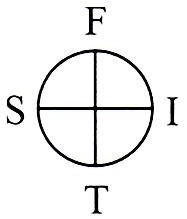
FIGURE 1982 0403-1. Fourfold Physis and Four Functions.
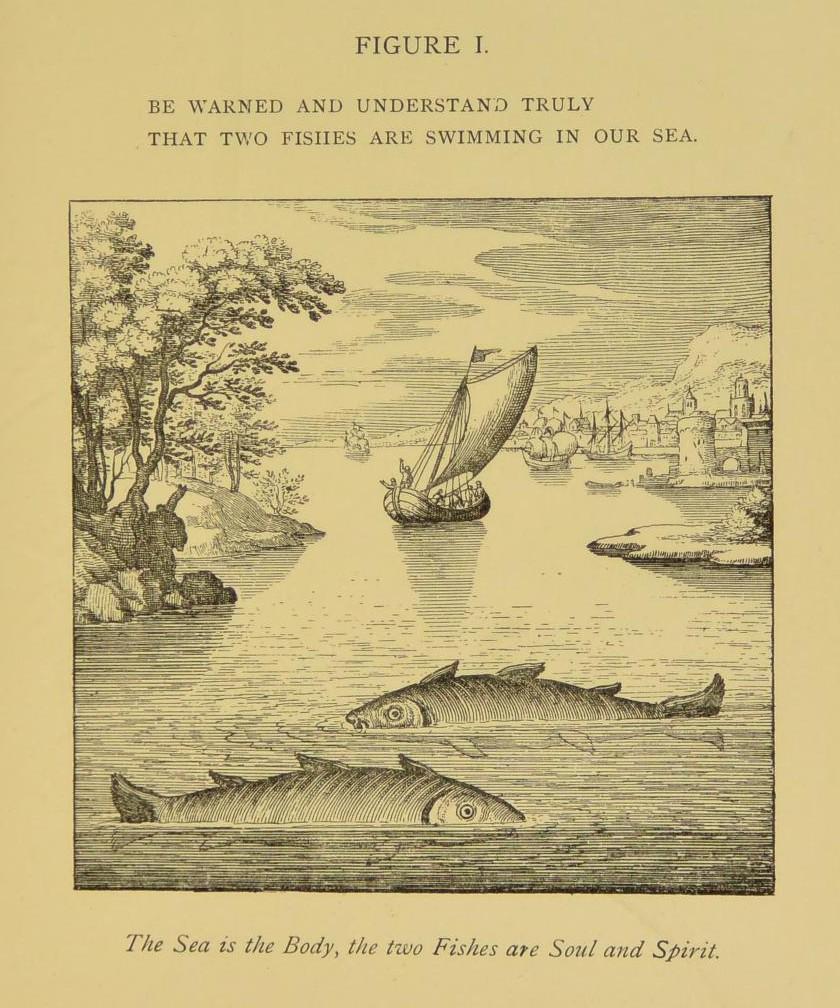
FIGURE 1982 0403-2. Two Fishes as Soul and Spirit.
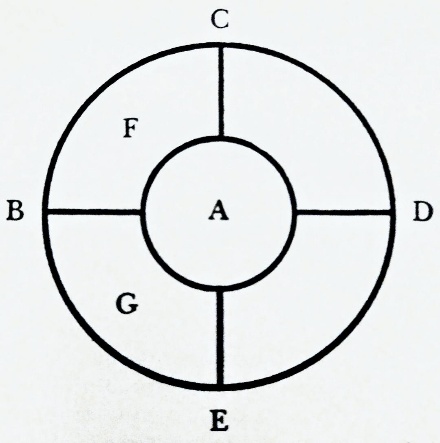
FIGURE 1982 0403-3. Quaternio consisting of Superior/Inferior, External/Internal.
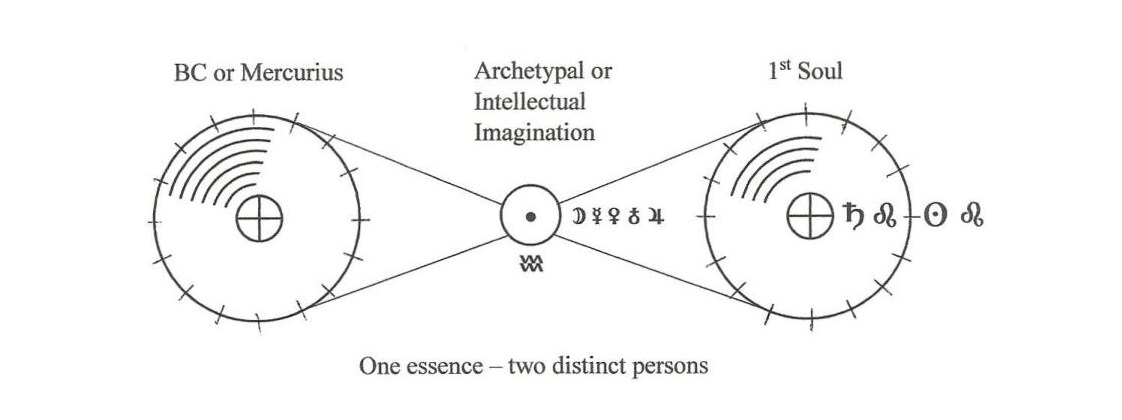
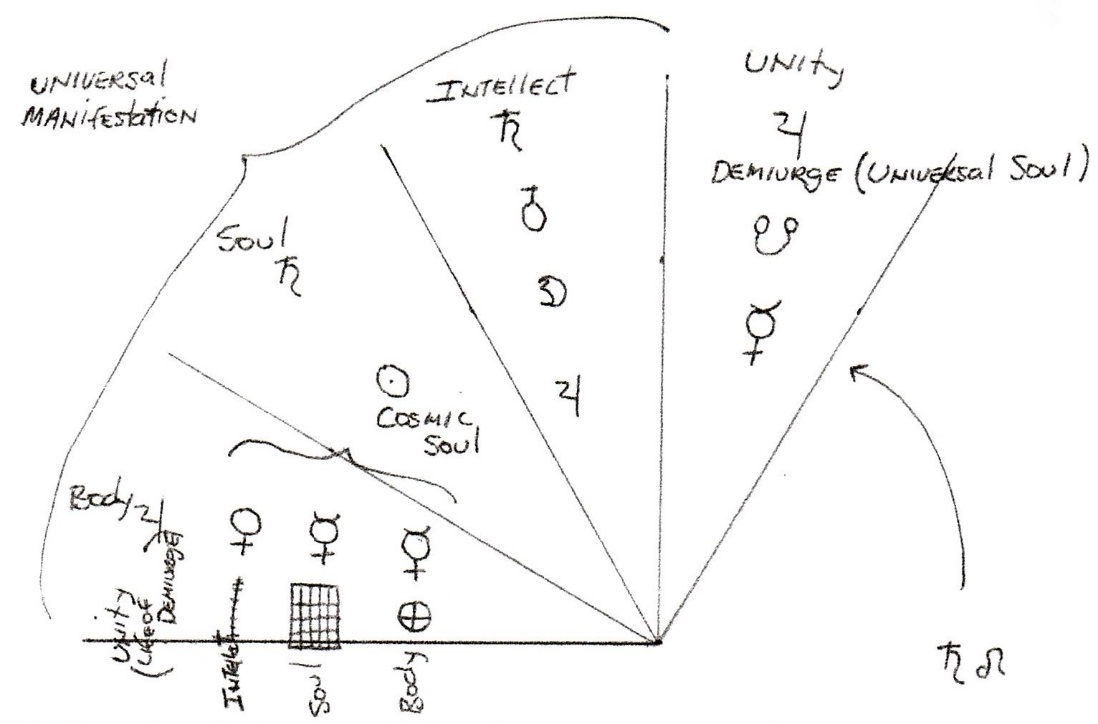
FIGURE 1982 0403-4. Bodhicitta, Imagination, 1st Soul; One Essence–Two Distinct Persons.
FIGURE 1982 0403-5. Saturn in Leo, Houses 9-12, and House 12 Levels.
FIGURE 1982 0403-6. Polar Bear Poster.
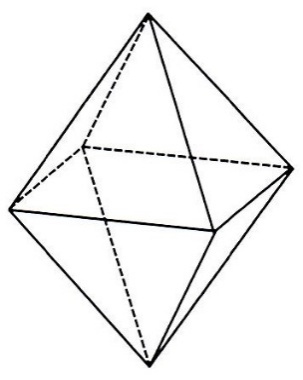
FIGURE 1982 0403-7. Anthropos Quaternio.
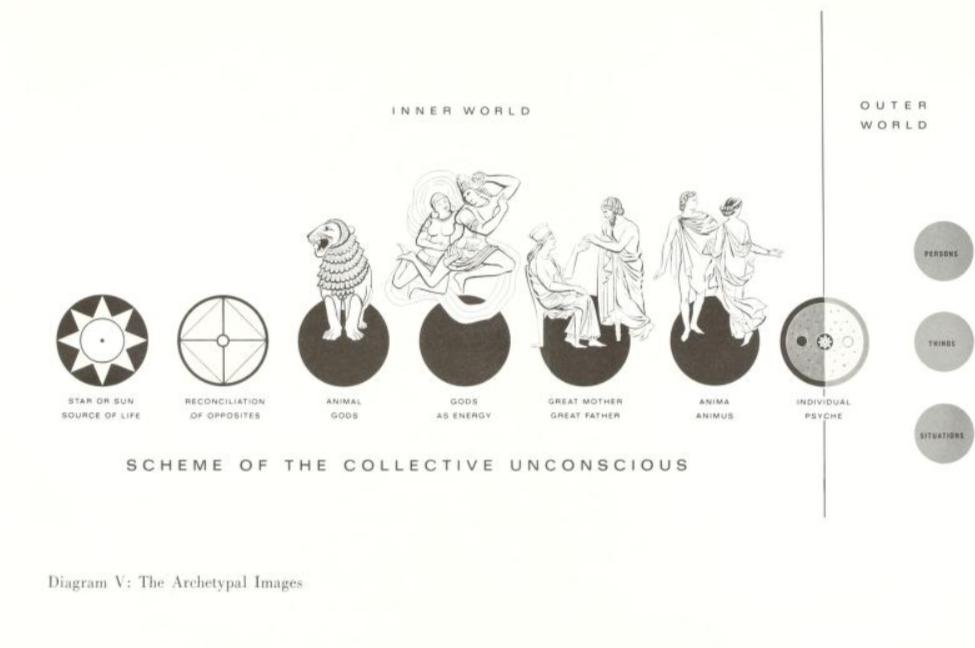
FIGURE 1982 0403-8. The Archetypal Images.
[Transcriber note: [diagram] means the speaker is referencing a diagram as he or she is speaking. If someone is drawing or writing, with audible sounds of chalk on a blackboard, I indicate this by [drawing] or [writing].]
SABIAN SYMBOLS: Cancer 14, Leo 15
NOTES:
We have a partial transcript for this class with no AD edits, Scan File 1982 0403-07R17.PDF, originally typed by CdA. It has hand-drawn versions of the diagrams appended to this transcript.
This was a Saturday AM class.
TRANSCRIBED Verbatim by IT 2021. In 2025, IT expands Subsubjects, Book List, and Plotinus quotes section, completes TOC, adds new notes within transcript, adds five diagrams and poster and references within transcript to these diagrams/poster. Archival verbatim transcript – V12a.
AUDIO FILES: 1982 0403a, 1982 0403b. [Note: "Tape" and "Side" refer to original audio cassette tapes that were later digitized into .MP3 Audio Files.]
1982 04/03 at Wisdom's Goldenrod
Alchemy; Jung; Mercurius
[Audio File 1982 0403a Begins]
GA: --(now) symbolically in rotation-- one rotation of the Earth. And during that one rotation that 360 will make its first turn, your 360, will make its first turn through the-- the given, let's say.
[tape break, some laughter, student words]
S: Any day. (bit of laughter)
AD: Did you find that little [couple words inaudible]
VM: We've been looking for him for years.
S (faint): So--
[13½ second pause, flipping of pages]
AD: If you have your Mysterious Conjunction, turn to the beginning, chapter 1. [46 second pause with background student talking] We're trying to get a little background in alchemy now. [short pause] Um-- [23 second pause] We'll start by reading some extracts in-- I don't think we could work at some of the later texts-- some of the other texts without some background. At any rate-- He speaks here of the factors which come together in a conjunction and they're conceived of as opposites. And he says--
C.G. Jung [CW 14, Mysterium Coniunctionis, "The Components of the Coniunctio," pp. 3-4, paragraph 1, AD reading]: "…the four elements or the four qualities (moist, dry, cold, warm), or the four directions [and seasons, thus] producing the cross as an emblem of the four elements and [AD adds: the] symbol of the sublunary physical world. This fourfold Physis [AD reads: Nature], the cross, also appears in [the] signs for [AD adds: the] earth…"
AD: Then the next page--
C.G. Jung [CW 14, Mysterium Coniunctionis, "The Components of the Coniunctio," p. 5, paragraph 3, AD reading]: "Another favourite theriomorphic image is that of the two birds or two dragons, one of them winged, the other wingless. … The wingless bird or dragon prevents the other from flying. They stand for Sol and Luna [AD reads: the Sun and the Moon], brother and sister, who are united by means of the art. In Lambspringk's [AD reads: the Lambspringk]"Symbols" they appear as the astrological Fishes which, swimming in opposite directions, symbolize the spirit/soul [AD reads: the spirit and the soul] polarity. The water they swim in is mare nostrum (our sea) and is interpreted as the body. The fishes are "without bones and cortex [AD reads: flesh and bones]." From them is produced a mare immensum, [AD: An immeasurable sea.] which is the [aqua permanens] (permanent water). Another symbol is the stag and [AD adds: the] unicorn meeting in the "forest." The stag signifies the soul, the unicorn spirit, and the forest the body."
AD: And he goes on like this. The symbolism that is used in alchemy-- [short pause] For instance in the section on "The Quaternity and the Mediating Role of the Mercurius".
C.G. Jung [CW 14, Mysterium Coniunctionis, "The Components of the Coniunctio," p. 7, paragraph 5, AD reading]: "…the four elements"combined" around the circular table. The synthesis of the elements is effected by means of the circular movement in time [(circulation, rota)] of the sun through the houses of the Zodiac. As I have shown elsewhere, the aim of the circulatio is the production (or rather, reproduction) of the Original Man, who was a sphere. Perhaps I may mention in this connection…"
AD: Never mind. Um-- [short pause] "The quaternity in this case…" down at the bottom, that page, um--
C.G. Jung [CW 14, Mysterium Coniunctionis, "The Components of the Coniunctio," pp. 7-9, paragraph 6, AD reading]: "The way he speaks of the four luminaries--he does not know how to save himself from them--suggests that he is subject to Heimarmene [AD reads: fate], the compulsion of the stars; that is, to a transconscious factor beyond the reach of the human will. Apart from this compulsion, the injurious effect of the four planets is due to the fact that each of them exerts its specific influence on man and makes him a diversity of persons, whereas he should be one. It is presumably Hermes who points out to Ostanes that something incorruptible is in his nature which he shares with the Agathodaimon [AD reads: Great daimon], something divine, obviously the germ of unity. This germ is the gold…the bird of Hermes or the son of the bird, who is the same as the filius philosophorum [AD reads: a philosophic son]. [AD adds: And] He must be enclosed in the vas Hermeticum [AD reads: Hermetic vessel] and heated until [the]"moistness" that still clings to him has departed, [i.e.,] [AD: And he says] the [humidum radicale] (radical moisture), the prima materia [AD reads: prime matter], which is the original chaos and the sea [AD adds: that is] (the unconscious). Some kind of coming to consciousness seems indicated. We know that the synthesis of the four was one of the main preoccupations of alchemy, as was, though to a lesser degree, the synthesis of the seven (metals, for instance)."
AD: That will be the seven planets.
C.G. Jung [CW 14, Mysterium Coniunctionis, "The Components of the Coniunctio," p. 9, paragraph 6, AD reading]: "Thus in the same text Hermes says to the Sun [AD repeats: Hermes says to the Sun]:
". . . I cause to come out to thee the spirits of thy brethren [the planets], O Sun, and I make them for thee a crown the like of which was never seen; and I cause thee and them to be within me, and I will make thy kingdom vigorous.
"This refers to the synthesis of the planets or metals with the sun, to form a crown which will be"within" Hermes. The crown signifies the kingly totality; it stands for unity and is not subject to Heimarmene [AD reads: fate]."
AD: Let's stop right there, let's-- let's go over those passages.
[16½ second pause]
C.G. Jung [CW 14, Mysterium Coniunctionis, "The Components of the Coniunctio," pp. 3-4, paragraph 1, AD reading]: "…producing the cross as an emblem of the four elements and symbol of the sublunary physical world. This fourfold Physis [AD reads: Nature], the cross, also appears in the signs for [AD adds: the] earth…"
AD: You know, usually you take the Earth and divide it into quadrants. What do you think, Timothy? [short pause] You're here?
TS: Yeah.
S: Uh-hm.
AD: For real?
S (faint): No. (laughter)
TS (faint): No.
AD: Well what are you hiding for? What is he saying there? Something like we're trying to get at?
TS (faint): I was going to say that I could see that coming from--
AD: Hm?
C.G. Jung [CW 14, Mysterium Coniunctionis, "The Components of the Coniunctio," p. 3, paragraph 1, AD reading]: "…producing the cross as an emblem of the four elements and [AD adds: the] symbol of the sublunary physical world."
AD: Do you think he's saying something to the effect that when we put that cross inside the circle, that we're spreading out the physical man? Yeah, what we were doing the other night. [Note: See WG Class 1982 0401. Possibly also a reference to WG Seminar 1982 0402e, but currently unavailable.]
TS (faint): Like the four functions on that cross.
AD: Yeah we know-- we spoke of the four functions as the dignities of the planets. And we left open as a possibility the fact that [drawing] these may also signify the four functions, alright, and, you know, very gingerly we put over here sensation or perception. He uses them interchangeably. So over here would be intuition. [short pause while drawing] Feeling and thinking. [Note: See FIGURE 1982 0403-1.] Is that passage suggesting the insertion, so to speak, into the elements?
C.G. Jung [CW 14, Mysterium Coniunctionis, "The Components of the Coniunctio," pp. 3-4, paragraph 1, AD reading]: "…producing the [AD read: the production of the] cross as an emblem of [the] four elements and symbol of the sublunary physical world. This [AD reads: And the] fourfold Physis [AD reads: Nature], the cross, also appears in the [AD reads: appears as] signs for [AD adds: the] earth…"
AD: And then, this is the interesting way. He goes along and he says--
C.G. Jung [CW 14, Mysterium Coniunctionis, "The Components of the Coniunctio," p. 5, paragraph 3, AD reading]: "In Lambspringk's [AD reads: In the book of Lambspringk]"Symbols" they appear as [the] astrological Fishes which, swimming in opposite directions, symbolize the spirit/soul [AD reads: the spirit and soul] polarity."
AD: Now the polarity here that's being referred to is what we would call the embo-- the soul embodied or the unembodied soul and the astral body. That will be the polarity that he's speaking of.
C.G. Jung [CW 14, Mysterium Coniunctionis, "The Components of the Coniunctio," p. 5, paragraph 3, AD reading]: "The water they swim in is [AD adds: the] mare nostrum (our sea) and is interpreted as the body."
AD: Didn't you ever see that diagram in The Hermetic Museum, they have these two fishes in the waters [FIGURE 1982 0403-2]?
TS: Well, I was wondering on that-- when you read it the first time, is that would be the-- that the whole of Pisces would be that sea of life that the individual's incarnating into, where here is the external to the specific corporeal body, I was just wondering [few words inaudible]
AD: I don't get your point, Tim.
TS (faint): Well-- um-- I think they're talking about the experience.
AD: He's saying--
C.G. Jung [CW 14, Mysterium Coniunctionis, "The Components of the Coniunctio," p. 5, paragraph 3, AD reading]: "The water they swim in is [mare nostrum] (our sea) and is interpreted as the body."
[Note: Diagram here in partial transcript, see FIGURE 1982 0403-1.]
AD: So that whatever principles they're talking about, they live in this body. [students assent, very faint] [AS simultaneously: And the soul is (one word inaudible)] So what I'm trying to say, I'm trying to put this stuff in the body. When-- when we take for instance, over here we put the head over here [Aries/Ascendant], [TS assents, faint] and sensation/perception has to take place through the head, first house. Between Gemini and Cancer, what would you put?
S (simultaneously, faint): What did he say?
TS (faint): Well, we were talking about that last night, that would be the lungs [Gemini] and the stomach [Cancer], or the digestive system and the-- the system of breathing. [Note: WG Seminar 1982 0402e currently unavailable.]
AD: Yeah, the midriff. Then between the intestines [Virgo] and the kidneys [Libra], we have another function. What we're trying to do is locate those mental functions in a physical body, they got to swim in the body.
AS: You're saying like the-- if you took the cross, you'd have the embodied functions, those would be like what he calls the spirit. And if you took the planets, say, with their dignities, that would be like the soul. You'd have both [AD simultaneously, faint: Yeah.] functions would be embedded in the body. One would be more directly embedded in the body. The other one would also be working through the body insofar as you picture the planets as within the whole of the signs and houses.
AD: Now the-- you know, these are quotations from alchemists. Um--
[short pause]
C.G. Jung [CW 14, Mysterium Coniunctionis, "The Components of the Coniunctio," p. 6, paragraph 4, AD reading]: "The elevation of the human figure to a king or a divinity, [and] on the other hand its representation in subhuman, theriomorphic form, are indications of the transconscious character of the pairs [AD reads: pair] of opposites. They do not belong to the ego-personality but are superordinate to it. The ego-personality occupies an intermediate position, like the"anima…""
AD: Well I can't say it.
C.G. Jung [CW 14, Mysterium Coniunctionis, "The Components of the Coniunctio," p. 6, paragraph 4, AD reading]: "…[AD adds: the] (soul placed between good and evil). The pairs of opposites constitute the phenomenology of the paradoxical self, man's totality. That is why their symbolism makes use of cosmic expressions like coelum/terra [AD reads: earth and sky]."
[short pause]
AD: And then some more astrology.
C.G. Jung [CW 14, Mysterium Coniunctionis, "The Components of the Coniunctio," p. 7, paragraph 5, AD reading]: "The synthesis of the elements [AD: And we're speaking about fire, earth, air, water.] is effected by means of the circular movement in time [(circulation, rota)] of the sun through the houses of the Zodiac. As I have shown elsewhere, the aim of the circulatio is the production (or rather, reproduction) of the Original Man, who was a sphere."
AD: You remember the Symposium, Plato's, [student assents] one of the beautiful stories about Love? These rounded spherical persons, they were becoming so ferocious that finally Zeus got scared and cut them in half. And they had to walk around, they couldn't roll around anymore. (bit of laughter) Right? But ever since then they've always been seeking one another, you know, the soul mate. [student assents, faint] But over here he's referring to the fact that the journey of the sun through the Zodiacal houses has in mind eventually to reproduce the Original Man which is in each and every one of us. That's a-- quite a mouthful. Well it was his last book, I figure he didn't care after that.
VM: He could let it out, huh?
AD: He can let it out. [11 second pause] Then he goes on and he says--
C.G. Jung [CW 14, Mysterium Coniunctionis, "The Components of the Coniunctio," p. 7, paragraph 6, AD reading]: "The way he speaks of the four luminaries--[AD: This person he's speaking about.] he does not know how to save himself from them…"
AD: So you know, when you look at the ephemeris--
S (laughing): Right.
VM (laughing): Right. (bit of laughter) Oh yeah.
AD: Say "Now how do I get out of this one?"
S (very faint): Yeah.
MW (faint): Right.
C.G. Jung [CW 14, Mysterium Coniunctionis, "The Components of the Coniunctio," pp. 7-8, paragraph 6, AD reading]: "…how to save [himself from them]--suggests that he is subject to Heimarmene [AD reads: fate], the compulsion of the stars; that is, to a transconscious factor beyond the reach of the human will. Apart from this compulsion, [AD adds: he speaks about] the injurious effect of the four planets is due to the fact that each of them exerts its specific influence on man and makes him a diversity of persons, whereas he should be one."
AD: Well you know, if you ask yourself who am I, you'll find out that every other minute you'll come up with a different "I". [student assents, faint] (bit of laughter) Alright. This one wants a piece of bread and jelly. Two minutes later he wants to go take a walk. Two minutes later he wants to go home, you know. So there's a whole string of I's if you ask.
S (very faint): (Maybe) it should be [couple words inaudible]
S (simultaneously, faint): Anthony, what are the four luminaries besides Sun and Moon?
VM: Mars and Saturn, Moon and Venus.
AD: Yeah.
PD: He uses planets there apparently then, in that section you just read, speaking of four planets. Is he making an analogy with the functions here?
S (faint): Oh yeah.
VM: He says it's a quaternio.
TS: He's connecting (them/there) with the four dignities and what [VM assents] role (they've got), cardinal signs. So he seems to be indicating that those are somehow-- those have to do with the functions.
S (simultaneously): Yeah, right.
AS: Uh-hm.
AD: In that footnote--
JC (simultaneously): I don't see that he's mentioned functions anywhere.
AD: I'm sorry?
JC: I don't think he's mentioned functions anywhere as yet.
[short pause]
AD: In the footnote on 26 he says--
C.G. Jung [CW 14, Mysterium Coniunctionis, "The Components of the Coniunctio," p. 8, footnote 26, AD reading]: "The idea of uniting the Many into One is found not only in alchemy but also in Origen…"There was one man. We, who are still sinners, cannot obtain this title of praise, for each of us is not one but many . . . See how he who thinks himself one is not one, but seems to have as many personalities as he has moods, as also [AD reads: also as] the Scripture says: A fool is changed as the moon." … "Where there are sins, there is multitude . . . but where virtue is, there is singleness, there is union.""
AD: Around the middle of that note--
C.G. Jung [CW 14, Mysterium Coniunctionis, "The Components of the Coniunctio," p. 8, footnote 26, AD reading]: "The inner multiplicity of man reflects his microcosmic nature, which contains within it the stars and their [(astrological)] influences."
AD: Now Origen is one of the great Church Fathers. I don't know how familiar you are with the early patristic literature but he was a man of considerable knowledge and understanding.
S: Right.
TS (faint): Well I found a quote from PB that-- PB says that Origen came and studied (it) for a while with Plotinus. Although I know Origen was much older than Plotinus they did-- they both studied under--
AD: Ammonius Saccas.
TS (faint): Ammonius.
S (very faint): (Right.)
AD: Do you remember the story about when [S simultaneously: Oh yeah?] Origen came into the lecture that Plotinus was giving and he stopped talking? And Plotinus said there is no pleasure in trying to teach those who know more than I do or something to that effect. (VM laughs a bit)
S: Yeah.
S (faint): Hm, yeah.
AD: And I think it was those two and the other one, Longinus, who had made a pact not to reveal Ammonius Saccas'-- I mean his writing, his public speeches. And then Longinus broke the vow and they started writing too. Yeah, there was quite a galaxy of men at that time. Well anyway we're beginning to get a feeling of what Plo-- what Jung has immersed himself into. And, his preoccupation. Now, that's also been my preoccupation but philosophically, not alchemical. Because I think philosophically you can cut much quicker and go further in a shorter time. There's just-- there's a-- a cleanliness, a Spartan purity about saying something like the-- saying that the principle of pure intelligence is self-evident at all times than to go through this rapture. But that's for those that are philosophically prepared for it. If not, then they have to go through a lot of other things. [short pause] Um--
RG: (I mean), um, but I-- (yeah) I agree with Paul to some extent here that they-- he is take-- he tends to emphasize the planets there and in the-- and in the chapter on the Mayer and referring to the planetary houses it seems he-- he relies predominantly on those planets as the psychological function(s).
S (very faint): Uh-hm.
AD: Yeah, I-- I won't disagree with that but, you saw what happened the other night. I asked Tim to keep his mind clear of all his prejudisms and I will likewise and all of us have to as we put up all-- we itemize all the possible ways of looking at this, alright. [student assents, faint] And then we're forced by the empirical data to start realizing what is a function. And we begin to realize that there's other possibilities that Jungians don't know about.
S (very faint): Uh-hm.
[short pause]
TS: Seems like he's saying that first of all there's this polarization between-- or this pair of opposites which sounds just the cross. And that's the first reflection of-- of the four functions in the body. And then the secondary reflection of that is the planets that accompany those or are-- or have their dignities associated with those four points.
AD: Well, let's go back to the original source of this material, alright? Do you have the quotation from the Timaeus?
S (faint): Yeah. Yeah.
AD: Listen to this quotation from the Timaeus. I hope you don't think that, you know, he was introducing a new doctrine. This will show you how, you know, well-versed-- how far back this teaching goes. Or if you have the other quotation from Plotinus, Avery, remember the one--
AS: Yeah.
AD: Which I thought was really-- was-- was quite a summary of this whole thing.
AS (simultaneously): Yeah, that's really (num--) but it's a pretty nice Plotinus, but-- Don't you have them with you?
S (very faint): What?
S (faint): He doesn't.
S (faint): No.
AS: I thought we got [S simultaneously: Oh.] them in the car. It's from IV.3-- IV.3.23. [short pause, flipping of pages] Um, he says-- "I explain…" He's just set--
Plotinus [IV.3.22, 23, AS reading]: "Plato therefore is wise when, in treating of the All he puts the body in its soul and not [its] soul in the body…
"[23. I explain:--] A living body is illuminated by soul: each organ and member participates in soul after some manner peculiar to itself; the organ is adapted to a certain function, [and] this fitness is the vehicle of the soul-faculty under which the function is performed; thus the seeing faculty acts through the eyes…faculty of sentient touch is present through-out…"
AS: So on.
[short pause]
AD: Now that's [AS simultaneously, faint: Uh-hm, uh-hm.] a kind of general statement. Now read the more specific one from Plato on the Timaeus.
AS: Yeah. And here he says-- This is around sev-- paragraph seventy in the Timaeus, sect-- you know, his numbering. Um-- So the-- he says--
[Transcriber note: I am using The Collected Dialogues of Plato, edited by Edith Hamilton and Huntington Cairns, Bollingen Series LXXI, Princeton University Press, Princeton, 1961.]
Hamilton, Cairns [The Collected Dialogues of Plato, Timaeus, p. 1193, AS reading]: "And they [AS reads: The junior Gods], [imitating him], received from him [AS reads: the Demiurge] the immortal principle [of the soul], and around this they proceeded to fashion a mortal body, and made it to be the vehicle of the soul, and [AS adds: they] constructed within the body a soul of another nature which was mortal, subject to terrible and irresistible affections … Wherefore, [AS reads: But] fearing to pollute the divine any more than was absolutely unavoidable, they gave to the mortal nature a separate habitation in another part of the body, placing the neck between them to be the isthmus and boundary, which they constructed between the head and the breast, to keep them apart. And in the breast, [and in] what is termed the thorax, they incased the mortal soul, and as the one part of this [AS adds: mortal soul] was superior and the other inferior they [AS adds: further] divided the cavity of the thorax into two parts…and [AS adds: they] placed the midriff to be a wall of partition [between them]. That part of the inferior soul which is endowed with courage and passion and loves contention, they settled nearer the head, midway between the midriff and the neck…"
AS: And near the lungs and the heart.
Hamilton, Cairns [The Collected Dialogues of Plato, Timaeus, p. 1193, AS reading]: "The heart, the knot of the veins and [the] fountain of [the] blood…was set in the place of [AS adds: a] guard, that, when the might of passion was roused by reason making proclamation of any wrong…[AS adds: and] quickly the whole power of feeling in the body, perceiving these commands and threats, might obey…"
AS: And then he says--
Hamilton, Cairns [The Collected Dialogues of Plato, Timaeus, p. 1193, AS reading]: "But the gods, foreknowing [AS reads: knowing] that the palpitation of the heart in [the] expectation of danger and excitement of passion must cause it to swell and become inflamed, formed and implanted as a supporter to the heart the lung…"
AS: He talks about that. And he says--
Hamilton, Cairns [The Collected Dialogues of Plato, Timaeus, p. 1194, AS reading]: "The [AS reads: That] part…"
S (very faint): Speaks about it.
Hamilton, Cairns [The Collected Dialogues of Plato, Timaeus, p. 1194, AS reading]: "The [AS reads: That] part of the soul which desires meats [AS reads: meat] and drink and other things of which it has need by reason of the bodily nature, they placed between the midriff and the boundary of the navel, contriving [AS adds: that] in all this region a sort of manger for the food of the body, and there they bound it down like a wild animal which was chained up with [AS reads: in] man, and must be nourished if man was to exist."
AD: Get to the liver and the spleen.
AS: I am. Ok.
AD: Because we're going to use this information later on.
AS: Ok.
Hamilton, Cairns [The Collected Dialogues of Plato, Timaeus, p. 1194, AS reading]: "And knowing that this lower principle in man would not comprehend reason, [and] even if attaining to some degree of perception would never naturally care for rational notions…God combined with it the liver [AS: With this lower nature.] and placed it in the house of the lower nature, contriving that it should be solid and smooth, and bright and sweet, and should also have a bitter quality in order that the power of thought, which proceeds from the mind, might be reflected as in a mirror which receives likenesses of objects and gives back images of them to the sight, and so might strike terror into the desires when, making use of the bitter part of the liver, to which it is akin, it comes threatening and invading, and diffusing this bitter element swiftly through the whole liver produces [AS reads: producing] colors like bile, [and] contracting every part makes it wrinkled and rough, [and] twisting out of its right place and contorting [AS reads: contorted]… And [AS reads: But] the converse happens when some gentle inspiration of the understanding pictures images of an opposite character, and allays the bile and bitterness by refusing to stir or touch the nature opposed to itself, but by making use of the natural sweetness of the liver corrects all things [and] makes them to be right and smooth and free, [and] renders the portion of the soul which resides about the liver happy and joyful…"
AS: He has this thing about the bile.
AD: Alright.
AS: He's got one about the--
AD (simultaneously): You get a general picture, [AS simultaneously: Yeah but--] you could read it for yourself and you're going to have to some day. Of course, from the doctor's point of view might be quite mythological. (bit of laughter) [short pause]
Well, at any rate, the point that we're making is that these people insert these psychical organ-- functions in the body and that within the body there are organs or functions that correspond to these particular soul powers. And you'll see that in almost any traditional physiology, like if you go to China, study Chinese physiology they have the same thing. These organs are representative of those psychical powers. So that's why in a sense, when we were discussing this, I was suggesting that there has to be a fixed-- there's a-- a fixed aspect to the circle and the cross seems to indicate one thing about us that's fixed, the position of the elements of the body, the organs of the body. And, the head there [FIGURE 1982 0403-1, Aries/Ascendant], alright, and the liver and the spleen and the intestines here [Virgo], lungs [Gemini], and a-- I think you'll see quite clearly that when the alchemists start speaking about how to increase the fire in the Hermetic vessel, that you're going to be speaking about the lungs. Pranayama basically, alright. And the stomach here [Cancer] and the increased intensity or the heightening of consciousness takes place in this realm, and we got thinking down here [nadir].
So-- We'll try to work this out in astrology in more-- in more detail but, if you're looking at a chart you're not only looking at the mental processes of this person, you're also locating them in this [S simultaneously, faint: Oh, I see.] person and not in someone else. Anyway he goes on and he says-- he speaks about the double quaternity. And he says it stands for a totality.
C.G. Jung [CW 14, Mysterium Coniunctionis, "The Components of the Coniunctio," p. 11, paragraph 8, AD reading]: "…for something that is at once heavenly and earthly, spiritual or corporeal, and [AD adds: it] is found in the"Indian Ocean," that is to say in the unconscious."
AD: Now the diagram he draws here-- the diagram he draws here-- And this is what I mean when I say he's an unconscious astrologer and a good one. He-- this-- the ogdoad he has something like this. [drawing] Yeah. Call this A. Well, it doesn't matter, the point is this is the ogdoad. [Note: Unclear if AD is referencing diagram on p. 10 or p. 11 (reproduced as FIGURE 1982 0403-3).] Now he speaks of it-- Let's go over this and see if you can become a psychologist. (bit of laughter)
C.G. Jung [CW 14, Mysterium Coniunctionis, "The Components of the Coniunctio," p. 11, paragraph 8, AD reading]: "…for something that is at once heavenly and earthly…"
AD: Now think of your chart. There's something in your chart which is earthly, the body that we just spoke about when we inserted the cross.
C.G. Jung [CW 14, Mysterium Coniunctionis, "The Components of the Coniunctio," p. 11, paragraph 8, AD reading]: "…[AD adds: and] heavenly…"
AD: And we'll be speaking about, [chalk on board sounds] if you think of the planets going around, their psychical function is heavenly. And he says it is immersed and found in the Indian Ocean. He says that's the unconscious. [drawing] The degrees are the unconscious [FIGURE 1982 0403-3, 360 degrees going around the outer circle, not shown in diagram]. Reason-principles. You follow?
S (very faint): Uh-hm.
AD: Go over this. It's ver-- it's straightforward.
S (very faint): Uh-hm.
C.G. Jung [CW 14, Mysterium Coniunctionis, "The Components of the Coniunctio," p. 11, paragraph 8, AD reading]: "…[AD adds: there] is at once heavenly and earthly, spiritual or corporeal, and is found in the"Indian Ocean," that is to say in the unconscious. It is without doubt the Microcosm, the mystical Adam and bisexual Original Man in his prenatal state, as it were, when he is identical with the unconscious. [AD: And then he goes on.] Hence in Gnosticism the "Father of All" is described not only as masculine and feminine (or neither), but as [Bythos], the abyss. …there is a quaternio [AD reads: quaternity] consisting of superius / inferius, exterius / interius [AD reads: superior / inferior, external / internal]. They are united into one thing by means of the circular distillation, named the Pelican: "Let all be one in [AD adds: the] one circle or vessel." "For this vessel is the true philosophical [AD reads: philosophic] Pelican, nor is any other to be sought after in all the world.""
AD: And that diagram is shown [FIGURE 1982 0403-3]. [short pause, flipping of pages] Then he goes on on the next page, paragraph 10.
C.G. Jung [CW 14, Mysterium Coniunctionis, "The Components of the Coniunctio," p. 13, paragraph 10, AD reading]: "From this remarkable excursus we learn, first of all, that the"centre" unites the four and the seven into one."
AD: Now the four would be the four elements. The seven will be the planets. And the center unites them. Now, the problem.
C.G. Jung [CW 14, Mysterium Coniunctionis, "The Components of the Coniunctio," p. 13, paragraph 10, AD reading]: "The unifying agent is the spirit Mercurius, and this singular spirit then causes the author to confess himself a member of the Ecclesia spiritualis, for the spirit is God."
AD: Now what are we saying?
S (very faint): Uh-hm.
S (faint): Right.
S (very faint): Yeah.
C.G. Jung [CW 14, Mysterium Coniunctionis, "The Components of the Coniunctio," p. 13, paragraph 10, AD reading]: "The [S simultaneously, faint: I think that--] unifying agent is the spirit Mercurius, and this singular spirit then causes the author to confess himself a member of the Ecclesia spiritualis [AD reads: spiritual Church]…"
AD: Now we got to figure out what is this Mercurius.
S (very faint): [one/two words inaudible]
AD: Now, we've had a lot of experience here. A lot of people have seen Mercurius fly out of the bottle. (bit of laughter)
VM/S(?) (faint): Definitely.
VM: Can't we say that this unification must occur in the psyche or the mental world? Clearly can't occur just in the body or just in the heavenly but the unification must occur in a kind of nature which partakes of both.
[9 ½ second pause]
AD: The Mercurius. Now what is this Mercurius?
VM: Well, I tried to suggest that it was the psyche which is that-- that principle which partakes of both the heavenly nature or the-- let's say the-- the spiritual forces symbolized by the planets and also the bodily nature symbolized by the body or the four elements. And that the psyche is-- has a foot in both camps and is the locus for the unification to take place.
AD: Well you may be right. But what we're going to do is read a long list of quotations from this book called "The Spirit Mercurius".
VM (faint): Oh ok.
AD: Alchemical Studies, volume 13.
AS: Right. There isn't anything that he says it isn't. He didn't leave anything out. (AS laughing)
VM (simultaneously): Yeah I know, there's several levels of Mercurius. I mean it seems that we established that several weeks ago.
AD: It-- it is one of the most difficult of all concepts to understand and yet it is so intimate that it's hair-raising. It's a long article. I don't know how many of you have the book, if you read the article or not. Even if you did I don't trust you. (bit of laughter) So we're going to read first a story. I'll read a little bit, we'll pass around-- I hope you're nice and patient.
[Note: The following is Jung's paraphrase of "The Spirit in the Bottle" from Grimm's Fairy Tales (trans. Hunt, rev. Stern), pp. 458-62.]
C.G. Jung [CW 13, Alchemical Studies, "The Spirit Mercurius," p. 193, paragraph 239, AD reading]: "Once upon a time there was a poor woodcutter. He had an only son, whom he wished to send to a high school." (laughter)
S (amidst laughter, faint): Yeah. [S simultaneously, faint: Oh yeah.] It doesn't say that.
AS (amidst laughter, faint): It doesn't say that! (AS laughing)
C.G. Jung [CW 13, Alchemical Studies, "The Spirit Mercurius," p. 193, paragraph 239, AD reading]: "However, since he could give him only a little money to take with hm, it was used up long before the time for the examinations. So the son went home and helped his father with the work in the forest. Once, during the midday rest, he roamed the woods and came to an immense old oak. There he heard a voice calling [AD adds: him] from the ground,"Let me out, let me out!" He dug down among the roots of the tree and found a well-sealed glass bottle from which, clearly, the voice had come. He opened it and instantly a spirit rushed out and soon become half as high as the tree. The spirit cried in an awful voice: "I have had my punishment and I will be revenged! I am the great and mighty spirit Mercurius, and now you shall have your reward. Whoso releases me, [him] I must strangle." (laughter)
VM: I'm sure it is.
C.G. Jung [CW 13, Alchemical Studies, "The Spirit Mercurius," pp. 193-194, paragraph 239, AD reading]: "This made the boy uneasy and, quickly thinking up (laughter) [a trick], he said,"First, I must be sure that you are the same spirit that was shut up in that little bottle." [S, faint: Must be a Buddhist.] [AD adds: And] To prove this, the spirit crept back into the bottle. Then the boy made haste to seal it and the spirit was caught again. (laughter) But now the spirit promised to reward him richly if the boy would let him out. So he let him out and received as a reward a small piece of rag. (laughter) Quoth the spirit: "If you spread one end of this over a wound it will heal, and if you rub steel or iron with the other end it will turn into silver." Thereupon the boy rubbed his damaged axe with the rag, and the axe turned to silver and he was able to sell it for four hundred thaler. (laughter) Thus father and son were freed from all worries. The young man could return to his studies, and later, thanks to his rag, he became a famous doctor." (laughter, student words)
S: Bring the magic shmata. (some laughter)
S (faint): It's hard.
AD: Avery, I got it pretty well underlined, would you start reading some of this? (AS laughs a bit)
S: It's (very/really)-- it's poetically put.
AS: Um-- see, the (underlining/underlined)?
S (faint): (Yeah/Oh) right. (S laughs)
AS: Now-- well [couple/few words inaudible]
AD: Wherever these in-- indications.
AS (simultaneously): Yeah, the paragraphs are.
AD: Yeah.
AS: Well most of them are marked so, you know--
C.G. Jung [CW 13, Alchemical Studies, "The Spirit Mercurius," p. 194, paragraph 240, AD reading]: "Now, what insight can we gain from this fairytale?"
S (faint): Right.
S (very faint, possibly part of background): No it's ok.
AS/S(?) (very faint): (Yeah.)
S (very faint): Ok?
C.G. Jung [CW 13, Alchemical Studies, "The Spirit Mercurius," pp. 194-195, paragraph 241, AD reading]: "[As] at the beginning of many dreams something is said about the scene of the dream action, so the fairytale mentions the forest as the place of the magic happening. The forest, dark and impenetrable to the eye, like deep water and the sea, is the [AS reads: a] container of the unknown and the mysterious. It is an appropriate synonym for the unconscious. Among the many trees--the living elements that make up the forest--one tree is especially conspicuous for its great size. Trees, like fishes in the water, represent the living contents of the unconscious. Among these contents one of special significance is characterized as an"oak." … A tree, therefore, is often a symbol of personality. … The mighty [old] oak is proverbially the king of the forest. Hence it represents a central figure among the contents of the unconscious, possessing personality in the most marked degree. It is a prototype of the self, a symbol of the source and goal of the individuation process. The oak stands for the still unconscious core of the personality, [AS adds: and] the plant symbolism indicating [AS reads: indicates] a state of deep unconsciousness. From this it may be concluded that the hero [of the fairytale] is profoundly unconscious of himself. He is one of the "sleepers"…[we] encounter [AS reads: encountered] in the illustrations of certain alchemical treatises."
AD: Well you remember Plato's famous reference, we're like sleep walkers?
[9½ second pause]
AS: Mm.
C.G. Jung [CW 13, Alchemical Studies, "The Spirit Mercurius," p. 195, paragraphs 241, 242, AD reading]: "They are the unawakened who are still unconscious of themselves… For our hero, therefore, the tree conceals a great secret.
"The secret is hidden not in the top but in the roots of the tree…[AS adds: it has] the most striking marks of personality--[AS adds: namely] voice, speech, and conscious purpose, [and] it demands to be set free by the hero. It is caught and imprisoned against its will, down there in the earth among the roots of the tree. [AS adds: Now] The roots extend into the inorganic realm, into the mineral kingdom. In psychological terms, this would mean that the self has its roots in the body, indeed in the body's chemical elements."
AS: What--
AD (simultaneously): Let's stop there. That-- that would give one the-- that would give one the impression that the self, you know, has roots coming into the body, alright, and that it is from the body where, um, something is learned, you know, some-- But, if I-- if I ask you to try to reverse this. Not that what he's saying is wrong but I want to give you an alternative way of looking at this which is extremely important and valuable I think for-- You remember the quotation in Plotinus when he speaks about each reason-principle has its own matter? Would you get that out?
S (very faint): Right.
S (very faint, possibly same S as above): (What'd he say/What is it)?
S (very faint): (Yeah.)
S (very faint): Yeah.
AS (mostly faint): Where is it? I (didn't look). Says every reason-principle-- 3-- Yeah, (uh-hm/ok). I hope I can find it in here. [short pause, flipping of pages] Well (yeah), I'm not sure.
AD: Well, you look it up. Instead of thinking of yourself as a realist, you know, matter is out there and the self is going to manipulate the matter and make a body for it, I'm going to ask you to look at it from another point of view, that there is a matter inside the self, or let's say the bodhicitta, the second-- the image, the (light/life), alright. And that within-- within this second self, what we call the spiritual Witness or the Witness-I, that it has the principles of matter within itself which, by projecting outwardly, alright, in that very process of projecting it it forms for itself a body. But the process of projecting that body already includes within it certain reason-principles that tell it how to formulate that body. So that now that the self or the soul has formulated this body, one says that the reason-principles are in the body and you will tend to think of it as something in the external world. Now I'm asking you to look at it the other way. The reason-principles are something in-- internal to the soul. The soul projects the body from itself, that is, it has the intelligible earth, air, fire, and water, projects it out from itself, and in that very projection, in that very projected body, are the reason-principles. Now you see the point of view? This point of view I just described will be like the Yogacara mentalism. Everything must come from within.
VM: Right.
AS: Right.
AD: The description that he has here makes you feel-- I don't know that it's so, that he means that, but it makes you feel as though it's something out there. The body's out there, the soul goes into it and finds all those different ways of functioning which lead one to suspect that there's certain intelligence there. [student assents] So if you keep both these points of view in mind. Would you read the thing from Plotinus?
AS: Yeah. Yeah (well/or) in that-- he never-- he ne-- when he speaks about what imprisoned the spirit there, he always-- he never even makes reference to the fact that it might be the self itself that has originally imprisoned it.
AD (simultaneously, faint): Which has-- yeah.
AS: He brings in some magician or something.
AD: It might not even be imprisoned.
AS: Right.
AD: Alright, this is a quote from Plotinus, listen to this very carefully. And again I-- like we said last night, the amazing fecundity of this man.
RG: Where is it from Avery?
AS: III.3.4. Says--
Plotinus [III.3.4, AS reading]: "[And] any Reason-Principle may be said to include within itself the Reason-Principle of Matter which therefore it is able to elaborate to its own purposes, either finding it consonant with itself or bestowing upon it the quality which makes it so."
AD: You follow that, don't you?
VM: Oh ok.
AD: It's like [one/two inaudible student words simultaneous with AD] when the mind has a dream. All the contents in the dream, the yellows, the smells, the o-- all that comes from the mind itself. It isn't something out there and it molds it. But the mind itself is doing that.
VM (very faint): Right, uh-hm.
(Side 1 of original cassette tape digitized as 1982 0403a Ends; Side 2 Begins)
PD: --self in another sense that's being sustained by the cosmic soul. And it's a projection of the cosmic soul-- soul. And, you-- you have a duplex structure there all the time. On the one hand the body is something that's part of the continuum of Nature, and on the other hand it is the activity and projection of this-- of the individual soul. But you have a-- a duplex projection.
AD: I wouldn't disagree with that, I would go even further and say that the distinctions or the divisions which are within-- within you have not only the Intellectual-Principle but they have the functioning of the Demiurgic Soul and included in that the individual soul. Because Plotinus very clearly says that the whole of the Intelligible World is within the individual soul. [Note: See Plotinus, III.4.3 (last para), III.4.6 (sixth para from end).] Not a part, not a piece. The whole of it. So that would mean, ultimately when you unders-- you know, when you understand the chart the way I'm working with it, is that all these principles are within us. And so we're speaking about the way the manifested world-- we're speaking about the principles of knowledge which are within us which are organizing reason and reason-principles to produce the knowledge which we think is out there. But these reason-principles or the-- these forces that are organizing the possibility of perception of a mis-- of a world is all within us. So you could say, yes, there is the Intelligible World within us and that there are different levels within that Intelligible World. Follow what I'm getting at?
PD: Yeah, I just don't see how you relate it to what I was saying [one word inaudible]
AD: Well, what I'm saying [one/two inaudible student words simultaneous with AD] is that the Intellectual-Principle is within you, so is the Demiurgic Soul within you. What it-- it is what-- it is the principle that is organizing the manifested world for you. It organizes the means by which the knowledge gets projected and then you perceive it as something external. Well in other words I'm following up the Yogacara school.
PD (simultaneously): Yeah. But what I'm-- what I'm asking, you speak of the body-thought and you-- having a twofold source of causation, the individual soul's karma and reason-principles molding it, projecting it, and at the same time the-- the historicity of Nature that is determining the body to a certain extent too. So there's two streams of karma forming the "material basis" in which the soul's going to incarnate.
AD: But they're still within you.
PD: They're still within which you?
S: Yeah.
AD: Whichever you you're referring to. You can refer to the Witness-I. You can refer to the bodhicitta.
PD: But if-- if the Wit--
AD (simultaneously): You can't-- you-- it's not--
PD (simultaneously): But if the Witness-I withdraws into trance the body remains-- maintains its continuum in the world of Nature for so-- for other people.
AD: The Wi-- I'm sorry, the Witness-I withdraws into trance?
PD (simultaneously): Let's say that the bodhicitta's drawn into trance and--
AD: No, the bodhicitta doesn't withdraw into trance. The laws or the principles that are functioning within the bodhicitta don't cease functioning because the empirical personality has a samadhi. [short pause] Otherwise you would cease to exist every-- every moment that intellection ceases. [short pause] And besides, I'm only saying ho-- hold this at [couple words inaudible]
PD (simultaneously): Yeah, no, that's-- it's just going back to that-- that problem of the-- what part of the experience is contributed by the objective soul, cosmic soul, and what part is contributed by the individual soul.
AD: Yeah that problem would be there, sure.
AH: I had the same question but you should know it. Which you are you speaking of when you say it's within you? You said any one I care to choose. Could you clarify that a little? What is meant by the notion of "you"? You say everything is within me.
AD: We did discuss this a little while ago.
AH: I'm talking (a/the) point--
AD: But, there was a very specific quotation that we even used. [12½ second pause] Let me see if this will do it.
[Transcriber note: I am using Studies in Jacob Böhme by A. J. Penny, Wipf & Stock Publishers, Eugene, Oregon, 2016.]
A.J. Penny [Studies in Jacob Böhme, p. 470, AD reading]: "[Now], as we know [that] in surface life a plan or outline serves in the construction of every material work, it seems possible that the formation of the spiritual body goes on according to a pre-existent design; and that for the recovery of true human creatures this image of it is engendered in every child of man as naturally as other instincts of the race."
AD: Let me jump some more.
A.J. Penny [Studies in Jacob Böhme, p. 470, AD reading]: "Any tolerably advanced student in Boehme's neglected school will not need to be told how this image is first brought to life and then to its full evolution in heavenly substance; [but] a brief recapitulation of his account of this process may be welcome [to others]…"
AD: Let's read.
A.J. Penny [Studies in Jacob Böhme, p. 470, AD reading]: "The idea of the deific mind in that [AD reads: the] beginning was seen in the wisdom; it was impressed on the human mind after the severance of the divine and human nature in man; and henceforward [AD reads: henceforth] born in all mankind. If [AD reads: In] that image rouses the will to desire its fulfilment, the will involves its concentration of desire in that image."
AD: Uh-- [short pause] And just one final--
A.J. Penny [Studies in Jacob Böhme, pp. 470-471, AD reading]: "The dangerous and ignorant doctrine of salvation by imputed merits, by any efficacy of the blood of Christ external to the soul, is powerfully impugned in this epistle; and without any obscurity comparatively speaking, it proves that [AD emphasizes following phrase]"out of man's willing must God's spirit become [AD reads: be] generated; it must itself become God in the willing spirit…"" [Jacob Böhme, Incarnation, Part II, Ch. X, par. 56]
AD: Now I think what he's saying here, alright, is that when the soul projects forth from itself a light or we refer to as the bodhicitta, in that there is laid out and prefigured the whole evolution and destiny of that individual soul. [student assents, faint] So what we're saying is within that bodhicitta, there is the entire idea, the entire idea of his destiny. It's already all contained within there. And it will be through a projection that he will experience what is within the bodhicitta as getting manifested out and his travail or working its way through that. So we're-- we're back to what we said before, that the bodhicitta contains within itself the whole of the Intelligible World, and it will work out according to a prefigured or predestined idea its own destiny.
AH (faint): I think what was confusing to me or still is confusing, [S, faint: Uh-hm.] in terms of these two alternatives which (you/are) presented to me, um--
AD: No, I didn't present two alternatives. Jung presented-- the statement that he made in a certain way as though the reason-principles are in the body, and (this/his) body is something external to the soul and the soul is going to inhabit that body. And I'm-- I was suggesting that another way of looking at it is to recognize that the body is a projection from within your soul, and the whole of the matrix of possibilities that become your perceived world. That's the Yogacara position. That's PB's position, mentalism. Everything must come from within you. Now there can't be no compromising there, you can't have a Demiurgic Soul out there doing it for you and then you superimpose on what he does your imaged world. That's what he referred to as half-baked idealism.
AH (faint): Yeah, and it's going to stay up under this empirical "I", [student assents, very faint] (that he--) kind of notion of-- of "I" (or) you because-- translate that into this more--
AD: Anyway, did yous follow the point?
CDA: I had difficulty in how you were referring that to the Böhme quote where you just read. I couldn't follow that.
AD (simultaneously): Well just take my word for it that I translated it. (bit of laughter) Just take my word.
S (faint): You can't read it. (bit of laughter)
S (faint): I know.
S (faint): [couple/three words inaudible]
JfL (faint): This spark of (life/light) still (approaches--) You're not only working through Nature but only through Nature. Is that right or just-- And in effect providing the framework and sort of guiding all the way through the twelfth house [couple words inaudible]
AD: I like to (apply/imply) it to the twelfth house [diagram] if what we're saying it's within you. When you take the-- the Intellectual Imagination [FIGURE 1982 0403-4, Sun in Aquarius], the lowest power of the unembodied soul, and it projects forth a light, what we're saying is that cosmic soul or the Intellectual Imagination of your soul, that it's projecting this light, in that light or that bodhicitta, intrinsic to it is the whole of your unfoldment. Like she was trying to say in that text, there is a prefiguration of your entire evolution. That would mean that the whole of knowledge and all the principles that organize knowledge or the manifestation of a world is already contained within. Now, you don't have to agree with this or disagree, it doesn't matter. The only point I'm trying to make here is this here, that if there's something within you which projects a world, this manifested world is organized. I mean it's not a random affair. It's organized according to certain intelligence. Ok? And the point that I'm trying to get to is that those reason-principles are within you. But they have to be-- be projected out from you so that you could have the experience of them and identify them as ultimately coming from within you. That's the other alternative which Jung has not made clear. That's all.
JfL (faint): Well-- Ok, I think I follow that. When we're talking about and are relying on a chart, and we're talking about that whole construction (without/about--) and the experiencer, I mean-- I'm-- I don't understand the apparent exfoliation is just an express-- is it just a way of viewing it from here? 'Cause you'd have the whole--
AD: No, no, it's literary, actually so.
JfL (faint): (I mean/And) it's actually so then [AD simultaneously: (Actually.)] it doesn't seem that that light is, I mean, everywhere. Like it's almost developing it or something to a point so that the-- the-- that the work is contained within (the soul/this whole--) a guide up to a certain point, or it's maintaining or providing a vehicle of the right experiences and-- and organizing the-- the life within it. (At) this point it is us completely or ultimately.
AD: It doesn't seem like it is us completely? Well that would be helpful.
JfL (simultaneously, faint): Yes. How is this life working through (our psychology)? Does it get separated?
AD: Doesn't work (into (one/two words inaudible)/information). That's--
JfL (simultaneously, faint): It-- ok.
AD: It--
S: Uh-hm.
S (faint): Oh.
AD: You see, you're caught in a dualistic framework. You always have to think of it as something out there that's happening to you. Think of the dream situation. There isn't anything out there. It is your mind producing everything. Now--
JfL (simultaneously, faint): Why is it emissary from the soul then, what-- what does that mean? Why isn't it the soul entire without looking at it as a reflection? What has to be developed if it's-- if it's--
AD: Why isn't it the soul entire, it-- Don't we remember Plotinus says that the height or the Intellectual soul does not descend, period. [Note: See Plotinus, IV.1.1, IV.3.12 (first para), IV.8.8 (first para).]
JfL (faint): Well then what is it, you know--
AD: What is it that descends? He says it emanates a principle from itself, a light. And this is what descends.
JfL (faint): And gets associated.
AD: Doesn't get associated. No, don't say it gets associated. (bit of laughter) That everything is going to come from within that light! You insist on rever-- Forget it. (laughter)
JfL (amidst laughter, faint): No, no, (no).
S (amidst laughter, faint): Oh yeah.
S (faint): Don't forget it.
AS: Here in--
AD: You have to follow very carefully, this is very subtle.
AS: There's-- in--
AD: It's also the doc-- doctrine of the Egyptians. You have two souls, alright. One stays in heaven, never comes down. Then you got the divine twin of that here, which is the bodhicitta from which everything is coming out within you. It's the No-- atom of the Nous, the Nous atom. And it's within that Nous atom that the world gets exfoliated for you. Not apparently but actually! There is no other world for you PB would say. When you strip a thing of all the qualities which you imposed on it, what are you going to have? It's like withdrawing the projection back into yourself, what is there? Go ahead, read it.
JfL (simultaneously, faint): So, the completion of that, is it the Abs-- would it be called the Absolute when like [AS simultaneously, very faint: No.] his-- it-- when it [couple words inaudible]
AD: When-- when it be-- I'm sorry.
JfL (simultaneously, faint): (You've withdrawn) all the projections--
AD: When all is done, when the work is accomplished, [JfL: Is it--] then you become a Sage or a Buddha.
JfL (faint): And is it then the same as the Absolute?
AD: No, it's not!
JfL (very faint): It never becomes [one word inaudible]
AD (simultaneously): The Buddha, PB, Ramana, is not the same as the Absolute. They're a manifestation of it. The body of Buddha died! How could it be absolute!? But symbolically it represents the divine principle which is in heaven or in the Intellectual Realm. You see how it-- how we are incontrovertibly dualistic in our thinking and materialistic.
JfL (faint): Is it like a special and unique version (bit of laughter) of the soul? I mean in that way that (you--)
AD: Is what a special and unique version of it?
JfL (faint): Is the bodhicitta or the spark of light that is going-- that is completing it and goes all the way down [AD: Yeah.] and completes it.
AD: It's a special and unique version or emanation from the soul. If the soul is eternal, and it emanates from itself anything, whatever it emanates from itself would have to have the same characteristics of the soul. It too would have to be an eternal principle. So the bodhicitta is an eternal principle which cannot be disfigured or-- Nothing can happen to it, no matter how much pollution it has to go through, contamination or whatever. We've gone through some of this stuff in other classes, especially the Buddhist class where we try to point out what they're talking about, the bodhicitta. I've spoken about it in terms of the Gemini fairytale. Remember? [student assents, faint] The two birds? Like in the Upanishad speaks about the two birds. One of them stays and the other bird descends and eats the fruits, bitter and sweet. These two birds are identical in essence but different in person. You have one essence, two persons. You have the soul and you have its offspring, the bodhicitta. So you have one essence, the soul, the Intellectual Imagination, the soul, and the emanation from it which is the bodhicitta. These are one and the same essence but they're two different persons [FIGURE 1982 0403-4]. It wasn't all fairytale that I was telling you, part of it had some truth. [students assent, very faint] Would you read that quote you wanted?
AS: No I don't know. In this "Nature, Contemplation, and the One" he s-- he speaks a lot about this. Says, "The soul's function…"
Plotinus [III.8.6., AS reading]: "It [AS reads: The soul] was, no doubt, essentially a Reason-Principle, even an Intellectual-Principle; but its function is to see a (brackets part of text) [lower] realm which these do not see.
"[For], it is not a complete thing: it has a lack; it is incomplete in regard to its Prior; yet it, also, has a tranquil vision of what it produces. …all its productiveness is determined by this [AS reads: its] lack: it produces for the purpose of Contemplation [AS reads: scrutiny], in the [AS reads: a] desire of knowing all its content…
"… [It] leaves its native realm and busies itself elsewhere; then it returns, and it possesses its vision by means of that phase of itself from which it had parted."
[short pause]
AS (very faint): [one word inaudible] pretty good.
AD: Alright, let's go back now to the point we're trying to understand.
AS: Yeah.
AD: He says--
C.G. Jung [CW 14, Mysterium Coniunctionis, "The Components of the Coniunctio," p. 13, paragraph 10, AD reading]: "From this remarkable excursus we learn, first of all, that the"centre"…"
AD: And that's in quotation marks which means we don't know what it is.
AS/S(?) (faint): Yeah.
C.G. Jung [CW 14, Mysterium Coniunctionis, "The Components of the Coniunctio," p. 13, paragraph 10, AD reading]: "…unites the four [AD adds: elements] and the seven [AD adds: metals] into one."
AD: He's speaking about the four elements, fire, earth, air, and water are united with the psychical functioning or the planets.
C.G. Jung [CW 14, Mysterium Coniunctionis, "The Components of the Coniunctio," p. 13, paragraph 10, AD reading]: "The unifying agent is the spirit Mercurius, and this singular spirit then causes the author to confess himself a member of the Ecclesia spiritualis [AD reads: spiritual Church]…"
AD: What we want to understand is what is this Mercurius that combines, alright, that combines the elements with the psychical functioning that the planets represent. And he says it's the Mercurius. Fine. Now we got to try to get an idea what this Mercurius is. So we go through-- we're going to read some quotations from this long essay on Mercurius. And the whole purpose is to try to get you to feel it with your hands, even if your eyes are closed. Yeah.
S: When you said, no-- I think I could understand when you said that the soul's projecting out, you know-- you know, the soul contains everything-- it's all contained within the soul. But-- but the twelfth house and the principles in there [couple words inaudible] to think of matter, the elements, those are not within the soul? Are those not principles within the soul?
AD (simultaneously): But I just had him read the [couple inaudible student words simultaneous with AD] quotation where he says that every prin-- reason-principle has its own matter to construct for itself what is necessary!
S: So then-- ok.
AD (simultaneously): Would you read the quotation again?
S (simultaneously): Ok, so then it is-- so then all those principles are within the soul.
AD: But that's exactly the point we--
S (simultaneously): Right. But--
AD (simultaneously): And I only brought that up in opposition to the way Jung is stating it. Because the way Jung states it makes you think that it's something outside you.
S (simultaneously): Right. Ok, it's-- you said something before, you said everything up to the eleventh house is within the soul.
AD: Everything-- yes. The One is within you, the Intellectual-Principle is within you, the Demiurgic Soul is within you, and Nature is within you. It will all have to be within you if the whole world is only a projection of the principles within you!
S (faint): Right, ok.
AD (intensely): There can't be everything except Nature and Nature is out there.
S: Yeah, that's what I didn't understand.
AD: Well why?!?
S (faint): I thought that's what you said and I misunderstood. Fine.
AD: (Oh/Ah). Well-- Alright, you may go along. (laughter)
S (faint): That's (fair enough) [one/two words inaudible]
AS: That'll get you. (some laughter)
S (amidst laughter, faint): Yeah.
AD (faint): Go ahead.
AS: Ad hominem.
BB (faint): Can I ask a question as to whether or not-- you know, when you look at the rest of the chart you have Mercury in the twelfth house and it seemed like there's one in the soul ring and one's in the body ring.
AD: One says Nature and one says Body, yeah. [Note: See FIGURE 1982 0403-5, double Mercury in twelfth house. In this diagram, one says Soul and one says Body.]
BB: Now-- and, when you make (the presupposition sticking) up from one standpoint, Plotinus standpoint, and the other from, say, a Jungian standpoint or-- would it be possible that the-- the Mercury that's in the soul ring might be representative of the higher approach. In fact maybe even been using the Mercury coming down all the way from the ninth house, incarnation would be the soul ring Mercury in the twelfth and then that the Jungian view might be looking at it from the body Mercury, so that what you've really got is a-- a-- a number of different approaches relative to that Mercury.
AD: Yeah, but look Bob, all I was trying to do was something very simple. I was saying, his explanation of this is from the point of view of a realistic theory of epistemology. And the other way of showing it it comes from let's say an idealistic position in epistemology, alright. Some people believe that there's a world out there, alright, which waits for them to appear and then they project images on it. That's one interpretation. There's another interpretation that says there's nothing out there until the soul functions and then a world appears. [BB assents, faint] And that's all I'm (asking you. Now--)
BB (simultaneously): Yeah but I mean in terms of the context aren't both of them right in a-- in a certain way, and what I was trying to say is that in the context--
AD (simultaneously): I don't care who's right, all I did was I-- all I wanted to do was a little window shopping, a little window display. (laughter) That's all. I'm not taking sides. I don't care who's right and who's wrong. All I want to do is get it out-- you know, look at it. Look at the window, you may go and you look at it in a big window, "Oh, that's what it looks like. Oh that's the realistic theory," alright? [AS simultaneously: Oh I--] "Oh this is the idealistic theory, ok." (laughter)
AS: I see. Anthony, could I--
AD: Yeah, go ahead.
AS: Relevant to what Bob was saying and also what Vic said before. This thing he has about the four and the seven. If you take the realistic position, you would almost say that the Mercury is like the imagination, it's the medium between a higher and then a lower which is already there. But if you take the idealistic position it seems then the Mercurius contains, is like the light from the soul and contains the four and the seven and unites them in that way.
AD (simultaneously): But Avery, I don't want-- I don't want you to say that. I want them to see it.
S (faint): Oh. Shame on you.
S (simultaneously, faint): Say that again Avery?
AS: Nope. (laughter)
AH (faint): I got it, I don't know. (bit of laughter) (If it/Avery)--
AS: He's really coming from the point of view of the unities which contain substance and function.
AD (simultaneously): Alright, let's read some more on Mercurius because you've got to first feel the bafflement of trying to understand what Mercurius is before you even recognize. Remember my position in the philosophy?
VM: Yes, confusion first.
AS (simultaneously): We distinguish.
AD (simultaneously): You first have to see that there's a problem there. [AS simultaneously: Oh. If you don't distinguish them (you--)] Now if you don't see there's a problem, you'll never find out.
S: Right.
AH: Just a question about, do the-- we work with now this idealistic view, mentalist--
AD: No, we're not working with it. I just exposed it. (bit of laughter)
VM: He didn't buy either good. (RG laughs)
AD: I just [AH simultaneously, faint: Well--] said that that's another way of looking at it, that's all.
RG/S(?) (simultaneously): Window shop.
S: Yeah.
AD: You know, Jung was over eighty years old before he poked at the Vedanta.
AH: Well actually [AS simultaneously: And then it poked back.] there's no (respect) like the story. (laughter)
VM: Ah. Sneak [couple words inaudible]
AD (simultaneously): Boy that's--
S: Why Andrew? (laughter)
AS: Hide behind Laurie.
AH (simultaneously, faint): Well, this twelfth house is all within this bodhicitta. Like you seem-- the position that is being discussed is like a totally idealistic one and there's no-- there's no objective basis for the world apart from that subjective stream of the bodhicitta. Is that like a summary of this tradition?
S: Yeah.
AD (faint): Uh-hm, yeah.
AH: But--
AD (faint): Self-evidence of your own mind is primary. And that's the other position.
AH: But like there's no other principles that are creating a world.
AD (simultaneously): Well, the way he described it is one way, this is another way. Let's proceed here. Because that's really a secondary point, it's just a red flag I pin up as I go along now, that's something I-- If I had red flags my books would be unreadable. (bit of laughter) Let's read some more from "Mercurius". You got to get a feeling of this mysterious Mercurius. Because if you don't, that's the fellow who take you by the hand and bring you to the Oasis, you know, the bar down the corner.
VM: Oh no. (laughter) The Oasis was also the name of PB's apartment complex.
S: Hm. (some laughter)
S (amidst laughter): Really.
S: Really?
AD: It could do either, it's-- it's both. It could take you on the quest or off the quest.
[short pause]
AS: Ok. Back on this--
AD: Yeah, back on it, uh-hm.
AS: --this "Spirit Mercurius". So--
AD (simultaneously): But you better read faster because [couple/three words inaudible]
AS (simultaneously): Ok sorry. Well we just read that the-- we made this point about when he says--
C.G. Jung [CW 13, Alchemical Studies, "The Spirit Mercurius," p. 195, paragraph 242, AS reading]: "The roots extend into the inorganic realm…[AS adds: and] this would mean that the self has its roots in the body, indeed in the body's chemical elements."
AS: And, we made the point that it may be also the reverse. The elements are projected out from within the self.
AD (faint): Yeah and of course this is going to be important for Jung. Trip to Copenhagen. Go on.
C.G. Jung [CW 13, Alchemical Studies, "The Spirit Mercurius," p. 195, paragraphs 242, 243, AS reading]: "Whatever this remarkable statement [of the fairytale] may mean [in itself], it is no way stranger than the miracle of the living plant rooted in the inanimate earth. The alchemists described their four elements as radices, corresponding to the Empedoclean rhizomata, [and] in them they saw the constituents of the most significant [and] central symbol of alchemy, the lapis philosophorum [AS reads: the stone, the philosophic stone], which represents the goal of the individuation process.
"The secret hidden in the roots is a…"
AD (simultaneously, faint): Read-- reread that.
AS (simultaneously): Sorry. Yeah. Um--
C.G. Jung [CW 13, Alchemical Studies, "The Spirit Mercurius," p. 195, paragraph 242, AS reading]: "Whatever this remarkable statement [of the fairytale] may mean [in itself], [AS: Namely that this self has its roots in a body] it is no way stranger than the miracle of the [AS reads: a] living plant rooted in the inanimate earth. The alchemists described [AS reads: describe] their four elements as radices, corresponding to the Empedoclean [AS reads: and this seems to correspond to Empedocle's] rhizomata…"
AS: Rhizomes.
AD (faint): What is that?
VM: Rhizomes? Like a root system that [few words inaudible]
AS (simultaneously): The root-- yeah, [student assents, faint] the fine roots.
S: Tubers.
AD: [few words inaudible]
AS (simultaneously): The very fine ones.
S: No, no. [VM: Very--] I think they're like tubers.
AS: They're not the fine ones?
S (faint): No, no.
AS: They're the-- the bigger ones?
VM/S(?) (simultaneously, faint): Where's the lady who studied biology, she ran away and--
AD (simultaneously): It's not a real root.
S: But is there like big tubers?
S (very faint): [couple words inaudible]
AD (simultaneously): Yeah and they're big tubers, it's not the real [S simultaneously: Oh.] root though.
S: No.
AD: Then that should give you a hint right away, that the root of the elements, alright, is not in the inorganic realm.
VM: Yeah.
AS: Uh-hm.
CDA: I'm sorry, I didn't follow that.
AD: Never mind. Go on. You got a tape, go ahead.
C.G. Jung [CW 13, Alchemical Studies, "The Spirit Mercurius," p. 195, paragraph 242, AS reading]: "…and [in them] they saw the [AS reads: them]…"
AD: (We) got to get through this article, quick, come on.
AS: The--
C.G. Jung [CW 13, Alchemical Studies, "The Spirit Mercurius," p. 195, paragraph 243, AS reading]: "Presumably a [AS adds: there was some] magician, that is, an alchemist, [AS adds: that] caught and imprisoned it [AS reads: this spirit]. As we shall see later, this spirit is something like the numen of the tree, its spiritus vegetativus [AS reads: vegetable spirit, vegetative spirit], which is…"
AD (simultaneously): Well that's one thing he's saying, the Mercurius is the spirit of life.
C.G. Jung [CW 13, Alchemical Studies, "The Spirit Mercurius," pp. 195-196, paragraph 243, AS reading]: "…which [AS reads: and this] is one definition of Mercurius [AS reads: Mercury]. As the life principle of the tree, it is a sort of spiritual quintessence abstracted from it, [and] could also be described as the principium individuationis [AS reads: principle of individuation]."
AD: What makes the oak to be an oak and not to be a birch.
AS: Uh-hm.
AH: Is that to say it's-- it's the function of the tree but it's also the function of a tree which is an oak.
AD (simultaneously): No, it's not the function of a tree.
AH: The life of the tree.
AD: This spirit of life is what makes the oak to be what it is. So it will be the function of this spirit of life. It wouldn't be the function of the tree.
AH: But it seems-- it seems the function of a spirit of life in the trees as well as the function of a tree's life. It has like both universal(--/.)
AD (simultaneously): Ok, alright. That's [AH simultaneously: Universal and--] correctly stated. Continuing.
AS: Ok.
C.G. Jung [CW 13, Alchemical Studies, "The Spirit Mercurius," p. 196, paragraph 243, AS reading]: "Thus the"Aurelia occulta" [AS reads: Thus this] says…"
AD (faint): You remember [AS simultaneously: Quote--] the alchemist(s) that can tell you that.
S (very faint): Yeah.
C.G. Jung [CW 13, Alchemical Studies, "The Spirit Mercurius," p. 196, paragraph 243, AS reading]: ""[The] philosophers have sought most eagerly for the centre of the tree which stands in the midst of the earthly paradise." According to the same source, Christ himself is this tree."
AD: So now they identify Mercurius with Christ. Go on.
AS: And of course Mercurius too is a tri-unity in unity, [AD simultaneously: Yeah.] so that just-- right.
C.G. Jung [CW 13, Alchemical Studies, "The Spirit Mercurius," p. 196, paragraph 244, AS reading]: "So if we translate it into psychological language [AS reads: translate it psychologically], the fairytale [AS reads: tale] tells us that the mercurial essence, the principium individuationis [AS reads: principle of individuation], would have developed freely under natural conditions, but it was robbed of its freedom by deliberate intervention from outside, [and was] artfully confined and banished…"
S (faint): What do you mean outside?
S: Somebody put it in a bottle.
S (simultaneously, faint): [couple/three words inaudible]
AD: Somebody put it in a bottle.
AS (simultaneously): (Some in the/Somebody) bottle.
AD: If you go on the quest, you got to do something with this spirit of life, you got to put it in a bottle. Otherwise it runs everywhere else. Go on. They're the most obvious statements of everyday spiritual living and practical life. You know yourself, you sit down you-- I got the sign up there, take that polar bear, bring him out here [FIGURE 1982 0403-6].
AS: Yeah. (bit of laughter)
C.G. Jung [CW 13, Alchemical Studies, "The Spirit Mercurius," p. 196, paragraph 244, AS reading]: "[AS adds: But] Supposing [AS adds: that] the fairytale is right and the spirit was really [as] wicked as it relates, we would have to conclude that the Master who imprisoned the principium individuationis [AS reads: imprisoned it] had a good end in view. But who is this well-intentioned Master who has the power to banish the [AS reads: this] principle [of man's individuation]? Such power is given only to a ruler of souls in the spiritual realm. The idea that the principle of individuation is the source of [all] evil is found in Schopenhauer [and] still more in Buddhism."
VM: Wait a second, he called the Mercurius the spirit of individuation.
AS: Yes, the Mercurius.
AD (simultaneously): Yeah.
S (faint): [few words inaudible]
VM (simultaneously): But now he's also talking about he who locked Mercurius up in a bottle.
AS: Right.
AD: Well yeah.
AS: Well he says--
VM: Well that seemed to be two different principles.
AS: Yeah. And he says the-- he--
AD: It's really a way of saying Mercurius [one inaudible AS word simultaneous with AD] has to be brought under some control. That's all he's saying.
[students assent, faint]
AS: But in the fairytale [few inaudible VM words simultaneous with AS] it appears evil, the spirit appears to have a malevolent influence and so whoever bottled it must be a good person because he was seeking to bottle it. That's his-- I mean that's his-- it's what he's saying.
VM (simultaneously, faint): I don't want to pursue this now.
AD: Go ahead.
AS: Ok.
C.G. Jung [CW 13, Alchemical Studies, "The Spirit Mercurius," p. 196, paragraph 244, AS reading]: "Man in his"natural" condition is neither good nor pure, and if he should develop in the natural way the result would be a product not essentially different from an animal."
AD: We follow that, right?
VM (faint): Sure.
S: No problem.
AD: No problem, alright, next. (bit of laughter)
C.G. Jung [CW 13, Alchemical Studies, "The Spirit Mercurius," p. 196, paragraph 244, AS reading]: "Sheer instinctuality [and naïve unconsciousness] untroubled by a sense of guilt would prevail if the Master had not interrupted the free development of the natural being by introducing a distinction between good and evil…"
AS: See that's where he's [S: Oh.] (connected/connecting).
C.G. Jung [CW 13, Alchemical Studies, "The Spirit Mercurius," pp. 196-197, paragraph 244, AS reading]: "Since without guilt there is no moral consciousness and without awareness of differences no consciousness at all, we must concede that the strange intervention of the master of souls was absolutely necessary for the development of any kind of consciousness and in this sense was for the good. According to [our] religious beliefs, God himself is this master…"
AD: In other words, the soul decides when you're going to go on the quest and puts Mercurius in a bottle. Ok. Here.
AS: Today (I'm) [one word inaudible]
CDA: Is that--
C.G. Jung [CW 13, Alchemical Studies, "The Spirit Mercurius," p. 197, paragraph 245, AD reading]: "The bottle is an artificial human product and thus signifies the intellectual purposefulness and artificiality of the procedure, whose obvious aim is to isolate the spirit from the surrounding medium. As [AD adds: was the] the vas Hermeticum [AD reads: Hermetic vessel] of alchemy, it was"hermetically" sealed (i.e., sealed with the sign of Hermes); it had to…"
AD: And Hermes, you remember, was the psychopomp. He guided men's soul-- guided men to their soul.
C.G. Jung [CW 13, Alchemical Studies, "The Spirit Mercurius," p. 197, paragraph 245, AD reading]: "…it had to be made of glass, and had also to be [AD reads: had to also be] as round as possible, since it was meant to represent the cosmos in which the earth was created. Transparent glass is something like solidified water or air, both of which are synonyms for spirit. The alchemical retort is therefore equivalent to the anima mundi, which according to an old alchemical conception surrounds the cosmos."
AD: That's a Platonic conception.
S (faint): Oh.
S (very faint): Uh-hm.
AD: Alright. I'm going to cut--
C.G. Jung [CW 13, Alchemical Studies, "The Spirit Mercurius," p. 199, paragraph 247, AD reading]: "In psychological terms, [this means that the] evil spirit is imprisoned in the roots of the self, as the secret hidden in the principle of individuation. He is not identical with the tree, nor with its roots, but has been put there by artificial means. The fairytale gives us no reason to think that the [AD reads: that] oak, which represents the self, has grown out of the spirit in the bottle; we may rather conjecture that the oak presented a suitable place for concealing a secret."
VM: Anthony, could you read that last few lines again?
C.G. Jung [CW 13, Alchemical Studies, "The Spirit Mercurius," p. 199, paragraph 247, AD reading]: "The fairytale gives us no reason to think that the oak, [which] represents the self, has grown out of the spirit in the bottle; we may rather conjecture that the oak presented a suitable place for concealing a secret."
AD: He's going to try to explain the fairytale. [short pause, flipping of pages] Um-- Now for instance--
C.G. Jung [CW 13, Alchemical Studies, "The Spirit Mercurius," pp. 199-200, paragraph 247, AD reading]: "[Amaury] Talbot reports one such case from Nigeria [AD reads: Africa], where a native soldier heard an oji tree calling to him, and tried desperately to break out of the barracks and hasten to the tree. Under cross-examination he alleged that all those who bore the name of the tree now and then heard its voice. Here the voice is undoubtedly identical with the tree. These psychic phenomena suggest that originally the tree and the daemon were one and the same, and that their separation is a secondary phenomenon corresponding to a higher level of culture and consciousness."
AD: If we go back to the analogy, alright, we said that everything gets projected out from within the self. Well, one of the first states is this participation mystique where there is no distinction between you and what you're projecting out. So that the tree which is you and you're projecting it out, there's an identity. Alright so he says one of the first steps in the level of culture is this distinction between what you're projecting and yourself, alright. Let's continue.
C.G. Jung [CW 13, Alchemical Studies, "The Spirit Mercurius," pp. 200-201, paragraphs 247, 248, 249, AD reading]: "The original phenomenon was nothing less than a nature deity…which is morally neutral. But the secondary phenomenon [AD: That is, when he breaks from that identity.] implies an act of discrimination which splits man off from nature and thus testifies to the existence of a more highly differentiated consciousness. To this is added, as a tertiary phenomenon [testifying to] a [still] higher level, the moral qualification which declares the voice to be an evil spirit under a ban. It goes without saying that this third level is marked by a belief in a"higher" and "good" God who, though he has not finally disposed of his adversary, has nevertheless rendered him harmless…
"[AD adds: Now] Since at the present level of consciousness we cannot suppose that tree daemons exist, we are forced to assert that the primitive suffers from hallucinations, that he hears his own unconscious which has projected itself into the tree. If this theory is correct--and I do not [AD reads: don't] know how we could formulate it otherwise [today]--then the second level of consciousness has effected a differentiation between the object"tree" and the unconscious content projected into it, thereby achieving an act of enlightenment. The third level rises still higher and attributes "evil" to the psychic content which has been separated from the object. Finally a fourth level, the level reached by our consciousness today, carries the enlightenment a stage further by denying the objective existence of the "spirit" and declaring that the primitive has heard nothing at all, but merely had an auditory hallucination. Consequently the whole phenomenon vanishes into thin air--with the great advantage that the evil spirit becomes obviously non-existent and sinks into ridiculous insignificance. [AD adds: But] A fifth level, [however], which is bound to take a [AD reads: bound to be the] quintessential view of the matter, wonders about this conjuring trick that turns what began as a miracle into a senseless self-deception--only to come full circle. … The fifth level is of the opinion that something did happen after all: even though the psychic content was not the tree, nor a spirit in the tree, nor indeed any spirit at all, it was nevertheless a phenomenon thrusting up from the unconscious, the existence of which cannot be denied if one is minded to grant the psyche any kind of reality. If one did not do that, one would have to extend God's creatio ex nihilo [AD reads: creation from nothing]--which seems so obnoxious to the modern intellect--very much further to include steam engines [AD adds: etc.]… The only thing that would have happened is that the Creator would have been renamed Conglomeratio. [AD: Conglomeration.]
"The fifth level assumes that the unconscious exists and has a reality just like any other existent. However odious it may be, this means that the"spirit" is also a reality, and the "evil" spirit at that. What is even worse, the distinction between "good" and "evil" is suddenly no longer obsolete, but highly topical [and necessary]. The crucial point is that so long as the evil spirit cannot be proved to be a subjective psychic experience, then even trees and other suitable objects would have, once again, to be seriously considered as its lodging places."
AD: Let's stop there and discuss it now. You see what he's saying? Go ahead.
AH: One thing. Like the fourth position, it's like (the extremity) of the conscious point of view that-- that's-- it's like an evolution from the point of view of one, two, three and then resulting in four which is kind of an accomplishment. But as soon as the fifth step is reached that accomplishment is seen as this kind of obstacle or integration with that.
AD: So if we take the picture of the thing, you remember we started out by saying this light which is emanated, the bodhicitta, starts at the lowest level, [AH, faint: Number one.] alright, all the way down. Starts out as an amoeba and traverses the various kingdoms of Nature. And as it's doing so let's say there's an absolute participation mystique, alright? Then gradually it reaches a certain level, let's say at the animal level, it starts seeing that it itself and the world are not the same. A slight distinction comes in, ok. So there's this process where starting at the lowest level and working its way through the kingdoms of Nature, there's this gradual separation of the subjective entity, alright, from its environment and then from its own projected contents. So little by little there's a differentiation of his own consciousness going on. I mean, basically that's what the story is all about. I mean these five steps.
AH: And that differentiation reaches its extremity in step four, is that so?
AD: Uh-hm.
AH: When the conscious point of view is--
AD: Well, that's a question of conjecture, some would say the fifth.
AH: I think the fifth represents a-- a new way of looking.
VM: Yeah but it's conscious.
AD (simultaneously): Well, wouldn't that be a further continuation and differentiation of the subjectivity.
AH (faint): I don't know. It's like certainly a tra-- a transition to the reality of psyche.
VM: Anthony, wouldn't this be like, you know, you used to talk about a child has this uroboric consciousness where there's no distinction between his own subjectivity and the world. This is eventually broken out of. And when he starts first saying no and exerting himself against the world--
AD (simultaneously): Yeah, it gets recapitulated phylogenetically and ontogenetically in a child, yeah.
VM (simultaneously): And it just-- also the whole thing and then the psychological projections are eventually removed and let's say the fifth stage is when he appreciates the truth of mentalism in some sense.
AD: Alright. But basically this is nothing new or-- we've gone through (this/these) thing, alright?
C.G. Jung [CW 13, Alchemical Studies, "The Spirit Mercurius," pp. 207-208, paragraph 255, AD reading]: "[AD adds: So] Mercurius was first understood pretty well everywhere… As such, it was called [AD adds: the] vulgaris (common) and crudus [AD reads: crude]. As a rule, mercurius philosophicus [AD reads: philosophic mercury] was specifically distinguished from this, as an [avowedly] arcane substance that was sometimes conceived to be present in [AD adds: the] mercurius crudus [AD reads: crude mercury], and then, again, to differ from it completely. It was the true object of the alchemical procedure. Quicksilver, because of its fluidity and volatility, was also defined as water. … Mercurius is also said to arise from [the] moisture like [a] vapour… … [AD: Alright. And--] Mercurius as [AD reads: is] the arcane substance and golden tincture is indicated by the designation aqua aurea [and] by the description of [the] water as Mercurii caduceus [AD reads: Mercurius caduceus]."
AD: Just for the purposes of completion I'm bringing that in. But you notice they make a distinction between the crude Mercury and the refined Mercury. And yet some consider it one and the same substance, others consider it as a distinctions arising within it.
EC: But just (then/that) when--
AD (simultaneously): Alright, your turn.
EC: When you reach that sixth state, that that's when the subject can release the spirit again and it works for you and not against you?
AD: Hopefully, yeah, yeah.
EC: Just hopefully.
AD: Yeah. Because the alchemists always dreaded the fact that the Mercurius could jump out of the bottle. And then the whole process would have to be repeated again. So a person goes on the quest let's say, let's use a very-- alright, and he spends ten, twenty years and he's gradually getting to put it into the bottle. You can't put it in the bottle all at once. [student assents, faint] So finally you get it into the bottle. And one day while your back is turned, it jumps out. And you find yourself somewhere in Timbuktu. (bit of laughter)
S: Uh-huh.
S: We're all going to be there one day.
AH: But in the fairytale, he handles-- he let it out of the bottle and had the magic cloth to make silver from the axe and like--
AD: Alright. He'll explain-- he'll explain the fairytale in his way. The important point here to understand, or at least to try to get a feeling for is, don't ever try to fool yourself that Mercurius is well sealed.
VM: Yeah.
[someone sneezes]
AD: Amen. Let's continue.
S (simultaneously, faint): Amen, uh-hm.
S: Yeah.
AS: "Mercurius As Fire."
C.G. Jung [CW 13, Alchemical Studies, "The Spirit Mercurius," p. 209, paragraph 256, AS reading]: "Many treatises define Mercurius [AS reads: Many treat it] simply as fire. He is… …[AS adds: also] even a divine fire. … Indeed, Mercurius is really the only fire in the whole procedure. He is an"invisible fire, working in secret." One text says that the "heart" of Mercurius is at the North Pole…"
[Audio File 1982 0403a Ends]
[Audio File 1982 0403b Begins]
S: What?
C.G. Jung [CW 13, Alchemical Studies, "The Spirit Mercurius," p. 209, paragraph 256, AS reading]: "He is, in fact, as another text says,"the universal and scintillating fire of the light of nature, which carries the heavenly spirit within it." …it [AS reads: this] related Mercurius…"
AD: He carries the heavenly spirit within it. So whatever this spirit of life is, alright, he's saying carries within it the bodhicitta or this-- this spark of the soul.
RG: I thought the other way around. Could you read that again?
AS: Um--
C.G. Jung [CW 13, Alchemical Studies, "The Spirit Mercurius," p. 209, paragraph 256, AS reading]: "…"the universal and scintillating fire of the light of nature, [which] carries the heavenly spirit within it.""
S: Right.
S (faint): Yeah.
AD: Go ahead, (go).
RG (simultaneously): No the fire-- I don't understand what it means but the fire carries the spirit within it, the spirit doesn't carry the fire within it. Now, I don't know what that means, maybe it's (elaborate--)
AS: No but I thought that "the universal and scintillating fire of the light of nature" would be like the Mercurius which carries the heavenly-- thing is rever-- the heavenly [RG simultaneously: Right.] spirit would be the-- the bodhicitta carried within it, the spark.
RG (simultaneously): Carried within the heavenly fire.
AS: Within the fire.
RG: Within Mercurius.
AD: Uh-hm.
S: Right.
AS (simultaneously): Yeah.
RG: Ok.
BS (faint): What is the fire?
RG: Whatever that means.
BS: Is that like the rotation around the elements, combustible aspect?
AD: Would you read that again?
AH/S(?): Back it up.
AS: Um-- Ok, we go back a little.
C.G. Jung [CW 13, Alchemical Studies, "The Spirit Mercurius," p. 209, paragraph 256, AS reading]: "One text says that the"heart" of Mercurius is at the North Pole and that he is like a fire…"
AS: And the text says actually--
C.G. Jung [CW 13, Alchemical Studies, "The Spirit Mercurius," p. 209, footnote 8, AS reading]: ""At the Pole is the heart of Mercurius, which is the true fire, in which is the resting place of his Lord, sailing through this great sea"…"
AS: Says--
BS (faint): Resting place of his what?
AD: Lord.
AS: Lord. The resting place of his Lord.
BS (faint): Oh (oh ok).
AS: Yeah. And then--
C.G. Jung [CW 13, Alchemical Studies, "The Spirit Mercurius," p. 209, paragraph 256, AS reading]: "He [AS reads: Mercurius] is, in fact, as another text says,"the universal and scintillating fire of the light of nature, which carries the heavenly spirit within it.""
AD: Ok, let's stop there. What does this fire mean?
PD: It almost sounds like the kundalini that the-- what's spoken of as the powers of Nature in-- in man, and that's the vehicle or carrier for the higher soul.
VM: Or we could use--
PD: Scintillating fire or [S: Yeah.] the, you know, invisible fire that's within-- within the system of the body which we've often referred to as the powers of-- powers of Nature or the six forces of Nature in man and that's a carrier for the-- for this higher soul.
AD: Whenever that soul-- I mean whenever that fire comes into the body, it bifurcates itself, right, into two forms. One-- I think you can recognize both. On the one hand the caloric heat that is in the body, and on the other hand the luminosity [students assent, faint] which provided, you know, the-- like for instance when you have a dream. There's light in the dream. [student assents] So that from this universal fire these two things stem out. (One is) more to the body and the luminosity of the nadis or the nerves which are operative is actually-- I think the brain operating at capacity produces about ten watts?
S (faint): (Yeah.)
S: Yeah.
S: (Two) watts.
AD: It's scientific. I-- I'm not--
VM: That's right, yeah.
AD (simultaneously): So the-- the point that's being made here is [VM simultaneously, faint: Some of (us nine) volts.] that taijas is being symbolized as this universal fire.
VM: Right.
AH: Is it significant that it's also spoken of in-- in the context of an individual life, like--
AD: An individual what?
AH: Life. It's not only a--
AD (simultaneously): Well yeah, I'm speaking about-- I'm speaking about the fire in your body.
AH: But that fire in my body as caloric heat belongs to Nature. The--
AD (simultaneously): That-- that is representative, the caloric heat and the luminosity of the nerves is symbolic and representative of the principle which is referred to as taijasa in Hinduism and which they're calling the universal fire. And it's always symbolized by these two and also the fact that manas reveals itself through that.
AH: Well the principle of the individual somehow emerges out of that universal fire.
AD: I don't see what you're getting at.
AH: Well, I'm just looking for the-- I'm just looking for the connection.
AD (simultaneously): The point we want to understand here is what Bert asked, what is this fire, alright. And we're pointing out that we are immersed in it and are hardly aware of it. But we can be aware of it when for instance at night if you have a nice, you know, dream and you have, what do they call it, you know, color television.
VM: Ugh.
S (faint): Uh-hm.
AD: You can see the numinosity of that universal fire operating through you.
S (very faint): Uh-hm.
AH: Well I'm just looking for the principle of individuality.
AD: No, no, no, forget about that, all we want to understand is, what is that fire he's talking about? And that fire that he's talking about which is universal, alright, is what we're interested in, understanding what that fire is because that fire is going to be what later on we're going to be asked to use the bellows on.
AH (faint): Yeah.
CDA: So that fi--
AD (simultaneously): And heighten consciousness.
CDA: So is this fire Mercurius prior to its being bottled? Is this-- no? What does it have to do with Mercurius, this fire?
AS: He says it is Mercurius.
AD (simultaneously): But he's talk-- he's saying that's Mercurius!
S (simultaneously, faint): [couple/three words inaudible]
CDA: Ok, that's what I just asked you!
AD: Yeah, so? (bit of laughter)
RG: Ok now within that--
CDA: So I'm asking--
AD (simultaneously, intensely): So the point is, you want to bottle it?
CDA: That-- it's un-- it's--
RG/S(?) (simultaneously): Yeah.
PD: You want to-- you know, I-- if you [S simultaneously, faint: You want to (one word inaudible)] keep the analogy [AS simultaneously: I ha-- I'll have a six pack.] [few words inaudible] you got to still the body, you got to still the prana, you got to control the life forces in the sys-- in the--
AD (simultaneously): One thing at a time, right. We first wanted to make sure that we understood this fire. Alright, go on.
AS: Hey Richard did you s--
RG: Now within that, there's the [AS simultaneously: He says the heavenly spirit.] [one word inaudible] fire, the heavenly spirit [VM, faint: Yeah.] he says, right? The heavenly body?
S: The heavenly spirit.
AS (simultaneously): Heavenly spirit.
RG: The heavenly spirit.
AH: The [few words inaudible]
AD (simultaneously): Read that passage, it carries the heavenly spirit?
AS: Yeah.
C.G. Jung [CW 13, Alchemical Studies, "The Spirit Mercurius," p. 209, paragraph 256, AS reading]: "…"the universal [and scintillating] fire of the light of nature, [which] carries the heavenly spirit within it.""
AD: Well, so what are you suggesting?
RG (simultaneously): What-- I'm asking. What-- and what is that heavenly spirit?
AD: Well you take a guess.
AH: That's the bodhicitta.
PD: I'd say the bodhicitta [AD simultaneously: Yeah.] and the fire--
RG (simultaneously): Yeah, ok.
AD (simultaneously): Ok.
RG: Alright, ok, so in this ca-- in this sense, Mercurius is transcendent to the bodhicitta.
AS: No it's a vehicle-- well--
PD: No it's a vehicle for bodhicitta.
AS (simultaneously): Or vehicle for it Richard. Right.
RG (faint): I don't--
PD: The heavenly spirit [AS simultaneously: No.] is being carried within the fire.
AS: The heavenly spirit is prior.
RG (simultaneously, faint): Well, it's being carried within Mercurius.
PD/S(?) (faint): Yeah.
S (faint): Uh-hm.
RG: Read-- read that paragraph.
AD (simultaneously): Alright, we don't have to establish [AS simultaneously: Ok.] [couple inaudible RG/S(?) words simultaneous with AD] which is higher and that's--
AS (simultaneously): Priority doesn't matter.
S: Uh-hm.
AD (simultaneously): All we want to do is make distinctions now.
S (faint): Everybody's a vehicle for this fire.
TS (faint): [couple words inaudible] the imagination is what [one/two words inaudible] projects out of itself the-- the [couple words inaudible]
AD (simultaneously): No, let's stop. Let's continue. My book.
RG (simultaneously): Read-- read it once more [couple words inaudible]
AD (simultaneously): I'm going to be very dictatorial. Continue, I want to finish that essay today!
C.G. Jung [CW 13, Alchemical Studies, "The Spirit Mercurius," p. 209, paragraph 256, AS reading]: "…"the universal [and scintillating] fire of the light of nature, [which] carries the heavenly spirit within it.""
AD: Ok, go on.
AS (simultaneously): Ok? And this--
C.G. Jung [CW 13, Alchemical Studies, "The Spirit Mercurius," p. 209, paragraph 256, AS reading]: "…"…relates Mercurius to the [AS adds: light of nature] lumen naturae, the source of mystical knowledge second only to the holy revelation of the Scriptures."
AD: So now he's equating Mercurius with light of nature.
AS: Uh-hm.
PD: Which is below [couple inaudible student words simultaneous with PD] the knowledge of the Scriptures, so--
AD (simultaneously): You can't read in the light of nature, you can't understand anything.
S (faint): I can't read.
S (faint): Right.
AD: Continue.
AS: Well, he goes on--
AD (simultaneously): I'll tell you, you ha-- I-- [AS simultaneously: Yeah.] you have to-- I have to apologize but I'm going to push this thing through, I want it done today.
AS: Ok. I'll skip to high speed here.
AD (simultaneously): So if you deviate I'm going to push you aside. Go ahead, read.
CDA (simultaneously): Just read that sentence over again please.
AS: Which one?
CDA: The one you just read.
AS: Page 209. Ok, so to go on. Um--
AD: I have to become fanatical at times. [student assents, faint] Right now, go ahead, continue. Come on!
AS: Ok.
C.G. Jung [CW 13, Alchemical Studies, "The Spirit Mercurius," pp. 209-210, paragraph 256, AS reading]: "…"Although the lumen naturae [AS reads: light of nature], as originally bestowed by God [upon his creatures], is not by nature ungodly, its essence was nevertheless felt to be abysmal… It seems, however, that the alchemists did not understand hell, or its fire, as absolutely outside [of] God…but rather as an internal component…which must [indeed] be so if God is held to be a coincidentia oppositorum [AS reads: coincidence of the opposites]. The concept of an all-encompassing God must necessarily include his opposite. The coincidentia, of course, must not be too radical or too extreme, otherwise God would cancel himself out."
AS: Ok. Um--
C.G. Jung [CW 13, Alchemical Studies, "The Spirit Mercurius," p. 210, paragraph 257, AS reading]: "The mercurial fire is found in the"centre of the earth," or dragon's belly, in fluid form. Benedictus Figulus [AS reads: And this fellow] writes: "Visit the centre of the earth, there you will find the global fire." Another treatise says [that] this fire…"
AD (simultaneously): The center of earth could be a body. Doesn't have to be the earth.
AS: No.
AD: Some refer to it as the solar plexus where the conjunction with the universal forces is operative.
AS: Yeah.
AD: Yeah, go on.
AS: Yeah, he says the Dragon's belly would be-- could be yours. (AS laughs a bit) That's the Dra--
AD: I have one [AS simultaneously: This--] of those too, Dragon--
AS: The--
S (faint): Oh but--
AS: "The secret…"
AD: It's always spitting fire.
AS (simultaneously): Who's that? Um--
VM (faint): Try to put the fire out. Go on.
C.G. Jung [CW 13, Alchemical Studies, "The Spirit Mercurius," p. 210, paragraph 257, AS reading]: "…the"secret, infernal fire, the wonder of the world, the system of the higher powers in the lower." Mercurius, the revelatory light of nature, is also hell-fire, which in some miraculous way is none other than a rearrangement of the heavenly, spiritual powers in the lower, chthonic world of matter, thought already in St. Paul's time to be ruled by the devil. Hell-fire, the true energic principle of evil, appears here as the manifest counterpart of the spiritual and the good, and as essentially identical with it in substance."
AS: And then he says--
C.G. Jung [CW 13, Alchemical Studies, "The Spirit Mercurius," p. 210, paragraph 257, AS reading]: "…the mercurial fire is the"fire in which God himself burns in divine love.""
AS: This is similar to that split you were talking about before, that on one hand it's the caloric heat of the body, on the other hand it's also the light through which you perceive anything in fact. That-- I mean that's a distinction. On the one hand it's this lower-- lower power that actually runs digestion and so on. Hm.
AH: So in that-- in that comparison, Avery, the light is referred to as godly and the caloric heat is referred to as infernal?
AS: Well I don't know, I was wondering if that was a possible correlation.
AH: Or are both of those possibilities for heat and the light on the side of the infernal?
AD: No, they're not on the side of infernal. Let's continue please, push on.
S (simultaneously, faint): Uh-hm.
AS: Ok. "Mercurius as Spirit and Soul". Ok? And there's another view of Mercurius as quicksilver.
C.G. Jung [CW 13, Alchemical Studies, "The Spirit Mercurius," p. 211, paragraph 259, AS reading]: "It was certainly quicksilver, but a very special quicksilver,"our" Mercurius, the essence, moisture, or principle behind or within the quicksilver--that indefinable, fascinating, irritating, and elusive thing which attracts an unconscious projection."
S (very faint): Uh-hm.
S: One more time.
S: What?
S (faint): Speak louder.
AS: Says Mercurius is spoken of as quicksilver--
C.G. Jung [CW 13, Alchemical Studies, "The Spirit Mercurius," p. 211, paragraph 259, AS reading]: "…but a very special quicksilver…[AS adds: it is] the essence, moisture, or principle behind or within the quicksilver--[AS: The element quicksilver.] that indefinable, fascinating, irritating, and elusive thing which attracts an unconscious projection."
S (faint): Yeah.
S: Does he go into the point yet at all?
AS: I'm not sure, I can read a little more. Says--
C.G. Jung [CW 13, Alchemical Studies, "The Spirit Mercurius," p. 211, paragraph 259, AS reading]: "Therefore we would [rather] not tie this concept prematurely to any special meaning, but [shall] content ourselves with stating [AS reads: saying] that the philosophic Mercurius [AS reads: that it]…[AS adds: is a] transformative substance, is obviously a projection of the unconscious, such as always takes place when the inquiring mind lacks the necessary self-criticism in investigating an unknown quantity."
[short pause]
AD: Oh alright, up to here?
[10¾ second pause, flipping of pages]
C.G. Jung [CW 13, Alchemical Studies, "The Spirit Mercurius," p. 213, paragraphs 262, 263, AD reading]: ""Soul" represents a higher concept than "spirit" in the sense of air or gas. As the "subtle body" or "breath-soul" it means something non-material and finer than mere air. Its essential characteristic is to animate and be animated; it therefore represents the life principle. [AD adds: And] Mercurius is often designated as anima… …
"[However], anima often appears to be connected with spiritus, or [AD adds: it] is equated with it. [For] the spirit shares the living quality of the soul, and for this reason Mercurius is often called [the] spiritus vegetativus (spirit of life) [AD reads: spirit of life or spiritus vegetativus] [or spiritus seminalis]."
AD: So, it would seem that he's saying the soul represents a concept which is higher than the astral body. [VM assents, faint] Nonetheless the astral body seems to derive whatever life it has from that soul.
VM (faint): Right.
C.G. Jung [CW 13, Alchemical Studies, "The Spirit Mercurius," p. 213, paragraph 263, AD reading]: "[For] the spirit shares the living quality of the soul, and for this reason Mercurius is often called the [spiritus vegetativus] (spirit of life)…"
AD: So when we put the cosmic soul in the eleventh house and we imagine it projecting forth from itself, alright, and we're saying that that projection is the quality of life which penetrates and infuses that whole realm of the planetary spheres. So that it gives the astral that peculiar life quality, it must come from the soul. Continuing, um--
[short pause, flipping of pages]
AD (faint): Well--
C.G. Jung [CW 13, Alchemical Studies, "The Spirit Mercurius," p. 214, paragraph 263, AD reading]: "…Mercurius [AD adds: is also therefore considered] as the anima media natura. From here it is but a step to the identification of Mercurius with the anima mundi, which is how Avicenna had defined him very much earlier…"He is the spirit of the Lord which fills the whole world and in the beginning swam upon the waters.""
AD: So now-- now we're saying or we're getting back to this conception of the World-Soul which envelops the world-system and is the-- that life principle, alright, which is perpetuating itself in the astral realm.
VM: Right, maybe there's been a shift here because a few pages back the retort was considered to be the anima mundi. What happened there?
AD: We got no shift. Same thing, it's the same thing. The soul-- the soul surrounding the body of the world, alright, that's the encl-- that's the enclosed-- that's the Hermetic vessel but on a cosmic scale. You're going to see what the alchemists are heading for is that the work that has to be done has to be done in what you might call the astro-mental sheath. The same way-- same way that this cosmic soul surrounds the world. Let him develop the point.
VM (faint): (Fine/Alright).
AD: Ok? So--
C.G. Jung [CW 13, Alchemical Studies, "The Spirit Mercurius," pp. 215-216, paragraphs 264, 266, AD reading]: "It is moderately certain that [this is so in] Dorn, [for he] says that [AD reads: says for instance]"Mercurius possesses the quality of an incorruptible spirit, which is like the soul, and because of its incorruptibility is called intellectual"--i.e., pertaining [AD reads: it pertains] to the mundus intelligibilis. One text expressly calls him "spiritual and hyperphysical," [and] another says that the spirit of Mercurius comes from heaven. …[AD adds: another] defines the arcane substance as the res simplex [AD reads: simple thing] and equates it with God. …
"The fact that Mercurius is interpreted as spirit and soul, in spite of the spirit-body dilemma which this involves, indicates that the alchemists themselves conceived of their [AD reads: conceived this] arcane substance as something that we today would call a psychic phenomenon. Indeed, whatever else spirit and soul may be from the phenomenological point of view they are psychic structures."
[26¾ second pause, flipping of pages]
AD: Just read some of the underlinings in--
AS (simultaneously): "Unity and Trinity"?
AD: Yeah.
C.G. Jung [CW 13, Alchemical Studies, "The Spirit Mercurius," p. 221, paragraph 270, AS reading]: "The unity of Mercurius is at the same time a trinity, with clear reference to the Holy Trinity, although his triadic nature does not derive from [AS adds: the] Christina dogma… Triads occur as early as the treatise of Zosimos…"
AS: (More/Or) like that. Ok--
C.G. Jung [CW 13, Alchemical Studies, "The Spirit Mercurius," pp. 222-223, paragraphs 271, 272, AS reading]: "From [all] this one must conclude [that] Mercurius corresponds not only to Christ, but to the triune divinity in general. … …[AS adds: there's also a] parallel with Christ as [AS adds: the] Logos… All things proceed from the"philosophic heaven adorned with an infinite multitude of stars," from the creative Word incarnate…without which "was not any thing made that was made." … Mercurius is the Logos become [AS adds: the] world. The description given here may point to his basic identity with the collective unconscious…the image of the starry heaven seems to be a visualization of the peculiar nature of the unconscious. Since Mercurius is often called filius, his sonship is beyond question. [AS: S-o-n.] …
"One peculiarity of Mercurius which undoubtedly relates him to the Godhead and to the primitive creator god is [AS adds: also] his ability to beget himself."
AS: Self-begotten.
C.G. Jung [CW 13, Alchemical Studies, "The Spirit Mercurius," p. 224, paragraph 272, AS reading]: "But [AS reads: And] although Mercurius, in many texts, is stated [AS read: said] to be trinus et unus [AS reads: a trinity in unity, a three-in-one], this does not prevent him from sharing very strongly the quaternity of the lapis [AS reads: stone], with which he is essentially identical. He thus exemplifies [AS reads: exemplifies thus] that strange dilemma [which is] posed by the problem of three and four--the [well-known] axiom of Maria [Prophetissa]. There is a classical Hermes tetracephalus [AS reads: Hermes fourfold] as well as the Hermes tricephalus [AS reads: a Hermes threefold]. The ground-plan of the Sabaean temple of Mercurius was a triangle inside a square. …the sign for Mercurius is [AS adds: often] a square inside a triangle surrounded by a circle (symbol of totality)."
AD (faint): Well, that's alright.
[17 second pause, flipping of pages]
AS: "Mercurius as the Arcane Substance".
C.G. Jung [CW 13, Alchemical Studies, "The Spirit Mercurius," pp. 235-236, paragraphs 282, 283, AS reading]: "Mercurius, it is generally affirmed, is the arcanum, the prima materia [AS reads: prime matter], [the]"father of all metals," [the] primeval chaos, the earth of paradise, the "material upon which nature worked a little, but nevertheless left imperfect." He is also the ultima materia [AS reads: ultimate material], the goal of his own transformation, [AS adds: and] the stone, [the] tincture, [the] philosophic gold…philosophic man, [the] second Adam…indeed the divinity itself or its perfect counterpart. …
"Besides being the prima materia of the lowly beginning as well as the lapis as the highest goal, Mercurius is also the process which lies between [AS adds: these], [and] the means by which it is effected. … …[AS adds: and] they saw him as a divine emanation harmonious with God's own being. The stress they laid on his capacity for self-generation, [self-transformation], self-reproduction, and self-destruction contradicts the idea that he is a created being. It is therefore only logical when Paracelsus and Dorn [AS reads: And therefore they] state that the prima materia is an"increatum" and a principle coeternal with God."
AD: Alright, now the summary, next page.
AS (simultaneously): Ok. Just a summary?
AD: Yeah.
C.G. Jung [CW 13, Alchemical Studies, "The Spirit Mercurius," p. 237, paragraph 284, AS reading]: "The multiple aspects of Mercurius may be summarized as follows:
(1) Mercurius consists of all conceivable opposites. He is [thus] quite obviously a duality, but is named a unity in spite of the fact that his innumerable inner contradictions can dramatically fly apart into an equal number of disparate and apparently independent figures.
(2) He is both material and spiritual.
(3) He is the process by which the lower and material is transformed into the higher and spiritual, and vice versa.
(4) He is the devil, a redeeming psychopomp, an evasive trickster, and God's reflection in physical nature.
(5) He is also the reflection of a mystical experience of the artifex that [AS reads: which] coincides with the [AS adds: alchemical work] opus alchymicum.
(6) As such, [AS adds: the alchemical work] he represents on the one hand the self and on the other the individuation process [and], because of the limitless number of his names, [AS adds: he's] also the collective unconscious."
[25 second pause, flipping of pages]
AD: Look at some of the things he says here.
C.G. Jung [CW 13, Alchemical Studies, "The Spirit Mercurius," pp. 238-239, paragraphs 286, 287, AD reading]: "Let us, [however], not delude ourselves: no more than we can separate the constituents of character from the astronomical determinants of time are we able to separate that unruly and evasive Mercurius from the autonomy of matter. Something of the projection-carrier always clings to the projection, and even if we succeed [AD reads: succeeded] to some degree in integrating into our consciousness the part we recognize as psychic [AD reads: psyche], we shall integrate along with it something of the cosmos and its materiality; or rather, since the cosmos is infinitely greater than we are, we shall have been assimilated by the inorganic."Transform yourselves into living philosophical [AD reads: philosophic] stones!" cries an alchemist, but he did not know how infinitely slowly the stone "becomes." … In these projections we encounter the phenomenology of an "objective" spirit, a true matrix of psychic experience… …
"Since the psyche, when directly experienced, confronts us in the"living" substance it has animated and appears to be one with it, Mercurius is called [AD adds: the] argentum vivum. Conscious discrimination, or consciousness itself, effects that world-shattering intervention which separates body from soul and divides the spirit… [But] since body and soul, in spite of the artificial separation, are united in the mystery of life…"
AD: Body and soul, soul here is kind of difficult to understand whether it's astral or not.
S (faint): Yeah.
C.G. Jung [CW 13, Alchemical Studies, "The Spirit Mercurius," pp. 239-240, paragraph 287, AD reading]: "[But] since body and soul, in spite of the artificial separation, are united in the mystery of life, the mercurial spirit, though imprisoned in the bottle, is yet found in the roots of the [AD reads: a] tree, as its quintessence and [AD reads: in the] living numen. In the language of the Upanishads, he is the [AD reads: a] personal atman of the tree. Isolated [AD reads: Indeed] in the bottle, he corresponds to the ego and the principle of individuation, which in the Indian view leads to the [AD reads: an] illusion of individual existence. Freed from his prison, Mercurius assumes the character of the [AD reads: a] supra-personal atman. He becomes the one animating principle of all created things, the hiranyagarbha (golden germ), the supra-personal self, represented by the filius macrocosmi [AD reads: macrocosmic son], the one stone of the wise."
AD: Alright, I'm going to stop here. If any of you have this volume you're certainly welcome to go through it very carefully. Alchemical Studies. Now, let's discuss Mercurius. There-- there was one other thing here, we're-- we were continuing in the-- in the Mysterium Conjunction, um-- [20¾ second pause] Alright. Here.
C.G. Jung [CW 14, Mysterium Coniunctionis, "The Components of the Coniunctio," pp. 16-17, paragraph 12, AD reading, brackets Jung's unless indicated]: [quoting Dorn] "Our Mercurius is therefore that [AD reads: the] same [Microcosm], who contains within him the perfections, virtues, and powers of Sol [in the dual sense of sun and gold], and who goes through the streets [vicos] and houses of all the planets, and in his regeneration has obtained the power of Above and Below, wherefore he is to be likened to their marriage, as is evident from the white and the red that are conjoined in him. The sages have affirmed in their wisdom that all creatures are to be brought to one united substance.
"[AD adds: Therefore] Accordingly Mercurius, in [AD reads: is] the crude form of [the] prima materia [AD reads: prime matter], is in very truth the Original Man disseminated through [AD reads: throughout] the physical world, and in his sublimated form he is that reconstituted totality. … …he contains the powers of Sol reminds us of the above-mentioned passage…where Hermes says that he unites the sun and the planets and causes them to be within him as a crown. This may be the origin of the designation of the lapis [AD reads: stone] as the"crown of victory.""
AD: Alright, let's stop and talk about this Mercurius now. Yeah, go ahead.
AS (faint, possibly part of background): No, it's alright (Tim).
[12¼ second pause]
PD: In so-- in so-- just so many ways it seems like very very analogous to the Eastern conception where they speak of chakras and the spinal system. There's some-- you know, they speak of it-- some of the schools speak of it, the ro-- developing up through, the kundalini rising, other schools speak of it, something descending through the system. It's the powers of Nature within the body, you know, uh-- If Mercurius is the thing-- principle of Nature, or the powers of Nature, it's that same principle that's constituting the macrocosm as well within the microcosmic structure, which would then have the referent of-- the multiple levels of reference depending on this level and the system, you know, whether it's functioning through the-- the higher-- the head chakras or the lower chakras.
[short pause]
MW/S(?): Right.
AD: But, you know, the definitions or the attributes that have been thrown at us as to what Mercurius is is really exasperating.
VM (faint): Yeah it is.
AD: Because--
AS: Is there anything it isn't is [AD simultaneously: Yes.] really the question.
S (simultaneously): The question is-- (AS laughs a bit)
AD: Right, so-- [drawing] If we think of the Saturn [in Leo, FIGURE 1982 0403-5] going through, alright, and over here is Sun [in eleventh house, cosmic soul]. Then from the Sun we're speaking about the-- let's say you have the inerratic sphere [Venus in twelfth house] and the sublunary realm, alright, sublunary, I mean the in-- planetary and sublunary within it [double Mercury in twelfth house]. And it-- it seems that there isn't anything that doesn't-- that at one time or another is not mentioned as the attribute of Mercury.
S (faint): Yeah.
MW: On the other hand if we're saying for example that this bodhicitta does have all these principles that can actually produce, let's say, all those three realms, then it's-- the assumption is true if-- let's say that-- one hypothesis, Mercury is the bodhicitta. Mercury is this bodhicitta. Then at that-- the multiplicity of all those aspects is true because it does have all those principles to produce, let's say, any of those three realms there in the twelfth house, and all the multiplicity that's found in the world.
S: Yes.
AD: Go ahead now. What do you say, come on.
S (faint): That--
S (faint): (Win./When?)
MW: And one further thing is that when it says he unites the-- unites the four elements and unites the planets.
AS: Yeah. The four elements with the planets.
MW: Again and in this general way if we're saying that the-- in the bodhicitta is the plan for the development of that person, that plan is-- is what you might say is uniting the planets and the elements [S, faint: (Hold on.)] that is the--
AD: Speak louder Michael, come on.
MW: That that plan that we spoke about, it's-- that the individual is going to live out that (was/were) said was contained in the bodhicitta, and through a-- a projection of the experience (then/and) the person goes through a development. Would-- another hypothesis is that that plan is what they mean by uniting the four elements in the-- uniting the seven planets, says Mer-- Mercurius unites four elements and unites the seven planets.
AD (faint): Yeah.
MW: So, a plan is a-- is a-- something that unifies [AS, faint: Yeah.] so-- there's several aspects to a plan that have been unified by the plan itself. This is just further elaborations of what-- why Mercurius might be bodhicitta.
AD: What do you think Jeff?
JfL: Well--
AS (faint): Could be.
JfL (faint): My first reaction would not-- would not be to agree with that.
AD: Let's not worry about reaction. (laughter)
MW: I mean your first reason is-- (bit of laughter)
AD: Then, what we're-- what we're-- we're worrying about is trying to understand the nature of this light which the soul emanates which is the divine prototype projected out from itself--what this thing is. You know, you read the text in Plotinus, well the soul emanates a light from itself, [Note: See Plotinus, I.1.7.] and we-- we go running by as though we just, you know, read an advertisement or a billboard. Yeah.
JfL (faint): Well I'm s-- I (have issue with) that. I'm still confused about these connections between, you know, sort of seeing it as the bodhicitta-- And in fact it's almost like you have two different things, it's like you have a different idea of the consciousness as given by the Nature and as being the vehicle but being in a-- in a certain way after a projection of it. So I would rather just put the Mercurius down just sort of by itself and just sort of as a-- a nature-- a nature in the twelfth house, independent of the region of [one/two words inaudible]
AD (simultaneously): After all the work we did?
S (very faint): (It's a) paradox.
JfL: Well you said that it's the self, that it's like it's the nature of that explicit self and is just like the process of individuating it (yet/and) (it's) the same self that is individuated. [S, faint: Yeah.] In that sense--
AS (simultaneously): But-- yeah but in that-- yeah that's true but it seems-- that's valid. It's almost like you're saying in-- putting it together with Michael's, that if it's what projects the world, it then also is within it. It's almost like the dream subject analogy, say well--
AD (simultaneously): And it also becomes what it projects.
AS: It projects it and then it becomes it and then it finds itself within it besides. So in that-- it's-- seems you have to have these complementary views of it. It's very strange. Here you are within this projection of the bodhicitta itself, you are that bodhicitta, you're within the projection of it, and within it, you know, you take yourself as something distinct from what's already been projected because you're forgetful that you projected it, like in the dream. So, on the one hand it's within it, on the other hand it's what projects it. It's [MW simultaneously: Al--] a strange situation.
MW: Also at one point I think-- (or it's work) that I read it (MW laughs a bit) (and I transfer/in a transcript), that--
AS: A good (point/void).
MW: When we-- the discussion about Nature, wasn't the remark made that the process of Nature for an individual, let's say, is represented by your chart. I mean you have to say that that-- that principle of Nature is operating within you and is-- that that's the-- the plan for your unfoldment. So, you-- I mean you could still maintain that they're talking about Nature but they're talking about a principle of Nature which is not something outside of your own-- let's say your own bodhicitta.
BS: Well, (like) for him Nature in itself, wouldn't that be Saturn? Itself would be the Saturn and the light that emanates would have to be at the least-- well, would have to be at least sevenfold going around-- also passing through the third quadrant.
AD: Well it would have to include-- it would have to include the seven powers of the soul.
BS: Yes.
AS: Yeah.
BS: Yeah.
AD: It would also have to include the [AS simultaneously: The four elements.] princ-- principles that are found in the Intellectual Realm, yes, (precisely).
BS (simultaneously): An eternal principle of (a/uh) [S: Right.] becoming, it'd be-- it could be looked at in its totality as-- as a whole of becoming. [short pause] [S, faint: Yeah.] Or we say that it emanates from itself. I'm trying to bring the two together, I don't know if I've succeeded.
AD: You understand? Maybe if we go back to what we said before, it is one essence with two persons.
BS: Yeah.
AD: Paul, you want to read the thing on the ogdoad? The double pyramid? (Perceive--/Proceed.) Otherwise you're not struggling with this concept. [short pause with faint background student talking/whispering] When you read in a text something like he just spoke of, you know, a light emanating from the soul, or you read a two line-- what-- what you might call a two line, you know, the bodhicitta is the germ of enlightenment, and you keep going on without trying to understand what these people are talking about, you're just reading words. That's all we're doing, you're reading a lot of words. The whole notion of thought of enlightenment--that means a thought of the Intellectual-Principle. That means an eternal actuality forever becoming itself. And as you-- the same thing like when you take a dream, talk about a dream, take the various items in the dream, and look them up in a symbolic dictionary and amplify the material, you go on doing-- doing that, alright. Carry your reading out in the same way, make out it's a dream that you got to interpret and amplify, magnify, keep bringing in associations, it gets bigger and bigger. And then it even gets bigger than the room you're in. Then it gets as big as the world. Otherwise you just go on and read, you know, "Oh gee. Germ or thought of enlightenment," and you go on, "Great, great, let's go on."
S: Then it's achieved at some point?
JfL: If-- you know, when you become conscious of that-- that the separation that they-- where they develop to the point you realize it isn't that Mercurius somehow, which is why I don't want to associate them.
PD: Well that simple line that you said, becoming conscious, that's [JfL: Well--] one thing Jung's struggling with in this text where he-- become conscious he--
AS (simultaneously): Where is that Paul?
PD: It's a-- there's four stages, four times each to become conscious, self-conscious. It's what he's trying to e-- expound in the notion of Aion in the text.
JfL (simultaneously): Then it's almost worthless if he's using it for all those-- you know, for the-- You know, I mean it's almost like if the bodhicitta as it's sort of developing, as it takes millions of years from whatever germ and, (I mean) the life of the-- the life is just making (it to/into) (experience). And then at some point it seems like that you realize that it really isn't that and that's why I don't (have the) [one/two words inaudible] There is something (that just seems) plausible to a point.
MW: Jeffrey, are you-- are you--
AD: This is the diagram I think that he was working with, Jung, something like this. [student assents, faint] [drawing] You got to imagine a pyramid here.
[Note: Diagram here in partial transcript, see FIGURE 1982 0403-7. See also Jung, Aion, p. 231, Figure A.]
AS: It's two pyramids base to base. I can draw-- you want me to draw?
AD: Yeah, you want to draw it in please?
AS (simultaneously): Yeah.
[14¼ second pause, AS drawing]
C.G. Jung [CW 9, Part II, Aion, "The Structure and Dynamics of the Self," p. 233, paragraph 369, PD reading]: "The development briefly outlined here seems to have been anticipated in medieval and Gnostic symbolism, just as the Antichrist was in the New Testament. How this occurred I will endeavour to describe in what follows. We have seen that, [as] the higher Adam corresponds to the lower, so the lower Adam corresponds to the serpent. For the mentality of the Middle Ages and of late antiquity, the first of the two double pyramids, the Anthropos Quaternio, represents the world of the spirit, or [PD adds: of] metaphysics, while the second, the Shadow Quaternio, represents the sublunary nature and in particular man's instinctual disposition, the"flesh"--to use a Gnostic-Christian term--which has its roots in the animal kingdom or, to be more precise [PD reads: precisely], in the realm of warm-blooded animals [PD reads: in the warm-blooded realm of animals]. The nadir of this system is the cold-blooded vertebrate, [the] snake, for with [PD reads: which] the snake the psychic rapport that can be established with practically all warm-blooded animals comes to an end. That the snake, contrary to expectation, should be a counterpart of the Anthropos is corroborated by the fact…that it is on the one hand a well-known allegory of Christ, and on the other hand appears to be equipped with the gift of wisdom and [of supreme] spirituality. …the Gnostics identified the serpent with the spinal cord and the medulla. These are synonymous [PD reads: There are synonyms] with the reflex functions."
[9 second pause, AS drawing]
CDA: Where's that from Paul?
PD: Aion.
AD: Could you read that sentence over where he refers to the lower quaternity or the lower pyramid as a reflection of the higher or the Anthropos reflected in the snake?
PD: I just read it here?
AD: Yeah.
C.G. Jung [CW 9, Part II, Aion, "The Structure and Dynamics of the Self," p. 233, paragraph 369, PD reading]: "…the first of the two double pyramids, the Anthropos Quaternio, represents the world of the spirit, or [PD adds: of] metaphysics, while the second, the Shadow Quaternio, represents [the] sublunary nature and in particular man's instinctual disposition, the"flesh"--to use a Gnostic-Christian term--which has its roots in the animal kingdom or, to be more precise, in the realm of warm-blooded animals."
[11¼ second pause]
AD: What do you think he's saying here? Universal Man is reflected in the system or the idea of animals all the way down as far as in snake.
AH: This transition from the one [one word inaudible]
AD (simultaneously): So that this [diagram] will be a shadow of this [diagram]? Anthropos means Universal Man.
PD: Universal Man.
AD: Yeah. The Idea of Man gets reflected into the shadowy part.
PD: I had-- if I'm following him, a little later on he speaks of that Anthropos through-- He has to evolve out of that through the pro-- through the (lapsis) to become a self-conscious Anthropos again. And in fact, he says that the Anthropos on its-- in the return process comes out unchanged but conscious. So it ha-- it descends-- he says it descends (to/through) (the/a) shadow quaternity into Nature, into the quater-- the world of matter, the-- (the mist) of Nous descending into Physis. And through the alchemical process of the (lapsis) precipitates the opposites into a-- a vehicle to become self-conscious. [short pause] See if I can find his-- where he says it.
[short pause]
MW: (Is) that lower quaternity like the description we had in the Timaeus, you know, with the-- the mortal soul is created in-- in the body, [student assents, very faint] the three--
S (faint): Uh-hm.
(Side 1 of original cassette tape digitized as 1982 0403b Ends; Side 2 Begins)
AD: [half/one word inaudible] alright. [student assents, very faint] And, the-- I think the point that was being made was that that degree was for Jung a revelation of the reason-principles that are buried in flesh and blood. [Note: Reference is to Jung's Uranus at Leo 15, "The great American carnival, the Mardi Gras at New Orleans, is seen with a wealth of floats, decorations and merriment."] And that through that degree he gained an insight how the entire system of animals, which is organized, you know, into a-- a flesh and blood, and how these reason-principles are working, let's say, organizing themselves as this body of flesh, alright, and working out that Idea of Man, this principle of Man through that, alright. And it was only when he had these big conjunctions--I don't remember, Tim do you remember?--where the archetype actually started becoming so strong that it caused him and forced him to write some of these books. You remember which aspects they were?
TS (faint): Yeah.
AD: Uranus Sun--
TS (faint): I think it was--
CDA/S(?): Pluto on Uranus?
S (simultaneously): Yeah, (uh-hm).
TS (faint): Uranus on Mercury was [S: Yeah.] [one word inaudible]
AD: Yeah, Uranus on Mercury, yeah.
TS (faint): When he did the alchemical ones.
AD: Uh-hm.
TS (faint): I mean it was-- well that's when he wrote this, Aion, was when he-- he had Uranus on Mercury. That was a certain--
AD: Yeah that was a big one because Uranus was sitting on his Mercury. The Mercury degree, do you remember the symbol?
S (faint): The man looking North [one/two words inaudible]
AD: Yeah. Man looking North, which indicates the-- the journey that the mystic undertakes. [Note: Cancer 14, "A very old man, whose feebleness adds strangely to his dignity, stands alone facing a vast dark space to the northeast."]
S: Yeah.
AD: Because it's when you're referring to North you're always speaking about the topography of the subtle world. So this man facing North is really the mystic in Jung or the mystic that Jung was turning around and really looking at these reason-principles that are embedded in the flesh and blood of each and every one of us and began to see that the Nous or the Ideas were working their way out through that very organization of flesh and blood. And that was a revela-- revelatory experience for him, he began to see how the archetypes ultimately manifest themselves. Now we may call these bodies imitation beings, alright, cardboard copies of the real principles, but nonetheless it is through these principles or through these bodies that these-- this recognition is going to come of what the Intellectual World is. And, the fact that-- the fact that he keeps-- they keep referring to Mercurius as the prime matter is really very significant. The whole point is now what do they mean by prime matter. Certainly they're not talking about what Plotinus is referring to when he speaks about formless matter or prime matter, it's not that at all. So what is this prime matter that he's speaking about.
MW: So, you're saying-- one possibility is it may be the very principles that this bodhicitta has to produce its own body.
VM: Or perhaps something like the matter that Plotinus speaks about that's associated with each reason-principle.
AD: Well the matter that's associated with each reason-principle is simply a way of saying that each and every entity, soul entity, contains within itself all the material necessary to project a universe for its own being. So the tanmatras will be within the individual soul, they're not something out there, alright. And the bhutas and everything else are all within him and it is these principles within him which are organizing and projecting a universe, alright, a world. But the first identification of that, if remember like we said if we think of consciousness up at the highest level, it traverses all the various realms or spiritual levels of reality, Intellectual, Soul, right down to the realm of matter. So we-- we think of that-- tho-- that divine reason-principles all the way down in matter. Now it's got to work its way up, alright. I forgot what I was getting.
AS: The prime matter.
AD: Yeah. [S, faint: Right.] So, it would seem that the prime matter seems to be associated in some way or another with this bodhicitta that he's talking about and that all we're beginning to do is evolve some kind of meaning as to what this double is that we're-- [AS assents, faint] you know, they speak about.
AS (simultaneously): (No/Yeah). By prime mat-- like, it's not the view of an underlie anymore but it's on-- it's rather-- prime matter can also mean the root or source. You're saying that out of the psychical matter of the soul, everything is going to come. In particular first the four elements are going to be projected out from the soul and this light of the soul is the prime matter from which originate all of the elements. I mean I don't--
S (faint): That'll do.
NR: But, it seems like there's too much here, I mean-- It's-- it's an active principle but yet it's a static organizing system. It's-- it's the devil and it's the highest. I mean it's everything, it's like he takes this word Mercurius and pins everything to it. I-- I don't see how we can look at it at all.
AD: Well he did the same thing like I suggest that we all do, that when you study something that you bring into operation these-- these weapons, amplification, magnification, association, just the same way like when you analyze a dream. And if you start going through alchemical texts and you want to understand something of what the alchemists say, you're going to have to systematically organize all your, you know, research into some kind of classificatory system. When he did that, alright, and when any-- anyone who studies alchemy does that, he begins to realize that these are all the meanings that Mercurius has, and I'll repeat them, he's got six of them here.
C.G. Jung [CW 13, Alchemical Studies, "The Spirit Mercurius," p. 237, paragraph 284, AD reading]: "(1) Mercurius [AD reads: It] consists of all conceivable opposites. …obviously a duality, but [is] named a unity in spite of the fact that his innumerable inner contradictions can dramatically fly apart into an equal number of [disparate and apparently] independent figures.
(2) He is [AD emphasizes following word] both material and spiritual.
(3) He is the process by which the lower and material is transformed into the higher and spiritual, and vice versa.
(4) He is the devil, a redeeming psychopomp, an evasive trickster, and God's reflection in physical nature.
(5) He is also the reflection of a mystical experience of the artifex that coincides with the opus alchymicum [AD reads: alchemical work].
(6) As such, he represents on the one hand the self and on the other the individuation process and, because of the limitless number of his names, also the collective unconscious."
S (faint): Yeah.
AD: Now, it's too bad that we operate the way we do. I think everybody's got a, you know, big dose of Virgo in him, everything has got to be put into a file and organized in a way that he can, you know, deal with. But some-- not some but a great deal of life just isn't-- doesn't organize itself for our purposes. So it means that we're going to have to change the psychical attitudes that we operate with, the suppositions that we think are plausible, and throw them out the window. And that's one of the things that I've asked the-- the kids to do at astrology class, otherwise we're going to get nowhere. If we think that the-- the insignificance of our ignorance is tantamount to knowledge and we're going to understand metaphysics, you better burn the building down. It'd be useless. Anyway, we'll call it-- I'm going to call it quits. I got to rest my throat. We're getting any closer to the true subject? Huh? You think so? What do you think we're getting to?
VM: I don't think we're getting closer to the true subject except by in some sense seeing-- almost seeing what it's not. Not that the true subject doesn't have its, let's say, infusion into this or acts through this through the bodhicitta. But it can't be all these processes he's speaking about as the true subject. Not in its purity certainly.
AD: You know, it is strange because [student assents, faint] actually if you do it, if you take this whole realm-- I'm sorry. When we take the Saturn [in Leo, FIGURE 1982 0403-5] and we go all the way to the Sun [in eleventh house, cosmic soul], alright, [VM simultaneously: I think you're talking about fourth quadrant.] and we say that this here represents the unembodied soul, pure soul, ok, soul which remains, so to speak, at a center, [Note: Transcriber thinks reference is to cosmic soul in eleventh house.] and then we put all of this over here, the-- the twelfth house [diagram]. I would be inclined to say that the bodhicitta is here. [Note: Transcriber thinks reference is to eleventh house.] It always is here, is never anywhere here [in twelfth house]. It is equivalent to the eternality of the second soul, the lower soul.
S (very faint): Yeah.
VM: It seems to make a lot of sense to say--
AD (simultaneously): And so consequently within it would have to be, alright, everything that [VM simultaneously: All the principles prior.] this [diagram] contains but reflected in its mode of being and its way of becoming what it ultimately will. This ultimately is supposed to lead-- is supposed to lead to, you know, the-- what do you call it, the prayer wheel, the eight-spoke wheel, to its completion, supposed to lead to that. The Buddha was always signified, you know-- symbolized by that (eight whee--) eight-spoked wheel. And this bodhicitta, alright, is-- it's-- it's conceivable to put [drawing] all the reason-principles in here, collective unconscious. Conceivable to put all the soul powers in here. It's conceivable to put all the matter that's in here, let's say the four elements, in the bodhicitta [FIGURE 1982 0403-4].
AS/S(?) (faint): Right.
EC: It seems like that Mercurius is our absolute guide and it takes on the forms necessary to what we must experience.
AD: And it is what is being experienced and is the experiencer?
AS (simultaneously): What experiences.
AD: Those of you who have this book, do you remember in the back-- remember this diagram maybe?
VM (faint): Which book is it?
S (faint): In which volume?
AD: This is The I and the Not-I, [S, very faint: (Yeah.)] where she has the Sun, and then the reconciliation of the opposites, animal gods, [students assent] shaktis or energies of the gods, the Great Father, Great Mother, anima, animus, and then the-- alright [FIGURE 1982 0403-8]. Now, in this diagram, you-- you see, over here she has to put situation, events, alright, things like that [little circles on the right]. And so you would say this is external and this is internal. But, I told you, the other way of looking at it, even this is internal. There is no dividing line here, alright. So you'd be coming from here, alright, everything coming from within and getting projected out and one would think that there's an external world. This would be the Yogacara school. That's why I don't like no one to tell me I haven't studied Buddhism and I'm critical. I'm studying-- I'm studying Buddhism, I'm doing it my way. I got to translate it in a language I can understand and not into a foreign terminology. I don't even have a Tibetan dictionary. Until it's done the way I can understand it, to me it's a-- it's like indigestion. (bit of laughter, student words) We'll try to do it next week, we're going to get into this work of Jung.
S: Yeah.
[Audio File 1982 0403b Ends]
1982 04/03 V12a: CLASS: Alchemy; Jung; Mercurius. Copyright 2025 Wisdom's Goldenrod p. v