DIAGRAM AND CHARTS FOR 1982 0405a
Class
Monday, April 5th, 1982
Verbatim, unedited transcriptClick the series name to view more
CLASS at Wisdom's Goldenrod, Hector, NY
with Anthony Damiani (AD)
April 5a, 1982
ASTROLOGY; HOROSCOPE-FREUD
TOPIC: Astrology
SUBJECT: Horoscope-Freud
SUBSUBJECTS: Freud biography and chart overview
CONTENTS:
Brief summary of Freud's life; strange thing in medical history–many mental diseases named after men under thirty who discovered them
Freud's natal Chaldean degrees read
Freud's natal planets/degrees classified by dignity (sign), element (sign and house), and quadrant (sign and house); cardinal cross also mentioned
Three ways of dividing signs and houses: dignities (ring view), quadrants, and elements; four functions correlated with each way and with cardinal cross
Discussion of Freud's type using these classifications
Can't come up with types the way Jungians do; different functions dominant at different times; the only unity is the astral body
Are all the different ways of classifying applicable?; empirical research needed to find out
Have to look to planets manifesting a degree meaning to find the intelligibility in imaged being
Even a psychotic is a coherent functioning personality; something being worked out which we don't understand
Planets as 7 (fabricative) and 4 (gnostic)
Freud's Sun degree (17 Taurus) reread and all the planets aspecting it
Discussion of major events/transits in Freud's life
Freud left clinic to become a physician; fell in love with wife; aspects for that weekend reviewed
Sun reread and interpreted as struggle between good and evil, love/light and power
Moon degree (15 Gemini) read and discussed; why two? why Dutch?
Discussing relation between Freud's Sun and Moon degrees
There is conflict of good and evil, continuing on even from a prior lifetime
Sun in 8th house: inheritance, you inherit consequences of previous deeds
Natal Uranus, Neptune, and Pluto degrees read, natal Saturn reread, transiting Uranus degree read
What went wrong?; Saturn and Moon won over; student discussion of this point
Meeting with Charcot (1885) and translation of Charcot's book on hysteria
Aspects reviewed: Tail (25 Libra) conjunct Neptune (20 Pisces); Pluto (5 Taurus) trine Mars (4 Libra)
Natal Neptune degree discussed–Eucharistic serenity; don't work with associations, work with feeling of image
Tail on Neptune: rejecting any spirituality at all
Previous transit (met wife, etc.) of Neptune conjunct Sun should've brought spiritual view into him but Freud's Saturn (28 Gemini, bankrupt man) and Moon won over
Pluto trine Mars: "How can I become great and famous?"
Mars in Libra as opportunism; golden opportunity (Mars in Libra) to become immortal/famous (Pluto, 5 Taurus) through popularization of psychology, hypnotic practices, etc. (Mars, 4 Libra)
Saturn sextile Pluto, beginning of reconstruction
Jupiter (30 Pisces, Great Stone Face) conjunct Mars: fixing image Pluto trine Mars presenting
Brief summary of aspects for the writing of Moses and Monotheism
Writing of Interpretation of Dreams (March 1898)
Gnostic functions determine what you're looking for and what you're trying to see; if you set your sights on what you want to see, that's what you're going to see
Initial premises kicked off when Neptune conjunct natal Sun; tenor of his life started going in a certain direction
Saturn opposite Moon (in 8th) and Pluto on Moon during writing of this book; discussion
Moon as totality of vasanas body inherits; this is what Freud took to be himself
Saturn opposite Moon: the conflict between ego and id; Pluto made him see that; Pluto immerses you in body; became aware that secret is partly hidden in the body, body provides the images you work with
Freud's Pluto (5 Taurus) has craving for immortality; finds out that between ego and id there is a perpetual conflict and publicizes this as knowledge
Mars in 11th house: argumentative
There is a poverty of ideas which is overwhelming; what made him great and famous?; the fabricative planets working the way they did, was a tool in the transmission of knowledge
Discussion of Freud's dignities
Discussion of Freud's Venus Head conjunction in 6th house; Head symbol read
Many people wrote on the unconscious before Freud; why was it he that triggered it off?
BOOKS READ FROM OR REFERENCED:
Sigmund Freud, The Interpretation of Dreams
Sigmund Freud, Project for a Scientific Psychology
Sigmund Freud, Beyond the Pleasure Principle
Sigmund Freud, The Ego and the Id
Sigmund Freud, Inhibitions, Symptoms and Anxiety
Sigmund Freud, An Autobiographical Study
Ernest Jones, The Life and Work of Sigmund Freud, 3 vols.
Sigmund Freud, The Question of Lay Analysis
Sigmund Freud, Moses and Monotheism
Georg Groddeck, The Book of the It
Eduard von Hartmann, Philosophy of the Unconscious
Marc Edmund Jones, The Astrology of Concepts
Marc Edmund Jones, The Sabian Symbols in Astrology
SABIAN SYMBOLS: Aries 25, 27, Taurus 5, 17, 21, 28, Gemini 15, 28, Virgo 15, Libra 4, 25, Pisces 20, 30
DIAGRAM and CHARTS appended to this transcript:
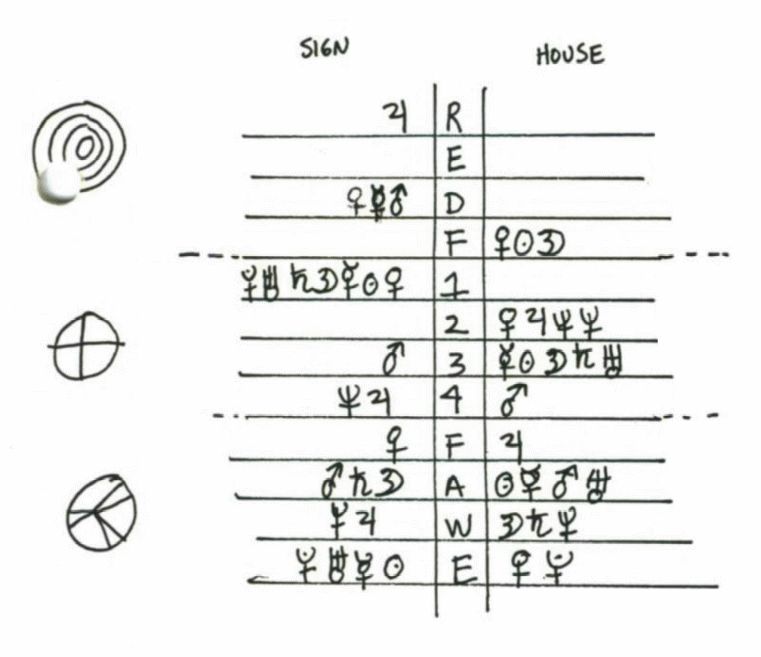
FIGURE 1982 0405a-1. Freud's Planets categorized by House, Sign, Dignity, Quadrant, and Element.
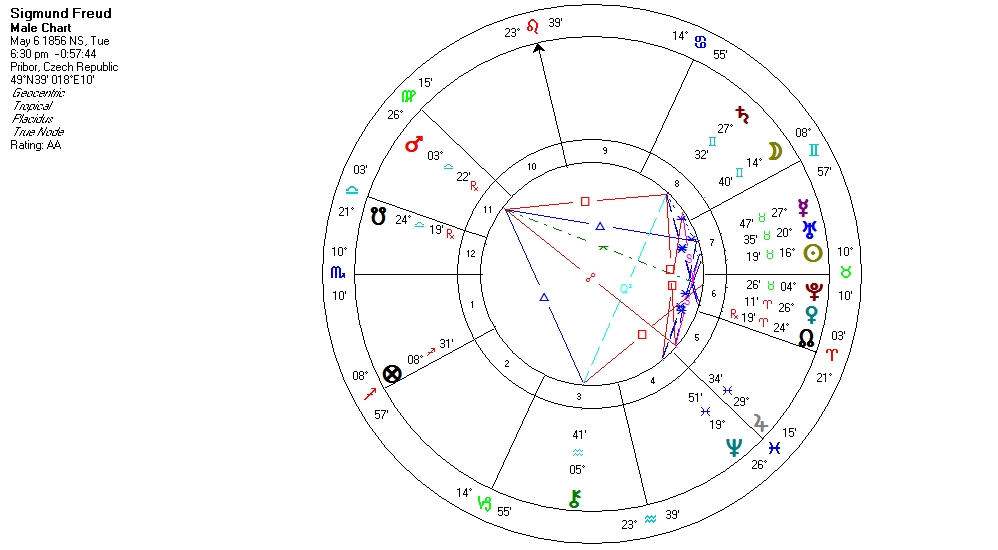
FIGURE 1982 0405a-2. Sigmund Freud Natal Chart.
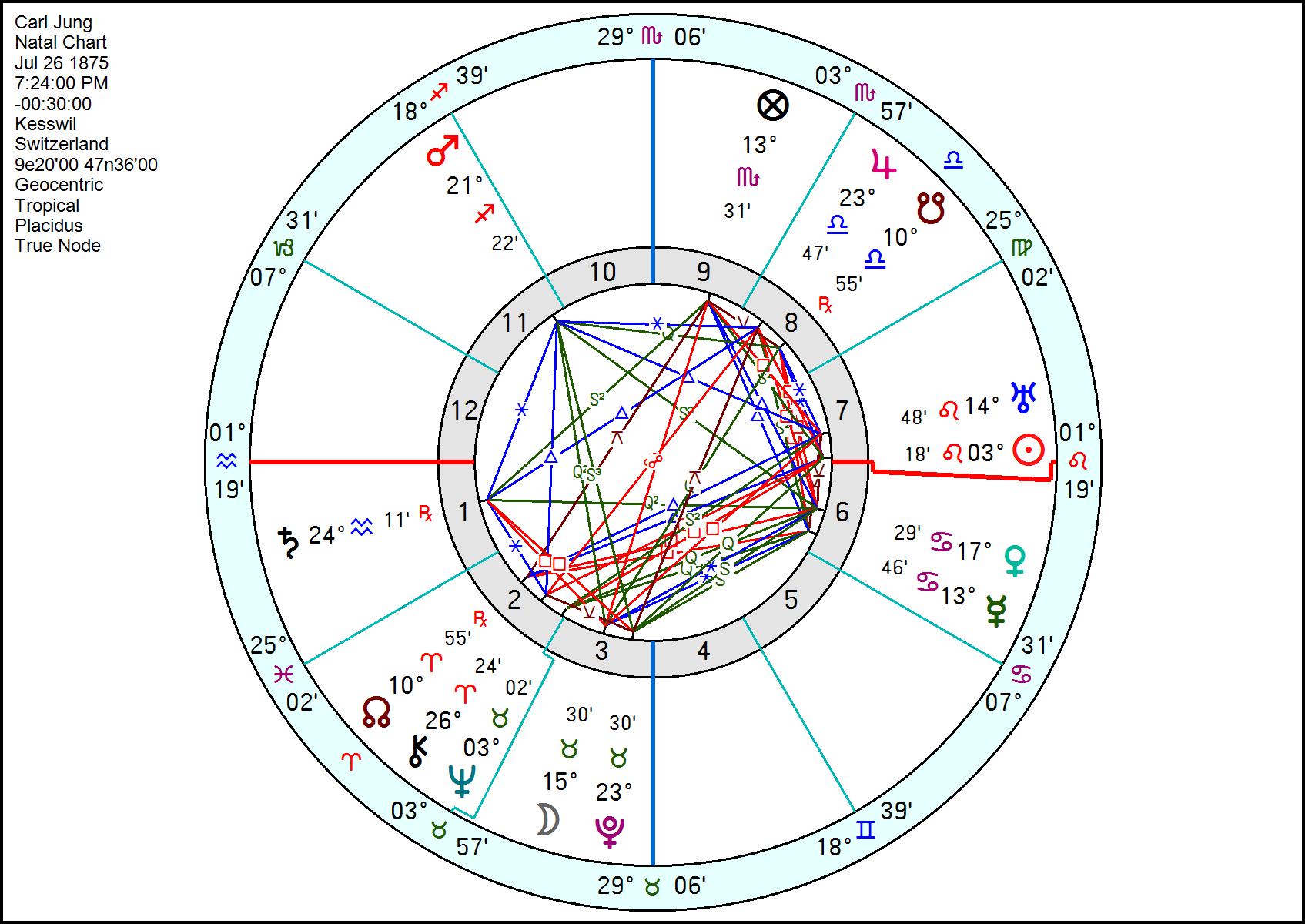
FIGURE 1982 0405a-3. Carl Jung Natal Chart (astro.com).
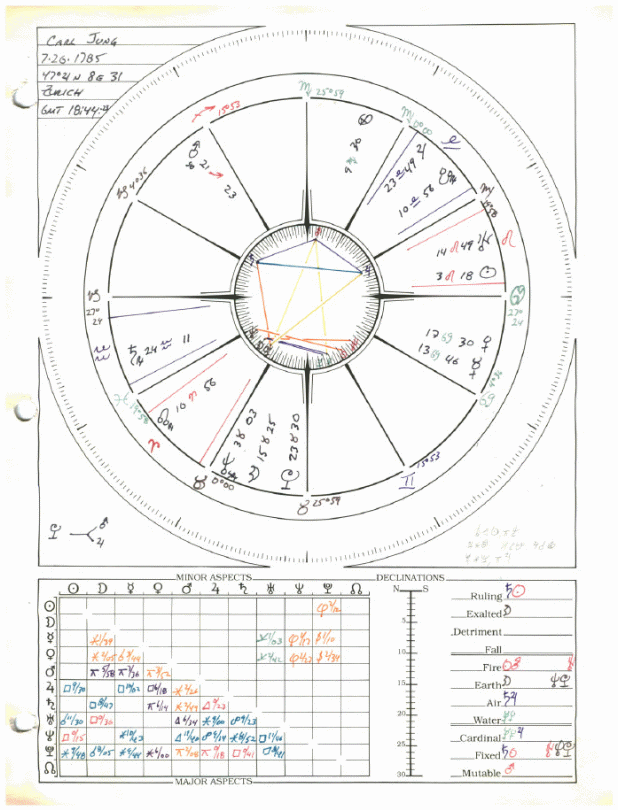
FIGURE 1982 0405a-4. Carl Jung Natal Chart (WG version).
Other diagrams referred to are not with this transcript version. [Transcriber note: [diagram] means the speaker is referencing a diagram as he or she is speaking. If someone is drawing or writing, with audible sounds of chalk on a blackboard, I indicate this by [drawing] or [writing].]
NOTES:
This is 1982 04/05a, Astrology; Horoscope-Freud Class, and the first entry associated with this date. 1982 04/05b = Metaphysical Chart Seminar, for which we have no audio, just JF notes.
Earlier partial transcript exists (Scan File 1982 0405-08R07.PDF).
TRANSCRIBED Verbatim by IT 2017 (new version), reformatted by jf 2018. In 2023, IT updates prefatory matter, footer, and audio file name, fixes/completes Book List, adds new note within transcript, adds a diagram and two Jung charts and references within transcript to these, reformats to accord with new conventions. Archival verbatim transcript – V12a.
AUDIO FILES: 1982 0405a, 1982 0405b. [Note: "Tape" and "Side" refer to original audio cassette tapes that were later digitized into .MP3 Audio Files.]
1982 04/05a at Wisdom's Goldenrod
Astrology; Horoscope-Freud
[Audio File 1982 0405a Begins]
TS: --to take a look at Freud's horoscope, and I guess to see if we can figure out what type he is as well as just understand something about the chart. I wrote down the information. As I was telling Anthony, it's pretty clear that-- from the biographers that he was born at 6:30 at night in this little town called Freiberg, Moravia. Now, the trouble with the time is that Moravia got split into Germany and Czechoslovakia and there's not a clear cut as to what time it really is, so the ascendant may or may not be correct, ok. (Audible) main time but there's at least some possibility that it could be later, later on, depending on-- on what the clocks were-- they were doing in 1856. I'll try to find out eventually. [short pause] Should I give a little of his history?
S: Yeah.
AD (faint): (In) a couple weeks tested on this here.
TS: Ok, um--
S: What happened?
TS: Freud-- see-- Freud's father was fairly well off, and he-- he grew up-- he was born in this little town of Freiberg. His father had two marriages and Freud was the oldest son by the second wife and so number three kid out of eleven, so he grew up with a large family. And partly due to s-- interactions in the-- some of his biographers dwell on how-- or the-- how complicated the family life was in early age and that some of his own ideas of infantile sexuality came out of his-- his own experiences. Anyway, there's-- He more or less trundled along, he went from Freiberg-- the family moved to eventually Vienna, they moved to the Jewish ghetto in Vienna. And I was sort of surprised when I found out when I was reading these biographies that the anti-Semitic attitude in Vienna at the time they moved there was high, to say the least, they were-- In the early 1800's at one point they hung three hundred Jews just to get people to realize they didn't like them in certain areas of the city. And that's-- I-- there was certain amount of negativity. (TS laughs a bit, bit of laughter) And so, some of his own paranoia growing up and defensiveness seems to have been somewhat justified.
He grew up as a pretty brilliant student, he was a medical student, but because of-- he was Jewish he was not encouraged to go into practice medicine as a regular doctor. He did some fairly interesting things in terms of neuropathology and anatomy, did some-- he wrote some papers on various and sundry things, spinal column of a eel and stuff like that. Anyway, so he was-- the point of that being that he was in fact considered a reasonably good M.D. of the kind that was around at the time, a regular standard M.D. But, because of his background and his own future, he was transferred rather abruptly to the psychiatric ward of a hospital and he decided to go with it. At the same time he fell in love, I got his transits for that. And that was really sort of the first crucial point in his life because that's where he got s-- began to get interested in psychiatric because it's what he had to deal with all the time. That was-- let's see, what year was that? [flipping through pages] That was in 1882 so that already brings us up to when he was 26. Basically, from 1882 until 1886 he was working in this hospital and-- One thing he did during that period was he investigated the use of cocaine as a medical anesthesia, and as his first experience of getting ripped off was that he worked with two other people and he didn't pursue his conclusions, and he confessed that he didn't, and his co-workers published it and became well-known by virtue of that. This Mars gave him a lot of trouble. (TS laughs a bit) If you look at the chart in terms of the aspects, that Mars does have a lot of aspects and it's also singleton on that side of the chart, it's in detriment. [Note: See FIGURE 1982 0405a-2, Sigmund Freud Natal Chart, appended to this transcript.] Anyway he got married and lived happily ever after, according to the biographers.
He-- his first investigation of hysteria was when he went to study in France with a guy named Charcot and then he began to get some ideas on his own and he-- in 1885 he started translating Charcot's ideas on hysteria and started looking at hypnotism as a use with patients. And it was then in the 1885-1887 period that he began to sort of like, you know, started getting going.
Let's see. One thing that I-- I won't go over in detail now but the thing that-- where he got together with Jung as a friend of his and then spent six or seven years and then had a rather abrupt break with him was a pattern that ran through his whole life. He first of all was a friend with a guy named Breuer and then another guy named Fliess and then Jung and then Ferenczi and-- It was a pattern, it-- the incident with Jung was not unique to himself and Jung in that way.
In 1897-- 1897 was the big year in his life and I'll get the transits for that in a minute. 1897, he began s-- he-- it hit him that his dreams meant something. And that year he began interpreting dreams, he began a whole self-analysis, and the idea of applying psychology to people who weren't catatonic or hysterical hit him also in that year. He began his own self-analysis, he be-- he formed his theory of infantile sexuality and the idea that fantasies as well as dreams could be used in terms of therapy, and this is also when he began to have people lie on the couch and do the free association method, ok. The establishment of the free association method as distinct from hypnotism, nobody seems to be really sure of an exact date for that, I tried to find a date, because that's one of the things he seemed to have contributed, but it took him two or three years to move into it. That was 1897. He wrote Interpretation of Dreams, which was really a fundamental book of his. Then in 1897 he also wrote a thing called the-- the Project [Note: Project for a Scientific Psychology (1895, published posthumously in 1950).] where he wrote a theory of mind and his own idea of epistemology, just pretty materialistic. That was-- Ok. I guess that was the first period of his life and in 1906-07, somewheres in there, he became to be-- began to be known as a person, as a-- as something rather than just a Viennese psychiatrist. And that's when Jung got to meet him and a lot of people, Jones, his biographer and so forth, and the group just started around him in the ear-- about the turn of the century. And that group stayed-- stayed going-- Well, it continued pretty much through his whole life but, from there to 1913 there was a group of people around Freud and he was rather authoritarian in terms of them following him, you know, and if they didn't follow him, if they deviated then he would reject them or he was very defensive about it. And that group shifted. Practically nobody s-- and-- I don't think anybody really stayed with him in terms of his own ideas exactly the way he conceived them.
He had one other creative period besides 1897 for writing and that was in the, oh, late teens and early 20's, he wrote a bunch of books, he wrote Beyond the Pleasure Principle, The Ego and the Id, Inhibitions, Symptoms and Anxiety, and his autobiography. He wrote those all in a clump. Then his work sort of-- by now, I mean in 1920 he's like 70 years old, ok, and this is-- he was-- may have been a hypo-- hypochondriac, it depends on who I read whether they say he is or not, but he did get cancer of the jaw and he suffered with that physically from about 1920 to 1939 when he died of that.
He's-- as far as World War I went, he sort of didn't-- it didn't affect him a lot, ok. He rooted for the Germans, sort of strange but, near the-- as the war began to get unfolded he realized that that wasn't such a great idea. But, he was mostly involved just with his own work and his own group. His family life, even Jones who wrote that big huge three-volume set [Note: Ernest Jones, The Life and Work of Sigmund Freud, 3 volumes.] says he had a very uninteresting life as far as his family life was concerned and he got married, he had six kids, and just sort of an ordinary life as far as that was concerned. Most of his relationships were with these men who were professional students of his, like Jung and Rank and Jones and these other people.
He wrote a few-- he wrote a book called Lay Analysis [Note: The Question of Lay Analysis.] which he justified the-- in 1926 and that was a real important work because he was by then some kind of authority and he established the idea that you didn't have to be an M.D. to be a psychiatrist and he pro-- proved it and defended it in court. And at that time there was a man who was being sued and this book defended him and was accepted. Then he wrote in 1934, a few years before he died, he wrote a book called Moses and Monotheism, which he didn't publish till practically his death-- time he was dead, 1938 [Note: 1939]. That-- that was his own-- I don't know exactly what that dealt with, ok. I can look it up.
AD: Primal horde.
TS: The what?
AD: The primal horde. The father or the patriarch.
TS: Huh, certainly was one. Well--
AD: Are we expecting to write something like that? (TS laughs a bit)
TS: Yeah. It's a little patristic, yeah? He-- he had a large family and seemed to have a pretty close relationship with his family. It wasn't nearly as tempestuous as-- as Jung's was. His battles though were mostly with his coll-- his colleagues, yeah. And if there were fights in the family they-- I don't know of any record of it, any kind of interaction there. Well, there he is, 83 years and 4 minutes.
[student assents]
S (faint, possibly part of background): Smile.
AK: Did you read the-- the Bruno Bettelheim article about Freudian [couple/three words inaudible]
TS (simultaneously): Yeah I did.
AD/S(?): [couple very faint words inaudible, possibly part of background]
TS: Yeah.
S (faint, possibly part of background): I see it, ok.
AK: No it-- just it represent-- it-- it says that-- something in the article about that-- that he had a much less materialistic view of what he was doing than many of these translators would lead us to believe. But that's when he died, huh?
TS: I think that-- I mean, part of that article seemed to make sense in the sense that they were saying that a lot of his terminology was rather more common language than it came out in English, like ego and id and so forth, but--
AK: Well the-- the thing that they were-- and he was trying to provide emotioned-- emotion-toned reactions, in other words he wanted them to be symbolic on several levels. He wanted them to be-- convey more than [TS assents] the English translation, [TS assents] which tend to be very cold, distant words that people don't have associations with.
TS: Yeah well he-- well, as far as I could pick up Anne, and I'm a 24 hour expert on the man so-- (some laughter)
AK: [couple words inaudible] I didn't write thank you.
TS: But, in the couple of biographies I skimmed, I wou-- I don't know that he was in any way particularly religious or mystical. In fact one of the-- his comments was, he was-- one of the things he managed to do with his wife early on was break her of orthodox Judaism and (bit of laughter) [student assents] get those bad habits out, so-- He-- most of his writings in-- from what I've read of the-- the excerpts from the books um-- are pretty clinical, I mean they're pretty-- they're-- they tend towards body-based or a-- a body o-- you know, a medical approach rather than a-- a mental approach, by and large, I mean ones I've seen, I don't know much about that last one, but the other ones I-- I read a little bit here and there on.
AK: Because that was the point of his-- that-- the Lay Analysis book, when he brought that out, is he didn't want it to become-- he was afraid that the American camp of psychologists were turning around and making it wholly a medical profession. He didn't want that orientation.
TS: Hm. Well, um, maybe.
AK (simultaneously): According to Bruno Bettelheim.
S: Oh.
[student assents]
TS: Is there anything else I should add or mention? [short pause] I don't know that he had-- he-- his ideas didn't seem to evolve quite like Jung's, um, they seemed to-- This one period in 1897 seemed to be the most major creative period in his life, it was like a period of two or three years in there which was-- he did a lot of his work. Now he was-- in 1897 he was already in, was he, 41, you know, so, been around for a while. He seemed to expand his theories somewhat but he didn't seem to ever really change any of his earlier theories. He changed some of his earlier diagno-- diagno-- yeah-- what do you call it, analysis, when he-- what he decided a certain person was, you know, he would go back and see, no, that person wasn't what he thought they were originally, yeah. He did have, from what I can read, both a very busy schedule. He worked with people anywhere from eight to twelve hours a day, right up into his late 70's, you know, once he got famous. In his early 30's and 40's he wasn't-- you know, he went weeks without work at times but other-- but once he-- he became well-known he was very active and he always spent at least a half an hour a day trying to analyze himself as well, so he was involved in that process. (laughter) Ok well, that's-- that's-- I don't know what else to do with him but-- Well if we want to go and pick out some transits in a little bit, I've got the transits for about forty or fifty events. Yeah Dave?
AD (simultaneously): Well let's [DB simultaneously: Yeah, I just--] start with his degree readings, [TS: Yeah] the battle.
TS: David?
DB: I was just curious, was he the one that actually came up with all the names for the infirmities and mental aberrations like manic-- manic-depressive whatever. I mean the whole list of things that [couple words inaudible] not be. (laughter, student words) I mean did he-- did he come up with the names or have they been around?
S: Well--
AD (simultaneously): What was that? I don't--
DB: I just wondered if-- if he came up with the names for the-- I mean, Tim had said that he went back and said, "Well this guy wasn't a catatonic, he was a-- a-- something else, whatever," I was wondering he actually delineated and gave names to all these various conditions. You know like, in the beginning it was just--
AD (simultaneously): Oh no, that was spread out over a hundred years, from 1800-- from 1800 on. You had all the, you know, the (turbile--) was it the (turbile) [couple words inaudible] It's a strange thing that the names given to the variety of diseases, so-called mental diseases and the classification, the syndromes and all that, was done by men who were basically-- most of them didn't even get to be 30 years old and they were known for one syndrome or another. And it was pretty well spread out, all those names. It's really an unusual thing in the last-- medical history that most of the contributions that were made in the medical history were done by men who were under 30 years old. And if you look up the name of-- if you look up the, you know, the origin of this-- the name of this illness or that or any other, it'll spread out and it's usually a name [couple words inaudible] discovered it [one word inaudible]
TS: Yeah. It's like the-- if you take the-- I-- well Michael can correct me on this but I think the idea of the brain having synapses and that being a-- this-- the process of the way the nerves work was still being investigated medically at the beginning of Freud's life, in the early-- and it wasn't till turn of the century or so that it was more or less a theory that we-- that we believe in now. But-- Sun. Ok. Sun degree.
[short pause, flipping of pages]
Marc Edmund Jones [The Astrology of Concepts, Taurus 17, TS reading]: "An imaginative battle is under way between swords, the disciples of might, and torches, the disciples of enlightenment."
S: Hm.
TS: This is 17 degrees of Taurus.
[short pause, flipping of pages]
TS: Let's see here. Jones' keyword is RESOLUTION.
Marc Edmund Jones [The Sabian Symbols in Astrology, Taurus 17, TS reading]: "When positive [TS reads: Positively], the degree is high organizational skill and [TS adds: an] ability to bring the magic of understanding to any specific difficulty, [and] when negative [TS reads: negatively], a loss of self-competence through the conflicting compulsions of necessity and desire."
[short pause]
TS: Um-- [student assents, faint] [short pause] He also says--
Marc Edmund Jones [The Astrology of Concepts, Taurus 17, TS reading]: "…a symbol of the struggle between the purely physical influences of experience and the kindling inspirations of higher being…"
AD/S(?) (very faint): (Let's go.)
[21 second pause]
AD: Can we rotate around a few? Keep going around till you [TS assents] get to the Mars, the Saturn.
TS: Ok. Mars is 4 Libra.
Marc Edmund Jones [The Astrology of Concepts, Libra 4, TS reading]: "A group of students of higher truth in summer conference are seated about a campfire in unconscious meditation."
[short pause]
TS: Do you want the interpretation or just the symbols first?
AD: The symbol and then the last sentence.
TS: Ok.
[short pause, flipping of pages]
Marc Edmund Jones [The Sabian Symbols in Astrology, Libra 4, TS reading]: "[The] keyword is AMIABILITY. When positive [TS reads: Positively], the degree is special skill in building an everyday morale and in sustaining an effective structure for further and greater objectives in life, [and] when negative [TS reads: negatively], a lazing away of opportunity and an idle dependence on [TS reads: upon] others."
TS: Ok. Saturn is 28 Gemini. [10 second pause, flipping of pages] Oh yeah. Um--
Marc Edmund Jones [The Astrology of Concepts, Gemini 28, TS reading]: "A man is leaving a courtroom with mixed feelings of relief and determination; he has just passed through bankruptcy."
TS: Well--
[short pause, flipping of pages]
Marc Edmund Jones [The Sabian Symbols in Astrology, Gemini 28, TS reading]: "[The] keyword is DELIVERANCE. When positive [TS reads: Positively], the degree is an effective and over-all resourcefulness in even the worst of situations [TS reads: the worst situation], [and] when negative [TS reads: negatively], a willingness to dodge every responsibility and betray the very core of self."
TS: Let's see. I think the Venus degree is interesting. It's 27 Aries. [flipping of pages] Considering his theory of childhood and so forth.
Marc Edmund Jones [The Astrology of Concepts, Aries 27, TS reading]: "A panorama of blending events out of the past shows the regaining of lost opportunity through the imagination."
TS: (It's) right on.
S: Hm.
TS: It was practically a literal meaning.
[short pause, flipping of pages]
Marc Edmund Jones [The Sabian Symbols in Astrology, Aries 27, TS reading]: "[The] keyword is REFORMULATION. When positive [TS reads: Positively], the degree is the self's effective command of itself in any situation brought to immediate issue, and when negative, self-pity as a retreat from reality."
[short pause]
TS: Ok, that's in Sun-- Moon, um-- [10¾ second pause, flipping of pages] The Moon is in the 8th house in Gemini.
Marc Edmund Jones [The Astrology of Concepts, Gemini 15, TS reading]: "Two Dutch children [TS adds: are] in their immaculate native costumes [are] [TS adds: and] studying their lessons together."
[11 second pause, flipping of pages]
Marc Edmund Jones [The Sabian Symbols in Astrology, Gemini 15, TS reading]: "[The] keyword is CLARIFICATION. When positive, the degree is a self-confidence of spirit by which man is able to establish himself advantageously at ease in any possible situation, [and] when negative, extreme provincialism and inability to communicate ideas of any moment."
TS: So-- Ok, let's see Sun, Moon, ok. It's-- Mercury I think is-- did I do Jupiter?
S: No.
S: No you haven't.
TS: Mercury is-- I'll do Mercury and then Jupiter. Mercury is 28 of Taurus.
Marc Edmund Jones [The Astrology of Concepts, Taurus 28, TS reading]: "A woman in middle life stands in rapt sudden realization of forgotten charms, in unexpected recovery of romance."
S: [couple/three faint words inaudible]
S: (Yeah.)
TS: Uh-- [short pause, flipping of pages] Let's see if this--
[short pause]
Marc Edmund Jones [The Sabian Symbols in Astrology, Taurus 28, TS reading]: "[The] keyword is PERSUASION. When positive, the degree is the soul's effective capitalization on its more enduring potentials, and when negative, a tendency to lose heart and accept lesser things when greater ones lie at hand."
TS: Ok. Jupiter is 30 Pisces.
S (faint, possibly part of background): I can't.
TS: What?
Marc Edmund Jones [The Astrology of Concepts, Pisces 30, TS reading]: "Nathaniel Hawthorne's conception of the Great Stone Face has been brought to fruition in a huge mountain carving."
[9½ second pause, flipping of pages]
Marc Edmund Jones [The Sabian Symbols in Astrology, Pisces 30, TS reading]: "The keyword is DISCERNMENT. When positive, the degree is self-integrity in its irresistible impact on the course of events, and when negative, wholly inarticulate and ineffectual self-realization."
TS: So that's the Chaldeans. [short pause] Do you want the trans-Saturnians or the notes?
AD (faint): Let's-- let's wait for trans-Saturnian.
S (very faint): Let's go.
AD: Tim, we're-- we're going to try to find out what kind of a type he is too, huh?
TS: Yeah.
AD: So why don't we put on the right hand board the scheme that we've been working with?
TS: Ok. [aside] Yeah, actually, can I steal that for a minute? It's got it on the back of it so--
S (whisper): Ok.
[16½ second pause while TS draws]
[Note: See FIGURES 1982 0405a-1, Freud's Planets categorized by House, Sign, Dignity, Quadrant, and Element, and 1982 0405a-2, Sigmund Freud Natal Chart, appended to this transcript for the following.]
TS: So on the left only the signs, on the right I'll put the houses. [one/two inaudible student words] Let's see. By rulership-- he's got [drawing] Jupiter in rulership by sign and Mars and Venus in detriment by sign [diagram]. He's got Venus in fall, Sun in fall, and Moon in fall [diagram], ok. That's all over. In the first quadrant by sign he's got Venus, Sun, Mercury, Moon, Saturn, Uranus, and Pluto, mostly there [diagram]. In the 3rd quadrant he's got Mars and in the 4th quadrant he's got Jupiter and Neptune [diagram]. By house he's got Venus, Jupiter, Neptune, and Pluto in the 2nd quadrant, Mercury, Sun, Moon, Saturn, and Uranus in the 3rd, Mars in the 4th [diagram]. By fire, he's got Venus in fire by sign. I think that's it. Yeah. Moon, Saturn, Mars in air, Jupiter and Neptune in water, Sun, Mercury, Uranus, and Pluto in earth [diagram]. And by house he's got Jupiter in fire, Sun, Mercury, Mars, and Uranus in air, Moon, Saturn, Neptune in water, and Venus and Pluto in earth [diagram]. Now if you do the cusps, he's got Scorpio rising [diagram], some degree of Scorpio rising, and so that would be ruled by Mars in detriment, so that would-- that would be associated with Mars in Libra, which is stationary retrograde, and it's-- it's in that T-square [diagram], so-- Nadir is Aquarius [diagram], and-- so that would be ruled by the Saturn in Gemini. [9¼ second pause while drawing] The Saturn has got a square to Jupiter and a sextile to Venus as its main aspects [diagram]. The descendent is pretty strong, it's got Pluto sitting right near it and it's ruled by Venus which is in Aries and which is in dignity, in detriment [diagram]. [drawing] Is Leo [diagram]. The midheaven would be ruled by the Sun, Sun in Taurus.
AD: Alright, everything's tentative, you know, we're just speculating. I think you better repeat what we're-- well, what you're doing there.
TS: Ok, um-- Well-- What I think I'm doing is--
AD: What we think we're doing, [TS simultaneously: Ok.] alright.
TS: These are-- we just took these three or-- three ways of dividing the signs and the houses. This is just the rings [diagram], ok, and we've connected the rulerships with in-- intuition, [AD assents, faint] exaltation with thinking, detriment with feeling, and fall with sensation [diagram]. And we've done that before 'cause that's like with the skandhas.
AD: Most of you are familiar with that, (alright).
TS: Um--
AD: That's great. [S simultaneously: Next.] Ok, next one. (bit of laughter)
TS: Does that make it worse? [possible reference to diagram]
S: Yes.
TS: Ok. Um--
S (possibly part of background): Thanks [one word inaudible] (bit of laughter)
TS: Too bad for you Paul.
AD (simultaneously): That's worser. (some laughter)
TS: It's worser?
AD: Go ahead, continue.
TS: Well now-- If I stand in front of you, you won't know at all. The next one was by quadrant. And we said that the 1st quadrant is intelle-- [drawing/writing] intuition, the 2nd thinking, 3rd feeling, and the 4th sensing [diagram]. And that's like the tanmatric of the subtle-- the idea that the signs being composed of some kind of tanmatric substance or res-- or taking form in some kind of tanmatric substance. I see them as connected to the four Intellects, these being functions-- the psy-- a kind of a psychological perspective on those four Intellects, ok. And then last we have the four elements, like the fire signs and the earth signs, air signs, and we associate them also with intuition, thinking, feeling, and sensation [diagram]. So, these seem to be coarser in their way or more-- more gross, more fully manifest. And the suggestion that you were pursuing last week was to look at the cusps as the ascendant having to do with sensation, [drawing/writing] the nadir with thinking, the midheaven with feeling, and the descendant with intuition [diagram], ok, so I put that up as well. I don't know, do you want to put up the little sevenfold tree as well or--
AD: No, they-- that was--
TS (faint): Right.
AD: That second one you gave, you [student assents, faint] want to go over them?
S (faint): Yeah.
S (faint): Do it again.
TS: This?
AD: Yes, the four quadrants. [short pause] I lost sight of it again.
TS: Well, ok, I think where I'm coming from is that at one point we talked about how-- Oh bother. We talked about the [drawing/writing] constitution of the four last houses as being Sagittarius, Capricorn, Aquarius, and Pisces, and we said that these were like grades of matter which, you know-- or substances which were-- and different levels of substances in the-- in the 4th qua-- in the universe.
AD (simultaneously): No, I think, I think we would be better off Tim, and again this is suggestion, if you think of the 1st quadrant in terms of the ideas, 2nd quadrant and 3rd and 4th in terms of the ideas. So in the 1st quadrant you would have let's say-- let's say the unity of the being, alright, [TS: Ok.] the-- what-- in other words, you would find the basic ideas that he's coming off of, alright, the 2nd quadrant then the kind of intellect that's operating.
TS: Uh-hm.
AD: Alright.
TS: So you would go back to [drawing/writing] the Agent--
AD: Yeah, it's what you put down, the-- the four Intellects as you put them down. But it seems that the content of each Intellect has to deal with something specific.
TS: Yeah. Ok.
S: Ok.
TS: Yeah that's-- this is the way I've been thinking about them in-- both in terms of their subjective and objective operation, that-- in other words, that this would be a functioning in an intuitive-- in the way that what Jung means or what Jung try-- describes as intuitive might be a-- a way to speak of the Agent Intellect operating in the psyche [diagram]. The way they speak about thinking would be the way in which they speak about a Material Intellect operating in the psyche [diagram]. And the Acquired would seem to be the psyche itself and I connected that with feeling [diagram]. And then this [diagram] would be perception, ok.
AD: Alright then, and now as we go along we try to see the classifications, where they fall, in which-- which one of those four they fall basically.
TS: Yeah, ok. Well, starting with the top one, which you said was your preference, it's intuition and feeling or the rulership and the-- and the detriment, which is on the sign side, which is of course the more traditional dignities, ok. That Jupiter, when we get to dragging through the transits, the Jupiter certainly is quite frequently aspected, it is-- it is-- most of the time when he's-- when an-- when an idea came into him the-- the Jupiter was operative, ok. It did seem to provide him with intuitions.
S (faint): Alright.
AD: So you're thinking that the Jupiter would stand for the intro-- introverted [TS assents] intuitive kind of functioning?
TS: Some-- yeah. Now, he has this [diagram], he has this extroverted sensation function of sorts, ok. Now, I could see that in that he did do a lot of interesting-- in the first forty years of his life in particular, he did do a lot of laboratory and clinical work. I mean he actually did a lot of dissecting of eels and stuff like that, you know, and came up with new-- found new things in them, so I mean-- And he loved it, he wanted to do that his whole life but he-- circumstances forced him out of it. So, he did have some kind of sensation function and his ability--
AD (simultaneously): How many falls did he have?
TS: He had none by sign but three by house. So I was thinking that might indicate an extraverted intu-- a sensation function.
S (very faint): Go on.
TS: From-- I-- if I understand what Jung means by extraverted sensation it's dealing with, you know, facts and numbers and, you know, the objective, the phenomena, but not necessarily with the meaning that those phenomena might have, you know. 'Cause he certainly-- he was no theoretician as far as that stuff goes. In fact, he wasn't much of a theoretician-- theoretician at all, just sort of observed what worked, you know, on the one hand, and [AD assents, faint] his-- his intui-- and the other thing seemed to come from intuition, the-- just-- his like-- when he saw a dream, he remembered, he was sitting at a certain table in a certain café and it hit him that this dream meant something, you know, and then from that he turned around and then started applying it.
[student and/or AD assents, very faint]
[13¾ second pause]
TS: Now, if we just did it by weight, the thing would say that-- that there was also an emphasis on some kind of feeling function, introverted feeling function.
AD: Venus in what?
TS: Yeah, Venus in Aries and Mars in Libra.
AD: For what? Why-- why did you--
TS: Well I really don't but it-- I mean I don't--
AD: No, if you're going by the formula I could follow but do you have anything to back that up?
TS: No I don't. [10 second pause] Intuitive (women) functioning. I guess the only way I could see an introverted feeling function in him, or if I tried to think about his feelings at all, from what I've been able to make out by what Jung and von Franz are indicating with introverted feeling function, there's a constant dialogue in terms of the sense of self-worth, the value of the subjective processes and also the value of that person. It's not related to making other people feel good but making oneself feel good, and in that sense he was extremely sensitive, you know, in terms of-- and if anybody challenged him in terms of, you know-- if they didn't follow him to the letter he-- he was real upset, you know, and-- I think that's-- for long-- he got into these relationships and he-- and many of them, even Jones says it was very unclear why he would get into these relationships with his colleagues but their adoration of him as a-- as a genius would keep him going even though there was a lot of disagreements and strain. And I could see that as being need for that kind of confirmation of self-worth, of self-value, that might be a part of the introverted feeling function.
S: Hm.
DB: Um--
TS: [few words inaudible]
S: Yeah.
DB: Yeah. Well I sort of have one but, how is what you're saying distinguishable from just the fact that it's Venus in Aries?
TS: Well it isn't, I mean that's-- we're saying it's from the Venus in Aries that it's coming.
DB: Uh-hm.
TS: I mean we're-- looking at this, we're saying that the detriments have to do with the ska-- these ru-- [DB simultaneously: Right.] the detriments have to do with the feeling function.
DB: Yes.
S: Uh-hm.
TS: So-- You asked me how could I distinguish what I'm saying from Venus in Aries.
DB (simultaneously): Oh, ok.
S: Yeah.
DB: So-- but what you've been talking about is primarily Venus in Aries after that introverted feeling.
TS: Well both, ok, that I'm just saying that he had the two planets [student assents] in introverted feeling. I'm trying to see if that makes any sense, you mean I-- I mean--
[short pause]
AD: Go back to the symbols.
S: Well, (he can't).
S (faint): Right.
TS: And I see the Venus functioning elsewhere. The Venus is--
Marc Edmund Jones [The Astrology of Concepts, Aries 27, TS reading]: "A panorama of blending events out of the past shows the regaining of lost opportunity through the imagination."
TS: Well, there goes the lost opportunity.
AD: Ok. [short pause] And the Mars?
TS: Um--
[short pause]
Marc Edmund Jones [The Astrology of Concepts, Libra 4, TS reading]: "A group of students of higher truth in summer conference are seated about a campfire in unconscious meditation."
AD: What kind of aspects that Mars has to-- ok?
TS: Uh-- yeah, it-- it's-- The Mars has got the only opposition in the chart, it's opposite Jupiter. It's square Saturn. It's quincunx Pluto and trine Mercury.
[23¾ second pause]
RG (faint): Well I just-- I don't see a relationship, detriment with feeling. I don't-- I don't-- [S: I know what you mean.] I mean, I don't really (save) anything (for) any [one word inaudible]
S: Oh.
TS: Back in 1540 when we were in the Sun in Aquarius, remember we talked about the skandhas? We took the five skandhas and we connected the skandhas with the-- the rings, the whole-- well, the four dignities, saying that they were manifested in the-- in the 5th skandha in the 12th house. [RG assents, faint] And that process we worked out that-- that order.
AD: The equation of feeling, willing, knowing, and sensing with the dignities, [S, very faint: (I don't go for that.)] on that top model [diagram].
RG (faint): Yes I-- that part I got.
AD: That was the equation we worked with last (time).
RG (faint): Yeah I know, I don't--
AD: And now we have to apply it and see if it works. Now--
RG: Well, ok, see, I mean-- maybe look at that. I can accept that if you just want to see that it works but--
AD: We want to apply it and see if it works, the way we did with Jung's chart. We're not going to be able to find out unless we do some empirical digging out, so--
RG (simultaneously): I just lost how it got there in the first place.
S (very faint, possibly part of background): I talked to him today.
RG: I see.
AD: And then the other I think--
(Side 1 of original cassette tape digitized as 1982 0405a Ends; Side 2 Begins)
S: (Yeah.)
TS: [couple very faint words inaudible]
[student assents, faint]
AD: We're just trying to find some organization, some formula by which you can try to pin down-- not as-- not the way the Jungians do, you know. They make you feel that you're a thinking type and the other things aren't working, not at all because-- Look, here's the difficulty, alright, and I'll try to say this as simply and briefly as I can, that the consciousness that person works with is a conglomerate, you know, is a conglomerate of many many qualities and very often these qualities are not even self-identical with themselves but at times even (flow/throw) out into their opposite aspects. And the only unity we're going to find is what we refer to as the astral body, that's the only container of unity-- unity of all these variety of experiences. So that-- like if we think of each degree representing some sort of dominant within consciousness, let's say each degree represents a God, but we don't know the God, we only know the way that God manifests as our personal conflict in our consciousness, (then) if we think of the variety of degrees all interrelated with each other, or a certain number of them all interrelated with each other, and they manifest as the variety of our states of consciousness and they're constantly being transformed and me-- metamorphosized, we're going to have a tremendous difficulty. And to think that we could, you know, come up with the types the way the Jungians do, we already know that that's not (it). All you're going to do is come up with a certain dominance of one function at certain times and at other times another. You're not going to have no clear-cut formulation. Nobody's a thinking type, nobody's an intuitive type. But maybe, maybe we can see the role when we start picking out some of these events, you know, and we-- we'll start seeing which dominants come into manifestation. But the first thing I think we'll have to do is get-- get the-- try to get some skeletal outline of the dominants that are operative and that's why I like to use just the Chaldean planets. And I stick with the Chaldean planets because they basically represent personality function.
RG (faint): But I do not see them as [one/two words inaudible] Well I don't un--
AD (simultaneously): Go ahead.
RG: I don't understand what it means to call feeling the same thing at four different levels. In other words, you have feeling at the level of the dignity, that's one level of existence.
AD: There's no feeling there. You're not talking about feeling at the level of the rulership?
RP: No, just the (detriment).
AD: (Just) the dignity?
TS: The detriment.
RG (simultaneously): Well just saying the dignities refer to the functions [AD: Yeah.] in some way, it doesn't matter which one, we're talking about feeling so now you've correlated that with feeling. And then you're talking about a different level. And then you use the Active Intellect model and equate feeling with ano-- with a type of Intellect. And then you have the elements and equate feeling with one of the elements, and then you have the quadrants and equate feeling with one of the quadrants. And it seems they mean very very different things at the different levels.
[12½ second pause]
AD: They're-- that's very possible well.
RG: I mean in other words, what feeling represents (to) the psychological subject to me doesn't make any sense to call it feeling at the level of the dignity. I mean it-- you could call it feeling but it certainly doesn't seem to have the same kind-- the characteristics that we normally identify with psychological function(s), especially for-- I mean, using a Jungian model and his-- his description of the types.
AD: Well, let's take an ordinary chart, alright. Let's say you have Venus in Scorpio in the 1st, 2nd, or 3rd house and it's in one of the elements, ok. So that means, on the one hand, the first level, alright, we're speaking about-- we're speaking about as one (of these vision). [student assents, faint] The 2nd-- the 2nd level, on that right board, we're saying it's in one of the quadrants. [student assents, faint] The 3rd level we're saying it's in one of the particular elements, fire, earth, air, or water and which one, alright. Alright, and the 4th one is the way it's going to manifest through the bodily apparatus, ok. Now all those four may be simultaneously working at one and the same time, we don't know. But we do know that they're-- that if we factor out the-- the constituents of let's say the Venus in the 2nd house in Scorpio, that all these constituents are there. What do they mean?
RG: Right.
AD: Alright, so you have-- you have Venus in Scorpio in the 2nd house, ok. Now what does it mean to have Venus, a detriment, in Scorpio, alright, in the 2nd house, and in the 1st quadrant? [RG and another student assent, faint] So we if get a-- if we get some clue maybe-- maybe one of those things won't mean anything at all, let's say the fact that it's in the 1st quadrant maybe doesn't mean anything at all. Maybe it does mean something. But we're not going to know until we start piling up some sort of empirical evidence, that's why we want to do a few charts of famous people whose life is public. Alright now, we're-- if we go-- if we go directly to a chart and try to see (if--/it.) Because, the basic assumption we're working with is something like this, that imaged being has no permanence, alright, no stability, and no intelligibility in it. Is that so?
S (very faint): Yeah.
RG: Yeah.
AD: Philosophically, in other words when we're speaking about the sense world, there is no intelligibility in it. Correct?
RG: Uh-hm.
AD: There's no permanence or stability in it, correct? Then what the hell is it that you understand?
S (faint): That's good.
S (very faint): I don't know.
AD: So, you can't look to the sensible world for the meanings that you want, so you have to look into the degree meanings and what the planet is manifesting of those degree meaning. That means that you have to get a certain function, whether you call it filling-- feeling-- fulling-- feeling--
TS: Willing, drinking, and feeling?
AD: Willing, knowing, drinking (laughter, student words) manifest that degree so that there's some intelligibility in this imitation being that we're talking about. [student assents, very faint] That's what you're doing.
S (very faint): Correct.
S (very faint): Yeah.
AD: Alright, so we're trying to make some order out of that chaos. The chart to me is primarily chaos.
TS: Hear, hear. (some laughter)
AD: Now until we evolve some method, some organization, some method that can organize what we've brought up to date, you know, what our understanding has procured for us, until we do get some such method, the best we would be doing would be speculating, you know, in the dark. Now, in Jung's chart, to me the most obvious thing in the world was his rulerships were dominant, the intuition-- I don't care that they called him a thinking type, to me he was an intuitive type, the chart to me showed that very clearly (of him), you know, alright. [Note: See FIGURES 1982 0405a-3 and 1982 0405a-4, Carl Jung Natal Charts, appended to this transcript for all references to Jung's chart.] Now, let's try to do something similar to this here, let's see if we can pick out the meanings that organize-- that are organized let's say by the aspects and the planets which are manifesting those meanings into some sort of coherent personality. Coherent here doesn't mean, you know, nicely defined, a square or a circle, anything like that, just a coherent functioning personality. And it's my theory that even a psychotic is a coherent functioning personality, that something's being worked out which you don't understand. So, if we follow that procedure like we did with Jung, maybe we'll get some clues. First of all, we saw very clearly how dominant the Sun was in Jung's chart, I mean every time there was aspects, any big aspects, there was big events taking place in his life.
RG (faint): Right.
AD: Let's try the same procedure here, let's see if that works out. But I still have to go over again in my mind all these seven Chaldean symbols. So as tiring it is, Tim, maybe you can get Jeff to give you a hand to [TS: No.] share the [TS simultaneously: That's ok.] reading with you.
RG (faint): Just one more question then. What are you taking the planets to represent?
AD: What do I take them to represent?
RG (simultaneously): What do-- what do the-- I mean in the schema, in the four schemas there's no representation of the planets. The planets are merely signposts to point out this predominance [TS simultaneously, faint, almost to himself: I could start here.] (of/at) one function or another.
AD: Yeah but they also-- each one represents a particular kind of function.
RG: And you agree with that?
AD: Oh yeah.
RG: Ok.
AD: In other words, we can assign to the planets, the seven planets, functions, like for instance-- [S simultaneously: Well--] I-- I would accept tentatively what Tim put up, you know, Sun imagination, general purpose, things like that.
RG: And the Venus for example, what does it mean?
AD: Feeling I think was the term he used.
S: Right.
TS: You'd call it [S simultaneously: Feeling.] feeling or evaluation or a un-- process of unification.
RG (simultaneously): Ok. So now we have another problem, if you take Venus as feeling--
TS (simultaneously): You like this argument, let me argue with you (in) this argument. You did this last year.
RG (simultaneously): (But) I don't care who argues with me. If you take Venus-- (laughter) if you take Venus as the [one/two words inaudible]
PD (simultaneously): The point to do some empirical research. I mean, we can argue forever.
RG/S(?) (faint): Correct.
PD: That's the whole point [one/two words inaudible]
AD (simultaneously): No, what he wants to see is the distinction [S to PD, simultaneously: Yeah.] between the four gnostic and the seven fabricative.
[student assents, faint]
RG: No, no, but it's-- I agree we have to do some empirical but if you've already weight the way you're judging the thing and not include all the possibilities then you're weighting, you're already judging.
AD (simultaneously): Well, what we just said was that the-- when we list the seven planets in this order, you know, starting from the Sun going down, you're speaking about them as fabricative. When you speak about Venus as feeling, you're speaking about it in a way which we still haven't been able to pin down, in what way is Venus fabricative. That's-- that's your complaint right now.
TS: See I think, what I found too Dickie, is that if you-- if you s-- you can go either way with it, you could string the seven planets all-- down a column and then put things on either side of it: this planet is in a water sign, in dignity, in the 2nd quadrant, with such and such an aspect. That would be a different approach, to take the planets and try to, you know, outlay them as being sort of the central core. Or you can take the-- different kind of fourfold schemas and use the planets as what's ul-- you know-- [couple inaudible student words] which are present in different substances, if you will, ok, which substances which may be processes, psychic processes, you know, like the ether-- like the etheric formative forces, and when you look at the specific planets, you know, then I think that the-- it will add meaning to it. In other words, if you look at a-- you know, that he's got Mars in-- is the only planet in a certain quadrant or whatever, we'll find that that has a-- has a-- you know, that adds something to the meaning.
AD: Well the best [TS simultaneously: So--] way I think, Tim, to answer his legitimate question, I think it's legitimate, is to show the planets as seven, alright, and then to show them as four. Avery, do you know what I'm referring to?
AS: Uh-hm.
AD: What are you doing, homework?
AS: I'm drawing the planets as seven and the planets as four. (AS laughs) Isn't that what I just said?
AD: Would you put it on the board for us? We're gonna-- we're gonna need the bottom board. This is extremely important because it's actually-- you want the distinctions between fabricative and gnostic. And it seems at times we could use another [one/two words inaudible]
AS: No, no.
[student assents, faint]
S (faint): (Well--)
AD: Do you-- do you think you can get it on the bottom, Avery, instead of in the (corner)? [student assents, faint] Because [AS simultaneously: Oh, I see.] without that I think we're going to be handicapped. Maybe [one/two words inaudible] should erase that bottom. Just-- [short pause] Timothy, while he's doing that let's go over the seven Chaldean planets [TS simultaneously: Ok.] again.
AS: Wait, what am I doing?
S (faint): Seven and the four.
TS: The seven and the four.
S (simultaneously): The seven and the four.
TS: Yeah, whatever that means.
S: The metaphor [one/two words inaudible]
AD: Until you do it I won't know. (some laughter) You remember we had two very [AS assents] explicit ways of looking at the seven and the four, one was the emphasis on the gnostic.
AS: Uh-hm.
AD: That means putting them by four.
AS: Yeah, sure.
AD: The other one was the emphasis by fabricative. Remember how we did that?
AS: I think so. That was when we were doing the-- yeah [couple words inaudible] one is by-- [couple inaudible TS words simultaneous with AS] one was by quadrants and the other one was by rings actually.
AD: Put that, yeah, ok.
AS: [couple words inaudible]
AD (very faint): Ok.
HS: Excuse me, those several things you got on the board, those are his-- that's Freud's chart? I mean like you have, I don't know, like Mars-- or Mars in his 3rd quadrant?
TS: Yeah.
HS: But isn't that, I mean, like 3rd quadrant?
TS: By sign. [S simultaneously: By the--] [AS drawing] The 3rd quadrant by sign.
HS (simultaneously): By sign. Why by sign?
TS: Both, it's by both. To the left is by sign, the right is by house. Well, if there was another way to-- yeah. Ok, Sun, the Sun degree, 17 Taurus.
Marc Edmund Jones [The Astrology of Concepts, Taurus 17, TS reading]: "An imaginative battle is under way between swords, the disciples of might, and torches, the disciples of enlightenment."
AD: The disciples of light and the disciples of [S: Might.] enlightenment?
S: Might.
TS: Might.
S: Might.
TS: Might, force.
AD (simultaneously): Oh, oh. Oh I'm sorry. Say it again.
TS: Ok.
Marc Edmund Jones [The Astrology of Concepts, Taurus 17, TS reading]: "An imaginative battle is under way between swords, the disciples of might, and torches, the disciples of enlightenment."
AD: Ok.
TS: Moon?
AD: Could you tell me what kind of aspects the Sun has just for now?
TS (simultaneously): Yeah. The Sun has only two aspects, it's conjunct Uranus and sextile Neptune.
S: Hm.
[student assents, very faint]
TS: Alright. So, it's semi-sextile the Moon.
AD (simultaneously): Well then give me-- give me Uranus and Neptune.
TS: Ok. Uranus is 21 Taurus.
Marc Edmund Jones [The Astrology of Concepts, Taurus 21, TS reading]: "A moving finger points to the significant passages in a large open book."
TS: Want an interpretation of that?
AD: No.
TS: Ok.
AD: How many aspects Uranus has?
TS: Uranus is conjunct the Sun, conjunct Mercury, sits between the two of them, it's sextile to Jupiter and exactly sextile to Neptune. So one degree sextile to Neptune.
AD: Ok, Neptune then.
TS: Neptune is 20 of Pisces.
Marc Edmund Jones [The Astrology of Concepts, Pisces 20, TS reading]: "The window of the farmhouse yields its view of soft purple fields and the table is set for a quiet supper."
AD: Once more please.
Marc Edmund Jones [The Astrology of Concepts, Pisces 20, TS reading]: "The window of the farmhouse yields its view of soft purple fields and the table is set for a quiet supper."
S (faint): That's all?
TS: Ok. Let me see here.
S (faint, possibly part of background): Oh yeah.
TS: Neptune is-- Neptune is sextile the Sun, square the Moon, sextile Mercury, square Saturn, sextile Neptune, so it's pretty active. Neptune I think is pretty active in his chart in general, by transits as well.
[short pause]
AD: Alright, keep going.
TS: Ok. You want Pluto now?
AD (faint): Uh--
TS: Skip the other two or you want to look at (them)?
AD: Now the Saturn is--
TS: Ok.
AD: The only reason I ask you to carry on with the others is because of the aspects the Sun made.
TS: Yeah.
AD: I can't understand the Sun alone except with its aspects.
TS: Well it makes a very wide conjunction to Mercury also but in-- it's semi-sextile the Moon close, if you want to count that. I think I'm headed back towards accepting it. Saturn is 28 Gemini, that's the--
Marc Edmund Jones [The Astrology of Concepts, Gemini 28, TS reading]: "A man is leaving a courtroom with mixed feelings of relief and determination; he has just passed through bankruptcy."
[student assents]
TS: Saturn's the handle of the T-square between Mars and Jupiter with the opposition.
AD: Those things don't mean anything yet.
TS: Ok. It's square to Jupiter and it's square to Mars and it's sextile Venus.
AD: Say it again.
TS: It's square to Jupiter, square to Mars, and sextile Venus, one degree sextile the Venus.
[10½ second pause]
AD: Alright. [short pause] Let's go on.
TS: Ok. What do you want next then?
AD: It doesn't matter.
TS: I'll do the Moon because it's on the same page and it's-- [9 second pause] Moon is--
Marc Edmund Jones [The Astrology of Concepts, Gemini 15, TS reading]: "Two Dutch children in their immaculate native costumes are studying their lessons together."
TS: The Moon is only one aspect, it's square Neptune. It's in fall by house and it's-- it's about it.
[short pause]
AS (possibly part of background): Just leave that.
TS: Mercury is 28 Taurus, Mercury is--
Marc Edmund Jones [The Astrology of Concepts, Taurus 28, TS reading]: "A woman in middle life stands in rapt sudden realization of forgotten charms, in unexpected recovery of romance."
TS: Mercury is sextile the Jupiter, trine Mars, sextile Neptune, conjunct Uranus. Let's see, we did Venus, we did Mars. Jupiter, um--
[short pause, flipping of pages]
Marc Edmund Jones [The Astrology of Concepts, Pisces 30, TS reading]: "Nathaniel Hawthorne's conception of the Great Stone Face has been brought to fruition in a huge mountain carving."
S (faint): Hm.
AD: Which one is that, Tim?
TS: Jupiter. Jupiter is sextile to Mercury, opposite Mars, square Saturn. [9½ second pause] So those are-- those are there.
AD: Sunk in the closet. [TS or another student assents] Tim, what we're going to have to do is start picking up some events and transits.
TS: Ok. I'm sorry for this roll but this is-- I didn't have time to transcribe it yet. I'll read you the events that I have transits for and stop me when there's one that-- that you think would be helpful. Uh-- (TS laughs a bit as he shuffles through his papers)
S: What?
TS: This is terrible. In June of eight-- well. First transit I have is he decided to leave the clinical-- to leave the research facility he was in and be-- try to become a physician, a practicing physician. He also fell in love the same day. It was right-- a heavy weekend. (laughter) He fell in love with his wife who he then worked and saved for like five years before they got married. And-- but he knew then, that was it, he decided he was going to go be a physician, even though he knew it would mean he'd have to wait longer. Because he also knew that in the long run it would be more what he could-- would be able to do. So that was the first transit I have is that weekend.
AD: Let's have that.
TS: Ok. [flipping through papers] Let's see, which way is that. Ok, well I'll just--
[TS fiddling with his papers/roll, background student talking, bit of laughter]
LR(?): Oh dear.
S: [one/two words inaudible] (laughter)
TS (amidst laughter): Guy lived for 82 years, what can you do?
S: [few words inaudible]
S: [couple words inaudible] (bit more laughter)
TS: He had Sun square Neptune, these are all exact, Venus trine Neptune, Mars square Uranus, those were the little guys. Then he had Jupiter on the Moon, Saturn on Uranus, Saturn sextile Neptune, Uranus trine the Sun, Uranus square the Moon, Neptune on the Sun, Pluto--
AD (simultaneously): Ok. (some laughter)
S: Oh my God.
S (simultaneously): (God.)
S: Providential.
TS: It was a heavy weekend.
AD (simultaneously): Let's go-- let's go over it again.
S (faint): (Uh-hm/Ok).
TS: Ok.
S: [couple words inaudible]
S: Yeah [few words inaudible]
AD: Let's go over again what that weekend was.
TS: Ok. He-- well he met, what's her name, Mary, on Saturday.
AD (simultaneously): Mary X, fine.
TS (simultaneously): Yeah. [S, faint: Mary.] And re-- and fell in love with her and realized that she had some feelings for him.
S: Good. Good for her. (bit of laughter)
TS: And the-- that was like a Friday and they told him that same day that if he stayed in the-- and that he was doing research and development, doing biology, biological anatomy, and they told him he could only stay at a certain level there because he was Jewish and that, on the other hand, if he became a physician that he would probably not get very many patients for the same reason. But he did feel that if he became a-- um-- a physician that he might have some better chance of advancement if he could get a chair in-- in a university eventually, he thought if he became a professor. So he-- he s-- he sat down for that whole weekend and debated in his mind what he was going to be for the rest of his life really. 'Cause at that point-- up to that point he was a biologist. He's 26 years old at this point, I mean a biological-- an anatomical doctor. And then he decided, no, he was going to go into being a physician, ok, and he took a position which very shortly, well, the next year, by the next year he was doing psychiatry. He was in that-- the psychiatric ward of the-- of the hospital.
AD: Ok, now, let's go over the aspects, the [TS: Ok.] transits [one/two words inaudible]
TS (simultaneously): Do you want the little ones as well or just the big ones?
AD (simultaneously): No, just the major ones.
TS: Ok.
S: Yeah.
AD: See which ones-- which are the major planets involved.
TS: Ok. Well, let me write them down.
AD: You're going to need another blackboard.
TS: Let's see here. [S: Yeah.] I'd like a light outside here. [short pause, background student talking] He had [writing] Jupiter conjunct the Moon, Saturn conjunct Uranus. Ok, where does this--
S (faint): I'll take the tape.
AD (very faint): [couple words inaudible] go over it.
TS: What?
S: Go over it.
S: [few very faint words inaudible] (bit of laughter)
AD: You don't notice that Tim did that?
S (faint): No, I didn't know that.
AD (faint): (Hm?)
S (faint): Ok.
AD: You'd never make a good mummy. (laughter)
S (amidst laughter): Oh God.
TS: [writing] Uranus trine-- (TS laughs a bit, student words) trine the Sun, square the Moon, Neptune on the Sun, [short pause] Pluto on Mercury.
S (faint): Oh man.
TS: Well--
AD: Tim, which planet seems to be involved more-- more than any other? (some laughter)
S (faint): Neptune (yeah/here).
S (very faint): Not a new planet.
S: Sun on Moon?
S: Yeah, the Neptune and Jupiter and the Sun.
AS: Are those all close Tim?
TS: Those are all one degree or zero degrees. (laughter) Most of them [S simultaneously, faint: Zero degree.] are zero degrees.
AD: On that weekend. (laughter, student words)
S: Some weekend.
S: Quite a weekend.
AD: So [S simultaneously: Yeah.] we have the Moon once--
TS: Moon once--
AD: Twice.
S: I mean what if he slept through it or (some--)
TS (simultaneously): Twice. The Sun once and twice. Uranus being aspected and a-- and aspecting--
AD: Twice.
TS: And Neptune being aspected and aspecting twice.
AD: So Uranus, Neptune, Sun, Moon.
TS: Yeah, those four planets are also-- if you draw-- I don't know if you remember this thing, God help me, if-- How can I say this without embarrassing myself? (some laughter) The Sun Moon-- Sun, Uranus, Neptune, and Saturn-- Sun, Moon, Uranus, and Neptune, those four planets aspect each other very tightly, ok. Sun is sextile Neptune, the Sun is sextile-- Sun is semi-sextile the Moon, sextile to Neptune, and conjunct Uranus, ok, so those four planets are all sort of a little block of planets together and those all hit each other at once, ok. The other planets sort of form a separate group, a separate little clump.
AD: Alright, the Sun symbol.
TS: Swords and torches.
AD: Why don't you-- just leave it open for Jeff to read because you're going to go over it and over it again.
S (faint): I know.
TS: Um-- I've started it.
[short pause, flipping of pages]
AD: It was this-- that was the swords and--
[student assents]
JC: Right, ima--
Marc Edmund Jones [The Astrology of Concepts, Taurus 17, JC reading]: "An imaginative battle is under way between swords, the disciples of might, and torches, the disciples of enlightenment."
AD: What do you think that might mean, if you take the Sun to mean central purpose, the purpose of life. [short pause] You think there's a struggle going on between good and evil?
[student assents, faint]
S: As (politely/blithely) as they go.
S: Yeah.
S (faint): I mean--
AD: I don't think there could be anything more obvious than the struggle between light and darkness. [S: Ok, this is (couple words inaudible)] Or might and right. What do you think? What does that Sun degree symbolize? What kind of feeling tones does it give you?
TS: That was, I mean-- it's either darkness and light or else it's-- it's the battle between God and mammon or whatever, the sacred and the profane, that there's a-- um-- um-- Does he want to follow the course of force and s-- you know, the power, or does he want to follow understanding and--
AD: Well, then we would say between power and light and love? So that's a struggle that let's say that Sun symbol would represent?
TS: Uh-hm.
AD: And the Moon symbol? Jeff?
S (whisper): Wasn't it children?
[flipping of pages]
S: Two Dutch kids.
S (whisper): Two Dutch [one word inaudible]
JC (simultaneously): Two (Dutch--)
S (simultaneously): [one word inaudible]
AD: Gemini?
JC: Gemini in the 8th.
TS: And Neptune on this.
Marc Edmund Jones [The Astrology of Concepts, Gemini 15, JC reading]: "Two Dutch children in their immaculate native costumes are studying their lessons together."
[16½ second pause]
AD: Any idea? Anybody?
S: Struggle.
AD: Huh?
LDS: Kind of a dogmatic or restricted way of operating, thinking.
AD: Two Dutch children studying their lesson together.
AH: There is something very structured, very-- very proper, stiff about that.
S: What'd he say?
AD: Yeah, but what is the two Dutch children there? He didn't say five, he didn't say one, he (said/says) two Dutch children.
S (very faint): Right.
AD: And why Dutch, why not Belgian? Why not Italian? Why not Jewish?
[few students at once simultaneously with AD, few words inaudible]
TS (simultaneously): Studying together?
AD (faint): Huh?
S: [couple faint words inaudible]
S (simultaneously): They're also conventional, the Dutch.
TS: Pragmatic.
S (very faint): (Well/No), clean, calm, and pregnant.
AD: What? Clean, calm, and pregnant?
S: Uh-huh.
S: Pragmatic. (laughter, student words)
DB: Ice-skaters.
TS: Clever Hans.
S (very faint): Yeah. (laughter)
[few seconds of background student talking]
AD: Why two?
S (faint): Yeah.
AH: Well, you have to have somebody [S simultaneously: Why?] to study with you.
S (whisper): They fought.
[short pause]
CS: That's why he fell in love.
[short pause, faint background student words]
AD: You think that-- [couple inaudible student words] you're relating that to the meeting of his wife?
CS (simultaneously): No, (I'm/I'll) just [one word inaudible] No, just the Moon.
AD: Huh?
CS: I don't know how the Dutch goes in there.
S (very faint): I'm not sure.
DB: Wait a minute. Could it just mean instead of Holland it's German? In any event, I think the-- the thing that Louie said was it was very rigid.
[students assent, faint]
AD (simultaneously): Yeah we heard that, we want to know why two.
S: Yeah.
DB: Why two?
AD: Why two, why two.
S (simultaneously): [couple/three words inaudible] meaningful.
AD: Huh?
S (faint): [couple/three words inaudible] meaningful.
VM: You mean like cooperation? (laughter, student words)
S: I think that [few inaudible student words simultaneous with S] [few words inaudible]
AD (simultaneously): That solves the problem. (laughter)
S (amidst laughter, very faint): And creates another one.
AD: It is Gemini, alright, go ahead.
S (faint): (Ok.)
TS: It seems-- I was thinking that it might have to do with the-- the--
AD: Read the Sun degree again please, Jeffrey.
S (very faint, possibly part of background): Yeah, [student assents, faint] I think you (meant--)
AS: You mean Tim?
S: Right.
AS (faint): I was going to say.
Marc Edmund Jones [The Astrology of Concepts, Taurus 17, JC reading]: "An imaginative battle is under way between swords, the disciples of might, and torches, the disciples of enlightenment."
AD (simultaneously): The Moon degree.
JC: The Moon?
Marc Edmund Jones [The Astrology of Concepts, Gemini 15, JC reading]: "Two Dutch children in their immaculate native costumes are studying their lessons together."
S (very faint): Ok, yeah.
DB: For what it's worth, in the Sun symbol there's nothing about the-- the torches and the swords being wielded by anybody, it's just the implements.
S: This started with a Dutch joke. (laughter, student words)
S: Have you tried it on [one word inaudible]
TS (simultaneously): It's going to be worse than an opera.
AD: (If you) try to put yourself in the mood for a--
S: Huh?
RG: What does Jones say about this--
AD (simultaneously): --feeling tone that an image gives you.
TS: I don't know, I was thinking-- I-- the feeling that I get from that, that that's the-- the two children is-- And also they're going (to/too) abstract(--/.) [short pause] There's a close parallel between-- or cooperation or something, I would think it would be the mind and the body, there's a certain naturalness. I mean they're in their native costumes, they may be rigid but they're also in their na-- they're in their native clothes, so there's a certain self-contained quality of the conscious and the unconscious or something like that, that is interacting there. And see, that's the feeling that I get from the symbol in terms of his own [student assents, very faint] researches or what have you.
AD: You think there's some continuity between the Sun and the Moon?
S: Sure. Sun's tearing apart [few words inaudible]
AH (simultaneously): You mean in terms of the symbol?
AD: Yeah.
AH: Yes, if you want to take that theme you could say that these two children would be representative, this theme of duality that's in the Sun. But there's some kind of resolution, they're not in conflict anymore from the point of view of the Moon or Nature.
AD: From the point of the Moo-- view of the Moon there's these two, alright, studying something, alright. [students assent, faint] [AH simultaneously: Whatever the con--] In the Sun you still have this polarity.
AH: Yeah. Whatever the conflict is in the Sun is somehow resolved in the Moon.
DB: Well but, isn't it in the Moon that the context of these-- these two-- two children are studying and it's-- is one which presupposes a whole collective value, a traditional context, they've got traditional clothes on, you know, they're obviously in some very civilized kind of society.
AH: I would see it that the Moon-- besides the Moon would represent some force-- some aspect of the forces of Nature. [AD or student assents, faint] You'd find both this kind of polarity there and-- and a kind of harmony or balance, both good and evil, the opposites.
S (very faint): We had (two more).
RG: It could also represent his formulation of the psyche. And it's very meaningful. It's all one law and that's it, there's no exception. And that, you know, pretty-- pretty well tied into a-- a little slit there, very neat and ordered. And it's the Moon there, I mean it's his imagination of the psyche.
TS: Yeah.
S: I'm not following.
RG (simultaneously): And essentially [TS simultaneously: That's right.] it's that-- I mean it's-- and it's semi-sextile the Sun. He formulates that conflict of good and evil through the Moon, through his concept of the relation of the conscious and unconscious.
TS: And in fact that is his conception of the relation of the conscious and the unconscious is this battle between [S: That's right.] [RG assents, faint] the conscious good and the repressed and negativity that forms the unconscious. And-- yeah, I would agree with that.
AD: Alright, let's have the Venus-- I mean the Uranus and Neptune.
S: [one word inaudible]
[few seconds of background student talking]
CDA: Does semisextile means formulation?
AD: 17 Taurus?
RG (simultaneously): Yeah, of the Sun degree, [student assents, faint] so--
S (faint): Well what is this?
AD: Oh, I didn't look at (these books). Yeah, I think basically it just about cuts the vein of that Sun Moon [one/two words inaudible] I think it's a conflict of good and evil that's been going on awhile, alright, even in a prior lifetime.
S (faint): Hm.
[student assents, very faint]
AH: Is that to suggest that he never reached the understanding of that Moon symbol in his chart in terms of [one/two words inaudible]
AD (simultaneously): He wouldn't even look at astrology.
AH: No, I mean, he saw-- he saw the psyche in a state of continual conflict. And I thought we suggested that Moon symbol was a view of the psyche in some sort of harmony.
S: Yeah, but you know, it's in the 8th house too, which would give it some-- I mean even though it's, you know, a balance of the two children studying, it's in the 8th house, which would give it some--
AD: It's an inherited. 8th house is inheritance. You not only inherin-- inherit money, you inherit the deeds that you're-- the consequences of the previous deeds. If you're-- if you inherit anything, that you can rest positively assured of, the consequences of whatever you did. Let me have Uranus and Neptune, either one.
[short pause, flipping of pages]
JC: Uranus, at 21 Taurus--
Marc Edmund Jones [The Astrology of Concepts, Taurus 21, JC reading]: "A moving finger points to the significant passages in a large open book."
AD: Now Uranus was trine the Sun and Uranus was sextile Nep-- Neptune. Is that right?
TS: Um--
AS: Square Moon.
TS: No, Uranus was trine the Sun and square the Moon and Saturn was on Uranus.
S (faint): Ah.
AD (faint): Uranus trine the Sun.
S (very faint): Got more.
[student assents, faint]
[short pause]
AD: Where was Uranus at then?
TS: Uranus was at 14 Virgo. So it was [S: 10th house.] in the 10th house.
[28 second pause]
AD: Once more, Uranus.
[JC rereads, Jones, The Astrology of Concepts, Taurus 21] "A moving finger points to the significant passages in a large open book."
[student assents, faint]
AD: Could you tell me what 14 Virgo was?
S: A magnificent family tree.
AD: Huh?
S: Magnificent family tree on parchment.
AD: A magnificent--
TS (simultaneously): Well it's fi--
S: Family tree.
TS (simultaneously): It's 14 and change.
S: Oh, 15.
TS: I'm sorry, I didn't-- The transit is just--
S: [couple/three words inaudible]
JC: 15 Virgo.
Marc Edmund Jones [The Astrology of Concepts, Virgo 15, JC reading]: "A handkerchief of the finest linen and oldest lace lies folded near milady's mirror by a bottle of rare perfume."
[short pause]
S (faint): Ok.
AD: Neptune please?
S (faint): Yeah.
[13 second pause]
Marc Edmund Jones [The Astrology of Concepts, Pisces 20, JC reading]: "The window of the farmhouse yields its view of soft purple fields and the table is set for a quiet supper."
[17¼ second pause]
AD: One more, Saturn.
S (very faint): Ok.
[9 second pause]
Marc Edmund Jones [The Astrology of Concepts, Gemini 28, JC reading]: "A man is leaving a courtroom with mixed feelings of relief and determination; he has just passed through bankruptcy."
[12½ second pause]
RG (very faint): I don't see any [one/two words inaudible] The thing that's [couple words inaudible]
TS (simultaneously): What do you got?
[student assents, very faint]
[13¼ second pause]
AD: Let me hear some opinions, Tim?
TS: Well, the--
AD (simultaneously): Uranus is squaring the Moon.
TS: What?
AD: Uranus is squaring the Moon, right?
TS: Yeah.
AD: And the sextile the Sun.
TS: Trine the Sun.
AD: Trine the Sun. Neptune's on the Sun.
TS: Yeah.
AD: Saturn's on Uranus.
TS: Yeah.
AD: Jupiter on the Moon.
TS: And Pluto on Mercury.
AD (simultaneously): What was the Jupiter symbol, just the word. What was the Jupiter again?
TS: Great Stone Face.
S (simultaneously): The Stone Face, uh-hm.
AD: Huh?
TS: Great Stone Face.
AD: Ok.
TS: Pluto was also on Mercury, Anthony.
AD: Give me Pluto now.
TS: We haven't done it yet. 5 Taurus.
RG (faint): Well a woman kneeling [TS assents] for-- at the grave to receive the secret of eternal life.
AD: Could we have that, the whole symbol?
[student assents, very faint]
Marc Edmund Jones [The Astrology of Concepts, Taurus 5, JC reading]: "A youthful widow, fresh and soul-cleansed from grief, kneels at a grave to receive the secret of eternal life."
[13 second pause]
AD (faint): What went wrong?
TS: What?
AD: What went wrong? [students assent, very faint] You-- you feel it?
S (very faint): That's true.
S (very faint): Definitely.
AD: The Saturn Moon won over.
S: Hm?
S: How do--
AD: Alright, you talk about it for a while, huh? You talk about it Tim, go ahead, anyone has any-- [student assents] any feelings as to what all these aspects mean.
TS: I see.
AS: I know you think it's either going to imply some kind of resolution of that [couple/three words inaudible]
TS (simultaneously): In other words, what you're-- what you're hinting may-- part of what was going on was that with that break, he was given some real chance to unfold that destiny in-- in a positive way and at the same-- I mean I think that with the Neptune sitting on that Sun, he did have a very strong and warm relationship with his wife and that sort of a positive feeling did come in at that time and, you know, he practically was drowning in-- in it-- in the feelings, from that side of it. And he was given these opportunities to move in a new direction and unfold it, but we-- what-- were you saying that he was focusing on that sense of loss and rejection, that he locked into the failures that were going on. 'Cause he-- he did get-- he was, you know, removed from one institution and, insofar as he identified with the Saturn he interpreted it from the ego's point of view more or from a point of view of being a loss and a limitation that was going to take him several years to get out of rather than opening himself up to what these messages were, what direction he ought to be following. Ok, um-- I could go through them one at a time, Jupiter on the Moon mundanely is an opportunity to improve his daily circumstances. Ok, that's just simple kind of interpretation and then it was that-- He was extremely poor until his 40's, very-- real poor, and-- but the moving into the hospital was-- Oh, he was still living at home. This guy's 26 years old and he didn't move out of the house for another year, and it-- but it was this-- this decision which led to him moving out of his family's home.
JC: That could be the Uranus square the Moon [TS and another student assent] at that time.
TS (simultaneously): See-- To take the job as the physician he had to be-- go on residence in hospital, and when they said residence they meant it, ok. (TS laughing a bit, bit of laughter) [S, faint: What?] You lived there. And he got bumped out of the family psyche at that time too, he-- when he got moved out of the-- the who-- his family life.
JC: The Jupiter on the Moon might have been that whatever emotional support that--
[Audio File 1982 0405a Ends]
[Audio File 1982 0405b Begins]
TS: He didn't particularly go for it, I mean he-- I can [one/two words inaudible] drag out the Sun if you want.
JC: Was he like a laboratory researcher before?
TS: Yeah. He wanted to be a laboratory research person. That was what his-- his great love was sit-- sit there in the laboratories and cut things up, you know, and that's what he was happy doing and until this point in his life when he got booted out of that and then he started having to go into private practice.
[student assents, very faint]
AK (simultaneously): Could I-- could I ask you? You said that his-- one of his first acts was to cure his wife of being of religious affiliation. When did he lose his own religion affiliations, was it at this time that he thought about being Jewish?
TS (simultaneously): I have no-- I don't know, he never-- I don't know what time he-- when he stopped practicing-- being a practicing Jew. He certainly was aware of being Jewish his whole life.
AK: But was it a real conflict for him, did he get divorced--
TS (simultaneously): Yeah.
AK: Was it economic reasons that he decided to, you know, assimilate at this point or what? He decided to become successful, that he decided? Did he look at becoming a physician as a way to serve his community or--
TS: No.
AK: --or to assimilate into Viennese society?
TS: No, neither, because you see, he was told that if he became a physician, it wasn't going to help him, he wouldn't get anywhere with it. Ok. He had much less of a chance doing that. He had-- it was not the best of all possible choices but it was a slightly better choice than staying in clinical stuff where he had no laboratory work, where he was getting real scrunched. [student assents] Ok. But it was not-- he didn't try to disguise himself in any other way. I think that feeling of being the bankrupt man, you know, I think he's not-- he really was willing to take back from anyone just to keep, you know, two coins (throughout) together, you know. He only focused on a narrow view in that way, he didn't look at large scopes of what he could be doing. And this was an opportunity that was presented that was-- and he just went for it. He didn't sit down and think about what other opportunities he could've taken, ok. Sun in Taurus, you know, s-- slow and steady.
[short pause, bit of laughter]
RN: Tim? Can-- can I try an interpretation or-- [TS simultaneously: Sure.] of that weekend? (laughter, student words) It's not exact-- it doesn't exactly follow everything that's been said but to me at least it's coherent. It-- that thi-- I think that that Sun degree, you know, that's-- represents an important destiny for him and I see that the Moon degree is trying to distract him from it, let's say, the Moon degree is, you know, comfort, bourgeois situation, tradition, and it's very much opposed to trying to marshal forces in a-- or I mean it could be. And, you know, here-- like let's say you see the Uranus, it's aspecting the Sun very closely and the Moon very closely at the same time, it's influencing both of those parts of him and he's making two decisions, he's making a decision to marry, to go for the-- the Moon, the Moon part of his life, and he's also making this other decision to move into this absolutely, you know, open field of combat, you know, in the realm of psychiatry, and it's the start of both of those. And then you look at the other aspects and-- I don't quite see why we would say that-- that the Moon part won out that weekend, I don't know, but it seems like there-- there really is a chance for greatness there and I-- the Uranus degree, the moving finger-- finger pointing out significant passages, it's like tremendous intuition possible or somehow, you know, something re-- revealed and I think that the-- that the Neptune degree, which is this very peaceful scene in a farmhouse, it's like the possibility of-- of great reward which I guess could be seen in either two of those or [tape break] the supper earned working on a farm, it yields beautiful simple-- produce a harvest and [few words inaudible] And so, like, at one glance you could see his life(--/,) his work, a goal, a direction of marriage, a direction of-- of a career, like a mental career or a, I don't know, can even say a spiritual career but-- and I don't see the resolution of it but I see all the-- all-- I see all the storm clouds collecting all in that one place there for that-- you know, together for that (conflict of/conflicted) aspect.
S: Nice.
LDS: Did you read the Mercury degree?
TS: And now do the Pluto Mercury and you're done.
S: That was great.
TS: That was great.
S (faint): I believe it.
AS: Now Ti-- Tim, the-- the only planets not involved in this business are the Mars and the Venus?
S: (Yeah.)
S (very faint): Sun, Moon, Mercury.
AS: Sorry?
S (very faint): Sun and Moon and Mercury [one/two words inaudible]
[student assents]
AS: You mean he may have every one of those planets but the Mars and Venus [one/two words inaudible]
S (simultaneously, faint): (He seems to) also.
TS: Yeah.
AS: Everything but the two planets in detriment.
TS: Progressed Venus was sitting on Mercury also so, that-- [S simultaneously: Oh, well--] that bring-- that take cares of the Venus.
S (simultaneously, faint): What about Mars?
DB: [few words inaudible]
AS (faint): Check the Mars.
S (faint): Good.
AD: Try the next event Tim.
TS: Ok, um-- Well, I don't know if these are-- [TS fumbling with his papers] when the next one is that's this good. The next event is when he moved out of his home, transferred to the hospital, to the psychiatric clinic.
DB: He lived there?
TS: Yeah, he lived there, he lived in the clinic, in the psychiatric ward, he-- he had a-- a room. (bit of laughter)
S: Kaputz.
S (faint): Yeah.
TS: The-- then in 18-- then the next event is when he applied for and got his private physician's license as a neuropathologist. Then his investigation into cocaine, his marriage, when he met Charcot and translated the book of hyste-- on hysteria.
AD: Could we have that?
TS: Ok.
AD: The meeting with Charcot?
TS: Ok, that was 1885. [TS shuffling through papers] Like-- [couple/three words inaudible] (laughter) I had a plan to write them down, I'm sorry.
SC: How did IBM do today Tim?
S (simultaneously): I thought he just said that.
TS: Ok. Uh-- (bit of laughter, student words) It was some time in the month of December of 1885. He was in Paris, he studied in Paris. He said when he hit Paris it was like a-- he never wanted to go back, it was what he was looking for, but he did go back-- [S: Hm.] because he had to because of immigration rules at the time. But, he studied with Charcot there. He had Jupiter on Mars and Jupiter opposite Jupiter. Saturn was sextile Pluto and Pluto was trine Mars. [student assents, very faint] And the Tail was on Neptune.
RG: Hm.
TS: Disappointment.
AD: Let's go over those aspects again. He had Jupiter on Mars [TS assents] opposite itself.
[student assents, faint]
TS: Yes. He had Saturn sextile Pluto. [TS goes up to board and begins to write] [student assents, faint] Had Jupiter conjunct Mars, Jupiter-- Saturn was sextile Pluto, and Pluto was trine Mars, [short pause while writing] and the Tail was on Neptune.
S (faint): (Ok.)
AD: Now let's start with the Tail, Jeff.
[something falls, laughter]
TS: (Copy that chart) (with/over) the (Head/head). (laughter)
S (simultaneously, amidst laughter): [few words inaudible] (more laughter, student words)
JC: Libra 25.
Marc Edmund Jones [The Astrology of Concepts, Libra 25, JC reading]: "A little boy, rebellious against school, watches a fluttering autumn leaf that seems to spell out his lesson for him."
[student assents, faint]
S: Hm.
[short pause]
AD: Pluto on Mars now. Repeat the Pluto symbol. Pluto trine Mars.
Marc Edmund Jones [The Astrology of Concepts, Taurus 5, JC reading]: "A youthful widow, fresh and soul-cleansed from grief, kneels at a grave to receive the secret of eternal life."
AD: And now the Mars.
[short pause, flipping of pages]
Marc Edmund Jones [The Astrology of Concepts, Libra 4, JC reading]: "A group of students of higher truth in summer conference are seated about a camp fire in unconscious meditation."
[14¾ second pause]
TS: Have a short paragraph of the-- their meeting if you-- it would help or not.
AD: Wait let-- let me finish the aspects.
TS: I'm sorry.
AD: The Saturn?
JC: Saturn was a bankruptcy. You want me to read that?
AD: Yeah.
[short pause]
S: (Well--)
Marc Edmund Jones [The Astrology of Concepts, Gemini 28, JC reading]: "A man is leaving a courtroom with mixed feelings of relief and determination; he has just passed through bankruptcy."
AD: And that's sextile Pluto, right? [student assents, faint] Is that right?
S: Uh-hm.
AD: And the Pluto was the woman kneeling at the grave?
S: Uh-hm.
AD: And the Jupiter? Once more.
S: That Stone Face, (a descending)--
S (simultaneously): The Stone Face, Nathaniel Hawthorne.
S: Nathaniel Hawthorne.
S: Yeah.
Marc Edmund Jones [The Astrology of Concepts, Pisces 30, JC reading]: "Nathaniel Hawthorne's conception of the Great Stone Face has been brought to fruition in a huge mountain carving."
[20¾ second pause]
AD: What do you think the Tail on Neptune means? Any ideas? Rebellious boy and the other one was an idyllic scene.
S: Hm.
S: Well--
AD: If your read that Neptune, what is it-- what kind of feelings do you get? [S simultaneously, faint: That's (one/two words inaudible)] Read it again, especially [TS simultaneously: I see.] to Richard.
[short pause]
Marc Edmund Jones [The Astrology of Concepts, Pisces 20, JC reading]: "The window of the farmhouse yields its view of soft purple fields and the table is set for a quiet supper."
AD: Richard, what does that give you a feeling of?
RN: Rest, reward.
AD (simultaneously): What? Rent?
RN: Rest. (laughter)
S: Oh my God.
RN: Rest, earned rest.
AD (simultaneously): Oh rest, earned rest.
RN (simultaneously): Rewarded rest.
AD: Reward. I-- I mean, aren't you working with associations?
RN: I'm sure I am.
AD: Well, what does the image give you a feeling of?
S: Quiet.
S (faint): Serenity.
[students assent, faint]
S: (True.) A quiet supper. (laughter)
S: Everybody's different.
[students assent, very faint]
S (faint): Yeah but--
S: [one/two faint words inaudible] (bit of laughter)
AD: You only spoil your chances of trying to get the feeling of what the image means.
SC: Read it once [student assents] more Jeff.
[JC rereads, Jones, The Astrology of Concepts, Pisces 20] "The window of the farmhouse yields its view of soft purple fields and the table is set for a quiet supper."
AD: Isn't that almost a Eucharistic serenity? Nothing about rest, rewards, working on a farm. That is-- just what is the feeling of the image? [short pause] Alright, put the Tail on it.
TS: That Tail was what?
S: The boy.
S (faint): The boy rebel-- yeah.
S (simultaneously, faint): (17?)
TS: Oh, the rebellious--
JC (simultaneously): Rebellious--
AS: Rebellious boy.
AD: Yeah, so the Tail's on Neptune. What is he doing?
S: Doesn't like Christianity.
DB (simultaneously): He's reverting back to the past--
AD: He's reverting back?
DB: Yeah.
S (simultaneously): No. No.
S (simultaneously): No.
DB: It's his Tail. [S simultaneously, faint: It's the (one) (one word inaudible)] It's the Tail, isn't it?
AD: Isn't he rejecting [AS simultaneously: Rejecting, yeah.] something?
AS: That serenity and peace that he could have.
AD (simultaneously): Isn't he rejecting any [AS simultaneously: He (couple/three words inaudible)] spirituality at all?
AS: The Tail-- Tail won't accept it. [student assents, very faint] It's rebellious. It's like all his past vasanas are not allowing him to-- to accept that view of spirituality or peace or tranquility [couple words inaudible]
AD (simultaneously): That's the way I would interpret it, the Tail on Neptune.
AS (simultaneously): --Neptune-- the Neptune is trying to give him.
LDS: Now in terms of [AS simultaneously: Didn't he have that--] events are you saying that's what brought him back?
S (simultaneously): Listen--
AD: No, no, [AS simultaneously: No, no-- you know Anthony, that's--] I'm just-- I'm just-- I'm just working with the symbol, [AS simultaneously: --that's (couple words inaudible)] the feeling [LDS simultaneously: Ok.] image-- the feeling-tone of the symbol.
AS: That's-- the [LDS simultaneously: Ok.] Neptune was on the Sun in the la-- in the other transit too where again it seemed that the Neptune should have brought some kind of a spiritual view into things, into the view of that Sun with the swords and the--
AD (simultaneously): That's what I meant, that's what I meant when I says "What happened?"
AS: Yeah. [student assents, faint] It should ha-- it should have delivered that kind of view into the Sun [student and AD assent] to recon-- to give a reconciliation of the problem with the swords and the torches. But somehow it didn't.
TS: He put all his-- [AS simultaneously: I wonder why.] I think he put that into his anticipation of marriage, [student assents, faint] I mean 'cause it-- (yeah), and then he--
AS: Cindy said [couple words inaudible] 7th house.
S: [one word inaudible]
TS (simultaneously): Well, also his attitude towards his wife and this certain kind of bucolic and quiet-- there was a very simple relationship that he had with his wife, and he put a lot of energy into the waiting period between this point where he met her and when he got married in, when was it, in '85-- '86. So for-- there's a four year period, and during that period he sort of took her as a savior in the sense that-- he wrote her at least twice a day, he wrote 900 letters to her.
S: Hm.
S: Huh. (bit of laughter)
TS: And they were-- the average length of the letter was 12 pages, and-- (laughter, student words) So--
AD: Well Freud was doing that for five years. What does it mean the Tail on his Neptune? Does it mean that?
TS: No, no, that was the Neptune on the Sun, I was referring back [AD simultaneously: Oh.] to the previous, that I think-- in other words, I was saying that that spirituality I think he projected into his-- projected onto his wife, back at the previous event we were speaking of. Here with the Tail on Neptune I could see what you're saying, that there was a-- a rejection of that quality. This guy Charcot, when he met him, this-- at this point was a-- was the Einstein of neuropathology, he was--
AD (simultaneously): Yeah, well you remember Charcot, you remember I told you (his/a) story last week, he had this big amphitheatre, it was [TS assents] like a theatre in Greece, and there he used to treat all kinds of hysterical women.
TS: Yeah.
AD: And, it was quite a-- a quite a show.
TS: And to be the translator of Charcot was to be someone of worldly weight and this was the first real plum for Freud. He was absolutely ecstatic over the-- the possibility. But--
LDS: He left France.
TS: What? No, he was in Paris at this time, but this is--
AD: Yeah, Paris was-- at that time you got to remember hypnotism or mesmerism, [S: All those, yeah.] the whole of the, you know, who was it--
S: Janet?
TS: Janet--
AD: You had quite a few, Peugeot, Mesmer-- Who was the one you got Tim?
S (very faint): Yeah.
S: Piaget.
[student assents, very faint]
AD: Piaget? Oh no, no, not Piaget.
S (faint): Not Piaget?
AD: Talking about the 19th century. Bryan. All these people who worked with hypnotism and were working on hysteria, these people used to make these steel plates and have magnetic passes. At that time it was a big thing going on. At any way-- at any rate it was like a huge theatrical performance where these people were brought on stage and supposedly cured or at least-- I think that's where Freud got his first hint that hysteria was a precursor to the s-- somatization, how could I say it-- physical embodiment of a mental condition.
TS: Uh-hm. It was in translation of this that that-- His own development, he started picking up ideas from people starting with this, was the idea of hysteria, and connecting it to the-- to the physiology, and he also tried hypnotism, and it was-- but then he started changing it a little bit-- a little bit at a time from this point forward till he ended up with his own free association.
AD (simultaneously): Yeah, he ended up with free association, realized that he could do without mesmerism. Could you give me the Mars degree?
TS: But this was-- yeah, this was where he-- I think he-- he did get those ideas. I also think the-- there--
AD: Yeah, that-- that was a hotbed at that time.
TS: The image of what a teacher was like, I think that the Jupiter, the Guru, that this is the guy-- his first-- I think he was really taken with the kind of person Charcot was and I think he wanted himself to be such a kind of person. I think there was like a-- that Jupiter opposite Jupiter, a full (blast) something that that-- that-- that anticipation of being that kind of figure, you know, leaving a real mark on the world.
AD: What does Mars mean? What's the symbol?
JC: It's--
Marc Edmund Jones [The Astrology of Concepts, Libra 4, JC reading]: "A group of students of higher truth in summer conference…"
AD (simultaneously): Alright, Pluto trine that, what would that mean? I mean are you getting a feeling for that? And Pluto was the girl, you know, at the grave pleading to try to get the secret of immortality. Pluto trine people in unconscious meditation.
S (faint): Hm.
AS: Maybe he thought that out of that notion of hypnotism or mesmerism he would-- that that was where he would get it from, the unconscious, would get that secret. He was looking for the secret of imm-- immortality.
AD (simultaneously): That (certain secret was) to come up, huh?
S (faint): (Nice.)
[short pause]
AD: Could we elaborate that and-- [LDS simultaneously: Almost like a religious faith.] a little bit more, Pluto trine Mars?
AS (simultaneously): [couple/three faint words inaudible]
LDS: Like a faith in-- in getting it without the effort or of consciously working it up.
AD (simultaneously): Well, if you got Mars in Libra what would that mean?
S: Well it should be--
AD: Wouldn't that give you a feeling of some kind of opportunism?
S: Oh yeah [couple words inaudible] alright, 7th house.
AD (simultaneously): Pluto trine that.
S: Hm.
[student assents, very faint]
TS: You mean that there's a circumstantial living out of that-- of the-- of his own desire to push himself into the world, to push himself forward?
LDS: He could have almost like a faith in its-- its coming through him, through the back door, so to speak.
TS: The Pluto was trine the Mars. See, what I would-- if Pluto was in 2 degrees of-- 3 degrees of Gemini, so Pluto was in the 8th house, and-- I think that what I would [S, very faint: Say what?] suggest is that--
AS (simultaneously): No, it's 7th house. 7th.
S: It's 7th.
AS: Still in the 7th house.
TS: I'm sorry, yeah, 7th house, that the-- there was-- it was in this environment of the Parisian clinical and ps-- psychological, psy-- the environment of the psychiatrists and m-- medical people of that place that he began to get a-- some idea of what kind of direction he really wanted to go in. I think this is where he-- he began to get real ideas of the meaning and value or-- of the psychiatric work and that he began to differentiate that from sheerly medical and sheerly academic work.
AD: And then this would be his doorway to fame. (TS laughs a bit)
S: Yes it would.
TS: His doorway to pain then.
AD: Fame.
AS: Fame
S (simultaneously): Fame.
TS: Fame.
S (simultaneously): Opportunism, yeah.
S (faint): (Yeah) [one word inaudible]
LDS (simultaneously): So that's true.
TS: Yeah, well that's-- and a couple of the aspects I think were showing that, that he was looking for that.
AD (simultaneously): Yeah, but over here it's-- it's almost literal, alright. A woman kneeling at the grave and trying to get the secret of immortality, and Mars, this unconscious meditation [TS assents] that's going on.
TS: The unconscious meditation being the-- the hypnotic proce-- practices you were saying?
AD (simultaneously): Well, all those practices that were going on but, wasn't this a golden opportunity? Isn't this what he wanted?
TS: It was.
AD: "How can I become great and famous?"
TS: This was an environment wherein he could see how people were becoming great and famous and he himself also had a chance for it because he became very intimate with Charcot and in fact got the-- the translation into German of Charcot's works before they were published in France and he gives a little dedication to himself by Charcot. So [student assents, faint] he did get a shot at living out that desire and drive for fame and achievement. And Mars rules the ascendant also so--
S (faint): Yeah.
AS: But-- and it's also-- is there a significance also in the Pluto coming from-- right sitting on the descendant beside it?
S (faint): Uh-hm. I (never/haven't) even thought about that.
[student assents, very faint]
TS: Well he did get some understanding, you know, he did get an intuition that hysteria had some kind of--
AS: Yeah, I was wondering but the-- is the Pluto related to like mental disorders, types of mental disorders that he discovered, and that they're all--
[sounds like student assenting, very faint]
DB: Couldn't you say that in a sense, you know, like that-- that group of unconsciously meditating students also was given a topic to meditate on and that one aspect of this would be that it would give Freud a way to become rich and famous? But, from what you've said previously, you don't really see that the man had a-- any experience of the kind of numinosity about what mind was and perhaps in this context it was given to him.
TS: Mind?
DB: Yeah, I don't mean in a absolute sense but just that there were mysteries there and--
TS: Uh-uh.
DB: You wouldn't say-- you wouldn't say so?
TS: No, not here. This was-- David, I mean later on in 19-- 1897, about another eleven years from now, from this date, [DB: Yeah.] it-- that hit him, that there-- that there-- that this was a mystery to be unfolded. More of what happened here was on the more brutal-- you know, distinctly worldly thrust of--
DB: Upward mobility.
TS: Yeah.
DB: Ok.
TS: That this was a good career to be in kind of thing, and that there was a lot of things happening here but it was really more in a clinical and medical perspective, because he realized-- He was given an opportunity to-- to be a lecturer on brain anatomy and he-- and instead he went to-- to this thing here and-- but he saw them as being on the same level, it didn't hit him that there was any difference.
DB: I see.
TS: Ok?
DB: Ok.
TS: [one word inaudible] not here.
LDS: You mentioned earlier that you thought he-- or-- he had to leave Paris, that he had the insight that this was the place to be, he felt real good there, but yet he had to leave, he had to go back to that--
TS: To Vienna.
LDS: Yeah. And that seemed to have to do with the Tail on Neptune? Like he rejected--
TS: No. [LDS simultaneously: No but the--] He had to leave by karma, I mean by the-- in those days, you could only get like a travel permit to go out of Vienna for a certain number of months.
LDS (simultaneously): Ok, so objective circumstances forced him.
TS: And dragged him-- he-- you know, you-- he had to fly as a Jew traveling from Vienna to France, he was only allowed four months [LDS simultaneously: Ok.] out of the country and he had to go back, [LDS simultaneously: That was the last time though.] that he-- you know, there was no-- there was no other reason, you know, I mean not it's--
AD: And then the next one, sext-- [S, faint: Yeah.] Saturn sextile Pluto?
TS: Well see Saturn was a-- well, where did it go?
AD: The beaten man?
S: Well, bankrupt.
TS: The bankrupt man, yeah.
S (faint): Oh.
TS: So Saturn was at--
AD: The beginning of the reconstruction.
[short pause]
TS: Yeah, the beginning of the reconstruction of his-- of his ego from the time he got flattened before?
AD: Jupiter conjunct Mars?
DB: That's that stone face. What the-- the thing that he says about that here in the Sabian symbols seems to fit in a lot with what was being said earlier, that--
Marc Edmund Jones [The Sabian Symbols in Astrology, Pisces 30, DB reading]: "Each individual selects the image within himself to which he would shape himself outwardly, and this he comes to resemble as in Nathaniel Hawthorne's tale."
[student assents, very faint]
DB: It's--
S: Yeah.
DB: There's the-- the relationship of the Pluto to the Mars and then the Jupiter is conjunct it at the same time, like in a sense that it fixes that image. [11½ second pause] He also ends up calling that a-- the man's delightful, "inarticulate and ineffectual self-realization". That's for the Jupiter.
AD: So what are you saying Jupiter on Mars is?
DB: Well, I'm saying--
AD (simultaneously): Speak up.
DB: I beg your pardon?
AD: Speak up.
DB: Oh. Well I'm saying that-- that the Jupiter on the Mars is either-- it's like fixing the image that the Pluto trine Mars is presenting. You know, we had that [half/one word inaudible]
AD (simultaneously): That's enough.
S (faint): Well, there you go.
S: Hm.
DB (faint): Alright.
AD: You said it all. Let's take one more incident and then we'll try the breakdown into the terms of a formula.
TS: Ok. Do you want progressions for this?
AD (simultaneously): Uh, one of-- one of the intellectual achievements, you know, something at the intellectual level.
TS: Ok.
AD: Out of curiosity, when he wrote Moses and Monotheism, you know what aspects he had?
TS: Yeah, I do.
AD: Could you give them?
S (faint): Can you hand me that [one word inaudible]
TS: Hang on. (laughter) That was the end of his life, it's the other end of this page, uh-- (bit of laughter)
S: (I figured) maybe his life, some other one.
TS: Uh--
AD: You want to figure out typology.
TS: [looking through papers] The final break, that's when it was 13 Pisces.
[short pause, TS looking through papers]
JC: You seem to be close to it. (bit of laughter)
S (faint): Right.
TS: [looking through papers] Lay Analysis. It should be about right here. 4/15/27. Nope, that's illusion. Here it is, ok. Moses and Monotheism?
AD: Yeah.
TS: Ok, he wrote that in a pretty short time, in July of 1934. His transits were progr-- transiting Mars was on-- on Saturn and square Jupiter, Jupiter was trine the Moon, Saturn was square Mercury, sextile Venus, trine Saturn.
AD: Again, Saturn was--
TS: Saturn was square Mercury, sextile Venus, trine Saturn. Pluto was square Venus. [short pause] And--
S (faint, possibly part of background): Help (me) find the transits.
TS: That's-- that's it for transits. He had progressed Sun trine Jupiter--
AD (simultaneously): That's good. That's enough.
TS (simultaneously): What? Oh.
AD: That's good. How about one of the works that you consider of high caliber? (TS laughs a bit)
TS: Oh no, uh-- uh--
S (faint): He wants it.
TS: Well, I think from--
AD: Or the consensus of opinion. Interpretation of Dreams?
TS: Yeah.
S (simultaneously, faint): Opinion.
AD: Ok. You have the aspects for that?
TS (simultaneously): Yeah I do. [TS looking through papers while talking] That was what-- everybody seems to think was the biggest year of his life, was 1897. That's when most of his work really got-- seemed to get done. It'll take a minute to get there, uh-- I have to copy these out tomorrow.
AD (simultaneously, faint): Do you know what the [couple/three words inaudible] aspects?
[TS shuffling through papers]
S (faint): Ok, I can't stand it.
[short pause while TS shuffles through papers, someone yawns]
TS: Yawn? I found it. Ok, ok. Now that's fairly well documented. In the-- January of 1896 he got the idea to write the book. And then in July-- no, I'm sorry. Well it goes like this. In July of 1895 he interpreted a dream, his own dream, for the first time, and that was like a big in-- hunch hit him. January the next year he wrote the out-- he got the idea to write the book. Then he outlined it in a week and he wrote it in a-- in another week, in 1897. So--
AD: Could we have those week(s)?
TS: Yeah. You want the weeks he wrote it or the week he--
AD (simultaneously): Yeah, the weeks he wrote it.
TS: Ok. Um, [TS shuffling through papers] the-- Ok. That was the week of March 15th, 1898, he had thirty transits. Just the big ones, he had Saturn opposite the Moon, Uranus sextile Mars, Neptune was square Neptune, Pluto was on the Moon. Uranus was near the Part of Fortune, I'm not going to say how near because you don't-- and Mars was square the nadir.
[9½ second pause]
AD: Let's go over that again, Tim.
TS: Ok, um-- [short pause] He had Saturn opposite the Moon. [short pause] Uranus sextile Mars.
S (very faint): (I can't hear you.)
TS: Uranus is at uh--
AD (faint): Yes.
TS: Which books-- Hm. Uranus sextile Mars, Neptune square itself, and Pluto conjunct the Moon.
S (faint): (Nice.)
S (whisper): That's what I thought.
S (very faint): Yeah, that--
AD ( simultaneously, faint): That's all Tim.
TS (faint): You weren't supposed to know.
AD/S(?): (Pluto) on the Moon.
AD: Go ahead, you try the-- you try.
S (faint): Ok.
S (faint): You try.
AK: At the opposite end of where the Saturn would be sitting opposite that Pluto Moon conjunction is a groundhog looking for its shadow and he's writing a book. (S laughs a bit)
AD: Would you read that again Anne? [AK simultaneously: Yeah.] What he-- I didn't hear you, say--
AK: That the-- he's got Saturn sitting opposite his Moon in-- in Sagittarius and he's got Pluto sitting on the Moon, and the Saturn degree is a groundhog looking for its shadow.
[short pause]
AD: And it found it.
S (very faint): Well--
[student assents]
[19¾ second pause]
AD: You want to try one at a time, one of those aspects at a time?
TS (simultaneously): It's-- yeah, it's an--
AD: Because unless you get some kind of feeling of what is constitutive of the consciousness, the determinants, alright, you're not going to be able to see the difference between fabricative and gnostic. And then also, when you do see the difference, you also see, so to speak, (like/that) the general purport of his life, the direction it's heading in, the commitment that's made, and to what. [students assent, faint] Until those things are, you know, really brought out we really don't know, you know, in terms of the gnostic functions what's going on, because they'll be determining what he'll be looking for, what he's trying to see. And if you already set your sights on what you're going to-- what you, you know, want to see, that's what you're going to see. But, what I'm stating is the initial premises were kicked off when he had those aspects on the Sun.
[students assent, very faint]
TS: You mean, from the first set oh--
AD: The tenor of his life from then on started going in that direction.
[students assent, very faint]
TS: Yeah, it's strange, I was just looking at this, that there are no aspects to the Sun involved here, and that's sort of--
AD: Involved in what?
TS: In this particular period of creativity, it's all with the Moon.
AD: It's-- it's also?
TS: It's all just to the Moon, the Moon is being emphasized but not the Sun. So, I guess in a sense he's already decided which way he wants the battle to go, he's working more towards in-- the individual-- the force of individ-- the personal ego rather than something larger than the ego. Seems to be no-- no further real battle with the spirit to be found.
AD: Take the first aspect Tim.
TS: He had Saturn-- Saturn was stationary too, it was stationary opposite the Moon. Saturn was the bankrupt man and the Moon is the Dutch boys.
AD: Yeah.
TS: Uh--
AD: And Pluto was on the Moon.
TS: And Pluto was on the Moon. Well, Pluto on the Moon was, I think-- that was the eternal secret(,) coming out of his own-- and Pluto on the Moon I think there was this complete obsession with having to get to know himself through some activities, through some rationative activity. This-- the whole time he had Pluto on the Moon, not only did he write this book but this was when he began the-- the idea of self-analysis, when he was analyzing himself, trying to get to his own childhood and so forth. And I think he really tried to face himself as much as he was capable of doing so with this aspect, he-- the idea that he didn't know who he was and that he needed to find out hit him and he quoted Socrates as-- at this point.
AD: Yeah, the unexamined.
TS: And, this-- I think this was part of the process which he-- he found a tool as being the-- the use of dream and-- dream interpretation as a way of-- a doorway into getting into his-- himself, but also the self he took himself to be was this lower self, the-- the self of the totality of personal experiences, you know, and that's the self that he was trying to get into, it wasn't--
AD (simultaneously): Yeah but, also I think what might be added, if you-- if you think of it as the Moon, alright, it'll be the totality of vasanas that the body inherits.
TS: Yeah, yeah.
AD: And this is what he took to be himself.
TS: Yes.
AD: Alright, and the Saturn was opposite that.
[short pause]
TS: I don't quite-- I can't see the Sabian sy-- just--
AD (simultaneously): Well, Saturn would be opposite that, what kind of-- what kind of issue would evolve out of that opposition?
TS: What kind of issue?
AD: The Saturn represented what we-- you know, the beaten man who came out for-- [student assents, faint] with another chance.
AS (faint): That was his ego.
AD: Huh?
S (simultaneously, very faint): Uh-hm.
AS: That was his ego, that beaten man.
S: Whoa.
S: Uh-hm.
TS (simultaneously): Well what do you see there Avery? That his ego came out the other side?
[students assent, faint]
DB: You mean it was a confrontation between the ego and the Dragon, something like that? No.
LDS: Wouldn't that possibly give him a-- a sense of the possibility of something more than that, I mean, than that collection of vasanas?
DB: No, I would-- I would--
AD (simultaneously): (What degree) was that?
LDS: That opposition give him a sense of the possibility of something more than those vasanas that the Moon represent(s).
AS: I think that would-- yeah.
LDS: Or would it decide?
AS (simultaneously): Well, I think that was what we were inves-- that was what he was investigating into [RG simultaneously: Yeah. And wasn't that (couple words inaudible)] with his dream-- his analysis of dreams and so on.
RG (simultaneously): Of dreams, right, is that they were a manifestation of the-- your personal heredity [couple/three words inaudible]
LDS: Yeah but what's the conflict, [AS simultaneously: (I don't know.)] I mean-- [RG: Well--] the Saturn opposite that.
S (faint): That's very [one word inaudible]
AD (simultaneously): Well, well wouldn't that be-- wou-- wouldn't that be the ego and the id, [students assent] [AS, faint: That was when--] that's what the Pluto was making him see.
RG: And its formulation also is that the ego has to sublimate those powers.
S (faint): Yeah, right. Sublimate.
LDS: And he reduces-- he redu--
AD (simultaneously): Now look, the Pluto was-- was this, [AS simultaneously: (Planet--)] you know, craving for some kind of immortality, alright? Ok that-- [student assents, faint] that was the symbol. So he's looking, he's looking for some secret that would give him immortality and he finds out that between the ego and the id there's a perpetual conflict.
LDS: Hm.
S (very faint): (Ok.)
[student(s) assenting, very faint]
TS: And he takes that to be the secret of immortality.
AD: Well, insofar that he, let's say, publicized that as knowledge, I mean, [AS: Yeah.] that did entitle him to fame.
TS: Well, would you also--
RG (simultaneously): Yeah, but in terms of the Pluto wasn't it the idea of self-analysis that you brought out that was (this--) trying to get to the secret?
DB: I would think that the self-analysis would come about through the opposition of the Saturn and--
TS: No.
DB: I-- I-- [S simultaneously: Maybe--] I really think that before you have something like that--
AD (simultaneously): Self-analysis started way below-- before that.
S (very faint): Yeah.
DB: Yes I know [TS assents] but-- but here--
AD: When did the self-analysis start?
TS: Self-analysis started-- [TS looking through papers] well, he's got it down, it's-- it was the-- the year before, in 1885. [Note: 1896-1897, shortly after his father's death.]
AS: Pluto was still on the Moon?
RG (simultaneously): Was Pluto back [S simultaneously: Tim?] on the Moon?
TS: Pluto was on the Moon.
AK: Tim, does-- [couple/three words inaudible] what the dream was that he had that ticked it off?
TS: Yeah, yeah.
AS (simultaneously): He really wanted to take apart that [one/two words inaudible]
AK (simultaneously): What was the dream about?
TS: Oh I have to look it up Anne.
AK: Oh.
TS: I don't-- [student assents, faint] (TS laughs a bit) What do you mean?
AD: If-- if Pluto does anything, it'll immerse you in the body, [student assents, faint] alright, and to that extent he recognized that the secret is partly hidden in the body. In other words, the images that we become aware of, images-- the body is what provides these images. And Pluto gave him the insight into that. [students assent] It also made him immortal at the same time because he was-- that Pluto was-- is not only a question of in one sense embodying you or getting you into the body or involving you in the body, but also the peculiar trait that this Pluto has is very-- [S: Which one?] a personal kind of thing, to become famous, alright.
RG (faint): Why do you interpret it as wanting to become famous?
AD: It wanted to become immortal.
S (faint): Yeah.
S: [few very faint words inaudible]
S: Well for him [AD simultaneously: Exactly.] that was the only thing.
RG: Maybe he wanted to become immortal.
S: (Perfect.)
AD: How would you (refer it) to that, how would the ordinary man interpret immortality? [couple inaudible RG words, faint] In terms of impersonal consciousness or in terms of a living memory--
AS: Leave [couple inaudible student words simultaneous with AS] a trace of yourself. [student assents, faint] He's saying Anthony also that, although he did do this investigation into his-- into his-- the bodily-based consciousness, he didn't formulate its relation to his ego until the Saturn actually went opposite, [TS: Yeah.] [AD: Yeah.] and then that whole theory [student assents, faint] came out of how--
AD (simultaneously): Yeah. [S simultaneously: (couple words inaudible) ego, the ego.] Then the-- then the conflict or the division between the id-- the id and the ego was a-- [AS simultaneously: Wasn't that his name, what was--] You ever read Groddeck's book, The Ego and the Id? [Transcriber Note: AD is referring to The Book of the It by Georg Groddeck.] [few inaudible AS words simultaneous with AD] It's a great book, you got to-- it's a lot of fun too. They even have a [AS simultaneously: (few words inaudible) too.] paperback and they show this man, you know, like chest is open, a little man is peeking out, The Ego and the Id? (laughter, student words)
S: You know [few words inaudible]
RG: But that he's--
AD: What college did you guys go to? (bit of laughter, student words)
TS: Yes, [S simultaneously: But I--] Wisdom's Goldenrod.
RG: Right, right. (some laughter)
AD: But boys it's an interesting funny book.
RG: We've been hanging out with you. (RG laughs, laughter)
TS (amidst laughter): Yeah, we dropped out of college [one/two words inaudible] (laughter)
AD (amidst laughter): I know where you (went/were). (more laughter)
RG: But I think the particular insight into dreams though was the Uranus Mars aspect, and with those two symbols [one/two words inaudible]
AD (simultaneously): Uranus Mars?
RG: Wasn't there a Uranus Mars sextile then?
TS: [looking through papers] Have mercy.
S: Oh.
S (faint): Oh my God.
TS: See, we were looking for when he wrote it, huh?
S: Yeah.
TS: Um--
LDS: Is this The Interpretation of Dreams?
TS: Yeah, Uranus sextile Mars.
RG: And Uranus was the finger pointing at a-- the answers in a book and then Mars is the students of higher truth in unconscious meditation.
AD (simultaneously): Yeah, but I would say that-- [S: Uh--] Well, go ahead.
RG (simultaneously): Go ahead, no, go on.
AD: Uranus is the finger pointing and Mars was the unconscious meditation.
RG: Right.
AD: And, I just wanted to follow.
RG (simultaneously): Right just-- I think this also had to do with his insight into--
AD (simultaneously): You thought-- you think that that was what became a lead to analysis or introspective--
RG: Uh-hm, part of it. I mean there was a great truth in that, in his discovery, I mean it's-- it may not have gone far enough but there was certainly a-- a great [one word inaudible]
AD (simultaneously): When was that aspect, Uranus Mars?
TS: Well that's-- he had Uranus sextile the Mars when he was writing the Interpretation of Dreams. When he had the idea, ok, when-- when he interpreted his own dream, he had Uranus opposite the Sun, [beeping noise] Neptune on the Moon, (student laughing about beeping noise) and Pl--
S: (Is that right?)
TS: Yeah, Neptune and Pluto were both on his Moon when he had-- he interpreted his own dream.
S (possibly part of background): (Thank you.)
(Side 1 of original cassette tape digitized as 1982 0405b Ends; Side 2 Begins)
TS: --this idea of dreams could be applied to others. So that Mars doesn't seem to be--
RG: But I think you said when he wrote The Interpretation of Dreams he had Uranus sextile Mars.
TS: Yeah, when he wrote it.
RG: Right.
S: Uh-hm.
TS: But it was a year after he got the idea to write it. So he wrote down like-- like jotted down the idea that it was going to be a meaningful thing in 1896 but it was 1898 actually-- first part of ei-- [S, faint: It was--] like fourteen months later that he actually wrote the book, ok, and that when he wrote it was when he had the sextile to Mars. I don't know what else was going then, I could-- I could check it out here. '98. [short pause] '98.
S: [few words inaudible]
[student assents, very faint]
TS: I think that there is the beginning seeds there of the idea of himself being a cause and that there's these people who are around him. I mean one thing I think that Mars means is that he always sought to have a coterie, a protective coterie of [student assents, faint] disciples that would protect that fame, that immortality, and at the same time be a group with him.
AD: Mars in 11th house, you'll always be argumentative. Unless it's extremely well-aspect you're going to be a s-- an argument, a-- an argument every other s.o.b.
S (faint): Hm.
TS: Yes. I figure that's why he and Jung got along so well, if Mar-- if [student assents, faint] Jung's Mars is Sagittarius--
AD (simultaneously): He has the same thing, yeah.
TS: --and in the 9th-- in the 11th, the--
S: Right.
AD: And then the Jupiter conjunct the Mars, again you're speaking about the persistence and the need for him to express that life that he was-- you know, that energy that he was working with in this-- if the Mars represented the unconscious meditation.
[short pause]
TS: I think he got an idea that that would be the direction, it's almost-- it was at this time that he sort of fixated that this was the-- the main tool that he would use, this-- these techniques or abilities with his-- that this process of in-- the inter-- the techniques he got at this time and these ideas, (it would only) be changed much for the next forty or fifty years really.
AD: No, I know there's-- in spite of what they're saying, I would say there's a poverty of ideas which is really overwhelming. But, [RG assents, faint] what's strange is, how come he became so important? Now look, from-- I'm going to say this just to kick off a-- a few more minutes of discussion, we'll call it quits. I'm going to say this here. From a point of view of the gnostic functions there's hardly anything worth talking about, [student assents, faint] and I think we should try to itemize it. [student assents, very faint] So we're going to see that the fabricative-- I think, now, again, speculation, it's the fabricative planets which, in making the life of this man what it is, is-- how could I explain it?
[short pause]
S: Yeah.
AD: And I-- now let me back up, try again. It wasn't that he was a thinker of any real perceptual insight or, you know, real penetration. I wouldn't compare-- I wouldn't compare him with any of the thinkers that I regard as a thinker, he's not a thinker. Then what is it that made him great and famous? Wouldn't it be the fabricative aspects, the fabricative planets working in the way that they did, arranging the circumstances? [students assent, faint] And by circumstances I mean his personality, which was the tool in the transmission of the knowledge and not that he thought something great into actuality.
AS: Yeah, and on that line Tim's point at the beginning where he s-- he started off even in terms of heredity in this big family where, you know, all of (intimate) went through this whole-- must have gone through all these experiences with all these kids and their problems with his parents and so on. I mean everything seemed to be arranged in this sort of way [couple words inaudible]
AD (simultaneously): Yeah, that was infantile sexuality and things like that.
AS (simultaneously): Yeah, and there-- and he-- he didn't think about it, I mean there it was, it was right there in this p-- in that situation, as it were. And he kept being put through circumstances that--
DB (faint): It was like [S simultaneously, faint: Yeah, I think it was--] [one/two words inaudible] that was moving and here that we were talking about we got the impression that the groundwork was being laid for him, the path that he was going to go through to reveal the idea that he ended up revealing but it was like independent of his own thinking, he pursued what he did for a different reason [few words inaudible] whatever. But-- [student assents] but it was independent of his own personality a lot of the time, (I don't know).
RG (faint): I mean it is (a little) [one word inaudible]
S: [couple faint words inaudible]
S: I know.
AD (simultaneously): Well you gotta keep at it.
[student assents, faint]
TS: You know, [S, very faint: We do.] I think, a couple of things, I-- it's almost like you're saying that he was-- in the pursuit of himself as his own sort of personal life process, there was a certain kind of power that he developed and evolved, but in terms of his understanding-- I mean [S: Yeah.] there's--
AD (simultaneously): I mean if you take a look-- if you take a look, alright, rulerships he's got one, Jupiter, alright, [TS simultaneously: And that progressed o--] barely aspected.
TS: But see, also Anthony, that progressed out when he was like fifteen into Aries and it ceased to be in-- you know--
AD: No, but still in terms of the fixed natal chart, alright, it's a Jupiter that's barely aspected, opposite the-- opposite Mars?
TS: Yes.
AD: Squares [TS simultaneously: Squares--] the Moon?
TS: It squares Saturn.
AD: Square Saturn.
TS: Exactly in-- it's opposed to Mars and it's sextile to Mercury, if it's-- its only as-- good aspect, so--
AD: Then he has two detriments, Venus and Mars?
TS: Yeah.
S: Yeah.
AD: And those-- those two are pretty powerful in formulating and unifying, let's say, what you might call the form and the matter of a life. [student assents] And give it a-- a feeling overtone.
AS: Yeah but-- but in that one big weekend that we spoke about there were no-- those were the two planets that had no [AD simultaneously: That (were--)] aspect, and--
AD (faint): Well he says Venus was on Mercury.
TS: By progression.
AS (simultaneously): [one/two words inaudible] yeah.
AD (faint): By progress.
RG: But I think that's his strength is those two detriments. And whatever introversion he had I [student assents, faint] think comes from those two.
AD: Well--
TS: What do you mean by that? I mean--
RG: I mean I don't think it's clear that rulerships necessarily mean that someone's [TS simultaneously: Oh.] going to come up with great ideas, I mean--
AS: The Venus was that pra-- panorama of blending events from the pra-- from the past.
RG: I mean (and) also when you have a-- so many-- a lot of detriments there's a-- there's a much greater--
AD: Detri-- det-- detriments are in dignity.
AS: Yeah.
RG: But I'm saying, what [AS simultaneously: Right.] distinguishes them from the other dignities?
AD: Well, we pointed out that the rulership let's say would be concerned with intuition and the detriments with feeling, and feeling is a cog-- a cog-- [S: Cognitive.] non-cognitive way of knowing. [student assents, very faint] I mean I [S simultaneously: Of course.] regard it just as proud as the others.
RG(?): Yeah (I--)
TS: It's-- you know, that Venus symbol seemed to be the whole process of his technique that he latched onto and held onto, that the-- regaining a-- a new opportunity by going into the past through the imagination and--
RG (faint): Uh-hm.
AS: But then-- you think that was also like his-- the actual psychological (health/help) that he took from that, [TS: Yeah.] because it's in the 6th house.
TS: In the 6th house, it's on the Head, and he did develop and evolve--
AS: Yeah like a new way, a whole [one/two words inaudible]
TS (simultaneously): Very remarkable way of dealing with psychol-- you know, psychopathological cases and-- and his techniques did-- gives more freedom to the patient than the previous techniques of, you know, hypnotism and so forth where there's control was taken. In fact he even wrote some things about-- against hypnotism because he felt that it was-- took away whatever free will the patient had, you know. In that realm he seemed to have done some real-- real work, you know. Even his followers, and at the summering-- summing up, Jones and-- was saying that his followers seem to really feel that was his best-- his real contribution more than his theories, you know, his-- his clinical-- he-- his list of techniques on the couch and how to-- how to have dialogue with someone and so forth, he had a whole-- Those he never published. But Jones says that that was the rarest-- the rarest jewel of his works was-- was what he-- his notes on clinical technique. He said that was a really special thing that he-- he gave to his followers. And I think that that would be in the Venus.
AD: Could we have the Head degree, the Head symbol?
[student assents, very faint]
[9 second pause]
AS: But [few words inaudible] he did study the [one word inaudible] in terms of a typology and he wrote a forward on that.
AD: Oh yeah, he was-- he was a pretty smart guy, I mean don't kid yourself. [students assent, faint] He wouldn't even get associated with the universities. [S simultaneously: That's right.] Because when you get associated with universities it's over.
AS: I was just wondering if the-- would you say that the [S simultaneously: What?] Venus was bringing in a new-- some kind of new idea, the conjunction with the Head there?
S: [couple/few words inaudible]
TS: I see.
AD: Let me [S simultaneously: Well--] hear the Head.
JC: The Head is--
Marc Edmund Jones [The Astrology of Concepts, Aries 25, JC reading]: "A double promise is revealed by some suggestive event of both immediate or literal and sentimental significance."
TS: Yeah.
S: What book?
S: [very faint] (That's great.)
[short pause]
TS: I think you're right Avery, I think that he did bring in something new which not only was significant for himself but was significant for other people but primarily perhaps in the realm of feeling or emotionality.
AD (simultaneously): But you know it's strange, that still is-- Look, you had Hartmann who wrote the Philosophy of [the] Unconscious, you have Carus who wrote on [AS assents] the unconscious. I'll [AS simultaneously: Why him.] name you a dozen books on people [AS assents] [LDS simultaneously: Yeah, it wasn't so new, it wasn't so new.] who wrote on the unconscious. Why him?
AS (simultaneously): Why him. Yeah, why is-- what did he do?
AD: Why-- why [AD snaps fingers] was it he that triggered it off?
S: [couple faint words inaudible]
S: [few words inaudible]
DB: Well, he--
S: Go ahead.
DB: This is perhaps a tremendously naïve analysis but that whole business that-- that Tim mentioned about this experimental use of cocaine as an anesthetic points to a, it seems to me, a real involvement in attempting to eliminate certain kinds of pain. I mean surgery in those days was tremendous ordeal because they didn't have any anesthetic and a lot of people that did experiment with that ended up in really rough shape, including Freud. He did himself get really bent out of shape with it and had to cure himself of an addiction to it. And, it seems to me that in a certain sense, I mean he did it-- his-- his psychology was based on a pleasure principle in a lot of respects and perhaps [couple words inaudible]
TS (simultaneously): He formulated the terms.
DB: What?
AD: No, you're thinking of-- you're thinking of Betham.
S (faint): Betham?
S: Betham, yeah.
AD (simultaneously): Yeah, what is the name, [one inaudible student word] Geoffrey Betham? [Note: Reference is to Jeremy Bentham.] [one inaudible student word] You remember the fellow at three years old playing the violin, at five knew Latin backward and forward, at thirteen was admitted into Oxford and wrote this theory of hedonism, pleasure and (pain/plain), majority rule and all that. That wasn't Freud.
LDS: You know, the other thing is Freud went back with this theory that he picked up, or some of the work he picked up in Paris, and went back to Vienna where there were a lot of hysterical people and he got-- (laughter) you know, he got some fast results and he got recognition for those results.
RG: If you're looking to corr-- I mean, I think you'd look at the trans-Saturnians and every one conjucts-- conjuncts a very important natal planet in his chart [student assents] and gives it the power to-- of-- of coming through the collective, that's probably the other [few words inaudible] You have a conjunction to Neptune--
AD (simultaneously): That might-- that might be one, yeah, that might be--
RG (simultaneously): You have a-- you have a Jupiter Neptune conjunction, Pluto Mars conjunction and a Uranus Sun conjunction.
AD (simultaneously): He had the same Pluto degree as Jung, Tim pointed out. Is that so Tim?
TS: No, no, no, he-- I was saying, where Jung had Pluto on the nadir, Freud had it on the descendant.
RG: Right, that's a very powerful--
AD: What degree?
TS (simultaneously): Uh-- What? 5 degrees.
S: His--
AD (simultaneously): 5 degrees what?
TS: Taurus. That's the same as Jung's Neptune. Neptune-- Jung's Neptune was 4 degrees [RG simultaneously: 4, right.] Taurus. So there was a conjunction, Jung's Neptune was conjunct Freud's Pluto.
RG (simultaneously): And the intere-- and the other-- and Jung's Venus is one degree within his Sun.
TS: Right. N-- Jung's Venus--
S (simultaneously): No.
RG: Jung's Venus was 16--
TS: Moon.
S: Cancer.
RG: I mean his Moon was si-- right, his Moon.
TS: His Moon was there.
AD: Alright, we better call it quits, it's late enough. This is just the first-- first day.
AS: Yeah, what about the Pluto there Anthony, the Pluto being so close.
S: Pluto on the descendant.
AS: Would that be relevant to the importance, you know, why he in particular--
AD: Oh yeah.
AS: --had the-- is so [one word inaudible] [TS simultaneously: I think so.] so [couple words inaudible]
AD (simultaneously): [few words inaudible] (that/his) intuition is really very-- very penetrating
AS: I mean, you put intuition there on that cusp, you know, bodily-based intuition, and if we put the Pluto there--
AD (simultaneously): And notice how significant that Pluto was, how many time-- the three instances that we took [AS simultaneously, faint: Pluto.] the Pluto was involved.
TS: Pluto's always there.
AS: And the Venus is the ruler so, you know, his Venus, panorama of blending events, that would almost be the content of that intuition that he delivered in that Venus, [AD simultaneously: No.] you know, this analysis of the--
AD: No, that-- One planet can't be the content of another planet.
[student assents, faint]
AS: No, I mean insofar as the-- I don't mean content, I mean insofar as the Venus is the ruler of that descendant, then the intuition which he delivered to the collective as it were was this whole analysis of (his/this) pa-- you know, of your-- of your childhood or your past or this--
AD: Yeah well-- but that [one/two inaudible AS words simultaneous with AD] would be the development of one of those functions, whatever the function of Venus was, [AS assents] he recognized that through the development of that function it could be useful and [one/two words inaudible]
AS (simultaneously): Right, but I mean the reason-principle that it was manifesting was that degree, this panorama of blending events.
AD (simultaneously): Yeah.
S (faint): Yeah.
AD: The Venus, insofar that it-- in other-- we could say that the Venus degree showed that it was being valued after the living, the imagination, [AS simultaneously: Yeah but--] and he felt that that was a goal that he could make conscious [AS assents] and therefore it should-- Sure. We haven't even scratched the surface. Well we'll try to continue next week Tim. Would you copy that bottom for me?
S: Uh-hm.
AD: So I'm going to try explaining it next week.
[Audio File 1982 0405b Ends]
1982 04/05a V12a: CLASS: Astrology; Horoscope-Freud. Copyright 2023 Wisdom's Goldenrod p. iv