DIAGRAMS FOR 1982 0522
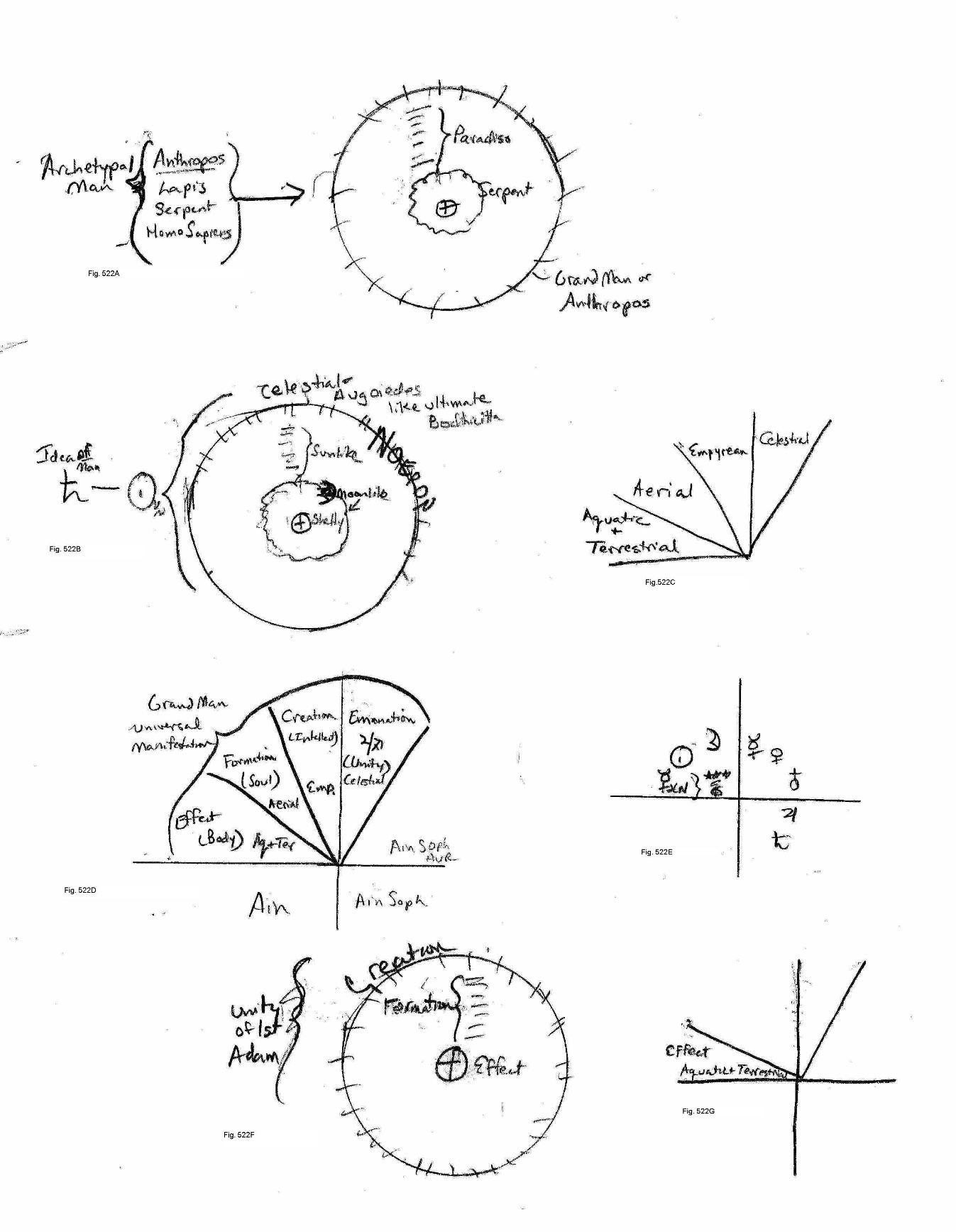
FIG. 1982 0522-2. Subtle Vehicles/Levels of Man (Fig. 522B). Scan of redrawn image, JF's class notes.
FIG. 1982 0522-3. Levels of Man (Fig. 522C). Scan of redrawn image, JF's class notes.
FIG. 1982 0522-4. Grand Man/Four Worlds (Fig. 522D). Scan of redrawn image, JF's class notes.
FIG. 1982 0522-5. Soul Ring (Fig. 522E). Scan of redrawn image, JF's class notes.
FIG. 1982 0522-6. Four Worlds in Cosmos (Fig. 522F). Scan of redrawn image, JF's class notes.
FIG. 1982 0522-7. Effect/12th house (Fig. 522G). Scan of redrawn image, JF's class notes.
Class
Saturday, May 22nd, 1982
Verbatim, unedited transcriptClick the series name to view more
CLASS at Wisdom's Goldenrod, Hector, NY
with Anthony Damiani (AD)
May 22, 1982
ALCHEMY; IDEA OF MAN
TOPIC: Alchemy
SUBJECT: Idea of Man
SUBSUBJECTS: Universal Man Levels, Vehicles/Sheaths, Jung, Anthropos, Kabbalah
CONTENTS:
PD reviews shadow and paradise quaternities
Shadow, serpent, Grand Man
Gnostics: higher man getting entrapped
Four Adams
Other traditions
Levels of Man, Universal Man, Proclus footnote
Subtle bodies, 12th house, G.R.S. Mead quotes
Man in Demiurgic Intellect
Noeron as knower
Reason-principles versus soul powers
Vehicles and Idea of Man per se
Different contexts in Mead
Levels of imagination & representation
Soul ring planets
Saturn in Leo & Jupiter in Virgo
Saturn Jupiter versus Mars etc: rational versus irrational
Archetypes of the imagination
Sunlike, Moonlike, Shelly
Jung's fourfolds
Grand Man
Jung quote, 3 Sonships
On reading texts and reason
One sided: First Soul and Second Soul relation
How many imaginations?
Imagination: subtle bodies
Imagination & the Knower
Inerratic versus Nous
World as a blessed god
Principles and sensible representation
Even Sage needs vehicles for experience
Kabbalistic quotes on Adam, Four Worlds
Two contexts: 9-12 universal manifestation versus 12th house individual cosmos
Four aspects: Unity, Intellect, Soul, Body
Vehicles for soul's experience
Experience of sublunary
And planetary, inerratic
Soul in cosmos versus First Soul
Not Idea of Man in Universe, but Idea of Man IS universe
God with 4 principles
Jung's Anthropos, Idea of Man at body
Anthropos as astrological universe
Other contexts: Jung, Kabbalists, Platonists
Comparing and contrasting Jung, Kabbalah
Anthropos like the knowing soul
Individual develops in 12th house cosmos
Putting Jung in context
Sage lives in Augoeides and expounds reason-principles from there
AD: "I distinguish in order to unite"
Soul as metaphysical wanderer through universal manifestation, Sagehood not the end
Intelligences beyond our galaxy watching over us, three ways they keep in contact
Christ as visitor from another loka
Hamlet: "There are greater things…"
Union with the One as the ultimate experience open to man (Plotinus, VI.7.35), temporary union
Mohammed: disagreement among theologians is a blessing
BOOKS READ FROM OR REFERENCED:
C.G. Jung, CW 12, Psychology and Alchemy
Henry Corbin, Avicenna and the Visionary Recital
Thomas Taylor (tr.), The Parmenides: A Dialogue on the Gods (Vol. 3), in The Works of Plato, viz. His Fifty-Five Dialogues, and Twelve Epistles
G.R.S. Mead, The Doctrine of the Subtle Body in Western Tradition
C.G. Jung, CW 9, Part II, Aion
C.G. Jung, CW 8, The Structure and Dynamics of the Psyche
Z'ev ben Shimon Halevi, Adam and the Kabbalistic Tree
Isaac Myer, Qabbalah: The Philosophical Writings of Solomon Ben Yehudah Ibn Gebirol or Avicebron
Paul Brunton, The Inner Reality (Discover Yourself)
William Shakespeare, Hamlet
Plotinus, The Enneads (MacKenna translation, 4th ed.)
PLOTINUS QUOTES READ OR REFERENCED: IV.3.30, IV.4.23-24, V.3.4, VI.7.35
DIAGRAMS appended to this transcript. See also figures and related text on Astronoesis pp. 236, 340 (endnote on Universal Man), and 347 (endnote on Subtle Bodies). [diagram] means the speaker is referencing a diagram as he or she is speaking. If someone is drawing or writing, with audible sounds of chalk on a blackboard, I indicate this by [drawing] or [writing].
FIGURE 1982 0522-1. Archetypal Man Levels (Fig. 522A).
FIGURE 1982 0522-2. Subtle Vehicles/Levels of Man (Fig. 522B).
FIGURE 1982 0522-3. Levels of Man (Fig. 522C).
FIGURE 1982 0522-4. Grand Man/Four Worlds (Fig. 522D).
FIGURE 1982 0522-5. Soul Ring (Fig. 522E).
FIGURE 1982 0522-6. Four Worlds in Cosmos (Fig. 522F).
FIGURE 1982 0522-7. Effect/12th house (Fig. 522G).
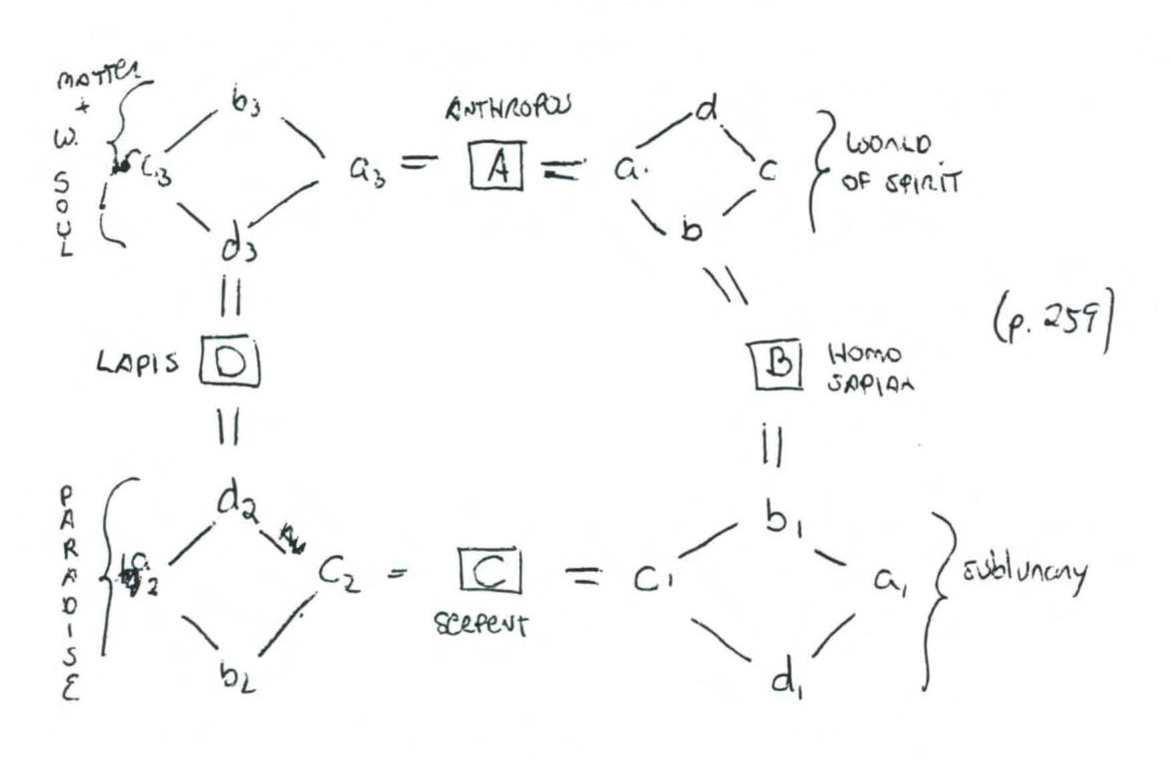
FIGURE 1982 0522-8-AB. Jung's Archetype of the Self (Aion, p. 259).
INITIALS: AD = Anthony Damiani, AS = Avery Solomon, PD = Paul Damiani, all other initials are those of students.
NOTES by Transcriber (jf):
This class was held Saturday AM.
Air conditioner makes places on audio hard to hear.
This class (and 5/15/82 and 6/5/82) is transitional; it is near the end of Anthony's 1982 Alchemy series (quotes from Jung's Aion) and is somewhat hard to place as to TOPIC; SUBJECT. At this time, I think the best fit is ALCHEMY; IDEA OF MAN. The class also contains many allusions to alchemy concepts, the Idea of Man (from 1981), etc. Note that the Idea of Man is not gender specific, though Anthony used that particular term – it really means Idea of Human or Idea of Mensch.
Note that, in this class, the 12th house correspondences of subtle bodies with cosmic levels are not exactly like that in Astronoesis; in particular, here noeron is the level of the fixed stars, whereas in Astronoesis the noeron is the level of the trans-Saturnians.
TRANSCRIBED Verbatim by IT (V12a) in 2020 from Audio Files. V12a now includes the last 22 minutes of the class (found on the second audio file) that were mistakenly left untranscribed in V11r. This V12a is completely verbatim, including all the stuff that got left out intentionally and unintentionally. Much that was inaudible is now audible. Class notes from end of V11r are now all included in the last 22 minute fragment that never got transcribed. V12a has updated Contents; quotes reformatted to current standard; numbers spelled out where appropriate in transcript; Book List completed; updated audio file markers to match new REP audio; a diagram has been added from AB class notes (5/8/82). Previous Transcription History: Transcribed by jf 2005 from Audio Cassette Tapes; reformatted by jf 2018 (as V11r, which is the basis for this V12a). Previously printed, distributed 2007 as part of a set on the Idea of Man, series 2. Archival verbatim transcript – V12a.
AUDIO FILES: 1982 0522a, 1982 0522b. [Note 1: "Tape" and "Side" refer to original audio cassette tapes that were later digitized into .MP3 Audio Files. Note 2: In 2025, REP Studio cuts dead air from file b.]
1982 05/22 at Wisdom's Goldenrod
Astronoesis; Idea of Man
[Audio File 1982 0522a Begins]
PD: And, we gotta read more quotes from the different texts in Jung. And we're going to attempt to bring out more the-- the Idea of Man, the diverse levels and stages of its unfoldment.
[short pause]
AS (faint): Do you want us to read?
PD: There's an interesting quote in Psychology and Alchemy where Jung translates a section of Zosimos on a doctrine of Anthropos. And there's a couple interesting points.
[short pause]
C.G. Jung [CW 12, Psychology and Alchemy, pp. 360-361, 363-365, paragraph 456, PD reading, quoting Zosimos, brackets Jung's unless indicated]: "If you have meditated and have dwelt in human community, you will see that the Son of God has become all things for the sake of devout souls: in order to draw the soul forth from the domination of Heimarmene [PD adds: and] into the [realm of the] incorporeal… For having power in all, he can become all as he wills; and he obeys the Father inasmuch as he penetrates all bodies and illuminates the mind of each soul, spurring it on to follow him up to the blessed region where it was before the beginning of corporeal things… [short pause]
"[7:] Now when the Man of Light abode in Paradise, pervaded by the breath of Heimarmene, [PD: Or the power of the planetary spheres.] they [the elements] persuaded him, [PD: The Man of Light.] who was without evil and free from their activity, to put on the Adam that was with him, namely the Adam wrought of the four elements of Heimarmene. [PD: Of fate and therefore necessity.] And he in his innocence did not turn aside; but they [PD reads: And since he did not in his innocence turn aside, the elements had] boasted that he was their slave. [Wherefore] Hesiod called the outer man the bond with which Zeus bound Prometheus."
[15¾ second pause]
PD: And I think that's all. Well that's a-- that's another example of the higher and lower man in--
S (very faint): What page is that, Paul?
PD: This is page 360. There's a section and-- where he translates a large part of Zosimos. [11 second pause] He has an interesting footnote where he says--
C.G. Jung [CW 12, Psychology and Alchemy, p. 361, footnote 29, PD reading]: "…preceding idea that man should not struggle outwardly against his destiny, but should [only] strive inwardly for self-knowledge, the outward submission of the Son of God to suffering being an example of this."
[10¾ second pause]
PD: There's a very interesting mandala he-- he put forth here from the medievals, which, apart from the specific content of the imagery, is very analogous to some of the Tibetan mandalas, which if you see like there's a head above a head above a head here--there's the man within the elements, there's the man above the spheres, and then there's God above him. [Note: Jung, Psychology and Alchemy, p. 364, diagram 195.] Which is kind of referring to the threefold sonship that we spoke of last week. Some of the imagery is amazingly similar in the medieval alchemical and Christian images that Tibetans work with. [16¼ second pause]
Last week there was a couple questions as to try to bring out the meaning of what those lower two worlds, the quaternities referred to, the shadow quaternity or the sublunary quaternity. [Note: For the following discussion, please see FIGURE 1982 0522-8-AB, Jung's Archetype of the Self, appended to this transcript.] And I made a conjecture that that normally-- that quaternity is referring to the establishment of consciousness in a-- in a vehicle. Like analogous is the Egyptian thought where they entomb the body for the sake of having consciousness stay within the individual framework which forces a stronger tie and connection to the specific centered consciousness. And that becomes a base for the development of self-consciousness. And if you look at anthropologically the different what they call, you know, primitive consciousnesses, they're very, well what shall we say, shaky. They cannot maintain a self-conscious functioning, they lose their con-- their conscious framework very quickly because of the-- let's say the-- the lack of identity at this point with the individual framework. So the sublunary quaternity is referring to the establishment of consciousness in an individual framework, which from that point on can be-- has a base in-- to develop from.
And then the-- [HS: That's ok.] what might follow from that would be that the para-- paradise quaternity, or the world of paradise, is referring to the-- the development and the activation of the potentialities that are within the individual psyche. Like the imagery used is the Garden of Eden flourishing in full greenness, which is kind of like saying the seeds that are within the individual psyche, the individual meanings that the psyche's endowed with, they start developing and activating and his individual psyche is starting to develop into what has been implanted in him, like you said, image. So it's bringing to birth in the development of the potentialities that the higher man has implanted in one. [short pause] And I think Avery you said there's a similar theme in the Kabbalah?
LR (faint): Paul, can you explain to us why it goes from shadow to serpent?
PD: From what?
LR (faint): Shadow to serpent.
[short pause]
PD: Well, I'm-- Serpent I think we have to look at as a structural aspect of the Transcendent Man. The shadow quaternity represents the process of-- in the developing world, of the individual consciousness.
S (very faint): Ok.
PD: So the-- the four points of Andrew's cross are aspects of the Grand Man.
LR (faint): No, I understand the difference between those four little guys and the four, you know. But where did you get that as far as you see coming out of this-- the (person/serpent) or the shadow arising?
PD: I'm sorry, I can't hear you Linda.
LR (faint): Isn't there a development where the shadow is (an external)?
PD: Well the serpent is much more than the shadow, the serpent is the Nous in matter. Represents the Demiurgic processes that are bringing one into existence.
LR (faint): So, would you say that once the-- the battle with the shadow is [one word inaudible] you arrive at that place? I mean that's the way it said (inside the--)
PD: The shadow quaternity is what you're referring to when you say the shadow?
LR (faint): Yes.
PD: That represents a world of-- or level of conscious development and that's what I was trying to speak of at first here as the-- as the idea of the-- of the higher consciousness establish-- establishing itself in a body almost. That's what that first quaternity is representing. And without that establishment, the possibility of an individual self-consciousness (does/is) not yet evolve.
S (very faint): Ok.
LR: Ok.
S (faint): Uh-hm.
LR (faint): The four major points as we speak, [PD: Right.] are those key-- do you see those as the key of this, a key quaternity?
PD: No, no.
LR (faint): How are they connected to the quaternity?
PD: I see them as the aspects of the Grand Man functioning or controlling and directing each of the individual quaternities that are unfolding.
LR (faint): Well isn't that procession or a vast progression?
PD: Well, you can-- yes and no. From the Grand Man's point of view we could say there's not a progression other than a development of the self-consciousness.
LR (faint): But you're putting them in some kind of order.
PD: With respect to the individual quaternities that are developing. You have the shadow quaternity which represents the embodiment of consciousness in a body and establishment of the reflective consciousness. Then you go to the realm of the paradise quaternity which represents the bringing to birth the meaning that one is endowed with and developing one's psychic structures.
LR (faint): What would be the meaning [one word inaudible] and the meanings that we normally have?
PD: What would be I-- sorry.
LR (very faint): But why is the quaternity [few words inaudible] between other [few words inaudible]
S (faint): No he didn't.
LR (faint): Are there quaternities but [couple words inaudible] only between the [couple words inaudible]
PD: Yes.
LR (faint): That's what I'm asking.
PD: Like we drew the part of it-- I can't write on the blackboard.
DR (very faint): Maybe you have to make something out of it.
PD: [drawing/writing] This will be-- and then a 1 to B1 and C1, C1.
S (faint): Good old days. (bit of laughter)
S (very faint): Yeah.
PD: [drawing/writing] And then a 1 to C at the serpent, which equals C1. Yes, there is a relationship between homosapien and B1 [diagram]. C is the aspect of the Self which is infusing and directing the individual world of conscious development [diagram]. This is the-- this is the quaternities. This is the aspect of the Grand Man that's, let's say, infusing and directing that level of consciousness.
S (very faint): Uh-hm.
S (faint): Oh boy.
LR (faint): It's usually like the serpent [PD: Right.] part of the brain there. Right?
PD: Yes.
LR (faint): And the last thing?
S (faint): Oh the last? Yeah.
S (faint): Continue.
LR (faint): So part of it you called-- you're calling Saturn, and the aspect of the brain there is physical.
[short pause]
PD: What is the relationship-- [short pause] You-- I don't know Linda, tell you the truth. I haven't thought in terms of specifics. I've-- I've been looking at this point [diagram] as the shadow quaternity stemming off of B. Like the paradise quaternity stems off of circuit. [short pause] So I don't know.
JL (faint): But wouldn't you do that Aquarius until you got something-- an individual? And then pretend you would be an individual as well and that's the other one.
PD: Yeah but she's asking specifically the relationship between serpent symbolism and the point within the sublunary spheres that relates to the circle.
S (very faint): (Ok.)
S (very faint): What?
PD: I don't know, Linda.
LR (very faint): Ok.
JL (faint): I have a question there that's to the-- to the-- the quaternity. The biggest correlation between them is different faculties in the-- in the so-called quaternity?
PD: Yeah I think we've--
JL (simultaneously, faint): Like each one of the quaternities emphasizes its gnostic faculties?
PD: Well, one thing we did conjecture either last week or the week before, that the four aspects of the Anthropos refer to what we call the four gnostic functions of the soul.
JL (faint): And like this may-- may be a reflection of the Zosimos essay.
PD: (Thanks.) Which would be an analogous-- would refer analogously again to the-- to the establishment of consciousnesses in a body, would mean adapting and working through the sense function. [25 second pause] You want to--
AS (faint): I think they lost you.
PD: No you-- I think Avery's going to take this notion of the Idea of Man from a little different perspective.
AS: Same way I have trouble figuring out from (AS laughing) Jung's I have-- I'll have to try and [few words inaudible]
PD (simultaneously): Well obviously just, you know, start from your own perspective and later on we can correlate.
AS (simultaneously): Well of course there was-- there was the one part, I wish you'd go over that a little bit, that notion of Heimarmene I think is a good-- is a good notion.
S: Hear, hear.
S (very faint): Did you mention it earlier?
AS: Heimarmene.
S (faint): [couple words inaudible]
S (simultaneously, very faint): Yeah.
S (faint): Uh-hm.
[12¾ second pause while AS draws/writes]
AS: Good one for your crossword puzzle. [drawing] [students assent, faint] I-- I think it means basically the compulsion of the stars, or fate. And he mentioned those (fates) in there.
S (faint): That was--
S (faint): I'm ok.
S (very faint): That was very important.
PD: Well if-- [three/few inaudible AS words simultaneous with PD] he calls it fate, natural necessity, [AS simultaneously: Yeah, necessity.] compulsion of the stars.
[12¼ second pause]
C.G. Jung [CW 12, Psychology and Alchemy, pp. 363-365, paragraph 456, PD reading, quoting Zosimos, brackets Jung's unless indicated]: "Now when the Man of Light abode in Paradise, pervaded by the breath of Heimarmene, they [the elements] persuaded him, who was without evil and free from their activity, to put on the Adam that was with him, namely the Adam wrought of the four elements of Heimarmene. And he in his innocence [PD reads: And in his innocence he] did not turn aside; but [PD reads: thus] they boasted that he was their slave."
PD: It's a very common Gnostic theme of the higher man getting entrapped in the cosmical spheres.
[9¼ second pause]
S (faint): Entrapped in it?
AS: Well--
S (faint): He read it up to there.
S (faint): Uh-hm.
PD: Pardon?
S (faint): Uh-hm.
S (very faint): Entrapped [few words inaudible]
PD/S(?) (faint): Unless they're down there.
PD: Well the-- the man of light I'm going to take-- taking as, you know, Jung's theme of Anthropos which is putting on the lower Adam, putting on the earthly elements and becoming involved in existence; which becomes symbolized primarily through the serpent theme of the involution of consciousness into a vehicle.
S (faint): Lower-- lower (Adam's/atoms) (taken) as--
S (faint): Yeah.
PD: As the-- as the Demiurgic processes.
S: The lower atom?
PD: The lower Adam--A-d-a-m.
S (faint): Oh A-d-a-m.
AS: Adam. You know, the way we had this notion of the two souls.
HS: So in there that would be the I-soul.
S (faint): Yeah.
AS: And then the man's getting involved in fate and developing out through that. Heimarmene I think is the planets, the-- he is brought into a-- he's associating himself with the cosmos, brought under the compulsion of the stars.
BS (faint): He actually (proves it) or [one/two words inaudible]
AS: Well they-- the-- the Gnostics have that view. That's why they say that the Demiurge is evil because he-- in a way because this-- here's this pure soul and it's getting involved in fate when it was really happy the way it was. And now it's involved in all the processes of generation, which is a fall.
S (simultaneously, very faint): (Their teachers), they speak of the Demiurge as embedded in the pure soul.
AS: Well the Demiurge is providing all of these vehicles and so on in this-- in their view, providing the whole cosmic circuit. And he's getting involved in it.
HS (faint): And in these-- I'm sorry, in these discussions about-- you still say it's Adam which is the Archetype of Man [one/two words inaudible]
AS (simultaneously): Well that's what we want to go into a little bit, what do they mean by the-- yeah. But I'm-- but that's-- what does Jung mean by the-- by Anthropos. So Jung has this scheme. [writing] He has Anthropos, and he calls this the Archetypal Man. Ok. And then he has below that, he has, in reverse order, the lapis, the serpent, [see fig. 522A] and the terrestrial man. What was-- what (was) he--
S (simultaneously): Homo sapien.
PD (simultaneously): Homo sapien.
AS: Yeah, homo sapien. [writing] Ok, it's-- it's not clear what-- it's not-- what are, you know-- he's calling this the Archetypal Man or the Idea of Man. And, in all these traditions, in the Platonists, the Kabbalists, the Vedanta, the Buddhists, they all have a notion of Primor-- there's this Primordial Man. And then suspended from that, they have levels of involvement in the cosmos going all the way down to the sensible, and what we've [couple words inaudible] But I think we want to try and get some understanding like what they mean by the A-- by the Primordial Man or the First Adam or the Archetypal Man or the Idea of Man, and its association with the soul and so on going all the way down. But I-- I mean it's not-- we'll have to see how this fits in with other, more traditional views of the Idea of Man, or the idea of the First Adam and the Second Adam.
But it's not clear to me where-- you know, like is this all the twelfth house? I mean one-- one idea that I think Paul was working off is that homo-- if we put homo sapiens here [diagram], and the serpent, the Dragon is usually what we put as around that. So here's the [drawing] terrestrial man, the homo sapien. And then he has to work his way through the Dragon. And when he does, he gets to what's called paradise, paradisia, ok, like the planetary spheres. And finally, at some point, he achieves union with the entire cosmos, he becomes once again this Grand Man, the Anthropos [see fig. 522B]. And the Buddhists they have the same notion, the cosmical body of a Buddha. [student assents, very faint] You become identical with the cosmical body of the Buddha, and that would be like the fourth example here [see fig. 522B]. But see I think the Platonists and some others have a slightly altered conception because this seems to not take you outside of the cosmos. Now it may be that the actual process [drawing] is reflected or taking place in the cosmos. But he's not really talking about the presuppositions for this whole thing. I mean even to say Anthropos, it's-- it's not really-- He has some ideas in there but you can't really pull out of there exactly what level he's meaning by the Anthropos, it's very difficult to place it in a context.
So, that would be one-- that would be a good thing, if we could try and get his notion into a context where we could understand what he means by Anthropos, maybe through some other traditions would help. But, he's trying to understand, I think, the-- you know, the Idea of Man. And eventually the same thing he spoke about even in the Buddhists, the bodhicitta evolving ultimately. [drawing] It's immersed in this-- in these vehicles, the relative bodhicitta eventually is evolving its way out of that to recognize its original identity or kinship with the First Man, with the Primordial Man. Now it's so-- we would usually [drawing] put the first-- I mean we would usually put in opposition to this whole thing, not in opposition but in contrast to it, the realm of the pure soul, the First Idea of Man in the Intellectual-Principle [see fig. 522B, Saturn]. But that we'll have to-- you know, we'll have to put those together, but he seems to be [drawing] talking here of the actual processes in the sensible world, working your way out of it, or back to this Primordial Man, which each of us was at the beginning. I ha-- I have a bunch of quotes.
S (very faint): (Go ahead/Ok).
BS (faint): Is that what we know-- what is usually meant by archetypal, an idea contained within the cosmos?
AS: Well yeah, I think that's why, you know, he's justified in his framework anyway of restricting it to the cosmos because by archetypal realm-- [drawing] we've spoken of this as the archetypal realm [diagram], in a sense, that his archetypal realm never goes beyond the cosmos. The archetypal-- you know, [BS simultaneously, faint: Yeah, I know.] we spoke about these levels of imagination too, [drawing] the archetypal imagination. I think we spoke about, you know, in that-- in that article. I think they were talking about a similar development in the Corbin article, going from the realm of the fantasy to the active imagination, and then to this realm of the eighth clime, the archetypal imagination, through which you could ultimately, say, return to your identity as this Archetypal Man. Let me-- let me read a couple, just-- just to get started here on-- I don't know which ones to begin with really. I thought I would start with some quotes from the Kabbalah. Because it seems closest to where Jung was coming from rather than starting in with this Platonic one but I will-- but before I do the Kabbalah one let me just read this one that we've read before from the Parmenides, and a couple of others, just to show you the same-- similar ideas anyway. On page 42 in the Parmenides footnote, he says--
[Transcriber note: I am using Thomas Taylor (tr.), The Parmenides: A Dialogue on the Gods (Vol. 3), in The Works of Plato, viz. His Fifty-Five Dialogues, and Twelve Epistles, First Edition, London, 1804.]
Thomas Taylor [Parmenides, p. 42, footnote 1, quoting Proclus, AS reading]: "From man itself, therefore, or the ideal man in the demiurgic intellect, there will be, in the first place, a certain celestial man; afterwards an empyrean [AS adds: man], an aerial [AS adds: man], and an aquatic man; and, in the last place, this terrestrial man. All this series of form is perpetual…being suspended from an intellectual unity, which is called man itself."
AS: Ok so, that's one. See-- just go through a couple of these schemas first and see if we can begin to make some--
S: Yeah.
AS: So he calls first-- from the man it-- what he calls "man itself". [short pause while drawing; cf. figures 522B, C] And then he says there's a certain celestial, or the empyrean too.
PD/S(?): Let him go (till he stops).
AS: Certain celestial, and then empyrean, ok. Celestial, [drawing/writing] empyrean, aerial, aquatic, and terrestrial. [short pause] And he says it's suspended from this Man itself in the Demiurgic Intellect, there's a certain series, celestial, empyrean, all these men obviously getting grosser and grosser, and further and further levels. [short pause] And in-- in Mead he has a similar-- a similar equation of these men in slightly different terms. He says--
[Transcriber note: I am using The Doctrine of the Subtle Body in Western Tradition by G.R.S. Mead, London: J.M. Watkins, 1919.]
G.R.S. Mead [The Doctrine of the Subtle Body, pp. 82-83, AS reading, brackets Mead's unless indicated]: "…speaking of the soul, [AS: Pure soul.] Porphyry tells us that:
""When it is in a purer condition, it has cognate with it the body which [AS reads: that] is nighest [AS reads: closest] to the immaterial [state]--viz. the aethereal…body.
""But when it proceeds from reason (logos) into the projection of imagination…it has cognate with it the [AS reads: a] sunlike…[body].
""When [AS reads: And] further it becomes womanish and grows impassioned for [AS reads: from] form, it has the [AS reads: a] moonlike…[body]…
""And [finally] when it falls into bodies--[which it does] whenever it gets into an amorphous state…complete ignorance [AS reads: completely ignorant] of reality… [AS: And then it has a gross body. (bit of laughter)]
""When, however, it tries to separate itself from [this] nature, it becomes a dry radiance [AS adds: an] (auge) [AS: augoeides]…"
[10¼ second pause]
AS: And then-- and then a quote from-- one other quote here from Proclus. In a slightly different form--
G.R.S. Mead [The Doctrine of the Subtle Body, pp. 83-84, AS reading, brackets Mead's unless indicated]: "…we may [AS reads: could] compare the following [AS reads: compare this] passage from Proclus' Commentary on the Timaeus (brackets mine) [of Plato]:
""Man is a little world (brackets mine) [(mikros kosmos)]. For, just like the universe…he possesses both mind and reason (brackets mine) [(nous and logos)]… He is also divided up according to the universe.
""It is for this reason, you know, that some are accustomed to say that his gnostic [principle] (to noeron) [AS reads: or noeron] corresponds with the nature of the fixed stars.
""[AS adds: And then] His reason [AS adds: and rational (AS means: irrational) parts] [corresponds] [AS reads: correspond]…[AS: with the various planetary spheres.]
""[AS adds: And] Moreover, the radiant vehicle (augoeides) [corresponds] with heaven, and this [AS reads: his] mortal [frame] with the sublunary [region]."
"In these two passages we have two different schemes of ordering the psychical embodiment and activities of man, the lesser world, in correspondence with the astral components of the greater world."
[Note: G.R.S. Mead, The Doctrine of the Subtle Body, pp. 78-79, not read on tape but relevant to terms 'augoeides' and 'shelly', quoting Plato's Phaedrus: "For then we were ourselves still in a state of wholeness…void of all motion yet filled full of bliss; but also eye to eye beholding them in radiance (auge) of purity. For we were [then] pure [ourselves] and not yet sunk into this 'tomb' (sema), which now we bear about with us and call it 'body' (soma), bound fast [to it] like oyster [to its shell]."]
S (faint): So he--
AS: He-- he seems to have these ones corresponding with these. [drawing/writing] Here's an augoeides, and this one he calls a noeron, and this one he calls a shelly body, and this one he calls irrational [cf. figs. 522B, C], and this one he calls something like rational. But of course, qualifying all of these words because we don't really know what they mean. And then he also calls these, ok, augoeides; then noeron he also calls aethereon or etherial. [writing] And this one he calls sunlike, moonlike, and then he has one more. And he says basically something like-- from what-- (bit of laughter) this empyrean man [drawing/writing] corresponds to the inerratic; and the aerial and aquatic to the planetary; and the terrestrial to the sublunary. [10¾ second pause while drawing/writing] [student assents, very faint] And then he says celestial. Now-- [short pause] I'm sorry, these should be-- these should really be over here [diagram], but it doesn't-- I-- we'll have to talk about this 'cause there's two-- Now on the one hand, you can see that they're corresponding these to [drawing] levels within the twelfth house that we spoke about, ok, where you have the shelly body, irrational and the rational, the noeron, which he corres-- the noeron would correspond to the Intellectual aspect in the twelfth house, the fixed stars, the reason-principles. And above all this, he says there's this permanent vehicle [drawing] for the soul, the celestial, which Plato also says, and Plotinus, is generated by the soul or is given to the soul as a permanent accompaniment throughout all generation. Ok, all of this is-- is suspended from [writing] Man itself, the Idea of Man itself.
[short pause]
BS (faint): I'm just getting lost in--
AB: Avery, you said the Man itself was in the Demiurgic Intellect?
AS: In the quote in Proclus' footnote, he says, "All this series of form is perpetual…"
Thomas Taylor [Parmenides, p. 42, footnote 1, quoting Proclus, AS reading]: "From man itself, therefore, or the ideal man in the demiurgic intellect, there will be, in the first place…"
AS: Yes.
AB: So it's establishing at a certain level according to that interpretation.
AS: Yes, although we should talk about that.
AB: I mean-- I mean that would conform it to Jung's-- the version of Nous being that [AS simultaneously: Well--] he just, you know--
AS: Possibly, but it's not clear what he means in there by the Demiurgic Intellect.
AB: Right.
AS: Ok and-- but we'll have to talk about that. Before I try and diagram it let me just read a couple of more quotes. I think-- is that-- I don't know if this scheme is clear but there's certain correspondences.
JL: Aristotle has a similar kind of--
S: Just start there with Nous [one/two words inaudible] soul.
JL: What is the noeron?
AS: Well, he's got this one word line here and we'll have to see it. He says that the noeron-- (Give me) one second. Says his knower--
G.R.S. Mead [The Doctrine of the Subtle Body, p. 84, AS reading, quoting Proclus, brackets Mead's unless indicated]: ""…you know, that some are accustomed to say that his gnostic [principle] (to noeron) [AS reads: noeron] corresponds with the nature of the fixed stars.""
[short pause]
AS: He's speaking here of a certain level.
G.R.S. Mead [The Doctrine of the Subtle Body, pp. 83-84, AS reading, quoting Proclus, brackets Mead's unless indicated]: ""Man is a little world (mikros kosmos) [AS reads: microcosm]. For, just like the universe…he possesses both mind and reason (brackets mine) [(nous and logos)], both a divine and mortal body. He is also divided up according to the universe.
""It is for this reason, you know, that some are accustomed to say that his gnostic [principle] (to noeron) [AS reads: noeron] corresponds with [AS reads: to] the nature of the fixed stars."
[short pause]
JL: Does he say what function that is in man?
AD: Just like in English, John, knower.
AS: Knower.
S (very faint): Yeah.
JL: Is it correspond to--
AD (simultaneously): Same like in English, knower.
AS (simultaneously): Yeah. Knower.
JL: To the knower.
AD: Knower.
JL: I mean how is that different from rational though?
AS: Oh because, the same way that the -- oh, well, wait a s-- you mean what's the difference between the reason-principles and the soul powers? Yeah, that's-- I think [drawing] he's saying basically that. These are the-- the reason-principles [cf. noeron level of fig. 522B], the Nous in you. And this, the rational, he's talking about the soul powers, rational or-- and irrational. Within the twelfth house context here of the planetary spheres. Ok, so these would be like the powers of the soul as operative in the cosmos. The noeron would be the inerratic sphere.
S: If we-- I mean--
AD (faint): If you use your chart, which is [AS simultaneously: Well it depen--] the knower in the chart? Where the planets are sitting or the degrees that they're sitting [student assents] on, which is the knower (in one)? [AS drawing] Well the planets are the soul powers, reasons are the knower.
LR (very faint): Where are the degrees?
[short pause while AS draws/writes]
AS: Now this is-- this is interesting the way he lines this up. Because you have sunlike and moonlike seem to refer to the two powers-- the twofold aspect of the planetary, the noeron, the sunlike and moonlike, and then at the bottom they have a shelly body. [student assents, faint] Ok? And above all this he speaks about the augoeides. [short pause while drawing] Ok, and we place this whole thing within the soul, within the soul itself, the soul itself stretching back for now and that-- we'll have to get into that some more.
JL: You mean augoeides is like--
AS (simultaneously): To its association. [drawing] Augoeides means--
JL (simultaneously): So it's like higher bodhicitta.
AS: I would say something like when they talk about the-- the ultimate bodhicitta, that which always remains, that which is like the permanent-- they also call it-- [drawing/writing] in the other view this is called the celestial. And now even this-- you see this is where-- even this augoeides and celestial is not the First Man, the Idea of Man per se. Ok? This is like the light, the emanation of that first soul that we spoke about, ok. And beyond that they would speak about the Idea of Man per se, [drawing/writing] and the Intellectual Man, which we'll have to speak about. But you could see there's gonna-- I think somewhat the confusion-- This in a-- they speak about this-- [drawing] if your schema is going like this you'll say well this is the-- the body aspect, this is the soul, and this is the intellect [diagram], ok, but the question, what do we mean by intellect here [diagram] and then what does Plato or Plotinus mean when they say Intellectual Soul.
LR: Avery?
S (very faint): Yeah.
AS: Yeah.
LR: In the-- the irrational and the rational parts, sunlike and moonlike, [AS: Yeah.] would you make a split in the spheres themselves between the rational and irrational, or, would you say that each sphere itself has a rational and irrational, or, one other choice?
AS: Yeah. Well that's a good question, you see, I didn't read it the way he wrote it 'cause I don't understand the way he writes it. He says it in here--
G.R.S. Mead [The Doctrine of the Subtle Body, p. 84, AS reading, quoting Proclus, brackets Mead's unless indicated]: ""His reason [corresponds] in its contemplative aspect with Saturn [AS reads: with Saturn in its contemplative aspect], and in its social aspect with Jupiter.""
AS: Now I could read it for you.
G.R.S. Mead [The Doctrine of the Subtle Body, p. 84, AS reading, quoting Proclus, brackets Mead's unless indicated]: ""As to his irrational [part] [AS reads: And then his irrational part],--the passional [nature corresponds] with [AS reads: to] Mars, the eloquent with Mercury, the appetitive with Venus, the sensitive with Sol, and the vegetative with Luna.""
AS: Now I-- I have--
LR (simultaneously): Well that's-- that's obviously one's vision.
AS (simultaneously): He's mixing some-- Yes, I know but I-- Ok, that's a possibility but I don't understand that.
LR: Well alright, (back--)
AS: Not in this context. I don't understand [drawing/writing] the separation here of saying that Saturn and Jupiter are reason a-- reason, and then the other five represent irrational. There is a context in which to understand it, but I don't think it's the one he's got here, and there's a confusion. Because then when he also says this corresponds--- the noeron corresponds with the nature of the fixed stars-- you see where-- there's another framework. The other framework, I mean I could see what he's doing if we take this-- if we look at this as an image of something else that's going on, it might make some sense. [split between Nature: Saturn & Jupiter in second quadrant, and Soul planets Mars Venus Mercury Moon Sun in Soul ring]
LR (simultaneously, faint): [couple words inaudible]
BS (faint): Yeah, (the Soul ring).
AS (simultaneously): Yeah. I mean if we say here-- [drawing] I mean is he doing this, he says-- well the noeron is the knower. Now I mean this is an image. We have here a sensible image, ok, this is a symbol, a sensible representation, the soul is representing. The cosmos, the whole sensible cosmos, is the soul representing in imagery or as objective its interiority as it were. Whatever the state-- whatever the state of this interior soul is, it's going to image it for itself, in the best possible manner we have to assume. I mean we have to assume that this-- this cosmos [knocking on blackboard] is the best possible representation that soul can make for itself of what it is containing in its interior nature, that is, the inner man. And this is its outer man (that it's/that's) going to present to itself as the best-- best representation. So here when we talk [drawing] about these levels of the imagination and we talk about these levels of representation, we have to assume that there's something going on, that these planetary spheres which we say embody the soul powers have to be in a way a real representation of something going on here [diagram]. And when we talk about the Nous in us, we talk about this whole inerratic sphere, it has to be in some way correspondent to what we would call the Nous, the Idea of Man, the fifth house, the Intellectual-Principle [diagram]. Since these are immaterial and they're not in themselves representable, they'd all be represented here [diagram]. Also there's no spatiality here [AS indicates on diagram].
PD: Well that's what's false about diagramming them separately.
AS: Yes, I know, in a way that is [PD assents] but-- but we're trying to distinguish [drawing] the immaterial aspect from the representation of it. So I-- see I-- then I could understand his thing if he said, well we have to distinguish between the Saturn and Jupiter, which we'll try and get into, the Saturn and Jupiter as being the highest ones, and the next five, Mars Venus Mercury Moon and Sun [writing on blackboard; cf. diagrams of Soul ring in Astronoesis]. And then finally he says, the whole thing, this whole mortal frame with the sublunary region, then that would be a whole-- you have a whole other scheme [twelfth house, with Mercury Pisces]. You could say well this whole thing [drawing] is the sublunary region. These-- this is the irrational part as it were. This is the rational. And the Nous is the knower in him, the knower-- noeron in him, or the knower in him [diagram]. But, [LauD: You're singling out--] that's not-- that's-- he's not making that clear here, we gotta--
LauD (simultaneously): You're singling out the Saturn and Jupiter because it's in the second quadrant?
AS: For one reason. Another reason that we'll see is because these two have-- these two, the Saturn and Jupiter [diagram] which we'll try and go into maybe, and the Mercury in that Soul ring that we've spoken about for a long time [diagram], are actually Nature [planets]. You ever notice that? I mean in the diagram we've been doing, that the Saturn and Jupiter and the Mercury are in Nature. But I was also just taking off from his quote [LauD assents] where he says that--
G.R.S. Mead [The Doctrine of the Subtle Body, p. 84, AS reading, quoting Proclus, brackets Mead's unless indicated]: ""His reason…in its contemplative aspect with Saturn, and…social aspect with Jupiter.""
AS: Now I-- that's probably a reflection of saying that Saturn, the Saturn principle, is contemplative of the Nous. Whereas the Jupiter represents the outward aspect [LauD assents, faint] of reason, the reasoning powers, the pure powers of the soul, which are this continual reasoning efflux of the soul that is going to be going down towards generation.
LauD: So the Jupiter is like Saturn's outward-facing hypostasis.
AS: Yeah, in a way.
LauD: Yeah.
AS: Ok? And-- but both [drawing] within the first Man here [in the Intellectual-Principle], as it were.
LauD (very faint): Ok.
AS: Ok, and then through this whole series of these other borrowed powers, [drawing] as it were, he's going to then represent for himself what goes on [knocks on blackboard] in the Nous.
LauD (faint): The Jupiter-- the Jupiter represent-- representing the six forces would have the power to--
AS: Well since we got into that--
JC (simultaneously): And I don't-- I don't see the difference between talking about the irrational [one word inaudible] powers in soul above the cosmos and saying, you know, that-- I don't see how that's any more a hard thing to deal with conceptually (per se/let's say).
AS (simultaneously): Oh it is.
JC: But in the planetary spheres you could call Mars an irrational power.
AS: It is difficult but look, see-- I-- maybe this is my confusion but-- I'm saying either way there's a confusion, it's true. On the one hand, I don't see what he means by calling these-- we wouldn't speak about these as irrational [diagram]. You're saying outside of here, the pure soul powers as irrational. On the other hand, what's his basis within here [diagram] of making a division and saying Saturn and Jupiter are rational powers and the other ones are irrational powers. Well, maybe there is, maybe empirically there is. I just don't-- I don't-- [JC: Right.] I don't particularly see it. I mean Mercury [drawing] [JC simultaneously, faint: Seems analogous to--] is no more irratio-- an irrational power than Saturn. Here, if we take them here [diagram] it seems they have to be all at one level.
LR: But, you know what Avery?
AS: Well--
LR (faint): It's also that they-- I mean, this might be (busy) with the terrestrial but, [AS: It's ok.] you know how we talked about the reflection of those soul powers and the reflection as archetypes or how they got scattered.
AS (simultaneously): Yeah, yeah.
LR (simultaneously, faint): I mean you could see that the way we see (with) the irrational and rational (powers).
AS: Yeah, oh that--
S (simultaneously, very faint): [couple words inaudible]
LR (simultaneously): So if each had--
AS: Fine. I agree, I-- I would-- each what you're saying right?
LR: Each would have a rational and irrational [cf. diagram on Astronoesis p. 352].
AS: That's fine, that part I would understand, that's why I don't understand this. If you say [writing] this is the rational aspect [diagram], fine, this is exactly what I'm saying, this is rational. And irrational aspect is the reflection within the imagination [diagram].
LR (faint): That's the way I would tend to see it.
AS: Yeah definitely.
LR (faint): But then of course you can't (see/say) [one/two words inaudible]
AS (simultaneously): But that I'm saying, that's why this doesn't make any sense that way.
AD (faint): Don't you see how difficult the doctrine is, how confused (these people are)? Now--
AS (simultaneously): It's-- it's very complicated.
AD (simultaneously, faint): Now (his/here's) [AS simultaneously: That's good Linda.] (misunderstanding) all the way along.
AS: That's fine Linda. In fact, when-- when they say that this planetary spheres have these two-- the two aspects we just put with them, the shelly body, ok, we put here [diagram]. And then above that they have these two which always kind of go together [diagram]. It seems that one is-- and one they call irrational, they mean by that what you just said. [drawing] These productive soul powers as within-- operative within imagination.
LR (simultaneously): So the problem is then distinguishing the irrational from the terrestrial.
AS: Oh no I don't think that's a problem because they would say the irrational here, what we call these soul powers, will leave upon death, whereas the last-- the last vehicle is purely the one that's retained with the-- with the elements. Psyche and spirit-- um, psyche and soma [diagram]. I think we could distinguish those. But see this do-- you read it here, his reason corresponds with Saturn and Jupiter but the irrational part with Mars Venus Mercury Moon and Sun. You're right, I mean you'd have to say all-- we would-- much more sense to say [drawing] the planets themselves have rational and irrational functioning. As rational they're above what we'd call the imagination or the Dragon. And as irrational they are functioning in the body, they're actually functioning here in the reflective consciousness. They're ir-- the ones that we spoke of as the archetypes versus the productive powers. And above all that is what he calls the knower. Ok? Now this is the sensible representation to us of, let's say, pure meta-physical realities. Metaphysical meaning above physics, you know, these-- these proper.
JC: Avery?
AS: But--
JC: One-- one thing about the words 'rational' and 'irrational' is that rational means something about being self-involved and irrational being outwardly directed. Even in the-- in the big Soul ring chart we have Jupiter and Saturn there in the second quadrant, they would tend to be more self-involved--
(Side 1 of original cassette tape digitized as 1982 0522a Ends; Side 2 Begins)
S (faint): --might be the same.
JC (faint): Well I-- I would think that they're-- Sun, for instance, is often related to sense activity, the powers of sense. Right? So that's one way that it could be seen as an outward-acting power primarily, the outpouring of life in terms of the sense-- sensing functioning of the body, the prana and all--
AS: But-- but it-- but it could also symbolize in a higher way like the meaning of your life, the central meaning of a (life). And in that case it would be an inward aspect. And I would say the same with any-- either-- any of them. I'm not sure what you mean by inward and out-- I mean I may-- if I follow your distinction I would still have to say that any one of those could in a sense be outward-facing or inward-facing, even if I use that.
JC (simultaneously, faint): Right, I mean-- right. You could say maybe in each respective vehicle there would be tendencies of these powers to work in different ways. You know, what Mars means in the heavens as opposed to what Mars means in the sublunary world would be very different. Mars in the sublunary world would be-- well, as Tim characterizes the shadow, and in the planetary realm it would be, um-- well, would you say that intelligent activity(--/?) [students assent, very faint] Do you see what I'm saying?
AS: Yeah, but--
JC (faint): I mean there could be a difference of the level of the powers themselves [couple words inaudible] the degree of irrationality let's say that you want to ascribe to it. But ir-- irrational as a term which might be, you know-- irrational-rational opposition could be applied at different realms differently. The Soul ring one way, in the heavens another way, in the sublunary powers operative in sublunary world another way.
[short pause]
LdS: But Jeff, in this context here, isn't it-- isn't he obviously restricting himself to at least the notion of rational-- rational and irrational within the three material worlds? I mean if he's making--
JC (simultaneously): Yes, right. He seems to be talking about the planets in the heavens, in the quote.
LdS: Yeah. What you're-- you're trying to see-- see whether this notion could be applied on different levels.
JC (faint): Well, I'm just following the lead that he's given. [student assents] Said well, if you look at it in terms of the Soul rings, would be in one-- I mean [AS simultaneously: Oh.] division between the second quadrant powers in the soul and third quadrant [diagram].
AS: Let's-- let's wait with this Soul ring first. [S: Oh.] And I'd like to-- Let me read this-- unless--
AD: I just wanted to summarize, Avery, you're saying that rational soul is the functioning of the planetary spheres in themselves.
AS: Right.
AD: Right. Irrational soul is their embodiment in the productive imagination [AS: Right.] and the way they operate through that.
AS: Right, and-- that's [AD simultaneously, faint: So--] rational and irrational.
AD: So they will be the categories of the imagination.
[chalk on board sounds]
AS: Right.
AD: Irrational soul is basically [AS: Right.] (composite) of the categories of the imagination--shadow, senex, etc.
AS: Right, and, the way we worked it out, all of those archetypes that Jung brings in as in the imagination.
SD: But even that interpretation of it really stands up when you think about the names he gives those, sunlike and moonlike, in terms of the Moon, you know, reflecting back what's-- what's being [one word inaudible] by the Sun and you've got the-- the Dragon as-- as a vehicle that's reflecting the activity of the planets.
AS (simultaneously): Yeah, yeah. That's-- that's good too. Yeah this is-- the irrational ones, [drawing/writing] the ones that are immersed in the imagination, he calls moonlike. And these he calls sunlike [diagram]. Yeah.
S (faint): (That's true.)
AS: But of course within that, [drawing] within the irrational or these archetypal structuring-- structuring principles, the imag-- principles of the imagination here, are functioning within then his very lowest, what he calls the shelly body. And even that shelly body is taken to be animated. What I mean is it's living, it's always a living body, they don't have a notion of dead matter, ok. So they even say the lowest vehicle is-- [drawing] already has a life, but it has a life of the elements, ok. And this next one up, irrational, is like the irradiation or the presence of the planetary powers. And the rational one of course would be the planetary.
I think Jung's schema that he did in the-- in Aion would fit in very nicely with this too. I mean I think we-- maybe we should wait-- we could try it but I think his four levels, homo sapien, and then the battle with the serpent as it were would have to be getting out of this irrational to get to paradise which would be the rational, ok, until finally you were-- through paradise you would get to the Anthropos, the Grand Man, the Man that represents the entirety of the inerratic sphere. And I think in this context Jung-- Jung would fit in.
And even his fourfolds seem to be-- have some significance, as I-- I've tried to conjecture last week, but I don't know. You know, like the lowest fourfold is actually the-- the elements; and the next fourfold would be some kind of-- I don't know if I got this right but, the next fourfold would be some kind of wholeness of these-- the imagery here; and the gnostic functions, you know, his gnostic functions, he-- what he calls sense-- sensation-- I mean perception, feeling, knowing, and intuition. Ok, and then at the next level there would be some kind of a wholeness would ha-- which had to be brought about. Then there's conjecture. And then he would say that within-- [drawing] within each of these realms you'd have-- he would talk about a fourfold process. Ok, and that would either be the link going from one to the other of this transformation process until you were established in that realm in some way. Yeah but, the details I think we should-- should wait a little.
LauD: So Avery?
AS: Should go-- yeah.
LauD: Then you would say that Jung's Idea of Man is coming-- is not really coming consciously from the Saturn in Leo.
S (very faint): What do you mean?
LauD: That it was coming from the-- the Ideas as embodied in-- 360 degrees as embodied in matter.
AS: Yeah well, consciously, and they do-- I mean even in the pictures you'd-- Paul-- Paul showed that picture, they-- this is the Grand Man that he's-- that they speak about and, depending on how they speak about it this is one representation of the Grand Man. And he had above that-- do you have a picture where he has above that these three-- Yeah I mean, see, here-- here is this picture. Man stretching from [drawing/writing] the heavens he says all the way down to the elements, right, and around this whole thing, which we can take to be the Anima Mundi, ok, he has above that the breath of these three primals, as it were, as Paul was pointing out. We could even take it to be the One, the Intellectual-Principle, and the Soul, three primals. Ok, and then this whole thing [diagram], what he calls the terrestrial. Now the Kabbalists don't speak about this as the Heavenly Man. There's-- there's going to be some confusion 'cause they have a higher-- they have grades also, well maybe we should go into that, but for-- for his purposes I think he would say, no this is the limits, as it were, this is his concept of the Anthropos, the 360 degrees of existence and so on, the [drawing] Idea of Man here [diagram]. But, you know, in some way it's a justifiable-- [student assents, faint] I don't have permission, but--
LdS: Avery?
AS: Yeah.
LdS: Would-- would you say then that the-- the notion that he just mentioned of the augoeides would not-- Jung wouldn't really include that [AS: Oh--] in his schema of the Grand Man.
AS: I don't know, he's never-- he doesn't [PD simultaneously: Well, see--] mention the word augoeides but he speaks about man as light.
PD (simultaneously): He doesn't use-- he's not coming from that-- he doesn't come from that tradition [one word inaudible]
AS (simultaneously): But he does [LdS simultaneously, faint: Ok so--] speak about light, doesn't he Paul? He's--
PD: But he does speak about above the Grand Man, there's some relationship to the Father, ok, [LdS simultaneously: About the--] a marriage relationship to the transcendent principle. Now, more than that type of imagery I haven't come across yet, ok, but there's a mysterious relationship to the divine source that is spoken of through diverse allegories but not intellectually.
AS: Yeah. (But) see, even when--
LdS (simultaneously): You might conjecture that-- conjecture that that divine element might be the augoeides. Is that a possibility?
PD (simultaneously): No. I don't think the distinctions that we make a lot of other frameworks make, Louie, [LdS: Yeah.] between the augoeides, the Nous, [LdS: Ok.] etc, etc.
AS: Yeah. I don't think that they [one/two words inaudible]
LdS (simultaneously): They sort of blend--
AS: And even when he makes this-- even when he gives this quote from Basilides, I-- I don't know that he ever actually follows it up the same way that we would. You know, the three sonships?
C.G. Jung [CW 9, Part II, Aion, pp. 64-65, paragraph 118, AS reading, Greek words in Jung's text not read]: "According to the [rather] complicated teachings of Basilides, the"non-existent" God begot a threefold sonship. The first "son," whose nature was the finest and most subtle, remained up above with the Father. The second son, having a grosser nature, descended a bit lower, but received "some such wing as that with which Plato . . . equips the soul in his Phaedrus." [AS adds: And then] The third son, as [AS reads: in] his nature needed [AS reads: needing] purifying, fell deepest into "formlessness." This third "sonship" [AS reads: And this] is obviously the grossest and heaviest… [AS: And then he says--] In these three [emanations or manifestations of the non-existent God] it is not hard to see the trichotomy of spirit, soul, and body."
AS: Well--
LdS: You're not sure if he would go as far as we would with that quote in terms of the second quadrant meaning.
AS: I don't think he interpreted this quote.
LdS: Not this one. Oh he doesn't interpret.
AS: I mean he may interpret it but I don't--
JL (faint): In Structures and Dynamics that he speaks of spark soul as the second knower. [three/few words inaudible] could relate to that [one word inaudible]
S (faint): Well--
AS: I know, I know he speaks of it but-- I could see including that within everything we've done in this context. (What/Well) I-- I was thinking of now of trying to kind of widen the context a little bit but-- Anthony do-- do you have any comments?
AD (faint): (You do it.)
S (faint): Think he has (two/too).
AS: Alright, let me read a couple of--
AD (faint): You're doing well, (this--)
AS: Let me just-- let me-- let me read a couple more quotes.
AD: You see, the point is when we read texts, whether it's Mead or anyone else, and they can't reason step by step, alright, every distinction the way we do, then we simply have to ignore them and go back to what you understand. If you don't depend on your reason you'll be depending on these men. What guarantee do you have that they're-- they're right? Reason is the final arbiter of these things, not this man or that man. It is the Anthropos (we see), huh? [short pause] Now what we-- what I said holds. You saw yourself last night [5/21/82--class on the One] how difficult it is to understand the ins and outs of the Platonic tradition. Don't think that just because they happen to live a thousand years ago that their understanding is better than yours. We sweated out last night a few things. We got-- you got to the gist of some of the arguments. When you go back and you read some of the other texts you'll see a mass confusa.
S: Oh yeah. (bit of laughter)
[short pause]
AD: We're getting somewhere. Well, in another tradition they call the Anthropos the permanent possibility of the Idea of Man, in Buddhism they call it the idea of Buddha. Everybody's got his own fancy terminology, but it'll always come down to this here, can you reason it out all the way like a geometric theorem, can you follow step by step. As soon as (there/they're) hiatus you've got to stop, find out what's going on here. And your criticism I think was 110% right on the mark. He was confused. And you can see that when he took apart some of the notes of Blavatsky and tried to organize them.
S: Uh-hm.
AD (very faint): Yeah, (alright).
BB: Yeah I-- I'd like to-- I wonder, is there any possibility that the-- it's like there seems to be two things happening and, in one respect here it seems like from what I'm hearing from Jung and what else you're doing here it seems like in one respect they're trying to work back through like our mental view or a-- a way of seeing ourselves-- the way we see ourselves in the world and kind of working back through the imagination to a higher level of ourselves. But yet when we deal with the-- the soul powers and the rational soul and so forth that there's also something else there that, you know, when we talk like about the bodhicitta and-- and so forth that in a way that is coincident with these things that we're working back here like this rational and-- rational and the celestial and so forth. It's like every step that you take that way, and I wo-- I don't know whether to use the word like negate or something but-- or to work higher in that respect to-- at the same time it seems like you're working toward the other aspect. In other words, it's like doing-- trying-- it's-- it's like they're seeing only one side of a-- kind of a two-step thing that's happening, or a two-faceted thing that's happening. Is that where the-- is that where the problem lies? In other words it's like they're-- they're not seeing a-- a double thing that's happening at the same time? They're only seeing one part of it and explaining that one side of it? It's like when we talk about the objective and subjective soul, that they're only seeing like related to the objective soul, but they're-- and working back on that. But they're not seeing at the same time that you're also working towards that subjective soul or-- Is that's what's happening?
AD (faint): That's one of the things that's happening, (yes). The other part is that you can't correlate properly or correctly what's going on within the second soul and how to distribute the principles, which are pure principles, how to distribute those principles in the sensible representation of the first soul. That's the problem, yeah sure. [34 second pause] Well--
AS: Go on a little. Could go on a little unless there are--
S (faint): There is one classic--
AS (faint): Yeah Herbert.
HS (faint): So is this (presentation of that)-- the-- the noeron is spoken of now as-- seems to be spoken of now as the knower, the rational spheres are spoken of as the s-- the soul powers.
AS: Right.
HS (faint): Well, does the discussion of-- about the imaginat-- the imagination, like the notion of imagination now-- I don't know if this brings in [one/two words inaudible] to the discussion or not, but when you-- when you speak of noeron as the knowing-- as a knower, does that know-- is that-- is that an imaginative faculty at all? Is there imagination in it? [S, faint: Uh-hm.] Or is that so to say (unitary) [one word inaudible]
LR (faint): Which imagination?
AS: No I know what his-- you know what his question is.
LR: Which imagination?
HS: Well, how many imaginations are there in that chart?
LR: Well, you know how the Sun in the-- the Sun in Aquarius is beyond that (one), and [HS simultaneously: The Sun in Aquarius--] that's the productive imagination.
HS: Yeah, now that's producing the whole of the twelfth house.
LR: That whole circle.
HS: And is it producing the Nous of the twelfth house?
AD (faint): We (always/only) spoke about it as representing within you.
S (faint): Ok.
HS: Is in that imagination?
AD/S(?) (very faint): Yeah.
HS: Ok, and which are the imagination for this (one)?
LR: Well the one--
AD: The one that you're operating with now.
S (faint): Uh-hm.
LR (faint): So the answer would be yes and no depending on which imagination you're talking about. If you were talking about (the individual) productive imagination--
HS: I was talking about the imag-- I thought in terms of the symbology I was talking about the imagination coming from the Sun in Aquarius.
S (very faint): (The Nous.)
AS: Well then it's within it.
LR: Then it's within it.
HS (simultaneously): Within that imagination?
LR: Then it's without the lower level beyond--
HS/S(?) (very faint): Why [couple words inaudible]
LR: Why? 'Cause the lower imagination would belong to the sphere (of individuality).
S (faint): And therefore I consider [one word inaudible] imagination.
LR (simultaneously, very faint): The reproductive imagination.
LR/S(?) (faint): The reproductive.
[9¾ second pause]
HS (faint): This [couple/three words inaudible] that-- this-- in terms of this lower imagination, does it-- does it have a capacity to-- is this the imagination that has a capacity to become one with the cosmical body, that whole-- [student assents, very faint] with the Buddha, I mean is that (an actual--/attached to it?) They talk about that (on) other night. Is that what they're talking about? The lower imagination which is the Dragon (belt)?
AD (faint): No, it has to get transformed.
HS: Gets transformed? Is that the one that's getting transformed?
AS: The higher one.
HS: The lower one is getting transformed? The higher one?
S (very faint): Ok.
AS: You want to bring in that co-- correlation we made where he says that [HS simultaneously, faint: Well I just want to know (couple words inaudible)] through the transformation-- where he says the transformation of these three vijnana systems into the cosmical body of the Buddhi-- the Buddha, the body of bliss, [HS: Yeah.] so on.
HS: Right, right, but we've spoken about the-- the noeron seems to correspond to, if not the bodhicitta per se but the archetypal pattern emanated from the bodhicitta?
S (faint): Right.
AS (simultaneously): Or within it, yeah.
HS: Right.
AS: We put-- In reference to the other [drawing] schema this is all within that-- the ultimate bodhicitta.
HS: Ok now--
AS: Right, the noeron [drawing] is like when the alayavijnana is said to have all these seeds within it, the reason-principles.
HS (faint): Yeah.
AS: And there's this evolution out of it of manas, [drawing] and then the whole vijnana system within the imagination. [Note: Referring to Yogacara.]
HS: Ok. Now, I don't-- I don't know if you want to pursue this, but when you say the evolution out of it and then the whole vijnana system, is that part of the larger imagination, reformulation now in the twe-- you know, in the twelfth house of its pattern, or is-- or is that like a-- is that a growth so to say that-- that is taking place horizontally over the years, in terms of the Ideas of Man-- Man's attempt to refill the cosmos from-- from evolu-- to evolution?
AS: Well, I'm real sorry, I'm sorry I didn't--
LR (faint): Didn't follow the question.
AS: Yeah.
HS: I'm trying-- I don't know what--
AS: Herbert, we may have to leave this alone for a while, this question. Because we really didn't get into-- I mean, tune in tomorrow where we try and get into this notion of these transformations.
HS (faint): Well--
AS: I think that was what you're getting at now.
HS (faint): No.
AS: Try again, ok.
LR (simultaneously): I thought you're saying is not just [couple/three words inaudible]
HS (very faint): I believe.
AS: Ok.
LR: Well I think he's talking about the ima--
AS: Ok, I'm sorry.
LR: The thing-- the mundus ima-- I mean all the imaginations which we tried to talk about on Sunday.
AS: Ok, then go on.
HS: Yeah, (Saturday).
AS (simultaneously): Go again Herbert. It's ok, go on Herbert.
HS (faint): Saturday I talk this fast.
AS: Go on Herbert. (bit of laughter) Oh yeah.
[short pause]
HS: Yeah, I'm just a little confused.
AD (faint): It's just a question of seeing through the imagination. The immaterial knowledge that accompanies any imagery is different from and not identical with the images. There is a momentary understanding which can occur, and that momentary understanding is not the imagination but what is informing the imagination.
HS: Ok now-- I think that was my original question. Is that-- in this symbology is the noeron the immaterial understanding or is the immaterial understanding so to say prior-- It is a little bit different.
AD (simultaneously): Well it depends, it depends on in what sense are you talking. Are you talking that the noeron is the inerratic sphere? If it's the inerratic sphere, that is the knower in terms of-- of the world, alright, then that is not immaterial, that is the actual inerratic sphere.
HS: Ok, then-- and it-- and, (so to say)--
AD (simultaneously): Now if you speaking about a knower of the entire inerratic sphere, alright, the knower of the entirety, that knower has to be the immaterial knowledge which is aware of the reason-principles or the Ideas which each of the inerratic spheres symbolizes.
HS: And that's not in this symbology.
AD: Well it's there if you want to see it.
AS (simultaneously): Well it's not-- it's not outside of the [S simultaneously: But that--] symbology. See that's what I was trying to say originally but I-- [student assents, faint] I'm not really-- I'm a little-- I'm shaky on it but I try and say it again that this is-- [drawing] at the same time-- you can look at this two ways. You could look at it as a cutoff image, in which case you'll say Nous and so on, soul powers are somewhere else. But the other way to look at it is that Nous and soul powers being immaterial are all-pervasive. Now when you picture-- when the guy pictures himself, when his soul has imaged himself as in a physical body here, that means one state of interiority. If this-- if his soul pictures himself [drawing] as in the rational-- as in the planetary spheres as it were, that means his interior condition, the immaterial knowledge accompanying that would correspond to the actual soul powers. He's having an inter-- he could be having this immaterial knowledge, an interior knowledge which is only pictorialized here. Or if he's in the Nous experien-- having an actual experience of the Ideas, the accompanying imagery may be in terms of here [diagram], ok, even if he's somewhere else.
HS (simultaneously): Ok good, now we have talked about how his soul pictorializes, you're talking about now this-- the imagination that was down--
AS: No, this soul [drawing] pictorializes the cosmos [diagram].
HS (simultaneously): But wouldn't that soul pictorializing in terms of producing [couple words inaudible]
AS (simultaneously): The whole cosmos. Yeah.
HS: Yeah.
AS: It is, yeah.
HS: And even for an-- even if-- as you're speaking (here/there).
AS (simultaneously): And isn't he always intellective?
HS: Always intellective.
AS: But he doesn't know it. [Note: See Plotinus, IV.3.30, last para.]
HS: But the intellective that he always is but doesn't know is not what's indicated by the word 'noeron' or is it indicated by that?
AD: Again, it depends on the context.
AS (simultaneously): Well you can ei-- I mean--
AD: If you're thinking of the world as a microcosm, an entity in its own right, then the inerratic sphere is the knower of that cosmos. Like-- now if you're thinking of an individual within the cosmos, then that's not the knower. Again, you don't know a star when you have immaterial knowledge. You have unaccompanied reason-principles, unaccompanied by any kind of figure, shape, or form. You got to put your question in the context. What knower are you referring to Herbie?
AS: That's what Herbie was asking.
AD: Which knower are you referring to? Are you referring to the knower of the world, who knows the world? Then the knower would be the inerratic sphere. Are you referring to an individual subject, you and I? [HS, faint: The (couple words inaudible)] Then the knower would be the soul powers or the soul itself, the immaterial knowledge that the soul has.
[short pause]
HS: So the-- Then would you say that for an individual now in this world known through the inerratic--
S: No.
HS: Put individual in this world. Is the knower for that-- to speak of that person's knower, you were talking in-- it's the Nous in his soul, not necessarily the Nous that [one word inaudible]
AD/S(?) (very faint): (Uh-hm.)
S (very faint, possibly part of background): [few words inaudible]
LR (faint): What would be the difference (if) you got to the cosmical knower?
[short pause]
AD: Let's try this way, Herbie. Planet is sitting on a certain degree and all of a sudden you become aware of something, you have a piece of accurate knowledge. Is it a star that you know? What is it that you know at that moment?
HS (faint): You could-- can't really speak about it because I think I'm inclined (to overlook). I don't know. (HS laugh a bit) I don't know.
AD: You're the knower for that moment. [students assent, very faint] Isn't it immaterial? Although a second later it'd be-- let's say in its wake there will follow the imagery, you know, it'll all be superimposed on that blankness that you experience for a moment (snaps fingers) where you knew something and then the-- that blankness is covered over with all kind of imagery.
HS (faint): Yeah.
AD: Ok. Now that moment when you knew something was the immaterial knowledge that you as the knower have, which even precedes, which even precedes their sens-- the sensible representation that the inerratic sphere supposes.
[10¼ second pause]
HS: But it would-- ok but it would be in some way a--
AD: You see, all the-- all the absences that you've been going through the ten years of showing up.
LR/S(?): Right.
S (very faint): What'd he say (Linda)?
S: What'd you say?
HS: Whole-- the whole [one word inaudible]
AD (simultaneously): You better let-- you better let them-- you better let Avery give you as much information as he-- as he-- he can give you. Because you got to pile up a lot of back information that the-- This is all-- this is the Parmenides we did about five years ago. But the trouble is you people think you're at college.
HS: I don't think I'm at college.
HS/S(?) (faint): I went to [couple words inaudible]
AD: You went to what?
HS: I went to-- he probably went to Chesterfield [few words inaudibly, possibly another student] (bit of laughter)
EC: Avery?
S (faint): [few words inaudible]
AD (simultaneously): That was Andrew.
EC: Avery?
S: (Want to) talk about--
AD (simultaneously): Bensonhurst, don't give me that. (some laughter)
EC: Avery? When-- when the knower-- the knower of the inerratic sphere knows the world, does-- doesn't-- does that imply that it's because it knows at that point the Sun in Aquarius, the-- the first soul, and that's how it-- you're-- you can effectively (perfect) the-- (affect) the Nous in matter, could you say that?
[short pause]
AS: I'm not sure I understand.
EC: Well--
AS: Say it again.
EC: You-- we're saying that the knower, the inerratic s--
AS: Yeah, the inerratic sphere.
EC (simultaneously): --sphere, that that knower knows the world. But, it's because at that point it would seem to me that it can reflect clearly that-- the true soul, the first soul that you (put--)
LR (simultaneously): Oh no, but when you say it knows the wor-- excuse me. If you say it knows the world, it's not-- it is the world-knower, it's not like a subject and a content. It is the intelligence of the world. It knows the world-intelligence 'cause that's what it is.
EC: Right, but--
LR (simultaneously): So you don't have to postulate something else that it's knowing.
EC: You don't at all?
S: Uh-hm.
EC: But it-- but it has to come-- it's still--
LR (simultaneously): It's like to think of yourself as identical with the 360 degrees.
EC: Alright.
LR: That's what you're-- you are that and that-- and you know that. That's the identity that [couple words inaudible]
EC (simultaneously): But it's still contingent, isn't it?
LR: Is there some kind of contingency here?
EC: Well it's still not-- it still stands by itself but because of something else. It's not the true knower (it seems).
S (very faint): Ok.
S (very faint): (No.)
AD: Well, it's the same problem, Eleanor. If you think of the world as a blessed god, the way the ancients did, then as a blessed god it has knowledge of everything that's going on within itself. Consequently, it would be the knower. Now if you ask-- if you ask, well how did this blessed god, you know, come into being, the generation of this, then you have to go back further and go through the primal principles that made possible. Now, you have to ask yourself in what context you're asking the question. Are you speaking about the universe which is a blessed god that has, you know, a unity, being, intellect, soul and body, are you speaking about that? Or are you speaking about of which-- of that the world being an emanation of all these principles, alright, and you have to go back to these principles to ask yourself who the knower is.
EC: Well then--
AD: Alright, now you remember in a s-- we-- we said-- we use this diagram and we separate the two basic divisions, we make a division. On the one hand we separate the pure principles from the sensible representation, and on the other hand we separate the sensible representation from the principle. One is like the manifestation, alright, and the other one is the pure principles without any manifestation, ok. Now if you conjoin them, if you think of them as both one, alright, then you're going to have the same result. When I say the knower under this context, I mean the immaterial soul which is in the Intellect, in the Nous. When I'm speaking about the world as a being (in) its own right, then it has to have its own intellect, soul, body. So it's always in what way you're asking the context. If you don't do this, there's going to be like, you know, interferences from different frameworks and we-- we get confused.
EC: Well partly it's because I don't know how to verbalize so well. I guess-- I think you-- you don't have a true knowledge of the Overself, or get to the Overself, Saturn in Leo, unless you are that first knower, the-- the cosmic knower, right? Say the Sage, does he have to reach that level before that other level is available to him?
AD: Well, here's the problem [AS simultaneously, faint: Not necessarily.] again. Even the Sage, if he has-- if he is to have experience of the universe at any level, he has to have the accompanying or the necessary vehicle. So let's say the Sage has reached the (highest), alright. He has to have-- he has to have a body which they refer to as the augoeides. Otherwise he wouldn't be anymore. And depending upon the kinds of bodies he has, he'll have the respective experience of the planes that he's at. So if he's in the planetary spheres, alright, there you would say he's operating with an astral body, he doesn't need a physical body. But if he wants to inform you and I of what's going on, then he has to wear a physical body. So if-- he always has to have a body if he's to have experience of the universe. But if he has no experience of the universe, doesn't want it, then he doesn't need any body, alright, and now you speak about it as pure soul. No experience of the universe now. Context is all important. Avery, why don't you try the Kabbalistic version?
AS: Yeah that's what I was going to do next. They have some things to say in their own way which will test our understanding and see if we can figure out if what they're saying-- which must be the same as what we're trying to say.
S: What? (bit of laughter)
S: Sure.
S (faint): Uh-hm.
LR: Avery?
AS: In the-- in the Kabbalistic tradition-- Let me read this one little quote first. This kind of brings in the notion that they do speak also of these prior principles. He says--
Z'ev ben Shimon Halevi [Adam and the Kabbalistic Tree, p. 15, AS reading]: "According to Kabbalist tradition God generates, out of the Void of Non Existence, wherein He is All and Nothing, the first state of Unmanifest Existence. From this World without End, crystallizes a realm of Limitless Light, in the midst of which, there emerges a point [of no dimensions, called the First Crown]. These three states of Unmanifest Existence [AS reads: Subsistence] become the negative background to the positive universe that streams through the primal point of the First Crown to evolve [AS reads: and evolves] into the archetypal world of Emanations. [AS: The first of their four worlds.] This manifestation on [AS reads: in] its completion [AS adds: through four worlds] is known as Adam Kadmon, that is, the Primeval [and] Universal Man. Although composed of [the] ten aspects of the Creator, Adam is the symbol of a unified working whole, the first man being a living image of the [AS adds: relative] universe…"
Z'ev ben Shimon Halevi [Adam and the Kabbalistic Tree, p. 21, AS reading]: "[AS adds: This] Adam Kadmon is the Universe. He contains the whole of manifest creation. Stretching between Heaven and Earth his head touches the ultimate crown of spirit, and his feet the densest of matters. Made [AS reads: Man] in the image of God, [Adam Kadmon] expresses the ten prime attributes of the Creator and the four major laws which govern the Universe."
[13¾ second pause]
AS: And he says-- in this book by-- by Mayer [Note: Isaac Myer]-- Ok, those are the-- they have three-- three primal principles also, as well as the ones we spoke about. Says--
[Transcriber note: I am using Qabbalah: The Philosophical Writings of Solomon Ben Yehudah Ibn Gebirol or Avicebron by Isaac Myer, published by the author, Philadelphia, 1888.]
Isaac Myer [Qabbalah: The Philosophical Writings of Solomon Ben Yehudah Ibn Gebirol or Avicebron, pp. 180-181, AS reading]: "Man, although considered by it to be of divine origin, is not looked upon by the Qabbalah, as an absolutely independent being, who from his own absolute innate volition and autonomy [of being and intellect], can independently originate by and through himself. All his knowledge, it holds, he receives only by the permission and through the efflux from the spiritual, [outside of himself]. Unconditioned, objective, within produced, and autonomatic [AS reads: autonomic] existence and knowledge; exist solely in the Supreme Deity, who is the only Real…[AS adds: and] [who] through the Absolute Idea or Perfect Paradigmatic Form, produces…All [the created] Things… … The Qabbalah looks upon mankind as one great totality of human existence, whose beginning was the celestial androgenic [AS reads: androgenetic] protoplast called [the] Heavenly Adam. Humanity is considered by it [AS reads: the Qabbalah], as one great universal brotherhood, [as] a great spiritual energetic vitality, called the Mikrokosm, and in this slumbers the idea of the higher Makrokosm, the [AS reads: or] Heavenly or Celestial Man or Adam [AS reads: Heavenly Celestial Adam or Celestial Man], the [Primordial] Perfect Paradigm, [or Adam Qadmon], [AS: So this paradigm is] the [Perfect] Model of all Form and of the first terrestrial Adam, who was as to it [AS reads: as it were], the Mikrokosm. In this Great Paradigm [AS: The heavenly Adam.] [the Qabbalah asserts], are all the forms, the perfect ideals of the emanated or created existences, it might therefore be [AS reads: be therefore] termed the Idealized Form, [or, the Form which] contains [AS reads: containing] all the perfect ideas in their origination [AS reads: origin]. Yet the Makrokosm no more than the Mikrokosm…"
AS (faint): That's longer. [9¾ second pause] There was one more. I think it's coming up. Then he says--
Isaac Myer [Qabbalah: The Philosophical Writings of Solomon Ben Yehudah Ibn Gebirol or Avicebron, p. 418, AS reading]: "The Qabbalah shows the existence of four Adams, or rather three continuations of the Upper Heavenly Adam."
AS: That was the macrocosm, the first Man he spoke about.
Isaac Myer [Qabbalah: The Philosophical Writings of Solomon Ben Yehudah Ibn Gebirol or Avicebron, p. 418, AS reading]: "I. The Perfect Upper Heavenly Adam of…the World of Emanation. It is androgenic [AS reads: This is an androgyne] [and] the sole occupant of that world. It is thought of as a manifestation of the Deity in the Divine D'yook nah [AS reads: Divine image]…which the earthly man, in the flesh, has never seen. It is a Perfect Tsure or [AS reads: This is a pure] Prototype, to the second and subsequent Adams. [AS: The next three.] In this Upper Heavenly Man is the perfect Holy Nephesh, Rua'h, Neshamah, 'Haÿ-yah and Ye'hee-dah [AS reads: perfect and Holy aspects of his soul]…"
AS: They have five aspects of the soul that they list.
Isaac Myer [Qabbalah: The Philosophical Writings of Solomon Ben Yehudah Ibn Gebirol or Avicebron, p. 418, AS reading]: "…merged in combination [AS adds: and] yet existing quasi separately. … It [AS reads: This realm] answers to the Intellectual…the Upper Inner Emanated Heaven. It also answers to the Holy Upper Neshamah Soul [AS reads: the Holy Upper Soul, the Neshamah]."
AS: Let me just-- I'll read through these four and then we'll--
Isaac Myer [Qabbalah: The Philosophical Writings of Solomon Ben Yehudah Ibn Gebirol or Avicebron, p. 418, AS reading]: "The Second Adam is the sole occupant of the B'ree-atic World [AS reads: the next world], the World of Creation. In this World is the…Throne of Glory. This Adam is also androgenic [AS substitutes: an androgyne], is in the likeness of man, but more perfect in every respect [AS adds: than the lower man]. …is the Adam [AS reads: this Adam is also] mentioned in Gen. i [AS reads: Genesis]. …and has the First Adam's D'yook-nah and D'mooth [AS reads: First Adam's divine image], but in a lower and much further removed degree."
[short pause]
AS (faint): He doesn't say much more the same.
S (very faint): Uh-hm.
Isaac Myer [Qabbalah: The Philosophical Writings of Solomon Ben Yehudah Ibn Gebirol or Avicebron, pp. 418-419, AS reading]: "The Third Adam is the Terrestrial Adam [AS reads: Man] made of 'dust' [and] placed in the Garden of Eden or Paradise. This Adam was also an androgene [AS reads: androgyne]. It was [AS reads: is] made in the D'yooq-nah, Tzelem and D'mooth [AS reads: made in the image] of the preceding Adams, but was much further removed [AS reads: but much more further removed] [from both of them]. It had when first created, a glorious simulacrum or light body, like that of the angels, and spirits, and [AS adds: this] answers to the Yetzeer-atic World or World of the Angels [AS reads: answers to the third world, the World of Formation or Angels]. It also answers to the Breath [and] the Nephesh Animated Soul.
"The Fourth Adam, was the Third Adam as he was after the Fall. [When he was] clothed with skin, flesh, nerves, etc [AS reads: and so on]. This answers to the…body, united. He has the animal power of Reproduction and continuance of species, [and] also answers to the A'seey-atic World, that of the Shells [AS reads: to the World of Shells], but in him is some of the light of all the preceding. Together they [AS reads: these four] form the Great Universal Man."
[12¼ second pause]
LR: Avery, what book are you reading from?
AS: This is this book by Myer called the Qabbalah. [10¼ second pause] Then one more-- so-- [short pause] Ok, I don't know if you followed what he said. But the symbolism I think is pretty similar [LR, faint: Right.] to the-- to the ones that-- to some of the principles we laid out. In the first quote, he just makes-- he's just making clear in the first quote, that's from Halevi, the first one, where according to the Kabbalist tradition there are these three pure emanations. They call them Ain, Ain Soph, Ain Soph Aur which we put as the One, [Intellectual-Principle, Soul]--the three primals. And then he says from these three states of unmanifest existence, we have next these four worlds. And I don't know how much of this people remember that we did.
S (very faint): (Not much.)
AD: Why didn't you make a correlation (with--)
AS: So-- I mean maybe we should just--
AD (simultaneously): You could work in two-- in two sets, you could work with [AS assents] everything in the twelfth house or you can work with everything in 9, 10, 11, and 12.
AS (simultaneously): Yeah. Well, we'll have to carry it along.
AD (simultaneously, faint): 9, 10, 11, and 12 would be universal manifestation as the Body of the Anthropos, the Man. Or you can work in the twelfth house. Or work with both, which is even better than that.
AS: We could. People remember anything that we did?
AD: No. No, they don't remember. (bit of laughter)
AS: Well, ok. He has three-- they talk about three pure principles, which we're going to leave out for this discussion: Ain, Ain Soph, Ain Soph Aur, [writing on blackboard, see fig. 522D, and Astronoesis p. 340] doesn't matter. But these are the-- from what I can understand, these are the One, the Intellectual-Principle, and the Soul. And then below that they have four realms of manifestation, which he calls the first, the World of Emanation, and then Creation, and then Formation, and then the World of Effects. So, leaving out these first three pure principles, he speaks about the whole of the Grand Man, [drawing] which we can I think symbolize in-- first of all, in a paradigmatic way. We did before, I think you remember. We'll put his first principle here, and the second, and the third unmanifest principle [Ain, Ain Soph, Ain Soph Aur]. And then he speaks about the World of Emanation. [drawing/writing] And then Creation, Formation, and Effect.
FW: Avery-- Excuse me, I don't mean to interrupt you but I [AS simultaneously: No, please do.] want to place-- I want to place myself. We're talking cosmogenesis, not metaphysics now. Is that right?
AS: If that helps put you in a context. (AS laugh a bit)
FW: Well does that trap me in something wrong?
AS: No, that's fine, I-- yeah I was saying-- [drawing/writing] he's leaving out the first principles and starting from the point of view of the Demiurge. We've done-- in this view before, the Demiurge in the Greek tradition, which is the unity of the whole of universal manifestation. So one way is to conceive what they're saying in terms of universal manifestation, if you leave out the first three and just put this. The other way though is to talk about the whole of universal manifestation as just reflected, ok, or as actually manifesting a sensible world in the final effect. And he says within this final world you'll have an image of these prior three as well. So, if we don't want to talk about it in terms of universal manifestation, [drawing/writing] where we have the unity of universal manifestation and the unity of the Idea of Man, and (then/that) is the creative aspect would be the Intellectual aspect, and the World of Formation the Soul, and the final Effect, which is the sensible world, within the sensible we could also have-- talk about these worlds, the World of final Effect-- [drawing]
[Audio File 1982 0522a Ends]
[Audio File 1982 0522b Begins]
AS: --which would be like what encompasses this whole thing. [student assents, very faint] [9¼ second pause while writing] First Adam.
AD: Avery, just for the sake of comparison, for those of you who remember the way the Platonists would do the ninth house, the Celestial Man.
AS: Yeah. Oh, I was going to do that.
AD: Just to show the correlation [AS simultaneously: Yeah, those are the two--] between the Kabbalah and the Platonists.
AS: Yeah we had those-- in fact we ha-- I-- I shouldn't have erased those from before. But the same ones, the World of Emanation. [drawing/writing] This is the Celestial Man, and it's also the Celestial, I mean it's literally, almost literally anyway, well, I mean, the Celestial Man, the Empyrean Man. These are the ones we just did, Empyrean-- In fact, I think using this diagram we could clarify a little what we did right at the first. But let me just-- let me try and see. This would be the Celestial, [writing] the Empyrean, the Aerial that we did. And the Aquatic and the Terrestrial would be here [in the twelfth house]. The Terrestrial would be within here, the final effect. Now, in the other book [Mead], when he correlated these ones, the augoeides, the noeron, the she-- the sunlike, the moonlike, that-- I think there we would do it in this scheme instead [in the twelfth house; cf. figures on Astronoesis pp. 236, 347]. So we could actually use the Platonic terminology to distinguish the two views of universal manifestation from the manifestation of the individual cosmos. So within the cosmos--
LR (simultaneously): Wait, say that again?
AS: Yeah, I'll try.
LR: Those two things.
AS: They have these two sets, they have the Celestial Man, the Empyrean Man, the Aerial, the Aquatic, and finally the Terrestrial.
LR (faint): Right.
AS: Ok? And those are the same as these worlds they have, the World of Emanation, Creation, Formation, and of final Effect. [LR assents, very faint] Now they have another set of terms, we put them up at the beginning. With Celestial they call that the augoeides, [writing] ok, and the next one the noeron, ok, and then the third one they call the sunlike, and the moonlike was its emanation or its correlate, the way we just did it, and then finally the shelly body. Now, in the one case you could diagram it as universal manifestation, and then these-- these words seem to be more appropriate [AS knocking on blackboard] in some way. When you do it in terms of one cosmos, within the sensibly manifested cosmos, you have all of these vehicles for an individual: the augoeides, the noeron body, the sunlike body, the moonlike body, and the effect. These four [writing/drawing] correlate these four: one, two, three, four [diagram]. Where the first always represents some kind of a unity, in this case it's the unity of the Idea of Man in the bodhicitta, say. The second always represents some kind of intellect, ok, some kind of knowing. The third always represents some kind of form principle, or some kind of power, productive principle, ok, whether it's here or here [diagram], the planetary. And the fourth always represents some kind of effect which will usually include two aspects, namely a body and a mind, you know, [LR simultaneously, faint: Avery?] a bo-- a soma and a-- psyche and a soma. Now-- yeah.
[see Figs. 522B, D & E versus 522F & G (top versus bottom) for these two contexts, from here on]
LR (faint): Can I just stop you for a second [AS: Sure.] and-- and ask you something?
AS: Yeah, (go ahead/right).
LR (faint): We-- It's kind of a general thing that--
AS: Yeah, how do these two go together.
LR (faint): Well, how many times we've seen we can diagram it as the last four houses or the four levels [possibly one word inaudible] [student assents, very faint] And we do that with everything. And, aside from saying one shows this actual world and the other shows the principles of it, [AS: Yeah.] somehow I can't really grasp-- I can't qualitatively grasp the difference in what we mean when we say you can diagram it as the last four houses or the twelfth house. That "or" is--
AS: Yeah you-- you want to know the exact-- you know, what is-- what is the difference bet-- is there a difference between doing these two things.
LR: Well you say there is. You say one's the principle and one is immanent in the twelfth house. But I-- I don't feel the difference, I don't-- except-- you know, I can't get a hold of the difference.
AS: Well-- Ok, well--
LR (simultaneously, faint): Especially since we use the same term, you know, (like inerratic).
AD (simultaneously, faint): [couple/three words inaudible] which means the entirety of universal manifestation is in the twelfth house, as in the actual sensible world or the actual sensible body. And that universal manifestation would have those principles as prior. In other words the same way that your body within the sensible world has a soul, so-- so to speak, a unity, intellect, alright, so has the universe. [student assents, very faint] Why can't you bring them together?
LR (faint): I was just saying again one is like the principle and one is the immanent in the body of the same principle.
AD (very faint): Yeah.
AS: Well, I mean--
LR (simultaneously, faint): Right? Those last four houses would be like the principles of (experience) and in the twelfth they're all embodied?
AD/S(?) (very faint): (No.)
S (very faint): That he can do.
LR (faint): Yeah, I know, but qualitatively or [AS simultaneously: Well we can--] substantially what's the difference, like what--
AS: We once tried this one, maybe this-- Like take-- if you take one of these-- [drawing] you take one of these cosmocrators, ok, suppose you take the level of the planetary spheres. Now I don't [couple/three words inaudible] Say this-- this-- this planetary god here has sensible manifestation here [diagram]. But it has also a soul. If you asked where its soul was, this image [knocking on the blackboard] that you see certainly isn't going to be its soul. Its soul will be accompanying it. It won't be somewhere else. Right?
LR (faint): Or the principle would come--
AS: So, it's principle-- in other words, [drawing] what you see is the sensible representation of that planet, and the whole sphere even is within the twelfth house but you say, well it has a soul, it has a formation aspect or a soul, so that's accompanying it, but it's immaterial. And then you have the next one, it also has an intellect aspect. And it also has a unity aspect. So any one of these-- it seems, for example, [drawing] any one of the gods, any one of the cosmocrators, will have four aspects. Ok, at the level of the inerratic sphere you certainly will have the sensible representation, the embodiment of that star, right, you have the actual light of the star, physical body. You-- it also has a subtle-- a soul aspect, a formative aspect, an intellect aspect and a unity. And those-- I think in this view they could be conceived as all accompanying the sensible representation. I mean just like you, your soul and so on aren't really cut off from you. They're associated with your physical body. Your physical body would be this one down here [diagram]. That's one view, I mean--
LR (faint): Well, it's ok, I-- conceptually I understand what you're saying but what I'm saying that I just-- I'm just going to have to [one/two words inaudible]
AS: I mean, it's not saying it, ok.
LR (faint): I-- no it is.
AS: No, no.
LR (faint): It's clear what you're saying.
AS: No.
S (very faint): Oh yeah.
S (faint): Did you show him?
[short pause]
DR: Well, Avery, it might be clear to Linda but it's not (to me).
S (faint): Go ahead.
DR: There's one more part that-- that you put in the four. Because when you had the diagram on the bottom you said that that one would represent macrocosm, it--
AS: Wait, I'm sorry.
DR: Number four. We distinguish between a macrocosmic view and a microcosmic view.
AS: Oh, macrocosmic--
DR (simultaneously): The noeron there and the noer-- the individual soul.
AS: (I guess.)
DR: Ok so that was-- was that a distinction, and now there's this distinction and the distinction of the last four houses [few words inaudible]
AS: Ok.
DR: You know, but then the explanation that you just gave you used the same description, the same, [AS simultaneously: Incorrect.] those two. I mean [couple words inaudible]
AS (simultaneously): Well, not exactly. This-- I mean, this is the body of the cosmos. [drawing] This is the macrocosm, it is the body of the cosmos. It's not your body. Now if you say this whole thing is the body of the cosmos, then where would the soul of the cosmos be, as a whole? This is the whole twelfth house, which is the whole body of the cosmos, the whole cosmical body. Does it have a soul?
DR (very faint): Yeah.
AS: Ok, where would-- where would we find its soul? I mean if this is the entirety of sensible universal manifestation.
DR (faint): Well then you go back to the eleventh.
AS: Entire sensible world.
DR (faint): You go to the eleventh now.
AS: Well, ok, yeah, I would say yeah, you'd go to the eleventh house.
RC (faint): Then, where would then-- its body would be by evidence for [few words inaudible]
AS: Or if you ask all the creatures even up to planetary deities who are within this cosmos now, sensibly manifested within that cosmos, actual entities within the cosmos, and where would you find them?
DR (faint): I'm-- and where would be the soul of that entity? [one word inaudible]
AS (simultaneously): No, no, first where would you fi-- where would you locate the individual-- if this is the entirety [drawing] of the sensible manifestation, manifested universe, and within that there are individual entities participating.
DR (faint): Are you looking at what you call the shelly body?
AS: Ok but what about the planets?
DR (faint): Well we-- I don't know if you speak of that as individual entity there.
AS: Well yeah, I'm even-- sure, even planetary deities.
DR (very faint): I don't understand where.
AS: Well, ok, let me try back in here. But, I'm trying to just-- I'm trying to make the distinction, say, this is macrocosmic [diagram]. [drawing] This-- this is cons-- this can be considered as the whole of the macrocosm, the whole of univers-- of the manifestation of the sensible world, universal manifestation, the body of universal manifestation. Ok?
DR (faint): Yes.
AS: So in that sense it's macrocosmic.
DR (very faint): Yeah.
AS: Ok? But it's also, within that, you'll find the microcosm as participating in that. Right?
DR (faint): Yeah.
AS: Namely if you put any entity within there, it's going to be a microcosm. It's going to have its own principles. [DR assents, very faint] So what was the point? So-- [short pause] And again-- oh yes. So if-- if this is the macrocosm, [drawing] you say ok well, you want to participate in the realm of the four elements, you have to have a shelly body. Well actually, I mean, we'd have to come down, you have to go-- have all of these, but you want to participate in the realm of the sh-- of the elemental manifestation then you have to have that kind of body, that kind of vehicle. If you want to participate in the realm of planetary manifestation, then you have to have that kind of a vehicle that corresponds to that. No?
DR: Yeah.
AS: Herbert?
HS (faint): What do you mean if you want to participate? Isn't it that we're already here, so to say?
AS: No by "want" I-- I don't mean by "want"-- Ok, well yeah, actually it may be due to your desire that you're there. You know what I mean. Forget about the "want". In order to participate [HS simultaneously, faint: No, no I mean--] in that realm-- I'm not-- I'm not emphasizing the-- the want business, I'm just saying if-- in order to participate in manifestation, in the whole of universal sensible manifestation at a certain level, you have to have a vehicle that corresponds to it.
HS (faint): Ok, so you're talk-- you're talking about like the insertion of a microcosmic organism into the macrocosm now?
AS: We're speaking dualistically, [HS, faint: Yeah.] because it's easier to do it that way, rather than trying to put the whole thing within you but, in order to experience in a certain realm, this pure soul has to get certain vehicles. Pure soul as Plotinus says can't experience this realm. What's it going to experience it with? It needs to have a medium, a vehicle, through which to participate in the whole macrocosm, [HS simultaneously: And then you're speaking of--] in the sensible world. [Note: See Plotinus, IV.4.23-24.]
HS (faint): So you're speaking of a microcosmic entity, you're speaking of an insertion of an entity into this macrocosm.
AS: Ok, speaking dualistically, speaking of how an individual or a unit soul is going to experience this cosmos. Now what's it going to do it with, just as pure soul? Doesn't seem he's going to. So whatever he wants to experience of this world, [drawing] from the lowest up to the highest, he will need to develop the vehicles through which to do that. I mean if you want to be--
AD (simultaneously): So how would you experience the sublunary realm?
AS: You have to have a shelly--
AD: His body would have to be made up of [AS simultaneously: Of the elements.] the elements, right?
S (faint): Yeah.
AD: How does he experience the planetary spheres?
HS (faint): You'd have to have a body to experience--
AS: Borrowed from there.
AD (simultaneously): Yeah, so every moment that you keep getting upset or depressed, alright, you experience the planetary spheres. And how do you experience the inerratic spheres? Every now and then you know something. (some laughter)
HS: Well, us knowing here [few words inaudible]
AD (simultaneously): Alright, so there you are, so to speak, experiencing that whole cosmos and you don't even know it.
DR: So each time you're saying that there's a-- there's a double framework going on, I mean for-- for an individual entity that participates in these different vehicles--
AD: What do you mean double framework?
DR: Well, if you say that-- that he's going to know something, you're implying that there's a "he" that's other than his knowing and it can have a vehicle for his knowing as well as what he essentially is as a knower. [AS: Yeah.] And those two are distinguishable. [AD, faint: Yeah.] And one you're going to take from one diagram and one you'll take from another.
AS: Oh--
AD: So we take the first soul, we separated [AS simultaneously: Not--] that out, we're not going to speak about that.
AS (simultaneously): Yeah. Not two diagrams though. Not-- not that the-- not that the individual entity is this diagram per se, that the [drawing] individual entity is this-- as we said, a first soul. He's the-- I mean he's the one that's going to have the experience.
DR: Right, so we leave that one off.
AS (simultaneously): And he needs to participate in what's going on here. Needs or wants doesn't matter, he's-- if he's going to. Then he--
DR (simultaneously): That's-- So now we have that one off but now at the same time we're saying that this system of ca-- this diagram on the bottom that shows the macrocosm and let's say all those vehicles, at the same time each of those has-- is represented in principle, or let's say in further reality in the top diagram of that one.
S (faint): Well that would be--
HS: You could say it the other way also, the top diagram represents itself in that symbology or in that actual-- the actual sensible universe. The principles of the [one inaudible DR word] [couple words inaudible] are now recapitulated again in sensible world.
DR: Ok so now if-- if an entity let's say that-- that's locating in that macrocosm has some ex-- some experience of-- well any of those, let's say he knows something. In his knowing he'll participate in a vehicle of the noeron, say, but not necessarily in what you're going to call Creation or Emanation in the tenth house or whatever.
AS: I don't see that there's such [couple inaudible DR words simultaneous with AS] an absolute [drawing] difference even though we diagram these in two ways. I don't [DR simultaneously, faint: There is a big distinction.] think there's such an absolute distinc-- There is a big distinction but I don't think-- I may be wrong, I don't think the big distinction [drawing] is so much between this diagram and this diagram as it is between the first soul [S, faint: Yeah.] and any of the vehicles. Now I think you're asking, and I'm not-- you know, diagrammatically, this isn't [drawing] the first soul either, I mean it do-- wherever we put this first soul, and then we're going to show its association with vehicles, I mean you might ask well how would we di-- schematize it differently going through these, first as doing down through here [diagram].
DR (very faint): [couple/few words inaudible]
AS: See but I don't-- this isn't-- I don't-- this [diagram] is not to represent that first soul. More like this is to represent [drawing] the principles of this whole cosmic manifestation. Whereas the first soul, the pure soul, is that-- is your-- the Inner Man, the fir-- the-- the essential soul, the intellectual soul, the first soul, pure soul, which is going to have experience. Now, it seems from the diagrams, if you're going to talk about a unit soul getting associated with the cosmos, [drawing] that's going to happen-- you'd best look at this picture here to look at his vehicles [diagram]. These would seem more like the principles of this whole cosmos, macrocosm [diagram].
SD (simultaneously): Except it does-- (it's a) different point of view because you have [AS simultaneously: Yeah I know, the sum of--] the Soul ring interpenetrating [AS simultaneously: Yeah, I know.] that. And in fact that's much more of a difference in point of view than-- than when we just look at those two diagrams by themselves, [AS assents] then it's very hard to see the difference. But--
AS: But I-- yeah. But if you do it up here [diagram], [drawing] if you talk even about these presence, these are still going to be pure soul powers. If you talk about that, that's its participation in those. Whereas over here [diagram], for example, these aren't going to be pure soul powers at all.
BS (faint): Well, sensible manifestation is certainly not there.
AS: I mean-- well let me just say one-- one thing, I mean even in-- [drawing] in this picture, if we were to put this one, the last one in the Soul ring here, this Mercury [Mercury Pisces Nature], in a sense this guy would be the one that's [SD assents] putting on all these vehicles, if that's what you're saying. That this-- this does [knocking on blackboard] represent that evolving bodhicitta [SD simultaneously: Yeah, I mean--] we've spoken about, the immersion or the light given off by the soul which is going to evolve through all of these vehicles.
SD: In the bottom diagram we're really thinking of the Soul ring as being broken up by on the one side Saturn [in Leo] through the Sun [in Aquarius] and then Mercury standing off as the light of that. Whereas in the top diagram, there's more of a distinction made between let's say the Saturn [in Leo] through Venus [in Scorpio], and then the Mercury Moon Sun.
[short pause]
RN: Well we talked about that [possibly one word inaudible] [AS simultaneously: I think we-- yeah (couple words inaudible)] as the Idea of Man in-- in the universe, embodied, (yeah).
AS: Which?
RN: In the top diagram. Remember the Idea [AS assents] of Man-- in itself the Idea of Man in soul. [student assents, very faint] So--
[9¼ second pause]
AD (faint): So the whole point of the discussion is which is the Anthropos.
HS: Yeah.
AS: Yeah.
HS: So if you take the Idea of Man, the universe, as the top diagram, what is the bottom diagram mean? Is it a [one word inaudible]
LR: A mixed bag.
HS/S(?) (faint): Is it? (bit of laughter)
HS: What?
LR (faint): It's only a mix.
HS: Yeah well, if-- if you couldn't properly say it's just the Idea of Man, or would you say it's the Idea of Man in the universe? Would you say simply-- you say it's a man or the soul of man.
[someone drawing]
AD (faint): You see?
S (simultaneously, faint): Uh-hm.
S (very faint): Uh-hm.
HS: Well, Richard was saying, you know, the top one is like an-- a picture of an idea of-- the Idea of Man in the universe.
AD: No, no, not in the universe.
HS: As--
AS: Sensible.
AD (simultaneously): The Idea of Man is the universe.
HS: As the universe.
AD: Is the universe. Think of the universe as the Idea of a Man. [HS: How?] Not in. Yeah. In other words-- in other words, they're saying something like this, if God has four principles, alright, and they are the One, Being, and Soul, alright, these are the three principles, but there's one more, the fourth one was the Body. Now the whole of universal manifestation or the Body of the One is the Idea of Man. [student assents, faint] The totality of universal manifestation is the Idea of Man. The reason we're going through this is because Jung unders-- claims that he understands it, and I-- I doubt it. I doubt that he understands what the Idea of Man is. Now he's working with the Idea of Man (in/at) the bodily level. The sensibly manifested universe, he's calling that the Anthropos. [HS simultaneously, faint: But it's not.] The Platonists and the Kabbalists seem to be referring to the four levels above it.
EMD: Paul said no. (laughter)
AD: I know, in fact I don't talk to (him). But I would ask Paul to bring-- to bring up the quotations to back up his (theory).
PD: I did, two weeks in a row.
AD: Well, in that case then we have to go back to those quotations where we left off and go over them.
PD (faint): I don't feel a need to do that. (some laughter)
S (faint): Why?
AD: I just feel a need over and over and over.
AB: But, maybe by going through this we could bring a different meaning to those quotations than we originally had when we read before.
PD: It's possible but I don't feel like the four Adams is anything different than Jung's formulation, except Jung is speaking from an individual perspective. [LR, faint: That's it (Paul).] And that's the important issue here, [LR, faint: But that's--] that he's not speaking cosmology, he's speaking of the processes that you and your experience is going to go through.
LR (very faint): That's what he just said Paul.
PD: But that's not sensible Linda. I am not a sensible being only.
LR: But the twelfth [S simultaneously: Well--] house is the individual that I (see).
AD: Yeah, you see what we're saying, again, let's understand it. If we take the twelfth house, if we take-- if we take the twelfth house, alright, the Anthropos would be equivalent to what in astrology we refer to as the Universal Man, where you see the head in Aries and the feet in Pisces, alright. And you go down that way, and you would have what I think Jung is referring to the Anthropos. This is fine, no objection. But there's another version of the Anthropos which I think Kabbalism and Platonism speaking about, alright, which will include his idea of the Anthropos or it will be equivalent to the Kabbalist's Third Adam, alright. And I-- I think that that distinction between Jung and the Kabbalists and the Platonists does exist. [short pause] You want to try going over some of the quotes with Avery and-- to see if this is so or not.
PD: Not really.
AS: Well anyway, I mean this-- the idea is this was supposed to be an attempt to elaborate a larger framework within which we could put some of the ideas in Jung. And, I mean, once-- if we could lay out this larger framework the Platonists, Kabbalists and so on are using, then it might become clear-- I mean maybe we could see that either what he's saying does all fall within the image or that it corresponds to this whole-- [knocking on blackboard] I mean-- well I think he's saying for example-- Suppose you took his four, the Anthropos, the-- the lapis, the serpent, and the-- what does he call the-- [S simultaneously, faint: Homo sapien.] the fourth one?
S: Homo sapien.
S (simultaneously) Homo sapien.
AS: Doesn't that mean ma-- What does homo sapien mean?
S: Wise man.
S (faint): Yeah.
SD (faint): Thinking man.
AS (simultaneously): Why does he-- why does he call that one the fourth? I don't-- What does he mean by-- you know, he means the mani-- the [PD simultaneously: Bodily (universe).] empirical man, [S, faint: Man--] the bodily man?
PD (simultaneously, faint): Bodily man.
AS: See for example, even at the level of this second one, the Kabbalists in their description are speaking of a man of light, of pure light, who's equivalent with the angels.
PD: Well the second one is the serpent, which is the--
AS: How does the serpent have anything to do with the man of light?
PD: Well cosmocrators in the world.
AS: I thought the serpent was going to be this-- the whole Dragon [diagram].
PD (simultaneously, faint): Well (that/that's) [one word inaudible] there's a difference in interpretation than-- than what Jung is talking about. Serpent symbolism for Jung is always referring to system of higher powers in the world, in the lower.
AS (simultaneously): The higher-- the higher powers in the lower. [S simultaneously: Well you guys don't (few words inaudible)] And that's exactly what we spoke about as the presence of these cosmocrators in the lower. And at the third level where he speaks about the--
PD (simultaneously): The planetary spheres.
AS: Well, I would say the planetary spheres but as in the lower. 'Cause the serpent is like--
PD: But that's within your system of consciousness.
AS: Right. But then if you could imagine getting beyond that system of imagination, you'd be in his Garden of Eden, paradiso.
PD: Correct, that Garden of Eden or paradise is the development of that (tree).
AS (simultaneously): Of the lapis, right?
PD: No, of the serpent.
AS: Is the what?
PD: Development of the serpent.
AS: Towards the lapis though.
PD (faint): Correct, towards it.
AS: Yeah.
PD: But it-- its starting point is the serpent.
AS: Right. So wouldn't you say that starts from the-- the point of departure from this lower imagination would be that whole paradise quin-- quaternity.
PD (simultaneously): It's that system of powers free(d), if I can use that terminology, from its locus in the bodily frame.
AS: Good. And [S simultaneously: Oh yeah.] that would be the [drawing] planetary-- exactly, yeah.
AB (simultaneously): And now [few inaudible student words simultaneous with AS] isn't that the angelic that you refer to Avery?
PD (simultaneously): And that would be at the realm of paradise.
AS: Yeah, that's good, fine, and then the four-- the fourth realm would be leading up to what he calls the Anthropos.
PD: Well it's the third realm, the lapis.
S (simultaneously, faint): Yeah, yeah.
AS: The lapis, yeah. [drawing]
PD (faint): Consciousness becoming free from its conditioned pr-- conditioning by the Demiurge.
AS: From its conditioning [drawing] by the planetary cosmocrators.
AD (faint): (Take that) Heimarmene.
AS: Heimarmene, yeah. So then he's above [drawing] the fate as it were, he's seen this pure-- the eighth-- We also had a reference to the eighth clime in the Corbin article where he's above the seven planetary spheres and now in the realm of archetypal imagination. [PD assents, faint] And then finally his last step would say, well we get free of this whole-- [knocking on blackboard] the whole imagination altogether, these-- even beyond the representation of the inerratic sphere, the archetypal imagination, somehow we could conceive over all of this, [drawing] the unity of all this or whatever is the Anthropos.
PD (faint): Well the unit--
AS: The Idea-- what he calls the Idea of Man.
PD (simultaneously): [few words inaudible] his relationship to a transcendent.
AS: Ok. Now, the only thing I think we were saying is that in this diagram, you could put-- in one way you could put all of this within this realm [diagram].
[short pause]
PD (faint): I don't know what that means.
S (very faint): Right.
AS: Well, we have to read some pictures on it. See what he means by the Third.
MW: But Avery--
AS: 'Cause even in the descriptions of these first few, he says the Second Adam is also androgenic-- Well, these aren't the description. Go on, yeah, question.
MW: But it seems-- I-- I think I could see Paul's point in that, insofar as you're speaking about an individual, let's say, going through this kind of development, it seems that the distinction we made earlier between the individual in the cosmos knowing something brings in his own knowing powers, ok, you're speaking about the-- the immaterial soul in that development process. You're not speaking about the structure of-- of the blessed god, the twelfth house world, you're speaking about an individual actualizing different-- different powers of his own soul knowing the many. So I'm putting-- so the emphasis might be on the-- this Anthropos as being more like the soul rather than the-- the vehicles that are being used by that soul in knowing something.
[short pause]
S (very faint): Uh-hm.
S (faint): That might be, I don't think [couple words inaudible]
S (very faint): (Yeah.)
[short pause]
MW: Well what did I say?
S (very faint): (I don't know.)
AS: Say it again. You're saying he's emphasizing that the Anthropos is the soul going through that process?
MW: Right. If you're speaking about an individual development which is-- I thought that was Paul's point about what Jung is speaking about, [AS assents] then you're locating an entity within the cosmos going through certain kinds of experiences and going through certain kind of development. That necessarily brings in that entity's soul, that entity's soul powers, that entity's Nous, let's say. So why-- why is it that we're calling-- why are we limiting his Idea of Man to meaning the-- the place where the development is occurring rather than the--
LR (faint): I don't know why you say that, Michael. Because-- are you saying that everything inside now in the twelfth house is just (appearance)? Is that what you're trying--
AD (faint): No, what Michael is saying is Paul's point of view is that the individual soul, alright, is put in the twelfth house cosmos and develops through that world. So that development is what Jung is describing. (And), I think we would all agree with that. The other point of view is also when he speaks about Anthropos, alright, precisely--
(Side 1 of original cassette tape digitized as 1982 0522b Ends; Side 2 Begins)
AD: --and that's a Universal Man, alright. The Idea of Man as embodied in the twelfth house, alright, is not Universal Man. But it is the Anthropos. Now all-- all we want to do is make these distinctions available to ourselves so that when we read his quotes, we'll-- I'll be able to say well this quote applies to the Anthropos as the twelfth house. This quote does not apply to the Anthropos as the twelfth house but the Universal Body of the One. You see what-- you see what I'm working at?
MW (simultaneously): I see that.
AD: Now, there is no sense reading quotations unless you can put them in their proper context. And I know Jung quotes the Kabbalist(s), and I know the ones he quotes too. But I can show you every quote that he has, alright, in a different light. Not every quote, many of the quotes are in a different light and they're not referring to that Anthropos that he's talking about. Now that doesn't make him wrong! It only makes my misunderstanding confused. It confuses what I'm understanding, alright, and I'm squashing everything into the twelfth house. And I would say that that-- that's attributed to the fact that he felt that he couldn't learn anything from the philosophers. And yet he leans on-- as heavily on them as I do. You have to understand what the disagreement is about. [short pause] Again I'll remind you, you saw the difficulty understanding the Plotinian doctrine. Everyone is subject to that. Don't think it's only you or I. It includes Plato-- I mean, it includes Jung and all-- quite a few others. That you, you know, have that pretense of being authority about these things. [couple/three words inaudible] Now a Sage does know what the augoeides is because that's his home. That's where he lives. And he's coming from there when he's talking. When Plotinus is expounding reason-principles, he's coming from the augoeides. He's not coming from a human brain. Alright, that-- that's-- that's all (we're) [one word inaudible] on. And for many people these distinctions are unimportant. Over here I struggle for distinctions because I know that ultimately the way I operate is that by distinguishing very clearly I can more clearly unite. That's my motto, right? I distinguish in order to unite.
[10 second pause]
MW: When--
S (very faint): That's good.
MW: Is it possible that-- is it possible to speak about the Idea of Man in the soul as not being the same as the Idea of Man as universal manifestation, not being the same as--
AD: Of course.
MW: --the Idea of Man as the twelfth house.
AD: Yes but-- of course, that's the whole point. [few inaudible MW words simultaneous with AD] The Idea of Universal Man, the last four houses, alright, as the Body of God, is where the individual soul is going to be a metaphysical wanderer. [9¾ second pause] There's no limit to the soul's activity and to the discovery of a cosmos that's so vast that it's inconceivable to us.
[short pause]
LR: Paul it seems [one word inaudible]
MW: Go.
LR: I think I have-- we read it last week. [couple/three words inaudible] Pretend like you have no-- you have mystical experience. (laughter)
DR (very faint): I can't hear.
LR: If I were to pretend like I had the mystical experience, how would I know-- now this is [couple words inaudible]
S (faint): You don't know anything about it.
S (simultaneously): You don't know what?
LR: How would I know-- I--
S: Look at the final [one/two words inaudible]
S (simultaneously, faint): [couple words inaudible]
LR (simultaneously): You already know. Right, there's no (insiders) [one word inaudible] (bit of laughter) [student assents, very faint] Who-- how would I know when I got past the divisions in the twelfth house? How would I know when I-- when I'm looking at something as vast as what you're calling universal manifestation as opposed to the imaginary sphere?
AD (faint): Well if you want me to quote from the Buddhist, they say that man's Atmic consciousness does not extend beyond our own (universe). So we won't have the [one word inaudible] (consciousness).
LR: No, no. No, no, I'm not trying to go past the (grid consciousness).
AD (very faint): Yes you are.
LR: Well, the twelfth house, you said you could--
AD: And your own little world, [LR simultaneously: But all--] within your own little galaxy.
LR (simultaneously): The twelfth house is enough.
AD: Your own little galaxy.
LR: Why?
AD (faint): Man's consciousness cannot extend beyond that, even the-- the greatest of Sages.
LR: And yet you-- you don't call that universal manifestation.
AD: No, that's not [couple inaudible student words simultaneous with AD] universal manifestation, [S simultaneously: That's in the augoeides.] that's the whole point.
S (very faint): Yeah.
S (faint): Yeah, ok.
MW: But on the other hand the-- it follows the--
AD (simultaneously): Universal manifestation is just that!
LR: But you just said the soul's a metaphysical wanderer in universal manifestation.
AD (simultaneously): Well, all you have to do is go over to the eleventh house and you'll see that there's going to be seven levels [diagram].
LR (simultaneously): I can't do that, you just told me [S simultaneously: Don't.] I can't do that.
S (simultaneously): I--
AD: Just conceptually you can see that there's seven levels and degrees of existence, and for heaven's sakes we're not even acquainted with the one we're on. (bit of laughter)
LR (faint): I know (but--)
AD (simultaneously): And you want to talk about the extent of the man's--
LR (simultaneously): Slow down. I know I can't ask a good question. (LR laughs a bit)
PD (simultaneously): But if you're saying (it is/there's) conceptually (some laughter) but you can never experience--
S (faint): Yeah repeat.
PD: It seems like a useless hypothesis.
LR: No, no. But he did say that there-- [few inaudible student words simultaneous with LR] he did say that this universal soul is a metaphysical--
AD (simultaneously): It's not univer-- it's not useless when you conceive of the fact that you had visitors coming from areas that are beyond our galaxy. That's not-- that's not useless.
PD (faint): Well I didn't meet any of them.
AD: No I'm just saying that there-- there are intelligences that are beyond our galaxy that are watching us. This is not imaginary and I pointed out in a previous time that there are three ways that they keep in contact. One of them we're aware of when we see them actually physically coming through some kind of vehicle. But there's a second kind which is all within and you only know the existence of these entities within your own inner vision, in other words when you become, so to speak, let's say identified to the extent of your own cosmos through your mental body and then you see that there's also means of traveling in that realm. But we're not going to restrict-- we're not going to restrict the conception of the universe to, [couple/three inaudible student words] you know, a one man saying when we have five to six thousand years of Sages who have left all kinds of nonsense up on this. And the rest we have to sift out.
LR: But didn't you say the last four houses we could conceive of the soul as a metaphysical wanderer there?
AD (very faint): Yeah.
LR (very faint): So then you-- you say it could never go past the twelfth house.
AD: Not that it could never go but as far as we know within the realm of the historical period, and, you know, pulling up some of the remark-- some of the Sages and Mahatmas, and there is that view, the consciousness of man does not extend beyond that galaxy, and that we're basically fed whatever knowledge we're getting [one/two words inaudible]
LR (very faint): [couple/three words inaudible]
AD (faint): Yeah. We have [one word inaudible] contact so--
LR: Yeah that's fine, I'm willing [AD simultaneously: But--] to get that far in the [one word inaudible] (paradigm). Like-- but what do you mean then about the soul being a metaphysical wanderer beyond that?
AD (faint): You gotta give it time, give it time.
LR: Are you postulating that [one word inaudible] as a possible [one word inaudible]
AD (simultaneously): Growth-- the growth of the soul.
LR (faint): It just hasn't happened.
AD (faint): Just hasn't happened, sure. You've only been around a few million years. You know even PB makes the remark, he says Sagehood is the pinnacle of man's striving. But it isn't the end. Alright, for us that's far enough.
EC: So the Christ and the Buddha, when they descend--
AD (simultaneously, faint): Well we won't even talk about (them).
S: Yeah. (S laughs a bit)
EC: But I-- well but, I just wanted to get--
AD (simultaneously): But didn't he also remark that the Christ came from another plane of existence? Not another planet. [Note: See Paul Brunton, The Inner Reality, Chapter 14: The Mystery of Jesus.]
EC (simultaneously): Yeah, yeah, but that's I wanted to know what that meant, that I--
AD: Yeah, well that's what we're talking about.
PD: No he said another planet.
S (very faint): Yeah, he said other planet.
PD: [one/two words inaudible]
AD (simultaneously): No he crossed that out, he crossed that out. The corrections-- you remember the corrections Alan?
AB: Plane not planet, that was confusing.
AD: That was one of the things he was trying to get corrected in the books.
LR (faint): That would be a different loka?
AD (very faint): Yeah, different loka.
S (very faint): Yeah.
S (very faint): Yeah.
AD: And you remember he spoke about the entrance of Christ into our sphere of existence was accompanied by this tremendous light, which Plotinus was fully aware of. And that's why he didn't speak about-- or against Christianity, because that was the new impulse coming into the-- into mankind.
AB: But that was the quote, Anthony, he said Christ came from another planet and that he changed from another plane. [few words inaudible]
AS(?) (faint): Was it planet or was it plane?
AB (faint): It's not a plane, it's another planet. (laughter)
AD (faint): I think we're working in a sense the way-- what PB would write in his notes, ok. That's what they all do, they sift out [one/two words inaudible] and what is worth it and what isn't, put things in their proper context. You'll come out the better for it.
S (faint): Anyways, what's the [couple words inaudible] (laughter, student words)
S: [one/two words inaudible] if you were the soul. These sentence are not--
AD (very faint whisper): Yes [one word inaudible] (student laughs)
S (very faint): Uh-hm. Were they [one/two words inaudible]
AD (faint): But I could remind you what Shakespeare said. Remember? "There are greater things in heaven and earth than are dreamt of in your philosophies." [Note: Shakespeare, "There are more things in heaven and earth, Horatio, than are dreamt of in your philosophy." -- Hamlet (1.5.167-8).] Imagine you-- probably he's (leaving) all the philosophies that were rampant.
PD: Could the idea of [one word inaudible]
AD (simultaneously): But (he's in the wood), if-- (bit of laughter) The greatest in the (world/wood).
S: Let's say that they were fishing.
S (faint): Yes.
S (faint): Is there--
BS: Is that man's knowledge ever-- (bit of laughter)
DR (faint): [few words inaudible]
S (faint): They were Jewish. (bit of laughter)
BS: Well the very conscious of-- Idea of Man--
AD (simultaneously): Notice how we go brush the dust off our fenders?
S (faint): I never mind that. (laughter)
AD: What does that mean? How preoccupied with trivia we are.
S (very faint): Uh-hm.
S (very faint): [few words inaudible]
S (simultaneously, faint): I agree. (some laughter)
[few seconds of background student talking, laughter]
BS (faint): Can man's consciousness ever transcend the Idea of Man anyway?
AD (faint): Well, that-- that-- in a sense when it achieves identity with the One. And [BS simultaneously: Yes but--] you remember the remark Plotinus said? I think Randy was talking to me about it. What was that remark Plotinus made?
RC (faint): He said that-- that there were [one word inaudible] that's no longer man but [one/two words inaudible] of an entirely different order.
S (faint): Which one?
AD: You remember the quote Avery?
AS (faint): Yeah I think so.
AD: Maybe you could find it, read it to us.
AS: Becomes something [BS simultaneously: But I guess I'm just--] of an entirely different order.
BS (faint): I have question on the difficulty with the human being [few words inaudible] That's alright.
S: No, you still remain Man.
AD (faint): Yeah, I still remain Man [BS simultaneously: So it's always a--] and that's-- and the point here is that available for man is what they call the summa bona. There can't be anything greater. There can't be anything greater than this but Avery's going to read to you now.
AS (faint): If I can find it.
[few seconds of background student talking]
MW/S(?): (And) isn't it V.4.3? [Note: V.3.4]
AD (faint): Well I'm just trying to make the point here, Bert, alright. It's true that man as soul is a metaphysical wanderer and can explore and does explore and will explore the furthest reaches, you know, of the Universal Body of God. In my mind there's no doubt about that. And as great as that is, alright, there's nothing greater than what Plotinus speaks about here. You find it, Avery?
AS: Randy, which one was the--
RC: I don't remember the number but it's--
AS: No just say what it--
RC (faint): Well the one about achieving that-- no longer man but lifted over into an entirely different order.
AS (faint): Oh.
MW: There's one like that in V.4.3 [Note: V.3.4] but I don't know if that's the one you're (thinking/speaking).
AS: Well yeah [couple words inaudible]
BS (simultaneously, faint): So we've been speaking of a-- so far sort of a historical [AS simultaneously: Becomes some-- yeah I know which one--] Buddha, the evolution of man constantly in order to grasp represent-- representively the One.
AD (faint): His conceptual imagination has to be belt-- built up. It's going to give him a map of, you know, what he is constructing soul with.
S (faint): Uh-hm.
S (simultaneously, very faint): Yeah, or mind.
AS: Oh yeah.
S (very faint): Uh-hm.
AD: Find it, [S simultaneously: Yeah.] uh--
AS: I don't think [couple words inaudible]
MW (simultaneously): That's the other one about his [few words inaudible]
AS: Yeah, the knower is double-- it's two different quotes.
LR (simultaneously, faint): He has no passion, that's--
AS: There's two different ones but I-- This one is the Intellectual-Prin-- You don't mean this one, Randy, where he says-- says the double knower, he says--
Plotinus [V.3.4, AS reading]: "…has thrown himself as one thing over into the superior order…"
Plotinus [V.3.4, RC reading]: "…taking with him only that [better] part of the Soul…"
Plotinus [V.3.4, AS reading]: "…winged for the Intellectual Act…"
AS: Is that something--
AD: Yeah read that, read that uh--
AS: That's not the-- the one on the soul. That's the one on the double self-knower.
Plotinus [V.3.4, AS reading]: "…the one that takes cognizance of the principle in virtue of which understanding occurs…and [AS adds: then] there is the higher, knowing himself by the Intellectual-Principle with which he becomes identical: this latter knows the self as no longer man but as a being that has become something other through and through: he has thrown himself as one thing over into the superior order, taking with him only that better part of the Soul which alone is winged for the Intellectual Act [and] gives the man, once established There, the power to appropriate what he has seen."
AS: And then he goes on in another place and says, and so--
Plotinus [VI.7.35, AS reading]: "As for soul, it attains that visions [AS adds: of the One] by--so to speak--[AS reads: so to speak, by] confounding and annulling the Intellectual-Principle within it; or rather that Principle immanent in soul sees first and thence the vision penetrates to soul and the two visions become one. …
"The soul now knows no movement since the Supreme knows none; it is now not even soul since the Supreme is not in life but above life; it is no longer Intellectual-Principle [AS adds: even], for the Supreme has not Intellection and the likeness must be perfect; this grasping is not even by Intellection, for the Supreme is not known intellectually."
AD: Yeah that's the quote, Avery. That's the quote. That's the one we're working on Friday night. [RC simultaneously: Yeah he spoke about--] Basically Friday night that's what we want to deal with, the nature of the One. And we should keep Friday night a little separate because that's all I'm interested in. Anything else is really just a preparation.
RC (faint): Yeah, he spoke about that experience of knowing that you're the most yourself.
AD: You know--
RC (faint): Knowing that you're the most yourself when you're in the very Real, what he takes to--
AD (faint): Well that would be included but I think he's saying something even grander than that. He says you even confound the Intellectual-Principle.
RC (simultaneously, faint): Yeah. Yeah I meant self in a-- in a [couple words inaudible]
S (faint): Uh-hm.
AD: And that's the Absolute we said we were trying to speak about last night. Remember in a sense that this is all we can [couple words inaudible] what it is (in reality). And that an identity with that is never a permanent thing. It's a temporary thing and he had it six or eight times, whatever he had it, Porphyry had it once. And, it's obvious that you can have that and then it's gone, and then you say "What happened?" Right, then you're soul again, even if you're the knower, but you're no longer that.
RC (faint): Well that was the context in that discussion about how-- He said some which had this experience it was very [few words inaudible] But if someone had this then what do you do?
AD: Yeah.
RC (faint): I said well it seems to me that's where Anthony comes in with the Idea of Man and that's the reason it happened. [S, very faint: Oh sure.] And that's something more.
S (faint): Yeah.
AD: That's the intermediary.
RC (faint): Yeah.
AD (faint): So you can see traveling to the end of the galaxy [couple/three words inaudible] of that unity. That's the ultimate, that's the summum bonum. There's nothing superior to that. And, the remarkable thing is that it's possible for man to [couple words inaudible] But we got a lot out tonight, even though it was a review, all you people who've been failing to do your homework-- But we've done these things, we've done the Kabbalah, we've done the Platonists, we've spent months on the Idea of Man. Remember? Months. I (still) never want to go through those months again. Just like I'd never want to go through the Parmenides again.
S (very faint): Oh dear. (laughter)
AD (very faint): [few words inaudible]
LR: There's some wood right next to you. (bit of laughter)
S (faint): Do we have any?
AD (very faint): I mean the Parmenides is quite-- the greatest [few words inaudible]
AS: Well, I don't know, I--
AD (simultaneously): Your brain has got to become as sharp as a surgical knife.
AS: I don't know, I was kind of-- next week we won't meet. And I don't know, the week a-- I was kind of interested in pursuing this from the point of view of Plotinus, Platonists but, I don't know what-- what you want to do.
AD (simultaneously): Well, I think, I think you should persist in this point of view, keep expounding as much of Jung as possible.
PD (simultaneously, faint): I disagree. (laughter)
AD: Sorry?
PD: I disagree.
AD: No Paul, that's-- that's the wrong a-- The attitude is to hold on and is-- it is my belief just like it was Mohammad's when he said that the disagreement among theologians is a blessing, that's the only way you're going to get out all the understanding and misunderstanding.
AS: Well then Paul maybe you could come up with some more quotes from Jung on the Idea of Man in various [S, faint: Yeah you could.] books.
LR (faint): (I don't know if) there's a lot of quotes.
S: (Doesn't work that way.)
AD (simultaneously): No we have to go over the quotes he already came out.
LR (simultaneously, faint): Right, but there's also quite a few quotes on this matter.
AS: Yeah.
PD (faint): I just gotta restrict, I [one/two words inaudible] very good quotes I'm preparing [few words inaudible]
AS (simultaneously): Well then maybe we'll go over the ones you pulled out already. In two weeks.
PD (faint): Yeah I mean we could--
AS: That won't be any more-- any further--
PD (simultaneously, faint): --we can review that.
AS: We didn't really cover the whole-- we only went through just a few of the ones you had [PD simultaneously, faint: Yes, very--] gone through and pulled out. What?
S (faint): This is very frustrating, it's really [one/two words inaudible]
LR (simultaneously): Yeah Paul, we didn't really go [couple/three words inaudible]
AS: Yeah.
AD (faint): No we didn't, we only did a couple and [AS simultaneously: Yeah.] that-- that was it.
AS: Yeah, so that's-- so then next time we'll-- we'll go through. I think people have-- We-- we could get-- we could post a list of the actual paragraph [student assents, faint] numbers from Aion.
DR: That would be good.
AS: That--
RC (faint): We could read them out [couple words inaudible]
MW: Yeah.
AS: Yeah we could-- we could read them out now. Sure, you have them?
RC (faint): Yeah. Aion was [short pause, paper noises] paragraph 116, 170, 252 and 3, 257, 258, 254, 291, 296, 297, 310, 318, 320, 338, 347. Those were on Anthropos as a notion of Self. [short pause] And then there was another one-- 312 on Adam as the original "Ground" [Note: 313], as a knowledge of the-- 312. 333 [one/two words inaudible]
[short pause]
S (very faint): You need to turn the air conditioning off.
RC (faint): (Paradise.)
[12¾ second pause with faint background student talking]
AS: 411 also.
[short pause with faint background student talking]
S (very faint): That was good.
AS: 411.
[background student talking till the end]
[Audio File 1982 0522b Ends]
1982 05/22 V12a: CLASS: Alchemy; Idea of Man. Copyright 2021 Wisdom's Goldenrod p. v