DIAGRAM AND CHART FOR 1982 0904
Class
Saturday, September 4th, 1982
Verbatim, unedited transcriptCLASS at Wisdom's Goldenrod, Hector, NY
with Anthony Damiani (AD)
September 4, 1982
ASTROLOGY; THEORY; TRANS-SATURNIANS
TOPIC: Astrology
SUBJECT: Theory
SUBSUBJECTS: K.C. Bhattacharyya ("The Concept of the Absolute and Its Alternative Forms"), Three Levels of Subjectivity, Trans-Saturnians, Knowing Willing Feeling
CONTENTS:
Discontinuity in perception is at the level of ego's image-making faculty; feeling of continuity is from the rational and/or trans-rational level
The consciousness of change is not at the same level as the change which it is aware of and is a consciousness which belongs to the transiting Chaldeans and transiting trans-Saturnians
Fluidity of higher consciousness–sometimes present in ego and sometimes not
Ability to set goals and direct attention indicates consciousness beyond the ego variety
Three knowers–fluidity in regard to which knower knowing what when
The need to correlate the three knowers with astrological symbolism
Possibility of evolving a spiritual astrology; astrologer could become a superior kind of guide than therapist, analyst, guru, etc.
Reading/discussing K.C. Bhattacharyya, "The Concept of the Absolute and Its Alternative Forms," on knowing, willing, and feeling
Knowing correlated with Uranus, feeling with Neptune, willing with Pluto
Uranus as truth consciousness–timeless continuous knowing without a break which appears discontinuous from ego's point of view
When Uranus functions, we are that knowing
Reading and student discussion–distinguishing unreflective, reflective, and supra-reflective knowing and trying to correlate with astrology chart
RC's experience of transiting Uranus conjunct natal Mars used as basis for further discussion of the three levels of knowing
Uranus as universal knowing modalized in a way indicated by its natal degree; is timeless but intrusion into ego is in time
More discussion of KCB's absolute for knowing; no need for higher consciousness to be preoccupied with ego reflective activity
Three levels: 1st level–unreflective knowing; naïve operation, in natal chart; person identified with functioning planet on a degree and opposite degree seems external to that operation
2nd level–reflective knowing; possible correlation with transiting Chaldeans; planet on degree and its opposite seen to be two sides of one coin; demand for higher kind of consciousness to know planet/degrees in a non-dualistic way
3rd level–supra-reflective knowing; awareness dawns that you don't have to operate that way; become aware of true meaning of planet on degree that is being lit up (original meaning restored to vasana)
Degrees/psychical essences in natal chart as subsistent and luminous being
Uranus allows ego to shine as what it is
It is a dogma in philosophy that ego is unreal, illusory, non-existent, etc.; ego is great formulation having self-subsistence in its own right
During Uranus transit, person becomes aware that he is that truth consciousness and because he is that, he can see the natal Mars, etc., for what it is
Ego as tremendously valuable womb of ideas; example of the idea of relativity being included in Einstein's natal chart/ego-structure and being brought out during Uranus transit
AD's doubt: are the ideas in the knower, in the categories of the imagination, or a species of both?
Without categories of the imagination and Uranus operating on that, the ideas don't come up; therefore, value of ego is inestimable and relative and absolute truth are absolutely side by side
Reading KCB on feeling (Neptune)
Student discussion of three levels of feeling
The absolute for feeling is to become the feeling mode of consciousness (Neptune) which is able to contemplate value as a self-subsistent, freed from subject-object duality
BOOKS READ FROM OR REFERENCED:
K.C. Bhattacharyya, Studies in Philosophy, Volume 2, "The Concept of the Absolute and Its Alternative Forms"
Marc Edmund Jones, The Astrology of Concepts
Marc Edmund Jones, The Sabian Symbols in Astrology
SABIAN SYMBOLS: Taurus 18, Cancer 1, Scorpio 18
DIAGRAM and CHART appended to this transcript:
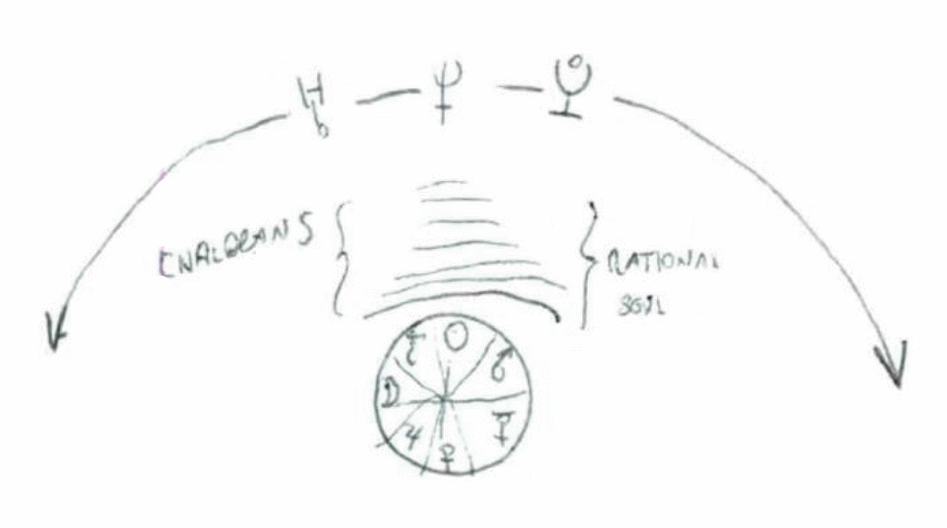
FIGURE 1982 0904-1-AB. Three Knowers: Ego, Rational Soul, Trans-Saturnians.
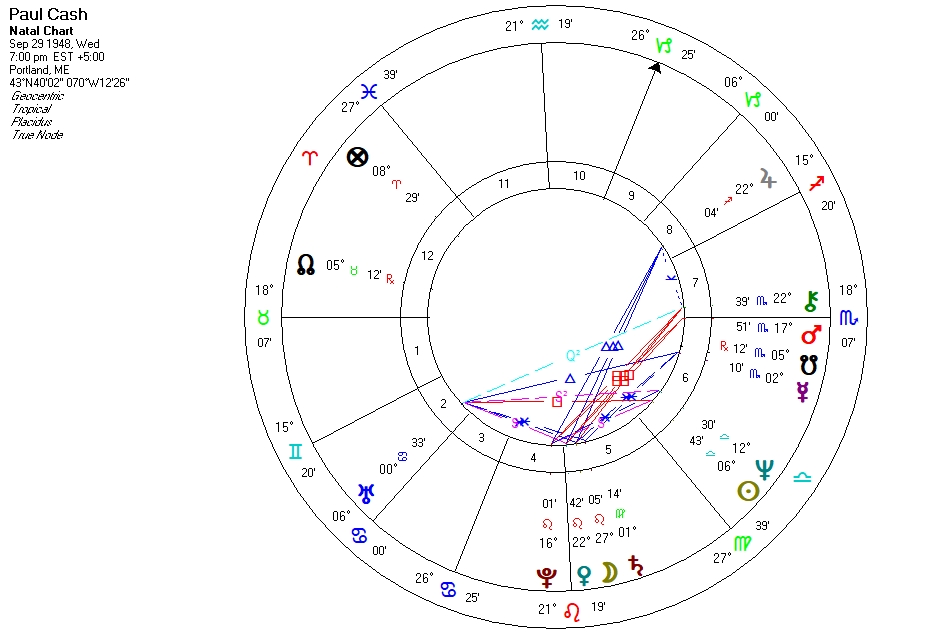
FIGURE 1982 0904-2. Paul Randall Cash Natal Chart.
Other diagrams referred to are not with this transcript version. [Transcriber note: [diagram] means the speaker is referencing a diagram as he or she is speaking. If someone is drawing or writing, with audible sounds of chalk on a blackboard, I indicate this by [drawing] or [writing].]
NOTES:
- This is a Monday night class – usually Astrology – although in this class KCB essay used to develop theory on Uranus-Neptune-Pluto Knowing-Feeling-Willing.
TRANSCRIBED Verbatim by IT prior to 2018, reformatted by jf 2018. In 2023, IT updates prefatory matter, footer, and audio file name, alters Subject and Subsubjects to make more accurate, completes Book List, fixes errors/typos, adds new notes within transcript, removes appended natal charts and replaces with diagram and Paul Cash natal chart and references within transcript to these, reformats to accord with new conventions. Archival verbatim transcript – V12a.
AUDIO FILES: 1982 0904a, 1982 0904b. [Note: "Tape" and "Side" refer to original audio cassette tapes that were later digitized into .MP3 Audio Files.]
1982 09/04 at Wisdom's Goldenrod
Astrology; Theory; Trans-Saturnians
[Audio File 1982 0904a Begins]
[first 5 minutes or so, Anthony is speaking quite quietly]
AD: --(meanwhile a Buddhist), that consciousness is a-- a limited succession of thoughts, one following upon the other. [students assent, very faint] So, you have the-- you have the example of the film-- [sounds like an aside: (if you want a cigarette--)] where each still is, let's say, a perception; and that each perception is discontinuous from the one that precedes it and the one that follows. And the consequence of that is that we have a-- a discontinuity in perception which is perpetual. Most of us believe that, (yeah)? [few inaudible student words simultaneous with AD] It's the famous theory by Hume and the Buddhist(s). Familiar with it? [student assents, very faint] So the-- the example that is given is you imagine a film being projected, alright, and then there's a still projected on the screen and there's a subject and an object in the picture and they think of themselves as-- [short pause] they believe that they have some kind of identity but you [one/two words inaudible] sometimes-- or get a feeling that there is no identity here, that from moment-to-moment there is a-- a change in perception taking place. And that accords-- that accords well with the-- the thinking of the ego, that the ego is-- has an image-making faculty (in it). Perception after perception takes place and there's a sort of discontinuity. You follow that, right? [students assent, very faint] And some of us subscribe to it and some us-- some of us even strain through that, and almost grudgingly acquiesce to that position. And that means that there's a disbelief in one's identity. And that's one of the things we were talking about, to experience that (dis-identity/this identity), that discontinuity, is to experience an anxiety, you know, the-- the dread, the anxiety, and the recognition of one's unreality. Now-- Let's take-- let's take the picture, let's take the example, the example of a film being projected, a picture being projected, and then another one, and then another one, so that there is this discontinuity in each perception. Uh-- [short pause] I could state this [few words inaudible] And yet there's some-- some unconscious persistence in each and every one who, let's say, hasn't completely permitted his understanding to (a kind of dogma) and who still wants to think this thing out for himself. This is sort of recognition in the momentary appearance of that ego that there's some sort of continuity although he can not understand what that continuity is. Now if we take the example of a picture, alright, a film, one film after the other, one picture after the other being projected, [DR assents, faint] standing back from it we could say that there's a plot, that there's a character development or [one word inaudible] and a plot accompanying it or [one/two words inaudible] manifestation of it. And, by the use of your rational faculties, which are also included in that momentary perception, are part of that momentary perception, gives you the strange feeling that there is some sort of continuity in spite of the discontinuity of the perceptions.
S (faint): Yeah.
AD: Now, if it-- if we can stretch the analogy a little bit. If the person in the film, in the use of his rational faculties, comes to the realization of the discontinuity of perception, that very understanding is not discontinuous. The development of those rational faculties in the very process of the everyday living is telling him that there is a continuity but not to look for it in perception. Do you follow that? [student assents] If you did not have this belief, if you did not understand and believe this, consciously or unconsciously, the whole-- the whole venture would collapse. There would be no reason for you to develop your rational faculty. What the hell would be the sense?
[student(s) assenting, faint]
AD: You follow?
S (faint): Uh-hm.
AD: You buy that?
[students assent]
MW: We're sort of invested in it. (bit of laughter)
AD: Well then, what we're saying, what we're saying is that these rational faculties seem to be sort of consciousness which is not the same as the ego consciousness, which is different than the ego consciousness. [student assents, faint] The ego consciousness we admit is momentary, linear, successive, one perception following upon the other. Agree?
S: Uh-hm.
AD: We all agree to that, and therefore there's a discontinuity in perception. [student assents, very faint] But there's also the belief in this very reasoning that you're undergoing to show that-- the discontinuity (of/in) perception. This very belief and understanding in the discontinuity of perception is the guarantee that consciousness is aware of change and changes in consciousness is not the consciousness of change.
S: Yeah.
AD: Now, that would make you probably either a follower of the (Dargupta) school, you know, or the Platonists, or some school of that nature who doesn't-- who do not believe in that. They know that, they know all that, but that's not the whole story. Like every other truth, when it's a partial truth, it's a disaster. Because then it leads you astray, it leads you into thinking that the-- the ultimate conclusions that you formulated from those premises, which may be highly insufficient, initially they-- they may be even incompetent, alright. So if you prevent that ever from-- from that point on, alright, then you begin to understand that there is a s-- a kind of consciousness which is more than the ego consciousness. Now what we're-- what we, or what I think we understand, is that that consciousness is a consciousness which belongs to, or perhaps let's say we can attribute it to, the structure of the Chaldeans and the trans-Saturnians.
S (faint): [couple words inaudible] the consciousness.
AD: The continuity of consciousness and the identity of consciousness, insofar that consciousness can be aware of change, change in consciousness is not the awarene-- awareness of-- consciousness of change, they're two different thing(s). In other words, I can be aware of changes in my consciousness, but those-- that awareness of changes in my consciousness is not the consciousness of change. [student assents] That consciousness of change is what I'm saying is like a superior consciousness, it's a higher form, and I think that that can be attributed to the-- either the trans-Saturnians or the rational soul. [short pause] [student assents, very faint] And from the first-- from the very first, I think you probably aware that this is my position, always has been, always will be. I can understand that the ego has a fictitious linear progressive kind of character, that it's unreality is-- is-- is something that we can count on. The experience of the unreality and the unsubstantiality of the ego we are aware of. All those things we understand and we grant them as true, but we also have to grant the truth that there's a kind of fluidity in the higher consciousness which at times is posited there, in the ego, and at times is not. In other words, we are aware at times of a higher consciousness functioning which makes you aware of the fact that there is consciousness of change, and at times it's not. That higher consciousness is very often indicated in the structure of the chart by the progressions or the transits going on, and especially the trans-Saturnians, where there is a higher kind of knowing going on, and because the ego's so unfamiliar with it, it denies it completely.
[students assent, very faint]
[15 second pause]
MW: So if you-- if you were to take the point of view that the-- the-- the rationality can't-- if you reduce it to being just a flux of thoughts, you've disregarded the very content of the rationality which is-- is like making a statement about something that (might) employ universals let's say, like making a sentence. If you reduce that rational consciousness to just [AD simultaneously: The ego's function, yeah.] the phenomena of the thoughts that are occurring and you disregard it--
AD (simultaneously): What would happen? What would happen? The consequence of that would be disbelief in your own rational faculties, inevitably.
MW (simultaneously): Right, it would just be phenomenal, it would just be--
AD (simultaneously): But then-- but-- but then what cause or what possible motive would you have to co-- continue?
S: Yeah.
S: It seemed to take the [couple words inaudible]
AD: Yeah, because the very fact, the very fact that you set yourself up a goal and that it's possible for you to control and direct your attention towards that goal already indicates that there's something of consciousness which is not of the ego variety.
S (faint): (Well--/Huh.)
AD: Well, ok, then we got that-- I think you got a capital point as to what I'm trying-- what we're trying to work out in the chart. [13 second pause] The very fluidity of-- of awareness, like I (tried/try) to point out, the fact-- the fact that you could have three knowers, and that there's a fluidity in regard to which knower is knowing what at what time, is very difficult to observe. I mean, if we took the example like the one you mentioned, Vic, Einstein got up in the morning and he was just dumbfounded, he knew everything, he had a very clear knowledge of everything. Now, put yourself in that situation, see if you can distinguish yourself from the higher knower at that moment. And you would find it very difficult. Because you wake up, there's this continuity of the ego's way of functioning, and there's a momentary pause in that functioning where a higher knowledge, a higher consciousness is working, alright. It's present, it is you. You are that at that moment, alright, and you know things very clearly. A few moments later it goes by or a moment later it goes by, the ego resumes, picks up the problem, brings in all its mathematics and tries to work out the problem, now the ego's back at the job.
But what I'm-- what we're-- what we're saying that at that very-- in that very example you can see that there was a certain fluidity as to which knower was operating. And to misplace the higher knower for the lower is a very common occurrence. Now, in the analysis of experience that the Buddhists give us, it is always down at the lowest common denominator. This is also these-- this is also what happened to David Hume. David Hume did precisely this. And when he realized the full consequence of his statement, [AD hits something] he stopped. He wrote no more and he engaged in playing dominoes for the rest of his life.
S: Yeah.
[bit of laughter, some background student words]
AD: At least he-- at least he had the merit [VM simultaneously: He's consistent.] of being sincere and [VM/S(?) simultaneously: Yeah, right.] saying well if this is the way things are, there's [couple inaudible student words simultaneous with AD] no-- no sense talking about it.
S (very faint): Say more.
S: Uh-hm.
AD: Ok? Now let's-- let's follow through what Bhattacharyya tries to do. Now look at the-- look at the remarkable almost lack of consideration on the part of fellow Vedantists that Bhattacharyya received. A man like Malkani called him, you know, almost irrelevant, his preoccupation with all these details in thinking. And Malkani wants these broad general statements, you know, "Perception is irrational. Therefore Brahman is real."
VM: Malkani also said he couldn't understand him too, didn't he?
S: Yeah.
AS: Right.
AD: Malkani said that? (AD laughing)
VM: No, I mean he candidly admitted that.
[9½ second pause]
AD: Do you follow that Herbie?
HS: Yeah. Well I would say that if Hume met a good Buddhist he might've so to say introverted at that point. [couple words inaudible]
AD (simultaneously): If he was a good Buddhist he might have got introverted.
HS: No, if he met one, someone could've [couple words inaudible] of course.
AD (simultaneously): Well, yes, if he met-- if he met one of the, let's say, members of the (Dargupta) school for instance who would've told him and explained to him the necessity to develop or generate an attentative consciousness which can become more and more identified with the higher realms, alright, then he wouldn't have to take that too seriously but would recognize its place in the order of things. Yeah.
S: Yeah.
AD: This was not, you know, a criticism of the (Dargupta) school because they're quite aware of this. But, what we want to try to understand is to see if this is really so in terms of the way we're understanding our chart. Is it-- is it available to us in, let's say, examples? You remember the example we had about Wagner who came out of that trance state where he had experienced the Nibelung, the writing of the music, every-- that the whole vision was there? Now, I would say that that was a moment of the higher knower's functioning. And, then when the ego claims its own again, that's when the artist usually goes berserk because now he starts thinking "I did it". And by "I" he's referring to the ego. Whereas it was obviously an example where the higher knower started functioning, and they were indicated by those aspects, I don't know what it was, Pluto was aspecting something but-- Until we build up a rep-- repertoire of a dozen charts or so and we have sufficient material at our fingertips so that we could start pinning these things down in a very concrete and empirical way, I won't be happy. I mean I won't have a guarantee that what I'm doing is so. [students assent]
And, also-- Let's put it this way, (that) there is the danger always that any kind of spiritual knowledge is going to be abused, that can't be helped. But there's the possibility also that a-- a transcendental or a kind of spiritual astrology can evolve based on these premises. And that the astrologer could be in a sense a superior kind of guide than the therapist is, the psychiatrist, the analyst, his guru, and many others that I could think of. I have to put quotation marks around guru because very often he's objective in his statements but unconscious of the source.
HS: Ok, astrology would indicate like a progressive ob-- objectively progressive unfoldment, (say) internal unfoldment. And that's what you're trying to do?
AD (simultaneously): Well, yeah, I-- and I would add to that, if the-- if the student let's say has a spiritual understanding of the philosophic principles to be employed, alright, and the unfolding of the events and let's say, you know, internal dimensions of the person's being that are taking place, and he has both these things, then we have the possibility of a spiritual astrology, an astrology that's concerned with a person understanding and realizing more of the nature of his own soul.
HS: Yeah, through the full meaning of soul actually.
AD: Yeah, (yeah). This is the work of synthesis we've been doing here. So if we try to read a little bit of Bhattacharyya to see if we can get some hints as to the awful complexity of this functioning that we refer to as knowing, willing, and feeling that the trans-Saturnians represent, even if we get just an idea of the difficulty, we got something to go by, rather than this blankness, you know. I know KCB is not exactly everyone's favorite, including me. [student assents] But he does have gems buried in his statements and if we could pick some of them out (it would be) [one/two words inaudible] you know, organize or at least (we can) get a better insight into how to read the chart. [student assents] Would you like to do some of the-- Go ahead. But pick out something (useful to) start.
AS: You mean quotations they can go down [few words inaudible] [17¾ second pause, flipping of pages, faint background student talking] Fine, I guess paragraph 14 is a good place to start.
S: "The Subject as Freedom" [three/few words inaudible]
AS: Oh, this is "The Absolute and Its Alternative Forms". (Oh/Well) actually people don't know that.
AD (simultaneously): You still have that [one/two words inaudible]
AS (simultaneously): Oh, we-- yeah. [sound of a book landing on table] This is this [AD simultaneously: Share it.] article, "The Concept of the Absolute and Its Alternative Forms," where he tries to develop these three notions of the higher consciousness through knowing, willing, and feeling and what the demands of knowing, willing, and feeling are in terms of this higher consciousness, in other words, the continuity type of consciousness we spoke of rather than a discontinuous one. And he-- he starts-- he starts by trying to understand it from the point of view of reflective consciousness and then leading up to what he calls the absolutes for these three (modes). [short pause] Does [few words inaudible]
AD: [three/few words inaudible]
AS: What?
S (faint): Go ahead.
S: Come--
AD (faint): You want to start over here?
AS (faint): Well-- That was where we started (last time).
AD: Alright, let's start there, sure.
S: Go ahead.
AS (faint): I don't know.
S (very faint): Once you get through [few words inaudible]
AS: What?
S: Last part of 10.
AS: Last part of 10? Oh yeah.
S: [few words inaudible]
S: Sure.
AD (faint): Go ahead.
AS: Ok well, they-- it does give you an overview here.
TS: Yes.
AS: Ok.
S (very faint): Yeah.
AS: Let's attack 10, we could read 10. [AD talking to someone in background, very faint] Says--
[Transcriber note: I am using Studies in Philosophy, Vol. 2, by Krishnachandra Bhattacharyya, "The Concept of the Absolute and Its Alternative Forms," Progressive Publishers, Calcutta, 1956.]
K.C. Bhattacharyya ["The Concept of the Absolute and Its Alternative Forms," stanza 10, AS reading]: "10. We are concerned for the present with the conception of the absolute such as is intelligible as a problem to reflection."
AS: First one that (one word inaudible) Ok, so there he's-- he-- we're concerned with the problem of the absolute as problem to reflection.
K.C. Bhattacharyya ["The Concept of the Absolute and Its Alternative Forms," stanza 10, AS reading]: "We have to trace in detail how the indefinite distinction of content and consciousness can be defined, how their apparent identity can be denied, how, in fact, the implicatory [AS reads: implicational] distinction can be resolved into a non-implicatory distinction. We shall find presently that the implicatory [AS reads: implication] [distinction] of content [AS reads: contents] and consciousness varies according-- the implicatory di-- [AS: I wanted to leave out that.] [AS rereads] We shall find presently [AS reads: presently find] that the [implicatory] distinction of content and consciousness varies according as the consciousness is knowing, feeling, or willing."
AS: Ok? Is that clear? There's some relation between content and consciousness and it'll vary depending on whether the type of consciousness is knowing, willing, or feeling.
K.C. Bhattacharyya ["The Concept of the Absolute and Its Alternative Forms," stanza 10, AS reading]: "The implication is resolvable in different ways in these three spheres [AS: Knowing, willing, and feeling.] and the absolute is understood in the reflective stage in terms of the mode of resolution in each case. Knowing, feeling, and willing will then each have its own formulation of the absolute--viz., truth, [AS: The absolute for knowing.] value [AS: For feeling.] and reality (or freedom) [AS: For willing.] respectively, as will be justified later [AS paraphrases: and we'll justify-- he will justify these later.] [AS adds: Now] In the reflective stage these absolutes or formulations of the absolute will be found to be un-unifiable [AS reads: non-unifiable] and to be in a sort of alternation. Whether a mystical identity of the absolutes can be reached in the supra-reflective consciousness does not concern us [AS adds: right here]. Our problem is [AS adds: rather] to show how reflection demands a specific absolute in each case [AS reads: in each of the three cases, (students assents, faint) knowing, willing, and feeling]."
VM (faint): Good, good place to start.
JB/S(?): Thank you.
AD: Would you make an equation, Avery?
AS: An equation?
AD: Yeah, with the [AS simultaneously: Well--] knowing, willing, and feeling?
AS: Well, yeah, I mean we-- we're try-- I think we're trying to see if it's valid to equate the absolute for knowing or truth consciousness with Uranus, and the higher value with the Neptune, and the higher willing, willing type of consciousness with the Pluto. And each one of these implies a slightly different relation of consciousness to content. Now the second point I think is where is the reflective consciousness that he's speaking of that these are first going to be known. I mean that's I think the-- one of the main points because we don't really-- we don't normally have available the pure modes of consciousness that Uranus Neptune and Pluto represent. So the question is where is the reflective-- where-- what does he mean by saying at present we're going to have to find these within the reflective consciousness, and the implications there.
[student assents, faint]
[Note: See FIGURE 1982 0904-1-AB, Three Knowers: Ego, Rational Soul, Trans-Saturnians, appended to this transcript for the following.]
AD: So you have to locate yourself in the central circle, in the middle circle [diagram], and within that you have to find the higher consciousness. Now that-- that is our situation. [students assent] We're located in the ego structure and within that ego structure we have to try to locate or find or recognize the functioning of the higher, the three higher ones.
[student assents, very faint]
HS: So thinking, feeling-- thinking, feeling, and willing are the three modes that the-- by which the-- the three higher ones would be recognized in the ego structure.
DR: Does that mean that the one you were speaking about before, where by analysis of experience you find the continuity of consciousness, to be referring that one to Uranus?
AD: Yeah, we could suggest that. We could say that for instance co-- truth consciousness or Uranus represents a continuous kind of knowing, without the break. There is no break in that knowing. When-- when it breaks into our ego consciousness and then disappears we feel that there's a break. We're not acquainted with that self-identity of knowing which is persistent. We only recognize, like we gave the example, Einstein woke up, knew something, knew it definitely, alright. We can take many instances of the great geniuses who had that recognition or a great knowing going on, but then they lose it and the ego comes in, takes over again.
DR: Ok, so even if it appears discontinuous--
AD: But it'll appear discontinuous to us, yes. But when it functions, alright, we know. Not in the way we ordinarily know but we know. We-- I could say we are that knowing at that-- at that time. Or we are that feeling at that time.
DR: So you'd be able to, at some point, to give a couple of examples for the other two as well.
AD (simultaneously): Hopefully, no.
HS: And the-- when the mode is so to say operative the identification is not-- the identification is with the mode itself, right? You're identifying with the mode.
AD (simultaneously): No, there's-- it's not an identification, you see. You see, if we say that the subject, alright, is an animal, a man, and angelic, alright, and we identify with any one of those aspects, we're going to say that's what we are. But the purpose here is to break down that notion, to introduce a fluidity as to who the knower may be. Just-- that will be our first concern, [HS: Ok so--] just to admit through a rational process of understanding that that possibility exists, that there's something in us that can know and really know. Now, if you say "I identify with that," then it's like you're going to take the ego and superimpose it on that and that you can't do.
HS: Ok, that-- you wouldn't want to ascribe that knowing to the ego as ego.
AD: Exactly.
HS: Ok.
AD: So when PB for instance makes the remark, he says "Dear ego, I have one favor to ask of you--get the hell out of my way."
[short pause with faint background student talking]
HS: So what comes to the fore-- what-- when one of these modes is operative-- is operative or is-- is the mode itself, right, it's not like the obje-- it's-- it's not like there's a knowing of an object but what is is there's this knowing.
AD: It is knowing, yeah.
HS: Yeah.
AD: It is knowing.
HS: Ok.
AD: Later on I think Avery can point something else out, that it's a modalized-- a modalization of universal knowing.
HS: And that-- that's what gives it the-- the epithet "Truth," in that's a-- it's a universal knowing?
AD: Uh-hm. Ok.
AS: The other two are also universal. The feeling and willing are also-- I mean in his formulation I think all three of these would-- would refer to those types of continuity consciousness.
HS: Yeah, we would begin. Avery if you could, could you just explain to me what they mean by value as a universal [one/two words inaudible] You know, I don't know [couple words inaudible]
AS: Yeah. Well first he's going to define them just in terms of reflection.
HS: Ok.
AS: (Ok?) He's going to (see) how they permeate reflection. I think you remember. He just-- he says [HS simultaneously: Go ahead.] this line here. [AS paraphrasing] We shall find that there is a distinction of content and consciousness and that the relation of content and consciousness varies according as the consciousness is knowing, feeling or willing. And, the implications in the reflective consciousness are resolved in three ways in terms of the higher consciousness. And that's what he's going to talk about.
S: Alright.
S: Where are you now?
AS: No, I'm just repeating, that was-- [S simultaneously: (Soul.)] we just-- we've just read that, that was in 10.
S (simultaneously): (Soul?)
AS: Tim has the [one word inaudible]
VM: (I'm just a--/I missed it.)
TS: When he's speaking here of reflective consciousness, [AS: Yeah.] which is this-- been gone over but-- Insofar as he's speaking here of formulating these three modes in terms of some kind of relation of content and consciousness, it seems that it would be within the categories of the imagination. But insofar as he's speaking of some kind of awareness of those relations as being in reflective consciousness, would that be in the rational soul?
AS (simultaneously): Seems to be (right). I think you're right. Insofar as you're speaking of just the relation of the content and consciousness you're within the imagination. But insofar as he's at a stage of being reflectively aware of that, you'd have to say that-- just what we s-- I think it relates to what we said at the beginning, that insofar as you can actually be aware of the relativity that's operating in the ego, you must be in some stand-- you must be-- that already points to the fact that there's a stand available outside of that. Otherwise, you could not rationally analyze the subject-object relation within the ego. I think--
TS: Well, is that--
AS: I don't know Tim.
S (very faint, possibly part of background): Maybe [one word inaudible]
AS: Ok, maybe we should go to 14. Well-- and he goes through these two-- three.
K.C. Bhattacharyya ["The Concept of the Absolute and Its Alternative Forms," stanza 14, AS reading]: "14. Reflective knowing is consciousness of the known object as distinct from the knowing. Reflective willing is consciousness of the act willed as being distinguished by the willing from itself. Neither is consciousness primarily of the distinction itself or of the distinguishing. Reflective feeling is primarily consciousness of the distinction (or the distinguishing) [AS adds: a relation] of content and consciousness. To be conscious of a content as felt is to be conscious of the content in [AS adds: some kind of] unity with the feeling or of feeling unified with the content. The unity of the two contents means--whatever else it means--an imperfect distinction between them; and we have to understand the unity of content and consciousness on this [AS reads: the] analogy [AS adds: of the unity of two contents]."
AS: Stop.
S (very faint): Uh-hm.
AD: Avery, would you go through each thing now and explain it one at a time?
AS: Yeah, we should go-- ok. Here he's trying-- the-- this is an elaboration of when he said there's a different implication in knowing, willing, and feeling or the relation of content and consciousness, alright. He says, what does it mean for knowing? "Reflective knowing is consciousness of the known object as distinct from the knowing." Ok? So in the knowing kind of consciousness the emphasis, it seems he's saying, is on the object as something distinct.
[student assents, faint]
HS: Right, and the known object you would say would-- would be what in here?
AS: Well, let's take an example I guess is the best thing. Like for example let's try it with Uranus, say Uranus on a degree. So you could call-- you say the degree would be the known object and Uranus the knowing consciousness.
[short pause]
HS: But the known object which appeared as an image in-- to a reflective consciousness now? In other words, like a particular subject in relation to a particular mode in the world becomes the object? Or are you saying something so to say internal without an external reference?
AS: Well, I think there are two level-- I mean the ideal level of this would be taking the degree as the known content, ok, as the meaning--
HS (simultaneously): What's intelligible in an experience.
AS (simultaneously): The meaning, what's intelligible.
HS: Yeah.
AS: Ok, good, what's intelligible or what has meaning, the meaning. And taking the function, the planet, as that function.
HS: Uranus.
AS: In this case, yeah, in the case of knowing we would say primarily Uranus but we could do it inside, but then we have to translate it inside the imagination. But say there's a certain meaning and that meaning is known, ok. And in the case of knowing, the relation between the content and the consciousness, as he says-- [MS assents] [couple inaudible HS words simultaneous with AS] the known object-- "is a consciousness of the known object as distinct from the knowing."
S: Hm.
AS: Ok, now-- [drawing] Well, yeah, let's keep at discussing it.
LR (simultaneously): Read the symbol [couple words inaudible] Anthony.
AS: [one/two words inaudible] example?
LR: It's-- I--
AS: Well I could try it, I mean--
LR: And what I mean is the Uranus knowing this degree.
AS: Yeah, that would be the ideal.
LR: Right, it's hard for me to grasp that 'cause it seems like it's at si-- such a high level.
AS: Right. Well, so you would say within the reflective consciousness--
LR: Yeah. I would say within the reflective consciousness the knowing of Uranus-- the object for the functioning of Uranus would be the empirical ego, and it would be-- get a glimpse of that as distinct from the subject.
[student assents, very faint]
TS: Or that [LR: And that's--] the functioning of Uranus would be to know the degree and a Chaldean planet as distinct. If you say that the subject-object relation is in the categories of the imagination, the subject there it seems to be would be this-- the-- the functions, and the degrees or the reason-principles would be the contents.
AS: Right.
TS: So would that-- when he's speaking-- just trying to understand this, that when he says [students assents] "reflective knowing is consciousness of the known object as distinct from the knowing," here it's reflective consciousness (with--) sort of says that that's still involved with the categories of the imagination in some way.
AS: Uh-hm.
TS: Now is it that some kind of knowing within the categories of the imagination that is distinct-- distinct from something known or is it as you suggested the Uranus knowing itself and its organization?
AS: Well-- ok.
MW (faint): Yeah.
TS: Because he's going to establish a couple of different levels here [one/two words inaudible]
AS (simultaneously): I know but-- I know. [short pause] Well--
LR: Maybe it would help if we understood what it-- he meant by "within reflective consciousness".
AS: Yes, but [LR simultaneously: Because he--] I was just trying to say what the knowing-- I was just trying to first point out or try and give an example of what the knowing consciousness means. Knowing consciousness means that there's no interference with the shining of that i-- idea, of that meaning. I mean the ideal, the perfection of it would be that the meaning of the idea, the reason-principle, shines through on its own. And it's primarily the Uranus type of consciousness which is del-- which can deliver that kind of knowledge. It delivers in a lucid or clear way the meaning of some idea, and that idea shines through on its own. Now that would be the ideal of it. Now in reflective knowing, when you talk about in reflection or within the ego, ok, this kind of consciousness seems to be making, trying to make distinct the content of that knowing. Now, if it's in terms of the empirical ego, then the object of it could be the ego. But I don't-- I think primarily he's speaking about some kind of meaning or some idea or some piece of knowledge or intelligible content. And that the knowing consciousness is always trying to make that distinct, to make that perfectly distinct.
AD: Could you read the passage again (please)? [AS simultaneously: "Reflective…"] Just [couple/three words inaudible] Sorry.
K.C. Bhattacharyya ["The Concept of the Absolute and Its Alternative Forms," stanza 14, AS reading]: "14. [AS adds: This] Reflective knowing is consciousness of the known object as distinct from the knowing."
[student assents, very faint]
AD: Go on.
AS: That's-- that's the line he said, that's just on reflective knowing. There's a whole other paragraph on it, maybe we should do [AD simultaneously: Yeah.] this whole other paragraph.
LR/S(?) (simultaneously): The one on 40.
AD (simultaneously): Let's stick just with this one [AS: Ok.] example.
AS: Good, then let's try and elaborate it, we'll-- maybe we should go back to 12. He goes through this, ok. So that's just his general-- the short line, "Reflective knowing is consciousness of the known object as distinct from the knowing." In the relation of consciousness to content, it's [one word inaudible] and so on that content as distinct. He says, 12--
K.C. Bhattacharyya ["The Concept of the Absolute and Its Alternative Forms," stanza 12, AS reading]: "12. The content of [a] knowing act is unconstituted by the act. The particular act of knowing discovers and does not construct the object known, even if the object be admitted to be constructed by some knowing. Knowledge would appear to mean that the object known is in some sense independent of it though it may be a question [AS adds: of course] whether what we ordinarily claim to know is properly said to be known and to be independent of [the] knowing."
AS: (We/He) just said that.
S: Uh-hm.
K.C. Bhattacharyya ["The Concept of the Absolute and Its Alternative Forms," stanza 12, AS reading]: "Where the object is coloured by the particularity of the act of knowing, it may be said to be only empirically known but it is still taken to be known [AS adds: in] so far as it is believed to be independent of it."
AS: When you-- you know, you-- the line here, knowledge-- "even if the object be admitted to be constructed by some knowing," he's saying, I think, even excepting that there is some higher mentalistic view, within the framework of this mentalistic view, now taking the point of view of the ego, for example, ok, we would say that the ego doesn't construct this knowledge. What we mean by the knowing consciousness is it takes some kind of content as self-subsistent, [one/two inaudible VM words] objective, some kind of meaning. [VM assents] And that it has meaning because it's not constructed, or subjectively constructed by the subject-object relation, but that the idea itself or the intelligibility or the meaning is something objective. Then he says--
K.C. Bhattacharyya ["The Concept of the Absolute and Its Alternative Forms," stanza 12, AS reading]: "The particular act of knowing discovers and does not construct the object known… [VM assents, faint] Knowledge would appear to mean that the object known is in some sense independent of it though it may be a question whether what we ordinarily claim to know is properly said to be known and to be independent of [the] knowing."
AS: So within the middle realm [diagram], within the imagination, you can't really say that anything is completely independent of your knowing of it.
VM: It's the act of willing, let's say. For one thing, you'd be involved in (the act) in the sense that your own desires and so forth would tend to construct, at least in part, the object and so it's not purely known.
AS: Yeah. Or he's saying an idea outside, when it's known in the subject-object split, that already is putting a-- [student assents] a coloration on it. That's relativizing it and determining that idea or meaning in a certain way. And so within that, what we ordinarily claim to know can't properly be said to be known [short pause] because it isn't the knowledge of a self-shining idea as unrelated, it's relativized.
HS: But doesn't he point out that within a-- within whatever, the for-- knowing as a form takes the form of object known by subject, and object is taken or known as distinct. Whether it is [AS simultaneously: Right. Right.] or not is questionable. Ok? [AS assents] That-- so, the first thing I'd ask is, object would be what now? [couple/three words inaudible]
S (simultaneously): Yeah.
[short pause]
AS: Well, I was taking the object here to be a reason-principle, whether-- whether we're-- whether we say it's a higher idea coming in or whether we say it's represented as one of these degrees within the imagination.
HS: So it would al-- no matt-- even if it was represented, it would still be the reason-principle itself that's the object to this knowing.
S (very faint): Uh-hm.
AS: Yeah, that's the way I'm taking it and that the function is what is knowing it.
[student assents, very faint]
HS: The function?
AS: The fun-- the-- the [one inaudible VM word simultaneous with AS] consciousness or the awareness of it is represented by the planet. [AS or another student: So--]
HS (simultaneously): The planet, if you-- being the-- one of the Chaldeans here, in this case, or the Uranus.
AD: Let's con-- [HS simultaneously: I'm sorry.] let's read all we can on the knowing first before we [AS simultaneously: Ok.] ask question(s). Let's try to gather--
AS: Ok. Well, then maybe we should-- he has a lot on it.
VM (faint): How about 16?
AS: Yeah, 15, 16. Ok, 16. [couple/three words inaudible]
MB(?): What page?
[short pause]
AS: No, maybe 17, "To begin with knowing".
K.C. Bhattacharyya ["The Concept of the Absolute and Its Alternative Forms," stanza 17, AS reading]: "17. To begin with knowing. If the content of knowing be perfectly distinct from knowing, how can the distinction be implicative or indefinite at all? It is implicative in the sense that the content of knowing is necessarily understood in reflection as what is perfectly distinct from knowing. The content implies such a reference to knowing and apparently means nothing without it."
AS: Well--
S (faint): Uh-hm.
AS (faint): This is--
K.C. Bhattacharyya ["The Concept of the Absolute and Its Alternative Forms," stanza 17, AS reading]: "When one content is asserted to imply another…"
AS: Now this (is) in terms of two contents.
K.C. Bhattacharyya ["The Concept of the Absolute and Its Alternative Forms," stanza 17, AS reading]: "When one content is asserted to imply another, a relation is asserted of which, as we said, the implying content is not really a relatum [AS reads: some kind of relation] but some other content which need not have the relation and which as thought with the relation is the implying content."
AS: Let me try and translate that. [VM(?) simultaneously: (It's easy.)] (Say) when one content is asserted to imply another, say when you say fire implied-- smoke implies fire, alright, a relation is asserted. You're asserting that where there's a smoke it implies there's fire, [AS paraphrasing] "as we've said. The implying content, smoke, is not really a relatum, but it's some other content which need not have the relation." In other words, you can conceive of smoke [S: Right.] without fire and you can conceive of fire without smoke. The relation, the implication, [one inaudible student word] is something-- the [one word inaudible] is something which isn't really either of those contents, and they can subsist without it, you can subsist-- you can conceive smoke, you conceive fire separately, in terms of two contents, ok. So there he's saying the relatum, the content, the smoke, is not really a relatum, it's not a relational thing. It's a-- it's a kind of a noun, it's a thing.
HS: It is.
(Side 1 of original cassette tape digitized as 1982 0904a Ends; Side 2 Begins)
K.C. Bhattacharyya ["The Concept of the Absolute and Its Alternative Forms," stanza 17, AS reading]: "…since it is before the mind only as known."
AS: So here the implied relation between the content and the consciousness is inseparable in that same way. It's hard to conceive from the point of view of reflection what it would mean for a content to be an unknown content. It's like the content means-- it's almost like he's saying the content means known content. [VM assents, very faint] The implication of it is not something separate. It's part of the relation. I don't know (if I should go on).
AD: Good, go ahead, continue.
S (simultaneously, very faint): You can go on.
AD: A few more-- a few [AS simultaneously: Ok.] more before-- a few more before I [possibly one word inaudible] (bit of student chuckling)
AS: Um--
K.C. Bhattacharyya ["The Concept of the Absolute and Its Alternative Forms," stanza 18, AS reading]: "18. The consciousness of a content…"
AS: Maybe we should read a little bit of this and then go to what he means by the absolute for them.
AD: Yeah, [RC simultaneously, faint: These could be a problem.] good idea.
AS: There's a couple of little-- there's a couple little lines. In 18 there's some good-- the first few.
K.C. Bhattacharyya ["The Concept of the Absolute and Its Alternative Forms," stanza 18, AS reading]: "18. The consciousness of a content as known is not, indeed, the consciousness of it as a fact necessarily related to knowing but it is not also [AS reads: also not] the positive consciousness of it as only accidentally related [to knowing]. Reflection, in fact, on knowing tells us nothing about whether the content known is or is not necessarily known."
[student assents, very faint]
[short pause]
AS: [the following sentence is a paraphrase] It just means what is perfectly distinct from the knowing. In other words, reflection just tells us that the object is known and it doesn't really tell us that it has to be known that way or that it could possibly be known as unknown, as not related. It's just-- there's a per-- it's a-- it's an awareness of this content as perfectly distinct. Let's go to 19, the top of 132.
TS (very faint): Oh dear.
[short pause while flipping pages]
AS: He says--
K.C. Bhattacharyya ["The Concept of the Absolute and Its Alternative Forms," stanza 19, AS reading]: "All that is actually meant is that to be aware of knowing an object is to be aware of knowing truth, knowing something--in other words-- to be eternal or timeless. The object may be temporal but that it is in time is not itself a temporal fact."
[student assents, faint]
AS: Let me read one more sentence.
K.C. Bhattacharyya ["The Concept of the Absolute and Its Alternative Forms," stanza 19, AS reading]: "To know is to have a timeless truth revealed but this does not mean that it is timelessly known and so known again in the present act of knowing. [short pause] There is…"
AS: Well I'll keep going.
K.C. Bhattacharyya ["The Concept of the Absolute and Its Alternative Forms," stanza 19, AS reading]: "All that is actually meant is that to be aware of knowing an object [AS adds: in reflection] is to be aware of knowing truth, knowing something--in other words--to be eternal or timeless. The object [AS adds: as object] may be temporal but that it is in time is not itself a temporal fact."
LR: I think that's-- that's the point of what you were saying about knowing the reason-principle, [TS: Yeah.] [AS: Yeah.] is that no matter what particular object you take as an example, and this is-- well-- no matter what particular object you take as an example, what is known of that object is something which is not changing from instant to in-- to instant, there's something real about knowledge. When we try to connect that real bit of knowledge to the object that's another story, [AS: Right.] to try to figure out in what way is the reason-principle embodied in the archetype and all that. But actually penetration into the object, whatever it may be, is not something fleeting. It's a real piece of knowledge which itself is not subject to the kind of instant-to-instant change.
AS: Yeah. I think he-- and I think he's saying that in reflection we first come to the awareness of this fact. Although we can't finally solve the problem and know the object in the timeless way, we recognize that even to know it within time is a no-- involves a non-temporal factor.
LR: And, in that sense, when you speak of the degrees in the chart, you could say that the aspects between the planets or the motion of the planets is the al-- is actually what is altering the states of consciousness all the time. So you have this constantly changing ego, but (reflecting/reflected in) the imagination. But when there is a true moment of knowledge is the actual degree or idea, reason-principle, there's a real penetration there and you see that as an entity separate from being constituted by the imagination.
AS: Yeah ok but-- yeah, (in/and) this (line/lines) (you--)
K.C. Bhattacharyya ["The Concept of the Absolute and Its Alternative Forms," stanza 19, AS reading]: "To know is to have a timeless truth revealed but this does not mean that it is timelessly known…"
AS: In other words, what you're saying, when this degree or meaning is experienced in our ego or in this-- in the imagination, there-- even there there's a timeless truth is revealed, but this doesn't mean that it was previously timelessly known. It's not like first you know this idea timelessly and then it gets translated into the imagination. In this case he seems like he's saying it is known in the imagination and there you recognize that it really was a timeless truth in some way, [student assents, faint] but it's known in the present act of knowing.
S: Yeah.
HS: Are you talking about, at this point in the discussion, are you-- you talk about the knowing-- are you talking about-- what kind of knowing are you talking about? I mean like are you talking about like walking around knowing objects? You talking about getting a bit of information about your ego-structure, you know, every-- once every twenty years (I bet)?
AS: No, just-- [HS simultaneously: No I'm just--] just some meaning.
HS: Just meaning at all?
AS (simultaneously): Let's say meaning in terms of meaning, some kind of intelligibility or meaning.
HS: Where-- wherever it would be found in your day, so to say. I mean would you say that this kind of knowing structures the whole of your so-called waking life or your so-called waking life?
AS: Well, normally we're not reflectively aware of what's happening in-- in our conscious-- in our knowing-- in our empirical knowing.
HS: But there are bits of empirical knowing during the day.
AS: Yeah, there's lots of empirical knowing going on.
HS: Yeah.
AS (simultaneously): See, we're knowing all the time, knowing, willing--
HS (simultaneously): Yeah.
AS: --we're-- It's going on unreflectively. Then there's a next stage where he says, now, to reflection. We try and reflect on this process of the relation of consciousness and content. Now in that reflection, that's the second stage, we're bringing in some kind of reason. Now there's a demand to understand how knowing can happen, how some meaning can be revealed in my consciousness. And in that reflection, the deepening of that reflection, leads to a demand for its higher-- for the higher kind of awareness wherein the object is known just in its pure shining (or the--) or idea is known in its self-shining subsistence.
HS: So is this what-- is this like a mode that's going on all the time, like as long as this-- you're here, you're on, you know, embodied, so to say, your rational soul is always in some way knowing but we're just usually aware like the sensible opinion part of it?
AS: No, I think-- I think he's de-- I think he's just dealing from the point of view-- he's starting from the point of view of just empirical knowledge, you know things all the time. [HS or another student assents] And he's just saying, well now if we reflect on this, what are the implications of a knowing kind of consciousness, the fact that I know A or B and I know any content in a knowing way. And by knowing he means that the object is distinct. In feeling there's not a-- there's not-- it's not a consciousness of a distinction, a perfectly distinct object. He's saying, ok, well to reflection I first see the object is perfectly distinct but still there's a relation to the consciousness. It's a known content. Now, is there any way we can push this to a further limit and understand some kind of a consciousness that could have a self-shining content? In other words, I think he's leading to point-- trying to point to the Uranus kind of consciousness. The Uranus consciousness is a mode of awareness that allows a pure idea to shine on its own right and be revealed to you [AD simultaneously, quietly: Let's try--] as perfectly distinct.
AD (quietly): Let's try an example. But, before we do, would-- could you repeat what you said? What you said, could you repeat it?
AS: Well, yeah.
AD: Because that-- that will-- that will give you-- that would be the background I need.
AS: Well-- well, I think he's saying norma-- we always have contents, in one of these three modes, within the ego, there's some kind of known content or willed or felt. And that's going-- that's the first level, that's always [drawing] going on. So he's talking right here [diagram], all the time. All the time there's content in the ego, no problem, all the time. Now, when you begin to reflect on that, you try and see what the-- what are the implications of knowing, what does this mean, I'm knowing. Let's just take knowing, leave the other two out. And he say to reflection, he says knowing means that the content is perfectly distinct. But still in reflection, still related to the knowing consciousness. I can't in reflection [drawing] completely separate out the knowing consciousness from the content [VM simultaneously, faint: No.] because I'm still involved in the subject-object relationship. But I recognize that there is some demand. That's what he means by an implication. There is a demand though that begins to formulate in me to have some-- to come to an awareness of a self-shining object which is not a known content. So I realize, all the content that I have is always known content. At the first level, I'm not even aware that it's a known content. I know the tree but I don't normally know that I know it. In the second level, reflectively I'm aware, I know that I know it and there begins to be some demand to have it known but not as known, just to have it shine in its own distinction. Say well what is the implication of knowing? That there is some meaning [AD simultaneously: Ok, and then the third.] that can shine on its own.
AD: And then--
AS: In the third level, the demand then is to recognize or to have an experience or come to a kind of awareness, which I think we're going to try and call the truth consciousness, in which this idea shines as a self-standing reality, not as known to an ego but as known to this higher consciousness, that-- this higher consciousness being almost an absorption into that self-shining idea.
AD: You go it?
S (very faint): Yeah.
AS: In other words, known as unknown to the ego, what that idea may be in [HS simultaneously: In itself.] itself, right, in [HS simultaneously: And it would be a true mode of--] itself, not known-- that would be a true mode of knowing, [HS simultaneously: Knowing, yeah.] truth consciousness. Not the way it's known to an ego, and that's what he means by "known as being known," but what it might mean for it to be known in itself. [student assents, very faint] And by "in itself" we're not-- we're not throwing out that there is a higher knower, a higher kind of consciousness or truth consciousness. [HS simultaneously: Well if it's known--] That tru--
AD: Ok, ok?
HS: If it's known, it's known to a consciousness.
AD (simultaneously): Wait, wait, I-- wait, I want to go over this again and again and again till you get it. [AS: Right.] You follow what he said? If not, we go over it again because [S simultaneously: You can go over.] it's really subtle [S, very faint: Yeah.] what I-- [RC simultaneously: It's--] what we're going to try to do.
RC: It seems that Avery's saying that right within this mind that I'm using right now, if I want to say that I really know something as opposed to just vaguely feeling it or-- or having it present some other way, if I really want to say I know it, then in order to be able to call that knowing, I'd have to be this higher kind of consciousness operating. It's only when that-- when that's operating that I could within reflection actually say I really do know something.
AD: Ok. Ok, that's a shortened version but I'd like you to go over it again Avery, I-- I'm sorry I gotta bug you like this when it-- It's w-- it's worth it.
AS: Well, I think there are three levels in the article that he's speaking of that are helpful, I mean-- The first level is an unreflective kind of knowing. And also there's a willing and feeling too but we'll just do the knowing one. [someone writing/drawing] An unreflective kind of knowing that he first talks about. There is a content and it's distinct but you're not aware that it's a known content. He uses this in other articles too. I just know the tree or I know a meaning or I know something. And I'm not really concerned with how I know it or what it's relation to the knowing consciousness is. And it's going on all the time within the ego, I mean it's my whole experience. Now--
AD: But could we say that that's a subject-object relationship [student assents] within this [diagram]?
AS: Right in there [diagram], that's a s-- [AD simultaneously: Ok?] the subject-object relationship in the knowing mode. In a knowing mode just means that there's the particular emphasis on the object, [someone drawing/writing] degree and a planet, and I would say a cold-- a category planet.
AD: Ok?
AS: Some category in the imagination. And that's continu-- the-- this category is continually projecting contents. And in the knowing mode means that the content is projected as distinct. Now, on reflection I become aware of that. Now something comes in, I begin to reflect on my experience, and now I say "Well now I know," I become aware that I know or I know that I know.
[student assents, very faint]
AD: You follow that?
[student assents, very faint]
AS: There's some-- that [couple words inaudible]
AD (simultaneously): I reflect on knowing.
S (very faint): Alright.
S: [couple words inaudible]
AD (simultaneously): You know that you know.
AS (very faint): I reflect on the [couple words inaudible]
VM: You've really-- for the first time you appreciate that the knowing-- that the known content is genuinely distinct from that which knows.
AS: And also-- but-- right. And also I recognize that in my reflection I never know it as [VM: As--] not related to knowing.
VM (simultaneously): Yeah, as not related to a subject.
S (faint): Yeah.
AD: Ok.
VM: Or [AS assents] not related to a knower.
AD: Now-- [couple inaudible AS words simultaneous with AD] now move to the next.
RC/S(?): Yeah.
AS: Now in the-- within this then there begins to grow or-- yeah, I would say there begins to grow a demand then-- Now, this is the problem. I on-- as you said, I imperfectly-- I know the object is distinct, when I reflect, I realize the object is distinct but yet I still can't get it to be completely separate from the knowing. I can't make it a no-- it's a known content, I can't make it an unknown content, because within reflection I'll never get it out of that mode, but there is a demand to have the object itself as completely distinct from the subject-object relation. I realize that that's implied. In reflection I realize that implied in the subject-object relation where a meaning is revealed, implied in that is that there is some perfectly distinct reason-principle or meaning or idea that is almost-- shines in itself but I can't get at it within reflective consciousness. All that there is is a demand for that to be realized in some higher kind of consciousness. There's a demand to have a truth consciousness where the idea is revealed as perfectly distinct, not in a [someone drawing] subject-object relation but like in itself, shining in itself. That's the implication of the reflective consciousness but it can't be realized in the reflective consciousness because just the reflection itself is a kind of knowing. And even in the reflection itself there's a relational knowing. So there's demand to get out of the relational kind of knowing into a higher kind of knowing where the object shines perfectly distinct.
AD: Now go to the third and the next.
AS: Yeah, well the third would be what he says, the object to be known as unknown. Now this is hard, and he says in fact in reflection you can't have that. And why? Because--
K.C. Bhattacharyya ["The Concept of the Absolute and Its Alternative Forms," stanza 40, AS reading]: "In the case of knowing…"
VM: Where are you reading from?
AS: This is paragraph 40. He says it, I mean-- (I mean--) Now this is the third level, where the object is demanded to be known as perfectly distinct, he says--
K.C. Bhattacharyya ["The Concept of the Absolute and Its Alternative Forms," stanza 40, AS reading]: "In the case of knowing, how the known content could be without being known is not reflectively understood although the consciousness of the self-evident…"
AS: Makes this a possibility to us, we realize it's a possibility but in the case of knowing, the first of the three--
K.C. Bhattacharyya ["The Concept of the Absolute and Its Alternative Forms," stanza 40, AS reading]: "…how the known content could be without being known is not reflectively understood…"
AS: The ego can't understand how you could ha-- how it-- [S, faint: Yeah.] Since-- since what constitutes the object is prior to it, it really can't understand how there could be a content that could be a known content without being known, that is without being known in a reflectional or in a subject-object way. Or in other words, what is demanded is some--
K.C. Bhattacharyya ["The Concept of the Absolute and Its Alternative Forms," stanza 41, AS reading]: "…species of negation that to reflection is unmeaning. In the case of knowing a known content has to be understood as what need not be [AS adds: a] content of any knowing."
AS: And, within the subject-object relation it's hard for the ego or the reflective consciousness even to understand how this known content or meaning or idea could be in itself, could subsist in itself or known as unknown.
AD: Alright, Avery will you help me out? I'm going to try some third.
AS (faint): (Why/When)?
AD: Randy, I'm going to use your degree.
RC: Ok.
AD: Alright? [one/two words inaudible] Uranus degree, Uranus sat on Mars?
AS: Anyway that's-- the demand in the third one would be the high-- truth consciousness would be the final-- the pure self-revealing idea [couple/three words inaudible]
AD (simultaneously): Read your Mars degrees and then read your Uranus degree. [Note: See FIGURE 1982 0904-2, Paul Randall Cash Natal Chart, appended to this transcript.]
[Note: Sabian degrees and interpretations are from Marc Edmund Jones, The Astrology of Concepts and The Sabian Symbols in Astrology.]
RC: The Mars degree is a-- a quiet winding path-- [Note: Scorpio 18, "A winding quiet road, carpeted by the falling leaves, leads through an old fashioned woods rich in autumn coloring."]
AD: No, just read us the psychological keyword and the positive--
RC: The keyword is FULFILLMENT and the positive is "high success in every area of true self-interest."
S: Yeah.
RC: You want (the other one)?
AD (simultaneously): Alright, now read the Uranus which went on that, ok?
S: Uh-hm.
RC: The Uranus, the keyword is ADAPTABILITY and the positive is "a gift for highly profitable adjustment in every developing relationship with others." [Note: Cancer 1, "A man upon a ship stands impatiently with a flag in his hands, ready to run it up in place of the one now flown."]
[short pause]
AD: And you-- your remarks about it Randy?
RC: Well it was pretty interesting because up until Uranus came to my Mars I really didn't realize the extent to which I was really identified with the Mars. When it came down to it, it was always like if I had to define that this is where I begin and this is where I end up, it was right in terms of that Mars. And, in terms of relating to the world, relating to other people, that attitude was always welcome. I have to accept that as the fact of what I am and if other people like it, good, if they don't like it, too bad, [AD: Uh-hm.] and it's just the way that it was.
AD: Ok, then Uranus went on it.
RC: Uranus went on Mars, [student assents] and I had just gone upstairs to go to bed and laid down and all of a sudden I wasn't identified with that Mars anymore, it was like objectified as a-- as a way of psychic functioning that I didn't have to do.
AD: You didn't have to do it.
RC: Yeah.
AD: You didn't have to operate the way that Mars was operating.
RC: Yeah. And it came in and I could be thoroughly adaptable. I didn't have to go through that tunnel and take the consequences [one/two words inaudible] experience that came as a result of operating that way. And that if I chose in advance to decide to be flexible and adaptable, I'd have a great deal more freedom.
AD: Alright now, I'm going to ask Avery to go over it again. Herbie come in here. All your attention's going to be required. (bit of laughter, students assent) [S: What do you mean?] Because when I start criticizing the Buddhists I want you to be right in there and understand my point of view.
HS: I'll be tolerant.
S: Easy.
S (faint): Easy.
S: What?
AS(?): What?
AD: Let's use this example.
S (very faint): [few words inaudible]
AD (very faint): Yeah.
AS (simultaneously): Put Mars there instead of Saturn.
AD: Yeah, let's put Mars. What's that Mars degrees?
[AD drawing/writing]
RC: 18 Scorpio.
AD: Ok? And this would be 18 Taurus of course [diagram]. Now, the first kind of knowing (is--)
AS/S(?) (faint): (Just knowing.)
AS: Normally, I mean--
AD: Yeah [couple words inaudible]
AS (simultaneously): The empirical knowing going on all the time, that there's--
AD (simultaneously): Yeah, I'm asking you to repeat what [AS assents] we did, [AS: Ok.] alright. [AS: And, in this--] An empirical kind of knowing is--
AS (simultaneously): An empirical kind of knowing, a knowing conscious-- the knowi-- knowing relation of consciousness and content, the content is distinct when you know something and not reflective, just I know a tree or I know a meaning, let's use meaning.
AD (simultaneously): Ok, now--
AS (simultaneously): And so the meaning is projected as distinct from the knowing of it.
AD: Alright, now, what we-- what we're doing here is we're saying something like this now, I'm going to make it simple. We're saying that there's a kind of subjective functioning going on here [diagram] which is projected and it becomes the object [diagram], alright? So there's a kind of knowing of an object. Ok? That's a kind of empirical knowing going on, alright. Then the second level of knowing--
AS: Ok, in reflection--
AD: In reflection now, in reflection [diagram].
AS: He says there you can actually know the-- kn-- become aware of that knowing function. And you're aware of two things, you're aware that the object is in fact perfectly distinct from the knowing-- is distinct from the knowing, but you also recognize that always it's a known content. And so there begins to be formulated demand for it not to be a known content but just to be perfectly distinct.
AD: Do you follow?
S: Ok.
AS: It never-- in reflection you never can have this perfectly [one word inaudible]
AD (simultaneously): First there's this nai-- naïve n-- naiveté that we work with, ok, we know an object [AD indicates on diagram], ok. Then it occurs to us [drawing] that there must be a knowing that knows that object, ok. Then there's an insistence that we know this here [diagram] distinctly, [AS: Yeah.] whatever that object is, from this knowing. [AS, faint: Yeah.] [one/two inaudible student words simultaneous with AD] Ok so far? [student assents, faint] Now, the third kind of knowing.
AS: Well, in the third kind of knowing, it wou-- you would have to-- the third kind of knowing would be what he calls this truth consciousness which is the realization of that demand to have that object perfectly known, not as known by an empirical subject but as known as unknown he says. And he says of course in the case of knowing, how this known content could be without being known, and I think he means without being known by an empirical subject, is really not reflectively un-- not reflectively [couple inaudible student words simultaneous with AS] understood.
AD: Ok, now let's go back to the example. [student assents, faint] [drawing] Here's Randy, ok, and he knows that this is the way he is, ok? He said too bad, you know, "Don't like it? What do I care?" Yeah.
RC: Sometimes I didn't like it either.
AD: And he-- huh? (some laughter)
RC: Sometimes I didn't like it either.
AD: Yeah. (bit of laughter) But-- And he knows [drawing] that he knows that, ok? Alright? Then there's-- then there's a second kind of knower, that he wants to know this here, alright, like in itself, what it is in itself, what is it like in itself. Now what has to descend, so to speak, is this universal knowing modalized according to the degree that your Uranus is on. This is just universal knowing, ok? Universal knowing. [drawing] You-- ok? [RC, faint: Yeah.] You get the feeling of that. Now, modalize that universal knowing by the degree that Uranus is sitting on. Look at the Uranus degree. What does it say, what's the keyword? Adaptability.
RC: Yeah.
AD: Go on.
RC: And it says it's a de-- that-- "a gift for a highly profitable adjustment in every developing relationship with others."
AD: You understand that kind of-- the way that universal knowing is modalized in-- according [student assents, faint] to this particular degree. That descends on this here [diagram]. At that moment, he knows that he doesn't have to be like that, but before he knows that, he has to know this degree [AD indicates on diagram] as it is. In other words, he knows both.
[students assent, faint]
LR: Except you-- I have to disagree.
AD: I'm not asking you to disagree, I'm just asking you to follow me just for [LR simultaneously: I can't.] a little while, just for a little while.
LR: Alright.
AS: Ok. Another way he describes universal knowing in the Samkhya is the thing is known as it could be known to any-- in other words, univer-- what he means by universal, known as it could be known to any observer, [student assents, faint] as it-- almost the same thing as knowing-- knowing it as it is in itself.
AD (simultaneously): Himself. So, at that-- at that-- in that example of Randy when he went to bed that night and recognized that he didn't have to be that way--
AS: So he was the Uranus.
AD: He was Uranus.
AS: He was a-- he was a pure witness of that whole thing as shining.
AD: There was a temporary disjunction with that functioning, an understanding of that functioning in itself, and then the realization that that-- that adaptability, that kind of universality or a modalization of this universal kind of knowing su-- superimposed or let's say realizes that.
LR: But wasn't that knowing secondary?
AD (simultaneously): Hold on, wait, let-- wait, let-- let me [RC simultaneously: No, it had--] carry on a conversation, listen (to him).
RC (simultaneously): There were a lot of secondary repercussions in terms of how the ego had to react to that insight. It was like-- The tendency to operate that way was just too strong, but there's like a knowing consciousness that was present that was aware "You don't have to do that." And there was a qualitative difference between the knowing consciousness that had-- that presented the awareness, "I really don't have to do that," and the ego that reacted to it and said, "Well, I want to anyway."
AD: [drawing] Now this here, (some laughter, student words) this here is timeless knowing. Its intrusion into the ego consciousness takes place in time. There's a recognition though that it itself, that kind of knowing, is timeless. The only thing about it that's temporal is its intrusion at a certain time in your life. So there's a recognition of the timelessness of this kind of knowing which descends into the ego personality. It is you at that moment, this is what I mean by the fluidity of the knowers. This knower [AD indicates on diagram] is now the way you are functioning.
RC: Well that was why it was such a tremendous surprise when that-- at that s-- at that same time was the first time that the identification with the Mars, that there was enough of an interval that I could see that that wasn't what I was and I had-- it was such a surprise. It was like if that's-- the reaction by the ego was, "If that's not me, I don't have any idea at all what I am."
S: Yeah.
AD: No, you did have an idea of what you were, [RC simultaneously: In terms of that--] more than you ever did.
RC: Right, in terms of that adaptability.
AD: Yeah.
VM: But that's (a/uh)--
AD: But-- but then-- then you could e-- then you can understand that there's a higher subject. That you were that higher subject. But now look at the claims that the ego made on you. And you know, like it's-- it follows in the wake. Whenever-- soon after, it probably reasserted itself and attempted to continue the way it operated in the past. And of course, this is where one has to persist in holding on to that higher consciousness which he was. Now, one more thing, the last part--there's a demand to know the object in itself?
S (faint): Yeah.
AS: And its self-shining, he (says/said), to be known-- demand for the known content to be known as unknown.
K.C. Bhattacharyya ["The Concept of the Absolute and Its Alternative Forms," stanza 41, AS reading]: "In the case of knowing a known content has to be understood as what need not be [AS adds: a] content of any knowing."
S: Yeah.
AD (simultaneously): Read it once more, slowly.
AS: Um--
K.C. Bhattacharyya ["The Concept of the Absolute and Its Alternative Forms," stanza 41, AS reading]: "41. In all these cases…[AS paraphrases: there is a demand for] a species of negation that to reflection is unmeaning. In the case of knowing a known content has to be understood as what need not be [AS adds: a] content of any knowing."
AD: Ok. This [diagram] does not have to be a content of knowing.
RC: I guess what I don't understand is why you point to the opposite degree [students assent] as what doesn't need to be a content.
AD: Well, I'm-- as I said, I wanted to use the easier mode and it's much easier to recognize your objective functioning, alright, than the subjective functioning. And you could see the way you were in the world, so to speak. In other words, "Hey look, this is the way I am, if you don't like it, goodbye," ok. That's more objective, you saw yourself more objective. Now what I'm saying, the next thing that he's saying, is something like this. This [diagram] need not be known. This [diagram] [student assents] is the object shining in its own light.
S (very faint): Ok.
S (faint): Ok.
K.C. Bhattacharyya ["The Concept of the Absolute and Its Alternative Forms," stanza 42, AS reading]: "The known that is free from its [AS reads: being] contenthood is known as the content that need not be [AS adds: a] content, is the self-evident [is], just what we call truth--[AS adds: or] the absolute for knowing."
AS: Content freed from its reference to consciousness.
S: Yeah.
AD: Now you just think about it for a minute before you start criticizing.
LR: If what was-- I'm not criticizing.
AD: Ok. (bit of laughter) Think about it for a moment, gee, that's [LR simultaneously: Well I did.] a fast moment.
S: Yeah.
LR: Ok.
S: It's hard.
AD: Alright, go ahead.
LR (simultaneously): Ok.
HS: What's the "this"?
MW (almost whispering): Your question. (MW laughs a bit)
AD: You have to learn to-- the reason I ask you to stop and think for a moment is because I'm not interested in reactions. I'm interested in your thoughts. If you think, I'm interested. If you react, I'm not. [LR simultaneously: Well I've been thinking about this--] I have the same things, I got-- I gotta go-- I gotta go through that mountain of reaction and push it aside.
LR: I was here when-- when Randy went through this the other day so this isn't exactly an impulsive reaction. But I think that everything that was just--
AD (simultaneously): You think you wore it out in one day? (bit of laughter)
LR: No, I just-- there's something-- (laughter) I think the whole description you just gave is what KCB calls willing and not knowing. And it was a perfect description of the willing act, and the subject is seen stand-- the subject is seen as standing in itself, not the object.
AS: Well, it's also it's the Mars in Scorpio so there's [student assents] a little problem. (bit of laughter)
RC: Yeah, but there was a knowing of like a state of [one word inaudible]
LR (simultaneously): The knowing was secondary.
AD (simultaneously): It wasn't Pluto on, it was Uranus on that.
LR: I don't-- well you're assigning Pluto, Uranus, and Neptune in those places and maybe there's a possibility that-- that they're not exactly related in that particular way.
AD (simultaneously): That is not so.
AS/S(?): Never.
LR: I know he's going to say that. But I would claim that in the description that you just gave, Randy, that the knowing of that was separate. [RC: No--] The freedom from operating in a certain way, the freedom from that compulsion, was the first thing that was-- that happened. Both times you've described it that's the way you've described it, there was a certain [RC simultaneously: That's only the first half.] separation or--
RC: That's only the first half.
AD: I guess you don't understand that knowledge, introspective [AS simultaneously: There is a freedom.] knowledge is liberating.
AS: All three are freedom.
LR (simultaneously): I never said-- I never--
AD: Willing will be an entirely different kind of occurrence and if you wait we'll do the willing too. We'll find somebody with a Pluto on a-- on a degree.
S: [couple/three words inaudible]
AD: And they would see quite differently. As a matter of a fact, you won't even know it unless you have-- unle-- unless you have Uranus there too.
LR: Yeah well, Randy's description fits perfectly where KCB speaks about willing.
AD: Well look, before we get into a criticism, ok, can you understand what was being said?
CDA: No.
S: Can we--
AD: Well [one/two inaudible student words simultaneous with AD] that should be our first [CDA simultaneously: Yeah.] concern before we criticize. (student assents, bit of laughter)
DR: There's a difficulty [SC simultaneously: Can we go over it?] in understanding the third mode.
[student assents, faint]
AD: The third [DR simultaneously: It's--] mode--
S: Uh-hm.
DR: Yeah.
MW: Right, uh-hm.
AD: Go over the third mode, Avery.
S (very faint): Yeah.
AS: Ok well, his description of the third mode is that-- remember, from the second there's a demand to have the o-- whatever that content is, it's realized that it is distinct from the consciousness but unfortunately that it will always be in some way related as a content of consciousness as long it's within reflection. So there's a demand for-- in the case of knowing a known content, to be understood as what need not be any content of knowing. That is-- well he calls it the self-evident--
AD (simultaneously): That is, you do not have to know your ego.
AS: The self-evident, the self-shining. In other words, whatever idea, whatever thing you're talking about, doesn't have to be split up into the subject-object relation, it doesn't have to be known in that way. And that of course the ego can't really understand, because the ego's already constituted by that higher. And so as soon as it's operating there's automatically the split and there's [sounds like AD or student assents] automatically a reference to being content. Any cont-- I mean any content, any-- any meaning, any content, is a content of the ego's knowing. So there's a demand for it to be known as outside of the subject-object relation.
DR: This is very (subtle). If you--
AD (simultaneously): Yeah, let's try-- We-- we're saying something like this. That you can cut off all thoughts, and in the cutting off of all thoughts because they're always self-referent, alright, they're always referring to the activity that's taking place within the categories of the imagination, alright. Any-- any activity going on, any thinking going on, is in terms of-- within the categories of the imagination. Is that correct?
DR: Uh-hm.
AD: Now, the remark is being made that it is not necessary.
S (very faint): Oh.
S: Oh.
AD: There is no need for that consciousness to get-- or be preoccupied with knowing the ego.
DR: So you're saying the critical part is that it's a-- is that in ordinary experience every object that arises has like a-- a reflex, it's just-- there's an ego (going on).
AD (simultaneously): It's a reflex of-- of the ego image activity. Correct? Any-- any thought that arises is a reflex of the activity of the ego. Therefore, the preoccupation with it will be a preoccupation with the contents of the ego within reflective consciousness. [DR simultaneously: In other words, in--] Now the-- now what's being-- the point that's being made here is that the higher consciousness does not have to be preoccupied with that.
DR: So, if it's not, then in-- in what manner is that-- that content then available? [S simultaneously, faint: Yeah but that-- that--] I mean if the only way that a content is-- is known in ordinary experience is by an ego knowing it, and now it's being said that it doesn't have to be that way, that makes sense. It sounds like that's--
AD: That's exactly the goal, right?
DR: Well yeah, and [AD simultaneously: That's (freedom).] if you reflect upon experience you find objects outside yourself, you know, it seems as though this bound-up rel-- relata doesn't have to be, these objects stand in their own right but--
AD (simultaneously): But look, isn't this-- isn't-- isn't this what you do Dave when you sit down and you meditate, and there's a constant barrage of thoughts one after the other; doesn't this show an unconscious adulation of your ego? Doesn't it show that? I mean why-- why the hell would anyone want to be preoccupied with thoughts that are coming in unless he says, "Oh boy, these are real-- they're close, they're my cousins, they're me!" (bit of laughter) So there's this preoccupation with the activity that the ego is always stirring up. Now, that means that there's a consciousness, let's say the higher consciousness, which is always being funneled right into that activity, and gets im-- dispersed in that activity. But it doesn't have to.
DR: But at the same time, you're saying that by the distinguishment of, let's say, the consciousness from the ego, at the same time we're talking about now a-- now a content stands in its own right.
AD: Yes! You'll go on. You'll go on, you'll go on eating, sleeping, reading the newspapers, sure. Read the third part again, would you Avery?
AS (faint): Ok.
K.C. Bhattacharyya ["The Concept of the Absolute and Its Alternative Forms," stanza 40, AS reading]: "In the case…"
DR (simultaneously): So when you say you go on, [S: Yeah.] doesn't that sound like the second (one)?
AD (simultaneously): When you identify with this Uranus, this [diagram] doesn't die.
DR: Well, isn't that the description of the second mode whereby you know that you know?
[students assent, faint]
AD: Well, I think what you're saying is that all this activity can go on and there must be reflective consciousness. What I'm saying is all this activity can go on and there doesn't have to be reflective consciousness.
DR: Hm.
S (faint): Yeah.
AD: You don't have to keep thinking about what you're doing and reflecting on the thinking that you're thinking. [RC simultaneously: You're saying--] That's-- that just ties you in here [diagram].
RC: So you're like saying that the first level is operating that way.
AD: The first level is operating here and here [AD indicates on diagram], right?
RC: The second level is saying "This is how I operate, I have to operate."
AD: Yeah, within-- within the reflective consciousness it embraces both.
RC: And then the third level is "No, no."
AD: "No, I don't have to."
RC (very faint): Ok.
TS: So, [S simultaneously: Third level (couple words inaudible)] again, you're saying in a first level the en-- in the empirical act of knowing, there's a-- the function is polarized in terms of the-- a pair of degrees, [AD: Uh-hm.] but it's not consciously known as such.
AD: It's not reflectively known as such, you're just [AD hits board with chalk] operating. [TS: Yeah.] It's a kind of naïve way of functioning.
TS: And on the second level, the Uranus brings in--
AD (simultaneously): No, no, the second level, you recognize within reflective consciousness that you have a subject and an object [diagram].
TS: Ok, well now at that point there's now an awareness of both of those degree meanings and of the functioning of say whatever planet it is towards the opposite degree as its [AD simultaneously: Uh-hm.] object, ok, and there-- and there's an awareness at that level of the compulsiveness of that-- that thing, but there's no freedom from that compulsion there.
AD: Well insofar you started reflecting, there's already the beginning of freedom.
TS: Well--
AD: Uh-hm.
TS: But it's-- now-- but you're--
AD: Now, what was the next demand made on the reflective consciousness?
TS: Well, from what you're saying, you're saying that the-- there-- that opposite degree is now known as unknown or as-- as not ne-- as not compulsively or as not demanding to be known, [AD simultaneously: Well (can--)] so that there is a break from that and that the establishment of a-- there ceases to be any-- any compulsion to-- to know that degree as--
AD: There's a demand that this should be completely known?
TS: No, no.
S (simultaneously, faint): There's no planet(s).
TS: There's a-- [AD simultaneously: What was it again?] there is a recognition [MW simultaneously: It has to get (unknown).] that that is unknown, that that--
AD: That object need not be known?
TS: That that object need not be known.
AD: That I don't have to be preoccupied with the objective manifestation [AD hits board] of the subjective functioning, [student assents] yeah.
TS: And that in that recognition, there is also simultaneously some-- some objectification of the-- that empirical subject.
AD: Uh-hm.
TS: Ok. Now that-- so that there is a release from the-- the compulsive polarization within the empirical although that doesn't deny the functioning of the empirical in itself. It ceases-- it-- it keeps on functioning but no longer as-- no longer necessarily as polarizing itself and as being identified with an unreflective mode of operation. So it [AD assents] can simply act or go-- function towards actualizing the degree it's on and not towards some polarization of that degree meaning.
[student assents, very faint]
AD: Alright, now the next one?
CDA: Can--
TS: Next one, that-- I hope that was it, as far as Uranus-- That seemed to be the transiting--
AD: No, the third one has to be much more completely stated. Would you re-- go over the third-- [to student] just one minute, ok?-- go over the third.
AS: Ok, in the third-- there's another aspect of this third one but--
K.C. Bhattacharyya ["The Concept of the Absolute and Its Alternative Forms," stanza 40, AS reading]: "In the case of knowing, how the known content could be without being known is not reflectively understood…"
AD: Alright, let's-- how could this be [diagram], alright, without being known? In other words, how could there be this structure of the categories of the imagination--
VM: Without the opposition.
S (very faint): Yeah.
AD (faint): No, [S simultaneously, faint: Subject-object (one word inaudible)] [few words inaudible]
VM: Ok, without the subject-object relationship is what I--
AD: How could-- how could this exist [diagram], so to speak-- [VM simultaneously: Objectively.] Reread the sentence, how could this exist [diagram].
K.C. Bhattacharyya ["The Concept of the Absolute and Its Alternative Forms," stanza 40, AS reading]: "In the case of knowing, how the known content could be without being known is not reflectively understood…"
AD: How this could be without it being known [AD indicating on diagram] is not reflectively understood.
TS: But it could be understood by the knowing act itself.
AD: Wait, first let's understand this point. Can-- can that be--
HS: Re-- reflection can't grasp the necessity of existence, I mean the fact of existence in itself? Is that what you're saying?
AD: Yeah.
VM: I thought reflection couldn't grasp the object as not being known by a subject in kind of an empirical way.
TS: Yeah. Even to reflection there is a subject-object-- a necessary subject-object [VM assents] split.
VM: And I mean that's what I'm trying to say [couple words inaudible]
HS (simultaneously): Ok but if-- if you're saying that the, so to say--
AD (simultaneously): But that's not what that third thing was about.
DR: Well ask-- asking the question seems clear. When you say how could this be without being reflectively known, [LR: Right.] yeah, I mean that seems exactly the point, how-- if it's not reflectively known, how could it be at all, that question seems clear. I mean, [AD simultaneously: What-- no, no, no, no, no.] you've-- (if) the implication is that it is without being reflectively known and that's the truth.
S (simultaneously): Yeah.
AD (faint): Could you read the [one word inaudible] [AS simultaneously: No--] Avery?
K.C. Bhattacharyya ["The Concept of the Absolute and Its Alternative Forms," stanza 40, AS reading]: "In the case of knowing…"
AD: Now what are we saying knowing is? Go ahead.
K.C. Bhattacharyya ["The Concept of the Absolute and Its Alternative Forms," stanza 40, AS reading]: "…how the known content could be without being known is not reflectively understood although [AS paraphrasing rest of sentence: there is, in the case of the self-evident, the possibility of such a type of knowing]."
HS: The-- the known content here would be what?
AD: These here [diagram]?
LR: But why not above it, [VM(?) simultaneously: The opposite.] why not the reason-principle?
AD: He says [S simultaneously: What--] content.
LR: Yeah, idea, [S: Well--] content.
[student assents]
AD: Well what's the content of this knowing?
LR: The reason-principle.
AD: Well, I-- the-- of the Uranus, what's the content of the knowing of the Uranus principle, of the knower, what's its content?
LR (faint): The reason-principle.
AD: What reason-principle?
VM: The degree.
LR: The degree.
AD: The degree.
LR (simultaneously): How that degree could be a con-- no [couple words inaudible]
S (simultaneously): The degree it's on.
AD: Ok, go ahead.
S: Yeah.
LR: That there's a-- he says that there is such a possibility of the self-luminosity of the object without reflective knowledge taking place. [AS assents] So he's [AD simultaneously: Yes.] talking about [student assents] the content as something higher than reflection, not lower.
AS: Yeah.
S (faint): Ok.
AS: Now, the higher is Uranus consciousness.
AD (simultaneously): You don't believe that the degrees in their totality, or the psychical essences which constitute your categories of the imagination, are not subsistent and luminous being?
LR: Sure. But not as an ego.
AS: Well, (awareness).
LR: I mean that kind of knowledge is not possible for ego-consciousness, the way you've stated it.
AS: Right, and that's what he's saying, in the third stage it's not a content to the ego. In fact, con-- not a content at all in the way he's using 'content,' in other words, not a content to any kind of reflective consciousness. But he's saying that now you're at the thi-- at the level of this Uranus or truth consciousness. What do things look like from the point of view of truth consciousness, he's saying, now the-- the object is known as what need not be known.
LR: Self-shining.
AS: Self-- ok, where he says self-subsistent, um--
LR: Yeah, but that object isn't the--
AS: Self-subs-- yeah, but I was trying-- yeah, go ahead.
K.C. Bhattacharyya ["The Concept of the Absolute and Its Alternative Forms," stanza 42, AS reading]: "The content may be freed from its reference to consciousness, i.e., from its contenthood. [LR, faint: Right.] … The known [that] is free [AS reads: freed] from [its] contenthood is known as the content that need not be content, is the self-evident [AS adds: the] is, just [AS reads: or] what we call truth--[AS adds: which is] the absolute for knowing."
AS: Now--
LR (simultaneously): And now that content, the ego content can't be truth, the absolute [AS simultaneously: But I thought--] for knowing.
AS: But--
LR: The ideas or reason-principles would be.
AD (simultaneously): No, no, [AS simultaneously: But the--] no the-- No. No, we're saying that the ego is true, that's the whole point.
[student assents, faint]
RC: Yeah.
LR: Just that every--
AD (simultaneously): That's (well--) not egot--
[Audio File 1982 0904a Ends]
[Audio File 1982 0904b Begins]
LR: But not as within the imagination.
AS: No, [HS simultaneously: (That's true.)] it's within the Uranus consciousness, [couple inaudible HS words simultaneous with AS] that's what he's saying.
LR: As reason-principles.
AS: That's-- as the-- sure, but I-- no, well what do you mean as reason-principles? Not as inerratic reason-principles, just as--
LR: And how could the ego be true, self-luminous, without the constitution by the subject?
AS: I-- I don't understand. I think he's just saying that this Uranus or truth consciousness allows that whole ego as an object to shine as what it is, not as falsely known in a subject-object relationship, not as in the imagination of the lower, but you can actually know it for what it is.
LR: Right, I agree.
AS: I mean I don't-- is-- [HS simultaneously: When you're saying--] is that what you'd say Anthony, I'm not sure.
AD: You said it well, you said it well.
AS (simultaneously): Right, you just--
HS: Ok, and this [one word inaudible]
AS (simultaneously): You s-- beside, let me just say one thing, you said that before.
LR (simultaneously): That's what I said before and you disagreed, I know.
AS: So, then why are you objecting?
LR: Well I'm not to that formulation, I-- that's more--
AS: I mean I don't know why you're objecting to that.
VM: (Let's) do it again please. [couple inaudible student words simultaneous with VM] [one/two words inaudible] there's some resolution, that way--
AS: No, she can do it, [couple inaudible TS words simultaneous with AS] she said it before, she did-- I don't know why [VM simultaneously: I don't care who does it.] she's objecting to it.
AD: You see, like it's a dogma in philosophic thought that the ego is illusory, unreal, and not even existent. Therefore, how could it be a self-subsistent entity, shining in its own being, if we already decided that it's, you know, a quackery of some kind.
LR: That wasn't my point.
S (faint, possibly part of background): I-- I know [couple words inaudible]
LDS: Anthony--
AS: I don't know why--
AD (simultaneously): Not unless you-- not unless you reverse the thinking about the ego and see that it's the formulation, and a great formulation at that, alright, and that it has a self-subsistence in its own right, it-- if we don't see that, then for instance when Uranus was sitting on his degree, the Mars degree, alright, it would be meaningless because the ego is nothing. But the fact remains that the Uranus shining on that Mars degree illuminated a facet of that ego, alright, and made it possible to alter the functioning of that. Now you're talking about the functioning of an entity.
[VM assents, very faint]
RC: You're saying the Mars and its degree was the content.
AD: The content of that consciousness.
RC: Ok. And because it was the content of that consciousness it was seen as thoroughly distinct [students assent] from that consciousness.
AD: Yeah.
RC: That's the thing of--
AD: Go on.
RC: --not identifying your being with the-- with the known content.
AD: With that known functioning, ok. But insofar that it saw it very clearly, it also saw that it didn't have to function that way, like the higher self looked at it and says, "It doesn't have to be this way," [RC assents, faint] and there's an alteration taking place.
RC (faint): Yeah.
LR: But that's where the willing comes in, you're speaking about Mars in Scorpio.
LDS: That's what he means by not having to be known. You're saying that by not having to identify it with-- identify with it is the same as what he's saying, [S: But Lou--] KCB, is that it doesn't have to be known, it doesn't have to be identified with.
AD (very faint): Yeah.
RC: Yeah.
LDS: Is that the way you're using Randy's example?
AD (simultaneously): Yeah, it doesn't have to be identified and there isn't even a need-- there isn't a necessity that it need a content of that consciousness.
LDS: It happened to be the content but it didn't have to be. And at the same time it didn't have to identi--
AD (simultaneously): It can free itself from that content.
LR: Then--
S (faint): Yeah.
CDA: [few words inaudible] What-- what is the self-shining here, self-shining content? Is it-- is it the ego as content or something outside of the ego?
AD: You wouldn't believe that your ego is a self-shining content if I told you, would you? (bit of laughter)
CDA: Well, I'm-- I'm just-- I'm not-- I'm just not understanding how you are making those distinctions.
RC: Yeah, this had another wrinkle that I didn't mention the other day and that-- like when Avery was talking about how within the reflective consciousness--
[13½ second pause with faint background talking]
AD: Do you want to continue? You decide.
RC: Oh, how within (laughter) the reflective consciousness the demand is made that-- that the object be known as-- as independent of any subjective contribution.
AD: Uh-hm.
RC: Up until--
AD: Is that possible?
RC: Well up until this conjunction, [S simultaneously: No, I don't think.] I was extremely skeptical about the very possibility of knowledge. Ever since I was a kid it was always-- I could understand people being honest about the way they were subjectively structured, but I didn't see how that could be called knowledge. And to me there was always a big big difference between truth and honesty; and honesty was the best that I could expect but trying to find some way to be able to move toward truth was like always a demand. Is that distinction clear? And it was only after this conjunction that I really realized that there is a consciousness for which truth is a possible object, and that Jung is wrong, that you don't just reproduce your psychology.
AD: You just don't what?
RC: You don't just reproduce your psychology.
AD: Yeah, if anything the Uranus Mars conjunction shows otherwise. Let's do this here. Avery, would you mind going over those three aspects? Now, there's a lot of flow in and out, alright, so it's going to be difficult [student assents] but if we go over this couple times. And try to locate the higher consciousness here [diagram], think of this as its content [diagram], and that within this content there is a functioning where there's a subjective functioning, a planet sitting on a degree projects that functioning, ok, and that this goes on with reflective consciousness. Maybe I should have drawn this here, alright, the purusha gets reflected in prakriti [diagram].
AS/S(?): What?
AS: Can I bring something else up [AD simultaneously: Sure.] or should I just throw [AD simultaneously: Go right ahead.] [couple words inaudible] out, just throw it out if you want to. There's a certain implication of this, and perhaps it's because you're emphasizing one side of this business with the content. But, the problem before we had once was that Uranus is introducing some idea. Now, in this formulation, I think maybe purposely you're leaving out the other possibility, that the content of the Uranus need not be the ego at all, [AD: Yeah.] it might be a higher idea, and that this-- this higher idea which may be even the idea that Uranus is sitting on might be what's revealed in its self-shining nature. Now I don't know if that's--
AD (simultaneously): That the idea which Uranus-- let's say Uranus represents [couple inaudible AS words simultaneous with AD] the modalization-- the idea is the way that(--) that universal knowing is modalized. [AS assents] And when it is conjunct that degree, then it illuminates according to that w-- the way Uranus has been modalized, [AS assents] it illuminates that contenthood.
AS: Right.
AD: Yeah, yeah.
AS: Now, which content? The degree that it's going to sit on.
AD: Yeah. It illuminates the degree-- Now look, [AS: Yeah.] let me-- let me--
AS: No I-- [student assents] all-- my only point there is--
AD (simultaneously): Let me try to-- let me try to emphasize this because this is really slippery. If we say Uranus is knowing, but not in this universal abstract sense but it's knowing modalized in a certain way. [AS assents] Let's say it has a certain contour, certain content. But it's still just knowing. [AS assents] When it sits on that degree, there's going to be an interaction of the two of them in a sense.
AS: The two of them.
AD: The two being the Uranus and the degree that it's going to illuminate, the Mars sitting on that degree. [student assents, very faint] Now, the peculiar thing is that the way the Mars was previously functioning is illuminated but that very illumination, that light which shines on it, is different than the way it was before. So we could say that Uranus let's say has a yellow light. When it comes on the Mars degree, that yellow light illuminates the grey light that the Mars is sitting on. You have a conjunction of these two going on. [student assents, very faint] So it isn't that I can separate one from the other right now and I'm not interested in doing that. All I'm interested in doing is the recognition that consciousness belongs to the Uranus.
AS: Ok, let me-- let me try again, maybe I could--
AD: Well, I think I got your point.
AS: Ok. Well, now-- then in that case I'll--
TS: Can I [AS simultaneously: I don't think--] see if it-- it's the same point? It seems that in-- when you take an example like this, that our-- there's the way in which the Uranus or the pure knowing encounters the empirical subject, and that's going to produce one kind-- one kind of experience. There's also the way in which that pure knowing is going to contact some kind of reflective knowing. And there's also going to be the way in which it functions in itself. And there's-- it seems to me there's going to be three different ways of interpreting [AS assents] the situation according to what-- what are those-- which of those are involved. It seems like what you've spoken of here is the way in which the higher knowing or the Uranus takes for its content the empirical know-- knowledge situation.
[short pause]
HS (faint): As the final mode?
TS: What?
HS: Is that the fin-- you say that would be the final mode of the-- of--
S: For Uranus there?
TS: Well, that here-- no, in this discussion here, this example of Uranus sitting on Randy's Mars and the description that first of all the Mars being in this dualistic situation, and that dualistic situation being known as not necessarily being that way, that that seems to be the way in which the Uranus is knowing something about the empirical knowle-- knowing act of Mars. That's not this-- that doesn't seem-- that didn't bring in the Uranus degree in itself, and it doesn't seem to bring in the way in which that Uranus would function to the rational soul either.
AD: But then you missed the point when I s-- when I spoke about this knowing as modalized.
[student assents, faint]
HS: Yeah, it seems to bring in all of the degrees here, whether Uranus sits what the Mars is on--
AD: The Uranus in itself is modalized according to the [couple inaudible AS words simultaneous with AD] degree it is sitting on. It is that modalization which is all important for the-- what's going to happen to that Mars.
TS: That modaliz-- ok, but the-- the-- when you say that Uranus is modalized by the degree it's sitting on, that would be what would be spoken of here as the self-evidence kind of knowledge. Is that right?
AS: Uh-hm.
AD (quietly): I don't know. I got to hear that.
TS: Well, he speaks about--
AS: You mean the notion of truth consciousness.
TS: Yeah.
AS: That's-- that's what he call-- [AD simultaneously: Ok, Avery?] that's what he's calling truth consciousness, [AD: Yeah, ok.] Uranus modalized in a peculiar way by [AD simultaneously: Yeah.] the degree.
TS: Yeah.
AS: And I think we're saying here, although [TS simultaneously: That's where-- he speaks of--] there's another-- that the-- the content of that truth consciousness is the degree and the planet that Uranus is sitting on.
TS: Ok, now, let me-- I mean-- I'm sure I missed many [AS simultaneously: Sure. (one/two words inaudible)] points, not just one but, if I can go through all the points I missed one at a time. (bit of laughter) The way in which-- when Uranus sits on that Mars, does it necessarily occur that to the subject he is aware of that modalization of Uranus or does it first o-- does it first that he knows something about the functioning of the Mars? Is that self-ev-- is--
AD (simultaneously): Sorry, sorry, start again Tim.
TS: When Uranus hits Mars, first the way this was described was that it was the content of knowledge was something to give that Mars in its empirical functioning.
AD: Something to what?
TS: It had to do with the-- the content of this-- this event, of this knowledge, was Mars as an empirical knower, that is to say, split into a subject-object relation. And what was revealed was first of all the polarization of the Mars into its degree and its opposite degree, and some resolution--
AD (simultaneously): No, the first thing that was revealed was the truth consciousness that Uranus is.
[student assents, faint]
RC: As characterized by complete adaptability.
AD: Right, exactly.
TS (simultaneously): Now, but that complete adaptability I thought was in the Mars degree.
RC: No, that was in the Uranus degree and that was in sharp contrast to the way the Mars operated.
[student assents]
TS: Mars is--
AD: Now look, again, the first thing that the person becomes, so to speak, is that Uranus truth consciousness. He is that, and because he is that, he can see the Mars for what it is. That's got to be the first. Now, this is the part that is so subtle, extremely subtle, because when-- when the Uranus is on a degree, you are that truth consciousness at some moment of that conjunction. [students assent, faint] You are that. It isn't-- it isn't something that you're going to know, because the eyes can't see themselves. In the same way, when you are that truth consciousness, you don't know that you are that truth consciousness, you're speaking [AD indicates on diagram] about this kind of knowing. Ok?
TS/S(?): (Yeah/No).
AD: Now go on. No? Have you had Uranus on any planets? (bit of laughter)
TS: All but one. (bit of laughter)
AD: It was on your Sun?
TS: It was-- yeah, it's been on all of them.
AD: And what do you remember of that, anything?
TS: Yeah.
AD: What?
TS: When Uranus hit the Sun?
AD: Yeah.
TS: (Alright/Ok).
AD: Was that too long ago?
TS: No. That was around the time I met the bookstore and a few other things. Sort of went crazy when Uranus hit the Sun.
AD: Yeah, but among those things-- among those things, alright, was there any specific quality of consciousness that you, in looking back, recognize?
LR: Yeah, that was much more recent than the bookstore.
S: Uh-hm, no.
TS (simultaneously): (Oh no), not Uranus on the Sun.
AS: Virgo.
S: No.
TS: Virgo Sun. 1967.
LR (simultaneously): Oh, I'm sorry.
AD: When Uranus hit my Sun, I knew I was the knower. There was no doubt, I knew everything, I was omniscient! (laughter) There was not the slightest doubt. (bit more laughter, student words)
LR: Not everyone [S simultaneously: Tim, what happened to you?] was omniscient when they [couple/few words inaudible] (laughter)
TS (amidst laughter): Some (got booted). (TS laughing, student words)
AD: Now, when I say I knew that I was that knower, again, that was not a reflective knowing.
VM: Yes, it couldn't have been.
AD: No, alright, [VM: I--] but when it left, alright, [VM simultaneously: Then this--] then I could reflect and say, "Gee, you know, I was-- I was-- [S, very faint: Yeah.] I was an omniscient being." (laughter)
TS: Well for a tho-- but-- What I wanted to ask about that was, [short pause] if the person doesn't happen to be sensitive to that level of their own subjectivity--
AD: This subjectivity [AD indicates on diagram].
TS: Yeah. It would be there and it would know but might it alway-- is it necessarily by that act delivered to reflective consciousness?
AD: I'm sorry. It would be there?
TS: In other words, I'm not questioning that that state of knowing would always be there for any individual.
AD: Yes, but do you [TS simultaneously: But--] notice the point is that it interrupted, it came in at a certain time according to the ego and it left at another time according to the ego and yet that timeless-- that consciousness is timeless, that knower has no beginning and end.
TS: So, where is that beginning and end?
AD: In the his-- in the historicity of the ego's agitation. (some laughter)
TS: Now is that in the reflective consciousness or is that in the empirical?
AD: It could be in both!
TS: So is it in the natal aspects to Uranus that that receptivity and awareness of it--
AD (simultaneously): I don't-- I'm sorry, I'm sorry, wait a minute.
TS: Well, it isn't in the Uranus itself where this timeless knowing comes and goes. And when Uranus sits on his Mars, it is going to know that Mars or itself [AD: Uh-hm.] according to its own modality. But that empirical subject may or may not be aware of that, it may not-- may not be sensitive to that knowing act of Uranus.
AD: Well, how could the empirical subject know that? [student assents, faint] How could the empirical subject know that knower? What are we talking about?
TS: I didn't say it could know that knower, that's why I tried to use a different word. It could be sensitive to that awareness, it wouldn't ne-- it couldn't know that knower because it's its prior. But it could be so otherwise directed in its attention, so cloudy--
VM: (Yeah.) Some people break their leg, other people feel they're the cosmic knower. He wants to know why is that so if the Uranus functions identically, well not identically but let's say in a similar manner through both the vehicles.
AD (simultaneously): You see, the-- the way I'm speaking of this knower is in terms that existentially the identity is revealed, [student assents, faint] alright. It isn't something that the empirical subject knows because the empirical subject only knows [S: He can't.] within the subject-object relationship and so it must always posit something as outside itself. [VM assents, faint] But this is not that at all. Just like your knower brought you to the bookstore, brought you into these studies, it knew what it was doing, you may have been unaware, but it knew what it was doing. How come the empirical subject didn't know that? It can't!
RC: You're not saying that the empirical subject gets exalted but that it gets displaced.
AD: Again Randy.
RC: You're not saying so much that the empirical subject gets exalted as that the empirical subject lapses for a moment.
AD: It lapses, sure.
RC (simultaneously): And the other-- the other subjectivity is what the person is.
AD: Is at that time. Now what might occur after it's lapsed, that is the knower, alright, not being there anymore, is some sort of exaltation or inflation of the [RC assents] ego takes place. [RC: That comes next.] That goes-- that goes neither here nor there because I'm not interested in that. What I'm interested now, again, is for Avery to repeat these three kinds of knowing and for you to try to see them for yourself, [TS: Well--] because I'm not going to argue this point anymore. You're going to have the aspects. Re-- read the three things again.
TS: So it just goes through the psyche.
AD (faint): Yeah [one/two words inaudible]
HS (simultaneously): Avery and [couple words inaudible] tend to say what the words is, like 'content,' little words, yeah. Just point to what you mean by those words, if you could.
AS: Where do you want me to point, I mean--
HS: I would say that [few inaudible TS words simultaneous with HS] you could point-- point to that thing on the board. But I don't care where you point.
AS (simultaneously): What? What's that?
HS: Just the chart on the board.
AD: Point to the-- point to the diagram, he's right here.
AS (simultaneously): Oh.
S: That's fine.
HS/S(?) (simultaneously): Yeah I-- that's fine.
SC (simultaneously): Could we look at how it corresponds to the example from Randy's chart as we do each one?
AD: Sure. But first-- first let him read the [SC simultaneously: Just read along.] three things together, ok?
AS: Ok, well, in my interpretation here, the first level is where you're just having experience. Just-- there's some kind of content to an empirical subject, there's an empirical subject-object, the planetary function is operating, it's projecting a content which is known, and you don't-- you're not reflectively aware of that. And I would say in the example like you have-- he has Mars is always functioning and it necessarily projects a certain content which is either that degree-- I would say probably the opposite degree, let's use that example.
HS: Ok and--
RC (simultaneously): Or the degree said, "self-intere-- high success in every area of self-interest". And I would see that, just like when I was playing athletics or something, and you're playing for a certain team, you want to win a game, you knock them down, you don't let them knock you down. And if you-- that's in your self-interest and that's the way you operate and that's all there is to it. You don't even realize yet that--
AD: You are acting that way.
RC: That you are acting that way, you're just doing it.
HS: That's the objective mode, that's the Taurus mode?
[student assents, very faint]
RC: Well the subjectivity and its necessary (consequence/consequent).
HS: Its necessary consequence meaning its objective appearance.
AD: Yeah.
RC: Yeah.
HS: Ok.
AD: So when you read 1 degree Aries you gotta read 1 degree Libra to get [HS simultaneously: Ok.] the objective mode.
HS: Ok, and that objective mode even-- even that one would appear as an object to the-- the functioning [couple words inaudible]
AD (simultaneously): Yes, to the naïve person it appears like external to himself.
S (simultaneously): Right.
[short pause]
AD: Alright Avery.
AS: Ok, well, at the second level where he speaks about some kind of reflection now, and this is a "consciousness of the known object as distinct from the knowing". On the one hand, there's a realiz-- in reflection there's a recognition that this known content is really distinct from the knowing of it, but at the same time it's a realization that the known content could never be perfectly separated from the knowing of it because it's a known content. It has a relation to consciousness but there begins to be this demand for it to be known as distinct from the knowing of it. [SC: Now--] And the reflective consciousness recognizes that the content is distinct.
AD: So the reflective consciousness recognizes that the 1 degree Libra is a necessary consequence of the 1 degree Aries. Ok?
HS: Ok but (isn't) it--
TS (simultaneously): Is the reflective consciousness the Uranus here?
AD: No, reflective consciousness. It's within the categories.
SC: But, is the reflective consciousness knowing the subjective-objective relationship here, knowing both the 1 degrees [AD simultaneously, intensely: Well, how do you know-- how do you know--] Aries or is it i-- or is it the 1 one degrees Aries?
AD (simultaneously, intensely): How do you know when you read a book, alright, when you read your degree, how do you know it? Is it a supreme consciousness that knows, "Ooh, the opposite degree"? Is that a supreme consciousness that knows that or [SC simultaneously: No.] recognize, or is it a reflective knowing?
SC: It's reflective. Now [AD simultaneously: Ok.] is that reflective knowing identified with that-- with the subjective degree or the--
AD (simultaneously, intensely): Well, let's not worry about that now. [SC simultaneously: Oh.] Is it a reflective knowing?
SC: Ok, yes.
AD (simultaneously, intensely): Ok. It's a reflective knowing. It is reflection that brings the recognition to you that this [AD indicates on diagram] is an objective manifestation of your subjective functioning. And if that's so, then this here, alright, and this here [diagram] are always joined together, you can't have one without the other.
SC: Ok.
AD: Go ahead. Next one.
[student assents]
AS: Well that's the second one, [HS: Yes.] the second stage of reflection just recognizes this relation, recognizes the distinctness of the content, and recognizes also, thirdly, that within its-- within reflection there can never be a content which is unknown content, because by definition it's always in relation, although there begins to be formulated a demand to have the content perfectly distinguished or distinct from the knowing of it. In other words, as he says it, to know the object as not known. And so at the third stage he says is where you have truth consciousness and there there would be a possibility that [AS paraphrasing stanza 40] the known content could be without being known. However this is not reflectively understood, [AD simultaneously: Now, state it.] that it must be understood by truth consciousness.
AD: Repeat that.
AS: Ok. [AS paraphrasing, stanza 40] It's not reflectively understood how the known content could be without being known.
AD: How could this be [AD indicates on diagram], alright, without being known? You want to do it that way, Avery?
AS: [in first sentence AS is paraphrasing a sentence from stanza 40] Is not reflectively understood how the known content could be without being known. It's demanded but it can't be understood. Or in other words, he says demand for the known content, which is always known insofar as the empirical subject-object, but for it to be known in some way as not known. In other words I think it means the known is not known by a subject-object relation.
VM (simultaneously): Yes, yes, I understand that interpretation but Anthony [AD simultaneously: Ok?] has a slightly different [one word inaudible]
AD: No, no, no, that's it.
VM: It is?
AD: Ok, yeah.
HS: Ok, what now--
S (simultaneously): Ok.
AS/S(?): There's a demand [SC simultaneously: It's--] for different type of--
AS (simultaneously): In other words-- I think he's just simply saying in other words, it's-- there's a demand for a different type of consciousness.
VM: Yes, yes, that's [one word inaudible]
AS: I mean that's what he's saying. [student assents] You're in the empirical subject. Even within the empirical subject-object relation, you realize that there-- even in the fact that you could be s-- reflectively conscious of this relation, there is implicit in that that there is some higher way of possibly knowing it and there's just a demand then that arises in reflection to be that higher knower. I mean [one/two words inaudible]
AD (simultaneously): I would say that that's intrinsic in reflection itself.
AS: Yeah. I think that-- I think that was Sam's point, I think that is a good one, that the [AD simultaneously: Yeah.] reflection won't even begin unless somehow the-- the higher knower is present. The reflection is the presence, the diffusion of the intelligence in the subject-object relation.
VM (simultaneously): Well that's the way Anthony started out.
AS/S(?): But--
AS: Yeah, that's right.
AD (simultaneously): So when-- when we think of this here as a light [diagram], alright, in this here [diagram], alright, it's like diffused throughout [VM assents] and then we call that the reflective knowing [student assents] that recognizes that [AS simultaneously: That--] these two [diagram] have to be correlated.
AS: In fact, that's-- that's the one that's really-- even in the reflection, that's the one that is-- [VM: It's doing the work.] that's really making you realize that per se. [VM assents] I mean if it didn't already know that [MW assents] it could do that it wouldn't make the demand to begin with.
AD: Ok.
VM: Isn't that the point you started out with Anthony?
MW (simultaneously): This demand is its presence that's going to really--
AS (simultaneously): Yeah, that-- I think that was.
AD: And that's what's being asked right now, [VM: Yes.] ok. [VM, faint: Yes.] Now the third step, the third level?
AS (simultaneously): Well, at the third level--
AD (simultaneously): Now this is the tricky one.
AS: He says that--
K.C. Bhattacharyya ["The Concept of the Absolute and Its Alternative Forms," stanza 42, AS reading]: "The content may be freed from its reference to consciousness i.e., from its contenthood."
AS: It can be freed from its contenthood. Well let me start with the sentence, so--
K.C. Bhattacharyya ["The Concept of the Absolute and Its Alternative Forms," stanza 42, AS reading]: "42. The absolute may be generally defined from the standpoint of reflection as what is free from the implicational dualism of content and consciousness [AS indicates on diagram]. [AS: It's free from the dualism.] [VM assents] [AS adds: And] There are three ways in which this [AS reads: the] freedom can be understood. [AS: So all three are freedom and-- This particular way--] The content may be freed from its reference to [AS adds: the] consciousness i.e., from its contenthood."
[VM assents, faint]
AS: Content freed from [HS: simultaneously: So--] contenthood.
HS: Wait, [SC simultaneously: The--] that means that the Uranus on a degree might need necessarily not be known in that sub-- as existentially that subject-object relationship.
AS: I think there are a few ways but I-- I think here just following consistently the way we're going, you have to [HS simultaneously: I'm trying to.] interpret that(,) content may be freed from its reference to an empirical consciousness.
[student assents]
HS: Yes. That's the first way.
AS (simultaneously): There's a-- there's a-- a freedom from the duali-- Yeah, this is [one/two words inaudible]
HS (simultaneously): The Uranus on this degree could be known through-- without-- without, so to say, manifesting existentially.
AS: No, the planet and its degree could be known. The planet is normally ma-- the-- the Mars, Randy's Mars, is normally manifesting this experience in its dualistic way, subject-object way. Now that whole thing, the Mars determined by that degree that the Mars is on, and the wisdom inherent in that degree, could-- doesn't have to be known in this projectional way. Let's even just say the wisdom that's in that Mars degree doesn't have to be known in a projectional way.
HS: Except for now you're talking about a [AS simultaneously: It's only--] truth consciousness which is coming [AS simultaneously: Wait.] through that projectional mode.
AS (simultaneously): No I-- Yeah I know but wait. [S, faint: Yeah.] I'm just saying the Mar-- he normally knows-- how does Randy normally know it? Normally knows by projecting something. [HS, faint: As true.] Right?
HS: Yeah.
AS: Now, he's just saying that there is a possibility that reflection realizes that that meaning of that degree, and even with the Mars on it, doesn't have-- doesn't have to be known in a dualistic way, that there is some truth consciousness, there's a demand for a truth consciousness that knows it in a unitary way let's [HS assents] say. And that demand is made by the presence of intelligence and the realization of it is the Uranus consciousness knowing that meaning of the degree the Mars is on with the Mars in a non-dualistic way.
LR: But in that-- but in that example, the Mars as it was subjective is now objective. That's part of the content.
AS (simultaneously): Ok, yeah. The whole thing is [one/two words inaudible]
HS (simultaneously): The content [RC simultaneously: Well actually--] of his Mars to the subject, yeah.
LR (simultaneously): Yeah.
RC: Actually in that example, for me, like the two really were one for a moment. It was like, [S simultaneously: Two what?] given this subjectivity this consequence-- like they're like one thing.
LR: The two-- you don't mean Uranus [VM simultaneously: Two heads.] Mars, you mean the two sides of Mars.
RC (simultaneously): The two sides of the Mars, yeah.
LR: Yeah, but that's all--
RC: It was like if you step onto the subjective side then the objective side automatically accompanied. But like the two were presented as one thing.
[student assents, very faint]
AD: Well that's-- that's the notion that the ego can be objective to a consciousness.
AS: So but--
CDA (simultaneously): So, this knowledge is within the ego. I mean what is being known is-- is the content of the ego.
AS: No, the ego is being [CDA simultaneously: As con--] known as content.
S (simultaneously, faint): Ego is being--
CDA (simultaneously): As con-- the ego's being known as content.
S: Yeah.
[student assents, very faint]
CDA: Now-- now, why would not this content be content other than as embodied, [LR, faint: What?] embod-- the ego? I mean, I'm-- I'm stuck in conceiving that what Uranus knows is immaterial, that, you know, that-- that-- that the truth value of-- of whatever ideas are instantiated in the ego, when they're known truly, are known as immaterial.
AD: They're known as ideas!
CDA: As ideas. So that-- that is just confusing me in how this is being presented [RC simultaneously: Yeah.] in that if--
RC (simultaneously): The ego doesn't really know [AS: Yeah.] them as ideas. The ego could get as far as knowing--
CDA (simultaneously): No, I know, I'm talking about Uranus knowing.
RC: Yeah right, the ego could get as far as knowing that they are ideas but knowing them as ideas is like for a different mode of consciousness.
CDA: Yes, and then when they're known as ideas, I'm saying it's just-- it could be just the way the words, it's hard for me to see that as being known as content-- as the ego as content and [AS simultaneously: But--] not the [student assents, very faint] ego as idea. The ego as idea--
AS (simultaneously): I got I-- could I-- could I-- could I try? Isn't that exactly the whole implication of mentalism?
CDA: Yes, yes, but [few words inaudible] (function).
AS (simultaneously): But, no, what you're saying "can't" give(--/.) But wait. [S: Yeah.] Yeah, ok, listen, (bit of laughter) what you're saying can't is exactly the point. I mean that's ex-- that's exactly what the thing is saying I think.
CDA: What did I say can't?
AS: Just what you're saying, but it can't be known-- Say it again, just say what you said again. That was the point. It's known as an idea.
CDA (simultaneously): It's known as idea--
AS: But the point is 'cause it is an idea.
CDA: And--
AS: What do you think your Mars is, that's what he's saying. Normally the [CDA simultaneously: Ok, then maybe it's just--] Mars and its degree-- well normally the Mars and its degree is known as something material and dualistic way, and he's saying now, for the first time, the Mars-- it's not that it's unreal now, it's just known as what it is. [CDA simultaneously: It's known as a--] And what is it?
CDA: Ok, ok.
AS: It's an idea, it's a thought--
AD (simultaneously): And this was one of the reasons why I had that big doubt.
AS: --a thought in mind.
CDA: Ok.
AD: The reason I had a big doubt was because the degree that a planet is sitting on in your natal [TS assents] chart may be the idea that's being brought up to the surface when you have the trans-Saturnians hitting it.
CDA: Ok, ok, is--
AS (simultaneously): Now is that-- are you saying that now?
AD: Alright, let's not get into that. (AD laughs, laughter)
AS (amidst laughter): But that's what I'm trying to ask. (more laughter, AS laughs)
AD: No, we have to work out--
AS: Yeah. I follow you.
AD (simultaneously): You-- you understand why my doubt came out.
AS (simultaneously): Yeah. [S, faint: Yeah.] Sure. And now it's been transferred. (AS laughs, some laughter)
AD: Let you have it for a while. (laughter)
AS (amidst laughter): Yeah now-- now you've really transferred it(,) good. (AS laughing, laughter)
AD (simultaneously): Yeah good, you sit on it. But-- but look [AS simultaneously: Yeah.] at what's being worked out, [AS assents] right in the chart, right in an ordinary horoscope.
AS: Yeah but--
CDA: Is--
AS: Ok but--
AD (simultaneously): The synthesis of all the things that we've been studying are being brought together in the chart. [AS assents] I don't care if they come from Timbuktu, Arctic Circle, Norway, or Asia. (bit of laughter)
AS: Could I-- could I just [one word inaudible] being? I think-- I think what the point is here is that this ego is not illusory. This-- what he's saying [S simultaneously: No.] is, in this realization, what you said it's-- you realize how do you-- how can you realize the ego (is/as) an idea. It is an idea, it's exactly an idea--
CDA (simultaneously): Well that's not what-- I was not doubting (that).
AS: I know and I'm saying-- but that was-- and that was the point that [couple words inaudible] referring.
AD (simultaneously): But let's-- [CDA simultaneously: It's the-- it's the implication (in making the word 'understanding').] but let's say, let's say that included in the idea of the ego is relativity.
AS: Yeah.
AD: Huh?
HS(?): Yeah.
AD: Then you begin to see what value the ego has. Not egotism. That has no value, we know that. The ego [HS: So you--] has the value because it has-- it is this womb of ideas.
AS: Yeah. All the wisdom you need like it's locked up in there somehow but it only gets revealed in this truth consciousness [student assents] let's say in this one, in this case.
TS: So, the content to the empirical subject is the opposite degree. The content-- the content to the empirical subject's the opposite degree.
[sounds like student assents]
SC(?) (simultaneously): Right.
TS: Ok.
AD: Anything in the chart could be a content, Tim.
TS: No, I want to ask what-- I want to go through these three subjects again.
SC: Yeah.
TS: To the empirical knower, it seems that the opposite degree-- is it the opposite degree of the Mars which is the content to the Mars functioning as an empirical knower?
SC: That's number one.
S (faint): That's what they said so far.
AD (simultaneously): Go on.
TS: Well no you said-- you just said no, you just said that it's any degree in the chart.
VM: No.
AS: No, no, he said the whole [students assent] chart, the whole of your chart, [S simultaneously: (In the Nous.)] any component of your [LR simultaneously: (Can be a content.)] seven Chaldeans with the seven degrees they're on and their opposites.
AD: The 360 degrees would be contents of your chart.
TS: To the empirical knower?
AD: Yeah, sure. How many times you read a degree and you say [few inaudible student words in background simultaneous with AD] "I must have that," and you look it up and it's not there.
S: Yeah.
AS (to VM): (Tell him.)
VM: I thought you spotted Mercury [one word inaudible]
AD: Huh?
TS: Gee, [S: Uh-huh.] I thought that would be from the point of view of [S simultaneously, faint: I think it's--] the-- the-- either the reflective knower or the third one [couple words inaudible]
AD (simultaneously): Alright let's-- let's go on [couple words inaudible]
TS (simultaneously): But no, I'm trying to understand, [AD simultaneously: I--] you just said that the Mars could know any of the 360 degrees as projected or out of itself?
AD: Well doesn't the Mars traverse the whole chart in two years?
TS: But would that be the empirical or would that be the reflective?
AD: Well it could be both. It's empirical in the s-- if we say by empirical we mean the one without reflection, and if we say the reflective consciousness or [LR simultaneously: It includes--] the reflective knower, we're saying the con-- the Mars becoming self-reflective.
[student assents, faint]
LR: It includes reflective [one/two words inaudible]
TS (simultaneously): So there's no distinction between the reflective knower and the empirical knower.
AD (simultaneously): Well it's very slight. Between-- between a person-- between a person doing something and then recognizing that he knows what he's doing, alright, there is some distinct-- distinction, we admit that.
TS (simultaneously): So there's no distinction between the transits and the natal-- the transiting Chaldeans and the natal Chaldeans or a sli-- only a slight distinction.
AD: It's really quite [student assents, very faint] slight.
TS: But I thought-- but in the beginning of the class-- I'm just trying to follow what you've introduced at the beginning of the class with respect to this. I thought at the beginning of the class you said that the rational soul had some kind of continuity from which it knew the discontinuity of the moment-to-moment consciousness of the-- the ego. Now, that's (this/the) slight difference between the-- the transiting--
AD (simultaneously): [one word inaudible] uh-huh. [student assents] How many people know the aspects that are constantly being formed to their natal charts?
TS: Well, not many I don't think, but then I don't think that that's slight but-- I have a hard time seeing what's going--
AD (simultaneously): Alright, let's-- let's go back to your point, Tim, start all over again.
TS: The Mars functioning as an empirical knower I thought you said knew the degree opposite itself as the em--
AD (simultaneously): Yeah. Yeah that would be a manifestation of its functioning, ok.
TS: When it functions as a reflective knower, that same Mars would know--
AD: When reflection starts becoming operative, [S: Mars.] then there's a recognition of the two sides that are the-- the polarity.
TS: The two sides of the polarity and a possibility that it need not be so.
AD: Yeah.
RC: Need not be polarized.
TS: That it need not be polarized.
AD (simultaneously): Be polarized, fine.
TS (simultaneously): So the transiting Mars could know the natal Mars [student assents] (and/in) some way such that it could know there's a possibility of that Mars and its degree functioning in itself not as polarized.
AD: Well, you just said that the reflective knower can be aware that the subject-object polarity doesn't necessarily have to be. [TS: Now--] Alright, let's follow the next step, then implicit in that recognition, what would the demand-- what demand would arise?
TS: Well the demand that it be known-- the subject and its-- say the-- the natal Mars and its degree be known in-- without being projected into the opposite, [student assents] that it be known functioning solely in itself.
[student assents, faint]
AD(?) (faint): Ok.
LDS: I lost what--
S: Yeah.
S: Uh-hm.
S: Yeah.
RC: What's also being said is the fulfillment of that demand would not take place in the mode of reflective consciousness.
AS: Yeah.
AD (simultaneously): [one word inaudible] yes.
LDS (simultaneously): But I thought we said earlier--
AD: What has to happen?
RC: The demand is within reflective consciousness [AD: Yes.] but it's not fulfilled within--
LDS: It's not fulfilled, ok.
AS: Right.
[student assents, very faint]
AD: And what would the fulfillment amount to?
TS: Well, it'd-- [VM simultaneously, faint: I don't know.] you would say at the third level, then truth consciousness would have to come in, [AD: Uh-hm.] and in it-- in that level of-- the mode-- then say Uranus as the knower would then have to bring-- would-- would have for its content the s-- the self-evident nature of the Mars and its degree. [short pause] Now--
RC: And he's also saying that this truth consciousness which has that as its content is itself modalized in a certain way.
TS: Uh-hm. [S, very faint: Yeah.] I understand.
HS: There-- there were [TS simultaneously: But--] three modes here [one/two words inaudible]
TS (simultaneously): But wait--
AD: Yeah, but we're working with one.
HS(?) (very faint): Ok.
AD: If Uranus is hard, Neptune is going to be murderous.
S: Go ahead.
S: [three/few words inaudible]
TS: But when you do the-- the middle one, the reflective consciousness, that's what I keep losing it because the-- when it's diagrammed there, it seems as though you're saying the reflective consciousness as well as the truth consciousness are both functioning from Uranus.
AD: No. Let's leave reflective consciousness as distinct from Uranus and as distinct from the functioning that's [S simultaneously, faint: Ok.] going on within the categories of the imagination.
TS: Would it be the Chaldean transiting or would it be-- could it be partly that?
AD: It can be that.
TS: But you aren't-- that's not some-- in that area(--/.)
AD (simultaneously): Yeah, I just don't want to get into that problem now, I-- I'm aiming at one thing, the trans-Saturnians. I'm just trying to get that.
TS: Well I'm trying to distinguish what is and what isn't the trans-Saturnians so I can--
AD (simultaneously): Alright. [S simultaneously: Fine.] So if you want, you can say within the categories of the imagination there's a kind of empirical knowing. Then outside of it or it seems that reflective awareness places you outside that insofar that it could show two aspects or the polarity. And then the third kind, where Uranus is a modalization of a universal kind of knowing to which this is a content, a content that could negate itself so that there's only Uranian knowing.
TS: Now, when that Uranus knows in its--
AD: Wait, wait, wait.
AS: That third thing is it, that last thing you just said, [S: (Can-- can you-- can you--)] because that seems to be important, [MW assents] a species of negation (in/and) which--
AD (simultaneously): Yeah. Well obviously, I mean, I don't think that that has to emphasized, does it?
AS: No but I mean that as the final end absolute as it were is that the actual functioning of the lower can be negated and just the truth consciousness itself shine on its own right.
AD (simultaneously): Shine, ok.
HS: But I don't-- why do you say that's the final end, that just seems to be a mode of the truth consciousness that--
AD (simultaneously): I'm sorry?
S: [couple words inaudible]
HS (simultaneously): It doesn't seem to--
AS (simultaneously): No, no, I mean the absolute final end, I mean--
HS (simultaneously): It just seems to be a mode of truth consciousness.
AS (simultaneously): --the result of the demand. [HS: Right.] The final result of the demands is-- is to realize this truth consciousness in itself.
HS: It seems like a final end would be to realize the truth consciousness whether the-- the empirical is operating or not.
AD: No. To be Uranus!!
HS: To be Uranus?
AD: Yeah!!
HS: Well, what about to be myself, so to say?
AD: Well that's how you'll be [AS simultaneously: You are.] yourself!!
S: Uh-huh.
AD: That is yourself!!!
HS: That's Uranus. I don't understand that.
AD: Look, it's like-- it's like we're saying is like when Einstein woke up and he saw with this modalized universal understanding and understood, that was him then!
HS: Ok.
AD: The next hour he's going to be calling his wife and bitching about something, that's his ego! (some laughter)
HS: Ok now-- now do--
AD (passionately): Now the point is that that's the goal I want you to look at!!! Aim at that! Go back in your memory, did you ever experience that!?
HS: Yeah.
S (very faint): Yeah.
AD (passionately): Even when I yell at you?
HS: Oh, then I experience bliss. (laughter, student words)
AD (amidst laughter): Alright Herbie, [AS simultaneously: That's Neptune Herbert.] you won, touché. (more laughter)
AS: Herbert, that's Neptune. (laughter, student words)
HS/S(?) (amidst laughter): That's the hardest, right?
AD: I should know better. (bit more laughter) You see, what we want to do, we want to aim quickly, we don't have the time, what we want to do is do that with Uranus, do it with Neptune, do it with Pluto. [VM assents] Get this notion of what he's call-- what he calls the triple absolute, [AD snaps fingers] absolute knowing, [AD snaps fingers] absolute weel-- wi-- willing, and [AD snaps fingers] feeling. Get to understand that before we talk [HS simultaneously: Ok.] or get involved into anything else. Because we can't understand the immense and profound things that are happening when we look at a person's chart and we see, he gets hit with these things. We say, what-- what's going on?
S: No, I know.
AD (passionately): I don't-- I don't want to talk about a clear, you know, light that sees a void. [HS simultaneously: Well I-- ok.] I want to talk about the guy who gets up and makes it possible to destroy the world, in a half hour, because his ideas were so big. And these ideas are in the categories of the imagination or is it the knower or is it a species of both?
HS: Ok you-- I would say it was a species of both.
AD: Well, yeah, I know, I-- that's why the doubt keeps coming up in-- in my mind, over and over again. [HS simultaneously: That seems to be (one word inaudible) already (one word inaudible)] Without-- without the categories of the imagination which are the Ideas instantiated in the tropical zodiac, in that animal life, [LR assents, faint] in a certain way, unless they're there in a certain way and the Uranus operates in a certain way, the idea don't come up. That consciousness, that knowing doesn't come up. So, if that is so, the value of an ego-- of an ego is inestimable. And anyone who tells me it's illusory, I just walk away. I figure I'll go to Orchard Street and I'll get the same stuff.
S (whisper): Exactly.
[student assents, faint]
HS: Well there-- well wait a minute. I think-- I think what you're actually doing is-- is you-- is you're sh-- showing the-- the truth of the-- of the conventional truth that they would speak about, and you'd say that the ego is a dependent arising as it existing, not a-- not as an illusory entity. I think you-- you sh-- [AS: Yeah.] you're pointing out the dependent-arising nature of an entity.
[student assents]
AS: Or its truth.
HS: Its-- yeah its truth.
LR: But that's why there's a problem with this.
HS: Oh yeah, no, the--
AD: That's why to me they're both absolutely side by side, relative truth, ultimate truth.
HS: Oh yeah.
AD: And there's not one without the other, I don't know what you're talking about.
[student assents, very faint]
HS: No, I agree with that and in fact (when this/Linda's) thing with, you know, the illusory--
VM (simultaneously): Didn't you read a quote last night?
HS/S(?): Excuse me?
HS: Oh yeah, no, he was [S simultaneously: Yeah.] correct. Randy was. [couple words inaudible] (bit of laughter) Both of them, (I thought so). You know, when you say illusory, I think-- I think you're pointing out with the A-- with that A-bomb stuff because what would be illusory would be the capacity-- not-- well, the word 'illusory' is wrong, but what you'd want to wipe out, and I think it would have been a great thing for the world, if all the ego structures who had the capacity to formulate the A-bomb saw that that part of their nature was a-- was a-- an affliction. And I think that the ma-- that didn't happen in the state of the world is-- the way it is. So you can't really deny the fact that that-- the egos are structured that way but I think that's what they want to eliminate so to say. Now this is water under the bridge at this point now. But I think that's where the problem is and--
AD: Well, you know, if we look at-- if we look ov--
(Side 1 of original cassette tape digitized as 1982 0904b Ends; Side 2 Begins)
AD (passionately): --by [couple inaudible HS words simultaneous with AD] ultimate truth, the absolute nothingness. The whole world, the whole of universal manifestation will dissolve back into that nothingness and that nothingness will always be, and in comparison, universal manifestation is strictly nil and void in comparison to that ultimate reality. [even more passionately] The point is that that universal manifestation is always going on! So there's always relative truth! And I don't believe someone when he tell me they'll be a day when everything will be dissolved back into nothingness. Because that will be telling me about the nature of the One, which I've come to different conclusions as to what it is than what they think it is. [HS: No, I know.] It is the very nature of the One to express Itself eternally and forever. So that "forever" is a-- is a relative truth. Fine, sure. But it's forever! (bit of laughter) [short pause] Semantics, obscuration, terminology, all this has to be straightened out if we-- if we're to talk to one another. So when Chandrakirti says that the Dharma teaching is wordless--yeah, sure, nothingness is wordless, I know that. I know that as well as you do mister.
HS: But Chandrakirti also points out that they have four--
AD (passionately): But it's not frivolity.
HS: But he also points out they have four modes of-- of pramana which they are-- which you would agree with, scripture and perception, etc, etc. So I don't, I--
AS: He accepts four of them, does he really?
HS (simultaneously): Yes.
S (faint): It's a fairytale.
AS: How come [three/few words inaudible] Most of them accept only the (three).
AD (simultaneously): Alright, I don't know. Avery, [HS to AS: The four.] we send them home, we'll do Neptune?
HS/S(?): Oh, let's do Neptune, (let's--)
AS (simultaneously): Finish with Neptune a little?
AD: Huh?
AS: Just, we can do that very quickly.
HS (simultaneously): Why can't we stay?
JG(?) (faint): What was [couple words inaudible]
AS (simultaneously): Did you say you wanted to do Neptune [one word inaudible]
AD (simultaneously): Let's try Neptune a little bit.
AS (simultaneously): I'll read a little bit of Neptune one. Ok--
K.C. Bhattacharyya ["The Concept of the Absolute and Its Alternative Forms," stanza 14, AS reading]: "Reflective feeling is primarily [AS adds: the] consciousness of the distinction (or [the] distinguishing)…"
S: Where are you?
S: What page?
AS: Oh I'm sorry, I'm sorry. Paragraph 14, the top of page 130. Back there again.
[15½ second pause, background talking while students look for page]
AS: Now this mode of relationship is described here.
K.C. Bhattacharyya ["The Concept of the Absolute and Its Alternative Forms," stanza 14, AS reading]: "Reflective feeling is primarily [AS adds: the] consciousness of the distinction (or [the] distinguishing) of [AS adds: the] content and [AS adds: the] consciousness. To be conscious of a content as felt is to be conscious of the content in [AS adds: a] unity with the feeling or of feeling unified with the content. The unity of two contents means--whatever else it means--an imperfect distinction between them; [and] we have to understand the unity of content and consciousness on this analogy [AS reads: on the analogy of the unity of two contents]. [AS adds: So] The unity of which [AS adds: the] reflective feeling is conscious [AS adds: of] is the imperfect distinction [AS: or imperfect relation] between [AS adds: the] content and [AS adds: the] consciousness, taken itself as a content [AS reads: which is itself taken as a content]."
AS: So here the relation is taken as the content, not the perfectly distinct object nor the subjective awareness or [student assents, faint] projection function but the relation is what's taken or tried to be taken as the content. So--
K.C. Bhattacharyya ["The Concept of the Absolute and Its Alternative Forms," stanza 14, AS reading]: "It is only in reflective feeling [AS: A little further down.] that we are conscious of something, viz., value that is as much content as consciousness, that is not indeed both of them at once but what each of them is and is not alternately. The felt content is imperfectly distinguished [AS reads: distinct] from [AS adds: the] feeling but not constituted by it in the sense that apart from it, it is nothing at all."
AS: Well, let me just stop for the one before. He's just saying here, [AS paraphrasing] in reflective feeling we are conscious of something, namely the value. The value is the relation, what he's speaking of as this isolated relation, which is as much content as it is to consciousness. But, it is not both of these at once but what each of them is and is not alternatively. In other words, if you put the value-- the value can shift. If you put the value on the objective side, it's identified with the-- you can identify it with the content but then it becomes distinct-- distinguished from the consciousness. If you say the value is in the subject, you know, beauty in the eye of the-- if the-- if you think the value is coming from the subject, from the consciousness side, then it's distinct from the content. You can give examples of each. You could say well here's a certain object. One guy looks at it, it has a certain value for him, another person looks at it, has a quite different value. So there you'd say well value is really in terms of the [one/two inaudible student words simultaneous with AS] consciousness, subject. But on the other hand you could say certain things have a certain-- have an objective value. You have a beautiful piece of music. That beauty or the value of it is really intrinsic to the piece of music and it's your defect if you don't see it. So in that sense you could distinguish value from the subject. But now the demand that comes up in this mode is to make the value distinct from both the subjective and the objective and of course it's difficult to conceive how something could be a free floating value just in its own right. And anyway that's what he-- that's what he tries to say is the demand for this one. So-- maybe a little more, in 38--
LR: What were the paragraphs you just read from?
AS: Oh that-- that was just 14. That was all from paragraph 14.
LDS: Avery, could I ask, just for a question, I think I missed some of what you read but-- He's saying that the demand now is similar, in other words, [student assents] this demand comes up in a similar way that it did in the prior example where you realize the way this value can hover over either the subjective or the objective, [AS: Yeah.] and the-- the demand is now to see if it's possible to isolate it for itself in another mode.
AS: Yeah, this mode of consci--
LDS (simultaneously): Is there another mode?
AS: And the other mode supposedly is this value consciousness [students assent, faint] which we're now-- and which we'll equate with Neptune. Again, reflection recognizes that there's something about this consciousness content relation that's a little bit mysterious and really outside of that subject-object relation and it demands for it to be made explicit in a particular way.
LDS: It realizes that it can't resolve it.
AS (simultaneously): Different from the way knowing demands but--
LDS: It realizes that it can't resolve it within its own mode. But it [S simultaneously: We (don't/all) know.] does appreciate the problem, it's-- it--
AS: Yeah, it appr-- in reflection you appreciate the problem. And here he talks a little about the problem, in 38 and 39. [one/two words inaudible]
K.C. Bhattacharyya ["The Concept of the Absolute and Its Alternative Forms," stanza 38, AS reading]: "38. Taking value, the unity of [AS adds: the] felt content and [AS adds: the] feeling, realistically as objective, we are reflectively aware of the value as referred to the known object that is distinguishable from it. We feel the object as known to be not the value, to be neutral, felt otherwise than the value. [student assents] [AS adds: So] This is feeling the distinction of the object from the value of it and it is thus that the value tends to appear distinct in itself by having the object distinguished from it. So also if we take the value as an impersonalized feeling rather than [as] an objective character, [AS adds: then] in understanding it as expressed in the object we may feel the knowing of the object as somehow inside the impersonal feeling, involved in it without being confused with it, much as the image in a mirror shows the mirror to be unaffected by it. Thus we may be said to be aware of the felt object as well as of the individual feeling as distinct from their unity."
AS: In the second case I think he's trying to see how the individual feeling is distinct from the value. In the first one he's trying to see how the object is distinct from the value. [student assents] So altern-- alternately you can see the object as distinct from the value and the subjective feeling, the feeling consciousness as distinct from the value. He-- so you can just say you can't ever really see them both as distinct [one/two words inaudible] well that--
HS (simultaneously): So you'd say something like, the object, like when you contem-- when you look at a sunset and then-- and then you get peaceful, would the value be to the peacefulness, you could say that the object is distinct from it, something like that?
VM (faint): Uh-hm.
AS: Ok, that would--
HS: I mean I'm just trying to understand what the-- or how the value-- you know, what they mean by the value.
[student assents, very faint]
JC: Feeling value.
HS: Yeah well, yeah-- what does it mean?
[students assent, very faint]
LR: Well--
AS: Well (I/that) might agree. Might be a good example.
HS: I mean but the-- (isn't/look at) this-- the sunset as object is distinguishable from the-- you know, the-- you know, the felt value you get from the contemplation of it, say. Or a piece of music.
LR: I mean, [AS simultaneously: (When it's) just that.] first you want to, you know, that-- you go through the stage of alternating, is it in me, is it out there in the sunset and-- and then the final thing is to realize that it's-- it stands in its own right as somehow in the relation.
HS: What-- but he did-- [S: (He did.)] yeah but he did distinguish two modes there, [AS assents] one where you look at the object and get to the value and one [LR assents] where you feel it from the subject.
LR (simultaneously): I'm saying you alternate. You go back and forth for a long time and then you can speak-- then the next level you speak about that value coming through the feeling, which comes through the feeling, has its own self-standing(--/.)
S: Yeah.
AS: There's a sen-- in val-- in this-- this one, feeling, this-- he's emphasizing the relation. There is a certain relation. Now this relation is like a third thing and some-- if you distinguish that relation from the object or distinguish the object from the relation and the relation goes on to the side of the subject, then if you distinguish your-- the subject from it, it seems to be in the object. And the demand is to have that relation or that feeling relation or that value standing by itself. But unfortunately, again, as long as there is the subject-object split, that-- in the felt mode, there's still going to be some relational-- no. As long as there's a subject-object, you can't apprehend that relation itself as something in itself. It's always associated with one end or the other of this split, of the dualistic split. And again in reflection he says there's goin-- there is a demand to resolve this problem of where the value or where the feeling relation lies. To resolve it in terms of feeling means to experience this value consc-- means to get in touch with this value consciousness in which the relation itself stands as a single identity.
AD: Self-i-- [AS simultaneously: So--] self-isolated.
AS: Self-isolated.
S: Isn't it--
AD (simultaneously): It's the-- it's the demand also that any great appreciation of art makes on you. [student assents, faint] Not only does the subject evolve and the-- the object in itself so to speak has its own value but then to be able to contemplate the feeling which is the relationship be-- between these two as an isolated self-independent entity. Now you've reached the level of art appreciation where impersonalized feeling, alright, depends on neither end.
[student assents, very faint]
S: That's (awesome).
RC (simultaneously): Do you think the Neo-Confucian social order was like a--
AD: I'm sorry?
RC: Do you think the Neo-Confucian social order was like an example of trying to apply this to day-by-day living?
AD: Well, that was the ideal of the superior man, yeah.
RC: In the sense of things that any son should feel for any father and any mother should feel for any son, [AD simultaneously: Yeah.] they (spent/put) a lot of time (into) that refinement.
AD: Yeah, you see, we can't use a term that-- we really can't use a term that there are objective values because right away you-- you put it at the other end of the [AS assents] subjective, alright, [student assents] and you can't use a subjective because that's-- So, to raise it out of those two, float it above those two, and isolate it from those two, and conceive of it, alright, as a self-independent value is the goal of this here. And I think Neptune more than any one represents that and that's why there's such confusion when Neptune hits, you know, conjuncts a planet, aspects a planet. [students assent, very faint] Because everything is thrown into the cauldron.
S (faint): Ok.
LDS: Anthony, you would say that within a dualistic split, let's say, to appreciate a value, there-- there's always these, you know, two aspects. But let's say that you're listening to a piece of music which has an intrinsic-- some intrinsic value or is able to depict value in some way but in a-- what also is required is the subject that's listening to that piece of music is receptive or could also participate in the value. In other words, the value hovers over both poles. But both poles have to have some kind of proper vehicle or proper organ. So--
AD (simultaneously): No, the point-- the point that he's going to lead you to Louis is that ultimately the contemplator of that self-subsistent value is the feeling mode of consciousness which Neptune represents.
[student assents, very faint]
LDS: Yeah I think I-- I understand the goal, I mean, we're trying to get to that impersonal value that Neptune might represent.
AD: No, I-- and-- I wouldn't put it that way Louis, I-- I would say to achieve that status of a feeling consciousness that Neptune represents so that a self-subsistent value could be contemplated in itself.
LDS: Yeah, I think I follow, I--
[short pause]
AD: Well, well, that's alright, you know, we'll do-- continue, if you get a chance, read-- read what you can on-- on this KCB. We'll continue with the Neptune.
S: When?
AD: I don't know, when? Monday? No, Monday I want to do a chart, you know, [S simultaneously: Yeah.] because we have to keep working and we're bringing-- making up charts. Because we've got to have evidence, empirical evidence.
VM: You're going to work on Emerson on Monday Anthony?
AD: I think we should. But he's such a big man, you know, he's such a marvelous example of a philosopher that immediately actualized morality by-- boy he was 20, and immediately put it into-- up to-- There I'd like to show you the Pluto working. I'd like to show you his Pluto working. And you see he wills philosophy into morality. [students assents, very faint] Yeah. But we'll have to do this on s-- some free night. Do we have any? (bit of laughter)
AS: Thursday's the next--
VM: Come on, we'll do it Thursday.
AD (simultaneously): Huh? Thursday?
S: Oh no.
AS (simultaneously): Thursday's part of the next one.
S: Do you want to--
VM: You want to do it tonight?
S: [one word inaudible] no.
VM: Oh.
S: [couple words inaudible]
LR: [possibly one word inaudible] Or Sunday.
S: Banquet.
S: Monday.
S: Monday.
LR: Monday.
AS: Tuesday-- Tues—
[Audio File 1982 0904b Ends]
1982 09/04 V12a: CLASS: Astrology; Theory; Trans-Saturnians. Copyright 2023 Wisdom's Goldenrod p. iii