APPENDIX: AB CLASS NOTES FOR 1983 0321
[Classnotes AB 1983 0321 Begin]
3/21/83 Astrology - Epistemology
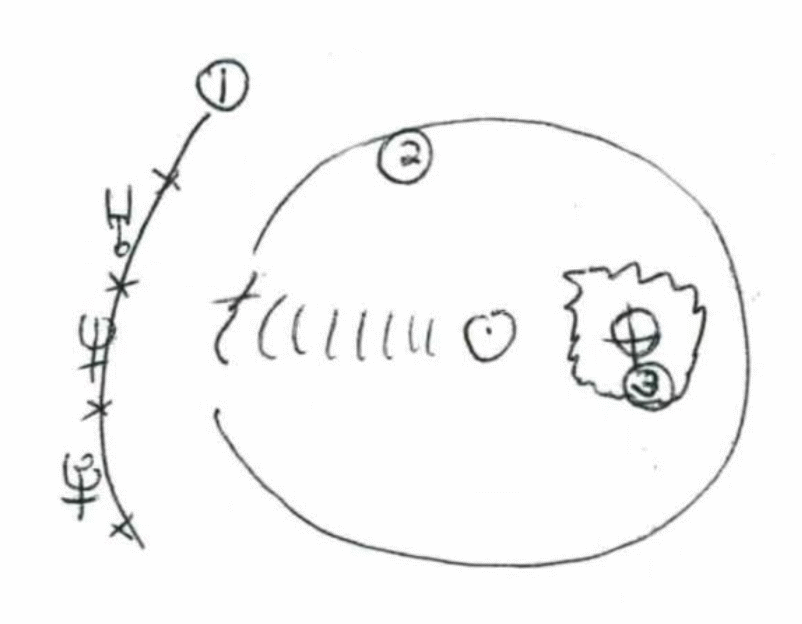
[FIGURE 1983 0321-1-AB. Three Levels of Cosmos. Facsimile scan from AB class notes.]
1) Uranus Neptune Pluto involved in World-Idea.
2) Saturn through Sun = individual mind, Sabian symbol.
3) Earth/Dragon = image within Dragon polarized as subject-object relation. The imagination unreflective becomes reflective through the functioning of its powers and precipitates a reflex subject-object relationship with an apparent subjectivity where the psychical interpretation of Sabian symbols with its opposite takes place.
World-Idea is given to an individual mind.
Individual mind = the whole planetary system.
Individual mind receives World-Idea and makes sensations.
Sensations are organized into a whole by the beliefs inherent in the Sun-centered system.
Whole is the seed inserted into the imagination.
Seven categories of the imagination function to produce the opposites and self-reflection of its contents.
The insertion into the imagination and the functioning of the seven planets creates a psychosomatic organism which is self-aware -- before this there is no awareness but only a quiet, undivided line.
2) Planets on a degree, generate self-awareness. You mind is part of #2 and therefore receives the idea of the world there. Seven categories make the psychosomatic entity self-conscious of space and time.
The above is equivalent to an exposition of Kant's critique.
#2 = your Witness-I. (Kant's apperceptive unity of the transcendental ego.)
As the sensation comes through the Chaldean natal structure it gets polarized.
The Witness-I is what knows the truth or meaning of anything you know in the world.
The Solar Logos operates with the belief that it is manifesting the best world possible.
The underlying Universal Mind is constituted of reason-principles but the Solar Logos is of belief.
The demand to see the world in a certain way = belief. Belief can be correct or incorrect.
Belief or concepts = Kant's faculty of understanding which employs concepts to organize the sensations.
The location of the trans-Saturnians is the same within a heliocentric or geocentric system.
Jung's three conjunctions = three trans-Saturnians?
1) Unified mind (Eros and Logos) -- intrusion of Witness-I into the empirical subject = Buddhist revulsion = the thought that you are not the ego -- disidentification with the ego (not yet a wise man).
2) Unified mind and body (world-thought) → wisdom.
3) Unified mind and archetypal world -- identity with the forms in the Solar Logos.
7 vrittis = Chaldeans = transformations of mind
3 parinamas = trans-Saturnians = transformation of the transformations, changing the mind itself
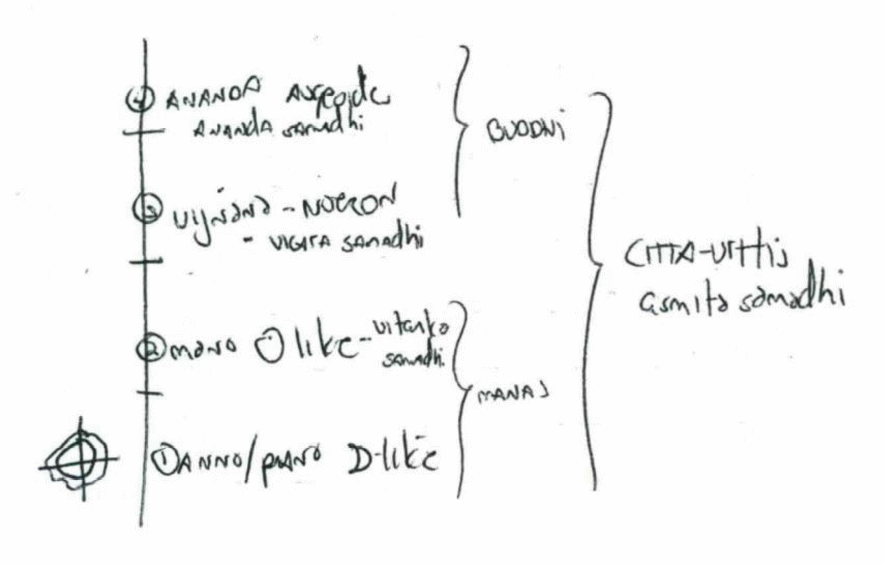
[FIGURE 1983 0321-2-AB. Divided Line, Sheaths, Samadhis, and Yoga Terms. Facsimile scan from AB class notes.]
All three transformations or conjunctions are necessary to go from 1 to 2.
Uranus = ekagrata
Neptune = samadhi
Pluto = nirodha
All three hit one planet or whole ego complex through any one planet to produce a jump.
[Classnotes AB 1983 0321 End]
CHARTS FOR 1983 0321
Class
Monday, March 21st, 1983
Edited transcriptCLASS at Wisdom's Goldenrod, Hector, NY
with Anthony Damiani (AD)
March 21, 1983
ASTROLOGY; THEORY; EPISTEMOLOGY
with Appendix: Classnotes AB 1983 0321.
TOPIC: Astrology
SUBJECT: Theory
SUBSUBJECTS: Epistemology, Trans-Saturnians, Divided Line, Yoga, Samyama, Sheaths
CONTENTS:
Epistemology of Astrology
Witness-I
Belief
Neptune
Trans-Saturnians are spiritual
Three conjunctions and trans-Saturnians
Seven vrittis (Chaldeans) and three parinamas (trans-Saturnians)
Samyama and trans-Saturnians
Samyama at one level of manifestation catapults you to next higher level of manifestation
Uranus transits produce dharana/one-pointedness of the function being transited
All sheaths within Mercurius
Samyama on asmita leads to union with Atma
Formless meditations after asmita
Have to master yoga first before you can master philosophy
Uranus as one-pointedness (ekagrata), Pluto as stoppage (nirodha), Neptune as deepening/inwardization of consciousness (samadhi)
Wagner, Verdi, Vivekananda examples
Samyama is key, every genius uses it
Necessary correlation between Intelligible principles beyond universe and manifestation of universe
Necessary to ask question in proper way before answer becomes available
Appendix: AB class notes
BOOKS READ FROM OR REFERENCED:
Immanuel Kant, Critique of Pure Reason
C.G. Jung, CW 14, Mysterium Coniunctionis
Patanjali, Yoga-Sutras
PLOTINUS QUOTES READ OR REFERENCED: IV.4.8
DIAGRAMS and CHARTS appended to this transcript:
FIGURE 1983 0321-1-AB. Three Levels of Cosmos.
FIGURE 1983 0321-2-AB. Divided Line, Sheaths, Samadhis, and Yoga Terms.
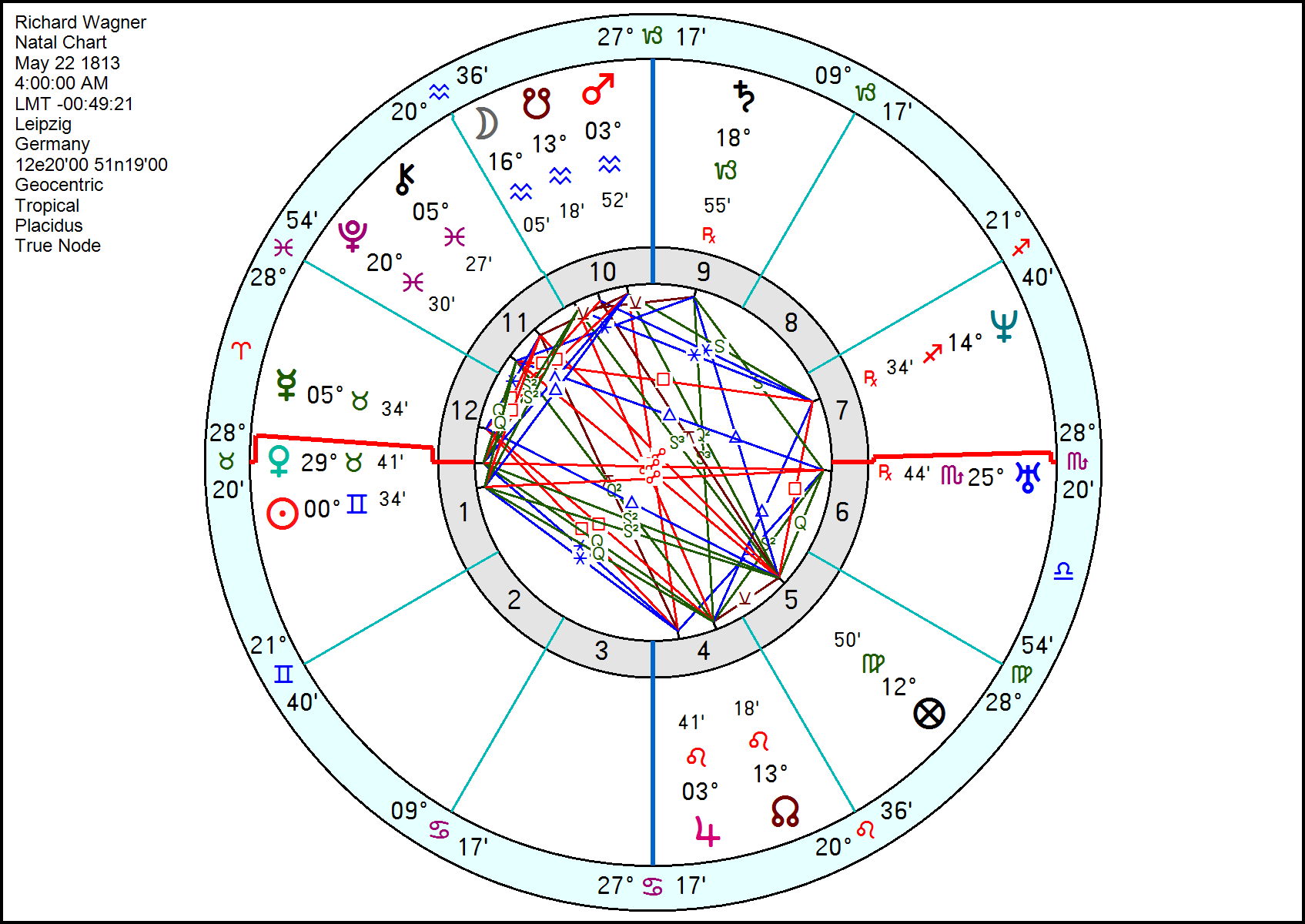
FIGURE 1983 0321-3. Richard Wagner Natal Chart.
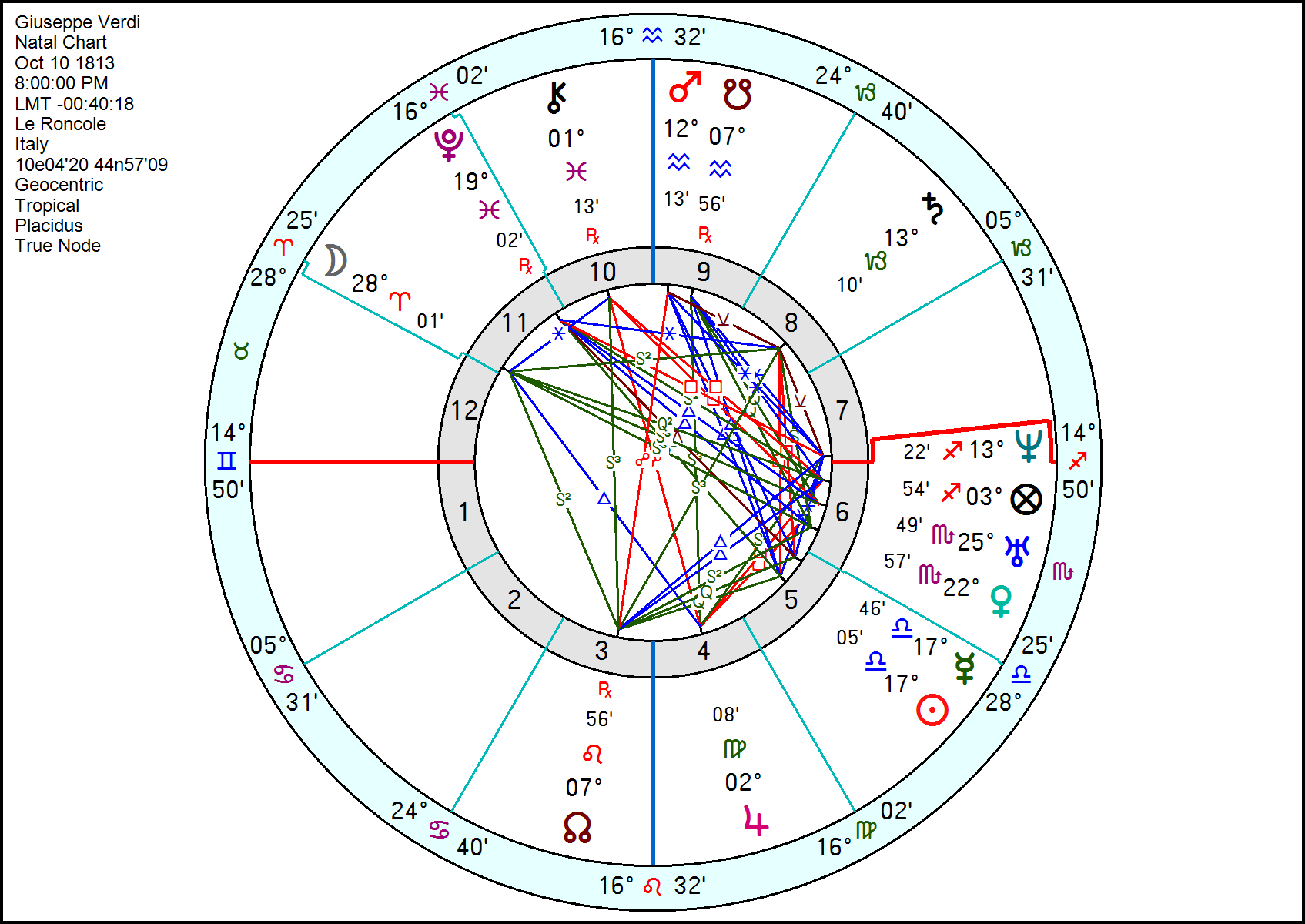
FIGURE 1983 0321-4. Giuseppe Verdi Natal Chart.
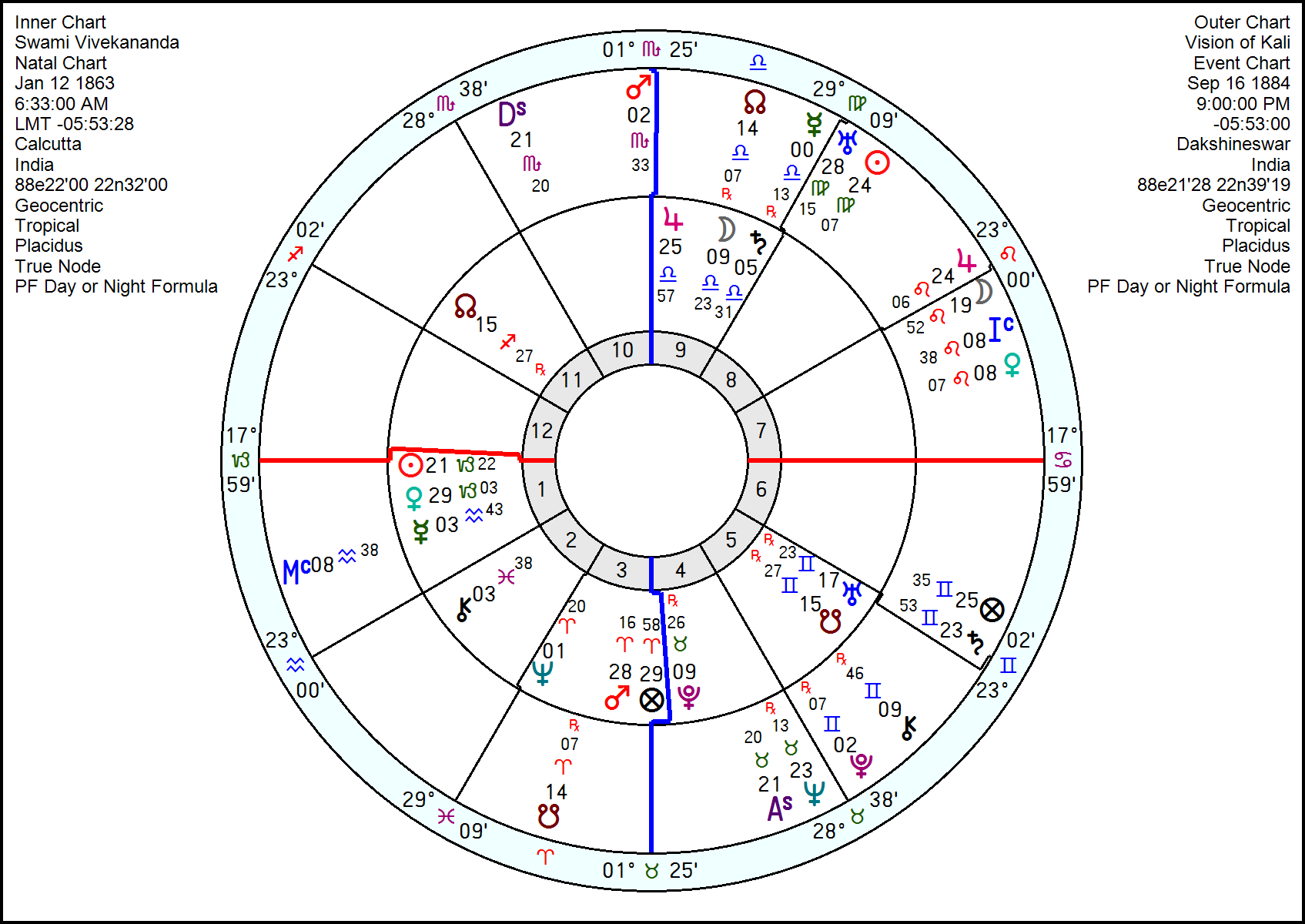
FIGURE 1983 0321-5. Transits for Kali Vision.
RETYPED AND REFORMATTED by IT 2023
NOTES:
REDONE RETYPED PARTIAL TRANSCRIPT (hence V10.1). From 1983 0321 ASL Astrology Theory - TransSat. 24p.PDF. THERE ARE NO AUDIO CASSETTE TAPES EXTANT.
AB Classnotes have been appended because they contain diagrams that the partial transcript does not have and thus help round out the class. Retyped from Classnotes AB 1983 0309 to 1983 0427.PDF. All capitalization and punctuation corrected, all abbreviations and some numbers spelled out in AB Classnotes.
This is a redo of the previous version which was done in 2018. This version is labeled V10.1 (per new convention for all redone partials) and has: updated prefatory matter and footer; AB notes and diagrams appended, with references in the transcript to these diagrams; Book List and TOC completed, Subsubjects expanded, Plotinus quotes section added; typos corrected and new notes within transcript; Wagner chart appended, Verdi chart replaced with one that matches birth info on astro.com, Vivekananda natal chart replaced with Transits for Kali Vision, and references in transcript to these charts; new formatting to accord with new conventions.
Anthony is Anthony Damiani (AD).
All spelling, capitalization, and punctuation errors corrected, most numbers and all abbreviations spelled out.
1983 03/21 at Wisdom's Goldenrod
Astrology; Theory; Epistemology
[File 1983 0321 ASL Astrology Theory - TransSat. 24p.PDF Begins]
Astrology 3/21/83
Anthony: Let's review some of the ideas we had on the trans-Saturnians, and then go to Napoleon's chart and see if any of them are valid. You could put up the diagram. This is a round-about way of explaining Kant's critique. [Note: See FIGURE 1983 0321-1-AB, Three Levels of Cosmos, appended to this transcript.]
Tim: In last Wednesday's review of mentalism [Note: See WG Class 1983 0316.] we spoke about the individual mind responding to the World-Idea and forming a manifold of sensations in response to that? We might think of Uranus, Neptune, and Pluto as being involved in that World-Idea, and the perspective of the solar system would be that individual mind, forming the manifold of sensations and creating a system of belief. This is then imaged in the Dragon and polarized as the subject-object relationship.
Anthony: If you want to keep it in accordance with Kant's Critique: inside the Dragon is the imagination. The imagination is not reflective; it becomes reflective through the functioning of its powers. That means it creates those seven positions of the Chaldeans, with their subject-object relation. In other words, it polarizes the image it's getting.
Tim: If a matrix is formed out of the heliocentric system, which represents the individual mind, then that projects itself into the Dragon. If you take the planet on a degree; as polarizing itself it produces an image of itself which would be the empirical subjectivity. The totality of the planets' positions here create in reflex through their functioning some apparent subjectivity which then is projected into space-time. Which when stabilized arises together with its opposite as the phenomenal object.
We spoke about a couple more things which followed from that. We said tentatively in reference to the Sabian Symbols that the psychological interpretation is within the Dragon, together with reading two degrees as a pair of opposites. The symbol itself correlates with the Chaldean planetary spheres. One speculation correlated the degree numbers with the inerratic level. In other words, can we read the symbol or the interpretation and apply them to the trans-Saturnians in the same way we do to the transiting Chaldeans or the fixed pattern of the natal chart?
Bo: Could you review what kind of individual you're calling the Sun?
Anthony: The World-Idea is given to an individual mind. Individual mind is the whole of the planetary system; that is your individual mind. When it receives the World-Idea it makes for itself sensations. These sensations are organized into a unity by the system of beliefs which the Sun systems operate with. This is like the seed form or the organized plan, the pattern which, inserted inside the Dragon, the 360 degrees or tropes, organizes the psychosomatic organism. This psychosomatic organism is the seven categories of the imagination. These seven categories of the imagination, in their totality of functioning, produce the opposites. But at the same time, it becomes self-aware, self-reflective as to its contents. Prior to that there is no self-reflection. In other words, within the solar system itself, the whole of the Chaldean scheme, there is no self-reflection. There you speak about an undivided mind which operates with pure spontaneity. As it organizes the idea which is given to it, and then it is inserted into the psychosomatic organism, this psychosomatic organism which is constituted by the seven categories of the imagination with their opposite functioning… That opposition brings about a self-reflective awareness. Until that happens, you do not have a phenomenal object. Prior to that you have processes that are going on unconsciously. All these processes are unconscious. The process that you are conscious of is, when you see an object, that object is reflected into you, and the continual addition of all these objects which get reflected into you, you become aware of through your inner sense, and you call this your "me." When I ask you who you are, and you say, "Well, me." When you introspect into that "me," it's only the storehouse of memorized images that you've acquired, that have built up this notion that there's a "me" there.
So the planets' functioning on the degree generate the self-reflective awareness, or the awareness of a phenomenal object. This in a nutshell is the whole Critique of Pure Reason. It's also mentalism, too.
Bo: I still don't understand what kind of an individual the Sun is; is this the light of the soul?
Anthony: The ideas which are surrounding the planetary sphere -- that is the idea of the world; that is the World-Idea which is given to the planetary spheres, the Chaldean system of planets. Your mind is conjoined to that; to that Sun-centered system. It is there where your mind receives the idea of the world. When it receives this, it makes for itself sensations, and unifies them according to the beliefs, the second half of the lower part of the divided line. Belief belongs to the sensible Sun. When the sensible Sun receives the World-Idea, makes an image for itself of that; this is a thought-image, not the image you know. These processes that we're speaking about are aprioristic to your consciousness. You don't know of these things; they're going on unconsciously. So, to resume. The World-Idea is coming from the realm of the stars. It's received by the solar system, the heliocentric. It makes for itself an image of that World-Idea, sensations of it. These sensations are grouped together and organized by the beliefs inherent in the Sun's very functioning. Then this organization is like a seminal seed which is inserted to create a psychosomatic organism; or the psychosomatic organism is existing and it reaches it through a series of karmic seeds or drops, whatever you want to call them. But there's a steady incessant stream, going from that solar system to the psychosomatic organism. Now, assuming that the psychosomatic organism is constituted by the seven categories of the imagination; it is these categories of the imagination which makes that entity self-conscious of a world of space and time. That's what I was hinting at last Wednesday. What Kant did in his very abstract way, we've been doing in this astrological way.
The hard part is to understand that up to the point where… You have a natal chart with the seven Chaldean planets. Now you know if your Saturn is on 1 Aries, it has an outward manifestation of that inner functioning at 1 Libra. These two are a polarization or a division within something which is whole. Unless that takes place (a polarization), you cannot be aware of any phenomenal object, because the only way that a phenomenal object can exist is that you've got to become self-reflective. In other words, the primal image as it gets reflected within you, and gets…there's superimposed on it the functioning of the vasanas or the tropes within you. You won't break it up into phenomenal objects. It's these, the system of organized vasanas, which breaks it up into a phenomenal object for you.
So your desires, etc.; all these things added together superimpose on that primal image, break it up, and now make it the thing it is.
Bo: That's what you call belief?
Anthony: No; belief is before that. Here you have conjecture, here belief. The World-Idea comes into the solar system. The solar system will fabricate, or receive the World-Idea; make for itself a manifold of sensations. The beliefs that are inherent in the functioning of the Solar Logs pervade those sensations. This is all unconscious. You don't know that your Witness-I is all this; this is your Witness-I. When Jung was sitting out here, and he saw the Earth, where was he? In the bed?
Then you begin to see that this is the extent, the scope of the Witness-I's functioning. Within that Witness-I (in Kant's term it would be the apperceptive unity of the transcendental ego)… This whole realm here is what's taking in the World-Idea, making an image out of it; in other words it must make sensation, give it sensations. All of these sensations have to be organized in some unity. Again this is in the realm of thought, not in perception. Then this enters into the psychosomatic organism, who is organized according to his natal chart. As it comes out through that organization which the natal chart is composed of, as it comes through that Chaldean structure it gets polarized: where the planet is sitting and the opposite. And there is a space-time continuum now, brought into being, because of that. You become self-reflective because of that. Because if the objects don't come into existence for you, you can't be reflective.
Now, it works both ways, in the sense that I see an object out there, it makes images for me, i.e. I get an image of that object. The memory of the totality of all these images is what I conceive of as myself. I think of myself, when I do think of myself in an empirical fashion, as all of these experiences that I've had that are now stored away. But they are created or brought into being by that polarization. So then you can see that this consciousness, this empirical mind is false; it's not a mind, it's not an I. Nor is the object true.
Bo: My question was trying to get back to that I before it's projected into a subject and object. The Witness-I is in an unconscious or unreflective state.
Anthony: Unreflective, not unconscious. This planetary system doesn't require any kind of self-reflection; it doesn't think about what it does. What it does is perfect.
Dickie: What does it mean to call this an individual mind? At that level we all have the same mind.
Anthony: And that's why the experience of enlightenment will be the same. Everyone will experience it as his mind.
Andrew: You speak about this process becoming self-reflectively aware, of breaking into two. You're not going to make a hierarchy of meaning in relation to that subject and object? They're on the same level; the subjectivity doesn't have a grander status.
Anthony: Yes.
Andrew: But if you trace the experience back through either the subject or object, to prior principles…it's more fruitful to go by way of the subject.
Anthony: Yes, because the subject will be the transcendental apperceptive ego. Within that locus, you can locate the subject and the object. The subject-object relationship exists within the locus of the Witness-I. Even after it's broken up.
Take the dream example. You are looking at a dream. Within the dream there's a subject-object relationship. The you that's looking at the dream is the Witness-I. The you that is in the dream as part of the dream is the empirical subject. The empirical subject and the empirical object in the dream is included within the locus of the observer of the dream. So if you acquire an impersonal witnessing consciousness, this doesn't mean that it's going to obliterate you personally.
Andrew: The impersonal witnessing consciousness is something different than self-reflective consciousness. It's possible for me to observe my behavior from a detached and objective point of view of understanding, but that's not the witness you're speaking of?
Anthony: Yes it is. The Witness that I'm speaking of is the one that knows the truth of something that exists within the empirical world, while being an empirical subject at the same time.
Andrew: So any experience I have of meaning in my life is an experience of the Witness.
Anthony: Basically, yes. How could the empirical subject have any meaning, when all that it is is a congerie of these memories?
We're back to the difficulty that the I permeates and suffuses, or is pervasive of, the subject-object relationship. There it can be easily identified with, and confused with, the empirical subject. So it's all to be placed within the locus of the transcendental apperceptive ego.
Linda: It's hard to think of the Witness as being unreflective.
Anthony: Do you think of a planet stopping and saying, "What am I doing?" The knowledge of the planetary spheres is a complete knowledge. Plotinus says they go on eternally in their journey, in the completion of their work. You can't think of them as reflective. If you refer to it as an undivided mind that operates spontaneously, what need would it have for reflection? [Note: See Plotinus, IV.4.8, second to last para.]
Linda: You're using reflection as opposed to direct perception? The Witness would have direct perception of meaning?
Anthony: The Witness's knowledge is direct, yes.
Linda: So in that sense the ego's knowledge is reflected?
Anthony: You have to understand how the ego's knowledge is reflected. The empirical mind that you have is not, is generated, or brought into being by the processes of polarization going on within that realm.
If you want to say the Witness-I's knowledge is reflected in the ego, that's the problem we're going to have.
Tim: Is that the same knowledge, though? In so far as something is known, both the knowing state and known idea are the act of the Witness-I.
Anthony: Yes; just like in a dream. The dreamed person says, "I know that three angles constitute a triangle." You know that that knowledge isn't his; it belongs to the dreamer. So the Witness-I is really the subject; it always is the subject.
Linda: And in your diagram, the Witness-I is unqualified; there's no focus points…
Anthony: That's an infinite mind; when you pray, "Thank you O Infinite Mind," for the food, who do you think you're praying to?
Bert: If it's infinite, why do you call that a system of beliefs?
Linda: Because that's what constrains you to see in a certain way; it's not personal beliefs.
Bert: Yes. Is the individual mind, the Sun, the mind that goes out and takes the form of the object?
Anthony: Yes.
Bert: And the object in this case would be…
Anthony: The body, or anything in juxtaposition to it; within the psychosomatic organism.
Andrew: You say the empirical mind is not.
Anthony: Of course not.
Andrew: Is that to say it has no basis?
Anthony: It isn't.
Andrew: It appears.
Anthony: Well, yes.
Andrew: But it has no status?
Anthony: No status. For it to have status, the other half has to be there, the objective portion. How could you have an empirical mind unless you have the objects out there? The empirical mind is constituted by the reflections of the objects in it. So it generates that empirical mind, which then thinks that it is prior to them.
Andrew: The empirical mind is a product of mind associated with objects.
Anthony: Yes; that's why they speak of it as no-mind. It's not a mind.
Linda: Uranus, Neptune, and Pluto are not even included in the mind that we've been speaking of.
Anthony: That's the problem we're working on now.
Dickie: Could you elaborate on belief at this level? Why isn't it Reason-Principles?
Anthony: The Solar Logos, or the Creator God Brahma, operates by belief that the universe that he's constructing is the best one, under the circumstances given. The Reason is to be found in the Universal Soul which provides the ground plan within which that particular world is going to manifest. So the Sun's powers are not reasoning powers manifesting those ideas.
We have to separate it. If we say that it is the rational powers of the Soul employing reason to manifest the universe, then we won't be able to distinguish that from Reason-Principles that we speak of the Universal Soul through Reason-Principles laying down a pattern of the universe-to-be. Those are Reason-Principles, employed by the Soul to predetermine the universe-to-be.
When we discuss the divided line in more depth, you'll see that belief has quite an elevated meaning. We think of beliefs as something you can get rid of. These beliefs, when they are organized, constitute the pattern the psychosomatic organism is based on. Those beliefs are inherent in that organism, and they become his presuppositions, his world-view. Belief has this compulsiveness; you have no choice in this. The mind that's conjoined to the Solar Logos, in creating these material species, can't have you reason about whether a snake is harmful or not; you must operate under the compulsions of belief.
Linda: You must see that the Sun rises every day; it's that level of belief.
Anthony: Yes.
Dickie: If you call it an infinite mind, it's hard to understand that it isn't also conjoined to rational powers that organize the flow of events.
Anthony: That infinite mind is strong enough that the Sage has to go on seeing the world like you and I do.
Dickie: The demand to see the world in a particular way…
Anthony: …is exactly what I mean by beliefs.
Dickie: But that doesn't negate the possibility that it's also rational principles. They too would demand that you see the world in a certain way -- rationally.
Anthony: But belief isn't irrational. Belief is better because there is the possibility of entities operating with wrong or right beliefs.
Dickie: Can these minds of these planetary soul powers see things in wrong ways?
Anthony: They don't see. They don't have beliefs; they're manifesting a universe according to the plan which is already pre-sketched. This means that the material species within that universe have these beliefs as their intrinsic property. The Sun must rise for them.
True knowledge is going to belong to the Intelligible realm. But in the realm of belief, you can have correct or incorrect belief.
Dickie: But isn't there a middle level of reason?
Tim: In the divided line, reason is within the Intelligible.
Anthony: Use belief the same way KCB [Krishnachandra Bhattacharyya] does.
Dickie: I can understand it in reference to human consciousness. It's more difficult to understand it in reference to this exalted notion of an infinite mind.
Tim: In evolving entities, Nature seems to operate with a certain irrationality. There seems to be an element of experimentation in the evolution of the bodies and instinctual consciousness of various creatures -- what happened to the dodo bird?
This would be that active mind which actually constitutes those reason-principles which form amalgams which become animals. It would be a belief that is based on reason but is itself fabricative and evolving. What's in reason is in motion but not evolving in the same way.
DeSarno: The planetary sphere itself isn't constrained by beliefs; it's fabricating a context for entities lesser than itself.
Anthony: What are beliefs?
Dickie: Ingrained patterns of understanding.
Anthony: You mean concepts. Isn't that enough? Do you know of anything more daemonic? So the system of concepts that permeates the sensations and organizes them into a unity is strong enough to become your Weltanschauung. It is that organized system of concepts which pervades the sensations that the Solar Logos or an individual mind conjoined to it makes for itself. You have to get to that level in meditation to see the mind transforming itself from sensation to sensation. You have to get to the level underneath the concept. We're speaking of things that are really very primitive in our understanding; they've been so long in operation in the organism.
The Mercurial phase of the Soul, in other words that germ, starts its journey as a protozoa, and travels through all the kingdoms of Nature. It acquires from all these various life forms the system of concepts that organize that manifold. So you can see the power that beliefs have; they are inborn, innate.
Dickie: In understanding transits of Saturn through the Sun, every degree they're on is embodying one of those concepts, and the individual participates in it.
Anthony: Kant calls the system of concepts the faculty of understanding. He says it creates concepts and employs them to organize the manifold of sensation. You are never aware of this happening. He's saying in this very abstract way what we're trying to pictorialize for ourselves.
So the Sun, or Solar Logos, the mind, makes sensations of the World-Idea. Then, through the faculty of understanding, or this entire organized system of concepts, it pervades the sensations and organizes them into a unity. This organized unity is fed drop by drop into the psychosomatic organism. The World-Idea in this karmic seed…is going through the psychosomatic organism, which then picks up the process, expands it through the brain, projects it out as the world. It's like a duplication of the original idea of the world. Remember PB's example about how an image of a man is built up dot by dot; that's similar to this.
The faculty of creating concepts and employing the manifold of sensations is no minor thing. We may think concepts are something we can pick up and put down, but I would say that's nonsense. A person doesn't just come across concepts; the mind conjoint the Sun is actually producing these concepts. And it will produce concepts necessary according to the evolution of the species within the world. It is his inheritance; he can't get out of it. People say that they don't believe in innate ideas; listen to them talk for a couple of minutes and they come rushing out one after the other!
Bert: I thought that belief would give rise to the apparent substantiality of my universe.
Anthony: Yes, but only after it goes through the psychosomatic organism, and gets reflected as an empirical ego, or an empirical I, does the possibility of a substantial universe arise. This process goes on unconsciously.
But the problem is, what is the nature of the trans-Saturnians?
Paul: It seems like Neptune might have a different significance than the other two trans-Saturnians, considering the irregular distance it is from the Sun as determined by Bode's Law, and that occultists say that Neptune is a captured planet.
Anthony: That may be so; maybe Neptune isn't absolute feeling. There is a good possibility that the Sun captured Neptune; remember the interesting quote where PB remarks that the mind incarnates itself in a solar system as well as an atom, so we'll see a repetition of the same basic structure all the way down. Below the atom you get into quantum mechanics. But if the Sun captured Neptune it must have done so for very specific reasons.
Avery: It had to acquire a feeling function!
Anthony: I'll accept anything right now. It is very peculiar, because these two orbits (Uranus and Neptune) intertwine. There's even actual cannibalism out there; the Sun fights for its place in the universe, and fights to maintain it.
Just like an atom can capture an extra electron, it must mean something that the Sun captured Neptune and held on to it.
Alan: Perhaps there was an instability in the system and by capturing that energy, it's more balanced.
Dickie: I don't yet see symbolically or principially why the trans-Saturnians are fundamentally at a different level than the other cosmocrators.
Anthony: I know from experience that those three planets are spiritual in their function. I even heard PB say it, too.
Dickie: I agree; practically it's obvious. But what's the basis in the symbolism?
Anthony: I just can't understand it. How can a universalized consciousness modalize itself according to the idea (which is a universal substance) and yet remain universal?
The best example I can give is when you have a major conjunction, Uranus on something. Einstein is a good example. The moment he knew something, it wasn't in the way we ordinarily understand. There was a moment of not knowing; that not knowing is what I call the knowing. This is the true knowing; the universal consciousness really knows. Then later on, that is reflected in the ego structure somehow, and the ego takes it over and works it out in the language of the Dragon.
Alan: Wouldn't that mean that even though the trans-Saturnians are in the orbit of the Sun, they aren't constrained by the belief system that even the Solar Logos must operate with.
Anthony: That's a belief.
Dickie: But then they wouldn't be part of the solar system; it doesn't make sense.
Tim: There is some separation. In comparing the heliocentric to the geocentric positions of the planets, for the trans-Saturnians they're practically identical; for the other planets they're not. In other words, they are in relation to the Sun similarly as they are to the Earth. So the distinction between a geocentric and a heliocentric consciousness might fade at that point.
Anthony: That's an interesting observation, because in all probability the meaning of geocentric for Uranus outward would be meaningless.
Tim: And if you took all the planets relative to Venus, it would be the same situation. They are so far away, relative to the other planets.
Anthony: You remember Jung's exposition of the three conjunctions; could we review that?
Paul: The first was the conjunction, union, of the two rational faculties, thought or Logos and Eros or feeling. This involved on one hand a separation from the body. The unio mentalis.
The second stage was the conjunction of the unio mentalis with the sensible world.
The third one was getting to the archetypus mundus, the potential world.
Tim: First the turning away from the world of sense, then the turning of the mind towards the inner world of the mind and the hidden celestial substance, the image of truth and God. Thirdly, the contemplation of the transcendental unus mundus.
Paul: The first is the unified mind. Then the unified mind conjunct the world-thought. Then unified mind conjunct the archetypal world. He doesn't really explain how the evolving or manifest world is contained or related a priori within the third conjunction.
The first is the unification of thought and feeling; then they have to be brought into (the body and the world-thought) the world.
Linda: I would say it is Neptune, Uranus, and Pluto. We also said that it wasn't necessary that they happen in that order. Depending on the order that the trans-Saturnians transit your chart, that might determine the order these occur.
Anthony: What does unified mind mean? What does Eros and Logos combined mean?
Jeff: You become awake to the Witness-I. Your mind doesn't automatically flow out into the psychosomatic organism, but you realize a mind that is substratum to the experience?
Anthony: That's very possible.
Alan: Wouldn't all the psychological functions be wedded into one instrument, so they would be operating harmoniously for one purpose?
Anthony: You're saying the unified mind is the differentiated psychological functions?
Alan: Operating harmoniously. In order to work with all seven you would have to be identified more with the Witness.
Andrew: Would the fusion of thought and feeling be a combination of the rational with the irrational? Since his concept of the unconscious is equatable with the Nous.
Paul: The rational with something super-rational, the higher mind stepping in. The Chaldeans are unified, integrated, via the Witness-consciousness's act.
Avery: We could be more specific. In the first conjunction, does Jung mean getting to the undivided mind, the Sun-centered system of beliefs? Or the intrusion of that into the ego? Or the ego becoming unified?
Anthony: I think it's the intrusion of the Witness into the empirical subject. Eros is the soul's desire and aspiration to reach the One, the aspect of the soul which aspires toward union with the One.
Avery: But at this level the aspiration is coming through the undivided mind or the system of beliefs.
Anthony: It's like the Witness-I coming right into the psychosomatic organism.
Linda: I thought in the first conjunction there is a unified mind united with Eros.
Tim: Here is the original quote from Dorn that Jung is commenting on.
"We conclude that meditative philosophy consists in the overcoming of the body by mental union [unio mentalis]. This first union does not as yet make the wise man, but only the mental disciple of wisdom. The second union of the mind with the body shows forth the wise man, hoping for and expecting that blessed third union with the first unity, [i.e., the unus mundus, the latent unity of the world]. May Almighty God grant that all men be made such, and may He be one in All." [Note: See C.G. Jung, CW 14, Mysterium Coniunctionis, p. 465.]
Paul: There's more to the quote all through the text.
Anthony: Is he saying there that the first thing to happen is the intrusion of the Witness-I into the empirical subject?
Tim: I'm not sure what you mean? Do you mean awakening to the existentional reality of the Witness-I within my subjective consciousness? There's not an actual relocation of identity.
Anthony: It would correspond to the Buddhist notion of revulsion. It manifests in a person as the thought that he is not the ego. If you want you could reverse the first meaning and say it's a disidentification with the ego.
Avery: He breaks through to what you call that unified mind.
Anthony: Yes, or reverse it: the Witness-I breaks through to the ego.
Andrew: If there's an intrusion of the Witness, the false subject-object dilemma must collapse.
Anthony: Yes, but not completely; enough to bring about an understanding that there's something greater in you than the ego. You start thinking of yourself as a greater self than the one you ordinarily know. Without Uranus, you will never conceive of yourself as anything other than the ego.
Andrew: How can you conceive of yourself as being other than the ego? I thought we equated concept with ego earlier tonight.
Avery: The realm of belief is much bigger than the ego.
Andrew: So my ego can have concepts that are grander than itself?
Avery: Maybe the belief itself could come through, and it won't be the ego itself having the concept.
Anthony: There is an intrusion of a superior consciousness (Uranus), which expresses itself within the ego in conceptual terms. But something outside the ego has come in.
Dickie: Doesn't any trans-Saturnian do this? Pluto might do an even better job than Uranus of disabusing a person of the idea that he is just an ego. Why limit this experience to Uranus? I don't get the sense that one trans-Saturnian defines one level or another.
Anthony: Compare having Uranus versus Neptune on your Sun; are they the same?
Dickie: The quality was extremely different, but in each case there was a dislocation from an ego-centered position.
Anthony: But when Pluto does this, do you come up with the notion that you are the Witness-I?
Dickie: But you're framing the understanding in terms of Uranus, in concepts. Pluto and Neptune don't work that way, but is the actual experience different?
Anthony: What is it like when Neptune hits a planet, say the Sun since that's very noticeable. Assuming you don't take a journey overseas on a ship!
Jeff: I had it when I was living here. Being in retreat here was the outward expression of it. All my values were placed in the higher self. There was very little feeling for my ego at all. When I left, my personality was flooded with life again, but before that it was a real restraint. All my feeling life was thrown into the idea of the higher self; that's all I cared and thought about during the day.
Anthony: Was it in a knowing or feeling or willing way? Where was the emphasis?
Jeff: They were all involved, but the emphasis was on feeling; I wasn't illuminated gnostically! I have Uranus on the sun now, and there's definitely much more mental energy.
Anthony: I think there is a distinction between the experience of the various trans-Saturnians, and the order could vary.
Dickie: But if the three trans-Saturnians are considered as three aspects of the higher mind, then why conceive of the trans-Saturnians as operating on these three levels?
Tim: It may be that whichever trans-Saturnian gets there first will give you the first conjunction, whether it be in a knowing, feeling, or willing way.
Linda: Perhaps we haven't defined the three levels enough yet. When they say the unified mind gets conjoined with the world-thought again, there's a very Plutonian quality to that.
Andrew: Are we describing the unified mind as some alteration of our belief, or some emphasis of one belief over another?
Anthony: Don't use the term unified mind. We said it means there's an intrusion of the Witness-I in the empirical personality, whichever trans-Saturnian does this. Something from above comes within the ego structure and informs it that it is not what it thinks it is.
Dickie: Initially you think you are the ego, and the world is out there. At some moment this experience is broken, and you no longer feel you're one side or the other of this duality; you feel the unification of the world as a thought within your mind. There's a shift.
Andrew: Is the unified mind a satori?
Anthony: It could be. I don't want to use the term unified mind because I don't know that a mind could be anything but unified. The first conjunction: the intrusion into the empirical ego of the notion that there's something beyond it.
Andrew: And it is a notion that the ego has.
Avery: It would be available to the ego.
Andrew: How so?
Linda: Andrew is overemphasizing the conceptual; it may arise from being struck by lightening.
Anthony: It comes in and then you understand it in a conceptual way. The inspiration a composer has isn't in C#!
Andrew: I guess I'm looking for the distinction between the notion of the unified mind and the way that gets reflected in the psychology.
Paul: Jung assumes that a certain amount of psychological integration, self-development, must occur before the ego consciousness can have an experience of the Witness. An unreflective person may live out some pattern of behavior, but he might not experience what's going on in his soul.
Anthony: The second conjunction?
Tim: The first conjunction is awareness that this thing (Sun-centered system) is there, but there's a persistence of the sense of awareness here (sublunar).
Paul: Say existential awareness -- some existential change in the ego's functioning; something stepped in and crippled its functioning.
Tim: In the second conjunction there is an actual relocation here (planetary sphere). The mind overcomes the body; it finds that polarized consciousness as interior to itself.
The first phase is a mystic who takes himself out of the world but is not a mentalist. In the second phase the person actually experiences mentalism and sees that the body is interior to his own mind's act.
Paul: The locus is not in the ego.
Tim: Yet the ego is not obliterated. There's no conjunction yet with this (fixed stars/trans-Saturnians). There's no sense of that eternal identity, but the person now knows himself to be his mind and its activity.
Linda: Also there's no mind-body split.
Paul: That corresponds with the three stages in the Dalai Lama's paper. First you had the breakthrough experience. Then the leap-over experience where you are identified with the higher soul's functions and unfoldment. And then the transcendental experience of light, of the mind of pure light.
Dickie: I think that is also KCB's three: unreflective consciousness, reflective, and super-reflective.
Avery: But the first one is already a breakthrough, out of the ego.
Tim: But in the first one there's an awareness of reflective consciousness but it's expressed as a problem not yet seen as having a solution.
Avery: At the second level he's able to function at the level of the Witness; he's brought that Witness down into the body. The third one would be getting to the Saturn in Leo.
Jeff: Would the second one be a breakdown of the belief structure? Then the ego could really be deflated.
Dickie: It would be a breakdown of your individual belief but almost an identity with the Solar Logos' beliefs.
Tim: It sounds like a breakdown of the tropes or vasanas, the embodied associations of one's beliefs. But in the second one the beliefs are finally known to be what they are.
Avery: We spoke of the ego being projected, the split happening. In the second one he's now living the solar life, instead of living that imaginal life. He recognizes that the embodied life is the playing out of the realm of belief.
Tim: Yes. He'd be a real mentalist in that he'd know the mind as constantly, fluidly embodying its beliefs, and not seeing that embodiment as outside or other than its own activity. In the first one there'd still be that split between the body-based consciousness and that individual mind, even though you'd know that it existed irrefutably.
Those are all existential relocations of subjectivity. It's difficult to associate a trans-Saturnian uniquely with any one of those phases.
Dickie: With that diagram, in some sense the trans-Saturnians don't really come in until you reach the third level, when you are now conjoined with the planetary spheres and, because you are able to reason through that planetary pattern, you could really look to the trans-Saturnians for the first time.
Carol: Why not try to see all three trans-Saturnians operating on each level?
Linda: Even if the trans-Saturnians don't describe enlightenment, still it's a reflection; even if a transit doesn't bring permanent enlightenment, there's a good chance for some kind of glimpse, some mental illumination or some experience. Like the guy who saw light when he opened doors, etc.
Dickie: There are such disparate manifestation of the trans-Saturnians depending on the level of functioning of the person, the integration.
Linda: How do we come to agree on qualitative features for each trans-Saturnian?
Dickie: What they do is clear: Uranus in terms of knowing, Neptune in terms of feeling; Pluto hits you over the head.
Linda: Still they manifest differently.
Tim: They say you don't notice these transits among less-developed individuals; I disagree. It still happens -- they may not recognize it or retain it; they don't connect or value them. They retain only the freedom to go out into the world or something like that.
Avery: Could you say the Chaldeans are working to manifest the ego and its world, or transforming the idea into the world, whereas the trans-Saturnians are working to transform the transforming process of the mind?
Mind continually transforms the world into imagination. The trans-Saturnians transform the mind, the vrittis of the mind.
Mind has transformations. Even in the Yoga Sutras there are seven vrittis of the mind and three modes of parinama, of transforming vrittis. The Chaldeans are the very modes of the pulsating mind's functioning. The trans-Saturnians seem to transform the way the vrittis of the transforming mind actually operate. He gives three ways the vrittis are transformed, the three different processes towards samadhi. Three kind of samadhi -- nirodha, ekagrata, samadhi, i.e. cessation of vritti, a one-pointedness of vritti, a deepening of vritti; Pluto, Uranus, and Neptune respectively. All three of them operate on vrittis.
Andrew: Can you correlate the three samadhis with the three conjunctions?
Avery: I'm not sure; these three happen at each level.
Tim: Uranus as ekagrata would be all three of these conjunctions, each on its own level.
Anthony: Put up the diagram: the four koshas, vertically arranged. [Note: See FIGURE 1983 0321-2-AB, Divided Line, Sheaths, Samadhis, and Yoga Terms, appended to this transcript.] If you start from the bottom (annomaya), you have the three stages, nirodha, ekagrata, samadhi. If you succeed there you get catapulted into the manomaya. Again, you practice the three, etc.
Avery: These three may be operative in getting you from any one level to another. You need a deepening, a one-pointedness, then you have to drop that altogether. These may be the trans-Saturnians. These operate on the way the mind is transforming.
Anthony: At the bottom we put the moonlike body. At manomaya we put the sunlike body, corresponding to the planetary spheres. Above that, the noeron. Say you practice yoga. First, you get one-pointed. This is concentration on an object, which you can duplicate without effort. That brings about a deepening of consciousness, which they call samadhi. Then the thought stops completely and you're catapulted into the next realm. You repeat this process and you get catapulted into the next realm. Out of the sunlike you get into the noeron.
Avery: Something is incomplete in Dorn.
Linda: It's simplistic.
Anthony: It seems the description in Dorn is just the first level, not beyond.
Paul: The paradigm is ideas in matter, ideas in the mind, ideas in God. But there is no stage of going into the level of God itself.
Alan: It's a unification with the body; those are all the four bodies there. Each has three conjunctions.
Anthony: Let's follow our clue. Apply the three stages to the empirical, the Witness-I, and then…
Avery: The clue is that all three conjunctions are need to be completely established in this realm (the next higher). When he says unus mundus he may mean being established in the sunlike world.
Anthony: The conjunction with the unus mundus is an identity with the forms in the Soul, or the system of beliefs the Solar Logos operates with.
Andrew: So the three samadhis correspond to the three conjunctions on the lowest level.
Anthony: The three conjunctions are at the lowest level; I don't think he's getting beyond that. If we were to practice here (annomaya) Patanjali's yoga, we would do this process. We concentrate continuously on an object; that's one-pointedness. Samadhi is when concentration deepens to the degree that you forget you are doing the concentrating; self-awareness disappears and only the object is present. And then the whole thing stops -- it's a void state, and you're catapulted into the next realm.
Andrew: The three stages of yoga seem like the three conjunctions of Dorn.
Anthony: But all three only get you from one realm to another.
Avery: And then you have to repeat them again.
Andrew: But can you equate them in this way?
Avery: How about one-pointedness with unio mentalis?
Anthony: That's exactly what Uranus transits produce -- one-pointedness, especially of the function that's being transited.
Andrew: If you weren't a practitioner of yoga, you wouldn't be able to manifest that transit as stoppage.
Avery: It will do it for you.
Anthony: A fellow gets a lot of light and he goes to a psychiatrist.
Avery: This means that you need all three going over your Sun to move you up one level. The odds of going to the top level in one life are small. Of course, you don't know what has been achieved in the past.
Anthony: Let's not worry about the length of time -- you know it will take a hell of a long time.
Linda: Why does it have to be the Sun?
Avery: It was just an example. Anthony has said that a trans-Saturnian aspecting a Chaldean may be a gateway into the ego. A trans-Saturnian doesn't just aspect one Chaldean but rather the whole ego structure. So they may not all have to hit the same planet. He sees that he is more than the ego through one of the psychological functions. Permanent establishment there requires all three of these yoga transformations.
Paul: They seem to be transformations toward formless consciousness.
Avery: I would say higher level of form consciousness; these are four levels of form.
Paul: Ananda is formless. Just astronomically, the trans-Saturnians are the three outermost planets; they represent the connection of the cosmos to the stars.
Avery: But technically in the Yoga-Sutras there are four levels of form and ananda is one of them. Nothing in the cosmos is formless, technically. Even the fixed stars are not formless.
Anthony: All of that is included under the Mercurial functioning of the lower part of the Soul and it's the concentration on asmita which liberates you from that realm.
Paul: I think yoga here is limited, is not metaphysical.
Anthony: Yoga is not the ultimate philosophy. But what we're talking about is stupendous. In Buddhism you have four levels of mediation on form, then the formless meditations.
Avery: These meditations are with seed, in the form realms. We're laying them out in terms of the divided line. They all refer to modes of the mind, the vrittis. We're at the lowest level: the imaginal essence with the psychosomatic organism, the moonlike body with the shelly body. To get out of this realm is to get to a sun-centered position where you are identified with the whole of the planetary spheres. You repeat the three parinamas.
Anthony: Which means that, at the first transition, you suppress your consciousness as the Witness-I, and you go to the next realm.
Avery: Vijnanamaya, noeron, buddhi.
Anthony: You repeat the samyama technique…
Avery: And you get to the next realm. They call it ananda samadhi, the reason-principles of the universe. All within the realm of manifestation. The Yoga-Sutras say there are four with seed. These four sabija samadhis involve stabilization of a vritti. Vritti means you are in the realm of mental transformations, in manifestation. All of these are subject to the primal function of manifestness.
Paul: I thought just the left half of the divided line was manifest.
Avery: The Intelligible part is also within manifestation, taking intelligible in the sense of buddhi, universals. The very form of buddhi is manifestness.
Anthony: Even when you reach the Augoeides, the robe of glory, again the practice of samyama must be employed so that the entire realm of manifestation is suppressed. And now you can practice samyama on asmita which will make possible union with the Atma.
Paul: So those three move you from level to level, regardless of how many levels there are, and they are different from the levels themselves.
Avery: Those three pertain to the samadhis with seed.
Anthony: Let's dramatize this: You're going to be a Sage. You're going to concentrate until you are no longer the body. Now you become the Witness-I. You suppress that and become identified with the entire starry spheres. You suppress that and reach a level of identification with the principle of manifestation itself. From here you can speak of that ultimate union with the Atma. It's not like throwing a nickel trolley.
Avery: Probably when you get past asmita you have the formless meditations.
Anthony: This diagram is an abbreviation of the tremendous complexity of the Yoga-Sutras. It reduces it to a page. Those three trans-Saturnians are giving us a problem. They represent the three parts of samyama -- that's our clue. This is the basic technique.
Avery: They'll be of use up to the level of asmita.
Paul: Some philosophical systems don't agree that yoga gets you anywhere. Mental acrobatics, say PB and Ramana.
Anthony: You have to master yoga first before you can master philosophy.
Paul: It's hard to see the three trans-Saturnians as techniques of yoga.
Anthony: I'm suggesting that the three trans-Saturnians represent the three phases of samyama. Uranus seems to point to consciousness as one-pointed. Pluto seems to point to stoppage, and Neptune a deepening or inwardizing of consciousness. It's a clue we have to examine; we have to get out some charts.
Tim: Puccini, Wagner, and Verdi had significant aspects which appeared to alter their art-forms. Wagner had Pluto square his Mars-Jupiter opposition when he got the Nibelung. He also had Neptune square itself and Jupiter on Neptune. [Note: See FIGURE 1983 0321-3, Richard Wagner Natal Chart, appended to this transcript.]
Anthony: So the Jupiter got something from Neptune but the Pluto stopped the old form. I consider this organization of Patanjali's Sutras into one diagram to be one of the biggest breakthroughs I've ever seen.
Tim: When Verdi got Falstaff he had Neptune square Jupiter and Uranus on Sun-Mercury. [Note: See FIGURE 1983 0321-4, Giuseppe Verdi Natal Chart, appended to this transcript.]
Anthony: This is the clue we've been waiting for.
Tim: For Verdi, with Aida he had Pluto quincunx the Sun-Mercury, Neptune opposite Sun-Mercury, and Uranus square Sun-Mercury.
Alan: His whole career began when he had Pluto opposite Sun-Mercury.
Tim: This however was a culmination. He was given a chance to stop an old form which he had been writing with all those years.
Anthony: The usage of the term "grand opera" came in with Aida.
Tim: Neptune was opposite Sun-Mercury, so it was manifesting itself in the Sun-Mercury; Pluto was quincunx it so he was able to stop an old form, and Uranus was square it and provided him with the concentration.
Linda: What do they mean sitting on a degree in a natal chart?
Anthony: One problem at a time.
Jeanne: Could you summarize?
Anthony: Take the example of Pluto square Jupiter. That meant that this artist was inhibited from operating with an old art-form which had outlived its use. Jupiter on the Neptune was a gift on the part of Neptune. If Neptune represents inwardization of consciousness, deepening of consciousness felt in an inward way, then here Jupiter was given something, a new art form. Take an exaggerated example. Until Beethoven wrote the second movement of his Third Symphony, the second movement was always a minuet. But Beethoven got to the second movement and couldn't put a minuet in there. I would bet that something inhibited the use of the old form and something must have inspired him to come up with a new form, the scherzo. When that happened, everything clicked into place. I would say that Pluto must have been inhibiting something and Neptune giving him something. Samyama is the key to everything; every genius uses it, consciously or unconsciously. You concentrate one-pointedly on a certain thought to the point where everything else is excluded and there is utter absorption in one idea. When concentration reaches a culminating point, it is as if you are cancelled out and the nature of the object reveals itself to you. That's the inwardization. Then stoppage takes place, the whole process sinks; it's like you're stepping into the void. You're not there, the object is not there, you're flying blind until suddenly you come out on another level of consciousness.
Avery: Another example: when Vivekananda accepted Kali, by giving up all his intellectuality, he had Pluto trine Mercury and Uranus trine Venus. The Mercury had to stop and now the Venus became operative. [Note: See FIGURE 1983 0321-5, Transits for Kali Vision, appended to this transcript.]
The vrittis are the modes of transformation of the mind. The three trans-Saturnians operate on the very vrittis that produce the image for you. And they're all circling around the Sun. All ten are some kind of transformations, but there is a hierarchy. I could explain it mathematically with functions and operators on functions.
Anthony: All this is mind. The same as universal manifestation. By vrittis they mean various levels of universal manifestation, of this one mind. You'd be a fool to try to read any chart, PB's or Atmananda's or anybody's, at any level higher than the empirical.
Alan: When you break out of the lowest level of the divided line, you have broken out of your individual imagination, and now see the world according to the beliefs that constitute the Solar Logos.
Anthony: We need more charts, more examples. It comes down to this: if anything is truthful, it must have its basis in the very processes of universal manifestation. If not, it cannot be a reality for us. There has to be a correlation between the Intelligible principles which are beyond the universe and the manifestation of the universe. So we have to find their representation in the sensible universe.
Paul: So what are Uranus, Neptune, and Pluto as principles?
Anthony: First we have to ask the question in a proper way, before we can get an answer.
Finis.
[File 1983 0321 ASL Astrology Theory - TransSat. 24p.PDF Ends]
1983 03/21 V10.1: CLASS: Astrology; Theory; Epistemology. Copyright 2023 Wisdom's Goldenrod p. iii