APPENDIX: AB CLASS NOTES FOR 1983 0620a
[Classnotes AB 1983 0620 Begin]
6/20/83 Theory of Aspects and Transits
Septile -- idea per se, intellectual meaning of a degree.
Jung's Uranus cycle aspecting all his planets.
Sun, 4 Leo -- elderly man in evening clothes before mounted moose head.
Signifies the taming of the animal nature. The rational side trying to bring up and understand the trope. Is aggressive. A very macho guy - gives things a glorious significance.
Uranus, 15 Leo -- Mardi Gras -- exaltation of the tropes, glorification of life.
The intelligible will reveal itself in the tropes, resulting (for him) in self-knowledge.
Sun = the essence of a person, what is best in them, what they give forth.
Aspect by Uranus would reveal the significance of everyday activity, daily activity would be heightened. Uranus exaggerates the Sun and gives it a heightened value.
A heightened significance to the meaning of the degree and to the Sun's activity.
Sun degree meaning is to objectify and understand his unconscious nature.
Sun degree over-glorifies Uranus aspects -- the Sun kept subverting the Uranus meaning.
1) Uranus semi-sextile Sun -- 4 Virgo
2) Uranus septile Sun -- 24 Virgo -- 1883 (8 yrs old) -- glorification of instincts: parents' problems, psychosomatic illness, manikin, stone on slope; 1884 -- sister born [Note: Several incidents are incorrectly dated to age 8. Per Memories, Dreams, Reflections: the parents' separation occurred when Jung was approximately 3-4; the manikin was carved at age 10; and the psychosomatic fainting spells began at age 12.]
3) Uranus sextile Sun -- 4 Libra -- 1885 (10 yrs old) -- sexual assault?; 11 - entered Gymnasium, didn't fit in; paper not accepted
4) Uranus quintile Sun -- 16 Libra -- 1888 (13 yrs old) -- 12 - illness, conflicts about god, religious conflicts
5) Uranus square Sun -- 4 Scorpio -- end 1892
6) Uranus bi-septile Sun -- 17 Scorpio -- December 1994
7) Uranus trine Sun -- 4 Sagittarius -- February-April, December 1898
8) Uranus bi-quintile Sun -- 28 Sagittarius -- January-February, July 1904 -- word association experiments
9) Uranus quincunx Sun -- 4 Capricorn -- December 1905 -- early 1906, first contact with Freud
10) Uranus tri-septile Sun -- 8 Capricorn -- December 1906 -- growing correspondence with Freud -- horse dream, marital tensions
11) Uranus opposite Sun -- 4 Aquarius -- April, May, June 1912 -- visits USA September -- January, September, October, November 1913 -- breakdown
12) Uranus tri-septile Sun -- 30 Aquarius -- March 1919 -- able to leave Switzerland after war
Septile -- fatality, destiny -- this degree showed the value and significance of the psyche.
Uranus bi-septile Sun -- 21 Aries -- October, November 1932, February, March 1933
Uranus degree will glorify all aspects of the psyche -- even the unimportant.
Jung's early dreams show that he was giving the instinctual functions a cosmic [significance] -- over-glorified instincts -- he glorified all the instincts.
Uranus septile Sun -- 12 Gemini -- July, August 1944, October, November 1944, May 1945 -- renewed work after illness -- defense of himself against clergy critics -- emphasis on his work as scientific and not religious. He began to recognize that individuation takes places through biological processes -- this forced a break with his contemporaries. Use of symbolism to reveal unconscious individuation processes -- the symbolic life. He had to declare his approach as a valid one and oppose himself to his contemporaries.
12 Gemini -- balance between individual and compulsions of the social milieu.
Quintile is concerned with an organization of meaning by the mind to express the idea.
[Classnotes AB 1983 0620 End]
CHARTS FOR 1983 0620a
Class
Monday, June 20th, 1983
Verbatim, unedited transcriptClick the series name to view more
CLASS at Wisdom's Goldenrod, Hector, NY
with Anthony Damiani (AD)
June 20, 1983-a
ASTROLOGY; HOROSCOPE-JUNG
with Appendix: Classnotes AB 1983 0620.
TOPIC: Astrology
SUBJECT: Horoscope-Jung
SUBSUBJECTS: Aspect Theory (regular, quintile, septile), Uranus-Sun Cycle (Jung)
CONTENTS:
Theory of aspects, natal and transiting (regular, quintile, septile)
AS introduces 3x3 grid: three levels of subjectivity (rows) x three types of aspects (columns)
RG presents a second diagram: three distinct series — planets (conscious functions), degrees (content), aspects (relationship)
Natal vs. transiting application of the three aspect types
Can a septile aspect deliver an idea fully if the quintile and regular aspects are absent?
Trans-Saturnians vs. Chaldeans in transiting context — unresolved
Music analogy: inspiration (septile) → formal structure (quintile) → written notes (regular aspect)
Trans-Saturnian making a regular aspect: two simultaneous effects — reorganization of tropes and possible illumination from super-reflective consciousness
Two possible responses — identify with natal planet (resist) or identify with the transforming force; same choice applies to transiting Chaldeans
Transiting quintile: illumination of rational form; transiting septile: revelation of intellectual meaning of the degree
Open question: is the content the natal degree, the transiting degree, or both?
Tentative reconciliation: all degrees originally related, so distinction may be less significant than it appears
Transiting planet's natal degree qualifies the nature of its transiting action
Methodology: testing the theory with Jung's chart
Uranus–Sun cycle chosen: unaspected natally, well-documented life, full cycle traceable from birth to death
Reading Jung's natal degrees — initial student discussion
Sun (Leo 4): mastery of the animal nature; objectification of instincts
Uranus (Leo 15): celebration of the Dragon; reason-principles buried in flesh; archetypes as Jung's image of the Self
Sun seeks to objectify and master what the Uranus degree celebrates and glorifies
Discussion of Dionysian element, South American carnival vs. New Orleans, and carnival as pre-Lenten release
Reading Jung's natal degrees — AD's analysis
Uranus: glorification of life; every Uranus aspect will "glorify" and exaggerate the Sun's activity (ordinary life functions)
Sun: a very macho guy; self-aggrandizing
Uranus-Sun cycle: chronological survey
Brief consideration of early childhood aspects (limited documentation)
AD: church defecation dream — Jung glorifying the instincts over theological dogma
Sun kept subverting Uranus meaning throughout the cycle; parallel to Santayana noted
Bi-quintile (1904, 28 Sagittarius): word association experiments; brought rational form to how the unconscious speaks through words
Decision to start at the opposition; early years have insufficient documentation
Tri-septile (1906, 8 Capricorn): horse dream; Freud correspondence; marital tensions
Uranus opposite Sun (1912-1913, 4 Aquarius): break with Freud; designates "Analytic Psychology"; resigns Zurich lectureship; calls for interdisciplinary psychology; initiates six-year period of intense introversion
AD: opposition fully manifests that no existing study can contain the meaning buried in the psyche (Sun)
AD: fundamental premise — all knowledge is ideas relating to ideas; every transit manifests ideas
Tri-septile (1919, 30 Aquarius): first use of term "archetype"; emerges from six-year introversion; first use of term "Self"; Uranus on this degree brings home the value and significance of the psyche
AD: watch for continuity of idea being worked out through the septile series
Returning to earlier septile (1906, 8 Capricorn): "Psychology of Dementia Praecox"; led directly to correspondence with Freud; continuity visible — investigation of psychosis led to notion of unconscious, then to archetypes
Bi-septile (1932-1933, 21 Aries): Modern Man in Search of a Soul; Eranos lecture on individuation; launches sustained series on individuation, archetypes, visions; individuation process being exalted
Septile (1944-1945, 12 Gemini): heart attack, broken ankle, near-death visions: January-April 1944; post-recovery: renewed writing (Psychology and Alchemy; "Phenomenology of the Spirit in Fairy Tales"); defense of himself against theological critics
AD: Jung forced to declare individuation proceeds through biological/psychic processes; break with contemporaries; the symbolic life as legitimate science
Cycle culminates: Uranus conjunct Sun — Mysterium Coniunctionis
Suggestion to look for moments when all three aspect types are active simultaneously
AD: idea must reach sensible perception to be known — all three levels needed
Einstein digression: AD challenges notion of Einstein's "muscular" thinking — pre-imaginal thinking is prior to body and image
Quintile = rational faculty able to organize meanings into sensible expression; Oppenheimer as prime example
Proposal to study Oppenheimer's chart: extraordinary number of quintiles and septiles
AD: quintiles and septiles concern the inner being — its relation to the intelligible and sensible
Oppenheimer's near-psychotic episode (Christmas 1925): attempted strangling of friend Francis Fergusson; letters read; psychiatric dismissal
AD proposes dedicated Saturday session to prepare Oppenheimer material
Appendix: AB class notes
BOOKS / JOURNALS READ FROM OR REFERENCED:
Plotinus, The Enneads (MacKenna translation, 4th ed.)
Marc Edmund Jones, The Astrology of Concepts
Marc Edmund Jones, The Sabian Symbols in Astrology
C.G. Jung, Aniela Jaffe (ed.), Memories, Dreams, Reflections
Gerhard Adler, Aniela Jaffe (eds.), R.F.C. Hull (tr.), C.G. Jung Letters, Volume 1: 1906-1950
Vincent Brome, Jung: Man and Myth
C.G. Jung, CW 2, Experimental Researches
C.G. Jung, CW 3, The Psychogenesis of Mental Disease
C.G. Jung, CW 4, Freud and Psychoanalysis
C.G. Jung, CW 6, Psychological Types
C.G. Jung, CW 7, Two Essays on Analytical Psychology
C.G. Jung, CW 8, The Structure and Dynamics of the Psyche
C.G. Jung, CW 9, Part 1, The Archetypes and the Collective Unconscious
C.G. Jung, CW 12, Psychology and Alchemy
C.G. Jung, CW 13, Alchemical Studies
C.G. Jung, CW 14, Mysterium Coniunctionis
C.G. Jung, Modern Man in Search of a Soul
C.G. Jung, Mary Foote (ed.), The Visions Seminars: From the Complete Notes of Mary Foote, 2 vols.
Robert S. Woodworth, Contemporary Schools of Psychology
H.G. Baynes, Mythology of the Soul: A Research into the Unconscious from Schizophrenic Dreams and Drawings
Bernard M. Patten, M.D., "Visually Mediated Thinking: A Report of the Case of Albert Einstein," in Journal of Learning Disabilities 6, no. 7 (October 1973)
Ralph Waldo Emerson, The Journals and Miscellaneous Notebooks of Ralph Waldo Emerson, ed. William H. Gillman et al., 16 vols.
Alice Kimball Smith, Charles Weiner (eds.), Robert Oppenheimer: Letters and Recollections
PLOTINUS QUOTES READ OR REFERENCED: I.4.10, IV.3.30
SABIAN SYMBOLS: Aries 21, Gemini 12, Leo 4, 15, Capricorn 8, Aquarius 30
DIAGRAMS and CHARTS appended to this transcript:
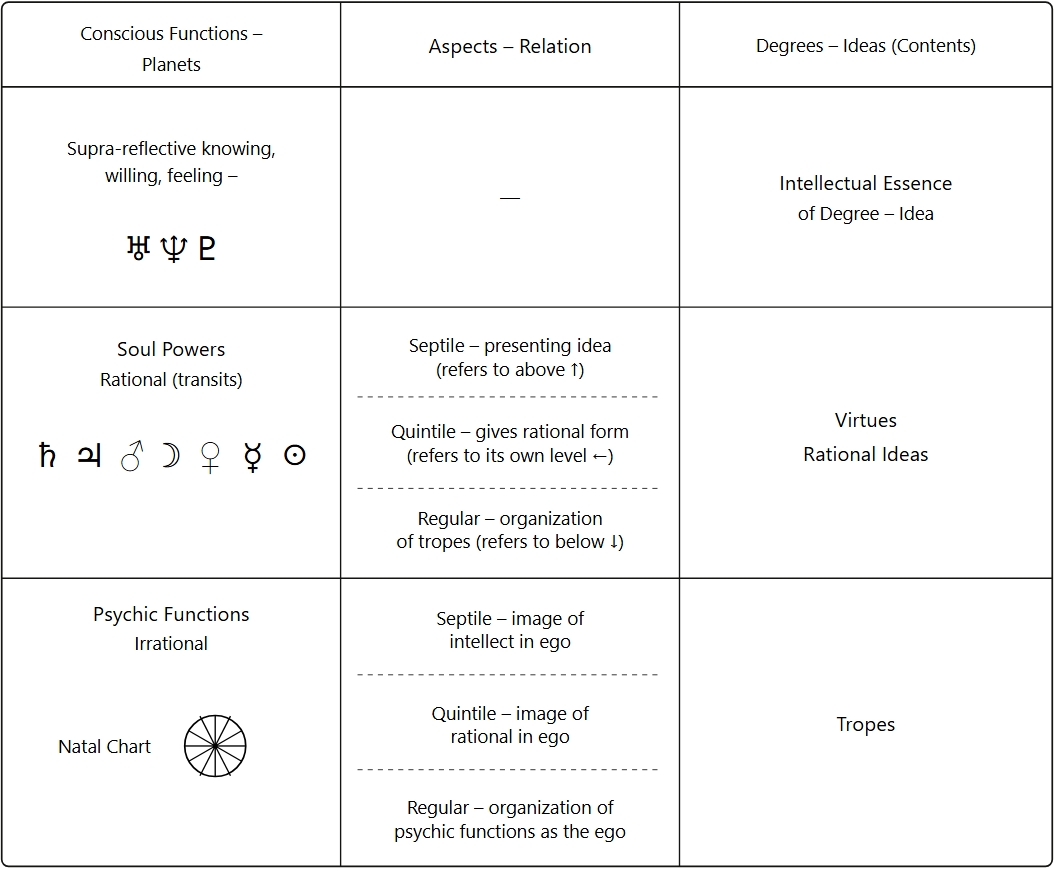
FIGURE 1983 0620a-1-AB. Three Levels of Planets, Aspects, and Degrees.
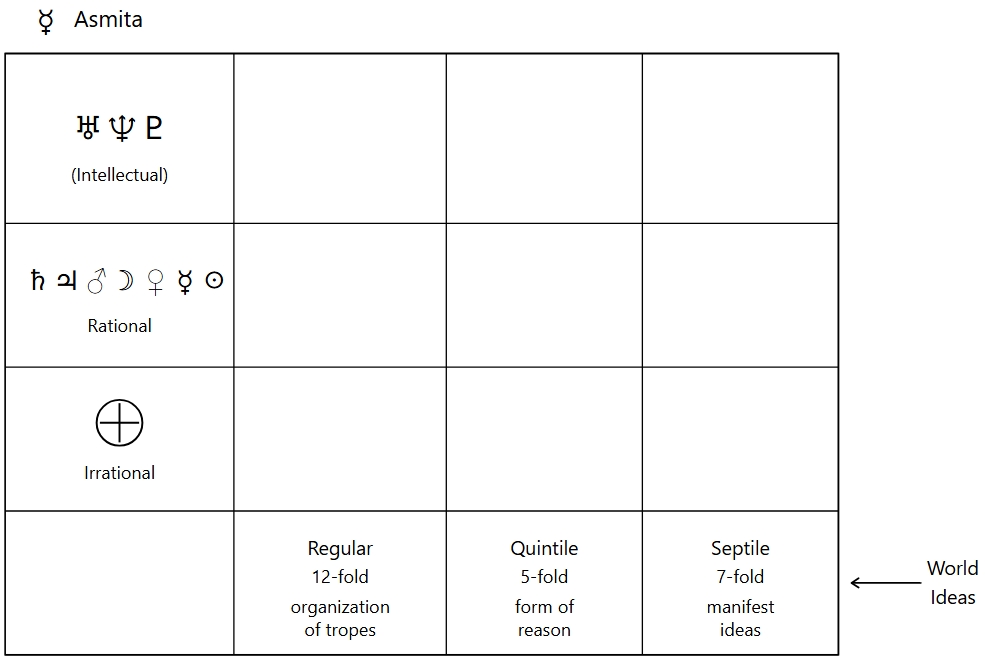
FIGURE 1983 0620a-2-AB. 3 X 3 Grid of Three Levels of Subjectivity and Three Types of Aspects.
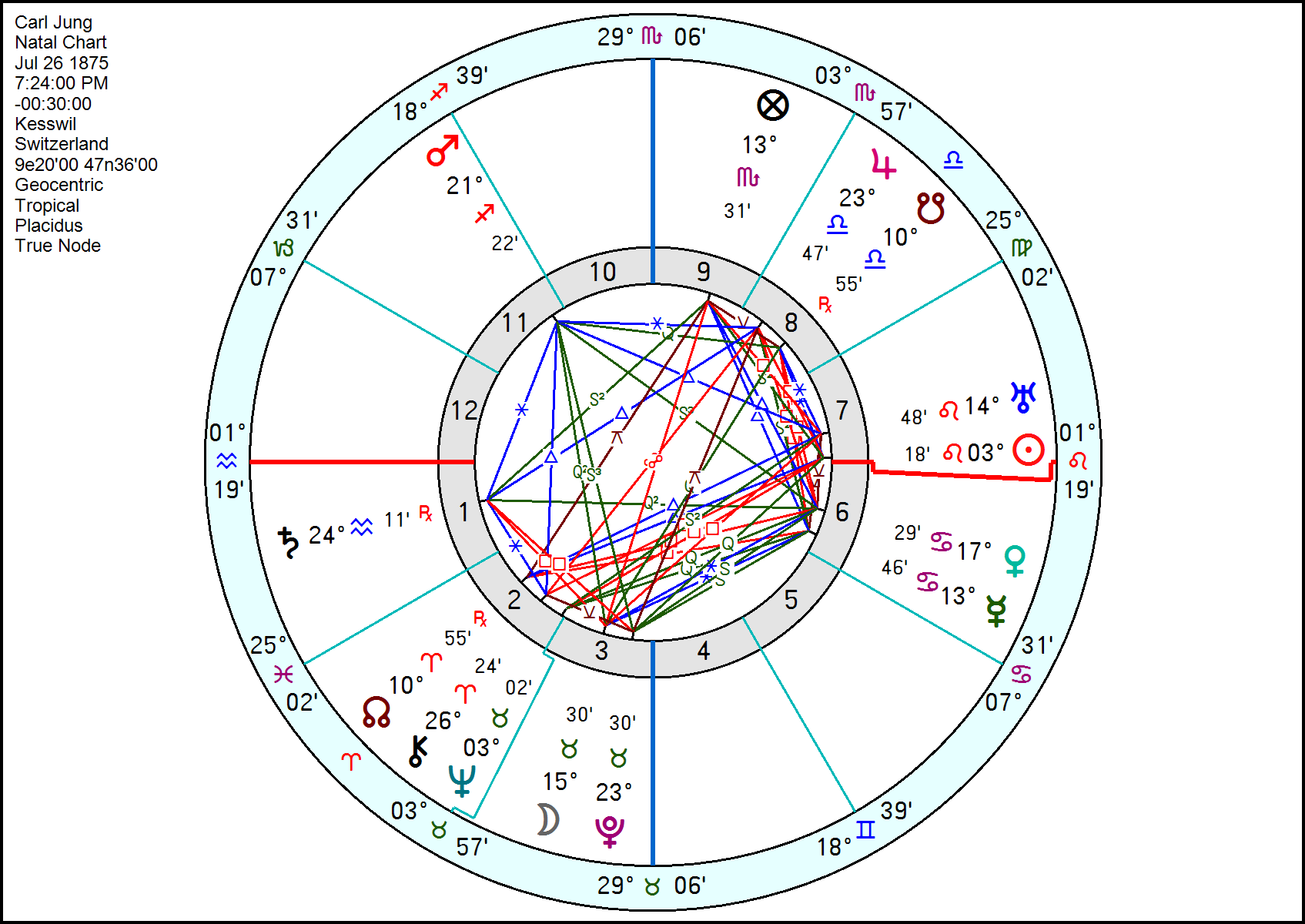
FIGURE 1983 0620a-3. Carl Jung Natal Chart (astro.com).
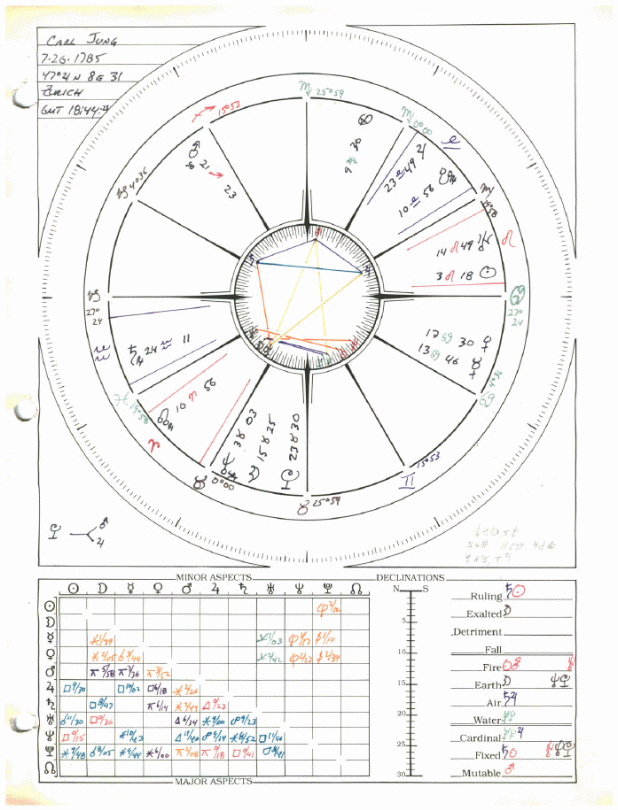
FIGURE 1983 0620a-4. Carl Jung Natal Chart (WG version).
[Transcriber note: [diagram] means the speaker is referencing a diagram as he or she is speaking. If someone is drawing or writing, with audible sounds of chalk on a blackboard, I indicate this by [drawing] or [writing].]
NOTES:
This is 1983 06/20a, the Astrology; Horoscope-Jung evening class, and the first of two entries associated with this date. 1983 06/20b is the afternoon Astrology; Horoscope-Oppenheimer seminar, for which no audio survives — only JF notes.
AB class notes have been appended because they supply two diagrams discussed in class and a complete chronological list of Uranus-Sun aspects with dates, degrees, and events — material written on the board during class that is only partially captured in the transcript. Retyped from Classnotes AB 1983 0608 to 1983 0715.PDF. All spelling, capitalization, and punctuation corrected, all abbreviations and astrological glyphs spelled out in AB class notes.
TRANSCRIBED Verbatim by IT 2026. Archival verbatim transcript – V11a.
AUDIO FILES: 1983 0620a, 1983 0620b. [Note: "Tape" and "Side" refer to original audio cassette tapes that were later digitized into .MP3 Audio Files.]
1983 06/20a at Wisdom's Goldenrod
Astrology; Horoscope-Jung
[Audio File 1983 0620a Begins]
LR: --the upper levels of the man, as opposed to what we meant when we said Uranus, Neptune, and Pluto do the same function. And how we seem to go back and forth using Uranus, Neptune, and Pluto or septile and-- So, that is the topic of dialectic today. And now Dickie and Avery will tell you (RG laughs) what we came up with. (laughter)
S (amidst laughter, faint): [few words inaudible]
S: Right.
S: And that's worth having in here, you know.
RG: Having championed the anti-establishment view for so long that (laughter) it's ironic that I know that, surely. Give-- given I had all the objections that everybody had probably, give it the best possible formulation. A., why don't you put in a context what you think we see [couple words inaudible] That should come first.
AS (simultaneously): Ok, I'll--
LR (simultaneously): Avery will provide the [RG simultaneously: Exactly.] necessary [AS simultaneously: Oh no, well--] metaphysical background.
AS: No, I'll just briefly-- I'll do it briefly and then Richard will do it in more detail. Maybe that'll help to lay it out briefly.
LR: This sounds like a news program. (laughter)
S: Thank you.
RG: Seems right.
S: This week in review.
S (simultaneously, faint): [couple words inaudible]
AS: It's not news, you know, it's like the-- it's like the 6 o'clock news.
RG: It's like the [BS simultaneously: Repeat.] news of the week in review.
LR: Yeah.
S (simultaneously): Repeat.
AS: There's a--
BS: Introduction [S simultaneously: I didn't hear you.] or the refrain.
[Note: See FIGURE 1983 0620a-2-AB for the following.]
AS: Ok. Well-- So I would understand, the problem originally we were (formulating) is to understand these three levels or three distinctions of aspects [bottom row]. But then we also have hanging around for a long time those three distinctions of Uranus, Neptune, and Pluto or the transiting Chaldeans and natal-- natal aspect or pattern of psychological or in terms of imagination [first column].
So, we started with this view that-- which we-- which Anthony has presented in several of the papers so it seemed [drawing] like a reasonable place to start, that the-- this light of the soul or the asmita as-- as it is illuminating or as it is functioning in these three grades of intellectual or super-reflective, as he has there [FIGURE 1983 0620a-1-AB, first column, first row], and then rational. And then when it's actually functioning through the body, you speak of the irrational functioning as within the ego. So we could speak of these as three grades as it were of conscious function: intellectual functioning, rational functioning, and irrational functioning.
Now at the same time this conscious functioning is manifesting ideas. For example, it's taking the World-Idea-- we had this other notion that the World-Idea is-- is received by the undivided mind, is organized into a whole, and then it in turn is imposed on the imagination. And there we seem to use the series of the aspects, where the septile aspect represents the reception or represents the-- let's call it the presentation of the idea. The quintile represents the organization of that idea in terms of the reason, or gives it a form, a reason(ed) form or meaning, or gives you the Witness point of view, and the regular aspects represented the organization of the tropes.
Now this one seem-- this hierarchy [first column] seems to speak to grades of conscious functioning. And this hierarchy [bottom row] seems to speak to grades of the form or speaks to levels of the form of that-- of the idea, starting from the idea in the intellectual or the idea say in itself, and then the rational form of the presentation of the idea, and finally the way that the ideas (were/or) actually organizing the tropes. Alright. So, you can get all kinds of combinations of these.
[Note: See FIGURE 1983 0620a-1-AB for the following.]
RG: Right. And, so we have a-- an even-- you know, an idea. And also just one other way, we-- I mean generally in astrology we have three-- you find these threefold distinctions throughout all of astrology. And, I mean, Jones when he talks is always in a threefold way. And the main threefold he uses is form, activity, and substance for the-- for planets, signs, and houses. But another way of thinking about it is that you have the planetary powers, as Avery said, which are like the conscious functions. You have the content side, which are represented by the degree-- the degree symbols, which have the three levels of intellect, soul, and irrational in it. And then you have that which relates the two, and that's the aspects. So, you could look-- you could look at the relation of the-- of the ideas to the conscious functions or the relation of the conscious functions to themselves, or the relation of the ideas (through) themselves, but the intermediary is always going to be the aspect pattern, 'cause that's what provides the relational framework for those-- those two series. So then we had this question, well, we try--
LR (simultaneously): Well--
RG: What?
LR (simultaneously): One second, Dickie.
RG: Go ahead.
LR: We also speculated that that empty box [middle column, top row] could be something like progressions.
RG: Progressions, right, a kind of series of a-- of aspects. In other words, here are the natal aspects. The natal chart goes along with the irrational level, the transiting level goes along with this rational soul powers, and the level of the degree symbols we call the-- the rational ideas, the virtues. [S: Right.] And then, yeah, I-- we could speculate on progression, primary direct. There are a whole bunch of kinds of aspect series that you could put in there but we don't know what they are yet [couple words inaudible]
So, the question always was for the last few months, do-- what is it, if anything, do these other kinds of aspects mean, septiles, quintiles. So we try to tackle that problem. And-- and I-- I mean, most of us I think have felt that there are-- it's easier to see in a natal chart the septiles and the quintiles, at least when you work with your own chart or read somebody's chart. And it's been much harder, at least for me, to see the particular meaning in the transits. So we figured we would formulate a theory as best we could and then try to see the practical application of it.
The theory being that in the natal--we'll take the natal first, and the-- any regular aspects, and this includes the trans-Saturnians, it would be of a different order but it still would qualify--we basically have an organization of the psychic functions as the ego structure. So if you have a trans-Saturnian aspecting a regular planet, it's a higher part of the ego, say, relating to a lower part, but it's still within the ego framework if it's a na-- if it's a natal aspect. The quintile aspect in a natal chart seems to represent an image of the rational in the ego. And Jones calls it genius. And what is genius in this sense? It's the ability within the ego to put itself, so to speak, in alignment with the-- the undivided mind to some extent. And you find a lot of quintiles in artists who have the ability to manifest that rational level. And the septile seems to be the image of the intellect or the image of the idea that's in the ego. And Jones calls that fatality. And it seems the idea is pressing in on the person, or an idea is pressing in on the person so strongly in the natal septile that he has to-- and he lives it out as if that were his destiny. And that's why Jones uses the word "fatality."
So that's the natal configuration, and that's mirrored in the transiting aspects, that in the regular aspects-- We're in the level of reason now so they all have to be rational. And I-- and we all didn't feel it was good enough to say that they just present circumstances and that there's no real knowl-- no knowledge there, but basically we're trying to differentiate three kinds of knowledge. And in the regular transiting aspects, what's getting-- [S: Well--] the tropes are getting organized or rearranged, the natal-- the natal structure is getting rearranged or an idea is being brought in, but basically through an organization of the tropes or the natal predispositions.
Now in the transiting quintile the idea was that some rational form is given to an idea. One is in a state of mind that-- that they-- and Avery has it up there, the fivefold form of reason comes into play [FIGURE 1983 0620a-2-AB, second column], whether you talk about the five functions that work there or whatever. There's a rap-- the soul is basically in a receptive mode to receive reason and formulate it. And in the transiting septile we ha-- we have the idea that an idea from the intellectual level-- within the rational, but bringing out from the level of the intellect is presenting an idea directly to the-- the in-- the individual, or presenting an idea-- presenting the World-Idea.
AS: Yeah but, idea that's presented might be an idea that's already in the ego that's being illuminated or brought out by that super-reflective or rational consciousness, depending on which it is.
S: Uh-hm.
LCG: You're saying but it doesn't have to be manifested as it does in this-- in the bottom level? I mean it sounds like you spoke of the idea being presented and then having to get the-- [AS: Yeah well--] having a fatality.
AS: Just because it's presented, say, as Plotinus says, just because the idea is presented does not mean that it's either rationally understood or that it's-- in other words, that it's useful, or that it's even-- even that it's sensi-- or that it's sensibly perceived. [Note: See Plotinus, I.4.10, IV.3.30.]
LCG: Uh-hm.
RG: So in other words--
LCG: So it wouldn't be necessary at that level.
AS: So in other words, you just had a septile without the quintile or the regular, if you didn't have the regular aspect, it would not be all the way sensibly perceived in the ego. And if you didn't have a quintile, the idea might be there but it wouldn't be understood, or it wouldn't be available for use. Or the rational form-- that-- if the mind didn't put it into a rational form, it would not be available.
DH: Right. So the septile would have pure manifestation without-- not the sensible body [one/two words inaudible]
AS: No, without a--
RG: Uh-hm.
AS: Yeah, without any kind of translation.
LR: Doesn't [one/two words inaudible] (presentation)?
RG: Yeah.
AS: Yeah.
RG (simultaneously): Yeah, yeah.
AS: Or without any rational form being given to it or without it being-- impinging on the-- on the sensible perception.
S: That--
LR: Now we're talking about transiting septile.
RG: Transiting.
AS: Yeah.
RG: Right, a transiting septile.
DH: But that relates to what you were saying down at the bottom too [FIGURE 1983 0620a-1-AB, bottom row].
RG: Right, right, I-- yeah, I made the-- I think, you know, they're meant-- I mean it's easier when we're working with all-- you know, I think one reflects the other, they're the same types of functions but one is in the rational realm because it's the World-I-- it's the transiting cosmic soul, so to speak. In the natal chart it's your fixed ego structure.
AS: Uh-huh, yeah. Two other things also, we weren't-- Actually perhaps these two should be bracketed because [RG: Right.] we're getting-- right now anyway we're not distinguishing between transiting trans-Saturnians and transiting Chaldeans in terms of what these aspects are doing. In other words, we're not [LR simultaneously: As a further distinction.] sure yet whether either of these can actually present an idea from the inerratic. [student assents, faint] And we're not sure whether either of these can actually give a rational form to that within the reason. And we're not yet-- although this one seems clear, that bo-- either of these can operate to organize the tropes or reorganize the imagination.
LR: In other words we haven't finally distinguished trans-Saturnians from Chaldeans when we talk about septiles and quintiles.
RG: Yeah. It-- or at that level either of transiting-- right, of transits, what is the transiting of trans-Saturnians related to the transiting Chaldean. Are they all--
AS (simultaneously): Right, transits to transits.
RG: Yeah, yeah, right. Are-- [few inaudible LR words simultaneous with RG] are all transits within this level? Just like all-- here-- just like all, you know-- you have the tran-- trans-Saturnians and Chaldeans at the natal level.
LR: Well, your arrows [FIGURE 1983 0620a-1-AB, middle column, middle row], I mean we said the transits happen in that level but refer to different (mode).
RG (simultaneously): --fer to what-- Right, right. So the septile-- they all take place within the rational. The septile refers to what's above it. The quintile refers to its own level, which it is the proper place of the quintile in the-- in the rational part. And the-- and the regular aspect refers to the trope level, which is its appropriate place. So-- and then we correlate it with three-- the three levels of degrees to go along with it, the tropes on the bottom end, when you're speaking of the given natal chart, the rational ideas when you're speaking about transits and the rational soul working, and then the intellectual essence of the degree which refers to the inerratic.
S: Yeah.
AS: Right. And then we--
DH: Can someone give me a brief description of the tropes?
S: You roll the paper and you put it under your bed.
S: Right. (student laughs)
RG: The accordion model.
LR: The Dragon [few words inaudible] about the Dragon.
AS (simultaneously): The habit.
S (simultaneously with LR): The compulsion.
S (simultaneously with LR): The habit that's in the imagination.
RG: Vasanas.
AS: Whereas the level of the next one up, the level of rational or reason-principles, well maybe it's like the mathematical, ok well, think of it like that, the-- the organizational structure. Anthony gave another example with music which I thought was a good one. Like the inspiration, pure inspiration for the piece would be at the level of idea. But the very-- the form that that inspiration would have to take, let's say a sonata form or whatever form, would be the rational. The actual piece, you know, the notes and so on that you see on the music would be like the trope, would be the sensible-- sensible perception of-- [DH: (You're) still there, yeah.] So you can understand the sensible perception of the idea, a rational perception of the i-- of that music, or a pure intuition of that music. And those would represent those three levels [student assents] of possibility. Now al-- now, it still-- it still becomes complicated.
LR: Yeah. It's because of that--
AS (simultaneously): Because the regular aspects are organizing-- would be like equivalent to organizing the-- the notes, the actual notes. The quintile would refer to the form, the rational form of the music. And the septile would actually be bringing in the idea in that example. So you could see that if he had a septile going on in the example, he might have the inspiration of the music, but he wouldn't have enough-- if he didn't have a regular aspect, say, he wouldn't have the-- his ego, his skill, he wouldn't have the skill to put it into a form, or if he didn't have quintiles, it would be equivalent to saying he doesn't have the correct form of music, the ri-- the correct form to put that inspiration in. Whereas if he didn't have the septile, he might write a bunch of nice pieces but they wouldn't have any idea in them. They'd be kind of dead, you know, (they) have no idea in them. And similarly, you know, you could do other things. And we translated that to a guy's life and say well, you know, (that's important).
LR (simultaneously): There's something else we tried to do this afternoon which isn't coming across and that is how do we distinguish the way we look at the trans-Saturnians [RG: Right, right.] [S: Yeah.] and the way we're describing [RG simultaneously: Right, right, we don't-- yeah.] septile and quintile, and we-- we spec--
AS(?) (simultaneously, faint): I don't [few words inaudible] afternoon.
LR: Well, the speculation was that one-- that one of them refers to powers inherent in the-- in the soul, in an individual soul, and the other referred to levels of the World-Idea, [few inaudible RG words simultaneous with LR] that you could actually distinguish the--
AS: Yeah. [few words inaudible]
LR (simultaneously): Yeah, I just think we should [RG: Right.] bring it out more.
[Note: See FIGURE 1983 0620a-2-AB for the following.]
AS: Yeah. We gave an example, like say you have a trans-Saturnian-- you know, we could use some of these (boxes). Suppose you have a trans-Saturnian making a [drawing] regular aspect right over here [diagram]. Then even though it's the ego or the tropes that are being organized, it's still the super-reflective consciousness which is organizing the tropes in a way. So, in that aspect--
LR (simultaneously): And one of two things could (happen).
AS: Yeah, one of two things. You're going to have to see it both ways, that the super-reflective consciousness, [drawing] say, is reorganizing or organizing the ego but also the super-reflective consciousness would possibly be available. I mean the guy has Uranus sextile the Sun or something, and you can't deny that for that time at least he does seem to be-- have-- getting illumined by the super-reflective consciousness, or might be, even though the final effect is going to be on something in his tropes.
S (faint): Yeah.
LR: Right, and we've said at one time that you could actually-- that there's a choice that could be made there. Either you identify then with the natal planet and resist the action of the trans-Saturnian or try to leave go of the egotistical operation to see-- to identify with that which is changing.
S: Which one?
S: Yeah. So--
RG/AS(?): You could do that--
LR: And either one of those would be-- would be possibility there.
AS: Yeah. And the same-- and that would go also just-- for just the transiting Chaldeans.
LR: That's right.
AS: Which is the same. And that way-- [LR simultaneously: Because you're talking about--] that would work the same way. You could take the point of view of the transiting planet, in which case you would experience the rational functioning which is organizing that trope, or, if you were identified with the ego, you would just feel it as a constriction or a reorganization. Whereas in-- [RG assents] in the [drawing] quintile one, the speculation is that-- slightly different. In these there should be an illumination of some kind of meaning, you know. He should get some meaning of that thing rather than just the organization of the trope.
LR (simultaneously): Objective.
RG: Right.
AS: He should get--
RG (simultaneously): So-- right. So--
AS: --a picture of the whole form of the organization of the undivided mind, [RG: So--] or one of those--
VM: I don't understand this diagram. I'm sorry, I'm-- I don't have it. What-- what's on the columns and what's in the rows.
AS: Oh. These-- [VM simultaneously: Put it in (one word inaudible)] [drawing] these are all-- these transits here are aspecting the natal chart. That's all we're talking about in here.
VM: These experiences--
LR (simultaneously): Oh I know.
RG: Those are tra--
LR (simultaneously): These are modes of the subject.
RG (simultaneously): Those are transits.
VM/S(?): Yeah, yeah.
RG: Conscious function. Right?
S: [one word inaudible] yeah.
VM: Oh it's the same--
RG: Same thing.
AS: Same diagram.
RG: It's the same diagram.
AS: It's the same diagram.
VM (simultaneously): Oh I-- I was looking for something different and I couldn't--
AS (simultaneously): No, uh-uh.
VM: Ok.
AS: It's the same.
RG: But we meant to-- but we did try to get over the problem of that Uranus, Neptune, and Pluto in a regular aspect could bring him an illumination. Now that-- so-- let's say you had a Uranus sextile, transiting sextile the Sun, you could have a certain kind of illumination from Uranus to the Sun either way you just talked about it. You may not know what it means. And you may need a quintile, a transiting quintile of Uranus quintiling the Sun to bring out the meaning of what happened in the other aspect.
VM (simultaneously): You mean later what meaning, same instant.
RG: No, later but you can't have it in the moment. Later on.
VM: Other quintiles going on [couple words inaudible]
RG: Right, but let's-- if we just said that, and then in the septile aspect maybe, they would bring in-- the actual idea that Uranus was bringing in, or the actual idea of the Sun would be apparent to the Uranus. So all three of them have levels of knowledge in them.
AS: Yeah, or maybe we could formulate it as-- to-- to take-- to take-- to get to the third one. In the regular aspect, there's an organization of the tropes. In the quintile, you-- you may reach the rational organization of those reason-principles or degrees. And with the septile, the septile may be bringing out the intellectual meaning of that degree. In other words, it all may be in terms of the natal degrees. When we say-- when in the septile, which I gave an example of, bring-- bringing in an idea, it may be drawing out an idea that's already inherent in-- in his ego structure. In other words, the whole-- those three levels that he drew there [FIGURE 1983 0620a-1-AB, third column] might all be three levels that are present within the natal degree or implied there. And that each of these will get at a different meaning.
LDS: Yeah, I was going to ask.
AS: If he's going to-- if he's going to take the position of the Witness in this quintile, then he's not-- it is-- the content is not going to be the tropes anymore, but the content will be a certain organization of that second level, an organization of the forms that organize the tropes. And if he's having a septile, what he should be-- the content there, if he really were to apprehend it, would be the intellectual meaning of that degree, or the idea per se that's being imaged in the degree. And that's what's being brought out, either manifested or-- I mean I think-- as Richard would quickly point out, you may also have to look at the degree the transiting planet is on as well, you know, what is it that's being brought out?
RG: Right. So-- so this is all a nice theory, we haven't really [VM simultaneously: Yeah. Agree.] yet tested it. So what we thought we would do, and it's a little different than the way we work--
LR: Well wait, are there any--
AS: Yeah.
LR: Maybe people [one/two words inaudible]
AS: Maybe there's some [LDS simultaneously: I--] discussion or clarification [couple words inaudible]
LDS (simultaneously): I want to see if I followed the last few minutes.
S: Yeah.
LDS: You're saying that with a-- let's say a trans-Saturnian making a regular aspect, the question is, what is-- let's assume that it does light up something. The question is, what is the content that it's lighting up. [AS assents] And you mentioned before that like during a septile, it was speculated that some new idea was being brought in-- brought in.
AS: Or brought up.
LDS (simultaneously): And you need to make-- or brought up.
RG: Idea.
S: Probably.
RG: Yeah.
LDS: Ok, that's a question. [AS simultaneously: Yeah (couple words inaudible)] Whether (it's being) brought in or brought out, the actual--
RG (simultaneously): Yeah. Yeah.
LDS: And the other-- the thing about the trans-Saturnian is again the question of, what is the content that's actually being lit up. Is it from within the ego structure of the trope or is it some idea that the transiting trans-Saturnian is on that's being brought in.
AS: But that's in terms of the septile. The [LDS assents] trans-Saturnian itself is representing the-- a super-reflective consciousness.
LDS: Yeah, I'm asking about that.
RG: Right.
AS: I think in any-- no matter where we're defining [couple words inaudible]
RG (simultaneously): And in a regular transiting aspect, it's just its-- we could say it's being-- it's dir-- it's directly given, being given in some way to the natal chart, whether it's through a sextile or a trine or an opposition, maybe a conflict about it, but it would be present.
LDS: Some light is being given.
RG: So-- yeah, (I would say).
LDS (simultaneously): Is that what you're saying?
RG: Some-- yeah, in terms of Uranus some light, some-- [LDS: Ok.] some conscio-- some sense of the higher knower, however it comes in.
LDS: Now what would you say-- speculate the content of that light is?
RG: I don't know.
LDS: You're not sure.
RG: It could be the tropes, it could be the Uranus, it could be Ur-- it could be the Sun, it could be whatever. We don't know yet.
LR (simultaneously): An illumination.
LDS: Ok, I'm listening.
RG: There could be a lot of combinations depending where the being is identified. If he's relatively free-- you know, not so determined in his somatic organism, maybe he has access to some higher levels of it, we-- I don't know.
AS: Yeah or-- and you might-- might be that in this-- in the regular one then the content, the knowledge is of the tropes. Here it might be a knowledge of the actual rational functioning of the Sun itself in the quintile if it's aspecting the Sun. And then septiling the Sun it might be some intuition into the idea-- the idea that that Sun is on.
RG: We have to see.
AS: All-- [LDS: Yeah.] you know, [drawing] Uranus making three different kinds of aspects to the Sun would reveal three different levels within that chart. But that's-- that was one thing we laid--
LDS: Yeah, there's a lot of possibilities.
RG: That's why we want to [couple/three words inaudible]
AS (simultaneously): But, stick with it.
DH: But this is-- I didn't quite get this distinction that you were making between the ideas being-- being pulled up or brought in. I mean that--
AS(?): Well, (I don't--)
[AS drawing]
DH: Are you talking about something being with-- within the individual locus and--
AS: Yeah, almost.
DH: --playing outside the individual locus?
AS: Well no, I think [S: (Right.)] in both cases it could be inside.
DH (simultaneously): This is all in the individual? It's all in that locus, isn't it?
[Note: See FIGURES 1983 0620a-3, 4 (Jung Natal Chart) for all references to Jung's chart throughout.]
AS: Let's say his natal Su-- well we used that Jung chart, his natal Sun--
RG (simultaneously): Sun is 4 degrees Leo.
AS: 4 degrees Leo over here [diagram]. [drawing]
DH: Yeah.
AS: Now, remember, 4 degrees Leo is a trope, but it's also the image of a certain reason-principle which-- and it's also supposedly an image of some idea [DH: Right.] in the inerratic. Now suppose he has Uranus [drawing] coming along making a septile aspect.
DH: Yeah.
AS: Ok. Now, if we say that the Uranus is lighting up some idea or manifesting some idea or bringing it in or bringing it out, [DH: Right.] isn't the Uranian consciousness, this super-reflective knowing, is that knowing or making manifest the intellectual aspect of 4 degrees Leo? Or is it bringing it to his ego, making available to him the degree that the Uranus is on?
LR: Or is that combining or--
AS: Or a combination.
DH (simultaneously): [couple words inaudible] Uranus is on, (yeah).
AS: The Uranus-- no, no.
RG (simultaneously): (It could be), or transiting. [few students at once simultaneous with RG, few words inaudible] And then how do you-- yeah, those-- those are all questions.
DH: Um--
LR: Well, except they're not all relevant.
AS (simultaneously): And-- and in the latter case, [drawing] if it's by transit, if it's [one word inaudible] transiting planet, the other thing is that of course, in the very structure of the degrees, there are-- there is a seven-- there are seven points which are all septile that natal degree.
DH: Yeah, I mean, those are all in the sense [AS: Oh I know.] an aspect of that degree.
AS: Yes, that's-- that was the other point that I would like to try and bring out, you know, just as you're saying that in some way you could consider the others [few words inaudible]
DH (simultaneously): Right. Like whenever we go to the degree, we always look at the opposite degree.
AS: Right. When--
DH (simultaneously): [couple/three words inaudible] something (about it).
AS: And this would say that these-- the other six or all seven of them together represent seven different modes of an idea being instantiated or manifested, [DH: Yeah.] just like your seven little-- you know, seven transformations.
DH: Right.
AS: These would represent like seven possible transformations of that idea.
RG: And yet each one is unique [couple words inaudible]
AS: And yet each-- yeah. And yet each one could be unique because again, each one--
RG: Each one is not only part of the septile series, it's part of a quintile series, it's part of a conjunction, part of a trine series.
DH: But I'm still not seeing it.
AS: And also its own.
RG: Right.
DH: But-- so was there-- I'm not-- I thought I was hearing some division in between--
AS: And-- and we seem to be reconciling it with that-- what we just said. Initially-- yeah because-- I mean initially this seems to be a distinction between saying something of these natal ideas being brought up, or is it something of the transiting, the idea the transiting planet's on. However, if we [DH simultaneously: Oh so you're agreeing (few words inaudible)] make a formulation-- if we make a formulation [drawing] that they are in fact originally related anyway, [DH: Ok.] then the big hiatus between saying it's the natal degree and saying it's a transiting degree kind of disappears.
LR: Only in the septile.
AS: Well, [few student at once simultaneous with AS, few words inaudible] (I think) in the other ones too. But-- but still you s-- but still his Sun is on [few inaudible student words simultaneous with AS] 4 degrees Leo and not on the other septile one(s).
LR (simultaneously): And, (Jeff--) and there's another thing which is the Uranus has a natal [DH simultaneously: Yeah, but that whole--] degree, [AS: Right.] and doesn't that qualify (the degree)?
DH: But that whole structure and everything that's in relationship to this 4 degrees Leo in-- has got to be part of the Logos.
AS: Yes, yes.
DH: (I mean) is that--
RG (simultaneously): That-- no doubt. But if you merge all of them together, then you get one idea and not, you know-- I mean, you-- you have to take both views, that there are many combinations that 4 degrees Leo participates in, and yet 4 degrees Leo is 4 degrees Leo in itself.
VM (faint): Yes, yes, was--
AS: And-- and your other point about the natal Uranus degree. I mean the quality of that [LR: It's going to--] Uranian tran-- super-reflective knowing itself is qualified in a certain way perhaps.
LR (simultaneously): By the natal degree.
AS: By the natal degree.
LR: Yeah. So when you say transiting Uranus, [S: Yeah.] you already mean--
RG: Your-- yeah.
AS: Your-- your--
RG (simultaneously): Your transiting.
AS: Although that's-- yeah.
S (simultaneously): Maybe.
RG: Right.
AS: That sounds right, I mean--
RG: So, even-- you know, we would have to investigate empirically now because this is really a completely theoretical model.
S: [few words inaudible]
RG: Now-- now the way we thought we would try to experiment with it is not-- is-- is instead of going from events to the aspects, is to go from the aspects to possible events so we don't skew our investigation that way. I mean, so we thought we'd take one aspect, or one planetary relationship, like in Jung's chart say the Uranus Sun relationship. It performed a full cycle in his life, it hit every [one word inaudible] I mean-- It hit--
AS (simultaneously): Hit all the aspects.
RG: It hit-- hit all the aspects, went back to the conjunction. It started two degrees-- you know, it started right ahead of his Sun at birth and it made every aspect and it hit the Sun a couple years before he died, and--
LR: And then returned to its [one/two words inaudible]
RG: And then returned to its natal place and he died the next year. So we thought if we could-- if we could isolate in Jung's life the dates at which each one of these regular-- a regular aspect, then the quintile, and then the septile in sequence, and try to see a different quality of the Uranus Sun relationship--and we'd have to talk a little about what the Uranus Sun cycle means--but if we get some idea of that, get some idea of Jung's Sun and Uranus natally, if this means anything at all we should be able to pick out the levels in the transiting relationships, if there's any difference between a transiting quintile or a transiting [one word inaudible]
DH (simultaneously): [few words inaudible]
LR: Well that's the problem.
AS (simultaneously): Yeah, documentation.
RG: Right. Well, we don't have Tim who did the major wor-- documentation of Jung but--
LR: Is that-- yeah. Did you bring yours today? Ok good.
S (simultaneously): Well, yeah.
AB: We really didn't work on his aspects a lot but--
RG: No but the dates you have, Alan.
AB: Yeah, I have-- right.
RG (simultaneously): The a-- we know we didn't work on the aspects. So let--
LR (simultaneously): Well I think we should read the natal symbols if we're going to do that and try to just review what we said about Uranus.
S: (Well--)
RG: And the Sun. Shall we try to talk a little bit about [student assents] what maybe the Uranus Sun means as a cycle?
LR: [couple words inaudible] yeah.
RG: No, have at it.
S: Uh-hm, uh-hm.
VM: Let me just back up a little bit, see if I understand what you're doing. You're going to say, well, let's look-- maybe it's too early to look at the first semi-sextile.
RG: Right.
VM: You know, he was only five [RG assents] years old or whatever. But basically you're going to look--
LR (simultaneously): We start--
VM: You're going to--
RG: Right.
VM: --going to look for each of the regular aspects and then the septile and quintile series as well.
RG: Yeah, we'll go in order.
LR (simultaneously): Go through.
RG: We'll go to the sequence in his life. You'll hit a regular aspect, then you'll hit a quintile and you'll hit [VM simultaneously: Ok.] a septile. And we'll isolate these aspects and see-- we won't pay attention to the other things that were going on because we'll try to focus in on the quality of the Uranus Sun relationship in terms of the cycle.
LR (simultaneously): Of course it's hard because [couple inaudible RG words simultaneous with RG] there are other aspects going on.
VM (simultaneously): Oh course, of course.
RG: Right. But there are twenty of these aspects pretty much made [VM assents] and we should see a pattern in the relationship.
AS (simultaneously): Yeah. One thing to remember-- if it's true I'm not sure, but, when you map it out it's interesting that they do alternate. [RG assents] It goes regular, [S: It does?] then septile, then regular, then quintile, then regular, then septile, then regular, quintile, and then regular, septile, regular, ok. [Note: See AB class notes appended to this transcript.] Anyway it all-- the regulars alternate with the quintile, septile ones. Not exact but they-- but it does work out that way. But that-- Ok.
LR: Anthony, do you-- are-- should we just keep going? Do you have anything you want to interpose now? You think we should go after Jung's chart? Well, let's just review the Sun symbol.
AS: Yeah, Sun symbol, depending on (our little--)
LR (simultaneously): It's [three words inaudible]
S: Right.
S: [couple words inaudible]
AS (simultaneously): I forgot-- I forget (which one it) was.
Marc Edmund Jones [The Astrology of Concepts, Leo 4, LR reading (simultaneously with AS above)]: "An elderly man in evening clothes, of poised and military bearing, stands alone before a lovely mounted moose head."
LR: (With clothes.)
S: Louder Linda, I can't hear you.
LR: You read that book?
AS (faint): The moose head [few words inaudible]
S: Oh, right.
Marc Edmund Jones [The Sabian Symbols in Astrology, Leo 4, LR reading]: "This is a symbol of self-assertion at a point of effective impact on the world, dramatized here on the side of an established and everyday reality. Formality becomes a magical ordering of the automatisms [LR reads: automatons] of lesser things, enlisting them in an enduring service to each individual's more outstanding talents. His achievements become evident in the trophies by which he makes his consistent contribution of the real essence of himself to his fellows. The keyword is MORALE. When positive, the degree is exceptional capacity for winning and holding the esteem of men, and when negative, dependence on applause and a playing to the gallery to get it."
LR: Now we said about the symbol that it had to do with the taming of the animal in some way, that the trophies-- that the moose represented the animal nature and that the man in evening clothes represented-- in some way could symbolize something of the rationality and then-- and that man standing contemplating a-- a moose head had to do with bringing up the tropes and trying to bring some meaning to them, which was pretty clearly what Jung-- what Jung's life purpose was about.
S: Uh-hm.
LR: Right?
S: Uh-hm.
LR: Fairly speaking. [student assents, faint] I guess we interpreted in other ways too but--
S (very faint): I thought we were changing those.
RG: Right. Right.
LR: And should I read from our notes of what we actually did say or--
RG: Let's just do the Sun. (Do) the Sun.
LR (simultaneously): Does anyone (have an) [one word inaudible]
S: Do the Sun all the way.
LR: Hm?
S (faint): Come on.
DH: Well, that's how Jung himself describes his life purpose [student assents, faint] in his Memories, Reflections. [Note: See C.G. Jung, Memories, Dreams, Reflections, ed. Aniela Jaffe, trans. Richard and Clara Winston (New York: Pantheon Books, 1963).]
S (very faint): Yes.
DH: Well--
[short pause]
LR: Should I just read the Uranus then?
S (very faint): [one/two words inaudible] but go ahead.
LR: Uranus was the symbol of the Mardi Gras.
[13 second pause]
Marc Edmund Jones [The Astrology of Concepts, Leo 15, LR reading]: "The great American carnival, the Mardi Gras at New Orleans, is seen with a wealth of floats, decorations and merriment."
LR: He says--
Marc Edmund Jones [The Sabian Symbols in Astrology, Leo 15, LR reading]: "This is a symbol of man's constant delight in exhibiting the fruits of his achievement, and of a naïveté dramatized in the world of everyday through a very human pride in common works and cooperative accomplishment. There is high magic in the public display of all the things in which the least of individuals may have had some minor part, and out of it comes a sense of fellowship through which the whole is revealed in an over-all excellence and every last inarticulate ideal somehow is exalted. The keyword is DEMONSTRATION. When positive, the degree is an irresistible heightening of self-significance across the whole face of experience, and when negative, unconvincing claims and embarrassing self-assertion."
LR: Now in some ways this is pec-- you know, this is peculiar relationship to the Sun degree because here there's really an exaltation of the lower nature of man, of the beast. The Mardi Gras is that kind of-- it's a carnival, an exaltation of the animal. The other symbol brings out man's mastery. And this is-- this is almost a celebration of the Dragon. And this is the Uranus. This is the higher knower. So what do we want to say about that, that-- that peculiar relation between the Sun and Uranus?
VM(?) (faint): Don't know.
RG: Well, if you take the Uranus Sun relation, that is the way the person becomes aware of his higher self and the way that the ego really becomes aware of his higher knower. You know, for--
LR (simultaneously): Through revelation of the (lower).
RG (simultaneously): For Jung, what was the way? By going-- by going through the-- the unconscious, going through the instincts.
LR: You'd say the way to the higher knower-- the way to reason or to accomplish the purpose of life is first to exalt?
S (very faint): Right.
VM: Well why can't you say the intelligible [LR simultaneously: Of lower, the--] will be-- the intelligible will be revealed for him in the instincts?
LR: And-- but-- and I'm trying to say further that in that revelation [VM simultaneously: That's where he knows himself, yeah.] will be some mastery of, [VM: Oh, yeah.] or some understanding of--
VM: Yes, and that's the Sun's contribution is that it won't just be a carnival, there'll actually be some mastery.
RG: Right, because he had such a strong ego it seems, [VM: Right.] he could take that symbol of Uranus and work with it. So he wasn't totally overwhelmed by it in some sense.
AB: Just when the-- the thing you'd add to that, the intelligible is revealing itself in the instincts and that's the path of knowledge for him, [RG assents] to self-knowledge.
RG (faint): Yeah.
LR: Yeah.
AB: That's how he [RG: Right.] became aware of himself.
LR: But the Sun also says that the purpose of the life is to gain control over [RG assents] that part of the-- you know, that nature.
RG: Well, isn't that his image of this-- of selfhood was that--
LR (simultaneously): Of individuation.
RG: Yeah, was that proc-- that very process of balancing out the demands of the unconscious to the conscious ego. [27¼ second pause] So we should imagine that in the Uranus Sun cycle in his particular chart we should see that interplay. We should see the way the instincts are brought in and the way his idea of the Self is unfolded to his ego. And how that interaction developed through this-- through this tran-- through these transits.
VM: It's a particularly good pair for Jung, isn't it, I mean if you chose Neptune Moon or something, you know--
RG: Yeah.
S: They're both innocent.
DH (faint): Yeah [couple words inaudible]
RG: Well, and the nice thing is they're not aspected, so you don't--
LR: They don't have a natal aspect.
RG: They don't have a natal aspect so they can be pretty-- they can be pretty differentiated. Well then you could-- oh, but I could--
LR: See, in Jung's chart all three trans-Saturnians have one-degree aspects to--
S: To what?
LR: To a Chaldean. Anthony swears that--
S (very faint): Pretty much (to--)
RG (faint): (Sure.)
LR (faint, possibly part of background): It was coming off?
RG (faint, possibly part of background): Let's not talk about it.
LR (faint): Find three squares up here.
S (very faint, possibly part of background): But these was--
RG: Yeah. Anthony, do you want to add anything to those symbols from Jung?
AD (faint): Ok, go ahead.
LR: Ok, so-- Do you have a little bit of a sense of that, those two symbols anyone?
RG: Yeah. You have an idea what we're going to try to do?
LR: You want to say more, Avery?
LDS: Now, about the--
AS: [one word inaudible] more.
LDS: You know, about the Uranus symbol--
AS: Uranus, yeah, ok.
LDS: I don't know if it was been said-- has been said but I get the idea that that may be where his idea of individuation came from. Even, you know, where it says--
Marc Edmund Jones [The Sabian Symbols in Astrology, Leo 15, LDS reading]: "The keyword is DEMONSTRATION. When positive, the degree is an irresistible heightening of self-significance across the whole face of experience…"
LDS: And prior to that he talks about how-- this "magic of public display of all [the] things in which the least of individuals may have had some minor part." Brings out the fellowship that you would-- you would gain from this. Like at once in that-- in that degree there's a sense of communion with fellows, and at the same time this uniqueness that he came up with in his individuation notion.
LR: Well also, you know the way we talked about the reason-principles actually being buried in the flesh?
LDS: Yeah. Yeah.
LR: And that that was what actually was in some ways the alchemical process of extraction of meaning from the instinctual level.
LDS: Yeah.
LR: I mean, the relation of reason-principle to the psychosomatic [LDS: The embodied--] dragonic man seems to be with both of these symbols (we're) discussing, and the Uranus seems to celebrate the reason-principles right there [AS assents] in the flesh.
AS: Uh-hm, and that is what he takes to be the Self almost.
RG: Right. Yeah, right, and I would say [AS simultaneously: It's also archetypal (few words inaudible)] it's not the-- it's not individuation, it's the realm of archetypes.
AS (simultaneously): Like the-- yeah, it's the archetypal (realm).
RG: It's the archetypal realm as imposing itself on the ego, as bursting forth.
AS (simultaneously): Ok, yeah.
RG: And that's the image of Selfhood.
AS (simultaneously): But for him that's the Self.
RG: Yeah.
AS: The Self is the archetypal realm.
RG: And I think that's how he saw Uranus.
VM: Remember (what) he says, it's the-- psyche is the sum total-- No, Self is the sum total of--
RG: Psychic processes.
VM: --psychic processes. That's the carnival.
RG: Uh-hm.
AS: Yeah. Or--
RG: It include-- you know, and he had a wide enough vision to include, you know, all [VM simultaneously: The whole spectrum.] the aspects of the collective unconscious.
VM: Sure.
LDS: But you know, he would always say too that there would be a unique formulation of all those-- all those common contents that--
RG: Right, but I don't-- I don't think that's from the Uranus degree [couple words inaudible]
LDS (simultaneously): Well maybe not, maybe it isn't but--
VM: You know, there's one thing you do in a carnival but, you know, [RG simultaneously: You lose your individuation.] you lose it.
AS: So-- [VM simultaneously: You (couple words inaudible) that degree.] but-- but by aspecting them to the Sun I think maybe we're getting at Louis's (truth) because the Sun seems to be trying to make those archetypes conscious. [student assents] If they are the archetypes of the collective unconscious, the moose head and so on [LDS: Yeah.] seems to indicate that he's going to make those archetypes conscious and really--
VM: Objectify them.
AS: --objectify them.
LDS: Maybe that's his life's purpose to do that.
S: Uh-hm.
RG: Uh-hm.
S: Yeah.
RG: (Right.)
S (simultaneously): (Bring) back--
AS: Yeah, [S simultaneously: So (couple words inaudible)] and from that some kind of individuation process--
LDS: Yeah, that makes sense, right.
AS (simultaneously): --would happen through the Sun picking and then [few words inaudible]
MC (simultaneously): When it's successful the carnival is very beautiful and it's a product of a lot of training and drilling. Just from my own little contact with it in South America, people would work for many, many months to prepare. And although it's-- might be a reflection of the lower, when it's-- when it's done right, certainly it involves a certain amount of mastery [S: Right.] in terms of dance, music.
LR (simultaneously): Well this is the carnival at New Orleans.
VM: (I/You) think it's more [student assents] corrupted here(./?)
LR: The original [few inaudible MC words simultaneously with LR] carnivale is in South America. He's referring to the one in New Orleans which you may-- I mean I'm sure there's a lot of artistry that goes into it, but having been to the one in New Orleans there's-- it seems far overweighed. The artistry often is lost in some-- in the form of--
VM: Revelry.
LR: --revelry, you know.
RG: Also, he's not talking here about the work going into it, he's talking about the pure enjoyment of it, a wealth of floats, decorations, and merriment, but that's in there, yeah.
LR (simultaneously): Although that has to be appreciated because what you're talking about Michael is like the reason-principles embodied almost, again.
MC (simultaneously): But the-- the pageant, that in itself-- I don't know, it strikes me as being a little bit above just the recklessness of it which certainly is there and it's-- more often than not it's abused as much as enjoyed. It's like--
VM: There's an element of the Dionysian mysteries--
LDS: Oh yeah, they used carnival, that's what's--
VM: --in the carnival, you know? And, of course the Dionysian mysteries are very easy to pervert and that's usually the way it goes.
LR: Well, and the carnival [VM simultaneously: That's right.] is right before Lent, isn't it?
S: Yes.
S: Right.
LR: It's what [LDS assents] you do before you give up everything.
S: Right.
S: Yeah, ok.
S: Right.
S: If you even [couple words inaudible]
LR: Yeah. [S simultaneously: I mean (few words inaudible)] You know, it's like ok, it's the last [couple words inaudible]
VM (simultaneously): Oh, not again.
S: We'll leave it out.
S: Right.
LR: Do you want-- where?
MC: But it's appropriate for the house example, the relationship (one).
JA: That's the one that I wanted to mention, the-- maybe not the Marti Gras but [one/two words inaudible] carnival, favorite topic of all kinds of scholars, you know?
AS: For all kinds of what?
RG: Scholars.
JA: Scholars.
AS: Oh.
MC: See when it's done right, that relationship thing, it seems to me, I unfortunately never got to master it in order to abuse it that much, but having observed a little bit, it's-- when it's done right, the relationship thing is-- it seems is somehow glorified. When you see so much-- you know, the rhythms that come out of it and the-- the music which actually gets kind of boring if you hear a lot of it but it-- it has a certain power like Vis-- Vic was-- [S: No doubt.] referred to.
S: Yeah, it's [three words inaudible]
MC: And-- you know, I mean it sort of gets into the collective but not--
S: It's not all good.
MC: Not just an eruption of the collective, I mean there's-- [AS: No.] there's some harnessing in a very interesting way.
LR (simultaneously): [few words inaudible]
AB: Isn't that a good discussion-- description of Jung? I mean the tropes have this archetypal power and if you organize your life in the right way then it harnesses that power and channels it. And that sounds like (how the) [one/two words inaudible] all this collective effort.
RG: Uh-hm.
AB: That's good for Uranus, so there's that.
RG: Good, so--
LR: Well now from [couple words inaudible]
RG: Yeah let's--
LR: Because we don't [RG simultaneously: We don't have all--] have all that much [RG: Right.] data that's--
RG: Well we'll start, um--
LR: --right at our fingertips. Yeah I've got them.
RG: We're going to give dates, and you quickly (have to ask) the dates and we're-- have Avery pick out another date so, I mean, we're on a run here. Maybe we should write down the sequence. [Note: See AB class notes appended to this transcript.]
AD: Well, would you summarize again what the Sun Uranus is all about?
RG: I don't-- we thought you'd do that. But--
AD: No, I just want to go over it and pick--
RG: We-- well we said the Uranus Sun--
AD (simultaneously): I mean we really have to understand the Sun degree and the Uranus degree, otherwise we're going to miss the-- [RG: Right.] the aspecting--
AS: Yeah.
AD: So the Sun, you'd say what? The Sun is the-- which one, the--
RG: The moose head Sun.
S (faint): Right.
AD: The man formally dressed?
RG: Right, the-- that was before I wrote them down for you. Well-- [short pause] What would you say?
[20½ second pause]
AD: Well, the way I would look at that cycle, like you're working at the Sun and Uranus, Uranus you're going to transit around the chart. And it seems to me that what's going to come out of that relationship, that if the Sun represents--
(Side 1 of original cassette tape digitized as 1983 0620a Ends; Side 2 Begins)
AD: Let me say-- let me put it this way. Insofar that I eat, alright, now, every time there's going to be an aspect to my Sun, I'm going to write a treatise on the importance of eating, the value of eating and all that. Now what I'm saying is that every time there's a transit going on from Uranus, alright, affecting that Sun, there's going to be an exaggeration--and I'm only using the word, you know, metaphorically--of the value of that Sun. [RG assents] So every time that Uranus makes an aspect to the Sun, any aspect of that Sun is going to be given a value, a tremendous value.
RG: Uh-hm.
AD: That's the way I'm looking at what you're trying to do if I followed, you know, that cycle you want to work though. [RG assents] I don't know how you--
RG: No, that's alright. I would just say, isn't there the possibility also in that cycle that the-- that the person comes to know the deepest-- that Uranus brings in a higher order of knowledge to that Sun and makes him aware of deeper recesses of his being.
AD (simultaneously): Of the deeper implications of those ordinary life functions. Yeah, sure.
RG: Right.
AS: Uh-hm.
RG: And that the idea of the Self would arise from tho-- that interaction, because it's from-- the higher knower is coming into the ego, and that interaction gives rise to the idea of the Self.
AS: I think-- I mean it seems like there are at least two different things you're saying. One is a heightened significance of the activity of the Sun, and the other is a heightened significance to the actual meaning of the degree would both come in. And it seemed like two sides. I don't know if I'm distinguishing those or not but-- That the Sun itself is a kind of a-- kind of a-- represents a kind of activity, meaningfulness of his life, the imagination. And the degree it's on also represents, on the other hand, a certain idea.
AD: Well, I wasn't separating them, Avery, I was keeping [AS assents] the Sun, you know, the category of the imagination which we call-- [AS assents] what did we call it, central purpose, alright, [AS: Yeah.] and the degree it's on, I'm keeping them together.
AS: Right.
AD: Alright, and I'm saying that every aspect that Uranus is going to make to that is going to give that a significance which it wouldn't have [RG assents] ordinarily. [RG: So you feel--] So as Uranus, let's say, makes an aspect to the Sun, a square, a trine or whatever, any activity that that Sun is engaged in is now going to be exaggerated, its value is going to be exaggerated, brought out, amplified. And when you go through this whole cycle, then you can imagine that anything that's going on in life has a deeper layer of meaning than the surface experience would seem to indicate.
RG: So in this case you would say, with his Sun degree, the central purpose of his life is to get control over his lower nature or?
AD: No, I--
RG/S(?) (simultaneously): Now we just--
AD: I didn't read that far ahead.
RG: Alright.
LDS: Well--
AD: I think it's more to get an understanding of, you know, what's going on.
AS: Or objectify. Yeah, objectifying his instinctual or unconscious nature, (we would) say the interpretation, [AD: Yeah.] make it objective to the world. Whereas-- whereas, would you say, the Uranus is organized. I mean if we talk about-- talk about a heightened significance to the Sun's activity, but that that significance is also colored in a certain way, he's oriented, the Uranus, the super-reflective knowing is already orientated to look to the unconscious, to these archetypes in the unconscious for the heightened significance. I don't know if that's a valid comment on what you said but-- In other words, the significance is going to come from a peculiar place, or-- [S: I don't know.] I was trying to bring in the meaning of that-- the Ura-- the natal Uranus degree, the Mardi Gras, where he said something about-- you know, we said something about the reason-principles that are actually buried in the unconscious (or) his notion of the archetypes of the unconscious.
S: I don't see it.
AS: If that is what-- if that is the way his higher knowing or sense of significance is organized, if it's valid, I don't know if that's-- if that's a valid-- if that's valid but, is he going to then always look to these archetypes for the higher significance of the Sun? [RG assents] And is that what he's going to actually be objectifying.
RG: Right. Yeah, I would think so.
LR(?): And I think--
JA: [couple words inaudible] a lot [one word inaudible] the carnival. The-- one of the things about carnival is the reversal of roles of masters and servants, and that's very prominent in the thinking of the southerner. Now that gets skewed as the American Mardi Gras because of-- the society isn't set up that way, you know, in other words, they don't [one word inaudible] we don't have a strict master-servant definition, you know. So, I don't know what that means but I was struck with-- that the-- that the American Mardi Gras [RG assents] is, I mean-- that the [couple words inaudible] Are you seeing anything in the interpretation of the degree or no?
RG: To what?
JA: You know, that [short pause] indicates the lack-- you know, the lack of discrimination between higher and [couple words inaudible] or the lack of recognition.
Marc Edmund Jones [The Sabian Symbols in Astrology, Leo 15, RG reading]: "This is a symbol of man's constant delight in exhibiting the fruits of his achievement, and of a naïveté dramatized in the world of everyday through a very human pride in common works and cooperative accomplishment. There is high magic in the public display of all the things in which the least of individuals may have had some minor part, and… The keyword is DEMONSTRATION."
RG: It seems there's no distinctions. There's just a pure celebration, there's pure enjoyment there, you know. So he's enjoying his-- I mean on the other hand, you know, you can interpret that he's really enjoying his higher Self. (RG laughs)
JA: Yeah, I mean you see, carnival was originally, you know, like, you know, a necessary function of social release, you know, it was like to keep the lower classes-- to give them a chance yearly [RG: Well (Ur/you're)-- yeah.] to reverse the roles and so on, and that it's different here, you know.
RG: Yeah. I mean you remember the movie Orpheus, (fairly--) [JA: Yeah.] it's a very magical thing. [JA: Well--] But, I don't know, I don't think we should make more-- I think-- I don't know, it just seems a real celebration.
S: [couple words inaudible] celebrates the--
JA (simultaneously): But-- well--
RG: I mean I don't-- you know, I don't know.
VM: But maybe, Jeanne, just to try and build on what you're saying is that there isn't a strict hierarchy of values, but there's a certain parity among all of the various displays of the instincts. Whereas when Michael speaks about it he seems to have an experience where there really was more structure and the religious element maybe was more transparent and so on, whereas [S simultaneously: I do?] there's more of an-- Pardon? [S: Uh-hm.] When Michael speaks about [JA simultaneously: Oh, oh, right.] his experience, you know, of the carnival in its more pure form, perhaps the archetypal structure was more transparent there, the religious significances came through, whereas the [JA simultaneously: Well, well--] American display is more egalitarian almost. It's [AS simultaneously: Well--] all the archetypes are out without any particular hierarchy of value placed on them. I don't know, maybe I'm trying to go too far.
JA: There's more consciousness in the traditional.
VM: Yeah, perhaps so.
BS: Well there would definitely be a hierarchy of values if the roles are reversed and everyone's conscious that the roles are reversed.
VM (simultaneously): No, but that's the South American version.
BS: Well probably here too.
S (simultaneously, faint): Yeah, here too.
RG: But, you know, he says in the long version, (it's kind of--)
BS: I won't make it a big issue.
RG: Yeah.
Marc Edmund Jones [The Astrology of Concepts, Leo 15, RG reading]: "This is a symbol of the…"
MC (simultaneously): No, but Jeanne's point is-- it's right. Excuse me. Going on. Yeah, keep the thing dragging but-- What Jeanne is saying is right in that most of the performers are the-- are the real impoverished people and they-- they become transformed for that-- those few occasions of being on display. But they really-- unless I'm terribly prejudiced or mistaken, they become beautiful, they-- it's the one chance they-- to put on costumes and-- and become stars. And not just in a sense of empty veneer but maybe-- maybe the high magic that he refers to, or more the magic, may-- I don't know. I'm not sure and I don't want to press it, but maybe-- maybe the magic he's talking about isn't just a-- a dime store thing, maybe it is.
RG: Well I think, I think he--
MC: But the Uranus, the fact that it's Uranus, aside from any, you know, personal bias one way or the other, would lead me to suspect there would be a little bit more depth to it.
AB (simultaneously): But look, (if) you could say that every facet of the psyche has a meaning and a power which comes out through its self-expression. And in the Mardi Gras everything's expressing itself and revealing itself, you know?
RG (simultaneously): Right, and the key-- and-- yeah, the keyword is EXPOSURE in the long version. And he al--
MC: [couple words inaudible]
Marc Edmund Jones [The Astrology of Concepts, Leo 15, RG reading (simultaneously with MC above)]: "This is a symbol of the colorful…"
RG: This is in the other version. Sometimes it helps.
Marc Edmund Jones [The Astrology of Concepts, Leo 15, RG reading]: "This is a symbol of the colorful dramatization of life by which man comes to know all reality, or the exaggeration of human weaknesses for human encouragement."
S: Right.
RG: Yeah, I mean, everything comes out. The archetypes are going to manifest. I mean, you can't-- now you can't closet them away and hide them and they're-- they're going to come out. [couple inaudible IF words simultaneous with RG] And in fact it's almost his vision of the archetype of the Self too, that that is the-- say the principle which is going to regulate your behavior by-- by manifesting all its content and it never ends. It keeps coming out. There's no end to it. That's another way to say it.
IF: I guess I'm ready to support your point, (Dickie), because carnivals are usually connected with-- historically is comedy, the larger, like the whole mask performance. And when it goes, it seems like interpreting that symbol, it's possibility to interpret it as forms which come in a carnival as the forms which are coming out of-- of-- out of undivided mind as formulated. There is always that layer of-- of consciousness of your mind which is underneath, and what we're looking for is archetypally over-exaggerated forms of what we're dealing with as a for-- as the forms of our own existence.
RG: Uh-hm. So Anthony, simply put, what's the meaning of Uranus degree? (RG laughs)
AD (simultaneously): That's-- that's what I want to hear from you, because I sa-- I say one thing and you people say something else and I want to know what is this-- the meaning of the Uranus Sun symbol.
RG: I don't think we know the Uranus. I think we're too-- I don't get--
AD: If you forget everything that-- you know, forget that this is Jung, you-- forget it.
RG: Right.
AD: Just try to see, what is the meaning of that symbol in terms of the Sun's function.
S (faint): [couple words inaudible]
BS: The glorification of life's aspects in general.
AD: Glorification of life.
BS: Yeah. In its--
AD: I think that's the Uranus.
S: Yeah.
S: Uh-hm.
RG (faint): Right.
BS: Wasn't it-- oh what degree is it?
RG (simultaneously): Right, right, that's what he meant. He asked for the Sun.
BS: I'm sorry. I'm so--
RG (simultaneously): You answered [few words inaudible]
AD: Now what does the Sun mean?
LDS: Accomplishment of-- There's a man there well dressed, formally dressed, an elderly gentleman I think it says, and there's this moose head. It's like he's admiring the trophies.
AD: Yeah, instead-- Look at it. Look at it. Tell me what does that mean psychologically. Don't try to give it to me symbolically, give it to me psychologically. What-- what does it mean if you have that Sun there?
S (simultaneously): It seems-- it seems to be a controlling of the outflow of his life.
AD: Huh?
S: Having control over the outflow of his life.
S: 'Cause that's the--
RG/S(?): Mastery.
S (simultaneously): Having control over the kind-- It's almost like a counterbalance to the other symbol to me. It's standing above all that outflowing of life and having some power over it and control over it, he--
VM: Well--
BS: Anthony said (we thought) what this-- that (we) rather understanding than control. [couple words inaudible]
AD (simultaneously): [couple words inaudible] Bert.
BS: You said before that it was more the understanding than control over life, or-- or perhaps the understanding will bring control with it, but that's something else. Does Jung speak about control or does he speak--
VM (simultaneously): Well we're forgetting Jung for a minute though I thought.
BS: Oh.
AD: If you have that Sun degree, what would it mean to you?
S (faint): What is your interpretation?
LR: Marshaling of the efforts to understand the animal. The man of military bearing.
LCG: But it's not an activity but all that we're talking of seems to be this-- you know, the action of mastery of the animal.
LR (simultaneously): Well it's not, it's already happened (in some way).
LCG (simultaneously): He's standing there looking at this thing. He's-- you know, he's already-- there's a poise. [few inaudible DH words simultaneous with LCG] Yeah, there's a poise in understanding, accomplishment already done, you know, it's not an active--
RG: He's not hunting a moose.
LCG: No, no, yeah.
RG: Moose is there.
LCG: Right.
RG: But you know-- this is funny, George Bernard Shaw had that Sun degree too.
S (faint): That's right.
BS: Right, you don't have [couple words inaudible]
AS: It's done.
LCG: Yeah, it's done.
S: (It had to be) done.
RG: We have--
S (faint): He had that too?
AD: It's what?
RG: It's done.
S: It's done.
RG: He's already-- he's contemplating [S simultaneously: The accomplishment.] the fruit of his work.
S: Reflection (or--)
RG: But it is tremendous control. I mean he had to. I mean his ego is in tremendous control, let's say, in some sense.
LCG: But there's-- there's reflection on that relationship too [couple words inaudible]
RG (simultaneously): Yeah, (I know). I don't get it.
AS: He understands, we gotta--
BS: (Well), you'd write them up [couple words inaudible]
LDS: There's a certain ability to command-- command the lower-- lower natures, common elements of life. I mean he's in command.
S: How?
LCG: I don't think (any/that)--
S: [couple words inaudible]
LR: Well--
LDS: You know, in a sense--
LCG: I don't get it. I don't think that [few words inaudible]
LDS (simultaneously): Well you said accomplishment. He's an accomplished man, he's able to [LCG simultaneously: That's different than--] order his-- order life for himself, order-- and order other people.
S (faint): But I--
AS: I don't know [one/two words inaudible] that energy aspect.
S (simultaneously, faint): Yeah but--
BS: Couldn't help but thinking the musicians at all these festive occasions wear tuxedos. (BS chuckles)
[36 second pause with faint background student talking, someone drawing/writing]
LCG: I think there's a stance in the human. In reflect-- you know, in reflecting the lower, or reflection about the lower, he could--
S: Hasn't someone already said we have-- (understand) a certain pride and dignity and mastery over lower life? And now it's the trophy that he's gazing at and the formal wear is just a-- a position of dignity that he stands in as he looks at this trophy that represents a conquest.
AD: What do you mean he overcame his lower nature? Could you inform me?
S: Well (there's) the moose head being symbolic of the animal instincts [couple words inaudible]
AD (simultaneously): And he overcame his instincts?
S: No, not over-- In a certain way, mastering or understanding them, as [AS: Or--] there is a trophy that is a static representation that he can see that is a certain conquest.
AS: Or he displayed (them).
S: [couple words inaudible]
S: But he killed it first.
S: But they're dead.
AS: Yeah. Well, yeah, [LR simultaneously: Wait.] but that's--
S: And then he's--
LR: Well that's--
AS: Killed in what way?
S: Well they're dead.
VM: Oh but there's [S simultaneously: Stuffed.] nothing deader than a dead stuffed moose. (laughter)
JA: I mean [few inaudible student words simultaneous with JA] you can't ignore the concept of the instincts. I mean--
S (faint): You can.
S: Yeah.
S: It's that first one.
LR: You're not looking at a live moose in the pond, you know. (RG laughs)
S: [few words inaudible]
LR: Killed it, stuffed it, and hung it up, then he's looking at it.
VM: And that's quite a different story. Live moose is--
RG: Let's read what he said about it.
RC (simultaneously): But he put the moose--
BS: Or formality, never mind, about formality.
AD (simultaneously): Read it again. Go ahead, Dickie.
Marc Edmund Jones [The Sabian Symbols in Astrology, Leo 4, RG reading]: "This is a symbol of self-assertion at a point of effective impact on the world, dramatized here on the side of an established and everyday reality."
AD: In other words, he's pretty aggressive.
RG: Yeah.
Marc Edmund Jones [The Sabian Symbols in Astrology, Leo 4, RG reading]: "Formality becomes a magical ordering of the automatisms of lesser things, enlisting them in an enduring service to each individual's more outstanding talents. His achievements become evident in the trophies by which he makes his consistent contribution of the real essence of himself to his fellows. The keyword is MORALE. When po…"
AD (simultaneously): What does that mean, morale? It doesn't mean morality, does it?
RG: No.
LDS: No.
AD: What does it mean?
BS: Good spirit.
S (faint): Yeah.
LDS: Enthusiasm, it means [one/two words inaudible]
RG: Enthusiasm, right, you got it.
S (simultaneously): Yeah, good spirit.
BS: Staying on top of--
RG: Good spirits. Enthusiasm.
S: [one word inaudible]
BS (simultaneously): No matter what you-- no matter what station-- [one inaudible student word simultaneous with BS] well morale is-- no matter what station or situation you're in you're--
AS (faint): He's an optimist.
S: Yeah.
LR: No there's [S simultaneously: Much as that could be for--] bad morale (or the) good.
RG: Morale, yeah.
LR: Moral just means a certain attitude, right?
BS: Yeah. [one/two words inaudible]
Marc Edmund Jones [The Sabian Symbols in Astrology, Leo 4, RG reading]: "When positive, the degree is exceptional capacity [LR simultaneously: Morale is low.] for winning and holding the esteem of men, and when negative, dependence on applause and a playing to the gallery to get it."
[short pause]
VM: Perhaps the thing that we haven't emphasized in this discussion is that, yes the moose is dead, he's fixed, it's objective, you're contemplating it, but the thing that comes out in the middle of this reading, for me anyway, is the-- the idea of, you're really displaying something, [student assents] you're really showing off your prowess.
RG: Uh-hm, (wonderful).
VM: And, somehow we don't-- doesn't seem we have emphasized that in earlier discussion.
S: Well actually there's a real dichotomy between the man dressed in evening clothes and-- [RG: Right, and the--] and the moose. It's almost like there's a-- not taking-- almost like splitting off or not taking responsibility.
LR: Say it again, not what?
S: Almost as if it wasn't really him that did it, you know, the--
BS: Did what?
S: Killed the moose.
S: Right.
S: Uh-hm.
VM: Doesn't have to be him actually. He doesn't have to be the hunter. It's not clear. It doesn't say a hunter is standing in front of the moose. His--
RG: And his interpretation in the other one is pretty--
Marc Edmund Jones [The Astrology of Concepts, Leo 4, RG reading]: "This is a symbol of the extremes of masculine evolution, or the culture of the drawing room as it meets on real terms the excellencies of the great out-of-doors."
S: Stop. (bit of laughter)
S (very faint): [couple words inaudible]
AD: Would you read that again?
S (faint): It is, that's quite--
Marc Edmund Jones [The Astrology of Concepts, Leo 4, RG reading (simultaneously with S above)]: "This is a symbol of the extremes of masculine evolution, or the culture of the drawing room as it meets on real terms the excellencies of the great out-of-doors."
S (faint): Macho.
S (faint): Yes, right.
LR: Uh-hm.
S (faint whisper): Very macho.
AD: Yeah go ahead, say it, Dickie.
RG: What?
AD: Now what does his Sun degree mean?
AS: You said it. (Dickie) found it.
RG: Very macho guy.
AD: Yeah, very macho guy. (RG laughs) And every time he has a transit from Uranus, he's going to give it a glorious significance.
RG: Uh-hm.
AD: Ok, that's the way I see it. That's the way I'm going to follow your-- your transit.
RG: Ok.
AD: A very macho guy who every time there is an aspect from his Uranus, you watch, he's going to take that, alright, and glorify it. He is going to find the profoundest cosmological reasons to justify that.
LR: Yeah (but) [RG simultaneously: I get it.] we weren't bringing no reason.
RG: I get it.
AD: Now you have your interpretation, you tell me your interpretation.
RG: I got your meaning there.
AD: You got my meaning, ok, good. (bit of laughter) I'm in this for business. I don't know what you're in it for. Go ahead, now you start your-- start your progression and see what happens.
[short pause]
AS: Actually, you know, that--
AD: If we have enough of a grasp, I would like to work them all working in the (Su--) all doing that as they're going along. But we have to restrict-- because we're so stupid we gotta restrict ourselves to only this one aspect and work it out.
AS: Now I don't-- I--
S: It--
AS: Anthony? I have just a suggestion, a procedure, I don't know if it's possible but-- I wonder if it would be realistic to start with the opposition he had. These-- the other ones are fairly early and it's hard to get some of the earlier data in particular.
AD: I don't care, Avery, anyway yous want to do it. Do you remember what happened when he was the first one?
RG: That was eight.
AD: Eight years old?
S (faint): Yeah.
VM: He had one of his dreams [RG simultaneously: Yeah, he could've had one of his--] [few words inaudible] or something like that.
AD: You remember the dream?
S: Shiva Lingam?
VM (simultaneously): The one where he saw the phallus in the cave, for example? [Note: Jung reports that this dream occurred when he was approximately 3-4 years old. See C.G. Jung, Memories, Dreams, Reflections, ed. Aniela Jaffe, trans. Richard and Clara Winston (London: Collins and Routledge & Kegan Paul, 1963), pp. 25-28.]
S: But he talks--
AD: Where he what?
S: [couple words inaudible] reflection about that stuff.
S: That was (good).
AD (simultaneously): Was-- was that the--
VM: Where he saw the big Shiva Lingam in the-- in the cave.
S (simultaneously): (And he was wrong.)
VM: Or maybe [S simultaneously: (Or the) cave.] he had that vision of breaking the church [S simultaneously: That was (one word inaudible)] roof with defecation. [Note: Jung reports that this vision occurred when he was approximately 11-12 years old, in the summer of 1887. See C.G. Jung, Memories, Dreams, Reflections, ed. Aniela Jaffe, trans. Richard and Clara Winston (London: Collins and Routledge & Kegan Paul, 1963), p. 46 ff.]
S (simultaneously): Yeah. Yeah.
AS: Yeah.
RG: It's a great church.
AB: There was also the whole manikin. [Note: Jung reports that he carved the manikin at approximately age 10. See C.G. Jung, Memories, Dreams, Reflections, ed. Aniela Jaffe, trans. Richard and Clara Winston (London: Collins and Routledge & Kegan Paul, 1963), pp. 33-36.]
AD: Well, we have to know which one it was. Or was it the dream where he dreamt that he excreted and it fell all on the church?
VM (simultaneously): Yeah, that's the one I'm talking about, he broke the roof.
S: But you don't know-- do you know the date of that?
S: No.
VM: Well that's in Memories and Dreams.
S: You can't just make it up.
VM: Of course not. (laughter)
AD: But we're not making up the dream.
VM: I look forward to [few words inaudible]
S (simultaneously): We know you're not making up the dream but I mean the date [couple words inaudible]
DH(?) (simultaneously): [few words inaudible] [S: Yeah.] many days [couple words inaudible]
S: Go Dave.
VM: He's pretty weak on Dave's (quota).
BS: Tell his parents his dreams when he was eight years old?
DH: And he often [one word inaudible] his age, that age.
RG: Maybe you're right, Avery, maybe it's better to start at the opposition. We could see the same cycle from the opposition and-- because it hits as many aspects.
VM: He's older as well.
RG: And he's older, we know more about him then. That's fine, I don't care.
AS: I mean just-- I don't [couple words inaudible]
AD (simultaneously): No, I--
RG: Well--
AD: Well Dickie, if we s-- if it was pure speculation, alright, the dream, what would it mean to you?
S: Which dream?
VM: Which one, Anthony?
AD: Either one.
VM: Well they're both a breaking down of-- of these old sort of Judeo-Christian view of the world and infusion of what--
AD: But how could a boy eight years old know what the Judeo-Christian conception of the world is?
VM (simultaneously): Well, he was just born into them, he was raised in a Protestant family, he came from twentieth century Western Europe. And, that whole archetypal structure is-- is his inheritance, at a superficial level anyway. And these dreams are revealing the fact that he's being inspired by something at a deeper level.
AD: I could say that his dreams showed very clearly that he was superimposing a significance-- In other words, he was giving the instinctual functions a significance far over any theological dogma true or false.
S: [couple words inaudible]
RG: Hm. Hm.
AD: I'm telling you, this man is going to glorify every instinct, whether it's eating, procreating, excreting, whatever it is, it's going to get glorification (and) [one word inaudible] I'm not saying he's wrong.
RG: No I--
AD: I'm not-- After all, we're talking about the tattvas, right? I mean more or less.
RG: I mean what you said, that Sun degree basically, I mean it's the exaltation of the [student assents, faint] psyche per se.
VM: We have to remember [AD: Yeah.] it's Leo Sun.
RG: When he said there's nothing outside the psyche he really means it. And everything's going to be interpreted through the-- through the image of a-- of a man's mind and nothing further. Sun in Leo. He is the creator.
AD: Now-- and I think you're going to see a reduplication of the same thing you saw in Santayana. [AS assents] The Sun is going to subvert that [student assents] Uranus meaning over and over again right to the end.
RG: Uh-hm.
AS: And that-- that really seems [couple words inaudible]
S: Uh-hm.
AD: Try a couple. Go ahead, Dickie.
RG: Well, when did he-- his first image of the Self, when-- we went over this, that was when he did that [one word inaudible]
S: Yeah.
AS: First use of Self.
S (faint): [few words inaudible]
AS: He was in--
JA: His Letters say something there I think.
LR: We found the [couple/three words inaudible]
AS (simultaneously): 1921. (Jung, Letters, Vol. 1, p. xxii, Chronology, 1921) Although we didn't get there yet. That's why I thought--
RG: We could put up the events in the folder, I mean-- We don't have any dates.
AD (simultaneously): You have them?
AS: Not (together).
LR: Yeah, yeah, but I--
AS: See, I think starting from the opposition you re-- we've really got a lot of--
LR: Why did you [couple words inaudible]
S: [couple words inaudible]
S: Well--
AS: Although-- no, we went back here. The first one we had was that word association.
RG: Right, this was interesting. In 1904, with a bi-quintile from Uranus to the Sun, he developed his word association experiments. (Jung, Letters, Vol. 1, p. xxi, Chronology, 1903-1905)
S (very faint): Oh [three words inaudible] to that.
S (faint): What?
RG: What? Wasn't that the [one word inaudible]
AS: Well the experimental researches on word associations.
VM: Was he talking about publication date or just--
AS: No, no.
RG: It was writing, writing (that).
AS (simultaneously): They were published in 1906 ("Studies in Word Association," CW 2).
RG: And we would imagine [AS simultaneously: I mean the work on it.] the the-- the theory of the quintile would say that some meaning was formulated and some transition from the psychic to the manifest world took place. So in word association you would get the idea that actually he was invoking-- he got an image of how the unconscious spoke maybe through that by quintile aspect. How the-- how the motives of the self reveal themselves through words.
VM(?) (simultaneously): I don't think he knew anything.
S: What?
VM: Well I hate to be sticky about dates, that may be too early though.
RG: Too early for what?
VM: If it was published in 1907--
AS: No, no.
RG: Yeah but it takes [few words inaudible]
AS (simultaneously): No I-- no, he says 1903-1905 were the experimental researches.
VM (simultaneously): Oh. Ok.
AS: It might actually be late.
RG: And what was interesting too, his first use of the word "Self" [AS: Yeah right.] was with--
AS: That's later, that's '21, the first use of the term "Self." I think in '21.
S (very faint): Right, uh-hm.
S (faint): That's right.
S: [few words inaudible]
RG (simultaneously): Let's get back here, let's follow it from the opposition. The early years are too hard.
AS (simultaneously): I think that's the first thing we have a real-- that we really have-- start to have material on anything was there but-- That with the opposition [few words inaudible]
RG (simultaneously): [few words inaudible]
AS: In 1912 and 13 is his theory-- his theory of psychoanalysis. Then he breaks with Freud the second time around, back in-- when the second time, the opposition, he breaks with Freud. Jung designates his psychology as "Analytic Psychology." He resigns his lectureship in Zurich. He writes this essay in '12 which is later expanded as "The Psychology of the Unconscious" (CW 7). Works on his-- it's the series of lectures, "The Theory of Psychoanalysis" (CW 4). (Jung, Letters, Vol. 1, p. xxii, Chronology, 1912, 1913)
AB: I got a good one. Pick out a dream but it's the tri-septile. But a [AS simultaneously: Oh. Ok, (perfect).] dream that took place during that month with Jung's interpretation of the dream.
RG: Oh yeah?
AS: 1906, [RG simultaneously: Good.] is that--
AB: Yeah.
AS: Ok.
RG: Great. [one/two words inaudible]
AB (simultaneously): No but that was during that. This is when he was really getting into his correspondence.
LR: No, that's the one we just changed though.
RG: What it-- what was?
AS: What's that?
LR: We had that wrong.
RG: Well, it's still an experience that he--
LR: Alright, go on.
AB: That's when he was starting to get into his correspondence with Freud but [AS assents] (there) was also some marital stress. And he was talking to Freud about it, and this is his dream.
[Transcriber note: I am using Vincent Brome, Jung: Man and Myth, New York: Atheneum, 1981.]
Vincent Brome [Jung: Man and Myth, p. 91, AB reading]: "'[I dreamt] I saw horses being hoisted by thick cables to a great height. One of them, a powerful brown horse which was tied up with straps and was hoisted aloft like a package, struck me particularly.' As he [AB reads: I] watched, the cable suddenly snapped, and the horse came crashing down. 'I thought it must be dead. But it immediately [AB reads: immediately it] leapt up again and galloped away. . . .'
"In the dream the horse seemed to be dragging a heavy log, but despite this it proceeded at a tremendous pace. Full of galloping impetuosity, the horse [AB reads: it] was on the verge of causing a second accident, when suddenly another, smaller horse ridden by a second person came up alongside and headed off the runaway. [When] the first horse threatened to break away again [AB adds: and] a cab joined in the chase, drove in front of the two horses and brought the first horse to a 'still slower gate'."
AB: Freud interpreted this as being a failure of a rich marriage. But then Jung interpreted the dream as saying-- wait a minute.
Vincent Brome [Jung: Man and Myth, p. 92, AB reading]: "Stresses had arisen in his marriage for [very] complex reasons, and the 'powerful brown horse'…could easily be seen as Jung, trapped in a net of family responsibility and professional ambition, forced to concentrate on getting to the top. When the cable breaks, instead of killing the horse, it releases him to dash away, but encumbered by a heavy log which still does not prevent his proceeding at 'a tremendous pace'."
AB: Well anyway. But this is in December of 1906.
RG: Well, and then the Uranus-- is that right, Linda, still?
LR: January.
RG: Yeah.
S (faint): Yeah.
[short pause]
AB: I mean in-- the way we're talking about him glorifying the instincts, this is certainly nothing can stop this horse. And, I mean we just said that the Sun kept subverting the Uranus. It's like all these means to slow the horse down, to slow the instinctual attitude of the instinct functioning couldn't-- couldn't succeed. [RG assents] That would be one way of interpreting it in terms of what we said already about those two planets.
RG: Hm.
LR: Well--
VM (simultaneously): I wonder where the septile part comes [student assents] out of it though, any aspect. You know, not to deny [AB simultaneously: Right. Right, but now you have to say what it meant.] what you say, Alan, but any aspect could fit that description.
S (faint): [few words inaudible]
VM: Yes, this horse is a solar animal and all that business, so, you know, you can tie this to the Sun. But what about the tri-septile aspect?
S: Right. I don't know.
LR: We're going to have to do this more.
VM: Oh this is hard.
RG (simultaneously): More in detail.
LR: We've got to get-- Let's try to come up with an event for each of these things.
RG: Well we have the Uranus opposite the Sun, don't-- [AS: Well--] the break with Freud.
AS: Try and go through a few and see [LR: Right.] [couple words inaudible] There's a couple of event-- I mean, an event, but certainly the event, the break with Freud [couple words inaudible] There's also this-- yeah, that thing there of "A Psychology of the Unconscious."
VM: But [couple words inaudible] (problem is) there's probably eight million other aspects going on.
RG: Yeah, but the point is to ignore all those others and try to get a feeling for this one cycle. Other-- you're right-- I mean otherwise we'll never get a meaning. You're right, there are hundreds of aspects every day.
S: I don't see how you (separate them).
RG: [few words inaudible]
LR: Well David's checking them [RG simultaneously: Oh.] (through a calculator).
VM: See I'll be [few words inaudible]
S: I couldn't (be there/do that).
RG: Well, let's start with Uranus opposite the Sun, that starts the other half of the cycle. That's fine.
LR: Ok. Uranus opposite his Sun.
RG: Sun. Avery, it was the break with Freud and what else?
AS: And then in--
LR: April, May, June 1912, January, September, October, November 1913.
AS: Well then, in 1912, he visits the US and gives lectures on the "Theory of Psychoanalysis," which is later revised as his "Psychology of the Unconscious." And this direct-- and he says here, this leads to, in early '13 or some time in '13, perhaps January '13, I don't know, it leads to-- directly to his break with Freud. His views that he expounds there lead to his break with Freud. And in '13, late '13, I guess he resigns his lectureship at Zurich University. (Jung, Letters, Vol. 1, p. xxii, Chronology, 1912, 1913)
RG: Alright, so [AS simultaneously: Now we know (couple words inaudible)] that's-- that's obviously a major event with Uranus opposite the Sun. And what we-- and we were interpreting Uranus on the Sun here, he did seem to get an idea that the unconscious was bigger than what he (spent with--) what Freud had-- he had-- he had worked with Freud about. Or his image of the Self from Jung's view was bigger than the one-- or he had to go work on his own, 'cause his self, his idea of himself was so inflated from Uranus.
AS: And also, I think in this letter here in the fall of '13, he really is making this point, he's saying how all the expe-- the physiological psychology which up until this point has been in the forefront he says will not suffice to explain the complex psychic phenomena that-- that are-- that are-- you know, that he's investigating.
[Transcriber note: I am using C.G. Jung Letters, Volume 1: 1906-1950, edited by Gerhard Adler and Aniela Jaffe, translated by R.F.C. Hull, Princeton: Princeton University Press, 1973.]
C.G. Jung [C.G. Jung Letters, Volume 1: 1906-1950, Letter to The Psychoanalytical Review, Fall 1913, p. 29, AS reading]: "…whereas the psycho-analytical method…has started a line of inquiry which would seem to have a [AS adds: more] general range of application.
"Two problems in particular are adapted to exert an activating effect [upon normal psychology]. One [of these] is the recently elaborated dynamic interpretation of the psychological experience, [which] endeavours to explain [the] psychic manifestations as equivalent energy transformations. [AS adds: And] The other problem is represented by symbolism, which comprises the structural analogy of [the] intellectual functions… Medical psychology naturally…"
AS: Well--
VM: So the opposition, is it showing a real-- a break with what he calls medical psychology or physiological psychology, and it's more of a-- what we would call a psychic approach to-- as opposed to let's say a purely instinctual approach to psychology?
AS: Yeah. And here he says--
C.G. Jung [C.G. Jung Letters, Volume 1: 1906-1950, Letter to The Psychoanalytical Review, Fall 1913, pp. 29-30, AS reading]: "We need not only the work of [AS adds: the] medical psychologists, but also that of [AS adds: the] philologists, historians, archaeologists, [VM simultaneously: Full (one word inaudible)] mythologists, [folklore students], ethnologists, philosophers, theologians, pedagogues [and biologists]."
AS: And so on.
RG: This also began a period of six years of intense introversion into when he had his confrontation [AS: Yeah.] with the unconscious.
AS (simultaneously): That's what he says also. This began a period of intense introversion. (Jung, Letters, Vol. 1, p. xxii, Chronology, 1913-1919) [few words inaudible] This-- this opposition it seems [one/two words inaudible]
RG: Well, what would you say about that, Anthony?
DH: Let's hear it. We'll take out the next, write that down.
RG: Well we have-- we have a paragraph. Let's put it up (now) on the board.
AD: Well we said that Uranus would wrap a mantle of, you know, glory upon any of the psyche's functioning. [RG assents] Alright. And the opposition I think brings that out to the full. It's fully and objectively manifested that none of these studies are competent to handle the meaning that's buried in the psyche, in his Sun.
RG: Right. Uh-hm.
AD: And that opposition brought that out to the foreground.
RG: Uh-hm.
S (faint): Right.
RG: Yeah. That's right.
S: Yeah.
S (faint): But this is--
AS: Yeah that's [couple words inaudible] The next-- the next aspect after this too is when it moves to the tri-septile, he-- is the first use of the term "Self" in his Psychological Types book (CW 6). (Jung, Letters, Vol. 1, p. xxii, Chronology, 1921)
AD: So the Uranus is on the tri-- is on-- the tri-septile the Sun.
AS (simultaneously): Yeah. Yeah, that's next one.
S (simultaneously): What's the date on that?
S: (Ask) Linda.
AS: Accord--
LR: Ok, the tri-septile is at 29 [degrees] 02 [minutes] of Aquarius. And, I've got--
VM: [couple/three words inaudible] but we already had one.
RG: Yeah we gotta go (again).
AS (simultaneously): Yeah.
LR: It's the second one.
AS: And now we're around. [VM simultaneously: Oh, you're coming around, I see.] Yes, coming around, we're doing backward order.
LR: It would be March 1919 and then--
DH: 29 [degrees] 02 [minutes].
RG: 29.
DH: 02.
AS: I'm sorry, that's--
S (simultaneously): It's 30 degrees.
DH: That's 30 degrees. Yeah, love that degree though.
AS: And that's a different one.
RG: Um-- Alright, they have dates for me? March what?
LR: March 1932.
RG: Yeah.
AD: You want to read that degree?
DH(?): If I can see it.
RG: 30. That's a tri-septile?
AD: Yeah, what degree is it?
RG: 30 [AS: Yeah.] Aquarius.
Marc Edmund Jones [The Sabian Symbols in Astrology, Aquarius 30, AD reading]: "[This is] a symbol of the spiritual integrity of nature herself, dramatized by [Marie] Corelli's mystic meadow of ancient Babylon…"
AS: Actually, that-- the 1919 date, according to this, is where he first uses the term "archetype" in his "Instinct and the Unconscious" essay in volume 8. (Jung, Letters, Vol. 1, p. xxii, Chronology, 1918-1919) And this is right after that six year period of his intense introversion. [student assents] He comes up with this--
AD: Do you understand what we're doing, what we're trying to do? I mean, all this may be in the dark. I'll talk to you, how about that? Some people think that they can have a relation with another person, alright? And what I'm saying is, that's all hokum. The only thing you have a relation to is another idea. You're an idea, and what you're relating to is an idea. And that's the only thing that you're going to know. That's what you're trying to find out. Every time there's a movement, what is being manifested are ideas. You don't know anything, you just know ideas. Could you know anything else? If you say that you do, you're not even initiated yet. You haven't even come into mentalism. You don't know what I'm talking about. So, alright, then that's the basic thing that you have to understand. You're speaking about the relationship of the ideas to one another within a person, how all these ideas are relating to him. Sometimes they'll be for, sometimes against it. That's all you're talking about. So now we're saying that there's a tri-septile going on. Alright, Uranus is on that degree. That degree, we mean on that idea. And it's going to have an effect on the Sun. In other words, these two have to be brought-- these two ideas have to be brought into relationship. Alright. So the Sun is on the degree, you know, the formal-- the man dressed in (proper--) But then the tri-septile, if we read that degree.
LR: The 30 Aquarius?
AD: Yeah.
Marc Edmund Jones [The Astrology of Concepts, Aquarius 30, RG reading]: "A mystic moon-lit field near the site of a mystic and traditional Babylon has sprung into delicate white bloom."
[short pause]
Marc Edmund Jones [The Sabian Symbols in Astrology, Aquarius 30, RG reading]: "This is a symbol of the spiritual integrity of nature herself, dramatized by Marie Corelli's mystic meadow of ancient Babylon as an ageless and special challenge to modern life. Everyone may count on the inherent friendliness of the universe, and in consequence on the capacity of man's destiny to endow him with fruits of his good rather than his bad works. … When positive, the degree is self-illumination through exceptional service to others, and when negative, witless reaction to fantasy."
AD: How would you relate that to the Sun, Dickie, I mean--
RG: This (could) [couple words inaudible] of that Sun.
S: Right.
AD: Would you say that this gives an immensely positive significance to the human psyche and doesn't reduce it to 98 cents worth of chemicals?
RG: Yes. Yeah. Makes it into archetypes.
AD: Well, whatever it makes it into-- I'm not interested in the archetypes right now, I'm trying to discuss ar-- you know, I'm trying to discuss it just in terms of the [RG assents] degree meaning.
RG: Yeah, uh-hm.
AD: Alright? And it would seem that Uranus on that would seem to indicate in this relationship, alright, if we say the septile is some kind of fatality, something is going to be brought out about the life you're living, alright, which is a destiny that you earned, right, then when this-- when Uranus was on that degree, right, the value and significance of the psyche was brought home to him. [RG assents] Interpret it your way, try another way.
RG: No, that makes sense. That makes sense. Now the specific nature of the septile here is what do you think?
AD: But what was the first septile like? What did we say that dealt with?
RG: The first tri-septile?
AD: Yeah. Or the first septile, I--
LR: Ok, the first septile was when he was quite young.
VM: No, but Anthony was saying that that was at the time when he gave significance to his instinctual life which was way beyond any, let's say, theological or [AD simultaneously: Dogma.] psychological interpretation of the time.
LR: Wait, did you find out when that dream was happening?
VM: No, how could I find out? All I got in my notebook [one/two words inaudible]
LR: Well, I mean, then we don't know that he had the dream then.
VM: Well we're [one word inaudible]
AB (simultaneously): We know that [VM simultaneously: We know.] during his childhood he tended to interpret (dreams) [couple words inaudible]
VM (simultaneously): We know about [few words inaudible]
LR (simultaneously): So the whole framework we're going to now give to the tri-septile now.
AD: Well--
LR: I mean we've got to be somewhat scientific about--
AS (simultaneously): Hey. No, not the tri-sept-- oh.
S (simultaneously, faint): I know, we know [one/two words inaudible]
S (faint): Doesn't work.
AS: When did he meet Freud? (Maybe) Alan--
DH (simultaneously): [few words inaudible]
AS: Do you have the date, Alan?
LR (simultaneously): Memories, Dreams, and Reflections. [few words inaudible]
AB (simultaneously): When he first met Freud?
AS: Yeah, do you have the date?
AB: Hang on.
RG: Look. We have two in a row though, let's take it. We have the Uranus opposite the Sun where there was this confrontation with the unconscious and it was like there was a direct implosion of the unconscious into his ego it seems.
VM: That's one.
AS: Yeah.
RG: Somewhat.
AD: Yeah but, I think now the thing we're moving to is that as you move along the septile, you're going to see some sort of continuity of the idea that's being worked out in him. [RG assents] Alright, so if you have a septile and tri-septile and whatever--
RG: Uh-hm, (then/within) all of them.
LR (simultaneously): Ok so then aft-- following this thing, Anthony, this tri-septile that you were just talking about where he used the term "archetype," the next instance of septile would be the bi-septile, which would be in May, October, November '32, February and March '33.
AS: And you know, I think I have one for the previous one too.
LR: Oh ok.
AS: We didn't mention it [AB(?) simultaneously: Right, yeah.] 'cause it was back there, but [couple words inaudible]
LR (simultaneously): Right, December '06?
AS: Yeah, or early in '07, he ha-- he has this essay on "The Psychology of Dementia Praecox" (CW 3). (Jung, Letters, Vol. 1, p. xxi, Chronology, 1907)
AB: I don't know [one/two words inaudible]
S (simultaneously): Oh I see.
S (very faint): Uh-hm.
AS: Do you have that, Alan? It must have been in '06.
AB (simultaneously): Yeah, but I thought that was after. He published it in 1907 so he was probably working on it in 1906.
AS: Yeah. And that's 1906 it (seems/seemed).
LR: Ok, let me check that, one second.
AS: What-- what's that-- yeah, ok.
VM (simultaneously): I forgot what that means, the--
AB: Schizophrenia.
AS: Schizophrenia, yeah.
VM (simultaneously): Schizophrenia, is that what it means? Yeah.
AS: Yeah, I mean it--
VM: Sounds much better.
AS: I just-- I-- I think there might be some-- you know, if we look at the psychological works that he-- that [LR simultaneously: December (couple words inaudible)] he's working on, I think there is a continuity.
RG: Uh-hm.
LR: It was very short [couple words inaudible]
AS (simultaneously): So-- I mean, because that's-- it-- he sta-- this notion of archetypes, originally the first-- he got at it through this-- you know, this idea of invest-- he was investigating this-- the psychosis, schizophrenia. And it led him to this notion of the unconscious which then seemed to have led to this notion-- to the idea of the archetypes.
RG: Uh-hm.
AS(?): And what-- what degree?
S: [three words inaudible]
LR (simultaneously): 8 Cap.
[15¼ second pause, flipping of pages]
AD: Dickie, again, this is the thing I'm asking you to watch as that Uranus goes along. That Uranus degree says--
Marc Edmund Jones [The Sabian Symbols in Astrology, Leo 15, AD reading]: "…[AD adds: a] heightening of self-significance across the whole face of experience…"
AD: There's not going to be any item of the experience which will, so to speak, not be glorified or exaggerated or signified with that Uranus operating. It'll always inject into it, "Wow, look at what's going on!" The guy may just be laying an egg but look at what's going on!
LR: That's what the 8 Capricorn is about.
RG: Yes. Uh-hm. Right, so then--
LR (simultaneously): Are you looking at 8 Capricorn, Anthony?
S: No, that was Uranus.
AD (simultaneously): I'm not looking at anything, I--
RG: Either way.
LR: Ok, well the 8 Capricorn degree is--
Marc Edmund Jones [The Sabian Symbols in Astrology, Capricorn 8, LR reading]: "…symbol of [the] descent of spirit or intelligence into every last ramification of everyday reality, [RG: Yeah.] and [of] man's self-fulfillment as he is successful in shaping circumstances or precipitating events so that they become the [LR reads: an] ultimate and outward revelation of that higher vision by which he continues to be himself at core."
LR: And the symbol is--
Marc Edmund Jones [The Astrology of Concepts, Capricorn 8, LR reading]: "A huge living-room in an old-fashioned frame mansion [is] flooded with sunlight [and the canaries are singing happily]."
[Audio File 1983 0620a Ends]
[Audio File 1983 0620b Begins]
AD: And about that time, what kind of events were going on?
RG: He wrote "The Psychology of Dementia Praecox" around that time. Right? He was investigating psychosis.
S: Yeah.
AS: Investigating psychosis.
AB: Yeah. And also when he had that dream I read and problems were beginning to-- tensions were beginning to rise in his marriage and--
VM: Do you have when he was first dealt with that woman, Alan, who was--
AB: Not Toni Wolff?
VM: No. The-- this older woman who was a-- kind of like a chronic psychotic and she used to babble on and this was one of the first [one inaudible AS word simultaneous with VM] times that he actually-- No, not that far. This is one of the first times that people really tried to listen in-- in a kind of sympathetic way to the outpourings of these mad people and tried to make some significance out of them. [RG simultaneously: Yeah, we maybe--] Do you have that time or not?
RG: I think so. I think it was 1906 when he discovered-- when he went to a mental institution [VM simultaneously: Yes, yes, that's the one.] and the guy had that dream with the Sun and the-- [couple inaudible AB words simultaneous with RG] and the head and tail [VM: Right, yeah.] and he figured it-- and he [VM: That's the kind of thing.] started putting that into mythological (context).
VM (simultaneously): Where people-- so for the first time-- [S: Right.] they took [LR simultaneously: The psyche.] seriously the first time the outpouring of these wild people [RG: Right.] [couple inaudible LR words simultaneous with VM] instead of just putting strait jackets [S simultaneously: That's right.] on 'em or dumping 'em in cold water or whatever.
AB: No, because see, [VM simultaneously: Doesn't work, right?] that work was at the Burghölzli clinic and that was in 1900 when he was just [one word inaudible]
VM (simultaneously): Really, that early?
RG: I think in Me-- it's in Memories, Dreams, and Reflections, [S simultaneously: Have it.] David, because-- you have it right there.
LR (simultaneously): He has it (here).
RG: That was in 1900.
VM: Well, sounds good. He--
AS (simultaneously): But there's always (all--)
S: Yeah, good question.
S (simultaneously): And I had--
AS: But the other thing is, this--
RG: Go ahead. Great.
S: So when he [couple words inaudible]
AS (simultaneously): This is [LR simultaneously: He's-- ok.] just an event though, I mean, but-- right, this is what led directly to his [couple inaudible LR words simultaneous with AS] meeting with Freu-- his-- to his meeting with Freud. In fact there's a letter of October 1906 to Freud where he sends him this-- the preview of this article on schizophrenia which leads directly to his meeting with Freud which must have been early in 1907-08. (Jung, Letters, Vol. 1, pp. 3-4) And I think it must be over here. Do you have the exact (date/David)?
S: I don't think he found it.
AS: But this cer-- this might-- I mean this is when he first starts corresponding with Freud.
S: David?
DH: (I mean/And) it had some stuff in the first section on it.
AS: Yeah?
LR: First being 1884, '83?
RG: Well you gotta get the month, I mean if the (month--)
LR (simultaneously): January-- December '83, January '84.
RG: Ok.
VM: Ok, good, what did he do?
DH: Well I mean-- I mean you read his [few words inaudible]
S (faint): Yeah.
DH: And I--
S (faint): Did he go--
DH: I mean, he just has-- [S simultaneously: First time he (few words inaudible)] he just has vague contents, I mean he's eight years old. Let's see-- He remembered that's when he first started playing with games, growing-- "I drew…" Well this is war battle games and he drew battle pictures, he did some [one word inaudible] (play more) games. He liked playing with fire. (student laughs) Let's see, what other things did he talk about. Uh--
[short pause]
[Transcriber note: I am using C.G. Jung, Memories, Dreams, Reflections, ed. Aniela Jaffe, trans. Richard and Clara Winston (London: Collins and Routledge & Kegan Paul, 1963).]
C.G. Jung [Memories, Dreams, Reflections, pp. 31-32, DH reading]: "One night I saw coming from her [DH reads: my mother's] door a faintly [DH reads: faint] luminous, indefinite figure whose head detached itself from the neck and floated along in front of it, in the air, like a little moon. Immediately another head was produced and again detached itself. This process was repeated six or seven times. I had anxiety dreams [DH reads: anxious dream] of things that were now small, now large. For instance, I saw a tiny ball at a great distance; gradually it approached [DH reads: appeared], growing steadily into a monstrous [and] suffocating object. Or I saw telegraph wires with birds sitting on them, and the wires grew thicker and thicker and my fear greater [DH reads: my fears grew] until the terror awoke me."
S (faint): Good.
RG: And when was that? You don't have a month for that, do you?
LR: Yeah, wait, I'm-- I--
DH: But-- no, no.
RG: (But kind of) built in.
AD (simultaneously): You have to be [DH simultaneously: He was eight (years).] careful with Memories, Dreams, and Reflections. You gotta remember he wrote it, he was very old, and Jaffe had to again and again correct many [S simultaneously: Sure.] of his slips. [S: Right.] Aniela Jaffe.
LR: He wrote a tiny--
AD: You gotta watch that book.
RG: So we have February 1902. Alan, do you have anything for the-- that bi-septile, December 1894?
AB: 1894?
RG: December of 1894. He was nineteen years old.
AB: Yeah, no, I didn't get anything for that.
VM: When did he go up this--
AB: And-- wait a minute.
VM: Think he went off to college then?
AB: See that was the end of his college and he-- [few inaudible student words simultaneous with AB] he went to medical school in 1895.
VM: When did he go, Alan?
AB: In 1895 is when he went to medical school.
S (faint): Right.
S (faint): Right.
S: And, I mean--
AB: He really got into Schopenhauer in college but we don't have any--
[short pause]
S (faint): Find it.
LR: End of October.
S (faint): Yes.
VM: But then--
AD (simultaneously): You have a date on that, Alan, when he got into Schopenhauer?
RG (faint): Alan, when is the next bi-septile right after the '19 one?
LR: The next bi-septile--
RG: You said that was 1933?
LR: The next--
RG: Well the next septile aspect afterwards.
LR: After the '19?
RG (simultaneously): The 1919.
LR: '19 to '20, right. And then bi-septile was in '32 and '33. [RG: What--] May, October, November '32, February, March '33?
AS: [writing] Yeah. About 1933, Modern Man in Search of a Soul. Eranos lecture on "A Study on the Process of Individuation" (CW 9, i). (Jung, Letters, Vol. 1, p. xxiii, Chronology, 1933)
RG: Huh. What-- what degree was that symbol, the bi-septile?
LR: That was at 21 Aries.
S: What year are you at now?
S: '32, '33.
LR (simultaneously): '32, '33.
S: Oh, now it's moving ahead. And I considered--
LR (simultaneously): We're just-- we're-- I guess we're doing the septile series now [few words inaudible]
VM: Yeah, it seems easier, (I) certainly have more of them (now).
LR: And we'll go through the other--
VM: [couple words inaudible] But he just alternates back and forth.
[short pause]
RG: [couple words inaudible]
LR(?) (simultaneously): But, I mean--
Marc Edmund Jones [The Sabian Symbols in Astrology, Aries 21, RG reading]: "A pugilist entering the ring. [S: Right, yeah.] This is a symbol of a complete lack of personal sensitiveness. There are here the raw elements of experience, primarily on the side of self-realization as man exhibits full confidence in his own powers and seeks the support of that audience the world will always provide for the spectacle when anyone is willing to risk his major fruits of achievement. Implicit in the symbolism is a need to be up and at the business of life. The keyword is EXERTION. When positive, the degree is a mobilization of the self's capacities in a concentrated attempt at self-establishment, and when negative, blind rebellion and a willingness to squander every resource on pseudo values."
RG: And that's when he wrote on individuation?
AS: Well, the-- they said Eranos lecture on "A Study on the Process of Individuation."
LR: And I corrected some of these, that people [student assents] had been--
S: [three words inaudible]
RG (simultaneously): I wanted to go along with that yesterday.
S: Huh?
AS: 30? What was that part when he was doing [one/two words inaudible]
LR: Let me check it, ok?
[14¾ second pause]
S: May 20, '28.
[9¾ second pause]
LR: Oh yeah. The end of April, May. Not so much through-- and back in October.
S (faint): That was a long one.
S: Right.
S: [couple words inaudible]
RG: Yeah.
LR: November.
S (faint): Uh-hm.
RG: So again it seems to emphasize the meaning-- it seems there's a link between this 21 Aries and his natal Uranus symbol in this exaltation of experience, but here on the side of self-realization. So it's almost as if the individuation process is being exalted through the el-- the components of personality.
VM: You think he was really taking a risk there, let's say, for the first time in some sense and really putting out his process of individuation? I mean just to try and go along with that symbol, the guy is taking great risk, exerting himself and so on. I don't know the history of his publications enough, Alan, was that one of the first times that he was very forthright about his theory of individuation or not?
AB: Which one?
VM: 1932.
RG (simultaneously): Well he started the Eranos lectures on the process of individuation.
DH: Remember the septile is not-- I mean-- these dates, you know, these instances you got are things of-- where there's some rational understanding that he's communicating. I mean that's what these [student assents] essays and so on are. Whereas the septile is, you know, as if we've talked about [VM simultaneously: An inspiration.] it is something that, you know, just an idea coming in. It has to be-- there has to be something else that's-- brings in rational understanding.
RG (simultaneously): Well maybe that-- yeah, but maybe we have to correct our understanding based on the event and if there are publications at every one of the septiles, then we have to [few words inaudible]
VM (simultaneously): Trouble is they're not published [one/two words inaudible]
DH: But there'll be-- but there'll [S simultaneously: Oh yeah?] be quintiles at the same time so we--
RG: But we're trying to see-- right, but we're trying to isolate in this septile series of Uranus on the Sun what is the peculiar idea coming into the Uranus Sun relationship.
LR (faint): Right, that's what David said.
RG: But-- right.
LR: Not what he--
DH: Yeah, that's what I'm saying.
RG: No, but isn't it the idea coming in, the idea of individuation, whether he wrote about it or not, that's-- the content of what he wrote about is what the septile is. [AS: I think--] The writing may be the quintile but the idea that's coming in is the septile.
LR (simultaneously): Yeah but that's exactly what David's saying, that we shouldn't emphasize what he wrote but the idea--
RG (simultaneously): Well outside of what he wrote.
AS: I think though in his case, I mean this is a lecture. You know, Uranus like-- I think, [LR simultaneously: That's it.] I'm not sure Anthony, that these lectures are pretty current with what he's actually doing. I mean I think the lectures that he's doing here are his current work. For example, his footnotes-- this whole period from '30 to '34, he's doing English seminars on the "Interpretation of Visions." (Jung, Letters, Vol. 1, p. xxiii, Chronology, 1930-1934) And he seems really concerned with this problem, and "A Study in the Process of Individuation." And right the next year, he does an Eranos lecture on-- which becomes the "Archetypes of the Collective Unconscious" in Collected Works, volume 9, i. (Jung, Letters, Vol. 1, p. xxiii, Chronology, 1934) So I-- I think these are current, you know, they are current things that he's lecturing on there, 'cause they're not, you know, fully done up publications. The actual publications in Collected Works is only much-- or mostly later revised then. But these lectures I think are pre--
LR: So what do we have, Modern Man in Search of Soul and what else?
AS (simultaneously): I think that's right.
S: So--
AS: And--
S: Yeah.
AS: "Study in Processes of Individuation."
RG (simultaneously: --"of individuation."
AS: Individuation. And right-- the next year he gives a lecture on "Archetypes of the Collective Unconscious."
VM: Yeah? Alright, well let's-- let's do another tri-septile.
RG (simultaneously): The next septile for him [AS simultaneously: That's ok.] after that.
AS: See it's hard to tell here, Richard. (It's ok), but it's hard to tell, but, you know, if you look at the things he published before this, even Psychological Types (CW 6), Two Essays on Analytic Psychology (CW 7).
RG: Yeah.
AS: But here he really seems to be hitting a-- [RG: Yeah.] I don't know, a different idea. There's [RG simultaneously: Individuation.] this whole thing that-- individuation process. [S simultaneously: Well (couple words inaudible)] If you look at that start a whole new series of-- [student assents] And just-- even-- you know, all the way right through the next few years right after this, "Archetypes of"-- the whole time, seminars on "Interpretation of Visions," "A Study in the Process of Individuation." The next year, "Archetypes of Collective Unconscious," "Dream Symbols of the Individuation Process" (expanded to Part II of CW 12). (Jung, Letters, Vol. 1, p. xxiii, Chronology, 1935) That's another year after that. So it's like a whole-- a whole new series of lectures that you don't see before that.
RG (simultaneously): So you would say that through this septile aspect, the idea-- Uranus Sun relationship is giving [AS assents] forth the idea of individuation, and that that's unfolded for a bunch of years after that.
AS: Yeah. I mean it seems.
RG: Well, and certainly this 21 Aries speaks to that. I mean--
Marc Edmund Jones [The Sabian Symbols in Astrology, Aries 21, RG reading]: "…the raw elements of experience, [primarily] on the side of self-realization…full confidence in his own powers…"
RG: Isn't that his idea of individuation, to come to the cognition of all your own individual powers and relationship?
S (faint): I think on that--
S: That pushes--
S: What is-- what is the last thing?
S: [one/two words inaudible]
AS (simultaneously): That was a bi-septile.
RG: That was the bi-septile. Only-- is there one more septile?
LR: Yeah.
AS: There should be another septile.
LR: July, August '44. October, November '44, May '45.
RG: July, August '44, what else?
DH: May '45.
RG: September, October?
LR: October, November.
RG: October, November.
LR: '44 and May '45.
RG: And the degree?
LR: And that's at 12 Gemini.
S: Oh.
RG: And that's the last septile.
[25¾ second pause]
AS: And this is-- this is from [one word inaudible]
RG (faint): Right.
AS: There's a publication-- the Psychology and Alchemy, but the essays from it are several-- are earlier. I mean "The Spirit Mercurius" (CW 13), the lecture on it is in '42, so-- (Jung, Letters, Vol. 1, p. xxiv, Chronology, 1942) I don't know how much of that Psychology and Alchemy was--
S (faint): Right.
S: When was his heart attack, do you remember?
LR (faint): I don't know, check my--
S (faint): I can search for it.
VM: This-- this may be one of the first ones or something.
RG: Alan, do you know? When was his heart attack?
AS: Oh yeah. 1944, right at this-- Resigns the same year from the chair of Medical Psychology on account of critical illness. (Jung, Letters, Vol. 1, p. xxiv, Chronology, 1944)
RG: Ah. Now that-- that might have been.
AS(?): I think so.
S: I don't know.
AS: 1944 was appointed to the chair of Medical Psychology at Basel University and resigns the same year on account of critical illness.
RG: Gemini, 12 Gemini is a funny degree. So--
Marc Edmund Jones [The Astrology of Concepts, Gemini 12, RG reading]: "A little black slave girl of antebellum days, with crinkly hair and saucy eyes, demands her rights of her mistress."
VM (quietly to himself): Rights of her mistress.
S (faint): Uh-hm.
VM: Demands-- the slave girl demands her rights--
RG (simultaneously): Demands her rights of her mistress.
VM: From mistress.
LR: From her mistress.
RG: Right.
Marc Edmund Jones [The Sabian Symbols in Astrology, Gemini 12, RG reading]: "This is a symbol of the balance which every individual must maintain between the compulsions of the social milieu on which his well-being depends and the necessity that he exercise his fledgling wings on every possible occasion. Like the slave girl trying the patience of her mistress [as far as she dares], man must speak out to life with an almost spiritual impudence in order to have any character at all. Personality here is refined as it risks its very being to be what it as yet has still to become. The keyword is GROWTH. When positive, the degree is a high gift for taking personal advantage of every new situation [in experience], and [when] negative, a joy in pure dissatisfaction."
VM: Yeah. If that's the first big heart attack, maybe that's that vision where he had where he was (leaped) above the--
AB: Yeah, that was--
VM: That's later '50s?
AB (simultaneously): --early in the year. Blows it (off). See, we're looking at July '44 [LR simultaneously: Alan, that's the--] when he fell and broke his ankle and had the heart attack and had the vision of the Hindu and [VM assents] all that, that was like, you know, January through April. April was the first day he is well enough to sit up in bed so it was all before this Uranus.
RG: But then as the result of that some idea came into him, through that septile.
DH: Yeah but he--
AS: But his-- but his cer--
DH (simultaneously): (Has nothing to) do with that degree then.
AS: Well--
RG: Not necessarily [few words inaudible] it's very sad.
AB (simultaneously): He was better in April, and then it says--
AS: When was it? [RG simultaneously: (few words inaudible) in two months.] I'm sorry Alan, say it again? When in 1944?
AB: January through April '44 was his illness. And then after that he got back into a lot of writing.
S (simultaneously): Uh-hm, uh-hm.
LR: It actually [AS simultaneously: Yeah.] stationed there.
RG: Stationed there.
AS (simultaneously): Yeah, it wasn't there until August, September, October, November, December.
LR: July. I have July.
RG: Right, but you have-- that's right.
S: Yeah.
LR (simultaneously): It's 11 [degrees] 53 [minutes], so it was July, [RG simultaneously: It stationed there.] (ok), July, August.
S (simultaneously): Uh-hm.
RG: Then it was so. Right.
LR: And then skip September.
DH: When was the first one that we [few words inaudible]
AS (simultaneously): Right, September was 12 and change.
LR: July.
DH: July, yeah.
AD: And what were the events about that time besides--
AB: [few words inaudible]
LR (simultaneously): You have anything from May '45?
AB (simultaneously): But that's when he was getting attacked by a lot of theologians for a lot of his religious stuff that he came out with and he was having to defend himself as an empirical scientist after that illness.
AD: What publications at that time?
RG: Psychology and Alchemy at that time.
AS: Yeah.
S: He--
RG: He published, but he didn't write [few words inaudible] earlier.
AB (simultaneously): But he'd been working on that prior to the illness.
AS: That's why it's very hard of what he was working on. The next-- well this-- yeah.
AD: Any indication of what public-- you know, what he was writing at the time?
S: [one word inaudible] well--
AS (simultaneously): The lectures-- the next-- early the next year, lectures on "The Psychology of the Spirit," later expanded as "Phenomenology of the Spirit in Fairy Tales" (CW 9, i). (Jung, Letters, Vol. 1, p. xxiv, Chronology, 1945)
AD: Uh-huh.
RG: Just trying to find some-- we'll try to find some letters.
AS: And in fact, it was there.
VM (simultaneously): Wasn't that the one where he was very close to mentalism in that "Phenomenology of"--
AS: Yeah. In fact, Uranus [S simultaneously: That's right.] was back there in [LR simultaneously: May.] '45 again and again.
RG (simultaneously): Yeah right, May '45.
LR (simultaneously): May '45.
AS: Yeah.
S (faint): Well--
AS: That's what I had too.
S: [couple words inaudible] letters.
S (faint): Uh-hm.
RG: July, August of '45 [couple words inaudible]
S (faint): That's when he was working.
[short pause]
AS: He was having this whole series of arguments with this guy on the God-image in--
VM: Who's that, Victor White or some--
AS: No actually it's this guy Frischknecht, Pastor Frischknecht. I'm sure what that was.
AD: Oh yes, yes.
S: But the people--
AS (simultaneously): Yeah he-- "For the scien…" Yeah, this-- this is April 1945, [LR: Yeah, this--] when it's--
S (faint): Yeah.
LR: Close.
RG: Within--
AS: In fact, it's [LR simultaneously: May it gets to be exact.] within a degree back-- back there and he's having--
C.G. Jung [C.G. Jung Letters, Volume 1: 1906-1950, Letter to Pastor Max Frischknecht, 7 April 1945, pp. 360-361, AS reading]: "For the scientist this has nothing to do with the theological question of God's existence, [as] he is concerned simply and solely with the phenomenology of psychic dominants [AS reads: determinants], whether they be called God [AS: and so on]…
"Your opinion that I am an atheist is pretty bold, to say the least. Have I ever said"God could not live for a second without me"? That was Angelus Silesius… What do you know, may I be permitted to ask, about my religious convictions? Do you conclude from my preoccupation with alchemy that I also believe in Mercurius or am an hermetic? The teacher is not always a tyro, the psychiatrist not invariably mad…"
AS: Then he gets some--
S (faint): (Ok?)
S (faint): Uh-hm.
LR: Ok, can we-- can we list what we've said? Can we go through the events again that we're trying to straighten (out)?
AD: Well at that time then, what was the meaning of this degree?
LR: Ok. That degree was 12 Gemini, and that was--
Marc Edmund Jones [The Sabian Symbols in Astrology, Gemini 12, LR reading]: "A [LR reads: The] Topsy saucily asserting herself."
LR: Right? And that was--
Marc Edmund Jones [The Sabian Symbols in Astrology, Gemini 12, LR reading]: "…a symbol of the balance [which] every individual must maintain between the compulsions of the social milieu on which his well-being depends and the necessity that he exercise his fledgling wings on every possible occasion."
LR: There's a real break from the social norm that the degree speaks of.
AD: In what way?
LR: Well, it could be seen too-- I mean it could be literally a break from the social norm because when the ideals are different or within-- inside oneself, the collective inside oneself, the whole structure of meaning could be broken off. That's (the event). I mean, there's-- I also understand this degree as a break from the mother-in-law. Mistress. Keyword is GROWTH.
[short pause]
RG: Uh-hm. [short pause] It's hard to know after that kind of heart attack what ki-- what happened, you know, what kind of ideas are coming into him about-- without writing about them or any of that there. [short pause] Well if we believe the cycle is culminated in the conjunction, it culminated in-- in writing Mysterium Conjunction (CW 14), I think we said, when he had Uranus on the Sun.
VM: But can we just go back to the symbol, I mean, is there some part of himself long neglected which is now demanding recognition? I mean, it seems like what the-- what the symbol is saying in a sense, isn't it? And maybe during the course of this illness, some level of the psyche heretofore more or less kept in [LR simultaneously: Enslaved?] slavish ignored sort of position now is demanding his attention.
AD: What would that-- what might have that been?
VM: Well, I mean I would guess, you know, something like a deeper spiritual significance, in some ways a transcendence of a normal psychological or psychic view of man. And, perhaps this was-- you know, like PB said, he was studying the Vedanta towards the end of his life. Maybe the seeds of such an appreciation were sowed at this time, I don't know. But--
AD: Well do you think it's more likely that he began to recognize that individuation takes place through biological processes?
S: (Yeah/No).
VM: I don't know why you'd say that, Anthony. I don't deny it, but-- but how do you get it out of the symbol or the aspect?
AD: Well, in a sense, wasn't that what alienated him from the contemporary psychologist?
LR: His heart attack did.
VM: No, no. Anthony is saying initially, when we go back to some of the earlier quintile, septiles, like the one in, you know, removing himself from Freud or the one just before that, he says, you have to understand psychology as much more than biology. And he wants to pay attention to symbolism and philology and theology [AD simultaneously: Uh-huh, go on.] and so forth. And now you say the cycle is complete and his experiences in the heart attack showed him that in fact this is not a balanced view. That the biology does have a-- let's see, I don't know dominant, but an important role to play in the individuation process. Is that-- is that what you're trying to say?
AD: No, I-- I'm not sure, Vic. I think what I was trying to get at was that with this aspect, the-- the break with his contemporaries came because he started asserting that the growth of the individual takes place through the biological functioning. That the process of individuation occurs through that biological function. [student assents, faint] [short pause] Why did this-- what was his name, this German theologian attack him?
RG: Yeah, he really got [one/two words inaudible] and vehement.
LR: The guy obviously attacked him and called him [couple inaudible RG words simultaneous with LR] completely anti-spiritual, right?
S: That's right, yeah.
S: Uh-hm.
LR: And why he did that was because of what you're saying?
AD (simultaneously): And if-- if you remember, Jung's-- Jung's response with-- to that was that he was only concerned with empirical manifestations that were taking place in the psyche of the spirit and he was not talking like a theologian what the nature of the soul is and how it's manifesting. He even said he was not interested in that. He's just trying to understand, alright, how the individual becomes himself through the functioning of the psyche.
In other words, the very psychic processes are themselves the means by which the individual gets differentiated, comes out of a matrix of possibilities and recognizes his-- his potentiality for what it is, you know, as an individual. Could you read that, just part of that, uh--
AS: Yeah, I found another letter of the very-- of the same time, I could read it. So but I'll read-- You want that letter again?
VM: No, just [S: Uh-hm.] keep it going.
S (very faint): Ok, go ahead.
S: Is this the one, Avery?
S (faint): Right.
AS: Well, '45, but here's another one. Oh, Pastor Max Frischknecht. Yeah.
C.G. Jung [C.G. Jung Letters, Volume 1: 1906-1950, Letter to Pastor Max Frischknecht, 7 April 1945, p. 361, AS reading]: "Your opinion that I am an atheist is pretty bold, to say the least. Have I ever said"God could not live for a second without me"? … What do you know, may I be permitted to ask, about my religious convictions? Do you conclude from my preoccupation with alchemy that I also believe in Mercurius or am an hermetic? The teacher is not always a tyro, the psychiatrist not invariably mad…"
AB: Avery, what date do you have for that?
AS: This is--
AB: Is that April '45?
AS: This is April '45. And he's really-- back in September '44 too he's really-- Now listen to this.
C.G. Jung [C.G. Jung Letters, Volume 1: 1906-1950, Letter to H. Irminger, 22 September 1944, pp. 345-349, AS reading]: "It may interest you to know [that] I [AS reads: to know I was] once received a letter from an"alchemist," that is, from a man who still believes in the medieval art of gold-making [AS reads: making gold], who informed me that I understood nothing whatever of [the] true alchemy, but that if I did I would avow my faith in it. When I was in India, the philosophers there assured me that their enlightened philosophy was infinitely further advanced than mine, whereas I still languished in the darkness of Ahamkara, Maya, etc. [AS reads: and so on]. No doubt a Persian sufi would find my remarks about Chadir very jejune and, by thoroughly instructing me in his mysticism, would show me the [AS adds: real] way to salvation.
"All critics of this kind [AS reads: All these kinds of critics] have one thing in common: with a couple of more or less polite remarks they all without exception pass over the facts I have presented and verified, which do not interest them in the least, and [AS reads: they] want to convert me to their special credo.
"My dear Sir! My pursuit is science, not apologetics [AS reads: apologies] [and] not philosophy, [and] I have neither the capacity nor the desire to found a religion. My interest is scientific, yours evangelical, therefore you write an apologia [AS reads: apology] for Catholic doctrine, which I have never attacked and don't want to attack. These two standpoints are [AS adds: so] mutually exclusive [so that] any discussion is impossible. We talk at cross purposes… [short pause] [AS: And then--] [short pause]
"As a doctor I am interested only in one thing: how can the wound be healed? It is quite certain that the schism can never be repaired by each [side] extolling its advantages to the other… [AS: He goes on and on.] [10 second pause]
"I was amazed to see [that] you too have not understood the concept of the"self." How on earth did you come by the idea that I can replace God, and by means of a concept? As a scientist I cannot after all assert that "God" does something, for how can I prove that the specific cause is "God"? For this I would need a proof of God, which we have long known can be nothing but a begging of the question. I can, if need be, still demonstrate the existence of a wholeness superordinate to consciousness, but of its own nature it defies description. This "self" never in all one's life takes the place of God, though it may perhaps be a vessel for divine grace. Such regrettable misunderstandings are based on the assumption that I am an irreligious man who doesn't believe in God, and to whom, therefore, one only needs to show the way to belief."
AD: So what do you think he's saying there? Now this is important. You want to understand astrology, you want to work with a chart? Don't come over and tell me about Uranus square Mars, 'cause I'm not interested. That's about the most meaningless jabber I can hear. But you've got to be able to understand what these people are saying, what their ideas are and what's being signified, and I think the point in-- over here is very clear. He's saying, look, I'm evolving a technique of showing how an entity is getting individualized through the very psychic processes that are pictorially symbolizing and manifesting that individuation. Now what's wrong with doing this, he's saying. [RG assents] I'm not talking about God. I'm-- I have nothing to do with that. This is what I'm doing, this is empirical psychological work I'm performing. So a person comes over, talks to me about their dreams or whatever symbolism, whatever imagery arises, and by understanding that symbolism or the imagery that is arising, he can correlate the underground processes that are going on. In other words, through that symbolism he'll recognize certain processes that are going on in the psyche which cannot be got at directly but only through the symbolism.
So he worked out a technique where he can see the individuation process going on in various people. And, you know, sometimes he'll point out, well, you know, this woman, wealthy, this, that, and the other thing. And it was very lucky, alright, a catastrophe happened in her life. She fell in love. She was married, had two kids but she fell in love with someone. This like kicked the pants off of her, you know? Immediately she-- what's going on? And this whole-- he gives this description. They're in The Visions by Mary Foote, ok. [Note: See C.G. Jung, The Visions Seminars: From the Complete Notes of Mary Foote, ed. Mary Foote, 2 vols. (Zurich: Spring Publications, 1976).]
VM (simultaneously): [few words inaudible]
AD: And you see that he is describing the path-- Like, if you were to read about mysticism, alright. So after you read it for a while, you begin to say, but all these visions, what the hell do they come up to, what do they amount to? And unless you understand each vision, the particular step that's being taken, alright, in other words that picture is giving you a pictorialization of a particular aspect or a step that's going on in your unconscious which you can't get to directly, there's always the imagination with its pictures there. And that's [AS simultaneously, faint: Symbolic life.] because there isn't anything there.
AS: The symbolic life. Because everything is symbolic for him.
AD (simultaneously): As the symbolic life, exactly. So he says I'm evolving a science of how to understand the symbolic life.
S (very faint): Uh-hm.
AS: Uh-hm.
S: Uh-hm.
S: Yeah [one word inaudible]
AD: Alright. That's just short. So when he says over here--
Marc Edmund Jones [The Sabian Symbols in Astrology, Gemini 12, AD reading]: "This is a symbol of the balance which every individual must maintain between the compulsions of the social milieu on which his well-being depends and the necessity that he exercise his fledgling wings on every possible occasion."
AD: Now the way I interpreted here, alright, was he finally recognized that he had to spit this out. He had to declare that this was a legitimate way of understanding the development that's taking place in a mystic or a psyche, whatever you want to call him, alright. And that he had to go against the social milieu that he was operating.
AS: Namely the Church in this case.
AD: Yeah.
RG: Uh-hm.
AD: Not only the Church but his contemporary psychology, which was always reductive. All the psychology at that time was all reductive. [AS assents] You know, just read The Schools of Psychology, Woodsworth [sic; Woodworth], every psychology there is reductive. [Note: See Robert S. Woodworth, Contemporary Schools of Psychology (New York: Ronald Press, 1931).] [RG assents] So he had to express that point of view and he had to bring it out, and with that degree it would make a lot of sense that he brought out that theory of individuation that he was working with.
This happens to you every day. You get a symbol of what is happening, alright, and you say well what does this mean? And you're trying to get back to the thing behind. Of course, there's other explanations, but this was the way he worked. I'm not agreeing or disagreeing. This was it. And he thinks that you can evolve a science and he-- and he tried to teach many of the people there. And all you have to do is read Whitmont or any of these people, Baynes, you know, Mythology of the Soul and all that, [Note: See H.G. Baynes, Mythology of the Soul: A Research into the Unconscious from Schizophrenic Dreams and Drawings (London: Baillière, Tindall and Cox, 1940).] and you see that they have an actual method of trying to follow the various visions that a person gets, or dreams, whatever they're working with, and there you can see the development of an individuation process, the way the person is being oozed out of that matrix, out of that womb to become himself.
But, again, the best thing to do I think, Richard, because what we-- what we're getting into is now too vast. 'Cause I think it's become obvious now that the relationship of ideas with one another, alright, is really impossible to fathom. I mean we're talking just about Uranus and the Sun, in the meantime all the others. [students assent] Which ideas are dominant in a person's life, which ones are manifesting themselves, which are being ignored, right?
S: Yeah.
S: Yeah.
AS: No but--
VM: It is very hard to isolate these things, Anthony, and perhaps, you know, the idea of looking at those points where all three of the aspects are intimately related. So you have not only the inspiration but you have some understanding and also some means of expression.
AD: Yeah.
VM: See? I don't know if that-- I don't know if that helps or hinders.
AD: Yeah, that's basically what I've been working with. That unless the idea comes all the way down into the sensible level and the person experiences it there, he's not aware that these ideas are being lived out or he's living them out.
VM: Yeah.
AD: So that we have to have intellection and logical discursion and sensible perception in order to say well, these are the ideas that (are influence). [VM assents, faint] In other words, like Einstein's idea of relativity. If he didn't have the rational facility by which he could manipulate the units-- units of meaning so that he could produce a sensible representation E=MC2, alright, the whole thing would've been wasted on him. [VM simultaneously: Yeah. (few words inaudible)] So he had to have the rational discursive powers, alright, and he also had the faculty of psychology. And when the clumsy attempt-- You remember that paper, they said that Einstein had a kind of way of thinking that was--
S: Yes.
VM: Physical.
AD: Pre--
VM: Yeah.
AD: Pre-physical or pre-muscular? [Note: Possible reference to Bernard M. Patten, M.D., "Visually Mediated Thinking: A Report of the Case of Albert Einstein," Journal of Learning Disabilities 6, no. 7 (October 1973): 415-420. See also WG Classes 1982 0809, 0821, 0823, which discuss this trait of Einstein's in connection with the Moon's placement in his astrological chart.]
VM: Yeah.
AD: Do you remember?
RG: Uh-hm.
AD: That absurd way of writing, you know? What the hell could that be? Do they mean that the man was able to think without, so to speak, being based on his body, that he was capable of getting into a thought, you know, that was body-free? Is that what they mean?
VM (simultaneously): Actually they seem to be saying the opposite.
S (simultaneously): No, the other way around.
AD: Huh?
VM: They seem to be saying the opposite. [couple words inaudible]
AD: What'd they say?
VM: Well, if I remember it, they were taking from Einstein's own quotes.
AD: Yeah.
VM: And Einstein was saying that his intuitions almost feel like a certain kind of muscular movement. We were talking about that as [AD: Alright.] the Moon functioning and so forth.
AD (simultaneously): Yeah. Alright, now that muscular movement, just for a moment, what do you think they're referring to?
VM: I would say the ideas come--
AD (simultaneously): They don't want to say it's the brain thinking, right?
VM: No. The ideas are coming right into the physiology.
AD: Yeah but, basically they're-- they're saying, it's not the brain's thinking. It's something in the organism.
VM: Yeah, yeah, low-- more physical even than the brain.
AD: Well, what could be prior to the brain in regard to thinking? You're saying that the-- [one inaudible student word] [VM: Uh-huh.] there's a way that I could bypass the brain and get directly into the physiology of the body and come into contact with the reason-principles there and that's the way-- the kind of thinking I'll be doing?
VM: I don't know.
AD: Well then, what do you mean?
S: What do you mean?
AD: When they say like, you know, a kind of thinking which is independent of the brain, the only thing I could think of, a kind of thinking that's independent of the body.
LR: [couple words inaudible]
VM (simultaneously): I don't think they ever said independent of the brain, Anthony, I don't remember that.
AD: Well, no, they try to-- they tried to say that it was--
RG: They said muscular.
VM: Muscular.
AD: They said it was muscular but basically what would that be?
VM: Sensing this-- the ideas right in the body, the con-- [AS simultaneously: Not at all.] the intuitions right in the physiology.
S (faint): Well yeah, yeah.
AS: Yeah, they're saying muscular.
AD (intensely): But what do you do it with!?
AS: This--
AD (intensely): If you say that you sense or you intuit something in your physiology, [VM: Well--] haven't you made the mind even more prominent?
VM: Of course, it's-- the mind is thoroughly a kind of conscious (act).
AD: Oh, well then it's the mind which knows by the movements of the muscles, alright, a certain truth?
VM: Yeah.
AD: But isn't this utter nonsense? (bit of laughter)
S: Uh-hm.
LR: Why?
VM (simultaneously): It's--
LR: What's-- I mean--
VM: Why is it nonsense?
LR: I-- [few words inaudible] I thought there was a real subtle awareness going on such that he could sense a bodily change before an idea actually came in. Before [RG assents] he was actually [S simultaneously: Maybe-- right.] aware of the idea, he could sense the body [one/two words inaudible]
AD: He could sense-- he could sense that when he thought something, alright, and he finally got the thought, that there was a bodily change that occurred, that's what you're saying.
VM: Maybe his concentration was sufficiently intense where he concretized the thought to the point where it appeared as a enervation.
AD (simultaneously): As a bodily m-- as bodily motion.
VM: It's an enervation of the senses.
AD: Yeah.
VM: So--
AD: But that means he's-- he's aware of that thinking prior to it.
VM: Right, right. When we say the thought is given to the mind and then to the senses, he was actually fully aware-- I wouldn't say fully aware but he was more aware than most.
AD: Alright, that's what-- that's what we call--
VM (simultaneously): Just that transition.
AD: That's what we call pre-imaginal thinking.
VM: Yeah.
AD: Before the image is there you're thinking.
S (faint): What image?
AD: Yeah. Alright, but to get back-- to get back to the point we were making then, alright? Which was what?
VM: Well, you were saying this-- this is a very huge problem and I was suggesting maybe the thing we have to do is look for those places where all three of the aspects are working together so that you can see the full expression of it.
AD (simultaneously): In other words, there's-- there's authentic intellection going on, [VM simultaneously: Reason.] rational discursiveness, and then the sensible perception.
VM: Right.
LR: But if you do that, you're not going to be able to tell what part is the septile, what part [RG assents] is the quintile and what-- [student assents] I mean the whole point was to be able to distinguish them.
RG (simultaneously): Right, is to differentiate the points.
AD: Well, if we don't try we'll never find out.
VM: I agree, Linda, that isn't how you get--
LR (simultaneously): No, if you put them all together [RG simultaneously: If you put all them together, right.] there's no way of distinguishing it.
JA: But did this work?
AS: Yeah. I think this worked very well.
LDS: Well, you just looked at them.
AD (simultaneously): Well, what are we saying? We're saying that for instance [VM simultaneously: Let's do another one.] the quintile is concerned with the man's mind. He has a mind that is capable of manipulating and organizing significances and units of meaning so that they could be sensibly represented. [S: Yeah.] Is that what we mean by the quintile?
S: Yeah.
AS: An organization of meanings so that the idea can be expressed.
AD: Sensibly.
AS: Sensibly.
AD (simultaneously): Ok. [AS simultaneously: That (few words inaudible)] And on the other hand, the mind when it has all these forms within which it could organize and represent sensibly, these are the very means also by which it can formulate an inspiration when it comes in, [VM: Yeah.] alright, and turn it into some-- Let's say I'm not a musician, alright, and I get inspired, [S: Yeah.] but I don't have the means to convey that inspiration. What do I do?
VM: You just go around blithering. (some laughter)
RG: You just feel good, you don't--
AD: Yeah, you feel good, yeah.
S (simultaneously): Yeah. (laughter)
VM: Not bad.
AD: Nobody else will. (laughter) That's exactly what a quintile-- that's the way I understand a quintile, [S: You feel better.] that this person has the rational facilities, alright. He can manipulate the inner forms to produce a sensible representation or could work the other way to grasp, let's say, a very abstract idea. Oppenheimer is a perfect example. He had this capacity to understand and penetrate into very profound problems and then to manipulate meanings for himself and give them forth to someone else. [student assents] So, maybe we should go back to Oppenheimer and see what he did, but do you have enough data, information on that?
RG: See, I think this would've worked better if we had more data. It's really hard-- you know, I mean--
VM(?): If we had maybe some time to prepare.
AD: Yeah, which [AS simultaneously: But--] means that you need about two years.
AS: But [VM simultaneously: Oh no, no. Oh no. (one/two words inaudible)] on the other hand, [one inaudible student word] in these aspects--
VM (simultaneously): Haven't got that much time.
AS: I mean unless-- we may be partly fabricating, but I think you could see the development of a certain idea coming out through all the septile aspects. The-- I think you could-- unless you wanted to say that's his whole life. I mean unfortunately it's [couple words inaudible]
VM (simultaneously): (Yeah and quickly) you picked the central meaning of his life.
AS (simultaneously): --picked the cen-- almost [RG simultaneously: You know, it's the Uranus Sun relation.] we picked that central meaning and it's the Sun relation. And we didn't do the last one, the Uranus hits the Sun and he writes the Mysterious Conjunction.
RG (simultaneously): Mysterium Conjunction.
AD: Yeah, well we [AS simultaneously: So--] better call it quits, it's pretty late.
AS: That culminates the whole--
AD: But, you tell your boss no more vacations.
AS: Yeah.
S: What?
S (faint): Oh no.
S (faint): Tim's here.
LR: Sure.
S: Yeah.
S: Well--
AS: No, no, it's ok, he can take vacations but we pay double when he comes back though.
S: Really [one/two words inaudible]
S: A lot of (eyes) so--
LR: Just wait till I see him.
S: Poor Tim, give him a break.
S: Right, give him a break.
AD: He flew (a break).
S: Yeah.
S: Yeah.
[couple students at once, few words inaudible]
VM: He went out to see his father.
S: He loves misery.
S: Yep, you're right.
VM: Yeah, you're right.
RG: [few words inaudible] what you get, it's alright.
AS: You'll never forget.
S: That's right.
LR: That's right. That's what's essential.
S: That's right.
AD: Why don't we do that then, Linda, why don't we do that?
S: Do what?
LR: Sun.
AD: See if we could find somebody, major events, five of them. All the aspects are going on that way. You say we can't distinguish the quintile from the septile and the regular. Let's try.
VM: Oh, you want to do now, look at the triple points you said?
AD: No. I'm saying, like for instance when a man has-- a big event takes place. He'll have regular aspects, he'll have quintiles, and he'll have septiles. Maybe he won't have septiles. Maybe he will, I don't know. But if we do one or two, we can try to see if we could distinguish the-- what these aspects mean.
RG: We have [one/two words inaudible] Uh-hm.
AD: But we have to get someone well-documented.
VM: Yeah. Who would you suggest?
AD: I don't know. I thought Jung would be good because there's-- [VM: A lot, sure.] you have a lot of information on Jung.
S (faint): That's right, uh-hm.
AD: Emerson was the other one because he's got a diary.
RG (simultaneously): His journals, yeah. [Note: See Ralph Waldo Emerson, The Journals and Miscellaneous Notebooks of Ralph Waldo Emerson, ed. William H. Gillman et al., 16 vols.]
AD: Day by day diary (for him).
S: Emerson would be good.
AB: Would you rather have like a scientist over an artist or does that matter?
AD: If it's a scientist, it has to be documented. We do Oppenheimer, we get no--
VM: It's hard.
AD: We got no dates.
RG: It's hard, there aren't enough dates for the Oppenheimer.
S: Yeah.
LR: Well, we have [RG simultaneously: We have--] four events all over the--
AD (simultaneously): A scientist is ideal because boom, boom, boom, I mean they're talking about something that really does--
LR: We have for Oppenheimer right here five events, I mean, we don't need-- you said if you have-- We have the day that Groves met him, we have the date of Trinity, we have the date of Hiroshima, the date he found out he was under investigation, the day he was convicted.
VM: That's pretty good, I suppose, I don't know.
LR: Now, maybe those aren't the right appropriate times in his life but--
RG (simultaneously): Although, you know, those are dates, it's very hard to know what the inner-- I don't know, it's hard, those are very-- No, we can go, I mean--
LR: Yeah, I know. But I'm saying it's-- we have a lot of people for whom we know four or five. [RG assents] But then we can't do what we just did and just stick to what-- [RG: Right.] We got to find a method [one/two words inaudible]
AD: Let's do Oppenheimer because he had so many quintiles and septiles, he's really a great example.
VM (simultaneously): It's incredible. [student assents] Incredible number.
AD: Incredible number.
VM: Yeah.
AD: That's what I mean, they're inner-- they're about the inner being, the quintiles and septiles, they're the inner being, how he relates to the-- There's that inner being which relates to what's sensible and to what's intelligible.
VM: That's why he was such a transformer I suppose.
AD (simultaneously): Yeah.
VM: Yeah, when I cranked that thing out, I said man, this could come out and I've done, you know, maybe twenty or somewhere around those things but nobody gets in the thirties like he does, he (was/has) far and away more of those-- those aspects.
AD: He'd go out and learn a-- a language in three weeks.
LR: Right.
JA: He was-- he was (fast).
VM: One-- he has something like 31, [AS simultaneously: That--] 32, [S: Oh.] but--
AB: You know, there was one time when Oppenheimer almost had a psychotic break. It'll be interesting to look at that because there wasn't any of these objective events later in his career. This is when he was a student.
AD: Obje-- psychotic event?
AB: He like almost had a mental breakdown. And I thought it would be interesting to look at that because we're looking at all these dates with objective achievements, like the Trinity, whereas this is an inner event that we-- that we could know of it.
AD (simultaneously): That's (something we know) is a thing?
AB: Yeah.
AD (simultaneously): How do you know?
S: Yes.
AB: Yes. Well, when he was in--
AD: Well, in your professional opinion, you think it might have been a breakdown?
AB: Yes. You want me to tell you what he did?
AD: Yeah.
LR (faint): Oppenheimer.
RG: Oppenheimer? Who?
VM: It's Oppenheimer when he was a graduate student.
AB: He tried to strangle his friend.
VM: Depends on the friend, you know, some deserve it. (VM laughs, laughter)
AB: But I'd have to get rid of it.
AS: Yeah, you gotta get more [VM simultaneously, laughing: Right.] information than that. (laughter)
AB: No I have to find the right spot but--
S (simultaneously): If you added his name his wife would [few words inaudible]
S (simultaneously): [few words inaudible]
AS (simultaneously): Yeah, I know, the right spot. (laughter)
S (amidst laughter): Yeah, right.
S (faint): Don't come over here.
AB: Alright.
VM: No, no, come on Alan, maybe this guy was--
S (faint): This guy--
AB: I mean-- [short pause] Anyway, he was very depressed.
VM: Yes.
AD: He was very depressed?
S: Business (had it)?
S: Depressed?
RG: Come on, Alan, let's have some professional [one word inaudible] (laughter)
AS (amidst laughter): He was very depressed. See a psychiatrist. No, I get--
RG: Can I have an appointment? (laughter)
AD (amidst laughter): It might be. (Start happening) every day.
VM: No but it may be a nice thing because you always see stories about--
(Side 1 of original cassette tape digitized as 1983 0620b Ends; Side 2 Begins)
[Transcriber note: I am using Robert Oppenheimer: Letters and Recollections, edited by Alice Kimball Smith and Charles Weiner, Cambridge, MA: Harvard University Press, 1980.]
Alice Kimball Smith, Charles Weiner (eds.) [Robert Oppenheimer: Letters and Recollections, p. 91, AB reading]: "…this uncharacteristic display of violence, combined with Robert's [AB reads: his] despair over his inept performance in the laboratory and confidences about unsatisfactory sexual ventures, convinced Francis that his friend was seriously troubled [AB reads: his inept work in school and his unsatisfactory love life convinced his friend that he was seriously troubled]."
S: That's it.
AB: I think that's pretty significant, trying to strangle your best friend. (laughter)
S: Do you really Doctor?
AB (amidst laughter): My professional opinion.
VM: Well-- (more laughter) tell you what I think. I tend to concur (though I don't know).
AB: Usually you think you have a good idea at the time. But from your friend's point of view it's pretty serious.
AD: And you got dates for that?
AB: Yes. I mean we know it's a Christmas holiday and then he writes this letter, you know, he says-- he writes a letter to him saying--
Alice Kimball Smith, Charles Weiner (eds.) [Robert Oppenheimer: Letters and Recollections, Letter to Francis Fergusson, Jan. 23, 1926, p. 91, AB reading]: "…I will keep my remorse and gratitude, [and] the shame I feel for my inadequacy to you, until I can do something less useless for you. … I will not forget them [AB reads: not forget your forbearance]."
AB: In other words, he was having problems.
S: [couple words inaudible] (laughter)
S: (Keeping) his remorse about [three words inaudible] (more laughter)
AB: During this two, three weeks there's a tremendous inner turmoil.
S: Yeah.
AB: Right. Wait, so what he just--
S (simultaneously): Dickie, what (did he) do?
AS: You could've stopped and just--
VM: And your kids go to (the school)? (laughter)
[few students at once, few words inaudible]
S (simultaneously): And there's (nothing like) him, strangle him.
VM: [couple words inaudible] there's nothing wrong with it.
S: I bet the-- (RG laughs)
S: Strangle him, Avery.
AB: Then he writes to his friend.
S: What?
Alice Kimball Smith, Charles Weiner (eds.) [Robert Oppenheimer: Letters and Recollections, Letter to Francis Fergusson, Mar. 7, 1926, p. 92, AB reading]: "My regret at not having strangled you is now intellectual rather than emotional." (laughter)
S: What?
BS: Why the [one word inaudible]
AB: A few months later. A few months later he said--
Alice Kimball Smith, Charles Weiner (eds.) [Robert Oppenheimer: Letters and Recollections, Letter to Francis Fergusson, Mar. 7, 1926, p. 92, AB reading]: "Thanks for your letter. My regret at not having strangled you is now intellectual rather than emotional. (laughter) If you want to come here before you go to Italy [AB adds: and visit me], it will be perfectly safe, & I shall be very [AB reads: and I will be] glad to see you."
AD (simultaneously): He was close to psychosis, there's no doubt. (laughter)
LR: Yeah, but the quintile to the septile. He came in remarkable.
AB (simultaneously): Actually [few words inaudible]
S: Uh-hm.
S: Yeah.
Alice Kimball Smith, Charles Weiner (eds.) [Robert Oppenheimer: Letters and Recollections, p. 94, AB reading]: "In June Robert [AB reads: he] told John Edsall [AB reads: him] that he had dementia praecox and that his psychiatrist had dismissed him because in a case like this further analysis would do more harm than good." (laughter)
[few inaudible student comments amidst laughter]
RG (laughing): It's more the shrink! (laughter)
AB: If you want [one word inaudible] (at night) I'll give you the [one word inaudible]
LR: Send him a little comic relief. (laughter)
S (laughing): Uh-huh.
S: Oh boy.
S: The grand finale, it's a surprise.
AD: Well Linda, how would you and Dickie like to give up a Saturday afternoon, get it ready? You're not going to get it ready in a couple hours. I don't work with that.
LR: Fine, I-- that's fine.
S: Trust me.
LR: Just tell me what to get ready.
AD: Alright, we'll get together.
S (faint): Yeah.
AS: No, you got--
MC: Don't you like a sweet [one word inaudible]
AB: Are you saying that you want to do Oppenheimer now?
AD: I want to go back and I want to understand those quintiles and septiles, this doesn't give me enough.
AB: In Oppenheimer's chart?
AD: Oppenheimer I think is ideal. He's got how many of them, seven?
VM: 21. A lot. Could've been [one word inaudible]
RG (simultaneously): Seven or eight.
AD: Well-- How many he's got, seven or eight [one word inaudible]? How many you got in your chart? One or two?
S: Yeah.
AD: Obviously that must be a difference between you and Oppenheimer.
VM: Hey, one difference.
LR: It's the only one, Dickie.
VM: And Dickie's got curly hair. That's the other. (laughter)
RG: And Oppenheimer is kind of [one word inaudible] (RG laughs, laughter)
LR (amidst laughter): And Oppenheimer wouldn't--
AB (amidst laughter): Oppenheimer might have strangled (you).
LR (simultaneously, amidst laughter): Often he did [couple words inaudible]
RG: [couple words inaudible] exciting, see that?
VM: Right on. You see, you have a lot in common with him. (laughter) Someone fits, you know.
S (amidst laughter): [few words inaudible]
LR: Other than that, perfect resemblance. (laughter)
S (faint): [few words inaudible]
AS: And then once [couple words inaudible]
S: Should I turn the tape recorder off? (laughter)
AD: Yeah, turn the tape off. I'm surprised you got it on.
[Audio File 1983 0620b Ends]
1983 06/20a V11a: CLASS: Astrology; Horoscope-Jung. Copyright 2026 Wisdom's Goldenrod p. v