DIAGRAMS AND CHARTS FOR 1983 0801
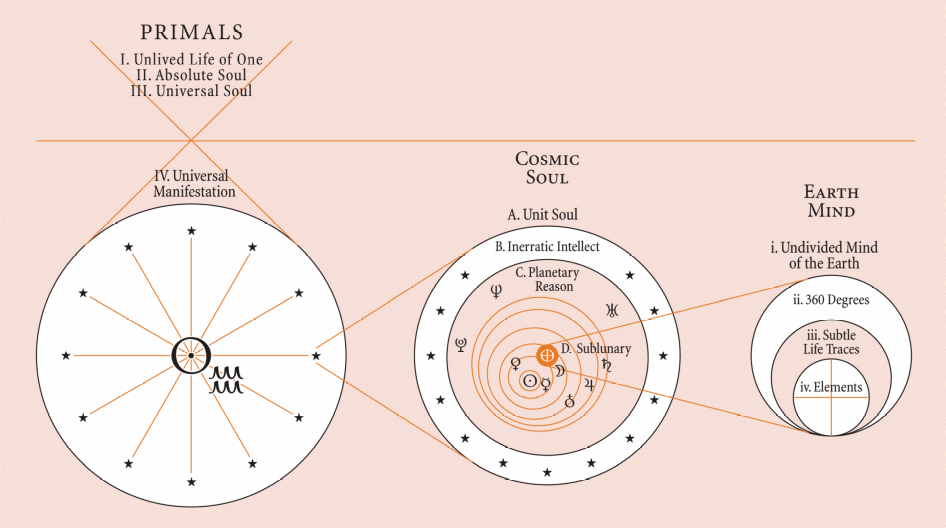
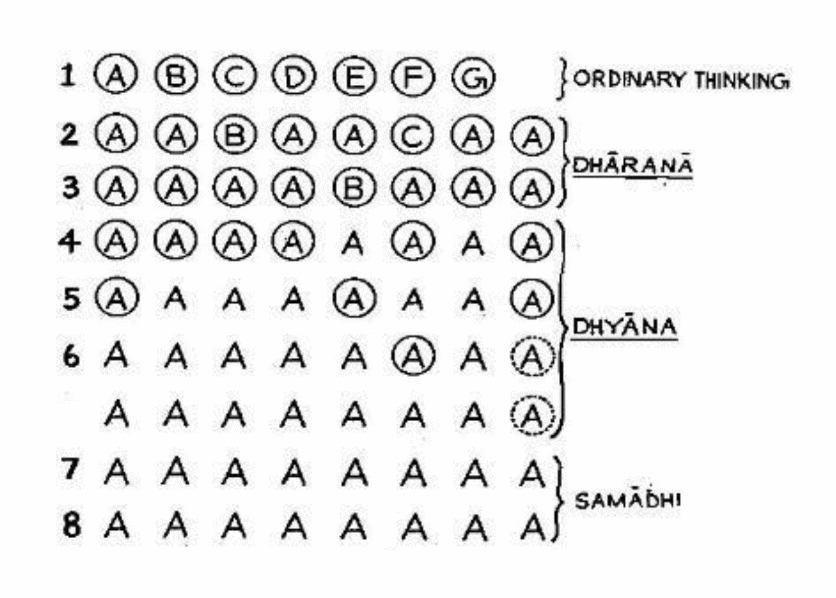
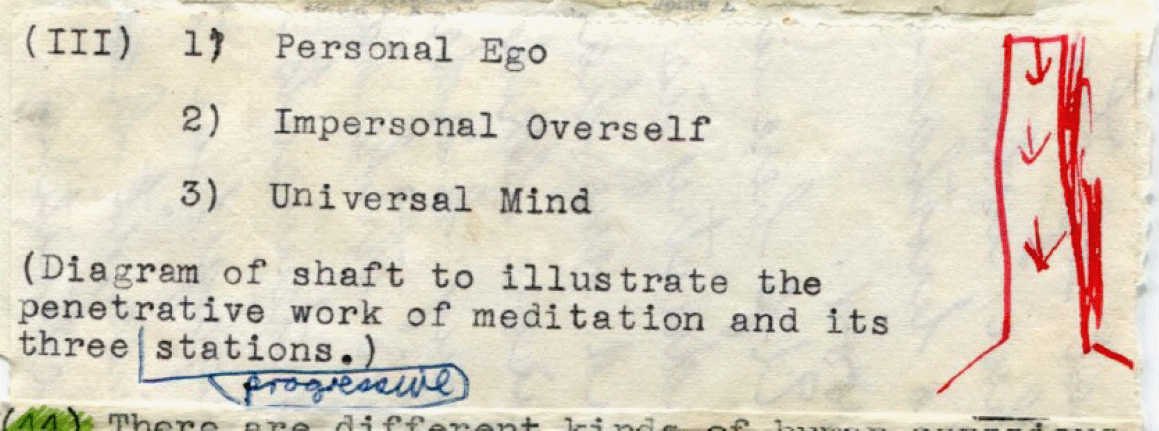
Class held on multiple days
Monday, August 1st, 1983
Verbatim, unedited transcriptMultiday Class Held in Taby, Sweden
with Anthony Damiani (AD)
August 1-11, 1983
PB Paras; Meditation & Mentalism; Astrology
TOPIC: PB Paras
SUBJECT: Meditation & Mentalism
SUBSUBJECTS: Astrology, Epistemology
CONTENTS:
MEDITATION (I)
THE DIFFICULTY OF MEDITATION; THE NEED FOR COMPELLING INTEREST
"THE WHOLE SECRET IS SIMPLY CONCENTRATION"
PRACTICAL METHODS: MANTRAMS, MEMORIZATION, AND IMAGES
THE BASIC PROBLEM: HUMAN INERTIA
DANGERS IN MEDITATION
ATTENTION: THE MEANING OF MEDITATION
MEDITATION VERSUS STUDY: CUTTING OFF THE WORLD
MENTALISM/EPISTEMOLOGY (I)
HOW DO WE KNOW ANYTHING?
DREAMS: PERCEPTION WITHOUT SENSES
"MY WHOLE LIFE MAY BE NOTHING BUT SHEER ILLUSION"
APPLYING REASON TO THE PROBLEM OF KNOWLEDGE
THE STORY OF ARCHIMEDES: IMMERSED IN THOUGHT
THINKING THE WORLD INTO EXISTENCE
TIME EXISTS ONLY WITHIN THOUGHT
THE COMMITMENT PHILOSOPHY REQUIRES
DISTINGUISHING MIND FROM BRAIN
THE IMMEDIACY OF MIND'S PRESENCE
EXPERIENCING PURE MIND WITHOUT THOUGHT
MIND MAKES WHAT IT SEES; PERCEPTION WITHOUT SENSES
REVERSING THE THEORY: AWARENESS COMES FROM WITHIN
ANALYZING PERCEPTION AS IDEAS
THE REALIST-IDEALIST DEBATE; EACH MIND PRESENTS ITS OWN WORLD
THE PHYSIOLOGICAL PROCESSES ARE IDEAS TOO
BEING CONSCIOUS OF BEING CONSCIOUS
FROM NAÏVE BELIEF TO PROFOUND UNDERSTANDING
MIND KNOWS ONLY MENTAL THINGS
BELIEFS INGRAINED THROUGH COUNTLESS LIFETIMES
BELIEVING WORLD AND MIND ARE SEPARATE: INHERITED IGNORANCE FROM ANIMAL EVOLUTION
MENTALISM: THE WORLD AS IDEA IN MIND
EXPERIENCING THE WORLD AS DREAM-LIKE
CHANGING MENTAL HABITS: THE BATTLE AGAINST INGRAINED IGNORANCE
BUILDING PHILOSOPHICAL UNDERSTANDING: HUME, KANT, AND THE DIFFICULTY OF MENTALISM
MENTALISM AS PHILOSOPHY'S FOUNDATION AND BALANCING ITS IMPACT
SPACE AND TIME AS HABITS OF MIND
DISIDENTIFICATION FROM THE BODY AND THE IMMATERIAL NATURE OF "I"
THE DISCIPLINE REQUIRED: TAKING RESPONSIBILITY AND CHANGING DEEP-ROOTED BELIEFS
WOMEN PHILOSOPHERS AND DIFFERENT PATHS TO TRUTH
THE REALITY OF PAIN AND SUFFERING: HOW SAGES EXPERIENCE THE BODY
ONE MIND WITH MANY POWERS
PLATO'S ALCIBIADES AND IGNORANCE OF IGNORANCE; ASKING INTELLIGENT QUESTIONS
RAMANA'S "WHO AM I?", SPIRITUAL RIPENESS, AND THE TEACHER'S POWER
INDIVIDUAL SPIRITUAL GUIDANCE; INTERNAL RECOGNITION OF ONE'S TEACHER
THE NEED FOR STUDY; LIFE AS TEACHER; DISTINCTIONS WITHIN MIND
MEETING ARRANGEMENTS
MEDITATION (II)
PREREQUISITES FOR MEDITATION: PURIFICATION AND FINDING TIME
THE INNER LISTENING ATTITUDE: CATCHING THE LIFE-CURRENT
SOLITUDE, INNER STATES, AND STILLNESS
CONCENTRATION THROUGH DISCURSIVE MEDITATION: TAMING THE WANDERING MIND
FACING THE VOID
WHEN TO PAUSE MEDITATION: INDIVIDUAL JUDGMENT AND TIMING
ADVANCED STATES, PERSISTENCE, PRACTICE GUIDELINES, WARNINGS
PAUL BRUNTON: THE PHILOSOPHER-SAGE AND HIS WORK
REDIRECTING AWARENESS; PRACTICE DURATION; AVOIDING INTERRUPTIONS; BLESSING OTHERS; SELF-OBSERVATION
MEDITATION ON THE PAST
MEDITATION ON THE FUTURE
LIFE AFTER DEATH; INTENSITY OF EMBODIED EXPERIENCE; EVOLUTION REQUIRES CONSCIOUS EFFORT; REINCARNATION
BUDDHA AND CHRIST
PARALLEL PATHS OF DISCIPLINE AND SURRENDER
THE WORLD-IDEA PUSHING HUMANITY; THREE ASPECTS OF THE TEACHING; BECOMING HUMAN
NO BEGINNING, NO END; UNCONSCIOUS CULTURAL CONDITIONING
VARYING DEGREES OF FREE WILL; THE PROBLEM OF SUFFERING; FOCUS ON YOUR OWN CHARACTER
THE PHILOSOPHIC DOCTRINE; OPPENHEIMER; THE NEED FOR SPIRITUAL GUIDANCE
MORE PB PARAS ON MEDITATION
THE VOID STATE VS. UNAWARENESS OF THOUGHTS
PERFECT VS. IMPERFECT CONCENTRATION; EXPERIENCING THE UNITY OF I AND NOT-I; THOUGHT AS AGITATION
PRACTICES FOR CUTTING OFF THOUGHT: HUA T'OU, PRAYER, OBSERVING THOUGHTS, LORD JESUS PRAYER
PERSISTENCE IN MEDITATION PRACTICE; FARWELL HULL
MORE PB PARAS ON MEDITATION; FINDING YOUR BEST PRACTICE TIME; THE IMPORTANCE OF REGULAR PRACTICE
ONLY THE SOUL CAN INITIATE YOU; GRACE COMES FROM WITHIN; THE TEACHER'S ROLE
MENTALISM/EPISTEMOLOGY (II)
THE PHYSIOLOGIST'S GAP; SENSATIONS NEVER OCCUR—ONLY IDEAS
OUR HABITUAL BELIEF IN EXTERNAL MATERIAL THINGS
RECOGNITION OF MENTAL NATURE DOES NOT DISSOLVE THE WORLD
HUME'S NIHILISTIC IDEALISM; QUANTUM MECHANICS VALIDATES MENTALISM
IS ANALYSIS NECESSARY?; CLARIFYING THE MEANING OF 'IDEA'; BUILDING SUFFICIENT BACKGROUND FIRST
OBJECTS HAVE NO EXISTENCE APART FROM MIND
FELLOW CREATURES AS IDEAS
IDEALIST CHALLENGE TO MATERIALISM; MIND AS TRUE PERCEIVER
THE LIGHTNING FLASH OF MENTALISM; NEOREALISM'S COLLAPSE; WORDSWORTH'S MYSTICAL IDEALISM; PRIMACY OF MIND
MENTALISM DOESN'T DISSOLVE THE WORLD; DREAMLIKE QUALITY FOR MYSTICS AND SAGES; READING VS. DOING THE DOCTRINE
THE UNIVERSE TRANSFORMED AND DIVINIZED; SAGE AND PHILOSOPHIC SAGE
THE SAGE AND PAIN; SPIRITUAL FUNCTION OF SUFFERING
THE NATURE OF REASON; REASON VS. LOGIC
THE POWER OF MENTALISM; "THE MIND EXISTS AND DEVELOPS ON ITS OWN LATENT RESOURCES"; THE "WHY" OF MANIFESTATION
RESPONSES TO MENTALISM; HUMAN CONCEPTIONS; NATURE AS MENTAL MIRAGE; WHY ASSUME AN EXTERNAL UNIVERSE?
BEYOND THE MECHANISTIC UNIVERSE; MENTALISM DOESN'T PRECLUDE SCIENCE
REPRESENTATIONALISM CRITIQUED; HUME'S ERROR; KANT'S DEEPER PENETRATION
UNCONSCIOUS MENTAL ACTIVITY; SEED-THOUGHTS; PLATO ON MENTALISM; THE "WHAT" AND THE "HOW"
THE NECESSITY OF BELIEF IN EXISTENCE
PAIN AS EXAMPLE OF MENTALISM; THE KNOWER MORE REAL THAN THE WORLD; THE SUBCONSCIOUS QUESTION
A MIND BEHIND EVERY PARTICLE OF DUST; EVERY ENTITY CREATES ITS OWN WORLD
EACH SOUL CONTAINS THE WHOLE OF THE INTELLECTUAL-PRINCIPLE; BECOMING SATURATED WITH MENTALISM
MENTALISM DOESN'T DENY EXISTENCE, ONLY MATERIALITY; THE WORLD-IDEA'S INDEPENDENCE
MIND LENDS OBJECTIVITY TO ITS OWN CONSTRUCTIONS; IMAGE-MAKING FACULTY; RECOMMENDED READING ON VASANAS
DISCRIMINATION BETWEEN ETERNAL AND TRANSITORY; RATIONALITY NOT ASCETICISM; ART AND THE BEAUTIFUL; OBSESSION WITH PHILOSOPHY
IMPOSSIBILITY OF PHYSICAL IMMORTALITY; STORIES OF SAGES BECOMING LIGHT
THE MIND-MATTER GAP; THE SOLUTION: EVERYTHING IS THOUGHT
ARE THERE REALLY NEW IDEAS?; THE LAST WAVE; GOD'S INEXHAUSTIBLE WISDOM
GAP AS FALSE PROBLEM; BRAIN AS OBJECT NOT SUBJECT
MIND OPERATING THROUGH A DEFECTIVE BODY; NEW HABITS MUST BE FORMED WHILE EMBODIED; THE SAGE WILLS HIS INCARNATION
MATTER AS CONJECTURE; NOTHING BENEATH APPEARANCES
REASONING OUT MENTALISM FOR YOURSELF
MENTALISM AS TRUE SPIRITUAL PHILOSOPHY; LOST CHRISTIAN WISDOM; TRADITIONS WILL FADE
GODS AS PRINCIPLES; THE BIBLE'S LIMITED INSPIRED CONTENT
ON CAUSALITY AND NON-CAUSALITY; THE DOUBLE STANDPOINT
ASTROLOGY AND THE PROBLEM OF CAUSATION; MORE ON THE DOUBLE STANDPOINT
MATTER AS MENTAL CONSTRUCT; CLARIFYING WHAT "FEELS"
ASTROLOGY (I)
THE SPIRITUAL USE OF ASTROLOGY: OBJECTIFYING THE IDEAS THAT CONSTITUTE YOUR PSYCHE
ASPECTS BETWEEN CHARTS: WHY SOME PEOPLE ARE SIGNIFICANT TO YOU
NO GOOD OR BAD ASPECTS; DIFFERENT SYMBOL SYSTEMS (JONES, KOZMINKSY, RUDHYAR); YOUR DEGREES DETERMINE WHAT'S MEANINGFUL TO YOU
SEPTILES (FIXED IDEAS) AND QUINTILES (SKILLFUL EXPRESSION); MOZART AND OPPENHEIMER AS EXAMPLES
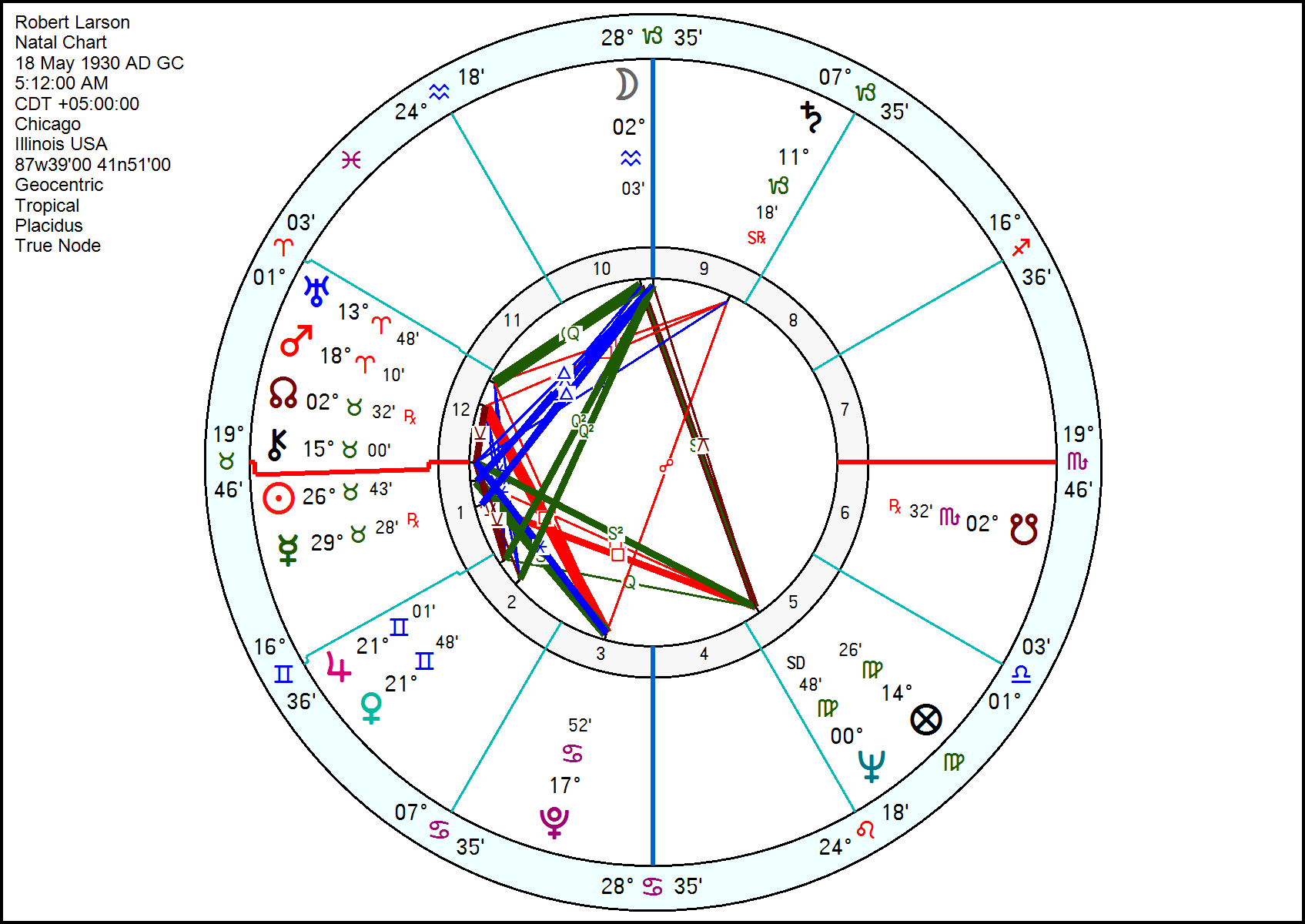
ROBERT LARSON CHART READING
REGULAR ASPECTS (SEXTILE, SQUARE, TRINE, OPPOSITION)
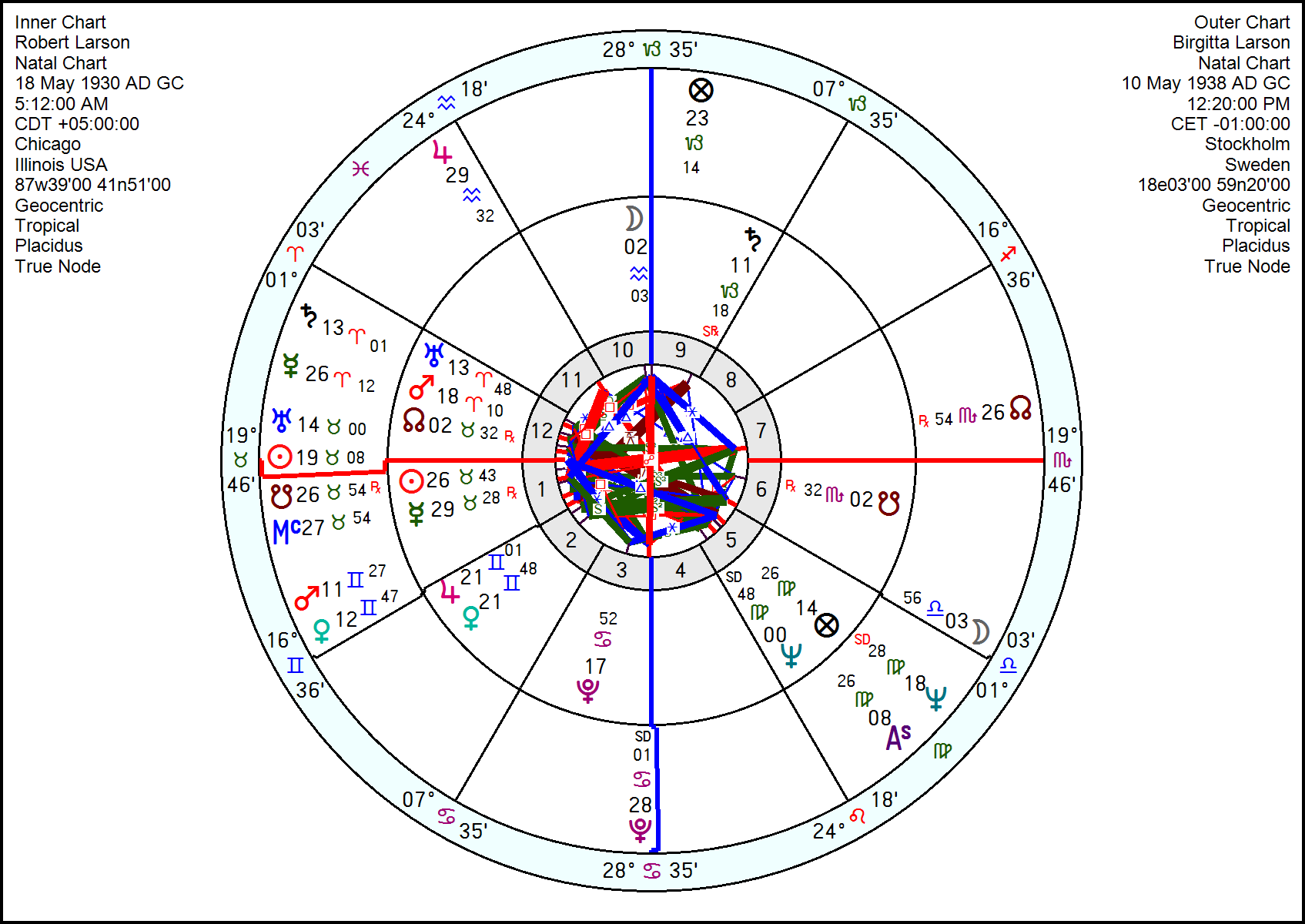
USING SYNASTRY TO UNDERSTAND RELATIONSHIPS
THE IMPORTANCE OF WORK IN PERSONALITY DEVELOPMENT
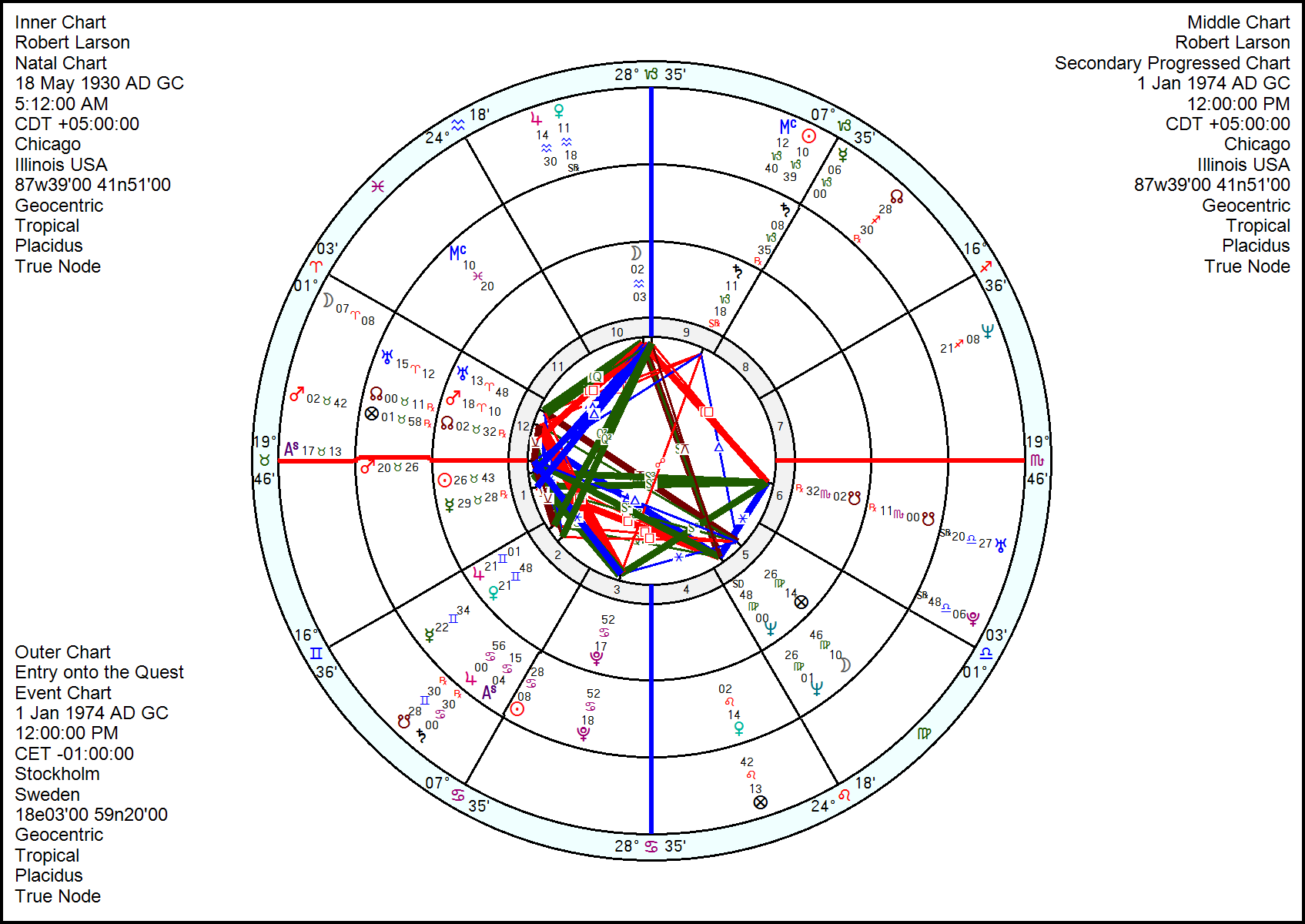
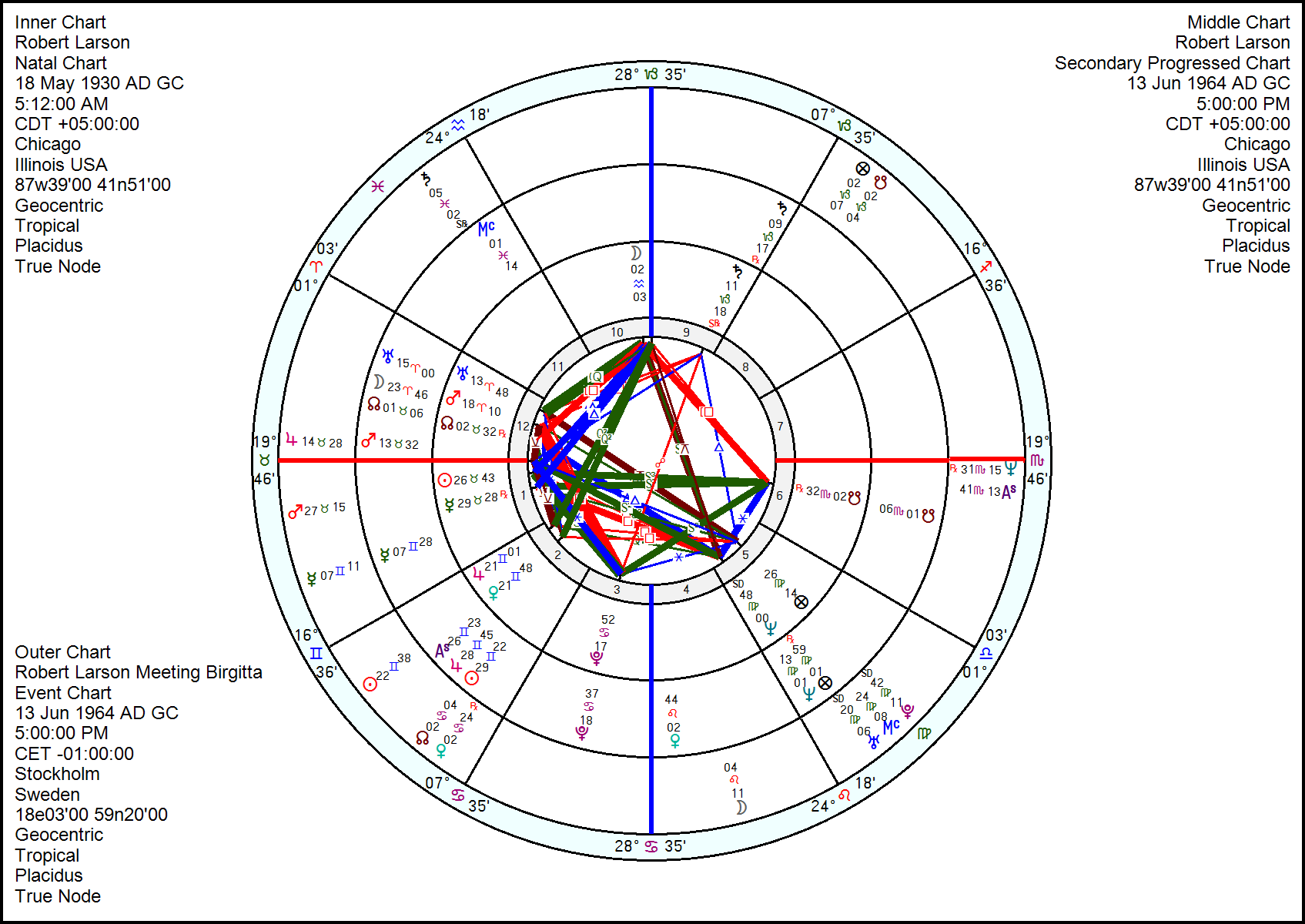
ROBERT LARSON'S TRANSITS AND PROGRESSIONS FOR MEETING HIS WIFE
WEAVING ASPECTS INTO A DOSSIER; THE DEMANDING WORK OF COMPLETE CHART DELINEATION
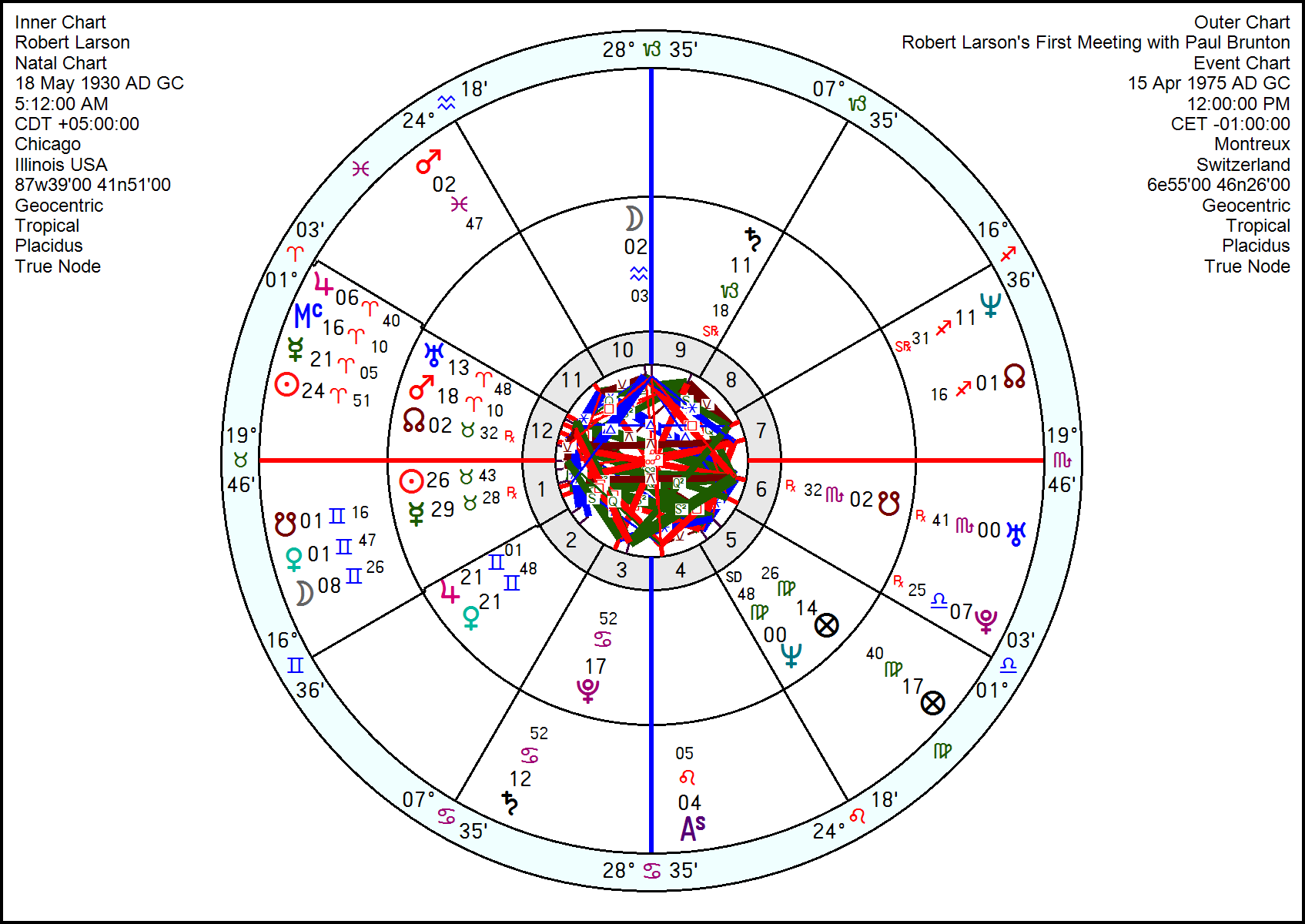
ROBERT LARSON'S TRANSITS FOR MEETING PB
MORE ON SEPTILES AND QUINTILES; ROBERT'S SEPTILE WHEN MEETING HIS WIFE; SEPTILES MARK LIFE'S FATEFUL MOMENTS
THE 360 DEGREES VS. PLANETARY FOCUS; CRITICIZING MODERN ASTROLOGY'S APPROACH
THE PHILOSOPHIC FOUNDATIONS OF ASTROLOGY: PLANETS AS BODIES OF GODS; DIFFERENT DIMENSIONS CO-EXISTING
THE 360 GODS: PYTHAGORAS, KALACHAKRA, AND PB'S SUNRISE EXERCISE; THE PRIMITIVE STATE OF MODERN ASTROLOGY
PLOTINUS ON ASTROLOGY; AD ON HIS OWN BOOK (ASTRONOESIS)
THE ASCENDANT AND THE ARABIC PARTS; KNOWING THAT YOU DON'T KNOW
GUIDANCE ON THE QUEST
REQUEST FOR PRACTICAL GUIDANCE; PRINCIPLES OVER PRESCRIBED ACTIONS
"WHO'S LOOKING?"; UNDERSTANDING MENTALISM AND EXPERIENCING IT IN MEDITATION
BRIEF COMMENTS ON THE EGO; REAL COMPASSION VS. TEMPORARY FEELINGS
TESTS, TEMPTATION, AND THE DRAGON'S GLAMOUR
SHADOW WORK DEBATE; THE EGO'S POWER
THE THREE INITIATIONS: MYSTICAL DEATH, TRAINING, AND PERMANENT UNION
NORMALCY AS PREREQUISITE; SUFFERING AS TEACHER; THE INFINITE ADVENTURE
SOUL AS TRUE TEACHER; TEACHERS VS. SAGES; REMARKS ON SHANKARACHARYA, PB, DALAI LAMA, RAMANA, ANANDAMAYI MA
ANIMALS
MEDITATION (III)
WARNINGS ABOUT MEDIUMSHIP; DANGERS FOR WOMEN ASPIRANTS
DANGERS OF IMAGINATION AND EXPECTATION IN MYSTICAL PRACTICE
PREREQUISITES FOR SAFE MEDITATION; MODERNIZING MYSTICISM; DEVELOPING INTUITION
SCOTT AND SMYTHE'S EXPERIENCE; EMPTYING THE MIND TO AFFIRM PURE THOUGHT
THE VOID MIND; WHO SEES? – THE PRACTICE OF SELF-INQUIRY
THE HARD WORK OF CONCENTRATION; PERSONAL STRUGGLES AND EXAMPLES
INDIVIDUAL OVERSELF AS GATEWAY TO INTELLECTUAL-PRINCIPLE
DISTINGUISHING PSYCHIC FROM SPIRITUAL EXPERIENCE
PHILOSOPHICAL MYSTICISM; ART AND BEAUTY AS SPIRITUAL GATEWAYS
LEARNING THROUGH ONE'S OWN MISTAKES; UNDERSTANDING AND APPLYING PRINCIPLES
MISCELLANEOUS PARAS ON MEDITATION; RODIN EXAMPLE OF CONCENTRATION
THINKING AND NON-THINKING BOTH NEEDED; PHILOSOPHICAL VS. YOGIC METHODS; TAIMNI DIAGRAM
TURNING ATTENTION UPON ITSELF; WHEN NOT TO MEDITATE
MYSTICISM MORE IMPORTANT THAN METAPHYSICS; EXPERIENCE VS. CONCEPTS
THINKING MUST BE FULFILLED BEFORE ABANDONED; THE WESTERN APPROACH
REFLECTION AS PART OF PHILOSOPHIC YOGA
ELEMENTARY MEDITATION ADVICE AND SIMPLE EXERCISES
USING MEDITATION TO UNDERSTAND LIFE EXPERIENCES AND SEEK GUIDANCE
MAINTAINING CONCENTRATION THROUGHOUT DAILY LIFE
FROM PHYSICAL STILLNESS TO MENTAL MASTERY; CONCENTRATION AS PROTECTION AGAINST PSYCHIC DANGERS; USE OF MANTRAM
CONCENTRATION VS. MEDITATION; THINKING BECOMING ECSTATIC AND CULMINATING IN INTUITION; CONCENTRATION AS PREREQUISITE FOR PHILOSOPHY
VARIATIONS IN CONCENTRATION ABILITY; NATURAL ABILITY VS. LEARNED CONTROL; DIRECTING CONCENTRATION AT WILL
LIBERATION FROM COMPULSIVE EMOTIONALITY; THE DETACHED ARTIST
BRINGING THE MIND BACK TO THE ORIGINAL THOUGHT; INFORMAL PRACTICE DURING DAILY LIFE VS. FORMAL SITTING; CUTTING OFF THOUGHTS WITHOUT EXAMINATION
THE SAMURAI'S MEDITATIVE SWORDSMANSHIP; TEA CEREMONY
FINDING TIME FOR PRACTICE; GOING DEEP AND WAITING IN SILENCE; AVOIDING HASTE AND NOT MEDITATING DURING EXTREME EMOTIONS
CHARACTER AS SAFEGUARD; LIVING BY IDEALS AND PRINCIPLES
THE LAW OF KARMA; EMERSON ON COMPENSATION
DEALING WITH NEGATIVE PEOPLE; STOPPING REACTIONS THROUGH HUA T'OU; RE-EDUCATING INSTINCTS
PROPER RE-ADJUSTMENT AFTER PRACTICE; INSPIRATION UPON COMING OUT OF SILENCE
RUTHLESSNESS IN MEDITATION; THE ZEN SICKNESS; MEDITATION'S SUPREME VALUE
MENTALISM AND MEDITATION AS THE TWO LEADING CONCEPTS; SPIRITUAL REPRESSION; POLITICAL PHILOSOPHIES REDUCING MAN TO THE BODY
SELF-FORGIVENESS AND EMOTIONAL HEALING AFTER STILLNESS; INTUITIVE GUIDANCE DURING PRACTICE; THE INTERIOR WORD
ASTROLOGY (II)
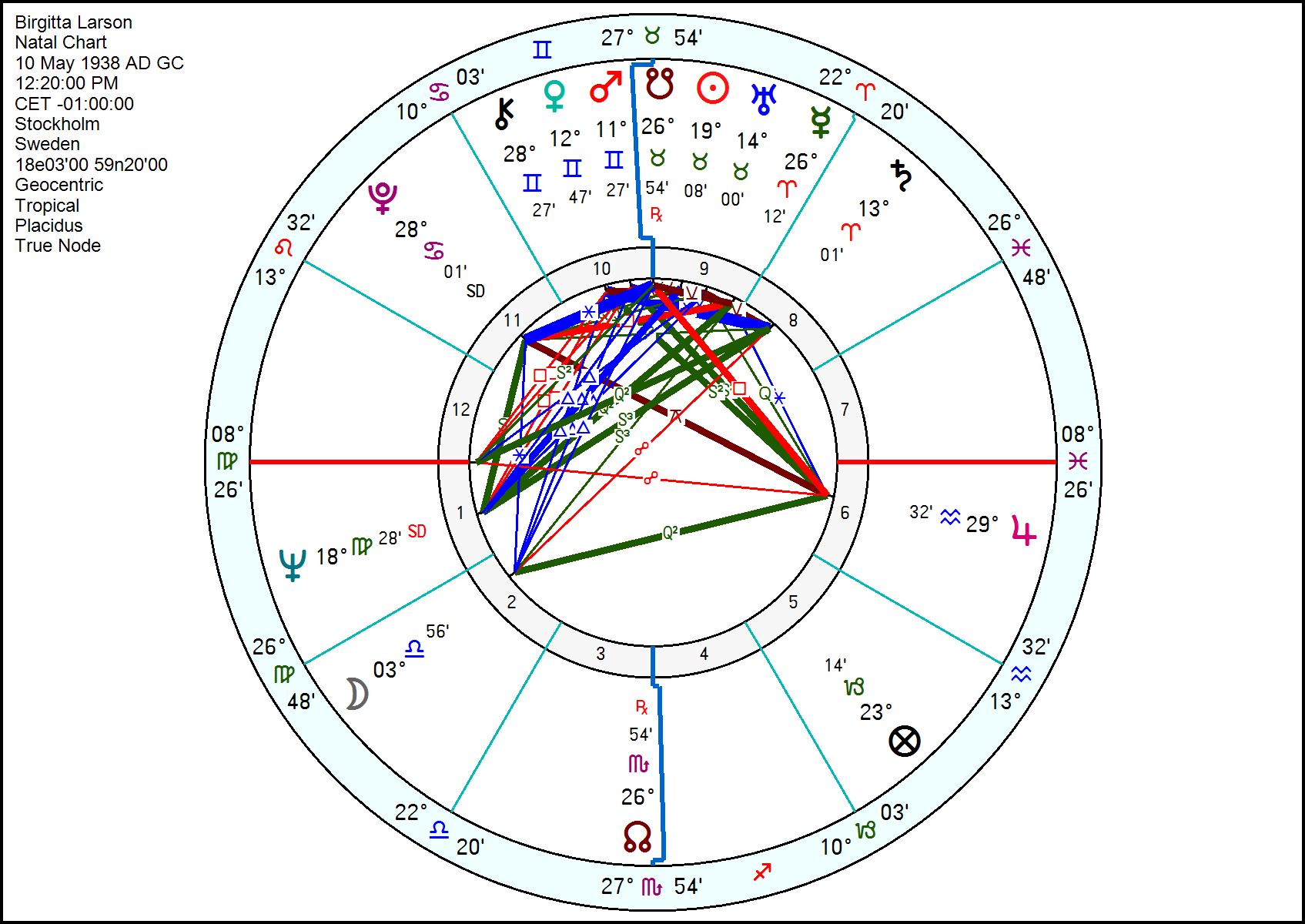
ASTROLOGY THEORY: PERSONS AS COMBINATIONS OF IDEAS; BIRGITTA LARSON CHART READING
INTUITION
DISTINGUISHING TRUE INTUITION FROM PSEUDO-INTUITION
CONCLUDING REMARKS
ADVICE FOR CONDUCTING GROUP STUDY (IN SWEDEN)
FOCUS ON PB GIVEN LIMITED TIME; THE APPROACHING SPIRITUAL CRISIS; PREREQUISITES FOR BEING A QUESTER
ASTROLOGICAL MANDALA AS FRAMEWORK FOR COMPREHENSIVE PHILOSOPHICAL SYNTHESIS; BUDDHIST-VEDANTIC POSITIONS AS COMPLEMENTARY
THE CREATIVE POWER OF THOUGHT; IMPORTANCE OF INTELLECTUAL HONESTY; MAN DEFINED AS THINKING BEING
BOTH THINKING AND VACUUM MIND NECESSARY; FULLY DEVELOPING RATIONAL CAPACITY; POWER INCREASED THROUGH CONTEMPLATION
REFERENCES:
Paul Brunton, The Hidden Teaching Beyond Yoga
Paul Brunton, The Wisdom of the Overself
Paul Brunton, The Secret Path
Paul Brunton, A Search in Secret India
Paul Brunton, The Spiritual Crisis of Man
Paul Brunton, Notebooks. 16 vols; Vol. 1 entitled Perspectives [Persp.], published 1984-1988. Some Paul Brunton Notebook paras are, as of 2019, unpublished, and are noted as such.
William Shakespeare, The Tempest
Plato, Phaedo, First Alcibiades, Republic, Symposium, Parmenides
Ralph Waldo Emerson, Essays: First Series, "Self Reliance", "Compensation"
Ralph Waldo Emerson, The Complete Works of Ralph Waldo Emerson, Vol. IX, Poems, "Maia"
Ralph Waldo Emerson, Essays: First and Second Series
C.G. Jung, Aniela Jaffe (ed.), Memories, Dreams, Reflections
C. G. Jung, The Red Book: Liber Novus ("Septem Sermones ad Mortuos")
Lewis Carroll, Through the Looking-Glass, and What Alice Found There; Alice's Adventures in Wonderland
Bertrand Russell, The Problems of Philosophy
William Wordsworth, "Ode: Intimations of Immortality from Recollections of Early Childhood"
Maharishi Valmiki, Yogavasistha-Ramayana
Mircea Eliade, Yoga: Immortality and Freedom
Swami Sri Vidyaranyasaraswati, The Jivanmukti-Viveka or The Path to Liberation in this Life
Bible, John (1:1)
Robert Hand, Horoscope Symbols
Isidore Kozminsky, Zodiacal Symbology and its Planetary Power
Dane Rudhyar, An Astrological Mandala: The Cycle of Transformations and its 360 Symbolic Phases
Marc Edmund Jones, The Astrology of Concepts
Marc Edmund Jones, The Sabian Symbols in Astrology
Vyasa, Bhagavad Gita
George William Russell (A.E.), The Candle of Vision
Ellic Howe, Astrology: A Recent History Including the Untold Story of Its Role in World War II
Plotinus, The Enneads (MacKenna translation, 4th ed.)
Franz Pfeiffer, Meister Eckhart, Vol. 1, trans. C. de B. Evans
Giuseppe Tucci, The Religions of Tibet
I.K. Taimni, The Science of Yoga
Sri Venkataramiah (Swami Ramanananda Saraswati), Recorder, Talks with Sri Ramana Maharshi
D.T. Suzuki, Zen and Japanese Culture
Kaiten Nukariya, The Religion of the Samurai
Hans-Ulrich Rieker, Beggar Among the Dead
Surendranath Dasgupta, A History of Indian Philosophy, 5 vols.
Eduard Zeller, Outlines of the History of Greek Philosophy
John C. Plott, Global History of Philosophy, 5 vols.
Johan August Strindberg, The Dance of Death
PLOTINUS QUOTES READ OR REFERENCED: I.3, II.3.7, II.3.9, IV.4.8
DIAGRAMS and CHARTS appended to this transcript:
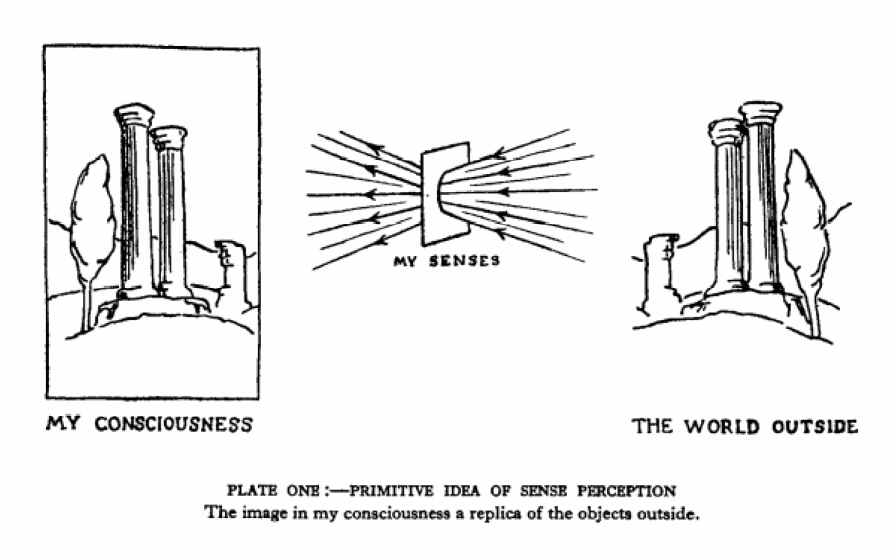
FIGURE 1983 0801-1. Primitive Idea of Sense Perception.
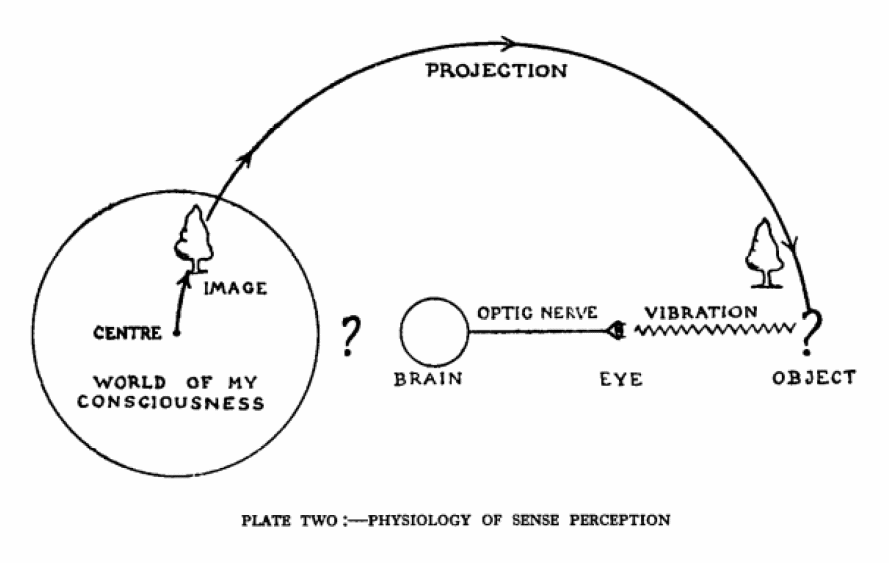
FIGURE 1983 0801-2. Physiology of Sense Perception.
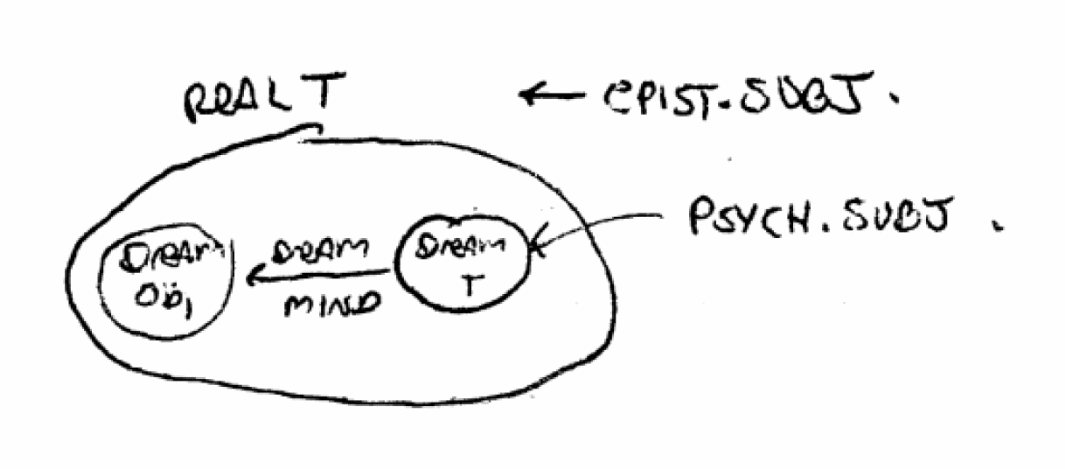
FIGURE 1983 0801-3-AB. Real Tony and Dream Tony Knowing Dream Objects.
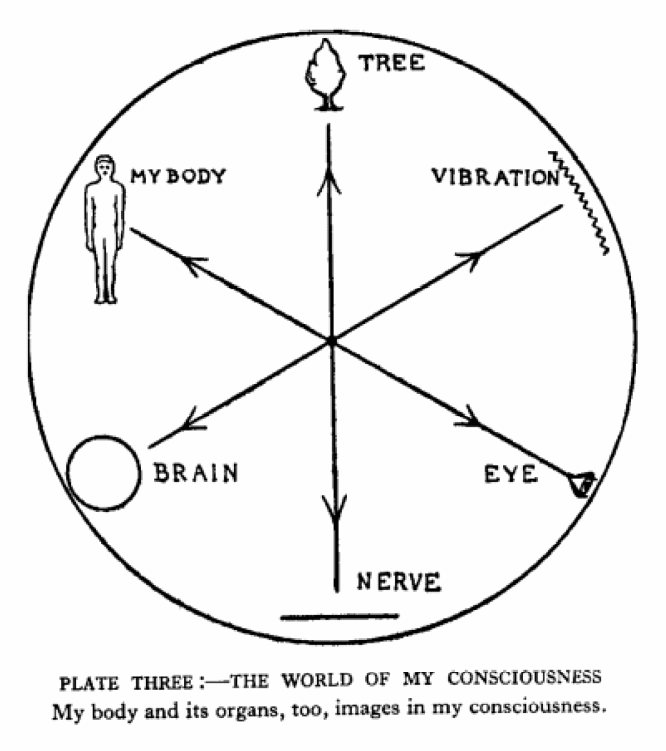
FIGURE 1983 0801-4. The World of My Consciousness.
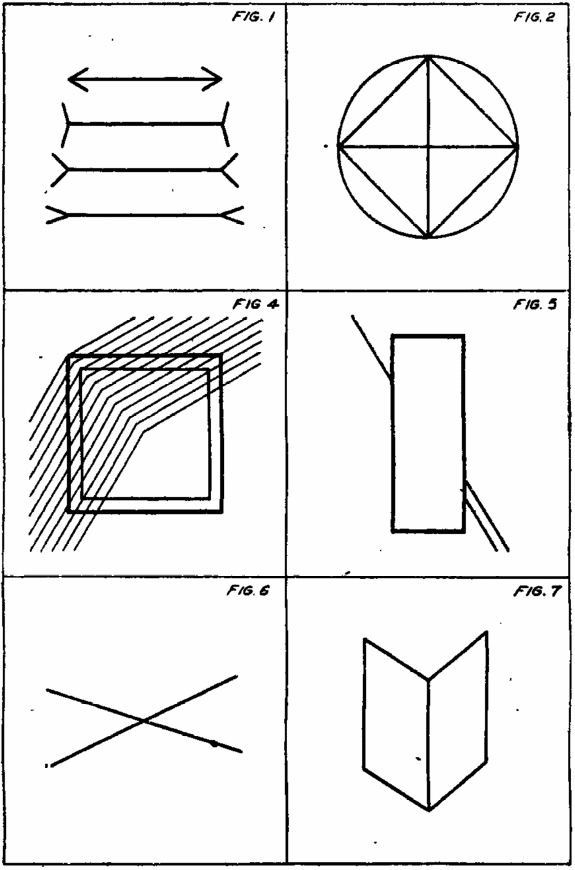
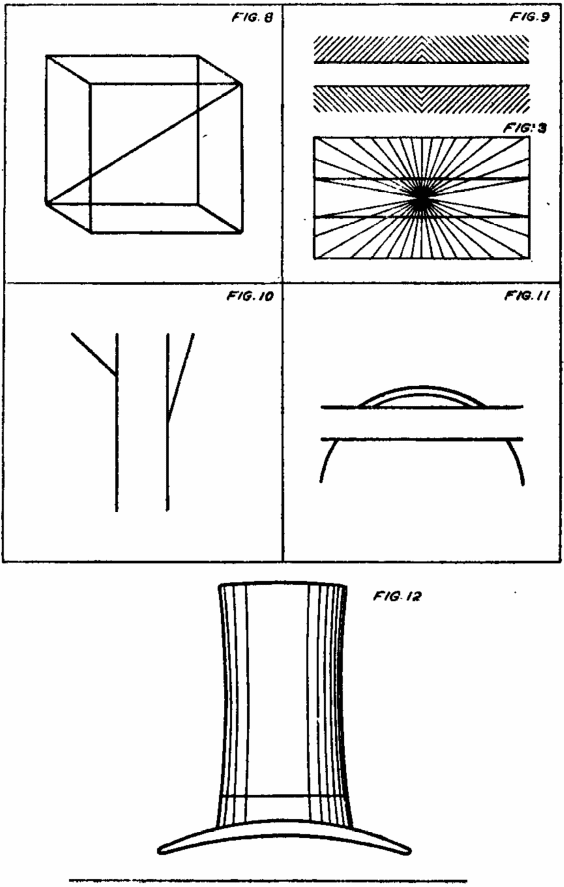
FIGURE 1983 0801-5. Optical Illusions.
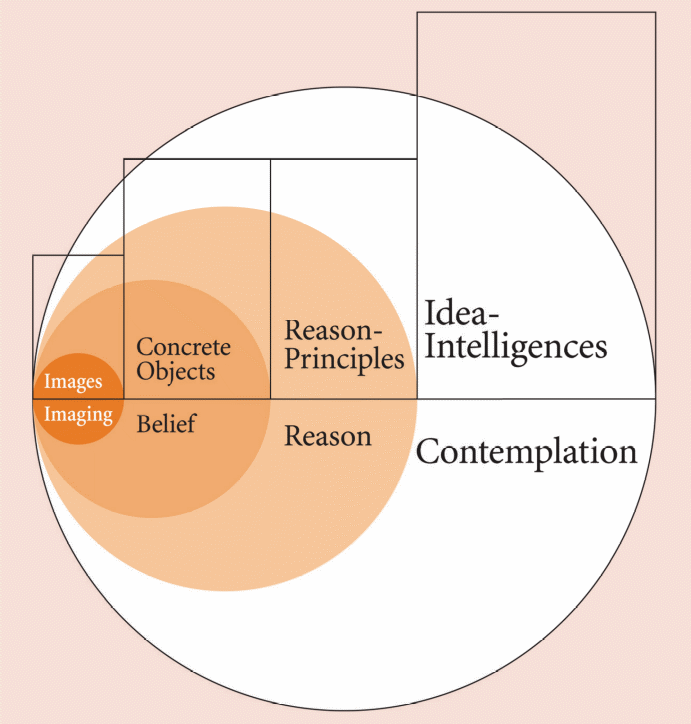
FIGURE 1983 0801-6. Divided Line.
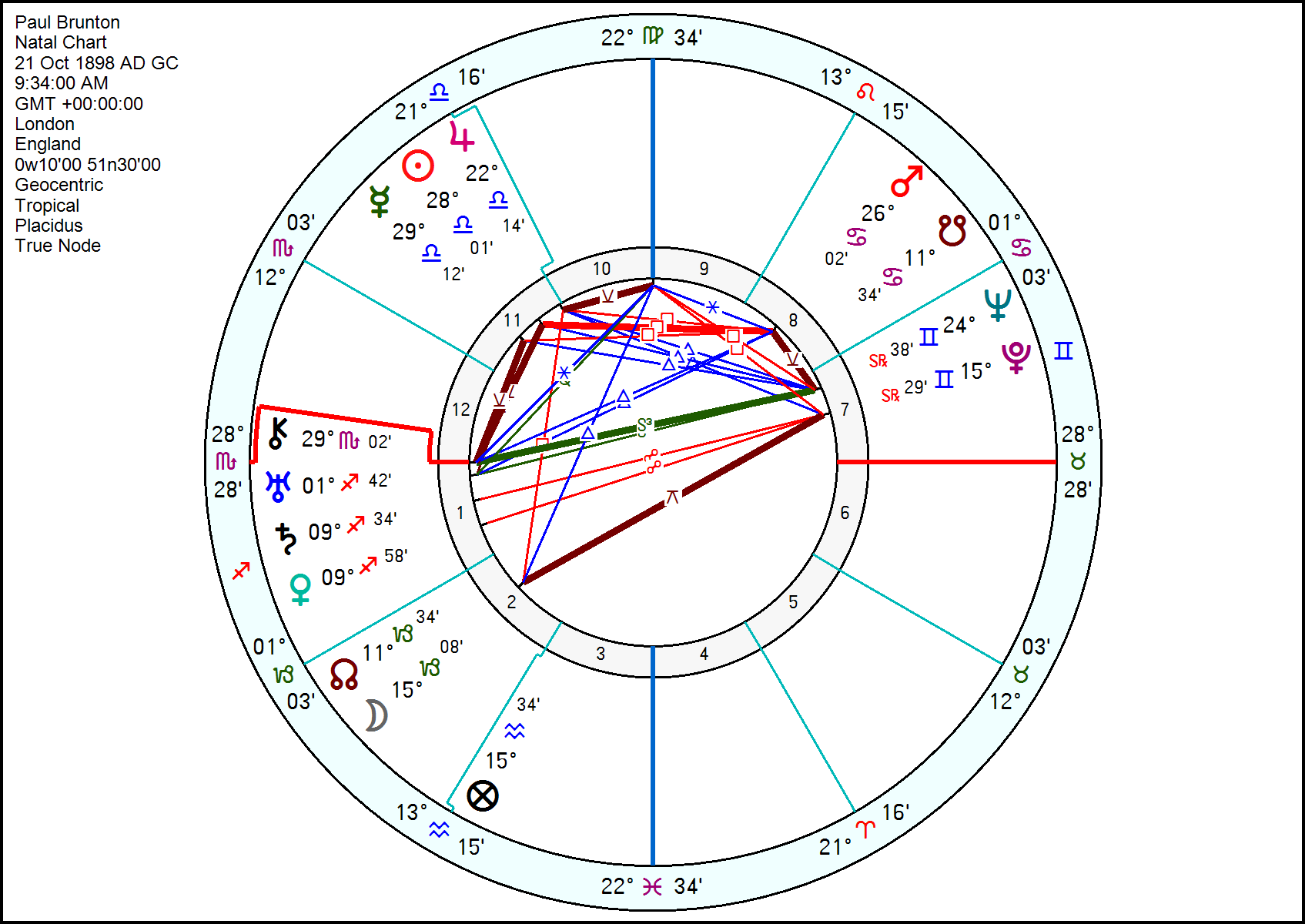
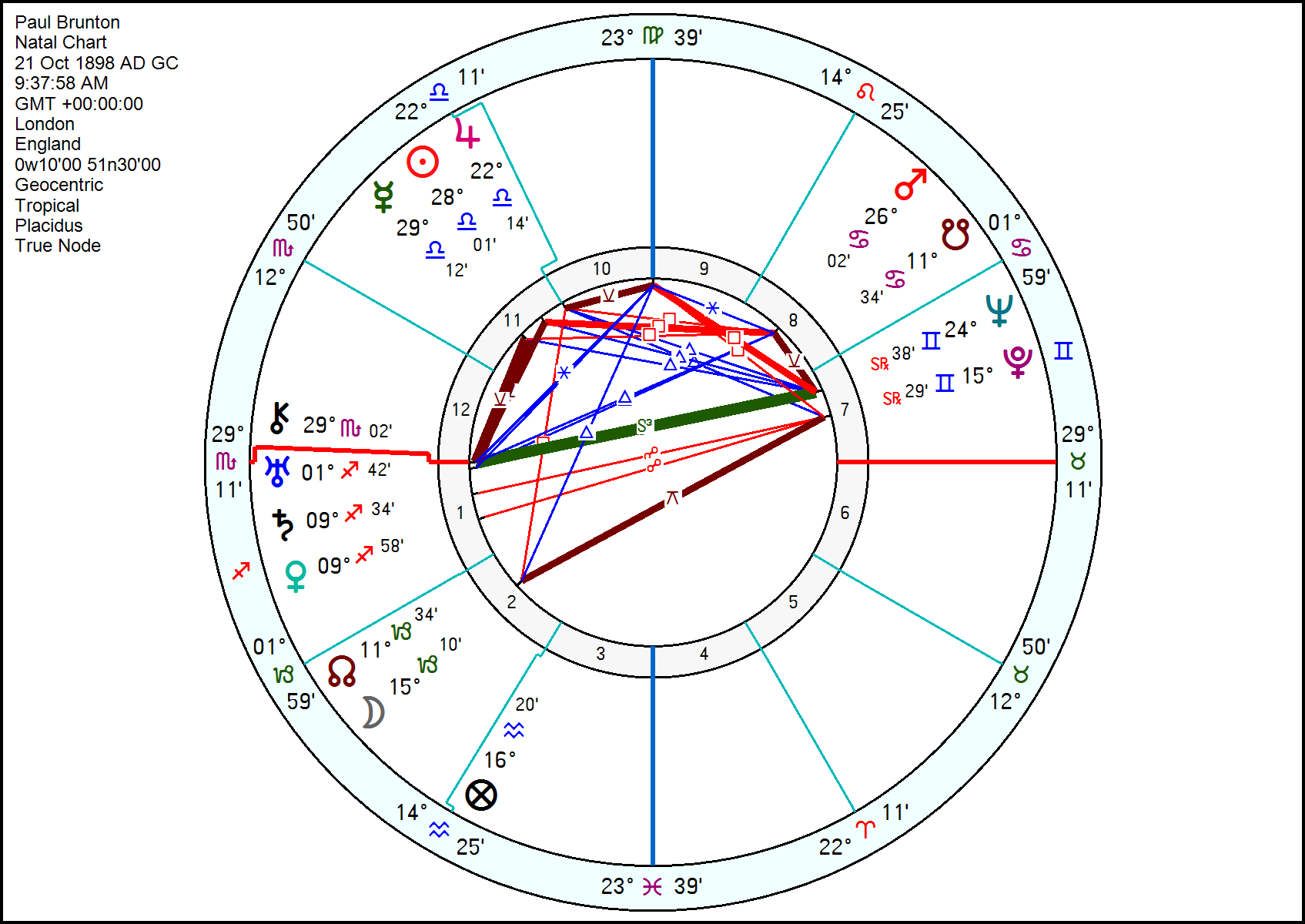
FIGURE 1983 0801-7. Paul Brunton (PB) Natal Chart ("official").
FIGURE 1983 0801-8. Paul Brunton (PB) Natal Chart (TS rectified).
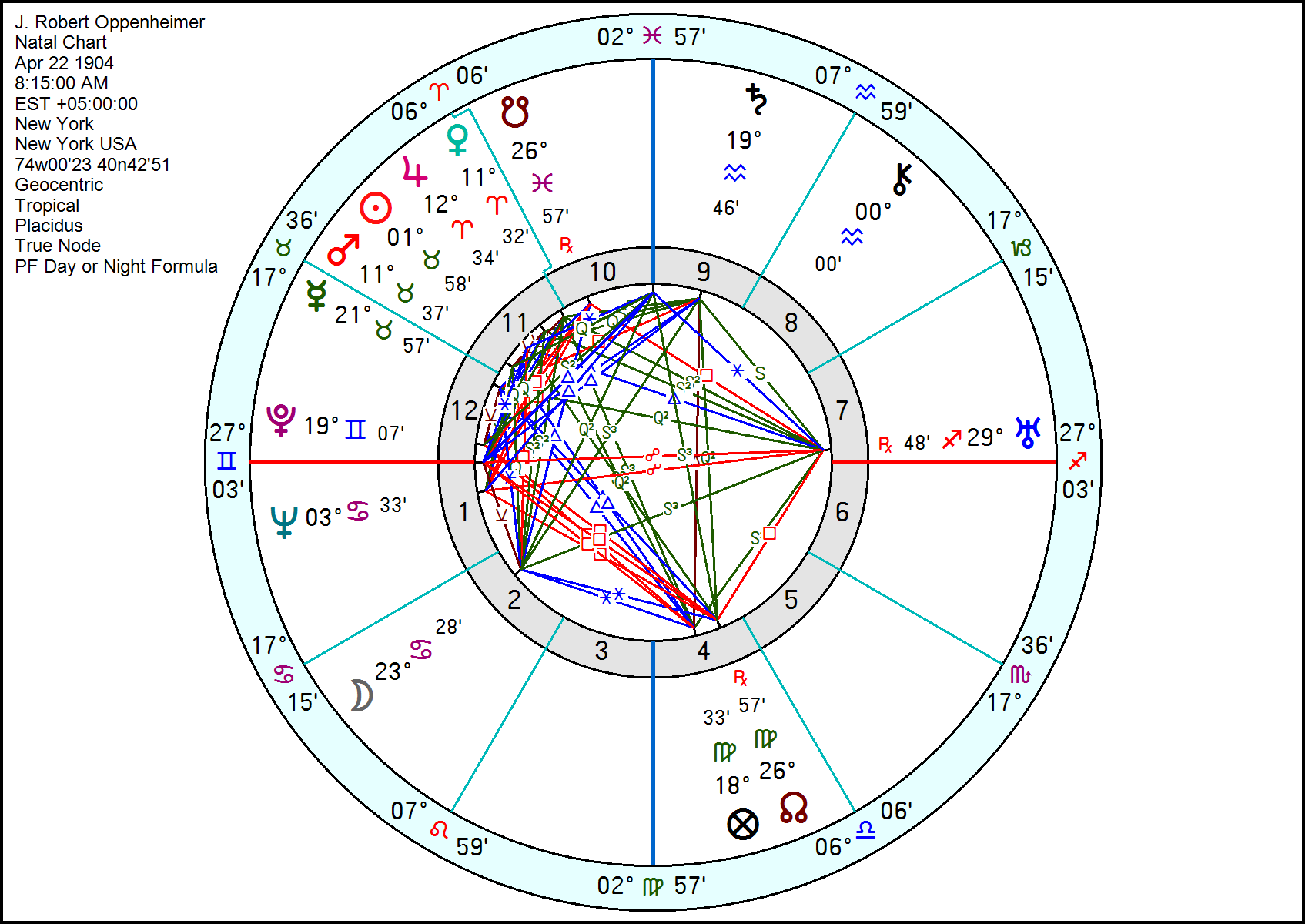
FIGURE 1983 0801-9. J. Robert Oppenheimer Natal Chart.
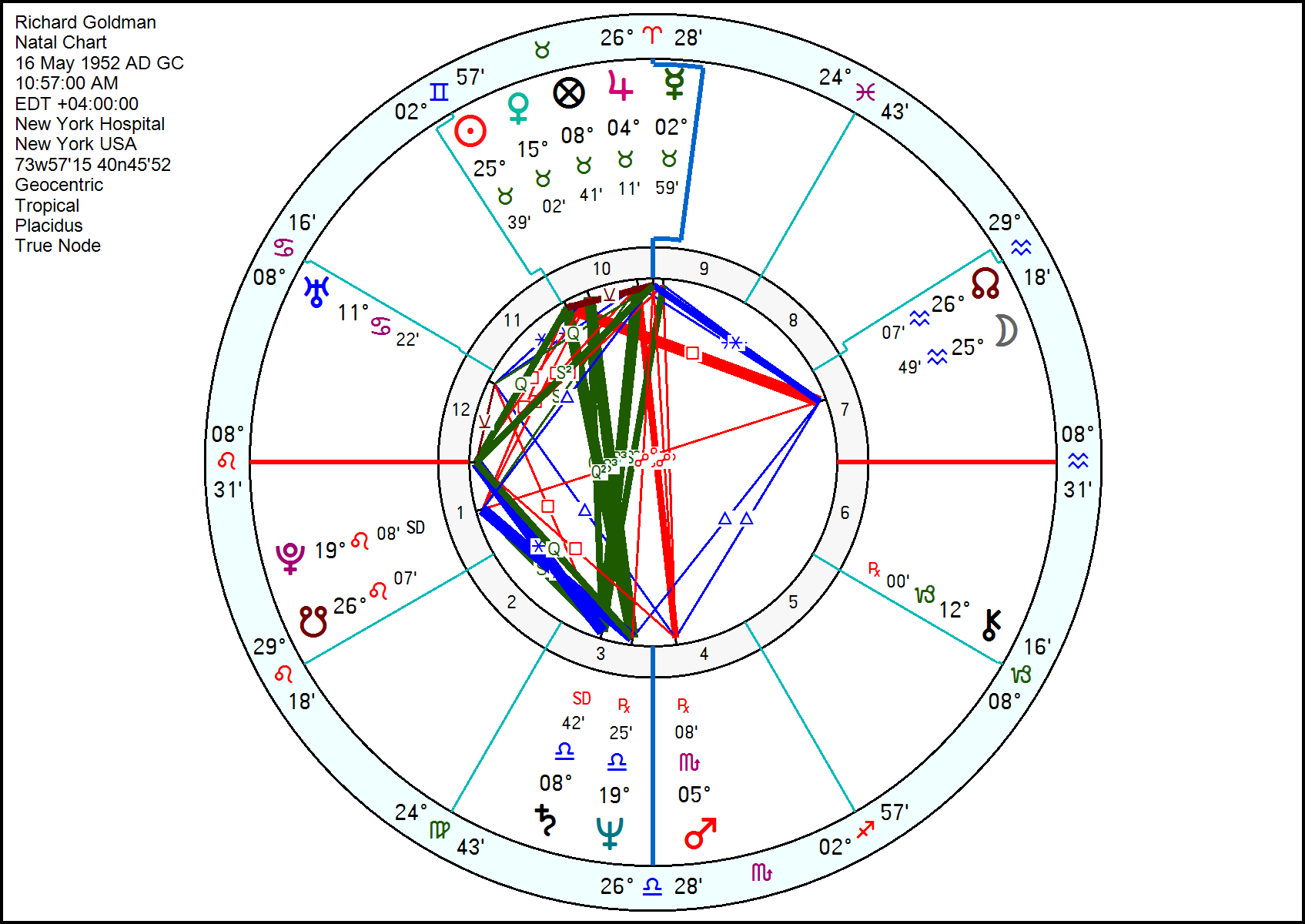
FIGURE 1983 0801-10. Richard Goldman Natal Chart.
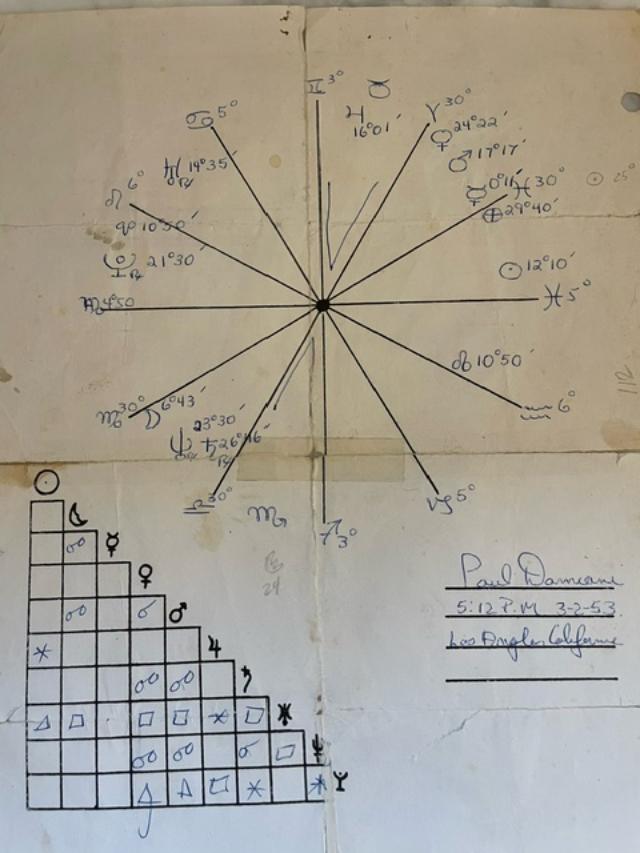
FIGURE 1983 0801-11. Paul Damiani Natal Chart.
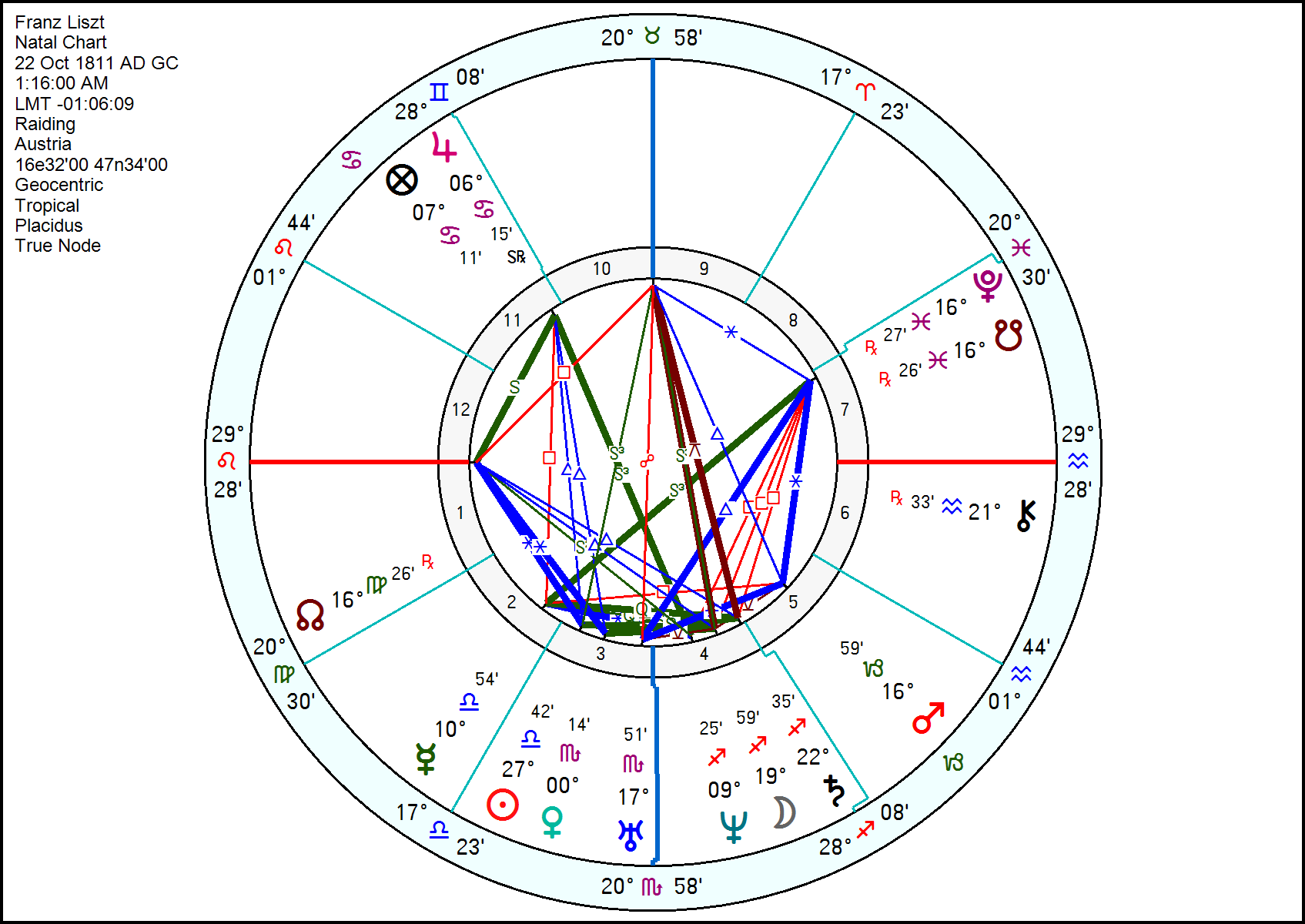
FIGURE 1983 0801-12. Franz Liszt Natal Chart.
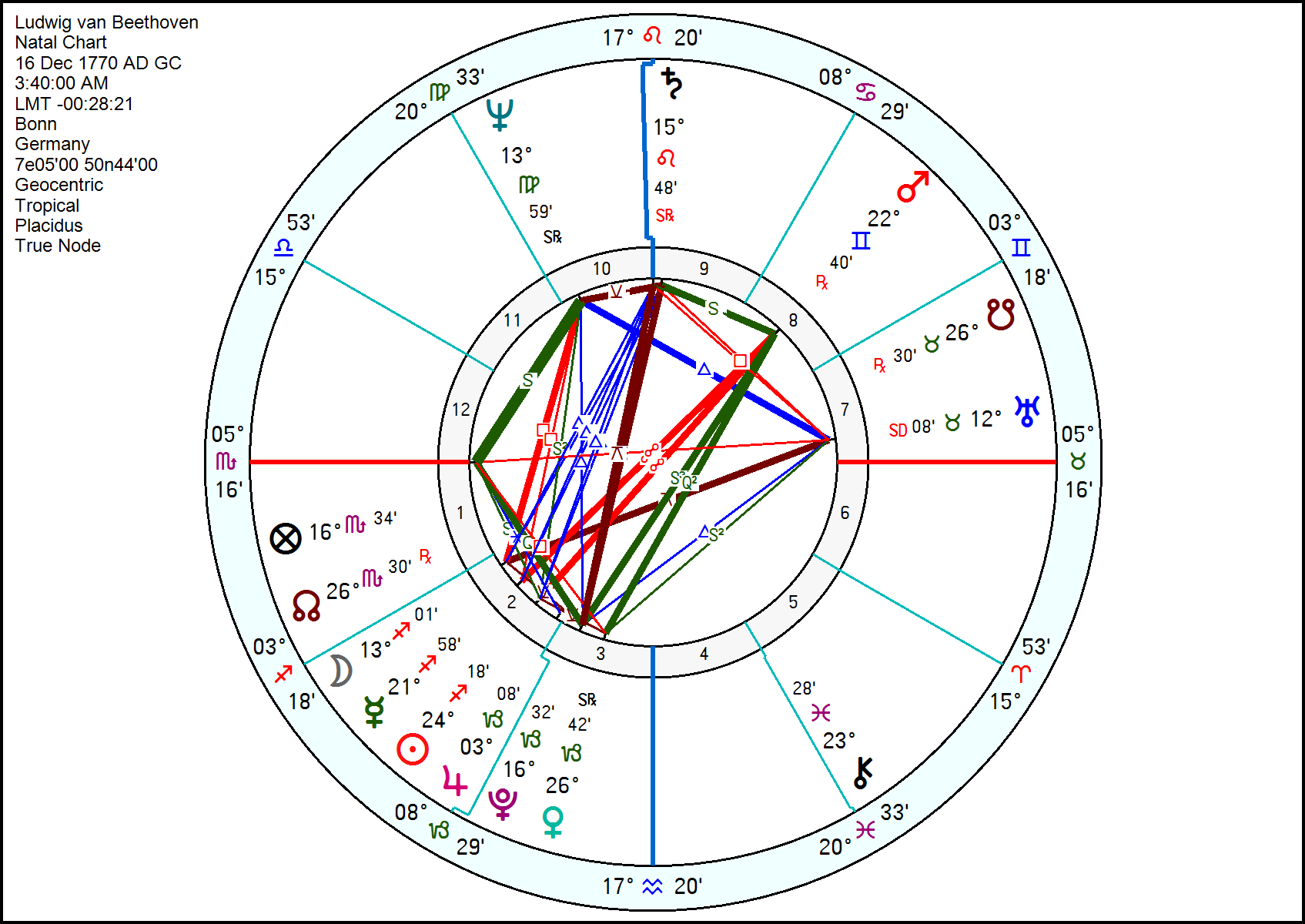
FIGURE 1983 0801-13. Ludwig van Beethoven Natal Chart.
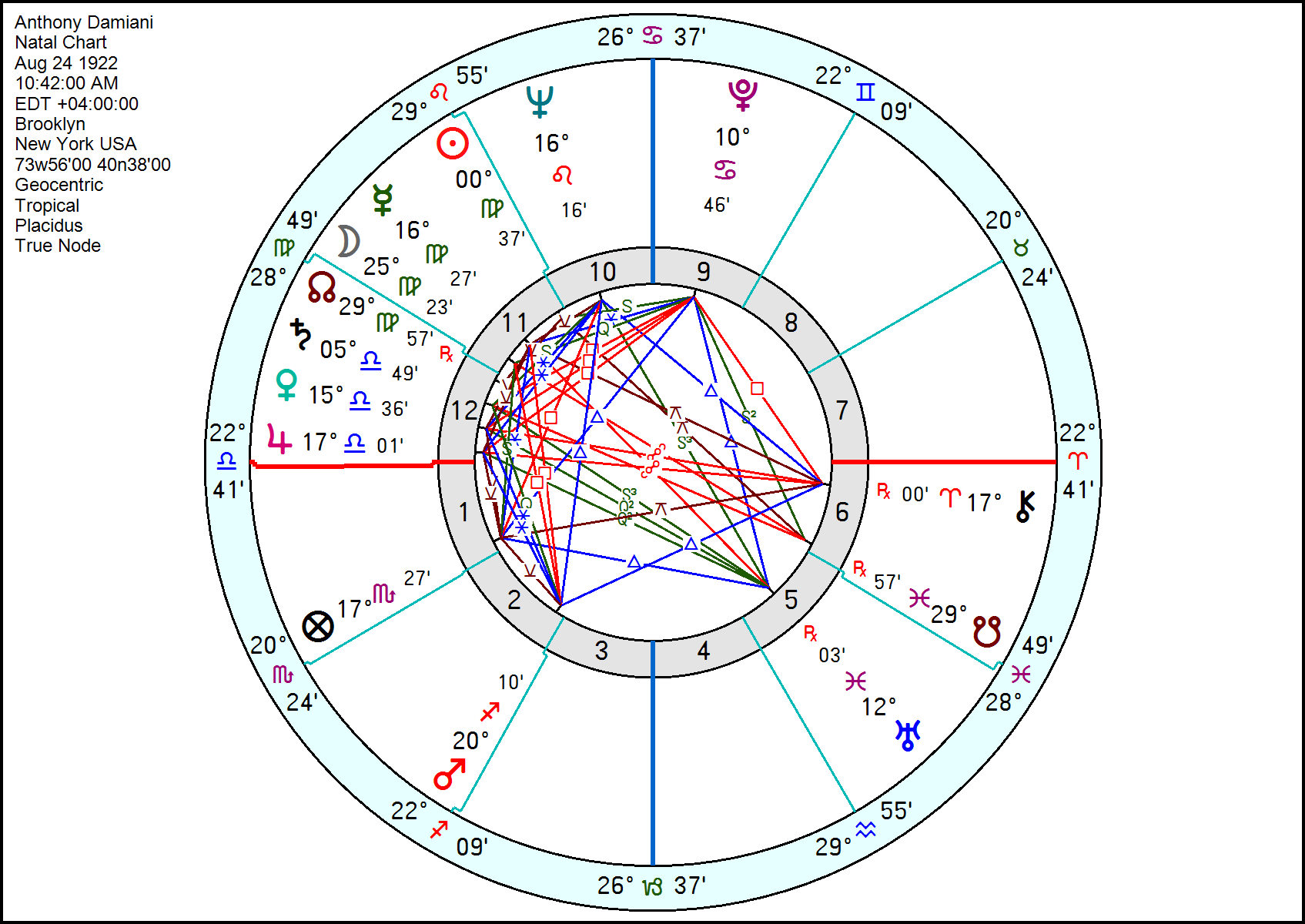
FIGURE 1983 0801-14. Anthony Damiani Natal Chart.
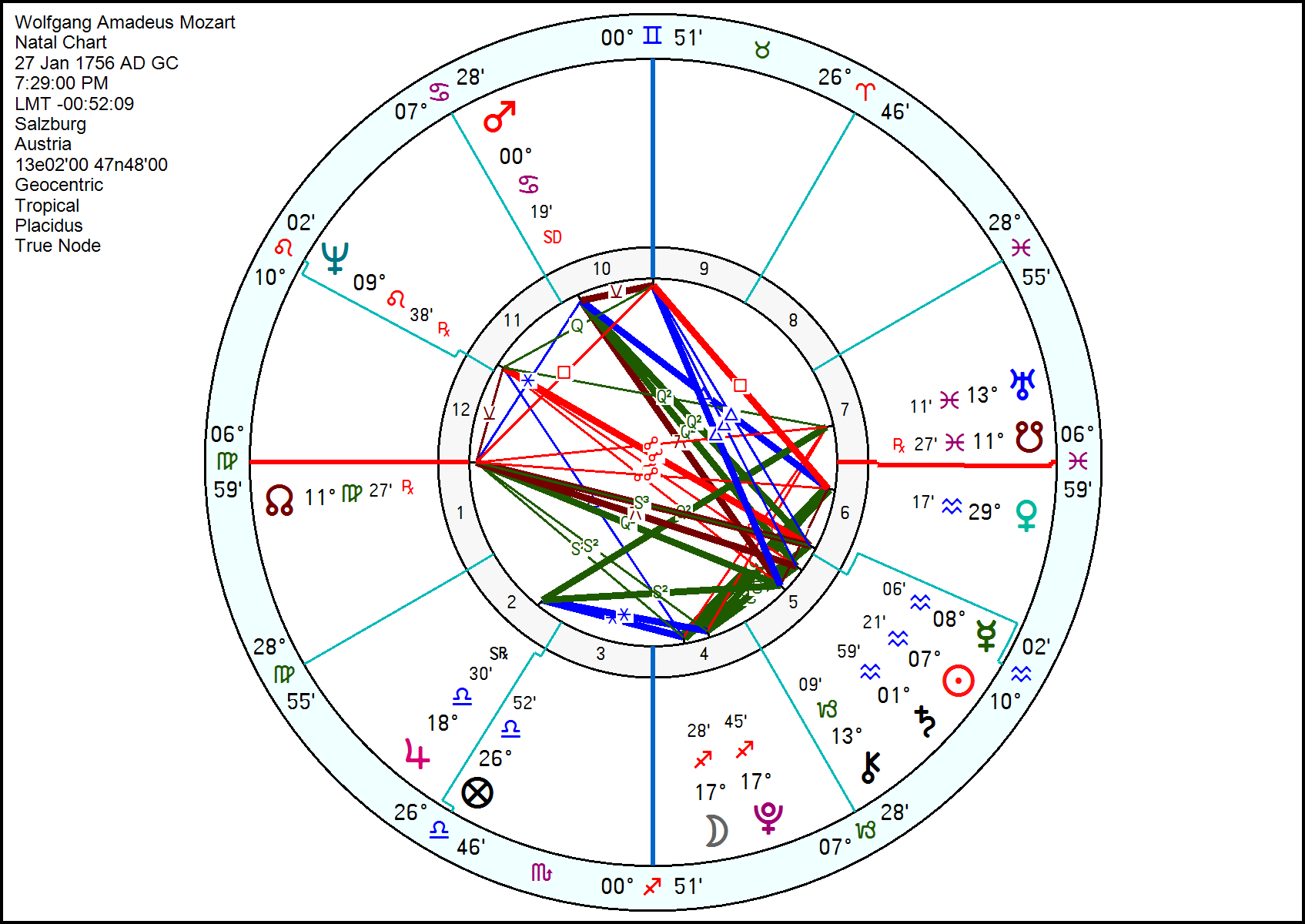
FIGURE 1983 0801-15. Wolfgang Amadeus Mozart Natal Chart.
FIGURE 1983 0801-16. Robert Larson Natal Chart.
FIGURE 1983 0801-17. Suggested Transits and Progressions for Robert Larson's Entry onto the Quest.
FIGURE 1983 0801-18. Birgitta Larson Natal Chart.
FIGURE 1983 0801-19. Robert and Birgitta Larson Synastry Chart.
FIGURE 1983 0801-20. Suggested Transits and Progressions for Robert Larson Meeting Birgitta.
FIGURE 1983 0801-21. Suggested Transits for Robert Larson's First Meeting with Paul Brunton (PB).
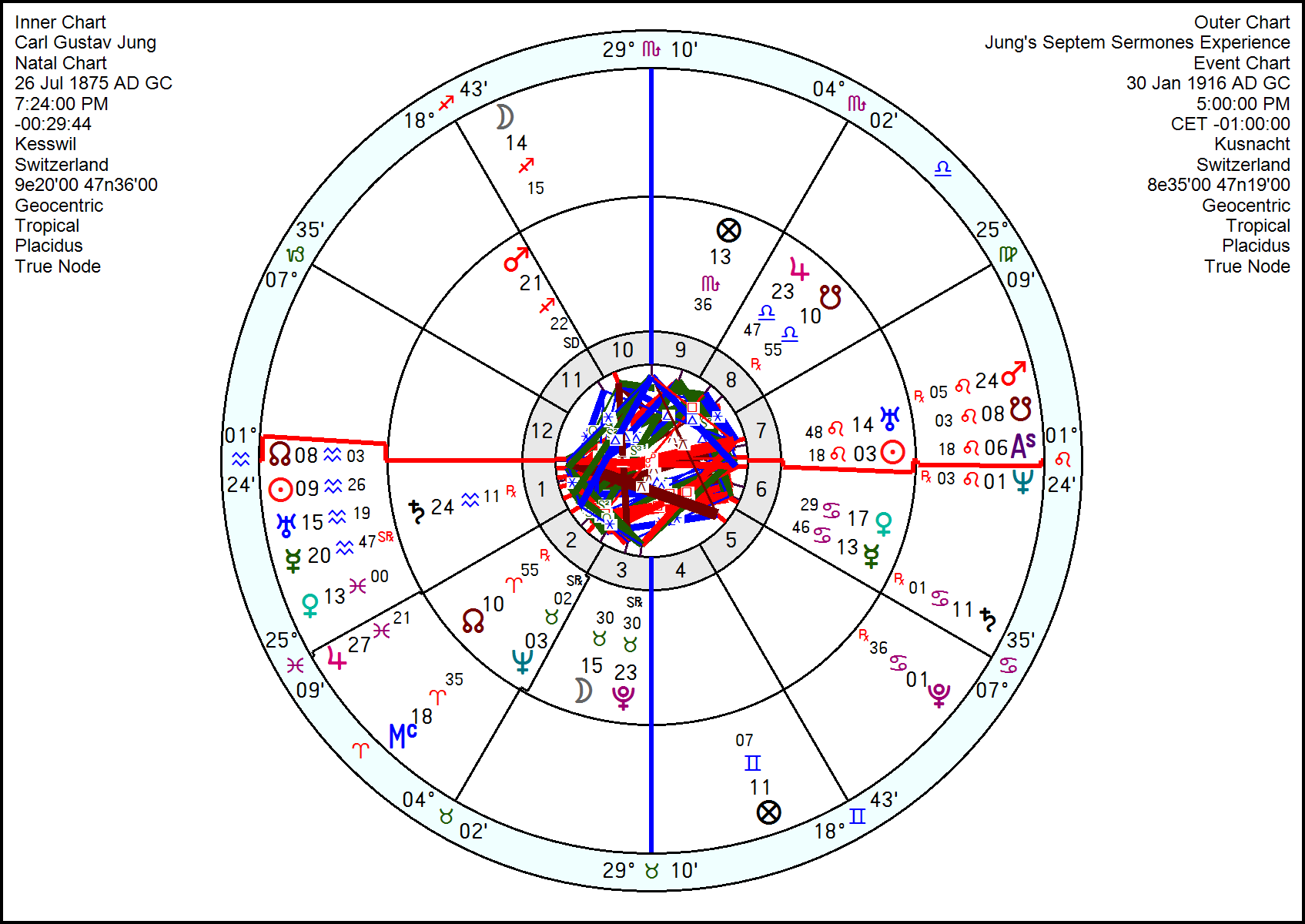
FIGURE 1983 0801-22. Transits for Jung's Septem Sermones Experience.
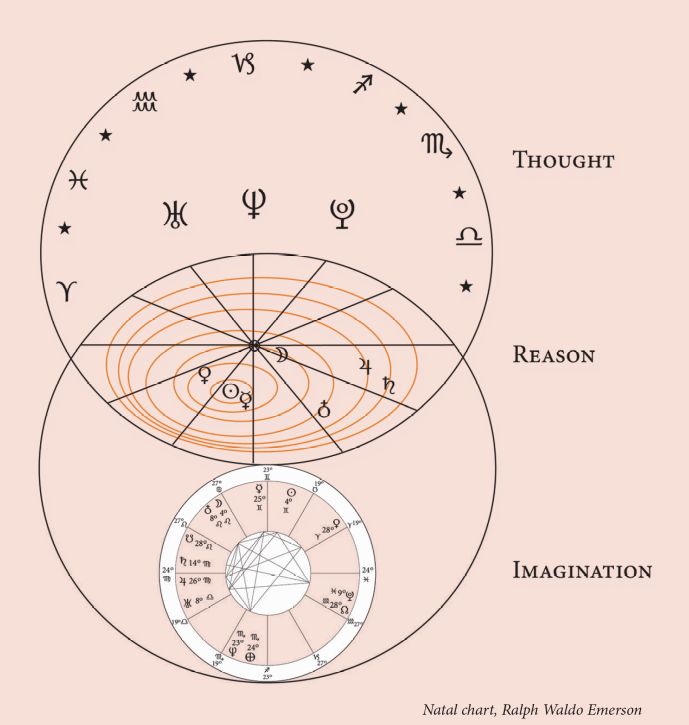
FIGURE 1983 0801-23. Thought, Reason, and Imagination in Cosmological and Astrological Contexts.
FIGURE 1983 0801-24. Nested Levels.
FIGURE 1983 0801-25. Stages of Meditation.
FIGURE 1983 0801-26. Levels of Going into Ourselves.
[Transcriber note: If someone is drawing or writing, with audible sounds of chalk on a blackboard, I indicate this by [drawing] or [writing].]
SABIAN SYMBOLS: Aries 14, 19, Taurus 3, 20, Gemini 5, 12, 13, 22, Cancer 18, Leo 3, Virgo 1, 17 (Kozminsky), Libra 14, Scorpio 3, 20, Sagittarius 12, 13, Capricorn 18, Aquarius 3, Pisces 1
INITIALS: AD = Anthony Damiani; PD = Paul Damiani; PB = Paul Brunton; AP = Anna Prim.
NOTES:
In an email to Avery Solomon (Nov. 17, 2019), Robert Larson recalled: "The seminar with Anthony started on August 2, 1983 and went on for ten days. He and Paul came to us at 11 o'clock every day and stayed till 23.00. That is a memorable time, indeed." However, internal evidence within the transcript indicates the seminar actually began on August 1, 1983 and possibly ran through August 13 or 14, 1983.
Not all sessions held during this period were recorded. The available recordings span from August 1 through August 11, 1983.
Most of the original recordings had overlapping audio at cassette transitions (both when changing cassettes and flipping sides), confirming that no content was lost during recording transitions. To provide a smoother online listening and reading experience, we have edited the audio to remove this redundancy.
All citations of unpublished PB paras have been updated to match the text searchable version of their archival source documents as they appear on www.pbarchives.org.
Some of this material was used in Looking into Mind [1990] by Anthony Damiani. The 1988 version of this transcript was used for editing purposes.
Other transcript versions may also exist.
TRANSCRIBED by VM & WG & Sweden Communities 1988, from Audio Cassette Tapes for Looking into Mind. In 2019-2020, JRM re-transcribes and makes slightly more verbatim but leaves 1988 version largely intact, adds cover pages, Subheads and TOC, and reformats (with JF). In 2025, IT does two more passes, makes fully verbatim, corrects listening and all other errors within transcript, updates prefatory matter, footer, and audio file markers, redoes Subheads and TOC to make more accurate, corrects and expands Book List, proofreads and corrects all published and unpublished PB quotes and all other quotes, adds new notes and references in transcript, adds twenty-four diagrams/charts and references to these diagrams/charts within transcript, removes all highlighting and special formatting to make usable for web, reformats to accord with new conventions. Archival verbatim transcript – V14.1a.
AUDIO FILES: 1983 0801a-u. [Note 1: "Tape" and "Side" refer to original audio cassette tapes that were later digitized into. MP3 Audio Files. Note 2: In 2024-25, REP Studio redigitized files b, h, j, and k, corrected the side order on files d and m, and removed dead air and redundant audio from all files.]
1983 08/01-11 Multiday Class Held in Taby, Sweden
PB Paras; Meditation & Mentalism; Astrology
Archival Verbatim Transcript
SESSION 1: AUGUST 1
MEDITATION (I)
[Audio File 1983 0801a Begins]
AD: --and that-- [57 seconds of background talking, noises] Well I don't know what is expected of me.
S: Well, usually, when we meet in a group we-- we can sit for a while and listen to something of music. (Lot of) music together. And then we start to-- yeah, we read from-- read from like, for example, PB. And now I don't know, we leave it up to you to [one/two words inaudible]
AD (simultaneously): I just left it up to you. (bit of laughter) You do meditate?
S: Yes, yes.
AD: How long do you meditate for?
S (very faint): Not long.
S: Well it depends, it varies I think between half an hour and a little more. When-- And-- well-- we-- we had a-- we'd like to meet an hour. But at times only forty minutes we make (it) or that's when we really (have to meet). Maybe if you will be kind enough to say something about meditation (as a) topic.
THE DIFFICULTY OF MEDITATION; THE NEED FOR COMPELLING INTEREST
AD: Yes, we could talk about it a little bit, yeah. [short pause] It is-- it is a difficult thing, meditation. You know, there's different stages in meditation. And, for most-- for most people to be able to keep their mind occupied with one trend of thought continuously is very difficult and that's why for some people meditation, you know, could be very boring because, first of all, you have to be concentrated on something-- some theme, some abstract theme. It could be the name of God or it could be a quality of God or it could be some quality about the mind. It could be any of these abstract themes but then to think very concentrated on it, you know, for a period of a half hour is very strenuous.
For most-- most people can only get concentrated on things that they are interested in, you know, whether it's some-- some sport, some amusement or some business or something of that nature. Then they-- they can be preoccupied for a half hour thinking about it. You know, like when a businessman is occupied about some business matter he can think about it for a half hour or an hour.
But, it's a whole different story when you have to think about some abstract theme, and, if your heart's not in it, meditation is very difficult. But assuming that you-- your heart's in it, that you want to get behind, you know, the darkness you live in, then you have to find-- you have to find some theme that will arouse your interest and hold it for a period of time. We can't think about a doorknob for a half hour. You have to find something that's inwardly compelling and interesting enough. And that would-- that's like the first requisite, that's the first thing you have to find is something of that nature.
If you tell the person, well he's looking-- you're looking for your soul, and that these are just exercises to get you to train your mind so that you can employ it in that-- in that direction, they're still going to have the problem of: "Well, you know, how can I develop the concentration to do that?"
Now some people can get very interested in a question like "Who am I?", because nobody knows who they are. So they could-- I mean when I say we don't-- we don't know who we are, I mean outside of your name, you know, and a few personal historical things, none of us really know who we are. So some people if you tell them, "Well, sit down and ask yourself who are you and keep thinking about that without stopping," they can do it and they can follow that up, they could ask-- keep asking themselves, "Who am I?", try to find out. Close-- close the eyes, get still and try to breathe very quietly and get very concentrated, just keep thinking about that one thing over and over again.
You have to get so concentrated and absorbed in it that you forget. You forget the physical world, you forget the physical body. So that's like being absorbed. You know, like when an artist is inspired, he forgets everything else except what he's doing.
I don't know, you know, that there is an easy way to meditate. But assuming-- assuming that the person is interested, he says, "I have to find out who I am. I've got to-- I've got to know," then that person will succeed but, if he doesn't have a real profound interest, he's not going to do it. I mean it won't last, you know. He'll try for a few times but after a while he'll give it up. So, that's one of the basic difficulties.
There's others who want to find God. And, you still have the same problem, you know. You'd have to go through this process of interiorizing your attention and then focusing it on some idea in your mind. You get so wrapped up in the idea, so absorbed by the idea, that you forget everything else. You live for a while, it may be just for a few moments, but you live just in the world of the idea, you know, in the mental, not in the physical.
You're talking about what takes years to do. If you want to play a Beethoven sonata, you know, you start practicing the piano and maybe after twenty years you'll get there. This is harder. With a Beethoven sonata you could like, you know, you could-- you could see it's written down and you could practice and you enjoy it and you'll sit down and you practice every day. And if you want to be an engineer you'll sit down, you'll work and-- you'll work hard and you study and you'll be an engineer. And you'll get help, teachers would come around. You go to school.
But over here nobody's going to help you. And the worst is, you're even going to try to defeat yourself. Nobody wants to really meditate unless they're already possessed in some sense that the life they live is unreal, the world that they're living in is a big lie, that they're being fooled every moment in time. I mean, who-- We get up every morning and we're happy that another day started and we go about like little busy mice, getting things and buying things and storing things and on and on. I don't think you ought to meditate. (bit of laughter)
But, then again there's a problem. We're all going to die, and everybody's afraid to die. Now maybe that might wake us up, because we know we're going to die, and we're going to die without finding out who we were, and what we came here for, what we're supposed to-- what is it all about. That might help a person meditate.
[29¾ second pause with fire engine or ambulance noise in background]
AD, cont.: When you're this age, you think you're immortal. And when you're thirty you start having doubts. When you're forty, you'll know for sure. (bit of laughter)
So very often-- very often older people when they reach a certain age, they begin to realize, and they do start meditating or maybe-- you can call it prayer too, I mean, it's the same thing. There's-- there's a similarity. But, sometimes when people have an encounter with death, they get interested in prayer and meditation. But unless-- unless a person had some encounter with his mortality, he's not going to do anything. He's going to go on day by day thinking that every day is going to come for sure. [S: That's true.] See I'm trying to discourage you people from meditating. So that maybe you can convince me we should meditate. (laughter)
"THE WHOLE SECRET IS SIMPLY CONCENTRATION"
Well, there's no real secret in it although we can speak about it as a secret. And that is, the whole secret is simply concentration. That's the whole secret of meditation. And I suppose everybody at some time or another experienced concentration where their mind was very focused like a magnifying glass, when you get a magnifying glass and you focus it and then it burns the paper.
At some time or other everybody must have had the experience where their mind was very sharp, very alert, very concentrated. And that they could apply it to almost any problem and they would be able to solve that problem. That's really the secret of meditation, to be able to develop a very concentrated mind. And it becomes a very powerful mind too. But, again like I said, it requires this tremendous interest and fascination with the-- with the subject itself--the mind, what is the mind, who am I.
There was a writer, [S, faint: Yes, that's what we need now.] I think it was Zangwill or Stefan Zweig. Well it doesn't matter who. He went to the studio where Auguste Rodin used to make his sculpture-pieces, and watched him work. And he watched the way Rodin was completely oblivious of everything except his work. And he said, "In that-- in those few moments I found out more about meditation than all the books I read about it." Because this man, Rodin, had this tremendous power to get so concentrated that nothing existed but what he was doing and is completely absorbed in it. You know who I mean, the man who made the sculpture-piece called "The Thinker." [students assent, very faint] And he did a lot of work, I mean, he did tremendous-- but, after he saw this man, after Zang-- Zangwill saw this man, he recognized what concentration was and he saw what it meant to be in an absorbed, rapt, meditative state.
Now most people when they sit down and meditate, it's a question of, you know, how long will it be before they fall asleep. That's usually the problem. So, when a person sits down to meditate, the first-- he must have in mind precisely what he's going to do and then he has to stick to it. Once you sit down it's too late to decide what you're going to do.
PRACTICAL METHODS: MANTRAMS, MEMORIZATION, AND IMAGES
Well, what I do sometimes is I tell people, "Memorize something that you like very much, you know, one of the great philosophers, a statement or a paragraph, page, whatever." But it has to be something that is compelling, is interesting, is mysterious, it attracts your attention. You memorize that, and then you sit down, you say it to yourself and you concentrate your attention on it, and you try to squeeze out, extract all the meaning that it has. Sometimes you could do it in a few days, sometimes it takes a couple of weeks. That would be the easy way to start. That's one way of doing it.
Then there's another way. A person could say to himself-- like say a mantram. Well, in early Christianity they used to use the prayer called the Lord Jesus prayer, "Lord Jesus Christ, son of God, have mercy on me, a poor sinner. Amen." And they'd say that over and over again, and they'd get their mind very concentrated. They would say it so often that the repetition after a while goes on by itself. The mind gets very very quiet. It gets so quiet you can hear it, because it gets very still but-- These people claim, these people claim that just by repeating and concentrating on the mantram-- you can't say it, you know, mechanically, it d-- it won't work. You have to put a lot of feeling into it, "Lord Jesus Christ, son of God, have mercy on me, a poor sinner, amen."
They claim that you can get so concentrated in that, that your mind gets taken away from you and you get into the absolute quiet. These are the early, you know, the Byzantine, the Greek and the ear-- the Greek Church and the Russian Church, they're-- they're all Eastern Orthodox.
The Hindus say the same thing. And the Tibetan Buddhists, they say, take a mantram like "Om Mani Padme Hum." Say it. Keep saying it. Repeat it. Get your mind concentrated on it. And after a while your mind gets very very quiet, you have less and less thoughts, then very few thoughts. But if you say it mechanically, then, again the same problem comes up.
And-- There's other ways, like you could sit and look at your nose, the tip of your nose, you know, with your eyes and just keep looking at it without the eyes wavering. That's another way to meditate. Or you could take the picture of someone that you respect and you look up to, and let's say an i-- idealized portrait of Jesus or a Sage, someone that you look up to. And you could keep looking at his image right here, you keep looking at his image. And you very intensely concentrate on his image. And it'll be very difficult for thoughts to come in if you're concentrating on the image. And you get so concentrated on the image that you could see--I'm talking about what takes months--you get so concentrated that you could see his image whether your eyes are open, whether they're closed, he's right there in front of you. You've achieved concentration. So, you can close your eyes and you can see his image right before you. And you get so concentrated that there's what they call mental union with your own mind, you've achieved a state of union with your own mind.
See these are all different ways but, the fact that-- fact is, I have explained to many people these different ways, and over the period of years it always comes down to this, alright: "I can't do it." "Well why can't you do it?" "Because when I sit down, I get tired, I get sleepy. I get angry, I get frustrated." "Oh, well, you can't do it. No one could stop you from getting angry, you've got to do that." "I haven't got the will." "Well no one can give you the will, you got to do that." You know what I am talking about, Håkan?
S: Yes, of course. (bit of laughter)
THE BASIC PROBLEM: HUMAN INERTIA
AD: Nobody could do this for you. It isn't possible for a man to come over and inspire you so that for a couple years you work at it hard, that's out of the question. Now, sometimes you could find a great man, you know, like you're reading PB and you read a little bit every day and that keeps you, you know-- that keeps your enthusiasm going. But, fundamental fact is that human inertia, human stupidity, will simply stop you dead within a couple of weeks. So that's the basic problem most people have. [short pause] Alright, I discourage you all? Good. (laughter)
S: Uh-uh.
S: Yeah.
AD: I used to have a lot of illusions when I was young that you sit down and you meditate. You know, a couple of years you're going to get enlightened. And you go around, you know, with a big aura on your head. (student laughs) It never worked out. Every day was a fight, every day, for years and years and years. [short pause]
It's the most difficult thing that I know of that a person could do. And then on top of that, he has to bring into his life certain changes. He has to try to live what we might call a more-- I don't want to call it a religious life. I don't know what to call it. Let's call it a more ethical life, you know, he has to try to live the things he believes. And today who wants to do these things, why bother, you know? Let me see, I got to find more reasons to discourage them. (laughter) [short pause]
And besides there's more interesting things to do. I don't know why, (now), let's see. Well in my case like, I would rather, you know, sit and study and read, see? That would take me away from meditation so I'd rather-- so I sit and read. But if somebody likes to play tennis he'll rather go play tennis. So there's always those things that you have to deal with, alright.
And then we have-- we have certain-- I don't know how to call them-- we-- (we/you) all have certain idiosyncrasies, you know, certain complexes. They seem to be hidden but they're really not. You sit down to meditate, and if you're a young man thoughts of a woman will come up to your mind all the time or vice versa, if you're a young woman thoughts of a man come up. And, that's always a problem too. Because, when you're left alone with your mind, it throws up-- it throws up all these desires, wishes, tendencies that we have, it keeps throwing them up. And so you have to deal with that. Now you sure you want to meditate? [students assent, very faint]
Then besides you have to get the room dark, you got to try to keep the light out so that you don't evoke images. [short pause]
Håkan, I-- I know for a fact that usually a man has to be-- be pushed into a corner, kicked in the belly, hit over the head, he has to be bleeding, he has to be in pain. And then he says, "That's enough. I'm going to meditate from now on or else." He has to actually be pushed into that condition. Most people are like that.
We don't go to these things because we've heard about them from others. We go to them because there is no place else to go. Sooner or later you begin to get bored with the world, the glamour falls away. It becomes an uninteresting place. You see the repetition of human stupidity, folly and greed go on and on and on. And there's no cure, there's no solution out there. And the only solution is to find some peace within yourself. But to get to that is very difficult, very painful.
Most-- most find that there's something for them in the world, the world has a certain glamour. They must go out there and do something. Now I'm not saying we shouldn't do our share, whatever that-- our share is, we all have to do our share in the world. But then, above and beyond that, you know, it takes up all our time, all our energy. Our preoccupation with it is endless.
So, until these things are understood and thrashed out in your mind and looked into, I think you'll find that meditation is very difficult. But let's say-- let's say that you finally decided that you can't-- it doesn't make sense to go on living the way you are. Because something-- there's something in us that's more than an animal. And everyone sooner or later begins to ask questions: "Why am I living? What am I doing here?" [1 minute 2 second pause] So, why don't I leave it to you to ask questions?
[19¾ second pause]
DANGERS IN MEDITATION
S: Could there be any danger in meditation ever if you--
AD: Sure. If a person has a neurotic disposition, it can get exaggerated in meditation. If-- if a person tends to be passive, he can be subjected to forces that he doesn't understand. He can become mediumistic, he or she. It's much more likely to happen to a woman than a man because they can be passive much more easily than a man. If a person doesn't have certain ethical considerations in mind, like if you think of someone in meditation and, let's say you wish the person harm of some kind, that could be very dangerous. Things of that nature, there's a few.
But one of the things we have to try to remember is that we all have our, you known, shortcomings, and it's very hard to-- almost impossible to eradicate them all at once. So what most people suggest is that , well you meditate and in the meantime you try to improve your character as you go along. But otherwise, there is always the danger that the peculiar neuroses you have or the emotional unbalance that you-- or if a person is preoccupied with certain unhealthy issues, they get exaggerated if you practice meditation.
S (very faint): Yeah.
S: But-- and what do you mean by passive during meditation or passive in your ordinary--
AD (simultaneously): Well, very often when people sit to meditate, their attention is what you might call very nebulous, as though they were in the womb again. Whereas when you're-- if you're-- if you're concentrating, if you're paying attention, you're-- if you're attentive to what you're doing, you won't be passive. In other words, your mind-- your mind is being controlled and directed by you. Whereas if you sit down and you just let-- let your mind, you know, get very relaxed and passive and any thought that comes in or goes out it doesn't matter, it just sits there and you-- that kind of passivity.
There's another kind of passivity which is different. And that is when-- when a person gets very very intensely concentrated, he can feel something coming into him that wants to bring him in. Then he has to be passive. But this is a different kind of passivity. This isn't a womb-like passivity. This is an alertness, you know this is happening. You watch it very carefully. You surrender. But you're alert, and it brings you into the heart, alright. That's a different kind of passivity.
What I'm talking about is the general inability for a person to be attentive to what he's doing. If you practice a piano or an instrument, alright, you have to be extremely alert. Let's say you're playing a piece of music, alright. You have to be alert, you have to read the notes, alright, you've got to use your fingers to hit the right notes, alright. [AD snaps fingers] You have to be totally present. Ok? For one [AD snaps fingers] second you're not, you can't do the next measure. Isn't that right? That's being alert, that's being attentive, alright. The other way is being passive. Not being able to concentrate. Not being there as to what's going on.
[short pause]
S: A um-- [short pause] um-- could there come up-- I mean, even if you are concentrated and alert, couldn't it-- couldn't you be confronted with a sort of astral world or--
AD: You're not-- [S simultaneously: You-- could that (couple words inaudible)] you're not paying attention, Håkan, you're not paying attention.
S: If you-- if you confronted that, what--
AD: Well look, make out I'm a young man 25 years old and I love a woman. Now, I can only see this woman, I can't see anybody else. When you're paying attention to what you're doing, you're concentrating on a certain thought or idea, the astral world can't come in. [student assents] It's only because your attention falters, you're in trouble. It's the same thing like if you're playing a piece of music, the moment your attention falters, you stop, you stop right where you are. [student assents] That's--
ATTENTION: THE MEANING OF MEDITATION
S: But what about meditations like you watch your thoughts and things like that?
AD: Yeah. So if you watch them?
S: Yeah, you have to let them come and go and--
AD: Yeah. So, go on.
S (simultaneously): So, the-- the point of concentration is the watching.
AD: Uh-hm. So suppose you get a picture or an image, [S: Yeah.] but you're watching and you know it's only a thought. [student assents] The whole trick lies in attention. As a matter of fact, that's the meaning of meditation: attention, attention, attention.
[short pause]
S: What could happen then if you lose your attention? I mean being quite concentrated and then losing it. And, what can happen then?
AD: You bring it right back again.
S (laughing): Yeah.
AD: In other words, you're concentrating on something. [AD snaps fingers] A second later you're thinking about something else, you know.
S: Right.
AD: Alright. You bring it back and you do it again. And you keep doing that over and over again because your mind won't stay put. Your mind'll always go o-- somewhere else. It's like a-- you know, it's like a crazy monkey. [S: Yeah.] So you're looking or you're concentrating on one thought--"Lord Jesus Christ, son of God…did I pay my rent darn it?" Yeah? You take the mind, "No, stop here, right here, back to this," alright.
MEDITATION VERSUS STUDY: CUTTING OFF THE WORLD
S: But what's the difference then to study and to meditate, I mean, to study is also kind of concentration, you just pay attention [one/two words inaudible] [AD assents] with other things. What are you doing actually? I mean--
AD: Well-- They come very close together. Sometimes, when a persons studies very very intensely, he can experience certain-- a certain joy in understanding, he's reached an understanding. Sure, that could happen in studies, in reflection. [student assents] But, the difference is that in meditation you eventually want to cut off the world completely. Completely. Any sound, any sight, any contact, touch, contact, ok. Meditation eventually you want to cut it all off. [student assents] All, you want to cut it all off. It's-- let me put it this way Marie. It's like-- if it was possible while you were dreaming to wake up in the dream without disturbing yourself and experience everything as though it was an idea. Now, when you're studying you can't do that because you're usually aware of the page or the printed book or, you know, the light flickering, you know. Alright. But in meditation the idea is to get completely into the mental world, completely. So you have to break-- break off everything else. So, that's the purpose. In meditation you're supposed to get to that position where there's only the world of ideas.
S: Do you mean that to be conscious that you are dreaming or something like that?
AD: Yes, you're conscious that you're dreaming, [S: Yes.] and you experience the world as idea.
S: The dream world as idea.
AD (simultaneously): The dream world as idea, yeah. Then the next-- the next possibility may be that you experience the very world that you live in as an idea. [student assents] But one at a time. I mean that's what meditation is to lead you into, into the mind itself. Because all that you know, all that you can experience, all that you think you are, all-- anything that you can bring up is always within your mind. There isn't anything else for you but your mind. And you have to experience that for yourself. [14¾ second pause] There's-- there's a lot of technical information but it's not necessary right now, the different stages of meditation. When you get to the third level it becomes pure contemplation. I don't want to go into that right now.
S: I was wondering, (Jeff) talks about different ways of meditation and then I was wondering, do the different ways have different effects? So, for-- for instance, is there a certain kind of like method specifically or-- (captures) your power of attention not only while you are meditating but during everyday life, I mean, just wondering if that issue--
AD: Well if you do any meditation it will show up in your everyday life. [student assents] It-- inevitably it must, [student assents] because you've acquired the faculty to keep your attention. You know, it's like-- attention is like a-- an acetylene torch. You know what an acetylene torch is? It's like it's got a fire burning and they use it to cut steel.
S: [couple words inaudible]
AD: Uh-huh.
S: Yeah.
AD: Now, with an acetylene torch you can cut steel and with attention, concentration, you can penetrate into the most difficult problems and come up with an understanding. But without the ability to concentrate, you wouldn't be able to.
Now, in the ordinary world, you know, the everyday world, the business world, you know, there are people, business men who are capable of tremendous concentration, but only of things of their world, you know, like their business matters. But if you take them out of that into something abstract they-- they can't do it, you know.
Whereas over here it can be reverse. A person who's learned to meditate inwardly, abstractly, it inevitably must flow out into the personality, so that when he's doing things in the ordinary world he can bring that ability to concentrate to the everyday problems.
But very often what happens too is a person gets very very concentrated, he doesn't like to go back into the world, he likes to stay inside, it's-- it's nice there, it's comfortable, very quiet and peaceful and he can-- alright. So he doesn't want to go back there. And they-- sometimes they go through stages for years where they're happy just inwardly. They don't want to get caught up into the world. But that's not right, I mean they're supposed to also develop outwardly. [short pause] To study the more advanced philosophy you have to be able to concentrate. You have to have tremendous powers of concentration. [student assents, faint] [32 second pause]
So, fundamentally then it comes to this: when you really get interested in yourself, you're going to learn to meditate and until then you wait. [18¾ second pause] Well Joakim you're a great talker. You think you can talk a little bit?
S: Me?
AD: After all that? [short pause] Alright. Shall we sit for half hour? Forty-five minutes? An hour? What-- what do you want to do? You want to sit for a little while?
S: Yeah.
S: [few words inaudible]
S: Paul, do you need (coffee)?
AD: No, I don't need any. [one word inaudible] you want a drink?
S (faint): No thank you.
S (very faint): Thank you.
S: What's in it?
S: Yeah.
[tape break]
MENTALISM/EPISTEMOLOGY (I)
HOW DO WE KNOW ANYTHING?
[student talking, noises in background]
AD: How do we know anything? Alright? Can you all follow that? How do you know anything?
S: Could you just talk really loud?
AD: Now I can sit and wait.
S: By experience.
S (faint): The ego experience.
AD: Well you have to tell me, because that's another way of saying that, you know, experience is equivalent or synonymous to knowing. Now, if you say by experience, I'd ask you, well what do you mean by experience? How do you know-- You see this? [student assents, faint] How do you know it? Or, this person. How do you know?
S: By knowledge?
AD: You're telling me what it is you know, I'm asking you how is it you know, [S: Yeah.] how do you know something.
S: One way is through your senses. I mean that's a--
S: Right.
S: Something stopped in a way, you see that (thing/ring).
AD: Repeat. You see the ring?
S: Yeah, well--
AD: What do you mean when you say you see the ring?
S: Well you get a very beautiful picture through your eyes.
AD: You get a picture through your eye?
S: Yeah.
S: And you have to have operative senses. You feel-- I feel this cup. It must be something.
AD: Alright, but if you're looking at this cup, you say there's a picture of it, alright. Now, could you tell me more what you mean?
S (faint): Yeah.
S (faint): It's a [one word inaudible]
S: It gives you a sensation of some sort when your senses make contact.
S: That's what I'm thinking.
AD: You're beating around the bush.
S: Yeah, well, probably.
S: Uh-hm.
AD: How do you see this? Through your eyes you said. [student assents] Well, give me a little description of what that means. That an image is formed in the eye, [student assents] in the, you know, back of your eye, the retina? Is that what you mean?
S: Yeah, very physical, outside.
AD (simultaneously): Yeah but, in the retina it's upside down [S: Oh yeah.] and a little tiny image. But that's not what you see. So, the-- it isn't that you see, right?
(Side 1 of original cassette tape digitized as 1983 0801a Ends; Side 2 Begins)
AD: In other words, if you were to look in the retina of a person's eye, [student assents] and he was looking at a tree, the tree in the retina of the eye is upside down and it's only a tiny little image, whereas the tree is a hundred feet long. [student assents] What you see is the tree that's a hundred feet long. You don't see the tiny little image in the retina of the eye.
S: Uh-hm. But it-- the eyes is one thing and then if I go and feel the tree, [AD simultaneously: You could--] that could-- you don't feel with your hands the tree, that gives you [AD simultaneously: But--] another sensation?
AD: But if you go feel the tree, [student assents] alright, then what you're talking about is the nerve fibers, alright, that are stimulated by this, alright, and then they travel all the way through an afferent nerve to the brain. And then what happens? [S simultaneously: Well some--] Then you feel the tree?
S: Get some sort of sensation which comes from the concrete world and in that one point. And you hear the wind blow through the leaves, that is another sensation. I'm not-- [AD assents, faint] I'm not saying that that is the real thing but that's what we all-- when you said experience, that's what-- one of the things we experience every day.
AD: But-- I think what you're telling me is something like this: there's a world outside, alright, and there's a reflection of that world outside in me [FIGURE 1983 0801-1]. Isn't that what you're saying?
S: Uh-hm.
S: Co-- translated into me [one/two words inaudible]
[Note: See FIGURE 1983 0801-2 for the following.]
AD (simultaneously): Yeah, now-- So that means that your mind is like a mirror and it just reflects the world outside. No? You don't like it either. Because the problem would be something like this, if you take any of the senses, [S: Yeah.] and if you take the eye-- if you take the eye and you say that you're looking at an object, there's an image formed on the retina and that travels through the optic nerve up to the occipital lobe and then it sets up a galvanic disturbance, alright, now that's the process of, you know, [student assents] physiological sensation. But, is that the same as knowing? I mean do you know anything? Isn't it only when the mind knows that you know something? That in other words a dead man with his eyes open could be looking, he wouldn't know anything. His eyes are functioning, there's an image formed on the retina. But he doesn't know anything. So again I ask you, what do you mean when you say, "I know something"?
S: Well I have had some sort of notion that that's where my knowledge is from. And so what's (beyond) it [few words inaudible]
AD (simultaneously): Well I'm trying to find out if there's something a little bit before that.
S: Before, yaha, uh-hm. Ok.
S: Uh-hm.
AD: So, let's think very hard while I drink my coffee.
S: (Think very hard), that's good.
[19½ second pause]
AD: That's been a problem. They've been-- they've been saying for 150 years, you know, that the-- speaking about this whole process that we spoke of. And they s-- they describe it in, you know, considerable detail of how the whole process of sense-knowledge takes place. And the scientist and the physiologist have pointed one out-- have pointed out that the retina is receptive of an image and that this image-- Now the strange thing is it's not an image that goes to the brain. It's only a disturbance, an electrical disturbance at the optic nerve that goes to the brain. [student assents] And so it's not the picture of the cup. [student assents] And then when it reaches the occipital lobe, then you know the cup.
But the word "then" is the one I'm trying to understand. What do you mean "then" I know the cup? How did a physiological process become a mental event? They haven't answered that and they won't. It's-- it's impossible to answer the question in that fashion. How a physiological process becomes an-- a mental event or an idea in the mind they can't understand.
So if you think about it very di-- you know, very intensely, you'll see that the problem of knowledge is still a difficult problem that each one has to try to understand. Now if what I am saying is true, then you are a mystery to yourself. Wouldn't that be so?
S: Oh yes.
AD: Because if we can't understand how knowledge arises, all we can say is we know we have knowledge--I see a cup, I see a tree, I s-- I see you, alright. And I can't explain the physiological process. In other words, the physiological process doesn't explain how an idea arises in my mind because I can show you that if we go step by step, there's one step where you have the so-called material event and then the next step where you supposedly have the mental idea. And you didn't show me how you got from one to the other.
Now, if this is true, then you are a mystery to yourself. You don't know who you are. All that you know, so to speak, are these images that are constantly in front of you and you say, "Well--" And this is the common view, this is the view of even most of your twentieth century scientists, that the world is out there, I'm here, and inside, some mysterious place inside, the world is reflected within you. That's the common theory. And everyone that I-- that you speak to, you know, ev-- anyone that you speak to has this illusion--that the world is out there, my mind is inside and the world is like mirrored in my mind [FIGURE 1983 0801-1].
DREAMS: PERCEPTION WITHOUT SENSES
[Note: See FIGURE 1983 0801-3-AB for the following.]
AD: Let's try something else. Imagine-- imagine you're dreaming, alright, you're dreaming. [short pause] And, you're in a dream, you appear in your dream, and you looked at the tree and you say "I see a tree." Now, who is seeing the tree? Why don't you sit here since I decided to pick on you. [short pause, moving chairs] Who would you say sees the tree?
S: Oh I can't help it.
AD: But there's only you, alright, you're having the dream, and you appear in your dream. You had dreams, right?
S: Yeah.
AD: Ok. You're dreaming, and you see-- you're in the dream, alright, and you're looking at a tree. And the dream person says, "I see a tree." Now I'm asking you, who sees the tree? The dream character or you who's having the dream?
[students assent, very faint]
S: Ok, I couldn't answer. I'm-- I mean it must be some-- it must be the-- the person-- the me person inside me.
S (faint): Yeah.
AD: The me person inside (me)?
S (simultaneously): Yeah, I mean, they're not concrete. The "I" isn't the "I".
AD (simultaneously): The "I" in you?
S: Yeah.
AD: So, you're suspicious that when you're looking at the dream, the dream person who says "I see the tree," he doesn't see anything. He's just a dream person. [student assents] And the tree is just a dream tree. [student assents] And when the dream person says "I see a dream tree," that dream person doesn't see anything. The person who's having the dream sees the-- the tree.
S: Uh-hm.
S: Well it's the same person though isn't it, the dream person and the one who's in that image, is it?
AD: Well, are they the same person?
S: Well I'm asking.
AD: I hope not because I wouldn't want to be some of the things I dreamt. (laughter) [short pause] Well, let me ask you this. Who sees the dream?
S: Well don't ask only me. (laughter)
AD: Sorry, I don't have to. Have to. [short pause] Well obviously you're having the dream, you're the one who's seeing. [student assents] Kajsa, is that so? I mean you're looking at the dream, and you see the dream. [student assents] Right, you get up in the morning and you tell somebody, "Well, I had a dream last night." Right? [student assents] Again Kajsa-- [short pause] Your eyes were closed. How did you see the dream?
S: The imagination then.
AD: You didn't use your eyes then to see the dream.
S (simultaneously): No.
S (faint): Right.
AD: You mean you saw the dream, alright, without your eyes, [student assents] and when there were some odors in the dream you smelled them without your nose.
[short pause]
S: Well, yeah, can you smell something in a dream if you don't have a-- a smell sense, if you lost the smell sense in life?
AD (simultaneously): Well that's what we're trying to find out, where is the sense of smell, where is the sense of sight, [S: Yeah, can it--] where is the sense of hearing.
S: Can you see a thing in a dream if you're a blind person?
AD: Ask a blind person. [student assents] You mean like a person, let's say he's lived for a while and then got blind and--
S: Or born blind.
AD: Born blind? I don't know, I--
S (simultaneously): Yeah, can you see a thing in a dream then?
AD: I don't know, I never inquired into that.
S: Hm.
AD: Does anyone know? Well, we'll have to leave that aside, we'll peg that up, that's a question that hasn't been answered.
S: Well what about this book, I forgot the name, where they live [student assents] normal life?
S: He wasn't born blind.
S (simultaneously): Well he wasn't born blind, he was having a--
S (simultaneously): He wasn't born blind [couple words inaudible]
S (simultaneously): No he wasn't born blind, yeah.
AP: He was blind at seven [couple words inaudible] I-- they called it the book called-- about the man who, he was blind when he was six. And he learned to see in (the light) so that he could even be in mountains, although he was completely blind, without getting lost and then--
S: Saw?
S: And he could hear the shadows [AP: Yeah.] of a tree.
AP: Yes, yes. It's very beautiful, there's this light-- But obviously what he saw then was not only what [S simultaneously: Yeah, yeah.] the other memories of what he had seen, [S: Of course.] it was a more-- [S simultaneously: Yeah, (what he--)] a different sense of type sense structure he presents.
AD: Or a snake hears and they have no ears. [students assent] But let's get back to the point, Kajsa. So, if this dream, alright, someone brought you a beautiful bouquet of roses and you smell them, alright, and you're telling me that you smell them, you, so that you smell them with your imagination, just like you see the dream with your imagination. So in other words, all these different senses that you were telling me were the origin of knowledge, she's telling me now, says "No. I see my dream sheerly with my mind." I don't have eyes, I don't-- when I go to sleep and I dream I don't open my eyes and look at my dream. (some laughter) I see the dream directly, I perceive the dream without the use or the intermediary of my eyes. And I smell what's in the dream without the use of my nose. Now if that's so, then what-- what is the means by which we know what's going on in the dream?
You said your imagination. Yeah, I mean we could say the imagination. You could say like your mind [S simultaneously: Mind.] knows without the use of these senses, alright. It sees, smells, it tastes, alright, without the use of the senses.
So there, again the question, but how does this happen? How does the mind know anything? Again, we ask the question, "How do I know anything?" So, it isn't that the que-- the answer "experience" is wrong, it's just that we're being very specific, we want to know precisely so that, you know, we have no illusions about it. And we find out-- we found out that when we try to understand what the scientists are talking about or the physiologist, that their analysis does not work. They really cannot explain how a perception arises. They say "then," "after," "somehow," the molecular activity which is in the brain is replaced by an idea, a thought, and then you see the object. [student assents]
And, we pointed out that you can't proceed in that whole analysis to the point where consciousness arises. It just doesn't flow, there's no-- there's a break in the logic which you cannot surmount. You can't cross over from a so-called material world to a mental world. You have a process in physiology and then you have a process in consciousness? I don't know what you're talking about. And they've been-- they've been saying for over a hundred years, "Well don't worry, we'll solve it, we'll solve it." And philosophers have been telling them, "Don't worry, you'll never solve it. This is a problem that's very, very ancient and it's been thought out by great thinkers and we think we know what we're talking about." But the scientists at this point, at this point, although they claim that they-- they will eventually solve it, the problem remains, they have not solved it. Because it cannot be solved that way.
"MY WHOLE LIFE MAY BE NOTHING BUT SHEER ILLUSION"
AD, cont.: And the question that any thinking person will ask himself, instead of, you know, going-- getting into irrelevant matters, the question that sooner or later any-- any intelligent person will ask himself is, "How do I know anything?" If I cannot answer this question, my whole life may be nothing but a sheer illusion. And I go on living like a puppet thinking that all this is real. And, you know, in a dream you eat strawberry cream pie and it tastes very good and very real. Then you wake up and you say, "But it was only a dream." And it's very possible that you may wake up from this life and see that it's only a dream, that there is no real world out there…unless you're there.
Alright, so, you follow the point here? That you-- you must first try to understand how it is possible for knowledge to arise, and if you cannot understand how knowledge arises, then you're in difficulties. [13¼ second pause] Did it ever upset you Kajsa that you could see your dream without the use of your eyes?
S: Yeah.
AD: That your mind is an organ of thinking which can perceive without the use of any intermediary apparatus. So this-- You know, like this person that was covered blind and they drove through the streets of Paris? They were wondering, how could she do it?
S (faint): That's right.
AD: Well, we won't worry because we have to answer the question first philosophically, you have to understand, and then we'll worry about the abnormal, the rare, the unusual. But is that a problem for you? No? If it's not a problem for you--
S: Yes, it is a problem. (S laughing, laughter)
AD: Then go home. (laughter)
S: That's new with them.
S (faint): Yes, (it is).
AD: We don't want to upset--
S: We have you.
AD: Hm?
S: You have to face it then.
S (simultaneously): We have you.
AD: Oh no, you don't have me.
S (simultaneously, laughing): Because we don't show our--
AD: You see, you see, this is-- this is the-- What I have or what I know is not what you know. What I know can't serve you. [student assents] It's just like, you're very hungry, alright, and you tell me, "Please eat my food. I'm not full yet." (laughter) [short pause] Here-- it has to become a problem for you. Because if it's not a problem, then you're not interested in the subject. [S: Well--] You might as well go on dreaming.
S: Yeah.
S: Well I can say what bothers me really, that that's not that I cannot know if a tree is a tree, you know, when I say--
AD (simultaneously): That doesn't bother you?
S: No, that doesn't bother me. But what really--
AD: How you know?
S: Well, I never thought about it, a tree is a tree and I smell it and everything.
AD: But you're-- I [S simultaneously: What--] mean you're a mature woman, it never bothered you!?
S: No, not the tree, but what really bothers me is that they-- I feel I cannot really know anything in my head and in my feelings. I feel something very strongly and next I am-- next day I understand that, "Oh, that was nonsense," I mean, that feeling didn't tell me anything real, like it told me a lie. See, those things, and thoughts, the feelings. And-- and my i--
AD (simultaneously): Well we'll-- we'll get to-- we'll get to that later.
S: Ah, ok.
AD (simultaneously): We'll get to that. [S: Yeah.] This is more basic.
S: What is more basic, the tree?
AD: I mean, the perception of the everyday world. [student assents] Because, I gotta-- I gotta perceive that chair so I could sit on it. [student assents] And I gotta see my food so I can eat it, I mean the-- first we start with the empirical perception. [student assents] And, if it doesn't bother you I mean, go home. Don't stick around. (AD laughing) When I was Gustav's age I couldn't go to sleep when I found out that I didn't know how I knew anything. As a matter of fact I felt threatened for a few weeks. I felt like darkness everywhere.
S: But, if you say, is not there a higher sort of intelligence, why isn't that nothing?
AD: If you considered the intelligence?
S (simultaneously): I mean-- yes, it's the higher sort of intelligence (that--)
AD (simultaneously): I wasn't-- I wasn't that confident. I didn't have that much confidence in intelligence.
[students assent, faint]
[short pause]
S: Is that [couple words inaudible] that [one word inaudible]
AD (simultaneously): No, each person has to decide for himself what his values are. It's either that or you go to church on Sunday and you feel better, that's all. I mean what else can you do? [9 second pause] So we're in the situation like we're people, we're living in the dream and we don't want to wake up, we're sleepwalkers. [short pause] That's alright, there's nothing wrong with that.
[15 second pause]
S: If this world is an illusion, when do you know when you will wake up? What do-- what do you ever know?
S: Yeah.
AD: You're back to my question: how do you ever know?
[short pause]
S: When you die, you wake up.
S (faint): I don't know.
AD: Well--
S: It's another [couple words inaudible]
AD: I won't know that till I die. In the meantime I gotta-- I gotta go on living.
S: Also with a question. Yeah, you go on living with the question.
AD: Yeah.
S (faint): Yeah.
AD: Could you live with the question for a while?
S: I have to.
AD: Yeah, you have to. Now you could do something about it or you could just let it hang there and wait for someone to give you an explanation. [student assents] But if you don't work it out, it won't be your understanding. You know like, if I'm sick the doctor comes over, writes a prescription, says "Take the medicine, you get better," alright. So I get the medicine and then I tell her, "You take it." [students assent] It's gotta be mine. And everyone has to sooner or later, some way or another wake up and say, "I've got to find this out for myself, because it doesn't count what someone else knows." That's a s-- that's a situation we're all in. This is not something that they could manufacture in a factory and sell it to you. [S: Uh-uh.] [S, faint: No.] This you've got to get by yourself.
Now most people are not interested. They go to church on Sunday and that's enough, they don't want to know anymore. They figure they've done their duty. Well, it's one of the problems that philosophers are interested in, they want to know how they know. And so they go through this inquiry and this reflection into the meaning of knowledge and what makes knowledge possible. And they have to start there.
Because, if we don't start there, alright, we might be assuming that we have such a thing as knowledge and it might be a lie. Maybe we have no knowledge. You know like people in a dream, you know, they dream that they have knowledge--"I know this and I know that." They don't know anything. They wake up, they said, "How stupid I was." [student assents, faint] [10½ second pause]
So what do you suggest we do now? [short pause] You have any ideas?
[short pause]
S: Well, to inquire then like-- I mean, study into yourself and all that, it might be a way to-- to make your dream more enjoyable, I mean-- And that will be-- I mean, that will be alright, wouldn't it?
AD: Sure, it'd be fine. That would be alright. But you'll still be dreaming.
S: Yeah.
AD: And you would never know what was real.
S: But dreaming, (that means) there's a fixed sense of our own--
S (faint): Yeah because dreaming and feeling and--
S (faint): So that's what science doesn't know.
S (very faint): Uh-hm.
[14½ second pause]
APPLYING REASON TO THE PROBLEM OF KNOWLEDGE
AD: Well, do you remember many years ago people used to think that the world was flat, [student assents] you know. And there were-- there were some people who disagreed, they said, "No it's not flat, it's round." And they offered different proofs. They said if you look at the mast of a ship you can see it, so to speak-- as it comes towards you, you see more and more of it and that shows that the ship was on a curve. And, through-- through many processes of reasoning, alright, they came to the conclusion that the world was round. And then some people set out and they proved it by taking a ship and going around the world. Alright, they proved it. They thought out and then they followed it up with an experiment and they proved it.
So what they did was to reason the thing out and then apply a test to the reason and if it succeeded then they knew that they were on the right track. So-- in other words what we're saying is, they made use of their reason and they applied their reason to the situation and got to an understanding of what was going on.
Like, in the same way they used to say well, the Sun rises. Now, every high school boy today knows that the Sun doesn't rise. Alright? Sun doesn't rise, it's the Earth spinning. The Sun-- And yet every morning you look there and you see it go up. So on the one hand your senses are telling you that the Ear-- that the Sun rises and on the other hand your reason, your reasoning, points out to you that the Sun doesn't rise, alright, and you can prove it too.
So, in a case like that you realize that it's through reasoning that you can come to some understanding of what is going on. You have to use the reasoning powers. Did you-- you like the idea? [student assents] [short pause]
In other words, you think it's possible by reasoning very intelligently on the experience that you're presented with to come to an understanding of how you know? What do you think?
S: Yeah.
AD: Yeah, you think it's possibility?
S: But is it possibility if you are born blind, deaf, without taste, smell, and feeling.
AD: Then you wouldn't be born, would you?
S: Well [couple words inaudible]
AD (simultaneously): You just took away the five senses.
S: Yeah. Well that's what I mean, that-- that it is through the senses is in some way your starting point. And that you can easily be let loose from the senses in that stage.
AD: That's what we would have to do because we have to take as given the world that we perceive, you would have to take that as given. My eyes see colors, my nose, alright. But, then given-- given this phenomenal aggregate, then I have to reason on it. So that when a scientist tells me that the-- what I see comes from out there, goes into my eye, makes an image in the retina of my eye, travels up the optic nerve, alright, and then I become conscious of the thing out there, I could point out through reason that he-- he's got a process going here which is correct up to the point where you have the molecular activity in the brain and then you have a thought. Here you have on the one hand motion in the brain cells, the neurons firing, alright, and then you have consciousness [FIGURE 1983 0801-2]. [student assents]
But these are two utterly distinct different kinds of things. And reason would say, how did thought arise from motion? What are you talking about? Only through the use of reason I can criticize the scientist when he says that. So then reason is going to be the means that we have to use to get to understand something about how we know. And we won't worry about who we are yet. [student assents] [short pause]
So then we would have to use the process of reasoning to try to understand something about how knowledge arises. And, would you rather spend your time--it may take a long, long time--to reason and try to find out how you know or would you rather spend your time, for instance, well fixing your plumbing or painting your room or-- What would you rather do with your reason? Well what do you think most people do with their ability, if they have any, to think and to reason? Do you think they would spend it on this kind of, they call it abstract subject?
Now, I don't think it's abstract, I think it's the most concrete thing in the world. When I want to know how I know, I think that's more concrete than the brick wall that I'm faced with. Do you see what I'm talking about? Because I say I know a brick wall. How do I know the brick wall? It's hard, alright, it's got a certain color, certain size, dimension. I perceive all these sensible qualities about it and that's how I know a brick wall.
But when I say "I see," I've already brought into question well I don't understand how I can see anything because we just pointed out that the process of seeing somewhere along the line stops dead and then the thought arises. So which is more concrete, which is more practical, the willingness to sit down and try to understand these-- this process of knowledge or fixing the concrete brick wall?
See, and this is a problem that arises because for most people it's unimportant. Let me put up the chimney, I'm not going to worry about how I know it exists. Alright, now you think about it for a few minutes and see if you could figure out how we're going to attack this.
[15¾ second pause]
S: I mean, if we are a dream person sitting here, then how could we think or realize anything? I mean it would only be a dream whatever we will figure out. I mean-- [S: Oh yeah.] So, you must find out what is-- I mean who is the dreamer if you-- if you should realize anything, [S: Well--] I mean--
AD: But, to find out who the dreamer is, alright, you would have to be betting on the assurance that knowledge can deliver. [S: Yeah.] So we're back to the question, unless I know how I know and if it's valid, there's no sense saying I know who I am because I would only be reflecting the primeval ignorance that I start out with. So the question of knowledge always comes first. When I want to know who I am, I look and I say well, I give myself my name, my social security number, where I was born, this, that and-- But all these are events in the sense that they're sensible things that I got through my senses. And that's-- we just pointed out that's-- we have no assurance that that's knowledge because along the way something happens which shows that that's not the way we know.
In other words, we're locked in this-- we're locked in a-- into our own thinking, within our own thoughts, and unless we can find out how thoughts operate, how they work, alright, we'll always be caught in. [student assents, very faint] So that's-- that's really the problem. [16½ second pause]
We discussed this a little last night, didn't we, with Steiner, when I said I didn't accept his clairvoyance because it's no proof to--
S (faint): [one/two words inaudible]
S (faint): There's no proof.
[14¼ second pause]
THE STORY OF ARCHIMEDES: IMMERSED IN THOUGHT
AD: You remember the story of Archimedes? It's-- it's one that I like a lot. Archimedes-- Was it Archimedes? [short pause] At any rate, this king told someone to make him a ring, all gold, alright, pure gold. So, the artisan came back and gave him this ring, it was solid gold. Now the king was suspicious, you see, that he mixed in a little brass, you know. So he told Archimedes, says "Ok, I want you to find out, without destroying the ring, if it's all gold." You heard the story, yeah? So this poor scientist, you know, he was given an order and he had to figure out how to do it. And, he thought about it a lot, kept thinking, and he couldn't figure out how to find out if that ring had brass in it. So he thought very very intensely. You don't know the story?
S: No.
S: Not yet.
AD: No? Surprising. I thought everyone knew the story about "Eureka". At any rate, one night he was very tired from thinking. So, he made a hot bath and he was about to get into the bath, he got into the bath and when he went into the bath he saw the water rise.
S (faint): Oh.
S: Didn't know that. (bit of laughter)
AD: "Eureka!"
S (simultaneously): I didn't--
S: Yeah, we know that now.
AD (simultaneously): Now, [S simultaneously: Yeah. I think--] now he figured out how he can find out, you know, if it was-- in other words he found out that every-- every metal, every specific metal has a specific gravity, and by determining the gravity, the specific gravity of any metal, alright, you can tell if it's all of that metal or if it's mixed. In other words, it would displace the-- if it was pure gold, it would displace a certain amount of water. If it was more-- in o-- if-- if it was a mixture, then it wouldn't displace that amount, it would displace more or less depending upon-- So, he found out something through the use of reason, didn't he?
S: Yes. Aren't you mixing the stories up?
S: Yeah [few words inaudible]
AD (simultaneously): Am I making the story up?
S: I think yeah, this is the one with the bathtub.
S (simultaneously): Maybe I think you're mixing two-- two different stories really. Because it doesn't matter if it's brass or if it's gold. It's just-- I mean-- when he did that, when he put-- came in the bath he just discovered how you-- how you can find out how big their volume is. [S simultaneously: Yes that--] It doesn't matter if it's brass or if it's gold. The same amount of water it comes out of the bath anyway.
[couple students at once, few words inaudible]
AD (simultaneously): No, no, [S simultaneously: Yeah.] the point is that--
PD (simultaneously): Specific gravity or the gravity. Each metal, the same volume of brass and the same volume of gold would have a different specific gravity.
S: Yeah but it's--
PD: Ok?
S: Alright.
S: Just think of it.
PD: So the two-- so it was that all gold rings would weigh one thing, he says that all brass rings would weigh another thing.
S: Yeah.
PD: So you have a mixture now. So if he--
S: Yeah.
S: (What you) said.
S: Uh-hm.
PD: But if he displaced the water, ok, then that-- the amount of gold that will displace a gold ring, the gold ring, is gonna equal that. Ok? [student assents] Now, to-- if it did not displace the amount of water that it was supposed to, then you'd-- then he knew that it had a mixture of brass in it.
AD: It's known [S simultaneously: No.] as the specific--
S (simultaneously): [few words inaudible]
PD (simultaneously): Yes, that's right [couple words inaudible]
AD (simultaneously): It's known as the specific gravity of metal. [S simultaneously: And in--] It's a law in physics.
S: It-- it's the difference between weight and volume.
S (simultaneously): I know.
S: Yeah, that's right.
S (very faint): No.
S: I mean it's the same amount of water that comes out.
PD (simultaneously): Well, you-- Yes but you're assuming that the same volume of brass and the volume of gold is the-- have the same weight and they don't. That's the point of the specific gravity.
S: Right but-- but what he found out was not how much it weighs then.
PD: Yes, but [S simultaneously: What--] he didn't go weigh the ring, that wasn't no problem, right?
S (simultaneously): Right, right.
PD: Anybody could weigh it. But that wasn't the problem. Problem was how to determine it without destroying it.
S: But you see-- yeah but, [S: But--] what I'm saying is that--
PD: That's besides the point, the [student assents] analogy is only an analogy anyway, ok. (laughter) That-- that through reasoning [S simultaneously: That's a (better lie).] he was able to solve the problem.
S: Yeah but, he didn't find the-- (S laughs, some laughter) he didn't solve that problem by that.
PD: Yes he did, he discovered the specific gravity of material. Every material has a specific gravity.
S: Right. [few words inaudible]
S: What he found out was how much water that came out of the-- of the bath, right? When he put in the ring he discovered that the same amount of water--
PD (simultaneously): That each-- each material mass displaced a certain amount of water. So if you have a pound of gold it's going to displace so much water, right? [student assents] It doesn't make a difference what shape it is but it displace [student assents] so much water. [S simultaneously: You're confusing--] A pound of brass is going to displace a different amount of water.
S (faint): Right.
S: No.
S: Yeah.
S: Yeah, well--
S (simultaneously): So now we're talking (and--)
S: A pound [AD simultaneously: Yeah.] of brass would take more water if it's not-- that's not that little, [few inaudible student words simultaneous with S] that specific weight.
S: Oh yeah. (laughter)
S (amidst laughter): Ok.
S: Alright.
S: Good [one word inaudible]
S: Is that the reason? (laughter)
S (faint): Well yes.
AD: So, if you remember then he jumped out of the bathtub without his clothes saying, "I got it, I got it, I got the answer, eur--" [S: Yes.] But Archimedes of course was a great mathematician and he was capable of tremendous concentration of reasoning and thinking without any images even. As a matter of fact he was capable of such concentration that when the Romans captured Syracuse and they told him, you know, to stand at attention, he was so deep in thought that he didn't hear them and one of the Roman soldiers speared him to death. So he-- he was-- he's-- he's one of my favorite examples but there are people who are capable of getting immersed in such profound thought that, you know, the world disappears for them. They're lost in their thought, literally and actually. They-- the world ceases to be for them.
So evidently Archimedes was of the opinion that if he wanted to find out something, he had to turn within himself, alright, and through profound effort at reasoning come to an understanding of what that particular problem was and work it out.
And, I think, you know, we can get a few examples. There's the-- remember the very famous example by-- I can't say his name, Kekule, the man who discovered the benzene ring? And he thought about the problem for a long time. And then one night he was dreaming and he saw the formula like they were dancing, they were having a dance. And he realized that he had to re-write the formula into a circular diagram and then he invented the benzene ring, chain ring. He-- he got the formula that way.
So, again here from within himself he found out, alright, the reason how to wor-- how to write this formula out. So again and again, any time a person wants to think something through, he's got to really immerse himself very deeply and get to the bottom of the thing by concentrating inwardly, his mind had to be, you know, focused, sharp like, you know, to a point, and he had to keep that point on the problem until-- until he finds out the solution.
Now, the same kind of effort is going to be made, you're going to have to make if you want to understand mentalism--how, in a sense, the entire world that you perceive comes from your mind, is the experience of your mind by your mind, how the mind can have an idea, externalize the idea, and the idea could be the whole world, alright, and perceive it out there. You'd have to go through that whole process of reasoning. And I'm not about to do that. But, if you read The Hidden--
[Audio File 1983 0801a Ends]
[Audio File 1983 0801b Begins]
AD: --Teaching and you go all the way through up to the second chapter in the Wisdom, PB presents you with that whole logical chain of reasoning and you have to go through it. You have to very carefully and-- understand every step of the process. I don't think I could do that, it's, you know-- it would be-- it would require a couple of pots of coffee and staying up all night, (bit of laughter) you know, smoking a pack of cigarettes. No, I'm not going to do that. You're going to have to do that.
THINKING THE WORLD INTO EXISTENCE
S: But is that what you meant when you said in the beginning that it's not--
AD (faint): What did she say?
S: If you have a look at world as-- it's not what comes then but it's something before, is that right? What's before is what you're talking about now, that you really create the world from inside of your thoughts. There is something before that [couple words inaudible]
AD (simultaneously): In other words, in other words, yes, in other words [student assents] before you see the brick wall there, you have to think it.
S: Right, the other way around.
S (faint): Yeah.
AD: Yeah. It isn't that there's the brick wall out there, you see it, and then you think it. [S: No.] It's the other way around. [student assents] You think the world into existence and then you see it. But you put it out there. Just like in a dream, you put the world out there and then you see it. And you start wondering how it all came to be. "Oh I see, I see through my eyes" you say in the dream, "and I smell with my nose." But if you-- the man who's having the dream says, "Nonsense. You neither see nor smell, I'm the one who sees and smells." So if you say for instance, how do you know your body? Through your senses?
[short pause]
S: But well-- may I ask a-- another question? Is it in-- in that [one/two words inaudible]
PD: That was it.
S: Yeah.
S: Is it the same way of thinking as when musician plays us, the music is already there. And-- The music is there before the orchestra starts playing and the score there (has) the entire song.
AD: Well I don't know what you mean by "already there". You mean it's written on the paper?
S: Well, no, no, it's-- in a spiritual way the music is there and what the composer does is only to concretize what is there.
AD (simultaneously): Oh I see. You mean that-- like-- like Mozart? He said all he had to do was be turned inwardly and he'd hear it and the hard part was writing it down.
S: Yeah, in a way.
AD: Yeah.
S: And is that what we mean about the brick wall that in some way it's in there in a non-complete form and then you project it?
AD: No, I wouldn't say that.
S: No.
AD: I wouldn't say that. See because, then what you would be doing would be saying well, I have the thought in my mind and then I have the object out there and you would have two things going on at the same time. You'd have first the world prior to its manifestation or prior [S simultaneously: (And it's) (one word inaudible) uh-hm.] to its existence. But, what would that world be that is prior to its own existence or manifestation? [students assent, faint] Ok? It would be wiser to go one step at a time and try to understand how and what we mean when we say that we think the world into existence. Because in the very thinking, the world is concomitant with the thinking and that would-- it would be better to work up to that rather than try to-- [student assents] just to jump at it.
S (faint): Yeah.
S: But to think the world into existence must mean that you think a body into existence also.
AD: Of course. Because your world is part of the-- [student assents] your body is part of the world.
S (very faint): [couple words inaudible] body.
S (faint): Uh-hm.
TIME EXISTS ONLY WITHIN THOUGHT
S: Uh-hm. Yeah so-- But don't the thoughts and the world come at the same time? I mean-- You say that thought comes first then the world.
AD: By that I mean logically first. [short pause] I don't mean in time.
S: No?
AD: It isn't first-- the first moment you have thinking, then the second moment you have the appearance of the world. I mean in terms of a principle, [student assents] thinking is prior to that which is being manifested. [short pause] Let's see, maybe I could say it a simpler way.
S: Ah, well--
S (very faint): Yeah maybe you [couple words inaudible]
S: But that's the same as counting (since) time then.
S: Yeah.
S (very faint): That's true.
AD: Yes, except that there's no time when this is happening, because time is something within you, within thought. Time is something that exists within the thought of the world.
S (simultaneously): Uh-hm, alright, (oh yeah).
S: So you create time at the same time as you create your [AD simultaneously: As you--] body and your world?
AD: Yeah.
S: Yeah.
AD: If we assume, and we're only assuming, we haven't thought this out, but if you assume that the World-Idea is being constantly brought forth from moment to moment, alright, then obviously time only exists within the creation and not outside the creation, outside the creation there's no time. You have to have creation in order to speak about time. Ok?
THE COMMITMENT PHILOSOPHY REQUIRES
AD, cont.: But anyway, all this is just a preliminary in the sense of trying to understand how we know anything. This just a preliminary, this is really no thing, this is no confrontation with the problem. It's very, very involved problem and it will-- it would require tremendous amount of energy and persistence to work it out for yourself. [short pause] And like I said, we haven't really-- Well, think it would be wiser to read some notes from PB. Simple notes, you know, not the-- anything that's too involved. You could ask questions and I could try to explain as we go along. You could-- you could try something like that.
But you-- you see, to me what's-- what's very important is that unless the problem-- unless you realize that it's a problem, then I-- I really don't like to, you know, get involved in it. And for most people, it's not a problem. They're too busy about their job, raising their family. I'm-- now I'm not saying these things are wrong, you know, I'm not saying they're wrong. They're important. I raised a family too. I had a job. I do all these things. They're important. But sometimes, something happens to a person and he says "The hell with it, they're not important. What's important is, what am I living for? That's important." And then of course they think he's crazy and they take him to a psychiatrist and try to get him cured. (AD laughs, laughter) And the psychiatrist doesn't know what he's living for either. (laughter, students assent) [short pause]
So, usually that-- that has to become-- that has to become a very important problem in order for a person to get interested in philosophy. Now you have to remember, philosophy is very, very big. [aside: Oh you don't have to do that.] It's-- it's a huge subject and this is only one aspect of it. 'Cause there's so much to trying to understand ourselves, knowledge, why we are here, what the meaning of existence is. And for each person, for each person, he has to work out not only these general problems in philosophy, he also has to work out the meaning of his own personal life, which is not the same as someone else's, no matter how close that other person is. Everyone has to work out the particular meanings that are in his life.
So, philosophy is a very big subject, it's a grand subject, it's a grand learning and would require your best effort. And to make a commitment is difficult and that's why, you know, where we're at, where we study these things, we're very quiet, we keep a very low profile, we don't tell anybody what we're doing, we're just ordinary people who try to be like everyone else, you know. And we avoid talking about these things because many people get upset if you talk about these things, you know, they get upset, they feel threatened. They say, "Well, why is this fellow going around, you know, disturbing us, why don't he let us alone?" So we do, we let-- we don't talk about it to anyone else, be quiet, and we have these discussions privately among ourselves.
But usually when people come there and they want to study some of these things, if they're interested they'll stay and if they're not they leave and, we don't feel bad when they leave. I mean, you know, because for each person his life means something to him and he's living out what those meanings are. So I generally-- and if it wasn't for Anna I wou-- I j-- I just would not speak about these things to people I don't know.
You know in the old days, they wouldn't teach you philosophy until you were at least 40 years old. And the Jesuits wouldn't make you undertake any of these things until you were 40. Plato pointed out you start to study philosophy when you're 40, at least, you know. Most of us wait longer than that.
So why don't we do that, where we could read a few quotes. We'll read one at a time, I'll try to find easy ones. And we'll talk about it in a random way. Maybe some things will come out that are worthwhile, maybe not. But I-- I think we'll try that, alright Anna? [S: Yeah.] [9¼ second pause]
This man has written a good number of books. But now, he's written-- in the last 20 years of his life he was constantly writing, not publishing anything. And, he was getting together what I consider the greatest, the most thorough exposition of philosophy I've ever come across. And this is only a very small section. This is on mentalism.
S: Can you see, Anthony?
S (simultaneously): Yeah, do you want to put on the light?
AD (simultaneously): Yeah I can see for-- I can see for a while.
S: [couple words inaudible]
AD: I can see Robert, Robert I can see, [S simultaneously: Good.] when I can't see I'll-- I'll make you read. (bit of laughter)
S: If I can.
S (very faint): I'm going to turn the light on.
[student assents, very faint]
S: You think it helps? Does it-- is it any help?
[moving furniture noises]
S: You could--
S: He could see something on that.
[10¼ second pause, shuffling about]
S: That'd be good.
[short pause]
AD: Well the doctor was here.
S (faint): Maybe put it over there.
AD: No, that's fine, ok. I couldn't see from the right, I didn't see from the left.
[1 minute 10 second pause, flipping of pages, noises, faint background student talking]
S (possibly part of background): Wasn't it?
DISTINGUISHING MIND FROM BRAIN
AD: We'll try. Now, he writes very straightforward English. It's not convoluted, you know. But the ideas are difficult, so--
[Note: The following quote is from an essay on Mentalism in Paul Brunton's unpublished Early Writings: volume 1 (pp. 86-123) and volume 2 (pp. 96-126), archived online as Collected Writings vols. 2-3 at https://www.pbarchives.org/archive/document/writing/65 and https://www.pbarchives.org/archive/document/writing/66 respectively. The paragraph citation (201-1) corresponds to the archived Collected Writings 3 text searchable version.]
PB [unpublished, 201-1--from Mentalism Essay, The World as Idea, AD reading]: "We have only to reflect a little to discover what experience itself testifies[,] that we have no awareness of two separate things, [i.e.] a mental construction and a separate object to which it refers. What we perceive involves a single and immediate act. When we perceive it[,] a single experience alone is involved. The notion of a duality involving external cause and internal idea is experientially unnecessary and theoretically unsound, for we can have no intelligible idea of a fountain pen which is not a particular pen, with a particular [form and colour. We can shape no] percept in the mind of a fountain pen in general; it must always be an image of one particular pen or else it remains a meaningless word. This is because our thinking always refers to sensations, always builds itself up out of the experience possible within the range of the five senses."
AD: Now, this is one paragraph, I think we'll read just one paragraph at a time. Did that sound too difficult or should I look for the simplest I can find? Joakim, how about you?
S: Well, I'd like to hear it once more.
AD: You'd like to hear it? [15 second pause, flipping of pages] I have to find the level where you can all understand. [25¾ second pause, flipping of pages] Alright, let me read this one sentence. I'll try to pick out one sentence things, alright, one sentence and that you can-- alright. Here's one sentence.
[Note: The passages on mentalism that follow include both published and unpublished writings by Paul Brunton, sourced from Vinyl X to XI available at https://www.pbarchives.org/archive/document/writing/124. Published passages retain their original paragraph citations, while unpublished material is cited by paragraph number from the text searchable version of this archival source.]
PB [unpublished, Vinyl X to XI, 5-1, AD reading]: "Mind is not something which can be touched and handled, as surgeons and students touch and handle the brain."
AD: Now, that's relatively easy.
[students assent, very faint]
PB [unpublished, Vinyl X to XI, 5-1, AD rereading]: "Mind is not something which can be touched and handled, as surgeons and students touch and handle the brain."
AD: So mind isn't a material thing, it has no smell, no shape, no form, no color. [student assents, faint] It's intangible, it's invisible, it's formless. That's what he's saying here. And he's-- he's not identifying it with the brain. Brain is something you can touch. You go to the butcher's shop and you buy three pounds of brain.
S: Right. (laughter)
AD: But if you go to the butcher's shop and ask them for three pounds of mind, you can't get it. (bit of laughter) Alright, well, we'll find another easy one.
[students assent, bit of laughter]
S (very faint): Please do.
S: Uh-huh.
[12 second pause]
AD: Now--
PB [unpublished, Vinyl X to XI, 11-5, AD reading]: "Mentalism teaches a view of physical existence which seems to contradict every experience of daily living."
AD: Alright, another sentence.
PB [V13, 21:2.146, AD reading]: "By the light of mind, man is able to know, think, reflect, and feel."
AD: Let's try that one, you want to talk about that?
PB [V13, 21:2.146, AD rereading]: "By the light of [AD adds: the] mind, man is able to know, think, reflect, and [AD adds: to] feel."
[short pause]
AD: What do you think he means there? We better keep it nice and loose because I see that if I start anything else I'm in trouble.
S: Uh-uh.
AD: Come on, I'll pick on you.
S: Well, why does he then-- why does he exclude the will? Because, the same thing that [couple words inaudible]
AD (simultaneously): Well he could've put in-- he could've put in more things.
S: Right.
AD: But I think what he's saying here, alright, is that when you think, alright, [student assents] it's through the-- it's by the mind that you know that you're thinking. When you feel something, it's by the light of the mind that you know. Here's a good example--pain. Pain is absolutely mental. [student assents] Isn't that so?
S: Yes. Yes.
AD: Yeah, well, that's a good one. Pain is very very mental. But-- We have to try to see what he means, by the light of the mind we can reflect, we can think, we feel.
S: The mind comes first and then the rest. [student assents, faint] The mind comes first [AD: Yeah but--] before you can do anything.
AD: Don't you think-- Well, elaborate a little bit more.
S: Well, the other sentence said that mind is different from brain, they're two [AD assents] different qualities. Obviously we have a brain, but in order to understand anything we must have the mind operating. So the mind must be in a higher level than the brain in order to have experiences, to-- to have the sense impressions and so on. So, from there you can go back to the ela-- e-- elaboration of-- of how do I know anything. I mean, obviously the brain gives some impulse, that through the brain, nerve system, senses and so on, gives me an idea that I am experiencing something.
THE IMMEDIACY OF MIND'S PRESENCE
AD: Well, could we try to make it a little(--) more simpler, more direct? When we say that-- [short pause] Let me put it this way, that the most immediate-- the most immediate experience you have is that of your own mind. [18¾ second pause] [AD speaks the following sentence slowly and deliberately] The most immediate experience you have all the time is your own mind.
S: Everything takes place there.
AD: After. After.
S: But al-- also in the mind.
S: If that mind--
AD (simultaneously): In the mind, yeah.
S: Yeah.
AD: Yeah, but I think here if you get a feeling that when you say for instance, "That wall is hard," alright, you have to think the hardness into existence. You have to actually think the hardness into existence. You say "Well I don't know that I'm doing that." But the fact remains that you have to think it. If you don't think of something, there won't be anything there, you're always thinking. Now, what I'm trying to say is, that the immediacy of your experience is of the mind's function.
S: Yeah.
AD: Alright? If you got that, you got it. Because that is our immediate environment. We live in the mind, we are the mind, we experience ourselves functioning. But we lose sight of that and we're preoccupied with what it did rather than what it is. [student assents, faint]
So when he says that it is because of the mind, and only because the mind is there we could know that there's thinking, we could know that there's feeling, we could know that there's willing or any of these things. If you subtract the mind, there's no knowing of anything. I'm avoiding the academic issues now, I'm trying to see if I could spear you with an intuition.
Did you ever have the experience for instance, you're very tired. You worked and you've wo-- you know, and you're traveling on the road, alright, and you-- you stop and you pull over and you get a motel room. I don't know in Scandinavia maybe they don't have motels.
S: Yeah. (bit of laughter)
S (faint): They don't, no.
AD: And, you're so tired you flop in bed and you fall asleep. You wake up, and for a moment you don't know where you are. But you know that you are, alright, but you don't know where. It just lasts a minute and then "Oh, oh, I remember," ok. But in that moment that you don't know anything, nonetheless you know that you are. That's the immediacy of the experience of the mind.
See, you can't think about the mind, you can't make an image, a symbol, a picture, a word. They're all phony. You can't grab the mind anyhow. [student assents, faint] There's no way you can say "Well I'll catch it when it goes by." Because you are the mind. So it's not something out there, you are the mind. You're that first and then you could have a thought. [student assents, faint] If there's no mind there's no thought, there's no feeling, there's none of these. The mind has to be there. We have to first recognize that the mind is the primal existence, then we could speak about the mind having thoughts, the mind having feelings. So mind is your immediate being.
S: Like in analogy with electricity, that you'll never-- you will never know electricity in itself, only its manifestations.
AD: Uh-hm.
S: That's an analogy to [AD: Yeah.] make it.
AD: You could know the mind in the sense that you are the mind. You can't know it as an object. You can't-- Like when you say you know the chair, the chair is out there, you're here and there's a distinction between the object and the knowing of the object. But in the-- with the mind you can't do that. You can't turn it into an object. You can't make an object of your "I".
Like if I say "I don't exist." I would be lying immediately because I'm asserting that I am, and after that that I don't exist. I have to be there in order to say I'm not. [S: Yeah.] Alright, so the mind is of that nature, formless, intangible, no size, no shape, no color.
S: Yes, but it has a--
AD: But it has?
S (simultaneously): If this is mind, (then/that) it has.
AD: But this isn't mind. This is a thought in mind.
S: Yes but is that that-- (Alright), everything is thoughts in the mind, [AD: Yeah.] but still everything-- But a thought must be mind also. I mean, I don't know.
AD: It's a manifestation of mind, yes. But it isn't mind. Because then the brain-- I can go to the butcher shop and buy mind.
S: But I mean then it is a question of words too, it-- this is the thought I could say is the lamp. I mean-- [AD simultaneously: I'm sorry.] I mean-- You say that a thought-- it is a thought in the mind. But then this is a-- still a lamp. [AD simultaneously: Well that's so.] Then we need to talk-- talk more words. I mean then--
AD (simultaneously): Well, of course we're talking words, I have to use them.
S: Yeah.
AD: You know? Go ahead, try (more), try to express.
S (faint): Uh-hm, uh-hm.
S: Yeah but can I just ask what would be the Swedish word for "mind"?
S: There isn't any. We don't have one.
AD: That's interesting.
S: Well, we have [one/two words inaudible]
S (simultaneously): But it's English, [S: Yeah.] I mean--
S: We have [one word inaudible]
S (simultaneously): Because we have-- we have the word "consciousness," but we don't have the word "mind."
S (faint): Uh-hm.
S: The word--
S (simultaneously): [one/two words inaudible]
S: [one word inaudible]
S (simultaneously): No, no.
[couple students at once, few words inaudible]
S (simultaneously): There isn't any, actually.
[few seconds of students speaking Swedish]
S: [one/two words inaudible] he mu-- PB must have used the word "mind" in some of the books that are-- have been [one/two words inaudible]
S (faint): [few words inaudible]
S: Wouldn't--
S: Wouldn't (it then)?
S (simultaneously): But then--
[couple students at once, few words inaudible]
S: You have to describe it, I mean, because there isn't an ac--
AP (simultaneously): And to qualify what you mean by putting these words together.
S (simultaneously): Ok. [couple/three words inaudible] But, in those books who are-- which are already translated, that (word/would) definitely.
AP: Yes, yes, that's where I have to-- sometimes it feels like exists in a sense [couple words inaudible] mind or-- You have to put the two words together to qualify.
S: [one/two words inaudible]
S (simultaneously): Mm, mm.
S (very faint): Yeah.
AD: When they use the word-- the English word "mind," alright, when I speak to you, what associations come up in Swedish?
AP: Well, it's a-- in Swedish the-- they only have a word for-- well, the word "consciousness" which implies thinking and with thought [AD: Uh-hm.] and then-- just, you see, with a content.
AD: Yeah.
AP: My-- So you have to [S simultaneously: Sensation.] talk-- you have to say "pure consciousness" or you have to say, you know, to qualify [AD simultaneously: I see, ok, uh-hm.] what you mean by mind.
AD: Well, that would be-- that's worthwhile for me to know, you know, connotations the word "mind" has for you.
AP (simultaneously): Yes, yes because, in the sense when you say it's formless, it has no-- imageless and-- it's more like pure consciousness. Right?
AD: Right. Well Maria then, if we go back to what you were saying?
S (faint): I don't think that we explain that much.
AD: Well, when you're having a dream, alright, and you say that the dream is a manifestation of your mind, it's a thought in your mind. [student assents, faint] If I were to say that that thought is mind, then I would be confusing, because then everything is mind and I'd be talking about nothing, alright. So we make the distinction, on the one hand you have the mind dreaming, and what it dreams about, the content, is the appearance or the manifestation of the mind or the-- a thought of the mind. Now, the mind could have many thoughts, one after the other. There's no end to thoughts it could have. Every thought is a manifestation of the mind--it takes place, it arises within the mind, and it dissolves back in the mind. But the mind isn't any one of those thoughts.
S: Yeah.
AD: Alright?
S (faint): Yeah. I understand, uh-hm.
EXPERIENCING PURE MIND WITHOUT THOUGHT
AD: Now, what we're-- the-- the point that is being made here is that in a sense you are this mind, and you have to try to experience this mind directly, that is, without any thoughts, without any activity. And that means you have to become that mind, even if it's only for a moment, to experience your real self, what you really are. All the time most of us only experience the thoughts, and we think we are these thoughts. "I am Marie so and so, age so and so, live here and did that." But these are thoughts that the mind has, so Maria has not experienced herself the way she is virginally, without any images, without any thoughts. And the only way you can have that experience is by being that.
Like for instance, i-- I-- suppose I say-- I use the word "anger," you say "I don't know what anger is," so I go over and I hit you and you get angry. Now you know what anger is. Not-- I didn't turn to the dictionary and read you the definition, but I put you through the experience of being angry and now you know what anger is. In the same way, if I could provoke you into a situation where you can be the mind just for a moment, then you know what you are. The next moment thoughts come again and you can see that there was a difference between what you really are and now what you think you are. So we make these distinctions.
S: Yes, but it is a-- these are distinctions between this thought and this thought, also. So, I mean, to say this is a lamp is not wrong then. [AD simultaneously: No, it's not wrong.] I mean even if it's a thought but it's still-- it is still a lamp, I mean it's [AD: Sure.] different kind of thought (then).
AD: Yeah, each thought will have its own nature, [S: Right.] its own specificity.
S: Right.
AD: But-- Anna, what will be the word for "soul" in Swedish?
AP: There is the word "soul".
S: That's right, yeah.
AD: There is the word?
AP (simultaneously): But-- yeah.
AD: Very specific word.
S: Yeah.
AP: Well, it has-- it has different meanings in different contexts [AD simultaneously: Yeah, depending, yeah.] the way in English, you know.
S: We had one.
S (faint): I know.
AP (simultaneously): Yes, but I [AD simultaneously: But--] mean sometimes it can refer to--
AD (simultaneously): But you see, someone like Plotinus would say, if you have the experience of this mind that you really are, you would have the experience of your own soul. You are soul, 'cause that's the way he put it. He says, "That's what you are." But when you get preoccupied with the thoughts that the mind has or that the soul had, alright, then you lose that identification, and you keep thinking of yourself as ABC and etc., all these different things. So if we get back.
PB [V13, 21:2.146, AD rereading]: "By the light of [AD adds: the] mind, man is able to know, think, reflect, [and] feel [AD adds: etc.]."
AD: The I AM that you really are, the mind that you really are makes it possible for you to know thoughts, for you to know feelings, for you to know pain. Without the mind, you can't know these things. When a person suffers intense pain, he knows he is experiencing mind as it is. It's intensely mental.
In pain, you have an absolute-- everybody's a mentalist when it comes to pain. Everybody. Because then they know that they are experiencing something which is direct, immediate, there is no intermediary between-- between you and the pain. [12 second pause] Here's a funny one, this is amusing.
MIND MAKES WHAT IT SEES; PERCEPTION WITHOUT SENSES
PB [V13, 21:4.228, AD reading]: "Chuang Tzu wrote: 'Confucius and you are both dreams; and I who say you are dreams--I am but a dream myself.'"
AD: If you change the word to "thought" it would be the same thing. "Confucius and you are both thoughts and I who say you are a thought, I am but a thought myself."
[10¾ second pause]
PB [V13, 21:2.41, AD reading]: "Consciousness presents its own products to itself, fabricating [AD reads: and fabricates] an entire world in [AD reads: on] the process. Mind makes and sees the picture [AD reads: the pictures it makes]."
AD: That needs editing.
[short pause]
S: Want to take that again?
S (simultaneously): Right, yeah.
AD: Yeah, it needs editing.
PB [V13, 21:2.41, AD rereading]: "Consciousness presents its own products to itself, fabricating [AD reads: and fabricates]…"
AD: You could use the word "mind".
PB [V13, 21:2.41 cont., AD rereading]: "…fabricating [AD reads: and fabricates] an entire world in the process. Mind makes and sees the picture."
AD: Well, go back to the dream analogy, that'll help you. It's your mind that makes the image. And it's your mind that sees the images it makes. You remember we-- we spoke about when she looks at a dream, alright, she sees it without any eyes, ears, nose, any-- she sees the dream directly. Right? You too. You don't have to look at her. When you have a dream, never mind him, when you have a dream, you see the dream directly. You don't get up in the middle of the night and put your glasses on to look at your dream. (laughter)
S: No.
S: But the mind [S simultaneously: But it can--] needs the body, I mean--
AD: The mind means what?
S: The-- the mind needs my body.
S: (Mm/Yeah).
AD: Your mind thinks your body.
S (simultaneously): Needs me, I mean the physical brain.
AD: It doesn't need it, it gets-- it can get along without it.
S (simultaneously): Well it's still flying (here), I mean--
AD: No, it's not flying anywhere. (laughter)
S: Where is it going, where is it then?
AD (simultaneously): But, it needs you physically?
S: Huh?
AD: Not really.
S (faint): No.
AD: It can get along without you, it puts you to bed every night, doesn't it, and says, "Go to sleep." (bit of laughter)
S: Yeah.
AD: Uh-huh. [11¼ second pause] Did you follow that, Marie? I'm going to keep-- I'm just going to try to get one or two points across tonight.
S: Yes, that's all we want.
AD (very faint): Yeah.
S: I would-- I would rather it's our mind.
AD (simultaneously): It's very important because if you can understand that, you can understand that you perceive the world first, and then your senses make you aware of it.
S: Yes but, you said that if-- that time was in the thoughts, so--
AD: The what?
S: Time was in the thoughts, I mean [AD simultaneously: Oh. Yeah but--] that the--
AD: Yeah but that's-- that's beside the point now. The point is that when you're looking at a dream, alright, and your mind-- you are perceiving the dream, the important point is this here, that without the use of eyes, ears, nose, skin, alright, you are seeing, you are perceiving the dream. And when you think about that, it'll shock you. Just think for a moment. You're in bed, you're sleeping. Make out you're going to bed tonight and you're gonna have a dream, alright. And you're gonna say to yourself, "I'm gonna watch this very carefully, this man is crazy." And you will see that you see your dream without the use of your eyes.
S: Yes, I believe that.
AD: You believe it?
S: Yeah.
AD: I-- I can testify to it. [S: Yeah.] Not a question of belief. This is personal experience. Well then that means you perceive the world without the use of your senses. You're perceiving a thought without the use of your senses.
S: And it depends on what you mean with "I" and not my body, not this "I".
AD: Well just imagine that this body is in the dream, you're looking-- you see Marie in a dream and you're looking at Marie. You say "She should've washed her ears," alright. And then you say "But I'm seeing the dream and I'm not using any eyes. My eyes are closed, I'm sleeping."
S (simultaneously): But with a higher kind of "I", [AD simultaneously: Huh?] not my personal "I", it's just a higher kind of "I".
S: No.
S: If we're not [few words inaudible]
AD (simultaneously): Don't keep pointing out there, [S simultaneously: No, no!] it's you, [S simultaneously: Yeah but--] you see it!!!
S: Not my-- not-- not this body.
AD: The body can't see [S simultaneously: No!] anything-- [S simultaneously: No, that's not--] the body can't see anything, that's the whole point!
S: Yeah.
S: Well that's what she's trying to tell you, [S: Yeah.] that's what I tried to say earlier tonight when I said "I", the "I" our dog gets, then dogs don't see [one/two words inaudible]
AD: Now, now, now wait a minute. (laughter) Wait a minute. (laughter)
S: Say in your "I" or whatever, to a higher self.
AD (simultaneously): Yes, but we were trying to get to the fact that there-- that there's a knowing agent in you that operates without the use of the senses. That's what you were trying to get to.
S: Yeah.
AD: Yeah. But it has to become-- you have to make these things reflectively clear to your understanding. So I try to find examples without going into philosophic rational discussions. It would be very very difficult to try to do something like that. I mean most of us who have studied people like Berkeley and Hume and Immanuel Kant and Schopenhauer and Hegel know that you spend many many years before you get these things clear in your mind.
But sometimes it's very possible by just the right kind of picture, [AD snaps fingers] a person gets the idea and he doesn't have to go through all that. Because once you get a sure intuition, you know. From then on you know. And if you can get it from an analogy like in the dream where you could see that the mind could perceive without the use of any senses, then it won't be difficult for you to understand telepathy, telementation, telekinesis, any of these things, alright. Because the mind could communicate directly to an-- with another mind. It doesn't need to pick up the telephone.
But, like we said, to understand the nature of mind is really a very involved, long-winded process. We can start off at this in-- you know, this beginning level and get a feel for it. And after a while, you begin to realize that "Sure, that's where all knowledge is coming from. That's where it's coming from, from within my mind, my soul." But the word "soul" today is not legitimate, is it? [S: Uh-uh.]
Just like my son told me, one of-- one of the students is giving lectures on artificial intelligence. (AD laughs) I w-- I think we laughed for about ten minutes. [14¾ second pause] Some of these things are just-- He has like here--
PB [unpublished, Vinyl X to XI, 13-5, AD reading]: "Benjamin Disraeli [AD: You know, the English Prime Minister.] spent his last days lonely and brooding sitting in his study before a glowing fire, and murmuring, 'Dreams, dreams, [dreams].'" (laughter, AD laughing)
[short pause]
PD: But the point that you were discussing with Marie that, whether asleep or just awake or dreaming, it's the same faculty that's being a-- becoming aware. You can't say it's another set of eyes you're seeing with. The faculty that's aware in wakeful consciousness is the same faculty that's aware in dream.
AD: Yes, the faculty of perception.
S: What did you say, that it is the same in-- in dream, in--
PD: And waking.
S (faint, possibly part of background): But you don't like it (then).
S: Because it's dream and waking?
S: Yes.
S: Yeah?
PD: But you can't say there's two sets of eye.
S: No.
S (faint): Well I could see it (there).
S: Well--
S (faint): No.
S: How about [one/two words inaudible]
[few seconds of students speaking Swedish]
REVERSING THE THEORY: AWARENESS COMES FROM WITHIN
AD: Here's one we just-- we've been speaking about this a little bit, maybe we can understand, it's a paragraph.
PB [V13, 21:1.139, AD reading]: "The theory that we perceive [AD adds: the world] the outer world through a sensing process which results in a picture arising in the brain, or on the brain's surface as it does on [AD reads: one] the eye's surface, still leaves unexplained how we are able to perceive this picture itself. The brain cannot see it for it cannot see colours--only the eye can do that. Nor can the brain feel it, for then it would have to touch it, which would [AD reads: will] be impossible in the case of large pictures of…"
(Side 1 of original cassette tape digitized as 1983 0801b Ends; Side 2 Begins)
PB [V13, 21:1.139 cont., AD reading]: "…outer objects larger than itself. Nor can the picture look at, feel, or experience itself. The gap in this theory cannot be crossed. Only by reversing this theory and acknowledging that our awareness of the world really comes to us from within, that by a trick of the mind it only seems to come from without, can the correct and true [AD reads: true and correct] explanation be found."
AD: We've been talking about that. It's a trick that the mind has. You know like, you're looking at the dream and you say the dream is out there and I'm here and we're looking at it and you say it's outside. But when you wake up, you realize it was never outside, it was inside.
Is that right Marie? Is the dream-image inside you? But when you're dreaming, it seems to be outside [S simultaneously: Yes, yeah.] you. But when you wake up you say "But it was in me." But "in me" would make you very, very formless. In other words, if-- if you-- if you see a whole city, alright, your mind-- it's all within your mind, or you see the top of a little pin, it's in your mind. All this is taking place--
S (simultaneously): Yes, but my mind is not in the head, right?
AD: Well wouldn't your head be in your mind?
S: Yeah, I hope so. Well, I-- (laughter)
AD: That's very true, your head would have to be in your mind. You can't put the mind in the head.
S: No.
AD: You can put the head in the mind. But, when you say "in the mind," what is the mind a box, and you could put things in it?
S: Yeah that's right.
[students assent, faint]
AD (simultaneously, faint): Uh-huh.
S (faint): Right.
AD: So then-- then you're getting a feeling that this mind is not something, you know, you can grab, "I got you," or you can touch, smell, taste, you can't do that with the mind. But without the mind you can't taste, touch, smell.
S (faint): Right.
AD: Right. Let's read it again, because this-- this is what we've been discussing.
PB [V13, 21:1.139, AD rereading]: "The theory that we perceive the outer world through a sensing process which results in a picture arising in the brain, or on the brain's surface as it does on the eye's surface [AD reads: as for instance with the eye], still leaves unexplained how we are able to perceive this picture itself."
AD: In other words, when the picture is in the retina of the eye, alright, you still haven't explained how you see. [S: No.] You left out the explanation.
S (faint): Uh-hm.
PB [V13, 21:1.139 cont., AD rereading]: "The brain cannot see it for it cannot see colours…"
AD: And we know that's a fact.
S: Uh-hm.
AD (faint): Yeah.
PB [V13, 21:1.139 cont., AD rereading]: "…only the eye can do that. Nor can the brain feel it, for then it would have to touch it, which would be impossible in the case of large [AD reads: larger] pictures of outer objects larger than itself. Nor can the picture look at, feel, or experience itself. The gap in this theory cannot be crossed. Only by reversing this [AD reads: the] theory and acknowledging that our awareness of the world really comes to us from within, that by a trick of the mind it only seems to come from without, can the correct and true explanation be found."
AD: And little by little it'll get more difficult but, we're starting off with trying to get a feeling for this intangible, invisible presence which is our mind, which the ancients called the soul. That's why they said you can't lose your soul, you can't-- you can't burn it, you can't cut it, alright. They knew about these things and they spoke about them in these very strange ways. But today, soul has come to mean something which is utterly, you know, ridiculous.
[23 second pause]
AD: Well he says things like--
PB [V13, 21:4.151, AD reading]: "Half of our puzzling problems follow in the train of our naïve but erroneous belief that matter is itself an ultimate reality."
[short pause]
ANALYZING PERCEPTION AS IDEAS
PB [V13, 21:1.24, AD reading]: "In the process of sense-perception, registering impressions of the world are somehow transformed into mental states, that is, ideas. The world itself we never perceive, [but] only ideas."
AD: Ok? What would he mean when he says we only perceive ideas? If we talked about that, like-- if we took this box here and we say we perceive this box, alright. If you analyze that statement, that you perceive this box, or idea, that would mean, well, I feel it, it has a certain feeling to it, it's smooth, alright. I can see the colors of it, alright, that means through my eye. I can taste it if I bite into it, alright. So, if we analyze the perception itself, what do we get? We get an idea. Red is an idea, alright. The feeling of smoothness is an idea. Every-- every analysis, the analysis in it-- in its entirety can only give you ideas. Now, if you took away the ideas, the idea of red, the idea of smoothness, the idea of hardness, if you took all those ideas away, what would you have left? So, if you go through an analysis of what you experience when you say "I perceive that object," and you analyze every aspect of that perception, and you say "Well these are simply ideas" because that's all you experience, red is an idea. Red is not a thing, it's an idea.
[9 second pause]
PD: But there's-- in scientific terminology redness is an interpretation. Different creatures of different sense functionings aren't going to have the same spectrum of colors and visible forms that we have, so it's a anthropomorphic interpretation of an object. Smoothness is dependent on the tactile sensitivity-- sensitivity of your organ.
S: Yeah. So--
PD (simultaneously): So every-- every quality is an anthropomorphic idea. It's coming from yourself, it's human. [S: Yeah.] Well, there's no quality that [S: But see--] (stamps) to the object.
S: You need your senses to experience it. Like, you know--
AD: Yes, we're not denying that, what we're simply point-- what is simply being point out, that what you experience is an idea.
S: Yeah. But [one word inaudible]
AD: A bundle of ideas here. You could call them sensation, alright, that doesn't change the fact that they're mental. So, you experience a bundle of sensations, alright, and you refer to this bundle of sensations as a thing. But if you analyze each one of the sensations then you realize that you're analyzing your ideas about what this thing is. You never could find the thing in itself, you only come to these sensations that you have which you call the thing. So if you really go into an analysis of your experience you will come up with the fact that all you're talking about is these sensations that you experience which are nothing but ideas. You try that, try it by yourself. And if you analyze everything, you'll see that ul-- fundamentally and ultimately, that's all you experience. In other words, the entire world is an experience in your mind of an idea. You say "Well that idea has been there for a hundred years." That doesn't matter. We'll get to the analysis of time later on.
S: But the peculiar thing is that it a-- it appears to be outside.
AD: Yeah, that's what's strange, just like when you have a dream--[S: Yeah.] it appears outside, [S: Right.] ok. Whereas sometimes when a person-- now this is po-- this is possible, sometimes in-- in mystical development a person experiences himself as the Witness-I, and then the world is inside him, alright, and he's not in the world, but the world is within him. Just like if it was possible for you to awake while you're dreaming and you would experience the dream within you, not outside you. [S: Yeah.] But you have to be awake without disturbing the dream. And sometimes that happens in the case of these experiences where a person realizes the whole world is within him, alright. Now, it's not inside your chest, I mean--
[students assent]
[19¼ second pause, flipping of pages]
PB [V13, 21:2.161, AD reading]: "The mind can have dealings only with kindred objects formed from its own substance, that is, with thoughts, ideas. Therefore when it knows material objects they must really be ideas."
AD: In a dream it's easier to recognize. When you wake up you see that what you experienced was an idea in the dream. That's all you experienced was ideas…when you wake up, but when you're dreaming you can't-- you can't say that because that fire that you're warming your hands, you know, in the dream, you're warming your hands in the fire and you feel warm all over, alright. That's happening in the dream and you feel that you are getting warm, alright, and you feel that the fire is out there and you're warming yourself by it. But when you wake up you realize that they were just ideas. There was no fire there. It was just an idea in your mind. And that you were war-- getting warm, that was another idea.
So from-- when you analyze dreams, you could see that you always experience a world of ideas. When you're in the dream, you can't say to yourself, unless you're an adept in yoga, you can't say to yourself "Well this is just an idea." In a dream you actually experience the warmth of the fire. Right? When you wake up you say, "Ah, that was just an idea." Now, in the same way, when you're work-- you're in the sensible world, you say that tree is an idea. Yes, it's an idea. When you really reflectively understand, then you know it's an idea. But for most of us, that tree is out there, I'm over here, alright, and in between there's distance, and to me that tree is just as real as I am. You don't say "That's just an idea in my mind," alright. You have to be, how could we say, reflectively aware that that's an idea just like this body is an idea, that the two are ideas.
But you-- you don't have that experience in ordinary wakeful consciousness exc-- except at certain moments. Like for instance if-- if you ever experience a serious grief, bereavement, someone that you loved very much dies, for a few minutes you experience the world, the whole thing is a dream, it's not real. It has a kind of unreality about it. [S: Oh yeah.] But that's-- that'll last for a few minutes and then it goes and then you're back. [S: Oh I see.]
Now, very often, if you meditate sometimes and you get-- you get the feeling of utter peace, quiet. And you open your eyes and gradually you come back. That feeling that the world is a dream is still there very strong. It takes a little time and then gradually you begin to go back into the world. But you can have the experience that the world is an idea in your wakeful consciousness while you're awake. But this is not gonna come easy, it's gonna-- it's gonna require effort, it's gonna require the ability to keep the mind quiet.
[short pause]
PB [V13, 21:2.91, AD reading]: "Every presented thing which is seen, smelled, heard, felt, or tasted, no less than every representative thought, idea, name, or image, is entirely mental. The streets of busy towns [AD reads: of a busy town] and the forests of [AD reads: forest or] lonely mountains are all, without exception, mere constructs of the imagining faculty."
[12¾ second pause]
AD: Now, remember we quoted before, he said that mentalism is almost the direct opposite of the naive belief that we're born with, that there's a world out there, that I'm here, that's real and this is real and-- He'll point out you-- when you study mentalism all that's going to be destroyed, it's directly opposite. Here he's representing again.
PB [V13, 21:2.91, AD rereading]: "Every presented thing which is seen, smelled, heard, felt, or tasted, no less than every representative thought, idea, name, or image, is entirely mental. The streets of busy towns [AD reads: of a busy town] and the forests of [AD reads: forest or] lonely mountains are all, without exception, mere constructs of the imagining faculty."
AD: What do you think Joakim? [9¼ second pause] The whole world is a construct, a mental construct that you think.
S: But it exists.
AD: Well sure, if you're thinking about something it-- it's existing.
S (simultaneously): Yeah. Yeah right.
AD: But the point is that if you analyze the mountain or you analyze the box, it's a cluster of sensations, ideas, thoughts, images. No matter what it is, everything is included. Nothing is left out.
[11½ second pause]
THE REALIST-IDEALIST DEBATE; EACH MIND PRESENTS ITS OWN WORLD
AD: Let's follow the next one.
PB [V13, 21:4.209, AD reading]: "Now the realist assigns a greater degree of reality to that world than to its observer, because he says it will be there even when the latter [AD: the observer] has passed away. The idealist, however, assigns all reality to the observer because the world cannot be known apart from the latter [AD: the observer]."
AD: Now, what he's saying is obvious, he's saying something like, to the materialist, the realist, alright, the world is more real than the observer because the observer will die and the world will still exist. And on the other hand, the idealist or the mentalist would insist that all reality comes from the observer, take away the observer there is no world. He's-- he's just, you know, laying it out very--
[short pause]
S: Well there is no world for him. But for others there is a similar world that he will experience.
AD (simultaneously): But, if you bring in the others, then you've got to bring in their mind and their experience of their own mind.
S: Yeah, but the-- [AD simultaneously: So--] but the thing is that, I have my experience of my world and you have your experience [AD assents] but somehow they are similar. So there must be some higher faculty that coordinates that.
AD: Yeah, later on he'll bring in the fact that the World-Idea superimposes itself simultaneously on all minds, alright, [S: Yeah.] and that's why we have a similarity of experience. But make no mistake about it. When I have pain, you don't experience it. [S: Right.] It's mine. [S: Yeah.] And I can't give it to you, no matter what I do. [S: Uh-hm.]
And as soon as you say "Well, when I die then the world goes on for others," well sure, their mind is presenting the world to them, to each and every one. Each and every one has his own mind and that mind (has) presented the world, is being presented, alright, the world is being presented to each individual mind. So that I would be perfectly justified in saying, the only thing I know is what my mind presents to me. So when I look at you, you are a-- so to speak, a thought in my mind, [S: Right.] alright. And likewise, when you look at me I am a thought in your mind. And this doesn't cancel out what we're saying when we say that each person's experience is of his mind. [S: Yeah.] It doesn't cancel that out. As a matter of fact it reinforces it.
The point is that they think that there's going to be a world. If you took away all minds, would there still be a world? It's nonsense. Because the only way you can speak about a world is that there's a mind there that is observing it and if you take away the observer what are you talking about?
That was a strange thing about Einstein. On the one hand he says the observer en-- enters into every observation, alright, which means that the observation and the observer are united, you can't have one without the other. But on the other hand he couldn't understand mentalism. (AD laughs)
[students assent, faint]
S: Well, could you say that if all observers died, no one to observe anything, they will-- [one/two inaudible AD words simultaneous with S] yeah. Could you say that if all-- all of us, all observers die away, there is none there to observe anything, then the world would not exist manifested, but there would be a world, I mean, unmanifested.
AD: There would be the World-Idea. The World-Idea won't be destroyed. [S: Yeah.] But what the nature of the World-Idea is, is a whole different ball game.
S: Yeah.
PD: And it's-- it's an assumption Bob, to speak in terms of an observer dying, because you're attributing then to this immaterial principle birth and death.
S: Well, I understand that it isn't correct to say that-- say so. Because--
PD (simultaneously): I don't-- yeah, just clarifying it.
S: Yeah, yeah, right. But I mean you're illustrating the idea that if there were no observers at all, then there is no manifested universe anymore. But still there is some idea of it left.
PD: Without [S simultaneously: But--] an observer you couldn't speak.
S: No I-- I cannot speak. But, the idea, on a higher level you--
PD (simultaneously): Well if you posit the idea, you must posit a higher level observer simultaneously.
S: Pardon?
PD: If you posit a higher level to the idea, simultaneously you should posit the higher level of observer.
S: Yes.
S: I see.
PD (simultaneously): You can't posit one without the other.
[13 second pause]
AD: So if you analyze human existence in its entirety, we find that it contains-- that it consists of world of objects and an observer of these objects.
[short pause]
THE PHYSIOLOGICAL PROCESSES ARE IDEAS TOO
PB [unpublished, Vinyl X to XI, 17-7, AD reading]: "Everything that falls within the compass of human experience is known only to the mind and could never be known otherwise. What [then] are these mental reports? What could they be but ideas?"
AD: Now you see what he's doing? When you say that the images on the retina goes up to the brain and triggers off neuron firings, he's saying, aren't these ideas too? Well even-- even when the physiologist comes out and says, well I can show you this processes going on, PB's saying, but aren't these ideas too [FIGURE 1983 0801-4]. Are they something outside the realm of ideas? So even there he'll trip them up. Because a lot of them, they think that they can explain the nature of mind or consciousness by describing the process.
S: But they can't even that.
AD: They can't even-- they think-- Because you have to start out with thought to begin with. You have to first observe it. But if you observe it-- You know, like Bertrand Russell said, when the surgeon thinks that he is looking at a man's brain on whom he's operating, he's mistaken. All he has is an image in his own mind. And Bertrand Russell is a materialist, (bit of laughter) he's not a mentalist. Even he saw that.
S: But then couldn't you call him a mentalist [S: Yeah.] while he can see that?
S (faint): He won't (see it).
S: Then can understand that?
AD (simultaneously): No, no, no, no, no.
S: No?
AD: He saw a lot of things but, in the final analysis, when you put his doctrines together, you can see he's a materialist. He believes in the existence of matter. And if you believe in the existence of matter, you can't be a mentalist.
S: Uh-hm.
S: What does that quote mean then, believing in matter, I mean-- [few words inaudible]
AD (simultaneously): Well (good), that there's-- that there's something else besides mind.
S: Yeah.
S: Yeah but couldn't there be there that there's [couple words inaudible]
S: Well there's that.
S: Yeah.
[16 second pause]
BEING CONSCIOUS OF BEING CONSCIOUS
AD: This is difficult but it's good.
PB [V13, 21:5.144, AD reading]: "We may note the fact of being conscious, but we can never ordinarily note the fact that we are conscious of being conscious in the same way that we are conscious of everything else."
S: Again please once more.
PB [V13, 21:5.144, AD rereading]: "We may note the fact of being conscious, but we can never ordinarily note the fact that we are conscious of being conscious in the same way that we are conscious of everything else."
S: Yeah.
AD: So, what he's basically saying is we know that we're conscious, alright, and we can't know that we are conscious of being conscious. That's-- that's a kind of unusual experience when you see that you are conscious of consciousness. In other words, the mind perceives itself functioning. That's-- that's equivalent to living in a-- an enlightened state.
S: Uh-hm. But in the dream state you can now and then--
AD: Only when you wake up.
S: No. You can-- you can be the dream person and observe it at the same time. So sometimes you can be that, in that dual position. Not often.
S: Well--
S: Yeah.
AD: You mean when you know that you're dreaming?
S: No, I don't know-- I don't know that I'm dreaming, but I-- I am dream me and I act, I-- there is a universe that I am in, [AD assents] but at the same time I watch the whole situation. You know? That is similar to that-- no, might not be similar. You never [one word inaudible]
AD: You see, if the-- if the dream person knows that he's dreaming, he usually wakes up. If he doesn't wake up, then he could have the experience of knowing that all that he experiences are ideas. In other words, the world in that kind of a situation--the dream world--is very fluid. He sees that there-- there's nothing fixed, that everything is in a-- is like the metamorphosis of ideas taking place.
Let's-- let's try again, Robert. Most of the time-- most of the time let's say when we're dreaming, let's say I'm dreaming and I'm looking at a mountain, alright. And to me that's a mountain and I'm looking at it, alright. I do not have the experience that that mountain is an idea. [S: No.] But, if it was possible for me to wake up while I'm dreaming that I'm looking at a mountain, to wake up in the dream, then I would have the experience of knowing that I am experiencing an idea. [S: Uh-hm, yeah.] And that happens, occasionally that could happen. And it's almost like a satori. You suddenly experience the unreality of the world. You experience the world as idea. And that could happen even when you're awake.
Your-- in your ordinary wakefulness, you could have the experience that the world is an idea and you know that you are experiencing the world as idea. That could happen. But, when you have that, it's a kind of consciousness that you ordinarily don't have. And some people can establish themselves and stay in that condition and know that the world is idea. Schopenhauer had that for a little while.
S (faint): Uh-hm.
[14 second pause]
FROM NAÏVE BELIEF TO PROFOUND UNDERSTANDING
PB [V13, 21:2.105 & Persp., Ch. 21 #41, AD reading]: "The world is never really given to us by experience nor actually known by the mind. What is given is idea, what is known is idea, to be transcended only when profound analysis transforms the Idea into the Reality."
S (faint): [few words inaudible] again?
PB [V13, 21:2.105 & Persp., Ch. 21 #41, AD rereading]: "The world is never really given to us by experience nor actually known by the mind. What is given is idea, what is known is idea, to be transcended only when profound analysis transforms the Idea into the Reality."
AD: It's what we were talking about before when we said that it's-- Remember we gave the example, the Sun rises and you know because of your developed rationality that the Sun doesn't rise. It's the appearance of an arising. Now when you very intensely study something like that, alright, you know for a fact and you experience in your own understanding that the rising, the sense rising, you know, when you say the Sun rising, you know that to be an illusion, an appearance that the senses present you with. That's fact, that's known, alright, because of this tremendous analysis.
If-- Let me see if I could think of a drastic example. If you're a scientist, alright, and you've been a scientist for many many years, you know that this chair here is not a solid reality. There's-- it's not a thing, alright, you know it to be the form, the flow, the structure of electronic energies. You know that, if you really are a scientist. So while you're looking at the chair, alright, you know it to be a kind of energy, but your eyes go on seeing the chair. So only through this very profound analysis, gradually, you convert your naïve beliefs into an understanding which takes root and then you can't destroy it. It takes root.
So in the same way when you analyze the nature of your experience very intensely and you recognize that it's an idea, and you keep going through this process, there comes a time when you recognize that all your experience is idea. There's no more any doubt. Just like the scientist knows, there's no doubt in his mind, my eyes see a chair but my mind just as clearly and my reason just as clearly has shown me that that's nothing but electronic energies.
That's why the development of the rational mind is so important. Without the rational mind a person will always remain at the level of primitive belief. You're born with these beliefs. You've got to get rid of them. You're born with the belief that the earth is solid and standing still and the Sun rises. And you've got to destroy those beliefs. Otherwise you go on living like a primitive. "Oh, the Sun rises, the world is a center," you know, "the stars are--"
S (simultaneously): But could-- I saw that. So that's the only way.
AD: Huh?
S: That's the only way, to develop the thinking. But why is it--
AD (simultaneously): That's why this is a very unpopular subject.
S: But why is the medita-- medit-- [few words inaudible] that, if it's not im--
AD (simultaneously): Well, we'll come to that later, you see, because in meditation, you will also experience these things. He says somewhere here that first he had the mystical experience of mentalism and then he was able to explain it. [Note: See Paul Brunton, Notebooks, V13, 21:4.273.] Now, it can be reversed too, you can study this thing for many years and then get the mystical experience of the truth of these doctrines. Usually it happens that way, you have to spend many years in profound study and reflection and then you get the experience that the world is an idea, but only after you've gone through a very lengthy--
And the idea of meditation is to teach your mind to be very calm, very quiet and go into itself, alright. And also meditation, you remember the way I was speaking about it, it focused-- your thinking has to get very very sharp, like a surgeon's knife. You can't make a mistake because if you slip you're going to come up with the wrong notion. So the development of your rational faculty, the ability to concentrate for long periods of time, the ability to keep the mind quiet and still, all these things are necessary to realize and bring about the truth of who you are and what the world is.
S: But don't you develop your thinking through the mystical experience too, I mean that--
AD: Yeah. Yeah it works [S simultaneously: I mean--] both ways, sure. As a matter of fact, the trouble is that most of the time if people aren't prepared philosophically in their understanding, when these experiences come they won't know what's happening. That's-- that's always a big problem. You could get an experience and it could, you know, blind you to what's going on. And that's why, you know, they insist that you practice and that you understand. In other words, theory and practice have to go together. [student assents] Look at this one.
MIND KNOWS ONLY MENTAL THINGS
PB [V13, 21:2.162, AD reading]: "Mind and matter are incommensurables. Mind can enter into relations only with something allied to its own subtler nature, not with something wholly dissimilar, as matter is said to be. That which the mind knows must be relevant in relation to the Mind itself. There must be a community of kind between the two [AD reads: between both], a common identity of substance. The world as known cannot possibly be extra-mental in nature. Hence the characteristics of what the mind knows must be mental--that is, they constitute our ideas."
AD: In other words, what he's saying is the mind can only know mental things. It can't know something which is not mental. So it can only know thoughts, ideas, feelings which are all of a similar nature. Now if there was such a thing as they speak about as matter, alright, then the mind couldn't know it. It can't know something outside of its own jurisdiction. It can't know something outside of itself.
S: Oh I see.
AD: Whereas the-- the realist would say that what the mind knows is a material thing, he's saying, "How could that be? How could you bring together two things that are diametrically opposite to each other?"
[short pause]
S (very faint): Yeah.
AD: There's a lot of fun in modern physics with this because in modern physics they found out that they can't-- they don't even have matter.
S: Aha.
S: But now--
AD: They can speak about energies, you know, which ha-- are tendencies and possibilities which could take a form, but matter--they don't know what that is anymore.
[short pause]
PB [V13, 21:4.49, AD reading]: "It is seldom that the meaning of mentalism is immediately grasped; this is why it needs both explaining and approaching from various angles."
AD: Well that you'll find out I'm sure.
S: So, Russell he was half-- a half mentalist you would say.
AD: Who?
S: Russell. You talk about him.
AD (simultaneously): Russell? He-- [S simultaneously: Wasn't he understanding?] no he isn't, isn't, no he isn't.
S: He said that there was something outside of mind essentially?
AD: Yeah, he called them neutral entities. He believed in the existence of some kind of matter, he referred to that as neutral entity. It's neither mind nor matter. If it's neither mind nor matter, then what is it? [S: Yeah.] So he called it neutral entity. Well, you gave a name to what? No he even gave up-- he even gave up that position later on, he didn't believe it himself.
BELIEFS INGRAINED THROUGH COUNTLESS LIFETIMES
AD, cont.: You see, the difficulty is this here. That all your life you believe in the existence of a world of things, a reality which is non-mental, alright. And when you're confronted and reason confronts you with the fact that you can't know anything except your own ideas, you try to excuse yourself by saying, well, regardless, there's something out there, alright.
It's true, I can only know my ideas but my ideas are telling me about something out there. And they always try that, you know. And the-- in a sense, in a sense it's like the people who believed that the world was flat, you know. No matter how much you explained to them, they always says, "Ah, but it comes to an end over there, you'll fall down." (AD laughing, laughter) No matter how you-- You have to remember that if-- if these theories are correct, and for many many many lives we believed in a real world out there, outside of us, you're not going to be able to abolish a belief which has grown into you, alright. You're not going to be able to abolish it with a stroke of the pen. It's going to take a lot of, lot of effort. Because these are beliefs that are ingrained, inborn, innate.
I know that they don't believe in innate ideas, but the fact remains that when you take a child and you throw him up he'll startle. Automatically he'll exhibit an instinctive reaction to fear. And he never had the opportunity to learn that. Then why is he exhibiting fear? Oh, well it's built into the organism. What's the difference between what you said and what I said? Built into the organism or built into the mind, what's the difference?
S: I don't know.
AD: I don't either. Or when they say something like this, and this really gets me every time I hear it. If you ask them what an instinct is, they say an unlearned behavior response.
S: Unlearned.
AD: Unlearned behavior response. They don't want to say it's a characteristic of the species. They don't want to say it's an innate idea, so it's an unlearned behavior response.
S: Is the idea of inside and outside, is that a false idea?
AD: In relation to what?
S: I mean, is there such an idea as inside and outside?
AD: Well yes, this chair is in this room and not outside the room. But I can't say this chair is in the mind, because that means that the mind is like a big box and I got the chair inside.
S: So would you say that the idea of inside and outside is a false idea, or is it--
AD: It's not applicable to the mind.
S: It depends on what level you are-- you are operating at. I mean, obviously it's true at some level, lower level, which is some-- at the higher level it might not be that kind of distinction.
S: Yeah but I mean, can you talk about the relative truth, [S: Yeah.] but--
AD: Well relative--
S: [one/two words inaudible]
AD: Yes, as a relative truth, there's inside and outside. The universal truth of mentalism does not abolish relative truths. [short pause] When I say that mind is the ultimate reality, I am not at the same time saying that the distance between two objects does not exist. From the point of view of the mind itself, they don't exist. From the point of view of the objects, they do exist.
S (faint): Right but, I mean, is that--
[Audio File 1983 0801b Ends]
[Audio File 1983 0801c Begins]
BELIEVING WORLD AND MIND ARE SEPARATE: INHERITED IGNORANCE FROM ANIMAL EVOLUTION
PB [unpublished, Vinyl X to XI, 19-3, AD reading]: "[When we gaze] at the world outside and think of that which ultimately gazes - the mind - we assume naturally [AD reads the rest very deliberately, emphasizing each word] that the two are distinct in themselves. This is the first untutored reaction."
[short pause]
AD: Joakim?
S: Untutored?
AD: Untutored.
S: What is that?
AD: Well, uninstructed, yeah, you know. It's a reaction without any consideration. It's a--
S (very faint): Do you want some more?
AD: No, it's cold, I'm [one word inaudible] [student assents] A little bit, if it's hot. But don't make it special, please. This is the way we all are, right? We look at the world, we gaze at the world, and our first reaction is that there's two distinct things here, the world and I who am looking at it. That's our first reaction. [S: Right.] Immediate. But he points out that that's a reaction that's untutored. If you reflect very carefully you can s-- you would see that there can't be one without the other. So untutored. And we all are like that.
After a while, culture changes your views and tells you that if there is no observer, there's no observation. So it isn't that the world is out there and the mind is here looking at it. They're both of this-- it's like two ends of one stick. You can't have one end of the stick. Either the two or none. But when we first, when we first, you know, have our experiences as we immature and we look, we say "Well that's the world out there and this is me here, you know, the mind here," and we think of them as two distinct things. And it takes a little reflection to see that, "No, that can't be." Can't be. Uh-huh.
[short pause]
S: What is the cause of this?
AD: Huh?
S: What's the cause of this?
AD: What's the cause?
S: Or--
AD: Well, if you look at it-- look at it some-- something like this. If for millions of years Nature has been developing animal bodies, and these animal bodies operate with the instinct that there's a dinner out there, alright, like when a fox sees a chicken running, that's his dinner. So he's gotta-- the fox is only interested in having dinner. The fox is not interesting-- is not interested in whether his mind and the world form a unity. He's not interested in that. Now, as we go through many animal bodies and we have this for a background for thousands and thousands of lives, it's built in, it's automatic. It's what they call the unlearned behavior response. [aside: Thank you. I'll put it on the floor so--] You might call them inherited ideas. They're built into the body automatically, if I could use that description. Actually they're built into the mind, the mind has learned to look at the world as though it was out there. And it's-- it takes a tremendous amount of culture, reflection, study, to start turning all those things upside down.
S: Does that have--
AD: In other words, in other words, it's like we're born ignorant, period. That's why in class I make a lot of jokes, you know, about Thomas Jefferson said "We're all born free." (laughter) We're all born in bondage, we're not born free, we're born in bondage to our ignorance. And, we can't do otherwise. But as we mature and as we reflect then we start changing those things.
S: But that's what Santayana calls animal faith?
AD: Yeah.
S: Could you call that matter?
AD: No, you can't call it matter. (AD laughs a bit)
S: I thought [S, very faint: Go ahead.] Plotinus called that matter.
AD: Oh no, let's not get into Plotinus.
S: Or--
S: Experience.
S: Uh-hm.
S: Because your karma then in some sense, yeah.
AD: Hm?
S: Because of a karma?
AD: Well karma would be the way we a-- acted in the past, yeah.
S: And that, yeah, then--
AD: But if-- if you believe something over, intensely, over and over and over again, it gets built into you. You automatically react that way, you accept it. That's why it's so important to use your brains, to question things that happen, question them: Is this the way it really is? You know what the Jesuits used to say? And also the-- the dictatorial governments. "Give me the child for the first five years and then you could have him." After that, the child does what they taught it to do, because we're like little automats, you know, they fixed all the screws in the back and wind us up in a certain way and then we just live out these ideas that they put in our minds. [short pause] Here's a question:
MENTALISM: THE WORLD AS IDEA IN MIND
PB [unpublished, Vinyl X to XI, 23-1, AD reading]: "The world appears to be outside us. But is it?"
AD/S(?): Right.
AD: For instance, the white on that wall. Is that outside you?
S: Well, no. That--
AD (simultaneously): But you gotta give me reason now, you can't-- you can't give me the correct answer without a good reason.
S (simultaneously): Well I don't-- I experience it as outside of myself.
AD: Yes. But the whiteness out there, alright, that's an idea in the mind, right? Whiteness [student assents] is an idea in the mind, alright. But, if whiteness is an idea in the mind, then your mind has to be out there too. [student assents] Because it's in the mind. Let's make it worse. You're looking at a cloud a hundred miles away and it's a nice white fleecy cloud. Whiteness is an idea in the mind. If you analyze the experience of whiteness it's an idea in your mind, right? Then that white fleecy cloud is in your mind. Well, where is the limits?
S: You're everywhere.
S: [one/two words inaudible]
AD (simultaneously): There isn't any limit.
S: Well, I [AD simultaneously, very faint: Yeah.] agree with you on that.
AD: Yeah.
S: But-- but I don't know that.
AD: No. But you have to constantly analyze and understand. Because, if an idea can only exist within the mind, alright, then you can't put the world outside and the mind here.
S: No.
AD: It has to be in the mind. So all the ideas that you have, ideas of whiteness, ideas of size, ideas-- whatever the idea, has to be in the mind. And if-- if the whiteness on the top of the mountain, alright, is a thousand miles away and you're looking at it, well, the mind includes you here and the whiteness over there. Because the mind has no size, no dimensions, no shape, no form. It's-- it's formless. So the whiteness is in your mind. And so is this body in your mind. And all of that is within the mind. The whiteness can't be out there, alright, and you here and a separation between them because then that whiteness wouldn't be in your mind. [S: Hm.] Ah. See, you can do it. [16 second pause with flipping of pages, AD laughing] Well, this one we'll put in because it's-- it's enjoyable.
PB [unpublished, Vinyl X to XI, 23-6, AD reading]: "'I don't know how it is, But I certainly know, That I love much better when absent Than when I am close to my dear' -- [AD adds: said] Ronsard, the 16th century French poet." (some laughter)
AD: And PB has in parentheses--
PB [unpublished, Vinyl X to XI, 23-6 cont., AD reading]: "(He is loving the imagined idea [AD reads: ideas] of his sweetheart, hence ideals are more…)"
S (laughing): [couple words inaudible] (exactly).
AD (simultaneously): "He…" I'm sorry.
PB [unpublished, Vinyl X to XI, 23-6 cont., AD reading]: "(…hence [AD reads: he] idealises it [AD reads: her] more easily.)"
S: Yeah. (bit of laughter)
S: Yeah.
[short pause]
PB [V13, 21:4.123, AD reading]: "We must understand that matter is not a thing but a thought within consciousness."
[15½ second pause]
AD: Alright here's-- here's one we have to put on our thinking hat.
PB [V13, 21:2.17, AD reading]: "We have now [AD reads: not] been able to discover that our ordinary sense of self is a muddled one, confusing thought and thing, mind and body. It may be thought that [the statement of] mentalism contradicts our natural belief in the solidity of the material world. But as a matter of fact it does not really contradict either of the aforementioned beliefs; it merely corrects them. For it does not deny [that the world is external to the body, and it does not deny] that all tangible things are solid to the touch. What it does say is that the world is internal to the mind and that its solidity is likewise present in the mind alone."
[13½ second pause]
AD: See generally when you speak about mentalism to people, they get the strange idea that you're denying the existence of a certain object. Whereas what he's saying is "No, we're just telling you what that object is, it's a thought. We're not denying its existence. We're explaining it." Whereas, you know, if you tell people, "Well that's just an idea in the mind." "Oh, it's not real for you, it's-- it's a phantom, it's a ghost." And then you have to, you know, understand that these people will misunderstand you.
Like Einstein criticized Eddington and Jeans because they were mentalists. He says, "Well, why do you go on looking at the stars that you can't see and you don't believe?" See, that was his misunderstanding of mentalism. He didn't understand mentalism. He thought that Jeans meant, when he said that it's an idea in the mind, that it doesn't exist. And if a great man like that could make these kind of stupid mistakes, you can rest assured the others will too.
[15 second pause]
PB [V13, 21:2.163, AD reading]: "The human mind can enter into relation with--that is, become aware of--that which is of the same nature as itself, that which is correlated to it, that which is also mental. It is impossible for material things to enter directly into the immaterial consciousness of man."
S: That sounds like he is presupposing that there is material things.
AD: No, he's presupposing that the materialist believes that there are mat-- material things. [S: Oh.] See this is-- this is like a response to people who s-- you know, the realists say that there's consciousness here, or the mind is here, and there's the object out there, and the object comes into the mind, into consciousness. And he's simply pointing out that that's impossible.
[9¼ second pause]
PB [unpublished, Vinyl X to XI, 29-4, AD reading]: "Has the World any existence outside the mind that thinks it?"
AD: He just put a question mark there, that's all.
[15¾ second pause]
[Note: The following quote mistakenly combines two paras. The first seven words are from 21:1.63 and the rest are a fragment from 21:2.124.]
PB [V13, 21:1.63 and 21:1.124, AD reading]: "[21:1.63] No discoveries made in a physiological laboratory [21:2.124] cannot do, because it cannot account for the"leap" from sense to thought. The materialist [AD reads: materialistic] theory collapses altogether when this [simple] analysis is made."
AD: Well we were speaking about that before. [short pause] Here's a good one.
PB [V13, 21:4.105, AD reading]: "Tolstoy, when a mere youth, caught a glimpse of mentalist truth but fell into solipsistic fallacy. He thought he alone existed and that he merely had to withdraw his attention from the world-idea, [and] then [AD reads: when] it would completely vanish. Sometimes he even turned round [AD reads: around] abruptly, hoping to see this vast void!" (laughter)
[19 second pause]
PB [unpublished, Vinyl X to XI, 29-3, AD reading]: "Man feels himself powerless to shake off the sense and conviction of the World's externality and materiality."
AD: That's how powerful the belief is.
[10 second pause]
S: What's the difference between externality and materiality?
AD: The world is out there and that it is a thing. It's outside of the mind and that it is a thing. These are the two overriding, compulsive beliefs that are ingrained in our mind.
S: But doesn't-- that's saying that-- I mean doesn't it include itself, I mean, to say everything is outside, doesn't it mean that it is a thing? I mean to say--
AD: Yes, you could put it that way, sure, why not? You're speaking about something outside. And when you say "thing" you-- when you say "outside" you're referring to thing and when you say "thing", you're referring to outside, you could understand it that way. But for the sake of clarity he-- he makes both of them available, externality and materiality.
S: Can you say that space and time is the same as matter?
AD: No, I wouldn't say that. They're modes by which the mind operates or functions, but I wouldn't call them matter. [S: Oh.] They're modes of the mind's functioning.
[short pause]
PB [V13, 21:4.147, AD reading]: "It is important to note that"matter" has gone out of scientific thought but materialism has not gone out of popular life."
[36¼ second pause, flipping of pages]
PB [V13, 21:1.89, AD reading]: "If [the] blood, bone, and [AD adds: the] flesh of the human brain secrete thought then the wood and string of a violin secrete music." (AD chuckling quietly)
[short pause]
PB [V14, 22:6.151, AD reading]: "In these [AD reads: those] enchanted moments, all life takes on the shadowlike quality of a dream."
PB [unpublished, Vinyl X to XI, 33-2, AD reading]: "Everything that enters human consciousness enters it as a thought-form."
[short pause]
S (faint): Uh-hm.
[short pause]
EXPERIENCING THE WORLD AS DREAM-LIKE
S: Is this experience of the world as a dream, is that more-- has that a sense of more reality than this sense of that the world is real?
AD: I'm sorry, try again. (S laughs a bit)
S: I mean, this experience that the world is a-- a dream or a dream-like thing, is that-- does that experience have a-- a sense of more reality, I mean more-- um-- [11 second pause] Does it feel more real than to experience it as real?
AD: To experience it--
S: To experience it as--
AD: As a dream.
S: Is-- does-- I mean-- Does that include the feeling of that it is more real than to experience it as-- as, what do you call this experience, like mat-- [short pause] this more stable experience or this more static experience?
AD: You're gonna have to come to the Center, you're-- You forgot all your vocabulary, your terminology, all the ideas, you're going to have to come to the Center. Soon as we build another building I'll call you. (laughter)
PD: Wouldn't you say there's more of a sense of reality you put more on the mental principle and not on the things that are appearing.
S: Yeah, ok. I mean-- yeah, the-- [short pause] No I mean, does it feel more real, is it more--
AD: When you experience the world as a dream [S simultaneously: Yeah.] does it feel more real?
S: Yes. I mean does it feel more accurate or does it feel that it is more proper?
AD (simultaneously): When you experience the world-- when you experience the world as a dream, you know you're getting closer to its reality. But it's not the reality yet, but you know you're getting closer.
S: Why do I know-- I-- do I know that because it is-- it has more-- alive, yeah.
AD (simultaneously): It's an intuitive-- it's an intuitive understanding that dawns up, that the mind, alright, is projecting what-- it projects the world and experiences the world that it projects. And all that it could project are its own ideas. So you know you're getting closer to the nature of the reality.
S: Ok, so then I-- then I see that-- then I see the projection of the world and that is what makes me experience it as more accurate, not that it is a dream. I mean it's not like a dream which you have at night. Then you don't-- you don't experience that you really are making the dream, when you dream at night. But when you experience this world as a dream you s-- also see that you project it. I mean, that is what makes [AD, faint: Yeah.] experience-- that you feel [AD simultaneously: Yeah.] it more accurate.
AD: When-- Well, it's not a question of accuracy. When you experience the world as a dream rather than the way you experience it now, like I try to point out, there's an intuitive understanding that at the same time arises with it, and that is that you're coming closer to the very nature of the mind. You're getting closer to it, you can almost feel it with your fingers if I could use incorrect language.
Because as long as you experience the world as stiff, hard, rigid, alright, you will always think of it as-- as non-mental, as a material thing. But if while you're looking at that very world, you start experiencing it as a dream, as shadowy, as unreal, alright, then you're getting closer to the mental processes that produced that idea.
You-- if you go back to the-- if you go back to the example we used before, when we said if you wake up in a dream and you ex-- while you're awake in the dream you experience the dream, you ex-- you come closer to the fact that you are experiencing ideas. And when you get this feeling that now you're experiencing ideas, it's like you're getting closer to the mind-stuff, which is not rigid, it's not, you know, a fixed hard thing. [short pause] See over here he says--
CHANGING MENTAL HABITS: THE BATTLE AGAINST INGRAINED IGNORANCE
PB [unpublished, Vinyl X to XI, 31-6, AD reading]: "Few can understand quickly this deep doctrine of mentalism. It takes time to do so."
AD: So that should encourage us to be patient, and keep-- keep at it.
S: Do we have to create new habit?
AD: But of course.
S: It's not (S snaps fingers) something that just [AD simultaneously, faint: No, it's not.] happens (S claps hands) like this, you have to--
S (simultaneously): And that when you have created the new habits and you study this for a time, then it will be happening.
AD: Well, [S simultaneously: Maybe.] you have to do it for a while. You remember like Goethe? He had a sign next to his bed, and it said: "The battle for freedom is fought every day, anew," alright. Now most people say "Well I'll try once. That's it." (AD laughing, bit of laughter) No, it's a-- it's continuous.
S (simultaneously): Well what was it saying?
AD: Huh?
S (simultaneously): I di-- I didn't hear what was the sign saying.
AD: The sign said "The battle for freedom is fought every day anew." A lot of people think that, you-- you know, if I read it once I'll understand it and change my life. No! Even when you get a mystical experience, two minutes later the ego comes over and takes over, and says "Hey, forget about that, this is the way it is." (bit of laughter) Yeah.
S: This is why you talk about habits, that you asked if one had to change one's habits. [student assents] Could you say anything more about that, the habits, what kind of habits are you thinking of?
AD: The-- the habits of ignorance. In other words, when we think that that's a thing out there independent of my mind, alright, that's a habit. That's a habit that's ingrained in us for a long, long time. And you get up in the morning and you operate on that basis and you go to sleep at night and all day long you think that way. And those are habits that have to be rooted out. And the way that you root them out is by constantly going over the teachings, understanding them until they're perfectly clear in your mind so that when the thought tries to express itself, "That's a thing," you say "No, that's a thought, we--"
In other words, you begin to see in the precision of your language that your habits are changing. You get more and more accurate in the way you speak, things like that. That could-- that could be considered as habit. It's the mental habits that are almost impossible to break. They're s-- they're so deeply rooted. You remember the story about the-- a man's character is his fate. [Note: A saying attributed to the Greek philosopher Heraclitus.] The kind--
S (simultaneously): Is his--
AD: Is his fate.
S: Belief how about.
S: [one/two words inaudible]
S (simultaneously): His fate.
[few Swedish words]
[short pause]
AP: Because we have-- we have the habit to view-- to view our experiences, we view it objectively, we don't see the subjective part. We often see-- think that it's coming to us from without, and we-- we don't want to see our subjective part, that is a big block.
BUILDING PHILOSOPHICAL UNDERSTANDING: HUME, KANT, AND THE DIFFICULTY OF MENTALISM
AD: See some of these-- like th-- something like this paragraph requires a little bit of a-- a philosophic understanding. I'll read it, just so that you can see for yourself that you have to build up a background, that you have to ponder these things, that you have to get acquainted with what other people have thought. He says--
PB [V13, 21:4.207, AD reading]: "I have tried to study the nature of the mind and to understand its office in knowing. And the end of all my studies brought me to the sequel that I was compelled to testify to [AD adds: David] Hume's strange statements [AD reads: statement]: 'Nothing is ever really present with the mind but its perceptions…. We never really advance a step beyond ourselves…. Philosophy informs us that everything which [AD reads: that] appears to the mind is nothing but a perception, and is interrupted and dependent on the mind, whereas the vulgar confound perceptions and objects, and attribute a distinct, continued existence to the very things they feel or see. There is no question of importance whose decision is not comprised in the science of mind; and there is none which can be decided with any certainty before we become acquainted with that.'"
AD: That's the end of the quote. You see, here's a man who independently came to the same conclusion, David Hume. He was forced into it. But, you know, it-- it kind of scared him. But he stuck to the reasons and he followed them to the end and he came up with the conclusion that the only thing that is-- accompanies mind is its own perceptions, there isn't anything else. There's mind and what it perceives and nothing else.
And he says, the vulgar keep on confusing perceptions with the objects. They actually think there's an object and a perception of the object. And he's saying no, there's only the mind and its perceptions, there isn't anything else. But the vulgar insist on saying there's an object there. What they mean is there's a perception there.
So, a man like David Hume who really scared the pants off of Immanuel Kant, and got Kant to work this whole theory out because Kant was really shocked after he studied Hume and he realized he didn't know anything, and he started, oh, for about a dozen years, thinking about this. And he is one of the really great minds in the Western world, Immanuel Kant. Spent a dozen years before he even wrote or did anything just thinking about this. So, you know, if you don't understand it all at once don't be surprised. It's hard to teach a dog about the dog-star Sirius. Very hard. (bit of laughter)
[11¾ second pause]
MENTALISM AS PHILOSOPHY'S FOUNDATION AND BALANCING ITS IMPACT
PB [V13, 21:4.34, AD reading]: "This doctrine [AD: The doctrine of mentalism.] is the spinal column of the whole body of philosophic teaching."
AD: That's why, as far as they're concerned, you don't understand mentalism you're not gonna understand any religion, any philosophic s-- you know, tradition, out of the question. I've always tested a man by what he understood of mentalism. And this is for you.
PB [unpublished, Vinyl X to XI, 35-4, AD reading]: "It is not only a doctrine to be believed but also a truth to be understood."
AD: So it has to be understood as well.
[short pause]
PB [unpublished, Vinyl X to XI, 35-6, AD reading]: "The world of his experience is a world of images and feelings [AD reads the following very deliberately, emphasizing each word] which his own mind produces."
[short pause]
PB [unpublished, Vinyl X to XI, 35-7, AD reading]: "Mentalism says that the external world, our sense-experience of it, and the feeling aroused by it, are only an idea."
[9¼ second pause]
PB [V13, 21:2.51, AD reading]: "The existence of the world is not a testimony to the existence of a divine creator, but to the constructive capacity of the mind."
[22 second pause, flipping of pages]
AD: He's-- here he speaks about Professor Joad who studied the doctrine for 30 years but still can't make up his mind. And he says well if he's-- he's very cautious. (AD laughs, some laughter)
S (faint): Uh-hm.
[9½ second pause]
PB [V13, 21:5.43, AD reading]: "The impact of this discovery that the mind is merely dreaming the world around him [AD reads: us] and that the senses are merely contributing to this dream, may be quite unsettling for a long while afterwards. Our life may be deprived of purpose, our existence of reality, our will of its power, and our desires of their vitality. For those who have been too attached to earthly things, such a mental state may be useful medicine to cure them of their excessive attachments. But man does not live by medicine alone; he needs bread. Therefore, we must put this discovery eventually in its proper place along with the rest of philosophic truth. If we succeed in doing this we shall recover our balance, we shall live in the world but not be of it, we shall be adequate to our responsibilities but not be enslaved by them, we shall be active but not let activity destroy our inward peace."
[16¾ second pause]
PB [V13, 21:2.137 & Persp., Ch. 21 #24, AD reading]: "The mind interprets its own experience in a particular way because, owing to its structure, it could not do so in another way. But these limitations are not eternal and absolute. When, as in [AD adds: a] dream, [AD adds: or] yoga, death, or hallucination, they are abruptly loosened, then experience is interpreted in a new and different way."
SPACE AND TIME AS HABITS OF MIND
AD: Well, we've read enough quotes for you people to start talking now. Just, you know-- We're friends here, right? Well you don't have to feel uneasy.
[22½ second pause]
S: Can you ex-- you explain why we experience things outside us like through the-- when you said that we always lived in an animal body and we always chased for food. I mean, that's-- was part of why we experience things outside of us.
AD (faint): Yeah.
S: But why--
AD (simultaneously): [one/two words inaudible] it became a habit, we think that it's outside.
S (simultaneously): Ok, it's a habit. Is it a habit also that we experience space and time?
AD: Yeah.
S: And what-- what's the cause of that habit or why did we develop that habit?
AD: Well that's the way that the mind could represent to itself--the best way it knows how--to represent to itself the World-Idea, by putting it into an image, one after the other. That doesn't mean that it can't do it in other ways. There are other kinds of beings that experience the World-Idea differently than the way we do.
[short pause]
S: I don't get really the point. Why should it--
[short pause]
AD: Well, you sh-- I don't think you should be concerned about why it should it do it, [S simultaneously: Oh ok.] but you should be concerned how rather than why--because "why's" are forever. [student assents] The "how" is what you want to know.
S: Ok, so you mean that it has always been.
AD: As far as we are concerned, not that it always been for others. But as far as we are (concerned), this is the way the mind has understood the World-Idea, by making an image, a picture of it. And then another picture, and then another picture.
S: And is it the same with the outside, that it has always been? I mean-- It's not just a habit that is developed because you chase-- you have to get food for the body, I mean, it is--
AD (simultaneously): No, it's more fundamental than that, it's more fundamental. Insofar that this is the only way that the mind knows how to picture the Idea. It's the only way it knows how to make that Idea available to itself. But like I said, it could-- it could do it in other ways. And, very often people can experience the world differently than the way we experience it spatia-- in space and time. Those are habits of the mind, it's not a fixed, absolutely, let's say, fixed structure in the mind. 'Cause that's not-- Mind's natural way of being, alright, is really to be itself. That's its natural way of being, to be itself. But when it's provoked into activity by the World-Idea, the only way it knows how to express that Idea is like we just said, thinking or producing perceptions. There's other ways, I mean, you could perceive the World-Idea without making a perception, grasp it directly without any intermediaries. But that's a whole different-- that's a whole different-- [short pause] Well, why don't you make out I'm not here and why don't yous discuss some of these ideas and let me listen to what you understand of them.
DISIDENTIFICATION FROM THE BODY AND THE IMMATERIAL NATURE OF "I"
S: When you realize mentalism--
S: Oh.
AD: You're talking to them.
S: Oh.
AD: Sure.
S: Uh-hm.
S: When you realize mentalism, would that mean that you also stop identifying with a-- with the body? I mean you would get it--
AD (simultaneously): Temporar-- yeah, temporarily that happens that you don't identify with the body.
S: But if it's permanent, I mean if you really really see it, that it's mental.
AD (simultaneously): Well, a Sage is not identified with his body.
S: No. Oh we have to be a Sage.
AD: If you're speaking about a permanent condition where you know that you are the soul or the mind and not the body, permanent, alright, [student assents] that's the--
S (faint): You have to be a Sage.
AD: That'd be a Sage. Whereas most people that do get a glimpse that they are the soul or the mind, and then when the glimpse passes, then the identification with the mind-- with the body returns. [student assents] Alright, the ego claims it, alright, but it's considerably weaker now, much weaker than it used to be before. Before the glimpse a person has no doubt that he is this body. After the glimpse, he knows at that time he experienced that he was not the body. So when he resumes the identification, it's like the intensity of that identification, the compulsion is loosened, is weak. So he doesn't take it as intensely or as seriously as before the glimpse.
[short pause]
S: You said to Håkan that we shouldn't be so concerned with "why" as with "how". Was that for a particular question or-- For me it would be natural to be more concerned with "why" than with "how".
AD: Why?
S: Yeah.
AD: Why the mind works the way it does?
S: I mean, any "why". And what is in "why" is forever. (laughter, AD laughing)
AD: Well, questions as why the mind does it this way, are really questions that are too advanced right now. They're questions on, you know, the nature of the powers of the mind and why it is manifesting the World-Idea the way it is doing. These are questions that are much more advanced. I want to restrain ourselves to a discussion of the mind, that you are the mind, to get a feeling that you've always been that mind, you've never been anything else, even though you've been misinformed about it, alright.
We all are misinformed because-- You ever watch a little child, you know? Like, they have no sense of "me" when they're babies, you know. It's something that grows up gradually after two or three, then they begin to say "me" and they recognize that they are a person and all that. But, in the beginning they hardly have any sense of that identification. It takes a little time.
And, when that identification gets built in, you know, you're not-- you can't get rid of it until you actually go through experience where you disidentify yourself from the body, the actual experience of like-- you know, people have reported the fact that they're lying in bed in the hospital, and all of a sudden they're looking down at their body and they see their body objectively as "out there". And very often that produces within them the feeling that they're not their body. They're their mind. The body is something given to them to make use of. Experiences like that very often help a person become more objective.
Now in all these things you have to remember we're not saying that the body, your body or my body, is not important, it is important. What we're saying is that we are not that body, which is a different thing. We have to have the body to have experience of the world. Without a body, we cannot experience the world as we see it and understand it.
But, what we are saying is that it's important to understand that you, your "I", is not your body. If someone cuts off a leg or two legs, you don't feel that the "I" is now less. I'm not saying you won't feel pain. I'm just saying that your sense of "I" is not based on whether you're eight feet or four feet.
(Side 1 of original cassette tape digitized as 1983 0801c Ends; Side 2 Begins)
AD: It's an immaterial presence that you can experience all the time. You know that there's an "I" in you somehow but to understand it is another story.
S: What is the connection with the-- with-- with the-- with this Kirlian photography where-- like where they cut a-- a part of a leaf-- of a leaf, and you can see the whole aura and-- like the leaf was before a piece was cut from it? Does this have any resemblance? Putting this--
AD: No, because the "I" cannot be seen, with a machine or without a machine. You cannot-- you cannot see the "I".
S: So this aura is not [AD simultaneously: The mi-- no.] some kind of radiation of the "I"?
AD (simultaneously): No Anna.
S: (No.) So it's something that is closely related to the physical body.
AD (simultaneously): When you look at the aura-- if you look at the aura of a person you can tell that maybe he'll have-- or he has certain illnesses or that you can tell something about that body's operation mechanism, but you can't understand anything, you can't indica-- you can't indicate through it the mind or the sense of "I" that a person is.
The point is that your I-ness, when you get to it, is a truly spiritual, immaterial, placeless, spaceless, nameless being. It's not any-- any kind of thing whatsoever. And you won't be able to bury it when you die. You know, like they asked Sec-- Socrates when he was being poisoned to death, they said "Where shall we bury you, Socrates?" And he says "If you can catch me, you'll bury me." [Note: See Plato, Phaedo.] (laughter) You can bury my body, yeah, but you can't bury me.
S: Well, but what is this aura then? What is this aura [couple words inaudible]
AD (simultaneously): Well that-- that has to do with-- that has to do with the-- the primal germ, the idea which the body-- In other words, the body is based on a certain idea, an archetype of the body. And they call that the aura, the auric egg. And it can be seen under certain conditions. And that belongs to the whole animal organism, the way it's being built up. It has to do with the animal organism. It's got nothing to do with this principle that we're speaking about, principle of mind. Nothing to do with it.
S: But anyway, somehow a step closer to the soul or closer to the idea than the physical body.
AD: No.
S: No?
AD: There's-- They're two utterly incommensurable notions: on the one hand the mind, and on the other hand anything that is produced by the mind. The mind always remains in itself, spaceless, formless, intangible, omnipresent, alright, whereas anything that has to do with a body is always related to space, time, causality, etc., etc. So, they're two utterly unidentifiables. They're incommensurables, if I could use the term, or, there is an a-- an absolutely asymmetrical relationship between these two.
I generally don't like to talk about this because people who get in-- involved in occultism, you know, and they get all these strange ideas. And what we're di-- what we're discussing is, really in a sense, straight philosophy, and we're leaving out any kind of talk of occult phenomena.
S: Yeah, I didn't mean, it was just [AD simultaneously: Well--] what you said, that if you cut off one leg you have this-- the "I" idea the same, you don't feel less "I" if you have no legs and so on, and this made me think of this aura being intact even if you cut a piece from the physical leaf, and if it--
AD: No, it's--
S (simultaneously): Well, ok, I'm--
AD: You'll see what [S simultaneously, faint: Well, yeah.] I'm speaking about because in a sense when you-- you see that, on the one hand philosophy goes directly, pointedly to the issues. Everything else is thrown aside, it's disregarded.
We were discussing it last night, we were discussing epistemology. What's the difference if you say "I'm clairvoyant and I see things in clairvoyance" or whether yous just an ordinary person and you say "I see a tree"? The problem of epistemology remains identical in both cases. If you take it up into the occult realm or you bring it down into the sensible world, alright, the problem of epistemology is "How do I know?"
So if you want to say that you're clairvoyant, then I'll ask you "Clairvoyant, how do you know?" (bit of laughter) It doesn't matter. [student assents] So you get right to the point. Philosophy pushes aside all those irrelevant details and gets to the issues. And they're really quite fundamental.
You remember-- I think, yeah, it was Plato, he says, you know, we're sleepwalkers, we're walking around in our sleep. And if you tell people that they're sleepwalkers they would say, "No, I'm perfectly awake."
THE DISCIPLINE REQUIRED: TAKING RESPONSIBILITY AND CHANGING DEEP-ROOTED BELIEFS
AP: One thing that-- that I think we all have difficulty with, I mean, not so much an un-- the understanding intellectually that mentalistic concepts but, when it comes to that it is-- in order to-- to realize it or to-- one has to make conscious-- I mean make conscious the part of experience that we view as objective and see how-- see that it is manifested by one's own higher individuality or that-- and how intimately connected it is with one's-- with oneself, what-- I mean, what we view as coming to us from without, and we have all sorts of resentments or desires or everything tied up with that and that is always the block because, it doesn't how-- however much you understand--
AD (simultaneously): Yeah but you see, that's exactly, that's exactly the problem. If a person doesn't understand this, then he blames the world outside [AP assents] for his misfortune. But when he realizes he's producing the world all the time, and if he has-- if he has to endure unfortunate situations or circumstances, he's not gonna blame anybody. He knows that ultimately he produced it. [AP assents] He's-- he somehow is responsible for what's happening to himself now. And nobody will blame himself ever.
If it-- You know when it happens, when suddenly the world just crushes you and says "I'm going to teach you, damn it," and it crushes your ego. And then you let go of everything and, for a moment the world comes in and informs you of the situation. And then in those brief moments a person wakes up, alright.
But most of us are not like that. Why? Because we believe the world is out there, the world is forcing us to go through certain situations, the world does this, the world does that, all the time feeding one lie with another.
AP: Yes but that-- I mean that is a discipline that one has to undertake [AD: Understand.] to do-- in order to ever get to understand it. [AD: Well--] Isn't it?
AD: Anna, that's exactly the price we pay, if we want more consciousness, we know that it's-- you know, a certain amount of suffering is inevitable. Because we have to give up certain ignorances that we accept as the gospel truth and we live them.
S: But how come that, what you are talking about now [S: It's early.] is so much easier to grasp and understand and accept than that we produce the-- all material in the [couple words inaudible] that-- the tree or whatever it is. I mean what you're talking about now is perfectly clear evidence [couple words inaudible] it's really, you know-- But that we produce a lamp (out of this) you, I don't accept, I mean, I drop out. But how come that the one thing is completely clear [S simultaneously: But there is--] and the other one is terribly difficult to grasp (in a way)?
S: Ingrid, because--
AP (simultaneously): There is no limit, you can't put the limit. Where-- where-- where do you draw the border, [S: Well I--] the border limit between what we talked about now and what [S simultaneously: Well--] you're talking about, where--
S (simultaneously): Well but I-- now I understand that it's the same thing but how come it is so easy to accept the one thing and so hard [AP simultaneously: It's not--] [couple/few words inaudible]
AD: See, [S simultaneously: I may be wondering--] what-- what she can't accept is that her thinking has produced the world that she sees: [S simultaneously: The tree, yeah.] the lamp, the tree, the mountain.
S: But I can see that there is--
AD: But she can see that her thinking--
S (simultaneously): --that only me that produced the experiences that I get back from the world.
S: Even if I go up and hit [S simultaneously: But that's the same thing.] you on your nose, you will say it was you who hit yourself. Amazing.
S (simultaneously): Well yeah, it-- this will be easier in a way than to understand that I produce that desk two feet apart from me, the tree out in front. And how come?
PD (simultaneously): Well, that-- if you had to investigate more until the same type of habits are built into you. You've done psychological investigation, but you haven't done a philosophical investigation into the nature of "the physical world". If you really understand that the blue that you're seeing on the object has no residence in the object, either philosophically, scientifically, even good materialist-ly, that blue that you're seeing on the object is a psychosomatic interpretation of the organism, [student assents] your organism, how can you say he's got a blue shirt on?
S: Well I understand the problem, but I'm wondering why is the one so difficult and the other one so-- That's what I'm asking.
PD (simultaneously): The investigation.
S: Well there are levels of understanding, I think. That would be the explanation. Some of these things are more easy to grasp than the others.
AD: Yeah. You remember when Galileo showed-- saw the moons around Jupiter, and he called over the theological students and he says "Now you look and you can see for yourself." And they looked through the telescope, and they saw the moons circling around Jupiter. They said, "I see it, but I don't believe it." (laughter) Remember that? [S simultaneously: No (couple words inaudible)] You know, they tortured that man. They tortured him. Because when you-- when you start attacking the beliefs, whether yours or someone else, you are undertaking a Himalayan task. You just have no idea of how deeply rooted these beliefs are. It is easier for me to take a hammer and knock that wall down than for me to take a hammer and knock that habit out.
[short pause]
AP: Then isn't it so-- I'm sorry.
AD: Yeah.
AP: May I ask? Well isn't it so then-- I mean, you say psychologically you can, the psychological projection--
S (simultaneously): [few words inaudible] why call it psychological?
AP: No, that--
S: I have experience, period.
AP: Yeah.
S: Of self.
AP: Yeah. But--
AD: She can't accept the fact that her mind is producing the world that she experiences, her body and the world.
AP: Yes. But what I mean is that, don't you have to wor-- I mean those things, say, when you-- when you look through the illusion of matter or learn to do that, that is as much an inner work, you have to meet those-- those habits or work on them within you in a-- in a very automa-- in much more intimate and for you yourself real way than just believing it or-- It is a part to--
AD (simultaneously): Oh no, if you-- yeah. You see, you can't-- you can't go by, you know, when I started speaking, I says you can't-- my understanding is not yours. It can't be yours.
S: No of course.
AD: Now--
AP: You have to confront the idea of matter within you, in your own body, in your own-- isn't that true?
AD: Well, basically, in your own mind.
AP: Yes, in your own mind, body-mind.
AD: Because this is the way the mind has functioned for so long, and to change it is going to require many many years of active doing. [AP assents] In other words, every time a thought ex-- comes out, it has to be corrected. Over and over again you keep going over this process. And then of course you have to try to get the experience too, the mystical experience of everything being thought. Once you get the mystical experience that everything is thought, then it's easier to accept the fact that your mind produced the world-experience. But, if you don't have the experience that the world is a thought, alright, then it's going to be very hard for you to believe that your mind produced the world, the World-Idea. You first have to get to an understanding that the appearance is thought. Gotta get there first.
S: Why, I understand that.
AD: Then and only then can you say "Well, of course, if it's only thought, then my mind did it. What other mind could do it?" alright.
S (simultaneously): No, no I guess I-- yeah.
AD (simultaneously): So, that means that you have to go through this constant analysis of your experience, tear it down to its rudiment-- its rudiments and see that it's only, so to speak, ideas. And you have to keep doing that. And then on top of that you've got to be able to try to, in some kind of meditational experience, actually feel it.
S: Yeah, you have to-- well, is it like that, what you say is that you have-- one has to go over and over again your experiences with the complete work.
AD: Yeah, yeah, that's what they call the Work. [student assents] That's the Great Work. "The world is such stuff as our dreams are made--" (William Shakespeare, The Tempest)
S (simultaneously): So every time you meet a door or a bird or whatever--
AD: I'm sorry?
S: Every time you meet a bird or a door or a person or anything--
AD: Any time you [S: Well--] have experience [S: Yeah.] and you look into it and you've got to analyze what your experience consists of. And so very often, like there's a-- Like if you wanted, I could prescribe for you a kind of reading where the ideas, these ideas are constantly analyzed. So you could read Berkeley, you could read Hume, you could read Kant, you could read Schopenhauer, Fichte, alright, so that gradually, little by little, you hammer away at it until you change these beliefs.
WOMEN PHILOSOPHERS AND DIFFERENT PATHS TO TRUTH
S: Have you any female philosophers of any standing who have taken up these problems?
AD: Uh-- There's a very remarkable and amazing woman, you may have heard of her, Blavatsky, Madame Blavatsky.
S: Yeah.
AD: Yeah.
S: Theosophic.
S: Uh-hm.
AD: In ancient times in Alexandria there was the woman called Hypatia. She was a foremost philosophic student of Platonism, extremely-- but, I mean, she's left no written works. It's just that we know that she did a lot of teaching. It's-- it's not common to find a woman in these matters.
S: How come?
AD: Well, I mean there could be many explanations. For one thing the social mores, you know, (in--) I don't have to go into that. Woman has always been considered chatteldom, you know, they-- they haven't been allowed to develop their potential like men, you know, they don't have the freedom like men have. And, also they have a problem with their emotionality, although there's exceptions to the case. Emotionality is always a-- emotionality always indicates a belief in materiality, so it makes it-- it's harder for a woman than it is for a man. But on the other hand, a woman can more easily have the mystical experience than a man because she can be more passive to the higher, you know, she could remain passive to the Spirit within her whereas [S simultaneously: And--] a man tends [student assents] to be more aggressive.
S: And would you say that a person could reach the same kind of--
[few seconds of students speaking Swedish]
S: Approval.
S: Recognition.
S (faint): Recognition.
S: You know, a recognition through that way as you are now trying to--
S: What do you mean, get the same results?
S: Yes, kind of come to the same kind of [S: Understanding?] truth about life or-- not-- not [one word inaudible] intellectual but [S simultaneously: No, no. Yeah.] more from another door so to say.
AD (simultaneously): Yes, you can-- you can go through what they call devotional-- Saint Teresa was one who had experienced the truth of these things. As a matter of fact she even told one of her students, "Don't believe in your myst-- in your ecstasies, in your raptures. There's a truth that's greater than all of that." She was an exceptional woman. Saint Catherine of Genoa.
There's a woman in India, Ananda Maya. She just died a few months ago and, she was an extraordinarily, you know, gifted philosophic woman. It hasn't been their role, although more and-- I think more of them are getting involved today than ever before. I don't think I have to explain to you that women [S simultaneously: Yes, well, I know.] have been, you know, put down all the time. But there's always exceptions and they show themselves up.
[short pause]
S: But at what level does it-- if you say that men and woman are different and women have-- are more-- (then) are more--
AD: I don't [S simultaneously: Emotion?] want to get into that [S simultaneously: Emotion.] because I'm going to be called a chauvinist! (laughter) But the fact [couple inaudible student words simultaneously with AD] remains that the woman's body is much more subject to nature than a male body. I don't think I have to [S simultaneously: Well--] explain that, do I?
S: No, you don't have to answer this question I just asked but it was just-- (S laughs)
AD: It's harder for them, it's harder.
S: Yeah, I bet. But, let's see, at what level would these differences come in because mind doesn't have different sexes, does it?
AD: At what level?
S: At-- at what level? It's like [one/two words inaudible]
AD (simultaneously): Well that depends really on the evolution of the soul of that person, you know, relatively speaking, where they're at in their understanding.
S: Because the more developed you are--
AD (simultaneously): The more mature a soul is-- yeah, the more mature a soul is, the less difficulty it will have with these things. Some of these women that I spoke about were very mature even as children, you know, like-- I'll give you an example. Saint Teresa, when she decided, she left home, she was going to go to the nunnery, alright. And she had to walk, oh I don't know, a dozen miles or so to get to the nunnery. And, she stole a penny. She says, "This way I can buy some bread on the way." And then she said, "That I should put my faith in a penny!" and she put it back and went. (AD laughing) So there's exceptions too, I mean, there-- there's been some extraordinary women.
Catherine of Genoa couldn't wait till her husband passed away so she can go to the nunnery, she wanted to (take care of it), (AD laughing, laughter) any of this stuff any more. But you can see, that's a mature soul, she had her full. She didn't want the world no more. She wanted to find her own soul.
And, there's-- I know like when I used to work in the bookstore, I was amazed. The women used to outnumber the men in the interest in mystical subjects like five to one, seven to one, something like that. And we have some girls at the Center that are pretty sharp. Huh? Well if--
S: (Inside of) me.
S: Could you reach enlightenment without understanding it?
AD: No. What do you think, enlightenment is for fools? (laughter)
S: I mean, why do you have to understand, could-- do you have to understand it philosophically to experience it?
PD: If you think the world into existence, then apparently you have to think correctly. (bit of laughter) If you don't change your thinking or-- and understanding--
AD: There's no easy way, Håkan, don't worry. (laughter) You're trying to find an easy way, I know you. (laughter)
S: Oh.
THE REALITY OF PAIN AND SUFFERING: HOW SAGES EXPERIENCE THE BODY
S: What difference does it make in practical life if you have this understanding of mentalism? Like Jan said, to-- I don't know what Jan was saying very much. Would you still think it's easy to imagine that everything is mental if I punch you on the nose? As I-- (S laughs)
AD: That's the same thing like when-- when Johnson heard about Berkeley's ideas on mentalism, he kicked a stone and says, "See, I refuted Berkeley." I mean what does that prove? If you punch me in the nose, alright, then I would have to ex-- I would have to go through the same process of explaining: what happened? Well, a certain velocity of your arm hits this bone, alright, and I feel pain. But in order for me to feel pain, let's see, the nerve had to go all the way up to the brain and-- But if this nerve was cut I wouldn't feel no pain, isn't that right? Yeah. Or if this part of the brain was rotten and you punched me, (laughter) I wouldn't feel no pain. Now wait a minute, how come I experience pain? So, it isn't a question that if I punch you in the nose I refute mentalism. You have to--
S (simultaneously): Yeah, and I understand that but, does it make any difference for a not very developed person, anybody and a Sage, the way they experience things like that? I think I remember Anna told me she once asked PB if he-- if it hurt when he-- when he cut himself or something like that.
S: Yeah.
S: Had toothache.
S (simultaneously): [one word inaudible] Anthony.
AD: Yeah, I was looking [S simultaneously: Oh.] at him, [S simultaneously: Yeah, yeah, you did.] he had cut his finger and he was looking at it. [S simultaneously: Even you did (couple words inaudible)] I was very ignorant. [S: Not (one/two words inaudible)] You know, and I figured "Well, he's superior being." I says "Does it hurt?" And he looked at me, he says "Of course it hurts!" (laughter)
S: I mean so it must not be [couple words inaudible]
AD (simultaneously): You know, that's how stupid I was!
S: Yeah, ok [one word inaudible] (laughter)
S: Well I--
AD (simultaneously): Because, if it's only an idea then it doesn't exist, right? [S: Oh.] He says "No, wrong! It does exist!"
S: Uh-hm.
S: Yes, but [S simultaneously: But--] isn't there-- it-- some kind of difference here?
AD (simultaneously, with emphasis): We're explaining things. We're not explaining them away.
S (faint): Yeah.
S: No, but I mean is it some kind of difference if you're identified with the pain? I mean was PB the same way identified with the pain [AD simultaneously: Look--] as we are?
AD: No. Even in the case-- I'll tell you a story about this Lama who was captured by the Chinese. And he was put thorough tremendous torture. And, for some reason or another the soul took him out, alright, like raised his consciousness. And he said he had the experience as though someone else was suffering the pain. [student assents] But the pain was still there!
S: Yeah.
AD: See?
S: But it was easier for him to--
AD: It was easier, yes. And sometimes that happens in the case of certain, you know, saintly people. Like when they're being tortured to death, like the-- the Higher Self comes in and takes their consciousness out of the body so that the pain is lessened considerably. Alright, those things can happen. But the fact remains is that it's your body and that your soul is working through that body and will experience the states of that body.
Now, some yogis-- You remember about Ramana Maharshi, [student assents] he had cancer in the arm. And, at night he used to groan, he was in a lot of pain. And he was a very very-- he was a veritable Sage, he was an enlightened man.
S: Remember that [S simultaneously: That happened?] I-- sometimes happens with some Sages even and not-- it doesn't follow with the development.
PD: Well, it was the same with Ramana when he went for an operation. He took no anesthetic, and he put himself in a trance and didn't experience it. He-- a Sage can remove his consciousness from the body.
S: Uh-hm.
AD: See but then when he came back into the body, the pain--not the pain of the operation and the surgery but the pain became apparent. We have an-- a very intimate connection with our body, and until our time is over with that body, we will experience the states that the body has to go through. Because this body is part of the world, it's part of the whole circuit. And the changes that are going on in the cosmos, alright, change the body, alright, there's-- there's always a reaction.
And this body is something that the soul, in order to experience the World-Idea, it must identify with a body to have that experience of the World-Idea. You think Nature went through all this trouble of developing this wonderful brain so that you can say, "No, nothing doing"?
S: No but I--
S: Anthony, I [couple words inaudible]
AD (simultaneously): That's how-- that's how the soul finally becomes aware of itself, through the experiences that it gets through body after body. It grows that way.
S: But how is it that it happens sometimes and just to some Sages and not-- [AD simultaneously: Well--] It just-- (bit of laughter) Once-- once it happens, I mean-- Ramana didn't want--
PD: I think the point was that the Sage could be aware of the world, or he can step out of the world.
S: He can choose. He can choose whether he wants to be [PD simultaneously: That's-- I think that that's what he was going to call a Sage.] identified with the body and he can choose to-- I mean--
AD (simultaneously): Yeah but usu-- usually the Sage accepts his karma.
S: Mm. But the way you put it before it sounded like this-- you mentioned some examples of people who had had that experience.
AD: The pain is lessened, not com-- you know, not taken away completely. In this example of the Lama that I used, alright, he said that the pain was there but it still was happening to someone else. [S: Yes.] But it was there.
S: But, was it some kind of coincidence that it was this particular Lama that had this experience or would it-- could it happen to anyone of the same level of development as he was?
AD: It probably could happen to anyone else at that level.
S: So it's his own choosing when he said that [one word inaudible]
AD: Well, a higher state of consciousness can happen to a person. It's like the soul becomes much more prevalent. Or let me put it this way-- Sometimes a person is about to die, and something comes into him which gives him the strength to accept it. And you would see like a peace and a calmness in his-- in his, you know, bearing, which you know before wouldn't have been there. You know something has happened to the person. He doesn't have to be a Sage. Very often it's not. I've read of many cases where people were dying and were in severe pain and a presence came to them and they felt relieved, you know. But the pain was there but not as intensely experienced. There was a loosening of identification with the body.
But it's wise-- you know, the Buddhists, they say everything is an illusion. But they don't say that about pain. [students assents] They say suffering is real, they don't try to-- they don't try to minimize it. It's real. As a matter of fact that's one of their cardinal doctrines: Life is suffering. And the sooner you find that out the better. But most of us won't find that out, you know. We get little disappointments and we keep trying for more.
S: Well, it still seems to me that-- that sometimes it happens and sometimes not. Can you say anything about what makes--
AD (simultaneously): There's no-- yeah, but there's no fixity about these things also, there's no fixity. There's no two people that are alike. Even among Sages.
S: So something else, something beyond can pick the person (perhaps).
AD (simultaneously): Not something beyond. His own soul.
[short pause]
ONE MIND WITH MANY POWERS
S: Can I ask something more? Before you said, mind has these habits of thinking this way. We use-- do you use "mind" in two different ways? Like PB uses mind with capital 'M' and-- and little 'm'. Because Mind-- can you say that Mind can have habits? Or do you mean then a personal mind?
AD (simultaneously): Let me-- let me put it to you this way. If you say you know something, alright, you know that two plus two is four. Who is this knower? Little mind? Big mind? Middle-size/d mind? (S laughs)
S: This mind. But isn't-- is that there is a more personal mind that is somehow a part of bigger mind, World-Mind or-- I mean Mind itself in the-- the biggest way you can use it cannot have habits, can it?
AD: Cannot have what?
S: Have habits.
AD: Well, you mean the World-Mind? No, it has no habits. You mean your higher mind? The highest in you, the Overself? No, it has no habits.
S: But you said before, mind has these habits. So then you use the word "mind" in another sense.
AD: Uh-hm. There's a part of the mind which is always interested in getting embodied, in having a body. And it's that part of the mind that has certain habits which it picks up in every incarnation as it goes along. And they usually refer to that as the lower mind, or the-- they-- you can call it the-- the lower soul, you can call it the-- that part of the mind which has a desire to have earthly life. That's the part of the mind that's always involved with bodies. That's the part of the mind that has to learn to get out of bodies, to, so to speak, learn what it has to learn and then release itself from the compulsion to have bodies. But it is basically still your mind.
S: Uh-hm. But it's very important to make it clear-- have that clear that there are different-- that they're [AD simultaneously: Not different, not-- not--] in the distance or a part of the mind that's now close to you.
AD: Yeah but not re-- it's not really different minds, it's one mind, but it has various powers. One and the same mind has various powers. It has the power to reason. It has the power, let's say, to-- for memory. It has the power to perceive, you know. So one and the same mind has all these powers. Now some of the powers are more interested in experiencing a sensible world. Other powers of the mind are more interested in abstract reasoning. But, in general we could-- we apply the generic term "mind" to all of that. So it's your mind that-- in the sense that it's one mind, one mind with many powers.
S: Yes but then the person's psychology and character is part of-- somehow it's part of mind or an aspect of mind.
AD: Well, when that-- when the faculties of the mind--memory, perception, reasoning, etc., when these have to operate through a body, then you have a psychology. But prior to their operation in a body, you don't have any psychology. [short pause]
But, isn't it-- I mean doesn't it appear strange that the mind could be present-- the whole mind is present when I get a pain in my toe and when I get a pain in my ear? The whole mind is present there and present here. Well, isn't that baffling?
If you think-- if you think of the-- the head of a pin, you use your whole mind. And if you think of the continent of Australia, you use your whole mind. You don't use a little piece of the mind to think about a little pinhead, and a bigger piece of the mind to think of Australia. You see, it's a very mysterious entity, this mind.
S: You use your whole mind just to think of--
AD: To imagine a little head of the pin. (laughter) Yeah. And you use your whole mind if you imagine the whole continent of Australia.
S: That's very strange, I don't understand at all-- at all.
AD: Well the mind is a strange thing, very strange, we know nothing-- Oh-- I mean our ignorance about it is unbelievable. [short pause] You've heard of some of these mathematicians that are born, they're prodigies, they could multiply 7 digit numbers by 7 digit numbers, give you the answer before you're finished?
[short pause]
S: You say that when mind operates through the body, it becomes your psychology. But you could also be in some-- can-- state of mind, or that-- where you could be on two levels somehow, you could-- you could be your psychology and you could also be witnessing it somehow.
AD: Uh-hm.
S: It-- it is like your mind could split into two, witnessing itself, mind-- mind taking one form, [AD simultaneously: Yes, but--] the psychology, mind taking at the same time another form witnessing it, this psychology.
AD: Well, what form is it taking? In other words like, when you experience yourself as the Witness-I, alright, and your psychology, your personality, becomes very objective to you, you see why the ego is doing certain things, alright. And at the same time, you are the ego doing those things, [student assents] alright. Does that mean that you got two minds?
S: No. It means that you have to go--
AD (simultaneously): Well that's what I mean when I say that the mind could be totally present when I have a toe-- a pain in my toe and when I have a pain in my ear. [student assents] It's both places. And totally here and totally there. [9 second pause] That's enough to baffle you, you know.
S: Yeah. Mind it could-- it's like when you talk in more religious terms that God is present everywhere.
AD: Well, we won't worry--
S (simultaneously): Does that-- does that have to do with it?
AD (simultaneously): Well, it'd be enough if we could understand our mind.
S: Ok, that the mind is present everywhere and it takes any-- any form--
AD (simultaneously): No, everywhere is present to mind. Right?
S: Uh-hm.
S: And I just didn't hear.
AD: Everywhere is present to mind, mind isn't present everywhere. Because what you're doing that way is you're putting mind in space, where-- whereas what I'm saying is mind is present anywhere and everywhere. Or let's put it this way. [short pause] Whatever you want to go the soul is already there, mind is already there. It isn't that it has to seek you out. [short pause] Can I repeat what I said then? It's not that mind is everywhere. Because then that will be like saying mind is in space, and any place you go, mind will be there, alright. But, what we have to say is that--
[short pause]
S: All there is is mind, yeah.
AD: No, I'm trying to reverse it.
AP: You said everywhere is present to mind. You said [one/two words inaudible]
AD (simultaneously): Yeah. See, I want to-- I want to-- well, I want it understood that mind is not in space, it's not where, it's not in some place. But, mind is present to every place. If there is a place, mind is present. And in that way you get the feeling that mind is not in space and you can't, so to speak, look for it in something. But space is within mind.
[short pause]
S: Space is a thought in the mind though.
AD: Space is a thought within the mind.
S: Yeah.
AD: Yeah. Space is thought. If you had no thought, there would be no experience of space.
S: But then I was thinking that it explain why it is in the mind. If it is a thought it explains that it is in mind.
AD (simultaneously): In mind. Uh-huh.
[46 second pause]
S: Uh-- (laughter)
AD: So we do live in a mystery all the time, don't we?
S: But all these thoughts, [S: Yeah but--] is it always picture? Is it words, it's not--
S: Why is it a picture? I mean--
S: No. Well I mean anything, thoughts, words, sounds, you know. Not only pictures.
[short pause]
S: What did you mean it's not? She says that why she thinks it's the pictures.
S (simultaneously): What I see.
S: Yeah, and--
S (simultaneously): It's always in pictures.
S: Yeah, I know. And what is your-- what do you [one/two words inaudible]
AP (simultaneously): But I mean when you hear things and, you know, that is also thought. Sound, smell, everything.
S: Yeah, everything.
S: Or you could say ideas. It's an idea in your mind. Everything. Some ideas you call pictures, some ideas you call something else.
S: Thoughts and ideas is the same thing.
S: But, that's the definition I think.
S: Well would you use "thought" [AD simultaneously: Well you fin--] [couple words inaudible] with an idea?
AD: Very often the word "image" is used in that way. You know, like you could have an image of something formless. Ok, they used "image" in a very extensive and broad way today.
S: Uh-hm.
[10¼ second pause]
S: No but you said that idea and thought is a-- like a definition. Do you mean then that you use thought in one way and idea in another way or do you mean exactly the same thing when you use idea and thought?
S: The way we use those two words here, they would be similar to me. They are ideas in our mind or [S: Percepts.] percepts in our mind, would be the same thing.
[Audio File 1983 0801c Ends]
[Audio File 1983 0801d Begins]
AD: Yeah, when you use a term like "percept," [AD pronounces: precept] that includes an abstract thought or an image, a picture, a feeling, alright. Percept is very comprehensive, it includes any kind of presentation to consciousness. So--
S: We don't have a Swedish word so--
S: [couple Swedish words inaudible]
S: Oh yeah.
S (faint): More (jelly)?
[13 second pause]
PLATO'S ALCIBIADES AND IGNORANCE OF IGNORANCE; ASKING INTELLIGENT QUESTIONS
S: The-- the immediate thing is to try to find the device how to create constructive habit. And-- We are-- we are trying now to create the habit of righteous thinking, trying to educate our thinking. And that can obviously be done in different ways. We meditate, we started today with meditation. Now we are discussing philosophic questions and-- Obviously these two-- these two things are very tied together, they help each other to produce a better understanding. You were talking about the "whys" and "hows". I think the "hows," how to-- how to do this would be the immediate thing for us to find out. How to create-- how to create more constructive habit. Anything that can help us in that direction practically, I mean, we need practical ideas how to do this. So we have to, I think, and you said previously that reading these things, constantly trying to get little by little, might be the only way.
AD: Well in the beginning that is the main way.
S: Yeah.
AD: In the beginning it's the main way. Because you have to be informed that you are misinformed, you know, you've got to start there. And-- I don't know if you ever read Plato's Alcibiades? Did you ever read that?
S: I don't think so.
AD: It's about a man who wanted to be emperor because he thought he was the greatest, you know. And Socrates talks to him and tries to find out why he thinks he's so great. And by the time Socrates finishes with him, he demonstrates that he's (AD laughing) no better and no worse than any other Joe Blow. But, the whole discussion finally ends up in the fact that Socrates points out, here a m-- here is a man who is ignorant.
Well, that's pretty bad. But what makes it really bad is that he doesn't know that he is ignorant. There's ignorance and then there's ignorance of ignorance. And the second kind is deadly. [student assents] Because if you don't know that you're ignorant you never can do anything about your ignorance.
But once you become aware that you are ignorant then you could start s-- you know, start working towards it. And it's really quite a beautiful dialogue of Plato and you should read it together in class, it's not very long. Very, very beautiful and to the point. To the point. This is the fundamental problem -- that we are ignorant that we are ignorant.
S: Which-- which dialogue was that?
S (faint): Alcibiades.
AD (simultaneously): Alcibiades.
S: Oh.
PD: First one?
S: And it's more comfortable, [S simultaneously: Yes.] (very nice). (laughter)
S: Is it really hard to find intelligent questions, I mean that's the [couple words inaudible]
AD (simultaneously): But of course. (laughter) As soon as a person asks me an intelligent question, I don't even bother because he's on his way! If you could ask an intelligent question, that shows that you already understand. And those people I don't care.
S (simultaneously): But that's the problem, to really-- to get to find good questions and--
AD: Well, yes, and that means that you gotta think very hard and you've got to understand and-- Oh yes. To formulate a question precisely is already quite a feat of knowledge.
S: Yes I understand. That's really hard.
[short pause]
RAMANA'S "WHO AM I?", SPIRITUAL RIPENESS, AND THE TEACHER'S POWER
S: Ramana pointed out to his disciples that the method that would take them to the end, to be constantly, to repeat the question "Who am I, who am I?" always.
S: Yes but it must mean something for you, I mean really the question and-- [S simultaneously: Well that's what--] It's not enough to get born outside from this and--
AD: Well very few people are capable of asking the question "Who am I?" continuously without break. That's very hard.
[short pause]
S: Ok but, that's the way-- I think that is very important what you say. Is it-- to just hear someone tell you it's good to repeat "Who am I?" and it doesn't mean anything for me, I mean it wouldn't help. I mean I could ask something else that means more to me but I'm [one word inaudible]
AD (simultaneously): Well, I figure this way, at that time if you went to see Ramana, you were spiritually ripe.
[short pause]
S: Harder to understand there the connection to what you said.
[short pause]
AD: If you understood enough to go all the way to India to see Ramana, you are ripe for the question "Who am I?"
S (faint): Uh-hm.
S: Yeah maybe you didn't understand the question. But--
AD: Well, we could try again. (laughter)
S: Because I don't see the connection. I-- I just wanted to agree with-- that my-- at first it might not help. It made me think of me or Marie if-- if Robert said that this is the way, very good way to practice. He has his own perception of what this means, it helps him.
AD: To practice "Who am I?"
S: Yes.
AD: Yeah.
S: But, if I just hearing him say that and if Marie hears him say that and we try to do the same as he, it doesn't mean the same to us, it won't help. I think that's what-- what you meant.
S: Yes, but--
S: That it has to be some kind of--
S: But then--
S (simultaneously): Natural longing, right?
S: Yes but if you-- I mean if you-- if you went all the way to India, that's because you had a question [few words inaudible]
S (simultaneously): Well, yes, but I don't see where that comes in. (S laughs) I can't see--
S (simultaneously): Yes but that's why you travel.
AD: Well that was the technique that was used by Ramana. Here let me give you a story like this, let me try this story, ok. [short pause]
There was a king once and he employed a pundit to teach him the doctrine. So the pundit taught him, you know, the doctrine, explained to him about liberation, this that and the other thing. So then the king told this pundit, he says, "I want to be free tomorrow, and I want you to free me."
So the pundit, he went home, he says, "Ay! (laughter) The king will have me killed if I can't free him. (AD laughing) What am I going to do?" So his daughter says: "Well, I'll go tomorrow in your place. So she went. And she spoke to the king. And she told the king,"Well, I'd like you to try something. Have your guards chain you to the pole and chain me to this pole." So the guards chained them both.
And, then she called out to the king and she said, "King, please release me, help me, free me!" And the king says, "Well what are you talking about, I'm chained. (AD laughing, laughter) How could I free you?" She says, "That's the way my father is. He's in the same position. (laughter) You want to be freed by him. He can't free himself." [student assents]
So unless it's a man of power, he can't-- you can't do it, I mean-- A teacher can come over and tell you practice and do something, alright, and if he's a man of power very often he gives you the initial impulse to do it. But if he's not a man of power, no good, it won't work.
In the same way like when-- if I was a king, you know, and you were talking to me and my guards come over and you tell the guards, "Put that man in chain," they won't pay attention to you. But if I say, "Put him in chain," they'll put you in chains. So the-- it's the power that the person has to have. So, if a Sage tells you, practice "Who am I," alright, he knows what he's talking about. If I tell you, practice "Who am I," it's not going to help you.
S: Uh-hm, this advice, yeah I see what you mean. But I don't believe in questions that Ramana could give this advice, I didn't doubt that. I just meant that any advice-- anything that is a good practice for me might not be a good practice for someone else. It was-- that was all I meant.
INDIVIDUAL SPIRITUAL GUIDANCE; INTERNAL RECOGNITION OF ONE'S TEACHER
AD: Yeah. But generally if she's going to practice something and you're going to practice something and you go to the teacher it's very unlikely that he'll tell you both to practice the same thing, very unlikely.
S: Very often?
AD: Hm?
S: You mean very often he tells you the same? To practice the same?
S (faint): Oh no [couple words inaudible]
AD (simultaneously): It's unusual.
S: Uh-huh, unusual.
AD: Yes. Well, they usually have a feeling of the differences. And according to those differences they tell you what to practice.
S: According to their own?
AD: Yeah, according to their own intuition.
S: Uh-hm. Different kind of teacher so--
AD: (What?)
S: Different kind of teacher.
AD: If he's a teacher, huh?
S: A different kind of teacher can give me a different kind of--
AD: Oh yes. But the point is once-- once a teacher is accepted and you get certain recognitions from within yourself, then it's wise to follow him, but if you don't get internal recognition within yourself that he's-- he's the teacher that you've been looking for, then it's not going to help. [short pause]
There has to be a response in you, yeah. Don't-- don't go over to the teacher and say, "Will you accept me as-- as your student?" Because as soon as you say that, he'll ignore you. That's not the way it works. [15¾ second pause] Is it late? What time?
S: Five minutes of 12.
AD: Oh these people have to go home.
S (faint): Uh-huh.
S: No. (laughter)
S: Not at all.
S: But, we are-- we are on [one word inaudible]
S: No but, again, you said that if I come to you and say, tell me something, you will-- you will do it, won't you? I mean--
AD: Well, since [possibly one word inaudible]
S (simultaneously): 'Cause then you won't ignore me if I-- if I have every question.
AD: Yeah.
S: But you-- you're not convinced [few words inaudible] someone comes and teach you and-- and that will help.
S: If it is the wrong teacher.
S: If it's a wrong teacher. Yeah.
AP: Well, maybe he'll accept me as his student.
S: I really didn't understand this clearly.
AD: About would you accept me?
S (simultaneously): What-- what-- yeah, what you said, I didn't get that clearly.
AD: If you don't know in your heart whether you're a student of a certain teacher, there's no sense in telling you. It's not going to work. You know from within yourself, "Well, he's my teacher. There's an affinity I have for him."
S: Yeah, yeah. Yeah right.
AD: Or that's like--
S (simultaneously): That I can see, that I can see. But, if I come to a teacher, like PB went for a while to look for what he considered to be his teacher. Finally he found Ramana and he felt that, as you [AD assents] say. And Ramana of course also felt it. Well I think I understand now.
AD: Yeah but, the point here is that the recognition-- PB recognized Ramana as his teacher not because Ramana told him, alright, [student assents] but the certification came from within himself. In other words, it's your soul informing you that this is your teacher. And if you have to go to a teacher to get that confirmation, [S: I see. No, no.] it's not going to work. I mean it's not going to be a substitute. [student assents] When you have that kind of confirmation that-- you know, from within yourself that he's your teacher, it doesn't matter, he could throw you off the bridge, you're not going to stop being his student.
S (faint): Uh-hm.
S: Right.
S: But then, doesn't that happen rather seldom? In a way doesn't he have to be pretty well spiritually developed to have that intuition about a teacher? I mean doesn't-- do most people-- I mean they could really love the teachers and get something out of that.
AD: Well, I don't know what the statistics are.
S: No but-- (laughter)
S: It seems like most of us wouldn't have the ability to recognize a teacher, I mean we are not [couple words inaudible] It's an eternal law.
AD: If you're searching, then you have some recognition and some sensitivity to the fact. [22¼ second pause] Maria you have to go home now. It's 12 o'clock. Oh the time (has) just broken.
S (simultaneously): I used to work nights (anyway). (laughter)
AD: You used to work nights?
S: What? Yeah.
AD: You work nights?
S: Yeah.
AD (simultaneously): Yeah.
S: Uh-hm, right.
[21 second pause]
AD: Well, you know, it's the greatest adventure you'll ever come across and there's no end to it, alright. So you think about it tonight and let me know tomorrow, "I want it." (AD laughing, laughter)
S: Uh-uh.
[11 second pause]
THE NEED FOR STUDY; LIFE AS TEACHER; DISTINCTIONS WITHIN MIND
AD: PB once told Devon: "Well, if you don't intend to study, just go to church and forget about everything." 'Cause this-- if you mean it, you're going to have to study, you're going to have to reflect, you're going to have to meditate. You got to do all these things and you say, "Where am I going to get the willpower to do it?" You'll get it. Couple times, every now and then something will come over, you know, hit you on the head, you get a bloody nose (laughter) and this happens, you begin to say, "Hey, I gotta get out of this situation." You'll do it. Life will teach us, little by little.
S: But if you don't train these habits, these good habits, don't-- do you have to-- the reason to create them is to-- not [one/two words inaudible] stop the being incarnated, is that what you mean, and--
AD: Well, I don't know about that part of it. I think it would simply be that you want to make things a little better for yourself, you know? 'Cause we're going to be incarnating for a long time, maybe longer than you can think. (bit of laughter)
S: Uh-huh.
S: When you say life will teach you, what life?
AD: You don't know? Well I guess it's going to teach you! (AD laughing, laughter)
S: Life, mind or-- Could you say mind will teach you, could you say that instead of life will teach you?
AD: Yeah well, if mi-- if you talk about life the same as talking about mind. I mean it's a living mind that we're talking about. It wouldn't be a dead mind. Has to be a living mind. And, it'll teach you. The life itself will teach you. The experiences that you get in life will eventually teach you everything that you have to know. It may take a little time, but it'll do it.
S: There is also the gap that is very hard to get around. We could-- we can maybe understand mind as-- as something that is everything and that is without character and so on. And then we-- but then how we could operate in such a personal way that it teaches you and-- Is it-- is it philosophic, very abstract knowing of mind, and then something for more personal and more religious way of thinking of mind. There's kind of a gap between them.
AP: No but everything that you experience is thought, and they teach you, it's so beau-- and it's mind teaching you in your experience, in daily experience.
S: A simple [one word inaudible]
AP: No but it's not-- it's not illogical.
AD: I think what she's-- what you're talking about is that it's mind that teaches and who's learning is mind.
S: Can you repeat that?
AD: Mind is what's teaching you, [student assents] and the one that's learning is the mind itself that is teaching.
S: Uh-huh, yeah.
AD: No that's-- that would be incorrect way of stating it. Tomorrow maybe we'll get into the differences between what you might call the-- the mind, the ultimate substance of your being, and the mind which so to speak is in the process of learning, the distinctions between-- Like I said, it's a question of recognizing that mind has distinctions within it, alright, it has-- it's a whole of parts, let me put it that way, alright. And that there's parts within it that have to be instructed and taught. [23½ second pause] We better let these people go to bed, huh?
S: Yeah.
AD: 12 o'clock.
MEETING ARRANGEMENTS
S: Shall we meet the same time tomorrow?
S: Let's go.
S: Uh-hm.
AD: I was going to suggest that perhaps, I don't know, it's-- it's just a suggestion, that we meet after supper by 6:30, 7 o'clock. [student assents] And, those of us who want to. What do you think? Or would that--
S: Me too.
S: Yeah.
S: Well it doesn't matter to us. [student assents] [few words inaudible]
AD: I'm trying to think of a-- well, the most convenient way. Because otherwise if we meet at 4, you know, something like that, then we have to break and have dinner and there's big intervals, you know. Whereas this way if we meet 7 o'clock and we could discuss and talk till 10, 11, whatever time you want. I thought that would make it easy to you, you know [one/two words inaudible]
S: You mean no meditation?
AD: I'm sorry?
S: No meditation?
AD: Well, we could meditate at 7 o'clock. Doesn't matter. Why you want to meditate?
S: Means no soup.
AD: Hm?
S: Means no soup.
S: Yeah.
AD: I'm sorry.
S: You mean no soup.
AD: Yeah, no soup, you know. Everyone could, you know, grab a bite and come join in. We could meditate, well we could meditate. If you eat lightly you could meditate. [student assents] You can't meditate, you know, if you eat too heavy. You have to wait usually about an hour and a half. Unless you're into meditation.
S: Uh-hm.
S: 7 o'clock?
AD: Well, I just tentatively said 7-- 7 o'clock. I mean if you people think of maybe 6 or maybe 8, you know, well-- I don't know your schedules, I don't know what you're doing, you know, how you do it, whether you're working or--
S (simultaneously): Meeting at noon if you want.
AD: Huh? (laughter)
S: We can meet at 12 o'clock even then. For my personal, I mean I have no schedule.
AD: Well-- well then--
S: We're all on holiday.
AD: Huh?
S: [couple words inaudible]
AD: You're all on holiday?
S: Almost. I don't know.
S: How about 6 o'clock then?
S: Yes, I would say.
AD: Sure. [students assent, faint] That'd be fine. You're all on holiday, huh? [student assents] Maybe we ought to move to Sweden. (laughter)
AP: There is five-- five weeks vacation.
S (simultaneously): Well, come visit it.
AD: Huh?
AP: Five weeks vacation, uh-hm.
AD (simultaneously): Five weeks vacation.
S: [couple words inaudible]
S (simultaneously): And that's (where/what) we used to sleep to.
AD: The only trouble is the Russians are twenty miles away.
S: Yeah. That wouldn't (work).
S: So they won't worry.
AD: And-- (bit of laughter)
S: What did you say?
S: No nothing. (bit of laughter)
AD: And you have to keep your group very quiet because the Russians will think you're up to something. (laughter) That's like these groups in Czechoslovakia, you know, PB's friends? They used to meet in secret.
S: How many nights did you have to work at-- in America--
AD (simultaneously): How many nights?
S: --in a month? Full time?
AD: Well, five nights a week.
S: Five nights a week? Every week?
S: If you have two nights one week and five nights the other week, [S simultaneously: (Five forty.)] you have full time.
AD: For full time?
S: Yeah.
AD: But that's seven days in two weeks.
S: Yeah. That's full time. (laughter)
S: That's part time (here).
S: [few words inaudible]
AD: That sounds like part time to us.
S: Uh-huh.
S (simultaneously): That's full time here [AD simultaneously: That's good.] and they are going to take it to less than that now. You have time-- ten or twelve nights in a month full time, it's going to be. Now it's fourteen. [S: Right.] This is some-- something is good between.
S: Then-- then--
S: Right.
S: Yeah.
S: But-- and the point is that [one/two words inaudible]
[few seconds of background student talking in Swedish]
SESSION 2: AUGUST 2
MEDITATION (II)
PREREQUISITES FOR MEDITATION: PURIFICATION AND FINDING TIME
[few seconds of shuffling about, noises, background student talking]
AD: Last night we discussed mentalism and tonight we'll let your brains rest and we'll discuss meditation. In-- in these notes of PB, he covers an enormous amount of ground and, well, those of you who want-- who want to take up meditation may find-- may find enough hints here as to what to do, as to what to-- how to go about it. So, if you feel that you should take down notes, you're welcome to do so.
These are, as we note from yesterday's readings, these are very aphoristic statements. It's not, you know, a long logical sequential treatment of a subject but there's-- they're aphoristic statements, they're sentences. Sometimes they run maybe a couple of sentences. But basically-- basically they're very pithy and they're making a certain point. And as we read them, we could discuss them, you know. So-- He starts out by saying-- we'll start out with the simplest ones I could find.
[Note: The passages on meditation that follow include both published and unpublished writings by Paul Brunton, sourced from Vinyl I to III available at https://www.pbarchives.org/archive/document/writing/145. Published passages retain their original paragraph citations, while unpublished material is cited by paragraph number from the text searchable version of this archival source.]
PB [unpublished, Vinyl I to III, 343-2, AD reading]: "Meditation without purification may be dangerous."
AD: Now I'll just leave it to you, if you want to stop and talk about something just speak up. Otherwise I will go on from one to another, ok?
S: What kind of-- of meaning would he put into the word "purification"?
AD: It's a-- it covers the-- the gamut, Robert. Purification is something that you gradually, you know, keep adding to it. You don't try all at once to do everything. But you try to live a more ethical life, you try to take care of your body. You attempt to leave out any unethical actions, like if there's-- if there's hatred, you know, in the person's heart he really can't meditate. If there's preoccupation with some greed or lust, all these things must gradually be weeded out. So it's in the grand sense that purification must be taken. And, we can only do a little at a time. And as long as the person is constantly striving to improve his, you know, ethics, his character, his morality, and then it's alright.
But for some people who sit to meditate and their heart is full of let's say envy or hatred or something, they're asking for trouble, 'cause it boomerangs, comes right back. You remember we spoke-- we pointed out that meditation is very creative. The kind of thoughts you think in those periods when your mind is concentrated inevitably have to get manifested. So meditation without purification may be dangerous. Another one, alright?
PB [V4, Part 1, 4:1.458, AD reading]: "All aspirants should be warned that self development in meditation without some co-equal effort and development in morality, intellectuality, and practicality may easily lead to a state of unbalance which would unfit them for the ordinary obligations and duties of life."
[short pause]
S: Could you read once more?
PB [V4, Part 1, 4:1.458, AD rereading]: "All aspirants should be warned that self development in meditation without some co-equal effort and development in morality, intellectuality, and practicality may easily lead to a state of unbalance which would unfit them for the ordinary obligations and duties of life."
[14 second pause]
PB [V4, Part 1, 4:2.35, AD reading]: "Since meditation forms an essential part of the Quest's practices, a part of the day must be given up to it. It need not be a large part; it can be quite a small part. The attitude with which we approach it should not be one of irksome necessity but of loving eagerness. We may have to try different periods of the day so as to find the one that will best suit us and our circumstances. This, however, is only for beginners and intermediates, for one day we shall find that any time is good enough for meditation time just as every day is Sunday to the true Christian."
[12¼ second pause]
AD: And--
[short pause]
PB [unpublished, Vinyl I to III, 343-6, AD reading]: "The press of house duties can be repulsed for a few minutes to make place for this valuable and important exercise."
AD: I guess that must be for the housewives.
S: Uh-hm.
S: I didn't get that one.
PB [unpublished, Vinyl I to III, 343-6, AD rereading]: "The press of house duties can be repulsed for a few minutes to make place for this valuable and important exercise."
AD: In other words, you could wash the dishes later.
[short pause]
THE INNER LISTENING ATTITUDE: CATCHING THE LIFE-CURRENT
PB [V15, 23:6.228, AD reading]: "Once you have caught this inner note in your experience of your own self-existence, try to adhere firmly to the listening attitude which catches it."
[18¼ second pause]
AD: If you don't stop, yeah I'll just go on.
S: Can you take it again?
PB [V15, 23:6.228, AD rereading]: "Once you have caught this inner note in your experience of your own self-existence, try to adhere firmly to the listening attitude which catches it."
S: Could you say something about--
[short pause]
AD: In meditation when your mind is very quiet and your-- let's say your thoughts have subsided somehow, there's a-- a feeling-- a feeling attitude that a person operates with, he's like-- It's like you're fishing around and you pick up the scent of your own being. It's the kind of attitude like for instance, oh, let's say if you're listening to a piece of music and you're following the thread theme or the motif any time it comes, alright, because you're listening, and you're in a state of expectation, you'll pick it up as soon as it comes. Now, in meditation very often when a person is listening inwardly, he can pick up what you-- you might call it the-- the life-current in you. And it's kind of a certification-- a certification of your own being. It's-- [short pause] it's a feeling that you are authentic. I don't know how else to put it. [short pause] Do you have any notion of what I mean [S, faint: No.] when I say that you have a feeling that you are authentic, that you're for real? No? [17¾ second pause] [aside] Well, take it, take it. It's the one-- give it to your [one word inaudible]
Alright, we'll try to go back. We'll be patient with some of them because they're-- it's a very delicate subject, this listening attitude that you acquire when you meditate. You have an attitude where you're very attentative. You know there's something there but you just can't quite get to it. Nonetheless without that attitude of listening and paying attention, it would be-- you would miss the whole point.
It's like if you're listening to a great piece of music you know at a certain place there's a-- a very important-- a few measures that are very melodious and that you know that they're very inspiring, but you're not listening and they go by and you're not there.
Whereas if you were in the attitude of listening and expectation and you were watching for it, the moment it arises you would immediately pick it up and you would feel it. In a similar way, when the-- this current comes through you or passes through you, you pick it up and you hold on to it and it takes you deeper and deeper into yourself. And they call that the life-current. Some people refer to it as the I-current. But, you have to look for it. Alright well, we'll circle around, you know, we make (out worse).
SOLITUDE, INNER STATES, AND STILLNESS
PB [V4, Part 1, 4:1.308, AD reading]: "You learn to meditate in the solitude of your own room; later you learn to carry the solitude with you into the thronged street, the crowded train, the busy mart. For it becomes your personal atmosphere, your 'aura.'"
[short pause]
PB [V15, 23:1.147, AD reading]: "If we turn towards our truer selves [AD reads: true self], then light will descend and dissolve the evils in our being."
[short pause]
PB [V4, Part 1 4:1.357, AD reading]: "Men have practised these exercises in meditation since the most ancient days. Their goals were different, but what was generally sought was an exalted state of mind and a liberation from the body's own limitations [AD reads: limitation]."
[short pause]
PB [V15, 23:7.253, AD reading]: "The more inert the ego can be during this exercise, and the more passively it rests before the Overself, the fuller will be the latter's [AD reads: Overself's] entry. Obviously this condition cannot be achieved during the first stage, that of conscious effort and struggle with distractions."
[short pause]
PB [V4, Part 1, 4:7.32, AD reading]: "It is the calm which comes from profound reflection, the repose which repays adequate comprehension."
PB [V15 23:7.61, AD reading]: "As he enters this immobile state, not only do his eyes close to the scenes of this world but his mind closes to the thought of it [AD reads: of the world]. The reflected change appears on his face, which is transfigured, mysterious, and serene."
[12½ second pause]
CONCENTRATION THROUGH DISCURSIVE MEDITATION: TAMING THE WANDERING MIND
AD: We'll continue? Alright?
[short pause]
PB [V4, Part 1, 4:3.76, AD reading]: "The aim is to achieve a concentration as firm as and as steady as the Mongolian horseman's when he gallops without spilling a drop of water from a completely filled glass held in his hand."
S: Uh-hm.
[short pause]
PB [V1, Persp., Ch. 4 #49, AD reading]: "He must lock himself in a room for a few minutes every day with a fierce determination to tame his mind which jumps about like a monkey. He must choose a topic and then keep his thoughts rigidly fixed on it. He should concentrate all his attention on it and try first to provoke and then to develop a sequential logical line of thought about it. He must wear down its [AD reads: his] resistance by unremitting daily practice of this kind."
AD: That's straightforward English, yeah, very plain.
S (faint): Can-- could I ask for one more?
AD: Yes, please.
S (faint): So could you take me like once more?
AD: Well, you lock yourself up in your room, right?
S: Uh-hm.
PB [V1, Persp., Ch. 4 #49, AD rereading]: "…for a few minutes every day with a fierce determination to tame his mind which jumps about like a monkey. He must choose a topic and then keep his thoughts rigidly fixed on it. He should concentrate all his attention on it and try first to provoke and then to develop a sequential logical line of thought about it. He must wear down its resistance by unremitting daily practice of this kind."
S: Does that mean that you-- yesterday you talked about choosing a subject and then keeping-- But I-- I didn't get the point that you could also develop the thought, that you could think also about the thought as long as you keep it on the topic. Is that what he meant?
AD: Yes.
S: [one/two words inaudible]
AD: In the beginning it's generally-- the procedure generally is that you take a certain topic. And-- Maybe I can give an example, alright. Let's say that there's a paragraph in a book--an inspired book, alright, that you particularly like and you feel drawn to. You memorize the passage so that you don't have to refer to it. And you sit down and when you meditate on the passage, let's say you repeat, alright, the whole passage, and then you take one sentence at a time, or better still, one phrase or unit meaning at--
(Side 1 of original cassette tape digitized as 1983 0801d Ends; Side 2 Begins)
AD, cont.: --a time and you concentrate very intensely on it and you make sure that you understand, or you try to extract the meaning from it. And you do that unit-- meaning by meaning, you know, until you finish the whole paragraph. Then you go back and do this again a couple of times so that the essence, the quintessence of the meaning of that paragraph is drawn out for you. And, you elaborate-- you know, you elaborate on this meaning. You expand it, you amplify it.
Perhaps "amplify" would be the word. You know like from the center you draw all these relationships. So that by the time you're finished with the subject you feel as though you've been-- you've thoroughly explored every facet of it, alright, and that you got absorbed into it. And that would be like the first phase of meditation.
Then the next phase would be like where you restrict your attention to one facet and you don't move from there. Alright? Now-- like-- You can take one facet and you keep repeating it in your mind and there comes a point where you feel as though you're-- you're just gazing at it, you know, you-- You're not thinking any more but the mind has come to a halt. But, it's right there in front of you all the time, and that would be like the second stage of meditation. Now you're no longer discursively ruminating and spreading out, amplifying, magnifying, alright, but you're on one passage, you're on one particular idea, and you're not moving away from it anymore and you stay there. That would be the second stage, alright.
And there's the third stage where the intensity of your gazing upon that facet, the very intensity elicits like an absolute self-absorption. The mind doesn't move. You're now in a state of contemplation, completely self-absorbed. But he'll go through some of these. But, you have to start-- most of us have to start out at-- at the level where, let's say-- of discursive exercise is the way to start and not to-- not to plunge into and try to do advanced exercises until we're ready.
S: So then it-- repetition is kind of the first-- very first step we--
AD (simultaneously): Yeah. Yeah.
S (faint): Now I see.
[11 second pause]
PB [V4, Part 1, 4:3.25, AD reading]: "We habitually think at random. We begin our musings with one subject and usually end with an entirely different one. We even forget the very theme which started the movement of our mind. Such an undisciplined mind is an average one. If we were to watch ourselves for five minutes, we would be surprised to discover how many times thought has involuntarily jumped from one topic to another."
AD: Well, I think we all familiar now mind is like a grasshopper. You don't even know which way it's going to jump.
[15 second pause]
PB [V4, Part 1, 4:3.79, AD reading]: "When it is said that the object of concentration practice should be a single one, this does not mean a single thought. That [AD reads: This] is reserved [either] for the advanced stages [or for spiritual declarations]. It means a single topic. This will involve a whole train of ideas. But they ought to be logically connected, ought to grow out of each other, as it were."
AD: Alright? That was the first part of what we were speaking about in the previous quotation where you-- if you start meditation and you start at the discursive level, alright, and you take a paragraph, you memorize it and you repeat it in your mind, and you try to understand every shade of meaning, every nuance, any possible association, you draw everything, alright. That's discursive meditation. Now, most people don't consider that meditation. I think they're mistaken, I think it is meditation. If you can keep your mind unswervingly to one topic and not deviate, you're getting concentrated.
[short pause]
PB [V4, Part 1, 4:1.51, AD reading]: "Meditation can be learned by the orthodox as well as the unorthodox, by the atheist as well as the theist, by the rationalist as well as the mystic."
AD: It doesn't matter what you believe or don't believe.
PB [V4, Part 1, 4:3.81, AD reading]: "These concentrations begin to become effective when they succeed in breaking up the hold of his habitual activities and immediate environment, when they free his attention from what would ordinarily be his present state."
[short pause]
S: Can you take a pause now?
AD: Sure. You know like how often you go on and you put on a piece of music because you just want a moment of inspiration to get out of your humdrum environment and your meaningless existence. So many of us will go and put on a piece of music or read a piece of poetry just-- just to have even a few moments of inspiration for the day. And, with meditation that can be done very systematically.
PB [V4, Part 1, 4:3.81, AD rereading]: "These concentrations begin to become effective when they succeed in breaking up the hold of his habitual activities and immediate environment, when they free his attention from what would ordinarily be his present state."
[14 second pause]
FACING THE VOID
AD: Now some of these are very advanced notes. I'll read them just the same way.
PB [V15, 23:8.172, AD reading]: "The 'great void' mentioned in my book is not synonymous with death. Death conveys the idea of the loss of consciousness. There is no loss of consciousness in this state, but the consciousness is transformed indescribably. The state is so blissful, moreover, that there is no worrying about the loss of the ego. However, it is a temporary state because so long as we are living in the flesh we are unable to sustain it and are drawn back by the forces of nature--first to the ego and then to the body. But anyone who has been through that experience even once cannot possibly regard the ego and the body ever again in the same way, because their limitations are [AD reads: have been] clearly felt. In any case, one need not worry about this absolute condition but rather await its arrival--then judge whether it is worthwhile or not."
[short pause]
AD: Another one.
PB [V15, 23:8.62, AD reading]: "There is no need to yield to the fear of the void, which comes in the deepest meditation. That is merely the personal ego offering its resistance to the higher self. That [AD reads: The] same fear of never being able to come back has to be faced by all advanced mystics when they reach this stage of meditation, but it is utterly groundless and is really a test of faith in God to protect them in the most laudable endeavor: to come closer to him and to advance farther [AD reads: further] from their lower self. Having once yielded to the fear and failed to make the necessary advance, the aspirant has failed in the test and it may be a long time before a similar opportunity will present itself again, [if at all]. Nevertheless, the memory of that great experience should always be an inspiration toward [AD reads: towards] a more impersonal life."
AD: But like I said, these are advanced exercises, so we won't worry too much about them.
[short pause]
WHEN TO PAUSE MEDITATION: INDIVIDUAL JUDGMENT AND TIMING
PB [V4, Part 1, 4:1.459, AD reading]: "Meditation is a very delicate technique and incorrectly done may do some harm as well as good. Moreover there are times when it is even necessary to abandon it, in order to strengthen weaker parts of the personality which might otherwise affect the meditator adversely as he becomes more sensitive through the practice."
[short pause]
S: What kind of things would he be thinking of that have to be strengthened before you continued meditation?
[14 second pause]
AD: There are times, there are certain periods when, well for instance, a person may be ill, and it would be wise not to meditate because that might exaggerate it. [12½ second pause] It's a-- it's a delicate thing because sometimes, also when a person is going through a crisis, it might be wise.
The situation has to be judged individually because, in some instances it's wise to go on meditating because a crisis is developing, let's say in your outside world, in your business relations or whatever, or, you know, a marriage relation or whatever, any such situation. At times, it depends really on the individual to try to get the clue, or the intuition from within, whether he should sit or not. And very often a person, by sitting, will gain the necessary calmness, the repose, to help him.
But also very often what happens is because of his condition, it is unwise to sit. Not only because he can't-- cannot concentrate, but also it-- the-- the state of mind gets exaggerated in the meditation process and what you could handle before now you have difficulty handling. So it's-- it's not one that I could give a straightforward answer and--
[short pause]
ADVANCED STATES, PERSISTENCE, PRACTICE GUIDELINES, WARNINGS
PB [V15, 23:7.88, AD reading]: "You will experience the sensation of rising, of hovering over your body."
[short pause]
PB [unpublished, Vinyl I to III, 349-8, AD reading]: "At last he has entered the absolute stillness, the glorious liberating awareness of true being."
AD: Like I said, some of these are very advanced. He's speaking about-- here he's speaking about a person who has practically entered into the-- into what we might call the intellectual phase of the Soul, the highest phase of the Soul.
[short pause]
PB [V4, Part 1, 4:3.2, AD reading]: "One of the causes of the failure to get any results from meditation is that the meditator has not practised long enough. In fact, the wastage of much time in unprofitable, distracted, rambling thinking seems to be the general experience. Yet this is the prelude to the actual work of meditation in itself. It is a necessary excavation before the building can be erected. The fact is unpleasant but must be accepted. If this experience of the first period is frustrating and disappointing, the experience of the second period is happy and rewarding. He should really count the first period as a preparation, and not as a defeat. If the preliminary period is so irksome that it seems like an artificial activity, and [the] subsequent period of meditation itself is so pleasant and effortless that it seems like a perfectly natural one, the moral is: more perseverance [and] more patience."
AD: Most people have the experience for the first few years, when they sit, of the difficulty of practicing concentration, of trying to keep the mind still, or let's say, concentrating their mind on one thought. They'll-- You know, they-- you sit down and you have your mind on the subject, and you start trying to get concentrated, and a thought will come in. You push it aside. Another thought comes in. You push it aside. You move, you get-- you start thinking about your subject, another thought comes in--you push that aside. Anger comes up, you push that, and it goes on and on and on, and it can go on for years. Of course, you can shorten it by, you know, the determination, the-- you know, with a ferocious determination, "I'm gonna stop this. This gotta stop," and you can shorten the length of time but, basically, we all have to go through this period where the mind is continuously revolting against any attempt to discipline it, to think and concentrate on one point. Try to remember that. The mind will not willingly surrender its own sovereignty. It's not going to preside over its own liquidation with joy. Don't have no illusions about the way the mind could trick and deceive us.
[short pause]
AD: Here's a brilliant-- here's an exercise.
PB [V4, Part 1, 4:5.19, AD reading]: "Imagine a brilliant white light shining forth in the heart and spreading into the entire body."
AD: That's a very specific exercise. I'll repeat it in case you're interested.
PB [V4, Part 1, 4:5.19, AD rereading]: "Imagine a brilliant white light shining forth in the heart and spreading into the entire body."
[short pause]
PB [V4, Part 1, 4:2.41, AD reading]: "Choose a period [AD adds: for meditation] when all worries can be laid aside, all past and coming activities put outside consciousness, when you will try to 'Be still and know that I am God.'"
[11¾ second pause]
PB [V4, Part 1, 4:2.370 & Persp., Ch. 4 #20, AD reading]: "He should fully understand and accept the importance of being punctual in keeping his unwritten appointment when the meditation hour comes round [AD reads: around]. If he is careful to honour his word in social or professional engagements, he ought to be at least not less careful in honouring it in spiritual engagements. Only when he comes reverently to regard the Overself [AD reads: soul] as being the unseen and silent other party with whom he is to sit, only when he comes to regard failure to be present at the prearranged time as a serious matter is the practice of these exercises likely to bear any of the fruits of success. It is a curious experience, and one which happens too often to be meaningless, that some obstacle or other will arise to block the discharge of this sacred engagement, or some attractive alternative will present itself to tempt him from it. The ego will resent his disturbance of its wonted habits and resist this endeavor to penetrate into its foundations. He must resist this resistance. He must accept no excuse from himself. The decision to sit down for meditation at a stated time is one from which he is not to withdraw weakly, no matter what pressure falls upon him from outside or arises from inside. It may require all his firmness to get away from other people to find the needed solitude or to stop whatever he is doing to fulfill this promise to himself, but in the end it will be worthwhile."
[14½ second pause]
PB [V4, Part 1, 4:3.82, AD reading]: "He is able to reach this stage only after many months of faithful practice [or], more likely, after [some] years of it. But one day he will surely reach it, and then he will recognize that the straining, the toil, and the faith were all well worthwhile."
[short pause]
PB [V4, Part 1, 4:3.215, AD reading]: "We have tried to formulate methods and to adopt exercises which will enable the modern man to come into this transcendental consciousness without deserting the world and without becoming a votary of asceticism."
[12¼ second pause]
PB [V4, Part 1, 4:3.100, AD reading]: "If the reverie attains the depth of seeing and feeling hardly anything outside him [AD reads: himself], being only faintly aware of things before him or around him, that is quite enough for philosophic purposes [AD reads: purpose]. A full trance is neither necessary nor desirable."
S: Well, what is meant by that, a full trance?
AD: You become unconscious of the world completely. You break off completely from the world. [15¼ second pause] It also has-- has some disadvantages for us, a full trance. Living in contemporary society, you know, and you're in full trance and somebody comes banging at your door you'll be shocked out of oblivion. The phone will ring, I could assure you. Or better-- better still, somebody's baseball will come through the window. (laughter)
But there's a little danger in a full trance because of the shock condition that you're subject to. Nonetheless if you can get to a state where you're in a s-- it's a reverie where the world is far away--it's there but very far away, very dim, you know, and you hardly give it any attention anymore. That's good enough, because that'll get you into the mental world.
[short pause]
PB [V4, Part 1, 4:1.231 & Persp., Ch. 4 #18, AD reading]: "The only way to learn what meditation means is to practise and keep on practising. This involves daily withdrawal from the round of routine and activity, [of] about three-quarters of an hour if possible, and the practise of some exercise regularly. The form which such an exercise should take depends partly upon your own preference. It may be any of the set formal exercises in books published, or it may be a subject taken from a sentence in some inspired writing whose truth has struck the mind forcibly; [AD adds: or] it may be a quality of character whose need in us has made itself felt urgently, or it may be a purely devotional aspiration to commune with the [AD reads: you] higher self. Whatever it is, the personal appeal should be sufficient to arouse interest and hold attention. This being the case, we may keep on turning over the theme continually in our thoughts. When this has been adequately done, the first stage (concentration proper) is completed. Unfortunately most of this period is usually spent in getting rid of extraneous ideas and distracting memories, so that little time is left for getting down to the actual concentration [itself]! The cure is repeated practice. In the next stage, there is a willed effort to shut out the world of the five senses, its impressions and images, whilst still retaining the line of meditative thinking. Here we seek to deepen, maintain, and prolong the concentrative attitude, and to forget the outside environment at the same time. The multiplicity of sensations--seeing, hearing, etc.--usually keeps us from attending to the inner self, and in this stage you have to train yourself to correct this by deliberately abstracting attention from the senses. We will feel in the early part of this stage as though we were beating against an invisible door, on the other side of which there is the [AD reads: a] mysterious goal of your aspiration."
[38¾ second pause, noises]
PB [V4, Part 1, 4:3.8, AD reading]: "The moral is, find the object that makes most appeal to your temperament, [the object] that experience proves to be most effective in inducing the condition of mental concentration."
PB [V4, Part 1, 4:2.307, AD reading]: "If the effort in meditation is intense and long-continued, its results must [eventually] appear."
[short pause]
AD: Any discussions or these straightforward?
[short pause]
S: Yeah.
AD: Well I think this one we are all familiar with.
PB [V4, Part 1, 4:3.9, AD reading]: "The first quarter-hour is often so fatiguing to beginners that they look for, and easily find, an excuse to bring the practice to an abrupt end, thus failing in it. They may frankly accept the fatigue itself as sufficient reason for their desertion. Or they may make the excuse of attending to some other task waiting to be done. But the fact is that almost as soon as they start, they do not want to go on. They sit down to meditate and then [AD reads: when] they find they do not want to meditate! Why? The answer lies in the intellect's intractable restlessness, its inherent repugnance to being governed or being still."
[short pause]
PB [unpublished, Vinyl I to III, 357-2, AD reading]: "The exercise of meditation is a hard one for most Westerners to undertake. The fact must be admitted. Yet it is not [an] impossible exercise for them."
[9 ¾ second pause]
PB [V4, Part 1, 4:3.83, AD reading]: "The first thing which he has to do is to re-educate attention. It has to be turned in [AD reads: into] a new direction, directed towards a new object. It has to be brought inside himself, and brought with deep feeling and much love to the quest of the Soul that hides there."
[short pause]
AD: Well, you see, we are getting involved in something very difficult, yeah? So you ha-- if you have no illusions about how difficult it is, you won't get disappointed too quickly.
S (faint): Uh-hm.
[22½ second pause]
PB [V4, Part 1, 4:2.81, AD reading]: "The mystical aspirant has always been enjoined since [AD adds: the] earliest times to seek an environment for the practice of his exercises [AD reads: exercise] amidst the solitudes and beauties of Nature, where nothing disturbs and everything inspires."
PB [V4, Part 1, 4:3.14, AD reading]: "If the meditation is not to lose itself in empty day-dreaming, it must be alert."
[short pause]
PB [unpublished, Vinyl I to III, 357-9, AD reading]: "The thoughts of most men jump from subject to subject like grasshoppers. Only a severe discipline can control them."
[short pause]
PB [V4, Part 1, 4:1.413, AD reading]: "If in the process [AD: of meditation] he feels himself becoming partially a disembodied being, a creature half-flesh and half-phantom, he need not be dismayed or frightened."
[17 second pause]
PB [V4, Part 1, 4:1.468, AD reading]: "Every man has a deep and endless well of truth within himself. Let him cast his pitcher of thought down into it and try to draw up some of its fresh waters. But alas, there is also a pit of mud within him. Most men cast their buckets into this and think that the mud they fetch up is the pure water of truth. The mud is made up of his own selfish desires and ignorant prejudices [AD reads: prejudice] and slavish slothfulness."
[short pause]
PB [V4, Part 1, 4:3.84, AD reading]: "The mind can be weaponed into a sharp sword which pierces through the illusion [AD reads: illusions] that surrounds us into the Reality behind. If then the sword falls [AD reads: fall] from our grasp, what matter? It has served its useful purpose."
[short pause]
PB [V4, Part 1, 4:1.361, AD reading]: "If a man will dive into his inmost self he will--nay, he must--eventually arrive at a place deeper than [AD adds: all] thinking."
[20¼ second pause]
AD: Robert, here's a question of lack of purification.
PB [V4, Part 1, 4:1.515, AD reading]: "Meditation practised by an emotionally unstable and intellectually egotistic personality, may not only be without value for progress but may even increase the instability and the egotism."
[short pause]
PB [V4, Part 1, 4:2.365, AD reading]: "Whoever wishes to pluck the fruits of meditation in the shortest time must practise with both perseverance and regularity. This advice sounds platitudinous but it happens to be true [AD reads: the truth] within the experience of most students. Such is the law of subconscious mental unfoldment and it is by understanding and applying it that success can be attained."
[short pause]
PAUL BRUNTON: THE PHILOSOPHER-SAGE AND HIS WORK
AD: Alright. Wait a couple minutes, I'll run to the bathroom (and I'll call you). No religion. These people [Sages] are not limited to any religion. [student assents, faint] [short pause] He pulled out the best from all religions. Made extensive notes on, wrote it down for our benefit. But-- if, for instance, he went to-- to the Middle East, and he would speak with certain Sufi masters, he would extract the essence of the Sufi Doctrine. And if he went further East and studied with Vedantists, he would do the same thing, pull out the essence of the doctrine, get it down. And later on all of this was incorporated into his writings.
And his notebooks are very very extensive. I know he had them. And it shows the work of a life time. Alright. You can take those two shelves, those two sections, and (fill) them up. That would be all the notes he took in his lifetime. They're typed, both sides of the page--there isn't even room to put a comma.
[short pause]
S: Did he compare the different religions and put it in his notes?
AD (simultaneously): Yes, that's included, that's included.
S (simultaneously): Yeah?
AD: Also, there's included a great deal of the modern movements. Like, you might speak of a Christianity in the sense of a Christian-- what would you call it, New Thought, Christian Science. All those movements in America were also investigated, written up. He spoke to many of the representatives, he knew them personally. His correspondence was world wide. I mean he could-- I know, I used to be with him. He could put thirty-five secretaries to work and wear them out, you know, within a few-- (laughter) Within a few hours, they'd be worn out. (laughter) He was a regular dynamo. He constantly worked. He retired, and he started working only twelve hours a day. And he retired when he was over seventy-five.
S (faint): Sounds perfect.
AD: So, these men are very rare.
[short pause]
S: And he met what he thought was the masters.
AD: He met?
S: Men that he thought was masters, you mentioned.
AD: Yes. He speaks about them. In some of the books he speaks about them. Like Atmananda he considered a Sage. Ramana Maharshi he considered a Sage. Yeah he speaks about them.
But his-- he's very unusual in the sense that he is not only a Sage, but he's a Philosopher-Sage. Not only did he have these states, not only did he go through these states, not only did he establish this consciousness, but he also had the facility, he also had the breadth of knowledge, the technique and the wisdom to be able to communicate it. Which is very, very rare. It's almost impossible to find in one man the combination of this ability to be a very, you know, proficient mystic--he can get into [AD snaps his fingers] a trance like that--and at the same time to have a background in almost any field within this realm. He was quite scientifically educated. I mean he had a tremendous scientific background.
He also was capable of writing and communicating very clearly and very precisely what he thought. Now sometimes you have a Sage, like in the case of Ramana, but he doesn't care to write and he doesn't care to talk to you. Just, you know, if you come to him, he'll tell you what to do and then that's it.
And-- You have different levels, alright? You have like the saint and-- If you start with the ascetic, and you have the saint, and you have the seer, and you have the prophet. And then you have the Sage, and then you have the Philosophic Sage. So there's various levels.
But the Philosophic Sage would be a person who always lives in the reality and knows the reality, never loses it--and at the same time is well aware of what's going on in the world too, and can communicate either side. They're ve-- they're down to earth, they're very practical people. Too practical. (bit of laughter) Well one of the first things he told me when I first met him, after I was him for a while and I was washing dishes after dinner, I asked him, he walked by, I says, "Well when are you gonna teach me philosophy?" He says, "I am." (laughter)
[short pause]
S: Was he born in America?
AD: No, he was born in London, turn of the century.
S: Oh. [12 second pause] In the sense that [few words inaudible] what was he? What kind of person, very ordinary or--
AD: Well he was never an ordinary person, obviously.
S: No, I mean--
AD: If you look at his chart [FIGURES 1983 0801-7, 8] you could see that from the moment he was born. (AD chuckles)
S: Uh-hm.
S: What kind of chart did he have?
[short pause followed by laughter]
AD: Well I'll give you an indication, alright? Uranus Saturn Venus conjunction intercepted in the first house opposite Pluto and Neptune in the 7th house.
S: Uranus Venus conjunction [one word inaudible]
AD: Uranus Saturn Venus conjunction, first house, intercepted, opposite Pluto Neptune, 7th house, interception.
S: (Conjunct) that.
AD: Hm?
S: (Conjunct) that [one/two words inaudible]
AD: I can't hear.
S: In to Neptune.
S: Neptune is, Neptune.
S: No, Neptune is.
AD: Uranus Saturn Venus conjunction meant that his personality was completely under his control. He had complete dominance over it. Usually most people, if they have like a Saturn Venus conjunction, usually means that they're very inclined to be very dutiful. So that, if you watch a person who has that kind of conjunction, he'll get married out of a sense of duty, and he'll live the marriage out according to his sense of duty. Saturn is a--
S: With sense of duty?
AD: Hm? A sense of duty.
S: Duty.
S: Duty Kajsa.
S (simultaneously): Yeah, with a duty.
S: Ah, that--
AD: And then if you have Uranus on top of that, then the duty is to your higher self. [short pause] [student assents] Well we won't get into astrology. Don't start in. (laughter) I know you're a spy for Håkan. (laughter)
I think you will find-- find out, you won't now, you're too young. But you really don't become a professional until after many many years have gone by, no matter what it is you learn. So if you-- if you want to be a good writer it'll take most of your life to become professional enough to be a good writer. Nothing worthwhile is really accomplished without a long difficult period of training, discipline and work. So, you take your choice, you know, and you do what you think is right. But the fact remains that you're not going to learn something like this overnight. Yeah. [short pause] Any questions or we read a few more? [22¼ second pause] Uh, let me-- let me read this one. Just-- yeah. This is a quotation. It's from a work by Trenchard, never mind. He says:
[Note: The following poem is by Richard Chenevix Trench, an Anglican archbishop and poet. Included are the first four and final two lines of his 14-line poem "Retirement."]
PB [unpublished, Vinyl I to III, 343-1, AD reading]: "[TRENCH]: 'Keep thou thine heart': 'A wretched thing it were, to have our heart Like a broad highway or a populous street, Where every idle thought has leave to meet [AD reads: be], Pause, or pass on, as in an open mart [AD reads: market]; Keep thou thine heart close-fastened, unrevealed, A fenced garden and a fountain sealed.'"
[9 second pause]
AD: You see, as far back as you can study history, men have been interested in the reaching and finding God, whether you say it's within themselves or whatever. And no one's going to stop that because it's inherent in man to do so. Now, for most men, that isn't true. But there's always a few somewhere around that that's all they want. And they'll do anything to get there. And he of course was one such person in my opinion. So, once you decide, once a person from within wants to find God, it doesn't matter what his personality says, what his ego says, what friends say, what father and mother said, what the government said, it doesn't matter any more. They will find a way to find that.
[10½ second pause]
REDIRECTING AWARENESS; PRACTICE DURATION; AVOIDING INTERRUPTIONS; BLESSING OTHERS; SELF-OBSERVATION
AD: Alright, we'll read a few more and, by that time you'll decide what you want to do.
PB [V4, Part 1, 4:3.86, AD reading]: "The effort needed to withdraw consciousness from its focal point in the physical body to its focal point in a thought, a mental picture, or in its own self, is inevitably tremendous. Indeed, when the change is fully completed, the man is often quite unaware of having any body at all."
[Audio File 1983 0801d Ends]
[Audio File 1983 0801e Begins]
PB [V4, Part 1, 4:1.98, AD reading]: "The following of these exercises is indispensable to train the mind, to create a habit which will make entry into the meditative mood as easy in the end as it is hard in the beginning."
[10¼ second pause]
PB [unpublished, Vinyl I to III, 363-3, AD reading]: "'Turn thy face aside, come in, [and] close the door,' sings the Sufi poet in invitation to meditation."
[17¼ second pause]
PB [unpublished, Vinyl I to III, 363-5, AD reading]: "How long should the period of meditation be? The demands for [AD adds: a] concentrated attention upon his mind and for a still posture upon his body exhaust him after a certain time. The attention flags and the posture becomes a strain, the interest tires and the innate restlessness of the human psyche make it unprofitable and unreasonable to continue his practice when this time has elapsed! He cannot stand this further strain."
[14¾ second pause]
PB [V4, Part 1, 4:2.293, AD reading]: "It is an obstacle to success in meditation if he times himself by a watch or a clock. This will create a subconscious pressure diverting his attention intermittently towards the outer world, towards his affairs and schedules in that world, towards the passage of time--all things he had better forget if he wants to remember the Overself [AD reads: soul] and reach its consciousness."
[short pause]
S: But, what about having an alarm clock, something like that, with a very soft--
AD: Meaning? Yeah you could use that. You mean the kind that rings?
S: Yes.
AD: Forty minutes roughly it rings. Yeah that-- that's very good. That's better than a clock.
S: Uh-hm.
AD: Some of us have to use a clock. Anytime I meditate with a group I use a clock. Or I use that timer. I set it forty minutes or fifty minutes and it goes off. But it is true that if-- if you go by the clock, you will feel a certain amount of pressure, and every now and then you'll see that you stop meditating to look at the time. So you're better off without those things.
[24 second pause]
PB [V4, Part 1, 4:2.67, AD reading]: "While practising meditation, he should take every safeguard against possible interruptions whether they be the hearing [of] noisy sounds or the intrusion of human beings. It is possible to continue with this practice despite them, of course, and he will have to train himself to learn how to do this when necessary; but it is foolish to let himself be exposed to them when the conditions are under his control. Every break in his attention caused by outside factors which could have been shut out is an unnecessary one."
[15¾ second pause]
AD: Well, you're all very subdued and quiet tonight.
S: Yeah.
[33¾ second pause]
PB [V15, 23:6.58 & Persp., Ch. 23 #48, AD reading]: "Do not carry your [own] troubles or your temptations or other peoples troubles [and situations] straight into your own meditation. There is a proper time and place for their consideration under a mystical light or for their presentation to a mystical power. But that time and place is not at the beginning of the meditation period. It is rather towards the end. All meditations conducted on the philosophic ideal should end with the thoughts of others, with remembrance of their spiritual need, and with a sending-out of the light and grace received to bless individuals who need such help. At the beginning your aim should be to forget your lower self, to rise above it. Only after you have felt the divine visitation, only towards the end of your practice period should your aim be to bring the higher self to the help of the lower one, or your help and blessing to other embodied selves. If, however, you attempt this prematurely, if you are not willing to relinquish the personal life even for a few minutes, then you will get nothing but your own thought back for your pains."
[short pause]
AD: He's-- this is an exercise, obviously, for an advanced practitioner who has made it a point to help people. And, it's a fact that doesn't have to be advertised, he doesn't have to say anything. And you will find many of these quotes here on how you can help others.
S: Can you say that again what would happen if you-- you do early?
AD: You won't make it if-- if you do it prematurely, because you first have to-- you first have to have the light in you, and then after that you could bring your request to that light to help someone. But, to prematurely request help for someone when the light is not within you yet would be just a waste of time.
[18¾ second pause]
PB [V4, Part 1, 4:4.189, AD reading]: "He has to stand aside from himself and observe the chief events of his life with philosophic detachment. Some of them may fill him with emotions of regret or shame, others with pride and satisfaction, but all should be considered with the least possible egoism and the greatest possible impartiality. In this way experience is converted into wisdom and faults [are] extracted from character."
[10¾ second pause]
MEDITATION ON THE PAST
AD: Now this is one we can all do, alright, and-- which is really quite famous. It was used for instance by Pythagoras, who recommended it to all the students. Plato, almost all the Western--
PB [V4, Part 1, 4:4.109, AD reading]: "He should from time to time pass in analytic review the important events, the experiences, and the attitudes of his past. It is not the good but the evil emotions and deeds, their origins and consequences, that he should particularly attend to, mentally picture, and examine from the perspective of his higher self. But unless this is done with perfect honesty in an impersonal unconcerned detached and self-critical spirit, unless it is approached with a self-imposed austerity of emotion, it will not yield the desired results. It is not enough to mourn over his errors. He should carefully learn whatever lessons they teach."
S: Would you please do it again?
[9 second pause]
PB [V4, Part 1, 4:4.109, AD rereading]: "He should from time to time pass in analytic review the important events, the experiences, and the attitudes of his past. It is not the good but the evil emotions and deeds, their origins and consequences, that he should particularly attend to, mentally picture, and examine from the perspective of his higher self. But unless this is done with perfect honesty in an impersonal unconcerned detached and self-critical spirit, unless it is approached with a self-imposed austerity of emotion, it will not yield the desired results. It is not enough to mourn over his errors. He should carefully learn whatever lessons they teach."
[12¼ second pause]
S: He mentions a similar one at the end of the Wisdom, [AD: Oh yes.] where you look back, in the evening you look back. Backwards, so to say. Start with the evening, and go through the whole day till morning, [AD: Yeah.] and try to find the highlights what happened this day, and analyze it in a similar way as you read.
AD: Yes he has that exercise in the Wisdom. He has many different versions of it. But all of us unconsciously do it when we're caught in a situation and we try to understand what happened, we reflect and think over. But this is a technique that has been used by almost any school of philosophy, where you do go over in your mind the preceding events of the day and you try to understand what they mean for you, and then make the necessary corrections or adjustments that you think your personality needs.
But even if a person didn't go that far, and just every night, you know, while he goes-- before he goes to sleep, just reviews in his mind, you know: "What have I done wrong, what have I done right, what did it mean for such and such a thing to happen?" And if he does this every night, after a while he begins to see himself in a very detached way, he begins to look at himself very objectively. And it is and has been used, oh, as far back as I can-- Even Pythagoras used to give this to his students like I said and that's going back quite a few thousand years.
But it is very-- You remember I spoke to you about that to-- the way I understand astrology is on this basis: that every individual, insofar that he is an individual, insofar that he is part of the World-Idea, there's a meaning in his life, a pattern of events, situations, circumstances. There's a growth of understanding that's taking place because of the interaction of this person with the world.
And, that if a person understood what was happening to him and ignore the others but just to be preoccupied with this fact, that insofar that these things, I-- Insofar, for instance, that when you understand astrology you can see how the meaning, the pattern of events, are so peculiar to this individual and no one else. And that if he really penetrates into the meaning of the events and circumstances that are going on into-- in his life, he is getting at the quintessence of the meaning of his life to him.
And that I thought that this was really the fundamental purpose of astrology, that this is what astrology should help a person to understand. Never mind if he's going to meet his beloved, you know, or if he's going to make money on the stock market 'cause that's all-- that's all a waste of time. But in this way astrology can be a really spiritually potent tool, so that the person could try to be aware of what significances are blossoming as his life. He's living these ideas, he is these ideas, why not try to consciously understand what's going on? But most of us, of course, are living in the world like sleep-walkers.
[short pause]
MEDITATION ON THE FUTURE
S: He has-- he has also another exercise in the Wisdom where before you go to sleep you-- you figure out the main events will happen the coming day and then in a similar way try to analyze and try to be [AD simultaneously: But just--] in a position of an observer, and more (objectively) than normal. Would you comment on that please?
AD: Which exercise are you referring to?
S: I forget the name of it right now.
AP: Meditation on the future.
S: On the future, yeah.
AD: Meditation on the future? When you go to sleep at night you think of the way you'd like to be, the kind of person--
S (simultaneously): Yeah, the next day. The next day.
AD: Oh yes, that's-- that's extremely-- That exercise is unbelievable for its power. Most people unconsciously practice that at some time or another, although they don't know it. And like-- Maybe I could put it this way. When-- when we're very young, you know, and romantically inclined, a person will think of the-- the one he loves. And when he goes to sleep at night he'll have and weave all kinds of fantasies about that person. And to that extent, he will be predetermining his future. He'll-- he'll make it-- he'll bring it to pass if he does that intensely enough. Alright, so many people use the exercise and don't know it.
S: He bring it to happen almost?
AD: Huh?
S: He bring that to happen?
AD: Sure. [students assent] If you can intensely-- intensely imagine something about yourself, like for instance you say: "I'm going to get rid of my anger. I'm not going to get angry ever again." So at night when you go to sleep, alright, you imagine Maria in the most perilous situations where she's arguing with Håkan, but she remains calm, dignified and noble. (laughter) She sees herself in her mind's eye, and she says, "That's the way I'm going to be." And then tomorrow, you're arguing with Håkan, and all of a sudden you're about to explode, and then you think--the image comes up in your mind--and you say: "No, I'm not going to blow." (laughter) You try it, you see if it doesn't work.
It's a remarkable exercise because what it does is use the creative power that's in the imagination to formulate your character. And little by little you can bring your character in accordance with let's say the ideals that you have in mind. Now I don't say it can completely succeed but (from the extreme--)
S (simultaneously): But [couple words inaudible]
S: Yeah.
S: Is the same that [possibly one/two words inaudible] you have your karma and it--
AD: Don't worry about that.
S: I mean--
AD: I know what you're going to say, your karma is to go on being angry. (laughter) I know. (AD laughing) Try it. Try it. You don't know what your karma is until you try it. It may be your karma to get rid of your anger that way.
AP: But Anthony, in this exercise on the future, don't you have to beware of involving others in your--
AD: Don't you have to what?
AP: Beware of involving others in your imagination.
AD (simultaneously): Well, yeah, you-- yeah, you want to be careful to be ethical.
AP (simultaneously): I mean you can do it with your own character but if you start [AD simultaneously: You want to be very careful.] involving others, you-- it touches on magic, doesn't it?
AD: Yeah, as soon as you bring other people in and you want to-- [AP: Include--] that they subserve your purposes, then you're-- you're dealing in black magic. So, there's always a call for ethical understanding, that you don't--
AP: And that goes even for purposes that you yourself consider worthy and good [few words inaudible] not--
AD (simultaneously): Uh-hm, yeah. When you consider purposes worthy and good, be twice as careful.
S (laughing): Yeah. (laughter)
S: I think just, you said before that, you know, at the end of your meditation you can think well of others or think thoughts-- think thoughts of others and help others.
[AD coughing]
AD: Excuse me.
S: God bless you.
AD: I-- I would say that any person who meditates after a while realizes that at the end of his meditation, he should face the four directions one at a time, and send out his compassion and love, one at a time. That you wish well and happiness to all living beings. Face the east, say that. Face the north, say that. [Note: Audio file goes silent, following sentence lost.] Face the south, say that. Face the west, say that. And then your meditation's over.
S: So what-- and Anna means you should be careful about is to have any specific thoughts about persons, but I mean just to try to send out love is ok.
AD (simultaneously): No, that's the way-- Oh I'm sorry. You mean in reference to her [S: Yeah.] question? Well, you see now, Maria might be doing like this. She might say, "Well, I imagine myself as a noble--" You know why I use you for an example.
S: No, go ahead. (laughter)
AD: Because if I-- and I've got to imagine [couple inaudible student words simultaneous with AD] myself as a noble, calm person, who's not subject to anger, who will not, you know, demean himself in that way. She cannot at the same time say, "But he's got to learn to get down when I say something!" See? Can't bring that in. That would be unethical.
S: Yes but maybe--
AD (simultaneously): In other words, in other words, if she thinks in her mind that Håkan should pay attention to her, [S: Right.] then she's trying to manipulate him. That is black magic. And some people can practice it and succeed. I've met people who can hypnotize you to do anything they want, and you don't know it.
S: But Anna said even good thoughts-- I mean--
AP: And I mean if you're-- if you-- you're-- if you think that something is good for another person and wish that to happen, that's what I've been-- [S: Yeah.] something in particular, that to think of that person in-- to wish that person--
AD (simultaneously): Like she may think, she may think it's good for Håkan [S: That's right.] [S simultaneously with S: Yeah right.] to learn to be-- alright? But what she thinks may be good Håkan may not think is good.
S: Yeah.
AD: Ok?
S: That's what I'm--
AD: Yeah, so, she [AP simultaneously: Yeah.] has to stick to her own development and not worry about someone else's.
S (faint): Uh-hm.
S: Then you could try to send out love and inviting all others but what--
AD (simultaneously): To Håkan? [S simultaneously: No.] In this exercise? (laughter)
S: But not be specific about it, not think that this person should do anything or should change in any way, but in a neutral way just try to feel love.
AD: Well that wouldn't be called for. The exercise calls for the fact that you have to imagine the qualities that you want, regardless of how the other person acts. You're not interested in the other person. You on-- you think to yourself, well I must learn to be that kind of person who could put his anger aside, walk away from it, not accept it. And you have to then imagine, picture-- make a picture in your mind and hold it steady for as long as you can, and fall asleep with it. And then when you wake up, [AD snaps fingers] you will have forgotten it of course, the next day you go about your business. But then the sit-- let's say then the situation arises where she meets Håkan and she's having a discussion with him, and she's about to get angry and that image will come up to her mind and reformulate the way she's going to act. It'll help, actually help. Most of us haven't realized the tremendous power of the imagination to be creative, to create for us, to create the world we live in.
[short pause]
S: May I ask (Jeff) a question? And, once I-- I asked PB this, that can I-- can I in any way help a person who had-- who has died recently. And then he answered that it is possible, by thinking of the most intense (loving/glowing) white light that you can think of and then think of the person being in that light. [AD assents] Is that possible also with living person, I mean if I think of [AD simultaneously: Yeah.] someone in that way?
AD: Yeah. A person may come to you with a problem and you can't help him, you don't know of any way to help him. But you take it into your meditation, and when you reach a certain position of intense concentration, you-- this white light that he asked you to hold the image of the person in, [S: Yes.] you hold it in that light, and that light will help. It isn't you or I personally who help, but that Higher Power that helps. If it's meant to be it'll be that way. But the trick there, of course, is to be able to inten-- to conceive or imagine the white light and hold it. That's-- that's what's difficult.
S: Yeah.
[50¼ second pause with faint background student talking]
LIFE AFTER DEATH; INTENSITY OF EMBODIED EXPERIENCE; EVOLUTION REQUIRES CONSCIOUS EFFORT; REINCARNATION
S: If you intend to help a dead person, that must-- must exist in some way.
AD: That?
S: This dead person, if you intend to help him, he must exist in some way, he must-- to reach the help. Well, PB, how-- what does he think about life after death or death or something?
AD: What does he think of life after death?
S: Uh-hm. You must-- if you're alive and able to help a dead person, you must exist after death.
AD: Sure, they still-- yeah.
S: How?
AD: How does he exist?
S: Uh-hm. I mean, in what form?
AD: You mean-- what you're asking is what kind of existence do we have when the body is taken away?
S: Uh-hm.
AD: Same kind that you have now. [short pause] As the knower, as the real person, the real being, the true being that you are. That can't die.
S: But don't-- if the body limitates you so much, why do you live?
AD: If the body?
S: Limitates you so much.
AD (simultaneously): Is a limitation, yeah.
S: Uh-hm. Why do you live?
AD: Why do you leave the body?
S: Live. Why do you live this life if it's limitates you so much?
AD: Oh, oh. Well, for one thing, experiences in the body are so intense in comparison to experiences outside the body that you learn much faster. So that what in the spiritual worlds may take you many, many years to learn, and I'm speaking about hundreds and hundreds of years, experiences in the body are so intense that sometimes one experience is all you need to learn. The body-- the body provides the means where our experiences are intensified to the nth degree. You can experience pain here that you can't experience elsewhere. You can experience joys here that you can't experience elsewhere, because of the very intensity of the mechanism by which the soul is operating in the world. [short pause]
And the question as to the mode of existence when you have no body, I would have to say it's a mental being that you are, the mental being that you are cannot be harmed in any way, you cannot-- you cannot cut it with a sword, you can't burn it in a fire. Because, if you understand that the nature of the soul is of an immaterial principle, if you understand some of the things we spoke about last night, that as the knower you are not anything physical. When you refer to yourself as the knower or the Witness-I or the spectator, you can't do-- you can't-- you can't physically locate yourself, when I speak of you as the knower. [student assents] Can you follow that?
S: Uh-hm. I think so. Huh.
AD: In other words what we're saying is that, if in essence you are consciousness, then nothing can destroy, obliterate, burn, you know, cut up that consciousness that you are, if that is your essence. Because it's not a thing. It's an immaterial, spiritual principle. And how could you get to it, you know, how could you-- how could you kill it, how could you hang it or-- You can only do that with physical things, but not with a spiritual principle. So, if you think of yourself as pure consciousness, pure awareness, alright, and you think of yourself just as pure awareness, then what could you do with it?
S: Well it's always developing [couple words inaudible] when it-- even in its immaterial state.
AD: It's--
S: [couple words inaudible]
AD (simultaneously): It's always developing? I'm sorry.
S: It can always-- well it's developing, the I, the self, even if it's not in the body, I mean it's-- it's not-- well it's not [one word inaudible]
AD: Yeah, even-- even after life, in death, a certain amount of learning goes on, alright. And usually for many years, you're preoccupied with assimilating the experiences that you had here. And then--
S: So you don't get the wisdom when you die?
AD: No, none, no. We remain just as foolish when we're dead as when we were alive. People that are dead aren't smarter than they were when they were alive. And if you communicate with them and if you get in touch with them, you'll see they're still as stupid there as they are here. Wisdom is going to be bought at the price of experience and understanding, reflection. It is not going to come, you know, gratis. You're gonna work for every ounce of it.
S: And if you have to use your life to work-- take the chance to work on it and have a chance to get further in a much more rapid way. Yeah?
AD: That's what these studies are about.
S: Huh?
AD: That's what these studies are about, [student assents] to advance, to proceed much more quickly. In other words, to consc-- to-- to bring consciousness to bear on your own evolution, alright, means that you want to develop much more quickly, then you have to apply, and in a conscious way, your understanding. You have to go into meditation, things like that, alright. But the ordinary person who's not concerned about these things, he lives the ordinary life, and when he perishes and goes on and then when he resumes, reincarnates and comes back, and repeats the same things over and over again, that's the long hard way. But, this way is a little shorter because you want to get to the goal much more quickly. And that means that you have to step in and control, bring in control, conscious control over your own growth.
S: Yeah. But it's also more easy for a man like this who was difficult already when he was born, you know, he had no [one/two words inaudible]
AD: Well, that's because he did a lot of it before. And before that, and before that. In other words, we ourselves must bring to bear, alright, our will on our own conscious evolution. Otherwise it doesn't happen. [student assents] See, a lot of people think that we're going to evolve, we're going to get smarter as time goes on, automatically. I can assure you, it'll never happen that way. It will never automatically happen that-- Assuming that you say, "Well, alright, I believe in reincarnation, alright, and that I'll keep coming back." Ok? Assuming that you accept that. Well it doesn't mean that just because you keep coming back you're going to get smarter. You can also get stupider. (bit of laughter) You can go backward or forward, it depends on you. Alright? So, what we're saying is that once a person recognizes this, then he takes a hand in his own evolution. He starts applying these things and tries to grow in the direction and the goal that he has set up for himself. And the other point that we're making is that evolution will not happen naturally. You have to get involved, because there is no guarantee, by anyone, or by any circumstances or conditions, that things are going to get better. They're not. They usually get worse.
S: Do you think PB will come again and learn yet more?
AD: Well, somewhere in one of his notes he says, "You know," he says, "I have to laugh about this. Soon I will reincarnate." [Note: See Paul Brunton, Notebooks, V8, 12:5.342.] Now, how much time I can't say, and it varies with different people. He says, "And it's going to be humorous, because I will be reading my books and enjoying this man's writings (laughter) because I like this kind of stuff, you know. I'll go right to it." (laughter)
In other words, these are traits that you take along with you, you know. If-- if you're preoccupied with a certain line of development, then when a person dies, it's not broken off, when he comes back it continues. So you ask yourself well-- Or, let's put it this way, you think of a man like Mozart. At three years old was playing the piano, you know? And at five years old was writing sonatas, and at eight years old from memory, one hearing, wrote down the whole requiem mass that he heard in Rome. I mean, this kind of genius you can see is the development of a particular faculty in a person, and it's-- it's there. It didn't happen by accident. It didn't happen by heredity.
[short pause]
BUDDHA AND CHRIST
S: Do you think men like Buddha and Christos are men that have come a long way?
AD: Oh yes, that's what it means to be a Buddha. That you have brought yourself to the acme of human evolution through your own efforts. I mean you can't go to a public school and they guarantee that you're gonna get it. It don't work (that--) You have to do it. You have to decide: "I am going to be honest. Period. That's all," alright.
S: And when you're a Buddha, are you finished, have you come to the goal then?
AD: As far as we are concerned, yes.
S: And it's similar with Christos or--
AD: Hm?
S: Is it similar with Christos?
AD: With?
Few students at once: Christ.
S (simultaneously): Christ, Christ.
AD: Well, see he was different. He was a-- a being sent from a higher plane of existence. He wasn't-- Like I tried to point out, the Buddha is a man who through his own efforts succeeded in attaining the evolutionary goal that man is striving for. Christ represented a spiritual principle that was sent down from a higher plane of existence to help mankind. So that, among the early Christians it was known that his descent, the descent of Christ was experienced long before he came as a huge light coming into the earth. So they're different. [student assents] There-- there's different possibilities of spiritual evolution and we better not go into it, it's too complex. I don't understand it. I get confused. But, they're-- they're differences, just like a Sage, one Sage will evolve one way, another Sage another way. And since I don't have that problem right now--which way I want to evolve when I become a Sage--I won't worry about it. When the time comes I'm sure I'll be--
S: But, PB is going to incarnate to help mankind?
AD: Yes.
S: So, that is-- I mean the same way like Christ then.
AD: No. There's a difference, you see. Like I pointed out, Christ--
S: Never will [couple words inaudible]
AD: He won't come back again. I mean he's-- he's like-- it's not exactly an Avatar because that can be misunderstood. But he was sent by a higher power to help mankind. And when his work was done, he left, alright. But, a bodhisattva or a Buddha or a human being who has reached a point of this tremendous expansion of his consciousness, reaches that point, alright, he has dedicated himself to helping mankind so he keeps coming back, whereas the Christ is not coming back, I mean, he-- he impregnated our world with a spiritual impulse and then left. They're different. In the same way, like Muhammad is a messenger, and he wasn't-- he wasn't a spiritual principle like Christ and he wasn't an awakened Buddha. There's different kinds of help that the higher power sends. They don't have to all be the same. So Christ represents one kind of power, Buddha represents a different kind. But these are too advanced, these topics. Let's stick to, you know, simpler things.
[10¾ second pause]
PARALLEL PATHS OF DISCIPLINE AND SURRENDER
S: When you say that you decide that you wanted to go this way yourself, is that-- isn't that more like as putting away the ego and kind of open the channel and then this interest will come. You said it won't happen but if you kind of put the ego aside it-- it will somehow happen.
AD: I'm sorry [one word inaudible] I didn't follow you. Try again.
S: Yes. You said that--
AD: First of all, I can assure you, you're not going to put the ego aside.
S: Aha. (S laughs a bit)
AD: There will come a time when the-- when a person achieves the highest state, Sagehood, and that means that the ego, or egotism gets destroyed. But he still has the vehicle through which he can operate, the body and mind. The death of the ego, or the crucifixion, can only take place at the level of the Void Mind, when you reach that level of consciousness, and the mind becomes absolutely void. That's where the ego can be destroyed. Anything below that, you won't succeed. At the most you'll be able to do is to train it to do what you want it to do.
S: That-- I mean like if there are-- So you mean that the ego itself must discipline itself and you use the ego to do that. [AD assents] But you also often hear that you should-- if you try to put the ego aside, or any way, make the influence from the ego as little as possible, then more of the higher power will come through, and this way you can let things happen, they-- that way they will come-- will happen more by itself.
AD: Well that's true, that the less of the ego--
S: That the ego doesn't stop it [couple words inaudible]
AD (simultaneously): The less of the ego, the more of the higher self could come through, that's true.
S: So it's-- it's kind of a control. There are kind of two parallel ways or-- On one hand you put discipline on yourself and you-- your ego and at the same time (you can develop--)
AD: At the same time what?
S: At the same time you diminish your ego to let more of the higher power come through.
AD: Uh-hm. Yeah.
S (simultaneously): You could, you know, do the two at the same time. Is that right?
AD: Uh-hm.
THE WORLD-IDEA PUSHING HUMANITY; THREE ASPECTS OF THE TEACHING; BECOMING HUMAN
S: And, can I also ask about, [S: Yeah.] you said (it--) evolution will not ever happen [AD simultaneously: Automatically.] automatically. Is that-- you mean that is really for-- forever? So soul could forever stay on a primitive level. You also said yesterday that life will always teach you. I mean you-- there is no way you can get [one word inaudible]
AD (simultaneously): Well some people are intractable.
S: Intractable? Wow. But that's [couple words inaudible]
AD: They need many, many, many, many lessons. They go over it. You see, in a sense, [S simultaneously: Forever.] in a sense, the World-Idea is already decided the goal that mankind will reach. But it hasn't deci-- it hasn't fixed the time. So you can take a long, long time or you can hurry things up, [student assents] that's left up to you. But inevitably and ultimately everyone must move towards that goal. And the whole world and the totality of circumstances are moving in such a way that all of mankind is being pushed, whether they like it or not. I mean it isn't a question--
(Side 1 of original cassette tape digitized as 1983 0801e Ends; Side 2 Begins)
AD: --that we had a choice whether to discover the atom bomb or not. If you, for instance, investigate the history of that period and the way things fell into place, the way certain scientists all got locked into one another, and the way at Los Alamos Oppenheimer, you know, worked all that out and coordinated all these things and finally the atom bomb was produced, you could-- if you read that period of history you can see that there are circumstances at work that are greater than any individual. An individual doesn't even count here. Nonetheless all these individuals were brought together to do that work. And it's very amazing if you read the stories, you know, of Fermi, Salazar, Oppenheimer and all that and see the-- they way this weapon was finally produced.
Now, you say what's that got to do with the subject. This weapon has now put us in a situation where we either grow up and become, you know, men, no longer adolescents, or we will destroy ourselves. The choice is being given to us. Which way do you want to do it, alright.
So it isn't that-- it isn't that the individual counts anymore. It's that the World-Idea is pushing these matters to a foreground and they have to-- we have to accept the fact, or we have to confront the fact that it's not going to allow us to live like animals any longer. Ok? You-- [student assents] so you can feel the force of that World-Idea. [S: That's right.]
And it doesn't matter who you are. You can be the dictator of Russia or America or anywhere, it doesn't matter. Because now the fact is, this is the way it is, sonny. Whether you happen to be, you know, Brezhnev or whether you happen to be Reagan. This is the way it is now. Are you people going to get your heads together and come up with a sensible solution or you're going to destroy yourselves?
S: So does that happen like [AD simultaneously: Now--] because we haven't learned our lessons well enough or there's kind of a provo--
AD (simultaneously): Yeah, exactly, exactly. Yeah.
S: --provoking--
AD: So there is-- there is a kind of guiding thread behind the World-Idea. But, you have to be able to discern it and see it. And then after a while you can see how events are falling into place with that guiding Idea.
S: Has this happened through like both the individual's collective karma and this higher power?
AD: They fall together. [sounds like student assents] They fall together. [17½ second pause]
You know, yesterday we spoke a little bit, so to speak, and we were trying to approach the philosophic aspect of this-- of this teaching. Alright, that's-- that was one approach. And today we speaking about another approach, the meditation, the techniques that have to be used. And then there's a third thing that has to be considered and that is that the ethical applications and the morality that's involved to bring this doctrine to, you know, fruition. That too is involved.
So that it's like-- it's not only that we have to have the correct ideas, correct understanding. We also have to implement that idea, those ideas, we have to actualize them in our everyday life, alright. And that to have the correct ideas and not to implement them in everyday life is useless. So all these things are going to be brought together in these writings, he's going to show all these different aspects that must come together. And it's-- it's a tremendous goal that is planned for mankind's future. It's up to us to try to cooperate with that World-Idea instead of, you know, fighting it all the time.
[10¾ second pause]
S: What is this goal, I mean, can-- can you put that into words so [AD simultaneously: Be-- to be--] [few words inaudible]
AD: Uh-huh. To become philosophic, spiritual persons. Not to become gods or anything like that, you know. But all that is implied when you say "human being," alright. Because in a se-- we're a strange mixture. There's a part of us that is angelic, alright, and that's the highest part of the soul. There's a part of us which is devilish. That's the ego and the animal body. And there's a part in between, the human being, the rational human being. And like we're constituted of these three different sectors, you might say an angelic part, a human part, and an animal part. And, it's the-- the evolution has to take place at the two lower levels. We have to become human beings. You know, I don't think--
S (simultaneously): So we have to be the-- we have to become the third level of-- or--
AD: Well you first have to become the second before you worry about the third.
S: Yeah, (but) the knowledge we have [couple words inaudible]
AD (simultaneously): I mean, to talk about becoming a divine or-- let's say to speak about becoming a Sage, a man of wisdom, without having first succeeded in becoming a human being is really to talk nonsense. And a human being is not necessarily to be confused with a creature that has two arms and two legs and a head. That doesn't make you human. I mean, you look around the world and you can see that there's many, many millions of people like that but they're not humans, you wouldn't say they're human.
S: So, that's--
NO BEGINNING, NO END; UNCONSCIOUS CULTURAL CONDITIONING
S: Where does it stop? It sounds like there is a stop to this evolution, as you said we are not going to be gods or anything but just human beings. And (as) human beings are--
AD (simultaneously): Where does it stop? Why should it stop, why should it stop?
S: It sounded like there was a stop to the evolution and we are not going to become some--
AD (simultaneously): No. No, there's a point, there's a point where we can speak profitably, like, you know, to become a Buddha, and that's the goal that we're working towards. But that doesn't mean that it stops there. But as far as we're concerned that's far enough. Alright, so in a sense, where does this evolution stop? There's no stoppage. There's no beginning, there's no end. When did the universe begin? When will it end? All this is nonsense. There's never been a beginning and there'll never be an end.
S: But only its manifestation is not-- only the world's manifestation doesn't seem-- [few words inaudible] I was thinking--
AD: Honey, when you look up there, alright, at night, the astronomers have counted, I don't know, I think-- I think ten to the tenth power stars, billions and billions and billions of stars. What in the world are you talking about when you say beginning and end? Some of them are a billion years old, some are five billion years old, some are ten billion years old. What are you talking about when you say beginning and end?
S: The idea of it-- of them must have--
AD: Huh?
S: The idea of the stars, of a--
AD: There's no beginning to these things, there's no end to it. In the same way there's no beginning to your soul, there's no end to it. It wasn't made at a certain time.
See, this is the kind of chatter that used to go around in theological circles for a few hundred years, where they speak about the soul coming into existence at a certain time because it's an entelechy, it's a compound of soul and body, and matter.
And if you understand mentalism, you understand there is no such thing as matter so what in the world are you talking about? Alright. Just, you know, an off-hand criticism.
But this notion that the world was created 4006 years ago. I mean, that's alright for people at that primitive level who had a racial history to worry about and things like that. But you're living in 1983. You're not in the-- you're not in the Neanderthal stage any more.
And if scientists have taught you anything, that is, they have taught you to respect reason. Now I'm not-- I'm not saying that, you know, there is no God or anything like that, I-- I'm just-- I'm just point-- trying to point out the immensities of what we're talking about. So, if they say well, "Is this the end?" What end? End of what? As far as we can see, yes, maybe. But to speak about the end, finis, you know, the end of the book, that's-- that's for children. [short pause] You know, in different--
S (simultaneously): Yes but I mean, the idea of the world--
AD (simultaneously): --in different cultures-- Yeah but the point, the point I'm trying to get at here is, that this has become ingrained into your very way of understanding. You may not realize it, alright, but last night when we were speaking about the epistemology that was involved, you know, how I know what I know, and we asked someone to give us their view. And she said, "Well, like the world is reflected within our consciousness, the world is out there and within our consciousness that world is reflected." In other words through my senses, through the senses I got knowledge of a world.
Now you may not believe this, but this is the traditional Christian epistemology which has dominated our Western culture for eight hundred years. Now the person who made the remark doesn't know it. But nonetheless, they-- these ideas are still effective in the psyche of the person.
So, part of the purpose of studying a little history is so that you're not a barbarian. You have some understanding of 5,000 years that preceded us. And you begin to realize and put these things in their context. Alright. Now, if you go to a different culture, that would not be the way they explain how we know. They have an entirely different explanation. And if you go to a third culture, they too would have an entirely different-- And you begin to see that these ideas which have permeated a society, a given culture, a different civilization, are so dominant that the person speaks them without even realizing that he's uttering all this nonsense. Because he's never examined it!
[16 second pause]
VARYING DEGREES OF FREE WILL; THE PROBLEM OF SUFFERING; FOCUS ON YOUR OWN CHARACTER
S: Can you say something more about the individual karma and the collective karma in connection with the atom bomb?
AD: No, I'd rather not. (laughter)
[11¾ second pause]
S: Why not?
AD: Well, first of all, it takes a person who's a seer to understand these things. The extent of the individual karma, how it's involved in the collective karma. And I'm not a seer. I'm a student like you are, trying to make a, you know, head and tail out of some things. But I'm not a seer.
Just like the discussion that goes on among people, "Do you have free will, don't you have free will?" Well it varies with different individuals. Some people have a little free will, others have a little more, others have even more. Now, to argue about how much free will a person has is-- is really a waste of time because it takes that kind of a person, and usually it's a seer, who can tell how much freedom this person has, how much freedom that person has.
But to try to lay out the doctrine that this person-- that there is no such thing as free will or there is such a thing as free will, they'll-- they've been doing that, and they'll go on doing that for the next few thousand years. I'm not going to get caught up in that.
But I know for a fact that those-- that there are people who have some free will, others have more, others have less. And you have to look very intensely at a person's life to understand how much he has, what he's done with it. Also in astrology we know that there are certain signs that indicates a person has more free will, or that there's enough free will that he might even completely change his way of life completely. But, these aren't things that, you know, we can discuss profitably.
S: Well does that include the question about fairness and why there are such differences? I mean it-- you said that we cannot discuss this topic really, because you have to be a seer.
AD (simultaneously): I said we cannot discuss it profitably.
S: Uh-huh. That's the word, proper.
S: Yeah, yeah. Yeah.
S: Question(s)?
[few words inaudible or students discussing in Swedish]
S: And in this topic that we cannot discuss preferably.
AP: [one/two Swedish words] Well you [S simultaneously: Profit.] said profitably, right?
S: Yeah.
S (faint): Right.
AD: In other words, [AP simultaneously: With profit.] we won't make anything on the deal.
S: Yeah. Does that include the question of why there are so-- such differences in the world, I mean it seems unfair. This is also a question that we have been occupied for-- for [AD simultaneously: But--] years and years, what--
AD: But why not-- why not take advantage of trying to understand things that are closer to home and which you can do something about. Like you can do something about your character. I can do something about my character. But I can't do anything about your character. So, if I take care of the situation that I'm faced with and try to do something where I can do something, there will be profit in it. Whereas if I try to correct the corruption that's in City Hall, alright, I will come out a very unhappy reformer. And I won't succeed.
S: Yeah I'm-- I didn't really mean that, I-- I-- I just meant that, we-- we always have wondered, and we still wonder, why I mean some people suffer more than others and you cannot (see) even (this) children that seem innocent and so on. I could see that that could be maybe individual karma, that that could be a (natural--) but, like if there's a nuclear war, it would hit everybody. And ok, and now I'm back to that that we shouldn't discuss but, like it is now where many people in the third world suffer so much and we have a much better life and--
AD: But tell me, hasn't it always been like this? Haven't you always had, so to speak, people that are well off, people that aren't, people that are savages, people that are primitive? Hasn't the world always been like that?
S: No, for what?
AD: And, we think we're going to make it better? By telling others what to do, right?
S: No, I-- no, not-- I didn't say that [S simultaneously: No.] you can make it better by telling others what to do. I said that we can try to be better ourselves but, why has this happened?
AD: Why has there always been differences among human beings?
S: Uh-hm. (laughter)
PD: Why are there human beings?
S (simultaneously): I think this is-- this is also what stops many from trying to be-- and to-- to study philosophy or to be on the quest for instance, call it that. Because it seems like there is such a random-- and you can see good people being hit by all kinds of bad things that can-- I mean from-- and on our level it's very-- in a way it's-- is very hard to see.
AD: Yes.
S: Very very [one word inaudible] That's [one/two words inaudible]
AD: It's one of those questions that, you know, can't be-- as far as I'm concerned, I can't deal with it. I don't think there's a-- you know, it's even possible. When you think of the amount of suffering that go-- is going on in the world, you couldn't possibly-- you couldn't possibly hold one millionth of it in your mind, you'd go stark raving mad. [student assents] Then why-- why try to do it?
There's a power that's greater than mine or yours or any number or collection of individuals, which is looking after things. I have enough to do to look after myself, to do the right thing. I have enough right there. [short pause]
So that's what I mean when I say that these are unprofitable, in the sense that they can talk about this from now until the end of the world. Whereas in the meantime, I figure, some of us are more concerned with being better citizens, more truthful, more honest, better persons, try to be more knowledgeable, helpful, kind. This we can do.
S: And how do we know that ahead of time and-- So there are questions that are too big.
AD (simultaneously): How do we know what ahead of time?
S: I mean-- I mean should we presuppose that there are some questions that are too-- too big for us? And, yesterday you [one word inaudible]
AD: But for heaven's sakes, what can you do?
S: And, it seems to me like--
AD: Åsa, what can you do?
S: [one word inaudible]
S: Could start trying to think and analyze and that you [few words inaudible]
AD (simultaneously): But there must be millions of people that are doing that worse than you and I could do. Or better, whichever way you like to look at it. Why waste your time on things that you cannot accomplish? There is nothing that you or I could do to change anything in this world.
S: Well then it seems logical to me that you-- you should not try to understand if the world is round or flat, because when you start thinking--
AD: I didn't say we cannot understand what's going on. I did say we can't do anything about it, which is a whole different ball game. I can tell you some of the causes--
S (simultaneously): Well, ok, yes, yes, yes but--
AD (somewhat intensely): --alright, but what it always comes down to, and what makes the world such a place full of evil is the fact that you, me, her, her, him, him, alright, every individual here, has lust, greed, hatred, unkindness, negativity towards everyone else. That's what it comes down to. [student assents] And that's what I'm preoccupied with. What can I do about my lust, my greed. I can't worry about people in the Belgian Congo starving. There's nothing I could do for them.
S: But we can try to understand it.
AD (intensely): I understand it very well. I understand he's there because of his greed and I'm here because of my greed. I'm in my situation because of the nature of my character and that's why he's there.
S: I understood it-- I think you said that we should not try to understand it. And you-- you're saying like then--
AD (simultaneously): No, I didn't say-- I didn't say we can't understand it, we could very well understand what's going on. I just said we can't do anything about it.
S: Well then we are-- then we agree. (laughter) But you see, I thought you meant we shouldn't start to understand it. And that surprised me.
S: But wasn't [AD simultaneously: The most--] that Christ said that we could do something about it.
AD: I'm sorry?
S: Isn't that one of the main teachings of Christ, that we-- that we can do something about it some small [one/two words inaudible]
AD (simultaneously, intensely): Yes. And he told you directly what to do--take care of the weeds in your own heart.
S: Yeah and-- and, as I see some of the main points of the-- the teaching was that-- firstly what you say and secondly and as important to do some, whatever small part, to reduce the evil that's outside yourself. I mean all this about loving your neighbor as yourself.
AD: Now why should I love my neighbor? He loves himself enough! [short pause] Isn't that true? (bit of laughter) I should love my neighbor? The guy is already self-infatuated to an extent that I can't do anything there. Let's be sensible.
S: No I mean the neighbor in the sense of the kid who is starving or whatever, or the man dying on the street when he's in downtown. See that's your neighbor, right?
AD (simultaneously): But my-- but my dear, there's-- there's-- there's a billion and three-quarter-- almost two billion people at the starvation level. Alright? Do you know how much the governments of the world have spent in the last two years for armaments?
S: Well, ok.
AD: Well you would be scared.
S: What? Yeah I know.
AD: But here's something I can do. Right? I can try to practice a little kindness towards my neighbors. I can try to be more truthful in my relationships with people and truthful in a general way, honest. I could try to make myself a better person. If I can't do this, I can't really help the world in any way.
S: No, no, no, but you can maybe also. The one doesn't exclude the other I mean.
AD: No it doesn't exclude the other. Certainly kindness towards my neighbor would mean that if there's an occasion and I could be of some service to someone to do so. But to emphasize that, alright, at the expense of beginning where you're supposed to, [S simultaneously: Well no.] with yourself, [S simultaneously: Yeah I don't mean that.] is really [S: Yeah.] turning--
S (simultaneously): Well I see those two as one thing.
AD: But do you notice, do you notice that whenever you get into arguments in sociology of this nature, alright, the arguments are indeterminable. Nothing is ever solved and nothing worthwhile is ever said. And if you study all the theories of sociology or economics, everyone's got a solution for everything. And the fact remains, with all these experts the world has never been in such a crucial situation.
S: Could you say something about what courage is?
AD: What courage is?
S: Courage.
[17½ second pause]
AD: I don't think so. I lack it so I really am not acquainted with it.
[short pause]
S: Could I add to her question? Isn't it also so that if you develop yourself and then don't use it, that's also wrong. I mean, if you become pure and loving and it hasn't any practical effect-- I mean like Christ had-- did things with his love, very practical.
AD: Yes but there's also the other side of the coin which says you can be very loving and very stupid. And so, you can be kind to certain person who you shouldn't be kind to but you should try to make him understand his situation. So kindness, so to speak, without some discrimination can be really misleading.
Again, we're back to the important thing, alright, and which I-- I would suggest is that to be preoccupied with anything but yourself and to develop a system of morality and ethics which you know are valid in the sense that they-- they have guaranteed results.
I think all the other talk is a waste of time. I mean, for me to sit down and listen to a speech at UN, and to listen to one politician talk to another, is enough to vomit, make me vomit. Because the insincerity, the lying, the thieving is something that's so rampant in modern culture that I think it's even foolish for me to even talk about it. What two politicians believe each other? You ever meet--
S (simultaneously): But that--
S: But then [AD simultaneously: Huh?] you have a situation where people are not loving and are not wise--
AD: No, no, no, no, no, no, no, [S: But--] I'm pointing out, think of two politicians having a discussion. You think that either of them believe the other?
S: Usually not.
AD: Now, if there isn't that elementary honesty between two people, what is the result? [S simultaneously: Well--] What's inevitable?
S: Well, I can see that and I can [one word inaudible]
AD (simultaneously): Now if you multiply that by millions of people that are doing that today, what are we going to do?
S: No I can-- I-- I can see that, that if you are not really honest and loving and developed or have pure-- purified yourself, nothing good could really come out of any action, I can understand that.
AD (simultaneously): Any undertaking, yeah, yeah.
S: No I mean, when someone has developed and really clearly can see what's right and wrong, [AD simultaneously: He--] then he must also do something, otherwise--
AD (simultaneously): But, it will be inevita-- it will be inevitable.
S: Ok.
AD: It will be inevitable. [student assents] You cannot possibly, so to speak, live in isolation. And so in your relations with others it will manifest itself in that relationship. You have to forgive me because this is where I start: I don't believe in abstractions, I believe in individuals. This individual is good, this is not good. This is an evil person. There's no abstraction for me, all these people. I don't know what they are. And I know that this is where the problem has to be worked out. Only-- like Emerson put it: "Souls are not saved in bundles." So each must do something for himself. Then we'll worry about mankind.
S: This is a big problem, I mean you make it almost every moment where you have to decide whether to do anything or not and what to do. So you cannot avoid the problem.
AD: To do-- to do?
PD (simultaneously): I think he's saying it's a phony problem.
S: Would you-- would you--
AD (simultaneously): Well we-- we would go around in circles all night if you had your way. [9 second pause] Well, what [couple words inaudible]
S: I'm not trying to arguing against (it/you), I'm just trying to make clear that I understand right or that I understand what you mean.
AD: Well, it's really quite simple. Society is a collection of individuals. And the society will be as good or as bad as the individuals that constitute it. That's all I'm saying.
S (simultaneously): Yes, fine, fine [couple words inaudible]
AD: Any other approach, to me, is a waste of time. Individuals are what count.
S: Do you think I have said anything against that?
AD (simultaneously): And I-- Well--
S: And opposite to that?
AD: I think that your preoccupation with problems of society, alright, is one possible approach of trying to, you know, deal with the historical situation we're in. Another possible approach to the historical situation that we're in is to insist that it's the individual has to reform himself. And that it is through this that the possibility for the regeneration of society will take place. Unfortunately, we will not do these things until a great cataclysm occurs and we wake up to the fact that unless we change ourselves, nothing will improve. And I'm that basic and naïve in my belief--this is the way it is. I have never seen governments that do anything but make things worse than they are. Give a man power, like Lord Acton said, and it corrupts him. And if the power he has is absolute, then his corruption is absolute.
S: But, I fully agree. And I [AD simultaneously: So--] think you maybe misunderstood my question. I mean if--
AD: Alright, then in that case if we're-- if we're--
S (simultaneously): There's a language problem.
[short pause]
THE PHILOSOPHIC DOCTRINE; OPPENHEIMER; THE NEED FOR SPIRITUAL GUIDANCE
AD: We-- we have in a sense, if I could put it this way, there is presented and there is the possibility of a full philosophic doctrine that knows the "ins" and the "outs," that knows the score in the sense of what the evolution of mankind is, the way he should be going, what he should be doing. There are, we might say, a few men that are very very wise. Now these men are not the leaders of government, alright, they're-- they're not men that we know about. But we know that they possess this wisdom, this philosophic doctrine and understanding which is so immense, alright, so overwhelmingly comprehensive and penetrative. We know that these things exist.
But we also know that these men have refrained in any way from interfering until we grow up. And until then they will not put out a helping hand. Because any time they send someone to help us, we crucify them, we burn him at the stake, we nail him at a cross. So, they're a little reluctant to send any others. Or as soon as they come with their inspired message, within a few years it's turned into an institution that is corrupted and corruptible.
So what I'm trying to point out is something else. There is a teaching, a body of doctrine, a philosophic understanding, which is so impervious to all the ravages of time, which has stood up ages, that we can't even understand. And that this is in the-- this is in the custody of certain men. They have this knowledge, alright. And you're coming from the point of view of modern, what I would call sociological theories. And they are theories, because they have failed miserably to make things any better than they have been, and they are getting progressively worse to the point where in our century we have witnessed things that are utterly unbelievable.
So, I'm more interested in seeing that people get an-- let's say an insight into this doctrine, how they could develop themselves, how they could come into contact with the higher sources of being, and then live their life according to this higher source, and, in living that life in-- according to this higher source, they will be spreading some good cheer among others. This will be enough, if I could-- if we could do things like this.
I have seen and I've studied the charts of many men, their biographies, their life. And Oppenheimer was a case in point of view. A very brilliant man who got involved in creating the Los Alamos project, if you remember the Manhattan Project where they made and produced the atom bomb. When he saw what he did, the man was appalled. He was actually appalled. And the interesting thing was that in his chart, it was indicated very clearly in his chart that a certain time in his life he would be faced with a spiritual crisis. And he would have to see on what side he wants to be. Because he had this huge Neptune-Uranus opposition [FIGURE 1983 0801-9]. And that always-- that always indicates some spiritual crisis in a person's life at a certain time. And if you get it by transit, that's a time you'll-- you're going to be faced with that but-- And just watching the phenomena of this man living out his life and going through the agonies, alright. And he was extraordinarily brilliant. I mean if you read his life, you're just amazed. Here's a man, he hears someone talking in Italian, they're reciting Dante in Italian, he gets upset because he can't understand. He takes three weeks off and comes back and speaks Italian with them. I mean that's how brilliant the man was. He had a fundamental grasp of the most modern scientific theories, whether quantum mechanics or any of that kind. He was put in charge of the Los Alamos and after that he was in charge of the Princeton-- Princeton Research Center. Now a man of this brilliance, alright, charisma, character, alright, who had all the answers to everything, when he looked back and saw what he'd done, he was appalled.
Now, this is the-- this is the point I'm trying to get at. I am convinced that no one will find his way in this world without spiritual guidance. That without spiritual guidance we will be lost. And the less spiritual guidance the more completely, until if there's none, we (would/will) be thoroughly and completely lost. That's my position.
So all sociological theories, modern theories and all these things, I take them with a grain of salt. I don't think they have the knowledge. And if you go to college today and you go to a university and you study with these people, I think you'll see what I'm driving at.
Shall we return now to meditation, things that you and I could do? [13¼ second pause] Did you ever hear the story about Plato? One of the-- one of the servants or slaves upset him and he raised his hand to strike him. And he held his hand there, and he kept his hand there and he wouldn't put it down. And they told him why. He says, "Because I got angry. I was going to strike him." And he kept it up there for punishment. Remember what they did to Pythagoras? You know what they did to Socrates.
S: Yes.
[22¼ second pause]
MORE PB PARAS ON MEDITATION
AD: Um, let's see.
PB [V15, 23:7.75, AD reading]: "There will be no sensation of weight in his physical body and a light airy feeling will replace it. It will [AD reads: would] also seem as though a heavy inner body has fallen away from him, leaving an ethereal detachment, a delightful liberation, as a result."
PB [V4, Part 1, 4:1.232, AD reading]: "Meditation must begin with lulling the physical senses into quiescence. We cannot begin to put the mind at ease unless we have earlier put the body at ease; and we cannot make the intellect inactive unless we have earlier made the senses inactive. The first reward and sign of success, marking the close of the first stage, is a feeling of lightness in the body, of numbness in the legs and hands, of having no weight and being as light as air. This shows a successful detachment from the thought of the body. After this, the second stage opens, wherein a deep intense half-trancelike absorption in the mind itself is to be achieved, and wherein the body is utterly forgotten."
[9 second pause]
AD: Well, we may have to do this again.
PB [V4, Part 1, 4:1.232, AD rereading]: "Meditation must begin with lulling the physical senses into quiescence. We cannot begin to put the mind at ease unless we have earlier put [AD reads: we have made] the body at ease; and we cannot make the intellect inactive [AD adds: or quiet] unless we have earlier made the senses inactive. The first reward and sign of success, marking the close of the first stage, is a feeling of lightness in the body, [of] numbness in the legs and hands, of having no weight and being as light as air. This shows a successful detachment from the thought of the body. After this, the second stage opens, wherein a deep intense half-trancelike absorption in the mind itself is to be achieved, and wherein the body is utterly forgotten."
[12¾ second pause]
PB [unpublished, Vinyl I to III, 373-4, AD reading]: "I must write it down as a fact worth constant repetition that the mere intellectual familiarity with this technique is of small value without concomitant practice."
[29 second pause]
PB [unpublished, Vinyl I to III, 373-9, AD reading]: "We learn to meditate as we go along."
PB [V4, Part 1, 4:1.243, AD reading]: "He has become proficient when he is able to sit motionless for a whole hour until he passes into a state of mental vacuity."
[11 second pause]
PB [V4, Part 1, 4:1.168, AD reading]: "Patanjali, the most ancient and still the most authoritative teacher of the art, has stated a definition of Yoga which may be freely rendered as: the complete stoppage of the ego's intellectual and emotional activities. When this is achieved, [he adds], the consciousness hitherto enmeshed in them shows its true state--which is purely spiritual."
[Audio File 1983 0801e Ends]
[Audio File 1983 0801f Begins]
PB [V11, 16:12.9, AD reading]: "What novices regard as psychic gifts are more often psychic ills. What they regard as spiritual development is more often spiritual affliction. They are the victims of their visions. Farther from God and nearer to madness leads the path of their heard voices and automatic writings."
[10 second pause]
PB [V4, Part 1, 4:1.469, AD reading]: "Where a practice like meditation may lead to increased power, especially occult power, it can be safeguarded only when the moral growth accompanies it."
[short pause]
PB [V4, Part 1, 4:3.10, AD reading]: "Command your thoughts during this first period of meditation; direct them by the energized will towards a definite and specific subject. Do not let them drift vaguely. Assert your mastery by a positive effort."
[13¾ second pause]
PB [V4, Part 1, 4:2.366, AD reading]: "He is not asked to devote more than a short part of the day to these exercises. If he advances to a stage where it may be necessary to desert active life for a time, the Higher Self will bid him to do so by inward prompting and will arrange his circumstances in a way which will make this possible for him. But until it happens it would be a mistake on his part to anticipate it by premature action or impulsive emotionalism."
[short pause]
PB [V4, Part 1, 4:2.68, AD reading]: "It is better to choose a place for meditation where there will be the least changes of temperature, the least disturbances by loud noises, the most shelter from high winds, and the most freedom from interruptions by other persons. The desired result [AD reads: results] will be achieved here when he can completely forget his surroundings, as he should forget his body during the meditation."
[13¾ second pause]
S: Go ahead.
PB [unpublished, Vinyl I to III, 378-6, AD reading]: "The man who spends his spare hour trying to touch the truth about his place in the universe and to probe the meaning of his life-experience, is not wasting [AD adds: his] time."
PB [V4, Part 1, 4:4.11, AD reading]: "All possess the power of reflection but few use it. When this power is turned outwardly, we look upon the physical body, its organs and senses, as our self and so plunge into the [AD reads: this] bustling activity of this world without hesitation. But if this same power of reflection be turned inwardly, we begin to forget our activities and to lose knowledge of the physical body and its environment. For we become so deeply indrawn into the world of thought that for the time being this inner world becomes for us the real world. Thus we are led gradually by repeating this practice to identify ourselves with the mind alone, to look upon ourselves as thought-beings."
[9 second pause]
PB [V4, Part 1, 4:3.109, AD reading]: "The cultivated and concentrated faculty of attention becomes [AD reads: is] the tool wherewith he carries on his inner work upon himself."
[9 second pause]
PB [V4, Part 1, 4:3.26, AD reading]: "The first problem is how to keep his interest from drying up, the second how to keep his attention from wandering off."
[10 second pause]
PB [V4, Part 1, 4:3.13, AD reading]: "Think of the [AD reads: a] lama sitting in long and sustained meditation in the freezing cell of a Tibetan monastery and be ashamed of your own weakness."
[20¾ second pause]
THE VOID STATE VS. UNAWARENESS OF THOUGHTS
AD: Well, any comments, no, yes? On meditation. (bit of laughter)
S: There was something afterwards. (AD chuckles) It's why my--
AP: Well, I have, I mean, a question maybe you would like to cla-- talk about anything. It-- it often-- well, when people hear about that you are to have no thought, that state is often confused with the state of ordinary plain unconsciousness when you sit and sort of are not aware of all the millions of thoughts that are in your mind but-- You know, you feel that "I don't have any thoughts," but there-- there is a lot. And often I will sense there is a confusion that people sit and they are-- they're not aware of their thoughts and think that they have no thoughts and that that is all meditation is, you know. So maybe you can talk about a little the di-- what it means, the difference.
[short pause]
AD: Well, if I follow you Anna, you're saying that there are people who say that they have no thoughts.
AP: Yes. They think that their mind is void, you know, and that they are in a void but it's not, it's just unconscious. I mean they just don't know (of/what) the thoughts that they have, and how that differs from the thought-free state.
AD: Well, I think what you're saying is that very often you may come across people who are so unreflective that they are unaware that thoughts are going through their mind all the time. And that it will only take a little reflection on their part, if they sit down and they look at their mind they will after a short while recognize that they have thoughts, plenty of them, one going after the other. And they're going by, so to speak, so fast they're toppling over each other.
But a person who is of that unreflective nature, you know, I don't think you really can do anything but it has to come eventually of its own accord. His own growth will force him to recognize that thoughts are constantly going on. If a person is constantly extroverted, alright, he certainly won't be aware of the thoughts that are going on inwardly all the time. But that's not unusual considering the-- you know, the contemporary society where extroversion is almost like a disease, I mean a person actually is so preoccupied with his relations with the outer world to such an extent that there's a complete unawareness of his inner life which is going on. Yeah, that's quite common. I don't-- I wouldn't engage those people in a conversation about that they're not in a void state, I wouldn't get involved in that.
AP: No. But maybe you can just describe the void state so that one would know that it's not that. Or what-- you know, what kind of heightened intense attention or--
AD: He does have some very nice quotations here on the Void. But like I say, that-- those are very advanced states: that the mind is stretched out to infinity and that there isn't a ripple, or the slightest murmur, or the slightest motion, that it's-- the person is almost like in a breathless state. There's an exaltation of mind which is indescribable, I mean there's no sense trying to speak about it. And, there's things that we have to wait for. But if I-- if I take a quick look maybe I could find a couple of quotes. [48¾ second pause, flipping of pages] Well I'll point them out to you, I've got a few but I don't want to get into it. [1 minute 1¼ second pause] So-- [short pause] Why don't I leave it for you people to discuss or talk some ideas. Let me-- let me see where you're at in your understanding of these things.
[26 second pause]
PERFECT VS. IMPERFECT CONCENTRATION; EXPERIENCING THE UNITY OF I AND NOT-I; THOUGHT AS AGITATION
AD (faint): Go ahead. Go, go ahead, go ahead.
S (simultaneously): When you see thoughts in the mind when you meditate, if you could get them and you see them coming and going, is it-- is it right away to be-- to be-- if you [one/two words inaudible] and they concentrate on your mantra or whatever you're concentrating on, that they should-- you should be unconscious about the thoughts, shouldn't you.
AD: You should be unconscious about what?
S: About the thoughts.
AD: About what thought?
S (simultaneously): That is coming and going.
AD: Yeah.
S: Yeah?
AD: If you're concentrated, [S: They-- you--] they can't come in.
S: Yeah.
AD: They can't.
S: I mean-- This way of staying in the world, to be to the world, to-- in-- in-- if you have a lot of thoughts in the world, when you are living in the world and you-- you have thoughts in the mind, you still have lots of thoughts in the mind. You can be (extorted) to defeating them.
AD: Yeah.
S: And that's the same in the meditation. But you have to be concentrate on something outside-- No, I can't think of it, I can't.
S: I know what you mean I think. You mean you can concentrate on something here in the room or something. But then it might not be outside because-- Well, I figure that if everything we can experience is within the mind, then it doesn't matter if you concentrate on something that appears in this room for example because there's the same effect upon your consciousness, I mean, you can concentrate on-- whether it is outside or some of the inside. Is--
AD: No, let me-- let me listen, (yeah). Let me see if I follow your discussions.
S: [one word inaudible] say it again please.
S: I mean-- I mean--
S: You lost your chances, (didn't you).
[short pause]
S: I mean it doesn't matter if you concentrate on something, well, that is--
AD: That's external.
S: Yeah. Because it can concentrate your mind. I mean, you can concentrate your mind with some object as well as with-- in some thought -form inside.
AP: But you can't see--
S: No, the whole-- whole thing I'm speaking was just that the way-- that the right thing to do in meditation must be to go on concentrate on what you-- you're supposed to concentrate on when this thought is coming and going, and if you are doing that they are going to disappear. That what-- I mean if that was the right way to think.
AD: Well yes, of course.
S: Uh-hm.
AP: But that (defense) that there is the hook is that, then like in the extra-- if you are extroverted all the time, you project everything outside and that's the hook, because as long as you do that you're not going to be aware of your inner thoughts you say, because then that is a blank, everything is projected. [S simultaneously: You said you (one word inaudible)] But where you concentrate your mi-- you get introverted but you can't concentrate when the thing out in the-- out-- I mean a thing in the physical world or a thing in the mind. You get introverted. And that's the whole difference.
[short pause]
S: Don't go into the-- to the--
S: Yes but I was-- I was meaning that when you are extroverted, or when you are living in the-- when you are looking at (this thing), then you still can have-- be cautious about your thoughts.
AP: Yeah. [S simultaneously: Yes.] Yes but, what Anthony said that some people are so extroverted all the time, they are not aware of their inner mi-- [S simultaneously: Yes I understand that.] their mind because they project everything outside. [S, faint: Yes I understand.] And that is-- the projection it's not concentrating on the physical world or the mental world, that that's the difference, it-- the difference is that in the extroversion you project so that everything that is interesting is outside. And then your inner life, or your inner thoughts, when you turn inside you don't notice you have any thoughts because you're not used to looking for them. You're not used to perceiving them.
[short pause]
S: But I think when-- when I try to concentrate and meditate, it's some-- sometimes there is-- well, it's like there was some thoughting or thought on some other level in the consciousness, I mean I feel concentrated on one thing, but still I can feel some thinking going on on some other level somehow.
AD: It doesn't have to be at some other level, it's at that very level.
S (faint): Oh.
AD: In other words, your concentration is imperfect. Well-- you will-- it's like there's murmuring going on as you're trying to get concentrated. But that simply means that your concentration is imperfect.
When the concentration is perfect you won't hear any murmuring. You won't hear any other activity. There won't be any other activity except that you'll-- you'll notice that you're surrounded by a silence. But, that's when you're ver-- that's when you get concentrated.
So, for a while of course you will experience this imperfect concentration as though there was other activity going on simultaneously. What you have to do is intensify your concentration. It'll get so intense you'll reach a point where you won't hear anything else. You'll only be paying attention to that object which you're concentrating on.
[16 second pause]
S: I (don't) know. [short pause] Couldn't you be aware of [short pause] that you really are-- not projecting the world but you are-- [15¾ second pause] um-- I mean, you are in-- how do you say it-- that you are-- I mean you-- couldn't you be aware that you are projecting the world, or that you are-- no, no, I mean-- [short pause] that stuff of the world is the same as-- [short pause] I mean that the world is consciousness too. Or that the world is-- um-- [22 second pause] that you are-- (laughter)
S (faint): Say what you think.
S: That you are also-- I mean that you are-- (laughter)
PD: That's your Mercury Neptune conjunction. (laughter, AD laughing, student words)
S: I don't-- I can't find the words. I mean like you are indirectly-- you are also-- I mean like, I could be that mic, and I-- I feel that--
S: Say this in Swedish.
S: --that I'm spreading my, sort of my feeling of "I" also to that microphone or to that wall and to the--
S (simultaneously): Uh-hm.
S: Uh-hm, well--
AD: It's very rare for a person to be aware that he's projecting. [S simultaneously: But--] Very rare.
S: But is that to be aware that you are projecting?
S: Do you mean towards the mic alone or [one word inaudible] towards the rock or the, yeah, towards the (common object).
S: No. I think--
S (simultaneously): To experience a unity (with/of) his own--
S (simultaneously): Yeah, it's just sort of unity but you're still sitting here in this body and seeing all this stuff. But you feel the sort of unity but-- You are not the microphone but still you are in some way--
[short pause]
S: You feel some affinity with it.
AD: You-- you could try this. The first instant when you wake up in the morning, the very first image that comes, your ego and the world picture both have the same status. An instant later you recognize your ego as distinct from the total image. You know what I mean?
S: Yeah.
AD: Like first moment you wake up, the very first image that comes into your mind, alright, in that image there is no distinction between I and the world. The next instant that comes into operation, all of a sudden one distinguishes that his ego and the world are two separate things. But that's the next instant. And if-- you can make that an exercise, try to see in the morning when your first image is presented and you can see that you're projecting the world in that instant and you're not making a distinction between the I and the not-I in that projected image.
S: But couldn't you be aware of that too by sort of concentrating yourself on cert-- on a certain object for instance?
AD: Yes, you could reverse the-- you can reverse the procedure. You can take for instance a vase, let's say, and you put a vase out there and you concentrate very intensely on it. And, you-- you can momentarily succeed in subtracting your ego from that image or-- I'm not expressing this correctly. [short pause]
In a state-- in a state where a person is very relaxed, calm, and attentative to let's say a vase, he's concentrating on a vase, there'll come a moment when he won't be experiencing the distinction between I and the world out there. It's like it's a unifying world-image, it's a unified picture of the world with your ego as part of it. And that can happen, sure.
S: So--
S: Yeah.
S: So you can reach a witness state through-- through the o-- through the object, I mean, [AD simultaneously: Yes.] without letting go of the object or without turning inward and go-- Do you know what I mean?
AD: Because what you basically do when you're concentrating let's say on a vase, alright, you're eliminating all thought. [student assents] And, if you succeed even temporarily eliminating all thoughts, the moment that there's no thought, alright, the I and the not-I are seen as basically part of the same image.
S: So you don't have to turn inward, I mean--
S: But isn't this the same thing, you mean-- I mean (kind of). (laughter) The inward and outward it's only [S simultaneously: Yes I know, I know.] an idea in your mind, I mean if you-- if you concentrate on anything, you can-- you can reach a thoughtless state and that's why I--
S: I'm thinking of the discussion we had, you know, I think-- and that's it.
AD: Kajsa, the difference is this here, that in the exercises where you turn inward and you learn concentration, this is a long drawn out discipline that you're practicing so that you can evolve, you know, develop your concentration. The exercise that I'm speaking about now you could do, [student assents] but it won't evolve-- it won't foister-- foster your concentration. Because ultimately you've got to be able to keep your mind on an idea, alright.
So in the beginning it's very often wise to close your eyes and concentrate inwardly on an idea, because that's what you want to develop. But that doesn't mean it can't happen the other way, I mean you could sit outside and watch a sunset and identify with it so extremely, alright, that you think you're part of the world for an instant and you lose the sense of being distinct from the world.
But, you see that's fitful, that's a glimpse. Whereas what we're talking about in meditation is the ability that every time you sit down to be able to concentrate on a point and stay with it as long as you want. That's what you're evolving towards, so it's a little different.
S: I was thinking about it because we had a long discussion about that. Well, so I mean I--
AD: Many people get momentary glimpses like that, you know. They're sitting outside and there's a beautiful scene and for a moment they forget everything and they're very peaceful and quiet, then the next moment thoughts come in and it's all over again. But after a while you'll see that it's the very nature of thought. I mean-- You begin to recognize that thought seems to have one function and that's to keep you in a state of agitation. It actually keeps agitating you. Every thought you get is like a little devil coming in with a pitchfork.
Now I'm not saying thought in itself is wrong, you know. A thinker, an artist or someone, has to concentrate, has to think and use his mind. But most of us when we're, you know, living the ordinary life, we're not thinking, we're just letting thoughts come in one after another. Any thought that wants can come in, alright. It doesn't even knock and say "Let me in." It just comes in, runs through your apartment, rips down the curtains, kicks the sofa aside, runs out, another one comes in, does the same thing, and people sit there stupidly and, "Gee, why should I think of that, it's upsetting." (laughter) You don't have to think of it, STOP IT!
S: But--
S: But dur-- oh, ok. But during meditation, I mean, if you meditate and you have thoughts, doesn't it-- it makes a difference if you pay attention to them or no, I mean, would--
AD: Sure, you can pay attention.
S (simultaneously): And emotions. I mean if you have emotions and you-- you [one word inaudible] [AD simultaneously: But look, you people are always--] just [couple words inaudible] and when you don't pay attention to them they--
AD: They what?
S: They [AD simultaneously: You might find it--] give up, you know.
S: Yes.
AD: You might find it very delightful if you could be without any thoughts for a minute, just try it. Very delightful. Like, she took me to the restaurant, your sister, and she asked me how did I like it, and up to that moment I wasn't thinking about it at all. Well, once she asked me that, then I was disturbed, I didn't like it. (AD laughs, laughter)
AP: Why didn't you say so? (AD laughs, laughter)
AD: But the state is usually to-- I'm there. I'm aware of the facts. I'm aware of the facts but I have no thoughts about them, so I could be in a peaceful state, it doesn't bother me. But soon as she asked me how I like it and I had to bring in a thought, and another thought came in, there I was again, agitated and disturbed, see?
But it's very hard to believe, and yet, a moment's experience will guarantee you that if you have no thoughts for a moment or two you would be naturally very happy. People actually inflict punishment on themselves. They got to always keep thinking about something. You know like-- Here. You're minding your own business and this thought comes up into your mind. What is it? Two cars, you know, crash, collide. And you say, "But why in the world am I thinking of that for?" You know.
S: [few words inaudible]
AD (simultaneously): I mean you've had experiences where thoughts just come up randomly. Well, you know why? Because the ego don't want you to have that moment of peace. It has one job, the ego has one job, and that is to make sure that you don't get any light. That's its function, to block the light. [short pause]
You get up in the morning, the first moment you're awake you have no thought, you're still enjoying the happiness. The next moment, as soon as a thought comes in, you watch and you see the day started.
S: Doesn't the ego want to refine itself?
AD: Well, the ego is a mixture, you know, it's got good tendencies and bad tendencies. And one morning you get up with a good tendency and another morning you get up with a bad tendency. (AD laughing) And, this is a quick way to refine the ego: don't think. [short pause] You see that's the disadvantage that most people, of course. They don't accept the fact that, and they don't know that, you know, if they had no thoughts they would be happy. That they don't know. But they should know it because when you're sleeping you're happy, you have no thoughts. If you have one thought you get, you know, disturbed, you have a dream or a nightmare. But you're very happy.
Now the trick i-- the trick is if you could be awake while you're sleeping, in other words, while you have no thoughts, if you could be awake while there are no thoughts, you will experience the same happiness like when you're sleeping. [short pause] That's just a preliminary stage of meditation, when you get at a certain level. You begin to-- your mind gets less and less noisy, less and less thoughts, you're quiet, you can enjoy a little peace. Then there's a deeper stage where you have no thoughts at all, and the-- the serenity gets very intense and you feel quite happy.
S: How do you-- how do we know that we are happy when asleep?
AD: Not when you're sleeping, you know that when you wake up. [short pause] Aren't you happy when you wake up from sleep? Do you notice (like) a nice warm bliss when you come out?
S: Sometimes, sometimes not.
AD: Sometimes not? What do you mean, sometimes not?
S (faint): If I had a nightmare I am not happy some of the times.
AD: Well I didn't say if you woke up out of a nightmare, I said if you woke up out of a sleep.
AP: The difference between the dream and the sleep state.
S (faint): Even if I have dreams.
AP: Right.
AD: Dream is not sleep, [few inaudible AP words simultaneous with AD] it's not sleep. A dream is a thought. They-- dreams are thoughts that are going on.
[short pause]
PRACTICES FOR CUTTING OFF THOUGHT: HUA T'OU, PRAYER, OBSERVING THOUGHTS, LORD JESUS PRAYER
S: Could I--
S: It's not--
S: Go ahead.
S: No I didn't.
S: Well, can I achieve the actual goal you were talking about before without meditating, I mean through intensive praying or--
AD: Yes, prayer could do it, sure. Also-- You mean the goal where you keep all thoughts away?
S: Yeah.
AD: Yes, you can practice it in the day. You know like every time a thought comes up, you say "NO!" Cut it right off. [S: Hua T'ou.] That's a very famous exercise in most of the Eastern traditions, where they tell you, every time a thought comes up, cut off its head. Don't let it come in. Cut it off, cut it off, keep cutting it off. It's very strenuous but after a few months you begin to get the feel and you begin to get a little success here and there and you begin to feel the quietness around you.
Some-- some of the-- someone in the Zen monastery that's a-- that's one of their favorite practices and it's called the Hua T'ou exercise. And it's really very simple and very direct. If you imagine this to be like the earth, you know, the earth outside. And after a rain, like sometimes you're looking at the earth and all of a sudden a worm will pop up. You probably saw that. [student assents, faint] Well, in a similar way, alright, you keep looking at your mind. Now, it's quicker if you meditate, alright, because it gets you started. But once you've learned the trick, then you could do it while you're doing-- you know, washing clothes or dishes or sweeping or anything of that nature.
And the trick is something like this. In the same way like we spoke about this as earth, you're looking into your mind, and you're looking very intensely into that darkness, and you're looking, and you're looking just in case a thought comes up. See if a thought comes up, you're going to cut it right down, you're not going to let it come up. Just like that little worm pops up, you're going to cut off its head, you're not going to let it come out. So in the same way, you keep looking into your mind. And a thought comes up and you stop it, alright. And you keep doing that for a while.
Now, that practice is very good because within six weeks, within six weeks, if you do it intensely, you become aware when a thought is like quietly sneaking up behind you. (Pow pa!) (bit of laughter) Yeah. And after a while you can almost feel-- It's like you develop a sixth sense where you can feel the thought is trying to come in.
S: But I thought your way was to-- to--
AD; Wait, wait.
S: Uh-huh.
AD: I don't know if you're familiar like in some of the Zen literature, and-- There was a picture [movie] I saw, what was it? The Seven Samurai? Did any of you see it? Well--
S (faint): Yes.
AD: Huh? You saw it?
S: [couple words inaudible]
AD: Do you remember when the Zen warrior comes in, the sword, you know, and he was about to step in, alright, he walks in but he automatically blocked the man from hitting him. Like he already knew as he was walking in, because he knew that this man was behind the door, he felt-- he psychically knew that that was going to happen and he blocked the man's blow. Now the-- in the swordsmanship that they used to teach the Samurai, one of the things they had to learn was when they were fencing or, you know, in the sword play, that they had to keep their mind absolutely blank, and their mind would tell them what the next move should be. But if they had one thought they were defeated immediately.
Now here's a story for instance. There was a very famous swordsman, a samurai warrior who was known, you know, to be a very powerful man, victorious in many-- in many of the battles. And, it happened that he was free from duty for a while and he was staying in his residence. And he had a young servant. And this servant, this young man who served him, you know, went around with him and served him, had like an envy towards him and he used to hope that he could some day become a great swordsman and challenge him and defeat him. He always had this thought in his mind, see, and this master swordsman used to walk around and turn around quickly, sharply, you know. And he was doing this for a couple days and then the young man asked him, he says, "Is there something bothering you, I-- Can I help you?" He says, "I have the feeling of the presence of an enemy." Because his mind was still, alright, he was picking up what this young man, his valet, you know, was thinking. So when the mind gets very still, alright, you can feel and you are aware the presence of what's around you.
At any rate, to get back to the point we were making here was that, you can, and very often prayer--like Brother Lawrence used to practice the Presence of God which meant that he always had to keep all thoughts away and keep his mind recalling and remembering that at one time he had the experience of the Presence. And he tried to repeat that all the time in his mind. And with that exercise he was keeping away all the other thoughts and eventually his mind became very very calm without any thought.
And these men emanate a great peace. You can feel it when you're near them, you could-- If you're sensitive you can pick it up. And, you don't know what it is but you know that there's a certain amount of peace there. But these are very well known and famous exercises. And the nice thing about the Zen school is, they meant business. I mean you join-- you went into a monastery, you were given a discipline, within a few months if you couldn't make it, you were thrown out. They're very intense.
S: But what about-- I mean like very-- various spiritual feelings or-- I mean good feelings and things like that, should you cut them off also? Should you cut off everything, I mean sh-- be-- could it just be thoughts?
AD: If you're going to do the exercise you have to cut off everything. Everything.
S (simultaneously): But, don't-- don't you develop this sort of aggressive-- I mean if you picture yourself cutting off everything, doesn't that develop sort of aggressive--
AD: Well I hope-- I hope you don't think that you're going to succeed by picturing yourself doing it.
S: Yeah.
AD: You have to do it.
S: But couldn't you turn it back against it, I mean-- against the thoughts, right?
AD (simultaneously): But for heaven's sakes, why all these discussions? When an exercise is given to you, you do it. That's like when I gave her an exercise to do she told me, "But why do-- why shouldn't I think about it?" You can, but then you're not doing the exercise.
S: I immediately get the picture of myself cutting worms popping up. (laughter)
AD: And then you go on to greater feats cutting off the heads of snakes, and then the head of the dragon, right? No you see--
(Side 1 of original cassette tape digitized as 1983 0801f Ends; Side 2 Begins)
AD: --that's the trouble with theoretical speculation where what's required is that you do something. And what is-- what you're being asked to do is to eliminate all thought, stop it before it arises. And that means you have to exert the will. That means that you always are attentive inwardly to what your mind is thinking. That means that one of your eyes is turned the other way looking in all the time. One eye outside and one eye looking inside. These are things that you can talk about and after a certain point it becomes ludicrous. You either do it or you don't.
[short pause]
S: But in TM [Transcendental Meditation], when you meditate TM, you let the thoughts comes and goes, and when you look at this you take your mantra that you concentrate and maybe you have a little mantra.
AD (simultaneously): Well in TM they concentrate on a mantram, don't they?
S: No not [one word inaudible] (not--) but you take the mantram, I think. (Isaac), right. And, I think that every thought has a source, this comes from a source.
AD: Yes, it comes from the psychosomatic organism.
S: Yeah. And, suddenly when the thoughts is coming and goes, you are-- you come out in a-- you came in a-- another level suddenly. And then, suddenly it can be that you have no thoughts. It's fantastic, it's a cleaning experience often.
AD: Would you repeat that again? I don't think I follow you.
S: I don't. That's ok.
AD: Well try, try.
S: Yeah. When I meditate-- when I meditating TM, I let the thoughts comes [AD: Uh-hm.] and the pictures.
AD: Yeah.
S: [one word inaudible] once it [AD simultaneously: Uh-huh.] comes, and then--
AD: In other words you're sitting down and you're just looking and you let the images or [student assents] thoughts arise and disappear.
S: Yes.
AD: Yeah.
S: Yes, exactly. And suddenly it happens that some visions comes. And-- yeah, so, it's fantastic and-- and some-- yes, you leave the visions too.
S: You leave the visions?
S: Yes, the visions [S simultaneously: Yeah.] comes and the visions--
AD: Go too.
S: Go, uh-hm.
AD (simultaneously): They come and they go.
S: Yes.
S: Uh-hm.
AD: And then?
S: And suddenly, one day it comes that no thoughts if I am (doing good job).
AD (simultaneously): Suddenly comes?
S (faint): The [couple words inaudible]
S: That whole picture already blank.
AD: If I follow what you're saying, correct me if I misunderstood, [S simultaneously: Yeah.] you're simply quietly and passively observing the images arise and disappear, whether they're thoughts, whether they're pictures. [student assents] Even visions, alright. They come, they arise and they go. [student assents] But you're passive, you're quiet, and you're just looking. And an occasion may arise where all of a sudden there isn't anything there: no images, no pictures, no thoughts.
S: (Seldom.)
AD: Yeah. And you experience momentarily a kind of peace or stillness.
S (simultaneously): Yeah. Yeah that's right.
AD: Sure, that could happen. Sure. And I think you will notice that the moment that you experience, or preceding the moment that you have the experience of stillness, I think you will notice if you watch, that you're very very relaxed.
S: Uh-hm.
AD: Yeah. If you could completely relax, anyone here, if they can completely relax, they would immediately get very still. They would get absolutely still. There's no disagreement here.
The variety of techniques that have been employed by the hundreds of different schools and sects are not in disagreement with one another. They're different approaches, alright. And basically I think if you follow any of them persistently, you follow through, you're bound to get some results. You know like, one of the famous use of the mantrams is like in the Hesychast school where they-- they use the Lord Jesus prayer. They just recite the mantram over and over and over again. And, after a while, the mantram and your breath come and go together. Then after a while you don't say it any more physically, it goes on mentally by itself and it goes on all day long, alright. You're at the level where you reached one-pointed concentration, your mind is only on one thought. And then all of a sudden it'll stop, the mantram will stop, and you'll feel very very elated. You're in an exalted state of peace and quiet.
These are all techniques. All these techniques come to one thing: trick the mind somehow into stop thinking. They all come down to that. And the highest state among the Hindus, for instance, is Nirvikalpa Samadhi, which means no thought, period. None. And they call that Nirvikalpa. And of course you can go into a deep trance with that.
And, in the study of some people that we've undertaken, like Einstein was a good example, where he worked for many many years on his theory of relativity, the general theory, and-- and-- we were doing this for a very specific reason--and the day that he had an exact septile between Uranus and his Saturn-Mercury conjunction, he got up that morning, his mind was an absolute blank. Very peaceful, very quiet. The next moment he come out and he had formulated the theory of relativity.
He had experienced Nirvikalpa. In that moment he understood, so to speak, he understood in depth the theory, alright, but there was no verbal formulation, there was no thought, nothing. When he comes out of it, then he started formulating it. And I've seen that over and over again in many example charts of-- of great men who were subjected to this tremendous inspiration, and the inspiration when it came is basically this silence, absolute silence. And then after the silence, then they go about-- they knew, they found out what they wanted to and they go to work and they bring it out. So the silence, the stillness, is the source of this tremendous inspiration that we can have if we only take the trouble to, you know, keep at it, keep going at it.
[36¼ second pause]
PERSISTENCE IN MEDITATION PRACTICE; FARWELL HULL
PB [V4, Part 1, 4:3.217, AD reading]: "The student should not feel bound to follow rigidly a devotional-meditational program laid down, as it needs must be, on general lines to suit a variety of people. He should feel free to express his individuality by improvising additions or alterations in it should a strong prompting to do so come [AD reads: comes] to him."
[short pause]
PB [V4, Part 1, 4:3.77, AD reading]: "Each exercise in meditation must start with a focal point if it is to be effective. It must work upon a particular idea or theme, even though it need not end with it."
[short pause]
PB [V15, 23:7.299, AD reading]: "He should not be satisfied with a mere glimpse of the pacified mind. He should hold on to it long enough to make the meditation period a glorious success."
PB [V4, Part 1, 4:3.98, AD reading]: "If any light flash or form is seen, he should instantly concentrate his whole mind upon it and sustain this concentration as long as he is able to. The active thoughts can be brought to their end by this means."
PB [V15, 23:7.157, AD reading]: "If a state of vacant mind be deliberately and successfully induced, one of the chief conditions requisite to temporary awareness of the soul will then exist."
PB [V15, 23:7.91, AD reading]: "He will feel that he has become an air-being, bodiless and weightless."
AD: Um-- [21¾ second pause] Very often when a person has some kind of success in these matters, usually he doesn't know enough to persist, to push it for everything it's worth, to go deeper and not to stop where-- where he-- where he's caught, you know, in the attitude of repose and calmness and stillness. Most of us make the mistake when we get there, we say, "Ah, I'll take a rest here" and so we stay there. And the next time of course it becomes more difficult.
But, the-- Most of the preliminary techniques are to get you to the pacified mind and then when you get to the pacified mind to vigorously employ the pacified mind to introvert into itself. But there won't be no strain when you do that. It isn't that you have to, you know, like grip your-- grip your mind, you know, and say "You stay here." It won't be that hard anymore, it'll be very easy going. You can-- A pacified mind, a mind that is quiet, can introvert on itself very intensely without-- without any effort, without a person feeling any strain. It's a very relaxed kind of meditation and-- It's the second stage, it's what we call the second stage. Then there's a third stage, the contemplation exercise where you go much further.
But, it's enough to get a person interested and started and to try to get it for himself. Because you know, you know, if he gets a glimpse once, he's hooked. You don't have to worry. He knows now there's something in him that's worth seeking. And so you can forget about (him). He'll come seeking you, you know, "Well, what can I do, well, you know-- well--"
But the whole problem-- the hardest part of the problem, there's two parts of the problem from my point of view, that is, first is to get a man on the quest, and then the second part is to keep him on it. The first part is easy, easier than the second part: keep him on it. Because, my experience has been, and I think this is an experience many of us have had, you can get ten people interested and they'll listen to you for a while. But it's only going to be one or two who are going to stick it out. It's always been like that. That's what I mean, you get him going, get them started and then keep them going, that's the hard part. [short pause] Here, he has a very short statement.
PB [V4, Part 1, 4:3.220, AD reading]: "All these methods are simply mechanical devices for throwing the conscious mind out of gear."
[36½ second pause]
AD: You know, I knew a man-- when I went to California many years ago I met a man. His name was Hull and he was getting on in years. And he began to feel that he had to do something, because all his studying and his meditation got him nowhere, and he didn't get a glimpse. And he told me that he decided that he-- he was going to go to bed early, get up early in the morning and he was going to meditate every morning about 4 o'clock in the morning till 6, because then he had to go to work. And he was going to do that until he got some glimpse. And, he made up his mind that he was going to get a glimpse.
This to me is unusual because usually it sounds like too much ego, you know, but-- And so he worked on it very hard for about a year and a half and he would get up 4 o'clock in the morning, start meditating and meditate right through till 6. And then one day it happened. All the strain was over, everything broke down. He was able to concentrate with a minimum of effort. Within five minutes that he sat down, he told me he got very concentrated, pulled in, and then all of a sudden the glimpse broke and it lasted for about four months.
You know like he knew, he identified with the soul and he experienced himself as soul. He experienced himself as a Witness consciousness, everything was within him, you know, everything, you know. He extended to the outermost reaches of the universe. And then as it started leaving him, it started contracting, and little by little it contracted until finally he was himself again.
S: Who's that?
AD: There was a real dogged-- He was close to seventy when he decided "I'm going to have it or else I'm not going to die!" (AD laughing, laughter) It was very strange because, I think it was just a couple days ago before I came here, I opened PB's-- one of PB's notebooks, and Farwell Hull had written him and told him this whole thing that I just told you. It's in PB's notes. [Note: See https://www.pbarchives.org/archive/document/writing/62, PB interview with Farwell Hull.]
[short pause]
MORE PB PARAS ON MEDITATION; FINDING YOUR BEST PRACTICE TIME; THE IMPORTANCE OF REGULAR PRACTICE
PB [V4, Part 1, 4:3.89, AD reading]: "Let it be granted that the practice of concentration is hard to perform and irksome to continue for [weeks and] months without great result. Nevertheless, it is not too hard. Anyone who really makes up his mind to master it, can do so."
[17¾ second pause]
PB [V4, Part 1, 4:1.295, AD reading]: "The inward stillness which is attained during meditation affects the character in this way: it shows the man a joy and beauty beyond that [AD reads: those] which animal appetite can show him. It gives him a satisfaction beyond that which animal passion [AD reads: animals] can give him. This he discovers and feels during [AD adds: the] meditation periods; but its after-effects also begin to linger more and more during the long intervals between such periods and to permeate them."
[10 second pause]
AD: See in these-- in these writings on meditation (and/in) that category, he gives a description of practically every technique that I've ever come across. So that when you get finished with this category, you will have-- you know, you'll be acquainted with all the basic techniques that have ever been devised on how to approach this. [9¾ second pause] And some of them although they sound simple have a profundity which is, you know, like an abyss. Like here's a simple one:
PB [V4, Part 1, 4:3.3, AD reading]: "If the turning wheel of thoughts can be brought to a perfect standstill without paying the penalty of sleep, the result will be that the Thinker will come to know himself instead of his thoughts."
[10 second pause]
S: Can you read it again?
PB [V4, Part 1, 4:3.3, AD rereading]: "If the turning wheel of thoughts can be brought to a perfect standstill without paying the penalty of sleep, the result will be that the Thinker will come to know himself instead of his thoughts."
[12 second pause]
PB [V4, Part 1, 4:4.5, AD reading]: "It is not merely an intellectual exercise. All the piety and reverence and worship gained from religion are needed here too. We must pray constantly to the Soul to reveal itself."
[17¾ second pause]
PB [V15, 23:6.213 & Persp., Ch. 23 #31, AD reading]: "The method of this exercise is to maintain uninterruptedly and unbrokenly the remembrance of the soul's nearness, the soul's reality, the soul's transcendence. The goal of this exercise is to become wholly possessed by the soul itself."
AD: That's the difference between a man who knows and those that theorize. [12 second pause] I didn't notice, what time is it?
S: It's 11.
S (simultaneously): 11.
AD: 11 o'clock? Well, you're all inspired to go home and start meditating?
S: Right. (laughter)
[short pause]
S: Is it best in the morning?
AD: It's always an individual affair dear, always. I have found at times that certain times of the day is a better time and then years later other times of the day were better. I-- There's no fixed way, you know. There was a time when I used to meditate only at four o'clock in the morning. I used to work at night and that was the time I could meditate. [student assents] And that was the best time. If I tried now I'd probably fail miserably.
But whenever you decide what time is best then try to stick to it until it's a habit. See like a lot of people at the Center tell me that when they meditate, you know they're used to meditating at 5:30, and that very often when they don't come, they can almost feel their mind automatically starting to slow down, get quiet. So, you know, like the habit becomes so strong that when they're not doing it, the mind just gets quiet and slows down as almost to say, "Why don't we stop." They actually have that experience.
[14 second pause]
ONLY THE SOUL CAN INITIATE YOU; GRACE COMES FROM WITHIN; THE TEACHER'S ROLE
S: Why must some of the techniques be so secret?
AD: Why must--
S: Why must some techniques be so secret? Techniques.
AP(?): Maybe some techniques.
AD: Why some techniques are so secret?
S: Meditation techniques, yes.
AD: Well, not any more. They're all out in the open. (some laughter)
S: Yes. I know. You use the open techniques but some others still secret today.
AD: I-- I don't think-- That may have been so in the past, you know, but those days are over. Today, if you have something to say, you must say it and say it very clearly, explicitly, rationally, or people will just laugh at you. If you say you got a big secret, they just say "Yeah, tell me about it." "Well I won't tell you." They'll think you're crazy. You can't do that anymore.
S: Well, I think there is so in a way, you have to be initiated in.
AD: No, the only one that could initiate you--now listen to this very carefully--the only one that could initiate you is your soul. Nobody else could do that. And I have known-- I've known many people who have received the so-called initiation from their own soul. By their constant aspiration, prayer, meditation, their soul has revealed themselves-- has revealed themselves to the person. That's the only place where there is initiation. Everything else is man-made. Don't buy it, don't believe it. You're buying a technique or you're buying a bit of knowledge or something like that, but nobody could initiate you into the soul except the soul itself. I don't care who it is.
That's the God within you. He decides. Sometimes he decides that the best way for you to get initiated is to go to this person and he'll make you aware of such a situation, such a technique, and he'll do it that way. But ultimately it's always the soul within you that initiates you. Nobody and nowhere. I would never buy that from anybody.
You know when I was a young man I used to read all these books on initiation, and the-- the great Mahatmas and the great teachers, this and that. And I was getting very discouraged because I figured if anyone would never get initiated it would be me. Because I don't have any of these qualifications that these people are talking about. I'm a-- you know, unregenerate, impatient and, you know, I knew all these good qualities, I-- (AD chuckles)
S: But is-- isn't initiation the same as grace? I mean (like--)
AD: The same like what?
S: Like to get grace.
AD: To get?
S: Grace.
AD: Grace?
S (simultaneously): Grace.
AD: Yeah.
S: Yeah but, [AD simultaneously: You.] can that come from an-- from your teacher?
AD: No, that comes from your soul.
S: But through your teacher.
AD: No, from your soul.
S: Right.
[short pause]
AD: I love my teacher very much. Alright? And when the aspiration is there and the reverence and I reach up to him in loving thought, alright, and then let's say a response takes place. It's from my soul.
[short pause]
S: But isn't the teacher a channel for the grace to come through?
AD (simultaneously): No! No. [11¼ second pause] The teacher may be a guide, an influence, a direction, point out certain things to you. But if Grace comes it comes from your soul. It couldn't come from anywhere else. (AD laughs a bit) [short pause] You know what you want to do when you get an opportunity? If you get the chance, there's one man that I respect and I always admired, and who put me on the track a long time ago. His name is Emerson. Read him.
S (faint): Emerson?
[9½ second pause]
AD: There's an essay of his called "Self-Reliance". Read it. "Self-Reliance". Rely on your own Higher Self.
S: Yes but I must rely on my teacher.
AD: First of all, if you meet a great teacher, if you meet a real teacher and you tell him "I want to be a disciple," a real teacher will tell you, "I have no disciples."
S: Yeah. I-- but yes, but-- [short pause] Well--
AD: No my dear, you'll see that the grace that you experience comes from within yourself. If for instance I'm meditating on a picture of Krishna and I succeed in retaining the image, and in meditation the image of Krishna appears to me, alright, and I get overwhelmed by ecstasy. Now, the great ecstasy, the rapture comes from my soul. The picture of Krishna comes from the outside world, but the ecstasy comes from within myself. It's my soul, [S: Yes but--] not your soul. [short pause]
Each man's soul is his inviolable being. It's his true being. [short pause] And the highest states of the Philosopher-Sage is that he's achieved complete union with his soul. Not with Brahman, but with his soul. Not with Brahman, not with Tao, not with any of these things. His soul. Boy, I can sell you anything if you believe that it comes from somewhere else.
S: I didn't say it comes somewhere else. Where is the teacher coming from?
AD: He has a different role to play. A teacher could certainly send you his blessings, if he's authorized to do so. [short pause] But wouldn't it be-- wouldn't it be amazing, I mean if a teacher could do that, then we all would've been enlightened a long time ago. [S: No but I didn't--] Jesus would go around tapping people on the head, [S simultaneously: No but I didn't (few words inaudible)] and as he went along they would all get enlightened. (laughter)
S: I just, I just meant that-- that it wasn't real.
AD (simultaneously): Good, get angry, get angry. (laughter)
S: I-- I didn't say that it wasn't real. I mean he-- what his personal will who could (choice) the person, but I meant that he's-- he's a channel for (force) so the--
AD (simultaneously): Yes, he's a channel. Yes, he's a force, he's a power. (Sure.)
S (simultaneously): So the grace is coming through him because he's the channel for it. But I didn't mean that his personal will. Of course not.
AD: Alright, get him. (laughter, AD laughs) Just like to see you get angry. (laughter) Alright, so then tonight you'll all go home and you'll immediately sit down and practice meditation, one straight solid hour without a break.
S: One straight?
AD: Hour. It takes-- have you meditated any considerable amount of time?
S: Yeah. I think so. (S laughs) For a couple of years, but not so regularly. But I would like to be.
AD: Can you sit for an hour?
S: Yeah.
AD: That's good, that's good. I thought I noticed you. Your body looks pretty quiet in meditation. [15 second pause]
So Åsa if I can pick on you again, you see what I'm interested in doing? That people should trust and look into their own soul and never mind expecting to find the solution by looking up theories, history, facts, things like that. This is a whole different kind of approach to the problems of existence, to the problem-- to the problems which history had poised [sic; has posed]. This a whole different approach. You won't find this in the universities, you know. There won't be any courses that say the best solution to the world's problems is that people become good. They-- you won't find a course like that anywhere in the universities.
S: Well I'm going to use this, I'm going to use that.
AD (simultaneously): You know, there was-- there was a man, I think his name was Freud, who never had mystical experience and so he denied that it could even exist. Can you imagine how silly a man can get? Because he didn't have it, therefore it doesn't exist. [21½ second pause] Well, I have to take my son to bed now, so-- (laughter) He can't stay up much longer.
PD: What do you mean, it's 5:30, time to meditate.
AD: 5:30 now?
PD: Yep.
[23¼ second pause]
AD: Joakim, before I forget-- or should I ask Kajsa? Can I borrow Plotinus, I want to look up a few passages tonight.
S: Sure.
AD: Yeah? I forgot to bring-- I brought volume 2, I-- I have a 2-volume edition and I forgot to bring the first volume. I didn't want to run without (the) first volume. So if I could borrow it tonight I'll return it tomorrow.
S: What edition do you have that's two parts?
AD: The one you have. But I broke it in half.
S: Oh.
[13½ second pause]
S: Did you bring any notes from the ego?
AD: But you got tapes on the ego.
S: Yeah. Yeah I know.
AD: Why didn't you play the tapes and we could discuss the notes on the ego?
S (faint): Yeah.
AD: You like the ones on the ego?
S: Yeah.
AD: (They) better stay (none). (laughter, AD laughs) We read them in class until people were turning pink and yellow and green. (AD laughing) No we all think we're such nice people, you know, 99% gold. [11¾ second pause] The reason I didn't bring them Kajsa was because I thought he had them on tape.
S: Well we have them on tape, yes, because--
AD: And, I think we read everything-- every one he had on the ego was-- we read in class. [S simultaneously: Oh, that's (couple words inaudible)] Now I don't know if he got all the tapes or what but--
[tape break]
SESSION 3: AUGUST 3
MENTALISM/EPISTEMOLOGY (II)
THE PHYSIOLOGIST'S GAP; SENSATIONS NEVER OCCUR—ONLY IDEAS
S: [one word inaudible]
AD: You think you could summarize the Hidden Teaching? No? I mean you people have been working with it, have you [couple words inaudible] How about you?
S: About what?
AD: Oh she's-- she didn't?
S (simultaneously): I haven't found it.
AP: No she didn't.
AD: She didn't do anything, huh?
AP (simultaneously): No.
AD: She's too busy getting angry at pictures, right? (laughter, AD laughs)
S: [few words inaudible] at it today. I have not a good meditation and just meditate what-- when you were talking these pictures would--
AD: Uh-hm.
S: During the meditation it was more calm.
AD: Good.
S: And I also like very much to meditate with group. I haven't done that before.
AD: Well, there's advantages and disadvantages.
S: What?
AD: It has advantages [S: Yeah.] and disadvantages.
S: Grou-- being a group you mean?
AD: Yeah. [short pause] Well, I thought maybe you people could give me the little idea of how much you grasp of the hidden doctrine, Hidden Teaching. Robert disappeared. (laughter) [2 minute 13½ second pause with noises, background student talking]
Well you see if I read these, if I read notes from PB, I could-- by listening to your explanations, I may get an idea of how much you understood of the Hidden Teaching. So, I could try that, I just experiment one or two, you know. I don't like what I see or hear, then we'll have to go over the Hidden Teaching. Ok?
[14 second pause]
[Note: The passages on mentalism that follow include both published and unpublished writings by Paul Brunton, sourced from Vinyl X to XI available at https://www.pbarchives.org/archive/document/writing/124. Published passages retain their original paragraph citations, while unpublished material is cited by paragraph number from the text searchable version of this archival source.]
PB [V13, 21:2.78 & Persp., Ch. 21 #35, AD reading]: "It is not possible [AD: he says] to explain intellectually how sensations of the physical world are converted into ideas, how the leap-over from nervous vibrations into consciousness occurs, and how a neurosis becomes a psychosis. No one has ever explained this, nor will any scientist ever succeed in doing so. Truth alone can dispose of this poser by pointing out that sensations never really occur, but that the Self merely projects ideas of them; just as a man sees a mirage and mistakes it for real water merely by his mental projection, so people regard the world as real when they are merely transferring their own mental ideas to the world."
AD: Ok? [short pause] Shall I read it once more?
S: Yes please.
S (simultaneously): [couple words inaudible]
AD: And then I like to listen to your comments, you know? Ok?
PB [V13, 21:2.78 & Persp., Ch. 21 #35, AD rereading]: "It is not possible to explain intellectually how sensations of the physical world are converted into ideas, how the leap-over from nervous vibrations into consciousness occurs… No one has ever explained this, nor will any scientist ever succeed in doing so. Truth alone can dispose of this poser by pointing out that sensations never really occur, but that the Self merely projects ideas of them; just as a man sees a mirage and mistakes it for real water merely by his mental projection, [so people regard the world as real] when they are merely transferring their own mental ideas…"
AD: So, let me read the first part, ok?
PB [V13, 21:2.78 & Persp., Ch. 21 #35, AD rereading]: "It is not possible to explain intellectually how sensations of the physical world are converted into ideas, how the leap-over from nervous vibrations into consciousness occurs… No one has ever explained this, nor will any scientist ever succeed in doing so."
AD: Ok, just that part. Come on. [short pause] Should I go home and take a ten minute nap and come back? (laughter)
S (faint): What is the reason--
S (simultaneously): Well--
AD: Yeah yous-- yous [couple inaudible student words simultaneous with AD] could have private conferences, you could--
S: Yeah.
S: Nearly ten minutes gone.
S: Oh yeah.
S: Well, we start off with this notion that matter, that because of the mind is not mental. And-- [10¾ second pause] and--
[short pause]
AD: If I sit up there you might think I'm a teacher. (laughter)
[9¾ second pause]
S: We think [S simultaneously: How--] you are the teacher.
[short pause]
S: How could--
[Audio File 1983 0801f Ends]
[Audio File 1983 0801g Begins]
S: [How could] two totally different substances, or mental-- mental and material, have any real relationship, or could they-- How could you know anything about [one word inaudible] matter if it's not mental? Not-- it's not-- it's a total different character than mental.
AD: So, you think then that Joakim he's referring here to the fact that in the analysis he gives, the physiological analysis of sensation, remember, that he's pointing out that when the scientist speaks about the retinal image which is in the eye travels through the optic nerve, goes to the occipital lobe, alright, and then it gets converted into an idea, into consciousness [FIGURE 1983 0801-2], [S: Yeah.] he's is saying here that you'll never under any conditions ever ever ever succeed in explaining that.
S: They let-- they leave that gap in between in experience.
AD: Now, do-- do most of you here have an understanding of that gap? You know, if you have a chain, alright, a very big strong chain made out of iron and then there's one link in it made out of cotton, you know the chain's going to break where it's cotton, right? No matter how strong the chain is at every link, where that link is made out of, let's say not iron but putty, ok, you pull the chain, it breaks right there.
And what he's saying is, here's this line of reasoning that they employ, alright, it's fine up to this point, up to this point where they speak about the molecular activity that goes on in the brain, then gets converted to consciousness. He's pointing out, this is the link, this is the weak link in their-- all their reasoning which shows that it will not hold.
Alright, so he-- a good part of the Hidden Teaching is concerned with making that very very clear. In that whole exposition, the theoretical exposition of the physiology of perception, he goes through the reasoning process step-by step, he tries to show how the modern scientist is going to explain perception and he repeats their arguments, he repeats their experiments and he goes carefully step by step in this discussion, alright. And then when he gets-- when he gets to the part where they speak about it reaching the brain and then becomes consciousness, alright, he says this is where the problem is. Because they're going to have to explain to us how a sen-- how a sensation which is supposedly a physiological happening gets converted into a process of knowing. [students assents] You remember that argument, hm?
And, that's a pretty important point because unless you see-- unless you see what the argument is about, unless you see the problem, you don't even know that there is a problem. We're born in a situation where our ignorance is so pervasive and so dominant that we can't fight our way through a paper bag. Any time-- any time that a person has a sensation of something, he automatically assumes that there's a material object out there. Isn't that so? [student assents]
If you have a sensation of anything, no matter what the thing is, you automatically assume that there's an object of which you are having a sensation. And obviously, if this is so strongly built into the very processes of our thinking, our mental functioning, then we're never going to find out what the truth is. We already assume that we know it. But we're going to repeat some of the things we-- we spoke about the other day.
So the question that we're discussing is how do we know something. And when we try to analyze the steps involved in the process of knowledge, and PB takes you through that in the Hidden Teaching, you find out that you can't explain knowledge through that process. So, I have to find out how familiar you are, not with the answer, but with the problem. I don't care about the answer. Unless you see the problem there's no sense worrying about the answer.
[short pause]
AP: Could everybody who don't understand this please put up a hand so we know.
S: Who don't understand what?
AP: I mean that understand the--
S: The problem?
AD: The problem.
AP: The-- yeah, what this is [few words inaudible]
AD (simultaneously): What's the problem. You know, like-- you know, w--
AP: Intellectually understand it.
PD: How many people are alive, put their hand up.
S: How many people are alive? (laughter) You said--
S: She's upset. (bit more laughter)
S: Yeah I can see that's a problem, but [S: Yeah.] I'm not very well informed about it because I haven't read this book so-- But I can see there's a problem.
AD: Alright, they are-- that's a beginning, right? That's a beginning. How do you see the problem?
S: [one word inaudible] Because-- well-- [short pause] I mean-- Consciousness as I know it-- I mean being conscious is nothing you can touch. I mean it-- yeah, I don't know.
AD (simultaneously): Good, good. It's not-- [couple inaudible student words simultaneous with AD] it's not a material thing.
S: Yeah.
AD: When you say that you know something, you're not speaking about, you know, a piece of iron, [S: Yeah.] a stick or a rock.
S: Right.
S: So-- but-- yeah, the explanations physiologists can give are altogether material and they study processes that they can look at and manipulate and-- [AD: Uh-hm.] And-- [short pause] Well one thing is that they have to be conscious to-- to do these things, the consciousness is-- is what you say, presup-- presu--
S (faint): Presupposed.
S: Presupposed.
S: Presupposed.
AD: Presupposed.
S: And--
[short pause]
AD: That's very good so far, that's-- that's very good. See if you dwelled on that problem for a little length of time and you thought about it very seriously, you'd get pretty scared. Because, one of the things that you become aware of or at least it'll be-- it'll be something that'll come into your mind, that knowledge is a mystery. You don't know what the hell's going on.
S: Yeah.
AD: Yeah but nobody walks around thinking that knowledge is a mystery. What's the matter, you don't see the chairs?
S (simultaneously): Yeah I always thought that.
AD: They say, well what are you blind, you can't see the chair?
S (simultaneously): But of course, you take for granted some [AD assents] things in your ordinary life.
AD: But then if you take that for granted, it's like you feel comfortable that you're living with your ignorance. You feel very comfortable. It's alright, [S simultaneously: Perhaps.] I could live with it, it don't bother me.
S: No, I don't think it's so comfortable.
AD: No, it isn't. It isn't. You see, just to pick on my friend over there, we regard that-- we regard that as one of the fundamental problems of mankind that brings about more evil and misery than anything else. [student assents] Because if you have a mistaken idea about that, then everything else is going to be mistaken. You know, you're building so to speak all your knowledge on a theory of quicksand. Reminds me of a-- a mystic of Islam, Al-Ghazal [Al-Ghazali]. He went into a cave and he studied, spent ten, eleven years in a cave, it must have been very uncomfortable. He came out pulling his hair. Came out screaming, pulling his hair: "Knowledge is a mystery!" (bit of laughter) Yeah. And I mean he was one of the really wisest men, you know. He's still considered one of the official doctor of the church in Islam. So Robert, how do you see it?
S: Well I-- I think that-- One mistake to begin with is that-- that one presuppose that there is a world outside there to be seen. And that's why one started with the sensation and then tried to trace that back to the idea. And then as you said, the chain is alright as soon as-- as soon as you come to the mystery that has never been solved by science yet, as PB points out. That-- well science says that somehow I come to know. That is the position.
AD: Yeah.
S: And as soon as science cannot come further then it's a problem because-- Was that the problem you referred to Anna?
AP: Yes, well-- The problem that, well, you can trace the sensations through the sense, nerves, and the reaction in the brain. And then you say-- and then they say, "And then a thought occurs," and that's what they haven't explained.
S: Yeah. That's the problem, right?
AP (simultaneously): That they can explain it all the way up to the chemical reaction in the brain but they can't explain them--
AD: Yeah, [S: Yeah.] how-- how does an elephant come out of a mosquito? That's the problem. It never came out of the mosquito. So, let's try again the second part now.
PB [V13, 21:2.78 & Persp., Ch. 21 #35, AD rereading]: "Truth alone can dispose [AD reads: alone disposes] of this poser by pointing out…"
AD: Now, listen to this.
PB [V13, 21:2.78 & Persp., Ch. 21 #35, AD rereading]: "…by pointing out that sensations never really occur, [but] that the Self merely projects ideas of them; [AD: Them being the sensations.] just as a man sees a mirage and mistakes [AD reads: makes] it for real water merely by his me[ntal]…"
AD: But what does he mean here when he says, "that the Self merely projects ideas of the sensations"?
S: He reverses [one/two words inaudible] sensation, right?
S (very faint): Say more.
AD: I'm sorry, Robert, try--
S: I think he reverses the-- the process. Previously we talked about sensations starting out there going inwards. Now he goes in the other direction. That thing, that-- the ideas are projected, which means outward, outwardly.
AD: Alright. The point you're making here is that the sensation is something projected by the Self, alright.
S: Yeah.
AD: But in that statement, in that statement, you have to notice that what you said is quite comprehensive. You are projecting the ideas of sensation. [S: Right.] You are projecting the ideas. There is no such thing as sensation, but ideas of sensation. [14 second pause]
If we took an example, if we take the dream example, and in the dream you're looking at a pink elephant, alright, and the pink is a sensation, are you projecting a sensation or an idea?
[short pause]
S: Right.
S: The same thing.
S (faint): Yes it is.
AD: Yeah but, there is a little distinction I'm trying to make out.
S: Uh-hm.
S: [few words inaudible]
S (faint): Yeah.
S (faint): Yes.
S: You mean that the pink elephant you-- you're dreaming of is your private creation, I mean--
AD: Yeah but isn't it true that the color is the idea that is being projected. It's a projection of an idea.
S: Yeah.
AD: It's not a sensation. There is no such thing. These are just technical abstractions which after a while started becoming real for these people. But the matter of the fact is that when you project the ideas or the functioning, your mental functioning, and you see the colored elephant in front of you, alright, what you projected was an idea.
But that would be of course like we're saying, we're-- we're trying to point out that in the Hidden Teaching he shows that the way to solve the problem is by making the idea first and then everything else will follow [FIGURE 1983 0801-4]. So if you-- if you make the idea first and, so to speak-- you make it first in the chain of reasoning, that the thought comes first and then this thought becomes concretized as a perception, then if you start from that end, you end up in a sequence of reasoning which is correct, if you start out with the thought. Well--
S (very faint): I got it.
OUR HABITUAL BELIEF IN EXTERNAL MATERIAL THINGS
AD: Well, get a little bit more. Let's see.
PB [V13, 21:2.14, AD reading]: "Such is the make-up of our habitual outlook that we take it unquestioningly [AD reads: unquestionably] and immediately for granted that the presence of a [AD reads: our] sensation in our field of awareness indicates the presence of an external material thing."
AD: Now, what's he saying here?
S (faint): Once more, doing it once more. Once more.
PB [V13, 21:2.14, AD rereading]: "Such is the make-up of our habitual outlook that we take it unquestioningly [AD reads: unquestionably] and immediately for granted that the presence of a sensation in our field of awareness indicates the presence of an external material thing."
AD: Now isn't he saying it there, you-- isn't he saying here--now this is a true or false question--that we are so constituted and dominated by our ignorance that we automatically assume that if we have the sensation of whiteness, then there has to be something there which is white.
S: Yeah but, then you can-- you c-- you could say that-- they used to say that if you have ten peoples and everybody says this wall is white, then you have proven that there is something out there that is white. But, then-- if-- from a certain point of view that is correct, isn't it. I mean, from-- I assume that our small self, I mean, the person-- personal self couldn't view it otherwise. Would it? Maybe by reasoning and then figuring it out but the immediate experience must be in that way.
AD: Well, if you examine yourself, alright, when he's-- when you read this statement, he's more or less asking you to refer to the kind of presuppositions you work with. And he's saying that if you have a sensation, regardless of what, alright, you automatically, naturally, and-- are absolutely convinced that there is an external independent object there [student assents] besides the thought or the sensation of the object that you have. Is this basically what is being said in this-- in this quote?
S: It's a good question.
S (faint): I don't know.
S: Is he saying that we don't really feel or?
AD: No, I don't think so. I think what he's trying to point out is that our ignorance is so strong that if we perceive a sensation we automatically immediately infer the existence of an external and independent object.
S (very faint): Yes.
S: Uh-hm.
S: Uh--
[students assent, faint]
AD: Let's take the dream example. In the dream you see a green table. You automatically, unconsciously, swiftly, immediately assume that there's something there that is independent of the thought of the thing that's there. Do we operate like that?
S: Yes.
S (simultaneously): Yes, we do, (all--) (bit of laughter)
AD: Now, still staying with the analogy, alright, when you look at the dream from the point of view of wakeful consciousness, alright, you would say that man was very stupid to believe that there was something there besides his thought. There was only his thought there. There wasn't anything else there. But all of us assume automatically, swiftly, quickly, immediately, with absolute certainty, "I have the sensation, there's something out there, something which is independent of my thought of it."
S: Yeah.
S: Yes but we-- with dream is not like that, dream [few words inaudible]
AD (simultaneously): Yeah, I said it's an analogy. I said it's an analogy.
S: So we have the dream to wake up (to/too).
S (simultaneously): Wake up, yeah.
AD: Yeah, you have to wake up [student assents] too, yeah. That's the whole point. [student assents] That we have to wake up to the ignorance that we're always living in. So when I-- when I perceive an object or when I have the sensation of an object, I shouldn't automatically assume that there's something there which is independent and external to my thought of the thing. But that's taken absolutely for granted. Everyone operates on that basis.
S: Because we must change our habits then, change the frame.
AD: Well, you must first-- yeah, you have to first try to understand that the thinking that we are constantly carrying on is faulty, to use a British understatement.
S: So we are all here in this room, we are thinking each other into existence.
AD: No.
S: Why not?
AD (laughing): No, I don't want you to go that far yet.
S: It helps to think of when you're hypnotized that you-- then you can see that-- that you find things as real when they are not. I mean then even we can see that--
AD: Yeah, all that the hypnotist did was to impress a thought on your mind. And you concretize it and you believe that there's something else besides that.
S: How do you wake up, why-- why-- how come some people wake up?
AD: Well nobody wakes up. For heavens sakes you want the picture to be over!? (bit of laughter)
S: But to get the misery--
AD: To wake up, [S simultaneously: Yeah.] to wake up is a long arduous process of reflective concentrated thought. It won't happen in a flash of lightning. Every now and then you get glimpses of the fact that you're living in a world that in your thinking you have brought it into being. But they're rare glimpses and they have to become more and more frequent.
S: But intellectual understanding some kind of way--
AD (simultaneously): I'm sorry.
S: Intellectual-- intellectual understanding of it is a kind of waking too, isn't it?
AD (simultaneously): Yeah, yeah. [student assents] An intellectual understanding, reflective consciousness, employed constantly to analyze your experience. Yeah. That helps you wake up.
[short pause]
S (faint, possibly part of background): Is that right?
PB [V13, 21:2.23, AD reading]: "The fact is we have never seen more than our idea of the external world, [AD adds: we've] never known its physical nature, the latter being our own imagination or mental projection."
AD: Read it once more.
PB [V13, 21:2.23, AD rereading]: "The fact is we have never seen more than our idea of the external world, never known its physical nature, the latter [AD: The physical nature.] being our own imagination or mental projection."
[short pause]
AD: You see, it is-- it is the assumption that we all make that when we look out there at that rock, you know, two tons, big rock, alright, we assume that there's something more there than our thought. Everyone assumes this. No one is, so to speak, assuming "Well that's only my thought." Everyone assumes, "Well, I see that rock, alright, there's something out there more than my thought, other than my thought." So it's like an ingrained animal instinct, this belief that there's something other than my thought.
[short pause]
RECOGNITION OF MENTAL NATURE DOES NOT DISSOLVE THE WORLD
S: Well, you think-- (PB--) the thing is that if you one day-- if-- ok [one/two words inaudible] that you do one day wake up like me, you live in a total empty world, nothing--
AD: You what?
S: You live in total empty word-- world. Nothing exists.
AD (simultaneously): Why? Why?
S: Because the sensation is just imagination, you know, it's not real. It's not [one word inaudible]
AD (simultaneously): Well it's not real, I agree. But what's wrong that it's your imagination if it is so?
S: No I mean I-- if you wake up, the stone isn't there anymore, and nothing is seen [one word inaudible]
AD: Well, well-- You mean if I was like a Sage, like a man who was aware of pure consciousness all the time, I wouldn't see the stone anymore?
S: Uh-hm.
AD: No.
S: You-- alright, now you are [few words inaudible]
AD (simultaneously): You see that's-- that's a common-- that's a common answer that people have. Well in-- under those conditions, in that case so and so, alright, if I wake up then the world is going to disappear.
S (faint): Uh-hm.
AD: Yeah, that's-- that's a misunderstanding. That's a good point. Why is it a misunderstanding?
S: Because you still have your idea.
AD: Exactly. [short pause] The idea doesn't go away. The idea, the thought of a stone that weighs-- that is two tons doesn't go away because you wake up to the fact that it's a thought.
That's the reason why Einstein criticized Jeans who was a mentalist. He thought that-- he was-- he told Jeans, he says why bother studying what doesn't exist? You know, Jeans was an astronomer, he'd be looking at the stars and Einstein would say well why bother studying them? They don't exist according to your theory of mentalism. That shows how much Einstein understood about mentalism. [student assents]
The thought remains. Later on we'll go into why it must remain, alright. Later on we'll go into it. But right now what we're preoccupied with is pointing out that to recognize the nature of the world does not dissolve it. [short pause] Like for instance, I'm having a dream, alright, and in the dream I'd look-- I'm looking at this rock that's two tons, big-- big rock, fifty tons, big rock, alright. And I'm looking at it. And I realize that that's only a thought. Now, as long as I am having the dream, that rock will go on being there and I will be looking at it, alright, and it will still be there. So if the dream character in the dream recognizes that the rock is of the nature of an idea, that doesn't make the rock disappear.
You follow that Susanne? Well if you follow that you got a big point. [short pause] 'Cause look at the situation that would happen. In the case of a ma-- of a man, a Sage, who realizes that everything is mind, alright, then-- he realizes that everything is mind, then in that case there would be no sense in him sitting down to eat anything according to your theory because when he recognized everything is mind, everything will disappear. But that doesn't happen. What happens is you understand the mental nature, like in the dream, you understand the mental nature of everything that you see, that it's made of mind, that it's not a material external thing outside of mind. Now--
S: And ourself?
AD: And what?
S: Are we also made of mind?
AD: Yes. Yes.
[short pause]
S: Because-- because you are part of everyone. You are a part of--
S: Yes.
[short pause]
S: So [one word inaudible]
AD: You see one-- I think one of the things that'll come out as you go-- as you go along, as you study this doctrine, alright, you'll see that it'll answer every question. But you can't try to get them all at once, you got to go one at a time. Whereas if you study the other doctrines, many other teachings, you'll see they can't do it. It's impossible for their-- for them to explain many things.
Now for instance materialism says everything comes out of matter. You'd have a problem explaining how feelings, emotions, intellectuality, sensitivity, artistic creativity, how do all these things come out of atoms? Which by the way don't even exist, they found out that they're only tendencies, which, by the way, even-- they can't even figure out what these tendencies are. Because prior to their manifestation as wave or particle we don't know what they are. So even the scientists have come to the realization that there isn't any such thing as matter. But they can't figure it out either, and they've been battling for 50 years over that. [11 second pause]
Well, I'll read the-- this one here. We read it before, but it's a very difficult one, and if you can get even a little bit of it you get-- you're getting a great deal.
HUME'S NIHILISTIC IDEALISM; QUANTUM MECHANICS VALIDATES MENTALISM
PB [V13, 21:4.206, AD reading]: "Hume [AD: David Hume, the English philosopher.] rightly pointed out that the mind is [AD reads: was] a mere series of sensations but he wrongly concluded that the series is [AD reads: was] destitute of any connecting thread. He saw nothing in the world but momentary perceptions, and in perceptions he saw nothing at all. They arose and faded into a void. Thus it might be said of the Scottish thinker that his doctrine was a Nihilistic Idealism and his universe a meaningless one. 'Everyone keeps [at] a distance,' he complained. 'I have exposed myself to the enmity of all metaphysicians and even theologians; and can I wonder at the insults I must suffer?'" (AD laughing)
S: [couple words inaudible]
AD: Huh?
S (possibly part of background): [few words inaudible]
S (simultaneously): Could you take it one more time?
AP: Yeah, one more time.
AD: Well, you know, David-- David Hume has been very often compared to certain Buddhist schools of thought, certain schools of thought which claim that the World-Image arises and fades, another instant another World-Image arises and fades, alright, and that there's this constant flux of one picture after another, alright, and that there's no meaning in the whole damn thing.
Now, if an image arises or a perception arises and then another and then another, and you are included in that perception and there's no meaningfulness in the images, then he also has destroyed, so to speak, any belief in the identity of the soul or the continuity of the soul or both. So many people looked upon him as, you know, a real atheist, a thorough-- thoroughgoing nihilist. He just abolished everything. He is a very very perceptive thinker. I mean I'm not trying to put him down, I spent a lot of time with him, he's an extraordinary genius.
But if-- if you looked at his view of things, then you could see why they would refer to him as a nihilist. Because how could you believe in anything? An image arises, fades away, another one rises, fades away, alright. They come from nowhere, they go nowhere. And in between there's nothing. It could be pretty devastating.
PB [V13, 21:4.206, AD rereading]: "Hume rightly pointed out that the mind is [AD reads: was] a mere series of sensations but he wrongly concluded that the series is [AD reads: was] destitute of any connecting thread. He saw nothing in the world but momentary perceptions, and in perceptions he saw nothing at all. They arose and faded into a void. Thus it might be said of the Scottish thinker that his doctrine was a Nihilistic Idealism and his universe a meaningless one. 'Everyone keeps [at] a distance,' he complained. 'I have exposed myself to the enmity of all metaphysicians and even theologians; and can I wonder at the insults I must suffer?'"
S: But when you say perceptions, when you say-- you see let's say that you have or that there are perceptions, then you presuppose there's someone having those perceptions.
AD: That too is included in the perception. He would say something like this: You are artificially connecting this perception-- let's say the contents of this perception with the contents of the next perception and then the next one. He would say, you are joining together what is not joined together.
S: So there is an "I" and--
AD: In other words, in other words, the continuity of your "I" depends on memory. But he shows that memory is nothing but a series of stills, that you remember these pictures. Therefore, alright, you are superimposing on the series of images a meaning that they don't have. You are constructing a fic-- a fiction. So for him there is no self.
S: But-- yeah but this is partly true, isn't it, I mean-- You build up some kind of a personality, but for your inner self, I mean, this may be very fictitious-- what you say, very--
AD: A fictitious--
S: Yeah, self.
AD: --entity.
S: I mean-- But he-- he didn't believe in any self at all, right?
AD: No.
S: No.
AD: He didn't believe-- there's no such thing as a self.
S: Perhaps there's something watching this, or--
AD: That too is part of the perception.
S (faint): Right.
S: (There's) something outside the perception.
S: But--
AD: That too is part of the perception.
S: And--
AD: When you say there's someone watching this, he would say that's part of the perception. There is no someone.
S: But, there must be a thought anyhow, I mean--
AD: He wouldn't care whether you (want him)--
S (simultaneously): Thoughts [one word inaudible] (being) himself, not--
AD: Yeah but it wouldn't matter to him whether you call it thought or whether you call it perception.
S: He would-- he would regard it as meaningless anyhow.
S: He would.
AD: The question, we'll try to answer it later on because he's partly right. He's partly right. [student assents] But in other ways he's wrong. We'll try to answer that later on. Right now all I'm interested in is showing how this man, you know, so to speak saw perception and why he is often referred to as the Buddhist of the West, [student assents] because there was a school of Buddhism which they refer to themselves as the nihilists. They didn't believe in the existence of anything except these momentary flashes of images, one following upon another, and that there was no meaning to all of them either singly or put together. And, you can see a certain amount of logic in that.
But you [couple inaudible student words simultaneous with AD] have to-- you must understand what he means by perception. You cannot exclude anything. When you say, but isn't someone watching it. No, that someone is included in the perception. Who is it? It's the one that you're making up. In other words, the thoughts that you have are also included in the perception. So you can't-- you can't go outside the picture and say there's someone looking at the picture. He says no no no. He says there isn't anything (else). What else do you know besides the image that you perceive? He's not that naïve, I mean don't--
S: No, I'm not--
S: Couldn't it be right if the thoughts are matter?
AD: Could-- I'm sorry.
S: Couldn't it be right said if the thoughts are matter? Thoughts, it could be either this-- on a different level matter.
AD: Elaborate a little bit.
S: Knowledge could be matter on a different level, finer.
AD: He would tell you, "What matter are you talking about outside of and independent of the perceptions?"
S: Well it could be in-- then it could be in it.
AD: Then it could be in it?
S: Yes.
AD: But, what is this matter that you're referring to? Isn't that an inference? In other words, Hume would say: Here's an object. Here's an object, alright. When I analyze this object, all I get in my analysis are certain sensations: color, taste, touch, shape, all these sensations, alright, all together. When I analyze the cup completely, alright, and I reduce-- I reduce in my analysis, I reduce the cup to all the constituents that make this cup in my perception of it, I take away these constituent characteristics of the cup, what will I have left? You say, matter. He'll say, what are you talking about? What matter are you talking about? Is the matter the whiteness, is the matter the shape, is the matter the taste of the cup, is the matter the feeling of the cup? He'll ask you point blank what do you mean, matter?
The same way like I would ask you, if you told me, well something-- there's a matter here that exists, alright, independent of all the per-- qualities or the characteristics that I perceive in it, I would ask you, well show me what you're talking about. Because if you analyze an object, a chair, a table, a brick, alright, and you analyze it in depth, you'll come up with the scientist and say there's nothing there. There's only this whirling protonic electronic energies. There's nothing there. No thing is there. The Buddhists will do the same thing. They'll analyze it and show you there's nothing there. The perception of an object, alright, is purely a mental affair.
You know, in the last century, in the nineteenth century, they believed well everything is ultimately made out of atoms, alright. In the twentieth century, they found out-- they broke the atoms down into neutrons, particles, meta-particles, hundreds of different kinds of particles. Finally, you know what they come up with? They come up with-- you know, in quantum mechanics they come up with all that you have is a package of tendencies which are-- is not a "thing" of any kind. It's neither a wave nor a particle. This is what twentieth century analysis has come up with.
So, whether you speak about the Buddhists or whether you speak about a man like Hume, he would ask you, alright, if you analyze this stuff you're going to come up with a "matter"? That's a concept, that's a fiction. Twentieth century science has come to the same position.
S: Go (Jan).
S: I definitely--
AD: Go ahead, (Jan).
S: Could you just repeat something of what you said now, that is-- this is in our sensa-- that's coming (far) to say that-- and what we earlier thought of as matter, it's not even atoms or molecules or-- and then you said it's-- and what the physicians say now that what-- the only thing they can say is that it might be what, a tendency or what?
AD (simultaneously): Yeah, a matrix of possibilities or tendencies.
S: What kind of tendencies?
AD: They can't say. It has no kind of objective existence.
S: It's not talking about en-- some kind of energy or anything or?
AD: They'll tell you point blank, point blank: "We can't tell you what it is. If we tell you what it is, then we're talking about some thing, an atom, alright, we can talk about an atom. But when you break down the atom to the particles that constitute it, alright, when you get to the ultimate particles and you break them, break them down, then you don't have any particle any more." What do you have? And all they can tell you is, "We got certain tendencies, a matrix of possibilities, which can get converted either into a particle or a wave, but until that happens we don't know what those things are, what that is." They will not speak about it as an objective thing.
S (faint): No. A matrix, what you said, matrix--
AD: A matrix, a bunch; a bunch of possibilities. That's what twentieth century science has come to, quantum mechanics. [student assents, faint] [short pause] In a sense, in a sense what will be required on our part is little by little to get acquainted with some of the work that's been done in the twentieth century too.
(Side 1 of original cassette tape digitized as 1983 0801g Ends; Side 2 Begins)
AD: I mean you have to remember we're not Neanderthal men or women. We're in the twentieth century, the bomb has exploded, they have found out that matter and energy are convertible terms. And that means that there is no such thing as a thing. That's what the twentieth century physicists have come up to.
You-- if the-- one of the reasons why I recommend the reading of some of the twentieth century scientists is because it's-- it's amazing to see that they came to the same conclusions -- a few of them, not all of them, because many of them are still holding out, they just can't go this far. They just can't go this far, they can't believe their own eyes. But, in the study of twentieth century physics they come to this conclusion which is pretty frightening, that there is no matter. We're talking nonsense.
S: But there is still a thing outside (that we're talking).
AD (simultaneously): No, there is no thing outside. I just tried to point out that when you break it down, the particles are broken down there isn't anything there anymore.
S: Well, the quantum physics would say that there is some-- I mean, this matter, electronic stuff, is outside your thought anyway.
AD: As a matter of fact, some of the modern physicists are saying there's nothing outside your thought. A man like von Neumann refuses to accept anything outside of thought now.
S: Uh-hm.
AD/S(?): You see?
IS ANALYSIS NECESSARY?; CLARIFYING THE MEANING OF 'IDEA'; BUILDING SUFFICIENT BACKGROUND FIRST
S: Is the problem that we are trying to analyze this to understand as I see it having nothing to do with the intellectual or-- [short pause] Could it be-- be better to-- this we call the outward to-- But the thoughts are stuff that one can think that impressions. What (would you) think that means? I mean no advices.
[short pause]
AD: I don't think I followed you.
S: You mean like [one/two words inaudible]
S: Uh-hm.
S: The same way?
S (faint): Yes.
S: Say that again please, I [few words inaudible] Could you just say it again?
S (faint): Right.
S: Well that-- that understanding one time with intellectual thoughts (true). But understanding as it's with knowledge and being together. And that this outer world, that one stop thoughts about it and just receive the impressions, without analyzing.
S: You mean why [one/two words inaudible]
S: No, no, no. That's an attitude.
AP: But the occasions are thoughts too. And you can stop your own private thoughts, you know, or go in-- internalize your attention, but you-- you sometimes have to come out and then the thoughts of the sense impressions are there. And that's what you try to-- It's habitual in the mind-- the mind habitually projects them and that-- that's what you're trying to do to--
S: Do-- do you mean that-- that analysis you made abolished and decided to develop clairvoyance?
S: No.
S: Is that some?
S: Yes, some way that intellectual part functions correctly when there are no thoughts anyway.
S: But your idea is to know something about it [one word inaudible]
S (faint): Uh-hm.
S: But what ways of knowledge are related to that?
[9 second pause]
S: Well I think that this is needed, (being), however with knowledge, to understand.
S: But what is that, I mean-- What is being and what is knowledge?
S: Is there being too and [couple words inaudible] now?
S: [couple words inaudible]
S: That the being is what we are. A good sailor is a good painter.
S: [few words inaudible]
[short pause]
PD: That has to be just a known object. It's an idea. [short pause] We're not using idea here as purely a conceptual construction of mathematics, that's-- that's not how idea is being used. Idea isn't being limited to just concept versus percept. A percept is an idea in the mind.
S: I don't know that if we'd say the [one word inaudible] about, if he is a good sailor. He just is-- it could be an idea but he is not thinking about it, he's just doing it.
PD: Whatever he's doing he's aware of, whatever he's aware of is an idea.
S: Why is it an idea?
PD: We're not using idea in the limited sense here. Any content of knowledge, anything that's known, seen, thought, heard, those are all ideas in the mind or in consciousness.
S: Ok.
S: How has this habit been (made)?
S: It is.
S: No, the other thing, you know, where newborn child takes his own time from that childhood [few words inaudible] 'cause they (conceive/can see).
S: By experience then.
S: Collecting an appreciation for ideas [one word inaudible] Like--
[short pause]
PD: What's the question again?
S: How has it happened that we now see things outside [couple words inaudible]
[short pause]
PD: I would think that's a valid question. But, at this point you're still interested in investigating a little further how you're aware of stuff. Ok? I would hold off that question, because it will take you out of this specific subject into another. [student assents] It's the phylo and ontogenetic origin of structures in consciousness.
[23¾ second pause]
AD: What was the question Paul that she asked? You know, I didn't hear it.
S: (Well) the habits are from originally.
S (faint): Well, is that true?
S: Yeah.
S: Uh-hm.
S (faint): [few words inaudible]
AD: Hm?
S: No to see it outside ourselves.
S (faint): How you see that.
AD: How the existence of the habit of outside--
S: Has been (made).
AD: Uh-huh. [15 second pause] Yes, I think what Paul said is true. We can get into that. That would of course get us into a long lengthy discussion, and, I-- I tried to point out that for now, we can only do one point at a time, and follow up just one point, understand it, then go on to the next point, and when we do enough points, then we will have a sufficient background that I could answer questions, regardless from where, intelligibly, because I have-- or we have succeeded in building up a sufficient background in knowledge. So it's not your-- that your question isn't a question, it's that I want to stick to only one point at a time. And that's why I'm going to ask you to try to restrict yourself for a while to some-- to understanding one point at a time, and then we'll try to answer any question that you come up with. Ok?
S (faint): Uh-hm.
[12 second pause]
OBJECTS HAVE NO EXISTENCE APART FROM MIND
PB [V13, 21:2.81, AD reading]: "We must firmly grasp this principle, that the only objects we know, the only world of our experience, have [AD reads: has] no existence apart from the mind. They do not and cannot subsist externally by themselves. That which projects them into space is mind, and as space itself is within the mind, their independent existence is sheer illusion, [or Maya as Indians call it]. We must look behind their illusory independence into the mind from which they spring."
AD: Now, if we understand just this one thought, ok, then we go on to another, and then to another. Now, I don't mean to sound authoritarian and dictatorial, but I know that unless we build up a certain amount of background, I can't answer the questions that you ask. You can ask a lot of questions, but if I try to answer them, it wouldn't be possible unless a background is first there. I think that's common sense for a while, most of us can understand that. In other words, I can ex-- I can't explain, let's say, the-- with any expertise, I can't explain the refinements on how the rubato time, [Note: A music term meaning to give expressive freedom.] you know, in a piece of music should be played. I have to first of all tell you what rubato time is, how it fits into a kind-- into any of the forms of music, I assume that you have a knowledge of the forms of music of the different times, tempo, measure and all that, then I could explain rubato, but I can't explain rubato unless I take for granted that you know all that.
So I can't explain how the ontogenetic and phylogenetic development of an individual takes place, alright, until I provide you with some kind of background. So now, if we go to this here, again. See if you can just pull out the essence of the idea. You know? Just the essence of the idea, that's all. And that means you got to zero your mind in like a magnifying glass, focus it on just one point. And at the same time you'll be learning meditation. Once more.
PB [V13, 21:2.81, AD rereading]: "We must firmly grasp this principle, that the only objects we know, the only world of our experience, have [AD reads: has] no existence apart from the mind. They do not and cannot subsist externally by themselves. That which projects them into space is mind, and as space itself is within the mind, their independent existence is sheer illusion, [or Maya as Indians call it]. We must look behind their illusory independence into the mind from which they spring."
AD: Yeah, go ahead, try. See, I'm sitting on the floor just like you. I'm only a student. These things I could read a hundred times and I still have to go back and make sure.
PD: Just talking there, I think that the-- the-- one of the key points there is that this notion of spatiality in the perceptions is something supplied by-- directly by the mind. And, in fact in the Hidden Teachings, he's got that whole section where there's illusions [FIGURE 1983 0801-5]. Like if you draw two lines, it can-- one way you look at it, it looks like a vase, and another way you look at it, it looks like two faces. And the spatialness to those two lines is provided by the idea in your mind and is interpreting that experience. Now which way is the true way? And he's got a whole series of a dozen examples of illusion in the Hidden Teaching. [student assents] Most of you have looked at it, right? [students assent, faint] Well those are illustrations of how the spatiality is coming from your own mind in the-- in the perception. It is not an attribute at all of the phenomena being investigated.
S: Right.
[short pause]
S: Would you say the same about the time, about time?
PD: I think even more so, Bob, personally. Time is the form of all thought. But I think in the case here he's speaking about space in specific. It's-- and spatiality is the relationship that gets established amongst the sense-qualities in a percept. I mean, you're dealing in-- in a totally mental object: the form of the-- of the sense impressions, the spatiality, and then the sense qualities which are again, an interpretation by-- of the functioning of the mind.
I mean there's-- from the sci-- of the scientist's explanation of the qualities in an object, they're coming from your own physical organism, right, it's the pressure on your fingers or it's the vibration of light on the eye. In-- in normal science explanation of the sense functioning, it's always a modification of your own body, has nothing to do with the object. The quality of whiteness is an interpretation of the physical organism. [student assents] And then-- then the spatiality, they don't know how it all gets there. [student assents] I mean, that's just normal science in-- I mean everyday (scientists you'll hire in) [one word inaudible] that somehow the sense qualities, it is a-- "an interpretation by the organism".
S: And also the organism isn't there, it is only an idea.
PD: That's another-- that's an idea. That's right. But I mean just in a normal scientific, what modern science tells you is that the qualities that you're attributing to the objects are an anthropomorphic-- anthropomorphic image from your own body.
S: What is anthropomorphic?
[few student words in Swedish]
PD: A man-made image.
S: Yeah.
S: Yeah, yeah.
PD (simultaneously): Made in the image of your own body.
S (simultaneously): Yeah, yeah, I see it, uh-hm.
S: What?
AD (simultaneously): You know, you could see that very clearly in the dream, right? In the dream you create a huge city, walls around the city, buildings. And then you're in the dream, alright, and you're looking at the wall, you're counting the bricks, feeling them, see the color, alright? And you say that brick is good, that's a big 8 by 4 brick. Alright?
All the time you're talking about what? An idea. There isn't anything there but (the) idea. [student assents] Now when you wake up you say, "Ah, that was just a dream. Now I see the real world." (AD laughs) But in both cases you have just an idea. In the dream you can't avoid coming to the conclusion that all you experience was the idea. You can't avoid that conclusion. Alright? That's very-- In the dream you can see, you create the space. Inside the space that you created you put a city in it. Within this city, you populated it, alright?
You got all kinds of sensible qualities: tastes, smells, odors. You're walking through the ghetto part of the city, alright. All the-- all of it is made by your mind. You can see that when you're dreaming. And you wake up and you analyze the dream. Now in the same way, if you analyze the experience in your wakeful consciousness, you will see the same thing!
S: But it is some difference between this--
AD: Yes, there's a few differences. [S: We would--] This dream takes a little longer than that one.
S: Yeah.
S: Uh-hm.
S: But it must be more difference, right?
AD: Yeah, what?
S: I mean--
AD (with emphasis): When you're speaking about the basic substance of the object, there isn't more between the two.
S: No but, some-- Isn't it important that I experience this world as [more] real than the dream world?
AD: But when you're in the dream, the world is real for you.
S: Yes but in a dream world I don't experience this world and think that this world is less real than the dream world.
AD (simultaneously): But why sh-- why should you-- why should you insist that the standard of reality in the dream world should be this world? You don't insist that the standard of reality for this world should be the dream world.
S: No, but still I experience that this world is [more] real than the dream world.
AD: But you experience in the dream world that the dream world is real!
S: Yes but I don't experience this world-- I mean, in the dream-- when I am in the dream state I can't compare this dream with this world in the same way I can do, in this world can compare the dream [AD assents] world and this world. [AD assents] So--
S: Uh-hm.
S: That's why I know that this world is [more] real than the dream world.
AD: You know that this world is real--
S: More real.
S: More real.
S: Ok.
AD (simultaneously): More real than the dream world because when you're awake you can compare the two of them.
S: Uh-hm.
AD: But when you're awake you're not dreaming, so how could you compare them?
S: Right.
S: Because I know that--
AD (simultaneously): Now let's-- let's go back to the essence of what we're discussing, alright? We're not discussing that this world of wakeful consciousness has continuity, it seems that there's a thread of meaning running through it, you know, all these things, we're not discussing that. What we are discussing is more like this: that the substance of the dream-world is your mind, that the substance of the wakeful world is also your mind. That's what we're really discussing.
If you analyze the dream world, you could very clearly see that it's nothing but your own mind functioning. If you analyze this wakeful world, you will see the same thing: it's nothing but your own mind functioning. This is the gist, the essence, the kernel of what we're talking about.
S: Yes, but--
AD (intensely): NO BUTS!! The whole point here is to stick to the point! We'll get to a point of why, why is the dream world in comparison to the wakeful world less real. We'll get to that. Let's not worry about that now.
AP: We discussed, we discussed the notion that if there are-- there-- that the physical objects are thoughts, then you can postulate--
AD (simultaneously): A thought?
AP: If they are thoughts, you must think that where they are the mind is, and, you know, that you can't separate thoughts from the mind. [AD simultaneously: Mind.] And everybody agree then, you know, until someone says, "Well, where the star, the furthermost star say, that--"
AD: In your mind.
AP: It's in your mind, [AD: Yeah.] must be there. But then, a very hot-- (AP laughing) heated discussion broke out because that was, you know, too hard to understand.
AD: Too hard to [AP simultaneously: Understand.] understand or to believe?
AP: Or believe.
S (simultaneously): Yeah.
AD: But a long time ago they used to believe that the world was flat. Alright? A long time ago they used to believe that there was unicorns. They used to believe all kinds of things with such a tenacity that they would burn you at the stake if you disagreed with them. Belief is not enough. It's reason that's got to come in and support it.
So, when I said yesterday, and he should've brought it out to me, you're looking at a cloud all the way up in the sky. The cloud is white. Is the whiteness an idea? Yes. Is it an idea, so to speak, in your mind? Yes. Then your mind is beyond that cloud and includes that cloud no matter how far that cloud is! But that means that my mind has no size, no shape, no form. Yes, of course, that's the whole point!!
S: But, what's the difference between the mind and the Self?
AD: It depends on how you use it, but generally when the Hindus capitalize it they're the same. They're the same.
Alright, can we get back to this point then? So, insofar that I see a star, alright, then my mind is beyond the star. There is no size to my mind. It isn't two inches, four inches. It's not in my head, alright. Now this is scary. [student assents] You remember, you read the biography of Jung. [Note: See C.G. Jung, Aniela Jaffe (ed.), Memories, Dreams, Reflections.] And after-- after his heart attack he had a vision and he experienced himself looking at the world from 4000 miles away. Alright?
Now where was his mind? His body was in bed. He was in a-- a s-- a heart-- what do you call it, an unconscious state. He couldn't move. But he had this vision and he saw the world moving in its orbit just like an astronaut looking at a spaceship would be looking at the world. Now, if you ask Jung, "Tell me sir, how big is the Self?" He would say, "You cluck, you're infinite." But he wouldn't tell you that because he doesn't want to disturb you. He doesn't want to unsettle you. He says, "Well, you're a tiny little man walking around on the street."
And this is the way people will go on believing. So if you believe that, then how could you believe, so to speak, that that white cloud is in your mind, the whiteness is an idea in your mind. How could you believe that? You can't. If you say that your mind is in here and the whiteness is out there, then you're never going to bring them together.
S: When he had that experience did he feel that he was the world, I mean was it a Witness-I exp--
AD (simultaneously): No, he didn't feel he was the world, [S simultaneously: No he--] he saw the world.
S: Ok, so he didn't see that he sort of was projecting the world.
AD: No, he didn't see that he was projecting the world.
S: But that he was intimately sort of united with the world.
AD: No, Jung wouldn't be able to see that because he had neither the training nor the yogic concentration to be able to see that. To see you-- to see the mental processes get projected is a whole special technique.
S: Ok but he didn't-- he didn't feel that he was sort of united with the world, that he-- that he--
AD: No, he didn't feel that. He didn't feel that. He just expressed in hi-- it-- he expressed the vision that he had, that he saw the world, out there, like 4000 miles away, just like an astronaut, and his description, if you read it, is the same thing as though he was in a spaceship and he was looking at it.
S: Would you call that an astral-- a sort of-- an astral--
AD (simultaneously): Now the-- No, that's not astral. Will you forget that damn word? (some laughter)
S: Yeah because if it wasn't the Witness-I experience. You wouldn't call it that, would you?
AD: Yes, I'd call it that.
S: But how come he didn't experience his-- I mean like he was united with the world then? You say he didn't do that because he didn't have the training. But wouldn't that sort of-- but wouldn't that be sort of a [AD: Look--] firsthand experience (on/I'm)--
AD: Look, just because the man has a mystical experience doesn't make him a Sage.
S: Yeah right.
AD: What was the point in bringing out this example of Jung? The point would be something like this: evidently the mind of Jung is not to be confined to his head. Right? Because his body was laying in bed and it was in an unconscious condition, alright, in the sense that he couldn't move the body, he was under very careful supervision under the doctor. And yet this experience shows very clearly that the mind of Jung was still functioning, but now it was not restricted to the body, it wasn't tied to the body, and that mind, so to speak, was capable of functioning nonetheless. And not only was it capable of functioning, but being disassociated from the body, it was able to take the position of what we call a Witness-I. And it went as far as its limit.
S: Would you call-- if you-- if you just have that experience in just a room or on a-- on a big place or something, would you call that also and a Witness-I experience?
AD: Yeah, that would be a Witness position, like if you're sleeping-- Very often sick people get this, dying people get this: they see their body down in the bed, laying down in bed. That's a Witness position. You're not identified with the body, you're free from the body, you're looking at it as another idea, like an idea like all the other ideas.
S: So there's no difference between the amount of-- of objects which you perceive, I mean it doesn't matter if you are eight thousand miles away or if you-- if you're just two meters up in the air or--
AD: Yeah.
S: But to me, I don't understand the difference, I mean, you-- you talk about two difference-- two different-- I mean you could have this experience that you are united with the world but you still are in the body (so long). You see the projections. Then you say that you could have this experience that you are looking at your body and you don't feel that you are united with the world. Isn't that two different--
AD (simultaneously): I don't understand what you mean, united with the world.
S: I mean that you feel that you-- that your consciousness is-- that your-- that-- you feel the world as your body, or you have the same intimate sort of feeling about the world as your-- as you have about yourself, about your-- Yeah. Well you feel like you always-- you feel the-- the world as your body [one word inaudible]
PD (simultaneously): I mean the whole point of bringing in the-- that experience of Jung was to demonstrate the mind's providing the form of his experience that isn't in the body. We're not into an investigation of the different types of mystical states you could experience. And, it's like if you boil an egg too far.
S: Ok [one/two words inaudible]
PD: See what I'm saying?
S: Uh-hm.
PD: We're trying to understand the mind here.
S: Yeah, ok, yeah.
AD: You see that, Håkan?
S (simultaneously): Yeah.
AD: You got to see it. Because--
PD: And that's part of the philosophical training is to keep the mind directed on the point and have the analysis become penetrative. If you lose that, then you're not going to develop the ability to concentrate.
AD: In other words, it's the same thing like Cecilia asked a question before which is a question, but it's not to the point. Now, you're getting into the question, how many possibilities or what different grades of manifestation of the Witness-I could take place. Sure. There's many different grades. You could experience yourself as the Witness-I in the situation like in a bedroom scene where you're sick and you look at the body. You can experience the Witness-I as including the whole universe. You can experience the Witness-I as including just the world you living on, alright. There's various manifestations of that. But if we get into that, alright, we're going to lose sight of the fact, which was the point we were driving home, is that the mind is not the head. [intensely] You can't put your mind in your head.
S: Yes but [one word inaudible]
AD (simultaneously): That's the point we're making, right?
S: Ok but is it al-- isn't it-- there was also true that you can't put your consciousness or your mind in your body.
AD: Yes, that's true. And yet your body is not excluded from your consciousness. Your consciousness is immediately present to any and every part of the body. Like for instance--
S: Yeah ok.
AD: See? She feels both. (some laughter) Mind was present in both feet. (more laughter) Yet that doesn't mean that the mind was in the feet! Go ahead.
S: So then, say that you-- the mind is at another level of the awakeness. Well we are-- in some way we have to speak-- speaking now like in the--
[short pause]
S: Yes.
AD: We're speaking of the mind as awakened and it is somewhat like in the state like when you think of the mind in a dream. Is this what you said?
S: Say it again.
S: Shall I say it again?
AD: Yeah, sure.
S: Well I don't understand what you said.
S: [one/two words inaudible] yeah?
AP (simultaneously): He wants just to say.
AD: I just tried to repeat what you said, what I heard. You said that the mind when it is awakened is like the mind when you're dreaming. In other words, shapeless, formless, no size, no qualities.
S: No, uh-- In this-- on this level, we can talk about the dream as something that not exist. We know that the house in the dream not exist when we are talking now. And the next step, when the mind, like Jung, comes to another-- another level. One can see on this level that-- clearly that is not-- will not exist. But we are in this level also asleep. So--
[short pause]
PD: Any level of object, whether it's the dream, whether it's Jung experience, whether it's this present state of consciousness, they're all subject to the same analysis. Every one of those states are a content to consciousness. And that's the whole purpose of the philosophical enquiry, get at the truth. [student assents] It's not going to deviate, it's not going to change as that-- Any mystical state, any dream state, any wakeful state is a content and an object of consciousness.
And different ones are going to demonstrate different characteristics, and there's going to be an indefinite array of possibilities. But the point to be grasped is that every one of them is an idea to consciousness, and that the mind puts forth its own ideas and then experiences (them).
S: You say that's the way we must [one/two words inaudible] Is that right?
PD: Yeah.
AP: But--
S: You're more awake I think.
AP: But that-- to know that something is an idea, that means that it doesn't exist. I mean if we say that this physical world consists of ideas in our mind, when we have the realization of that, it doesn't mean that the existence is wiped out. They still exist.
S: Yes the dream exists when we are dreaming.
AP: Yes.
S: And we can say no that will exist.
S: But we--
S: But on this next level, maybe we can say in the same that we now (are) saying about the dream.
S: Huh, well, I was thinking of levels upon levels upon levels upon levels with no end to it, I mean, so you can see, you can-- And you don't know which level-- if there is an ultimate level, I mean-- The true--
S: This one thing certainly it is different kinds of consciousness.
S: Yeah. And--
PD: Again I will go back to this-- to the same point. They are all simply known. Experience. Thought. Correct? [student assents, faint] Whether you speak of your dream or you s-- or you speak of the present objects that you're aware of or you speak of your thoughts. Any one of them is a content to consciousness.
S (faint): Ok.
PD: It's an idea in the mind.
AD: And if you go to a higher level than this one, it will still be a content of consciousness, and if you go up to the Bhur level, the Svar level, or the Tapar level, or the level of Being itself, they will always be a content of consciousness. Unfortunately this is an idea which neither Ouspensky nor Gurdjieff could grasp. Although Ouspensky speaks about the fourth state of consciousness, he fails to understand that it could be brought down in the analysis of our experience at the empirical level or any level. And that Ouspensky did not grasp.
When I analyze my experience, whether the experience be that of a dream world or whether it be the experience of a wakeful world, any experience insofar that it is the object of consciousness is subject to the same analysis. And I was referring to her yesterday when I says, when Steiner talks to me about clairvoyance I too will point out that the object of clairvoyance is an object of consciousness and is subject to the same analysis, see. And that's why it is so important to grasp this principle firmly. Hold on to it, because with it you will be able to analyze all experience and tear apart any misconceptions you have.
So when he [PB] says we must grasp this principle, that the only objects we know, regardless where we exist, and there are seven levels of existence, and I don't want to go into them, but regardless of what level of existence we're functioning, he says, the only objects we can know, even if you live in the angelic world--
PB [V13, 21:2.81, AD rereading]: "…the only world of our experience, [AD adds: can] have no existence apart from the mind. They do not and cannot subsist externally by themselves. That which projects them into space is mind, and as space itself is within the mind, their independent existence is sheer illusion… We must look behind their illusory independence into the mind from which they spring."
AD: So if someone came from another level of existence, and there are seven different what they call lokas and talas, alright, and he comes and he says, "Yes, but your analysis don't hold for my plane of existence." I would say: "Is it a content? Is it an experience for you? Is it a world that you're perceiving? Is there a perception taking place? Yes. You know it? Yes. Then it's subject to the same analysis."
That's how it cuts through everything and that's why this teaching is direct and, so to speak, the-- it's the most comprehensive one you will find. This teaching has been around for thousands of years and won't disappear. It'll never disappear. We'll disappear before these teachings do.
Now you ask yourself, each one of you ask yourself, "What is my world?" And you will see that the world that you know, the only world that you could know, is the world that you perceive. There is no other world. You say: "Well wait a minute, wait a minute. I'm looking straight ahead and I can see a whole different world which is different from the physical one." Fine, good, you're wonderful! Now, is that an object of your consciousness? "Yeah." Subject to the same analysis. That's how comprehensive the teaching is, it goes right to the core. Now this will hurt you even more then.
FELLOW CREATURES AS IDEAS
PB [V13, 21:3.18, AD reading]: "My fellow creatures are themselves but ideas…"
AD: You are an idea to me.
S: I know. (laughter)
AD: Do you remember-- do you remember Alice in Wonderland where little Alice is crying and said, you know, "But I'm real," he says, "No, you're not," or Mr. Rabbit, "No, you're not," Tweedledum, "You're not real." She says, "But you see, I'm crying." "Well what makes you think your tears are real?" (laughter, AD laughing) [Note: This episode is from Lewis Carroll's Through the Looking-Glass.]
PB [V13, 21:3.18, AD reading]: "My fellow creatures are themselves but ideas, no less than the inanimate objects against whose background I see them. For they too are known to me only as reports of my mind. Nay, more, the very fleshy frames whereby they take individual shape before my eyes, and in which they are embodied, are but sense-images whose habitat is entirely subjective."
AD: You see, everyone lives in his own world and doesn't know it, he thinks he's sharing the world with others. Everyone lives in his own private world. Now this is something that we don't like to accept. It's very very painful. It's full, if I could use the existentialist term, [of] dread, anguish, loneliness. I don't want that. But you think about it for a minute. If what we say is true, if all that you can experience is what your mind reports to you, then you live in your world and that's it. But that doesn't mean I can't get in touch with you but it's another question.
S: But we have mind in common also [couple words inaudible]
AD: We have a mind? God forbid we have a mind in common. (AD laughing, laughter) What are you trying to do, give me nightmares? (laughter)
[Audio File 1983 0801g Ends]
[Audio File 1983 0801h Begins]
S: But isn't-- (bit more laughter) In another way it's also an illusion that we live so separate. We think that we live more separate than-- (adversely) than we do.
AD: Wait, wait, say that again. We live more separately than--
S: Than we do. I mean, isn't that another illusion, that we are, I mean, totally separated, that the--
AD (simultaneously): No, the illusion is that we think that we can get in touch with each other. Like when a-- when a man embraces a woman: "She's mine!" Like hell she is. You're only embracing your own idea. (AD laughing, laughter)
S: And the further we get into our souls, the more-- the closer we get to each other. Couldn't you say that?
AD: No, no, I--
S (simultaneously): Like I think we were granted [couple words inaudible]
AD: What you're trying to get to is when you recognize, when you come into contact with your soul, really into contact with it, then you know other souls are the same like yours. Insofar that your soul has real being, true being, then-- and you understand that, you experience, you realize that, then you know that all other souls also have true being. And there you have, so to speak, the recognition that the divinity exists in every soul. But that's something else.
IDEALIST CHALLENGE TO MATERIALISM; MIND AS TRUE PERCEIVER
PB [V13, 21:2.10, AD reading]: "We all firmly believe in the existence of this material world and we all appeal to common sense and common experience in support of our belief. Idealism retorts: That a world of which we are conscious exists is undeniable; but that this world is material in nature is disputable."
[11¾ second pause]
S: Can I ask you, last word "disputable," what's that?
AD: Disputable. It's something you could argue about. In other words we'll all agree that we're conscious of a world, alright, but when someone says we're conscious of matter, that I'm going to argue with you. If all I know are my ideas, alright, and you say well no, my ideas are about some things that exist in themselves, then I'm going to argue that point, because you will never be able to prove it to me.
I'll give you an example. Those of you who are familiar with the British philosopher Bertrand Russell--he wrote a little book called The Problems of Philosophy. And he admitted--and he's a materialist--he admitted that there is no way around this argument. So you know what he does? He says, "Well let's forget it and go on anyway." That shows you, you know, that when-- when reason comes into conflict with our most cherished beliefs, we'll throw reason out the window and keep our beliefs.
[short pause]
PB [V13, 21:1.44, AD reading]: "When we say the world is not real, we mean that it lacks intrinsic reality for it is an idea only in a mind, an appearance [only] to something else."
AD: That's pretty straight forward, huh?
S (faint): (One more.)
PB [V13, 21:1.44, AD rereading]: "When we say the world is not real, we mean that it lacks intrinsic reality for it is an idea only [AD reads: only an idea] in a mind, an appearance [only] to something else."
AD: You see like the question she asked. She says, "Well suppose you have no senses." You can rest assured you won't see the world the way it is now. Or, let's do the reverse. Suppose instead of only five senses, we have seven or eight senses. What kind of world we going to see? It certainly won't be the one you see now. It'll be completely altered.
S: Now you know the Frenchman, you know he lost his eyes--he was talking about the world was changing the whole view of it because he was blind, because he was in another way of seeing, I mean--
AD: Yes, yes.
S: He was touching all-- you know, he was touching (everything), and because he was touching it was like it was more-- he said it was like the eye was very [one/two words inaudible, possibly in Swedish]
S: On the surface.
S: Surfa-- on the surface. And after, you know, he got this eye [one word inaudible] he really felt that he was more seeing.
AD: Yeah, he was-- he was more seeing. The strange-- the strange thing about these things that we're talking about is, like in the example where we spoke about we have five senses, and these five senses predetermine the kind of world we're going to see. But relativity points out that if you alter conditions considerably, alright-- Like, this you've gone through in the chapter, right? You have a bar 36 inches long, made out of steel, a yardstick. It's 36 inches long. As you tra-- as this bar is moving through space, as it approaches the speed of light, it changes and gets smaller and smaller and smaller, and then disappears completely. Now, if you are going 184,000 miles/sec, almost the speed of light, that bar will not be 36 inches long.
So if you read the chapter on relativity [in the Hidden Teaching], alright, you will be able to see because he explains in a very elementary way-- he explains in a very elementary way that the altering of relationships can change the world that you perceive. The more drastic the alteration, the more the alteration produces a completely changed world.
Now, if you take that one thing, if you take the other thing, like for instance if you had ten senses, what kind of world would you see? It will be nothing like the one you see now, alright. It'll be as real for you as for the guy who has five senses, alright. Each one will say, no my world is real. But they're both right and they're both wrong. Given that I'm-- the soul or consciousness must operate through five senses, then it will see a certain kind of world. If it operates through ten senses then it must see a different kind of world. No senses, what do you see? You might see the world as it really is.
S: Right.
S: Maybe.
AD: Well, you would have to see it with the mind.
S: Yeah.
S: But, the senses is also an idea in your consciousness.
AD: Which self are you speaking about?
S: I said the sensation(s) is a-- is--
AD: When you say that the self is an idea in your mind, which self are you referring to?
S: No I [S simultaneously: Senses.] said sensation, sensing.
AD (simultaneously): Oh, I'm sorry.
S: Uh-hm.
S: Sensation, (so--) The senses is an idea in your mind. I mean that if someone then is blind, that must be an idea in the mind too.
AD: Yeah.
S: So, how can he still-- he can't see in the same way if he has lost a sense. How developed he [one/two words inaudible] maybe-- [AD simultaneously: If he has--] if he has lost-- If he has developed-- if he is developed so-- as this man in the book so he could see without his sense-- What do you call it?
S: Eyes. [S simultaneously: Eyes, (yeah).] Without his eyes.
S: --his eyes, he couldn't see in the same way as we do because his blindness is also an idea in the-- [S, faint: His mind.] in the mind, you know. Yeah. Blindness is also an idea in his mind. Is that true or? Yeah?
AD: But that's very hard to understand. If we go to the dream analogy, you appear in your dream. You see-- you see Maria in the dream, alright. And Maria is looking at a tree. And Maria in the dream says, "I see a tree." Is that true or false?
S: It's false.
AD: Why?
S: Because it is not Maria in the dream who sees the tree.
AD: You think you see with your eyes. You think you smell with your nose. You do these things with your mind.
S: Mm.
AD: But I don't want to hit that right now because, you know, it's pretty complicated. But let me build up a little more and then you'll begin to understand that you do not see, it isn't you, Maria, who sees. It's the Witness-I that sees all the time.
S: But isn't it wrong to say that you smell with your mind? Isn't it-- shouldn't you say that you project an idea of smelling with the mind?
AD: You project the idea of smelling with the mind.
S: Yeah.
AD: Yeah.
[short pause]
THE LIGHTNING FLASH OF MENTALISM; NEOREALISM'S COLLAPSE; WORDSWORTH'S MYSTICAL IDEALISM; PRIMACY OF MIND
PB [V13, 21:5.106, AD reading]: "When this truth of mentalism strikes our mind with vivid lightening-flash, we have gone a long way on the quest."
[11 second pause]
PB [V13, 21:4.270, AD reading]: "The [AD reads: This is a] twentieth-century metaphysical movement Neorealism, whose most brilliant exponents have been Bertrand Russell, [A.N.] Whitehead, [and] Samuel Alexander, [AD adds: a few others] took from materialism the postulate that the universe of our experience is independent of, and is unaffected by, our conscious experience of it. Nevertheless it also took from mentalism some of its epistemological and psychological features. It started out to demolish the mentalist position but in the end it came so perilously near demolishing its own that it has become [AD reads: it became] [almost] bankrupt."
AD: Well, unless you're familiar with the Neorealist movement, there's no sense going into that. But these people, they set out, they were going to destroy the idealists and they almost became idealists. As a matter of fact, Whitehead is an idealist. He became an idealist.
[21¼ second pause]
AD: Paul why don't you read a couple, why don't you start here, yeah. Got your glasses on? No, no. Yeah, alright, start there.
PB [V13, 21:4.223, PD reading]: "'I was often unable,' Wordsworth says, in the preface to his great 'Ode,' 'to think of external things as having external existence, and I communed with all that I saw [PD reads: say] as something not apart from, but inherent in, my own immaterial nature. Many times while going to school have I [PD reads: I have] grasped at a wall or [PD adds: a] tree to recall myself from this abyss of idealism to the reality."
AD: You've heard of Williams Wo-- William Wordsworth, the English poet?
S: Uh-hm.
AD: He wrote a very beautiful-- he writ some-- he wrote-- written some very beautiful mystical poetry. The one that he's referring here, in here, is the "Odes on the Imitation-- Intimations of Immortality." [Note: William Wordsworth, "Ode: Intimations of Immortality from Recollections of Early Childhood".] And it's really quite a beautiful poem. If you can get it in English and read it, I-- you'll enjoy it tremendously. But he's a very mystically orientated poet, like A.E. and Shelley and a few others.
But in this quotation you get the feeling of how William Wordsworth, the kind of inner being, the kind of personality he had, how evolved it was. You see a lot of people think that a mystic is just a mystic, alright, but you find them everywhere. You'll find them in painting, poetry, science, everywhere. It's a stage of evolution that a man reaches or a woman reaches. It's not something that's artificial, it's a natural growth. Let's listen to this quote again.
S: Yeah.
PB [V13, 21:4.223, PD rereading]: "'I was often unable…to think of external things as having external existence, and I communed with all that I saw [PD reads: say] as something not apart from, but inherent in, my own immaterial nature. Many times while going to school have I grasped at a wall or [PD adds: a] tree to recall myself from this abyss of idealism to the reality."
[9¼ second pause]
AD: Do you remember the story when Ramakrishna touched Vivekananda on the head and he started going into a trance, he said, "Stop, stop! What are you doing to me, I'm disappearing!" (AD laughing)
[short pause]
S: Who said that? Viveka--
AD: Vivekananda, yeah. He was a very advanced soul, Jan. And, soon as he came into contact with Ramakrishna at the second meeting, Ramakrishna just touched him and he started [student assents] going into a trance. In other words he began to experience himself like this immaterial being and everything is within you. [student assents] You know like when you're in a dream, alright, and you wake up and you said, "But everything was inside me when I was dreaming. Everything was within me. I thought it was out there, but no, it's all within me."
Well, also in this wakeful state you could experience everything as though it's within you. Not out there, it's not something out there, it's all within you, ok. But we're so fragmented, alright. "I'm here, the world's out there, and damn it, you better stay out there, don't try to come here!" (AD laughing) Well, we're quite alienated in our times from ourselves. Try the next one.
PB [unpublished, Vinyl X to XI, 161-2, PD reading]: "If [PD adds: the] mind did not have its primacy in us, did not exist prior to our experience of the world outside us, we could not know that world and could not even know that we existed at all. By its power all is made possible. Yet foolish men, forgetful of the fact that the eyes never see themselves, deny the reality of mind and imagine it to be an effect of [PD adds: a] material action."
[short pause]
AD: Let me-- let me try to hit you with a spear, alright? What is the most immediate experience you have? Your self. All the time. The only thing is, you say, "Oh he said me." No, I said your Self. This is the immediate experience you always have. Another way of putting it would be like this: You are immediately experiencing your mind without any interruption ever.
S: Yeah, I believe you.
AD: Yeah.
PD: Yeah.
AD: Same thing you said yesterday.
[12 second pause]
MENTALISM DOESN'T DISSOLVE THE WORLD; DREAMLIKE QUALITY FOR MYSTICS AND SAGES; READING VS. DOING THE DOCTRINE
AD: Try the next one, Paul. You may have to, you know, glance at the [PD: Uh-huh.] ones that have--
PD: Oh, let's see.
PB [unpublished, Vinyl X to XI, 161-5, PD reading]: "Does the world turn to [PD adds: a] mere shadow when its mentalistic nature is revealed? Are we less fascinated then by its beauties [PD reads: beauty], less repelled by its horrors? Is every man – and not only every inhabitant of an insane asylum – a victim of these successive hallucinations destined to lose his firm hold on life when the truth frees him from them?"
PD: That's left as a question. (bit of laughter)
S: Ok and then I want that answer.
PB [unpublished, Vinyl X to XI, 161-5, PD rereading]: "Does the world turn to [PD adds: a] mere shadow when its mentalistic nature is revealed? Are we less fascinated then by its beauties, less repelled by its horrors? Is every man – and not only every inhabitant of an insane asylum – a victim of these successive hallucinations destined to lose his firm hold on life when the truth frees him from them?"
AD: In other words, Cecilia, what is he saying here? When I recognize that that rock is an idea, it doesn't become a ghost.
S: Yeah.
AD: I could still go on enjoying it. When I explain something, I don't explain it away. Ok. That's what he's saying. When I understand the nature of my experience, alright, I don't-- it doesn't disappear. I understand the nature of a flower. I understand that it's a thought in my mind and that this thought has different kinds of structures or modes of being. It doesn't make the flower disappear and I don't enjoy it the less.
S: But couldn't the flower sort of sometimes lose its-- I mean-- couldn't it sort of be very-- change very quickly to a certain-- I mean, depending [AD simultaneously: No.] on your sensations and--
AD: No.
S: I mean, isn't that sort of--
AD: No, the flower goes on remaining a flower, [S simultaneously: Right, but--] I mean, the rock remains a rock.
S: But you could also have that experience that-- if the world is very-- very--
AD: Friendly.
S: Yeah.
AD: Yeah. When you understand that the world is your idea, the world becomes a friendlier place. What do you think?
S: Yeah, well-- yeah, but--
AD: It's your world!
S: Yeah, ok. But I just-- I just wonder about this. You could have this experience that the world is sort of changing very quickly, and you're-- and you sort of-- I mean, you could see space-- space-- the space factor change very quickly, like cubist paintings and stuff like that. But maybe that's another thing, that's not an experience of the world as an idea but it's a-- [short pause] It gives the world sort of a very dreamlike--
AD: Well that's only when you realize it. When you realize that the world is an idea, then-- then it has a dreamlike quality. That's true, but that's-- that, like I said, is a stage of a mystic's development.
S: But, this realization that the world is an idea, that goes beyond all this--
AD: The intellectual analysis, yeah.
S (simultaneously): Yes, yeah.
S (faint): Yeah.
S: [one word inaudible]
AD (simultaneously): But you have to go through [S simultaneously: Yeah I did.] the intellectual analysis, you see. That is, most of us have to go through it. [student assents] And like I don't know if you heard of the sage Ramana.
S: Yeah, Ramana [couple words inaudible]
AD (simultaneously): Alright? He lived perpetually in that state where the world was just a-- of a dreamlike quality. And he only experienced the world the way you and I do now is at the end of his life when he-- he got the cancer and the pain got so intense that it brought him down to this level. But he never experienced the world-- PB told me, he didn't experience the world the way we do. The world was always dreamlike. It had none of that fixity, that rigidity like we have. It's like if you wake up in your dream, but you go on dreaming and you see that it has a different texture, you know, than when you're awake.
But that's a stage of realization of this-- of these teachings. You see the nice thing about these teachings is that a person who's willing, who's willing to, you know, pay the price, he can experience the truth of the teachings. Whereas if you read a doctrine, let's say by Spencer, you know, or Bentimore, any of the philosopher, "Prove it man, prove it," you know. "What can I do to prove it," you know? "Well, you can't do anything, you know, these are my rea--" "No, I-- your reasons [AD knocking on something] have got to be proved." Every scientist says, "These are the reasons," then he goes out and experiments and proves what he said. And these doctrines can be proved--you can experience the truth of these things. You can experience that the world is an idea, if you're willing to subject yourself to the discipline needed. That's the nice thing about these teachings. I don't have to go on believing them. I could find out if they're true or not.
But some people go on reading them for 25 years and never want to go through the problem of-- Yeah, there are people that read all the time and they never go beyond that stage. And then they get to a certain level where they're sick of reading, they say, "I want-- I want the real stuff," you know. Like when you're at the restaurant, you keep reading the menu, you keep reading it, you keep reading it--you're going to stay hungry! (AD laughing) [student assents] You gotta eat some of what the menu is talking about, so you gotta do what the doctrine is telling you. The same thing like Jesus, he said, "Those who do my doctrine know it." Let's hear another one.
AP: It would be nice if we could [one word inaudible] at some time to--
AD (simultaneously): If we could what?
AP: If we could at some time talk about these disciplines.
AD: Oh sure, oh sure. You talk about them. No but, you've read about them in the Hidden Teaching. You've read about in the-- in his works there's a tremendous amount on that. He's got six categories devoted to the various kinds of discipline: the purification of the emotions, the disciplining of the ego, the refinement of the personality, the cultivation of the higher feelings--all these are disciplines to help you get there.
S: That's something.
AD: That's why, that's why if these things get published, it's the greatest contribution I know of. But they're-- it won't be for our times, it'll be like for maybe 200 years from now. It won't be for now. People are not ready for this stuff. They're too interested in flying in spaceships and punching out computers, you know. They live in a [AP simultaneously: But--] toy world.
S: But it's got to come.
AD: It's got to come, yes, it'll come. It'll come.
S: But--
S: Just in the last years I think that in Sweden people is going to be much more interest in different kinds of meditation and--
AD (simultaneously): Well, there is a growing interest, there is a real growing interest. And, like I can assure you when I was your age, I couldn't find these books. I used to pay all kinds of money for various books on mystical philosophy and today you can go out and buy them in paperback. The good and the bad and the indifferent. But you can get them. So there is been, there has been a growth, you know, an expansion, like this knowledge is being thrown at us, alright. But that's also because we live in such evil times. Read another one or two.
S: Yeah.
THE UNIVERSE TRANSFORMED AND DIVINIZED; SAGE AND PHILOSOPHIC SAGE
PB [V13, 21:4.38, PD reading]: "The teachings of mentalism must be turned round and round, like a globe, until every aspect of it is seen and studied."
[short pause]
PB [V13, 21:5.101, PD reading]: "If mentalism turns our universe upside down for us, further comprehension of it brings the universe back again into position, but transformed, divinized, and divinely supported."
[short pause]
S: Did you say divinely?
PD: Divinely supported.
[short pause]
AD: What was that last one Paul?
PB [V13, 21:5.101, PD rereading]: "If mentalism turns our universe upside down for us, further comprehension of it brings the universe back again into position, but transformed, divinized, and divinely supported."
AD: You remember the Zen saying, Zen monk was saying, "When I first studied Zen, rocks were rocks, trees were trees, you know, rivers were rivers. Then I studied for a while, rocks were no more rocks, trees were no more trees, rivers weren't rivers." Says, "But I kept studying and kept studying. Then rocks became rocks again, trees became trees again, rivers became rivers again." (AD laughing, some laughter) So in the beginning it is confusing.
S: But it-- I mean there-- there is a difference between the first experience of the river and the--
S: Uh-hm, yes. (bit of laughter)
AD: Very much. That's what he means when he says now, now the world has been divinized for you. You recognize that the world is the receptacle or the work of the Gods. But you'll have to go through that phase where for a while you feel completely confused, lost, you're wondering if you understand, if they're crazy or you're crazy. You've got to go through that phase. And in that-- and during that time, you know, like if there's-- if you're with a group or if there's a student around that's a little older than you and he could keep pointing out, "You gotta take the next step and the next step." Because everybody wants the end, you know? They want things to come to an end. And like at the Center when they said, "Well last week you said--" And I tell them, "The hell with last week, we're here today, now. What I said last week was just another step on the ladder." "Oh." (bit of laughter) They want to stop, you know. Now I said everything, it's all over, they could rest content. It's not that easy.
S: Uh-hm.
S: But this imediatary-- this intermediary stage, I mean when the rivers aren't rivers and the trees aren't trees, [AD: Uh-hm.] wouldn't that-- I mean, wouldn't you be sort of lost in the world, I mean, how--
AD: Yes, that may happen. That may happen.
S: So then you are very frightened about [AD: Sure.] coming to that stage.
AD: Yes, but that's why, that's why it's worthwhile to know someone that's a little older than you, or, you know, have a friend or a guide or a teacher. Doesn't have to necessarily be a Master, it could be someone who's just a little older than you, who already let's say has traveled part of that and knows, you know, "Well, don't go that way, go this way," you know. Yes, I know. Sometimes it's so scary that you don't want to come out anymore.
S: Well you said that Ramana, that he experienced the world as a dream.
AD: All the time, yeah.
S: All the time. Did PB do that? Oh, but--
AD: PB pretty much, pretty much, but it wasn't like so early. Ramana-- you remember, when Ramana was what?
S: 13.
AD: He was a boy, [student assents] and he experienced liberation. He said, "Well I'm going to die, alright, let me lay down and see what it is to die." [AD snaps fingers] He got liberated right then and there. But he must have been a very old and ripe soul.
S: Was he what you would call a Philosophical Sage?
AD: Hm?
S: Was he a Philosophical Sage?
AD: No, he was a Sage.
S: A Sage.
AD: But he wasn't a Philosophic Sage. Like he wasn't the kind of person to go out teaching people and explaining, you know. They come over and ask him, "Well what should I do?" He'd say, "Ask yourself who am I. And just go away, go do it."
S: So that's not a different in--
S (faint): Just ask it.
AD: Again but--
S: --levels, I mean, you know.
AD: No, there's no-- In other words, a Sage, let's say, is ten pounds gold. A Philosophic Sage is 12 pounds gold. But they're both gold, pure gold. (some laughter)
THE SAGE AND PAIN; SPIRITUAL FUNCTION OF SUFFERING
S: But how could the pain of cancer take him out of this level of consciousness he--
AD: It can. It can.
S: Because we cannot create our own world and--
AD: Well first of all, pain is real, it's part of the World-Idea. And even the Sage has to know pain. Even the Buddha died in pain, remember? He ate some food that was poisoned or bad and died in pain. But you have to remember, their pain isn't your pain. When we have pain we feel that the self is completely negated. You know what I mean? Like, if I get into pain, alright, I feel like God abandoned me, he left me to my own devices, you know, I know nothing but a denial of my self. A Sage doesn't ha-- experience the denial of the self, but he will experience the pain.
S (faint): Yeah right. Yeah.
S: So he still-- he still was in his developed state of consciousness--
AD (simultaneously): Oh yeah. Oh yeah, he didn't lose-- he doesn't lose that.
S: But at the same time, he [couple words inaudible]
AD (simultaneously): He experience(d) the pain. I told you the story about this Tibetan lama that was captured by the Chinese and was tortured horribly. And while they were torturing him, it's like his soul or the Mind came down and lifted his consciousness out of the body. And so while he was going through the pain, he describes it, he says, "There was pain, but it wasn't I that was experiencing the pain. But it was there." Ok. So, they don't lose their status, their spiritual status, even though they're going through pain.
[short pause]
S: Can I ask (another one)?
AD (simultaneously): They don't lose the awareness of their Self.
S: What is the [S simultaneously: Wait.] reason before-- for this pain, what he goes through or--
AD: Well, we'll get into that subject, that's a subject all by itself, the spiritual value of pain and suffering. There are some schools of thought, like the New School, you know, the-- what is it, Christian Science, positive way of thinking, there's many of these schools who say that pain or evil doesn't exist. These people are crazy. Pain, evil, misery, suffering does exist. After all, that's the way-- that's one of the ways in which the ego gets instructed.
S: Gets?
AD: Instructed.
S (faint): Uh-hm.
AD: You will notice, I mean just casually speaking about this, when a person is in pain he becomes humble. When a person is in pain he becomes humble. Ordinarily he is not humble. Get a little pain and you learn humility fast. But let the pain go away and the arrogance comes back. So very often we are put through pain to learn certain lessons. Now I don't know what they are, I mean it's individual in every case. You cannot generalize. Ok? But it has a spiritual function. And anyone [who] denies that is crazy. And there are people who deny it. Christian Science says there is no such thing.
S: How can they say that?
AD: They say it! What do you mean, how can they say it? They say it.
S: But do they have experience then?
AD: They deny it. Alright, let's read another one Paul.
S (simultaneously): But couldn't you say that evil is absence of good?
AD: Yes of course you could say that, the Platonists say that very often. So does the Catholic Church.
THE NATURE OF REASON; REASON VS. LOGIC
S: Can I ask something?
S (faint): Go ahead.
AD: Hm?
S: When we say that we are not our body, isn't it more correct to say we are not only our body? 'Cause we must be our body also, right?
AD (simultaneously): Yeah, yeah, that-- that's true. Yeah, that's very true. We are our body, alright, but we're much more than the body. Anyone who denies his body is a fool. I mean, how do you go about in the world? But you have to understand that many of these people make statements and they're very stupid people. But they're writing on a spiritual subject and you think they know what they're talking about. Don't take that for granted. That's why it's very important that you always maintain your reasoning, you always employ your reasoning. Never give up your reasoning until you get to the Void, alright. But as long as you're in this world and you're struggling and you're trying to learn and understand, never give up your reasoning. It'll keep you going in the straight directions.
PB [V13, 21:2.54, PD reading]: "The necessary action of human reason when at its best and sharpest, and when directed inwards upon itself, leads it to this irresistible conclusion--that the whole experience of this world is but the end-product of a process of the human mind."
[short pause]
PB [unpublished, Vinyl X to XI, 161-12, PD reading]: "It is true that the world is an individual creation, but it is not the whole truth."
[short pause]
AD: You know what he means by that last statement? You see, right now we're not talking about the fact that you experience your world and I experience my world and yet there's something common to both worlds. He would say that's because the World-Mind is simultaneously present in all minds and its Idea of the world you must experience, alright.
Right now what I'm emphasizing and for good pedagogical reasons is to first get you to understand that all you can experience is your mind. Then we'll worry about why our minds seem to share a world in common. But you must remember this comes first, that your experience is of your mind. When you hear a sound, the sensation that you have, and I hear the same sound, the sensation that I have, are two different sensations. They're similar, but they're not identical. Yours is yours and mine is mine. So that's the first thing, I'm punching that into your head, see. There was novel--
S (simultaneously): But you are just an idea in my mind.
AD: Yeah. And you're an idea in my mind.
S: But how can I know that you exist?
AD: Well how could you know anything exists? There are certain means of knowledge that are employed. And if the knowledge is valid, there's ways of, you know, checking out your knowledge. And if the knowledge is valid you can check it out. If it's not valid, you can check that out too. [student assents, faint] In other words, knowledge has certain rules by which it goes that makes it work. So if you want to find out if a piece of knowledge is correct, there's certain rules that you employ. Now, you have different kinds of logic, you got symbolic logic, formal logic, transcendental logic. Alright? And you employ different kinds of logic and reasoning to see if what you thought was so.
The same thing like a scientist. He gets a certain theory, it's an idea, and then he's got to prove it. If he can't prove it, he won't-- he won't buy. He's got to prove it too.
Now, for instance, I make a statement, something like this, alright: "The presence of consciousness cannot be denied." And I tell you that's true. You try to disprove it.
S: I try to disprove it?
AD: Yeah, try. [9 second pause] It's what you would call a self-evident principle. Right? It's self-evident. You can't prove it. And you can't disprove it. You can't say, "Well I'll show you that consciousness doesn't exist," alright. And you've just proved it. So there's ways of-- there's ways of certifying the validity or non-validity of your understanding.
S: Beli-- I mean-- the proof. I mean it could have-- it could be an illusion of a evil god.
AD: That's why I tell you to stick to reason. An evil [S simultaneously: That's (right).] god-- an evil god can't reason.
S (laughing): Why can't he do that? (AD laughs)
S: Yeah, but he can be logical.
AD: He can't be logical.
S: He can be.
AD: He can be logical.
S: Yeah.
AD: An evil can be logical?
S: Yeah.
AD: Well how?
S: Well you can start from wrong prepositions [sic; propositions] and be logical I mean.
AD: Yes, but you first have to start from a given proposition. [student assents] And that's where you apply reason. I apply-- I apply reason always to the premises before I start thinking anything out. If the premises don't hold I don't bother to reason.
[short pause]
S: Um--
S: Isn't it sort of more like an intuition that it-- like it--
AD (simultaneously): It's an intuition-- is it an intuition when I give you a self-evident principle?
S: Yeah [couple words inaudible]
AD (simultaneously): You really, you really do not understand and appreciate the depths that reason can go to. You think reason is something you're familiar with.
S: No I don't know. But I mean if you-- I don't-- I don't get it if you said that there was self-evident proof that consciousness is--
AD: What's the matter, you're drunk? (laughter) Only a couple of hours and you're drunk?
S: All day I think.
AD: All day?
S: But for science the proof, it's just a-- like, it's-- I see the cake, it exists. Isn't it?
PD: No, that's not proof for science. Science has proved and turned an object into motions of energy. You don't-- [student assents] nobody's ever seen energy.
S: But they don't--
PD: In fact the whole world to science has gotten reduced to a set of mathematical equations.
S: Yes but they still don't say that it doesn't exist. I [S simultaneously: They don't either.] mean they-- they say that it exists.
AD (simultaneously): Now look, look.
S (faint): And-- and that's it.
AD (simultaneously): Look, let's take an example in logic, alright, since you want to get into this. "Socrates is a man. Man is mortal. Therefore Socrates is mortal." Is that an example of logic, syllogistic logic? Yes. [student assents] Why don't I accept it? Because the premises "Man is mortal"--I haven't seen every man. I don't know every man. Therefore I cannot assert that every man is mortal and start out with that and then draw consequences. Now I'm not saying that this is so or not. I'm just trying to give you an example. When you start reasoning, when you start-- when you-- when you want to follow a chain of logical thought, one thought following upon another and then another and another, alright, you have to always examine the very first thought you start out with. Because that's where your mistake is going to be. The premises is where your mistake is going to be, and only reason will point out if the premises are correct or not. Not logic. Logic can't do that. [S simultaneously: (What--)] Reason is like the general intelligence that a person has. Logic is a particular application within reason.
S: I don't understand why-- how-- how can you be sure that you did-- I mean, reason it sounds so-- I mean, isn't it a belief, I mean--
AD: No, reason is not belief.
S: But it's the same as Descartes, isn't it, I mean--
AD: It's the same as what?
S: As Descartes, Cartesius, Descartes.
AD: I'm sorry, what?
S (faint): French philosopher.
S: This French philosopher, Descartes. [S simultaneously: When they can.] I don't know how you say it in English.
AD: Well, [couple students at once, few words inaudible] it's not-- it's-- Look, look, it's not fair for me to discuss him because I haven't read him. I don't know about him enough to be able to discuss him with you. [Note: Anthony apparently didn't realize the student was referring to Descartes because of how they pronounced the name.] But, tell me, do you think that there'll come a time when 2+2 is not 4?
S: No.
AD: You don't think such a time will--
S (simultaneously): I will-- well, no. I don't think so.
AD: You-- you better not.
S: Because--
AD (intensely): Because if you doubt that you're going to doubt your sanity.
S: Yeah, right. But isn't that-- I mean couldn't-- couldn't that just be because I-- I have to have safe-- I need safe-- safety, I mean, I have to feel secure.
AD (intensely): But for heaven's sakes, aren't there laws that govern the universe that are independent of how you feel or how you think?
S: How do I know that?
AD (simultaneously, intensely): What are you talking about?
S: How can I know that?
AD (intensely): Well that's what you have to find out, is there such a thing. And you will find out that there are such things as reason-principles that never change. And it doesn't care how you feel. "Well today I don't feel so good, so 2+2 is not going to be 4. It's going to be 3." (laughter)
S: But I mean--
AD: Or--
S: It has always been like that. I mean that [one/two words inaudible]
AD (simultaneously): And will always be like that.
S: Couldn't you see it like it's a habit? I see-- I [couple words inaudible]
AD (simultaneously, intensely): It's not a habit! It never was a habit and it still is not a habit.
S: Ok. But I'm just trying to understand.
AD (simultaneously): You can't-- you can't show me how 1+1=2. You can't show me, you just-- for you it's a belief. For me it's reason-principles. Because I've got to understand the nature of the integer 1 to be able to prove to you that 1+1 is 2. You got a very childish idea of what reason is.
S: Yeah I must be--
AD: Yeah.
S: I mean I don't really understand what reason is.
AD: You know, in the divided line that Plato works with [FIGURE 1983 0801-6], at the very lowest level he puts the perception of shadows. At the next level he puts belief, opinion. At the next level he puts reason, understanding, and at the highest level he puts insight. Now don't think that you know what reason is. It's something you're going to have to investigate.
S: I thought you said he put reason on the last one.
AD: No.
S (faint): Not reason.
S (faint): Ok.
AD: No. On the last line he puts intuition, intelligible intuition. On the third--
S (faint): Closer to opinion.
AD: Hm?
S: Intuition, is that close (to) [one word inaudible]
AD: No it's closer to insight. It's the perception of reality by reality. In other words, you perceive the Ideas directly as they are. So he referred to that as intelligible intuition or we call it insight into reality, things like that. And then the line below, the next section of that, he put reason. Then he put belief and opinion and then at the very end conjecture and assimilation of perceptual shadows. And he points out, and if you, you know, read the dialogue [Republic], you can see that when he talks about reason he means reason, he doesn't mean belief, he doesn't mean opinion.
Now what's the difference between reason and belief? Well, you see something out there, "Oh, wait a minute, it's got two arms, two legs, a head, that's a man." "Good. Good, that's a man." Now reason would have to tell you why it is a man and can't be anything else. Reason is firm, it doesn't move. And they refer to them as the reason-principles that govern the universe. They don't alternate. These principles that are being discovered in science, in mathematics, in the various, you know, branches of knowledge is a discovery of reason-principles. And once you get to them, you're getting to sure knowledge.
S: So reason-principles couldn't be relative in any way.
AD: I didn't say that. I didn't say that. Relativity is also another reason-principle. But in order for relatively-- in order for relativity to be true it has to be a reason-principle and not something else, right? Therefore it cannot be relative. You follow?
S: Not really, can you say that again?
AD: Relative knowledge is not relative, it's absolute.
S: It's absolute relative knowledge.
AD: If relative knowledge was completely relative you'd have no knowledge.
S: You mean then everything would float around.
AD: There wouldn't be anything to talk about.
S: I didn't get that really [one/two words inaudible] (laughter)
AD: Alright, let's go-- let's go on to some-- (AD laughing)
S: How can we stick to reason if reason is on such a high level that we are not there yet?
AD: Well what makes you think you're speaking about reason!?
S: But you said before stick to reason, right?
AD: I am trying to inculcate a little reason.
AP: Could you describe-- say that you live-- we like-- us we're living in the belief and we want to find-- to learn to reason. If we begin with a man [couple words inaudible] and you said reason has to tell you why it is a man. But could you just like describe how to go about it, to come, you know, to-- to-- to more reason.
AD: It would probably take all night. But whenever an example or an incident shows up I'll pull it out, ok? You have to-- You know Anna, my point here is to inject mentalism into you. I have to leave aside everything else I would like to teach. I would like to teach a lot of other things because I know how necessary they are, you know. When I studied all these different systems, you know, like Theosophy and the Gurdjieff school and Christian Science and all these, if I didn't have my reason I would've sunk right down into the bottom. I would have drowned. The only thing I had to hold on [to] was reason. When a man makes a statement that I can show is unreasonable or that he's not using reason, then I-- I moved on. It's the only safeguard we got.
S: But you don't [S simultaneously: You (couple words inaudible)] apply that to logic?
AD: Huh?
S: You don't apply that to logic?
AD: I don't what?
S: Reply.
S: Reply.
S: [one word inaudible]
S (simultaneously): [one word inaudible]
AD: No, reason is greater than logic.
S: But-- and would--
S: Maybe if Anna could [AD simultaneously: Reason--] get a Swedish word for it maybe.
AD: Reason includes the application of intelligence at all levels. Logic is restricted to the coherence and the syntactical structure of your grammar.
S (faint): Uh-hm.
S: Grammar [one/two words inaudible]
S (simultaneously): It's interesting, I cannot find a Swedish word.
[few students at once in background, few words inaudible]
AP: No. There is no (English/image) sense that we know. [couple words inaudible]
S (simultaneously): That might be a background to the confusion, yeah, [AD simultaneously: I'm sorry.] about logic and reason because we have no-- we cannot think of a Swedish word right now.
AD: Oh, in Swedish you don't have a--
S: No.
AP: But there is a word but it's used in the sense of "common sense". There is a word for it, but it's-- it's the level that you use it on, like common sense.
AD: You see that's why it would be good if we knew ancient Greek or Sanskrit, because they have a word for every metaphysical idea, a word that you cannot mistake, see. Now if we all knew Sanskrit or we all knew Greek, we'd be well off, alright. Then I could say anything I want and you know precisely what I'm talking about. But you do have a problem and I have to sympathize because I very often use words which have different connotations for you, and you got to try to make sense out of what I'm saying. But still-- still these ideas are difficult, they're not simple.
S: Could you [S simultaneously: But then--] say that reason is when you feel-- or you experience that the subject-object relation between-- the two-- of your knowing something is lessened. I mean that you feel that you are closer to the object of which you are-- of which you are thinking or trying to know.
AD (simultaneously): No--the use of reason doesn't imply the diminishing of the intensity of the subject-object relationship. Some of the greatest people that could reason, or some people that are the greatest intelligence, you know, that have tremendous capacity to reason, have no experience that the world or the ideas are getting closer together or that the subject and the object is getting closer together.
AP: Would you say that stage one you are-- about mentalism intellectually, and you believe-- I mean you accept it, even though you haven't experienced it, so you have this thought, you know, about the mentalness and the project-- we are projecting organism and you apply it to your life, you-- I mean you-- you are-- it is so firm in your mind that you apply this when you get into a crisis or a situation, you-- you train yourself [AD simultaneously: To apply it, yeah.] in the new pattern. Would you say that would be to use reason?
AD: No.
AP: No?
[10 second pause]
S: But when you say 1 plus 1 is 2, that-- that it should always be like that, that that is sort of instant knowing or I mean you really-- you are sort of-- you are sort of in touch with-- in touch with that knowing. You don't feel that it could be-- you could-- you can't imagine-- you can't imagine any other way to be. You can't use your imagination and try to transform it to something else. Would you call that reason? I mean unless that you-- this-- this experience that you can't use imagination to destroy it.
[short pause]
PD: You see a bent stick in the water, right, and you look in water, that stick's in the water and it appears bent. Something in you tells you that stick isn't bent. What is that?
S: Reasoning. Well--
PD: You take [S simultaneously: See I--] a stick and you stick it in the water, right?
S: Yeah.
PD: I mean that's just your critical discernment, the exercise of intelligence. You can't localize it and put it into a structure. You can't say, "I got it." You can't do that because reason is the critical application of intelligence.
S: You analyze what's happening is--
PD: Right, you're applying the intelligence.
S: And that's reason.
PD: Yeah. And you can't lock that up in a formula.
[short pause]
S: So you can't say that reason is a lessening of the imagination?
AD: Oh no, not necessarily.
S: Of belief.
AD: Oh, it'll lessen your belief, yeah.
S: So if you take away imagination and belief, you just have reason then.
AD: Yes.
S: Could you say--
S: So isn't that then so that if you have-- if you have a thing which is reasonable, you can't sort of imagine it to change.
AD: But you just took imagination away.
S: Yeah, I mean-- So you can't imagine it to change. Even if you have imagination, it-- and it-- it is a real reasonable-- reasonable statement, you can't use imagination to change it.
[short pause]
AD: I really don't see what you're getting at.
S: I mean you can't imagine 1+1 being something else than 2. I-- anyway I can't do that.
AD (faint): Uh-hm.
S: Would you say that it's reasoning that you have a faculty, sort of witness faculty that is constantly testing, testing what you experience according to a standard that never changes. [short pause] Something like that. Sort of higher witnessing faculty.
AD: Well, there's some truth in what you're saying, because actually, when you investigate and get into the nature of reason, you're getting into the nature of the way the mind functions. And the way the mind functions is what is reason, because it doesn't alter. [S: So--] So it's really a faculty of the soul. [student assents] Ok? And the soul has all the reason-principles or the ideas with which it could manifest itself. And those are firm, those are firm, they're abiding. Well, why don't we continue with mentalism.
THE POWER OF MENTALISM; "THE MIND EXISTS AND DEVELOPS ON ITS OWN LATENT RESOURCES"; THE "WHY" OF MANIFESTATION
[short pause]
PB [unpublished, Vinyl X to XI, 163-2, PD reading]: "We are so accustomed to regarding matter as real that a contrary belief comes as a shock."
PB [V13, 21:5.34, PD reading]: "Those who can lay proper hold of its knowledge will find that it carries power instead of depriving them of it as [PD adds: the] superficial critics [PD reads: critic] believe."
AD: Yes, once you understand mentalism, like Anna was saying, and you start applying it, you'll find out that it is powerful medicine. You can apply it, even though you haven't been able to reason it all out. You can apply it. You have faith. You know that it's there but you haven't worked it all out. But in applying it you will see it works. That as you change your inner nature, your inner life, your outer world changes too. [short pause] Let's read.
S: Ok.
PD: Pardon?
AD: More, go ahead.
PB [V13, 21:2.69, PD reading]: "The mind exists and develops on its own latent resources and needs nothing from outside. There is nothing outside. Nevertheless, its imaginative and creative power calls into play an environment which seems to be outside and which elicits [PD reads: elicit] those resources."
[short pause]
S: Could I just ask something [couple words inaudible] is a word but-- You said that reason was Ideas in the Intellectual-Principle.
AD: Why don't we leave that out? They won't know what we're talking about.
[10¾ second pause]
S (faint, possibly part of background): [few words inaudible]
S: Could you reread it?
AD: Reread it, reread it then.
PB [V13, 21:2.69, PD rereading]: "The mind exists and develops on its own latent resources and needs nothing from outside. There is nothing outside. Nevertheless, its imaginative and creative power [PD reads: powers] calls into play an environment which seems to be outside and which elicits those resources."
S (faint): Elicits? What is it?
AD: Draws forth.
S: Draws forth.
AD (simultaneously): Draws forth. In other words, if I put you in difficult circumstances, it draws forth from you the potential strength you have to fight back. Now, this is a very interesting quote. If you examine what he's saying, alright, you'll see that what he's saying is something like this: There's only mind, alright. Now how does mind draw forth from within-- from within itself, alright, its own powers? Well, it creates, so to speak-- Let's-- what's the name of that animal that lives in a cave and it can't see and he knows he's got to be able to see--
S: [one/two words inaudible]
AD: Huh? And then after a few short generations they develop the eyes.
S: [one word inaudible] I think it's that.
AD: Well, the point is this here. Now each animal also lives only in his own mind. Alright? [students assent] So the mind, let's say, so to speak, uses this body of an animal, alright, to manifest its own powers. How? Well the animal says, "I gotta see. I can't see anything, you know. I got no eyes." And it keeps on working until it develops the organs by which it could see. So the potential from within the mind, alright-- In other words, if we think-- if we think of the mind as a function, it has a function, then this function could create the organ by which it could operate through. So the mind creates an eye through which it could operate. It develops its own function through that body. Then it develops eyes, then it develops let's say talons, alright.
What it's bringing forth, it's bringing from within itself. Now in the same way, an individual man, alright, his mind wants more and more to draw forth from itself its own potential. So it puts him in a situation where it is forced to use whatever potential it has to make better what it is. So, in a sense, what is being said here, unless a man is brought into confrontation with circumstances, he will not develop the potential that's in him.
S (faint): (Right.)
S (faint): Yeah.
S: But isn't that also that it limits itself though?
AD: Yes, it limits itself, sure. The mind has to limit itself. It says, "Now I am this body, alright. Now through this body I've got to operate, alright, and through this limited body I've got to acquire knowledge of what I projected out." So it is forced to develop. And all development is imposed on us.
S: And then you develop these particular physical organs--
AD (simultaneously): You develop more. It's an on-- it's an ongoing process, it goes on and on and on.
S: You develop them more and more?
AD: More and more faculties.
S: So you kind of go two ways. You can go--
AD (simultaneously): So like for instance, you want to see more intensely, alright, and the eyes aren't enough. It'll force you to develop clairvoyance.
S: So you kind of go two ways in your development. You could-- I mean, if you go backwards or within yourself, you'll get more developed. But you could also develop your physical organs more and more [AD: Oh yeah, yeah.] at the same time, so you cannot--
AD: Oh sure.
S: Like you're closing the circle.
AD: Uh-hm. The development-- In other words, creatures that are much more highly developed, let's say entities that live in different realms like in the stars, in the inerratic sphere, they have highly developed bodies, extremely sensitive bodies. Their-- these bodies are organs for their own development, where in comparison our body is gross, it's like mud.
S: But what's the reason for the mind to develop itself, I mean-- and transcend and-- because it-- isn't that what it's doing when it--
AD: It wants to know more about itself. Don't you like to know more about yourself?
S: Mind wants to know more about itself? [short pause] That's really strange, but mind know already all about itself.
AD: Yes. But that kind of knowing, alright, is like unknowing. It's like a state of total universal consciousness. Doesn't know any particular thing.
S: Uh-hm. Yeah.
S (simultaneously): And it want to know?
AD: It wants to know itself in a particular way.
S: So the whole absolute-- then mind is-- it's in (the develop--)
AD (simultaneously): In the process of knowing itself.
S (very faint): In the process of knowing.
AD: Realizing itself. Just like each one of our individual minds is like the World-Mind knowing Itself as millions and billions of minds. But ultimately when you want to ask, well why is there manifestation at all, the question is not admissible. Nobody knows why. Let's go on.
RESPONSES TO MENTALISM; HUMAN CONCEPTIONS; NATURE AS MENTAL MIRAGE; WHY ASSUME AN EXTERNAL UNIVERSE?
PB [V13, 21:4.88, PD reading]: "Unreflective minds are amazed, then scornful, when they first hear someone [PD reads: when they hear someone first] deny the existence of matter. Reflective minds are equally amazed but less scornful. If they take the trouble to investigate the assertion, they may be left with an uncomfortable suspicion that there might be something in it, even though they feel it too deep or too difficult for a final judgment."
[short pause]
AD: You remember Chuang Tzu? He says, "When you talk about mind to an ordinary man, he'll get scared." Go ahead.
PB [V13, 21:2.167, PD reading]: "The human mind is forever dealing with human conceptions [PD reads: conception] of things under the belief that it is dealing with the things themselves."
[short pause]
S: The things in themselves, I mean, what is that?
PD: It's a belief.
S: Yeah.
AD: Read it again, Paul.
PB [V13, 21:2.167, PD rereading]: "The human mind is forever dealing with human conceptions [PD reads: conception] of things under the belief that it is dealing with the things themselves."
AD: The human mind thinks that it is dealing with the things themselves rather than recognizing that it's only dealing with its own conceptions or its own ideas.
PB [unpublished, Vinyl X to XI, 165-7, PD reading]: "More people can follow, understand and agree with this teaching today than half-a-century ago. The advances of atomic research have affected their concept [PD reads: conception] of matter. It is no longer something only to be seen, tasted, touched and felt."
[short pause]
AD: I think that's an incomplete one. Ignore that. Go on.
S (faint): Uh-hm.
[short pause]
PB [unpublished, Vinyl X to XI, 165-9, PD reading]: "[PD adds: A] TIBETAN TEXT: 'Nature is only a mirage which exists in the mind, arises in the mind, and sinks into the mind.'"
[short pause]
PB [V13, 21:2.24, PD reading]: "What is the use of maintaining that the universe has an existence of its own, entirely separate and apart from that which our mind gives it, when we have never been able to know it and obviously can never know it except through our minds? Any such statement is a mere assumption for which we have no grounds at all."
S: Would you take it one more time?
S (faint): Yes.
S (very faint): Yes.
PB [V13, 21:2.24, PD rereading]: "What is the use of maintaining that the universe has an existence of its own…"
S: That the universe has its existence of its own?
PB [V13, 21:2.24, PD rereading]: "…entirely separate and apart from that which our mind gives [PD reads: minds give] it, when we have never been able to know it and obviously can never know it except through our minds? Any such statement is a mere assumption for which we have no grounds at all."
[short pause]
AD: I'll leave it up to your quizzing intellect. If you don't ask any questions neither will I. That is, if you don't understand, alright, ask a question. If you feel it's alright we'll just go on to the next one.
S (faint): I couldn't follow it.
AD: You couldn't follow it?
S (faint): That's right.
AD: Well, you've got to speak up because I can't read your mind. I failed my telepathy test. They told me I'm a very bad teacher. So unless you speak, get angry at me and yell at me, I won't know it.
S (very faint): Uh-hm.
S (faint): I thought you did. (bit of laughter)
AD: She doesn't understand that, now let's discuss it.
S: Well, I mean I couldn't concentrate on it, but that [one word inaudible] (part), I couldn't make it out.
S: Of course.
S: Well it says that--
AD: Well, read it again and see if you understand it Marie and if you don't, ask, don't be ashamed. We're friends here.
PB [V13, 21:2.24, PD rereading]: "What is the use of maintaining that the universe has an existence of its own, entirely separate and apart from that which our mind gives [PD reads: minds give] it, when we have never been able to know it and obviously can never know it except through our minds? Any such statement is a mere assumption for which we have no grounds at all."
PD: He's saying basically there, in order to speak of the universe, you're immediately introducing a knowing of that universe, a mind knowing, thinking that universe into existence.
[short pause]
S (very faint): What is that?
S: That (is/his) philosophy-- his whole philosophy is also (in particular) our mind.
AD: Well all he's simply saying there is very direct. Why bother to believe in something existing outside of your mind when all that you know is what your mind tells you. What possible advantage would it be to say to yourself that there's a universe outside of my mind? What use could that possibly be? All you could know is the ideas in your mind, so why not remain content with that and work with that.
S: Because, I mean--
BEYOND THE MECHANISTIC UNIVERSE; MENTALISM DOESN'T PRECLUDE SCIENCE
PD: Well he has a couple page earlier, um--
S: But--
PB [V13, 21:4.179, PD reading]: "The simple notion that the world is just a machine, that God is the mechanic who puts its parts together (AD laughing) and that matter is the stuff he began with and used to make these parts, belongs to the primitive levels of scientific thinking. It is for those who are just beginning to form the conception of an orderly universe in their enthusiasm for the early discoveries of science."
S: But isn't that because science is evolving, I mean is-- what do you call it [couple Swedish words]
S: Grow.
S (simultaneously): Grow.
S: Yeah, grow, grows. Because they believe that they can know a world, a universe outside of their-- anyways their-- anyways their presupposed knowing of it.
PD: But that's-- that's what he was saying with this old analogy. That's the way old science thought. And that's the way most common people think nowadays. The modern develops [sic; developments] in science have been forced to bring into bear to ex-- into their explanations the principle of Mind.
AD (simultaneously): That there is no such thing. In other words, if you still believe that, you're still at a primitive level of intelligence.
S: No I mean but--
AD: At the level where science, you know, used to think that the world is a big machine and God put it together.
S: Yes. Ok so now they-- they-- they are aware of the experiencer of the very investigation, I mean they have to include--
PD (simultaneously): Well they have to-- they have been forced to bring in to bear this principle of an observer, a mind--
S (simultaneously): [one/two words inaudible] an observer, ok.
PD: --in order to explain the phenomena.
S: Right.
PD: When they investigate the nature of light, it's manifesting two completely contradictory properties. Sometimes it appears as a particle, sometimes a wave. And it has these dual phenomena. [student assents] And it changes its nature depending on how the observer's observing it.
S: Yeah right. But I mean if you are content with-- that you-- you can't know anything outside of your-- outside of your thinking, of your experience of your thinking of a-- of the world, I mean you are-- why should you worry about explaining it? Why should there be any science then?
AD: Why shouldn't?
PD: Why shouldn't there?
S: Because, I mean--
AD: As a matter of fact, you may come across a real science then.
S: Yeah but--
PD: If the principles that you're-- are conditioning and-- appearances is the very mind that's establishing the appearances. So the possibility of a science is made available.
AD (simultaneously): As a matter of fact, you may get knowledge that will boggle your mind once you get to understand the laws of the mind. Don't ever think that the people [student assents] who understand mentalism don't know what science is. They have a greater conception of what science is than scientists.
S: Yeah but I mean why should you worry about for instance physics? I mean you can u-- you can-- you-- you can worry about physics because you can use it to manipulate the world, you can get material stuff out of it. But why should you worry--
PD (simultaneously): Don't you get-- technology is the side-effect. Science is an attempt to inquire into the nature of the world of experience and to discover the regulative reasons and laws that are determining phenomena. But--
S (simultaneously): So you mean the Sage should be interested in physics?
AD (simultaneously): Why-- why shouldn't I, if I'm a mentalist, try to be comfortable? Why shouldn't I have electric lights?
S: Yes, of course.
AD: Of course, I should, right?
S (simultaneously): I don't-- I think why, well you should. I mean--
AD (simultaneously): Yeah well, well then why do you reason that only because I believe that there's a real universe will I investigate it? If I believe there is a universe outside of my mind, I'll investigate it. And I'm saying, well why shouldn't I investigate it if I know it's only an i-- they're only ideas in my mind? Why shouldn't I investigate and find out the way these ideas operate, the way they work? Why shouldn't I understand the World-Idea which is in my mind?
S: Well, you do it because you experience yourself separated from it. If you are-- if you are [couple words inaudible]
AD (simultaneously): If you feel one with the world therefore I should go live in a cave.
S: No, if you feel one in the world then you-- why should you worry about trying to explain (it)?
PD: Because you're trying to understand it.
AD: But for heaven sakes, why-- why shouldn't I?
S: I don't-- I don't understand why the Sage should be for instance interested in (physics).
AD (simultaneously): Why can't he be a scientist too? Why can't a Sage be a scientist too?
S: I don't understand what's the motive.
AD (simultaneously): He wants to understand, he wants to realize his own mind and he wants to understand how it works. Why do you have these objections from out of left field? I'm a scientist, alright, I'm also a mystic. I want to realize myself, I also want to understand the World-Idea. Why do you find that contradictory?
S: No, that I don't find contradictory.
AD: Well that's-- that's what I'm saying. (AD laughs)
S: But I mean for instance--
AD: You see, all these objections to mentalism are really nonsense.
S: No, that's not objection to mentalism.
AD: No, I mean these are objections that many scientists-- And I gave you the example of Einstein. Einstein told Jeans: "Why are you studying the stars? They don't exist. You're a mentalist. There's only ideas." He thinks by saying that they're only ideas now they're going to disappear.
S: No I don't-- no, I don't say why you should-- But I don't understand-- I mean it's a difference between Jeans, he wasn't a Sage.
AD: Yeah.
S: But I mean a real-- a Sage, why should he be-- he be interested?
AD (simultaneously): Why shouldn't [S simultaneously: Why not?] [he] be interested [S simultaneously: In physics.] in making or helping others? In other words, a Sage, if I was-- if Edison was a Sage he wouldn't be interested in making the electric light, the incandescent light. Why bother?
S: Why not?
AD: No, that's what I'm telling him! (AD laughing) The Sage would say: Sure, make the electric light! Only an idiot would say don't do it.
S: But is that a-- that a-- the mind('s) [one word inaudible]
AD (simultaneously): You people got-- you've got some strange idea of what it means to be self-realized. You think you sit in a corner like a little plant, you know, and germinate. (laughter)
S: No, I don't!
[few seconds of background student talking, laughter]
REPRESENTATIONALISM CRITIQUED; HUME'S ERROR; KANT'S DEEPER PENETRATION
PB [V13, 21:1.102 & Persp., Ch. 21 #16, PD reading]: "Psychology, like all the sciences, has to turn itself into philosophy the moment it puts to itself such a radical question [PD reads: it puts such a radical question to itself] as 'what is mind?'"
PD: I think especially and you're reading to like a-- mysticism, astrology, all of them, you're going to find that after they-- they tend to work with very partial viewpoints and then they try to explain away philosophy. And they've got the cart in front of the horse. And you'll-- that'll be a real problem as you read into these subjects more, that no specific school of psychology can take the place of philosophy, whether it's Jungian psychology or the modern astro-psychologists like Rudhyar and Jones. They don't give you a unified philosophical stance.
[9½ second pause]
PB [V13, 21:2.38, PD reading]: "What, beyond a continuously flowing stream of moments of sensation, do we really know as ourselves?"
[short pause]
PB [unpublished, Vinyl X to XI, 167-6, PD reading]: "We admit that you have proved the world to be an idea, it will be said in criticism, but you cannot deny that there is an outside world after all…" (AD laughs)
S: Can you read that again? (some laughter)
S: That's a (fun) [one word inaudible]
AD: He gives it to you with one hand and takes it back with the other.
S (simultaneously): I know, yeah.
PB [unpublished, Vinyl X to XI, 167-6, PD rereading]: "We admit that you have proved the world to be an idea, it will be said in criticism, but you cannot deny that there is an outside world after all, which has led to the arisal of the idea."
S: Uh-hm.
S: Outside of what then?
AD: Outside the mind.
S: Outside the mind?
AD: Yeah. And that the world gave-- that world which was outside the mind gave rise to the ideas in the mind. So, it's like, they can't-- they can't accept it, they can't see the point being made here.
S: That's the theory of (true) things.
PD: That's the first theory you'll come up with, called representationalism. That there's a world of mental images that you know and you live in but it's some type of copy of the real world that exists in space and time and there's just-- there's a copy of it [FIGURE 1983 0801-1].
AD: Your mind's like a mirror and the world is reflected in it. And that's why all you could know is the idea, the copy in the mirror, the image in the mirror. But you can't know what gave rise to the image in the mirror.
S: Is that what PB says or is he--
AD: No, he's-- [S: Yeah?] he's just criticizing them, he says this is what the critic is going to say. And of course it shows that the critic misunderstood mentalism.
[short pause]
S: Uh-hm.
S: The one you read before is what's beyond--
PB [V13, 21:2.38, S rereading]: "What, beyond a continuously flowing stream of moments of sensation, do we really know as ourselves?"
S: If we analyze that what-- what is it, I mean--
PD: I would take that in the same light as the comment of Hume, [S: Yeah.] that all we know is percepts or thoughts. What else can you say that you know of yourself?
S: Nothing.
S: Yourself, of course.
PD: Which is?
S: Yourself. (laughter)
AD: See the Vedantists would say you don't know yourself if that's what you know. That's not your Self. The thoughts are not your Self. You know [S simultaneously: But what--] the not-Self.
S: But what's the argument against Hume?
PD: He did not elicit the ground principle of thought or percepts, in other words mind or consciousness.
AD: Yeah that-- if you have thoughts then you got to have a mind that's having these thoughts and that's what he forgot.
PD: And so--
S (simultaneously): You mean who is--
S (simultaneously): But (he--) didn't he--
S: --producing them or--
AD: Yeah.
S: But not having them.
AD: Having them or producing them, the point is this--if there are thoughts, then there is a mind which is producing them, which is having them. Hume forgot that part.
S: But did [S simultaneously: But he--] he still-- I'm-- did-- did he--
S (simultaneously): He ha-- he had that for attention, (laughter) that someone is having them. Right?
PD: Not someone.
S (simultaneously): But that was included in the percept. I mean, [student assents] the subject.
PD: No, the percept contains the relative subject.
S: Yeah. Who's having the percept of self [one word inaudible]
PD (simultaneously): Håkan's-- Håkan's a content of the percept.
S: Yeah.
S: But how can you order that?
S: But--
PD: 'Cause he-- he's an aggregate of thoughts, feelings. This is what Hume would say. That that relative subject is-- is a con-- is a part of the percept.
S: Yeah.
AP: But he did not (cover) the immediacy of consciousness. Right? That's--
PD (simultaneously): Right.
S: Ah. That was the [one word inaudible] on the content anyway. (laughter) Or the [couple words inaudible]
S: Uh-hm.
AP/S(?): (But also--)
[tape break]
AP: --come with Anthony so you can become-- I mean, isn't that [one word inaudible]
AD: It's wide open, yeah. It's a wide open thing.
S: Then, come (inside).
S (simultaneously): But he [Hume] didn't go further than he-- than-- I mean he didn't-- that's how he--
AD: Well that's-- [S simultaneously: That's his experience.] that was his position, yeah.
S: Yeah.
AD: But he did provoke Kant to twenty years of intense thinking about the problems.
S: But is that a position of thought, I mean--
AD: Huh?
S: Is that a position of thought to have that kind of-- I-- I mean-- Where is [one/two words inaudible]
PD (simultaneously): It is very-- it is very analogous to some of the schools in early Buddhism, that there was just a continuous series of thoughts. [S: Without any intelligence?] And the goal was suppression of thinking.
S: Uh-hm.
S: Without any intelligence behind it?
PD: Without anything.
AD: Yeah, there was even a school in early Christianity, the Gnostics, who believed that God was evil to create all this nonsense. The Gnostics. But you will see, you will see if you study the history of philosophy every possible specter-- [Note: Last one and a half words transcribed from original tape, missing from MP3 file.]
[Audio File 1983 0801h Ends]
S: --picked up, examined, explored, illuminated, amplified and then dropped.
AD: You will see that any position [Audio File 1983 0801i Begins here; preceding words transcribed from original tape] that you take has already been taken. You know what I mean? [S simultaneously: I got it.] Like you say-- you say to yourself: "I got a brand new idea, nobody ever heard of this," ok. And you tell me the idea, and I'll go to the history of philosophy and I'll show you where you can see it.
S: But that's [Hume's] a position without reason, isn't it?
PD: No, it's very-- it's-- [few inaudible AD words simultaneous with PD] it's staying within the-- his realm of experience. And he came to that conclusion. "Within the stream of thoughts and feelings and percepts, this is what I am, this is what I am aware of, and that's where I'm-- I'm not going to believe outside of what I directly perceive or think." He did not have a mystical tradition and take up-- take up the practice of meditation or yoga or--
[short pause]
S: Uh-hm. Yeah, but it wouldn't-- I mean it's completely true from a certain point of view that you cannot-- I mean, that the perception-- percep-- perceptions is all you have, I mean--
AD: Yes, from one [student assents] point of view you can see that that's-- there's a lot of truth in that. Yes. And you could say, well-- you could say, well God is directing the whole scenario. Hume would say, "What God are you talking about? I never saw it." You're bringing in a belief and he's-- he's trying to go strictly by what he is observe-- what is he observing. And--
S (simultaneously): But wouldn't you say that you're bringing reason up when you say that there must be some ki-- someone who's-- that's [one word inaudible]
AD (simultaneously): I'm bringing in more than-- I'm bringing in more than reason, that's not-- that's not the way I would respond. I'm just trying to point out this is the way he saw it. And it was a valid position for him. Along comes another man like Kant and would show him that he didn't look deeply enough.
S: Is-- what kind of reason did you bring in, did you say?
AD: I'm just saying I would answer it differently. But Kant answered him in a different way. And what I'm trying to say is like-- You know, like do you ever see a tree, and you're looking at the tree and you keep looking, and you're looking very intensely. Then somebody comes along and he looks at the tree, he says, "Do you see the bird in there?" I've been looking at the tree for a half hour, I didn't see no bird. He comes along and tells-- shows-- points out the bird. Alright, here's David Hume. He's observing his experience very carefully. He can't see the bird in the tree, but he describes the tree perfectly. So a Kant comes along and he goes over the same material that Hume went over but he penetrated deeper and he showed Hume how the questions that he couldn't answer were capable of being answered from the very same data. What does that show you? [S: See--] That there's different depths of penetration by different minds. Right?
S: So you could argue his position without having had a mystical experience of-- I mean you could-- you--
AD (simultaneously): Hume?
S: Yeah of Hume, I mean--
AD (simultaneously): Oh absolutely. If you had a mystical experience you wouldn't argue his position. You wouldn't take his position. [short pause] Let's go on to more. You see, you are a little bit at a disadvantage, you don't have like the general back-- you don't have a background in the general history of philosophy, ok, so you're at a little disadvantage. And I would have to bring in other parts of his arguments and discussion to illustrate the point and it doesn't pay.
S: Would you like some coffee?
AD: What, you got-- you made it?
S: I made.
AD: I'll take a little bit if you're here. Oh.
S: Well, I'm here.
AD: Ok.
UNCONSCIOUS MENTAL ACTIVITY; SEED-THOUGHTS; PLATO ON MENTALISM; THE "WHAT" AND THE "HOW"
PB [V13, 21:5.133 & Persp., Ch. 21 #47, PD reading]: "Mental activity need not be conscious."
PD: I think we're all acquainted with that.
S: Go ahead.
AD: So in other words, if you don't know that you have projected the world from out of your mind, don't be surprised.
[short pause]
PB [unpublished, Vinyl X to XI, 167-12, PD reading]: "The materialist tells us that the mind is nothing but a function of a material entity called brain."
[short pause]
S: Can I ask something?
AD: Sure.
S: What would happen if you-- if you could catch when the seed-thought-- I mean if you could catch the seed-thought before it gets projected?
AD: You would be a Sage.
[short pause]
S: Would I then be-- would that be the object and subject be united, or--
PD: They would be i-- from what I understand it would be a u-- it would be a unified image but it would be a transcendent standpoint to the individual consciousness that you and I presently function with. Be more like the Witness position.
S (very faint): Ok.
[15 second pause]
PB [V13, 21:4.153, PD reading]: "It is an extraordinary fact, and perhaps a paradoxical one, that he who states the simple scientific truth that the only objects man knows are mental ones, [that is], ideas, is usually considered mad."
[11 second pause]
PB [V13, 21:4.212, PD reading]: "Plato, on Mentalism: 'What a superior being would have as subjective thought, the inferior perceives as objective things.'"
[9¼ second pause]
PD: Now that's like leading into the "Birth of the Universe".
S: Can you take that again, the last--
PB [V13, 21:4.212, PD rereading]: "…'What a superior being would have as subjective thought, the inferior perceives as objective things.'"
AD: What a god thinks, we would have to perceive.
[short pause]
S: Yeah.
[short pause]
S: But then if-- if you say that we are all sharing the same-- we are all participants in the World-Mind's thought about the world, then we-- why don't we experience the same world?
PD: I think it would be more correct, Håkan, to say that we-- all our thinking has a common source in what we're thinking about, but each-- each world that each one of us has experienced is the creation from our own soul's envision-ment of that idea.
S: Uh-hm.
S: How did he say, we are all of one source of thinking you say? How did you say?
PD: The source of the World-Idea is common for all of us. Each-- our-- each individual soul puts forth its own version of that World-Idea. It's not that you're experiencing the one World-Idea.
S: So then we-- every thought [one/two words inaudible]
AD (simultaneously): The "what" is provided by the World-Mind and the "who" provides the "how".
[short pause]
S: The "what" is providing--
AD: The "what" is provided by the World-Mind. In other words, the World-Idea is provided by the World-Mind, but the individual mind, each individual mind determines how it's going to experience that World-Idea. In other words, it has to put that World in-- that World-Idea in its own time and space.
[short pause]
S: Uh-hm.
S: So but would it be true then to say that every thought that God thinks, we have to perceive. Didn't you say that?
AD: No, he was simply making the remark that what the superior intelligences think we have to experience as objective. That was simply the point he-- that's a s-- it's really quite a side issue.
[short pause]
THE NECESSITY OF BELIEF IN EXISTENCE
PB [V13, 21:3.2, PD reading]: "There is no other way in which we can think of things than as really existent. This will remain true whether we pause, reflect, and grasp their mentalness or whether, with the unthinking millions, we accept the appearance of matter for their [PD reads: its] sole reality and seek to penetrate no further."
[9¾ second pause]
AD: Go ahead.
PD: That is indicating a little why there's-- there has to be the-- the belief in the reality of things. For without that belief there would not be the-- the projection and exploration into the appearance. The mind has to empower its appearance.
S: That--
S: But how come the Sage then can experience this world? I mean, he don't believe in the dua-- duality. Maybe I misunderstand something.
PD: Um-- Well let's--
PB [V13, 21:3.2, PD rereading]: "There is no other way in which we can think of things than as really existent. This will remain true whether we pause, reflect, and grasp their mentalness or whether, with the unthinking millions, we accept the appearance of matter for their [PD reads: its] sole reality and seek to penetrate no further."
S (very faint): Right.
S: Would the-- would not be that-- like we said before, the stone is still a stone even if a Sage, I mean, that you can--
S: But he don't believe it any longer.
PD: I think like Santayana calls it animal faith. I mean it's that faith which puts reality into the-- into the appearance. Now later on he says, "we accept the appearance of matter for its sole reality or we can seek to penetrate." But it's-- it's that-- If there's not the imputation of reality into the appearance, it will not-- in a sense it will not take place. You will not call it a thing. You will not achieve wakeful consciousness.
S: So a Sage has animal faith still, too.
PD: His body may have it.
S: Uh-hm.
S (simultaneously): Yeah.
S: Let's go on.
PD: But--
[short pause]
PAIN AS EXAMPLE OF MENTALISM; THE KNOWER MORE REAL THAN THE WORLD; THE SUBCONSCIOUS QUESTION
PB [V13, 21:1.32 & Persp., Ch. 21 #39, PD reading]: "A curious example, but one helpful to the enquirer, exists in the case of bodily pain. It is utterly impossible for us to imagine pain in the abstract--existing without any mind to be conscious of it. The word [PD reads: world] becomes quite meaningless if we try to separate it from someone or something to perceive or feel it. Its very existence depends entirely on being thought of, on being related to a conscious percipient. The sensation of being felt, [this] alone gives reality to pain. This [fact] refers equally to past or present pain. It should be easy to apply this analogy to the case of mere ideas, for the latter, like pain, can never come into existence without something, some mind, to think of them. Consciousness, on the part of someone or something, alone makes [PD reads: can make] them real and factual."
S: Uh-- [short pause] Can you take that and--
S (simultaneously): Like in (a normally) [couple words inaudible]
S (faint): Right.
S: And psychological, the case I mean, you know, if you are really mad, you will experience much pain but in some way then it's really apparent that it's your own making, I mean, if you see it from the outside.
AD: Yeah it's impossible to think of pain existing in the abstract. If pain exists there's some mind there, otherwise it's a sheer abstraction. Just try to think of pain existing without some mind experiencing it and you see you would be talking nonsense. Pain cannot exist in the abstract, it can only exist in a mind. And that's what I meant when I said yesterday, everybody's a mentalist when it comes to pain.
[short pause]
S: But I don't get that. I mean, if you have a pain in your tooth--
AD (simultaneously): Well, lay back and think it over. Can you imagine pain independent of any mind?
PD: Give me an abstract [S simultaneously: No.] definition of pain. Define it.
S: I can't imagine anything without someone experience it.
AD: Well, there are people who say that there are things in the world that exist independently of the mind. [S simultaneously: Oh, right, ok.] And he's pointing out in the case of pain, alright, here's one case where you can't say that. Absolutely negated.
S (simultaneously): Yeah. Ok. Yeah I get. But it's the same with happiness.
AD: Yeah, oh sure.
S: Or any other human feeling.
AD (simultaneously): Any other feeling. There you see how obvious it is that happiness or any kind of feeling is a feeling to a mind. It doesn't exist in a vacuum. There isn't such a thing as happiness in itself. You know, like the thing in itself--there's no such thing. Happiness in itself, pleasure in itself, yeah. They're a-- they're pleasure or pain for some mind.
S: Yeah. So it's the same with the whole psychology, I mean, [AD: Yes.] psychologic-- Huh.
AD: Then he s-- he would point out, go further, why stop there? Can there be anything known without a knower? Can there?
S: No.
AD: Then how could there be, so to speak, a world without the knower? There can't be. Therefore what is real is the knower. And who's the knower? I am. Then I'm more real than the world!
S: Well, (but it) means that you are--
S (simultaneously): Well, I don't-- I mean I-- (AD laughs)
S: That's a trick.
S: To say that-- to say that there couldn't be a world without a knower.
S: [one/two words inaudible] that's how we do it?
AD (simultaneously): Yeah. Yeah I'd say that. [students assent] You show me o--
S (simultaneously): I couldn't say something--
AD (simultaneously): You show me otherwise.
S (simultaneously): --say anything against it. I couldn't say anything against it, but I couldn't say that you have proven to me that it must be so.
AD: But you-- the burden of proof falls on you. You would have to prove to me that there could be a world without a knower. I don't have to prove to you because it's already a self-evident fact. If you have a world, you have someone who knows it. You've got to show me a world that could exist without a knower. Try. Go ahead.
S: But anything you say something. Do you think it is a good attitude this--I am more real than the world?
AD: Yeah, if you know what "I" am referring to.
S: Yeah. That's the thing.
S: Can I ask you--
AD (simultaneously): The "I" I'm talking about is not part of the world in that sense. It's an object to that "I". That means that the ego and its world is an object to a superior consciousness.
S: Yeah. Would you say that the subconscious-- could you say that the subconscious is a world who is sort of existing without no one noticing it or being aware of it.
AD: Well then how would you know about it?
S: Because I see glimpses of it sometimes.
AD: But then you know it.
S: Ok but, I see-- I see it-- that it has changed in a logical way. So I presume that it has--
PD: What are you seeing?
S: I see ideas. I mean I see ideas of-- of it.
S: It--what is that?
S: Of the subconscious.
S: But that's [couple words inaudible]
PD (simultaneously): So you're seeing your own ideas.
S: Yeah.
PD: And what are you trying to say?
S: I say that--
AD: That the subconscious could exist without him knowing it.
S: Yeah.
PD: But you've just reduced the subconscious to ideas.
S: I reduced the subconscious to ideas, yeah. There are ideas which exist somewhere which I don't know of.
AD: Then you can't talk about them, right?
AP: It's just hard to say(--) they're saying that there are material objects that you can't know of, you know, it's the same.
S: No it's not the s-- I don't--
AP: It's the same thing.
S: No, because there-- it could be someone who knows them. But the only one [student assents] who could know about my subconscious is me.
S: But, objection your honor. (student laughs) Your subconscious--what is that? I mean, if you read in a book that there is such a thing but, if you don't know what it is, you don't know it.
AP: And you don't know that it's yours either.
S (faint): Right.
PD: And you're calling your perceptions, your vague perceptions, your indefinite perceptions the unconscious, now you're turning it into a thing. And now you're turning that thing into something that exists apart from your observing mind.
S: Yeah.
PD: And pretty soon you're going to have a whole castle in the air. (laughter)
S: But you don't think that there is a subconscious?
PD: Not in the context of the present discussion.
[short pause]
S: Not in the context of the present--
[12 second pause]
A MIND BEHIND EVERY PARTICLE OF DUST; EVERY ENTITY CREATES ITS OWN WORLD
PB [V13, 21.4.271, PD reading]: "Yoga Vasistha: 'There is a mind behind every particle of dust.'"
[short pause]
S: Anna, can I ask, so we-- Animals and plants, do they reincarnate also?
AD: Do they what?
S: Reborn. Reincarnate [one/two words inaudible]
AD: Well he just answered it.
S: Yes.
AD: Read that again.
S (simultaneously): [one/two words inaudible]
AD: He just answered it. Go ahead.
PD: What, that little line?
AD: Yeah.
PB [V13, 21.4.271, PD rereading]: "…'There is a mind behind every particle of dust.'"
S: But do you mean, the question may be, is there an individual mind behind every plant--or a group mind. Is that your question?
S: Yes I mean, I'm not alone. A cat or a dog for instance, do they go through the same development as human being?
AD: The One incarnates in an atom, in a human, in a solar system and repeats everything that has gone before. Everything will go-- everything-- every individual mind will go through this.
S: Yes but have the same chance to develop, I mean, they can't--
AD: It's guaranteed.
S: Ok.
AD: Yeah.
S: Because, they can't read a lot of books and make joke and meditation and--
AD (simultaneously): No, the point here is, the point here is that each and every individual mind will evolve from the stage of an atom and go on indefinitely. There is no end. There is no beginning. Mind is a perpetual-- a self-perpetuating intelligence that is always actualizing whatever potential it contains.
S: So it doesn't end with liberation?
AD: No, it doesn't.
S: It would just go on [PD simultaneously: What do you mean?] and on and on.
AD: Yes, you'll go on. But as far as we're concerned, you know, that's pretty far, if you reach that level. Then after that-- when you reach that level then you worry about what goes on after that. But as far as humans are concerned, that's it. [S simultaneously: Can--] So most people believe that and you leave them alone at that. The Buddha wouldn't speak about what was beyond. He says, first get here, then we'll worry about other things.
S: Can Nature--
AD: But you see, you see-- you see in that one sentence is the most mind boggling conception ever put down in the history of mankind. That the Universal Mind incarnates in every item, every particular entity. And that it will go through this endless process of evolution.
S: But it doesn't have to-- When you say that, if I see a tree, it's my mind I-- it's my mind projects the tree. And when I turn around and-- and no one is-- I mean I'm not watching, I'm not seeing the tree anymore, and no one else is seeing it either, is that the tree can't manifest-- I mean, can it manifest itself now? But when you say Nature is-- it's evolving, it (can't) have--
AD (simultaneously): The only Nature that you know is the one that your mind manifests to you.
S: But the-- yes. But that's the same-- I don't know if that's the question Håkan had but you can see, I mean-- It changes. And it--
AD (simultaneously): But of course, your mind is constantly manifesting thought after thought. And there is continuous change going on, sure.
S: But then Nature doesn't have to evolve in manifestation, I mean it doesn't have to be manifested to-- It has-- it can manifest in another time, space.
AD: Let's-- I'm sorry, I'm--
S: You don't understand what I mean?
[short pause]
AD: But what do you think of that? There is a--
S (simultaneously): Like in-- Oh, oh.
AD: Well what do you think of that?
S: In what quote?
AD: That there is a mind behind every entity.
S: Yeah.
S: Uh-hm.
S: Yeah.
AD: What do you think of that?
S (simultaneously): They-- it's the mind behind every--
AD: Every entity, whether it's an amoeba, whether it's a crawling reptile, a snake, a bird, a fish.
S: A pencil.
S: A flower. [S: No.] It's not [one/two words inaudible]
AD: We're speaking about entities.
S: Living things.
AD: Yeah, entities.
S: But maybe-- [S: Yes.] but why do you put--
AD: That is an entity in a way but that's not a real entity. I would say for instance a mineral, a rock, is an entity. I wouldn't call what we put together an entity.
S: But isn't an entity an "I" when the-- when you have an-- a feeling of "I". Isn't that an entity? But a rock doesn't have that or--
S (very faint): Definitely.
S: I don't think.
S: Swedish word for entity.
[few seconds of background student talking in Swedish]
AD: But look, look at the word he uses: "particle".
S: Yeah, particle, that-- that implies that it need not be anything.
AD (simultaneously): So you can go all the way down to, like let's say an atom.
S: Yeah, yeah.
S: There's an individual mind behind every--
AD: Every-- yeah.
S: Entity.
S: No, that's an individual mind?
S: Yeah.
AD: Well, it's-- it's an individual mind.
S: But didn't you say Universal Mind?
AD: It's universal, the mind is always universal. But if you speak about your mind, not my mind, alright, it's an individual absolute for you, it's-- [S: Yeah but--] My mind is individual absolute for me.
S: But-- but an atom?
S (simultaneously): It--
AD: Yeah, has a mind behind it.
S: An individual mind?
AD: Yeah. Otherwise all atoms would be the same and there would be one mind for all atoms. [S: So--] [couple inaudible student words simultaneous with AD] And then you couldn't speak about the mind incarnating in every entity.
S: Yeah.
S: But an entity, [few inaudible student words simultaneous with S] doesn't that mean that the person have-- have an "I"?
AD: That what?
S: That a-- that-- that it is an I-thought.
AD: Alright, the-- no, it's not a thought. It's mind.
S (simultaneously): An "I"-- I-feeling or "I".
AD: It's mind. I'm not using the word "I-feeling", I'm using the word "mind", he's using the word "mind", the Yoga Vasistha is using the word "mind". [S: But if--] Behind every entity there's a mind. [S simultaneously: But you need (the) (one/two words inaudible)] The feeling of "I"-- the feeling of "I" doesn't arise until you become self-conscious.
S: But entity, do you mean that it creates its own world?
AD: It's an organized-- it's an organized system of relationships. That's what I mean by entity. An atom is an organized system of relationships within itself. And you don't confuse it with another atom which is another organized system of relationships.
S (simultaneously): I get it.
S: Oh yeah.
[few students at once, few words inaudible]
S: Ah.
S: Could I--
S (simultaneously): Could I try to rephrase my question?
AD: Alright, try.
S: When-- I develop and I-- my mind or-- well my mind has to pro-- well, this might not be correct, but my mind has to project itself in order to know itself. And it does that in space and time. But Nature, it does-- it can-- [short pause] Nature doesn't have to manifest itself or project. [short pause] The tree doesn't have the ability to manifest itself. Is that right? It doesn't have-- Its existence is dependent on me seeing it. I mean its existence in a-- in the manifested world. Well yes, that's--
S: Isn't it right to say that the tree's existence for-- for you is dependent upon you, but the tree's existence for itself-- Is there such a thing as the tree's existence for itself?
AD: In itself? Yes.
S: So then the tree is really existing sort of for itself when you turn around. When you turn around and go see the tree. (laughter)
AD: No. On the one hand you're speaking about the being of the tree. Does a tree have true being? Yes. What about the tree you're looking at? No, that doesn't have true being. You are manifesting the being of that tree in your perception, therefore, what is manifest, what is an appearance for you in your mind, alright, this tree that is manifest in your mind depends on you. But the true being of the tree does not depend on you.
S: Ok. But you say that every entity has an individual mind. Isn't the individual mind of the tree capable of-- of manifesting itself to itself?
AD: It does. The tree has its own world in which it lives. The tree has a perception of its own environment, which is not the way we would perceive our environment.
S: But--
AP (simultaneously): Not in our time and space.
AD: Nor our time and space.
S: But a tree-- what--
AD (simultaneously): Every entity--
S: [couple words inaudible, possibly in Swedish]
AD: You have to listen. The Clerk-Maxwell [James Clerk Maxwell] equations show very clearly that every wave only knows its own immediate environment--no other. I know the world that is manifested in my consciousness. I see a tree, alright. It's manifested by my consciousness. That does not mean that I know the true being of the tree.
S: No but, (we/you)--
AP (simultaneously): So that the tree is just [few words in Swedish]
AD: Go ahead. (laughter) Go ahead.
PD: Argue about in Swedish and give us the results.
[few seconds of students talking in Swedish]
AD: By the way, by the way, you're not ready to discuss this question yet.
S: But the tree can't create a world like an-- like a rat maybe can do that.
AD: Like what?
S: Like a [S: Rat.] little--
AD: Rat can do it, yeah.
S (simultaneously): Kind of a small animal and they can do that.
AD: Yeah.
S: But a tree or a flower, anything else can't do that.
AD: They do. They do that. They do.
S (simultaneously): They create a world outside the tree?
AD (simultaneously): Every-- every-- every entity creates its own environment.
S: But you said that it--
AD: The mind behind every entity creates the environment in which that entity is living. I create my world. That world is a manifestation within my consciousness. You do likewise. [S: Yeah.] So does a tree.
S: A tree?
S: Yeah.
S: Yeah but [S simultaneously: But a tree--] you don't understand it. This-- [S: But what--] this is [one/two words inaudible]
S: But--
PD: Why don't you want to allow for different forms of consciousness?
S: Why--
PD: Why don't you want to allow for different forms of consciousness?
S: Right.
PD: Why must every form of consciousness be subject to the same conditions we are?
S: No but my-- what I want to ask is, if-- what's-- why doesn't the tree then have a identity?
PD: It has its own way of experience or knowledge or-- or contemplation. It's-- it's not something we are aware of.
S: No but we said before that it doesn't incarnate.
AD: It doesn't have what?
S: It doesn't incarnate.
S: It does.
AD (simultaneously): Incarnate?
S: The tree?
AD: Look, anything in the world that you perceive, alright, is an entity in its own right. But you don't see it in its own right. You only see it as you or your consciousness is manifesting it to you. Don't get into the question now as to what the ultimate reality of each and every object in your consciousness is. The reason-principle that makes a thing to be a rat, a goat, a sheep, that's a whole different ball game. We have to go into that. The point here to understand is that all these things are represented in your consciousness. And the amazing thing is that anything that is has its own principle, its own mind. And that each and every object experiences the world in its own way. Now what will happen will be that you'll balk at the immensity of the conception.
S: Balk, what's that?
AD: You'll get scared.
S: Ah.
S: Ok but--
AD: You'll say--how could there be so many?
S: But then isn't it right to say that there is an object outside? The tree doesn't (know it).
AD (simultaneously, intensely): No it's not right. It's not right.
S: It's an object outside of your own individual mind.
AD (very intensely): It's not right to say that there is an object outside of your own mind until you become pure mind. You can't make that inference. You don't see the true being of a tree.
S: No.
AD: When you become a Sage then you can tell me different.
S (simultaneously): Yeah and I-- and I-- I don't-- I don't say that. I mean, I say that there is something outside of my individual mind which I'm not aware of.
AD: Yes, it's outside of your individual mind. Then how are you going to be aware of it?
PD: See the very calling it outside is stating it incorrectly from the higher point of view. In fact, the Intellectual World, like we were reading this afternoon, is not in space and time. So that greater consciousness is not in space and time. So if-- the true being of a-- of any other being is not outside. It will never be found outside.
AD: What you're going to find out is that the whole Intellectual World exists within you. But right now I don't want to get into that. This afternoon was enough.
S: Yeah. (laughter)
S: Can I just ask something?
S: Go ahead.
S: What did you mean when you said that it's not in the same kind of space and time as we?
AP: Yes see like we-- we manifest a tree to our consciousness, it is in space and time.
AD (simultaneously): Well, look at this here. You have a 100 thoughts a minute, alright, a turtle has one thought a day. (laughter) You live in two different worlds. [S simultaneously: Well, yeah.] He lives in his world of thought, one thought a day, that's all. (laughter) Alright, we better call it quits. [short pause] What time is it Paul?
PD: It's about 11:20, 11:30.
AD (simultaneously): Already? We have--
S (faint): Time to--
AD: We'll let-- we'll let these people go home now. Go ahead.
EACH SOUL CONTAINS THE WHOLE OF THE INTELLECTUAL-PRINCIPLE; BECOMING SATURATED WITH MENTALISM
S: But is Nature egocentric?
AD: Is Nature what?
S: Egocentric. As-- I mean is it as-- Then what exactly are the (difference)?
PD: That's part of the thing is in the study of the astrology that we do at the Center. [AD: You see--] You have different points of view and each point of view is a whole within a greater whole. And so there's a thinking mind within a greater thinking mind, and there's-- you have that multiplicity of [S: Yeah.] knowers.
S: Right.
AD: You see, the thing that you are not going to believe, but I'll tell you because you insist: each person is in a sense a World-Mind. Each soul contains the whole of the Intellectual Cosmos within himself. But we're not ready for that. You know like, you're like kids, I gotta keep telling you, "Eat your carrots, then I'll give you the ice-cream, but eat your carrots first!" (laughter)
S: So you mean we are not participating in the-- in the sort of great Intellectual-Principle or the great-- We are really--
AD (simultaneously): Yeah we participate. You participate in it.
S: Yeah.
AD: But it would be better-- in some instances it's better to put it this way--that the whole of the Intellectual-Principle is within you, within your mind and functioning through your mind, alright. And then at a lower level your individual mind translates, transcribes what's in the Intellectual-Principle and manifests it. And then experiences what it manifests.
But we're not ready for that right now. Because that's something that you can't accept, I mean-- You can hear the words but the implications are so vast that it takes a-- an enormous background to realize. Because when you say "God is within you," that's what you're saying. It's not going to be a piece of God. God is within you, when you say that, then the full implications is the whole Intellectual-Principle is operating through you, through your mind. And is what organizes and structuralizes the functioning of your mind.
But those are questions that come not in mentalism but in ontology or the study of the World-Mind, or the study of the World-Idea, see. It doesn't come here. Like, if I could repeat and end our discussion, the important thing right now is like-- You know, like I got a-- I got a wedge, an iron wedge and a hammer. And I'm making a hole in the top of your skull, alright, and the only thing I'm going to put in there is mentalism. (laughter) First I'll do that, ok. Then later on I patch that up and then later on I make another hole and I put in the World-Idea. (AD laughing, laughter) I only work with one idea at a time.
You're not ready to handle a lot of subjects all at once. It's confusing even for people who've worked with it for years. But as long as you got a feeling of mentalism, you know, and after a few days you feel like a blotter--you're saturated, you know? Then give you more! You gotta be so saturated with it, alright, that you can start answering all your own questions. Until you reach that position you're not sufficiently saturated. So let's call it a night.
S: Ok.
AD: Robert is ready to go-- call it a-- a day. (laughter) And we'll continue tomorrow? What's tomorrow?
AP: Friday.
AD: Friday?
S: (He's) trying to know.
S: No, it's Thursday.
S (simultaneously): No, no.
AP: Thursday indeed, yeah.
S: No.
S: Yes it's Thursday.
S (simultaneously): Yeah, yeah.
S: Thursday [couple words inaudible]
S (simultaneously): We're going to have a beautiful and Sunday [couple words inaudible]
AD: It's all up to you. (I'm) [one word inaudible]
(Side 1 of original cassette tape digitized as 1983 0801i Ends; Side 2 Begins)
SESSION 4: AUGUST 4
MENTALISM DOESN'T DENY EXISTENCE, ONLY MATERIALITY; THE WORLD-IDEA'S INDEPENDENCE
[32 second pause with flipping of pages, background whispering]
AD: Well, we'll start-- we'll start easy. We'll start easy, alright? Would you read, Paul? Read. We're picking an easy one to start, alright?
[short pause]
[Note: Two versions of the following Mentalism essay exist in Paul Brunton's unpublished Early Writings: volume 1 (pp. 86-123) and volume 2 (pp. 96-126), archived online as Collected Writings vols. 2-3 at https://www.pbarchives.org/archive/document/writing/65 and https://www.pbarchives.org/archive/document/writing/66 respectively. The text below merges the two versions, with paragraph citations corresponding to the archived Collected Writings 3 text searchable version.]
PB [unpublished, 245-1--from Mentalism Essay, The Mind's Construction of the World, PD reading]: "Only those who have not grasped mentalism can assert that it denies the existence of the objects of experience. It only questions the nature of the content of such experience. It only denies their materiality and unquestionably affirms their existence.
"'I clearly see matter confronting my eyes and experience it all around me at every moment.' This is the naive belief of the man who has not investigated the subject to its fullest extent.
"Mentalism does not deny the independence of the world any more than the materialist; it admits it. Only it points out that the character of this independence has to be interpreted in a wholly different manner from that in which the materialist interprets it. The latter makes the mistake of concluding that the world is independent of any experience altogether. Mentalism declares that the world exists not as a material thing but as a construction of the mind. The world's presence is not refuted but its materiality."That the mind alone is, that the world does not exist outside Mind, that everything which enlightened men regard as material is really mental – these are among the most essential tenets of our teaching.
"What the modern psychologist calls association of ideas, what the ancient philosophers called remembrance habits (vasanas) partly account for the mind's construction of the world. It is the influence of associating certain ideas together and remembrance tendencies out of past births [PD reads: birth] which in part account for the construction of the mind. The mind lends objectivity to its own constructions.
"But it doesn't matter how many hundreds of births it took to create these mental pictures and tendencies. It doesn't matter how long they have been forming. They can be dispelled in a short time if the right way is found. And that way is discrimination between what is eternal and what is transitory. But we succeed only in fooling ourselves if we imagine it will ever be possible for man to eliminate this fundamental process of birth decay and death that [PD reads: birth death and decay which] holds sway throughout the universe. Man can never master it, but will always be mastered by it. Through learning to understand it he may modify its workings in various ways, and thus improve his position, but he can never outwit a process which carries the very planet on which he dwells along with it. Why he cannot do so is revealed by metaphysical enquiry which shows its value by saving him from time wasting and fruitless effort."
AD: That's an easy one, right?
[short pause]
S: The way is discrimination.
AD: The way of discrimina-- Well you--
S: The way is discrimination.
S: Right.
AD: What is the way of discrimination?
S: Like he said that, the way of dispelling the old tendencies and vasanas would be discrimination between what is real and what is--
AD: And what is unreal.
S: Well that is the main point, is it?
AD: Well, yes, that-- that certainly is. But I think we ought to try to list the main points because it's very simple here. You know? And you could jot down in one sentence the main points. If we start again, I think the first thing--
PB [unpublished, 245-1--from Mentalism Essay, The Mind's Construction of the World, PD rereading]: "Only those who have not grasped mentalism can assert that it denies the existence of the objects of experience."
AD: Alright, that's an important point. Mentalism doesn't deny the existence of the objects of experience just because it says that they're ideas. A lot of people think that when you say a thing is an idea, now you got rid of it. And that's the first point that you got to get clear.
And I told you, a man like Einstein misunderstood one of these tenets. You remember I told you the story, he told James Jeans, "Why you bother study the stars, they don't exist for you, you're a mentalist." And that shows you how absurd the understanding, you know, of-- his understanding of this doctrine is.
He's saying: "No. Mentalism does not deny the existence of the object of experience. It's trying to understand and clarify what is the nature of that object." So it's not denying the object. That star is going to stay there, the tree is going to stay there, everything is going to stay the way it is. When I understand its nature I'm not going to make it dissolve.
So the first thing is-- he's pointing out is that understanding mentalism, that the world is an idea, alright, does not dissolve the world. It leaves it where it is. So that's one point. The next?
PB [unpublished, 245-1--from Mentalism Essay, The Mind's Construction of the World, PD rereading]: "It only questions the nature of the content of such experience. It only denies their materiality and unquestionably affirms their existence."
AD: So it affirms the existence of the object of experience but denies that it is something material.
PB [unpublished, 245-1--from Mentalism Essay, The Mind's Construction of the World, PD rereading]: "'I clearly see matter confronting my eyes…'"
AD: That's a quote, isn't it?
PD: Yes.
AD: That's a quote.
PB [unpublished, 245-1--from Mentalism Essay, The Mind's Construction of the World, PD rereading]: "'…and experience it all around me at every moment.' This is the naive belief of the man who has not investigated the subject…"
AD: So you look around and you say: "But I see matter all around me, what are you trying to tell me?" Alright? "It's all around, here, [AD knocks on something] why-- that's all matter." And you tell him "Well this here and this here and this here--how do you know about them?" And you go through the process of analysis of how you know something and you find out all you could know is ideas. And the guys go back, "Wait a minute, wait a minute. These are all ideas." (AD laughing) He gets uncomfortable. "Yeah, these are all ideas. Everything-- everything that you experience is idea." "This cup?" "Yeah, that too." It's hard. Hardness is a sensation, uh-hm. It's round. Round is an intelligible meaning, alright. What kind of taste, can I bite it? That too, that's an idea.
If you go through the analysis of anything in your experience, you can't get away that it's an idea. Hardness, roundness, musk, color--everything you could think about is an idea. But you have to investigate. Everyone is born with the notion that it's a real thing out there. I mean the dog goes out and chases a bone because he thinks it's real. Well sure it's real, but it's still an idea! Go on a little.
PB [unpublished, 245-1--from Mentalism Essay, The Mind's Construction of the World, PD rereading]: "Mentalism does not deny the independence of the world any more than the materialist; it admits it. Only it points out that the character of this independence has to be interpreted in a wholly different manner from that in which the materialist interprets it."
S: This is important. And independent, but not from the one who experiences it.
AD: No, not from one who experiences but-- I don't think he's denying that but the fact that the World-Idea-- the World-Idea has a kind of continuity and a persistence. Even like for the individual perceiver, for me, for you, anyone else, the World-Idea does have continuity, does have persistence. It does have a kind of objectivity in the sense that you're not going to turn a tree into a cloud, alright. So, I don't think he's denying that there's got to be a perceiver.
S (simultaneously): No. Of course not. I (just) wanted to know what was meant by the word "independence" here, because-- Yeah.
AD: Well I would have to agree with you, it doesn't mean independence-- independent of a knower, it doesn't mean that. But independent in the sense that it has its own continuity. When you-- when a mind perceives a world, the world that is given to it, the world-- that world is given to it, it doesn't, so to speak, bring about any world and it doesn't change it from day to day or from moment to moment. So the world that is given to the mind has a sort of independent objectivity in the sense that it does have the laws and rules and everything else of its own.
[short pause]
PB [unpublished, 245-1--from Mentalism Essay, The Mind's Construction of the World, PD rereading]: "The latter [PD reads: The materialist] makes the mistake of concluding that the world is independent of any experience altogether."
AD: Alright? There he's pointing out, see, that the materialist says that there could be a world whether I'm there or not. He's saying, "No. No knower, no world."
PB [unpublished, 245-1--from Mentalism Essay, The Mind's Construction of the World, PD rereading]: "Mentalism declares that the world exists not as a material thing but as a construction of the mind. The world's presence is not refuted but its materiality."
AD: And again he's back to the point of denying its materiality. Go ahead.
[short pause]
PB [unpublished, 245-1--from Mentalism Essay, The Mind's Construction of the World, PD rereading]: "That the mind alone is, that the world does not exist outside Mind, that everything which enlightened men regard as material is really mental – these are among the most essential tenets of our teaching."
[9½ second pause]
MIND LENDS OBJECTIVITY TO ITS OWN CONSTRUCTIONS; IMAGE-MAKING FACULTY; RECOMMENDED READING ON VASANAS
AD: Ok.
PB [unpublished, 245-1--from Mentalism Essay, The Mind's Construction of the World, PD rereading]: "What the modern psychologist calls association of ideas, what the ancient philosophers called remembrance habits (vasanas) partly account for the mind's construction of the world. It is the influence of associating certain ideas together and remembrance tendencies out of past births which in part account for the construction of the mind. The mind lends objectivity to its own constructions."
[11¼ second pause]
S: What do you mean with that? Mind lends objectivity to its own constructions? What does that mean?
PD: I think what he's referring to here is to the-- the habit structures that have been built up that the mind works with. These habit structures impute the belief in the object's reality. It im-- through your-- through the habits in the mind they invest the constructions with a reality as if it's independent.
S: So it's like [one word inaudible]
AD (simultaneously): It's-- it's like saying when-- when like in a dream, your mind produces a dream, alright, it also believes in what it did. And by believing in what it made, alright, it has to take it to be real. [student assents] So the mind lends or superimposes or gives the feeling of objectivity to what it makes. So like when you're dreaming, you're actually, you know-- the mind makes the dream and then believes what it made. So it's giving it reality. So the mind lends objectivity to the idea. The mind gives objectivity to what it creates.
S: Would you say duality too then, right?
AD: S-- gives what?
S (simultaneously): Would you say duality?
AD: Oh yeah, it gives naturally.
S: Uh-hm.
PD: I think this is a little more specific though, Marie. Like a couple schools within Buddhism concentrate on analyzing this belief that the mind is always imputing into its images. Is-- if the mind doesn't invest the images with a sense of reality and externality, you don't take them as real. And that's through the reverse process when you trying to meditate, you divesting the images of reality. You're trying to pull that back into the mind's--
S: Yeah, I see.
S: Would that-- would that include space and time too? The vasanas?
AD: Well that-- yes, that would be included.
S: All of it?
AD: Well, if you go back to the example of the dream. The dreaming mind has to project the images one after the other, and that gives you a sense of time. And has to project them in space, and that gives you-- that gives you the feeling that the idea is out there in space, and one after the other gives you the feeling that there's time.
So the mind-- the mind-- as a matter of fact those-- Kant would say the-- the first two categories or the-- the first two things that you can say really and truly belong to the mind is this ability to spatialize and temporalize. So he says the mind has the function of sensibility, alright. He says that's the first characteristic that we could think of the mind, that it could pictorialize things as well as put them in space. Your mind does have that and PB refers to it, in the Wisdom I think he refer to it as the image-making faculty of the mind. Insofar that the mind can make images, alright, he calls that the image-making faculty and he says that that's what, so to speak, gives reality to the ideas that are being projected, that tendency to--
That tendency to spatialize and temporalize could be stopped, like he pointed out. When you cut-- in meditation when you cut it off, the tendency is to-- I mean the point there is to cut off the image-making faculty, stop it from working, to try to get an idea of what the mind is when it doesn't make pictures. And that's the purpose of meditation, to stop that activity and try to see what the mind is like in itself.
S: What is the image-making faculty without the vasanas? Is there anything--
AD: Well that's a vasana too. The image-making faculty is a habit. It's not the natural state of mind. [S simultaneously: So--] The natural state of mind is quiescence.
S: So the world is nothing else than vasanas. The idea of the world is nothing else than vasanas and mind.
AD: Well, vasanas-- It's going to be more than just vasanas. We'll leave that aside for now, because that's a little more complicated.
PD: See that's why he says, "it partly accounts for the construction". Remember he says--
PB [unpublished, 245-1--from Mentalism Essay, The Mind's Construction of the World, PD rereading]: "It is the influence of associating certain ideas together and remembrance tendencies out of past births [PD reads: the past] which in part account for the construction of the mind."
S: Uh-hm.
S: But if you cut off-- off-- cut off the image-creating faculty, I mean, how-- are you then going up to Witness-I?
AD: Yes, it's possible that you might get the experience of yourself as consciousness and not as thought.
S: Yes. But then could you still live in the world? Like--
AD: Well, we won't worry about that. We won't worry about that. You won't be missing much, don't worry. (bit of laughter)
S: But this is the mind's way to get an understanding of its own nature (besides) from known.
AD (simultaneously): Well, again, again, let's-- let's stick to the point. Let me be like Benito Mussolini. [S: Ok.] As soon as you deviate, back to the point, alright? Later on-- later on we could talk is-- You see what's happening is we keep picking up a subject at a time, [student assents] one paper at a time and-- Little by little what's happening is like you're going around the circle, you're picking up all the points, alright. And, I-- I mean it's not that your questions aren't questions. They're questions, alright. But, it's like, you want to get to that point, you know? But you're over here. Wait till you get over there, you'll get over there, don't worry.
That notion of vasanas for instance. There's a very nice write-up in [sic; on] it in a book by Eliade called Yoga: Freedom and Immortality. [Note: Mircea Eliade, Yoga: Immortality and Freedom, Ch. 1, "The Subconscious," p. 41ff.] And, if you could read the chapter on that, it's really very illuminating. I think it's one of the best I've-- chapters I've ever read on the nature of memory, vasanas, what-- The Hindus call them vasanas, samskaras, alright. We can call it habit-energies.
PD: He's got it if you--
S: We have it.
AD: Yeah I know you have it.
S (simultaneously): And what was the name of the book?
AD: Yoga: Immortality and Freedom.
S: You can borrow it Kajsa, we have it.
S (very faint): Oh.
AD: Mirce-- Mirce-- I forgot his name. Eliade. Now he's well known, everybody knows him. Later on if you want I'll show you the chapter, it's a very specific chapter. Very well done, the best I've seen. Usually the only place you get this information is in psychological text-books, you know, or in the Hindu texts, because they talk a lot about samskaras. Ever-- you know, your mentality is dominated by your habit-energies. And, in Yoga they go into it in minute detail, because you got to try to destroy all of them.
There was one book I wanted him to publish, it was called The Path to Liberation. It's an ancient text. [Note: Swami Sri Vidyaranyasaraswati, The Jivanmukti-Viveka or The Path to Liberation in this Life.]
S: The Path?
AD: The Path to Liberation was written by a Sage called Vidyaranya, and all it deals with is the vasanas. When you get to a certain level of development, at a certain level of development, you start destroying them all.
S (very faint): Yeah.
S (faint): Oh.
AD: You can't do it prematurely because they're very powerful. Everybody thinks that he can overcome his habits. That's not true. You take a baby, you throw him up and you'll see he'll instinctively react with fear. That's a built-in vasana.
S: Are you going to publish it?
AD (simultaneously): You take a baby and you put him in your-- and he'll suck your breast, that's built in. Those are habit energies built in. And without them we wouldn't be able to exist.
S: Are you going to publish that Robert?
S (very faint): One of (these days). (AD laughs, laughter)
S: This seems very interesting, (uh-hm).
AD: I'm making trouble for him. (laughter) I found out they published it in India, they republished it. Some-- Motilal Banar [Note: Motilal Banarsidass.] republished it. But nobody knows about it, see.
S: [few words inaudible]
AD: I think so. The edition I had was 1887, so they must have republished that edition. [short pause] (It's only) [couple words inaudible] little book, I'll write it down, I'll send-- I'll send you a copy Robert. I'll xerox it and send it to you, see if you think it's-- I don't think it's possible to publish it in Swedish, it's so, you know-- Alright, let's continue.
DISCRIMINATION BETWEEN ETERNAL AND TRANSITORY; RATIONALITY NOT ASCETICISM; ART AND THE BEAUTIFUL; OBSESSION WITH PHILOSOPHY
PB [unpublished, 245-1--from Mentalism Essay, The Mind's Construction of the World, PD rereading]: "But it doesn't matter how many hundreds of births it took to create these mental pictures and tendencies. It doesn't matter how long they have been forming. They can be dispelled in a short time if the right way is found."
AD: You see what he's talking about there? It's what Jung would call the phylogenetic and the ontogenetic development of the psyche. In other words, through hundreds and hundreds of incarnations, you learn to put certain sensations together and then they be-- they become like pictures. And then these pictures are part of your psyche and they can keep coming up. But he's saying here, it doesn't matter that it took so long, and that they're part of the psyche now, you can destroy them.
PB [unpublished, 245-1--from Mentalism Essay, The Mind's Construction of the World, PD rereading]: "And that [PD reads: the] way is discrimination between what is eternal and what is transitory."
AD: Now that's the technique they all use. That's the hardest one because what you're asked to do is like let's say-- let's say you're on the path, alright, and a situation comes up where this young woman offers to make love to me, alright, and the person has to discriminate, "What do I really want? What is really of ultimate value, this momentary pleasure or the real, the eternal, the true?" alright.
And a person has to learn little by little to cut off those things that have only a temporal pleasure. Cut them off. Little by little he's got to cut them off and keep saying, "I want to reach out or I want only that which is eternal. I want that which no matter what happens I'll always be that." In other words, he wants the truth. And if he wants the truth, then he's got to-- to some extent he's got to give up-- he's got to-- he's got to deny to the temporal pleasures any foothold. And that's quite difficult. But, after all, all we're doing is investigating and as we go along maybe we'll do a little at a time of these things.
S: But what about, I mean food for instance, you used that example of-- does this--
AD (simultaneously): No, no, no, no. No, it doesn't apply to the natural things like the food you need for your body, the warmth, you know, not to live in the snow and all that, I mean it doesn't apply to that.
PD: But the fourth helping of cake--
AD: That it applies to. (some laughter)
S: But I'm-- but I mean, when you talked about Francis from Assisi I think it was, who put mud on the food. You said that was irrational. But I mean, it's the same nourishment even if you put mud to it, or even if you-- (laughter)
AD: But your body wasn't made to digest mud. You give the body the things that is-- is due. I mean--
S (simultaneously): And you don't care how it's-- how it tastes?
AD: Well, why not, what's wrong with that? I mean it's just an application of rationality. When they say cut out-- discriminate between the temporal and the eternal, they're not saying that you shouldn't eat. They're just saying, think of what it is that you really want. You really want the eternal. Good, that's alright, fine. Alright. But you got to keep your body strong, you got to keep your body healthy. You don't eat mud. That doesn't mean that you go out and turn yourself into a gourmet.
S: Yeah.
AD: So just use-- just use common sense.
S: What about calculation, the other senses, I mean-- You-- I mean-- It's no use trying to be a gourmet, right? There's nothing good about it. Just--
AD: Well-- well it would show that you're-- it would show that you're preoccupied with the pleasures, the temporal pleasures.
S: And it doesn't have to any good?
AD: Well what good would it stand to? I mean, if I eat even a little bit-- if I eat three spoonfuls more than I'm supposed to, I can't study.
S: Yes. But what about music for instance?
AD: Well music is alright, there's no-- there's no objection to the arts.
S: Uh-huh.
AD: Don't become-- [S simultaneously: But-- but (one/two words inaudible) food or--] don't become-- don't become a misanthrope.
S: What's that? [couple words inaudible] (bit of laughter)
PD: The music has to be to-- you know, there has to be a certain direction in the music. It's got to be directed towards the beautiful.
AD (simultaneously): You don't know what a misanthrope is? A crazy hermit.
S: Oh yeah, well-- (S laughs) What did you say about music? Repeat it.
PD (simultaneously): I mean, all the forms of art are you can say different ways to try to appreciate the Beautiful, [S: Yeah.] which is also an aspect of the eternal. [S: Yes.] I mean like Plotinus speaks of it as the-- the Idea of the Beautiful.
S: Yes. What else (does a--)
PD (simultaneously): And that's that Beauty-- you know, and in that sense Beauty is wending towards the eternal too.
AD: You know, PB has some very nice notes on that. And he points out that, you know, like in a lot of the traditions like in Buddhism, and some of the Vedantists, they don't permit no art, no music, none of that. And he says: We don't have to be like them. We could admit art in our life. He says now look, the ascetic lives in a dirty filthy house, alright, he doesn't take care of anything, and he thinks he's spiritual. The man actually thinks that ugliness and dirt is spirituality. There's no need for that, you could live in a decent home. You could have-- you could-- you could have art in your life. There's no objection to that.
S: Where is the--
AD: The drawing line.
S: Yeah.
AD: Yeah. That's what you got to watch for. If it-- if-- if it becomes an obsession, then you're in trouble.
S: But I mean, obsession, you can be obsessed by philosophy too.
AD: That's alright. You're allowed. You're allowed. (laughter)
S (amidst laughter): Was that what you--
AD: You're allowed, you're allowed. (more laughter)
S: It's just about--
AD: If that happens I'll even send you a letter-- a telegram of congratulations. (laughter)
S: What about obsession with beauty then? I mean you--
AD: Obsession with what?
S: With beauty.
AD: Oh, that's wonderful, because the ultimate beauty is the World-Mind.
S: Yeah.
AD: Did you ever read the Symposium of Plato?
S: Yeah.
AD: You remember how Diotima had to teach Socrates? She says, "But there's not enough love in your nature to reach all the way up to that ultimate beauty." Don't worry about it. Beauty's alright, you're allowed that--the real stuff, not-- [S: (So) it's the drawings.] not the imitation stuff.
S: Uh-huh.
S: But art [AD simultaneously: But-- but--] you mean [couple words inaudible] art, I mean, it's in (his nature).
AD (simultaneously): But Håkan, I can't-- I can't give you a step-by-step blow of your lifestyle. You got to evolve that. Like for instance, you look at a lot of art today. I don't call it art, I call it an insult to my intelligence. (bit of laughter) But that's my evolution, you know. Somebody presents me with a painting and he says, "Well the essence of it is that it's unintelligible," I say, "Good, go ahead, you go your way, I go mine, I--" But you've got to-- you've got to evolve yourself. So let's go on a little more.
S: Yeah.
PB [unpublished, 245-1--from Mentalism Essay, The Mind's Construction of the World, PD rereading]: "But we succeed…"
AD: Don't forget what I told you. You get obsessed with philosophy, (laughter) you let me know, I send you a telegram and I'll send you a ticket too, to come over at the Center. (laughter)
IMPOSSIBILITY OF PHYSICAL IMMORTALITY; STORIES OF SAGES BECOMING LIGHT
PB [unpublished, 245-1--from Mentalism Essay, The Mind's Construction of the World, PD rereading]: "But we succeed only in fooling ourselves if we imagine it will ever be possible for man to eliminate this fundamental process of birth decay and death [PD reads: birth death and decay] that holds sway throughout the universe. Man can never master it, but will always be mastered by it. Through learning to understand it he may modify its working in various ways, and thus improve his position, but he can [PD reads: but he'll] never outwit a process which carries the very planet on which he dwells along with it. Why he cannot do so is revealed by metaphysical enquiry which shows its value by saving him from time wasting and fruitless effort."
AD: You know, there are people that are preoccupied with longevity, [S: Right.] you know, like living as long as possible--500 years, a 1000 years, forever. And as a matter of fact, in India there was one school not too long ago, a man by the name of Aurobindo, he was developing the yoga of immortality, physical immortality. [student assents] Anybody could tell him, look you gonna die just like me, anybody could've told him that but-- He died, you know, I mean he (died).
S: How old?
AD: 77. [Note: 78.] (laughter) As a matter of fact, he took a bath, he came out of the bathtub, he slipped, (laughter) broke-- broke his-- broke an ankle or something and two weeks later had pneumonia and he died. (bit more laughter) I got the gory details, I wanted to make sure. (AD laughing, bit more laughter) But there's many people that are preoccupied with that and it's a waste of time. When your time comes you'll go. And when your time comes to come back you'll come back and you'll be complaining on both sides. (laughter)
S (amidst laughter, faint): [few words inaudible]
S: Me too.
S: You definitely complain when you go down.
AD: I don't know, there's some people who would find it a relief.
S: Good.
S: Yeah.
S: I would.
S: I would.
S (simultaneously): What, a relief to what?
S: To know.
S (simultaneously): I know, I've had [few inaudible student words simultaneous with S] [one word inaudible] when I was going down, I [few words inaudible] Like a serpentine. [S makes sound]
S: Oh.
S: What do you mean go down? Into the body?
S (simultaneously): I was told to go down.
S: What? (laughter)
S: I was told to go down.
S: To go down where? Into your body.
S: Yeah.
S: Downward.
S: [one word inaudible in Swedish]
S: [one word inaudible in Swedish] right.
S: Oh [one word inaudible in Swedish]
AD: Where were you, top?
PD: I finished that one.
AD: Finished that? Well, we'll give you [one word inaudible] another to do.
S (simultaneously): But is it true that people can-- that in history there have been people who have been transcended in the light and--
AD: Who have been what?
S: [one word inaudible] to-- brought light to and--
AD: I have heard that report. How true it is I don't know.
S (faint): Uh-hm.
S: I heard it.
AD: I've heard-- I heard of a Sage in India who didn't die but became incandescent and then turned into light and just disappeared. Now I just heard of it, I don't know of anyone who personally has seen it or anything so-- It's something-- You know, if I can't get real authentic documentation or, you know, reliable reports, I'm-- I just suspend my belief, yeah. [short pause] Well, we'll look for another easy one. How about this one?
[19¾ second pause]
THE MIND-MATTER GAP; THE SOLUTION: EVERYTHING IS THOUGHT
PB [unpublished, 213-1--from Mentalism Essay, Perception, PD reading]: "What are the elements involved in every act of knowing an object? A simple analysis reveals [PD adds: that] they are three, the object, the awareness which enables us to distinguish one thing from another, the thought which has itself come into existence only because it has an object as its content, and the knower."
AD: Try that once more.
[students assent, faint]
[short pause]
PD: The-- I don't know if that last 'cause he's speaking of four things here and two and four sound the same.
AD: Yeah.
PB [unpublished, 213-1--from Mentalism Essay, Perception, PD rereading]: "A simple…"
S (simultaneously): Doesn't he mean that-- It seems to be four thing but-- I thought that the word "thought" meant the same as experience. So you have-- you have three things.
PD (simultaneously): Well, let's go through it again, Bob.
PB [unpublished, 213-1--from Mentalism Essay, Perception, PD rereading]: "A simple analysis reveals [PD adds: that] they are three, the object, the awareness which enables us to distinguish one thing from another, the thought which has itself come into existence only because it has an object as its content, [S: Yes.] [PD: And then--] and the knower."
PD: So I would say the knower is the same as the awareness which enables us to distinguish one thing from another. But maybe not.
S (simultaneously): Last-- last night we had the twofold explanation where in that case the knower was included in the-- in the awareness I guess.
AD: Read another sentence.
S: But here--
AD: Yeah, he says threefold but then he itemizes as four, now there's something wrong here.
PB [unpublished, 213-1--from Mentalism Essay, Perception, PD reading]: "When a table is seen, you are aware that it is you who see it, and that it exists for you. Hence we say that in every act of knowing, in every sensation that reports the world there must be a mind present. [AD: Go ahead.] The bodily senses could not report [independently of the mind what they see hear taste or smell or] touch, nor could there be any other mind to which to report. They testify to the apparent existence of a material world only because they interact with mind. The body itself is a mental sensation. It is an object the same as any other. Mind is more generalised than our finite intellects, but [PD adds: it] is essentially related and continuous with them."
PD: That's the paragraph.
AD: Yeah. Bracket that first sentence and check it out. You see, I don't take the-- I don't take it for granted that the typist did it right. That's why instead of, you know, arguing about the categories with, you know, Randy and Tim and all the others, we just sit down and we go through these quotations. And if they can't tell me what that quotation means, they can't tell me what category to put it in. But rather than tell them to-- how to do it, I try to get them to understand. And once you understand you can pick out a typographical error right off the bat. You can see it, it's like something's wrong here. And this happens a few times because they're-- you know, they're typing things under pressure and very often whether June or Carol or Eleanor types, very often they'll mistype things. So, I bracket something like that and then go check it with the original. Alright, let's read the next paragraph.
S: But it's interesting here to discuss-- to compare this one with the one you read last night.
AD: Well we'll do that, but we first have to understand this one before we can compare. So why don't we go through this.
PB [unpublished, 213-1--from Mentalism Essay, Perception, PD reading]: "We can trace the communication of the sense report from organ to nerve, and from nerve to brain, but what of its passage from brain to consciousness. The brain is just as physical as the eye and ear [PD reads: the ear and eye]. When we come to consider the final process of knowing the existence of things we face a startling fact. [Note:"as physical as the eye and ear. When we come to consider" missing from CW3 but found in CW2.] A nervous function, a structural process suddenly ceases to be such and literally changes into [PD adds: a] psychological experience."
AD: Alright, reread that so that-- 'Cause this is important.
PB [unpublished, 213-1--from Mentalism Essay, Perception, PD reading]: "A nervous function, a structural process suddenly ceases to be such and literally changes into [PD adds: a] psychological experience. How has the gap from matter to mind been crossed? How can a contradictory activity, this physical disturbance, suddenly change its nature and appear as idea? How can material substance – an antagonistic element – enter into union with intangible mind? Do what it will, expend its utmost ingenuity as it has already done, physiological science is unable to fill in satisfactorily the hiatus between the physical vibration and the conscious perception. The movements of certain molecules in the grey matter of a man's brain can never be brought into the same order as his imaged [PD reads: of his imagined] thoughts or logical reflections. The two belong to totally different worlds of experience. Those who ascribe the thoughts to the kernel of the skull instead of to Thought itself, who would make mental experience solely a product of the physical brain as bile is a product of the liver, fail to grasp this fact. The problem of constructing a bridge over the gap between the end of the physical series and the beginning of the mental series solves itself easily when it is reconstructed in this way, by denying any difference in the character of both series. This links both ends neatly together by placing them [both] in mind. It does not start with any distinction between them.
"But after we have [done] this what becomes of the impression on the eyes, the eyes themselves, the sensory nerves and [the] brain? What else can become of them except to be turned into ideas themselves. The gap never has existed save in the self deception [PD reads: deceptions] of thought. Science has viewed a single unity under two different aspects and in setting up such a strange problem for solution, science set up a problem which was utterly irrational and wholly unintelligible. …
"That the percept is an idea we know[,] that a material thing is the basis of this idea is mere conjecture. That there is a material object apart from and outside of the perceived mental image of it or corresponding [to the] idea formed of it, is only [PD adds: an] inference. Its independent existence cannot be proved and cannot be established.
"We may search through every part of space, even the most distant stars of the universe and still find no trace of this impalpable and ghost like matter. No one through any of the [five senses, has seen or felt, tasted smelt or heard this] mysterious substance called matter which is supposed to be stuffed somehow into the wall. If this substance is so imperceptible are we not justified in denying its existence?"
[Audio File 1983 0801i Ends]
[Note: The transcript continues the quotation from the previous audio file, even though the current audio begins at a later point in the quote.]
PB [unpublished, 213-1--from Mentalism Essay, Perception, PD reading]: "If by matter people mean only the direct experience and conscious sensation aroused by any object one could not criticise their acceptance, but we know that they do not mean this. They mean always that there is a separate and independent substance quite apart from the experience and the sensation of an object. Matter – in itself possesses neither colour nor shape nor size nor feel nor visibility, nor tangibility. The credulous masses do not even know whether it is solid or a liquid or a gas. The truth is nobody has ever seen matter and hence the total ignorance concerning it of those who use the word. To deny matter is one thing but to deny the feeling and perception of external objects is another and would be a totally unreasonable and inexcusable act. The ideality of objects, which is supposed to be [Note: Audio File 1983 0801j Begins] contrary to common-sense, turns out to be a false and delusive belief about them.
"We 'think' our object. All external objects are known only as mental objects. Mankind naturally and normally assumes that it possesses a first-hand knowledge of an outward non-mental object. But that this is [PD adds: a] mere assumption is quickly proved. For we know a thing by knowing our own perception of it. All that we know at first hand of a thing is the thought of it. All that we know at first hand of an event is its occurrence in our own mind. Our direct awareness is of our percept of the outward thing, not of the physical thing itself. The thing is not to be confounded with our personal perception of it. The latter is indubitable, but the former is established by an act of inference.
"The act of knowing and the thing that is known are identical, [and the thought that your mind holds is nothing less] and nothing else than the thing itself. So that the thing and the percept is identical. All that we need to grasp this is to re-interpret our experience of things by the light of mentalism. As all [PD adds: our] sensations are known to some mind, the ultimate reference involved in the existence of everything is mind. Even when we think a thing is outside the mind the very act of thinking makes it mental.
"The sensory process itself can be no less an idea than the things which exist [PD reads: exists] and the events which occur outside it. We must not only make mind the stuff of all experience but we must also make it prior to the first sensation of the first thing in experience."
AD: Yeah that's a nice one. Goes on?
PD: I think so. I don't know--
AD (simultaneously): Well, you could stop there, [PD simultaneously: Yeah.] let's stop here. That's a very nice one, it's a marvelous summary. [short pause] We'll read a paragraph, and if you don't understand it, you know, speak up.
PD: I don't know what you want to do with that first--
AD: Ignore the first part, that's a-- the first part is a typographical error. The whole thing is.
[short pause]
PB [unpublished, 213-1--from Mentalism Essay, Perception, PD rereading]: "What are the elements involved in every act of knowing an object? …
"We can trace the communication of the sense report from organ to nerve, and from nerve to brain, but what of its passage from brain to consciousness. The brain is just as physical as the eye and ear. When we come to consider the final process of knowing the existence of things we face a startling fact. [Note:"as physical as the eye and ear. When we come to consider" missing from CW3 but found in CW2.] A nervous function, a structural process suddenly ceases to be such and literally changes into [PD adds: a] psychological experience. A nervous function, a structural process suddenly ceases to be such and literally changes into [PD adds: a] psychological experience. How has the gap from matter to mind been crossed? How can a contradictory activity, this physical disturbance, suddenly change its nature and appear as idea? How can [PD adds: a] material substance – an antagonistic element – enter into union with intangible mind? Do what it will, expend its utmost ingenuity as it has already done, physiological science is unable to fill in satisfactorily the hiatus between the physical vibration and the conscious perception. The movements of certain molecules in the grey matter of a man's brain can never be brought into the same order as [PD reads: of] his imaged thoughts or logical reflections. The two belong to totally different worlds of experience. Those who ascribe the thoughts to the kernel of the skull instead of to Thought itself, [PD: It's a capital Thought.] who would make mental experience solely a product of the physical brain as bile is a product of the liver, fail to grasp this fact. The problem of constructing a bridge over the gap between the end of the physical series and the beginning of the mental series solves itself easily when it is reconstructed in this way, by denying any difference in the character of both series. This…"
AD: Stop there, you can stop here. [23¾ second pause] Ladies, gentlemen?
[short pause]
S: So they are identical. The two series are identical.
AD: Of the same nature? Yeah. Yeah. But could you give me a little summary in a couple of sentences what he did?
S: Well he-- he said that the science-- present science that you mentioned gave that background how that (grows) and [couple words inaudible] in the gap, this [couple/three words inaudible] [AD assents] And now by understanding that there is not two series of different [one word inaudible] but one-- only one series. But he said that-- he talked about two series now. He says-- he says that [few words inaudible]
AD (simultaneously): Yeah, the scientist would say there's two series, there's a physical series, the structural nervous sys-- nervous system, and then at the end of that process begins a mental. [student assents] Alright? Yeah.
S (simultaneously): And he-- he would look at just one series. But for the sake of analysis here, he said that there are two but they are identical. As I understand it.
AD: Yeah, so when he gives a description or when the scientists give a description between the physiological processes that they claim brings about perception, but because the act of perception or the act of knowing is so different from the process, alright, he points out that you can't do that, you can't bridge the leap, you can't jump over it, you haven't explained anything [FIGURE 1983 0801-2]. So then he goes on and he says now, the solution is very very easy. Just make both the same kind [FIGURE 1983 0801-4]. The description of the physical-- of the so-called physical process by how we know something and the knowing itself, he says make them of the same kind, make it-- make them both thought. In other words, make the thought first, and then you won't have that problem. [students assent, faint] It's basically a restatement of what he says in the Hidden Teaching. But it's a-- it's quite a summary, you know, it's shortened down and-- How do you see it, Paul? Same thing?
PD: I was feeding my face when you were talking.
S (simultaneously): Ok.
AD: Alright, we could--
PD: But, just-- What physical-- physiological sciences are using thought to talk about or describe, let's say, what they think the world-thought is. So the whole-- the whole series is thought.
[short pause]
S (faint): Yeah.
[13 second pause]
AD: Read a little more, see--
PB [unpublished, 213-1--from Mentalism Essay, Perception, PD rereading]: "This links both ends neatly together by placing them both in mind. It does not start with any distinction between them."
AD: It doesn't start with any distinction between the so-called physiological processes, right, and the so-called mental product. [short pause] In other words, the perception that you have and the physical process that you're describing to get to that perception, he says: "Make them of the same kind. Make them all Thought." If it's all thought then you won't have no break, there won't be no break in the gap. And actually, when you think about it, if you speak about an electromagnetic disturbance going up to the brain, that's a thought. You speak about the brain, that's a thought too [FIGURE 1983 0801-4]. When-- when you describe this process, you're as much in the world of thought as when you claim that the process results in thought. You've never left thought at any time.
Because if we start by saying, well this is mental, this is mental, you know, in our analysis, then how could you examine the physiological process and think that it's something other than mental? You-- you start out with the premises that it's mental. You start out with the notion, here's an idea. If you understand that, then you can see that all you can have is idea from beginning to end.
ARE THERE REALLY NEW IDEAS?; THE LAST WAVE; GOD'S INEXHAUSTIBLE WISDOM
S: Maybe-- can I ask it then, which maybe is beside the point. I refer to the thing you talked about with science before.
S (simultaneously): You always say maybe. (S laughs, some laughter)
S: "Maybe" because maybe this is wrong. Actual-- I-- I think of this, how could there be any new thoughts, I mean, there is new thoughts and there is new discoveries about a lot of things, about-- If-- if all you have is past-- if the-- You said before that the vasanas was past life's experience, and when you say past life is-- does that include also, what do you call-- I mean the whole universal cycle from the-- you know, the explosion.
AD: What explosion?
S: I mean the first explosion when this-- when all the Suns go out-- What do you call that?
S: (Big bang.)
AD (simultaneously): Oh the big bang theory?
S: The big bang theory.
AD: I don't believe it.
S: Oh you don't believe that?
AD: No I don't believe it.
S: But you have a name for-- I mean for the evolution of the universes, which are--
AD: Yes. Yes, of course, the universe is always in [one word inaudible]
S: Come and go. Yeah.
AD: But it's been around a long time.
S: Yeah but I mean when you say that-- (some laughter) when you say vasanas, does that include, I mean, vasanas from past--
AD: Yes but what-- Go ahead. What's the point you're getting at?
S: I'm getting at how could there be any new discoveries and new thoughts?
PD: And how does that relate to this?
S (simultaneously): I mean [couple words inaudible] which isn't just recreations of old stuff, which is really new.
PD: But how does that relate to this, Håkan?
S: Yes, maybe it doesn't.
PD: But, maybe it does, I just don't see how.
S: But-- but you could do that, I mean--
AD: Well, that's probably some-- a question that he wanted, that didn't come out when we were talking about vasanas. I would say simply by the recombination and re-- reorganization.
S: But, I mean, there (is--)
AD (simultaneously): You remind me of-- you remind of Brahms and Mahler. The two of them were standing on a bridge, you know, and they were looking at the Danube, you know, the water, the waves, and Brahms was looking and he turned to Mahler, he says, "You know, there's no more any inspired melodies." And Mahler looked at him, he says, "Take a look over there, you see, there's the last wave." You know, the wave on the water. [student assents] Says "Brahms, there's the last wave." There's no end to the novelty, the-- the novelty of creation. I mean, I give you, let's say, seven notes in one scale, and you can go on creating melodies endlessly.
S: Yeah but it's not only recreations, I mean--
AD: It's recreation?
S: Yeah, you said that, I mean-- new ideas and new fi-- new, I mean-- new creations, it's just recreations of different kinds, I mean--
PD: Say you [couple words inaudible]
AD (simultaneously): He wants-- he wants a whole new birth [of] the universe. (AD laughing)
S: What?
AD: I said you want a whole new universe. From top to bottom.
S: Yeah but I mean there is really new ideas which has [AD simultaneously: Sure.] never been thought before which comes up, which [AD assents] isn't just combinations of old stuff.
AD: Well, ok. (laughter)
S: It gets manifested, you know.
S: Yeah.
S: Or it-- or it's going to be before.
S (simultaneously): I mean, for instance they discover a lot of things, I mean, for-- you know,
S: Uh-hm.
PD: It's-- all the galaxies and solar systems is the visible manifestation of the Infinite Mind's contemplation. In a sense there's creation going on every moment.
S: Yeah. So there is-- there must be a lot of things outside of vasanas and mind.
PD: But each solar system is employing its previous history to recreate. I mean, you gotta-- you're putting some boundaries around this process that-- The vastness of it, you're not looking at it Håkan.
AD: Don't worry, you're not going to exhaust the fecundity, the profundity, and the meaningfulness of Ideas. That'll never happen.
S: Yeah but you said before that there is only vasana. No-- yeah, that there--
AD: I didn't say it was only vasanas.
PD: He said partly accounts for the construction of the world.
AD: But try to remember the story about Brahms and Mahler. Mahler told him, "There's the last wave, the end of creation, no more waves." Because it so happened that within a short time Mahler came out with the second symphony and the third which are such magnificent creations that you would think Brahms would shut up. There's no end, don't worry. You people keep thinking that there's an end, that somewhere you're going to write--
S (simultaneously): No I'm not worried about that, I'm worried about the explanation. I mean, what did you say that there is more than vasanas. Ok, what is that?
AD (simultaneously): Oh yes. But you have to remember when you trace back all these things, you trace them to the-- the Ideas that are in the Intellectual-Principle, there's no possibility of ever exhausting the wisdom of God.
S: No.
S: I mean, did it have anything with this to do-- this to do, what we were talking of?
S: No maybe, I'm sorry.
GAP AS FALSE PROBLEM; BRAIN AS OBJECT NOT SUBJECT
AD: That's alright. It was better it came out. (laughter) 'Cause then he'll believe that, you know, that's the last wave. (bit more laughter) Well this is-- this is very straightforward, this article. I mean if you read the Hidden Teaching, you had difficulty, this article will-- is very straightforward, it just lays it out in a couple of pages, the whole mentalistic doctrine. Read a little bit more and-- Go ahead.
PD: Well let's--
PB [unpublished, 213-1--from Mentalism Essay, Perception, PD rereading]: "This links both ends neatly together by placing them [both] in mind. It does not start with any distinction between them.
"But after we have [done] this what becomes of the impression on the eyes, the eyes themselves, the sensory nerves and the brain? What else can become of them except to be turned into ideas themselves. The gap never has existed save in the self deception of thought. Science has viewed a single unity under two different aspects and in setting up such a strange problem for solution, science set up a problem which was utterly irrational and wholly unintelligible."
S: Uh-hm.
S: Could you say that the gap also is a thought in the mind?
AD: Well, sure you could say the gap is a thought in the mind.
S: Yes?
AD: In the mind-- in the mind of those who-- who created it.
S: Oh.
[11½ second pause]
AD: (Say a little more.)
PD: What he-- what-- what he's driving at here I think is that there-- the gap is a false problem.
S: Yeah, but still it-- it must come from-- isn't it coming from-- I mean, the whole process of-- of this must have some kind of meaning also. That's why I asked was that a gap also had-- was a thought in a mind, not just a personal mind, from-- between the individual's mind but a high kind of thoughts.
S: Ok.
PD: Yeah, what I think he's trying to do here, Marie, is he's saying that if you start from mind, and see the whole series is a process that's occurring for mind and in mind, [S: Yeah.] then there isn't a gap.
S: No.
PD: The gap-- the only reason why the gap developed was because the way science has bifurcated and looked at experience.
S: They showed [someone drawing] a T-- they had a--
S: Oh I'm sorry, just go.
S: They have a-- they showed a program on TV that was called "The Brain" and then there was a scientist who went through this whole process of analysis and he stipulated that he put his own brain on a table and then he--
S: He did?
S: Yeah. I mean no, [S: No.] he had a brain and it was on the table. And then he said, "Well, where is the I?" And then he went through this whole analysis. And, he-- what-- his solution was that it was all-- you know, all the information that-- that comes up to the brain together. [student assents, faint] But he avoided that problem with the gap altogether, he never even mentioned it.
PD (simultaneously): Well, he-- that-- they don't pursue it because they don't relate their explanation back to your conscious experience.
S: Yeah, but--
PD: Somehow the conscious ex-- you know like in a cartoon strip where the thought is painted up above the character?
S: Uh-hm.
PD: That's kind of how a conscious thought evolves out of the brain for them. [student assents] It's just a relationship of molecules and POP, a thought appears.
S: Yeah. But it was so funny.
PD: And you move the molecules this way and you get this thought.
S: Yeah.
S: But, there is some truth in it because you can manipulate the brains with chemical stuff. But all this [AD simultaneously: You can manipulate--] are little thoughts in the mind.
AD: You can manipulate the brain what?
S: With chemicals, I mean like you-- well, or medicines to cool you down or to--
AD: Uh-hm.
S (faint): Psychotropic.
S: Well [three words inaudible] But, this is not [AD simultaneously: Now, now--] to attack this idea [AD simultaneously: No, no, again.] because it's all within the mind of course.
AD: Let's bring this up again. Let's say that they give you some kind of drug, [student assents] alright, and it has a certain effect, any kind of effect you could think of, alright?
S: Uh-hm. Yeah. The mind won't be-- will not be [AD simultaneously: Who will ex--] affected.
AD: Who will experience the effect, the brain?
S: No.
AD: Who, so to speak, knows that effect?
S: Your mind.
AD: Yeah, yeah. You haven't-- you haven't, so to speak, answered the question and faced the problem. Because it's the same thing like, as if I say, "Well, the hardness that I experience is where?" It's in my mind when I'm squeezing this. [student assents] The hallucinatory drug which I experience, alright, is where? Same place.
S: The (mind).
AD: It's in the mind. If I-- if I [student assents] experience the mind malfunctioning, when I ask, "Well, (who's/whose) experience it?" It's the experience of a mind, it's not the experience of a brain. [S: No.] The brain doesn't experi-- The brain is not the conscious subject.
S: No, no, no, it--
PD: And you know the interesting thing is--
S (simultaneously): But, I mean, does it that you can pump out that you have the idea of a drug then, I mean, of a chemical structure and that you put into the idea of a body, I mean, the body then of a person, and then you can observe chemical reactions in the brain of this person but that--
PD: But they gave drugs to Buddhist monks who were advanced in meditation. [student assents] And they didn't have any halluci-- hallucinations, [student assents] because they-- they were in the position where they can control their conscious processes. [student assents] Most of us are not in that position. Or like when PB speaks of the fakirs and yogis in India and Egypt. Once you've developed to a certain extent, [student assents] then the conscious mind, the habits that [are] associated to the body [student assents] are freed from to a certain extent. [student assents] So they don't produce the consciousness.
S: No. No but they-- ok, they produce the modifications in your physical body and if you are not-- if you have not separated your mind from this experience, I mean, the mind in itself, then it will be--
AD: I think the point to grasp here is that modification of the body, of any part of the body, including the brain, alright, that that which experiences that modification is a conscious subject. And that if it was possible to take the skull off and to poke at the brain and say, "Well look at what's going on, you know, and does that hurt and does this hurt and do you see images" and all that. You know, they can take an electrode and poke it and you get images. The question is not a question of images. The question is: "Who is the perceiver? It is not the brain that's perceiving the images, it is the m-- it is the mind that's perceiving the images. So the fact that you could modify the brain or, you know, damage the brain and all that, the subject, the conscious subject of that pain is going to be the mind and not the brain.
S (simultaneously): Yeah, yeah. But when the mind is identified with the body, then you will-- you will be-- well you will experience dizziness when you take a drug.
AD (simultaneously): No, Jan, you're missing the point, you're missing the point. That the awareness [S simultaneously: Is always the same.] that a kn-- that a knower is, alright, that awareness is never the brain.
S: No but I mean, you don't experience that awareness all the time.
AD (simultaneously): You can't experience the awareness, because you are the awareness.
S: Yes. Yeah.
AD: Any damage that you do to the brain, any-- anything you bring to bear on it, any alterations in the way you function, alright-- The scientists miss the point when he says, "Well you see, I've caused the contents in your-- in your mind to change by manipulating the brain." [student assents] That's not the question! The question is: Who is the subject? The awareness is different from the contents of which it is aware. That's the point, and that's the problem.
So, I know, I went through all these experiments that Jackson made, and Penfield, and all that. They miss the point of the-- they miss the philosophic question that is involved here. The brain is not the conscious subject. The brain is as much a content of the conscious subject as any other part of his body. And all these experiments about showing that images arise when you poke different parts of the brain is besides the point. Because the question is, not the contents, not the images, who perceives the images is the con-- is the subject.
S: So that's the same thing--
AD (simultaneously): They go through this-- they go through this so many stupid times, you know, and they can't see what we're trying to tell them. I had thi-- I had this over and over again with many people. They-- "Well, I'll smash your brain, let me see you think then." "No, but I will experience the pain."
S: Yeah. Would you call that--
S (simultaneously): So then there is nothing-- there's really no difference between poking on the brain and, you know, pinch your arm.
AD (simultaneously): No. There's no difference, of course not.
S: Would you call that conscious vasanas?
AD: Oh, you're back to the vasanas. (S laughs)
S: I mean the contents of the drug experience, would that be vasanas? [11 second pause] Yes?
PD: I don't know, I've never had one.
S: No but I mean--
[short pause]
PD: It's your own images in your own mind.
S: Yes, but then you-- did you somewhere experience that-- that experience before in its full-- in its full contents?
[9¾ second pause]
AD: The vasanas are still running around?
S: Yeah.
AD: What was the question?
S: I mean is there-- is-- You say that all experi-- even I mean the drugs experience is vasanas too.
AD: No, I didn't say that.
S: You didn't say that?
AD: No. Don't reduce all our experience to just memory habits. All our experience is not just vasanas.
S: What is--
S (simultaneously): But is it more than vasanas then?
AD: The experience of the Void is not a vasana.
S: But isn't a gap vasana?
AD: No that's not a vasana. That's stupidity.
S: Yeah, but stupidity must come from a vasana too.
AD: Now look, forget about vasanas, we'll get into them. Ok? No, the gap is just thought deceiving itself. It's a man's inability to reason something out and follow his reasoning processes.
S: But doesn't that come from vasanas too?
AD: Of course it comes from vasanas. Our stupidity is a habit, [S: Yeah.] sure.
S: So, so--
AD: But what's the point in this?
S: Yeah what's wrong just to say that-- then I didn't understand my question before, that-- that the gap must be a thought. The gap must be a--
PD: What do you mean by the gap, Marie?
AD: All they simply mean by the gap is that you have two orders or two levels of reality which cannot be brought together. This is all that he means by the gap; the gap in the physiological process of explaining perception [FIGURE 1983 0801-2]. That's all he means by the gap.
S: Yes but if you say that he-- doesn't he say that it is mind, I mean-- everything is mind is what he's saying. I mean the brain is mind, the sense, (the) [couple words inaudible]
PD (simultaneously): So there's no gap then.
S: There is no gap, but still the gap must be a thought in the mind.
PD: It's a conc-- it's a--
S: Like the brain is a thought in the mind.
PD: Yeah but you-- see if-- that's being too general, Marie. The brain, let's say, and the whole physiological process of explanation, like you know the eyes, the nerves, [student assents] those are all ideas in the mind that the mind is employing to gain experience. Now, when this-- when you come up with a dilemma in the physiological explanation of the world, they come up with this concept called the "gap".
S: Yeah.
PD: That's just-- it's a concept in their understanding they're using to try to explain experience. And they can't explain it. And PB's saying: Because your concepts are wrong. There is no gap, and this is the way it is: There's mind.
S (simultaneously): Yeah.
S: Yeah, I understand that but--
AD: Or-- or you could think of the gap simply, that in their reasoning process there's a missing link. Alright, that's the gap. If you put a series of numbers: 1, 2, 3, 4…6, 7, 8, you say there's a gap there, you got one of the prime numbers missing, that's all. In their thinking, alright, in their attempt to prove how perception arises, they start out with a s-- a reasoning process and they go 1, 2, then this, then that, then that, and then all of a sudden there's an abyss, and they come up on the other side. So a gap in this sense could also mean a link in their reasoning process which is destructive of the whole reasoning process, which reduces it to incoherence and it's self-contradictory. That's all the gap means.
MIND OPERATING THROUGH A DEFECTIVE BODY; NEW HABITS MUST BE FORMED WHILE EMBODIED; THE SAGE WILLS HIS INCARNATION
S: Now, may I ask something? The mind has a habit to experience through the help of the brain. [S: Aha.] That's a very old experience or habit, say. Now if some part of the brain, like much of brain, is damaged, can (modest) mind then form a new habit of going around the brain in order to perceive directly? Or is that-- (I know) it's pretty [one word inaudible] will take more than one life to-- to do. How would you explain that?
[19½ second pause]
AD: I suppose that the only explanation would be that the instrument through which transmission, the mind transmitting and operating, works is defective. I mean if we have a radio, we know that it's receiving from a broadcasting station certain vibratory waves, and that if you select the right band, you know, they'll come in through the radio. But if there's something wrong with the radio, then those vibrations coming from the broadcasting station are coming, alright, but the radio is not receiving them and transmitting them. I mean, the only analogy I could think of is that the body, if it's defective, then can't act as a medium through which the mind can operate.
S: Yes, I can see, but my question is: Is there a possibility for the mind--
AD: It can't operate in this world, in the sensible world.
S: --to-- to build a new habit or not using that part of the mind. It's using a new habit.
AD (simultaneously): Well, if the mind, if the mind is going to have experience of the sensible world, or whatever world that body is in, then the vehicle has to be in working order.
S: Yes.
AD: If it is to have-- if it is to have experience of that world. But in itself the mind is not affected if it can't have experience of that world [S: No.] through that body. The mind remains what it is.
S: We said the other night that-- that there's another habit, of using the eye in order to see something. [AD assents] But obviously, the brain-- the mind can evolve a new habit of not using the eye and still see something.
AD: Yeah.
S: This is then analogy as comparison.
AD: Uh-huh.
S: Do you think that's possible?
AD: Yes, I think it is, but, you're speaking about, you know, an extremely highly evolved spiritual entity, that they can develop new habits. They usually-- usually the new habits have to be developed when you're in the body. You can't learn to meditate outside of the body in the sense that if you wanted to make a habit of it, you have to make the habit when you're in the body. [10½ second pause]
Maybe this way, Robert, if we look at it this way: If you persist in, you know, meditation, and it becomes an ingrained habit, you know, like a built-in, and automatically you can tell when this starts happening because if at the time you're used to meditating you're not sitting down, your mind automatically gets quiet. It's become a habit. Then after a while the habit becomes so established you could do it any time of the day. Alright. Then after a while, even if the person passes on, or perishes, the habit of meditation will persist even though he has no more body now, alright.
But now we're speaking in the-- in a way of trying to point out that, if this person wanted to come back, alright, in the case of a Sage, for instance-- Well, this would be the ideal way. Insofar that for instance a very highly evolved, like a Bodhisattva, has completely withdrawn that desire which wants to always be embodied, always be in a body, fulfill its desires, insofar that the Sage or the Bodhisattva has withdrawn that, when the time comes for him-- that he wants to reincarnate, he has to will it. He can't-- it won't happen by itself. Whereas for most of us, when that desire to reincar-- when that desire to be embodied comes upon us, even if we're disembodied, we'll come right back in-- into manifestation again. But in his case you can see he broke the habit here. So, when he leaves, and if he wanted to come back, he's got to reemploy the habit, he's got to bring the will to bear on it in order for him to come into manifestation.
Now, the point I'm trying to get at is there that, yes, the mind is always what it is. But if it's the karma or the destiny of a person to inhabit a certain kind of body, there's no way around that. He's-- he's going to have to experience the inaptitude of the body. Because he's getting a different kind of experience than we are. We-- I don't think we know what that experience is but there's no two ways about it, that the entity is getting an experience which is different. Because otherwise, if that experience didn't mean anything to him, alright, then karma wouldn't be working. In other words, karma isn't being fulfilled. So, he is-- his mind evidently is benefiting or let's say exhausting or fulfilling its karma. And it has to know that it is fulfilling its karma, otherwise what benefit would there be in what you, you know, say compensation--as you do, you get, you know, all that. There wouldn't-- it wouldn't make any sense. Do you see what I'm getting at?
S: Yeah, yeah, sure.
S: But, if you read his chart, would you read it in the same way as you did through--
AD: I don't know that much, Jan. I don't know how to read a chart of a person that's different than I am. There's so little that we know, let's concentrate on the little that we know, and the things that we don't know we just have to wait and maybe someday we'll understand a little bit more. But there are mysteries in the world and we're not going to get rid of them, no how. And as a matter of fact when you finish your studies, and when you've penetrated this-- the deepest mystery of all, it'll still be a mystery. [short pause] You're not going to take the mystery away.
[12 second pause]
PD: Doesn't PB have a line in the Wisdom, something: "The real mystery and wonder is the miracle of existence itself"? [Note: See Paul Brunton, The Wisdom of the Overself, "The Mystical Phenomena of Meditation," p. 261, last paragraph of chapter, Rider, 1943 hardcover edition.]
AD: That's exactly the-- that's the same confrontation when you have the experience of the Void. What you experience is an unfathomable mystery. [23¾ second pause with background talking] But anyway, let's go back again to the points that he's making here in the mentalistic doctrine.
[short pause]
PD: Continue?
AD: Yeah.
MATTER AS CONJECTURE; NOTHING BENEATH APPEARANCES
PB [unpublished, 213-1--from Mentalism Essay, Perception, PD rereading]: "That the percept is an idea we know[,] that a material thing is the basis of this idea is mere conjecture."
AD: Stop there. Can you explain?
S: Could you reread it?
PB [unpublished, 213-1--from Mentalism Essay, Perception, PD rereading]: "That the percept is an idea we know[,] that a material thing is the basis of this idea is mere conjecture."
(Side 1 of original cassette tape digitized as 1983 0801j Ends; Side 2 Begins)
PD: The scientific explanation of the bodily process as a material thing is conjecture. It's-- it--
S (simultaneously): Can you-- can you give a synonym for the word "conjecture"?
PD: Present day opinion.
AD (simultaneously): A guess.
S: Ok.
AD: A guess. But the important thing here is that the percept is an idea. And if you think there's anything underneath the percept, or behind it, in other words, that there is something else besides the appearance, he's saying: "That's a guess."
PB [unpublished, 213-1--from Mentalism Essay, Perception, PD rereading]: "That there is a material object apart from and outside of the perceived mental image of it or corresponding to the idea formed of it, is only inference. [AD: A guess.] Its independent existence cannot be proved and cannot be established."
AD: You could never prove to me that outside of all the sensible qualities that this object has, that there is something beyond that, that there's something beyond the taste, touch, smell, color, feel, all these things. Is there something beyond that, he's saying, and he's saying, no, of course not. And when you say there is, you're just making a big guess.
S: The-- I mean, for instance the Pueblo Indians or what it was, I mean when they noticed all these five hundred different shades of, well, blue, I mean would you say--
AD: No, they were-- that was the Peruvian Indians.
S: Oh I'm sorry.
AD: The Pueblo Indians were the ones who prayed that the Sun comes up.
S: Ok. Well, I mean, would they-- would-- I mean, if they-- when they were kids, I mean, and that then they saw blue, I mean three shades of blue, would they say-- would they see the same object if they learned I mean to [couple words inaudible]
AD (simultaneously): Let me-- let-- let me ask you this. You know what perfect pitch is?
S: Yeah.
AD: Now, why is it that Wagner has perfect pitch and I don't? The ear, in both cases, is constructed the same.
S: Yeah.
AD: Or, you know, there's many people that have perfect pitch. Why?
S: Well, vasanas. (laughter)
AD: That's as good an answer as any. Yeah.
S: What is that, perfect pitch?
S: What's pitch?
[few students at once in Swedish, few words inaudible]
AD: The mind has trained itself to do that.
S: Yes.
AD: The mind is trained to do that. It's [S simultaneously: So--] not the ear that knows perfect pitch. The mind knows perfect pitch. So it's the training you gave your mind.
S (very faint): Yeah.
S: But can you say that statement you said about the cup again, 'cause I didn't--
AD: About the?
S: About the cup, you said that you can't-- you can't say that there is anything outside your sensible-- [AD simultaneously: Of all this--] your sense reactions to it. Right?
AD: Yeah, I said that there's nothing beyond the appearance of the sensible qualities.
S: For you. But, I mean, an eagle would see it in a different way.
AD: A what?
S: An eagle or something. Or a Pueb-- what you said, Indian, he would see it in a different--
AD: But no matter which way the eagle sees it, or the dog, or the Pueblo Indian, alright, it-- their-- it'll always be in terms of sensible qualities. That's the only way you're going to see it. When you say-- when you say you know an object, what you're saying is: "I know it is hard, I know it is white, I know it is tasteless, etc., etc., etc. That's what you mean when you say"I know an object." And that means what you're saying is, "I know just the idea of an object." And if you know just the idea of the object, why bring in something which you cannot prove? That there's something besides all these sensible qualities that I just mentioned. Why bring it in? Why say it's made of matter? Whereas what you--
S (simultaneously): No, I haven't said that.
AD: No, no.
S: I-- I only say that there must be something-- I mean, that you can change your senses, I mean, you can change your senses.
AD: But even if you change the senses, you always are left with nothing but sensible qualities.
S: Yes, but I mean it's a different idea. You're left with ano-- with another idea [AD assents] if you're changing your senses.
AD: Yeah. So I can't see this as white, I see it's green, but it's-- I still have to see a sensible quality.
S: Yes, but there must be something besides the senses if you can change your senses.
AD: Well we said there's the object there.
S: Yeah, but you said that there couldn't be anything outside of the sensible qualities of the object. But there must be if you can change the sensible qualities of the object? Mustn't it?
AD: There must be something else-- If I could change the structure of my senses, [S: Yes.] and I perceive the object differently, you say now that would prove that there's something besides sensible qualities.
S: Yes.
AD: What-- what would there be besides the sensible qualities?
S: Well, vasanas. (some laughter) No, I mean, that-- Yeah. I mean, they could be-- you can-- you can see a thing through different associate-- association patterns or different-- you can change-- I mean you--
AD: The fact that you rearrange the way the object appears still does not give you the right to infer that there's something above and beyond those sensible qualities. Whether you're a dog, an eagle, a boar, whatever you are, the object that you perceive is always going to be an object which has sensible qualities. It doesn't matter that, let's say, the dog will see this without color. The fact is, he is going to only know that object which sensation informs him is there. Sensation--
S (simultaneously): Maybe it's not the same object, I mean, you see it when you're born-- I mean, you have the object--
AD: But we're not discussing whether it's the same object. What we are discussing is, is any object, regardless of what the object is, is it anything else than an idea?
S: But you said that is there anything else than the sense qualities of it. It's a different statement.
AD: No, it's not a different statement. Is there anything else besides the appearance of sensible qualities when I am informed about the existence of an object? And it doesn't matter whether you change me into a dog, a reindeer, or an eagle or a man. [S: But (one word inaudible)] The only way I could know an object is that it exists for me through a combination of various sensible qualities.
S: But, I still-- Isn't this logical, that if you can change the sensible qualities of an object there must be something else through-- to this.
AD (simultaneously): But things are always constantly changing. As I'm looking at the tree, it's getting darker, the leaves are turning black.
S: What's changing is the content of the mind.
S: Yeah, so it's a new idea really. I mean but it's the same object but it's a new idea, not--
AP: How do you know [AD simultaneously: No, it's--] it's the same object?
S: I don't know-- well-- It's not the same object?
AD: No, it's not the same object. (bit of laughter) [S simultaneously: It's not the same object?] You just-- you just-- you just pointed out that it's been altered, that the qualities, the appearances change. How can I say it's the same object now? But that isn't the point we're discussing. The point that he's making here is that regardless-- regardless of what the object is that you're referring to, the only way you could know that object is because you are informed through your sensations of that object. The only thing you know about an object is the sensations that you have of that object. Therefore, ipso facto, why bring in matter?
S: I haven't said that.
AD: No, I'm not saying that, I'm saying this is the point in what he is saying. Therefore, if all you could-- all you can deal with is mental qualities, why insist on speaking about a material world which is independent of you who knows it? And that's the whole point, that the knower and the known could never be sundered, divided from each other. That's the whole point. Then if you can't separate the knower from the known object, and all that the knower has the right to speak about are the ideas that he's dealing with, then why bring in an extra idea, a material world? You know, you know what the problem is? Most people are afraid that if all they are is appearances, there won't be any reality behind them.
S: But would you, I mean, for instance-- would you say that an object-- I mean is it logical to talk about objects-- I mean-- you wouldn't say that this-- the cup is the same cup from instant to instant, would you?
AD: No, I just chipped it.
S: Yeah. So it's another object. Is it sensible to-- I mean is it-- is there any meaning to talk about objects? I mean--
AD: What are you excited about? What's agitating you?
S: I don't know. (laughter) Maybe it's these vasanas again. (laughter)
PD: See actually the-- the-- technically when you get more in detail, the object is constituted by a multitude of sensations, by your memory images of the-- of cups, by certain forms that the mind uses in constructing experience, the ideas of time, space and some other principles. Now all that gets synthesized into the finished percept that you see.
S: Yeah.
PD: Now, the varied sensations are one facet of the percept.
[short pause]
S: Yes.
S: The varied sensations are one percept of the--
PD: Are one facet.
S: One facet.
PD: One aspect of the total percept.
S: But what is there else, I mean, the varied sensations?
PD: The perception of depth, which is spatiality the mind is adding to it, your associations of cups. Right away you say it's a coffee cup.
S: Right.
PD: There's a whole series of factors.
S: And--
AD: But isn't-- isn't the issue, the point here is the recognition that the on-- all that you could know about the object is always your mental constructs, your sensation? See this is the point that has to be driven home over and over again, because the point that's being made here is an ancient one. Like for instance, they would say that there is a kind of matter which is the support of all the different attributes. So you say, there's a table, it is green. Now there's some thing, call it 'x' instead of a table, on which you could superimpose all these qualities: color, size, shape, taste, feel and all that. And the point is that, if you-- if you could get to the bedrock, to what underlies the sensations, you would be getting to the thing itself, the "matter" of the thing.
And the point that PB keeps stressing is, but you won't find any such thing. If you take away the taste, the color, the sound, the tangibility, the solidity--which are all sensations--what have you got left? You got nothing left, if you could do it. All we could do is theoretically abstract these things. But if you could do it, you wouldn't have anything there. So therefore, what you analyzed was an idea. And if you analyze the constituents of the idea, and took away all the constituents, there's nothing there now.
Like for instance, if I imagine very intensely this man in front of me, or this tree in front of me, I imagine it very intensely, alright, and now it exists in front of me. And so I start analyzing it--take this, that away, that away, take all the sensible qualities. What am I going to have left? Nothing! There isn't any substratum underlying the appearance of an object. And it's frightening because we all like to think that underneath appearances there must be some reality. But the fun of it may be that there isn't any.
S: Well--
S: Or we could say there is mind beneath everything or--
AD: The mind is intangible.
S: Yeah.
AD: Alright?
S: But there's some reality.
AD: Unseizable, ungraspable, unthinkable. So what are you going to find there? To say you find mind is, again, it's like saying I'm going to find something there. No matter how you do it, no matter how you twist and turn, the fact remains that the very logic of the analysis that you put yourself through shows you that there isn't anything there. And people will not accept this. Why? Because built in into the very structure of their mentality is the notion that there is an object which is external to the thinking mind. It's built in. It's like somebody opened you in the back and fixed-- fixed all the dials up, closed it up and from now on you've been programmed, that's-- that's the only way you could think. And someone tells you well it's not that way, you'll have the man locked up.
S: Well, is-- I mean, is-- isn't it strange to say-- I mean it's-- it's really something besides mind though, isn't it?
AD: Ok. Alright. (AD chuckling)
S: Isn't it? I mean it's not mind. It's a mode of the mind but it's-- I mean there might-- it's something else than mind.
AD: Well what does think? What thinks?
S: What thinks?
AD: Yeah. I'm not saying who, because then that would prejudge the issue. What thinks?
S: Well, the World-Mind.
AD: You see, one of the things that it shows up is, you never confronted the mystery of thinking. Everybody takes for granted that they know what thinking is. It's the one thing that you should never take for granted. What is thinking? And you'll see that it's really another one of these things that we have to investigate.
S: Do you say that like a tree is built up with so many different kinds of ideas, so it couldn't be any kind of tree behind it? And then-- and it--
AD (simultaneously): Yeah, there's no kind of tree behind it.
S: No kind of-- But isn't it also the idea of the tree and in the same time built up with many different kinds of ideas, the tree?
AD: Yes, the idea of the tree is the synthesis of a large number of mental constructs and sensations. Yes. And if you saw the tree in half and you say, "You see, it's got matter inside!" Then there wouldn't be no sense talking anymore, because I go through the same analysis. I'll show you that anything you know about the inside of the tree, alright, is also another-- is also more sensation, more ideas. That if you try to get to what is the stuff that underlies the tree, there isn't any stuff underlying the tree. Just like the modern physicists who try to find out what is the nature of matter prior to its existence as a wave or a particle. They found out there isn't any thing there. [short pause] You know, even Einstein can't accept it. And for forty years all he did was disagree with quantum mechanics, he wasted his life.
S: But it's funny, when-- if the physicists have accepted that there is no matter, how can the other branches of the-- of science go on?
AD: How come I have so much difficulty convincing you? The same thing. These scientists have been-- these scientists are subject to the same cultural mores [student assents] and influences that you are. They're subject to what we could call the influence of our Christian tradition. They're subject to the inherent ignorance that is built into every human being, alright, and we could go on and on. And the scientist is as much a human being as you and I. And his ignorance is just as pervasive as yours and mine. [student assents] So you go to school and you learn a little bit about their tricks and you can be just as good as them. But it doesn't mean you can think yet. Thinking is a very difficult thing. It's very hard. As a matter of fact, one man made the statement, he said, "Man would rather die than think."
S: And it's the same with feelings.
AD: Well no, we all like our feelings.
S (faint): (We do?)
AD: Yeah.
S: Definitely.
AD: There's a few that run away from them but-- But here, cognition is a very strict rational activity that requires the utmost and demands the utmost. But it will give you in return a real reward. And it's very hard for a person to say, "Well I see the Sun rise, and you can't convince me that it doesn't rise." There's no sense arguing, talking, because he wants me to prove something, but he won't accept reason as the guide. And if you-- if you don't accept reason as a guide, then there's no sense arguing or having a discussion.
S: Is it fear he doesn't want to--
AD: Well it might be fear, but I prefer to refer to it as what it is, it's our inherent built-in ignorance.
S: But I don't understand, it must be an idea of a tree behind the tree.
AD: Yeah, of course.
S: Yeah?
AD: But that's not what we're discussing, [student assents] that there is a true Idea in the Intellectual-Principle of what a tree is, we're not discussing that. We're discussing the sensible tree here.
S: And like how--
AD: Just like there is a real Idea of any object in the universe. That we're not discussing because that's ontology, and I don't want to get you into ontology when you don't understand epistemology.
S: Can you say that the idea of the objects are-- well, the objects are created or thought out or have-- can be expressed in two ways, like from the World-Mind directly and from the World-Mind through us.
AD: Well, through us.
S: And then-- and they can [one word inaudible] When we--
AD (simultaneously): Well through us. Each [student assents] individual is-- each individual mind manifests for himself the World-Idea. Now, you could say, "Well the World-Idea is the product of the World-Mind's thinking." Yes. But all that we know, directly, indubitably, without any hesitation, is the fact that anything I experience is within my mind. And I don't care if you're talking about Sirius, the stars, or whether you're talking about the tree in front of me. They all fall under the same category of "known". I know that.
And if you-- soon as you analyze the experience, you have the knower and you have what is known. Nobody can get around that. No one. So if I say there is a World-Mind which has thought the idea into my mind, that comes later on.
What you first have to understand, without any doubt, without any hesitation--you have to understand it because you reason it out over and over again--is that what you experience all the time is your mind. That has to come first before we worry about anything beyond that. You have to actually get the feeling of that. You actually get the feeling.
There are times like I ex-- I had mentioned when a person is under bereavement or extreme grief, the world is so de-evaluated that he sees it's a ghost, it's a shadow, it's not a reality, it's a thought. And he de-evaluates the world immediately. And then he sees it for what it really is.
But you can get the same thing by constantly reflecting and try to understand the very nature of the world, just like you can understand that the Sun does not rise, even though you see it rise. You can actually come to that by constant reflection and analytical analysis.
And then you can come to that again if you go into meditation, let's say, and you succeed in getting your mind absolutely still. You will see that everything is an idea. You'll not only see it, you'll feel it. You'll know it. And then the next moment when there's thoughts agitating the mind, again you'll be back in the ego and you'll say: "That object is a material thing."
S: Why do we so stubbornly want to think that there is something out there even if we don't see it?
AD (simultaneously): Well that's the-- yeah, but that's the nature of any habit.
REASONING OUT MENTALISM FOR YOURSELF
S: Yes but it-- [AD simultaneously: If--] what we are after, isn't that the Idea of the tree that exists in the World-Mind?
AD: No, what we are after--
S (simultaneously): But it comes two ways, through us and--
AD (simultaneously): No but what-- no what we are after is to experience that tree as a mental phenomena. That's what we're after first. Until a person has got himself to that level, to speak about understanding the Idea--the Idea in the Platonic sense--is a waste of time. There's no way that I could try to-- or anyone including any of the great mystics, could try to convey to you what the nature of an Idea is in itself. You know, that's out of the question. To speak about the Idea as an eternal presence, immutable and powerful enough to manifest itself yet always remaining identical with itself--these will be words that you'll memorize, you won't understand what they mean. You have no experience of that kind of a world. So let's stay where we have to learn so that we can go into it. [short pause]
You have to go through the process of reasoning, where you finally get to the point where you can obliterate, stamp out any objection; and when I say "stamp out," I don't mean that you deny it, but that you answer every question that your doubting mind brings up to you. And until you can do that, you're not free yet. So the technique that like we employ is that the question has to be answered, providing it's a legitimate question. So questions keep coming up as to the nature of mentalism. They must be answered, because until they are answered, you won't be satisfied.
But once you have answered every question as to the nature of the objects that we experience, and whenever the question comes up, you can answer it no matter what, where it's attacking you from, you can answer it, alright? Now you're in a position to understand mentalism. But you've got to go through this lengthy, difficult, annoying, irksome process of reasoning out what the nature of mentalism is. It's the same thing like when a person has a glimpse, experiences for a few moments the divine, or the bliss of his own soul. When that experience is over, within a few minutes the ego comes in and takes you over completely and starts saying, "It was my experience, I'm the one who had it. I'm the one who got the benefit," this, that, that, and goes on and on and on. It takes over completely. Gets inflated--"Ain't I great? Ain't I wonderful? You should worship me. Why aren't you adoring me?" (laughter) And it goes on and on. And you can't believe the power it has. But that's the nature of habit, that's the nature of mental energies which have, you know, literally for many many incarnations had their way. [short pause]
It is, it is scary because I've seen it in myself, I've seen it in others. They get a real glimpse of the soul, and a week later they're shacking up with some woman. Shows you how strong the ego is. Completely throw you out. And it says, "Uh-uh. Make sure that that don't happen any more. You stay right down here with the rest of us."
Yeah, I know, I know the power of those vasanas. If you get a little kundalini experience the first thing that you think of is sex. And it's got nothing to do with sex. Nothing. But right away, "Wow, what is that? Oooh. Ecstasy. Sex." The mind interprets the world of experience according to the understanding that it operates with. And if you have a limited understanding, you're going to interpret the world with that limited understanding.
You have to remember also what-- you know, the other thing we spoke about. The Sage is no fool. The Sage is a man who has reached the flower of intelligence. He's not a jackass, he's-- Usually they're very-- (some laughter) usually they're very refined, sensitive, aesthetic men, men who have a tremendous sensitivity to all life, and appreciate it and have a reverence for life, but they're not fools.
When you listen to the some-- some of the stuff that goes on, and you read some of the books that are being published, like "Kill the Buddha" you know, this and all that, you can't believe how stupid people are. Those of us that are a little older, I remember when the Zen people first came in in '45, '55. Then the-- then they started shipping carloads of Indian gurus and they started coming in around 1955 to '65, '70. Now the lamas are coming in, they're shipping them in, carloads at a time, you know.
And I don't care how many of these traditions come in and get established here, when all is said and done, you're going to have to reason out for yourself all of this. Nobody can do it for you.
S: But, do you mean there is--
AD: And if I-- if I can say it again, about one of the worst jobs you can get is to be a guru.
S: But you don't object to these traditions, I mean--
AD: No, I don't object to them.
S: Nothing wrong with them establishing--
AD (simultaneously): No, they're-- no. No I don't object to them. I'm just pointing at, I don't care how many traditions you go and study and te-- you're going to have to, sooner or later, reason the whole thing. You're going to have to think for yourself. If not today, not tomorrow, the day after, but you're going to have to think for yourself. In the beginning you need a little help, but after a while you're going to have to do it for yourself, there's no two ways about it. When even-- when even the Sages themselves, when they come out of the-- you know, the Void disagree in their statements, you'll see what I'm talking about. Let's finish that article and go on to another one.
[short pause]
MENTALISM AS TRUE SPIRITUAL PHILOSOPHY; LOST CHRISTIAN WISDOM; TRADITIONS WILL FADE
PB [unpublished, 213-1--from Mentalism Essay, Perception, PD rereading]: "We may search through every part of space, even the most distant stars of the universe and still find no trace of this impalpable and ghost like matter. No one through any of the [five senses, has seen or felt, tasted smelt or heard this] mysterious substance [PD reads: substances] called matter which is supposed to be stuffed somehow into the wall. If this substance is so imperceptible are we not justified in denying its existence? If by matter people mean only the direct experience and conscious sensation aroused by any object one could not criticise their acceptance, but we know that they do not mean this. They mean always that there is a separate and independent substance quite apart from the experience and the sensation of an object. Matter – in itself possesses neither colour nor shape [nor size] nor feel [PD reads: feeling] [nor visibility], nor tangibility. The credulous masses do not even know whether it is [PD adds: a] solid [or a] liquid or [a] gas. The truth is nobody has ever seen matter and hence the total ignorance concerning it of those who use the word. To deny matter is one thing but to deny the feeling and perception of external objects is another and would be a totally unreasonable and inexcusable act. The ideality of objects, which is supposed to be contrary to common-sense, turns out to be a false and delusive belief about them.
"We 'think' our object. All external objects are known only as mental objects. Mankind naturally and normally assumes that it possesses a first-hand knowledge of an outward non-mental object. But that this is [PD adds: a] mere assumption is quickly proved. For we know a thing by knowing our own perception of it. All that we know at first hand of a thing is the thought of it. All that we know at first hand of an event is its occurrence in our own mind. Our direct awareness is of our percept of the outward thing, not of the [PD reads: a] physical thing itself. The thing is not to be confounded with our personal perception of it. The latter is indubitable, but the former is established by an act of inference.
"The act of knowing and the thing that is known are identical, [and the thought that your mind holds is nothing less] and nothing else than the thing itself. So that the thing and the percept is identical. All that we need to grasp [PD adds: is] this is to re-interpret our experience of things by the light of mentalism. As all sensations are known to some mind, the ultimate reference involved in the existence of everything is mind. Even when we think a thing is outside the mind the very act of thinking [PD adds: it] makes it mental.
"The sensory process itself can be no less an idea than the things which exist and the events which occur outside it. We must not only make mind the stuff of all experience but we must also make it prior to the first sensation of the first thing in experience." [Note: The following two paragraphs were skipped during the initial reading and are located five paragraphs earlier in the original text.]
"Those who would set up the body as a standard of reality[,] who would make the knowledge of matter the knowledge of truth, set up a definition whose terms exclude both reality and truth. For they leave no room for mind, which cannot be felt with the palm of one's [PD reads: one] hand as one can feel [PD reads: one feels] the body.
"All things are mental things, this alone do we know indubitably yet nobody will repudiate realism and accept such [PD adds: a] doctrine with confidence until he has previously prepared himself for it by enquiry and reflection, and unless he has been led to it by the sheer rational force of what he has thus ascertained. For the innermost beliefs of the masses will always be outraged by such a fact because their primary instinct is impulsively and prematurely to take things as they appear to be, whereas the philosopher can only arrive at his truth as the final step in a long journey."
[9¼ second pause]
AD: Ladies, gentlemen? [14 second pause] No comments? Alright?
S: Yeah.
AD: Well, do you have the feeling of what he said, you've got some comprehension of it?
S: It's a wonderful comprehensive exposition of the doctrine.
AD (simultaneously): Yeah, for-- you know, considering for a couple of pages, a few pages, it's an amazing article. Every now and then he does that, every now and then I find these little gems, you know, scattered here, scattered there. And, you know, I got together two loose-leaf books of them. And, I want-- I'd like to see published as a, you know, essays, unrevised, they were never revised these essays. He never got a chance to revise them.
S: You sent them to Kenneth the-- these essays?
AD: Yeah. Randy sent Kenney-- Kenneth a copy of this. [short pause] Alright.
See I thought tonight-- you know, I thought tonight we'd give it one more shot and tomorrow if you want we could en-- be entertaining, we could go into a little astrology, the way I understand it.
But, this is so fundamental, this is so important that I feel that this is really worth all the effort, you know, time, patience. It's worth everything. Understand this, the other things then start opening up. 'Cause this is like the key. Once you understand this, then you can understand other things, you can understand how, you know, telepathy, telementation, teleportation, telekinesis, how these things are possible.
But if you can't understand mentalism, then why bother talking about these other things? Then, not only does it give you an insight into that, but what's more important, this is the spiritual philosophy. Now, there are some people who say that they're spiritualist, you know, like a lot of people you meet, they go to church on Sunday, or a preacher or priest or whatever. And these people go on believing in the existence of matter. And from the point of view of the mentalist doctrine, no matter how religious they think they are, or how spiritual they think they are, we say that they're materialist.
Because if you believe in the existence of matter, you're a materialist, and no two ways about it. And I can't see how you're going to come back, body and soul, resurrected at a certain beautiful age that you decide on and you're going to be playing on the harp for the rest of eternity. People actually want to come back and have this experience of a material world, what they call a material world, and this is-- this is the basic fallacy in almost all religions, almost all religions.
But, you know, they do have more esoteric forms. Like if you study the Sufi religion, you can see that they come to the same conclusion. You study the Vedanta, alright, same conclusion. But at the religious level they tell people, you know, "There's gods and there's a heaven, and when you die you go there and you enjoy yourself for 32 million years or whatever." And all this in 1983 is unnecessary. There's no reason why the depth and the truth of the doctrine shouldn't be thrown out and given to them.
S: One thing-- But in the Bible they say, "In the beginning was the Word." [Note: Bible, John, 1:1.] Is that-- what is it?
AD: That's a mentalist.
S: [couple words inaudible] I see it--
AD (simultaneously): "In the beginning-- in the beginning--"
S: "In the beginning was the Word."
AD: Yeah, in the beginning was the Idea, [S: The Idea.] and the Idea was with God, you know.
S (simultaneously): But then they dropped that.
AD: Oh sure. (AD chuckles) [S: Yeah.] As a matter of fact for four, five hundred years at the very beginning of the Christian era there were men who understood that, you know--Origen, Clement of Alexandria. There were quite a few of the early Church Fathers they were-- they had a very profound understanding of these things. But little by little they were shut up. And as a matter of fact, anybody who believed in reincarnation-- I don't know if you know like-- who-- You remember the emperor, who was it, Justinian? Killed over a million people. Anybody who believed in reincarnation was killed, outright. I think this was about the third or fourth century. So that little by little as the Church became more and more powerful, alright, they stamped out all teachings except what they wanted to, you know, teach.
S: Isn't there a little Christian sect that still believes in reincarnation?
AD: Were there Christian sects?
S: Yeah they-- [AD: Oh.] they fled [one/two words inaudible]
AD (simultaneously): Oh yeah. There were many many of them.
S: But they're still around.
AD: Yeah but, they're minor now, they're so insignificant. It's I think coming back a little bit insofar that they're becoming aware of-- You know, like I was reading a book on Meister Eckhart, and it was written by a Jesuit. Meister Eckhart was excommunicated by the Church ten years after he died, but now they reclaim him. He's a saint now. (AD laughs)
S (faint): Yeah.
S: But, they may assimilate to everything that's (going).
AD: There's-- in my mind there's no doubt that-- You see, something like this could happen: Let's say you come back in four, five hundred years. There won't be no Vedanta. There won't be no Buddhism. There won't be no Platonism. All these traditional philosophic religions will-- will disappear, because-- Well it's obvious what I'm talking about. Nonetheless, if a person has taught himself to think deeply about these matters and reflect, and understood them within himself, it won't matter to him. Won't matter. Because he knows that God cannot be grasped through any graven images, whether it's a statue made of stone or a statue made of words. He knows that he's got to find Him within himself, in the impalpable Spirit that is his own mind.
GODS AS PRINCIPLES; THE BIBLE'S LIMITED INSPIRED CONTENT
S: Is there-- I mean, it-- isn't it true that there is Gods, different Gods?
AD: Well, among the ancients, what they call the Gods, like what the Platonists call the Gods, are really principles. They're not-- they're not Beings. In other words, like what's a God? Well a God is characterized by a simple aseity. So for instance, there's such a thing as a God of Love. The only thing that characterizes that God is Love. There can't-- he can't have any other attributes or characteristics. Consequently you can't think of him as any kind of an individual being. And they did that with almost all the forces and powers of Nature. They gave them names and all that. But if you read these ancients, if you read Anaxagoras, or Anaximander or, you know, the ancient Greeks, Thales and all that, they knew that these were just personifications. As a matter of fact, Thales said that there was millions and millions of Suns, that the Earth was infinite, I mean that the universe was infinite, alright. He was annunciating these things 700 BC, alright. [student assents] And nobody bothered him. They figured, well, you know, leave him alone, alright.
[Audio File 1983 0801j Ends]
[Audio File 1983 0801k Begins]
AD: But the Greeks were a freedom-loving people. But in 1500 AD when Giordano Bruno said that, they burned him at the stake.
S: Yeah. But, I mean-- so when-- when you see sort of a-- if you-- if you have the experience of seeing a God or anything, you're only bringing in your own--
AD: If you see, if you see, you're bringing-- you're superimposing images from within yourself. [student assents] You can't see a God. You may be able to feel the presence of what they call an angel, an archangel, things like that, you can-- their presence is something that you could feel.
S (faint): You'll feel.
AD: And it's electrifying. But if you see anything, you've superimposed on it.
S: Uh-huh. What about demons and spirits and things like that?
AD: Yeah. They're--
S: The same thing.
AD: Look, there-- there is as much of a variety as you could possibly imagine. Maybe he didn't like what we said. [Re: baby crying loudly in background]
S: Do you think that it's going to get worse and worse?
AD: What's going to get worse and worse?
S: The world. I mean-- that--
AD (simultaneously): Well you don't see me-- you don't see me celebrating?
S: No, but I was thinking that these things get more and more acknowledged, [AD: Well--] now anyway.
AD: What's happened in most institutions is that, from-- from the way I understand it and my understanding of it is that the-- there's a need for people to find truth. [tape break] --Sages, and you have to be able to pick that out from that mass of literature which, a lot of it as far as I'm concerned, I wouldn't even let my kids read it.
S: But in lots, I mean--
AD: Yes, if you can-- you have to pick it out. When you could pick out-- when you could pick out from the Bible those things that are really of value, that means that you, you know, have been able to get underneath all that racial history and that preoccupation with the triviality of existence.
S: Is-- I mean isn't the Bible written in a way, intuitive way in some way too, a symbolic or--
AD (simultaneously): You never read the Bible.
S: (I am) [one/two words inaudible] I mean in a symbolic way.
AD: Yeah I've heard that too but, I don't believe that. Most of the Bible is a history of a small little group of people, and very little of it is what we-- what I would called inspired religious writing, very little of it.
S: Oh yes, but quite little.
AD: See I-- that might be one of my vasanas.
S: But what--
S: So I would like to know that.
S (simultaneously): What would you say that-- that demons and-- and spirits and things, would you say that they are principles too? Or is-- are they-- are they really living entities sort of in the astral world or--
AD: No, they're not living entities in the astral world. They're real beings.
S: They're real beings?
AD: They're real beings, yeah.
S: But not Gods.
AD: Huh?
S: Gods are principles.
AD: Yeah. Yeah, Gods-- The Ideas are often referred to as Gods. [S: But let's--] Numbers are referred to as Gods, the principle of numbers.
S: What about heavens?
AD: What about heaven?
S: Yeah I mean heavens, do they-- I mean, does it really exist as sort of different heavens?
AD: Yeah, they're different states of mind, [student assents] different states of mind, but if you're speaking about like the Intellectual Cosmos as heaven, yes.
S: Uh-hm.
S: But like PB, he's referring lot from the Bible, isn't he?
AD: He's what?
S: Referring. I mean he-- or--
AD: He very seldom speaks about the Bible. He does-- he does quote-- he does use quotes from the New Testament.
S: Yeah I mean the New Testament, yeah.
AD: Well the New Testament is a very tiny fragment of the Bible.
S: And so the principle of love is just one principle among many others, or is that kind of a main principle? It's so basic in almost all religions and philosophies. How do you connect that basic love in all the religions with this philosophy?
AD: I'm sorry, I don't think I understand you Åsa.
S: Well, you mentioned love as one principle that could-- is-- it could have a-- a God that just stands for the principle of love. [AD assents] So that means that there are many principles, [AD assents] love is one of them. In all religions, at least all I know of, love is the one principle, it's the very basic power. It's almost identical with life itself and-- And how do you connect this philosophy also with this basic religious talk of-- of love?
AD: Well--
S: I mean you mentioned ethics [few words inaudible]
AD (simultaneously): Yeah but, I don't want to get into ontology now. There will be time later on when we will be able to discuss the higher-- the higher aspects of philosophy, where we can get into the discussion of the Ideas. These subjects are really, they're quite profound. They would-- they would take a lot of energy which I don't think I have. When you start trying to understand the nature-- [aside: Put a little more milk in it, honey.] when you try to understand the nature of the Intellectual-Principle, you got to be really strong, vigorous, energetic, because every ounce of energy that you've got you're going to need and I don't have it. I'm not going to get into that subject. [short pause] We're still going to stay with mentalism.
S: But, one comment upon this could be that, I mean, the person-- when you meditate for example you can sometimes get a glimpse of some feeling of oneness and emptiness and things like that, and then, out of this I think you get a feeling of love because you feel one with everything else. [short pause] But then the ego comes in of course and-- But, I mean, it's not-- it's not foreign to these ideas for now.
S (faint): I didn't think so either.
S (faint): Yeah.
[short pause]
ON CAUSALITY AND NON-CAUSALITY; THE DOUBLE STANDPOINT
AD: Here's another (glue). [short pause] Causality?
S: Uh-hm.
[17¾ second pause]
PB [unpublished, 221-1--from Mentalism Essay, Causality, PD reading]: "The truth about everything in the end is a matter of standpoint. We have pointed out in the chapter on Relativity in THE HIDDEN TEACHING BEYOND YOGA that there are always two possible standpoints, the individual and the universal. How may we apply this doctrine to an examination of causality. We then find [PD adds: out] that from the point of view of the individual, the ego, causality emphatically reigns in the world around us. We find that happenings or things precede or succeed each other in our experience; but causality does not exist in things; it is contributed by the mind when arranging the pattern of its ideas. When mind throws its constructs into apparent external experience it can do so only at the cost of throwing the objective things into causal relation. It must put whatever enters into it into an intelligible and unifying relation, i.e., a causal one, but the mind itself is beyond any such necessity. Hence it is not that our ideas are anything more than successive ones, but that we ourselves add the relation of cause and effect to them. It is not that experience is really and essentially causal, but the working of the mind is. There is nothing causal in the content of experience but only in its form. Therefore when we imagine that we observe causality at work in the world we are really observing it at work in our own intellectual structure. The proof we would adduce on behalf of causality and by which we appear to arrive at the firm conclusion of its existence, already presupposes this very existence. We are quite inarticulate until we begin to throw our thought into causal shape.
"The thinker and the thought imply each other by relativity. They constitute a duality. Hence they cannot be the ultimate.
"Experience…"
S: Excuse me, I didn't hear last sentence.
PB [unpublished, 221-1--from Mentalism Essay, Causality, PD rereading]: "Hence they cannot be the ultimate."
S: Uh-hm.
PD: The relationship of thinker and thought.
PB [unpublished, 221-1--from Mentalism Essay, Causality, PD reading]: "Experience is compelled to form itself in a certain way, that is to say every event and thing can enter it only by taking on the appearance of causal connection. This is because all experience is really mental experience, [and because all our mental machinery is automatically shaped into a causal series. No experience] would be coherent and intelligible to us unless we had it in this form of cause and effect."
PD: A bad sentence.
S (simultaneously): Yeah.
AD: Typographical error. Go ahead.
[10 second pause]
PB [unpublished, 221-1--from Mentalism Essay, Causality, PD reading]: "We take it for granted that events are necessarily connected with one another. We express this assumption frequently in the full confidence that it is a self-evident truth. We raise it to scientific and universal status under the name of the law of cause and effect. We never pause to remember that it is only our assumption after all. The mind unconsciously expects that A will always be followed by B. The connection between the two events is a subconscious expectation which has grown up out of [PD adds: the] past experience, but it is still an expectation. If A has been followed by B a hundred times there is still no positive and proven certainty that this will be so at the hundred and first time, although there is a strong probability. But probabilities are not certainties.
"All our thinking is based on the belief in causation. Therefore we assume instinctively that our sensations do not arise without a sufficient cause and we look into the supposed material world for this cause. We never think for a single moment that a separate and second thing might not be involved at all.
"If there were no other reason than that it is impossible to accept as proof of a principle, a process which itself involves the assumption of the very principle whose truth is in question, then this would suffice to render the idea of causality unprovable.
"The [PD reads: This] critique of the belief in causation must not be misunderstood. We could not conduct the practical affairs of everyday living without making use of the belief. It has a value which [PD reads: that] is indisputable. But it would be a gross error to understand the word 'value' in the sense of 'truth.'
"So [PD reads: As] long as we fail to perceive the illusoriness of the ego, so long must the mind provide linkages of cause and effect between things and events to account for their existence. But when we perceive that the things of external experience are [of] the same stuff as the ego, both being successions of mental constructs and having no reality as self existent independent forms but only as mind, the notion of causality becomes unnecessary."
[short pause]
S: Wasn't this what Jeremy Bentham said?
AD: I'm sorry?
S: I mean Hume and I think Bentham said this?
AD: Hume certainly said it, [student assents] I don't know about Bentham, yeah, but Hume certainly. You know like the example he gave? He says every day the bus comes. It stops right in front of the church door, and the bell rings. And every day it does that. So after a while you begin to think that the bell causes the bus to come. (bit of laughter) It's a psychological association of course. But we have to try maybe to penetrate this notion of non-causality, that ultimately there is no such thing as cause and effect, although in the practical world we have to have it. Now that's a-- it's a difficult one. You know, they have the same problem in quantum physics today. They can't-- there's no cause that they can see of why a matrix of tendencies should become a particle or a wave. They can't figure it out. No cause. But-- well, let's try a little bit.
S (faint): You go.
AD: We have to try to make picture examples for ourselves, that there is no such thing as cause.
[short pause]
PB [unpublished, 221-1--from Mentalism Essay, Causality, PD rereading]: "The truth about everything in the end is a matter of standpoint. We have pointed out in the chapter on Relativity in THE HIDDEN TEACHING BEYOND YOGA that there are always two possible standpoints, the individual and the universal. How may we apply this doctrine to an examination of causality. We then find that from the point of view of the individual, the ego, causality emphatically reigns in the world around us. We find that happenings or things precede or succeed each other in our experience; but causality does not exist in things; it is contributed by the mind when arranging the pattern of its ideas."
AD: Well-- Come on, let's try to think of a picture or an image or--
S: Well, I get to think about how you can experience your own life, I mean, if you-- that some-- how the mind has power to make your life becoming what it is, in this way that-- For example we were talking about positive thinking and all that yesterday [one/two words inaudible]
AD: Talking about what?
S: Positive thinking. It's very popular nowadays, that if you-- if you-- you will become what you think. And if you always are loaded with negativity, of course your life will not--
AD (simultaneously): You end up with an ulcer.
S: Yeah, yeah. (S laughs) And-- well, that's--
AD: Well, that--
S: One can experience this.
AD: Yeah, that would prove, you know, the-- that causality works. But the hard one is that causality doesn't exist.
S (simultaneously): No, I do-- I mean that doesn't work because, I mean, the mind arranges itself and unfolds itself in space and time in your life, I mean, like if you condition your mind to expect this and that to happen. I mean, if you close your mind and think everything is going to hell, it of course it will-- it will go as a-- I mean--
PD: Maybe look at your-- your dreams. Like your dreams, they have a strange type of causality. [student assents, faint] You know, the bears can fly. (laughter) You can fly.
S: What?
S: And you're not surprised.
AD: Yeah, you're not surprised, I mean-- You never get surprised in a dream. Anything can happen, you accept it.
S: Can't you use the picture of film projector projecting a film on a screen? And you see the screen, you see pe-- person hit another, one gets hurt. And the whole time it's the film projector projecting that on the screen.
AD: Yeah, so I think the example you're coming up with is that because the mind arranges one thought after another thought, that we think that there has to be a necessary connection between them.
S: Right.
S: But, are the mind arranging one thought after another? Is it the mind that does that?
S (faint whisper): Yeah.
AD: I think so.
S: I thought it was, I mean, my vasanas or my-- my habit-- (laughter) or, let me think-- that sort of divided-- (laughter)
AD: You like that word, huh? (laughter) The other one is samskara. (laughter)
S: Yeah but--
AD: It's the other word they use a lot: samskara. (more laughter)
S: Yeah.
S: Yeah but, they-- I think they got the point there, because I think this is something else, thinking about the thought. That when you-- if you can change some of your thought habits then you will experience another world, and-- I mean on the psychological level now, that--
S: But then you're still working within the cause and effect. You're causing. Your change of habit is causing an effect.
S: I mean the cause and effect is within the habit itself, and-- the habit of producing this thought after that and so on. But, maybe it's very--
PD: Or like in the analogy he gave, where the-- the church bell rings and the bus arrives. [student assents] Through repeated perceptions, the mind, when it sees that, it says, "Oh yeah, that's causing that." [student assents] It's organized the percept in this meaningful way for itself. [student assents] And it has pragmatic value if that's when you got to catch your bus.
S: Yeah.
S: But then--
S: It seems that he's saying that causality both works and doesn't work. And then he starts out by, I mean, mentioning the Hidden Teaching, the chapter, relativity, [Ch. 8] where he talks about individ-- individual thing and universal thing. And in the-- at the individual level there is obviously causality, but at the universal level he seems to say that there isn't any.
AD: Yeah, that's what he's saying and I'm trying to think of a-- trying to think of a picture that we could use to illustrate that.
AP: The-- does the example he gives with the light that lights up one after another very quickly, say, in a figure like on an advertising sign. Like they [AD simultaneously: Yeah.] have in Slussen, in Stockholm they have toothpaste. And the toothpaste comes out, is squeezed out one after another. One light-- never are two lights lit at the same time but only one. And still you experience this as something coming out, moving.
AD: Out of the tube, the--
AP: Yeah. And that example that is the thought that your-- it share, it's (similar--)
AD: That's a good example, for instance, that there is no motion, [AP: Yeah.] you know. Although it seems like the toothpaste is moving out, it's this light gets lit, this light, then that light, it's a-- the series of lights-- in other words, a series of immobilities seems to be motion.
S: But I--
AP: Can't you use that for causality too because it is dependent in our experience on motion? [S simultaneously: Yeah, there would--] Yeah, you would think one thought follows upon another and you think a certain continuity into this and you say this causes that to happen, which-- which is really the-- an illusion, a ego-- the ego's illusory sense of continuity that would seem.
AD: Well I-- it's just that it's a-- to me it's a nice example of what the-- many of the philosophers say, that there is no such thing as motion, alright, and that when we speak of motion it's really that you have a series of immobilities, a series of rest. It's like: a thing appears, alright, disappears as it appears, disappears as it disappears [sic; appears], disappears as it-- Alright, so you have these se-- the series here, and to us it seems to be something is moving, and it gives rise to us of the feeling of motion. And then we go further and insist that there is such a thing as motion, and we actually believe that there is motion, that we are-- that there is something moving. And yet there's nothing moving.
Just like for instance when the example like Joakim used, you have the projector throwing on the screen a picture, alright, and then another picture and another picture, they're all following. And in the picture there's a car racing, and you say the car's moving. But the car isn't moving, it's the stills, one after the other, that give the rise, you know, of the appearance of motion on the screen.
But I still-- I still would like to try to find--
S: Steal something.
AD: You know like-- well, maybe the ocean? Like if you think of the ocean, and you think of waves, you think, so to speak, well the ocean and the waves are two different things or two distinct things, right, and that the-- one wave comes before another wave, alright, and, you know, the way the trough and the cusp [sic; crest], the way they meet, they dissolve sometimes, sometimes they get twice as high. So you say, this is causing that to be. But if instead of saying the ocean and the waves, alright, you say water, that obliterates all distinction between the ocean and the waves--there's only water. Now, could you say that anything is being caused?
See that would make-- I'm looking for a picture to try to show that from one point of view there is no causality, from another point of view there is causality. [S: But--] From the point of view of the waves, you have individual, you know, one wave, another following. [aside] Don't worry. They don't-- they don't-- they don't bite.
S: I believe you. (AD laughs, laughter)
S: But he's [couple words inaudible] (a good) reason.
AD (simultaneously): I-- But when you s-- when you say water, you obliterate all individual waves, there's nothing but water. And to speak about a wave causing anything or water causing anything is to lose sight of the fact that you have only this one universal element. But that's not too good either. Gotta find a picture.
S: Can you really bring-- can you theoretically produce a picture that comprises both of these two? Like because also you operating on different level or--
AD: Yeah but I think, I think we can get a picture. If we think real hard, you see-- if you can come up with the right picture, then you understood what he was saying and I would be satisfied.
S: Yeah.
PD: But, my impression of the sentence we just read is that he is denying causality two places. There's no causality within the contents of percept to percept, [AD assents] as well as there's no causality at the level of mind itself. The only causality--
AD: Is within the percept.
PD: Is within the mind as it forms the percept.
S: You mean in the-- [S, faint: Why is that?] in the world of frozen forms? Time and space? Is that what you said?
PD: Right, that's like a form that the mind has used to con-- construct experience.
S: So what he says then, if I use other words, is that there-- there is cause and effect at the level of form, but no at the level of [PD simultaneously: But--] no-form.
PD: No, no. He says--
PB [unpublished, 221-1--from Mentalism Essay, Causality, PD rereading]: "…causality does not exist in things…"
S: Does not exist in things.
AD: Yeah. Yeah that's-- that's true.
PB [unpublished, 221-1--from Mentalism Essay, Causality, PD rereading]: "…it is contributed by the mind when arranging the pattern of its ideas."
S: But things. Now we are back again. He means like ideas of things, doesn't he?
PD: The contents of percepts I'll-- That's how I'm interpreting "things" here. The contents of a percept, the chair that I'm seeing. Now I don't-- I might be wrong in the way I'm interpreting that. But at the-- from percept to percept, those-- the objects in each of those percepts don't cause each other. But the [S: What?] meaning of causality is something the mind has imbued into the percept when it constructed it.
S: What about the Sun, I mean, can't you use that as an example?
S: I don't understand what you mean.
S (faint): What?
S: Uh-hm.
PD: What?
S: Vasanas. (bit of laughter)
S: And what-- Anthony, what is the problem here again? I'm not sure--
AD: It's not a problem, I mean it's very-- it's very straightforward, it's just that I'm trying to get an analogy, a picture, you know, for myself. I like pictures. I was deprived when I was a little boy. And also if I get the right picture I know I have-- I have understood.
S (simultaneously): Yeah. You want the pictures, nothing else. For what? I mean what-- what would you like to use it for? Now what is the problem?
AD: To illustrate how we superimpose an idea in a presentation, and the consequence of superimposing an idea on a presentation is to see it as a cause-and-effect relationship exists within the presentation.
S: But this is a light [one word inaudible]
AD: Maybe this here, maybe this here. Get a big canvas painting, alright, and-- Alright, (go back).
S: So--
AD: You know, like if you get a painting of still life or if you get a painting of a ship on the ocean and it seems to be going. It's like you're superimposing on that dead picture, you're superimposing on it the categories of the understanding that you're working with. So you can almost see that ship is sailing, you know. It's not sailing, it's ju-- it's a painting, alright. It's like the superimposition of your categories of thinking on an object, alright. It's like I'm trying to understand or trying to make a picture, how can I make a picture for myself of showing you that this category of causation is something which I superimpose on the world-picture that I have, and then I say "This caused that."
S: May I ask question? Did you say before that time doesn't exist for me?
AD: No, I think time does exist. But my conception of time I think would be a little different than most people.
S: Because [one/two words inaudible] time, you know, to have a causal effect, you have to have a space of time between.
[short pause]
AD: The-- the production of one image and then another image, then another image, that production is the principle of time to me. In other words, time is the manifestation of the objective world within the soul. Now for me, time does exist, but again, I'm not happy, although I know-- I know that there-- we could make a picture of it.
S: Could you just use some other words for it than causality?
AD: What do you suggest?
S: I don't know. I don't have any feeling for it. That's just a thought.
S: [few words inaudible]
S: Use another Swedish word but I never heard anything like that.
AD: You know the Swedish word?
S: Yeah.
AD: That's not going to help me! (AD laughs)
S: No it's-- doesn't help me either.
S (faint): [few words inaudible, possibly in Swedish]
S: But I think it is like everything is always there, but we can only perceive or experience very limited parts of one thing. [S: But what--] We cannot really grasp like everything that is there unless we are Sages maybe. [student assents] And that makes us kind of pick out a little bit of the world after another. That create the time and somehow also causes the causes and effect.
PD: If the world of experience is your percept, and there's no material continuity from percept to percept, you can't speak of a causality outside of the percept. What she's-- The object of knowledge, the object that you see, doesn't protrude outside of itself into a material entity. It is a complete percept, and it's self-contained as a percept. So between two acts of knowledge, there's no material thing causing a continuity outside of the knowledge. I mean that's a-- the aim of the mentalism of the (truth/proof) is that there's no materiality behind perception.
AD: Yes, well of course, that's the Buddhist doctrine, you know, momentariness, instantaneousness, kinetic being, that the percept arises, and the very arisal of the percept is also its disappearance. Then the next percept arises and it disappears. Now, to speak about this causing that is absurd. In other words, this moment of efficiency arises, there's the percept, the whole imaged world. That is dissolved, the next instant, another, the next instant, another percept of the world-image arises and that is dissolved. And you have these series of instances, one following another, just like the film getting projected. And to speak about the first still causing the second still is nonsense. Doesn't cause it, alright.
PD: [couple words inaudible] that that's a necessary consequence in the mentalistic doctrine.
AD: Yeah. Because what we're speaking about is basically the arisal of one idea, then the next idea, then the next idea. And this arisal of the ideas, one after the other, denies that there is anything [more] than what you might call a sequence. There is no cause in "A" and "B". I mean "A" isn't causing "B", "B" isn't causing "C", alright? In other words, when I project a film on the stage, the first image that arises, the first still, and then the next still, the next still didn't cause the first still, and the first still didn't cause the second, alright. So from that point of view I can understand there's no causality.
But the way I'm trying to understand causality is a little-- Like given-- given the first still, alright, you have the presentation: the world-image is presented for a moment, ok? Within that percept, within that presentation, the mind has a tendency to reify and make objects within that presentation. Now in that very process that it reifies its constructs and makes objects, is there a causal relationship between the objects which are reified, or is there a causal relationship in the mind's, you know, reification process, or that it causes the object to come into existence?
In other words, unless I superimpose on the presentation certain categories of thought, alright, then unless I do that, there won't be exi-- there won't exist a prese-- objects, a world of objects. There would just be a presentation. Like, when you look at a-- if you could be looking at an image, at a picture, and let's say it was possible to subtract from the mind, alright, the-- the boundaries that-- the boundaries that we superimpose on it so that an object is separated from another object. In other words, between the sofa and the chair, my mind at the same instant that it spatially separates the two ideas, alright, and making them two different objects, is it at the same time establishing a causal relationship between them? And I'm trying to find a picture to try to say that. Because it's very difficult to-- to-- I mean unless some personal experience comes into it.
When an image is presented, the first instant an image is presented, alright, these-- these things that we see in that, like the distinction between the sofa and the chair, that there's a spatial interval between them, all the-- the redness of the sofa and the whiteness of the chair, these are constructs that the mind, alright, has projected out. Now in the very process, in the very process of constructing the percept of the chair, and the percept of the floor, has it also constructed the law of cause and effect? In other words, the chair is on the floor. See? In other words, causality or causality as we understand it empirically, is built into the very picture that we see. And consequently we expect it to operate.
And I'm trying to find a picture, because unless I find a picture, this is extremely difficult to ask a person to try to follow this. You're looking at an image, alright, you're looking at a presentation. Now, there's the picture, you know, chairs, table, people, plant, green, yellow. Now if it was possible I open the back of his head, alright, and I'd pull out-- I'd pull out, let's say the-- the ability for the mind to create the object, the two objects--table and chair, alright? And by that I mean that the idea is getting externalized. If I pull out that tendency of externalization, if I pull out-- if I pull out the fact that when it externalizes an object it has to put it in a certain space and it has to put the other object in a certain space, if I could pull out those categories, then the image would be there, but there would be no distinction of one object from another. There would be the alogical whole. You see what I'm getting at? But if I put back the categories into the mind, then at-- at the same moment that the im-- the image is presented, the objects are simultaneously in that image because my mind has already cut it up into the necessary arrangement. I can't-- I can't explain that.
PD: But if you remove certain of these categories like space, can you e-- can you any-- can you speak of an image after that?
AD: No, you can't, [PD simultaneously: That's what I (meant, ok).] you see, that's why it's impossible to get a picture of it. Because when you remove the mind's tendency to externalize, to reify a--
(Side 1 of original cassette tape digitized as 1983 0801k Ends; Side 2 Begins)
AD: --construct and make it into an object, alright, at the same time that you're pulling it away, you're also pulling away the principle of causality. [PD: Right.] See? Because it isn't that you could pull away the mind's ability to spatialize an idea, alright. If you pull that out, you pull everything else out, you got to pull out the fact that the mind makes the picture follow one after the other; in other words, the temporal process. And if you pull that out, you got to pull out the fact of "this is on top of that, therefore this is the cause of that," ok, you got to pull that out. In other words, you can't-- you can't pull out one category of the mind's functioning without pulling them all out. But at the same time if you could think that when the mind projects the image, projects an image, and at the same time has to put it in space and time and reify all the objects within it, at the same time projected on that is the law of causality. So it's a way of saying that the law of causality is simply an expression of the way the mind constructs the world-image, and that imbued in the very world-image is the law of causality, space, time--all the categories of thought. In other words, what we're trying to do is find a-- a way of pictorializing the categories of thought of Kant and I can't do that.
PD: Well it's-- in a way, it's easier, much easier with space, like when you speak of a canvas where an artist had-- has painted objects that give the appearance of depth perception in the canvas. And--
AD: But there is no depth.
PD (simultaneously): There's no depth there.
S: Yeah.
PD: But yet when you perceive the canvas, there is depth there and you can't negate it. That the mind has organized the sense-data [AD: Yeah.] of that image and created a system of meaningful relationships for itself.
AD: See now-- now the pro-- now it becomes more difficult because, what we're in effect saying is when the image is projected, alright, it is the individual psychological subject that projects onto that world-image all these features that we find in it. In other words, [PD simultaneously: Another way to say it--] when the world-image is projected by the mind, ok.
PD: It's endowed with the meanings that you function with.
AD (simultaneously): It is a featureless-- it's a featureless whole. In other words, the distinctions are not within that. When that-- when that image is perceived by the psychological subject, projected onto that image then is going to be the entire psychology, which means all the categories of thought are thrown into that image. That's the-- that's the real problem. Because it is our psychological apparatus that endows or imbues the presentation with the distinctions that we find in it. When a person's psychology is withdrawn or not functioning, the world is not [sic] no longer a world of light and shadow anymore. Well maybe the best thing for us to do is put it aside and go on to another one, because that's very difficult.
S (simultaneously): I didn't understand what you wanted to have a picture of. How cause and effect is in the world and it-- and really isn't? [AD: No.] Is that what you wanted?
AD: Yeah. Cause and effect is not in the world. We put it in the world, we put it in there.
S: Yeah. And you wanted to find a picture.
AD: To try to show that. [S: No--] Of course the dream was a good one.
S: I was thinking a little child, you know, he [one/two words inaudible] if he's only [one word inaudible] and to start with. He's learning to see ideas [one/two words inaudible]
AD: Yeah. Also--
S: But he starts out without the noun and he has picture and light and black and-- He can't see.
AD (simultaneously): Yeah well if you-- if you take an example of a man who's had his eye operation, alright, and then he begins to see. Now, in the begin-- in the beginning, the object is like here and it's going to take a certain amount of experience before he learns where to place the object. It's a mental-- it's a mental judgment that he has to make. And to tell-- or to try to convince someone that this doesn't cause that but it's simply the way that we're looking at the-- at these things, that it's our very looking(,) that it's imposing that order--that's why I wanted a picture.
S: But Anthony--
S: So when I push the cup-- I'm sorry.
AD: When you push the car--
S: No the cup.
AD: The cup.
S: And it falls over, that's something that I--
AD: You would say that you caused it, right?
S: Yeah.
AD: Yeah.
S: So that's something I've learned.
AD: Yeah. Whereas the-- from a universal and impersonal point of view, alright, there is no you and there is no cup. So to speak about you pushing a cup, alright, doesn't exist. It's purely in your imagination. That's what I meant when I said: When you look at the waves on the ocean, you say "This wave is causing that wave," alright, and etc., alright. But when you say "There's only water," how could you talk about this wave causing that wave?
You obliterated it, because there are no waves and there's no ocean, there's only water. The same way, when you say "I push the cup," alright, there's an object here, "cup", and there's "I" who am pushing it. So that means that my intellect has already divided the world-image into pieces.
But if the world is not pieces, then to talk about you pushing the cup is meaningless. All we could say is there's this presentation, then that presentation, then that presentation. There's no "you" here pushing that cup, see. So--
S (simultaneously): So cause and effect really presupposes experience that--
AD (simultaneously): See from-- this is what-- this is what they're really getting at. From one point of view we see a world, we perceive a world of objects, and we can say: "this causes that". Now, if everything is pure consciousness, what causes what? There are no things to cause anything.
And that's what-- that's why the essay on non-causality is important. Because in a state of pure consciousness one doesn't say: "This has done that," or "This is--" Alright? There's no objects in that state, they're all dissolved back into the primal consciousness. It's like we said before, there's no waves, there's only water. There's no objects, there's only pure consciousness. "WHAT can cause THIS?" Alright? There is no "what" that could cause something else, there is no two things, there's no duality. So in the realm of non-duality there's no cause and effect. It's only when you establish a subject and an object that you got to bring in the law of cause and effect.
And the two points of view have to be held simultaneously, because from the point of view, let's say-- let's say I'm a Sage, and insofar that I'm a Sage, I see that the substratum of the whole universe is consciousness. There's nothing but consciousness, alright? But then from the human point of view I see that there's this table and that chair and that I got to walk around the table to get over there, right? So I could say that that table is the cause of my circular motion.
Now, if I was a Sage, on the one hand everything is pure consciousness. Ok, alright? And I see that it's not possible to speak about the table, the chair and my walking around it. But from the other point of view, now I forget that everything is pure consciousness, and there's only an image-world, ok, this object, that object, and the other object, and I see that I have to walk around in order to get to the other side of the room. And I say that table caused me to make the circular motion, ok, or jump over, whatever, alright. Now I got to take the two points of view together. Alright? The Sage at the one and the same time knows the ta-- this is consciousness, that's consciousness, everything is consciousness, alright, there's no such thing as cause and effect. From another point of view he knows he has to walk around the table.
And that's why it's so difficult to explain this paper, because both points of view, he's asking that the two points of view: that causality from a practical point of view exists, from an ultimate point of view does not exist, and you have to have both points of view to properly understand.
S: Uh-hm.
S (faint): Very true.
AD: Yeah.
S: So when you speak about the essay on non-causality, that's the one you mean.
AD: That the--
S: That's the one you mean. You spoke about the essay on non-causality, [AD simultaneously: Non-causality, yeah.] that's the one.
AP: Well, when-- on the quest, when you try to-- to get insight into consciousness, you have to train your mind, to learn-- teach your mind not to expect, not to-- to-- not to stretch forward for the next-- the next event or the--
AD: Yeah, you try to stop.
AP (simultaneously): --to break this cause-and-effect chain.
AD: You remember the way they say it? The slightest preference, heaven and earth is created. So you've got to wipe out every preference, every movement of the mind. The mind must be brought to complete standstill, alright.
AP: And all expectations, that these [AD simultaneously: They have to go (couple words inaudible)] things that happen, if you do this then this will happen [AD: Yeah.] in order.
AD: To reduce the mind to that kind of stillness is, you know, almost superhuman. But it can be done, and then of course one has the insight--the flash of insight--that everything is pure consciousness. Uh-huh. Well the best thing for us is to go to another essay because that--
S: Maybe this will be (next time).
AD: Look-- He-- why don't you leave, huh? This has been going on a long time, you know, this problem of causa-- non-causality the physicists don't want. As a matter of fact, Einstein says "How could that be?" you know. "That's like God is playing dice with the universe." He got scared. That there should be a universe and causality doesn't operate? How could that be?
Because, like I pointed out, in quantum physics, you know, you have electronic gun, alright, shooting out, alright, and then it goes through one of two holes, and you can't tell which hole, alright, it ends up on one side, it's either a wave, or it ends up on the other, it's a particle. Now when it shoots it out, there's no thing there. It isn't an electron, it isn't some thing, an atom, there's nothing there. And then it goes through the hole, and you can't tell which hole it's going to go through, and you can't tell whether it's going to be a wave or a particle, you can't tell.
Now, in that realm, you know, between the gun and the hole, that's what you call the realm of non-causality.
S: Between that?
AD: Between the gun, the electronic gun that shoots, and the hole that it goes through, that realm there, there's nothing there, there's no thing there, no atom, no molecule, no particle of any kind, but what comes out on the other side is some sort of particle. And the realm between these two is what, you know, they refer to as the realm of non-causality. You can't say that anything is causing anything, we don't know. So it's-- When this problem was first hit, you know, a lot of physicists just says, "Well, it's different kind of causality."
But Heisenberg kept on hammering away and he pointed out and all his-- he proved that there's no causality there, whether they like it or not. You know, he turned out to be a mentalist, Heisenberg, and-- Strange thing at the end, when he was dying, he says "What a waste." (AD laughs) All this study of physics, he said, "What a waste. It was all mental, always!"
S: Yeah.
S: They say in quantum physics that effect could come before cause.
AD: I'm sorry?
S: They say that effect could come before cause.
AD: Who says that?
S: In quantum.
S: In quantum physics.
AD: Huh?
S: In quantum physics. I don't know, I think it's the thing about--
AD: No. They don't say anything of the nature.
S: Yeah, when-- Don't--
[couple seconds of background student talking]
S: I heard that several times. I--
AD: Now I don't know where you heard it from but whoever told you that is-- doesn't know what he's talking about.
S: But isn't it all on the same plane that-- I mean we could appear in (any plane).
AD (simultaneously): If you say that the-- if you say that the effect exists before the cause, what you're in effect-- what you're in actuality saying is that thing is there, alright, [S: Yeah.] and the whole point that the physicists are making is that there is no thing there. So how could you say an effect is there? If there was something, then you could speak about an effect being there. But if there's nothing there, what are we talking about? And that point has to be very very conscientiously observed, that there is no thing there, no particle, no neutron, no xeron, no quarks, nothing is there.
S: I don't know what they are [AD simultaneously: There's no--] referring to but I heard that expression several times but--
PD: That's--
AD: Oh [couple words inaudible] have too many times.
PD (simultaneously): But without a context, that's you-- I mean that could-- that context could be referring to the fact that depending on the apparatus they use, they're going to determine the nature of light. I mean, the context is all important on a cliché like that so--
S: Uh-hm.
AP: Well, I thought-- well maybe you want to stop it, I don't know.
S (faint): Stop.
AD: Well, what'd you think? (student laughs) Alright.
AP: Well, I thought of an example, but it may not be a good one.
AD: Go ahead.
AP: One more time--
AD: If you thought of an example--
AP: Well, when a person dies, is he-- like PB writes in the Wisdom, he sees his life unrolled from the moment he dies and backwards, and the meaning, the significance of that life, of-- in-- in the [one word inaudible] (stage) or whatever the significance was comes very clear. But in such an experience, surely, it must-- it must be obvious that the cause and effect which you lived in, when you lived from moment to moment, it's-- it's-- that's not it. Because when you live it forwards it has a meaning but when you see it rolling from moment and back, the meaning you get out is not in the sequence.
[13½ second pause]
ASTROLOGY AND THE PROBLEM OF CAUSATION; MORE ON THE DOUBLE STANDPOINT
AD: Well, we have a similar problem in astrology. When people talk about Saturn and Jupiter conjunction caused this, I pull my hair out. I can't understand what they're talking about. How do they cause anything? It just don't make sense to me. And right now my position is that it simply announces something. (laughter) It doesn't cause anything. I'm not going to-- I'm not going to imagine the planet Saturn out there sending vibrations that hit me directly. (AD laughing, laughter) I just can't buy that, I can't buy that.
S: Aren't they using the term "synchronicity" there?
AD: Aren't they what?
S: Using-- I mean-- talking about synchronicity, like Jung is talking about, that two things-- I mean there is no cause-effect relationship but it happens at the same time. You can see-- I mean, microcosm and the macrocosm.
PD: Yeah, it's just a restatement of the old alchemical law of correspondence but [S: Yeah.] what does it give you?
S: Nothing but I mean the-- I always though that as-- that as-- astrologers never talked about Saturn causing something. They-- I thought they always have said that it's a synchronistic relationship.
AD: Well that's Jung's interpretation, that's not the astrologer. As a matter of fact, you open almost any astrology book and they'll speak about the energies of Pluto, the energies of Saturn, and I really-- I really can't understand any of that.
S: Well they mean that Saturn symbolizes certain--
AD: Yeah, I have a different way of understanding what Saturn symbolizes, but I don't understand it being this energy or that energy. Like they speak about Pluto as the transformative energies and they speak about Neptune as nirvanic energies, and Uranus as cognitive energy. I don't know what they're talking about.
S: What would you say instead?
AD: No, I don't say anything, I say that it's simply announcing, you know. Like there's the-- the signs out there telling me what's going to happen, or what has happened. But it's not going to cause anything to happen, ok. [S simultaneously: But this (now--)] It's like a big advertisement out there.
S: Yeah. But I mean Pluto and Neptune they have different announcements for you, don't they then?
AD: Yes, yes. Yeah.
S: So, if you have that flavored words, uh-huh.
AD: Well, the point is when-- when we speak about the planets sending anything, I don't understand. That's the point. Because they're working with this naive notion of "A" causes "B". So if I have a square aspect between two planets, it's causing something. And I don't understand it like that at all. But there-- there again the whole law of causality don't make sense, because every instant in time, alright, there's a regrouping and a reorganization and a re-combination taking place every instant in time, and it would make causality, I mean-- it would be utterly unexplainable to me. [S simultaneously: But (one/two words inaudible)] Well, let's-- we'll talk about it--
S: Let me just ask you before we want to work on other subjects. The planets are circling the Sun precisely, I mean there is no [AD: Yeah.] random, they're going (in an exact) way around the Sun.
S: Exact way around the Sun?
S: Yeah, I can't explain it better. You know what I mean.
AD: In an exact orbital movement, yeah.
S (simultaneously): Yeah, now, isn't that-- isn't there a cause for this?
AD: Isn't that the cause?
S: No. Is it wrong to say that there must be a law that causes this?
AD: That causes this motion.
S: Yeah, exactly. Is there a law that causes that?
AD: Yes, I think, I think that there would be, that they represent, or the planet which represents the body of a soul, a godly soul, is circling around that godly soul. Or I could think of it as that motion of the planet is the vitality, or the life of the universe. There are different ways I could think of it, but fundamentally I still can't bridge the gap between the events here, and what causes them, you know, the so-called planets. I can't-- I haven't been able to do that.
S: Wouldn't you use the same explanation as Jung did?
AD: Well, that's not an explanation. Synchronicity is simply saying that there is the coincidence of two meanings.
S: Yes. Well it-- I mean, it sort of implies that there is a third thing that is causing both.
AD: Well, all of astrology is a large scale example of synchronicity. I mean, I don't need-- I don't need those little examples he gave, you know. He's speaking to someone about rebirth and there flies into the room an scarab, an Egyptian scarab, which is a symbol of rebirth, and there's a-- you know, a synchronous event. On the one hand the scarab comes in, and on the other hand, he's talking to this woman about rebirth. These thing-- two things happen at the same moment.
I mean, I don't need that example, because every instant if I watch your chart very carefully, I could see that there's a motion up there, there's certain aspects going up there, going on, and at the same time there's certain meanings here, or certain events which seem to correspond, alright, or are synchronous with the aspects that are forming up there. So all of astrology is a big example of synchronicity.
S: Yeah.
AD: So I don't-- I don't need that for an explanation, because it's no explanation.
PD: It's just a statement of the fact.
AD: Yeah. In other words, I get a Saturn square Mars, I break my leg, alright? That's a statement of the fact. This-- the meaning of this event can be correlated with this-- the aspects that are going on in the heaven.
S: But I mean isn't it-- [S: Is it--] there is only these two things. Either you talk about cause and effect or you talk about not cause and effect.
AD: No, no.
S (simultaneously): I mean you can-- if you ask for an explanation, you ask for an explanation in cause and effect, don't you?
AD: No, not necessarily. Not necessarily.
PD (simultaneously): But most [S simultaneously: What else do you need?] people generally do, that's the problem. Most people when they want an explanation, they're assuming that experience will fit into their notion of causality.
S: Yeah. What else could you ask for?
PD (simultaneously): And so they mold experience to fit.
S: Yeah.
PD: And that was why Jung introduced psychologically the concept of synchronicity, [S: Yeah.] because they were excluding things that they couldn't fit in their mechanistic explanation of experience.
AD: It's very possible that the planets may be announcing the meanings that are going on in the Intelligible World. I don't know. But I'm not going to-- I'm not [sic] going to put it aside right now. When I don't know something, I consider it a piece of knowledge that I don't know.
S: But I mean if you a-- yeah. If you ask for an explanation, I mean, you have to ask for an explanation in cause and effect.
PD: If your understanding is seeking an explanation in that manner.
S: Well--
AP: They say when you get insight into consciousness, you're saturated, you don't need to know any more. And that's not an explanation in ordinary sense [S: I know.] that presupposes cause and effect and still it must be the explanation of explanations.
S: But I mean--
PD: But at the lower lever--
S (simultaneously): I thought he was thinking of finding an explanation in words. And if you're seeking to find an explanation in words, you have to-- you have to have an explanation in cause and effect.
PD: No.
S: No?
PD: No.
S: Can you give me one example?
PD: The example he just-- when the-- the guy broke his leg and there was a certain aspect. Now, more important than what caused what is: What does this mean for me? What's going on within my own continuum?
AD: And why do I want to explain these things in the way that I do to myself? Well tomorrow maybe we'll-- we'll take up a chart and I'll show you a different way of looking at it and try to understand it. [S: Can you just--] We'll have a little entertainment tomorrow, ok? It'll be like a circus show. You know, a circus?
S (simultaneously): But you would explain it anyways in cause and effect, something causing something, wouldn't you?
AD: Yes, we have [student assents] to use that from the point of view of the empirical world because that's the way we can understand. But there's also another way of understanding, which I tried to give you a picture of, alright, and that's a little different and I'm quite sure that the planetary circuit is like an undivided functioning of the mind in its total integral way. It's we who break it up and think of things happening. In other words, when the planetary circuit is producing the image of the world, ok, the image that it's producing is an integral whole image without any divisions within it. It's only when it goes through the individual ego that that gets divided up. Tomorrow we'll try. We'll play with it tomorrow.
S: Are you saying that you find all the categories at one time in there?
AD: At one instant, yeah.
S: Non ca-- no category presupposes another category.
AD: No category--
S: Time, you have time first and then you could apply cause and effect. But [AD: Yeah.] the cause and effect [few words inaudible]
AD (simultaneously): Yeah, that the functioning-- that the functioning of the undivided mind is non-causal. There's no cause and effect in it. [student assents] It only arises within us because that's the way we operate. But the presentation of the-- of the World-Idea, alright, is a time-less thing, there's no-- there's no demarcations and-- Well we'll try tomorrow because it's really a difficult concept. But it makes a-- it makes much more sense then what the astrologers are talking about.
S: But, I mean, you-- you al-- I mean-- Cause and effect is a mode of the mind, that the mind works.
AD: Yeah. But, when a person comes over to me and he has-- he's got a problem and he's working out some kind of-- he's trying to understand the problem, I have to explain it to him in the way I understand and the way he understands. I have to use "this is causing that" and all that. But there's another picture where that's not so.
S: Yeah.
S: When we say that everything is constantly changing, that has to do with this also then, right? I mean--
AD: Everything is changing what?
S: There is also a cliché almost that we say that everything is constantly changing.
AD: Uh-hm.
S: That has to do with this also. What we experience as change is also this time that-- and that we divide (with them) time. And with that comes also the change that we-- We only pick out a little piece of-- of what's in the-- of-- of the universal Idea. Everything is within mind, but we can only-- if we use the word "pick out" a little bit at-- at a time and when we do that we create time, and with that comes-- comes change, what we call change. Everything's part of the change.
AD: Well, alright, let's leave causality alone, it's a--
S: I just want to say one more thing. Why are we discussing this?
AD: Causality?
S: Yeah.
AD: Well, the reason we brought that in was--
S: I mean, what caused?
AD: No, I pointed out that from the point of view of the experience of pure consciousness, [student assents] alright, in other words your experience as a pure knower, when and if you have that experience, there's also the lack of any causality. There's no c-- there's-- there's no cause. And on the other hand, that these-- insofar that the knower is developing the faculty of understanding, it seems that he has to use the law of causality. In other words, the way he is getting individualized is in believing in the law of cause and effect, but in itself there is no such thing.
S: But at the level of pure consciousness, you don't have time, you don't have space.
AD: Yeah. But the--
S (simultaneously): So, this is-- I--
AD: Yeah, but that's the point I'm making, that if the soul is of that nature, alright, the only way it can develop its individuality is by believing in space and time. [student assents] [S simultaneously: Yes, what--] And that-- and through that process it gets individualized.
S: Yeah. So, would we-- reflection tells us that this world of appearances is not real. That-- but in order to function in this peculiar world, we have to use certain means that aren't real either, like time and space and causality.
AD (simultaneously): Yeah, because no-- no one in the East for instance would say that karma doesn't exist.
S: Well, it exists at the level of [AD: Yeah.] the unreal, [AD: Yeah.] but not in Reality I would say.
AD: Yeah. It's the double standpoint that philosophy always has to work with, a point of view of reality as it is in itself, reality as it appears.
S: So that's why PB-- PB's leaving it.
AD: Why he's?
S: I-- if I understood anything about what we read, he-- he talked about those two levels all the time.
AD: Oh yeah, he always--
S: But he-- he didn't-- now how I could explain it-- he didn't put them together. They are-- they are-- they are two levels and you cannot bring them together. It's impossible.
AD: Well he does in some other article. As a matter of fact, one of the categories is "What is Relativity?" [Note: Category 19, "The Reign of Relativity".] And we're collecting all those notes on that. And that's a-- it's really a difficult category. Let's leave it for now, let's go to another one.
S: May I ask, is this-- I mean all this time (and--) time and space and cause and effect when we're operating through the ego?
AD: Yeah.
S: Uh-hm.
S: Only.
[students assent, faint]
[10½ second pause]
MATTER AS MENTAL CONSTRUCT; CLARIFYING WHAT "FEELS"
AD: Let's read that one.
PD: What?
PB [unpublished, 229-1--from Mentalism Essay, Consciousness and Experience, PD reading]: "Matter can be properly understood only as it is understood in terms of abstract thought. Then it acquires meaning only as an aspect of consciousness. It becomes real only as a part of the reality of mind. Whereas the materialist would translate mind as a physical reaction alone, [the mentalist would translate matter as a mental reaction alone.] The teaching of mentalism is that our awareness of experienced things is only an awareness of constructs of mind, [but] not of anything else. Thoughts indeed are the only materials with which it deals, and anything beyond them is only [PD adds: an] inference, which is again – thought. Matter as a concept is useful when we think about the world from a practical standpoint, but useless from a philosophic one.
"Physical processes in the brain stand on one side of a chasm and conscious thoughts, feelings [and] sensations stand on the other side. Reasoning based on the materialist hypothesis has never yet leaped successfully across this chasm, and never can do so. Whatever else is involved in the act of knowing, the thing which is known can be known only because it is similar in kind to that which makes it known. And as the latter is consciousness–the essential background of all experience–so the former must be conscious thought.
"How can [PD adds: the] mind submit itself to an alien and inferior thing such as matter is supposed to be? How can mind which is so utterly different from what that matter is supposed to be, come into intimate knowing relation with it. Matter is a belief in our minds, not a substance outside our bodies. But materialism cannot keep pace with modern knowledge and is dropping by the wayside.
"Even materialists who have carefully analysed the processes [PD reads: process] of sense perception have to confess that we come into touch with our knowledge of the external things alone. That is to say although they believe these things to exist separately and apart from the ideas which we form of them, our actual experience of them can only occur at the moment when we consciously experience the ideas [PD gets lost and rereads the following:"which we form of them, our actual experience of them can only occur at the moment when we consciously experience the ideas"] themselves and is limited to that too. Our perception of an [external object becomes possible only because the percept itself is the object concerned. It is not a mental copy of a material thing. The ideational experience and the] external thing perceived are one and the same. What we habitually believe to be an experience of material things is actually an experience in the realm of constructive imagination.
"The mental construct does not dwell in a separate world but in this very earth itself."Mentalism whilst showing that our reaction to things takes the form of ideas, does not deny that these things exist outside the body. But it declares that they too are ideas like the body itself.
"Experience is not an antithesis to thought but rather its very stuff is composed of thought. We are thunderstruck when we hear that all human beings without exception dwell only in a thought world. Yet we cannot cross the threshold of philosophy unless we are prepared to renounce the belief that we live in a world which is constructed out of material stuff and replace it by the belief that we live in a world which is constructed out of mental experience. It is not the world's existence which is negated but its materiality. As a part of experience it is accepted as a fact but that fact is then investigated so that its proper significance may be seen.
"It is because things have the appearance of being apart from our consciousness of them that we fail to recognise them as ideas. Just as there is no moon in the placid surface of a lake although its reflected image is there, so there is really no matter in an object but only a reflected mental image. Will men never believe that the things they see with their eyes and feel with their hands, and the sounds they hear are products of the mind's own making."
[32¼ second pause]
AD: Anybody believes that he's a mental being now?
S: Yeah, of course.
AD: Yeah? Good. [short pause] That would really be a step forward for the whole human race, wouldn't it?
S (faint): Yes.
S: Yeah.
S: But we can believe it, I mean-- It's another thing to experience it all the time.
AD: Yeah, that's true. But certainly, certainly you reason about it enough it be-- it gains a lot of strength and conviction.
S: Yeah.
S: Isn't it a wrong statement to say "feel with their hands" is the making of the mind.
AD: I don't think he said that. Did he?
S (simultaneously): Didn't he?
PB [unpublished, 229-1--from Mentalism Essay, Consciousness and Experience, PD rereading]: "Will men never believe that the things they see with [their] eyes and feel with their hands, and the sounds they hear are products [PD reads: properties] of the mind's own making."
[short pause]
AD: What you feel with your hands is your mind. Your mind is what feels with the hand. Just like your mind sees with the eyes. The eyes don't see, the mind sees. But people will go on believing that the eyes see, what can you do? They will go on believing that the hand feels. Their reason will just as clearly tell them that it isn't so.
[short pause]
S: But, I mean, he says that, that it is-- that it is properties of the mind. The-- I mean it's the mind who makes the hand feel.
AP: The (feelings/things) are the proper eyes of the mind that [couple words inaudible]
S: The things are-- repeat.
AP: No the things that you see and feel are of the mind only, isn't it?
S: Yeah but things, I mean the feeling you have is in the mind.
S: Yeah, but also the-- the thing and the hand is in the mind.
S: Uh-hm.
S: But--
AP: But what is that, [S simultaneously: But like--] (said) that the things appearing of the-- are of the mind's own making, he didn't take out [couple/three words inaudible]
S: Did he say the thing you think you see, he said the things you see with your eyes, didn't he?
S: No.
AD: Read it, read the whole sentence to him again. (AD chuckles)
[short pause]
PB [unpublished, 229-1--from Mentalism Essay, Consciousness and Experience, PD rereading]: "Will men never believe that the things they see with [their] eyes and feel with their hands, and the sounds they hear are products of the mind's own making."
S: Yeah.
S: Uh-hm.
AP: The things that are the products of the mind's own image [one word inaudible]
S: Yeah, the whole thing is a product of the mind's own making. But the feeling is in-- I mean the feeling--
AD: Is in the hand. (laughter)
S: Yeah. That's what he says, isn't it?
S: No, you're wrong.
S: You've been talking like that before. And this (is enough). (laughter)
S (amidst laughter): Sorry [couple words inaudible] (more laughter)
PD: I think [few inaudible student words simultaneous with PD] our discussion number 78. (laughter)
S: Yeah but I mean can't-- I mean when you talk about--
AD: That-- that Neptune Mercury conjunction is square?
PD: His-- his Jupiter [S: Uranus.] Uranus conjunction in the ninth house.
AD: Uh-hm.
PD: Got to work through it. (AD laughs)
S: Or take it-- take it for a little massage. (AD keeps laughing)
PD: Notice how your thinking--
AD (simultaneously): But, does he have to inflict it on me? (AD and student laugh)
S (faint): But--
S: No.
S: The picture with the Moon in that (field--)
AD: You know, (we--)
[Audio File 1983 0801k Ends]
[Audio File 1983 0801l Begins]
[Audio quality poor for first 39.5 seconds.]
AD: We have a fellow and he's got three oppositions. [Re: RG ("Dickie"). See FIGURE 1983 0801-10.] He'll disagree no matter what you say. (laughter) Because he's really arguing with himself, see, it's really a conflict in him. But we gotta-- we gotta go through with it. (AD laughs, laughter) So a lot of things I start by-- a lot of times I start by saying the opposite. (laughter) And just to start him-- get him on that side. (AD laughing, laughter) Then I push.
[students assent]
S: But I mean, uh-- (AD laughs, laughter) when you-- but, I got--
AD: See Paul's got a couple of oppositions [FIGURE 1983 0801-11] but he doesn't do that now, he's learned to back off. [student assents] It's like this little entity, you know, wants to say these things, and you've got to back off, you gotta become the Witness-self, and you got to look at it and say, "Uh-uh. I see. I see what you're doing. Go ahead, do it."
S: (But when--)
AD (simultaneously): Go ahead, do it.
S: Oh I understand it. I mean the mind is completely-- it doesn't-- it doesn't have-- it produces cause and effect, it produces-- it produces space and time and in that it produces feelings and thoughts and objects and everything, I mean-- So isn't it right to say-- I mean isn't it wrong to say that you feel with your mind? (laughter) But you fe-- you don't feel with your mind, I mean--
PD: If someone put a [S simultaneously: (couple/three words inaudible) in your mind.] hot match to your hand, right, and you're going to-- [S simultaneously: Feeling is mental.] there's going to be feeling of pain localized in the hand.
S: Yeah.
PD: The mind has experienced pain localized in a bodily condition.
[short pause]
S: Yeah. But if you don't talk about the hand and the match, would you talk about feeling the pain? I mean everything is happening at the same time.
AD: It's the presence of awareness in the body which is aware of pain. It is not the nerves that are aware of pain.
S: No I never thought so.
AD: Yeah. Well that's what he was saying, that it's the mind that feels. It isn't the things that feel.
S: He doesn't say that, he says the hand feels.
AD (simultaneously): He says that-- he says that very clearly. He says that very clearly. You want to read it once more?
S: Yeah.
AD: Sure, read it once more. (AD laughs)
PB [unpublished, 229-1--from Mentalism Essay, Consciousness and Experience, PD rereading]: "Will men never believe that the things they see with [their] eyes and feel with their hands, and the sounds they hear are products of the mind's own making."
AD: Feeling is a product of the mind, it's not a product of the fingers.
S: And it's a product of the mind.
AD: Not a product of the fingers.
S: No I never said that.
AD: But you said you feel with your fingers.
S: But to feel something is not to produce [S: The feelings.] the feelings.
ASTROLOGY (I)
THE SPIRITUAL USE OF ASTROLOGY: OBJECTIFYING THE IDEAS THAT CONSTITUTE YOUR PSYCHE
AD: I would never make you swear on a Bible. (AD laughs) (We've gone nowhere.) (AD laughing)
Tomorrow we'll have some fun. We'll do-- we'll do the charts and maybe you'll be able to get an insight into what I was saying, that the way our chart is organized, the way the-- you know, the 360 ideas in the chart, well a certain select number of those ideas are organized to constitute your personality, and you watch the way these ideas are manifesting themselves.
Now if a person has like for instance a trine or a sextile between Mercury and-- let's say Mercury and Saturn, there's a facility, an ease, a fluidity. He can express, communicate, alright. Whereas if he has, let's say, a square, he's got a struggle, alright. He's got a real struggle in order to express what he's trying to say. He's got to argue with himself, think it over. He's got-- he goes through a real ordeal, alright. Now I'm not saying this is good or bad, don't put an evaluation on this. I have Mercury opposite Uranus, and I got it square to a few things.
But, you can almost watch--like if the ideas are square to each other, alright, then these ideas have this tremendous difficulty of trying to get out organized, you know, coherent, without inner contradiction. It's almost impossible because they're always disagreeing with each other. But if there's like a trine or a sextile they flow out smoothly and these ideas do not conflict with one another. And you can watch all these different ideas that constitute us, you know. You can watch them manifesting in a person's speech, in a person's thoughts, in a person's writing. And it's quite amazing.
And the value that it has is that if you can study it and see it very clearly, you know, it forces you to dis-identify from it. As long as we're identified with these things we don't even know that we're doing it, but as soon as we can objectify, you know, like put it out there where I could see it, or when you go to someone and you talk a problem over, you bring it out and you could see it, and once you see it the process of dis-identification is starting to take place, and you get further and further removed from it and you could look at it. But if you don't see it you are it and the only thing you could do is live it out.
And one of the things in, I think, a good astrology, a good spiritual astrology, is to help a person try to become aware of the nature of his psyche, the way that psyche functions. And that if he can become objectively aware of the way that psyche functions, he can see the problems that are significant for him, in his life, in a very clear way, and then he could work at them much more consciously, with understanding. Whereas the other way most of the time we're struggling and don't know what the specific problem or meaning in our life is that we're trying to bring out and express, alright.
Because we are-- we have to live these ideas out, that's our karma. Those ideas, the way they're grouped together, that's our karma. So like sometimes if a person has very fixed ideas about what reality is, you'll see it's brought into his chart. You know, you look at the arrangement of let's say the septiles, and you can see that this-- these ideas are always being-- they're always there, they predetermine the way he is going to think.
And then-- and then after a while you begin to-- it's like a mirror, you can see the features of your psychic personality. You know, you can't see the psyche, and it's very difficult, but I think the chart could be used like a mirror to help you see the way the psyche works, and how to try to dis-identify from it and how to direct it and guide it.
And very often, you know, you'll be in a situation where you get a flash, you'll see. You'll see that what's operating is the psyche, not the soul. And the soul has identified with the psyche and thinks it is the psyche. And to pry them apart, you know, to distinguish-- to help you-- to help a person distinguish one from the other sometimes is like magic, it's real magic. The person will catch himself, "Look I'm just about to do this again." And he'll-- he'll catch himself again and again. Like Dickie now, every time he talks he stopped, "Wait a minute, what am I [one word inaudible] Why do I have to do this?" He backed off, alright. He's begun to realize that he does this unconsciously, impulsively and without thinking.
So it's really a marvelous thing. We watched it work in a lot of charts that we did. So we could-- like I said, we'll have some entertainment tomorrow. I got to think of a couple of charts but I got to have the Sabian symbol book.
S: The one I showed you?
AD: Yeah, the one you showed me, yeah.
S: Do you mean that the square would force a dis-identification at the same time?
AD: No, no, no, I-- no, no. Square, the trine, or anything else; nothing--the identification is inherent in us. You remember I told you that the soul that seeks to come back into embodied life, at the moment that the aspects in this planetary circuit are, or correspond to his desires, (AD snaps fingers or hits board with chalk) he incarnates. [student assents] Alright. That whole-- the whole chart represents his desires, ok, all the different desires he has.
S: Are there special oppositions that are more conducive to these type of arguing that you mentioned with Dickie than others?
AD: Well, it isn't only-- it isn't only the aspects. It's the ideas themselves. Like, if you take-- There's one degree, the radical magazine. I think it's Gemini 5 or 6 or 7, something like that. [Note: Gemini 5, "A publication devoted to some vital movement for human welfare flaunts an attention-compelling cover." Short form: "A radical magazine."] And you could see it very clearly when a person has a planet on that, Mercury or Uranus or any planet. But these two are very good because you could see it. They're always criticizing, alright, they're always criticizing. No matter-- no matter what the person he's criticizing, you know, no matter how good it is or anything, he'll criticize it anyway. Now the meaning of that degree, you know, is that a radical magazine is protesting, alright. It doesn't matter what, it's just protesting, alright. So, there's a couple people that have that and I watch them very carefully, some have Uranus on it. And it doesn't matter what is said in class, right or wrong, good or bad, "I protest", automatic. (AD laughing) That idea is always expressing itself, alright. And unless a person watches that going on, he won't be aware. He thinks, "That's me," you know, "I really am like that. I really see something wrong there." Rather than watching the way this thing is always making him do it, alright, instead of watching that, he identifies with the protesting, alright, and consequently has to follow all the way through.
And you could see that like if that-- if a planet is on that degree and let's say it has no aspects, you could see it very clearly. When it has aspects it's a little harder. In other words, the-- the ability to be able to read these things depends to a certain extent if it's not too complicated. Sometimes some planets have relationships with everything. One planet might have relationship with all your planets. Then it gets almost impossible to watch it operate. But sometimes you have one planet sitting on one degree and it doesn't relate to anything else in the chart like by aspects and you could see it shooting at you all the time. All the time, just keeps coming at you. And, it is, it is a really amazing thing to watch. Because after a while it's like-- it's like you develop a kind of-- what could-- what could we say, like x-ray vision. You know like the x-ray, they take an x-ray, they see the bones? The body's there but you see the bones. Well after a while you develop like a kind of x-ray vision. You can see the ideas, alright, that are manifesting themselves in the activity of the person, in the thought of the person, in the writing of a person, the way the person lives, you can see those ideas manifesting themselves. And then-- then when you could start doing that then of course you can try to organize and see how it constitutes the psychosomatic being.
S: So you mean that the-- the symbols are really one of the most important features of the--
AD (simultaneously): Oh yeah, oh yeah. Alright.
S: --of astrology.
AD: As a matter of fact, I was just looking at this book, alright. He's got everything in here. He's got pages and pages on everything. [Note: See Robert Hand, Horoscope Symbols.] He's supposed to be one of the best astrologers, right, Robert Hand? And I-- and I looked through what he had on-- on degree symbolism. You know, it's childish and it's so little that you can't-- you can't even agree. Here look. You go through the index and you won't find anything on degrees. [39¾ second pause with faint background student talking]
And you know there's-- in the chart they've got 360 degrees. That means that you've got 360 ideas. But each one of those ideas can be combined in a variety of ways by the 10 planets. So that means that those ideas could be multiplied to the nth degree. You add this idea to that idea, alright. In other words, in other words like, if these [3 sticks] represent three different degrees, alright, I could do that, [arranging sticks one way] have an N, or I could do that, [rearranging the sticks] have an A, alright. And as I'm doing that, there's a constant-- a new idea is always being produced because the combination of all the ideas, alright, is the meaning that everyone will find in his life. Whatever meanings you find in your life are indicated by those degrees. And it's not a question that they're 360; they're 360 degrees plus the indefinite arrangement that you could make of all of them. So you can see it becomes almost indefinite, impossible to list or categorize.
And when you consider, when you say to yourself, "Well, you know, my life means this to this or that means that to me," you're always speaking about those degrees, because that's what you're talking about. In other words what we're saying is that the basic meaning of our lives is in terms of our ideas.
Now, one of the reasons why, you know-- one of the nice things about this here, when you begin to understand mentalism, you see it immediately in the chart, immediately, because you realize that's all you are are ideas. The higher part, the mind which is distinct, looks upon those ideas as objects, alright. And that's why I'm saying that the practice of understanding the nature of the chart forces a person to dis-identify from himself and try to take a Witness position.
In other words, when I begin to understand that person's chart or my chart or-- alright, it's like I'm forced to take the Witness position. Otherwise I won't have the x-ray vision. [student assents] You can't have the x-ray vision into yourself and be identified with the ego. You've got to step out and look at it. Now we can't step out easily but we can, little by little, begin to step back more and more.
And Tim is getting pretty good at it, and Linda. They've begun to see, you know, and they're beginning to follow through with the ideas, and they write-- they try to write them up. Got a notebook that high already. But all this is all experimental, you know. I try to find information on it. Nowhere.
S: When you start interpreting a chart, do you first go to the symbols then and see what they say?
AD: Well--
S: Or what-- how do you begin?
AD: I don't really work with charts, Robert, because you know, I mean astrology to me is hard work. If I wanted to do somebody's chart honestly, I would have to spend eight hours on the chart. That's a lot of work and I mean eight concentrated hours. So, it's hard work. But, I leave the mundane part to Tim. Tim has a wonderful grasp of the mundane astrology and he could punch out any chart. I mean, sometimes to get a class ready he's got to work four hours just to get together all the dates and events lined up, you know, so that we could talk about him.
But I basically come from the point of view of the spiritual value of the chart--what meanings, what significances are being unfolded in a person's life. What is he learning basically, alright. This is my primary interest in astrology, so that it can be used for spiritual advantage. I'm not interested, you know, someone comes over "Well you think I'll get a good paying job?" What do I care, you know? I'm not interested, you know, I'm not going to look it up. I'm not going to go through the process of doing that. When I want that information I go over to an astrologer and tell him, "You do the work, you look it up." But I won't do it, because it's such a nuisance. I'll do it for a few things, you know, some minor details, but I don't like astrology. I get tired with it.
And then people get preoccupied with it, you know, and they live by the-- by the ephemeris. They got it right next to their bed. They get up in the morning, they read their ephemeris. "Ah, bad day, go back to bed." (laughter, AD laughing)
S: (Were they cute), you know.
ASPECTS BETWEEN CHARTS: WHY SOME PEOPLE ARE SIGNIFICANT TO YOU
S: But how about your relation to other people, could you-- could you see that in-- in two charts? How many [AD simultaneously: Oh yeah.] degrees between the planets?
AD: Well, they have to be within a degree.
S: One degree?
AD: Yeah, one degree.
S: Just one degree?
AD: Yeah, just one. (student laughs)
S: I thought-- Robert have-- you have-- [S: Get out the book.] and-- about that [S: But--] and they say ten degrees (in that book).
AD: Well, if you're comparing two charts, let's say, my chart and my wife's chart, alright, and my Saturn is like a one degree conjunction with her, alright. Let's say I got Saturn on ten degrees and she's got Mercury on nine degrees. You can see in the relationship between these two people these two ideas coming together. But after that, like two degrees, three degrees, it gets very difficult.
S: I like the way you-- "these two ideas coming together". (student laughs)
AD: Well, you could s-- you could watch it. [student assents] Get your husband's chart and get your chart and see what-- what planets are in aspect to one another.
PD: Especially the day you had a good argument.
AD: Oh yeah. (some laughter)
S: But you mean if there's isn't any-- if there isn't any--
AD: If there's no aspects between the two charts then I would ask you why the hell did you get married! (laughter, AD laughs) There's got to be some aspects. Unless you're a very highly evolved Sage and it doesn't matter. Because he spiritually relates to everyone. But most of us have to have a reason to relate to somebody.
S: You say that you can't have any relationship to a person which is-- doesn't have any aspect.
AD: It won't be a meaningful relationship. I mean you can say hello to the guy, we can [couple words inaudible] (AD laughs, laughter) but I mean it won't be a meaningful relationship. Whereas if you look in the-- if you look in a-- like a family, you know, where there's a few people, you can see that they all have aspects to each other, one or two aspects to each other. And you can see very often, like for instance let's say-- let's say you like a certain composer, you know. You look up his chart, you make out his chart and look at your chart and you see there is correlation. [student assents] And he'll be very f-- it-- that man is significant for you. Another composer is not. And the strange thing that I've experienced and I think Paul could tell you--I'll be playing Beethoven and I don't know-- I don't know that Mars is going through Capricorn. But that-- then Mars gets out of Capricorn, I stop playing Beethoven, I start playing Liszt. [S: (Where--)] Saturn went into Libra, I'm playing Liszt [FIGURE 1983 0801-12]. I don't know. But if I look them up I can see there's these correlations.
S: Why do you correlate Mars in Capricorn with Beethoven?
AD: Well-- well that was in-- that was very strong in his chart, very powerful. [Note: Beethoven had Jupiter Pluto Venus in Capricorn, Mars in Gemini. See FIGURE 1983 0801-13.]
S: Mars in Capricorn?
AD: Yeah. And it was essentially the drive that he has in his music. Besides I mean he's got a big trine, I mean ignoring that, but the drive that you feel in his music is that Mars in Capricorn. Very powerful drive. He put a--
S: But it was-- I thought he had a Pluto Venus conjunction in Capricorn.
AD: You won't feel Pluto, don't worry about it. The planets you generally feel are the Chaldean planets. You have a relationship with them.
S: What do you mean by meaningful relationship? Is that relationship where you can learn?
AD: Yeah, it's-- yeah.
S: And the other relationships are-- How would you define them, the relationships that would not be meaningful for--
AD: Well, why define them? Why bother?
S: Because it is that it's so alive that they're-- You would only experience this that you already had before or--
AD: I don't know about [S: Like that?] before or after, I'm just saying that evidently there's something in this person, the way he is constituted, that you directly participate in and you're aware of in yourself. And he's objectify [sic; objectifying] it and you feel at home with it. Someone else doesn't have that, you won't. And that's not only true of musicians and composers, you'll see that that will be true for instance of painters and authors. You'll have a predilection for one author and not another. [student assents] You'll see that very clearly sometimes. You'll read somebody and you feel like he's a-- you know, an intimate friend. You feel he's so close to you, alright. And, you read somebody else and it doesn't affect you. Make out the charts and you'll see that you have some sort of aspect to that person and none to the other.
NO GOOD OR BAD ASPECTS; DIFFERENT SYMBOL SYSTEMS (JONES, KOZMINKSY, RUDHYAR); YOUR DEGREES DETERMINE WHAT'S MEANINGFUL TO YOU
S: But I think-- I mean I have-- this is my [one word inaudible] according to (other) people I met, and I think often I could have bad-- could have bad aspects to [AD simultaneously: Oh sure.] people and like them and good aspects [AD simultaneously: Well--] to some people and don't like them.
AD: Well, it's a whole-- it's a whole question as to what you mean by bad and good. That's a hard question. Because very often the so-called bad aspects is a good relationship, you need it.
S: Yeah.
AD: Yeah. I like to avoid the use of the word bad and good because that's an evaluation. And we're not capable really of evaluating. Sometimes an experience with someone it's the very thing you need, but it's, you know, ego-crushing and you li-- you don't want it, but you may need it. So you'd say it's a bad relationship but it may be a good experience for you.
S: Paul said yesterday, what he said, bad aspects would mean that you had to work and good (means) you wouldn't have to move.
AD (simultaneously): Yeah, that's why people call them bad. (AD laughs a bit)
S: I mean--
AD: That's why people call them bad.
S: Well, yes, but it's a-- it's a good experience as you say.
AD: Yeah, because I-- like the Mercury I have is opposite Uranus [FIGURE 1983 0801-14] and I don't like it because it makes me work. I've had to think, I had to think real hard. It's also square, you know, Mars. But it's made me do a lot of work and I don't like it. Now the other one I have is Neptune sextile Venus, that's nice, I don't have to work. Music comes to me naturally. Ah da da da. (laughter) Aaah.
S: Someone tried to use that [one/two words inaudible]
AD (simultaneously): Aaaah. See but, I pick up a book and I got to struggle, I got-- I gotta work, I gotta read it a half a dozen times. I don't-- I don't like the squares.
S: But who-- who needs to work when he listens to music?
AD: Well, if you're a musician and you're trying to understand music, alright, it's going to be a little work to understand, let's say, how Beethoven takes the sonata form and transforms it into four movements, why he uses the particular timing he does, things like that. But, those things used to come very natural to me. I could see [S simultaneously: That--] immediately why he had to do that.
S: But I mean, doesn't [few words inaudible] anything?
PD (simultaneously): I've got-- I've got an exact Venus Neptune opposition [FIGURE 1983 0801-11], ok, and it's taking-- and I'm acquiring a consciousness of aesthetics and music. And that's something that doesn't come the first time you turn on a record. Your appreciation and the depth of beauty is going to take a long time to grow. [student assents] That's not something I have all at once.
AD: See whereas I turn it on and if it's the first time I heard it, I pick it up right away. I'll know I want to hear it again or I'll say, God forbid, spare me, never again. It's automatic. That's why I like the sextile. Sit back, have a cup of coffee, listen to music, just enjoy, enjoy, enjoy. (laughter) Oh, look at that--one movement and he put a toccata and fugue in. It all comes in very naturally. I don't have to think about it.
S: What about a conjunction? Is that [one/two words inaudible]
AD: Well, they vary. If a conjunction is part of a septile or a quintile or whether it is part of the regular aspects. I can't answer that question blank. But usually a conjunction--
S (simultaneously): [few words inaudible] if they have (work with) something sextiles or trines or--
AD: No, a conjunction could be part of the regular series of aspects: trine, sextile, square, opposition. Or it could be part of a series of aspects which are called the quintile. Or it could be part of the series of aspects which we call septile. [student assents] In other words you divide the circle into seven or into five or into regular aspects. Now a conjunction is meaningful in any one of those series.
See I'm not paying attention to these people. I stopped reading books on astrology in principle because I want to think these things out. I don't want these people to tell me anymore. I want to think it out for myself. And I-- in the same way, like if I pick up a book, a textbook, alright, on philosophy, I'll work it out, you know, and think it out all the-- Like, you know, I'll read the first chapter, I'll see immediately what its conclusions are going to be, because I try to understand what the premises are right away and I can-- but I'll work it out in detail for myself. Same way, I'm trying to understand astrology; I have to throw all this out of the way, I have to get-- I've got to do it on my own. I don't want these people to influence me. Not that they're stupid or they're bad or good, I just have to do it on my own, alright. I got to think a thing out. And then when I think it out, then I'll go back and examine what they said and what the others said. You got it in two parts there, huh?
S: Uh-hm.
S: In three parts.
AD: Uh-- Best thing to do with books like that is bind them, you know, get them bound. Because they're used so much that in a very short while they-- they fall apart.
S: What do you think about the other symbol book, the Kozminsky? [Note: See Isidore Kozminsky, Zodiacal Symbology and its Planetary Power.]
AD: That's good, he's good.
S: But that's no exceptions, no?
AD: Well he [ME Jones] has-- I think he's psychologically more consistent than anyone else I've studied. He tries to keep a consistency in all the symbols [S simultaneously: Who was that?] and the interpretation.
S: [one word inaudible]
AD: But some people could read Kozminsky symbols very easily and very well.
S: To me there are very (faithful) those symbols like-- Kozminsky I mean.
AD: Yeah. I-- I think you'll find that a few of these people tend to be a little too negative. You know? [student assents] They always see all kinds of frightening things in your chart and-- Well I-- But some of the symbols are very good. Very good. Well, these [Rudhyar's Astrological Mandala] are the same as those. [Note: See Dane Rudhyar, An Astrological Mandala: The Cycle of Transformations and its 360 Symbolic Phases.] But he makes his own-- he-- he re-- he rewrote them [the symbols] a little bit and he, you know, grouped them in an order of his own. I can't see. The symbol-- the symbolism-- the symbols here [Rudhyar's Astrological Mandala] are very often pretty nice. Very often. As a matter of fact I find the symbols meaningful and his explanations I don't find meaningful.
S: Which one?
S: In both cases?
AD: Well, he's so derivative, Robert, you know?
PD: Those symbols are taken from the Sabian society symbols.
S: Yeah. And you have Jones explanations with you, that book? [Note: See Marc Edmund Jones, The Sabian Symbols in Astrology.]
AD: Yeah, he has-- he has this-- the explanations [of the degree symbols]. And very often when you read the explanations, if you read them very carefully, sometimes you could see there's an intellectual-- the idea is like represented intellectually. Sometimes the idea is purely psychological. You can see that sometimes when he's talking.
S: But explanation is better in Sabian Symbols, right?
AD: Yeah. I think he's-- I think his explanations are the best that I've come across. [S: Why?] But sometimes his [Rudhyar's] symbols are amazing. The symbols. You know, the picture that comes to the mind that-- is quite amazing. Well we better let you people go to sleep. [short pause] I think after a while you'll find out most astrology books repeat endlessly what they [the author] read, you know.
S: Yeah, that's true.
AD: It's very seldom that you come across an author that has penetrated a little bit deeper into the meaning of these things. This looks like a nice book though. [short pause] Did you know about it? Well it's right here. Para Research. Oh yeah.
[few seconds of background student talking]
S: But, when you say-- when you look at how you understand music, I mean why-- how come you only look at your Venus Neptune sextile? Don't you look at anything else?
AD (simultaneously): Well Venus has got-- Venus has got a lot to do with the appreciation, aesthetic appreciation. Venus to me is like the pursuit of beauty.
S: Yes. But I mean-- yeah.
AD: I'm not saying it's the performance part, see. It's not the performance part, alright. Venus in Libra is in rulership and it has a tendency to be oriented aesthetically. But Venus in general tends to be the aesthetic appreciation a person has.
S: Yes. But-- but you say-- I mean you say-- sounded like you only referred to what aspects you had between Venus and Neptune.
AD: No, it's not only Neptune, it's a question-- it's a question of what aspects Venus has and what kind of aspects they are. I mean like you could have Venus, let's say, conjunct Mercury in Capricorn--I think you'd tend to be a good performer. So it's-- it's always something buried, I mean, you can't look at Venus in isolation, you got to see it in relationship to the whole chart.
And-- and like I think you'll see that when-- when you begin to understand what ideas constitute the personality from an astrological point of view, I think you'll also see what he considers to be important, alright. Because those things are going to be meaningful for him where he has, let's say, planets sitting on them, and where he doesn't have planets sitting on those degrees, those meanings are not going to be important for him.
So he'll tend to think that the degrees that is-- you know, that he's operating with are real and important and the ones that the other person is operating with are unimportant. And the same, that person will think his meanings are more important than this person, alright. So it's meaning-- it's nice to be able to see that the values or the meanings that this person has are meaningful to him, my meanings are meaningful to me. And then you begin to grow up to the fact, well that's the kind of person he is, you'll have to accept him the way he is and try to appreciate it the way it is and you are the way you are, alright. But if you two are forced into a relationship, then compromises are going to be necessary.
SEPTILES (FIXED IDEAS) AND QUINTILES (SKILLFUL EXPRESSION); MOZART AND OPPENHEIMER AS EXAMPLES
S: What-- what do you actually think of the septile? Like, what meaning do you give to the septile?
AD: Well, to the septile, the septile seems to be the fixed ideas about reality that a person is working with, alright, and the quintile seems to be the ability on the part of the person to formulate and verbalize that understanding. So it's like-- it's like the septiles are concerned more with the ideas and the quintile is concerned with how to transmit those ideas, how to translate them. So you take a composer like Mozart, you know, I think he had nine quintiles and seven septiles [FIGURE 1983 0801-15]. So, I mean, to him, you know, I mean the ideas would flow in him, just come right out. There was no-- there was no blockage, you know. Like what he-- when he was inspired it would flow right through. Whereas another person, they get inspired and they got to struggle to get it out. So he had-- he had many, I think it was seven or nine quintiles. And I don't know if you know anything about Mozart, but he had such a natural facility in expressing an inspiration.
S (simultaneously): When you listen to his music, I mean--
AD: Yeah, just poured right out. Whereas a man without those quintiles I think would've had difficulty in expressing them. He would have had to struggle.
S: Have you studied him?
AD: No. We just made his chart because it took a long time to find the exact, you know, as exact as we can get it. And it's really amazing the number of septiles and quintiles. Another man is like Oppenheimer. He had a lot of septiles and quintiles [FIGURE 1983 0801-9]. And we studied this man's life and it's amazing. He had such a facility, I-- his understanding. You know, on the one hand he had a lot of septiles and quintiles. He was capable of penetrating into the arcania of modern physics, get into the deepest ideas. And then, right then and there, on that day he would be able to give a class on it, transpose, you know, transmit what he had penetrated into. Whereas you and I or anyone else wouldn't be able to do that, we'd-- we don't have that ability to transpose these big ideas into a verbal, you know-- a verbal expression with facility and ease. We'd have to go home and write it out and sweat it out. And, when you read most of these astrology books they never talk about quintile and septile.
S (simultaneously): No, they never.
AD: Never mention it. And yet they got to be meaningful. Like if you have one in your chart, if you got a septile or a quintile, it's very meaningful, very powerful.
S: But all, I mean--
S (simultaneously): How big should the orb be for a septile?
AD: The most, three degrees.
S: And what about the other aspects?
AD: Which?
S: Conjunctions and--
AD: Oh you mean the regular aspects?
S: Yeah.
AD: About eight degrees the most.
S: Yeah.
S: Oh eight degrees the most?
S: Not the Sun (actually). Sun, is that ten degrees?
AD: Yeah you could make the Sun ten, but usually eight degrees is plenty. After that-- after that it's almost impossible to-- to recognize it.
S: But why is that?
(Side 1 of original cassette tape digitized as 1983 0801l Ends; Side 2 Begins)
SESSION 5 (between August 5-10)
ROBERT LARSON CHART READING
AD: Because Mars went on the Head? (some laughter)
S: Joakim. (more laughter)
AD: It's alright, we'll do your chart, you'll laugh too at your chart. (AD laughing)
[32 second pause]
[Note: The following is a chart reading for Robert Larson (see FIGURE 1983 0801-16). The initial portion of this reading was not recorded and is therefore not included in this transcript.]
Marc Edmund Jones [The Sabian Symbols in Astrology, Taurus 3, PD reading]: "Steps up [PD reads: leading] to a lawn blooming with clover. This is a symbol of the indomitable outreaching of the human spirit on the side of a possible and profitable co-operation with the natural universe…"
AD: Alright, that's enough. Oh I'm sorry, go ahead. (laughter)
S (amidst laughter): Ok.
PD: I don't care.
[short pause]
Marc Edmund Jones [The Sabian Symbols in Astrology, Taurus 3, PD reading]: "…and of man's intuition of divine reality as he entrenches himself in beauty and order. There is restraint in [PD adds: an] act as a contribution of self-realization, but yet a steady questing for all worth-while fruits of living. Here the upward vision is held completely in leash. The keyword is HOPEFULNESS. When positive, the degree is a creative optimism brought to embrace every facet of everyday striving, and when negative [PD adds: an] unwarranted self-indulgence and a disregard of all practical reality through a concern over the [phantasmal and] impossible."
[12¾ second pause]
AD: Go ahead. [11¼ second pause] You got a feeling for what that means (at all)?
S: Yeah.
AD: But first of all you'd have to have an idea of what the Head means, you know, and that's a little difficult. Um-- [9¼ second pause]
The Tail and the Head, you know, are not planets, I mean they're imaginary points. The best way that I can describe them is the Tail seems to signify or indicate the-- [11½ second pause] it indicates something about your past and the Head seems to indicate the future or the goal towards which you're heading. Now, I don't understand enough about the Tail or the Head, but I got a-- I got a feeling of how they work, I still don't understand them. You know, when you try to find out, they give you a lot of myths as to what these things mean, you know.
And one of the Indian myths is that the-- You remember how Ketu and Rahu? The story of Ketu and Rahu? [10¾ second pause] Well, I think the story goes something like this. At the banquet of the Gods, one of them sneaked in and he wanted a-- he wanted a drink too, he wanted to drink the elixir of immortality, see. And if I remember the story--it goes-- it goes something like that--when they passed the elixir of immortality around, when it came up to Rahu, alright, he just about drank some, alright, and Shiva knew that he didn't belong there so he cut off his head, see.
So, (laughter) the head remained immortal, see, the head always remained immortal, and I forgot about the tail but, I think it was something to the effect that the head was always trying to catch the tail or trying to catch the rest of its body. But the way I would interpret that would seem to be that the-- our past lives, our past experiences, alright, are heading towards some definitive goal, and that we-- when we come into life we bring certain things from our past and they are the basis on which, or with which we're working towards a certain future goal. So the Tail very often indicates certain strong tendencies that a person's bringing in from the past and the Head the goal towards which the personality is working. So if we put the-- if we put the-- the Tail on the bottom and then we put the seven planets between and then the Head on the top, alright, it's-- it gives us a picture of what we're saying. Now it's very hard to work with the Tail but we have to try so let's read the Tail first, ok?
Marc Edmund Jones [The Sabian Symbols in Astrology, Scorpio 3, PD reading]: "3 Scorpio. A house-raising. This is a symbol of the indomitable outreaching of the human spirit on the side of simple co-operations in everyday living, and of the individual's realization of his own inherent divinity as he seeks his fulfillment through his fellows. There is a joy in common enterprise which strengthens his efforts for personal gain, and also a sense of well-being in the sure dependence he may place on family and neighbors whenever an emergency arises. The keyword is HELPFULNESS. When positive, the degree is an exceptional power of accomplishment through a consistent success in winning the good will and enlisting the services of others, and when negative, a complete inability to fit into any pattern of shared relationships."
[short pause]
AD: It seems that-- it seems, and we're just speculating now Robert, it seems that you came-- you came into this-- you came into this incarnation with a certain friendliness and kindness and a willingness to cooperate with others; [14¾ second pause] and that you were willing to share this willingness and, you know, kindness with others in getting things done. And it's-- it might be said that-- you might say something like this, it's-- there's possibility or a likelihood that you fulfilled your obligations to your friends, family or whatever in the past and that this attitude of friendliness is the chief point that the Tail is indicating. Now, if that-- if that kindliness or compassion towards others and a willingness to work with them is your past, and we just now put that in the background because I have to go along, I have to look at the-- all the chart before I begin to get a feeling for the Tail, then the Head would seem to indicate that's the direction or the goal you want to go. So in the Head, if you could just read a couple sentences back to me?
[short pause]
Marc Edmund Jones [The Sabian Symbols in Astrology, Taurus 3, PD rereading]: "This is a symbol of the indomitable outreaching of the human spirit on the side of a possible and profitable co-operation with the natural universe…"
AD: Ok. Now it seems that if that were so about your past, then it would seem that the goal towards which you are working with is to cooperate with the Idea, the World-Idea. That-- that you want to cooperate with it. See what I'm saying? That seems to be what the Head indicates. That seems to be the goal that you're heading for. A cooperation with the World-Idea, with trying to fit into it, trying to fit into the World-Idea, and do what your share is in it. Now that's the way I'm interpreting the Head and Tail. Now when Mars went on the Head [FIGURE 1983 0801-17], alright, and I'd be curious to-- That was 19, what, 74?
S: Was it [one word inaudible]
AD: '74?
S: That's in the beginning of '70.
AD: Well, I don't know, it'd be interesting to see where the progressed Mars was too. But at any rate, then the way we could look at this is that the Mars which we described--you remember, we described the Mars as the individual thrust which was uninhibited from any kind of past conditioning, and that it had a panoramic view as to the possible directions it could take [Re: Aries 19, "A magic carpet hovers over the depressing reality of everyday life in an industrial area."]; and that it chose to go on the quest, alright. And that-- that would-- that's almost like saying that by going on the quest, alright, you would be working with the World-Idea, because the World-Idea, in order for you to do the work that you want to do, then you have to cooperate with the World-Idea. But if you want to cooperate with the World-Idea, then you have to decide to go on the quest, so that you could fit in with that. Because certainly the World-Idea is always seeking to advance and to promote among mankind the idea of friendliness and kindness and compassion, and that they should work with one another.
So in a sense what we're saying is that the Head seems to indicate a willingness on your part to try to cooperate with the World-Idea and to do its bidding. So Mars went on that degree, alright--it's-- it's almost like acquiescence on your part. You-- you like unconsciously, or consciously even, felt or knew that this is the way-- this is the way you wanted to go, and when the Mars went on your Head and you met someone and they-- you talked about it and it all became very conscious--you felt the urge "Yes, this is what I want for myself." That's what I meant when I said when the Mars hits your Head it seemed very likely that you would choose to go on the quest at that time, rather than when other planets were making aspects, because this is the planet where you have a lot of freedom to do and to work with the World-Idea, well your understanding of what the World-Idea may be.
PD: Progressed Mars was on the ascendant that year.
AD: Progressed Mars is on the ascendant?
S: Yeah.
PD: Yeah.
AD: That's even better.
PD: And the progressed Sun-- I mean I'm sorry, progressed Mercury was on his Venus Jupiter conjunction, yeah.
AD: Yeah, Venus Jupiter conjunction is very idealistic. So, with Mercury on there he was able formulate the idealism, you know, very clearly. Alright, now, let's go back to the planet, we have to continue with the planets. Because, like we said, they represent functional-- functioning aspects of the personality, and each planet represents a certain aspect of the personality. And that a-- that functioning of the personality is organized by a certain meaning or a certain idea which is indicated by the degree. And we have to try to understand how that meaning, that idea, that degree is organizing that particular function. Over and over again I'll repeat that until you begin to get the feeling of, you know, how each function works in a certain peculiar way. Saturn doesn't work in every way, it works on a-- it works a certain peculiar way. What way? The way that that degree tells it to work. So, let's pick one and go ahead with it.
PD: You want to finish the Chaldeans?
AD: Yeah, let's finish the Chaldeans.
PD: Do the Moon and then the Venus Jupiter?
AD: Ok, go ahead. Fine.
S (faint): Ok.
[13 second pause]
Marc Edmund Jones [The Sabian Symbols in Astrology, Aquarius 3, PD reading]: "3 Aquarius. A deserter from the navy. This is a symbol of human independence carried to a point of extreme rebellion against things as they are, here emphasized in a disregard of all consequences for the sake of an immediate liberation of the spirit. There is a demand for a more rewarding expression of individuality, and the reversed symbolism suggests that any late acceptance of full and personal responsibility for life is better than none at all. Except as man creates his own allegiances, his destiny holds no depth. The keyword is DEFIANCE. When positive, [the] degree is [PD adds: a] genuine psychological courage in a repudiation of all meaningless loyalties, and when negative, complete inability to follow the rules of any game."
AD: What house is that, in the tenth?
PD: Tenth.
AD: Tenth?
[16 second pause]
PD: This chart was made out by the computer, Bob.
S: Should I take it now?
AD: Tim did it?
S: Or?
S: Or Carol?
S (faint): [few words inaudible]
PD: Ok, just-- because it's 2'03", yeah, just open.
[short pause]
AD: In a way, if you read that degree, you can almost see that there's a prophecy there that he's going to accept-- he's going to accept the-- he's going to change allegiances, he's going to dedicate himself to something that he chooses. You remember reading that?
S (faint): Yeah.
AD: Where he says better late than never?
PD: To change (to)?
AD: Do you know what I'm referring to?
S (faint): No.
AD: Read that section for him.
[10¼ second pause]
Marc Edmund Jones [The Sabian Symbols in Astrology, Aquarius 3, PD rereading]: "There is a demand for a more rewarding expression of individuality, and the reversed symbolism suggests that any late acceptance of full and personal responsibility for life is better than none at all."
AD: You remember what age you were?
S: 24.
AD: Ten years ago, right? (S laughs) So he's saying that you will-- you will pledge an allegiance to a higher form of seeking, or let's say a higher form of individuality, what you believe to be a more-- a higher form of individuality, and he says that it'll probably be late. [student assents] So, I just pointed out that it's hinted at in that-- in that degree. So, what were you in your 40's or--
S: 44, yeah.
AD: 44? Alright, we have to start and see if we can understand this degree. One line at a time.
Marc Edmund Jones [The Sabian Symbols in Astrology, Aquarius 3, PD rereading]: "This is a symbol of human independence carried to a point of extreme rebellion against things as they are…"
AD: You follow that, right? [student assents] I don't know what you were like up to that age, or what you were like when you were young, but the indication here seems to be that whatever values you were born into, that sooner or later you would desert those values for something higher. [short pause] Next sentence?
Marc Edmund Jones [The Sabian Symbols in Astrology, Aquarius 3, PD rereading]: "…here emphasized in a disregard of all consequences for the sake of an immediate liberation of the spirit."
AD: So when you made the choice, you did so, and you completely disregarded the consequences it may have, or might have had in your relationships with the business world, the family, or anyone. Follow that?
S (faint): Yeah.
AD: Ok.
Marc Edmund Jones [The Sabian Symbols in Astrology, Aquarius 3, PD rereading]: "There is a demand for a more rewarding expression of individuality…"
AD: You follow that. You wanted a better expression of what you think you are than the one where you would've fitted into some kind of, let's say business niche, you know, and-- For some people that's adequate, they're satisfied, they're happy, they're a businessman and they go about doing their job, and they feel that they're expressing themselves and their individuality is growing. But in your case you rejected that, you felt that there was a higher value that you wanted to be dedicated to. So this is like ancient history. Go on. What would [PD simultaneously: "…and the…"] be-- what would be interesting to see is to see where the Moon was by progression when he was 44.
PD: Yeah, I-- you could just try to do--
AD (simultaneously): Yeah, that would be-- [18¼ second pause] Don't worry about it, Paul, let's go on.
Marc Edmund Jones [The Sabian Symbols in Astrology, Aquarius 3, PD rereading]: "…and the reversed symbolism suggests that any late acceptance of full and personal responsibility for life is better than none at all."
AD: Alright, we'll have to wait till we get to the o-- to the opposite degree. Go ahead.
Marc Edmund Jones [The Sabian Symbols in Astrology, Aquarius 3, PD rereading]: "Except as [PD adds: a] man creates his own allegiances, his destiny holds no depth."
AD: You understand what he's saying there?
S (faint): Allegiance--what does it mean?
AD: Only-- only when an individual creates for himself those-- the meanings which are important for him, only then can you think of that individual as having any profundity or any depth. You remember, I think, I don't know, the night before I s-- I spoke to you and I pointed out that you have to create your own understanding, you must forge your understanding and be dedicated to the understanding that you have created for yourself. When a person does that, he is bringing into his life a significance and profundity which he will not find if he accepts from someone else what the values are. [student assents] So if he grew up and he said, well, I wanted to be a fireman, alright, or a policeman or something, well, that's not his-- that's not a value that he brought into being himself. It's something that he simply accepted from the environment in which he finds himself. Ok? That's what I mean. Now generally there are certain types of vocation where a person has to make himself. So like an artist, when he gets into his work, he's got to make himself. He's got to recreate himself in a different image than the image that he's born in. So it brings about the deepest potential within a person to try to be that. And that's when we're at our best. Otherwise we're just vegetables, you know, growing. Growing vegetables. Read a little more please.
Marc Edmund Jones [The Sabian Symbols in Astrology, Aquarius 3, PD rereading]: "The keyword is DEFIANCE. When po…"
S (simultaneously): Wait.
AD: Defiance.
S: Yeah.
AD: Like if someone tells you you have to do something, you defy him, you say no, I'm not going to do it.
S: Right.
S (faint): Swedish word for it.
S: Trots.
S (simultaneously, faint): Yeah. (student laughs)
S: [few words inaudible, possibly in Swedish] (laughter)
AD: Alright, that's a Swedish joke, cross it out, let's go on. (some laughter)
Marc Edmund Jones [The Sabian Symbols in Astrology, Aquarius 3, PD rereading]: "When positive, the degree is genuine psychological courage in a repudiation of all meaningless loyalties…"
AD: You understand that? [short pause] Now, that was you said in the tenth house?
S (faint): Yeah.
AD: You see that's the tenth house, that's external. That's relatively easier to see than the opposite which is going to be in the fourth house. And the fourth house would represent the home, but it also represents like the psychological womb that you live in. So, it may be harder to see that operating, let's say, in-- internal to your mental processes. An internal functioning is always harder to see. You know, like how I think may not be available to you but the-- what I think when I express it, that would be available to you, but how did I get there, alright, is not available to you. So the fourth house is like a mysterious place, you know. It's also very often associated with the end of life. [student assents, faint] Let's hear the opposite now. Now, we're thinking of the manifestation, the outward manifestation of that degree.
Marc Edmund Jones [The Sabian Symbols in Astrology, Leo 3, PD reading]: "A woman having her hair bobbed. This is a symbol of human independence carried to a point of extreme self-examination, here emphasized in a desire for greater participation in the momentary trends and heightened values of the social milieu. There is open invitation to every possibility of personal experience, and a willingness to grasp the least [PD adds: of] promising opportunity in order to achieve an enlarged significance. The soul accepts every minor modification of itself in order to perfect the channels of its self-expression. The keyword is DECISION. When positive, the degree is [PD adds: an] exceptionally effective self-mobilization for the sake of personal ambition, and when negative, wholly inadequate appreciation for the self and its destiny."
AD: "Wholly inadequate appreciation"? I don't get that one. [19 second pause] Well, we'll have to try again Paul, and we'll have to talk a little bit, maybe it could-- maybe it could be elicited out.
[short pause]
Marc Edmund Jones [The Sabian Symbols in Astrology, Leo 3, PD rereading]: "This is a symbol of human independence…"
AD: What's the symbol?
Marc Edmund Jones [The Sabian Symbols in Astrology, Leo 3, PD rereading]: "A woman having her hair bobbed."
AD: Bobbed. And--
S: What's that?
AD: Ok. You know, when they make curls in their hair and--
S: What's that?
AD (possible aside): Don't push.
[few seconds of background student talking in Swedish]
Marc Edmund Jones [The Sabian Symbols in Astrology, Leo 3, PD rereading]: "This is a symbol of human independence carried to a point of extreme self-examination, here emphasized in a desire for greater participation in the momentary trends and heightened values of the social milieu."
AD: You got any hints on that?
[24½ second pause]
PD: So I really didn't understand this-- the previous one, the Moon degree.
AD (simultaneously): Well, you could-- you could work independently of that.
PD: See I ju-- I see-- see--
AD (simultaneously): Well you gotta get-- read them together? Well--
PD: See, the way (you/he) explained it centered around the-- you know, why he got into-- into the studies and the quest.
AD: But basically--
PD: (Not yet.) I mean you gotta understand it--
AD: Well you could leave that out and you could simply point out that the Moon functions in the way that you could say there's a certain psychological aloof-- detachment or fearlessness about the consequences of its own functioning, and is willing to go into it to find out what it's all about. If you-- you know, you can leave out the quest part and it would be easier to understand it that way.
PD: So let's see the Moon in the tenth house. In terms of his standings in society, he was able to-- or is able to take a stance on his own independence, [AD assents] in defiance of the social conditions around him.
AD (simultaneously): Of the social milieu that he finds himself in. Because a certain amount-- a certain amount of fearlessness, or let's say independence of spirit is called for in order to be able to do things like that. [10¼ second pause] So let's read the other side again and try-- try.
Marc Edmund Jones [The Sabian Symbols in Astrology, Leo 3, PD rereading]: "This is a symbol of human independence carried to a point of extreme self-examination…"
AD: Alright, so we could think of this inward introspection, alright, carried on-- carried on to the nth degree and regardless, you know, of any consequences.
Marc Edmund Jones [The Sabian Symbols in Astrology, Leo 3, PD rereading]: "…here emphasized in a desire for greater participation in the momentary trends and heightened values of the social milieu."
AD: So then could we say that the basic reason for this in-- pervasive or intense introspection is so that he could participate more consciously in the milieu in which he finds himself. [13 second pause] In other words, the purpose of the introspection is to clear the decks, to be able to make-- to have relationships with the social milieu he finds himself, because very often people cannot have a proper relationship in their own environment because their psychological functioning is stereotyped. And unless they carry on some kind of introspection and get to their own bottom, you know, what they're really like--until they get to what they're really like they can't-- they can't directly relate to the values of their social milieu. You follow that?
S: Uh-hm.
S: Say more.
AD (simultaneously): In other words, let's do it another way. With the persona you cannot enter into relationships with anyone, because they'd-- they would be phony. The persona can't relate to anyone else--it's an official, san-- sanctified stereotyped position that you take. So if I'm a receptionist at an office, at a doctor, every-- anyone I relate to is through this official-- this official persona, this mask that I'm wearing. In order for me to really relate to anyone, I would have to get rid of the mask and relate to them as I am.
Now this is a little deeper, it's saying that in order for him to properly appreciate the values of the milieu in which he is functioning, he has to deepen the psychological understanding that he has of himself. I think that's what it's basically talking about. So that means that basically he has to get deeper into himself in order to be able to relate. Or, [S simultaneously: (But) yeah.] let's try this way: he has to be in touch with his own psychology.
PD: And seeing that in relation to the opposite degree, you could say possibly that the worldly independence that his persona operates with has precipitated inwardly the need for a more intense participation in the values of the social milieu at home, or in his home.
S (faint): Home.
AD: Yeah. They are-- they are related, the opposite degrees, in some way or another, they're usually related. Because if we said that one is the outward manifestation of the other, alright, then where your planet is on, that's the inner, alright, and the outer is the opposite one. But in this case it's peculiar because the Moon's in the tenth house, alright, but the opposite manifestation is in the fourth house. So it's difficult to see the outward manifestation because it's part of his internal processes. See what I'm getting at?
PD: Yeah.
AD: It's always easier to see the planets above the horizon, how they work. [short pause] Well let's keep elaborating, let's keep--
PD: Well the-- you know, the question that comes to my mind is that, is this-- As he functions in the wor-- in a-- in his worldly situation in a certain independence and defiance of the conditions that he-- that that's-- exist there, would you say that the need is being created for--
AD: For him to do so internally.
PD: To get more in touch in a living manner in his home life let's say, to--
AD: Home life, yeah. His own mental processes, yeah. To reach deeper down into the substratum of his own functioning, psychological functioning or his own home life.
PD: Like let's say the life and the values that are in the family and the home, he has to participate deeper in that to balance the-- let's say like the persona, which is maybe a good way to speak of the Moon here as that worldly personality as in the business world.
AD: Ok.
S: You're referring the Moon to the persona?
AD: No, no, I'm just using the word in its colloquial sense.
S: What word, "persona"?
AD: Yeah.
S: Yeah.
AD: I'm not using it in a technical sense. See the word "persona", also in ordinary, you know-- in ordinary parlance, it refers to the fact that a man is acting officially.
S: Yeah. And you-- I mean its position in the tenth house is what? Maybe you're just (being).
PD (simultaneously): Well it's your standing in society.
AD: Yeah. Let's elicit [S simultaneously: But it--] some more. We've got to try to drag this out. Go ahead.
Marc Edmund Jones [The Sabian Symbols in Astrology, Leo 3, PD rereading]: "The soul accepts every minor modification of itself in order to perfect the channels of its self-expression. The keyword is DECISION. When positive, the degree is [PD adds: an] exceptionally effective self-mobilization for the sake of personal ambition…"
AD: Let's stop there. Positive, the effective mobilization of his energies for personal ambition. [short pause] Would you say that his energies are organized and mobilized to realize or-- realize or actualize his ambition?
S: Yeah.
AD: Yeah, no, he's not saying anything [PD simultaneously: I know.] so, you know, we're--
S (faint): I find it difficult, hard to-- I don't know really what the Moon is, I mean--
AD: Well--
S (faint): Maybe more (understanding of what the Moon is).
AD: Good, good, I mean you're talking now. You don't know what we mean when we talk about the Moon?
S (faint): Well, because it seemed to be different from what-- you said that it's different from the others, because here you start in the-- in the outer, in tenth house, and then you go down to the fourth house which [AD simultaneously: Yeah, this is--] is the inner manifestation. It's a little bit mixed up there, you know.
AD: Well it's not mixed up, it's just that it's more difficult to perceive it. But it's not mixed up.
S: Because the Moon is [few words inaudible]
AD: No. No, the-- the difficulty will always be the same. The difficulty is to try to see how the idea is organizing that function, and that's hard to see. Why don't we do this--drop it, let's go on to the Venus Mars [sic; Jupiter] and then come back to it.
PD: See Venus and Jupiter both are the same symbol, 22 Gemini.
AD: 22 Gemini?
[19¾ second pause]
Marc Edmund Jones [The Sabian Symbols in Astrology, Gemini 22, PD reading]: "A barn dance. This is a symbol of complete self-fulfillment through the established or normal activities of the community at large, and of a consummation of self by the broadest possible participation in the divisions of labor which constitute a human society. Richness of living comes from an uninhibited sharing of everyday potentialities, together with a maximum of happy give-and-take between any one individual and any other. The keyword is GREGARIOUSNESS. When positive, the degree is an ability to plunge into major and rewarding experiences without the least self-reservation, and when negative, a dependence on superficialities for self-satisfaction and [on] petty indulgences for self-assurance."
AD: I think this might be a little easier, even though there's two planets on the same degree. We spoke about Venus as being equivalent to the evaluative function, what likes-- you know, the likes and dislikes a person has. And the Jupiter represents the rightness or wrongness of the way we are functioning, operating, alright. The Jupiter represents what-- they call it the dharma. But I think of it in this ordinary way--we all have these various instincts functioning and if they're functioning-- if they're functioning rightly or wrongly depends upon how your Jupiter is aspected.
So a well-aspected Jupiter usually indicates that the person is functioning in society or in his relation with others, he's functioning in a correct way. And if it's a badly afflicted Jupiter, usually there's a lack of harmony and discord between the various parts of his personality, the way they're working. So a Jupiter could indicate a harmonious functioning of the various instincts that a person operates with and an afflicted Jupiter could indicate the discord, the disharmony that he is working with in relationship with these instinctual aspects of his personality.
Venus would represent the evaluative function--I like or I dislike. It represents higher things, I mean it represents beauty, it represents acquisition. But in this very simple way, alright. And now we think of these two, they're both together, alright, they're on the same degree so it's a very tight conjunction. And, this degree here is now what we have to see how this degree molds, organizes, shapes this particular function. Alright? You follow that?
S: Yeah.
AD: See, that hard to do, that's very difficult. Let's try now, again. The degree-- the symbol was--
PD: A barn dance.
AD: A barn dance.
[couple seconds of faint background student talking in Swedish]
Marc Edmund Jones [The Sabian Symbols in Astrology, Gemini 22, PD rereading]: "This is a symbol of complete self-fulfillment through the established or normal activities of the community at large, and of a consummation of self by the broadest possible participation in the divisions of labor which constitute a human society."
AD: Alright, stop there. Could we understand that?
S: Uh-hm.
AD: That you find highly satisfactory--
[Audio File 1983 0801l Ends]
[Audio File 1983 0801m Begins]
AD: If you could participate in the work of the world, whatever your share of it is, you will find that highly satisfactory and fulfilling.
S (faint): Yeah.
AD: What house was that, second?
PD: Second.
AD: Go on with the next one.
Marc Edmund Jones [The Sabian Symbols in Astrology, Gemini 22, PD rereading]: "Richness of living comes from an uninhibited sharing of everyday potentialities…"
AD: Alright there-- I mean some people might disagree but he says the fullness of your life comes by participating in everyday living. Go on.
Marc Edmund Jones [The Sabian Symbols in Astrology, Gemini 22, PD rereading]: "…together with a maximum of happy give-and-take between any one individual and any other."
AD: So you get the feeling that these two degrees represent like your participation in the work of the world, your share of that work in the world, and that your happiness comes when there's a minimum of friction between you and those that you have to relate to, alright, that there's a harmonious relationship.
S (faint): Uh-hm. Yeah.
AD: Read a little bit more.
Marc Edmund Jones [The Sabian Symbols in Astrology, Gemini 22, PD rereading]: "The keyword is GREGARIOUSNESS."
AD: You know what that means, gregariousness. Like, you don't mind mixing in with a big crowd, gregarious, you know. Like, to be together with a lot of people. That's the meaning of the word "gregarious". Go ahead.
Marc Edmund Jones [The Sabian Symbols in Astrology, Gemini 22, PD rereading]: "When positive, the degree is an ability to plunge into major and rewarding experiences without the least self-reservation…
AD: You follow that? Ok.
Marc Edmund Jones [The Sabian Symbols in Astrology, Gemini 22, PD rereading]: "…and when negative, a dependence on superficialities for self-satisfaction…"
AD: Let's leave out the negative parts; we have enough. You get the feeling of that Venus Jupiter conjunction now?
S (simultaneously): Yeah, I think so.
AD: You see how idealistic that is? [student assents] That wants to do its share in the work, that's-- that wants to cooperate with the others that are working also at the same thing, and that it finds a certain fulfillment and satisfaction in doing that.
S: Right.
AD: Ok? That's the Venus Jupiter. That generally tends to be very idealistic. And it does give a person an optimism, you know, a feeling that things will work out. Somehow or another they'll work out. We'll muddle through it, you know?
Alright, now, we go back to the Moon. To this Moon now. I can't say it clearer than I do, but let's start from the beginning. The symbol was what?
PD: 3 Aquarius, the Moon.
AD: 3 Aquarius? [couple/three words inaudible]
Marc Edmund Jones [The Sabian Symbols in Astrology, Aquarius 3, PD rereading]: "A deserter from the navy. This is a symbol of human independence carried to a point of extreme rebellion against things as they are, here emphasized in a disregard of all consequences for the sake of an immediate liberation of the spirit."
AD: You follow that part? I mean that's relatively straightforward. I think he's simply saying there that you're willing to disregard-- it's basically a separation from the collective. [student assents] You're willing to separate yourself from the collective values to experience freedom from them and to try to be who you are. Alright, go on.
Marc Edmund Jones [The Sabian Symbols in Astrology, Aquarius 3, PD rereading]: "There is a demand for a more rewarding expression of individuality…"
AD: You want something better for yourself.
Marc Edmund Jones [The Sabian Symbols in Astrology, Aquarius 3, PD rereading]: "…and the reversed symbolism suggests that any late acceptance of full and personal responsibility for life is better than none at all."
AD: Alright, we'll ignore that, we'll--
Marc Edmund Jones [The Sabian Symbols in Astrology, Aquarius 3, PD rereading]: "Except as man creates his own allegiances, his destiny holds no depth."
S (faint): Uh-hm.
AD: Alright, we explained that before, that a man has to create those values that are significant for him, and unless he does so, his life won't have any meaning or depth to it.
Marc Edmund Jones [The Sabian Symbols in Astrology, Aquarius 3, PD rereading]: "The keyword is DEFIANCE. When positive…"
AD: In other words, you got to be willing to risk something. You got to be willing to dare. I don't know anything about your youth or your childhood or anything about that so I'm working in the dark here, but I think this particularly applies to your acquiescence, or your, you know, acceptance of the quest. I think that it applies more to that, because--I don't know, maybe I'm imagining--I don't see you as a hippy when you were young.
S: No. No, no.
AD: No.
PD: Ok?
AD: That you more or less accepted the values, you went to the schools that you were supposed to, you learned your trade or your profession, whatever it was, and you went along smooth in that way. [student assents] It wasn't like you dropped out and decided to smoke marijuana and wear a beard and all that. Ok? See so, it isn't that you rejected those values, see those-- because they're trivial, but that was reserved for something later on, when you had to reject a value, a collective value, which was going to demand much more than you go around with dirty pants. (some laughter) It's very hard for a man at forty-five to suddenly realize that the values of society are not his and he doesn't want them anymore, that he wants his own values -- that's very hard. And unless there's a certain amount of willingness to dare, a certain defiance, you're not going to do it. [short pause] A little bit more?
Marc Edmund Jones [The Sabian Symbols in Astrology, Aquarius 3, PD rereading]: "When positive, [the] degree is genuine psychological courage in a repudiation of all meaningless loyalties…"
AD (simultaneously): Ok then, we followed that, alright?
S: Yeah.
AD: That's the Moon in the tenth house, that's the way it operates. Now the hard one to understand is going to be its manifestation in the fourth house, the way it reveals itself in the fourth house. Shall we give it a try? And that was the lady bobbing her hair?
S: Uh-hm.
S: Yeah.
Marc Edmund Jones [The Sabian Symbols in Astrology, Leo 3, PD rereading]: "This is a symbol of human independence carried to a point of extreme self-examination, here emphasized in a desire for greater participation in the momentary trends and heightened values of the social milieu. There is open invitation to every possibility of personal experience, and a willingness to grasp the least promising opportunity in order to achieve an enlarged significance. … The keyword is DECISION. When positive, the degree is [PD adds: an] exceptionally [PD reads: exceptional] effective self-mobilization for the sake of personal ambition…"
AD: Ok, let's stop. Do you have any-- any thoughts on this?
[33½ second pause]
PD: Well I can only, you know, see it (entire/and tie a) relation to the stance of the Moon in the tenth house, where that's a certain independence of spirit from the world and his associates. Here it's saying that there's a-- seems to be a desire for greater participation in the values in-- in let's say the home or his-- the deeper values in his own inner psyche is being built up.
AD: That's exactly the point. It's exactly the point. What in the outer world is a defiance of the collective values, there's the recognition that in order for him to ground himself in his own psyche, he has to develop introversion and come in touch with his own psychological processes. When he does so, then he can better participate in those values that he believes in.
S: Yeah.
AD: Very often a person with that could be ruthless with himself inwardly. So go over what you just said and that's the point.
[11¼ second pause]
S: Is that ruthless?
AD: Ruthless, inwardly.
S (faint): Uh-huh.
[12 second pause]
AD: Well, we won't make one stop us. Let's go on.
S (simultaneously): No [one word inaudible]
AD: Let's go on.
PD: My head's not working well.
AD: That's alright. I'm telling you, this is very difficult and you saw it in class, it's-- it's very demanding, because you've got to zero in little by little and try to get a profile of the personality. And that's not an easy thing to do. I don't know of anything more complicated and complex than to try to understand the human being. You know, once you got a machine set up, that's the way it's going to work all the time. But this machine here, you get it set up and then every minute it's changing its ideas. Let's try-- let's try now to understand the trans-Saturnians.
[9 second pause]
PD: You want to do Uranus first?
AD: Yeah let's do Uranus.
S (faint): Ok.
[17 second pause]
AD: I regard Uranus as the knower. He really-- it really-- I've seen it too many times. This is the fellow that knows everything. The cognizer. But very often in order to get you to see something, he might have to smash a few windows. So he can be a real troublemaker, you know, very difficult.
S: Wouldn't (it) regard it as insight?
AD: No, insight-- insight is above that. You see these three, Neptune Ve-- Neptune, Pluto and Uranus I regard as willing, feeling and knowing. Uranus represents a kind of absolute knowing. And Neptune represents a sort of absolute feeling. And Pluto a willing, absolute willing. Now, when they function, you won't know it because the only way you really know these planets when they function is through intuition. But intuition is silence. And so the intu-- when you intuit the functioning of Uranus or you intuit the functioning of Neptune, it's going to be a kind of pervasive silence. In other words, when there's an exact aspect coming from one of these three planets, you may experience a moment of your mind being utterly blank. But it's not really blank. It's a moment when you know something.
I'll give you an example, the-- the example I give you like-- I spoke to you about Einstein. When he had an exact septile, exact--right to the minute--between Uranus and his Saturn Mercury conjunction, the idea of relativity came in. But that morning he woke up, and he even writes about it, he was like in a state, a blank state. He knew he knew something. He was filled with, you know, an all-pervasive exalted silence but he didn't know what it was he knew. Then, a little while later, the whole thing fell into place. He formulated the theory of relativity which he was working on for a dozen years. That Uranus was exactly septile that Mercury and the Saturn. Septile means what, 51 and ½ degrees, right? Is that right?
S: Uh-hm.
AD: I'm not sure, I don't know of everything. I never-- I never add things up, I make the machine do that. So, there was a very clear instant and the same thing I could show you in other charts, like when Uranus went over Emerson's Sun. He said that the eye of his eyes had been opened. He had an exact conjunction. What he was saying was that his-- his-- you know, the soul came right through, operated right through him. So, in-- in the case of Jung, for instance, when he had Uranus exactly opposite the Sun, the theory of the archetypes came out. And so, again and again I could show you these things, but right now--
S: What was that, Emerson you said? Uranus on the Sun.
AD: He had Uranus on the Sun, yeah.
S (faint): Ok.
AD: And he had-- he had an intellectual recognition of his soul. He knew he was soul. The soul just came right through, lit him up like a bulb. And the nice thing about Emerson, you see Emerson is good because he has a diary. He wrote-- he started writing a diary, from the time he was seventeen he kept a diary. So any time there was any important event, alright, we know the date, and we could see-- we could make up the transits for that day, and we could-- In other words, the diary is a day by day factual descriptive analysis of what was going on. So when something happened to him, it was in his diary and it was dated. We could make out the transits for that day and you can see the correlation between what he was experiencing and the aspects he had. Now he's exceptional because very few people have such complete diaries. But we'll try, we'll try with the trans-Saturnians, see if we get a feeling for them. [short pause] Uranus is in Aries too, right? Yeah.
PD: This is conjunct his Mars [Aries 19], which we said was the ability to review the possibilities, [AD simultaneously: Apparently, yeah.] initiate choices.
AD (simultaneously): Development. Choices, yeah. Panoramic view of the various choices that were left, that were available for him, through which he can become-- a goal that he could follow, that was the Mars. But now Uranus is conjunct that four degrees or so?
PD: Yeah five, Aries.
Marc Edmund Jones [The Sabian Symbols in Astrology, Aries 14, PD reading]: "A serpent coiling near a man and a woman. This is a symbol of the threefold nature of man, in its aspect of a high competency on the subjective side. There are here the emotional and rational elements of selfhood as they achieve their unity through the creative ordering of a universal wisdom. Implicit in the phallic significance is a fullness of being following on [the] everyday satisfaction of ordinary human appetites, but only as these are made a manifestation of a higher appreciation and a greater self-dedication. The keyword is REVELATION. When positive, the degree is exceptional self-discipline in the continual acquisition of a very real understanding…"
[short pause]
AD: I really don't understand the explanation he gives in the beginning at all.
PD: Well I think he's taking the-- the man and the woman and the serpent as being threefold nature. [13½ second pause] And the rational is the man, the emotional is the woman, and the creative ordering that comes to birth is the serpent. [14 second pause] Well, just look with his--
AD: Yeah, I follow what you said. Alright, then continue from there on.
PD: He says this is in the aspect of a competency on the subjective side.
AD: Ok.
Marc Edmund Jones [The Sabian Symbols in Astrology, Aries 14, PD rereading]: "Implicit in the phallic significance is a fullness of being following on [the] everyday satisfaction of ordinary human appetites, but only as these are made a manifestation of a higher appreciation and a greater self-dedication."
[17¼ second pause]
AD: Oh I s-- I think I see what-- I think that I see what that means. I would say it-- I would say very simply that what it means, that what that degree means, is that there is a coming to birth, a coming to growth in him, the function of being able to understand what underlies symbolic reality. [11 second pause] You know what I'm saying?
I'll try this way. [11 second pause] You have a dream, let's say, alright, and you go to the therapist or the psychiatrist or to a friend, and you ask him, what does this mean. Alright? And he explains to you what it means. And you don't-- and you know that this friend usually can tell what the symbols mean, ok? That's what that Uranus degree is sitting on. That ability to penetrate symbolic reality and get to the underlying-- underlying meaning. You don't follow?
PD: I think I follow what you're saying, I'm just having a hard time seeing it flow from this-- well--
AD: You can't see it from his [PD assents] explanation, no.
PD (simultaneously): No.
[13¾ second pause]
AD: You followed me?
S: Yeah, right. Yeah I follow.
[10½ second pause]
PD: And that's Uranus, [AD assents] it's gonna be some type of-- some type of knowledge that's more than--
AD: It's a kind of knowing that's going to take place in him, which gets to the reality underneath the appearance. That-- that degree-- that degree is kundalini. And I can't-- I don't understand the way he explains it. I mean he-- he might be perfectly right, I mean, but you-- you know the way he writes, sometimes nobody knows [PD simultaneously: Knows what (he's saying/he means), yeah.] what he's saying, and I wonder if he knows what he's saying. But to me it's very obvious that what that degree, the meaning of that degree is the growth of the ability for a person to read symbolically what's there. [short pause] You follow?
S: No.
AD: No? Suppose-- suppose I draw a triangle, [student assents] ok, and I put an eye in the middle of the triangle. What does that mean to you?
S: Oh [one/two words inaudible] the--
AD: It's the reason I think it--
S (simultaneously): I think a symbol for God, of the All-Knower or something like that.
S: Seeing everything, but--
S (very faint): Yeah.
AD: The all-knowing nature of the World-Mind, right? Because an equilateral triangle means Being, Life, and Intellect are all equal. [student assents] They're always joined together. You put an eye in there, alright, then that would be like the all-seeing eye, the all-knowing eye, ok? [student assents] That means that you read the symbol, what the symbol means. Alright. That's something that this degree is talking about. This degree is concerned with being able to penetrate into the symbolic meaning of some object.
S: Right.
AD: Alright so suppose I give you an egg and I put a snake around it. Well, how would you interpret that?
S (very faint): Uh-hm, (try it).
S: An egg with a snake around it?
AD: Yeah, big egg, alright, [student assents] and you see a snake wrapped around it.
S: What does that mean?
AD: Tropical zodiac?
S: Tropical zodiac?
AD: Here's the Earth, the Sun goes around the Earth.
S: Aha, ok. (S laughs bit)
AD: And where the Sun goes around the zodiac, alright, that-- that serpentine-- that serpentine figure around the Earth represents where the degrees, the Sun is portraying-- is-- is like fertilizing the Earth with those degree meanings, ok. [student assents] So they call-- they call that the Orphic egg. [student assents] Alright. They got different names for it. But basically there comes a time in a person's life when these things become available to him, he sees a symbol and he knows what it means. [student assents] It's more than a symbol, alright, in the sense that now he's gone-- he's gone to the meaning of it. That's what I think this degree means.
S: Uh-hm.
PD: See, this being his Uranus, he's going to be developing the ability to distill the meanings in his own life's experience, [AD: Yeah.] and to grapple with the-- what they mean in terms of--
AD: For him.
PD: For him.
AD: What they mean for him.
S: This man, woman, and snake--
PD (simultaneously): Excuse me [one/two words inaudible] to distill the-- to be able to get to let's say the serpent behind and-- the-- the man and woman symbolism here, to be able to-- to get to that creative process that is behind either of that, the emotionality or the conceptuality.
AD: Yes except that I-- like I say, I don't understand the way he's using it, you know, he speaks about rationality and sensuality and all that. And, anyone who has kicked off, you know, the functioning of kundalini, this becomes-- this starts working. Now, to what extent and to what degree would depend on other factors but this is certainly one of those degrees that's very involved in it.
You'll see that certain degrees after a while stand out, they have significances that, I mean, you could see in a chart as-- Because, I think if we watch that Uranus as it goes around, I think you'll see every time it makes a meaningful aspect, he'll understand something about what's going on with himself. Because that's the kind of-- that's why in this-- in this particular example, it's a good-- it's a good conjunction because it's on-- Uranus is on a very meaningful degree. It-- you know, like when you say that the hand fits the glove, it's that kind of a degree where Uranus can operate very, very nicely. But anyway, let's read-- let's read the-- the keyword and the definition.
Marc Edmund Jones [The Sabian Symbols in Astrology, Aries 14, PD rereading]: "The keyword is REVELATION. When positive, the degree is [PD adds: an] exceptional self-discipline in the continual acquisition of a very real understanding…"
AD: Alright. And I think that that's obvious, that in order for the understanding to be real, in order for it to be effectual, he knows that he's going to have to impose some disciplines on himself to get it-- to get it working. So, you know, with that kind of degree I wouldn't be surprised if he tries celibacy, he tries this and tries that and a few other things.
S (faint): Yeah.
[short pause]
AD: Read the o-- read the opposite.
Marc Edmund Jones [The Sabian Symbols in Astrology, Libra 14, PD reading]: "A noon siesta."
S: What?
AD: "A noon siesta." You know, after lunch you take a snooze? "A noon siesta."
Marc Edmund Jones [The Sabian Symbols in Astrology, Libra 14, PD reading]: "This is a symbol of man's basic competency, dramatized on the objective side as he is able to organize his responsibilities and withdraw his attention for a moment of inner reorientation. Implicit in the symbolism is a fullness of being through the everyday satisfactions which come [PD reads: satisfaction which comes] as a reward of effort, or through a realization that it is possible to participate with profit in the common business of living. Here a subconscious fellowship with the eternal has its fruits in a freedom from unnecessary involvement in ephemeral affairs. The keyword is RECUPERATION. When positive, the degree is an incisiveness of thought or reaction and an effective directness of act…"
AD: Do you recognize that?
S: Not yet.
AD: No? An incisive expression of thought? You're going by that building and "Now, now, let me go and talk to that man about this room."
S: Yeah, right.
AD: Or, the mistaken version. I better tell this woman what's going on over here so she can come over. (student laughs)
S: Right, yeah.
AD: They're both expressions of incisiveness in your thought. That doesn't make it right or wrong, I'm just saying that's the way it operates, quickly like that. Very incisive, delineates what you should do, and then you just follow right through. Uranus always operates very quickly. I mean it doesn't give you a chance to catch your breath. It tells you let's do this and you're doing it as it says let's do it. That's how fast it works. And that's the way it works also in the understanding, very, very quickly. And it always has to be checked a little bit, you know, you've got to-- Let's hear that again, the definition and the keyword.
Marc Edmund Jones [The Sabian Symbols in Astrology, Libra 14, PD rereading]: "The keyword is RECUPERATION."
AD: Recuperation, huh?
Marc Edmund Jones [The Sabian Symbols in Astrology, Libra 14, PD rereading]: "When positive, the degree is an incisiveness of thought or reaction and an effective directness of act…"
AD: You follow(ed) that part.
S: Uh-hm.
AD: Alright now, the twelfth house we said is like the external world, the world that you're working in and whatever the job is, but the sixth house would represent the needed corrections and adjustments that have to be made in the personality. So that if you think of the opposite degree as being, so to speak, a way that you have to learn to adjust to the rapidity with which Uranus operates. It's like you've got to learn that when an intuition comes in, alright, you've got to learn how to deal with it rather than just going over with it. It requires that some readjustment be made every time Uranus sends you a message or tries to communicate something, it's necessary for you to pause, and in that pause, alright, consider it so that you can assimilate it correctly. Otherwise, it can come through and it can carry you away. But if you listen to that last sentence, it's really quite-- it's a very exact portrayal of the way that Uranus operates in you. Read that. Recuperation.
Marc Edmund Jones [The Sabian Symbols in Astrology, Libra 14, PD rereading]: "When positive, the degree is an incisiveness of thought or reaction and an effective directness of act…"
S: Uh-hm.
AD: At one and the same time. It's incisive thought and immediate action based on that.
S: Right.
AD: That's the way that Uranus operates.
PD: So would you say that like the-- the degree that Uranus was on is this continual disciplining of himself towards trying to understand in a penetrating manner, and that's kind of building up let's say like a potential which will manifest itself in an incisive intuition where he-- outwardly he would react very quickly. It's like if twelve, the-- the degree that Uranus is on is this inward discipline and inwardizing of his own understanding, which is building up the potential in the outer circumstances, the sixth house, and it's kind of like these-- [AD simultaneously: Which will--] manifest itself there.
AD: Yeah, instead of saying, instead of saying building up that potential, say that it will manifest outwardly, alright. The manifestation, the outward manifestation of that activity will take place in the sixth house where he has to learn to make a proper adjustment to that. Because the sixth house generally deals with illness, alright, service. It also deals with adjustment. The adjustments necessary in your psyche--to work with it, see. So the sixth house, very often if you got planets in the sixth house, you have to make certain readjustments. And, it's usually the planet that's functioning there that is required to make a readjustment.
PD: Ok.
AD: Now you see that-- that'll give you a little feeling of Uranus.
S: Uh-hm.
AD: Neptune is always the hardest. Neptune is impossible. Because a feeling comes to you, and a feeling has a way-- a feeling is a kind of knowing which is non-cognitive. Do you know what I mean?
S: No.
AD: No? You don't know what non-cognitive knowing is?
S (faint): Well, what is (it)?
S: But wasn't Uranus also non-cognitive?
AD (simultaneously): No. Uranus is cognitive. It knows precisely.
S: But, I mean--
AD: When you get-- when you--
S (simultaneously): Well [couple words inaudible] I mean-- no.
AD (simultaneously): When you get the intuition that Uranus operates with there's no two ways about it. You may misinterpret it but it is very very precise. Like the example I gave you of Einstein, alright. There's the momentary silence, the blankness, alright, the intuition is coming in. It's very precise, it knows what it wants. Your personality has to elicit out of that what it-- what the content of that silent intuition is, see.
But when your personality, the seven Chaldean planets, when they have to elicit out of Neptune what the content of that non-cognitive knowing is, it's a-- it's worse than-- Anyway, the basic thing about Neptune is that there's a kind of ambiguous, amorphous feeling. You can't pin it down.
S: Amorphous.
AD: Amorphous. You know, like a fog. You know, if you watch a fog, it seems to be everywhere. [student assents] You don't see it there, you walk there, but it's there, you know, it's-- it's like almost everywhere. So it's that kind of a feeling or feeling tone. Very amorphous, spread out, it's [Note: Following two words transcribed from original tape, missing from MP3 file.] difficult to put your hands on it. So you try to catch a fog, you can't put your hand and grab it.
S: Is that the meaning of non-cognitive?
AD: Well non-cognitive means like for instance sometimes you know something through your feeling. That's non-cognitive.
S: It's not precise, is that--
AD: Well, it's not conceptual.
S (very faint): Not conceptual.
AD: It's non-conceptual, alright. But nonetheless it's a kind of knowledge. Like very often you feel something and you know what you feel is a hundred percent true. But you don't know precisely what it is. But you can bet on that feeling. And then maybe later on the event tells you what that feeling was about. So like let's say a person-- well, just to give an example. And a person has a feeling, alright, very-- He gets a momentary feeling of tremendous grief, you know, a feeling of sorrow and he doesn't know what it's talking about. And then maybe the next day he finds out that a friend of his had passed away, see. But the way he got the message was through this amorphous feeling. But the knowledge was real, the knowledge was true. And Neptune operates like that. So it's very difficult to understand Neptune. But it works, believe me. It works. When Neptune comes around, you can rest assured it's either going to give you something worthwhile or it's going to take away something. What degree is the Neptune?
S (simultaneously): [couple words inaudible]
PD: 1 Virgo.
AD: 1 Virgo. Oh boy. You got a headache on your hands. (student laughs) Read him that 1 degree Virgo.
Marc Edmund Jones [The Sabian Symbols in Astrology, Virgo 1, PD reading]: "A man's head. This is a symbol of full maturity in human estate, with an emphasis on the personal integrity which represents in general what all men are asked to be in particular. The ideals of an inner life are given their outer manifestation through some self-accepted responsibility on which others can count. Ambition has its high dignity here in the distinction with which it endows those who remain most faithful to its exactions and thereupon become most conscious of its rewards. The keyword is CHARACTER. When positive, the degree is an effective self-assurance and an ever-clear vision of each emerging opportunity in life, and when negative, [PD adds: an] inordinate vanity and a consistent overestimation of individual capacities."
[12½ second pause]
AD: That's a tough one, huh?
S: Yeah.
S (faint): No.
AD: You know what kind of obligation is placed on you? [short pause] You got no idea at all? Well, let's try.
S (simultaneously): Well, could you repeat it please.
AD: Because, you see, I don't want to-- I don't want to tell you, you know. What I'd like to do is to try to get you to try to do it for yourself, so that when you look at your chart, and you study the degree, you try to understand the meaning, the value, the significance of what that idea is that's coming into your life. And I'd rather you learn to do it for yourself than I should do it for you or anyone else should do it for you. Now in the beginning I have to try, you know, to point out, you know, how to do it. But then after a while you have to try to do it, participate. Well, [S simultaneously: The degree is (couple words inaudible)] first of all, that's a hard-- that's a hard degree, it's going to make demands on you. Go ahead, read it.
Marc Edmund Jones [The Sabian Symbols in Astrology, Virgo 1, PD rereading]: "This is a symbol of full maturity in human estate, with an emphasis on the personal integrity which represents in general what all men are asked to be in particular. The ideals of an inner life are given their outer manifestation through some self-accepted responsibility on which others can count. Ambition has its high dignity here in the distinction with which it endows those who remain most faithful to its exactions and thereupon become most conscious of its rewards. The keyword is CHARACTER. When positive, the degree is an effective self-assurance and [an] ever-clear vision of each emerging opportunity in life…"
AD: Basically, I think you can see that in this degree, society has placed an obligation upon you to actualize what you-- what your ideals are. That's straightforward and simply put. Society has placed upon you an a-- an obligation to actualize your ideals. Not only-- not only in the sense of mental, but also in the social sense. That is, not only inwardly, but also outwardly. You could read the two degrees there. I mean you could read the opposite degree. I don't-- I wouldn't want that degree.
AP(?): You already have it. (some laughter)
AD: I already--
S (simultaneously): He already--
S: Yeah.
S: You have it?
AD: 1? Yeah, my Sun's on that [FIGURE 1983 0801-14].
S: Oh. (bit of laughter)
AD: You see in your case, it's like a power outside of yourself, Neptune, that's forcing you to do that. When it's a Chaldean planet, like the Sun in my case, I got to do it out of my own inner resources and I don't have any. (bit of laughter) At least you got the advantage that there's a power outside pushing you to do it. A lot of times I get up, and I say I just don't have the strength to do the things that I know I should do today. And I don't--I don't have it--no inner resources, I'm dried up, I'm getting senile. I collect social security next year. (laughter) Read the opposite degree and you can see it requires that you do it in your imagination and that you do it in actuality. It requires both.
S: Ok.
AD: And usually that a karma, it's karmic. It's something that you worked to-- you worked to get the right to do it. (AD laughing, laughter) You know what we ought to do? We ought to all go out and have a big ice cream sundae. (some laughter) This is very depressing. Isn't it? When you find out all the little pieces [S: Well I don't-- I--] that make you to be what you are, you begin to feel like a puppet and someone else is pulling the strings. [student assents] And then you get a puppet complex. (some laughter) I'm sorry, Paul. (AD laughing, laughter)
S: Yeah.
S (laughing): Where are you?
S: Oh yeah.
AD: I'm sorry. Read that 1 degree Virgo.
PD: 1 degree Pisces.
AD: 1 degree Pisces, I'm sorry.
Marc Edmund Jones [The Sabian Symbols in Astrology, Pisces 1, PD reading]: "A public market. This is a symbol of full maturity in man's social estate, with an emphasis on the group integrity which facilitates the development of each individual in his own special pattern. The common ideals of a community life are given their everyday…"
(Side 1 of original cassette tape digitized as 1983 0801m Ends; Side 2 Begins)
Marc Edmund Jones [The Sabian Symbols in Astrology, Pisces 1, PD reading]: "…manifestation through the willingness of each participant to do his part. Ambition has its effective refinement here as it combines a consistent generosity toward [PD reads: towards] the aims of others with a real intensity of effort directed toward [PD reads: towards] its own ends. The keyword is COMMERCE. When positive, the degree is an exceptional capacity for organizing the converging and conflicting interests of many people in practical arrangements of mutual benefit…"
AD: You see that? You see how in your work you have to learn to arrange, coordinate, bring people together, to work together to get something done. The only-- that's a beautiful degree. The only thing you got to watch out for is your Sun and Mercury. See because combined with your Sun and Mercury, alright, you can become a battering ram. [student assents] You may not even know it but you'll push, and you won't recognize that you're pushing someone right down on the floor. But that's a beautiful degree because that's telling you how you should do it, how you should, you know, actualize your inner ideals, the way you feel. "Well, I should be a better person. I should act in this way and not that way." And you want to actually put it into manifestation. And that's why it's a nice degree. But it's very hard, it's a-- it's a degree that's very demanding. It makes demands on you sometimes that can be pretty-- pretty stiff, and so the tendency is to project them onto someone else. June has her Mars on that. You know June?
S: Uh-hm, yeah.
AD: You see how she's always gotta work?
S: Yeah.
AD: She's always gotta work, you know. I don't care what it is. Midnight she's freezing turnips. (laughter) She makes billions of gallons of apple juice, you know, she's always gotta be doing it. It's like she's gotta prove, you know, I gotta live up to what I believe, you know, and she's-- So don't believe so much. (AD laughs, laughter) [short pause] But, you've got to-- the interesting thing is to watch these planets, to watch when they get aspected. Because then it's-- it's like-- You know the kid's game when you press a button and the thing jumps up in the air [jack-in-the-box], alright? Like when they get aspects it's like that meaning jumps up in the air. You can see it when there's aspects. When there isn't aspects it's hard to see because you're that and you don't see yourself. But let an aspect come by and you see it--like a surprise jumping Jack comes right out and looks at you right in the face, you say, "Ah, that's what it means!" And, of course, then the aspect passes by. But some of these are so hard to see because we have, what could we call it, congenital myopia. Well that simply means we're born stupid. (AD laughs, laughter)
S: Yeah. Oh my God.
AD: Now Pluto is another one of those. Do you want to go into Pluto? What degree is that?
S: 18.
AD: 18?
S (faint whisper): Retrograde.
S: Yeah.
AD: 18 Cancer?
S: Yeah.
AD: Huh. Is it retrograde? Is that a retrograde Pluto?
PD: Doesn't say so.
AD: No?
S: What does a retrograde mean?
AD: Going backward. It's twi-- when it's retrograde it's twice as stubborn. (AD laughs, laughter) That function is twice as stubborn, very persistent. Let me see, 18 Cancer; it's only 7 degrees away from mine. That's strange, huh?
PD: No.
AD(?): Huh.
S: I heard that retrograde means that you sort of have to live through stuff which you have lived before.
AD: Yeah that's what Dane Rudhyar says. And to me Dane Rudhyar doesn't know what he's talking about.
S: You only mean that [one/two words inaudible]
AD (simultaneously): What he's saying is that it's a backwash, retrograde is a backwash.
S: He says.
AD: Yeah.
S: Yeah.
AD: Yeah. I--
S (simultaneously): But you say-- but you say that it's-- it is only more stubborn.
AD: It's a more persistent function. In other words, if a person is obstinate, let's say he's got a Mars that is obstinate, if that Mars is retrograde, he's twice as obstinate. And if you want to call that washing the unconscious, you call it that. You want to try Pluto?
[Note: PD reads the opposite degree first by mistake.]
Marc Edmund Jones [The Sabian Symbols in Astrology, Capricorn 18, PD reading]: "The Union Jack."
PD: What's that?
S: British flag.
S (simultaneously): British flag.
AD: A British flag.
S (simultaneously): Flag.
Marc Edmund Jones [The Sabian Symbols in Astrology, Capricorn 18, PD reading]: "This is a symbol of the maximum protection which life at large will provide for the individual in general…"
AD: Hm. Lucky man, huh?
Marc Edmund Jones [The Sabian Symbols in Astrology, Capricorn 18, PD reading]: "…here given emphasis on the social or political side. [AD: Social and political.] There are always high rewards [PD reads: regards] for common effort, since the organized nation is able to bring benefits to man beyond anything any person or group could ever win in a lesser dimension of enterprise. A greater community of interest is exalted through every possible phase of normal and everyday being. The keyword is SUPERVISION. When positive, the degree is the self's ever-widening spread of interest in its insatiable desire to leave some permanent imprint of itself on everything it touches, and when negative, smug or strong-armed paternalism."
S: What it is?
PD: 18. Oh I'm sorry, I read the opposite first--18 Capricorn.
AD: That would-- that would've placed it in the ninth house?
PD: Yeah.
AD: Yeah. Alright, let's read-- the Pluto's in the third house.
PD: 18 Cancer.
Marc Edmund Jones [The Sabian Symbols in Astrology, Cancer 18, PD reading]: "A hen scratching for her chicks. This is a symbol of the maximum protection which life at large will provide for the individual in general, here given emphasis on the personal side. [AD: Uh-huh.] There are always high rewards [PD reads: regards] for any effort which is self-consistent or industrious at base, and by the reverse implication of the symbolism it is always possible for human creativity to endow its own manifestations with a gift of self-continuousness. Normality is exalted in the simple business of self-being. The keyword is PROVISION. When positive, the degree is a marked capacity for meeting every demand of existence advantageously and with a persisting self-fulfillment, and when negative, idle bustle and unprofitable labor."
AD: Uh-hm. What do you think that means? You got any feeling for that? That's the chicken in the barnyards, chicken scratching for food.
PD: For her chicks.
AD: For her chicks.
S: They talk about protection in (both) [one/two words inaudible]
S: Yeah.
AD: Yeah, but--
S: How do I understand that?
AD: How do you understand that?
S: I don't know.
AD: Well, very simply, could you-- Suppose, suppose I put it this way and then we'll make him read it again, that you do what you're supposed to do in the best way that you can do it and the best way that you know how. Don't worry about the consequences, they'll be taken care of. [S, faint: Oh.] In other words, this is a degree where protection, life itself is protecting you, if you do what you're supposed to do. That's what this degree means. Now, read it and see if you get that feeling. See this man writes so that you can't understand him--he specializes in that.
S: Oh.
Marc Edmund Jones [The Sabian Symbols in Astrology, Cancer 18, PD rereading]: "This is a symbol of the maximum protection which life at large will provide for the individual in general, here given emphasis on the personal side. There are always high rewards [PD reads: regards] for any effort which is self-consistent or industrious at base, and by the reverse implication of the symbolism it is always possible for human creativity to endow its own manifestations with a gift of self-continuousness. Normality is exalted in the simple business of self-being. The keyword is PROVISION."
S: What does provision?
AD: Take care of. You know, like I provide for you, provision. I'll make provision for you Maria, don't worry.
S: No, that's my Mars.
AD (simultaneously): Your rent will be paid, your food will be--
S (simultaneously): My opposite Mars is--
AD: Huh?
S: That's my opposite Mars.
AD: That's your opposite Mars?
S: Yeah.
AD: I'm sorry, I'll take back the rent and-- (laughter)
Marc Edmund Jones [The Sabian Symbols in Astrology, Cancer 18, PD rereading]: "When positive, the degree is a marked capacity for meeting every demand of existence advantageously…"
S: Uh-hm.
AD: Every demand of-- every problem that arises, alright, you'll encounter it and you'll meet it in the correct way and you'll do the right thing. Go ahead. Go ahead, continue.
PD: You want the opposite?
AD: No. Read the negative. Because Pluto you always gotta watch out for the negative.
Marc Edmund Jones [The Sabian Symbols in Astrology, Cancer 18, PD rereading]: "…when negative, idle bustle and unprofitable labor."
AD: Ok. So I think he's aware of that. Alright. But you get the feeling of that Pluto, like--
S (simultaneously): Uh-hm, yeah.
AD: Life is there to help you if you do what you're supposed to be doing to the best of your understanding and knowledge. Don't worry about the consequences, just do it, and the consequences will be taken care of. So-- and that's a-- that's a nice degree; I've noticed a few people who have it. They usually are like that--they do what they have to do and they don't worry about the consequences, they'll-- [student assents] You know, like the Bhagavad Gita says, you have the right to work. Don't worry about the fruits. Let's read the opposite now once more.
Marc Edmund Jones [The Sabian Symbols in Astrology, Capricorn 18, PD rereading]: "The Union Jack."
AD: Alright, that's in the ninth house. Yeah, ok. So that-- that would mean like the higher mind, this is manifesting as his higher mind, see. The opposite-- the way that degree is manifesting, alright, is taking place in the higher mind, and very often he might think that his higher is mind is constituted by that outward manifestation-- that outward manifestation of the third house degree. So--
S: You're referring to ninth house as--
AD: Yeah. Yeah that--
S: You're referring to ninth house as the higher mind?
AD: Yeah. It's--
S (simultaneously): And what do you mean by higher mind?
AD: Well it's the mind that is generally more preoccupied with, let's say, what the philosophic values in his life are, you know? Things of that nature. What his religious affiliations-- Things-- things of that nature. The-- the-- the more impersonal and cosmic understanding that he works with in comparison with the lower mind, alright, which is concerned with the immediacy of everyday exigencies.
S: Yeah. So it's the same-- I mean it's the conventional meaning, I mean, the way they often talk about the outward.
AD: Yeah.
S: But, I ask because, I heard I mean that you-- you can use that-- you-- I thought-- I think you use(d) that expression for Uranus before.
AD: Yes. I called Uranus the higher knower.
S: Yeah but I thought before maybe 'cause [one/two words inaudible]
AD: Well I'll show you in a little while, alright, how to regard, or the way I understand, how to regard the houses and how to regard the planets, alright, to show you the distinction between them. The houses are going to be more like the content of the World-Idea and the planets are going to be more like the psychic functioning. But, let's finish it and then we'll tackle that problem.
[short pause]
Marc Edmund Jones [The Sabian Symbols in Astrology, Capricorn 18, PD rereading]: "The Union Jack."
AD: Now this is in Capricorn, yeah?
Marc Edmund Jones [The Sabian Symbols in Astrology, Capricorn 18, PD rereading]: "This is a symbol of the maximum protection which life at large will provide for the individual in general, here given emphasis on the social or political side."
AD: Alright, the way he has to be on the-- on the social side, yeah.
PD: Let's see [one/two words inaudible] next sentence.
Marc Edmund Jones [The Sabian Symbols in Astrology, Capricorn 18, PD rereading]: "There are always high rewards [PD reads: regards] for common effort, since the organized nation is able to bring benefits to man beyond anything any person or group could ever win in a lesser dimension of enterprise. A greater community of interest is exalted through every possible phase of normal and everyday being. The keyword is SUPERVISION. When positive, the degree is the self's ever-widening spread of interest in its insatiable desire to leave some permanent imprint of itself on everything it touches…"
AD: You feel that, um--
S (faint): A little. Yeah, ok.
S: Sometimes in-- I mean in publishing and books there should be some-- some value in them.
AD: Yeah.
S: Yeah. Or some kind of value.
AD: Yeah.
S: That is what he's talking about?
AD: Yeah. And that you want to leave-- you want to leave behind something worthwhile, ok, and not just a pile of books that-- Reread that last sentence.
Marc Edmund Jones [The Sabian Symbols in Astrology, Capricorn 18, PD rereading]: "The keyword is SUPERVISION. When positive, the degree is the self's ever-widening spread of interest in its in…"
AD (simultaneously): Alright, your interest is spreading as you publish, the more and more you publish, alright. The interests that you have become more and more ramifying, more and more spreading-- spreading out. [student assents] Go on now.
Marc Edmund Jones [The Sabian Symbols in Astrology, Capricorn 18, PD rereading]: "…in its insatiable desire to leave some permanent imprint of itself on everything it touches…"
AD (simultaneously): To leave some-- to leave some good behind. Go ahead.
Marc Edmund Jones [The Sabian Symbols in Astrology, Capricorn 18, PD rereading]: "…some permanent imprint of itself on everything it touches, [AD: Ok.] and when negative, smug or strong-armed paternalism."
AD: You know what that means.
S: Yeah.
AD: You know, a tendency to be patronizing. [student assents] You gotta-- you gotta deal with that.
REGULAR ASPECTS (SEXTILE, SQUARE, TRINE, OPPOSITION)
AD, cont.: Now, in a very brief way without, you know-- without going into this in depth, alright, these are the ten pairs of basic ideas on which your planets are sitting. Each planet is sitting on one of them, and the ten basic ideas that are being manifested. Now, what we haven't-- what we haven't done is to rel-- show how these ten ideas are related to one another, you know. Like between the Sun and the Moon there's an aspect, alright, so those two ideas are related in a way that is different than, let's say-- let's say other ideas are related, because the aspects indicate precisely the kind of relationship that exists between two ideas.
So when a person has-- like, let's say, a person has a trine or-- let's say he has a sextile between the two planets. Well with sextile-- the sextile would operate in the sense-- now how can we say it-- the sextile tends to define this-- tends to define very clearly the meaning of those ideas and the function involved with them. The trine is different, the trine seems to be like help coming to you but outside of yourself. The opposition seems to generate a lot of awareness, constant, you know-- It's always there in front of you and so you always have to be occupied with it. The square seems to indicate a kind of congealing which has taken place in the past and now has to be broken up, manifested. By manifesting, what it means it breaks up the square or the congealing. I don't know, this is just a rough--
S (simultaneously): What-- what-- what does congealing mean?
AD: You know, like when water turns into ice, gets fixated.
S: Uh-huh.
AP: And it has to be frozen.
AD (simultaneously): So if a person, if a person operated in a certain way in the past, too much that way, then it turns-- it tends to become a square, tends to congeal into a rigid way of operating. So the square by-- the square by forcing the ideas that are in relation to each other, forcing them into-- to come manifest, breaks up that rigid way of operating. But, we'd probably have to work it out on a chart to get an idea of what we're talking about.
S: A fanatic way you mean?
AD: Huh?
S: A stubborn way to-- or fanatic or--
AD: Tenacious, yeah, not stubborn. [S: Right.] But tenacious, rigid, congealed, petrified, all these different ways that a person, so to speak, because he's operated the same way over and over again extensively, it becomes a very fixed way of him operating.
S: What about trine then?
AD: What about what?
S: Trine.
AD: Usually you're getting help from outside of yourself to bring about a certain characteristic, a human characteristic, bring it into your development.
S: [few words inaudible]
AD: A certain characteristic is being brought into, built into the personality. [student assents] And that it's not from his own, you know, but it seems to be coming from outside of him.
S: Uh-hm.
S: Why, why though? Because it's (bad)?
AD: Why it seems to be coming outside?
S: No, why? What has he done wrong to-- I mean why, why--
AD: It's not a question of having done something wrong. It's a question that a new addition is being made.
S: New addition. What do you mean?
S: [few words inaudible]
S: I know, so, (uh-hm).
AD: So trines indicate usually new addition is being incorporated into the personality, something new is being built into it. Whereas a sextile very clearly defines something. So if you got a sextile between two planets, those ideas are being made very very explicit. Very clear.
S: Uh-hm.
S: But-- I mean the difference between the sextile and the square was-- was a sex-- that the square, I mean, it's working the ideas in a rigi-- rigid way.
AD: That the ideas which have been organized in a very rigid way (normally).
S: Has been organized in a very--
AD (simultaneously): In a very-- Like for instance if a person has a certain way of relating, let's say, to his wife or to his mother or to a girl or whatever, a very rigid way of relating or loving that person, then that gets built in, gets very stiff, and that-- the square would indicate that that has to be broken up. So by causing these two ideas to constantly conflict with each other, alright, the meanings are brought up and in understanding, you know, that meaning the square breaks up. So a square always indicates a certain amount of work that has to be done.
S: Uranus Saturn here for instance [FIGURE 1983 0801-16].
S (faint): Uh-hm.
S: So, so, I mean, the--
S (faint): And it's [couple words inaudible]
S (faint): Uh-hm.
AD: Saturn is square Uranus. Yeah well, we'll have to-- we'll have to take one at a time and try to, you know, make a picture for ourselves. Alright, we have to--
S: Oppositions, could you say--
AD: They generate-- they generate awareness, consciousness.
S: That sounds like a completely good aspect then.
AD: Well, it can be good, sure, and generally is. It's always good to have one opposition in your chart, even though it could be trouble, you know.
S: In what way?
AD (aside): No but would you empty this in here, a half a glass of milk?
S (very faint): Yeah.
AD: In what way?
S: What do you mean, you said, I mean, awareness is not, I mean-- couldn't yet change power, could it?
AD: No but, if a person constantly has a conflict going on in his psyche, it could be a pain in the neck. See like-- Well like for instance, my Mercury is at 17 degrees, alright, and my Uranus is opposite that [FIGURE 1983 0801-14]. And so I'm always preoccupied on the one hand with what the meaning of Mercury is. You have the Kozminsky book here?
S: Yeah.
S: Yeah.
S: We have it here.
AD: So that the-- [short pause] Well, I'll try to give you an example. Here's-- This is my Virgo, ok, my Mercury in Virgo.
Isidore Kozminsky [Zodiacal Symbology and its Planetary Power, Virgo 17, AD reading]: "An astrologer seated at a desk, his head resting on his left hand, [AD adds: is] judging a nativity."
AD: That's my Mercury. Ok? Now, Uranus is opposite that. You see what I'm preoccupied with? Try to understand what does all this mean! [AD banging on something]
S (faint): I see.
S (faint): Yeah.
AD: So it can be a pain in the neck because, you know, I like to think about other things too. I like to think about a beautiful blonde that I knew when I was eighteen. (laughter, AD laughs) But instead it gets pushed out and says, "Now what does it mean when you got a septile, Tony?" (laughter) "Oh, why don't you shut up?" (AD laughing, laughter) So it can be annoying at times, it could be annoying. Alright, let's-- let's just for a couple of minutes-- Let me drink my milk and regroup-- regroup, mobilize my energies. Which I don't have. [few seconds of background student talking] Speak in Swedish so I don't have to answer you. (laughter)
[27½ second pause with faint background student talking in Swedish]
USING SYNASTRY TO UNDERSTAND RELATIONSHIPS
S (very faint): This is (complex too).
[Note: See FIGURE 1983 0801-19 for the following.]
AD: See how complex it is? [short pause] See what would be interesting would be like for instance, you take-- you take for instance your-- your Sun is on her Saturn, alright, and-- Well, no, your Uranus is on her Saturn.
S: Yeah.
AD: And your Sun is on her Tail. [student assents] And you'd have to try to figure out what is the relationship with your wife.
S: My ascendant is on her Sun also.
AD: Your ascendant is on-- Even more. So you try to understand, you try to understand your Uranus, you try to understand her Saturn, and then you try to see how they interrelate to each other, and you begin to get an idea of how you relate to your wife. Then you do that with the Sun and the Tail, and you do that with the Ascendant and the Sun. And you try to get a feeling of the relationship that exists between you two.
S: The Sun-Tail relationship, does it mean that I am doing the job that she started last time or something, I mean--
AD: Well, it does indicate, it does seem to indicate that your relationship is from the past.
S: Uh-hm.
AD: It does indicate that.
S: I recognized her immediately when I saw her.
AD (simultaneously): Yeah. Yeah, that may-- that may very well be, because when the Tail is involved it's usually something from the past. But nonetheless, nonetheless, you still have to try to understand what that relationship is. And you could do that-- you could do that with a lot of people.
You know, you take their chart and you see what aspects you have to their chart. And sometimes it helps you to see very clearly the way you're operating with a person. Whereas when you are relating to a person you can't see that very clearly because you're caught in the relationship, you know, and you don't see it. But if you step back, you read your symbol, you read hers and you try to put them together, and you could see very often what kind of relationship is going on.
And then you could take like for instance when there's an aspect going on to that. Like let's say, let's say Mars should come on your Uranus and Saturn conjunction and, you know, you can almost feel an argument is in the air. [student assents] Whenever my Mars gets near my Moon or squares it, I don't appear at home. (AD and S laugh) [short pause] But then you can rest assured, even Mrs. Ybor will give me the trouble or some girl at the Center will do it. (S laughing)
S: Yeah.
[17 second pause]
AD: You see the advantage in studying the chart of a famous man, alright, because then you could read his life, you know, you could read a few things he wrote. And everybody can do that, you know. And then yous could put your head together and try to understand the chart of that individual. And, it's-- in a way it's a lot-- it's-- it's a very demanding exercise but it's very enjoyable because after a while you can see, this can only be such and such a person. It can't be anyone else. You know, like I was studying-- I was studying Gandhi's chart, and I was studying Emerson's chart. When I studied it very intensely, I realized, this can't be anyone else but Emerson. No one could be like this. You almost feel the-- the flavor of the personality. It almost comes to life for you.
[short pause]
THE IMPORTANCE OF WORK IN PERSONALITY DEVELOPMENT
S: What you have said, yeah I-- if I try to sum up what has to be done about it, I feel more clear than before that what I have to do is to deepen my meditation, the inner understanding, and also by studying philosophy, that would help both the Mercury and reading.
AD: Yeah I think--
S: And I think even more so work with them, with the limitation, you know, with the [one/two words inaudible] understanding.
AD: Yeah, the inwardization of consciousness. But I think one of the things you'll find out, that the-- one of the most important things by which a person develops is through his work. [student assents] The work that a person does is very important for him. Because through that work his personality is evolving, getting refined, sharpened. And that's why-- I don't want to sound like Simon Legree but work is important.
You know, like Randy and PB were discussing Parmenides and, I don't know, they were discussing it for a while and then after a while PB turned around, he says, "Alright, now let's go back to the real work, let's go to work. What are you making for dinner?" (AD and S laughing) So it's the world where we live daily, the daily work we do for our bread. Usually [in] your chart, alright, you can see how important the work is for an individual. Imagine if you took away a person's work--how is he going to develop? That's--
S (simultaneously): Through his hobbies.
AD: Huh?
S: Through his hobbies.
S: His hobbies.
AD: Yeah, but most people don't have the hobbies very long.
S: Well (what--)
AD: Most people after a couple of years are bored with their hobbies. But--
S: And other people don't have work very long.
AD: Well, it doesn't have to be paid work, it has to be work of some kind. [student assents] Sometimes some people work, like at the Center they work, you know, day in and day out and they-- they're there for years. They don't get paid but they're working. I don't mean necessarily that you got to get an income, but that you're doing some work in the world. That's why PB didn't like the ashrams. The guy meditates for two hours and then he thinks it's-- he's very holy and doesn't do anything else. (some laughter) And he didn't-- he doesn't buy that at all, ok. Because we all have to make-- we all have to pay for our room and board while we're here. We gotta do something. And at the same time while we're doing something to pay for our room and board, something's being done to us. So it's pretty important, whether you're a housewife or whether you're a painter, whether you're president, doesn't matter. You have to be doing it. Now, can you think of a few important dates in your life?
ROBERT LARSON'S TRANSITS AND PROGRESSIONS FOR MEETING HIS WIFE
S: I don't know. When did we met, on the 13th of like June 1964, something like that? [Re: meeting his wife]
AD: You met what?
S: Met her.
AD: You met her, yeah.
S: On the 13th of June, 1964.
AD: June, 1964. He even knows the date, June 13th.
S: What time?
AD: What time?
S: Oh. I don't actually know that.
S (simultaneously): He absolutely [couple words inaudible]
S (faint): [couple/three words inaudible]
S (simultaneously): We find out [one word inaudible]
S: What?
S (faint): It was in the afternoon [couple words inaudible]
S: Yes, it was like [S: 5.] 3:40, [student assents] I think.
S: Perfect.
S: No, later.
S: Uh-hm.
S (very faint): Uh-hm, yeah.
AD: Well you were a proper young man. I assume you didn't meet her at midnight.
S: I saw her very close to the church, you know. It couldn't be more proper. (AD laughs, laughter) No, I was at the wedding and we were both invited and I saw her there outside of the church. And I had immediate intuition, I had very-- I had a glimpse right then.
AD: That's my future coming towards me.
S: It said to me-- and I said like this, I remember it very clearly--"With her I can live a decent life." And that's it. That is all.
AD: You want to read the as-- the situation then?
PD: [few words inaudible] Would you say it was midday or evening, something like that?
AD: Yeah, he says about 3 in the afternoon.
S: Maybe a little later. I think it was later, 5.
AD: Well, you don't have to give me the minute, roughly 5. (laughter) After all, even if we're wrong, you can't undo that.
[short pause]
S: 20 year ago.
S: Yeah.
S: What?
S: 20 years ago.
S: Right.
S: So, next year.
S: Yeah next year.
S: We have a big ball next June. [21¼ second pause] Seeing PB the first time (in--) and do you remember? We have seen him several times. The first time was in Montreux. [student assents] We were (towards) Valois.
S (simultaneously, faint): '75. Spring of '75.
S: Spring of '75, yeah.
AP (faint): [few words inaudible] definitely.
S: Yeah. That should be also important.
AD: Oh yeah, definitely.
[short pause]
S: Coming to the Center was a year before.
AD: A year before that?
S: Yeah.
PD(?) (very faint): Year before.
[short pause]
AD: Did you find it, Paul?
PD: Well I'm just writing them all down here, figure--
AD (simultaneously): Oh.
[14¾ second pause]
S (faint): Are (we/you) working tonight?
S: (Walking/Working) was very simple that day.
S (very faint): Uh-hm.
[30 second pause]
S: What you said about work is-- is really true, because we have-- we have been developing our interests in the quest through work to a high extent because-- It started with Anna. She-- you came with the translation of The Secret Path. And that started I think. And then we have-- we have gone to the Frankfurt Book Fair and then to PB. We have been to the Center and doing-- what-- it has always been a combination, always.
AD (simultaneously): Yeah. Yeah your work has brought you into contact with it more and more. [13¾ second pause] If-- if there's-- if there's some truth in the things we've been saying, alright, then it would seem that the planetary circuit is also feeding you knowledge. [student assents] In other words, give a certain aspect, you understand something, alright, then the cosmic circuit not only builds a body for you, fabricates a body, organizes it, alright, but then it also gives you certain experiences, and you can understand, let's say, through those experiences, and what you understand is coming to you from the planetary circuit. It's like your soul is able to relate the different meanings together and benefit by that experience. You understand why now Plato said that knowledge is motion?
S: (Coming closer.)
AD: The big ideas will come to you when there's certain aspects and your soul is receptive to what's below and what's above and could relate-- relate them together. So that the world is the place where we get the experience by which our soul grows. And if the soul didn't have a body in a world by which it can get instructed, then it would have to remain, so to speak, unaware of its own potential. So the whole cosmos is like a big school for us. And we all go to the same school, you know. And then some of us graduate, some of us get left behind, some of us try to stay where we are.
S: Uh-hm.
S: Uh-hm.
S: But we also go to school in between incarnations to some extent, right?
AD: Yes, but the same thing is happening there. Same thing is happening.
S: Yeah. Maybe less clear, less--
AD: In my case, I'm going to take a vacation. (S laughs) I'm going to drop out for a term. (S laughs)
[12½ second pause]
[Note: See FIGURE 1983 0801-20 for the following.]
PD: By progression he had a Sun Jupiter conjunction.
[9 second pause]
AD: Sun Jupiter?
PD: Both of them, progressed Sun and Jupiter.
AD: So that-- that would mean the Sun is on the Jupiter and the Venus.
PD: No, both Jupiter and the Sun as progressed.
AD: Oh as progressed?
PD: Yeah. Progressed Venus was opposite the natal Moon. [short pause] The transiting Mars was on his Sun.
AD: Transiting Mars on the Sun.
PD: It takes a little-- to calculate the aspects would take me a while.
AD: No just a few, you don't have to do them all. But, you can see that one event, alright, like that, and you got a half a dozen big aspects going on. And it's almost like these aspects are directing your life, you know. Usually Sun Jupiter by progression, conjunction or any kind of Sun Jupiter conjunction, except in my case, but usually it's-- it's a very fortunate, because Jupiter is considered the great, you know, beneficent, the great teacher, the great hierophant. And usually, if a person has like Jupiter in the seventh house or he has good aspects when he gets married with Jupiter and all that, it's usually a fortunate experience.
S: Remember, I had Jupiter on Jupiter when PB was in-- in Valois.
AD: In Valois? Yeah?
S: Yeah.
AD: And I think you'll see that, you know, Jupiter-- As a matter of fact, remember I spoke to you yesterday about in a person's chart, when they speak about some people have the Gurukula, alright, which means that that person has a stranger destiny than others. And Gurukula comes from the word Jupiter, the grace of Jupiter. So usually if Jupiter makes good aspects, alright, it's a pom-- it's an auspicious aspect. So he had quite a few aspects then when he saw her, huh?
PD: Mars on the Sun. Transit-wise just, you know, the Mars is on the Sun, the transit Sun was on the Jupiter Venus conjunction.
AD: The transiting-- the transit Sun was on the Jupiter Venus?
PD: Yeah.
AD: Yeah I figured that that would be involved some way. Because usually a Sun Venus conjunction makes a man make a commitment of some kind. [17¾ second pause] And that's why-- that's why we appreciate that computer.
S: Yeah. Yeah.
WEAVING ASPECTS INTO A DOSSIER; THE DEMANDING WORK OF COMPLETE CHART DELINEATION
[Note: See FIGURE 1983 0801-16 for the following.]
AD: Because when it comes to laying out the aspects, it's nice to just punch the button and make the machine do it. (bit of laughter) [12½ second pause] See now that-- what we've been doing is just like the beginning. Now what we have to do is relate all the ideas to one another. So like you got Sun and Moon trine, Sun-- Mercury conjunct the Sun, Mercury trine the Moon, then you got Venus-- I don't know what that is-- and you got Jupiter conjunct Venus one degree, alright.
S (simultaneously): That's right. That's right.
AD: You see, so we gotta get all these here, except where it says quintile, see. You gotta get all these here and relate them. So for instance you got here Pluto square Mars by one degree. [student assents] So we gotta get those-- those two, [student assents] and try to relate these two ideas. So the idea, you remember, underlying Pluto-- what was that, the--
[Audio File 1983 0801m Ends]
[Audio File 1983 0801n Begins]
S: Wasn't it a hen with her chicks?
S: Uh-hm, yeah.
S: The hen with the chicks.
S: Union Jack was the other one, [student assents] opposite one.
AD: That was the opposite one.
S: Yeah.
AD: But, just the one that the planet is on.
S: The hen.
AD: The hen?
S: With her chicks.
AD: And the Mars on--
S: And--
AD: 18? [Note: 19 Aries.]
AP(?): Was the magic carpet, wasn't it?
AD: The magic carpet. [short pause] And that's a square. So the magic carpet squaring the-- the one on the chicken in the barnyard?
S (faint): Yes.
S: Uh-hm.
S: Uranus Saturn also tied in.
S (faint): Uh-hm.
AD: Yeah and-- That's the whole problem because you do this one, alright, and then you see all these are tied into that, alright, and the same as you go along so that all the event-- It's like-- it's like, you know, when you weave something together and all the-- the whole thing is connected with everything else, so everything is connected with everything else. And-- and only after you do all this and then you gotta understand the quintiles and the septiles. Only after you do all this then you get the profile of a character. And it could run-- it could run to about, you know, a dozen pages very easily.
And, who wants to be an astrologer? Yeah it's hard-- it's hard work and very difficult and very exacting, very painful. Otherwise what you do is like what these modern astrologers are doing, you know. Tell them something and they say, "Oh. Well you know what that means," you know, and they give (us/this) little itzy bitzy meaning and they give you another little itzy bitzy meaning, but at that rate you'll never get anything done. You either get that whole profile, the dossier of a person-- It's a file, you know, it's a file, a dossier, a delineation, a portrait, a painting of what that person is like, alright, and then you watch the transits as they go around, how they affect that personality, the kind of reactions he has, the understanding that's coming in, the circumstances, the way he understands what's happening.
So it's really quite a-- quite a task. I'd rather-- I'd-- I'd rather send-- you know, tell people go elsewhere, don't bother me, I'm not going to do the chart, I don't want to do the chart. They think-- they think I look at the chart, "Oh, you know what's going to happen?" (laughter) "You're going to die. So is everybody else. (laughter) Everybody else is gonna die too!"
S (faint): I-- I forget that.
[short pause]
ROBERT LARSON'S TRANSITS FOR MEETING PB
AD: When-- when you met PB, that was when, the first time?
S: '75 in--
AD: '75?
S (very faint): [few words inaudible]
S (simultaneously): In April, 1975.
AD (simultaneously): Look up-- look up April '75, [S simultaneously: Late April, ok.] just-- just read the planets off, the transits.
S: [couple words inaudible]
S (simultaneously): [couple words inaudible]
S: Yeah I know.
AD: Just a little bit if it's hard [couple words inaudible]
S: Yeah.
AD: Don't put anything--
PD: Hard?
S: Do you want to leave?
AD: Yeah, I (won't feel bad).
PD: What-- what day?
AD: April '75. Just read them off.
PD: April what?
AD: April the 1st.
S: Late-- No.
AD: No?
S: I think 15th.
AD: 15th, alright.
S (simultaneously): 15th. More late then-- then the 1st.
AD: Just run through.
[Note: See FIGURE 1983 0801-21 for the following.]
PD: Uh-- Pluto was 7½ Libra.
AD: 7½ Libra.
PD: Neptune was 11½ Sagittarius.
AD: Wait a minute, I-- I gotta find where these things are, you know? Sa-- Sagittarius?
PD: Yeah.
S: Give him.
PD: Uranus was 1 Scorpio.
AD: 1 Scorpio?
PD: Yep. Saturn 13 Cancer.
AD: Uranus was almost on his Tail. 1 Scorpio, yeah. As a matter of fact, it went over his Tail. Uranus went over his Tail. Because, you know, the Tail-- No. No that's right, Uranus-- Uranus was (what's called a--)
PD (simultaneously): Retrograde-- retro-- Uranus is retrograde too.
AD: Alright.
PD: Jupiter is 7 Aries.
AD: Jupiter was in his twelfth house but not aspecting anything.
PD: Saturn was 13 Cancer.
AD: Uh-hm. So that would've been what, trine Uranus?
PD: Square Uranus and opposite itself.
AD: Square Uranus and opposite--
PD: Itself.
AD: Ok.
PD: Mars is 3 Pisces.
AD: 3 Pisces and a-- Gemini. Just the intersection. Go ahead, nothing, ok.
PD: Mercury is-- that's going to change so much if you don't know the day. It's in Aries the middle of the month, in Taurus the end of the month.
AD: So it probably was traversing the Mars Venus conjunction.
PD: You have Uranus Mars Head.
AD: Uh-hm, uh-hm.
PD: And the Sun was in Aries the beginning of the month and Taurus at the end of the month.
S (faint): Was that on the Mercury?
PD: The Head was 1 and change Sagittarius.
AD: 1 and change Sagittarius, huh? So I would be inclined to say that the-- the big one was the Uranus on the Tail. And also the Saturn squaring Uranus opposite itself.
S: The year before that was in Valois both times. [few words inaudible]
S (simultaneously): [few words inaudible]
AD: Yeah, that wasn't too important.
S: Of course. [27 second pause] But take Uranus/Tail conjunction there, would that mean that I seen PB in an earlier incarnation (from) before [few words inaudible] before?
AD: Poss-- very possible.
S: Ok.
AD (faint): Very possible. [11 second pause] (What else?)
S (simultaneously): But it's like a birth.
AD: (But also--)
S: But it's like a birth.
S: It is, yeah.
S: What else that was it through?
S: Uranus?
AD: On the Tail conjunct a degree.
S: (Wrong) transit, the Tail?
AD: No the stationary Tail, his natal Tail, Uranus was going by, passing it, or coming back to it. I don't know, he said retrograde so, it was a degree conjunction. But, you see there again Uranus is that fellow who understands what the meaning of something is and goes to it. [student assents] Alright? It's-- it can symbolically read what's going on. It has a feeling for that. [student assents] [short pause] So now, the other things we have to talk about are the quintiles and the septiles and they're so hard--and you don't have no septile.
S: I don't know.
MORE ON SEPTILES AND QUINTILES; ROBERT'S SEPTILE WHEN MEETING HIS WIFE; SEPTILES MARK LIFE'S FATEFUL MOMENTS
S: What is the meaning of septile [couple/three words inaudible]
AD: Uh-- [short pause] Well, it has-- it has the possibility of meaning, on the one hand, a big idea which is going to come into you which is outside of the psychosomatic organism, and it could also mean the idea which at one time came into you and now became fixated and it is the way you understand reality, the reality of the world you live in. So, it's a little difficult to explain what a septile is so let me try again.
Let's say-- you remember the example we gave about Einstein, when he had the septile, alright? An idea came into his mind. Uranus was septiling his Mercury. The idea of general relativity came in. Now that's an idea that's beyond the understanding let's say of the human psyche. It's like an idea that comes from the World-Mind, alright, and that came into him.
Like-- the same thing like when Wagner got the idea of The Ring, alright. Pluto went into an aspect and I forgot exactly but it was-- there was a septile involved and he heard the E major chord played out as the basic motif theme of The Ring. And that day he was sick with fever and he was in a frenzy and he was inspired. But he knew that this came into him, alright, and after that, the next day he started writing this stuff down and it evolved into the Nibelung, the story of The Ring, the music to The Ring, alright.
So it's like a big idea outside of the psyche comes in, ok. But, the other way of looking at a septile is that once an idea comes into a person, and it remains like a fixed idea in his mind, then that idea is what predetermines his thinking about what's going on in the world. See so on the one hand there's the septile which is prior to the psychosomatic organism, outside of it, alright, and then insofar that this idea has been lived and remains in the psyche of the person, then it becomes what you would call his fundamental presuppositions and attitudes as to what the reality is all about.
So a septile is-- is-- is one of those things that-- I mean we worked at it for months before we began to see what, you know-- what it was. Because you got to remember, you have a septile let's say in your natal chart--that's fixed. Let's say you got a septile between two planets. That's the way your natal chart is constructed, alright? But then insofar that you have the planets going around all the time transiting, you could have a septile any time. It's not only that you have regular aspects going on all the time, but you also have quintiles and septiles going on all the time. And the three of them have to be understood together in order to be able to understand what's going on with a person.
Generally when an astrologer looks at a chart he just looks at the regular aspects, you know, the squares, sextile-- sextiles and trines and opposition and conjunction. The major-- the major aspects is all that an astrologer looks at. Now, our understanding has come to the fact that if a person has these major aspects going on, but he doesn't have a septile or a quintile, it won't be understood by him what's going on. Because they bring in, the quintile and the septile relates the higher mind to the lower mind.
You remember-- you remember when we made the diagram [FIGURE 1983 0801-23], we said these are the stars all around, alright, and then inside the Sun there's Saturn and there's all these planets with the Sun in the center, alright. So what we're saying is something like this, that the stars and the planets revolving around, they-- and then you have the entity living on the surface of the Earth. And we pointed out that this entity has to be related to what's going on in the planetary spheres and what's going on behind them, beyond the planetary spheres. And the way they can be related is the quintile relates the stars or the inerratic sphere to the psychosomatic organism. So if the quintiles aren't operating you could have a big idea, but you can't get it into some kind of a form.
S: Are they similar you think, the quintile and septile?
AD: Well the quintile basically-- Let me try like this here, maybe-- Let's say you're a composer, alright. And a great inspiration comes to you, alright. That would be coming from the trans-Saturnians, alright. But then that inspiration you want to translate into a composition. And the quintile indicates your skill in manipulating all the forms in music to reproduce that inspiration. So the quintile is like the in-between the inspiration and the actual-- the actual product that you do. It's-- it's the mind or-- it's the mind's ability to translate an idea into the sensible world.
S: Sounds a lot like my understanding of sextile. But maybe I--
AD: No. You take-- a good example would be Mozart [FIGURE 1983 0801-15]. He had, I don't know, nine septiles, seven quintiles. He would get inspired and would write the thing right there and then, alright, and in ten minutes. So he had the ability inwardly to translate and transpose an inspiration immediately into an actual piece of work, an actual piece of work.
These are things that actually you have to see in operation, you got to see it working and then you really appreciate it. In a man like Mozart you could see it operating. You know, he would get an inspiration and he would write down the-- let's say he'd write down the violin part. He wouldn't even write the piano part down because as the man was playing the violin, he'd be playing it on the piano, immediately translating it. He used to find the writing a pain in the neck. Just the inspiration would come through and he'd immediately-- his mind would immediately organize it into a composition, alright, and then writing it was a pain in the neck.
That's-- that's the quintiles relating the highest, the inspiration, to the lowest, the actual production. So that-- I used to wonder why, what do these things mean, what does a quintile mean, what does a septile mean? I couldn't figure it out. We had to do a half dozen charts before we began to see what was going on. [S: And how close--] You may have septiles or quintiles, I don't know.
S: You told me.
AD: 3 degrees or less.
S (very faint): Yeah.
AP: How-- three degrees or less.
AD: If you have a septile, it's got to be three degrees, two degrees, or one degrees. Nothing more than that, it won't work. Because if it's four degrees then it becomes a quincunx, no longer a minor aspect, it becomes a major aspect.
S: But could you say some-- how you describe the septile, could you say something to us like about quintiles?
AD: Yeah, like I was trying to say, the quintiles roughly-- they-- it basically represents the mind's skillfun-- skillfulness, its dexterity to be able to employ the forms, alright, to make an object. So that a composer like for instance like Mozart had a complete mastery of all the forms in music, all the technique, everything, alright. And he-- that's the quintile sh-- That's the mind-- mind's ability to take an inspiration and give it a form. That's the quintile.
You heard of Oppenheimer, the American scientist, you know, the man who was in charge of making the atom bomb? He too had about nine or ten septiles and seven or eight quintiles [FIGURE 1983 0801-9]. And he had a marvelous capacity, an ability to penetrate into the deepest science, you know, quantum theories, and-- and a-- and the next day give a lecture on it.
See, it's like-- it's like Mozart. On the one hand his mind is capable of penetrating into the very abstract truths of quantum physics and-- alright, and then his mind had the ability to translate that, transpose that and give a-- and make-- give a lecture so that others could understand. And you and I wouldn't be able to do that, ok. But that's because he had so many septiles and quintiles.
So after a while it became obvious that these things mean something very important. The septiles and quintiles are very important. And then when we started doing the charts of others, we begin to see that every time there was anything important going on in the person's life, like Jung, every time something important happened, there was a lot of septiles and quintiles going on. Now here's an interesting thing. He wrote a book called The Sermons on the Dead. [Note: See Septem Sermones ad Mortuos (The Seven Sermons to the Dead) in Jung's Memories, Dreams, Reflections (1962), Appendix V, or in The Red Book: Liber Novus, ed. Sonu Shamdasani (New York: Norton, 2009).] Did you ever hear of that?
S: Yeah.
S: Yeah.
AD: When he wrote that he had about twenty regular aspects, no quintiles, no septiles [FIGURE 1983 0801-22]. And the book is absolute junk. [student assents] Absolute junk. It's-- it's what we call automatic writing. You see what I mean? He had twenty or twenty-five regular aspects, unbelievable number of aspects, alright, but no quintiles, no septile. And when-- if you go and read the book I mean you'll see what I'm talking about. It's utter junk. Because it's like what a spiritualist would write or an automatic writer. They-- like they--their hand moves and they write and what comes out is sheer garbage. See and he had no quintiles, no septiles.
S: How many degrees for a septile?
AD: It's got to be three degrees or less.
S: No but I mean-- Is it 51?
S (simultaneously): 51½.
AD: 51½ degrees between two points.
S: Yeah and--
[9½ second pause]
PD: Well, I haven't gotten through checking very many of them but--
S (possibly part of background): What should I do?
[Note: See FIGURE 1983 0801-20 for the following.]
PD: Still looking at the transits for the day he met Birgitta. Pluto was trine Saturn, and Pluto was septile one degree the Tail.
AD: Pluto was septile the Tail?
PD: Yeah.
S: [few words inaudible]
AD: When he met, the day--
PD (simultaneously): The day he met Birgitta.
S: Uh-hm.
AD: It was one degree away?
PD: Yeah. Within one degree to the Tail.
AD: How long after they get married?
S: Well-- [couple words inaudible]
AD: Just a guess, just a--
S: We met in June, married in April.
AD: [couple words inaudible] So Pluto was trine by one degree you say?
PD: Pluto trine Saturn.
AD: Yeah.
PD: And septile the Tail one degree, both of them.
AD: Isn't that fascinating? It's fantastic, isn't it? [11¼ second pause] You see what he said, Pluto septiled the Tail. [short pause] And if Pluto represents a kind of willing, alright, at that time it-- it like represents that the decision, the will to get married [one/two words inaudible] was made. The septile would represent an inner knowledge that you knew this was going to happen.
S: Yeah I know.
AD: Septile, yeah.
S: She didn't know, she didn't know. I did.
S: Right away.
AD: I've seen the septile come in at every fateful moment of the person's life. Any moment of the person's life that's fateful--you know what I mean?, it's very important--septile is there. [students assent] [short pause] But the trouble, the reason why we can't do too many of these charts is you see how long it'll take him to do (that/it).
PD (simultaneously): Without a computer those aspects because they're so-- they're not an even division of the circle.
AD: You see you're dividing the circle into seven or you divide it into five to get the quintile or the septile, so the arithmetic is very very annoying. And to get-- to get the septiles that are going on at any particular instant without a ma-- without a computer it's like working on arithmetic night and day. [short pause] You got a feeling now of the way we've been working at it?
S: Yeah, I think.
S: (Oh yeah.)
S: Yeah.
S: But-- This is very important then, septile and--
AD: Oh yeah. Oh yeah. Like I told you, the day that-- you know, like Einstein-- that the general theory of relativity came into his mind, he had a septile. That theory, you know, led to the atomic bomb. So it was very important. But like I say it's like the World-Mind said, "Now it's time for this idea to come into your civilization," alright. And that's it, it would come through one way or another through some man, and--
S: But it is so strange, almost all astrologers just-- I mean they don't think that's so important.
S: They don't know about them, haven't--
THE 360 DEGREES VS. PLANETARY FOCUS; CRITICIZING MODERN ASTROLOGY'S APPROACH
AD: Well in the same way the way we understand astrology is we try to understand the ideas that are manifesting in the personality, alright, and you don't come across that in any astrology. They don't even know about this. And yet, the most obvious thing about a chart is you got 360 degrees, the most obvious thing about a chart. They always are preoccupied with the planets. What does it mean if I got Saturn square Jupiter? Well it doesn't mean anything you nut, unless you know what the ideas are.
S: You got Puccini's chart?
S: Yeah.
S: Yeah.
AD: That's why I don't pay attention any more to them. I figure we're going to have to do this for ourselves, we're going to have to struggle, think it out, and work out the consequences. There's no sense looking to the others for any help. [S: But you--] First of all, they don't even have a philosophic understanding of astrology. They got a very-- very vulgar understanding of astrology.
S: But like Manly Palmer Hall does and-- and Alan Leo and--
AD: I'm sorry?
S: What about Manly Palmer Hall and--
AD: Yeah, but Manly Palmer Hall, I mean he writes nice things about astrology, but you won't find any specific knowledge in what he's talking about. And a lot of it is-- how could I say-- a lot of the things he writes are too general. They don't mean anything specific. They're general statements about astrology, no more.
S: But it is a good ground to start with and--
AD: I'm sorry?
S: It is a good ground.
AD: Well, yes. Among the many writers I would say he's-- he's more pleasant and more-- he's wiser than many of the others.
S: Alan Leo too.
THE PHILOSOPHIC FOUNDATIONS OF ASTROLOGY: PLANETS AS BODIES OF GODS; DIFFERENT DIMENSIONS CO-EXISTING
AD: Alan Leo, yeah. Alan Leo's good. But you s-- you see, none of these people, as far as I know, of those that I've studied, you know, Alan Leo and Grant Lewi and etc., none of these people have a philosophic understanding of what astrology is about. Whereas we've begun--we've begun to understand at least this much, that the world we live in is a world-- is an-- a world-- is an Idea, and that within that World-Idea, alright, we're going to find all the meaning to our life in that World-Idea. And we also made remarks like for instance we pointed out that the body of a planet, alright, is the body of a God; that the soul of that body is a higher level, it represents the inte-- the life. We pointed out that the intellect of that God, alright, is the understanding.
And so, if you go with this kind of background then you begin to realize that you're living inside a huge psychic organism. And that everything that happens within that psychic organism is already known by that organism. You see? In other words, everything is pl-- all these things are placed, all these-- all that you know about a chart, all of that is placed in the soul of a God, and the planets indicate or announce or foretell what's going to happen, but they don't have to cause anything.
S: Yeah.
S: They don't have to cause anything?
AD: They don't cause anything.
S: Who causes anything?
AD: Well, ultimately it would have to be the intellectuality of the soul of the planet where you're living, so the intellect of our Sun is the ultimate cause of everything that's happening here in our universe, in our solar system.
S: And the planet is just a--
AD: The body. Just like this body, alright, has living within it a soul. So when you think of the body, that represents the statue. And the life of that body is the soul. And the intellect of that body is the intelligence. So that it isn't that you're living in a world, a universe which is rocks, sticks and stones. You're living in a living world. The bodies of these gods are the planets. They're the statues of the gods. And anything they're doing is always in relationship to that highest intelligence. And that highest intelligence transmits its will immediately without any break. Immediately the will is transmitted throughout the whole universe. So--
S: Where-- where can one put the Earth in that body?
AD: I'm sorry, (Jan)?
S: Where can one put the Earth in that body?
[Note: See FIGURE 1983 0801-24 for the following.]
AD: Well the Earth is the body of a God. Our Earth is the body of a God. You remember we pointed out that there's one way of looking at it and there's-- there's many way of looking at it. One way of looking at it, you think of the whole solar system, alright, and there each of the planets represent certain powers of our Sun, alright. But there's another way of looking at it where each planet is a God in its own right. In other words, each planet has a body-- each planet I mean has a soul, an intellect, and a unity. So you could look at the planet as at one and the same time being a member of the soul of our Sun, on the other hand as being an individual God in its own right. These two things can be put together. I don't do that because it's so complicated that it would just confuse us. I prefer to use the system where all the planets of our solar system belong to the Sun and they are manifesting the intelligence of the Sun. I don't bring in that each planet is an individual God in its own right. Because there'll come a time for instance where Jupiter will become like a Sun in itself and it will have planets revolving around it, alright. I'm leaving all that out because that's-- that gets everything so complex that it's better to leave it out rather than bring it in and confuse the issue. But the same way that we are evolving, every one of the planets is evolving.
S: But so the Sun is the soul of the-- then of the-- of--
AD: Of our world. Of our universe.
S (simultaneously): Yeah. And-- and the other planets in this universe--
AD: And the other planets represent the powers of that Sun.
S: Yeah but they was-- they were bodies also like Earth.
AD: I'm sorry?
S: They were bodies like Earth (also).
AD (simultaneously): Yes, they're bodies like the Earth is, yes. And they could be--
S (simultaneously): Yeah. And, do they have the same soul?
AD: Well no, they have their s-- their own soul, if you think of them as an individual, alright. But if you think of them as the members of the Sun then you call the soul of the Sun the life of the whole universe. But each of the planets is a body too. And on each of the planets there could exist forms of life. We don't understand those forms of life that exist on those planets. [S simultaneously: No.] And we don't necessarily have to see them either. And a lot of people are of the opinion, well they went to the Moon, they didn't see no forms of life there. Well you're-- you're looking with your eyes, maybe they don't exist in the-- in the same spatial-- let me put it this way--they don't exist in the same sensible way that we exist here. So, the space that you look out, alright, there could be planet where you're looking out but you don't see anything. It doesn't mean that there's nothing there because you don't see. So there are, in other words, within the given space of our world there are different lokas or different dimensions within it, and one dimension doesn't interfere with the other. The space of one world is different from the space of another world.
S: But in-- in another way there could be different dimension in-- on this Earth also.
AD: On what?
S: On this Earth it could be a different dimension also.
AD: Well, that would be like speaking about the soul of our Earth [FIGURE 1983 0801-24, Life Traces]. If-- for instance if you read some of the mystics, alright, like A.E., you know, someone like that, they're able to see the life of our planet Earth, you know. [Note: See George William Russell (A.E.), The Candle of Vision.] In other words, all the-- all the memories of the Earth, they can see that. They don't see it all but they can see in pieces. A lot of people call that the astral world. But that's also your subconscious. At any rate, all those forms of life which exist as memories of the Earth, you can perceive that if you go inwardly into your inner consciousness.
S: You say the astral world is your subconscious but some-- some of it going--
AD: Well, it's the intelligence--
S (simultaneously): Is it common?
AD: It's the intelligence that underlies the functioning of your whole psychosomatic organism, the intelligence, for instance, that rules digestion, circulation, etc., all this, that's your subconscious. And that is a unity in itself. And the entirety of the subconscious is in her digesting her food and it's in me digesting my food. You see what I'm saying? The whole of it is involved in each person. And the subconscious or the-- the soul of our world experiences itself in each and every living organism.
Well, no more about this because it's a little too-- a little too occult. Someday your studies will take you into this if you're interested. The only reason I undertook to understand the occult side of this is because I wanted to understand the chart. What's implied? What does it mean? And so I had to dig deeper than ordinarily. But I generally don't like to talk about this. I have to at times in class to give them an idea of why I'm doing what I'm doing. For instance why I say that we're an organized system of ideas which is functioning like an integer, an integral entity, alright. If I don't explain-- if I don't explain then people won't understand if a planet is on a degree, alright, what that really means. Well, that gives a little bit of background but I'd rather not give any at all. [10¾ second pause]
I don't think we could work the quintiles and septiles, Robert, because it would require a lot of mathematical work and--
PD: Without going into the biseptile or the other one dealing with (treptile) of Pluto and the Tail.
AD (simultaneously): Triseptile, biseptile. You see, when you take a circle, alright, and you divide it into seven points or five points, you never come out with a whole integer, it's always a fraction. And the septile is-- the circle is divided into seven. Now if you have seven points on the circle, alright, when you have a planet aspecting, let's say making a septile, alright, these ideas, these seven ideas are related, they're all related. That's why it's so hard. So you could have a triseptile going on, the planet isn't 51½ degrees away, it's 103 degrees away, see, or it's 154 degrees away, see. [S simultaneously: But can I ask one thing.] But the strange thing is that when you have that aspect you can see those ideas all coming into play. It isn't-- it isn't just the idea that the planet is sitting on but the ideas related to that through the septile, so it's quite quite complicated.
S: And pardon me [couple words inaudible]
AD (simultaneously): No, no.
S: [couple words inaudible]
THE 360 GODS: PYTHAGORAS, KALACHAKRA, AND PB'S SUNRISE EXERCISE; THE PRIMITIVE STATE OF MODERN ASTROLOGY
AD: Do you know, the other day I borrowed that book of yours, The History of Astrology During World War II. [Note: JF thinks reference is to Astrology: A Recent History Including the Untold Story of Its Role in World War II by Ellic Howe.] Because I read about-- I try to read the-- in Germany, they had a lot of work going on between the two wars. The Germans are very thorough, you know, and they got to work on astrology between two world wars and they produced a lot of stuff. The only original work that came out of that whole period was what they call cosmobiology--the midpoints--that between two degrees, the midpoint is very important if a planet is there. And that's the only work that right now is still, in my opinion, it hasn't been proven yet. But I consider it the only contribution that was made in the past 50 years on astrology. But I'm still not sure because when I work it out, I get different results than they do. Quite different.
Because I'm-- I can see that what they're speaking about are aspects that they don't talk about, the quintiles and septiles. And they-- they bring in the midpoints very often and actually what it does is coinciding with a quintile or a septile. So I'm a little skeptical about that. But anyway, I've been-- I've been digging into the history of astrology, trying to find out if anywhere along the way-- I've had no luck at all. And Tim went to the British Museum, you know, and sent me a whole list of books that they had there but I had looked at all those books. There's nothing there. Yeah. None of this stuff as far as I know-- It's probably-- it probably was known. I have no doubt that probably some ancients knew about it, but--
Like-- you know, like Pythagoras considered numbers as the Gods. For him, the Gods were the numbers. But nobody knows what he means by that. Now I'm beginning to get an idea of what he's talking about. That the numbers of the zodiac, the degree numbers, each one represents a God, it's a-- it's a principle of intelligence.
And in Tibet they-- they have the same thing but, again when I try to find out what-- what it means no one can tell me. We had five lamas at the Center, and when I tried to find out what the meaning of the Kalachakra was, well he says it's too complicated, this that and the other. Oh, shut up. (bit of laughter) What the hell you think I've been doing for forty years, playing marbles? Of course it's complicated. Do you know about it? No? Just tell me you don't know, that's enough. But, I know-- I know that the Tibetan tradition must at one time have understood the meaning and they call these 360 Gods.
S: Oh yeah?
AD: Yeah.
S (faint): Yeah.
S (faint): [couple words inaudible]
AD: And if you take for instance--
S (simultaneously): But through the gate if [couple words inaudible]
AD (simultaneously): If you take PB's-- if you take PB's exercise in the-- in The Wisdom of the Overself, you remember he says it takes a complete year to do this exercise right, you know, the sunrise exercise. [Note: See Paul Brunton, The Wisdom of the Overself, Ch. 14, "The Yoga of the Discerning Mind," "A Meditation on the Sun".] You face the Sun and you meditate on the Sun. He says that you have to do it for a complete year. And that means that every day the Sun is on a different degree. And every day you are assimilating or absorbing something about that degree, that-- the meaning of that intelligence is coming into you, and that's why they have to do it for 365 days. Yeah.
S: Can it be done in a northern climate properly?
AD: It doesn't matter. You don't have to see [S simultaneously: It doesn't matter.] the Sun actually rise, I mean, you could meditate and the Sun is going to rise, alright, even if you don't see it doesn't matter. If you do it, that degree meaning is coming into you. Now, I'm pretty sure there's one man who can do it and that must be the Dalai Lama, he probably knows. I heard that there's one man in Tibet who can do that exercise. And, I'd like to question him about it.
But, do you see what I'm telling you? That the study of these subjects is at such an infantile level. It's so primitive. We've just begun to get an idea. That's why these books bore me, you know, they keep-- I read your book and then I write mine. [student assents] But what I write in mine is what I read in yours. Then she reads my book and she writes what she read in my book, and then-- and that goes around like that. And there-- there's just a couple of books and all the other books are saying the same thing over and over again. And if you read one or two good astrology books you read them all. You don't have to read the others. Because they're only going to repeat one another.
And it's very seldom, it's very seldom that I come across a man that is, you know, profound and original and worked things out. And I think this man is one of them, Marc Edmund Jones. I think he worked hard, tried to put together, organize his understanding. I think he did a good job. The other one was Alan Leo but he mixed a lot of things together, you know. He mixed his Theosophical understanding with astrology and so there's a lot of mixture. But he was-- he was-- he was very insightful. He had a real understanding of these things. But outside of those two, I don't know, you think of anyone else?
Outside of those two, they've been a big disappointment. Dane Rudhyar--he writes books--one a month. I mean, he just remarried, you know, he's got a young wife. He's got to make money. But I've never seen a man push so many books out, you know, just-- just gets annoying after awhile. Some people could write books at the drop of a pen. They drop the pen and the book is written. (laughter) But like, this man, his last book, I don't understand it but I understand he worked on it for ten years and I can't make head or tails out of the book. Maybe when I get older.
S: [couple words inaudible]
AD: He died, he was pretty old, he was in his nineties. [Note: 91.]
S (simultaneously): Marc Edmund Jones?
S (simultaneously): Marc Edmund Jones.
AD: Marc Edmund Jones.
AP: His last book?
AD: Yeah. It's on number, supposed to be on number. But I read it--I looked through it, I didn't read it--and I didn't find anything there. Maybe one or two paragraphs here and there, but big disappointment.
S: Yeah.
[short pause]
PLOTINUS ON ASTROLOGY; AD ON HIS OWN BOOK (ASTRONOESIS)
AD: You know, then-- you know, like if-- if you read Plotinus, you can see he's always referring to this scheme.
S (faint): To which scheme?
AD: Always referring to this scheme.
S: Of the planets? The planet?
AD (simultaneously): Referring to this-- What I just described to you. Maybe I can give you-- maybe I can give you an example. Because most-- a lot of these ideas come right out of Plotinus. [24½ second pause] This is a nice brand new book, no marks, nothing, so-- [12 second pause] Here, listen to something like this:
Plotinus [II.3.7, AD reading]: "But, if the stars announce the future—as we hold of many other things also—what explanation of the cause have we to offer? What explains the purposeful arrangement [thus] implied? Obviously, unless the particular is included under some general principle of order, there can be…"
(Side 1 of original cassette tape digitized as 1983 0801n Ends; Side 2 Begins)
Plotinus [II.3.7, AD reading]: "…no signification. We may think of the stars as letters perpetually being inscribed on the heavens or inscribed once [AD adds: and] for all and yet moving as they pursue the other tasks allotted to them: upon these main tasks will follow the quality of signifying, just as [the] one principle underlying any living unit [AD reads: unity] enables us to reason from member to member, so that for example we may judge of character and even [of] perils and safeguards by indications [AD reads: indication] in the eyes or [in] some other part of the body. If these parts of us are members of a whole, so [are we]: in different ways the one law applies."
AD: Or something like this:
Plotinus [II.3.9, AD reading]: "To the remoter Soul, the pure, [AD adds: the] sun and [AD adds: the] stars communicate no baseness. In their efficacy [AD adds: their work] upon the (material) All, they act as parts of it, as ensouled bodies within it; and they act only upon what is partial; [AD adds: the] body is the agent while, at the same time, it becomes the vehicle through which is transmitted something of the star's will [AD reads: will of that star] and of that authentic Soul in it which is steadfastly [AD reads: steadfastly is] in contemplation of the Highest."
AD: Yeah, I could-- I could go over page after page like this. If you ever read Plotinus, you'll see that for him the entire System of Nature is how the soul produces the world, and when it produces the world, how it indicates the meaning of things that are going on in the world by the aspects that are being made. [student assents, faint] Um-- [21 second pause, flipping of pages] Did you ever read these things, that the stars-- "Are the Stars the Causes" [Plotinus, II.3]?
AP: Yes, yes. But read it again.
[12 second pause with faint background student talking]
AD: I have a whole list in my book of the various quotes on astrology which I want to organize into an outline and show his whole system.
AP: This would be great, wouldn't it.
AD: Yeah but, that's what we've been doing, but like I say, it's a constant going over it. Because, like I say, the way he writes is sometimes done for the purposes of, you know, hiding what he's saying and not revealing it. Um-- [1 minute 55½ second pause with faint background talking] This is not exactly what I had in mind but he says over here:
Plotinus [IV.4.8, AD reading]: "If the stars live a blessed life in their vision of the life inherent in their souls [AD reads: soul], and if, by force of their souls' tendency to become one, and by the light they cast from themselves upon the entire heavens [AD reads: heaven], they are like the strings of a lyre which, being struck in tune, sing a melody in some natural scale: if this is the way the heavens, as one, are moved, and the component parts in their relation to the whole--the sidereal system moving as one [AD adds: thing], and each part in its own way, to the same purpose, though each too holds its own place--then our doctrine is all the more surely established; the life of the heavenly bodies is the more clearly an unbroken unity."
[short pause]
AD: But I can get you passages from him which zero in on problems that, I mean, are so amazing, because he-- he-- you know, they're problems that we worked out. And then I'm reading him, and the answer was there. Because I couldn't figure it out. And so I would find the answers by very carefully going through some of these things here and I-- What I could do is get my list of all the quotes-- [tape goes silent for a few seconds] --you can see the shapes and designs, all these forms are coming from the planetary spheres. All you have to do is watch it very carefully. The things that grow on earth, flowers, plants, vegetables, animals, they are all manifestation of that wisdom, alright. This is not the astrology that they talk to us about. They don't talk to us about these things, about this divine wisdom. They talk to us about Saturn and the Sun, alright, and Saturn is squaring the Sun and doesn't like the Sun, you know. And, they make you think that-- (AD laughing) So Robert, we'll call it a night, huh?
S: Think you read about it.
AD: We won't-- Oh. I was just telling them we didn't even scratch the surface.
S: But it's so interesting. Remember?
AD: We didn't scratch the surface.
S: Thank you for hosting it, yeah.
PD: It's-- I'm sorry I couldn't do a better job calculating those aspects, Bob.
AD: But you can--
PD: For one event though there's 1, 2, 3, 4, 5, 6-- a dozen aspects.
AD: Yeah, one event, alright, you can see all these aspects, another event you'll see more aspects, alright. And every important event in your life you'll see there's all these aspects going on, and he hasn't calculated the quintiles or the septiles because they'll be there too. So that there is always this divine omniscience operating, always, telling you what to do, how to do it, when to do it. Alright? It's unbelievable. It tells you when you're going to be born, when you're going to die, who you're going to meet, your children, everything is already predetermined. And to a great extent, it's all in its understanding, all of it.
So to us it isn't like a kind of theory when they say, "Try to get back into the undivided mind and experience the bliss and the wisdom there." It's not a theory. I mean we see it every time we're looking at a damn chart. [9 second pause] Anyway, I know that I'm leaving enough work behind for-- to keep these people busy for the next fifty years. (AD laughing, laughter) I'm glad I'm not gonna be there doing it. (AD laughing) [11¾ second pause]
You remember any quotes from here? I don't remember, you know?
PD: (You got--) the list is home (but) I'll look (first).
AD: Yeah I got it at the cottage there. I was going to spend a day and try to-- I was going to spend a day and try to make an outline, 'cause I read-- I read them and I thought maybe I could make an outline so that when I go back I could try to write it up. [45 second pause]
So here's a passage, like:
Plotinus [IV.4.8, AD reading]: "[AD adds: And] So it is with the stars. They pass from point to point, but they move on their own affairs and not for the sake of traversing the space they actually cover; the vision of the things that appear on the way, the journey by, nothing of this is their concern; their passing this or that is of accident not of essence, [and] their intention is to greater objects: moreover each of them [AD: Each of the planets.] journeys, unchangeably, the same unchanging way; and again, there is no question to them of the time they spend in any given section [AD reads: action] of the journey, even supposing time-division to be possible [in the case]. All this granted, nothing makes it necessary that they should have any memory of places or times traversed. Besides, this [AD adds: the] life of the ensouled stars is one identical thing, since even [AD adds: in] their spatial movement is pivoted upon identity and resolves itself into a movement not spatial but vital, the movement of a single living being [AD: All of them.] whose act is [AD reads: is an act] directed to itself, [AD adds: and] a being which to anything outside is at rest, but is in movement by dint of the inner life it possesses, the eternal life. [Or] we may take the comparison of the movement of the heavenly bodies to a choral dance; if we think of it as a dance which comes to rest at some given period, the entire dance, accomplished from beginning to end, will be perfect while at each partial stage it was imperfect: but if the dance is a thing of eternity, it is in eternal perfection."
AD: So he goes on like that, and on and on. You know, these people, and some of them, many of the Platonists-- well not many but a few of them had written of their experiences when they got free of the body and their consciousness swelled, you know, expanded to the limits of the universe [sic; solar system], and then their consciousness expanded beyond that to the stars, and then their consciousness went beyond that to embrace the whole universe, alright.
That consciousness is what PB calls the Overself. Everything is within that. That consciousness contracts, gets smaller, smaller, alright, so it comes down from the outer limits of the heavens, comes down into the stars, comes down into the planetary spheres and then ends up, it's in a body. And that consciousness has to be released from the body, become this infinite mind, alright, and go on expanding and acquiring this infinite knowledge. That's the way they thought of-- that's what the meaning of life was for them. Quite different than what it means to us.
And many of them will tell you about their visions, when they-- the experiences that they had when the soul first comes into manifestation at the very beginning. All the stars, the inerratic sphere, each one represents an Idea, is within the soul, and the soul knows all the Ideas, alright. And it knows the Idea of Man, and it knows that it has to become Man. So that as it's coming down it brings with it the Ideas of Man, the Idea of Man, what constitutes Man. Then when it is associated and identified with the planetary spheres, it goes about creating the man. And then it creates the man and then goes and lives in the man. See? That's the way they viewed all of this.
This is their understanding. And you won't find it in history books or philosophy books or anything. You won't find it there. You'll find it in here [Plotinus] if you could read it, if you could understand it, but you won't find it-- Because they're very guarded about these things, very careful. I remember in reading about in a Tibetan text where he speaks about that once you reach this soul-consciousness, then you could start investigating the nature of the universe. But until then, you don't know what's going on, you know, well-- The knowledge that you get from senses, they don't consider that knowledge at all [one/two words inaudible]
That's just to teach you to grow up. And once you start reaching for your soul and your soul expands, it can go anywhere in the universe, alright, anywhere within that manifested World-Idea, its World-Idea. It could go anywhere. It can go (in) different planets, different stars, learn different things. So they have a whole different conception of man. The idea of man that they have is not the idea of man that we have. Remember in the old days they used to say, well man is worth about five dollars worth of chemicals, alright, all these chemicals, this is what constitutes a man. [10 second pause]
Alright, we'll let you take a rest. Sorry, sorry. I should have come with notes on this work because it's so new and fresh, you know. But I didn't even-- I didn't think I was going to talk about this at all, I didn't want to talk about this. I was going to talk about mentalism, and maybe a little bit about Plotinus, but not about these things.
S: Well it was really good that still (it came out).
AD: Yeah but it's-- I don't know. To me it means, you know, that the whole thing has to be put into a-- I mean it has to be organized, it has to be follow-- it has to follow up logically. The whole thing is-- requires a whole coherent, logical picture. To get bits of knowledge that Jung has, and to get bits of knowledge let's say that you find in Ammonius, or that you find in Hermes and get it all organized so that the whole picture comes out, that's a-- that's a lifetime task.
S: But when are you going-- your-- when are your books going to be published?
AD: Well, I'll s-- I don't know. I mean, I'm trying to-- we're trying to do enough. I can't do the whole thing. But I'm trying to do enough that there'll be an outline of what we're doing. You know what I mean? An outline. There won't be all the details that I'd like to, but there'll be enough details that you get a picture of what I just was speaking about today. [student assents] Try to start at the top and go all the way down to the bottom.
S: Uh-huh, so you-- you are writing (this) [couple/three words inaudible] I mean-- Is it possible to understand it for-- well, I mean [AD: Well--] [one word inaudible]
AD: I think so. I'm trying to write it so that it can be understood. I'm trying to write it that way. So every now and then like when I first write it down then I gotta tear it down and rewrite it, and keep writing it so that it gets simple, you know, so-- I think, I think some of it will be available. I mean you'd be able to read and understand some of it.
S: Yeah.
S: Uh-hm.
THE ASCENDANT AND THE ARABIC PARTS; KNOWING THAT YOU DON'T KNOW
S: The ascendant, you never said one thing about the symbol about ascendant. You don't usually look at that point.
AD: That's still a problem under investigation.
S: Uh-huh. You don't [couple words inaudible]
PD (simultaneously): Also the time's got to be real exact.
S: What?
S (simultaneously): I also--
PD: Your time's got to be real exact.
S: Uh-hm.
AD: You see, all these words that they use, I-- we've been examining them. We examine these words. What do you mean when you say the ascendant, you know. And you get all-- you get 25 different answers. What do you mean when you say the midheaven, the nadir, you know. I mean these are words that they've been using for hundreds of years and I can't find the definition. So like, you remember what I told you yesterday? When I know that I don't know something, I consider that a definite piece of knowledge. You see why? Because when I know that I don't know what the ascendant means, that is knowledge for me. Now I can go to work and try to find out what it is. Whereas if I read what others say, I think I know what it means, I don't know what it means. So all these words that they use, I got to stop at each one, well what does this word mean? I got to pick up its dress and look underneath. There's nothing there! (laughter)
S: Right.
S: Point-- Point of Fortune?
AD: Parts, the parts.
S: Point-- Point of Fortune?
AD: Yeah the Part of Fortuna. All the parts, like I told you, there's about 72 parts. And we know that the Arabs worked on that and the Arabs were very good. They were able to delineate a person's chart with the parts. So we know that they knew something about it. We started working on it. We backed off because we didn't understand enough about aspects so we figured we'd wait till we understand more about the aspects. But there's a lot-- there's a lot of these things in astrology, nobody knows what the hell they mean. And they go on talking about it as though they, you know-- they understand.
S (simultaneously): You mean I-- there's no way of calculating an accurate ascendant? Isn't that what you mean?
PD (simultaneously): If you don't-- you know, if you-- if your time is off a coup-- a minute or two--
S: Yeah. But still, you won't be--
PD: Every four minutes in time the ascendant [student assents] changes a whole degree.
AD: A good astrologer could pinpoint your ascendant. If he's good in astrology, he can actually get the exact degree. He can rectify the chart little by little until he gets the exact degree. But still again, what does the ascendant mean?
S (faint): Yeah, still--
AD: You see, we use the word and we know what it means, we look at the chart, alright. We say the intersection of the midheaven, you know, the specific time first, but what does it mean? [9 second pause] We'll let you people go to bed.
S: Couldn't you find out, I mean, if you look, the ascendant moving from the twelfth house into the first house?
AD: Could you find out what?
S: What the ascendant is.
AD: Well the way they usually find out what the ascendant is, they try to take the important events in your life and they work it back. They work backwards. So that let's say at eight years old you went to the hospital or something, they get the position of the Moon, and they could almost work it back exactly the moment you were born. But these are very complicated mathematical tricks that they know. And a good astrologer could do it. A good astrologer could do it. I think Tim could do it.
S (simultaneously): But then you don't find out what was before it either.
AD: Well, unless you know the ascendant you can't know the parts, because you gotta have the exact ascendant.
[12¾ second pause]
S: Thank you for [one word inaudible]
[tape break]
SESSION 6: AUGUST 10
[1:10:21.5-1:14:43.1: pause with faint background student talking, noises]
GUIDANCE ON THE QUEST
REQUEST FOR PRACTICAL GUIDANCE; PRINCIPLES OVER PRESCRIBED ACTIONS
AD: (Why don't) you pick that out, what you want to do? The last 80 pages of the Hidden Teaching? Some more readings from that book? Or from there? Or would you like to read from the red books on meditation? Give you a lot of choice. [aside to child: Why don't you give your mother or sister a piece of cake or something, huh?] Sure, let's work some more.
S (faint): (Talk) about-- (talk) about the soul?
AD: About the soul?
S: Yeah.
AD: Yeah.
S (faint): If you just talk about the--
AD: Yeah.
S: Say what you think we need.
[short pause]
AD: I'm asking you. I-- I have my ideas, you have yours. And you express yours and I'll express mine. We'll get together.
S: Exact (question). (laughter)
[9¼ second pause]
S: Could we hear the different choices again please?
AD: Well, I have the two red notebooks and one of them deals kind of extensively on meditation. We have this here where we've got meditation-- This afternoon we read all the selections on glimpses, you know, what it is to get a glimpse of the soul, and we could read the last 80 pages of the Hidden Teaching that Anna has to translate. Or we could read a chapter from the Wisdom if you want. Well, you know, and--
S: How about we just ask the questions.
AD: Or you could just ask questions.
S (faint): One of the first days, Anna told something about these disciplines, you know, to-- and then she asked you to talk of it some, and now I haven't been here all the time so maybe we'll talk about it, but I don't know.
AD: About the discipline?
S (faint): The disciplines she said, the different disciplines she was talking about. I don't know anything about them. She asked you to talk a bit about that. I think it was the first day.
AD: Oh I told-- I told her, yeah I told her, she'll find out all about them as she goes along.
S: Oh, ok. That--
AD: The-- the disciplines--they're pretty well written up in the Hidden Teaching. There's a nice write-up on them. But also, the-- the translation, or let's say-- yeah, let's say the translation of what you believe, what you understand into morality and ethics is inevitable. When you-- when you really believe in something, then you're going to try to live according to what you believe. Otherwise you're going to be creating a situation where you can become neurotic.
S: Yeah. That's interesting stuff, like about that--
AD (simultaneously): That's interesting to you?
S: Yes. Talk about that connection between theory and practical life.
AD: Well, you understand the theory?
S: Well yes and no. But like you said, that what's outside comes inside and the other way around so-- And we don't expect to and you don't expect us maybe to understand right away the deep theories but it might help then to, well, talk about ethics and give examples of how to apply it. Because even if you do understand in a broad way the theories, there come situations in your daily life when you really have the ambition to do right and so on but it's very hard to say anyway [AD simultaneously: Well, yes but--] what is right to do I think.
AD (simultaneously): Yes, but the-- the most that a-- the most that someone else could do for you is tell you what the principles are. But the application to contingent circumstances is always going to be your problem. There's no way that you can turn to the back of the book and find an answer what you should do in a given situation.
S: Oh, I understand that.
AD: You do?
S: Yes, I do.
AD: Then you understand that the application of the knowledge is a very personal affair. A teacher will never tell you what to do.
S: No, not exactly what to do in a particular situation but more-- little bit more about principles. And I think that--
AD (simultaneously): And that-- no that's what we're (lear--)
S: I imagine there is something in [AD simultaneously: Yeah but--] between there.
AD: But that's what we're-- that's what we really should be going after, to try to understand the basic principles of this philosophy. And, if we can get that, then, you know, how to apply it is going to be each one's individual matter. And, the only way we can grow is by applying it ourselves. Because only through the application of what our understanding is to any contingent event, only through that process can we grow. No teacher who's worth the name will ever tell you what to do. He'll tell you what the principles are, but he won't tell you what to do, if he's got any sense.
S: Yeah. Well let's hear more about principles. And, it's a very big gap between--talk about everything as mind, and everything being mental and-- and to ethics--and it's an even bigger gap down to practical, specific situations. But something in between them.
AD (simultaneously): That's why we were reading from here.
S: Uh-hm.
AD: That's why, alright.
S (simultaneously): (Then) I'm lost now, I think more-- I--
AP: I have an announcement. [one word inaudible] Anthony has gotten some cake.
AD: Oh, we just bought a cake, yeah. Well let's have a piece of cake. (laughter)
AP: [one/two words inaudible] that's why you keep them. Well everybody can go and have some cake.
S: Cake?
[baby cries in background, laughter; background student talking about cake, etc.]
S: Thank you.
S: Yeah.
AD: I went out to buy cigarettes, it was an accident. (laughter)
S: Free will.
AD: Free will.
[short pause]
AP: Do you want the cake? (some laughter)
S: [few words inaudible]
S: We are going to see here.
AD: Yeah, little tiny piece. Yeah, little tiny piece, yeah.
S: But how our persona [couple words inaudible] and maybe [AD simultaneously: Well--] things like anima and animus and things like that.
AD: I think what you said is right, there's two or three things that while I'm here I really want to push. Because the other things can be understood, I think you can understand them without-- without me. But the subject of mentalism is very, very important. And the other one should be meditation. Those are the two important things. The application of mentalism, you got a lot of examples in here of how they do it and how--
S: But there's-- the third way is the ethical way or, you know, I mean--
AD: Yeah but--
S: I (see why) didn't do any. (S laughing) There's something in (Sweden).
AD (simultaneously): You know, if anyone-- if anyone tell me how to live my life I would tell them go to hell.
S: Well I-- yeah but I-- I didn't mean that. I mean more like stages of-- stages in how it's (even) first and how-- and importance of ethics and--
AD: The what?
S: Importance of ethics.
S: One way of [one word inaudible]
AD: Well--
S: And mind-- you know, every-- to know that everything is mental is too far away from our daily life.
AD: No, that's what has to be assimilated. That's-- that's what's got to become-- that's got to become like your second nature. Because the fundamental problem is our ignorance. That's the fundamental problem. And we have to-- we have to convert that. We have to rid ourselves of the idea that we live in a material world. That is absolutely fundamental. Once that is grasped, the other things will flow naturally. You will know that what you think is important, even if no one knows what you're thinking. You will know that, because the consequences of thinking are inevitable. Come on, let's-- well--
S (simultaneously): They could be coming in a minute.
AD: We'll wait-- we'll wait a minute because I want to-- we want to argue this point.
S: Argue the point.
AD: What a tiny little spoon. I can't get much of a piece of cake out of it.
[few seconds of background talking about cake, etc.]
S: Well, you say more about then how to exercise or how to train your ability to-- to see more clear. Because I have-- this problem I have all the time, I-- I don't see. I want to see and I have a feeling that I can get lost any time, [AD simultaneously: Yes, I can--] I can do wrong any time. [AD: I agree.] And I really like-- I'm looking for an intuition to tell me and I have gotten one and at the same time I have kind of left the more materialistic way of doing-- making decisions, I'm based-- I'm somewhere in between and I just think I'm (removed). But not (capable) how better myself. [short pause] Like I can under--
AD (simultaneously): You see, I tie that in-- I tie that-- I tie that in with the ability to meditate.
S: Yeah.
AD: The ability to be able to concentrate.
S: Yeah.
AD: Because there are three steps: concentration, meditation, contemplation.
S: You could also train your way of medi-- be-- live in a meditative way, and you cannot sit down and close your eyes all the time, you have to kind of somehow meditate while you're active also. Because when-- well when you have to make a decision you cannot say, excuse me for half an hour, and you go and close the door or something. You have to be able to act all the time and--
AD: Yes, I understand what you're saying. But let's wait for them to come in [student assents] and (I'll) talk to you. Why don't you go get a piece?
S: You considered it.
[1:27:20.2-1:30:04.4: cake eating, background talking, laughter]
AD: So you hear this on the tape, "Moo, moo, moo." (laughter) He wants to know what the teaching was then. (laughter)
[short pause]
PD: They want you to explain that too now. (laughter)
[1:30:27.1-1:34:11.5: cake eating, background talking, noises]
[Audio File 1983 0801n Ends]
[Audio File 1983 0801o Begins]
"WHO'S LOOKING?"; UNDERSTANDING MENTALISM AND EXPERIENCING IT IN MEDITATION
S (faint whisper): [few words inaudible]
AD: Yeah, no, no. [short pause] When most of us-- when most of us sit down and we meditate, alright, you close your eyes and you look and there's blackness in front of you. Nothing. Right? And after a little while you get bored. You say, "There's nothing here, what am I doing?" Ok? And then after a little while you get sleepy. Then you go to sleep.
S: No, that's not--
AD: No?
S (faint): Yes.
S (faint): Yes.
AD: Some of us, when we sit down and we're looking at that blackness in front of us, you know, you look there, "There's nothing there, what am I looking for?" Alright? You have to ask yourself, "Who's looking?" Whether there's pictures in front of you, or whether there's just a blackness in front of you, you know, or whether there's a lot of thoughts, the question that should come up is, "Who is looking?"
You're always looking at something, but the one who's looking at you always forget. You're always preoccupied with what goes on, so to speak, you know, on the cinemagraph. And you never look at the guy who's looking. It's like when you go to the movie, you forget about yourself and you're just looking at the picture. Well, that's what we're doing all the time, we're always looking at pictures. We looked at pictures so much that we forgot that we are. And that's the problem.
So the first thing is we have to try to theoretically understand something about mentalism. And that's difficult. And then the next thing is, if you have some understanding of mentalism, then-- then you want to be able to realize a little bit of it. If you can do these things-- if you can do these two things, then everything else will be taken care of. But for me to start talking to you about, you know, follow the ten commandments, I'll add a couple more, you know--not interested.
But I know this much, that when a person tries to understand mentalism and he has to think very deeply and profoundly over and over again, and then he tries to realize it in meditation and he gets a glimpse, now he's on his way. There's only one other thing he's got to find out. He's got to find out about his ego. Because the only time you become a real quester, number one, you get a glimpse, number two, you find out who your enemy is. Then you're on the quest. So, why not concentrate on, you know, what-- something that will put you right on the quest and you've got to start moving. Because once you get a glimpse then you know there's no way out, you've got to go to the end. You won't-- you won't turn back.
And probably-- probably, most people don't know this, but you could think you're on the quest, but until you get an actual glimpse, you actually feel and know your soul intimately, whether for a minute or for an hour or for a month, it's all theory. So those are the two important things that, you know, I feel that we should get very acquainted with. One: Understand mentalism. Two: Understand something about meditation, so that you maybe could realize what mentalism is all about in yourself. Because, no matter how many times you read the menu in a restaurant, your hunger will always persist unless you eat something, you know. You could read the menu a hundred times, it's not going to fill you up. So you can understand mentalism more and more. But until you get an actual experience of it, alright, you're not going to be happy.
And, it's-- it's the most obvious thing in the world that most of us, when we close our eyes and sit down and meditate, alright, we're faced with like a blankness, that there's nothing there, and you have to confront that and we have to evolve a method and then stick to that method. Because if you wanted to learn piano, you'd have to either follow a certain method so that, you know, you would be able to learn it or you could go to a teacher and the teacher every week will instruct you. And then after a few years you can play. In a similar way, if you want to learn to meditate, you've got to do it conscientiously every day and you have to know what you're doing.
It's not going to happen by chance because it's, you know-- it is a difficult art. But, assuming that a person understands some-- something about mentalism and assuming that he gets an insight, you know, he gets some experience in meditation of the mentalistic nature of everything, then like I'm finished, my work is done. He could go on studying more with me, or he can go away, or he can go to Timbuktu, or he can become, you know, a salesman. I don't care anymore. And I like to get rid of you people as fast as I can.
BRIEF COMMENTS ON THE EGO; REAL COMPASSION VS. TEMPORARY FEELINGS
S: How about talking more about the ego you said. Because that was what's in the way, correct? Both in meditation and understanding too.
AD: Well he has the tapes on the ego. And, you could play those tapes and we could talk about them. I don't have all the quotes on the ego. [12 second pause] But you know, like there's quotes on the ego where he says, "The ego lies to itself, lies to its owner, and lies to everyone else." [Note: See Paul Brunton, Notebooks, V6, 8:3.83 & Persp., Ch. 28, #28.] Now, what do you want me to explain?
[short pause]
S: Something like what you said up here before that about compassion, when it-- when it comes and goes it's probably not compassion and-- So it's-- make it easier for us to recognize what is what.
AD: Yes but, like I-- like I tried to point out to you, at a certain level of understanding, compassion is automatically released. When-- when now and then you get a good feeling about, you know, a person and you think that's compassion, just wait a while and wait till he does the first annoying thing and see-- see if you still feel the same way. And if you don't, you can rest assured that wasn't compassion to begin with.
Compassion isn't going to go away just because you annoy the person, alright. Compassion will always be there. Even if the teacher has to critify-- criticize a student, he's not-- he's not doing it in the sense that he wants to humiliate him, you know. He's criticizing, he's trying to point out something. But he can't and he doesn't feel--I'm talking about a real teacher--he doesn't feel one person is better than another because to him they're all the same. I mean he's not only living consciousness or mentalism, but he knows the truth of it, so the consequence of that is that he can't really, you know, have favorites in that sense.
But he's got the tapes on the ego, and what you could do is sit down and listen to them, go through them. And I made most of the comments that I would make on them. I doubt that I could add anything to them. So you have that there.
S: [few words inaudible] suggestions [couple words inaudible] maybe.
AD: That's right, that's right.
[short pause]
TESTS, TEMPTATION, AND THE DRAGON'S GLAMOUR
AP: It will be very interesting or helpful some time before, you know, if-- I mean maybe it won't be today, but some time if you could talk a little about the practical-- you know, the practical trials and problems that have to be-- that one has or-- one has to work with in trying to assimilate or understand, get an insight into mentalism. The kind of-- of problems that meet you in life and life is trying to instruct you with and how to tackle those and how to-- the attitude. If you think that would be (great). Because it's always easier if one knows something is a part of the quest or, you know, trial or something and-- No, if one knows it, then--
AD (simultaneously): Yes but isn't life itself the quest?
AP: Yes. Yes of course, but that's-- and-- you know, the special attitude how to meet things and make the best of them philosophically. And disciplines, they're both on one side, and things like that.
[11 second pause]
AD: Well, Anna, I think I (might) follow what you're saying because essentially-- I think essentially you're saying the same thing she's saying. [student assents] Um-- [short pause] Well, I'll give it some thought, but I still-- you know, it still is my very honest opinion that you have to learn, we have to learn the philosophic principles and then you have to apply them. No one else could do that. [AP assents] I mean because very often a person comes over to me and says, "I've been meditating for two years, I still fall asleep." And the only thing I could tell him is, "I can't give you the will [AP: No.] to meditate. I can only explain to you the principles of meditation. I can explain to you step by step what goes. But when all is said and done you have to do it."
And, there does come a time, you see, very-- when you first get on the quest, you know, when you first hear about these things, you get very enthused, you get carried away and it's like you have extra energy, you know, that you-- you can actually get up there and do the things that you think you have to do. But after some time, and it varies with individuals, that enthusiasm is like not available no longer and now you're again faced with what you were, alright, without the enthusiasm to push you through. Because if enthusiasm was always available, you know, like you go to the sink, you turn the faucet on, the water comes out. So I turn the faucet on and I get enthused and I could do everything. Well, it wouldn't be much of a quest, would it, it would-- it would be a snap. But the fact remains that each and every one of us has to struggle through every one of our problems. And no problem ever gets solved. You just live through it. It doesn't get solved. You endure it and you live through it and you learn from it. But as far as solving them, I've never seen any of them solved.
AP: Yes. (laughs a bit)
AD: But it is-- it is a psychological fact that after a certain time, the enthusiasm, the energy that you used to-- you had in the beginning is like settling down and you are confronted with doing these things with your own strength, you know. And no one else, you know, is going to give you the strength to do it. So that's a very fundamental problem.
But the best way around that that I know of Anna, is that when a person learns to meditate, and even if he could try to rush it, you know, try to make sure that he does it, after a while, it doesn't take very long, but after a while, you do get the feeling when you sit down, you get moments of extraordinary peace and tranquility, alright. And when you come out, let's say, that-- that will give you the strength and the endurance to see through the next day and the next day. And we're going to go up and down, we're going to have good days and you're going to have bad days, you know. And you're just going to learn to have to push through them regardless of how they are. And then you develop a nice disposition. You know, like your mother. You see, your mother has a nice disposition.
But it's every day, day in and day out, day in, day out. When, you know, you look at the transits in your chart, you say I got bad transits today, but you go to work anyway. Tomorrow I got good transits, you go to work anyway. So even Nature is trying to teach us to persist, you know, to keep going. Don't stop. Now, then a particular problem comes up, you know. Like a woman come over and ask me, she says, "I just got my divorce." "Wonderful." This was going on for twenty years. (laughter) She says, "You know, I just met a man I like." I says, "Wonderful. Go ahead, start all over again." We make our own trouble, we're going to have to get out of it. Everything was cleared for her to now go ahead and do the things she always wanted to do, in comes a problem. (laughter)
It's a funny thing too, because-- well maybe-- maybe we should mention this, that there does arise over and over again for us what you might call like a test, you know. These things do happen. And I think, I think most of us know when that's happening, we can smell it.
AP: Well now that's what I've been [one word inaudible] If you could talk a little about it one would be better equipped to know. Because if you don't know, (AP laughs) you know what happens then.
AD: But, it's like-- it's like trying to anticipate what your problems are going to be.
AP: No not in particular but in general how it--
AD: In general? (laughter) I never-- I never came across general problems. They were always very specific.
S: What do you mean by test?
AD: Well-- (laughter)
S: Tests in general.
S: Uh-hm.
AD: Well, we'll take an example, like you're-- you're sitting and you're meditating and you're succeeding. You're getting on with meditation. You're beginning to get introverted, self-absorbed, you know. And you know that this is beginning to happen. You can see that you're getting alienated from the world or the world is, you know, not so important to you anymore. You're more interested in what's going inside. And then a man comes along and offers you a job, a fabulous job, but you have to get completely extroverted. Or a beautiful girl comes along and makes goo-goo eyes. (laughter) Then out you are. You're out there all over again. Alright, and you-- you know, you could think about it, you could say, "Wait a minute, why is this happening to me?" And you could think about it, and maybe it would be the right thing to do, maybe not, I don't know.
Because there's no way of telling ahead of time, you know, whether this is what you should be doing or something you should be avoiding. So if a person is-- you know, is meditating, getting introverted, more and more introverted, and then like I said, girl comes along and makes goo-goo eyes, he knows-- he knows what's happening. That this has happened at this time, now, because of his-- let's say, his introversion that's starting to take place. Because the world always wants to keep you for itself. You know, it has a nice glamour. You know-- you know what I mean by glamour? It has a nice sheen, a nice glamour. And it's always drawing you. It says: "Come here, come here! I got just what you want!" (laughter) (Right?) It doesn't want you to get introverted. It doesn't want you to seek your soul.
S: But then [few words inaudible]
S (simultaneously): But it sounds like you're talking about the world as, I mean, if it has the same role as the ego has, that I mean--
AD: The world has the same role as the ego has?
S: I mean it's doing the same-- it's doing the same--
AD: Well, who do you think is doing it?
S: So you mean that I'm really sort of projecting out or I mean it's some kind of synchronicity or--
AD: Well, never mind about synchronicity, about-- The point is that right then and there, alright, your ego is showing its colors. Now, who is the boss? Your ego that wants to go out and see that girl with the goo-goo eyes? (AD laughs, laughter) Or are you going to say, "No! We're going to sit and meditate, today and tomorrow and the next day, forget about it. You're not going to go see goo-goo eyes." (laughter)
S: Can't you do both?
S: Why can't you-- why can't you enjoy the girl with the goo-goo eyes and meditate and study? (laughter)
AD: Well you-- you-- you try it. Try it.
S: Yeah.
S: But what-- what [S simultaneously: I like Anthony.] [couple/three words inaudible] I mean--
S: Uh-huh.
AD: Well, [S simultaneously: If you--] one-- one thing I think you will notice is that if the tendency towards extroversion becomes powerful and you start relating to the external world again, you're going to be outside, out there in the world. You're not going to be able to take that energy and introvert it and bring it down into yourself. You ever watch like a cork or a-- a rubber ball on the water, you try to push it down and it always comes up? You ever had that experience? You know, you take-- take a big rubber ball, alright, or a tube and you try to push it down in the water. It keeps coming up. [student assents] Well, if-- if the world-- if the glamour of the world is so strong that it keeps drawing you, alright, then it's like you're trying to push the tube down, it won't go down, it'll come up.
So you can't really split the energy in two directions. You can't have a river going in two different ways at the same time. So there has to be a withdrawal of energy from the world. To some extent it has to be. That doesn't mean that you shouldn't do the work in the world that you're supposed to do. You can go about doing the work in the world that you're supposed to do.
But you gotta make sure that you remember that the world is always-- We call it the Dragon. The Dragon always has nice little stories to tell you. "Why don't you come, live in the world, enjoy the world. Drink and be merry, don't worry about tomorrow." And there's something inside you says, "Wait a minute. I got work to do. I got other things to do." So, my own experience has been that I can't do it. Maybe a Sage could do it. A Sage can do it because to him inside and outside is one thing. But when we're talking about our evolution, our development step by step, find it very hard.
S: How-- how would you explain it? Would you explain it, I mean-- How would you explain that? Would you say that the ego--
AD (simultaneously): How would you explain what, that--
S: I-- I mean that you always get in-- if you-- I mean that the world is sort of trying to-- to get your attention. How would you explain, would you explain-- I mean how. Is it the-- I mean is it projections from-- I mean from the ego?
AD: Well, basically of course it's the desire nature [S simultaneously: Which is projected to the world.] which is rooted in the ego, yeah, which always wants, so to speak, to have the world and the so-called objects. It has a lust for objects in the world. That's its very nature. And part of the things that we have to understand in this study is that this lust for object has to be brought under control. There's no limit to it. We're always-- we're always looking, what's out there? Is there something there for me? (student laughs) You walk down the street, you know, downtown. [AD demonstrates] (laughter, AD laughing) There's nothing there, what are you looking for!? Well we-- we are like that. You know, like in English we have a saying, "Everything that glitters isn't gold," it could be tinsel.
S: We have the same.
AD: And, we have that problem. And the funny thing is that the adverse forces in Nature will attack us at a crucial time. At a time when it's possible that you may be able to-- that you may be able to make a little advance forward. The adverse forces of Nature come out and attack you. And they could attack you with a goo-goo eyed girl or they could attack you with, "Oh, here's a wonderful job" or, you know, any possible way.
S: Isn't that negative?
S (simultaneously): But how you say forces of Nature? Now you're [AD simultaneously: Oh sure.] saying forces of Nature. But before you said-- I mean you--
AD: Don't get technical. You know what I'm talking about.
S: No, I don't. I mean I don't know--
AD (simultaneously): You don't know what I'm--
S (simultaneously): --forces-- you-- forces-- I know the-- I know what you're talking about but I can't explain it.
AD: Alright, don't call them forces of Nature. Call them the adverse forces, period.
S: But what-- I mean, I can't find a philosophical explanation for it.
AD: Why, aren't there things in the world of Nature that are negative, destructive and adverse?
S: Yeah.
AD: Sure there are.
S: But why should they, I mean-- what have-- what-- [short pause] what could--
AD: They're natural things. It isn't a question that they are devised. For instance, in us, alright, as individual beings there is the tendency for instance that anything that happened, alright, that happened to us, that it conditions us. So if as a child you've gone through certain kinds of experiences that, you know, left a deep impress on your mind, they conditioned your mind, that stays with you all the time unless you deliberately go about to undo it.
Now this tendency for the past to remain with us, this inertia, that what we've experienced in the past is part of our very nature. The past conditioning that you've gone through is present here and now in the present. You follow that, don't you? [student assents] Past conditioning is always operative. Well, in trying to understand something new, that is adverse to it. It makes it difficult for you to understand something that your past conditioning doesn't at all understand or grasp. So, we could s-- we could think of that as an adverse force in us which always wants to hold us, bind us to the past. So I call that an adverse force.
S: But I thought you talked about, I mean, sort of forces outside the ego, I mean, will sort of-- I mean when you say adverse forces of Nature, sound-- sounded like--
AD: See, you're getting away from the point now. Now what you're trying to do is get into an epistemological discussion that there's nothing outside us, you know, and all that.
S: No.
AD: Well, then you tell me what you're-- what you're doing when you get into that kind of a discussion. I'm speaking about the fact that I meet someone out there who makes goo-goo eyes at me and I say that these are adverse forces of Nature who are going to try to stop my progress, alright.
I'm talking-- I'm talking-- the expression is, I'm talking turkey. This happens; this really happens. There are-- there have been quite a few people who-- at the Center, you know, who have studied for a few years and something has come up in their life and they made a complete turn-about and they're out. They're no more interested in these things. And what happened was that they actually got attacked by adverse forces to see, "Do you really want this here?" And the person finds out, "No I really don't want this, I want these other things." He's got to go after them.
So, I'm not talking now epistemology, I'm not talking ontology. These two wanted me to talk about practical things and these are the practical things that-- you know, these are very practical things. You know, a monk lives in a monastery and he thinks he's very honest. But if this monk has to live in the world and he has a family to take care of and he rings up the register, he may find out he's not so honest.
S: Yeah, that's very important. I think that you just don't avoid to see things. But to train yourself to see things and live with them but inside yourself try to be detached, [few inaudible AD words simultaneous with S] and it's always some-- It couldn't be wrong all the time to go after that girl or that job. But it might be a matter of how you do it, if you can still, no, remain detached and--
AD: Yes, but you see what it comes down to. If you want to find-- if you want to find your soul, if you want to get a glimpse of your soul, you got to become very concentrated about it. You can't be dissipating. You can't say-- You know, I had a friend once--this is many years ago--he said, "Let's take the summer off, and we finish the quest so that we can do what we want." (laughter)
S: But can't you use-- can't you use things in the world like that, that you've called tests, and use that in your spiritual training? Otherwise--
AD (simultaneously): Say-- say it again dear.
S: Couldn't you use these tests deliberately in your spiritual training?
AD: Yeah. They happen deliberately, they're not accidents. They're going to-- you're going to be presented with these things [S: Oh.] as soon as you go out into the world and start trying to apply what you know.
S: If you're aware of that, it--
AD: You're aware of it--
S (simultaneously): If we don't have-- it shouldn't have the effect that you leave your studies or your-- the quest and [AD simultaneously: Ah, but you don't-- yeah.] go after that.
AD: I don't think you know human nature.
S (faint): Yeah.
S: But it could make-- could no--
S (simultaneously): But you say that the best thing is to have an aim first and then try to follow that.
AD: Yes, that's what we're saying. But the point is that when the time comes, when the actual time comes and something is presented to you--if someone came over and says, "Here it is. There's a box of gold in there, I want you to do this."
S: But if I have forgotten my aim I will take the box.
AD: Even if you didn't forget your aim. The test is going to be for real, it's not going to be imaginary. [S: (No, uh--)] It's going to be very real. [S simultaneously: Oh. No I mean that it--] And it-- and it's going to hurt. It's going to hurt.
S: But do the tests get worse and worse that go through, the more--
AD (simultaneously): Well, they tend to get more subtle. You know, in the beginning-- in he beginning there may be-- it may be a more material thing, but later on it gets to be a more subtle thing. And more subtle. And your mind has to get more subtle too, so that it could encounter, so to speak, that adversity, you know, and deal with it.
S: So it could even sort of be very-- spiritual feelings and stuff like that sort of drags you from--
[short pause]
AD: Anyone-- anyone who has been on the quest for any number of years will sooner or later-- will sooner or later find the world that he lives in, the world that he knows, blowing up in his face. Everyone that has been on the quest a few years has that experience automatically. It's very rare that things go along smoothly for too long a time. Almost every quester, that's-- that's to be-- I mean it's to be understood, you know, in the sense that-- It can't be helped, it's in the very nature. Because the way we are and the way we're-- let's say our whole past history, our whole historicity is of such a nature that when we want to get to the highest part of our being, when we want to touch the soul within us, certain changes have to be made. The way we are is not good enough, and some changes have to be made. And usually these things happen so that these changes are brought about in the person.
So very often, like if you meet a Sage, you may find that--before you never had the desire to drink, you forgot about it, you gave it up. You meet a Sage, all of a sudden you want to start drinking. I mean it actually happens that way. Now what happened? Well, in the presence of the Sage, a past habit which is still alive in you is brought up to the surface and you've got to overcome it once and for all. Get rid of it. And it could be any number of things that, you know, we all, so to speak, have in our past that we have to deal with. Because, if we want to get to the truth, all these things within us that are blocking us from getting to the truth, when you get in the presence of a Sage, he's the one who activates it. Not that he comes personally there and, you know, shovels around, (laughter) he-- it just happens naturally, like a catalytic reaction. And these parts of ourselves that can't serve the higher purpose have to be taken up, brought up into the daylight, into your consciousness. They have to be understood for what they are and then they must be disowned, discarded or completely, you know, dissolved.
So very often when a person is neurotic, he starts meditating, things are going to get worse, not better. Because this starts coming out into the open. I think those of us who have been on it a few years begin to recognize that, you know, "Why is everything going wrong, huh? And, everything's going wrong. What's going on?" But that's exactly what to expect.
But that-- that's also good, because if these things are not brought out they will always stay in what, you know, the psychologists call the unconscious, the subconscious. They'll always be there, unless they're brought out, alright, they'll stay there. And when the right opportunity comes, they'll spring out and you find out, "I'm not at all the way I thought I was. I'm really quite a-- you know, I'm really a grub, something horrible." But all the time we thought we were 99% gold. So, these things happen very naturally, it's-- it's to be expected.
S: But isn't it-- doesn't it become that way if you shut yourself off from things in life. Like someone offers you a job and you say, oh no, I won't fall into that trap. And you kind of avoid things like that and you-- you make it easy for yourself. But as soon as you-- as you described with the monk-- as soon as you-- you can never avoid the tests, there will come another temptation and you will have to learn to deal with temptation. So (isn't) the important thing not what you do but how you do it and that you're aware [AD simultaneously: Well the important--] of the attitude towards it.
AD: Yes the important thing is to recognize the nature of the temptation. Why are you tempted?
S: Yeah. And [AD simultaneously: And--] if you follow it why do you it.
AD: Why are you tempted to begin with?
S: Yeah.
AD: If this goo-goo-- if this girl makes goo-goo eyes at me, why am I tempted? There's got to be something in me that responds to that. [S simultaneously: And that--] That's what I gotta find out. What is it in me that responds to that? [student assents] What is there in me that responds to the fact that if I see this man offering me a million dollars, alright, I want it. What is there in me that responds and that's what I gotta go after. Now, it's like a tree, you know, it has a lot of branches. And you chop off one branch and you say, well I got rid of that. But then you find that there's other branches growing and then you begin to realize, well wait a minute, this can go on forever. Where is all this coming from? Then you gotta go to the roots of the tree.
S: Yeah.
S: But--
S: Yeah.
S: But I don't really--
S: And if you're offered a million dollars, you cannot say in general (some laughter) it's wrong to say yes. It might be [S simultaneously: No.] better to say-- to say yes and have the-- and take on the responsibility of what to do with it. You see, not all [couple words inaudible] why the [one/two words inaudible]
S (simultaneously): [few words inaudible]
S (simultaneously): It's not [one word inaudible]
AD: You remember the story about the egg? When you boil it for more than three minutes it blows up. I'm only giving an analogy. [student assents] That's why I don't like to talk about ethics.
S: Uh-hm.
AP: Because for each one it is different.
S: Yeah.
AP: Different things that [student assents] you are attached to.
S: That is what I want to point out.
AP (simultaneously): You have to know-- get to know yourself [S simultaneously: Yes, I know.] and be honest (for/to) yourself in order to--
AD (simultaneously): But you see what she's going to do? Åsa's [student assents] going to say, well maybe you need the million dollars [student assents] (laughter) and you get the million dollars and you'll build an institution for the care of the blind, see, and you did good with it, see. So, what's the-- I can't give you analogy. (laughter) Because then this girl with goo-goo eyes, maybe she'd make a good wife. Get married! (laughter)
S: Maybe she does, but--
AD: I know! I know! (AD laughing, laughter) So any analogy I give is not going to work. But the fact remains that here I am, ok, here you are. We're all here, right? This man is happily married, everything is going nice, got a job, makes a good living, supports his family and every night he practices meditation. Alright? His wife leaves him alone, you know. She says, well, he's got his peculiar habit, it's better than going to the bar. So every night he meditates, (laughter) alright, and he's starting to get very deeply drawn in. He's getting very deeply drawn in. And sometimes he can sit like this for hours, absolutely-- absolutely quiet, peaceful, so peaceful that he doesn't know that there's two things there, him and the world. They're both gone--his ego and the world, alright. Now he knows he's getting close to the secret, that if he could persevere he will experience the nature of the mind, the Void Mind, alright. So, tomorrow morning he goes to work, he has a new secretary--beautiful woman, blond, long hair, six feet. Get married you say, right?
S: No but I'm saying should-- shouldn't--
AD (simultaneously): It would be obvi-- it would be-- it would be obvious. But--
S: What I mean is that it's the attitude. I mean he-- you cannot avoid looking at the secretary but you should look and try to see-- see your feelings about it and-- and that [AD simultaneously: That's--] it could help you to see how your ego is operating.
AD: Yeah.
S: That's what I meant.
AD: Yeah. That's the point.
S: Yeah.
AD: But usually you'll find out in a-- [S simultaneously: Are you (going to--)] in a very murderous way the way your ego is operating.
S: Yeah. I mean you cannot--
AD: It'll take-- it'll take you about two minutes to see, ah-ah.
S: So you mean any-- you better put this on and not see anything, (you're trying) to stop them.
AD (simultaneously): Well, no, no, no, what you say is true. What you say is true, he can't quit his job. She can't get fired. He's got to go through with the test.
S: Uh-hm, yeah, yeah.
AD (simultaneously): He's got to go through with it. So, he's going to come-- he's going to go through a furnace.
S: Furnace. (Further.)
S: Fire.
S: Well--
S (simultaneously): I don't get it.
S: I don't get it. (S laughs)
S: [one/two words inaudible] But you have to-- I think it's very important that you-- to test yourself all the time.
AD: No, I don't want to. If I can get away, I'll get away. I won't do it. It's got to corner me, it's got to say, now you can't get out. Don't go looking for them.
PD: But you usually lose. (laughter, AD laughs)
S: But I didn't know--
S: If you [couple words inaudible] you lose, then maybe you'll [couple words inaudible]
AD (simultaneously): You'll bet your life you lose. You don't know how strong your ego is until you encounter it. Then you find out, it's eighteen feet tall. (laughter) I can see you're naive. (AD laughs)
S: You want to test the value of where you're at.
AD (simultaneously): I don't want to test anything. (AD laughing) I want to mind my business, I want to avoid it. What do you think I am, Saint George? I don't want to fight the Dragon. [S simultaneously: Well (few words inaudible)] That's alright for Saint George. He fights the Dragon, he kills the Dragon. But every time I fought the Dragon, he killed me. (laughter) No, no, no, I want to-- (more laughter)
PD: Here's a poem from Emerson on Nature.
[Transcriber note: I am using The Complete Works of Ralph Waldo Emerson, Vol. IX, Poems, (Boston: Houghton Mifflin, 1904).]
Ralph Waldo Emerson [The Complete Works, Vol. IX, "Maia," p. 348, PD reading]: "Illusion works impenetrable, Weaving webs innumerable, Her gay pictures never fail, Crowds each on other, veil on veil, Charmer who will [PD reads: would] be believed By man who thirsts to be deceived. Illusions like the tints [PD reads: tint] of pearl, Or changing colors of the sky, Or ribbons of a dancing girl That mend her beauty to thy eye. … Samson stark, at Dagon's [PD reads: Dragon's] knee, Gropes for columns strong as he; When his ringlets grew and curled, Groped for [PD adds: the] axle of the world. But Nature whistled with all her winds, Did as she pleased and went her way."
S: Very good.
S: Very good.
S (faint): Yeah.
AD: I appreciate what you say Åsa. I understand what you say. And it's a very heroic attitude. But I'm a coward. (AD laughs, laughter)
S: I always have a feeling that you should-- you try a little bit, and then you go out and say, hello Dragon, here I am. And then you lose. And you try a little bit again. And then you go out and say, here I am again. And then you--
AD (simultaneously): But after you do-- after you do that a few times and your head is bleeding and you're bleeding from all over your body, you say, no more! (AD laughing, laughter)
S: But the girls [three words inaudible]
S: Don't call him, he'll call you.
SHADOW WORK DEBATE; THE EGO'S POWER
AP: But would you say that if I want to learn how to deal with it, one has to get to know one's lower nature and know its ways and understand?
AD: No, I don't buy that, Anna. I don't have to get to know my lower nature. I know my lower nature.
S: You shouldn't try to--
AD: I have no illusions as to what my lower nature is. It's a creeping reptile, a septile, a snake, a rat. You want me to get to know it!? (student laughing)
That's like the psychologists who tell you, start practicing the primal scream and be aggressive. No, no. I don't need that. I know what my lower nature is. And you have to be really naïve not to know what your lower nature is. You gotta be a babe in the woods. I know I'm vile. I know I'm a liar. I know that my ego would do anything to have its way, to fulfill its desires. You-- I don't want to go on. (laughter) I know it. I'm too old, too old.
S: There is an expression, "Everything you give your energy to, grows." That [few words inaudible]
AD: Yeah, that's why I give my energy to other things and try not to give it to the ego. Sure.
AP (simultaneously): That's why one wouldn't try to get to know it too.
AD: No, if anyone thinks that he can live out the shadow, that's like adding fuel, you know, gasoline, to the fire and hoping it'll go out.
S (simultaneously): Uh-hm.
S: Or, how-- I mean--
AP: No but I mean [one word inaudible]
S (simultaneously): How do you confront the shadow then, I mean--
AD: I don't, I run away.
S: You run away? Well, but I mean Jung he talked about--
AD (simultaneously): These people don't understand. (AD laughs)
S: But this is a very important question because--
S: For instance Jung, I mean he talks about that it has a lot of-- that it contains a lot of energy, I mean, you talk-- when you talk about the shadow part.
AD (simultaneously): Yeah, he says-- he says that the inferior function, alright, has its roots in the unconscious and if you follow it through, you will tap these primal sources of energy. That's what he said.
S: Uh-hm. But you don't think--
S (simultaneously): And he don't (say/think)--
AD (simultaneously): I don't need-- I don't need that energy. [S: Well but--] I don't want it.
S: Ok but is a-- is he-- I mean if you talk about the shadow as Mars.
AD: No, let's talk about the shadow.
S: But you're not talking about Mars here.
AD: No, I'm talking about-- I'm talking about what he calls the shadow. He-- he speaks about the shadow as this inferior aspect of our personality, alright, [student assents] which didn't develop sufficiently and has a lot of--
(Side 1 of original cassette tape digitized as 1983 0801o Ends; Side 2 Begins)
AD: --negative qualities, is still rooted in the unconscious, it's not differentiated from the unconscious. Yeah, go ahead.
S: No, I-- I don't know, I just thought that, I mean, when you talk about it as the M-- as Mars.
AD: Yeah, but we don't want to talk about it as Mars. These people don't know what we're talking about.
S: Ok, but if you talk about it as, I mean, like a creature which could, I mean, if-- if it's like a wild animal which could-- I mean you can-- you can tame it and it will drag you, I mean, drag your wagon or something, or you could ride upon it. I mean--
AD: The only-- the only time-- the only time you're going to tame the ego is when you go through the mystical death. Until then it will always try to overcome you.
S: So you mean you can't sort of develop your willing, your will?
AD (simultaneously): Yes, of course, you have to develop these-- the will, to put it in its place. But what I-- what we're talking about, and what I was specifically talking about, was that the approach of identifying and living out the shadow so that you can exhaust its potential and you can reach the source of its energy, I consider very dangerous.
S: Dangerous [S simultaneously: It is what?] to try to exhaust the shadow?
AD: You try to what?
S: It is da-- it was dangerous to try to exhaust [one/two words inaudible]
AD (simultaneously): Exalt? Yeah, exalt or live it-- live it out.
S: Uh-hm, uh-hm.
S: But that-- that's-- In my case, it could have been an-- (an improvement). I've been going through. And it has been-- I mean-- I li-- I have been very nearly schizophrenic and close to that in hospital and I go through negative-- of negative energy, then it has [one word inaudible] me. That can be true in your case but not in mine. Or in some people's, I mean-- I don't say that every-- well, I say that everyone should do it. No one should. I mean it's after-- after-- I had no choice, it was death or life. [student assents] And I was choosing life. [student assents] But I don't see that I need to do it anymore, I mean, like--
S: Are you talking about the shadow or--
S (simultaneously): Yeah, I've been going through my shadows. I've been going into primal, I've done the scream, I've done rebirthing, I've done all these-- you know, going deep down to my birth and everything, going through this. Very very few people have done this but for me it has been releasing. And I've learned by experience because I didn't-- People were telling me that it was-- that it was very dangerous and I had many (many) people tell me that it was wrong. Ok, because I didn't care because I said, you know, I-- I was going to die anyway so it doesn't matter to me. So I was choosing life instead of it. But it's like you can do it for a period and then have to (further) and that [one/two words inaudible] There's not [one word inaudible] and no can be good for some people and maybe something else for somebody else.
S: But it was [S simultaneously: I mean, PB's talking about the same thing.] (embarrassing) in that book that [one word inaudible] quite dangerous to practice.
S: Yes, of course. But you know, it's-- it's different. Some people they say ok, I would-- you know, they have no choice. They say I [couple words inaudible] anyway.
S (simultaneously): But, I think if you can see your, I mean-- (lift up), anyway, see your shadow or, I mean, [S simultaneously: I don't say that there is to do.] something-- some-- something of your ego, then you might not have to plunge into it. I think you [one word inaudible]
S (simultaneously): I don't say that you need to do it, but it has been my way.
S (simultaneously): Yeah, uh-hm, yeah.
S: Well you can't say that it's no good.
S: No, I'm not saying that.
PD: So when you try to follow through with an ideal, you're going to meet your shadow immediately.
S: Yeah.
PD: You try to set up a schedule, say you're going to study every night.
S: Uh-hm.
S: Uh-hm. Yeah.
PD: I mean-- You don't have to go seeking it, I think that's his point. It's going to show up at your doorstep every day. [student assents] As soon as you start developing a little consciousness, you're going to-- you're going to see it. It's going to be on your doorstep as soon as you get up in the morning.
S: Uh-hm.
AD: I don't know enough about your personal problem, and I don't want to, you know, go into that.
S (simultaneously): No. I just said that [couple words inaudible]
AD (simultaneously): But, it's very possible that what happened could be interpreted differently than the way it was interpreted to you. Because you have to remember that, in psychiatry and psychotherapy and psychoanalysis, that there's like a half a dozen different and contradictory hypotheses explaining one and the same illness. So that I have reason to be suspicious if they know what they're talking about. They do seem to sometimes be able to succeed in helping a person. But when they tell me the explanation of what helped, I have reservations that their explanations make any sense, you know. So, I still feel-- I still feel that for a normal person to go out looking for his shadow, he's asking for trouble.
And the example he gave just now is very true. As soon as you set up an ideal life that you want to live, the way you think you should live, that you want to embody nobler ethics, finer ideals, immediately the shadow will be there attacking you. Because there's parts of our being that will not accept it. And those are the very parts that have to be transformed.
I'll give you an example, I-- This is a personal example and it's very trivial. I took a job working nights, twelve to eight, so I could study all night. Every night I went there with my books on the job. All I had to do was be there, I didn't have to do anything and I could study all night. At 12:05 I was fast asleep. Every night this would happen. I tried to read, study, ten minutes, twenty minutes, I'd be fast asleep. This went on for six months. I stopped the job. I says nope, I can't handle it. Evidently I don't have the strength. And I had to wait two years and then I went back and tried it again. And it was a struggle. It was a real struggle. Because the only way I can get any studying done was, you know, to get a job where I could be left alone. I had four boys at home. Who the hell's going to study with four or five boys at home? I raised six sons, so I never try to study at home. I go down into a cave, into the cellar, into a booth, in a car; I go anywhere but home to study. And-- so I used to try to get jobs where I could do that. And it was really a struggle and the resistance would come up and it would be so strong that I'd just fall asleep. I try to meditate, fall asleep; try to fast, I would be twice as hungry. Every time I attempt to do something, the opposite would happen. And I began to realize the power and the strength of the adversity in me. You know the adverse forces, they're very strong.
And the same thing like, if a person comes to you, alright, and you say, I got to try to see this person the way he is, without any prejudgments. And you'll see your mind rushing in and superimposing on that person all kinds of nonsense. And you say, but why can't I see things the way they are? Well, that's the way the mind has been conditioned, that's the way it's going to work. And if you want it to work differently, you're going to have to struggle with it and reform it to do what you want it to do. So I-- I mean I became convinced in my experience and the experience of others that as soon as you set up your ideals and you want to try to live them, the shadow is right there, fighting you tooth and nail. He's not going to let you do it. And you're going to-- you're going to have to come up with a tremendous will to overcome that.
That's why, you know-- that's why like I told them before, you want me to tell you what to apply? You're going to have to do it. Nobody can do it. Nobody else can do it. What you think is the right thing, you're going to have to do. First of all, you gotta think it out, that it is the right thing. If I think it out for you and say that's the right thing, that's wrong for you. Because you've got to do it. What good is it if I do it, alright? Because the benefit is mine, not yours. So everyone has to think his way through, alright, and then when he thinks his way through he's got to apply what he believes to the problem and he's got to persist and endure to see it through. There is no other way. Otherwise none of us would be here, we'd all be perfect beings. We'll be floating around with a harp. (laughter)
S: But this what you just tell us-- explain is a very good example what we wanted to talk about.
AD: What?
S: This is a very good example of I think what we meant.
S: Uh-hm.
AD: And this is a good example why I told you I didn't want to talk about it. (laughter)
S: Well then we're-- I mean--
AP: But this is helpful.
S: It is (help).
AP (simultaneously): This is very helpful. Because if you don't know that it is your shadow, then we won't-- you will just go with it. If you don't-- many people don't even have a notion what the shadow does, how it works and [AD simultaneously: Well--] they just go with it.
AD: Well you see, I don't like to call it the shadow, because that makes it seem that it's just a little part of you. I like to call it the ego, [students assent] the whole of it. All of my ego, alright, all of my ego is, so to speak, always inclined to disagree with higher ideals, it'll always fight them. And I don't see why I should select a little part of it and say that's the shadow and the rest is nice. It all stinks. The ego, by its very definition, by the very definition of the ego, it always seeks to satisfy itself and no one else. Now (is--)
S (simultaneously): And that must be contradictory to--
S: Yes.
AD: Well--
S: It must be, I mean--
AD: I mean, what does the ego worship? Itself.
S (simultaneously): (Terrible.)
S: Uh-hm.
AD: Itself.
S: Could you say that the ego is ignorance and that ig-- [AD simultaneously: Oh.] ignorance is the same as that evil in [one/two words inaudible]
AD (simultaneously): The ego-- the ego is smarter than all of us here put together. (laughter) It will outwit you at every turn.
S: But it's the opposite to knowledge or insight. And that-- [AD simultaneously: Yeah but we're not--] Or-- or could you speak about [couple words inaudible]
AD (simultaneously): But I'm not interested in that. You're asking me about the ego and I'm telling you he's very very smart. As a matter of fact, like Paul just said, if you say that every night at eight o'clock you're going to sit down and study, at eight o'clock the bell will ring and your friends will come in. (student laughs) The ego set it up beautifully. Don't have no illusions that it's stupid, that it doesn't know.
S (simultaneously): No, I don't mean that the ego is stupid, but that the ego is there because of our spiritual ignorance, if you could put it that way.
AD: Well no, that's much more complicated question. Because the ego, the ego is part of us in a way. It's that part of us which I spoke to you about before, that part of the soul which always seeks earthly embodiment. And that thing, that principle of the soul which has been embodied so many times and has such a storehouse of experience, alright, it's so rich in experience that it knows every trick in the book. [S simultaneously: So that--] So it's really going to take a lot of, you know, acute understanding to see when it's trying to pull the wool over your eyes. You've got to really be all attention. And it's always trying to pull the wool over your eyes, always. It's always interested in satisfying its own desires.
Now it's true as you get older, a lot of the desires weaken in intensity, but they're not gone. Because, like a man gets older, or a woman gets older, let's say the instinct for sex weakens, you know? And maybe by the time you're sixty or seven [sic; seventy] it even becomes a bore. But when you come back again in the next incarnation and you've got the vitality, alright, that's right there. And if you haven't conquered it before, it'll be right there saying, "Well, let's go look for that girl with the goo-goo eyes." (laughter)
S: So the soul's striving for embodiment is-- is a striving away from the source.
THE THREE INITIATIONS: MYSTICAL DEATH, TRAINING, AND PERMANENT UNION
AD: Well, you see the short cut, the short cut, the way that-- the way that-- the way that we understand, the best way to work at it, is that when you understand the nature of mentalism and then you try to implement that understanding actually in your own consciousness, and you know that everything is an idea in your mind, alright, and you experience it, then that has been considerably weakened. Now, if a person reaches a stage in meditation where he goes into the Void Mind, alright, that principle that we're calling the reprodu-- the reproductive soul that always wants earthly embodiment, when you go into the Void, that dies. Because then when you come out, you still have an ego, alright, but the function of egotism is gone--no longer there.
And you're at what they call the first stage. There's three stages. Then the second stage is where now that you realize that the ego is absolute emptiness, it's nothing, there's nothing there, it's a matrix of thoughts and possibilities which revolve around an imaginary center. You have realized this in the Void, see.
Now after you realize the emptiness of your own ego, then begins a long training, alright. It's like the higher soul starts instructing you. And when you go through that training, alright, that's the second stage.
The third stage is when the soul permanently takes possession, and that-- that's the sa-- that's the stage of the Sage and the Philosopher. They reach that stage, they no longer have an ego like you and I have, their ego is dead. And that is a very, very highly spiritual stage.
S: What did you say the first stage was?
AD: I didn't hear you Maria.
S: What did you say that the first stage before its--
AD: The first stage?
S: Yeah.
AD: Is the annihilation of the ego, the death of the ego.
S: The first one.
AD: The first stage. And when we say that the death of the ego--
S: But I mean isn't the third, the first?
S: [few words inaudible]
AD (simultaneously): What did she say?
PD: She-- she doesn't believe that the death of the ego is the first stage, it sounds like. (laughter)
S: No. Wasn't that the third stage?
AD (laughing): No, that was the first stage.
S (simultaneously): No, that was the first stage.
S: That's the third. (some laughter)
S: The third?
S: The death--
PD: That's the first stage.
S: The death of the ego.
PD: The death of the ego.
S: So what was the third stage then?
AD: When the soul has united with the ego, with the individual consciousness permanently. This is not a glimpse, this is for good.
S: But then the ego must be dead.
AD: The ego is dead. But we should--
S (simultaneously): What then was it before?
AD (simultaneously): What we-- the way we should say is that egotism is dead. Egotism is dead. But not the ego, not the psychosomatic organism.
S: But you had three stages.
AD: Yeah. The first stage is where you go through this long process. You learn to meditate, [student assents] you achieve in meditation the state of the Void. When you enter into the state of the Void, there's no place for the ego to die-- I mean there's no place for the ego to hide. And you have to encounter it there. And if you encounter it there, you see, in the Void, there's-- there's-- the ego has no more the support of thinking or feeling the emotions. So there you encounter it in its nakedness and you see it for what it is. It's absolutely nothing. It's this series-- it's-- I shouldn't say nothing, it's-- it's this matrix or tendencies, this totality of tendencies which altogether constitute what we call our ego. That dies there. That don't-- that doesn't come out. When you come out now you're free of that egotism. Alright?
S: Uh-huh.
S: (It's) [AD simultaneously: Ok?] already get free of it in the first stage.
S: Really?
AD: Well, yes, you-- It isn't a question-- First of all you must understand what I'm saying, that when we say that the function of egotism dies, not the ego. I mean if I go into the mystical-- into the mystical death, I go into the Void, alright, and I succeed in killing the ego, I come out, alright? I'm still alive, the body is still living, but mine-ness is dead. No longer will I say, "This is mine, that's mine, she's mine, this is mine," alright. That's gone. The feeling, the feeling of possessing anything, the feeling of grasping that this is yours, that's gone, it's no longer there.
S: But this is just on a--
S (simultaneously): But I don't get this, is-- That you said was in the third stage.
AD: That's the first state.
S: Oh, so what is the third?
AD: Well, the next state, the second state [S simultaneously: Yeah.] is where now that you recognize the emptiness of the nature of the ego, you can be instructed. And here's where the soul starts instructing you. Then when the training is completed, that's the end of the second stage. Now, you're ready for the soul to combine with that individual consciousness permanently. Now you're a Sage. You will always be identified with the soul, you will always be soul, you will never think of yourself as anything but soul. You will not think of your body as you. That's the third stage. They call that the three initiations. Now, those are very advanced, Maria, they're-- It could happen and does happen to people, but we're talking about very very advanced spiritual matters.
NORMALCY AS PREREQUISITE; SUFFERING AS TEACHER; THE INFINITE ADVENTURE
S: If you are ill like that, if you have psychological problems like that, if you are neurotic and you cannot turn to meditation, what to do?
AD (simultaneously): If you're neurotic then go see a psychologist. Get professional help. If you're sick, you go to a doctor, right? If you get a flat, you go to a mechanic. Well why not go to a professional therapist? Find a good one and go there for help, you know.
S: Well, seems like meditation should be a-- get better--
AD: Meditation-- meditation requires that you're at least normal. Abnormal people can't practice meditation. It will do them a lot of damage. They'll get a little vision and they'll think that they're new messiahs. You've seen them on 42nd street. They got the big signs. They say, "The world is coming to an end. I found out personally, I was given the message." (laughter) And they walk up and down.
No, we have to be normal people to meditate. We have to-- If we're not normal we must try to become normal. We must learn to accept normalcy, you know, do the things that's required. Eat, sleep, work, take care of your family. All the duties you're supposed to do, do them. The people who run away from that and say I want to spend my time meditating, you'll see that they never meditate. I used to watch these people. "Oh, I got no time to take care of my family, I got to go meditate." I used to find them hanging out in the bar. (laughter)
So we first become normal, alright, and then like when you become normal, alright, you start wondering, well what am I doing all this for? You know, I go to work every day, my life is going away. What am I doing all this for? You're normal. Now the question's coming up. What am I living for? What is the meaning of my life? Now you could start meditating. Now meditation is going to mean something. Because you want to find out from within what it's all about. If I come over and tell you, well you're living for the state, no you're living for a football team, no you're living for this, you're li-- it's not going to mean anything to you. It'll mean something to the ordinary person because he thinks that's what he's living for.
But for a person who's gone through the normal life and begun to realize how unsatisfying it is, and he starts asking himself real questions. And they mean something to him because they're not conceptual. He's asking them from, you know, within. Sometimes it happens in a hard-- you know, a heartbreaking way. You go through grief or you go through pain and you ask yourself, "Why? Why is this happening to me?" And you'll turn in, because there's nowhere to go. Alright, then that person will meditate and it will be meaningful.
But most of us have to be driven into it, you know. Either that way or-- or through let's say that you love the truth and beauty so much that you do it naturally, you know. That's another way. But don't expect the neurotic people to be interested in truth. They're too intere-- The very definition of being a neurotic is that you're preoccupied with your ego. That's what it means to be neurotic. There's only one thing you're worried about, me, me, me, me, me. (student laughs) What do you think a neurotic is? And if it gets worse he becomes psychotic. You sure you want to talk about practical ethics?
S: Yes.
AP: Yes, we do.
S: So it's suffering who sort of brings you to the quest, [AD simultaneously: Well--] I mean suffering that gives you a test.
AD (simultaneously): One man by the name of Meister Eckhart said, "The horse that will bear us quickest to perfection is suffering." Nothing will open your eyes like when you suffer. When you're having a good time, everything is smooth, you know. You're enjoying it, life is a breeze, there's a balmy wind. You're back there drinking the beer and looking at your girl with goo-goo eyes, right? (laughter) Who's interested in the truth? Everything is all right. So along comes a little misfortune, and you start saying, "But why did this happen to me?" Now somebody is saying, "Hey you, wake up!" No, I don't want to talk about ethics.
AP: That was helpful what you have said though, Anthony. We tricked you into it after all. (laughter)
S: I mean--
AP: (One shout.) (student laughs)
AD: I don't think there's anyone here who hasn't been put through it one way or another. Everyone has been put through it some way or another. And the reason why-- you-- I think you'll see this for yourself. People that study truth, the philosophy of truth, they'll always be just a tiny little number. Very very few. And if you go to the stadium where they're playing a football game there'll be a hundred thousand. And if you go to a rally, a political rally, there'll be a million. But the people who are interested in truth, in their soul, you can count them. Five, ten, fifteen, twenty, you can count them.
S: Yeah. Especially in the headlines really.
AD: You know, I remember once PB was laughing, you know, he was smiling, laughing, and Randy asked him, you know, what was it all about. He says, "I got to think about it." And then about ten minutes later he says, "Oh yes. Questers are very peculiar people." (laughter, AD laughing)
That's why-- that's why they keep coming back. To help us get a step ahead, another step and another step. Because it's so difficult. And it's so subtle. To find your way to the truth is really going to require all the brains you've got, all the will you've got, all the sensitivity you've got. And not only for--you know, like my friend wanted to do it in one summer--but many many lives. Nobody's going to succeed in trying to understand the-- the vastness of this thing, you know, by couple of years' work.
So one of the first things you got to realize, it'll be absolutely important to realize, and that is, that the very-- the very adventure that you're trying to get into is an infinite adventure. It's not going to end. When you find your soul, it's not end. Now you just begun to live. Until that we're animals. We think we're human beings, but if you read your history, you would say this can't be a race of people, of human. They gotta be animals. Especially the past fifty years. You look at the history that-- of the-- of the world. So we're-- we got a lot ahead to do. Everyone has to do it for himself too, that's what makes it difficult. Anna, yeah.
SOUL AS TRUE TEACHER; TEACHERS VS. SAGES; REMARKS ON SHANKARACHARYA, PB, DALAI LAMA, RAMANA, ANANDAMAYI MA
AP: When we-- there are some people who are very aware of their egos and-- or of their lower natures and would be-- would be on the quest if they knew that there was such a thing as the soul. But they may lose hope because they see inside, they see their ego, at least-- or some of it, but-- and don't know that there is something else, something higher. There are many people like that in our culture, because there is so little teachings about the soul. I mean, that-- Do you know what I mean?
AD: Yes, I'll agree with you, but isn't it also true that if you stopped any of these people and you talk to them about it, that they would find you very boring?
AP: Well not some.
S: They're just polite.
AP: No I mean that--
S (simultaneously): [couple words inaudible]
AD: You could rest assured Anna, if someone is supposed to know or find out about his soul, he will. There is no getting away from that. When the time comes that you're supposed to know about the soul, you'll find out. Period. There's no two ways about that. That's not left to chance. You remember these people that came to Ithaca. They were going to California. They stopped in Ithaca just to see what Ithaca was like. They came to the store. They never got to California. The soul brought them there for that purpose. And then when they saw, they saw that that whole thing was phony. The soul will get-- get you to be concerned about it when the time is ripe. But most people are not interested, Anna. It's a fact of life--people are not interested. They go to church, I know. I know that. They go to church and they-- you know, they-- they go through the rituals and the ceremony. But I don't see how anybody, a priest or a preacher or-- could ever, you know, give you that-- what you're looking for. If it doesn't come from within you, you're not going to find it.
S: But you would not probably look for that person yourself if you-- It might-- it might look like someone is teaching you, but actually it is you who have kind of found that person.
AD: Yeah but you see the strange thing, the strange thing is this here. If you accept a person for your teacher, alright, and let's say you, you, you, you, all accept me as your teacher, alright. You all go home now, alright, and you meditate. And you meditate very hard. And all five of you see me in your meditation. Do you think I'm there?
S: In some way.
AD: No.
S: Not you, [AD simultaneously: No.] but I mean you're not here either in that case.
AD: No, it's your soul that is providing you with the image, [S: But--] let's say the image that you see of me. And it's your soul that provides you with let's say the feeling of ecstasy.
S: Yes but it is the same now also then.
AD: It is what?
S: The same right now also.
AD: No!
S: No, plainly not.
AD: No.
S: But I mean--
AD: You have to-- you-- what I'm trying to-- what I'm trying to get across to you, it is your soul that is teaching you. Now it uses me, you know, to turn the switch on. But the electric light is your soul, not mine. [S: No but then--] I'm not doing anything.
S: Well then [one word inaudible]
AD: I-- You know what-- people come over at the Center and, "What were you doing 4 o'clock in the morning?" (laughter)
S: (We) have to find out [couple words inaudible]
AD: "I was meditating, why?" "Well I had-- I had to wake up from my sleep." "I got nothing to do with it, I didn't do it. (laughter) You got up. I didn't get up. You got up." Another one tells-- comes over and says, "In the dream you told me that I should clean my house." "But what are you blaming me for? (AD laughing, laughter) It's your soul!"
But no, the truth Maria is that, true, if you come across a Sage, he can trigger off, you know, your own soul and activate it. But it's your soul you experience. Here look, here's an example. You know the one PB gives? You're meditating on a picture of Buddha or a picture of Christ. And you meditate very intensely. And then whether your eyes are open, whether your eyes are closed, he's right there in front of you, alright. And then there's one instant where all of a sudden you come together and you experience unity and ecstasy, alright? Now, the ecstasy comes from your own soul.
It doesn't come from the picture of Buddha or the picture of Christ. It comes from your soul. That's what's pouring into you the ecstasy. The picture is something you picked up in your culture. Now, the funny part is that the Buddhist is going to argue with the Christian and the Christian's going to argue with the Buddhist, who is God? "No, Christ is God." "No, Buddha is God." They are both wrong. It's their soul.
S: Yes but what I'm-- I meant was that everything that what's happening is my soul teaching me. Isn't that true?
AD: Yeah, it's your soul.
S: Yeah.
S: So--
AD: The only little modification I would bring in is like I told you, the teacher and especially if he's a Sage, he-- he like triggers it off, he can-- Well, a Sage could do more than that. But the ordinary teacher is a shoemaker, you know. Don't get-- don't get carried away with his importance and don't turn him into a tin God. He's just a-- he's just an older student than you are.
But with a Sage it's entirely different. He could concentrate on you, imagine you in a certain way, and then help-- the help comes in, that you can start doing it. No, the Sage is different. But the ordinary run of teachers, gurus, lamas, whatever you call them, alright, they don't do these things. This is what your soul is doing to you. So a person-- person comes-- you know, would come to the Center and he would feel that I am responsible, that I brought him there, that-- One fellow even told me, you know, "Why don't you leave me alone in my dreams?" But I don't do those things, nor does any other teacher. It is the person's soul who is communicating to him and trying to do these things, wake him up to the fact that, you know, the soul exists.
S: But isn't it true that I mean the teacher has a much strong concentration ability than--
AD: A little bit, a little bit. [student assents] Yeah, a little bit.
S: So--
AD: But, the point again, the point again Maria is that when the teacher sits and meditates, he doesn't do anything. He doesn't do anything. The thing-- the only thing he could do is the be-- the more he can keep quiet, the more still he can get, the better he can help you. But he doesn't do anything.
S: That's like a channel in the world.
AD: Huh?
S: Like a-- [one inaudible Swedish word]
S: Channel.
S: Channel.
S: Channel.
AD: Yeah, a channel, alright. But you have to remember and remember this all the time, alright, no one could initiate you except your soul. Only your soul could initiate you. [10¼ second pause]
Maybe-- maybe you feel a little disappointed, but you shouldn't. It's be-- the truth is always better. But remember, I made the exception--with the Sage, it's different, absolutely different. It's just that I've seen the difference between the Sage and the gurus, lamas, teachers, whatever you want to call them. And the difference is too real. See the teacher-- a teacher, like when he's teaching the students, there's an exchange of ideas, there's a kind of mental alchemy that's going on, and little by little the students' ideas are being changed around, alright. And that's the role of the teacher. Hardly more than that. But that's important, because unless your ideas are changed around, alright, unless your basic understanding is altered, alright, then the other things can't happen. Because of the very nature of our ignorance it stops it from happening.
But once like you begin to realize, well, now I understand, this is really what I am, I am the mind, it's like you open yourself up inside to let things happen, see, whereas the other way you're closed. You don't let anything happen, you figure the world is hostile and so you-- you know, you put up all your defenses, alright. But once the person understands, the whole world is a projection of my mind, no matter what I experience, I can only experience my own mind, my own thoughts, my own feelings, alright, and no matter when I go over there and say, "This is hard," the hardness is something that belongs to my mind. I say, "This is soft," it's something that belongs to my mind. There's no such thing as hardness, softness, tangibility, without the mind.
So once I really begin to understand that, alright, then I open myself up; I become receptive, and then the higher mind could start flowing in, see. But most of the times we believe that this is our mind, this lump of flesh is our mind, alright, and that we're made up of ten dollars worth of chemicals and that when we die that, you know, it gets broken down and we go back to-- dust goes back to dust and all that nonsense. And the very reality that we are--you remember that reality I was speaking about, that pure awareness, like when you're looking in the dark, I tell you, who's looking? That's the reality. What's looking is the reality, not what you see. And then you begin to realize that then you open up inside. And once a person is opened up inside, it's like his heart becomes sensitive, you know. He could feel and could be aware when the soul sends in promptings, intuition. And that's the work that the teacher has to do. That's the important work. But the guru or the teacher has to have this interrelationship with the students, and there's always this clacking of skulls, alright, mixing of ideas, change of understanding. But the Sage doesn't work like that at all.
S: How does he work?
AD: Later on we'll talk about it. He works quite differently. When he goes into the stillness, into the Void Mind, alright, then when he comes out, he holds your image in his mind and he imagines you or conceives you to be what you really are, and then he dismisses the picture. And then for the next ten lives you may be struggling to become what you really are. And what he-- what he-- what he imagines you to be, the very power and concentration of his thought is so intense that it'll bring that to pass. [Note: See Paul Brunton, Notebooks, V16, 25:5.242 & Persp., Ch. 25, #54.]
S: To happen.
AD: So he's quite different. He sees you once, that's enough. He just has to see you once, that's all, that's-- that's enough.
S: But does he do that to anyone, I mean--
AD: No.
S: No.
AD: No.
S: How do you know?
AD: Well, those again are things that you know inside. You can't know with the head, but you can know in your heart. And for that you have to again, get very deep into meditation. And when you get very deep into meditation, you can find out many of these things, many of them of which you will never speak about to anyone because it's-- it's yours, it's very private. And some things you can speak about.
But the Sage is very different. And also, not everybody, because like we said, the Sage has only, let's say, an affinity with certain people, and those are the people he's going to work with. He's not going to-- just because he goes to the post office and he meets a man at the post office, he's not going to worry about (it/him). (laughter) So those for whom there is an affinity, those who destiny have brought together, alright, he'll work with them. And once-- once you know him to be your teacher, nothing in the universe could ever destroy that. No matter what happens, see.
And that's something that-- that's been going on for a long time. The Sage is-- the Sage is a mysterious thing, I mean-- It's hard for us to understand because he doesn't-- he not only sees the world the way we sees and knows this is a cup and this is a book, alright. But he also sees the invisible world--directly he perceives it. He doesn't use his eyes or anything, he doesn't see with it. He perceives the Intelligible World directly. Plotinus was such a man, you know, Buddha was such a man, Christ--these men perceived the world, the real world directly, alright, and they're different.
S (simultaneously): And did the Sage (and) work in the world?
AD: I'm sorry?
S: Did (you say) kind of worked in the world? They were living in the world at the same time they could perceive the reality?
AD: Oh yeah. Yeah.
S (simultaneously): Yeah?
AD: Yeah, that's-- the Sage has the faculty to perceive the reality in the sensible object, whereas we can't. That's what we meant when we said, you remember we spoke about the Sage has insight. That everything is pure mind, alright. He sees that directly, but he also sees the chair too. In other words, the soul has, or the mind has these two different faculties. On the one hand, that the substratum of the whole universe is mind, but on the other hand, the forms that the mind can take. So we all see that the-- the forms that the mind can take, but we don't see the mind. He sees both.
S: But does he have to have a little bit of the ego left to do that?
AD: Two percent.
S: Two percent? (bit of laughter)
S: Inspiration?
AD: Hm?
S: [few words inaudible]
AD: Well, there was an argument about that. PB was saying 3 percent, then he said 2 percent, then 2½ percent. But there's a little bit left. There has to be a little bit left. If there isn't a little bit left, he won't be here. Even Ramakrishna pointed out the same thing. The great Sages point out there's a little bit left otherwise they won't-- they won't be here. [S: If they--] So, if we say 2 percent, or 2½ percent, that's pretty good. But, I mean when you think that most of us are 228% ego, (laughter) it won't matter.
S: No.
S: But that's just in order to keep him--
AD: Keep him here.
S: Yeah.
AD: Keep him here.
S: And it's not egotism like you talked about before.
AD: No, it's not egotism, it's really basically ego. But they're ra-- they're rare birds. They're rare. A Sage is almost impossible to find.
S: Is it now any living Sage in the world?
AD: I think, I think that there's one, Shankaracharya is one. He's still living. How old is he, remember? He's in his eighties.
S: Shankara?
AD: Shankaracharya. You remember the Search In Secret India? The teacher who told him [PB] go to Ramana? [student assents] He's still alive.
S: He's still alive?
AD: He's still alive, yeah.
S: How old is he now?
AD: I think he's about 85 or 87, something like that.
S: So he wasn't the same age like PB then--when they met.
AD (simultaneously): Yeah, he was just a couple years-- he was a couple years older. As a matter of fact, last year Johnny Leidenfrost went to see him and Om Gupta went to see him. And he doesn't talk, you know, he just keeps very quiet. And, they were admitted in his presence for a few minutes and then, you know--
S: Where in India is he living?
AD: Huh?
S: Where in India? You don't know?
AD (simultaneously): He doesn't live in any place, he's always walking around, always. He's-- he's at the head--
[Audio File 1983 0801o Ends]
[Audio File 1983 0801p Begins]
AD: --of the South Indian mutt [AD pronounces: mount]. In other words, he's at the head of the Vedanta Organization. And there's four of them in India, alright. And I think-- I think that-- from what I understand, he never is in one place, he's always walking from village to village. And the people just love to see him so he goes from one village to another and he walks all the time. And they say he's a little deaf now but-- I was going to go last year to s-- to India, when was it, two years ago, but then the guidance came, don't go, so I didn't go. I wouldn't like to go to India, I-- I don't like the heat, I don't want to go there. Only if I'm told to go will I go. There may be others, we don't know.
S: Why don't-- I am thinking about to go in December, why the--
AD: Huh?
S: I am thinking about to go there in December and see him. But why don't you like-- why don't you like--
AD: I don't like to travel.
S: Oh.
AD: I don't like to travel, period. You don't know what an-- a miracle it is that I'm here. (laughter)
S (amidst laughter): I'm thankful for that.
S: Yeah.
AD: It's not that I don't want to be with you, I just don't like to travel.
PD: You gotta take a lot of preparation if you go to India too.
AD: Yeah, (we fight).
PD (simultaneously): Because people get sick for a month as soon as they go there. [S simultaneously: Right, yeah, but then to--] The water is bad, the food's bad. Your system isn't used to anything. You do have to take a lot of precautions.
S: Do you know why you don't like to travel?
AD: Why I don't like to travel?
S: Yeah.
AD: Like PB told somebody, he says, "Tony is not interested in the world. Where are you going to take him?" I am not interested in the world. There's grass here, there's grass in Valois. There's trees in Valois, there's trees here. What am I going to see?
S: But to have a dislike is also kind of a trap.
AD (simultaneously): Huh?
S: To have a dislike is also kind of [one word inaudible]
AD: Alright, I have a dislike. (laughter) (Ok.) I'm not ashamed to admit it. (laughter) I-- I just don't care for it, it's not-- it's not a big thing to me. Yeah. I came to Europe a few times because I would-- I would go anywhere to see PB. If he said come to Mars I'd go to Mars, I'd find some way. But to go to Florence to look at the Uffizi Gallery, I'm not interested. That's my nature, I can't help it. I live with it. I prefer to get the Uffizi Gallery and bring it in my cottage and look at it there.
[students assent]
S: But didn't PB liked traveling?
AD: Also the-- oh, well, PB is another story. (bit of laughter) PB is entirely different story, I mean he-- he's-- First of all, in one of-- in the notes he says-- What happened was very strange. He was-- he was in Chicago in a hotel room and he was sitting in the hotel room and probably just meditating. And he got the cosmic vision. You know what that is?
S (faint): No.
AD: Cosmic vision. God is everywhere, the whole universe is God. Everything in the universe is made of God. He got that vision when he was in a hotel in Chicago. When the Notebooks come out you could read it. [Note: Notebooks published 1984-1988; see V2, 1:5.285.] This happens maybe once or twice a century. If you read in the, what is it, what chapter, thirteenth or fifteenth chapter [Note: Ch. 11.] in the Bhagavad Gita when Arjuna gets the vision of the whole world and he says, "Take it away, take it away, I can't stand it."
But he got the cosmic vision and he says it's the most humiliating thing that you can go through. You don't come out with a big ego, you come out crushed, utterly crushed, but you realize that it-- He's everywhere. And after that, he realized-- he realized then that he didn't have to go anywhere--India, China, anywhere, he didn't have to go. But because of certain strong tendencies from the past, he decided to go to India and-- to investigate. And he went to India and he investigated. You know, like if you look at his notebooks, all the notebooks that he has on interviews with hundreds of teachers, spiritual men, all kinds, learned men. And he studied there and he spent, I don't know, about thirty years in India, on and off.
S (faint): In India?
AD: Thirty years. He got black fever, he got bitten by a-- he got-- he got the internal spruce [sic; sprue], he got-- But he went there and he did all this work, and he said later on, he said, "I didn't have to do it. This-- my soul is within me." But he did it because it was an old hankering. They're tendencies from the past. He wanted to go there and find out everything that he could. But everything he found out he had already known. So it wasn't necessary. But he did it anyway. And we have all these notebooks of his with all these interviews with every teacher, you know, like Atmananda, Ramdas, you name him, he saw him. And, later on, of course, this information was used in some of his books. But he met some marvelous Sages--Atmananda for instance, Ramdas, Ramana, Shankaracharya--he met these people, he knew them intimately. And he met many Sages, and quite a few, most of them are dead now. You know, he went to the Aurobindo Math, he was in all these places. He went to China, Siam, Burma, Mongolia, Japan, Egypt, you know, he traveled all the map. And-- I don't know, he could tell you. We got all his notebooks, they would fill those two sections. And the whole--
S (simultaneously): You're going to publish all that?
AD: Yeah. We have them in the cottage. These are xerox-- They're just little pieces, they're just little notebooks, but, if you take those two sections, alright, up and down, all the way up and down, all his notebooks would fill that up. That's how much material we have.
So he did that because he was going to write these books. And then, after he-- after he wrote The Spiritual Crisis, he put his pen down and he knew he wasn't supposed to write. And then after a certain time he was told to start writing again. And he started writing, and he wrote all these notes that we've been reading, like the glimpses, things like that, alright. And, he would write on a slip of paper and put it down, and then when someone would be there they would type them out and put them in this notebook. And so he was doing this for 20 years. And he wasn't worried about publishing them. His only concern was to get it down and then later on it would be published.
So after he finished that book, The Spiritual Crisis, he didn't write any more after that. But, a lot of people had the mistaken notion that he died as an author. He didn't. He really now started working. Because he got-- he got the final illumination some time in 1963. He went to Australia in '57 and he stayed in New Zealand and Australia. And, in June of '63 he got the illumination, he became a Jivanmukti. The mind-- he was permanently established in the consciousness and he became a Sage from that day on.
It was very strange because I-- You know the story Paul. I was sleeping. Three o'clock in the morning I get up out of this deep sleep. I turn over and tell Ella May, "PB is gone." Says, "What do you mean, he's dead?" "No, he's gone over to the other shore completely, it's accomplished." And, well, things happened to me later on, but that's not important. Many years later, the first time I went to see him in Switzerland, Ella May told PB about it. And PB says, "Oh yes? Do you have the day? You remember when?" And sure enough, Ella May keeps letters from 1914. (laughter) Yeah, June such and such at such a time. PB says, "That was it. That was the time." It just bolted me right out of my sleep. And I knew that it had happened. I mean, I didn't have to talk, I didn't have to think, I knew that happened.
So, he's a very peculiar man, I mean they're-- they're strange birds. They're rare birds. They're almost extinct as a species. I think if you find a half a dozen in the world you got a lot. And now as far as I know, there's Shankaracharya, and possibly the Dalai Lama, possibly, I'm not sure about him. But he certainly is a man that has mastered himself, has conquered himself. And he may be on the way to Sagehood. But I don't know of any others now.
S: But it's strange because a lot of the Tibetan Buddhists, may-- I don't know, maybe just some groups, but they think that [one word inaudible] is higher than Dalai Lama.
AD (chuckles): Yeah.
S (simultaneously): Yeah.
AD: Yeah. The fact that they think assures me that they don't know.
S: Oh that was my comment, not (theirs). But they say that all Buddhists is-- I mean think that kind of.
AD: See, I don't particularly care for the Tibetan Buddhism, because I think many of them have an inflated opinion, you know, about their doctrine. Those of us who have studied philosophy over many years know that this doctrine has been around in different parts of the world under different disguises. And the Buddhists aren't the only one to know it, alright. The Vedantists know it, the Taoists know it, the Shintos know about it. The Platonists knew about it, the Egyptians knew about it. Even the Laplanders, some of the Laplanders. Any place that there's been any kind of civilization, there's always been someone who's known about it.
And so, I don't like people who think that it's something very peculiar to them, that it belongs to their tradition or their religion. That's not the way to look at it. [student assents] Truth is higher than any religion. And it doesn't belong to any religion. And like I told you, in two, three hundred years, all the religions that we know now may not be around no more. But that doesn't mean that Truth will not be around.
S: But anyway they-- when we talk to them they don't think it-- it belongs just to them. No but I [one/two words inaudible]
AD: I know, they talk like that.
S: Yeah, they talk all-- all the time like that.
AD (simultaneously): They talk like that but they don't think like that.
S: Ah.
AD: I know. I've had to deal with them. We've had-- we've had about five different lamas at the Center come and lecture. I could honestly say--I don't know about Paul because I don't tell people what to think--I could honestly say, I was disappointed. They neither know as much as they claim, nor can they explain what they say they know, and then to top it off, sometimes they tell-- they told me that it was too hard. And when they say things like that, I don't buy. This is 1983. This is-- this is not 1492. If you think you have such superior knowledge, you lay it out, and we'll find out how superior it is.
S: But they--
AD: But, one more thing too.
S: Uh-huh.
AD: This I know because PB told me. Not because I know it on my own. PB told me that the Dalai Lama, one of his jobs was to elevate Buddhism because it has sunk so low. [student assents] And, when Sidney was there, and there was a lot of Western students in the au-- in the audience, and they started asking questions, the Dalai Lama was standing here, and there was all these lamas behind him and he turned around and says, "Would you answer?" None of them answered. He had to do the answering.
S: Dalai Lama?
AD: Yeah. Because some of these Western students are pretty astute. So you think about it.
S: [couple words inaudible]
S: PB also said that the Dalai Lama sometimes like finds it hard to be the leader of a certain organization because he's a universalist [AD: Yeah.] in his outlook.
AD: Yeah, he told me the same thing. The Dalai Lama has a universal outlook. And he's more like a philosophic-- you know, philosopher. And he doesn't particularly think the role that he plays is so important, and he even made the remark on the radio when he was in New York, he says, "Maybe the office of the Dalai Lama is not needed anymore." Everybody got scared. (AD laughs)
S: Yeah, I heard too.
AD: So, what they say is one thing. You know like-- like Chung-- what's his name, Trungpa?
S (simultaneously): Trungpa?
AD: Now he makes the remark that you cannot know your soul, you've got to go to a teacher, a living teacher. And I would say, if I was in the audience, baloney. (some laughter)
PD: And that keeps profession of lamas going.
AD: Yeah, yeah. You have to remember that the same way-- the same way that in the Church, alright, the priest has got to keep himself in business--after all, he's in business there--the gurus and the lamas also are a little worried. You know, "Well if they don't believe that they need a teacher, then how am I going to make, you know, a living?" I'm not saying they're all wrong. After all, they do perform a very useful function. They do. But sometimes, they get a little carried away with themselves. And like I just told you the fact that you can come to your soul directly, you don't need somebody else. And one of the big things about the Protestant movement in Europe was that the Protestants insisted you don't need a priest as an intermediary between you and Christ. But of course then when they became the priests, then the same thing happened, you needed a priest. (laughter) So you have to be-- you have to keep your eyes open to the self-deception that we all carry on.
S: I mean I really [one word inaudible] that, [one/two inaudible student words] to be one religion against another religion, (that) that--
AD (simultaneously): Of course, of course. Of course.
S: I mean--
AD: And sometimes--
S (simultaneously): I mean if you don't (excuse) that you don't [couple words inaudible]
AD (simultaneously): You know, sometimes-- sometimes when you think of it, they have caused a lot of grief. Although I will say that of all the religions the Buddhists were certainly the least violent. They always try to-- always-- they always aim for peace. Of all the religions, Buddhism always practiced brotherhood, and get along with them, and live with them, learn to avoid violence. The Buddhists have always been known for that. And I respect them for that. But you know, like again I say--remember I told you the other day?--sooner or later, if not tomorrow, because it's too soon, but sooner or later, you're going to have to think for yourself and you're going to have to think things out for yourself. Sooner or later, you're gonna have to do that.
S: You said the Laplanders? Have you already talked about how that-- (AD laughs)
AD: All I-- all I meant--
S (simultaneously): It would be worth--
AD: Håkan, all I meant is that a realized man might appear anywhere. And I wouldn't-- I wouldn't doubt that there's maybe one or two in New York City living in a penthouse.
S: Yeah. But I mean, the Laplanders, I mean, on-- would you call the shama-- the-- [AD simultaneously: The shamans.] you call them shaman? Yeah.
AD: Yeah. Sure, because they knew a lot about these things. I mean, you have to remember that this has been around a long time. You know, that's one of the interesting things when you read Emerson. You know he resigned for that principle. He says you do not need someone between you and your God. And he resigned his office.
S (faint): Yeah.
AD: And--
S (simultaneously): It's also-- it's also true that-- that you can profit tremendously from the inspiration that a teacher can give you.
AD: Yes! Yes. But you see, you have to keep a balance. When-- when a man like Trungpa says that you can't without a teacher, alright, he's getting carried away with his importance. But on the other hand, it's foolish to say well, they're no benefit. Sure they can be of benefit. You work with a man that's a good teacher, you're gonna work your butt off. (laughter)
S: Yeah.
AD: You know, like PB told some people who went to see him, he says, "You got to be a quick learner to stay at the Center."
S: Did you meet PB in New York?
AD: 1946, June 15th. I wrote to him a letter that I want to meet him. And I thought he was in India. You know? And there-- Because, you know, I sent a letter to the publisher, I figured they'd forward it to India. And I get a letter back telling me to meet him at the Cafe Paris on 63rd Street at 2 pm. (laughter) Wow! It saved me a trip to India. (AD laughing)
And he came. He had a little briefcase. He was dressed in a suit, business suit, and I looked. [AD demonstrates] (laughter) But then soon as he said the first word, boom, it was all over. I knew who he was. But he came, you know, like a regular business man with a business suit on and a suitcase. I don't know if he was trying to scare me or what. (AD laughs, laughter) You know, you figure he'd come with a dhoti and a floating beard and a big turban. (laughter) Uh-uh. Nuh-uh.
S: Ok, yeah. (bit more laughter)
S: [couple words inaudible]
S (very faint): That was good.
S (faint whisper): Yeah.
S: (Look.)
S: Yeah.
S: Oh well.
[short pause]
AD: Yeah I was reading one note where he was laying on the grass-- PB was laying on-- he was in India, and he laying down on the grass with his face down, you know. And, he put his head down, and he was resting. And then he raised his head and there was a cobra. Yeah, a co--
S: Yeah.
AD: And, he writes this up, you know, and he says he realized in that instant that if he had shown any reaction, any kind of reaction, any kind of fear, the cobra would have struck. And so he immediately embraced in his love, you know, he sent out his love and embraced everything that was around him in love, and the cobra went down and went away. [Note: See Paul Brunton, Notebooks, V8, 12:6.244.]
S: Oh wow.
S (simultaneously): (Yeah.)
AD: And she was ready to strike.
S: Yeah.
AD: But you remember the story about Ramana. He'd be sitting in the cave, the tiger would come in, the tiger would go out. (laughter, AD laughs) Looked at Ramana--"Hm"--out. (laughter) Well, because the animal felt completely, you know, unafraid, no need to react. Because this-- this man was just radiating compassion in all directions, the tiger felt comfortable. As a matter of fact the tiger very often would come and sit by him and just stay there with him.
S: Is it true those stories about all the animals in the village?
AD: About the animals?
S: Right, (just when) walking, they follow him.
AD: I'm sorry?
S: If he walked around they follow him.
AD: Yeah. Yeah.
S: And there was a cow.
AD: A cow, Laksh-- Lakshmi, yeah.
S (faint): Uh-hm.
S: He had the-- a cow several times at Ramana's birthday.
S: Oh yeah. (laughter, student words)
AD: Yeah. (Rama--)
S (simultaneously): [one/two words inaudible] of the ocean.
AD: Ramana made a very strange remark and I really shouldn't bring that-- this in, but he says that some of those animals were very highly evolved souls that had come to stay with him.
S: Yeah.
AD: I don't understand that. I do know it's possible for the soul to reincarnate-- not reincarnate, preside over an animal body. It won't go into the body, but preside over it. I know that. Because that's metempsychosis. And I know that that--
S (simultaneously): What?
S: That is what?
AD: That's what it's called, metempsychosis.
S (faint): Metem--
AD: See, there's two theories. The one that you're acquainted with is reincarnation, that you resume a human body the next incarnation. But the older theory is that the soul could preside over any kind of life. Within your soul, all the forms of life are within your soul and it could preside over any of them. So, metempsychosis is the older theory and it's-- I think it's-- to me there's no doubt in my mind that that's the principle, metempsychosis. But, at a certain level you can-- you keep reincarnating as a human being and keep going in that-- in that way. But, he does make that remark, that these animals would just, you know, stay with him, they wouldn't leave him.
S: Yes.
S: When Lakshmi died, I think I heard that the cow put her head in his lap, died and then he made a remark that Lakshmi was liberated.
AD: Yeah, but, you see those are-- those are things we don't understand because Ramana was a very-- he was a very taciturn man, you know. He never-- he would say just a couple words, he'd never talk. Remember he was in a cave for years and never said anything. And people thought he had taken a vow of silence. And they asked him, you know. And he says, "Well I didn't talk because nobody asked me anything." (laughter) So he just kept quiet for years and years. (AD laughing) [S: Oh.] But he was a very taciturn, very quiet man. And, you know, all these men are going, they're leaving us. Not too long ago who died, that woman. She was quite extraordinary. Ananda Maya. She died, yeah.
S (simultaneously): Is that the woman, the-- is that the organization-- there's an organization or--
AD (simultaneously): Well there-- she does have a lot of followers. No she died I think.
S (simultaneously): But very little--
AD: Well which one are you talking about, do you remember?
S: Ananda Maya.
S: Ananda Maya.
AD: Ananda Maya?
S: They burn themselves to death and stuff like that.
AP: It's in different-- it's a different--
S (simultaneously): It's Ananda (Mariga), right?
S: Uh-huh.
AP (simultaneously): She was Ananda Maya.
AD (simultaneously): Ananda Maya was a jnani. I mean she was a very, very-- In her early life she went through all kinds of tremendous mystical experiences. But when she got older they stopped and she became more and more jnani and she would instruct them in the texts, the jnani texts, the-- not the yoga texts, but jnani texts. And PB said she's a very holy woman, and very, very advanced. And that she had a very deep understanding. But she died too.
S: Who was that, the woman who-- the (sunset mediation) now. It was a woman visiting the Center '76.
AD: She was about 76?
S: No, sorry.
AD: No?
S (simultaneously): I ask it was an Indian woman who visited the Center 1976.
AD: Gayatri Devi? Is that who you're thinking of?
S (simultaneously): I forgot her name.
S: Yeah.
S: [couple words inaudible]
S: You know, (it was our last) in Boston.
AD: Yeah, Gayatri Devi.
S: Yeah.
AD: Yeah, no, she's-- [S: Oh.] she's nowhere near, nowhere near.
AP/S(?) (simultaneously): No, no.
S: Nowhere near?
AD: No.
S: (Oh yeah.)
ANIMALS
S: But that's-- that's with the animals, you can-- you can see that also on our level, so to say, a bit of it. That--
AD (simultaneously): I'm sorry?
S: This with animals feeling where you are, you can see that even on our level so to say.
AD: I don't know about that, because once I took PB to a cottage he was going to stay. And when the dog saw PB, he yelped and barked and ran and never came back. (laughter, AD laughs)
S (amidst laughter): When?
S: But how-- how can we say (AD laughing) [couple words inaudible] like that.
S (faint): Because--
AD: I know.
S: I thought it was more like-- or a matter of the sliding scale also here, that in an ordinary person who is not afraid and a loving character, an animal would feel that. And, when you're like PB, even a cobra will feel it, it's a-- it's a more dramatic example.
AD: Yeah but, like I say, I don't understand these things. I just gave the example of PB [S simultaneously: No, I know, I think I don't understand either.] and I know that that was true because I was there. You know, we got this cottage out in Montauk, and I brought PB there, and all he had to do was take care of the dog and take (own--) you know, stay at the house. But when that dog saw PB, I never seen a dog yelp and bark and scream and jump and run out and we [S simultaneously: That's a shame.] could never find him, he wouldn't come back.
S: Uh-hm.
S: Otherwise I find it very good help when you can see things--
AD: I used to have a dog. Every time I would sit down and meditate, after ten minutes he'd start screaming, barking, he ran out of the house and would go down stairs and I'd have to stay upstairs.
S: Well, that's a--
AD: I'm not going to worry about a dog's behavior.
S: I just think it's a-- it's a good help when you can see like tendencies on our level and you could imagine if you can expand these, then it doesn't seem so strange. Like it might seem to us a very strange story that, who knows, you should believe or not that this cobra could feel that he was afraid and go away. But when you can see that animals feel on our level if there's a friendly person or not, it makes it easier to-- it's the same thing, it's just more dramatic or-- And all examples like that help me a lot. Like, I-- I started to-- to think about-- about this, that-- when I found that-- well I (fear you're) really tired of my examples with horses here but-- (S laughing)
S: No we want some more. (bit of laughter)
S: I saw many of these philosophical things with the horses. Like how could they know if-- if someone was friendly or not, how could they know because people could behave the same way and one person could [AD simultaneously: I don't know.] come with a pike and the horse would be scared and another person came with the same pike and he would not be scared. I think like that. So there must be kind of a soul communication or--
AD: I don't know. (AD laughs a bit)
S: But anyway, it shows that things are not only material, I mean it shows there is some mental--
AD (simultaneously): Oh yeah, there's-- there's obvious[ly] some communication going on.
S: Yeah. And that's a big-- that's a-- to see that.
AD (simultaneously): But they have-- they have their way. They have their way of apprehending the world, honey.
S (simultaneously): Yeah. But anyway, it shows that there must be some-- something more there than the actual concrete facts. I mean otherwise any horse would be afraid of any pike but it's not that simple.
AD (simultaneously): Yeah. [14¼ second pause] So tell me, Håkan, what are you going to do the next time a temptation comes your way?
[short pause follow by students and AD laughing]
S: What would you do then?
AD: You probably would say, "Damn it, it would happen now!" (some more laughter)
[24¼ second pause]
S: But-- and I was thinking that if a dog barking at PB, isn't it so that also (those/dogs) could be on different levels so that they could feel this resistance that people--
AD (simultaneously): She-- I don't know, I--
S: --feel. (laughter)
AD (laughing): I really don't know. I don't know how an animal thinks or what he feels.
S: Like some people being drawn to a Sage for instance and some people get this resistance and [few words inaudible] that--
AD (simultaneously): Yeah.
S: And probably animals could be like that too.
AD: Well--
S: You don't deal with animals.
S (simultaneously): But isn't animals in-- in a way living very near the soul, I mean, because they don't have so much ego yet in a-- in the-- Like we [one/two words inaudible]
AD (simultaneously): Now, now, now look girls, look. I don't know about animals. (laughter)
S: Why you don't?
AD: I don't know what animals think, how they feel. I often wonder, you know, is this stupid beast thinking anything, can he think? It seems that all he's interested in is eating. Let him eat. I don't want to know about it.
S: Why?
AD: All I know is that every morning the birds at 5 o'clock come over and disturb me. And I like to shoot 'em. But instead I got firecrackers and I throw firecrackers at them. I think they're a pain in the neck!
S: But if you are-- if you are together with an animal, you take care of an animal so, you seem to have-- you seem to have--
AD: Oh you know why--
S: --well, well, beautiful feelings about them.
AD: You know what I got for a pet? I got a plant for a pet.
S: A plant?
AD: A plant. And I got it hung up and I give it water every [S: Yeah.] third day. Gee, I wonder if they'll remember to give it water. (laughter) And that's enough. One plant, that's enough. I don't want no more pets. And it doesn't talk back, it doesn't bark, it, you know, keeps-- (laughter) Just every now and then it says, "I'm thirsty."
S: Yeah.
AD: And I gotta go give it water, and that's all. And that's nice.
S: But there's lots of people who prefer to live together with animals, I mean they prefer animals before human beings because-- (laughter, AD laughing) And because there's a reason for it too. I mean it's easier--
AD (simultaneously): Yeah, human beings are more trouble!
S: Yeah. And they have lot more ego. I mean-- He's saying that is so, isn't that true?
AD: Well don't worry, I mean the dogs have a heaven, they go to heaven, and then they come back and they go again to another dog life. And they go to heaven and come back, don't worry about the dogs. (student laughs)
S: I cannot say [couple words inaudible]
AD (simultaneously): And when they're in heaven they have bones to eat, all the bones they want. (bit of laughter) Don't worry about them.
S: (Part of me) did (say) that-- like-- like [couple words inaudible] I do not know who [few words inaudible] You say that like a Sage, they don't see any difference from a dog to a human being and things like that. Is that so actually?
S: Yeah.
AD: Well he knows-- he knows that the essence of everything is mind and to that extent he knows that we're all of that essence. But like I told you, he also knows the form of the dog, you know. Like he-- he knows the forms that he sees. He knows both. Try to remember that. It isn't that he knows that everything is mind. He knows that, but he also knows the forms of the mind. Otherwise a poor little Sage won't be able to find his food! If everything is mind, then he'd go looking around for something to eat, but everything is mind, he won't be able to find it. So he's got to also see the forms that mind takes. So he'll see you, he'll see me, [S simultaneously: Yes but--] he'll see his food on the table.
S: Yes but I mean in that case an animal is as important as a human. Because you ha-- he must see the--
AD: I don't-- I don't go around torturing animals.
S: No?
AD: No, I leave 'em alone, they go their way, I go my way.
[0:36:20.4-0:42:18.2: 44 second pause followed by a conversation about how to deal with a neurotic pet cat and whether it's ok to put it to sleep; mostly students, with some AD, but not worth transcribing]
MEDITATION (III)
WARNINGS ABOUT MEDIUMSHIP; DANGERS FOR WOMEN ASPIRANTS
AD: Well, it seems that you people need a day off. (laughter)
S: Oh you do.
S: Now I make choice.
S (simultaneously): Pretty good.
S: (Yeah), it's (still active).
[short pause]
S: Yeah. Can't you read something or--
S: Yeah, can't we read?
AD: That's what we're going to do.
S: Yes.
S: Uh-hm.
AD: Yeah. [13 second pause] Um-- [short pause] You read this to the women. Alright? They're marked, the ones I want you to read. And-- [short pause] This is written especially for women.
S: Uh-hm.
[Note: The passages that follow include both published and unpublished writings by Paul Brunton, sourced from Vinyl XX to XXIV available at https://www.pbarchives.org/archive/document/writing/150. Published passages retain their original paragraph citations, while unpublished material is cited by paragraph number from the text searchable version of this archival source.]
PB [V11, 16:13.147, PD reading]: "The woman who cultivates mere passivity rather than purity, who seeks contact with"the other world" rather than truer knowledge of this one, lays herself open to mediumship. In this deplorable condition, lying spirits may enter her mind and misguide her, evil spirits may enter her body and degrade her."
[short pause]
PD: The ones you got marked out, right?
AD: Yeah.
S (faint): I like that. Uh-hm.
PB [V11, 16:2.195, PD reading]: "The aspirant who is sincere but ill-informed is always in a less secure position than [PD adds: is] one who is well-informed. This is not only because"knowledge is power," as an old thinker once said, but because the opposition of evil forces has to be encountered and mastered."
[10¼ second pause]
PB [V11, 16:13.138, PD reading]: "The medium is in the end brought to a point where she has no will, no power to choose, no free life of her own. She obeys the enslaving entity's suggestions and orders in everything. If this entity feeds its passions and satisfies its instincts through her, she is lost indeed."
[16 second pause]
AD: You know what he's talking about there. You've heard of mediums.
[short pause]
S: Can you take last (one) once more?
PD: Pardon?
S: Can you take the last one you were reading once more?
[short pause]
PB [V11, 16:13.138, PD rereading]: "The medium is in the end brought to a point where she has no will, no power to choose, no free life of her own. She obeys the enslaving entity's suggestions and orders in everything. If this entity feeds its passions and satisfies its instincts through her, she is lost indeed."
S: That's really--
S: Uh-hm.
AD (simultaneously, faint): Alright, yeah.
S: Why is it that-- why is that only to women?
AD: They tend to be much more passive. And they tend to be much more mediumistic. Women are usually mediumistic. It seems that their body is much more capable of being used as a medium than a male body. And so, very often, the mediums are women, and--
(Side 1 of original cassette tape digitized as 1983 0801p Ends; Side 2 Begins)
AD: --and he's-- he's trying to-- you know, he's just telling you, giving them a warning. If you read the history of the spiritual movement of the nineteenth century, you'll see that most of them ended up as spiritual wrecks, I mean, they were destroyed by the-- you know, after a few years of this. But this is for mediums, I mean this isn't, you know, for women in general. I mean he's not just-- he's not saying that women shouldn't meditate, he's just speaking about-- Every now and then he'll have a couple of sentences where he gives out-- he gives a warning to different-- you know, some different kind of a person, different vocation or something. And this is about mediums. I really wanted to start on the next page.
DANGERS OF IMAGINATION AND EXPECTATION IN MYSTICAL PRACTICE
PB [V11, 16:14.100, PD reading]: "They form a mind-picture of the experience or enlightenment that they expect to get at as a consequence of their practice, or of their discipleship, but in the end the expectation either proves illusory or imagination fabricates the fulfilment for them."
AD: See very often when people sit down and meditate, in their mind they have a picture of what an-- what it means to get a glimpse. And they can-- one of two things can happen. They get disappointed, or when it does come they don't know that it has come because they already have a different idea. And the-- the other possibility is that if it doesn't come, they make an image or their imagination, you know, provides them with an experience, alright, and then they're deluded into thinking that they got a glimpse.
S: Can you say that again? [S: Does that--] The mind is deluded--
AD: Your imagination could delude you into thinking you got a glimpse of the soul.
S: Yeah.
S: Does that also apply to-- mostly to women?
AD: No, no, no, anyone, anyone.
S (simultaneously): That scared me.
S: But, where does the imagination take that content?
AD: Well, you read something in a book and then you think that this is the way enlightenment should be, or a glimpse should be, and [S simultaneously: I--] then you imagine it. And if you imagine something hard enough, you'll see it.
S: That you're not (feeling any--) (laughter)
AD: And that's why it's better to have no ideas of what a glimpse is like. You're better off with no idea. If it happens, then you'll find out what it's like.
S (faint): Uh-hm.
S: PB never tries to describe it, does he? I mean--
AD (simultaneously): Well, we've read through--
S (simultaneously): But yes, but he des-- he didn't describe the actual-- I mean [couple words inaudible]
AD (simultaneously): No, as a matter of fact he described them. Today we went through a lot of quotations didn't we?
S: Yeah, but he-- it's describe--
AD (simultaneously): And, you get a feeling of what the authentic glimpse is like. That's one of the things PB's books do. He's clearing this jungle. He's making a path in this jungle and he's-- he's like making a map of the whole of mystical philosophy. After you read through those quotes that we read today on the glimpses, you'll have an idea of what a real glimpse is like. As a matter of fact, when you read them, you'll feel affected. And the right thing that we should have done after we read them was to meditate. That would have been the right thing.
S: But, I mean, wouldn't-- didn't-- I mean-- Isn't it good to-- I mean to-- I mean to read stuff like that, I mean--
AD: Yeah. If it's written by a Sage.
S: Yes, but I mean, isn't it good I mean sort of to-- I mean it's the good way to use your imagination, I mean to-- I mean that could inspire. [short pause] I mean not [AD simultaneously: Well, don't--] to look for it but I mean--
AD: Well look, I think the point he's making here is, that unless you had some experience of the glimpse or a glimpse of the soul, you got no idea of what it's like. And you will try to imagine what it's like, and then you will be subject to the imagination producing that glimpse for you. And so he's warning that when you meditate, it is wiser to have no expectations. Just do the work.
S: But if you have had some glimpse, is it-- I mean it's good to use your imagination to sort of--
AD: If you had a glimpse then that's another story. Then you try to recall what that glimpse-- what it felt like when you had that glimpse and it can provoke again a glimpse. But that's if you had an authentic glimpse.
S: But isn't it possible that if you get a glimpse that it just gets too much so you try to--
AD: No, it's not possible.
S: That you to think it is-- you get too afraid?
AD: No.
S: That you don't want to--
AD: No. No. No Maria. You can't get enough.
S: But, then you will--
S (simultaneously): But I mean, I mean, no, of course. I mean just that you think you're unworthy to even think about it so you put--
AD: You what?
S: You think you're unworthy-- unworthy to even think about that.
AD (simultaneously): What was that she said?
AP: Unworthy.
S: Unworthy.
AP: Unworthy.
S (simultaneously): Unworthy to think about that glimpse, so you-- What you said?
S: [one/two Swedish words inaudible]
S: Yeah but, I'm sorry. It just sounds very cute when she says [one/two words inaudible] (laughter)
S: So you put [one/two words inaudible]
[couple seconds of background student talking in Swedish]
S: Suppress.
S: Suppress [one word inaudible]
S (simultaneously): Yes, (now the other one).
S: Everything press-- [one word inaudible]
S: [one/two words inaudible]
S: Suppress it.
S (simultaneously): (Purpose.)
S: Yes, suppress it because you feel unworthy [couple words inaudible] So-- so much you feel unworthy about it you can't even think about it so you suppress it.
AD: I really don't know what you're talking about.
S: You don't?
AP: She means if you-- if you have a li-- a glimpse and then when it ends or after you-- or-- you f-- you feel so un-- it hurts to think about it because you feel unworthy in the condition that you find it and when-- and then--
S (simultaneously): I don't think she is that struggling.
AP: --you try to forget it.
S: [few words inaudible]
S: That-- you mean-- is that what you mean?
S: Yes that-- and you don't understand what's happening at all so you-- you just have to oppress it, the whole thing.
AD: Maria, when you meditate, just have no expectations, and if it happens, then you'll know. But, don't worry about things like that. You won't get enough. If it lasted all day and all night and a month, a week, you won't get enough, you won't have enough.
S (simultaneously): No but I mean if you-- if you get it before you have been thinking about these things, so you-- you don't really understand what's happening.
AD (simultaneously): You won't-- you won't understand anyway, don't worry. Even if you're very, very informed about these things in philosophy, you still won't. It'll always remain mysterious. Don't worry about that.
S: That's the catch here.
S: What?
S (faint): Yeah, I think that.
PB [unpublished, Vinyl XX to XXIV, 103-4, PD reading]: "The man's own mind colours the truth which it receives or communicates; his personal tastes and private bias [PD reads: biases] enter into the pattern."
[short pause]
PB [V11, 16:6.54, PD reading]: "Mere chance happenings are made to hold deep esoteric significance."
AD: What do you think that means, Håkan?
S: I'm sorry, I was--
AD: Mere chance happenings are held to contain deep significances.
S: Mere chance happenings are containing deep significance? Yeah well--
[short pause]
AD: Read it once more Paul.
PB [V11, 16:6.54, PD rereading]: "Mere chance happenings are made to hold deep esoteric significance."
[14¾ second pause]
AD: You remember the example about synchronicity of Jung?
S: Yes.
AD: A chance happening is made to hold very deep esoteric significance. Or, you know, a little-- a trifling accident or a trifling incident happens in a person's life and he interprets it cosmically. You come across that, right?
S (simultaneously): Yeah, yeah, I know.
AD: People are always doing that.
S: Yeah.
AD: "Oh, this has vast cosmic significance."
S (faint): Uh-hm.
AD: Go ahead.
S: Yeah, you mean it's usually not like that. We shouldn't--
AD: It usually isn't like that, yeah.
S: We shouldn't try to see some truth in--
AD (simultaneously): Yeah, don't see the design of the universe in that. Go ahead, well--
PB [unpublished, Vinyl XX to XXIV, 103-7, PD reading]: "It likes to create pleasing illusions for itself."
AD: "It likes to create pleasing illusions." What do you think the "it" here is? (laughter)
S (amidst laughter): Find another--
S: Oh.
S: A child's (helpfulness).
S: But isn't it also true that you can kind of create-- in a-- in a good way create something good out of-- like try to learn something [AD: Åsa.] (out) of-- yeah.
AD (simultaneously): Åsa. What's the "it" over here refer to?
S: The ego. (laughter)
AD: (Good.) Go on to the next one! (AD laughing)
PB [V11, 16:14.90, PD reading]: "It is hard for a foreigner entering a strange country for the first time to get true and correct impressions of it. They will necessarily be surface ones and may therefore be misleading ones. In the same way, without this previous instruction and training, it is hard for a mystic to get true and correct reception of the revelatory experience. [PD adds: And] This is because his mind will unconsciously reflect its personal limitations into the reception, so that what he gets is not the experience itself, but the experience in conjunction with those limitations, and therefore under them. He does not get direct reception at all."
AD: You remember we used the example about a man uses the image of Buddha and another one uses the image of Christ and they meditate, and the soul pours in ecstasy. And one man says, "Oh, Christ enlightened me," and the other one says, "Oh, the Buddha enlightened me," you know. And the point here is that the mind interprets the activity that's going on simultaneously with the activity and so the man will think that is was actually the Buddha or the Christ that did this. [student assents]
And so the very ideas, the very complexes in our mind when a mystical experience takes place, [AD snaps fingers] are projected simultaneously and then we have a problem of disentangling and distinguishing what is authentic and what you put into it.
S: But, you can also put things-- or in-- makes-- like when we talk about before about positive thinking, like if something annoying happens to you, that try to see a good side of it, try to see that it could teach you something. This ha--
[tape break from 1:00:46.2-1:00:55.3]
AD: --and discipline and he thinks how to do that.
PREREQUISITES FOR SAFE MEDITATION; MODERNIZING MYSTICISM; DEVELOPING INTUITION
PB [unpublished, Vinyl XX to XXIV, 103-10, PD reading]: "He can meditate safely when he is intellectually prepared and emotionally purified for meditation."
S: What-- emotion-- and he mean-- he means-- he means no end [one/two words inaudible] to, I mean, just--
AD: It's not wise to meditate if you're in a negative state of mind. If you're full of hate, anger, jealousy, one shouldn't meditate. But one should always try to remember that when they sit down to meditate, they should leave all that outside. On the other hand, if a person is like that all the time, psychologically he's sick. He shouldn't meditate.
S: What would-- I mean could you really destroy-- make very disastrous happenings if-- I mean, if you-- well ok-- if you-- I mean if you-- if it comes up, I mean, such emotions?
AD: Well, you can make a lot of trouble for yourself. It is always worthwhile to try to keep in mind that you should try to live the kind of life that is conducive to what you're seeking. I mean, you know like, there was this thief, you know, and he-- he saw these Sufis, you know, ecstatic and, you know, really in, you know, rapture. And then they came out and this thief went over to the Sufi master and he says, "I want to do what you're doing." The Sufi master says, "Sure, why not? But you have to return everything that you stole." "Do I have to do that!?" "Yeah." You can't-- you can't kid yourself about these things, I mean if you want this here then you've got to live that kind of a life. So if a person does want-- want the higher type of soul-experiences, then he has to live that kind of a life.
[short pause]
S: So, I mean, you could really--
S (faint): (Uh-uh.)
AD: Alright, let's go on (to another one).
PB [V11, 16:1.21, PD reading]: "Such will be the shape of mysticism to come. It will not seek to keep the old traditions alive but rather to create new ones in conformity with twentieth-century needs."
[short pause]
AD: Well that's obvious, that mysticism has to be modernized. I don't-- I don't see why I have to go to a monastery to practice mysticism. The demands that are made on our life are too much. We have to do what we have to do, but at the same time because I have to be of the world, or busy about things in the world, that doesn't mean that I should be denied the training and the understanding and the possibility of developing a mystical inner life. And a lot of these people, you know, believe that you should go into an ashram, a monastery, that you should renounce the world, do this, do that, and all that's nonsense. That's why I like Emerson so much. He threw all that out the window. You could be a mystic and go on living a normal life.
S: But not too extroverted, I mean--
AD: Well, as you-- as you develop as a mystic, you will know. I mean, you can't make theories ahead of time. If you're developing as a mystic there will be times when you'll get the call to go on retreat, to do this, to do that. And if you have a listening attitude and you're attentative to the life that's going on within you, you'll respond to that life. You got to stop thinking that it's some kind of machine. It's a living thing, it's a living process that goes on. And the guidance that comes from within your soul is real. Like I told you, like I was-- the day I was going to go buy the ticket for India, the guidance came, says no, that's it. [S simultaneously: But (one/two words inaudible)] I had to go through-- I had to wait until that guidance came. And if I-- you know, if I can't depend on that guidance then I'm not much of a mystic.
S: Uh-hm.
S: But I mean (if it--) couldn't it be, I mean-- you know, if-- for me, if I do something, if-- if your-- it always, I mean, could be the different way. I mean something says that you-- I mean you could do another thing. And if I do that thing, it says that you should do the first thing, I mean--
AD: Well, yes, that's because you got no guidance, no intuition.
S: Uh-hm.
AD: When-- when guidance comes, there's no two ways.
S: If we have no intuition, what do we do?
S: You don't know.
AD: You got no money, what do you do? [S: Yeah.] You go out and make it. You go do something and get it. You got no intuition, you start teaching yourself how you can get it. You start learning to listen. You start meditating.
We are born not as Buddhas, you know. We're not Buddhas. A lot of people think that when they're-- when they come into this world they're omnipotent. Anything they want, anything they think comes into existence for them. No. These are things that we all have to learn the hard way. Practice. You want to be a pianist? You got to practice. You want to be a writer, you got to practice a lot. You want to be a painter, sculptor, you got to work! You don't get anything for nothing. Right? You pay for everything you get.
S: Yes.
AD: One way or another, you're going to pay for it.
S: Yeah, yeah, I don't say that it should come easy.
AD (simultaneously): So you want intuition? You want intuition? Learn to shut the factory down.
S: I'm-- I just mean that if you-- it paralyzes you sometimes because very, I mean-- In fact I would have probably been standing there still by that ticket office not knowing whether I should go or not.
AD: Well believe me, I sweated a long time before I-- before I got the intuition. I didn't pluck it out of the air. I had to keep quiet, I had to meditate on it. I spent weeks on it, thinking about it. And then I reached the point where I couldn't do any more, I dropped it. Two mornings later, [AD snaps fingers] come right through. The first thing, as soon as I awoke, the answer was there. And then there were certain instances which confirmed that that was what-- the right thing. But it's not something you get for nothing, you gotta sweat over it. You gotta consider every possibility, you gotta examine every position, you gotta go pro and con, you got to think about it, understand it in detail, and then if you can't come to a decision, then you got to resign and wait for the guidance. And very often the guidance doesn't come until the last minute. Because your ego is going to go through a little humiliation to realize that it doesn't know. And the ego never likes to-- "I want to know now, I don't want to wait for next week," the ego says, "I gotta know right now!" Yeah.
S: I think-- well, this-- and-- I was thinking about will, you know. If you try to determine yourself to do something and you do it no-- well, it is now in the way, and then-- For instance, meditate, um--
[short pause]
S (faint): [couple words inaudible] (bit of laughter, AD laughs)
PD: Should I go the other way?
AD (laughing): Yeah.
S: Yeah.
AD: No, keep going.
PD: That's it, back of the book.
AD: Back of the book?
PD: Blank page I can't read.
AD: Huh? Keep going forward. There's nothing here?
PD: Well, I see marks up forward, yeah.
AD: Yeah, well, go to where the marks are.
[21¾ second pause]
SCOTT AND SMYTHE'S EXPERIENCE; EMPTYING THE MIND TO AFFIRM PURE THOUGHT
PD: Here's one that I was reading while you were just talking.
PB [V15, 23:6.86, PD reading]: "Scott in [his] search for [PD reads: of] the South Pole amid ice-bound Antarctic [PD reads: Antarctica] wastes and Smythe in his quest for the summit of Mount Everest amid terrible avalanches [of stone and snow], reported in their written accounts the sense of not being alone, of being companioned by a mystic unseen presence which bestowed a strange calm. Scott's venture ended in [PD adds: a] heroic death whereas Smythe survived to enjoy the warmth and safety of his home. Both however knew what it was to be uncommonly blessed at the time, for Scott passed to his fated death with an utter serenity and an inward trust in its aftermath which took all the horror out of it for him. This noble passage to another stage [PD reads: state] of existence was not the miserable calamity which it was for many other men. What was the [PD reads: that] mystic presence which walked beside these men? Each may have [had] his own belief about it; may have constructed in imagination what his previous knowledge experience [PD adds: and] tendencies [and outlook] may have naturally persuaded him to construct. Each therefore may have had different ideas about it, but this would not affect the actual power which inspired and animated him at the time. For that power was nothing less than the Grace of the Overself, and if we understand the psychological secret of what happened to Scott and Smythe we may then understand that it is not only [PD adds: the] far-wandering explorers and high-climbing mountaineers [PD reads: and mountain climbers] who may call up [PD reads: upon] the Overself by [PD reads: for] their brave trust. The same dangerous experience which has brought fear, [PD adds: and] horror, [and despair] to other men [brought] them dignified confidence [and] mystical enlargement of consciousness which [PD: That sentence (is) (one word inaudible)"The same dangerous experience which has brought fear, horror, and despair to other men brought them dignified confidence and mystical enlargement of consciousness which] made them aware for the time of the hidden observer. They had indeed suddenly but partially stepped into the [PD reads: a] transcendental state."
[9¼ second pause]
AD: Do you know about those men? Scott [S: Yeah.] who went to Antarctica and died there and Smythe. They had the experience and the feeling of the pre-- this mystical presence all the time. In Scott's case, of course, he died. It was very, very strange and-- You ever hear the symphony by Vaughan Williams, Antarctica? It's a nice symphony.
S: What's the name?
AD: Antarctica.
S (faint): Hm. I don't know.
[short pause]
PB [V15, 23:7.153, PD reading]: "This exercise in emptying the mind of its thoughts begins as a negative one but must end as a positive one. For when all thoughts are gone, it will then be possible to affirm the pure principle of Thought itself."
[short pause]
AD: Follow that?
S (faint): Uh-hm.
S: Yeah.
[9 second pause]
PB [V15, 23:8.127, PD reading]: "One ordinary opposition between the experiencer and the experienced suddenly leaves him as they are both perceived to be one and the same"stuff"--Mind."
[13½ second pause]
PB [V15, 23:7.98, PD reading]: "When consciousness is stripped of its contents and stands in naked simplicity so that it can be seen as it really is, a tremendous quietude falls upon us. All strivings cease of their own accord."
AD: Read that one again to them.
PB [V15, 23:7.98, PD rereading]: "When consciousness is stripped of its contents and stands in [PD adds: its] naked simplicity so that it can be seen as it really is, a tremendous quietude falls upon us. All strivings cease of their own accord."
[13¾ second pause]
PD: (Read it?)
AD: Yeah.
PD (faint): Ok.
PB [V11, 16:15.40, PD reading]: "We must be sharp enough to observe that even when it is occupied with any mental image of God or the Soul, the consciousness is still objective, still directed to something apart from and other than itself."
[9 second pause]
AD: You follow that?
S: Yeah.
[12¼ second pause]
THE VOID MIND; WHO SEES? – THE PRACTICE OF SELF-INQUIRY
PD: You have little crosses and then just regular lines. You mean two different things or?
AD: Yeah but you'll read them all, it's alright.
PB [V16, 28:1.115 & Persp., Ch. 28 #15, PD reading]: "There is here no form to be perceived, no image born of the senses to be worshipped, no oracular [PD read: oracle] utterance to be listened for, and no emotional ecstasy to be revelled in. Hence the Chinese sage, Lao Tzu, said:"In eternal non-existence I look for the spirituality of things!" The philosopher perceives that there is [PD reads: there's] no such thing as creation out of nothing for the simple reason that Mind is eternally and universally present. "Nothing" is merely an appearance. Here indeed there is neither time nor space. It is like a great silent boundless circle wherein no life seems to stir, no consciousness seems to be at work, and no activity is in sway. Yet the seer will know by a pure insight which will grip his consciousness as it has never been gripped before, that here indeed is the root of all life, all consciousness, and all activity. But how it is so is as inexplicable intellectually as what its nature is. With the Mind the last word of human comprehension is uttered. With the Mind the last world of possible being is explored. But whereas the utterance is comprehensible by his consciousness, the speaker is not. It is a Silence which speaks but what it says is only that it IS; more than that none can hear."
[short pause]
AD: That's a long, (you know), quote, so maybe you'll have to listen to it again but it's a very beautiful one. He's talking about the Void.
[short pause]
PB [V16, 28:1.115 & Persp., Ch. 28 #15, PD rereading]: "There is here no form to be perceived, no image born of the senses to be worshiped, no oracular [PD reads: oracle] utterance to be listened for, and no emotional ecstasy to be revelled in. [AD: Revelled in.] Hence the Chinese sage, Lao Tzu, said [PD reads: says]:"In eternal non-existence I look for the spirituality of things!" The philosopher perceives that there is no such thing as creation out of nothing for the simple reason that Mind is eternally and universally present. "Nothing" is merely an appearance. Here indeed there is neither time nor space. It is like a great silent boundless circle wherein no life seems to stir, no consciousness seems to be at work, and no activity is in sway. Yet the seer will know by a pure insight which will grip his consciousness as it has never been gripped before, that here indeed is the root of all life, all consciousness, and all activity. But how it is so is as inexplicable intellectually as what its nature is. With the Mind the last word of human comprehension is uttered. With the Mind the last world of possible being is explored. But whereas the utterance is comprehensible by his consciousness, the speaker is not. It is a Silence which speaks but what it says is only that it IS; more than that none can hear."
[short pause]
AD: You get a feeling for that? [student assents] It's a very beautiful passage. [student assents] That comes from personal experience, you can see that. When you make contact with the Intellectual-Principle, that's what the Intellectual-Principle is, the Void, the Void Mind.
S: But, I mean, it's-- is it-- it's above the soul sort of, I mean it's above the-- I mean--
AD: It's above soul, yes. But soul is receptive to it. Or what you call the individual mind, what we call the individual mind.
S: Yeah.
[10¼ second pause]
AD: Let's read another one.
[short pause]
PB [V15, 23:8.8 & Persp., Ch. 23 #66, PD reading]: "We must move from consciousness to its hidden reality, the mind-essence which is alone true consciousness because it shines by its own and not [by] a borrowed light. When we cease to consider Mind as this or that particular mind but as all-Mind; when we cease to consider Thought as this thought or that but as the common power which makes thinking possible; and when we cease to consider this or that idea as such but as pure Idea, we apprehend the absolute existence through profound insight. Insight, at this stage, has no particular object to be conscious of. In this sense it is a Void. When the personal mind is stripped of its memories and anticipations, when all sense-impressions and thoughts entirely drop away from it, then it enters the realm of the empty unnameable Nothingness. It is really a kind of self-contemplation. But this self is not finite and individual, it is cosmic and infinite."
[20 second pause]
AD: Let's go on to another one.
PB [V16, 28:2.132 & Persp., Ch. 28 #27, PD reading]: "Reason tells us that pure Thought cannot know itself because that would set up a duality which would be false if pure thought is the only real existence. But this is only reason's inability to measure what transcends itself. Although all ordinary experience confirms it, extraordinary experience refutes it."
[24¼ second pause]
AD: You know, it's not something far away from you. I mean it's not out-- out there. It's like I said, when you close your eyes and you look within and you see this blankness, ask yourself the question, "Who sees this blankness?" Try to understand the who, who sees. Never mind what it sees. Just concentrate on who sees.
And after a while there develops the looking sensation, that you're just looking. And then after a while that drops away. The sensation of looking drops away and there's just looking. And then you begin to feel that you aren't anything at all, but just this infinite consciousness, no limits to it.
But it's right there when you close your eyes and you say, "Look, I see all these thoughts running around." Never mind the thoughts. Who sees the thoughts? "Ooh, I'm disturbed today." Never mind the disturbance, who sees the disturbance?
Always go back to the who. It's that point of light within you that you've got to go into and follow it through all the way. And that's like-- that's the Void that he's speaking about. Because that seer is consciousness. But you-- you'll see, you think about consciousness and you're off the point. Because to think about consciousness is to put you outside of consciousness. So you-- all you can do is be attentative to that seeing. Never mind anything else. Just keep-- who's looking, who sees this blackness in front of me?
It's horrible. I keep looking, I'm hoping to find myself but all I see is this blackness, this darkness. And you've got to try to remember, go back to who sees it and stay with that. Don't let the contents usurp your attention.
S: Thi-- I mean this is not what you should call-- call a Witness experience. This is beyond.
AD: Beyond what?
S: Beyond the Witness.
AD: Well, you'll go through the Witness position. You'll go through that too. But, the important point here, Håkan, is to try to understand by being that awareness. That's the only way it can be understood, by being that awareness.
S: Is there any experiences which could be like that experience which is not that experience? Which could be sort of--
[26 second pause]
AD: You could imagine, if this is what you mean, you could imagine that you're having the experience. But whenever you imagine anything, alright, it won't give you the feeling of being infinite awareness, boundless, uncircumscribed, [student assents] empty of everything.
S: But I mean you can't imagine anything that you haven't heard about before.
AD: I'm sorry?
S: You couldn't imagine anything that you never heard about before.
AD: You could imagine-- you can't imagine anything that you heard about before?
S: That you haven't heard about before.
AD: But what it's got-- what does that got to do with this quote?
S: No, he's just referring to what you said before about imagining states which is not, I mean-- which is not the real experience, it's just-- it's just an imagination.
S: But-- uh-hm. Uh-hm.
THE HARD WORK OF CONCENTRATION; PERSONAL STRUGGLES AND EXAMPLES
AD: You see, (Åsa), before you were talking at the very beginning and you were talking about, well I can't-- when I got a decision to make, I can't go into the other room and tell the guy wait a half hour so I can sit down and meditate and get an answer. Now, you have the wrong idea there. Because like when I sit here, and I'm not trying to hurt you, alright, I'm not trying to hurt you Marie, I'm trying to get you to understand something. When you have learned to meditate, alright, you get to the problem immediately. You pierce through everything that's irrelevant and you go right to the point. If you learn to meditate, you can do that.
Let me give you an example. Let's say you're a good musician, alright. A man comes over and says, "Look, I want you to listen to my great composition." And he plays it, alright. If you're a good musician, if you're a sensitive musician, you will know immediately, this is junk, throw it out. You don't have to go into the room and say, "Now let me meditate for a half hour and then I'll come out and tell you."
So, I go to a concert hall, alright, I'm sitting next to Olin Downes [Note: A famous New York Times music critic.] in Carnegie Hall. This is way back in the '39 to '38. And there's the first performance of Sibelius's Violin Concerto and we sit down and we're listening. And he's writing his, you know, critic-- criticism which will be the next day in The New York Times, alright. And the man, he-- you know, he says this was a stupid piece, there's no musicianship, there's no inspiration, blah blah blah. And he turned around and told me, "What [do] you think?" And I told him, "The exact opposite [of] what you just wrote in your notebook." Alright? Why? Because, I mean my training, my discipline, my ability to concentrate is right there. When the-- when the man was playing the piece I immediately was inspired. I knew that was great. I didn't have to step outside and meditate about it.
Now, one of the things, when you begin to meditate, and you meditate for real, I don't mean for fun, you can keep an idea in your mind in front of you for ten minutes, for twenty minutes, for a half hour, and you don't let it go. That's concentration. It's not concentration-- Or let me put it this way. You're reading a novel and you get very absorbed in the novel and you-- I take the novel away and you've got to stay--
[Audio File 1983 0801p Ends]
[Audio File 1983 0801q Begins]
AD: --self-absorbed. That's concentration. It's not concentration because someone reads a sentence to you, alright, and you start bringing in things all away from the issue. Concentration means that you can get right to that point, and you stayed in that point, alright, and you don't move from that point.
So a lot of times in the beginning, you know, like when I first started meditating, I would take the text, an important text, I'd read it, memorize a passage, close my eyes and think about that passage until I was blue in the face. Sometimes I didn't get up all night until I understood that. [S: But--] I wouldn't move. I wouldn't even get up and drink a glass of water. I said, damn it, you're going to understand this or you drop dead here.
It's for real. If it's not done that way, you will not learn to concentrate. Sooner or later, you're gonna take your ego and you're going to punch him in the nose and you'll say: "Stay here until you understand this." [S simultaneously: But couldn't you put--] And no two ways about [it].
Now when you develop that, alright, then you hear someone talking, you can see what they're saying. You can get right to the core. You may not want to tell them, you know, "This is what you really mean. You're using a lot of fancy words, but this is what you mean." And this goes on all the time at the Center. Don't think this is something new. We get into a topic, we read the notes in class Wednesday. At-- within-- within two minutes of discussion, they're talking about who won the World Series in 1939. And they wonder why I get annoyed. And I tell them, you've been meditating for 10 years. Is this how you meditate? Is this a sample of your meditation? Is this a sample of your concentration? Then you better go out and build another log cabin.
S: But, I mean--
AD (simultaneously): No buts, Maria, this is for real.
S: Yes, but-- See, how much concentration they receive, a person have, is it possible to get this experience without grace still?
AD: Without what?
S: Without grace.
AD: Yes, Maria. Yeah.
S: But then, couldn't a person get experience without this concentra-- this concentration but--
AD (simultaneously): You can get-- you can get the concentration without grace. You simply have to make up your mind. [student assents] Did you ever study an instrument, like the piano? Anyone here study the piano? No?
S (faint): (Yes.)
AD: Well, a piano is a good instrument, you know why? Because first of all you got 88 keys, alright, and you only got ten fingers, and the teacher puts a piece in front of you. Now, as you're looking at the piece, and your fingers have to hit the notes, and you have to keep time, alright, and you've got to be concentrated, if you do any sight-reading, if for one second your concentration isn't there, you stop, you can't move, the next-- the next note you can't play. So, if you-- if you take an instrument like the piano, or any instrument, the violin, you got to be totally present when you're doing it. You follow me?
S: Uh-hm.
AD: That's concentration. That's not even meditation yet, and that's not contemplation yet. Meditation is more involved, alright, and contemplation is absolutely self-absorption. Now when a person learns, and there's no way Marie-- Don't wait for grace. When I was young like you, I too waited for grace, I said some day a miracle is going to happen, a revolution will take place and I'll sit down and I'll be able to concentrate! And so I waited and I waited and I waited. (laughter) This is never gonna happen!
S: But I mean you can just-- you-- no but I mean, it is possible to get grace without concentration ability.
AD: Yes, you can get grace. Oh yeah, oh yes, that-- I mean a person may be a good person, a loving person, or may love his soul. I mean, he doesn't have to be an intellectual, he doesn't even have to know how to concentrate, [S simultaneously: Yeah, I mean that--] and he may get-- he may get grace and a revelation from the soul. [student assents] But you see, then that goes away, and then you want it back. Now how do I get it back? And then you gotta go through the process of learning to concentrate and meditate, alright, and then contemplate. Because you want this all the time.
Now a glimpse, you know, like the things we were reading, glimpses will come, but they go. And the one agony that I lived through was when it left me, I went into a dark night, I went into a pitch black, I didn't want to go on. Like how could I live without it? Well-- And then I had to go through these studies to find out that there are ways that you can develop your concentration, and you can learn to meditate, and you got to fight every day in the week, every day-- every day in the year your ego who says: "You don't want that, you don't want that, nah, nah. What do you-- what do you want to meditate for? Let's go out and play ball. Let's go out and shoot pool. Let's go look for go-go girl." (laughter) It don't want to do it. So every day it's a fight, every day was a struggle. But little by little, and I mean little by little, gradually you begin to learn how to concentrate.
But even today, you know, after 25 years, I sit down with a text, very often I'm studying very intensely, and all of a sudden, "Did you pay the telephone bill?" "Oh, shut up you idiot!" I'm reading the text, what the hell do I care about the telephone!? But that's the way the ego is. It'll bring up a scene, like all of a sudden you see a picture, a big fire engine, and firemen going up to the top of the building, pulling on this. What the hell is this image coming in for? Why? The ego can get your attention like that. So after a while--
You want to try a nice exercise? This is a very good meditation exercise. You only have to do it one day for a half hour. You sit down, close your eyes, every thought that comes up into your mind, trace it to its origin, where did it come from? And it will come from your ego, and it will be concerned about money, lust, greed, avarice, pride, on and on. Every thought that comes up, that's all it will be concerned about. After a half hour you get so sick of it. You say, oh god, I got to do something about this garbage can! [student assents] Yeah.
So, Maria, Håkan, I'm not trying to hurt your feelings 'cause I'm also--
S: Håkan's feelings doesn't get hurt.
AD (simultaneously): This-- this is something I--
S (simultaneously): That's right.
AD: This is something I learned the hard way, you're going to learn the hard way, everyone here is gonna learn the hard way, that you're going to have to learn to concentrate. And what I do is I make them read those things in class and then I let them remark and I try to follow if they're concentrating on what he's saying. And when they walk away from it and they start going off, I call them to task and tell them, "What the hell are you talking about? This man is talking about potatoes and you're talking about mushrooms." And this goes on all the time, Håkan, all the time.
S: Yeah but I'm now-- I--
AD: And what I'm trying to--
S: I'm not questioning that, I--
AD: And what I'm trying to do is like every time, you know, like when you deviate I tell you, "Go back to what he's saying." She'll say something. You deviate, go back to what we're saying. So, after a while you begin to hate me.
S: Yeah.
AD: But we have to go through that. We all have to go through that. I learned that when I was playing the piano. I had-- I wanted to be a good sight-reader. You know, like if you put a piece in front of me, I could play it right off. I couldn't believe how hard it was. Because if one second your attention isn't there, you're stuck right there. Right there you're stuck, because your concentration, your attention has got to be totally present continuously. It's not a question-- you know, like we say, hey look at that kid, his attention isn't more than a minute. Hey never mind the kid, let's look at us. (AD and student laugh) Our attention span is no more than a minute.
Or here's another thing you can do. You like a piece of music? Good. Sit back, turn the music on, sit back and listen to it, five minutes worth. Count every intrusion that comes. And within five minutes you'll have 112 thoughts that came in and interrupted your listening. That's the way we are.
That's why they call the mind a mad elephant. It's like a monkey, or better still, a grasshopper. You ever watch a grasshopper? [S simultaneously: Yeah.] It's over here. And you say, "I'll bet it's gonna go this way," and the other one will bet it's going to go this way, and the grasshopper goes this way. (AD laughs) You can't tell which way it's going to go. That's just like our mind. So every now and then you gotta take out the whip. Bam!
Try the next one for a test. No, better still, better still, go back to that quotation about the Void, Lao Tzu. See if you can understand this.
INDIVIDUAL OVERSELF AS GATEWAY TO INTELLECTUAL-PRINCIPLE
PB [V16, 28:1.115 & Persp., Ch. 28 #15, PD rereading]: "There is here no form to be perceived, no image born of the senses to be worshiped, no oracular [PD reads: oracle] utterance to be listened for, and no emotional ecstasy to be revelled in. Hence the Chinese sage, Lao Tzu, said:"In eternal non-existence I look for the spirituality of things!" The philosopher perceives that there is no such thing as creation out of nothing for the simple reason that Mind is eternally and universally present. "Nothing" is merely an appearance. Here indeed there is neither time nor space. It is like a great silent boundless circle wherein no life seems to stir, no consciousness seems to be at work, and no activity is in sway. Yet the seer will know by a pure insight which will grip his consciousness as it has never been gripped before, that here indeed is the root of all life, all consciousness, and all activity. But how it is so is as inexplicable intellectually as what its nature is. With the Mind the last word of human comprehension is uttered. With the Mind the last world of possible being is explored. But whereas the utterance is comprehensible by his consciousness, the speaker is not. It is a Silence which speaks but what it says is only that it IS; more than that none can hear."
AD: He's talking about your mind, the essence of your mind. [11½ second pause] Go ahead. Let's go ahead to where we were.
S: And there is nothing like that, I mean, [AD: No.] there could never be an experience like that at all.
AD: Oh no, you could-- you could repeat the experience over and over again.
S: No I mean-- I mean there is nothing, I mean, a similar kind of--
AD: No, no. Nothing, no. It is the highest experience that is open to man. I say man because I don't know of more, nor can we know more than that.
S: Why did you use men, why not women?
S: Men can-- [AD simultaneously: Well--] men [few words inaudible]
AD: I meant women too. I meant women too. Men and women. Or better still, hermaphrodites. Because when you go there you're neither man or woman. You get rid of all that nonsense. It's such a relief.
AP: That experience can only occur in a deep trance, yes?
AD: Yeah, basically that-- He's speaking about the perception of the Intellectual-Principle, where universal existence is what you experience. And you experience your mind as that universal existence. And generally it is a very deep trance. [S simultaneously: But, I mean--] But someone-- someone like PB doesn't have to go in a deep trance. A Sage doesn't have to go in a deep trance. As a matter of fact, he could be sitting-- just sitting quietly and it's there for him. But in the beginning he had to learn to keep-- you know, go into deep trance and train-- you know, train himself, but after that, PB points out that he-- they could do it in a minute, go right into it.
S: Well isn't it a very big chance that the ego gets crazy after that kind of experience?
AD: What?
S: Isn't it very possible that the ego gets crazy after that kind of experience?
AD: Gets what?
S: Crazy.
AD: Crazy?
S: After that kind of experience.
AD (simultaneously): There's no more-- there's no ego there.
S: I mean after if it is again.
AD: After you come back, usually-- usually those that go into that, when they come back there's no more ego.
S: Oh yeah?
AD: The whole function of egotism dies. You no longer, no longer have the feeling, this is mine, this is my body, this is my house, this is my wife, that's gone.
S: But if it is a glimpse, isn't it possible that you can be forced into that again, if you get that experience through glimpse?
AD: That won't come through a glimpse.
S: But I mean through a gli-- aha, it--
AD: That won't come through a glimpse.
S: You wouldn't [S simultaneously: No?] expect this--
AD (simultaneously): That's-- that's a very sustained effort that's required. The glimpse is usually a glimpse of the soul. This is when a man is established in the soul and has a glimpse of the Intellectual-Principle. So it's a little different.
S: What is-- I mean, what is the difference between the experience?
AD: Between what experience?
S: This experience and the experience of soul, the glimpse of soul.
AD: Well--
S: Is that you can't just have a glimpse of the Intellectual-Principle.
AD: You see, the Sage unites with his soul and he is permanently soul, alright. But he can get a glimpse of the Intellectual-Principle but he cannot become or be the Intellectual-Principle. He must return and be soul. He will always be soul. You, I, and everyone else. So the experience is not that of the soul, but the soul's experience of the Intellectual-Principle.
S: But isn't it possible to experience that-- I mean this experience of the soul in a glimpse, couldn't that be-- wouldn't you glimpse the soul in that experience?
AD: Honey, I'm explaining this passage. I'm not explaining a glimpse of the soul. I'm explaining this passage here, the glimpse of the Void. The Void is the equivalent of, remember when we spoke about Plotinus: the One, the Intellectual-Principle, and Absolute Soul. Those three together can be considered as the Void Mind. Now, when you achieve identity with the soul, you can get a glimpse of that Void, or these three principles together. Or you can call it the Intellectual-Principle or you can call it the Absolute Soul. It doesn't matter what you call it.
But it is distinct from the unity with the soul, the identity with the soul. It is a different kind of experience. You could know many things when you achieve identity with the soul, but when you have the glimpse of the Intellectual-Principle, the only thing you could know is that it is. Nothing else. So you could know that God is when you achieve union with the soul. Before that, all you could know are the contents of the soul, and the soul itself. [11½ second pause] Let's read another one, yeah.
[9½ second pause]
PD: Can I ask a question? When like in the, let's say the Buddhist tradition where they seem to direct their meditations towards the Void and not towards the nature of the soul, can one get that insight first or have that--
AD: No, usually the-- You have to remember, it's a little confusing because the very nature of the absolute soul, the individual soul as absolute, is also void, ok. But its nature, like PB points out in another text, he points out that it's similar to, but not identical, you know, it's not the same as the Intellectual-Principle or the World-Mind. And if you remember the quote he points out that when-- when the experience of the union with the soul takes place, he recognizes that his soul or his mind is of a void nature. When he is in that position, then he can receive the aura which is emanating from the World-Mind. And he knows that that principle, that is, this soul knows that that principle is.
But let's say that that ex-- let's say that that principle-- let's say that that experience can't exist, ok. Then the most that we could know is the existence of our soul as the absolute individual, and we would never know what Plotinus referred to as the three Primal Hypostases. Or what he [PB] refers to as the World-Mind. That wouldn't-- you couldn't know it. But because the very nature of the soul is similar to the Intellectual-Principle, it can receive the aura which is emanating from it. And in that emanation the soul receives the fact, or the revelation, that God is. The existence of God.
Now, this may not sound important, but when, you know-- when you understand the teachings in some depth, and you realize the-- that the most that we could know is our own soul, alright, then you begin to realize that this is utterly astounding, that the soul, the individual absolute soul can actually be receptive to the emanation or the aura of the Intellectual-Principle. So that that individual soul, that Sage, alright, can be directed even by that Intellectual-Principle. But it wouldn't be like-- it wouldn't be like any kind of message or anything of that nature because--
When a person for instance is-- let's say he's on the path of mysticism and he's developing his interior life, and there comes a time when he starts hearing what they call the interior word. And your soul actually talks to you, gives you advice, tells you what to do. It may be-- it may be difficult to believe this, but it's an exquisite experience if anyone ever comes into contact with it. And there you actually are guided and told what to do, alright, and your development takes place that way. But when he speaks about the silent utterance of the Intellectual-Principle, you don't even have that kind of guidance. It's absolute silence, alright, the reception of the Void, the I-- that the Intellectual-Principle is coming into your soul is utter silence. It's so silent that it's deafening.
So, I don't know if you see the point I'm getting at here.
PD: Yeah, I'll probably want to pursue my question a little.
AD: Well, pursue it.
PD: Is-- is there meditational approaches that would directly pursuit-- pursue [AD: No.] the Void Mind?
AD: No. You must go through the soul. You must. That's what-- that's why-- that's why many of the statements that are made in Buddhist books I don't believe. [PD simultaneously: Well--] And-- and I know that the person who wrote them wasn't speaking from firsthand experience. He--
PD: But many of the actual (methods used) in the Zen tradition or, you know, Chinese tradition, you don't find them speaking of the soul like-- like--
AD: Well they speak about it as mind. They speak about the direct transmission of the doctrine of No Mind, and things like that. And what they're talking about is at a lesser level than what PB and Plotinus are speaking about.
In other words, when Hui-neng for instance speaks about "from the first not a thing is," he's speaking about the principle of the absolute mind, his absolute mind, his individual mind. That's where he's coming from. He's not coming from the principle of Emptiness, the Intellectual-Principle.
PD: Well--
AD: If you take the position, if you take the position that all you could know is your own mind, and that you can experience it in its profoundest level, it would be void.
PD: Yes, I could see. Now this [AD simultaneously: Now--] is just very conceptual, but when you speak of that mind, you speak of its void nature and you speak of its aspect as consciousness. And its aspect as consciousness is the essence of the subjective soul, or subjective wisdom-consciousness. And the question is, can that consciousness-- can the consciousness pierce into the-- the emptiness? Is there a meditation approach and it-- [AD simultaneously: Your--] I-- I'm, you know--
AD: Your question is, can the individual consciousness, my individual consciousness, go directly to and receive the aura from the Intellectual-Principle? Isn't that your question?
PD: I don't know if I want to say Intellectual-Principle because I'm outside [AD simultaneously: Well then--] and don't understand (it), the Void Mind.
AD (simultaneously): Alright, call it-- call it the Void.
S: Uh-hm.
AD: Call it the Void. Alright? Call it the Void.
PD: Let's--
AD: Then what Void are they coming into contact with? Of course, the Buddhist will tell me, well you're making distinction here, conceptual distinctions.
PD: No, no, I-- I'm not trying to say that but the whole-- the whole tradition of the Void as emptiness is, you know-- that's the core of the Buddhist tradition, the Void Mind.
AD: Yeah. What mind are they talking about though? That's the question I'm asking you. Are they talking about the Intellectual-Principle or are they talking about the absolute individual mind?
Now it will vary according to the texts that you read, it will vary. In some texts you can see that they know that they're talking about, first that you have to achieve the level of the-- what do they call it, the ten bhumis, before you reach that Void Mind, and others don't talk about, you know, having to go through that.
PD: Yeah. Like the Chinese approach, especially the Zen tradition. They didn't go into the-- those methods. I'm not saying they didn't have it.
AD: Well I don't-- I don't know who you're referring to. Because individual Zen teachers, some have been quite mistaken, and off the mark completely, and others have been quite accurate, so I have to know who you're referring to. I went through that difficulty quite a few times. And, I got very confused because these distinctions do not exist in a great deal of the literature that they, you know, put out. So that, it wasn't that I found that they were useless, I found that what I wanted to know wasn't in there. And the attitude that, you know, if you ask where the many come from, you know, and they go around and hit you with a 2 x 4, I found that, you know, kind of childish. I want-- I want-- I want answers to the question.
PD: I'm trying to remember the-- that quote where PB speaks of the two approaches do not contradict each other but can be both-- both are gone through. Where he speaks of the experiencing your own consciousness and then the Void. Isn't that a quote? I can't remember. Yeah. It's ok, so--
AD: Look, let me-- let me try this way. Let's say that you're in some sense proficient in meditation, and you sit down and you meditate and you reach what they call identity with your absolute soul, and you could keep going on and get a glimpse of the Intellectual-Principle, alright, and then you can come back and you will examine the fact that you went through every step, alright, until you achieve even identity with your soul, and then at that moment you'll also receive, or let's say you were receptive to the emanations coming from the Intellectual-Principle. That could happen like if you sit down in one hour. All that-- that whole thing could go-- you could go through that whole process. But you must go through it. You can't get through--
In other words, your individual consciousness, as it is here and now, even if distinguished from the-- your ego, cannot directly go into the-- to the Intellectual-Principle, cannot be receptive of the Intellectual-Principle. It must do so through the unity of the soul, through the unity of your mind. Alright?
That's why I ignored and I put aside the reading of Zen people. Because I didn't get these. They had very instructive anecdotes, you know, and a lot beautiful stuff. But I couldn't find this-- I couldn't find the teaching. I found it in some of the others. I found it in PB, I found it in Plotinus, but I couldn't find it in the Zen writers. I found it in Buddhism, many of the Buddhist texts very carefully lay that out. And especially in that-- you know that-- The Religions of Tibet by Tucci, very, very carefully laid out. And in the Four Tantras, the last Tantra is concerned with that.
But as far as the others, there's too much confusion. And that's to be expected. I mean it can't be helped, because very often people who write about these things have not had the experience and they're writing about someone else's experience. And, you know, when you write about these things you should say, or at least make it clearly understood: this is your experience, you know from experience, you're not quoting someone else.
PD: Yeah, no, I-- I'm not--
AD: And that's very frequent today, that's very frequent.
PD: But that's-- you know, that's one thing about-- I always felt, now I could be wrong here, that PB had brought together in, you know, his own way the emphasis in the-- the different traditions in the Orient there, with the-- the notion of the Overself and the notion of the Void. Which the Hindus reject the notion of the Void and the Buddhists reject the notion of the Overself. Neither one worked with the other concept.
AD: Yeah but, you remember again, PB points out, each and every one of us has an Overself, right? And then there was the universal principle of Overself, alright? Remember that? In other words, here's the mother Overself, the universal consciousness, the principle of awareness, and then each individual Overself was a unit of awareness. And each one of these units of awareness he refers to as an Overself. You have an Overself, I have an Overself.
Now, if that is so, wouldn't it seem to make sense to you, that in order to make contact with the universal Overself, the principle itself, that you would have to do so through the intermediary of your Overself?
[short pause]
PD: See, I don't know.
AD: Well I mean, wouldn't it make sense, would it be common sense that--
PD: I could con-- I can conceive in my own imagination that there is the possibility of that-- of an insight transcending oneself, [AD simultaneously: No but--] transcending the own-- the [AD simultaneously: No but--] very consciousness that--
AD: No, again, then we have to go over this. If we s--
PD (simultaneously): But I don't, you know-- I don't want to disagree.
AD (simultaneously): No, no, let's-- let's stay right here. If we say this is the Universal Self, alright, and from it comes all these individual Overselves, ok? Each one of these individual Overselves is made of the very stuff of awareness, of which this is the universal principle. The same thing like when Plotinus says the Absolute Soul, alright, is the Soul Essence undivided and integral to the Intellectual-Principle. From it emanates individual souls. He calls them units of life.
Now wouldn't it stand to reason that each one of these souls that emanates, or each one of these minds that emanates from that Universal Mind or Universal Soul has to be of the very essence, of the very nature of that Universal Soul? Your Overself comes from there, my Overself comes from there, her Overself comes from there. Fine. The nature of her Overself, my Overself, your Overself is similar to the nature of that Universal Overself--pure awareness. Now, in order for me to become receptive of that Universal Overself, I have to become the Overself itself, my individual Overself, so that I can be receptive to that.
PD: But, can I ask you a question here? When you say you have to become the individual Overself first, I don't know how to make this distinction but-- That's like the exterior, the formal aspect, in regard to the essence of it. The essence of Overself and the individual universal is not different.
AD: They are a little different. They are a little different in the sense that the individual Overself is similar but not identical in essence with the Intellectual Oversoul.
PD: I don't know what that means.
AD: There's a difference, and PB makes this point quite often. There is a difference between every individual Overself, and the Source from which it comes. The Overself, the Universal Overself as it is in itself, and the individual Overselves that emanate from it are somewhat less in essence than the Universal.
But this is-- this is not the-- The important thing is this here, that the only way that you can receive or let's say preceive-- perceive the Void is that you've got to become that pure awareness that your Overself is. Because it is that pure awareness of what your Overself is which is receptive to the Universal Overself. There can't be any admixture there because it would interfere with the reception of the Void. So there can't be any kind of individual consciousness that receives the emanation from the Void. It is a cosmic consciousness, your absolute mind, that receives that.
Now, this is the way I understand Plotinus and PB, a few of the others. I do not understand many of the Zen people because they offer no explanation. They don't give you-- they don't have a philo-- philoso-- In other words, I can't turn to their philosophic texts and try to understand what they're talking about. They just don't have any. Maybe-- maybe some day some will be translated. But as far as I know now I haven't found that in their writings. Nonetheless, I'm quite sure, you know, that these men have had authentic experiences, you know, whether it's Hui-neng, Bodhidharma, any of these people. They know what they're talking about. But the fact remains that they haven't left it behind in written works. The authenticity of their experience though is there.
You remember when the emperor ask Bodhidharma, "Who's standing before me?" Remember his answer? "Who knows?"
[short pause]
AP: Anthony, what-- is the other (examining) here this dimension or the-- that you refute or that, you know--
AD (simultaneously): It's not a question of refuting, honey. It's a question, all I'm simply saying is that in order to get a mystical perception of the Intellectual-Principle, you have to reach the-- the essence of your own mind, and through that essence of your own mind you can enjoy what they call the mystic identity with the Intellectual-Principle. Whether for a day, a week or a month doesn't matter, the point is that when it's over, you'll return and you will remain soul, alright. And that's the point, alright.
It isn't that my individual consciousness, even if distinguished from my body, but not distinguished from the higher aspects of me, higher consciousness, cannot directly go to that. That's the point you're discussing.
AP: Did somebody say so they could prove?
AD: Well, there has been some people who think that that's a possibility. But, I can't-- I can't understand how that could be. And I try to point out that even though a person could go through all the levels of his own inner consciousness and reach right up to the top and then get a perception of the Void itself, alright, would have to-- it would have to be that way, even if it happened like within a couple hours, alright. It would have to-- it would have to follow that route. [short pause] Alright, let's-- we'll try another one.
S (simultaneously): But, when you say individu-- when you have a glimpse of the individual mind, it would be some sort of void there too, wouldn't it?
AD: Yeah. Yeah.
S: And a satori experience, what they talk about in Zen, could it be a-- an experience of the individual mind, glimpse of the individual mind?
AD: Well, it depends, it depends because they would call even the-- they would call even the perception of the Intellectual-Principle, they would call that a satori too. So the word "satori" isn't going to help us.
S: No. But they often [couple words inaudible]
S (simultaneously): [one/two words inaudible] that they don't make a distinction as you do. They don't make any distinction. There is only pure Mind and then there is probably more. I mean, they don't make any--
AD: They just-- they just don't have any texts on these things, [student assents] alright. And, the point-- the point here is too if-- of course, I mean, you're not acquainted with the notes, but when PB speaks about what a Philosopher-Sage is, he points out that the Philosopher-Sage is a person who has achieved permanent union with his soul. He doesn't say that the Philosopher-Sage is a man who has achieved permanent union with the Intellectual-Principle or with the Absolute Soul, the Universal Soul. But the Sage is one who has achieved permanent identity with his soul.
This soul that he speaks about, this is what he refers to is made in the image of God. In other words, the Intellectual-Principle. And this is what the Philosopher or the jnani is, he is that soul. He knows that his essence, alright, comes from the Intellectual-Principe. He knows it not intellectually. He knows it because he-- his soul is a direct emanation from that, and the soul's self-cognition of itself automatically includes the recognition of its principle, where it came from.
So it is true that the glimpse into your soul is of the nature of the void. It is true. But it is also true that the essence of your soul which is void and the essence of the Intellectual-Principle is void too. Now what is the distinction between these two?
S: Yeah. Yeah right, right. Ok.
AD (simultaneously): Well, in-- like he pointed out, that-- like we said before, in the-- in the recognition-- in the recognition that there-- that God is, alright, he is speaking about the Intellectual-Principle. When the Philosopher-Sage says to you "God is", he is not saying that my soul, which is cosmic and infinite, alright, he's not saying that that's God. He's saying God is, and that's the experience that comes to the Philosopher-Sage, whether, you know, we speak about this Sage or that. And, PB even goes further and he says, if that is all that they can communicate, it is enough.
S: Uh-hm.
S (simultaneously): Was that about the Intellectual-Principle then or?
AD: Huh?
S: Was that experience of the Intellectual-Principle or the individual mind?
AD: That's what I just spoke about. When the individual mind or individual soul has the authentic experience of the Intellectual-Principle, that's the announcement he makes, by referring that experience to God. He says, that is God. Further, someone like Plotinus goes further and says, in that identity, alright, I've even achieved mystic identity with the One, Mind itself, Absolute Mind, the Intellectual-- that which is above the Intellectual-Principle. And he goes on and describes, and he speaks about it, but I don't want to get into that now because that's-- that's too complicated. (AD chuckles)
DISTINGUISHING PSYCHIC FROM SPIRITUAL EXPERIENCE
AP: Can I ask some--
AD: Sure, go ahead.
AP: The void of the individual mind, is that experienced when the chakra on the top of the head open?
AD (simultaneously): Nah, nah.
AP: No? That has-- it's just all--
AD (simultaneously): That-- that's all psychic.
AP: Yeah?
AD: That's all psychic. You're so far away from those things that--
AP: Yeah.
AD: Yeah.
S: What is the [couple words inaudible]
S: Uh-hm.
AP: Would you say that the Overself begins when the mind has to-- completely left the chain of the chakras or been released from them?
AD: That the Overself begins?
AP: Yeah, I mean, begins, it doesn't begin, but I mean in experience, if your mind gets released from--
AD (simultaneously): No, it's-- we can't-- we can't put it that way, Anna, because not only the gross body is in the Overself, but also the subtle body's in the Overself, the causal body is there too. They're all in it. The-- the point-- the point like I tried to point-- you know--
(Side 1 of original cassette tape digitized as 1983 0801q Ends; Side 2 Begins)
AD: --you know, we spoke about once before, and that was that, the best way that I find to hold these things in mind, is that when you think of the Overself per se, in itself, alright, then think of it as pure awareness, which has intrinsic self-knowing. Intrinsic self-knowing means that there's no other object for it, it is just that. And then also think of the soul, that it can have understanding of everything within its-- within it. It can understand the World-Idea within it. [AP assents] And if you keep these two things in mind, that it can be this way or be that way, alright, then questions like, you know, where does it begin or where--
AP (simultaneously): No, I don't mean where does it begin, I mean [AD simultaneously: Or any--] in experience, when do you get born to the Overself? Is that when-- when you have been released from all those-- you know, this ladder, like the chakras, I mean, or--
AD (simultaneously): Well-- Like for instance, when we were reading the selections on the glimpse, alright. The glimpse is something that happens within the absolute silence, and that means that there's no physical body, you know, there's no subtle body, all those things are-- they're gone. [AP simultaneously: But they have--] Otherwise you're not in the silence, [AP: No.] there's still some kind of thought going on, see. So, I don't know that I could answer the question the way you put it.
AP: Then, I mean, there is a-- one-- one could get released from the physical and subtle bodies, I suppose. And then, when they are left behind is that when you get born to the Overself?
AD: Well, yeah, I-- I think that-- I think I see what you're saying, is basically that when any form of thought is no longer present, then is the experience of the Overself available? And I would say yes. Any form, all forms are gone, then one could have the experience of the Overself. Any functioning at all comes to a halt, ceases. And that happens in almost any glimpse, even if it's a momentary glimpse. For a second, for a minute, for an hour, all form of thought is gone.
S: Well, let me-- But, I mean, you-- I don't understand the level of everything. You do-- when you talk about this chakras, do you mean that there is a difference--
AD: Look, I'm trying to point out that what we're speaking about now is so far beyond the psyche and the subtle world, because anything that has to do with the psyche, anything that has to do with the chakras, all that's in the realm of the psyche. [student assents] That's not at all spiritual, in the way that he's talking about spiritual.
S: I don't understand the chakras so I'm not asking--
AD: Well, then you got no problem. You don't have to even consider them.
S: No I mean but, you can have the glimpse of your soul or your Overself without, I mean, going through these chakras, which I don't understand what it is. Or could you not?
AD: No you-- Yeah, yes. The glimpse eliminates, there is no time-space continuum. There is no form of thought, you are in utter and absolute silence. If you bring in the slightest breath, the least preference, and you got heaven and earth all over again. It calls for absolute silence. And it's very easy. A lot of people who have experiences of the psyche think it is the soul, you know. It's very easy, I mean, I made that mistake quite a few times.
S: Experience of the psyche? What is that?
AD (simultaneously): It's not the soul.
S: And what is-- is that also some kind of voidness?
AD: Is that some kind of what?
S: Some kind of emptiness.
AD: No, the psyche is not emptiness. The psyche is the living form of the organism, whether it is endowed or embodied or whether it is in the realm of the psyche itself, in the subtle realm. But it's got nothing-- it's not the spirit at all, it's not the Overself.
S (simultaneously): But it [S simultaneously: But--] can be mistaken for it.
S: But if it is mistaken, you must have-- have heard about these things before, you must have some kind of imagination about it to make that kind of psychological mistake.
AD: Well, I think we're getting away from the point here. I don't think we should be concerned about it. What I'm-- I think what he's trying to communicate here is what the nature of a spiritual experience is. And to get sidetracked into what a psychic experience is is besides the point. A psychic experience you will always recognize because there is some form involved. No matter how subtle, no matter how angelic it appears, it is a form. In spiritual experience of the Overself none of that is there. Alright.
So if you get the feeling, for instance, that some divine being has come down and placed a kiss on your forehead while you're meditating, it is psychical. It is not spiritual. And there is no end to the different kinds of psychical experiences you can have. They are at least a billion and five hundred million different kinds. It is not the Overself. Ok? [short pause]
It is almost impossible to convince people because when they go through it, you know, and Mrs. Ybor is a catastrophe, there's no way that I can convince her. She keeps-- "No, that's the soul, don't tell me." I won't. I won't tell you. Let's talk about the weather. Because these are things we're going to learn the hard way if you don't listen to someone who already knows. I had many times told PB about it and he says, "Echh."
[short pause]
S: But if the experience is more real than the experience of the world--
AD: If the what?
S: If the experience is more real than the experience of this world, then you must be sure.
AD: If the experience is more real than the experience of this world, then you must be sure? I don't know what you're saying, Maria. [short pause]
It is an authentic experience if it's an experience of the soul. And your interpretations of that won't dissolve the authenticity, alright. But you have to remember that many people, many mystics who get involved in these things, and then when they come out and talk about them, they don't know what they're talking about. It takes a master mind, a master Sage, to be able to distinguish all the various components, all the various aspects of the mystical development. Anyone less than a Sage is playing with fire.
I've seen this too often. I've seen it too often, personally. And as a matter of fact there was a-- once PB wrote-- through Ed he wrote a letter to Mrs. Ybor and he says, "Whenever you're in doubt, be guided by Tony's intuition." She won't pay attention to me. Because they're so powerful. And you're so sure that that's the soul. Absolutely. You'd swear on a back of-- a stack of Bibles that high. So, it's wise, you know, just let it be and they'll find out.
S: I don't-- I do-- I don't get that (point).
AD: Some things can't be explained, you just have to learn. I had to learn. I'm sure everyone else has to. And that's why I go and study the writings of PB or the texts of the great men, because that's the only place I'm going to find out, and I'm going to have to take their word until I do know.
Well, children, quarter to 12, and you're-- you look like you're in limbo. But I think we ought to continue to 12 o'clock. I mean it would be a shame to stop now. Let's read a couple more.
PHILOSOPHICAL MYSTICISM; ART AND BEAUTY AS SPIRITUAL GATEWAYS
PB [V11, 16.2.254 & Persp., Ch. 16 #28, PD reading]: "The mystic seeks to stifle all thinking activity by a deliberate effort of willpower and thus arrive at a sense of oneness with the inner being which lies behind it. When his practice of the exercise draws to a successful end, the object upon which he concentrates vanishes from his field of focus but attention remains firmly fixed and does not wander to anything else. The consequence is that his consciousness is centered and this is true whether he feels it to be withdrawn into a pin-point within his head, as results from the commoner methods, or bathed in a blissful spot within his heart, as results from other ones."
[9 second pause]
AD: Is that the end?
PD: Yeah
AD: That's incomplete. [short pause] Read another one.
[9½ second pause]
PB [V13, 20:4.53, PD reading]: "Philosophical mysticism keeps and contains all that is best in ordinary mysticism but reinforces and balances it with reason, culture, shrewdness, and practicality, expresses it through service or art."
AD: That's philosophic mysticism, yeah. The other kind of mystics, you know, they can go crazy. Some of them go live in caves with dirt and filth. They're ascetics, they don't eat right, they don't do anything right, and they tell you this is the highest teaching. They make dirt and squalor spiritual. You know like in some traditions no music is permitted.
Now I personally have found music very spiritual, and some of my finest spiritual experiences came through music. And if I listened to them I would never have had it. And even Beethoven testified to the spiritual quality of music. He said the gods up there is the music down here. In other words, the music is a personification of the gods up there. And he had the experience of samadhi, Beethoven, you know. He had Nirvikalpa.
But, you go to some other religions, alright, and they tell you, do not draw, you can't make any images, we don't permit it. You go to another, the-- everyone has its peculiarities. So, if you go to Islam, no image, you know, is made of man, alright, so they got everything in mosaic patterns and-- alright. You go to someone like-- you go to Christianity, med-- and, you know, medieval religion, and they paint God in a million different ways.
So, each religion has, you know, these peculiarities. But he points out that philosophy could include all that. It could include culture. It could include the finer feelings. It does-- it doesn't have to be-- it doesn't have to deny these things.
S: But how can these feelings take forms, I mean, through music?
AD: Again, it isn't-- it isn't that the highest spiritual feeling is the music. Try to remember what I told you before. You're concentrating on a novel, alright? You get very, very concentrated. The novel-- the literature is so beautiful, alright, that you feel elevated. You feel-- you feel expanded, you feel that there's a beauty that's inconceivable. At that moment, forget the novel, drop the novel, and remain in that state of mind. You are self-absorbed. From there on it's a short hop to the-- to the mind itself.
You got to try these things. Now it's very hard for me to turn on a piece of music and then all of a sudden to cut it out and just remain self-absorbed. Very hard. And I think it's hard for anyone else. The same thing like if you're reading a beautiful poem and it's carried you away. Let's say you're so sensitive that the-- the nobility and the grandeur that the form of these words has captured, and that at that moment you assimilate it, you are that. And then you drop the poem, the words, from your mind. See the form now is gone. There's only this rapt self-absorption. You are next door to the mind, the Void Mind.
It's too bad people don't try to simply see and have the experience of these things. You know, one day Anthony come down, I think I told you, and he was listening to the late quartets of Beethoven. He came down and he was so overwhelmed, he said, "I could--" He told me, he says, "They're so beautiful!" I told Anthony, I said, "Don't listen. Stay like that." But he went upstairs and listened. But he had momentarily perceived beauty itself.
And then after that, of course, chaos. (AD chuckles) You can get that experience. You can get that. It's not that hard, because for many of us music is such a beautiful thing that it's a very easy way to meditate. Very easy way.
The first time I-- the first time I heard the Bach St. Matthew Passion, I swooned from the beauty, I went out. You people keep thinking it's something up there, a hundred billion light years away.
Well, I'll let you kids go home, it's 12 o'clock. [13¼ second pause] According to this here, it's five minutes to 12 so-- But actually you didn't do anything today.
[short pause]
S: Didn't we do anything today?
AD: No, you-- you didn't get concentrated today. You did when we were reading the glimpses for a few minutes. You even got a little quiet.
S: But that was-- was too much.
AD: That was too much?
S (very faint): Yeah, it was too big for--
AD (simultaneously): I'm greedy. Alright. What's today, Wednesday? Wednesday?
S: Yeah.
AD: Tomorrow's Thursday? See how--
S (simultaneously): That wasn't too much for me.
AD: See how fast time is going away? We gotta do something. [student assents] [15 second pause] What time shall we meet tomorrow?
S: You come in the (morning).
S (simultaneously): Early.
AD: Huh?
S: You coming very-- (student laughs)
AD: Well, I think this might be a good idea. If we spend an hour reading the glimpses again, and then meditate right after. [student assents] We can meditate right outside. Very nice. Assuming it don't rain. Now that I said we'll meditate outside, it'll pour tomorrow. (AD laughing, laughter) We could do something like that so-- How about three o'clock and we could read for-- till four and then we can meditate till five. Would that be alright, Bridgette?
S (very faint): Uh-hm. Ok.
AD: Alright, why don't we do that?
S: Is it last day tomorrow to meet with you?
AD: Huh?
S: Is it last day tomorrow?
AD: Last day?
S: Yes.
AD: No.
S: It isn't?
AD: There's no last days.
S: No, we do more.
AD: The last days of the Roman Empire and then you have the last days of the Medieval Empire, then the last days-- There's no last days, they keep coming.
S: No but you explain something.
AD: No, we'll try to meet-- tomorrow's Thursday?
S: Yes.
AD: Then Friday. And we were hoping that maybe we can get together Saturday. We should-- they'll be coming in Saturday? Right?
S: I don't know.
AD: Yeah?
S: Yeah, yeah.
AD: So we could stay here until Saturday night, and then Saturday night I can go home with you, ok? So we could have Thursday, Friday, Saturday.
S: (Uh-hm), right.
AD: Ok? And if we need to we could have Sunday too. Doesn't matter.
SESSION 7: AUGUST 11
LEARNING THROUGH ONE'S OWN MISTAKES; UNDERSTANDING AND APPLYING PRINCIPLES
[27¾ second pause]
AD: You know, Åsa, I wanted to mention one other thing. Very often people come over to me and ask for advice and I have to refuse. I don't want to give them advice. I want them to think it out for themselves. And if they make the mistake, fine, and if they do the right thing that's fine too.
I make my mistakes, why shouldn't you make yours. And I made more mistakes than you'll ever make, you don't have to worry. You'll never catch up to me anymore. Well--
S: But you maybe learn.
AD: Huh?
S: But you maybe learn of your mistakes.
AD: Well I try to learn from my mistakes, yes. I don't always succeed. But I think we all have to accept the fact that we have to make mistakes and we're only human beings. And we're going to have to learn like-- like human beings. So, don't worry about ethics too much, but do worry about this. Try to understand the principles. Like if you understand the law of karma, alright, and you know, you know in your heart, you know, like Jesus said, as you sow you will reap, alright. You know that in your heart. Then you wouldn't want to hurt someone because you know that it's going to come back to you.
And if the situation arises where you get angry and you're going to hurt someone, you think about it, you say, no, I'm not going to do it. You have to do that. You have to apply it. And we're all in that situation.
There's many times I wanted to go crazy, believe me. There's nothing I would have liked more. I had to restrain myself like everyone else. We all like to--
So the important thing, the important is learn the principles, and then you will find out how to apply them. That's very true. I've often seen that, you know.
And there was one time when I got in trouble and I had to ask for PB to help me. And he knew I needed help and he helped me. But all the other times, "Fend for yourself kid!"
So you learn the principles, and then you'll be able to apply them. And you will see that if you can concentrate, if you can develop concentration, when you're in a situation that demands an immediate answer, all you have to do is pause, get still for one minute, and very often you'll know what to do. And very often you won't.
But there's no guarantees. None. In this world there's no guarantees. I don't even know what's around the corner when I go out that door. (bit of laughter)
AP: Don't. (laughter)
S (amidst laughter): Why not?
S (amidst laughter): (Knock) on this door.
AD: I don't think any of us know. None of us know. Life is always full of surprises. Always. There's always one around waiting for you. [33 second pause] We were reading, you remember where we left off?
S (very faint, possibly part of background): Well [few words inaudible]
PD: Which one was it?
MISCELLANEOUS PARAS ON MEDITATION; RODIN EXAMPLE OF CONCENTRATION
[Note: The passages on meditation that follow include both published and unpublished writings by Paul Brunton, sourced from Vinyl I to III and Vinyl XX to XXIV, available at https://www.pbarchives.org/archive/document/writing/145 and https://www.pbarchives.org/archive/document/writing/150 respectively. Published passages retain their original paragraph citations, while unpublished material is cited by paragraph number from the text searchable version of this archival source.]
AD: I think after that small (one). [47 second pause with noises, shuffling about] Wow, look at this, this is good advice.
PB [V4, Part 1, 4:1.292, AD reading]: "Once he has gained control of his thinking, he finds that it is just as easy to respond to high ideals as it formerly was to low ones. Once he has learned to manage his mind, the good life becomes the natural life."
S (faint): Yes.
S (faint): Yes. (laughter)
S: What's that?
[few seconds of background student talking]
AD: He says--
PB [V4, Part 1, 4:1.292, AD rereading]: "Once he has gained control of his thinking, he finds that it is just as easy to respond to high ideals as it formerly was to low ones. Once he has learned to manage his mind, the good life becomes the natural life."
[18½ second pause, flipping of pages]
AD: See over here he starts [couple words inaudible] Like elementary and intermediate and then advanced. [30 second pause, flipping of pages] Where were we, in the back or the front?
PD: Well, it was, you know-- I was just reading some of your marked up sections.
AD: Oh, oh.
PD (simultaneously): So I would know. Excuse me.
[1 minute 25¼ second pause, flipping of pages]
AD: There is so much (talking). [38¾ second pause, flipping of pages] Here's another good piece of advice.
PB [V5, 7:1.154, AD reading]: "The mind can be put to a high or [AD adds: to] a base purpose. It can be a friend or a devil at your side."
[short pause]
AD: He has one, he says-- This is a nice one, Robert, you'll like it, he says, "The ordinary man drinks and dances, the mystic thinks and trances." (much laughter) [Note: See Paul Brunton, Notebooks, V2, 1:5.67. "The man of the world drinks and dances; the mystic thinks and trances."]
See he's got very good advice here, he says:
PB [V4, Part 1, 4:2.83, AD reading]: "For the practice of meditation a cave has several advantages over a dwelling-house, but a man cannot meditate all day. For the rest of the day, a dwelling-house has several advantages over a cave." (AD laughing, much laughter)
[few seconds of background student talking about 1:5.67 quote above]
AD: The mystic thinks and trances.
S (simultaneously): Trances.
S (faint): Yeah.
AD: The ordinary man drinks and dances, a mystic thinks and trances. [short pause] Oh, here's a nice one. This you'll enjoy. You heard of Stefan Zweig, the Austrian writer? Well it doesn't matter, he's a writer, he's-- He wrote some novels in-- He's a-- he was a novelist. He says--
PB [V1, Persp., Ch. 4 #54, AD reading]: "[Stefan Zweig, the Austrian novelist], when still [AD reads: when he was] a youth, [AD adds: he] visited the sculptor Rodin and watched him at work in his Paris studio. He wrote of this visit: 'I learned more that afternoon at Meudon [AD: You know, where-- at the studio.] than in all my years at school. For ever since then I have known how all human work must be done if it is to be good and worthwhile.
"'Nothing has ever so moved me as this realization that a man could so utterly forget time and place and the world. In that hour I grasped the secret of all art and of all earthly achievement--concentration, the rallying of all [AD adds: of] one's forces for accomplishment of one's task, large or small; [AD adds: the] capacity to direct one's will, [AD adds: which is] so often dissipated and scattered, upon one thing.'"
AD: That's really a nice one, right to the point, you know. You want to get something done in life, you gotta get concentrated, you gotta-- you gotta zero in and just-- every day. [short pause, flipping of pages] Well, we will-- we will start reading some of these. [short pause] There's-- there's quite a bit in here so-- [24 second pause, flipping of pages] Alright. What we could do is read from both books. So as you read from there I'll be picking out from here things that I-- I like them to hear.
THINKING AND NON-THINKING BOTH NEEDED; PHILOSOPHICAL VS. YOGIC METHODS; TAIMNI DIAGRAM
PB [V13, 20:4.68 & Persp., Ch. 20 #47, PD reading]: "This is the paradox: that both the capacity to think deeply and the capacity to withdraw from thinking are needed to attain this goal."
[15¾ second pause]
AD: Do you follow a little bit?
S: Yes.
AD: The ability to think deeply about something and also the ability to withdraw completely. Remember I told you the story PB told me, he says that Plotinus had this ability to concentrate, tremendous concentration, with thought or without thought, either way. And, he could do it too, you know, he-- he would just be contemplating and stay like that for hours and then sit down and write out a whole tractate. And he would write it once, he'd never look at it again. He'd never look at it. Once he wrote it, that was it.
Porphyry had to do the editing. His eyes were very bad, Plotinus. But he would just write it and from then on that was it. He thought the whole thing out in his mind and it was there like a statue, you know, the whole thing. And then also he had the capacity to withdraw completely. But basically we have to learn to do the same thing too. To think-- think deeply, penetratively, and also to be able to be absorbed but have no thoughts. We have to develop both these things.
See, most of the yoga schools are preoccupied with just learning to block all thinking out. But that's not going to solve-- that's not going to bring it to the higher philosophy. Because mind will think, and when you come out of a trance, the mind starts working again. So it's always there, you're going to have to deal with it.
[short pause]
PB [V5, 7:1.128, PD reading]: "Nevertheless, the endeavour to grasp what is beyond its [PD reads: his] reach is not a wasted one, for it carries the intellect to the very limits of its own being and then invokes its higher counterpart to come to the rescue." (AD chuckles)
[short pause]
AD: That happens a lot. That happens a lot. I think up to a certain point and then I can't think. I can't see the solution. I don't know what to do. I just stay there and wait. And if I don't get help it just stays there. That's it. That's as far as I can go. But very often what does happen is because, you know, the willingness to wait and to be receptive, I very often get an intuition, how will this solve now, and then boom, you go to work.
S: Uh-hm.
[short pause]
PB [V5, 7:7.124, PD reading]: "The philosophic student knows that the same thoughts which rear their heads and obstruct the mystic from attaining Thought can be turned round and used to help him attain it. But to achieve this successfully there must be metaphysical knowledge."
AD: Read the first part.
PB [V5, 7:7.124, PD rereading]: "The philosophic [PD reads: philosophical] student knows that the same thoughts which rear their heads and obstruct the mystic from attaining Thought can be turned round and used to help him attain it. But to achieve this successfully there must be metaphysical knowledge."
AD: Yeah that's-- What he's saying there is to burn-- to turn thought back upon itself, to turn thought on itself, and to try to understand itself, whereas the other path that the yogis use is to try to obliterate thought, to have no thought. That's one way. And you reach that, and, you know, you have moments where there's no thought at all. But the other way is that you take the thought and you make thought think about its own nature. You reverse its role. And then it's got to go back into its-- its own self, and it's got to understand itself. So that when you-- when you have thoughts, and you ask yourself well where the thought comes from and you trace it back to its origin, you're using thought to understand thought, whereas the other way you just try to abolish thought. You won't understand it. You'll just abolish it temporarily. And you get what they call the vacuum mind, you know, the mind of vacuity where you have no thought. And of course it's a very advanced state. But the state that's even higher than that is where thought investigates its own nature, and then it recognizes the fact that all thought is mind and as such comes from mind, is mind, so that you can reconcile thought and mind. Whereas the-- a lot of yogis think that you have to be with a blank mind all the time to be enlightened.
[short pause]
PB [V5, 7:1.68, PD reading]: "When he has climbed to the peak of a series of abstract thoughts, they may end abruptly and the higher faculty of intuition may then become active."
AD: Uh-hm. That's what we spoke about before. When you think a thing out to the end and you can't go any further, then you've got to depend on intuition, the rational mind just can't go any further. It reaches its limit. And if intuition doesn't come and help, we're in trouble. Yeah. You know, in a way it's like we have a-- we have a simple picture that we make. [10 second pause while drawing] You can read them another one while I-- I draw this picture.
PB [V11, 16:2.176, PD reading]: "Accurate ideas about the nature of the soul he is seeking to unite with--that is, right thinking--will not only not hinder his venture in meditation but actually promote its success."
AD: Once more?
PB [V11, 16:2.176, PD rereading]: "Accurate ideas about the nature of the soul he is seeking to unite with--that is, right thinking--will not only not hinder his venture in meditation but actually promote its success."
[24 second pause while AD draws]
[Note: See FIGURE 1983 0801-25 for the following.]
AD: You know, if we think of it something like this. Let's say that you're going to meditate on A, Aum, alright. That's all, you're going to meditate on Aum. You're just going to keep your mind on Aum. So when you first start, you know, your first thought is Aum, alright. Think of the circle as the field of consciousness and think of this as the content, alright. Yeah. You follow? This is the content and this is the consciousness that is aware of that content. And so you're concentrating on A, alright, you sit down and you say I'm going to meditate. The next thought is B. It's not A, it's B, alright. The next thought is C and you say, wait a minute I'm supposed to be meditating on Aum, so you come back to Aum, ok. And the next thought is E, and the next thought is F, alright.
This is the first month, ok? The second month you say, "Well, I gotta try to do better." So the second month, third month, concentrating on A. Now, for two minutes you can concentrate on A. Then the next minute you're off somewhere else again, but now you recall it, you bring it right back, you-- "No, no, no, we're supposed to concentrate on A." Alright? And you're concentrating on A. The next moment B, F. No, wait a minute! You're off again, alright. The third month comes along, or the third year. You know, it depends (if you)-- [S: There we go.] ok. (laughter) Concentrating on A. Now you made up your mind, "I'm going to concentrate on A," alright, that's-- that's the content, you're saying Aum, Aum, Aum. And you know it's within the field of consciousness, alright. You're saying Aum.
And then, just momentarily, there's only Aum. You forget about yourself completely. Completely. There's only this Aum right there shining at you, you know? But then the next minute, the ego comes in with B, C, alright. You're back again, I'm starting again, alright. Then Aum, you go back.
Then the fourth month you say-- or the fourth year you say, "I got to do it," alright, so you start out, you're saying Aum, saying Aum, Aum, Aum. Every now and then like you forget yourself completely. You say Aum. And you keep doing that, alright.
And then finally the next-- the next month or the next year, whatever, you get into meditation and you say Aum, Aum, and now only-- only the content of consciousness is there. That's all that's there. You forget about yourself and there's just this thought persisting and remaining there constantly. Every motion-- let's say with-- Let me put it this way: every thought that you have, even though you don't see it, but they keep coming, you keep-- you keep it to-- to the subject that you're concentrating on, alright. Now you're starting to get somewhere.
When-- This would correspond like when we say that you're-- you're concentrating on-- like you're reading a novel, you're concentrating on the content, alright. Now, we take the novel away and there's just the pure self-absorption. That's this here [AD indicates on diagram]. And then your mind comes back and brings another thought, does it again, then you get back to the subject. When you really get going, when you really get going, then that state where you're just self-absorbed, there's only the subject of what you're concentrating on, gets like this, now you're at what you might call concentration. And this-- this repeats itself, you just keep saying the same thing over and over again or you keep thinking the same thing over and over again. Alright?
When you do this for a while, it'll show up. I mean-- it'll show up in other things, you know, like if you read a book your mind gets concentrated and you'll get right to the subject matter, the point that the book is making or the paragraph that you're reading is making. So this is a rough idea of what we're talking about when we say you want to-- you want to learn concentration. And then after a while that's all there is. There's only the thing that you're concentrating on, you're not even aware that you're there.
[Audio File 1983 0801q Ends]
[Audio File 1983 0801r Begins]
AD: That's why I drop the circle, drop it out. There's only the-- the con-- the content shining pure. [short pause] Let's hear that one again.
PB [V11, 16:2.176, PD rereading]: "Accurate ideas about the nature of the soul he is seeking to unite with--that is, right thinking--will not only not hinder his venture in meditation but actually promote its success."
AD: Yes, I think you can see that, the better you understand what you're doing, the more likely you'll succeed, alright. The more understanding you bring to bear on your subject. Let's hear another, Paul.
PB [V13, 20:5.2, PD reading]: "The higher perception then unites with the intellectual function and the spiritual illumination does not cease despite the activity of thoughts."
AD: Go on, read another.
[15 second pause]
PB [V13, 20:4.168 & Persp., Ch. 20 #26, PD reading]: "It is not enough to attain knowledge of the soul; any mystic may do that. It is necessary to attain clear knowledge. Only the philosophic [PD reads: philosophical] mystic may do that. This emphasis on clarity is important. It implies a removal of all the obstructions in feeling, the complexes in mind, and [PD adds: the] obfuscations in ego which prevent it. When this is done, the aspirant beholds truth as it really is."
[11½ second pause]
TURNING ATTENTION UPON ITSELF; WHEN NOT TO MEDITATE
AD: That's always a problem, isn't it? [short pause] Here's a nice one.
PB [V15, 23:7.216, AD reading]: "The faculty of attention is interiorized and turned back upon itself."
AD: Let me read that again, because this is-- this is in a-- one sentence what you gotta do.
PB [V15, 23:7.216, AD rereading]: "The faculty of attention is interiorized and turned back upon itself."
AD: So, you remember, we take the example you're reading a novel, you're very interested, you're absorbed. [student assents] Alright? Then take the novel away and stay like that, very absorbed, alright. Your attention is peak. It's at a peak. Now you take that attention and you turn it upon itself.
S (faint): Uh-hm.
AD: Follow that?
S (faint): Yeah, I'm trying to.
AD: Now that's very difficult, but it can be done, and you could do it by just doing these-- the exercises.
You know, I give them the Hua T'ou exercise because that's the quickest way to get to the attention. You know, the exercise where I tell them, "Close your eyes, look at your mind. It's black, just pitch dark, there's nothing there." You say, "What the hell am I looking at? There's nothing there." You keep looking, but a thought comes up, alright. Soon as a thought comes up, you got a big sword, cut it right off. Ok? You stay there, you keep doing that. So you get-- you got to be at attention constantly. Every instant.
You know, like when you're playing the piano. As soon as your attention backs off, boom, it's over, the exercise is over, you got to start again. So you're looking into your mind, just-- "Boom! There, I got that one!" Alright? Every time a thought comes up, you cut it right off.
When you do this for a couple of weeks, and let's say you could do it for a half hour, because it's really very strenuous, alright. You're doing the exercise, after a while you're looking at your mind, a thought comes up, you cut it off, you keep looking, you're constantly looking into your mind. Soon as a thought comes up, you cut it right off, you chop off its head. I don't care what you do, hang it, strangle it, anything you want to do. Get rid of it. Alright? It's just that simple, get rid of it.
If you could do that for a few weeks, I guarantee you results. I guarantee them. No, maybe I shouldn't talk like that. (laughter) But it's impossible, because your attention gets so intense, alright, that you become like a statue of attention, a mass of attention. That's all you become, alright. I seen myself get so stiff I was like a board. If you kicked me I would've just, you know, like a board gone over-- gone down. That's how stiff you get.
That means you haven't succeeded yet. Because you gotta-- you gotta get so intensely attentative, alright, that suddenly something snaps, [AD snaps fingers] it's over. You don't-- you're no longer tense, you're relaxed. But you can be at attention. And you're very relaxed, but you're at attention. Until that happens the exercise isn't completed.
Assuming that that happens, assuming that you finally get there, alright, then the attention which is so alert, now you turn that attention on itself. Now, that's like trying to see your own face. But it can be done. You can be focused, you can be reflectively self-attentative. You can have the attention looking at itself constantly. That's when the separation between your consciousness and your body starts taking place. You begin to feel you're no longer your body, you begin to feel that you're distinct from anything and everything. So, this is a very nice one.
PB [V15, 23:7.216, AD rereading]: "The faculty of attention is interiorized and turned back upon itself."
PB [unpublished, Vinyl I to III, 518-3, AD reading]: "When he can focus his attention and keep it there over prolonged periods, [AD adds: now] he can meditate."
[27 second pause]
AD: He says here:
PB [V4, Part 1, 4:2.106, AD reading]: "The ancient manuals of yoga say that meditation [AD reads: it] is not to be attempted [AD: That is, meditation."…is not to be attempted] where people around are wicked, [S: Why?] when the body is tired or sick, or when the mind is unhappy [and depressed. The reason for these prohibitions is] simply that these undesirable conditions will render the practice of meditation much more difficult and hence much more likely to end in failure."
S: End in failure.
AD: In failure.
S (simultaneously): [couple words inaudible]
AD: But--
S: What did you say Tony said?
S: Wicked.
S: Wicked?
AD: Wicked, yeah.
S: So you shouldn't meditate just physical sick, I mean--
AD: Well, no, it's not wise to meditate when you're sick.
S: Is that so?
AD: Yeah. It's more likely that you'll fail than succeed.
S: But unhappy?
AD: Huh?
S: Unhappy?
AD: Well, in a depressed state of mind very often what happens is that you exaggerate the depression, you magnify it. Now what are you going to do, get depressed every day? (laughter) Alright, you read one Paul.
MYSTICISM MORE IMPORTANT THAN METAPHYSICS; EXPERIENCE VS. CONCEPTS
PB [V11, 16:1.66, PD reading]: "It is an error to say that mysticism and metaphysics are on equal levels. The first is more important than the second. There is no way to realize the Self which does not include going inside consciousness. Thinking, however metaphysical, cannot do it. Action, however self-denying, cannot do it. It must be found inside the heart. The other things are needful but secondary. Without [the] inner consciousness, action becomes at best humanitarianism and thinking a photographic copy of the Real."
AD: You follow that?
S (faint): Yes.
AD: What he's saying there is something like this, if I could use a vulgar analogy. No matter how many times you read the menu in a restaurant, your belly isn't going to get filled. You have to eat something. Now, no matter how many times you read about these things, unless you actually have the experience in your mind, alright, you're not gonna-- [S: No.] you're not going to be satisfied.
So like what we were just talking about, what we said before. You're practicing attention. You know? Your attention gets interiorized. You-- Then you turn the attention on-- upon itself. These are states of [Note: Sound of breaking object, gasp, then audio cuts out; following four words not recorded.] consciousness that you actually experience, when you experience you're free now from all thought, all objects, you know, it doesn't matter. You got to experience that. My talking about it, and you talking about it, I read, you read: that's not going to give it to us. The experience, the actuality, is-- is a living, vital experience, whereas the talking about it is like dead concepts, you know, corpses walking around. So there's--
And also when you get to the higher states of contemplation, I mean, the experience of the Void is a real experience, it's not another concept. A lot of people very often confuse the fact that they can understand something in their imagination-- they-- they understand something in their imagination and they confuse that with the actual experience. And you gotta be careful there. [student assents] You gotta be careful.
So metaphysics is important, to be able to understand these things is important. But it's more important for a person to have the actual experience that he is this mind, alright, because he experienced it in a living vital way through being that rather than thinking about that. Ok?
S: Yes.
AD: Alright, that's more or less.
S: Ok.
THINKING MUST BE FULFILLED BEFORE ABANDONED; THE WESTERN APPROACH
PB [V5, 7:1.135 & Persp., Ch. 7 #22, PD reading]: "Like the two sides of the same coin, so [it is that] a thing thought of is thought of always by comparison with something not itself, that all our thinking is therefore always and necessarily dualistic, and that it cannot hope to grasp Oneness correctly. [PD adds: And] Hence the logical completion of these thoughts demands that it must give up the struggle, commit voluntary suicide, and let [PD adds: the] Oneness itself speak to it out of the Silence. But this must not be done prematurely or the voice which shall come will be the voice of our own personal feelings, not of That out of which feeling itself arises. Thinking must first fulfil [PD adds: itself], and fulfil [PD adds: it] to the utmost, its own special office of bringing man to reflective self-awareness, before it may rightly vacate its seat. And this means that it must first put itself on the widest possible stretch of abstract consideration about its own self. That is, it must attempt a metaphysical job and then be done with it. This is what the average mystic rarely comprehends. He is rightly eager to slay his refractory thoughts, but he is wrongly eager to slay them before they have served him effectively on his quest."
[21¾ second pause]
AD: I guess you know what he's talking about here, he's-- There's a sort of tradition in a lot of-- a lot of the mystical groups that the most important thing for us to do is to destroy all thinking so that we could reach a mind, what they call the vacuum mind, a mind of vacuity, a mind without thought. And there's many many mystics that believe this is the right thing to do.
But, I don't know if it's just the East or the West, but I have noticed among Westerners that it doesn't work like that, that they have to actually exhaust the mind's capacity to think, they've got to use it. And only when they fulfill it in that way, when they make ultimate-- you know, they-- they take this potential power of thinking and they employ it to the uttermost limits, only then will they give it up and put it down.
Whereas in the East there's a tradition, I don't know if it's the East but many tra-- many of them have the opinion that in order to get to the-- to the vacuum mind, the wise thing to do is immediately to stop thinking, cease thinking, try to stop it, destroy it some way or another and get to the empty mind.
Now, over here he's pointing out that it's necessary for us to employ thinking to the uttermost, make sure that we exhaust the function of thinking, alright, and use the thinking also to understand the-- you know, in depth our philosophy or the philosophy that we're speaking about, and then after that, then you start trying to develop the empty mind, to bring about the empty mind.
Now this can be confusing, because even after-- even after a person, let's say, develops thinking to the utmost, and-- [short pause] Alright, (we're) now [one word inaudible] [14 second pause] Well, let me-- maybe if I give an example. We experimented quite a few times in the Center, and sometimes like we have a very intense seminar for a couple of hours. I mean we really think real hard, you know, work real hard. And then after the meditat-- I mean after the seminar, you know, then we go meditate. [student assents] Your mind is just, you know, willing to drop everything, "No I don't want to think no more," then-- and it becomes so much easier to get a quiet mind. But that isn't true with everybody, because some people get so stimulated that they can't stop thinking. So it's something that I guess people have to experiment with and find out which way is better for them.
But at any rate, it's not wise to get rid of the thinking mind until you've developed it. The mind has to be developed and then-- the thinking mind has to be developed and then you try to stop it, because you have to apply intelligence, and you have to use intelligence to know what you're doing. And if you haven't got a-- if you haven't developed the rational mind, these things will just, you know, go by the window, because you'll be doing things that you don't even know what they mean anymore.
[short pause]
S: But isn't it confusing that there are so different opinions about it, I mean--
AD: Well--
S: How come if you-- I mean does Ramana, he didn't talk ever. It's very confusing thing.
AD: Well don't-- don't go by Ramana because evidently, Ramana, and he even makes the remarks a few times, that he had studied all these teachings in previous-- in previous incarnations. He does make that remark but--
S: He does?
AD: Yeah. In a book called Talks with Ramana. He makes that remark. He was a-- he was a ripe soul when he came in. Remember I told you the story that Ramana never experienced what we call wakeful consciousness until the end of his life when he was in a great deal of pain. But he never experienced wakeful consciousness till the very end. [aside] Thanks, Paul.
S: Experienced but--
S: He never experienced? But he was (still), wasn't he?
AD: Yes, he was a Sage. It's exactly the point. That to the Sage, the world is like a dream and it is always like a dream. It's just thoughts. And the kind of consciousness that accompanies that is like the kind of consciousness you have when you're dreaming. So his consciousness was always like what-- what the Hindus call taijasa consciousness, what we would call dream, a dream state of consciousness. And he was always like that. The world was always just a dream, a thought, for him.
So in other words, from the time he got-- you know, he was 12 years old, he lay down, "What's death?", and went through the whole experience, from that time on, I mean he was always in that condition. Until, like I said, when he was over 70, he got cancer and went into a lot of pain and then his consciousness was brought all the way down to the body. But until that time, he never knew what wakeful consciousness was the way you and I experience it. So don't use him for an example. [S: (Ok.)]
But he does make the remark that he had studied all these teachings and all these doctrines previously.
S: Yes. You said that first we should develop thinking and then should after that start with the-- more thinking. You said start with-- you shouldn't start meditating after this, but this is more thinking.
AD: No, it's not-- it's not that, Åsa. What we're saying is that the goal, the ideal should not be to obliterate the thinking mind. The goal should be to develop and fulfill the thinking mind. And then after that is done, alright, you could think about trying to acquire a blank mind or the vacuum mind. In other words, you and I could be in a state of mind where we have no thoughts, alright. But you don't try to bring that condition about till after you do all the necessary refinement of the thinking faculty. That's basically what is being said. And you don't--
S (simultaneously): Then you're talking about a permanent state. Then we're talking about--
AD (simultaneously): Yeah, then it becomes-- yeah. Because once you've accomplished that, once you've thought out and understood the basic implications of metaphysics, and then after that if you go ahead and proceed to acquire what they call the vacuum mind, you already have that knowledge, you know how to operate, you know what you're doing when you're-- when you're in contemplation or meditation. So basically what he's saying is the Eastern way, or the way of obliterating the mind, isn't the correct way.
Let's take for example a man who has a very meager intelligence. Alright, this is an example. And he decides that he wants to be a mystic and he doesn't develop his mind, he just develops the faculty to meditate, alright. And let's say he succeeds to some extent to bring about a quiet mind. In his case he would have a quiet mind, but he'd also be a stupid man. You wouldn't be able to get much out of him.
S: But [couple words inaudible] back to your own situation, it doesn't have anything to do with [couple words inaudible] of meditation.
AD (simultaneously): Well it won't apply to your-- it won't apply to your situation as long as I'm living. Because I'll always be insisting that you make sure that you understand first and do second. First understand, then you do. But to first understand, that means you have to develop, you gotta use your brains.
S: And you could--
AD: Yes, you could go on--
S (simultaneously): --still try to meditate?
AD (simultaneously): Yes, you can meditate, sure. You don't have to wait till you develop your mind because then you may have to wait a long time. (student laughs)
S: This then can go both ways, I mean, meditation is a way in developing the mind. Develop.
AD (simultaneously): Well, as you see, as you see, you know, like the re-- the remark before, where you develop the ability to concentrate with thought and you develop-- you develop the ability to concentrate without thought. The two things have to be developed. A Sage like I told you is not a fool.
S: No.
AD: Not a fool. Even Ramana who never talked, don't ever think he was a fool. He was very, very perceptive.
S: Yet it was the--
PD: Well he answered many of the technical questions when he was asked, you know, Vedantic-- the Vedanta philosophy.
AD: You know, really difficult questions, and he never even read the books. So he had a developed rational mind, I mean it wasn't that it was something that was new. You have to remember that we're talking-- we're talking about the development that takes place of a mystic or a-- a soul seeking God, and it's a development like that's-- like we pointed out that takes many, many incarnations.
S: Couldn't you also use the concentration on different work was a kind of meditation exercise?
AD: I'm sorry, I don't understand.
S: Couldn't you also take concentration on different jobs, works or sports or-- as some kind [AD simultaneously: Yeah.] of meditation exercise on that-- as a first step.
AD: Yeah, you could do it if you want. You could go out and play tennis and tell me you were practicing concentration. Sure, you could do that. But I won't believe you. Because the kind of concentration we're talking about is abstract. And we all concentrate on things we like. If I'm making money I can get very concentrated on making money, or if I'm a sportsman I can get very concentrated on the game I'm playing, alright. But, to get someone to get concentrated on attention itself? "I'll go play tennis, I'll get concentrated there." Or the other-- another friend of mine who was-- he told me, "Bridge requires tremendous concentration, so I'm taking your advice, I'm learning to concentrate." Ok. Well let's go on to another one now.
REFLECTION AS PART OF PHILOSOPHIC YOGA
PB [V14, 20:4.66 & Persp., Ch. 20 #44, PD reading]: "Continued and constant pondering over the ideas presented herein is itself a part of the yoga of philosophical discernment. Such reflection will as naturally lead the student towards realization of his goal as will the companion and equally necessary activity of suppressing all ideas altogether in mental quiet. This is because these ideas are not mere speculations but [are] themselves the outcome of a translation from inner experience. While such ideas as are here presented grow under the water of their reflection and the sunshine of their love into fruitful branches of thought, they gradually begin to foster intuition."
[short pause]
AD: That's pretty obvious and straightforward. But, I'll leave it to you to ask question.
[25 second pause]
S: Read it again.
PB [V14, 20:4.66 & Persp., Ch. 20 #44, PD rereading]: "Continued and constant pondering over the ideas presented herein is itself a part of the yoga of philosophical discernment. Such reflection will as naturally lead the student towards realization of his goal as will the companion and equally necessary activity of suppressing all ideas altogether in mental quiet. This is because these ideas are not mere speculations but [are] themselves the outcome of a translation from inner experience. While such ideas as are here presented grow under the water of their reflection and the sunshine of their love into fruitful branches of thought, they gradually begin to foster intuition."
[short pause]
AD: Obviously the more you understand about these teachings, alright, the more-- the more fertilization occurs, the more of intuitions and ideas of what to do comes to you. So the repetition of these ideas in your mind, reflecting upon them, all that will be a considerable source of understanding, you know, intuitive ideas will come to you. Very often you'll say or you'll do an exercise and while you're doing an exercise you'll get an intuition how to modify it or change it a little bit. It's an obvious thing. The more you know about what you're doing, the more equipped you'll be to be able to do it.
It isn't-- it isn't like a-- it isn't a useless expenditure of energy and thought to master the theoretical doctrine as-- so that it will support the practical work. The two things have to go together. Theory and practice have to go together. The more-- the more you understand of theory, the better your practice can be. The more involved your practice becomes, the more you understand theory. It's like the two legs, we need two legs to walk.
[27½ second pause]
PB [V16, 28:2.99 & Persp., Ch. 28 #2, PD reading]: "The topic with which all such metaphysical thinking should end after it has pondered on mentalism is that out of which [the] thinking principle itself arises--Mind--and it should be considered under its aspect as the one reality. When this intellectual understanding is brought within one's own experience as fact, when it is made as much one's own as a bodily pain, then it becomes direct insight. Such thinking is the most profitable and resultful in which he can engage, for it brings the student to the very portal of Mind where it stops activity by itself and where the differentiation of ideas disappears. As the mental muscles strain after this [PD reads: the] concept of the Absolute, the Ineffable and Infinite, they lose their materialist [PD reads: materialistic] rigidity and become more sensitive to [PD adds: the] intimations from the Overself. When thinking is able to reach such a profound depth that it attains utter impersonality and calm universality, it is able to approach the fundamental principle of its own being. When hard thinking reaches a culminating point, it then voluntarily destroys itself. Such an attainment of course can take place deep within the innermost recesses of the individual's consciousness alone."
AD: Are you picking out the hardest ones?
PD: I'm picking out the ones you've marked out.
AD: You starting at the back? [short pause] I'm-- Hold on to that one, that's-- that's quite a good one, but it's very-- Let me read a few easy ones.
ELEMENTARY MEDITATION ADVICE AND SIMPLE EXERCISES
PB [unpublished, Vinyl I to III, 508-11, AD reading]: "The practice of meditation provides a fine means of nerve control."
AD: Easy ones. [short pause] Um--
PB [V4, Part 1, 4:2.320, AD reading]: "No one [AD reads: man] can go beyond the first stage without forcing himself to endure irksomeness, to hold on, to wait patiently, determinedly, and to hope cheerfully for eventual success."
AD: Or--
PB [V4, Part 1, 4:3.224, AD reading]: "When selecting an exercise for practice it is well to begin with one that comes easiest to him."
[9½ second pause]
PB [V15, 23:6.164, AD reading]: "His awareness [AD: Our awareness.] is still only a babe; it needs to grow and growth calls for nourishment. This [he] is to give by the simple act of remembering and attending to it."
PB [unpublished, Vinyl I to III, 508-4, AD reading]: "There will probably be disturbances and interruptions and obstacles at various times. But if he sticks stubbornly to his program through all of them, returning to it again and again after each delay…"
PB [V4, Part 1, 4:2.124, AD reading]: "It is [AD reads: It's] much easier to practice meditation in solitude than in a crowd. But the aspirant who would rise from the grade of [AD adds: a] neophyte to that of [AD adds: a] proficient must learn to find the inner silence amid the crowd."
AD: See these are all easy ones, I don't have to explain anything.
S: Yeah I know.
[11¼ second pause]
PD: [couple words inaudible]
AD (simultaneously): "When a man…" Don't lose the one you read, I'll go through that.
PB [V15, 23:6.91, AD reading]: "When a man has practised this exercise for some time and to some competency, he will become repeatedly aware of a curious experience. For a few minutes [AD reads: moments] [at most and] often only for a few moments, he will seem to have stepped outside his body and to be confronting himself, looking at his own face as though it were someone else's. Or he will seem to be standing behind [AD reads: besides] his own body and seeing his face from a side angle. This is an important and significant experience."
AD: See. No comment is necessary. Next one.
PB [V4, Part 1, 4:5.23, AD reading]: "Exercises [AD reads: Exercise]: Visualize a lovely quiet landscape scene, either from memory or pictures, and think of yourself being there. Feel its peacefulness…."
AD: Just simple exercise. [student assents] [13¼ second pause] Here's a nice one. This is the one we do at the Center, or I'm trying to get them to do.
PB [V3, 3:7.42, AD reading]: "[Exercise]: In this exercise the eyes are fixed on the [sinking] sun, [AD: You're meditating on the sun.] the mind lost in its beauty, and the body kept still on its seat."
AD: That's all. You sit outside, you watch the sun setting, alright, and you just watch it set. Just look. Sit still, don't move. Watch it set. The experience is inevitable, if you do that for about 45 minutes. And especially like the light is beginning to fade, you know, the light, it's getting dark, it's getting dimmer and dimmer. You do that for 45 minutes and then you get up and you walk away and when you start getting thoughts it sounds like someone's in there with a cymbal, you know. It gets so noisy. But it's something you can experience with every sunset.
[short pause]
PB [V15, 24:4.151, AD reading]: "When he has achieved the capacity or gotten the Grace of sitting in the unbroken stillness of a perfect contemplation, he will feel a loving sweetness indescribable by human words and unmatched by human joys."
[short pause]
PB [unpublished, Vinyl I to III, 506-7, AD reading]: "His attention is sure to flag as the old familiar distracting thoughts begin to creep into his head again. Here, an effort of will is called for and must be repeatedly directed against them."
PB [V4, Part 1, 4:3.56, AD reading]: "Imagination is likely to run away with his attention during this early period. At first it will be occupied with worldly matters already being thought about, but later it may involve psychical matters, producing visions or hallucinations of an unreliable kind."
AD: That's why they tell you, stick to the theme that you're meditating on, alright. Don't be preoccupied with ideas. If you-- if you're going to concentrate on Aum or you're going to look at that image in front of you, stick to it. And very often people say, "You know, I had the sensation that someone was hovering." "Yes, concentrate." They say, "But what does it mean?" "Yes, concentrate." And after three times, they still don't see the point I'm getting at.
You're deviating, you're forgetting about your exercise. The next thing you'll be doing is wondering about whether they have wings (laughter) and what's the horsepower engine that they fly with. Come on! Just do what you're supposed to be doing. When the real thing comes, you'll know it. When that sweetness comes, you know that you have to surrender yourself. But if you start looking for pictures, you know, get up and go look at the television.
[11¼ second pause]
PB [V15, 23:7.205, AD reading]: "When a certain depth [AD adds: in meditation] is reached and the concentration remains unflagging, the ego begins to sink back into its source, to dissolve into and unite with that holy source. It is then indeed as near to God's presence as it can get."
PB [V15, 23:8.46, AD reading]: "Not only [AD adds: then] does the mind become utterly blank and lose all its thoughts, but it loses at last the oldest, the most familiar, and the strongest thought of all--the idea of the personal ego."
[15¾ second pause]
PB [unpublished, Vinyl I to III, 504-2, AD reading]: "Those who look for immediate effects from this exercise [AD reads: these exercises] are likely to be disappointed."
[15 second pause]
PB [V15, 24:4.85, AD reading]: "Every outer activity is to be brought to an end; every inner one is to be stilled."
PB [V1, Persp., Ch. 4 #75, AD reading]: "A flower is as good an [AD reads: as any] object to concentrate on as any other. Indeed it is better, for he may also try to make his own heart one with the flower's heart."
AD: That's a beautiful one. The Zen people like to use that--take one flower, put it in a vase, and just concentrate on it.
[short pause]
PB [unpublished, Vinyl I to III, 504-11, AD reading]: "Press your consciousness inwards."
AD: You know, it's always going out--to the go-go girl, you know, always going out there. He's saying "Press it inward, press the consciousness inward." It's very hard to do the two of them together.
S: The two (or/are) what?
AD: I'm sorry?
S: What did you say? It's hard to do--
AD: Oh, I was talking to my girl here.
S: Uh-huh.
AD: She knows what I'm talking.
PB [unpublished, Vinyl I to III, 504-12, AD reading]: "The practice of meditation will become [AD adds: very] dear and satisfying [to him]."
PB [unpublished, Vinyl I to III, 504-13, AD reading]: "[AD adds: And it's] Very important for those who have to endure the ceaseless tension of our times [is] a period set aside each day to cultivate the habit of meditating [AD reads: meditation] regularly. He sets a time for his dinner every day. He ought to do the same for his meditation. This will help to balance the character and to draw the student's centre into the [AD reads: his] Real Self."
[short pause]
AD: Now this one's for Maria.
PB [V4, Part 1, 4:6.178, AD reading]: "In the early stage, when concentration is needed, he will succeed best by giving his attention strong, forcible commands, by directing his mind toward [AD reads: towards] the chosen topic with positive phrases."
AD: You are going to look at that image, you understand? Now look! Give yourself positive commands. 'Cause your mind of course will say, "Who are you to tell me what to do?" (AD laughing)
PB [V4, Part 1, 4:2.197, AD reading]: "The head, the neck line, [and] the shoulders should first be pushed up and then kept straight and still."
S: Pushed up?
AD: Yeah.
S: Why I am?
AD: It's always wise to keep your-- [S: Yes.] this part. Although there are others, there are different systems like the Sufis, they meditate like this. Put (their--) [AD demonstrates]
S: Is it true?
AD: Yeah. And they get-- they can go into intense trance. PB used to like to meditate laying down. But if we do that we fall asleep. (bit of laughter) Probably within two minutes. That's what I found to be the cure for insomnia, when I say I can't sleep tonight. I'm going to lay down and meditate. (laughter) There is the sleep.
S: But couldn't that be good sometimes to lay down and try to meditate?
AD: Some people could do it, yeah.
S: Yeah?
AD: Some people do it, yeah. They find it easier to lay down. You know, they take the corpse posture. You know, they put their hands out and their head. They don't raise the body or anything, they just keep it flat as though you're dead, and they meditate in that posture.
S: Do you think I could do that?
AD: I don't know, you have to experiment. You know, sometimes some people like they have backache or something and they can't sit up, you know. [student assents] And I tell them, meditate laying down. So in the Center they take up two pillows and that's no good. (AD laughing, laughter) Because that means they take up twice the room. [student assents] But they-- some people have succeeded in doing that. You know, like they have a backache, they can't-- they can't do (anything).
S: Ah, but I mean, couldn't it be good just because you are too tense, I mean--
AD: Oh yes, that's-- that's a very good exercise, just, you know, you [lie] flat down with your palms up, your feet spread just a couple of inches, like this. And you start by breathing in very slowly, breathing in and out very slowly. And do that for a couple of minutes. And as you're-- as you're breathing in, alright, imagine the breath going throughout your body, relaxing every part of your body. And after you do that for a couple of minutes then you start meditation. You select a topic and stay with the topic. Yes, it can be done, sure. You know, Christians have been known to meditate on their knees. I mean they get on their knees and they'll meditate for hours. I do it for ten minutes, I got two big bumps.
(Side 1 of original cassette tape digitized as 1983 0801r Ends; Side 2 Begins)
AD: But some people could do that marvelously. One-- what I'm trying to say is a person really has to experiment and find out which way is good for him. I mean this isn't a dogma, you know. One person likes to sit up like this, another person likes to lay down. Whichever way you feel you could do it, then do it, use it. And the same thing like he said, the thing that-- the exercise that you feel you like the most, start with that.
S: Yes but I-- I thought (in) what way you said not to jump around with a lot of different exercises especially [one/two words inaudible]
AD (simultaneously): You have to experiment a little bit. Once you find out which way you want to do it, then stay with it for a few months, see. You gotta give it a few months. But you do have to experiment to find out which way is best for you. Everyone has to experiment and-- You know, like some people, like a lot of people that I know, sit like that and they meditate just like this, the way he's sitting. If you tell them sit on the floor they're-- they feel their back ache, they feel their paunch, they feel their knee. They sit there and they could sit there for hours [one word inaudible]
S: But I mean it's neither way easy just to [couple words inaudible] that, but if I-- I will stay here, I think it's the best way to move this-- to not have any thoughts when I me-- I mean try to not have any thoughts when I meditate and there again I guess I'm [one/two words inaudible]
S (faint): Oh yeah.
S (faint): Isn't that where you put that--
AD: I don't know, what is she saying Anna?
S: [few words inaudible]
AD (simultaneously): She's trying to confuse me.
S: Oh yeah.
S: I am confused, that's it for me.
S: She means that she's dreaming but she's not aware of it sort of.
S: I will--
AD: Well, then she's not meditating, sure. We all do that. We go say, "Oh, I'm meditating." Uh-hm.
S: What about--
AD: But-- but we did-- we did go through and we pointed out, you know, like the diagram I showed you [FIGURE 1983 0801-25], alright, and if you're-- if you're meditating on something, alright, let's say you say-- let's say you're using a mantram or, you know, a-- a scriptural name of God. Alright, let's say you're Christian, you say "Lord Jesus Christ, Son of God, have mercy on me." You've got to keep saying it and your attention has to be on every phrase that you're saying. As soon as it becomes mechanical your meditation's over. You know?
In other words, if it's mechanical, [AD demonstrates] it's over, you're not meditating. You've got to put some feeling into it, and you've got to be attentative all the time. And even just that exercise alone will take you right up to the Void. Just saying that, but with concentration and attention. "Lord Jesus Christ, Son of God, have mercy on me a poor sinner, amen." That's all the Hesychasts use over and over and over, until their consciousness drops into their heart. And then they are in the heart. And then they come into contact with the light.
S: But when-- what about mantra then? I mean there you don't have any attention to what you--
AD: If you do it without attention, you're not going to get anywhere.
S: But how can you have attention to a mantra that you don't understand what it means?
AD: Well, first of all you can understand what it means. You can go look up what it means. But secondly, you can be attentative to something you don't understand. Like if you say, "Om Mani Padme Hum," you don't know what it means. And even if I told you in English, you know, "The jewel within the lotus," you still don't know what it means. But that doesn't mean you can't concentrate on it.
Concentration is a question of gripping your attention and putting it where you want and keeping it there. You don't understand, do you? It's hard work!
S: Are you talking to me?
AD: Yeah. (some laughter)
S: I was thinking you looked this way.
AD: No I was looking at you. It's hard work, Maria. (laughter)
S (amidst laughter, faint): It's you.
S (amidst laughter): [couple words inaudible]
S: [one/two words inaudible]
AD: It's very hard work, until you get the habit. Once you got the habit, then it gets easier. But it takes hard work.
S: But, doesn't the posture, I mean, sort of-- some postures which are sort of when the limbs are together and the system is sort of closed, doesn't that mean that you're not open to outside-- I mean that you sort of close yourself [AD: You mean like this.] from outside. Yeah.
AD: You mean this exercise.
S: Yeah for instance.
AD: Yes.
S: But when you open yourself, I mean, you--
AD: When you do this.
S: Yeah. You sort of open yourself for outside.
AD: Well it isn't a question that it's open, this way everything is it's like you're a closed-circuit. Everything's circulating within you.
S: Uh-hm.
AD: And this here, you know, when you do this or you do this here, that's an advanced posture. That's a posture where a person is not influenced by external environment. I usually tell people sit like this, just sit like this very comfortably. Try to be comfortable. So, you try to make your body comfortable so you could pay attention to what you're supposed to be doing. If your body isn't comfortable, then-- You know, but if they're comfortable like this, well then sit like that. Don't make these things into dogmas. Experiment, that's what I tell you, experiment, find out which is good for you. [10½ second pause] Um--
USING MEDITATION TO UNDERSTAND LIFE EXPERIENCES AND SEEK GUIDANCE
PB [unpublished, Vinyl I to III, 502-1, AD reading]: "[The late JULIUS CLAUSEN (of Denmark) on the Art of Meditation:]
"Concentration on the"within us" is the first necessity. And then one asks oneself the first question, "Who are you?" "What is this body which belongs to you and you to it?" How have you become what you are – what have you inherited from your forebears, what part has your environment played, and what have you yourself contributed? It is [AD reads: It's] obvious that such self-questioning will not be answered in one brief meditation, but must be considered again and again, and deeper layers thoroughly explored. [(The actual simile Clausen uses is of "coal-mining.")] [AD: Yeah. Like when you're mining for coal, you gotta go deeper and deeper and deeper.]
"But you will be rewarded for your effort for in this way you will come to understand fully what is ephemeral and what is of lasting value, your spiritual"I" which Brunton calls the "Overself." When you have got so far, you can, in your "quiet time" consider other problems which are on your mind. Shall I in this matter do this or that? or shall I give the matter up? And the inner Voice will always give you the right answer – but only if you have mastered the art of meditation. For it is an art, a difficult and demanding Art, which presupposes so strong an inner concentration that no thoughts or images can break in upon the meditation. It is hard work and demands constant practice. But those who only partially succeed will find [AD adds: the] deepest satisfaction in seeing "across and through" and so become able to distinguish the true from the false values."
AD: And then he has a little diagram [FIGURE 1983 0801-26]. He has the Personal Ego here on the top pointing down, and then he gets to the soul, the Impersonal Overself. And then you keep pointing-- he keeps pointing down, then it gets to the Universal Mind, the Cosmic Mind. And-- It's like-- [students assent] It's-- it's a simple diagram.
So that we have to like go into ourselves step by step. So, you know, like many of us have gone through experiences that are very painful. And, we cry and then the next day we forget about it. But the-- the experience is in our mind. It's there, you know, it's like-- you know, like when they-- the branding-- what do they call it? The branding iron, when they brand the cow and he's got a brand on it. Alright? Well a lot of times experiences that we go through are like branding irons, they just sear into our soul. And for years and years we carry that pain with us, you know, but like buried. You don't want to think about it.
But one of the things I found out that we can do is like you meditate and you think about that, alright, and you think very intensely about that. You don't-- you don't run away from it. You go over the whole thing in your mind. You try to bring it up to the surface, alright. You try to understand what the meaning was. Was there a lesson in there for you? Did it mean something special for you? Because nothing will happen to you except that it is ordained.
Now, this is-- I mean you can say this is an opinion. But it's an honest opinion, I'm just telling you. You may-- you may say well no, it's not ordained. Well that's alright, you can believe your version. I'm telling you mine. I feel that anything that happened in my life is ordained. It was going to happen, there was no two ways about it. Who I married, when I was born, how many children I had, alright, the illnesses I received, the-- You know, whatever I had to go through, the heart attack, the-- getting into an accident. Those things were ordained.
And, I'm coming of course from also the point of view of astrology where the thing was right there. There's no two ways-- I couldn't get around that no matter how I tried. You got a heart attack? Sure, you had Uranus on the Moon, Saturn on the Tail, Mars squaring the Sun. That's enough. Stop! I could tell you half a dozen other things. But with all those aspects you're going to die--period. Alright, so, I'm kind of pessimistic. [student assents] These things are going to happen--period.
So, then if these things are ordained in my life, then they have a meaning for me. Otherwise they'd happen to somebody else, but they're happening to me, therefore they gotta mean something to me. What do they mean? So I take them into my meditation. I think about them, sometimes for weeks. And then after a while, I thought about them, I try to understand them, then after a while I felt it dissolve, just leave me, go away. It wasn't there no more. I accepted it. I resigned myself to what happened. I tried to learn the lesson from it and then it didn't bother me no more.
So meditation could be used, like instead of going to a psychoanalyst and paying him 50 bucks an hour, stay home and do it yourself. Self-help! Try it, though, it works. It works. After all--
S (simultaneously): Do you-- do you [AD simultaneously: Yeah.] mean that-- excuse me. Do you mean that in meditation it comes up--
AD: You could make it a topic of your meditation.
S: What-- what's that, I mean I--
AD: A theme.
S: Uh-huh. What? What-- your problems or?
AD: Whatever-- yeah, a problem. But I was speaking specifically of some experience that you might have gone through, good or bad, alright, and that you try to understand that experience. What the lessons were in it, what the meaning was there for you. Because like I'm trying to say, each and every person here, there's no exceptions, his life has a meaning for him, which is his life and his meaning, alright. Nothing will happen to that person except what was ordained to happen.
In other words, here's the picture of the world, alright, which is in the Mind of God, the World-Mind. Everything in that picture is already ordained. So that anything that happens has a very specific meaning for you. That's what I'm trying to get at. And sometimes, the best way to try to get to what that means for you is to meditate on it.
So let's say, let's say, you know, when I was 18 years old I got my shins kicked in, and my legs broken, this that and the other thing. And, you know, I think about it. Well what-- I-- That didn't happen to me, I'm just saying, an example. I think about it, and I concentrate on it, and I try to understand what did that mean, alright. "Well, you dope, obviously you shouldn't be playing football!" (laughter) You're not a football player. That's not-- In other words, like the Higher Power is trying to tell you, "Get out of that, that's not for you. What are you doing there? You want to learn the hard way? Alright. We'll teach you the hard way."
S: But--
S: But I mean-- I mean, you could-- you can find a lot of explanations why things happen to you.
AD: Yes, yes, but not if you're meditating. If you're meditating and you just hold in your mind's eye the experience, alright, just hold it. Wait until you're told what it means.
There's a difference between you talking to yourself and when your inner being tells you that's what it means. Because you'll know, the conviction comes with it. Ok. Whereas when you say, "Well I think it means that." Then the next minute you say, "No, I think it means this." [student assents] And then the third minute you say, "No, it meant that."
Well, when you get it from within yourself there's no doubt, because it comes with its own conviction and authenticity.
S (faint): Uh-hm.
S: Can you also do that, I mean, if you-- if you don't know which step you're going to take, I mean if you--
AD: Yeah. But like I said, and like he said here, you've got to first be able to be very quiet, and no thoughts. That's the prerequisite. You follow me? Your mind has got to be still. Then you could ask the question. Usually it's wise to ask for advice when you're coming out of meditation. Not when you're going in, but when you're coming out, then is the time. Like, let's say you're sitting down, you've been sitting down for 40-50 minutes, alright, and you finally get quiet, the mind is quiet. Now, when you come out of meditation you ask for guidance. And you do that-- well, you may have to do it once, maybe ten times, I don't know, but don't expect an answer right away. And very often the answer doesn't come till the last minute.
S: But that-- it is a rather advanced way [couple words inaudible]
AD (simultaneously): Well, how long do you want to stay an infant?
S: And, by meditating on a problem like that, but isn't that rather advanced way of meditating?
AD (simultaneously): Well, it depends--
S: And you wouldn't advise anyone to do that before he really has developed [few words inaudible]
AD (simultaneously): Well, like I said, it will not work unless you can keep your mind still. And the best time to do it is when you're at the end of meditation, because if it's a habit with you to meditate, I think you will notice that towards the end of meditation, your mind starts getting a little quiet. If you've been doing it regularly, alright.
S: But I try to do that and I don't get still like that, yeah. Get more confused.
AD: I'm sorry, dear.
S: I tried to do that sometimes like using the [one word inaudible] of sitting down, trying to meditate to see the-- [couple words inaudible] solve problems and-- and understand them. But, it's difficult, it more-- it's more like I get grabbed by the problem.
AD: Yeah, no good. No good. First of all you gotta do everything you can to understand the problem, work it out as best as you can. And then if the problem is insoluble, then you ask for help. But if you could do it on your own, in terms of your own understanding and rationality, alright, you're supposed to do it. You're only supposed to ask for help when it's impossible for you to see a solution, a way out.
You shouldn't be always asking for help. Because after all the soul wants you to develop your own powers. It doesn't want to come in and keep, you know, taking care of you. You've got to do what you can. But sometimes there are problems in life that you feel totally inadequate, you can't. That's the time to call on help. [S simultaneously: I didn't mean (one/two words inaudible)] But don't ask for help, you know, "Well, should I get this apartment or that apartment?" I mean--
S: No, I didn't mean that because I meant more like trying to see the problem and why things happen and--
AD: You try to see the problem, why things happen? You mean when something [S simultaneously: Understand it.] happens you try to understand? Well, you can, you can. It can be done, Åsa. But like I said, you've got to get the mind quiet and then go over in your mind what happened, very carefully go over it.
Or the other-- the other exercise you could use is before you go to sleep at night, review in your mind-- review it in your mind a couple-- maybe the first night, second, third night, and then in the morning the first instant you're awake you may get an answer what to do, or what it means. But it's got to be the very first instant you're awake. You know what I mean? As soon as you're awake, that's when you got to get the answer. If you don't get it there, then the ego comes in and it starts all over again.
So very often, and I do this myself, I'll, you know, ask myself, go over the problem. Try to-- try to fall asleep-- try to fall asleep with the problem in my mind, alright, and asking for guidance. And then the first instant of awakening I sometimes get an answer. But you have to remember, these things don't always work because, you know, we're not proficients, we're beginners.
[17¾ second pause]
MAINTAINING CONCENTRATION THROUGHOUT DAILY LIFE
PB [V4, Part 1, 4:1.410, AD reading]: "The sensation of nearly (but not fully) getting out of his body may prove a pleasant or a frightening one, according to his preparedness for it."
AD: Ok?
S: You said nearly?
AD: Yeah.
S: Read again.
PB [V4, Part 1, 4:1.410, AD rereading]: "The sensation of nearly (but not fully) getting out of his body may prove a pleasant or a frightening one…"
AD: According to how prepared you are. For some people it's very frightening, for others, it's very enjoyable. Here's a-- this is an interesting one.
PB [unpublished, Vinyl I to III, 500-3, AD reading]: "At this point [AD: or at-- at a certain point] of his [AD reads: your] meditation he [AD reads: you] will enter a stage which is exactly like dream, except that he [AD reads: you] will be quite awake."
S: Uh-hm.
AD: See now, that's what I was referring to before about Ramana. He was awake in the dream state all the time. The world was like a huge dream, but he was awake in it. Generally a Sage sees the world like that, like a thought. Here's an exercise.
PB [V4, Part 1, 4:3.80, AD reading]: "[Exercise:] When wholly absorbed in watching a cinema picture or a stage drama or in reading a book with complete interest, you are unconsciously in the first stage of meditation. Drop the seed of this attention, that is, the story, suddenly, but try to retain the pure concentrated awareness. If successful, that will be its second stage."
AD: (Except you're--) That's what, you know, we've been speaking about. This is the exercise.
PB [V4, Part 1, 4:3.80, AD rereading]: "When who[lly]…"
[tape break, words lost]
S: --do it everywhere 'cause he's concentrating everywhere. I could [couple words inaudible]
AD: Well, just like when-- just like when Håkan and I are having a discussion, I tell him Håkan-- No, it wasn't Håkan, it was Åsa. I said to Åsa, "I don't have to go inside and say, wait a half hour, I want to go meditate." I gotta concentrate right here when she's talking to me, I gotta come-- come out with what I can perceive directly. So I don't have to go into the bathroom and concentrate and then come out and give the answer. (bit of laughter) So in the same way after you learn to meditate, it doesn't matter what time of the day you do it, [S simultaneously: You mean that (couple words inaudible)] and no matter where you do it.
S: But then you are not concentrating on especially [couple words inaudible] yet.
AD: Yeah.
S: You are?
AD: Sure.
S: But, you must change the subject all the time then.
AD: Whatever-- whatever you're concentrating on, whether you're concentrating on, you know--
S: But it's better--
AD: Look, I learned to concentrate in the subway. You know what the subways are, [S: Yeah.] where the trains run? I learned to concentrate there.
S: Yeah but then you are meditating at the s-- I'm-- You were medita-- you were thinking in this--
AD: I was sitting in the little booth [S: Yeah.] and I was meditating there. And every now and then the trains would go over your head, in front of you and behind you and you'd be bouncing. (bit of laughter)
S: Then you have-- then you couldn't sleep.
AD: No, then-- I had made up my mind, I'm going to learn now or never and that was it.
S: [three words inaudible]
AD (simultaneously): But after a while it becomes a natural thing, you could-- you could do it any place, any time.
S: But you're not meditating on a specific subject when the meditation-- Like now. Are you meditating now?
AD: Am I meditating now?
S: Yes.
AD: Is the question am I meditating or am I concentrated?
S: What [few words inaudible] that that's [couple words inaudible]
AD: I can't meditate now because you asked one question, she asked another, [student assents] I'm reading something else so I can't keep to the same topic, [S: Yeah.] alright, because then you get bored and you go home.
S: Yeah.
AD: But, am I concentrated?
S: Concentrated.
S: Are you concentrated?
AD: Yeah, am I concentrated?
S: That's what you mean when you say you can meditate everywhere. You mean that you're kind of concentrated everywhere. Is that what you mean?
AD (simultaneously): Well, I can be concentrated everywhere but if I wasn't with people and I didn't have to, I can be meditative. You can be self-absorbed. Why you find that difficult? [one/two inaudible student words simultaneous with AD] I find that there's nothing more interesting than me.
S: But-- but you're--
AD: Oh let's go to the next one, (shut up). (laughter)
S: I mean if-- I mean if you have taken-- or-- well, can I ask this?
AD (very faint): Sure.
S: We have a word [few Swedish words inaudible]
S: Analogy.
AD: Not in Swedish.
S: No.
S: Analogy.
S: Analogy with a cat watching a mouse hole. And, that's a kind of meditative state because-- just like that you should try to develop that, you could [AD assents] do it in your everyday life. More of like [AD assents] that. [AD simultaneously: As a matter of fact--] (That's almost like) attention, attention.
AD: As a matter of fact one of the great Sufi masters, they asked him how he learned to meditate, he said, "By watching a cat watch a mouse. [student assents] Just by watching them I learned how to meditate." [Note: See Paul Brunton, Notebooks, V4, Part 1, 4:3.115.]
S: And some Zen masters said that the only way to get enlightened is by attention. There's a [AD assents] Zen story about that, attention, [AD assents] attention.
AD: Yeah. That's one of my favorites. People tell me, you know, what should I do? Be attentative.
S: So in that way you could, I mean, go around in daily life and somehow be rooted in your self and [AD assents] just be--
AD: And after a while [student assents] it becomes very natural to be in an alert attentative concentrated state of mind, just like it used to be very natural for me to be in a sleepy, vague, ambiguous state of mind. Becomes very natural.
S: And you can have some kind of [few words inaudible] very [AD assents] perspective. And if-- notice everything that happens [couple words inaudible] people [couple words inaudible] and stuff like that.
AD: You know, like I remember, oh this-- this happened many years ago. There was a lecture being given at Columbia University and there was these teachers sitting around, you know, we're all sitting around a big table, and Suzuki was among the speakers. And, you know, like he was like this, and it looks like he was half asleep, you know. And the window was open. And all of a sudden the wind blew, you know, and the papers were flying, but-- Before the wind ever got to his papers, Suzuki put his hand there. (laughter, AD laughs) They thought he was sleeping but he was-- he was right there, all the time. You know, to be concentrated doesn't mean that you have to be like that statue--you know that statue, the Thinker--you see all the wrinkles. You don't have to-- you could be relaxed.
S: Well you said what was that you wondered about was how can you-- then you cannot concentrate [few words inaudible] you mentioned [one/two words inaudible] (you have to) close your eyes until there's-- We could do mantra or something.
S: Yes, yeah.
S (simultaneously, possible aside): Thank you.
AD: You could do that. You can do that.
S: Yes but then you don't let-- you couldn't have people around you like (these).
AD (intensely): You could do it, Maria, believe me.
S: If we are asking questions?
AD: If-- It's not a question-- it's a question of practice, just try it. I've known-- I know personally and I know people who practice the mantram. They're working. Some of them are like clerks, they're working, they're taking care of a cash register, you know, taking people out, and all the time under their breath they're saying their mantram.
S: But then it's automatic.
AD: It's what?
S: The it is without feeling, it is just automatic doing that you said shouldn't be.
AD (simultaneously): Their attention is on their-- on their work and their attention is on their mantram. And they try to say it very intensely. And there's only one way you're going to find out is do it.
You know, there used to be a-- You know the Plato edition of Jowett, Professor Jowett, the man who translated Plato, the five volumes, the complete works of Plato? [Note: Benjamin Jowett.] You ever hear of him? Well, this man was a professor at Oxford. He was a don, he was a very learned man, he translated a lot of Greek literature, including the complete works of Plato which is still always available. This man was always muttering under his breath, alright, the Lord Jesus Prayer. Whether he was teaching, whether he was at a party, whether he was in the administrative, whether he was out talking to people, he was always practicing it.
S: And you cannot [few words inaudible]
AD (simultaneously): There-- you have to-- you have to remember that you're coming from the point of view of someone who hasn't tried. Now, I know myself personally, I was a-- I was a manager of a big bookstore, and I was saying my mantram every day twelve hours a day from the time I got up to the time I went to sleep. Then it goes on by itself after a while. Mentally it keeps going on all the time.
But, if someone says, "Well you can't be doing both things," all I could tell them is, "Try it." Don't tell me what I can't do and can do. Try it [Note: Audio cuts out; rest of this sentence not recorded.] and then you find out. Alright, like the beautiful story you could read about Brother Lawrence. He was always practicing the presence of God in the kitchen, where he had to cook for 300 people, every day. But it didn't-- he didn't accomplish it in one day, it took him time.
S: But see you're not practicing right now.
AD: What are you worried about me, Maria? (laughter)
S: I just-- I just meant that sometimes it may be good to just be concentrated.
AD: Maria, I'm a student like you are. With certain reservations.
S: Yeah.
S: But there is a certain difference in quality of the two ways of thinking, I mean-- You think and talk on one level with your-- with what you're occupied with [couple words inaudible]
AD (simultaneously): With my surface mind.
S: And on another--
AD: Level.
S: --level that does it. But it's like the analogy with like a dancer like that who was probably very concentrated and dancing somehow out of intuition, out of concentration, but also doing the movements, not thinking about the movements. [couple words inaudible] But I think-- I imagine that anyone doing some kind of performance where you have to concentrate does have one level of stillness and one level of action.
AD: Yeah so, we could think of an actress or an actor. There's two levels there: [S simultaneously: Yes. That's what I'm--] completely identified with the role, acting out the role, but then he knows himself distinct from what he's doing. He's got-- there's two levels of being operative simultan-- simultaneously. Here's one for you.
FROM PHYSICAL STILLNESS TO MENTAL MASTERY; CONCENTRATION AS PROTECTION AGAINST PSYCHIC DANGERS; USE OF MANTRAM
PB [unpublished, Vinyl I to III, 500-4, AD reading]: "'Like a caged lion, our mind is always restless,' [said an ancient yogi master to his pupil]."
[short pause]
AD: You don't like that one, alright.
S: Well, I was [S simultaneously: No.] waiting for some--
AD: You were waiting for a punch line? (AD laughing, laughter)
S: I was waiting for the rest of it. Could you say more?
AD: No, that's all.
S: It was just stating a fact, not-- (but here was) life.
AD (simultaneously): Uh-hm, just the fact. Just a-- just a fact. Somewhere else he calls it a wild elephant. I call it a grasshopper. But I can see why they call it a wild elephant, because the restless mind is really very difficult to overcome and it's very powerful.
[26¼ second pause with faint background student talking]
PB [V4, Part 1, 4:3.6, AD reading]: "It is useful only in the most elementary stage to let thoughts drift hazily or haphazardly during the allotted period. For at that stage, he needs more to make the idea of sitting perfectly still for some time quite acceptable in practice than he needs to begin withdrawal from the body's sense [AD reads: senses]."
AD: So he says in the beginning it's alright, you know, to let the thoughts go and come, alright, because the first thing you have to learn is to be able to sit like this, you know, or quietly for a certain amount of time and to keep the body still. So in the beginning it's alright, your thoughts drift around. They play hide and seek and all that.
S: Don't-- don't the thoughts have anything meaningful to say also--like dreams do? (some laughter) I mean [few words inaudible]
AD: She-- she's got three exaltations. (AD laughing, laughter)
S: I mean thought comes from mind. [few words inaudible]
AD (simultaneously): That's very true, it's very true, they probably-- they probably are very important thoughts you're having, I'm sure. (bit of laughter)
PB [V4, Part 1, 4:3.6 cont., AD reading]: "[For] at that stage, he needs more [AD reads: no more than] to make the idea of sitting perfectly still for some time quite acceptable in practice than he needs to begin withdrawal from the body's sense [AD reads: senses]. He must first gain command of his body before he can gain command of his thoughts. But in the next stage, he must forcibly direct attention to a single subject and forcibly sustain it there. He must begin to practise mental mastery, for this will not only bring him the spiritual profits of meditation but also [will] ward off some of its psychic dangers."
AD: So it's not only important that in the second stage when you learn to sit for 40 minutes, it's not-- the second stage it's not only important that you concentrate on the topic, but in that very concentration on whatever the topic is, that very concentration prevents any entities from coming into you.
If your mind is blank and passive, if there's any stray entities flying around, they say, "Hey look, there's a vacant apartment." (AD laughing, laughter) But if you're concentrated, they see the sign, "No rooms to let," they keep going. So, we'll read now altogether.
PB [V4, Part 1, 4:3.6, AD rereading]: "It is useful only in the most elementary stage to let thoughts drift hazily or haphazardly during the allotted period. For at that stage, he needs more to make the idea of sitting perfectly still for some time quite acceptable in practice than he needs to begin withdrawal [AD reads: to withdraw] from the body's sense [AD reads: senses]. He must first gain command of his body before he can gain command of his thoughts. But in the next stage, he must forcibly direct attention to a single subject and forcibly sustain it there. He must begin to practise mental mastery, for this will not only bring him the spiritual profits [AD reads: profit] of meditation but also [will] ward off some of its [AD reads: the] psychic dangers."
[short pause]
AD: You know, you could experiment right now, like you can take-- you can take an object, alright, and you're going to look at that object. And as you're looking very intensely at that object, you can see that thoughts are trying to come in, but your stare, your gaze, your attention just blocks them, they can't come in. And as soon as you drop your attention, boom, they come right in. So in the same way, when a person is meditating and he sticks to the topic, alright, these vagary-- these impulses, alright, they can't come in. They're just kept out there. So the thought wants to come in, "Hey, you gotta pay the telephone bill." No, it stays out there.
S: But, I mean, it can happen also that you are saying like a mantra the whole time, and you're really saying it the whole time but still it is coming all these thoughts and what--
AD: Now-- now you're telling me that you're really saying the mantra but thoughts are coming in all the time.
S: Yeah.
AD: And I'm saying to you, you're lying.
S: No.
AD: Yes you are. (laughter)
S: I'm not lying. Then I'm-- [AD simultaneously: Yes you--] [couple words inaudible] forgot some problem but I'm not lying because--
AD: Yes you are. (laughter, AD laughing)
S: No. I have been saying the mantra all the time and still it's a coming thoughts and thoughts.
AD: Well, I think what we better do with you is give you an aqua-- a quadratic equation to work out.
S: What's that?
AD: A problem in algebra.
S (faint): But I mean [one/two words inaudible]
S: What--
AD: No, Maria, Maria, you could always, so to speak, because the lack of the intense attention, you could be saying a mantram but your mind isn't there.
S: Yes.
AD: Yeah.
S: It's maybe that's what's happening.
AD (simultaneously): That's what I mean-- that's what I mean when I say you're not saying it.
S: Uh-hm.
S: But that-- that's really important because I didn't really understand that it was so important to really--
AD: Yeah, yeah, (you--)
S: --really--
AD: It's like if your mind-- if your mind was an ice cube, alright-- [S: And--] and an ice cube--
S: Ice?
AD: Ice cube.
S: I see.
AD (simultaneously): Yeah. As it melts, it must turn into water. (AD laughing) In the same way, if you're saying the mantram, every thought is always the mantram. Your mind as it's melting is becoming the mantram all the time.
S: Yeah. That [couple words inaudible]
AD: The mind functioning is nothing but the mantram. So no matter-- no matter how-- It doesn't matter if a person says I'm saying it, I'm not-- I'm not talking about that because we could always be talking with our mouth and be thinking about something else. It's that your thought processes have to be directed into the mantram.
S: (We sort of) understand it now, that's what I didn't understand it before, right.
S (faint): Yeah.
S: But then it's (just great) like they give you a mantra that doesn't mean anything. Why don't they give you something that means something to really focus your attention--
AD: Well sometimes, sometimes, some will give you a mantram that means something.
S (simultaneously): Yeah, sometimes they give also [AD simultaneously: It varies.] but sometimes they don't, it varies. I mean--
S: But you already (say it). (laughter)
S: How can it be (stuff) like that, because like it's-- TM [Transcendental Meditation], TM or--
AD (simultaneously): Yeah but, you see also the mantram has a different kind of effect. It's not always the meaning. Very often it's the intonation of the mantram. Like when one says "Om Amida Bitsu, Om Amida Bitsu," and keeps saying that, alright, there's a kind of intonation and gradually the rhythm builds up and so you keep saying, "Om Amida Bitsu, Om Amida Bitsu, Om." And after a while it starts having an effect of like paralyzing the mind. So it isn't necessary that you know what it means. If you say it, and--
S: But then you have to focus on [one word inaudible] not just saying it.
AD: But my dear, you're-- that's the whole point, you've got to be concentrated. So if you say it, you know, it'll have that effect anyway. You don't have to know the meaning. You don't have to know. You know, "Om Namo Amida Bitsu, Om Namo Amida Bitsu," alright. Sometimes they'll give you a very long one or a short one. "Om Mani Padme Hum, Om Mani Padme Hum, Om." And you keep saying that. After a while the mind like is put to sleep, the thoughts stop. So you don't have to know what it means. And [S simultaneously: But--] it's-- the meaning isn't going to-- isn't going to do it.
S: But if you-- I mean, if you are saying like a mantra and then-- and all the thoughts is coming, and the mantra and these thoughts, you are looking at both the mantra and all these thoughts coming and going and mantra comes and goes and thoughts comes and goes--
S: Yeah. (laughter) The thoughts. (more laughter)
S (amidst laughter): Thoughts.
AD: You know, I-- I used to study with a teacher, he was a Jesuit. You know what he would tell you Marie? Go sit over there and go do the mantram. And, he would-- he would stay with you for hours. I can't do that, Marie. You're going to have to do that. But some teachers will sit with you until you learn to do it the right way. They got infinite patience.
PB [V4, Part 1, 4:2.174, AD reading]: "Physical stillness is a necessary part of the technique. The first period may have to be kept for this purpose alone--the time passes so slowly and seems so dull and troublesome that a strong desire to rise and resume ordinary activities overwhelms him. Constant practice, relentlessly and regularly kept up daily, is the cure for this condition."
AD: Let's go on, ok Marie? I found that one for you.
S: Aha. I didn't think so. [couple words inaudible] (student laughs)
S: Uh-hm.
S: My concentration is bad.
PB [V4, Part 1, 4:3.29, AD reading]: "To keep up the meditation for some length of time, to force himself to sit there while all his habitual bodily and mental instincts are urging him to abandon the practice, calls for arousing of inner strength to fight off inattention or fatigue. But this very strength, once aroused, will eventually enable him to keep it up for longer and longer periods."
AD: Ok? That's for you too, Marie. I'll see if I could find more for you.
S: Yeah.
[12¼ second pause]
PB [unpublished, 498-6, AD reading]: "The hibernating…"
AD: No, this is not for you Marie.
S: Uh-hm.
PB [unpublished, 498-6, AD reading]: "The hibernating yogi[,] whose senses barely record the outside world[,] whose intellect is dulled, whose mind is drowsily uninterested, is not an ideal type for [AD reads: of] the Westerner."
S: What does that mean?
S: What is hi-- hi-- what does it mean?
S: Hibernating.
AD: Hibernating? [S simultaneously: Hibernating.] You know, like the bears that go to sleep for six months and then they come out, sniff around, they go back for another month. (laughter)
S (faint): Ok.
AD: Read a couple Paul, I'm--
S: All pooped out?
[faint background student talking until the end]
[Audio File 1983 0801r Ends]
[Audio File 1983 0801s Begins]
[noises, background student talking; PD starts reading at 0:00:35.9]
PB [V4, Part 1, 4:2.277, PD reading]: "The Overself is [PD adds: ever] drawing him ever inward to [PD reads: in] Itself, but the ego's earthly nature is drawing him back to all those things or activities which keep him outwardly busy. On the issue of this tension depends the result [PD reads: results] of his meditation. If he can bring such devotion to the Overself that out of it he can find enough strength to put aside everything else that he may be doing or thinking and give himself up for a while to dwelling solely in [PD reads: on] it, this is the same as denying himself and his activities. Once his little self gets out of the way, [PD adds: the] success in reaching the Overself is near."
[26¾ second pause, flipping of pages]
PB [unpublished, 496-1, PD reading]: "The irregular and miscellaneous activities of the mind are to be conquered only by persistent effort in regular concentration."
[13¾ second pause]
AD: Read that again.
PB [unpublished, 496-1, PD rereading]: "The irregular and miscellaneous activities of the mind are to be conquered only by persistent effort in regular concentration."
CONCENTRATION VS. MEDITATION; THINKING BECOMING ECSTATIC AND CULMINATING IN INTUITION; CONCENTRATION AS PREREQUISITE FOR PHILOSOPHY
AD: Uh-hm. [36¼ second pause] Another one?
PB [V4, Part 1, 4:4.29, PD reading]: "The difference between the first stage, concentration, and the second [stage], meditation, is like the difference between a still photograph and a cinema film. In the first stage, you centre your attention upon an object, just to note what it is, in its details, parts, and qualities, whereas in the second stage, you go on to think all around and about the object in its functional state. In concentration, you merely observe the object; in meditation, you reflect upon it. The difference between meditation and ordinary thinking is that ordinary thinking does not go beyond its own level nor intend [PD reads: intends] to stop itself, whereas meditation seeks to issue forth on an intuitional and ecstatic level whereon the thinking process will itself cease to function."
S: Could you explain a little bit?
S (simultaneously): [couple words inaudible]
S: Yeah, I don't understand.
S (faint): Right.
[9¾ second pause]
AD: Well, if we took an example like when we were doing Robert's chart, alright. I have to work-- I have to work at a level-- in other words, I think about the thing, alright, and I keep my mind on it. And I have to wait until the thinking gets-- I get so wrapped up in it that then the intuition starts working and like out of the blue, alright, it'll come out--this is what that means, you know. And basically what he's saying is that intense thinking ends up in thinking-- See if I can say it the right way. Thought gets so interested in itself-- uh-- [12½ second pause] Thought gets so interested in itself that it becomes paralyzed. That's what-- that's the process.
So, when that-- when that paralysis sets in, when thought becomes so abstracted that it's no longer there, that's when the intuition-- It becomes ecstatic at that minute, you feel very-- you feel very exalted. But that's the minute the intuition comes in because the thinking has stopped. The mind is-- the thinking processes themselves have come to a halt. And in that moment it's when the intuition could arise. The mind is exalted. Many great thinkers do that. They don't know it, but many of them, they get so wrapped up in their thinking, alright, that there comes a moment when their thinking ceases and intuition just pours in, just flashes down into their mind. And almost then he'd be--
You remember the example I gave you about, who was it, Archimedes and the gold? Remember Archimedes and the gold? That was an example where he was constantly trying to think the problem through. And he's trying to figure out, how can I find out if there was any brass in that gold ring, alright. And he thought and thought and then there came a moment, alright, like he stepped in the bathtub, alright, the water raised. The water raised, in that instant, alright, the intuition came in--that's the answer, alright.
When the ition-- when the intuition comes in, it isn't a formulation of the specific law of gravity. That he has to work out with his intellect. But when the intuition came in, that's the answer because he saw the water rise, but he couldn't at that moment figure out and didn't know how that was the answer, alright. But the intuition, the silent intuition came in and says there's the answer. And then he had to think it out and he realized, well each-- each kind of metal has its own specific gravity and therefore it displaces a certain amount of water, and that way I could find out if there was brass in that ring, alright. That's an example of it-- of thinking becoming ecstatic. Alright? And when it becomes ecstatic then you're wide open to intuition.
S: But if you're-- if you're concentrating on a mantra and-- I mean what-- if you reach when you absolutely concentrated, and then what-- do you leave that behind then when you start med-- I don't--
AD: Yeah, when you get-- when you get very concentrated on a mantram, it's like a train, it'll take you to where you want to go. When you get there you get off the train. You don't stay on. In the same way, when you use a mantram you can get very concentrated. When you get very concentrated, alright, you forget the mantram and there's just the concentration, the mind is self-concentrated. You see, mostly-- most of the questions are-- most of the questions that you people raise is simply from the lack of a little experience. You only need a little experience to start seeing that most-- most of the questions are irrelevant.
S: Yeah. But I-- I don't understand that part about thought starting to examine its-- I mean--
AD: Now you want to go back to thought examining itself.
S: No, but what he said in that quote. Could-- could maybe you say something?
AD (simultaneously): Well, well-- Kajsa, it's better right now at the stage we're in not to try to put together his writings because, first of all, you don't have like the whole outline of what he's working with. And secondly, I found it wiser to do this. You know, these writings are very aphoristic, you know what I mean? They're aphoristic. It isn't that where he's got "one, two, three, four" that they mean anything. "One, two, three, four" doesn't mean anything. They don't follow each other. He has a certain idea, he puts it down. Then he has another idea, he puts that down. Each idea is complete in itself.
Now, you can later on, you can combine and see the outline, alright. But in the beginning it's better first to pick up all the tidbits, you know--one idea, understand it, then go to the next idea, understand that, then understand that. Don't try to put it together yet, ok? Because you'll get confused. I know, they do the same thing, you know, in the Center and they get all confused. Alright? Let me have a cigarette, Kajsa, for you? Yeah?
S: Where's the cigarettes?
AP: I just was going to ask, if this-- after-- after you have achieved concentration, that is when-- when you can really begin to reflect on metaphysical matters.
AD (simultaneously): Yeah, go on.
AP: And this is why PB in the Hidden Teaching writes on (when) those-- in the "Philosophical Discipline" he writes-- or lists all these things that you have to--
AD: Unless a person has learned to concentrate, most of the philosophical problems are unavailable, the problems, let alone the answers. Yeah.
S: What--
AP (simultaneously): But in-- in Plotinus, in this chapter on dialectics [Plotinus, I.3], is this what he means too [one word inaudible] I mean the beginning of dialectics when you begin to-- to see the inner reality that-- the thoughts?
AD: In that tractate on dialectics, the way he discusses it there, that's for the philosopher. For the philosopher dialectics is the tool that he uses, alright. But it's not available to the ordinary person.
AP: No.
AD: He first has to-- yeah.
AP: I mean it goes beyond this stage that we're talking, it's like when you achieve concentration and deeper [AD assents] that becomes [one word inaudible]
AD: Otherwise dialectics will just become a logical tool.
AP: Yeah, yeah.
VARIATIONS IN CONCENTRATION ABILITY; NATURAL ABILITY VS. LEARNED CONTROL; DIRECTING CONCENTRATION AT WILL
S: But isn't it possible that some people can concentrate continually a longer time and have, I mean-- not that very good and not very badly, they concentrate, I mean, under--
AD: We all can concentrate to some extent or another, sure.
S: Yes but, I mean, continually-- continually [Couple students, simultaneously: Continually.] and honestly concentrate very hard for a second and then they start wandering.
AD (simultaneously): For a second?
S: I mean-- (laughter) (Or) maybe say they couldn't concentrate for an hour. I mean-- I mean, is it different in that way also? That he could [one word inaudible] very good for maybe a minute and he could get some intuitions and so and then they couldn't do it for [AD simultaneously: Yeah but if--] a longer time.
AD: But to concentrate for a minute is really not very much concentration.
S: No, but I mean they could do it very good at that length of time.
AD: It no sooner arises, it disappears.
S: Yes but-- I mean that-- that is a-- is it-- I just thought if it is possible that-- that the conscious times will deepen, that it's a [couple words inaudible]
AD: Well, what you mean, what you mean is that the span of attention varies with different individuals.
S: Yeah.
AD: Yeah. Sure, that's-- You know, like a child could be attentative for 30 seconds and a grown-up could be attentative for 60 seconds.
S: Uh-hm.
S: But then also it's different, it's-- for a person who can be concentrating for 30 seconds, they could be in-- some can be very concentrating like that for 30 seconds and others could be less concentrated like that so it differs.
AD: Well, I don't know Maria, I never-- I never quali-- quantitatively examined concentration.
S: It couldn't just have [couple words inaudible] and on how-- (a/how) long time you can-- it must be different than [couple words inaudible]
AD: Well, if you're listening to a piece of music that takes 20 minutes, don't you think you have to be concentrated for 20 minutes?
S (very faint): Yes.
S: Yeah but somebody concentrated, just get in trance, other can be listening to the music anyway.
AD: Sure, so you're pointing out that there are grades and varieties of concentration, [student assents] sure, sure. But one minute is not enough. You need a little bit more than that.
S: Two minutes.
AD: Yeah, two minutes. What does she drink?
S: Coffee.
AD: Coffee, she drinks coffee? I'm surprised. Coffee's supposed to be good for concentration. (laughter)
S: I'm very concentrated.
S: No.
S: Is it?
S: Yeah.
AD: Sure it is.
S: [couple words inaudible] ask something [one/two words inaudible]
AP: Yeah.
S: Can I ask again?
AP: Yes. From what I understand there can be [one word inaudible] or special children or young children who have a power of concentration developed from the past which manifests itself, but they haven't learned to dire-- I mean they haven't taken possession of it yet, so it possesses them, they can-- Like when they-- if a child maybe tries to concentrate in school on what a teacher says and just disappears, goes out or the-- by trying to direct the attention, it works that the person's consciousness just zones out. And that to learn to take possession of that concentration, is that a task, too?
AD: Yeah. Yeah, there are-- there are people, there are children that have the ability to concentrate. But if you tell them to concentrate on school subjects, uh-uh. Tell them to concentrate on something they're interested in, they're very capable of it, sure. Most of us carry that on with us.
AP: Yeah.
AD: We carry that on with us.
AP: Or even concentrate so hard that everything disappears.
AD: Concentrate so hard that everything disappears.
AP (simultaneously): Yeah.
AD: Well then you're not-- you're not concentrating anymore.
AP: Yes but I mean the world disappears.
AD (simultaneously): You've moved onto-- you're in another stage.
AP: Yeah.
AD: If you concentrate that hard that everything disappears, you-- you've left concentration behind. You become self-absorbed. Assuming that, I mean, it's not--
AP: Yeah. But children can do that.
AD: Well, I don't know, it depends on which child.
AP: Yeah.
AD: Mozart?
AP: No.
S: (Anthony), you say there is some value in that [couple words inaudible] to be able to do that on purpose, not the-- not that it takes you but that you take that.
AD: Yeah but, I think the point she's making is in the case of the child that direction hasn't come yet, that ability to say I want to concentrate on this or that. The child is still quite open. But still very often, when children-- You know, like Mozart is a good example. I mean three years old, you know, writing a sonata, five years old piano concerto, at six a symphony, at eight one hearing of the Requiem Mass, writes it from memory. The man already had highly evolved concentrative abilities, there's no doubt about it. But I imagine if you tell him to concentrate on something else, it might-- he-- you know, if the interest wasn't there he wouldn't-- he wouldn't follow it up.
AP: No.
AD: But the task, the task that we set ourselves is that once we learn concentration, we should be able to apply it to whatever task we want to apply it to. Let's hear another one or two.
[short pause]
LIBERATION FROM COMPULSIVE EMOTIONALITY; THE DETACHED ARTIST
PB [unpublished, Vinyl I to III, 496-4, PD reading]: "If the mental life is disciplined and trained along these lines, if for a chosen period each day [the] sense-experience is suppressed and the emotional life quieted, he will reach a point where a real spiritual experience may be within easy reach."
[short pause]
AD: Good. Can we have that once more?
S: Yeah.
PB [unpublished, Vinyl I to III, 496-4, PD rereading]: "If the mental life is disciplined and trained along these lines, if for a chosen period each day the sense-experience is suppressed and the emotional life quieted, he will reach a point where a real spiritual experience may be within easy reach."
[11¼ second pause]
AD: Another one.
S: Yeah.
S: Could I ask something?
AD: Sure.
S: What happens to this person's emotions in his daily life? Will he be able as feel as much as I think-- as intensely as before or will his emotions be more of the same-- the same level, not be jumping-- be jumping up and down like they usually do before you come into meditation. Do you understand my question?
AD: I think I do.
S: I don't really know how to formulate it.
AD: I think I do. [14¼ second pause] Let me-- let me put it this way. Maybe this might be the answer. Generally when you sit down for meditation and you try to quiet the emotions or suppress them, alright, when you come out of meditation--let's say you did have some success in quieting or suppressing the emotions--when you come out of meditation and if you got a little quiet, it'll take a few minutes for the emotions to come back and start asserting themselves. But, they will come back, they will be there. It isn't that you got rid of them. You didn't get rid of them. The question I think that you're really asking is, will there come a time when the intensity of the compulsive power of emotions can be broken off. I would say yes.
There comes a time when a person feels a release from the compulsive intensity that emotions operate with. That's-- that's like-- almost like being initiated. Because once you're released from the compulsive tendencies of the psyche, the emotional nature is considerably lessened. If you get an impulse like to strike someone, alright, if you get angry or something, that impulse can't effectuate itself, can't actualize itself. The way we are in the ordinary state is that an impulse arises and immediately you do it, alright. But after this here, after initiation, the impulse arises but you don't do it. Because to some extent now you have disassociated yourself from thinking or feeling.
S: And this means that you don't [few inaudible Swedish words]
S: Experience.
AD: What?
S: --experience the emotion as strong as you did before.
AD (simultaneously): You don't experience it intensely. But in compensation, in compensation for that, they are very clearly delineated.
S: Delineated.
AD: They're very objective.
S (faint): Yeah.
S: You can see [couple words inaudible]
S: Uh-hm.
AD: In other words, if-- if a person like is talking to you and certain emotions are, you know, going through him, you can very clearly perceive what that emotion is. It's very objective to you, alright. But to that person they're not objective. He's identified with the emotion. And as they come and they go at each, you know, moment that they come, he identifies with them, he lives them out and then they go.
So, the way I would try to explain it to you is that from the point of view of a true artist, alright, he knows precisely the emotions he has to portray-- he knows precisely the emotion he has to portray and he could do it. If he gets caught up in the emotion, he can't do it.
Let me try this way. Let's say I'm learning to play a piece on the piano, alright. I love the piece very much, yeah. The very-- the depths of a-- you know, the intense feeling for the piece will prevent me from playing it properly. Whereas when I have sufficient control over those feelings and I know this should rise, this should fall, this should be spread out, this should be a rubato, alright, now I can do it properly. I could-- I have such a command that I can through my, you know, playing, alright, transmit what the composer wanted to say. I'm not going to interfere. I can portray it perfectly without me interfering.
S: But that means you could be a very good actor then.
AD (simultaneously): Wait. You follow?
S: That's not right.
S (simultaneously): Yeah.
AD: Yeah? Now, if they don't understand this, if a coach doesn't understand this, he's going to think because a person is detached, alright, he's not going to be able to significantly portray an emotional quality. This is not true. The great actors and actresses have a perfect command of what they're going to do. It isn't that the emotion comes in and takes over. They got a perfect command. They've got-- they can portray that emotion, alright, and they could live that emotion and yet be behind it and see it very objectively and they could say "Uh-uh, I didn't do that right."
Whereas if you're identified with that emotion, you can't see that. So like the pianist when he's-- when he's detached enough from the piece of music, he can objectively see very clearly what he has to do. Alright? Basically-- It's the same thing like, even a writer, a writer, if he gets completely caught up in what he's writing, alright, then the objectivity is gone. He can't actually portray what in his mind eye-- in his mind's eye he sees. He gets caught up in the writing. And so then he has a great-- and you can see the writing gets murky and unobjective and-- But soon as he can step back, look at the idea and then portray the idea in the words, he'll find the words that will portray the idea he has.
So, you have to be in a position of command. But that doesn't mean you're not absorbed, you're quite concentrated in these situations.
I never would try to practice a piece that I love too much. I knew I couldn't do it. And I think a lot of musicians have that. The same way with great painters. I've noticed that with quite a few artists. The greater the artist, it's like there's something in him that stands behind it all, alright. Ok.
[short pause]
BRINGING THE MIND BACK TO THE ORIGINAL THOUGHT; INFORMAL PRACTICE DURING DAILY LIFE VS. FORMAL SITTING; CUTTING OFF THOUGHTS WITHOUT EXAMINATION
PB [unpublished, Vinyl I to III, 496-5, PD reading]: "It is certain that if he perseveres in this practice, if he does not lose hope but continues to strive with unbeatable patience, the thoughts will in the end give up their resistance and retreat, like a besieged and beaten enemy."
[short pause]
AD (faint): Go ahead.
S: Can I ask about meditation techniques?
AD: Well, sure, that's what we're talking about.
S: They use that-- like if you start concentrating, that the first-- say the first thought is the thought you want to concentrate on, and you find that your thoughts start wandering, you can see this [one word inaudible] and you forget. And then you realize that you are-- your thoughts are twisting. Could you stop just there or is it better to go back to the first thought? Or could you just stop when you-- when you find yourself doing that?
AD: You're saying that when you find out that your mind is moving away from the thought to stop?
S: Yes.
AD: Oh you have to do that. But the second thing you have to do is bring your mind back to the original.
S: Right, (got it).
AD: You got to keep doing that, you know? It's like the cow keeps going over there and you gotta keep bringing it back over here. And you gotta do it so many times that finally the cow gives up going over there. So you have to stop at that moment that you recognize it and then bring your mind back to the topic (and) see the thought.
S: You couldn't just stop there.
AD: No, it's not good just to stop there. It's wise to continue. Bring your mind back to the point. Bring your mind back to it. So that after-- after many, many attempts the mind begins little by little to get tired of running away.
S: And I have another one. I have three. I was thinking when that Marie talked about concentrating a second or so, I've found it somehow helpful to try to concentrate just for a sec-- just for a second. And, that is my-- (laughter) Wait, it-- wait, it's better-- it's better than it sounds! (laughter)
AD: It's better than it sounds. (laughter)
S: Well, if you ignore this idea that you should-- you have to concentrate now for half an hour, now I sit down and I will have to concentrate for half an hour, it will kind of blur the whole thing. But if I try to drop my thoughts just right now, I might succeed in doing that just for-- just for a second. And then I could maybe repeat that and repeat it. I [one/two words inaudible]
AD (simultaneously): Yeah but don't do that-- don't do that at meditation, do it during the ti-- the various times of the day. [student assents] In other words, this is a very good exercise. During the day, you know, while you're about your business, every now and then stop, drop your thoughts. Stop it right there and then. You see thoughts come in and say, "I don't want you. Out." Do that, yeah, that's very good.
S: But not in meditation?
AD: Not in meditation, no.
S: But, can I--
AD (simultaneously): In meditation-- in meditation it's got to be persistent. The nice thing about doing that is after a while you could learn that every time you got a negative thought you could drop it. [student assents] You know, like a thought of hate or dislike or animosity or-- some negative thought comes up, alright. You drop it right then and there because you've been doing it, alright. Every time you think about it, "Oh, look, I'm thinking." Stop! [student assents] Yeah, do it. [S simultaneously: But that's the same thing (couple words inaudible)] But not during meditation. During meditation the whole thing is to learn to be able to persist for a half hour, 40 minutes.
S: But--
S: [one word inaudible]
S: Actually-- well, I think it resembles some advice I heard about how to stop smoking for instance. Don't ever think that oh I will-- I should never again smoke again and I mean think of the years ahead trying not to smoke. I heard-- I just think, I won't take next cigarette. Yeah.
AD: Yeah but-- yeah, it's a good technique. [student assents] Yeah, [S simultaneously: But (couple words inaudible)] it's a good technique. Don't think too far ahead. You know like-- like when you start working, you're 25 years old and you say "Well gee, I got another 20 years before I retire." You'll get tired the next day. (AD laughs) One day at a time is enough.
S: But not--
AD: But-- no, don't do it in-- During the actual period of meditation you should try to acquire the ability that eventually the time will come when after 10 minutes or so you can get in a very concentra-- in a concentrated state and stay like that for a half hour.
S (faint): Uh-hm.
S: Now to third one.
AD: Third one, ok.
S: And--
S: Can I just ask something that concerns-- The other day you said to me that when you get negative thoughts, look at them and disidentify with them. And then I asked you, but shouldn't I just cut them out. [AD: Uh-hm.] And you said no, (if) you don't give (energy).
AD: Yes, but I told you that, right?
S (faint): Oh, ok.
S: This has also something to do with that. If you use a technique just-- just, you know, step back and look at your thoughts coming and going, how should you look at them? Should you look at them like if you are watching a show with actors? And you could watch that in a diff-- in different ways. You could watch it like a child would watch it and just for [couple words inaudible] (laughter) I mean-- Or you could watch it as-- as it is a thought.
S: Director.
AP (simultaneously): As a director.
S: As a director or a very experienced show watcher and somehow valuing how they are performing and not get identified with the thoughts and let them grab you, but still look at them and somehow see--
AD: Uh-hm. And what's the other way?
S: --the character of them.
AD: Is there another way? Is there a third?
S: Pardon?
AD: Another on top of this one?
S: No.
AD: No, just these two ways? (laughter)
S (amidst laughter): But the other way--
AD: Look at it as a child, or look at it as a coach or director, and the third way, look at it as a spectator, a participant, like you're going there to enjoy the show and never mind-- (laughter) Well, Åsa, don't you do all three? (laughter)
S: But not--
S: Well, the question I need to ask, how-- what's (that--)
AD (simultaneously): You do all three. On the one hand you're looking at it with childish delight, on the other hand you're saying he should have done a little better in that line, alright, and on the other hand you're enjoying what he's saying. You're doing all of them. (bit more laughter)
S: And what should you do, I mean, to-- in order to make it to a meditation you-- you should not--
AD (simultaneously): No, I don't go to a show to make it a meditation. I go to a show to see the show.
S: I'm-- I'm not talking about a show, I'm just making an analogy. (laughter)
AD: Alright, you ma-- the analogy is? (laughter)
S: Well the show is-- and watch it, the magic. When you say that there is an exercise in meditation to watch your thoughts, and it is like we haven't said all about that exercise. You could watch in different ways.
AD: Well, you could look like a child at it. Every time a thought comes--whooo! (laughter) Or, you could watch it like a coach and say, "You're not properly dressed. (laughter) You have the wrong words on you." Or you could look [at] it like a participator, you could say, "Hm." (laughter) [S: And is this--] Or you could do the exercise. (much laughter)
S (amidst laughter): Maybe you don't have it. But if you don't have any [few words inaudible]
AD (simultaneously): I got-- I gotta take you out for dinner. (AD laughing, laughter) No [few inaudible student words simultaneous with AD] you're supposed to be-- you're supposed to be doing the exercise, right?
S: Yes.
AD: When the thought comes you don't care how it's dressed or how you're going to look at it or how you're going to be esta-- All you're going to-- you have this big sword in your hand, a big sword. (laughter) And as soon as a thought comes, off with the head! No thoughts here. Alright? (laughter) And then you stay there, you keep look-- Another one! Oh! (laughter) That's all. That's all you've gotta do. You don't have to sit there and look at the picture. (laughter) You don't have to say, look at that stupid thought, the wrong words, the wrong phrasing, it doesn't even have a comma, doesn't even have a period. (laughter) That wins you a dinner. (laughter)
S: Wow. Some use of asking the question. (bit more laughter)
AD: Good. That was very good, Åsa, I really appreciate that. We all needed it. (laughter)
S: I-- I've heard advices on meditation on how to look at a thought a little bit and then drop it. So that's-- you could-- can you do that?
AD (simultaneously): If you look at it-- if you look at it a little bit, (laughter) it'll-- it'll strangle you. (AD laughing, laughter) You know, that's like, what was [the] woman that if you looked at you turned to stone? The woman that you look at, if you looked at you'd turn to stone.
S (simultaneously): Medusa?
AD: Huh?
S: Medusa?
S (simultaneously): Medusa?
AD: Medusa, yeah.
S: Uh-hm.
AD: If you look at a thought, you turn to stone. [S simultaneously: You stop there.] You know, she had all those snakes in her head, you know like all those snakes? They're like the convolutions in our brain. See when you look at-- when you look at thoughts, that's what happens, you start getting convolutions in the brain.
S: Convolutions in the brain, what is--
AD: Yeah, you know. [S simultaneously: Convolutions?] The wrinkles.
S: What?
S: You're really keeping track.
AD (simultaneously): I keep-- I can't even tell her a joke. (AD laughs) No jokes for you.
S: No jokes.
AD: Let's read another one quick, I'm sure she'll come up with-- (laughter)
THE SAMURAI'S MEDITATIVE SWORDSMANSHIP; TEA CEREMONY
PB [unpublished, Vinyl I to III, 494-3, PD reading]: "The powers of concentration of modern man are weak. (AD laughing, laughter) The effort to practise the art of mental quiet imposes a great strain on them in the earlier [PD reads: early] stages. Perseverance is a necessity for this reason [alone]."
PB [V4, Part 1, 4:3.125, PD reading]: "The Samurai of old Japan embodied a yoga technique in the fencing instruction. The novice had to develop the power of mental concentration, and then use it by picturing himself during meditation wielding the sword to perfection. Thus the body was broken gradually to the will of the mind, and began to respond with rapid lightning strokes and placings of the sword. The famous Katsu, who rose from destitute boy to [PD adds: the] national leadership of Japan's nineteenth-century awakening, went night after night to an abandoned temple--where he mingled regular meditation with fencing practice in his ambition to become one of Tokyo's master swordsmen."
AD: There's-- if you're interested in the subject there's a-- a book by Suzuki called Zen and Japanese Culture, and he's got a chapter on swordsmanship. I think it's the finest thing I've ever read in my life on the way these people practice fencing and swordsmanship. He also has a chapter there on flower arrangement. It's a very nice book. It's a big book, it's a pretty big book, he's got quiet a few chapters there. And, it shows you to what extent Zen pervaded Japanese culture, all the way through, you know, down to arranging flowers, rock gardens, you know, a tea ceremony, swordsmanship. It's a-- it's a-- and it's a very delightfully written book and there's some very beautiful pictures in it. If you get a chance, take a look at it, you may-- you may come across an English copy.
S: Zen and Japanese Culture?
S (simultaneously): Culture.
AD: Zen and Japanese Culture.
S: Some time--
[few seconds of students speaking in Swedish]
AP: Some (portion) is in Swedish in the center of this.
AD: There was another book written. But I don't know if it's as enjoyable and I wouldn't tell you to go out of the way to find it. It's called The Religion of a Samurai, and that was written about the turn of the 1900. [Note: See Kaiten Nukariya, The Religion of the Samurai.] And they go into a discussion of the code, the ethics, the religion, the philosophy that the Samurais suppose-- the-- I-- you know, the cultivated Samurai had. But I think that book would be hard to come by. This would be better, this is much more enjoyable.
Yeah then quite-- they were quite fantastic. They had such a presence of mind that-- You remember the story I told you? The man is going to walk into the room, and he knows someone's there. He knows it, he-- the alertness of their mind and the awareness of all psychic atmospheres around them.
S: When-- but when PB performs this tea ceremony, was that (definitely), I mean-- did he do it the Japanese way?
AD: I don't know. I don't know, honey. I don't think so. But it was a tea ceremony. It's a ritual. But he-- the-- Maybe we'll have to get into that because one of the girls at the Center insists on building a teahouse. I don't know why. What do they call it, a gabanzo, gabanzo?
PD: Gazebo.
S: [one word inaudible]
PD: Gazebo.
AD: Gazebo. Carol wants to build a gazebo where we can go have tea [S, faint: Oh really?] and have a ritual.
S: But did they do that because they wanted it-- I mean they-- they were prac-- to practice, I mean to the practice.
AD (simultaneously): Yeah, they were practicing, yeah, yeah. They try to turn every ritual, every ceremony, they try to turn everything in that direction, that you always keep that in mind. Let's have another and another.
FINDING TIME FOR PRACTICE; GOING DEEP AND WAITING IN SILENCE; AVOIDING HASTE AND NOT MEDITATING DURING EXTREME EMOTIONS
PB [unpublished, Vinyl I to III, 492-5, PD reading]: "If his patience does not give out while he perseveres in these exercises for a substantial period, the time will come when it will no longer be an irksome struggle to perform them but a pleasurable necessity."
[12¼ second pause]
PB [unpublished, Vinyl I to III, 490-8, PD reading]: "If the hour and the place are made habitual the work of meditation will eventually become inviting then and there."
PB [unpublished, Vinyl I to III, 490-9, PD reading]: "Whoever says he lacks the time should examine his daily schedule and probe whether it really is so."
[10¼ second pause]
AD: A lot of people say they have no time but when they look at what they do, you can show at least a couple of hours that they've got that they could meditate.
[short pause]
PB [V15, 24:4.124 & Persp., Ch. 24 #56, PD reading]: "To complain that you get no answer, no result from going into the silence indicates two things: first, that you do not go far enough into it to reach the intuitive level; second, that you do not wait long enough for it to affect you."
AD: Alright. Read that, read that to Åsa, you know, directly to her, read it directly to her.
PB [V15, 24:4.124 & Persp., Ch. 24 #56, PD rereading]: "To complain that you get no answer, no result from going into the silence indicates two things: first, that you do not go far enough into it to reach the intuitive level; second, that you do not wait long enough for it to affect you."
[15 second pause]
AD: Alright Åsa? Ok?
S (simultaneously): Oh yeah.
[short pause]
PB [V15, 23:7.215, PD reading]: "Deeper and deeper attention is needed. It must draw all his forces, all his being, into the concentration."
PB [unpublished, Vinyl I to III, 490-4, PD reading]: "A point may come when the outer-world consciousness is completely lost."
[13½ second pause]
PB [PB, Persp., Ch. 4 #22, PD reading]: "No matter how limited the period available may be, whether five or fifty minutes, approach it with the deliberately [PD reads: deliberate] induced feeling of complete leisureliness [PD reads: leisureness]."
S: What's that, leisure?
S (simultaneously): Oh what's that?
PB [PB, Persp., Ch. 4 #22, cont., PD reading]: "Bring no attitude of haste into the work, or it will thwart your efforts from the start."
AD: Yeah don't-- never sit down with anxiety or haste. Always approach it slowly, gracefully. Don't run and say "I got to sit down right now." Don't do that.
S: What about--
(Side 1 of original cassette tape digitized as 1983 0801s Ends; Side 2 Begins)
S: --I mean the will? If you-- I have felt sometimes when you-- when I use a lot of will, try to use a lot of will in meditation, that after the meditation I-- I-- I mean like will itself, it could be-- couldn't-- well, just a lot of will power it could be, I mean, suppressed-- aggress-- aggressiveness in that in some way too.
S: Suppressing it?
S: Aggressiveness like you use in the will power, so, I mean--
AD: That's alright, that's alright.
S: That's alright?
AD: Sure. You have no choice but to do that, to use the will. A lot of the training, a lot of the beginning is like the purgation of the will. It's really the application, you gotta-- you gotta use your will and-- to some extent, you know. It can't be helped.
S: But I mean it's hard to be-- to be a very nice person and-- (laughter) and then use all this will in the same time.
AD: Well, it's alright to be a nice person to others, not to yourself. (some laughter)
S: But to the higher principle I have to be [S: Nice.] nice.
AD: Yes. But to the lower principle you don't be nice. You give him commands: Don't-- you're going to concentrate.
S: You said that you don't meditate if you feel angry or depressed or something. But then get like [couple words inaudible]
AD (simultaneously): Yeah but-- but that's-- that's why I tell you, that's why I tell you, when you approach meditation, whether you do it at 4 am or 4 pm, you should have the proper attitude towards it.
S: But couldn't it be a way to overcome the depression or aggression, like replacing the feeling of aggression by a meditative feeling?
AD: The-- you replace the aggression? What aggression? You're just willing something. I'm going to do something. You're not being aggressive. You're being forceful. You're being-- you're taking command of the situation.
S: No, I'm not talking about that. That you said before that you should not meditate if you feel angry or depressed but that [few words inaudible]
AD (simultaneously): Yes, if you're in a negative state of mind--
S: But couldn't you try to replace this negative feeling just by meditating? Like replace-- replacing the anger by meditative state of mind.
AD (simultaneously): Well, you're welcome to try. But I think most people would find out that if they're really upset about something, alright, that they sit down and meditate, they will be meditating about what they're upset about.
S: But you could be depressed for days.
AD: Yeah. If you're talk-- we're talking about a depression, we're not talking about a pass-- a passing moment.
S (simultaneously): No, no.
AD: You're talking about someone depressed. So, if we take a hypothetical example, someone loses someone that they love, you know, and they feel depressed. Well, it's better not to meditate those few days. Wait a while. Don't get rid of your common sense.
S: Right.
AD: Another one?
PB [V15, 23:6.194, PD reading]: "If he is to reconstruct this brief yet beautiful experience, he must work systematically every day to create within himself a condition of mental quiet for a few minutes at least."
AD: Another one.
CHARACTER AS SAFEGUARD; LIVING BY IDEALS AND PRINCIPLES
PB [V4, Part 1, 4:1.475, PD reading]: "Every good quality of character becomes a safeguard to his travels in this mysterious realm of meditation."
AD: Yes. That of course we spoke about, that it's important that you remember that morality, ethics is a real safeguard. It's your protection, it's the only protection we really have. When a man is faced with a situation where, let's say, he can choose to do something which is immoral and, you know, materially gain by it, the only protection he has is the kind of person he is, the kind of character he is. That's the only protection you have.
So in the same way like when you're meditating and sometimes you might get a tempting vision coming through, alright, it's because you've learned to respect, you know, to have respect for these moral principles that you'll ignore it. You just won't pay attention to it.
Because very often, and this happens with most of-- most of us when we start meditating, very often an impulse arises, an erotic impulse, a sexual impulse, you know, it arises, a fantasy, and we look at it, you're strangled. But if you recognize the nature of what that is, you say, "I know. No! Out!" You-- Because you already have learned that this is the way you should-- this is the kind of life you want to live. So morality is really the ultimate protection that we have.
S: But when you are like-- like when you are weak for some reason, physical weak, doesn't also make it or-- much more difficult to stop this thought?
AD (simultaneously): Yes, that's true, that's true. Remember when they told Gandhi that his wife had to eat beef soup? He says, "No. She will not eat beef soup." Says, "She'll die." "No. She's not going to eat beef soup."
S (faint): Beef soup. Beef soup, yeah.
S (faint): Right.
S (faint): Soup.
S: No, you said beet soup, that's--
AD: Beef, beef, beef.
S (simultaneously): Oh beef soup, oh.
AD: And-- you'll see that many of these people have certain rules that they live by. And if you tell them well if you, you know, don't alter it, this'll happen, they say "Uh-uh. This doesn't change." Like PB was very strict about that. Even when he had to take medicine, [if] there was an animal product, he said "No. If I can't get synthetic, I won't take it." And you're talking about the life and death of the man.
S: Oh yeah?
AD: Yeah. Just like when I come out of my heart attack, the doctor says, "Well I want you to have some chicken soup." I says "No, no, no, no. No doctor, don't tell me what to eat."
Because there's some things that you say, these are the principles I'm going to live by and you stick to them. Now it's hard, sure, and very often-- and sometimes we break down. But little by little we-- we build certain ideals that we want to live and we want to hold on to them. You know, like the British says, "Every man had their price." They tried to bribe Gandhi; it didn't work. Didn't work. You can't buy some people, no matter what you give them. You can't buy them. They've achieved-- they've reached a level where that's their morality and that's the way they live. So little by little we have to do things, imitate, you know-- imitate the-- the life of the greater.
S: But, I mean, [student assents] we can't just imit-- we must come to that point where we really realize that that's the only way.
AD (simultaneously): Yes, yes, you have-- it has to-- it has to be your own inward realization, [student assents] sure. You say well, it's good to be honest. Well, you've got to come to that of your own free will. It's not something that, so to speak, you know, comes easily because it's our very nature to see if we can get something for nothing, any time and every time. And little by little we have to learn that-- that there's certain ways of living, alright, that we have to try to live that way. And if you read the lives of many of the great men, saints, heroes, you know, they have ideals, they live by those ideals; you can't bribe them.
S: But isn't that like they have gone through so much hard times or so much things that they really realize in their hearts that that's the only way. I mean, you could talk to some people about things and how-- and how reasonable it is. They couldn't do it because they haven't got that experience in themselves in some-- some way, I mean-- That's why so few people is doing these things only, I mean-- They haven't gone through that kind of experience to--
THE LAW OF KARMA; EMERSON ON COMPENSATION
AD: Yes, there's many ways that we'll learn, I'm sure. [student assents] That's why one of the greatest things that could happen to Western society would be if they could-- if they could accept what the Easterners call the law of karma and what Jesus spoke about when he says, "As you sow, you shall reap." And the Buddha said, "You are the heir to the deeds that you perform." [student assents] Everything you think, everything you do, everything you say, all these things will come back in one fashion or another. And what you give out you're going to get back.
But we don't believe that that applies in the mental realm. We believe that that applies to the physical realm. No one denies that the law of cause and effect works in the physical realm, but they don't think it works in the mental realm.
S: Mm.
S: What do [AD simultaneously: Yeah.] you mean mental realm?
AD: In the realm of feeling, thinking, and willing.
S: Could you be [one/two words inaudible] I mean-- I think a person-- Ah, you mean-- ok, I see. That you get hurt because you have hurt someone and things like that.
AD: Yes, at one time [student assents] you did it and now it's being done to you. And people don't believe that there's a law of causality that applies in the mental realm. Once you really begin to understand that, then you can much more understandingly accept the things that happen to you in life. Because you realize if the law of karma, if the law of cause and effect really works, then what I have done has come back to me. [student assents]
If I have, let's say, mistreated a child, then in turn I get mistreated. If I have loved a child, then in turn I get loved. There's no way around that. And that's why, you know, even you and I, when we plant corn, we figure corn is going to come up. You don't figure potatoes are going to come up. Well, we plant love in the world, then we'll get it back. Plant hatred, you're going to get that too. That's very hard for people to accept.
S: You know, it's like you don't think that thoughts are so important. They are even more important than your words.
AD (simultaneously): Yeah, yeah, yeah, yeah.
S: That's scary because you don't know always what you are thinking.
AD (simultaneously): But-- but you see, that's always because they-- they-- they have such an emphasis on the physical. They think that that's the reality and our emotional, our mental life is not real. And the fact of the matter is that the emotional, the phys-- the emotional and the mental life is more real than the physical life. That's the one you're living in. That's why the Buddha said: "We heir-- we are the heir to the deeds we perform."
And the law of karma is something that's always been accepted in the East. They never doubted that. Emerson has a very beautiful essay, you know, the essay "On Compensation". See he didn't call it karma. He tried to sneak it in. He called it compensation.
S: Emerson?
AD: Emerson, yeah. But it's a very good essay, very well-written.
S: He's a-- he-- he's someone to read, I mean--
AD: Oh yes, Emerson is quite a Sage.
S: A Sage?
AD: Yeah. Why do you think I tell you to read him?
S: Emerson?
AD: Emerson, sure.
S (faint): Uh-hm.
AD: An extraordinary-- extraordinary man. I mean even PB said that when he first read him, he was very young, he said: "Uh-uh, this man's too big a bite. I got to wait." [Note: See Paul Brunton, Notebooks, V9, 14:4.103.] Emerson was quite a giant.
S: What (have we) highly recommend to us [couple words inaudible]
AD: He's written eight million words, honey.
S: [couple words inaudible]
S: Yeah [few words inaudible]
AD: Huh?
S: [few words inaudible] which one?
S (simultaneously, laughing): [few words inaudible] which one? Yeah.
S: No I--
S: Yes.
S: Say which book.
AD (simultaneously): Well, his essays, first series, second series, they're good.
S (faint): We'll get those.
S: [couple words inaudible] memories.
AP: May I (shout) question?
AD (simultaneously): Yeah, go ahead.
S: Oh yeah.
AP: But lo-- well, as long as you think your thoughts are in your head, then you don't think it matters too much what you think. But when you realize that the mind is present with the obvi-- with-- with the (obvious), [AD: Yeah.] you realize what tremendous harmful power there is in negative thoughts and you don't want to-- you don't want them to have harmful effects. And then you really begin to watch.
AD: You start being careful, yeah.
[tape break, approximately one minute; talking resumes at 1:01:43.7]
DEALING WITH NEGATIVE PEOPLE; STOPPING REACTIONS THROUGH HUA T'OU; RE-EDUCATING INSTINCTS
S: Yeah, what could you do? I mean what could you do if you meet the person which are that negative and you have to sort of--
AD: Run! (AD laughs)
S: Well, but if you feel that you have to sort of--
AD: Don't-- don't react.
S: No don't react but you sh-- I mean, that's the only thing, I mean--
AD: The only thing?
S: No I mean, yeah, well--
AD: That's everything.
S: But I mean you react but you sort of-- you see this--
AD (simultaneously): No, don't react.
S: Ok but, you feel-- you see the feelings coming out but you don't re-- I mean you don't do anything. You don't-- I mean, you don't show them.
AD (simultaneously): No, you see, if the feelings come up, it's too late, [AD hitting something for emphasis] it's over, you've done it.
S: Alright but, I mean, you feel his feelings or her feelings, and you do-- but-- but you don't get-- I mean it's hard to-- not to-- to ta-- to feel them. I mean you have to see them, I mean--
AD: Look--
S: Right.
AD: It's the same thing like the exercise I was telling you about, the Hua T'ou exercise. [S: Yeah.] Once the thought comes into your mind, it becomes your state of consciousness. And you have to prevent the thought from doing that. And that's why an exercise like the Hua T'ou is so aw-- is so good. Because before you could react, you've already cut the thought out. So when-- in this case, or in any case like it, I immediately cut off any possibility of reacting by stopping the thought.
S: So you're not listening to the person, I mean you're not-- you're not attentative--
AD (simultaneously): I'm listening to the-- I'm listening to the person.
S: But you-- but you don't see his or her feelings, I mean you cut them off. Or?
AD: No, I'm not saying that. I'm only concerned about me-me-me-me.
S: Yeah, yeah.
AD: Ok. He talks, he tells me what's going on and this, that, and the other thing. All I'm concerned about is that I do not react. And that means that I prevent any thoughts from arising within me that are reactive to what he's saying.
S: Yeah but I mean as soon as you see the fee--
AD: But what's the use, I can't ex-- I can't get it across to you.
S: No but what I-- what I'm saying is that if you feel-- if you see his feelings-- I mean--
AD: The same thing!
S: But--
PD: You gotta-- [S: You gotta (one word inaudible)] you gotta observe without any reaction on your part.
S: Yeah.
AD: Yeah!
S: But as soon as you see the feeling you're reacting.
PD: No. (AD laughs) Then you haven't-- you haven't experienced your meditation exercise yet. You don't know what the Hua T'ou is at all, Håkan. Because that's what you want to employ. You want that exercise, but you do it right then and there, while you-- you got your eyes open.
S: Hua T'ou.
S: I mean, but--
S: Come on.
AP: Could you say then that it's (ongoing/going) through your nervous system?
AD: Oh sure.
AP: The same way?
AD: Look, Anna, if you-- if you have practiced the Hua T'ou exercise, you know immediately. Think of it-- think of it like this. You know, like think of a pot of water, ok, and the water is starting to boil, alright. And when the heat reaches a certain point then a bubble comes up, alright. Now, at that point where the-- where the heat reaches a certain point and the water spreads out into a spray and becomes a bubble, alright, you gotta prevent that, ok. You can't make it become a bubble.
In the same way, when someone is speaking to me, alright, I'm listening to him, but at the same time, alright, I have the sword in my hand to make sure that no thought comes into my mind. If a thought comes into my mind, it will be in response and a reaction to what he's saying. When that thought comes into my mind it takes possession of my mind, then I am in the same place he's at. I've got to stop it before it happens. And I could be listening, I could be observant, I could understand what he's saying, but I'm preventing any reaction on my part.
That is one of the value-- valuable things about the Hua T'ou exercise. Because when you do the Hua T'ou exercise, you develop a kind of feeling, a sixth sense when a thought is about to arise. You can almost feel it, you know, tippy-- tipping-- tipping in, coming in a little. You can almost feel. Boom, you stop it right then and there. Ok.
Because if you don't, it becomes your conscious state for that moment. Then the next thought comes in, becomes your conscious state. It's what we spoke about as the vasanas. Once the vasanas explode, they become your state of consciousness, you're reacting to that situation.
S (faint): Yeah.
S: Keep it out.
AD: Yes. But that's why-- that's why the exercise is so good, this exercise [S simultaneously: No I agree.] is so good.
S: Yeah.
AD: Alright? Look, I had to-- I had to deal with-- with people very often, and there's one in particular. I make it a point, under no conditions will I permit a thought to arise in my mind. If she wants to talk about potatoes, I'll talk about potatoes. If she wants to talk about the snow in the fjords, I'll talk about the snow in the fjords. If she wants to talk about the memoirs of her husband, I'll talk-- I simply cut off any reaction on my part. If I am to survive sanely, I have to do that.
S: What (do that)?
S: No I get. But difficult.
AD: Look, when I was a young man I worked in a restaurant and for eight years I was a maître d'. You know what a maître d' is?
S: Yeah.
S (faint): Yeah.
AD: A maître d' is [sic; has] always got to keep the customers from fighting with the boss or the boss from fighting with the customers. In other words, I gotta make peace all the time.
S: Yeah.
AD: Yeah. I had to learn the hard way how to do it. And I realized that that was the way to do it. And I was able to do my job and always keep peace. I had to keep peace between the boss and the people that were having the affair and the waiters fighting with one another and the customers. I always had to keep peace. And I didn't get no gray hair over the job.
But this is the trick. As soon as you-- if a man says-- You remember-- you remember the word association test Jung used? You say "black", then you say "white"; "man", then you say "woman," alright, "life" you say "misery". You know, the reactions come right out. You gotta cut the reaction off before it takes place. When-- when the person says "black," the instinctual response is to say "white". You gotta cut it off before that happens.
S: Yes.
AD: So that means-- that means that you gotta be inwardly alert.
S: Yeah [one word inaudible]
S: (While walking?)
AD (simultaneously): It's like one of your eyes is turned in, looking in and the other one's turned out, looking out. [aside] No thanks, dear.
S: No?
AD: No.
S: Give it to her.
S: I mean that's very great to see. In doing it--
AD (simultaneously): In the-- in the-- (laughter) In the beginning it's hard but after a while you learn to do it. [S: That's (nice/fine).] And I've worked at many jobs where I was at the service end, you know, like I was a manager, the same situation. And you can't allow your impulses and instincts to come over and take over. You just can't permit it.
S (faint): Uh-hm.
S: That's something you (talk--)
S: But sometimes you talk about, I mean that you-- you have to see the source, but that is only in yourself, I mean-- You shouldn't-- you shouldn't try to see the source of another person's reaction.
AD: Well, in this case here I'm-- I'm interested in myself to prevent any reaction. [student assents] Sometimes you could see what's going on in the other person, yeah. You could perceive very clearly. [student assents] But that's assuming that your mind is clear, you know? And it's easier to see what's going on in the other person if you are not reacting to him. It's the same thing like I was telling her.
To acquire-- to acquire a consciousness that could remain impersonal while it is in personal activity is not an easy thing, but once you get the knack of it and you start doing it more and more it's very good. You begin to live a little peaceful. You know, like someone-- you're walking along the street and you meet someone who doesn't like you, he says, "You S.O.B." I mean then you go home and for a half hour you're in a state of agitation. [student assents] But if I can cut it off right then and there--no bother. No bother.
S: Isn't there a difference between a thought and a thought with like a feeling added to it? Isn't it possible to have pure thought that stays neutral?
AD: I don't know what you mean.
S: But what you're talking about is a-- just as much a feeling as a thought; that you must prevent to feel something, to get caught up in your feeling when you react to a person [few words inaudible]
AD: The very-- very nature of vasanas or instinctual responses is that they're emotionally laden. That's their very nature.
S: Yeah but there is such a thing--
AD: There's no such thing as having an instinctual response that isn't emotionally toned. I don't know what you're talking about.
S: But is there such a thing as a thought without a feeling on top of it? Could you train such a thought?
AD (simultaneously): Yes, but then we're not talking about these things now, we're not talking about instinctual responses, vasanas, [S: No.] habit traces, memory traces. We're not talking about that. Yes, you can-- you can have thoughts that are neutral, sure.
But what we're talking about is something very deadly. A man comes over, he's full of hate, alright. And, the tendency is for our lower self to respond exactly like that and be an animal like him.
And if you want to be a human being, you got to learn to stop that. If he wants to go on doing it that's his business. My business is, I got to stop it. So that's one of the techniques that can be used.
S: But that's-- I mean that's-- it's almost-- that is almost the main (teacher) on how to-- if it's really dangerous, and if you-- if you're driving in a car, for instance, and you're going to have a-- you're going to smash the car, you sort of instinctually drop all your-- the reactions about it. You don't feel sort of-- you-- you just suddenly feel the fear. But then you drop it and see everything very cold. I mean that could happen. And it could be guy comes at you (with a) [one word inaudible] and want to hit you or something. You can also-- you can also have that reaction. I mean, isn't it an instinctual reaction to-- [AD: Yes.] to do that?
AD: It's an instinctual reaction but that's exactly what we have to overcome in ourselves.
S: No I mean-- I mean, the thing you talk about, that you shouldn't let the feeling come up. When it's really dangerous you-- it's an instinctual reaction to not to let the feeling come up. When it's really dangerous, I mean you see-- What I-- what I mean-- when a-- when a person is very hateful and wants to hit you, for instance, you sort of-- first you see your-- your fear and you see his hatred but you cut it off and see it very calmly. I mean when it's really dangerous you often instinctually react in that way. I do that anyways, I don't know.
S: Do what?
S: But, [S: I mean--] the negativity you encounter is like usually less intense, isn't it.
AD (simultaneously): But look, the same point we're making to you. I'm making the same point to you now. A person can come over to me and threaten me, alright. My instinctual reaction, alright, has been cut off. All I could feel is pity for him.
S: Yeah.
AD: I don't know if he'll succeed in hurting me or not, I'm not discussing that. I'm just discussing, I have trained myself not to react that way and all I can feel for him is pity or compassion. And that probably has saved me a lot of pain.
S: Yeah. But did you understand what I said about when-- I mean it could be an instinctual reaction to do that, what you-- what you-- what you have trained yourself to do. I mean that-- that you sort of become very cold and you see the whole thing without any emotionality. [AD: Yeah.] When it's really dangerous, I mean, [AD: Yeah.] you can risk your life on it. Yeah.
S: On-- in that sense [S simultaneously: But it's going to--] instinct and intuition is very similar. You could [AD simultaneously: No, they're not--] [one/two words inaudible] that-- [one word inaudible] that instinct.
AD: No, the instinct and the intuition are not very similar, they're quite different.
S (faint): Yeah.
S: But here it sounds like you're using the word "instinct" as intuition because it is a-- like, this is a wisdom to do this, isn't it [couple words inaudible]
AD: To do-- to have-- to have unders-- to understand that this is the right thing to do, you can say that that was intuitional knowledge. [student assents] But what I'm doing is not instinctual.
I mean, if you take the Buddhist monk for instance, they put themselves through a course of training that they respond always with a feeling of kindliness towards anyone regardless of what that person does. And they also for instance after every meditation, no matter who it is, from the top to the bottom, when they come out of meditation, the last thing they do is they send out compassion to the east, to the north, to the west, to the south. This is something that they learned, and they trained themselves that this is the way they're going to be.
But, what are you-- what we've been talking about is just ordinary common sense. Every psychologist says, "Well if you take a rat and you do this and you do that," sure, he's a rat, he's not a human being. A human being is supposed to know better, and he's supposed to act better.
S: But isn't it-- what-- what I meant was that, you shut up, you-- you don't have any feelings when you are near the death if in--
AD: You don't have any feelings when--
S: When you're near the death, like in a car accident when you almost near to die, then you just cut up all feelings and you'll be very cold and you see everything clear so you could-- you could do something about the situation. You could react very cold [S simultaneously: But--] to the situation, very intellectual and without--
AD (simultaneously): I don't-- I don't know what--
S (simultaneously): But you can't wait for the negativity to-- I mean-- the negativity you meet-- encounter every day is not that strong so you can wait for the instincts to perform.
S (simultaneously): No.
S: But I think that's all--
S (simultaneously): No, but that's what I mean, I mean it's a-- [S simultaneously: (Pray.)] I mean it's all-- it's really built in to our--
S: Why do you wor-- use the word "instinct"? I don't think it is the-- it is the right word to say that.
S: But Håkan, you can't--
S (simultaneously): That was you say instinct it's more like a-- like you get control over your instincts is in that situation.
S: I'm-- I don't know, I-- it's a-- I don't-- I don't know. I use the word "instinct" because it's a-- it's a habit pattern which I haven't sort of acquired this life. Couldn't you use the word "instinct" like that, I mean, like you haven't-- without--
AD (simultaneously): Yeah, (we use--) That's the way they would define it--unlearned behavior response.
S: Yeah.
S: Uh-hm.
S: [couple words inaudible] but what you-- what you're talking about is just the opposite I think, it's-- it's a truth of-- of acute awareness that you are applying here.
AD: Yeah well, all I'm simply pointing out is that you can take an exercise that you practice, like medi-- in meditation and you would-- you could apply what you learned from that meditation exercise, you could apply it directly to your life. And--
S (simultaneously): It has nothing to do instinct.
S (faint): Yes it does.
AD: Well, the point I was making was that, in applying-- in applying this discipline that you've acquired, you can apply it so that you could even re-educate your instincts. So that instead of a response of hostility, a response of compassion could take place. A response of kindness could take place.
S: Can you explain what you--
S (simultaneously): That's when you realize that he's really hurting himself when he's that negative.
AD: Well, that's another issue toget-- altogether. Sure, ultimately he-- he is hurting himself. But the point that we're making here is that you can directly apply what you learn in meditation to everyday living and you can start molding your character to a higher ideal. [short pause] Let's try another one Paul.
PROPER RE-ADJUSTMENT AFTER PRACTICE; INSPIRATION UPON COMING OUT OF SILENCE
PB [V4, Part 1, 4:2.303, PD reading]: "No thought of the time that is passing, or of the engagements that are to be kept later in the day, or of the duties and labours that are pending, should be allowed to intrude. This is the correct attitude, and the only one, which can bring meditation to any success at all."
[short pause]
PB [unpublished, Vinyl I to III, 488-11, PD reading]: "The place selected should be beyond possibility of disturbance during the time allotted for practice."
[9¼ second pause]
AD: Go on. And these are pretty straightforward.
PB [V4, Part 1, 4:2.36, PD reading]: "There is no better hour of time than that taken in the falling light for the enchanted pause of meditation."
[10 second pause]
PB [unpublished, Vinyl I to III, 488-8, PD reading]: "He will find that meditation is at its best in lonely surroundings for it is essentially a lonely experience."
[short pause]
PB [V15, 23:7.78, PD reading]: "Consciousness is withdrawn from the senses and nervous system, even life itself is largely withdrawn from the heart and lungs, until the man himself is centered in the higher self."
[22¼ second pause]
AD: I can't hear you.
PD: Oh. I'm trying to pick ones that I don't think they're--
AD: Well it's alright now, it doesn't matter anymore.
PB [V4, Part 1, 4:2.415, PD reading]: "A vital point that is often overlooked through ignorance is the proper re-adjustment to ordinary routine activities just after each time a meditation exercise is successfully practised or an intuition-withdrawal is genuinely felt. The student should try to carry over into the outer life as much as he can of the delicately [PD adds: and] relaxed and serenely detached feeling that he got during those vivid experiences of the inner life. The passage from one state to another must be made with care, and slowly; for if it is not, some [PD reads: part] of the benefits gained will be lost altogether and some of the fruits will be crushed or mangled. It is the work done in the beginning of this after-period that is creative of visible progress and causative for demonstrable results."
[short pause]
AD: You followed that? You can do some of your best work right after meditation. Some of your most creative work, creative ideas, after you come out of being silent. If the-- if the ex-- if the stillness or the peace is very deep, usually when you come out the first thoughts you have are very important. Don't try to think them. But the thoughts that arise naturally are very important when you come out of a deep trance.
S: When inspiration comes from-- to an artist for instance, what state of mind would you call it if-- I mean, someone who doesn't know of meditation but-- That certain states of mind you usually get inspired. What would-- what would be the [couple words inaudible]
AD (simultaneously): Well usually, usually the artist has experienced a period where he's, you know, very introverted and thinking about the matter at hand, and when he gets extremely quiet, when he's coming out of that, that's when he gets the inspiration. It's not when the mind is still that he gets the inspiration because it's-- it's still, it's quiet. But upon coming out, or let's say there's a shift of attention from an inner to an outer, it's at that time that he'll get inspired.
S: Just spontaneous-- spontaneously there could be right [AD: Well his mind--] stillness and then--
AD: His mind has been preoccupied with that, so having plunged the mind, so to speak, into deeper waters, then when it comes out, it brings some of that with it and it illuminates the difficulties that the egotistical intellect was working with. It actually sheds light on it. But basically it's the same thing. It's when you're coming out, when you're shifting attention from the inner to the outer that an illuminating thought, an inspiration, a creative idea, that's when these things can happen, yeah.
That's why even like when you get up from deep sleep it's a good idea not to jump, you know, jump up out of bed and get going, but get up slowly, give yourself a minute. Just see what the mind is bringing to you. Keep it very still, see what the thoughts are then. Assuming that the night before, you know, you didn't go see a horror movie or you didn't go get drunk or something, yeah. I mean, I'm assuming that the night before was, you know, meaningful.
In other words, I make a point of when I go to sleep always to try to go to sleep-- if I'm not going to do an exercise I try to go to sleep with things that are worthwhile, you know, with noble thought or some, let's say, thought that is lovely and holy, you know? And I try to fall asleep with that. I don't try to bring anxieties into my sleep or my problems. I try to go to sleep that way.
And when I wake up in the morning, the first thing I try to do after my mind starts working--a minute or two, you know, after a couple minutes--I direct my attention-- well, I direct my attention, you know, to my teacher, alright. But each one has to find what he considers for himself something, let's say very holy and meaningful and noble and think about that before you start for the day. Or think about your soul for a couple of minutes and then start your day.
S: Before you go to sleep also?
AD: I do that both before I go to sleep and when I wake up. I try to fall asleep-- Very often I practice an exercise when I go to sleep at night and so I have to wait for the results in the morning. But sometimes I don't do it and still I try to fall asleep-- I try to fall asleep with a quiet mind. Generally, I generally-- generally I-- I usually like to fall asleep with my mind thinking about something very specific in relation to the quest, the path, philosophy, something like that. I don't like my mind to wander around.
S: But don't you (get) concentrate [few words inaudible] So it's hard to fall asleep (if) you (constantly) concentrate on specific question.
AD: No I can fall asleep pretty much-- most of the time I can fall asleep if I decide [S simultaneously: (Oh), any time.] to fall asleep, except if I'm in a car or in a plane and then it's-- I find difficulty. But generally I could fall asleep almost any time I want to.
RUTHLESSNESS IN MEDITATION; THE ZEN SICKNESS; MEDITATION'S SUPREME VALUE
S: Can I ask a little more? Just to do with this. If-- if I found myself [one word inaudible] in trying to get away from trying to work with meditation but this is serious question. When I try to meditate and I get so far that I have some kind of peace of mind, and then I can get the inspiration, you know, like writing poems and so on, and that really makes-- makes it hard to drop your thoughts, because at times like that there is something valuable in your thoughts and I don't meditate but I'm-- just on my way [few words inaudible]
AD (simultaneously): I'm sorry, I'm a little-- I'm a little mixed up. You say you're meditating, you get inspired and you--
S (simultaneously): Sorry? If I (saved) to meditate, if I had the ambition to meditate and I don't get a certain part to really meditation, but while trying I get into some kind of-- I could get into some kind of state of mind that is peaceful and inspired, and like some pieces of truth like [AD simultaneously: And you stop and--] are coming out like this (inspired) thought, yeah.
AD (simultaneously): And then you start writing, right, then you start writing.
S: And that of course that makes it-- that makes it harder then to really try to meditate because I find some value in this also. And then-- so I wonder how-- how to choose and how to discriminate thought from thought. Or, if it's like I could drop these thoughts and they would come back. But I'm kind of afraid of losing them also, you know? [AD: (Focus.)] It's like a little glimpse almost, you know. I see something very clear then. I might not intellectually [AD simultaneously: Yes of course, of-- yeah.] understand it but I could come out of a thought.
AD: Of course these nice little thoughts, you want to baby them. Oh, this is my thought--come here, sweetheart. (laughter) Ooh, this is my thought, come here. Don't you understand what I've been saying? When you sit down to meditate, you gotta be ruthless, actually ruthless. Because what your ego will do will start playing on the lyre, you know. "Oh, I hear such divine music, I'll forget about meditation today, let me hear more." (laughter) Or an angel come by, say, "Look at me, I'm flying!" "Oh, but that's an inspired…" When you sit down to meditate, (laughter) [AD hitting something for emphasis] come hell or high water, that's all you're going to do!
S: Well what do you do about this then? Should you take another time and try to do this? And--
AD (simultaneously): If you do that another time, it'll come at that other time. The thoughts will come by and say, "Look how pretty I am!"
S: I think an--
AD: And-- I could almost call that a sickness. And in Zen literature they call that the Zen sickness. A lot of these people, a lot of the Zen monks, they would meditate and then they would start writing verses with no end, they just kept on writing verses. And we call that-- that's a sickness. It's a Zen sickness, see? Meditation sickness.
No Åsa, you've got to try to understand that we're speaking about, if you recognize the value of meditation, if you penetrated somewhat into the meaning of what this could get for you, alright, then when you sit down to meditate there is only one thing to do and that's to meditate. Any deviation after a while becomes a habit, after a while the habit gets strong. Any time you're going to sit down, some interruption is going to come, you can rest assured. And if you don't in the beginning cut it-- cut it right off, it'll go on and on and on, for years and years, there's no end to it.
[Audio File 1983 0801s Ends]
[Audio File 1983 0801t Begins]
AD: The inspirations will come to you, don't worry. If they come to you when you're meditating, they'll come to you later on.
S: But this is a different thing, that you could-- you can work-- you could-- sort of this is similar to would you say when you go to bed you try to think-- think compassion or think like some noble thoughts and-- I mean this has its val-- it's-- it's value for itself but it's not meditation, is that (correct)?
AD (simultaneously): Yes, it's not meditation. Not meditation. And you have to remember that meditation also has a value, which if ever you should pursue it to the end, would make a galaxy a terrestrial incidence in your consciousness. [short pause] You understand?
S: Yeah but--
AD: The whole of the galaxy would be like a terrestrial incidence in your consciousness, if you can get and pursue meditation to the end. It would make-- it would make every-- every event that you might look up to as something of-- you know, the fulfillment of any ambition, whether as an artist, a world-conqueror, or whatever, is absolute trivia in comparison to that. If you can pursue it and get to that and--
And it's also a habit that once you establish, you see, like in the next reincarnation you'll just automatically sit and think it's the natural thing to do. And then the next incarnation, the same thing, it builds up, it gets momentum, and becomes more and more powerful in you. And the power of these great men, whether it's the Buddha or anyone of these ilk comes from their ability to contemplate. That's where their power comes from. Yeah go ahead Anna.
AP: Again, could-- you could say the reverse though, if you learn to meditate, when you want to write or if you want to do artwork or-- then that ability to meditate will help to bring the inspiration out when you're working, right?
AD: Sure, yeah.
AP: So it has-- it--
AD (simultaneously): And also, also that at odd times of the day, very often, at haphazard and odd times of the day you would get inspired ideas coming in, and you write them down. PB used to be like that all the time. All the time.
S: But for that you also need some kind of peaceful moment. You will become--
AP (simultaneously): Yeah but if you learn to meditate, then you will get those, when you start to work you will get concentrated and peaceful and it will come in the right time.
[short pause]
MENTALISM AND MEDITATION AS THE TWO LEADING CONCEPTS; SPIRITUAL REPRESSION; POLITICAL PHILOSOPHIES REDUCING MAN TO THE BODY
AD: That was basically why I thought that the best we could do in the short time I was here, to concentrate on mentalism and meditation. These are the two leading things. I would like to get into more things, but if I-- if I can get across to you the sublime value of meditation and the, you know, perspective that mentalism will provide you, which is like open-- opening the door, you know--Sesame--it's the-- it's the door that opens you up to everything, and from there on you can go on your own.
But these two things have to be understood: on the one hand that the nature of the world and of me, alright, is of an idea. We are basically the nature of mind. On the other hand, we are that mind. Now how do I get to prove in my own experience that I AM, alright, that the I AM or the greater consciousness includes within itself the whole World-Idea? I've got to do meditation in order to get the experimental proof that this is so. The other way is still theory. Until you can experience the Witness-I yourself, until you can actually experience that your consciousness includes everything, until you can actually experience the transformation of your being into thought, alright, this is all theory.
So on the one hand, mentalism is like the theoretical side, and meditation is the practical side. The two of them together will put your feet on the ground, from then on the infinite journey begins.
And to talk to me about, you know, well I got a great idea, I'm going to write it down for my next book: yes, it's valuable, it's important, whatever, but not in comparison to once you say I'm going to start meditating. Then you have to be honest with yourself: KEEP YOUR APPOINTMENT--MEDITATE. You have just as much an obligation to find your spiritual Self as you have an obligation let's say to society and other people. There's an obligation that we all have to our own higher Self.
Now, it may sound strange to you, but they talk a lot about repression. I think the trouble with the world today is the fact that-- of spiritual repression. They have repressed the desire to find that-- their own Spirit, and now they speak about sexual repression, aggressive repression, this repression, that repression. The only repression I know that people are suffering from is spiritual repression, that they deny the Spirit within themselves. You can call it the Christ within you, you can call it the soul, the God, whatever. But this is what they've been denying for the past 50 years, with vehemence!
You have today in the world-- you have today in the world a political philosophy, the Communist Russians, who want to reduce you to the body and say that's all that you are. And the consequences of that philosophy is apparent, if you can see what's going on.
S: But they are not Communist.
AD: Well whatever they call themselves; I don't care what they call themselves. They can-- they speak all they want, I'm going by what they're doing. I go by a man's actions, not by his talk.
S: Yeah it-- [S: Could--] it's his action which I mean defines what he is, I mean-- They-- I don't think they consider themselves as Communists either.
S: They don't?
S: No.
AD: I'm not interested in what they consider themselves. All I know is-- all I know is that they're evil. We're evil enough, but they're really evil.
S: The Communists?
S: Well not--
AD: And if you notice, the point is this here, the point is this here: that what it's coming down to is the same thing, alright, the struggle is coming down to the same thing--the belief that man is something more than a human-- he's more than a body, he's more than flesh and blood. It's coming down to the same thing, just like the Nazis [in] Germany: we're nothing but this flesh and blood, we can get rid of it, don't worry about the consequences, don't worry about ethics, brutality, murder, evil, lying, it didn't matter. We're back to the same. So the same things have been going on for hundreds and thousands of years--[S: But I mean--] the struggle between, you know, the higher and the lower.
S: Yeah.
S: But I mean, isn't it this-- isn't it the truth in this that, I mean, first you get the food, then you get the moral.
AD: First you get the food and then you get the moral?
S: Yeah if you hungry and you don't-- I mean if you-- if you have a rotten job, and if you, I mean-- if you really are repressed by everyone, I mean you can't have a-- it's hard to get the moral effort.
S: Uh-hm.
S: [few inaudible Swedish words]
S: No.
S: No [couple inaudible Swedish words]
S: Couldn't you--
PD: Did you ever read the novel A Beggar Among the Dead? [Note: Hans-Ulrich Rieker, Beggar Among the Dead.] Wasn't a novel, it was actu-- it was a travelogue. It's about a German scholar or intellectual who went to India for 15 years. And he started wandering around. He stayed at some Buddhist monasteries. Then he started wandering and left the monastery and he was living like the Sanyasins in India, which they have nothing. You would go to sleep with the people you're wandering with and some of them wake up and they'd be dead in your arms in the morning. And he-- he describes very mystical inward experiences of the people that he met, like in the leper camps where people had leprosy. And these people were experiencing mystical states that tra-- they transcended their body and were radiating such-- such an inwardness that we've been speaking of like in the glimpses and some things like that. That there's no one-to-one correlation. But it's a very, very inspiring travelogue.
S: What is it?
S: [couple words inaudible]
S (simultaneously): It's called A Beggar Among the Dead, by a German's name I can't remember.
AD: Ulrich.
S (possibly part of background): These look like mushrooms.
S (faint, possibly part of background): Yes, it looks like a [three words inaudible] and--
AD: It's quite an experience to read that book. Really very, very--
S: Can you say it again?
AD: A Beggar Among the Dead, Hans-Ulrich. But you see, the point is, we're not denying that we need food, and we need clothing, we need shelter, we're not denying that. But what we're denying is that that's what you're living for, alright, and that's a big point. [student assents] If you've taken a look through the works of Bukharin and Lenin and Marx, you see what they come down to; it comes down to this here: you're nothing but matter, you're a lump of flesh and blood and when you die, it's over. That's it, period. And they reduce, their philosophy comes down to the simple materialism. And you can't have free discussions of philosophy in Russia. You have no freedom there to talk about it.
S (simultaneously): But they are not Communists.
AD: Look, it doesn't matter.
S: I mean not if you take Marx's definition. [three words inaudible]
AD (simultaneously): All I know is that-- all I know is that people are people, I don't care what they call themselves. And the fact remains that we're good people or we're bad people. Any society is constituted by individuals and the society is as good as [sic; or] bad or-- as the individuals. I don't listen to any of the other claptrap. For me it's all bunk. I consider them worse than any Nazis.
S: Yeah, yeah. I agree.
S: We agree.
[couple seconds of background student talking in Swedish]
S: But you don't have to get into a political discussion yet.
AD: I don't mind-- I don't mind saying it though.
S: No.
AD: I don't mind saying it.
S (simultaneously): I couldn't say it unless-- I don't [couple words inaudible]
AD (simultaneously): Because I make no bones about--
S: No, I agree with you about--
AD (simultaneously): If any-- if anyone-- if anyone tells me that the purpose of life is that I should have a nice white picket fence and a big house and a white Cadillac car, you know, I tell them that's your purpose, that's not my purpose. [student assents] You live for what you think is important, I live for what I think is important. I'll-- you and I can get along, you go about your business, I go about my business. But when you get to the point where you feel that what I'm doing, alright, threatens you and you gotta get rid of me, then there's something wrong. [S simultaneously: Yeah, I know.] And that's the way these people have been.
S: Yeah. I agree with you, but I don't agree with this notion that the sum of the individuals because I think--
AD: That what?
S: I mean, a certain kind of regime can make a lot of trouble to the individuals. So I don't think that it's the sum of the individual minds. I think it's a matter of how-- I mean, they can make the amount of freedom this much or this much.
AD: Well, that's true. It's a bureaucracy, you know, and a bureaucracy always wants to maintain itself. [student assents] Just like the Church in Europe, you know at the time wanted to maintain complete control over everybody's thoughts, everybody's feelings, every-- everybody had to do what they thought was the right thing and-- I mean that's--
S: Yeah.
AD: If you have don't have a priest you can't get saved, you know, you-- You remember the story about Madame Guyon [AD pronounces: Fenlon]? This is an interesting little story, I-- She's a very interesting mystic. She's an elderly woman, you know, in her-- past her middle years, and she used to sit down and just get quiet and meditate. And so after she did that for a few years, she got inward, inner revelations, you know. And she found her soul and-- you know.
So she went around telling other people about it, you know, and teach them how to meditate, to be quiet and all that. So the priest found out about it and they brought her to the court, the papal court, and the inquisition condemned her to jail for the rest of her life. But this-- this is-- this is the point. One of the priests said, "We can't allow things like that to happen, because then how are we going to make a living?"
That's why a man like Emerson, there was a time when, you know, he was admitted into the Presbyterian, or whatever it was, I forgot which one. But at a certain age he resigned. He said, "No, I will not do this, I will not perform the Eucharist, I will not be an intermediary between man and his God." And so he resigned from the Church. And he was a young man and he was, you know, just married and had all these difficulties, but he says, "No, I can't do that no more--that's not right." And this man expressed something which I think most of us feel; that it's impertinent for someone to come along and try to dictate to you your inner-- you know, your inner life.
And that's the way I consider the Nazis and the Russians and all the others. Maybe it's because in America, I think you'll find that as crazy as they are, they love their freedom. I think you'll find that they're crazy, but they love their freedom, don't-- don't try to kid them about it. And that's the one thing the Russians know that they're going to have to sooner or later confront--the crazy Americans who love their freedom and don't want to be dictated to.
S: But maybe it's possible to have another kind of Communism than that one in Russia.
AD: Have what?
S: Other kind of Communism. An other kind of communist, socialist than--
S: It's not Communism which they have in China.
S (simultaneously): That's not distinction.
S (simultaneously): Now we are getting [couple inaudible student words simultaneous with S] into [S simultaneously: Yeah.] trouble.
S: Yeah.
AD: You see, you see the pro-- it isn't a question of this, that, [couple inaudible student words simultaneous with AD] or the other. The point is that you've got a people, a million people that form a bureaucracy, that are running the country, and these people will maintain themselves in power. And it doesn't matter what we call ourselves, the point is this here: when a person has power, the more power he has, the more corrupt he becomes. [S simultaneously: That's what they have there.] This has always been going on, always been going on.
S: Yeah.
SELF-FORGIVENESS AND EMOTIONAL HEALING AFTER STILLNESS; INTUITIVE GUIDANCE DURING PRACTICE; THE INTERIOR WORD
S: Couldn't you [S simultaneously: That's the main point about Marx.] explain a bit more about meditation? I don't get this meditation yet.
S: Yeah.
AD: Yeah, let's go back to meditation, sure.
PB [V4, Part 1, 4:1.294, PD reading]: "It is a blessed purpose of this daily meditation to regain inner contact with the higher mind. With a successful result, there is a temporary disappearance of disagreeable or irritated moods, emotional hurts, or mental anxieties."
PB [V4, Part 1, 4:2.317, PD reading] "If he finds that [the] meditation period has not been fruitful, nevertheless let him be assured that it has not been wasted. The habit of sacrificing a part of every day to it has been kept. It is its own reward for such loyalty."
[short pause]
AD: Would you read the first one again, the one before you just read?
PB [V4, Part 1, 4:1.294, PD rereading]: "It is a blessed purpose of this daily meditation to regain inner contact with the higher mind. With a successful result, there is a temporary disappearance of disagreeable or irritated moods, emotional hurts, or mental anxieties."
[short pause]
AD: That's-- that's very poignant, you know, because a lot of times when-- when you go into meditation and if you get very deep into the stillness, you get very quiet. And I've seen this happen in my case and a few others that I know of that we spoke about, you know, to each other. And that was that sometimes, in that stillness, when you come out, there's a scene brought back into your life, something that happened to you which, let's say you hurt someone or someone hurt you, it doesn't matter. But something that, let's say, has tragic overtones, you know, or-- you know, sorrowful overtones. And you come out, and there's like a feeling of resignation and forgiveness. You actually forgive yourself.
The rebellion is over, you feel there's no need to rebel anymore against God. It just falls away. And then-- and then that-- that incident that, you know, was brought up to mind melts away, just melts away. And it leaves you alone, from then on it doesn't bother you anymore.
S: You mean right after meditation?
AD: Right after meditation, yeah. Right after you've come out of it. Sometimes you catch the scene. Because it's part of your own psyche that's come up to the surface. Read the next one, the following after the next.
[short pause]
PB [V15, 23:7.201, PD reading]: "As he sinks deeper after many relapses towards the undivided mind, as he calls on all the powers of his will and concentration to keep within focus the inner work of this spiritual exercise, he may get a sense of leading, of being directed by something within."
AD: And that-- that's very-- that's very pronounced. Sometimes when you're meditating, like let's say-- let's say you're meditating, you're saying a-- you're saying a mantram, alright, Om Bitsu, Om Bitsu, Om Bitsu. You get very deeply into the mantram, and you feel something like pulling you down into your heart, alright? Then-- then you drop everything you're doing and you follow the lead. Let it lead you. That's like a guidance from within: the soul is telling you from within, "Follow me, come with me," alright. Then you have to drop everything and just follow it. So very often in meditation, you can get intuitive guidance. You will-- as though someone is telling you what to do. [short pause]
You know, some mystics get so-- are so deep into these matters that their soul practically talks to them in meditation. They actually hear an audible voice telling them what to do. It's a phenomena which is known as the Interior Word. And it actually guides your life. And sometimes that might go on for a year or two, you know. It doesn't go on and on and on, but for a period of time it actually takes over and tells you how to live, what to do. It's almost like nourishing your growth, you know.
S: You-- and you can you hear the voice?
AD: Yeah.
S: Sometimes I do that.
AD: Not only do you hear in, but the sweetness, the-- I don't know now. [short pause] It's so loving, you know, that you can't resist not doing what it tells you. It's like the compassion of a grandmother, you know.
S: But I thought, you know, if you hear that voice, is that your Over-- your Self?
AD: Your what?
S: Your-- [couple Swedish words inaudible]
[few seconds of students talking in Swedish]
S: Yeah Overself.
S: Overself talking to you?
AD: Yeah.
S: Uh-hm.
S: Is it like someone takes you in the hand and leads you?
S: Yeah.
AD: No, not with the hands, actually talking to you.
S: Yeah but I mean, it's no one talking to you about your spirit life, some kind of--
S: Is that the daemon?
AD: I'm sorry?
S: Daemon?
AD: Well, you can call it that. I'd rather not bring that in.
S: I mean that like-- it's some kind of--
AD (simultaneously): It's your tutelary spirit.
S: (Now--) I-- because, I felt that once, like-- but, like-- but it was more like someone told me how to-- how to do, I mean in meditation also.
AD: Did you follow it?
S: Yeah, I follow it. Like someone took my-- me in the hand now and that-- and I just had to follow it, yeah. That was (that/said), "Come, come, follow." And it was very empty [few words inaudible] that's good. And it like-- it also made me sit in some way in meditation and I--
AD (simultaneously): Yeah I-- yeah that's-- that's guidance, that's guidance.
S (simultaneously): Yeah. It was really guidance. And, I thought it was you.
AD: Well I told you that that's what you would think, but it's your own soul, it's not me.
S: But it took-- I mean it was some kind-- it was vibration of you, some-- I don't know, I can't-- I can't say.
AD: Yeah, I told-- I spoke to you about that the other day. What time is it now?
S: 10.
PD: Ten after 10.
AD: Do yous want to meditate?
S: Yes.
S (faint): Yes.
AD: Now that maybe your brain is a little weary and--
S: Yeah.
AD: So we'll take a few minutes and then we'll sit.
S (whisper): Yeah.
AD: Ok.
[short pause followed by tape break; talking resumes at 0:26:02.5]
ASTROLOGY (II)
ASTROLOGY THEORY: PERSONS AS COMBINATIONS OF IDEAS; BIRGITTA LARSON CHART READING
AD: --is very abstract. And, all of Kant's writings are very abstract. But, I gotta have pictures. I don't like abstractions, see, and then when I have the pictures, then I don't like the pictures, I gotta have the abstraction. I gotta have the two of them, always. I gotta have the abstraction, I gotta have the concrete thing. So I'm gonna come from the concrete side. So, if we think of it this way, if we say over here-- [drawing] Oh really?
PD: It's your best student. (laughter)
S: [few words inaudible]
PD: The attention doesn't deviate.
S: No.
[Note: See FIGURE 1983 0801-24 for the following.]
AD: We say this is the Earth [right circle, elements], alright, and then this is the soul of the Earth [right circle, subtle life traces], you know, we call that the dragonic belt, alright. That's the life around, and the life on the Earth, alright. So that's like the life of the Earth, the soul of the Earth. Life and soul are the same here, ok?
Then all of this here, all of this here, is the mind of the Earth [middle circle, planetary reason]. Ok, this is the mind of the Earth, ok? And, I don't have to tell you, the planets are always moving around. But at a certain time, May 10th, 1938 at 11:20 GMT-time, at 63 latitude and 17 longitude, we stop that moment [FIGURE 1983 0801-18]. Somebody was born. Bridgette, Bridgette. Bridget? Is that right? Yeah. Alright? And we imagine this is Bridgette, ok? Birgitta--is that right? Birgitta.
S: Yes, that--
AD: Birgitta. That sounds too Italian. (some laughter)
S (faint): Yeah.
AD: Alright? And, this like we said is the mind of the Earth, and this is the life, and this is the body, ok? Now over here, over here, the body of the Earth, alright, these two things together, is like the-- the clay, you know? That's the clay. The flesh and blood, whatever you want to call it. But this is the life that goes into that clay and makes it living, alright? And this is the mind, alright, that is, let's say, using that body to work through.
So then, we want to understand-- Let me see, let me put it this way. The mind of the-- this mind here which is like undivided, alright, even though I-- we have little things there, is undivided, alright. But this mind thinks, and in thinking, the very process of thinking, it creates [drawing] an object here [right circle]. Now the object that it created here is this psychosomatic entity. Ok? Now, if-- if we start from the psychosomatic entity and reason or think our way back into how the mind made it, how it made this entity. You follow that? Alright? [student assents] So--
S: (What is a) psychic entity, that's the question.
AD: Hm? Yeah. So, if we-- if-- if we tr-- if we're going to retrace our step, we're going to retrace how the mind thought this object, this psychosomatic entity. I'm going to call it an object. If the mind thinks it into existence, alright, and then thinking it into existence, it operates through it. Alright?
So this here is like the Witness-I, alright. It's the mind, unre-- You know, it's-- all we could say of it right now, it is like the Witness-I. It is the mind's operations which are going to combine the degrees here [right circle, 360 degrees], alright, we'll say 1, [writing] this is 90, this is 180 and this is 360. These are all the degrees inside the belt, alright. Now the mind is going to combine certain ideas together, and Birgitta-- Bri-- Bergetta-- no. (laughter)
S: Birgitta.
S: Birgitta.
S (simultaneously): [one/two words inaudible]
AD: They're-- Brigitta.
S (simultaneously): B-r-i-g.
AD: Birgitta is going to come into existence. But if Birgitta is made up of [drawing] all these different ideas, alright, then evidently this mind knows how to combine those ideas together to make--I'm going to call you X (laughter)--make X, ok?
Alright, now, the first-- the first thing we want to do, we want to figure out, well, what are the-- what are the ideas that are combined together. In other words, like if I make a house, I need different kinds of material--I need bricks, I need stone, I need wood, I need all these different things and I put a house together. Now if I want to make X, I gotta have all these different kinds of ideas, and I put them together, and I got X.
Alright, so I start-- I start with X. Alright? I say, well let's see, what is-- what is X made of? Well she's not made of wood and brick and stone, alright? If you understand mentalism, you understand that she's made of ideas. Well what ideas is she made of? Well if we made the chart out, we should be able to find out what ideas she's made of: 360 ideas. But, it's not 360 ideas. It's certain of those ideas that she's made of, not all the 360 ideas, although, insofar that this is her mind, this is your mind, ok, insofar that this is your mind, alright, and it makes this body or this X, alright, at that moment of time when you're born, it makes the body right then and there. It organizes the body in a certain way. But then after the body is organized, these planets still keep going around, your mind is still working, alright. And as your mind keeps working, all the time, on the one hand you're like a relatively-- relatively established X, but on the other hand, you're also an X that is changing a little bit all the time.
Alright? Now, the changing a little bit all the time is like when you look at the progressions. You look at the progressions, like you're 40 years old, you take the Sun at one degree Aries, and if you're 40 years old, you look 40 days later and 10 degrees Taurus, alright, is where your Sun went to. So that means that, on the one hand, you got a relative psych-- fixed psychosomatic organism, and on the other hand, it is always being changed a little bit by the progressions, by the mind constantly working.
But what we have to do first of all is understand how X is made. Now, when we do this we're doing something like what Paul was trying to explain. We're going to retrace, we're going to go back, and try to understand how the mind put together these ideas to make X. And in the process of going back and seeing how the mind thinks, we experience the mind's functioning. We get a feeling, this is the way the mind works. It brought these two ideas together, then this one, then this one and it made something. So in that very process, we begin to have a feeling that when-- when let's say two planets are opposite each other or square each other, alright, we're saying that these two ideas are against each other or they're working with each other, alright. That's what we're saying.
So, I don't know that I could do her chart because she's a woman and I always have trouble with women. But we try a little bit. Sun is 20 degrees. 20 degrees, what was it, Taurus, right? Yeah some-- 20 degrees Taurus. [11 second pause] Now-- You remember we spoke about-- we said if this is the person, alright, and then he has six instincts, alright. [drawing] Remember we made that crazy picture?
This is X. X has six different instincts. Ok now-- And we said-- I don't even remember the things I said but-- I think we said Venus represented feeling, remember? You know, you like something or you dislike something, and we said that Mercury represented communication, how all these things know about each other. And we said that the Sun represented the central purpose or the life of the individual. We said that Saturn represented reflective apperception, like when you think about yourself, you know, you-- Like you look in the mirror and you see yourself, that's reflection. Or when you think about yourself, you see yourself in reflection, you think about an image of yourself. And we said that Jupiter represents whether these [instincts] are all working together or not together, the-- In every soul there's some wisdom. Jupiter represents a bit of that wisdom in all of us. I forgot what other planets we're missing here.
S: Mars.
AD: Mars, yeah, he's--
S: Can you explain more, what do you mean by wisdom?
AD: The rightness or wrongness-- the rightness or wrongness of the functioning of the instincts. [drawing] Like some people's instincts don't function correctly. Some people's do. Some people have a mixture, alright. And we said that Mars represented the individual's thrust, the drive, libidinal drive, the desire to be an individual in one's own right, things like that I think we said. And we said that the Moon represented the organization of the tendencies of the soul in a body. So the Moon would represent the actual organization of the habits and tendencies, proclivities that a person has, into one body. I think we said something like that, ok? Now, keep that in mind.
Alright, and-- and then we would have to do something like this. We would have to take one planet at a time, alright. And like she would have-- the Sun is over here in the 10th house [sic; 9th house], let's say this is the 10th house. Uranus is in the 10th house [sic; 9th house]. Mercury is in the 10th house-- no 9th house, [S simultaneously: Right.] I'm sorry, and the Tail is in the 9th house. She's got four planets there, she's got two planets in the 10th house. Pluto in the 11th house, alright, Neptune in the 1st house, Moon is 2nd house, Head in the 3rd, alright.
So, if-- if we think of what we just said, we said this is the person, alright, the Sun, the life, the light of the person, is represented by the Sun, the purpose in that life. And we said that these were six different instincts, ok. Then, the best thing to do is to start with the Sun and try to understand the Sun, then try to understand each one of these here. Alright? And then maybe together we get a picture of what X is or what X is made of, the different ideas she's made of. Now I don't know enough about X to understand this chart. I'd have to give it considerable time, but if we have a little talk maybe I could get it out.
Now, 20 degrees Taurus is the Sun and it says:
Marc Edmund Jones [The Sabian Symbols in Astrology, Taurus 20, AD reading]: "Wind clouds and haste. [AD: And it says--] This is a symbol of the transiency which characterizes life for the average individual, and of the instability which results from the disinclination of most people to give very much of themselves to their experience."
AD: I don't know what the hell he's talking about, do you? Oh boy, this ain't gonna be good. I thought you people gonna help me. I think I'm going to have to help myself. Well--
PD: I'll read it.
S (simultaneously): Well have coffee, will you?
AD: We have coffee?
S: You want to have coffee? (laughter)
AD: I'm going home! (AD laughs)
S: I can let you go.
AD: Just a half a cup.
S: But--
AD: You making pictures?
S: Yeah.
AD: You got any ideas what that means?
S: No.
AD: You're not-- you're no help either. Well, we'll read the whole thing.
Marc Edmund Jones [The Sabian Symbols in Astrology, Taurus 20, AD reading]: "Implicit in the negative symbolism is the divine aplomb of the ego, ever able to hold [to] its course through superficial excitement. There is a real spiritual lightness here as an outer mark of the soul's fundamental freedom. The keyword is EXALTATION. [When positive], the degree is efficiency in controlling events at any [point of transition or] crisis…"
AD: I wish I knew what he was saying, but what makes it even harder, that usually for the woman the Sun is-- is like more-- more of her unconscious. It's hard to see. And the Moon is something that is easier to see. And in the man it's the other way around. It's hard to see the Moon but it's easier to see the Sun. So the first one I gotta try to figure out is her Sun. And none of us have any idea what it means, huh?
Marc Edmund Jones [The Sabian Symbols in Astrology, Taurus 20, AD rereading]: "…a symbol of the transiency which characterizes life…and…the instability which results from the disinclination…"
AD: (I don't know.)
[24¼ second pause]
Marc Edmund Jones [The Sabian Symbols in Astrology, Taurus 20, AD rereading]: "…to give very much of themselves to their experience."
[few seconds of background student talking]
S: People, I go. Or I stay.
AD: Namaste.
S: Namaste.
S: Hey.
AD: One thing--you have to prove to me that the "I" goes.
S: The "I" goes.
AD: "I" doesn't go. Your body goes.
S: Thank you. Again, thank you.
S: [one word inaudible] my watch [one word inaudible] (laughter)
S: It goes! (laughter)
AD: It almost went! (laughter) [10¼ second pause] Well, could we say that you have a reluctance to get involved in any experience?
S (faint): I don't know.
AD: If you don't know, I'm going to have difficulty. Do you know what I mean?
S: If she doesn't want to involve herself.
AD: That she doesn't really want to get involved in experience, in any kind of experience. Like she's disinclined to get involved.
S: Sometimes. But you mean generally, principally?
AD: Yeah.
S: That would mean she would like-- she wouldn't like to be here. She would like to be out of-- I mean, because she has a body, she is-- she has to have experiences so--
AD: Well she's going to be forced into experience, I'm not talking about that. But what I'm trying to see or understand, is there an inclination on the part of her ego not to want to get involved. Sometimes a superficial excitement, you know, might be a way of dragging her into things. But basically there's a kind of indifference to experience. I don't know, I have to-- I have to just question because I don't know.
PD: Kind of like an anchorage within herself rather than putting herself forth into further experience, life experience.
AD (simultaneously): Uh-hm. Yeah. [10 second pause] Well, let's just make out it's so.
S: Isn't it so but you don't know anything about your Sun until you get--
AD: Usually [S simultaneously: No, but (one/two words inaudible)] for a woman--
(Side 1 of original cassette tape digitized as 1983 0801t Ends; Side 2 Begins)
AD: --it doesn't come in until, you know--
S (simultaneously): So I don't really know what you're talking about.
AD: That the central core of your consciousness doesn't want to get involved in the world. That it kind of wants to refrain. There's a kind of built-in innate inertia, you know. That you'd rather stay inside yourself rather than go out and get involved in the world or experiences in the world.
When you do it's because of some superficial excitement, you know. Otherwise even generally speaking without that you wouldn't even care to get involved in the world. If it's the Sun, then of course it would have to be something which right now you may not be fully aware of.
Well, let's talk a little bit about it because that's the only way I'll be able to get some information. And it says further that:
Marc Edmund Jones [The Sabian Symbols in Astrology, Taurus 20, AD rereading]: "…[AD: There's an] efficiency in controlling events…"
AD: Well, like, at a certain point when circumstances or events get to a crisis, that's when you step in and you try to control and usually that's about the only way that you're going to get involved in it. Now I'm not saying that you're bringing about these situation or events, I'm just saying that very often they're forced upon us, but that there's a certain indifference inside you to get involved in that. That's what I'm basically saying.
But maybe we can't see it. Maybe we could see it in the opposite degree.
Marc Edmund Jones [The Sabian Symbols in Astrology, Scorpio 20, AD reading]: "[A woman drawing two dark curtains aside. This is a symbol of the] enduring values which the average individual visualizes behind the outer facade of everyday existence, and of his desire…"
AD: That's good. Now the opposite would be in the third house. That would be in the lower mind. And what it says here is that there is um-- [short pause] there is a desire to try to get behind the appearances of things and try to understand what is behind this thing that is happening whether, you know, circumstance, event, situation, relationship, any of the-- That there is a desire in you to try to penetrate into the more meaningful degrees, or the more meaningful background in your experience. Now that's in the third house, see. So that means that's in the mind, the lower mind, the mind that you work with, alright.
And, in terms of your ordin-- ordinary everyday mind there is a desire to try to understand what's going on behind the scenes, alright. That's the outer manifestation over here of what you're like inside. I'm not saying this is so, ok, I'm-- Like I told you, women to me are impenetrable. Um--
And that-- he goes on, he says further:
Marc Edmund Jones [The Sabian Symbols in Astrology, Scorpio 20, AD reading]: "Implicit in the symbolism is the essential courage of the soul, [and] the vital concept of life as unrewarding except as it provides a way to cross every threshold of common limitation."
AD: That there is the outer manifestation, alright, that there is a desire in you that life isn't really all that great unless you can find ways to transcend, to go beyond the limitations that you're closed in. So the keyword-- Oh, oh, oh, one other thing.
Marc Edmund Jones [The Sabian Symbols in Astrology, Scorpio 20, AD reading]: "Man's being is not his own unless he can gamble on its continuance."
AD: Unless you can gamble every now and then on something, alright, you don't feel that you-- that there's really a worth to your "I".
This is gonna be hard. I would-- I would much rather take a famous man or someone that we all know. I'll try again. It says:
Marc Edmund Jones [The Sabian Symbols in Astrology, Scorpio 20, AD reading]: "The keyword is DARING. [When positive], the degree is the psychological indomitability with which the human spirit plunges ahead in every new adventure of accomplishment…"
AD: So that when there is a new thing happening, alright, or a new event or new circumstances takes place, you're willing to plunge into it, go right into it and work it out. [Note: Throughout the following discussion, AD accidentally swaps the Mars and Venus degrees.] Well, let me pick an easier degree. Try Venus [sic; Mars]. 12 Gemini. [17¾ second pause] I'll read it but--
Marc Edmund Jones [The Sabian Symbols in Astrology, Gemini 12, AD reading]: "A Topsy saucily asserting herself. This is a symbol of the balance which every individual must maintain between the compulsions of the social milieu on which his well-being depends and the necessity that he exercise his fledgling wings on every possible occasion."
AD: Alright, let me-- let me try. On the one hand, you try to maintain your place in the status quo. That is, you try to maintain the-- um-- [short pause] Like let's say in the family that you're-- you were born in, or in the job you have, or the school, on the one hand you don't want to make no waves. You know what I mean by that? You don't want to make no disturbance. You want to get along with everybody and do everything that's expected of you. That's one side. On the other side, there's something in you which says [short pause] that whenever an opportunity presents itself, you have to exercise some free will to assert yourself.
Well, let me see if I follow it. On the one hand, you're within a-- you know, a given context where you want to do everything that's expected of you, go according to the established conventions. But on the other hand, there's a part of you that says, if I don't assert myself in this particular way I'll never get a chance to prove my own worth to myself. [short pause] No? Ok.
[short pause]
S: What did you--
AD: In other words, if I could put it this way, every now and then you're willing to take certain risk. Why? Well, I could--
S (simultaneously): Because if something is meaningful for you.
AD: I'm sorry?
S: Because it is something that's meaningful for you.
AD: Well, what I'm trying to explain is that every now and then, in order for her to assert yourself, you have to do something of your own that will help you to become what you want to be. But on the other hand, you don't want to disturb the milieu that you're in. Your chart is complicated. The ideas-- I should've picked an easy one but, we'll just-- we'll just play with it. [short pause] Do any of you follow what I'm saying?
S: Yes.
S: Yes.
S: Oh yeah.
[9¼ second pause]
AD: I'll read the whole thing to you, alright, then we'll try just from a couple of sentences.
Marc Edmund Jones [The Sabian Symbols in Astrology, Gemini 12, AD rereading]: "A Topsy saucily asserting herself. This is a symbol of the balance which every individual must maintain between the compulsions of the social milieu on which his well-being depends and the necessity that he exercise [AD reads: exercises] his fledgling wings on every possible occasion. Like the slave girl trying the patience of her mistress as far as she dares, man must speak out to life with an almost spiritual impudence in order to have any character at all. Personality here is refined as it risks its very being to be what it as yet has [AD reads: what it is as yet] still to become. The keyword is GROWTH. When positive, the degree is a high gift for taking personal advantage of every new situation in experience…"
AD: So, if we tried again to understand this Venus [sic; Mars] functioning, and that is that on the one hand, you don't want to rock the boat. You don't want to make too many waves. You want to live in, let's say with-- with the social environment without upsetting too much. But on the other hand you know if you did just that, you'd never get a chance to grow. So every now and then you've got to assert yourself even if it means taking a risk. That's the Venus [sic; Mars] degree, that's the way it works. From-- I-- like I say, Birgitta, I can be absolutely wrong because I don't think I know you this well. I'm coming off the book. I'm not coming off your life because I don't know your life.
The opposite degree which would be working here in the 4th house is that:
Marc Edmund Jones [The Sabian Symbols in Astrology, Sagittarius 12, AD reading]: "A flag that turns into an eagle that crows. [AD adds: And] This is a symbol of the balance which every individual must maintain between the [established] allegiances which create the substance of his conscious selfhood and the idealized ambitions [AD reads: ambition] by which he is self-sustained as an identity in his own right."
AD: Now again, the way I understand this. You have to maintain a balance between two things. The allegiances, the loyalties, the dedication, the devotion that you have, and on the other hand, the necessity--let me-- let me add this--that the very dedication, for instance, that a person has, whether to his family or a job whatever, the day in and day out routine of that builds up a feeling that he's someone. Ok.
But, the-- the other thing that-- The opposite thing that is-- the thing that's opposite that is that you have an image of yourself, an idealized image of yourself, and-- [15 second pause] and that you have to present this idealized image that you have of yourself. You must present it. Um-- [25¼ second pause] You have an idealized image of yourself, what you think you should be, but on the other hand you have these allegiances and loyalties to the family. And out of the conflict of these two, you have to forge your own selfhood. I don't know. You try that, ok? That's the Venus [sic; Mars] symbol, ok? Maybe one of them will be easy, I don't know. But yours is hard. All these symbols you have are very difficult. So far. [short pause] Mars [sic; Venus] is 13 Gemini.
Marc Edmund Jones [The Sabian Symbols in Astrology, Gemini 13, AD reading]: "A great musician at his piano. This is a symbol of individual artistry as the property of all, with its expression both its strength and the means whereby others are encouraged to like accomplishment. Here is experience at a climax on the side of self-refinement in skills and talent, and at a peak in its gratification and its promise of continuing effort and sharing of rewards. A continually expanded dimension of being becomes the constant revelation of man's true estate. The keyword is ACHIEVEMENT. [When] positive, the degree is the creative assurance which contributes enduring overtones to human understanding…"
S: Hm.
[short pause]
AD: That's probably the degree where your talent in drawing is coming from. [10½ second pause] What it seems to be saying here is that from-- whatever the talent a person has, and there may be talents that you have that I don't know about, but through the refinement of your skills or talents, whatever they are, that more of your selfhood will come out through that, and that this contributes-- this contributes to your understanding of what life is about.
The opposite degree is that-- I'll read it.
Marc Edmund Jones [The Sabian Symbols in Astrology, Sagittarius 13, AD reading]: "A widow's past brought to life. This is a [AD reads: the] symbol of an individual agony of soul as the property of all, its public revelation becoming both a personal clearance and an encouragement to others in their own ordeals of the spirit. Here is experience at a climax on the side of self-protection in spiritual or inner realization. … The keyword is RECTIFICATION. [When positive], the degree is a successful employment of past failure as well as prior accomplishment [AD reads: past achievement] in the effective integration of the personality…"
[1 minute 45½ second pause]
AD: Martin, maybe you could help me, nobody else here is any help. That's a-- that's a real lulu. [short pause]
It seems to be saying here that only through what you-- the failures you had in the past and the achievements, whatever they may have been, that only because, only unless you had these two-- Well, one of the things it's saying is that you need both of these things in order for you to be able to integrate the personality, to bring it together and make it into one thing. [9 second pause] Another thing it says which is very strange is that your own personal agonies that you had to go through have to be brought out and made public so that it would encourage others in their own struggle. Is it making any sense to you, Robert?
S: Dialogue would clarify I think for me.
AD: Well--
S: Well--
AD: What-- in a sense what this degree is saying is that by-- whatever grief or agony she had to go through, by making it public-- or public in the sense to her own-- [S: Awareness.] or within the context of her own family--whether, you know, this family or the family she was born in--but only by making her-- her pain available to others would others be encouraged in the pursuit of their own being. [student assents] See why I'm saying this is a difficult chart? I never come across this.
Gandhi has this degree for instance. If he-- like Gandhi--if he had a bad dream, let's say he had a dream where he thought he was having sexual relations with a woman, the next day he would publish it in the journal and tell all of India about it. He had that degree. Everybody had to know, "Look how bad I am! See, I last night dreamt I was having relations with a woman." So he's got to publish it in the journal. Everybody in India reads about it.
S: But Birgitta-- is Birgitta like that?
S (laughing): No.
AD: Well--
S: I mean--
S: Bring in-- maybe-- maybe by--
AD: No, we have to understand this in the context in which she is.
S: Yeah.
AD: She's not the leader of the Indian passive movement. We have to understand in relation to like let's say her family, her father, her mother. In relation to that, did the agony that she had to go through, did it encourage the parents to become better parents because they realize that the human-- they realize the human condition for what it is. I don't know, you see, I-- I'm--
S (simultaneously): No I think there's something in this.
AD: The-- the intricacies of a chart. Last night I looked at some of these symbols, I just backed off, says I can't understand them. And the strange thing is that these two ideas, you know, the Mars and the Venus are in a conjunction of what, one or two degrees? They're very closely conjunct. Mars-- Yeah, two degree conjunction. So these two ideas are like two degrees-- these two degrees are together practically speaking in the 10th house in the interception, and any time they're in an interception, it's like something very pronounced but it's inward.
S: Would you say that the interception-- I heard some-- something about that, you wouldn't sort of get into the planets in an interception out in the world. Is that--
AD: I don't know.
S: It's a strange way to say it.
AD: I'm sorry?
S: When you have planets in an interception, you sort of don't get them manifested in the [AD: Well--] material circumstances.
S: Or--
AD: The more correct way to put it would be planets in an interception is where the person is very private. That's the-- that's the person you don't know, it's very private, that's a very private realm.
S: Uh-hm.
S: Reserved. Or?
AD: Huh?
S: Reserved?
AD: Reserved, yeah. I like the word privacy. If a person like let's say is a writer and he's got Mercury intercepted, alright, when he gets-- when he gets to his writing, alright, he doesn't know you, he doesn't know anything, he just is caught up in his writing, he's very subjective, he living-- he's living in his own world. [S simultaneously: But--] So when you have planets in interception, that's one particular area of your life which is very private.
Well, let me try the trans-Saturnians, maybe they're-- maybe they're a little easier to understand, because this gal is a little difficult. Let's-- let me try Neptune 19 degrees.
S: I just ask you, does it have to do with circumstances when I was small or the--
AD: It could-- it isn't a question of just circumstances when you're small. Anytime. Uh--
[15½ second pause]
PD: Could we just read your Mars [sic; Venus], the actual degree again?
AD: Yeah.
Marc Edmund Jones [The Sabian Symbols in Astrology, Gemini 13, AD reading]: "13 Gemini. A great musician at his piano. This is a symbol of individual artistry as the property of all [AD reads: of everyone], with its expression both its strength and the means whereby others are encouraged to like accomplishment. Here is experience at a climax on the side of self-refinement in skills and talent, and at a peak in its gratification and its promise of continuing effort and sharing of rewards. A continually expanded dimension of being becomes the constant revelation of man's true estate. [The] keyword is ACHIEVEMENT. When positive, the degree is the creative assurance which contributes enduring overtones to human understanding…"
[21½ second pause]
AD: The opp--
[Note: Rest of chart reading not recorded.]
[1:16:02.3-1:16:19.8: tape break followed by pause with background student whispering]
INTUITION
DISTINGUISHING TRUE INTUITION FROM PSEUDO-INTUITION
S: --then. The problem is when you're ignorant, you're also too ignorant to know the difference and to tell. As soon as you are-- as soon as you can judge, "Well I'm too ignorant to-- to go-- to listen-- to have an-- to have an intuition, or to be able to go according to my intuition--as soon as you see that ignorance, you are already a little bit wise, but [AD: Yes.] before that you-- you probably will try in a wrong way.
[20½ second pause]
AD: Here's something then that might be helpful. He says:
PB [V14, 22:1.216, AD reading]: "An intuition comes into the mind suddenly. But so does an impulse. Therefore it is not enough to take this mark alone to identify it. It is strong; so is an impulse. It is clear; so is an impulse. To separate the deceptive appearance from the genuine reality of an intuition, [AD: he says] look for the trail of assurance, relief, and peace to follow [in] its wake."
S: Please repeat that last part.
AD: So the way you can tell if you had an intuition--now this is if you had an intuition--is to see that in the trail of the intuition, if you accepted its guidance, there is assurance, relief and peace. If those don't follow, then you didn't have an intuition.
[9 second pause]
S: Which means how do I know when I know, you know.
AD: Well, again, [short pause] it isn't that-- it isn't that you will know. I mean he's trying to point out here is that you could know when you had a genuine intuition is that upon the observance of the intuition and following its dictates, after that there will come, so to speak, the assurance, the certainty and the peace. And if these things aren't there, then it wasn't an intuition to begin with.
Well, again and again it's not a simple thing. The word has been used to the point where everyone thinks that they know what an intuition is and most of us probably have had experience with intuition. But there is a very definite way of cultivating them, and one of the prerequisites is that the mind can be kept somewhat still. Because it's only in the stillness of the mind can an intuition arise. [27¾ second pause, flipping of pages]
Here's another one on intuition, Åsa. He says:
PB [V14, 22:1.193, AD reading]: "Intuition will not mislead you but your conscious mentality, which is its receiving agent, may do so. For your [AD reads: our] consciousness may partially deviate [from] its message, or even wholly pervert it, in giving deliverance to exaggerations or extravagances, impossibilities or delusions, [AD adds: and] thus filling you with useless hopes or groundless fears. Consequently, at the very time when you suppose that you are being infallibly guided by intuition you may in fact be strongly guided by pseudo-intuition--which is something quite different. You may believe that you are honouring higher guidance when in actuality [AD reads: when actually] you are dishonouring it. The situation is therefore much less simple and much more complex than most people know. To get intuitive direction when, for example, two or more conflicting courses of action confront you is not so easy as it seems and less easy still during a time of trouble. For during such a time you will naturally catch at anything already unknowingly or knowingly [AD reads: knowingly or unknowingly] pre-determined by some complex to be the best way out of it. The very desire for a particular thing, event, or action may put a pseudo-intuition into your mind. If you want to be wary of this you should seek corroboration from other sources and especially from right reason. Again, the first thought which enters your consciousness after you have decided to seek such direction and [have] committed your affair to the deeper mind, is not necessarily an authentic intuition. Nor is the second thought such a one, nor the third, and so on. If the impression is to be rightly received, it must [AD adds: needs] be patiently received, and that quite often means that you must sleep on it, and sleep on it perhaps for several days, sometimes weeks. The trustworthy intuition is really there during all this time but the obstacles to knowing it are also there in yourself. Do not, therefore, lose the inner direction through haste nor set up a stone image to be worshipped by mistake in its place. Nor is it enough to say that intuitive truths are self-evident ones. What appeared to be self-evident to you twenty years ago may now appear self-delusive [to you]. Edit your intuitions with your reason."
AD: So it's quite a complicated affair.
S: But he's not talking about, I mean, the way Jung is talking about intuition. I mean like--
AD: Jung is not even in this ballgame.
S: Well-- I don't get it. (AD laughs, laughter) What do you mean?
S: What kind of term does Jung use [AD: Well--] in comparison with this?
AD: Like he defines intuition as a selection from a totality of possibilities, or he would say, a perception by the unconscious. Alright. But there's no indication of how to go about getting an intuition, methods to apply, how to weed out pseudo-intuitions from real intuitions, and all that. He doesn't go into this kind of detail.
S: Very technical too about abilities and disabilities of the perception and of the instruments of perception.
AD: Yes, and I think-- I think he's pointing out there that very often, you know, the very nature of the subconscious complexes that are operative within us [student assents] are going to play havoc. How often we do what we want to do and call it an intuition.
S: Oh yeah.
S: And play around with perception and fool ourselves [AD: Yeah.] with our own instruments of perception.
AD: Reminds me of the remark Anatole France made, you remember? Self-deception is the greatest of all arts. (some laughter) She wants a course in-- (some more laughter)
[1:25:55.1-1:28:47.5: background student conversations, mostly in Swedish; a few words from AD]
CONCLUDING REMARKS
ADVICE FOR CONDUCTING GROUP STUDY (IN SWEDEN)
AP: Anthony? Did you have any advice for us how to conduct our studies, privately and together?
AD: Well-- [short pause] You mean together as a group?
AP: Yeah.
AD: I think the most important thing is complete concentration on the ideas. But that requires that, when anyone talks, he should introspect into himself and see that he is concerned with the idea specifically under discussion and if there's any doubt, then he should ruthlessly discard, you know. Now it's a hard-- it's a hard thing to do, but it can be done.
The ideas can become so overwhelmingly important--and they are for us, they're very important, that we understand to the best of our ability what he's saying. Let the-- let the ideas be the all-important thing. And the other thing of course is that there must be-- there must be a-- you know, a certain kindness among people when they're-- I mean a sympathetic kindness, to try to understand what the other person is saying, that's important. I think that that has to be there.
And the other thing, the other thing at times may be necessary, is very often to employ a kind of procedure, you know? Have some kind of procedure. We had difficulty for a while with the Wednesday class, people were just talking and interrupting one another and it was getting really difficult, so we made a rule. You gotta raise your hand, and we'll-- you'll be called and you talk and then-- And we had to do that for a couple of weeks until they got back to order. So we had to employ a procedure like that.
Then another thing that we found useful was that sometimes a person is given a very specific assignment: he's got to do it, he's got to present it, he's got to get all the work ready. And then the next week someone else does it, and this way it goes around, you know? Very often, when a person is called upon to, let's say, write up a couple of pages, or present his understanding of something, he works usually much harder and he tries to understand it for himself, because he knows that if he can understand it for himself then he can deliver it, but if he doesn't understand it himself it's going to be a bad delivery. I found those things useful. Found that very useful. [9¼ second pause]
Let's see, what are the other thing(s)? Another thing that is useful is like, before you start, you know, a serious discussion going on on something, spend ten minutes in quiet prayer, fifteen minutes in prayer, ask for guidance and help. That's always very good. I don't like to take any real serious study unless I spend five minutes quietly and ask for, you know, to be guided and then I start. [aside] Goodnight.
I mentioned to, you know, Robert that what we'll-- what will-- I'll try to do is-- well he has the notes on Mentalism now, but when I go back, hopefully I'm going to start with a certain category, you know, the One Only, then the World-Idea, alright, then the Realm of Relativity. In other words, I'm going to follow a certain order, and you could try to follow the tapes, but I'll send the papers. But remember then in-- you know, they're personal and private property of Kenneth Hurst, they're not mine, so they're in no way to be distributed, but certainly you could study off of them.
So yous could try to follow what we're doing, you know, and go along with it. Um, the-- If I can keep it in mind, if I can keep it in mind-- you see what I very often do when they're giving-- talking the notes on PB, I very often back away and don't talk for an hour. I want to hear them out and see what they understand, how much they understand. And then sometimes I'll get in-- after that I'll get into it. So, if you can pick out those parts of the tape where--
[Audio File 1983 0801t Ends]
[Audio File 1983 0801u Begins]
AD: --where I get into it with them, then I think you'll find that there you may get commentary and explanation of what a particular note means. Now there's times--this is difficult, you can't tell--but there's times when I'll discuss something with a person. There's times when I don't discuss, I'm telling you, you can take it or leave it. And, you've got to listen to me to be able to tell when I'm telling you and when I'm dialoguing with you. Because there's certain matters that, they are this way and that's all there is about it. I'm not going to argue, I'm not going to discuss it with you because I don't think I can. I don't think you can. And so I'll wait: maybe next year or two years from now we can get into a discussion. But right now forget about it, I'm not gonna. Because very often, right on the spot, some-- they're-- they might require me to get into a whole discussion, you know. And, sometimes it's like an ocean of words, I feel like I'm drowning, you know? I could say something in a minute, you know, or compress it into a couple of sentences, but then I gotta give a comment on that. Then I gotta give a comment on a comment.
So rather than go through all that because I want as much of these notes read as possible, I'll just cut out the discussion on that particular point. But most of the times I discuss with them because I don't want them to think I'm like, you know, the Führer. I don't want-- I don't want that. There is no such thing.
So you could try doing that for a while. Yous could try following up these notes. They are so-- they are so comprehensive that even if you get acquainted with a few of them, after a while you're gonna see a tremendous revolution and renaissance of your understanding taking place.
[9¾ second pause]
AP: Do you-- do you think it is a good idea that-- to like each person, we go around and everybody reads a part and explains it in his own words? And then [AD: Yeah.] [few words inaudible] something to discuss it?
AD (simultaneously): Yeah, that's a good way too. [AP simultaneously: Do you think that's a good--] We often do that-- we often do that with Plotinus. Read one paragraph, one tractate, and explain it, then the next person read the next tractate, explain it. And, as you said, in the beginning it's difficult because we have a tendency to repeat, you know? But very often what can happen is a person, little by little he begins to understand it well enough that he could say it in his own words.
When you start saying things in your own words, you got it. If you can't say it in your own words, you're still one of two things, either you're giving me back my words that you memorized, or, the next thing, which is subtler, you've memorized my understanding and now you're giving that back to me.
So very often I gotta break through that and, you know, so-- It's not yours yet, you know. I know you're using these words, I know you're understanding it, but until you've put it in your words with your peculiarities which belong to you, it's not yours yet. So that's always a nice thing if you could do that, put it in your own words.
AP: It's a problem for us because we are also, you know-- there is nobody that knows better, you know, than anybody else. And the problem sometimes is that-- that it-- [short pause] the writers are, you know, (kind of) [one word inaudible]
AD (simultaneously): But there will be times when something cannot be understood. There will be those times. Then you put it aside, [AP assents] go back to it another time. [AP assents] Work with the ones that you feel you got a grasp, that you have some understanding, that your inner being responds to.
Like, if you're reading something, let's say you're reading a page, alright? And you read the first paragraph, it doesn't make sense. You read the second paragraph, something in you lights up. Stay there, go over that, bring it out, [AP assents] alright, then continue. But first stay there as long as is necessary. Don't feel no compulsion that you gotta finish a page or a chapter or-- Don't work that way. [AP: No.] What you're trying to acquire is understanding and meaning.
And there's no organized systematic a-- you know like, "Today I'm going to get eighteen units of meaning, tomorrow I'm going to get eighteen units." (some laughter) It doesn't work like that. You know, you plant a tree and you keep watering it, sun shine and it grows its own way. You can't determine it. Unless you're like the Japanese. They break off this and bend that and put a wire to hold this one down and then the tree grows up (AD laughs) and they call that great art. I (don't). I personally don't like it, but they consider it great art.
But that's something that I think is noticeable when you're studying some of these difficult texts, you will see that there's parts of it that are opaque, you can't make any sense out of it, and then there's a part, like a flash of light comes or something in you responds--"Ooh." Stay with it. You know like when you eat an orange you keep sucking out all the juice until it's dry as a bone. You gotta do the same with the passage. And then go on to the next one, then the next one. Then go back and start all over again.
I know this from experience because we had to do this with Plotinus. I see, you know, as we're going along they can understand so much. If I try to bring in more, then they can't. So we just keep going, alright. Then a year later, we go back, we're doing it again. Now all of a sudden they understand those things. They just wonder, you know, how come? Well, in-- during that time your understanding has been growing, if you-- [S simultaneously: But--] if you keep doing it.
S: But of-- often it is something which responds i-- but still it has explained. I mean that it's really response like you say, inside or-- But, [AD simultaneously: Well--] still you cannot explain it.
AD: Well, the response I'm referring to is not a response that comes from your heart-- from your head. It comes from your heart.
S: Yeah. But (can) do that--
AD (simultaneously): Can you tell the difference, Maria?
S: Yeah.
AD: Yeah? Well, if it comes from the inner being, if it comes from the heart, it's there. Then it's a question of formulating it, verbalizing it, articulating it, but it's there.
S: But still it can be very hard to-- to--
AD: Hey look, when you came in, you didn't get any guarantees. You know what I mean? When you came-- when you were born, they didn't give you a ticket with a list of guarantees.
S: No.
AD: Of course it's hard, Maria. Why-- why do you think so few people are interested in these matters? They'd-- they can go and do the most complicated computations, because they know they're going to make money, but what's this going to get them, you know. So their ego isn't invested in this. Most of the time you have to do this without ego investment. In other words, the ego says, "Hey, there's nothing in here for me. As a matter of fact, this is definitely not for me. Let's get out of it." (AD laughing, laughter)
So, if I could exaggerate the example. If you go to college and you're working for an electronics or an engineering degree or something, you work real hard, and your ego is right there alongside saying, "Good, good, let's do it, let's do it. Get a good job, then we make $28,000 a year, you know, and we could have a good time."
But when you're sitting down and you're reading a tractate on Plotinus on the Intellectual-Principle, alright, the ego isn't going to come over and say, "Let's do it." The ego's going to say, "What's the matter with you? You sick? You crazy? What are you doing this for?" (laughter)
S: Or do-- yeah but--
AD: So you're not-- you're not even going to get help from your ego. It's al-- it's almost like half the times you're doing it out of sheer, you know, soul power. There's something in you that wants to know. And that something in you that wants to know is what's driving you to do it. In the beginning of course there's a certain amount of ego. You want to show the other guy you know as much as he does, or more and all that. But that doesn't last too long.
AP: That's a-- that's a-- that's like when some question, you know, I say, "Eh." It often becomes like that, that because there is a question, you have [couple/three words inaudible] outside. And then-- then the egos come in and there is a battle about this thing. And, I think-- I wonder how to know how to avoid that, you know, how to know how to-- We all get thrown into it.
AD: Yeah. The thing is to remember that sincerity is the foundation for real personality. Unless you're really sincere about what you're doing, alright--in other words, I read a passage, I have to be sincere and say I do understand it or I don't. If you don't understand it, then drop away.
And, if every-- if everyone actually tries to do this, you'll see that very seldom would everybody know what the passage means. Very seldom, you know. Sometimes this person, sometimes that person knows it. But it's very seldom that all ten or twelve or twenty or forty will know what that passage means. It does come down to fundamentally some kind of understanding, psychological understanding to try to see that the tricks the ego is playing and try to weed it out from what the ideas, the value of the ideas.
And we-- all we could do is try to be a little courteous towards ourselves and towards others and recognize that unless, you know, we are a little compassionate towards others and ourselves, very often the ego can take over and turn it into a, you know, tennis match. But you have to un-- the other thing to keep in mind is that in no way should it be undertook in a competitive way, never.
[couple seconds of background student talking in Swedish]
S: (Never.)
[short pause]
AD: I have very often, you know, experienced this with reading a passage, and I don't know what it means, and no one around me knows what it means. And someone will say, "Well, do you think it might mean…" Boom! They got it! So, you know, if you keep in mind that there's no Sages here.
But I have found that-- I found that very true what I just told you. Read the passage until something in you lights up, then you know there's some meaning there for you and work with that. Because most of us think that we'd like to start at the beginning of the book and as we go along we understand everything we're reading. It doesn't work like that. I mean just because this is page one and this is page two doesn't mean that you understand page one because you're reading page two, it doesn't mean that. Very often you're reading page one, you don't know what it means, and two and three, but you suddenly know what page four means.
[short pause]
S: Would you say that intelligence or knowledge is more something that comes with right attitude than with something you just are born with, like more-- like a talent.
AD: I wouldn't say more or less. I'd say certainly right attitude is a necessary prerequisite to understand many of these teachings. A right attitude is very important. But it's only one of the ingredients. It's only one of the things we use. There are many other things.
S: If I said--
AD: You know, what I'm trying to say is that no matter how we twist and turn, we're not going to put life in a formula. Nobody's got a formula for life. You know, H2SO4, I got everything right here in a formula. Well, you can't do that with life. It always has, what do you call it, you know, corners that are spilling, other corners that are ragged. Some that are straight. And, there's-- it's not organized.
S: Alright, yeah.
S: That's not-- It's logical to think that if knowledge is something that comes with like in-- inward development, like ethical development is also-- the knowledge would come-- it would be more like opening up. As you develop your character, it's like opening [AD assents] up the knowledge more than-- I mean, the way you usually think about knowledge or intelligence is-- is something more our dec-- well not our decision but something more almost material or some definite talent you have that hasn't been really to do with-- with the inner qualities or so. Are there different kinds of intelligence or different kinds of ability to understand? Is that what you meant that in talking-- when you said that the-- like a square [one word inaudible] corner, I mean--
AD: Well, all I-- all I mean by that is that we can't systematize it. We can't get it into a system, no matter how we try.
S: I mean like a person that would be in our society considered to be not very intelligent could maybe very well get quite a great understanding of [AD: Yeah.] [one word inaudible] philosophic (chart).
AD: Yeah, yeah.
S (faint): Uh-hm.
[23¼ second pause]
S: So is there anything in the way they [one word inaudible]
AD: I feel like I'm getting the third degree. (laughter)
S: [few words inaudible]
S (simultaneously): How about the fifth degree.
S: Uh-hm.
S (faint): Write a note.
S: (Is that right there?)
S: That is true.
AD: Huh?
S: Is that right there? Is that [one/two words inaudible]
AD: I really wanted to look at that.
S: [couple words inaudible]
AD: That's alright, that's alright, we could do.
S: He wants to see it.
S: How do you know?
AD: He can't help it.
S: But now yet you're so alone.
[12¾ second pause]
AD: To me it's always the loveliest time of the day when the night falls, you know. Getting dark. Sun (just) down. Dusk.
[9¼ second pause]
FOCUS ON PB GIVEN LIMITED TIME; THE APPROACHING SPIRITUAL CRISIS; PREREQUISITES FOR BEING A QUESTER
S: May I ask something about the literature? Apart from the PB books, is there any optimum order or system that you should approach other philosophers or writers, that you should for example do it chronically [sic; chronologically] starting with the Greeks, or you should do it geographically starting from the east or-- Is there any way that you would recommend [AD: Um--] (for us) to start reading [AD: Well--] to get ground?
AD: I wouldn't-- I wouldn't now, you know, considering the circumstances that we are in, all of us, considering the situation in the world, I mean considering the context, I would say, plunge into PB immediately and directly and try to go through as much of it as you can. Do not be concerned now with trying to bring together all the various different kinds of philosophies and organize them chronologically or things like that because of the limited amount of time we have. [short pause] He's done a great deal of that work, and so in reading him, you'll get acquainted with it, not in a scholarly sense, but in a meaningful way.
Otherwise I could tell you, you know, get Dasgupta's History of Indian Philosophy and read through those five volumes and then get Zeller's [Eduard Zeller] Outline of Greek Philosophy and read through that and this that and the other thing. And academically I guess that would be the right thing to do if a person was pursuing these things academically.
But we live in such apocalyptic times that the wisest thing to do would be to try to get as quickly to the heart of the matter as you can, in the minimum amount of time possible. And the most direct attack that I know of would be to read PB. There-- there are others and I could mention some of them, some of the people that are worth reading, you know, that would give you a spiritual impulse to get into yourself and find your way. There's quite a few of them and a list of such readings, you know, could easily be put together. But I know from, you know, the situation that we're all in, including myself, and I'm retired, you know, I don't go to work Marie, that the time we have at our disposal is limited, even in Sweden, I mean-- There's a limit amount-- So why not take, you know, directly to this.
Because it isn't academic philosophy that I would like you to undertake to understand. It's something much more intimate, you know. Like I mentioned, you know, that they could read Emerson. There there's that same kind of intimacy that springs up when you read him, he goes to the heart of the matter and-- So I could recommend him, I could recommend a few other people that are spiritually very fine writers. And-- But I still have the feeling that the time we have is not very much.
S: When you're talking about time, you talk about individual limitations or some eternal shortage of time?
AD: Well, individual limitations and the-- within the context of the world situation we find ourselves in, which is on the edge of a precipice.
S: Of what?
AD: Which is on the edge of a precipice.
S: What does that mean?
S: [one word inaudible]
S (faint): Yes.
S (very faint): I know.
S: [few words inaudible]
AD (simultaneously): There are psychotic people [student assents] running the world today. They'll spend a trillion dollars in putting-- in making, you know, 4, 500 ICBM's, and think nothing of it.
S: Uh-hm. Well, do you think-- do you think they are going to be--
AD: I'm a pessimist so don't ask me.
S: Do you believe in the additive effect of knowledge, in terms of if knowledge is-- the amount of knowledge is, by getting access on an individual basis to more and more of the knowledge, do you also believe that the additive effect of that access can help the world sort out its problem (that it's in)? [AD: Um--] Can we accumulate knowledge?
AD (simultaneously): Yeah, I think it's-- I think it's too late now.
S: You think that, huh? The mainstream's sort of out of control?
AD: Yeah. I mean-- again, this is my opinion and I'm only a human being like you are. But, it's my opinion. I think it's too late and the-- the amount of spiritual knowledge that's been pouring into the world in the past, you know, fifty, sixty years [S: Yeah.] has been basically to try to help people to prepare for a spiritual crisis which is on its way for mankind. [student assents] And all of this that's been offered to us, you know, and there's been a great deal offered, excluding the crack-- the crackpots and all that, but there's been many wonderful men that have been offering and trying to serve mankind and bringing a spiritual impulse into the stream of civilization. Still I feel that there's--
I've read too much history, I've studied history too much to become optimistic overnight. The amazing thing is that today more than any other time we have at our disposal the possibility to make a decent life for us, you know, I mean for humanity. Like a great big orphan, nobody wants to know about humanity, everybody wants to be a leader, everybody wants to tell everybody else what to do. And so you have these little puppet dictators, each one coming around and trying to tell everybody what to do, they know what's best for everyone. And that goes for the conservatives as well as the radicals. To me they're all the same. That was one of the arguments I was having with Åsa, the-- couple nights ago. All this sociological talk is a lot of bunk. Everyone has to straighten out his own garden, never mind anyone else's. Each and every one of us has to become a better individual, or there cannot be a better society.
So I-- so I would say that, you know, plunge into PB, try to find literature and-- spiritual literature that is inspiring, that you find inspiring. Let that impulse take you as far as it can. And put aside for now the desire to acquire, you know, a formidable academic background, you know.
I often, you know, like to do things like that, like there's a philosophy book put out in India now, or two volume set, three volumes are coming out, it's called A Global History of Philosophy, you know, supposedly one of these massive things that covers everything, you know. You know, that German thoroughness that doesn't leave anything out. (bit of laughter) [Note: See John C. Plott, Global History of Philosophy, 5 vols. (Delhi: Motilal Banarsidass, 1977).] I just say, well, if I had the time, fine, but-- I may feel more pessimistic because of my age than you, you know, you're young and you feel that you have many years ahead of you and I hope so. But, I ju-- I just feel uncomfortable in the present world situation.
S: Do you consider time a dimension from an eternal standpoint?
AD: I don't think I understand.
S: Do you consider time a dimension from the eternal standpoint or point of view? Or does PB?
AD: Well generally, the way time is understood is that insofar that the soul is producing or manifesting a world, concomitant with the manifestation of the world is the principle of time. So time is a principle which we correlate with the instantaneous, the moment-by-moment production of manifestation, or manifestation which is taking place. But intrinsic in time, alright, is also the eternal, it's right there present in the now of the so-called specious present. So in that sense eternity-- I'm sorry, time is in-- is in eternity. You could certainly have the experience of eternity in a split second.
S: Sounds rather hopeful, no?
AD: Well, I think it is hopeful for those of us who have seriously encountered some of this-- some of the deeper teachings and inwardly have recognized some truth in them. That I consider, you know, our greatest hope.
[short pause]
S: So you are an optimist, [AD: There, yes.] after all.
AD: There, yes.
S: Thanks for that answer.
AD: I--
S: Helps.
AD: I-- I've lived through enough of my own, you know, agonizing pain to see that even that pain and that evil was turned to some account, to some good, providing that, you know, I tried to work with it and understand it and meaningfully bring it out so that I don't have to repeat the mistake anymore. So even in those things I found a spiritual value. And the guidance that came through made-- made that worthwhile, the-- What I'm trying to say is that from the evil that I know I have done, like all others, I've learned from it enough at least to recognize it for what it is, and not to be deluded anymore about it.
S: Have you heard about--
AD (simultaneously): The greatest-- There's two things that I might point out. A person is really, really established on the path when he learns and knows these two things: that he should get a glimpse, however momentary it is, is number one, and number two, he recognizes what the ego is. When he understands that it is his great adversary, his great enemy, and he has had a glimpse of the soul, now he is on the quest. Prior to that, there may be emotional conviction, there may be intellectual understanding, but unless he goes through these two things, the glimpse regardless of how momentary it is, the experience that there's something beautiful and worth striving for, may come to him in a momentary flash or prolonged time and then the recognition that the beast is here in our heart--now he's on the quest. Now he's a quester. When we see the evil that we're capable of, I think we all know what we mean when we're speaking about the beast that's around. [S simultaneously: And that--] I'm sorry, yeah?
ASTROLOGICAL MANDALA AS FRAMEWORK FOR COMPREHENSIVE PHILOSOPHICAL SYNTHESIS; BUDDHIST-VEDANTIC POSITIONS AS COMPLEMENTARY
S: I just wanted to talk about the Danish philosopher, Martinus.
AD: I've heard of him, and I finally got the translation of one of his books, and I also have collected PB's notes on him. PB also has extensive notes on him. And I think PB met him, knew him and-- [student assents] But I haven't started reading any of it yet.
You see, like I've mentioned to you, the very advice I gave you, I'm doing the same thing. (AD laughing) I'm just reading the notes voraciously. I read to such a point, I read the notes to such a point [aside: Would you put on that one instead?] that actually I find that after-- after a certain period of time I just have to back off, you know. Like after I do three hours [of a] category or-- I just can't take no more and maintain my concentration, so I back off. But I do that every day now. I figure let me finish that, at least I got something done that's worthwhile. [student assents] But I've heard-- I've heard about him.
There's-- even though I personally have read a great deal and-- like, you know, I used to pounce on PB's library and friends of mine, I would borrow their books and then after a while I acquired a library of-- that was pretty good for my own purposes, which later on when I moved to Ithaca, I used to open up a bookstore with, I had so many. Of course now I look back with regret and tears, but-- (laughter) I found out I wasn't so detached. (laughter) Every now and then I'd see one of my prized volumes go, oh [one word inaudible] And even now I enjoy reading a great deal, you know, it's one of the few pleasures I have.
I've pushed all those things aside and just plunging into these things now, reading the notes, trying to understand. I even go back and reread some of the texts, the early books and reread the whole thing, go right through. But now with this job, with the twenty volumes of notes that I've got to deal with, I'm preoccupied with that, and the Wednesday night class, so then that's full time almost.
S: That sounds so exciting the way you weave together all the different opinions and organize and cover [one/two words inaudible] It sounds very very tempting. Sorry for that.
AD (simultaneously): Well, yeah, that was one-- that was one of the things that I was-- I was so hopeful of doing, you know? Because when I devised that scheme that-- in other words, when I started working with the astrological symbolism and I began to recognize that what these people are talking about, and by these people I mean almost any philosophic school, that I could illustrate in terms of the astrological symbolism the point of view that they were expounding. And I could use the entirety of the symbolism to show, for instance, where a Buddhist might be coming from, or where a Vedantist or a Nyaya Logician might be coming from. So I was almost able to--
Well, what I had in mind was-- the project I had in mind was that I would like to get all these schools, which I feel each one is enunciating a certain truth, I mean, you don't have a school of philosophy existing for a thousand years without it having some grain of truth in it. And, the project I had--
Well, let me put it this way, let me start differently. When I started studying philosophy, I was a young man, you know, got very interested in it. And I started studying all the various schools of philosophy whether East or West because at an early age I started reading Eastern literature, I mean, I was just as comfortable there as in Western literature. And, I-- I felt that it's not conceivable that a Sage like Shankara, and another one like Buddha, alright, could possibly disagree, it wasn't conceivable to me, alright.
And yet the fact remains that on the one hand you have the great Buddhist tradition and on the other hand you got the Advaitic tradition, and that for a couple of hundred years or a thousand years they've been quarreling with each other, alright. And so I found-- I found that very difficult to accept and understand. And that would be true like for instance-- like within the Hindu tradition the Nyaya Logicians are arguing against the Vedantist or within the Buddhist tradition the Yogacara school is arguing with the-- let's say the Madhyamikas, alright, or in the Western schools, alright, you have the rationalists against the empiricists and the empiricists against the idealists and the idealists against the rationalists and on and on it goes. And I couldn't accept it and there was something in me saying there is-- there is somewhere a totally comprehensive symbol that will include the divergences, alright, and everything that is fundamentally true in any one of these schools can be shown and symbolized.
And so when I started-- when I got the idea that I might find this in the astrological symbolism because it is, in my opinion, the only schemata that is-- that has the initial premises that are comprehensive enough to include the variety of philosophic traditions. So I went to work on that, and over the period of years I began to realize that I could show, in terms of the astrological symbolism, the validity of the Buddhist position, would show the validity of the Vedantic position. And as we started doing that it became really exciting. Because there, within that-- within that I was able to do it, you know. So, if I took the Platonic tradition I could lay out their whole scheme in terms of the symbolism, if I took the Vedantic tradition I could do the same thing. And in the case of let's say a school like the Nyaya school, you know, Nyaya Logicians in India, or let's take a representative philosophy of twentieth century, Santayana, I could show their premises. I could show what part of their premises are valid and why it would have a kind of eternal validity, but what parts of it had to be shed and thrown out and disregarded. And then after a while, most of these schools do have certain presuppositions that are meaningful and valid. And so you began to get this totally comprehensive view of how they interface each other, how they interlock, how they interrelate, and that the notion that there is any one tradition that could do that, you know, became unnecessary, that they're all different facets of this one incomprehensible truth. So, that was a project I'd like to, you know, see through but I don't know that I would have the time now to do it.
S: (You just said) it is necessary for people to protect their own beliefs and religion or to find some sort of-- and to believe that they are the-- the only valid ones. Otherwise it would not mean so much.
AD: Well, you know, a lot of that--
S (simultaneously): Really [few words inaudible] yeah.
AD: Yeah but a lot that comes from the fact that individuals are genetically and-- let's say ontogenetically and phylogenetically so constituted, alright, that it predetermines what kind of philosophy they're going to believe in. So that in astrology where you can see the, you know, indefinite plurality of different views, you can see that they can all be subsumed under the astrological symbolism where you're working with, let's say, 360 ideas which can be combined in such a variety of ways that certain personalities are organized or constituted by these. And then these ideas are paramount for him, whereas another person is psychically organized and constituted in such a way that a different set of ideas are of paramount importance to him. And when you begin to see that, then you begin to see the validity in each person's view about reality as he understands it but you also see the limitations.
Because no one is comprehensive enough to let's say include this indefinite plurality of ideas which constitutes our mind's functioning. So once you begin to see that, there's a kind of feeling of joy and liberation, liberation from the fact that you don't have to believe that this is the only right idea or that's the only right idea, but that all of them in their totality constitutes different facets of the truth and then that ultimate truth has to be realized for oneself personally.
So I saw this as-- I saw it in terms of the article I just read. This one here where he says that:
PB [V8, 12:2.186 & Persp., Ch. 12 #19, AD reading part of]: "All the conflicting doctrines which [AD reads: that] have appeared in the past were not meaningless and not useless; they [have] played their part most usefully even where they seemed most contradictory. They were really in collaboration, not in opposition. We need not disdain to illustrate the highest abstract principles by the homeliest concrete anecdotes… [AD: And he goes on and he says--] A full view of the universe now replaces all the partial views which were alone available before and which embodied merely single phases of the discovery of Truth. Thus the analytic movement which uncovered the various pieces of this world puzzle must now yield to a synthetic process of putting them together in a final united pattern."
AD: And that's what I had in mind trying to do. To try to put all these pieces in a pattern, you know, and show how to a certain extent they're all valid and also at the same time how they're limited, in one way how they're complementary and in another way how they're in opposition. And the only thing that I-- I felt was big enough to do that was the symbolism that we find in the astrological, you know, mandala. So that was-- that was really the pet project I had in mind, that I would like--
The nice thing is it's-- it's got such a liberating effect, because when you see the value in the premises that the-- let's say the Vedantist has and then you see the value in the premises that the Buddhists have, you're free from the conflict. So before when we were talking and I think Håkan was asking Paul about the conflict that was taking place between the Hindu and the-- the Vedantists and the Buddhists. And, like the Vedantists would speak about the self-identity, the identity of the knower, that the i-- identity of the knower must be, otherwise we couldn't account for the continuity of knowledge and be able to validate it. And then the Buddhists said no, no, they said, you know, the world is changing instant-by-instant, there is no identity of an "I". There could be continuity but no identity.
Now if we understand, let's say, another perspective, we take a point of view from Plotinus, or better still right from one of the discussions the Ra-- Ramana Maharshi gave. If we think of it this way. If we think of the movie projector, alright, and on the one hand we have the reel with the film in it which is being projected on the screen, ok, and every instant there's a new still being projected, alright. Now within each picture that's being projected, you can take that as the position of the Buddhist. The Buddhist is saying, look--
(Side 1 of original cassette tape digitized as 1983 0801u Ends; Side 2 Begins)
AD: --here's one picture, then the next picture, then the next picture. Now, within those pictures, where are you going to find a self-identical "I"? Because still A is different from still B, still B is different from still C. So where's this "I" that you're talking about that's self-identical?
Now, the Vedantist could come along and say, "Well, that picture there is being illuminated by the light which is in the projector, and it is this light which is always self-identical with itself and which is the same light regardless of how often the picture is being, you know, projected. So one film could follow after another, and there is constant change, the World-Idea is changing every moment in time, alright. But the light that illuminates that, alright, remains self-identical.
Well if that's true, then both points of view are true, alright, and you have to see that if you take the premises of the Buddhist, the Buddhist, that the World-Idea is in a state of high vibratory oscillation, changing from instant-to-instant, alright, then from that point of view there is no identity. If you take the point of view that you're the light in the projector which is always shining regardless of what film is being played out, then there is an "I" which is continuous with itself, alright. So then both points of view are true. You have a knower which is self-identical with itself. This light which is in the projector illuminating the-- the film.
But the other point of view is true too. If you think of the World-Idea, alright, as a film, the oscillation from instant-to-instant of the world-image, then within that, alright, you can't speak about there being any self-identity, and the world is in a state of constant flux.
Well then why can't you hold on to the two of them? The two views perfectly explain everything. And the fact of the matter is that someone like PB and Plotinus explains it that way. On the one hand there is the soul or the mind which is self-identical with itself, always remains what it is, on the other hand there is the content, the World-Idea which is flashing into it from instant-to-instant, alright. Now the soul tends to identify with the psychosomatic organism or a body which the World-Idea contains within itself, alright, and now since that soul or mind is identified with that psychosomatic entity it takes itself to be an "I".
But the Buddhists would say, how could you be an "I" because from instant-to-instant you're not the same. So they would be right in pointing out that "this" has no "I", alright. But on the other hand, alright, the Buddhists would be wrong if they insist that there is-- there is change without a consciousness which doesn't change but is aware of change. 'Cause-- so the two points of view are not in opposition, they're complementary.
S: I don't understand how the Hindus-- I sort of understand that-- when you explain it like that but the Hindu position or Vedantic position is-- includes the Buddhistic position. I don't understand how the Vedantic position is--
AD: The Vedantic position says that the world is an illusion, so how could it include the Buddhist position?
S: But--
AD: For the Vedan-- from the Vedantic point of view the world doesn't even exist.
S: But doesn't the Vedanta say that the-- like you said, it-- the light of the Self that lights up the World-Idea?
AD: Well, go on, what are you saying?
S: [few words inaudible]
S (simultaneously): I'm saying that-- that it-- like Håkan is, the Vedantic position includes the Buddhist one because--
AD: But you didn't hear what I said.
S: I didn't? I don't know. I thought I did.
AD (simultaneously): I just answered him that from the Vedantic point of view, alright, you don't have to explain the world. You don't have to explain the world. [few inaudible student words simultaneous with AD] There's nothing there to explain.
S: Oh so they-- they don't-- I mean, they don't they use a similar explanation as PB is using. Like they say it's not-- I mean the world exists but it's-- but it doesn't have reality, but still it exists.
AD (simultaneously): No, no, that's PB now. That's PB.
S (simultaneously): But it's not Vedantic. They (don't consider) [one word inaudible]
AD (simultaneously): Yeah that's PB. If you read-- unless you read the highest level of the Vedantic philosophers, alright, who will not think that way, the majority of Vedantic texts insist that the world is an illusion, doesn't exist, you don't even have to bother with it; that the only thing that is, is this pure light of consciousness. And this is where they come in hammering, alright. [student assents]
Now, again, if we go back and we point out that from the-- from one point of view one could say that there is a soul which is self-identical with itself, and from another point of view there is the World-Idea which is coming into the soul, which is oscillating at a vibratory rate that's incredible, alright, and that these two together make, so to speak, the existence of the soul in the world, so that the soul could experience the sensible world only by projecting that light it has into that sensible body, and now becomes part of that world which is in constant vibratory activity.
And so if you put these two ideas together they make perfect sense. [student assents] If you-- if you insist on one or the other as being the ultimate truth, alright, it's like insisting on-- it would be like insisting something like this: in Plotinus he speaks about the Intellectual-Principle as the second Hypostasis and the Soul as the third Hypostasis, alright. And he speaks about these as authentic and real. Now if you ask Plotinus-- you know, if you-- if you were to ask him, "Well which is real, the world that is appearing, alright, the World-Idea, or the consciousness which in-- let's say is enmeshed in it?" He'd say "They're both real." The question of relatively speaking which is real. The World-Idea has a reality, it's being projected by the Intellectual-Principle and nobody is going to abolish it.
But at the same time the soul is also real because it's enmeshed in that, it's part of that, it's involved in that World-Idea, and it's learning from it. So these two principles come together-- in the sensible world these two principles come together, the Intellectual-Principle and the soul come together and you have a manifestation of the Intellectual Cosmos. The sensible world is like an instantiation of the Intellectual Cosmos, and the soul of an individual or the mind of an individual gets enmeshed in what-- in the products of that World-Idea, and gets caught up in it and is now subject to fate.
So the point I'm getting at here is, that both these positions are necessary in order to understand completely philosophy. To take sides, you end up in difficulties, you end up in a lot of trouble. And I found out, over and over again, that any time we-- you know, we find philosophic schools that have endured over a long period of time, that there's some truth in it. It can't be all wrong. It can't be all right, but it can't be all wrong. So you have to find out what's worthwhile and bring it out, alright, and do the same with all the others. Just like being like a bee, you know, you go around from flower to flower, you take the honey and let the rest go.
[28¼ second pause]
THE CREATIVE POWER OF THOUGHT; IMPORTANCE OF INTELLECTUAL HONESTY; MAN DEFINED AS THINKING BEING
S: I'm trying to think what [AD simultaneously: (What is--)] mentalism means in our daily life. Like how creative are our thoughts? I mean that everything's thoughts and-- What we think is much more important than we usually imagine, right?
S: Go ahead.
S: To what extent-- There was a play by Strindberg dealing with this subject. Two people or two lovers could have some agen-- advantage of another person dying that was in their way and-- and this person then died without their doing anything. [Note: See Johan August Strindberg, The Dance of Death.] And-- but it was an open question about it, if it-- if-- if it could be like that. I mean we have the world that we-- we had-- Seems like we are-- we are responsible for the world-- the chaotic world we have now, because our wrong egoistic thinking. And, does it have to-- does it have to come to an action to have an-- like creative power? Is it just as important if I think good or evil as if I do, I mean, action? You-- But it has also to do with something else you said, that-- about-- about the ego being very very smart and like when you sit down to meditate you-- your friends might come and knock at the door just at that time. And that sounds like it's-- indicates that there is so much power in our thought that it can create circumstances that don't seem to be coming from our actions. Can you explain little bit more about this? Well how much are we responsible? How much are we creating ourself?
[14½ second pause]
AD: I don't know if I could possibly come up with an answer to how much.
S: No, I don't-- too powerful. (laughter)
AD: I know it's enough. I know that-- I know that the thoughts that we think are the basic formulators of our destiny. The evil that's in us, (in line), the thoughts that men have has already determined what our future is. The war has already in a sense started up in-- in a different realm of existence. It's already there, it's already going on. It's already in the realm of thought and-- So, it has a lot to do what we think.
When you think of one person hating, alright, you don't think it's much. But when five billion people hate one another, it can be really catastrophic. No, my dear, as far as I understand we are responsible for the thoughts we have. And we're responsible to a very large extent. Once-- I think PB says something in the Wisdom to the effect that once you become self-conscious, reflectively self-conscious, you are responsible for the things that you think. [student assents]
Now those that are not self-conscious, not, you know, reflectively self-conscious, they're not responsible. It's like the general karma is taking over and is directing or guiding. But once you start becoming an individual, from that time on you are responsible. So we as individuals are responsible for our thoughts. If you have a thought, you know, a negative thought, you have permitted it to come in, to work its-- work its way out, and your very-- your very permission, the permission that you grant it, alright, is already acquiescence on your part. So we're responsible. Now, how much? I don't know. But it's more than enough.
S: And to some extent it can have this power that it creates external [AD simultaneously: Yes. Absolutely, absolutely.] situations that you wouldn't [AD: Abs--] possibly see that you could have done, that sense.
AD: Oh but, you know? You know, that's a trick. That's a self-deception that sooner or later is not going to work no more. You know, like right now because of our, let's say, metaphysical ignorance, alright, we could say, "Well, I don't see the connection between my thoughts and the environment that I'm living in." And you can do that for a while, but there-- after a while, when you start studying these things a little bit and you try to get rid of the ignorance that you always surround yourself with, you begin to see a direct correlation between what you think, the things you think about and the kind of environment you're living in, the kind of situations that arise, the people and all that. Sooner or later you begin to see that and it gets harder and harder to say, "Well, you know, it's not my thinking."
It's just like for instance when a person-- the discussion like for instance, when-- when you come to the recognition, when reason absolutely shows you that the mind is-- that all that you experience is a manifestation of your mind, alright, reason very clearly brings you to that point and then you say to yourself, "Well, I know that I did not produce the world that I'm perceiving," alright. Now, there's another point of view which says, "No, you have to investigate this, you have to go deeper now into what your mind is doing." And the refusal to do so, alright, is cowardice on our part.
Let me give you an example. When Bertrand Russell writes in one of his books [The Problems of Philosophy] that "Solipsism properly understood"--he was talking about Berkeley--"cannot logically be refuted"--
S: Solipsism?
AD: Mentalism cannot logically be refuted. He says, "But we know this isn't so, so let's go on." Now, with that kind of intellectual dishonesty, alright, it was inevitable that he was going to deceive himself and come up with the notion that real philosophy is concerned with materialism of some kind. But here's a man of his caliber, Bertrand Russell, alright, who says, "Well we can't-- we can't get out of this dilemma because it is true that all we can experience are our own mental states." But the next step, alright, the next step is, "Well, we won't pay attention to that, we'll go on, because we know that there is a world that is external to our mind." This is a piece of dishonesty. Right? Now, if the consequences of that intellectual dishonesty gives rise in him to a belief in a material world, what's there to be surprised about? You see the point I'm getting at?
S: No, you just said that.
AD: In other words, his-- the philosophy that he developed, [S: Yes.] alright, is the result of a refusal on his part to be intellectually honest. [S: Yeah.] Because if I come to a situation where I say, "Well, this is where reason has brought me," I can't circumvent it under any way that I can see, alright. Then I take the whole thing and jettison and say, "Well I'm not going to believe it." Well then what would you say of this man? Could you believe him any other time when he claims he's reasoning about something? Can you believe for instance in his pacifism of the last war, would you believe that? [short pause]
So, what we think, how we think, alright, the depth of thinking that we engage in, does create our environment, and in the beginning we can't see how is it that our mental processes are doing it. Well that is a, again-- The whole psychological and psychoanalytical movement have shown conclusively, alright, that just because you're not consciously aware of something doesn't mean you didn't think it. And they've proven that over and over again.
So when a man says, "Well look, I can reason to the point where I am utterly aware and reason convinces me that all I experience is my mind," alright. Alright, then the next logical step would be to try to understand the deeper layers of the mind that is doing this, rather than denying it. Because that's what the analysts had to do. They had to find out what is this deeper unconscious in us that thinks these things into us and makes-- and we got to do with it, we've got to live them. Yeah.
So as far as I'm concerned, that's what I meant when I said sincerity is the foundation of personality and especially does this show up when you're involved in philosophy. You make one wrong turn and the whole of the rest of the way is going to be wrong. This happens again and again. So, I know this sounds abstract but to me it's more concrete, alright, than the concrete floor that I'm standing on.
S: It's very important I think.
AP (simultaneously): Would you say that that-- that change of attitude is one-- one of the thresholds or one of the narrow pathways to get through in order to understand-- to get the insight into mentalism?
AD: The-- what pathway?
AP: That change of attitude that you take responsibility for-- for your life, for the kind of--
[short pause]
AD: Yes. To take responsibility for what you're thinking, yeah.
S: Don't we in general know more than we let come up to the surface so to say because we are [AD simultaneously: Well--] afraid of taking on this responsibility? And that we have some kind of, say, intuitive knowing of-- that is a-- a more developed knowing than what we use in our daily life that goes with [AD simultaneously: Well, pretty-- yeah.] the ability to formulate and so on.
AD: I'm pretty sure that that's so. For instance, you take a man like Freud, who didn't believe in mystical experience--and he wr-- this is wr-- it's in his works, collected works--because he never had any. Now isn't that silly? I mean isn't it downright silly? And again can I believe that he believed that? The consequence of that is that I'm going to assume that this man is dishonest, intellectually dishonest.
Look, the logic I'm using, I never had any mystical experience, therefore it never existed. There's no such thing. Now, Freud was a very learned man, knew a half a dozen languages, very well versed in many of them, ok, had quite an education. Now, I'm going to believe that Freud actually believed that or that he was practicing self-deception? I'm going to believe that he was deceiving himself, practicing it willingly. Alright? Now the next step. Am I going to believe that he is intellectually honest? I'd have difficulty wouldn't I?
S: Uh-hm.
AD: Yeah.
S: But that's the way most of us do it and that the ego operates that way.
AD (simultaneously): Here's one-- here's-- here's one that's very obvious. Did you ever see two politicians talking to each other?
S: Uh-hm.
S: Uh-hm. Yes. (bit of laughter) Very-- just like on the border of knowing this and not knowing it, and if they would just--
AD: But look at how carefully and artfully they practice deceit. They could speak to each other for an hour and walk away, neither of them said anything.
S: No not yet.
AD: And they make sure, you know, that they don't say anything. And if you don't think--
S (simultaneously): And that they avoid.
AD: If you don't think that that's a very highly studied and practiced obscurity, you don't know them.
S: And they get away with this with themselves only because of a window.
AD: Well, I think after a while you're going to see very clearly that what we're saying is that, I mean, I'm using the term "intellectual dishonesty," but it can come down-- it can come down to the very, you know, primitive level of saying that our life is-- is a lying, a constant lying to ourselves.
S: The only way to avoid the responsibility is to [AD simultaneously: Yeah (possibly one word inaudible) by--] avoid looking, [PD: Yeah.] and--
AD: Yeah.
S: As long as you can make yourself believe you don't see the responsibility, then you can go on with it, [student assents] go on with the irresponsibility. [9¾ second pause] Ok, what would you say then that-- that most people are at this level and then-- like so the world is ruled by neurotics. That they-- actually they do know, but they need something to point out for them that they know so that they can't go on pretending [AD assents] not knowing, something like that. Because that-- if it is like that, it's kind of worthwhile pointing at it. Because then there is (malevolent) people who would pick this up in this situation.
AD: So the fundamental and crucial thing about, you know, understanding what it's all-- this-- all of this is about is that really thinking is becoming-- has become quite crucial. The very definition of man, manas, mind, think. [11¼ second pause] Well these are things of course if you study and you go into these doctrines and try to understand, I think you'll see them for yourself gradually as you go along. You'll get insights, sudden insights and illuminations and you let them guide you. They'll take you far.
[short pause]
S: Well I'm trying to see how to possibly explain it. I write down something about the importance of studying and understanding mentalism, how it would affect like our--
AD: Well--
S: --our situation.
AD: I don't know, that's your headache. (S laughs) Not mine. But until mankind learns [student assents] to think, they're not worthy of the name of human being.
S: That's true. And the (strangers cannot--)
AD: Well certainly, you know--
S: --clear out the connection. So it doesn't become like, you know, here's mentalism as one thing and here's the world, that's another thing.
BOTH THINKING AND VACUUM MIND NECESSARY; FULLY DEVELOPING RATIONAL CAPACITY; POWER INCREASED THROUGH CONTEMPLATION
AD: That's another nice thing in PB's writings. He points out that in the oriental tradition, many-- many parts of the oriental tradition, they want you to get rid of the thinking, they don't want you to think. Get rid of the-- get rid of the mind that's active and-- and get to a-- get to a state of mind that's a vacuity. And, PB points out that, you know, both are necessary, that you have to experience the vacuum of mind but you also have to learn to think, and think so hard that you can understand, alright. Both things are necessary, you've got to be able to concentrate with-- with thought and you gotta be able to concentrate without thought. The combination of these two is going to give you that total global philosophic understanding you need. But if you take just one or the other you're going to end up always in this kind of neurotic situation.
S: Yes that's really important. For instance there always can be somewhat confusing if you hear the saying that we have to learn to stop thinking and thinking is causing all the troubles. You might-- you might believe that even if you are in a very low level you shouldn't-- it'll help you. [AD simultaneously: Well, yeah--] To-- to stop the little [AD simultaneously: You would see--] thinking you're capable of.
AD (simultaneously): Yeah, you could see how dangerous that is is to tell a person who is at a-- at a meager level of evolution and development, to tell him to stop thinking.
S: Might be very convenient, "Wow. I didn't think I understand this much."
S (simultaneously): But maybe, maybe if you could stop a lot of nonsense thinking you could, I mean, clean out your head and your mind and then you start thinking anew, I mean-- Doesn't have to be a bad thing to tell a person if he really could stop thinking--
AD: Well, I didn't-- I don't mean that if you tell a person-- to tell a person that-- who has an unevolved intelligence, I don't-- I wouldn't tell him to stop thinking, I'd tell him to go on thinking but I'd tell him, you know, "Take out a little bit of time every day and don't think." But I wouldn't tell him not to think, or to stop thinking. That would be a catastrophe for his development. [student assents] You tell a person not to think when he's at-- at a-- at the level, you know, where it's meaningful in terms of the philosophic perspective. In other words, he doesn't-- he's at a-- he's at a certain level of development where now he has to. Thought has to destroy itself in order to achieve identity with Being. But you don't tell a person that when he's not anywhere near that goal.
S: It's just that you have to understand what thinking is all about, what it means to really think.
S: Uh-hm.
AD: Yeah.
S: Yeah.
AD: Again and again PB's going to say, there's no way around it. You're going to have to use your brains to the utmost. [student assents] You don't think that they went through all this trouble creating the brain so that you don't use it. I mean if you don't-- if you don't walk after a couple of months your muscles get atrophied, you can't walk, and if you don't use your head, your brains, after a couple of months that gets atrophied, you can't-- can't think. No, it's meant to be used.
S: You say that the creative power of thought operates like the power is coming from a higher level but the form it takes is like on the ego level. That's why the-- it has a-- it has the same creative power but that what it creates is due to the form we give it in our more superficial--
AD (simultaneously): The way you channelize it, yeah.
S: Yeah.
AD: Uh-hm.
S: Uh-hm.
S: So the-- the power cannot be much--
AD (simultaneously): Mind-- mind is creative, but you've got to watch [student assents] what you're creating so that means, you know, to channel it properly.
S: So the amount of power, so to say, you cannot do much about that, you can-- you can make something with a form.
AD (simultaneously): You can do-- you can do something about-- no, you can do something about the power. You can increase the power more and more by contemplation. [student assents] The man who's contemplated a great deal has tremendous power.
S: But in a (native) power, you can, you know [few words inaudible]
AD (simultaneously): I wasn't talking about-- I wasn't talking about, you know, evil men. I'm talking about power. The mind has power and you can tap that power. The deeper your contemplative states go, the more power becomes available to you. A man of knowledge is also a man of power.
S: Uh-hm. That's also what's behind this-- this Japanese (art--) what's the word, like ai-- aikido and things like that, that--
AD: The what?
S: That's the explanation behind this Japanese-- Japanese arts of-- of self-defense or some-- like [AD simultaneously: Oh.] aikido or something, [AD assents] you [one word inaudible] your (man) and you also get more specific power.
AD: I don't-- I don't know that, (Maria), I don't know about that.
S: (A specific--) it's just a-- it's something on meditation in-- and-- and like concentration and-- relaxing and concentration.
S: But it's an aggressive use of lack of thinking. Lack of thinking to me normally means militarism more than any other ism.
S: Well it-- it is not, I think it's a-- it's a more spiritual philosophy and it's never attacking.
S: Uh-hm. It's defensive.
S: But that's not the point I-- I'm just concerned about the-- the very ability of getting more power through by being-- by stilling your mind or--
[short pause]
S: Well, they do a lot of thinking all around the world but they think wrong, don't they. (AD laughs)
AD: Or better still, they have computers thinking for you.
[short pause]
S: Uh-hm.
S: But that's a-- that-- that's (most) interesting, I-- But what will happen (if for instance) if a lot of people with-- with egoistic and materialistic way of thinking programs all these computers, and then the computers work for us. Then that will put a lot of negative tendencies in-- in the--
S: You multiply the stupidity.
S (simultaneously): Yeah, somehow. Couldn't this have some [couple words inaudible]
AD (simultaneously): I think, I think you're getting up to the point where you're going to have one of those accidents happen, right?
S (faint): Uh-hm.
S: That's pretty scary. It kind of, how to say, concern or [few words in Swedish]
S: Preserve.
S: Preserve.
S: Preserve--
[Audio File 1983 0801u Ends]
1983 08/01-11 V14.1a: Multiday Class: PB Paras; Meditation & Mentalism. Copyright 2025 Wisdom's Goldenrod p. vi