DIAGRAMS FOR 1974 0208
Class
Friday, February 8th, 1974
Verbatim, unedited transcriptCLASS at Wisdom's Goldenrod, Hector, NY
with Anthony Damiani (AD)
February 8, 1974
EPISTEMOLOGY; VEDANTA
TOPIC: Epistemology
SUBJECT: Vedanta
SUBSUBJECTS: Steiner, Concept/Percept, Mentalism, Witness-I
CONTENTS:
Steiner: concept vs. percept distinction; importance of experience
Particularity can only be perceived, not conceived
Psychosomatic organism makes possible individual experience/particularity
Vedantic epistemology: object-consciousness equals cognitive consciousness
Analysis of an object (e.g. golden wheel) into mental qualities/concepts; analysis makes conscious unconscious mental processes
"Things" exist as forces in the World-Mind
Perception vs. conception of particulars
Levels of perception and conception dependent on the self-consciousness/IQ of the experiencer
Vedantic equation of object-consciousness and self-consciousness
Distinction between knower, knowing, and known; empirical distinctions made in ignorance
Difficulty grasping knowing consciousness separate from object; distinction between immediate experience and reflection
We distinguish in order to unite
Cannot grasp the infinity of attributes of the object through sense-knowledge
In knowing the object, something of the subject is revealed and vice versa; example of projection
Students' questions and confusion about the distinctions between object-consciousness, knowing consciousness, and knower's consciousness
Self-consciousness as a collection of images/memories
Not possible to recognize the mother without the archetype of the mother
Reading/discussing Mahadevan, The Philosophy of Advaita, "Reality as Intelligence"
Prabhakaras hold egoity to be the self, like Jung; Advaitists hold the self to be the nature of experience
Steiner investigates the content of experience; Advaita investigates the nature of experience
Examining the inseparability of self and experience; self as the entire experience, not just the subjective side
Reading/discussing Bhattacharyya, "The Subject as Freedom"
Difficulty in translating the notion of experience into a meanable concept
Definition of self-luminosity; knowing is not an activity
Distinction between empirical ego and Witness consciousness
Reading Jung, Mysterium Coniunctionis, "The Conjunction," on alchemical stages; comparison with Vedanta
Distinction between Ideas and the Self
Alchemists/Jung stop at causal realm (unus mundus); PB/Plato speak about Ideas in the Mind of God
Phenomenological approach to understanding Witness consciousness; analysis of experience within experience
Inseparability of Witness-I and its contents (units of will); analogy with Ishvara and Brahman
Any highly developed sophisticated point of view is self-consistent, e.g., Jung, Buddhism, Vedanta
AD feels Vedanta is the most consistent philosophy
BOOKS READ FROM OR REFERENCED:
Rudolf Steiner, Goethe The Scientist (also published as Goethean Science and Nature's Open Secret)
T.M.P. Mahadevan, The Philosophy of Advaita
Krishnachandra Bhattacharyya, Studies in Philosophy, Vol. 2, "The Subject as Freedom"
C.G. Jung, CW 14, Mysterium Coniunctionis, "The Conjunction"
Paul Brunton, The Wisdom of the Overself
Debabrata Sinha, The Idealist Standpoint: A Study in the Vedantic Metaphysic of Experience
Paul Brunton, The Hidden Teaching Beyond Yoga
DIAGRAMS appended to this transcript:
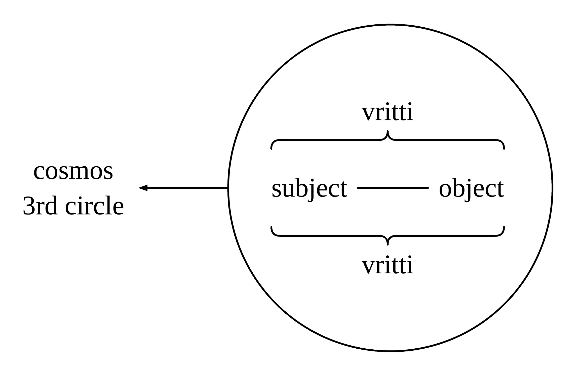
FIGURE 1974 0208-1-AB. Subject, Object, Vritti in Cosmos.
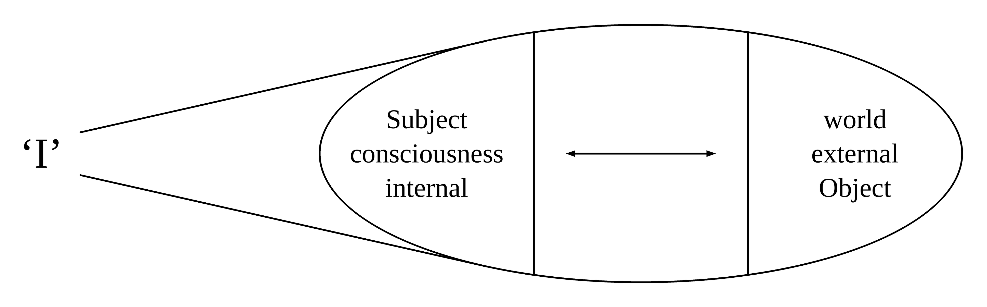
FIGURE 1974 0208-2-AB. Witness-I, Internal Consciousness, and External World.
FIGURE 1974 0208-3-AB. Three Circles Diagram: Divine Intellect, Soul, Psyche.
Other diagrams also referred to are not with this transcript version. [Transcriber note: [diagram] means the speaker is referencing a diagram as he or she is speaking. If someone is drawing or writing, with audible sounds of chalk on a blackboard, I indicate this by [drawing] or [writing].]
NOTE: For readability's sake, the following substitutions/edits made in Verbatim Transcript: cuz = because; gonna = going to; gotta = got to; yeah = yes.
TRANSCRIBED Verbatim by IT prior to 2017, reformatted by jf 2017. In 2023, IT updates prefatory matter, footer, and audio file name, alters Subsubjects to make more accurate, adds TOC, completes Book List, fixes errors/typos, adds new notes within transcript, adds three diagrams and references within transcript to these diagrams, reformats to accord with new conventions. In 2025, IT updates audio file markers to match new REP audio. Archival verbatim transcript – V12a.
AUDIO FILES: 1974 0208a, 1974 0208b. [Note 1: "Tape" and "Side" refer to original audio cassette tapes that were later digitized into .MP3 Audio Files. Note 2: In 2025, REP Studio cuts dead air from file b.]
1974 02/08 at Wisdom's Goldenrod
Epistemology; Vedanta
[Audio File 1974 0208a Begins]
AD: --in the way of-- the Vedanta tackles it. [15 second pause with faint background talking] Alright. We'll take, we'll take the-- we'll go somewhere like this, we-- we go back to that point that Steiner was trying to make, he said-- he says it's the concept, the-- the concept that was necessary in order for a-- a reality to manifest to us. And, for instance, for instance, if we're looking at a circle, the-- the notion "circle," of course, is a universal or a general concept and it will apply to all circles. But, the problem that comes up is, "But what about this particular circle right here," alright? And, somehow we can't seem to bring together the notion, the notion, concept "circle" with the particular circle that I experience in front of me here. And, that was the point we were reviewing a couple of weeks ago and we have to go over it, alright, so that we get grounded in this because the point-- the point here is that it brings or introduces the notion of experiences-- of experience, which is just so important. Um--
[Transcriber note: I am using Goethe The Scientist by Rudolf Steiner, 1883; translated from the German edition of 1926 by Olin D. Wannamaker, Anthroposophic Press, New York, NY, 1950. Also translated as Goethean Science and Nature's Open Secret.]
Rudolf Steiner [Goethe The Scientist, p. 118, AD reading]: "Wherein, [then], consists really the characteristic of the particular?"
AD: Now, if it's a particular that means it's something that you perceive, that you personally have experience of, otherwise you can't use the word 'perception'. "I perceive this pole," ok, that means your body and mind have to have a relationship with this.
Rudolf Steiner [Goethe The Scientist, p. 118, AD reading]: "Wherein, [then], consists really the characteristic of the particular? Can this be conceptually determined [AD reads: Can we determine this conceptually]? [AD: That is, the particular.] … No, [is the quite positive answer]. The concept itself [AD: For instance, the concept of circle.] knows nothing of particularity."
AD: The concept of circle doesn't know, so to speak, this particular wheel from that particular wheel, all it knows is the general concept "particularity", I mean the general concept "circularity".
Rudolf Steiner [Goethe The Scientist, p. 118, AD reading]: "The concept itself knows nothing of particularity. Then the particularity must consist of elements which are inaccessible to the concept as such."
AD: Ok? In other words, the-- we're looking at this circle and we know that the universal circle is not what we're perceiving, we're dealing with a particular circle, because the universal circle would only deal with the definition of circle.
Rudolf Steiner [Goethe The Scientist, pp. 118-119, AD reading]: "[But], since we do not know any intervening member [AD reads: interval] between [AD adds: the] percept and [AD adds: the] concept…these elements must belong to the percept itself. The reason for the particularizing cannot be deduced from the concept, but must be sought within the percept itself. What constitutes the particularity of an object cannot be conceived but only perceived."
AD: Now how about-- try to explain that, ok? In your own words, go ahead, give it a try.
RG: In that any-- any image or any perception must be revealed to a particular cognitional structure, partic-- a particular entity, particular sense-organs, it couldn't be the universal concept, it has to be particular. And the concept is devoid of any particularity, it always is what it is. It doesn't depend on the person perceiving it as a percept does, and that's the definition of it.
AD: Ok. Do you [couple inaudible RG words simultaneous with AD] follow what he said here? You see how important the bodily apparatus and the psycho-organ is. Otherwise, there is no experience for you as an individual. And that's the whole meaning of perception. It provides you with the-- the experience, experiencing a world.
S: Tony?
Rudolf Steiner [Goethe The Scientist, p. 119, AD reading]: "What really differentiates the percept [in essence] from the idea…"
AD: And just think of this now, the percept, let's say the particular circle you're looking at, and the idea of the circle--
Rudolf Steiner [Goethe The Scientist, p. 119, AD reading]: "What really differentiates the percept in essence from the idea is this element which cannot be introduced [AD adds: or brought] into the concept and which must [simply] be experienced."
AD: Ok? You want to go on with that explanation?
RG: Well, the only way a percept could possibly have any existence is through your experience of it. It's dependent on your experience while a concept isn't.
AD: Ok.
Rudolf Steiner [Goethe The Scientist, p. 119, AD reading]: "Thus [AD reads: The] concept and [AD adds: the] percept [AD adds: they] confront each other as aspects of the world alike in essence and yet different [AD rereads:"…alike in essence (and) yet different (AD adds: in form)]. And, since the percept demands the concept, [as we have made clear], it shows thereby that it possesses its essence, not in its particularity, but in its conceptual universality. [But] this universality, as regards the phenomenal world, must first be discovered in the subject…"
AD: In other words, the subject finds in himself these concepts, these universal concepts, which manifest a reality for him, alright.
Rudolf Steiner [Goethe The Scientist, p. 119, AD reading]: "The concept cannot borrow its content out of experience…"
AD: The definition, for instance, of circle cannot borrow the meaning or the definition of circle out of the circle that you see in front of you, let's say a round flower pot.
Rudolf Steiner [Goethe The Scientist, p. 119, AD reading]: "…since it does not take into itself the precise characteristics of experience…"
AD: Ok?
Rudolf Steiner [Goethe The Scientist, p. 119, AD reading]: "…[AD adds: that is]--particularity. All that constitutes this is alien to the concept. It must, therefore, give its content to itself."
AD: The concept must give its own content to itself, it doesn't go outside of itself. [short pause] Then, we went ahead and we devised some sort of scheme to try to help us understand what the S-- Sankarites or the Vedantists speak about. And I'd like just to go with the-- go through this, you know, we go through this together. Uh-- We took the Vedantic position: the object-consciousness equals the cognitive consciousness. And, let's try to put it in our own words, ok. The object-consciousness [writing] is equal to the cognitive consciousness. Let's find other words. Object-consciousness, the thing, ok, whatever the thing is, is equal to this here [diagram]. What is this here? Cognitive consciousness.
S: The knowing.
S: Experience.
AD: The knowing consciousness. [writing/drawing] Now how could you see that? I mean, how could they bring this equation about? Otherwise you're just going to take their word for it.
S: Well, it's like the object has to be able to be known and that's why, you know, it's the thing but also the con-- like the intelligibility of it. That's why they said object-consciousness, so it would seem logical, so that it could be connected with the part that knows it where we'd call that mind.
LR: Is it the same as saying what we know is our own mental constructs and after that--
AD (simultaneously): Our own mental(--) what?
LR: Our own mental state is what we know, [AD: Alright.] all the time.
AD (simultaneously): Some more, yes, let's-- let's warm-up.
S (simultaneously): There's no way of speaking of any thing that's not a known thing, but--
AD (simultaneously): Not a known thing. [S simultaneously: --the knowing--] Let's say, if we knew something, if we knew a thing, ok, we would know about-- [drawing/writing] about it in, let's say, five different senses, let's say we have a golden wheel over here, we'll know its color, let's say its smell, I don't know if it smells, alright, its taste. What other five sense functions?
S: [one word inaudible]
Few students at once: Touch.
S: Well touch is [one word inaudible]
AD (simultaneously): Touch.
S: Hearing.
AD: And hearing.
S: Sounds like a wheel.
AD: Huh?
S: Sounds like a wheel too. (bit of laughter)
AD: [writing/drawing] But these are all sense qualities.
S: Noticing that.
AD: Right? They're all sense. Alright, let's take another example. Let's say some of its characteristics in terms of quantity. [drawing/writing] In terms of [one word inaudible]
S (simultaneously): Fine.
AD: It's two [S simultaneously: Size.] feet, alright. It's two feet wide, the circle, two inches thick, it weighs a hundred pounds. What are we say-- what have we said so far?
TS: [couple words inaudible] its size and its [couple words inaudible] again.
AD: Well basically you'd refer them here [diagram] but from another point we could also think of them, so to speak, as, let's say, modes with which the mind must operate. In other words, if let's say the color and the smell are [drawing] two different things we have some difference in between, you know, separate them, alright. So if we say it weighs so much and--
S: Well you're comparing the object with other objects.
AD: Yes but, the point I'm trying to get to, that even all-- what makes this thing to be what it is in terms of quantity is still nothing more but more mental functioning.
S: Right.
AD: I mean when you say "five pounds", what are you saying? Something mental, i-- I-- it's not an abstraction. Suppose we use a third level, suppose we say from the point of view of utility, practicality, [writing] value, all that, again, [S simultaneously: Same thing.] these are again all mental-- Could we anywhere come along, anything-- any particular attribute of this thing which is not, so to speak, an aspect of the knowing mind?
LS: How about its particularity itself?
AD: The particularity of the thing itself?
S: Is there any way you know that without knowing it?
[short pause]
AD: You got to answer that.
RG: It wouldn't be particular-- I mean, it is particular in that it's known. Senses make it particular.
AD: In other words, the bodil-- the individual bodily intellectual organization, alright, the experiencing, is the whole point. That's why I wanted to hit this again. Do you notice how all these things depend on this thing, so to speak, alright, being the function of this consciousness, this knowing [diagram]? This is an individual entity [diagram].
RG: What we're really describing about the object are attributes of the individual sense-organs. If there was an entity then that--
AD (simultaneously): When we say sense-organs we also mean manas.
RG: Yes, yes.
AD: So then what we're saying about this thing is the way this [diagram] is operating.
RG: Yes.
AD: Would you say again what you asked before?
LS: What I asked is what about the particularity itself?
AD: The particularity itself, alright, is the-- is the whole crucial question here.
[student assents]
S: Ok.
AD: What's crucial about this question is because particularity involves-- involves the incarnation, so to speak, of let's say the indeterminate consciousness; incarnation or let's say association with a knowing mind and body. Now there could be particularity but without that there can't be particularity, so the-- the whole bodily mental organization is for the purposes of giving-- (given/giving) to oneself experience, [slight pause] period. Notice-- notice Lenny, all these things are qualities of an individual perceiving thinking being.
[short pause]
LS: Yes, but all those things are abstracted from the thing.
AD: Yes, I'll grant you that, sure. Here's that circle, alright, and all these qualities, alright, are all different aspects of this--
LS (simultaneously): When you (come) to the particular circle itself then you come to something which isn't abstracted from it.
AD: I'm sorry, I'm sorry.
LS: When you come to the particular circle itself it's something that isn't abstracted from it, you have to take all--
AD (simultaneously): Yes, we have to take all the stuff and put it back in here [diagram].
LS: Yes.
AD: Alright? And when we do that, then we're talking about this object here [diagram]. But what we've done is take this object and try to understand all the aspects that get this--
LS (simultaneously): Yes, (no/now) I understood-- I understood that, my question was something different than what you were drawing.
AD (simultaneously): Well that's-- that's why repeat.
LS: Ok so, in other words, if you were going to take the thing itself in its particularity as a whole, you have to find it in the knowing consciousness again as a whole, as the whole experience of it.
AD: Ah, so then you're saying that these things are really equal because this [diagram] is like-- this is-- this is like a modification of this [diagram] or this [diagram] is like a modification of that [diagram].
LS: That's like the self-objectification of its experience.
AD: The self-objectification of the experience but through the knowing mind.
LS (simultaneously): Yes, of its experience, [AD simultaneously: Of its-- yes.] experience projecting itself as a thing.
AD: Ok. So now particularity becomes the keystone, so to speak, in which we have to dig in because experience is the overwhelming concept that arises out of this whole notion.
LS: But particularity is where you grasp things as wholes.
AD: Grasp them as wholes, yes. Much more importantly, I hope maybe it'll come out now, if we see that then this here wheel is all these qualities, aspects, attributes, and then we realize that all these things that we've taken, [drawing] so to speak, to de-- to, you know, help us define this here, we got to put them all back in here [diagram], alright. But, we've come to the realization that, but these are nothing but, so to speak, objectification of the knowing mind.
[student assents]
S: Onto what though, are--
AD: What are you talking about, to what?
S: Well-- Well if all those things are part-- are parts of the mind or objectifications of the mind, what's it objectifying onto? [S simultaneously: There isn't any.] I mean is there any object that would be there? I mean you could say substratum but would that be different from the mind?
AD: No, I don't want to go that way, don't want to go that way. You follow this here, you follow this here, that this object here is constituted, all the [drawing] attributes and aspects of this object which we know, when we go through a process of re-- reduction and analysis we find out that they represent all various mental processes.
S: Yes.
JL: Tony, could we take a particular example? Let's take like the tree that we have there.
AD: Well this is a golden wheel. Golden wheel. I don't want to-- I don't want to use an animate object.
JL: Ok, use the golden wheel then.
AD: This is made out of gold, ok, and it weighs a hundred pounds. It's two feet wide, two inches-- or two inches thick.
JL: Could we look at that golden wheel in terms of different modes of knowing it?
AD: Go ahead.
JL (simultaneously): Let's say, let's say from a point of view of a-- of a goldsmith who is going to make a golden wheel for a temple. The wheel has a certain particularity and a certain associative quality to it, whether symbolic or otherwise, and in a sense--
S (simultaneously): [few words inaudible]
S: [couple words inaudible]
JL: Well, ok. The generic-- [AD drawing] the generic character that the goldsmith sees in the wheel is one thing. Now, let's say we took a-- an automotive engineer who has a completely different set of concepts related to this. He-- he attributes a certain utility to it, a certain value to it and this sort of thing. And in a sense, the generic unity of either of these two people will see that wheel as a different thing, as a different particularity. But it's the particularity that is par-- impartial of the generic unity that he applies to it, even if you have to [couple words inaudible]
AD (simultaneously): No, I wouldn't go that far.
JL: It's not that far.
S (simultaneously): Uh-hm.
AD: I wouldn't-- I can't see that because if, let's say, an engineer looks at it and a goldsmith and you say one has artistic purposes in mind and the other has let's say more utilitarian pra-- they're still-- they still are summed up under the notion of valuation. [student assents] It still hasn't changed the issue.
JL: Ok.
AD: One is looking at it, in other words, he's going to use it to worship something, another one is using it as a wheel to move something. Utilitarian values. And that would fall under the, again, [drawing] mental-- a mental kind of knowing of the value of what this thing may be. Somebody sees a-- sees it only as gold, he can buy more whiskey with it.
JL: Ok, but at the same time it affirms the fact that the cognitive consciousness is, so to speak, related directly with the thing itself. [short pause] And it does-- it does-- the thing itself is modified according to the cognitive consciousness.
AD: Alright, so then if we take PB's example where he speaks about a pen, ok.
JL: Yes.
AD: You'd do the same thing, wouldn't you? (student giggles) Alright, I'm sorry, I didn't know you had those kind of thoughts. [S simultaneously: It's a cigar.] We'll make a-- [drawing] we'll make a feathery pen. Same thing? The analysis of the pen would reveal that all these qualities that we speak about are simply nothing but the-- the-- the activity of the mind, psychic processes, mental processes, or, as he says, thoughts, concepts. In other words, this is a concept, color is a concept. [drawing] These are all concepts. The weight of the thing, that's a concept, alright. How long, the dimensions, these are concepts. I mean maybe you don't know that.
JL: They're concepts and at the same time they're an e-- an essential aspect of the object itself.
S (very faint): But it's a concept.
S: [couple words inaudible]
S: What's the difference?
AD: The point I'm [three inaudible JL words simultaneous with AD] trying to-- the point I'm trying to get to is to make-- make obvious this equation here [diagram], that's all I'm trying to do. Go ahead.
RG: I know but I really don't see the equation, I can see that the thing is a modification of the knowing consciousness but I-- I would tend to say that the knowing conscious--
AD (simultaneously): What do you mean a modification?
RG: Well, all those things you described let's say are aspects of-- of the mind, of the-- of the consciousness that knows, let's say, through extension.
AD: Modification of the consciousness that knows?
RG: Yes.
AD: How could-- how could that be? If-- if the consciousness that knows gets modified with every object that it knows, what are you talking about? You would never know. If anything, cog-- the cognitive consciousness, the knowing consciousness, has to always remain knowing, regardless of what the contents are.
RG: Yes, that's what I'm speaking of.
AD (simultaneously): We're speaking about here, what we're speaking about [RG simultaneously: Right.] here is a mind going out taking the form of the object.
RG: But it-- right, that's what I'm speaking of, but it still seems the mind is distinct from that object which it knows and which it takes the form of.
AD: This [diagram] [S simultaneously, faint: No.] is distinct from that [diagram].
RG: Yes, it creates it but it also-- and it-- and it is it but it's also distinct from it.
LS: Creates that distinction too.
S: Yes (but--)
RG: Ok. But the object-- I don't see how you could reduce the cognitive consciousness to the object or equate it with it.
AD: Well let's try in a dream analogy, alright? If dream Richard is looking at a dream pen, is that dream pen anything else but the mental processes objectified?
RG: Yes, but it's not the mental processes of dream Richard, it's the mental processes of-- of Richard, the one who's not dreaming, I mean of-- of the dreamer, not of a content of the dream.
AD: Alright, let-- let me try again. Dream Richard sees a bear facing him, alright, and he runs. Is it dream Richard that sees the bear or is it wakeful Richard that sees the bear?
S: Could be both.
RG: Dream Richard.
AD: You bet your life.
RG: Yes.
AD: Alright, now what you-- you say, you say, "Well look, the real Richard doesn't-- hasn't got a bear. He's only got a fear." But that's the whole point here. If this thing here [diagram] represents certain tendencies in the World-Mind, forces, those forces to us are not available except through the mental processes. So if you want to tell me there's an equation and yet, so to speak, there's a difference, I'll buy, like he pointed out, at one and the same time it is this [diagram] and yet maintains a difference.
RG (simultaneously): True, yes, [AD simultaneously: Yes.] true.
AD: This is exactly what sense knowledge is, it's-- it's knowledge s-- a separation from the object, alright, and a knowledge of that object. But all the time it's nothing but the knowing consciousness [AD indicates on diagram].
LS: Tony, if I could talk about the wholeness of the knowing consciousness, (otherwise) the wholeness of the experience, is that what you were speaking of as pratyahara last week, this state?
AD: Yes.
S: Oh, ok.
AD: But that's-- you know, that's in yogic phraseology. The Vedantists avoid that. That's a technical term in yogic phraseology, the whole state of the mind.
LS: The Vedantists would avoid that?
AD: They avoid that, yes, because they-- that's used for meditation.
AH: Tony I missed something you said a couple minutes ago, that these are all concepts, all the--
AD (simultaneously): These are all concepts, yes. What do you think color is? It's a concept.
AH: What [couple inaudible student words simultaneous with AH] are you-- what are you going to call percepts in this?
AD: Well the percept-- this is the per-- percept. Here, this-- this is the percept: [AD hits something] "I see this pole," right? "I see the pole," that's a percept. Now, what are the concepts? Everything that I know about that pole.
AH: That's the way Steiner uses 'concepts'?
AD: That's the way it is used, period. [student assents] Steiner and everybody else falls into that category.
AH: Ok, I'm really confused.
AD (simultaneously): The concept is the m-- the mental aspect, alright, rather than the physical, deals with the ideational component parts, what you call the ideational parts.
AH: And then-- and the percept is?
AD: The percept is the thing.
AH: The thing.
AD: Yes.
RG (simultaneously): It's your experience without, say, thinking about it. Once you start to-- You perceive that. [AH assents] Once you start to think about what it is, you could only think of it in terms of these concepts, the particularity vanishes as you think about it.
AD (simultaneously): Yes, but you see Richard, I'm also trying to show him that that's already inherent. He sees a pen, all these [AD indicating on diagram] concepts are already involved. And when he goes through the process of an-- analyzing it, all he's simply doing is making conscious what he's unconscious about. Otherwise you will not see no pen or golden wheel. Take the example of the-- Richard who sees this dream pen or this dream bear, alright, take that example, alright. Now only after he experiences the dream bear and he wakes up from it, you know, and he analyzes it, he says "Oh, that was only a thought in my mind, what the hell I get excited about?" But that's only after he analyzes it. When that bear is chasing him he's running like hell. Because he's unconscious. The same way you see a world out there, you're unconscious that the process of thought is always going on.
AH: I'm still a little bit confused.
AD: Well go ahead Andrew, go through, go through.
AH (simultaneously): I don't see I mean-- I guess I don't see the distinction between-- or why do we make a distinction between percept-- percept-- perc-- percept and the-- and concept? Like-- I don't know how we talk about one being a thing and one being the-- what we think about the thing because we've just equated those two. Haven't we?
S: Uh-hm.
AD: Yes, go-- go ahead, talk more, talk more, let me s-- let me see if I could--
AH (simultaneously): You equated object-consciousness with this thing with knowing.
AD: Well that's exactly what we're doing then, isn't it? We're taking this object and through, you know, an a-- an analysis of the object, a detailed exhaustive analysis of the object, we begin to find out that this object is a percept and a concept combined, alright, and we're separating, alright, so that we can understand what we're doing. When we say a percept, we're not blind anymore, we say well it also includes the concepts otherwise I have nothing there, and when you say concept you know that it, so to speak, you got to refer it to a particular object in order to reintegrate it back into the world.
AH: I see, ok.
LR: Tony, do we perceive contents in our own mind? I mean-- no, that's not what I mean, our own, say, fantasy?
AD: I don't know what you mean.
LR: Does perception only apply [S: Linda--] to that which is externally existent say or-- or has, what we say, a character of the World-Mind with it? Or can perception also-- we do perceive in a dream, right?
AD: Yes.
LR: Ok, so perception isn't limited to that which is, say, grounded or (is) given-- given existence by the World-Mind.
AD (simultaneously): Yes, yes. You can have a perception of your own private fantasies, you know?
LR: And that still is perception?
AD (simultaneously): Still a perception, yes, but you have to try to remember those distinctions, you know. That's why we'll call this a thing [diagram]. And if you conceive it in your own imagination we'll say well, you know, it's only a private-- private affair.
LR: But yet you do say it's a perception(./?)
AD (simultaneously): Yes, you can call them both percepts, sure. The bear that you have in a dream is a percept. The World-Mind didn't put it there, you put it there. Go ahead.
S: When you have 'thing' above 'objective-consciousness' [diagram] there's something in me says no to that because it-- you have to speak of it as right then in the equation as thing-as-known, thing-as-known.
AD: Yes, thing-as-known, sure, that would be more accurate, sure Dave.
S: Yes.
AD: And you can see why PB would say, well this thing is really nothing but thought. Because that's all it is, it's all these qualities, but these are all thoughts. So the thing is a thought. But we won't-- let's leave that out for now. Go ahead--
S (simultaneously): Ok, is there-- is there any-- the-- I keep having this-- I mean, I can-- if I-- if I imagine the problem stated, and I see that, ok, I can speak of something-- a thing as known, but then I want-- you know, I get into the materialistic, I guess, thing of, well there's, you know, something in itself that-- I mean, something that the thing corresponds to. We speak of-- we speak of like in Vedanta like the mind going out to the object. Well, the thing-as-known I guess is what I'm insisting that that be called because the thing, whatever it is in itself, like we never know it seems.
AD: Well if we'd never know, then why worry about it? If all you could know are knowable things, which means thoughts, then why worry about a thing-in-itself which may or may not exist? [students assent, very faint] That's the whole problem Kant had, he kept worrying about the thing-in-itself. Until he got, you know, wise enough to say the hell with that.
S: Yes but the question-- but there's a still persisting question in my mind of what does this thing-as-known as I know it, you know, as my cognitive consciousness. Ok, granted. But what does-- what does that correspond to?
AD: Well, if I-- if I use PB's terminology I would say it corresponds to certain forces in the World-Mind. But that doesn't make it a thing!
S: Yes.
AD: That doesn't make it some sort of graspable object.
S: Ok, so in other words I can, I can (pretty well) drop that-- that [one word inaudible]
AD (simultaneously): Because these forces, these forces that let's say represent the thing in the World-Mind could simply be nothing but your mental processes. So I haven't answered your question. And I got no intentions to.
RG: Go over that last thing you said again, that the-- the thing in the World-Mind could be--
AD: The thing, what we call the thing, [RG: Right.] which has a persistence-- It's true that our-- in order for us to operate, let's say, and get to that, we-- it's only through our knowing that it becomes available to us in experience, but that doesn't mean that our knowing is con-- is the creator of it, alright.
RG: Yes.
AD: Our knowing may simply be, so to speak, the forces of the World-Mind which convert-- which converted into things. In other words, these mental processes may be nothing else but that. Now, the point, the point that we're trying to get to-- I'm sorry, yes John?
JL: Ok. What-- what does-- what in this equation cr-- creates the particularity? Is this-- is there such a thing as particularity in the percept itself?
AD: But how does pe-- how does a percept come about? The percept can only come about if there is an individual intellectual bodily subjective organization, alright, through whom this can operate.
JL: Ok, well--
AD: Otherwise you have no perception.
JL: Ok. Does the particularity then result from the application of these concepts [AD simultaneously: Well--] to the thing-in-itself or thing--
AD (simultaneously): I don't-- I don't know what you mean, I'll take a guess and [JL simultaneously: Well--] say yes.
JL: Well let's say, let's say logic--
AD (simultaneously): The experiencing of these concepts through your intellectual bodily organization is what produces the experience for you and the percept for you.
JL: Ok, let's say logically one has the percept, then--
AD: No, that's not logical.
JL: Well I'm say-- I'm talking about--
AD (simultaneously): I'm saying, that's not logical.
JL: You mean to have a percept?
AD: Yes, to have a percept is not logical, Jung would say it's irrational.
S: So would PB.
JL (simultaneously): Ok, well I'm talking about the relationship between the different things that we're trying to do here. Let's say secondly there's-- there's, so to speak, the application of-- of the concept to this? Simultaneously.
AD: Yes, go on.
JL: And then, by means of the application of the concept, there has to be a distinguishing between the object-consciousness and the cognitive consciousness in order for there to be, so to speak, an object.
AD: Ok.
JL: I-- that is, if there were nothing but the cognitive consciousness there would not be any object for us to conceive. And, as a result of the-- the conceptualization and the-- the application of certain generic terms such as color, smell, taste, and so on, the object comes into existence as being something-- something particular. But is it-- is it that before this whole process? I really wonder whether we perceive particular objects but rather that we conceive them.
[9¾ second pause]
AD: I don't know, you-- you got everything together there now, I don't know what the question is.
JL: Well, do we perceive particular objects or do we conceive them? [short pause] Is there a particular object in our perception?
AD: Let's tr-- let's go over this then, ok?
S (very faint): Uh-hm.
[short pause]
Rudolf Steiner [Goethe The Scientist, p. 119, AD reading]: "What constitutes the particularity of an object cannot be conceived but only perceived."
AD: What-- what do you take that to mean?
S: Thinking.
[short pause]
AD: John, what'd you take that to mean?
JL: What constitutes the particularity of an object--
AD (simultaneously): Of an object cannot be conceived--
JL: Cannot be conceived.
AD: --but only perceived.
JL: Well the perception-- conception only involves certain generic universals and there's no particular there.
AD: How does a particular come around then?
[short pause]
JL: Well it seemed by an arbitrary distinction. Or I don't know if it's arbitrary but there's a-- there's a certain contrast between these universals and the actual perception.
AD: I'm sorry?
JL: I say there's a contrast between the universals that-- you know, that-- that are-- that are conceived and the-- the-- the individual case that it a-- that they apply to.
AD: I don't follow you.
JL: Well, let's take that pole you were banging at before. I perceive, for example, the color brown. If-- the color brown is-- to a certain extent it's a-- to that extent a universal in my perception of this, of the light. But it is a particular color brown and it doesn't include all browns, for example.
AD: Well, why is it that particular brown? [short pause] Why is that particular height? Why is it that particular weight? Why is it that particular roundness? Isn't this because of your bodily and intellectual organization?
JL: Yes.
AD: Well-- well then the whole point that he's making here is particularity is something that comes into being because the individual as such comes into being, [JL simultaneously: Uh-hm, literally.] an individual being operating through an individual organism and all that-- in other words, the upadhis that he has to operate with already, so to speak, are determining what that object is because that object is going to be simply, let's say, a prolongation of the mental processes of that upadhi.
JL: Yes, ok.
AD: Ok, that's the whole point that Steiner's trying to make. Now, he doesn't go into it in detail because this is the point that we're going to have to-- we're going to get shipwrecked on. He be-- he won't get shipwrecked, he says he's got no problem there.
JL: But for example, for example, the particular weight of the pole itself is quite relative to my own bodily organism, as well as the length [couple words inaudible]
AD (simultaneously): Well now if we mult-- if we multiply this by various centers of consciousness, each and every center of consciousness, so to speak, then has an experience. And that's [student assents] the whole mystery that's coming up, what is the meaning of experience, and this is what we're trying to get to. If we say now this particular golden wheel, and we broke it down into all these mental qualities, well then, we don't have to worry, we can just erase all these qualities and say that this object-consciousness, this thing here [diagram], alright, is equivalent to the knowing consciousness. Let's not say an identical equation, alright, but let's say there's an equivalency here, this object can never be known unless we have a consciousness that knows it [AD indicates on diagram]. But this consciousness that knows it [AD indicates on diagram], so to speak, is what it knows.
JL: I would-- I would question though, is-- does the particularity result from the direct perception or does it result from sort of post hoc conceptualization?
RG: And then the particularity vanishes once-- once you start to conceptualize it. That's what the particularity is, is ver-- that very perception. [student assents] You can't conceive particularity as part of object. You could only perceive it.
JL (simultaneously): Ok. But the questi-- the question remains, what do I know of the object? What do I know of the object before it's conceived?
RG: The perception, the perception, the particularity of space-time existence.
AD: You know of it in a very roughshod manner. Alright? It's lit up dimly by the dim consciousness that's operating. The dimmer the consciousness, the less the thing is lit up.
JL: Ok, but there-- there is to a certain extent-- as long as I know the thing, even-- no matter how roughshod it is, there is still conceptualization there.
AD: No one denied that. No one denied that.
JL: So-- so the particularity of a thing cannot be a result then of that-- of that roughshod conceptualization.
AD: Oh no, I think you're missing the point here. The equivalency [JL simultaneously: (I might be.)] of what you know about the perceived object depends upon the equivalency of the knowing consciousness.
JL: The equivalency of it.
AD: Uh-huh. This-- you still have-- you still have to deal, so to speak, with a perception.
JL: Yes.
[short pause]
AD: You see the point he's making?
S (faint): Think so.
AD: One way or another he's trying to get around that perception.
[students assent, very faint]
S: It seems that the perception or-- let me see.
AD: We could make it very simple, the perception and the conception of the perception, you know, the two of them together so to speak, are defined by this here, the self-consciousness of this here [diagram].
[student assents, very faint]
S: Yes.
AD: Alright, but we-- we-- again, let's work these things out a step at a time. Let's not run.
S: Could I--
AD: Alright. Go ahead.
S: --try again? Could I say that [slight pause] there are conceptual elements in perception, in any perception, any level of perception, [AD simultaneously: Uh-hm.] no matter how bright it is, and that-- but the fact of the particularity, the par-- the fact of a perception is the fact of its being known by an individual with an individual body.
AD: I don't know what you mean.
S (simultaneously): What I'm-- what I'm trying to say is [RG simultaneously: Right, yes.] that these conceptual elements are the same or are one(,) [AD simultaneously: Ok.] universal in any perception.
AD: Look, if you want, you could try looking at it this way. You have an object and let's say the object is fully known to you, every and any of its qualities. Now as you go down, so to speak, in the scale, alright, and the dimmer the perceptual object becomes the less concepts you have about that object. Now you can conceive, so to speak, going down to a level where you have no concepts about the object. You'd either ha-- you don't have an object either.
S: Right.
AD: Ok. [S simultaneously: Yes.] So you can imagine this varying scale, so to speak, depending upon, let's say, the IQ, the self-consciousness of the-- of the experiencer.
S: Wouldn't this--
S: What I'm trying to say, I think, is that perception, the-- and particularity depend on the--
AD: Self-consciousness.
S: On self-consciousness. (S laughs a bit)
AD: Of course! [S simultaneously: Yes.] But that's what I'm trying to-- that's what we're trying to work to.
S (simultaneously): And that's all, that's all.
AD (simultaneously): But that's what we're trying-- Don't say that's all because that's a big mouthful.
S (simultaneously): No, I mean in terms of the thing.
AD: Yes, but that's a big mouthful. Oh boy, Jung was so right, you people are going to learn to respect things. (student laughs a bit) Quote unquote.
S (simultaneously): I don't know, I just had my mind blown so, I guess I respect them.
AD: Alright, let's stop, [JL simultaneously: Ok.] let's stop, let's continue [JL simultaneously: Ok.] with this, huh, let me finish this.
S: (Yes.)
AD: Alright, now, we erase this here [diagram] [short pause while erasing] and we come to a tentative sort of identification, that the object-consciousness equals the knowing consciousness. [student assents] Now the cognitive consciousness, [writing] let's use our own terminology, equals cognizing consciousness. [short pause while writing] Let's use our own, cog-- cogni-- cognitive consciousness, well we said that was the knowing consciousness, right? Your knowing consciousness. And we said that that's equal to the cognizer's consciousness, [TS simultaneously: The knower.] the empirical ego's consciousness. Is that right? That would be the same as your self-consciousness because that's what self-consciousness is, reflective consciousness. So then this [diagram] will be equal to this here [diagram], the (knowing) will be equal to the knower's consciousness. Ok. Now, therefore, the Vedantists would say, the object-consciousness or the thing-consciousness equals self-consciousness.
LR: What's the usage of the-- why-- why make a difference between that knowing consciousness and the knower's consciousness?
AD: Why, isn't there a difference for you? Isn't there a difference between Linda and what Linda knows?
LR: I'm not speaking about what Linda knows.
AD: Well, that's the point you asked.
LR: Yes well--
AD: You said what's the difference between knowing consciousness and the knower's consciousness.
LR: Wait, say that again [S simultaneously: Yes.] Tony, the answer?
AD: You asked me, "What's the difference?" I says this is the knowing consciousness [diagram].
LR: What does that mean to you?
AD (simultaneously): The knowing consciousness is the mind actually going out assuming the form of the object, [LR simultaneously: Right.] that's the knowing consciousness!
LR (simultaneously): But can you speak of a knowing consciousness apart from the form it takes?
AD: But no, that's the whole equation we're trying to prove!
LR: Ok, so if that's true, why even ta-- why even say knowing consciousness as opposed to the knower or the thing?
AD: Because that does happen to be so empirically.
S: Yes, it does.
AD: Well that is so, isn't it?
LR (simultaneously): If all we know of the knowing consciousness is the thing it takes, is [S simultaneously: Sure.] the form it takes--
AD (intensely): Yes, until it does that you don't know it! Until the mind takes the form of that pole, you don't know that pole.
LR: So why speak of (a different meaning or--)
AD (simultaneously): So we make these-- we make these empirical distinctions in ignorance, right, between the knower, that which [student assents, faint] is known, and the knowing.
LR: No, the knowing is the part you never know. You don't know knowing, you only know that-- you only know that you see [one word inaudible]
AD (simultaneously): You don't know pain, huh?
LR: Yes I do, (what do you mean)? What do you mean?
AD: Well what is pain? Don't you feel that to be a kind of knowing?
LR/S(?): When you speak of pain--
S: [one/two words inaudible]
AD: Any internal state of mind, any internal state of mind, is the mind's, so to speak, form of that.
LR: But when that occurred that's-- that's also my consciousness, I mean that's-- it takes the for--
AD: That's not your consciousness, that's your mind's modes, your mind's transformation. The mind is first this thing, then another thing, and then a third thing. The antahkarana, to use the Vedantic phraseology, goes out, grasps a thing, assumes the form of a thing and brings the form back to the knower. Then the knower says, "Look, I know this." All this in one act. And we're making these distinctions between the knower, the knowing consciousness, and the thing that is known. And these are facts of empirical life.
LR: Yes, I guess I'm just saying that you could never really grasp that knowing consciousness very well because it's already assumed the form-- form--
AD: Yes, but if you take that out, then there is no possibility of relating to that object. If you [LR simultaneously: Well--] say I had no knowing-- no mind-- no mind psychosis, no mind transformations, [LR: Wait--] then you could never know the object.
LR: Theoretically--
AD: Not theoretical.
LR: Well listen. What I'm saying is my understanding, theoretically I-- I understand what you're saying but when I look at my experience I can't really find that element of it, I can't--
DR: Well don't you say "I'm thinking"? Em-- empirically you use those words, you use the terms, you define [one word inaudible] to define a thing, and sometimes you're thinking, [student assents] sometimes-- And any kind of thing like that where [one/two words inaudible] and you're-- and you're [LR simultaneously: I just got caught(--/.)] just-- you're just saying those words.
AD/S(?): Yes.
(Side 1 of original cassette tape digitized as 1974 0208a Ends; Side 2 Begins)
S: Yes.
DR: That's [S simultaneously: (Sure.)] right, that's what you're doing. When you say "I am thinking," what you're talking about is the cognitive knowing or cognizing consciousness.
LR: But-- but if-- but you're identified with the activity and you don't-- you're not the witness saying, "Oh yes, I was thinking, you know."
DR: But you distinguish [RG simultaneously: No, but then--] that from you, [S simultaneously: This is still reflection, yes.] from who you are, you say "Well, you know--" [student assents] or right now you--
AD (aside): By the coffee table.
LR (simultaneously): Yes, but I'm saying, and I think all I'm doing is saying that-- I'm saying that the minute you say something like that that's where you're at, I mean that's what you're doing, that's you.
DR: So that's distinct, let's [AD simultaneously, aside: Thank you.] say, from the world. I happen to see that also, you know.
LR: I'm sorry.
DR: You're saying that in theory you-- that you understand that you need to postulate a knowing consciousness. And what's being said is that in practice it-- a distinction be made, in the world this distinction is made, the point you're coming across here [one/two words inaudible]
LR (simultaneously): Is not-- so am I. (AD chuckling in background) I-- well let's say I am thinking.
AD (simultaneously, in background): Thank you. Thank you.
S (in background): [one/two words inaudible]
AD: [in background: (Ok/Welcome).] Look, I see [LR simultaneously: The thought is really--] a pot. Linda, I see a pot. Alright, let's use the pot. It never wears out in Hindu philosophy. What is-- what's included there?
LR: Well I'm asking, who knows.
AD: Subject, the object, and the relationship, right?
LR: Yes, the two of them.
AD: Hm?
LR: The two or this relationship.
AD: I see a pot.
LR: Ok, [S simultaneously: That's true.] there's a subject and the pot and there's this relationship which you'd never see until-- but, alright, then that-- but--
AD: Well aren't you saying that then? The [LR simultaneously: Yes.] mi-- the sense-organ goes out, the eyesight goes out, grasping--
LR: But when I-- ok, but now I'm thinking about my own experience of those. When I-- when that happens to me, when that's my experience and I'm looking at a pot and I see a pot, I don't also see that I'm seeing the pot. It's just me and this pot. (bit of laughter, student words)
RG: Right, right, I mean you-- that relationship is brought to you through [student assents] a kind of reflection. [students assent] You can't-- you can't know [LR simultaneously: Right, so I'm saying--] that relationship directly.
LR: Yes. I'm not even arguing--
LS (simultaneously): Better drop a rock on her toe Tony.
AD: Huh?
LS: Hurry up, you better drop a rock on her toe, and where the distinction comes up.
RG: But if you use a psychological example Linda, you could see it, if you-- I mean if you're feel--
LR (simultaneously): I do see it, I mean I do at that time but I don't--
RG (simultaneously): But in your experience, in your experi-- if you're feeling something--
LR: Yes--
RG: Aren't you aware that you're feeling it and you're also not the feelings, you're somehow distinct from feeling it, your [LR simultaneously: Usually not.] ego isn't the feeling of it? Usually not but sometimes.
LS: Yes, how about with pain?
S: Pain is a good one.
S: Uh-hm.
LS: Because you're trying to get away.
LS/S(?): That's what pain is, pain is conflict because you're trying to deny the distinction.
S (very faint): [couple/three words inaudible] (laughter, student words)
S: It's true, true. (bit more laughter)
LR: I mean I'm-- I guess right now I'm seeing them all so much the same that I don't really-- you know, I'm sort of-- yes but I've been wanting to say (some laughter) is that I really see why they're all, you know--
AD (simultaneously): Well we're trying-- yes. I see, I can understand because after all that's-- (laughter) that's one of the reasons why I'm trying to avoid the use of the same word, 'cognitive,' 'cognizing,' you know, 'cognition,' I'm trying to avoid the use of the same word. In other words, by saying this object-consciousness [diagram], alright, this is a cognizing consciousness, [writing/drawing] I change it, say 'knowing consciousness,' ok?
LR: What I'm saying I guess is that--
AD (simultaneously): Instead of saying knower's consciousness.
LR: Well, here's what I'm--
AD: The knower's consciousness would refer to the person who's having the cognizer-- cognizing.
S (faint): Yes.
S (faint): What do you mean?
LR: What I'm saying is, my experience now is-- of this equation (of/um)-- I mean it-- it's-- it's become really apparent to me that what I see is also where I'm at and that when I-- my state of consciousness changes (when/what) I see things and I mean that-- and so to make it different and separate is really a little bit humorous to me now.
AD: No, it's not humorous, it's your task.
LR: To separate.
AD: The task you have ahead of you is to distinguish, very carefully, one thing from the other. Otherwise you're going to end up like one of those hippies out there saying, "Everything is one." (bit of laughter)
LR: I already did that one.
AD: You did that? [LR simultaneously: Did that.] Alright, then we'll move on to the next, [LR: I know. (some laughter)] that the point-- the point here-- Linda, the point here is to distinguish these things, and you know that in distinguishing them you're-- you're really artificially abstracting, I mean--
LR: Yes, that's how I feel.
AD: Alright, yes. Alright, you feel it that way but after a while you see that it's very very distinct. The mind has to go out, assume the form of the object. And the example I gave you to consider very carefully was when you tasted wine, ok? That wine, the flavor, the essence of that wine, you know, you cannot grasp unless the mind, so to speak, becomes that wine. [LR assents] Otherwise, you can't take the world into yourself. So we distinguish between the knowing consciousness and the object as separate from it, alright, so that we can understand and in distinguishing them unite them better in our understanding. The purpose of distinguishing is to bring about this unitary idea that you're-- is in the back of your mind. We distinguish in order to unite. And if you cannot distinguish properly, you cannot unite except in a very amorphous way, you know, which means quicksand. [student assents] Let's try again. We said that this object-consciousness, this thing here [diagram], is the knowing consciousness. In other words, the mind going out to the object and assuming the form of that object, alright, is for us that object. Now this knowing consciousness, as we said over here [AD indicates on diagram], this knowing consciousness is my consciousness, therefore it's equal to self-- my self-consciousness. Therefore, object-consciousness is equal to self-consciousness. [short pause] Go over this a few times. Go over it carefully, over and over again, because you-- you want to later on be able to do it with any and every object. In other words, you-- you want to take a plant, you want to take a person, alright. Now for instance, if you take a person, alright, you're going to have trouble saying that your-- your mind is me. [short pause] I'm sorry for the interruptions but they're necessary, I mean if they're your problems so much the better. But, do you see this now, this equation? Do you see this equation?
LS: I don't see the knower's consciousness as clearly as the other two, the distinction isn't clear.
AD (simultaneously): Tell me more, tell me more, am I--
LS (simultaneously): Well if I try and grasp it (that/in a) way I would come, you know, from the particular. But the wholeness of the-- seems that in each case you make a wholeness of that particular-- of that kind of consciousness. So we get an object, a particular object, or we get the whole experience.
AD: Look, aren't you saying in a sense like-- like if we consider the mind like a tattva, a principle, alright, and the vritti in the-- in the principle or-- or the vibration of this one, let's say, circle of mind, of mi-- mental substance, one vibration in it is one object, another vibration in it is another object. Each vibration in it is a whole in itself. And it is the whole mind at that one vibration. The next vibration another whole object comes into view.
LS: Ok, or it's a whole experience of [few words inaudible]
AD (simultaneously): A whole experience, yes, that's even better.
LS (simultaneously): But then-- then suppose I come back to the whole entity, the whole ego? That's doesn't seem to-- you know, if I bring it back to the knower's consciousness it doesn't seem to equate.
AD: Well in the same way that you only know aspects of the object, in the same way you only know aspects of that ego. Because it is the aspects of the object that are delivering to your hindsight aspects of the ego. In other words, the thing that you get to know is also showing you what you know about yourself. The two of them get brought up to the surface. [student assents] And that's why in the Vedanta they want you to learn to stick to the object, because the ego as such has too many impurities in it and keeps blocking, alright, and preventing that object from teaching the ego what-- what it has to learn.
LS: And so if I want to understand what way it's the whole ego I'd have to admit that I don't ever see the whole object but I only have a whole experience--
AD: A whole experience but not the whole object.
LS: --of the object.
AD: Yes, and that's why when we took this golden wheel, ok, and we took the example, you see how many infinite-- I mean, the number of attributes are unbelievable.
LS: Yes. You could have thousands of experiences of it.
AD: Yes.
LS: Definitely.
AD: And so, when for instance Steiner makes the point, he says, "Now look, just because you have a perception of the object, alright, don't think that this is the object, or a number of perceptions of the object or an infinite number of perceptions of the object, this is still not the object." You can't by, like the Buddhists do, you know, by a quantitative analysis (will/well) say, "Well everything is in a constant state of flux. Therefore this object I never really get to know because I know this part, the next instance another part, another…" He would [LS simultaneously: Oh I see.] say, "But this here isn't the object. You can't [LS simultaneously: I see.] add it up and say,"Now I got an object here!""
LS: That analysis is forced on them because they want to throw the ego out.
AD: Yes! Whereas these people say, "Wait a minute. This-- this thing that's being revealed about the object, alright, is also revealing something about the subject." So that this thought which is working through and revealing both sides, alright, part of the object comes into view, so does part of the subject. When, for instance, a person projects part of his personality onto another, alright, he reveals part of himself to himself if he's at all circumspect, right, you know, and he sees that person. In other words, different aspects of the being of both are thrown up and they have to be looked at that way. No one, no one, and this is something that everyone probably knows, you know, unconsciously, no one could know an object completely. That's simply right out of the question, just like no one could know an idea completely, that's simply out of the question. You cannot grasp the infinity of attributes that make that object to be what it is.
LS (simultaneously): Even if there-- even if there's a samadhi on that object you wouldn't know it?
AD (simultaneously): That's something else.
LS: That's something else.
AD: That's something else, yes.
LS: Ok.
AD: Yes.
LR: Then there's no thought, then it can be a removed [few words inaudible]
AD (simultaneously): Well then it's a different kind of knowing, it's a different knower there that's [students assents] operating who can look at the entirety, you know.
LS (simultaneously): Alright, so we're speaking of ordinary waking consciousness.
AD: Yes, we're speaking about [LS simultaneously: Ok.] separative knowledge based on sense cognition.
JC: Tony, is the purpose of these equations to lead you to a point where you see each state of consciousness as being you, as being revealed rather than distinction of subject and object within each--
AD: Well that wouldn't be the whole purpose Jeff. It's also to know something about the object too. But primarily I would say it-- it is to eventually bring a person closer to his own subjectivity, inwardize his consciousness more and more. Because if we took a Jungian example, for instance, and we said that every time a person has a projection on the object, alright, he's revealing something to himself about himself. But certainly he's also seeing something of the object too, otherwise there would be no projection. So there's this mutual interplay. As he gets to know something about the object he gets to know something about himself. And as he gets to know something about himself he also get to know this object better. Alright? And the vritti stands, so to speak, not-- not outside of it but like lighting both sides up. It's a tertium quid insofar that it relates both to each other [FIGURE 1974 0208-1-AB].
JC: Yes, I wasn't-- I'm just saying, I'm conceiving of a-- a point where you see the projective process going on, you get to know more the object and yourself, what you know of yourself as being reflected in that object. But I'm saying that through these equations, when you begin to really see that the object-consciousness is the subject-consciousness, you'd reach a stage where the experience as a whole would be seen as what is really you but within that there is distinctions of [one word inaudible]
AD (simultaneously): No, I don't want to run into that Jeff. What you say is true, you begin to see the object as an intention of consciousness. And therefore, insofar that this is-- that consciousness ten-- tends to function in terms of intention, then of course you could reverse that process. We'll get into that in a little bit, I just want to see this thing through, try to make you feel more and more, for instance, that when-- [drawing] when you're a subject and here is an object, and let's say this is a female and this is a male, and he projects the anima onto that, alright, he sees one aspect of this female, alright. He projects the mother onto her, he sees another aspect, alright. If he projects, let's say, a devouring witch-- any and every archetype from a Jungian point of view would show various aspects of this person [diagram] but would also be showing what's in this person [diagram]. Now that-- that's just from a psychological point of view. Imagine if you start doing it ontologically. In other words, what is this being made up of? And then you start with notions like substance, essence, you know. Let's not rush ahead, I want to get right into that. Go ahead.
S (simultaneously): Can I-- can I make sure I understand this difference between the-- the knowing consciousness and the knower's consciousness?
AD: Go ahead.
S: Ok. [short pause] Is it-- I guess there's like-- this example of pain is good but I'd like to make the distinction in another way if I could, like is it-- is it knowing consciousness in the sense that I know through, so to speak, continually my consciousness, that is, Dave's consciousness as opposed to somebody else's or-- I mean there's a continuity in-- is it-- does the continuity, so to speak, just regardlessly get projected, if you will? I mean the-- a same-- you keep running into the same thing and is that-- is that a way of distinguishing between knowing consciousness and the knower's consciousness?
AD: Well, doesn't that happen automatically, for instance, if there's a continuous process of projection going on, projections which in the process of analysis, alright, get assimilated, isn't it-- isn't a peculiar process going on in the sense that the person gets deeper into himself and he says, "Well I'm not that and I'm-- I'm not that, that, and that," and he keeps getting more and more inward as he keeps rejecting every one of these things that he thinks he is, alright. So that there is a deepening and a su-- subjectivization process going on simultaneously, and the Vedantists would point out that that's the whole purpose of experience, to bring you, you know, to some kind of self-accounting.
S: Say more.
S: Yes but sometimes I mean I've experienced it the other way like when-- when I (project) something that's in the other person, I'll-- I'll get to see just the other side of that, you know, and I'll see what it is in myself.
AD: I don't see your point.
S: Well, use the example of, you know, so to speak, knowing that you're not this or it's something maybe inside you and that it really isn't, you know, about-- maybe a quality of the other person. But I've also had the experience, and I guess this is my problem point, of, you know, imag-- so to speak, thinking that the-- you know, imagining the other person to be a certain way and then finding that that is in myself.
AD: That that is in yourself?
S: Yes. I mean it seems like knowing that, like that-- at that point is-- is where I can really grasp this second part of the equation, that the-- that the knowing consciousness is my consciousness, it's not-- it's not a negation, it's an affirmation of that. It may be a painful one but it is. [short pause] See, the first I-- the first-- the first part, the thing-- the thing that's known and the ob-- and the knowing consciousness I can grasp but the second one I-- I-- I just--
AD: What do you mean the second one now?
S: --experience-- The knowing consciousness and the knower's consciousness, I'm having-- I'm having trouble reading through unless I understand what that means.
[short pause]
AD: Let's use the word 'mind,' let's not use the word 'consciousness,' let's use the word 'mind'. Now say it again. Go ahead Dave, say it again.
S: Tony-- well I-- when-- the example I used before.
AD (simultaneously): When the mind takes one mode or another mode or a third mode, it's always your mind, isn't it, even though the modes are different?
S: As opposed to somebody else's mind, you know, I'm not-- I don't know how you--
AD: No, no, uh-- (some laughter)
S: [few words inaudible]
S: [one/two words inaudible]
AD: Look, I'm listening to a piece of music, ok? Now my mind is functioning through the hearing organ, ok? And it flows out and it listen-- it grasps this music and brings it into it, alright? Now, the mind flows out and takes on, so to speak, the sound quality. Ok? What it-- that's my mind, isn't it?
S (very faint): Yes.
AD: Alright. In other words, the mind flowing out becoming that sound and delivering to me the essence of that sound is a mode of my mind. A mode of my mind is still my mind.
[short pause]
S: Ok, and insofar [S simultaneously: Right.] that you know that that you can say that the knowing--
AD: Insofar that you know that you know something about yourself too. [short pause] Let's take, let's take a very-- let's take a rea-- let's take a real example, ok? You're walking outside in the dark and someone comes up to you, alright, and you get scared, alright. That object, so to speak, which you didn't know pro-- you project onto it some kind of villain who's going to harm you. Now you know something about yourself, right? You know that there's fear in you. And how did you get to know that there's this fear in you? Because your mind took on that mode. In other words, apprehension, anxiety, fear, right, was the mode of the mind. Now you say well, "That's my mind, therefore that mode is part of me." Is that really hard to grasp?
S: Well I-- I guess in-- I guess in some way I'm sti-- I may be experiencing, I don't know if it's the same but probably the confusion that Linda had in the sense that, ok if you say that then what's the--
AD: What's what?
S: What's the purpose of a three-fold-- three-fold thing? I mean you--
AD (simultaneously): Does it have to have a purpose? Let me answer you right back. Does it have to have a purpose? Is it so or isn't it so? Doesn't the mind have to become the object, and in-- in so doing, in becoming that object it has a mode?
S (simultaneously): The mind is never different from the object.
AD: Huh?
S: But in thi-- but in the way that you're describing, the mind is never different from the object. The knowing consciousness is the knower's consciousness. When you-- when the knowing-- when the knowing is some object, it is that object and that's all-- you know, it's-- that's the only object, you can't postulate anything else so why do you have (it persist)? When something is known, fear or an object, alright, that is knowing.
AD: That is knowing.
S: Alright. And then, right then [one word inaudible]
AD (simultaneously): And then it has to be your knowing.
S: Right, ok, so the knowing--
AD (simultaneously): So you made these three steps yourself. You said the mind was this object which it knows. Right? Right there, you see, you made the three steps.
S: Ok, but the only-- what I'm saying is the only way I can say that is if the object is previous to the mind's knowing it somehow.
S: [one word inaudible]
[student assents]
RG: Well he still want-- he still wants to create the distinction of the mind from its contents. He doesn't want to make the equation of the knower as the mind as--
AD: Whatever those contents may be, x, y, or z, you never know, all you'll know is what your mind tells you. Where's the problem? The exaggerated example, you walk out and some-- somebody frightens you, and then you see it's just a stump. All you ever knew was your mind. You could say, "Well underlying it there may be something." But that's because in your experience you operate that way, you always have to give and infer. Inference has a kind of givenness about it: "There's smoke, there's got to be fire. There's this brigand I see in a bush. Oh, there's got to be something underneath it, a man." And then you go there, it's a tree stump; and you're satisfied. But in the case of the dream analogy where we tried to show, a man for instance has a fear, and this fear is nothing but his own thought returned to him. Nothing but his own thought. But you won't believe it.
S: Ok.
S: Like I-- I guess my-- I mean like my confusion is like I don't know--
AD: Alright.
S: I don't know whether I'm grasping what you're trying to get across or-- I can't-- I mean I don't see like what I'm thinking.
S: If you take the-- if you take the example of the music, Tony, if you-- if we hear the music, isn't the-- isn't the "you" not there? I mean I really don't understand that example. Seems to me if I-- if I-- if I'm there I don't hear the music.
S: Yes.
S: And vice versa.
AD: Um-- [short pause while writing] Dave?
S (very faint): Yes.
AD: What's the subject here [diagram]?
S: The "I".
AD: What's the object?
S: Pot [one/two words inaudible]
AD: What's the relationship?
S: See.
AD: What do you want? Is there this empirical distinction or isn't there?
S (very faint): [few words inaudible] Well that--
S (very faint): Yes there is.
S (very faint): [few words inaudible]
S: What do you mean by "this empirical distinction"?
AD: Is there an em-- Oh, come on now.
S: If you can--
AD: Well, please. Is there an empirical distinction here? Is there something here that in terms of empirical knowledge you can isolate and say these are three different relation-- three different objects that I'm talking about? If this "I" was not different from this pot then "I" and pot would be the same thing! Come on, you got to be kidding!
JL: Ok, but isn't-- isn't that what those three equations attempt to do, show that there's-- there is a generic unity that underlies all three of them?
AD: Alright, [drawing/writing] "I see a pot, I see a clown, I see the sky". Go ahead. Go on with your criticism.
JL: Well, if you substitute 'a pot' for object-consciousness, 'see' for cognizing consciousness and the "I" for self-consciousness, you're using the three equati-- equations in equality. So what happens to the three equations?
AD (simultaneously): No, start again, start again.
JL: The three equations that you have before imply that there is a generic e-- equality between the three aspects of consciousness that are-- that are in this particular sentence.
AD: I don't know what you said. Anyone understand what he said?
S: Yes, Antonio, how are you using those words?
AD: Wait a minute, wait. Does anyone know what he said?
AH: I want to know what he means by 'generic'.
AD: I'm asking the question, [JL simultaneously: Generic, generic in this sense--] exactly, what i-- does anyone understand what he said? You have to reformulate it.
JL: Ok. We use the term 'consciousness' in many-- in many different--
AD (simultaneously): Mind.
JL: Ok, use the term 'mind' in those three equations that you used before, ok. You're implying that mind, first of all, underlies all things, all conditions of knowing.
AD (simultaneously): I'm not implying any-- underlying anything of the sort. I'm not implying anything of that sort. Mind may take on three different modes if you want to put it that way but I'm not saying it underlies anything.
JL: Ok. I'll agree with this now. In that particular sentence, "I see a pot," what is the object-consciousness then?
S (very faint): (Pot/Thought).
AD: What is the object-consciousness?
JL: Uh-hm.
AD: Are you asking me or--
JL: I'm asking you.
[AD points out on diagram]
JL: Ok, what is the cognizing consciousness?
[AD points out on diagram]
JL: What is the self-consciousness?
[AD points out on diagram]
JL: Are they equivalent?
AD: They're i-- they are equivalent, they are mi-- modes of the mind.
JL: Then they are different.
AD (simultaneously): They're various-- It's not an equation of identity.
JL: Ok, but in what sense is there an equation?
AD (simultaneously): I've said this before, it's a partial equation. Now, if that wasn't so, how could you taste the wine?
S (very faint): (You can't.)
JL: Ok.
AD: I didn't say it's a complete-- Because this "I see a pot" then becomes "I see a clown" and "I see a tree" and "I see a mountain".
JL (simultaneously): Oh-- oh no, no, there wouldn't be any difference between the objects then that I see.
AD: So then the-- the mind have to take the form of the object that you're going-- you're going to have knowledge about. [student assents, very faint] Alright. So then the contents can vary, the various objects can vary.
JL (very faint): Ok.
AD: But the cognizing that-- the mind that changes into this and the mind that changes into this and the mind that changes into that is the same [drawing/writing] mode of mind. [JL assents, very faint] They're different modes of the same mind.
JL: Ok good, good.
AD: Then this "I" here, the subject here of-- [AD indicates on diagram] of the predicate relationship, alright, this "I" here, so to speak, this mind that is having this relationship with that and with this and with this [diagram] is a-- is what you call your self-consciousness.
JL: Uh-hm.
AD: What's the problem?
S: Is the "I" a modification of the mind or is it-- is it-- is it the mind unmodified?
AD: What do you mean when you say "self-consciousness" Dave?
S: Fact that I know I exist, I mean--
AD (intensely): No, that's not self-consciousness, you don't know that you exist. You only know that through a kind of species of memory recall. All that you know about yourself is this collection of images that you have, whether from yourself or from others. What do you think self-consciousness is? When you say, "I, Dave Yeoman, know that I am," what do you-- what do you mean that you know that you are? That you got a sort of log, you know, an addition, a summing up of all these-- all this history. What else is self-consciousness? So you say, "Dave knows-- I know myself because I know a pot, I know my wife, I know my children, I know this and I know that." That's all self-consciousness is, what do you think it is?
S: Well some-- somewhere--
AD (intensely): Somewhere you don't understand.
S (very faint): Yes, definitely.
AD (intensely): Alright, now I'm asking you to think about it! What do you mean when you say, "I know myself"?
S: Well, as opposed to something else I have no idea but--
AD (intensely): Answer me Dave. When I ask you, when-- in this [S simultaneously: Ok.] [one word inaudible] here, "I know myself," what does that mean? Give me-- give me an ec-- give me something to talk about. What is Da-- what is it that Dave knows about himself?
S: I don't know.
AD (intensely): You were born a certain place, certain parents, you went to a certain school. What else do you know about yourself? Aren't these all objects?
S: Yes.
AD (intensely): Well what else do you know about yourself? When you say, "Self-consciousness, Dave is self-conscious," what are you telling me?
S: That I know myself [few words inaudible]
AD (intensely): That's all! That's all reflective consciousness means! You don't know the Self directly! There isn't even the possibility of knowing it as an object. [short pause] You have to go over elementary terminology, then we have to do it, that's all there is to it. How about you Linda, when you say you know yourself, who do you know, what do you know?
LR (very faint): Just Linda.
AD (intensely): You give me your diary, you say, "Here I am." How about you!?
S (very faint): No, don't ask (me).
AD (simultaneously): No, don't ask. Give me some more coffee, would you please, [S simultaneously: Ok.] because I'm going to need it tonight. (bit of laughter)
LS: Moon's in Virgo [one word inaudible]
AD: Moon's in Virgo? Good!! (laughter, student words) Dave, do you follow the point now? So everything that you know about yourself is a reflection that you got from objects, including the body, the memory content. That's all you ever know. All your anxieties, in a bag or out of the bag, all your feelings, all these are recollections, memories, thoughts.
S: Ok well then, I mean-- the reason, the rea-- I mean the reason I still felt or still feel in that sense dissatisfied [one/two words inaudible] I'm just not--
AD: I'm not asking you if you're satisfied.
S: Huh?
AD: I'm not asking you if you're satisfied, you should be dissatisfied.
S (simultaneously): I'm not-- I'm not saying that I-- I'm not saying that I am.
AD: You should, as a matter of fact, be very annoyed.
S: I don't-- I still don't-- I still can't-- I still can't give you back in any sense of the word like, I mean, I don't know why you put that-- the first-- the first-- I have no understanding that-- those first things that we were doing there, the object-- the knowing consciousness, you know, I mean-- between the first and second states like it seems like the same thing and I can't see--
AD (simultaneously): Well, then, you see Dave, the point is that you really don't understand these things. (S laughs) Ok [one/two words inaudible]
LS: I think--
LR (simultaneously): Isn't that-- Tony?
LS: Andy come on now, just throw it out.
AD: Sure, Dave, that's the point. That's why I want to go over this. I want to go over it because there's no sense going into the Vedanta till this is understood. That's the whole point. PB's-- PB thought it was a fall back, you know, I started with Steiner. I was going to ask him to come here and start. (bit of laughter) He might start with Andersen's fairytales. (laughter, student words) No, it is true that you people are unacquainted with terminology, you know, that I just assume you know. Self-consciousness, sure, no problem, you know. "Sure, self-con-- I-- I know what that means." [AD or student clapping or hitting something] [S simultaneously: Yes me too (couple words inaudible)] I'll take out my diary, "Here you are."
S: I mean I could-- if I could-- if I could give you back (an/and) understanding it in terms of my own terminology--
AD (simultaneously): Well that's what I want you to do, that's what I want you to do Dave. [couple inaudible student words simultaneous with AD] So we'll stick with you. We got an object here [diagram], alright, we got an object. Let's say it's your mother. Ok? Now she exists in her own right, ok? We won't deny that. We will not destroy the integrity of the object, whatever there is.
S (very faint): [couple words inaudible]
S (very faint): Yes.
AD: Now, you are here Dave [diagram], ok, you're here, and you know your mother. Now, how do you know your mother?
S (very faint): [few words inaudible]
AD: You know all the sensible qualities about her, that she's white, black hair, all these things, alright. But, as we said, all these things that you know about her in terms of sensible qualities are nothing-- is nothing but your own mental functioning. You say, "I see yellow." That's your mental functioning. Right?
S (very faint): Right.
AD: Now I'm not saying the yellow isn't there, I'm just saying that it's your mental functioning.
S: If I know the--
AD: It's a mental process.
S: If I know it, it's my yellow, so to speak.
AD: Yes, it's your yellow because it's your perception.
S: Right.
AD: So your mother you know, let's say, the sensible qualities, we can get rid of that, no problem there, right? You know that they're mental processes. Alright, now suppose we ask you, "Well, what else you know about your mother?" [short pause] Well, let's say, she's kind. After all, she brought you--
S: Yes, I was going to say feeling for her too.
AD: She brought you (into/in too), and she's beautiful, you know, I don't want to go into aesthetics.
S: She's kind. (laughter, student words)
AD: Let's say you love your mother, ok? Alright. Now, you remember what you learned from Jung? For one thing, he says, it's not possible for you to recognize, for instance, the mother unless there's an archetype of the mother. Now what is an archetype of the mother? It's a specific kind of pattern of behavior, a certain relationship that exists between you and a female. She breastfeeds you or she cleans your diapers, (some laughter, student words) in other words, she attends to every need and want you have. "Oh yes, that's my mother." Ok? But, if there wasn't an archetype, if there wasn't a mode of operating which, so to speak, this kind of activity, you know, this relationship with the mother, if this wasn't a type of activity which is really a pattern that's pretty fixed, whether-- whether it's your mother or my mother, you wouldn't be able to say, "Yes, that's mother."
LR: I was just reading about that (fairytale) from last night where somebody goes in and says "My mother is a witch, said this to me, said that to me, she doesn't let me live my own life," and he'd go through this whole thing and everyone else says his mother too said that. But, it was pointing out that unless there were that archetype running through him, could've never used that description of his mother.
AD: Yes. Maybe his mother was a witch, I don't know. [student assents] I mean he was brought up by her and only his-- his and her relationship would determine whether she was a witch, you know, if she was--
LR: Yes, but he was pointing out that the archetype is greater than the particular in any place you look.
AD (simultaneously): Yes.
LR: And that that has to be there first before there even can--
AD: So in other words, if the archetype or the idea isn't there first to begin with, alright, up here somewhere [diagram], the archetype, then Dave could not understand the relationship with his mother. [student assents, faint] Alright? So he says, "Mother". As soon as he says "Mother" he brings in this whole frame of a certain way of operating. You say she's a woman, you say she's beautiful. All these things, so to speak, are knowable intelligible qualities.
S: Yes, that's true.
AD: But who is it that knows this woman? Isn't it Dave's mind? Dave's mind says, "Oh, she's kind." Why? Well, she fed you. Or she's a devouring witch. Who said that? Dave's mind. Why? Because let's say maybe-- maybe she wanted to put you in the oven. (laughter, student words) In other words, everything that this Dave knows about his mother is in terms of the activity of his mind. He doesn't know anything else about his mother.
S: I see what-- I mean-- How do I put this? I can see very clearly like when I speak of-- when I speak of my mother as a, you know-- as if I-- as I see her, so to speak, I can see the-- I can see the object that's, you know, and-- And then when I speak of, so to speak, you know, the feeling quality so I could-- I can-- I can understand, if I'm understanding rightly to them, like I can see the knowing as opposed from the object.
AD: Ok.
S: Ok.
AD: Now you have to see them both, don't you?
S: Right, ok.
AD: On the one hand, there is a mother here. But what you know about the mother, so to speak, is in terms of your mind's knowing. But now we just said it's your mind.
S: Right.
AD: But if it's the mind's knowing knows the mother and if it's your mind, then we got a sort of equation where we say the object-consciousness is in a sense equal to the knowing consciousness which is equal to the self-consciousness, what you call "me." Now this is a partial equation, it isn't an identity like [writing] one is equal to one is equal to one. It's not that kind of equation. The equation here could never be a completed equation. It can only be that from your mother you only know a certain number of aspects. You could never know your mother totally, no one can. So that all that we were operating with is, let's say, the mind's modes. The mind takes the mode of projecting, let's say, the mother archetype, takes the mode of projecting [one/two words inaudible] takes the mode-- And these qualities, you say, "Well she's kind." Well, why do you say she's kind? Because if you fed somebody you'd say of yourself you're kind. [AD knocks lightly on board] [student assents, faint] Go ahead. Go ahead Tim.
TS: Seems that [few words inaudible] more of a proportionalization than an equation. I was thinking that if you-- if you [couple words inaudible] the more of the object is revealed the more of the subject is revealed, the [couple words inaudible] I mean consciousness can also become. But insofar that I know more of the subject, that more of the object is revealed. Insofar that I [one/two words inaudible] or develop my cognizing consciousness, both the subject and the object should be revealed, but, as far as their identity it-- it doesn't seem that [one/two words inaudible]
AD (simultaneously): Well we're using it metaphorically.
LR: What is the-- yes like--
AD (simultaneously): We're using metaphorically now.
LR: When you got like a development, what--
AD (simultaneously): Hm?
LR: When you're speaking of your development, exactly which part of this is working on? Certainly not working on an object. That changes incessantly, right?
TS: [few words inaudible]
LR: Right but-- so when you're speaking of your development, what's the--
AD (simultaneously): Well, that's-- that's a point that now we have to get into a little bit because, [LR: Yes.] if we begin to realize that it is through experience, and experience can only be of an individual, it is only through experience that this-- this learning and developmental process can take place, alright, there-- there are a few different ways to attack this notion of experience. But first, before we do that, if we take-- if we take Mahadevan, there's a chapter here, I just want to quote a few sentences from it to show you how fundamental this whole notion of experience is and how it can go on deepening in your understanding. You remember the way PB starts out by saying, "Well," he says, "we have to really get to understand and know from experience, otherwise, you know, it's-- it was-- it's conjecture." He says, "But wait a minute," he says, "experience is very very strange. What the hell is it all about?" In Mahadevan, the chapter on "Reality As Intelligence," on page 130-- [short pause] Now-- What is it, 130, yes.
S (very faint): Right.
[Transcriber note: I am using The Philosophy of Advaita by T.M.P. Mahadevan, Ganesh and Co. (Madras) Private Ltd., Madras, 1957.]
T.M.P. Mahadevan [The Philosophy of Advaita, "Reality as Intelligence," p. 130, AD reading]: "The Prabhakaras hold egoity to be the self, and cognition to be an attribute thereof. In a cognitive process of the form"I know the pot," the cognition which is self-luminous manifests pot, [etc.], as content and the self as [the] locus. Hence luminosity belongs to cognition and not to the self which is egoity."
AD: Now I want you to notice, these people have the same position as Jung. They hold egoity or egotism to be the self. Now Jung says the same thing. He says, "I cannot understand, you know, this-- this notion of consciousness without an ego nor the ego without consciousness." Now this is the position of this fifth school or the sixth school.
S (simultaneously): What's it called?
AD: What do you--
S: School.
AD: Oh, the school. Prabhakaras. You can ask Om to correct my Sanskrit. These people-- You notice how I got out of that.
T.M.P. Mahadevan [The Philosophy of Advaita, "Reality as Intelligence," p. 130, AD reading]: "Therefore, the Prabhakara maintains [AD reads: These people maintain] that the three aspects [(triputi)] are immediately experienced in an act of cognition."
AD: What's three aspects? The mind, the modes, and the object that these modes assume.
T.M.P. Mahadevan [The Philosophy of Advaita, "Reality as Intelligence," p. 130, AD reading]: "…[AD adds: they] are immediately experienced in an act of cognition. The non-intelligent egoity [AD reads: ego] which shines as the locus of the self-luminous cognition of the object like the wick which is the locus of the flame, is the self."
AD: Now, if you follow these people very carefully, alright, you'll come out with an entirely different version.
T.M.P. Mahadevan [The Philosophy of Advaita, "Reality as Intelligence," p. 130, AD paraphrasing]: "[The Prabhakaras] hold egoity to be the self, and cognition to be an attribute thereof [AD paraphrases as: The self, if it's identical with the ego, alright, and if cognition is an attribute of the ego--]."
AD: You know what that means? It's something that belongs, like the hat belongs to me. Ok?
T.M.P. Mahadevan [The Philosophy of Advaita, "Reality as Intelligence," p. 130, AD reading]: "…the cognition which is self-luminous manifests pot, [etc.], as content and the self as locus. Hence luminosity belongs to [AD adds: knowing or to] cognition and not to the self which is egoity [AD reads: ego]."
AD: Can we go over that?
S: Yes.
AD: Alright. They hold the ego to be the self, and knowing to be an attribute of that ego.
T.M.P. Mahadevan [The Philosophy of Advaita, "Reality as Intelligence," p. 130, AD reading]: "In a cognitive [AD reads: knowing] process of the form"I know the pot," the knowing which is self-luminous manifests the pot, [etc.], as content and the self as [the] locus."
AD: Locus meaning place.
T.M.P. Mahadevan [The Philosophy of Advaita, "Reality as Intelligence," p. 130, AD reading]: "Hence luminosity belongs to cognition [AD reads: knowing] and not to the self which is egoity [AD reads: which is the ego]."
S: It also attains knowledge of ego [couple words inaudible]
[student assents, very faint]
[9¼ second pause]
AD: Hold on a minute. I'll take you back to this in just one minute. [10½ second pause] Let's pick up instead, instead of bringing in [student assents] this [one word inaudible] let's pick up where we left off, ok? Where we left off with you Dave. This is from the Advaitic point of view.
T.M.P. Mahadevan [The Philosophy of Advaita, "Reality as Intelligence," p. 132, AD reading]: "According to the Advaitin], the self is of the nature of experience."
AD: This is what the Advaitists believe.
T.M.P. Mahadevan [The Philosophy of Advaita, "Reality as Intelligence," p. 132, AD reading]: "…the self is of the nature of experience."
AD: Now, they say--
T.M.P. Mahadevan [The Philosophy of Advaita, "Reality as Intelligence," p. 132, AD reading]: "If a distinction be made between self and experience [AD reads: If you make a distinction between the self and experience, if you make a distinction between them], it must be asked: is the self [alone] the light of intelligence [AD reads: consciousness], or is [AD adds: it] experience too that light, or experience alone?"
AD: In other words, can you separate the light of consciousness from experience? Or are they together? Or is experience alone? Ok?
S: Yes, uh-hm.
AD (simultaneously): Ok? We'll try again.
S: Can you separate them?
AD: Well no, that's the question they-- Well we'll see what they're going to do now.
TS: For the last clause do they mean that-- that experience alone would be [one word inaudible] consciousness with the light of-- of the [one word inaudible] experience?
AD: Well what they're investigating here is the notion of experience, alright. Now if you remember, before when we were speaking about Steiner, alright, he points out, he says that the particularity of the object belongs to the nature of perception itself, ok? And that this particularity of the object which is brought about by the very nature of the experiencer, alright, throws the whole weight, throws the whole weight onto what is the nature of experience. Now, instead of investigating this point here, Steiner goes off and investigates, so to speak, what the contents of experience are. Ok? But these people take-- take a direct attack and say, well what is this experience?
In other words, there is a universal world, one world, a unity of ideas. Ok, let's grant Steiner that. And this universe-- this universality of ideas, you know, this one universe of ideas of which-- Imagine like a big circle, ok, one world of ideas, and your head sticks in it. Ok? And whatever reality is manifested is because your head's in that one world of ideas. And if you have the concept "triangularity" it's because triangularity is in here. It isn't that there's a hundred definitions or a hundred million definitions of triangularity out there. But every human being, insofar that he thinks triangularity participates in this one notion of triangularity. Well then the emphasis will be placed on the subject that's experiencing. And the whole weight of the-- the whole weight here is being thrown into the nature of subjectivity. Right? If-- if that is true, if that is true, then the paramount problem becomes, well, experience, if experience is that important, what does it mean, what is it? How about so far, is-- [short pause] How about you Jenny? [S simultaneously: Yes Tony.] Does that sound like it's paramount importance?
S: Yes.
AD: Yes. [short pause] Now, he say--
[Audio File 1974 0208a Ends]
[Audio File 1974 0208b Begins]
T.M.P. Mahadevan [The Philosophy of Advaita, "Reality as Intelligence," p. 132, AD reading]: "[If a distinction be made between self and] experience, it must be asked: is the self alone the light of [AD adds: his] intelligence, [AD: the light of consciousness] or is experience too that light…"
AD: Can you conceive of experience, so to speak, without the light of consciousness revealing it to you all the time? No. But, for the-- for the purposes of going on. If this--
T.M.P. Mahadevan [The Philosophy of Advaita, "Reality as Intelligence," p. 132, AD reading]: "…is the self alone the light of intelligence [AD adds: or consciousness], or is experience too that light, or experience alone?"
AD: Can you imagine experience without that light, can you imagine that light, so to speak, and not experience? And they go on and say.
T.M.P. Mahadevan [The Philosophy of Advaita, "Reality as Intelligence," p. 132, AD reading]: "Does it manifest the universe, while remaining itself unmanifest [AD reads: and itself remains unmanifest], in the same way as [AD: let's say] sight, [etc.]?"
AD: You look through your eyes, you see an object but you don't see the eyes. Now, is experience that way?
S: Experience as-- as consciousness.
AD: Yes, any experience you have, any experience you have. In other words, any experience you have, while you're having that experience, does it reveal itself also as experience or does it stay out of the picture? If so, how could you possibly speak of experience?
T.M.P. Mahadevan [The Philosophy of Advaita, "Reality as Intelligence," p. 132, AD reading]: "Or does it manifest objects while being itself…of the same class?"
AD: In other words, does experience itself become an experience? You're talking nonsense. Because then what you'll have to say, "Well that too is another experience" and you go on endlessly.
S (very faint): I think so, can't do that.
AD: Uh-huh.
S: Tony--
AD: You have experience of the world, alright? [student assents, very faint] Now can you experience the experience? We can't!
S (simultaneously): Well, I think that we have--
S (simultaneously): Isn't that what self-consciousness is, knowing that you know?
S (very faint): [one/two words inaudible] knows your knowing because knowing is a--
AD: Just listen. Just listen.
T.M.P. Mahadevan [The Philosophy of Advaita, "Reality as Intelligence," p. 132, AD reading]: "[Or] does it manifest objects while being itself manifest, like light, without depending on some other light of the same class?"
AD: Dave, is this making sense to you now, a little bit? You see this peculiar thing about experience. Because if there's anything that makes you say, "I am not you," it's that your experience is yours and not his.
T.M.P. Mahadevan [The Philosophy of Advaita, "Reality as Intelligence," p. 132, AD reading]: "Hence, experience cannot manifest the universe, while being itself [AD reads: itself being] unmanifest."
S (very faint, possibly part of background): [few words inaudible]
AD: Oh, again, a little bit more.
T.M.P. Mahadevan [The Philosophy of Advaita, "Reality as Intelligence," p. 133, AD reading]: "If the self and experience be independent of each other, how could the relation between cognition and the self be known?"
AD: Go ahead Richard.
S: Read that again.
T.M.P. Mahadevan [The Philosophy of Advaita, "Reality as Intelligence," p. 133, AD reading]: "If the self and experience be independent of each other, how could the relation between cognition [AD reads: knowing] and the self be known?"
RG: (We're--) can't have a relation between two entirely different things.
T.M.P. Mahadevan [The Philosophy of Advaita, "Reality as Intelligence," p. 133, AD reading]: "Therefore it is not possible to make a distinction between the self and experience both of which are the light of intelligence [AD reads: consciousness] and say that the self does not shine of itself."
AD: In other words, the conclusion from what you said, you can't separate them, then they're-- they both are, so to speak, intrinsically one. This is from your favorite, Linda, Mahadevan, if you're willing to go through this chapter.
T.M.P. Mahadevan [The Philosophy of Advaita, "Reality as Intelligence," p. 134, AD reading]: "Nor is it proper to say that experience alone is the light of intelligence [AD reads: consciousness]. The self cannot be an inert light. The self and experience are not different. The Logicians [AD: They're referring to the Naiyayikas.] and the Prabhakaras consider experience to be a [AD emphasis] quality of the self."
AD: Well what does that mean, to be a quality of the self? Experience is a quality of the self? In other words you're telling me that the-- the self owns experience and can take the hat off and put it down and say "No more experience for the next incarnation," ok, and then pick it up and put it back on and say, "Some more experience." In other words, what the Logicians are saying is that experience is something like a glow worm, you know, it's on and off, on and off. You can have experience and then not have experience.
S: Well they say like in sleep I don't experience. I don't realize that they don't-- that's not there either.
AD (simultaneously): How would you know you slept?
S: Yes.
S (simultaneously): Well that's the problem.
AD: Yes, the Vedantists would say how would you know you slept?
RG: But they're saying the nature of experience is really identity.
AD: The nature of experience is identity? What do you mean by that Richard? [couple words inaudible]
RG (simultaneously): Well, um-- [short pause] Experience seems to be the unity of any-- any consciousness, or the field of any-- any consciousness. So for the self, it's a self, it's own experience.
AD: What do you think of that?
[short pause]
RG: And to say-- to equate the self with experience and ma-- any experience is-- is the unity of the entire field of consciousness say. And to a self, that experience is itself, identical with itself.
S: You think so?
RG: Yes, to any center of consciousness it's own experience is itself and is its identity. So there is no distinction between the self and experience. (As/Like) we would usually-- we would probably normally think that way.
AD: Whereas people speak of s-- of experience as though it's some possession of theirs, you know. Like something they could put in their chest, close it up and then the next day take it out again. You remember the remark I made? I give my son five thousand dollars, I tell him, "Don't-- no experience, lock yourself up in your room." That's-- that would be like telling him you can't have a self, we're going to subtract it for the next year. Yes, go ahead.
AH(?): I mean so what-- then what's [one word inaudible] between the knowing--
AD: No, no, no, forget that for a minute, forget that.
AP: It's experience too.
AD: Because-- the basic problem that we're going to work out here is from the point of view of the Vedanta, ok, [drawing] you have this here, you have vritti, you have an object on one side and a subject on the other side [diagram], alright. And what they're going to do [couple inaudible student words simultaneous with AD] is polarize this [diagram] in opposition to the self and then show you that this is simply the outcome of the self. [Note: See FIGURES 1974 0208-1-AB, 1974 0208-2-AB.] Or, the outcome of experience.
RG: And that-- what if that makes you see that any distinction you make in that relation isn't really experience. I mean that's an art-- it's not--
AD: It's a-- it's a construct.
RG: Yes.
AD: Yes, it's phony. Go ahead Anna.
AP: Does experience here-- in what way does it differ from cognition?
[short pause]
AD: How does experience (differ/different) from cognition? Well [AP simultaneously: We discuss(--/.)] you answer, you try. [short pause] Come on Anna, try, come on.
[short pause]
AP: I would think they were the same.
AD: Yes, aren't they? Aren't they? That's exactly what they mean by experience and knowing.
AP: So when they say the self-- about the light is in the experience and it-- that is the same we went through when we said that [one/two words inaudible] the objects of cognition.
AD: Uh-hm. Go ahead, Richard, go ahead.
RG (simultaneously): So what we do, we-- within any experience we take the subjective side and call it the self of that experience, when really the self of that experience is the entire experience.
AD: Did you arrive at that by your own thinking processes?
RG: [three words inaudible] (RG laughs a bit)
AD: But go over it again, go ahead, go over it (again).
RG: I mean if the self is experience, we isolate one side of that experience as the subject and call it the self of that experience but really the-- the self is the unity, the entirety of the whole experience.
AD: Alright. Let me take your favorite out for a minute, huh? I think I remember where. Don't-- don't get upset, I'm only going to read a couple lines.
[17 second pause with some laughter and background student chatting while AD looks for quote]
AD: If I remember where they were. [31 second pause] Try.
S: Yes.
[Transcriber note: I am using Studies in Philosophy, Vol. 2, by Krishnachandra Bhattacharyya, "The Subject as Freedom," Progressive Publishers, Calcutta, 1956.]
K.C. Bhattacharyya [Studies in Philosophy, Vol. 2, "The Subject as Freedom," stanza 16, AD reading]: "16. There is…"
AD: Says Bhattacharyya in "The Notion of Subjectivity"--
K.C. Bhattacharyya [Studies in Philosophy, Vol. 2, "The Subject as Freedom," stanza 16, AD reading]: "16. There is no theoretic passage from what is meanable…"
AD: You know what that means, what is meanable?
RG (simultaneously): From what is meanable [pronounces 'meanable' different from AD].
AD: What is meanable.
RG: Yes, the object.
AD: Meanable, yes. And the object could be a thought in the sense that the intentional functioning of consciousness itself is an object. It doesn't have to be an actually--
[student assents]
K.C. Bhattacharyya [Studies in Philosophy, Vol. 2, "The Subject as Freedom," stanza 16, AD reading]: "16. There is no theoretic passage from what is meanable or objectively knowable to the subjectively knowable [AD rereads:"…to the subjectively knowable] I; metaphysics cannot pass out of the region of meanings. Epistemology indeed deals with the subjective function behind the accomplished meaning but does not assert it as a fact. It assumes [AD emphasis on rest of phrase] the facthood of the function--knowing of object--and only paraphrases the intention of the preposition of in reference to the different modes of knownness of the object such as are presented in psychology. The facthood of the knowing function and of [AD adds: the] subjective function in general is believed though not known and is elaborated into a system of symbolisms…"
AD: By the way (I quit).
S (faint): What page is this?
AD: 27, 28, volume two. Alright, I take it back, I take it all back. Just make out you never heard it. (laughter)
S: Yes.
AD: What he was saying here was exactly what-- in a sense what you were talking about. You see, there's this sort of difficulty of trying to translate experience, the way we're using the notion of experience, into a theoretical-- theoretically acceptable meaningful concept.
S (very faint): (You can't.)
AD: You can't.
RG: You can't because it becomes an object [AD: Yes.] as soon as you do it.
[short pause]
AD: Alright, we can stop right here and we'll back off and attack it again. Because I'm sure all of you are convinced that your experience is very worthwhile, very important, yes, that you don't want to get along without it, you know, the-- this is it. And, like the example we gave, when something happens to you, let's say something very very bad or painful, you say, "Why me?" And there's that (some laughter) emphasis, you know, there's that emphasis, "Me." And even when something worthwhile happens, again you'll say that. [short pause] Gee, I didn't know it was 9:30.
[10½ second pause with very faint background student words]
LS: How about astrologically Tony, can I try a conjecture?
AD: Go ahead, yes.
LS: What you were saying before? The object-consciousness would seem lunar.
AD: The object what?
LS: The object-consciousness would seem-- is what-- is lunar, it's called lunar consciousness. Knowing consciousness is going to be Mercurius, (born) in the mirror. And, subject consciousness, the knower's consciousness, is more like the-- the Jupiter. Sun is-- the solar consciousness is the three as a whole and Saturn seems to be the three distinguished from self.
[10 second pause with very faint background student words]
AD: I don't know, I'd have to play with it.
LS: That's all I'm doing is just playing.
S: Right.
AD: Yes, very well.
S: Why do you say the last [one word inaudible]
AD (simultaneously): Can I add one more statement to what we just finished up with, because this is really-- One of the Advaitic teachers defines this self-luminosity in this way. And it took-- it took, although he doesn't say it here, it took a couple hundred years to work out this definition with this kind of precision. He says--
T.M.P. Mahadevan [The Philosophy of Advaita, "Reality as Intelligence," p. 140, AD reading]: "[Citsukhacarya defines] self-luminosity as [AD reads: has] the capability of being called immediate in empirical usage, while remaining at the same time a non-object of knowledge."
AD: Now you say, it took two hundred years? [LR simultaneously: (Would you read that again?)] Maybe they should've spent another two hundred. (AD laughing)
LR: Will you read it again?
AD: Yes, we'll read this again. This is a definition from the Tattva-pradipika.
T.M.P. Mahadevan [The Philosophy of Advaita, "Reality as Intelligence," p. 140, AD reading]: "…self-luminosity…"
AD: Alright, self luminosity. Or, we've been also using self-luminosity, self-experience, alright, the self experiencing itself, alright. He defines this self-experience or the self-luminosity in this very peculiar way.
T.M.P. Mahadevan [The Philosophy of Advaita, "Reality as Intelligence," p. 140, AD reading]: "…as the capability of being called immediate in empirical usage, while remaining at the same time a non-object of knowledge."
AD: In other words, this consciousness cannot in any way be objectified. When we say for instance "the meant object," alright, when Bhattacharyya says "the object which is meant," alright, so you say, "Well that tree, that's an object." Sure, ok. But let's say just the thought of the tree, that's still a meant object to Bhattacharyya because it's the intention that consciousness has. And if consciousness has any intentions then it's a meant object. Alright? Now remove all these structures, alright, and there is this consciousness without any structure just lighting up whatever structures you put. It is not an object that you can grasp. Dave, in regard to your question last week, ok? This is exactly the point. Alright. The knowing, the knowing, cannot in any way be considered as an activity. It is different than and other than any activity. Now again, put your thinking hat on. Knowing, as knowing, is not an activity. [short pause] The doer is one thing, the cognizer is another thing, these are all empirical objects. But the knowing per knowing, as itself, as it is in itself, alright, is not an activity.
Now you see how, so to speak, the empirical and the-- in other words, the immanency of the Witness-self is in the ego-complex. The ego-complex, so to speak, is the doer, the organizer, you know, the big businessman, he's running around, ok? Immanent in the ego is the Witness consciousness, the knower, the real knower, the knowing, alright, in that sense. This knowing, this real knowing, is no activity of any kind. And yet the ego runs around saying, "I know this, I know that, I know the other thing." Now you see the distinction that I'm trying to make here? On the one hand you have a real knower, the real knowing which is here [diagram] in opposition to this whole complex where the vritti, so to speak, reveals the subject and the object. This is one complex. [Note: See FIGURES 1974 0208-1-AB, 1974 0208-2-AB.] Like Steiner would say, in thinking we become aware through reference and self-concern about ourselves or about the object. These people would say "Oh no. No. This is the self that you're talking about. This is the only knower." And this is immanent in that ego-complex. Just like for instance when you have a dream, your consciousness is immanent in the dream, in the dream David. It's not doing anything. It's not saying anything. Not cooking anything. But it knows. If that wasn't so, then when Dave woke up there wouldn't be-- he wouldn't know anything.
S: (Well) activities are too (Dave).
AD: Yes, activity is-- is change, constant change.
DR: But when you refer to the creature you refer to that [couple/three words inaudible]
AD: This is an activity [AD indicates on diagram], this is an activity.
[short pause]
LR: What do we mean when you say objective experience?
AD: What do you mean? I don't know-- I don't know what you mean. [LR simultaneously: Well I mean (one/two words inaudible)] You have to tell me. Use it in a sentence and I'll tell you how you're-- what you mean by it.
LR: Well what do you mean by-- say it underlies this meaning of a Sage, you still have to say that experience is involved.
[short pause]
AD: You want me to talk about a Sage? I drink coffee!
LR (simultaneously): No, I don't and you [couple words inaudible] (laughter) But I mean, whenever we think of that state we always think of some objectivity because that's your thinking (it).
AD: Well if consciousness, if true consciousness is neither, you know, subjective or objective, I mean, what is anybody talking about when they say enlightenment is objective? It's no-- it doesn't mean anything.
S (very faint): It doesn't mean anything.
S: (Yes.)
RG: But so, really, any-- anything that we call knowing in that subject-object relationship really isn't knowing, it's felt or willing. There's really no knowledge in that relationship.
AD: You-- as you can see, there's only one knower. And the way Shankara says, there's no claim to knowledge. Nor should there be any. If we go back to the very beginning, he points out that this empirical differentiation of the subject from the object which takes place in our thinking activity, alright, is a distinction within-- within ignorance. Ok? Basically that's where the distinctions are. So when David-- David says "I know my mother," alright, there's an overall ignorance here making distinctions within itself. Here for instance, and I'll stop after this, here for instance is something a little different. This is the way the-- the alchemists approached it and in paragraph 664 of the Mysterious Conjunction, he says--
C.G. Jung [CW 14, Mysterium Coniunctionis, "The Conjunction," p. 465, paragraph 664, AD reading]: "It is significant for the whole of alchemy that in Dorn's view a mental union was not the culminating point but merely the first stage of the procedure. The second stage is reached when the mental union, [that is], the unity of spirit and soul [AD reads: the mental union consisting of the spirit-- the unity of spirit and soul], is conjoined with the body. [AD: That's the second stage.] But a consummation of the mysterium coniunctionis [AD reads: mysterious conjunction] can be expected only when the unity of [AD adds: the] spirit, soul, and body is made one with the original unus mundus [AD adds: or archetypal world]."
AD: Remember we spoke of the unus mundus as being the potential world that's going to come to be in our thinking of it. Now, according to the alchemists there are these stages which, of course, Jung describes in his own language as the marri-- the assimilation of the shadow, marriage to the anima, alright. But in-- in the alchemist's terminology, there is this combination, so to speak, where the spirit and the soul or let's say the intellect, the higher intellect in terms-- the way we speak of it in Greece, is in conjunction with the soul and then the soul in conjunction with the body. Now this-- now the person is capable of a-- a conjunction with that original potential world that's going to come into being. Now the alchemists would consider that the ultimate trans-- transfiguration whereas for the al-- for the Vedantists it's still not there. If you get a chance, study that paragraph 664, alright, and you'll see the alchemical version of what we're speaking about.
S: But this is still knower Tony, it wouldn't be for Vedantists too? That would be a (different--)
AD: This vritti here [FIGURE 1974 0208-1-AB], alright, this vritti here, is a product of Brahman or let's say the manifestation of Brahman. It's a quiescent manifestation but insofar you're still thinking in terms of joining that, you're still in the world of becoming, you're still in the process of universal manifestation. As of now it'll start getting a little more difficult because I want to go into the Vedanta, I don't want to go in-- any more into Steiner but you could work Steiner out (and keep--) He's-- he really should be very simple now.
S (very faint): Tony?
AD: Yes?
S: We've mentioned that-- you refer to that like head stuck inside the unity of ideas, [AD simultaneously: Yes.] would that head stuck in there be the self? Or would that be the board?
AD: The head stuck would be-- In other words, that circle of ideas [diagram]?
S: Inside the circle of ideas, you'd say, which we have our head stuck in it, is that-- that head stuck in it, would that be like a self?
AD: No. No, you see, that's as far as the alchemists went. In other words, the totality of all the ideas in the Mind of God and which are the basis for the manifestation of a universe for the Vedantists are still not the self. But they are, so to speak, intentional or functionings of the self, which is not the self. [student assents] You might remember this-- Well, better not quote Bhattacharyya. You might try to keep this in mind from now on. I don't know if I can find it. But he speaks about here as the-- as knowledge being the qu-- the quiescent self itself or Brahman itself.
S: (About/But) 137 (it starts).
AD: Yes but (still--)
S: 132 (or 34/134).
AD: Well we could read it right from Bha-- Bhattacharyya.
S: At the bottom of [one word inaudible]
S: Yes.
S: Uh-hm.
AD: Yes. First, Dan, let me say this here. That these-- this archetypal world, this archetypal world that Steiner speaks about where all the ideas, so to speak, are one world, alright, this archetypal world is like the world of Ideas of Plato in a sense. The totality of all these forms would represent wisdom in Christian theology. But they do not and they are not the self.
S: Would they be imposed on self?
AD: No, it's not that they are imposed on the self but let's say that they are-- the Ideas are the projection or the functioning of the self. In order to manifest a universe, it must do so according to certain laws. And these laws are called, so to speak, the Ideas in the Mind of God. PB also speaks of it. Don't you remember in the "Birth of the Universe"? You have a chapter-- you have a Wisdom in you? Look at the very beginning. He speaks about, so to speak, yes-- Would you talk? He doesn't use that phraseology, I guess he doesn't want to scare people away but--
[Transcriber note: I am using The Wisdom of the Overself by Paul Brunton, Rider and Company, London, 1943.]
PB [The Wisdom of the Overself, "The Birth of the Universe," p. 27, AD reading]: "The cosmos, being a thought-formation, can never really disappear any more than a human idea [AD: etc, etc]… … What happens to them when they vanish? Where do they come from when they appear? At any time he can call them up again even though during the interval they have seemingly been non-existent [AD reads: At any time he can call up his ideas again through the interval though they seemingly are non-existent]. His ideas are manifestations of his own mind, not creations out of some external stuff. In the same way the World-Mind manifests something of its own self in the cosmos. And its own self, as will be shown later, being uniquely eternal and undying, it is inevitable that the world-ideas which have arisen within it are eternal and undying too."
[Note: See FIGURE 1974 0208-3-AB for the following.]
AD: Ok? [student assents, faint] Alright, those-- those eternal Ideas that the mind works with are also the Platonic Ideas. They are-- they are so to speak-- If we think of, for instance, one universe manifesting, then another universe, then the third universe, alright, and you would say, "Well what laws are governing the manifestation of these various universes, one following upon the other?" These laws would be the Ideas in the Mind of God. When-- when Jung and the alchemists are speaking, they're speaking about something much much lower, down in that first circle [diagram]. In other words, the causal realm coincides with this circle here [middle and bottom circles coincide, per AB notes], whereas what Plato and PB are speaking about, the Ideas that are in the Mind of God, are up there [top circle]. Like for instance, samskara will be an eternal law. This universe will leave traces the next universe must pick up. That universe will leave traces the next one. So samskara's a transcendental law. Karma is an eternal transcendental law. Alright. And these Ideas are the very substance and the being of this Universal Mind. That's what they're speaking about. And they keep confusing these two realms.
In other words, if I-- I'll try. Over here we-- we said Cit [in top circle], this is consciousness considered from the subjective point of view, your-- let's say your inner consciousness. When this inner consciousness gets objectified it becomes a totality of knowledge [Jnana in top circle]. All the knowledge that can be; which is going to-- which is going to govern the manifestation of this universe. Now all the knowledge which is objectified in the World-Mind is objectified first causally [middle circle] and then this causal manifestation works itself out in terms of a whole eon [middle or bottom circle, unclear to transcriber]. Then this passes away and another one comes into being. But the next one that comes into being, and I'm speaking from a temporal point of view of course, the next one that comes into being won't be the same as this one here because it'll be slightly different. In other words, as a thing evolves and grows, you know, samskaras and karma, each transforming it and changing it. But the law of karma itself remains identical in all little changes. That-- that would be, so to speak, up here in this realm [top circle]. The actual application and the playing out of this knowledge here would be over here [middle or bottom circle, unclear to transcriber].
So these people are talking about-- when they speak about-- the alchemists speaking about the alchemist would finally succeed in the conjunction with that potential world, he's speaking about this here, this causal realm [middle circle]. [student assents] When the Vedantists are speaking about the Supreme Identity, they're speaking about the consciousness here [diagram] same as the consciousness here [conjunction of top and bottom circles, per AB notes].
S (very faint): I can't see [couple words inaudible] where you're pointing.
AD (simultaneously): Up at the top, up at the top [diagram]. The Supreme Identity is not with consciousness here [diagram], which is reflective, but here [top circle]. Well maybe I could work out some details with-- in the Jung class. [student assents] But you see, what's really-- what's really of-- of such overwhelming significance is that right here, in your experience, the immediacy of the Saksin consciousness or Witness consciousness is functioning. But not functioning intentionally, but just as knowing, pure knowing, the immediacy of that knowing. And it could never be grasped, of course, except certain techniques. Well we-- we had enough, no?
(Side 1 of original cassette tape digitized as 1974 0208b Ends; Side 2 Begins)
AD: --to the Center? (It'll just wait, huh?)
S (simultaneously, very faint): (I think we out of it) Tony.
S: It would be nice.
AD: Why did you bring it here?
TS (very faint): I was hoping to xerox it [few words inaudible]
AD: No I don't want to xerox it, I want to read passages, my quotations-- my [one word inaudible] copies were bringing it into all these certain aspects together. In this book here it's a very fine thing. He goes-- he analyzes in a phenona-- phenomenological way, the very experience that you're going through he keeps diving into it, alright, until finally you begin to hit that bedrock notion of the Witness-consciousness through phenomenology.
S: Ok.
S (very faint): What's the name of the (author)?
AD: Sinha, The Idealistic Standpoint. Now you know Jung is a phenomenologist for instance, you know, Husserl, all these people are phenomenol-- And like the Advaita they believe that by an analysis of experience within experience, you know, not going outside like a priori categories but within experience you can come to this notion of a Witness consciousness in a very rational constructive way and you don't have to go outside and say well a priori it exists and all that.
RG: Yes.
AD: Ok.
RG: And that is--
AD (simultaneously): You ok Bert?
RG: That's the way the Hidden Teaching operates too.
AD: Same way the Hidden Teaching. In other words from the Advaitic point of view one has to, through the analysis of experience and not leaving that experience, find that self in the experience, the immediacy of consciousness in the very experience.
DR: So the point-- the point of what you-- what you just said so that let's say from the question of the Witness-I as subject and (grounds) would you say that his [one/two words inaudible] the Witness-I is-- is a subject insofar as it is the locus of-- a locus for that [couple/three words inaudible] and insofar as it is grasped, it's through the [one word inaudible]
AD: Yes you see the difficulty here Dave is that if we, if we-- in-- in our analysis if we work all the way to a separation, in other words, if we analyze the Witness consciousness from its contents we come up with a bare abstraction. In other words, to separate ignorance from the Witness-I leaves you with nothing.
DR: Right, so you say insofar as your experience is moonless, that's hard to experience of the-- of the Witness-I. And insofar as you feel-- insofar as there's some idea that you have an existence as an "I", then that's-- that that's the Witness as a locus, as a center.
AD: Alright let-- alright if you-- if you want to talk that point out. Here, for instance, over here where we have this-- this "I" here, alright, this "I" here has within it all the forms [middle circle], alright, all the forms that are going to be implanted into this ego-complex [little circle in bottom circle], the development of this ego-complex until it reaches maturity and self-realization. Now all the forms, or the terminology the Vedantist uses-- or units of will, you know. These forms here [diagram] and the Witness-I seem like inextricably bound together. In other words, the content of everything that's going to be here [diagram] is bound up with the Witness-I. If you separate that content from the Witness-I, alright, the-- in other words the ignorance, the i-- what they call ignorance, ajnana, from the [one word inaudible] the Witness-I consciousness, if you separate them, alright, there's no "I". You can't get to the "I" that way. Because your analysis will only be an analysis of all the-- all the experiences-- I'm sorry, contents that are going to be (working in you). So that when-- when you analyze away all the experience--
It's like-- something like this, they say for instance when we speak of Ishvara, we speak about it as a personal God. What do we mean by that? Well we mean it's a personal God insofar that it's involved in the manifestation of a universe we call it Ishvara. Insofar that it's not involved in the manifestation of the universe then we call it pra-- Brahman. See, if it's mixed with ignorance, they make it a personal God because he's going to manifest (this/his) whole universe. But if you consider it in its own essence, alright, then you got Brahman.
The same way like PB says, when you-- when the World-Mind's attention is exteriorized we have a world. But if we consider the other point of view, interiorized, looking with-- within itself, then we-- we don't have a world. It's-- again, another way of looking at it is for instance mind has a thought, alright, and we say the thought is different from mind. But that's looking at it from a temporal point of view. From an instantaneous point of view the thought is mind and mind is thought, what are you talking about? So always the angle that you're coming into is going to determine what the outcome of your thinking is about this. Alright, we'll get into the [one word inaudible]
TS (simultaneously): So, so it's like-- (to/just) differentiate the subject you have is depending on the way you look at it now.
AD: Yes. Yes.
DR (simultaneously): (Yes), you know yourself from experience.
AD: Uh-hm. Well, what I hope to do now if we're going to start moving in this here is something like this. You probably had this experience. If you study Jung, and you study him thoroughly, you get to appreciate him because there's a self-consistent point of view and he uses it right through without ever deviating, alright. If you read a good philosophic tradition, whether it's Buddhism, Vedanta, it doesn't matter, they go right through consistently with the same point of view. So that any really highly developed sophisticated point of view is self-consistent. So if this man is going to attack the problem of epistemology from here, from let's say cosmology [middle circle], he will be self-consistent. If he's going to attack it from here [possibly top circle, though could be bottom circle per AD comments below] like the Vedantist, it'll be self-consistent.
Try-- try to understand what I'm saying, if we-- if-- in here we talk about psychology [little circle in bottom circle, and everything to its left], alright? Over here we talk about psychology [drawing/writing] in relation to an object, we speak about epistemology [transcriber thinks little circle in bottom circle and everything to its right]. If we speak from this point of view we speaking about from the point of view-- oh, let's say, cosmology [middle circle], alright, and from this point of view from the point of view of Being or ontology [top circle], you can see that you can use any point of view you want to explain this whole thing but it has to be consistent all the way through. If you deviate, then like-- let's say you're talking from the psychological point of view and you start speaking about metaphysics and you don't realize it, and somebody will say, "What are you, kidding? You're interpreting metaphysics psychologically."
Remember when PB says we may look at this in five different ways, from the point of view of the Witness, from the point of view of the observer, from the point of view of (e--) He pointed out, enumerated these five different levels through which we can understand something. [Note: See Paul Brunton, The Wisdom of the Overself, "The Unveiling of Reality," p. 194, 1943 edition.] But if you want to understand you have to try to keep a consistent point of view like Jung does, he explains everything in terms of psychology, never leaves psychology, always stays in it. If-- if you speak-- if you go to the-- if you go for instance to let's say Steiner, he's always speaking about here [middle circle], this realm here, you know, cosmology, the spiritual hierarchies, he's always here. Except in the beginning when he wanted to get this straightened out. You speak to the Vedantist, these two points of view [AD indicates on diagram], psychology and metaphysics [top and bottom circles]. Always very clear, two steady streams, one following the other.
So all I'm trying to say is that if a point of view is self-consistent and coherent, alright, you won't get lost. As soon as these people don't know what they're talking about, you'll see. They'll say something, you say but, you know, I can't understand it. Because they're bringing in one point of view from another point of view. They're speaking about metaphysics through psychology or psychology through metaphysics. Ok? And we have to get that straightened out now once and for all. When we were speaking about epistemology we know you were speaking about epistemology. Over here [diagram]. But the Vedantists are the ones that I feel who have worked out the most consistent philosophy of all. [student assents] The Buddhists, they have so many schools, and each one, you know, hacking away from his own point of view. Alright? The only-- the most consistent point of view is the Madhyamika. But that's because they have no point of view so there's no problem there. [student assents, very faint] But all-- the Vedanta's the most consistent of all. Every point of view is explained from the same angle. To them there's only one universal consciousness, period. From there on explain everything. Alright.
[short pause with background noises]
S: Yes.
S: He won't [one/two words inaudible]
S: Oh God.
S: Show us. (laughter)
S: Exactly.
AD: No, I just want to work out a few details.
[background student talking as students getting up to leave]
[Audio File 1974 0208b Ends]
1974 02/08 V12a: CLASS: Epistemology; Vedanta. Copyright 2023 Wisdom's Goldenrod p. iv