DIAGRAMS FOR 1972 1229
Class
Friday, December 29th, 1972
Verbatim, unedited transcriptClick the series name to view more
CLASS at Wisdom's Goldenrod, Hector, NY
with Anthony Damiani (AD)
December 29, 1972
JUNG; EPISTEMOLOGY
TOPIC: Jung
SUBJECT: Epistemology
SUBSUBJECTS: Three Circles Diagram(s), Psychology, Zen/Hinduism vs. Psychoanalysis, Categories of Thought vs. Categories of Imagination, Sensation vs. Perception, Wakeful vs. Dream Consciousness
CONTENTS:
Jung: "Foreword to Suzuki's Introduction to Zen Buddhism"
Long Path/Short Path
Jung on Ramana
Three Circles Diagram(s): Jung and his four functions within bottom circle, light of Human Intellect lights them up
Reading Humayun Kabir on Knowing and Imagining
Categories of Thought vs. Categories of Imagination
Distinguishing waking and dreaming
Distinguishing perception tied to sensation and perception not tied to sensation
Biological view of sensation and perception
Mary Esther Harding, The I and the Not-I, Diagram V: The Archetypal Images
Archetypes in psyche are ultimately a reflection of Ideas in Divine Intellect
Distinguishing the path of liberation and the path of psychoanalysis
BOOKS READ FROM OR REFERENCED:
C.G. Jung, CW 8, The Structure and Dynamics of the Psyche
C.G. Jung, CW 11, Psychology and Religion
C.G. Jung, CW 16, The Practice of Psychotherapy, "The Psychology of the Transference"
Humayun Kabir, Immanuel Kant on Philosophy in General
Paul Brunton, The Wisdom of the Overself
Padmasambhava (revealed by Karma Lingpa), The Tibetan Book of the Dead
Paul Brunton, The Spiritual Crisis of Man
Paul Brunton, The Hidden Teaching Beyond Yoga
Mary Esther Harding, The I and the Not-I: A Study in the Development of Consciousness
DIAGRAMS appended to this transcript:
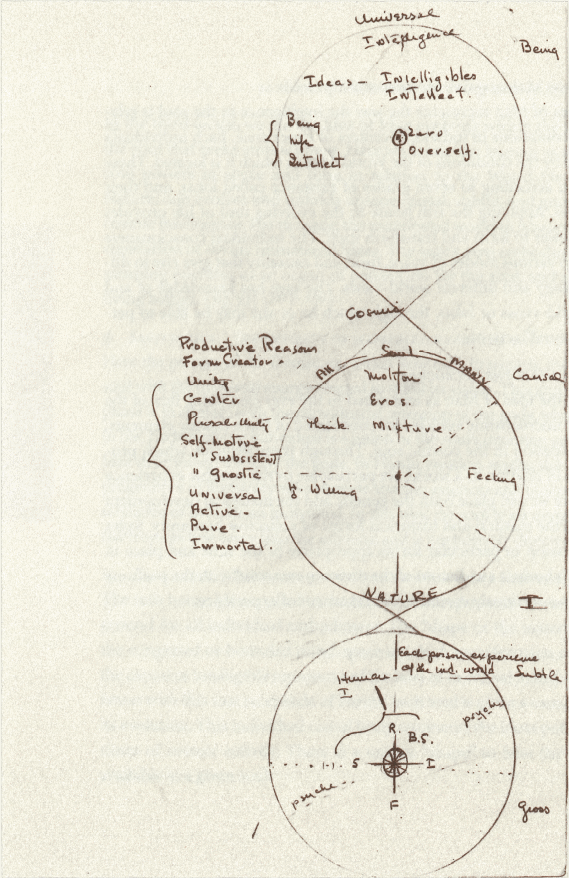
FIGURE AD_G_012. Three Circles Diagram: Divine Intellect, Soul, Psyche.
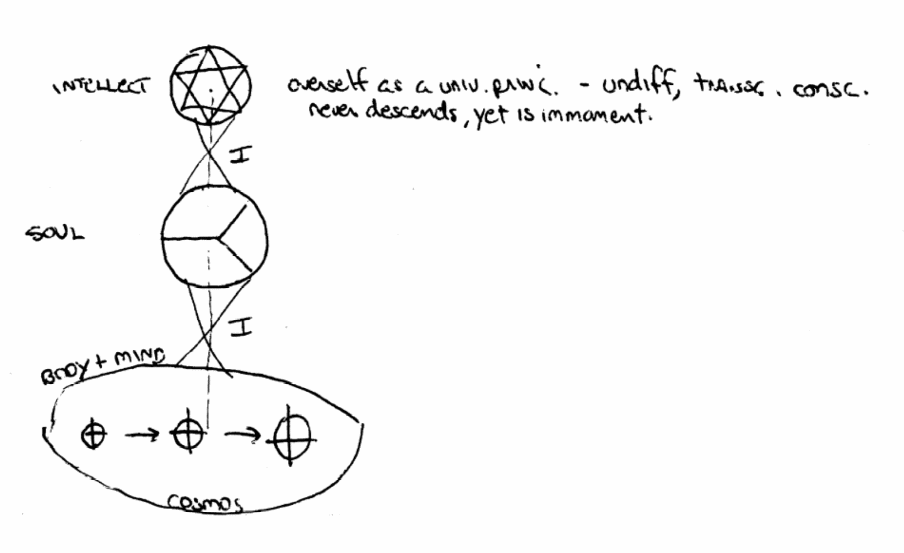
FIGURE 1972 1229-2-AB. Three Circles Diagram: Divine Intellect, Soul, Psyche.
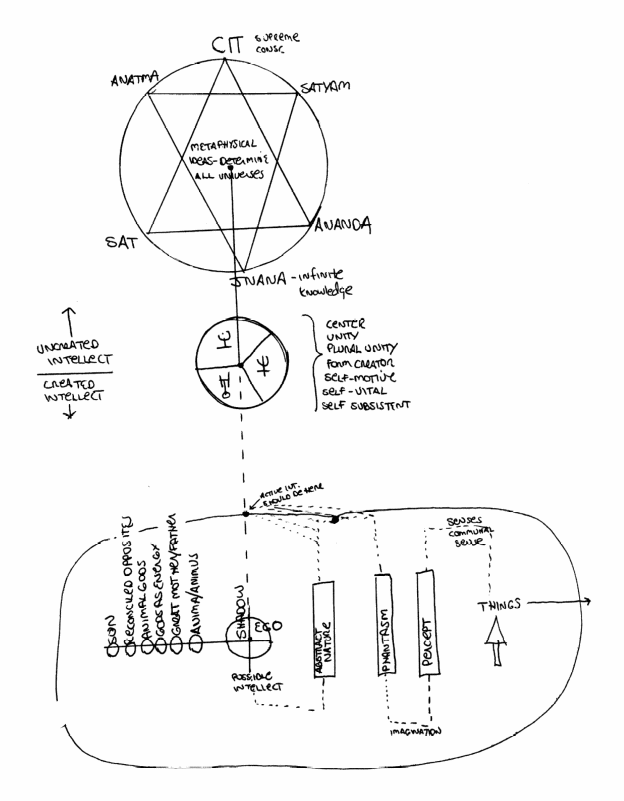
FIGURE 1972 1229-3-AB. Three Circles Diagram: Divine Intellect, Soul, Psyche.
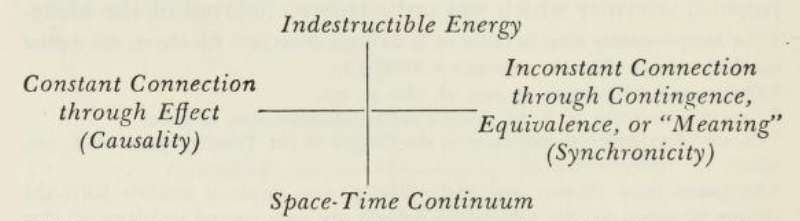
FIGURE 1972 1229-4. Jung's Synchronicity Quaternio.
Other diagrams also referred to are not with this transcript version. [Transcriber note: [diagram] means the speaker is referencing a diagram as he or she is speaking. If someone is drawing or writing, with audible sounds of chalk on a blackboard, I indicate this by [drawing] or [writing].]
NOTES:
- This V12a version is now a complete transcript of the class, including diagrams. Audio Files 1972 1229b, c were previously missing but have now been transcribed as part of this class. It is possible that we are still missing one more audio file as the class cuts off abruptly while AD is talking.
TRANSCRIBED Verbatim by IT (V12a) in 2023 from Audio Files using V11a as a basis. This V12a version: has Audio Files 1972 1229b, c transcribed and added (see Notes above); Audio File 1972 1229a (pp. 1-8) has had another pass with various listening errors corrected; has been reformatted to current standards; has updated, corrected and expanded prefatory matter based on new conventions and new information; has four diagrams appended and references within transcript to these diagrams; also, Subject, Subjects, file name have been changed to more accurately reflect what the class is about based on contents of the newfound audio files. In 2025, IT removes one diagram and alters and adds diagram notes within transcript. Archival verbatim transcript – V12a.
AUDIO FILES: 1972 1229a, 1972 1229b, 1972 1229c.
1972 12/29 at Wisdom's Goldenrod
Jung; Epistemology
[Audio File 1972 1229a Begins]
[faint background student talking; AD starts to speak at 33.1 seconds]
AD: I'm going to start some readings from the "Introduction to Zen Buddhism" that he wrote. And sort of bring in a very strong contrast, you know, of his position. And then we go back to-- We finished the transcendent function, didn't we?
S (very faint): No.
S (very faint): No.
S (faint): How can we see--
VM: I don't think so.
RG (faint): I thought [AD simultaneously: No?] that we finished it.
S (very faint): Uh-uh.
S (faint): We were just starting.
AD (very faint): No.
S: What volume is that from, Tony?
S (very faint): [one/two words inaudible]
AD: Transcendent function?
S (faint): No, the one you were using here.
AD: Um--
S (faint): Psychology and Religion.
AD: Psychology and Religion, yeah. Eleven. But they're-- they're just a few quotations I want to start out with in the "Introduction to Zen Buddhism." [46¼ second pause, flipping of pages] The reason I thought that we'd start off with some of his remarks about Eastern doctrines, you know, in terms of his commentaries, [student assents, faint] was then in contrast I want-- I thought maybe we could try going through, oh let's say something like the process of individuation in this chapter, what is it volume 16 or 17? Practice of Psychotherapy is 16. Yeah, "Psychology of Transference," and then he has an example. That is, he works out the development of consciousness in terms of the alchemist, ok, and that's his pet. [flipping of pages] Yeah, in the second half of "The Psychology of Transference," the second half of volume 16 is devoted to that. But, in order to keep in mind-- in order to keep in mind his way, you know, I thought if we make a contrast with the Easterners, it would-- it would keep it in front of-- you know, it would stay in front of our eyes. [short pause] Anyway, let's give it a try.
C.G. Jung [CW 11, Psychology and Religion, "Foreword to Suzuki's Introduction to Zen Buddhism," p. 540, paragraph 881, AD reading]: "Zen is anything but a philosophy in the Western sense of the word. This is also the opinion of [AD adds: others like] [Rudolph] Otto, who says in his forward to [Ohazama's book on] Zen that Nukariya has"imported the magical world of Oriental ideas into our Western philosophical categories" and confused it with these. "[If] psycho-physical parallelism, that most wooden of all doctrines, is invoked in order to explain this mystical intuition of Non-duality and Oneness and the coincidentia oppositorum [AD reads: coincidence of the opposites], then one is completely outside the sphere of the koan, [the] kwatsu, and satori.""
AD: They makes some generalizations here that I-- I'll take exceptions to but, remember, they're my opinion.
C.G. Jung [CW 11, Psychology and Religion, "Foreword to Suzuki's Introduction to Zen Buddhism," pp. 542-543, paragraphs 884, 885, 887 AD reading]: "When one reads the Zen texts attentively, one cannot escape the impression that, however bizarre, satori is a natural occurrence, something so very simple, even, that one fails to see the wood for the trees, and in attempting to explain it invariably says the very thing that throws others into the greatest confusion. Nukariya is therefore right [AD reads: Therefore he is right] when he says [AD reads: said] that any attempt to explain or analyze the content of Zen, or of the enlightenment, is futile. Nevertheless he does venture to assert that enlightenment"implies an insight into the nature of the self," and that it is an "emancipation of mind from illusion concerning self." The illusion concerning the nature of self is the common confusion of the self with the ego. Nukariya understands by "self" the All-Buddha, [i.e.], total consciousness of life. He quotes Pan Shan, who says: "The moon of mind comprehends all the universe in its light," adding: "It is Cosmic life and Cosmic spirit, and at the same time individual life and individual spirit."
"However one may define the self, it is always something other than the ego, and inasmuch as a higher insight of the ego leads over to the self, the self is a more comprehensive thing which includes the experience of the ego and therefore transcends it [AD reads: the ego]. Just as the ego is a certain experience I have of myself, so is the self an experience of my ego. It is, however, no longer experienced in the form of a broader or higher ego, but in the form of a non-ego. …
"This tells us a good deal about the"content of enlightenment." The occurrence of satori is interpreted and formulated as a break-through, by [a] consciousness limited to the ego-form, into the non-ego-like self."
AD: I'll repeat this.
C.G. Jung [CW 11, Psychology and Religion, "Foreword to Suzuki's Introduction to Zen Buddhism," p. 543, paragraph 887, AD reading]: "This tells us a good deal about the"content of enlightenment." The occurrence of satori is interpreted and formulated as a break-through, by a consciousness limited to the ego form, into the non-ego-like self."
[20 second pause]
AD: In paragraph 890, and this is what I think is important for us, all of us, ok.
C.G. Jung [CW 11, Psychology and Religion, "Foreword to Suzuki's Introduction to Zen Buddhism," pp. 545-547, paragraphs 890, 891, 892, AD reading]: "[Earlier], I raised the question [AD: says Jung] of whether we have anything like satori in the West. If we discount the sayings of our Western mystics, a superficial glance discloses nothing that could be likened to it in even the faintest degree. The possibility that there are stages in the development of consciousness plays no role in our thinking. The mere thought that there is a tremendous psychological difference between consciousness of the existence of an object and"consciousness of the consciousness" of an object borders on a quibble that hardly needs answering. For the same reason, one could hardly bring oneself to take such a problem seriously enough to consider the psychological conditions in which it arose. It is significant that questions of this kind do not, as a rule, arise from any intellectual need, but, where they exist, are nearly always rooted in an originally religious practice. In India it was yoga and in China Buddhism which supplied the driving force for these attempts to wrench oneself free from bondage to a state of consciousness that was felt to be incomplete. [short pause] So far as Western mysticism is concerned, its texts are full of instructions as to how man can and must release himself from the "I-ness" of his consciousness, so that through knowledge of his own nature he may rise above it and attain the inner [(godlike)] man. …
"It could be objected [AD: Paragraph 891,"It could be objected] that consciousness in itself has not changed, only the consciousness of something, just as though one had turned over the page of a book and now saw a different picture with the same eyes. I am [AD adds: But I'm] afraid this is no more than an arbitrary interpretation, for it does not fit the facts. The fact is that in the texts it is not merely a different picture or object that is described, but rather an experience of transformation, often occurring amid the most violent psychic convulsions. The blotting out of one picture and its replacement by another is an everyday occurrence which has none of the attributes of a transformation experience. It is not that something different is seen, but that one sees differently. It is as though the spatial act of seeing were changed by a new dimension. … [AD: Again, in 892.]
"The intellect has no interest in the nature of the perceiving subject so far as the latter [AD reads: the perceiving subject] only thinks logically. The intellect is essentially concerned with elaborating the contents of consciousness and with methods of elaboration. A rare philosophic passion is needed to compel the attempt to get beyond intellect and break through to a"knowledge of the knower." Such a passion is practically indistinguishable from the driving force of religion; consequently this whole problem belongs to the religious transformation process, which is incommensurable with intellect."
[26¼ second pause, flipping of pages]
AD: Um-- Couple of quotations from some of the anecdotes from Suzuki.
S (very faint): Ok.
C.G. Jung [CW 11, Psychology and Religion, "Foreword to Suzuki's Introduction to Zen Buddhism," pp. 548, 549, footnotes 31, 33, AD reading]: "31 … A Master says [AD reads: said] to his pupil:"I have really nothing to impart to you, and if I tried to do so you might have occasion to make me an object of ridicule. Besides, whatever I can tell you is my own and can never be yours." [(Introduction, pg. 91.)] [AD: Again--]
"A monk says [AD reads: said] to the Master:"I have been seeking for the Buddha, but do not yet know how to go on with my research." [AD adds: And] Said the Master: "It is very much like looking for an ox when riding on one." [(Essays, II, pg. 74.)] (bit of laughter)
"A Master says:"The mind that does not understand is the Buddha: there is no other." [(Ibid., pg. 72.)] …
"33"Zen consciousness is to be nursed to maturity. When it is fully matured, [AD reads: "When Zen consciousness, of course, is nursed to maturity, that is, fully matured] it is sure to break out as satori, which is an insight into the unconscious.""
AD: Alright, we'll-- we'll try to use some of these quotes in what he's going on with.
C.G. Jung [CW 11, Psychology and Religion, "Foreword to Suzuki's Introduction to Zen Buddhism," pp. 548-551, paragraphs 895, 896, 897, 898, AD reading]: "At first sight it seems as if [the] posing of such a question as an object of meditation would anticipate or prejudice the end-result, and that it would therefore determine the content of the experience… The koans, [however], are so various, so ambiguous, and above all so boundlessly paradoxical that even an expert must be completely in the dark as to what might be considered a suitable solution. [In addition], the descriptions of the final results are so obscure that in no single case can one discover any rational connection between the koan and the experience of enlightenment. [AD adds: And] Since no logical sequence can be demonstrated, it remains to be supposed that the koan method puts not the smallest restraint upon the freedom of the psychic processes and that the end-result therefore springs from nothing but the individual disposition of the pupil. The complete destruction of the rational intellect aimed at in the training creates an almost perfect lack of conscious presuppositions. These are excluded as far as possible, but not unconscious presuppositions--that is, the existing but unrecognized psychological disposition, which is anything but empty or a tabula rasa. It is a [AD reads: the] nature-given factor, and when it answers--this being obviously the satori experience--is an answer of Nature, who has succeeded in conveying her reaction direct to the conscious mind. What the unconscious nature of the pupil presents to the teacher or to the koan by way of an answer is, manifestly, satori. This seems, at least to me, to be the view which, to judge by the descriptions, formulates the nature of satori more or less correctly. …
"Zen differs from all other exercises in meditation, whether philosophical or religious, in its total lack of presuppositions. [Often] Buddha himself is sternly rejected, indeed, [almost blasphemously] ignored, [although]--or perhaps just because--he could be the strongest spiritual presupposition of the whole exercise. But he too is an image and must therefore be set aside. Nothing must be present except what is actually there: that is, man with all his unconscious presuppositions, of which, precisely, because they are unconscious, he can never, never rid himself. The answer which appears to come from the void, the light which flares up from the blackest darkness, these have always been experienced as a wonderful and blessed illumination. [17½ second pause]
"… If man has already succeeded in building up the structure of the world from the few distinct things that he can perceive at one and [AD adds: at] the same time, what godlike spectacle would present itself to his eyes if he were able to perceive a great deal more all at once and distinctly? This question applies only to perceptions that are possible to us. If we now add to these the unconscious contents--i.e., contents which are not yet, or no longer, capable of consciousness--and then try to imagine a total vision, why, this is beyond the most audacious fantasy. It is of course completely unimaginable in any conscious form, but in the unconscious it is a fact, since everything subliminal holds within it the ever-present possibility of being perceived and represented in consciousness. The unconscious is an irrepresentable totality of all subliminal psychic factors, a"total vision" in potentia. It constitutes the total disposition from which consciousness singles out tiny fragments from time to time.
"Now if consciousness is empty as far as possible of its contents, they will fall into a state of unconsciousness, at least for the time being. In Zen, this displacement usually results from the energy being withdrawn from conscious contents and transferred either to the conception of"emptiness" or to the koan. As both of these must be static, the succession of images is abolished and with it the energy which maintains the kinetics of consciousness. The energy thus saved goes over to the unconscious and reinforces its natural charge to bursting point. This increases the readiness of the unconscious contents to break through into consciousness. But since the emptying and shutting down of consciousness is no easy matter, a special training of indefinite [AD reads: infinite] duration is needed in order to set up that maximum tension which leads to the final break-through of unconscious contents." (bit of laughter)
MB: Infinite duration?
AD: Hm?
MB: Infinite duration.
S (simultaneously, faint): Infinite duration.
AD: In-- indefinite, indefinite duration.
LR (simultaneously): (Oh), you said "infinite".
S (simultaneously, faint): Infinite duration. (laughter)
AD: It will seem that way. [student assents] I did say infinite?
[students assent]
S (simultaneously): Yes, you did. (laughter)
AD: "The contents, the contents…" Now here's-- here's a point to keep in mind.
C.G. Jung [CW 11, Psychology and Religion, "Foreword to Suzuki's Introduction to Zen Buddhism," pp. 551-553, paragraphs 899, 900, 902, AD reading]: "The contents that break through are far from being random ones. [As] psychiatric experience with insane patients shows, specific relations exist between the conscious contents and the delusional ideas that break through in delirium. They are the same relations as exist between the dreams and the waking consciousness of normal people. The connection is an essentially compensatory relationship: the unconscious contents bring to the surface everything that is necessary in the broadest sense for the completion and wholeness of conscious orientation. If the fragments offered by, or forced up from, the unconscious are meaningfully built into conscious life, a form of psychic existence results which corresponds better to the whole of the individual's personality, and so abolishes the fruitless conflicts between his conscious and unconscious self. Modern psychotherapy is based on this principle, in so far as it has been able to free [AD reads: And modern psychotherapy is based on this principle. Only in so far as modern psychotherapy has been based on this principle if it frees] itself from the historical prejudice that the unconscious consists only of infantile and morally inferior contents. … [AD: The next paragraph, 900.]
"Every invasion of the unconscious is an answer to a definite conscious situation, and this answer follows from the totality of possible ideas present, [i.e.], from the total disposition which, as explained above, is a simultaneous picture in potentia of psychic existence. The splitting up into single units, its one-sided and fragmentary character, is of the essence of consciousness. The reaction coming from the disposition always has a [AD emphasis] total character, as it reflects a nature which has not been divided up by any discriminating consciousness. Hence its overpowering effect. It is the unexpected, all-embracing, completely illuminating answer, which works all the more as illumination and revelation since the conscious mind has got itself wedged into a hopeless blind alley. … [15½ second pause]
"… Could any of us boast that he believes in the possibility of a boundlessly paradoxical transformation experience, to the extent, moreover, of sacrificing many years of his life to the wearisome pursuit of such a goal? And [finally], who would dare to take upon himself the responsibility for such an unorthodox transformation experience--except a man who was [AD reads: has] little to be trusted…"
S (very faint): Hm, that's true. (VM laughs)
S (very faint): [couple words inaudible]
S (very faint): Who has little--
AD: At any rate--
C.G. Jung [CW 11, Psychology and Religion, "Foreword to Suzuki's Introduction to Zen Buddhism," pp. 553, 554, 556, paragraphs 902, 904, 906, AD reading]: "But let a"Master" set us a hard task, [AD: he goes on] which requires more than mere parrot-talk, and the European begins to have doubts, for the steep path of self-development is to him as mournful and gloomy as the path to hell. … 38.5-[16 second pause]
"Psychotherapy [AD: 904,"Psychotherapy] is at bottom a dialectical relationship between [AD adds: a] doctor and [AD adds: a] patient. It is an encounter, a discussion between two psychic wholes, in which knowledge is used [only] as a tool. The goal is transformation--not one that is predetermined, but rather an indeterminable change, the only criterion [AD reads: criteria] of which is the disappearance of egohood. [AD repeats: Ego-hood]. No efforts on the part of the doctor can compel this experience. The most he can do is to smooth the path for the patient and help him to attain an attitude which offers the least resistance [AD emphasizes the rest of the sentence] to the decisive experience. If knowledge plays no small part in our Western procedure, this is equivalent to the importance of the traditional spiritual atmosphere of Buddhism in Zen. Zen and its technique could only have arisen on the basis of Buddhist culture, which it presupposes at every turn. You cannot annihilate a rationalistic intellect that was never there--no Zen adapt was ever the product of [AD emphasizes the rest of the sentence] ignorance and lack of culture. Hence it frequently happens with us also that a conscious ego and a cultivated understanding must first be produced through analysis before one can even think about abolishing egohood or rationalism. What is more, psychotherapy does not deal with men who, like Zen monks, are ready to make any sacrifice for the sake of truth, but very often with the most stubborn of all Europeans. … 54.1-[15 second pause]
"I would not under any circumstances [AD: And this is a con-- concluding quote.] like [it] to be understood that I am making any recommendations or offering any advice. But when one begins to talk about Zen in the West I consider it my duty to show the European where our entrance lies to that"longest road" which leads to satori, and what kind of difficulties bestrew the path which only a few of our great ones have trod--beacons, perhaps, on high mountains, shining out into the dim future. It would be a disastrous mistake to assume that satori or samadhi are to be met with anywhere [AD emphasis] below these heights. [AD: Take note, Mr. Watts.] As an experience of totality it cannot be anything cheaper or smaller than the whole. What this means psychologically can be seen from the simple reflection that consciousness is always only a part of the psyche and therefore never capable of psychic wholeness: for that the indefinite extension of the unconscious is needed. But the unconscious can neither be caught with clever formulas nor exorcized by means of scientific dogmas, for something of destiny clings to it--indeed, it is sometimes destiny itself… The attainment of wholeness requires one to stake one's whole being. Nothing less will do; there can be no easier conditions, no substitutes, no compromises."
AD: I'd like to stop there.
[student assents, very faint]
S: Did you say "fate" or "stake"?
AD: Hm?
S (very faint): What did you say Andrew?
S: (Stake), stake.
AD: Well, I think it's kind of obvious that Jung is making a point here, and point he's making is that, so to speak, there's two paths, you know. There's this slow path that the European has to follow where he develops his personality, and there's a quick path which the traditional culture of Buddhism and Hinduism operate with. I think it's becoming a little obvious when we've been studying astrology and a lot of the Jungian psychology that here we're working with the slow evolutionary processes of Nature herself. [S, possibly part of background: Where?] I don't know if you've noticed this but we would be talking about some aspect going on in the chart and certain-- certain conditions arising, you say, "Ah, finally, this is meaningful, I'm going to start doing some work." And so we watch this huge chart and we watch the handles move ever so slowly. And then even on top of that they go backward too, you know. (AD laughs, bit of laughter) As though it isn't slow enough we also have to go backward, back and forth. So, some people as they study the chart and look into astrology and psychology, they begin to feel "This is a kind of slow way," I mean, we're going to be here for a long time if we [student assents, faint] wait for the fulfillment of these natural purposes. In other words, Nature is taking you to this kind of self-fulfillment. But you get the feeling that Nature's taking her time about it.
S (faint): (Well--)
S (very faint): Uh-hm.
AD: So some-- some people-- [aside: Thank you dear.] some people then come up with a scheme, they devise a sort of speed-up system. Probably efficiency experts from way back. (some laughter)
S (faint): Aw, that's pretty amazing.
[short pause]
AD: And, I think most of the traditional religions are con-- are caught up in that, I think they do want to speed things up. I like to make this, you know, like more available to your understanding now so that you have besides confusion, conflict. Alright?
S (very faint): That would bring it.
LR: I got-- I got confused about his example of turning a page.
S (very faint): Yeah. (We) can't hear anything at all.
AD: Turning the page?
LR: Yeah, he said some people might object by saying it's like you turn the page from one picture to the next but it's still the same eyes that are seeing and-- but the object here. But then he-- then he criticizes this example.
AD: Yeah, he says that's a misinterpretation [one/two inaudible student words simultaneous with AD] of the facts. What's important here in understanding this transformation experience is that once a person goes through that experience he goes on perceiving the world as an objectively given world but the way he sees it is quite different than the way he saw it before. It isn't that the object changes but the way of seeing the object changes.
LR: Yes, but his-- but his-- his analogy is to consciousness, say the pure consciousness, right? And that [AD simultaneously, faint: Yeah.] doesn't change. I mean I-- I-- I didn't follow it, I thought--
AD: Alright, let me-- let me get to the quotation now, see if you can just maybe-- Very often my little girl comes up with very important ideas.
[23¼ second pause, flipping of pages]
C.G. Jung [CW 11, Psychology and Religion, "Foreword to Suzuki's Introduction to Zen Buddhism," p. 546, paragraph 891, AD reading]: "It could be objected that consciousness in itself has not changed, only the consciousness of something, just as though one had turned over the page of a book and now saw a different picture with the same eyes. I am afraid this is no more than an arbitrary interpretation, for it does not fit the facts. [The] fact is that in the texts it is not merely a different picture or object that is described, but rather an experience of transformation, often occurring amid the most violent psychic convulsions [AD reads: convolutions]. The blotting out of one picture and its replacement by another is an everyday occurrence which has [AD emphasis] none of the attributes of a transformation experience. It is not that something different is seen, but that one sees differently. It is as though the spatial act of seeing were changed by a new dimension."
[Audio File 1972 1229a Ends]
[Audio File 1972 1229b Begins]
LR: --consciousness I took it he meant the pure consciousness, the one that is-- that one that we try to attain to we say, or the one we speak of, in other words.
RC (very faint): But that consciousness could be [couple words inaudible]
LR: Right, but it doesn't--
S (faint): Right.
S (very faint): [few words inaudible]
S (very faint): Me too.
S (faint): Yeah.
LR: See, yeah. I guess what-- I guess now it seems that he uses the word 'consciousness' in various different ways and I-- I don't really see--
AD: Well talk about it the way you understand it, that's alright. Go on, make your point again.
LR: Well the way we use consciousness, we usually take it to mean something that-- that we hardly even talk about. I mean you-- you put it on the wood. You don't even put it on the blackboard.
AD: I don't even put it on the blackboard.
LR: So, if you mean that, then it isn't that which changes. I mean just like in the-- when you're looking at a book, the eyes don't change if you take the eyes to mean this consciousness.
AD: Then what do you think it is that changes?
LR: Well, now like Randy said if he means consciousness as our everyday consciousness, well then certainly that does change. But I have--
AD: Well what would that everyday consciousness mean? It would be that pure [LR simultaneously: It would be that--] consciousness working through a certain form.
LR: (In the) [one word inaudible] right.
AD: Alright. And that certain form would be, so to speak, the perceiving ego.
LR: And that-- that is what's capable of being transformed, right?
AD: Isn't that so?
LR: Right, so-- so is he not talking-- that is the consciousness of which he's speaking about. Is that the consciousness of which he speaks throughout that whole--
AD: Always. That's all Jung could ever speak of. And now to make that more clear, we go to a very short introduction to "The Holy Men of the East".
S: (Well--)
RG: But yeah.
AD: This is a very short introduction to one of Zimmer's books on Shri Ramana. Now just-- I don't particularly want to harp on this but-- To kind of emphasize the-- the problem you just brought up.
C.G. Jung [CW 11, Psychology and Religion, "The Holy Men of India," p. 580, paragraph 956, AD reading]: "The Indian lacks the epistemological standpoint just as much as our own religious language does. He is still"pre-Kantian.""
AD: Now I don't know which Indians he's talking about. (some laughter) He-- probably the American Indians. (laughter)
S (amidst laughter, faint): Yeah right.
S (very faint, possibly part of background): And I think we very much [couple words inaudible]
S (faint, possibly part of background): [few words inaudible] (laughter, student words)
C.G. Jung [CW 11, Psychology and Religion, "The Holy Men of India," p. 580, paragraph 956, AD reading]: "This [AD reads: The] complication is unknown in India and [it] is still largely unknown with us. In India there is no psychology in our sense of the word. India is"pre-psychological": when it speaks of the "self," it posits such a thing as existing."
[14 second pause; flipping of pages]
AD: 5-- 959 in the--
S: What was that last criticism, where he speaks of the self, it posits such a thing as existing?
AD (simultaneously): As existing, yeah.
C.G. Jung [CW 11, Psychology and Religion, "The Holy Men of India," p. 582, paragraph 959, AD reading]: "If we conceive of the self as the essence of psychic wholeness, i.e., as the totality of conscious and unconscious, we do so because it does in fact represent something like a goal of psychic development, and this irrespective of all conscious opinions and expectations."
AD: And there we nailed him down. Ok?
S (faint): Uh-hm.
AD: Let me repeat this, alright, and you'll see how easy it is to nail him down.
C.G. Jung [CW 11, Psychology and Religion, "The Holy Men of India," p. 582, paragraph 959, AD reading]: "If we conceive of the self as the essence of psychic wholeness, i.e., as the totality of conscious and unconscious, we do so because it does in fact represent something like a goal of psychic development, and this irrespective of all conscious opinions and expectations. The self is the subject matter of a process that generally runs its course outside consciousness and makes its presence felt only by a kind of long-range effect. A critical attitude towards this natural process allows us to raise questions which are excluded at the outset by the formula self = God. This formula shows the dissolution of the ego in the atman [AD reads: atma] to be the unequivocal goal of religion and ethics, as exemplified in the life and thought of Shri Ramana. The same is obviously true of Christian mysticism, which differs from Oriental philosophy only through having a [different] terminology."
AD: This is totally wrong. The meaning of salvation and liberation falls apart. There's nothing to be saved in Hinduism.
S (faint): Uh-hm. (laughter)
C.G. Jung [CW 11, Psychology and Religion, "The Holy Men of India," pp. 582-583, paragraph 959, AD reading]: "The inevitable consequence is the depreciation and abolition of the physical and psychic man (i.e., of the living body and ahamkara) in favour of the pneumatic man. Shri Ramana speaks of his body as"this clod." As against this, and taking into consideration the complex nature of human experience (emotion plus interpretation), the critical standpoint admits the importance of ego-consciousness, well knowing that without ahamkara there would be absolutely no one there to register what was happening [AD reads: what is happens]. Without the Maharshi's personal ego, which, as a matter of brute experience, only exists in conjunction with the said "clod" (= body), there would be no Shri Ramana at all. Even if we agreed with him that it is no longer his ego, but the atman [AD reads: atma] speaking, it is still the psychic structure of consciousness in association with the body that makes speech communication possible. Without this admittedly very troublesome physical and psychic man, the self would be entirely without substance, as Angelus [Silesius] has already said…"
AD: And he quotes from a Christian mystic whose pantheistic misunderstandings are a monument, you know, to Western ideas on the self.
C.G. Jung [CW 11, Psychology and Religion, "The Holy Men of India," p. 583, paragraph 959, AD reading, quoting Angelus Silesius]: "I know that without me God can no moment live; Were I to die, then he no longer could survive."
S: Yeah.
S (faint): Wait.
LR/S(?): What?
S: Paragraph 23?
AD (simultaneously): He quotes-- he quotes Angelus who says in a poem. He wrote a series of poem and he was referred to as the Cherubic wanderer.
S (faint): I see why he's wandering.
AD: He-- he'll be one, yeah. (some laughter)
C.G. Jung [CW 11, Psychology and Religion, "The Holy Men of India," p. 583, paragraph 959, AD reading, quoting Angelus Silesius]: "I know that without me God can no moment live; Were I to die, then he no longer could survive."
AD: That would correspond I think close-- close-- more closely to Jung's idea of what God is, that is an image or representation in consciousness. [short pause] Again here I think we'll see.
[10¾ second pause]
C.G. Jung [CW 11, Psychology and Religion, "The Holy Men of India," pp. 583-584, paragraph 960, AD reading]: "Exceptional human beings, carefully hedged about and secluded, are invariably a gift of nature, enriching and widening the scope of our consciousness--but only if our capacity for reflection does not suffer shipwreck. Enthusiasm can be a veritable gift of the gods or a monster from hell. With the hybris which attends it, corruption sets in, even if the resultant clouding of consciousness seems to put the attainment of the highest goals almost within one's grasp. The only true and lasting gain is heightened and broadened reflection."
AD: Alright? This kind of gives you a clue, you see, where there's a distinction and misrepresentation on Jung's part as far-- now this is my interpretation. In his int-- in his interpretation of all Eastern teaching, there will always be this inability of him to understand even theoretically what non-duality means. So that over and over again, we've seen this happen when it was a preface for instance to the Tibetan Book of Liberation, you'll see the same problem. I think we read that.
LR: Well he puts it as apex-- the highest attainment he would call the ahamkara (in this). And that's where you're saying he-- and that's the highest that-- that's what he equiva-- he equates with the self, what we would call the ahamkara.
AD: Well he-- he always has that, so to speak, that notion that we cannot conceive of the ego without consciousness or consciousness without the ego. So basically he's in the Christian tradition of dualism. The Christian tradition is dualistic, basically there's God and creatures. And, you could never put them together, alright. And he maintains this consistently throughout all his writings.
S: Except, Anthony, (just) where is that?
AD: Well, there's no distinction, so to speak, in Being. In other words, when I say "I am God," I'm one and the same, you know, there's a confusion here. If we consider, for instance, God as Being, alright, and then if we consider this chair as Being, participating in Being, then we could say the chair is God. What's to stop us?
[student assents, very faint]
S: Could you describe pantheism as being a-- yeah as making, you know, the Creator as this-- this ever-flowing in us and the creation, that God is result-- the totality of all that-- that is, say, or--
AD: Well--
S (faint): Yeah.
S: Right.
AD: Yeah. But the sum total of all things would be God and-- So there's basically the equation or identification between God and a cosmos, God and the world, ok. [10¼ second pause; flipping of pages] And just when-- again to emphasize, when he went to India, when Jung went to India, Zimmer had recommended that he should go and visit Shri Ramana. And, Jung said he couldn't go and if things were to happen and, you know, if they were to repeat themselves, he probably wouldn't go the second time either. So it's very obvious what his-- his attitude is. But he goes on and he says--
C.G. Jung [CW 11, Psychology and Religion, "The Holy Men of India," p. 578, paragraph 953, AD reading]: "Nevertheless, the unfathomableness of India saw to it that I should encounter the holy man after all, and in a form that was more congenial to me, without my seeking him out…I ran across a disciple of the Maharshi. He was an unassuming little man, of a social status which we [AD reads: he] would describe as that of a primary-school teacher, and he reminded me most vividly of the shoemaker of Alexandria who (in Anatole France's story) was presented to St. Anthony by the angel as an example of an even greater saint than he [AD adds: was]."
AD: That is, greater than St. Anthony was.
S: Oh boy. (some laughter)
C.G. Jung [CW 11, Psychology and Religion, "The Holy Men of India," p. 578, paragraph 953, AD reading]: "Like the shoemaker, my little holy man had innumerable children to feed and was making special sacrifices in order that his eldest son might be educated. … Be that as it may, in this modest, kindly, devout, and childlike spirit I encountered a man who had absorbed the wisdom of [the] Maharshi with utter devotion, and at the same time has [AD emphasis, not italicized in book] surpassed his master because, notwithstanding his cleverness and holiness, he had"eaten" the world. I acknowledge with deep gratitude this meeting with him; nothing better could have happened to me. The man who is only wise and only holy interests me about as much as the skeleton of a rare saurian, which would not move me to tears."
AD: Well it's very obvious that here's an example of a huge shadow projection on the part of Dr. Jung. (laughter) Now I could feel better too, after all, haven't I been taking care of a family? (bit of laughter) He misses the point completely.
S (faint): It's not mentioned who that is?
AD: No he doesn't mention who this man is. But I kind of-- I find a kind of difficulty, you know, in-- who had absorbed the wisdom of the Maharishi. [S, faint: Surpassed.] I wonder how he did that, with a blotter? (bit of laughter)
S (very faint): Uh-hm.
S (very faint): When every [one/two words inaudible]
[Note: See FIGURES AD_G_012, 1972 1229-2-AB for the following. FIGURE 1972 1229-3-AB is similar to these but appended to illustrate a different point brought in towards the end of class.]
AD: Well, if we get back to our diagram because I think from now on we're going to have to get a little more detail about what Jung calls his way. See here a piece of chalk? [short pause with faint background student talking] I think might e-- might even be better to cross these out altogether [diagram], the other circles in Jung's case. We'll make them smaller, ok.
S (simultaneously): Just make them a dot, yeah.
S: You have to put them inside the smaller circle. (laughter)
S (very faint): (Look) up.
S (faint): Oh dear.
AD: Alright we'll-- that'd be better. [S, very faint: Ok.] And-- [short pause] Let's start working on this. [12½ second pause while drawing] Suppose-- [S: Wait.] suppose just to start off you call this whole circle the psyche [bottom circle]. Could we do that just for now?
[AD drawing]
AD: Alright?
S (faint): Sure.
[13 second pause while AD draws]
AD: And, of course we would have to put down also the physical world or the gross world, ok. Down in this bottom circle [diagram]. Physical and psyche, ok. We made a remark about this being the tran-- the instinctual image.
S: That whole circle?
AD: No just-- just this organ of consciousness [transcriber thinks little circle within bottom circle]. [short pause while drawing] Let's put the word 'cosmos' up here [bottom circle], ok. And, this is the instinctual image that a person has to work with. [11 second pause] Let's see if we can refresh our minds about what-- what else we did here.
MB: Could I just ask a question? In the beginning of the Zen chapter he said something about the wood-- I'm-- said something about the wooden-- the wooden doctrine of the psycho-physical parallelism.
AD: Yeah.
MB (simultaneously): Do you know what he was referring to, I got lost.
AD: Well psycho-physical parallelism is a doctrine in philosophy which claims that as a physical event is happening there is a representation of that event mentally which is pre-established and going on simultaneously. That-- that's one of the species of philosophical wisdom inherent in Western traditions. (laughter) Well come on, let-- the diagram, come on, the schemata, let's work. What can we put down here [diagram]? I'll just sit back and smoke cause this circle's been worked out a few times. You girls have notebooks and you can't add? Come on. [short pause] Oh boy, I'll be glad (we get) into that building and meditate.
LS: See I've been away for a couple weeks, why does your diagram have a tumor? (laughter)
AD: Well the original version of the diagram was something like this [diagram], you remember? [drawing] And then we had like--
LS: I thought the upper circle was the big one.
AD: Well the upper circle is the big one but this is Jung we're speaking about, we have to change things around. (laughter) We'll make the bottom circle big and the other ones we'll just have them, you know, as metaphysical superstitions. (laughter) Archaic vestiges of a primitive mentality, pre-Kantian and-- well-- (laughter) No that's one of the things I noticed in going through his references, all his references, his-- you know, you go through the bibliography, you never see any of the works of the Neo-Vedantins. You know, like Mandana, [Note: Mandana Mishra.] Suresvacara, [Note: Suresvara aka Suresvaracarya. It's possible that Mandana Mishra and Suresvara were the same person.] Padmapada, any of them. You don't notice that. They lived about a thousand years before Kant. I should've sent him one as a-- when I was working in Weiser's. Oh come on. Let's have a nice, joyful participation, this is the season to be merry. (laughter)
Come on Richard, why don't you start off? What did we say about this cosmos? You got an excuse, right? Yeah. [short pause] We refer to this as an aeon [FIGURE 1972 1229-2-AB, bottom circle], alright? The beginning, let's say, this is the end of pralaya over here so, this is the beginning and this is the end [diagram], alright. And in between you have this entity [drawing] that's evolving [FIGURE 1972 1229-2-AB, series of little circles within bottom circle], and finally he will get a view of the entire-- hopefully someday he'll get a view of the entire fixed Idea in the Mind of God [top circle]. It's unlikely but-- We spoke about this developing entity, ok. And, we pointed out that the functions here, sensation, [drawing] intuition, thinking, and feeling, and behind it we have the Intellect [FIGURE AD_G_012, cross and "Human I" in bottom circle]. And we try to make-- make it very clear that the Intellect, the way we're using the term here now is in the Greek version, you know, the way the Greeks speak of the version, the Traditionalists. And this Intellect is like a searchlight. In other words, hiding behind these four psychological functions is this light of the Intellect. Ok? This light of the Intellect will light up the sensations and the intuitions, any thinking we have about that or any feeling we have about that. Any-- any thinking that you're doing now, any sort of discursive activity, any sort of reasoning, is not that Intellect. Ok? [students assent, very faint] So that any understanding, so to speak, that we acquire is within-- within these four functions. We also pointed out that sensation and the intuited world operate simultaneously, I mean you can't have sensation without an intuited world and you can't have intuition without a sensation.
If I may take the liberty, I'll quote from Jung's favorite writer, Kant. And try to establish a point here that's-- that's worth keeping in mind. If I can find the quote (for--) These are just introductions to (him), you know, introduction to the Critique, the introduction to the Pure Reason. [12¾ second pause] I don't know if we might find this helpful considering what we've been talking about in the past.
[Transcriber note: I am using Immanuel Kant on Philosophy in General, Translated, with Four Introductory Essays by Humayun Kabir, Calcutta at The University Press, 1935.]
Humayun Kabir [Immanuel Kant on Philosophy in General, pp. xciv-xcv, AD reading]: "…the activity of the productive Imagination vitiates in two related ways our understanding of the problem of knowledge. On the one hand, it slurs the distinction between knowing and imagining, and on the other hand, through this confusion it prevents a proper appraisement of the contribution of Imagination to all knowledge, transcendental as well as empirical."
AD: Now we'll try to clarify this.
Humayun Kabir [Immanuel Kant on Philosophy in General, p. xcv, AD reading]: "Taking [AD reads: Take] the first point [first], the distinction between imagining and knowing is absolutely fundamental to our experience. Professor Prichard insists that"knowing and making [AD: or imagining] are not the same," and therefore, "ideal construction is a contradiction in terms, unless it refers solely to mental imagining." [Hence], if the categories are attributed to [the] Imagination, we in effect deny the distinction between knowing and making, and this means the denial of the possibility of knowledge itself. Now, we know since the days of Descartes, if not always, that the possibility of knowledge cannot be intelligibly denied. The denial of the possibility of knowledge must itself be based on knowledge."
AD: So we have a problem here. On the one hand, within this sphere [bottom circle], everything that we can-- or think that we can understand is in terms of our imagination. But on the other hand, we also have, in fact, the realization that there is such a thing as knowledge, objective knowledge. And we know that these are operating simultaneously. In other words, when you imagine, when you imagine a scene, let's say in your fantasy, this scene, so to speak, that you can imagine, you can pour any content you want into it, but the laws of thought predetermine what you can do. So that you cannot imagine a scene without having time and space as a priori. That's just out of the question. Yeah?
RG (faint): There didn't we say that we shouldn't conceive of the categories referring to the imagination because there wouldn't be any distinction between imagining and knowing?
AD: Would you repeat?
RG: I thought he had said there that we're-- we shouldn't think that the categories apply to the imagination also because then there wouldn't be the distinction between imagining and knowing.
AD: Go on.
RG: As a-- So which categories is he talking about there? When he said categories, seem to be making a distinction, so space and time would apply to both imagining and knowing, there seem to be other sort of-- sort of categories maybe that apply just to knowing and not to the imagining.
S (very faint): Right.
[short pause]
AD: I-- I don't follow, though, Richard why-- why the interruption. I don't-- I'm not saying you're impolite but, what's the point you're trying to get at? (bit of laughter)
LR: I'm not [S simultaneously: Right.] sure he said that, did he say that?
S (very faint): [few words inaudible]
LS (simultaneously): Would-- can you read the quote, Tony?
S (simultaneously, very faint): (I'm not sure he said that.)
RG: I only-- no, I only interrupted cause they-- cause you say at least, you know, we had to imagine that all these-- these categories take place both in the imagination and in-- and in knowledge. They-- they presuppose any imagination we can have--space and time. I just wanted to clarify what he meant by the category.
AD: Alright then let's reread, ok?
[short pause]
Humayun Kabir [Immanuel Kant on Philosophy in General, p. xcv, AD reading]: "…"knowing and making…""
AD: I'm just going to read the crux of the argument.
Humayun Kabir [Immanuel Kant on Philosophy in General, p. xcv, AD reading]: "…"knowing and making [AD reads: imagining] are not the same," [and] therefore, "ideal construction is a contradiction in terms, unless it refers solely to mental imagining." [Hence], if the categories are attributed to the Imagination, [AD: That is, to the productive imagination.] we in effect deny the distinction between knowing and making, and this means the denial of the possibility of knowledge itself."
[short pause]
AD: Let me read on.
Humayun Kabir [Immanuel Kant on Philosophy in General, pp. xcv-xcvi, AD reading]: "We also reach the same conclusion if we remember that the distinction between knowing and imagining is that between truth and error in another form. [AD adds: And] This latter distinction is basic to logical thought, and any attempt to slur or deny it is [AD adds: a] self-contradictory [AD adds: one]. Now, truth must be necessary and universal. As objective, it is therefore compulsive for the individual mind, which must accept and not create its own truth. The mind's individuality is therefore of no importance to the meaning of truth, but in error, it is its [AD reads: the] particularity that is most relevant, for error consists in the confusion of its own demands with the demand of truth. Imagination is constructive and spontaneous, but to claim to construct spontaneously is to repudiate the compulsion of [the] truth.
"This does not mean that the Imagination is entirely arbitrary in its operations. It never is, for the human Imagination does not range in vacuo. It is conditioned by past knowledge and is anticipatory of future experience. [AD: Following Kant again--] …insists [AD reads: they insist] that Imagination, productive or reproductive, is involved in the very possibility of experience. Every experience is what it is against a background of [a] larger experience. Since human experience is conditioned by space and time, this larger whole is, however, never given to us as an object of experience. Hence, even the experience of the particular is comprehensible only by imaginatively filling up the details of this totality. And yet, in spite of the dependence of knowledge on Imagination and of Imagination on knowledge, knowing and imagining [AD reads: imagination] remain distinct."
[short pause]
S (faint): Yeah.
AD: Why don't we try to work this out in terms of our chart now, ok? Richard you following here? I think this is a repeat, you know. Basically this is a repeat. The whole Platonic tradition.
VM: Tony can I get straight what he means by knowing without the imagination?
AD: Well let's try, let's-- let's--
VM: Would he-- would knowing correspond to both intellect and reason kind of lumped together? And, productive imagination correspond to opinion or the lowest gnostic faculty that we spoke of? That doesn't sound like he's talking about sensation at all and they're all-- [AD: Well--] maybe sensation is included in knowing.
AD (simultaneously): If-- if we go back, if we go back and try to understand our diagram. You remember we put up here, [drawing] we put "I", the Witness-- the Witness-I as the presupposition of all our experience [middle circle], you remember that? [VM assents, faint] And PB refers to it, he says this way, he says something, this is the first of our thoughts. And then that whole dialogue. [Note: Paul Brunton, The Wisdom of the Overself, p. 113, 2015 edition.] Now the first of our thoughts is a presupposition in order for us to have any experience. But in order-- in order for us to have an ex-- any experience and that has to be the presupposition, then up here, so to speak, is where the-- the logical forms or the categories start operating and prescribe for us, so to speak, the subject and the objective world that he's working in. So these categories of thought determine for us what the cosmos is going to-- to look like. Now these are not subject to any change by the perceiving subject. Ok? [student assents, faint] Well, up there then [middle circle], evidently, these are the categories of thinking. And the categories of thinking, so to speak, are-- is our world.
VM: Structure our whole world, sure.
AD: Alright. Now, as we perceive a tree, [drawing] so to speak, in this-- in this universe that we're operating in [bottom circle], we recognize that the tree has to be separated from the subject, that there has to be this distinction between the subject and object. We recognize it has to take place in space, time, and all the modalities that the various philosophers want to come up with. [VM assents] Alright? Now, this is not of our choosing. [VM, faint: No.] We have no choice. If we are to have experience, we must have experience in this way. Let me-- let me quote just another little bit, and this-- this by the way, this was a student of Bhattacharyya.
Humayun Kabir [Immanuel Kant on Philosophy in General, p. xix, AD reading]: "Human knowledge is a process in time, coming about in a finite individual mind, and yet it claims to hold true for all minds at all times. The problem is [further] complicated by the fact that what claims to be true does not always turn out to be true. [A prima facie] examination of the contents of knowledge cannot therefore decide the question of their truth or falsity [AD reads: validity]. If what is true were always self-evidently true, and the certainty and infallibility of knowledge were manifest in its object, it would become impossible to account for the fact of error. Truth is not a [AD reads: the] property of the subject knowing or of the object known, and we cannot solve the problem of knowledge by an examination into the ontological status of the constituents of the knowledge situation."
RC (faint): Could you reread, (Anthony, that) the truth is not the prop--
Humayun Kabir [Immanuel Kant on Philosophy in General, p. xix, AD reading]: "…is not a [AD reads: the] property of the subject knowing or of the object known, and we cannot solve the problem of knowledge by an examination into the ontological status of the constituents of the knowledge situation."
AD: Now if you remember the Platonists pointed out that knowledge subsists according to the mode of the knower, and they never said whether this knowledge is true or false, they just said it subsists according to the mode of the knower. Well Richard, in that case then, what would you say, what would you say over here in regard to these a priori categories? [short pause] The remark you were making before. Where do we distinguish, so to speak, between the imagination and knowledge? If this tree, this object, so to speak, subject-ob-- let's work with that, that's very obvious. You have an object here, you have a subject here [diagram]. These are the conditions of knowledge. Without these conditions knowledge cannot be.
LR: What are the conditions of knowledge?
AD: Subject-object relationship, [LR simultaneously: Oh ok.] ok? We'll pick on an easy one. Now, any sort of a-- any sort of experience requires that as a precondition. Alright? Now what's strange too is that as we have that experience, that subject-object relationship is part of the experience we have. Isn't that so? I mean it's in that total apperception. It's part of the very object we get knowledge of. So that kind of makes it very difficult to-- to understand, which is knowledge and which is imagination.
RG: See-- yeah I would say that knowledge, I mean, couldn't be confined to the categories, couldn't be within the categories, 'cause the categories are determined for each-- for each entity, each entity, so to speak, as different category-- not different categories but they're like his own. You know, they'll be-- they'll be different in some species and some in others, they subsist according to what his psychological apparatus is.
LR: You're saying knowledge is beyond the categories.
RG: Yeah.
LR: And he's saying knowledge is within the categories, Kant.
S (very faint): [couple words inaudible]
RG: I don't know. [S: Knowing (them).] I don't understand what Kant says.
AD: I don't think I said it or meant it that way but, come in again what you just said.
LR: I don't know if that's true, that was more of a question. I thought Kant was saying knowing was within the categories and you were saying that knowledge was beyond those categories. Is that true-- is that what Kant's saying?
AD: No. No, no, I--
LR: Oh.
AD: I just made the remark, I just made the remark that, insofar that the a priori categories make this experience possible, alright, and it precedes the possibility of the experience. Yet without that being in the experience, you don't have them. You can't have that experience. In other words-- in other words, it's a priori, before you can have a fact, alright, you have conditions that make possible that fact. And then what's strange about it, so to speak, is that fact-- that fact which is possible for our experience is invested with these a priori categories. So it's really-- it's really a tangled mess. Think about this for a minute, because we're going to see the same thing operating when we-- when we speak about the Jungian archetypes. On the one hand, they are the precondition for the psychological experience within the realm of the imagination, within-- it's in terms of this here [bottom circle]. But on the other hand, they are also part of that very experience because unless they're in there, so to speak, in the experience, we can't have that experience. In other words, and this has always-- this has always been a sort spot-- in other words, the individual is, so to speak, a concomitant, a conglomeration of all these universals operating simultaneously. Does that make sense?
VM: Let's beat this point a little harder.
AD: Huh?
VM: Let's go into this a little more.
AD: Well at a very-- at a very psychological level, when a person has an experience, it's not only a question of one archetype operating but a whole number, an indefinite number of archetypes operating. Very often a person will ask me well what was that, the shadow, the anima, the mother? And, it kind of takes him backward when you tell him, well they're all in there operating. Alright, it's a question of a relative emphasis, which one is stronger. But the others are there because you have a mother, you approach the mother-complex but through what, through the anima, alright. And then you find certain situations that you're caught in with your mother that bring out your shadow qualities, alright. All these things are-- you-- so to speak, involved in that one particular entity that's experiencing the world.
The same way, these a priori categories that we're talking about-- And the reason I'm talking about them is because we're going to see a reflection of these categories in the imagination. So that when Jung, for instance-- Jung speaks of it and he says that "I speak of the categories of the imagination," alright, he's talking about the experiences that a person has within his mind, you know, whatever experiences he had. And the-- these other people like the Zen people are speaking about an experience which is outside, totally outside of that. Because the Zen people tell you you got to shut this off. [drawing] You gotta turn yourself into a stone, into a lump of mud, into clay, into wood. No thinking at all. [student assents] Well that means that they're wiping out the imagination. They don't want no conceptualization whatsoever to take place, whether it's a feeling or a thought, they want to wipe that out. [S, faint: In other words--]
You see the distinction I'm trying to make here? Between what Jung is talking about and what for instance the classical philosophers are talking about, whether it's Plato or the-- or the Orientals, [drawing] is that if we take-- if we take the individual as caught in this bag, alright, thinking, sensation, feeling, and intuition [FIGURE AD_G_012, cross in little circle in bottom circle], and if we represent this, so to speak, if we represent this as the individual, any-- any experience he has has to come to him through these functions. Alright? All experience has to come to him through these functions. And it gets represented in the imagination. So if you have an archetypal dream where for instance something is revealed, let's say a fear gets revealed in the sense that it becomes a picture in your mind of a hanging or the gallows or something, alright, this is structuralized in the imagination and symbolically represented to you this fear, alright. And all experiences will be within that. But here's the interesting point. On the one hand, this imagination we know depends upon a past experience, and on the other hand we know that all experience is subject to those a priori categories. You see the distinction we're trying to make, Richard? Yeah Anna.
AP (faint): I still don't understand the-- the distinction between all experience and the experience in our imagination.
AD: You don't understand the difference between world experience-- [short pause] Well what would you say the difference-- the difference consisted of?
AP (very faint): You can't make it out.
AD: You mean-- No, I'm asking you, what's your version of the difference between your dream world and the world you live in.
AP (faint): Oh but in-- within the imagination is more-- I mean, it's more experience than if there is a-- my dream world.
AD: Repeat this Anna?
AP: Isn't within the imagination or to the experience of our waking state of the real world?
AD: No I'm asking you, what's the difference between them?
S (faint): That--
AD: What's the difference between the experience you have in the world and the experience you have in a dream?
AP (faint): In the world it has, you know [couple words inaudible] and I can-- it has to-- I can't direct it by my will.
AD: You can't direct it by your will. Your world. You find an inefficiency of the will in the world. (laughter, student words)
AP: But isn't this (just) in the world, wouldn't it come under the category of the imagination?
AD: Well, in a dream for instance when you see an orange blossom, alright, an orange colored red, alright, and in the wakeful world you see an orange is colored red too, alright. Now there you certainly have, in both instances you have this quality of redness which is in either-- either scene, alright. But, if we look at it a little differently, you know, if we look at the dream world, in the dream world we have to try to recognize what it is that structured, organized, and made manifest this orange for us, alright, in the dream world. And in the wakeful consciousness there will be a similarity too because there again, we would see this orange and it is imposed upon us, in a certain sense given to us. Now in both cases you can say that there's a givenness operating.
AP (very faint): Yes.
AD: Ok? So, over here we have a similarity but we-- we have a problem here. Although in both cases the imagination is-- is functioning, in the case of one you would say that the imagination has no basis in fact. And in the other we say it has a basis in fact. Now what would that difference be?
AP (faint): Maybe it's because in-- in the a-- in-- in waking state it is, besides from being structured by the individual psychological factors it is also structured by categories of thought maybe.
AD: Yeah. In the wakeful world it's structuralized by thinking. And, this thinking-- what about this thinking?
AP (faint): (It is--) I mean do we know if-- would one experience that purely in a state of normal conscious (as in--)
AD: But we're speaking about normal consciousness, a person in the normal everyday world, alright. He thinks, and like PB points out, he thinks and he perceives a world. But this thinking doesn't take place randomly.
AP (faint): No.
AD: I mean you can't think a tree and perceive a tree.
AP: No it's structured I-- by a higher.
AD: So then there's-- there's a factor in our thinking in the ordinary everyday world which is structured, that we have no choice, we can't alter that, we can't change that. Well what is that difference? For instance, in a dream you could say your perceptions are not tied to any sensation. But in the ordinary everyday world, your perceptions are definitely tied or hinged onto a sensation. [student assents] [9½ second pause] Can you see the difference here? On the one hand you have cosmic implications in thinking but not in dreaming. [VM assents] Alright, these cosmic implications are the presuppositions that we speak about when we say the "I", the Witness-I, makes possible for me to have experience of the object out there. That's a cosmic implication. Over here, in here [little circle in bottom circle], it's not cosmic, it's very individual, according to the individual desires that I have, so to speak, and they're not tied to any sensation, there's a manifest dream content.
S (faint): Tony, when you say image, just give the reason of (the body) tied to a sensation, I sort of say well, in a dream though, dream sensation I'm still very much tied.
AD: To what sensation?
S (faint): I feel tied to the dream sensation.
AD: What is that? Don't put words together.
S (very faint): Yeah well you--
AD: Try some thoughts, try thinking. What is it that you're talking about?
S (very faint): Well I'm talking--
AD: I mean what sensation are you talking about in a dream? I'm not talking about a dream, for instance, where I'm pressing down on her head and she has a nightmare that the guillotine is about to strike. A dream.
VM (faint): What a dream thought. (bit of laughter)
S (very faint): Ok.
S (very faint): (Heaven is interesting.)
S (simultaneously, faint): Yeah well I-- I mean I often say, it's different.
AD (simultaneously): Let's take-- let's take my classical example, I see a beautiful woman, I go to sleep at night, and I see this woman in my dream. Now tell me, what possible sensation can result from this desire?
S (faint): What possible dream sensation that we're talking about.
AD: In this dream, alright, what sensation can I tie it to within me, whereas all of this is a desire. It's not a sensation, it's a thought.
[Audio File 1972 1229b Ends]
[Audio File 1972 1229c Begins]
VM: Isn't that correct? And therefore it has a cosmic image as well.
AD (simultaneously): Well it's subject to those, it's subject to those, yes.
VM (simultaneously): It's subject to the categories of thinking.
S (simultaneously, faint): Yeah.
AD: Yeah, it's-- all of these are subject to the a priori--
VM (simultaneously): I mean everything is, every content of consciousness, right?
AD (simultaneously): Ok. Well that aspect would certainly be the knowledge aspect of the situation we find ourselves in.
VM: I mean, every experience whether waking or dream is subject to the categories of thinking or--
S (very faint): Yeah.
S (very faint): Right.
VM: Now I don't understand the distinction between the dream state-- I mean, sounds silly but I don't understand the distinction between the dream state and the waking state. You tell me.
AD (simultaneously): Well, let's fall back on PB, maybe he might help us, he will--
LR: Yeah well PB might--
VM (simultaneously): There's a certain objectivity in the waking state, [LR simultaneously: No well--] I see the same tree you see with-- you know, with modification.
LR: Well, but what--
VM: But you don't see my dream.
LR: But what Anne said about she can't will the tree, in her dream she--
VM: But I can't will what I dream either.
AD: Why don't you try?
LR: You do it all the time.
VM: How so?
LR: Just by having certain thoughts. Not yet but--
VM: No but I could [LR simultaneously: Well like but--] say that those thoughts are archetypes [LR simultaneously: But wait, in the-- in the waking (stage--)] manifesting through me and I can't say I'll try this archetype now.
PD: That's the distinction I think PB characterizes the--
LR (simultaneously): Yeah but wait, in the waking stage, your individual willing would be-- would be running against an idea in the World-Mind. You'd be running up against that. [VM assents] Whereas in your dream, there isn't--
VM (simultaneously): There is more control, I would agree.
LR: You're not running into that kind of situation, [VM: It is easier.] you know. Like-- yeah, like, a mouse runs up through your wall and you drink--
VM(?): But I don't think willing could be made the critique for a distinction [LR simultaneously: No. I know but--] in between the dreaming and the waking state.
PD (simultaneously): Right.
AD: What would you say the distinction is?
LR: No but these ideas--
PD (simultaneously): In the wakeful state there's-- it's conditioned by sensation, whereas dream lacks that.
AD: In the dream life it's what?
PD: It lacks [one/two words inaudible]
AD: It lacks that sense-- sensory basis.
LR (simultaneously): But what I don't understand is some--
S (faint): (So he'd) be more than sensation.
S: This isn't the [S simultaneously, faint: Well--] Buddhist sensation.
S (faint): No [one/two words inaudible]
PD: It's-- [AD: Well--] I think it's the Buddhist sensation or PB's sensation.
AD (simultaneously): Any sensation. Any sen-- I don't care whose nationality. (laughter, student words)
RC(?) (faint): But it seems that the Buddhist sensation--
VM (simultaneously): When I get burned in a dream you're saying that's not sensation as you're using the term 'sensation'.
S (simultaneously, very faint): It's gone.
AD: Is that real burn?
VM: Well when I wake up I don't have the burn, no. Or I get shot in my dream I-- and I look, don't have the hole.
S: But not-- but not until I wake up can I make the difference in that sensation. Because when I'm dreaming and I get burned--
AD: Alright but-- but notice what you're doing now, you see, now what you're-- what you're doing is you're falling back on this unity notion, alright. What you're going to do is abolish all distinctions.
S (very faint): [few words inaudible]
VM: Terrific.
AD: Wait a minute now.
BS (simultaneously, faint): First of all distinction between the two could only be made from the wakeful state usually. It normally can only be made from the wakeful state.
AD: Louder.
BS (faint): Distinctions of-- between the two can only be made from the stage of being awake, normally speaking.
AD: And why would that be so?
BS (simultaneously, faint): The sensation could be only known-- the distinction between sensation and not a sensation can only be known from here. That's (all) the empirical (schema).
AD (simultaneously): Why?
S (faint): Is that true?
S: No why?
AD: That's the whole point, why.
BS (faint): Because if you take the dream by itself, you'll say yes, certainly, there is sensation but you never think that in the dream as a rule. But when you compare the two, you'll have the givenness or the relationship between a subject, body, relating to objects in which sensations become apparent. These sensations (or/of) the wakeful [AD simultaneously: No.] stage are absent in dreams.
AD: Bert, let me repeat the question, why is it that you notice distinction only in the wakeful state?
BS (faint): Because you can compare the two.
S (faint): Is it that the dream experience is cancelled by the later experience [AD simultaneously: What--] of waking?
AD: Let me push Bert. What do you mean when you say you can compare the two? You notice what you've brought in? The whole organization of the productive imagination and the way it operates, which is based on knowledge. Soon as you say com-- comparison, right, what are you saying, similarity, dissimilarity, alright, a priori concepts of causality.
BS (faint): And sensation and objects, right?
S (very faint): (Or) are we?
AD: Yeah but, do you see what you've brought in? You ju-- you use the word 'comparison', and I'm asking you to consider what you just said. What is going to establish the distinction between a wakeful consciousness and a dream consciousness is the whole problem of metaphysics. Yeah, Andrew.
AH (faint): I don't-- I don't agree that-- [S simultaneously, faint: So?] I don't agree that we always compare the dream state to the waking state.
AD: We don't what?
AH (faint): We don't always make the comparison to the waking state, right?
AD (simultaneously): You always do. Because if you didn't you would never know that there was the other one.
AH (faint): How about-- I'm sure all of us have had dreams where we-- we willed ourself awake.
AD: Andrew, see what I'm saying. If you were always in a state of dream, you would never know wakefulness, and if you were always wakefulness you'd never know that there was anything else. When you rise from sleep to wakeful consciousness you automatically made the comparison. And the whole metaphysical apparatus went into operation. Is that true? Sure it is. The whole basis of the manifested universe depends on that transition. Just think for a minute, if you were always asleep, right, you would never know that there was wakefulness.
S (faint): Dreamless sleep (is not easy).
AD: Yes, you'd never be able to tell. And if you were always awake, you would never know that there was dream consciousness or sleep consciousness. It's based on comparison but this is the whole point we're making, what do we mean when we say comparison? Go ahead.
AH (faint): (Towards) a certain fixity of the waking consciousness, but we're predictable-- a predictable result between cause and effect in the waking consciousness, and that sometimes is disoriented in the dream state.
AD: Yeah.
AH (faint): So we always make a comparison from this point of view where we have this fixity to operate from.
AD: Well, it's really, you know, a scandalous situation. Go ahead, Richard.
RP (faint): What you mean by comparison is ratio, that is the measure-- a common measure by which the two of them could be compared. That's exactly what you mean by the categories of thought are present in wakeful-- wakeful consciousness.
AD: How about that?
S (faint): Say that again? (bit of laughter)
RP (faint): What he means-- what he means by comparison is (of/that) a ratio. [student assents, very faint] It's possible by using some sort of common thing to measure the two. Common man. And that whole business, ratio, comparison and so on is exactly what you mean by thought.
S (faint): Speech.
AD: Now you can see how huge that word is when PB says to think, and there's a manifested universe. Right? No thought, no world.
AS: And following that up [BS simultaneously, faint: Slower.] you-- maybe you could also say at the same time like there's-- there's a common-- some kind of this common ground is lacking when you're asleep. And that's the difference, you can only-- you can only sort of compare the two with respect to something which is a common ground, and so there's some kind of common ground which is lacking maybe when you sleep, namely this sensation. Whereas you-- you-- [short pause] Um-- [short pause] Well [couple words inaudible]
S (very faint): All of it?
LS: Can I [AD simultaneously: Yeah.] try and understand what Richard said (a little)?
AD (simultaneously): Yeah, go ahead, go ahead.
LS: Try and rephrase it for myself because I'm not-- this word 'ratio' bothers me. You say the same-- the same apparatus works and structure works in both states? Is that what you're saying, Richard?
RP (faint): In the dream, reason got to-- is lacking for example some types of causes in a dream because [one word inaudible] in the dream, correct [couple words inaudible] In the dream that doesn't happen.
LS: Well that happens in wakeful too. Sure.
AD: Could you give us an example?
RP: No in a dream it's losing its ability to push it down. (bit of laughter)
LS: Well Jung had plenty of examples and he called-- that's why he had to define synchronicity where there-- there were effects and he couldn't find causes for them.
RP: No I'm talking about cause with effect but the effect that comes out of a cause is so incommensurable that you have power with which it can cause. Like [one word inaudible] if a building happen to fall down, in the dream it happens and you just well it's life. (laughter)
LS: Well that seems that happens in wakeful too.
RP: Usually not. (bit of laughter)
VM (faint): Not in dream it doesn't. (laughter)
RP: [couple words inaudible]
LS: You must live in a much more rational world than I do. (some laughter)
RP: But usually the amount of the force gets transmitted into a certain amount of effect and so like that and it's incomparable.
AD: Well, just to help (out), or to try to help out, I don't know if I can but even synchronicity, it-- that hel-- just to try to clarify this, even synchronicity would come under the ratio.
RP: It's a rationally [S simultaneously, faint: Laws?] explained expla-- I mean you understand it when you read Jung's essay.
AD: In other words, if you read-- if you come across six fishes in one day because you're writing an essay on fishes, alright, there's a rational explanation. It may not be rational the way the academic circle thinks, [student assents] but there-- these are productive reasonings operating. Let's say that the concentration you're working with makes those events perceptible, otherwise they wouldn't be. There is a ratio operating here, alright. So, I'm just sort of asking you, try to ignore that aspect of it now. See because, even the diagram that Jung used where he spoke of energy here, [drawing] you know, and he speaks about the law of constant cause and effect here and synchronicity here, and the space-time continuum [FIGURE 1972 1229-4], I try to point out in class, this is not a true quaternity. [Note: See WG Class 1972 1215 for more on this.]
LS: Yeah well I didn't want to get into the idea of synchronicity as such, alright. The way I was thinking of the waking state and the dream state is this, that the same image-making faculty operates in both states entire, alright, but in a waking state there's something else.
AD: Alright, the image--
LS: There's the background.
AD: The wi-- image-making faculty that operates let's say in a dream state, alright, and the image-making faculty that operates in wakeful consciousness seems to have two different sources. And on the one--
LS (simultaneously): Different sources.
AD: Yeah. In other words, when I dream, that image-making faculty let's say is at the disposal of my appetites or my desires. But that isn't so in the wakeful conscious world. The image-making faculty is producing images according to certain structures which we call a priori categories. There's no choice involved here, I've got to see that tree. And if I don't I'll bump into it. In a dream, you may see that tree and go right through it. See the image-making faculty is working in both cases. But what structures one and what structures the other? On the one hand, in the case of the individual you have his own individual world, so to speak. Alright, it's his own let's say subconscious operating. Then we could say well this subconscious is orientated according to the unconscious which is structuring that dream. But you can see that that meaning of the dream would be entirely in keeping with the individual. It won't be a dream that's of objective mani-- validity. And when it is, then we don't call it a dream, we call it a big dream. Because it has reference to the community now. But if we stay away from that for a while, just try to get this angle out. Alright? Do you see the point I'm making now? In other words, the ratio that compares and brings into manifestation a world for us, alright, this ratio is not based on the individual per se, but is based on a common denominator that all individuals have to participate in.
LS: In other words, there's the image-making faculty operating according to say desires and tendencies. Alright?
AD: Yeah.
LS: And then there's the-- a structure in which that faculty is suppo-- is-- is forced to operate. Whereas in the dream state there is no super-imposed [AD simultaneously: --posed-- ok.] structure that-- that's [AD simultaneously: Yeah.] forcing it into certain-- certain bounds.
AD (simultaneously): That's right. And that's why in one way for instance the Gnostics considered the Creator as evil.
S: What?
VM: Oh, don't confuse us. (laughter)
S (amidst laughter): That's fine.
LR: How did you connect--
VM: Well that's not equal to them.
S: [one/two words inaudible]
AD (simultaneously): The man who-- the-- whoever made this world, alright, made it according to certain Ideas in His Mind, [LR, faint: Oh I see.] alright, see so the Gnostics said even he's, you know, a trouble-maker.
LR: Well, I have a question about what you're doing there. Because-- Are you using this example of the waking state and the dream state as an analogy to what you read about knowledge and imagination? I mean, it's what I think Anna was asking first. The way he's describing imagination, doesn't it extend to far greater limits than the dream state? Is he limiting this imagina-- what he's calling ima-- I took imagination to include not only our dream state but the state that we find ourselves in most of the time.
VM: (Of this) seventh house [diagram], (correct)? That's what he--
AD: But doesn't-- [LR simultaneously: No.] doesn't PB also say the same thing, that it's impossible and most of us are unaware of the fact that our entire world, and that would be the objective world and the so-called subjective world, nothing but our imagination externalized. You remember that quotation?
LR: Yeah.
AD: Alright. Now what we're trying to do is distinguish between our own world, our own subjective world, and the world which is out there and has this objectivity.
LR (simultaneously): Say a cosmic fact.
AD: A cosmic fact, ok. Now the-- so the--
LR (simultaneously): So you're using this exa-- this dream, waking as just an analogy, not--
AD: Just as an analogy to establish and make sure that you understand this distinction. Because when Jung starts speaking about the development that the personality has to go through, alright, and when the Hindus or the Traditionalists are speaking about the development that they want to talk about, you're going to see [LR: Ok.] two different roles.
LR: But here's where my question is then. If-- if in fact what we're calling imagination is not merely what we see when we dream at night but what we see most of the time as we live our lives, yet we find ourselves governed by that larger image-making faculty, not merely the one we find in a dream. And yet we are still imagining. Although we are imagining we are still conditioned by these certain ideas or categories. You don't follow my question.
AD: I lost the trend the last sentence.
LR: Ok. As long as we're sticking to the analogy we see that there's in the dream state an image-making faculty which might correspond merely to our desires, wishes, and so on. Yet, then you say but when we're waking we find a different image-making faculty which is coming from a much larger source, ok?
AD: Let's-- let's try to be more precise now. The structuring that takes places of the image-making faculty when you're awake, [LR, faint: Is the cosmos.] alright, would be something above the individual, [LR, faint: Right.] would be super-individual. Whereas the s-- the imagining that takes place in the dream [LR: Is individual.] is individual, alright, and subject to the psychological laws governing that individual.
LR: Ok now, what I'm saying but--
AD: In both cases we have a common denominator, right? In both cases we're imagining. Is-- is that so?
S: Yeah.
AD: In other words, this image-making faculty is working and operating in both cases.
LR: An image-making faculty or the cosmic image?
AD: The image-making faculty is operating in both cases.
LR: Which one?
AD: In both cases the image-making faculty is operating.
LR: Which image-making faculty?
S: Yours.
AD: There is--
LR: The individual and-- I don't understand what you're saying.
S (faint): She thinks there's (two).
AD (simultaneously): How could you distinguish between your private individual image-making faculty and the big one?
LR: Obviously there's a distinction.
AD: What is that distinction? That's the point.
LR: And here we go. (some laughter)
AD: There's this-- a symbol that talks about a merry-go-around.
LR (simultaneously): [couple words inaudible] play back the tape the last fifteen minutes. You want to play back the tape (June)? (laughter)
AS (faint): Play it.
AD: Yeah, that's precisely the point. If this image-making faculty is working in both cases, dream consciousness and wakeful consciousness, well then what distinguishes one from the other?
AH: Crude adaptability. (some laughter)
S (faint): [few words inaudible] (some laughter)
AH: Well, it just-- it--
S (very faint): [few words inaudible]
AD: Come on, Linda, it's the most obvious thing in the world.
S: Hm.
AD: On the one hand just-- [LR simultaneously: Well I'm trying to--] it's your psychology spilling into the dream. In the other it is not only your psychology, it's your psychology plus something else.
LR: But that's what I'm saying, this plusness is that--
AD: Could that be what he means by ratio?
[short pause]
S (faint): Tony [few words inaudible]
AD (simultaneously): Yeah.
LR (simultaneously with S and AD): The plusness is there in the dream also. But it seems to be overridden with our psychology, [AD simultaneously: Ok.] ok? Now this plusness, this ratio, this-- these cosmic lives, is all-- are also present all the time as we live our life from day to day. Yet our psychology also overrides that quite a bit. Not overrides but seems to be there too.
AD: It interferes. But if a bull comes chasing [LR simultaneously: Ok.] you you're not going to-- you're going-- he's not going to go through you.
LR: So in the dream our psychology interrupts this even more than in our wakening. Yet--
AD (simultaneously): In dream, in dream your psychology, so to speak, is not tied to a sensation.
LR: Yet the cosm-- but that's what--
AD: There you have a perception without sensation in dream. Wait, let me hammer this girl down.
S: But it seems that you're both [one word inaudible]
AD (simultaneously): I'm bigger than she is, I gotta win. (bit of laughter) Isn't that so, Linda? In dream you have perceptions but no sensations.
LR: See I can't use those words yet because I'm not-- I don't know--
AD: What do you mean, we've been arguing of those words for--
LR: Yeah but you're always arguing for us to use our own words, right? Those-- those words aren't mine yet.
AD (simultaneously): Alright, so use another word for sensation then.
LR: No but the-- (but--)
S (faint): Yeah.
S (faint): Don't know.
S: Tony wasn't--
LR: My question though, I--
AD: She's impatient, let's get it out.
S (faint): I-- with everything that's been going on I'm sort of in the same boat as Linda but-- When you speak of the difference that [one word inaudible] our (human) ratio, it seems like there you're not talking about sensation but you're talking about what we call-- talking about the midheaven. It's the thinking absent in dream or it's the lack of reason which distinguishes dream, not the fact that this sensation is different.
AD: [drawing] You say it's up here [FIGURE AD_G_012, cross within bottom circle, midheaven (R = Reflection)]?
S (faint): Yeah. In dream it's the lack of thinking, the lack of reason, it's not that there's no sensation.
AD: Why, doesn't reflection go on in the dream consciousness?
S: No that's wasn't--
S (faint): Right.
S: No.
AD: No?
S (simultaneously): Not in a line with ratio, not in-- I mean it's not in ratio to this cosmic-- it's not through reason that goes on in a dream.
AD: I'm sorry I-- I'm getting-- I'm getting confused now. (AD laughs, some laughter)
S (faint): I mean that the dreams don't follow [AD simultaneously: I--] the laws of reason. They're irrational.
RP (simultaneously): (The Moon has/They're viewed as) a reflecting capacity all the time.
S: What?
RP: (Moon does/Viewed as) your midheaven all the time.
S: No. But more-- I mean when you awake, it seems like more-- the difference is always that, you know, there's more reason available.
S (very faint): So where [one word inaudible]
AD (simultaneously): Go ahead, Louis. I-- [S simultaneously, very faint: I think it's (the) (one word inaudible)] we might as well get it all squared out.
LDS (simultaneously, faint): It seems like what Richard said that if we lit-- if we lumped sensation with the productive imagination we come up with reason. That's why [AD simultaneously: We s--] we can't-- we can't speak of reason in a dream because there's no sensation, we had to [couple words inaudible]
AD: No I don't see that that follows.
LR (simultaneously): No, that wasn't my--
AD (faint): I don't see that that follows.
RP (simultaneously, faint): But the sensation that-- psychologically a sensation (or/of) psychological function is very accepting, takes place everywhere, all the four psychological functions, in other words, they're assured.
VM: We're talking about the Buddhist sensation now, right?
RP (faint): Yeah, well--
AD (simultaneously): It's all-- it's all sensation. I mean, the Buddhist or the Hindus would have to fall back on the same meaning of sensation.
S (simultaneously): Ok well-- but Tony, why is the ratio--
VM (simultaneously): Right. But that's nothing to do with the sensation Jung talks about.
AD (simultaneously): You know, eve-- the Nyaya Logicians start out by saying we have an indeterminate sensation, what's the difference?
RP/S(?): But (we--)
VM (simultaneously): No but I mean Richard's point that he just made was that in the dream, one does have the psychological version of sensation which has nothing to do with the sensation that you just talked about.
AD (simultaneously): I-- I deny that.
VM: Well--
AD: You have a perception but you don't have a sensation, show me where the sensation is (in me).
RG (faint): Define [one/two words inaudible] [S simultaneously: Right.] (mean) by sensation because [one word inaudible] [S simultaneously: Linda--] it's just a word.
S (very faint): Right.
VM: (Well you know), what do you mean by psychological version of sensation?
AD (simultaneously): Oh no, we got-- we gotta go through all this all over again what sensation is?
LR (simultaneously): No look-- no.
RG: I don't understand how you're using it anymore.
S (faint): Yeah.
VM: So when I [RG simultaneously: Wait, you can't--] feel hot in a dream-- when I feel hot in a dream, can't I say that that's a dream sensation? When I feel--
AD (simultaneously): When you feel-- when you feel hot, hot already is a name. A name is already a general. A general means a concomitant universal. When I say Vic, I already said a name which means all names possible. You cannot get to a singular unique fact! You always operate in terms of universals!
LR: But the dream has the-- the relative sensation there.
LS: No it has perceptions, doesn't have sensations.
AD: Perceptions are not sensations, I mean I thought we went through all of this.
S (simultaneously): But in my wakeful state I don't have sensations either, then I just have perceptions.
VM: That's right.
S: [couple words inaudible]
PD (simultaneously): But there's always an influx [S simultaneously: But in our waking--] of that cosmic energy.
S: I don't know the sensation as separate from the perception, all I can say the same thing, all I have is perception(s).
AD: Well, you don't know it because you probably haven't reflected on the difference between one and the other.
S: But I don't know the sensation itself.
AD: You cannot know the sensation in itself! The example that we had dealt with where this person sits down, looks at-- at blue, all there is is blueness. He doesn't even know blueness. The recollection of blueness occurs only when the productive imagination starts working.
S: But Tony, isn't--
AD: One minute, one minute. Now you have to go through this yourself, there are books on physiology that will explain the difference between sensation and perception. Perception gives you an objective world. Sensation does not give you an objective world. Sensation is very particularly uniquely yours, is an energy coursing you. The energy that for instance operates the-- through the optic nerve and they-- you know, in terms of a-- what they call a galvanic disturbance, and the energy that goes let's say to the tendons in the muscle, the energy that smells, there is no distinguishing one type of energy in the senses from another energy operating in the other senses. I hope you don't think that there is a difference because if there is then the whole argument falls apart. But if this is one energy that operates in five different ways, you can see that something has to superimpose it to distinguish one sense faculty from another.
S (faint): So sensation is an energy?
AD (simultaneously): Now--
S (very faint): Energy [couple words inaudible]
S (very faint): [few words inaudible]
AD: Oh. I wish I could give you treats. Pass them on.
RG: But isn't that so in dream what you just said, there's one energy that gets distinguished in five ways. You [couple words inaudible]
S (simultaneously): Keep going, Richard.
AD: Tell me, what sense faculty in dream are you referring to?
S (faint): That's right.
VM: You smell a skunk in dream.
AD: Or in Samkhya terms, what indriya is operating in dreams?
S: (Go ahead.)
RG: It's perceiving a world of sense, there are certain qualities being revealed, a certain collocation of [one word inaudible]
PD (simultaneously): Well if you could have a quality that's already a content of the imagination. [S, very faint: Yeah but the--] That's not the sensation (either).
AD (simultaneously): A quality is a universal. Go ahead, try again Richard. (bit of laughter)
RG: It's still given, isn't it?
PD: No, that cosmic givenness is lacking in a dream. There's a per-- it's a personal content now.
VM(?): And that's given to the individual.
AD: Look, [S simultaneously: But that--] look, see if this will help you. You have a psychic tendency which you like to call fear, alright. This tendency, this psychic tendency, alright, is not manifested but when it manifests it could manifest as a witch chasing you, a tiger, President Nixon, any one of these. (laughter) Ok? But, when you talk-- when you talk about it you could see right away that your-- you-- the substratum, alright, is certainly not to be confused with what's inferred on top of it. Now in dream there is no sense faculty that's giving off what you call this energy. You think that there's some sort of little spark in the brain that liberates the dream, right? And that little spark that liberates the dream is the sense faculty that's operating.
RG (faint): No I don't think that.
AD: Well then what sense faculty is operating in a dream that you insist on tying it to a sensation? If you read The Tibetan Book of the Dead where you're deprived of the body and you go on seeing these wrathful deities, what sensation is operating!?
RG: In waking the body is an object to an organ of sense.
AD: What organ of sense is it?
RG: The organs are-- aren't in the-- aren't in the-- in the physical body.
AD: Where are they? Do you mean my eyes are elsewhere? (bit of laughter)
RG: Well no, your organs. (laughter) I knew you don't like it.
AD: I don't know what the psychological resistance is to you people understanding what the nature of a sensat-- Have you done any work on it, have you inquired, have you looked at a book in physiology or you just coming out with this archetypal fear?
LR: No, no, no, no, no.
S: Wait.
LR: The question about the way all (images) [one/two words inaudible]
S (simultaneously): [couple words inaudible] (what's going) on. (laughter)
S (faint): Thank you.
S: [one word inaudible]
LR: Is not-- is not a dream in the world?
AD: I didn't know it was anywhere. But it's in your mind.
LR: Is it-- are dreams considered part of the world, the cosmos?
VM: Better.
AD: I understand your reasoning, and you're going to go back and try to do something like this. There's some sort of cosmic impulsion that's forcing you, this unconscious is forcing you to have a certain kind of a dream rather than another kind. Therefore, this energy that the unconscious is poking you with, you know, [S simultaneously: That's it, yeah.] is transferred by your conscious mind into this kind of a dream. Now it has to originally and initially be an energy.
RP (very faint): A psychic energy.
AD: Huh?
RP (very faint): Psychic energy.
AD: Psychic energy, but they won't be satisfied with that.
LR: Wait a minute, you just-- didn't you just say-- weren't you just performing my question up there? (laughter)
AD: Wasn't I perform-- I figured it out?
VM (simultaneously, faint): Yeah, Tony, you just did it.
S: Right, yeah.
LR: Wasn't that what you were trying to do is perform my question?
AD (simultaneously): Oh, look, let's-- let's do this here, let's do this here, instead of the-- let's take out a book in physiology. Herbie, above you there's [LR simultaneously, faint: No, that's not (one/two words inaudible)] a book by Cannon. [Note: Walter Bradford Cannon, American physiologist.] I-- [couple inaudible LR words] you will not do this, you will not do this at home on your own, you will not investigate this. [S simultaneously, faint: But which (one/two words inaudible)] You think that there's going to be some kind of magic that I could do it for you.
LR: No, no, I don't think you [few words inaudible]
S (faint): I mean Tony, it's that old problem that we always got stuck on I mean about like saying, well, my dreams, is that a con-- is that somehow in the world of time, a direct-- isn't it somehow governed by the principles that govern the world, I mean [couple words inaudible]
AD (simultaneously): But don't you see what you're doing, you're destroying the whole analogy from the ground up. The distinctions that I'm using to make an analogy can be destroyed by simply reducing the cosmic functioning, the dream level consciousness, everything to this one cosmic consciousness and all our distinctions are gone, all differentiation and understanding disappears with it.
S (faint): That's what--
AD: That's what you're aiming at, sure. Whereas I'm asking you to make this distinction. There is an energy which courses through your body, alright, and that perceives an object according to whatever senses are functioning. This thing that is perceived, before it is perceived, alright, is not known. It can only be known when you, so to speak, impose on it certain class generic concepts. [student assents] Now I don't know why you can't follow this. [S simultaneously, faint: So in dreams (one/two words inaudible)] What kind of objection do you have, why don't you examine that first?
S: You would say that in dream there's no real knowing of--
AD: No, I'm saying in dream there is no sensation, there's only perception without sensation.
S: Or in other words-- well-- in other words, it's not real knowledge.
AD: It can be real knowledge, it can be real knowledge, because as we pointed out, there is a world-- [drawing] And, this is a general category, right? Over here we have one world which we called the world of ideas [diagram], you know, in the sense that the Buddhists were speaking about, right? Remember that? [VM assents, faint] That's one domain, one level of existence. Over here above that the world of pure Mind, so to speak, and below that-- Even PB makes this distinction. When the Mind operates through the senses, it perceives the object. That is, a creation, a thing that's done. When it operates through the imagination per se and within itself, then it is aware of ideas. [Note: Paul Brunton, The Spiritual Crisis of Man, p. 223.] He even makes the distinction. Has anybody got the Spiritual Crisis, it's in there, you could look it up.
S (faint): Do you want this [one/two words inaudible]
S: Well Tony, this is a [couple inaudible student words simultaneous with S] [one word inaudible] book, I think I will take it home and read.
AD: Take it home and study sensation and give us a lecture about it, will you? Yeah--
S (faint): Tony? (When you're) operating, is that intuitive world operating in the dream? Can we say that the one operates without the other, I mean, intuition operates without the sensation in a dream?
AD: You mean over here the way [S simultaneously: Yeah.] we've got this? This is like the word he used over there, ratio, intuition, the plurality of all possible meanings which is determined by the entirety of the cognitional apparatus or the structure of knowledge itself [FIGURE AD_G_012, cross within bottom circle, descendant (I = Intuition)].
S (faint): Richard, you wanted to look up and--
AD: Gee you know the work of-- the work of centuries of giants and thought that make a distinction between the understanding and the senses and I gotta go over this and over and over? Why don't you take the problem home, make out you're grown-up? Say I'm really interested, I want to see if there-- if there is such a distinction. Maybe that-- Oh. You're a-- you studied biology?
MB: A little.
AD: Little bit?
MB: Yeah.
AD: Is there such a distinction?
MB: Between sensation and perception? They try-- they try to make distinctions here and there and there are all kinds of theories and I don't know, you know--
AD: But for instance a dog perceives a world, right? He doesn't apperceive.
MB: No.
AD: You see the difference?
MB: Yeah.
AD: In other words, he doesn't abstract from what he perceives and constructs accordingly. That's something that's only human. Maybe a couple of orangutans might join us. (laughter)
RG (faint): What are you calling that?
VM (simultaneously): [couple words inaudible]
MB: Yeah there is a distinction--
RG (simultaneously): What are you calling that apperception in your discussion there?
AD: Apperception-- here's the perception of the objective world. Then you abstract from it, that's an apperception.
RG: Ok. But-- I said-- your ar-- your argument before I think I follow but I don't see why that doesn't apply in dream, how else could you have an o-- dream object or object, you--
AD: Yes.
RG: And what reveals them? What reveals the images? There are images to smell, and images to touch, and images to (see).
AD (simultaneously): Alright, now you're telling me that in a dream you have dream smells, [S: Yeah.] alright, and I'm telling you that the origin of the dream has got nothing to do with the smelling inside the dream.
MB: Uh-huh. Tony, I just remembered--
AD (simultaneously): The dream per se is not based or hinged on sensation. If it was, it would be strictly and entirely structured.
S: Yeah. For example, Dickie, like, say I got this one energy which is sensation and it's-- it has-- has a fivefold manifold. Ok, now in this world would be-- [AD simultaneously: Good, talk a long time.] see a tree, you can touch it, you know, you can bump into it, you can smell it, you-- all five senses are going to interpret it in a certain way, it's highly structured. Same energy. In a dream, like Tony said you could see a tree but you might got-- go right through it, in other words, the other four senses don't do anything with it. [student assents, very faint] So obviously there's not this one energy that the five senses are tied to. See, they can happen at random. So they're not tied to sensation. But you call them the senses because they're memories of sensations you've had during the day. They're memories of the images or of abstractions from your sense experience. It's not the sense itself, it's imagined that you had experience in the dream. But we call it the five senses just [PD simultaneously in background: Page 77.] 'cause well, this is what you imagine smelling in a way. Or it seems.
PD (faint): Bottom paragraph, page 77.
AD: What was that?
PD: In characterizing the stream [one word inaudible]
AD (simultaneously): Oh but there's so many references, it's really (a challenge) to go over these things.
MB: I just remembered the biological aspect of it. Took a while to come back. Even in-- even in a-- this-- the biologists even make the distinction I think between sensation and perception as sensation being the stimulus which would cause a perception and perception being sort of like the content of the mind and--
AD: And the only way you can say would be other than that stimulus. That would be the only way you could define it.
MB: Well they can-- biologically anyway they can de-- they can't define it.
AD (simultaneously): Yeah because you make the distinction between the stimulus and the object, alright, and the response. But the only way you could differentiate the stimulus from the perception is in terms of negat-- negative dialectic. [MB, faint: Right.] What the stimulus is per se, in itself, you've never known.
MB: Uh-hm. But also, something about the dream state. In the cortex of the brain there are these cells called, oddly enough, the pyramid cells. And--
AD (simultaneously): Yeah. They're the-- they're the longest-lived cells in the brain.
MB: Could be. But anyway, [AD simultaneously: Yeah.] these pyramid cells are in the waking state--
AD: Alcohol affects them. So does drugs.
MB: Really?
AD/S(?) (very faint): Yeah.
MB: Well that-- All I remember about them is that--
S (simultaneously): Keep it in the garage. (laughter)
MB (amidst laughter): They didn't--
S (amidst laughter, faint): And keep it (in a garage).
MB: In the waking state they-- they control your movement, if-- if those cells are activated then due to their connections going down they control the musculature. In the dream state, the connections have to be broken because otherwise when you dream that you're moving you would actually be moving.
AD: Would you tell that to Crystal and Richard. They're--
MB: They fou-- they found real cells in the brain that when that [one word inaudible] (laughter)
AD: Now these are not phony cells. (laughter, student words)
MB: When you-- when you wa-- when you want to move, these cells apparently are activated in the waking state. And they said their activation and the actual-- the connections of them making downwards into the efferent nerves or whatever that go to the-- to the muscles are working. But in the dream state this connection [AD simultaneously, faint: Will relapse (into) individual consciousness. (few words inaudible) Bring it (tomorrow).] is cut off. The cells themselves may still produce activity that they can measure. But the connection's not working. Because if they were working you'd actually be moving when you-- when you dreamed of moving.
S (very faint, possibly part of background): [couple words inaudible] [PD simultaneously, faint: It's the images.] [couple/few words inaudible]
AD (simultaneously): Doesn't PB also point out that when you go into sleep there's a re-- a retraction into the medulla? The consciousness so to speak, the-- leaves the cerebral cortex and go to the medulla?
MB: In deep sleep you mean?
AD (simultaneously): The thalamus? Hm? That's why I said, a little physiological knowledge will be very useful for you. I didn't take philosophy the first term, I took physiology. Because this is my immediate environment. Not where I live, this is my immediate environment. Did you find that quote? [S, very faint: Uh-hm.] Even-- even Jung, for instance, makes the remark, he says the world is not what it appears to be, any simpleton knows that. (some laughter, student words) And PB says--
[Transcriber note: I am using Paul Brunton, The Wisdom of the Overself, North Atlantic Books, Berkeley, California, 2015.]
PB [The Wisdom of the Overself, p. 69, AD reading]: "[But] this [is an] important difference for it points to the fact that dream marks the first stage of a return to mind of the individual consciousness projected from it, as sleep marks the second stage."
AD: Now, he's pointing out here that there's a return to the individual mind in dream. And this would have to be, otherwise the interpretation of dreams will be impossible. The interpretation of a dream depends upon your individual psychic functioning. And only those aspects that pertain to you make available to the analyst what it means to you.
LR (faint): Yeah that-- that wasn't the question. (bit of laughter) Now obviously that has to be true but the st-- that-- that en-- that cosmic energy which you're talking about flowing in isn't cut off when one dreams. Now I know--
AD: No. No, that cosmic energy is never cut off and-- so to speak, ever. Even when you have no body. So what does that prove?
LR: This sensation is present.
AD: Now how could you have sensation for instance if you have no body? Huh? How could sensation be present?
VM: PB says they're continuously present.
S (faint): Yeah.
AD: He says the meaning of human experience, if you remember the Hidden Teaching he says, is based on the uninterrupted flow of sensations [VM: Yes.] of human experience. [Note: Paul Brunton, The Hidden Teaching Beyond Yoga, p. 245, 2015 edition. "The flow of sensation is uninterrupted. We are continuously giving birth to numerous thoughts, for that is the essential meaning of human experience…"]
VM: So when you're dead you don't have those sensations.
AD: Do you have them?
LR: No.
AD: How could you have sensations where you're dead? But you have ideas, don't you.
S (faint): Uh-hm.
AD: Um--
S: Yeah.
AD: It's just like when you go to sleep and dream. You won't need a body, you'll still have all the experiences necessary.
S (faint): Uh-hm.
S: Well--
AD: Like for instance, he says over here, in the Psych-- "Psychological Commentary on The Book of the Dead"--
C.G. Jung [CW 11, Psychology and Religion, "Psychological Commentary on The Tibetan Book of the Dead," p. 520, paragraph 847, AD reading, quoting The Tibetan Book of the Dead]: "[Then] the Lord of Death will place round thy neck a rope and drag thee along: he will cut off thy head, tear out thy heart, pull out thy intestines, lick up thy brain, drink thy blood, eat thy flesh, [and] gnaw thy bones; but thou will be incapable of dying. (laughter) Even when thy [AD reads: the] body is hacked to pieces, it will revive again. The repeated hacking will cause intense pain [and torture]."
AD: Can you imagine doing this with a body? [S, faint: Yeah.] Where are you, you're in the world of ideas.
S (very faint): [few words inaudible]
PD (simultaneously): And in that state there's a-- be the dream-consciousness of the co-- consciousness of the body?
S (faint): No.
AD: He's-- [S simultaneously: Spread it out (one word inaudible)] they-- they speak of in The Book of the Dead, I don't know if you've ever read it, and like I say it's a book for initiates, they speak of three-- three-- three planes. The first part called the Chikhai Bardo, the second part Chönyid Bardo, and the third part Sidpa Bardo. And they refer to three different levels of consciousness, one basically the mind in itself, alright, the mind operating through ideas and the third, the ideas and the world tied together, the so-called gross world. You all have read The Tibetan Book of the Dead I'm sure and not understood one damn word.
VM: Timothy Leary translation.
S: Yeah. (laughter)
VM: It's the only one I ever read. (laughter)
AD: Well you see, you see then basically what we're confronted with is a certain misunderstanding on your part about very very simple ideas that, I mean I assume that your education at Cornell procured for you. Like the difference between having a body and not having one. (laughter, student words)
S: What do they know about that?
AD: You're just heads floating around in there? (AD laughs, laughter)
S (amidst laughter, faint): Yeah.
LS: You mean having a theory and not having one, that's what you--
AD: Yeah. [S, very faint: Ok.] Yeah having a theory and not having one, yeah go ahead.
S (faint): Tony, this was a confusion [one word inaudible] but-- (laughter)
VM (amidst laughter): It's hurtful.
S: It's going [couple words inaudible]
AD (simultaneously): It doesn't matter anymore. (laughter) I have a Saturn square Mercury, but I didn't know it was going to take this form.
S: I have-- you know, from those couple of weeks ago from a tape--
AD: They're all lies. (laughter) That's-- answered that.
S (simultaneously): Well you were talking about the spirit-body, the-- we called it the common sensorium. And you-- I think for the first one as the medium for all sensations and that this is, you know, not the body but a medium between the body and the soul.
AD: Yeah well-- I didn't want to bring that in now, I do intend to bring it up in-- in terms of when we start working out Jung's psychology because, although this-- I may be laboring this point to the death, it's still a very-- it's such an important distinction because without it I don't think I could go ahead and try to translate what Jung means. I think I showed you a diagram, or some of you, in the book on The I and the Not-I. [Note: See Mary Esther Harding, The I and the Not-I: A Study in the Development of Consciousness, Diagram V: The Archetypal Images. See also FIGURE 1972 1229-3-AB, bottom circle.] And in the back of this book there's a diagram where she has listed-- she has listed like a series of Gods that are inherent in the human psyche. And she starts out-- well the diagram is something like this. [drawing/writing] This is the ego-complex, over here is the bright little ego, you know, who lives in the daylight consciousness. Here's the dark little ego, the shadow. Then behind it she has the anima. And then over here she has the great Mother. I forget the order they were in.
PD: I think it's the (parental) image right there, Father and Mother.
AD: Father and Mother here, [writing] (parental) image? Ok. Then over here she had, you remember--
PD: I-- I'm not sure (if it was) [one word inaudible]
AD: The animal gods.
S (simultaneously, faint): The gods as energy.
S (simultaneously, faint): Yeah.
S: Gods as energy?
S (simultaneously, faint): Gods as energy and then the animal gods.
AD: Gods as energy, alright, ener-- energy. [AD hits board with chalk] Then the gods as--
S: Then the animal gods.
AD: Animal gods, that means an archetypal intelligence. [writing] And s-- and then over here--
S (faint): Reconciliation of opposites.
AD: Opposites.
S: Quaternity.
[Note: See FIGURE 1972 1229-3-AB for the following.]
AD: And then over here like a star. Alright. Now these-- the ordering of these archetypes, for instance, you have to imagine, so to speak, the personal psyche is something like this, alright. And they're going to flow out, they're going to be projected outward in terms of people, events, [student assents] situations, alright. And, if we take each one of these here [drawing] archetypal images, and we draw a vertical line, ok, we can see that we're going to end up over here with the Platonic division of Ideas and also the Hindu Ideas. In other words, over here we would correspond to something like the unity that is found in the Overself [top circle], ok. Now this will be psychologically represented in here [bottom circle], alright. In other words, a person has, let's say, a mandala image projected in a dream or let's say in a wakeful fantasy and this would indicate that the idea of the Self is beginning to enter into his consciousness through a symbolic representation in the imagination. But this is like day and night between what the Hindu speaks about when he speaks about mukti or liberation. This is within the psychology of the person represented in his imagination and in a fantasy, and they are sometimes kind of sickly. I mean when you read some of these dream interpretations and the fellow has found the Self, I mean you just walk away. If that's what it is then I can do without it. (laughter) Well, yeah. It's just like having a nice dream, you know, so you get up and for a few days you're happy but then that's it.
These people are talking about something inconceivable to the Jungian analyst. And this division is what I wanted to bring out, and the best way that I thought I could bring it out is to show you between [drawing] the psychology that a person operates with, the categories that determine the representations in his imagination which is one thing, alright, and the bypassing of this entire thing, like the Zen people say, well wipe out every thought in the mind, every thought, no exceptions. No exceptions. Let alone the Buddha, even the thought of "I". Because the Buddha will always come second to-- to the "I". You wipe out every representation, every conceivable concept, ev-- any and every thought structure. You have to be catapulted out of this [diagram]. This is what a satori is. You're blown right out into this here [diagram]. Ok?
Now that doesn't mean that a person who's had a satori does not function through the psychological functions. He will still see a table as a table and a chair as a chair. In other words, the immersion or the identification with the human Intellect in no way alters the factual world that you perceive every day. It will still be there when you come back into the body and operate through these psychological functions. But there's a world of difference between a representation or an image in your imagination, alright, of mandala of the unity of the Self, and the actual-- the actual experience of mukti. Which is not even an experience! Because experience only can take place within the imagination, it can't take place--
[Audio File 1972 1229c Ends. We have no more audio files for this class.]
1972 12/29 V12a: CLASS: Jung; Epistemology. Copyright 2023 Wisdom's Goldenrod p. i