Class
Wednesday, August 23rd, 1978
Student notes of a class/seminarWISDOM'S GOLDENROD, ALAN BERKOWITZ CLASS NOTES
(TYPED)
AUGUST 23, 1978
BUDDHISM; EPISTEMOLOGY
TOPIC: Buddhism
SUBJECT: Epistemology
SUBSUBJECTS: Sense-organs and "gap", Vesica, Two Kinds of Perception, Three Aspects of Sensation
BOOKS READ FROM OR REFERENCED:
Jadunath Sinha, Indian Psychology: Perception
F. Th. Stcherbatsky, Buddhist Logic, Volume 2
John N. Deck, Nature, Contemplation, and the One: A Study in the Philosophy of Plotinus
DIAGRAMS embedded in these notes:
FIGURE 1978 0823-1-AB. Vesica of Senses as Entrances and Exits.
FIGURE 1978 0823-2-AB. Vesica of Buddhist Epistemology.
FIGURE 1978 0823-3-AB. Two Kinds of Perception.
FIGURE 1978 0823-4-AB. Three Aspects of Sensation.
TYPED AND REFORMATTED by IT 2022
NOTES:
RETYPED HANDWRITTEN NOTES (hence V08). From Alan Notes 02 1977 to 06 1979.PDF.
All capitalization and punctuation corrected, all abbreviations and some numbers spelled out.
1978 08/23 at Wisdom's Goldenrod
Buddhism; Epistemology
[Alan Notes 0823 1978 Begin]
8/23/78
Sinha -- "The Nature of the Sense-Organs -- Chapter 1, Indian Psychology of Perception [Note: Jadunath Sinha, Indian Psychology: Perception, London: Kegan Paul, Trench, Trubner & Co., Ltd., 1934. In 1958, with some additional chapters added on Memory, Imagination, Thought and Language, this book was published as Indian Psychology: Cognition, Volume 1.]
Stcherbatsky, Volume 2, p. 257ff [Note: F. Th. Stcherbatsky, Buddhist Logic, Volume 2.]
Buddhist -- sense-organs are in body and do not go out to object -- something from object comes in to the subject -- senses as entrances -- standard is physical personality [Note: Stick figure in diagram below.] -- the flux of sensations received by the senses is the given (point-instant) upon which we superimpose concepts, names, universals, etc.
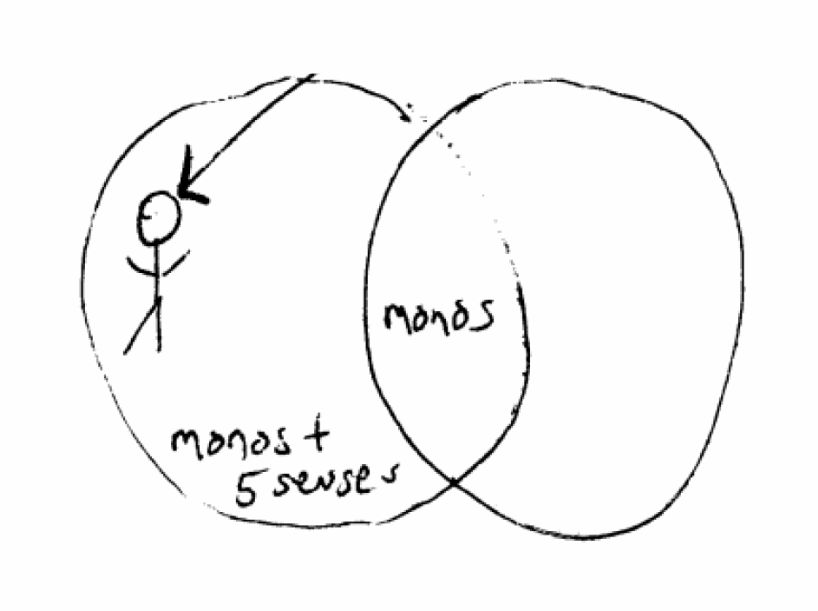
[FIGURE 1978 0823-1-AB. Vesica of Senses as Entrances and Exits. Facsimile scan from AB class notes.]
Problem occurs in gap between object (sensory input) and generation of an image. Same problem as gap in Scholasticism between species sensibilia and species intelligibilia.
There is no interval between point-instants (the flow of sensation is uninterrupted).
Deck, p. 87 -- sensible tree ≠ real tree. [Note: John N. Deck, Nature, Contemplation, and the One: A Study in the Philosophy of Plotinus, Chapter 8, "Is Nature Real For Plotinus?"]
Buddhists leave out vesica -- ultimately real (point-instant) from 10th house is simultaneously transformed as sensible in 12th -- a direct correspondence which is efficient.
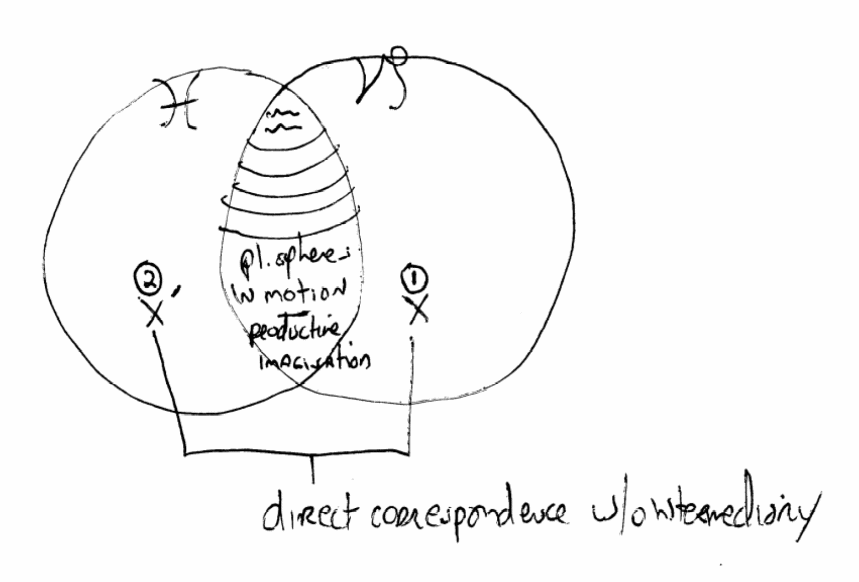
[FIGURE 1978 0823-2-AB. Vesica of Buddhist Epistemology. Pl. spheres = Planetary spheres; w/o = without. Facsimile scan from AB class notes.]
5 senses in Leo of vesica are psychical senses.
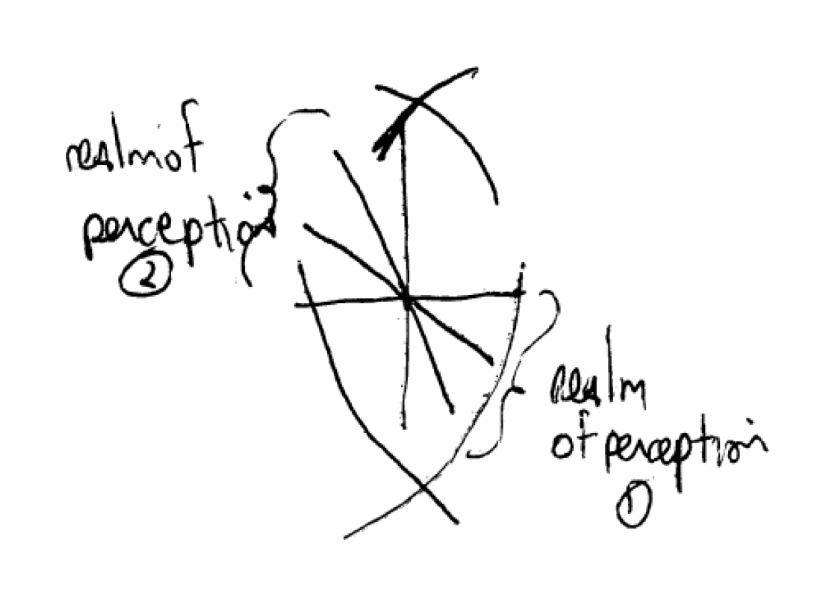
[FIGURE 1978 0823-3-AB. Two Kinds of Perception. Facsimile scan from AB class notes.]
2 kinds of perception:
1) Psychical senses grasp real object.
2) Sensible senses grasp physical object.
Both belong to same subject.
1) World given to mind -- direct knowledge.
2) World given to senses -- indirect knowledge.
[1 and 2] actually are not separate or two things but one which is bifurcated in our experience.
Buddhist Logic, Volume 2, p. 323 -- 3 aspects of sensation.
1) Pure sensation (Capricorn).
2) 2-fold sensation -- pure (Aquarius) and mental (Pisces).
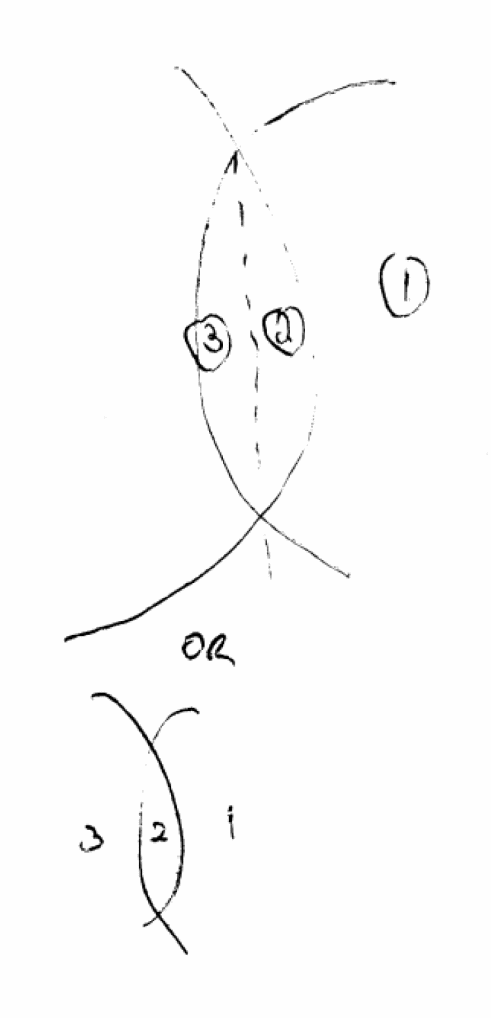
[FIGURE 1978 0823-4-AB. Three Aspects of Sensation. Facsimile scan from AB class notes.]
1) Pure sensation.
2) Outer sensation.
3) Mental sensation.
Object is a synthesis of all three experienced in Pisces.
[Alan Notes 0823 1978 End]
1978 08/23 V08: NOTES: Buddhism; Epistemology. Copyright 2022 Wisdom's Goldenrod p. ii