DIAGRAMS FOR 1979 1012a
Class
Friday, October 12th, 1979
Verbatim, unedited transcriptCLASS at Wisdom's Goldenrod, Hector, NY
with Anthony Damiani (AD)
OCTOBER 12a, 1979
HINDUISM; VEDANTA; EPISTEMOLOGY
TOPIC: Hinduism
SUBJECT: Vedanta
SUBSUBJECTS: Epistemology, Internal Organ (Antahkarana), Perception, Taijasa and Vaishvanara Consciousness
CONTENTS:
Reading from Sinha's Indian Psychology: Perception on the perception process in Vedanta
Internal organ (antahkarana) as translucent entity of the nature of light (taijasa); moves out through the sense-organs and is modified into the form of the object
Object as thought-form projected by the cosmic soul (Sun); exists prior to the individual mind apprehending it through formal identity
Vritti as modification of the internal organ into the form of the object; comparison to psychological projection
Question of whether object mind goes out to is fourth quadrant Body ring planets
Question of when vaishvanara (waking) consciousness arises in the perception process; possibly at contact between mental mode and body/object; hypnotism example
Debate about whether the mind is active or passive in perception; clarification that the mind is the active power taking the form of objects
When vritti takes the object's form, individual consciousness is identified with object consciousness because the determinants of consciousness (vritti and object) occupy the same locus
Discussion of whether forms "cancel out" or become unified; light analogy: two lights shining on the same spot becoming indistinguishable
"Consciousness modalized by the jar is identified with consciousness modalized by the mental mode"; attempts to clarify by reframing 'consciousness' as taijasa consciousness
Individual mind's taijasa and Sun's taijasa as same substance but working through different vehicles/forms; these consciousnesses re-coalesce when mental mode takes on form of the object
Analysis of two sets of equations representing Samkarite doctrine of perception
As products of cosmic soul, empirical subject and object differ in form but not substance (taijasa); are identified through formal identity
Ultimate knower as Nous, not taijasa
Confusions arising from ambiguous terminology; 'consciousness' as reference to taijasa consciousness, not pure consciousness (Saturn in Leo)
Cosmic soul as gnostic and fabricative, individual mind as gnostic
Brief mention of the Witness (Saksin) that observes the mind and its modifications; not equivalent to subject-consciousness; witnesses unification of subject and object
Question of vaishvanara consciousness revisited; arises at point of contact between mental mode and object; student suggests that arisal is at point of contact with body, not object
Process of perception according to the text reviewed from the beginning
The being of the object not independent from the being of the self; object neither identical with self nor an evolute of self
Object superimposed on object-consciousness; the being of a superimposed entity not separate from its substratum
Discussion of the substratum of the percept; questions about whether the substratum is the mental mode or object-consciousness; ambiguity in interpretation of superimposition
RP argues for ontological identity beyond formal identity in true perception
Problem of explaining how true knowledge occurs in the model of identifications; model as possible reference to momentary identification with cosmic soul's position
Debate about perception as a reconstruction after direct knowledge; question of how truth enters into reconstructed knowledge
Proposal to distinguish two phases: 1) individual mind thinking together with cosmic mind to produce the object; 2) subsequent formal reconstruction of that knowledge in the individual mind alone
BOOKS READ FROM OR REFERENCED:
Jadunath Sinha, Indian Psychology: Perception
Plato, Republic
Paul Brunton, The Wisdom of the Overself
Paul Brunton, The Hidden Teaching Beyond Yoga
DIAGRAMS appended to this transcript:
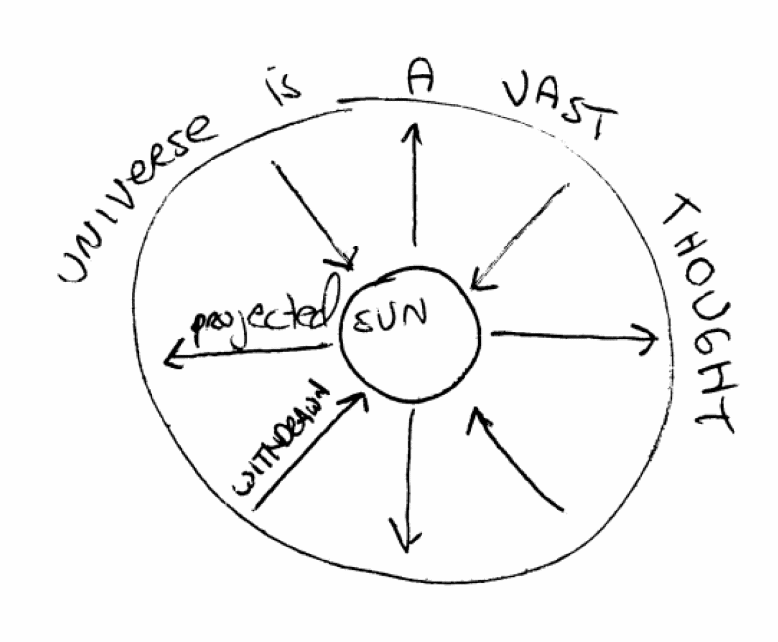
FIGURE 1979 1012a-1-AB. Universe as Sun's Vast Thought.
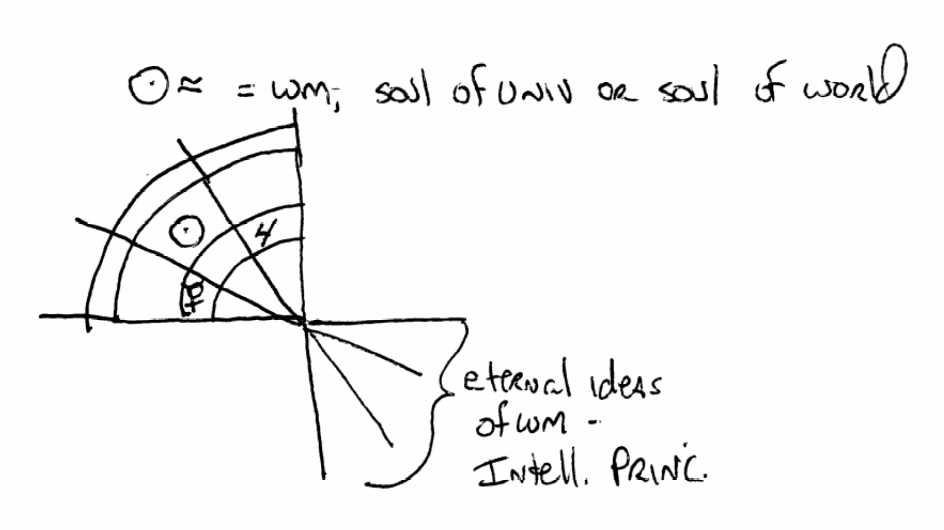
FIGURE 1979 1012a-2-AB. World-Mind and World-Soul, with Jupiter in Capricorn and Mercury in Pisces.
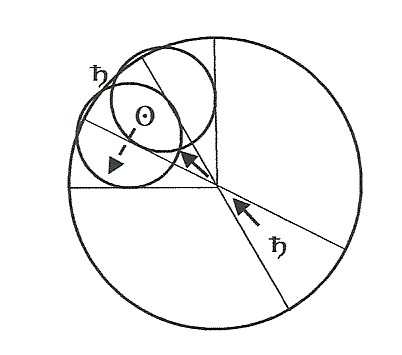
FIGURE 1979 1012a-3. Saturn in Leo and Fourth Quadrant Vesica.
Other diagrams also referred to are not with this transcript version. [Transcriber note: [diagram] means the speaker is referencing a diagram as he or she is speaking. If someone is drawing or writing, with audible sounds of chalk on a blackboard, I indicate this by [drawing] or [writing].]
NOTES:
- This is 1979 10/12a, a class on Hinduism; Vedanta; Epistemology, and the first entry associated with this date. 1979 10/12b = Plato; Phaedrus.
TRANSCRIBED Verbatim by IT 2021. In 2025, IT expands Subsubjects, completes TOC, corrects typos/errors, adds three diagrams and references within transcript to these diagrams. Archival verbatim transcript – V12a.
AUDIO FILES: 1979 1012a, 1979 1012b. [Note: "Tape" and "Side" refer to original audio cassette tapes that were later digitized into .MP3 Audio Files.]
1979 10/12a at Wisdom's Goldenrod
Hinduism; Vedanta; Epistemology
[Audio File 1979 1012a Begins]
[Transcriber note: I am using Indian Psychology: Perception by Jadunath Sinha, Kegan Paul, Trench, Trubner & Co., Ltd., London, 1934.]
Jadunath Sinha [Indian Psychology: Perception, pp. 128-129, AS reading]: "[Perception involves the function (vritti) of the] internal organ [(antahkarana)]. The translucent antahkarana [AS reads: internal organ], which is of the nature of light (taijasa), moves out to the object through the channel of the sense-organs, and is modified into its form. [AS: The object's form.] This modification of the internal organ into the form of the object cognized is called vritti. Vritti, therefore, is the mental mode which apprehends the object.
"This [AS reads: The] out-going of the apprehending mental mode (vritti) to the object is involved only in perception. In inference and other kinds of cognition the mental mode does not go out to the object. … But in the case of the perception of a jar, the mental mode which apprehends the jar goes out to the jar, is modified into its form, and occupies the same position in space with it. So the consciousness determined by the apprehending mental mode becomes identified with the consciousness determined by the jar, since the determinants of the two consciousnesses having an identity of locus cannot bring about any difference in the consciousnesses [AS reads: consciousness] determined by them."
AD (quietly): Once more.
Jadunath Sinha [Indian Psychology: Perception, p. 129, AS reading]: "So the consciousness determined by the…"
AD (simultaneously): No, just before.
Jadunath Sinha [Indian Psychology: Perception, p. 129, AS reading]: "[But] in the case of the perception of a jar, the mental mode which apprehends the jar goes out to the jar, [AS adds: and] is modified into its form, and [AS adds: it] occupies the same position in space with it. So the consciousness determined by the apprehending mental mode becomes identified with the consciousness determined by the jar, since the determinants of the two consciousnesses having an identity of locus cannot bring about any difference in the consciousnesses [AS reads: consciousness] determined by them. Thus in the perception of the jar, the consciousness modalized by the jar [(ghatavacchinna-caitanya)] is identified with the consciousness modalized by the mental mode which is modified into the form of the jar [(ghatakara-vrttyavacchinnacaitanya)]. In other words, there is an identification of the apprehending mental mode [(pramana-caitanya)] with the object [(visaya-caitanya)]--[AS adds: that is] of the perceptive-consciousness with the percept."
S (faint): Let's do this.
S (faint): (Go ahead.)
[1 minute 1¼ second pause, some faint background student words]
AD: Alright, let's read a little more.
Jadunath Sinha [Indian Psychology: Perception, pp. 129-130, AS reading]: "There is a distinction between the bare perception of an object and the perception of the object as object. In the former [AS reads: In the bare perception of an object] there is only an identification of the cognitive-consciousness [(pramana-caitanya)] with the object-consciousness [(visaya-caitanya)]. But in the latter [AS reads: But in a perception of an object as an object] there is [AS reads: there's] not only an identification of cognitive-consciousness with the object-consciousness but also an identification of the cognitive-consciousness [(pramana-caitanya)] with the cognizing-consciousness [(pramatr-caitanya)]. In it the apprehending mental mode is referred to the empirical self [(pramatr)] and identified with it.
"But it may be objected that in the perception,"I see this" the empirical self or I-consciousness [(aham)] is clearly distinguished from the empirical object or [AS adds: the] this-consciousness [(idam)]. How, then, can the former [AS reads: I-consciousness] be identified with the latter [AS reads: this-consciousness]? The Samkarite points out that the perception of an object depends on [AS reads: upon] the identification of the object-consciousness [(visaya-caitanya)] with the cognitive-consciousness [(pramana-caitanya)], and the cognitive-consciousness [AS reads: this latter which] is not different from the cognizing-consciousness, or [AS adds: that] the consciousness determined by the activity of the internal organ [(antahkaranavrttya-vacchinnacaitanya)] is not different from the consciousness determined by the internal organ itself [(antahkaranavacchinnacaitanya)]."
AD: Again.
AS: Maybe I should read that again.
S (simultaneously, faint): (The whole thing?)
AD (faint): Oh yeah, (go ahead).
Jadunath Sinha [Indian Psychology: Perception, pp. 129-131, AS reading]: "How, [then], can the former [AS reads: I-consciousness] be identified with the latter [AS reads: this-consciousness]? [AS: They're distinguished.] The Samkarite points out that the perception of an object depends on the identification of the object-consciousness [(visaya-caitanya)] with the cognitive-consciousness [(pramana-caitanya)], and the cognitive-consciousness is not different from the cognizing-consciousness, or [AS adds: that] the consciousness determined by the activity of the internal organ [(antahkaranavrttya-vacchinnacaitanya)] [AS adds: the vritti] is not different from the consciousness determined by the internal organ itself [(antahkaranavacchinnacaitanya)]. [AS: In other words, without a thing.] Thus in the perception of an object as [AS adds: an] object, not only the object-consciousness is identified with the cognitive-consciousness [AS reads: cognitive or vritti-consciousness], but also the cognitive-consciousness [AS reads: cognitive or vritti-consciousness] is identified with the cognizing-consciousness, so that [AS adds: through that] the object-consciousness becomes identified with the cognizing-consciousness or [AS adds: the] self-consciousness. [AS adds: So] Here the identification of the object-consciousness [(prameya-caitanya)] with the self-consciousness [(pramatr-caitanya)] [AS adds: or cognizing-consciousness] does not [AS reads: doesn't] mean the absolute identity of the two. All that it intends to convey is that the being of the object is not independent of, and separate from, the being of the self. The object becomes a percept, only when there is an identity of the knowing subject with the known object. When I see a jar, the jar becomes identified, in point of being, with my being; [AS adds: and] hence the jar becomes an object of my perception. In the perception"I see the jar", though there is a distinction between my self and the jar, the being of the jar [(ghatasatta)] is not independent of, and separate from, the being of myself [(pramatr-satta)]. [AS: The self of the cognizer.] The object is not identical with the self, nor is it an evolute or modification of the self. But the object being super-imposed on the object-consciousness [(visaya-caitanya)], [AS adds: then] the being of the object is identical with the being of its substratum, viz. the object-consciousness, [AS: Its substratum.] since the Samkarite does not admit that the being of a superimposed entity [(aropitasatta)] is separate from the being of its substratum [(adhisthana-satta)].
"Thus, the being of the substratum of the percept is identical with the being of the percept. [AS adds: Now] The substratum of the percept [AS: that we just spoke of] is the object-consciousness [(visaya-caitanya)]. The object-consciousness is identical with the cognitive-consciousness [AS reads: cognitive or vritti-consciousness] [(pramana-caitanya)], because when the mental mode is modified into the form of the object, the consciousness determined by the mental mode [(pramana-caitanya)] is identified with the consciousness determined by the object [(visaya-caitanya)]. [AS: Ok. Now again at the other end--] The cognitive-consciousness [(pramana-caitanya)], [AS: The one determined by the mental mode.] again, is identical with the cognizing-[consciousness] or self-consciousness [(pramatr-caitanya)], because the former [AS reads: because the cognitive-consciousness] is the consciousness determined by the activity [AS adds: or] (vritti) of the internal organ [(antahkarana)], while the latter [AS reads: while the self-consciousness or cognizing-consciousness] is the consciousness determined by the internal organ itself, and there is not a real difference between the internal organ itself and its activity [AS adds: or vritti]. Thus the object-consciousness [AS: through this series] is identical with the self-consciousness, [AS adds: or cognizing-consciousness] and hence the being of the object perceived is identical with the being of the percipient self. The self…"
AS: I'm not sure.
AD: Yeah, go ahead.
AS: Go on?
AD: Yeah.
Jadunath Sinha [Indian Psychology: Perception, p. 131, AS reading]: "The self-consciousness [(pramatr-caitanya)] [AS adds: or cognizing-consciousness] is the substratum of the percept, so that the being of the percept is identical with the being of the self. Thus the perception of an object as distinct from the self and yet related to it involves the identification of the object-consciousness [(visaya-caitanya)] with the cognitive-consciousness [(pramana-caitanya)] [AS adds: or vritti-consciousness] and the self-consciousness [(pramatr-caitanya)] [AS adds: or the cognizing-consciousness]. In other words, it involves the identification of the perceived object with the apprehending mental mode and the percipient self. [AS adds: And] We may graphically represent the Samkarite doctrine [AS reads: this doctrine] of perception by the following equations:-- [AD, very faint: Go ahead.] [AS: Ok. (one/two words inaudible)]
"(1) The object-consciousness [(visaya-caitanya)] = the cognitive-consciousness [(pramana-caitanya or antahkaranavrttyavacchinna-caitanya)].
"The cognitive-consciousness [(antahkaranavrttyavacchinnacaitanya)] = the cognizing-[consciousness] or self-consciousness [(antahkaranavacchinnacaitanya)].
"Therefore the object-consciousness [(visaya-caitanya)] = the self-consciousness [(pramatr-caitanya)].
"(2) [AS reads: And second-- second scheme is that] The being of the cognized object [(visayasatta)] = the being of the substratum of the cognized object [(visayadhisthanasatta)] or the being of the object-consciousness [(visaya-caitanya-satta)]. [AS: Which is the substratum of the cognized object.]
"The being of the object-consciousness [(visayacaitanyasatta)] = the being of the self-consciousness [(pramatrcaitanyasatta)].
"[AS adds: And] Therefore the being of the cognized object [(visayasayya)] = the being of the cognizing self [(pramatr-satta)]."
AD: Ok. [short pause] Better start again, (ok)? [student assents, faint] (Better start.) [short pause] Paragraph?
[11¼ second pause with faint background student talking]
AS: Ok. Does it-- does it help-- I'm-- I'm trying to keep the English words as much as possible.
AD: Yeah, alright.
AS (simultaneously): And when he says "its" or "this" I'll [AD simultaneously, faint: Yeah.] try and say the actual word that he's referring to, because otherwise it's very hard.
AD (simultaneously): Good idea.
AS: Um--
Jadunath Sinha [Indian Psychology: Perception, p. 128, AS reading]: "Perception involves the function [(vritti)] of the internal organ [(antahkarana)]."
[AD drawing]
AS: Or the mode of the internal organ.
AD: They don't tell us what the internal organ is except to say that it's a translucent light.
AS: Always sounds right. Taijasa.
RC: We do get a traditional usage of that.
[11½ second pause while AD draws]
AS: Is it roughly what we call the individual mind?
AD: It may well be.
S (faint, possibly part of background): [couple words inaudible]
AS: I mean, there's no--
[short pause while AD draws]
AD: You remember in part of this arrangement, over here we would have what was equivalent to buddhi [diagram].
AS: Buddhi.
AD: [drawing] And over here equivalent to manas [diagram]. Then over here you had the four elements [diagram], right? Or, what was it, [writing] prana, sthula, kama rupa, [AS: In--] sharira, linga sharira [diagram].
AS: In most of the Shankara books in the Vedanta, they do say-- they do talk about those four constituents of the antahkarana being buddhi, ahamkara, manas, and citta. I think that's what you're referring to, right?
S (faint): Uh-hm.
RC: Yeah. I didn't know the citta reference but that makes sense.
AS: Yeah. That's a little different than this diagram.
AD (simultaneously): Buddhi, ahamkara--
AS: Manas and citta.
AD: Citta, well--
AS: But I-- I mean I don't-- That probably doesn't help though. It's just since he is doing Shankara's.
S (faint): Ok.
AD: That might be-- that might be more applicable over here [diagram], [AS: Yeah.] the buddhi, ahamkara--
AS: Manas.
AD: Manas, citta.
AS: Ok. [short pause] But in fact--
AD (simultaneously): Alright, so you see, we're working on suppositions. We really don't know what they mean by the [S: Of course.] in-- internal organ they call manas which is like a translucent light.
AS: The-- I do know that in places they do identify them down to only two. And I'm not sure how they go but I think it's something like buddhi, ahamkara, manas-- Either the ahamkara and the citta gets-- get paired off with the buddhi and the manas so that they actually become only two. There are-- there are places where they do that. I don't know. But I-- What he says here is that--
Jadunath Sinha [Indian Psychology: Perception, pp. 128-129, AS reading]: "The [AS reads: This] translucent antahkarana [AS reads: internal organ], which is of the nature of light [AD, faint: Light.] [AS adds: or] (taijasa), moves out to the object through the channel of the sense-organs…"
AD: Alright, so we have to imagine that this light is inside somewhere. [drawing] Then we're speaking about a bodily percipient, right? So this light goes out through the eyes and ears, probably the nose. And most of the time (it could come in) bodily.
Jadunath Sinha [Indian Psychology: Perception, p. 129, AS reading]: "…and is modified into its form [AS reads: into the form of the object]."
AD: Takes on the form of the object, actually goes around, grabs a hold of the object, modified into the form of the object. That's too literal, isn't it? Modified into the form of the object?
AS: Too literal?
AD (faint): Uh-huh.
S (faint): Uh-huh.
AS: Why?
AD: Alright, go on.
AS: Why is it not-- I mean why isn't it literal?
AD: Well, "takes the form of the object" for me would mean that there are internal dimensions to the translucent light which contains the form of the object. Because it doesn't become the object, [AS assents] it takes a form of the object.
AS (simultaneously): Form of the object.
S (very faint): Uh-hm.
AS: Uh-hm.
AD: Ok. Alright.
S (faint): Another one?
AD: Another sentence.
AS (faint): They should read.
AD: But notice, in this-- in this-- in this kind of arrangement, then that means that the object is already there.
AS: Yeah.
AD: Ok? So then we would have to do something like this.
AS: But unknown.
AD: Yeah, unknown. So if we think of this as the Sun [diagram], alright-- Just imagine this circle here, ok. And, we say that this is the cosmic soul and it has produced all the objects in the world [FIGURE 1979 1012a-1-AB].
AS: They're already there.
AD: So all the objects are already there.
AS: Uh-hm.
AD: So that-- that is the presupposition that this theory is going to work with, that the cosmic soul produces this vast thought-form or the universe and every object in that vast thought universe, alright, is an object of consciousness. The cosmic soul fabricates it. You follow that? [AS assents, faint] Alright, so the Sun, [drawing] so to speak, is fabricating, projecting out, a universe. And in projecting a universe, what it projects are its thoughts. Ok? Now these thoughts are the things that this internal translucent manas is going to modify itself into. But try to remember that already the objects are here. So that means that the world was there. The world as a thought-form.
AS: As a form. You know, you say when it's modified into its form, you're saying that the object has the-- I mean it may be that the object also has the form and that-- and that this mind just takes on that form.
AD: Yes, [AS: Takes on.] yes, and he made that clear, he says there's not an absolute identity.
AS: Yeah.
AD: So, what we're-- what they're saying here is that there's a formal identity [AS: Yeah.] within the mind which is capable of reproducing within itself a duplicate-- duplication of that thought-form which has come from the cosmic soul.
AS (simultaneously): And that's the only identity it has with that [couple words inaudible]
AD (simultaneously): That's the only identity, right. Alright. So on the one hand you have the translucent internal manas going out, and on the other hand you have the cosmic soul projecting a thought-form. So you have on either end, either end you got [AS: Taijasa.] taijasa consciousness.
AS: Yeah.
AD: Ok.
AS: Yeah.
RC: Why is that-- why is it not possible that the object is actually held in some waking consciousness? Why is it necessary to assume that the object is taijasa?
AD: Because it's a thought-form. It's a form of thought. Think of a thought in the mind.
RC: Ok.
AD: Could it have any-- any existence except, so to speak, as a form of your own mind?
RC: No, but that's true of any other object in my consciousness.
AD: I'm sorry.
RC: Well that's also true of the pole.
[short pause]
AD: It's also true of the pole?
RC: Yeah of-- of anything.
AD: I don't follow you, "it's also true of the pole". The pole that you see is not distinguished in your understanding from the thought-form?
RC: Well, I'm not-- I'm conceiving it as a thought-form but in vaishvanara consciousness now.
AD: But in vaishvanara consciousness there's a distinction that arises. And we spoke about that distinction as a real felt distinction. [RC assents, faint] It's quite different from taijasa consciousness where there is (neither) felt distinction. [RC assents, faint] The apprehension of the pole in taijasa consciousness would not contain that foreign element. You would not feel that the pole was other than you if you were experiencing taijasa consciousness.
RC (faint): Uh-hm.
AD: Now, [AS simultaneously: Also I--] in the-- in the universe that the Sun projects out, there-- there is no such felt alienation of [AS simultaneously: Of the Sun.] one object from another.
AS: Or of the Sun itself from those objects.
AD: Or the Sun from its-- yeah, its-- what it has produced.
S (faint): Love the Sun.
S (faint): Uh-hm.
AD: Alright, continue.
Jadunath Sinha [Indian Psychology: Perception, p. 129, AS reading]: "This modification…"
AS: Wait. Let me go back. The-- then this--
Jadunath Sinha [Indian Psychology: Perception, p. 129, AS reading]: "The translucent antahkarana [AS reads: internal organ], which is of the nature of light [(taijasa)], moves out to the object through the channel of the sense-organs, and is modified into its form [AS reads: into the form of this object]. This modification of the internal organ into the form of the object [cognized] is called vritti."
AD: Now what he's saying here is like, [AS: A mode.] when the mind goes forth, it goes out, and produces from within itself I'm inclined to say, a form which will coincide with the object, the thought formation. He's calling this a vritti. In-- in the same way that, for instance, when we say I have a projection on a woman, the anima goes out, alright, and reduplicates the form of that woman for me, that's a vritti. So any and every projection would be a vritti.
RC: I-- I don't really understand why this object which the-- which is there that the mind goes out to isn't something that we talked about in terms of [one word inaudible] some effect of the Jupiter [in Capricorn] and Mercury [in Pisces] in the fourth quadrant [FIGURE 1979 1012a-2-AB], Capricornian-- the Body monad, Body ring.
[short pause]
AD: You don't understand why-- Repeat it.
RC: I don't understand why this object which is formulated in the World-Mind's thought, when it's formulated--
AD: It may very well be the Ju-- Jupiter and Mercury.
RC: In that case, this is probably the root of my misunderstanding, in that case I don't see why we don't talk about it as a vaishvanara object.
AD: Why-- Because the taijasa element has to be superimposed on that. [S: Yeah.] The Body monad is-- is indeterminate matter. It's more immaterial than vaishvanara consciousness. It's not vaishvanara consciousness. It's only when there's a superimposition on that by what's above it. Body monad is indeterminate matter. So, I mean what kind of consciousness you going to give to it? None. It doesn't have any. That's got to be worked on. [short pause] But, in the ca-- I think you'll see it brought in when we get further on the way where we-- we'd have to think of an object in the world as being constituted by an indeterminate matter, which would be the bottom line [diagram], the Body monad, and then above it the nature of that Body monad and the forms that superimposed on it and the intelligence guiding the forms. So, that's a question that's too far ahead right now.
RC: When my-- when the taijasa consciousness of my mind goes out to this-- to this object, it's not going out to indeterminate matter, is it? Isn't it going out to matter which has already been worked up into some sort of a form?
AD (simultaneously): Yes, but he said that's what the Sun does, it works up, projects these forms. And these forms that are projected from within the form-- from within itself will have the indeterminate matter as its base on which to work.
RC: And then it seems that logically, that-- if we're saying that that working of the indeterminate matter into some kind of determinate condition--
AD: That working of what?
RC: That working up of the indeterminate matter into some type of determinate condition--
AD (simultaneously): Some kind of body.
RC: Yeah. Is prior to this operation of the individual mind flowing out through the senses.
AD: No. You're going away from the problem. That's another problem completely, leave it out now. [RC: Well--] If you-- we get into determinate matter it'll be like a big marsh, a big Serbian smog, you know. Not now. I first have to work out this problem. So can we repeat that?
Jadunath Sinha [Indian Psychology: Perception, p. 129, AS reading]: "The trans…"
AS: No.
Jadunath Sinha [Indian Psychology: Perception, p. 129, AS reading]: "This [AS reads: The] modification of the internal organ into the form of the object [AS adds: that's] cognized is called [AS adds: a] vritti."
AD: Do you follow that? [short pause] Do you follow that?
S (very faint): Uh-hm.
AD: It's not that your question is illegitimate Randy, it's not now. Go ahead.
Jadunath Sinha [Indian Psychology: Perception, p. 129, AS reading]: "[AS adds: This] Vritti, therefore, is the mental mode which apprehends the object."
AD: We follow that? This vritti is the mental mode. It's the form that the mind takes in order to understand an object. You follow that? Ok.
AS: Um--
AD: Yeah.
AS: Have we hit vaish-- uh-- Is this still taijasa that we're speaking of? This-- the mi-- the form that the mind has, this mental mode or vritti, the mi--
AD (simultaneously): Yes, I'm inclined-- I'm inclined to think so.
AS: It's been modified into the o-- it's still--
AD: It's still-- it's still taijasa.
AS: Taijasa.
AD: See, if we get into that other question, you know, when the Sun projects the forms onto the body monad, what kind of relationship or what-- what kind of working is that, [RC, faint: I know.] that's too-- too difficult.
AS: No, but I was just talking-- right, because somewhere out of this we're going to have to get vaishvanara object.
AD: Yeah, I know, but I'm not going to try to presume that it's already there because then it can get--
AS (simultaneously): No, I wasn't a-- I wasn't asking about what was already there.
AD: Well, if--
AS: I was asking about this mental mode--
AD (simultaneously) If we go-- yeah, if we conceive of--
AS (simultaneously) Which the individual mind has taken on.
AD: If we conceive of the forms that could possibly be in the mind, wouldn't they have to be in a condition of-- of taijasa?
AS: Yeah but, see, at one time we said that as this individ-- Maybe I should wait. I'll wait. (So maybe I'm reading) too fast.
AD: Well, if it's ur-- if it's pertinent now, if it's--
AS (simultaneously): Well it's to the point of the individual mind taking the form of that object, I think.
AD: Yeah.
AS: 'Cause we said as-- we did say at one time that as the individual mind goes out, they have spoken about, it moves out through the channel of the sense-organs. Now, at one time we did speak about as that mind actually goes out through the sense-organs to take the form of that object, it's-- it's-- concomitant with that, that vaishvanara-- that the vaishvanara object-- that you now-- you can now speak about an object in vaishvanara consciousness, in other words, a distinct-- the particular object.
AD (simultaneously): You're saying the contact between the thought-form produced by the Sun, alright, and the mental mode or the vritti, it's where that contact lies that vaishvanara is produced?
AS: I'm just asking, I mean I-- it's-- it's s--
AD: Well I don't find no-- I don't find no--
AS (simultaneously): It's gotta be somewhere.
AD: Here. Here's-- here's [drawing] let's say an object, and this is a product of the taijasic consciousness of the Sun, alright?
AS (simultaneously): Yeah, the thought-form.
S (faint): Right.
AD: So this would be [drawing] a thought-form.
AS: Yeah.
AD: (Ok.) Now, the mental mode goes around and grasps this thought-form, alright. And we said [drawing] that this is in taijasa [AS simultaneously: Taijasa.] consciousness. [AS assents] Our assumptions may be wrong but, thi-- this is so far what we're gathering from that. [AS: Yeah.] Now what you're saying is that this [diagram] has a significant power that when it contacts the form which-- the-- the vritti, alright, that there vaishvanara is produced. [drawing] Right here [diagram]. Is that what you're saying?
AS: Well that's what I'm asking.
AD: Well we could leave it open for now.
AS: Because--
AD: It's certainly something to consider because the product produced by the taijasa consciousness of the Sun is-- is of a superior force.
S: Wouldn't--
AS: Yeah.
AD: Huh?
S (faint): Right.
DB: Could-- could you speak of that as being prior to the actual contact with the object but the vaishvanara being produced when the taijasa consciousness goes out through the channels of the sense?
AD: Yeah, that's what-- that's what he's, I think, suggesting. Avery's suggesting that the contact between the thought-form which is a product of the cosmic soul and therefore is taijasa consciousness and the vritti moving to that or grasping that, that at that moment of contact, alright, vaishvanara consciousness is produced. Is that what you're saying Avery?
AS: Yeah, that's-- [few inaudible student words simultaneous with AS] that's pretty (exact/exactly).
AD (simultaneously): Ok. Let's leave that hanging, alright, [AS simultaneously, faint: No that's--] let's leave that hanging. That's a possibility.
CDA (simultaneously): Are you talking about the senses? You mean the physical senses?
AS: Well I think we're speaking about this mind going out through-- when he says here the sense-organs, the channel of the sense-organs, he means the-- the ac-- the real body, not the sensed body but the-- the real physical body (that) itself a thought-form in the-- the World-Mind and so on but-- Yeah, we're talking about out, going out. Otherwise (it wouldn't expand).
DB (simultaneously): Well I--
RW: I have a question.
AD: Sure, sure.
RW: Do you agree with that statement?
AD: I don't know yet.
AS (simultaneously): He's not saying.
S: He's leaving it open.
RW: I would--
AD: I'm leaving [AS simultaneously: We're just--] it (o--) I'm going to hang it up on my [one word inaudible]
RW (simultaneously): She didn't understand it that way.
AS (simultaneously): I was just asking
S: Isn't he asking?
AS: Asking and [RW: Ok.] saying just leave the question open.
RW: Ok.
AD: I first have to try to pull out all their, you know, presuppositions before I [RW simultaneously: Ok.] see what they're really saying. It sounds too easy. [student assents] [RW simultaneously: No, I was asking you--] It's very easy to read into what you want.
AS (simultaneously): Yeah I know. Actually he didn't say that (question).
RW: Yeah I just was [AS simultaneously: That was someone else.] asking, do you agree with Avery's interpretation?
AD: No.
AS (simultaneously): No he was saying he doesn't agree or disagree, just--
RW: Oh ok.
S (simultaneously): He's leaving it open.
RW (faint): Ok.
AS: We'll just leave it open. Just a possible, you know?
AD (simultaneously): It's-- it's brought about from when we considered, you remember the example I gave where I said, "I'm a hypnotist," [AS: Yeah.] and I tell Avery, "Look, there's a hot stove in front of you," [RW assents] and he breaks out into a sweat. Now "I'm the hypnotist" would correspond to "I'm the Sun," alright. [RW assents] I produce an object. In this case it's a thought, "hot stove". It's just a thought. It reaches Avery, it becomes a hot stove and he starts sweating.
RW: But that's Avery's scenario.
AS: Right. Only when-- I'm not--
RW (simultaneously): That's not your scenario.
AS: But I'm saying-- right, it's not his.
AD (simultaneously): Yeah, but it's-- the point is [AS simultaneously: Or the Sun's.] contact, when they both contact. [AS: Yeah.] When his mind contacts my thought, [AD hits board with chalk] a transformation happens.
RW: I understand that but if you could logically put it in sequence just to talk about it, his scenario is prior to your scenario.
AS: His-- but his scenario isn't a scenario at all, it's only a thought-form.
RW: That's right. Well, let's forget scenario.
AS: But that's the point.
RW: The seed-thought form (brings) you heat.
AS (simultaneously): Yeah, seed.
RW: Then you play out a scenario of [one word inaudible]
AS (simultaneously): Only when my-- when my mind takes the form of that seed or contacts that seed and gets transformed by it, then I experience the actual physical sensation of heat. [RW assents] Then I see a stove, if I see something.
RW (simultaneously): Yeah but see I see this part here, I-- my understanding was that this-- that this was not in vaishvanara consciousness, that these were not physical organs, that [AS simultaneously: Oh.] this whole thing [AS simultaneously: Oh I see.] takes place in taijasa.
S: Yeah but--
AS: Oh. Well I'm--
S (simultaneously): That would be [few words inaudible]
AD (simultaneously): Well that's-- that's-- that's alright, [AS simultaneously: That's fine, yeah.] because it all does take place in taijasa.
AS: Sure.
RW: I know but the one is subsumed by the other.
AD: Because this is taijasa-- the body here [diagram], [AS simultaneously, faint: Body is (couple words inaudible)] alright, is a thought formation.
RW: Yeah.
AS (simultaneously): Yeah.
AD: Alright. The manas of this body is also, so to speak, [AS assents] taijasa.
S (faint): Yeah.
RW: Ok but in-- in this-- this little produced thing up here, the object, I would see the object as being Avery and the object, both of them being objects, being the same object.
AS (simultaneously): One of those kind of objects.
RW: See, [someone drawing] within that little circle [diagram], I would put Avery grasping the object.
AS (simultaneously): Oh sure, the vritti is going to manifest my body too. My body also is unmanifest before the mind-- it's also a taijasa object before my individual mind goes out through it and manifests it too. [student assents] There's no-- I mean you're just-- I think you're saying that my body has the same status within the World-Soul as that object does.
RW: Right.
AS: Yeah, there's-- and-- but that's the sense-or-- the sense-channels we're talking about, the channel-- the channel of the sense-organs, that's part of that-- my body as an existent taijasa object within the World-Soul.
RW (simultaneously): But see I see it as your taijasa body, and then your vaishvanara body is within that.
AS: No, my vaishvanara body is of the same status as the vaishvanara appearance of the tree.
RW: True.
AS: Namely, it's just an appearance.
RW: True. I'm not disagreeing with that.
AS: Yeah. So-- so it can't be-- What you're saying I think is that the individual mind can't go out through my vaishvanara sense--
RW: Right.
AS: Because they don't exist until the mind goes out!
RW (simultaneously): That's right, that-- yes, exactly.
AS: Yes. Unless I'm misinterpreting it, yeah.
RW: Ok.
AS: But saying that the organs it goes out through are taijasa organs doesn't put them back in the eleventh house [diagram].
RW: Ok.
AS: It keeps them in the tw-- it keeps them as what they-- the body manifested by the Sun, just like the tree.
RW: I understand that.
AS: Yeah. [couple/three words inaudible]
RW: Ok.
S (very faint): But I don't [one/two words inaudible]
RW: I don't know even where I got off on what you were saying, uh--
DB: No-- well, no, it's a question of-- Like you were emphasizing the tree and-- and you were just saying it was the body that was contacting other taijasa (bodies/body).
RW (simultaneously): Well let's go on and-- and let's see [AS simultaneously: Ok.] how it fits.
AS: Ok.
Jadunath Sinha [Indian Psychology: Perception, p. 129, AS reading]: "This modific…"
AS: (Well) Anthony, more?
Jadunath Sinha [Indian Psychology: Perception, p. 129, AS reading]: "This modification of the internal organ into the form of the object cognized is called [AS adds: a] vritti. [AS adds: This] Vritti, [therefore], is the mental mode which apprehends the object.
"This out-going of the apprehending mental mode (vritti) [AS: I'm going to use"vritti" 'cause--] to the object [AS rereads: "This out-going of the…(vritti) to the object] is involved only in perception."
AS: And not in these other kinds of cognition.
AD: Ok.
AS: So we won't talk about those.
AD: Alright, we understand now.
S (very faint): Right.
S (faint): Go ahead.
Jadunath Sinha [Indian Psychology: Perception, p. 129, AS reading]: "But [AS reads: Now] in the case of the perception of a jar, the mental mode [AS adds: vritti] which apprehends the jar goes out to the jar, [AS adds: this mental mode] is modified into its form [AS reads: into the form of the jar], and [AS adds: it] occupies the same position in space with it [AS reads: with the jar]."
AD: Alright, let's try to understand that.
DB: Well--
S: [couple words inaudible]
AD: Yeah.
DB: Well, it seems as if there are two ways you could understand it. One would be that when-- when the mental mode goes out, the modification of it takes place either entirely by the object which it is identifying with or that because of the inherent constitution of the light, the object brings forth from within it particular forms which correspond to the object.
AS: I mean, say it-- can you say it again David?
S (simultaneously): He did.
AS: Just say it again.
DB: Well, it seems as if there are two ways that you could understand that. That the mental mode, when it goes out and contacts the object, is modified and it would be either entirely by the object itself, that the mental mode or the taijasa would be, so to speak, completely indeterminate and that the-- the modification of it would be entirely by the object or--
AD (simultaneously): But they say, they say that it's-- it's the mode, it's a-- they say that it's the taijasa, the translucent light, which takes the form of the object.
S (very faint): Yeah.
S: Uh-hm.
DB: I-- yes. And that would be I think the other interpretation which would mean that the form of the object whi-- which the individual gets to know, that-- let me see how (he/we) said it (last), that the modification of that taijasa takes place because the object brings forth the appropriate structure within the taijasa which would then correspond to the object which it is going to bind with.
RC: I think he's saying in one case the mind gets impressed and in the other case the image gets evoked from already with-- being within the--
AD: Well the mind doesn't get impressed.
RC: No, I think those are the two ways.
DB: That's what-- yeah, that's what I'm saying.
AD: They're saying there-- if you reread that.
Jadunath Sinha [Indian Psychology: Perception, p. 129, AS reading]: "[But] in the case of the perception of a jar, the [AS reads: this] mental mode which apprehends the jar goes out to the jar, [AS adds: and the mental mode] is modified into its form [AS reads: into the jar's form], and [AS adds: it] occupies the same position in space with it [AS reads: with the jar]."
AD: So they are saying that the mental-- that the mind which has been canalized through one of these sense-organs takes the form of that object. They don't say-- they-- they're not saying that the object impresses itself on the mental mode, you know, on the vritti itself. Ok?
DB: But when-- when it says [AS simultaneously, faint: The mind--] it take-- when it says it takes the form of the object, that would mean--
AD: That would mean that it's the mind which is the active power. Wouldn't it?
DB: Yes.
AD: Ok.
DB: But there would-- it would have-- there would have to be some response on its part in order for it to be identified with a particular object, or to take the form of the jar as opposed to a book or anything.
AD: Yes, but that's what we're saying, that it's the mind that's the active power which takes on the form of the object [student assents, faint] and not the object which does-- In other words, reverse that and say that the object impresses itself on the mind.
DB: But, doesn't there have-- I mean--
AD: Now, let's just stick to that-- just stick to the sentence in the text please. Read again.
Jadunath Sinha [Indian Psychology: Perception, p. 129, AS reading]: "[But] in the [case of the] perception of a jar, the mental mode [AS adds: or vritti] which apprehends the jar goes out to the jar, [AS adds: and this mental mode] is modified into its form [AS reads: into the jar's form], and [AS adds: it] occupies the same position in space with it [AS reads: with the jar]."
AD: Now, just by the text.
DB: Ok.
AD: Ok?
DB: I mean when it's-- it's modified, it says there it's modified by the form of the jar. Yes?
AD: No, it doesn't say it's modified by the form of the jar, it says the mind takes the form of the jar.
AS: Doesn't say "by", it says is-- Well, the line is it's-- the mental mode is modified into the jar's form.
DB: Ok, the mind is modified into the jar's form. Now, we're speaking about a preexistent jar, alright, [AS assents] something that's prior to the mind going out (through/to) the senses.
AS: (Somehow/Sun (one word inaudible)).
DB: So that the-- the Sun has this particular object [AS, faint: Prior to.] prior to the functioning of the mental mode. And there's a modification that takes place within or-- within the mental mode.
AS: Right.
DB: Ok.
AS: And not in the jar.
DB: Not in the jar, right. But, there has to be-- I mean the mind is the active-- Well, I'm not-- I'm not sure how I understand how the mind-- the individual mind is-- is completely active and that the--
AD: You don't?
DB: I'm sorry?
AD: You don't?
DB: No, I don't understand--
AD: Yeah, what are you doing now?
DB: Um-- [short pause] What am I doing now? Perceiving?
AS: Trying to take the form of the-- of the understanding. [DB: Oh.] Your mind is trying to-- I think that's what the mind is [DB simultaneously: Ok.] going to do is try to grasp that understanding.
S (faint): Yeah.
DB: Well-- yeah, no wait a minute, I mean they're active in-- you know they're-- I mean we just pointed out that that's on a different level.
AS: It is on a different level but--
DB (simultaneously): It's not-- it doesn't have to do with the-- the modification of the mental mode going out through the senses.
AS: Doesn't go out, no, but what I--
DB (simultaneously): That's what I'm trying to understand.
AS: No, no, but see, in the case of the understanding it can stay-- there's no out. [DB assents] But the analogy is the same, it's the mind which is trying to take the form of something. [DB assents] In the case of a physical object it's easier because vaishvanara holds it real clear, that vaishvanara object, it really holds it very powerfully so it's easier for your mind to go out and take the form of it.
DB: Ok, so--
AS (simultaneously): It's easier for the mind to get a form that corresponds to it.
DB: So that-- so that in any sense perception, we don't have-- [S, faint: (Right.)] the-- the activity of-- of the taijasa consciousness is going out and taking as much of the form of the object as it can.
AS: As it can.
DB: Alright. But [AS assents] the form that it takes of the object is dependent upon its functioning rather than anything inherent within the-- within the object itself. I mean it will take as much of that object as it can.
AS: Well, the form it takes may be dependent on the object. If the mind goes out to a tree it's not going to take the form of a horse.
DB: Well that's the point I was trying to make, that the mind is-- is active but it has-- the form it takes is going to have to correspond to an existent object.
AD (simultaneously): Yes, we assume that, [student assents] naturally. But it's the mind that's the active power. And it's the mind that produces a form within itself which coincides and there's formal identity with the object. The object could be an absolutely inanimate stone.
CDA: When you talk about understanding here, do you mean reflective?
AD: Any kind. The mind [CDA simultaneously, faint: Yeah, but if you--] could take the form of any kind of understanding. That's why I asked him [CDA simultaneously: Without--] the question, "What is (he/it) doing now?" [student assents] [S, faint: He's trying--] The mind was taking internal forms.
CDA (simultaneously): Without presupposing some, you know, stuff [S simultaneously: The mind (three words inaudible) (and) misunderstand.] prior?
AD (simultaneously with CDA and S): I'm sorry? I'm sorry?
(Side 1 of original cassette tape digitized as 1979 1012a Ends; Side 2 Begins)
AS: --in it, and your mind [couple words inaudible]
CDA (simultaneously): What does the mind do?
AD (simultaneously with AS and CDA): Yeah, what does the mind do?
S (faint): Grasp it.
S: Perfect.
CDA: It takes the--
S (faint): Yeah.
AD: Yes. Go ahead.
CDA: You're speaking totally abstractly.
AD: Yeah, totally [CDA simultaneously: It's not (one word inaudible) this--] abstractly, I'm talking about a triangle, will you please answer? What does your mind do?
CDA: It thinks triangles.
AD: It thinks triangles, fine. [student assents] [AS simultaneously: I think (couple words inaudible)] It took the form of the triangles. In the case of an outward object it takes the form of an outward object. In the case of an internal object it takes the form of an internal object.
CDA: But we don't normally speak of the (norm) that the indiv-- the individual mind as being the knower. So that's--
AD: We're not talking about that now, we're not talking about that.
CDA (simultaneously): Ok, but I just-- I (confused).
AD (simultaneously): We're talking about the mind taking a certain form in order for anything to be known.
CDA: Ok. So--
AD: That's all.
CDA: Ok.
AD: Close reading of the text, please, stick to a close reading of it. Don't wander. Go ahead, next line.
Jadunath Sinha [Indian Psychology: Perception, p. 129, AS reading]: "So the consciousness determined by the apprehending mental mode [AS adds: or vritti] becomes identified with the consciousness determined by the jar…"
AD: Now instead of saying "the consciousness determined", use the word 'follows'.
AS: 'Follows'?
AD: Yeah. "The consciousness follows…" Read it that way.
Jadunath Sinha [Indian Psychology: Perception, p. 129, AS reading]: "So the consciousness determined by [AS reads: consciousness follows] the apprehending mental mode [AS adds: and] becomes identified with the consciousness determined [AS reads: consciousness which follows] [by] the jar…"
AS: No-- I'm not sure that's what you meant me to say.
AD: No, what I'm trying [S simultaneously: (No) it's not.] to say is that the vritti-- the vritti has to take the form of the-- the jar, alright.
AS: Right.
AD: But the consciousness per-- per se, alright, it doesn't take any form.
AS: Right.
AD: It simply is pervasive, it's there.
AS: Yeah.
AD: Ok.
AS: And-- Well, yeah, he-- it's-- I don't know what else you can say, or-- Could we say "associated with"? How about you say--
Jadunath Sinha [Indian Psychology: Perception, p. 129, AS reading]: "[So] the consciousness determined by [AS reads: associated with] the apprehending mental mode…"
AD: Go ahead.
Jadunath Sinha [Indian Psychology: Perception, p. 129, AS reading]: "…becomes identified with the consciousness determined by [AS reads: associated with] the jar…"
AD: With the consciousness--
AS: With the-- with the consciousness--
Jadunath Sinha [Indian Psychology: Perception, p. 129, AS reading]: "[So] the consciousness determined by [AS reads: associated with] the apprehending [mental] mode [AS adds: or vritti] becomes identified with the consciousness determined by [AS reads: associated with] the jar, since the determinants of the [AS reads: these] two consciousnesses [AS: Namely the mental mode and the jar.] having an identity of locus cannot bring about any difference in the consciousnesses determined by them."
AD (simultaneously): Yeah, so what he's saying is there's a pervasive consciousness here [diagram], alright.
AS: Yeah.
S (faint): [couple words inaudible]
AD: It pervades the entirety of the mental mode, alright. So it follows the mental mode when it takes-- alright. There's a consciousness [drawing] which is pervasive of the object, alright, and that's associated with the object, alright. Now, he-- all of a sudden he drops in the consciousness.
S (faint): That's right.
AS: But-- but if we say that the only distinction you can make in consciousness is by the objects that are within it--
AD: Uh-hm.
AS: Let's-- I mean just some kind of supposition like that, if the object-- the only difference-- differences within consciousness are produced by these objects or forms within the consciousness. Now if two different consciousnesses as it were have forms in them which coincide or occupy the same space-time locus, [AD: Go ahead.] then the two consciousnesses that were associated with its two identified forms seem to get identified [AD simultaneously: --fied, uh-huh.] with each other because those two forms do.
AD: And we still don't [AS simultaneously: I think that's what he's saying.] have vaishvanara.
AS: Well, we don't have any change of-- [AD simultaneously: (one/two words inaudible) he's--] I mean I don't see that there's been any--
CDA (simultaneously): Can you just go-- just do that one more time?
S (faint): Uh-hm.
AS: The only distinctions you make in consciousness [S: I'm sorry.] are the forms that are within it. [student assents, faint] You say one form is different from another but the consciousness is the same. Now if you bring together two forms that were in two different consciousnesses, just speaking like that, the form of the mind and the form of the object, if those two forms coincide, are in the same space-time locus, then the consciousnesses associated with them are also going to get identified through their objects being-- because that's-- If there's no distinction in the objects, how could you distinguish the consciousnesses? Consciousnesses don't have distinctions.
AD (simultaneously): Well if you remember previously, he said if you abstract that content, you'll have an indeterminate perception.
RW: So what (are you going to do, correct). But you have--
AS: Yeah. No (indeterminate (one word inaudible)/indeterminacy).
S (simultaneously, faint): It would be an abstraction in terms of--
RW (simultaneously): There's no disidentification of the consciousnesses to begin with. All it is is within forms. [student assents] You bring them together you have the identification.
LR: When you [AS simultaneously: (Oh yeah.)] speak of the jar-consciousness though--
S (simultaneously): [couple words inaudible] identification, there's no [AS simultaneously: Yeah.] clear way to distinguish them.
LR (simultaneously): Oh I'm sorry, Red did you just ask?
RW: Pardon?
S: [few words inaudible]
AS (simultaneously): (Well--/No.)
S (simultaneously with S): Speak up, can't hear a word.
AS (simultaneously with previous S): Linda?
LR: Is he-- is he-- is Red talking right now?
S: Quietly kid.
RW (simultaneously): I'm listening. (bit of laughter)
LR: I'm sorry Red, I think I might have interrupted you.
RW: No, no. No, I'm sorry. Go ahead.
LR: Are you really speaking of the consciousness of (a/the) jar?
AS: The consciousness--
LR: Jar-consciousness?
AS: -- of the jar? Well I would say in this case it's the Sun's consciousness. [LR assents, faint] The jar-- I'm-- maybe [LR simultaneously: Fine then, form then.] I'm wrong, but the jar-con-- the jar is an an-- inanimate thing so we're really speaking about-- the consciousness associated with the jar is the Sun's [LR simultaneously: Sun's, right, yeah.] consciousness. The consciousness associated with the mental mode is the individual's [LR simultaneously: The individual mind's consciousness.] consciousness.
LR: But they're already together. Why do you have to put them together?
AS (simultaneously): The consciousnesses are already together? How could they be together or apart?
LR (simultaneously): Oh wait, I'm sorry. You said individual mind's consciousness?
AS: The individual's consciousness. Leave out mind. The individual's consciousness is the one associated.
AD (simultaneously): Consciousness that belongs to the individual percipient.
AS: That's-- that one is not-- That one's not associated with the jar. It's associated with the individual-- with the mental mode. Now you don't-- now you're not going to associate the consciousnesses except through their contents becoming asso-- becoming identified. [RW: What's the difference--] The forms are becoming identified and therefore the consciousnesses seem to be also.
RW: What's the difference between the Sun's [AS simultaneously: That (can/can't) distinguish them.] consciousness and the individual's consciousness?
AD: You stated it. One belongs [AS simultaneously: One--] to the cosmic soul and one belongs to the individual.
AS: Again, he's saying the only way to distinguish consciousnesses is by the things that they-- the difference in the form--
RW (simultaneously): Is not one subsumed under the other?
AD: No, no, not yet. [student assents, faint] Not yet.
AS: That's-- that's why you need to have this whole stuff going on here, to associate it. See--
S (faint): Go ahead.
S: Go ahead.
AS: Your-- I mean-- just think that your consciousness is not the same as mine.
S (faint): (I don't see that.)
AS (simultaneously): I mean, when you see-- when you have an experience--
AD (simultaneously): It's the idea that everything is one, you know. [AS: I mean--] Everything's one.
AS: If you experience something, your consciousness experiences something, I don't-- I-- [S, faint: Well--] [few inaudible student words simultaneous with AS] I never experience the same thing.
RW: But you're an individual conscious and I'm an individual conscious--
AS: Right now-- now I-- we don't normally-- [AD/S(?): We--] Yeah. [S simultaneously, faint: But you (few words inaudible)] But the Sun's con-- ok, but think of the Sun's consciousness too, your individual consciousness-- Look when the-- if that were so, then when the World-Soul perceived something, you'd know-- you'd be perceiving exactly what it was perceiving but you're not. You don't see everything it does.
RW (simultaneously): Ok, let me-- let me-- let's go back to the-- the hypnotist analogy. Anthony's the Sun and he hypnotizes both of us.
AS: Uh-hm.
RW: And he projects the seed-thought "heat". Alright, my scenario is going to be different from your scenario but we're still both under the same consciousness (of the Sun).
AD (simultaneously): It'll be similar for both of you, alright? [AS assents] It'll be similar. [AS: So--] You'll both be looking at a stove, but you might have a stove with no [one/two words inaudible]
RW (simultaneously): I have a different stove [student assents] (here), ok.
AS: So the jar consciousness is one and the same.
RW (simultaneously): Wait, let me finish! The original seed-thought though--
AS: That's the jar-consciousness.
RW: Ok, [AS: Go on.] is-- came from the Sun.
AD: Uh-huh.
AS: Right.
RW: So our consciousness really-- I'm getting back to everything [couple inaudible student words simultaneous with RW] one, yeah.
AS: No. There's one same jar-consciousness, even if two people are looking at a jar. [RW simultaneously: I-- I see that part.] The jar-consciousness is the same. But the individual consciousnesses that got associated with it through our two different mental modes remain our individual consciousnesses.
RW (simultaneously): I see-- I see that. But what's our relationship to the Sun's consciousness?
AS: Oh, when we're both looking at the same jar?
RW: Uh-hm.
[short pause]
AS: Well they'd get-- I would say they'd get-- they actually get related somehow, yeah. But I don't see that that's-- doesn't seem to be the-- the point here. If we both look away, if we're both looking at the same object or even looking at each other, there's some kind of-- there's some kind of affinity there too.
RW: Yeah, I understand that.
AS: Because both of our minds have taken the form of that same object. But I don't think that that's--
RW: Ok, I can see that I'm hung up on this "everything just fits into the one". Yeah.
AD (simultaneously): Yeah, you're running-- you're running into your-- [RW simultaneously: Yeah, ok.] into the pit.
RW: Well let's go on from "all is one". [couple/three words inaudible]
AD (simultaneously): Because the next moment there'll be another object.
RW: That's right. I see.
AD: And another and another.
RW (simultaneously): And I'll do the same thing there.
AD: Yeah.
RW: (Linda--)
AS: Right here he's keeping these consciousnesses completely distinct to begin with.
RW: I can't accept that. You know, I always have this feeling in the back of my head that even though we're doing this, I know that it's all one. (laughter)
AD: Everything's one.
RW (chuckling): Yeah, go ahead.
S: This is what Anthony loves (with you).
RW: Yeah. (RW laughs, some laughter) We've had this trouble before that, yeah.
AD: Yes, but you see what happens. No discussion is possible, no understanding could be worked out. Every-- everything dissolves into this mist.
RW: Yeah I'm not attempting to do that. I really--
AD (simultaneously): Well, you have to watch it.
RW: Yeah.
AD: Now, at that moment, alright-- Let's-- let's resume. At that moment where there's the contact between this mental mode which embraces and encompasses this object, and there's a pervasive consciousness-- which I said, think of it as following this object, [RW: Ok.] ok. And there's a-- and there's a pervasive consciousness of the Sun which is the basic substratum of this object. [RW assents] Now, at a moment of real knowledge, real knowledge, there's an identification of this consciousness [AD hits board with chalk], taijasa consciousness, and the taijasa consciousness of the object, [RW assents] the substratum of your-- At that moment, there is an instant of real knowledge.
RW: Ok, now you could actually (see) that--
AD (simultaneously): Now there's another moment that follows immediately. Now instead of a jar you're smelling the flowers.
RW: Yeah.
LR: Avery, can I--
RW (simultaneously) I don't have any trouble with that.
AD: Ok?
RW: Yeah. I don't have any trouble.
AD (simultaneously): So that's why I don't want to stop and say you get swallowed up, it's all over.
RW: Ok. I don't have any trouble with that at all.
AD (simultaneously): Because the next instance you're at the flowers, the next instance you're at the ribbon. Ok? Don't-- don't let the process stop. Let it continue.
RW (simultaneously): Ok. Yeah.
AD: Alright, let's reread that.
Jadunath Sinha [Indian Psychology: Perception, p. 129, AS reading]: "[But] in the [case of the] perception of a jar, the mental mode [AS adds: or vritti] which apprehends the jar goes out to the jar, is modified into its form [AS reads: into the jar's form], and [AS adds: it] occupies the same position in space with it [AS reads: with the jar]. So the consciousness determined by [AS adds: or following] the apprehending mental mode becomes identified with the consciousness determined by [AS reads: associated with] the jar, since the determinants of the [AS reads: these] two consciousnesses having an identity of locus cannot [AS reads: can't] bring about any difference in the consciousnesses [AS adds: which are] determined by them."
[short pause]
S: (Read it again.)
S (very faint): [few words inaudible]
S: Yes.
AS: What distinguishes conscious-- consciousnesses-- two-- two taijasa consciousnesses are only getting distinguished here we're saying-- he's saying, by different determinants or different forms that they're working on.
AD (simultaneously): What distinguishes-- what distinguishes the Sun, this object [diagram], from the mental mode is this [diagram], so to speak, is constituted by the Sun's consciousness, alright, and this [diagram] is constituted-- the form here [diagram] is constituted by the individual consciousness or the consciousness which is appre-- following the form of this taijasa.
AS: Yeah.
AD: Ok? Read.
AS (simultaneously): But then he says when [AD simultaneously: (Read.)] the determinants of the two consciousnesses--
AD: Now what are the determinants of the consciousness?
AS (simultaneously): Well, I thought the determinants were the mental mode on the one hand is [AD simultaneously: Uh-hm.] a determinant of the individual, and the determinant of the Sun's consciousness was the jar.
AD: Yeah. That would be the content of the other.
AS (simultaneously): Now, if these two determinants, namely the jar and the mental mode [AD simultaneously: Mode.] don't have any distinction that you can make between them, if they've gotten identified, if they have the same formal-- formally identified, then he says they cannot bring about any difference in the consciousnesses which is--
AD (simultaneously): No, let's repeat that this way: If the existential distinctions do not remain.
AS (faint): Uh-hm.
AD: Ok? Read it that way. Try that.
AS: If the existential--
AD: Distinctions.
AS: Distinctions.
AD: Between the object, alright, [AS: Yeah.] which is the product of the Sun's consciousness, and the mental mode which is, let's say, the product of the individual consciousness, if these-- if these contents or existential distinctions do not remain--
AS: I don't know why you call them existential rather than formal distinctions.
AD: Well, I'm emphasizing now that the product-- the jar produced by the Sun, alright, is existentially [couple inaudible AS words simultaneous with AD] [AD hitting board with chalk as he talks] distinct and different from the form that the mind or the apprehending mode takes of [AS assents] that. These are two distinct existents.
AS: Right.
AD: Alright? They will not coalesce.
AS: Ok.
AD: If they did coalesce, what would happen? There'd be no knowledge.
AS: Well-- But he says they occupy the same-- they have an identity of locus.
AD: Yes.
AS: Right.
AD: Ok.
AS (simultaneously): Then he says it's because of this that-- now he says they cannot-- these determinants-- and you're saying that these determinants are the jar and the mental mode.
AD: Yeah.
AS: Ok? Now he says these two don't-- they have an identity of locus. And therefore these two, the jar and the mental mode, cannot bring about any difference in these consciousnesses that are-- he says are determined by them or associated with them.
DB: Oh, isn't--
AD: Cannot bring about any difference of consciousnesses. Is that what he said?
AS: Yeah, and he's saying that that's how the two consciousnesses, the consciousness of the Sun and the consciousness of the individual, get identified or associated.
AD: Alright, once more, go over that passage once more.
AS: See--
AD: Just the last three.
AS (simultaneously): Yeah.
Jadunath Sinha [Indian Psychology: Perception, p. 129, AS reading]: "…since the determinants of the two consciousnesses [AD: Yeah.] [AS: These determinants.] having an identity of locus cannot bring about any difference in the consciousnesses [AS reads: consciousness] determined by them."
AS: Well, better start--
Jadunath Sinha [Indian Psychology: Perception, p. 129, AS reading]: "So the consciousness determined by [AS adds: or following] the apprehending mental mode becomes [AS reads: will become] identified with the consciousness determined by the jar…"
AS: Now (it's) the individual consciousness will get identified with the Sun's consciousness.
S: Right.
AS: That's what he's saying, I mean-- he's leaving (the view).
DB: Well, [S: Yeah.] I mean isn't he saying that at this point, because the two objects are occupying-- the two-- the mental mode and the object are in the same locus, that there's no difference in the consciousnesses and-- or that-- I mean isn't he saying that they're-- this--
AS (simultaneously): Yeah, just what you said.
DB: It's both in-- it's still in taijasa.
AS: Well I don't know about it's still in the-- but what-- the first thing you said sounded what he's-- like what he's saying.
AD: Because there's no differences in consciousness, right?
AS: Yeah.
AD: Therefore these two different existents cannot, let's say, keep that division or that separation between the two consciousnesses.
AS: Ok, but I thought he was saying almost the--
AD: The reverse.
AS: The logical reverse, namely that, since these two existents now had coalesced, therefore the two consciousnesses associated with them got identified. He's putting the-- he's almost putting the one as the logical prior. He's saying well first-- what first happens is not that the consciousnesses get associated, but what first happens is that the contents of those get associated. Namely the mental mode is the content of the individual consciousness. The jar is a content of the Sun's consciousness.
AD: Uh-hm.
AS: And now he said the first thing that has to happen is that this mental mode takes on the form--
AD: In other words there's a formal identity.
AS: There's a formal identity.
AD: This formal identity almost like cancels itself out so that the fee-- two consciousness can get united.
AS (simultaneously): Yeah. Yeah that's what he seems to be saying. Now whether that's what actually happens I don't know, but that-- I think that's what the sentence saying is that the deter-- since-- Ok. So these consciousnesses become identified because these determinants have become identified. The formal identity allows for the real perception to happen, the real instant of identification of the Sun's consciousness with the individual consciousness. And that's what's happening.
RW: Why can't you just-- [AS simultaneously: I could-- I could follow that.] why do you have to say the Sun's consciousness? He's not calling it that.
AS: Well he says the object-consciousness. He's saying, the words he's using, he's saying the jar-consciousness.
RW: Yeah right.
AS: Well, what's the jar-consciousness?
RW (simultaneously): I know that it-- yeah but--
AS: Ok. I'll just leave it at jar-consciousness, the object-consciousness.
RW (simultaneously): The-- because those are the two determinants.
AS: No, the two determinants are the jar and the individual mental mode.
RW: Right. Rather than the Sun and the-- Now we [AD simultaneously: (The other--)] know that that's within the Sun's consciousness.
AS: Ok yeah, well, forget it, ok but-- See there are two different sets of things. [RW: Yeah (one word inaudible)] The two sets--
AD (simultaneously): [drawing] Well let's try it this way.
AS: Two sets of contents, two sets of consciousnesses.
AD: (And), it might be something like this. Let's say you have the individual consciousness here, [drawing] alright, individual consciousness here [diagram]. You-- I-- The Sun's over here [diagram], the Sun's consciousness over here, alright. Now there's an object.
AS: That's what I said. There's an object there [diagram] and an object in the left one [diagram].
S (faint): Take the chalk.
S (faint): Thank you.
AD: There's an object here, [drawing] alright, that blocks the consciousness of the Sun. There's an object here [diagram], the mental mode. [student assents, faint] That blocks the consciousness [student assents] of this here [diagram]. Now, these two come together. [drawing]
S (faint): You mean like over there?
AD: Imagine this come together, alright, and because of the formal identity of these two together, [AS/S(?): (Object.)] alright, [AS simultaneously, faint: It's the consciousness.] it's almost like they get cancelled out, [AS assents] ok, and these two [diagram] get connected, the two consciousness get connected. Alright. Now I'm saying-- he's saying that it's like they get cancelled out. I'm saying no! If you get canc-- if it cancels out then what is there known?
AS: Right. No I don't think-- [RW simultaneously: Is that-- (what--)] he doesn't necessarily say they are cancelled out, he just says that they are now-- No, they're not cancelled out, they're now-- they're not two of them. [AD: They--] They are (identified/identical).
AD (simultaneously): There's a formal identity.
AS: See, I was thinking of, suppose you had one little piece of-- tiny little piece of paper with a green light associated with it, reflected onto it.
AD: Uh-hm.
AS: And you got another little piece of paper that has a yellow light reflected onto it.
AD: Uh-huh.
AS: Now if you move these pieces of paper closer and closer until the papers coincide, then the lights shining them will also coin-- will now also get associated.
AD (simultaneously): Coincide, yeah.
AS: So you won't wipe out the pieces of paper but now it'll become like-- you can't distinguish the two pieces of paper. You got one piece of paper and therefore the light-- the lights associated with them will also get combined, [DB: I mean--] like the green and the-- the green and the yellow light. [DB: And isn't--] And neither of them get cancelled.
DB: Isn't he saying that the-- [few inaudible student words simultaneous with DB] that the formal identity of the object and the mental mode make possible a-- almost an existential identity of the consciousnesses?
AD (simultaneously): Two consciousnesses, [few inaudible AS words simultaneous with AD] yeah, that's what we're saying. [student assents, faint] But the point here is that I don't follow why-- [chalk on board sounds] why this formal identity, alright, makes possible these-- the contact of these two.
AS: Yeah.
RW: But it's--
DB: It's because they-- it's because the fact that they're--
AS (simultaneously): Because they're not associated by them.
DB: They have the same locus. That they're in-- they occupy the same--
AD (simultaneously): But that's-- that's a reason?
DB: No but, he says that they take the-- that they occupy the same place in space.
AD: Yeah, yeah, I know.
DB (simultaneously): But that space that they're occupying is not the space that we normally-- I mean it's-- it's the way you've spoken of space, isn't it? Not this space.
S (faint): No, no.
S (faint): Yeah.
DB: It isn't? How come?
AS (simultaneously): Well, they're-- the two consciousnesses we assume that they are distinct-- they're not assoc-- they're not identified prior to this, the Sun's consciousness and the individual consciousness.
AD (simultaneously): Yeah. There's a break.
AS: Ok, there is some kind of distinction. Now there's also a break between the Sun's object and the individual mind's modes, right, I mean [AD simultaneously: Yeah.] those aren't in identity either [AD simultaneously: Uh-huh.] to begin with. However, he's saying originally there is an association of the individual's consciousness with the individual mind's modes, ok. And there is an identification of the object--
AD (simultaneously): Yeah. With the Sun's conscious and the object-(conscious).
AS (simultaneously): And the object.
AD: Uh-huh.
AS: Now if-- given those two identifications, if either term of one of those two identifications gets associated, the other term by transitivity will get associated.
AD (simultaneously): Associated, yeah.
AS: So, if from the one group, the object of the Sun, the Sun's object the jar-- No, do the other way. The mental mode, the individual mind's mode, comes over and associates itself [AD simultaneously: With (the/a) jar.] with the jar to such an extent that they become formally identified, then that's going to mean that the individual's consciousness which was associated with that mode will get formally identified with the [RW simultaneously: Sun's consciousness.] Sun's consciousness.
AD: No, can't be.
AS: Ok, I'm--
AD: Yeah, I--
AS (simultaneously): Can be or not be but--
AD: Yeah, you're saying-- you're saying [AS simultaneously: I mean it--] what he's saying, yeah.
AS: I think that's what he's saying. I don't know.
AD (simultaneously): But, think about it for a minute.
S (very faint): Well--
LR: Then it would be absorbed into the taijasa consciousness (of--)
AD (simultaneously): Yeah, it would perhaps be more-- more to the point to say that the substratum consciousness of the jar, alright, is illuminating or shining through the jar.
AS: Or to say that the substratum of the jar is shining through the mental mode.
AD: Alright.
AS: I mean, maybe-- I could see-- maybe just what you're saying is that what's happening is that there's a mutual illumination of the other object, like now the Sun's consciousness is illumining the mental mode.
AD: Mode. Uh-hm.
AS: And the individual's consciousness--
AD: Gets illuminated by that.
AS (simultaneously): --is-- is illumined-- is illuminated by that in turn.
AD (simultaneously): By that. But if we-- if we-- if we think of the formal identity as canceling out so that the two consciousnesses can be [AS simultaneously: No.] identified, well, I don't understand this as knowledge.
DB: But I-- Oh, go ahead.
RC (simultaneously): Can I try?
LR: Maybe it's vaishvanara consciousness.
RC: Yeah. Can I-- can I try to, you know, sort this?
AS: What's that [one word inaudible]
S (simultaneously, faint): [one/two words inaudible] the lecture yet.
RC: Give it. Can I say that [AS simultaneously: Wait, you follow (one/two words inaudible)] the consciousness that we're going to [AS simultaneously: You've got this.] say is the substrate of any vritti, any-- any mental mode, on behalf of any internal organ, that the consciousness which is the substrate of that is what we call the Saturn in Leo? You start from there?
RC/S(?) (faint): Smells like it.
S (faint): Oh I think you set him up good.
S (faint): Yeah.
AS: Oh, oh this is Vedan-- this is the Vedantic explanation.
RC (simultaneously): And then they-- [one/two inaudible student words simultaneous with RC] let's say that the-- that [AS simultaneously: What is it?] any experiences-- [AS: Right.] any-- any objective field which that consciousness becomes associated with is going to be by means of the individual mind, the individual mind assuming some sort of formal identity with forms in the World-Soul. And that in order for that individual mind to assume a formal identity, its being in the appropriate state of consciousness is also required.
AD: I don't know what you mean there, its being in the appropriate state of consciousness.
RC: Well that the individual mind is what gets associated with the four states.
AD: With the thought-form, yeah.
RC: With the thought-forms and the four states that contain those thought-forms. But in either case, what's required is the conjunction of the individual mind with the forms in the World-Soul. And the-- the consciousness of the subject from the Saturn in Leo--
AD: Gets associated with the consciousness of the Sun. I know. I know what you're saying. [RC: Well--] But that's not the problem.
RC (simultaneously): No, no, that's not what I was going to say. That the consciousness of the subject is not to be identified with either the forms in taijasa or the forms in vaishvanara or the forms in prajna.
AD: Yeah.
RC: But that it can be associated by any of them. And that these modifications of the individual mind include its modifications into the various states.
AD: Include what?
RC: Include its mo-- include the individual mind's modifications into the various states.
AD: I don't know what you mean.
RC: Well that the individual mind has a taijasa state. And in its taijasa state it can know the Sun's taijasa objects.
AD: Yeah.
RC: The individual mind has a vaishvanara state. In its vaishvanara state it can know the Sun's vaishvanara [AD simultaneously: We--] object.
AD: We don't want to jump to that yet. Let's stick with the taijasa. That we know. That the individual mind which is taijasa, or this luminous light which goes out and grasps the object-- Let's leave it there.
RC: Ok.
AD: Ok?
S (faint): Go ahead.
RC: Ok.
AD: Yeah, what you're trying to do is-- is in terms of the symbolism, it's like the consciousness which is associated with the empirical subject and this empirical subject has a manas produce-- the manas is coming from out of this [drawing] here [diagram], embracing this here [diagram], alright.
RC (simultaneously): And that's already a modification of the mind.
AD (simultaneously): Yeah but, you see-- you see, right now I don't need that symbolism. [drawing] That's the Saturn in Leo associated with an individual taijasa mind [diagram], alright. This taijasa mind is going out and naturally this [diagram] is accompanying it. It's always there, alright. It grasps the form of this object [diagram]. Alright. Now he's saying, he's saying here if I follow, that when these two are formally identified, alright, it's almost like they're-- they're subtracted and now these two consciousnesses connect and knowledge is revealed.
AS: Yeah, what's revealed is the object, not the knowledge.
AD: Yeah.
RW: You don't lose the identity of the two consciousnesses by revealing the object. Just the form of the object in this taijasa in the individual's mind becomes one with the form that's in the Sun consciousness. [AD: Uh-hm.] So you now have an illuminated object but you still don't lose the two identities.
RC: Yeah.
AD: But that's not what he says, that's what I'm saying! Read the passage again.
S (faint): Read it.
AD: According to that passage it sounds as though almost the formal identity of the object gets cancelled out or subtracted and the two consciousnesses come together.
AS: Well he does say the two consc-- So he says--
Jadunath Sinha [Indian Psychology: Perception, p. 129, AS reading]: "So the consciousness determined by the [AS: Or following, whatever."…the] apprehending mental mode becomes identified with the consciousness determined by the jar [AS reads: the object], [AS: And the reason is--] since the determinants of the [AS reads: these] two consciousnesses having an identity of locus…"
AD: Same place.
AS: Same place, they're in the same place.
Jadunath Sinha [Indian Psychology: Perception, p. 129, AS reading]: "…[AS adds: they] cannot bring about any difference in the [AS adds: two] consciousnesses determined by them."
AD: Now wouldn't-- they cannot bring about any difference. Wouldn't that be equivalent to saying that they get cancelled out?
AS: Well, no, maybe [AD simultaneously: Alright then.] just associated.
AD: Huh?
AS: Maybe just-- they're now identified, there's a-- Now instead of two consciousnesses and two objects-- Maybe there-- I mean maybe he's just saying that instead of two consciousness and two objects, for an instant you only have one consciousness with one object. One as-- you know, that one being an identity of two. The-- in other words, instead of saying now there's no object and two consciousness associated, there's just one object and just one consciousness whereas immediately prior you could think of two different consciousnesses with two different contents or objects--the World-Soul and its object, the individual consciousness and its mental mode. Now when the two objects coalesce you only have one object, they're formally identified, you can't distinguish them at all in that instant, the two consciousnesses are also identified, intermingle or interpenetrate, and then it's as if there was only one consciousness with only one object. So at that instant you're seeing the actual object. [RW simultaneously: But I don't think--] Through the mode of the individual mind, it's true, but there's only one consciousness and only one object at that point. [RW simultaneously: I think--] And that's-- that would give you the-- the p-- the power-- That way you-- Because it is the World-Soul's object that you're experiencing at that instant, it would be a very powerfully held before your mind. Give it its clarity too.
RW: If you do [AS simultaneously: I don't know (couple words inaudible) by power but--] that you're doing the same thing I was doing, erasing.
AS: Which is?
RW: It's subsuming everything under one.
AS: No they're not s-- they don't-- they don't become essentially identified. There's only-- well-- It's not a permanent-- it's not saying that they become one. For that instant, they are operating as one. It's almost as (if) two beams of light both coalesce. You got two flashlights. You bring the flashlights closer and closer and closer and for an instant the two lights are shining together and then you can move them apart.
RW (simultaneously): But that's just like one saying, "Hi, you've got the same form I've got. If we put them together we have one object but we're still two different people." [AS simultaneously: No, no (couple words inaudible)] So you're not subsuming the two.
AS: No he's-- the text seems to be saying that when the objects do coalesce and are in the same locus, the consciousnesses associated with them or that shine on them also-- You know what he--
RW (simultaneously): Read that-- read that sentence, [AS simultaneously: No I--] I don't think it says that.
AS: Yeah because you see-- He's not talking about these consciousnesses somewhere else. He's not saying the absolute consciousness is somewhere else as it were, or getting associated when the objects do. Where are these consciousnesses? If you think about them as not in themselves but as actually reflected on these two objects or as the very substratum of these objects, then when those objects do get associated, the consciousnesses that are reflected into them are also going to get associated. So there'll only be one consciousness shining on one object instead of two consciousnesses with two objects.
RW: Read the last part of the last sentence again.
Jadunath Sinha [Indian Psychology: Perception, p. 129, AS reading]: "…the determinants of the two consciousnesses…"
AS: I should reread.
Jadunath Sinha [Indian Psychology: Perception, p. 129, AS reading]: "[So] the consciousness determined by the apprehending mental mode becomes identified with the consciousness determined by the jar, since the determinants of the two consciousnesses having an identity of locus cannot bring about any difference in the consciousnesses determined by them."
RW: Ok. So the two consciousnesses, [AS simultaneously: I'm not saying that this--] he's still saying there are two.
AS: Right, not the--
RW: And they become identified. That doesn't mean that they--
AS: Not in themselves, but as they are reflected in the two objects.
RW: Right. So it does not bring the two consciousnesses together. All you did was what was illuminated, that part of the consciousness that was illuminated(,) [AS simultaneously: That was illuminating.] those two objects-- So you still have the two consciousnesses being identified because of the object-- objects finding each other.
AS: It's almost like he's saying that the reflection of-- I mean, almost like what he really means to say is that the-- You know, we speak about-- as the light-- the light as it is shining on that dust mote is what gets associated with the light shining on that other dust mote.
RW: Right. That's what I'm saying.
AS: Yeah, the consciousness which is ac-- which is associated with the object or determined by it. I don't know why that-- why that--
DB (simultaneously): Well if-- if the only difference in consciousness would be in terms of content, ok--
AS: Well no, let's not say it's the only difference.
DB: Alright, well let's say-- well--
AS: But in an empirical mode-- Ok, I'm sorry.
DB: I mean, [few inaudible AS words simultaneous with DB] that's how you can speak of any difference in consciousness because there's a different content there. And if the two contents are coinciding, the contents themselves can no longer make a difference in [AS simultaneously: The consciousnesses.] the consciousnesses. That doesn't mean that they're-- the two consciousnesses are i-- absolutely identical but [AS assents, faint] only that the contents themselves no longer have power to-- to--
AS (simultaneously): To differentiate the consciousnesses.
DB (simultaneously): --to differentiate it.
RC: Share a [student assents, faint] common determination.
DB: Yeah, alright.
S (faint): Yeah [one word inaudible]
AS (simultaneously): There's two lights but if they're both-- if two lights are both shining on the same-- one and the same object, if you look right on the object you can't distinguish the two lights shining on them. If you pull-- if you pull them apart--
RW: But you still have two lights.
AS: You could still have-- I mean, say you could have two essentially different lights, that doesn't mean the original lamps are going to change. But the two [RW simultaneously: From the--] spots, if they're both shining at the same spot you-- [RW: That's the jar.] and you just look at the jar where both the lights are shining, [RW: Jar is jar.] you won't be able to see the difference between the two lights.
RW: Right. But only because of the determinants or the fact that there's [AS simultaneously: They coalesce.] form "jar" in one and form "jar" in the other, or object "jar", and they coalesce. So those are the two determinants and have become one. But that doesn't have anything to do with the two consciousnesses [AS simultaneously: Only inso--] that carry the form of the object.
AS: Only insofar as the two consciousnesses are now both shining on the same object.
RW (simultaneously): They've identified with each other in this object.
AS: I don't know if that's a correct-- But that's like-- So then the object is not obliterated in that, I mean, and neither [RW simultaneously: No.] is the consciousness.
RW: Now--
AS: It seems like there's only one object and one consciousness.
RW: It's-- it's only one object because you got the two that-- that are become one. They have not destroyed the object or the form of the object, it's just the form has taken the object. So you can say that the objects have come together to form one, but the two consciousnesses still can have their individuality, so to speak, but they become identified because they carry these forms and the object.
[short pause]
DB: It's interesting because that would-- I mean you could speak of an association of the-- the consciousness of the individual with the mental mode but there isn't spoken of an association of that consciousness with the form of the object.
S (faint): The form of the--
DB: I-- I'm sorry, not the form of the object in-- in the mode but with the actual object. That there's an association that's between the two consciousnesses, not between the consciousness from one side associating with the object of the other side. You see what I'm--
AS (simultaneously): Yeah, but I don't see how they could not be in this. Seems there's two.
AD: Read on a little more, maybe we'll get some further illumination.
AS (very faint): Ok.
Jadunath Sinha [Indian Psychology: Perception, p. 129, AS reading]: "Thus [S, faint: Go ahead.] in the perception of the jar, the consciousness modalized by the jar…"
AS: This is the one he said consciousness determined by the jar.
Jadunath Sinha [Indian Psychology: Perception, p. 129, AS reading]: "…consciousness modalized by the jar…is identified with the consciousness modalized by the mental mode which is [AS reads: which has been] modified into the form of the jar…"
AS: I got to say that differently or it sounds like the consciousness got modified.
Jadunath Sinha [Indian Psychology: Perception, p. 129, AS reading]: "[Thus] in the perception of the jar…"
AD: Alright let-- let's follow that way, let's follow that way.
Jadunath Sinha [Indian Psychology: Perception, p. 129, AS reading]: "[Thus] in the perception of the jar, the consciousness modalized by the jar…is identified with the consciousness modalized by the mental mode which is modified into the form of the jar…"
AD: Once more.
Jadunath Sinha [Indian Psychology: Perception, p. 129, AS reading]: "[Thus] in the perception of the [AS reads: a] jar, the consciousness [AS adds: which is] modalized by the jar…is identified with the consciousness modalized by the mental mode which is modified into [AS reads: in] the form of the jar…"
[short pause]
AD: Go on.
Jadunath Sinha [Indian Psychology: Perception, p. 129, AS reading]: "In other words, there is an identification of the apprehending mental mode…with the object…[AS adds: or in other words] of the perceptive-consciousness with the percept."
[short pause]
AD: Once more.
Jadunath Sinha [Indian Psychology: Perception, p. 129, AS reading]: "In other words, there is an [AS reads: a]…"
AD (simultaneously): The whole thing, the whole thing.
Jadunath Sinha [Indian Psychology: Perception, p. 129, AS reading]: "[Thus] in the perception of the jar, the consciousness modalized by the jar…is identified with the consciousness [AS adds: that is] modalized by the mental mode which is [AS reads: which has been] modified into the form of the jar…"
AD: Once more. I'm sorry Avery.
AS: Yep.
Jadunath Sinha [Indian Psychology: Perception, p. 129, AS reading]: "[Thus] in the perception of the jar, the consciousness [AS adds: which is] modalized by the jar…is identified with the consciousness modalized by the mental mode which is modified into [AS reads: mental mode in] the form of the jar…"
[11¾ second pause]
AD: I'm trying to follow the other way, (when) consciousness [AS: Yeah.] is getting modalized in my--
AS: (Isn't he?)
S (very faint): Yeah.
AS: So the consciousness modalized by the jar, identified with the consciousness-- I'll leave out that. Is that-- you're trying to say is identified with the consciousness which is modified into the form of the jar?
AD: Yeah.
[short pause]
AS: Let's see.
[15 second pause with faint background student talking]
AD: Alright, continue a little more.
S (faint): [couple words inaudible]
Jadunath Sinha [Indian Psychology: Perception, p. 129, AS reading]: "In other words, there is an identification of the apprehending mental mode…"
AS: No.
Jadunath Sinha [Indian Psychology: Perception, p. 129, AS reading]: "…of the apprehending mental mode [AS adds: consciousness] with the object [AS adds: consciousness]--[AS adds: that is] of the perceptive-consciousness with the percept."
AD: The perceptive consciousness or the percept. [short pause] But that-- that would mean that the-- that the consciousness would be different from the vritti again.
RC: Well he did say earlier that this--
AS (simultaneously): Well isn't it? Isn't the consciousness different from the vritti?
RC: [couple words inaudible] say now--
AD (simultaneously): Well, I'm trying to follow through that consciousness becomes the apprehending mental mode.
RC: He said earlier that the consciousness is the same whether there's vritti or no. I mean that's one of his presup--
AD (simultaneously): I'm sorry?
RC: One of his presuppositions that (he/you) said earlier that struck me at the time was that the consciousness is the same whether there's vritti or no, or the cognitive-consciousness or the cognizing-consciousness. He calls it cognizing-consciousness when there's a vritti. But he says the consciousness is the same whether there's vritti or no.
AD: Whether there's a vritti or--
RC: Or not, right. So he is actually taking the cognitive-consciousness to say that it's getting transformed into the mental mode. That those two terms are of one substance, [student assents, faint] whatever the appropriate word.
AD: Those two terms are of one substance, well--
RC: The cognitive-consciousness and the cognizing-consciousness.
AD: The knower and his-- and his means of knowing are one and the same?
RC: That's what he's saying.
AD: Yeah.
DB: Yeah but he uses there-- by knower he's referring to the empirical subject, not the pure consciousness.
AD (simultaneously): Yeah, yeah.
RC: Yeah. That seems to be-- Well, to my mind that's the root of the problem, [short pause] that he's-- he's saying that the-- that this consciousness which is-- which forms the subjective pole actually does take the forms of the cognizing activity. He is not distinguishing it from the mental mode.
AS: I'm not sure-- I'm not sure I see that. (Sorry.)
AD: You don't see that?
AS: Well, suppose we just say the Sun's consciousness knows the object which is projected. Right? I mean is-- is that so?
AD: Uh-hm.
AS: It would know-- it already knows that tree.
S (very faint): Uh-hm.
AS: Now, let's say our individual consciousness knows whatever forms our individual mind takes on.
AD: Because of their intrinsic self-nature?
AS: No, no, I mean the-- I'm sorry. Not what-- never-- not takes on. Our individual mind only knows the form-- our individual consciousness only knows the forms [AD simultaneously: Form.] of our individual mind.
AD (simultaneously): Mind, yeah.
AS: Ok, and the Sun knows-- Like the separation. And the Sun's consciousness knows the for-- the thought-forms it has projected, the universe, the (existing/existent) tree.
AD (simultaneously): Yeah, and we could even say is those forms, alright.
AS: And even is those. And-- well, then in that case in the same way we could almost say that the individual's consciousness--
RC: Insofar as it is.
AS: Could you say that the individual's consciousness is the very forms of its individual mind?
AD: Go on.
AS: Ok, now--
AD (simultaneously): Take the next step.
AS: And the next step is that the individual's consciousness wants to get to know about the object [AD: Uh-hm.] that the Sun knows. Now, how is that going to happen? Ok. It seems that he's saying that the only place that happens is in the realm of these-- the objects or contents of them. Since the individual's consciousness only knows what the individual mind has a form of, that means that that-- it's the job of that individual mind to take on some kind of identity-- No, that's where I-- to-- to take-- yeah to-- he would say to become in some way identified with the object [AD: Which object?] of the Sun's consciousness, [AD: Uh-hm.] the actual jar. That still doesn't tell me why-- it still doesn't show to me why you need to identify the individual consciousness with the Sun's consciousness. [DB: Yeah, and he also--] I still don't see why that--
RW: Didn't he--
DB (simultaneously): He also says "percept" there too, when he says the individual consciousness is identified with the percept, which I couldn't figure out how that-- how that conclusion is unless that's the same thing as the individual.
AD: There that would be-- that would be, again, bringing in the bifurcation that the consciousness is pervasive of the entirety of the contents of the individual mind, therefore it takes on the form of that individual mind's functioning. And that-- that would not give me that union that they're talking about.
RW: Well that's-- you've got jar in the individual mind and it searches around until it finds jar in the objective consciousness of the Sun, [student assents, very faint] find this object, and only then can these two come together. It's, you know-- the tree doesn't find the jar, the jar finds the jar. And then there's an identification of the jar but there's still a separation of the consciousnesses. Or is the modification within that that finds the object?
AS: Except the thing, first he says that there is an identification of the two consciousnesses. Said the conscious--
RW (simultaneously): Through the moda-- through the modality of the-- of this form and the object.
AS: Well, but-- I know but he says the consciousness modalized by the jar is identified with the consciousness modalized by the mental mode.
RW: Yeah but that's just that part of the consciousness.
AD: Yeah so he-- what he's [AS simultaneously: Yeah but, not really.] saying here is the consciousness, alright-- [drawing] This is now consciousness, alright, this here is consciousness [diagram], and this is consciousness [diagram]. This is what he's saying. [students assent, faint] And these two--
[Audio File 1979 1012a Ends]
[Audio File 1979 1012b Begins]
Jadunath Sinha [Indian Psychology: Perception, p. 129, AS reading]: "…identification of the apprehending mental mode…with the object…of the perceptive-consciousness with the percept."
AD: The perceptive-consciousness with the percept.
S (faint): Yeah.
S (faint): Yeah.
AS: Now this percept--
AD (simultaneously): That won't-- that won't do it then.
AS (faint): Perceptive-consciousness with the percept.
AD (simultaneously): The perceptive-consciousness with the percept would mean that it would never know that triangle inside.
AS: No but, he-- I mean he's got a bad-- if you got-- the Sanskrit word that he's use(d) is visaya-caitanya which is object-consciousness, the perceptive-consciousness with the object-consciousness.
AD: Alright, [one/two inaudible student words simultaneous with AD] use that term then.
AS: I better use that because [student assents, faint] that's-- I don't know why he-- he's got the word but there's just a-- it's like-- In other words, there is an identification of the apprehending mental consciousness or the perceptive-consciousness with the object-consciousness.
AD: Go on.
AS: Ok, well, that's all there is in that paragraph. [DB: So--] I could go to the next one. Then he goes through the distinction between bare perception and perception of object as object.
AD (simultaneously): Well ignore that, ignore that.
DB: But, isn't-- isn't he saying that it's-- it's through the medium of the mental mode and the-- and the object [AS simultaneously, faint: Well yeah he goes through--] that the individual consciousness gets to know-- the-- the individual consciousness is associated with the-- the Solar consciousness.
S (faint): The rulership (of a) (vasana/Sun)?
S (faint): Yeah.
AS: Well, when we say the Sun's tai-- when we spe-- when you said this is like the Sun's taijasa consciousness, taijasa consciousness of the Sun which actually is that object, the jar or whatever, why is it when we do the individual, we don't speak about the individual's taijasa consciousness but we seem to be speaking about the principle of consciousness per se? It seems like we're-- there's-- we're making a different supposition on each side.
RC: That's what's bothered me from the beginning about that second quadrant Overself and the fourth quadrant World-Mind [FIGURE 1979 1012a-3].
S (very faint): Uh-hm.
AS: Well, in other words, I mean could-- suppose we interpreted here consciousness instead of by pure consciousness, could we interpret this as the taijasa consciousness of the individual?
AD: Well that's what I was trying to do.
AS: And the form within it, in other words, the mental mode, would be like the form within that taijasa consciousness.
AD (simultaneously): With-- within that taijasa consciousness, yeah.
AS (simultaneously): Just as in the case of the Sun--
AD: And that would be a vritti. Go ahead now.
AS (simultaneously): Yeah. Now that-- I mean that seems to make more sense.
AD (simultaneously): Now work the other side, now work the other side.
AS: You mean from the Sun's point of view--
AD (simultaneously): Yeah.
AS: --it would be the Sun's taijasa consciousness and its object would be the modification of it.
AD: Ok. Now bring them together.
AS: Well, he says-- [couple/three words inaudible] go back here.
Jadunath Sinha [Indian Psychology: Perception, p. 129, AS reading]: "So the consciousness determined by the apprehending mental mode…"
AS: The taijasa consciousness of the individual.
AD: Yeah.
AS: Of the individual mind--
Jadunath Sinha [Indian Psychology: Perception, p. 129, AS reading]: "…becomes identified with the consciousness determined by the jar, [AS reads: with the taijasa consciousness of the Sun which is inherent in the jar or which is the jar or the object]…"
AD: Yeah.
Jadunath Sinha [Indian Psychology: Perception, p. 129, AS reading]: "…since [AS reads: because] the determinants of the two consciousnesses [AS reads: of these two taijasa consciousnesses] having an identity of locus cannot bring about any difference in the consciousnesses determined by them [AS reads: in these taijasa consciousnesses themselves]."
AD: Yeah, tha-- now, that's-- that's the point.
RC: Yeah. That determinant was what I-- I wanted to put--
AS (simultaneously): Well, if we say that our individual mind-- Now, our individual mind's taijasa consciousness is only different from the Sun's taijasa consciousness, insofar as we speak about a form- bearing light, that the form is different. It's almost like the fact that the taijasa consciousness is operating through a different vehicle for an individual separates it from [AD: Yeah, soul.] its identical stuff, you know, the stuffness, that's what we said, they're one and the same stuff. But the form it's working through is different from the S-- the form of the Sun's consciousness. Namely the form that our individual mind's taijasa consciousness or that light is working through is an individual mind, an individual mental mode or antahkarana. Now, that antahkarana is as it were a covering for it, it blocks-- it blocks it from being-- from recognizing its essential na-- stuffness or identity of substance with the taijasa consciousness of the Sun. So if-- if that mental mode, the covering of the individual's taijasa consciousness, takes on the form of the--
AD: Jar.
AS: --the jar, then there's one and the same covering there. These two different coverings or objects or contents now being one and the same, the two-- two taijasa consciousnesses coming from two different places, which are really identical in substance, now can coale-- re-coalesce. They're both filling-- The only thing that distinguished them in the first place was that they were occupying two different forms or two different modes. Now that the modes have become identified or the forms of the modes have become identified, therefore the two consciousness are indistinguishable. They're both taijasa consciousness. And the fact that these two modes have become identified means that they are now indistinguishable from each other. [student assents, faint] Well that part you could do.
AD: Alright then--
AS: But I don't-- Still doesn't bring in vaishvanara.
AD: Yeah, alright, let's accept that and go on. [student assents, faint] [one/two inaudible student words] Although this object is very strange, it's a composite.
[short pause]
RC: Composite of?
AD: (Their/They're) two determinants.
S: Right.
RW: Uh-hm. You got the form of the object.
AS (simultaneously): The object depends on both.
RC: Well that-- that-- that's [S simultaneously: Sure.] something I'd like [one inaudible student word simultaneous with RC] to inquire into. This-- I think it goes back to where David was first picking up on this question of the mind (is/as) an active power taking a form, this antahkarana as an active power. Prior to its taking the form of the particular object being perceived, it seems that aside from the fact that it can be characterized as taijasa, it has no other form. And that after it lets go of that object, again it has no other form. And it--
AD: Not that it has no form but all forms are within it. [student assents, very faint] Psychical energy could assume any form. But going-- keep going, go ahead.
RC: Well--
AD: Basically it's formless you're saying, go ahead.
S (simultaneously): Ok.
RC: In that case, I'm wondering if I could search for a common determinant for the taijasa mode of both the Sun and the individual.
AD: But-- but you still have a composite.
RC: Well, why?
AD: Why? Because you have the forms in the individual mind which take on the object and the object which belongs to the Sun as a product of that.
RC: So if I trace--
AD: So that the one consciousness would be looking at a composite object. [RC: If I--] That may be so, I don't know.
RC: But, I mean, if I trace those determinants back far enough, now there might be a lot of places to get lost in between, but if I trace them back far enough, it seems that's where I arrive at things like species and when the Sun thinks a cow it thinks it better than I think it until I've thought it with the Sun for a while.
AD: Yes I know, but that-- that's irrelevant, you still have a composite subject.
RC: Composite sub--
AD (simultaneously): I mean the object.
RC: Even in knowing?
AD: No matter how far back you go. You trace the individual mind's functioning as coordinated with the World-Mind's functioning or the soul's functioning, and then each one producing their own object, the individual mind producing the form, the Sun producing the object, you still have a composite. Which may be exactly what we look at, I don't know. Alright, let's continue.
Jadunath Sinha [Indian Psychology: Perception, p. 129, AS reading]: "There is a distinction between the bare perception of an object…"
AD: No, leave that part out.
AS: Ok. "In the former…" blah blah blah blah blah blah blah. Ok. "In the latter…" Ok.
Jadunath Sinha [Indian Psychology: Perception, p. 129, AS reading]: "But in the latter [AS reads: In the perception of an object as object] there is not only an identification of the cognitive consciousness…"
AD: Cognitive?
AS: Yeah, the cognitive-consciousness, in other words what he called before the mental mode's consciousness or the apprehending mental mode consciousness.
S: Vritti.
AS: The vritti-consciousness. That's probably the best one.
AD: Uh-hm.
Jadunath Sinha [Indian Psychology: Perception, p. 129, AS reading]: "[But] in the latter there is not only an identification of the cognitive-consciousness [AS reads: vritti-consciousness] with the object-consciousness but also an identification of the cognitive-consciousness [AS reads: vritti-consciousness] [(pramana-caitanya)] with the cognizing-consciousness [(pramatr-caitanya)] [AS adds: or the subject-consciousness or I-consciousness]."
AS: Cognizer. Cognizing. Suppose you say cognizer's con-- cognizer-consciousness.
RW: Uh-hm.
AS: Or something, something that'll help. Now what's that? Ok.
RW: And he also called that the substratum of the percept.
AD: He's going to say that there's an identity between the cognizer's consciousness and the Solar consciousness and the formal obje-- the form of the object in the mind and the-- [RW assents] the [S: Sure.] clay jar of the Solar consciousness.
DB: See--
AD: Yeah.
DB: Now the problem I get into is this business with the cognizing or the cognizer's consciousness, because that almost-- that almost seems to be the effect of the modification of the mental mode.
AS: Well, that's the effect of part of the mind staying where it is. I think the cognizing-consciousness is consciousness which takes the form of the-- the antahkarana that doesn't go out but stays where it is and gives you the-- the feeling of a thing as a subject, of a percipient.
AD/S(?) (faint): Yeah.
DB: Yeah, I--
AD: Well let's continue a little more [few words inaudible]
AS (simultaneously): Two of them seem to come to a common--
DB (faint): Alright.
AS: [couple words inaudible] "In…" Yes. "In it, the apprehending…" Let's see.
Jadunath Sinha [Indian Psychology: Perception, p. 129, AS reading]: "In it [AS reads: In this cognizing consciousness] the apprehending mental mode is referred to the empirical self [(pramatr)] and identified with it."
AD: Ok. So he's (calling/caught) taijasa consciousness the empirical subject, go ahead.
Jadunath Sinha [Indian Psychology: Perception, p. 129, AS reading]: "But it may be objected that in the [AS reads: a] perception [AS adds: like]"I see this" [AS reads: "I see a tree"] the empirical self or [AS adds: the] I-consciousness [(aham)] is clearly distinguished from the empirical object [AD: Uh-huh.] or [AS adds: the] this-consciousness [AS reads: tree-consciousness] [(idam)]."
AD: Yeah.
AS: The "this".
Jadunath Sinha [Indian Psychology: Perception, p. 129, AS reading]: "How, then, can the former be identified with the latter?"
AD: How can the form [AS simultaneously: How can the I-cons--] be identified with the subject.
AS: Yeah.
AD: Go ahead.
Jadunath Sinha [Indian Psychology: Perception, pp. 129-130, AS reading]: "The Samkarite points out that the perception of an object depends [AS reads: does depend] on the identification of the object-consciousness [(visaya-caitanya)] with the cognitive-consciousness [AS reads: vritti-consciousness] [(pramana-caitanya)], and the cognitive-consciousness [AS reads: which itself] is not different from the cognizing-consciousness [AS reads: cognizing or self-consciousness or I-consciousness], or [AS adds: in other words, that] the consciousness determined by the activity [AS adds: or vritti] of the internal organ [(antahkaranavrttya-vacchinnacaitanya)] is not different from the consciousness determined by that internal organ itself [(antahkaranavacchinnacaitanya)]."
AD: Yeah.
Jadunath Sinha [Indian Psychology: Perception, p. 130, AS reading]: "[AS adds: And] Thus in the perception of an object as [AS adds: an] object, not only the object-consciousness is identified with the cognitive-consciousness [AS reads: vritti-consciousness], but also the cognitive-consciousness [AS reads: vritti-consciousness] is identified with the cognizing-consciousness [AS reads: cognizing or I-consciousness], so that [AS adds: therefore] the object-consciousness becomes identified with the cognizing-[consciousness] or self-consciousness [AS adds: or I-consciousness through the medium of the vritti-consciousness]."
AS (faint): (At some point.)
[short pause]
AD: Good. Let's have the (small one).
AS: (Yeah but--) Ok.
Jadunath Sinha [Indian Psychology: Perception, p. 131, AS reading]: "We may graphically represent the [Samkarite] doctrine [of perception] by the following equations:--
"(1) [AS reads: First]…"
AS: Now he's-- he just has a little equal sign so I'll read it as equals but we won't--
Jadunath Sinha [Indian Psychology: Perception, p. 131, AS reading]: "The object-consciousness [(visaya-caitanya)] = the cognitive-consciousness [AS reads: cognitive or vritti-consciousness] [(pramana-caitanya or antahkaranavrttyavacchinna-caitanya)].
"The cognitive-consciousness [AS reads: cognitive or vritti-consciousness] [(antahkaranavrttyavacchinnacaitanya)] = the cognizing-consciousness or self-consciousness [AS reads: the cognizing or I-consciousness] [(antahkaranavacchinnacaitanya)]."
AS: Or actually, the word is 'antahkarana consciousness'.
AD: Yeah that-- that would be the empirical subject.
AS: Yeah, the empirical subject, (in that mode).
Jadunath Sinha [Indian Psychology: Perception, p. 131, AS reading]: "Therefore…"
AS: Because of these two equations--
AD: The object-consciousness equals the subject-con--
AS (simultaneously): Subject-consciousness. Subject [couple words inaudible]
Jadunath Sinha [Indian Psychology: Perception, p. 131, AS reading]: ""(2) [AS reads: Second] The being of the cognized object [(visayasatta)] = the being of the substratum of the cognized object [(visayadhisthanasatta)]…"
AD: Once more.
Jadunath Sinha [Indian Psychology: Perception, p. 131, AS reading]: "The being of the cognized object [(visayasatta)] = the being of the substratum…"
AD (simultaneously): Now-- now these are two different formulas.
AS: Yeah.
S (very faint): That is so.
S: [couple words inaudible]
AD (simultaneously): In the first formula, alright, the equation of the empirical subject equal to the empirical object is unnecessary because it will be like saying the dream subject, alright, is equivalent to the dream object as far as a community of substance is concerned. Alright? But in the second one, now he's going to say that the subject-consciousness, the empirical subject, is going to be equal to the substratum of the jar-consciousness.
S: You should probably read the quote.
AS: Yeah. Second equations are--
Jadunath Sinha [Indian Psychology: Perception, p. 131, AS reading]: "The being of the cognized object [(visayasatta)] = the being of the substratum of the cognized object [(visayadhisthanasatta)] or the being of the object-consciousness [(visaya-caitanya-satta)]."
AD (faint): Yeah.
AS: Is this-- is this saying that the being of the jar is equal to the being or stuff of the Sun's con-- the Sun's taijasa consciousness, which is its underlie.
AD (simultaneously): Being on the-- I'm sorry Avery, once more.
AS (simultaneously): The being of the cognized object, the jar, the [AD simultaneously: Yeah.] being of that jar is equal to the being of its substratum, namely the Sun's consciousness.
AD: Go on.
AS: Well I'm not sure if that's what he's saying.
Jadunath Sinha [Indian Psychology: Perception, p. 131, AS reading]: "[AS adds: Second] The being of the object-consciousness [(visayacaitanyasatta)] = the being of the self-consciousness [(pramatrcaitanyasatta)]."
AD: Uh-huh, go on.
AS: Called taijasa.
Jadunath Sinha [Indian Psychology: Perception, p. 131, AS reading]: "Therefore the being of the cognized object [AS adds: or jar] [(visayasayya)] = the being of the cognizing self [(pramatr-satta)]."
S (faint): Yeah.
S (faint): Could you please repeat that a little bit slower?
S (faint): Yeah.
AD: So he's saying the empirical subject is equivalent to the object.
AS: The actual object.
AD: The actual object.
AS: And that seems to say that in a-- in a perception of an object, what you are knowing in some way is the Sun's object.
AD: The Sun's object, yeah.
AS: You really are knowing it. Through the form of the mind, ok, but the-- in being-- in terms of being. Maybe the formal--
AD (faint): Would that-- would that move over too?
AS: How will I get to this but--
JA (simultaneously): (That would be) individual taijasa or that-- that becomes the mental mode still remain an apprehending consciousness? I mean it doesn't really become an object.
AD: No, it never really becomes the object, only the form of the object.
JA: So I mean how-- how could the cognizing subject actually equal the object? [couple words inaudible]
AD (simultaneously): That's why I don't follow the equation. I like it, but I don't follow it. (AD laughs a bit)
AS: That's why I say, he uses this little equals sign. Now, I mean--
LR: Does that mean equals?
AS: What?
LR: Does that mean equals?
AS: Yeah. In most-- (AS laughs) it means equal.
AD: Our great hero, Jefferson. We're all equal.
AS: Edison.
AD: In our ignorance.
S (faint): (Uh-hm.)
S (faint): That's easy. We'll make it.
AS: Should I read these again?
AD: Oh we're going to go through the whole thing over again, [S, faint: I was just (couple words inaudible)] till we vomit.
AS: Well, we left out, I mean-- there are some parts more here between them if you want to go over those. He does talk a little more-- I mean we didn't read the explanation of the being of the jar and the being of the subject. I don't know if it helps.
RW: Can't hear.
AS: See he says being of the subject-- I don't-- He just-- he just elaborates the whole thing.
RW: Maybe there's a clue in the elaboration.
AS: Yeah. (AS laughs a bit) You've gotta read-- read between the lines.
RW: Yeah.
AD: Let's go over the whole thing again.
AS: From--
AD: From the beginning.
[AD drawing, hitting board]
AS (faint): We did the beginning.
LR (faint): Go outside [three/few words inaudible]
AS: "Perception…"
AD: This will make you enjoy meditation
AS: Um-- [couple seconds of faint background student talking as AD draws] [one/two words inaudible] I mean-- well we know this-- the supposition here.
S (faint): Yeah.
S (faint): We should do a little perception.
S (very faint): We know that [few words inaudible]
AS: Ok, (who would--) I mean are we interpreting [AD simultaneously: No.] this now as leaving out--
AD (simultaneously): I'm absolutely sure that this is what we're doing. But their language absolutely blocks [AS simultaneously, faint: I know.] out our understanding.
AS (simultaneously): Ok, to begin with, when they-- he starts this whole thing by talking about this eternal consciousness is modalized in three ways. Can we take that to be not what he calls Brahman or eternal but--
AD: Taijasa.
AS: Just taijasa.
AD: Taijasa, yeah.
AS: Ok, he-- he means this taijasa consciousness. And that's what's modalized in three ways.
AD: Well, it has to be taijasa because you remember, it refers to the subject-consciousness or the empirical subject, alright, as that part of the antahkarana which stays localized in the body.
AS: Uh-hm.
AD: Alright. The part that goes out he calls the--
AS: Mode. The vritti.
AD: Vritti, alright. And the part that apprehends or formalizes identity with the object--
AS: Yeah, he calls that the--
AD: Well, whatever he calls it--
AS (simultaneously): Pramata.
AD: Hm? [couple inaudible AS words simultaneous with AD] The object-consciousness the same thing.
AS (simultaneously): The object. Yeah. Actually, technically that-- the object--
AD (simultaneously): Now look, we could see, you know, just from far away, we could see that if the body which we pointed out was fabricated or produced by the Solar consciousness, you know, the cosmic soul, and the object is also produced by the cosmic soul, alright, we can see that both objects are constituted of taijasa consciousness.
AS: Yeah. Well that's (clear).
AD (simultaneously): Now it's a question of getting these two consciousnesses together.
AS: Ok, now the reason that the dis-- See that's what I tried to say. The reason they're distinguished in the first place is because, one, they've taken on two different forms.
AD: Yeah.
AS: Not that they're different in substance to begin with.
AD: Exactly.
AS: They've taken on different forms. One has taken the form of the individual mind--
AD: Mind, and let's say the other an object.
AS (simultaneously): [couple words inaudible] forms of object.
AD: Ok.
AS: Now, therefore since these-- the-- since the consciousnesses are different, why-- no, since the consciousnesses are different only because of the different forms--
AD: Forms that they've taken.
AS: If these forms-- it's-- you don't gotta work on the consciousnesses, what you have to work on is getting the forms together.
AD: Uh-hm.
AS: Seems like. And that's what he's talking about. Once these forms are no longer distinct, the consciousnesses will not any longer be distinct.
AD: Distinct.
AS: Say that since they're not distinct in substance anyway, they're only distinct insofar as form, and that's why you need this formal identity between the two of them.
AD: Goods. And if you-- if you do have this formal identity between the two, alright, then you have, let's say-- let's say you'd have two distinct form(s) but one common existence.
S (faint): Uh-hm.
AS: Yeah.
RC (faint): That was a surprise.
AS (simultaneously): (Existence?)
AD: Hm?
RC: That was surprise. Why didn't you do that?
AS: 'Cause the existence of (this object) is its existence. The form may be pr-- Yeah.
AD: Here, if we say that the Sun, [drawing] alright, is producing this tree, and we say that the Sun is also producing this human being, alright, then as far as substance is concerned they're the same. Ok? But as far as form is concerned they're different. Alright? Now how can we get them together again? Well if you do get this here [diagram] to envelop this here [diagram] so that the form of the mind of this here [diagram] is the same as the form of that [diagram], you will have, so to speak-- What was it he said? One common substance but two forms within it.
AS: But then the fo-- but the forms will then be identified.
AD: Yeah, there-- there will be an identity, [AS simultaneously: He say-- he says in the same place, whatever.] formal identity. So in brief, this is what they're working at and they're not working at the ultimate consciousness.
RC: No, it doesn't seem like that at all.
AD (simultaneously): Doesn't seem like, no. Seems like they're working in the same realm where we're working.
DB: But (gee/Jeanne), um--
S: But--
AD: We'll do Book 6 and 7 with Plato, he does the same thing. Yeah, go ahead.
DB: I'm just-- I'm just trying to get certain on the-- When he uses-- when he's talking about taijasa consciousness here, now the way I've understood the notion of taijasa consciousness is because of the-- the state of the forms within it, that is that there's subtle form of an object, and that subtle form is what constitutes the fact that we speak of taijasa consciousness. Now, I don't really understand how to use consciousness. Uh--
AD: Well, he's not using it the way we are evidently. [student assents] That's why-- that's why we said that this-- we speak about taijasa consciousness in both cases. From the Sun, either thing that comes out, the man on one side, the tree on the other side, the body on one side, the tree on the other, [DB: Uh-hm.] both of them are different forms of taijasa consciousness.
[short pause]
DB: But, what-- what makes that consciousness taijasa?
AD: Well le-- let's not go into that because we've already done that. Everything in this-- in this cosmos is-- comes from the cosmic soul. So it can't be anything else but that. No, the real problem, the real problem, Avery, is that the ultimate knower has to be the Nous and not taijasa. But that-- that I'll leave-- I'll leave that for dessert.
AS: Oh yeah, well--
AD: The ultimate knower has to be the Nous. So, over here [diagram] when he's [AS simultaneously: If they agree well then--] speaking about-- when he's speaking about the-- for instance the formal identity which permits the identification of a common substance between them, they will be-- there will be a higher knower behind this whole thing.
[short pause]
S: Uh-hm.
RW: Right.
AD: Go ahead.
DB: What's the diff-- what is the distinction between the-- the vritti, the mental mode, just talking about the individual, what's the distinction between that vritti and the consciousness there?
AD: There isn't, there isn't. We're saying the same thing, I mean, you just don't want to grasp that what constitutes that individual on your left hand side [diagram], alright, the substance that constitutes him is taijasa.
[short pause]
AD: So [DB simultaneously: I--] if it constitutes him, alright, that's what he's going to function with.
DB: Well I-- I thought that we were speaking of the-- the modification of the mental mode, the internal organ, the translucent light, I thought that was what we were speaking of as taijasa.
AD: Yes, that's taijasa.
DB: Ok. What's--
S: (How so?/Also.)
DB: I'm not trying to distinguish the object. I'm not-- just talking about the individual now, alright, what's the distinction between that-- that mental mode and the consciousness which is associated with it?
AD: Well he-- he says that the mode that the vritti takes is a modification of that consciousness. Now consciousness here means taijasa, not consciousness Saturn in Leo [diagram].
[10½ second pause]
AS: Form-bearing-- seems like form-bearing light.
DB: I know, that's-- that's my problem, because--
AS (simultaneously): Right? The one is the light and the other is the form contained within it. Or which is a modalization of it. That's the difference between like the vritti and the consciousness that he's speaking of. Well--
AD: He's not making the distinctions that we make between consciousness and mind. It seems that from all of what's been going on here, alright, mind and consciousness he's using interchangeably. So taijasa, he refers to the part that re-- is localized in the human being, he refers to that as the empirical subject, the human consciousness. The part that goes out he refers to as a vritti, a form of that going out, alright. So he's not-- he doesn't have the distinction that I work with where I say, well ok, now that-- that light which is within and goes out and gets formalized or grasps the form of the object, alright, I would say that that whole thing is illuminated by the pure consciousness of the subject, the Saturn in Leo. He's not even bringing that in.
AS: Well, yeah. Except in the first line where he-- where he says that that's what he's speaking of.
AD: Yeah, that's what he says he's doing.
S: What is it?
RW (simultaneously): What did he say? Read it.
S: Yeah.
AS: No that-- you know--
Jadunath Sinha [Indian Psychology: Perception, p. 128, AS reading]: "…ubiquitous, changeless light of consciousness, which is called Brahman. [This eternal consciousness] is modalized in three ways."
JA (simultaneously): Say that that-- the [AD simultaneously: Let's--] way he's speaking of it, it would have to have its own [AS simultaneously: But--] light, this--
AD (simultaneously): I'm sorry?
JA: In the way he's speaking of it, it would have to have its own light.
AD: The way he's speaking of it, the "it" refers--
JA (simultaneously): Taijasa consciousness.
AD: Yeah.
JA: It would-- it would-- he's speaking of it as having its own light, not having light from-- from the Saturn in Leo.
AD: Yeah. That's the way he's speaking of [student assents, faint] it, yeah. That's why we're all confused.
JA (faint): Right.
LR: Could we still keep the distinction between gnostic and fabrica-- fabricative and simply gnostic though when we're talking about the different forms? The quo-- the human mode and the mental mode and the tree as two forms?
AD: Yeah.
LR: When we-- we made the distinction before and you were using the term 'individual mind' instead of just taijasa, we distinguished between the individual mind as being gnostic and taijasa of the Sun as being gnostic and fabricative--
AD: Yeah.
LR: Are we still--
AD: Well I won't get [student assents] rid of that distinction.
LR: No but in this, is-- can you still maintain that distinction in that the mental mode is gnostic--
AD: Yeah.
LR: And [AD simultaneously: The--] the form created by the Sun--
AD: Is gnostic and--
LR: Fabricative.
AD: Fabricative.
S (faint): Yeah.
LR: I mean, would he-- when we finish off saying that the two taijasa or that consciousness is united, the conclusion of this, that the two consciousnesses are united, [AD: Uh-hm.] we're-- we're talking about taijasa consciousness as united, right?
AD: Yeah.
LR: But, are we speaking of the consciousness as the same?
AD: Yeah.
LR: And there's no distinction here between--
AD: Yeah.
LR: Yes, there's no distinction?
AD: No distinction.
JA: Between what and what?
LR: Between--
AD: The individual subject and the form created by the fabricative consciousness of the Sun, and that they're all homogenous as far as taijasa consciousness.
LR: But that-- but they're not.
AD: According to this they are.
LR: But then this would be to say that that consciousness actually fabricated the object.
AD: What consciousness?
LR: One and the same. This-- this would be to say that that taijasa consciousness with which I'm operating [AD: Yeah.] is fabricative as well as--
AD: No. Why would it include that?
LR: Because in any perception or any moment of knowledge, that co-- there is no distinction between the two consciousnesses.
AD: No, only at the moment, only at the moment of the identity with the object.
[short pause]
LR: But still, even in that identity or that moment, would they call that perception, that moment of perception, that identity?
AD: Uh-hm.
LR: There's no--
AD: True cognition, right.
LR (simultaneously): True cog--
AD: Yeah.
LR: --nition. You see, I don't know what true cognition is but--
AD: You know the object, so to speak, as it is in itself.
LR: The real object. Well then we're not speaking about empirical knowledge. I mean I know they say in every act of perception it is the real object we're familiar with. Maybe that's where my confusion started. 'Cause in every act of what I know to be perception, I still don't think I'm knowing the ultimate reality of the object. I still think I'm so-- I still think it's being filtered through some kind of filter. [student assents, faint] And it doesn't seem like an identity with the real substratum. [short pause] I don't know if this is only-- this may not be what--
AS: Maybe (s-- There is) some more good--
S (faint): Yeah, yeah.
AD: Well I don't-- I-- I don't see why, you know, you're saying that the empirical subject has-- is going to be fabricative too.
[short pause]
LR: Because I don't understand what it means that the (bir--) that both consciousnesses are identified. Even in my-- even in--
AD: But the taijasa consciousness that the individual operates with can't be other or different than what the soul's substance is.
LR: Not in substance.
AD: Yeah.
LR: But in power. In other words, mine isn't fabricative of those forms the way--
AD: Yeah, I know that but, why is-- why is that implied?
LR: Oh. Well if you just say the identity is one of substance and leave out the qualifications then I-- I can follow. But-- do you know what I mean?
AD: Yes.
LR: But if you just say substantial identity, [AD: Uh-hm.] then I see that it's of the same stuff or else there could be no knowledge. But if you say they're actually identical, then I think of (an/it) identity in scope as well as substance.
AD: No, the individual mind goes on remaining individual mind. It's just that at that instant there's a coalescence of the two of them and the act of perception can take place and then there's a relocation of that. In other words, the vritti's constantly on the job and it isn't that it stands still on a point.
LR: But then would you have to maintain that in every act of perception the real object is known, wouldn't you have to say that?
AD: In e-- in the act of perception one object is known.
LR: The real object.
S (simultaneously, faint): Yeah, the real object is known.
S (very faint): Yeah.
AS: The form--
AD (simultaneously): Yes I would say the real object is known but what's known is not the reality of the object.
AS: It's only the form of the object which the individual mind has taken.
LR: Do you see form and substance--
AD (simultaneously): Even-- even if you can get to the object fabricated by the Solar consciousness, alright, independently of the mind, that still would not be the real object. Because that would only be a form, and that form is carrying the real object or is a vehicle for the real Ideas. So they're not discussing ultimate reality for me. They're discussing perception. Not ultimate reality or the perception of the Intelligibles. Not yet, not by a long shot, I can't see it. You say you found more passages? Go ahead, read them.
AS: Well he just has a little bit here, he says-- he makes--
Jadunath Sinha [Indian Psychology: Perception, p. 132, AS reading]: "[AS adds: But] In the perception of an object the mind (antahkarana) streaming out through [AS reads: out of] the sense-orifices of the organism reaches the object, [and] is determined into a mode or vritti by taking the form of the object, which occupies the same position in space with the object. In this way there is a correspondence [or harmony] between the mental order and the given order."
AD : Order, yeah.
Jadunath Sinha [Indian Psychology: Perception, p. 132, AS reading]: "[AS adds: And] The apprehending mental mode (vritti) and the object [(visaya)] are distinct from each other, but still they correspond with each other in occupying the same position in space…"
AD: Fine.
S (faint): Right.
AD: But that-- that's-- that's an agreement with what we've been (taking/thinking) along.
AS (simultaneously): Yeah. Yeah. No-- It just says--
Jadunath Sinha [Indian Psychology: Perception, p. 133, AS reading]: "The vritti, therefore, [AS reads: Therefore, this vritti] is the meeting-place, as it were, of two substances, the mind and the object. It is not different from the mind, because it is a mode of the mind. It is not different from the object, because it is the transformation of [the] mind into the form of the object, i.e., it incorporates the form of the object into [AS reads: in] itself."
AD: Now, wouldn't we have to bring in a higher consciousness in order to be able to read the forms that the mind has taken?
AS (simultaneously): Yeah. But actually he does that, he brings in what he calls the Saksin or Witness. He says--
Jadunath Sinha [Indian Psychology: Perception, p. 132, AS reading]: "The mind and its qualities, [viz.] pleasure and pain, are directly perceived by the witness [(saksin)] [AS: Ok.] through the agency of the corresponding [vrittis or] mental modes, but the vrittis [AS reads: mental modes] themselves are directly perceived by the witness (saksin) [AS adds: and] not through the medium of any other intervening vrittis [AS reads: mental modes]."
AD: Including-- including the empirical subject.
AS: Yeah.
AD: Exactly.
AS: He does bring that-- I mean [few words inaudible]
AD (simultaneously): But you see how confusing the whole-- the-- the whole explanation is then.
AS: It's just that I don't see then where-- see then he-- then he leaves out-- so he brings in this notion of Witness or Saksin and-- what does that got to do with like what he calls the [student assents] subject-consciousness?
AD: Yeah.
S: Right.
AS: Is that what he means by subject-consciousness or does he mean something else?
AD (simultaneously): No, no, it can't possibly be.
AS: Yeah. See I-- this is really--
AD (simultaneously): Because the Saksin's consciousness would be what would be witnessing the unification [AD hits board] of these two, the form which is projected onto the object.
AS: Uh-hm. It's just the way that he brings it in.
AD (simultaneously): But you see the-- the writing of these things is impossible.
S: Uh-hm.
[short pause]
AS: Yeah but, this whole thing doesn't really touch on that problem of [AD, faint: Yeah.] at what point the vaishvanara [AD simultaneously: Yeah, just--] actually comes in, I mean, it doesn't say how-- If-- if it's the formal identity of two taijasa objects that gives rise to our perception, where does vaishvanara consciousness come-- where does the vaishvanara mode come in? See that-- or, how does that-- or how does the vaishvanara object arise from the interaction of two taijasa objects? Because it must be that the result of this is our actual vaishvanara-- I mean that must be what he's speaking of, [AD simultaneously: Yeah.] it's the empirical--
AD: Yeah, and the only-- the only clue we have is when we said that the idea which was thought by the cosmic soul, when the contact between the two of them takes place, that's where the vaishvanara must arise.
DB: Why-- co-- why wouldn't it have to-- have something to do with the-- the part of the taijasa consciousness which is left behind and doesn't go out and take the form of the object, that remains associated with the body? I mean if that's what he's calling the empirical consciousness or the cognizing consciousness or subject, that's what has, or could you say maybe is, vaishvanara consciousness.
AD: No, the vaishvanara must be there right-- right at the very beginning of the contact.
AS: (Other--) otherwise you would say it's only af-- then you would have only the vaishvanara consciousness with a taijasa object. But the vaishvanara object is right there where you see it.
DB: But the-- but isn't-- [AS simultaneously: Right?] isn't the point that the-- the objects are in taijasa and that it's the differentiation of the subject from the object that causes them to be spoken of as in taija-- in vaishvanara? I mean, I thought that was the way they defined it.
RC: No there's one-- at least one dissension to that.
S (faint): Horrible.
AD: No, no, (bit of laughter) it would have to be something like [drawing] this, at the point where this contact takes place, which would be-- like at the point where this contact takes place. And let's say that this is the superior Idea, the Solar Intellect [diagram]. When the mind goes out and assumes the form of that object, at that instant this whole thing [diagram] is lit up into wakeful consciousness, it must be there. [DB: But--] Because this [diagram] becomes as much wakeful consciousness as this here [diagram], [AS assents] the subject [AS simultaneously: The whole thing--] as well the object.
AS: The whole thing is pervaded by waking consciousness, the su-- subject. But vaishvanara [few words inaudible]
AD (simultaneously): But he doesn't speak about that, doesn't bring that in. PB does, but it's--
S: He brings it in later.
S: Well, you go--
DB: I mean--
RC: You've said like-- you know that analogy that [background student talking simultaneous with RC] I'm thinking of, if I want-- if I'm upstairs, I'm having a dream, and I want to see what's going on in the kitchen, I actually have to get up, change this-- get into vaishvanara consciousness and come down and look at it. [short pause as background student talking continues] But in-- in either case, deal with a vehicle that its underlying substance [couple/three words inaudible] Well, I was just tying this in with like you say I'm upstairs and I'm having a dream and I want to see what's going on in the kitchen, well I got to wake up, get into this vehicle that actually is part of the vaishvanara world, and look through the eyes--
AD (simultaneously): But you don't have to wake up, you'd be awake in the dream consciousness.
RC: But I couldn't see the table.
AD: Yeah.
RC: If I was having a dream and knew that I was dreaming I couldn't come downstairs and look at the table unless-- [short pause] unless I made alignment with a vehicle from vaishvanara consciousness.
AD: Well I'm sorry, start from the beginning.
RC: You say well, I'm upstairs and I'm having a dream. I might even know that I'm having a dream, I mean it's only--
AD: No, no, no, at the very beginning, what was it about?
RC: Trying to see where the vaishvanara consciousness comes into being, at what point the vaishvanara consciousness comes into being. And I'm just picking out what we've talked about before that I'm upstairs and I'm dreaming and I realized I want to know what's going on downstairs in the kitchen. Well I can't just pull it into my dream state. I have to step out of the dream state and into a vehicle which is appropriate to the vaishvanara state, walk downstairs and look if I want to see what's actually going on uh-- I have to have some sort of vehicle which is appropriate to that state of consciousness.
AD: Yeah but I don't see how you're relating this to the transformation that we're speaking about here.
RC: Well, to me, as soon as this taijasa mind flows out through the senses and the body, as soon as it flows out, that's where I would put the arisal of the vaishvanara. And what it contacts-- [short pause] I could see taking the same analysis and doing it on many levels. We could do it on a taijasa level, I think we could also do it on the vaishvanara level.
AD: Say it again slow. As soon as the--
RC: As soon as the-- as soon as the-- the taijasa mind flows through the physical senses--
AD: That means flows through the head and out.
RC: Right.
AD: There's vaishvanara.
RC: Vaishvanara.
AD: Yeah. Yeah. But as it flows through the senses, what'd it do, flow into a vacuum?
RC: Flow into a vacuum?
AD: Yeah.
RC: No.
AD: Simultaneously wi-- [RC simultaneously: But that was its-- that was its entry--] with it flowing out, simultaneously there's the world there too.
RC: Yeah, that was its entry into vaishvanara. That very flowing out is--
AD: Yeah but that's the same as saying it t-- takes on the form of the object.
[short pause]
DB/S(?): I mean--
AD: Wait, you follow that?
RC: Yes, the form-- well-- the form of the object that it has taken, would it be--
AD: The whole blooming confusion that's around you.
RC: Yeah.
AD: That's the object now.
RC: Yeah.
AD: Yeah.
RC: But it seems that the entire field of this activity is vaishvanara.
AD: That the entire field, I--
RC: Well--
AD: Only after this shoots out is there vaishvanara.
RC: Yeah.
AD: Yeah.
RC: Ok.
[Transcriber note: I am using The Wisdom of the Overself by Paul Brunton, North Atlantic Books, Berkeley, California, new edition 2015; original 1943, Rider & Co., London.]
PB [The Wisdom of the Overself, "The Birth of the Universe," p. 46, AD reading]: "When all this has been accomplished the individual becomes fully aware of the transformed and magnified world-picture [AD reads: world-image]…"
RC: Yeah.
AD: That's the whole point, yeah, that's [RC assents] vaishvanara's appearance, [RC simultaneously: Right, so I was thinking--] the mind going out to the object.
RC: So actually what I'm thinking--
AD: Can't go to the brain and not have an object.
RC: Yeah. Well that's what I'm saying is that it doesn't have to go through the body and out to some other object in space to wake up but as soon as it goes into the body, that's already the first object that it encounters and its encounter with that object is the encounter of the individual mind with the World-Mind and the waking state of consciousness.
AD (simultaneously): So, going through the-- going through the-- the head [RC simultaneously: Yeah. Right there.] is the encounter--
RC: Yeah, right there is the meeting point of the-- well--
AD: Go ahead. Right there is the meeting point of--
RC: Right there in the body(,) that is--
AD (simultaneously): Right there in the body is the meeting point of-- go ahead!
RC: The individual mind and the World-Mind.
AD: The individual mind and the objects, huh?
RC: Ok, and the objects constructed by the World-Mind.
AD: And that's where vaishvanara arises, right there.
RC: Ok.
AD: Yeah.
RC: Not at the tree, but--
AD: Let's go over it, the whole thing, Avery, from the beginning.
AS: Which? The--
AD: The one we were doing.
AS: Yep.
[9 second pause]
S: Is that 128?
AS: Yeah.
Jadunath Sinha [Indian Psychology: Perception, p. 128, AS reading]: "Perception…"
AD: We have to do this in a half hour so move fast.
Jadunath Sinha [Indian Psychology: Perception, p. 128, AS reading]: "Perception involves the function (vritti) of the internal organ [(antahkarana)]."
AD: Alright, now, we try making diagrams as we go along quickly, alright. [drawing] Go ahead. "Perception involves…" Start.
Jadunath Sinha [Indian Psychology: Perception, p. 128, AS reading]: "Perception involves the function (vritti) [AS reads: the vritti or function] of the internal organ [(antahkarana)]. The translucent…"
[AD drawing]
AD: Translucent.
Jadunath Sinha [Indian Psychology: Perception, pp. 128-129, AS reading]: "The translucent antahkarana [AS reads: inner organ], which is of the nature of light (taijasa), moves out to the object through the channel of the sense-organs…"
AD: We better give him two eyes. [drawing]
Jadunath Sinha [Indian Psychology: Perception, p. 129, AS reading]: "…and is modified into its form."
AD: [drawing] This here [diagram] gets modified into the form of this object [diagram], whatever that is, ok? So that means-- You-- you remember from your psychology, you see a woman, boom! woman archetype jumps out, right? Your mind--
(Side 1 of original cassette tape digitized as 1979 1012b Ends; Side 2 Begins)
AD: So this translucent light, alright, took the form of a woman. And he's calling that a vritti but it's still your mind that's taken the form of that woman. Alright.
Jadunath Sinha [Indian Psychology: Perception, p. 129, AS reading]: "[AS adds: This] Vritti, therefore, is the mental mode which apprehends the object."
AD: Ok.
AS: Ok.
Jadunath Sinha [Indian Psychology: Perception, p. 129, AS reading]: "But [AS reads: For instance] in the case of the perception of a jar, the men…"
AD: Got to make a jar, alright. [drawing]
AS: Tree. Make a tree.
AD: Make it a tree, yeah.
AS: Tree.
Jadunath Sinha [Indian Psychology: Perception, p. 129, AS reading]: "But [AS reads: For instance] in the case of the perception of a jar [AS reads: tree], the mental mode which [AS reads: that] apprehends the jar [AS reads: tree] goes out to the jar [AS reads: tree], is modified into its form [AS reads: the tree's form], and occupies the same position in space with it [AS reads: with the tree]."
[short pause while AD draws]
AD: No problem, for me. Go ahead. You just--
Jadunath Sinha [Indian Psychology: Perception, p. 129, AS reading]: "So the consciousness de…"
AS (faint): Right.
AD: Yeah. You see, that's where we have to be careful.
AS: You say, "The taijasa consciousness"--
AD: Ok.
AS: In-- Well--
Jadunath Sinha [Indian Psychology: Perception, p. 129, AS reading]: "[So] the [AS adds: individual] consciousness determined by the apprehending mental mode…"
AD: In other words, the form of the tree that this mind has taken. Yeah.
Jadunath Sinha [Indian Psychology: Perception, p. 129, AS reading]: "…becomes identified with the consciousness determined by the jar…"
AD: Becomes identified-- This [diagram] becomes identified with the consciousness, [drawing] alright, which became this tree [diagram].
LR: What becomes identified?
AD: This mental mode becomes identified with the object, alright, which has for its substratum the consciousness that became that tree. [short pause] Avery, continue.
Jadunath Sinha [Indian Psychology: Perception, p. 129, AS reading]: "…since the determinants of the two consciousnesses having an identity of locus cannot bring about any difference in the consciousnesses [AS adds: which are] determined by them."
AD: Once more.
Jadunath Sinha [Indian Psychology: Perception, p. 129, AS reading]: "[So] the consciousness determined by the apprehending mental mode becomes identified with the consciousness determined by the jar…"
AD: So he's saying this taijasa consciousness which becomes the tree [diagram] and this taijasa consciousness which becomes the form of the tree [diagram], right?
AS: These-- these are identified.
AD: These are identified.
AS: And because--
Jadunath Sinha [Indian Psychology: Perception, p. 129, AS reading]: "…since the determinants of the two consciousnesses [AS reads: these two taijasa consciousnesses]…"
AD: The tree-- the vritti and the-- the object, yeah.
AS (simultaneously): And the tree.
Jadunath Sinha [Indian Psychology: Perception, p. 129, AS reading]: "…having an identity of locus…"
AD: Same place.
Jadunath Sinha [Indian Psychology: Perception, p. 129, AS reading]: "…[AS adds: they] cannot bring about any difference in the consciousnesses [AS adds: that are] determined by them."
AD (simultaneously): In other words, then this [drawing] no longer separates the consciousness that made this here [diagram] [drawing] and the consciousness which is in this here [diagram].
AS: So [student assents] they are reunited.
AD: So that the consciousness of this here [diagram] and the consciousness belonging here [diagram] are reunited there.
LR: I don't get why there's an identity just because--
AS (simultaneously): Formally.
AD: A formal identity.
AS: Yeah, it's formally.
AD: No. We're just [S simultaneously: Form.] going to try to follow [S simultaneously, faint: Ok.] it. [LR simultaneously, faint: Well, ok (couple words inaudible)] We're not going to say that we agree, disagree.
AS (simultaneously): Yeah, formally in this case means precisely it is the forms of those consciousnesses which have become identified.
LR (simultaneously): Right.
AS: And through-- or through the identification of the forms in those consciousnesses, the consciousnesses are identified.
AD: Next time I'm going to be a Zen monk, I mean it. Go ahead.
RC (faint): Part of [AS simultaneously: Yeah.] Japan?
AD: It won't be Japan. Afghanistan. Go ahead. (bit of laughter)
S: (Norton?)
AS: New Zealand, that's where we--
RW: New Zealand [three words inaudible]
AD (simultaneously): New Zealand, yes, even nicer. PB spent seven years there, I could spend my time looking at-- Go ahead.
Jadunath Sinha [Indian Psychology: Perception, p. 129, AS reading]: "Thus in the perception of the jar, [AS: Tree."In the perception of the tree] the consciousness modalized by the jar [AS reads: tree] [(ghatavacchinna-caitanya)] is identified with the consciousness modalized by the mental mode which is modified into the form of the jar [AS: Tree.] [(ghatakara-vrttyavacchinnacaitanya)]. In other words, there is an identification of the apprehending mental mode [(pramana-caitanya)] [AS adds: consciousness] with the object [(visaya-caitanya)] [AS adds: consciousness]--[of] [AS reads: or] the perceptive-consciousness [AS reads: vritti-consciousness] with the percept [AS reads: object-consciousness]."
[short pause while AD draws/writes]
AD: Go on.
AS: Ok.
Jadunath Sinha [Indian Psychology: Perception, p. 129, AS reading]: "But in the latter [AS reads: In the perception of an object as object] there is not only an [AS reads: the] identification of the cognitive-consciousness [AS reads: vritti-consciousness] with the object-consciousness but also an identification of the cognitive-consciousness [AS reads: vritti-consciousness] [(pramana-caitanya)] with the cognizing-consciousness [AS reads: subject-consciousness] [(pramatr-caitanya)]."
AD: Once more.
Jadunath Sinha [Indian Psychology: Perception, p. 129, AS reading]: "But in the latter [AS reads: In the perception of an object as object] there is not only an identification of the cognitive-consciousness [AS reads: vritti-consciousness] with the object-consciousness [AD, faint: Uh-huh.] but [AS adds: there is] also an identification of the cognitive-consciousness [AS reads: vritti-consciousness] [(pramana-caitanya)] with the cognizing-consciousness [AS reads: subject-consciousness] [(pramatr-caitanya)]."
AD: In other words, with what's [drawing] [AS simultaneously: Cognizing.] left behind.
AS: Yeah, that's [AD simultaneously: Ok.] technically what he means by that. The prama-- the word-- they're saying the pramatri consciousness. Now--
Jadunath Sinha [Indian Psychology: Perception, p. 129, AS reading]: "In it [AS: In this subject-consciousness] the apprehending mental mode is referred to the empirical self [(pramatr)] and identified with it."
AS: "In it"-- No, I'm sorry, the "it".
Jadunath Sinha [Indian Psychology: Perception, p. 129, AS reading]: "In it [AS reads: In this identification]…"
AS: Yes, that's what it is. He's explaining the identifi-- the latter identification of the vritti-consciousness with the subject-consciousness.
AD: Yeah, that would be, again, the localized subject which remains [AS assents] in the empirical object, right, in the empirical subject, right?
AS: Yeah.
AD: And again, that localized consciousness going out, alright, he's saying they're one and the same.
AS: Yeah.
AD: I don't think we need proof (of/for) that.
AS: Ok.
Jadunath Sinha [Indian Psychology: Perception, p. 129, AS reading]: "But it may objected…"
AS: Well, I don't know. "How then…"
Jadunath Sinha [Indian Psychology: Perception, p. 129, AS reading]: "[But] it may be objected [that] in the perception"I see this" the empirical self or I-consciousness [(aham)] is clearly distinguished from the empirical object…"
AS: But that seems obvious because the content-- because you're talking about, you know, one part of that mental mode remaining as it were with the bodily percipient and the other one, as it were, at the ob-- right at the object. So [AD simultaneously, faint: Uh-huh.] of course there's going to be a distinction, you'll-- there'll be a felt distinction between them.
AD (simultaneously): Yeah.
AS: No, an act-- there (would/will) be-- there will be a separation.
[AD drawing]
AD/S(?) (faint): Yeah.
AD: No go ahead, go ahead.
Jadunath Sinha [Indian Psychology: Perception, pp. 129-130, AS reading]: "[But] it may be objected [that] in the perception"I see this" the empirical self or [AS adds: the] I-consciousness [(aham)] is clearly distinguished from the empirical object [AD simultaneously: Uh-hm.] or this-consciousness [(idam)] [AS reads: or the this]. How, then, can the former be identified with the latter? [The] Samkarite points out that the perception of an object depends on the identification of the object-consciousness [(visaya-caitanya)] with the cognitive-consciousness [(pramana-caitanya)] [AS reads: vritti-consciousness], and the cognitive-consciousness [AS reads: and that this latter, the vritti-consciousness] is not different from the cognizing-consciousness [AS reads: subject-consciousness or cognizing-consciousness], or [AS reads: that is, that] the consciousness determined by the activity of the internal organ [(antahkaranavrttya-vacchinnacaitanya)] is not [AS reads: isn't any] different from the consciousness determined by the internal organ [(antahkaranavacchinnacaitanya)] [AS reads: internal organ itself as remaining what it is]."
AD (simultaneously): Yeah, it's non-different than the empirical subject. Of course.
RP (faint): Uh-hm.
Jadunath Sinha [Indian Psychology: Perception, p. 130, AS reading]: "[AS adds: And] Thus in the perception of an object as [AS adds: an] object, not only [AS adds: is] the object-consciousness [is] identified with the cognitive-consciousness [AS reads: vritti-consciousness], but also the cognitive-consciousness [AS reads: subject-consciousness] is identified with the cognizing-consciousness [AS reads: vritti-consciousness], so that the [AS reads: and therefore] object-consciousness becomes identified with the cognizing-consciousness or self-consciousness [AS reads: with the subject-consciousness]."
AD: [drawing] Ok(./?) You see, you remember PB said, we can take apart our perceptions, we can take our perceptions apart from the consciousness, we can take this apart here, we can analyze this here [diagram]. We can't analyze this here [diagram]. Remember that remark?
AS: Yeah, that-- I think he says-- it's in the Hidden Teaching, that's what he said.
AD (simultaneously, faint): Uh-hm.
S (very faint): Uh-hm.
AS: Except you can't separate the awareness from the-- [AD simultaneously: Alright let's--] the objects of awareness.
AD: Let's finish it now.
AS: [couple/three words inaudible] it should be. You want to go to the i-- the equation or--
Jadunath Sinha [Indian Psychology: Perception, p. 130, AS reading]: "Here the iden…"
AS: Let's see, he says here--
Jadunath Sinha [Indian Psychology: Perception, p. 130, AS reading]: "Here the identification of the object-consciousness [(prameya-caitanya)] with the self-consciousness [(pramatr-caitanya)] [AS reads: subject-consciousness] does not mean the absolute identity of the two. All that it intends to convey is that the being of the object is not independent of, and separate from, the being of the self."
AS: Subject.
AD: In other words, the being of the object here [diagram], ok, which we [drawing] said came from here [diagram], is not different from the being of the subject which came from there too.
S (faint): Uh-hm.
S (faint): Uh-hm.
[short pause]
AS: For example--
Jadunath Sinha [Indian Psychology: Perception, p. 130, AS reading]: "In [AS reads: One of] the perception"I see a jar [AS reads: tree]", though there is a distinction between my self and the jar [AS reads: tree], the being of the jar [(ghatasatta)] [AS reads: tree] is not independent of, and separate from, the being of my [AS adds: empirical] self [(pramatr-satta)]."
AD: In other words, they're both included in the-- what we would refer to as the mind. The empirical subject and the object, alright, are both included within that mind's functioning.
S (faint): Uh-hm.
AS: He says--
Jadunath Sinha [Indian Psychology: Perception, p. 130, AS reading]: "The object is not identical with the self, nor is it an evolute or modification of the self."
AD: Now--
AS: The knower--
AD (simultaneously): Once more.
AS: I think (he means/it's) subject.
Jadunath Sinha [Indian Psychology: Perception, p. 130, AS reading]: "The object is not identical with the self, nor is it an evolute or modification of the self."
AS: Self here is the empirical knower.
AD (simultaneously): Yeah, yeah. This--
AS: The empirical subject.
AD: He's saying the object is not identical [AS assents] with this here [diagram].
AS: And it's not a mo-- it's not a product of-- The original-- the existence of the object is not an evolute of the subject, [AD simultaneously: Subject.] otherwise you have solipsism, [AD simultaneously: Yeah.] you would say well you're granting the existence of the object.
Jadunath Sinha [Indian Psychology: Perception, p. 130, AS reading]: "But the object being super-imposed on the object-consciousness…"
AD: The object being superimposed on the object-consciousness. We would probably, to clarify, would say that the object [couple inaudible AS words simultaneous with AD] is an evolute from this consciousness [AS simultaneously: Yeah, I think--] or a projection out of this consciousness.
AS: Yeah.
Jadunath Sinha [Indian Psychology: Perception, p. 130, AS reading]: "…[AS adds: therefore] the being of the object [AS: The tree.] [AD: The tree.] is identical with the being of its substratum, viz. [AS reads: namely its substratum being] the object-consciousness…"
AD: Uh-huh.
Jadunath Sinha [Indian Psychology: Perception, p. 130, AS reading]: "…since the Samkarite does not admit that the being of a superimposed entity [(aropitasatta)] is separate from the being of its substratum [(adhisthana-satta)]."
AD: The being of a superimposed entity--
AS: Is different-- he doesn't admit that that's different from-- is-- doesn't admit that's separate from the being of its substratum.
AD: In other words, the projection from the cosmic soul is not different from the cosmic soul, yeah.
AS (simultaneously, faint): No. Yeah.
Jadunath Sinha [Indian Psychology: Perception, p. 130, AS reading]: "Thus the being of the substratum of the percept is identical with the being of the percept."
AD: Once more.
Jadunath Sinha [Indian Psychology: Perception, p. 130, AS reading]: "Thus the being of the substratum of the percept is identical with the being of the percept."
AS: Unless-- unless by super--
AD (simultaneously): Once more. Once more.
Jadunath Sinha [Indian Psychology: Perception, p. 130, AS reading]: "Thus the being of the substratum of the percept is identical with the being of the percept."
LR: Which would be the object.
AS: Well, unless he means-- he might have meant back there that the being of a superimposed entity. When he says the object being superimposed on the object-consciousness, maybe he meant--
AD (simultaneously): Alright, let's go back to that. Let's go back to that "superimposed".
AS (simultaneously): Maybe he meant by the object there not the actual existent object [AD simultaneously: Uh-huh.] but the percept, in other words, the individual form.
AD (simultaneously): Yeah, the form, the form that the mind takes. Let's go back [AS simultaneously: Yeah, maybe he meant that.] to that sentence. Let's go back to that sentence.
AS (simultaneously): Says--
Jadunath Sinha [Indian Psychology: Perception, p. 130, AS reading]: "The object is not identical with the self, nor is it an evolute or modification of the self. [AS: Ok.] But the object being super-imposed on the object-consciousness [(visaya-caitanya)], the being of the object is identical with the being of its substratum, viz. the object-consciousness…"
AS: "…being of the object is identical with the being of its substratum…"
AD: Yeah.
Jadunath Sinha [Indian Psychology: Perception, p. 130, AS reading]: "…since the Samkarite does not admit that the being of a superimposed entity [(aropitasatta)] is separate from the being of its substratum [(adhisthana-satta)]."
AS: We seem to have switched gears.
AD: Yeah, yeah.
AS (simultaneously): He seems to switch in mid-sentence, I mean--
AD (simultaneously): Yeah.
AS: Even if you use the analogy of the snake and the rope or something, using two different-- two different things there. He's saying-- he seems to be bringing up-- You could, I mean-- you've got an i-- you got-- you could say that the existent tree is the object and its substratum is the consciousness there or you could say that the-- the form imposed by the mind is the object that you're knowing, when he brings in percept or superimposed [AD simultaneously: Posed.] entity.
AD: Yeah, "superimposed" would [AS simultaneously: And then it's--] be the form that the mind has taken.
AS: And then its substratum would be the existent tree. Or--
AD: Yeah.
AS: I mean when it's [AD simultaneously: Uh-huh, yeah.] superimposed it is going to be there.
AD (simultaneously): Let's go over the whole thing again, with the "superimposed" sent-- the sentence.
AS (simultaneously): Yeah.
Jadunath Sinha [Indian Psychology: Perception, p. 130, AS reading]: "…the being of the object is identical with the being of its substratum…"
AD: The being of the object is identical--
Jadunath Sinha [Indian Psychology: Perception, p. 130, AS reading]: "…with the being of its substratum…[AD: Yeah.] since the Samkarite does not admit that the being of a superimposed entity [(aropitasatta)]…"
AD: Now, the being [drawing] of a superimposed entity-- Go ahead.
Jadunath Sinha [Indian Psychology: Perception, p. 130, AS reading]: "…is separate from the being of its substratum [(adhisthana-satta)]."
AD: [drawing] Is different from the being of its substratum.
S (faint): Uh-hm.
AD: Well-- well then what he's saying here is that this [drawing] superimposition that's taking place, the form in the mind which is superimposed on the object or takes the-- he's saying that they're [S simultaneously, faint: Same.] not different.
AS: That they're not separate. He said--
Jadunath Sinha [Indian Psychology: Perception, p. 130, AS reading]: "Thus the [AD, faint: Yeah.] being of the substratum of the [AS reads: a] percept is identical with the being of the percept."
DB: Wouldn't the substratum of the percept be the mental mode?
S (faint): Would it?
DB: I mean--
RW: No. I think earlier he called the substratum of the percept the same as the being of the self, the internal organ, the cognizer.
S (faint): Where does he say that?
AD: Once more.
S: The question would be: The being of the object is identical with the substratum.
AD: Yeah.
S: Would you then say that the being of the object is the substratum?
AD: Well that's what he's saying. He's saying what the Sun or the soul projects outward, alright, the product is the same as itself. [S simultaneously, faint: Ok (few words inaudible)] The mind has a thought. The substratum to the thought is the same-- the substratum of the thought and the thought are one and the same.
S (faint): Ok.
AD: So the cosmic soul projects an entity or an object. That object projected out is the same as the soul which projects it out. He's not going to allow for-- maybe distinctions, yes, but in terms of a homogeneity of substance, no. Continuing now, Avery.
Jadunath Sinha [Indian Psychology: Perception, p. 130, AS reading]: "Thus the being of the substratum of the [AS reads: a] percept is…"
AD (simultaneously): Stop. The being of the substratum of a--
AS: Percept.
AD: Percept.
AS (faint): Yeah.
AD: Alright.
Jadunath Sinha [Indian Psychology: Perception, p. 130, AS reading]: "…is identical with the being of the percept."
AD: Identical with the being of the percept.
S (faint): Uh-hm.
AS: Now one way I would interpret it is the substratum of the percept is that unknown object, the original existent object.
AD (simultaneously): Yeah, that will be one.
AS: And the percept is the known object, [AD simultaneously: Alright.] namely the one that-- the form that the mind gives.
AD (simultaneously): And the other one would be to say-- to say that all of that takes place within the vritti. So there's an ambiguity there.
AS: And then the being of the sub-- then the substratum of the percept would be the mind.
AD: Yeah.
AS: And the percept would just be the form in the mind.
AD (simultaneously): In the mind, uh-huh.
AS: And so they're identical in being--
AD: Uh-huh.
AS: --'cause they're both--
AD: So that's an ambiguous sentence, it could be taken--
RP (simultaneously): No but from their point of view it's the former interpretation. [student assents, faint] [couple words inaudible] [S, very faint: Buddhist.] Or their-- or what they mean by perception.
S: Yeah.
RP: The mind contributes nothing.
AD: Oh no, it can't be. All their texts say that the mind contributes the form of the object.
RP: No, reveals the form of the object.
AD: Reveals the form of the object is the same as the form of the object. [RP, faint: Because it takes it.] How could it reveal the form of the object, in what way?
RP (simultaneously): Takes on the form of the object but the form's provided by the object-consciousness.
AD: Once more.
RP: It takes on the form of the object but the form is provided by the object-consciousness. It's in that way the percept is the same as the being of the object. It doesn't supply the form.
AD: Doesn't supply the forms--
RP: It doesn't supply the forms to the object that's known.
AD: It just reveals the form?
RP: It reveals it, it takes on that form, it's capable of--
AD (simultaneously): Well what do you mean "takes on that form"?
RP: It's capable of being structuralized by the forms that the object provides.
AD: Well if-- if a mind or this transparent light which goes out and surrounds an object, envelops it, encompasses it, and takes on the form, what do you mean "take on"? I mean, this is the problem we're having with these stupid little words. [couple inaudible RP words simultaneous with AD] "Take on" mean-- what do you mean the mind "takes on" the form?
RP: I [couple/three words inaudible] the privative of the system just as superimposition in the higher [couple words inaudible]
AD (simultaneously): Oh, no, no, no, no, no, no, I've got to understand, what do they mean by "take on the form"? I can't-- I can't allow these little words to dictate to me what this means.
RP: Well, it just has-- it-- mind is--
AD (simultaneously): Keep trying.
RP: In some sense mind is defined as that which is capable of taking on these forms. Mind is given a more functional rather than substantial definition.
AD: But when I say that the mind, so to speak, through formal identity to reveal the object, [RP: Yeah.] I'm saying the same thing.
RP: Yes I think, yeah, yeah. But that means the percept-- In the act of-- in the true act of perception, you can't distinguish the object as it is in itself from the object as it is in the mind that-- that's knowing it.
AD: Oh no, but--
RP: In that aspect, in that aspect of the--
AD: Oh no, ultimately that-- that distinction is made very clear between the objects as it is in itself and the form as revealed by the mind, the object as revealed by the mind.
RP: In that part of the cognition that you would call true perception-- Now I'm not saying the whole of it, of course not.
AD: Uh-huh.
RP: But in that part of the cognition that would be called true perception, there would be more than even a formal identity. I think that's what the line just said there. There would be an ontological identity. That's why Being is Brahman. Excuse-- I knew [few words inaudible] (RP laughing)
AD (simultaneously): No. No, no, no, no. You see, you're running to extremes like they do too, I'm not buying that. We're talking about-- we're talking about when there is a formal identity of the mind with the object, the continuity between the taijasa consciousness of the Sun and the taijasa consciousness inherent in the empirical subject, alright, that interval is-- is taken away and there's, you know, a unification of that consciousness [RP assents] and the object gets revealed. [RP assents] Now as soon as you bring in Brahman you're [RP simultaneously: No but see (couple/three words inaudible)] bringing in something that's all out of the--
RP: I'll back up and just say-- I'll back up and say I don't-- they would not-- It's the word 'formal identity'. They would say there's-- there's more than just formal identity in the true-- in the center of the true perception. That I-- that true identity is revealed, the identity of the-- of the "I" [one word inaudible] Well there's the subject-consciousness and object revealed.
AS (simultaneously): Well, the identity of taijasa consciousness in the Sun and the taijasa consciousness of the individual.
AD: Is revealed.
AS: Is-- is somewhat true.
AD (simultaneously): And then what happened to knowledge?
RP: That's what makes knowledge true.
S: (Not) true.
AD (simultaneously): Now how does that make knowledge true--
RP: When that is present--
S (simultaneously): No, no.
AD (simultaneously): How does-- how does that make knowledge true if these two consciousness get united [AD hits board] and the object or the form of the object or both [RP: Right.] gets subtracted?
RP: I know. The hard part is then how does it belong to the form? How does it belong to the [one/two words inaudible]
AD (simultaneously): Alright. Then why don't we continue? I think it's a (good question).
RP (very faint): I'm sorry, I thought--
AD: No, no, no, no, please don't apologize. (No need.)
RP: I never did but--
AD: What time is it? (laughter)
RP (amidst laughter): That's right, ten more minutes.
AD: Ten more minutes. You see, Richard, I'm acquainted with the standard explanations but they're meaningless. Because as soon as you tell me the form-- the mind takes on the form of the object, I'm going to ask you for an explanation. And anyone who has witnessed the mind taking on the form of the object recognizes that within the mind which is not only functioning but there's inherent in the mind the poss-- the potentiality to portray the object and even give you information about the object. So the-- simply to explain as the revelatory character of taijasa consciousness is not an explanation to me. [RP: No I know.] Even, even the Scholastics make more-- more sense when they take-- that there's a higher part which subtracts from the forms in the mind, you know, the Nous, and tells you what the object is about.
RP: No, I understand completely. That was my-- that was exactly what I was saying to our guest. It's very difficult to see the-- how truth which is inherent in, let's say, the-- Think they would, and even the Vedanta, they claim the truth value of the experience comes from let's say the identity of subject and object is revealed. But it's hard to see how that relates to when we say "Well there is a tree," the conventional notion of truth, you know. You know this is a tree and not a rock.
[13 second pause]
AD: We're trying to get a couple of texts that would, you know, have a very brief explanation of the Vedanta and as soon as you get down to nitty gritty details, words become a real force of obscuration.
DB (simultaneously): Wouldn't-- I'm [couple words inaudible] I mean wouldn't it be that it would be within the consciousness that you could speak of any knowledge and not within the-- that-- the modification of the-- the mental mode?
AD: I suppose you could speak of knowledge being in consciousness or consciousness encompassing knowledge, alright. But that wasn't the point, the point was that if these two get cancelled out in the process, superimposition on that, you're not explaining to me what knowledge is.
DB: But-- but, I think what I was trying to-- I mean, there's a-- a-- a real difference between the-- the sense-qualities of a-- say a-- a book, ok, I mean the-- say white, black and-- paper's white, the ink is black, and all the various forms that go in there and the apprehension of them as-- as forms. I mean the intelligibility of the sensation is not something that would be involved with the mental mode. I mean it would--
AD: Say it again.
DB: Well--
AD (simultaneously): Just your point you want to make.
DB: Just that the intelligibility of-- of knowledge does not come from the form of object-- of the object which the mental mode has taken or the actual object.
[short pause]
AD: Yeah. [one/two words inaudible]
DB: Well that the intelligibility would-- would have to do with the contact of the underlying consciousness.
AD: Yeah, that's what we've been saying, that there's got to be two things involved, there has to be the consciousness, there has to be the form or the object. [DB assents] And that if I cancel one out then I'm left with pure taijasa consciousness. And if I have only the other I have just darkness. Now, their explanation is a c-- amounts to a cancellation of the-- of the object [student assents, faint] and the unification-- The only o-- the only possible way that I can understand that, if there is a unification of the subject taijasa consciousness and the object taijasa consciousness, is that you would be, so to speak, in the situation or the position of the cosmic soul so that you would know in that way.
AS (simultaneously): So that it's even for an instant you are. I mean if you say that you're having a-- I mean if that's what--
AD: But then again you would still be knowing something.
RP (faint): Yeah but I think--
AS (simultaneously): Yeah, but I think-- maybe that's what Richard's saying, that at that instant [RP, faint: Right.] you are knowing the world for an instant the way that the Sun knows it or whatever is [RP simultaneously: Right.] true in your perception--
RP (simultaneously): They would say that what we call perception is entirely-- well, I don't know, I'm just going to give them their part of wine, what we call-- what we usually call perception is a reconstruction after the fact in the-- in the fantasy or in the-- in [one word inaudible]
AD (simultaneously): Yeah, granted, granted.
RP (simultaneously): That's what they would say, and in any act of perception, the object in a sense is cancelled. [S: (Super vritti.)] Now what are you knowing? Well you say, "No, I didn't know Brahman, I knew a tree." Well you knew the occasion for knowing Brahman and that's the way you describe it to yourself [AS simultaneously: Oh no but--] in the-- in the reconstruction in the-- the (mind/mind's) [couple words inaudible]
AS (simultaneously): But why do you say that the object is [AD simultaneously: No, I would say that--] cancelled? Why not say that the true object the way the Sun projected it is what's known, instead of--
AD (simultaneously): Yeah. That's what they might mean by [RP simultaneously: Alright.] you knowing Brahman, you would be know-- [RP simultaneously: It's ok, I'm not throwing the--] knowing Brahman's [AS simultaneously: But--] knowledge.
RP: Ok.
AS (simultaneously): But so--
RP: That's ok.
AS: But that's-- I mean that sounds reasonable because in that, your cons--
RP: Doesn't sound not reasonable from [AS simultaneously: Yeah, yeah, I know what you--] the lower point of view because that doesn't seem to be what we call the content of our knowledge.
AS: Right, right.
RP: Our trees are seen to be full of bark and leaves and so on.
AS (simultaneously): Right. But it-- but that might-- I mean that's-- that seems to be-- Say-- say you're an individual, you know, and you want to know about the World-Mind's object. The only one that knows the World-Mind's object is the World-Mind. So how are you going to do that? You have to get identified with [RP simultaneously: Cancel--] the World-Mind, cancel your own--
RP (simultaneously): You cancel phony object and phony subject [AS: Yeah.] temporarily.
AS: Right. Merge them into that one and for an instant you have that, but the mind immediate-- your individual mind immediately reacts to that.
RP: And makes a story, right.
AS (simultaneously): And makes up the form of the object.
RP (simultaneously): But-- (but) the point of view of the story that we're trying to understand how we come to know [AS assents] what was the initial impetus for it, the reconstruction.
AD: So in that instant [few words inaudible]
RP (simultaneously): But it's not satisfying-- it's still not [couple/few word inaudible] Because we would all still claim that something from that transcendental moment of con-- of knowledge enters into and formulates our reconstruction. I mean-- And now that's the hardest of them all, I mean--
AD: Repeat that Richard.
RP: Well, I'm saying, we just went through the [one word inaudible]
AD: A participation [RP assents, faint] in the knowledge of the Sun, yeah.
RP (simultaneously): Right. Right, right. And then you say, well, and then we reconstruct it in our lower mind and that's what we usually call consciousness. What I'm saying, well that's very-- that's unsatisfactory because we still would demand, the lower manas would still demand that something entered in from the pratyaksa or the-- the immediate perception and was still there even in the reconstructed formulation of perception. Whereas the way you just did it or way we just did it, you know, that in its true perception the object, the-- the phony object or the empirical-- what's usually called the object was cancelled. It has to be a continuity.
S (very faint): Yeah.
S: That's the form?
RP: That's right. The inert-- you mean by form the inert form, the imaginal [few words inaudible]
S: Yeah.
AH: Richard, that which is left in the lower mind is something that we can't speak of, right?
RP: No, it's all we speak of.
AS (simultaneously): That is all we speak of.
AH: It's-- pardon?
RP: It's all we ever--
AS (simultaneously): It's all we do.
AH: No but the change in the lower mind after the experience of taija-- it's con--
RP (simultaneously): Illumination, yes.
AH: Is-- it's like you said, you make-- we make up a story but within that story there's a certain felt [RP: Yeah, yeah.] mystery, right?
RP: Felt presence. I mean we really claim that we-- that we come in contact with the world.
AH: Well what would you call that?
RG (laughing): Worldly experience. [couple words inaudible]
S (very faint): Uh-hm.
S (faint): True.
S: But--
AD: Sometimes I think that their desire for brevity is really a desire to avoid explanation.
AS: But you see, there's another-- but-- I-- even that explanation of the mind knows the object-- why [one word inaudible] It almost seems like, if you're going to talk about that you would have to bring about the way we spoke of the individual mind functioning together with the World-Soul first to produce the object. And that this whole process is subsequent to that. And that that's the distinction of these two processes. And that here you really are talking about just the formal knowledge of the object which is after the fact of the original thinking of the individual mind together with the World-- with the World-Soul. I mean maybe you can split the two-- the two processes up that way. Instead of trying to subsume them both under this, you'd say what you call true perception would be the way that the individual mind thinks together with the World-Soul. And in that sense it-- there's an originally-- the individual mind or pre-- already has real contact with that form. But in this whole process you're talking about the way it reconstructs that original kind of knowledge. In other words, here you're talking about a kind of formal knowledge in the form in the individual mind, a reconstructed kind of knowledge of the object.
RP (simultaneously): This one's usually explained in time, for example, [AS assents] the mind goes out [couple words inaudible]
AS (simultaneously): A time and there's an actual locus and all these things, whereas the one we speak of when the individual mind functions with the World-Soul is already-- it already has, as it were, a contact with the World-Soul [three/few words inaudible]
AD (simultaneously): Yeah, it has participation in that knowledge.
AS: Yeah, and that would be the thing that--
AD (simultaneously): So that what takes place in the reconstructed knowledge is a recollection, the formal knowledge, yeah.
AS (simultaneously): Yeah, of that functioning, yeah. And that these are the two that are-- they're almost simultaneous. I mean this seems like a big long drawn-out process but [AS snaps fingers] actually it's--
AD: Well, it's drawn out, right.
AS (simultaneously): I mean it's practically immediate.
AD: We better break off so that these kids could find places.
AS: Well, should I get the--
[students getting up to leave, noises, background student talking till the end]
[Audio File 1979 1012b Ends]
1979 10/12a V12a: CLASS: Hinduism; Vedanta; Epistemology. Copyright 2025 Wisdom's Goldenrod p. i