DIAGRAMS FOR 1979 1014
Class
Sunday, October 14th, 1979
Verbatim, unedited transcriptClick the series name to view more
CLASS at Wisdom's Goldenrod, Hector, NY
with Anthony Damiani (AD)
October 14, 1979
PB BOOKS; WISDOM OF THE OVERSELF;
"BIRTH OF THE UNIVERSE"
TOPIC: PB Books
SUBJECT: Wisdom of the Overself
SUBSUBJECTS: "Birth of the Universe," Mentalism, Epistemology, Cosmology, Karmic Impressions, Subtle Physiology, Soul
CONTENTS:
HOW TO COMPARE PB'S EPISTEMOLOGY WITH VEDANTA'S
THE UNIVERSE IS A VAST THOUGHT OF THE COSMIC SOUL
KARMIC IMPRESSIONS (MEMORIES OF THE COSMIC SOUL) ARE THE TRACES LEFT IN THE SUBSTANCE OF THE COSMIC SOUL BY ITS OWN FUNCTIONING
INDIVIDUAL MINDS ARE SUBTLE AND IMMATERIAL YET STILL ARE OBJECTIVE THINGS
THE INDIVIDUAL MIND IS NOT YOUR ESSENCE BUT IS A MEANS BY WHICH YOUR ESSENCE HAS EXPERIENCE
THE EMERGENCE OF INDIVIDUAL MINDS INTO DIFFERENT KINDS OF CONSCIOUSNESSES: EACH SOUL, OR UNIT OF CONSCIOUSNESS, BECOMES ASSOCIATED WITH AN INDIVIDUAL MIND AS ITS VEHICLE
AN ALTERNATIVE INTERPRETATION OF "CONSCIOUSNESS" AND "MIND": CONSCIOUSNESS IS AN ASPECT OF MIND, WHICH IS PRIOR TO CONSCIOUSNESS
PURE AWARENESS CANNOT GO INTO PRALAYA
MIND MAKES US THINK OF THINGS; CONSCIOUSNESS OR AWARENESS DOES NOT
DIFFERENT KINDS OF SOULS USE THE MINDS EMERGING FROM PRALAYA AS VEHICLES
WHAT DISTINGUISHES ONE KIND OF SOUL FROM ANOTHER IS THE IDEA IT HAS ASSIMILATED; E.G., HUMAN SOULS (SATURN IN LEO) HAVE ASSIMILATED THE IDEA OF HUMANITY (LEO, FIFTH HOUSE IDEA)
SOUL IS SHEER INDETERMINATION UNTIL IT'S DETERMINED BY THE IDEA IT ASSOCIATES WITH
INDIVIDUAL MINDS, NOT SOULS, COME INTO EXISTENCE BY THE POWER OF KARMA
WE CAN KNOW AN OBJECT ONLY BECAUSE OUR INDIVIDUAL MIND SUBCONSCIOUSLY COOPERATED WITH THE COSMIC SOUL IN CONSTRUCTING IT
THE OVERSELF IN THE HEART CENTER OF THE BODY EXPERIENCES WHAT ITS MIND THINKS—THAT IS, A WORLD
THERE ARE MANY INDIVIDUAL SOULS, MANY OVERSELVES, PRIOR TO ANY ASSOCIATION WITH INDIVIDUAL MINDS OR VEHICLES
IN SAMADHI, THE OVERSELF ILLUMINATES THE MENTAL PROCESS WITHOUT THE PROJECTION OF THE SENSIBLE WORLD THROUGH THE BRAIN
THERE'S A TEMPORAL ORDER TO THE WAY THE COSMIC SOUL UNFOLDS ITS THOUGHT OF THE UNIVERSE WITHIN ITSELF
THE BRAIN AND SENSES, PRODUCTS OF THE COSMIC SOUL, TRANSFORM THE SEED-THOUGHT INTO THE WORLD-PICTURE THAT WE BECOME AWARE OF IN WAKEFUL CONSCIOUSNESS
VEDANTIC EPISTEMOLOGY CAN BE EXPLAINED SIMILARLY SINCE BOTH THE MIND AND OBJECT HAVE THE TAIJASA CONSCIOUSNESS OF THE SUN AS THEIR SUBSTRATUM
PB STRESSES THE ACTIVITY OF THE MIND IN CHAP. 3 AND DOESN'T EXPLAIN THE OVERSELF'S ROLE TILL "THE SECRET OF THE 'I'" AND "THE IMMORTAL OVERSELF" CHAPTERS
CONSCIOUSNESS DOESN'T TRANSFORM ITSELF INTO THE WORLD BUT ACCOMPANIES AND ILLUMINATES THE THINKING THAT IS PROJECTED AS THE WORLD
BOOKS READ FROM OR REFERENCED:
Paul Brunton, The Wisdom of the Overself
Herbert V. Guenther, Tibetan Buddhism in Western Perspective, "The Concept of Mind in Buddhist Tantrism"
Plotinus, The Enneads (MacKenna translation, 4th ed.)
Sri Venkataramiah (Swami Ramanananda Saraswati), Recorder, Talks with Sri Ramana Maharshi
Plato, Republic
His Holiness the 14th Dalai Lama, Jeffery Hopkins (tr.), Lati Rinpoche (tr.), The Buddhism of Tibet and The Key to the Middle Way
PLOTINUS QUOTES READ OR REFERENCED: III.4.2, III.8.4
DIAGRAMS appended to this transcript:
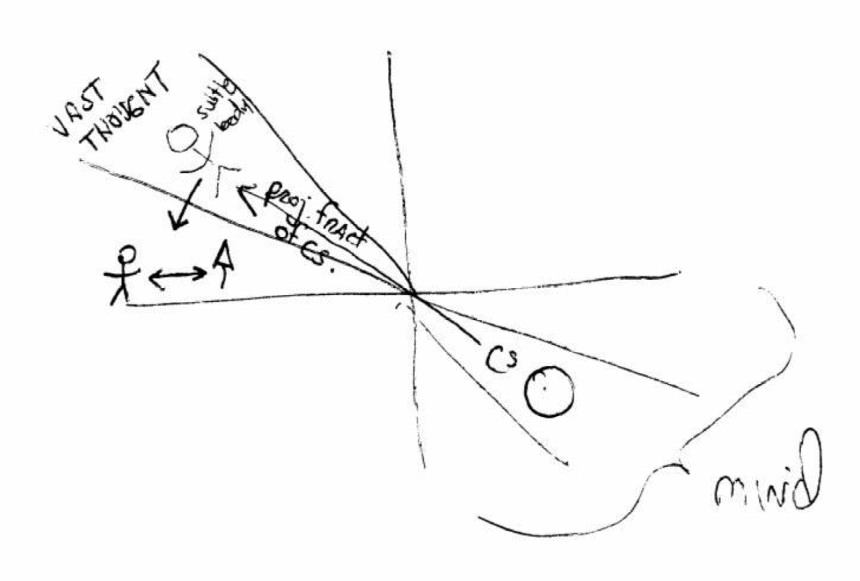
FIGURE 1979 1014-1-AB. Consciousness, Primal Image, and Empirical Experience correlated with Fifth, Eleventh, and Twelfth Houses.
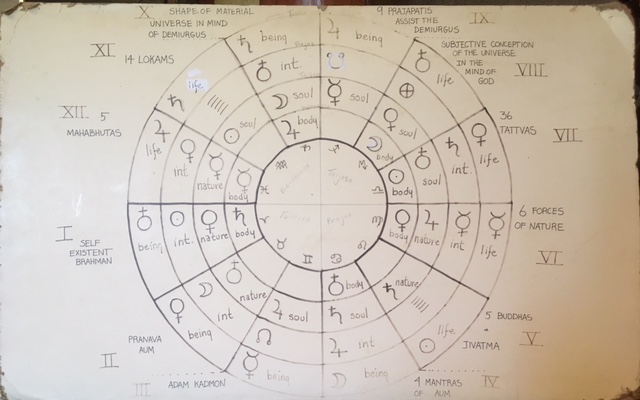
FIGURE IMG_2202-Posterboard Metaphysical Chart.
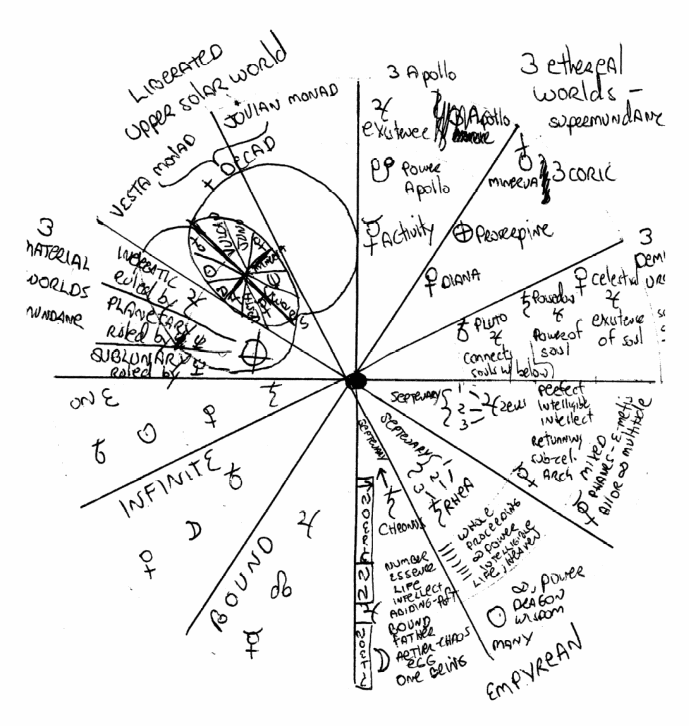
FIGURE 1979 1014-3-AB. Proclus Chart.
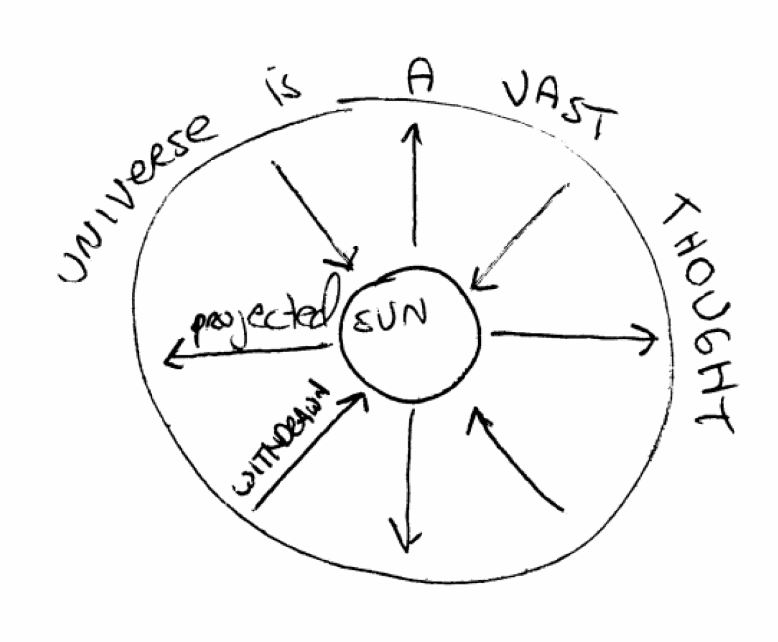
FIGURE 1979 1014-4-AB. Universe as Sun's Vast Thought.
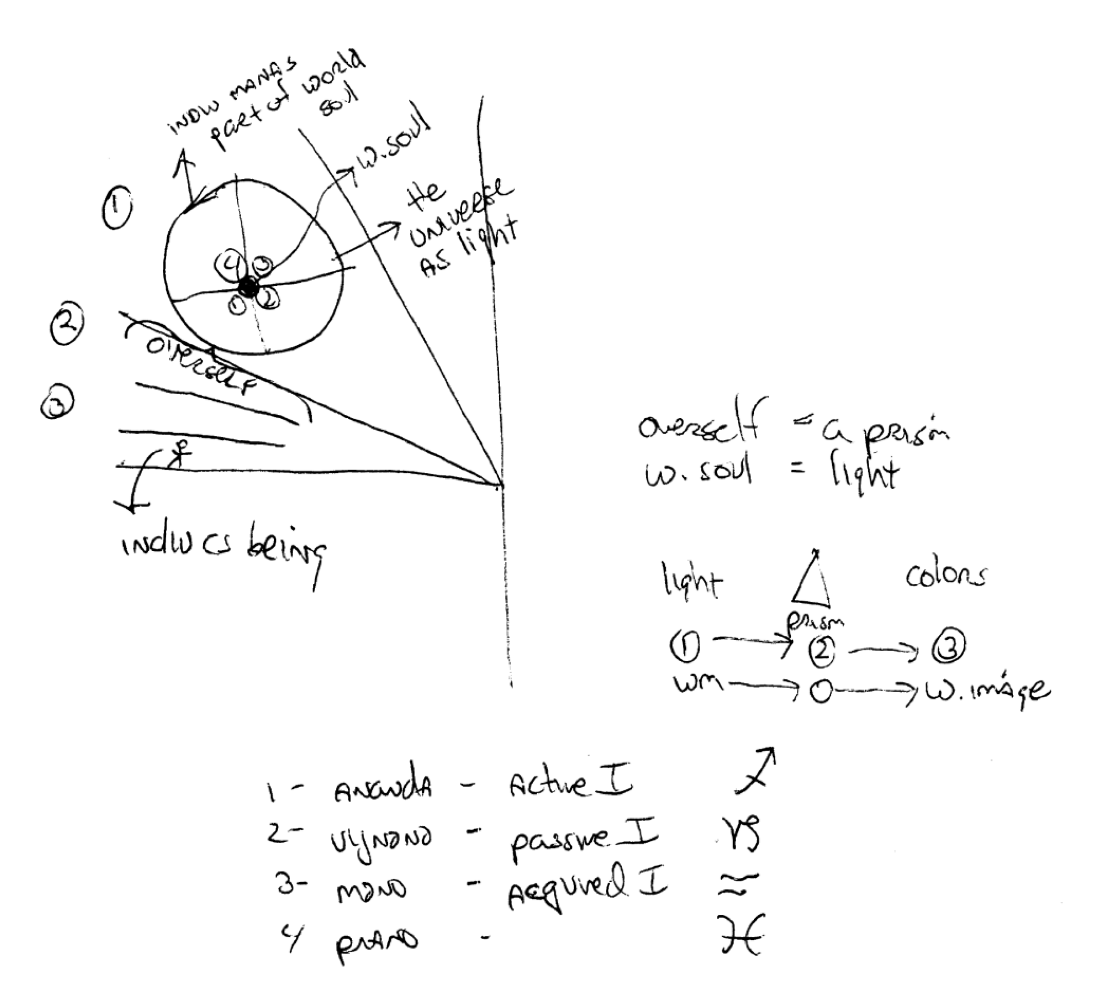
FIGURE 1979 1014-5-AB. World-Soul, Overself, Individual Conscious Being; Overself as Prism; Four Intellects.
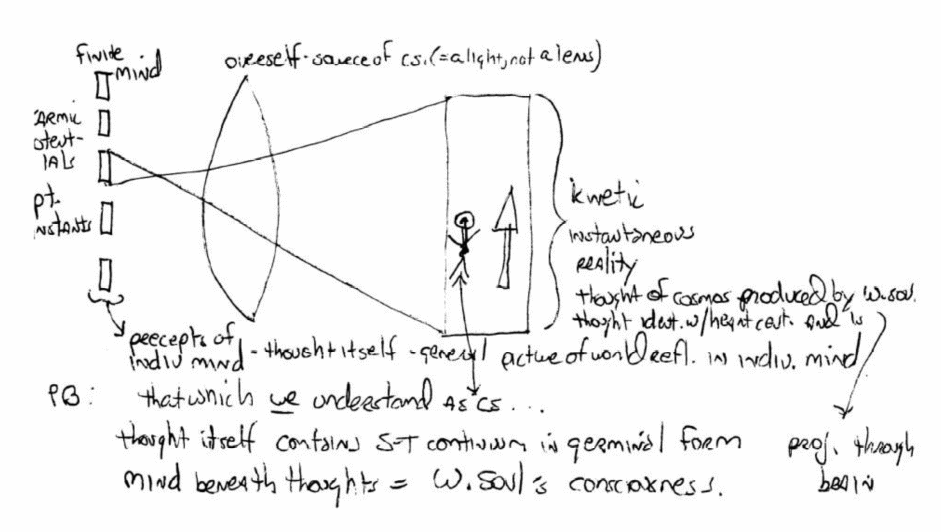
FIGURE 1979 1014-6-AB. Finite Mind, Overself, and World-Image.
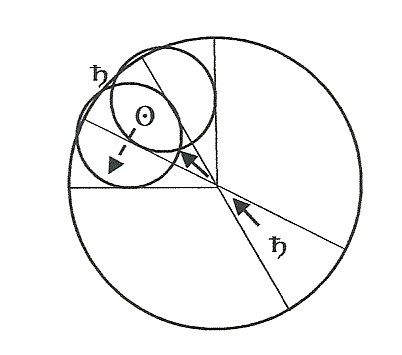
FIGURE 1979 1014-7. Saturn in Leo and Fourth Quadrant Vesica.
Other diagrams referred to are not with this transcript version. [Transcriber note: [diagram] means the speaker is referencing a diagram as he or she is speaking. If someone is drawing or writing, with audible sounds of chalk on a blackboard, I indicate this by [drawing] or [writing].]
NOTE: Sunday night class, part of Wisdom series 1979-1980.
TRANSCRIBED Verbatim by IT 2019; reformatted by JRM & JF 2019-2020, with TOC/Subheads by JRM. In 2023, IT updates prefatory matter, footer, and audio file name, completes Book List, adds Plotinus quotes section, adds new notes within transcript, fixes errors/typos, adds seven diagrams and references within transcript to these diagrams. In 2024, MW alters Subheads to make more accurate. Archival verbatim transcript – V14.1a.
AUDIO FILES: 1979 1014a, 1979 1014b. [Note: "Tape" and "Side" refer to original audio cassette tapes that were later digitized into .MP3 Audio Files.]
1979 10/14 at Wisdom's Goldenrod
PB Books; Wisdom of the Overself; "Birth of the Universe"
Archival verbatim transcript
[Audio File 1979 1014a Begins]
S: --because [one/two words inaudible]
BS: Yeah.
[tape break]
AD: We were going to do tonight the Guenther article on "The Concept of Mind in Tantrism". [Note: "The Concept of Mind in Buddhist Tantrism" in Tibetan Buddhism in Western Perspective by Herbert V. Guenther, Dharma Publishing, Emeryville, 1977.] So suppose I do that after-- the following week after he does the work on the Madhyamika. I think it might follow suit if-- assuming that he finishes next week, ok? So why don't you turn to Chapter 3 and see what questions you have. And if you don't have any, alright, then I'll assume you understand it and I won't allow you to ask me questions (bit of laughter) after that point. Ask them now. Don't catch me while I'm running to the car. (laughter)
S: Right.
[12½ second pause while AD draws, background student talking]
AD: I'm not saying that you'll get an answer. (bit of laughter) I don't even know if the answer will be satisfactory what we give to you but we can discuss it.
[9 second pause]
LDS: Anthony, could I ask a question about last night's class that's related to this chapter?
AD: Sure. Well Avery you might as well come up here, you were here last night. [short pause] Go ahead, Louis.
HOW TO COMPARE PB'S EPISTEMOLOGY WITH VEDANTA'S
LDS: Last night we left off toward the end of the class with stating the two positions of-- of the Vedanta and PB and the epistemology. And, something came up that has bothered me for a long time in the presentation of the-- "The Birth of the Universe", and that is the notion of this World-Soul's thought that is given to the individual or that the individual contacts. It always seemed as if we were speaking about that as in some way being in a subtle space-time. That taijasic content given by the World-Soul is in a kind of space-time of its own. [student assents] And, there seemed to be the-- the assumption that in some way it was outside the individual, that the individual actually contacted this thing that was other than him, outside of himself. And last night toward the end of the class it was stated that PB's position is that this-- this World-Soul's taijasic content is given to the subject originally or initially in the heart center. The contact is made from the heart center and then gets blown up and you have the percept after it goes through the brain and gets projected. And-- but, then we heard the Vedantic position that this whole process of perception was a process taking place within the taijasic consciousness but that the person really did have a contact, made contact with something outside of himself, in other words, with a real object in the world, and in that sense it was more of an objective position. And I didn't feel that there was a reconciliation between those two positions last night. At least I didn't catch it, I didn't catch it if there was.
AD: What he's asking is for us to go through the whole thing. (LDS laughs a bit)
S (faint): (Very good then.)
S (simultaneously, very faint): Good. Ok, yeah.
[short pause]
LDS: Let me ask one thing further about the same-- Would the Vedantists say that the person does know a real object, it's not just his-- the form that his mind takes. [S: Never.] As PB would say, all you know are the forms that your-- that your mind assumes or projects, where the Vedantist would say, no, you really do contact the real object but you-- you don't know the whole object. There's a certain limitation of your knowledge, but you do contact the real object. [short pause] Is that clear what I-- what my problem is?
[short pause]
[noise or student assents]
S (possibly part of background): [couple words inaudible]
AD: Yeah I think so. So let's go through the whole thing (again).
S (very faint): Hurry it up.
AD: You're asking for a review of that comparison of how we sort through, reconcile them. It won't be a one-to-one correlation, obviously, because the differences will show up but I think in the main there will be a recognition of the similarity. Alright, then why don't we do it then, try to repeat. [S, very faint: Ok.] Let's see how(--/.) [19½ second pause, flipping of pages] Suppose we--
AH: Louis?
LDS: Uh-hm.
AH: You did say that one description was a subjective description and one description was an objective description of this process.
LDS: Yeah. PB's would be the subjective, the Vedantist('s) would be the objective.
AH: But I-- I think I had the same question as Louis did because PB-- the description from the perspective of PB seems to account for the personal subject whereas the Vedantic description doesn't. Now I don't know if that's a-- I don't know if that's the same question you asked.
AD: Alright, let's try, we'll-- we'll-- [10 second pause, flipping of pages] We'll do PB first, alright? [short pause] Why don't we just open to Chapter 3 and I think [S, very faint: Even--] (you/we) could work from that. [13½ second pause] We could start by simply using some of these quotations where he says—
THE UNIVERSE IS A VAST THOUGHT OF THE COSMIC SOUL
[Transcriber note: I am using The Wisdom of the Overself by Paul Brunton, Rider and Company, London, 1943.]
PB [The Wisdom of the Overself, "The Birth of the Universe," p. 27, AD reading]: "…the world does not arise by a sudden act of creation but by a gradual process of manifestation. For [AD adds: the world] being a vast thought and not a vast thing, it is brought into being by the World-Mind out of itself, out of its own mental"substance", and not out of any [AD reads: some] extraneous stuff such as matter is supposed to be…"
AD: [drawing] And we took the-- we made the assumption-- not the World-- not the World-Mind but cosmic soul, alright. And that out of the cosmic soul the whole of the universe arose and projected outward, man-- manifested. And naturally the corollary of this is that when pralaya sets in there'll be a reabsorption and it'll go back into the World-Soul. Then he goes on and he says--
PB [The Wisdom of the Overself, "The Birth of the Universe," p. 27, AD reading]: "…the World-Mind [AD: Or the cosmic soul.] manifests something of its own self in the cosmos. And its own self, [as] will be shown later, being [AD reads: to be] uniquely eternal and undying, it is inevitable that the world-ideas which have arisen within it are eternal and undying too."
AD: Now if this is a projection, if the cosmos is a projection of the cosmic soul, and then there's a withdrawal or reabsorption of the manifested universe, and this process, so to speak, is a continuous process of a-- what could we even call it, like breathing, then it would be obviously meaningless to ask when did this start. There would be no-- no beginning to this process. So he says that--
PB [The Wisdom of the Overself, "The Birth of the Universe," p. 27, AD reading]: "The manifestations of Mind [AD: Cosmic soul.] have [therefore] always been in either abstract or concrete existence."
AD: And he refers to this as the body of God, if we like to use this term. Then he goes on and says--
PB [The Wisdom of the Overself, "The Birth of the Universe," p. 28, AD reading]: "The universe is [as old or] as eternal as the World-Mind itself. It is an idea, [but] nevertheless it is [AD reads: it's nevertheless] an everlasting idea. Creation begins [and ends] nowhere [and nowhen]."
AD: Alright so, and this is a vast thought.
[10 second pause while AD draws]
PB [The Wisdom of the Overself, "The Birth of the Universe," p. 28, AD reading]: "…the [AD adds: very] process of ever-becoming is an eternal one and is the very law of the universe's own being."
AD: Again we (say/stay) there of course that law doesn't exclude, let's say, a spiraling evolution in-- within that universe.
PB [The Wisdom of the Overself, "The Birth of the Universe," p.29, AD reading]: "The World-Mind does not need to"create" the universe out of nothing when it can bring it to birth out of its own self. And as a mental principle…"
AD: And we said let's refer to this as the mental principle--[drawing] taijasa consciousness of the cosmic soul.
PB [The Wisdom of the Overself, "The Birth of the Universe," p. 29, AD reading]: "[And] as a mental principle it does this by projecting the world as its idea. The world is its self-projection."
AD: You could, of course, use the analogy of human mind. Naturally it would follow that the World-Mind is immanent or the cosmic soul is immanent in that universe, just like the individual mind is immanent in the thoughts it has, or the totality of thoughts that it has. Then the next point--
PB [The Wisdom of the Overself, "The Birth of the Universe," p. 29, AD reading]: "The universe has arisen out of its constructive meditation…"
AD: So now we recognize that the cosmic soul, so to speak, in contemplating-- which later on I would have to bring in higher principles.
KARMIC IMPRESSIONS (MEMORIES OF THE COSMIC SOUL) ARE THE TRACES LEFT IN THE SUBSTANCE OF THE COSMIC SOUL BY ITS OWN FUNCTIONING
PB [The Wisdom of the Overself, "The Birth of the Universe," p. 29, AD reading]: "The universe has arisen out of its constructive meditation but it has arisen in an orderly self-determined fashion shaped by its own memorized mental impressions of a former state of active existence."
AD: And I asked you to pay very careful attention to this because I thought it places the whole discussion in-- inside of a context that it becomes meaningless, I mean meaningful. Meaningless might be good.
S: Uh-huh.
PB [The Wisdom of the Overself, "The Birth of the Universe," p. 29, AD reading]: "The ceaseless procession of images, picturing forth suns and stars, lands and seas and all things visible emanate from the World-Mind [AD reads: cosmic soul] under a divine immutable mysterious karmic law like water trickling from an inexhaustible fountain."
AD: And I asked you to keep in mind that "the ceaseless procession of images, picturing forth suns and stars," that the Sun is picturing forth-- like for instance if we took the example of our solar system, the Sun within our solar system [drawing] would be picturing forth the panopo-- panoply or the panorama of all the pictures that we see up in the starry heavens. And that these pictures would be, so to speak, an actualization of the World-- the cosmic soul's functioning or our Sun's functioning. Then he went into the notion of karma. [9 second pause] Didn't think there was any problem with that, he speaks about--
[short pause]
JG: Anthony, may I ask a question here?
AD: Sure.
JG: That ceaseless procession of images, I had asked a question [AD simultaneously: Yeah, go ahead.] before and it's probably a repetition. Is the Sun itself an image, part of that procession of images?
AD (faint whisper): Yeah.
JG (faint): Ok.
[13 second pause]
AD: And we went into this section was "The Karmic Impressions". [13¾ second pause] We spoke about memory a little bit and it was important that the idea of what memory implies was grasped. I think you'll find that notion of memory will be-- this notion of memory, regardless of the varieties of-- the varieties of ways of the different traditions handle it, I think you'll see that ultimately the notion of memory was one that we had to really grapple with. And we said-- Remember we spoke about the way the mind-- the mind functions and when the mind functions, let's say whether it fabricates-- when it fabricates anything, and then this thing lapses, let's say whether it's a thought or a visual image, whatever. And the very functioning of the mind is what is recorded because if the mind-- and we'll use the term some sort of substance which takes on a variety of forms and then these forms or the form of any object or the form of any-- then that is taken back into itself, the traces of its functioning is what is retained as memory. This is what memory is. So, this principle would apply to individuals as well to the World-Soul so that when the World-Soul projects out a universe and, let's say, the objects-- we call them objects but they would be thought-formations within it, that's PB's terminology, when they're taken back into the cosmic soul, the very functioning of the cosmic soul in projecting them out, that very functioning is recorded and remains like intrinsic to the substance of the mental functioning of the mind. So that whether we think of it in terms of an individual or a super-individual, we have to keep this notion very clear because it's going to be the basis for an endless process. [short pause] He goes on and he says--
PB [The Wisdom of the Overself, "The Birth of the Universe," p. 31, AD reading]: "[And because] memory is not an object which the senses can grasp but something entirely immaterial, [AD adds: and] this in turn involves the existence of something mental. A mental principle which shall be cosmic in its spatial sweep [and] permanent in its embrace of time, is and can be none other than the World-Mind itself. Thus the foundation of all karmic working can be traces to the World-Mind. The rise, abiding [and] dissolution of karma is [indeed] a twin-function to that of its ideation."
AD: Um-- It's almost-- we could almost say that whenever the c-- the cosmic soul operates, and that means power is operative, and this power fabricates or creates whatever the variety is contained in that universe, that the variety of these objects which would be an expression of what we might call-- what he would call karmic impressions. And these karmic impressions and the activation of them would be this sentence here, rise, abiding, dissolution of karma is indeed a twin-function to the ideational-- We're just going to quickly to try to get to a comparison of these two. He says--
PB [The Wisdom of the Overself, "The Birth of the Universe," p. 31, AD reading]: "The World-Mind [AD: or cosmic soul] is all-containing. [Since the beginningless past] it has gathered these cosmic memories. The patterns of all that goes to constitute a universe previously existed [in it] in this potential form. [AD adds: And] The archetype of everything found in Nature first existed in this illimitable storehouse."
AD: Next paragraph.
PB [The Wisdom of the Overself, "The Birth of the Universe," p. 31, AD reading]: "We must not make the materialist mistake of regarding this universal mind as [though it were] a kind of box in which the myriad [AD reads: myriads of] thought-forms which totalize into a universe, are piled up. [AD adds: No.] The thoughts originally pre-exist in it not concretely but in the abstract sense that ideas of an intended effect pre-exist in a musician's mind."
AD: Ok, (how) [couple words inaudible] [short pause] And he goes on and he says--
PB [The Wisdom of the Overself, "The Birth of the Universe," pp. 31-32, AD reading]: "[AD adds: Now] This karmic seed-form must not be misunderstood [AD reads: understood]. Because everything is really mental, because everything is a thought-formation the memorization of it held by the World-Mind [AD: Cosmic soul.] is not a second and separate substance but is the very essence or soul of the thing itself."
AD: Now if we return to what we previously-- previously said, that any object, when it lapses back into a potential state, that lapsing back doesn't destroy it because the functioning which produce it is recorded in the very substance of taijasa consciousness. And he warns us that the karmic impressions are so subtle that they're really difficult for us to understand. Continuing in this paragraph--
PB [The Wisdom of the Overself, "The Birth of the Universe," p. 32, AD reading]: "Every thought-formation--which means every thing--that exists in this world is born of its [AD reads: a] corresponding impression in the formless world."
[short pause]
AD: Next page he went into memory and we spoke about that. And then into "The Birth of the Individuals" and that's where all the difficulty I think begins for all of us.
[9¾ second pause]
INDIVIDUAL MINDS ARE SUBTLE AND IMMATERIAL YET STILL ARE OBJECTIVE THINGS
PB [The Wisdom of the Overself, "The Birth of the Universe," p. 34, AD reading]: "[Just] as innumerable stored-up thoughts co-exist in the depths of the individual mind although they emerge into consciousness one at a time, so innumerable stored-up individual minds from previous universes co-exist in the depths of the World-Mind and emerge after the dawn of cosmic manifestation [AD reads: manifestations] into different kinds of consciousnesses."
AD/S(?) (faint): (Alright.)
AD: Now, it's strange that-- I think you'll see that there-- every now and then words come in that seem to be coming from left field but-- He gives the example of things being stored or retained in-- as karmic impress-- karmic impressions in the World-Mind. Now he's saying the same thing about individual minds, alright, which leads me to suspect that individual minds are objective, alright, they're-- they're things, even though they may be immaterial, alright, they may be so subtle that we can't really put them in a class of things, nonetheless, they are things.
S: Question.
AD: Sure.
S: These individual minds, aren't-- aren't they undergoing a process all the time though?
AD: Aren't they doing what?
S: Under-- they're changing all the time. Just trying to figure out how to hold it still and call it, you know, an individual mind. I mean there's sort of an-- an evolution of-- of a vehicle that's been built up over many lifetimes and now we're going to call it the individual mind? But as-- I'm having trouble how to-- Isn't it constantly changing?
AD: Aren't minds constantly changing? Yes.
VM(?): Yeah.
S: Individual mind.
AD: Yes, they're constantly going through the process of being transformed, sure.
S: Would it be--
AD: It says that there's a constant interaction between minds and minds, and minds and things, so con-- so it's being changed all the time. It doesn't stand still. It's not a self-identical entity, you know, with a-- a self-existence.
S (faint): Ok.
AD: Yeah.
S: Well what is it about them? I mean if it isn't-- if we can think and look at them as being objective, and if they're constantly changing, and if they're particular because they're individual minds, what is it about them that makes them individual, in other words, what kind of-- I mean it has-- there seems to me there has to be some stable quality in a-- even though they're going through some kind of transformation [S, faint: No.] there's something that's being transformed. Am I clear?
AD: Yeah, yeah, I follow you, sure. [short pause] Well we could s-- we could say, if we wish to help our-- ourselves, you know, I don't know that this would fall into any fundamental school of thought but, on the one hand we could think of the substance of the individual minds as the taijasa consciousness which is coming from the Sun, alright, and that will always be, if we could use the term, self-identical with itself, alright. And on the other hand, because it's a-- it's constantly functioning and interacting with other individual minds and objects, alright, there's a process of transformation always going on also simultaneously with it. Now this is my way I'd like to interpret, you know. There's a substance and it has function, and that I can't think of one without the other. But I'm quite sure you're going to find schools that are going to say there is no such thing as substance behind individual minds, that, you know, it's a meaningless term, there's only a stream, and that the continuity of this stream is what we're referring to as individual. So [S simultaneously, faint: Continuity (of the stream)?] you have one river going and another river going and you're saying they're two different rivers, each is an individual river. But when you look at the river, alright, the water doesn't stay long enough in any one place to think about it as being self-identical with itself. Somebody will bring in the banks are always the same. But--
S: So did you--
THE INDIVIDUAL MIND IS NOT YOUR ESSENCE BUT IS A MEANS BY WHICH YOUR ESSENCE HAS EXPERIENCE
AD: Yeah, go right ahead.
S: Well-- So you could think of like the, you know-- Ok, I'll just say one more just to make sure that I understand it. Would you say that like it was more the potentiality for individuality that goes un-- that undergoes change that they call individual mind, that you're speaking of the idea of individuality? Or would you-- or would it be better to think of it as-- You know, it's the same question again, if you're thinking of it as an essence that suddenly go-- particular essence. It's different than an object, I mean with an object you could even think of a form of an object but a form of a-- a mind that's just constantly undergoing change is really something I'm having difficulty understanding.
AD (faint): Alright, help me.
S: I'm understanding individuality as an objective--
AD: As--
S: As something objective, you know? [11 second pause] I mean I'm talking about particular individual minds, like your mind and my mind, you know, a so-called a-- the-- [S, faint: Ok.] the essence of me which goes onward and so forth and so on. Maybe I'm thinking of it wrong, I don't know.
[short pause]
AD: Well, yeah. I don't think of that as your essence.
S (very faint): Uh-hm.
S: You mean my individual mind?
AD: I don't think of that as your essence. I don't think he does either. But it is the means by which your essence does have experience. So, I'm a little cautious about saying, you know, that the individual mind is the person. It is true that the person or the buddhi does experience his individual mind and this is for a long time all that he experiences. But that individual mind, if, let's say-- let's say that the individual mind is pacified or is reduced to a non-entity in the sense that it-- it has no more personal idiosyncrasies, the samskaras are [one word inaudible] And the whole purpose of that is to get it so free of the-- rid of the personal idiosyncrasies so that one could perceive objectively the world as it is (so that--) to be free of the mind so that he could perceive, let's say, the Intelligible World as it is, you could see that in this set-up that means that it's not the individual mind that [couple words inaudible]
[student assents, very faint]
S (very faint): (Repeat.)
S (very faint): Uh-hm. Uh-hm.
AD: It's only a vehicle, it's not your essence. Go right ahead.
S: You know like when you-- you said once about the-- certain experiences that are in the individual mind like predetermine the experiences that you will have? That was the individual mind, was it?
AD: Your question--
S: Ok, the question is if some-- if somebody got enlightened during a life, would that-- I mean it's not the individual mind that's experiencing that but you're talking about-- Well what I'm asking is, would it be-- It doesn't seem like it could be predetermined, that enlightenment, in the individual mind because isn't it the-- in fact a freeing?
S (very faint): No.
S (very faint): [couple words inaudible]
AD (simultaneously): Could I ask you to refrain and stick to the text? That will take us way out.
S (faint): Alright.
AD: Next please.
RG: I have a question.
AD: Alright? I'm sorry I'm going to have to be tyrannical but I got-- this question's going to take all night. Go ahead Richard, [RG: Well, no.] as long as it's with the text.
RG: This is with the text. (some laughter) It's always with the text.
AD: Yes, go ahead Richard.
RG: Yeah, the end of that sentence--
S (simultaneously): What do you mean?
THE EMERGENCE OF INDIVIDUAL MINDS INTO DIFFERENT KINDS OF CONSCIOUSNESSES: EACH SOUL, OR UNIT OF CONSCIOUSNESS, BECOMES ASSOCIATED WITH AN INDIVIDUAL MIND AS ITS VEHICLE
PB [The Wisdom of the Overself, "The Birth of the Universe," p. 34, RG reading]: "…so innumerable stored-up [individual] minds from previous universes co-exist in the depths of the World-Mind and emerge after the dawn of cosmic manifestation into different kinds of consciousnesses."
RG: Could you go over what that second part means, the emergence into different kinds of consciousnesses?
AD: Yeah, that's what we were going to try to do because there's-- there's a real difficulty.
[short pause]
PB [The Wisdom of the Overself, "The Birth of the Universe," p. 34, AD reading]: "…innumerable stored-up individual minds…"
AD: And after manifestation takes place, these individual minds re-emerge, but, he says "into different kinds of consciousnesses". [24 second pause] You remember Avery what we did? Victor?
S (very faint): Yeah, uh-hm.
S (whisper): Yes.
[short pause]
CDA (faint): You said once it was the different sheaths of the mind being manifested.
AD: Are you talking to yourself?
CDA: You said once that it was the different sheaths of the mind that are manifested.
AD: I still can't hear you.
CDA: You said once that it was the different sheaths of the mind being manifested.
AD: No, that's not the point.
AS: Usually we wor-- we use the word 'consciousness' being the light of the soul or the Overself.
S (faint): But you spoke about consciousnesses before.
VM: Yes but the difficulty with this--
AS: And that then these get associated with different consciousnesses. The individual mind has become associated with consciousness.
AD: Well, could you repeat that, I don't think I followed.
AS: That these different individual minds, innumerable individual minds, or these contents of the World-Mind or the World-Soul, and they emerge, after the dawn of manifestation they emerge into different kinds of-- into different souls. They get-- they get associated with--
AD: That they could provide vehicles for a variety [AS simultaneously: Variety of soul(s).] of different consciousnesses, yeah.
S: Yeah.
AS: Like [one/two words inaudible] soul-- like there's hu-- you know, like a human soul. I mean one example of different kinds of consciousnesses, you could say there's a human soul, that there was daimoniacal soul.
AD (simultaneously): Of course we say sentient soul. Uh-huh.
AS: Well that there's different kinds of-- of souls that will inhabit or work through or oversee these individual minds. And unless these individual minds emerge into those consciousnesses, the individual mind will just be a mechanica-- a mechanical, you know, process.
AD: Ok? Do you remember that?
VM (faint): Yes, yes.
AD (simultaneously): Ok, good.
S (faint): So that--
RG: But in this--
AD (simultaneously): Well I thought I missed it.
AN ALTERNATIVE INTERPRETATION OF "CONSCIOUSNESS" AND "MIND": CONSCIOUSNESS IS AN ASPECT OF MIND, WHICH IS PRIOR TO CONSCIOUSNESS
RG: But the pro-- the problem with that is-- and I don't know, in this-- in the sense that the term 'consciousness' is used in the-- in this book, I think in this chapter and in other chapters, I don't-- I can't-- I can't see it.
AD: Oh, you gotta give me a better criticism than that.
RG: Can I (proceed) (bit of laughter) to the extension--
AD: [one/two words inaudible] this is a, you know--
RG (simultaneously): It seems to me that the way he uses consciousness is as different phases of the mind's activity and not as prin-- prior to the mind.
AD: Would you repeat that, Richard?
RP (faint): Yeah do it again.
RG: Seems to me he discusses consciousness throughout the book as being--
AD (simultaneously): No, no, no, no, no, no, I don't want that, I want specifics.
RG: I'll give--
AD: Yeah, give me a specific where he uses consciousness--
RG (simultaneously): Fine.
AD: Alright?
RG: Yeah, there are a lot of ways, I mean--
AD: I don't want your feelings, I want specifics.
RG (simultaneously): I'm not giving you my feelings. (laughter)
S (amidst laughter, faint): Right.
MW (amidst laughter): Right now you are. (laughter, student words)
AD: I didn't hurt your feelings, did I? (bit more laughter)
RG: Page 136.
S: Yeah.
AD: Yeah?
RG: In "Studies--" [couple/three inaudible student words simultaneous with RG] in "Studies in Dreams," on the--
PB [The Wisdom of the Overself, "Studies in Dreams," p. 51, RG reading]: "It will be made clear [in the next chapter] why the term"mind" should not, as these studies advance, be equated with the term "consciousness". If we compare the mind to a lamp and the latter's light to consciousness then the illumination of the dream world is dimmer than that of the wakeful one. … On the mentalist view, mind is more than consciousness and is given primacy over it.
"Consciousness itself is but an aspect of mind."
[short pause]
AD: Very good.
[48 second pause]
FW: Which mind is he talking about there that consciousness is an aspect of?
RG: Well, what are the choices?
FW: Well it could be the second quadrant Mind [diagram]. [Note: See FIGURE 1979 1014-1-AB, Consciousness, Primal Image, and Empirical Experience correlated with Fifth, Eleventh, and Twelfth Houses, appended to this transcript.]
RG: No, but he's using 'mind' with a small 'm', he's-- in-- in the chapter in the "Studies in Dreams" he's certainly using it even in a-- in a in-- less in-depth way than he uses it in the sense that it's stored up within the World-Mind 'cause he's talking about a state of consciousness, dream.
[13 second pause]
AD: What page is that?
RG: 51 in my edition. 85.
AD: What?
RG: 85 in [couple/three words inaudible]
AD: Thank you.
S (very faint): Oh.
RG: You know, and then in the "Studies in Sleep"--
PB [The Wisdom of the Overself, "The Metaphysics of Sleep," p. 64, RG reading]: "A sound metaphysic therefore cannot limit the use of the term"mind" only to its particular thinking phase of "consciousness" alone. Mind is more than consciousness, as we know it."
[short pause]
AD: That one won't help you. That one won't explain it.
RG: Ok, well--
VM: How about this one? "Consciousness…"
AD (simultaneously): Mind as we know.
RG: Oh yeah, go ahead.
VM (simultaneously): I'm sorry, go ahead.
AD: The only kind of consciousness you know, of course, is physical consciousness.
[short pause]
JC: On the next page there's one.
PB [The Wisdom of the Overself, "The Metaphysics of Sleep," p. 65, JC reading]: "By consciousness is meant the sum total of the changing series of sense-impressions, perceptions, thoughts, feelings, images, intuitions, ideas and memories which we know directly as our own and which cannot be got at by any dissection with [JC reads: or a] surgical knife."
PD: Read the rest of it, Jeff.
PB [The Wisdom of the Overself, "The Metaphysics of Sleep," p. 65, JC reading]: "Strictly speaking, [however], all attempts to define consciousness travel in a circle because it is itself presupposed in every definition. What we can most effectively say is that it is"a knowing"."
[short pause]
AD: Well what do you think Richard?
S (faint): Uh-hm.
RG: What?
AD: What are you going to do with that one?
RG: With that one?
AD: Yeah, with the one he just read.
[short pause]
RG: I don't see any problem. Over there he's-- doesn't he compare consciousness and brain consciousness too over there?
JC: Consciousness and the brain.
AD: No, I mean [RG simultaneously: Yeah.] what would you do with that one in contradistinction to the one you just quoted?
RG: That definitely consciousness is presupposed in every definition, I don't have any problem with that.
AD: Now read the one you just read before.
RG: Um--
[short pause]
PB [The Wisdom of the Overself, "Studies in Dreams," p. 51, RG reading]: "If we compare the mind to a lamp and the latter's light to consciousness then the illumination of the dream world is dimmer than that of the wakeful one. … On the mentalist view, mind is more than consciousness and is given primacy over it.
"Consciousness itself is but an aspect of mind."
VM: Richard, in the beginning of that paragraph--
AD: Now, would you read yours J-- [VM: Sorry.] Jeff.
PB [The Wisdom of the Overself, "The Metaphysics of Sleep," p. 65, JC reading]: "By consciousness is meant the sum total of the changing series of sense-impressions, perceptions, thoughts, feelings, images, intuitions, ideas and memories which we know directly as our own and which cannot be got at by any dissection with [JC adds: a] surgical knife. [JC: It says--] Strictly speaking, [however], all attempts to define consciousness travel in a circle because it is itself presupposed in every definition. What we can most effectively say is that it is"a knowing"."
JC: Down a little further he says--
PB [The Wisdom of the Overself, "The Metaphysics of Sleep," p. 65, JC reading]: "Nobody can observe consciousness in the same way that he can observe anything else. For all his observations of everything else will themselves require the presence of consciousness."
[10½ second pause]
AD: Now, let me read you another one Richard.
PB [The Wisdom of the Overself, "The Secret of the I," p. 86, AD reading]: "[In The Hidden Teaching Beyond Yoga] a tentative definition of the term"mind" as being "that which makes us think of anything and which makes us aware of anything" was offered. [AD adds: And] To this definition we now add: "and which reveals its existence in every thought but is unknown to us apart from such manifestation"."
[students assent]
S: Oh, I see.
RG: Yeah.
AD: Well, what do you think of that?
RP: I have to-- I mean, I have to follow Dickie's line and it's the way [one word inaudible] it's the way-- I mean I maybe wrong of course. It's the way I've always understood it also, that consciousness refers, the way he uses it, to the manifestation of mind. These minds are taken and put into different levels of-- I forget the word, kinds of consciousnesses. And then that meant the-- the manifestation of (the) [one word inaudible] The one line that Jeff read, well everything we know, all the contents and so on, a kind of knowing, means mind in its manifest form [one/two words inaudible] And I almost took it like he always used the term in the colloquial sense, that the person's conscious, he woke up, he's conscious. That mind is larger because it includes what we would ordinarily call unconscious, non [one/two words inaudible] I mean, it may be a systematic misreading on my part.
VM: Richard, just--
RP: But I'm amazed at this-- the one (that) Dickie (wanted to get) away.
AD: Well--
PURE AWARENESS CANNOT GO INTO PRALAYA
VM: Can I respond just to Richard's point about the unconscious businesses? Right in the first few lines of the paragraph that Richard is quoting, he says--
PB [The Wisdom of the Overself, "Studies in Dreams," p. 51, VM reading]: "When we study our own consciousness we are able to distinguish three modes of its existence. In waking, the first, it has fully expanded itself; in sleep, the third, it has completely contracted itself; in dream…"
VM: And so forth. So it seems like he is using consciousness to include what we normally call our conscious state(s).
RP (simultaneously): What I meant to say was, I mean, when it completely retracted, in other words, pralaya, not the--
S (faint): No.
AD: Well, let me-- let me ask you this. Can you think of consciousness or pure mind going into pralaya?
RP: No but I-- [one/two words inaudible] Can I think of consciousness or pralaya? Well I could think of con--
AD: I'm sorry.
RP: I can't think of pure mind going into pralaya but I can think of consciousness going into pralaya. (RP laughing)
AD (simultaneously): Yeah if-- if mind is-- if mind is like pure consciousness, alright, either way, I don't care what term you use, the meaning here, pure consciousness, pure awareness, alright, can that go into pralaya?
RP: No, no. I don't like the-- the (auras) are misleading to me, just--
AD (simultaneously): I'm sorry.
RP: The (auras) between the different terms is (your--)
AD (simultaneously): Alright, I'm asking you to think [RP simultaneously: Which one? Alright, fine.] of the idea. If you think of pure awareness, I'm taking away the term 'mind' and I'm taking away [RP simultaneously: Right. Pure awareness goes-- neither comes nor goes.] the term 'consciousness', ok? Will that go into pralaya?
RP: Neither comes nor goes.
AD: I'm sorry?
RP: Neither comes nor goes.
AD (simultaneously): Neither comes nor go. Then when the cosmic soul withdraws manifestation, the pure awareness won't be buried in the depths of manifestation-- of the cosmic mind.
RP: No, no, no, no, that's not affected one way or another. But I was always reading his term 'consciousness'--
AD: I know, I know, evide--
RP (simultaneously): Yeah I know. But the particular (section--)
AD: But that's been going on for years, I know that. [RP simultaneously: Yeah, years. (one/two words inaudible)] And I'm trying to point out that if you allow me the time [couple inaudible student words simultaneous with AD] and you have the patience, I will show you that you're doing a reverse reading.
RP: Well the Dalai Lama [S simultaneously: Go ahead.] says your enemy teaches you patience.
S: Yeah.
AD (simultaneously): I'm sorry? (laughter)
S (amidst laughter): Go ahead.
RP: Your enemy teaches you patience.
RG: But-- but that definition of (mind--)
AD: Oh, well he's teaching me patience, I mean don't worry about that! (laughter) (Oh/No)! [S, faint: Not yet.] Nothing else, but patience yes! (laughter)
VM: How about this sentence here? Let me try this one on Richard.
RG (simultaneously): Don't give him your feelings.
AD (simultaneously, amidst laughter): Now, now, now look. (much laughter) You see, this would go on, [S simultaneously: Perfect.] this would go on endlessly, because if you notice, it was almost like a subversive act. He read the quote but only read that part which fitted his preconception.
S: Pardon? (laughter, student words)
AD: When you read the whole quote I saw right away the quote was meaningless and that [S simultaneously: Tough (luck/love).] it wasn't to the point. But when you analyze [VM simultaneously: Our own consciousness.] the states of consciousness in a human being--
VM: Our own consciousness.
AD (simultaneously): Yeah, our own kind, yeah.
VM (simultaneously): That's right, that's the way the paragraph starts.
AD (simultaneously): Exactly.
RG: No, no.
VM: So it's an individual notion in the fourth quadrant [diagram].
AD (simultaneously, intensely): Now if-- if he has the patience to analyze what is being read, not go into page 345, 200, but staying on page 50 where we're doing the text, and as we go along we will find out if this is so. And I thought I gave him the experience once with a few articles where you take a hypothesis or two or three and you work them out to the end and find out which is right, disregard your feelings about these things. You have a feeling, "Well I think he means by this, that." And that feeling takes pr-- takes preeminence and the thing is not thought out. Now what I'm attempting to do here is to think this out. So when he says here, if I could again fall back on this, Richard, [flipping of pages] "The Birth of Individuals", he speaks about these--
PB [The Wisdom of the Overself, "The Birth of the Universe," p. 34, AD reading]: "…innumerable stored-up thoughts co-exist in the depths of the individual mind although they emerge into consciousness one at a time, so innumerable stored-up individual minds from previous universes co-exist in the depths of the World-Mind and emerge after the dawn of cosmic manifestation…"
AD: Now could you imagine--
(Side 1 of original cassette tape digitized as 1979 1014a Ends; Side 2 Begins)
AD: --interpret it because this is an inspired scripture. He said he was inspired when he wrote this and that's enough for me to take an independent course of reasoning out what he's saying here. And even ignoring him, in terms of well, this is what it might mean, you know. But I'm going to go by the fact that it's inspired. So if we just be a little patient and work out the meanings and see if mind means what you think it means or it means what I think it means. There's no rush, we got a lot of time. You only put in ten years, you got another eighteen.
[short pause, faint background student talking]
S: Yeah.
TS: I still have a problem with this. Could I ask a question about it?
AD: Yeah.
TS: In terms of this sentence itself I (would) hate to (do) but I think one--
AD (simultaneously): Loud, loud, come on Tim.
TS: If we're-- if one were to understand consciousness here as the light of the Overself, would that not-- how would that not shine on the depths of the individual mind? How could there be an emergence from a-- a latency to an activity of-- of a thought? In other words, if that consciousness is eternal, would it not illumine the thoughts in their potential state as well as the thoughts in their active state?
S (very faint): Yeah.
S (faint): Uh-hm.
AD: Yeah. Yeah.
[10½ second pause]
LDS: But that consciousness is not empirical.
TS: Yes.
AD: I-- I follow your question. But now could I ask you, what are you trying to get at?
S (very faint): At this.
TS: That it seems-- I-- I-- I find that it-- a certain coherence to understanding consciousness as the functioning of the individual mind and understanding those passages, minds emerging from within the World-Soul and beginning to function in different ways and different intensities according to the vehicles that have been evolved. I find it difficult to understand the meaning of an emergence from a latency into an activity where that latency is not-- [S, faint: Oh yeah.] not lit up by an eternal awareness.
VM: Tim, look at the first sentence, [S simultaneously: Oh yeah.] the first part of the sentence, the analogy he gives. He talks about if it's say, conceive of a waking conscious and how there's certain thoughts that are not available to that waking consciousness and then they emerge into it. And I think the idea is to transpose that analogy to the consciousness of the Overself where individual minds emerge into it in a completely analogous way.
TS: But then you're saying that those minds are not there as a conscious--
AD (simultaneously): What do you think latent means, Mr. Smith, [S: Yeah.] what do you think latent means? (laughter, student words) Like I have a chair in a room where it's light and then I take it in the room where it's dark and I say the chair in the dark room is latent?
TS: I wouldn't think so obviously.
AD (simultaneously): Well tell me, what do you think latent means?
TS: I would think that it would be a-- an existential structure within the consciousness of the World-Soul.
AD: But didn't we say that [one inaudible TS word simultaneous with AD] that structure would lapse back into the cosmic soul? And that if we think of all structures lapsing back into the cosmic soul, which-- which mind will the consciousness illuminate?
TS: Why would it lapse and cease to have it-- make it illumined, if that-- that illumination is eternal? Why would it-- If it's latent it still has some structure, does it not, or does latency [AD simultaneously: Well--] mean it has no structure whatsoever?
AD (simultaneously): You take on, huh?
S: Yeah.
MW: It's like saying then this individual Overself can't know the entire memory content of the World-Mind because how is it going to-- how is that individual consciousness going to [AS simultaneously: Which it could do.] penetrate that causal [AS simultaneously: But then there's also--] seed form to--
AS: Yeah. But there's also the point that the individ-- that the in-- that the individual soul is only-- it occupies different vehicles. So upon the dawn of manifestation this in-- this individual mind is pulled out of the depths of World-Mind and manifested in order for a certain soul to inhabit and then work through it. Now, the individual soul, when the mind goes back into pralaya, why should that soul continue to be associated with that mind? It goes ba-- it remains in the Intellectual Realm. Yeah, it's always shining but that doesn't mean that it's always everywhere illuminating knowledge as it were. Well-- in other words what I'm saying is the in--
TS (simultaneously): Just-- just-- just explain this. Ok, I'm not saying that I [AS simultaneously: But this-- I mean--] disagree, I just don't understand.
AS: That's right, well, I'm just saying is, the so-- imagine the souls are free from the-- you know, the souls. Soul is going to come and inhabit a certain in-- individual mind or work through it. Now when the World-Soul, the World-Mind, manifests that individual mind, ok, brings it out of latency, then that individual soul can become associated with it. What he [TS simultaneously: But then-- wait, wait.] calls that individual mind can emerge into the consciousness of the soul.
TS: But that soul consciousness, [AS: Yeah--] isn't that-- would you say like the soul's consciousness is eternal?
AS: Yeah, sure, it's always shining but sometimes they put thoughts in front of it and sometimes they pull them away. So if the individ-- if the World-Mind pushes that thought-form, the individual mind, into the light of that particular soul, it sees it. You know, like you could imagine an analogy like-- [drawing] here's the soul as always shining. Ok? And here's this guy, here's the World-- World-Mind. Then he pushes the individual mind out into manifestation in front of the light of that soul. So now this individual mind has emerged into the light of consciousness. [RP: So right--] When pralaya comes the World-Soul withdraws that individual mind, the con-- the soul goes on shining, right?
RP (simultaneously): Are you saying, Avery, that the individual mind has its own [AS simultaneously: Continuity.] history-- yeah continuity, [AS simultaneously: Oh yeah.] and it's sometimes associated with one being and sometimes [one/two words inaudible]
AS (simultaneously): And sometimes [couple inaudible student words simultaneous with AS] with another soul, which is a certain reasonable kind of-- I mean, you know, you-- you know--
RP (simultaneously): I hope you don't get mine.
AS: Right. (some laughter) Well that's-- but that's-- but, you know, that's certainly--
RP (simultaneously): You'd get all my thoughts [one word inaudible] and all my past.
AS (simultaneously): Well, hey, in the highest-- but Richard, in the highest cases they always speak let's say Nagarj-- no, which one, whichever one-- Pythagoras' vehicle, Pythagoras' individual mind was used later on by Nagarjuna. Now you wouldn't say that-- that Nagarjuna and Pythagoras were the same soul, it was two different lights, two different individual souls that used that same individual mind. [student assents] I mean that's-- it's a point of view.
RP: But what hap-- and as these things continue to develop, what happens to them?
AS: What happens to those [one word inaudible]
RP (simultaneously): Do they-- they never become souls.
AS: That's ri-- well obviously they can't become souls.
RP (simultaneously): They always have a similar-- they always have a similitude to souls though, they always act. They get real good at their act in that it could be souls.
AS: In fact the best of them become very-- the best of them become very close to-- they reflect more and more of that light or [S simultaneously: Like a mirror.] they deflect less of it. Well that's just a-- you know, [S simultaneously: Yeah.] an analogy kind of thing. So one would-- [students assent, faint] that's what-- that's what this theory would seem to say.
S: And those [one/two words inaudible] out of the subtle realm, is that like you said before like they--
AD (simultaneously): They are subtle. [S simultaneously: I ain't worried.] [couple words inaudible] around. (laughter, student words)
AS: Right.
S (faint): That's what I mean.
AS: Alright but my analogy was kind of--
AD (simultaneously): You sound like (you're) involved. (laughter, student words)
AS (amidst laughter): I'm (saying) my analogy was kind of (a war) with [few words inaudible]
AD (amidst laughter, faint): I-- I'm joking.
AS: I'll take this-- [drawing] this guy away again.
AD (simultaneously): The doctrine is difficult enough, you know, it's difficult enough to understand what I'm going to say. And if I'm thrown out into left field, I'll never get to what I'm going to say. [student assents, faint] So you decide now what do you want to do, play baseball or get this thing out.
VM (simultaneously): Can you come back into view.
AD: Hm?
VM: Can you come back into the batter's box?
S (faint): Uh-hm. (bit of laughter)
AD(?) (faint): They're not.
S (faint): Fiction.
AD: They won't.
S: So is that what--
AS: Wait there's still-- there's still objection(s). You know, Richard, there's another quote which, you know, takes ti-- you mean you can easily take consciousness right out of the realm of the empirical in the book easily enough if you want to go to further chapters.
RG: Well I'm not saying you can't but always mind is its substrate.
AD: What I'm asking, [AS simultaneously: Yeah but--] what I'm asking for Richard is a coherent interpretation of the whole book.
RG: I-- ok, I-- fine. I don't-- all I'm asking is, at this point I cannot understand this sentence with the use of the term 'mind' and 'consciousness' the way you're using it. I think it can be very-- you know, it may-- it-- it's certainly coherent if-- if you would say that the individual mind appears into different states of consciousness, I mean that it-- and that--
AD: The individual mind what?
RG: That the individual mind emerges after the dawn of cosmic manifestation.
AD (simultaneously): (Yeah), let me, let me ask you-- well, let's go to his definition, alright?
RG: Right.
AD: He says in his definition--
MIND MAKES US THINK OF THINGS; CONSCIOUSNESS OR AWARENESS DOES NOT
PB [The Wisdom of the Overself, "The Secret of the I," p. 86, AD reading]: "…"mind" as being "that which makes us think of anything…"…"
AD: Now, it makes us think of anything. What would that be to you?
[short pause]
RG: You have to read the whole definition.
AD: Yeah, I'm-- I'm going to do the whole definition with you.
RG: That's part of the definition?
AD: Yeah, you see, I got a very small mind, very small. (bit of laughter) And it's gross, it's very grossified. I gotta go one step at a time and take a phrase at a time, a meaning at a time, and work out the whole meaning of the-- of the whole paragraph bit by bit. I don't have those wings.
PB [The Wisdom of the Overself, "The Secret of the I," p. 86, AD reading]: "…"that which makes us think of anything…"…"
AD (aside): No, I got enough here.
S (faint): But if it's full.
AD: I'm going to need it though. (bit of laughter) Or maybe [RG simultaneously: Great.] Avery will need it.
S (simultaneously, faint): You will need it. (bit of laughter)
RG (faint): Yeah.
S: You have to be brave.
S (very faint): Right. (some laughter)
AD: Please, one minute. I want to get this over with, you know. I don't-- I don't want to go on forever with this argument. Is mind consciousness, if I can use the term 'consciousness' in the sense of awareness, [RG: Yes.] alright, or is mind the thoughts?
RG: No, mind is the principle of awareness.
AD (simultaneously): Of awareness.
RG: Fundamentally, yes. [S, faint: Yeah.] Yes.
AD: So then according to you, this definition would be mind--that which makes us think of anything.
RG: In the sense that without awareness you couldn't.
AD (simultaneously): Awareness makes us think of anything?
RG: In the sense that without the principle of--
AD (simultaneously): Wait, wait, I'm asking.
RG: You're asking?
AD: Yeah.
RG: Are you asking?
AD: Makes us think of anything.
RG: Right.
AD: Consciousness makes you think of anything?
RG: In the sense of being the ground of thought. Without it you couldn't think. Without the--
AD (simultaneously): You-- you think that thinking can't go on without consciousness.
RG: Definitely I think that.
RP/S(?) (faint): [one/two words inaudible] yeah.
RG: That thinking could occur without the principle of awareness being inherent in it?
AD: Yes, I'm saying that [RP simultaneously: Sure, when you go to sleep.] the facticity of the universe goes on rumbling through this blooming confusion (bit of laughter) without any awareness being necessary to it.
RP (simultaneously): Sure. You go to sleep, you have a good night's sleep, your opinions are changed. Somebody thought it out, (but) [RG simultaneously: Yeah, but you--] nobody. It was thought out.
RG: Basis of mind was [one word inaudible]
RP (simultaneously): You joined a little later.
RG: Yeah, but that's my-- phase of my consciousness. The mind was always there.
AD (simultaneously): Here, let me, let me exaggerate the example. [S simultaneously: Yeah like--] As he just said before, you wake up and your opinion has changed, the aspects in your chart have changed, your thoughts have changed, the consciousness which illuminates them remains what it was.
RG: Of course.
AD (intensely): Well then what makes us think of anything, sir?
RG: There are different senses in which he makes us (think of anything).
AD (simultaneously, intensely): No, no, no there aren't different senses, that's the whole point I'm making here. I'm willing to stand by what I say and even be wrong at the end of my interpretation. But it's going to be a coherent one all the way through. Again, let me repeat. There was these changes in your aspects, alright, your opinion changed tomorrow. [RG: Uh-huh.] You're aware of the change of thought. [RG: Right.] Did you think it out? The thoughts just went on going, right? For instance, if you abstract yourself, alright, [S simultaneously: (Exactly.)] and you're aware, [RG: Right.] purely aware, that stopped the universe from existing? Your thoughts about it, so to speak, could cease, therefore the universe has ceased?
RG: No. No. That doesn't mean that there's not a mind that's aware of the universe that I'm not aware of.
AD (simultaneously, intensely): That there is something functioning which I call the mind and which does thinking is exactly the point and that awareness is aware of that thinking. That thinking is to me matter, it's material, it's objective!
RG: Yes.
AD: Ok? Alright. Next part of the sentence.
PB [The Wisdom of the Overself, "The Secret of the I," p. 86, AD reading]: "…"…and which makes us aware of anything"…"
RG: Right.
AD: Uh-hm. You-- you think you've got it, right?
RG (laughing): No, I'm not-- (some laughter) No I don't get it.
AD: The presumed meaning on your part here is that consciousness makes us aware of anything, therefore it's got to be referring to-- to [S: Mind.] mind, right?
PB [The Wisdom of the Overself, "The Secret of the I," p. 86, RG reading (simultaneously with AD above)]: "…"that which makes us aware of anything…"…"
AD: Now, tell me, what makes you aware of anything? The awareness, for instance, of the pole which is behind you.
RG: Fundamentally the principle of awareness makes me aware of that.
AD: Now suppose you stop thinking.
RG: Uh-huh.
AD: Go ahead. What happens?
S (faint): Right.
RG: I don't know.
VM: You have no awareness. Never stop thinking.
AD: No, the awareness will be there. [student assents] Awareness will be there.
VM (simultaneously): You have no awareness of the pole.
S (faint): [couple words inaudible]
AD: Will the [TS(?) simultaneously: Yeah.] pole be there?
RP: Yeah but you--
RG/S(?): No, not for you.
RP (simultaneously): I mean, it's a--
RG: Maybe [couple words inaudible]
RP (simultaneously): When the line says "that which makes you aware", and now you're both arguing on different notion of cause, I mean one's taking a more efficient, the other one more material. I mean, one could say it's the awareness that makes you aware and one could say it's the mind's functioning [student assents, faint] that makes you aware, I mean which is-- is it [AD simultaneously: Yeah, I know.] a final cause or an efficient cause?
AD (simultaneously): I know, again, I know, I know that there's going to be an ambiguity here. [RP simultaneously: That's right.] I'm taking this definition, and I'm working with the definition because that should be-- that's his definition, not mine, alright, and I'm showing you the way I'm understanding it, [RP: Sure.] and I know the way you're understanding it. So there won't be no problem, I mean we know we just don't agree with one another, right? Assuming that, then you allow me to go on disagreeing with you until I finish.
RG: Right, (right/nice).
AD: Ok. The next part, of course, is again-- will-- will assure you that I'm absolutely wrong. (some laughter)
PB [The Wisdom of the Overself, "The Secret of the I," p. 86, AD reading]: "…"and which reveals its existence [AD reads: reveals itself] in every thought but is unknown to us apart from such manifestation"."
AD: Right? [drawing] Now you say that's consciousness, that's gotta be consciousness, in the sense that we spoke about--
RG (simultaneously): No, no, that could be-- could be mind too the way you're thinking of it, it could be the substance of the mind revealing itself as thought.
AD (simultaneously): Oh, oh, well, then you do grant me the possibility of thinking differently than you.
RG: Of course. I mean, I could see how that-- your interpretation works for that definition, taking it like that. [short pause, flipping of pages] Then when he says this, like--
PB [The Wisdom of the Overself, "The Metaphysics of Sleep," p. 67, RG reading]: "…the consciousness of thoughts is not the consciousness of pure thought itself. He cannot detect the latter's [RG reads: pure thought's] existence apart from and without the ideas and [RG reads: of]…"
[someone drawing]
AD: I'm sorry, I wasn't here. Go ahead.
RG: I mean--
PB [The Wisdom of the Overself, "The Metaphysics of Sleep," p. 67, RG reading]: "…the consciousness of thoughts is not the consciousness of pure thought itself. … And it is this which is here called"mind"."
RG: No, that--
AD: Yeah.
RG: I mean I just-- you know, in that-- this-- that chapter especially, "The Metaphysics of Sleep", I just--
S (faint): Yeah.
S (very faint): Oh no.
S (faint): Oh no.
RG/S(?): Yeah but--
S (faint): Well this "Metaphysics of Sleep" is just--
S (very faint): Go ahead Tim.
FW: There's still a [TS/LDS(?) simultaneously: What did he say?] possibility of awareness of that pure thought itself.
RG (faint): No, not really (here) Fred.
FW: No?
RG (faint): Not the way he uses pure thought.
S: Can't hear you Dickie.
RG: In the way he uses pure thought in the [one word inaudible] there, I mean--
S: (No.)
[9 second pause]
RG: (Saying), I mean-- go ahead.
AS/S(?) (very faint): [few words inaudible]
DIFFERENT KINDS OF SOULS USE THE MINDS EMERGING FROM PRALAYA AS VEHICLES
RG: Because I don't-- I still don't understand what that sentence means, "emerging into different kinds of consciousnesses", if you're interpreting consciousness there as--
AD: That there's-- that there are souls. And the variety of different kinds of souls or different kinds of pure consciousness could use as vehicles these emerging minds. And that you are not to limit the concept of consciousness or pure awareness to what you know.
WHAT DISTINGUISHES ONE KIND OF SOUL FROM ANOTHER IS THE IDEA IT HAS ASSIMILATED; E.G., HUMAN SOULS (SATURN IN LEO) HAVE ASSIMILATED THE IDEA OF HUMANITY (LEO, FIFTH HOUSE IDEA)
RP: Yeah, could I-- What-- what'd you mean then-- what does it mean kinds of pure consciousness?
AD: Different units of consciousness.
RP: Well why are they called kinds? The kinds would seem to come to like the vehicles.
AD: No, no, [RP simultaneously: See--] I'm thinking of the pure principle of awareness, and that it, so to speak, has a tendency to differentiate itself into a variety of units, and that these variety of unit consciousnesses can preside over the kinds of individual mental vehicles.
RP: Yeah, that's what I said too.
AD (simultaneously): And that these individual-- I don't speak in terms of pure consciousness, one absolute-- You know me by now.
RP (simultaneously): No I know that, still-- yet they are different and they are-- and they're a pa-- a multitude. But, how do you-- how do you--
AD: Different in the sense that the Idea that they are employing, that the Idea that they will culminate, the Idea that they [S simultaneously: Ok.] will finally express is where the notion difference comes from.
RP: Yeah, ok, fine. But--
AD (simultaneously): So the Idea-- the Logos principle which is assimila-- assimilated by the variety of different consciousnesses determines what kind of vehicles they ultimately have to ride on and what they have to express themselves through, alright. And I'm saying that the so-called mental vehicles are matter, material, they're part of the cosmos.
RP: It's just difficult to understand the term 'kinds' when applied to-- I know they're unique and each one's its own Idea, and it's-- and-- but they're so unique that they use the word 'kinds'. In some sense there's no covering term that covers them.
AD (simultaneously): Well, one that you're familiar with, for instance, is human soul and celestial soul are different kinds. They do not and cannot be subsumed under the same genus as human soul.
RP: You would say that the humans-- the human part of the human soul belong to the soul and not just temporary mind that it's working with, a kind of--
AD (simultaneously): I'm sorry. I'm sorry, uh--
RP: Avery says you say so but let me get it again. You would [AS simultaneously: Yeah.] say that the human-- when you say human soul, and here we mean it as a-- as an ultimate permanent principle, you know, the truest-- the true individuality, true indivi-- individuality, is really human?
AD: Yeah.
S (very faint): Ok.
RP: And that's it not a question of vehicle?
AD: No, not a question of vehicle at all.
RP: So no human becomes an angel?
AD: No, can't.
RP: I know I couldn't. I've seen nice sweet guys around.
[Note: See FIGURES IMG_2202-Posterboard Metaphysical Chart and 1979 1014-7, Saturn in Leo and Fourth Quadrant Vesica, appended to this transcript for the following.]
AD: [drawing/writing] Here the Idea of huma-- humanity [Fifth House Idea] is being assimilated by the soul [Saturn in Leo], alright. [students assent] How that Idea gets worked out over here, in the so-called cosmos [Fourth Quadrant], where we put mind and all kinds of thinking. This is the cosmos, so therefore even thinking is going to be material for me and it's going to be objective and I'm not going to have no one reduce it to nothingness, alright. And that's going to stay there. So I'm saying that this soul here [Saturn in Leo], as distinct from other souls-- In other words, this [Saturn in Leo] is part of the Soul ring, and if we conceive of [AD drawing and pointing out dignities in Soul ring] Soul here [diagram]-- Soul, Soul [diagram]. Over here it says Nature [diagram]. Over here it says Nature [diagram], and then Soul, Soul [diagram] again, so that we have a sevenfold ring of Soul, but over here where we have Nature--
RP: And that's how-- that's how we understand 'kind'. Ok.
AD (simultaneously): This is how I understand 'kind' so-- Plotinus would say something like this. Here [Saturn in Leo] soul has a tendency towards descent and manifestation. This one [diagram; not clear what AD pointing to] certainly not. This one cannot descend into manifestation. [RP simultaneously: So that's what Nature means in--] But this one here [Saturn in Leo] can.
RP: That's what Nature means in the second quadrant [diagram].
SOUL IS SHEER INDETERMINATION UNTIL IT'S DETERMINED BY THE IDEA IT ASSOCIATES WITH
AD: Yeah, in the second quadrant Nature there would mean the variety of souls and in the Proclus chart we use the term Rhea as the fountain of souls, and all souls emerge from here [diagram]. [Note: See FIGURE 1979 1014-3-AB, Proclus Chart, appended to this transcript.] [student assents, faint] Now Soul is sheer indetermination. It is the Life principle but it's sheerly indetermined, alright. And only when it gets associated with an Idea does that Soul get determined as to what it's going to be, what it's going to manifest and what vehicles it will operate with. Now here's where thinking takes place for me [Fourth Quadrant or Eleventh House, not clear what AD is pointing to], here's where mind functions. That's the functioning of mind. And I'm not going to confuse mental functioning with the tendency towards knowledge or the pure cognitive-isness that this [Saturn in Leo] might be. And I'm going to work out PB's whole book on this basis, if I'm allowed. [students assent] But if not I can go home and read.
S: Uh-hm.
[16 second pause]
INDIVIDUAL MINDS, NOT SOULS, COME INTO EXISTENCE BY THE POWER OF KARMA
PB [The Wisdom of the Overself, "The Birth of the Universe," p. 34, AD reading]: "[And] [AD reads: Now] just as the objects in the universe come into existence by the power of karma, so do the individuals too."
AD: Now, again, I would refer this passage, individuals to individual minds, [student assents] not individual souls.
PB [The Wisdom of the Overself, "The Birth of the Universe," p. 34, AD reading]: "The individual and the world rise together at the same moment out of the past which trails behind both. [AD adds: And] Its karmas are associated with those of the universal existence and do not appear separately or subsequently. … [13 second pause] [AD adds: Now] The World-Mind acts as a receptacle in which are deposited all the missing links of memory and all the missing mental energies."
AD: And again I would point out that it's hard for me to conceive of the World-Mind acting as a receptacle for forgotten memories. I can conceive of the cosmic soul doing that, but not the World-Mind which is in eternal repose as he-- we'll find out when we get into later chapters on the World-Mind. Alright?
PB [The Wisdom of the Overself, "The Birth of the Universe," p. 34, AD reading]: "[Hence] no creature is really lost, whatever the appearances are. The activities of thought, emotion and willed act strung on an"I"-thread which constitute [AD reads: constitutes] it, fall in [AD reads: into] the World-Mind's memory…"
AD: Now, again, the activities of thought, emotion, and will--the rulerships, the exaltations, and the detriments. All the activities, everything that you're put through, all the paces you're put through, even oppositions, alright. These are what (recalls--) you know, deposited in the cosmic soul. [short pause] Now, I would not say, like the next sentence says, that--
PB [The Wisdom of the Overself, "The Birth of the Universe," p. 34, AD reading]: "The activities of thought, emotion and willed act strung on an"I"-thread which constitute [AD reads: constitutes] it…"
VM (faint): Yeah.
JG: Which constitute it.
AD: Constitutes it.
JG (simultaneously): What constitutes what? I'm-- the--
AD: The thoughts, emotion and willed act [JG simultaneously: Are the "I"-threads.] will constitute the "I"?
JG: Yeah.
AD: Will they?
JG: No, the "I"-thread. I don't know. It sounds [one word inaudible]
AD: Yeah.
S: It's the "I"-thread.
RG: No, the [JG simultaneously: The "I"-thread.] I-thread constitutes those activities.
VM: Yeah, that's not the pure principle of "I", that's the "I"-thread, what we would call the individual mind.
AD (simultaneously): Yeah. Or even the Witness-I.
VM: Sure. Sure, that's a temporary-- that's a temporary scaffolding sort of thing.
AD (simultaneously): Even that, even that's an expediency. That's not going to last forever.
VM: Sure.
PB [The Wisdom of the Overself, "The Birth of the Universe," p. 34, AD reading]: "…fall in [AD reads: into] the World-Mind's memory… [AD: Ok?] The World-Mind's memorization makes individual activity possible, subtly supports and sustains it. Hence [AD reads: And] when a world-period is ripe for external manifestation, all the germinal impressions of innumerable individuals which were mysteriously but latently preserved and waited for this hour, are recalled to find their birth in an appropriate environment."
AD: Now, it's very hard (for me) to imagine the Overself coming to birth, ok, I can't. Maybe you can.
PB [The Wisdom of the Overself, "The Birth of the Universe," p. 34, AD reading]: "Every individual existence [AD emphasis] is thus the summary of innumerable earlier [AD emphasis] existences."
AD: So we have, you know, the chain of dependent origination going on and on and on. Now--
PB [The Wisdom of the Overself, "The Birth of the Universe," p. 34, AD reading]: "The world and the individuals dwelling in it are not only re-incarnations of previously existent forces…"
AD: Now what in the world would that mean to you?
PB [The Wisdom of the Overself, "The Birth of the Universe," p. 34, AD reading]: "…they [also] go on developing themselves [and] mutually inter-act. [AD adds: And] Such interaction occurs in the following manner."
AD: You pick it up Avery, go ahead.
S (faint): What does he mean?
AS: What does he mean there? The world and individuals-- [students assent, very faint] Well I think it's-- that p-- that part seems just what he said before. The innumerable stored-up individual minds and the innumerable thoughts of the world-- of objects are manifested again by the World-Soul, ok, and they also-- They're not only reincarnation of previously existent forces but once they are manifested they go on developing themselves and mutually inter-act. For example the thought-form goes up through the thought-form of the body. [AD simultaneously: Well, if this is--] In doing so, they interact with each other.
AD (simultaneously): If this is one thought-form here, alright, [drawing] and this is another thought-form, a tree, and here's another thought-form, a mountain, alright, and here's a bird, alright. All these thought-forms mutually inter-act with one another, alright, and develop, yeah.
AS: Through the individual's experiences.
AD: I'd like to know where in the chapter on "The Immortal Overself" he speaks about the Overself developing.
S (very faint): Yeah right.
RG: Alright. And he speaks about--
AD (simultaneously): Alright, go on to the next sentence, "Out of the experiences of accumulated…"
AS: Well, this whole-- this is how he spoke about memory.
PB [The Wisdom of the Overself, "The Birth of the Universe," p. 34, AS reading]: "Out of the experiences of accumulated existences certain impressions tend to repeat themselves so strongly that they assume a structural character, that is, they become energy complexes."
AS: The mind does something enough times, takes some form enough times, it will assume a kind of mould, shape, like [couple/three words inaudible]
AD (simultaneously): By mind we mean here the taijasa consciousness of the Sun which is congealed into a thought-formation [AD indicates on diagram while speaking] or into some kind of thing. [Note: See FIGURE 1979 1014-4-AB, Universe as Sun's Vast Thought, appended to this transcript.] And if this repeats enough times then it becomes a complex. It has a structural substratum in-- insofar that we said when a thing keeps reoccurring, alright, a certain habit-energy occurs, ok, [student assents] and this habit-energy is a structuralization of this taijasa consciousness. I'm taking you out of the realm of abstractions, airy-- You remember? I really love that phrase from Plotinus, you know, you remember the one? "And visionaries, [AS simultaneously: High floaters?] they become high floating eagles." [Note: Plotinus, III.4.2, "…futile and flighty visionaries ever soaring skyward, become highflying birds…"]
VM: Yeah.
S (faint): That was funny.
AD: I'm sticking to this world. I got to live in this world and there's the Sun up there and the planets revolving around it. And this is enough of the cosmic soul for me right now. [student assents, faint] When I get more winged, I'll try for something better. [short pause] Continuing.
WE CAN KNOW AN OBJECT ONLY BECAUSE OUR INDIVIDUAL MIND SUBCONSCIOUSLY COOPERATED WITH THE COSMIC SOUL IN CONSTRUCTING IT
PB [The Wisdom of the Overself, "The Birth of the Universe," p. 34, AD reading]: "[We have seen that] Nature is simply another name for the handiwork of the World-Mind, a handiwork to which we involuntarily and unconsciously contribute, [too], because every object in Nature is known only as a phase of our own consciousness."
AD: Would you like to try that one? "Known as a phase of our own consciousness." [short pause] Alright, then we try to explain it.
S (very faint): Uh-hm.
S (very faint): Ok.
AD: Ok?
S: Uh-hm.
[short pause]
AS: That what-- what is expressed though, he says Nature is a name for the handiwork of the World-Mind. To begin with, that would seem to be what everything which this World-Soul here projects out would be called Nature, all those subtle-- the-- that vast thought of the universe. I think we said at one point it correspond(s) to all the subtle reason-principles.
JG: Would you speak louder please Avery?
AS: Oh yeah, seems to be a common problem.
AD: Now every one of these thought-formations which has been produced by the cosmic soul, alright, can only be known as a phase of our own consciousness. Now what would that mean? We know that in order to know an object, the mind, in any-- any of the traditions the mind has to go out, envelop the object, reveal the object. And then the object can be known, alright, because the consciousness that's presiding or inherent in that mind now knows what the mind is thinking. So it becomes a phase of our own consciousness. We know it in that way.
AS: Certainly, you know, you-- The unknown polar region may have an existence in Nature but it is unknown by us unless it becomes a phase of our consciousness.
JG: But, is that the contribution?
AS: What do you mean? Is what--
JG (simultaneously): The world--
PB [The Wisdom of the Overself, "The Birth of the Universe," p. 34, JG reading]: "…a handiwork to which we involuntarily and unconsciously contribute, too, because every object in Nature is known only…"
JG: Is that-- does that cover the contribution part?
S: Yeah.
JG: Or is it more-- Do I make myself clear?
AS: Yeah, you-- I've talked to you about it (before).
FW: Wouldn't that be referring to the fact that the individual mind has to take off?
S (very faint): Uh-hm.
VM: Are you asking what the contribution of the individual mind is?
JG (simultaneously): What is the con-- you know, it sounds like so-- yes, now what is--
VM (simultaneously): Say what the co-- what is the contribution of the individual mind?
JG (simultaneously): Is the contribution (here)?
VM: Well you don't see the pure-- excuse me, you don't see the pure reason-principle. But you see that reason-principle as interpreted and worked over by the individual mind which has its own samskaras, its own structure which tends to color what the World-Mind projects out of itself, or the World-Soul projects out of itself.
AD: Well, that would be one possible interpretation but the other one might be something like this, that the individual mind, cooperating with the cosmic soul in the production of this vast universe, or the thought, the universe (as/is) a vast thought, has made contribution to that formation.
JG: To-- to me it sounds-- I try to follow, I have a hard time following. To me it sounds like that in the very knowing of the object I already have committed the contribution, as it were, and I-- That's what-- how I understand the sentence, [AS simultaneously: Well that's--] but what does that really mean?
AS (simultaneously): But he says unconsciously [JG: Well of course--] contribute. So he seems to be talking about something else when he says that we unconsciously contribute to it.
JG: And involuntarily, yeah.
AS (simultaneously): Yeah, and involuntarily and un-- Our individual mind is compelled to think along with it.
AD: [drawing] In other words, when we speak about this is the cosmic soul, alright, and we speak about the fabrication that's going on, the universe is being fabricated, and we speak about this, so to speak, as the cosmic soul and the individual soul both thinking the universe into actuality, alright, this one here [diagram]. [Note: See FIGURE 1979 1014-5-AB, World-Soul, Overself, Individual Conscious Being; Overself as Prism; Four Intellects, appended to this transcript for the following.] [student assents] So that the individual and the cosmic soul, both together, fabricate the universe. So he's saying there that the individual soul, alright, as making the contribution in the production of what we call Nature. It's subconsciously, you don't [JG simultaneously: Yeah.] know that you're doing it. You don't know a lot of things that you've been doing. (RP laughs)
JG: Oh. I still don't quite understand. I understand that part but I can't--
AD: Well then read the part you don't understand.
JG: You know, because the sec-- that's from where-- from what--
AD (simultaneously): But read the part, [JG simultaneously: Ok.] Johanna, please.
PB [The Wisdom of the Overself, "The Birth of the Universe," p. 34, JG reading]: "…because every object…"
AD (simultaneously): Because--
PB [The Wisdom of the Overself, "The Birth of the Universe," p. 34, JG reading]: "…because every object in Nature is known only as a phase of our own consciousness."
JG: There I'm getting stuck.
AD: Well I'm trying to explain it for you. [JG simultaneously: Ok.] Of course you'll get stuck! You won't know in a million years what that means!
JG: Oh that's even worse. We can put it aside.
AD: No I can't put it aside. I'm not that lucky.
PB [The Wisdom of the Overself, "The Birth of the Universe," p. 34, AD reading]: "…Nature is [simply] another name for the handiwork of the World-Mind [AD reads: cosmic soul]…"
AD: Alright? So we're saying all of this here is Nature [diagram]. And you remember, we pointed out, any object that exists will be composed of these principles. And if we take a man, we said [writing] linga sharira, kama rupa, ok, sthula sharira, prana, manas, and buddhi. This will always constitute any man that exists. Alright, we take the example of man because there you feel more sure of what we're doing. Now he's saying, he's saying that Nature, or any entity which is constituted of these principles, any entity constituted of these principles or made up of these principles is something that I, you, and every individual soul, conjunct with the World-Soul or cosmic soul, has produced. Therefore we made our contribution to it.
JG: Uh-hm.
AD: Now what's the part that bothers you? [short pause] "Because"-- Go ahead.
PB [The Wisdom of the Overself, "The Birth of the Universe," p. 34, JG reading]: "…because every object in Nature is known only as a phase of our own consciousness."
JG: That my knowing or--
AD: In other words, the cosmic soul has to do all this so that it can know what it's done, alright, and that's the contribution that the individual soul first has to make before it could get immersed in that world and know what it did.
AS: I think Johanna what he s-- this 'because' is-- I think he would say unless the-- unless the individual mind were contributing and working along with the World-Soul, then you could never know that object as a phase of your own consciousness. You see what I mean? Um, [JG or another student assents] I think he was just saying it that way, that unless, unle-- that's the unconscious contribution, unless [JG assents] the individual mind does involuntarily and unconsciously contribute by working along with the World-Soul, you could never know it, you could never know that object in Nature.
AD: Not only that-- this is going to be very important because later on, when we say well how does the individual mind know something, if the individual mind didn't make it with the cosmic soul, there's a fat chance it will every get to know it over here. [short pause] This is the most cleverly disguised obscurity that I've come across, you know. I don't think you're going to find it in one tradition. That's why I have to work with three and four.
TS: Anthony?
AD: Please, go ahead.
TS: Would one part of understanding this be that-- this phrase, that Nat-- that, you know--
PB [The Wisdom of the Overself, "The Birth of the Universe," p. 34, TS reading]: "…because every object in Nature is known only as a phase of our own consciousness."
TS: You say that by 'consciousness' you mean the individual human Overself which is looking at the Idea of Man, which is presiding over the functioning of the mind.
AD (simultaneously): No, I'm not saying that. I wasn't saying that, I wanted to leave that out.
TS: Well I'm trying to understand what you mean by consciousness and what he means [AD simultaneously, faint: Uh-huh.] (there/then) by a phase of consciousness.
AD: Right now I'm leaving consciousness like in a pure form. Abstract awareness, alright. When he-- even when he has one sentence here which speaks about the creative activity of man's Overself, even that I'm going to dump and leave it alone. Because there's nothing in this chapter that meets-- gives me any understanding of what he means by the creative activity of the Overself. But there's enough in this chapter to make me realize that all he's speaking about all the time is this mental functioning, this mental activity that's going on. And this is the mental activity going on here [diagram], alright. And because of this mental activity, our Overself maybe will be associated with it, but that's secondary. There is a production taking place here [diagram]. This production here [diagram]. Now you have these six principles combined into a human being, alright. The consciousness is inserted in the heart center of this human being and through this conscious center the mind is going to flow through that conscious center and reproduce the world that he has made for himself. So he has to not only do it with the cosmic soul, he also has to be immersed in what he's done to understand and actu-- actually assimilate what he's done here [diagram]. And I'm leaving out the Idea of Man, that's too complex now.
MW: So to-- if I may state it, what I think is simpler, you would say--
AD: If you could say it simpler I'd appreciate it, sure.
MW: An object in Nature can only be known as a phase of our mind's functioning if we first contributed to the production of that object when we were functioning with--
AD: With the cosmic soul.
MW: With the cosmic soul.
AD: Because I think you'll see later on he'll-- he'll make this-- he'll make this explicit, very explicit, when he says that behind the individual mind there is the World-Mind, alright. I don't remember the passage. And that there's a working out-- these two are working together. [student assents] [short pause] Now, could we go to the next passage, the next three, four words?
THE OVERSELF IN THE HEART CENTER OF THE BODY EXPERIENCES WHAT ITS MIND THINKS—THAT IS, A WORLD
PB [The Wisdom of the Overself, "The Birth of the Universe," pp. 34-35, AD reading]: "[The] excitation of karmic impressions within the World-Mind [AD reads: cosmic soul]…"
AD: And again, my reference here would be to the Sun as the cosmic soul, and what gets excited there is the memorization that the Sun or the cosmic soul has had of its whole universe, in other words of, we could say, its body. Then when it withdrew its body, alright, then projected the body out, withdrew it, projected it out, it has a memory of all these activities. So we're saying--
PB [The Wisdom of the Overself, "The Birth of the Universe," pp. 34-35, AD reading]: "The excitation of karmic impressions within the World-Mind is reflected in the individual mind as a general picture of the world."
AD: Now, if we take one series, alright, this universe is being projected out from the cosmic soul. And the-- the excitation or the triggering off of these seed forms in the cosmic soul is reflected in an individual mind. Now, would individual mind be here [diagram] or would individual mind be the empirical mind that we're speaking about over here [diagram]? We don't know.
JG: That's not the empirical. Is it?
AD: Yeah, over here in the twelfth house [diagram] would be the empirical mind, over here would be the individual mind [diagram], alright.
PB [The Wisdom of the Overself, "The Birth of the Universe," p. 35, AD reading]: "…is reflected in the individual mind as a general picture of the world."
AD: Now the individual-- perhaps the next sentence will tell us which mind is being referred to.
PB [The Wisdom of the Overself, "The Birth of the Universe," p. 35, AD reading]: "The individual has to take it…"
AD: Take what? What's this 'it'?
VM (faint): The world-picture [one word inaudible]
JG (simultaneously): It's just--
AD: The world-picture that he just spoke about?
PB [The Wisdom of the Overself, "The Birth of the Universe," p. 35, AD reading]: "The individual has to take it [AD reads: the world-picture] into the very center of his own consciousness, which he can do only by his own act. That is to say, the world-picture must be so assimilated as to be made his own through experience."
S (faint): Uh-hm.
AD: Now that's what gives me-- that's-- that gives away for me, not for you but for me, it has to be assimilated through his own experience, then it can't be this mind here [diagram]. The image, the general picture of the world that is being reflected in the individual mind must be the individual mind here [diagram]. Because the functioning of these two together to produce this here, let's say the-- the image of the world, the primal image with the body located in it as, let's say, a content of that cosmic soul, now that this is done is it possible to speak about this here [diagram] assimilating that world-image, not before. [Note: See FIGURE 1979 1014-1-AB, Consciousness, Primal Image, and Empirical Experience correlated with Fifth, Eleventh, and Twelfth Houses, appended to this transcript.] You cannot assimilate the world-image before that. [short pause] Go ahead, you read now. I'm sorry that this thing is hard. I did not write it. (some laughter) I would have re-- I would have rewrotten this whole chapter, I told him this a long time ago. This chapter deserves to be rewritten or have a commentary. He told me, "Ah, forget it, you got your own work."
S: Ok.
AD: Please.
VM (faint): Your work is explaining it to us. (some laughter)
AD: That's right. I didn't know at the time but you're right. (some laughter)
S (amidst laughter): Good guess.
PB [The Wisdom of the Overself, "The Birth of the Universe," p. 35, AS reading]: "Although the World-Mind…"
JG: I have-- I do have a question. What-- what would correspond to--
PB [The Wisdom of the Overself, "The Birth of the Universe," p. 35, JG reading]: "…which he can do only by his own act."
AS: I think that's the other place where he mentions that Overself's act but again he doesn't say anything about it.
VM: Why can't that be considered to be-- when you say "his own act", why can't that be understood as the whole-- [AS simultaneously: The individual mind.] the amplification of the general world-picture and projecting of it out as the vaishvanara consciousness and the reflective assimilation of it and-- And that whole act is necessary in order to make that general world-picture be known in order to assimilate it.
AD: I think the question she's asking here, who's the individual? [VM, faint: Oh (well--)] Who's act is he speaking about?
VM: Well, I was interpreting that as just the act of an individual (manas).
AD (simultaneously): Now who's act would this be?
VM: Ultimately the Overself.
AD: Yeah, has to be the Overself that takes on the-- yeah.
JG (simultaneously): Also he might-- it apparently it's an act which you can also avoid.
AD: I'm sorry?
VM (simultaneously): Yes, yes.
JG (simultaneously): It's [couple/three inaudible AS words simultaneous with JG] also an act which you can avoid.
AD: That's what you think.
JG: That's what-- Well, isn't that--
VM: Let's say some can avoid it.
AD: Yes, some can avoid it.
JG (simultaneously): There must be the possibility of avoidance.
AD (simultaneously): Alright. Yes, alright. [JG simultaneously: That's what I was trying--] That'll make us happy, go ahead.
S: Ok.
S (simultaneously): Yeah.
PC: Anthony? [JG: Uh-hm.] In the same paragraph there, this is the last sentence--
PB [The Wisdom of the Overself, "The Birth of the Universe," p. 35, S reading]: "…the world-picture must be so assimilated as to be made his own through experience."
PC: Does that also refer to the Overself?
AD: No, no. The point I was making here was that experience can only be spoken of when the primal image has already been fabricated. Do you remember at the top of the-- somewhere in, (where/what) was it, he spoke (of--)
AS (simultaneously): The image is first.
AD: The image [S simultaneously, faint: Right, uh-hm.] is first and then our experience flows [VM simultaneously, faint: That's right.] from it. Now unless this primal image is first fabricated, in other words the sense-datum with an outstanding sensum, to use another terminology, unless that first comes into existence, there's no possibility of assimilating, alright, the Ideas that have been worked out here [diagram]. I mean, over here you gotta try to understand, you think something out over here [Eleventh House]. But you're gonna live it out over here [Twelfth House]. It's gonna be for real over here.
PC: Then you're saying that that sentence--
AD: Now, soon as that sentence comes in, that gives me, that gives me a clue that when he speaks about the picture of the world that is reflected in the individual mind, what he's referring to here is this individual mind [Eleventh House]. It's not reflected in this individual mind [Twelfth House] but this one here [Eleventh House]. Now you can use the term "reflected in the individual mind" here [diagram]. But it won't make any sense.
VM (faint): That's right.
JG: It wouldn't be a general picture also, it would be a very particular picture.
AD: Well, first of all, he says that there's an excitation of karmic seeds. And right alongside of it he says that's reflected in the individual mind, alright. So here [Eleventh House] they're together, the individual mind, alright. Over here [Twelfth House] there will be some interference. But, it isn't that so much as when he says--
PB [The Wisdom of the Overself, "The Birth of the Universe," p. 35, AD reading]: "The individual has to take it into the [very] center of his own consciousness, which he can do only by his own act. [AD adds: And] That is to say, [AD adds: that] the world-picture must be so assimilated as to be made his own through [AD adds: his own] experience."
AD: And as soon as you bring in a notion of assimilating that general world-picture through your own experience--
[Audio File 1979 1014a Ends]
[Audio File 1979 1014b Begins]
JG: --was a reference to the Overself.
[someone drawing]
S (faint): Yeah.
VM (faint): It's the Overself center though.
JG: It's the-- or the Overself center. I was-- you know, I was being cautious because I didn't really know.
AD (simultaneously): Alright now-- now look. In-- we're getting to this here. So when we speak about these forces which strike the heart center, [JG assents] alright, and become the karmic seeds in the heart center, go up through the head, and become this whole panoramic image, alright, then you could speak about-- after this, and only after this happens, can you speak about assimilating the experience.
JG: Exactly, because before it would always con-- contradict-- these two sentences would contradict each other unless you brought the Overself center in-- almost in the body.
AD (simultaneously): Yeah. Yeah. Well he does, [JG assents] he puts it right in the body, he puts it right in the heart center.
JG: Well, then I (am) the Overself.
AD (simultaneously): You ever notice like you're going to die, you feel it over here [AD indicates], you don't feel it over here [AD indicates]. Or if you get excited or something joyous, you feel it here [AD indicates], yeah. Sometime even as it's walking down the street you feel it here [AD indicates].
S: Uh-hm.
S (faint): (Or not.)
PC/S(?): Anthony, I still don't understand these two passages. So, you're saying that the individual has to take it into--
AD (simultaneously): Well write them down, because otherwise we won't get anywhere tonight, I want to get through this. I gotta finish it tonight. Sunday you're going to get Madhyamika. You think this is a headache! (bit of laughter) [student laughs or assents] [short pause] Next, please, continue. Push right through unless--
AS: Right. (AS laughs a bit)
S (faint): Uh-hm.
PB [The Wisdom of the Overself, "The Birth of the Universe," p. 35, AS reading]: "Although the World-Mind manifests both the individual and [AS adds: the] world together at the same moment, the individual is the centre around which the world revolves. This is partly because it is only when the world-image is felt to be his own conscious experience that it can assume any reality for him and partly because he is able to call himself"I" and exist as a separated self only through the setting up of an objective environment."
[short pause, faint background student talking]
AD: So, obviously, cosmic soul manifests an individual and his world together. [student assents, faint] [one inaudible student word] Now sin-- "the individual is the center around which the world revolves", and according to this description, alright, that will be fulfilled but he doesn't do it right now, alright. Insofar that the influences which come in play or let's say get deposited in the heart center as these seed-- tiny seed-like thought-forms, go through the head, alright, and at that instant that there is a combination or coincidence between them and the brain which is part of the vast thought universe, not the physical brain, the vast thought, [AS assents] this one here [diagram]. Yeah that's a good idea, two charts. [students assent] This here is a vast thought [diagram]. [Note: See FIGURE 1979 1014-1-AB, Consciousness, Primal Image, and Empirical Experience correlated with Fifth, Eleventh, and Twelfth Houses, appended to this transcript.] This is the cosmos, a vast thought. Everything that exists in here is a vast thought. Now, when these forces strike the heart center, go through this vast-- through this object which is a thought in the vast thought, alright, and reaches the head, there's a coincidence or a unity between what we would say these seed forms and then at that instant the brain amplifies them or let's say that the brain-- it combines with the brain and the whole world appears. [AD snaps fingers] At that instant, right then and there, you become conscious of a world-image. Ok?
CDA: Could you go over--
JG (simultaneously): Now, what does-- what-- this description of yours, does that cover, "This is partly because it…"
AD (simultaneously): No, all that-- all I'm saying here [JG simultaneously: Ok.] is that means [S simultaneously, faint: Yeah.] that this-- this world that he's projected out, alright, [JG simultaneously: That's (couple/three words inaudible) center, ok.] he is the center of that world.
JG: Ok.
AD: Now it's his world. [JG assents] Everyone will be doing this. Everyone will say, "But it's my experience."
S (faint): That too.
S (faint): Uh-hm.
S (faint): Doesn't--
S (faint): Uh-hm.
AD: I'm sorry? Someone? Yeah?
CDA: He says here that-- that the Overself is the hidden meeting-point of the World-Mind with each conscious individual. [student assents, faint] And then he says that it is from his own Overself that every individual mind--
AD: Wait. Can you [couple inaudible student words simultaneous with AD] stick to this paragraph?
CDA: Well, it was related to what you just--
AD: Hold on to your question just a minute, ok. Any other questions on this paragraph?
JG: On this paragraph yes, but not on that sentence. (bit of laughter)
AD: Good. Johanna, I'm going to take you home tonight.
S (faint): Yeah.
AD: Go ahead.
PB [The Wisdom of the Overself, "The Birth of the Universe," p. 35, JG reading]: "This is partly because it is only when the world-image is felt to be his own conscious experience…"
JG: Now this-- the next sentence, it's one sentence, gives an explanation of the first and-- an explanation--
AD (simultaneously): "…that it can assume any reality…" yeah.
JG: It-- and--
AD: Well go on.
JG (simultaneously): Ok, I have to start over again.
PB [The Wisdom of the Overself, "The Birth of the Universe," p. 35, JG reading]: "This is partly because it is only when the world-image is felt to be his own conscious experience that it can assume any reality for him…"
AD: Yeah. Now, if we think-- if we--
JG (simultaneously): But what-- but it sounds screwy (to me).
[Note: See FIGURES 1979 1014-1-AB, Consciousness, Primal Image, and Empirical Experience correlated with Fifth, Eleventh, and Twelfth Houses, and 1979 1014-6-AB, Finite Mind, Overself, and World-Image, appended to this transcript for the following.]
AD (simultaneously): Here. Let me try it this way. If we think of this here as a mental stream [diagram], alright, these-- [JG assents] this stream or this influx of forces going into the heart center, if we think of that as a ray of the mind, and that this ray of the mind has all these tiny little images, that when they hit the brain, alright, the conscious world appears to him, a primal image of that world appears to him, it has to go through his consciousness. This [JG simultaneously: Ok, yes.] is a mind, [JG simultaneously: Ok, uh-hm.] the thoughts of the mind, streaming through that heart center. If that heart center is the Overself center or the [JG assents] center of consciousness, then he becomes conscious of this-- only when it reaches the brain and gets blown up, so to speak, he becomes aware of it in wakeful consciousness. When it's here he says it's only in dream consciousness, alright. So when this blows up and becomes that whole twelfth house world, [AD hitting board for emphasis as he speaks] now he has conscious experience of these thoughts which were streaming into the heart center and it's his experience, it's his soul experiencing that world. [JG simultaneously: This is what--] And that world-- let me finish, [S simultaneously: Yeah.] that world is what? This is the point. What is that [AD knocks on board] world that he's experiencing?
VM (faint): Thought.
S (very faint): Motion.
S (faint): It's always in motion.
S (faint): Knowing.
S: Yeah.
AD (intensely): (The/A) mental [couple inaudible student words simultaneous with AD] functioning, the thinking of the mind. It may sound peculiar that the Overself experiences and thinks that the world that it experiences is nothing else but the thoughts of this mind. Yeah, that's how material and m-- it is, even though he calls it mental. You have to remember, somewhere in the book he says-- What was it? He says all you do is rise from a lower concept of reality to a higher concept of reality. People keep wondering, what is he talking about?
BS: Uh--
AD: Go ahead. Let me-- well-- no, this is-- this is a love affair, please. Go ahead Johanna.
JG: What threw me-- what threw me off all the time and still does, that it sounds so egotistical, you know, that my desire to have a felt experience gives reality to the world.
AD: Well take away [couple inaudible student words simultaneous with AD] the feeling, subtract the [JG simultaneously: I know.] feelings and you see how flat, stale, you know--
JG (simultaneously): Nothing, no-- it doesn't even exist, you know, [AD simultaneously: Yeah, I--] I can sit next to a Sage and it's--
AD: Yeah but he--
JG: If it's not-- I mean--
[students assent, faint]
AD: For us, for [JG assents] us, if there isn't a feltness that accompanies our experience, [JG assents] it's not experience. [short pause] Alright.
JG: And the next part--
PB [The Wisdom of the Overself, "The Birth of the Universe," p. 35, JG reading]: "…and partly because he is able to call himself"I" and exist as [a] separate self only through the setting up…"
AD (simultaneously): Well stop there, "partly able to call himself"I"".
JG: Now my desire to call myself "I" makes the world ro-- revolve around me, I mean to put it that (blunt/plump) or plain or whatever. Plump? (laughter)
S (amidst laughter): Well blunt, blunt, yeah.
AS (simultaneously, amidst laughter): Bluntly.
VM (amidst laughter): Oh. (more laughter, student words)
AD: I think we're trying to understand what that means, right?
JG: Yes.
AD: "…because he is able to call himself"I"…" Wouldn't-- wouldn't that mean that when you call yourself "I", ultimately you're bringing in the soul? Ultimately, [JG simultaneously: Yeah, yes.] that's-- that's going to be brought in, that's being dragged in. [JG assents] Now because you can do that, you can speak about your experience. [short pause] "…and exist as a separated self…" Over here you exist as a separated self through the separating-- through the setting up of an objec-- objective environment, so the whole of that world and this individual in it. In other words, when the primal-image is exfoliated, amplified and blown out, in the instant that it reaches your brain, there's the world and it appears, alright. Now, feeling is the first thing that enters and separates and alienates you from that image that you yourself projected out. The alienation, "I am this and that-- the world is other than me." So the alienation is taking place within your own mind, within yourself. Ok? But at any rate, once this condition is set up, of course, then that "I" gets accentuated even more. Go ahead, Louis.
LDS: So this objectivity is exactly, I think-- one of the differences anyway--
AD: One of the what?
LDS: One of the differences between PB's presentation of epistemology and the Vedanta, insofar as he's saying that this objectivity is contributed by the individual and the Vedantist is saying that the objectivity is-- is real. [S: Right.] You know, it's given. It's not given by the individual but if it's-- it is actual.
[students assent, very faint]
AD: No, no--
LDS (simultaneously): This objectivity didn't--
AD (simultaneously): No, I don't think that the comparison is right, Louis, no, I-- You see, the Vedantists would be speaking about a real world that does exist and which is revealed to you by the mind's functioning, alright. And he would be saying that there's where the conflict is, a real world and the mind which is revealing it. What he-- what I think PB is saying is that when this primal image or this mind which in its tiny seed-like nature gets amplified through the brain and becomes the image that you appear in, this very image that you appear in is-- you're part of the image which is thrown out, alright. It is within that very image that the environment is set up in opposition. In other words, this here [diagram] in opposition to what it itself has done. Just like in a dream you set up a dream and you set up the dream environment in opposition to the dreaming subject. The conflict is already in-- it's built in. Now there-- you could-- I think what you're bringing in is another one where there is a real world which the mind reveals to the individual [student assents, faint] knower.
LDS: Yeah.
AD: Yeah.
S: You could have a conflict, wait a minute.
LDS: No but-- Ok, let me state it one more time. I'm saying that PB is saying that this objectivity is not given by the World-Soul. It is-- it is contributed by the individual, this whole-- the whole notion of objectivity, the whole experience of objectivity is a contribution not by the World-Soul but by the way the individual [S: Grasps.] grasps or handles or reacts to what is given to him by the World-Soul.
AD: Alright, we could [LDS simultaneously: That--] work with-- we could live with both interpretations. I don't consider that one way, ok. Alright, let's read the next page and Avery you take it.
PB [The Wisdom of the Overself, "The Birth of the Universe," p. 35, AS reading]: "…the hidden meeting-point of the World-Mind with each conscious being has a special existence of its own and must therefore be given a special name of its own. The name which will [AS adds: be] henceforth be used here is the"Overself". It is consequently from its own Overself that every individual receives the world-picture."
[students assent]
CDA: But when he says 'conscious being' here does he mean individual mind?
AS: No. [CDA simultaneously: Then-- then how--] I think he means the conscious being-- you as a conscious being within the twelfth house.
CDA (simultaneously): Then I-- then I as a conscious being in the twelfth house [AS simultaneously: Receive the--] presupposes the O-- that's already happened.
AS: Yes [CDA simultaneously: It just seems very confusing.] it does, it presupposes-- No, what it presupposes is the functioning of the World-Soul. You as a conscious being means this body which has been projected for you [CDA: Right.] and the association of that Overself in the heart center as a conscious being, what you call the empirical knower. [CDA simultaneously: Ok, ok.] Conscious being is like the empirical knower, it requires that the consciousness be associated too. But then [CDA simultaneously: Ok, ok.] he says, ok, the meeting point of that empirical knower with the World-Soul's activity is this point here, this Overself point, the-- this Overself center or heart center, ok, so that's where the Overself resides, that's where the-- what he says here, the wor-- when he says the world-image-- he had (somewhere) later on. The heart is the focal point--
PB [The Wisdom of the Overself, "The Birth of the Universe," p. 35, AS reading]: "[Hence] the heart is the focal point where the World-Mind through its intermediary the Overself affects the personality. [The] karmic forces become active within the heart therefore and there break into space-time existence."
CDA: So I-- I have to ask-- ask this then.
AS (simultaneously): Yeah. Uh-hm.
CDA: This might be really dumb but--
AS: Yeah. But one more sentence.
PB [The Wisdom of the Overself, "The Birth of the Universe," p. 35, AS reading]: "…they develop into a tiny seed-like thought-form."
AS: These world forces.
CDA (simultaneously): It's just this sentence that--
AS: Yes.
PB [The Wisdom of the Overself, "The Birth of the Universe," p. 35, CDA reading]: "It is consequently from its own Overself that every individual receives the world-picture."
AS: Right.
CDA: Ok. So the individual is-- is this individual in the twelfth house.
AS: Yeah, the first point of contact of that individual with this world-picture, with-- I'm sorry, with these karmic forces, with these karmic forces, is through that seed-picture there which is [CDA simultaneously: Well--] deposited in the Overself center.
CDA: Ok, I know what confused me was that-- well--
AS: The 'from'.
CDA: At one-- no, at one point Anthony said it was-- it-- that-- that it was every individual mind there.
AS: Say it again, where?
CDA (simultaneously): It was the individual mind receiving the world-picture. Um, what--
AS (simultaneously): No, by every individual I think he means the conscious being, the way he used 'conscious being' in the previous-- The individual mind has already been functioning.
CDA: Right.
AS: Yes.
CDA (faint): That's confusing.
AS (simultaneously): But by individual there he means what he said previously, each conscious being.
CDA: Now-- but that's confusing.
PB [The Wisdom of the Overself, "The Birth of the Universe," p. 35, AS reading (simultaneously with CDA above)]: "[AS adds: So] It is consequently from its own Overself that every [AS adds: empirical] individual receives the world-picture."
AS: Or every conscious being receives the world-picture.
CDA: Basically I think I'm just asking, it's actually in-- the point of-- of contact between the mind and the Overself is right there, in the twelfth--
[Note: See FIGURES 1979 1014-5-AB, World-Soul, Overself, Individual Conscious Being; Overself as Prism; Four Intellects, and 1979 1014-6-AB, Finite Mind, Overself, and World-Image, appended to this transcript for the following.]
AD (simultaneously): Here's the conscious being [diagram], right? Here's the cosmic soul [diagram]. And the point of contact between them?
CDA: Is in the twelfth house. That's what I'm asking.
AD: No, the point of contact is the Overself here [diagram], [student assents, very faint] [CDA simultaneously: Yeah. In the heart, in the twelfth house.] right here where you-- where you are. It's right in your heart center, right?
CDA (simultaneously): Right. It doesn't happen prior to that.
AD (simultaneously): By the way, this again shows you, this again turns things upside down for us, right? [drawing] It's over here that mind is [diagram].
CDA: Right.
AD: Overself is here [diagram]. [student assents, faint] Conscious being is here [diagram]. The image is blown up and thrown out, alright? [student assents, very faint] Do you notice the peculiarity? The [CDA assents] priorities over here seem to be mind first, [S: That's right.] [students assent] consciousness in the middle, and conscious being is what's going to get the results of these two cooperating.
AS: And that's exactly [CDA simultaneously: So--] the way it seems from the point of view of the individual in that twelfth house and that's why you can say from that point of view those kinds of remarks that he makes. From that point of view it seems that that light of the Overself is interposed between you as a conscious being and the mind, and the functioning of the mind.
AD: Now I [S simultaneously: That's (true/brutal).] know this does not appeal, you know, [AS simultaneously: It seems that one (three/few words inaudible)] because we all have our ideas of what mind is. But, when we think of this whole tenth and eleventh house [diagram], think of it this way, alright, and this might help you. Think of the tenth and the eleventh house which we refer to as, you know, the world that the Gods are making, what we refer to as the solar universe, the Solar Empyrium, a reflection of the Intellectual Empyrium. [Note: See FIGURE 1979 1014-3-AB, Proclus Chart, appended to this transcript.] Think of that as made of light, alright, the whole of the universe-to-be is contained in this light. And it's this light which is, so to speak, you know, influencing or raying down, streaming down upon the heart center of every conscious being in that universe. Now that means that each individual will be experiencing the functioning both of the cosmic soul and the individual mind. Now it is mind which is the content which that consciousness is going to know. [JG: I know, I know (one/two words inaudible)] You asked the Dalai Lama, you asked him to bring, what was it, consciousness and matter together or consciousness and mind, and he says, "I refuse."
S (very faint): Uh-hm.
CDA: Is this-- there's a--
AD: For different reasons, of course, we refuse.
JG (faint): What-- what are they?
AD: We'll-- we'll di-- we'll discuss his talk some other time, not now. Ok.
JG: Could you-- would you mind going over the point you just made again because I didn't understand it.
AD (simultaneously): Yeah. Here look, if you look at this circle [diagram], [Note: See FIGURE 1979 1014-7, Saturn in Leo and Fourth Quadrant Vesica, appended to this transcript.] and it's only to help us visualize what we're talking about, alright, if we take these two circles, you can see-- [S, faint: They got--] [S, very faint: (one/two words inaudible) (two/too).] Alright, imagine this is one circle [diagram], alright, and sometimes you can imagine this as one circle [diagram], by crossing out this middle part you'd have just one circle. Now the Sun is here [diagram], alright, so it could be in either one, you could locate it in the twelfth, you could locate it in the tenth. Now, what we're saying is something like this. In this realm here is where-- [drawing/writing] In most Sanskrit works they refer to this as the Divine Bi-Unity, not the Vesica, but-- If we-- if we think of the functioning of the mind, that all this light here contains the world-to-be, it's like the plan of the universe but it's in light form, in the form of light, alright. And now that we have that, now erase this [diagram], alright, and you have the Sun as the medium through which is ejected or thrown out the entire-- the light which is a vehicle for the universe to get actualized, alright. Now, what we're saying is, also at the same time, with that cosmic soul is individual soul, alright. [VM, faint: Ok, ok.] I'm sorry, with the cosmic soul is individual mind working together. And then we place [drawing] the human being here [diagram] and we say that he has a heart center here. The Overself center is right in this human being, alright.
Now, you can see that the body of this man, everything about this man except that Overself center, will be part of mind, will be a fabrication of mind, will be the thinking of mind. Because like if you want to think-- I mean if you want to know about your body you gotta think it. If you don't think, there's no body there. But that doesn't mean that consciousness shouldn't be there because you could be thinking and not know that you have a body, right? There will be no one to know it. [student assents] So naturally these two assumptions work together. Alright, so then we're saying that this mind which is fabricating the universe, thinking the universe into actualization, alright, into actuality, must go through this Overself center. If it doesn't go through the Overself center, there is no primal image that will appear for this entity, in the sense of the possibility of physical manifestation or wakeful consciousness. If it doesn't go through the head there's no wakeful consciousness. When it goes through the head, the whole universe, this whole thing here, appears. He thinks, alright, [drawing] he thinks that he is other than that which is alongside of him. That's why when I say you're looking at the blue sky, you're looking at your mind, what do you think you're looking at? Unless you're a Sage. Ok. So then--
PB [The Wisdom of the Overself, "The Birth of the Universe," p. 35, AD reading]: "…with each conscious being has a special existence of its own and must therefore be given a special name of its own. The name which will [henceforth] be here used [AD reads: used here] is [the]"Overself"."
AD: Oh I'm sorry, go ahead.
S: Yeah.
AS: Oh, we have the karmic--
AD: Go ahead.
PB [The Wisdom of the Overself, "The Birth of the Universe," p. 35, AS reading]: "The name which will henceforth be [AS reads: be henceforth] here used is the"Overself". [AS adds: And] It is consequently from its own Overself that every individual receives the world-picture."
AS: Maybe it would be better to say here, although he doesn't, maybe you could say, through its own Overself that every individual receives the world-picture. I mean only because otherwise it seems that-- Well, yeah, I guess as a world-picture it originates in his Overself then is what he's saying. Before it's deposited later on as this, before it's deposited in his Overself or passes into the Overself light, it's not his world-picture. Just karmic forces or the general-picture but it's not-- does this-- it's not--
THERE ARE MANY INDIVIDUAL SOULS, MANY OVERSELVES, PRIOR TO ANY ASSOCIATION WITH INDIVIDUAL MINDS OR VEHICLES
BS: May I ask a question? I'm always-- I'm always confused when that comes up about the idea of the Overself alone, ok, [AS: Well--] as being unique as an individual Overself. Is it called an individual Overself because it's associated [AS: No.] with a peculiar mind, particular mind, or is it actually particular itself?
AD: Yeah, that's what I mean by unit consciousness. [more forcefully] Unit consciousness. [BS: Oh.] Unit [BS simultaneously: Distinct?] cognitive-isness.
VM (very faint): Well, it is distinct.
AD: Unit soul. My soul is not your soul, unless I'm a Vedantist. My soul is mine. When I give it up then I'll know the One. [short pause] There's no problem here, even though PB says "I'm not going to use the plural form [BS assents] 'Overselves', I'm going to use the term 'Overself' [BS assents] for all Overselves." And I'm saying, "No, use the term 'Overselves', go ahead and use it! Don't worry about it."
S: Right.
S: Yeah. (bit of laughter)
BS: You'll be [couple words inaudible]
AD: Yeah, when you get to the One then you can discharge all of that, say get rid of all of that.
S (faint): Question.
BS: Well, I'm not arguing with you, [S: Thank you.] just want to get--
AD (simultaneously): Ok. That's all fine.
BS: I still don't see the real difference because what you're saying I think is that it's always associated with an individual mind.
AS: No.
S (faint): No.
AS: No, the u-- [S simultaneously: Well--] it's a unit consciousness even prior to its association with any individual mind.
S: Sure.
AD: There are [one/two inaudible student words simultaneous with AD] souls, says Plotinus, [AS simultaneously: I do, they never--] that have not ever descended.
S: Do you remember? Yeah.
S: They didn't come down for a visit. They knew enough. (bit of laughter)
S (faint): They didn't want to.
S (very faint): Yeah.
AD: They still would be unit Overselves, unit consciousnesses, in the Intellectual Realm.
BS(?): Yeah.
AD: Ok? And like Plotinus again points out-- And you don't have to balk at the fact that there is an infinite number of souls and that they all mutually include one another. Just like you don't have to balk at the fact that when this ray of mind shoots into your Overself center that it contains the whole world. And if it didn't, it wouldn't be possible for an individual Sage to know what's going to happen in the past and in the future. The whole of the Intelligible World is contained within the heart in this form.
DR: The Intelligible World here is the contents of the World-Soul.
AD: Yeah.
DR: Are you also saying that--
AD (simultaneously): Well, if you trace that back, alright, if you trace that back, then you would say that the-- the thoughts of the world-to-be are prefabricated or they pre-exist in the Intellectual Realm.
DR: Yeah, that's--
VM: Oh yeah.
AD (simultaneously): The Sun is only a medium for the transmission of what's in the Intellectual Realm.
DR: That's what he meant before when he said-- by the constructive meditation or--
AD: Constructive meditation. Remember like Plotinus, the quote, Nature-- you ask Nature, she says, "I contemplate. I contemplate Soul. And my contemplation produces." Like it drops out, you know, the whole of all the creatures. In the same way, Soul contemplates its prior and the same thing will happen, the production of a lower world takes place, Nature. [Note: Plotinus, III.8.4.]
IN SAMADHI, THE OVERSELF ILLUMINATES THE MENTAL PROCESS WITHOUT THE PROJECTION OF THE SENSIBLE WORLD THROUGH THE BRAIN
DR: Can I ask also a question about this--
AD (simultaneously): Please.
DR: Is it being said that the-- that the contact of the Overself with the individual mind is only there in the heart center? I mean that's what's being said, this is the meeting-point. I mean could you almost say that for that whole circle of the eleventh and twelfth houses that is the contact?
AD: Well, you can, for instance, get rid of that contact in the body, alright. But then you would be experiencing the Overself like illuminating the mental processes.
DR: Which would be in the eleventh house.
AD: Yeah.
DR: I see. So it isn't limited.
AD: No, it's not limited.
DR: It's just that he's [AD simultaneously: Yeah.] speaking about that there.
AD: Uh-huh. And certainly when a person is in a samadhi state where the-- he's abstracted himself from the sensible, alright, in other words, you know, he's not projecting a world out through the brain, and he's perceiving objects and understanding things, [students assent, faint] obviously he's not in the world, not our world, alright, the empirical wakeful world. He's not working there. But the Overself consciousness is still illuminating what's taking place in the contemplation or the samadhi going on. It's ultimately the work that the yogi has to do is separate that illumination, that pure light consciousness, that tendency towards knowing, from the mental functioning that is going on. He's even going to have to-- going to separate them two.
DR: That's what I think is hard and confusing. But--
AD (simultaneously): No, it's not confusing.
DR: Well the confusing part just is the use of the term 'light', because you said before to conceive of the hou-- tenth and eleventh houses as a-- as a light. Let's say all these forms are in this light form.
AD: Yeah.
DR: And then they're projected through the Sun into the twelfth house. The distinguishment--
AD: Now see, as soon as you say eleventh house, alright, now you're separating off the form of light, the universe in the form of light, then the actualization or the thinking of it into actuality into the twelfth house. [students assent, very faint] I said separate the two circles, think of the tenth and eleventh house as light, alright. Now, when we bring them together you have the eleventh house coming into operation again, alright. Now what has to take place is that form of light-- Let's say it's the unmanifest, pre-perceptual continuum of the world-to-be. Now that world is actualized by the aspects made by the planetary functioning. Now let's say you withdraw from the sensible world. The consciousness of the Overself or the illuminating pure awareness still illuminates the thinking that's going on. So you take an example, take the example we use where Archimedes was concentrating so intensely on a problem that he wasn't even aware of the sensible world to the point where a Roman soldier speared him to death. Remember? He was so concentrated, inwardly. Alright, it's-- it doesn't take place only in India, it could take place anywhere. Any one of you could be doing this, you're so [student assents] wrapped up [RP simultaneously: (one/two words inaudible) oh yeah.] that you forget the sensible world [student assents] and it doesn't exist for you. (bit of laughter) [student assents, faint] But no-- [VM: Uh-hm.] Let's continue.
JG: But that then--
BS (simultaneously): [one/two words inaudible] if I may. It may be nothing really, just more of what I asked already. Well would this unit consciousness then-- [S: That's true.] I mean we've already said that it's like an idea of the individual that's going to be directly [three words inaudible]
AD: It's not an idea of the individual. It is a sheer indetermined or undetermined pure Life without any Idea associated with it.
BS: Pure Life did you say?
AD: Life.
BS: Life.
S: Life.
BS: Life.
S (very faint): Much better. (bit of laughter)
AD: It's not associated, for instance, with any Idea. So when I speak about the Saturn in Leo I'm asking you to think of Soul in that way: sheer indetermination without the Logos principle of the Idea of Man for instance in it. [couple/three inaudible BS words simultaneous with AD] It's not associated with that yet.
S (faint): Ok.
AD: Alright. Continue.
JG: May-- Excuse me, you mentioned a couple of times the words "tendency towards knowledge". And I-- the only place I can associate it is with [one/two words inaudible] the high one, that's all-- that--
AD (simultaneously): That you can--
JG: It's a-- the only place I can associate it with, that tendency towards knowledge, is a high one. Saturn in Leo or what, I don't know, that problem, I don't know what you were driving at.
AD (simultaneously): Well, I don't know why you have to associate it with a high one, you could associate it with a low one. You look around, you see some people want to know nothing but what the-- the Dodgers are doing. (some laughter)
JG: No, in the context of what you were saying--
RP(?) (faint): Irony. (bit of laughter)
AD: Yeah I mean it, I mean it. Some people have a desire to know what's beneath their dignity, [S: Yeah.] [S simultaneously: Yeah (one word inaudible)] it's the worth of the soul. Others want to know what's above the [student assents] soul's worth.
S (faint): Yeah, it's the body.
AD: It's the soul's choice. You make it. Come on, we gotta push [S simultaneously: Ok.] through, we gotta push through because we gotta compare two systems, it's 9:30, class is over!
DR: Three of those.
AD: Huh?
DR (faint): I thought there was three systems we get to (look at).
AD: Three systems. Alright.
S (faint): We have one.
S (very faint): Or two.
S (very faint): Go ahead.
AD/S(?) (very faint): Go ahead, yeah.
VM: The Hindi?
AD (faint): Go ahead.
THERE'S A TEMPORAL ORDER TO THE WAY THE COSMIC SOUL UNFOLDS ITS THOUGHT OF THE UNIVERSE WITHIN ITSELF
PB [The Wisdom of the Overself, "The Birth of the Universe," p. 35, AS reading]: "We have pointed out in earlier books that the Overself has its human habitat within the heart. … Hence the heart is the focal point where the World-Mind through its intermediary the Overself affects the personality. The karmic forces become active within the heart therefore and there break into space-time existence. Like light-photographs on a sensitive film, they develop into a tiny seed-like thought-form."
[Note: See FIGURES 1979 1014-1-AB, Consciousness, Primal Image, and Empirical Experience correlated with Fifth, Eleventh, and Twelfth Houses, and 1979 1014-6-AB, Finite Mind, Overself, and World-Image, appended to this transcript for the following.]
AD: Alright, if we stop there. Now here's the part that has bothered us but-- He says, they break into space-time existence, alright. Let's try to make that clear by looking at this diagram. If we say that this is a vast thought, the universe is a vast thought in the cosmic-- in the unfolding of the cosmic soul, now there's an order in which these things unfold. So that would give us a time. It's not necessarily our time, but it would be a time, alright. And also, so to speak, it is-- it is-- like in the same way-- Well, insofar that there is manifestation, it's not taking place anywhere, but it's taking place within the cosmic soul. Body is within Soul, not Soul within body, so right there we would say there is a space-time continuum. Now, taking this here over here [diagram] and we say that [drawing] these seeds drop into the heart form, you could see that it has to be in a space-time existence. Ok?
AS: When he says later that the thought itself contains the particular space-time--
AD: Well, we'll leave that for dessert.
AS: Well, no. You want to go on to the next paragraph?
AD (simultaneously): Yeah. Next paragraph.
THE BRAIN AND SENSES, PRODUCTS OF THE COSMIC SOUL, TRANSFORM THE SEED-THOUGHT INTO THE WORLD-PICTURE THAT WE BECOME AWARE OF IN WAKEFUL CONSCIOUSNESS
PB [The Wisdom of the Overself, "The Birth of the Universe," p. 35, AS reading]: "In order to provide the conditions for a more fully externalized and awakened experience the cooperation of the brain and the senses is required. These act partly in the same way as a transformer…and partly as a microscope… Unless the world-image is caught by the brain…"
AD: Now here brain would be the brain as it exists there.
PB [The Wisdom of the Overself, "The Birth of the Universe," p. 35, AS reading]: "Unless the world-image is caught by the brain, consciousness will remain at the dream level and [AS adds: the] physical experience becomes impossible. Hence the thought form is transmitted to an image-magnifying centre in the outer layer of the brain by processes analogically like those used in the [AS reads: by a process analogous to] wireless transmission…and to [the] special sensitive centres for seeing, hearing, touching, tasting and smelling. [AS adds: And] Here the brain reconverts the received vibrations into a highly magnified picture of which the individual becomes conscious, just as a radio set converts electrical waves into a series of sounds [and] at the same time highly amplifies them. [AS adds: Now] When all this has been accomplished the individual becomes fully aware of the transformed and magnified world-picture, which the mind now projects as if it were something outside."
AD: Now do you follow the process here? I mean is it difficult? If it is you have to ask questions.
SC: Is the brain and the sense-organs part of this image that's--
AD (simultaneously): Think of it as one thing, brain and sense-organs, ok.
SC (simultaneously): Ok. Is that brain--
AD: In this world [AD indicates on diagram].
SC: Ok when you say it's in that world, is that-- is that world the conju-- still the conjunction, the-- a thought that's a conjunction of individual mind and [one word inaudible] the World-Idea?
AD (simultaneously): This world, this world [diagram] cannot become this world [diagram]. In other words, this always remains in the realm of subtle consciousness. Ok?
SC (simultaneously): So that would be individual mind before the conjunct-- before the projection of the general idea.
VM (faint): No, it's not, (no).
AD: I'm sorry, I lost you.
SC: The brain that's being talked about there--
AD: A product of the cosmic soul, right? [chalk on board sounds]
SC: Without the individual mind.
AD (simultaneously): Product of the cosmic soul, yeah. In other words, if you ever notice, like if you get the Saturn squaring your Sun like you have trouble breathing. Your-- you-- life starts-- obstacles come in the way. Yeah. You notice that, right? The life principle is being interfered with. So in other words, when we're talking about here is, this physiological product is produced by the cosmic soul, again, in conjunction with individual soul, alright? Now, this is a thought, a thought, alright, of the cosmic soul. It's not the experience of the waking-ful consciousness head. [SC simultaneously: Right.] Not yet. [SC: Right.] Something has to happen.
SC: Ok, so this thought is within cosmic soul.
AD: Within cosmic soul.
SC: Then another thought-- would you say that--
AD (simultaneously): Now we could imagine the seed-thoughts going into the Overself center of this thought, right? And if it stays there and you experience the world like you had a mythological consciousness.
SC: Ok, so this seed-thought is a distinct thought, it's a separate thought from the thought of the brain.
AD: Yeah.
SC: That seed-thought is a conjunction-- is the product of individual mind and cosmic mind?
AD: Together, yeah, producing the world and everything in the world.
SC: And they produce the world through that heart center and the brain.
AD (simultaneously): No, they're producing the world, they're producing the world, right, [SC: Yeah.] but they also are streaming out into that vast-- into a thought which is in this vast thought [AD indicates on diagram].
SC: The--
AD: Yeah, [AS simultaneously: There's two vast-- there's two thoughts.] this is where-- this is where it gets complex.
SC: Ok. Isn't this--
AS (simultaneously): There's a vast thought of the cosmos [SC: Yeah.] and there's also a little seed-thought of that vast thought which corresponds in form exactly, which is deposited in the individual's body there, in the [SC simultaneously: Ok.] individual's heart center.
SC: The vast thought we're talking about, the vast thought in-- of the cosmic [AD simultaneously: Universe.] soul as including the [AS simultaneously: Little (thought).] heart center and the brain.
AD: Yeah.
S (very faint): Uh-hm.
SC: And then there's also a [AS simultaneously, very faint: Simultaneously.] seed-thought simultaneously which is--
AS (simultaneously): Which-- deposited by, as it were, the individual mind's functioning.
SC (simultaneously): The individual mind's [AD simultaneously: Mind.] contact with that-- with [AD simultaneously: Cosmic mind.] the heart center. [AD simultaneously: Ok.] And that's deposited in the heart center.
AD (simultaneously): Ok. Now, when that goes here, from the heart into the head, this whole imaged world appears. Wakeful consciousness [AD snaps fingers] occurs. A person becomes aware. He's conscious. Like he says, when all this has been accomplished, not before.
PB [The Wisdom of the Overself, "The Birth of the Universe," p. 35, AD reading]: "When all this has been accomplished the individual becomes fully aware of the transformed and magnified world-picture [AD reads: world-image]…"
AD: Now, [CDA: Do you--] it is here, it is here where you've got to work to reconcile the Vedantic and Platonic text. Because the Vedantist will start here [diagram] and say that this mind goes forth, out to the object, envelops, encompasses the object, reveals the object. It reveals the object because the substratum of the object, alright, is the consciousness of the Sun. That form, whatever the object is, has as its substratum this taijasa consciousness. [student assents] Now, that taijasa consciousness which is the substratum of the object illuminates the vritti and the object is known. We'll do that with the Buddhists, we'll do it with everybody. We're going to get away from this high-floating language so no one knows what's going on. Ok?
JC/S(?): Yeah.
AD: So then over here now the world appears.
CDA/S(?): If you--
AD (simultaneously): Now another thing I'd like you to keep in mind. Although PB speaks about the Overself center in the heart of this particular creature, don't, in terms of a definition, think that it'll always be like a little center in the heart somewhere. Because this is capable of becoming pervasive of the whole universe.
AS: Right. In fact he says there that although-- it does in fact pervade the whole-- [AD, faint: Yeah.] (and so) he said it [S, faint: At the bottom.] definitely it permeates the entire body yet is definitely centered in the heart center.
AD: Now, if we take the next passage.
PB [The Wisdom of the Overself, "The Birth of the Universe," p. 35, AD reading]: "It should be noted that the functions of the brain, [AD adds: the] nerves and [AD reads: the] five senses, [although] correctly described by physiologists [AD reads: the physiologist], still takes place [as much] within the mental sphere as is the world-image with which they deal."
AD: Try breaking that. You have enough diagrams to see now what he's saying. [short pause] [RP/S(?) simultaneously: (few words inaudible) here.] In here, alright, you got the brain of the person here, [student assents] alright, [drawing] the senses are there.
MW: The world-image that they deal with would seem to be that seed-thought.
AD: Go on, Michael, go ahead.
MW: Well 'cause the brain and the senses you say are produced by the Sun, so that's just the sense in which they're in the mental sphere of the Sun's cosmos, ok? The world-image with which the brain and senses deal would seem to be that seed form in the heart that one has, combined by the-- combined with the brain we then have the world that we're familiar with. That seed-picture is also-- it's not anywhere other than in that taijasa consciousness of the Sun. So both the world-image and the brain-senses are all within the mental sphere.
AD: Now could you understand a remark that Russell made for instance when he says when a physiologist looks at the brain of his patient he's looking at his own.
S (very faint): I think so.
S (very faint): What'd he say?
AD: That it-- you know, that threw him up and so-- you know, he just wanted to throw philosophy away when he understood that.
MW: Hm.
JG: I don't.
AD: Well Johanna I don't want you to throw philosophy away. (some laughter)
VM (faint): Well you don't understand that [couple/three words inaudible]
PB [The Wisdom of the Overself, "The Birth of the Universe," p. 36, AD reading]: "So long as there is a transmission of [the] seed-picture from heart to head so long does waking consciousness of the world remain."
S: Go on.
AD: Next paragraph.
PB [The Wisdom of the Overself, "The Birth of the Universe," p. 36, AD reading]: "This inner transmission is constantly going on [and] the brain is constantly magnifying the original karmic impressions into physical sense-impressions."
AD: We say that there when it hits the brain, when the taijasic mind or the-- the recipient-- I mean the percipient is the manas principle or the translucent antahkarana, goes up and hits the brain, at that moment there's a conjunction we might say with the object and the mind. That's the first one. [student assents] Ok? So, he's saying as long as this goes on we have wakeful consciousness of the world. So, the next point would be then--
PB [The Wisdom of the Overself, "The Birth of the Universe," p. 36, AD reading]: "Hence the individual's sensations [actually] arise from within himself."
AD: That's-- that's the beauty. Because it could never be explained the other way, coming from the object into the person. They have to be explained from within the person going out. So he says, they're true-- they're alright when they say that the sense-pictures are manufactured by the brain of each individual--
PB [The Wisdom of the Overself, "The Birth of the Universe," p. 36, AD reading]: "But it manufactures them out of material supplied from within, [AD adds: and] from a source unknown to and unsuspected…"
AD: By the way, those of you who have the Talks of Ramana, read that section, you know, where he speaks about the vasanas, I think it was (around/about) 600. There's about seven, eight pages on it which will further elaborate this. [Note: See Sri Venkataramiah (Swami Ramanananda Saraswati), Recorder, Talks with Sri Ramana Maharshi, Talk 616.] Now here's the paragraph I refuse to discuss now because we're not equipped.
PB [The Wisdom of the Overself, "The Birth of the Universe," p. 36, AD reading]: "The creative activity which brings the world-experience into being for every individual proceeds ultimately from his own Overself."
AD: Because all the creativity that we've been discussing has been-- is-- belong to the mind.
VM (very faint): Individual mind, yeah.
AD: Again, down at the last paragraph, "Moreover the sense-impressions…"
PB [The Wisdom of the Overself, "The Birth of the Universe," pp. 36-37, AS reading]: "Moreover the sense-impressions of a thing do not of themselves give us the recognition of that thing. For this certain powers of the individual mind must come into play. First, memory must tell us what it knows about the thing and thus classify it; [AS adds: and] second, reason must consider and judge it. But primarily it is the image-making faculty which handles the sensations, completes the work and presents us with a finished external thing and which supplies continuous and independent existence to that thing. It is this imaginative activity of the mind which is the basis of all our sense-experience…"
VM/S(?) (faint): Simple.
[Note: See FIGURE 1979 1014-6-AB, Finite Mind, Overself, and World-Image, appended to this transcript for the following.]
AD: So, it's almost like, if we were to use an example again, if we were to use something like this, we say these are [drawing] the films or the tiny seed-like thought-forms, alright, in a certain-- Over here is the Overself center, alright, and over here is the imaged world [diagram]. This tiny--
(Side 1 of original cassette tape digitized as 1979 1014b Ends; Side 2 Begins)
AD: --through the image-making faculty.
MW: I would think it would be the brain that you're speaking about [S, faint: (Oh.)] that handles the seed-picture.
AD: Well what made the seed-pictures?
MW: Oh well that would be-- that would be the individual mind.
AD: Well then isn't that the image-- isn't that the-- isn't that the faculty he's talking about? Isn't that what he means by mind? Isn't-- the point here is, isn't that really what mind is?
MW: No, that's [few words inaudible]
AD (simultaneously): And not-- and not that thin film, you know, which is on the cortex or the brain, the top layer of the brain. Because we know that the imagination has a basis in that. And like we try to point out, if you think of the light shooting out through the head, that imaginative-- I'm sorry, that thin film, I forgot the name of it, alright, and the light shooting through that and the imaged world gets projected out that way. Fine.
MW (faint): But that's not the primal image, right.
AD (simultaneously): But, he's saying that even, even that brain is fabricated and produced by this individual mind. Because if-- if you want to think a sensation, alright, let's say yellow, we made it clear that unless you think it, hardness, unless you think it, it does not exist. Hardness is something you think. It's not here. [AD knocks on something] I got to think hardness.
MW: And that thinking is taking place at a deeper level than the-- what we're calling the imaginative activity that's [couple words inaudible]
AD (simultaneously): Yeah, the deeper level, as long as you don't say "another level", like Guenther likes to say. I'm not going to separate this. Yeah, I'm not going to separate the empirical and the higher. It's all included within that mind.
[students assent, very faint]
MW: I think the reason I always persist in thinking of the other explanation is that it seemed that he was speaking about--
AD: How about the explanation when Jung was looking at the ocean a thousand miles away? Was all that experienced within his mind or outside of his mind?
MW (faint): It had to be within his mind.
AD: Well-- Even the body that was laying in the bed.
VM: You wouldn't confuse the faculty of vision with the physical orb. In the same way [MW: No but I--] the imaginative faculty should not be confused with the brain which it uses as a-- let's say an organ.
MW: I know but this brain that we're speaking of--
AD: Go ahead.
VM: Look Michael, when you have a dream, isn't [S simultaneously: Yes, that true.] the imaginative faculty working? And according to what PB says, the dream is occurring let's say in the heart center where the [one word inaudible]
AD (simultaneously): The imaginative faculty is working when you're in your mother's womb and you don't even have a brain yet.
S (faint): Ok.
AS: Or even af-- you know, as they say, you would have some experiences after--
AD (simultaneously): Even when you're deceased.
AS: Yeah, after you've left the body.
VM: Right. Kama loka, right.
AD: There you really see it run riot. (bit of laughter)
VM (faint): Ay yai yai.
AD: So he goes on, again-- and I'm not picking on you. Go ahead Dave.
VEDANTIC EPISTEMOLOGY CAN BE EXPLAINED SIMILARLY SINCE BOTH THE MIND AND OBJECT HAVE THE TAIJASA CONSCIOUSNESS OF THE SUN AS THEIR SUBSTRATUM
DB: The last sentence of this where he says--
PB [The Wisdom of the Overself, "The Birth of the Universe," p. 37, DB reading]: "The perceiving act has no independent material correspondence which is different from it."
DB: Could I bring the-- the Vedantic explanation in at this point and-- If you just change that 'material' to 'mental' could you say that the perceiving act does have an independent mental correspondence which is different from it?
AD: I don't follow.
DB: Well-- you know in the Vedanta the-- the--
PB [The Wisdom of the Overself, "The Birth of the Universe," p. 37, AD reading]: "The perceiving act has no independent material correspondence [AD reads: correspondences] which is different from it."
AD: Yeah, and you say the Vedantists are bringing something else?
DB: Well, it would seem that from the way we were discussing it earlier [three/few words inaudible] that the Vedantic explanation does postulate an independent mental object, the object-consciousness.
AD: Gee, I didn't think we were-- I didn't think that was the case at all. If we took the entity and we said that-- we localize the antahkarana in the bodily percipient and we refer to that as taijasa consciousness. [DB, faint: Yes.] That translucent light which goes out, [DB: Right.] alright, that's taijasa consciousness, [DB: Yes.] alright. The object which is grasped by the form or revealed, whatever terminolo-- that is taijasa consciousness, [DB: Yes.] alright. [drawing] And tai-- the Sun which is a taijasa consciousness which produced this entity and produces that object [DB, faint: Yeah.] will be the substratum of this object. I don't [DB simultaneously, very faint: I see.] see where a foreign entity is introduced.
S: Uh-hm.
DB: Only, only in that you could speak of-- you could speak of a mental-- I mean if you speak of the-- of the percept as that which is revealed to the--
AD: Vritti?
DB: The vritti.
AD: To the subject, this-- the knower.
DB: Subject, right, it would-- there would be an independent mental correspondence-- correspondence to that percept which would be-- which would be the taijasa consciousness.
AD: Well then they wouldn't be bringing in anything foreign.
DB: Well I mean-- no, it wouldn't be foreign, I mean, it would-- it would only have an independent existence from the subject's perception of it.
AD: Oh yeah. Ok, sure.
DB: I mean--
AD (simultaneously): Because the Vedantists would do exactly that. We take the Sun. We say that produces the whole of the cosmos. [Note: See FIGURE 1979 1014-4-AB, Universe as Sun's Vast Thought, appended to this transcript.] [drawing] Within the cosmos we have a-- a bodily percipient, a tree, alright. [DB assents, faint] Now the substratum of the bodily percipient is taijasa consciousness. The substratum of the object, the tree, is taijasa consciousness. This [diagram] is a form of taijasa consciousness so the substratum of this object is going to be taijasa consciousness. The mind or the antahkarana which is lo-- localized in the body, they call that the percipient. The mind going out they call-- they call that a translucent light, taijasa consciousness. The form or the revelation of the object is also a translucent consciousness. They never introduce any matter in the whole thing.
[students assent, very faint]
S (very faint): Subtle mind.
PB STRESSES THE ACTIVITY OF THE MIND IN CHAP. 3 AND DOESN'T EXPLAIN THE OVERSELF'S ROLE TILL "THE SECRET OF THE 'I'" AND "THE IMMORTAL OVERSELF" CHAPTERS
AD: Now it's true, it's true that this is not a complete description because all this is seen by the Witness-I or the Saksin, alright. I didn't want to get into that. I just want the basic mechanism of the epistemology. What they call the Witness-I, the overseer or the presiding consciousness or-- Alright, now-- Again, I don't want to repeat it because I think I made the point--
PB [The Wisdom of the Overself, "The Birth of the Universe," p. 37, AD reading]: "Without our conscious knowledge and in an instantaneous process, [AD: alright, he speaks about] the mind thinks over its sensations [AD reads: sensation], interprets them in terms of…"
AD: This, that, the other thing. And again you can see this tremendous constructive functioning and activity of the mind, not the Overself, the mind.
DB: I was-- I was just going to say, I mean in that-- in that final paragraph that the job that the taijasa consciousness is doing there is tremendous, (laughter) you know.
AD: You remember we read the same thing in Plato, (laughter, student words) Book 6, Book 7, he says the same thing. [Note: See Plato, Republic.] Just read Book 6 and Book 7, Plato says the same thing, he says it in a Western style and you'd never be able to say, "Gee, Plato's a Vedantist," although Coomaraswamy says it's too bad that the-- that-- that the Upanishads didn't have a Thomas Taylor. But basically, I mean, when you study the both system [VM simultaneously: Well--] you see a tremendous similarity.
S (very faint): Ok.
MB: Anthony?
AD: Go ahead.
MB: It does sound like there's a lot going on in taijasa consciousness and that there's different-- different levels of activity taking place, because in one level you have the-- the primordial image and then in another level which is still in subtle consciousness the brain starts to take up seed-thoughts, you know, so there's just a different function occurring.
AD: Yeah, but you remember also we spoke about the way from turiya, prajna's suspended, from prajna, taijasa's suspended and then from taijasa, vaishvanara's suspended. So there's this gradual descent on the substance side going on also as well on the functioning side. So that, I think I made the remark to you that many people consider the Greeks great because they broke out of this dreamlike state of consciousness into wakefulness. Now I don't say that this is true but-- I am quite sure that many men have been awoken before the Greeks and-- Nonetheless, I think the point is, you know, worth our while, because if you read many of the literatures, you know, like the Babylonian, Assyrian and a lot of the myths of those times or prior to that time, there does flow through this very dreamlike quality that's, you know, they're living in. And I don't think you have to go back that far. Sometimes in the contemporary world you look around it (some laughter) and it's hard to believe that people are awake.
S (faint): Dystopia(n).
S: (Yeah.)
S (faint): Be quiet.
AD: Again--
PB [The Wisdom of the Overself, "The Birth of the Universe," p. 37, AD reading]: "To bring [the] karmic impressions of a thing into actualized being, the mind [AD emphasis] has to provide it with relations…"
AD: The mind has to do this, the mind has to do that, the mind has to-- You know, you begin to wonder, what's the Overself doing? What is it on strike or something? (laughter)
S (faint): Have mercy.
AD: But he leaves that alone, he leaves that alone till the chapter on the Witness-I and then in "The Immortal Overself" where he does come out with it. But he does this heavy injection of mentalism. Everything you know is mind, no matter what you think you know, no matter what you're doing, it's mind, mind, mind. Any images that appear, that's mind too. You think you're handling a-- a bar of steel, that's mind too. There couldn't-- there's nothing harder than mind, you know that. No substance is harder to drill into than mind.
S (faint): That's true.
S (faint): Yeah.
S: Seems hard enough.
AD: Huh?
S: I said it seems hard enough for me.
[short pause]
AD: Alright, and then he goes on and he says--
PB [The Wisdom of the Overself, "The Birth of the Universe," pp. 37-38, AD reading]: "…after we enquire deeply [AD reads: deeply enquire] [that] we [can at all] discover that the world which is presented to our senses is really presented to our mind, [because] the senses themselves are forms of consciousness."
AD: Here again, it's very obvious that all the sense functions you operate with belong to taijasa. And the most obvious one is that the Sun is molded-- I mean the eye has a solar form, is the form of the Sun. Remember we spoke about also, certain animals lose their eyesight, they go into a cave, they come out and they develop it again? I wish human beings could do that.
S (faint): They can show off.
AD: "Karmic potentials are out…" [S: Um--] Oh no, no, [S: Should we read?] top of the page, "The so-called material world…"
S (faint): Yeah.
CONSCIOUSNESS DOESN'T TRANSFORM ITSELF INTO THE WORLD BUT ACCOMPANIES AND ILLUMINATES THE THINKING THAT IS PROJECTED AS THE WORLD
PB [The Wisdom of the Overself, "The Birth of the Universe," p. 38, AS reading]: "The so-called material world is simply what seems external to thoughts. Consciousness is simply what seems internal to thoughts. But the material world is really the form which consciousness takes when it projects itself through the five senses and holds its ideas as something other than itself. The world which seems presented from outside to the senses is actually projected from within by the mind."
AD: Questions? I'm sorry, it's 10 o'clock, I-- You want to go on, I'll go on a little more, you want to stop, I'll stop. Up to you people.
S (very faint): Uh-hm.
S: Go on.
S (faint): Go ahead.
AD: Go ahead, let's stop.
AS: The next-- the middle of the next paragraph.
AD: Well, we better explain that, I-- [AS: Yeah that--] There must be questions on it, right?
S (faint): (Uh-uh/Uh-hm).
AS: Yeah (well--)
S: Right?
AS (faint): The objection of the consciousness side to absolute knowing.
FW: Well the consciousness there, is that just the Sun's--
S (very faint): Taijasa.
FW: Taijasa.
AD: I'm sorry?
S: Well--
TS (faint): Avery said yes, sorry.
AS: No I--
S (faint): Uh-hm.
AS: Well--
VM (faint): I think-- I think (we did this).
AS (simultaneously): You know, although we argue a lot about consciousness, I mean it does seem that really you have to take the word the way he's-- the way he's using it in the context.
JG: What are you talking about please?
AS(?): Well [one/two words inaudible]
AD (simultaneously): Alright, let's [JG simultaneously: I don't know what to (do) with that.] get to this paragraph, little paragraph, ok. [AS simultaneously: Do you follow the paragraph?] Do you understand the paragraph Johanna?
JG (simultaneously): No, no, you have to repeat it.
AD (simultaneously): Good, neither do I, let's get to it.
S (faint): No.
AS: Well, the so-called-- and he-- yeah when he says previously that the world is projected as if it were something outside, so, I think he must be talking about the so-called material world, namely it's the world that we know after it's been projected.
PB [The Wisdom of the Overself, "The Birth of the Universe," p. 38, AS reading]: "[AS adds: So] The so-called material world is simply what seems external to thoughts. [short pause] [AS: He says] Consciousness is simply what seems internal to thoughts."
AS: Now I could interpret that two ways.
AD: Now the next sentence is the hard one.
PB [The Wisdom of the Overself, "The Birth of the Universe," p. 38, AS reading]: "But the material world is really the form which consciousness takes when it projects itself through the five senses and holds its ideas as something other than itself."
AD: Now from that reading wouldn't you get the feeling that consciousness flowing out through the sense-orifices, alright, becomes the ideas? We cou--
VM: Sure.
AS: Becomes the ideas that we know, becomes the i--
VM: In other words, the light of the Overself, when associated with the productions of the individual mind, gets projected out and gives rise to what we call the external material world. [AD simultaneously: But wouldn't a more--] I'm just a real man.
[Note: See FIGURE 1979 1014-6-AB, Finite Mind, Overself, and World-Image, appended to this transcript for the following.]
AD: Could I-- let me try it this way then. Could I-- could I interpret it this way? This is the Overself center [diagram], alright, and the seed-thoughts which are thoughts go through this Overself center which become the externalized world, what we call the external (orders/orifice). Now, if-- if they go through that center, will not consciousness, so to speak, be, I don't know, associated, [AS simultaneously: Associated.] accompanying them?
VM (faint): Associated, sure.
AD: Associated with them?
VM (faint): Sure.
AD: Therefore when this [drawing] seed-like thought-form becomes this mountain up here, alright, consciousness also is associated or accompanies that-- that thought-formation.
VM (faint): Conscious percept. [student assents, faint] Uh-hm.
AD: The per-- the-- the percept is not conscious. Consciousness [VM assents] accompanies it.
VM (faint): You have a conscious percept which means you know [one/two words inaudible]
AD (simultaneously): Alright, now, in other words what I'm saying is, I'm not taking the Hindu position, alright, that consciousness through some process of condensation becomes something else other than itself. I'm not taking that position. I'm saying, no, consciousness accompanies the mental functioning that's going on, so it seems to have the form of whatever that thing is, that thought may be.
[students assent, very faint]
AS: When he says that consciousness is what seems internal to thought, do you mean like the way we spoke about the knowing of that thing, like what we would speak about as the gn-- the-- [S, faint: Awareness.] the knowing or the awareness?
AD: Yeah. That's the way we talk about it.
AS: So, what views--
AD (simultaneously): Insofar that thought gets illuminated, consciousness would seem to be prior to it or more interiorly.
S (faint): I still don't understand that sentence, that the-- that the material world is really the form which consciousness takes and-- I didn't understand. Could you go over it (again)?
AD: Yeah. Look at it this way, take the picture of, you know, a film, alright, and there's a light behind that film. Now as a film is projected on the screen, the light also seems to be taking the form of the images which appear on the screen, but the light has no form. It's the things in the film that have a form, the images in the film have a form, not the consciousness.
S: So the light is the consciousness and the pictures are the mind and the-- and the-- the co-- the consciousness is just accompanying--
AD: Accompanying. So when he says--
PB [The Wisdom of the Overself, "The Birth of the Universe," p. 38, AD reading]: "[But] the material world is really the form which consciousness takes when it projects itself through the [five] senses and holds its ideas as something other than itself."
[short pause]
DR: Its ideas as something other than itself, are they going to refer-- could you make that a capital "I", Ideas, these Ideas coming through the World-Soul? [short pause] But I don't really understand.
AD: Yeah. Yeah, the same thing that happens here [diagram], right? [student assents] Here's an object produced by the cosmic soul in taijasa. Here's an object produced by the cosmic soul, alright. Now, when this here gets in contact with that, whether we speak about it in the Vedantic way or any other way, ok, at the moment, in the case of PB, when it goes through the heart, I mean through the head, and the world appears for him, alright, at that moment there's vaishvanara consciousness. Now the object has a physical dimensionality it did not have before and you think that that object, which is a product of the Sun and therefore is a thought-construct, is different from your mind or your thinking about that object.
DR: Oh I see, so "its ideas" refers to the individual mind, not the consciousness.
AD: Well, the individual mind-- No I'm sorry.
PB [The Wisdom of the Overself, "The Birth of the Universe," p. 38, DR reading]: "[But] the material world is really the form which consciousness takes when it projects itself through the five senses and holds its ideas…"
AD (simultaneously): Yeah and I'm just-- I'm just working with this part, "holds its ideas as something other than itself".
DR: That refers to the individual mind.
[Note: See FIGURES 1979 1014-1-AB, Consciousness, Primal Image, and Empirical Experience correlated with Fifth, Eleventh, and Twelfth Houses, and 1979 1014-6-AB, Finite Mind, Overself, and World-Image, appended to this transcript for the following.]
AD (simultaneously): Yeah. Yeah, no-- so here, let's take this-- this is a very simple example. This is the cosmic soul, ok? [student assents, very faint] All its products are part of it, (ok), [student assents] in the sense that they're all taijasa consciousness, right? You're also one of those products, you're taijasa consciousness. If you perceive anything in that taijasa world, alright, like a tree, a mountain, anything, ok, what happened? You think it's other than this taijasa consciousness [AD taps on board with chalk]. Because when it goes through that process of going through the head, exfoliating, becoming wakeful consciousness, what was a thought-formation now appears as a thing. In other words, in that process when it goes through the brain, the whole transformation of taijasa consciousness to wakeful consciousness occurs and what was a thought-formation, concomitant with the arisal of the wakeful consciousness of the exfoliated world-image, concomitant with it, is the perception, the object appears as object. Thingness is there. Before it was thought-formations, now thingness appears. Consequently that means that your-- this consciousness [diagram] is taking the things that it fabricate as other than itself. It takes the object that it sees as other than a thought-formation. [short pause]
Do you remember the example I gave? I'm looking at Avery, I'm a hypnotist. I tell him, "Stove. Hot stove," and he starts sweating, alright. The power of the thought that I transmit to him, alright, at that instant there's a transformation of his consciousness. There's an appearance, let's say, of taijasa consciousness. The analogy is incorrect but it will serve the purpose. The stove appears and he starts sweating. In other words, concomitant with that consciousness, there's the percept accompanying it. Now I spoke and he translated what I spoke into something other than a thought. He turned it into a percept. It's like he concretized a very abstract idea that I communicated into a percept. [short pause] Avery, continue please.
S (very faint): Ok, yeah.
S: What's [AD: Tim, sure, go ahead.] the theory?
AS: Yeah. In this--
TS: Well in these two sentences he speaks of these--
S: Yeah.
PB [The Wisdom of the Overself, "The Birth of the Universe," p. 38, TS reading]: "The so-called material world is simply what seems external to thoughts."
TS: By thoughts there does he mean the seed-thoughts in the heart center?
AS: Well, it might be.
S: What are [one/two words inaudible]
AS (simultaneously): Your thoughts about the world.
JG: Avery, could you please speak louder, yeah I--
AS (simultaneously): "…seems external to thoughts." It's a-- it's a general problem, the transmission of sound waves is [one/two words inaudible] [student assents, faint] Well, yeah Tim, I like what you said, I don't-- the seed-- those seed-thoughts, those thoughts. "…simply what seems external to thought(s)." Say "what seems external to the seed-thoughts"?
S (faint): Uh-hm.
AD: Look, thought in any condition will always seem external to consciousness. Even if you get in the heart center, thought will still seem-- seem external.
AS: Yeah, no he was asking about the first-- the first line.
PB [The Wisdom of the Overself, "The Birth of the Universe," p. 38, AS reading]: "The [so-called] material world is [simply] what seems external to thoughts."
AS: I think just the way-- you could use it just the way you spoke about--
AD (simultaneously): Well, the way you read it.
AS: Yeah, the--
AD: The [AS simultaneously: Thoughts seem--] thoughts you have about the table, alright--
AS (simultaneously): Are internal as compared to the material world. [students assent, faint] Just like in the-- in chapter two, Tim, where he brings up that difference that we all feel between the interior thoughts and feelings and so on and the external material wor-- or external world. And consciousness seems even internal to those thoughts. There's almost like three-- I think he was saying there's almost like three level, there's the external world, there are your internal thoughts, but then there's consciousness which seems even interior or internal to those thoughts.
TS: See what I'm asking there is when he's [AS simultaneously: Yeah.] speaking there of consciousness as internal to thoughts, seems to be-- it seems as though he's still speaking of that consciousness as being-- functioning in association with the brain as it were. In other words it's functioning in the projected world-image in the twelfth house. [short pause] It's external to thoughts which are--
AD: Well, Tim, in just ordinary experience, don't thoughts seem more external than your-- the illumination that occurs to them? I mean just in ordinary experience.
TS (simultaneously): Right, yes, yeah.
AD: Your thoughts seem external to the illuminating principle in our heart center. They will always do so.
S (very faint): Yeah.
S (faint): Continue.
[9¼ second pause, faint background student talking]
AD: Continue. Yeah?
TS: I still don't understand it.
AS (simultaneously): So-- [short pause] Tim? [short pause] Did you still have a question?
TS: Well there seem to be three different meanings of consciousness that could be applied there. And that I don't understand which ones are acceptable and not acceptable.
AS (simultaneously): But--
MW (faint): Uh-hm, right.
AD (very faint): Yeah.
TS: I mean you could say that consciousness here is the-- the light of the Overself, the taijasic consciousness of the Sun, or the functioning of the mind, or the functioning-- four, the functioning of mind as lit up by-- by the taijasa consciousness of the Sun or the Overself.
[student assents, very faint]
VM (faint): Why can't you just say it's the subjective pole of experience, in the sense that any thought that you might have, whether it's of a material, so-called material object, or a subtle thought, as long as you can distinguish from that the subjective element you can call that subjective knowing or consciousness at that level.
DB: Right.
[student assents, very faint]
AD (faint): Yeah.
S (faint): Yeah.
AD: Yeah. Very good. Your subjectivity seems always internal to thoughts. [14 second pause] Well, I don't think we'll be able to get through today.
S (very faint): Yeah, might be impossible.
AD: In other words, (it's going to be) [one word inaudible] (some laughter)
S (faint): Oh no.
S (simultaneously, faint): It's always going on.
S (very faint): I'll get out of it.
[students assent, very faint]
[11 second pause]
TS: You would say [one word inaudible] second sentence to that (that flow out even in them).
AS: What's that Tim?
VM (faint): My book got taken away so I don't know which second sentence you're reading.
AS: Which one Tim?
TS (simultaneously): Well that if you say that it's a subjective pole of experience, you're saying that subjectivity is projected out, it projects itself through the five senses?
S (faint): Sure. Read.
VM: That's psychology.
TS: Well, I did everything to make it psychology if it was-- it was epistemology.
AD: Tim, that's not even worth discussing, it's not even the point of the doctrine. It's like an offshoot, you know, bystander.
[10¼ second pause]
PB [The Wisdom of the Overself, "The Birth of the Universe," p. 38, AD reading]: "[The] karmic potentials are out of space-time…"
AD: Now Tim, what would that mean to you? [9¾ second pause] Well we said [TS simultaneously: The only thing that--] that the karmic seeds are in the Soul, right, [student assents] when there's an excitation of them they get projected out. But if they're not excited and they're in a latent form, in a potential form, alright, what kind of existence would they have?
TS: Well I would think that they would have existence in Capricorn, in--
AD: No, no, no, uh-- What kind of existence would they have? Tell me, what kind of existence does a thought have that you forgot? Is it in space and time?
TS: No.
S: No.
AD: Ok. The karmic seeds which get reabsorbed back into the cosmic soul, what kind of existence they have? He says they're out of space and time.
TS (faint): Right.
AD: Ok. If they get actualized, then they'll be in space and time, or, you could even say, they produce space and time. But out of it, when they-- when they're reabsorbed back into the cosmic soul, they're out of space and time.
PB [The Wisdom of the Overself, "The Birth of the Universe," p. 38, AD reading]: "…whereas the actualized things are of course in [the] space-time imposed upon them by their observers."
[short pause]
AD: That is, when the mind, so to speak, grasps the object which has been actualized, it has to be put in the framework of the individual's space-time referent. And that of course is obvious from the theory of relativity. That's why they-- it's possible to produ-- to show that there isn't a simultaneity. Only when you start using experiments where you're using the speed of light, you know, examples and now you're approaching the mind's speed of functioning and then those differences can be noted. They cannot be noted if you're down, so to speak, at a much lower level.
PB [The Wisdom of the Overself, "The Birth of the Universe," p. 38, AD reading]: "Their actualization is necessary only for actualized space-time beings like our finite human selves and not for the World-Mind itself. Hence their existence is necessarily a relative one. Hence too the inescapable relativity of human experience [AD reads: of all human existence]."
AD: And I have to beg off of that sentence because I disagree with it.
PB [The Wisdom of the Overself, "The Birth of the Universe," p. 38, AD reading]: "[Their] actualization is necessary only for actualized space-[time] beings like our finite human selves and not for the World-Mind [AD reads: cosmic soul] [itself]."
AD: I beg off of that. Ok?
AS: And, if I--
AD: Yeah, go ahead.
AS: And-- and it almost tre-- contradicts something he says later on also. I mean I don't-- I don't-- I never did understand it, it's-- he says--
PB [The Wisdom of the Overself, "The Birth of the Universe," p. 43, AS reading]: "…the idea appears at once as a thing because of the mere fact that it is [AS reads: it's] re-thought and re-sustained in [AS adds: the] World-Mind's consciousness."
AS: And then he says-- [short pause] sort of like [one word inaudible]
MW: Yeah, it makes it sound as if the actualization is only occurring by and for individuals.
AD: Yeah. That would be an actualization only in the relative world, alright, as we understand it. But in this universe as a vast thought, alright, there is an actualization. Let's go to the bottom of the line where he says--
PB [The Wisdom of the Overself, "The Birth of the Universe," p. 38, AD reading]: "Mentalism however makes the connection by making the idea prior, in one sense, to the object. It is now possible…"
AD: So the idea's prior to the object, alright, and we said that everything that is produced by the cosmic soul is an idea, is a thought-formation. Therefore, that has to be prior to what you know of that idea as an object. When you know that idea, it'll be an object. So he's saying--
PB [The Wisdom of the Overself, "The Birth of the Universe," p. 38, AD reading]: "…by making the idea prior, in one sense, to the object. It is now possible to understand why such priority arises. For the process of personal experience consists in constructing an idea of the World-Mind's idea and at the same time perceiving it as an objective thing."
AD: So the cosmic soul produces this vast thought which contains a variety of objects which are thought-formations, alright. But when we get to know it, we have to turn it into an object by the very process of transforming these sing-- seed-- tiny seed-like thought-images into vaishvanara consciousness and the panorama of the external world.
PB [The Wisdom of the Overself, "The Birth of the Universe," p. 38, AD reading]: "Thus [AD reads: So the] World-Mind's master thought is certainly prior to our humanly constructed and humanly perceived thing. But both being in the end [AD adds: but] ideas it is likewise correct to say that a material object, apart from the idea of it, never exists [AD reads: existed] at any time."
AD: So if all that was ever produced by the cosmic soul was nothing but this vast thought, this cosmos which is nothing but the thinking of the cosmic soul, alright, then never at any time did there exist a material substratum to the ideas that we have. Next Sunday Madhyamika, huh?
RP(?): Sure.
AD: Punch them with it.
S: Yeah.
S: Uh-hm.
S: Jeff.
AD: You-- you gonna use any texts outside of that?
RP: Well I'll look around.
AD: Ok, so--
JG: Let us know.
S: [couple/three words inaudible]
AD (simultaneously): Well, he's told you one.
S (faint): This one?
AD: The Middle--
S (simultaneously): The Middle Way?
AD: What was it--
S: The Middle Way--
AD (simultaneously): The Middle Way?
S: Key to the Middle Way.
JC (simultaneously): Key to the Middle Way.
AD (simultaneously): Key to the Middle Way. [Note: The Buddhism of Tibet and The Key to the Middle Way by Tenzin Gyatso, the Fourteenth Dalai Lama, translated by Jeffrey Hopkins and Lati Rinpoche, George Allen & Unwin, London, 1975.]
AS: Oh, yes.
S (faint): Sorry.
S (very faint, possibly part of background): You shouldn't talk.
S: Should we bring it?
AD: Alright, now, the last sentence I'm going to use here and close with this here because I like to-- I like to torture you too.
PB [The Wisdom of the Overself, "The Birth of the Universe," p. 39, AD reading]: "The conventional conception makes thoughts move across a background of world-consciousness [but] this is not correct. It is the thought itself…"
AD: The thought which we said is coming in through the heart center, blows up and becomes the world.
PB [The Wisdom of the Overself, "The Birth of the Universe," p. 39, AD reading]: "It is the thought itself that provides us with the particular kind of spaced and timed [AD reads: space and time] consciousness [AD emphasis] with which we are all familiar."
AD: Now, you gonna-- the next sentence you have to (think--) finish.
PB [The Wisdom of the Overself, "The Birth of the Universe," p. 39, AD reading]: "Beneath two successive thought-moments there is Mind…"
AD: And you say, "Ah, you're wrong." But look at the word--it's capitalized.
PB [The Wisdom of the Overself, "The Birth of the Universe," p. 39, AD reading]: "…there is Mind, the occult link which makes them orderly and makes their consciousness possible."
S (faint): Yeah.
AD: He had to drag in the whole Intellectual-Principle. And if you drag in the Intellectual-Principle that means that to me you're dragging-- dragging in soul or Overself or the Saturn in Leo [diagram]. [Note: See FIGURES 1979 1014-1-AB, Consciousness, Primal Image, and Empirical Experience correlated with Fifth, Eleventh, and Twelfth Houses, and 1979 1014-7, Saturn in Leo and Fourth Quadrant Vesica, appended to this transcript.] Alright, I think we'll call it quits. [few seconds of background student talking] I'm going to get lost by tomorrow.
[few seconds of background student talking, students getting up to leave]
S: Ok, you're going to go over the rest of the comparison again on Wednesday?
AD (simultaneously): I'm sorry?
S: Are you going to go over the rest of the comparison, the Vedanta part on Wednesday?
AD: Yeah, I gotta answer the question, don't I?
S: Yeah. Just wondering.
AD: I answer the question whether--
[Audio File 1979 1014b Ends]
1979 10/14 V14.1a: CLASS: PB Books; Wisdom; Birth of the Universe. Copyright 2023 Wisdom's Goldenrod p. iii