DIAGRAMS FOR 1979 1017
Class
Wednesday, October 17th, 1979
Verbatim, unedited transcriptClick the series name to view more
CLASS at Wisdom's Goldenrod, Hector, NY
with Anthony Damiani (AD)
October 17, 1979
PB BOOKS; WISDOM OF THE OVERSELF;
"BIRTH OF THE UNIVERSE"; VEDANTIC EPISTEMOLOGY
TOPIC: PB Books
SUBJECT: Wisdom of the Overself
SUBSUBJECTS: "Birth of the Universe," Vedantic Epistemology, Mentalism, Cosmology, Karmic Impressions, Subtle Physiology
CONTENTS:
THE SENSES ARE FORMS OF THE WORLD-SOUL'S CONSCIOUSNESS
THE THING IS OUTSIDE US BUT NOT OUTSIDE THE MIND
WE NEVER KNOW THE EXTERNAL WORLD IN ITSELF; WE KNOW DIRECTLY ONLY OUR SENSATIONS
THE BRAIN'S RESISTANCE TO THE TRANSFORMATION OF THE TINY SEED-LIKE THOUGHT-FORMS RESULTS IN WAKEFUL CONSCIOUSNESS
CONSCIOUSNESS, THE OVERSELF, IS NEEDED TO ILLUMINATE THE MENTAL FUNCTIONING
KARMIC IMPRESSIONS ARE EQUIVALENT TO THE INDIVIDUAL MIND'S FUNCTIONING
YOU BECOME AWARE THAT YOU'RE A CONSCIOUS BEING ONLY WHEN CONSCIOUSNESS ILLUMINATES THE MIND
THE COSMIC SOUL IS THE OCCULT LINK THAT ORDERS THE SEQUENCE OF THOUGHT-MOMENTS
HOW PERCEPTUAL KNOWLEDGE OCCURS ACCORDING TO ADVAITA VEDANTA
THE MENTAL MODE COINCIDES WITH THE BODY, THE TAIJASA CONSCIOUSNESS UNDERLYING THE BODY ILLUMINATES THE MENTAL MODE, AND THEN YOU KNOW THE BODY
THE CONSCIOUSNESS OF THE OVERSELF IS THE KNOWER, NOT THE INDIVIDUAL MIND
ADVAITIC EPISTEMOLOGY WANTS TO EXPLAIN KNOWLEDGE OF BRAHMAN, NOT OUR SUPERIMPOSITIONS, WHICH WOULD BE FALSE KNOWLEDGE TO THE ADVAITIN
FORMS IN THE INDIVIDUAL MIND DISTINGUISHED FROM FORMS IN THE STRUCTURE OF THE BRAIN
THE CONSCIOUSNESS THAT IS THE SUBSTRATUM OF THE BODY ILLUMINATES THE BODY ONCE THE MIND HAS APPREHENDED IT
THE ALTERNATION OF SLEEP AND WAKEFULNESS IS EXTERNALLY REGULATED BY PART OF THE BRAIN
IF YOU APPLY THE VEDANTIC DESCRIPTION OF KNOWLEDGE TO THE MENTAL MODE TAKING THE FORM OF THE BODY, THEN THAT DESCRIPTION ALIGNS WELL WITH PB'S DESCRIPTION OF SENSE KNOWLEDGE IN CHAP. 3
BOOKS READ FROM OR REFERENCED:
Paul Brunton, The Wisdom of the Overself
Paul Brunton, The Hidden Teaching Beyond Yoga
Plotinus, The Enneads (MacKenna translation, 4th ed.)
Swami Satprakashananda, Methods of Knowledge, Perceptual, Non-perceptual, and Transcendental according to Advaita Vedanta
Dharmarajadhvarindra, Vedanta-Paribhasa
PLOTINUS QUOTES READ OR REFERENCED: I.1.7
DIAGRAMS appended to this transcript:
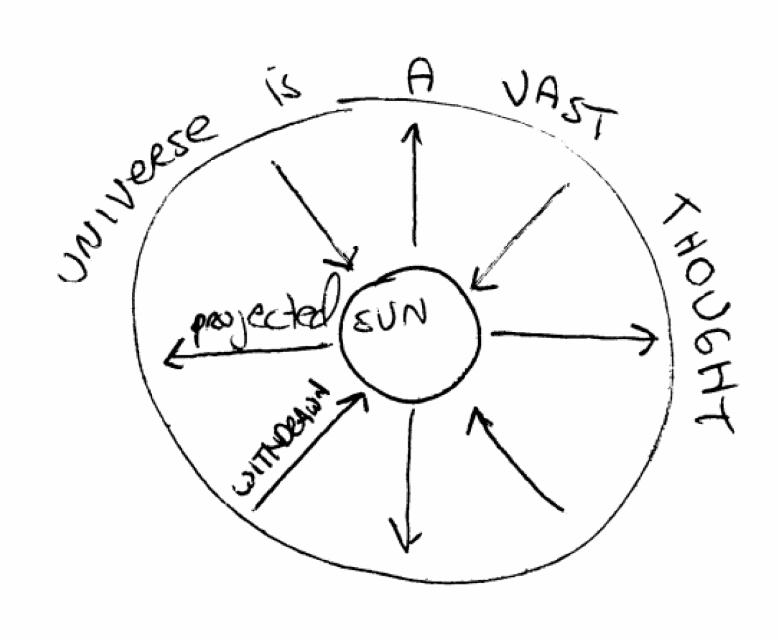
FIGURE 1979 1017-1-AB. Universe as Sun's Vast Thought.
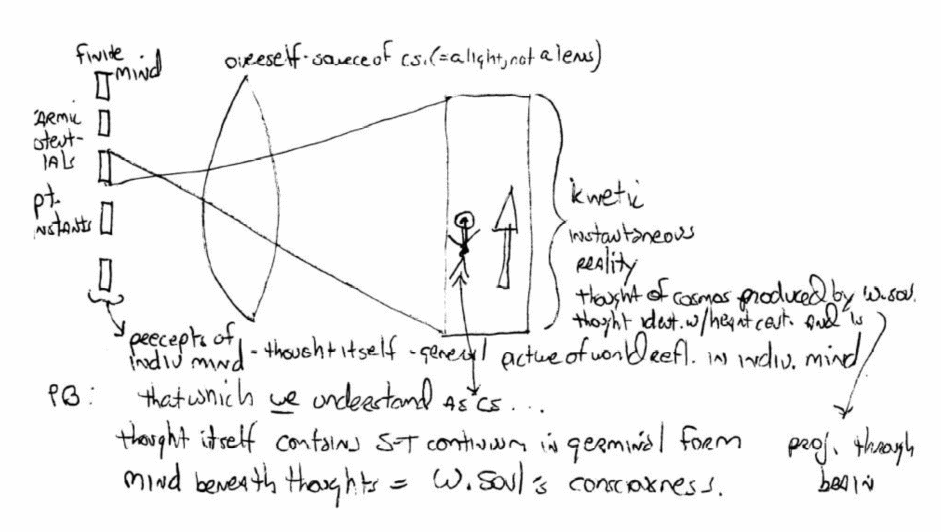
FIGURE 1979 1017-2-AB. Finite Mind, Overself, and World-Image.
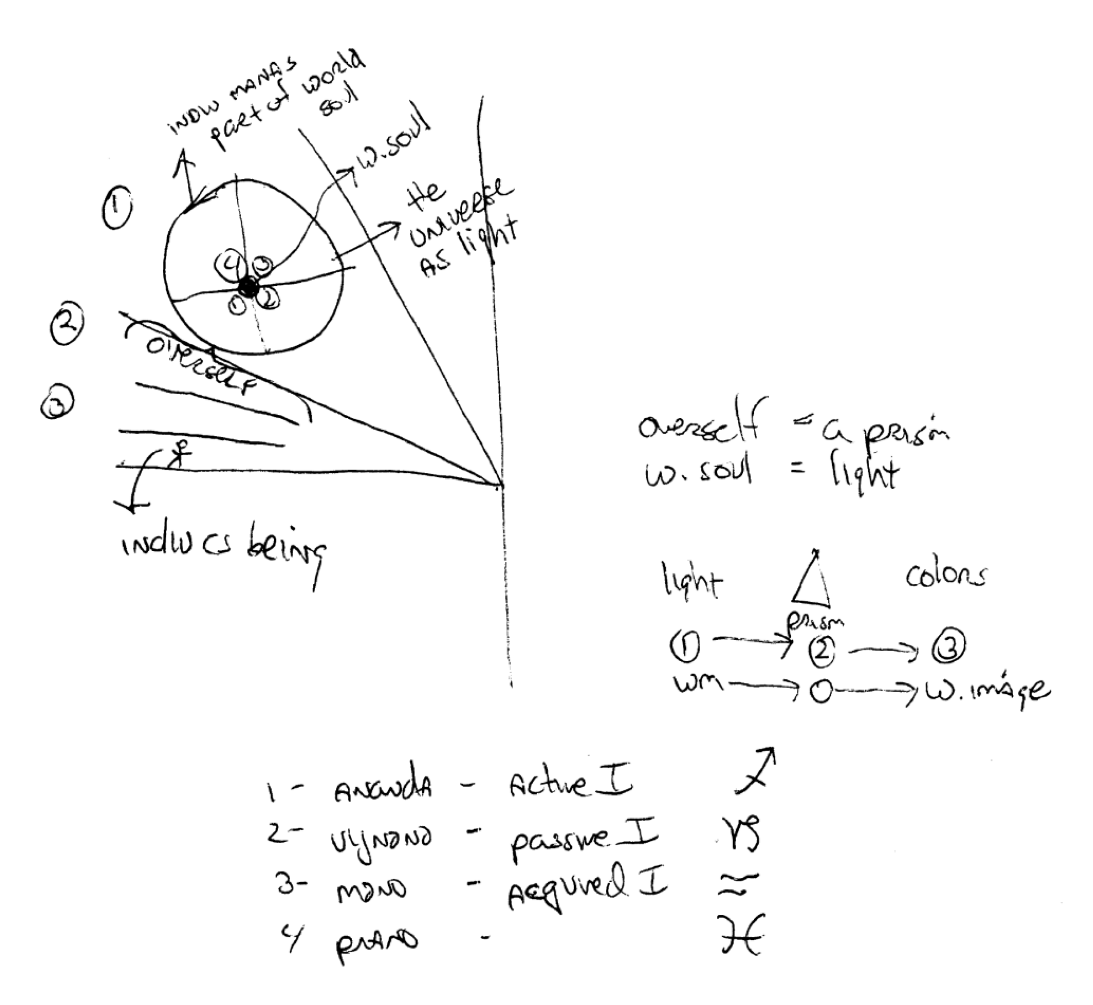
FIGURE 1979 1017-3-AB. World-Soul, Overself, Individual Conscious Being; Overself as Prism; Four Intellects.
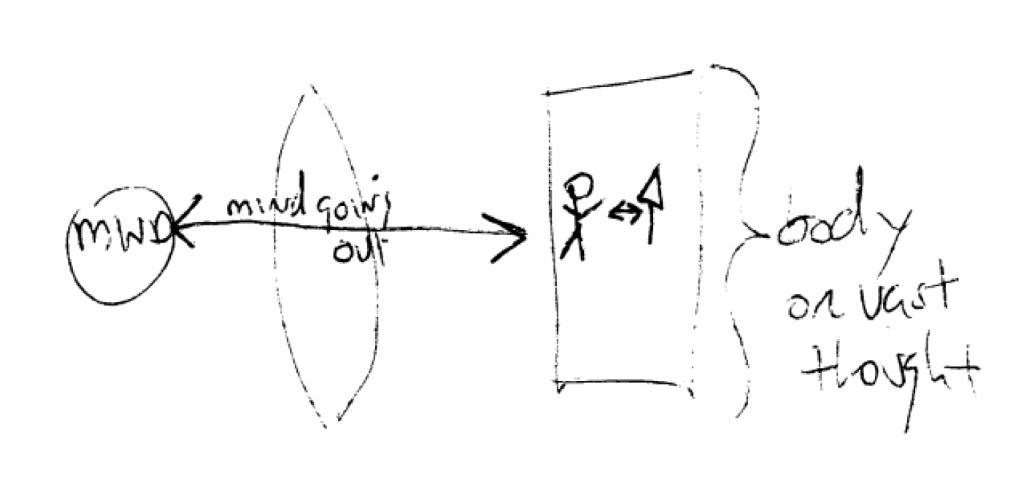
FIGURE 1979 1017-4-AB. Vedanta-Paribhasa: Mind Goes Out.
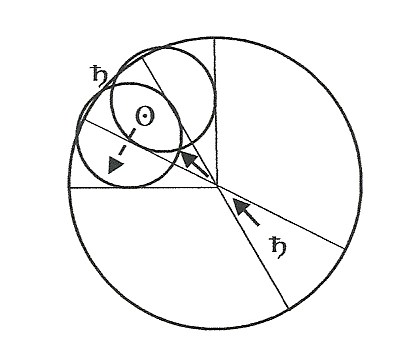
FIGURE 1979 1017-5. Saturn in Leo and Fourth Quadrant Vesica.
Other diagrams referred to are not with this transcript version. [Transcriber note: [diagram] means the speaker is referencing a diagram as he or she is speaking. If someone is drawing or writing, with audible sounds of chalk on a blackboard, I indicate this by [drawing] or [writing].]
NOTE: Wednesday night class, part of Wisdom series 1979-1980.
TRANSCRIBED Verbatim by IT 2019; reformatted by JRM & JF 2019-2020, with TOC/Subheads by JRM. In 2023, IT updates prefatory matter, footer, and audio file name, completes Book List, adds Plotinus quotes section, adds new notes within transcript, fixes errors/typos, adds five diagrams and references within transcript to these diagrams. In 2024, MW alters Subheads to make more accurate. Archival verbatim transcript – V14.1a.
AUDIO FILES: 1979 1017a, 1979 1017b. [Note: "Tape" and "Side" refer to original audio cassette tapes that were later digitized into .MP3 Audio Files.]
1979 10/17 at Wisdom's Goldenrod
PB Books; Wisdom of the Overself; "Birth of the Universe"
Archival verbatim transcript
[Audio File 1979 1017a Begins]
[faint background AD and student talking, AD starts talking audibly at 0:00:51.2]
AD: Alright, why don't you read out loud the paragraph, some people might not have a book.
[Transcriber note: I am using The Wisdom of the Overself by Paul Brunton, Rider and Company, London, 1943.]
THE SENSES ARE FORMS OF THE WORLD-SOUL'S CONSCIOUSNESS
PB [The Wisdom of the Overself, "The Birth of the Universe," pp. 37-38, S reading]: "It is only after we enquire deeply that we can at all discover [that] the world which is presented to our senses is really presented to our mind, because the senses themselves are forms of consciousness. The thing is there outside us but it is only the idea we have formed of it in our mind. The one seems outside us and the other inside us but ultimately the essence of both is mental. Mind actually creates what it experiences and actually experiences what it creates. The experiencing mind creates the experience out of itself in such a way that the illusion of receiving it from an external source holds sway."
[short pause]
AD: Alright Sir Avery?
AS(?): What did you say?
AD: Explain it.
S: Could we do it sentence by sentence?
AD: Sentence by sentence.
AS: How about-- how about word by--
S: Word?
AS: Word by word.
S (simultaneously): That's even better. (S laughing)
RG: What paragraph is that?
S: 52.
AS: The paragraph--
S (faint): Oh.
S: [one word inaudible] 52.
S (faint): 52?
S: Sure.
[short pause, faint background student talking]
AS: You want the first one?
S (faint): Uh-hm.
PB [The Wisdom of the Overself, "The Birth of the Universe," pp. 37-38, AS reading]: "[It is] only after we enquire deeply that we can at all discover [that] the world which is presented to our senses is really presented to our mind, because the senses themselves are forms of consciousness."
[13½ second pause]
AS/S(?) (very faint): They don't have it.
AD (very faint): [couple words inaudible]
S: Well, could you say that the world which is presented to our senses would be the karmic impressions, and the mind would-- the individual mind would transform in some way these karmic impressions into-- into the imaged world, that world in the twelfth house [diagram], through-- and the mind-- See, I just get confused when he sticks in this sentence, I mean, I get confused when he talks about the senses. And the mind would, in transforming these karmic impressions, the-- they would have to be transformed in-- in five different ways into-- you know, into the world in those particular ways.
AS: Yeah, well--
S (simultaneously): I'm just-- I mean that's--
AS: Yeah, I mean even if we say that the world is presented to our senses, he's saying here it's not presented externally but presented from within, something like the way we said that when that seed-thought goes up to the heart and the brain and converts these karmic impressions into physical sense-impressions. So that these senses, which are really-- in a sense really are functionings of that mind--
S: The senses are the-- are the way in which the mind functions, the five ways in which the mind functions (would you) say? Is that what that-- what that (means)?
S (simultaneously, faint): Uh-hm, uh-hm.
AS: Well he says the senses themselves are forms of consciousness.
S: Ok, that was the other thing that I wanted to ask about. He's obviously not referring to the Overself when he speaks of consciousness, he-- is he referring to the-- to the consciousness of the Sun, that taijasa consciousness? And that that-- [11¾ second pause] Well, could you explain that please?
AS: Well I could. Well, I think-- You know, he's just gone through this whole thing of talking about the functioning of these-- of the senses, the brain, [S, very faint: Finishing with that line.] which magnify and project, convert these subtle-- the subtle energy. This-- these subtle seed-thought or subtle image hits the brain, gets magnified and then projected, (see), [DH simultaneously: Every--] into physical sense-impressions, [student assents, faint] for example.
LC: Right, and only after it's projected do the senses pick it up, right? The sense-data doesn't receive it until it's already been projected from the heart to the brain to the--
AS: No, but the re-- but the hitting, as it were, the going up to the brain, hitting the brain and so on [LC simultaneously: That's not a sense.[it] is the reception.
LC: But that's not a sense activity.
AS (simultaneously): Well those are the senses that are operative there and they would receive this transmission.
LC: What do you mean senses are operative there? When the-- when it-- when the kar-- when the impression, when the vasana goes from the heart to the brain, that's a sense activity?
AS: No, [LC: No.] at the brain it says--
LC: At the brain it's reflected out, right?
AS (simultaneously): Through the senses.
S (very faint): Uh-hm.
AS: It's functioning with the senses.
LC (simultaneously): It's reflected out through the senses?
AS: It is the senses, well--
LC: Well what senses are we talking about? We're really-- we're [AS simultaneously: Yeah.] not talking-- we're not talking about the gross senses, like when we say our eye-consciousness or our ear-consciousness.
AS: Well, it seems that that's what he means by forms of consciousness.
S: Maybe if you put--
AS: But, if you go back here he says--
PB [The Wisdom of the Overself, "The Birth of the Universe," p. 35, AS reading]: "[Hence] the [AS reads: this] thought form is transmitted to an [AS reads: the] image-magnifying centre in the outer layer of the brain…and to [the] special sensitive centres for seeing, hearing, touching, tasting, [AS reads: tasting, touching] and smelling."
AS: Ok? He [student assents] says later--
PB [The Wisdom of the Overself, "The Birth of the Universe," p. 36, AS reading]: "This inner transmission is constantly going on [and] the brain [is] constantly magnifying [AS reads: magnifies] the original karmic impressions into physical sense-impressions [AS reads: a physical sense-impression]. Hence the individual's sensations actually arise from within himself."
S: Right.
AS: And not from outside of himself. [student assents] So he says--
PB [The Wisdom of the Overself, "The Birth of the Universe," pp. 37-38, AS reading]: "…we…discover that the world which is presented to our senses is really presented to our mind, [AS: ok] because the [AS reads: and that these] senses themselves are forms of consciousness."
[short pause]
AS: Now, what is it-- now "forms of consciousness". Maybe he means that they are forms or modes through which consciousness can flow or light up objects in a certain way.
LC (simultaneously): Like Laurie said, your eye-consciousness. Is that what you meant when you said five modes, like eye-consciousness, [S: Yes, right.] ear-consciousness, [S: Yes.] [one/two inaudible student words simultaneous with S] sound-consciousness.
AS (simultaneously): Just handle them like that.
S: Ok.
S: So you're including the consciousness in-- in taijasa.
S: Right.
AS: Well--
[short pause]
S: And this functioning is taking place in the sphere of the World-Soul.
[short pause]
S: Because all our-- all individual mind's thought in the sphere of the World-- World-Soul, so wouldn't-- wouldn't that have to be functioning the next [couple words inaudible]
S (very faint): Yeah.
AS: Try again.
[13¼ second pause]
BS: Well I think when he says it's presented to the mind he's not necessarily saying there that it's presented to our consciousness but merely that the pictured sense-picture itself is a content of our mind, which maybe then could be read by the consciousness. They are forms of consciousness, forms that consciousness takes, and they're as much a product of our mind as anything else. So it's really presented to our mind, not to the senses per se as external.
AS: Ok now what-- where--
S: I think that I understand when he says that-- [S, faint: Uh-hm.] I just don't understand when he says the senses themselves are forms of consciousness and that-- And even if-- even if he is speaking of taijasa consciousness, I mean how-- is that because our minds are only functioning in that sphere? I mean--
AS: Well I would say that-- well, you know, he says somewhere that we only know-- we don't get to know things the way that they are in themselves. We only know them through the reports of the senses, ok? Now the consciousness itself does not know anything unless it's delivered up to it. It just (seem) like (it's) pure light. Consciousness itself doesn't know anything at all unless your individual mind takes the form of it. Now, the only way you get to know about external objects by-- the only way you get to know about a World-Soul's projected objects as external is through the form which your senses think of, through the form which your senses deliver. So it's your individual mind's sense activity which is providing a form, ok, for the consciousness to know, through-- you know, the consciousness to light up. So, unless the-- unless the senses do this, unless the senses-- [S: Which are only--] the sense-functionings take-- take this form, then the consciousness won't be provided with any external-- so-called external objects.
S: So you-- are you s-- then what is this conscious-- I'm sorry.
AS/S(?): (I just told you.)
RG (simultaneously): Yeah, but-- I mean if I can just, you know, elaborate your question a little bit Laurie. Wouldn't all you just said Avery lead you to believe that one should say here that the senses themselves are forms of the mind in the sense that [S: Right.] the term is being used, [S: Right.] you've been using it?
AS: No, why?
S (faint): Oh.
RG: Why?
AS: Yeah.
RG: Because you've just used it that way the whole time, that it's being used as the senses are aspects of the mind's functioning, they're asp-- they're part of the substance of the mind.
LR: No, no, but remember when you [AS simultaneously: Yeah but--] spoke about the body as being produced by the Sun, [RG: Yeah.] the taijasa consciousness, and the senses being part of that body?
RG: Or the individual m-- I thought the individual mind produced the body in conjunction with the-- [S, faint: No.] the taijasa consciousness.
AS: Well it doesn't produce it. I don't [RG simultaneously: It doesn't give it form?] see why'd you say it produces the-- No, why do you say that the individual mind produce-- isn't your body one of the thought-forms in the World-Soul?
RG: Sure.
S (very faint): [few words inaudible]
AS: So, who would produce it? When you're asleep your body still exists.
RG: Yeah.
AS: I don't see why that-- I-- your question--
RG (simultaneously): You keep talking-- the world, the world which is pres--
AS (simultaneously): I understand your question about forms of consciousness.
RG: The world which is presented to our senses. Which world is that that's presented to our senses?
AS (simultaneously): The world which is presented to our senses--
RG: Is which world?
AS: Is which wor-- is the world that you-- that you know.
RG: Right.
AS: Your world-image.
RG: Right.
AS: Presented to the senses. But not-- not externally, it doesn't come in from outside. You said it's a seed-thought, goes up to the heart. Ok, or we could even take it back and say [RG: Yeah.] that that seed-thought originates from your individual mind functioning together with the World-Soul.
RG: Ok, now that world is really presented to the individual mind, [student assents] not to the sense.
AS: But why do you sep-- he says--
AD (simultaneously): Correct, alright, so--
RG: That's what he says.
AS: Yeah.
AD (simultaneously): It's presented to the individual mind, go ahead. And the next part of the sentence.
RG: "…because the sense of-- senses themselves…"
AD: Which are parts of the body, which is a cosmic thought.
RG: Right, "…are forms of consciousness."
AD: Yes, they would be-- Since they are parts of the body and the body is the manifestation of soul consciousness or the cosmic soul--
RG: Yeah.
S: Would it be part of [S simultaneously: Could we--] the Sun's consciousness?
AD: It would be part of [student assents, faint] consciousness of the Sun.
S (simultaneously): Yeah. [RG simultaneously: Ok but-- well--] We're not speaking of the Overself here at all.
AS: No [couple/three words inaudible]
S (faint): (Yeah.)
AD (simultaneously): Go ahead Richard. Go ahead, Richard.
S (simultaneously, faint): Probably.
RG (faint): I don't want [one/two words inaudible]
AD (simultaneously): Go ahead, go ahead, go ahead, well, right now I-- (You) didn't go through any(--/.)
S: Repeat please.
AD (simultaneously): Go ahead, Richard. You said that the body is a project-- is a product of [student assents] the World-Soul, right, [S: Maybe.] and the World-Soul is taijasa. Therefore the senses that belong to the body are all forms of consciousness, they're all forms of this cosmic soul.
RG: Right.
RP: Well I--
AD (simultaneously): I know you don't dis-- agree-- agree.
RG (simultaneously): No, no, no I do agree with that. But, the way-- the way you've been using consciousness up to this point has not been this way. All the other times you've used consciousness you would say that it would--
AD: I don't have any fixed definition of consciousness except by context.
S (very faint): Not very (efficient).
RG: Gotta have some definition.
S (faint): [couple/three words inaudible]
AD: Well, I don't, ultimately. Because if I had fixed concepts you wouldn't be here. (some laughter, student words)
RG (amidst laughter): I still-- I don't see where these forms of consciousness--
S: Go for it.
RG: In the same sense you could just as well say the individual mind is a form of consciousness.
AD: No, I didn't say the individual mind is a form of consciousness. He says that the world is presented to the mind, [RG assents] not the consciousness, to the mind.
RG: To the mind.
AD: Yeah.
RG: Right. Because-- but the-- he-- Instead of thinking that the world should be presented to the senses we should now think the world is presented to the mind.
AD: To the mind, that's right.
RG: And the an-- but because the senses are forms of consciousness. What does that 'because' mean, well why is it that way?
AD (simultaneously): I don't know-- I don't know how you read.
RG: Well I'm asking you, what does it mean?
AD (simultaneously): But insofar that the body is a product of cosmic soul, I'm repeating, then all the senses are products of the cosmic soul too, like the eyes, ears. They're products of the cosmic soul and this means that they are simply forms that that soul consciousness is taking. Read-- read a little bit more. [short pause] Read the next phrase there [one/two words inaudible]
THE THING IS OUTSIDE US BUT NOT OUTSIDE THE MIND
PB [The Wisdom of the Overself, "The Birth of the Universe," p. 38, RG reading]: "The thing is there outside us, but it is only the idea we have formed of it in our mind."
AD: The thing is outside us--
PB [The Wisdom of the Overself, "The Birth of the Universe," p. 38, RG reading]: "…but it is only the idea we have formed of it in our mind."
AD: Ok. Shall we work back?
RG: Sure.
AD: The thing is outside us but it's only the idea we have formed of it in our own mind. So that would mean that whatever that thing is that we're looking at, there would have to be a form of it in the mind itself or in those tiny picture-like seed-thoughts.
RG: But if he's talking about the thing that's outside us, why can't [one/two words inaudible]
AD (simultaneously): There is no thing outside, ok, outside your mind.
RG (simultaneously): He says that, "The thing is there outside us…"
S: Maybe he means the thing is outside our body but not [RG simultaneously: Yeah right.] outside the mind. But--
AD: Same difference. It's not outside your mind.
S: Right.
RG: Well of course.
S: But it's outside our body. Maybe that's-- is that why he-- it seems to be, it seems as though it's outside us because it's outside our body but it-- but it's not outside our mind.
AD: Alright Laurie, that would rephrase that.
S (faint): [one/two words inaudible] Carol [few words inaudible]
S (very faint): He just said it.
AD: Keep going.
PB [The Wisdom of the Overself, "The Birth of the Universe," p. 38, RG reading]: "The one seems outside us and the other inside us but ultimately the e…"
AD: Which one seems outside us and which one seems inside us?
RG: The thing that's outside and the idea seems inside.
AD: Alright.
PB [The Wisdom of the Overself, "The Birth of the Universe," p. 38, RG reading]: "…but ultimately the essence of both is mental."
AD: So the essence of both would be, so to speak, prefigured in the tiny seed-like thought-form.
RG: Uh-hm.
AD: Go ahead.
PB [The Wisdom of the Overself, "The Birth of the Universe," p. 38, RG reading]: "Mind actually creates what it experiences and actually…"
AD: So that means what mind-- the tiny seed-like thought-forms in the mind could get projected outwardly. And simultaneously with it-- with it [RG: Uh-hm.] there will be the fabrication of the idea externally related to the body and the thought of it inside, inside, so to speak, here being inside the mind, the tiny seed-like thought-form.
S: Repeat it.
RG: Wouldn't part of that experience have to be the senses themselves?
AD: Yes, they're included as part of the experience.
RG: That the mind creates?
AD: Yeah. If by mind here you also simultaneously include cosmic soul functioning.
RG: But then included in that would be these forms of consciousness that the senses are.
AD: Yes. The senses are included in the mind.
RG: Right.
AD: So now reread the whole sentence.
PB [The Wisdom of the Overself, "The Birth of the Universe," p. 38, RG reading]: "Mind actually creates what it experiences and actually experiences what it creates. The experiencing mind creates the experience out of itself in such a way that the illusion of receiving it from an external source holds sway."
AD: You notice he says, "the illusion of receiving it from an external…" [short pause] Go ahead. [short pause] Now let's go back because I think it's necessary to go back to that point in the Hidden Teaching so that we repeat it two, three, four, five times, as often as necessary until it sinks in. You got a copy of the Hidden Teaching, would you find that please?
LR: 257, I don't-- I don't have a copy.
AD: You don't have a copy?
LR: Page 257, for whoever does.
S (very faint): Yeah.
S (faint): Pages too.
LR (simultaneously): Oh. [9 second pause] Oh, oh. Oh.
AD: Alright, would you turn to that section, would you read it very carefully and out loud? Make out it's-- make out you're heading for a dramatic critic's award. Read it really carefully, tentative, you know, with feeling. (bit of laughter)
S (faint): (He had/Yeah) so much.
S (faint): Well I'm not reading it. (bit of laughter)
AD (faint): Yeah.
LR: Avery, you remember what paragraph that was? Page 257, paragraph--
AS (simultaneously): What paragraph? (some laughter) Yeah (I know).
S: Uh-hm.
BS (very faint): Ok, what?
AS (faint): Sure.
S (faint): I mean, what is the--
S (very faint): [couple words inaudible]
S (faint): What about the World-Idea?
LR: (Avery), I don't know. Oh, here it is.
[short pause]
AS: I think 60?
AD: Look, I decided [LR simultaneously: Oh yeah.] to give up the page-- pagination of these things because there's so many different versions I would have to remember numbers and not the paragraph. Paragraph please.
LR: Paragraph number--
S (very faint): (Well), paragraph 60.
S: Yeah.
WE NEVER KNOW THE EXTERNAL WORLD IN ITSELF; WE KNOW DIRECTLY ONLY OUR SENSATIONS
[Transcriber note: I am using The Hidden Teaching Beyond Yoga by Paul Brunton, E. P. Dutton & Co., Inc., New York, 1969.]
PB [The Hidden Teaching Beyond Yoga, "From Thing to Thought," pp. 257-258, LR reading]: "The point which must be grasped--and it will need a concentrated subtlety of thought to grasp it--is that we never know the panoramic external world in itself. We see that world only through the immovable spectacles of the sense-reports which we receive concerning it. We cannot bring it under direct observation. What we directly observe is--our mental reaction to it, i.e., ourselves! Without every being conscious of this certain and simple truth we live day and night in no other world than that whose form is figured for us through what is termed sensation."
AD: Is that enough Richard or you want to hear it again?
S (very faint): [couple words inaudible]
RG (faint): Right. I'll hear that again.
AD: He wants to hear it again. (Let's) read. Please?
RG/S(?) (faint): I've lost the words, yeah [couple words inaudible] (laughter)
S: Go. (bit more laughter)
PB [The Hidden Teaching Beyond Yoga, "From Thing to Thought," p. 257, LR reading]: "The point which must be grasped--and it will need a concentrated subtlety of thought to grasp it--is that we never know the panoramic external world in itself."
AD: You hear that, right? You never know the panoramic external world in itself.
PB [The Hidden Teaching Beyond Yoga, "From Thing to Thought," pp. 257-258, LR reading]: "We see that world only through the immovable spectacles [LR: Get it, spectacle? (bit of laughter)"…immovable (S simultaneously: (Always) (one/two words inaudible) (student assents, some laughter)) spectacles] of the sense-reports which we receive concerning it. We cannot bring it under direct observation. What we directly observe is--our mental reaction to it, i.e., ourselves! Without every being conscious of this certain and simple truth we live day and night in no other world than that whose form is figured for us through what is termed sensation."
AD: Now let's go back to the paragraph. [short pause while drawing] Laurie, would you start (with) the first sentence?
PB [The Wisdom of the Overself, "The Birth of the Universe," pp. 37-38, S reading]: "It is only after we enquire deeply that we can at all discover [that] the world which is presented to our senses is really presented to our mind, because the senses themselves are forms of consciousness."
AD (simultaneously): Now, if you remember we took the example, [drawing] we did something like this here. [short pause while drawing] And we said the Sun or the soul of the cosmos projects-- although he calls it the World-Mind, projects the whole universe. And then of course reabsorbs the whole universe. [Note: See FIGURE 1979 1017-1-AB, Universe as Sun's Vast Thought, appended to this transcript.] Now, that includes your body. And your body has all these senses included in it. I mean most of us are born with five. Some four, some six, but there they are, ok. So there's the body there and the senses. Now, we're not going to know the external world unless, as he said in the previous section, he speaks about these karmic seed-thoughts coming into the heart center. And there's a prefiguration of the entirety of the world-to-be or the world that you're going to experience. [student assents, faint] And when that-- when that goes up to the head and through the brain, simultaneously concomitant with that there appears the world. Simultaneously. Now-- [short pause] Follow through with the next senten-- following sentence.
S: "…because…"?
PB [The Wisdom of the Overself, "The Birth of the Universe," pp. 37-38, S reading]: "…because the senses themselves are forms of consciousness."
AD: The senses themselves [drawing] are forms of consciousness.
S (very faint): Yeah.
S (faint): [couple words inaudible] (bit of laughter)
AD: They belong to this body. [S, very faint: Yeah.] And this body we said [S: Belongs to the--] was projected from the cosmic soul, which is taijasa consciousness. [S, faint: What'd he say?] So these senses are the forms of taijasa consciousness. Ok? Proceed.
PB [The Wisdom of the Overself, "The Birth of the Universe," p. 38, S reading]: "The thing is there outside us, but…"
AD (simultaneously): Here's another one, [drawing] right? Go ahead. (bit of laughter)
PB [The Wisdom of the Overself, "The Birth of the Universe," p. 38, S reading]: "…but it is only the idea we have formed of it in our mind. The one seems…"
AD (simultaneously): The thing is there outside of us-- outside of us, but it is only the thing we have formed in our mind. That means that this fellow [diagram] exists in here [diagram], just like he [diagram] exists in here [diagram]. In other words, in the heart center there's a prefiguration of the world that you're to experience. These [diagram] are the tiny seed-like thought-forms he says goes into the heart, and when it reaches the brain they become amplified or they seem to be the externally perceived world. [Note: See FIGURE 1979 1017-2-AB, Finite Mind, Overself, and World-Image, appended to this transcript.]
S: So they do-- the thing does exist outside our body, right? Things exist outside our body but--
AD (simultaneously): Yeah.
S: --but our bodies are included in-- in the mind.
AD: Uh-huh, and [S simultaneously: (But--)] so is the other body.
S: Yeah. Right, all--
AD: In your mind, in your mind.
S (simultaneously): --everything you perceive and our own bodies.
AD (faint): Uh-hm.
S (faint): (Ok/Go ahead).
AD (very faint): Uh-hm. Yeah.
S: These senses which are forms of this taijasa consciousness--
AD: By forms, you know, they mean that the idea of senses is already contained in the cosmic soul.
THE BRAIN'S RESISTANCE TO THE TRANSFORMATION OF THE TINY SEED-LIKE THOUGHT-FORMS RESULTS IN WAKEFUL CONSCIOUSNESS
S: Ok. It seems that there has to be another factor involved though because when these karmic impressions come from the heart center to the brain there's-- we then experience the world not in taijasa consciousness but in vaishvanara.
AD: Uh-hm.
S: So there has to be some factor-- It seems like the senses, if they're part, I mean--
AD: Well he says that you-- he doesn't s-- he doesn't use the term 'wakeful consciousness' but he says, only when all this has been accomplished are you conscious of the world, are you conscious of this world. Did you find the passage?
S: So the senses, the operation of the senses, their whole function still-- still occurs in taijasa, and it's not until a later step that the-- that the effect of the functioning is then wakeful consciousness, the objective world.
AD (simultaneously): Try again once more.
S: I'm just trying to understand how, if we have these senses which we say are forms of taijasa consciousness--
AD: Yeah, in other words [S simultaneously: They're functioning--] your body, your body.
S: My body.
AD: Yeah. So it won't be only senses, you know, the kidney, heart, liver, all these.
S: But the senses have definitely a different role [AD: Uh-hm.] than the organs. I mean the organs maintain the body, I mean-- and the senses as we speak of them are functioning to help make us conscious, I mean to have objective consciousness, wakeful consciousness.
AD: No.
S: No?
AD: No. No, you missed the point.
S: Ok.
[short pause]
AD: You find that passage?
AS: Yeah.
AD: Just read it.
AS: Uh-hm. After he describes the functioning of the brain and the-- the brain and the senses, he says--
PB [The Wisdom of the Overself, "The Birth of the Universe," p. 35, AS reading]: "When all this has been accomplished the individual becomes fully aware of the transformed and magnified world-picture…"
AD: When all this has been accomplished, then [S simultaneously: That's what I'm saying.] you become aware-- then you become aware of the world with your body in it. But then you're also aware of the fact that you have the senses with the body. So then the senses did not produce the wakeful consciousness.
S: What did?
AD: Well he would say that it's the resistance that the body offers.
S: Could you go over that sentence once more?
AD: You remember he uses the analogy of the nichrome wire? He says the resistance the nichrome wire off-- [S simultaneously: Right.] offers, because of that very resistance there's a glow in the wire, it gets red hot. In the same way, insofar that the brain offers resistance to the transformation of the tiny seed-like thought-form, at that instant that they get amplified or transformed by the brain, at that instant [AD snaps fingers] there's wakeful consciousness and you become aware of the world. [short pause] You have to stop and think.
S: That can happen without the body to produce that wakeful consciousness, (doesn't it)?
S (very faint): Yeah.
AD: You could be awake without the body, yeah. Go on.
S: Ok. It was just that you said it was that resistance that produced the wakeful consciousness. Well I-- that that can ha-- you can have that wakeful consciousness without that.
S (very faint): Yes you can.
AD: You can have wakeful consciousness without the body.
S (very faint): Yeah.
AD: Well, most people have trouble with the body. (laughter) Even then they don't have it.
[short pause]
CONSCIOUSNESS, THE OVERSELF, IS NEEDED TO ILLUMINATE THE MENTAL FUNCTIONING
S: This question might not be appropriate yet, and then you can tell me if it's not but it seems as if this whole process of the World-Soul and the individual mind producing experience, it seems like the final end of it, of experiencing a world in-- in wakeful consciousness, the way we are explaining it, can happen without this other consciousness that we bring in from another place.
AD: This other consciousness of--
S (simultaneously): The Overself consciousness.
AD: No, that's not possible.
S: I know. But it surely seems--
AD (simultaneously): You see, because we-- all we're speaking about now is mental functioning, alright. But mental functioning is always illuminated by something beyond itself. Now all this here, like for instance when he speaks-- If we could take this example here. [Note: See FIGURE 1979 1017-2-AB, Finite Mind, Overself, and World-Image, appended to this transcript for the following.] If we think of this as a lens and these are the stills, you know, and this-- this still goes through the lens, alright, [drawing] and then becomes this imaged world out here, alright, and place-- place you in here, in the picture now, ok, with the Overself center [diagram], ok. Now, if it doesn't go through that consciousness, you would have, let's say, the film going on but there will be no light shining on it illuminating it. So if we take out the consciousness, there will be no understanding of what is going on although things will be going on, from my reckoning. Alright? So without the consciousness here [diagram], or here in the Overself center here [diagram], there won't be no consciousness of this whole thing. It's just like you have a movie picture projecting a film and no light behind the film so it gets projected on the screen but there's no one to see anything or know anything. So if we put the Overself here [diagram], alright, and we say there's-- this-- this [diagram] is going to be what he calls mentalism here. [drawing]
S: Are these still the karmic impressions?
AD: Yeah, these are the karmic impressions [drawing] or the tiny seed-like thought-forms, alright, and they become the world. So, this here [diagram], the mind, the seed-- seed-like thought-forms in the heart, when they get expanded and become the world, anything within that world, ok, is part of that mental arom-- panorama, alright. So when the physiologist goes through an analysis of, you know, perception, everything that he's analyzing is taking place within mentalism, it's not outside the thought [S: Ok.] that's over here [diagram]. Alright? So we can't really eliminate this although I don't want to discuss it in too-- too much detail right now, the consciousness, the Overself.
S (simultaneously): Ok. No, I appreciate that.
AD: Alright. So, continue reading.
[short pause]
PB [The Wisdom of the Overself, "The Birth of the Universe," p. 38, S reading]: "The one seems outside us and the other inside us…"
S (faint): Ok.
S: Is that where I left off?
S: No, "The thing is there…"
S: "The thing is there…" I--
S (very faint): Yeah. Go on.
PB [The Wisdom of the Overself, "The Birth of the Universe," p. 38, S reading]: "The thing is there outside us, but it is only the idea we have formed of it in our mind."
AD: [drawing] The thing is there outside of us, ok. There's the thing outside of us [diagram], ok, but it's only the thing that we have formed in our mind over here [diagram]. [short pause] So if you think of these tiny seed-like thought-forms, alright, which get blown up into the projected world, alright, then the thing is outside this body here [diagram] in relation to that body because [student assents] it gets projected out. In other words, you have to think of the brain something like this. [drawing] I like the term 'animate'. And here's the light in here shooting out [diagram], alright. Let's say this is the limits or the boundaries from where this tiny seed-like thought-form is shooting out [diagram], alright. Now this would be the body, let's say, and this would be the world that is simultaneous-- simultaneously appears with that body, ok. Ok? Then that-- this would correspond to what Plotinus called the living animate. [Note: Plotinus, I.1.7.]
S: The body and the world appearing together?
AD (simultaneously): Yeah. Yeah, when you see blue, or when you see the green of the tree, that's concomitant and simultaneous with the projection that's taking place through the brain. And last night or the night before we made the discovery that that's what all Vedantic epistemology was about when we got through with their vast fancy terminology and threw out the way they (interpret it/interpreted) for us. That the mind goes out, conjoins the organ of vision and all that was a whole lot of nonsense, the mind has to go to the brain, and when it goes to the brain, then there's an apprehension of the object. But, let's continue with this.
PB [The Wisdom of the Overself, "The Birth of the Universe," p. 38, S reading]: "The one seems outside us and the other inside us…"
AD: This seems outside us [diagram].
S (faint): Yeah.
PB [The Wisdom of the Overself, "The Birth of the Universe," p. 38, S reading]: "…and the other inside us…"
AD (simultaneously): Inside us. [S: (The/But)--] It seems as though the thoughts are inside the heart center.
PB [The Wisdom of the Overself, "The Birth of the Universe," p. 38, S reading]: "…but ultimately the essence of both is mental."
AD: The essence of both would have to be mental because we pointed out that this whole thing is an amplification and a blowing up of that karmic seed-thought.
LC: When this karmic seed-thought-- isn't its resting place in the heart center?
AD: Yeah, [LC: In--] that's what he says.
LC: And that heart center--
AD: Is here [diagram].
LC: Is there.
S (very faint): Uh-hm.
AD: So, it would seem as though the tree, which seems to be external to the body, is actually prefigured in the heart already so the possibility of having gnosis is assured. You know, real gnosis, real knowledge. Go ahead. Continue reading.
PB [The Wisdom of the Overself, "The Birth of the Universe," p. 38, S reading]: "Mind actually creates what it experiences…"
AD: [hitting board] Creates this [diagram]. Mind creates this. And then experiences it.
S: It creates the whole-- that whole picture over there and then it experiences it.
AD (simultaneously): And then it experiences it.
S: Right. So in other words, when you're talking about the mind that creates, you're speaking of the eleventh house [diagram] but when you're speaking-- [Note: See FIGURE 1979 1017-3-AB, World-Soul, Overself, Individual Conscious Being; Overself as Prism; Four Intellects, appended to this transcript.]
S (very faint): Right.
AD: Go ahead, I'm just listening.
S: I'm just trying to fit it into the diagram. Mind creates what it experiences would be the mind-- the create-- the mind creating the whole world-picture.
AD (simultaneously): Thinking of mind, in thinking, alright, creates.
S (simultaneously): And then when it experiences what it creates--
AD: It's included in the [S: 'Cause that--] empirical subject. It's included in the empirical subject so it experiences what it creates.
S: Right, and that would be in the twelfth house.
AD: Uh-hm. Well, twelfth house, eleventh house, doesn't matter [couple/three words inaudible] [short pause] Finish the paragraph.
S: I just have the feeling that I'm missing something.
S (very faint): (You definitely are.)
PB [The Wisdom of the Overself, "The Birth of the Universe," p. 38, S reading]: "The experiencing mind creates the experience out of itself in such a way that the illusion of receiving it from an external source holds sway."
S (faint): Uh-hm.
S (very faint): [couple words inaudible]
AD: You know like in a dream you very often have the experience that what you're experiencing is outside of yourself. When you wake up you say that all is within me. And the same situation arises here. [Note: See FIGURE 1979 1017-2-AB, Finite Mind, Overself, and World-Image, appended to this transcript.] The empirical subject thinks that what he-- what he experiences is outside of himself but it's all within his own mind. And if we said that this [diagram] was this-- you know, the whole of it, then everything he experiences has to be within the mind, his mind.
[students assent, very faint]
S (very faint): I follow.
[short pause]
AD: You think very slowly and carefully, think it over very slowly and carefully. Go ahead.
GA: What's the distinction between experience and knowledge? Before you said that this activity can go on. But of course if the light did not--
AD (simultaneously): That-- that's just a dry analysis, you know? It's just an analysis. In other words I'm trying to separate-- I was trying to separate the Overself consciousness and the mental functioning [GA: Yeah.] which the Overself consciousness illuminates, and through, you might say, extensive abstraction I separate them for you.
GA: In other words, you didn't really do that.
AD: Yeah I-- it's just for the purposes of illuminating what we're talking about.
S (very faint): Go ahead.
KARMIC IMPRESSIONS ARE EQUIVALENT TO THE INDIVIDUAL MIND'S FUNCTIONING
S: Those karmic impressions, before you pointed to them also when you were speaking of individual mind. And it seems like the karmic impressions come from the World-Soul. What role then would the individual mind--
AD: The karmic impressions would be equivalent to the individual mind functioning.
S: The individual mind functioning? Could you explain that a little more?
AD: The individual thinking mind that thinks hardness, that thinks six feet, that thinks yellow.
S: But isn't that already after the karmic impression gets in--
AD: No, the thinking mind that is conjoined to the World-Soul which thinks the world into actuality, into existence. [Note: See FIGURE 1979 1017-3-AB, World-Soul, Overself, Individual Conscious Being; Overself as Prism; Four Intellects, appended to this transcript.] That's the individual mind that you will experience in the heart center.
S (very faint): I still don't understand.
AD: Well, you think dream(s) into actuality, don't you? It's the thinking that fabricates the dream.
S: Well it seems like then--
AD: And then that thinking which fabricates the dream is like an immanent in the dream subject, saying "Sure, I know what this is all about, that's a tree over there." [student assents, faint] But that dream subject would have no idea of a-- of a tree unless he was thinking with the person who was having the dream. So the dream subje-- I'm-- I mean the individual mind thinking along with the cosmic soul fabricating the universe, alright, knows it. It didn't fabricate the universe but knows the fabrication of the universe because it's conjoined with that, and then experiences what it knows.
S: Ok.
AD: No problem. Just don't be anxious. Go ahead.
S: Does the World-Mind provide a kind of substance, I don't like to use that word, with which or through which the seed-thoughts in the heart can take form? Is that how the form comes about? And might we better-- Would it be alright-- I'm getting a sense that the seed-thoughts in the heart seem more related to what we call the individual mind.
AD: Yes. Uh-huh. That's what I just said. [student assents, very faint] That's the individual mind [diagram]. [drawing]
S: And that goes up (I'm--) so to speak.
S (faint): And again I don't like to (qualify).
S: Does it--
AD: You better light the word up because if you don't stand up you'll have trouble with it. That's what differentiates the homo sapiens, right? We stand up, like penguins. (laughter, student words)
S: Does the World-Mind [AD simultaneously: Wait.] provide-- provide the substance through which the seed-thoughts can take [one word inaudible] form?
AD (simultaneously): Yeah, every-- everything in this universe, if (you/we) took the actual literal example, everything in our universe comes from our Sun, except for maybe one tenth of one percent which is foreign matter. So everything in our universe [S simultaneously, faint: Foreign (couple words inaudible)] would come from our Sun. Well, you know, meteorites, strangers, foreigners, you know, aliens. (laughter)
S: May I ask where that interphase is (in/and)--
AD: Where that--
S: Interphase is and what exactly happens there.
AD: I don't follow you.
S: Where the [S simultaneously: The (interphase/interface).] seed-thought meets the substance and how the form arises.
S (faint): No, the [one/two words inaudible]
S (very faint): Yeah.
S: Well the--
S: No, I just--
AD: Well I still don't follow you.
MW: Why don't you do that better.
AD: I'm s-- I'm sorry.
RG: Where's the conjunction between them?
S: The seed-thought-- the seed-thought goes up and it takes on a form. It's given substance from the World-Mind and it takes on a form.
AD: Pretty soon you'll start thinking of them as actual seeds, right? You can go to the [S simultaneously: Well (one word inaudible)] nursery and buy them. [couple/three faint inaudible student words simultaneous with AD] Look at your astrology chart and you'll be able to see your seed-thoughts.
[students assent]
S: Well I--
AD (simultaneously): Almost tells you-- Well, I mean you-- you get an aspect and you're almost told what to think. Right? Alright, that's the light coming into you. Plotinus put it I think a little better. He says consc-- soul imparts a light to the body, alright, and this light of course is what conjoins the body and then there's the possibility of experience of a world. [Note: Plotinus, I.1.7.] Well, you're going to start looking for real seeds if I know you.
S: No, no, I want to hone in on the point where the-- where the seed-thought takes on a form. [student assents, faint] I was--
S: Isn't it the individual mind that gives it the form?
S: I want to catch that moment [one/two words inaudible]
AD: Isn't it the what?
S: The individual mind which gives the seed-- seed-thoughts--
S (faint): Yeah.
AD (faint): Yeah.
S (faint): Yes, it does.
AD: Because it has to be your experience, in other words [student assents] it's your thinking, the individual mind's own thinking, alright, which will be different for other people.
S: Right.
AD: Alright, go back to the text, turn to the text, come on. Turn to the text.
[students assent]
S (faint): Is that a mocha?
AS (faint): They have two (of them).
S: Is that (real)?
AD: Sure. I drink real coffee, of course it's real coffee. (laughter) Anyway, you taste it and find out, let me know.
S (laughing): (Steve.) (bit more laughter)
AD: It's not real coffee? Oh. It's not real coffee, you can't tell? It's not real coffee, you won't appreciate it. (laughter) Go ahead, talk.
DB: I-- I'm a little uncertain as to what the relationship between the karmic impressions within the heart of the individual is to the vast thought with--
(Side 1 of original cassette tape digitized as 1979 1017a Ends; Side 2 Begins)
DB: --coming from within the heart center up to the brain and being magnified and so forth. And what I don't understand is the relationship between what's contained within the karmic impressions to the vast thought within which, so to speak, those karmic impressions are going to be actualized into the perceptible world.
S: Uh-hm.
AD: This comes straight out of the text, right?
DB: Uh-- I think so. I mean-- I just-- well--
AD: Well--
DB: Right. On paragraph 49 it says--
PB [The Wisdom of the Overself, "The Birth of the Universe," p. 37, DB reading]: "Thought-forms of every thing projected by the World-Mind so appear as to be outside the thought-form of the body and therefore they all co-exist in space as the whole system which we call Nature."
AD/S(?) (very faint): [one word inaudible] uh-huh.
DB: Now, within that--
AD/S(?): [one word inaudible]
DB: Is that result of the karmic impressions being actualized by the brain? Or is that the result of the-- are those thought-forms the actualized-- the imagination of the solar-- of the World-Soul?
[9 second pause]
AD: I still don't follow your question.
DB: Well, it's a question of, on the one hand the World-Soul has-- has this vast thought, the entire totality of the universe.
AD (simultaneously): Yeah, has this production.
DB: Ok. Now within this universe would (it) be a plurality of individual bodies.
AD: Yeah.
DB: Ok. Now within each individual body, let's be-- it'll be a heart center, ok, now-- uh-- The karmic impressions in the heart center go to the brain, they become activated and the individual mind [AD simultaneously: Yeah.] experiences.
AD: Experiences, [DB: Ok.] yeah.
DB: Alright. Now the question I want to know is, does he only experience those karmic impressions after they've been actualized or is there--
AD (simultaneously): Well that's all he can experience.
DB: Well, yes it's true. I mean ultimately, any of the experiences would have to be within his own mind, alright, within his own taijasa consciousness, let's say. But--
AD: There's a great deal of this vast thought-form which he doesn't experience.
DB: Well you see that's-- that's the thing, I mean, when an individual-- like when a human being looks at a tree, he sees a particular image, alright. When you get another form of life, like a-- like a dog, he sees the tree and it's black and white, there's no colors in it, ok. Now-- [short pause] Does the reason that the dog sees a black and white tree and a human being sees the color because of the particular karmic impression(s) that are being actualized?
AD (simultaneously): Well, it's both, isn't it? On the one hand, he doesn't have a brain that could see the colors, on the sec-- on the second-- the second point is that the brain is already the product of the karmic impressions.
DB: That's the problem. I mean--
AD (simultaneously): There's no problem.
DB: No it-- (bit of laughter) Yes, I guess that's it exac-- exactly. If the brain is the product of the karmic impressions, [AD: Yeah.] ok, how does it--
AD: It's not the product of the karmic impressions, it's included in the karmic impressions. [DB: Well if you--] The kind of brain that you're going to operate with is already included in that seed-like thought-form.
DB: That's the problem I don't understand because if the-- if the brain is--
AD: Well that's because you weren't listening. That's the whole point. That's-- that's what's difficult about this doctrine.
DB: If the-- if the brain is included in the karmic impression(s), alright, if the-- what's [S simultaneously, faint: Brain.] it doing as being part of the vast thought? I mean I just can't-- (some laughter) And how do the karmic impressions relate to--
AD: But what you're asking is to go over the whole thing again.
S (faint): [few words inaudible]
DB (simultaneously): No, don't do that.
AD: Yeah, yeah, [AS: Yeah.] we'll do that, we'll do that, sure we do that. (bit of laughter)
MW (faint): Some things are really important.
S (faint): You asked (it).
AD: By the very nature of the questions you ask it shows that you didn't pick up what we were going through, so we have to do it. We've done it twenty-eight times, it doesn't matter. Twenty-nine, thirty doesn't count. Go ahead.
S: I'm going to try also. (bit of laughter)
AS: It's ok, we're going to do it again anyway so-- (bit of laughter)
FW: Could we say that the karmic impression is like-- bears the resemblance to the total vast thought that a ray bears to the sunlight as a whole?
AD: That the karmic thought bears--
FW: The karmic seed bears the im-- bears the relation to the vast thought that a ray of sunlight bears to the total production (of/in) the sun?
AD: I don't know that the analogy is even apt.
FW: That's what I'm asking.
AD: No, the analogy is not apt. Because after all, you're speaking about an individual mind which, thinking with the World-Soul, concomitant with that World-Soul, has a prefiguration of that individual soul's or individual mind's experience of the world, alright. [student assents, faint] So that means that it's already prefigured. Right?
FW (faint): Yeah.
AD: In other words, only what the soul of-- I'm sorry, what the individual mind thinking, alright, what it-- it is thinking, so to speak, can be experienced by the empirical subject. Now-- I forgot the point. Um-- Hey look, why don't we do it the easy way? Do it again. But-- [short pause] You see, in the case-- in the case of the ray and the sun, alright, in the case of a ray going out from the sun, it isn't that the ray speaks about the whole of the sun. In the same way, like the individual mind which is in conjunction with the World-Soul, it isn't that this individual mind [drawing] in conjunction with the World-Soul is going to tell this empirical entity, you know, everything about the universe because that would depend upon the karma of that individual mind and what it's to experience.
FW: In other words, if you had the ability to read off the heart center, you would not experience the totality of the taijasa realm. You would just have some slice of that.
AD (simultaneously): No, you would be experiencing the world in a taijasa realm.
FW: But it wouldn't be the totality of the taijasa realm.
AD (simultaneously): Well it would depend on the individual, how much-- I mean you're asking questions that are too difficult and too profound, I mean only a Sage can answer this. You're asking, for instance, when a Sage, if he's enlightened, what portion of the Intelligible universe will he communicate to you or talk to you about?
S (faint): Yeah.
AD: What do I know? (laughter, student words) You have to s-- we have to stick-- that's why I like to stick to textual questions. [short pause] Open to the text and find a question in the text and don't deviate from the text until you understand the text, then we can go beyond the text. Ok? Let's work that way.
S: Be mute?
AD: No, you shouldn't be mute. The text itself. The text itself, no problem.
S: Anywhere?
AD: Anywhere, chapter 3 and 2. Anywhere. You do like Richard, you'll bring in page 342. (laughter) Go ahead Andrew.
AH: Can I-- could I try to elaborate on David's question a little because--
S (faint): Oh no.
S: What page?
AH: The fact that there's a brain, you know, is presented
MW: Page? No?
S: He forgot.
AH: The brain is presented by the World-Soul and apparently there's another way of speaking of a brain that we experience. Is that what David is driving at?
[short pause]
AD: I think so, and I think he wanted to know about that brain which was prior to his experience of it.
DB: Yeah. That's right.
AH: So I thought we had been speaking of like maybe two brains or two ways of speaking about the brain.
S (faint): It's your brain.
AD: Well, could you take it this way, like for instance you're sleeping in bed, ok, and you're having a dream. Now you have a brain, alright. You're laying here-- you're laying down flat in bed and you're dreaming. There's a brain in your-- in your body, right? But you're not experiencing wakeful consciousness. There's no world yet for you, as you understand world now. Correct? Not unless, so to speak, the dream gets so horrifying that it wakes you up. That means the vasana or the karmic impressions shoot to the brain and there's the experience of wakeful consciousness. Now, you could say, well before those-- before those seed-like thought-forms reach the brain, alright, you could say that you have no brain or you don't know of a brain. But the world can only come into being when that (light/life) which shoots up through the brain and gets scattered by the brain and distributed and functionally distributed as the world you perceive, takes place only then.
AH: And then we can speak of experiencing the body and the brain. Prior to that time (you--)
AD (simultaneously): Before that you can't.
AH: Right. But that doesn't preclude the existence of the body and the brain in [one word inaudible]
S: Uh-hm.
AD (simultaneously): Well naturally, because that's the product of the cosmic soul. Go ahead, David.
DB: Well, yeah I think-- I think that that's it exactly because on-- on the one hand, you speak of the individual's experience being totally contained within the karmic impressions that come from the heart, ok. Anything that the individual mind is going to know is going to be prefigured there. But, that's not to be-- I mean that's not equated with the totality of the vast thought which the World-Mind has--
AD: What's not equated with the vast--
DB: The e-- the experience of the individual which is prefigured by his karmic impressions in his heart center.
AD: No, he won't experience the vast totality [DB: Right, ok.] of the thought.
DB: So-- so we can speak of a brain that it exists independently, a subtle brain that exists independently of the actualization of these karmic seeds.
AD: Yes, we speak of that, sure.
DB: Ok. Now, [short pause] this brain and this body are in what he calls this whole System of Nature, [AD: Uh-hm.] ok. Now, when the karmic impressions hit the brain and they become actualized, alright, um, [short pause] would you say that the individual is only aware of the contents of those karmic impressions?
AD: Yes.
DB: Ok. And there's no relation to the vast thought or to the System of Nature within which those impressions are being actualized.
AD: There's no--
DB: No like correspondence or interela-- interaction in that whole System of Nature.
AD: I still don't get it.
DB: Well, you see the-- the karmic impressions hit the brain and they blow up and the individual experiences waking consciousness in that sense-perception. Now, these sense-perceptions, from the individual's point of view, are all within his own mind. Anything that he experiences (are) the modification of his sense-organs. But, that modification-- when you see a tree, I mean all you see is your sense-impressions of that tree but that does correspond to something which is held within the World-Mind's imagination, isn't it? I mean there's (no) quote "objective tree" in a-- in a subtle sense [AD simultaneously: Uh-hm.] right there. And-- [9 second pause] uh--
LR: You know what David?
DB: What?
LR: I think you--
AD (simultaneously): Well let him finish, let him--
DB: No I-- I'm not trying to say that the individual mind ever actually touches that, whatever that reality of the-- the Nature is without the sense-organs say, or another instrument of knowledge. But just the fact that it corresponds to something that's actualized within the World-Soul's imagination as opposed to just, you know, something that corresponds to the potentiality of all the karmic impressions in a latent state. That's all. [student assents, very faint] That was all that I didn't understand.
AD (very faint): A little more [couple/three words inaudible]
LR: I'm not sure I understand your question either except-- I mean the only thing that occurs to me is to-- is the point that the individual mind is actually functioning along with the cosmic mind and within the cosmic mind.
DB: Oh yes.
LR: So it isn't a completely separate-- its production could never be a completely separate production.
DB: No, no. I was just-- I was initially trying to understand if there wasn't some contact between the individual mind and [LR: And that's this--] the World-Mind's [LR: Well yeah.] imagination. [LR simultaneously: Yeah.] But after-- after the actualization of the karmic impression and not prior to it, because it would have to be there.
LR: You're talking about something after the-- you're talking about a world projected out which meets something that's projected out from the cosmic mind? [DB simultaneously: Right, I mean the--] You're talking about something after the whole process that Anthony's describing?
DB: Well, just that the-- Yes. But that the individual's projection of a world takes place within the projected universe of the World-Soul.
LR: Well, insofar as everything you experience is within your individual mind, [DB: Right.] and insofar as your individual mind is within the cosmic mind [DB: Right.] and could never be outside the cosmic mind, [DB: Uh-hm.] then nothing you experience is outside the cosmic thought.
[student assents]
DB: Right.
AH: But isn't that where we were starting with [LR simultaneously: Well--] this quote-- quote about the immovable spectacles?
LR: Yeah.
AH: You never see the vast panorama as it is. Or restricted to--
LR: Yes, but you don't see it as it isn't either in a way.
AH: Well--
LR: I mean you don't see it as it is in its reality in the cosmic soul. But you don't see anything outside of the cosmic soul either. I think.
AH: I think that kind of s-- that kind of spatial reference may be inappropriate at this point. [short pause] The fact that we can only experience our own senses, and they are the unmovable spectacles. I mean, I really don't see the appropriateness of making a spatial kind of reference, it just happens--
LR: Andrew, when I said within, I didn't mean it spatially. But when Anthony draws the concentric circles up there and speaks of it as the functioning of both the cosmic soul and the individual mind, that's all I meant.
AH: A kind of correspondence.
S (faint): Uh-hm.
LR: Yes. [short pause] I mean you don't put the cosmic-- you don't put a circle for the cosmic mind and then another circle for the individual mind completely separate from it. [10¾ second pause] It seems to me, David, more of a question of how much of the cosmic gets blocked or is impeded, not so much a question of a new production or something outside of the cosmic production but rather how much of it gets clouded over or is impeded by the individual.
S (very faint): Yeah.
S (faint): [one/two words inaudible]
S: Or how much edification can go on, how much further learning can go on, how much more can be absorbed by a playing out of what's been-- what's been built up before.
LR: More? [S simultaneously: How this--] More than-- you mean more than the cos--
S (simultaneously): No. No, no, I didn't mean more than the cosmic mind, more of it.
LR: Oh.
S: That more can be infused into the individual mind as the two should approach each other.
[14½ second pause]
AD (faint): Well [three/few words inaudible] next to him. (bit of laughter)
S (faint): I just woke up.
JC: Well I had the question too about the relationship of the karmic seeds in the heart with the World-Soul's contents, but you'd said it wasn't appropriate to talk about.
AD: Well the important thing to note about this here is that this is what you experience, you experiencing always the individual mind. That's the important thing. So that-- If, let's say, if we speak about the vast-- the world as a vast thought of the cosmic soul, and in terms of abstraction we say, alright, we'll have to speak about that as being given by the World-Soul. That you never know. All you ever know is what your mind gives you. And so to say that, well there has to be a reality underlying that pole, alright, is not the point, the point here right now is to see that all that you experience is your mind and not the pole as it is in itself. You'll never get to that. You only get to the way your mind reveals or manifests or shows you that pole. So even if the pole is a cosmic production, it's still beyond your mind.
JC: I guess-- I guess you're saying you experience what's in the heart as it's projected--
AD (simultaneously): You experience only what your mind delivers to you, exactly. Well maybe-- maybe you ought to look somewhere else, in different parts of this chapter that cause you trouble.
S: Well--
AD (simultaneously): Go ahead.
S: Paragraph 56. In the paperback book it's on 39.
AD: Read it.
AH: Can you talk a little louder please?
S: Yes, it's paragraph 56.
YOU BECOME AWARE THAT YOU'RE A CONSCIOUS BEING ONLY WHEN CONSCIOUSNESS ILLUMINATES THE MIND
PB [The Wisdom of the Overself, "The Birth of the Universe," p. 39, S reading]: "The relation between the experiences of each conscious being and the World-Mind is illustrated by the relation between the pictures which appear on a photographic film and the light which makes those [S reads: these] pictures possible. This is the mystery; that which we understand as consciousness itself becomes possible only through the finite mind's magnified projection into time and space of its own percepts. It appears to be continuous…"
AD: That's enough. (some laughter)
S: Go ahead.
AD: Read the part, "This is the mystery…"
PB [The Wisdom of the Overself, "The Birth of the Universe," p. 39, S reading]: "This is the mystery; that which we understand as consciousness itself becomes possible only through the finite mind's magnified projection into time and space of its own percepts."
[12¾ second pause]
AD: So what's the mystery here? This ought to delight Richard.
S: That-- well going along with the first sentence, you see, when he makes the analogy that the World-Mind is like--
AD: No, just read "This is the mystery…" [S simultaneously: Oh--] If you got that, I'll be happy. I go home and sleep tonight. "This is the mystery…" Start there.
PB [The Wisdom of the Overself, "The Birth of the Universe," p. 39, S reading]: "…that which we understand as consciousness itself…"
AD: In-- out loud, make out you're talking. [S simultaneously, faint: Ok.] "This is the mystery…" (laughter) [S simultaneously: "…that which we…"] Once more, once more.
S (simultaneously): Ok. You want me to read it or you want me to tell you what the mystery is?
AD (simultaneously): No, no.
S: Ok.
AD: Read it and tell us what the mystery is.
PB [The Wisdom of the Overself, "The Birth of the Universe," p. 39, S reading]: "This is the mystery; that which we understand as consciousness itself…"
[Note: See FIGURE 1979 1017-2-AB, Finite Mind, Overself, and World-Image, appended to this transcript for the following.]
AD: [drawing] "…that which we understand as consciousness itself…" [S simultaneously: The con--] And this would be consciousness [diagram]. "…that which we understand as consciousness itself…"
S: You're saying consciousness is that little (guy/dot).
AD: Yeah, in the heart center, [S: Yeah.] yeah.
S (very faint): Ok.
PB [The Wisdom of the Overself, "The Birth of the Universe," p. 39, S reading]: "…becomes possible only through the finite mind's magnified projection into time and space of its own percepts."
S: So, there's no possibility of any consciousness without the functioning of your mind.
AD: So unless finite mind here, [drawing] alright, [student assents, faint] and these are the karmic seeds [diagram], alright, gets blown up, magnified, and becomes this imaged world, alright, then in the heart center, alright, where we say the-- these seed-thoughts go up to the brain and gets magnified as this image of the world, now you become aware.
S: Right, you can't even s--
S: Yeah.
AD (simultaneously): Before that you can't speak of consciousness. Before that there is no such thing, you don't know-- Consciousness must have mind, and by illuminating mind you become aware that you're a conscious being.
S: Right, but still consciousness and mind are--
AD: Are two different things.
S: Two different things. That's the mystery.
AD: No, but the mystery is-- the mystery is, in these karmic seeds, alright, that they get magnified, blown up as the mental world. This is the mental [diagram], alright. Now within the mental world you can become aware, consciousness becomes aware of the objects within that mental world. But take away, take away this mental world [diagram], alright, take it away, and pure consciousness has nothing to reflect itself on, nothing to reveal itself by. [short pause] You follow?
S (faint): Uh-hm.
S (very faint): Yeah.
S: So--
AD: Take the example of the dream, alright. If there wasn't a horrifying scene going on, you wouldn't realize that you're a subjective consciousness, a "who", alright. You wouldn't realize that. But it's only when this boa constrictor starts pulling you, you know, tightening the noose, you start screaming, you get excited--you awake. You realize you were conscious because of the events going on, the thoughts going on. Take away the thoughts and there's nothing for consciousness to get revealed by.
S: Ok, that's another question.
AD: Yeah.
S: At the end of the paragraph, [S, very faint: Yeah.] he says--
PB [The Wisdom of the Overself, "The Birth of the Universe," p. 39, S reading]: "The conventional conception makes thoughts move across a background of world-consciousness…"
AD (simultaneously): Alright, this is consciousness, ok, this is consciousness, [drawing] alright. And they say thoughts flicker through it, alright? And so you know thoughts because consciousness is the background. Like this is a mirror and there's, you know, reflections in the mirror, [S: Ok.] and you know it because of that. But he says that's not correct.
S: Right, he says that--
AD (simultaneously): Go ahead, what's correct?
S: He says that each thought itself contains within it--
AD: [drawing] Each thought, yeah, contains within it--
S: The space-time form of consciousness.
AD (simultaneously): Space-time continuum.
S: That we know as consciousness.
AD: That we know--
S: Well he says that-- space-time "consciousness with which we are all familiar".
AD: Yeah.
S: So, that it's not that it moves across a background, each thought contains it in it.
AD: [drawing] Each thought contains within it the space-time-- Please.
S: Space-time consciousness that we--
AD: So that means that over here [diagram], this karmic seed which gets blown up and becomes the space-time continuum instant-by-instant, [S: Uh-hm] includes this entity [diagram] within it, ok, with consciousness in there [diagram].
THE COSMIC SOUL IS THE OCCULT LINK THAT ORDERS THE SEQUENCE OF THOUGHT-MOMENTS
S: Ok. Now it says that the occult link [AD: Which--] behind that is Mind.
AD: The occult link--
S: That-- that gives all-- that connects--
AD (simultaneously): Well read it, [S simultaneously: Ok.] read it, don't be bashful.
PB [The Wisdom of the Overself, "The Birth of the Universe," p. 39, S reading]: "Beneath two successive thought-moments there is Mind, the occult link which makes them orderly and makes their consciousness possible."
S: Which mind?
AD: Behind each thought, alright, [S: Yeah.] he says there is--
S: What he calls Mind, capital M.
AD: Capital M.
S: Which mind?
AD: Well, you tell me, if it's capitalized.
S: Is that the World-Soul?
S: No.
S: It must be some kind of mind that's not-- [AD drawing] That must be ma-- is that the real World-Mind, is that the-- Well, if it must be out of time and space.
AD (faint): Uh-hm.
S (very faint): That's true.
S: Un--
S (very faint): Yes (there is).
S: So it's mind, you know, it's not-- the way-- But it must be some kind of mind that's maybe more than the World-Soul in some way?
S (faint): What is it?
S: Does he mean Overself?
AD: Well he's got Mind there, capitalized, [student assents, faint] he doesn't say World-Mind, he says just Mind.
S: Does that mean the Overself?
AD: Well, that to me would mean consciousness.
S (faint): Does that mean [one word inaudible] 'cause I want [couple/three words inaudible]
AD: Well, it means consciousness, I-- it's not specified.
GA: I'm just going to [one word inaudible] very specifically, well, seems to avoid the word 'consciousness'. He says there's no light shining, there's no background of consciousness, each thought carries its own. And he really seems to be [AD, faint: No oh--] almost purposely avoiding that word (in the text).
[12 second pause]
PB [The Wisdom of the Overself, "The Birth of the Universe," p. 39, AD reading]: "Beneath two successive thought-moments there is Mind, the occult link which makes them orderly and makes their consciousness [AD emphasis] possible."
AD: Oh, well then I would have to say that here it would be cosmic soul. "Beneath two successive thought-moments", alright. We said that everything in this cosmos, alright, is projection of the cosmic soul. [student assents] And that means that the sequence, the unfolding, the ordering of all the products within that cosmic soul, alright, are the products of this cosmic soul. So therefore cosmic soul is what makes their sequence orderly, what develops one thing after another.
S: Is that this--
PB [The Wisdom of the Overself, "The Birth of the Universe," p. 39, AD reading]: "Beneath two successive thought-moments there is Mind, [S: Right.] the occult link [AD reads: and this is the link] which makes them orderly and makes their consciousness [AD emphasis] possible."
AD: Now, it "makes their consciousness possible", I would have to say now you're speaking-- you're bringing in something else. But there would have to be this orderly presentation of thought after thought, alright, in order for-- and that-- that order would be provided-- [S: Ok.] the space-time continuum order would be provided by the cosmic soul, and that makes it possible, so to speak, for consciousness to operate and to know that world. So I don't know what mind he would be referring here. I would say cosmic soul as far as I'm concerned.
S: My first thought was, and I guess then that this would be different, like if we go into a meditation and try to find that in between two successive thoughts, it's not the same thing he's talking about here. Is that what you're saying?
AD: Are you bringing in Chapter 7?
S: I was bringing in my experience, it's what I was thinking. I just--
AD: Yeah, you're bringing in the Meditation on the Serpent's Path. Well, I'm not that advanced.
S (faint): Go ahead. (Go ahead.)
AD: Go ahead--
S: I'm feeling more comfortable with your first thought. "Beneath…"
AD: It's not a question of comfort.
S: Well--
AD: It's a question of the text.
PB [The Wisdom of the Overself, "The Birth of the Universe," p. 39, S reading (simultaneously with AD above)]: "Beneath two successive thought-moments there is Mind [S reads: consciousness]…"
AD: No, he [S simultaneously: I mean--] doesn't say-- he says Mind.
S: Well you thought consciousness here and I'm just rereading it in that-- in that light.
S (faint): Yes sir.
PB [The Wisdom of the Overself, "The Birth of the Universe," p. 39, S reading]: "Beneath two successive thought-moments there is Mind [S reads: consciousness], the occult link which makes them orderly and makes their consciousness [S reads: awareness] possible."
AD: Yes. Yes but I-- he says Mind, he doesn't say consciousness. He says it's Mind which is providing the sequence, the unfolding, the manifestation of a cosmos. And that cosmos gets manifested by the thinking of cosmic soul. So cosmic soul, if it's thinking, it'll be instant after instant, there'll be a production going on. Now what gives order, continuity, a substratum of continuity to it would have to be the Sun which is thinking that. Like my thoughts, I think my thoughts and I'm the one who gives them a certain order, a certain sequence. Underlying the thoughts would be the mind that's thinking them, not the consciousness which is aware. Go ahead.
AH: But he also, in that same passage, why-- why does he preclude the conventional conception of thoughts taking place against a backdrop of world-consciousness?
S: Yes well, doesn't it say--
AH: Like on the one hand he's saying that that's not the way it happens but then he's almost suggesting that perhaps it does happen--
AD: No, I don't see that. Would you take it Avery? Go ahead, you take it.
AH: Well he just called it a substratum of Mind.
AS: Uh-hm.
AD: No, in the first thought he says that the conventional conception says that thoughts move across a background of consciousness and he's saying that that's not right, it's the other way around. That each thought provides us with our so-called consciousness of space-- the physical consciousness that we operate with. [student assents] He's not saying that, not at all.
S (faint): Uh-hm.
AH: The presentation of that space-time consciousness--
AD: Is that-- the presentation of that space-time consciousness depends upon the presentation of the mind of a thought which will include your body. And if you have that body now you can have that physical consciousness associated with a body and he would call that physical consciousness a momentary consciousness, a physical momentary consciousness which will be symbolical or-- symbolical of the consciousness which is not momentary. I thought you were going to ask some questions, you people better go to bed.
S: Well--
[13¾ second pause]
S: Body--
HOW PERCEPTUAL KNOWLEDGE OCCURS ACCORDING TO ADVAITA VEDANTA
AD: What we could do to entertain you, we could take up the Vedantic position that we discovered, alright, show the way they work and see if there's a similarity. You want to get Methods of Knowledge or Indian Cognition? Please read it.
[17¼ seconds of background student talking]
S: Do you want us to read-- you mean the first part only?
S (possibly part of background): He goes through all the [one word inaudible]
AD: Read the five steps, give them all the page, then the next page. Tell me when you do it.
[12 seconds of background talking, laughter]
[Transcriber note: I am using Methods of Knowledge, Perceptual, Non-perceptual, and Transcendental according to Advaita Vedanta, by Swami Satprakashananda, Advaita Ashrama, Calcutta, 1974.]
Swami Satprakashananda [Methods of Knowledge, "Perceptual Knowledge," p. 102, DB reading]: "8. The knower [(pramata)], the object known [(prameya)], the knowledge [(pramiti)], and its means [(pramana)] are the manifestations of the same underlying Consciousness."
S: Please start over David, I can't hear.
S: What did he say?
Swami Satprakashananda [Methods of Knowledge, "Perceptual Knowledge," pp. 102-103, DB reading]: "8. The knower [(pramata)], the object known [(prameya)], the knowledge [(pramiti)], and its means [(pramana)] are the manifestations of the same underlying Consciousness.
"[Thus] the whole process of visual perception consists of the following steps:
"(1) The mind conjoined with the organ of vision reaches out to the object and coincides with it.
"(2) The mental mode removes the veil [(the darkness of ajnana)] that hides the object from the percipient.
"(3) Consciousness underlying the object, being manifest through the mental mode, illumines the object.
"(4) The mental mode associates the object-consciousness with the subject-consciousness.
"(5) The subject perceives the object.
"Consciousness manifests through the mental mode coincident with the object serves as the knowledge of the object. This is called in Advaita [Vedanta] [DB adds: the] 'phala [DB adds: or] (fruit)' being the resultant knowledge. [AD, part of background: You try it.]
"The mind (antahkarana) has three main divisions in perception: (1) the part that stays in the body, (2) the part that extends from the body to the object, [and] (3) the part that coincides with the object. Because of the transparency of the mind consciousness underlying it, though one and the same, finds expression through the three parts in three different ways. Consciousness manifest [DB reads: manifests] in the part within the body functions as the percipient [(pramata)]. Consciousness manifest in the part intervening between the body and the object serves as the perceptive means [(pramana)]. Consciousness manifest in the part coincident with the object serves as the percept [(pramiti)].
"The object perceived is but the underlying consciousness manifest or appearing as such. It has no existence apart from the all-pervading Consciousness. That all-pervading Consciousness [(Brahma-caitanya)] which underlies the object unknown, that is to say, to be known, becomes manifest as the object known. So says Madhusudana [in Siddhanta-bindu]: 'The object to be perceived [(prameya)] is but the all-pervading Consciousness [(Brahma-caitanya)] underlying it and unknown.'"
AD: I'm sure that was enlightening.
S: Uh, no. (S laughing a bit)
DB: Well--
AS (faint): Sounds familiar (actually). (laughter)
[Note: See FIGURE 1979 1017-4-AB, Vedanta-Paribhasa: Mind Goes Out, appended to this transcript for the following. This diagram is taken from another class but is close enough to help follow along.]
THE MENTAL MODE COINCIDES WITH THE BODY, THE TAIJASA CONSCIOUSNESS UNDERLYING THE BODY ILLUMINATES THE MENTAL MODE, AND THEN YOU KNOW THE BODY
AD: So, you want to start? Now instead of taking this elaborate thing, you see, we-- we'll take the analogy of a human being. See instead of having this crazy threefold relationship, you put [drawing] a person here and you put a tree here so that you actually think there's a separation, ok. You know, and then we'll speak about the vritti here [diagram], ok. We're not going to do it that way. We're going to say that this is a subject, the object, the percept, and everything else that you need, alright. [student assents] Well I have to make them bigger.
S (faint): Uh-hm.
[AD drawing]
S (faint): Oh, so the world's fixed, right?
AD: Yeah. [drawing] Heart center, right here.
S (very faint): That's ok. (laughter, student words)
AD: Well some people have it in their loin. (laughter) Now--
AS (faint): [few words inaudible]
AD: What do I care, I'm only-- By the way, not everybody has his seeds going up this way, a lot of people have the seeds going down that way! [16¼ seconds of laughter, background student talking] Alright, would you read the first step?
Swami Satprakashananda [Methods of Knowledge, "Perceptual Knowledge," p. 102, DB reading]: "(1) The mind conjoined with the organ of vision [DB reads: with the body] reaches out to the object and coincides with it."
AD: The mind [drawing] conjoined with the body.
DB: I think the second one you called redundant, it was--
Swami Satprakashananda [Methods of Knowledge, "Perceptual Knowledge," p. 102, DB reading]: "(2) The mental mode removes the veil [(the darkness of ajnana)] that hides the object from the percipient."
AD: The mental mode removes the veil. Well, removes the veil would be a-- you know, a metaphorical, a literal way, even a poetical way to say there's an object, alright, and a distance between the mind and the object. Now the mind goes there, grasps the object. So it's removed the mental mode, it's removed the veil of ignorance but-- We'll just say the mind got there, ok, now what? Go ahead, third step.
Swami Satprakashananda [Methods of Knowledge, "Perceptual Knowledge," p. 102, DB reading]: "(3) Consciousness underlying the object, being manifest through the…"
AD (simultaneously): Consciousness underlying the object. What would that be? The object here we said was what?
DB: The body.
AD: The body, yeah. So consciousness underlies the body, the body is a product of the Sun. So the substratum of the body is the Sun or the consciousness of the cosmic soul. [DB assents, very faint] Ok.
S (very faint): (Uh-hm/Ok).
DB: Step four?
AD: No, just finish where you are.
DB: Oh.
Swami Satprakashananda [Methods of Knowledge, "Perceptual Knowledge," p. 102, DB reading]: "(3) Consciousness underlying the object, being manifest through the mental mode…"
AD: Stop. Consciousness underlying the object, alright, is revealed by the mental mode. In other words, the consciousness which underlies this body, the Sun's consciousness which underlies this body, when this mental mode reaches that body, the consciousness which underlies the body illumines that mental mode. [short pause] Read the whole thing together now.
Swami Satprakashananda [Methods of Knowledge, "Perceptual Knowledge," p. 102, DB reading]: "(3) Consciousness underlying the object, being manifest through the mental mode, illumines the object."
AD: Uh-hm. So insofar that this consciousness which underlies the body illuminates the mental mode which has coincided with the body, alright, you now know the body. Go ahead.
Swami Satprakashananda [Methods of Knowledge, "Perceptual Knowledge," p. 102, DB reading]: "(4) The mental mode associates the object-consciousness with the subject-consciousness."
AD: The mental mode, this here [diagram], associates the object-consciousness, the substratum of whatever the body-- we-- what we said the substratum of the body was, and insofar that the body which is illuminated in the vritti or the mental mode of this percipient, right, that means that the body is now a thought in the mind. And since the thought belongs to the mind, now the knower knows the body. Now it would be superfluous and unnecessary and even-- even, you know, a distraction to speak [drawing] about him knowing the tree. Because if he knows the body, he must simultaneously know what gets filtered through that brain.
S: Who did you say the knower was?
AD: I'm sorry?
S: In that diagram, who's the knower?
AD: This mental mode belongs to a percipient, to a "who". We-- he-- we're not up to that yet. But can we follow the process here?
CDA: Could you just go through it one more time?
AD (simultaneously): Your mind, your mind-- very simply, your mind goes to your body. You know, like if you're in a state of sleep or dream, alright. [student assents, faint] Now the mind goes to the body. Now this body we said is the product of consciousness, in this case cosmic soul. So when the mind envelops your body, goes around your body, and the body's in the mind, not the mind in the body, ok, and envelops the body, alright, then the very nature of taijasa consciousness or the consciousness of the Sun which has produced this body, illuminates the thought, in the mind, of the body.
S: Uh-hm.
CDA: The thought of um-- of the body is already in the mind before the--
AD: Yeah.
CDA: --before the mind goes [one word inaudible]
AD (simultaneously): Because the mind went and coincided with [CDA simultaneously: Right.] the body, enveloped it, alright, and the very nature of that object is such that the consciousness which underlies it illuminates the object but that object has been enveloped by the mind, alright, so that means that the object, the body, is illuminated in the mind.
S: That will happen with anything because the substratum [couple words inaudible]
AD (simultaneously): No, no, no, no. First, first, a little patient. Listen to this here and understand this first. Make sure you grasp this here.
S (simultaneously): Well, I--
[short pause]
LC: I don't-- When you say the mind goes out to the body, how can you have-- I can't imagine that there'd be such a thing as a body without a mind.
AD: Why? [LC: (To--)] Why?
S (faint): (No.)
LC: Because how does the body arise without mind? Is-- doesn't there always have to be mind before the body arises?
AD (simultaneously): Why, didn't you see people without minds? (laughter) He even saw one without a mind. But not only that, there's people that have no mind (AS laughs) or there's people that are sleeping, their mind is not in their body. Your mind is not in a body.
LC: Not-- it's not in-- it isn't in the body.
AD: Well then where is it?
LC (simultaneously): I mean it is in the body but--
AD: Then where is it? If you keep thinking the mind is in the body you're going to have all kinds of difficulty.
LC (simultaneously): It's not in the body but you can't have any--
AD (simultaneously): Oh, well then the body's in the mind.
S (faint): Yeah.
LC: Yes.
AD: Well that's what they mean, the mind goes out to an object, grasp it, envelops it, coincides with it. But the very nature of the body and the consciousness which is its substratum is to illuminate that body in the mind's thinking.
LC: I-- I-- that-- the way it's stated, it seems as if one comes before the other. And it would seem--
AD: Well we're not talking temporality here, we're not talking about first, second, third, I mean there's not five steps in epistemology [LC simultaneously: Right.] the way he says. You know they-- you can make it ten, you can make it twenty, anything to suit you. Now, if we say that there's a brain here, ok, and this illuminating consciousness, alright, this mental mode, this vritti which envelops the whole of the body, simultaneously the tree will appear. And the only thing you're going to know is how that light gets, so to speak, thrown out through the orifices in the body. That's all you're ever going to know. [LC: Right.] That's what he means when he says all that you'll ever know of the external panoramic world is through [AD hitting board with chalk] the immovable spectacles of the body itself.
S: Well before that happens anyway, there isn't any time until the mind is two simultaneous things.
AD (simultaneously): But, what are you bringing that in for?
S (simultaneously): I mean now he needs to say that it's one thing.
AD (simultaneously): No, don't bring that in, no, don't bring that in. Go after one point, you know? With devotion and excess. Go after one point, see if you grasp this one point. It's just like while you're sleeping, your mind's got to go into it, alright, envelop it, [AD snaps fingers] boom! that moment you wake up and the world's there. But it's already been filtered through all the orifices. What else is going to be there? Now, Plotinus would call all of this the living animate. Because you can't separate the blue of the tree, or the green of the tree or the wool--
[Audio File 1979 1017a Ends]
[Audio File 1979 1017b Begins]
AD: All their fancy terminology is enough to drive you up the wall. But this is because like I said they-- this parrot-like repetition of the Vedanta-Paribhasa has been going on for 400 years. Yeah?
GA: Anthony, the part where they say that the mental mode manifests the consciousness underlying the object and thereby illumines the object, that part seems to me to correspond very clearly--
AD: It doesn't illumine the object, it's the substratum of the object, [GA: Yeah, now--] that consciousness which illumines the object in the vritti.
GA: Yeah, illuming-- well, the way you said it is that through the mental mode, the mental mode manifests the consciousness [LR, faint: Underlying the object.] underlying the object. That's what they said and that sounds [couple/three inaudible AS words simultaneous with GA] just like the karmic impression that we were speaking of. Within that thought is the consciousness. Ok, now [S simultaneously: (No.)] that consciousness is manifest by the mental mode.
AD (simultaneously): Now, if the mental mode illuminates-- if the mental mode [couple inaudible RG words simultaneous with AD] illuminates the karmic seeds, ok, then you're speaking of the mental mode as consciousness.
GA: I'm saying that mental mode manifests the consciousness, just like the [one word inaudible]
AD: Of the what?
GA: Of that-- of the object.
AD: Which means the Solar or the Soul's consciousness.
GA (simultaneously): Right, right. That-- that thought manifests the consciousness that underlies the object. And that's--
AD (simultaneously): That consciousness manifests the thought. The Sun's [S simultaneously, faint: (Oh no.)] consciousness manifests the body-thought, [GA simultaneously: Yeah, but through the mental mode.] in the vritti, [GA simultaneously: In the vritti.] in the vritti, in the thought.
GA (simultaneously): Because otherwise you've got the conscious-- a world-consciousness, that you could say that there's like this world-consciousness that lights up the thoughts that are--
AD: But this is what he's-- this is what they're saying.
GA: Who is?
AD (simultaneously): They're saying the substratum-- the Vedantists are saying that the substratum of the cosmic soul, I mean of anything in that s-- in the cosmos, alright, has as its substratum the Solar consciousness, [GA: Yeah.] and this is what illuminates the object in the mental mode of an individual mind.
GA: Yeah, in the mental mode.
AD: Yeah.
GA: But the mental mode has to manifest that underlying consciousness.
AS: No, the consciousness is the one that does the manifesting. In the-- if he reads the steps I think-- It's the c-- [GA simultaneously: Could you read that sentence?] it's the object-consciousness that does the manifesting.
GA: You sure?
S: [one/two words inaudible]
AS (simultaneously): Yeah, 'cause the locus [MW simultaneously: Yeah.] of it--
AD (simultaneously): Yeah, very sure, very sure.
AS: --is maybe the individual mind's [one word inaudible] (both) but that--
AD (simultaneously): Because if that didn't happen we wouldn't be seeing a body. We'd be running around like headless chickens. "Which is my body?" Would you read it for him?
Swami Satprakashananda [Methods of Knowledge, "Perceptual Knowledge," p. 102, DB reading]: "(3) Consciousness underlying the object, being manifest through the mental mode…"
GA (simultaneously): There. Being manifest through the mental mode.
AD: Go-- would you fini-- let him finish? "…being…" Go ahead.
Swami Satprakashananda [Methods of Knowledge, "Perceptual Knowledge," p. 102, DB reading]: "…being manifest through the mental mode, illumines the object."
AS: So the conscious-- you leave out the clause, consciousness illumines the object. Consciousness underlying the object illumines the object.
AD: You see--
GA: Yeah but you-- without that clause you have nothing.
AS: You have no locus for that knowledge [GA simultaneously: You forgot the--] except through the mental mode.
GA: Right, and that's the process [AS simultaneously: When the light shines--] he's describing, why leave it out?
AS: But when the underlying-- What does the manifesting though, I mean what does the illuminating? It's the object-consciousness.
GA: I know that does the illuminating but the point is the process. We're not-- the chapter, the whole chapter is process and not-- If we're dealing with just the illumination we'd stay in the World-Soul, we don't need this explanation.
AD: No.
AS (simultaneously): No, I thought that was important.
GA: Of course it's important but, I'm saying, don't leave out that clause, "manifest by the mental mode" because (that's what you mean), that [AS simultaneously: No.] corresponds exactly to the idea of the thought (or/form)--
AS (simultaneously): Manifests through the mental mode.
GA (simultaneously): --explaining. Yeah.
S: The mental mode doesn't need it.
GA (simultaneously): Because every time I say it you pretend that I didn't say consciousness. (some laughter) That's your problem.
AS (amidst laughter): I'm sorry, I messed up.
AD (amidst laughter): Alright. Alright, alright.
GA (simultaneously): You pretend that I'm leaving it out, I'm leaving [AS simultaneously: No I'm not.] it in!
AD (simultaneously): Alright, let's-- let's hear it again.
GA: You leave it (out).
AS (faint): [couple/three words inaudible]
AD (simultaneously): Let's hear it again Gabriel, let's hear it again.
GA: The consciousness, ok, through the mental mode, to me that corresponds where we say that the karmic seed form that's the mental mode, the individual mind thinking, ok, consciousness through the karmic seed form, ok, manifests the object or a thought in the World-Mind. So that that consciousness includes the object through the mental-- its manifestation of the mental mode. And that way there's no background of consciousness. You have to keep that clause in otherwise you'll-- you'll wipe out the whole individual mind as process.
AD: So you're saying--
GA: The consciousness does-- the way they use it does seem to correspond to the way PB uses Mind, the Mind that underlies the two thought-moments. The way they're using consciousness seems to correspond to what he means by capital 'M' Mind.
[10¼ second pause]
AS: Well, I thought there the way they were using 'object-consciousness' here was World-Soul's taijasa consciousness.
GA: Yeah. (That's/It) what correspond--
AS (simultaneously): And that's the substratum of the object.
GA: Yeah, but that-- Wouldn't that correspond to what we were saying is capital 'M' Mind, [student assents, faint] that consciousness, the way he's using it, the way the Vedantists use it?
AS: Well what do you mean by capital 'M' Mind though?
GA: What we just read in that [one/two words inaudible]
AS (simultaneously): No, no, no, I mean but what is that capital 'M' Mind?
GA: World-Soul.
AS: Oh, World-Soul.
S (very faint): Well--
[short pause]
GA: So I try (and) understand before, you know, there was a question there was conscious before.
S (faint): Right.
[19 second pause]
AS: See the-- I-- Gabriel, my misunderstanding with what you're saying and I'm still not sure of which way you're saying it, but I would say it's the-- that the through here doesn't mean that it's the mental mode that does the manifesting but that the-- the object-consciousness is manifesting the object through the mental mode, [GA, faint: Yeah.] or into the ment-- or--
GA: Yeah, but that will correspond, and I think he tried [couple/three words inaudible] [AS simultaneously: Is lighting up the mental mode.] that the-- the mind creates its own experience and experiences the creation, ok, that the object-consciousness, through the mental mode, the mind creating its experience, ok, illuminates the object and that's where we say the mind experiences its creation.
[11 second pause]
LR: It could go either way. You'd have both explanations. And the-- and the question then becomes, where does-- where-- or of-- where are-- where do the delimiting factors of our experience sit, in the mind or in the body in this analysis?
GA: Well I think in this case the body [LR simultaneously: So you're saying individual--] is a thought within-- it's the object.
LR (simultaneously): Within the individual mind.
GA: No, the body is the object.
LR: Right.
GA: And underlying that object is the consciousness. That consciousness manifests itself through the mental mode which creates the thought of-- of the [LR simultaneously: I know. He-- and Avery said--] body and world, and then knows-- the point at which it knows its creation is the illumination of the object.
LR: Right. You're putting the consciousness coming through the mental mode, which is the individual mind, illuminating that object-consciousness.
GA: Uh-hm.
LR: Ok. That's one explanation which we've definitely entertained. Avery's explanation from that is consciousness underlying the body is the illuminating consciousness and illuminates the object, body, in the mental mode.
AD: Which is [S simultaneously, faint: Very good.] also taijasa consciousness.
LR: Which is also taijasa. See that's the thing too, taijasa consciousness underlies them both.
GA: Yeah.
AD: You have taijasa consciousness underlying the object, you have taijasa consciousness [LR: Underlying, yeah.] underlying the subject or the mind which goes out and grasps the object. So--
LR (simultaneously): And it's just like one explanation starts at one end and the other starts at the other end.
S (faint): [one/two words inaudible]
THE CONSCIOUSNESS OF THE OVERSELF IS THE KNOWER, NOT THE INDIVIDUAL MIND
AD: But the point is that this very abbreviated form of explanation with no epistemology, the Vedanta is inadequate because-- True, that it illuminates-- the sub-- the object-consciousness illuminates the taijasa consciousness of the individual mind, but the individual mind is not the knower. [short pause] The knower would have to be the consciousness of the Overself or consciousness of some kind. That is [AD hits something for emphasis] what knows [S: Well that's--] the object which exists as object in the vritti of the taijasa consciousness.
GA (simultaneously): Yeah, that's what-- yeah, when that-- when the consciousness of the object gets connected to the percipient, is that where the Overself (comes in)? Or is that just an idea of the like percipient within [couple/few words inaudible] as if there's a percipient?
AD (simultaneously): Well most people empiri-- from an empirical point of view regard themselves as the bodily percipient, you know, through their reflective consciousness and reflective-- reflective thought is what they generally regard as the empirical subject, but an investigation into that shows that that can't be the subject either because reflective processes are also mental and they too get illuminated. So that the ultimate knower would have to be taken out of this ring. [S, faint: There you go.] And you'd have to-- you'd have to be coming up with a pure consciousness, a Saturn in Leo [diagram] somewhere. [Note: See FIGURE 1979 1017-5, Saturn in Leo and Fourth Quadrant Vesica, appended to this transcript.]
GA: But then their explanation isn't really an explanation.
AD: Well, it's not a complete explanation. They [GA simultaneously: It's just an ex--] do complete it, they bring in the Witness-I, the Saksin, later on.
S (very faint): Later on, yeah.
GA: So this again is an explanation of the mental process and not the real knowing.
AD: Yeah.
S: Uh-hm.
AD: If we-- if we took a-- if we took a different way of looking at the same thing ana-- [drawing] and in terms of an analogy, and we said that this-- this entity [diagram], alright, is the product, alright, and this entity [diagram] is the product of this Sun here [diagram], ok, and that this [diagram] is taijasa consciousness, the mind that goes forth is taijasa consciousness, the mind that goes forth to perceive the object is taijasa consciousness, that which underlies this object is also taijasa consciousness. No place is this ring broken. [student assents, very faint] But, who in this here [diagram] knows this process? It can't be included in the process. You cannot include the knower within the circ-- the circuitry of mentalism. Yeah, go ahead.
RP: I think it's hard enough, I don't want to make it any more difficult.
AD: [one word inaudible] (bit of laughter)
ADVAITIC EPISTEMOLOGY WANTS TO EXPLAIN KNOWLEDGE OF BRAHMAN, NOT OUR SUPERIMPOSITIONS, WHICH WOULD BE FALSE KNOWLEDGE TO THE ADVAITIN
RP: Maybe that's not a good quote. I've always understood that, when they say that the vritti removes the veil of ignorance-- This is-- I'm just going to bring up the thing where this-- where I have ultimate explanation for that. When they say that the vritti removes the veil of ignorance, I always took the veil of ignorance to be the body itself. It's the human body which obscures consciousness. Isn't that-- and when the vritti removes that veil of ignorance-- when true knowledge actually takes place, real knowledge, then the body is not there. There are elements of false knowledge superimposed which the body contributes. But in that actual moment is what they're trying to describe, the actual moment where authentic knowledge takes place, [AD simultaneously: No, no, I--] it's the body which is ex-- which is-- which is removed.
AD: No, I appreciate that complication.
RP: I'm just--
AD: Yeah but that's right, that's right, actually so. Because, if-- if we imagine that this person's brain over here, [drawing] alright-- But that brings in the question of the knower, I mean, so--
RP (simultaneously): Ok. So the body's very ho-- or has holes in it.
AD: Yeah, it has holes in it and if we can imagine that through-- [drawing] through this, alright, when there's this perception of the outer world, we have to imagine immediately superimposed on that are the contents of this individual mind. And that-- they're going to call this superimposition, [RP: Yeah.] so that we can't know that.
RP (simultaneously): They pay very little-- they pay very little attention in that description that was just read to that process which is what you're paying most attention to here, because they consider that's the non-knowledge, but what they're interested in is actual knowledge.
AD (simultaneously): No, I mean--
RP: That's the part that's not knowledge.
AD: Which one?
RP: Oh, the superimposition of the images in the brain and so on, they--
AD (simultaneously): Oh yes, yes, they would [RP simultaneously: So, they just, they don't--] consider this super-- [S: Yeah.] they would con--
RP (simultaneously): It's not fair to say they have a false epistemology. It's-- it would be fair to say they have an inadequate non-epistemology, but not an a-- not an inadequate epistemology, [S, faint: Yeah.] because they're only interested in knowledge. Where you speak--
AD (simultaneously): Well, I-- Yeah, but I made my point enough times. [RP simultaneously: No, no--] To me, to me false knowledge also has to be explained.
RP: Yeah, ok now, just to add another reference.
AD: You know, the same thing like Plato said, [RP simultaneously: Some people want it.] Heraclitus says one thing, Parmenides says the other thing and what about the realm in-between, no-man's land?
RP (simultaneously): Well obviously for every-- for an ordinary person [AD: Yeah but--] the species of false knowledge are more important.
AD: Yes.
RP: --than the species of truth.
AD: But that's exactly the point, I mean if we went through, and I didn't want to go through, in bringing in the knower. In this process here when the light-- when the vritti illuminates this body or let's say the body is illuminated in the vritti of the-- of this mind, if we keep in mind that the peculiar structure of this entity is such that the vasanas or the brain or the s-- what Jung would call the archetypes that the very structure of the brain inherits, get superimposed [drawing] on the object that's perceived. So that you don't perceive the object in a-- in-- you don't have true knowledge of the object. What happens is you get-- you get your own knowledge back. What you projected on to that you get. So you're looking at this beautiful girl, alright, you'll get back this knowledge, you think she's a beautiful girl. It turns out it wasn't a girl, it was an Indian who's standing on a corner. (laughter) Yes, that's exactly the point, sure.
RP: It's better than [one/two words inaudible] (laughter, student words)
RG: So in-- so in the quote from PB, mind creates what it experiences and experiences what it creates, inherent in that experience has to be the light of the knower, right?
AD: Uh-hm.
S: Yeah.
RG: And-- and in that sense is that knower included in the concept of mind?
AD: No.
RG: But how could you speak of exp--
AD (simultaneously): Are we going to have this over again?
RG: Yep. (RG laughs)
AD (faint): Very (good) [couple words inaudible]
RG: But if you don't include it in the concept of mind how could you speak of experience?
AD: Well you can't speak of experience. I told you, through the process of extensive abstraction I'm trying to separate the elements of experience, alright. And one of the elements I call mind, which is constantly fabricating a world for this consciousness to experience. And you can't get that point ac-- [RG simultaneously: No, no.] I can't get it over to you. [RG(?), faint: No I--] Now when you play baseball, you allow the other team to lose, don't you? (laughter) Just imagine I'm losing, alright. (more laughter) [S: You can have it.] Just imagine I'm losing. But at least grant the possibility that there's a point of view here which is different than the one you're working with.
RG: I-- I di-- I grant that. I-- I un-- I think I grasp a little of the distinction that you're bringing in-- in the context. I just don't understand if it's related to PB. I mean I could follow your distinction Vedantically between mind and consciousness and--
AD (simultaneously): Listen, you weren't here when they were reading, "This is the mystery…" right?
RG (faint): I was here.
AD: You explain it. Go ahead up there and explain it.
RG (faint): I'm really ok. I just--
AD: Come on, you're not-- [RP simultaneously: You're not being--] you're not bashful. Explain it your way.
RG: No, I'm asking a question. I don't want to explain it. (some laughter)
AD: Well-- Alright, what's the question?
S (faint): Come on Richard.
RG: In the sense PB-- I mean but-- but in that, in that--
AD: But you have to give me a passage in PB that you're (reading/using).
RG (simultaneously): I did.
PB [The Wisdom of the Overself, "The Birth of the Universe," p. 38, RG reading]: "Mind [actually] creates what it experiences and [actually] experiences [RG reads: experience] what it creates."
AD: Mind creates what it experiences--
RG: And experiences what it creates.
AD: Alright.
RG: Now in that sense that the mind experiences its own creations, it seems--
AD (simultaneously): You'd have to include consciousness.
RG: Include consciousness.
AD: Yeah. So the-- we could take the example of thinking of the cosmic soul is fabricating the universe, alright, all the objects in the universe. Now included in all these various objects or (ideal) different kinds of bodies, there'll have to be inserted into them some kind of consciousness that is going to experience what the mind is creating. [short pause] That's the way I'm interpreting.
RG (simultaneously): Ok.
AD: Ok?
RG (faint): Uh-hm.
[short pause]
FORMS IN THE INDIVIDUAL MIND DISTINGUISHED FROM FORMS IN THE STRUCTURE OF THE BRAIN
AD: Yeah. Go ahead Linda.
LR: What-- in the explanation, the latest explanation--
AD (faint): Yeah, well, yeah. (bit of laughter, student words)
MW: Yeah.
AD: You have trouble keeping up?
LR: The Vedantic explanation, the latest one, (laughter) [RP simultaneously: Floor is not fixed.] what-- Then-- the forms of the individual's perce-- perce-- the forms of the subject's knowledge, do they reside in the body, in the individual mind, both, half and half? [RP: Yeah.] What forms reside in which? Do you know what I mean? They may always use-- they-- previously we just said it was individual mind.
AD: The forms of knowledge or the forms of the object?
LR: Well no, now we're taking the bo-- the body to be the object, ok, I'm not going any further than the body.
AD (simultaneously): Alright. If we say that corresponding to that body there would be a tree, you know, which would be the product of the mind working through the orifices, alright, you can say that a form of the tree, alright, is contained in the archetypal structure of the brain but the knowledge of that tree must be in the soul.
LR: So we can think of the forms as residing in the brain and the intelligence as residing [AD simultaneously: Well sure.] in the individual mind? But what about--
RP (simultaneously): [one/two words inaudible] individual mind(./?)
LR: Individual mind.
S (very faint): (That is) so far.
S (very faint): Uh-hm.
LR: What do you mean by soul?
AD: Well, in reference to what?
LR: What you just said. You said--
RP (faint): Relative knowledge so far.
AD: The knowledge would have to be at the Intellectual level of the soul. The forms would be in the mind. The form of the object would be in the brain.
LR: The form of the object--
AD (simultaneously): Yeah.
LR: Wait a second. The form of the object will be in the brain. The form of the knowledge will be in the individual mind.
AD (simultaneously): The knowledge would be in the soul, alright.
LR: Know-- but the end product, the knowledge--
RP (simultaneously): Yeah.
AD: Yeah, real knowledge.
LR (simultaneously): --(would live) with the Overself. That's not what I'm asking about I don't think.
AD: Then you're asking about what?
LR: The terms body and individual mind. When you spoke of the impressions--
AD: Well wouldn't that be a combination of both? If there was something defective about the brain, the object that would appear [LR simultaneously: Yes, I'm sa--] would not be capable of being understood [LR: Yeah.] by the soul. On the other hand, the form of the object which would still be in the mind can't get a chance to be manifested to that brain. [LR simultaneously: Precise--] So if the person has something defective with the brain, he doesn't see a man, he sees a straight line. Now you can't read off the straight line that there's a man.
LR: And so my confusion is coming in, in trying to distinguish which is actu-- which limitations or-- [S, faint whisper: Vasanas.] yeah, you know, the vasanas or the delimiting factors of our experience-- Now you're saying they-- they reside in both, the individual mind and the body.
AD: Well of course, there's always an interaction, you can't operate separate (explanation).
LR (simultaneously): Well I would like to know where-- which is which.
AD: Well I just explained to you that if [LR simultaneously: No, you said it could be both.] you think of an object as an object-- a tree is manifesting, alright, something sensible, the brain has to be in decent working order. [LR: Yes.] If there's something defective in the brain, alright, then you don't see the tree, you see a line there. Ok? Now, where would, where would the sensible form of the object be then? [short pause] If we're speaking about individual mind.
LR: Sensible form would be in the brain the way you're describing.
AD (simultaneously): Obviously the brai-- the brain plays a role in this.
LR: Ok, fine. Now, [RG(?) simultaneously: Fine.] now we go the other factor, individual mind. Certainly that isn't pure either, that's not a pure vehicle for the cosmic mind.
AD: I'm sorry, now you take someone like Helen Keller, alright, and she could get into a real thorough understanding, a conceptual analysis of color of the tree and all that and she can't see the tree. So evidently the unders-- there's a certain amount of understanding of the form of-- in the-- in the mind itself. They're there. They're in the mind. But then when we start saying who is it that ultimately knows all this, [LR simultaneously: But that--] we have to go all the way back.
LR: That's not the question. The knower is not the question.
AD: Ok. [short pause] Well don't glare at me! (laughter)
RG (amidst laughter): We'll beat you up after you just said that.
S: Well what is--
S (faint): Right.
LR: We said the cosmics-- the individual mind projects a portion of what the cosmic mind-- of what the-- that taijasa, the Sun, contains. The individual mind pro-- projects a portion. The body is also one of the thoughts of the cosmic mind. A certain amount of restriction is inherent in that body [AD: Uh-hm.] and will make our experience what it is.
AD (simultaneously): Yes, but you heard--
LR (simultaneously): Als--
AD: You heard of cases of people in spite of restrictions have a superb knowledge.
LR: Yes, yes, I'm not denying that. Also, there's restrictions inherent in the individual mind we choose, i.e. page--
AD (simultaneously): Restrictions in the individual mind, yeah. What restrictions they would be?
LR: You're asking me? That's what I asked you.
AD (simultaneously): No, you said that the individual mind functions with the cosmic mind, alright, then that individual mind is capable of knowing everything that a cosmic mind have.
LR: (Possible/Possibly).
AD: But that doesn't mean that it's actual.
LR: Right.
AD: That's another story, right?
LR: Right.
AD: Ok.
LR: What restrictions they would be?
AD: Well that's karma. I mean, now you're asking [couple inaudible student words simultaneous with AD] questions that are too difficult.
LR (simultaneously): Would they-- (student laughs)
AD: I have to look at your chart.
LR: No, I'm not asking what are my restrictions. (bit of laughter) I'm asking, what part of my restrictions are inherent in my body and what part are inherent in my mind? Both hold some kind of restrictive form which will provide me with my experience.
AD (simultaneously): Well obviously the body cannot portray to you the Intellectual World, right? So there's one restriction.
LR: I'm not asking what the restr-- Well, go on, I'm sorry.
AD: It can't-- it can't portray for instance the rational world except in a sensible way, that's another restriction. There are a lot of restrictions are inherent with the body.
RP: If I understand your question Linda--
AD: Go ahead.
RP: [couple words inaudible]
AD: Go ahead.
RP: Yeah, it's a very fluid situation. That the person can actually, by-- by changing thinking, you know, the way his mind functions, the structure of the body gets changed also. And therefore the limitations that were so-called physical are removed. And vice versa, by doing something [LR simultaneously: Yes, but--] physically they're-- so it's really fluid to say which goes where.
LR: Ok, but in that-- in that example that you just used, wouldn't you think that the body-- in your explanation, wouldn't you think the body would be a reflection of the individual mind in some way?
RP: Reflection?
LR: Yeah.
RP: More a condensation.
LR: A condensation, yes. [RP simultaneously: Yeah.] Well this is not Anthony's position.
S (very faint): Yeah.
RP: What happened?
MB: Well--
LR: No, I mean that's-- that's fine, if we stay with that ex--
AD (simultaneously): It could be both, it-- the body is a condensation of the individual mind's karma and it's also a reflection. Through that-- through that body there takes a reflection of that individual mind, reflection in the sense that we're using it there.
LR: Yes.
AD: But why are you trying this Virgo trip on me, you know? (laughter, student words) Why don't we get to the text. See if you understand the text.
LR: Oh, you just-- but you just took away what-- I mean-- (bit of laughter)
RP: Fixed contracts, fixed contracts.
AD: Oh, we got ano-- we got a question.
CDA: Yeah. Is the distinction that Linda's trying to draw (some laughter) [S: Yay!] is that there are certain (principles) that the vast brain when we see archetypal forms--
AD: In the brain [CDA simultaneously: --in the-- in the-- you know, in the brain?] which is the precipitation of the entire evolutionary scale of this [CDA simultaneously: Yeah.] human being, there will be inherent in that brain's functioning a selective mode of responding to the world.
CDA: Ok, then--
AD: So you-- it's obvious under those conditions that you're not going to grasp a vast thought.
CDA: Ok, that's--
LR: By the vast brain.
CDA: But in the individual--
AD: Even by the tail! (laughter)
S (amidst laughter): Yeah.
S (amidst laughter): It's what you mean by vasanas.
AS (amidst laughter): Or somehow the brains are in case it goes out.
LR (amidst laughter): In case like those would be-- (more laughter)
S (faint): Go on. Now you would call these vasanas that are in the brain and getting projected through the brain how we have to do the World-Idea.
AD (simultaneously): The body as an adjunct has certain conditions, certain limitations.
S (faint): Ok, and the individual mind or, in other words, karma that-- that is different from these vasanas?
AD: I don't (understand). Karma that's different from the karmic seeds?
S (simultaneously, faint): Right.
S (faint): No.
S: Let me ask it a different way. The individual mind is imposing judgments upon-- on-- judgments and discursive reasoning on the-- what those-- those physical objects that it remains even with.
AD (simultaneously): Yeah. Ok, alright. There's a judgment included in the perception, ok, go ahead.
S: And-- and that's one way that you can distinguish the individual mind functioning over the brain functioning. Although I understand they interact and they're-- they're influencing each other.
AD (simultaneously): Alright, let's see if I follow what you're saying, you're saying intrinsic in the perception is a judgment about what is being seen.
S (faint): Right.
AD (faint): Yeah, so?
S: And evolving memory and [AD, faint: Yeah, yeah.] all that. And the memory, is that what you meant by (well/or) the karmic, the karma that you bring, that there is a generic brain with it?
AD: Well karma would--
S (simultaneously): And it--
AD: Yes, karma would be based on it, it would be on either side, [S simultaneously: Ok, but is there anything--] the mind or the body, or the both of them.
S: Is there anything besides that the individual mind is-- is contributing to this process in that--
AD: I just pointed out what the individual [S simultaneously: Ok.] mind contributes, its sum-total of ignorance. [S, very faint: Yeah, but--] Or knowledge, you know, a combination of both.
S (simultaneously): But the individual mind can stay all by itself without the body. I know you really can't speak of it that way, but without the body it's not going to perceive the form of a tree.
AD: Yes.
S (faint): Yeah. That--
AD: I mean, if you're going to experience a sensible world, you have to have a body in that sensible world. Now we'll-- we'll forget about the rare exception. But even then they are not experiencing the state of consciousness that we call wakefulness.
[short pause]
RG (faint): What are they experiencing?
AD: Hm?
RG: They're experiencing the taijasa aspect? They're contacting let's say, (but) within the object?
AD (simultaneously): Yeah. Yeah, any trip to the astral world you'll see right away it's not wakeful consciousness although you try to pervade that world with your wakeful consciousness. Can you get back to the text? You only got-- Oh, class is over.
S: You mean the Hin-- the Hindu text?
AD: Huh?
S: The Vedanta text?
AD: No, no more text. Class is over. Unless you got serious questions, I mean that you can't sleep when you go to bed.
S (faint): Right.
THE CONSCIOUSNESS THAT IS THE SUBSTRATUM OF THE BODY ILLUMINATES THE BODY ONCE THE MIND HAS APPREHENDED IT
BS: Well, I don't know if I won't be able to sleep over this. (bit of laughter)
AD: Go ahead Bert.
BS: Step 3 about the mental mode illumines. Consciousness underlying the object manifesting through the mental mode illumines the object. Have I got that right? I (was) trying to understand this manifestation through the mental mode. And it seemed to me that the mental mode is actually a-- Well, if we say that the individual mind, the underlying conscious of the individual mind is taijasa, and the individual mind is capable of completely-- of complete identity with this consciousness, if it was fully aware, ok, we've said that, something like that. So it seems what they mean by the mental mode might have to be a limitation or only a portion of this awareness being manifest. Would I-- you think-- I don't know. I'm just trying to grasp the mental mode so far.
AD: Well, yes, I would assume that, that the mental mode is restricted in its scope of operation.
BS: Ok, but it is none other actually than the individual mind.
AD: Uh-huh.
BS: Ok. Now that-- I don't know if you can agree of course but that seems to be illu-- according to this, that would illuminate the object, the object being the brain or the body itself, although it is (undergoing--)
AD (simultaneously): In (Hindu/their) theory it's the substratum of the object-consciousness that illuminates [BS simultaneously: Once more please?] the object, not the vritti that illuminates it.
BS: Say that again.
AD: It's the object-consciousness, the substratum of the object that illuminates that object in the mental mode or in the thought of that individual mind.
BS: You've gone with the other way then.
AD: That's the way that text is reading, the one you're looking at.
BS: Well, I guess I'm having trouble doing that, following that I mean.
AD: In other words, they would be saying something like this, if the-- if the mental mode which apprehends your body, if this body was not, so to speak-- did not have as its substratum the conscious-- pure consciousness, alright, of the Sun or the cosmic soul, then it would not be illuminated in your mind. It probably would be much darker than it is now. But some of the light that's the substratum of the body consciousness does manage to traverse the body and illuminate it, illuminate the body-idea in your mind.
BS: Ok.
AD: This is the way they're putting it.
BS: Ok.
AD: Go ahead Mike.
S (faint, in background): That's my chair.
ME (simultaneously): I have a question on paragraph 42.
THE ALTERNATION OF SLEEP AND WAKEFULNESS IS EXTERNALLY REGULATED BY PART OF THE BRAIN
PB [The Wisdom of the Overself, "The Birth of the Universe," p. 36, ME reading]: "So long as there is a transmission of the seed-picture from heart to head so long does waking consciousness of the world remain. Ordinarily this means therefore that both its transmission and magnification by the brain-plus-senses"transformer" are continuous and incessant throughout the day. The alternation of sleep and wakefulness is externally regulated through another centre situated underneath the cerebral cortex."
ME: I was wondering what he meant by 'externally'?
RP: I think he means external to the know-- the-- the higher cortex.
S (faint): Say that again.
RP: I didn't get the exact-- The external means I think-- I didn't quite-- [S, faint: Yeah.] I don't have my (context).
S: (Yeah), I'll read it again.
RP (simultaneously): Exter-- that there's an out-- there's a neural effort to-- that's the knowledge process of it. And there's a waking and sleeping is beneath that, beneath it spatially, external to that, you have no knowledge of that.
S: External to sleep and waking?
RP: Read the phrase again Evelyn.
S (simultaneously): Ok, ok.
S (faint): The whole page.
S: I don't know where to find it.
PB [The Wisdom of the Overself, "The Birth of the Universe," p. 36, S reading]: "The alternation of sleep and wakefulness is externally regulated through another centre situated underneath the cerebral cortex. This centre comes into activity with wakefulness and when, with the internal withdrawal of the Overself-current into the heart, wakefulness can no longer be maintained it remains passive during sleep."
S (very faint, possibly part of background): [couple words inaudible]
RP: External to what?
S (very faint): Quite a distinction.
S (faint): Oh yeah.
S (faint): I don't get it.
RP: I thought-- I was taking it to mean, couple (minutes ago), maybe it's external to any knowledge.
GA: I think Richard it may be external in the sense that we've been speaking of the brain and body as the object which would in essence be external to a mind that's obviously [one/two words inaudible]
RP (simultaneously): [couple/three words inaudible] The mind doesn't--
GA (simultaneously): So that-- within that thought of brain and body-- You know, you can put a person to sleep, you can give them a drug and they'll go to sleep. So that-- that's external to the individual mind, the individual mind's going to be forced to withdraw because the-- because the brain was the activator or something in that body-thought has changed that's external to the individual mind. The individual mind can arise and stimulate that brain into operation but that can also be stimulated from the outside or let's say from within the outside.
S: I think it's also the external correspondent to the internal [GA simultaneously: To the in--] brain-plus-senses view as subtle. This is the physical aspect.
S (faint): Right.
[short pause]
RP: I was thinking-- I was thinking it's external in the sense that it never becomes [one word inaudible] becomes an object of consciousness. You know, you can't put yourself to sleep. [student assents, faint] Especially if you (go) put yourself to sleep, it's like nothing-- you can't manipulate it at all, it's external to anything that you would call you or something, or the mental-- mental functioning.
[short pause]
LR: But it seems like that would be the exact place that you'd have to become conscious of to take wakeful consciousness into a subtle state of mind.
RP: That's right, I'm saying you-- the yogi can just [LR simultaneously: Yeah.] activate that [LR: Yeah.] [few words inaudible] Is it true from brain physiology that there's a local-- localization of sleep and waking? [S, faint: Yeah.] What controls it? Hormonal control?
ME: No I mean, there's a-- a structural part of the brain underneath the cortex that does become active or more passive depending on the sleep cycle.
RP: It works independently of the rest of the system and so on?
ME: No, it's [one word inaudible]
RP (simultaneously): Or does a person go to sleep even when he-- involuntarily, just drops off and enters--
ME/S(?): Narcolepsy.
RP (faint): Yeah, (uh-hm/right). (laughter)
AD (faint): In--
S (faint): Yeah.
S (faint): [one/two words inaudible]
S (faint): Uh-hm.
[13 second pause]
IF YOU APPLY THE VEDANTIC DESCRIPTION OF KNOWLEDGE TO THE MENTAL MODE TAKING THE FORM OF THE BODY, THEN THAT DESCRIPTION ALIGNS WELL WITH PB'S DESCRIPTION OF SENSE KNOWLEDGE IN CHAP. 3
RN: Anthony? When you were describing the Vedantic description of knowledge and you were describing the mental mode taking the form of the object and such, is that different than the individual mind's thinking the object into existence? It sound-- it's-- it seemed to me that that was merely another description of that same proc-- or that is the description of that process.
AD: Well that's where I think these two systems coincide, at this point.
RN: So-- so that that brain is--
AD: If we take a Vedantic system and apply it, you know, to the body instead of to an object, alright, and immediately the threefold relationship ensues. And we'd see that in PB too. And it's at this point where they seem to coincide. Whereas when they speak about the mind going out to an object, alright, it's after-- it's after the fact, you know, the seed-thoughts in the heart get blown up and become the amplified world. [one/two words inaudible] takes place-- the seed-thoughts in the heart would be a prior situation to mind going out to the object. So if we use as the object the body then we have them both at the same level of reference, the same framework can be worked out.
RN: And in that quote that the-- that the mind creates what it experiences and experiences what it creates, those two happen--
AD (simultaneously): Yeah, but we've had that diagram, didn't we?
RN: Those happen simultaneously though. It's not that it--
[Note: See FIGURE 1979 1017-2-AB, Finite Mind, Overself, and World-Image, appended to this transcript for the following.]
AD (simultaneously): Remember when-- remember when we took the seed-thought and then under it we put this complex para, [RN: Uh-hm.] we put the Overself in [one inaudible RN word simultaneous with AD] the heart center, [student assents, faint] and through it the seed-thoughts get projected out and become the mental image or the primal image of the world. And now we take the body in that world and the objects in that world. So on the one hand you have the mind creating the mental scene, alright, and then the mind inside that experiencing. But the ultimate experiencer here would not be mind, it would have to be the consciousness which is in-- so to speak, illuminating the mind in the person.
RN: Oh, well then-- then what I was suggesting isn't in fact the case.
AD: I'm sorry.
RN: Well I was trying to interpret it that when it said the mind creates what it experiences and experiences what it creates, it's not this two step process with first the creation and then the experience of the smaller empirical individual but that it's description of that-- of that process as happening simultaneously. That the thinking it into existence is the knowing of it.
AD: The thinking of it into existence [RN simultaneously: It--] and the experiencing of what is being thought, experiencing the thought.
RN: Do they both happen, let's say, in the heart center, if you can say that?
AD: Oh no, they can't happen in the heart center. Unless you think of the heart center as the ultimate experiencer, then you're referring to the consciousness in the heart center. When we-- when we took the-- when we took the picture of the seed-thoughts, [drawing] and we said that the seed-thought gets blown up, becomes the exteriorized world, alright, and inside the exteriorized world we have to put both of these here [diagram]. So inside the Overself center which would be the (ultimate) Over-- Overself consciousness, the images in that consciousness become this world which is being experienced. Now, anything experienced in this world, alright, we could say the mind creates the world or fabricates the image of the world, and then experience what it fabricates. Now if you want to say this is first [diagram] and this is second [diagram] in the logical way, yes, if you want to say empirical, well, I don't know that you could do that. Unless you're very fast. (bit of laughter)
S (faint): You could get it.
S (faint): Right.
S (faint): Yeah.
S: Is it a new karmic seed that's-- that's projected at-- at each moment? Is that a new-- a new subject?
AD: Yes that's-- that's what he s-- a new subject.
S: A new subject?
AD: A new-- a new empirical subject. This is the Buddhist position, [S simultaneously: That's the Zen (one word inaudible) uh-hm.] right? The Buddhists would be saying since this [diagram] every instant in time is changing, [S: (Very good.)] you can't speak of a [drawing] someone going anywhere. There's only a going.
S: So that's what-- that's what they s-- that's the Buddhist position, right? It's--
AD (simultaneously): And they would speak about this [drawing] as physical consciousness. PB would refer to that as physical consciousness, because consciousness is being experienced here under the impositions of the so-called memori-- the mental imaged world. But everything in this [diagram] world would be changing from instant-to-instant. And so if you base, like the Buddhists do, their whole epistemology on this here [diagram], I mean-- This is what they do, they base-- they base their whole theory-- they call it universal momentariness. By universal momentariness I assume they mean cosmos. I don't include in universal momentariness, for instance, Buddhahood.
S: And each one of those karmic seed-thoughts comes from the-- the World--
AD: [drawing] The World-Soul.
S: And that that conjunction of the World-Soul and the individual mind, that's when the-- that picture blows up? I mean that's when the-- at each instant when that-- when there's that conjunction, that's the world and the subject [one word inaudible]
AD: At each instant when there's the conjunction--
S (simultaneously): Conjunction of the World-Soul--
AD: The thought here [diagram].
S: In the individual mind. And the individual mind.
AD (simultaneously): Well, these [diagram] would be thoughts of the individual mind, which are ordered by the World-Soul.
S: Yeah.
S: So?
AD (simultaneously): Yeah.
S: At that instant, that's when this picture is--
AD: At the instant that it gets, so to speak, magnified.
S: Yeah.
S: Uh-hm.
AD: Now you can see that this here [diagram]-- this here would be a description of this here [diagram] but without the picture. What we would be doing, we'd be taking the heart center, separate one part of it, call it consciousness, take the other part, speak about it as the thoughts or the tiny seed-like thought-forms going through the heart center.
S (very faint): Ok.
S: What else-- can you say that again?
AD: We're taking these two [drawing] from this picture of experience. [S: Uh-huh.] We say in the human being there's these tiny seed-like thought-forms. That's this here [diagram]. [student assents, faint] And insofar they're in the Overself center, that's this here [diagram]. And so we just analyzed, you know, separated the parts of experience and tried to make it-- [AD hits board with chalk]
RP: Tony?
AD: Go ahead, Richard.
RP: The way you interpreted that quotation from Satprakashananda about the object is the body, that's a bad quote to use it on but they say exactly that when they talk about knowledge and emotional states or internal current, any kind of feeling. They say the object in question is the antahkarana. I mean, then it would fit exactly what the-- what the object is.
AD (simultaneously): Oh yes, in anything but perceived knowledge, [RP: Yeah.] ok, right.
RP (simultaneously): Then it fits exactly that the object is the body.
AD: Yeah, in anything but-- everything else, inference and postulation and all that. Alright, you can go home and go to sleep now, you all have your questions answered. You have to like that and now you get the same questions all the time.
S (simultaneously, faint): (Oh yeah/Go ahead). (bit of laughter)
S (faint): [few words inaudible]
S (faint): What was that?
AD: (No/Go).
[students getting up to leave]
S: It was the object-consciousness would be the consciousness of the World-- the underlying consciousness of the World-Soul that's beyond?
AD: That would be the consciousness [S simultaneously: Un-- that would be (one/two words inaudible) the object.] underlying the object, yeah.
S: Ok, now those are those 1, 2, 3, 4, 5 that we're going over.
S (faint, possibly part of background): Oh.
S (faint): And the subject [RP simultaneously, part of background: Did it?] consciousness at the (door) would be the consciousness of the Overself.
AD: Ultimately, yeah.
S: Ultimately, yeah, and that's what you have fixed. Now, coinc-- the coincidence when these two coincide and [couple words inaudible] in the heart center and-- I mean, then it gets-- after it goes in the heart center it gets-- goes up to the brain and gets blown out as an image. Right? Is that right? Now--
[Audio File 1979 1017b Ends]
1979 10/17 V14.1a: CLASS: PB Books; Wisdom; Birth of the Universe. Copyright 2023 Wisdom's Goldenrod p. iii