DIAGRAMS FOR 1979 1104
Class
Sunday, November 4th, 1979
Verbatim, unedited transcriptClick the series name to view more
CLASS at Wisdom's Goldenrod, Hector, NY
with Anthony Damiani (AD)
November 4, 1979
PB BOOKS; WISDOM OF THE OVERSELF;
"THE SECRET OF THE I"
TOPIC: PB Books
SUBJECT: Wisdom of the Overself
SUBSUBJECTS: "The Secret of the I," Witness-I, Soul, Mentalism, Epistemology
CONTENTS:
IS THE PERSON, THE "FRACTIONAL CONSCIOUSNESS," DERIVED FROM THE OVERSELF OR THE COSMIC SOUL?
THE WITNESS-I IS A MENTAL SELF, NOT THE OVERSELF
THE SUN AS COSMIC SOUL IS THE OBSERVER AND KNOWER OF OUR EXPERIENCES IN THE EMPIRICAL WORLD
THE OVERSELF IS THE SOURCE OF PRAJNA, INSIGHT INTO THE REALM OF THE COSMIC SOUL
THE SAME THING CAN'T BE BOTH KNOWER AND KNOWN
THE WITNESS-I IS ONLY RELATIVELY PERMANENT
IS THE CONSCIOUSNESS POSSESSED BY THE HIDDEN OBSERVER THE PURE CONSCIOUSNESS?
CONSCIOUSNESS (THE REAL KNOWER) CAN'T BIFURCATE ITSELF INTO A SUBJECT AND OBJECT, BUT MIND CAN
CONSCIOUSNESS CAN KNOW MIND, BUT MIND CANNOT KNOW CONSCIOUSNESS
WE REMEMBER MIND'S FUNCTIONING NOT CONSCIOUSNESS ITSELF: THE MIND MUST NEGATE ITSELF IF WE WANT TO EXPERIENCE CONSCIOUSNESS DIRECTLY
THE WITNESS-I IS TAIJASA, BUT OUR MIND CAN BE ILLUMINATED BY A HIGHER CONSCIOUSNESS, PRAJNA CONSCIOUSNESS
ULTIMATELY THE SOUL WANTS TO KNOW THE SENSIBLE WORLD AND REALIZE THE INTELLECTUAL WORLD IN A SENSIBLE WAY
EVERY THOUGHT INCLUDES A NOTION OF "MINENESS"
INDIVIDUAL MIND IN A HOMOGENIZED STATE IS THE ESSENCE OF MIND, WHICH REMAINS SERENELY UNCHANGED
"MIND MAKES US AWARE OF ANYTHING" BECAUSE UNLESS MIND MAKES US THINK OF SOMETHING, THERE IS NOTHING FOR US TO BE AWARE OF
YOU CAN KNOW ONLY THE PRODUCTS OF MIND, NOT MIND ITSELF
THE FINAL OBSERVER OBSERVES THE EMPIRICAL WORLD, THE WORLD OF IMAGES, BUT IT CANNOT BE A PARTICIPANT IN THE INTELLIGIBLE WORLD
THE COMPLEXITY OF THE TOTAL "I"
EVERY OBJECT IN THE UNIVERSE EXISTS IN THE INFINITE CONSCIOUSNESS OF THE COSMIC SOUL, WHETHER IT'S OBSERVED BY A HUMAN BEING OR NOT
THE TENTH HOUSE IS THE SHAPE OF THE UNIVERSE IN THE MIND OF THE DEMIURGE, AND EVERYTHING THAT MANIFESTS IN THE FOURTH QUADRANT IS A MANIFESTATION OF HIS MIND
BOOKS READ FROM OR REFERENCED:
Paul Brunton, The Wisdom of the Overself
Paul Brunton, The Hidden Teaching Beyond Yoga
Santideva, Marion L. Matics (tr.), Entering the Path of Enlightenment: The Bodhicaryavatara of the Buddhist Poet Santideva
Vyasa, Bhagavad Gita
DIAGRAMS appended to this transcript:
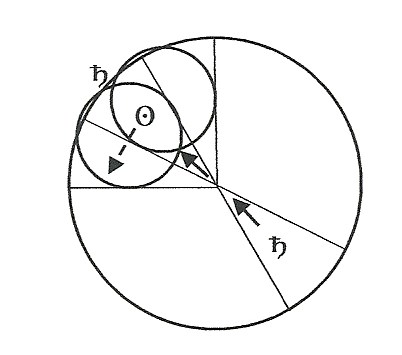
FIGURE 1979 1104-1. Saturn in Leo and Fourth Quadrant Vesica.
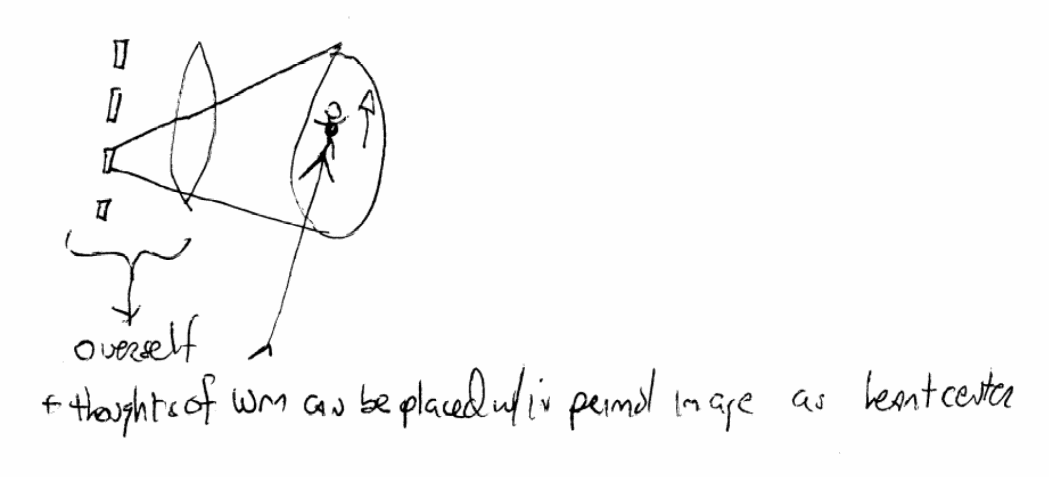
FIGURE 1979 1104-2-AB. World-Mind's Thinking, Overself, and World-Image.
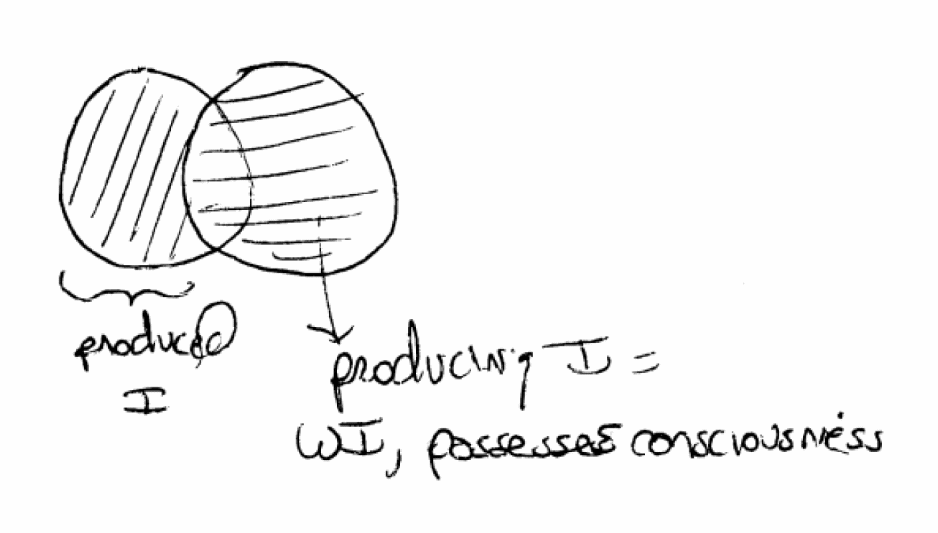
FIGURE 1979 1104-3-AB. Witness-I and Empirical "I".
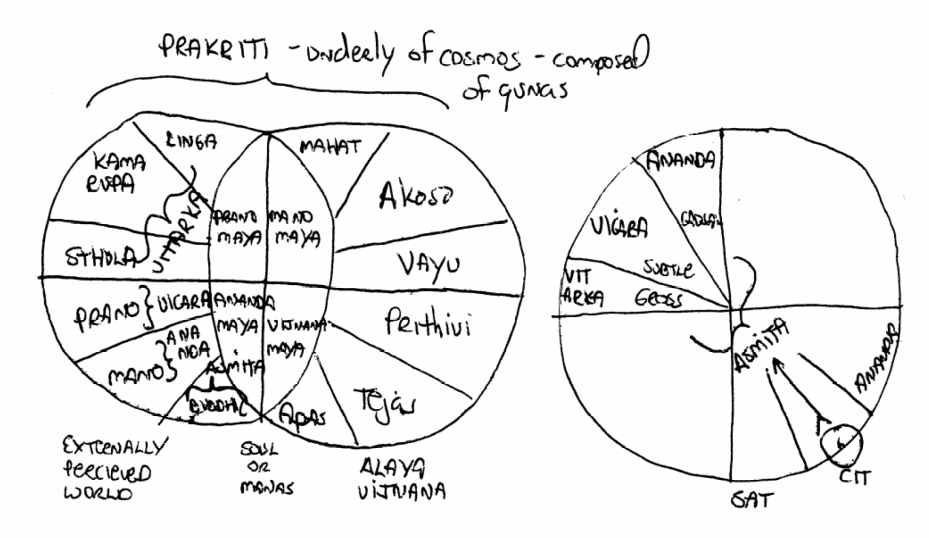
FIGURE 1979 1104-4-AB. Vesica of Houses 10-12, with Cosmic Tattvas in House 10, Four Koshas in House 11, and Six Theosophical Principles of Man and Four Samadhis in House 12; Sat-Chit-Ananda correlated with Houses 4-6, Four Samadhis correlated with Houses 10-12.
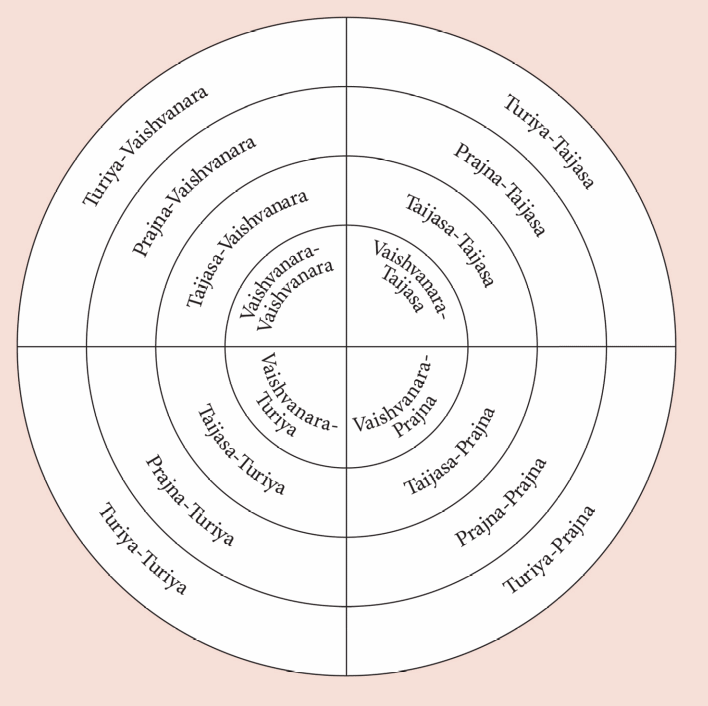
FIGURE 1979 1104-5. Four States of Consciousness in Four Rings and Four Quadrants.
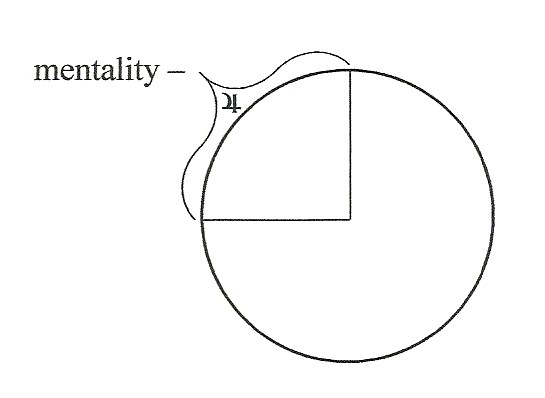
FIGURE 1979 1104-6. Fourth Quadrant as Mentality.
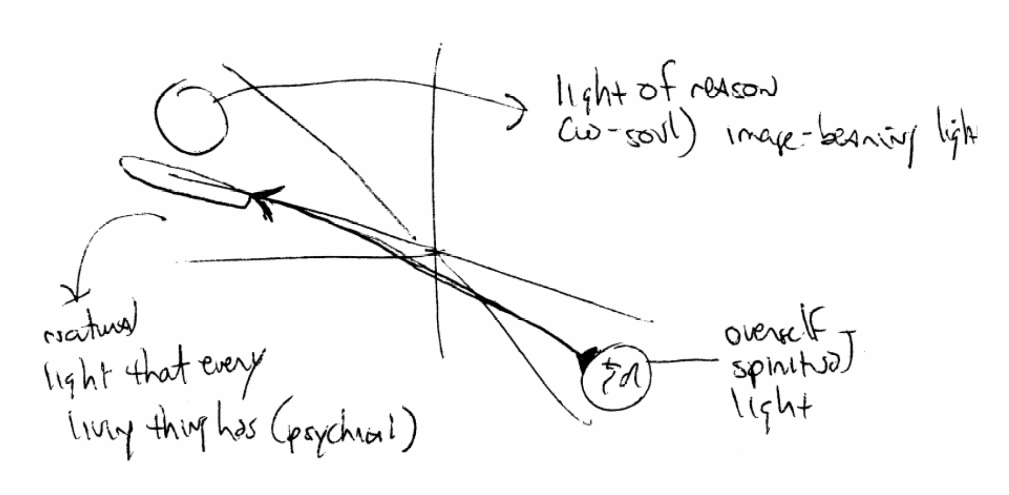
FIGURE 1979 1104-7-AB. Three Lights.
Other diagrams referred to are not with this transcript version. [Transcriber note: [diagram] means the speaker is referencing a diagram as he or she is speaking. If someone is drawing or writing, with audible sounds of chalk on a blackboard, I indicate this by [drawing] or [writing].]
NOTE: Sunday night class, part of Wisdom series 1979-1980.
TRANSCRIBED Verbatim by IT 2019; reformatted by JRM & JF 2019-2020, with TOC/Subheads by JRM. In 2023, IT updates prefatory matter, footer, and audio file name, fixes errors/typos, adds five diagrams and references within transcript to these diagrams. In 2024, MW alters Subheads to make more accurate. Archival verbatim transcript – V14.1a.
AUDIO FILES: 1979 1104a, 1979 1104b. [Note: "Tape" and "Side" refer to original audio cassette tapes that were later digitized into .MP3 Audio Files.]
1979 11/04 at Wisdom's Goldenrod
PB Books; Wisdom of the Overself; "The Secret of the I"
Archival verbatim transcript
[Audio File 1979 1104a Begins]
AD: --either way it's written. [10¾ second pause, shuffling about] Vic, did we start it, did we--
VM: Yeah, we did--
S: We finished the first section.
VM (simultaneously): --about the first section.
AD: First section, oh good.
S (faint): Uh-hm.
AD: Here's another nice book but this is the one you were reading, there's two translations, the one that the Dalai Lama gave us and then there's that translation.
AB: From Macmillan.
S: What is it?
S: Which one is that [one/two words inaudible]
AB (simultaneously): Oh, this is called Entering the Path of Enlightenment, it's the same book that we read from-- [Note: Entering the Path of Enlightenment: The Bodhicaryavatara of the Buddhist Poet Santideva, by Santideva, translated by Marion L. Matics, Macmillan, New York, 1970.]
S: The Bodhisattva?
AD: Yeah.
AB: Yeah, Chang yesterday because he translated.
AD (simultaneously): He has a nice introduction to it. [one word inaudible] (it became his/the famous) introduction [couple words inaudible]
[short pause]
S (faint whisper, possibly part of background): But you must.
VM (faint, possibly part of background): The [one word inaudible] Dalai Lama didn't want to read it.
S (very faint, possibly part of background): Yeah.
AD: There's a few Buddhist books that I've been picking up for the Center. I mean I got them at home, I gradually am returning some of these books. I go through the table of contents and index, you know, to see if there's anything useful for us. But there are a few books and some are quite good but they're so expensive that I'm almost willing to suggest that we xerox them or something. You know, like a little thin book is 19 dollars or something and 100 pages in it. So, that's why I want to put off, you know-- We'll wait for that, we'll see-- plan on xeroxing. I think it would be much cheaper.
VM: It's against the law, they'll probably--
AD: It's against the law? Oh I didn't know that.
VM (simultaneously): If the book's in print.
S: Oh, you had to know that.
RG: We've done it before. (RG laughs, some laughter)
VM: That's what I've heard but I don't want to discredit.
MW (faint, possibly part of background): Oh yeah, there's some books that he [S simultaneously: But--] couldn't get there.
RG: The Plato's in.
AD (simultaneously): Well, then you have to memorize them. (laughter)
VM: Let's xerox them. (laughter)
S (faint): We could memorize them.
S (simultaneously): Xerox them, in 20 years memorize them [few words inaudible] (student laughs)
AD: Yeah. So, let's turn to "The Wonder of Awareness," and-- I don't know if I should invite Dickie up here but he's better off there. (VM laughs a bit) This way it seems like--
S (very faint): Yeah.
RG: You lucked out, I just wanted to argue.
S (faint): [couple/three words inaudible]
RP: Closer.
[25¼ second pause, faint background student and AD talking]
AD: Let's start by reading some passages and discuss them. Just quickly, some of the passages.
S: Yeah.
[Transcriber note: I am using The Wisdom of the Overself by Paul Brunton, Rider and Company, London, 1943.]
PB [The Wisdom of the Overself, "The Secret of the I," p. 80, AD reading]: "We [AD reads: He] [have] found that thoughts and sensations constitute the person."
S (very faint): Yeah.
S: Paragraph?
S: [one/two words inaudible]
S (simultaneously): [one/two words inaudible]
AD (simultaneously): "Wonder of Awareness".
S (faint): Uh-hm.
PB [The Wisdom of the Overself, "The Secret of the I," p. 80, AD reading]: "But does the person constitute the whole of the"I"? Can we separate self from the ideas, [the] perceptions [AD reads: perception] [and the] memories which it holds? We know that there is an "I" of some sort for it is our own thoughts that come into being and not another's. [AD adds: And] A thought is always somebody's thought. …
"Although the"I" changes from instant to instant we feel somehow that it knows itself indirectly through its thoughts, acts and experiences, and that something remains constant and stationary through all these changes. [If] in one sense there is a continuity [between] what we once were and what we now are, then this persistent core must be a deeply-buried mental one. What is this mysterious core? Can the "I" know itself directly?"
AD: And then the middle of the next paragraph.
PB [The Wisdom of the Overself, "The Secret of the I," p. 80, AD reading]: "The fact that he [AD reads: Hume] could examine his own thoughts showed that there was something in him which [was] itself deeper than them, [AD: than the thoughts] for it could not simultaneously be both the owner of the thoughts and the thoughts themselves, both the examiner and that which was examined. What is this"something"? It is, it must be a still deeper "I" which, although usually ignored, must matter most of all. And this, when traced through the conventional confusions and unconscious processes which habitually surround it, is nothing else than that intangible principle of awareness itself whose own existence makes the existence of all the multiple items of awareness itself possible."
[10 second pause]
AD: Then, in the next page--
IS THE PERSON, THE "FRACTIONAL CONSCIOUSNESS," DERIVED FROM THE OVERSELF OR THE COSMIC SOUL?
PB [The Wisdom of the Overself, "The Secret of the I," p. 81, AD reading]: "What the hidden teaching says is that the awareness is itself a separate principle. Part of it acts upon the body, principally through the heart and the brain. It has certain correspondences and relations with centres in the brain. The part which thus acts is the part which is projected into a particular space-time existence and which thenceforth imagines itself to be an entirely complete and self-sufficient being. It is indeed what we know as the person. [AD adds: And] It is this projected fraction of awareness which is what we ordinarily term consciousness, that is the sum of all our personal sensations, thoughts and feelings. It is this fractional consciousness--and not the mind whence it originates--that has its seat in the particular body with which it is so intimately associated…"
AD: Ok? I think we better stop, (and yeah) most of you have read this so it'll call for (um/a)-- [JG: Two.] it'll call for some questions. And, I dare say that the questions you ask will immediately show in my mind at any rate how you've taken, you know, this chapter. I have no set way of interpreting. I can offer you a couple of ways of interpreting it. I-- you have to understand that I'm in a-- it's a very unkind situation I find myself in. I don't like to do what I'm going to do. You know, I'm going to have to tear this chapter apart. So, why don't you discuss it, you're friendlier. You have kinder thoughts towards this book than I have, this chapter. Go ahead.
S: So, I mean--
[short pause]
AD: You don't want to discuss it? (laughter)
MW: Well I'll ask an obvious question. (bit of laughter) [student assents, faint] If the-- if the principle of awareness is-- is taken to be consciousness the way we're interpreting as being this illuminating consciousness and not the contents of the mind, and that is this principle of awareness which he speaks about as having a part of it acting on the body, then he goes on to say this part he seems to call the person and then goes on to say that it's the sum of all personal sensations, thoughts and feelings. Well if it was the principle of awareness that is the person and the person is also the thoughts and feelings, all the contents of mind, then-- then we don't have this-- we don't have a pure illuminating consciousness anymore, I mean, it seems the illuminating consciousness has become mental.
AD: Thank you Michael, thank you.
MW (faint): That's the obvious.
VM (faint): That's a good (rapport/report), yeah.
AD: And what did you think of what Michael said?
RG: I fully agree with him. (MW laughs a bit)
AD: Wow, this is a surprise.
RG: Yeah. (laughter)
S: [one/two words inaudible]
VM (simultaneously): It's the point that Dickie's been trying to make for-- for several weeks in fact.
RG: As on the previous page where he defines mind as the invisible principle of awareness that continues to cau-- I think he's saying here that-- I mean what-- that fractional consciousness which resides in the heart center that we've been calling the Overself center in the heart is an emanation from what he called mind, which I think he's defining here as the invisible principle of awareness.
[10 second pause]
AD: How could we put together what you both said? What Michael said more or less amounts to something like this, if I followed Michael. What he's calling that projected self, alright, is not really the principle of awareness, is not really the Overself, is not really the soul.
VM: Well, I mean--
RG: Well which part of the sentence?
AD: Yeah where he says--
PB [The Wisdom of the Overself, "The Secret of the I," p. 81, AD reading]: "The part which thus acts is the part which is projected into a particular space-time existence and which thenceforth imagines itself [AD repeats: imagines itself] to be an entirely complete and self-sufficient being."
PB [The Wisdom of the Overself, "The Secret of the I," p. 81, AD reading]: "Part of it acts upon the body, principally through the heart and the brain. It has certain correspondences and relations with centres in the brain. The part which thus acts is the part which is projected into a particular space-time existence…"
AD: Now, wouldn't you say that that would be, again, more of the mental "I"?
S (faint): Uh-hm.
AD: Would you think so?
S (faint): That's true.
S (very faint): Definitely.
RG: No.
AD: And when he says--
PB [The Wisdom of the Overself, "The Secret of the I," p. 81, AD reading]: "It is this fractional consciousness--and not the mind whence it originates--that has its seat in the particular body with which it is so intimately associated…"
AD: Could you go further on and say that this consciousness which has its seat in the body is what we refer to as the taijasa consciousness or the-- that-- that s-- that element or that part coming from the cosmic soul? Not coming from Saturn [diagram], pure consciousness. It would be the [one word inaudible] consciousness. [Note: See FIGURE 1979 1104-1, Saturn in Leo and Fourth Quadrant Vesica, appended to this transcript.]
RG: But-- but then what does that do to the thought of the Overself center residing in the heart? Is that something different from this?
S (faint): Uh-hm.
S (faint): Yeah.
S: That, yeah.
[9 second pause]
AD: What about the-- where he says--
PB [The Wisdom of the Overself, "The Secret of the I," p. 81, AD reading]: "…the awareness is itself a separate principle."
AD: Is this what you're referring to?
PB [The Wisdom of the Overself, "The Secret of the I," p. 81, AD reading]: "Part of it acts upon the body, principally…"
RG (simultaneously): Well, yeah. Well, is-- does-- isn't that the awareness that's itself a separate principle be the-- let's say, the Overself in the fifth house, the Saturn in Leo? [Note: See FIGURE 1979 1104-1, Saturn in Leo and Fourth Quadrant Vesica, appended to this transcript.] And then acting through the heart it would be like in your diagram the Overself situated within the heart. [See FIGURE 1979 1104-2-AB, World-Mind's Thinking, Overself, and World-Image, appended to this transcript.]
AD: Well, that's what I'm asking. Is that the Overself consciousness or is that the consciousness which we said would be given birth to by the Sun?
VM: Why can't-- why can't we say that the-- when the Overself is associated with-- with the thinking of the world and the cosmic soul, that that's when this principle of the hidden observer or the Witness-I is-- let's say takes place. Or let's say association of that pure consciousness with-- with activity in the fourth quadrant [diagram], that's this fractional awareness.
THE WITNESS-I IS A MENTAL SELF, NOT THE OVERSELF
AD: Don't you understand what Michael said? Michael said something like this actually. He says "That's not the Overself. That's-- that Witness-I is the mental self."
VM: I agree, I'm trying to say the same thing, I'm saying when the-- when that Overself or that pure consciousness is associated with, let's say, functioning in the fourth quadrant, the world-- the cosmic soul's activity, then it becomes in some sense mentalized and that's when it's the hidden observer and then it's only a relatively permanent. It only lasts as long as the cosmic soul is manifesting the universe and so on.
AD (simultaneously): But then what were we calling the separate principle of awareness? And besides, he says that it imagines itself.
VM: Yes, it's really immersed in manifestation and in mental functioning.
S: Wait a minute, are we suppose--
VM (simultaneously): In some ways it's like the outward-facing hypostasis of the Saturn.
S (faint): What?
MB (faint): It's so--
RG (simultaneously): But if-- yeah, but if-- if it's doing the imagining it itself couldn't be an imagined item and [student assents] therefore couldn't be a mental "I". Its product would be the "I".
VM: Well say it again Dickie.
RG: If this-- if this fractional consciousness that's in the heart that does the imagining, then it itself couldn't be an imagined item which the thought of "I" is. It couldn't be a thought itself, in other words, if-- if it-- if it does the imagining.
VM (simultaneously): It's the principle of pure thought.
RG: But if you would be the principle of imagination here, [VM: Well--] if it imagined--
VM: I'm not sure how you're using imagination, as the lowest gnostic function or--
RG: No, no.
VM (simultaneously): In what sense are you using it?
RG (simultaneously): Well I just-- I mean as image and thought. That which gives rise to think-- the thoughts.
[short pause]
AD (faint): Well, can you read it?
PB [The Wisdom of the Overself, "The Secret of the I," p. 81, RG reading]: "The part which thus [RG reads: The part of awareness that] acts is the part which is projected into a particular space-time existence and which thenceforth imagines itself to be an entirely complete [RG reads: completed]…"
RG: So that would be like the first of our thoughts is "I" and then it gets associated with the--
AD: Wouldn't that be more applicable to think of, for instance, when we think of the cosmic soul projecting the individual mind, [VM assents] and now that individual mind thinks itself as individual and acts and imagines itself to be individual?
RG: How could the individual mind act unless it was associated with consciousness?
AD: I [MW simultaneously: Yes.] agree with you there. I'm not saying that that's so but I'm saying wouldn't you think that this would more precisely refer to that?
S (faint): That's not bad.
MW: And then that-- that just leaves the question as to what he means by saying that it's a fraction of this separate principle of awareness.
RG: Well yes, I'll-- I'll agree with what you say there, but, exactly what Michael said, then the-- then the question just gets removed to the question of what's the mind in which it originates.
AD: Well the mind from its--
PB [The Wisdom of the Overself, "The Secret of the I," p. 81, AD reading]: "It is this fractional consciousness--and not the mind whence it originates…"
RG: Right. It seems there the mind-- if the awareness-- if part of the awareness acts on the body, ok, and that's that fractional consciousness, and the mind is the source from which it originates--
AD: The mind here would be what we'd refer to as the cosmic soul.
RG: Well, ok, that's what I don't understand because if it-- if it's part of this aware-- I mean you're saying he doesn't really mean awareness here. [short pause] I mean, if part of the awareness acts upon the body, then what is-- Is it part of the aware-- the Overself awareness or you're saying that the awareness was in a cosmic soul?
AD (simultaneously): No, I would say that that would be the taijasa consciousness which emanates from the cosmic soul, which combines with the body, and then you have the production of your experienced world or the possibility of an experienced world.
RG: Ok, so it really isn't the principle of awareness.
S (faint): Uh-hm.
AD: Well that's what I though Michael's implication was.
S (very faint): (Which I never do.) (some laughter)
VM: Yeah, right, what if it's all equal.
MW (simultaneously): Well, but I was [RG/S simultaneously: But (couple words inaudible)] proposing it as a dilemma. I didn't--
AD: It is a dilemma.
S (very faint): Uh-hm.
RG: Well, I don't--
AD: It is.
S (very faint): Agree.
RG: I don't--
AD (simultaneously): Did you-- do you follow what we said?
RG: Yes I do but I don't see the dilemma. I see the dilemma with the view that was being expressed but I don't see the dilemma in the paragraph.
[short pause]
AD: Well Michael, he doesn't see the dilemma.
MW: Wait, you don't see the dilemma in this paragraph?
RG (simultaneously): I see the dilemma with the way you want-- I see the dilemma the way in which you're-- you're saying this doesn't jive with the-- the diagram we were using. But I don't see that it's not totally consistent within itself.
MW: Well-- I mean if you grant that mind [RG: Is a--] is the principle of awareness--
RG (simultaneously): Of awareness, the paragraph follows--
MW: How does the principle of awareness become a mental self? That's still a question.
RG: That's-- ok, that's a different question, I mean that--
MW (simultaneously): Well no, that is the question.
RG: Ok. But that's a question that, you know, how does the soul descend, I mean that-- it's the same question.
MW: No, I think it's--
RG: I don't think that question negates the interpretation of mind as the principle of awareness.
AD: I'm sorry?
RG: Bringing up the problem of how-- of how awareness translates itself into a mental form, I mean I-- I think that's another question than where-- if awareness here means the taijasa consciousness or the Overself consciousness. I mean the way he uses 'awareness' in "the principle of awareness" throughout, I don't see how you could take it as anything but the Overself consciousness.
AD: Well, alright, let's spring over to the next page.
PB [The Wisdom of the Overself, "The Secret of the I," p. 81, AD reading]: "With what faculty does man dream of distant continents at night and with what faculty does he picture them in imagination by day? Is it not with the mind and does this not show that it [AD reads: he] can embrace the most distant places? [AD adds: And] At what point of the universe dare he say that any object, however distant, is outside his mind?"
AD: And he always-- he goes on and he says--
PB [The Wisdom of the Overself, "The Secret of the I," p. 81, AD reading]: "…we are entitled to say that mind is everywhere. It is like space of which nobody can say where it ends. Space is indeed the form which mind takes. But this is the same as saying that mind is formless. Mind occupies no definite position in space for the simple reason that space itself is its own production."
AD: And then we have a more difficult passage down at the bottom.
PB [The Wisdom of the Overself, "The Secret of the I," p. 81, AD reading]: "Thoughts are only phases of consciousness. Consciousness is only a phase of mind. Mind is outside the limitation of any particular place. It is not really flesh-tied, but our belief about it is [AD reads: beliefs about it are]."
[short pause]
AD: Now, [S, faint: Yeah.] we're going to run into this all the way, the rest of the chapter is going to be--
RG: Oh really? (RG laughs a bit)
S (faint): Yeah.
AD (faint): Yeah.
S (faint): Right.
S (faint): Well--
[short pause]
AD: Continuing a little more so that we have something to discuss. He points out--
PB [The Wisdom of the Overself, "The Secret of the I," p. 82, AD reading]: "…the mind is not an assemblage of parts having position and distance; consequently it is not in space. … We can only think of its manifested thoughts doing so--which is an entirely different matter."
AD: And then in the next paragraph--
PB [The Wisdom of the Overself, "The Secret of the I," p. 82, AD reading]: "The essence of this doctrine is that all these things are ultimately known by the mind, are known only as mental perceptions and therefore can only exist within such a conscious, immaterial and untouchable principle of awareness as we know the human mind to be."
[short pause]
AD (faint): Uh--
S (very faint): Uh-hm.
LR: Anthony?
PB [The Wisdom of the Overself, "The Secret of the I," p. 82, AD reading]: "The sensations themselves are only the objects of man's conscious attention. What about their observer's own existence?"
AD: Ok? Yeah. Sure. Someone yell out?
LR: Yeah I did.
AD: Good.
LR: Could it be that you and PB hold different ideas about--
AD: I'm sorry? I didn't hear you. That's an unusual place for you. (laughter, student words) You look like you're [couple words inaudible] out there. (AD laughs, laughter)
S (amidst laughter): It wouldn't be out there.
AD: Could-- could you repeat what you said?
LR: I said, could it be that you and Mr. Brunton hold different views on the nature of consciousness and mind? What I'm asking is, does he really want-- does he have any interest at all in distinguishing between mind and awareness the way you do? I mean, it seems like his interest is making-- making the [couple words inaudible]
AD (simultaneously): Well, in this phrase here for instance, I mean I'm-- I'm really interested in understanding.
LR: Yeah.
AD: When he says--
PB [The Wisdom of the Overself, "The Secret of the I," p. 81, AD reading]: "With what faculty does man dream of distant continents at night…"
AD: And he goes on, alright.
PB [The Wisdom of the Overself, "The Secret of the I," p. 81, AD reading]: "Is it not with the mind and does this not show that it can embrace the most distant places?"
AD: And, in that passage and in a few others (where--) the next one--
PB [The Wisdom of the Overself, "The Secret of the I," p. 82, AD reading]: "The essence of this doctrine is that all these things are ultimately known by the mind, [AD rereads with emphasis:"known by the mind] are known only as mental perceptions [AD reads: perception] and therefore can only exist within such a conscious, immaterial and untouchable principle of awareness as we know the hu…"
LR (simultaneously): Ok, now right there.
AD: Right?
LR (simultaneously): Right there, ok.
AD (simultaneously): Yeah. Well, I mean there I read these two conflicting items.
LR: Now when he says "known by the mind, in the principle of awareness", that-- that's right there-- I mean "known by the mind" is one thing. But that's not the principle of awareness the way you're speaking of it. In other words, the principle--
S (simultaneously): No it isn't.
S: Yes it is.
LR: The principle--
RG (simultaneously): Oh yeah.
S (faint): Really? (bit of laughter)
LR: The principle of awareness and knowledge through using the mind seem to be two distinct principles.
MW: Uh-hm.
VM (simultaneously): If that's so, [RG simultaneously: I-- I disagree.] how do you descri-- how do you--
LR: But wait a second, the way we've been discussing it up till now.
RG: Oh, the way-- yes.
VM (simultaneously): Oh we've been discussing [RG simultaneously: Well yes, definitely.] it, yes, that may be so. But if that's so with PB then how do you des-- the-- how do you understand the thing here when he says, the-- "and untouchable principle of awareness as we know the human mind to be"?
RG: Yeah.
LR: That's my point Vic.
RG: But I think-- (bit of laughter) yeah.
S: Where is the dilemma?
S (very faint): Well it's not here.
S (very faint): (Yes it is.)
AD: Go ahead.
RG: I think mind is being used, you know, as-- ultimately it's the princip-- principle of awareness, but just as we speak of the soul's descent into experience and the soul's experience of-- of the world through the rational and irrational faculties, so too the human mind as the principle of awareness has cognitive and gnostic faculties as well.
AB: Yeah but we've spoken-- when we've used the term 'mind', you know, all the way back to the Hidden Teaching, we've spoken of it as the thinking principle. Right? And now there's a-- this injection of this other aspect which is consciousness [RG simultaneously: No, I don't--] which we've--
RG: I don't think that it was ever distinguished in the Hidden Teaching, just-- To say mind as "the thinking principle" I think included the idea of the awareness. Now he's-- now he's bringing out the full implications of the term 'mind'.
AB: You're saying that his term 'mind' is consciousness.
RG: It's the principle of consciousness, the principle of awareness.
AB: And also the principle of thinking.
RG: And also the principle of thinking, yeah.
S: Yeah.
AB: Ok, I mean, in that--
VM (simultaneously): In fact in some place he calls it pure Thought, Thought-in-itself.
AB: I mean 'cause he does say in this paragraph that the synthesis of the different perceptual aspects of the object takes place in consciousness, whereas before we would have said it's synthesized by mind.
[student assents, very faint]
RG: Or when he says--
PB [The Wisdom of the Overself, "The Secret of the I," p. 83, RG reading]: "…the mind itself does not change with the changing states of its surface being because it is the pure principle which renders possible all those countless acts of awareness that constitute the experience of the other states."
AD: That would not contradict with the statement that that "I" that he's referring to is a mental self, that is, the Witness-I, and that it can-- it can be mental.
RG: The mind?
AD: What you just read, what you just read.
RG (simultaneously): Yes, the pure principle of awareness? That's--
AD: Read the-- would you read the section?
S (faint): Well--
VM (faint): He's reading clearly here.
THE SUN AS COSMIC SOUL IS THE OBSERVER AND KNOWER OF OUR EXPERIENCES IN THE EMPIRICAL WORLD
PB [The Wisdom of the Overself, "The Secret of the I," p. 83, RG reading]: "…the mind itself does not change with the changing states of its surface being because it is the pure principle which renders possible all those countless acts of awareness that constitute the experience…"
AD (simultaneously): Now what I am saying is that that's not the pure principle. [MW assents] That is a principle, yes, but that's not the pure principle. Now the mind that he is speaking about here will be equivalent to the cosmic soul, alright. [student assents, faint] And that that cosmic soul can be aware of all the multiple items within itself. But this is not the awareness principle.
LR (simultaneously): But would the cons-- would [S simultaneously: Well--] the cosmic soul be-- would it be possible for the cosmic soul to limit itself to an individual self-sufficient-- imagine itself to be an individual self-sufficient--
AD: What we're saying is that each individual mind that is born from the cosmic mind, alright, cosmic soul, imagines itself to be individual and proceeds on that assumption. But we know, we know from just reflecting about it that all individual minds subsist in cosmic soul and are offspring of the cosmic soul.
RG: Yeah.
AD: Well then that would be-- that will be equivalent to saying that that cosmic soul is the Witness-I of the experience of all these individual minds and all the multiple awareness-- items of awareness within them.
VM: Well he essentially says that on the last page of this chapter.
AD (simultaneously): I know he says that.
RG: Yeah.
AD (faint): I know.
RG: Yeah. But [AD simultaneously: You see--] you're still--
AD: Go ahead.
RG: Then I don't-- why say-- what is the principle of awareness? I don't understand that term then.
S (faint): Why not?
AD: Well, the cosmic soul per se could be a principle of awareness.
RG/S(?): Yeah, it could be.
AD: Yeah. And so insofar, insofar that-- Let me try this way. It's like saying something like this. The Sun as cosmic soul is the observer and is the knower of our experiences in the empirical world. [student assents, very faint] That's what I'm saying.
VM: Is that [RG simultaneously: Ok.] independent of the Saturn in Leo [AD simultaneously: We--] or is that in conjunction?
AD: Yeah, no, I'm not bringing in the Saturn in Leo, we got-- you got an eraser around?
S: It's on top of the other blackboard.
RG: Ok, I could--
VM (faint): So--
RG: So that-- that's functioning as (what)?
AD (simultaneously): It would be the same doctrine as for instance [S simultaneously, faint: Far out (one word inaudible)] in Br-- in Hinduism. [S: Yeah.] Brahman, Brahman, not Brahman the impersonal, but Brahma, the fabricator God, is the only true [VM, faint: (Cognize--)] cognizer in our empirical world.
VM: Uh-hm.
S (very faint): Yeah, uh-hm.
AD: So that would be the same as calling it the Witness-I.
S (faint): That's true.
AD: The Witness-I is mental, and by mental we mean taijasa consciousness. [students assent, faint] Now it's my intention, it's my intention to get you so confused, (bit of laughter) you know, to bring up a battery of oppositions and attack your point of view constantly, I'm not going to espouse my point of view first. So why don't you continue, Richard.
S: Uh-hm.
S: You never know.
RG: You don't?
AD: No this is difficult, there's some confusion here.
RG: Right.
S (simultaneously, faint): It's all about you.
AB: But insofar as this starts out looking for the "I" which is in relationship to known objects or the awareness which underlies known objects, it would have to be relational.
AD: Say again, yeah, I don't think I followed.
AB: He starts out his analysis from experience or from known things and he's searching for the "I" that knows them or the consciousness which is aware of them. So insofar as he's starting out with, you know, some kind of dualism, even if it's within mind, then the "I" he comes up with would have to be relational.
AD: Well--
RG: But he goes beyond that.
AD: Well I don't doubt that. [drawing]
RG: But even right here in this sentence here.
AD: Uh-- (some laughter) Read it, read it.
AB: Read what?
AD: The same passage Dickie read. And I-- I can't find it.
S: [couple/few words inaudible]
RG: You want me to read?
PB [The Wisdom of the Overself, "The Secret of the I," p. 83, AB reading]: "…the mind itself does not change with the changing states of its surface being because it is the pure principle which renders possible all those countless acts of awareness that constitute the experience of the other states."
AB: It's paragraph 30.
[short pause while AD draws]
AD: We try to imagine this is the cosmic soul functioning [diagram], alright, producing. [short pause while drawing] Let's say this-- this is the limits of its world, and that there are creatures within that world. Now, insofar that the creatures have experience of objects in that world, and we pointed out that the-- the object was composed of or was constituted by taijasa consciousness. We pointed out that the subject here was constituted of taijasa consciousness. And we pointed out that the means of the object knowing the subject was constituted of taijasa consciousness. Therefore all of this takes place in the realm of Brahma or taijasa consciousness. Now, if I-- if I make this arrangement here, ok, here's the subject, here's the object, what do I put over here [diagram] [S: Next.] [S, faint: What?] [S, faint: Yeah.] to complete the triangle?
S (faint): The mind.
AD: Huh?
S: The mind.
S: I'm sorry. Can I repeat what you just said? What did you say that the means-- that me-- that know-- that knows is like the means?
AD (simultaneously): This here would be the means, the thought [diagram]. When, for instance, we speak about a-- you know, the mind grasping the object, or the mind going forth or the mind understanding, whether its own internal states or external states, we spoken of that-- about that as being constituted by taijasa too, in other words this subtle fiery kind of substance which is referred to as taijasa consciousness. So we say that [drawing] this [diagram] is a fabrication of the cosmic soul and any others, alright. This [diagram] is a fabrication of the cosmic soul. The connection between them, alright, that too is a fabrication of the cosmic soul because that's the celestial fire, the vivifying fire. And it's that that connects them, alright. Who would be the knower?
[short pause]
S: That consciousness which underlies them both.
AD: Yeah, that's what I would say. I would say this is the knower [diagram].
RG: Right.
S: Yeah.
RG: He agrees.
VM: That's what PB seems to be saying but that seems quite contrary to what you've been saying.
AD (simultaneously): No, not contrary.
RG: No it is.
VM: It seems contrary to what you've been saying.
AD: It's not contrary. It's a question of level.
RG: Right, ok.
AD (simultaneously): More a question of levels.
RG: You're saying that level of knowing is taijasa consciousness.
VM: And what is the role of the Overself in that?
LR: Oh. You're saying the--
AD (simultaneously): Well, wait. In one minute. [VM simultaneously: Ok.] You really-- you really think so Richard?
RG: I can follow what you're saying now.
AD (simultaneously): Well, [S: Thank you.] I-- I'd like you to support me. Give me a quote. [RG simultaneously: To support you?] I mean if you're going to be on my side.
RG: Going down. (laughter)
S (amidst laughter): Oh I-- I didn't want [few words inaudible]
AD (simultaneously, laughing): Didn't (got--) I don't want this tentative illumination. (RG laughing)
S: Nice.
RG: Said I could follow you, I'm--
AD: If you could follow me then pull out a quote to show what I'm talking about.
PB [The Wisdom of the Overself, "The Secret of the I," p. 90, MW reading]: "…there is ultimately only a single observer…"
AD: Go ahead.
PB [The Wisdom of the Overself, "The Secret of the I," p. 90, MW reading]: "…the World-Mind…"
AD: We call it cosmic soul.
RG: Right.
AD: Go ahead.
PB [The Wisdom of the Overself, "The Secret of the I," p. 90, MW reading]: "…and only a single great world image [AD: Only a single great world image.] and we as persons are contained within the great one."
AD: Do you follow that?
RG/S(?): Yeah.
AD: You follow that? Ok?
VM: Sure.
AD: That's it.
S (faint): (It was ultimately.)
S: (Herbert--)
RG (simultaneously): Ok. Then--
AD (simultaneously): That's not the-- that's not the pure principle of awareness.
RG: Ok.
MW (simultaneously): Second to last paragraph in the chapter.
VM: I would agree.
THE OVERSELF IS THE SOURCE OF PRAJNA, INSIGHT INTO THE REALM OF THE COSMIC SOUL
RG: Now, before that-- [S simultaneously: (I'll just--)] But then-- alright, but then when he brings in the term Overs--
AD: Now, could we see an opening to get to his point of view?
S: What do you mean see?
AD: In other words, let's say, um-- uh-- let's say that this is not a tree, let's make it something more complicated, ok? What's the formula for matter and energy?
AB: E=MC2?
VM (faint): MC2.
AD: [writing] E=MC2?
VM (simultaneously): [one word inaudible] to be simpler than a tree. That's much simpler than a tree, but go ahead. (VM laughing a bit)
AD: Huh?
VM: That's much simpler than a tree but--
AD: Now--
S: Maybe for you.
VM (simultaneously): Depends on what you're used to I guess.
RG: That hurts. (RG laughs)
AD: Who would be the knower of that?
S (faint): Vic.
S: Physics teacher.
RG: Vic, right. (RG laughs, laughter) The--
VM: What's the matter with the same cu-- the [RG simultaneously: The cosmic soul.] same arrangement? What's-- [S simultaneously: Paul--] the object doesn't change the situation of that function.
S: You've introduced reason.
S: Hm?
S: You've introduced reasoning.
AD: No, I was just trying to understand now, if-- if let's say I was thinking of a real insight, you know, in physics, quantum mechanics, or relativity, where they get an insight into real structure of the solar system we live in--
VM: Oh, something like penetrates the prajna realm or something like that.
AD (simultaneously): Yeah. And then, and then you would say [drawing] "Well who knows this here?" alright, you'd have to go to the higher, the consciousness. I'm quite sure that whether Einstein or Planck or any of these great men [VM/S(?), faint: Yeah.] must have penetrated with a much deeper level of understanding than taijasa, they must have been working with prajna. Now if we say that the subject consciousness here [diagram], alright, gets an illumination from prajna, ok, then he is reading off this here [diagram].
S (very faint): Ok.
VM: Yeah. But you'd say like in that case taijasa consciousness is almost like the screen on which the contents appear and prajna is in some ways intuiting a deeper level of meaning.
AD (simultaneously): Well, if we took-- yeah, if we took for instance, if we took for instance the example of a dream, alright, and you have this relationship in a dream, alright, and this stupid dream character, you know-- I mean you-- you know, most of the dream characters are stupid but let's make this an exceptionally stupid one, ok, and he comes up with this kind of knowledge. Wouldn't you have to say that it really belonged to the guy who's having the dream, to the-- to the true subject and not to the dream subject? [RG assents] And therefore that in-- let's say in the analysis of some of these problems or philosophical problems, that it's an insight coming from prajna that illuminates this whole realm and shows you that even though your-- you exist here [diagram], in this-- in the realm of the cosmic soul, and that your body is constituted by the stuff of the cosmic soul, the object that you're looking at or you're studying is constituted by that, the means of reaching these two together and bringing them together in some sort of-- is constituted of that, but still you can bring in a much higher level of consciousness to explain how he [AD taps on board] understands.
RG: Ok. You're calling that prajna?
AD: No. Yeah, yeah, that I'm calling prajna and I'm calling that the Overself. But what he is calling, what he's calling the Witness-I here or the pru-- pure principle of awareness really amounts to an identification of this subject consciousness [diagram] with this here [diagram]. [Note: See FIGURE 1979 1104-3-AB, Witness-I and Empirical "I", appended to this transcript.] So that the cosmic soul in us is what ultimately knows anything in its realm.
RG: Now where--
VM (simultaneously): Is it--
RG: I lose you, [VM simultaneously: Can you--] because when he-- I mean, then how would you interpret this?
PB [The Wisdom of the Overself, "The Secret of the I," pp. 87-88, RG reading]: "It should now be clear that this consciousness must be identical with the fourth state of consciousness which we earlier found to transcend sleep. It is the fundamental observer who notes the comings and goings of the other three states because it can stand aside from them in unbroken beatitude. It is our truest deepest self because it alone outlives unchanged the surface self of changing personality."
RG: What's this--
AD (simultaneously): Yes, I'm aware of that passage.
S (faint, possibly part of background): It's about four o'clock.
RG (simultaneously): What?
AD: I'm aware of it.
RG: Ok, so what-- I'm just asking, what-- what are the three states then that this fourth state transcends? How would you diagram that, [S: Right.] if that-- if he's calling that the fourth state of consciousness? [short pause] I mean, normally we would think well then-- then it's-- transcends prajna if it's the fourth state of consciousness.
AD: Yes, I know.
S (simultaneously): But could-- could it be the--
RG (simultaneously): But-- so what is--
AD (simultaneously): But it's obvious, it's obvious I'm disagreeing.
S: Could it be--
RG (simultaneously): Yeah but I-- I still don't see what you're disagreeing with.
AD (simultaneously): The statement as it stands is not wrong, it's just not-- it doesn't make any sense here. By the way, where is it? (bit of laughter)
S: It's--
VM (faint): I can't tell you where but I can see it.
AB: What paragraph?
S (simultaneously): Dickie, what paragraph?
S (faint): What section?
S (simultaneously): [couple/three words inaudible]
RG/VM(?) (simultaneously): I don't remember that far after that.
S (faint): What section?
RG: It's in "The Hidden Observer". It's in the middle of "The Hidden Observer".
AD (simultaneously): Yeah. 146 in my book, ok?
RG: It's near the end.
PB [The Wisdom of the Overself, "The Secret of the I," p. 87, AD reading]: "It should now be clear that this consciousness must be identical…"
AD: Well, it's too far away, I'm not ready to get to it.
LR (simultaneously): Bottom of page 87?
AB: Paragraph 49.
S: (I like how) you go to the last paragraph.
S: Yeah, but you can buy a sentence.
S (faint): Yell.
AD: We have-- we-- we have many more hurdles [RG simultaneously: Ok, al-- alright.] to go through before we get to that one.
RG: Alright, I'll wait, let's go back. We have plenty.
AD: Yes.
RG: Ok, let's go back.
VM (faint): Maybe it's--
AB: Anthony, is so-- in terms of this equation, you were saying that an insight into the structure of taijasa consciousness would have to be a higher consciousness.
AD: Yeah, like for instance, when a Vedantist explains how the mind goes out and grasps an object and then relates it to the subject and then the subject knows the object, I mean isn't all that taking place from a point of view higher than taijasa?
AB: Yeah but it's describing what happens in taijasa.
AD (simultaneously): In taijasa consciousness.
S (faint): Yeah.
S: But he--
RG: Now why isn't this describing that?
AD: I'm sorry, what-- why isn't this--
RG (simultaneously): Why isn't-- why isn't this text--
AB (simultaneously): PB's-- this chapter--
RG (simultaneously): Why isn't this describing that Vedantic view of that principle which is higher than taijasa? That's what I'm missing.
AB: Well-- Even if this chapter was written from the point of view of prajna, in order to explicate the taijasa it would still be describing taijasa.
RG: Well wait a minute, it's not clear that we're explicating taijasa, that's Anthony's point of view that-- that that's what this chapter's doing is explicating taijasa.
AB: Yeah.
RG: Well that's what I'm-- that's the very question, now you can't assume-- you can't assume that in answering me.
AB: Right.
S: Yeah.
MW: Well that's why we-- we--
AB: We're all followers.
MW: --we brought up the quotes where he speaks about mind here as being the mental-- mental fabricator. You know, like the first quote about with what faculty does-- I'm not-- a man dream at night, [student assents] he says with the mind. [RG and another student assent] And the other one where he speaks about that fraction of this principle of awareness as being the sum of our thoughts and feelings.
RG: Yeah.
MW: So I mean there's a number of quotes where mind is being spoken of as a--
RG: Right, I-- I agree that mind is being spoken of in a couple of ways but-- One of them is that way but one of them also is in this other seemingly tran-- more transcendent way. Now I don't-- I don't see the conflict in speaking of them both way, you know, in a-- in a scale of emanation, and why we have to limit the view of mind here to taijasa.
[short pause]
LR: Well space would be the production of the taijasa cosmic mind, (right)?
RG: Sure.
LR: That's one place where that would fit.
AD (faint): Yeah. I think.
LR: Is that where he's using the capital 'M' for Mind and he says space is the form which that mind takes?
RG (faint): Right.
LR: Space is its own production?
VM: Where does he use the capital 'M' Mind there?
S: First one that she read.
LR (simultaneously): [three/few words inaudible]
VM: Can you read the sentence?
S (simultaneously): It's not really a sentence.
LR: Which is--
RG: It's the first word in that (sentence). (some laughter)
VM: Yeah but Linda, that doesn't mean anything. (laughter)
S (amidst laughter, faint): Good enough.
VM: That's convention. (laughter)
AS (amidst laughter, faint): Ad hominem [one/two words inaudible]
LR (faint): My mistake.
AS: Ad hominem, sure.
VM (laughing): Ad hominem, yes.
LR (simultaneously): No, that doesn't matter if it's a capital or not.
AB: If it's the first sentence-- word in the sentence it does.
LR: No, I mean that has nothing to do with [S simultaneously: Where?] what I'm saying.
S (very faint): Of course it does, (yeah).
VM: Dickie, let me see if I understand what you're-- what sort of point of view you're espousing. You're saying that a consistent reading of PB allows one to interpret mind as the highest principle and that it can express itself in several levels, at least one being taijasa consciousness and prajna as well. And that to say that mind's the pure principle of awareness, consciousness is a phase of mind and so on, are all quite self-consistent with that notion of mind. And that notion of mind is very akin to what we've been describing as soul.
RG: Uh-hm.
S: Yes.
VM: That-- To me, I agree, that it is a self-consistent way to go through the chapter but it does seem a bit different than other interpretations.
[short pause]
AD: Well [one word inaudible] I was hoping for a little fight [three/few words inaudible]
VM (simultaneously): Fight, that's just what I'd love to do.
LR: Well if you say--
AD (simultaneously): No love. (bit of laughter)
VM (faint): I can at least say [couple words inaudible]
LR: Anthony, if you speak of the taijasa mind as limitless, then why if one experiences the Witness would he be restricted to his own [AD drawing] (form/world), and why wouldn't he see the entire cosmos operating through individual mind? I mean that's where my confusion comes in in here.
AD: Well, the first question, why--
LR: If you're-- the way I understood you to just be doing this is the level of mind he is speaking of is the taijasa consciousness of the Sun.
AD: Ok, let's take an example, you remember the Jung example, 4000 miles up in the air, he saw the cosmos, [LR: Yeah.] saw the Earth, looked upon it, alright? What was that, consciousness or mind? What was the medium?
RG (simultaneously): It wasn't the pure principle of awareness.
AD: Huh?
RG: It wasn't the pure principle of awareness.
AD (simultaneously): It was mind, even though he was out there--
(Side 1 of original cassette tape digitized as 1979 1104a Ends; Side 2 Begins)
PB [The Wisdom of the Overself, "The Secret of the I," p. 80, AD reading]: "…thoughts and the thoughts themselves…"
RG: Because here he's-- he's still looking (at/in) the other aspect of the mind. He's distinguishing the former. I mean then he has a sentence, mind is--
THE SAME THING CAN'T BE BOTH KNOWER AND KNOWN
AD (simultaneously): In other words, in other words, what you're saying is that the essence of mind is the knower, and what it knows, alright, is another part of itself, mind.
RG: Yes, right.
AD (simultaneously): But he just points out that that's a contradiction, you can't do things like that.
[student assents]
RG: Well, I don't know, [VM simultaneously: No on my chapter it says (one/two words inaudible)] he says mind splits itself into two. [one/two inaudible student words] [AS: Fine, which is--] Part of (consciousness--)
AD (simultaneously): It divides itself in-- [RG simultaneously: Into two.] up into two. [AS: Yeah.] Did you ever hear of the law of non-- non-contriety?
AS/RG(?) (faint): That's what I meant.
S (very faint): (Ok.)
S: Uh-hm.
S: Thought.
AS (simultaneously, faint): The mind cuts itself into two, a part of which is continuously [RG simultaneously: Right.] aware of being observed person and part of [couple/three words inaudible]
RG (simultaneously): How is it different than the soul-- to talk about the soul as the animate, to talk about--
AD: The soul can never [AS simultaneously, faint: (Oh/No), the soul (couple words inaudible)] know the sensible world directly but only through an intermediary.
AS: And the soul may not be through this--
VM (simultaneously): Listen, I wanted to get in on this fight.
RG (simultaneously with AS and VM): Fine, we agree, it can only know it through the body!
AS: No, no, (bit of laughter, student words) but the soul is not the animate. To say-- he says not in the soul per se.
RG: Right.
AS: He says the soul does not go to make up the animate.
VM: I want to get in this [one/two words inaudible] (laughter) You say that the mind can't experience--
RG (simultaneously): We're not supposed to get violent though.
VM: I won't get violent.
S: Right.
AD (simultaneously): Oh we can get violent. (laughter) I'd like to see, I'd like to see somebody get punched over a philosophic question. (laughter)
VM (amidst laughter): I'll be glad to help you out here.
AD (amidst laughter): Yeah, right!
VM: How about this one? You were saying how the mind-- I'm supporting Dickie's point of view because that's easier to fight 'cause, you know--
AD (simultaneously): Oh, well, I don't want you to punch me. (laughter)
VM (amidst laughter): No. Dickie and I will fight. Here's a-- here's one from page-- paragraph 50 of "The Birth of the Universe". It says--
PB [The Wisdom of the Overself, "The Birth of the Universe," p. 38, VM reading]: "Mind actually creates what it experiences and actually experiences what it creates."
VM: Now there's some discussion about the law of non-contradiction but PB doesn't seem to be worried by it in that particular quote. (bit of laughter)
RG: No. (laughter) Well here's the quote my--
AD: Let me answer that. The mind creates the dream and the mind experiences the dream. [VM: Yeah.] Does that sound correct?
VM: Yeah.
RG: Yeah.
S (faint): It's the same problem.
AD (simultaneously): You're dead wrong.
RG: Here's the quote from "The Secret of the I". (some laughter)
PB [The Wisdom of the Overself, "The Secret of the I," p. 86, RG reading]: "The mind cuts itself..."
AD (simultaneously): Go ahead. (more laughter, student words)
PB [The Wisdom of the Overself, "The Secret of the I," pp. 86-87, RG reading]: "The mind cuts itself into two, the portion of which we are continuously aware being the observed person and the portion which makes us aware that there is a person being the observing mind."
AD (simultaneously): That which [AS simultaneously: The mind there is not (necessarily) aware.] makes us aware is still mind and is still not consciousness and you're confusing a false knower with a true knower.
VM: Well-- you're saying PB is doing that.
AD (simultaneously): When you say that [RG simultaneously: PB's doing it then.] I as mind know my thoughts, you're [RG simultaneously: Yeah.] stating an impossibility. [students assent, faint] Think about it just [RG simultaneously: Alright, I'm--] for a minute. [VM simultaneously: I-- in--] Included in that is the assumption that the consciousness is illuminating the three aspects of thought--subject, object, and the means.
RG: That's correct.
AD: Yeah. Well then that's not mind that's illuminating itself.
RG: If you're going to start with the concept, yes, that mind cannot be that consciousness, yeah. But why can't mind be the source of it too?
AD: Can it?
VM: Why not?
RG (simultaneously): Well I think so.
AD: But why-- how could-- how could one thing be the source of these contradictory qualities?
AB: Because the contradictory qualities--
AD: Are not contradictory.
VM: You predicate [AB simultaneously: Well he's saying they're illusory.] them as contradictory and then you have no choice.
AD (simultaneously, intensely): I-- of course I predicate them as contradictory, [VM simultaneously: But then you have no choice.] obviously. I'm not going to predicate jada with pure consciousness.
VM: No I-- I--
AB: Yeah, but you've already started out with an assumption [VM: Yeah.] which might not--
AD (simultaneously): I have. What was-- what was [AB simultaneously: Wait.] the assumption?
AB: That mi-- you start out with the definition of mind as objective, right, the way we've worked it out in the-- in the chart.
AD (simultaneously): I didn't-- that's not my assumption.
AB: I know, but it evolved from--
AD: Oh, that's not my assumption, I beg--
VM (simultaneously): Let's be [one word inaudible] (Dick).
RG (simultaneously): It's the-- it's the Vedantic-- it's the Vedantic view.
AD (simultaneously): I beg to disagree with you. No, that's not my assumption. Turn [S simultaneously: Yeah.] to "The Birth of the Universe" where he speaks about the functioning of mind all the way.
VM: What-- why-- how about this quote?
PB [The Wisdom of the Overself, "The Birth of the Universe," p. 38, VM reading]:] "Mind actually creates what it experiences and [actually] experiences what it creates." (laughter)
VM (laughing): That's in "The Birth of the Universe".
AB: No but he's saying [VM simultaneously: But which one are you reading?] about World Minds being-- lying latent within-- I mean individual minds lying latent within the World-Mind and coming forth. That would lead to an objective definition of mind.
RG: That's considering the World-Mind as the cosmic soul and it may be that there he means the World-Mind as the Intellectual-Principle and the individual mind as latent in the fifth house within the World-Mind.
AD: Repeat that? [few words inaudible]
RG (simultaneously): That quote that we establish as meaning a World-Mind being the cosmic soul and the individual mind being jada within the eleventh house [diagram], if the indivi-- if-- if you assume that the individual mind is the Overself, that mind is the Overself, then that quote could be interpreted that the individual mind within the World-Mind are the Overselves within the fifth house within the Intellectual-Principle.
VM: Oh Dickie, that would be stretching my head beyond [S, faint: Yeah.] anything.
AB: Can't go back and change it. (laughter)
RG: I never agreed with it. (laughter)
VM: That's much too dynamic a view of the second house principle, it's much too kinetic, I mean you can't talk about something which is [RG: I take--] eternal coming in and out of being and so on, that doesn't work.
S (faint): Right.
S (faint): Uh-hm.
RG: I don't know. The soul descends. I mean--
VM: So Proclus says.
RG (laughing a bit): No.
S: Yeah.
S: So--
RG: So does Plotinus. I don't know, go ahead.
AD: Oh, I want you to go ahead.
THE WITNESS-I IS ONLY RELATIVELY PERMANENT
PB [The Wisdom of the Overself, "The Secret of the I," p. 87, RG reading]: "The ordinary"I" is a thought, the ultimate "I" is pure Thought."
RG: I mean the mind here as the principle of awareness is not a thought, it's not a content within thought.
AD: Well pure Thought will be the Intellectual-Principle, no doubt about that.
RG (simultaneously): Right, ok, then again he's-- he's--
VM (simultaneously): It's here called 'mind'.
RG/S(?): But (he don't quote--)
AD (simultaneously): But I don't see-- I don't see why and how that supports you.
RG: Because that's what he means by the mind, pure Thought.
AS (simultaneously): He means your mind is an "I", the pure Thought.
AD: Yeah.
RG: He's already said--
AD (simultaneously): I think, I think that's an imputed meaning, Richard.
VM: No wait a second, are you reading paragraph 41 Richard?
RG: I don't know, how does it--
PB [The Wisdom of the Overself, "The Secret of the I," p. 87, RG reading]: "Thus we have advanced…"
VM: No I'm on a different one I think.
S (faint): It's the [one word inaudible]
RG/S(?) (simultaneously): Yeah.
VM: The bottom-- the last sentence in paragraph 41 it says--
RG: Right, go ahead.
PB [The Wisdom of the Overself, "The Secret of the I," p. 86, VM reading]: "We must therefore be very careful not to think any element of particular or separate thoughts into our concept [RG assents] of this pure Thought-in-itself, [that] which is here called mind."
VM: So, I mean I'm just [AD: Yeah.] taking this contrary point of view.
AD: "Pure Thought, here called mind" [VM: Yeah.] would be Intellectual Mind, Intellectual-Principle.
RG: Right.
VM (simultaneously): Yeah, fine.
AD: Yeah.
RG: Right.
VM (simultaneously): Fine, second house, second quad--
AD (simultaneously): Yeah.
S: It's not that I know.
RG (simultaneously): The Overself, right.
VM (simultaneously): Second quadrant [diagram].
AD: No, not the Overself.
RG: Why not the Overself in the fifth house?
AD: No, pure Mind would include Overself, would [VM simultaneously: Yes.] be homogenous with Overself. [RG: Ok.] There it's like saying that the ultimate perceiver is the Nous.
S: Ok.
S: Uh-hm.
RG (simultaneously): Yeah.
VM: But then if you say that, then there's [few inaudible RG words simultaneous with VM] no problem in saying--
AD: Then there would be no-- there would be no-- there would be no meaning to that sentence.
VM: Which sentence, the one I just read?
AD (simultaneously): The one you just read.
VM: Gee, I didn't--
AD: Read it again.
PB [The Wisdom of the Overself, "The Secret of the I," p. 86, VM reading]: "We must therefore be very careful not to think any element of particular or separate thoughts into our concept of this pure Thought-in-itself, that which is here called mind."
AD: Now, [VM simultaneously: And it's not a capital 'M' Mind either.] aren't you reading something particular into the thought of the Witness-I?
VM: I was thinking that this was the Overself and I would try not to think of the Overself as particular.
AD (simultaneously): No, no, no, I wasn't thinking that way. Wasn't thinking that way.
VM: You were thinking of it as Witness-I?
AD: Yeah. And that consequently you're reading particularity into it, it cannot be that pure Thought.
VM: But-- I'm sorry, I got-- I got [AD simultaneously: Uh-hm.] confused, if you could just say that again.
AD (simultaneously): Sure. Yeah, you see the point I'm trying to establish is that what he's calling the Witness-I is not the pure principle of awareness, alright, but that it is the mental "I". In other words, if you can associate what we call an "I" here [diagram], associate it with that cosmic soul, that would be the Witness-I. [Note: See FIGURE 1979 1104-3-AB, Witness-I and Empirical "I", appended to this transcript.] That would know the interior states of the being as well as the exterior states of the being. They would both be available to it. [student assents, faint] But these two, in other words, your internal thoughts or your external thoughts, alright, cannot possibly know that, [RG: Right.] the cosmic soul.
VM (simultaneously): Know what, the Sun? The Sun?
AD: Yeah, the Sun.
VM: Yeah. Well see, I wasn't-- I started out this way--
AD (simultaneously): Now-- no, now if I can [couple inaudible VM words simultaneous with AD] continue, [VM: I'm sorry.] then that means that your-- your-- what you call your "I", alright, the Witness-I, is identical with the cosmic soul. [VM: Yeah.] And therefore it is not pure consciousness, [VM: Yeah.] it is taijasa consciousness.
VM: Ok.
AD: So then we're back to the mind, the individual mind. Because the individual mind in conjunction with the cosmic soul produces and fabricates the universe, alright, and then gets separate-- separated off from the cosmic soul and it conceives of itself as an-- you know, a separate being and goes around living its life like a separate being, alright. This is the Witness-I [diagram]? No, the Witness-I is that [diagram]. This here would be the empirical "I" [diagram], and the empirical "I" is subsumed under that cosmic or that Witness-I. [Note: See FIGURE 1979 1104-3-AB, Witness-I and Empirical "I", appended to this transcript.] But that Witness-I is only a relative impermanent, [VM simultaneously: Relatively permanent.] relatively.
VM: Relatively [RG simultaneously: Right.] permanent, that's right. [students assent] And the way I was trying to understand that Witness-I-- now, maybe you can see why this is inappropriate. I was thinking of the Witness-I-- Let's take Saturn in Leo as the pure principle of consciousness, cognitive-isness and so forth, and think of it as raying into the fourth quadrant, and where it makes contact with that-- with the motion of the World-Soul there's a certain point of subjectivity which can know anything within that fourth quadrant and that contact of the cosmic soul with the pure principle of awareness, that focus of subjectivity we call the Witness-I.
AD: Ok.
VM: And that when the, let's say, pralaya comes, a real mahapralaya comes, it's all over for that Witness-I. That's why it's a relatively permanent principle.
AD (simultaneously): Even PB made the remark that the Witness-I was an [VM simultaneously: Temporary-- yeah.] expediency. You remember?
S: Yeah.
AD: Yeah.
VM: Yeah, I remember that.
AD (simultaneously): Who said-- I don't know who said it, someone made the report that it was just an expediency, that there was nothing permanent about it.
VM: Well, in fact, he says that in here.
S (faint): Uh-hm.
MW/S(?): Well he says it's relatively permanent.
VM: It says--
PB [The Wisdom of the Overself, "The Secret of the I," p. 84, VM reading]: "Again, the personal self is gradually changing through [the] years but the mental principle which informs it and makes it possible for us to be [VM reads: become] aware of the changing conscious and bodily states, is not affected by this process and remains ever the same. This principle is the relatively permanent element within us and the ultimate basis of all our kaleidoscopic states of consciousness. To become aware of the arisal and disappearance of all those [VM reads: these] thoughts which make up the totality of the waking self their witness must be relatively changeless…"
AD: Yeah.
VM: And so on, and then, I mean--
AD: Yeah, because even in other traditions they speak about the Witness-I as presiding over a series of incarnations which, let's say, go from the beginning to the end of a Manvantara, alright, but that's about it.
VM: What-- but just to-- I thoroughly agree with that. On the other hand, he's also saying-- he also calls that semi-permanent principle the principle of awareness too, because in this-- in the last sentence in that paragraph I just read from--
S: Which paragraph is that?
VM: That's paragraph 34.
IS THE CONSCIOUSNESS POSSESSED BY THE HIDDEN OBSERVER THE PURE CONSCIOUSNESS?
PB [The Wisdom of the Overself, "The Secret of the I," p. 84, VM reading]: "The consciousness possessed by the hidden observer cannot be a fitful one. Being the very principle of awareness, able at any time to shine through its projections…"
AD (simultaneously): Yeah but--
VM: So he does use it that way, I mean--
AD: Yeah but look at what he said, the consciousness possessed by the hidden observer. He doesn't say the hidden observer is that consciousness.
VM: No, I-- I'm not focusing on that issue of it, I'm just saying, it seems like he does call the hidden observer the very principle of awareness.
S: Uh-uh.
AD: The principle of awareness for those that are at the lower-- like I try to point out, the-- the interior [VM/S(?) simultaneously: Oh I-- I see what you're saying.] and the exterior objects [VM/S(?) simultaneously, very faint: Conscious (couple/three words inaudible)] of that empirical subject. He is relatively stable in comparison to that.
VM: Yeah.
AD: Alright, but he points out, he says that that possesses--
VM: Yeah, ok.
AD: That isn't that pure consciousness.
VM: Ok, sure, but let me say, the pure consciousness-- no, it can't be that.
PB [The Wisdom of the Overself, "The Secret of the I," p. 84, VM reading]: "The consciousness possessed by the hidden observer cannot be a fitful one. [AD: Uh-huh.] [VM adds: This consciousness] Being the very principle of awareness…"
VM: Is that the way you want to interpret it?
AD(?) (very faint): Even better.
VM: The only difficulty with that is it's hard for me to think of the pure principle of awareness as being possessed by the hidden observer.
AD: Well how would you put it?
VM: I would certainly not say the lower possesses the higher.
AD: Well don't you go around saying that "I am conscious"?
VM (simultaneously): Oh that's a mistake though, I mean that's-- that's egoity or stupidity or some combination of the two.
AD: No, not necessarily. I mean we all-- From what we've understood, we pointed out that the mind which has these facets, you know, of relating to an object and being the empirical subject and having the means to relate to other objects, that the mind is always considered-- considering itself as the knower. But that doesn't make it the knower. So I say "My mind knows such and such a thing," alright. Well that's not incorrect. You mean-- The point is that upon analysis one realizes that the mind which knows something is really not truly the knower but the consciousness which illumines that mind is the real knower, but we all go around saying "I'm the knower".
[student assents, very faint]
AB: Actually you're saying that there's only one knower, which is the cosmic soul's consciousness.
[students assent, faint]
S (very faint): Go ahead.
AB: I'm-- I'm confused. On the one hand, if we make--
VM (simultaneously, faint): That's what he's after.
AB: What?
VM: Because that's what he's after. (VM laughs a bit)
AB: On the one hand you're saying that this awareness-- this Witness-I is not the Overself consciousness, [AD: Uh-huh.] ok.
AD: But this Witness-I does possess, the way he puts it, that consciousness. [Note: See FIGURE 1979 1104-3-AB, Witness-I and Empirical "I", appended to this transcript.]
AB (simultaneously): Right, ok. Now, the other question is whether or not you can speak of many Witness-I's corresponding to many individual minds or whether you would say that the consciousness associated with each individual mind is taijasa consciousness and therefore there would only be one knower.
AD: I'm sorry?
AB: Is there one Witness-I, namely, the cosmic soul?
AD: No, we would have to say that there are plurality of Witness-I's.
AB: Ok. Because the cosmic soul is associated with a plurality of individual minds.
AD (simultaneously): But the substratum of all these Witness-I's would be the cosmic soul. So we could say that ultimately the only knower in the cosmic realm or in the-- in the realm of images would have to be the cosmic soul.
AB: Ok, but relatively you could say each mind has its own knowledge.
AD: Yes, yes, each one does go around saying that.
S (very faint): Yes, uh-hm.
FW: What's the principle of the cosmic soul?
AD: Well what do you mean? You have to go to the Intellectual-Principle. Is that what you mean there?
FW: Yes. Wouldn't that bring you to the answer to the dilemma?
AD (simultaneously): No, no, no, I'm not going to jump over these things. I mean you're asking me to take a leap that's higher than Mt. Everest. And that's not the question. The question is, is this pure consciousness, which he says the Witness-I possesses, is this pure consciousness?
VM: No.
RG: Yeah.
S: No.
S (faint): [couple/three words inaudible]
AD (simultaneously): He says the Witness-I does possess this pure principle.
VM (simultaneously): Oh, ok if you're saying--
AD: Now if this-- if this Witness-I gets destroyed at the end of a Manvantara, that doesn't mean that the pure principle gets destroyed.
VM (simultaneously): Pure consciousness. Yeah ok. Fine. I was just-- the word 'possessed' just bothers me a little but if you [AD simultaneously: Well--] want to take it in-- in the-- the idea that the pure consciousness is principial to Witness and possession is almost a mistake of the Witness-I, then fine. The notion of possession is a mistake of the Witness-I.
AD: Well it's not really a mistake, I mean-- True, it's not a possession like a bunch of keys that you have in your pocket that you can throw out, but one could certainly say, you know, "I possess consciousness".
S (very faint): Uh-hm, yeah.
VM: Share, something like that.
CONSCIOUSNESS (THE REAL KNOWER) CAN'T BIFURCATE ITSELF INTO A SUBJECT AND OBJECT, BUT MIND CAN
AD: Yeah go ahead, Severin.
SD: Could I go back to-- earlier you were saying that it's impossible for the same mind to both fabricate its contents and to know those contents.
AD: Yes.
SD: That there's a--
AD: That the mind that knows the contents it fabricates is not the knower.
SD: Well, you're saying that there's a principle of contradiction with it.
AD (simultaneously): The only way, the only way that we can say that the mind that fabricates the contents is the knower is when we associate or identify a consciousness with that mind which is the knower.
SD: You're saying that it's impossible for mind to bifurcate itself?
AD: No, I didn't say that.
VM: It can-- it can--
AD: I didn't say that at all.
VM: --split itself in a million pieces but it can't know itself.
SD: In other words, when mind bifurcates itself into a subject and an object, that--
AD (simultaneously): The mind bifurcates itself in a dream for instance, right?
SD: Right.
AD: Dream subject, dream tables, drea-- dream objects all around. Who's the knower?
SD: Well is that the real bifurcation? Or is it that the entire dream is the object and--
AD: Well, and analogously it's very good. In the same way that the individual mind separates itself into a so-called objective world and a su-- empirical subject, in the same way the dream, there's a bifurcation of that mind having two ends to it, subject-object and the relation between them. But that's still not the knower.
SD: Well, but couldn't one say that the real bifurcation is between the mind as knowing the dream and the mind as being the dream and that subsequent to the that there's an identification of the knower with a certain aspect?
AD (simultaneously): Wait, wait, wait, slower. They used to call me a dimwit. (bit of laughter) Slower.
SD: Couldn't one say that the bifurcation into a subject and object within a dream is only apparently the bifurcation that's occurred? That really there's been a more basic bifurcation between the mind as knowing that dream and the mind as being the substance of that dream.
AD (simultaneously): I denied that, I denied that because I'm saying there's no possibility of bifurcating consciousness and the mind that possesses that consciousness.
SD: Well, you're saying that the logical--
AD: I'm saying there's no bifurcation, because there never was a joining!
S: Yeah.
SD: Are you-- are you saying that it's impossible--
AD: I'm saying that consciousness was never mind!
VM (faint): Yeah.
AB: But you would disagree with--
SD (simultaneously): But-- that's ok. But you're gi-- you're giving it as a logical argument.
AD (simultaneously): Never mind. (bit of laughter)
S: Yeah.
RG: But wait a minute, every--
SD (simultaneously): You're using it--
S: Talk to him.
RG: Go ahead.
SD: You're basing it on a logical principle of non-contradiction, that-- that knower and known ultimately have to be of a different nature.
VM: Yeah.
SD: But, is this-- I mean couldn't we argue by analogy with what-- when Plotinus talks about the Intellect and the Intelligible as although being distinct forming a unity? That the knower on that level and the known--
AD (simultaneously): Oh no, no, no, no analogy here. No analogy.
AB (simultaneously): How about a quote from the book?
SD (simultaneously): But if it's logically impossible for knower and known--
AD (simultaneously): No, but there's no analogy. You're speaking about the Intellectual-Principle, you're speaking about God's wisdom, and you want to relate it to the level we're functioning here? Give me another analogy, don't give me that.
AB: Sure, Severin, there's a quote which deals with what you're saying. It says--
PB [The Wisdom of the Overself, "The Secret of the I," pp. 86-87, AB reading]: "The mind cuts itself into two, [RG: Yeah, we read that. (bit of laughter)] the portion of which we are continuously aware being the observed person and the portion which makes us aware that there is a person being the observing mind."
AB: Now, you would say that--
AD: That the observing mind and what it's observing are all part of the same fabric and that they are not consciousness, consciousness illuminates both. It illuminates the fact that you are an empirical subject and what the empirical subject knows.
VM (faint): That's great.
RG: Yeah, ok. I can-- I can [S simultaneously: Yeah.] accept in this chapter that the-- that the human mind-- You-- you say, if the human mind is the principle of awareness [MW simultaneously: Well--] that this principle of awareness is not the ultimate principle, that in fact it is taijasa consciousness, it's a relatively permanent element. But then I-- but within this chapter, he seems to always use consciousness as a phase of mind. I can't understand references in this chapter to consciousness to that which transcends this principle of awareness.
VM: Well, I'll give you one Dickie.
S (very faint): Uh-hm.
AD: Ok?
RG: Go right ahead.
VM (simultaneously): Where he speaks about pure consciousness?
RG: Yeah, where are you?
VM: First let me just call your attention to a sentence that you read, because it seems like you're changing your horses now in the middle of the stream and I--
RG (simultaneously): No. Go ahead.
VM (simultaneously): I don't want to see that happen (in my--) Remember--
AD (simultaneously): Not horses, donkeys.
S (faint): (Donkey.) (laughter, student words)
VM (laughing): We're changing our donkeys in the middle of the stream. (bit of laughter)
RG: Now you fill us up.
S: If-- (right). (laughter)
S: What was that?
VM: Richard, you said that you could--
AD: You know the famous philosophic joke about the donkey?
VM: No.
AD: Well I'm sure.
VM: Tell us. (bit of laughter)
AD: Well he was hungry and he was thirsty to the point of death. And somebody [VM simultaneously: Oh.] gave him a pail of hay and a-- and-- I mean, a pail of water and a bundle of hay and he starved to day-- death and he died of thirst. (some laughter) He didn't know which one to start with.
VM: He had Mars in Libra. (laughter)
S (amidst laughter, faint): Go ahead.
RG (amidst laughter): Go ahead Vic. (more laughter)
S: Oh no.
AD (faint): Yeah, what was that [one word inaudible] ass?
S: He couldn't--
AB: Burden's ass, yeah.
AD (faint): Burden's ass.
AB: There are actually two piles of hay but--
S (faint): (Ok, two.) (some laughter)
AD: Two piles of hay? Well I made it more interesting. (laughter)
VM: Dickie, I just--
RG: Go ahead.
MW (simultaneously, faint): [few words inaudible] (some laughter)
VM: You said that you could appreciate consciousness as being just taijasa consciousness in this chapter?
RG (simultaneously): No, not consciousness, mind or the principle of awareness. But-- [S simultaneously: I think (couple words inaudible)] I'm not really-- I mean I'll accept the level that you're working on but I can't accept the interpretation of consciousness as principial to mind because he had phrased it (for instance) consciousness-- consciousness and mind, consciousness is an aspect of mind throughout the whole chapter.
VM: Well, wait a second, now that's what I wanted to know.
RG: Ok, go ahead. So then in paragraph 47--
S (faint): Yeah.
S (faint): [one/two words inaudible]
AD (simultaneously): That's not true Dickie.
RG: Ok.
VM: No I'm (not trying to) give it to him (and it's in quote here). Let me just read two--
PB [The Wisdom of the Overself, "The Secret of the I," pp. 87-88, AD reading]: "It should now be clear that this consciousness must be identical with the fourth state of consciousness which we earlier found [AD reads: found earlier] to transcend sleep. [VM: There you go.] [RG simultaneously: Yeah, that's the human mind!] It is the fundamental observer who notes the comings and [AD reads: notes the changing] goings of the other three states because it can stand aside from them…"
RG: Yes, but that's the mind.
VM: What do you mean that's [S simultaneously, faint: What's mind?] the mind, says "this consciousness".
S: Right, but the--
RG (simultaneously): Yeah, but that's [S simultaneously, faint: Then why does it say consciousness?] what "this consciousness" refers to.
S (possibly part of background): Tim--
AB: Wait, I'm--
S (simultaneously): No, go ahead.
S (faint): Yeah, yeah, go.
AB (simultaneously): Something's confused here.
S (simultaneously): Where do I--
S: I'll find it.
AB: You just quoted that pa-- that sentence [VM simultaneously: You just--] about fifteen minutes ago [VM simultaneously: Yeah, that's what I'm saying.] to support your point of view.
RG: That's right, I know, well let's go back to it.
AB: So let's clarify [RG simultaneously: In my-- yeah.] the two questions.
RG (simultaneously): What-- "It should now be clear that this consciousness…" Now what is "this consciousness"? The "I", the ultimate "I", which is pure Thought.
S (simultaneously, very faint): [one/two words inaudible]
LR/S(?) (very faint): Was it?
S (very faint): Yeah.
VM (simultaneously): 49.
RG: Which is the--
S (simultaneously): What paragraph?
S: 49.
VM: Ultimate "I" is pure Thought.
RG: Right, now it's--
VM (simultaneously): Ok. "It should now be clear…"
AD: Now how would-- Look, we're running-- you know, we're jumping around too much.
VM: Yeah.
S: Uh-hm.
RG: It's alright.
AD (simultaneously): So, why don't we-- where we left off.
CONSCIOUSNESS CAN KNOW MIND, BUT MIND CANNOT KNOW CONSCIOUSNESS
PB [The Wisdom of the Overself, "The Secret of the I," p. 82, AD reading]: "The essence of this doctrine is that all [these] things are ultimately known by the mind…"
AD: Now--
S (faint): [couple words inaudible]
S: Yeah.
S: Where?
S: Where?
S: Where are we?
VM: 24.
S: On what page?
MB (faint): 24?
S (simultaneously, very faint): 24 [one/two words inaudible]
S (faint): On what page?
AD: Now, this has both points of view in and we could argue them so-- ok?
RG: Uh-hm.
AD: Alright. Now, is there any other way that you could know anything except by the mind conjoined to the object even if the object in this case has to be your body?
RG: No.
AD: There's no possible [RG simultaneously: Right.] way.
VM: Got it.
AD: Alright. So then that would be the meaning of mind here, right? The mind has to conjoin the object and then possibility of knowledge arises.
RG: Of course, I mean--
PB [The Wisdom of the Overself, "The Secret of the I," p. 82, AD reading]: "…are known [AD repeats: are known] only as mental perceptions and therefore can only exist within such a conscious, immaterial and untouchable principle of awareness as we know the human mind to be."
RG: Uh-hm.
AD: Now, you would translate this and you would interpret this to mean, there, the mind is this pure principle of awareness. I would translate it to mean that in this mind, because consciousness illuminates it, or if you want to call it mind and that consciousness is getting illuminated, I don't care about the word. I'm not interested. This is not a treatise on words, alright. But what I am saying here is that unless that immaterial principle, we're calling it mind, makes knowledge available to you so that it can be illuminated by consciousness, no knowledge is possible. [student assents, very faint] So when he says--
PB [The Wisdom of the Overself, "The Secret of the I," p. 82, AD reading]: "The essence of this doctrine is that all these things are ultimately known by the mind, are known only as mental perceptions and therefore can only exist within such a conscious, immaterial and untouchable principle of awareness as we know the human mind to be."
AD: And we know that the human mind is immaterial. We call it taijasa.
PB [The Wisdom of the Overself, "The Secret of the I," p. 82, AD reading]: "S…"
AD: Alright? Well, it ends there.
MB: Anthony? Can I ask you a question? Sometimes you speak of the knower as being the mind, like the knower of the experience or-- as being the mind, and sometimes you speak of it as being consciousness, and now it sounds like what-- what you're saying is that neither alone is the knower, but that in order for knowledge to take place it has to be this light of awareness illuminating itself within the mind.
AD (simultaneously): But-- yes, but that's not all true because if you-- if you pin me down, and you do at times, I would say that the ultimate knower can only be pure consciousness, [MB simultaneously: Is the pure consciousness.] that mind plus consciousness gives you a kind of knowing which is not truly the knower.
MB: But the pure consciousness without the mind doesn't know anything.
AD: Might know much more than you suspect. (some laughter) I know you're do-- you're going to drag that in now.
MB: Ok.
AD: But if you wanted to know [MB simultaneously: Ok.] the Intelligibles, you don't bring the mind into operation.
MB: Right.
S: Uh-hm, uh-hm.
RG: In that sense it--
MB (simultaneously): But it doesn't know the co-- it's just-- the point of it, it just doesn't know the contents on this level.
AD (simultaneously): As far as we're concerned, a mind must be illuminated by consciousness. [MB assents] So at this level they could be used interchangeably without any noticeable distinction, it's only when you start getting into metaphysics where these distinctions become really very precise. One mistake and you got a-- you got chaos.
VM: So in other words, in the fourth quadrant we can almost use mind and consciousness interchangeably.
AD (simultaneously): Interchangeably.
VM: Wonderful.
AD (faint): Yeah.
S (faint): Uh-hm.
AD: But, regardless of-- the point here is, regardless of what the word is, whether you use the word 'mind' or whether you use the word 'consciousness', you have to make it very clear and distinct to yours-- in your own understanding what they mean. Is mind something-- Can mind know consciousness, let me put it that way. That would be absurd. Now, if you say, "Mind can know consciousness," alright, now you're thinking of consciousness as some material thing and mind as a principle that illuminates it. Fine, I don't care [RG: Ok but--] the words that are used.
RG: Ok, but should we try to unders-- but what-- which way is PB using it? That's-- I agree with your-- with-- with everything you say and the question is how to relate it to-- to what PB says and I think it matters very much which way we understand it--
AD: Well, of course he could have saved me all this trouble and rewritten this paragraph, (some laughter) this chapter, I mean-- [short pause] Let's move to the next page, alright?
S (faint): Yeah.
[9 second pause]
S (faint): Yeah, uh-hm.
WE REMEMBER MIND'S FUNCTIONING NOT CONSCIOUSNESS ITSELF: THE MIND MUST NEGATE ITSELF IF WE WANT TO EXPERIENCE CONSCIOUSNESS DIRECTLY
AD (simultaneously): At the top of 139 he starts, he says--
PB [The Wisdom of the Overself, "The Secret of the I," p. 83, AD reading]: "The absence of thoughts during sleep does not prove the absence of the thinker."
AD: Now, I would immediately interpret this to be ultimately, alright, the pure observing element and not the mind. But, of course you'll bang your head because 'thinker' is going to refer to mental processes.
RG: But it also refers to-- to the-- to the permanent principle.
AD: Yeah, to the permanent principle. That's what I'm saying it refers to.
RG: Yes, and not to the mind.
AD: Yeah, ok.
PB [The Wisdom of the Overself, "The Secret of the I," p. 83, AD reading]: "On the contrary, it has already been noted that the acknowledgement of their absence indicates the presence of an observing element which is aware of their arisal [AD reads: arising] and disappearance [AD reads: disappearing]."
AD: Aware of what? Of thoughts, right? Their arising, disappearing, whether we speak about these thoughts as external or internal.
S (faint): Yeah.
VM: And sleep is a type of thought.
AD: Oh yeah.
VM: Deep sleep, we're assuming that's a type of thought, ok.
PB [The Wisdom of the Overself, "The Secret of the I," p. 83, AD reading]: "It is unfortunate, of course, that we are not aware of this observational activity until after it has occurred, which means that we know it only by remembrance and therefore at second hand."
AD: Alright. Now, could you elucidate a little bit here? How could we know the observational activity except second hand, what's he mean by that?
RG: Because we're not identified with the-- with the state of consciousness that observes them all simultaneously, or in their natural [one word inaudible]
AD (simultaneously): Alright, we're not aware at the moment of actuality of the observing element in us, [RG simultaneously: Right.] right, but in memory we are. [RG: Right.] But then that means that that observing element is working through the mind because memory is a mental faculty.
VM/S(?): Ok.
AD: Ok.
MB: Well, I thought you were also saying because the-- the ordinary consciousness isn't present during sleep, [S: Uh-hm.] that's why it's impossible to know it-- [AD: Yeah.] to know it at first hand. In other words, during sleep there's-- there's no-- there's no thinking but the thinking self is there. But the ordinary conscious entity ego doesn't know the thinking self is there during sleep because the conscious entity isn't there during sleep.
AD: The kind of entity isn't there?
MB: The conscious-- the waking entity, the ego, isn't present during sleep.
AD: No, could you be more precise, what's not there?
S: Still dark.
S (very faint): Yeah, uh-hm.
S (very faint): Yeah, right.
AD: If it takes memory, if it takes memory to know that you are having an experience, alright, of consciousness, memory of [S: Yeah.] the conscious experience, that means that mind had to be there to begin with fundamentally in order to say, "Yes, I know that there was this observing element in me." Why? Because you remember what we spoke about as memory?
S (faint): Yes.
VM: Functioning of the mind.
AD: Functioning of the mind. So insofar that the mind's functioning and recognize that the mind-- when it was functioning, recognized that it was being illuminated, it can recall only through the memory that there was that observing element going on in it all the time. It can't grasp it when it's happening. This is the point in this paragraph here.
S (very faint): Uh-hm.
S (very faint): Catch [one word inaudible]
MW (simultaneously): So you're saying the-- the testimony that, when someone says, "I slept," ok, unfor--
AD (simultaneously): I'm sorry?
MW: When someone says "I slept," that indicates two things. It indicates that the fundamental illuminating consciousness is unbroken, and also the mind had to have been--
AD: Has withdrawn.
MW (simultaneously): --present even in the deep sleep state or you couldn't have had the memory later. Is that what you're saying?
S (simultaneously, faint): Uh-hm, uh-hm.
RG: But he used it to prove the reverse.
AD: I'm sorry, you have to say that again.
MW: When-- the testimony of deep sleep seems to indicate two things. One, that the illuminating consciousness is unbroken, ok, there's not a gap in it when you go to sleep. But also that the mind had to have been present in deep sleep as well, otherwise you couldn't have the memory of the-- it's the memory of what kind of state the mind was in during sleep, that's what you remember.
AD: But how could the mind have a recollection of its own absence?
VM: No but Michael's--
MW (simultaneously): But, I thought you were arguing that it couldn't have been absent in deep sleep.
RG: No, no, Michael, he was arguing that it was absent, and that because we know it in memory that's the proof that it was absent.
JG: No.
VM: No, [S simultaneously, faint: (Not at all.)] no, [JG simultaneously: No, no.] I don't think he was [S simultaneously: No that--] saying that at all Dickie, you got it backwards.
S (simultaneously): Uh-hm, uh-hm.
S (faint): That was [couple words inaudible]
MW (simultaneously): Well obviously no one understood it.
RG: Let him try.
AD (simultaneously): Alright, let's go back.
S (simultaneously, faint): Yeah [one/two words inaudible]
PB [The Wisdom of the Overself, "The Secret of the I," p. 83, AD reading]: "It is unfortunate, of course, that we are not aware of this observational activity until after it has occurred, which means that we know it only by remembrance and therefore at [AD reads: in] second hand."
AD: Now-- now let's forget about sleep because that-- Any experience we have, alright, at the moment that we're having the experience, it seems to be-- it-- it seems to me that what he is saying here is that at the moment we have-- are having the experience, the consciousness of the experience is not available to us as a direct experience. But we can only have the exper-- we only know of the observation, the observing element in us, through the recollection of the mind's functioning, [student assents, faint] and not that the mind saw this consciousness.
S (faint): Yeah.
S: [three/few words inaudible]
AB (simultaneously): Then you would be saying that consciousness is not immediate.
LR: How could the mind remember [RG simultaneously: It's still (one/two words inaudible)] something about which it wasn't even there?
VM: No, but the mind was there.
AD (simultaneously): I'm not speaking about sleep, I'm trying to avoid [MW simultaneously: Right, yeah, different--] that problem, [VM simultaneously, faint: Right, yeah.] alright, that's not important now. What-- what we're-- what we're-- what it amounts to saying, if we put it in different words, would be at this instant, this very instant in time, alright, while you are having experience of the world you cannot have the experience of consciousness per se except as a r-- a recollection. In other words, you remember you were conscious of that experience. But you cannot be conscious of the experience while it's going on-- the con-- conscious of consciousness.
S: I don't understand.
AD: Of course not. It [S simultaneously: Oh ok.] can't be understood. (laughter)
S (amidst laughter): Yeah.
S (amidst laughter): It could be recalled, uh--
S (faint): Go ahead [one/two words inaudible]
RP: Dickie, you've succeeded.
S (simultaneously): If it could be recalled, the mind must have experienced it in order to recall it.
AD: Exactly! And what did we say memory was?
S (faint): Probably.
S: Yeah, memory is the functioning of the mind.
AD: Of the mind, and [student assents] the recollection of that functioning.
S (simultaneously): Yeah, re-- re-going through that functioning, whatever the word is.
AD: Uh-huh.
S: Right.
AD: So you think back and you say, "Now, [S simultaneously: My point is why couldn't you notice the mind is functioning if you were the soul.] let's see, I lost a shoe-horn, I lost a shoe-horn. Why? I don't remember where it is." Why? Because at that moment you weren't conscious. [students assent] You may have been functioning but you weren't conscious.
[student assents, very faint]
S (chuckling): A shoe-horn.
AD: Well, I didn't want to say the Cape of Good Hope. (laughter) But I'm sure you'd lose even that.
[few seconds of background student talking, laughter]
S: But-- but wait a minute, we were discussing an instant-- or what you were saying was that you could only know--
AD: That you cannot include the observational consciousness while you're having conscious experience, but only through memory you can recall that you were conscious. Try it, try it. See if you can be conscious of consciousness now.
S (faint): Yeah.
BS: Doesn't that then--
S (simultaneously): Well I--
AD (simultaneously): When the only thing that you'll be conscious of is an idea of consciousness.
S: What I don't understand-- can I say what I don't understand about the explanation?
AD (faint): Yeah, alright.
S: Alright, if the mind could recall it, it must have ex-- it must have functioned in that way to experience it so why couldn't the mind know it directly as it's functioning rather than having to remember it?
S (very faint): It's not conscious of that.
RG: Yeah right.
LR: What Willie?
S: If-- (bit of laughter) if-- if the argument [MW simultaneously: He'll tell you later.] is that it only knows in a direct way--
AD (simultaneously): If it's-- it's a fancy way of saying why can't I be conscious of consciousness.
AB: No, but Willie, when you remember it, [couple/three inaudible student words simultaneous with AB] you don't actually cognize the consciousness which was present at the time but you remember that you were conscious [S: Well it's--] when it happened.
S (simultaneously): Yeah Alan, but as far as I can see, if you say you remember it then you must have been able to-- the mind at some point had to experience so-- it so-- in order to recall it. If you-- [AD simultaneously, faint: (Ok) (couple words inaudible)] if you didn't experience consciousness, if the mind did not have that experience in the first place, then it couldn't recall [VM simultaneously: No.] it at all.
GA (faint): [couple words inaudible] have an experience [VM simultaneously: No.] of the consciousness.
DR (simultaneously): But moving down.
S: It is consciousness.
VM (simultaneously): Some kind of [one word inaudible]
S (simultaneously): Well that's a good question, that's why I don't [AS(?) simultaneously: Yeah.] understand the explanation.
AD (simultaneously): It's no question at all, it's a misunderstanding.
S: Oh uh--
RG: Could--
S (faint): I see.
RG: Could we go through this paragraph?
S (faint): Yeah.
S: Yeah.
AD: Well I've been trying to explain it and since--
BS: Aren't you speaking--
AD: I'm going to start wearing a catcher's mitt from now on and a mask.
RG: But I think-- (bit of laughter) can you read the whole-- can we read the whole paragraph first?
AD: Go ahead, read the whole paragraph.
S (simultaneously, faint): Right, uh-hm, that your mind can have.
RG (simultaneously): Because-- (RG laughing a bit)
AD (faint): Yeah.
RG: Yeah it doesn't matter. (some laughter) We'd disagree anyway.
S: Go ahead, read.
BS: Aren't you speaking of the consciousness as a production of the mind, if it's going to be recalled?
S: No.
AD: No.
BS: Because what's recalled is second-hand, not consciousness directly.
AD: All that you simply recall is that you were conscious, that [S simultaneously, faint: Yeah, you are experiencing some--] you were experiencing-- you were consciously experiencing something, and that's a recollection of the fact that consciousness was illuminating the mind. But you cannot have the experience of the consciousness directly. You can't even call it experience if that happens. There couldn't be consciousness of anything. But this is the fundamental problem I'm having all along, right?
S: Well, is--
AD: This is the fundamental problem.
S: Is the reason why you said there was a misunderstanding is that in order to experience it directly the mind would have to be conscious? The mind would have to be that consciousness, is that what you're saying, [S, faint: Yeah.] in order to say it experiences directly?
AD (simultaneously): The mind would have to get out of the way. The mind would have to negate itself if you wanted to experience consciousness directly.
S: Tony?
AD: Hm?
S (faint): Uh-hm. It will be here.
S: Well--
AD: I have a good idea, let's go meditate.
S: Really?
AD/S(?): (Well--)
S: What is it that it recalls?
AD: It recalls its prior functioning. And insofar that it recalls its prior functioning it remembers that it was functioning consciously.
VM: Can we say it in slightly different language?
AD: Any kind of language, I don't care. Get to the point.
VM: You know in the Vedanta they say that the [S simultaneously: To the point.] consciousness is not objective but it's capable of immediate usage. What the mind remembers is the functioning in conjunction with consciousness, or if you like, the usage of consciousness and that's what's recalled. But, insofar as consciousness can never be objectified then it's impossible to remember it as a pure principle [one/two words inaudible] per se.
AD: It's impossible to remember that you were consciousness. [student assents, very faint] Yeah.
VM: But you can remember that you functioned with consciousness.
AD: Yes, yes.
VM: Alright.
RG: So--
AD (faint): Alright.
RG: But I don't think that's the way he's using the terms in this paragraph..
S (faint): Oh.
AD: I-- yeah, I think-- I think it's obvious to you by now that I'm not working with PB, you know, I'm working with his meanings. And if I have to clarify them for myself that's what I'm going to do.
RG: I know, but it makes it real hard to try to follow both at the same time, the book and what you're doing.
AD: Yeah but look at the advantages. (some laughter)
VM (faint): Yeah [one/two words inaudible]
RG: To who? (RG laughs, laughter)
VM (amidst laughter): No, no.
AD: You would have [S simultaneously: No?] two-- you would have two interpretations, yours and mine.
S: And PB's.
FW (faint): That's three.
S (very faint): That's three.
AD: Oh, that you could always-- [short pause] I don't know the passage but [RG simultaneously: Ok, it just seems--] go to 141 where he says--
THE WITNESS-I IS TAIJASA, BUT OUR MIND CAN BE ILLUMINATED BY A HIGHER CONSCIOUSNESS, PRAJNA CONSCIOUSNESS
PB [The Wisdom of the Overself, "The Secret of the I," p. 84, AD reading]: "Thinking, being itself a part of the field of our observation, unfortunately cannot break through into the consciousness of the observer [AD: The Witness-I he's talking.] which transcends that field. The consciousness which knows cannot itself be included in what is known. It cannot itself be known except as the conscious idea of it…"
AD: Could we say something like this, if I-- I'm permitted to superimpose another meaning on this book. Thinking-- now anything going on in this realm [diagram], alright, between let's say an individual subject and the external or his internal world.
PB [The Wisdom of the Overself, "The Secret of the I," p. 84, AD reading]: "Thinking, being itself a part of the field of our observation…"
AD: Now this whole field, the whole circle [diagram], is the field of our observation. This--
PB [The Wisdom of the Overself, "The Secret of the I," p. 84, AD reading]: "[AD adds: The] Thinking, being itself a part of the field of our observation, [unfortunately] cannot break through into the consciousness of the [AD reads: that] observer…"
JG: Well (what--)
AD: Let me finish and then throw your-- your balls.
PB [The Wisdom of the Overself, "The Secret of the I," p. 84, AD reading]: "…cannot break through into the consciousness of the observer which transcends that field."
AD: In other words, this-- the Sun [diagram], alright, transcends the field of the functioning of this empirical subject and the empirical object. He transcends it completely. So our thinking cannot break through and get to that.
S: Uh-hm.
PB [The Wisdom of the Overself, "The Secret of the I," p. 84, AD reading]: "The consciousness which knows…"
AD: The Sun's consciousness which knows--
PB [The Wisdom of the Overself, "The Secret of the I," p. 84, AD reading]: "…cannot itself be included in what is known. It cannot itself be known except…"
AD: Only in the sense that we have a conscious idea of it, we speak about the consciousness of taijasa.
PB [The Wisdom of the Overself, "The Secret of the I," p. 84, AD reading]: "For there can be no knowledge of the comings and goings of the"I" except by some witness that could be less limited than itself, which could precede it and be its final owner. The "I" is indeed a symbol which stands for something immeasurably wider than itself."
[short pause]
AD: Now-- [S: Uh-hm.] The questions now.
MW: Yes.
FW: You haven't left taijasa at all in this whole paragraph?
AD (simultaneously): After-- no. The Witness-I is in taijasa. The Witness-I is taijasa. Now it is possible, and I brought it in just, you know, sort of irrelevantly right now, that it is possible there is a higher consciousness in the subject that knows, so to speak, the whole of that field. That's why I made this triangle here [diagram], to say there has to be an intelligence in us which is superior to the functioning of all taijasa and we call that prajna knowledge, alright, and with that you operate quite differently. [student assents] But the prajna consciousness, (all--) all of this [diagram] would be its object, in the same way that all of the empirical subject and the empirical object and the-- their relation to each other, all of that is an object to the cosmic soul.
VM: Uh-hm.
[short pause]
FW: Would this prajna then have a relationship to the taijasa individual through his heart?
AD: Well yes, the-- the amazing thing is that within this realm, alright, that creature there could achieve a turiya state of consciousness superior to that of the cosmic soul.
S (faint): Oh yeah?
AD: Sure. A person could get liberated, right? Like PB is liberated, his consciousness went beyond that of the cosmic soul. Just imagine, one of the little cells in your body is liberated and you still walk around in bondage. (student laughs)
VM: I don't understand that but maybe it's not important to understand that now. Is that in a soul or--
AD (simultaneously): Well, it's worthwhile bringing in for a fact, alright-- We said that this empirical subject, the mind, alright. Now that mind we said is constituted of taijasa consciousness like all the other elements in that solar system, alright. But now if we think of the Overself presiding over an individual mind and the functioning of that, then you could see that that Overself coming from the Nous, alright, that that individual mind could be illuminated by that higher power, alright, let's call it prajna consciousness, illuminating the contents of that individual mind.
VM/S(?) (faint): Ok, alright.
HS: The illumination of the-- of that individual mind by the prajna cons--
[Audio File 1979 1104a Ends]
[Audio File 1979 1104b Begins]
S (faint): Really?
S: Tony?
AD (faint): Uh-hm.
S: The-- the experience that takes place within taijasa consciousness of the empir-- empirical subject and the empirical object-- Well, the question I really want to ask is, what-- what is the vaishvanara consciousness [S, faint: The big question.] in re-- i-- in relationship to this whole scheme of everything happening in taijasa.
AD: Yes but, you remember, the vaishvanara is within that scheme. In other words, vaishvanara or wakeful consciousness, alright, we can say is suspended from taijasa, just like taijasa is going to be suspended from prajna. They're included within it. Now, you're living within that taijasa realm, alright, and through the experiencing of the thoughts through the taijasa vehicle, alright, the process of wakeful consciousness is brought into being. So it exists within that realm, just like this [diagram] is going to exist within prajna.
S: And so-- they still-- still the observer of all that wakeful experience is the Sun.
AD: Yes. What you-- the experience you have of the world is basically the soul's interpretation. [student assents] It's-- it's the Sun or the Soul or Brahma in you that knows what you're experiencing.
S (very faint): That's right.
VM: That's why we say the senses are taijasa and so forth.
S (very faint): (Right.)
AD: Yeah. [student assents, very faint] And you remember we pointed out, as-- insofar that the individual's mind subsists and is conjoined to the cosmic soul and they both, so to speak, are involved in the fabrication of a world, to that point we can say well the individual mind, alright, has something to do with the fabrication of the world, is doing that (work/way), alright. [student assents, faint] Now, then when that individual mind associates with a-- an individual body, it knows the object because it has knowledge of that object when it was doing that object or fabricating that object with the cosmic soul. And this would be like what Plo-- Plato would call reminiscence, the recollection of what the mind knew in a different level of being, and you bring it down here. Now recollection can also go even higher than that, recollection of what was in the Intellectual World. But your-- what you call your knowing is really a memory.
S (faint): Yeah. Ok.
AD: Go ahead, Avery.
AS: That conjunction of the individual mind with the functioning of the World-Soul, that's what you're calling the Witness.
AD: Yeah.
AS: In-- insofar as that individual mind already knew what it had produced in conjunction with the World-Soul it was the witness of everything, [AD simultaneously: Uh-huh.] and insofar as it functions through body it's now an empirical knower. [Note: See FIGURE 1979 1104-3-AB, Witness-I and Empirical "I", appended to this transcript.]
AD: And subject of that.
AS (faint): And an empirical subject.
AD (simultaneously): And limited, and limited. But the Platonists pointed that out very well too, you remember they speak about the soul as fabricative and gnostic. But once it incarnates, it's only gnostic, it's no more fabricative.
RG: Ok.
ULTIMATELY THE SOUL WANTS TO KNOW THE SENSIBLE WORLD AND REALIZE THE INTELLECTUAL WORLD IN A SENSIBLE WAY
HS: Then--
AD: Go ahead.
HS (simultaneously): So the O-- the Overself enters into the picture through the-- the Overself center in the body, right, in the heart.
AD: You see, I keep leaving out the Overself very deliberately. I keep leaving it out because it's not in these chapters yet. And I know you keep trying to bait me to get into it.
HS (simultaneously): No, I wouldn't do that.
AD: No, I mean we keep trying to get into that but there's a chapter that's going to-- that's going to wear your head out when you get into the chapter on the Overself, it's going to wear you out. This is relatively simple to understand, because what we're speaking about is something-- You remember, we used the example of Jung just now or the example of Tolstoy, remember, [student assents] where he says, "I am the blue sky, I am the green tree, the mountain tops and all that." Now, if this is the imaged world, alright, then what he's identifying with now is the whole of the mental fabrication which is an expression of his own mind. So, it's a liberating experience because it's a very impersonal consciousness. It's not the consciousness which is tied to a subject and conceives of itself as, you know, this biped. [students assent, faint] But there's an experience which goes beyond that when, once having been the Witness-I and experienced the Witness-I, now one looks to transcend even that relationship and become a member of the Nous, not the member of this world. [HS simultaneously: Ok.] And that's when we get into trying to understand what the Overself is.
HS: Then you promise that you'll put it all back (together/today)? (laughter)
AD: But see, I first have-- I first have to confuse you thoroughly. [S simultaneously: He was going to (one word inaudible) you.] Now, you've got to understand I'm doing this very deliberately. [HS: Ok but--] If I don't confuse you thoroughly, you're going to hold on to your opinion-- well, let's say what you actually believe and what you think you've worked out, you're going to hold on to it. So the first thing I'm going to do is start working on discouraging you, you know, making-- getting you confused, also maybe seeing my point of view, a different point of view, and then I could start jabbing you a little more harder.
HS: No but you did speak before that the Saturn in Leo, the-- is present as an awareness to the Sun, and then--
AD: Yes, ultimately we'll have to bring in the fact that-- which has been brought in again and again, that [HS: Yeah.] ultimately the soul does want to know what's going on in the sensible world and fabricating the thinking, or working with the thinking mind and the World-- and the body it fabricates, it gets the experience of that sensible world and realizes the Intellectual World in a sensible way. Alright, it has to do that eventually.
HS: Ok but you're saying that it's sufficient to hold to like the Sun in Aquarius [diagram] as containing some sort of awareness plus the content. That-- up to now, that's sufficient.
AD: Yeah.
HS: That's sufficient.
AD: And that what he's calling here the secret of the I, and this is to me a real secret, the way it's written. I have to actually tear it apart.
S (very faint): Uh-hm.
MW: Anthony?
AD: Please.
MW: You know like, just for a moment, there's-- I remember a lot of the passages in the Guenther book, when we were trying-- they were just trying to describe mind, you know, and they kept saying mind cannot be made an object and mind is a nothingness or-- That seems to-- it seems that you could see how it's describing the same thing as this-- you're saying is this Sun's consciousness here. I mean PB is saying, you know, that this Witness-I can't be made one of our objects of consciousness (at all).
AD (simultaneously): Yes, yes, that can't be. The same way like, for instance, when Proclus says that the entirety of the essence of the soul is the reasoning. Alright, you remember that [MW assents] from Friday. Now obviously if that's the entirety of the essence of the soul, even from that point of view which I don't agree, then that could never become an object to you. But it is the Witness-I that knows everything else that's going on. So from that point of view again the same thing comes up, that if the essence of our soul, reasoning soul, is the totality of all the thinking processes or mental processes or functioning of the mind, alright, [MW assents] if that's what it is, alright, then obviously in relationship to what it fabricates, you know, the empirical subject, that is-- that is total. [student assents, very faint] But even, like PB points out, he says, but you know, that still is not the relative unchanged observer. Relatively only, relatively only.
EVERY THOUGHT INCLUDES A NOTION OF "MINENESS"
DR: Just when it says the first of our thoughts is "I" though.
AD: I'm sorry?
DR: When he said the first of our thoughts is "I" he's referring to this Witness-self, right?
S (very faint): Uh-hm.
S (very faint): Yes, that's right.
AD: Basically yes.
S (very faint): Uh-huh.
S (very faint): Uh-hm.
DR: (They--)
AD (simultaneously): Basically yes. The impution-- the imputation of the mental processes on the consciousness, on pure consciousness. Now if we think of the entirety of all mental processes, alright, because it isn't the first of our thoughts as though there's a chronological thing here, it's every thought has included within it, alright, this notion of "mineness". [DR: Is it--] And mineness as you can reali-- ob-- it's obvious mineness belongs to the mental realm.
DR: That's the confusing part is there has to be this-- you know, that there is no Witness-I without this connection to pure co-- of say this other consciousness that's [one/two words inaudible]
AD (simultaneously): [sneezes] Excuse me.
DR (faint): Yeah.
AD: Yes and I think the quote that Vic pulled out was quite appropriate because it shows that even that Witness-I possesses this pure consciousness, just like, in a more diminished way, the empirical subject possesses it. And we all, we all put it that way, we all say we possess consciousness. We all say that. I don't think you'll come across anyone saying, "I'm not conscious." Let's [couple inaudible DR words simultaneous with AD] read a little more.
INDIVIDUAL MIND IN A HOMOGENIZED STATE IS THE ESSENCE OF MIND, WHICH REMAINS SERENELY UNCHANGED
PB [The Wisdom of the Overself, "The Secret of the I," p. 86, AD reading]: "It is indeed the pre-supposition and permanent basis of all our conscious experience…"
S (faint): Uh-hm.
[short pause]
AD: I'm not trying to skip over a sentence that Dickie would pull out and say, "Now look at, you just missed"--
VM (faint): He wouldn't [couple words inaudible] (VM laughs a bit)
AD: The last sentence, Dickie.
PB [The Wisdom of the Overself, "The Secret of the I," pp. 85-86, AD reading]: "Let us therefore stick to our original observer. [And] let us not forget that all these different observers are and can only be different states manifested by one and the same mind, whose essence continues serenely unchanged."
AD: Now again, we would disagree with that, I would say, yes, if you think of mind, individual mind, alright, in a homogenized state, [RG: Uh-hm.] that would be the essence of mind to me, and that remains serenely unchanged.
RG: And that is what?
AD: That would remain serenely unchanged.
RG: And that's taijasa consciousness?
AD: Yeah. But if [RG simultaneously: I thought taijasa--] you take that-- if you take that taijasa consciousness and you break it up, like for instance over here you put ahamkara [diagram], over here jnana [diagram] and-- good, you know, you go down, in other words, rulerships, exaltations, etc, then that serene substance of mind, the very essence of mind, is not serene anymore because this part is willing [diagram], this part is knowing [diagram], this part is feeling [diagram], this-- and this part [diagram] is doing something else.
RG: But I thought taijasa consciousness was in constant motion.
S (faint): It is.
AD: Yes.
RG (simultaneously): That's in a--
AD: Yes, but what would that interfere with the serene-- ser-- serenity about these things? In other words, your mind could be in constant motion, but if you fail to, let's say, attribute or react to it--serene.
RG (faint): I'm ok, I mean, I could agree with that.
[short pause]
PB [The Wisdom of the Overself, "The Secret of the I," p. 86, AD reading]: "[AD adds: And] It is indeed the pre-supposition and permanent basis of all our conscious experience…"
S (faint): (Warning.)
AD: I'm waiting for you to scream or something.
VM: No, you got to have mind for conscious [student assents, faint] experience.
AD: Ok.
VM: No doubt about it.
PB [The Wisdom of the Overself, "The Secret of the I," p. 86, AD reading]: "…because its products are present as that experience. But the very fact that it must be pre-supposed in order to explain experience shows that it cannot itself be known in such experience."
S (faint): What page is that?
AB: Paragraph 40.
MW: Yeah.
PB [The Wisdom of the Overself, "The Secret of the I," p. 86, AD reading]: "Consequently, [AD reads: So] it is essential [that] we keep clear in our minds [AD reads: mind] this difference between the particular thoughts which are ever succeeding each other in a flowing stream…"
AD: And here we can imagine the aspects that are constantly going on, uninterruptedly going on. We could think of these as particular thoughts, alright, and the general principle of Thought itself here [diagram], mind in its-- in its homogeneity.
PB [The Wisdom of the Overself, "The Secret of the I," p. 86, AD reading]: "…which secretly makes us aware of them."
AD: And there it don't fit, unless you refer to the passage that Vic mentioned before, that this Witness-I possesses this principle of consciousness.
[10½ second pause]
PB [The Wisdom of the Overself, "The Secret of the I," p. 86, AD reading]: "As it is impossible to think of this mental stuff as possessing any particular shape in itself, we must conclude that whatever assumes form or takes shape, that is to say whatever is seen, must be only a mental production and not the mind itself. And this must apply equally to so-called material things which are presented to the five senses… … We must therefore be very careful not to think any element of particular or separate thoughts into our concept of this pure Thought-in-itself, that which is here called mind."
[12½ second pause]
DR: Is that mind going to be the cosmic soul or the Witness-I (of Jeff)?
S (faint): Yeah.
[short pause]
AD: I'm sorry, say that again.
DR (simultaneously): That mind that he's referring to, is that going to be the cosmic soul or the Witness-I? I don't have a book in front of me.
AS(?): Here.
AD: Oh. I see what you're saying.
PB [The Wisdom of the Overself, "The Secret of the I," p. 86, AD reading]: "…to think [AD adds: of] any element of particular or separate thoughts into our concept of this pure Thought-in-itself, that [AD reads: with] which is here called mind."
AD: Yes, that's the way I interpret it.
RG: And that's how you would define Thought-in-itself there?
AD: Pure Thought-in itself is the functioning of the whole of the psychical realm. I'm not ready to jump into the second house and say, "Ah, this is the Intellectual-Principle."
VM (faint): No, I think he's talking about generation.
S (very faint): Right.
S (faint): Yeah.
S (faint): Yeah.
[short pause]
RG: Yeah.
AD: Alright, why don't you read then Richard, give your fuel.
RG: Alright, I don't care. (RG laughs a bit)
AD: The next one should be your delight.
RG: Which one?
S (very faint): [couple/three words inaudible] that paragraph.
RG: The next paragraph? Oh.
"MIND MAKES US AWARE OF ANYTHING" BECAUSE UNLESS MIND MAKES US THINK OF SOMETHING, THERE IS NOTHING FOR US TO BE AWARE OF
AD: "In the last chapter defini…"
PB [The Wisdom of the Overself, "The Secret of the I," p. 86, RG reading (simultaneously with AD above)]: "In the last chapter definitions of the terms"brain" and "consciousness" were offered. In The Hidden Teaching Beyond Yoga [RG reads: The Hidden Teachings] a tentative definition of the term "mind" as being "that which makes us think of anything and which makes us aware of anything" was offered. To this definition we may now add: "and which reveals its existence in every thought but is unknown to us apart from such manifestation.""
AD: Ok, now this should be your delight, you should really--
RG: Yeah I--
S (faint): [three/few words inaudible]
RG: We're already running out of thoughts.
AD: You're demoralized? Good. (some laughter)
VM: No I-- I don't think there's any problem with this.
RG: Sure there is, I mean there is but--
VM: Go ahead, tell me then.
RG: I don't want to bring it up every--
VM: Do it, do it.
RG: No, I can't do it.
S (simultaneously): He's doing it again?
VM: Why not?
RG (laughing): 'Cause it's getting tired.
VM: Ohhh.
RG: Somebody else could do it.
VM: Dickie's going to say something like this but I'll answer him too. (laughter)
AB: See, the mind could split itself in two.
AD: That's right.
VM: Dickie's going to say it's the-- where is it-- makes us aware of anything, right? Where--
AD: Make-- that which makes us think of anything.
VM (simultaneously): Yeah, that which makes us-- yeah ok. "That which makes us think of anything and which makes us aware of anything." So if I understand what you would say, insofar as mind's the principle of awareness, it's logically prior to consciousness and all the productions thereof. Right?
AD(?): Right.
VM: Would that be a fair sort of-- [RG: Yeah well--] characterize the Goldbergian school of thought on this? (bit of laughter)
RG: And-- yeah, "and which reveals its existence in every thought [VM: Yeah, alright.] but is unknown to us apart from such manifestation." [VM: Right.] I mean at what level of thought there are we talking about? You could say, sure, human thought and then the mind is situated in taijasa. But if taijasa's contents are thoughts too then the mind must be prior to that also as the principle of awareness.
VM: No, I don't think so, or the way I would see this thing here is you could say the mind is that which makes us aware of anything because if the mind were not there, there would be no [RG simultaneously: The awareness would be shining.] possibility of awareness.
RG: Right.
VM: There would be no possibility--
RG (simultaneously): Well he ju-- [few words inaudible]
AD (simultaneously): But first of all, first of all, "mind makes us think of anything".
VM: Yeah, that's a good one.
AD (simultaneously): Could we try that?
VM: Or mind is the--
AD: I mean let's work in that order, even if we disagree, alright.
S: Yeah.
VM: Mind's functioning gives rise to contents which are later experienced or which-- I don't mean 'later' in a temporal sense but--
AD: "Mind makes us think of anything"--what would that be?
VM: Mind functions, mind moves.
AD: The totality of aspects [RG: Sure.] makes us think of anything, alright.
RG: Uh-hm.
AD: Saturn's on your Moon and you get a depression. You're thinking about something, right?
RG: Ok.
AD: A very sad thought but nonetheless [RG assents] it's a very-- it's a thought, ok?
RG: Uh-hm.
AD: Now, could you be aware of that without the mind thinking it?
RG: Could I be aware of it without the mind thinking it? (bit of laughter)
S (amidst laughter, faint): Yes Dickie.
AD: In other words, if thought first doesn't produce that effect, could your-- could you become aware of it?
RG: In what way?
AD: Any way. (bit of laughter) If mind doesn't manufacture the thought, what could you possibly know? So what I'm saying is something like this. Mind is a principle. Insofar that it thinks of anything, makes us think of anything, it produces what it makes us think about, alright, [RG: Uh-hm.] and because of that (we/you) must become aware of it. There is no choice in this. When you get the Saturn on the Moon there is no choice, you can't say, "I won't recognize it."
S (faint): What do you mean?
AD: Just what I said. You don't have to agree with it. Now don't get carried away.
S (faint): Uh-hm.
S (very faint): That's true (Dickie).
S: Well, true Dickie.
S: What can this--
S: Why--
AD: Alright, the next part of the sentence-- I'm only giving my interpretation, Dickie.
RG: Yeah.
AD: The next part is--
RG: Yeah.
PB [The Wisdom of the Overself, "The Secret of the I," p. 86, RG reading]: "To this definition we may now add:"and which reveals its existence in every thought but is unknown to us apart from such manifestation.""
AD (simultaneously): Now, can we say that mind reveals its existence in every thought and yet you never have the experience of mind per se?
VM (faint): Sure.
RG: Yes.
S (very faint): Yeah.
AD (faint): Ok.
[couple seconds of faint background student talking]
RG: Yeah we--
S: Sure you can Dickie.
S: And--
S: One question.
AD: Go ahead.
S: Oh boy.
AD (simultaneously): Well let's have a couple of them now.
S: Oh.
S: To support Dickie's point of-- I don't see the difference in the explanation you made between the "makes us aware" and the thinking. It seems like what would make us aware per se would be awareness. I could see what you're saying, that it's the fabricating--
AD: "Makes us aware of anything." And as soon as you say 'anything', you're talking about the mind's activity and production. And unless mind produces something, there's nothing for you to be aware of.
S: Isn't that producing something subsumed when you say the mind has a thought or thing? Isn't that to say the same thing?
AD: Mind has a thought--
S: Well, the first part of that was if--
RG: What is the second part of the sentence adding to the fact [S simultaneously: Right.] of mind's thinking an object into existence?
S (faint): Right.
S: The thinking of the object itself would-- would make us aware of it, wouldn't it?
VM: No, no.
S: Why not?
VM: How about if you say something like this: the thinking of the mind--
AB: Because when you lost your shoe-horn.
RG: Yes, but then the mind isn't what makes you aware.
VM: No, no it isn't. [couple inaudible student words simultaneous with VM] But it does provide--
AD (simultaneously): But how could you possibly know an object unless your mind presents you with the object?
RG: That's the [S simultaneously: Yeah.] first part, mind [S simultaneously, faint: Yeah (one word inaudible)] makes us think of anything.
AD (simultaneously, intensely): No, the first part is the mind has to think it!!
RG: Ok.
S: Oh you--
AD (intensely): And then it has to grasp it!!!
S: So you're separating the thinking and the presentation.
AD: Of course.
RG: But can't the mind-- the way you're--
AD: The cosmic soul and the individual soul fabricate an object, ok? And then the co-- the individual mind has to grasp that body to reveal and know that body. So at first it has to make it, it has to think it, and then it has to become aware of what it has thought.
DR: This sounds like Dickie's interpretation.
AD: That sounds--
DR: This sounds like the Goldman interpretation you said.
AD: Goldman interp-- Well no, I don't think so.
S (simultaneously): No, there's a way-- there's a way of saying it with the object.
AD (simultaneously): Because without the mind's functioning, [DR simultaneously: You ste-- you step in a form.] without the mind first fabricating the object and then focusing on that object, there is no awareness of anything.
S: You know, it was a way for accounting (that we have) awareness, David, without making the mind the principle of awareness but just making it accountable for the presentation [couple/three words inaudible]
RG (simultaneously): But he has, you know-- I mean that's not the question, we've-- I mean he said many times and everyone has agreed that-- I mean he does equate mind with the principle of awareness. You're just not equating the principle of awareness with consciousness. You're distinguishing--
AD: I'm distinguishing.
RG: --conscious--
RG: No, but in his--
AD: Over and over again, passage after passage he will speak about the mind's functioning putting-- pushing all this functioning into the field of awareness.
RG: Right, but before when we-- when we read the quote, the mind-- we know the human mind is the intangible principle of awareness, you said-- that meant taijasa consciousness.
AD: Yes.
RG: Ok. And that the principle of consciousness was something transcendent to that, something else.
AD: Over there now-- you see, you have to go to specific references. What you were speaking about there was in the context that the individual subject, the empirical subject, alright, was part of the taijasa consciousness. The cosmic soul taijasa consciousness included and transcended that individual consciousness.
RG: Yeah but the human mind is the point--
AD (simultaneously): But can't we stick to one thing?
RG (simultaneously): Well I'm trying to because it's the term 'aware' rather than 'conscious'.
AD (faint): Little more now.
RG: Because--
S (very faint): Oh no.
S (very faint): [couple/three words inaudible]
RG: When we've gone through--
MW (simultaneously): But, Dickie, I don't [few inaudible student words simultaneous with MW] think you can work with one word throughout the entire chapter.
RG (simultaneously): Well, there's a difference between--
AD (simultaneously): Never work with words.
RG: Ok go ahead, go ahead.
AD: I never-- I didn't-- I didn't know what words were till I was seven years old. I knew what notes were before that. I got an [RG simultaneously: Fair enough.] advantage over you.
RG: You do.
AD: You probably were conceptualizing when you were six months old, you were yelling at your mother [three/few words inaudible] (laughter)
DR (amidst laughter): But on this, but does that [couple words inaudible] (laughter)
AD (simultaneously): No, I wanted him to read the rest of the sentence and see if it makes sense. Because this is-- this is very subtle. Read the next part of that phrase, of his definition.
YOU CAN KNOW ONLY THE PRODUCTS OF MIND, NOT MIND ITSELF
PB [The Wisdom of the Overself, "The Secret of the I," p. 86, RG reading]: "…"[and] which reveals its existence in every thought but is unknown to us apart from such manifestation.""
AD: Now, mind insofar that it thinks, alright, you can only know it in terms of the products it thinks. You can only know particular thoughts. You cannot know mental processes per se.
DR: And at the same time there's no awareness for the mind without objects?
AD: I'm sorry?
DR: There's no speaking about--
AD: No, I'm just explaining that phrase there. I'm not running away-- Just that phrase.
DR: That's all I'm thinking about.
AD (simultaneously): Yeah.
DR: And I'm no-- I'm not pulling in any higher consciousness.
AD (simultaneously): Ok. No higher consciousness.
DR (simultaneously): Just that mind--
AD (simultaneously): Just thinking mind--
DR (simultaneously): --the Witness-I or the-- or the cosmic soul, I don't care which, [AD simultaneously: Ok.] that one you wouldn't speak of any awareness unless there was an awareness of an object. Is that so?
AD: No, but that's not what he's pointing out here. What he's pointing out here, I would say something like this. You could know individual thoughts. You cannot know thinking itself. [students assent, very faint] You could know the products of mind, you cannot know mind itself. And even though mind is the most immediate thing in your experience, you only grasp it by inference and never directly. You know the products of mind, you know this, that, and the other thing, but you don't know mind. [10 second pause] I'm really (winded), I'm sorry.
S (faint): Overtime. (laughter)
AD: Get a cave, hot and cold running water, have somebody bring you your meals. (bit more laughter)
PB [The Wisdom of the Overself, "The Secret of the I," p. 86, AD reading]: "…"and which reveals its existence in every thought but is unknown to us apart from such manifestation [AD paraphrases: but this mind could never be known to except in its manifestation].""
S (laughing): [couple words inaudible]
S (very faint): (Is it funny?) (laughter)
AD: Well come on, share the joke.
S: It wasn't funny. (laughter)
AD: Alright.
S (faint): (Go ahead), and that's just [one word inaudible]
AD: Go ahead, Dave, please.
DB (simultaneously): Well-- The 'us' that it refers to in this last sentence or this-- the sentence before that where it says, "but is unknown to us apart from such manifestation." Now, does that Overs-- does that 'us' refer to the-- the Witness or would that be the Saturn?
S: Uh-hm.
S (very faint): Details.
AD: [one word inaudible] [short pause] Well, all your experience is always of objects of some kind or another, external or internal, [DB: Yeah.] and if we're speaking of that, alright, then we have to presuppose that this mind which-- you know, this mind here [drawing] which fabricated both of these [diagram], alright, [DB: Uh-hm.] that all that we could know is like the thoughts that this mind fabricates. You can imagine an-- an in-- innumerable number of thoughts, alright, [DB: Yeah.] and that's all that you're ever going to know about this mind here [diagram]. You could never know this directly. In the very process of trying to known that-- know that, you'd have to become that.
DB: So-- so that the-- the 'us' that it's referring to there is as much a fabrication as [AD: Yeah.] the thoughts.
AD: That's the point.
DB: Ok.
AD (faint): Yeah.
VM: On the other hand, to follow up that, you could say the mind can be known but not to the 'us' that's referred to in this paragraph, it would have to be known to something like the-- to prajna consciousness or as the Overself. Then this level of mind is objective to it and it can be known in an objective mode.
S (faint): Uh-hm.
AD: Yes, now you're speaking about a cosmic vision.
VM: I don't want to carry it in--
AD: You know, chapter 15, the Bhagavad Gita.
THE FINAL OBSERVER OBSERVES THE EMPIRICAL WORLD, THE WORLD OF IMAGES, BUT IT CANNOT BE A PARTICIPANT IN THE INTELLIGIBLE WORLD
PB [The Wisdom of the Overself, "The Secret of the I," p. 86, AD reading]: "[Thus] we return to our hidden observer with the qualification that it must also be the final one."
AD: Alright. And there Dickie should scream and yell.
PB [The Wisdom of the Overself, "The Secret of the I," p. 86, AD reading]: "If we are unable to bring it into our field of observation nevertheless…"
AD: Aren't you doing anything Dickie? (bit of laughter) I'll tell you why Dickie, because I wouldn't call, I wouldn't call the soul as it exists in the Intelligible an observer.
RG: Yeah, ok, I'm not--
AD: Ok.
RG: I don't claim it as an observer.
AD (simultaneously): But I-- I'm just trying to, you know, [RG simultaneously: You'll know that when I want to make my point.] create a-- find a friction or something. [student assents, faint] You know, when I was a young man and I used to go to school and I used to watch these kids argue about communism and fascism. And I just used to get nauseous and say, "What a waste." They're still fighting. At least if we fight we have some-- we're fighting about something worthwhile. It's really worthwhile. And even if your opinion is wrong, like I told you this before, don't give it up, unless-- unless through reasoning you see it otherwise. Do not give it up because if you give it up, alright, [couple inaudible student words simultaneous with AD] it would not be a natural renunciation. It won't be that you outgrew it. You've got-- you outgrow certain false beliefs. And if you just, you know, throw them away and say I don't believe them, they just come in the back door, alright, and then they become even more difficult to handle. But put the doubt right in front of you, and if you can't answer it, live with it, don't worry. You won't die.
PB [The Wisdom of the Overself, "The Secret of the I," p. 86, AD reading]: "If we are [AD reads: we're] unable to bring it into our field of observation nevertheless in its mysterious way it must contain both our outer world experience and our inner personal experience within its own field [AD reads: fold]."
AD: So we're saying that the Soul here or cosmic soul or the Witness-I would contain-- Let's say the Witness-I because that would be the-- you know, the individual mind functioning in conjunction with the World-Mind or World-Soul. But that individual mind would contain both aspects of you, would know your outer world and would know your inner world. [student assents, faint] It's-- it knows both of these. Now thi-- this is a-- it's a higher state than we're customary. I spoke to you, I mentioned a few times that I knew a person who had it for about six months and gradually it collapsed, got shorter and smaller and smaller and then he became empirical again. But for about six months he was experiencing this very wide expansive consciousness where he was everything, you know, he thought he was everything. But see, what I'm trying to point out is that that was-- that was a final observer as far as, you know, [student assents] observing the empirical world, the world of the image, alright, but it was not and cannot be the participant in the Intelligible World because [student assents] that's not there.
[12 second pause]
PB [The Wisdom of the Overself, "The Secret of the I," p. 86, AD reading]: "How important this innermost self must be is deducible from the fact that whereas the person can see the world from outside but cannot adopt the same standpoint [AD reads: point of view] as regards itself…"
AD: You know, it's like when you're meditating and you try to keep getting into yourself and it's like a cork, you push it down, it comes up, you come-- But you've got to keep trying, you break through, alright.
PB [The Wisdom of the Overself, "The Secret of the I," p. 86, AD reading]: "…cannot adopt the same standpoint as regards itself, the hidden observer can stand outside the person [AD reads: personal]"I" and thus obtain a more accurate and comprehensive picture of its character possibilities and activities. The total knowledge of the final self must indeed be far fuller in quantity and superior in quality to that of the surface self. [AD adds: And] It must at least possess fewer of the limitations [and] endure none of the mutations to which the familiar ego is exposed. It is never in the field of the person's observation whereas the person is always in its field. Is it not an astonishing commentary upon [AD adds: our] human ignorance that generally the personal "I" does not even know that this witnessing "I" also exists?"
[short pause]
AD: Now, let's move to the middle of the paragraph.
PB [The Wisdom of the Overself, "The Secret of the I," p. 87, AD reading]: "Once we comprehend this situation then it becomes possible to find the answer to questions like why if the person is itself owned and is not the ultimate owner does it seem to own the self; and, why does it yield the feeling of being substantially our real self? The answer is that the witnessing self is present in hidden association or mystic immanence in the personal self and reflects into that self the feeling of its own real existence. Its presence in each one of us thus explains why it is that we have the sense of personal identity at [AD reads: of] all."
AD: Any problem with that one?
S (faint): (Uh-uh/Uh-hm).
S (very faint): (Any problems) [three words inaudible]
S (very faint): Uh-hm.
AD: Alright.
THE COMPLEXITY OF THE TOTAL "I"
PB [The Wisdom of the Overself, "The Secret of the I," p. 87, AD reading]: "…"What am I?" [But] the advance which we have now made in standpoint has advanced the result obtained. Self is thus shown to be a little more complex than [it] is commonly suspected [to be]. It reveals itself to be threefold: (a) The physical body, (b) the personal consciousness, consisting of feelings, thoughts, desires, images [and] karmic tendencies, (c) the impersonal observer whose presence is indirectly revealed by the person in the same mysterious way that [the] presence of magnetism is revealed by movements of iron filings. All these three elements combine together to make up the total "I"."
[short pause]
SD: Anthony and you would add to that that beyond that is the real "I" which is the-- the soul?
[short pause]
AD: Yes, except that where he has the third one, "the impersonal observer whose presence is indirectly written-- revealed", I would-- I would write it up a little different.
[short pause]
JG: Like what?
[29½ second pause]
AD: You see where he says "the personal consciousness, consisting of feelings, thoughts, desires, images, and karmic tendency," alright, that each one of these here is a very specific and particular, alright. In other words, specific thoughts, specific feelings, alright. But in between, in between b and c I would insert now the thinking principle per se, itself, [MW assents, faint] which is not any of these particular-- Go ahead.
DB: I was just wondering, is there any way that these things could be diagrammed into the vesica the way-- (you know) before he talks (you) have it?
RG/S(?): Sure.
[Note: See FIGURE 1979 1104-4-AB, Vesica of Houses 10-12, etc., appended to this transcript for the following.]
AD: [drawing] Well, quite often I think what we would do would be something like this. I think we've done this a few times. When we take the vesica here [diagram], and we make kind of a drawing, alright. Now this part here [diagram], alright, that's what I would refer to the section between b and c, I would have to give this a name. Alright, let's say c would be this here [diagram], ok. This [diagram] would be--
DB: That would be b?
AD: Well, he says the physical body, that's only one thing.
DB: Right, that's that.
AD: [drawing] That would be the sthula sharira over here [diagram]. Then over here we have the linga sharira, kama rupa, ok, prana, alright, and manas and buddhi [diagram]. Now over here, alright, we can think of particular thoughts, particular feelings, all these things will take place here [diagram], alright. So this would be a [diagram], (alright), the whole thing would be b [diagram], but then between b and c, let's say I'd have to put b prime [diagram], the thinking principle per se, the-- what we would call the principle of all this.
[student assents, very faint]
DR: Why can't you just say that he's talking about b prime, I mean, [S, faint: The hidden observer.] [AD: Well--] as the hidden observer?
AD: He says--
PB [The Wisdom of the Overself, "The Secret of the I," p. 87, AD reading]: "…the impersonal observer whose presence is indirectly revealed by the person in the same mysterious way…"
AD: You might be right there, Dave.
PB [The Wisdom of the Overself, "The Secret of the I," p. 87, AD reading]: "All these three elements combine together to make up the total"I"."
VM: It seems like he's been talking about the hidden observer, [S, faint: Yeah.] but not the Wi-- not [S, faint: (No.)] the Overself, so--
FW (faint): Yeah, I mean, why are you [one word inaudible] position?
S (very faint): Uh-hm.
S (very faint): Yeah.
[short pause]
DB: See I was thinking that you could take the impersonal observer and put it in the first quadrant [diagram], it's-- be like the active intellect perhaps. And then-- then the-- the thinking principle might refer to the second quadrant of the vesica where you have the-- the transformation, don't you think?
AD (simultaneously): No, I think Dave is probably correct. I'm sorry, not Dave.
DB: Yeah.
AD: Let's see, the impersonal observer, this one here [diagram], whose presence is a-- is indirectly revealed in a and b [AD indicates on diagram]. Then he goes on and says--
PB [The Wisdom of the Overself, "The Secret of the I," p. 87, AD reading]: "For the physical body makes merely mechanical responses to its environment; its behavior cannot possibly cover all that we experience when we utter the word"I". [And the] personal emotions and thoughts are only fleeting and ephemeral phases of the self. We are not angry all the time, for instance, nor do we [AD reads: we do not] always think of metaphysics alone, [AD: One of you sometimes.] nor are we constantly wanting some [AD adds: other] pleasure [either]… … But they do not include that sense of unchanging identity of "I"-ness which runs like a thread through all of them."
AD: It's still the Witness-I.
VM: Yeah, [S simultaneously: (But--)] because it seems like that thread that runs through them is just this reference to the mystic immanence in the personal self.
AD (simultaneously): Yeah, this here [diagram] in that [diagram]. [Note: See FIGURE 1979 1104-3-AB, Witness-I and Empirical "I", appended to this transcript.]
VM: But--
[10¾ second pause]
AD: See, this is the whole realm [drawing] that always gets me aroused into tremendous activity and all the remarks about it of some importance is-- That's why it was such a delight to see someone that I-- like Proclus who don't-- I don't always agree with, to see him say that that's our whole essence then kind of sort of made me feel that there's two of us that are thinking the same way, that this is really immensely important, (that) these mental processes that one has to go through and go beyond, true, but that they're-- they're not to be conceived of in this ir-- irreverent way. Again, at the bottom of the next paragraph he says--
PB [The Wisdom of the Overself, "The Secret of the I," p. 87, AD reading]: "The ordinary"I" is a thought, the ultimate "I" is pure Thought."
AD: And there again I interpret it the same way. The ordinary "I", the sthula there [diagram], is a thought, it's a fabrication and a product of this essence of our being or this reasoning principle, which he calls here the ultimate "I". [students assent, very faint] And then of course, this was Dickie's remark.
PB [The Wisdom of the Overself, "The Secret of the I," pp. 87-88, AD reading]: "It should now be clear that this consciousness must be identical with the fourth state of consciousness which we earlier found to transcend sleep."
[11 second pause]
AD: And he brings in this notion, he says--
PB [The Wisdom of the Overself, "The Secret of the I," p. 88, AD reading]: "The person is only a projection from the Overself as a dream-figure is a projection from the mind of a dreamer. It is only a dependent creature which has forgotten its origin and now imagines itself to be the real"I"."
[short pause]
AD: Alright, turn to 149, we have a few minutes yet now.
S: Paragraph [S: What--] 49 just--
AD (simultaneously): I'm sorry, I'm--
S: 55 or 54.
[short pause]
AD: Where he's-- he starts off by saying--
PB [The Wisdom of the Overself, "The Secret of the I," p. 89, AD reading]: "We have to think the world independently of whether we want to or not for the plain reason that this greater mind is thinking it into our own mind, is projecting and knowing the external world through the individual mind."
AD: Now, if-- if I were to translate this, "knowing the external world through the individual mind", I suppose you could use both [diagrams]. But I'm thinking of it in reference to this arrangement [diagram], ok?
EVERY OBJECT IN THE UNIVERSE EXISTS IN THE INFINITE CONSCIOUSNESS OF THE COSMIC SOUL, WHETHER IT'S OBSERVED BY A HUMAN BEING OR NOT
S: Uh-hm.
PB [The Wisdom of the Overself, "The Secret of the I," p. 89, AD reading]: "Every object in the universe is held in the larger infinite consciousness, [AD: Of let's say that Sun.] whether it is thought of or observed by [the] finite consciousness of any human being or not."
AD: So there we can imagine the unvisited polar region existing in this infinite consciousness of this cosmic soul, whether your mind goes out and grasps it or not, that's irrelevant.
PB [The Wisdom of the Overself, "The Secret of the I," p. 89, AD reading]: "The World-Mind [AD: Or cosmic soul.] does not directly create the world but its presence makes it possible for both ourself and the world to rise karmically of themselves into actuality. The World-Mind must logically be prior to its ideas…"
AD: Now, if these were Ideas in the Platonic sense we'd be in trouble, alright. But if the ideas he's referring to here--
PB [The Wisdom of the Overself, "The Secret of the I," p. 89, AD reading]: "…that is to both [AD reads: that it is both] the world-idea and the ego-idea."
AD: So, then we could feel that what he's referring to is the worlds that we live in and the individuals in there.
LR: Tony? [S: Uh-hm.] Could you interpret that as being "The World-Mind does not directly create the world but its presence", meaning the Sun in Aquarius or Word-- World-Soul makes it possible for both ourselves and the world to arise karmically?
AD: Well that's how I'm interpreting, that the World-Soul-- it's-- it's the World-Soul--
PB [The Wisdom of the Overself, "The Secret of the I," p. 89, AD reading]: "The World-Mind [AD reads: World-Soul] does not directly create the world but its presence makes it possible for both ourself [AD reads: ourselves] and the world to rise karmically [of themselves] into actuality."
LR (simultaneously): And I'm asking, if you could say that-- you could say it this way, "The World-Mind does not directly create the world but its presence", and the presence would refer to the World-Soul, its presence I guess--
VM: Its emanations are--
HS: You mean you're taking World-Mind as the Intellectual.
S: Yeah.
S (very faint): That would be good.
S (very faint): Uh-hm.
S (faint): And in both ways.
AD: Well, use a different terminology and go ahead, alright, so I'll know what you're saying.
LR: Let me.
S (very faint): [few words inaudible]
MW: Didn't we say [few words inaudible]
LR: Ok.
RG/S(?) (faint): Maybe do a (toss-up).
PB [The Wisdom of the Overself, "The Secret of the I," p. 89, AD reading]: "The World-Mind does not directly create the world…"
RG: Could you say it this way--
AD (simultaneously): Is that where you were?
LR: Yeah.
AD: Alright, you--
LR: I'm keeping the world-- the word 'World-Mind' as it is, and I'm saying maybe we could call its presence the World-Soul. [student assents, very faint] You'd say "The Intellectual-Principle does not directly create the world but the World-Soul makes possible…" In other words, that would keep--
AD: But wouldn't you have to also include then, if you do that-- "The Nous does not directly create the world but its presence makes it possible for both ourself and the world to rise karmically of themselves into actuality through the instrumentality of the cosmic soul."
LR: I'm calling the cosmic soul its presence is all I'm doing right there. I'm saying--
VM (faint): It's the word 'presence'.
RG: Yeah.
LR: I'm just trying to call the cosmic soul the presence of the Nous in that (sentence).
MW: But you know, if you do that you also make--
LR: It's not important.
MW: You also make "its ideas" then refer to the Nous and not to the cosmic soul.
LR: Well [couple words inaudible]
AD (simultaneously): Whereas the very next sentence he says--
PB [The Wisdom of the Overself, "The Secret of the I," p. 89, AD reading]: "The World-Mind [AD reads: This World-Soul] must be logically prior to its ideas…"
AD: And by ideas he means the idea of the world, the-- and the ego-idea.
RG: [few words inaudible]
LR: Yeah.
PB [The Wisdom of the Overself, "The Secret of the I," p. 89, AD reading]: "The person and the world lie latent within mind [AD reads: cosmic soul] which unites and yet transcends them because it is their hidden reality. The two are always related to each other and never found apart. Yet this relation and they with it dissolves in a higher unity."
S (faint): Uh-hm.
AD: And then I have to bring in the World-Mind when he speaks about their dissolution into a higher unity.
PB [The Wisdom of the Overself, "The Secret of the I," p. 89, AD reading]: "For both are but the expressions of one all-embracing mind."
AD: And you can see, he's throwing in the word again and it's ano-- it's-- it becomes a problem of semantics after a while.
(Side 1 of original cassette tape digitized as 1979 1104b Ends; Side 2 Begins)
S: --fifth house or--
AD: I don't even see what it's doing there. I don't see what it's doing there.
S (faint): Well, ok.
THE TENTH HOUSE IS THE SHAPE OF THE UNIVERSE IN THE MIND OF THE DEMIURGE, AND EVERYTHING THAT MANIFESTS IN THE FOURTH QUADRANT IS A MANIFESTATION OF HIS MIND
VM: You know, one possible-- well, I don't want to--
AD: Go ahead, go ahead.
VM: One possible approach, but this might be putting too many distinctions, is you know we've talked about the four levels of consciousness actually are broken up into sixteen levels and you have--
AD: Some will break it up into 256.
S (faint): Right.
VM: Ok, but I'm just saying, you know, you can talk about four levels of consciousness within the fourth quadrant, [Note: See FIGURE 1979 1104-5, Four States of Consciousness in Four Rings and Four Quadrants, appended to this transcript.] [AD simultaneously: Yeah.] in other words, that's vaishvanara, [AD simultaneously: Yeah.] but we can speak about taijasa vaishvanara, prajna vaishvanara, and turiya vaishvanara and perhaps the Witness-I can be understood to be assimilatable, assimilable to the vaishvanara turiya. [one/two inaudible student words] Now I don't know, as [AD simultaneously: Yeah, see--] I say, that may not be of any value to do that sort of thing.
AD: Yes, I see what you're doing, and perhaps that's not far off the point. If we take these quadrants-- [short pause while drawing] And this is the fourth quadrant here. And we usually locate turiya here [diagram], prajna here [diagram], alright, taijasa, and then vaishvanara, alright. That gives us the four planes in existence here, ok. And the Sun's location is here [diagram].
[short pause]
PB [The Wisdom of the Overself, "The Secret of the I," p. 87, AD reading]: "The ordinary"I" is a thought…"
AD: The ordinary "I" [drawing] is a thought, [student assents, very faint] ok.
PB [The Wisdom of the Overself, "The Secret of the I," p. 87, AD reading]: "…the ultimate"I" is pure Thought."
AD: [drawing] Pure Thought. Alright? In other words, it's like he's reintegrating the manifestations of mind, this fourth quadrant, ok, I call that mind. [Note: See FIGURE 1979 1104-6, Fourth Quadrant as Mentality, appended to this transcript.] He's reintegrating the manifestations of mind back into it and then speaking about this fourth state of consciousness [diagram] as transcending this one here [diagram], I see, is that what--
VM: Yeah, that's the way-- Ramana put it that way but-- I mean he doesn't really use those-- that fine a level of distinction in there anyway [AD simultaneously: No.] [one word inaudible] so in some ways [AD simultaneously: No, he doesn't.] you could say it's ad hoc to bring it in here but, I don't know.
[short pause, AD draws a little]
AD: Pure Thought or pure mind would be like this whole realm [diagram] for me, that whole realm. Because all that you have here is everything that occurs here is a manifestation of this pure mental principle, mind. If we think of this in tenth house as the shape of the universe in the mind of the Demiurge [diagram], you're speaking about the mind of the Demiurge and everything [drawing] that manifests in here [diagram] is going to be a manifestation of his mind, alright, and that's what you're going to experience, the mind of the Demiurge. But the "I" that's witnessing or experiencing that is coming from an entirely different realm. So this world is fabricated by the Gods and they're all fabricating within this akasha or mental realm, and what they produce we can only experience, so to speak, as particular thoughts, and that's the only way. Alright kids. Yeah, go ahead.
JC: Following up on what Vic was saying, when PB in this chapter talks about dream and sleep, I think dream is-- becomes more descriptive in terms of our personal fantasies, you know, becoming the world that we perceive or dream and sleep is the blank of which we have no consciousness except upon awakening we have r-- remembrance of that. Aren't those-- the waking state and those two, could you speak of those as aspects of the brain consciousness and taijasa is what reveals functioning of the brain? In waking it's giving it its own content to project as the world, but in dream and sleep that taijasa consciousness just reveals the functioning of the brain. In dream it's just projecting its own contents from memory images that sensible experience has--
AD (simultaneously): Say that again, the latter part.
JC: That the three states here are states of brain consciousness. What we normally call waking is when taijasa is projecting through the senses the world that it contains, but in dream and sleep it's taijasa just revealing-- in dream, it's taijasa revealing the fantasy life contained within that brain's contents of previous experience. In sleep it's just the-- you know, it's the brain not functioning and so that's why we see a blank. There's just the presence of consciousness revealing a non-functioning brain.
AD (simultaneously): Yeah, that's pretty good, pretty good, yeah.
[Note: See FIGURE 1979 1104-7-AB, Three Lights, appended to this transcript for the following.]
JC: So that could be the fourth thing, the taijasa, in following what Vic was saying, [VM simultaneously: Yeah.] would be the fourth. [AD, faint: Yeah.] [student assents] And another question along with that. Just as they speak of [AD/S(?) simultaneously: (Alright) (one/two words inaudible)] the Sun revealing the physical world, it's necessary to see-- you can't see without the Sun, the-- you know, revealing through physical light, what we would call physical light, even though it's the subtlest thing of the physical, so you could say the mind reveals thoughts through a type of-- We'd speak of the mind as light. And yet this is still not the pure principle, the Saturn in Leo. But it-- when they say mind makes us think of anything and makes us aware of anything, you could understand the making aware of things as the light of the mind which is still not the Saturn in Leo but just the-- a-- you know, the-- a revelatory nature of the mind just like the Sun reveals sight.
AD (simultaneously): Exactly, exactly. Yeah. And you see why it's so difficult to keep the distinction of the I's. In other words, it's ve-- it's very easy and most normal for everyone to identify himself always with his mental sheaths. [JC simultaneously: 'Cause that--] It's very easy. It's normal and natural.
JC (simultaneously): It seems self-luminous. It seems self-luminous, the--
AD (simultaneously): Yeah, yeah. That's why it's really difficult to distinguish the principle of illumination from the taijasa consciousness which is light itself. Naturally, the Saturn in Leo, the brighter-- the purer consciousness is a brighter light they would say. So it's-- the experience of mind could really stop a person dead because you could have the experience of manas and think that's it and it's not, of course, but the light of-- there could be so much light that you don't think there's anything else but light. And one could think that that's it but he's only experiencing his own mind. He's in his mind and that's all he's experiencing. Yeah, it's pretty good, ok. Well, alright, you had a busy day. Go home, rest up, and hurry up back.
S (faint): Yeah.
[Audio File 1979 1104b Ends]
1979 11/04 V14.1a: CLASS: PB Books; Wisdom; Secret of the I. Copyright 2023 Wisdom's Goldenrod p. iii