DIAGRAMS FOR 1979 1110
Class
Saturday, November 10th, 1979
Verbatim, unedited transcriptCLASS at Wisdom's Goldenrod, Hector, NY
with Anthony Damiani (AD)
November 10, 1979
BUDDHISM; TANTRA
TOPIC: Buddhism
SUBJECT: Tantra
SUBSUBJECTS: Yogacara, Guenther, Deity Yoga, Gods, Meditation, Visualization, Mentalism
CONTENTS:
Opening announcements and logistics
Tantra deals with the transformation of consciousness; distinction between Buddhist and Hindu tantra; ordered progression through the four tantras
Reading from Guenther, Trungpa, The Dawn of Tantra, on prabandha (continuity of being) and Kriyatantra
Kriyatantra (first tantra): emphasis on action (kriya); focus on ritualistic gestures; relationship with transcendental entity; importance of purification and ablutions
The modern mentality tends to underestimate the meaning of ritual, wrongly feels superior to it
Reading from Eliade, Myths, Dreams, and Mysteries; myth's (ritual's) role in evoking magical/mythological consciousness; myth's power to reveal fundamental structures of reality
Reading from Guenther, "Tantra and Revelation," on Kriyatantra
Importance of ritual being carried out with mythological consciousness; a form of embodying the presence of a god; power to evoke numinosity
Reading from and discussing "Tantra and Revelation" on the four aspects of Kriyatantra; visualization of deity's form, use of mantras, etc.
Reading from The Dawn of Tantra on Caryatantra
Caryatantra (second tantra): shift from rules to understanding; balance between thought and action; equal status between practitioner and deity
Reading from and discussing "Tantra and Revelation" on four aspects of Caryatantra
Visualization and dissolution leads to feeling of divine pride
Two truths: recognizing your psychological conflicts as the functioning of the gods and seeing them dissolve
Actual contact with a god reduces to ashes all your thoughts; temporarily all your activities become significant
Reading from The Dawn of Tantra on Yogatantra, Mahayogatantra
Yogatantra (third tantra): harnessing everything in us to gain more understanding; even better teamwork than friends, but still slight difference
Mahayogatantra (fourth tantra): progression to complete maturity
The basic meaning of tantra is the continuity of a way of relating; it builds on the fact that life is a continuous ordered growth of the understanding
Reading from The Dawn of Tantra on the three kayas and three vehicles, sutra and tantra, taming the Rudras of body, speech, and mind
Reading from and discussing The Dawn of Tantra on the Yogacara school
Citta as a clearinghouse/battery which stores and transmits impressions; dynamic rather than static; has eight aspects
Alayavijnana distinguished from alaya; forced into operation by the vasanas inherent in it
Vasanas develop according to two principles; everything which is subjective becomes objective and vice versa
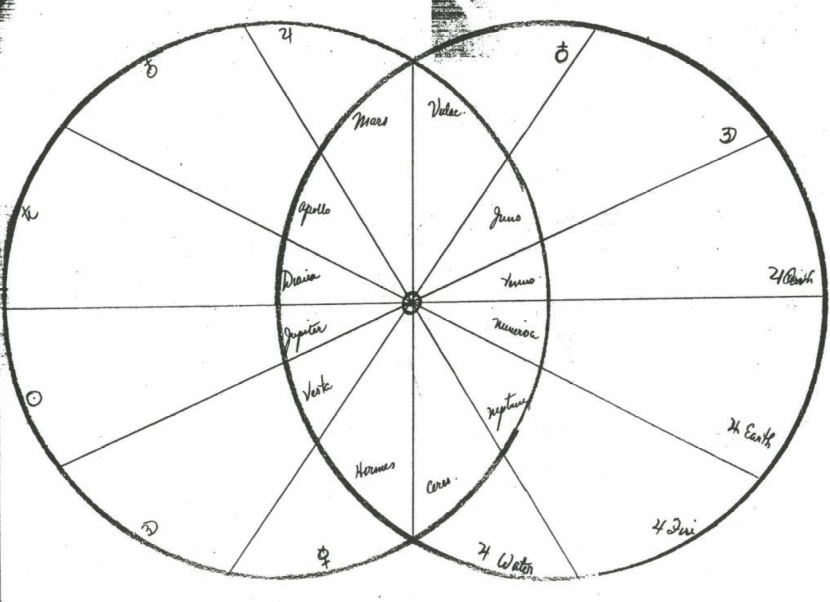
Alayavijnana, manas, manas and five senses correlated with tenth, eleventh, and twelfth houses
Mind-Only: the whole Demiurgic production exists in the Mind of the Demiurge; lack of an explicit awareness principle coming from the fifth house
Vasanas can be understood psychologically or cosmologically
Eleventh house manas and its role in transforming, ordering, limiting the vital primordial forms in the alayavijnana and serving as a basis for the empirical subject and object
Using the example of a thought expanding into a dream to illustrate the functioning of citta from alaya to manas and the five senses
Wishfulness/emotivity as the driving force behind the whole process
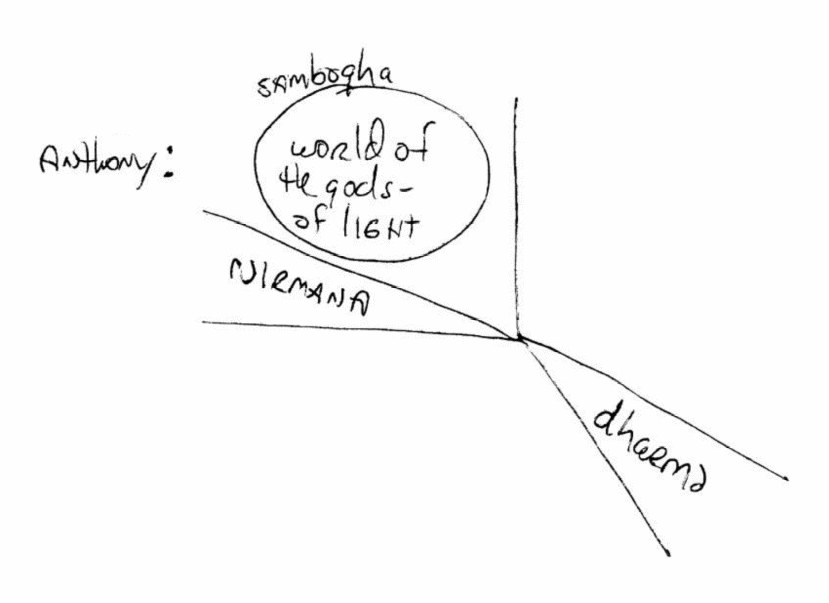
Sambhogakaya as the realm of the gods/light; as the locus of creative visualization
The process of transformation from alaya to empirical experience as one of growing narrowness and frozenness; feeling of other possibilities beyond this frozenness; the possibility of returning to the original primordial state
Two possible interpretations of Trikaya
Quote from Jung on the gods as archetypal thought-forms of the Sambhogakaya; Jung as a tantrik
Recommended reading
Knowing not to be confused with manas functioning; no knowing principle in the Yogacara school
BOOKS READ FROM OR REFERENCED:
Paul Brunton, The Wisdom of the Overself
Tenzin Gyatso, the Fourteenth Dalai Lama, The Buddhism of Tibet and The Key to the Middle Way
Giuseppe Tucci, The Theory and Practice of the Mandala
Herbert V. Guenther, Chogyam Trungpa, The Dawn of Tantra
Herbert V. Guenther, Tibetan Buddhism in Western Perspective, "Tantra and Revelation"
Herbert V. Guenther, Treasures on the Tibetan Middle Way
Mircea Eliade, Myths, Dreams, and Mysteries: The Encounter Between Contemporary Faiths and Archaic Realities
C.G. Jung, CW 11, Psychology and Religion, "Psychological Commentary on The Tibetan Book of the Great Liberation"; "Forward to Suzuki's Introduction to Zen Buddhism"
DIAGRAMS appended to this transcript:
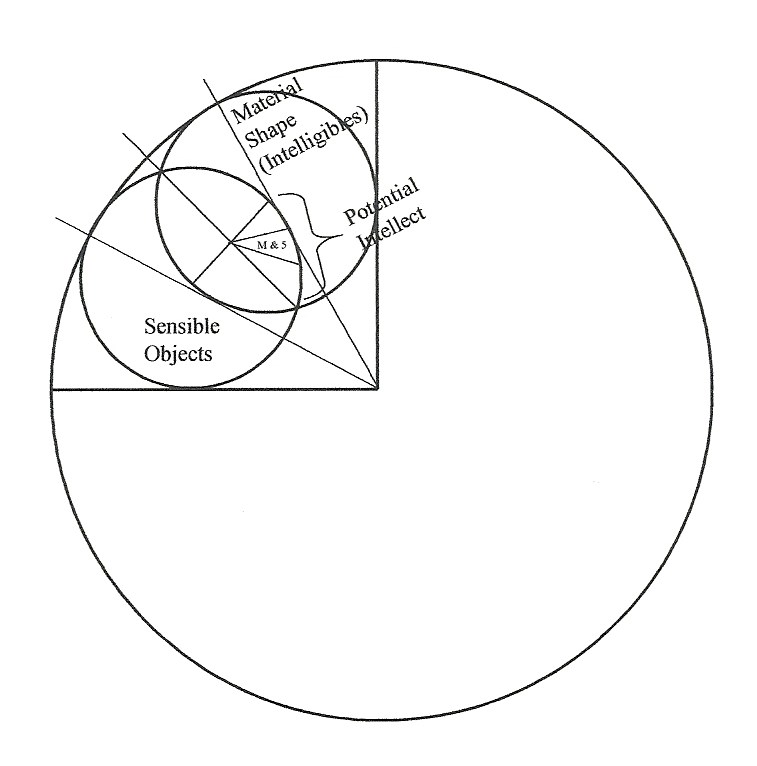
FIGURE 1979 1110-1. Fourth Quadrant Vesica.
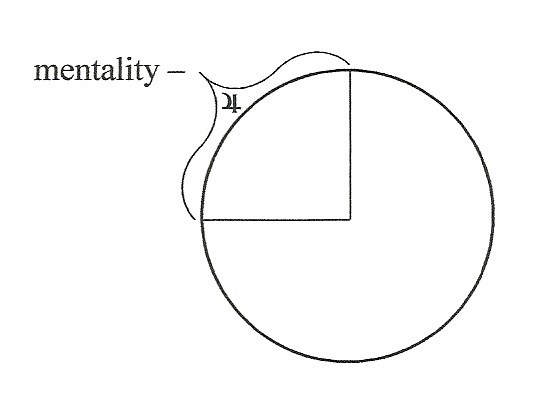
FIGURE 1979 1110-2. Fourth Quadrant as Mentality.
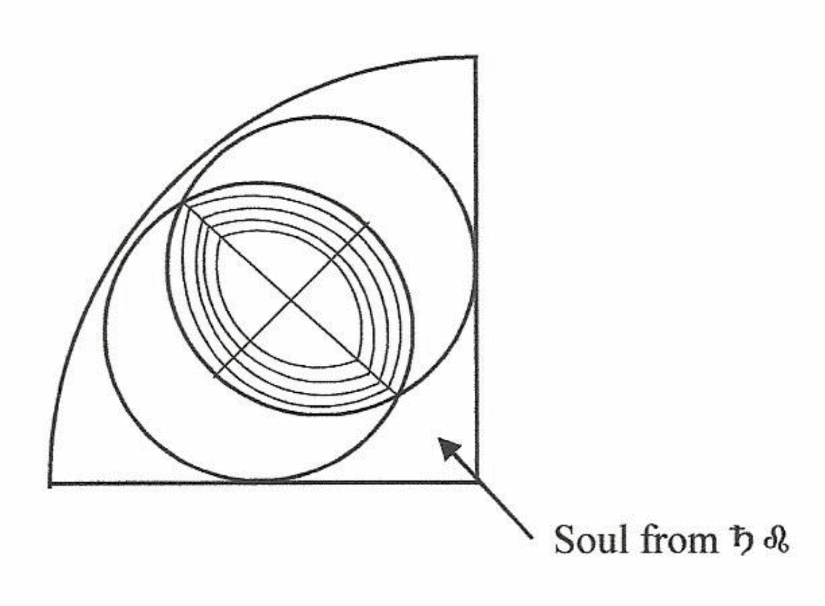
FIGURE 1979 1110-3. Saturn in Leo and Fourth Quadrant Vesica.
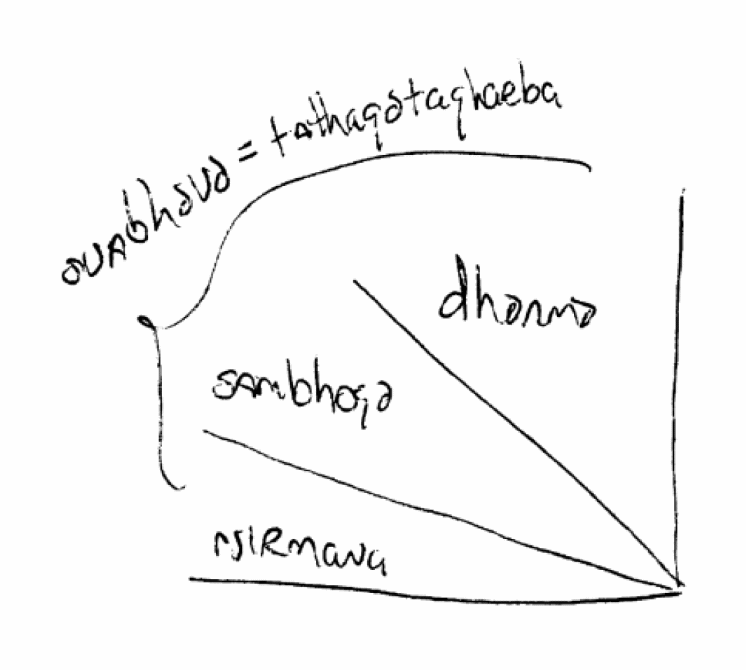
FIGURE 1979 1110-4-AB. Trikaya as Fourth Quadrant.
FIGURE 1979 1110-5-AB. Trikaya as Fourth Quadrant and Fifth House.
FIGURE AD_E_034. Vesica of Houses 10-12 with Liberated Order of Gods.
The first three and the last diagram are not from this class but are used as stand-ins to help follow along. Diagrams drawn on the board (besides diagrams 4 and 5) are not available. [Transcriber note: [diagram] means the speaker is referencing a diagram as he or she is speaking. If someone is drawing or writing, with audible sounds of chalk on a blackboard, I indicate this by [drawing] or [writing].]
NOTES:
- AB class notes show this class as being held on 11/9/79, but I am using 11/10/79 because Audio Files, Events Master, and Blue Book all show it as 11/10/79. However, the existence of AB class notes for this date is not mentioned in Blue Book, which indicates that they were not available at the time data for this class was being entered. Therefore, Blue Book can't be used to verify the correctness or incorrectness of this date.
TRANSCRIBED Verbatim by IT 2021. In 2025, IT completes TOC, adds four diagrams and references within transcript to these diagrams. Archival verbatim transcript – V12a.
AUDIO FILES: 1979 1110a, 1979 1110b. [Note: "Tape" and "Side" refer to original audio cassette tapes that were later digitized into .MP3 Audio Files.]
1979 11/10 at Wisdom's Goldenrod
Buddhism; Tantra
[Audio File 1979 1110a Begins]
AD: --while try to understand what you're doing. Not that it is important. It's usually-- you know, I found that many times if you just do what you're taught to do instead of looking for explanations, you're better for it. The explanations come later on. So, that's number one, to do it. Alright.
S: We'll do it.
AD: Alright now, is there any other announcements, we start? Go ahead.
S: I just wanted to do a short announcement concerning so we can (start/expect) getting one list down, another list up. This list is concerning a photograph of the Dalai Lama. And there might be some question on-- The 8 by 10's, yes, are being done in a custom lab. They're going to be color-corrected and it's less problem for you because oftentimes you send prints to Kodak and, as you can see by the prints in that book they have a little green tone. So, if that's too much money for you, what I will do is take the order to Kodak after this particular order. However, somebody will have to volunteer to organize it and that means to write down the code, like E16 of whatever the print is and if you want a 3 by 5, 5 by 7, 8 by 10 and so on, and then just give me the money and a list and I'll do the footwork and the business part. But this-- this original order that we're ordering for now is going to be custom done, they'll be really nice prints, but I can understand if it's too much money for some of you, you can wait.
S: When's it going to be sent?
S: This particular order? I guess Wednesday.
S (faint): (Wednesday.)
S (simultaneously): Do they need to be paid in advance?
S: Yes, we don't have any money. So-- Carol?
LR (simultaneously): What was it-- be the difference in an 8 by 10 by Kodak?
S (faint): Four dollar(s).
S (faint): Yeah.
S: But is it just four dollars or it costs more?
S (simultaneously): Different than five dollars.
S (faint): Costs more.
[short pause]
PC: I have an announcement. The Wisdom is in now at Borealis. And it's going to be twenty percent off for this whole week, and they have lots of copies.
[few seconds of background student talking]
S (faint): Peter? How about [couple words inaudible] the Dalai Lama's book?
PC: They haven't arrived yet.
S (faint): Is it-- do you know that--
PC (simultaneously): Some-- What?
S (faint): They're going to have them in numbers and quite [one/two words inaudible]
PC: Well, the ones from the office that were ordered before I had any idea how many people wanted them, so the only one that's ordered in a large quantity is the one that Richard used in his class, The Key to the Middle Way. The others can be ordered in large quantity but I guess I have to coordinate that to get any (type of lead there).
S (faint): Yeah.
[9 second pause with faint background talking/whispering]
AD: Alright, one other book I wanted to mention. If you have a copy it's this relatively easy reading.
S (very faint): Uh-hm.
AD (faint): Yeah.
VM: What is it?
S: What is it?
AD: The Tucci book on the mandala. [Note: The Theory and Practice of the Mandala by Giuseppe Tucci.]
S (faint): Your favorite book.
VM/S(?) (very faint): It's absolutely (unavailable).
AD: 'Cause that's another one of their exercises. Use of the mandala. You can always use their meditation(s). [short pause] This is the book we're going to start working with. We already started last night, you see. It was like an experiment to see if we-- (we'd) go relatively easy and I think it did, what do you think Vic?
VM: Yes.
AD: It worked out? [short pause] So, we have to recapitulate what we did last night. [17 second pause with faint background student talking] This is by Guenther and Chung-- Trungpa. [short pause] Now in the article that you read, we're going to do that too, I mean, "Revelation and Tantra". [Note: "Tantra and Revelation" in Tibetan Buddhism in Western Perspective by Herbert V. Guenther.] And, we'll try to in the next two lectures see if we can clarify in our mind the four tantras of-- that is, put them in some sort of perspective. I'm-- I'm going to also introduce an innovation, I'm going to bring in astrology, and-- as we go along, I mean-- [short pause with faint background talking] Alright, why don't we start?
S: What page, Anthony?
S (very faint): Page 2 (right now).
S (very faint): Page 2.
AS: Page 2.
S: Yeah.
[short pause]
AS: First and then starts with a--
AD: Well why don't you write them on the board (and finish this) down ok? I'll read, you could put them down so that we can have them in front of our eyes. [AS writing] Try to get a context. This is of course dealing-- this deals with processes which we might refer to psy-- psychological terms as the transformation of consciousness. And, the fact that it's a graded order, that you follow certain steps, and that what you-- methods you use have a certain effect, they generate-- In other words, these methods are a cause and they generate a certain effect.
SP: Which essay are you working out of?
AD: I'm going to start working with The Dawn in Tantra, [SP, faint: Uh-hm.] The Dawn in Tantra, yeah. [Note: The Dawn of Tantra.] We'll read a part and then we'll see if we can understand it, make-- make what explanations and commentaries and then continue. [S, faint: Right.] And this of course is concerned with how the tantra developed in Buddhism. This is not Hindu tantricist. You have to remember that they are two distinct studies, they're not to be confused. [short pause] He associates it with the word prabandha and he says--
[Transcriber note: I am using The Dawn of Tantra by Herbert V. Guenther and Chogyam Trungpa, Shambhala Publications, Boston and London, 2001.]
Guenther, Trungpa [The Dawn of Tantra, "Tantra: Its Origin and Presentation," p. 2, AD reading]: "This is a continuity of being, which divides into two grounds: we have to start somewhere, and then go a certain way [(and perhaps arrive a goal)]. This is the way tantra was presented. It refers to an immediate human situation which arises out of the question of how we are going to be. Tantra also sees the question of how we are going to be in terms of relationship, realizing that man is always related to something or someone."
AD: Alright. "Tantra approaches…"
Guenther, Trungpa [The Dawn of Tantra, "Tantra: Its Origin and Presentation," pp. 2-3, AS reading]: "Tantra approaches the question of being in various ways; [AS adds: and] thus there is more than one presentation of it. The first approach is called Kriyatantra. In the Kriyatantra the emphasis is on how a person acts. Kriya means"action." Action is here seen symbolically and dealt with in terms of ritual. We need not be mystified by the idea of ritual. An example of ritual is the custom of a man's removing his hat when he meets a lady. It is [AS reads: It's] a kind of formalized gesture. It is also a way of going about a human relationship. The emphasis in [the] Kriyatantra is on relationship as expressed in this kind of formalized gesture. In this case the emphasis is far-reaching and covers many aspects of relationship. The Kriyatantra is further particularized in its approach to human relationship in that it deals with the simplest and earliest stages of it.
"The earliest form of relationship is that of a child with his parents. There is a kind of dominance involved here. Someone has to tell the child what and what not to do. When this relational situation is transferred into a religious context it becomes the idea that man is subject to a transcendental entity. This is perhaps the generally accepted idea and it is also the framework in the Kriyatantra. Here the practitioner tries to gain favor with the one with whom he is interrelated. This and the strong ritualistic emphasis are two main characteristics of [the] Kriyatantra. This tantra [AS reads: It] also stresses purification. The ritual includes various ablutions. Some of them are purely symbolic in importance, and perhaps the sense of cleanliness involved might seem somewhat exaggerated. We must realize, however, [AS reads: However, we must realize] that the sense of being clean can become extremely important in an emotional context such as this one. It has a much more profound significance than in [AS adds: the] ordinary circumstances when someone says:"Now before you eat, wash your hands." So this emphasis on purity is another characteristic of Kriyatantra."
S (faint): Record it.
S: (Oh yeah.)
S (very faint): Repeat that? Please repeat that.
S (faint): Sure, (Rich).
[AS writing on board]
AD: Now of course with the modern mentality the tendency to underestimate the meaning of ritual is obvious. Everyone is o-- practically everyone is superior to ritual. So I'm going to reread something I read to you once before. And this-- this was from Eliade. I want you to pay very close attention because the basis of ritual is-- And he-- he speaks about it in a mythological sense but this is the basis of ritual. Ritual properly carried out produces a numinosity that can be quite astounding. But, for those of you who remembered some of these quotes then I'll read.
[short pause]
[Transcriber note: I am using Myths, Dreams, and Mysteries: The Encounter Between Contemporary Faiths and Archaic Realities by Mircea Eliade, New York: Harper & Row, 1967, c1960.]
Mircea Eliade [Myths, Dreams, and Mysteries, p. 14, AD reading]: "The myth [AD adds: and ritual, or ritual] defines itself by its own mode of being. It can only be grasped, as [a] myth [AD adds: or ritual], in so far as it reveals something as having been fully manifested, and this manifestation is at the same time creative and exemplary, [AD: In other words, it's a model.] since it is the foundation of a structure of reality as well as of a kind of human behaviour."
AD: So the trivial example of tipping your hat when you see a lady is really besides the point. That's-- that's far off. The point here is that these rituals will evocate in us something about the way we're constituted, something about our mode of reality, our way of being. This is what ritual will portray. So, let's try to get it to where it belongs.
Mircea Eliade [Myths, Dreams, and Mysteries, pp. 14-15, AD reading]: "A myth [AD adds: or a ritual] [always] narrates something as having really happened, as an event that took place, in the plain sense of the term… The very fact of saying what happened reveals how the thing in question was realised… For the act of coming to be is, at the same time, the emergence of a reality and the disclosure of its fundamental structures. … Myths reveal [AD reads: Myth reveals] the structure of reality, and the multiple modalities of being in the world. That is why they are [the] exemplary models for human behaviour; they disclose the true stories, concern themselves with [the] realities. But ontophany always implies theophany or hierophany [AD reads: theophany]. It was the Gods or the semi-divine beings who created the world and instituted the innumerable modes [AD adds: or ways] of being in the world, from that which is uniquely human to the mode of being of the insect [AD reads: of an animal]."
AD: This will tie in, I think as we go along you'll see more.
Mircea Eliade [Myths, Dreams, and Mysteries, p. 16, AD reading]: "There is no myth [AD adds: or ritual] which is not the unveiling of a"mystery", the revelation [AD reads: revelations] of a primordial event which inaugurated either a constituent structure of reality or a kind of human behaviour. Thence it follows that, because of its own mode of being, the myth cannot be particular, private or personal. It can establish itself as [a] myth only to the extent that it reveals the existence and the activity of super-human beings behaving in an exemplary manner; and this--at the level of primitive spirituality--is as much as to say, behaving in a universal manner, for a myth becomes a model for "the whole world"…"
AD: Let me read you one, two more. The reason I'm going to harp on certain words is because they're so-- they've been so denatured, denuded, you know, washed-- all their meaning is washed away, their numinosity is gone. So you can say myth or ritual to a person and, you know, he'll give you the assurance that he knows everything about it. And having never had the experience of what a myth or a ritual or the magical consciousness is like, I can assure you it's-- it's a pretense.
Mircea Eliade [Myths, Dreams, and Mysteries, pp. 17-18, AD reading]: "For all primitive mankind, it is religious experience which lays the foundation of the World. It is ritual orientation, with the structures of scared space which it reveals, that transforms"Chaos" into the "Cosmos" and, therefore, renders human existence possible--prevents it, that is, from regression to the level of [AD adds: a] zoological existence. Every religion, even the most elementary, is an ontology: [AD, quietly: Gotta remember that when you're criticizing them, ok.] it reveals the being of the sacred things and the divine Figures, it shows forth that which really is, and in doing so establishes a World which is no longer evanescent and incomprehensible…"
AD: I think, I think you got the gist of what myth and-- It's-- it's really a way of evoking and bringing into operation what I call a magical consciousness, mythological consciousness, where the sympathy of the world, the interpenetration of all the parts of the world with each other gets established in your consciousness. Now this is the first tantra, alright, this-- the supposedly lowest tantra. Don't pay attention to these terms, superior, inferior, ok? Each person has to find what is meaningful for himself and he could-- he could work with that. You got this text (now)?
AS (faint): Want me to read the same thing.
AD (simultaneously): Yeah. The same thing.
AS: There's a whole thing here. In the-- in the Guenther article, the Tibetan Buddhism book, which I think most people do have, he goes through it also on page 200. [short pause, shuffling about] Do you want to read the whole thing through?
AD (very faint): Read the whole thing.
AS: Well-- the first-- the first kind of tantra--
[Transcriber note: I am using Tibetan Buddhism in Western Perspective by Herbert V. Guenther, Dharma Publishing, Emeryville, CA, 1977.]
H. V. Guenther [Tibetan Buddhism in Western Perspective, "Tantra and Revelation," p. 200, AS reading, quoting Mipham Jamyang Gyamtso]: "I. In the Kriya-Tantra great stress is laid on the observance of outer ablutions, ritual purity, and other ritual actions by body and speech. The god [(lha)] who is the embodiment of a priori awareness (ye-shes) is considered to confer favors like a master, while the individual committed to his service receives these benefits like a servant. It is claimed that thereby temporal and lasting realizations are achieved."
AD: Does anyone feel superior to this point of view?
S: Uh-hm.
AD: I mean, you know the way we're brought up here, we want the best, the most, and the highest immediately.
S: (Yeah) right.
AD: Ok. (bit of laughter) Now someone here, I don't want to mention names, was telling me about a little child who always wants to wash herself now ever since she saw the Dalai Lama. And you can see that what's being brought up is something of her past, you know, the way she lived in the past a religious life which was concerned with ablutions or Kriya-- Kriyayoga of a kind, Kriyatantra. But you see a lot of that for instance even in the Catholic Church, you don't have to go to India, you go just to a church around the corner you'll see the same thing--ablutions, sprinkling of water, baptism in water, all these are meant to purify a person. And if they're not carried out with that mythological awareness and consciousness, that's just going to be another-- well not-- Let's read some more.
H. V. Guenther [Tibetan Buddhism in Western Perspective, "Tantra and Revelation," p. 200, AS reading, quoting Mipham Jamyang Gyamtso]: "Here, [too], one distinguishes between [AS adds: these four things, the] [(a)] viewpoint, (b) [AS adds: the] creative imagination, (c) [AS adds: the] conduct, and (d) their fruition."
AD: Could I ask first, do you-- those of you who have the book, do you know what he means by the embodiment of a priori awareness? I mean you spent a lot of money for this book, $6.95, some people complain. I got mine $4.95.
S: $7.95. (laughter)
AH: Must be talking about Witness.
AD: Huh?
AH (simultaneously): Witness-- Witness consciousness?
AD: He says the god that embodies a priori awareness.
AH: The Overself?
S (very faint): Yeah.
AD: Could be. But this is who you want to be of service to, alright. Alright, (you'll see that in case) go on reading without trying to understand what you're reading. Let's try again.
H. V. Guenther [Tibetan Buddhism in Western Perspective, "Tantra and Revelation," p. 200, AD reading, quoting Mipham Jamyang Gyamtso]: "I. [In] the Kriya-Tantra great stress is laid on the observance of outer ablutions, ritual purity, [and] other ritual actions by body and speech. The god [(lha)] who is the embodiment of a priori awareness [(ye shes)] [AD: And this is not a Kantian term by the way.] is considered to confer [AD emphasis] favors like a master, while the individual committed to his service receives these benefits like a servant."
AD: Anyone feel superior to this ritual? Alright, that's why-- that's why we do these things, that's why we light incense, we try-- I ask people to clean the altar. But everyone's superior to that. Everyone here I notice is superior to that. The first thing I do in the morning when I get up is clean my altar. I'm still-- I'm still very infantile in my religious devotions. Most of us could just let the junk pile up, the dust, the ashes. Go ahead.
AS: Ok.
MB: Anthony, is it like the embodiment because it's the-- it's being worshipped in the form of a ritual? In other words, it doesn't say the god who is the a priori awareness confers these favors.
AD: I can't hear you, uh-- I [MB simultaneously: It's--] can't hear you, you have to speak louder.
MB: It-- it doesn't say the god who is this a priori awareness. It says the god who is the embodiment of the a priori awareness. Does that mean that this is the god that is being worshipped through your rituals, that by the worship-- the worship itself is a form of embodying that god?
AD: Got the point. [short pause] That's what we just read, right? [student assents, very faint] From the mythological being there, that this is an exemplary and transcendent mode of behavior. And this was established by the god, alright, and you fo-- you want to follow in his footsteps. Then you do the same thing. And so when you place a flower on the altar and it's a clean altar and you burn a little incense and you bow down and-- it isn't-- it isn't a foreign, you know, to an unimaginary-- You have to understand that your actions are embodying the presence of that being. Otherwise the ritual is meaningless. Alright.
S (faint): Avery?
S (faint): Yeah.
AD: Alright, now we have four viewpoints about Kriyayoga, ok. Would you read a?
AS: Ok, a. The first thing is just the viewpoint of Kriyayoga.
H. V. Guenther [Tibetan Buddhism in Western Perspective, "Tantra and Revelation," p. 201, AS reading, quoting Mipham Jamyang Gyamtso]: "(a) Although all phenomena are ultimately the same in their actuality, which is the indivisibility of the truths of appearance and nothingness, in our relative world the supreme divine being becomes the embodiment of an a priori awareness in which the radiancy of the evidence of being is directly present in its nature of being free from any defects and in being replete with all values in highest perfection. And so it is considered to be like a master because he confers temporal and lasting benefits on us who receive them like his servants. Since we are not yet perfect as regards our real being and are shrouded in the veils [of unknowing and emotional instability], we feel ourselves dependent upon God. Therefore, since ultimately our identity with and relatively our relation to God is incontestible, the viewpoint of the Kriya-Tantra is accompanied by the firm belief that, through our perseverance in patterning ourselves after the god's form, speech, and mood, our temporal activities become significant and that ultimately the god's essence is realized by us."
AD: Follow what he's saying here?
S (very faint): Uh-hm.
MW: Not too much.
VM: Well it'd be better if you could hear it again.
AD (simultaneously): Well this is the lowest form of tantra by the way.
VM: Sure. I'd like to hear it again maybe.
AD: Sure go ahead Crystal.
S: Well, (aren't you speaking) of PB's thing about, you know, acting as though you're the Overself?
AD: Oh no.
S: No?
AD: No.
S (faint): Hm.
AD: We'll wait for a different tantra for that.
S: (Well--)
S: That wouldn't have any [one/two words inaudible] with your outward actions, they were done with that kind of thought, you know, that sort of Kriya. No.
S (very faint): Ok.
S: No.
AD: You're speaking about the use of the short path and this is not what this is about. This is [S simultaneously: No I know.] the use-- this is the use of outer rituals and activities, alright, to remind you of that.
S: Yeah. Oh I didn't mean to equate them at all, I just meant that, you know-- that--
S (very faint): (Uh-hm.)
AD: Alright, the second part, the point of the creative imagination.
AS (simultaneously): The creative imagination. In terms [S simultaneously: Let's do that.] of creative imagination--
H. V. Guenther [Tibetan Buddhism in Western Perspective, "Tantra and Revelation," p. 201, AS reading, quoting Mipham Jamyang Gyamtso]: "(b) Kriya is known as referring to six divine presences. This, in brief, means that we concern ourselves with such experiences as the visualization of the god's form, the hearing of his message, and the feeling of his mood as well as the manifestation of the god's palace and the emanation and reabsorption of light rays. We then create this mood again and again by repeating the god's specific mantra, as if one's life were at stake, and so cause the god's sustaining power to descend upon us, just as if iron were touched by the philosopher's stone."
LR: Were those--
AD: Yes?
VM: I understand the word (then).
AS: You didn't understand?
VM: No I understood. I don't know what those-- [few inaudible student words simultaneous with VM] the lights are or--
S: Yeah.
CDA: I, um--
AD: Well this is--
AS: It's the (lowest).
VM: Maybe it's-- maybe it's not appropriate to go through this.
AD (simultaneously): This is what we have to try to explain to each other, alright, try to understand. Alright Linda, you had a question?
LR: Yeah, that was the question. (bit of laughter)
CDA: I think he's-- I think he's talking about the actual beginning meditations that they do, and that the-- that-- and--
AD (simultaneously): But he starts out, "We concern ourselves with such experiences as the visualization of the god's form".
S (very faint): Correct.
S (very faint): Perhaps.
RG: (And that--) uh-hm.
CDA (simultaneously): And that the hearing of his message, I-- I think the hearing of his message is the mantram of the-- of the deity, and the feeling of his mood as well as the manifestations of the god's palace is, I think, and the reabsorption of light rays is part of all the visualization, that there's light emanating from the god and the god is on a throne, [AD simultaneously: Yes. And that--] and that it's reabsorbed back into the (god).
AD (simultaneously): So-- so then the first thing we would have to consider is let's say if a person is doing a creative visualization exercise, he's reached a point or a level where the image can be steadily held on to for even a-- a moment. And, the ex-- the experience of god's form will then take place. Now, the god here could be a-- a guru, could be a Sage, a Buddha, any holy Bodhisattva. But, there are very specific choices that they made but we'll get into that later on. The hearing of his message--if-- if a person for instance says the Nembutsu [AD pronounces: Nambitsu], there comes a time when the meaning of it just dawns naturally, and it won't be a conceptual meaning that dawns upon him. And that-- that usually takes-- takes place when the-- the mantram itself is penetrated and a person, so to speak, has had the experience let's say of it-- it's continuous whether he's asleep or whether he's awake, alright, then the meaning of that is coming to him. Naturally, if the visual-- if one succeeds [AS drawing] in the visualization exercise, again the point we made before that in the ritual like what you imagine form of the god, and you succeed in fixing that form in your mind's eye, it pro-- it has a tremendous numinosity and those are the light rays coming to you. You absorb them. Alright, this is the lowest tantra, let's [AH: Yeah.] see what else.
AH: The-- the reference--
AD: And he says-- he says here you say it as though your life was at stake. So as soon as you start saying a mantram mechanically or with-- you know, with kind of abstract mind or you're not there or no feeling, it's over and the whole process ends right there. But, when he says that the god's sustaining power descends upon us, many of you already had the experience if you-- if you say the mantram or you occasionally start getting fixed, you know, your mind gets fixed, you start feeling shock waves, you know, you start shaking, jumping around. Well that-- the power that's descending and very often your body's not capable of holding onto it. I'm sorry? And this is just the creative point of view, the use of the creative imagination. These-- we're speaking about the second, alright. Any--
AH (faint): You just answered (my query).
AD: Alright, the next point of view is conduct. Go ahead.
AS: As to his conduct--
H. V. Guenther [Tibetan Buddhism in Western Perspective, "Tantra and Revelation," p. 201, AS reading, quoting Mipham Jamyang Gyamtso]: "(c) Inasmuch as the recitation of the mantra is effective in a ritual context, but otherwise [AS adds: it] remains barren…"
AD: You follow that? So go clean your altars. Go ahead.
H. V. Guenther [Tibetan Buddhism in Western Perspective, "Tantra and Revelation," p. 201, AS reading, quoting Mipham Jamyang Gyamtso]: "…[AS adds: and therefore] we must exert ourselves in performing such ritual acts as taking a bath [and] changing our clothes thrice [AS reads: three times] a day, worshipping [and] making offerings as detailed in the Tantras."
AD: Well I think that's kind of explicit there. It's right out in the open. But it is important that the mantram becomes effective when that, what I refer to as a mythological consciousness gets established. Then the mantram takes root. So, ordinarily-- The same would be true of many of the other exercises we do, like for instance to say "Who am I?" and you-- and your mind is noisy, you get nowhere. "Who am I?" becomes effective when your mind is quiet and then you ask the question. But, if your mind is jumping around like a monkey, the "Who am I?" is meaningless. So it has to be in a context. These things have to be done in a context. I think many people realize that if they're emotionally elevated or exalted and they say a mantram or they pray or they meditate, it's much more-- I'm sure you all experience. [KD: So--] So that's what you have to strive for. I-- I'm saying, I'm saying you have to strive for because we can't always succeed. But, even if you have one now and then, makes it worthwhile.
KD: And you said mythological consciousness then like a-- a receptivity, it's like something that you have to-- like a real belief or a-- an attempt to see-- see into the actions that you're doing, like see beyond it, is that what makes the difference between just an activity versus-- [AD: Well--] versus the real power that comes out of this ritual?
AD: I would make it much more simpler, mythological consciousness is not logical consciousness. In a logical consciousness you say A is not A, but in my-- in mythological consciousna-- consciousness A is A and A is not A. There isn't these sharp categories. There's a pervasive feeling, alright, that you are part of the world or the world is part of you. And, you can only bring that about when you get very intensely concentrated. It's not a derogatory term the way I'm using it, mythological consciousness.
KD: It doesn't sound like something that you can-- doesn't sound like something that you can move yourself into, it sounds like something that would--
AD: Well-- no, it-- generally, the way we're constituted and the way we've been, you know, conditioned by our society, that's very difficult. Because we're always using these very abstract logical categories, our mind is always working in that way. So it's not a normal state of mind for us. Yeah, Sid?
SP: But isn't he saying that you can cultivate this as we cultivate a habit, I mean, that's why he emphasizes ritual. Like in the morning you get up and you have coffee day after day, you start waking up wanting coffee. You know, you perform these rituals and try to put yourself in-- into it, you can start to cultivate this participation.
AD: Yes, definitely. After a while it-- I-- I think-- I think also for instance you can take an ex-- experience, those of you who meditate every day at five o'clock, I think if you're not meditating that day, let's say you have something to do, if you watch your mind very carefully it just shuts down. You made a habit of it and you're participating in it. Alright.
SP: I think that ritual--
AD: Helps establish that.
SP: --is intended to-- sort of acting in remembrance so that it keeps occurring and it starts to establish you in this type of consciousness.
AD: That's what I meant by the ritual very often reflecting back the numinosity that's inherent in it. But, like I said, I try to point out, that for most of us ritual seems to be passé and some (people think) inferior too. So it does help establish the habit and then one could almost look forward to it as happening more and more frequently. But it does-- it does require effort, striving, persistence.
SP: But see, I remember in PB sometimes he says well you start by trying to imagine, you know, something that later becomes actual [couple/three words inaudible] in your imagination.
AD: Oh yes.
SP: And even though the imagination isn't a thing, you know, it forms a habit or direction that eventually goes forth into things.
AD (simultaneously): Yeah and, do you remember in the most recent paper he wrote on the secret path to some of us, he mentions that why don't people use their imagination in constructive and creative way? Why does it always have to be in this negative and destructive way? Yeah. Well-- And one more, "(d) By such efforts…"
AS: Their-- fourth, d, their fru-- the fruition of these things.
H. V. Guenther [Tibetan Buddhism in Western Perspective, "Tantra and Revelation," pp. 201-202, AS reading, quoting Mipham Jamyang Gyamtso]: "(d) By such efforts as temporal gifts, any of the ordinary attainments are won, such as the body of a Vidyadhara, who is equal in fortune with a god of a sensuous world, and as a lasting result the essence of a god of any of the three action patterns is realized within a period of sixteen human lives."
CDA: What is-- what is this--
AS (faint): He doesn't say.
CDA: --three action patterns, if I can--
S (very faint): (Speak a little louder?)
AS (faint): The three action patterns-- uh--
[17 second pause]
AD: He doesn't give some clue?
CDA: It doesn't say anything in there.
AS (simultaneously): Yeah, he says-- yeah, the Tibetan here is--
AD: Well, [CDA simultaneously: I just thought (they make the metaphor).] it must refer to-- it's body, speech and mind.
S: Yeah.
S (faint): Uh-hm.
AD/S(?) (very faint): Uh-hm.
S (very faint): Uh-hm.
AD: Yeah, you remember authentic existence, authentic communication and authentic action in the world. But since we don't know Tibetan, we have to look that up. [short pause with faint background talking] I'm pretty sure it's in there. Alright, let's go back to The Dawn of Tantra, alright, and we'll read some more from there.
[10½ second pause, flipping of pages]
AS: Ok, the next one-- You want-- you want do the second one, the Carya?
AD (simultaneously, faint): Yeah, second one.
AS (very faint): Ok.
AD (faint): Yeah.
S (very faint): Yeah.
AS/S(?) (very faint): Yeah.
AD: Yeah. Yeah just read the-- just read the important part.
AS: Ok, the third tantra--
S: Second one?
S: Second, say--
AS (simultaneously): Second, sorry. Cleanly. The second tantra, ok--
Guenther, Trungpa [The Dawn of Tantra, "Tantra: Its Origin and Presentation," pp. 3-4, AS reading]: "…[AS adds: is] known as Caryatantra… Again here [AS reads: Here again], tantra refers to a relational situation. But [here] the emphasis has shifted. We are [AS reads: You're] no longer only concerned with following certain accepted rules of relationship, but also to a certain extent with understanding the implications of them. This marks the entry of a certain questioning of ourselves. Why are we doing these things? Why do we behave in such-and-such a way? Certainly we do not discard our behavior at this point, but we ask about its significance. [And] we do this by thinking more about it. We try to gain insight into it and this can [AS reads: could] be a kind of meditation.
"[AS adds: So] Here [there] begins [to be] a balance between thought and action. This [AS reads: There is a] change from the previous mere acceptance of authority [AS adds: which] corresponds to a change in the character of our relationship with the one to whom we are relating. It is no longer a question of a master telling his servant or slave what to do. There is now more [of] a feeling of intimacy, of comradeship, more of [an] equal status. … It is a relationship of friendship and friendship can only be based on an acceptance of the other person in his or her own right."
AD: Alright. Go here. Most of you have this text?
S (faint): Yeah.
MW: Which one?
S (faint): The Guenther book.
AD (simultaneously): Guenther.
S (very faint): Do you?
AS: Second-- in here he-- the second one, the Carya-Tantra, he says--
H. V. Guenther [Tibetan Buddhism in Western Perspective, "Tantra and Revelation," p. 202, AS reading, quoting Mipham Jamyang Gyamtso]: "…outwardly, ritual purity as effected by ablutions and other observances and, inwardly, creative imaginations are of equal importance. It is claimed that by viewing ourselves and God as being brothers or friends, realizations are one."
AS: And here again he has these four-- four different distinctions. The first, the viewpoint that you take here.
H. V. Guenther [Tibetan Buddhism in Western Perspective, "Tantra and Revelation," p. 202, AS reading, quoting Mipham Jamyang Gyamtso]: "(a) Since here the conviction of the identity [of man with God] in the ultimate sense is still stronger than in the Kriya-Tantra, we and God are of equal status, like brothers or friends. Since temporal and lasting good is realized by reliance on God as he is envisaged as he really is when appearance as a concatenation of interdependent entities has subsided, the viewpoint of the Carya-Tantra is accompanied by belief in the profoundness of the two truths [AS reads footnote 13: Ie., appearance and nothingness]."
AD: Alright, let's try to make sense out of this for ourselves. [student assents, faint] [16½ second pause] Well obviously that the experience of the visualization for instance of your-- of a Buddha, you know, which should appear or let's say gets fixated in your mind, then the experience is repeated over and over again and so that becomes-- there's established a kind of familiarity, a kind of-- a feeling that you and him are of one kind, you know. So that this feeling becomes very very strong. As a matter of fact very often people get carried away and go around saying "I am God."
LR: Yeah well why does it-- why does he use the word 'equal status'?
AD: Because that's exactly what it feels like. (AD laughing a bit) [student assents, faint] When in the creative visualization exercise you bring forth out of yourself this visualization of let's say a deity, and then you dissolve this visualization back into yourself, you start thinking that you're the source of this, and you start thinking that you are a god. There's nothing wrong with that, as a matter of fact they do refer to it as vajra pride, and a pride in recognizing that you are in a certain way an embodied-- an embodiment of God.
LR: See, for-- the way it's word-- seems like there wouldn't be any-- to realize or recognize the identity would be one thing, you know. Like you said that close familiarity, that-- that very intimate kinship. But then to say that that leads to the thought of equal status, that seems to be a whole 'nother--
AD: Oh no, no, as a matter of fact, it's very often recognizable, very-- If it's-- if you're not-- if you're not on your guard, people will very often point out how inflated you've suddenly gotten.
LR: Yeah, well that's what I mean, I mean it doesn't seem to be-- I'm not saying it's not an option, it's not a consequence, but I'm saying wouldn't that be more something to be avoided than something to be nurtured, that feeling of-- I mean, if you-- if you're contemplating a certain image, and that feeling of kinship and closeness and intimacy arises, I don't s-- it wouldn't be nec-- it wouldn't necessarily follow that the feeling of equal status would then arise also.
AD (simultaneously): Well, I don't think this is subject to as much discussion as we would like to. (laughter)
S (faint): Perhaps we should stop, is that what you're saying?
AD: I mean that it's very powerful. It's almost impossible to disobey him.
LR: I'm just asking, is this--
AD: Yeah, you will feel equal [LR: Oh.] status. You will feel that. But then again, feelings aren't always correct, you know. (You/It) will feel that way now. Well don't you very often feel that you are a god?
AS: Well, he almost seems to be saying like it's almost [LR simultaneously: Not recently.] a necessary stand to take at a certain point.
AD (simultaneously): Yeah, it's a necessary stand and like I said we'll get to a point where we s-- where they speak about the pride in being a deity. You'll notice that about this-- these people. But the next part I think is more difficult.
H. V. Guenther [Tibetan Buddhism in Western Perspective, "Tantra and Revelation," p. 202, AD reading, quoting Mipham Jamyang Gyamtso]: "…and lasting good is realized by [AD adds: a] reliance on God as he is envisaged as he really is when appearance as a concatenation of interdependent entities has subsided…"
[short pause]
AD: How about that part?
S: Yeah.
AD: Yeah.
AB: Aren't they saying that there's a penetration into the ess-- essential nature of the-- say the object worshipped which goes deeper than its outward form. And insofar as that's represent-- representing something in oneself, than this phenomenon we're talking about would happen.
AD (faint): I don't think [few words inaudible]
S (faint): Yeah.
AB: Well, if-- we were just talking about how in the first tantra there's a worship of the form, you know, that in the ritual--
(Side 1 of original cassette tape digitized as 1979 1110a Ends; Side 2 Begins)
CDA: --the deity is not dissolved.
AD (very faint): Uh-hm.
CDA: And in this one the deity is dissolved.
AD: Go on.
CDA: That seems-- well that just seems to me to be the-- the main difference. [S simultaneously: Well the form--] And so if the-- at-- in the second practice, you are not only creating the deity, you are dissolving the deity.
AD: And the consequence?
CDA: Is that-- well, I don't know.
S: You put-- isn't it--
S (simultaneously): By di-- by dissolving the de-- deity, does that mean that you feel that you're one with the deity, I mean that you merge with the deity, is that what the dissolving means?
H. V. Guenther [Tibetan Buddhism in Western Perspective, "Tantra and Revelation," p. 202, AD reading, quoting Mipham Jamyang Gyamtso]: "…he is envisaged as he really is when appearance as a concatenation of interdependent [AD reads: independent] entities has subsided…"
S: You've gone beyond the image to the-- to-- [S, faint: Right.] to more of the essential nature of the deity.
AD: Well, same thing.
S: Well--
S: Well, I mean, when you're creatively visualizing, you have this image of the deity which-- and when it's present you participate in some manner of the power of that deity. But the power of that deity is not dependent on that image. Just (I'm--)
AD (simultaneously): Well maybe-- maybe if we read the whole thing and you can find the second part.
H. V. Guenther [Tibetan Buddhism in Western Perspective, "Tantra and Revelation," p. 202, AD reading, quoting Mipham Jamyang Gyamtso]: "…the viewpoint of the Carya-Tantra is accompanied by belief in the profoundness of the two truths."
AH: Well, the case of the first tantra, he said all those-- the two truths are-- are considered-- it-- the ritual is from the point of view of the relative world. And in this case it's-- the two truths are being perceived rather than the relative world.
AD: The two truths are being--
AH: The truth of being a nothingness or-- I'm sorry. Is that the phrase, "being and…"
AS (simultaneously): Appearance.
LR/S(?): Appearance and--
AH (simultaneously): Appearance and nothingness.
S (faint): Yeah.
AH: Truth of that is the dissolving of the deity.
AS: Wouldn't-- wouldn't it be like a recognition [AD simultaneously: Yeah.] of the (empties) which constitute your psychical essence? Like when you say that these gods actually are the constituents of your own-- of your psychical essences like in the eleventh house [diagram].
AD: Yeah.
AS: They would actually constitute your-- your psychical nature.
AD: Go on.
AS: And so wouldn't there be-- the dissolution would be a recognition. Like when he says the two truths, the [AD simultaneously: Well finish it.] other truth would be nothingness.
AD: Finish the sentence.
AS: It would be a recognition of the-- well-- like the nothingness would be-- like we spoke about your own-- that these-- this god actually constituted your own psychical essence.
[someone drawing]
AD: So you're saying now, on the one hand when the god appears, alright, there you see one truth, like for instance a relative truth.
AS (simultaneously): Truth of appearance.
AD: The truth of appearance. [student assents, faint] And then the dissolution of those go-- of tho-- of that god, alright, [S: Yeah.] back into the nothingness, you get a confirmation of these two truths (that) they're speaking about, [AS simultaneously: Yeah, when we speak about--] nothingness and appearance.
AS: Like you're speaking about the obverse side of the appearance-- appearing world, [AD simultaneously: So you-- yeah.] like almost a recognition of mentalism [couple words inaudible]
AD (simultaneously): So-- so it's almost like a recognition of mentalism, yes.
AH: Those two truths are not equal in status. The second one subsumes the first.
AS (simultaneously): But, I think at this point though it's-- [S, faint: Yeah.] I think that they're both-- he says a recognition of both of them will lead to the profound-- Well, I--
AD: Yeah it's-- it's like a-- when one, for instance, would recognize that the conflicts in the human consciousness are traced back to their source and sees that as the embodiment of gods, alright, and then sees these gods dissolve again and with it let's say the conflicts which were in the human consciousness, then the view that he gets about his own-- the operation of his own psyche-- in-- in other words, he can contain-- it can now contain these two contradictory truths, [S, faint: Yeah.] [AH: Right.] two contradictory hypotheses. He can see the truth of nothingness. He could see the truth of appearances.
AS: And that they don't contradict each other.
AD: They don't contradict each other. Another way of putting it would be when we say for instance that the mental confusion, the doubts, the thoughts, the feelings and moods that you experience are the functioning of these gods. But you don't see them as gods, you see them simply as human conflicts in your own psycho-- in your own psyche. [student assents, very faint] But if you were to trace them back to the-- to the origin or sources of the god's functioning-- I don't know. [SP simultaneously: Would another way to look at it being that--] Many people would probably get inflated about their [student assents] own conflicts. (bit of laughter) Go ahead, Sid.
SP: Well like in the Kriya, analogously we say in terms of our astrological chart, we say we're subject to the planets or subject to the aspects. Whereas like in the next, it's more like a realization that you are your chart. So then when you come back sort of from that realization you realize that you are subject to the aspects but you are the aspects too. I mean you could take both of these, I don't know, points of view.
AD: Good.
VM: I don't see where nothingness comes in.
AD: Well the dissolution of the embodied conflicts in the human mind. I mean to see them actually dissolve.
VM: You mean that there has to be an essence uses [AD simultaneously, faint: Yeah.] the idea of-- ok.
CDA: But I think--
AD (simultaneously): The way he wanted to put it there, in other words if we see that the confli-- the conflicts that the human being experiences in his own consciousness are evanescent, they-- they're like the flowering of their-- these psychical essences themselves(s), puts a whole different light on what you're experiencing. Go ahead.
AH: Is that still mythological consciousness?
AD: Yeah. It's mythological. But I'm hoping that perhaps at the end of a couple weeks you'll get an idea what I mean by mythological consciousness and not what you mean by it.
MW: Anthony, is this also similar to having that conflict between the thought and the thing disappear for you? The idea of how could a thought be a thing or become--
AD: It won't-- it won't completely disappear. But it [MW simultaneously: So--] certainly will make it easier for you to understand. Well, let's go to b, yeah. Creative imagination.
H. V. Guenther [Tibetan Buddhism in Western Perspective, "Tantra and Revelation," p. 202, AS reading, quoting Mipham Jamyang Gyamtso]: "(b) [AS adds: The] Creative imagination [AS adds: here, in the second Tantra] means that when we have clearly visualized the God as the embodiment of an a priori awareness in front of ourselves as the individual committed to his service and then [AS adds: we] repeat his mantra in a steady flow passing to and fro between ourselves and the God and his entourage, finally the God as the embodiment of a priori awareness will come near, and ultimately there is nothing left of logical fictions or propositions claiming truth."
S (faint): Yeah.
S (faint): Yeah.
VM (faint): Sounds alright.
AD: Sounds alright, doesn't it?
VM: Yeah it does, it-- it sounds to me that--
AD: It is, it is alright. (laughter, student words)
AB: When he s-- when he says that you imagine--
AD: If I-- if I were to give an example, like let's say you're 25 years old and all your life you've been reading about kissing a girl and wondering what all this was about. (bit of laughter) And then finally you met a girl and she does kiss you all your logical suppositions would be thrown out the window. (laughter)
S: Oh, sounds good. (laughter)
AD (amidst laughter): Not the second time, just the first time.
VM: No somehow it doesn't do it. (laughter) There's a disappointment actually, you know, I would think that's what you meant. (laughter, student words)
S (amidst laughter): Please (no/don't).
VM (simultaneously): Oh no, no.
S (simultaneously): Psychopathy. (laughter)
S: You (were) 25 years old (now).
VM: I was 26 actually. (laughter) Somehow this seems very--
AD (simultaneously): All I'm simply trying to say is the actual contact with that re-- [S simultaneously: Blow your mind, it's the same form.] reduces to ashes all your-- all your thoughts.
LR: How does that compare to the first, where it says the descent of the sustaining power. What would-- what would be the distinction between the fruit of the creative imagination--
AD: Well in the first tantra the descent of the power doesn't free you from the concepts that you work with, the ignorance. [LR: Uh-huh.] That the actual experience-- you still go on conceptualizing about these things in the first tantra. You still have far too many thoughts.
AH: Anthony?
AD: Go ahead.
AH: What's the reference to the entourage? The god and his entourage.
AD: Well he's generally-- it's generally accompanied with a whole environment, it isn't just a single feature. It has an atmosphere of its own, it has you might say, you know, a setting, an atmosphere of coming from a certain place. Very often that would indicate like what realm it came from, all these things that are felt when come in contact (with it).
S: That's spoke in the first one as his-- his palace and-- and so forth.
AD: If-- let's say that all that gets more etherealized in the second one.
S: Uh-hm.
AB: When he says that you imagine yourself in front of the deity as the individual committed to its service, is that to say that the first tantra's presupposed in the second? Like you have to achieve that attitude of service and devotion before you can--
BS: Well say it again.
AB: It's-- when he says you doing this imagination exercise and you imagine yourself in front of the deity as committed to his service and then you go on, is that to say that the-- you must achieve the state of mind of the first tantra before you can successfully practice the second?
[11½ second pause]
AD: No, I-- I don't think that's what the sentence-- You're referring to the sentence in here.
AB: Well he says--
H. V. Guenther [Tibetan Buddhism in Western Perspective, "Tantra and Revelation," p. 202, AB reading, quoting Mipham Jamyang Gyamtso]: "…we [AB reads: you] have [clearly] visualized the God as the embodiment of an a priori [AB reads: of the] awareness in front of ourselves [AB reads: yourselves] as the individual committed to his service…"
AB: That just seemed to me reminiscent of the first--
AD: No, once you do that, then you're committed to his service, once you succeed in this way. Then you'll be doing his bidding. Or you'll be of service to him in some way or other, this god. And c?
AS: Well, um-- The conduct of such a person involved in the Carya-Tantra--
H. V. Guenther [Tibetan Buddhism in Western Perspective, "Tantra and Revelation," p. 202, AS reading, quoting Mipham Jamyang Gyamtso]: "(c) [This] is to observe the various rites of ablution and ritual purity to the best of one's ability."
S (faint): Ok.
AS (faint): And so on.
[short pause]
AD: Alright, next one.
AS: The fruition of this tantra is--
H. V. Guenther [Tibetan Buddhism in Western Perspective, "Tantra and Revelation," p. 202, AS reading, quoting Mipham Jamyang Gyamtso]: "(d) Temporarily, our activities become significant, and, finally, the level of Vajradhara of four action patterns is attained within a period of seven human lives."
AD: Kathy, we all have trouble with these terms, huh?
S: Who has?
AD: Vajradhara--Sid?
SP: Isn't that-- I don't know why that's here but that's the Adi Buddha. (bit of laughter)
S (very faint): Who's (the other one)?
S: Oh (Sid).
SP: And sometimes they use it as synonymous with the-- the dharmakaya, what he means by--
AS: A priori awareness?
SP: Yeah, the way he's meaning there, so--
AD/S(?): This--
AS: But he-- he had this note [one/two words inaudible]
AD (simultaneously): And-- and we wouldn't agree with that, would we?
SP: I don't un-- no, I don't understand this list [couple words inaudible]
AD (simultaneously): First of all, the significance of your activities is only a temporary significance. It certainly isn't compatible with the notion of Vajradhara.
SP: Yeah, it seemed like he, you know, jumped way to the end [AD simultaneously: Yeah.] whereas his own--
AD: Yeah he'll do this quite often, I've wanted you to say that. (some laughter)
S: His own translation (appears--)
S (simultaneously, faint): [three/few words inaudible]
AD: No, no, he does this [AS simultaneously: No.] quite often.
SP: If you watch people doing--
AD (simultaneously): All of a sudden you're at the goal before you even know what happened.
LR (simultaneously): Doesn't he-- doesn't he do this--
AD: I'm sorry, wait.
SP (simultaneously): If you watch people doing these practices you don't see people doing the practices of Vajradhara. You see them doing the practices with other specific deities much further down--
AD: Down the scale, uh-huh.
SP: --the scale.
AD: Any idea what four action patterns might mean?
S (very faint): [few words inaudible]
SP (simultaneously): Well in the sense that Vaj-- I mean I think here, in the sense that Vajradhara is sort of the synthesis of the other three, you know, I mean I think that's how he's using them as just a continuity of the three. [AS: Well he does--] But I-- you know, I don't think-- I don't know that that's right, but I think that may be how he's using them.
AS: Yeah, he--
AD: Go ahead.
AS (simultaneously): See he does on the next page, he does have the three-- he does refer to the three action patterns as body, speech and thought. I'm going-- it doesn't say there what the fourth one is.
S: So--
AD (faint): Well--
AH: So-- (so) temporarily, our ac-- our activities become significant. Do they mean our temporal activities become significant?
AD: No, no. When you're experiencing the state, [AH: Oh I see.] for a while everything that you do seems very significant. [S simultaneously: Wait, ok.] And then when it wears off, it assumes the same prosaic everydayness.
AS: Maybe this is-- Yeah, acting, knowing, communicating and the fourth one is existence.
AD: Acting, knowing, communicating.
AS: And existence [AD simultaneously, faint: Existence.] is-- is the power of this fourth one.
AD: It's the same thing like their arrangement of the nirmanakaya, sambhogakaya, dharmakaya and svabhavakaya. So, [AS simultaneously: Yeah (few words inaudible)] they'll use this here endlessly.
AS: Yeah, and they do that with the mudras also in here.
AD: Alright, let's read the third tantra from The Dawn of Tantra.
[short pause]
Guenther, Trungpa [The Dawn of Tantra, "Tantra: Its Origin and Presentation," p. 4, AD reading]: "[But] friendship can be developed still further [AD reads: farther] than this first intimacy. Friendship often entails our trying to find out more about the relationship. What is valuable about this relationship that compels us to cultivate it? This questioning process leads to [the] further development of insight. The emphasis has shifted again. This new aspect of the total situation of how we are together brings us into [the] Yogatantra. [AD, faint: Alright.]
"… It [AD reads: Now, yoga] means to harness everything in us in order to gain more insight. Thus the situation, the tantra, in which this is the emphasis is called [the] Yogatantra. Here there is a teamwork which is even better than that between two friends. But there is still room for further development because we still consider the other slightly different from ourselves. This is where the fourth division, the Mahayogatantra, comes in.
"Maha [basically] means"great"…"
AD: So, this is going to amount to saying "the Great Bliss".
S (faint whisper): Yeah.
Guenther, Trungpa [The Dawn of Tantra, "Tantra: Its Origin and Presentation," pp. 4-5, AD reading]: "[So] there is a progression in the tantras, beginning from the level of a child related to its parents and developing to the level of complete maturity. Thus when we use the term tantra, we not only refer to a particular situation, but we also describe a process of growth, a process of inner development which takes place when we try to understand what there is. This process goes on until we come to the [AD reads: a] proper assessment of [AD adds: the] experience, [the] proper way of seeing. There is a dialectical relationship between action, the way in which we behave, and the insight we have attained. The more we know, the more we learn about another person, the more responsive we become to that person. We begin to realize what he needs and stop imposing the idea of what we think he should need. We begin to be able to help that person find his own way.
"This leads us to the practical significance of tantra. Tantra, as a way of inner growth, makes us see more, so that we really become individuals rather than mere entities in an amorphous context. [But] tantra goes [still] further. It goes beyond the idea of a growth or a progress. There are further stages and subdivisions within the tradition, which deal with the fact that even after we have learned to relate properly to our problems [AD reads: problem], life still goes on. The idea here is that spiritual practice is a continual movement. It is only from the point of view of discursive thought that we begin somewhere, progress or develop, and then reach a certain goal. It is not as though, having found enlightenment, the process is completed and everything comes to an end. Rather, the fact is that we continue to live, so we must continually start anew. Nevertheless, through the previous stages, we have found a way, a way of relating, a certain continuity. This continuity of a way of relating is the basic meaning of tantra. In a sense this is an extremely simple point."
S (faint): Uh-hm.
AD: Ok. So-- [short pause] He-- he went right up to the Maha. Maybe we [three/few inaudible AS words simultaneous with AD] ought to discuss the (chart) just a little bit. [12¾ second pause] Well, this is relatively so easy (and) if you have a question, what we just read. [short pause] No comments here? Yeah.
S (faint): [couple words inaudible] I just read that you can't put the mind-- at what level-- what level of the god is he really talking about here? I mean it seems to me that, you know, something that I don't understand about how picturing in the imagination will actually finally bring about the vision of this god but-- I mean it always leaves so many questions. Well like, is this to be understand like it could be on many different levels according to that person's capacity?
AD: I didn't hear-- I didn't hear you.
S: What will-- I'm trying to find out because I don't understand, what level of it-- of the actual god are we speaking of that-- that manifests here? Or does that vary with the person that's practicing? [S: You know--] It's like you say well a Christian is going to--
AD: You want me to get into a discussion of theophany now?
S: No like [one word inaudible]
AD: Like have the, you know, schemata and all the gods and show what order and which one you're doing and what level he's coming from, what heaven?
S (simultaneously): Could you give me (an example).
AD: Of what pertinence would this be now? [S: Well--] We're speaking in very general terms right now. [S simultaneously: Ok but then--] And there's no need to go into that right now, you know, difference between a yidam or-- or an Adi Buddha or all these things. You don't need that now.
S (faint): If a person is a-- is a Chris-- a Christian and they're praying to-- to Mary--
AD: But we're talking about Buddhism.
S: Ok, or if they're a Buddha and [three/few words inaudible] (bit of laughter) But, I want-- I just want to find out, are they the same?
AD: No they're not the same. They're gods that have various levels of ontic being. Some are more powerful than others, I mean-- What's the point here? What is it you're trying to get to exactly?
S (simultaneously): What-- I'm trying to understand that continuity between the image in your imagination and the god (that's been) manifested. And for instance if I--
AD: Well we'll get to that, we'll get to that.
S: If in my imagination, let's say I'm not a-- I don't have a Buddhist background--
AD: Something will manifest in your imagination, but what manifests in your imagination and that which is manifested are two different things. For instance, you have in your imagination the idea of a circle, let's say a wagon wheel, alright. What's being manifested in your imagination is a circle. In your imagination that's what you're seeing. Now, what did we just said? We said something immaterial, an idea, the idea of a circle or the idea of a triangle, got manifested in your imagination which is a material thing. Now it's much harder to bring a god into manifestation in your imagination. But essentially the same process. By certain-- a certain ritual, certain, you know, training that you're willing to undertake, the manifestation of your go-- of a god in your imagination could take place.
S: And you have to do it-- I mean what I'm trying to ask is like, you have to know the right visualization, you have to have been given the right form. Is that--
AD (simultaneously): Even if you're given the right form you're not going to do it.
S: Yeah but I'm trying to find out-- but that's of real importance, right, it's not like you can just start doing this unless you actually have--
AD: Why not?
S (faint): Well, I don't know, I'm trying to find out.
AD: Oh no, all you have to do is do it.
S: The ritual I thought would imply that it had to be done just right or there had to be-- the actual images used have to be-- have to be right. No? I don't understand that yet about ritual. Is it something that, it's just the-- the feeling which you bring to it or is there actually specific--
AD: Well I know, you want to-- you want to polish the brass so that when you put the water in there isn't a speck of dirt on the brass cup, and you bring seven cups of water and make out ablutions with them. All this is irrelevant right now, Crystal.
S (very faint): Alright.
AD: You keep going off the track. We're first going to get a general idea of tantra before we get into specifics. Like I told you, even with specifics I tell you to do something, I always get a response why you shouldn't do it. I don't mean you personally. I mean in general. When you're told to do something, a certain exercise, after a year the person, if he's done the exercise and he hasn't succeeded, I know he hasn't done it! So, why get caught up in specifics now, let's put that aside. Let's get the general idea of what tantra is, huh?
S (very faint): (That's why I'm not a Hindu.)
AD: So, what was the feeling that you got from this here? He's saying that life is continuous, right? And that this continuity of life has certain stages and growths taking place. And that whether-- whether we're aware of it or not this-- this inner growth is constantly taking place. In other words, what I'm trying to say is something like this. There's something in life, alright, which we can all notice, and that is that there is a certain natural growth. When you're a child, for instance, certain arch-- archetypes are operative that make you function as a child. When you grow up, you become an adolescent, again certain other archetypes come into operation, you act like a--
S (faint): Turn into (a child).
S (simultaneously, faint): Child.
S: Child. (laughter, student words)
AD: Well-- When you get married, again another archetype comes into operation, now, [S: My mother.] when you become a mother or a father again an archetype. So, there seems to be a certain studied graded continuity of life and stages in life, alright. Now it seems that these people have in a very careful-- careful way noticed that and then elaborated upon it. If you look at your chart for instance and study it, you'll notice that very often that the real significance of many aspects doesn't come into operation till after you pass your middle years. Now it starts working, becomes more and more available to you. And, what I'm trying to say is that there is this continuity, there is this graded operation of our understanding taking place. So when you're be-- you're about to become a father you wonder how you're going to handle all this and then all of a sudden something enters into you, it's normal. It's a natural thing, right?
S (faint): Go ahead.
S (very faint): [couple words inaudible]
S (very faint): (Too bad.)
S (faint): Yeah.
AD: Alright, let's-- let's continue from here, I'm going to-- "Laying the Foundation"?
[short pause]
Guenther, Trungpa [The Dawn of Tantra, "Laying the Foundation," p. 7, AD reading]: "The tantric teaching is divided into [the] three categories of dharmakaya, sambhogakaya and nirmanakaya. All tantric teachings have these three aspects. [The] teaching of tantra in terms of [the] three kayas [AD adds: or bodies] can also be related to the three main vehicles of Buddhism. The nirmanakaya aspect of tantra is associated with the Hinayana, the way of monastic discipline. The sambhogakaya aspect of tantra could be said to be its Mahayana aspect; it is concerned with various yogic practices dealing with prana, bindu, nadis and so on [AD reads: so forth]. The dharmakaya or [AD adds: the] Vajrayana aspect of tantra is concerned with pure being or suchness. In Tibetan this is referred to as de-kho-na-nyid [AD reads: nyid],"that which is, that which just simply is." This is the ultimate aspect of [the] tantric teaching. Nevertheless, the basic quality of continuity continues even beyond this."
[short pause, flipping of pages]
AD: Read the next paragraph.
Guenther, Trungpa [The Dawn of Tantra, "Laying the Foundation," p. 7, AS reading]: "The Tibetan names for sutra and tantra give some insight into the difference between the two kinds of teaching. The Tibetan for sutra [is mdo, which] means"confluence" or "junction [AS reads: conjunction]." It is a point where things can meet, coincide, [AS adds: or] conclude together. Most simply, it is the place where the teachings can come together with the problems of everyday life. Take the conclusions of the Four Noble Truths: suffering, [the] origin [AS reads: origination] of suffering, the cessation of suffering and the path. These are conclusions that coincide with all kinds of human conflicts of [AS adds: the] mind. Tantra, as we know, means "continuity," which is something more than just junction. From the tantric viewpoint, the junction of the sutras is not important. Junction is just the sparkling experience of insight, a sudden glimpse of something that comes together because two aspects of all experience suddenly are in a chaotic relationship from the point of view of the ordinary ego-oriented set-up. Hate and love, to take the [AS reads: an] example [of emotions], come together. The solidity of hate, which depends on ego's set-up, encounters the ego quality of love. Suddenly, both hate and love are there together and suddenly love does not exist and hate does not exist. The ego ground of the situation is exploded. [AS adds: And] So aspects of the situation come together and there is a flow. At the [AS reads: this] moment of coming together, there is an explosion, which is actually the discovery of truth."
S (faint whisper): [couple words inaudible]
S (faint): Yeah.
[short pause]
AS (faint): I mean--
[someone drawing]
AD: Well this is Trungpa now so we have a different approach coming here.
Guenther, Trungpa [The Dawn of Tantra, "Laying the Foundation," p. 8, AD reading]: "In the tantric tradition, ego or confusion or ignorance is personified as Rudra. All the tantric traditions of Buddhism are concerned with the taming of Rudra, the Rudra of ego."
[short pause]
Guenther, Trungpa [The Dawn of Tantra, "Laying the Foundation," pp. 8-9, AS reading]: "The Rudra principle is divided, especially in the Atiyoga tradition, into the ego of the body, [the] ego of [the] speech and the ego of [the] mind. This means the fixation or appropriation of the elements of body, speech and mind by the ego in relation to its security or expansion. In speaking of the fixation of the body, we are not referring to purely physical attachment - lust, let's say - as a purely physical matter. We are talking about the mind-body situation, the body aspect of our mind, the solidity aspect of it which needs constant feeding, [AS adds: and] reinforcement. It needs continual reassurance that it is solid. [AS adds: And] That is the Rudra of the body.
"The Rudra of speech is the fixation of the element which is related with [both] the body and the mind but at the same time is uncertain which [AS adds: one]. This is a fickleness or wavering quality, uncertain whether one's foundation is the fixed aspect of the body [- the physical level of the textures and colors of life -] or perhaps the emotional situation of whether to love or to hate. This uncertain wavering back and forth, this fickleness quality, is speech (or mantra, if you prefer), [AS adds: that is] the voice. The fixation of this is the Rudra of speech.
"The Rudra of mind is fundamentally believing that, if a higher state of spiritual development is to be attained, it has to be manufactured rather than uncovered. Rangjung Dorje, a great teacher [AS reads: One of the great teachers] of the Kagyu tradition, in his commentary on the Hevajra Tantra, says that the ultimate materialism is believing that [AS adds: the] Buddha-nature can be manufactured by mental effort, [AS adds: or] spiritual gymnastics. So that is psychological and spiritual materialism - the Rudra of the mind."
[19¼ second pause]
Guenther, Trungpa [The Dawn of Tantra, "Laying the Foundation," p. 9, AD reading]: "The three Rudra principles also correspond to the threefold division of [AD adds: the] tantra [AD adds: he likes to add]."
AD: We had some of that here. Now-- now in the third chapter he goes into the "Yogacara and the Primacy of Experience." Why don't you read that and we should be getting into some depth of-- Now you can see it's relatively all nice and simply explained here. You shouldn't have no difficulty with-- with the word 'tantra'.
AS: Maybe I'll start from the bottom where he says "The word citta, from early…"
AD (simultaneously): Yeah, yeah, please.
S (faint): Yeah.
AS: Ok.
Guenther, Trungpa [The Dawn of Tantra, "Yogacara and the Primacy of Experience," p. 12, AS reading]: "The word citta [AS adds: or] (mind)…"
AS: The-- these are also called the Cittamatras, the Yogacara. And he says--
Guenther, Trungpa [The Dawn of Tantra, "Yogacara and the Primacy of Experience," pp. 12-13, AS reading]: "The word citta [AS adds: or] (mind) from early times was used to mean, not so much a container of thoughts, as perhaps we [AS adds: would] tend to understand it, but rather [AS adds: it is] something like a clearinghouse that could both store and transmit impressions. It was thought of as something like a battery. It could be charged [AS adds: up] and then when it was charged it would do something. It had this double function which must be borne in mind if we wish to understand the idea of cittamatra. In the first place, since the concept of citta revolves around the storing and transmission of experience, it would be more precise to translate the idea of cittamatra as"experience alone counts.""
AS: It's often translated as Mind-Only, Cittamatra. Ok? Sorry.
Guenther, Trungpa [The Dawn of Tantra, "Yogacara and the Primacy of Experience," p. 13, AS reading]: "…it would be more precise to translate the idea of cittamatra as"experience alone counts.""
AS: That's just like Jung. Cittamatra.
[student assents, very faint]
Guenther, Trungpa [The Dawn of Tantra, "Yogacara and the Primacy of Experience," p. 13, AS reading]: "Buddhism has always…"
AS: Oh, these are questions.
Guenther, Trungpa [The Dawn of Tantra, "Yogacara and the Primacy of Experience," p. 13, AS reading]: "Buddhism has always placed great emphasis on experience. The four basic axioms of Buddhism are highly experiential in character. The first [is] that everything is transitory; [the second that] everything is frustrating; [the third] that everything is without essence; [the fourth] [AS adds: and] that nirvana is bliss." (laughter)
S: Wow. (bit more laughter)
[few seconds of background student talking]
AD: Go ahead.
Guenther, Trungpa [The Dawn of Tantra, "Yogacara and the Primacy of Experience," pp. 13-15, AS reading]: "These [AS reads: The] first three axioms relate very much to our actual way of going through life. We observe life and see that nothing lasts; we feel that being faced with trying to build something on this basis is very frustrating. [AS adds: And] Then we think and we ask ourselves,"How is this? Why is this?" We get the answer that if everything is transitory it cannot have an essence; [AS: That's the third.] [AS adds: and] because an essence is by definition the principle by which something is what it is. [AS adds: Now] If we started reasoning from the idea of an essence, we could not account for transitoriness, nor could we account for the constant frustration which we experience.
"Now the [AS reads: And this] continual frustration makes us feel that some other mode of being must be possible. This is where we come to the fourth basic axiom, which says [that] nirvana is bliss. Buddha's disciple Ananda asked him how he could make such a statement, having said that feelings and all such forms are transitory. The Buddha replied that he had qualified nirvana as bliss only by way of language, [that] he did not thereby mean [AS reads: mean thereby] a judgment of feeling, such as when we call [AS reads: say] something [AS adds: is] pleasant. The term he used for bliss was sukha, which is very close to what we have referred to as the peak experience. …
"[But] the question still remains [of] how it comes about that we are always in the realm of frustration. Also, how can we understand the fact that our sense of continual frustration leads us to feel [that] there is some other mode of experience which gets rid of this frustration? To see the answers to these questions [AS reads: to this], we must go [still] further in our understanding of the term citta.
"The Yogacaras developed an understanding of citta involving eight aspects. What they were actually trying to do was to describe the process in which citta emerges from its primordial, unqualified and unconditioned state and glides into our ordinary way of thinking. If we understood this process thoroughly, we would be able to do away with it and let our minds remain in the primordial state. This would be the peak experience.
"In describing this process, the Yogacaras used the concept of the alayavijnana, [a concept] which has been used differently by different [Buddhist] schools [and which is very important in the tantric tradition]. The alayavijnana is already different from the alaya or basic foundation. The latter [AS reads: alaya] we assume for the purposes of communication, without affirming that it is an ontological entity. The alayavijnana is already a trend developing into the split [AS adds: which] we usually describe as subject and object. We [AS adds: can] see here that the citta is a dynamic factor rather than a static conception. [AS adds: And] In the function of the alayavijnana it is in constant transformation, developing into further dualistic forms.
"Here we can see the influence of the old [AS reads: older] conception of citta as something which stores something up and, once this storage has reached its high point, [AS adds: it] must be discharged. This idea of stored potentialities of experience that must at some point be actualized is constantly present in Buddhist philosophy. The precise forms which cause the alayavijnana to function in this way are called vasanas. These are deposits that are potentialities. They [AS reads: These vasanas] develop according to two principles, the one a principle of intrinsic similarity, the other a principle of taking on [AS reads: and the other principle that of taking on] various specific forms in accordance with conditions."
AS: Gives an example.
AD (faint): Well, give us the example.
AS (faint): (To--)
S (faint): (Just give it.) (bit of laughter)
Guenther, Trungpa [The Dawn of Tantra, "Yogacara and the Primacy of Experience," p. 15, AS reading]: "As we have said, what develops in the course of the transformation of [AS adds: the] citta is a split. As the initial step in the genesis of experience from the process known as the alayavijnana, there develops something else, which is known as manas [in Sanskrit] and [AS reads: or] yid in Tibetan. This aspect of citta now looks back and takes the original unity out of which it developed as its real self. This original unity is what is taken as an ontologically real self by the Hindus."
AD: Well, well, let's leave out the shadow non-battle.
AS (faint): Ok. Should I-- Buddhists, the Hindus--
AD: Alright. Well, what did he say there? Now, you people who were with me last night, you've got to ask the questions. I-- I don't--
LR (simultaneously): What did he say there?
AD: Huh? Everyone feel it's familiar, right? Now the questions should come. Describe the system. You went through this.
LR: Ask.
[9½ second pause while someone draws]
AD: This is the Yogacara school. You're all familiar with it. You've gone through it a couple times. Nobody has any-- It's understood now, huh?
S (very faint): No.
S (faint): Sure.
AD: No?
S (very faint): Uh-hm.
AS: Well--
AD: Alright, pick out the main points, let's start again.
AS: Ok, first his first point I think is important.
Guenther, Trungpa [The Dawn of Tantra, "Yogacara and the Primacy of Experience," pp. 12-13, AS reading]: "The word citta…was [AS reads: is] used [to mean], not so much [AS adds: as] a container of thoughts, [as] perhaps we tend to understand it, but [rather] [AS adds: as] something like a clearinghouse that could [AS reads: can] both store and transmit impressions. [It was thought of as] something like a battery."
AD: Next point.
AS: And therefore we should--
Guenther, Trungpa [The Dawn of Tantra, "Yogacara and the Primacy of Experience," p. 13, AS reading]: "…translate the idea of cittamatra as"experience alone counts.""
AS: Next he says-- The Yogacarins were trying to--
Guenther, Trungpa [The Dawn of Tantra, "Yogacara and the Primacy of Experience," p. 14, AS reading]: "…describe the process in which citta emerges from [its] primordial, unqualified and unconditioned state and glides into our ordinary way of thinking."
AD: Now could you make a picture or an image of yourself of what he means?
S (faint): Pardon?
S (very faint): Yeah.
S (faint): Well--
AH: But first of all it's a-- it's a functional conception. Citta's conceived of as a dynamic functioning process.
[short pause]
AS (faint): [couple/three words inaudible] qualify?
S (faint): Would you read the se-- that second one?
S (faint): Uh-hm.
AS: They're-- Yogacarins are trying-- Yogacarins were trying to--
Guenther, Trungpa [The Dawn of Tantra, "Yogacara and the Primacy of Experience," p. 14, AS reading]: "…describe the process in which citta emerges from its primordial, unqualified and unconditioned state and glides into our ordinary way of thinking."
AD: What's the unconditioned state?
AH: Alaya.
S: Alaya.
S (simultaneously): Alaya.
AD: Alaya? So we'll say that this is [drawing] the alaya, alright. [student assents, very faint] Go ahead. [Note: It is not clear to the transcriber if alaya is being referred to as the ninth house or the fourth quadrant as a whole.]
S: Sorry.
FW: Would this be describing the pathway from the heart to the brain?
S (very faint): No, I don't think so Fred.
S (very faint): (I do.)
AS: The alaya would be-- alaya would be like the World-Mind's memorized impressions of these karmic seeds, all in an undifferentiated, unconditioned form, like open-ended this-- Nothing is-- it's ra-- it's indeterminate there. The memorized impressions in a seed-form. Or, I mean maybe psychologically although I don't know if you'd say that like a-- you have some complex before it manifests as a dream. It's unavailable, it's unconditioned. It can manifest in any number of ways as it were. Like this fear that's latent within your mind is what manifests externally, it'd be like this alaya condition. And then glides--
AD (simultaneously): So I have-- we have an undifferentiated unity over here [diagram, see note above]. [drawing/writing] Alright? [AS simultaneously, very faint: Glides (couple/three words inaudible)] And he refers to it as the alaya.
AS (faint): Yeah, alayavijnana.
S: Does citta arise with the alayavijnana or--
AS (simultaneously): No, alayavijnana is one aspect of the citta.
S: Alayavijnana is one aspect of citta.
AS: Yeah. Yeah that all-- all he-- I-- as far as I understand he says there-- these eight aspects of vijnana are all-- the whole, the totality of it seems to be equivalent to what he calls citta.
S (faint): Oh ok.
S (very faint): Yeah.
MW: Didn't we call--
AD (simultaneously): Alright, we got the next point. Yeah?
MW: But what if you just said citta was like the taijasa consciousness?
AD: No, he didn't say that.
S (faint): Uh-hm.
AS: He just said that we have to develop an understanding of citta involving eight aspects.
AD: Alright, then the next-- If we call this the undifferentiated unity of the alaya [diagram, see note above], alright, that would be like principle. Everything is going to evolve out of this.
AH: They say [AS simultaneously: Not--] it is a-- they say it is not an ontological principle.
AD: They say [AS simultaneously: Well--] it's not an ontological principle because their analysis is coming from psychology.
AS: Ok well, he-- they-- at least Guenther here distinguishes between alayavijnana and the alaya. [students assent, very faint] I guess that--
AD: Alright, then the next part? Go ahead, read-- read on.
AS: Do you want [couple words inaudible] or just ignore this?
AD: No I want to go over [AS simultaneously: Oh.] it, I want to go over it.
AS: Ok. "The Yogacaras…"
AD (simultaneously): Said they were very pacified, peaceful.
Guenther, Trungpa [The Dawn of Tantra, "Yogacara and the Primacy of Experience," p. 14, AS reading]: "The alayavijnana is already different [AS adds: here] from the alaya or basic foundation. [AD drawing] The latter we assume [AS reads: This alaya we are only assuming]…"
[Audio File 1979 1110a Ends]
[Audio File 1979 1110b Begins]
AS: Ok. And then he does-- he makes the point again that citta here is a dynamic factor rather than static. Citta.
AD: Continue.
AS: Um--
Guenther, Trungpa [The Dawn of Tantra, "Yogacara and the Primacy of Experience," p. 14, AS reading]: "[AS adds: And] Here we [can] see the influence of the old conception of citta [as] something which stores something up and, once this storage has reached its [AS reads: a] high point, must be discharged."
AD: You know, like if you store up a lot of irritability then all of a sudden you blow up.
Guenther, Trungpa [The Dawn of Tantra, "Yogacara and the Primacy of Experience," p. 14, AS reading]: "This idea of stored potentialities of experience that must at some point be actualized is constantly present in Buddhist philosophy [AS reads: in Buddhism]. [AS: And what he calls these--] The precise forms which cause the alayavijnana to function in this way are called [AS adds: the] vasanas."
AD: So the alayavijnana is forced into operation by the vasanas inherent in it.
S (faint): Right.
AS: Says these--
Guenther, Trungpa [The Dawn of Tantra, "Yogacara and the Primacy of Experience," p. 14, AS reading]: "These are deposits that are potentialities."
AS: And the next thing he says is that--
Guenther, Trungpa [The Dawn of Tantra, "Yogacara and the Primacy of Experience," p. 14, AS reading]: "They [AS reads: These vasanas that] develop according to two principles, the one [AS reads: the first principle] a principle of intrinsic similarity, [AS adds: and] the other a principle of taking on various specific forms in accordance with conditions."
AD: Ok. That we have to try to understand. First we have to try to understand this psychologically and then we have to transfer that understanding ontologically, alright, so that we have the best of both worlds.
[someone drawing]
MW (faint): Yeah.
AH: Intrinsic similarity, [S simultaneously: That's right.] similar to what?
S (faint): Well-- well of itself.
S (simultaneously): Itself [one/two words inaudible]
AH: You think itself?
VM: Think so.
S (simultaneously, very faint): Yeah because--
AB: Yeah like [AS simultaneously: Ontolog--] in the exam-- in the example of you said storing up, you know, this anger, that it would come out in the-- as anger. It-- it would be an intrinsic similarity would be-- of the expression would be original impetus. But it would come out in terms of specific set of conditions, like you get angry at something or someone for some reason, that would be the second aspect which had to do with a particular condition [AD simultaneously: I guess you (couple/three words inaudible)] under which it occurs.
VM: Let's have a more concrete example, [AD: Yeah.] a more-- I mean I-- not that I'm disagreeing with what Alan says but, maybe Jung's notion of an archetype would be understood in these two ways. It has-- let's say the archetype of the mother or the father, child or something like that has a certain similarity in the sense that you can always recognize this kind of foundational structural pattern. And yet in a given situation in a particular individual, it manifests itself in a peculiar form, in a very particular form. So that there is a certain self-identity that-- that allows you to recognize it in various situations, and yet each situation is a unique expression of that underlying vasana or archetype. I-- that wasn't the way we were discussing it last night, at least as I understood it but, I don't know. Maybe I missed the spirit.
AD: That's possible, I mean-- (laughter) Read that sentence again. Go ahead, Linda.
LR: I-- I'll just repeat what we said last night rather than--
AD: Well, if she's going to repeat it, that-- that would be good.
LR (simultaneously): The intrinsic-- we were speaking of I think the intrinsic similar-- the way that the vasanas develop through intrinsic similarity was that a certain life experience would evoke that response and that vasana would develop that way. And it would seemingly be coming from an external source that the vasana would be evoked and it'd be developed. And the second one was, you gave the example of an artist where the vasana was evoked from within and the form had to be created seemingly external. Something like that.
AD: Yeah. Yeah that's the way I spoke of it. (bit of laughter)
S: Right.
MW: Anthony, was it (the--) was there an implication in that that the first case where it seems that something external is evoking the response, the res-- the response, the functioning of that vasana is like-- is-- it's like somehow it's compulsive in a sense because there's no differentiation of it taking place, there's not a-- it's not like you're developing form for this vasana to express itself in, it just comes out in-- in like its primitivity you might say.
AD: Ok.
MW: Whereas--
AD: Yeah.
MW: --the other way, you're developing a form for that to be expressed in so there's a certain kind of refinement or--
AD (simultaneously): Elaboration and refinement, yeah.
MW (simultaneously): Yeah, yeah.
AS: Would these also correspond to [one/two words inaudible] with the opposite degree symbols but would this roughly correspond to saying that both of these would be active whenever this vasana came up? Like the two-- would be like the two ends, sort of-- almost like seeing the two ends of a degree symbol?
S (faint): Close it.
S (very faint): (What was it?)
AS (faint): The degree.
S: Oh.
AS: The-- the difference between taking on various specific forms in accordance with conditions that were external and--
AD: Go ahead, you got a good point, just elaborate it.
AS: And-- I think--
AD: What he's trying to say is that everything now in experience which is objective is going to become [AS simultaneously: An internal--] subjective.
AS: Yeah.
AD: And everything which is subjective is going to become objective. That's a great law of evolution. I know-- I know that you won't pay attention to it. But, if you think about it very seriously, you'll s-- you'll see how valid it is in regard to the statement here. In other words, when you look at your chart and I think what Avery's trying to get at is in-- and you look at the degree symbolism which is above the horizon, and that activity so to speak is taking place in the external world, your relation to the external world, and the understanding that is accrued from it gets deposited so to speak in your unconscious or within yourself, let's say you're not unconscious, you're aware. So that the benefit of that experience is to build up or deposit within you-- that meaning is deposited within you. And now it becomes available as one of the means by which you can understand the world. Also, the reverse happens. You have degrees let's say below the horizon, alright. There the subjectivity that you operate with is expressed objectively, alright. So that in-- in these cases you have-- in these two cases you have like a complimentary aspect going on all the time. Your vasanas tend to operate that way. On the one hand they-- they come out, they express themselves as states of your consciousness or they're experienced in-- experienced as states of your consciousness. And you find out something about yourself, alright. And on the other hand external situations may bring it about and then, of course, the reverse situation happens.
AS: Like an inner-- the-- (you have) an inner determination of your states of consciousness would (be/mean)-- correspond to an outer prin-- a seemingly outward freedom. And somebody who was-- seemed outwardly determined by circumstances might actually be developing inwardly and might have more freedom in his inner states of consciousness.
AD: Alright.
AS: So that these would-- these seem to be complimentary views. Go ahead.
AH: We're speaking of the two degree symbols in terms of the first function of the vasana or in terms--
AS: Two, there's two.
AD (simultaneously): There's two now.
AS: Two.
AD: Two.
AH (simultaneously): In other words, both of the functions-- I'm still confused about what it means the identity. Is that what we're referring to, the identical aspect?
AD: No, no, we're referring to this sentence, read the sentence.
AS: Ok.
Guenther, Trungpa [The Dawn of Tantra, "Yogacara and the Primacy of Experience," p. 14, AS reading]: "They [AS reads: The vasanas] develop according to…a principle of intrinsic similarity, the other [AS reads: and secondly] a principle of taking on various specific forms in accordance with conditions."
AD: Alright now, instead of using the word 'vasanas', that might throw you off, use the word 'archetype', alright, he suggested the psychological term 'archetype'. Alright, and immediately you'll see that it has to operate both ways, inward and outward.
AH: But what is-- what is the similar aspect? I'm still missing something.
AD: Alright, read the first part of the sentence.
Guenther, Trungpa [The Dawn of Tantra, "Yogacara and the Primacy of Experience," p. 14, AS reading]: "…one [AS adds: is] a principle of intrinsic similarity…"
AH: Similar to what? We use the example of a-- an exter-- external event. And this is--
AD (simultaneously): No. What we have to understand here, the similarity of the archetype to what gets manifested. In other words, the archetype is the condition for something to manifest, alright, so there-- there will be, so to speak, in the given situation a very definite correlation or correspondence between the archetype and its projection out into the outer world. So that there's hardly-- In other words, the archetype the father just naturally arises and happens very naturally when you become a father, it's-- it's a natural projection, alright. The other one is the difficult one.
Guenther, Trungpa [The Dawn of Tantra, "Yogacara and the Primacy of Experience," p. 14, AS reading]: "…the [other a] principle of taking on various specific forms in accordance with conditions."
AD: Well, let's reverse that now. Let's imagine that you're in a play and you have to be the father, alright, and there you have to draw on the archetype of a father without the actual situation arising.
AH: I'm sorry I--
AD: Alright.
AH: I'm missing it. That's alright, Anthony, I miss a lot of things.
S (simultaneously, incredibly faint): Yeah, you do. (bit of laughter)
S (very faint): Yeah, you do.
AD: Alright, let me think about it, just go on with what you've been-- I think it'll come out next passage.
AS: Most of the example.
Guenther, Trungpa [The Dawn of Tantra, "Yogacara and the Primacy of Experience," p. 15, AS reading]: "As we have said, what develops in the course of [the] transformation of [AS adds: the] citta is a split. As the initial step in the genesis of experience from the process known as [the] alayavijnana, there develops something else, which is known as manas [AD: Go ahead.] [in Sanskrit] and [AS reads: or] yid in Tibetan. [short pause, AD drawing] This [AS reads: And this manas] aspect of citta now looks back and takes the original unity out of which it developed as its real self."
[Note: See FIGURE 1979 1110-1 for the following.]
AD: This here [eleventh house] takes this here [tenth house] as its self.
S (very faint, possibly part of background): Thank you.
S (very faint, possibly part of background): You're welcome.
Guenther, Trungpa [The Dawn of Tantra, "Yogacara and the Primacy of Experience," p. 15, AS reading]: "According to the Yogacara, the split that occurs merely contrasts a limited form with a vital primordial form."
AD: Once more?
Guenther, Trungpa [The Dawn of Tantra, "Yogacara and the Primacy of Experience," p. 15, AS reading]: "According to the Yogacara, the split that occurs merely contrasts a limited form with a vital primordial form."
AD: How could we explain that, any suggestions? Over here we would have [drawing] the vital primordial form [tenth house].
AH: So it has to be the archetype, right?
S: And also--
AD: And over here we would have a limited form [eleventh house].
LR: Yeah.
AH: The archetype.
S (faint): Like this.
AD: So, [drawing] over here we would have let's say the Idea of Man [tenth house]. Over here we would have a limited idea of man [eleventh house]. [short pause] Fine.
S (very faint, possibly part of background): Sorry.
AB: Like in the example of an archetype that we use, there's a subjective identification with the functioning of that archetype so you say I am a father or whatever.
AD: Ok. [9½ second pause] And the next--
AH (simultaneously): Would you-- you'd just say that compulsively, right?
AD (faint): (Compulsively.) (bit of laughter)
AH: I mean, I-- the first example, there's a compulsive saying of "I am a father". [student assents, faint] But-- but you offered us another opportunity. Like when you're in a play, you have a choice whether or not you're going to identify with the archetype or you choose to.
S: Uh-hm.
AH: I'm sorry, forget it.
AD: Well, we'll get to that question in a minute, I'll find a way to explain it for you. I want to get this set up. Go ahead.
AS: Ok.
Guenther, Trungpa [The Dawn of Tantra, "Yogacara and the Primacy of Experience," p. 15, AS reading]: "The manas or yid then becomes the source of all subsequent mental functions in the way indicated by common speech when we say"I see" or "I think." But all these mental functions are part of the total process of transformation."
AD: Alright, re-- repeat that.
Guenther, Trungpa [The Dawn of Tantra, "Yogacara and the Primacy of Experience," p. 15, AS reading]: "The manas [or yid] then becomes the source of all subsequent mental functions [AD drawing] in the way indicated by [AS adds: our] common speech when [AS reads: and] we say"I see" or "I think." [But] all these mental functions are part of the total process of transformation."
AD: All these mental--
AS: Functions, "I see", "I think", indicated by common speech--
AD: Yeah.
Guenther, Trungpa [The Dawn of Tantra, "Yogacara and the Primacy of Experience," p. 15, AS reading]: "…are part of the total process of transformation."
BS: What, in the-- in the causal aspect [one/two words inaudible] the side of [one word inaudible]
AS (simultaneously): Well one would (take/think) alaya to the empirical.
S: Well--
S (faint): Uh-hm.
BS: What?
S (very faint): Uh-hm. Yeah.
[short pause while AD draws]
VM (faint): (It's awful) [one word inaudible]
AD: I wanted you to see, Sidney, because this here they're doing, I'm not doing it. I could use this chart in a psychological way and I could use it in a metaphysical way and I use it both ways simultaneously as I go along. [drawing] So what they're calling the undifferentiated unity of the alaya, alright, I refer to this as the Demiurgic production of the universe [diagram]. What they refer to as the alayavijnana, alright, generally refer to that as tenth house [diagram]. Then what they call the manas we refer to as the eleventh house [diagram]. And then the effects of that manas we refer to as the twelfth house [diagram], ok. So I'm-- I'm working right now with a mandala. Ok? [drawing] My orientation to the-- from the center outward.
Now, the way they've been expressing this, this is the alayavijnana [tenth house], and they says that all the vital and primordial forms will be found here. Now this is not to be conceived of in any way as an ontological self-identical substance, alright, we make them happy. So, when I think of the whole chart, or better still when I think of the metaphysical chart, [drawing] ok, and I divide it up into four, and then I put our realm in here [fourth quadrant]. [drawing] Alright. I don't have to work with a metaphysical chart, I can work with a psychological chart, come up with the same results.
Now, if this is the cosmos [fourth quadrant], then I can agree with the Buddhist and say nothing here, nothing here is self-abiding, everything is in flux. Ok? Everything there is in flux. Ok. So this doesn't have to be a self-identical essence for me, I could work with that. But nonetheless, he says all the primordial and all the vital forms are in here [tenth house]. So again, if we translate it in a different language we would say that the archetype of everything that is to be found in the universe here [twelfth house] is contained there [tenth house]. [S: Right.] So, this here [diagram] would refer to--
SP: All those-- all those earlier when he was talking about the meditations to the deities would be identified I think with those archetypes that are over-- over there in the alayavijnana.
AD: The alayavijnana.
AS (faint): I thought we (would do--)
S: Can I ask what-- and maybe this is premature, what is meant by citta, I don't understand.
AD: Well we're getting to that.
S (faint): Yeah, we're (getting--)
S (simultaneously): Oh ok.
AD: Yeah. Go ahead.
S (very faint): (This is/Is this) sort of--
S: (I would just say--)
AD (simultaneously): So we had manas here [eleventh house], [drawing] and then over here we'll end up with the manas and the [S: Five senses.] five vijnanas [twelfth house]. [10 second pause while drawing] This is [S simultaneously, faint: I don't (understand).] known as the Cittamatra school, right? And that means the school of Mind-Only. Right? And this whole realm exists in the mind of the Demiurge [FIGURE 1979 1110-2]. Right? This whole realm exists in the mind of the Demiurge. Everything here is going to have to be mental. Everything here except-- [drawing] He lives in here [FIGURE 1979 1110-3, Saturn in Leo]. (bit of laughter) But we forget about it right now. Because the argument is going to come up later on, where's dharmakaya. And is it possible to come up with a notion like svabhavakaya, you know, it's so-- In other words, the unity of these three, is there a unity of one, this here [diagram], two, and this here three [diagram]? Those questions are premature now. Alright, the Cittamatra school, the Mind-Only school. Like when you were reading PB, there's only mind, there's only mind, and we keep arguing about, you know, where's the border between mind and pure consciousness. Now in the analysis that this school comes out with, you're not going to hear the word 'consciousness'.
S (very faint): Tony, can I ask you what he means by a priori awareness or [S, very faint: Yeah.] awareness?
AD: Awareness, so to speak, as we've been discussing it here [FIGURE 1979 1110-3, Saturn in Leo].
S (very faint): Is that awareness?
AD: Pure consciousness. It's prior to, so to speak, any embodiment. Alright, let's continue a little more.
Guenther, Trungpa [The Dawn of Tantra, "Yogacara and the Primacy of Experience," p. 15, AS reading]: "According to the Yogacara view, the original source (the alayavijnana) is undifferentiated and [AS adds: it's] ethically or karmically neutral."
AD: This part here [tenth house] is un-- ethically neutral, is undifferentiated. Nothing is sorted out, you know. Go on.
Guenther, Trungpa [The Dawn of Tantra, "Yogacara and the Primacy of Experience," p. 15, AS reading]: "When the split occurs…"
AS: That is, into this manas.
AD: Split occurs into manas. Yeah.
Guenther, Trungpa [The Dawn of Tantra, "Yogacara and the Primacy of Experience," p. 15, AS reading]: "…it becomes tainted, but still the particular mental movement in question is not determined as ethically positive or negative."
AD: Let's go back to what we read before. About the transformations.
AS (faint): Well-- well--
AD: I'm going to erase this out now, ok? I don't need it.
[short pause]
AS: You mean the vasanas?
AD: Yeah.
S (simultaneously, faint): Uh-hm.
AD: See now the vasanas here that they're speaking about we can take in a-- in a psychological way, everyone has vasanas, alright. Then we could also take it in an-- let's say, cosmological way or-- in the sense that if we speak about this as the mind of the Demiurge [FIGURE 1979 1110-2], alright, all the activity that ever takes place-- now I-- I'm not saying this is what the Buddhists are saying. This is what I'm saying. The same way that I could speak about an individual, I can speak about the cosmos or the entirety. And I can say that-- something like this here. If this fourth realm is mind only, in other words, mind of the Demiurge, all activity that takes place in that realm, alright, will be, so to speak, recalled or remembered by the Demiurgic mind. So nothing that ever occurs here will ever get lost, it would become a memory of the World-Mind. Now if we could imagine that the entirety of all prior universes that have ever manifested have now relapsed, lapsed back into an undifferentiated alaya state, a state of undifferentiation, alright, we would have what they refer to as the first state, the alaya state, alright. And then we have to think of the next step where there is a sort of bifurcation setting in from this primordial undifferentiated state of unity where the seeds of the universe that has been is there in this undifferentiated way, now a process of bifurcation begins. There's a separating out, so to speak, of the alaya from the alayavijnana, from this here [diagram]. That was the second state, right? Now the third state he speaks about, and this is peculiar, go ahead.
AS: Um--
AD: You find it?
AS: Well I--
Guenther, Trungpa [The Dawn of Tantra, "Yogacara and the Primacy of Experience," p. 15, AS reading]: "As we have [AS reads: we've] said, what develops in the course of the transformation of citta is a split. As the initial step in the genesis of experience from the process known as the alayavijnana, there develops something else, which is known as manas…"
AD: Alright now, as an individual we would say that from this state here of an undifferentiated state, you know, like for an individual, there evolves out of that what he calls the manas principle or manas, which doesn't have to be conceived of in an ontological way. Ok? Go ahead.
Guenther, Trungpa [The Dawn of Tantra, "Yogacara and the Primacy of Experience," p. 15, AS reading]: "According to [the] Yogacara, the split that occurs…"
AD: Between these two [tenth and eleventh houses].
AS: Yeah, over here.
Guenther, Trungpa [The Dawn of Tantra, "Yogacara and the Primacy of Experience," p. 15, AS reading]: "…merely contrasts a limited form with a vital primordial form."
AD: Now, he says this contrast-- over here [tenth house] we have a vital primordial form, alright. Let's say the idea of a man, alright, the idea of a horse, the idea of anything, and then over here [eleventh house] the limited expression of that idea. So over here [tenth house] you have the gigantic gnostic man, the idea of man in his entirety; over here [eleventh house] you have a limited expression of that idea. Now apply that also on an individual level, in terms of an individual, what his mind actually is over here in the tenth house [diagram], alright, what he is in a state of the alayavijnana, and what he is when he starts thinking [eleventh house]. Go ahead.
S (very faint): Uh-hm.
S (very faint): Uh-hm.
S (faint): Go ahead.
AD (faint): Go ahead.
S: The next thing there.
S: Yeah.
S (very faint): That's [one/two words inaudible]
S: Uh-huh.
AD: Back me up. Good. Alright, go ahead.
AS (faint): See--
Guenther, Trungpa [The Dawn of Tantra, "Yogacara and the Primacy of Experience," p. 15, AS reading]: "…the split…contrasts a limited form with a vital primordial form. The manas or [AS adds: the] yid then becomes the source of all subsequent mental functions…"
AD: Now I'd like to know what does that mean. The manas now becomes the yid or the source of all mental functioning.
S (faint): It's a real experience within--
AD: The source of all mental functioning.
S: There's no functioning [one word inaudible]
AS (simultaneously): (The) individual mental functioning.
AD (simultaneously): Huh?
S (simultaneously): Twelfth house.
S (faint): Oh.
S: Yeah.
AD (faint): Yeah.
VM: All individual experiences, all--
AD (simultaneously): All individual experience--
VM: --is related to that manas.
AD: No, not individual experience. Not yet.
AH (simultaneously): Individual mental-- mental [S simultaneously: No.] function.
AS: Individual function.
S: Thought.
S (faint): Consciousness.
AD: Go ahead.
DB: Well isn't he saying that once there's a split between the vital primordial form and the limited form, once that limited form is established that it could relate to the-- the remainder, with the rest of the vital-- the primordial forms and that would constitute mental functioning?
AS: Well, this primordial image arises here. Well--
AD: No, I--
S: Isn't--
AD: I see what you're saying but it's not what I'm looking for.
BS (simultaneously): Could you read it again?
S: (This is) the potential for a subject-object relationship now exist and that has to-- to be functioning in-- in a mental realm?
AD (simultaneously): Yeah, what you say is true, very good.
S (very faint): Well--
S (faint): But how?
AB: But that any-- any of the energizations of the alaya are now experienced as belonging to the manas as own mental functioning.
AD: Any--
AB: Any of (these/this) energy transformations in the alaya are now experienced as belonging to the manas or as its own mental functioning.
AD: As its own mental functioning? Reread the sentence.
Guenther, Trungpa [The Dawn of Tantra, "Yogacara and the Primacy of Experience," p. 15, AS reading]: "…the split that occurs merely [AS reads: the split occurs that] contrasts a limited form with a vital primordial form. The manas or [AS adds: the] yid then becomes the source of all subsequent mental functions…"
AD: So then now this [eleventh house] becomes the source of all mental functioning here [twelfth house].
S (very faint): Uh-hm.
Guenther, Trungpa [The Dawn of Tantra, "Yogacara and the Primacy of Experience," p. 15, AS reading]: "…in the way [AS reads: as] indicated by common speech when we [AS reads: you] say"I see" or "I think.""
AS: Well source, it almost sounds like when you speak about the I-thought, [AD drawing] first of our thoughts is "I".
SP: But could you--
AS: However, if you do it cosmologically though, then you have a different-- you might have a different view.
SP: I'm thinking psychologically but--
AD: Alright, good enough.
SP: Alright, psychologically like you would have certain archetypal structures in psychology. Then you would have tendencies that arise from that archetypal structuring. Like there might be a-- oh, a tendency towards mothering, towards nurturing. He said at this stage it wasn't ethical because following upon that tendency specific actions will take place using the tendency as the source. For instance you mother a certain child in a certain way, then it's ethical. Then it becomes like an actual embodied tendency. But, I don't understand why he uses the tendency as a source as opposed to the idea of--
S (faint): Uh-hm.
S (very faint): Yeah, uh-hm.
AD (very faint): Would you say this--
SP: Does that make sense?
AD: You remember, we-- at one time we used this example. I have a thought before I go to sleep, alright, and that thought includes-- let's say that thought would be equivalent to, well, [drawing] an almost undifferentiated state, ok. But there is included in that thought, there is a power in that thought to express itself. I go to sleep at night and there evolves out of that thought a bedroom scene or any kind of scene, friendship. But from that thought there's going to evolve this. Now, what we're saying is, that thought contains potentially in itself this coiled up desire, which, upon being-- let's say the first state would be a tendency to expand. Ok? Something like over here what he's speaking about, that in the alaya there is this state of an undifferentiated unity. This undifferentiated unity contains and is the potential of everything to be. It has within itself this coiled up energy. And this is what brings about the bifurcation between the alaya and the alayavijnana. [student assents, very faint] (See), we continue the process, alright, from the alayavijnana now, there's a further distinction being made. So, this here [diagram] will give us [drawing] the alaya. [S, very faint: The alaya?] Then-- the alayavijnana [tenth house]. Then the next step would be a further differentiation. In other words, this tendency or this energy which is uncoiled or spreading out, now there has to be some sort of operation that--
S (faint): Selects.
AD: I'm sorry?
S: Selects.
VM (faint): That's good.
AD: Selects, alright, arranges, coordinates all the different parts of itself into some kind of scene, [drawing] into some kind of organized whole, which we would call this manas principle. So this manas principle be-- would be that principle which will be limiting-- over here we would have to be saying expanding, making it into a coherent whole, something which is within this here [tenth house]. So, if I can get back to this one again. We have the undifferentiated alaya state, the coiled up energy within it which brings about the bifurcation and separation from this undifferentiated unity to a partial differentiation, alright. Now that we have this splitting up, over here let's say all-- Over here [drawing] we have all the vital and primordial forms, to use his terminology, alright. Now there's a further-- a further process is going on. If over here [tenth house] we have a generic idea or a universal idea, I hate to use these words but they could also be psychologized, then we'd have to think of a process whereby this universal is concretized in-- in terms of mental processes [eleventh house]. Uh-- Mental processes, [S simultaneously: Is it--] yeah. It-- in other words, what I'm trying to say is, these mental processes are the actualization of all these vital forms in here [tenth house].
S: Tantra.
AD: Uh-hm.
BS: On the vital form, didn't you say that that area of the forms or ideas would be a residue of the-- or from past universes?
AD: No, the first one, the primal-- the primal circle, in other words this one here [diagram] [drawing] that I erase, that would be the undifferentiated unity or-- or the memory of all pri-- of all [BS simultaneously: Oh.] prior universes. The second one would be the breaking up of that primal unity, alright, the alaya. Now the breaking up here would be like from this original undifferentiated unity, the break-up that occurs is in terms of ideas or archetypes, let's use their word archetypes instead of vasanas. Now you have the archetype of father, archetype of mother, archetype of whatever you want, alright. Now, that is still, that is still nowhere near our world. This-- [AD hits board with chalk] this archetypal father is-- is an idea, the father that appears over here [twelfth house] [drawing] is going to be something quite diff-- drastically different, alright. Now over here [eleventh house] we're going to have the production of an entity that could become a father. So over here the thinking processes are going to take place which fabricate this entity, and then this entity says "I think". So the process that they're speaking about from the alaya all the way down to the psychological subject here [twelfth house], the empirical subject that's going to have the experience of these things is what they're speaking about. This whole thing they call the Citt-- Cittamatra school, all this is taking place within mind.
SP: Would the stage of development of the individual be contained in that middle part? For instance, the idea has an impersonality to it. But as the a-- as the impersonal idea is coming through, it comes through according to the historicity of the individual or his-- his degree of development. And it comes out according to these particular causes and conditions that make up the individual at that point in time.
AD: I-- I didn't follow the first part, the very first thing you said. Would there be a connection with that?
SP: Well the ideas would be impersonal over in the alayavijnana. As they get personalized, they get personalized according to the history of the individual, I mean to this pre-- specific causes and conditions, in other words, (of) his level of assimilation of these ideas. For instance, if a sort of bare desire starts to manifest, it first starts to come out as "I want". But then it gets particularized according to your history. Like "I want this or that" according to habitual structures, your stage of growth. Does it make--
AD/S(?): Go.
S (very faint): Yeah.
AD: I think I know what you're saying but I don't-- I don't know what it-- if it's a further elaboration or comment, I--
SP: Well, [AS simultaneously: Jung is--] the ideas are impersonal. The-- the [one word inaudible] is extremely personal. So, I'm trying to say is this a-- [short pause] the state of the growth of the individual, is this within the manas principle?
AD: Again?
SP: The state of growth of the individual, is it contained within the manas principle?
[short pause]
AD: Would you read the sentence where he speaks about transformation? [short pause] The last sentence you just read.
AS: "The ma…" Oh.
Guenther, Trungpa [The Dawn of Tantra, "Yogacara and the Primacy of Experience," p. 15, AS reading]: "The manas [or yid] then becomes the source of all subsequent mental functions in the way indicated by common speech when we say"I see" or "I think." But all these mental functions are part of the total process of transformation."
AD: If I can just follow through with this here. What would he mean here? That the mental processes are all part of the process of total transformation.
AS (faint): All these mental [one word inaudible]
SP: That's what-- does that refer exclusively to the manas principle? Or does that go back into the alayavijnana?
AD: No, doesn't that go right into the [AS simultaneously: It's both.] sensible human being?
S (faint): Has to do (with both).
SP (simultaneously): Yes but--
AS: Mental function(s).
AD (simultaneously): Here look, let's take this example. [drawing] Here's a vasana, alright. I have a thought. A lustful desire. I go to sleep tonight. Now, that thought as thought is a pure undifferentiated unity, alright. I go to sleep and I have a dream. Now, look at what happened. The thought per se is an undifferentiated unity. Then I have a dream, so to speak, where there's a breaking out into the sense manifold, there's the appearance. In other words, the thought itself that I have would correspond to the alaya. Now the dream would correspond to the alayavijnana, alright, the dream manifold. Now from within that dream fo-- within that dream manifold the next thing would be to try to conceive or imagine that there's a thinking which is going on and this thinking is going to produce this sense manifold. So that starting with the original unity of the lustful thought which was a u-- with the original unity of the lustful thought, there occurs in the dream the man who now is thinking the thoughts which are contained in that undifferentiated unity, experiencing that thought, alright, and let's say whatever possible-- you know, all the meanings that you can derive from that, from this one vasana.
KD: What-- what in the world is the energy which-- which is doing that, I mean-- That's an incredible thing that you're saying, it's like one whole-- one whole thinking activity or something, it starts with an original undifferentiated unity and then becomes--
AD: All this.
KD: --all this.
AD: All this, yeah.
KD (simultaneously): Yeah, the-- which creates-- that you said creates-- not only does it create the entity but it creates the whole manifested world, well--
AD (simultaneously): Well, that's because we-- we don't want to recognize and understand the nature of wishfulness or emotivity.
KD: Well--
SP: Like--
KD: What-- so--
AD: Well just think of the power that's hidden in emotions.
KD: Well--
AD: I mean you get angry and you go hit the door, make a hole in it with your fist. (bit of laughter) From anger, which was just a thought.
KD: I don't get it. No but I mean how does-- you're-- what you're saying is-- is that the impulse [AD simultaneously: I'm--] or the driving force that-- that pushes that original undifferentiated unity and makes it blossom and breaks it up into all this--
AD (simultaneously): And breaks it up until it finally becomes all this here.
KD: --and the entity is--
AD: All the power in that is the desire or the emotivity or the wish. [AD hits board]
KD: Where are you pointing?
AD: Never mind where I'm pointing. (laughter)
KD: No, if (you had it).
AD: Just think of the power a wish contains that you should be subject to such-- let's say a dream and go through such experiences. Just think of the power that's contained in that one desire. Well, what's difficult about that?
KD/S(?): Oh. (bit of laughter)
S: Tony, I've-- I've been thinking about that dream analogy, (bit of laughter) and-- and the way-- the way I saw it it was sort of that the alaya, the outer circle, was like the-- the-- well the power or the source of that thought, you know, whether it's desire or-- or sort of the seed of that thought that you had before you went to sleep. And the thought itself would be the alayavijnana.
AD: Alright.
S: And the manas was-- would be the separation of the dreamer from the dream scene.
AD: The manas would be the principle that transforms that whole thing and breaks it up, right?
S: Well what I'm saying-- ok, ok, transforms--
AD: If this is the thought itself [tenth house] you're saying, ok, [S simultaneously: Right.] then this manas principle [eleventh house] will distinguish all the parts within the thought. In other words, separate them all out, sort them all out, produce over here a creature [twelfth house], alright, which is going to experience and also the things that he is going to experience. So that you start out with the thought, the manas principle which coordinates and selects all the different parts of the thoughts, and produces, so to speak, over here [twelfth house] [S simultaneously: Ok.] the effect.
S: Ok. But what I'm trying to separate off is, if you-- it's the difference between the dreamer and the dream and the difference between a dream subject and the dream.
AD: I-- say it again.
S: Ok, the difference between a dreamer and the dream as opposed to the difference between the dream subject and the dream, dream Tony. Right? Alright, so, you know, you'd have dream Tony in the dream out there.
AD: Yeah.
S: Ok. But in the middle you'd have the dream subject that's differentiated from the dream.
AD: The dream subject?
S: Well, the person who's dreaming. [S, faint: A dreamer.] The dreamer.
S: The dreamer.
AD: Oh, the dreamer. Alright.
S: That's what I meant, sorry.
AD: Ok.
S: Ok so that-- I was putting-- I was trying to conceive of that as being there where you (have/had) the whole picture.
AD: No, you don't have the whole picture (yet/here).
S: Well you have the seed.
AD: Here's the whole picture [tenth house].
S (simultaneously): Look, you-- you have the seed for the whole picture, right?
AD: No, he works with the whole.
S: You're saying the thought's the whole picture, I mean--
AD (simultaneously): Yeah, the thought's the whole picture, alright.
S: Ok.
AD: Now you can't see this in its unity. In other words, let's say that this is [AD hitting board] scene after scene in the dream, alright, but it's compacted or coalesces into one still, ok.
S (simultaneously): One thought, right.
AD: This here [eleventh house manas] is going to separate out, produce over here [twelfth house] the variations and dream scenario and all that.
S: Right.
AD: Ok.
S: Ok.
SP: Now, just a--
AD: Then this here [eleventh house manas] becomes a principle of transformation.
S: What?
AD: The reason I'm spending so much time on this is because they're going to talk endlessly about sambhogakaya, dharmakaya, and nirmanakaya. And I think you're going to find the hardest two to understand is going to be sambhogakaya and nirmanakaya. Sambhogakaya would be the tran-- the-- where everything gets transformed, where the-- the realm of light [FIGURE 1979 1110-5-AB]. This is where the gods come from. [S: The mind.] So that if a person concentrates intensely (and/in) the creative visualization exercise produces the image of a deity, this is where all this is taking place and that's why I'm spending the time to make sure that you understand the Cittamatra school, although this is the third time we've-- we've done the Cittamatra school. [student assents, faint] But it don't matter.
S (very faint): (Why not?)
AS (faint): Well that doesn't-- no matter.
S (very faint): Why not?
S (simultaneously, faint): Never mind.
S: No matter, it's all mind.
AD: Alright, good. (student laughs) Could we read a little bit more, just a little bit more, you-- you'll get the Cittamatra school straight now I think.
Guenther, Trungpa [The Dawn of Tantra, "Yogacara and the Primacy of Experience," p. 15, AS reading]: "According to the [AS reads: this] Yogacara view, the original source (the alayavijnana) is undifferentiated [and ethically or] karmically neutral. [AD: Alright.] When the split occurs [AS: The manas splits off.] it becomes tainted, [AS: The alayavijnana becomes tainted.] but still the particular mental movement in question is not determined as ethically positive or negative. This determination takes place through elaborations of the movement which further specify [AS reads: specifies] it. This elaboration takes the form of our perceiving with the five senses, and also with the traditional Buddhist sixth sense, which we might loosely call consciousness; that is, the categorical perception which brings categories into sense data without abstracting them from it. Thus the alayavijnana, the manas and the six senses are the eight aspects of citta [AS reads: And thus we have the eight aspects of citta as alayavijnana, the manas and then the six senses, or manas and the five senses]."
AS: And that gives us eight. Manovijnana.
AD: Alright. Pick out some more of the, you know-- Just go direct now.
Guenther, Trungpa [The Dawn of Tantra, "Yogacara and the Primacy of Experience," p. 15, AS reading]: "This process of transformation we have described is one of growing narrowness and frozenness."
AD: A growing narrowness and frozenness, so you can imagine that from the undifferentiated unity of the alaya to the corpses of your concepts there's this process of a freezing going on. (Uh-huh/Alright). Yeah.
S: If this outer circle, this alaya, is undifferentiated, it says karmically neutral, how-- how does the-- the step take place from that to the alayavijnana if-- It doesn't seem like it--
AD: I don't think you'll find that in the text. I don't think you'll find it in any of the texts. But, I'm making my own suppositions here that it would have to be the inherent potentiality in itself that does this, the power, in other words, what we were just discussing, that the emotivity involved. In other words, the thought that you have, the lustful thought that you have, alright, in itself as thought per se is undifferen-- is undifferentiated and ethically neutral, there's nothing that one could say about it, ok. But the power inherent in it brings about, so to speak, an e-- an expansion, a breaking up of this undifferentiated unity, the power which is inherent in it, alright, and that would be the next-- In other words, from here [diagram] to the vijnana (school).
S: (Well/What)--
S: You mean it-- and there are these un-- undifferentiated vasanas then [AD simultaneously: Well, if--] in-- in this alaya, this--
S (faint): Alaya-vijnana.
S: [one/two words inaudible]
S (simultaneously): (Such) alaya, the alaya.
AD (simultaneously): Yeah, in the alaya.
S (faint whisper): Yeah.
S (faint): Right.
S: And just the--
AD: Now, if you think of-- if you think of it in a cosmological way, if you think of the totality of the ideas in a universal sense, in the first circle, the alaya, they're undifferentiated. In the second circle, the alayavijnana, these ideas get differentiated out, all these universal species of everything gets differentiated out. And that's referred to as the alayavijnana. You could think of this as the unconscious [diagram], if you want, alright. And then the differentiation of-- the first step of the differentiation of the unconscious that takes place. Go ahead.
JG: So the emotivity is contained already in the alaya?
AD: Yeah.
S: So then why do they say it's karmically neutral, I don't understand.
AD: In an undifferentiated state everything [AS simultaneously: Who cares?] is karmically neutral. I mean when the thought-- Look, the idea that you have, a lustful thought that you have, alright, if we think of this thought per se, in itself, just the thought, alright, it's out of time, it's out of space, no contents could be distinguished in it, alright, all-- all these things that you can say about it show that it's ethically neutral. The ethically-- determinations come in when the thought becomes a dream and you--
(Side 1 of original cassette tape digitized as 1979 1110b Ends; Side 2 Begins)
AD: --individual, that's all.
S (simultaneously): Appears over there.
AS (faint): There's no content of it. It's all in [one word inaudible]
S (simultaneously): But that seemed to-- that there is a power then to manifest and make the present.
AD: Isn't there? You remember like they found a wheat in the pyramids four thousand years ago, they planted it and it grow. [students assent, very faint] (bit of laughter) Power is hard to understand, sure, because ultimately it's only one power but, we won't worry about that now.
JG: So what you-- Anthony, emotivity is equal to power right now, I mean--
AD: No, no, it's derived from power.
JG: It's derived from power?
AD: It's derived from power.
JG (simultaneously): So when does it become--
AD: Oh--
JG: So is it-- remember the paper you did a long time ago and [one/two words inaudible]
AD (simultaneously): Look, I'm trying-- Yeah, I know but, you see, I'm trying to work out the simplest possible [JG simultaneously: Ok.] understanding and arrangement of the tantric-- of the Cittamatra school so that I can build up the meaning of tantra. And we're getting off into side issues, try to stick with this here. [short pause] A little bit more.
Guenther, Trungpa [The Dawn of Tantra, "Yogacara and the Primacy of Experience," pp. 15-16, AS reading]: "[AS adds: So] This process [of transformation we have described] is one of growing narrowness and frozenness. We are somehow tied down to our senses, to the ordinary mode of perception. We dimly feel [that] something else might have been possible." (laughter)
AD: Well you know, when you have the dream you say "Gee I could've dreamt better." [students assent, very faint] Because the original germ that you started out with didn't have to go that way, it could've gone another way.
S (very faint): Yeah.
S (very faint): Go ahead.
S (faint): Go ahead.
S (very faint): Go ahead.
AD: Go ahead.
AS: He says--
Guenther, Trungpa [The Dawn of Tantra, "Yogacara and the Primacy of Experience," p. 16, AS reading]: "…this [AS reads: the] oscillation presents the possibility of returning to what we have referred to [AS adds: before] as the original or primordial state."
AS: Maybe something else possible.
Guenther, Trungpa [The Dawn of Tantra, "Yogacara and the Primacy of Experience," p. 16, AS reading]: "Here original [AS reads: Here the original state] does not have the sense of"beginning." We speak of it as the original state because we feel that our charge of creative power came from there. We experienced an energy which we felt to be of the highest value, quite distinct from the tone of our ordinary experience. The existential apprehension of this original state is technically known in [the] tantric tradition as the mahasukhakaya."
AD: Great bliss, yeah.
AS (simultaneously): Highest bliss.
Guenther, Trungpa [The Dawn of Tantra, "Yogacara and the Primacy of Experience," p. 16, AS reading]: "In [the] ordinary Buddhist tradition there is [the] nirmanakaya, sambhogakaya and dharmakaya. [AS adds: But] Then if it is wished to emphasize the unity of the [AS reads: these] three and [AS adds: to] avoid any tendency to concretize them as separate, we speak of the whole as the svabhavikakaya [AS reads: svabhavakaya]. This is not a fourth kaya, but the unity of the three. The mahasukhakaya is a significant addition to this picture which came in with tantra. Sukha means"bliss"; maha means "than which there could be none greater" [AS reads: …which came in with the tantra, meaning "great bliss"]. So we have [AS adds: here] the peak experience again; [and] this is always felt as [AS adds: a] being…"
AD: Ok, let's stop there now. He started out by saying that it's possible to return to this original primordial state, alright, the undifferentiated unity of the alaya. Ok?
[short pause]
AS (faint): You want to read?
AD: No. Is that so?
S (very faint): I mean I thought so.
S: Is it possible you mean?
S: Is that what he's saying.
AD (simultaneously): Yeah now, first of all, let me put this-- let me put this down. He speaks about these three and then he speaks about the unity of the three. [AS, faint: Oh, ok.] And I'm quite sure [drawing] that most of us will come to the conclusion that what he's saying is something like this. This would be nirmanakaya [diagram], this would be sambhogakaya [diagram], and this would be dharmakaya [diagram], [student assents, faint] ok. And that the unity of them he's going to refer to as svabhavakaya [FIGURE 1979 1110-4-AB], alright? Wouldn't that be the conclusion you come to?
S (very faint, possibly part of background): [couple words inaudible]
S (faint, possibly part of background): No.
S: I don't know.
S: Or--
S (very faint): Definitely not.
S (faint): [three/few words inaudible]
AD: Alright. Yeah that's what it seems like, ok. Well no--
S: Why?
AD (simultaneously): No disagreement, alright?
S (faint): Yeah, well why disagree now?
SP (simultaneously): Well couldn't he be considering the unity down there in the fifth house [diagram] then (as/is) that-- There's knowing principle is what unifies everything that comes within it.
S (faint): What was that?
AD: But is there a knowing pri-- do you-- do you remember a knowing principle in all that we have read so far? Anywhere has an awareness principle been spoken about?
BS: No, just a [one/two inaudible student words simultaneous with BS] transformation or [one word inaudible]
AD: Just transformation which takes place from here [tenth house] to here [eleventh house] to here [twelfth house], alright. And like over here I refer to this as the unity aspect, alright, the ninth house [diagram], but we don't need to bring that in now. But, in all this here there was-- there was an expansion or let's say that from this very wide expansive and undifferentiated alaya, alright, there was this constant process of contraction decreasing until finally there appears here [drawing] a little man here [twelfth house] who says "I think", alright, "I feel", "I do this and I do that". But, this here is the result of all-- all this process.
SP: I don't see how you could posit a unity of those three. I mean they seem to be different--
AS: The alaya.
SP: What sense are you talking about them being unified? And the only thing that I could see you talking about them being unified is that they're all contents of a knowing.
AD: Of what?
SP: Of a knowing.
AD: I thought you had said what I believe them to mean, of an unknowing.
S (very faint): Yeah.
SP (faint): All contents of an unknowing?
AD: That everything that we've been speaking about is the functioning of an unknowing.
S: Towards the alaya.
VM: Because if they're known then there's a nothingness that they speak about?
AD: No, no. Everything that we say is going on in the fourth quadrant is mind, mind functioning, mind substance, no matter-- [S: What--] no matter how we spoke about. Do you remember when we were speaking about PB, the mind does this, the mind does that, and then when it really came down to brass tacks, is it the mind that knows? Is it the mind that knows or is it the light that's illuminating the-- and-- or the consciousness in the mind that knows? And I'm asking now, in this whole Cittamatra school, is there a talk anywhere of a principle of awareness which is illuminating this whole process. [SP: No.] Or is the knowing taking place in the very mental?
SP: (There/It) doesn't seem to be any discussion of knowing.
[short pause]
AD: Like if I speak about this thought that I have, which upon going to sleep wake-- it breaks up into a dream scenario and then within the dream there is a subject and an object and a relationship and a sort of experiential value going on. But, remember, in all this we're speaking about the mind doing this, the mind is a little thought, then it blows up, expands, becomes a dream, then in the dream there's-- alright. All the time we've left out the light which is illuminating that whole process, whether from the time of a little thought to the time of the dream character who appears running up a tree from a bear. In all this here talk of the Cittamatra school we did not bring in ever once the principle of awareness. And yet they speak about Mind-Only. [short pause] You see, I think now, if we don't understand this really here, now, we will not understand the meaning of dharmakaya, sambhogakaya, and nirmanakaya. I'm sorry I kept you so late, but-- Well, we'll call it quits but we'll continue. Let me put it this way. I'm going to offer this other alternative, alright. I'm going to say that this here-- Just something to think about. This is the [drawing] nirmanakaya [diagram]. This here is the sambhogakaya [diagram].
AS (faint): And dharmakaya is down (there/here) [diagram].
AD (simultaneously): And this is the dharmakaya [FIGURE 1979 1110-5-AB].
[AD drawing]
S: Uh-hm.
SP (faint): That makes [one/two words inaudible]
AD (simultaneously): Now, if this is the sambhogakaya, think of the Greek vesica, you remember the Greek vesica when they took this-- [drawing] we took the Greek vesica [FIGURE AD_E_034] and we said in the first house is Jupiter, second house would be Vesta, the third house Hermes, fourth, etc., alright. In other words, this was the world for the gods. And, it's a world of light, pure light. The gods function in this light, they fabricate and create what we experience over here in the twelfth house. Alright. So that it would be possible in the twelfth house, if I could bring about the creative visualization, in other words, if I could trace back my-- the origin of my thinking, I would have to go into this realm. I would have to experience the gods. Well think about it, ok, and next week we'll continue. But, if it's at all possible, try to borrow or read this book here, The Dawn of Tantra. And the other one, Treasures of the Tibetan Middle Way. [Note: Treasures on the Tibetan Middle Way by Herbert V. Guenther.] And also-- well we read the articles here. 'Cause I'll just be moving in this area for a little while.
SP: Is there a specific essay in The Treasures of the Tibetan Middle Way?
AD: Yeah. I think it was-- it used to be called Tibetan Mysticism Without Mystification. [Note: Tibetan Buddhism Without Mystification.]
SP (simultaneously): Yeah. But I mean within that is there a specific essay or chapter or what you--
AD: I don't know. If I could also take the trouble, those of you who have this volume 11, read the section-- I'll start working on this this week. "The Tibetan Book of the Great Liberation", "Introduction to Zen Buddhism". Read a few-- They're short essays. Let me give you an idea, a quote.
C.G. Jung [CW 11, Psychology and Religion, "Psychological Commentary on The Tibetan Book of the Great Liberation," p. 495, paragraph 791, AD reading]: "The gods are archetypal thought-forms belonging to the sambhogakaya. Their peaceful and wrathful aspects, which play a great role in the meditations of [AD reads: meditation on] the Tibetan Book of the Dead, symbolize the opposites. In the nirmanakaya these opposites are no more than human conflicts, but in the samboghakaya they are the positive and negative principles united in one and the same figure."
AD: Does it sound like he's a tantric? You bet your life. Or, again--
C.G. Jung [CW 11, Psychology and Religion, "Psychological Commentary on The Tibetan Book of the Great Liberation," p. 494, paragraph 790, AD reading]: ""Therefore the Trikaya is the All-Enlightened Mind itself.""
AD: "The Trikaya is the All-Enlightened Mind itself." There's two possible interpretations. Either this whole realm is the Trikaya and this is mind [FIGURE 1979 1110-4-AB]. But whose mind? The Demiurge's mind, alright, or their-- the Yogacara school would say the World-Constructor. But, there would be that interpretation or there would be the other interpretation that I just mentioned [FIGURE 1979 1110-5-AB]. But, there's going to be a lot of confusion because if this is the All-Enlightened Mind [diagram], it's cert-- this is certainly legitimate because the-- the mind of the Demiurge can't be a-- a mind of darkness.
SP: Seems like the dharmakaya has to do with knowing. I mean if you posit--
AD (simultaneously): Yeah, noetic being, noetic being.
SP (simultaneously): Yeah, if you posit the deities in the [one/two words inaudible]
AD (simultaneously): So if this is noetic being [diagram], alright, no-- noeticism, pure noeticism, ok, and this is mind [diagram], then this pure noeticism knows the dharmakaya. In other words, dharmakaya could also refer-- this is the other possibility I'm bringing up, dharmakaya could refer to the Body of God. The Body of God is the dharma of the Absolute or Buddha or whatever you want to call it. That's another [SP simultaneously: That's why--] possible interpretation, huh?
SP: Yeah. That's why I was thinking that the svabhavakaya couldn't be this combination of ten through twelve, it would have to--
AD: Include this here [fifth house].
SP (simultaneously): In order to have a unifying element it would have to go down to the fifth house.
AD: But I think in the Yogacara school you're going to find that they restricted themselves by saying this-- this whole thing here [FIGURE 1979 1110-4-AB], ten through twelve, is the dharmakaya, nirmanakaya, and sambhogakaya, alright. And what-- and therefore they would mean that the Body of God, alright, would be, so to speak, the dharmakaya. That would be correct, ok. From their point of view. I'm not saying that that's the only-- From their point of view, the Body of God, this here [diagram]-- In other words, if this is the unity, ok, according to my lingo, this here is the Body of God [diagram], the Body of God is dharma. And that within this dharma will be-- be produced-- In other words, this is the Tathagatagarbha. This is the Womb of all the Buddhas.
MB: Anthony, what's their correlation between the alaya and the alayavijnana and those three worlds, (wouldn't) they--
AD (simultaneously): What's their correlation?
MB: Yeah, how do they use those terms correlating them with the dharmakaya, sambhogakaya?
AD: Oh. You do your own homework.
MB: Homework, alright. Ok. No I mean since we went through that-- we went through how we would lay it out in terms of the alayavijna-- alaya, alayavijnana and so forth, I was just wondering.
AD: They don't-- they-- they don't work these correlations out. I'd like you to go though a little bit of a struggle to see for yourself.
S: Back to this paragraph where he's talking about the determination to the sense particulars. Says--
Guenther, Trungpa [The Dawn of Tantra, "Yogacara and the Primacy of Experience," p. 15, S reading]: "This elaboration takes the form of our perceiving with the five senses, and also with the traditional Buddhist sixth sense, which we might loosely [AD simultaneously: Yeah.] call consciousness; [AD: Uh-hm.] that is, the categorical perception which brings categories into [S reads: in through] sense data without abstracting them from it [S reads: abstracting from them]."
S: No I-- I don't know that much about that sixth sense but is that implying the principle of knowing in that?
AD: No, that's manas.
S: Principle of perception?
AD: No, that's the empirical mind.
S: That's the empirical.
AD: Yeah.
AS (faint): Manovijnana.
AD: In other words, what I'm saying is that in manas itself, alright, which is another kind of substance, a functioning kind of substance, alright, they do not include in that physical consc-- I mean they don't include in that knowing. That's not included in the school. Although they do-- they-- they will refer to it and they'll say this is what we mean when we say that the eye sees, the nose smells and etc. No, that's not it at all, that's not the knowing.
S (simultaneously): It's a functioning of it [AD simultaneously: That's not--] but it's not the consciousness.
AD: That's knowing-- First of all you have to recognize that the smell and the nose that smells are in a unity.
S: Ok.
AD: Alright, then what is it that knows?
S (faint whisper): Right.
S (faint): Ok, it's not the nose that knows. (laughter)
S (amidst laughter): It doesn't know, yeah right. (bit more laughter)
AD: And the manas isn't different than the concepts that it has. What is it that knows the concepts? Alright, we'll get into this in some detail now. Ok. I'm sorry that this is going to take a little time but, if you can get a hold of that book and read it it-- it's very worthwhile. Say goodnight.
AB: Dawn of Tantra.
AD: Hm?
[background student talking until the end]
[Audio File 1979 1110b Ends]
1979 11/10 V12a: CLASS: Buddhism; Tantra. Copyright 2021 Wisdom's Goldenrod p. iv