DIAGRAMS FOR 1979 1114
Class
Wednesday, November 14th, 1979
Verbatim, unedited transcriptClick the series name to view more
CLASS at Wisdom's Goldenrod, Hector, NY
with Anthony Damiani (AD)
November 14, 1979
PB BOOKS; WISDOM OF THE OVERSELF;
"THE SECRET OF THE I"
TOPIC: PB Books
SUBJECT: Wisdom of the Overself
SUBSUBJECTS: "The Secret of the I," Witness-I, Soul, Mentalism, Thinking
CONTENTS:
DOES PB USE "MIND" TO REFER TO THE PRINCIPLE OF AWARENESS AND "CONSCIOUSNESS" TO REFER TO THE PRODUCTS OF THIS MIND?
DOES THE FRACTIONAL CONSCIOUSNESS WITNESS THE APPEARANCES THAT MIND PRESENTS OR DO THESE APPEARANCES EVOLVE FROM WITHIN THIS CONSCIOUSNESS?
IF THE FRACTIONAL CONSCIOUSNESS IS THE SOURCE OF THE CONTENTS EXPERIENCED BY THE PERSON, THERE WILL BE A HIATUS BETWEEN THE OVERSELF AND THE PERSON
THE FRACTIONAL CONSCIOUSNESS EXPERIENCES WHAT THE MIND DELIVERS TO IT
"THOUGHTS ARE ONLY PHASES OF CONSCIOUSNESS"—DISCUSSION
WHAT PRINCIPLE OBSERVES SLEEP AND WHO SLEEPS?
THE MIND CANNOT BIFURCATE ITSELF AND BE BOTH KNOWER AND KNOWN
WE MUST DISTINGUISH THE KNOWER FROM THE KNOWN, THE OBSERVER FROM WHAT IS OBSERVED
OUR LIMITED, INTERMITTENT, PHYSICAL CONSCIOUSNESS CANNOT BECOME AWARE OF THE UNLIMITED, UNIVERSAL CONSCIOUSNESS
CONSCIOUSNESS CANNOT OBSERVE ITSELF
THE OVERSELF IS PRAJNA CONSCIOUSNESS, AND TO PRAJNA NOT ONLY IS THE EMPIRICAL OBSERVER THOUGHT BUT SO IS EVERYTHING IT EXPERIENCES
"THE RELATIVELY PERMANENT ELEMENT WITHIN US" IS THE WITNESS-I, THE THINKING SELF THAT PRESENTS US WITH APPEARANCES
THE THINKING THAT CONNECTS THOUGHTS, EVENTS, AND OBJECTS IS OUTSIDE THE FLOW OF TIME AS WE KNOW IT
DON'T SUNDER COMPLETELY THE PURE PRINCIPLE OF AWARENESS FROM THE MIND OR LATER WE WON'T BE ABLE TO BRING THEM TOGETHER
BOOKS READ FROM OR REFERENCED:
Paul Brunton, The Wisdom of the Overself
Paul Brunton, The Hidden Teaching Beyond Yoga
C.G. Jung, CW 18, The Symbolic Life, "The Tavistock Lectures"
Thomas Taylor (tr.), The Republic (Vol. 1), "General Introduction," in The Works of Plato, viz. His Fifty-Five Dialogues, and Twelve Epistles
DIAGRAMS appended to this transcript:
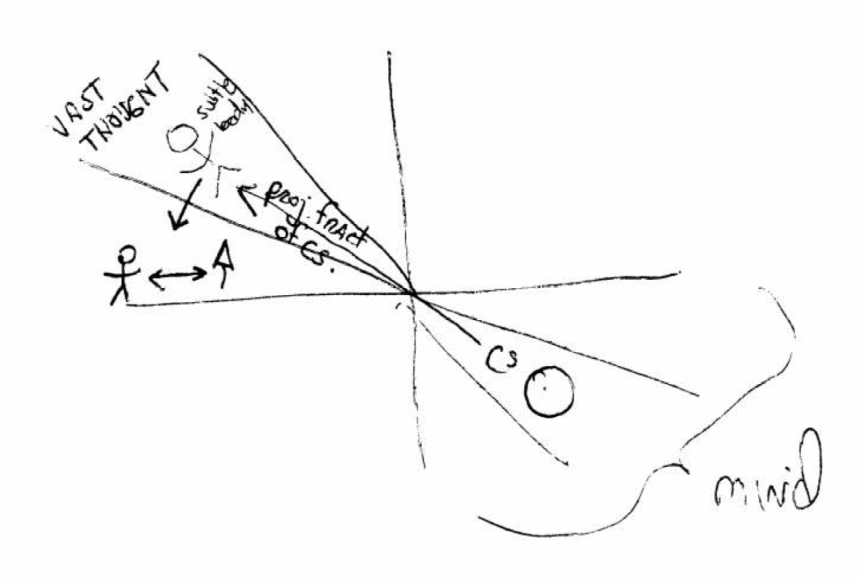
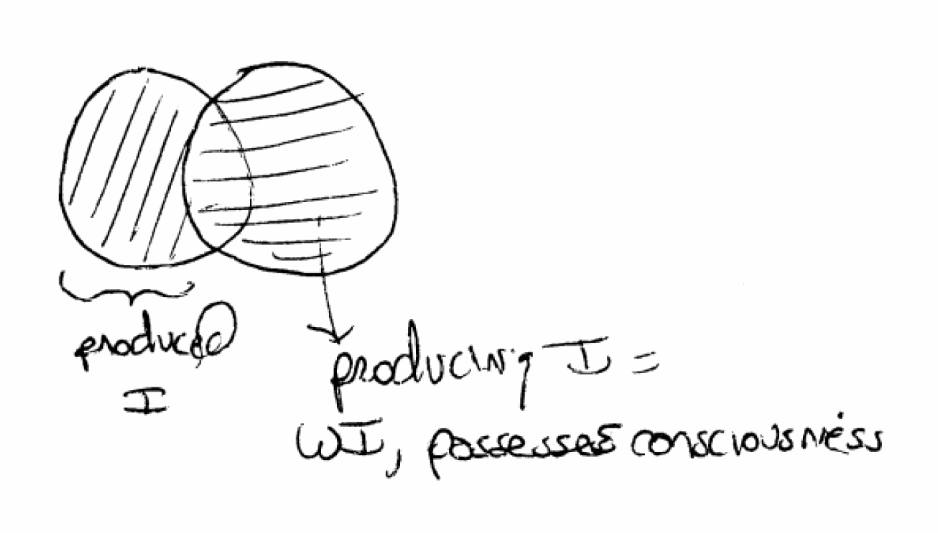
FIGURE 1979 1114-1-AB. Consciousness, Primal Image, and Empirical Experience correlated with Fifth, Eleventh, and Twelfth Houses.
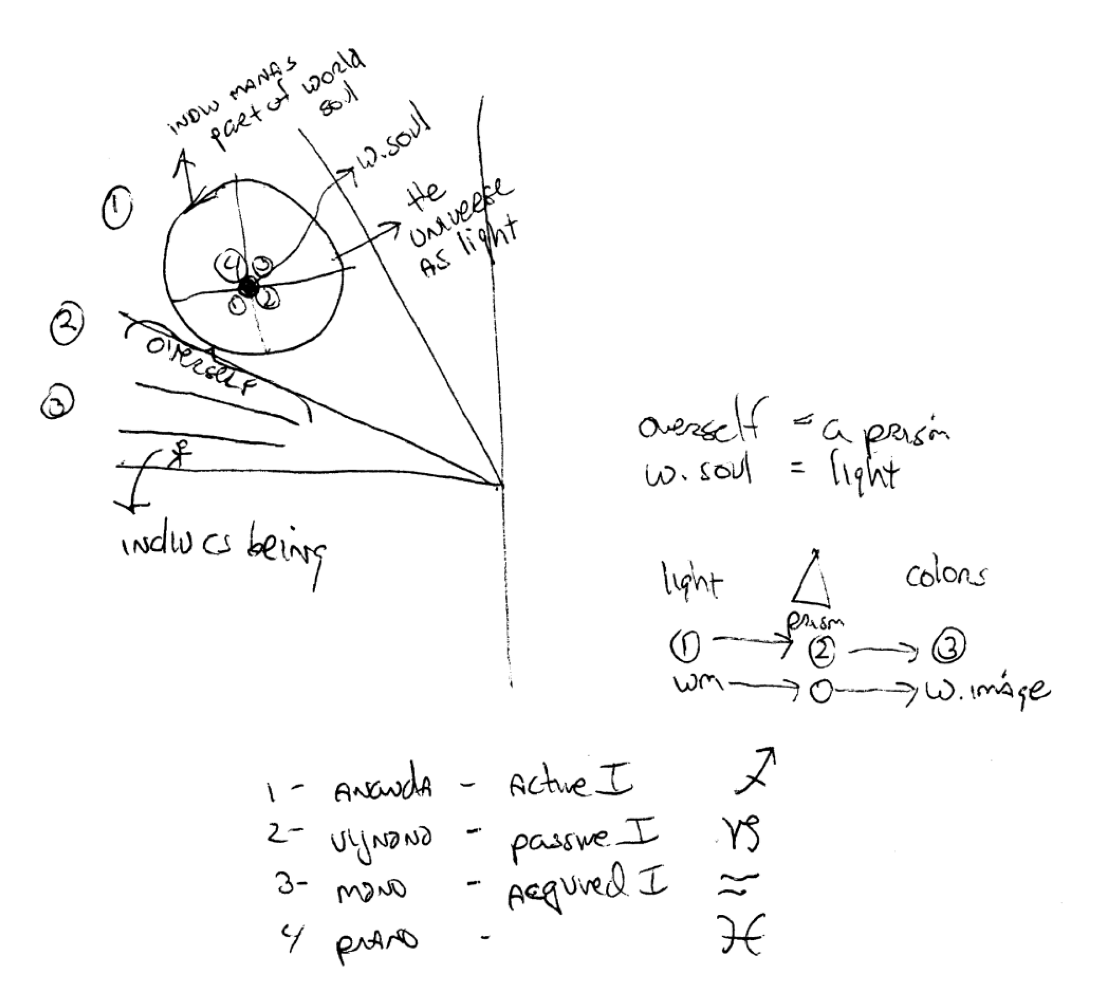
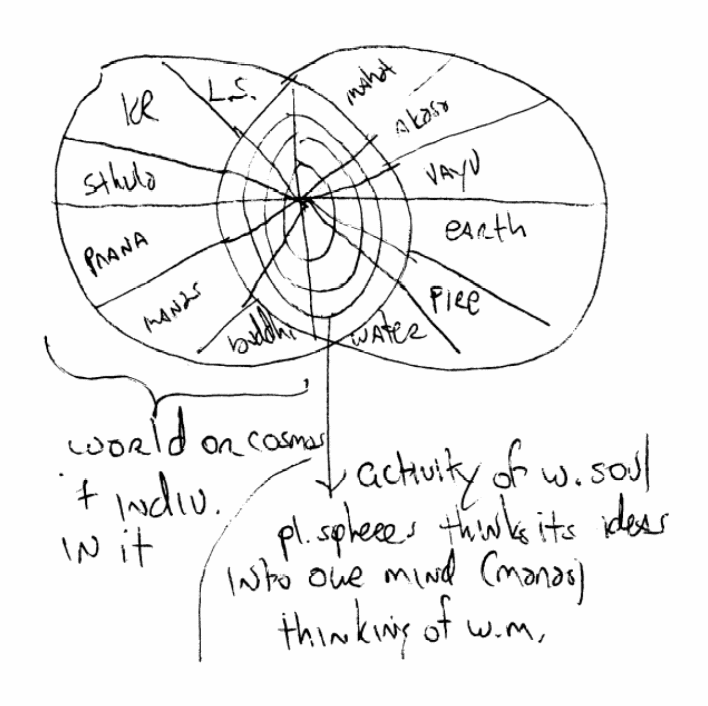
FIGURE 1979 1114-2-AB. World-Soul, Overself, Individual Conscious Being; Overself as Prism; Four Intellects.
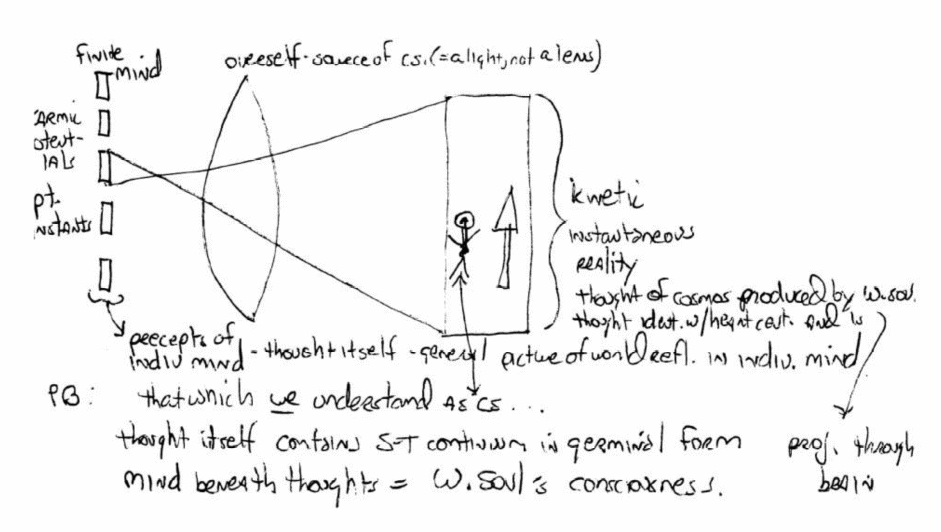
FIGURE 1979 1114-3-AB. Finite Mind, Overself, and World-Image.
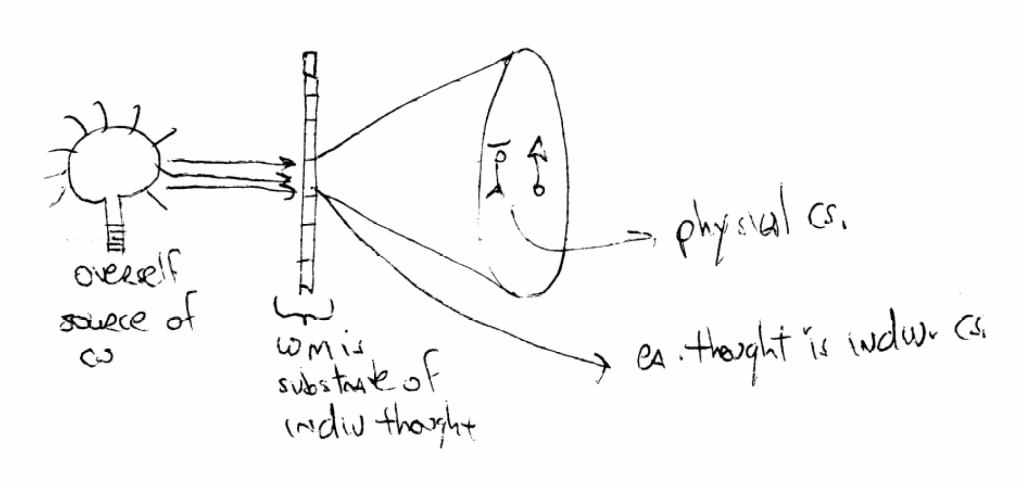
FIGURE 1979 1114-4-AB. Overself, World-Mind's Thinking, and Physical Consciousness.
FIGURE 1979 1114-5-AB. Witness-I and Empirical "I".
FIGURE 1979 1114-6-AB. Vesica of Houses 10-12.
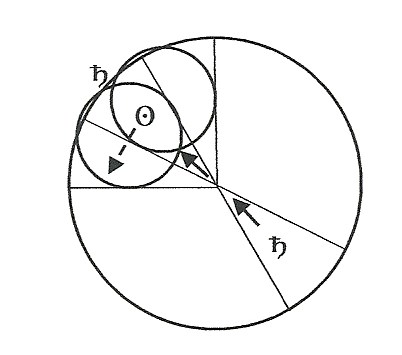
FIGURE 1979 1114-7. Saturn in Leo and Fourth Quadrant Vesica.
Other diagrams referred to are not with this transcript version. [Transcriber note: [diagram] means the speaker is referencing a diagram as he or she is speaking. If someone is drawing or writing, with audible sounds of chalk on a blackboard, I indicate this by [drawing] or [writing].]
NOTE: Wednesday night class, part of Wisdom series 1979-1980.
TRANSCRIBED Verbatim by IT 2019; reformatted by JRM & JF 2019-2020, with TOC/Subheads by JRM. In 2023, IT updates prefatory matter, footer, and audio file name, completes Book List, adds new note within transcript, fixes errors/typos, adds seven diagrams and references within transcript to these diagrams. In 2024, MW alters Subheads to make more accurate. Archival verbatim transcript – V14.1a.
AUDIO FILES: 1979 1114a, 1979 1114b. [Note: "Tape" and "Side" refer to original audio cassette tapes that were later digitized into .MP3 Audio Files.]
1979 11/14 at Wisdom's Goldenrod
PB Books; Wisdom of the Overself; "The Secret of the I"
Archival verbatim transcript
[Audio File 1979 1114a Begins]
AD: (There was) [one word inaudible]
RG (faint): No.
S (faint): It wasn't quite worth it.
S (faint): Right.
[10¾ second pause]
S (very faint): I'm invested in that.
S: Me too.
RG: "With what faculty…"?
S (faint): Yeah.
S (faint): Well all of it.
[Transcriber note: I am using The Wisdom of the Overself by Paul Brunton, Rider and Company, London, 1943.]
PB [The Wisdom of the Overself, "The Secret of the I," p. 81, RG reading]: "With what faculty does man dream of distant continents at night and with what faculty does he picture them in imagination by day? Is it not with the mind and does this not show that it can embrace the most distant places? At what point of the universe dare he say that any object, however distant, is outside his mind? Just because he is capable of thinking of the entire universe, of embracing the most distant star within its operation of knowing, we are entitled to say that mind is everywhere. It is like space of which nobody can say where it ends. Space is indeed the form which mind takes. But this is the same as saying that mind is formless. Mind occupies no definite position in space for the simple reason that space itself is its own production. Although all the thoughts which have existed in our mind and which still lie there latently are beyond counting, we know that we can use the phrase"in our mind" only in a metaphorical sense. If the thoughts had ever been there in a spatial sense they would have needed a very large place to accommodate them! What does this imply? There is no length and breadth for a thought and consequently no real length and breadth for the mind holding it. Whatever we do theoretically for the purpose of intellectual analysis and communication, we cannot actually divide the mind from the thoughts which it holds. All are one. Thoughts are only phases of consciousness. Consciousness is only a phase of mind. Mind is outside the limitation of any particular place. It is not really flesh-tied, but our belief about it is."
[9½ second pause]
AD (faint, possibly part of background): Yeah, uh-huh.
[1 minute 34¼ second pause]
AD: No agonizing.
RG: Hm?
AD: I don't hear no agonizing.
S (faint): Yeah.
AD: Go ahead. Why don't we start?
DOES PB USE "MIND" TO REFER TO THE PRINCIPLE OF AWARENESS AND "CONSCIOUSNESS" TO REFER TO THE PRODUCTS OF THIS MIND?
BS: Well, if consciousness is a phase of mind, then all the thought-forms are a product or the same as mind. And consciousness, as he says, is only an aspect of mind, that doesn't seem to explain the knowing of the forms.
RG: Well why not?
BS: It seems to describe what's going on, but doesn't explain how any of these forms are known, like some kind of consciousness.
RG: I don't understand. I mean I don't understand that-- why does it follow from the fact that consciousness is a phase of mind does it then follow that that doesn't explain knowing?
BS: Because consciousness in that case would be an aspect of mind.
RG: Right.
BS: Mind and the way he seems to be presenting it is known as mental functioning, I think.
S (possibly part of background): Who's that?
RG: The con-- well-- I would say here mind is the principle of awareness which-- whose form the world takes and it is-- it is the fabricator as well as the knower of all mental phenomena.
BS: Well then how is it both the fabricator and the knower?
RG: In the same way the mind that creates the dream is the mind that knows dream.
BS: Well, ok, I've never really been convinced of that one.
RG: Well--
BS: No, how would you explain a mind whose function it is to create thought-forms that are going to be known as those thought-forms that it produces--
RG: Because in the-- 'cause he said in the above paragraph--
BS: --as also being the knower of those thought-forms?
RG: Only a fraction of the mind becomes those thought-forms. Only a fraction of the awareness gets invested in the-- in the mental forms and not the totality of the mind. That part which is-- is invested in them is them and the part that isn't may-- is the knower of them.
BS: Well couldn't you say the part that-- yeah, just speculating, the part that gets invested in knowing the thought-forms, I mean in producing the thought-forms-- Now the part that doesn't get involved in this, couldn't be that-- couldn't that be the-- or the simple fact that there are always more thought-forms that are not yet known. You can't exhaust mind in certain thought-forms.
RG: Yeah. I-- I didn't follow your last [one word inaudible] point.
BS (simultaneously): Why would mind be the principle of awareness, at the same time produce the thought-forms?
RG: Well then you-- we have to read the paragraph above it.
BS: Ok. The previous paragraph [one/two words inaudible]
RG (simultaneously): Yeah. I mean--
PB [The Wisdom of the Overself, "The Secret of the I," p. 81, RG reading]: "What the hidden teaching says is that the awareness is itself a separate principle. Part of it acts upon the body, [principally] through the heart… … The part which thus acts is the part which is projected into a particular space-time existence and which thenceforth [RG reads: therefore] imagines itself to be an entirely complete [and self-sufficient] being. [RG: And he did--] … It is this fractional consciousness--and not the mind whence it originates--that has its seat in the [particular] body…"
[Note: See FIGURE 1979 1114-1-AB, Consciousness, Primal Image, and Empirical Experience correlated with Fifth, Eleventh, and Twelfth Houses, appended to this transcript for the following.]
RG: Etc. So there he's making a distinction between the mind that the fractional consciousness which resides in the thought-forms has and the aware-- and the awareness of the mind that transcends that [one word inaudible]
BS: It says--
PB [The Wisdom of the Overself, "The Secret of the I," p. 81, BS reading]: "It is this [BS reads: A] projected fraction of awareness [which] is what we ordinarily term consciousness…"
RG: Yeah. And this relates to the sentence in this paragraph--
PB [The Wisdom of the Overself, "The Secret of the I," p. 81, RG reading]: "Consciousness is only a phase of mind."
RG: That fractional consciousness is a phase of mind, it's an aspect of that principle of awareness.
S: But we define [S simultaneously: Oh yeah.] that--
BS: Wouldn't that be a consciousness of something?
RG: Which?
BS: Any consciousness he speaks of here.
RG: Consciousness?
BS: Fractional awareness is a consciousness of some form that thought takes.
S (faint): Right.
RG: Right. Yeah.
S (faint): (Ask) Richard.
RG: I would agree with that.
BS: I don't know, I'm probably reading it cockeyed but when he says consciousness is only a phase of mind, if you associate the knowing with what is known, that's a phase of consciousness. But it almost seems like we have to put consciousness before this whole mind that we're talking about.
RG (simultaneously): Yeah but that-- then you-- but is that the way he's using the term 'consciousness' here? Doesn't seem to be if consciousness is a phase of mind. Certainly that consciousness that is the ultimate principle of awareness, if you equate it with the Overself, that isn't a phase of mind. It could only be the consciousness that's embodied in thought that could be a phase of mind and not the principle of awareness used as consciousness.
BS: Well then you're not equating mind with the principle of awareness?
RG (simultaneously): Yes, mind with the principle of awareness but not the principle [BS simultaneously: Equating?] of (aw--) he does. But not the principle of awareness with consciousness.
S (faint): Dickie, I'm sorry, would you just go over what (you/you've) [possibly one word inaudible] I lost track.
RG(?): One minute. (RG laughs)
S: Well I'm trying to follow the class so could you go over it?
S: Yeah but would it--
S (simultaneously): Yeah, of course.
S (faint): Seriously (Dickie).
RG/S(?) (faint): Would I? (RG laughs)
MW (faint): Either way I win.
RG: What do you want to-- what do you want to go over?
S: Just this la-- when he says, "Thoughts are only phases of consciousness. Consciousness is only a phase of mind."
RG: Ok.
S: What are you-- what are you saying that he means by consciousness there?
RG: Well, if we go back to the paragraph before--
PB [The Wisdom of the Overself, "The Secret of the I," p. 81, RG reading]: "It is this [RG reads" the] fractional consciousness…"
PB [The Wisdom of the Overself, "The Secret of the I," p. 81, RG reading]: "Part of it [RG reads: Part of the principle of awareness] acts upon the body… … It is this projected fraction of awareness which is what we ordinarily term consciousness… It is this [fractional] consciousness--and not the mind whence it originates--that has its seat in the particular body…"
RG: So consciousness there as a phase of mind indicates to me that consciousness is not being used as the ultimate principle of awareness but is being used as an aspect of-- or even the totality of mental functioning is being called consciousness, not the way we have in the past been speaking of consciousness as such. And I think he talks about mind here as the principle of awareness, which would be the principle of consciousness the way we've been discussing it for the last few weeks.
[short pause]
S: But-- [short pause] Didn't-- didn't we say that-- that the consciousness that he was talking about in paragraph 21 was the-- the Overself which has its seat in the heart?
RG: Well yeah, and then we've discussed that as the Witness-consciousness which really wasn't the principle of awareness but again was the totality of-- of mental-- we made that distinction last week between-- [S: Yeah.] (background noises, bit of laughter) between the Witness and the principle of the Overself, that the Witness is, so to speak, the totality of mental functioning and not the light that comes from the fifth house [diagram].
S: Yeah. [10¾ second pause] I just-- I-- I'm probably mistaken but I though that we-- I thought that in paragraph 21 what he says--
PB [The Wisdom of the Overself, "The Secret of the I," p. 81, S reading]: "What the hidden teaching says is that the awareness is itself a separate principle. Part of it acts upon the body, principally through the heart and the brain. It has certain correspondences and relations with centres in the brain. The part which thus acts is the part which is projected into a particular space-time existence and which thenceforth imagines itself to be an entirely…"
S (faint): Yeah.
RG: Yeah, go on.
PB [The Wisdom of the Overself, "The Secret of the I," p. 81, RG reading]: "It is indeed [S simultaneously: Read it.] what we know as the person. It is this [S simultaneously: Yeah.] projected fraction of awareness which is what we ordinarily term consciousness, that is the sum of all our personal [S simultaneously: Yeah.] sensations, thoughts and feelings."
RG: That certainly [S simultaneously: Right.] isn't the Overself.
S: Right, right.
[short pause]
S (faint): Yeah.
DR: I don't see how it disagrees with what we've said. I mean I don't think it was this fractional consciousness that he's mentioning here is what you ordinarily call the ego or the [S simultaneously: Right.] person. I-- I thought the distinction being made before was the distinction between consciousness and mind.
RG: Right.
S: Hm.
DR: And consciousness was not the ordinary ego or person.
RG: Well where wasn't it?
DR: Huh?
RG: In this book? In this-- in this page?
DR: Well right here, I mean this-- that the consciousness he's referring to here is not the consciousness that we've referred to in the last few weeks as coming from the fifth house [diagram].
RG: Right, that was the point I was making.
S: Right.
RG: And I'm saying his term 'mind' here, at least in this chapter, and it's been my position that it's throughout the whole book, that mind relates to that, to the light coming from the fifth house, and in this chapter he does call it the principle of awareness, whether he-- right but at least here he calls it the principle of awareness and he puts consciousness as an aspect of it, so it couldn't be the consciousness that we've talked about before.
S: That-- the mind that the fractional awareness comes from, which mind is that? Because at one point, at one point we said it was the cosmic soul and I thought last week we said it was the Nous.
S (faint): Yeah.
RG: Yeah, I think we've answered that passage twice.
S: So [S simultaneously: That was--] it was the Nous?
RG: I would have to interpret it that way.
S: Ok. [short pause] So in the ne-- in the next paragraph would you say that, "Consciousness is only a phase of mind", we would interpret mind the same way there, right?
RG (faint): Uh-hm.
S: Which end?
S: As the Nous?
S (simultaneously): As the Nous.
DB: I-- If we-- if we interpret that mind as-- there as being Nous, I don't understand how in the previous paragraph, 21, you can speak of personal sensations, thoughts and feelings as being equated with a fraction of that alone.
S (faint): Uh-hm.
S (simultaneously): And also in the next sentence after that he says--
DB: Why not?
S: I'm sorry.
DB: Why? I just don't see the connection. I mean the personal--
RG (simultaneously): Well there's not-- there's no-- yeah.
DB: I mean the personal sensations and feelings and thoughts and so forth are all going to be related to a particular context. They're all going to take place within the fourth quadrant [diagram], within the functioning of the cosmic soul, so there's going to have to be some interrelationship of the individual experience to that activity.
RG: Ok, but that's assuming an inherent dualism between the awareness and the material that it's related to. And I don't think he's presenting that position here right now. The forms are-- are the awareness taking those forms. There's no dualism there.
DB: Well, yeah there is [couple/three words inaudible] Well, as long as it-- when he speaks of the-- what does it mean then when later on in the-- in this chapter refers-- he refers to this principle as being a relatively permanent principle of our-- you know, and the basis of all of our experience? Why say it's a principle? How-- I mean if it was-- if it was the Nous I don't think you could speak of it as being relatively permanent.
RG (faint): Uh-hm. That's true.
DB: And he-- and he does do that.
RG: Well-- right, well, I'm not so sure that that's what he does in the (chapter).
DB (faint): I mean-- but even when [one/two words inaudible]
RG (simultaneously): Yeah, I know what he meant. [short pause] Well, or it's the Nous shining-- shining into. Or how would you look (up to that)?
DB: See that's-- I mean that's a-- This-- this business about the fractionalized-- the consciou-- consciousness there, fraction of awareness, (you know), I mean on the one hand we could think of the ego, you know, the personality of the twelfth house [diagram], you know, that-- like a fragment of the-- the totality of that individual's mind which would be represented by say the eleventh house [diagram], ok. Particular incarnation is going to be certain arrangement of that, it would be a fragment, so to speak, of that totality.
RG: Well but if you say--
DB (simultaneously): But then it-- ok.
RG (simultaneously): [three/few words inaudible]
DB: And at the same time, in order to speak of the principle of awareness there or the pure light of consciousness (in/from) the fifth house, I mean, would it seem that you'd have to speak of a fraction of that too in order to be able to speak of the consciousness that that wakeful personality had. I mean it certainly couldn't identify. Do you-- do you see what I'm saying? I mean the-- I mean I'm not sure that it's-- at least in the paragraph 21 it's entirely clear which-- which he's speaking of.
S (very faint): Yeah.
RG: So when he says "Part of it acts upon the body, principally through the heart", [DB: Yes.] isn't it then acting through the heart center there?
DB: Well, yes, but--
RG: That's not the awareness that's prior-- is even prior to the heart center?
DB: Yes, but wouldn't that-- couldn't that be understood in terms of the eleventh house too?
S: Maybe he doesn't mean the same thing by awareness and mind.
RG: Well, he does put-- he does put them--
S (simultaneously): Maybe he means to make a distinction there.
RG: Well, but in the paragraph after, he defines the mind--
PB [The Wisdom of the Overself, "The Secret of the I," p. 82, RG reading]: "The essence of this doctrine is that all these things are ultimately known by the mind, are known only as mental perceptions and therefore can only exist within such a conscious, immaterial and untouchable principle of awareness as we know the human mind to be."
RG: And he seems to define the human mind there as the prin-- you know, the principle of awareness. [14¾ second pause] I think he [couple words inaudible]
S (simultaneously): But he also seems to define it in that paragraph as the imaginative faculty, so--
RG (simultaneously): I agree. I think his definition of 'mind' is very fluid, and that that's why it includes all those-- all those levels. And that you could interpret it at the eleventh house level, and that there it would be the principle of awareness shining through, [S: Uh-hm.] you know.
S (faint): Very elusive.
S: Well then what you're saying is that P-- we're making a distinction that PB isn't in this book?
S (faint): Yeah.
S (faint): [couple words inaudible]
RG (simultaneously): No, no, I think he's making a distinction here between--
S (faint): Well it's possible.
RG: I mean-- I think-- well I-- I don't think he's making the strict dualism that we've made between [S simultaneously: Say the awareness and the functioning of the mind.] the awareness and the functioning of the vehicles. But, I think here-- I think he uses the vehicles as a-- as a-- a manifestation of that awareness, not in distinction to it, I mean--
DB: When we-- when we speak of the human mind, I mean that-- I mean it does seem as if that that would be in a sense principle different from the way we've spoken of the Overself. Or-- or is it not?
AD/S(?): I don't buy it.
DB: I mean why doesn't he say Overself, why doesn't he bring that in now?
RG: Because he-- the chapter is on the Secret of the Overself. He does bring it in, very shortly, when he gets-- later on in the chapter. And that he gets into it more fully in-- in the chapter on the Overself.
AS: Well, wait Richard, you weren't just equating the human mind with the Overself, were you?
RG: No, no. It's not [AS simultaneously: I thought that's why what he said-- I thought you said something like that.] clear though-- it's not clear that that isn't being discussed here, what the relation of the human mind is to the Overself.
AS: And also what about principle of awareness as, the way we said-- aware-- pri-- the principle of awareness in the sense that by the mind containing all these thoughts, it's-- the only way that aware-- the only way that this pure consciousness can get to know itself or-- [RG simultaneously: Ok, but then--] is by-- is by the thoughts revealing this consciousness. [RG simultaneously: Yeah, well--] The thoughts-- the thoughts reveal the consciousness. When the consciousness lights up the thoughts, then it-- then it gets (conscious). Then--
RG (simultaneously): But then you're real hard put to interpret consciousness as a phase of mind though.
DB: No but you--
AS: No, but the particular kind of consciousness he's speaking about is [RG assents] the consciousness of thought.
RG: Ok, right.
AS: Ok, and that kind of consciousness depends upon the mind's activity.
[student assents, very faint]
JG: Can you repeat that please?
AS (faint): No 'cause I lost it.
RG (simultaneously): But it-- ok but--
AS: Yeah, sure.
S: If--
RG: Yeah. But is that the way he's using "principle of awareness"?
AS: Well, when he says--
BS (simultaneously): He's using "fractional awareness".
RG: I mean [AS simultaneously: Well, when he sa--] I think that's included too.
AS: When he equates-- But I can't understand how else to understand principle of awareness equated with mind. I-- if he does equate principle of awareness with mind, [RG: Uh-hm.] I have a hard time seeing how else-- Especially the way he's used "human mind" or "individual mind". Now if you say he's speaking of the World-Mind now--
RG (simultaneously): But then-- then we're making another-- then we're-- then we're making another principle that is really the light of consciousness or really the princip-- the real principle of awareness, you know.
AS: The [couple inaudible student words simultaneous with AS] awareness per se.
PB [The Wisdom of the Overself, "The Secret of the I," p. 81, AS reading]: "What the hidden teaching says is that the awareness is itself a separate principle."
RG: Right.
JG: If--
AS: You-- I just read that--
JG (simultaneously): Dickie, you said before that the-- [S simultaneously: Here.] this part refers to the Witness-I which is the sum total of-- or equivalent to all the mental-- mental processes that can be conceived of. So what would that be different from? It's not different from mind then.
RG (simultaneously): No, I think that's how he's using the term 'consciousness' here.
JG: Excuse me?
RG: I think that's how he's using the term 'consciousness', as the sum total of all our personal sensations, thoughts and feelings.
JG: Oh you're speaking already about dimmed down empirical [RG simultaneously: Oh no, no.] ego. I think--
RG (simultaneously): No, he's [JG simultaneously: No?] talking about it associated with the heart. In the heart center we're not talking about a totally empirical individual.
JG (simultaneously): No, "and which thenceforth imagined itself to be…"
AS (simultaneously): No, he's trying to get to the notion of the Witness-I, right?
RG (simultaneously): Right.
JG: What?
AS (simultaneously): So? And that's-- and that's ok.
RG (simultaneously): Yeah.
AS: He's taking it beyond the empirical.
RG: Right, but it's that fractional aware-- that fraction of awareness that was-- that's the Witness.
AS: No but we cert-- certainly wouldn't disagree that that-- that in order to speak of a Witness you have to speak about some kind of conjunction as it were. I mean you wouldn't just speak about the mind itself as the Witness I don't think. Because then you wouldn't-- there wouldn't-- the mind itself doesn't witness anything, [RG: Well I--] wouldn't know anything.
RG: Well that's-- that's [AS simultaneously: Mind in a way we've been using it--] a definition of mind as matter.
AS: That's a definition of mind as matter, [RG simultaneously: And I don't think--] or even the way he's been using "individual mind" all along.
RG: I disagree.
AS: Ok.
RG: I mean I don't, you know-- I don't disagree with your concept but I disagree with that's what he's-- that's the way he's using it.
AS: Well look, when he says--
PB [The Wisdom of the Overself, "The Secret of the I," p. 81, AS reading]: "The part which thus acts is the part [JG simultaneously, faint: That I'm in body.] which is projected into a particular space-time existence and [which] thenceforth imagines itself to be [an] entirely complete and self-sufficient being."
AS: Now that part, is that a part of the mind or is that a part of pure consciousness, or does pure consciousness have a part?
RG: I mean "part". I mean part of it-- In the sense that all things are a manifestation of pure consciousness, in that view, yes. You're speaking--
AS (simultaneously): All things are manifestations of pure consciousness?
RG (simultaneously): And you-- if you speak of a monism in that sense. Yes.
AS: I don't understand that view.
RG: How could anything be but that?
AS (simultaneously): All things are manifestations of pure consciousness?
RG: How could anything be but be that?
AS: You're saying even-- even the finite individual mind and all these thoughts are concretizations of pure consciousness.
RG (faint): Right.
AS: That sure takes away all-- (AS laughing) I mean--
RG (simultaneously): No, I thought we-- I thought we discussed this last week, that he's re-- he's presenting [AS simultaneously: I don't even see that now.] a more monistic view here and not holding to the--
AS (simultaneously): Yeah, but you think he's jumping to that view? I don't see why-- [RG simultaneously: No (couple/three words inaudible) that always to that view.] If you take that view you're taking the point of view-- you're saying that mind and consciousness are equivalent and they're both equivalent in the-- in the second house, second quadrant [diagram], you know--
RG: No, not his terms 'mind' and 'consciousness', no. The way we've been using consciousness as, let's say, the fifth house principle.
AS: Right.
RG: And the nature of mind as the principle of awareness in some sense are, I think, similar concepts here.
AS: But-- [S simultaneously: So you--] so then-- but how can you say that that-- that that's the way we've been using that as the fifth house consciousness is what concretizes itself as these thoughts and as the individual mind and so on? I don't follow that view, I don't see where-- I don't see where [AB simultaneously: If--] we said that.
AB: If you just take the sentence that consciousness is a phase of mind, and you interpret consciousness to be the fifth house Overself consciousness, then mind would have to be the Nous. But if you say that here he's speaking of consciousness as the projected fraction of awareness which is immanent in the empirical personality, then mind would be the individual mind which is thinking it into existence.
RG: Ok, and then how does-- what is the meaning of it as the principle of awareness?
AS: Just as we see them.
S (simultaneously): [one word inaudible]
S: Yeah.
AB (simultaneously): Associated with the mind that thinks your world is a principle of awareness which knows that world that it thinks.
RG: Ok, but how does it know if-- Does-- is its knowing inherent to itself or is it knowing from a principle that lights it up transcendent to it?
AB: You would-- ultimately you would say that the mind's awareness in the eleventh house is derived from a higher awareness like the Overself. But, for the-- as long as they're associated in this context you could speak of them as coming together, you know, or being in the same locus.
RG/S(?): Ok. Yeah.
AB: I mean that's how I would read this section of the book. He's talking about the Witness-I which we said is a relative awareness.
JG: Alan, could you tell me exactly where he's talking about the Witness-I because I'm-- I'm very confused right now.
S (very faint): Everybody's confused.
AB: Well--
DOES THE FRACTIONAL CONSCIOUSNESS WITNESS THE APPEARANCES THAT MIND PRESENTS OR DO THESE APPEARANCES EVOLVE FROM WITHIN THIS CONSCIOUSNESS?
JG: To me, to me there, you know, in paragraph 21 starts out with a very high principle, the principle of awareness, and then there are jumps and jumps in between. I mean suddenly there is talk of imagination which is-- which is a property of mind and not of-- of the light, so-- and-- You know, "part of it acts upon the body", so the body must already have been thought into existence by the World-Mind. And, "It has certain correspondences and relations with centres of the brain" is also the body being a product of mind, has relations with something which is basically not a product of mind otherwise you wouldn't talk that way. Now the part, "This part which thus acts is the part which is projected into a particular space-time existence", now that doesn't seem to say that this part itself blows into space and, you know-- is blown up into space-time existence but sounds to me at least as though it enters space and time, something that has already been produced [three/few words inaudible]
AD: Which particular space-time existence would it get-- go in to?
JG: The one, the seed starts in the heart, there the--
AD: When he says here that this fractionalized [JG: Uh-huh.] piece of consciousness, little bit of consciousness, enters into a space-time existence, what would that mean? It enters into what?
JG: It enters into a particular space-- space-time existence.
AD (simultaneously): Yeah, what would--
JG (simultaneously): If I say "particular", I have the particular world, almost the empirical world I would like to say, I'm not sure about it. It's not the general picture of the world anymore.
AD (simultaneously): Well he's-- look--
PB [The Wisdom of the Overself, "The Secret of the I," p. 81, AD reading]: "The part which thus [JG simultaneously: Yeah.] acts [AD:"The part which thus [JG assents] acts", the fractionalized consciousness, "which thus acts] is the part which is projected into a particular space-time existence and which thenceforth imagines itself to be an entirely complete and self-sufficient being [AD reads: and which can now imagine itself to be a completely self-sufficient being]."
S (faint): Yeah.
JG: There for me is a big jump because--
AD: Yeah but, what is he saying there?
JG: I can't figure it out, that's why I'm trying to just bring out my question.
AD (simultaneously): It's not very difficult.
RG: The space-time existence is the existence of the body in a cosmic soul. When the-- when the-- when the principle of awareness hits the brain, then the person imagines himself to be a separate and self-sufficient entity.
JG: Well hence the person, you happen to just--
RG (simultaneously): So that precipitates--
AD: Alright, now--
PB [The Wisdom of the Overself, "The Secret of the I," p. 81, AD reading]: "The part [AD: That is, the fractionalized piece of consciousness.] which [thus] acts is the part which is projected into…"
AD: Let's say a body which is [JG assents] the product of the cosmic soul.
JG: Yeah.
PB [The Wisdom of the Overself, "The Secret of the I," p. 81, AD reading]: "…and which thenceforth imagines itself…"
AD: Now, is it this fractionalized consciousness which imagines itself or is it this fractionalized consciousness working through the mind, the brain, which imagines itself to be a self-sufficient separate entity?
RG: Working through the brain.
S (very faint): Yeah, ok.
S: The brain.
PB [The Wisdom of the Overself, "The Secret of the I," p. 81, AD reading]: "It is indeed what we know as the person. [AD adds: Now] It is this [JG simultaneously: So--] projected fraction of awareness which is what we ordinarily term consciousness, that is the sum of all our personal sensations, thoughts [and] feelings."
AD: Etc, ok? Now what did he just do there?
[short pause]
S (faint): This--
AD: Go ahead, sure.
S (simultaneously, faint): Uh-hm.
S: I don't know, I-- it seems like he's talking about a part of the soul maybe or a part of-- part of the Overself, that the Overself con-- like the soul descending or something like that? It like-- it seems like--
AD (simultaneously): Well we call it a little piece chipped off the main block, ok. A little piece of what? Consciousness, awareness, that's fine, yeah.
S (simultaneously): But he's speaking of the fifth house and that's--
S: Is he?
JG: Yes he is.
S (simultaneously, faint): Uh-hm.
AD: What else can it be when he says that this principle of awareness is a separate principle?
RG: Well--
AD (faint): Go ahead.
S: And it's only after it goes through the-- when it comes in contact with the mind, then it can (come/go)--
AD (simultaneously): Well it doesn't come into contact with the mind. The way Richard said, now it localizes itself in a-- in a body. This body is the product of the cosmic soul. So we will assume that it has all the necessary parts to it, brain, heart, etc, ok, and associates with that body. Now if it functions through that body, what's going to happen?
JG: The world will appear.
AD: The world will appear. Through the imagination, [JG simultaneously: Yes.] right? But the imagination is--
JG (simultaneously): And that's-- it's a property of mind. So both the light of the Overself and the mind have to be simultaneously going through the heart, to peak ver-- to speak very literally, and hit the brain and then--
AD: Imagine itself to be a self-sufficient entity.
JG (simultaneously): But then it's not really that part.
AD (simultaneously): You know, like those little dolls that you buy in the store and you wind them up and they go on their own [JG assents] after you wind them up? [student assents, faint] Then when the energy is over, they stop.
JG: Let's not talk about this [one word inaudible] (JG laughs, laughter)
S (amidst laughter): Yeah.
S (amidst laughter, faint): [few words inaudible]
RP (faint): Let's not talk about it.
JG: No but isn't it-- isn't it so, Anthony, that it is not that part of fractional awareness that imagines? Hasn't he made-- isn't in the text he [one/two words inaudible]
AD (simultaneously): Well, that's my-- that's my interpretation. Dickie's interpretation is that it becomes this imagination, this imagination of what is to be.
JG: But how could the light of--
AD (simultaneously): You'll have to ask Dickie that.
JG: Ok Dickie, how can the light of the Overself at any point change into something else?
AS: That's coming up [one word inaudible]
RG (simultaneously): It never does.
AS: Well you said before though that it-- you-- what-- the one [couple words inaudible]
RG (simultaneously): [couple words inaudible] too? How do you come up with another concept other than that?
AS: What do you mean? How do you not? I mean how-- I mean-- You-- you seem to be-- Well I don't know, you-- you seem to-- pushing again back to that view where everything emana-- you know, it's all one-- all this one consciousness [S simultaneously: Emanation.] and all these [RG simultaneously: A view of emanation.] things are appearances. How do you reconcile those things?
RG: You have the same problem reconciling your-- your dualistic framework here at the other level. I mean I--
AD: It's not dualistic. Because you-- because when I speak of mind as-- as samsara or presenting appearances and I speak of the Overself consciousness as a distinct principle but that they are conjoined and indivisible, I'm not-- it's not dualistic.
RG: Ok, I don't-- I don't think-- I agree here, I don't think it's-- that one is really important. But the light of-- the con-- whate-- whatever we call it, that awareness lights up--
AD: But will that make sense if we interpret it that way?
JG: That's the only way it makes sense to me.
AD (simultaneously): See if there's any other way to interpret it. Sure, go ahead David.
DB: Well, the question I have about that is that if we assume that we have this pure principle of awareness coming from the fifth house and, you know, speaking of it as a-- a chip or a fraction of this pure principle, what does it mean to speak of it, this bit of awareness, as having correspondences? I mean what is there in it which would correspond to any center in the brain? I mean I-- I don't understand what that would mean.
RG: The paradigm of the universe is in it.
DB: Well-- I mean (if--) what does it-- what does it mean (the fact that I) entrance or-- ok, where is it, right? It has certain correspondences, it doesn't have the entire corre-- I mean it says here it has certain correspondences with centers in the brain. So it's a specifically determined--
RG: When that principle of awareness appears as wakeful consciousness, it functions through certain brain centers. The character of wakeful consciousness takes on certain qualities due to the functioning of the brain center. The quality of dream consciousness takes on certain qualities because of the functioning of, say, the heart center. [short pause] But it's that consciousne-- isn't it that consciousness that it-- that we call wakeful consciousness? Isn't it that principle of awareness in the world we call wakeful consciousness? And if you strip the wakeful consciousness of all its thoughts and you're left in wakeful consciousness, isn't it that principle of awareness that's present?
[9¼ second pause]
AD: If I follow you you're saying if we subtract from wakeful consciousness its contents we'd have that wakeful consciousness per se.
RG: And that would be--
AD: That projected fraction of awareness.
RG: Yeah. But it wouldn't necessarily have-- ima-- be imagining anything. I mean it would be that awareness.
S (very faint): Yeah.
AD: It will be just that awareness. [9¼ second pause] Whereas the other possible interpretation, the one you've suggested that this consciousness, this projected fragment of consciousness, is the-- let's say the-- the whole of what will unfold in the individual's life, you know, like a tape and everything is in there and as the tape gets played out everything that's meaningful in that individual's experience is-- gets unfolded as the tape is played. [RG: Yeah.] And these are the two interpretations. One which is insisting-- one which is insisting that there is the mind per se which is a functioning structure, it-- it presents appearances and consciousness, so to speak, witnesses these appearances. And the other-- the other explanation is that there's this consciousness, and from within this consciousness there evolves forth the entirety of the content which will be experienced by that individual. Now these are the two interpretations we're working with.
RG (faint): Yeah.
AD (faint): Ok, I don't change my opinion.
S: Tony?
S (faint): Yeah.
S (faint): In that--
AD (simultaneously): Sure.
S: In that second interpretation then, where does-- where does that leave mentalism, is-- that mentalism is-- I don't understand where that--
AD: Well, I think they could say something like this, that from the superior consciousness, prajna, there evolves taijasa, there evolves what you might call the mental. They-- they probably would come up with something like that. That from a higher state of consciousness a lower state follows or is suspended or deduced from. [S, very faint: Ok.] But it's interesting, isn't it. (bit of laughter)
JG: I have one question.
S (very faint): Go ahead.
PB [The Wisdom of the Overself, "The Secret of the I," p. 81, JG reading]: "It is indeed what we know as the person."
JG: So-- [short pause] that fraction of awareness that I haven't-- I really don't understand it.
IF THE FRACTIONAL CONSCIOUSNESS IS THE SOURCE OF THE CONTENTS EXPERIENCED BY THE PERSON, THERE WILL BE A HIATUS BETWEEN THE OVERSELF AND THE PERSON
AD (simultaneously): You see, that interpretation too by the way Dickie makes it seem as though there's been-- there's been a hiatus introduced between the Overself and the person. In other words, if [JG simultaneously: And there isn't, yeah.] we imagine this Overself consciousness that, you know, and then a fraction of it gets projected downward into manifestation which presides over a body, alright, [RG, faint: Yeah.] then we'd have an awfully difficult time climbing up again.
RG: Wh-- why?
JG: Why?
S: (Mm.)
MW (simultaneously): You mean because the projected fraction is already a determined-like structure, [AD simultaneously: Yeah, it's--] it can't ever be pure consciousness.
AD: It can't be pure consciousness so I would have a problem. If I project that consciousness down into manifestation and now it assumes the form of an individual being, self-sufficient into itself-- unto itself, and this human being decides that he's not sufficient to himself, he wants to find out the source or the origin, well, he's already limited by the fact that that projected fraction of consciousness is all that he's ever going to get to experience as ultimate in himself.
RG: Why is that? If he traces that projected fraction back, and that fraction is of the essence of the principle of awareness, why couldn't he (work/wake) himself back to that principle?
[short pause]
AD: Well--
PB [The Wisdom of the Overself, "The Secret of the I," p. 81, AD reading]: "The part which thus acts is the part which is projected into a particular space-time existence [RG: Right.] and [which] thenceforth imagines itself to be [an] entirely complete and self-sufficient being. [AD adds: And] It is indeed what we know as the person. It is this projected fraction of awareness [which] [AD: Continuing, where he says that] is the sum of all our personal sensations [AD reads: sensation], thoughts and feelings."
AD: Doesn't that give you the feeling as though it's like a complete unit, a packet deal, a package deal now? In this package I got everything that you're going to experience in this life. I'll take this tape and I'll stick it in, alright, and from now on you'll have experiences of the world and then when that tape runs out that's it.
RG: But-- but I think-- I get the feeling from it though that all that can be known.
AD: All that--
RG: That that could--
AD (simultaneously): I don't make the connection.
RG: That that tape or the sum of our personal sensations, thoughts and feelings, or that fractional part of awareness that imagines itself to be the person, that that entire content is an object to the knower once you find out-- you know, once you've brought yourself back to the knower.
AD: And the knower, and the knower?
RG: The knower would be that that principle of awareness as is being used here.
AD: That knower would be the principle of awareness?
RG: Well that's what he says.
JG (faint): Uh-hm.
RG (faint): Yeah.
PB [The Wisdom of the Overself, "The Secret of the I," p. 82, RG reading]: "The essence of this doctrine is that all these things are ultimately known by the mind, are known only as mental perceptions and therefore can only exist within such a conscious, immaterial and untouchable principle of awareness as we know the human mind to be."
AD: Well again, repeat your point, I--
RG (simultaneously): Ok, the fa-- the fact that this fraction, this projected fraction of aware-- consciousness takes the form of thought and imagines itself to be an entity and we call this the sum total of the personality, the personal sensations, feelings, (right), anything that's considered under the realm of thought can be known. In the fact that let-- that it can be known, that entire series or that entire tape can be made an object to the mind who is the subject of that experience.
AD: That entire series can be made an object--
RG (simultaneously): Made an object to the mind, as he's defining it here, which can know it. [AD drawing/writing] And he's saying there I think he can know it because it takes place there.
THE FRACTIONAL CONSCIOUSNESS EXPERIENCES WHAT THE MIND DELIVERS TO IT
AD (simultaneously): But what would it be in the mind that would know the contents of that mind? Mind?
RG: Well-- alright, I mean that-- we're disagreeing about terms there.
AD (simultaneously): I mean, wouldn't it be that-- wouldn't it be that projected fraction of consciousness which was bundled off and hurtled into a particular space-time existence?
RG: Would that be the knower of it?
AD: Well wouldn't that be the knower of it?
RG: Why-- I don't-- I don't-- I don't--
AD: Well let's reconstruct it. There's this fragmented, fractional piece of consciousness which is projected into a particular existent.
RG: Right.
AD: Ok?
JG: Existence?
AD: Existent. And let's say that this entity has experiences. Now what in that existent who's having expe--
(Side 1 of original cassette tape digitized as 1979 1114a Ends; Side 2 Begins)
RG: Well-- I'm ki-- I mean I agree--
AD (simultaneously): Possibility, huh? It's a possibility.
RG (simultaneously): I agree with-- I agree with you is what-- I don't disagree with the concept you're giving out but I--
AD: You know, because you'll have something like this to contend with in the-- in the chapter on "The Immortal Overself". He says--
PB [The Wisdom of the Overself, "The Immortal Overself," p. 117, AD reading]: "Now the Overself's original consciousness is a single and undifferentiated one. This means that its only awareness is of existence but not of personal existence. It is conscious yet not self-conscious in space and time."
AD: I mean, that's not fair to pick out something in the chapter on the Overself to mi-- remind you the kind of consciousness that the Overself works with.
RG/S(?) (faint): Uh-hm.
S: The projected fraction of awareness that becomes the existent person, when we speak of it in that term-- I don't quite know how to phrase this question. If the mind-- consciousness is an aspect of the mind, and the consciousness is what is projected to become the person, what part of that--
AD: No the--
S (faint): Right.
AD: Consciousness is projected to become the person?
S: The fraction, not the whole [couple/three words inaudible]
AD (simultaneously): Alright, go ahead.
S: Talking about that fractional consciousness. What part-- is the consciousness involved or what part of the mind is involved in-- in projecting the world? Because when we speak of a-- a subject, we have to have an object. The only-- we spoke about the individual mind as creating a person and his world from experience.
AD (very faint): Yeah I didn't follow you.
S (very faint): Uh-hm.
S: In this series where he describes the part of the awareness--
PB [The Wisdom of the Overself, "The Secret of the I," p. 81, S reading]: "Part of it acts upon the body, principally through the heart and the brain. … The part which thus acts is the part which is projected into [S reads: in] a particular space-time existence and which [thenceforth] imagines itself to be an entirely complete and [S: to be a completely] self-sufficient being."
S: So, in that we have-- we have the perceiver of the world set up, the person who imagine-- the "I". And that seems to be describing the subject here. Now I'm just wondering if inclusive in that is also his world of experience, you know, how-- like in the Hidden Teaching when we describe the-- the individual mind as--
AD: Yes, according to that theory that was being expounded, if everything was an unfoldment of this packet of consciousness, then what he would be experiencing would be, so to speak, his own thoughts. The world as a product of the World-Mind or the world per se could never be revealed to his mind. He would only be experiencing, so to speak, his mind.
S: Right. And then we got out of that dilemma by making the world mental.
AD: Well I don't know that we got out of the dilemma. (some laughter)
S: Well--
S: Go ahead.
S (faint): Uh-hm.
S: So it (seems/seemed). Is it wrong to bring that in now? I-- it would--
AD: Well right now-- right now I don't think that's going to help us with this paragraph (we're reading).
RG: No. I mean just to elaborate that, the point of view of the Overself limiting itself, I think he does that in the chapter on the Overself and I-- I mean I could read a para-- a few sentences to back that up. I don't know if you want to get into that.
AD: It limits itself, yes, I acknowledge that.
RG: Yeah--
PB [The Wisdom of the Overself, "The Immortal Overself," pp. 118-119, RG reading]: "This is why the unlimited Overself must delimit its horizon, must make a descent from its own transcendent Oneness into separate selves… Consequently, when the universal and infinite Overself both limits and differentiates itself in order to acquire self-consciousness, the portion of itself so limited and finitized forgets its infinite character. In revealing the"other" it veils a part of itself; in setting up an object for experience it has also set up a subject shrunken and dwarfed through the lapse into personality."
RG: So-- I mean I think there the portion of itself so limited and finitized is the same context as the--
AS: The fractional part of awareness.
RG (simultaneously): The fractional part of awareness imagining itself to be a separate and complete entity.
S: But that-- that doesn't seem to necessarily conflict with the other argument.
AS: I know it doesn't [S simultaneously, faint: Better not.] necessarily conflict.
S: I mean it's possible [AS simultaneously: Right.] that consciousness so limited in itself could still be inviolate.
RG (simultaneously): Well (right/yeah), right [one/two words inaudible] sure.
AS (simultaneously): Right. In fact that even proves the point that that fraction of awareness which is the real-- the knower right there in the empirical is in fact a-- if you say it is really the Overself consciousness, then it is distinct from all the contents which it knows.
RG: Exactly. I have no-- we have no disagreement about that. The thing we're disagreeing about is that PB's calling in this chapter the invisible principle of awareness the mind, then that's where [S simultaneously: Well--] the disagreement lies. That I'm saying if you agree to that and that the awareness there represents the Overself that delimits itself through this projected fraction of awareness, I don't see how we cannot hold that that's-- that's the way he's using the term 'mind' here, as that aspect of the Overself.
AD: But I thought that that became clearer when we read this here, when we said that the principle of awareness is a separate principle in itself, alright, and that a certain part of it had to be put into a particular space-time existence, the body, ok. Now, this particular space-time existence that it's put into, this body, would have to be the product of the individual mind with-- conjunct the World-Soul's functioning that produced that. [Note: See upper left diagram in FIGURE 1979 1114-2-AB, World-Soul, Overself, Individual Conscious Being; Overself as Prism; Four Intellects, appended to this transcript.]
RG: Yes.
AD: So then it would be this fractionalized bit of consciousness which is inserting itself in that particular space-time existence which would have to be the product of that individual mind's thinking, and therefore it would be inserting itself in the individual mind.
RG: Yes that-- that is true, I agree. But then when he says that that fractional consciousness and not the mind which is its source, I mean I don't understand how you can put that together.
AS (faint): Well, that's [three/few words inaudible]
RG (simultaneously): It isn't--
PB [The Wisdom of the Overself, "The Secret of the I," p. 81, AD reading]: "It is this fractional consciousness…"
PB [The Wisdom of the Overself, "The Secret of the I," p. 81, RG reading]: "…and not the mind whence it originates…"
AD: Well here, as I said, the only sensible-- the only possible meaning of mind here would be the Overself.
RG (simultaneously): The Overself. Right, right.
AD: So this fractional consciousness, alright, which we say inserted itself into the product which was produced by the individual mind conjunct the World-Soul, this body, now experiences what the mind delivers to it.
RG: Uh-hm.
AD: And so, the way I understand it is still valid.
RG (faint): Yeah. Sure is.
AD: Ok, I mean it's still consistent, just-- just goes on.
RG: Ok.
"THOUGHTS ARE ONLY PHASES OF CONSCIOUSNESS"—DISCUSSION
AD: The only-- the only passage where I have difficulty is the last part of that paragraph.
PB [The Wisdom of the Overself, "The Secret of the I," p. 81, AD reading]: "Thoughts are only phases of consciousness."
[short pause]
RG: And consciousness is a phase of mind. Why doesn't that-- why does that give you difficulty and not the one where "It is the fractional consciousness--and not the mind whence it originates", those two sentences seem to be describing the same thing.
AD (simultaneously): You see-- Sorry, "It is the fractional consciousness…"
RG: "…and not the mind whence it originates…" That doesn't give you the problem. But the "Consciousness is only a phase of mind" gives you a problem.
AD: Uh-hm, that gives me a problem.
RG: Right now, I don't-- seems to me that a similar concept is being described in those two sentences.
AD: "Thoughts are only phases of consciousness"?
RG: Right. Now, "It is this fractional consciousness--and not the mind whence it originates…" There consciousness has its origin in mind.
AD: Well, alright. Can I ask you, how would you look at it, "Thoughts are only phases of consciousness"? What would be your view on that?
[short pause]
RG: I would look at it here that consciousness is the-- [short pause] consciousness here means more the functioning of the mind and that its products are thoughts, and that that's why you could also say--
AD: In other words, you would say thoughts are only phases of mind's functioning.
RG: Right.
AD: I know. But I can't change the word. I got to understand it the way that he's got this here.
RG (simultaneously): Well-- but by his definition of consciousness he just defined it up be-- right before.
AD (faint): I--
PB [The Wisdom of the Overself, "The Secret of the I," p. 81, RG reading (simultaneously with AD above)]: "…what we ordinarily term consciousness… It is this fractional consciousness…"
RG: He's not using it there as the principle of awareness. He's using--
PB [The Wisdom of the Overself, "The Secret of the I," p. 81, RG reading]: "…what we ordinarily term consciousness, [that is] the sum of all our personal sensations, thoughts and feelings."
AD: Very good. Now the next part. You said it, I didn't. (AD laughing a bit) Go ahead, next part.
RG: Which part, "Conscious…"--
S: [couple/three words inaudible] Richard. (bit of laughter)
RG: "Consciousness is only…"--
AD: I don't want you to say that I gagged you. You said it, the next part.
PB [The Wisdom of the Overself, "The Secret of the I," p. 81, RG reading]: "Consciousness is only a phase of mind."
AD: Uh-huh.
RG: The sum of the--
AD (simultaneously): Wouldn't you say that that Overself consciousness that you-- we quoted from before would be a phase of the Nous or the World-Mind?
RG: I don't think that's how he's using 'consciousness' here.
AD/S(?) (faint): Well--
PB [The Wisdom of the Overself, "The Secret of the I," p. 81, AD reading]: "Thoughts are only phases of consciousness. Consciousness is only a phase of mind."
RG: And I would reread that, "The consciousness is only a phase of the Overself."
[students assent, faint]
AS: I-- I think Richard was interpreting consciousness there as what-- well, the empiric-- what he calls the total of thoughts, feelings and emotion and all-- [RG simultaneously: Right. (couple words inaudible)] the empirical consciousness, it's a reflection of the--
PB [The Wisdom of the Overself, "The Secret of the I," p. 81, RG reading (simultaneously with AS above)]: "It is this projected fraction of awareness which is what we ordinarily term consciousness, that is the sum of all our personal sensations, thoughts and feelings."
RG: He doesn't seem to be using consciousness there as the ultimate principle of awareness.
RN (simultaneously): But could-- but-- but couldn't there be a distinction between what consciousness is and what we ordinarily term consciousness?
RG (simultaneously): Yes, it could be but then the next sentence reads--
PB [The Wisdom of the Overself, "The Secret of the I," p. 81, RG reading]: "It is this fractional consciousness--[RN: Right.] and not the mind whence its originates…"
RG: Now if he meant there, if he meant there the Overself consciousness, it would not originate in the mind unless that--
AD (simultaneously): I'm sorry?
RG: (That/And) if he meant (there just--)
AS (simultaneously): Fractional nature of it originates in the mind. I mean I know it seems like I'm-- maybe I'm [one word inaudible]
RG (simultaneously): But he doesn't say that, I mean--
AS: No, no, I know, but--
RG: He doesn't say the part that gives its fractionality originates in the mind.
AS: No but is consciousness per se fractional?
RG: In the sense that the Overself delimits itself.
AS: Yeah, how does it delimit itself? Through the individual mind. Right? When it functions through the individual mind it delimits itself. Right? I mean does it delimit itself as it is in the-- in this-- in the second quadrant [diagram]? [S simultaneously: Uh-hm.] It certainly seems to be whole there, [RG simultaneously: Right, definitely.] it's not a fractional consciousness [RG simultaneously: Right.] there.
RG: And then it descends.
AS: So it's conscious-- it's fractional only when it delimits itself through the individual mind. It has the power to delimit itself through that-- through that mind.
RG: Yeah.
AS: Right? So therefore, if it were not for that mind, you would not speak about a fractional con-- if you eliminated the mind, you wouldn't have a fractional consciousness, you'd have the pure consciousness, right? Isn't that-- I mean I don't know, I-- Suppose you do it that way. Say if there's no individual mind functioning at all, [RG: Uh-hm.] if there weren't that individual mind, consciousness wouldn't be fractionalized. Would it? I don't know.
RG: Yeah, yeah [one/two words inaudible] That's true but it-- I don't think that's what he's saying. I mean I don't disagree with that.
AS: You don't think that's an explanation of this sentence.
RG (simultaneously): No I don't think that's an explanation of the sentence, no.
AS (simultaneously): But that [few words inaudible]
AD (simultaneously): Well I-- let's give the class a break and we'll come back to that, let's go on to another page or two, ok? Because I think they're getting dizzy. [17¾ second pause] 140, page 140. [14¼ second pause] And previous to that, again you're seeing the-- there's this-- in the paragraph just previous he says--
WHAT PRINCIPLE OBSERVES SLEEP AND WHO SLEEPS?
PB [The Wisdom of the Overself, "The Secret of the I," p. 83, AD reading]: "[But] from the broader standpoint of the principle of mind which observes it, we would be more correct in describing it as a state in which there exists a kind of consciousness which is frankly incomprehensible because beyond our finite limits. [AD: You--] But we ought not therefore to deny the existence of this consciousness."
JG: Excuse me, what-- which page is that on?
S (faint): [one/two words inaudible]
AB (simultaneously): Bottom of 139.
JG: 139.
AB: Paragraph 30.
[short pause with faint background student talking]
AD: Now, I think if-- you'll see the kind of confusion that we're trying to read-- [RG, faint: Yeah.] you know, weed out.
RG (faint): But it's here.
AD: He--
RG: And that very paragraph shows--
AD: The very paragraph shows, he says from the--
PB [The Wisdom of the Overself, "The Secret of the I," p. 83, AD reading]: "But from the broader standpoint of the principle of mind which observes it, we would be more correct in describing it as a state in which there exists a kind of consciousness which is frankly incomprehensible because beyond our finite limits."
RG: Uh-hm.
AD: So again you'll see the difficulty we're going to have. Now [RG simultaneously: Right.] if let's say you do have the experience of this-- this wider consciousness, I mean, you're going-- and you're communicating it, you're going to be working with the mind which is, as we said, presents appearances, and the consciousness which is the possibilities that are more than those appearances.
RG: Ok then-- then how would you interpret in that same paragraph--
PB [The Wisdom of the Overself, "The Secret of the I," p. 83, RG reading]: "Nevertheless whether the person be asleep or awake, the mind itself does not change with the changing states of its surface being because it…"
RG: And that "it" once referred to the mind.
AD: Again here, here, the mind that's being used here is pure consciousness. It can only be the Nous that is aware of all these possibilities.
RG: Right, but it seems that's the way he's using the mind here, I mean--
AD: Exactly.
RG: Yeah.
AD: That's why I read the paragraph, to show you-- to show you how if we don't distinguish and ma-- and pull the meanings out instead of the words you're going to be in trouble.
S: Right.
RG: I agree. But doesn't it seem that in this chapter that's more the way he's using a sense of mind, as that ultimate principle or not, I mean--
S (simultaneously, very faint): [few words inaudible]
RG: [one/two words inaudible]
AD (simultaneously): Well, I wouldn't say so.
RG: No, you think it's being used both [AS simultaneously: I think it's here.] ways here.
AD: Both ways.
[11 second pause]
RG: You know, I could accept this [AS simultaneously: But--] being used both ways, I have a hard time accepting that one-- that it's really a different principle he's talking about, not that it doesn't have those various aspects that we've been talking about, like the principle of imagination or the principle of thinking, and also as the principle of awareness here. But that we're-- that it's two different things [couple/three words inaudible]
AD (simultaneously): But then-- but then you'll end up with saying (that's/that it's) everything.
AS: That it's gonna.
RG (simultaneously): What? Well I [AS simultaneously: That's-- that's what he wants us to do.] [AD simultaneously with RG and AS, faint: ((That's/That it's) everything.)] think he does end up that way. Doesn't he? (RG laughing)
AD: But then there won't be no need for any explanations.
RG: No, no, there's certainly a need for explanation.
AD: But if it's everything what possible need of an explanation would you have?
RG: I mean you still need to try and account for the diversity of form. Well that's still a problem.
[student assents, very faint]
AS/S(?): Right.
AS: Here, even here, I [couple words inaudible]
S (very faint): Yeah.
AD: Go ahead.
AS: In this-- in this paragraph we read, 30, where he speaks about what he-- and he says--
PB [The Wisdom of the Overself, "The Secret of the I," p. 83, AS reading]: "[But] from the broader standpoint of the principle of mind which observes it…"
AS: Now he's talking about sleep here. (This is page) [one word inaudible] Yeah [couple words inaudible]
AD: Now let me ask you before we-- you get into the argument.
AS: No I just wanted to--
AD: Who's sleeping?
AS: That's what I want-- that was-- the question here is, would you say that the observer that's the-- the knowledge of sleep or the observer during sleep is the Overself per se?
AD: Yeah the Overself goes to sleep every night.
AS: No, no, that's not what I meant.
AD: [one/two words inaudible] (sure). (bit of laughter) I have experience of that, [AS: No.] so does Dickie.
AS: No what I meant was that--
RG (simultaneously): No! (bit of laughter)
AS: No and I'm trying to say-- I guess [RG simultaneously: The Overself--] the distinction I'm trying to say is that, um--
S (very faint): Just say it.
JG: [few words inaudible]
AS (simultaneously): Is-- no. No, no, no, the mi-- the-- But if you say that sleep is a state-- is a state of the mind, ok, it's the mind which goes back, ok, not the-- the Overself light doesn't go anywhere. But it seems like you could speak about the observer of the sleep state as the Witness and not-- and not the Overself per se. We say-- could you say that it's the Witness, you know, the way we made-- we did make a distinction between the Overself per se in the second house and the Witness. Now, in that case it seems like you might almost be able to say-- we say that the w-- this Witness does have available to it-- the way he speaks in one place, the Witness does have available to it this pure principle of consciousness.
AD (faint): Uh-hm.
AS: So in that case maybe the mi-- even here, I could see the mind here-- even here being the-- the mind in the eleventh house, ok. Because he says--
PB [The Wisdom of the Overself, "The Secret of the I," p. 83, AS reading]: "[But] from the broader standpoint of the principle of mind which observes it…"
AS: We would say-- maybe you could say the eleventh house mind there.
PB [The Wisdom of the Overself, "The Secret of the I," p. 83, AS reading]: "…we [AS reads: it] would be more correct in describing it as a state in which there exists a kind of consciousness…"
AD: Yeah but that-- the-- that mind would be incapable of observing unless it possessed the Overself consciousness [AS simultaneously: Yes.] or consciousness per se.
AS: Right, yeah. I'm saying that. But I'm saying why-- but it seems that--
AD (simultaneously): The question comes back, who is it that goes to sleep?
AS (faint): Who is it that goes to sleep? Well the [RG simultaneously: (Human) personality.] Overself doesn't go to-- the Overself doesn't go to sleep. Even in--
AD (simultaneously): So it has to be the personality.
RG: The personality.
AS: Yeah.
RG: But what's the personality? Is it the limitation of the Overself, like we-- like we said up in (that/the) paragraph we read before?
AD: Fractional consciousness?
RG: Yeah. That the O-- that the Overself do-- when he says the Overself delimits itself, what does that mean?
AS: Well the Overself is certainly not working through the-- an individual empirical personality 'cause the mind isn't projecting a per-- pre-- an individual personality.
RG: Yeah, and that's what we call sleep.
AS (simultaneously): If there's no empirical-- if there's no-- yeah, if--
RG (simultaneously): It's what we call sleep.
AS: If-- if there's no empirical person there, then of course there's not going to be the Overself consciousness associated with it. But I don't see that what-- that means that the Overself consciousness can't be still associated with the mind in a state which is not empirical, in other words like the eleventh house in a state where the world is not being projected and neither is the empirical center. And therefore it's consciousness as associated with that aspect of mind which can be said to be the observer of the sleep state.
RG: Yeah, [AS simultaneously: Isn't that--] I could see that interpretation.
AS: Maybe not-- [10¼ second pause] Yeah but then you're-- but then you're agreeing to that distinction of the consciousness from the mind which possesses it. As you said, you know, the way he--
RG: Ultimately, yeah, but I don't think he's making it here. [DB: Well--] But I could agree with that.
DB: There's--
S (very faint): [couple/three words inaudible]
DB: There's a me-- he speaks of-- in this paragraph prior to this, in paragraph 29, he says-- says--
PB [The Wisdom of the Overself, "The Secret of the I," p. 83, DB reading]: "[Then] the individual being loses its awareness."
DB: In the state of sleep. Ok? He says the individual, you know, the personality, the conscious being, the empirical-- the situation of the twelfth house, loses its awareness when the-- when the mind withdraws itself and he said closes the personal aperture. Think that--
PB [The Wisdom of the Overself, "The Secret of the I," p. 83, DB reading]: "…the mind, possessing its own peculiar kind of awareness, does not."
DB: Now, is it--
AD: You got the same thing in another place [few words inaudible]
PB [The Wisdom of the Overself, "The Secret of the I," p. 83, AD reading]: "The absence of thoughts during sleep does not prove the absence of the thinker."
RG: Uh-hm.
AD: Alright? Now the thinker-- what would that be, would the thinker be the individual mind conjunct the World-Soul or would it be the Overself which is possessed by that individual thinker?
[9½ second pause]
AS: Well still, if you say that I-- I mean-- if the guy says he went to sleep, I don't see why you couldn't still say that the individual mind itself was there in a seed condition and not operating to project the world for the individual.
JG: How could that be possible?
AS: Because the individual mind doesn't dissolve. [JG simultaneously: No it doesn't.] It goes back into the wor-- it's-- it always remains (within) the World-Soul.
AD (simultaneously): Does the individual mind dissolve?
JG: No, it doesn't.
AD (simultaneously): No.
RG (faint): I would say no.
AD (simultaneously): It goes on thinking.
JG (simultaneously): How they could stop operating even, I mean--
AD (simultaneously): Hm? Doesn't stop operating.
JG (simultaneously): No it doesn't stop operating.
AS (simultaneously): Why do you (need for it--)
AD: Alright.
JG: As long as it's held in-- within the World-Mind, like everything else it's bound to--
AD (simultaneously): It's held--
JG: Within the World-Mind [AD simultaneously: The World-Soul.] or the World-Soul, [AD: World-Soul.] it's bound to function.
AD: It goes on functioning.
JG: Yeah.
AD: Yeah.
JG: So--
AD: Otherwise you'll have trouble the next morning recalling who you are.
JG (simultaneously): Yeah. Uh-hm.
RG (simultaneously): Ok so if we think of it in the sleep state prior to functioning--
AD (simultaneously): Yeah. What I'm trying to get you to see, I--
RG (faint): Yeah right, uh-hm.
JG (simultaneously): So the thinker is not the individual mind.
AD: What I'm trying to get you to see is here-- where was that quote from?
JG: Uh, [AS simultaneously: The one (couple/three words inaudible) right now.] paragraph 20-- 29, page 139.
AD (faint): Um--
JG: The absence--
PB [The Wisdom of the Overself, "The Secret of the I," p. 83, AD reading (simultaneously with JG above)]: "The absence of thoughts [JG: Uh-hm.] [during sleep] does not prove the absence of the thinker."
AD: Alright? Now I'm going to ask again. What does the thinker refer to here?
JG: Not to the mind.
AD: Not to the-- the thinker--
RG (faint): His definition is--
AD: The thinker would have to be [S simultaneously, faint: Probably to the Witness.] that individual mind which we said in conjunction with the World-Soul produced. [Note: See upper left diagram in FIGURE 1979 1114-2-AB, World-Soul, Overself, Individual Conscious Being; Overself as Prism; Four Intellects, appended to this transcript.]
S: Yeah.
AS: And that's not absent.
AD: That's not absent, that's still functioning. [student assents, faint] Alright?
RG: But neither is the awareness absent.
AD: Yeah, whose [AS simultaneously: Well--] awareness?
RG: The Overself's awareness.
AD: Well then it's something that that thinker, so to speak, is illum-- illuminated by.
RG: If you draw that distinction, yes.
AD: Yeah. If I don't draw that distinction--
RG: Yeah?
AD: Well what would be the consequences?
RG: Mind has its own inherent light and lights up its content(s).
AD: And lights up--
RG: Its own content.
AS (simultaneously): Yeah, but how come you don't know about (AS laughs a bit) the processes going on during sleep?
RG: If you-- if you-- you could. [student assents, faint] You-- because you don't take yourself to be in conjunction with that ultimate mind, you don't. If you did you would.
AS: Wait, it's not the ultimate mind that's going-- that's continuing on and-- whatever thought processes during sleep, are they?
RG (simultaneously): No but the observation-- the knower of those contents.
AS: What?
RG: The knower of those contents, or the awareness that lights up those contents.
AS: What about it?
RG: Why don't you know it? For the same reason you're not in con-- you don't know the-- the Overself.
[short pause]
AS: Oh see I thought that was a different point. It seemed like you were making a different point Anthony, I don't know if that was-- if this was the point but, if the individual-- if the individual mind does go on functioning when you're asleep, go on, but if-- if there's no-- if you're not aware of it-- if the individual mind was itself the principle of awareness, then why is there not consciousness of those processes going on during sleep?
AD: No, if the individual mind was the thinker of those thoughts there would be no sleep.
AS: If the individual mind were the thinker of the thoughts or the awaren-- or what was aware of the thoughts?
AD (simultaneously): If the individual mind, if the individual mind was that awareness, [AS simultaneously: That's what I just said.] there would be no sleep.
AS: I said that you would be aware of the processes during your sleep. I thought that's what the point--
RG: Well, the mind doesn't lose its consciousness but the individual aspect, the personality aspect of it does.
AS: Wait, so the mind--
RG (simultaneously): Well let's go over this.
AS: I don't understand that. That's [RG: Well--] funny Richard.
RG: Let's go over that. Sleep--
PB [The Wisdom of the Overself, "The Secret of the I," p. 83, RG reading]: "But sleep, mind, consciousness and the person being what they are, this could not have been otherwise. The wakeful state is simply the natural result of mind projecting a mere fraction of itself as the personal consciousness with the fullest force. The dream state is the result of the same mind projecting the person with partial force. The sleep state is the result of mind withdrawing the attenuated dream consciousness into itself and closing the personal aperture altogether. Then the individual being loses its awareness. But the mind, possessing its own [peculiar] kind of awareness, does not."
AD: Yes, that's perfectly alright, [RG simultaneously: Right.] perfectly legitimate.
RG: So the mind there doesn't [one/two words inaudible]
AD (simultaneously): The higher phases of mind doesn't lose its consciousness because the lower empirical individual does.
RG (simultaneously): Right, right. (So/Well) that's, I mean--
S (faint): [couple words inaudible]
RG: I don't know if that answers the part(--/.)
DB: Well that-- um-- the question I have, if we're speaking here of the mind, suggesting--
AD (simultaneously): Well wait, Dave, I like [DB simultaneously: Oh.] to finish the point. If we go to 141 now he says--
THE MIND CANNOT BIFURCATE ITSELF AND BE BOTH KNOWER AND KNOWN
PB [The Wisdom of the Overself, "The Secret of the I," p. 84, AD reading]: "Thinking, being itself a part of the field of our observation, [unfortunately] cannot break through into the consciousness of the observer which transcends that field. The consciousness which knows cannot itself be included in what is known. It cannot itself be known except as the conscious idea of it…"
AD: How do you translate that? [short pause] Now you can say of course, why we could change the words and use the word 'mind'. [49¾ second pause] And if we go to the end of the section there.
PB [The Wisdom of the Overself, "The Secret of the I," pp. 84-85, AD reading]: "To become aware of the arisal and disappearance [AD reads: arising and disappearing] of all those thoughts which make up the totality of the waking self their witness must be relatively changeless, for it is only the striking contrast between them and itself which could possibly make it aware of such transience. The constant succession of sensations, the innumerable changes of perception and experience could themselves be evident only to some observer whose own mental permanence and unity must be presupposed or he could not notice the facts of succession and change. The consciousness possessed by the hidden observer cannot be a fitful one. Being the very principle of awareness, able at any time to shine through its projections, the wakeful or dream selves, it must therefore be an unbroken and unfailing one."
AD: And again you got the same problem. Now you could easily substitute the word 'mind' here, alright, instead of 'consciousness'. But then we will be saying, we will be saying something like this, that a thought knows part of itself. Because everything that we can speak about as the per-- as the wakeful personality or the dream personality is nothing but a nucleated structure of thought. [RG: Right.] And if we say that mind, so to speak, produced these thoughts, the mind would know part of itself. [RG: Right.] And that would be like bifurcating something and say it has these two contradictory aspects. One is the knower and the other is the known. That wouldn't be logical. I mean you might be right but it won't be logical. [RG: Well--] And I won't give up my logic right now.
RG: I don't see that it's illogical.
AD: Huh?
RG: I don't see that it's illogical necessarily.
AD (simultaneously): Well, fire is hot and cold.
RG: Yeah, but those things don't-- I mean--
AD: Mind is the thinker and the thought.
RG: Right.
AD: Yeah, I know.
RG: But in a dream doesn't the mind produce the dream and know it too?
AD: No. What knows the-- what knows the dream is not the mind. The mind is the dream.
RG: And it doesn't-- who knows the dream then?
AD: No. The illumination [AS simultaneously: Same one that knows-- knows the waking.] of the mind is taking place.
RG: By?
AD: There's an illumination taking place of the mind becoming this manifold that you want to call the dream. But the illumination of the contents of the mind, alright, is not the-- is the knower and is not to be included among that which is known.
RG: Yeah. For sure.
AD: I know. That's why I said I couldn't accept the fact that the thought and the-- and the thinker could be possibly one and the same kind of thing. They're not. A thought cannot know itself.
RG: No.
AD: No.
RG (simultaneously): But a thinker can know its products.
AD: A thinker can know its products but a thinker is not thought.
RG: Well yeah but the-- that's right but he's not saying that the thought knows itself, he's saying the thinker of the thought knows what it thought.
AD: Yes but the thinker would mean then that individual mind which is illuminated by the consciousness, that would be the thinker. Because if you can have-- you can have the processes of thought going on, but if they're not illuminated you can't speak of any thinker there.
RG: Fine, individual mind illuminated by the consciousness knows the thoughts.
AD: Uh-huh. And now you [couple inaudible RG words simultaneous with AD] can call-- and now that mind could call itself (a/the) thinker.
RG: Which are products of the individual mind.
AD (simultaneously): But-- but you know with big quotation marks around it.
RG: Ok.
[student assents, faint]
AD: Alright, let's go to 140.
WE MUST DISTINGUISH THE KNOWER FROM THE KNOWN, THE OBSERVER FROM WHAT IS OBSERVED
PB [The Wisdom of the Overself, "The Secret of the I," p. 83, AD reading]: "Indeed it is impossible to advance farther…"
AD: Alright?
PB [The Wisdom of the Overself, "The Secret of the I," p. 83, AS reading]: "Indeed it is impossible to advance farther in this metaphysical study unless the ability…"
S (simultaneously): [few words inaudible] (S laughing)
AD: Well that's why we're spending all this time on it.
AS: I didn't finish it.
S (very faint): What's that?
PB [The Wisdom of the Overself, "The Secret of the I," pp. 83-84, AS reading]: "…unless the ability is developed to separate analytically two opposing concepts--the self from the not-self, the observer from what is observed. The first step to advanced philosophic knowledge is this ability to separate in understanding that which is observed from that which observes it. So long as these polarities are confounded with each other--as they usually are in uninstructed minds--the higher metaphysics must remain a closed and sealed book. Such discrimination is easy where physical things are concerned for all conscious experience is twofold and obviously involves a knower and a known, [AS adds: or] a self and an"other", but it calls for a far subtler sense where abstract ideas are concerned. Hence we must now make our thinking sharper than ever to comprehend what follows."
AD: Alright. Let's proceed.
PB [The Wisdom of the Overself, "The Secret of the I," p. 84, AS reading]: "The present examination of the wakeful self has shown us that it points beyond itself to a principle of awareness which makes possible all conscious experience--and consequently the personal"I" along with it--but which is itself hidden deep beneath the threshold of consciousness. Why do we miss noting the existence of this principle of awareness? Firstly, because it is a universal one. It cannot be experienced in the same familiar way in which we experience particular things because what is limited cannot get behind what is unlimited. Metaphysically we may obtain the intellectual and total conviction that it is there but actually we may not ordinarily become conscious of the principle which makes our own consciousness possible. Secondly, because it is itself the principle behind that consciousness it cannot turn round to look at itself. We are compelled to take for granted that it exists but being itself the subject it cannot also be at the same time an object of our consciousness. This hidden observer eludes our most eagle-eyed introspection because it is totally beyond the introspecting consciousness. We are normally unaware of it not because it does not exist but because it transcends the familiar "I" himself."
AD: Well, let's discuss this up to here, ok. [short pause] I don't think it's that difficult, come on. Well, you have to develop a subtle ability to analyze and discriminate between one-- one thing and another, right? That's not-- that's obvious. And in the case of the physical body or physical things it's easy to observe there that you can say, "Well, I am not my body," alright, because the "I" does not diminish, for instance, if your fingernails get shorter or if you lose your hair or you lose your teeth. As a matter of fact the reverse may happen. [S: Yeah.] (some laughter) So, he says we do have to discriminate.
Now, it's a little more difficult when you want to distinguish the "I" from the thoughts that the "I" has, alright, there, the thoughts that the "I" have, these thoughts are very intimate, you know, they're like real first cousins, you know, they're very closely related and you feel very attached to them. You notice that in meditation. You hardly let one go by without asking who he is, where he comes from, what does he want, and you have a regular conversation, alright. But, in that case, that will be-- that will be understandable. You could still say, "Well I know I'm not my thoughts."
But now comes something a little deeper. How about the thinking of those thoughts, alright? Now there the intimacy and the confusion will be much more difficult because it's very difficult to disengage the thinking of the thoughts which is very in process and you're almost identical with it and that which observes the thinking that, so to speak, is going on. Now, that's the part where I would refer to the individual mind thinking these thoughts. In other words, if we go back to the Hidden Teaching, when, remember we spoke about that you have to think the hardness into existence. Now, the thinking of the hardness into existence is such an intimate communion and you feel it to be so much with yourself, that you can hardly distinguish and say, "I don't do those things. I don't think the hardness into existence. The hardness is there," alright. There you-- there you really have a congenital ignorance because it's impossible to distinguish the thinking that we're always doing, alright, that our mind is always doing, alright, and that which is observing that thinking. Now notice, I say "That which is observing that thinking," alright. So, that's very difficult. And he's asking, he's asking us that we're going to have to do this in order to get anywhere in these metaphysical studies. The next paragraph-- Again, you see, over here for instance he doesn't use the word 'mind'.
PB [The Wisdom of the Overself, "The Secret of the I," p. 84, AD reading]: "…it points beyond itself to a principle of awareness which makes possible all conscious experience…"
AD: That would be physical consciousness, you know, the consciousness that we operate here with in the world.
OUR LIMITED, INTERMITTENT, PHYSICAL CONSCIOUSNESS CANNOT BECOME AWARE OF THE UNLIMITED, UNIVERSAL CONSCIOUSNESS
PB [The Wisdom of the Overself, "The Secret of the I," p. 84, AD reading]: "…and consequently the personal"I" [along] with it--but which is itself hidden deep beneath the threshold of consciousness. Why do we miss noting the existence of this principle of awareness?"
AD: Why aren't you aware of your awareness? And he points out well, this is a universal principle. Awareness, pure consciousness, pure awareness, is universal, alright. And, because it's so much larger than anything that you and I have to operate with we can't grasp a hold of it.
PB [The Wisdom of the Overself, "The Secret of the I," p. 84, AD reading]: "Firstly [AD reads: First], because it is a universal one. It cannot be experienced in the same familiar way in which we experience particular things because what is limited cannot get behind what is unlimited."
AD: Fine. Does that need explanation? I think that's obvious. The example we might use would be [drawing] the one we had on the board some time. Remember when we put the individual thoughts down here [diagram]? And we said we think of these thoughts as going through this prism, this consciousness, and there's the appearance of the primal image. And you're in here [diagram], ok. [Note: See FIGURE 1979 1114-3-AB, Finite Mind, Overself, and World-Image, appended to this transcript.] Ok, there's a tree here. Now, this consciousness of course, this is only a symbol, I mean-- That's obvious, right? I could do this here and it would be the same thing. Think of this consciousness as the blackboard, ok, think of the consciousness as the blackboard because it isn't in space. If anything, space is within it, if you want to put it-- Alright so-- Now, here's the appearance of these thoughts, so to speak, as the primal image, the prior to our experience [diagram], alright. And what we're acquainted with is this consciousness that we're associating, this physical consciousness that we're associating with the appearance of that entity. And you remember we made the remark that this physical consciousness is intermittent, it's like a series of flashes, one after the other. Now, that series of flashes one after the other, which we refer to as our physical consciousness, cannot, you know, ipso facto or whatever, apriorally, alright, it can't grasp the blackboard, the consciousness per se. Impossible.
CDA: Where would you put the Witness in that diagram?
S (faint): That what?
AD: The Witness?
CDA (faint): Yeah.
AD: I'm not working with the Witness in this diagram. Do I have to put one in?
CDA: Well I would. (CDA laughs a bit)
AD: I'm trying to explain this paragraph.
CDA: Ok, I'll wait.
AD: I can't put everything in the diagram although I'd like to. (AD laughs a bit) So he says firstly because this is a universal principle, this univer-- this light. And light of course and consciousness is universal.
PB [The Wisdom of the Overself, "The Secret of the I," p. 84, AD reading]: "It cannot be experienced in the same familiar way in which we experience particular things because what is limited cannot get behind what is unlimited."
AD: And if we say the blackboard represented that unlimited consciousness and we speak about physical consciousness here which is only instant-- instantiatial, you know, instant by instant, obviously the consciousness that we know can't-- can't be aware of this unbroken integral steady uninterrupted consciousness, that's out of the question.
PB [The Wisdom of the Overself, "The Secret of the I," p. 84, AD reading]: "Metaphysically we may obtain the intellectual and total conviction that it is there but actually we may not ordinarily become conscious of the principle which makes our own consciousness possible."
AD: In other words, this intermittent consciousness that we experience in the physical body, alright, he's saying here-- and which is the origin of the-- let me put it that-- let me include this here, that this intermittent consciousness that we are familiar with, alright, has as its origin this here [diagram]. Here, this might be even better. You remember we spoke about the world as [drawing] being a series of stills, ok, and that each still will be pervaded by a light, the light, you know, from the-- behind the projector. [Note: See FIGURE 1979 1114-4-AB, Overself, World-Mind, and Physical Consciousness, appended to this transcript.] Now, each still will have the experience, so to speak, of only that much light as the still permits it so that when the still is blown up, when it comes out here as the imaged picture [diagram] and there's a [drawing] light which pervades it, alright, that's all light that that still has. Then the next still, alright, again has light but it is not the same light previous because it's a different still. So still after still is pervaded with light but each still being distinct from the still that's before and the still that's after it, each still being of such a nature, therefore the physical creature within that still can only enjoy that kind of consciousness which the whole still has, the light that that still has.
If you think of this as an instantaneous process going on without inte-- let's say, discrete process but uninterrupted, then we begin to realize that this-- the creature's consciousness there is-- is really hardly cons-- worth calling consciousness, because of its broken up nature. It's constantly being broken up, second after second. Now, we only see it for instance when we awake, we go to sleep, we faint or we swoon or changes, and we see-- we see that this instantaneous consciousness-- well, we think that our consciousness is uninterrupted, we think that we conscious, you know, without break, alright. It's in these instances where you see that that's not so. Now if you could make them more frequent, the instances, alright, then you'll get a feeling of that consciousness that we experience, alright--
[Audio File 1979 1114a Ends]
[Audio File 1979 1114b Begins]
CONSCIOUSNESS CANNOT OBSERVE ITSELF
AD: --and look at this here. You're not there long enough! Just like Plato says, you know, how can you say it is when you no sooner say it is, it isn't. Continuing, at the end.
PB [The Wisdom of the Overself, "The Secret of the I," p. 84, AD reading]: "We are [AD reads: We're] compelled to take for granted that it exists but being itself the subject it cannot also be at the same time an object of our consciousness."
AD: You follow me now? I mean even he's saying here.
RG: Oh, that way, definitely.
AD: Ok. That's why I said, you can't say fire is hot and cold. You cannot say of one and the same thing that it has contradictory predicates and still call it one thing. So consciousness cannot observe itself.
RG: Right.
AD: You agree with that?
S (faint): Uh-hm.
AD: If it did, you'd be turning it into a thing.
S (faint): (Yeah/Right).
AD: And if you turn it into a thing, you just lost all your precious value. You are now an item that can be put in the statistics.
S (faint): Yeah.
PB [The Wisdom of the Overself, "The Secret of the I," p. 84, AD reading]: "The hidden observer eludes our most eagle-eyed introspection because it is totally beyond the introspecting consciousness."
AD: And there the introspecting consciousness would be the, you know, the empirical individual. So if you sit back and you close your eyes and you say, "Now, I'm going to get a look at this pure consciousness," you're going to be waiting a long long time.
S: Ok.
[student assents, very faint]
AD (faint): Yeah.
JG: Anthony, is not this diagram you just drew, the still there, is it not in a certain sense self-illuminating, I mean that there's-- in the-- in the sense that there is-- the still only permits certain such light to shine through?
AD: I'm sorry, again, that--
JG (simultaneously): The still or this picture. You know, depending on the still you put through the projector, [AD: Yeah.] you only get a certain--
AD: Amount of light with each still.
JG (simultaneously): Amount of light with each still. So the light is inherent in the still almost over there.
AD (simultaneously): Yeah. And everything within that.
JG (simultaneously): How do I-- how do I-- And everything within it. In that sense it's almost self-illuminating. You can't-- by which I mean it can't help to be illuminated the way it is illuminated. How can you even introspect or how can you even think really, you know, that-- It's (like/that) such a mechanical affair that how can I go back to the Overself?
S: You can--
AD: Well, [JG simultaneously: One may say (one/two words inaudible)] I understand your question but I won't try to answer it now. I won't-- [JG simultaneously, faint: Ok.] alright, I want you to wait for that.
S: Oh.
JG: But is-- is there--
AD (simultaneously): When we do the exercises, when we re-- when we review the exercises, [JG simultaneously: Oh.] like the Meditation on the Serpent Path, you know, there-- there you'll see how to get back but not now.
JG: But even in an ordinary act, you know, empirical-- empirically speaking, who is the thinker really? I mean if I can reduce myself to more or less to--
AD: Well one great writer said we try to think. It would be much better to-- to assume that if you attune yourself or align yourself with the higher principles then you will be thinking the thoughts it wants you to think, which is a different story. [students assent, faint] Well, put those questions [JG simultaneously: Ok.] off, they're-- they're more advanced. So--
PB [The Wisdom of the Overself, "The Secret of the I," p. 84, AD reading]: "When we believe that we are conscious of ourself [AD reads: ourselves] we are really conscious of a heavy disguise, of [the] powerful complex of thoughts constituting the conscious"I" which the unknown self puts on and takes off. This deeper self is of course there beneath the disguise but we never know it in its undisguised state. Just as we do not see an invisible gas in the chemical laboratory but can detect its presence…"
AD: Alright, let's move now--
THE OVERSELF IS PRAJNA CONSCIOUSNESS, AND TO PRAJNA NOT ONLY IS THE EMPIRICAL OBSERVER THOUGHT BUT SO IS EVERYTHING IT EXPERIENCES
PB [The Wisdom of the Overself, "The Secret of the I," p. 84, AD reading]: "Thinking, being itself a part of the field of our observation, unfortunately cannot break through into the consciousness of the observer…"
AD: Now, I would assume that the observer here would be that principle of awareness which he spoke about.
PB [The Wisdom of the Overself, "The Secret of the I," p. 84, AD reading]: "…which transcends that [AD reads: the] field."
AD: That is, this-- this consciousness transcends the field entire and if-- if we take that to be the imaged world, [AD hits board] the blackboard then transcends the field.
BS: Do you mean like the field of taijasa consciousness, anything included within the cosmic mind? Or less than that or more than that?
[short pause]
AD: Again now Bert now? I'm sorry, again?
BS: You mean that hidden observer transcends the entire field of the cosmic mind, what we've been calling taijasa consciousness?
AD: Yeah. Yeah, and if we remember for instance that later on we'll see that this Overself consciousness comes from the second quadrant, that kind of consciousness is equivalent to prajna so it-- it supersedes or transcends taija-- taijasa consciousness.
BS: So if that guy wakes up in the image, he actually in a sense realizes anything that is-- the so-called individual mind is is but a thought structure within and of taijasa consciousness.
AD: Yeah, yes. That's what prajna makes you realize. [short pause] And that would be the doctrine of mentalism. Because then you'll realize from the prajna point of view that not only is the empirical observer but everything that he can possibly experience, all that is thought. It's only from that point of view. And the books, of course, these books are written with that intention without stating it to bring into you that kind of discriminating awareness that you are this prajna consciousness.
BS: Is that what you meant by the blackboard?
AD: Yeah.
BS: The prajna consciousness [AD simultaneously, faint: Right.] that you can't get behind, at least now.
AD: Yeah.
JG: Anthony, that-- that's a side question. Is that what the Buddha meant when he said realize your own mind? Or what is (total--)
AD (simultaneously): No, you'd have-- you'd have to give me the quote.
JG: Ok.
AD: You'd have to give me the quote. I don't read none of these Buddhist books without quotes.
JG (faint): Ok.
[short pause]
AD: Alright so, he s-- he says--
PB [The Wisdom of the Overself, "The Secret of the I," p. 84, AD reading]: "…into the consciousness of the observer which transcends that [AD reads: the] field. The consciousness which knows cannot itself be included in what is known. It cannot itself be known… For there can be no knowledge of the comings and goings of the"I" except by some witness that could be less limited than itself, which could precede it and be its final owner. The "I" indeed is a symbol which stands for something immeasurably wider than itself."
AD: Alright. Read the last paragraph and then we'll have a friendly fist fight, (alright).
"THE RELATIVELY PERMANENT ELEMENT WITHIN US" IS THE WITNESS-I, THE THINKING SELF THAT PRESENTS US WITH APPEARANCES
PB [The Wisdom of the Overself, "The Secret of the I," p. 84, AS reading]: "Again, the personal self is gradually changing through the years but the mental principle which informs it and makes it possible for us to be aware of the changing conscious…"
AD: Right there you should have stopped him Richard, huh?
RG: (All by/I'll abide) myself.
AS: He likes that quote. (bit of laughter)
RG: I like that a lot. (RG laughs)
S: What do you say?
AD: Go ahead. "…the mental principle which informs…"
PB [The Wisdom of the Overself, "The Secret of the I," pp. 84-85, AS reading (simultaneously with AD above)]: "…the mental principle which informs it [and] makes it possible for us to be aware of the changing conscious and bodily states, is not affected by this process and remains ever the same. This principle is the relatively permanent element within us [AD, faint: Alright.] and the ultimate basis of all our kaleidoscopic states of consciousness. To become aware of the arisal and disappearance [AS reads: arising and disappearing] of all those thoughts which make up the totality of the waking self their witness must be relatively changeless, for it is only the striking contrast between them and itself which could possibly make it aware of such transience. The [AS reads: This] constant succession of sensations, [the] innumerable changes of perception and experience could themselves be evident only to some observer whose own mental permanence and unity must be presupposed or he could not notice the facts of succession and change. The consciousness possessed by the hidden observer cannot be a fitful one. Being the very principle of awareness, able at any time to shine through its projections, the wakeful or dream selves, it must therefore be an unbroken and unfailing one."
[short pause]
AD: Alright, Richard?
S (faint): Uh-hm.
RG (faint): Well--
AD: See how indispensable Richard is?
[short pause]
RG/S(?) (faint): Uh-hm.
AS: Hm?
RG: Well--
AD: Avery, you got food to guess. But your point can be made again.
RG: Yeah. Well, number one, it's a mental principle he tells us.
AD (very faint): Yeah.
PB [The Wisdom of the Overself, "The Secret of the I," p. 84, RG reading]: "This principle is the relatively permanent element [within us and] the basis of all our [kaleidoscopic] states of consciousness. … Being the very principle of awareness, able at any time to shine through its projections…"
RG: Which seems to indicate that this principle of awareness can project-- has projections of itself, "its projections". And, it's an unfailing and unbroken consciousness.
BS: Did you say relatively permanent?
RG: It's relatively permanent.
BS (faint): Oh.
RG: I mean as long as it's a Witness it has to be relatively permanent 'cause if there was nothing to witness you wouldn't call it a Witness.
AS: And you think pure consciousness is relatively permanent?
RG (simultaneously): No. Well no, no.
AS (simultaneously): No. So what's [S simultaneously: No.] the relativity of the [one word inaudible]
AD (simultaneously): So then what is he referring to in this paragraph?
S (faint): The universe.
AD: You see, you're expecting a [AS(?) simultaneously: Yeah, of course.] coherence, a consistency paragraph after paragraph, alright. In other words, the paragraph we read previ-- previously we were speaking about pure consciousness. [AS simultaneously, faint: Yes of course. Yeah.] And now you figure in this paragraph he's going to continue that, [RG(?), faint: No.] and maybe he-- [AD hits blackboard] Go ahead.
S (faint): I was just--
RG: I was going to ask him. (RG laughs)
AD: I'm sure you could ask him. You know what he told me, he said, "He wrote those books, I didn't." (laughter, student words)
BS: Look in the mirror.
RG: I-- I agree, it's not the-- it's not the concept of the Overself in the fifth house.
AD (simultaneously): Well then what will he be referring to in this paragraph? Nail the paragraph down. It can only be what we might refer to as a Witness-I in the sense that we spoke about it previously, that thinking self that can present us with all the appearances that we'll ever become acquainted with. In other words, this-- this is the subtle "I", the Witness-I, which in its totality is mental. [Note: See FIGURE 1979 1114-5-AB, Witness-I and Empirical "I", appended to this transcript.]
RG: Right.
AD: But that-- that mental "I", that Witness-I, possesses a pure consciousness and it can illuminate-- that pure consciousness will illuminate not only the thinking principle but-- but what that thinking [RG simultaneously: Right.] principle projects.
RG: But, it [S simultaneously: Yeah.] doesn't-- it says "Being the very…" Not-- not possessing, not having.
AS (simultaneously): Yeah, which being? [S, faint: Yeah.] Yeah, yeah, this is where the argument with Richard though.
DB (simultaneously): (Now) [three words inaudible] (here) it's the consciousness, he says--
PB [The Wisdom of the Overself, "The Secret of the I," p. 84, DB reading]: "The consciousness [AS simultaneously: Oh, well David doesn't (want/like) (one word inaudible)] possessed by the hidden [RG simultaneously: Yeah.] observer can not be a fitful one. Being the very principle of awareness…"
RG: Yeah, right, well he's--
DB (simultaneously): Well not the hidden observer [RG simultaneously: Right.] (here).
S (simultaneously): Being the very principle of awareness.
RG (simultaneously): He's defined [S simultaneously: Define it.] the principle of awareness all up to here relating it to mind and--
PB [The Wisdom of the Overself, "The Secret of the I," p. 84, RG reading]: "…whose own mental permanence and unity must be presupposed…"
RG: And then--
PB [The Wisdom of the Overself, "The Secret of the I," p. 84, RG reading]: "This principle is the [relatively] permanent element within us and the [ultimate] basis of [all] our kaleidoscopic states of consciousness."
BS: You left out relatively again.
RG: Ok, we agree on the 'relatively'.
AD: Yeah, alright, go ahead Richard.
RG: And I--
PB [The Wisdom of the Overself, "The Secret of the I," p. 84, RG reading]: "Being the very principle of awareness…"
RG: He's defined mind four places we've read already as the principle of awareness. He's called it a mental principle. I agree it's not the fifth house concept. But I think it's still conceived of as the principle of awareness is inherent in it and not--
AD: Yes, yes, [AS simultaneously: But that's what he said.] you see because what you accuse me of, and not unjustly, you know, because I make the distinction very hard right now. Later on I'm going to have to bring-- bring it together again, ok. But I make the distinction very hard between the pure consciousness, the soul per se, and the mind that's conjoined to that soul, alright, and that's-- that soul or that consciousness must operate through various levels of mind. And the highest level of mind we refer to here as the Witness-I or the totality of all mental processes, and everything that can possibly conceived of as their product would be the Witness-I. And you can see that relatively speaking, a whole string of incarnations that it could let's say inhabit or incarnate or animate is still very far from being anything but, you know, a side issue.
S (very faint): That's right.
RG: (Hm/Yeah).
AD: Oh yes, you have to remember that this [S simultaneously, faint: Right.] thinking self is really of cosmic proportions. You remember in that quotation from Jung when they asked him what are the dimensions of his-- his self, and his self you know was the totality of all psychic processes. He says, "I can't conceive of it, it will be (four)-dimensional and infinite." [Note: See C.G. Jung, CW 18, The Symbolic Life, "The Tavistock Lectures," Lecture II, pp. 59-60.] Now, in terms of, you know, traditional occult teachings, that thinking self or that Witness-I presides over or let's say functions till that soul is free. So that means it may preside over a Manvantara or even more. So, relatively speaking it is changeless.
RG: Right.
AD: Yeah, go ahead.
CDA: I don't understand how the consciousness is connected to--
AD: How the--
CDA: The principle of consciousness, the Overself, is related to the Witness-I as opposed to the-- in the-- in the heart center receiving the im-- the karmic impressions.
AD: How is the Witness-I related to the--
CDA: Ok, I'm thinking of the-- when you put-- had this particular chart drawing, diagram [AD simultaneously: (couple words inaudible) go ahead.] up on-- on the board and you had the Overself receiving--
AD (simultaneously): Because that's only-- that's only a chart. [CDA simultaneously: I know that.] Just go with the question.
CDA: I know that but-- it still it glued in my mind this image of-- of the Overself in the heart receiving these karmic impressions. So when I try to think of (the--) the Witness-I being illuminated, it-- I wonder, is it an illumination that is from the cosmic soul? Is it illumination from the individual Overself? Is it a combination of the both?
AD: Well the Witness-I of each person would be illuminated by his own soul, his own consciousness.
CDA (simultaneously): By his own soul. And, is there any more illuminat-- I mean is there any--
AD: It doesn't go down further than that. The soul doesn't descend any further.
CDA: Any further than that.
AD (simultaneously, faint): No.
CDA: So--
AD: Although, although it sounds from everything we've been reading that the [S simultaneously, faint: This (is--)] Overself consciousness is actually in the empirical personality, that's not so at all.
CDA (simultaneously): Right, so it-- it's like this-- the Overs-- the Witness-I is the-- is the point, is where if we can't speak--
AD (simultaneously): The illumination by consciousness takes place.
CDA: Takes place. And what--
AD (simultaneously): Now all its products, all its products will be consequently illuminated.
CDA: And those products are what--
AD (simultaneously): Individuals.
CDA: --we exp-- what is said to be in the heart center.
AD: Individual, yeah. Each individual (will) be illuminated.
CDA: So it's-- Ok.
[short pause]
AD: Let's go on a little more because I think we're going to have to do this chapter over. We (spent/spend) one night to review but, let's continue, ok. "…able to see things lying outside each other…"
JG (simultaneously): Oh, oh. May [AD simultaneously: Yeah, sure.] I ask one quick question, [AD simultaneously: Go right ahead.] I hope it's short. What does the ind-- I don't understand the use or what the meaning of the form-- of the word 'informs' here. In which sense does the mental principle inform? I don't know what to do with that word.
AD: Well like for instance when in a dream that you're having where dream Johanna is looking at a flower and says, "Ah, that's the name of the flower." Now who informed dream Johanna as to the name of the flower? Let's say the thinking Johanna informed.
JG: Oh. In the sense of information, not of giving something a form.
AD: Uh-huh. In the sense of information.
JG: Ok.
S (faint): Uh-hm.
RG(?) (faint): Go ahead.
THE THINKING THAT CONNECTS THOUGHTS, EVENTS, AND OBJECTS IS OUTSIDE THE FLOW OF TIME AS WE KNOW IT
PB [The Wisdom of the Overself, "The Secret of the I," p. 85, AD reading]: "We are able to see things as lying outside each other and events as happening after each other only because there is in us something which itself is not in space or time. The consciousness of events would not be possible if the observing mind were itself involved in the same time-series. For the process of knowing these events involves the process of connecting them in thought. This in turn involves the working of a mind which cannot itself be one of the thoughts it thus connects. This mind must therefore transcend what it experiences and be outside the flow of our time altogether. It is only because the consciousness pre-supposed in experience is larger than the events that we are able to become aware of them at all. The fact that we are conscious of the changes which make [AD reads: makes] up the stuff of time is itself possible only because there is something hidden in us which is above change and beyond time.
"We may not [AD: Just one more sentence."We may not] in the movement of our thought as it traces out the possibilities of such a situation think of changes happening within this hidden observer."
AD: Alright? Now--
PB [The Wisdom of the Overself, "The Secret of the I," p. 85, AD reading]: "For the process of knowing these events involves the process of connecting them in thought. This in turn involves the working of a mind which cannot itself be one of the thoughts it thus connects."
[9½ second pause]
AD: Now, you could try following both ways up, the way Richard has been speaking, the way I've been speaking. And let me hear from you. Make out that you can talk. (bit of laughter)
S (faint): Uh-hm.
S (faint): Ok.
BS: A little-- a little confusing 'cause sometimes he talks-- he seems to be talking about that persistent quality, something persistent behind the events, like a continuity connecting them, and that would sound like mind rather than consciousness, 'cause that continu--
PB [The Wisdom of the Overself, "The Secret of the I," p. 85, AD reading]: "For the process of knowing these events involves [BS simultaneously: Yeah.] the process of connecting them in thought. [BS: Right.] This in turn [AD reads: And this] involves the working of a mind which cannot itself be one of the thoughts it [thus] connects."
BS: Well, it's like a-- these thoughts contained within a larger thought which themselves-- well, without jumping, anyway, these thoughts would seem to be contained within a larger thought, both being within mind or products of mind. That's the way it seems now. So of course that mind then-- following what I-- what I said then, that mind would transcend what it experienced. Now there's a funny thing, "what it experiences". "It experiences" would only be in-- again, in a sense of that continuity of awareness of these events, these connecting tissue of these events. In that sense it's consciousness conjoined with the mind that's experiencing. The continuity can't be said to-- to be that pure consciousness.
[Note: See FIGURES 1979 1114-5-AB, Witness-I and Empirical "I", and 1979 1114-6-AB, Vesica of Houses 10-12, appended to this transcript for the following.]
AD: Yeah, and this is where, for instance, sometimes I do something like this here, alright. [drawing] And we refer to this here as the realm, alright, where thinking takes place [diagram]. [short pause while drawing] What it thinks, what it thinks, let's say, goes out-- is out here [diagram] somewhere, alright, in this realm here, what it thinks. [student assents, very faint] [BS: Ok.] Now, if this-- if this [diagram] is the thinking, then this [diagram] is what's connecting the thoughts or the events or the objects that are taking place here, alright. So--
JG: What-- to what did you point in terms of connecting--
AD (simultaneously): This is the thinking [diagram].
JG: Ok, yeah.
AD: And these are the thoughts [diagram].
JG: Uh-huh.
AD: And this thinking is what connects the thoughts. So [JG assents] when you look up in an ephemeris, you want to see if you're going to keep having that black mood that you've got, right, you look in here and you say, "Ah, the thinking is connecting today's headache with tomorrow's." (some laughter) This is the larger mind which is presupposed in the isolated thinking that's going on in an-- in let's say the empirical mind, alright.
RG (faint): Uh-hm.
JG: Why do you call it isolating thinking and not isolating thoughts-- isolated thoughts?
AD: Well over here [diagram] you have [JG simultaneously: Yeah.] thoughts, they're isolated, right?
JG (simultaneously): Yeah.
AD: I mean you have one thought, then another.
JG: But that's not thinking.
AD: Well-- No, that's not [JG simultaneously: No.] thinking, this is really thinking [diagram]. [JG: Uh-hm.] You're only experiencing [drawing] its effects over here [diagram]. And what you experience you call thinking. [RG assents, faint] Of course [JG simultaneously, faint: You call--] that-- that's not thinking. Thinking is much more vigorous, you know, much more demanding than just sitting back and having thoughts go through your mind. Alright, that's just like a headache goes through and then you get rid of it, alright. That [diagram] produced it, alright. But, if I follow this passage here, alright--
PB [The Wisdom of the Overself, "The Secret of the I," p. 85, AD reading]: "For the process of knowing these events…"
AD: And the events will be here [diagram], the individual thoughts, alright. The events will be there.
PB [The Wisdom of the Overself, "The Secret of the I," p. 85, AD reading]: "…involves the process of connecting them in thought."
AD: So, what connects these thoughts? Like for instance, tomo-- tomorrow night instead of sitting down and reading The Wisdom of the Overself, you're going to go outside and you're going to ride on a bike and break a knee or something, ok. You're going to say, "What connects these thoughts together?" (bit of laughter) And you look over here, you say, "Ah, the ephemeris. (some laughter) Look at that, I have Mars square Saturn!" Alright, the thoughts are being connected.
PB [The Wisdom of the Overself, "The Secret of the I," p. 85, AD reading]: "This in turn involves the working of a mind which cannot itself be one of the thoughts it [thus] connects."
AD: This [diagram] cannot be one of the thoughts that are being connected here [diagram], this is the-- this is the thinking per se.
PB [The Wisdom of the Overself, "The Secret of the I," p. 85, AD reading]: "This mind [must] therefore…"
AD: This mind here [diagram].
PB [The Wisdom of the Overself, "The Secret of the I," p. 85, AD reading]: "…must therefore transcend what it experiences [AD emphasis]…"
AD: Now that's funny, isn't it? This mind here, [drawing] now you appear, alright, Joe Doe, alright, this mind is working through you here [diagram], now it experiences what it thought!
S (faint): Right.
S (very faint): Uh-hm.
PB [The Wisdom of the Overself, "The Secret of the I," p. 85, AD reading]: "It is only because the consciousness…"
AD: I'm sorry.
PB [The Wisdom of the Overself, "The Secret of the I," p. 85, AD reading]: "This mind must therefore transcend what it experiences and be outside the flow of our time altogether."
AD: So this mind would be outside the flow of time as we know it, thinking mind. And you can see-- you could see that if you ever really get involved in, let's say, very concentrated thought, you lose all notion of time. But nonetheless there is time because, insofar that there is a connection in your thinking, you know, the concentrations following, there is an order and that can be referred to as time too. Time doesn't have to be what you see on the clock. What time does that say, 9:30?
S (faint): 10.
AD: Oh, your class is over, look at that.
S: Uh-hm.
PB [The Wisdom of the Overself, "The Secret of the I," p. 85, AD reading]: "It is only because the consciousness pre-supposed in experience…"
AD: Dickie, are you aware?
PB [The Wisdom of the Overself, "The Secret of the I," p. 85, AD reading]: "It is only because the consciousness pre-supposed in experience is larger than the events that we are able to become aware of them at all."
RG (faint): Uh-hm.
PB [The Wisdom of the Overself, "The Secret of the I," p. 85, AD reading]: "The fact that we are conscious of the changes which make up the stuff of time is itself possible only because there is something hidden in us which is above change and beyond time."
S (very faint): Uh-hm.
RG (faint): The mind.
AD: I heard a groan but--
RG: The mind.
S (very faint): (Here) you go.
AS (faint): What'd he say?
RG: The mind transcends [one word inaudible]
PB [The Wisdom of the Overself, "The Secret of the I," p. 85, AD reading]: "It is only because the consciousness pre-supposed in experience…"
AD: Now let's say over here [diagram] you would have the experience, [drawing] right, [RG, faint: Uh-hm.] of a tree. And he's saying here that the consciousness pre-supposed here--
PB [The Wisdom of the Overself, "The Secret of the I," p. 85, AD reading]: "It is only because the consciousness pre-supposed in experience is larger than the events that we are able to become aware of them at all."
AD: "…is larger than the events…" [drawing] This consciousness [diagram] that he operates with is larger than all the events?
RG: No, it's got to be the middle-- middle circle there [diagram].
AD: Middle circle? [drawing] What do you mean?
RG: Well it's the ki-- it's the mind that transcends the events. I mean he says in the-- he's describing the sentence before.
PB [The Wisdom of the Overself, "The Secret of the I," p. 85, RG reading]: "This [RG reads: The] mind must therefore transcend what it experiences and be outside the flow of our time altogether. It is only because the consciousness pre-supposed in experience…"
[AD drawing]
RG: Or the mind that produces the experience.
AD: Go ahead Dickie.
PB [The Wisdom of the Overself, "The Secret of the I," p. 85, RG reading (simultaneously with AD above)]: "…is larger than the events…"
AD: No, I was just getting ready to answer you.
PB [The Wisdom of the Overself, "The Secret of the I," p. 85, RG reading]: "…that we are able to (some laughter) become aware of them at all. The fact that we are conscious of the changes which make up the stuff of time is [itself] possible only because there is something hidden in us…"
RG: Which he's in-- which he's called the mind here.
AD (simultaneously): Now, could I say "hidden in us", alright, could this [diagram] be the "us" he's referring to?
RG (faint): "Hidden in us".
AD: Yeah.
RG: Yeah.
AD: In other words, when he says the mind which connects these thoughts that we are going to experience, and it's this mind that's experiencing what it thinks, alright, then I could refer to this as "us".
RG: But he also says--
AD: The cosmic self and my little self.
RG: But he also says that this mind must therefore transcend what it experiences because it is outside the flow of time altogether.
PB [The Wisdom of the Overself, "The Secret of the I," p. 85, AD reading]: "It is only because…"
S (simultaneously, faint): Well I--
AD: I'm sorry, "…is larger…"
PB [The Wisdom of the Overself, "The Secret of the I," p. 85, AD reading]: "The fact [RG simultaneously, faint: Ok.] that we are conscious of the changes which make up the stuff of time…"
AD: And changes would be here [diagram], right?
RG: Yes, sure.
[short pause]
PB [The Wisdom of the Overself, "The Secret of the I," p. 85, AD reading]: "The fact that we are conscious of the changes which make up [the stuff of time] is itself possible only because there is something hidden in us which is [drawing] above change…"
BS: Well--
RG: Yeah, right.
AD: This is what-- In other words, again, this Witness-I, alright, I say [drawing] possesses a consciousness and it is this consciousness that this, you know, that it possesses from here [diagram] that, so to speak, places it above any combination of these two [diagram], any combination.
RG: Ok.
S (very faint): Yeah.
PB [The Wisdom of the Overself, "The Secret of the I," p. 85, AD reading]: "We may not in the movement of our thought [AD: And over here [diagram] would be the word applicable.] as it traces out the possibilities of such a situation think of changes happening within this hidden observer."
AD: Now I can think of changes occurring here [diagram] but I can't think of a change occurring here [diagram], as immanent in there. Yeah, go ahead Dave.
DB: What-- what kind of changes really would-- would take place in that?
AD: In this realm here [diagram]?
DB: Yes.
AD: Oh, you haven't read the ephemeris very much. (some laughter)
DB: Well, um--
AD: If you think, if you think of the motion of the planets, alright, and the constant, incessant, unceasing aspects, ok, that are going on, [DB: Yeah.] we get a glimpse of these changes that are going on there. Now it's true that from the point of view of, let's say, Saturn and Jupiter, alright, they don't know any changes.
DB: No. I mean [AD simultaneously: Ok.] I was thinking, I mean that the as-- the changes would be revealed as the twelfth house, but, I mean, that the psycho-essences [one/two words inaudible]
AD (simultaneously): Yes, but also-- but also you can infer what brought about these changes, [drawing] alright, and you say, "Look, there's a Saturn Jupiter conjunction, alright, I'm so reasonable lately I can't understand what happens-- what's happening to me," (bit of laughter) alright. And you look up and sure enough you got that kind of an aspect going on so you begin to recognize that these two seem to indicate, alright, that there'll be a period of fertility in your mental functioning. And then, of course, you trace back [drawing] and you begin to recognize this [diagram] is the principle of reason, the outermost limits of reason. This [diagram] vivifies that reason, brings it to life and all that. In other words what I'm saying, from the experiences that we mortals have we get a glimpse of their functioning. Now, the point to remember is when you [drawing] think of all of these seven functioning, each going about his appointed task without interruption-- In other words, when Jupiter passes 1 Libra, 2 Libra, 3, he doesn't say, "Look, look at the scenery." (laughter) Because to them it's one complete whole, there's no breaks in it. It's we who say, "1 degree, 2 degrees, 3." For them there's no such thing. (bit more laughter) They're-- they're not sight-seeing, yeah.
PB [The Wisdom of the Overself, "The Secret of the I," p. 85, AD reading]: "But even if we attempted to do so, the inexorable logic of consciousness would march us to defeat in the end. For even if there were such changes we would then need to bring in a further observer which itself must be unchanging in order to disclose the fact of these changes [AD reads: the fact that these change]!"
AD: Alright.
S (faint): Ok.
AD: You read it, my--
PB [The Wisdom of the Overself, "The Secret of the I," p. 85, AS reading]: "[For] even if there were such changes we would [then] need to bring in a further observer which itself must be unchanging [in order] to disclose the fact of these changes! The first observer could become a changing experience only by occurring in the larger field of awareness of the new one. And the latter must be unchanging, because if it were not then there must needs be a still further observer behind it able to note its changes, an observer which must itself relatively be majestically changeless so as to note their contrast. [AS: And so on.] [And] even if this last one should [tantalizingly] prove not to be so, [then] it would need a still further observer…"
AD: Alright, let's go to the next paragraph. (bit of laughter) Because this can go on forever. (some laughter) "Nor could such a psychological situation…"
AS: Um-- (ok).
AD: Next paragraph.
S (faint): Oh boy.
PB [The Wisdom of the Overself, "The Secret of the I," p. 85, AS reading]: "Nor could such a psychological situation end in anything else. It must always repeat itself for no changing event could be an object of observation to a perceiving mind unless the latter were relatively stable. The mutable can [AS reads: cannot] be recognized…"
S: Can.
PB [The Wisdom of the Overself, "The Secret of the I," p. 85, AS reading]: "The mutable can be recognized only by a perceiver which is itself grandly immutable. The mind which made observation possible to the first ego in such a series would still be present to make it possible to the last one in the series. And although consciousness of the entire total of all earlier observers would be in it as their final owner, it could never itself be in consciousness."
S (very faint): [couple/three words inaudible]
S (faint): Let's keep going.
S (very faint): Uh-hm.
AD: Go ahead, well--
AS (simultaneously): Keep going?
AD: Yeah, just one more paragraph, [student assents, faint] just one more.
PB [The Wisdom of the Overself, "The Secret of the I," pp. 85-86, AS reading]: "But, it will be asked, why should the ultimate observer be aristocratically outside ordinary consciousness? The answer is that as soon as we attempt to know the knowing self of the series, we attempt the impossible. For the moment we could succeed in knowing it, it would become the known idea, the observed experience, and [AS adds: would] no longer be the knower, [AS adds: or] the observer. Every fresh attempt would only repeat this situation. Let us therefore stick to our original observer. And let us not forget that all these different observers are and can only be different states manifested by one and the same mind, whose essence continues serenely unchanged."
DB (faint): Could I--
AS: Sure, go ahead.
DB: The-- it seems to me that there's really not been a distinction here between the-- the functioning of mind and the principle which he refers to in a couple of places as the essence of mind. I mean that-- in the end of that third paragraph in the section--
AD: Yes, to me when he says "essence of mind", he means consciousness.
DB: Yes, he means the--
AD: To me, that's what it usually refers to.
DB: Now the part-- the difficult part for me is that he brings in this notion of a series of-- of observers, each one being more inclusive and relatively more changeless than the previous one, ok. And it seems that that could be understood in terms of the-- the functioning of the-- the eleventh house manas principle.
AD: Well you can take them both together, I mean there's no need to isolate them, alright. You could take these two [diagram] together.
DB: Yes, right.
AD: So that you'll always have, so to speak, as we pointed out, we said if this is the thinking mind [diagram] and this is the effects of that thinking mind [diagram], the individual empirical, alright, these two will always have to be kept together, conjoined.
DB: Yes.
AD: You can't separate them. So sometimes they're s-- they're spoken about as, you know, two different things but they never are. Because to try to conceive of this entity here [diagram] without this here [diagram] is impossible, [DB: Yes.] alright, but you can conceive of this here [diagram] without this here [diagram].
DB: Right, but--
AD: But, you know that this could always make a few more of this here [diagram].
DB: Right. But now, if we speak of-- of that individual mind in, you know, the way we've spoken of it as being a sheath, (alright), and say that there's a series of possible identifications there, [S, faint: Yeah.] and from the standpoint of the physical body there would be a hidden observer which would be aware of functioning that transpires in the-- in waking consciousness. But that that principle could be transcendent, that-- that observer could be transcended-- transcended-- transcended and then it would become an object of awareness to a-- to a higher observer. So that each one of-- each one of these-- as you progress, the notion of-- of the observer grows, it becomes more inclusive and so forth. Could it be thought of in that way?
[9¼ second pause]
AD: Let's see, if we put the [drawing] etheric body here [diagram], put the desire body here [diagram], [DB: Uh-hm.] put this physical body here [diagram], [DB, faint: Uh-hm, fine.] and the breath body or the prana body here [diagram], now, from a point of view of let's say here [diagram] you can look at them all as distinct and individual.
DB: Yes.
AD: And then if you can get from here [diagram] to here [diagram], from manas or from mind to buddhi, [drawing] then you would see that these-- this [diagram] would be more inclusive of these here [diagram].
DB: Yes.
AD: And your point would be?
DON'T SUNDER COMPLETELY THE PURE PRINCIPLE OF AWARENESS FROM THE MIND OR LATER WE WON'T BE ABLE TO BRING THEM TOGETHER
DB: Well, the point is that it would seem to be that obviously each one of these positions of observation relies on the Saturn in-- in the fifth house to make that observation possible. [Note: See FIGURE 1979 1114-7, Saturn in Leo and Fourth Quadrant Vesica, appended to this transcript.] But it's only when that Saturn is functioning within the particular context, whether it identifies with the manas or the buddhi or whatever, that you would speak of it as being the hidden observer. But that its relationship to the entirety of that process, would that not be something different?
[short pause]
AD (faint): I don't think I followed you.
DB: Um-- Uh-hm. Well-- let's see if-- Maybe if I asked it this way. Is it only within the fourth quadrant that you can speak of a subject-object relationship, of an observer and a field of observation for this-- this hidden observer?
S (very faint): [couple words inaudible]
AD: You could speak about it any place, anywhere in the fourth quadrant.
DB: Right, yes, within the fourth quadrant. But, when you're speaking of the relationship of that Saturn itself to the fourth quadrant, I mean that's-- you're no longer considering that principle of awareness as an observer. I mean it has to be functioning within the fourth quadrant to speak of it as-- as the Witness-I or the-- or the hidden observer.
[11¾ second pause]
AD: Go on.
DB: Well, just simply the-- I didn't want to-- It seemed like the-- the notion of the Witness-I or the hidden observer was made possible by the Overself, but that the Overself as the pure principle of awareness couldn't be considered as an observer because in order to be an observer it would have to-- [short pause] there would have to be some degree of limitation put on it.
[short pause]
DB/S(?): I mean--
AD: Alright.
S (very faint): Yeah.
S (very faint): Yeah.
[26¼ second pause]
AD: Listen, before I forget, Friday, bring in Volume 1 of Plato. We're going to go through the Introduction before we hit Book 6 and 7. [short pause] Well, I don't think I got your point at all Dave, so--
DB: Well-- The only point I-- I was trying to make was that it didn't seem that you could speak of the Saturn in Leo as an observer. I mean you could speak of the-- the manas principle functioning as an observer or of the buddhi functioning as an observer, but that the-- from the standpoint of-- of the attainment of the Saturn in Leo there would be nothing for it in itself to observe. It would have to be associated with some activity of the-- the World-Soul or the cosmic soul. And it would--
AD: Fourth quadrant, yes. Fourth quadrant.
DB (simultaneously): Right. It would be within the World-Soul.
AD (simultaneously): Yes but-- but I-- that's why I said, don't make the division too severe between the so-called pure principle of awareness and the mind. Don't sunder them completely because later on you'll make it very hard for me to put them together. They're going to be referred to in other traditions as appearances and possibilities. In other traditions as nothingness, you know, and Nirvana. So you don't want to separate them too much. But you do have to distinguish them, you have to. Alright, I-- I guess you better go home before it snows. Don't forget to read the Wisdom.
[few seconds of faint background student talking]
JG: Before it storms?
[one/two background student words]
[tape break]
[background student talking till end of audio file]
S: To me it's clear.
S (possibly part of background): Is that this [couple words inaudible]
S (simultaneously): If you erase(d) the lens and you were talking of light going through and then the blackboard is the total consciousness. I'm trying to understand if I understand it. If it's something like a wave, if you say a wave in the water is the person, the waves never leave, are made up of the same stuff.
AD (simultaneously): No, no, you see, I don't want to use that, I don't want to use that simile because that's a favorite Vedantic expression and I avoid it very carefully. Because in the case of the wave and the water, alright, there's no distinction to be made.
S: They melt into water.
AD: They-- they never were divided.
S: Oh that-- but--
AD: Can you imagine a wave without water?
S: No.
AD: Can you imagine water without waves?
S: But I can't imagine this without consciousness in the same sense.
AD: You can imagine--
S: I can't imagine this projection without consciousness.
AD: You (can't/can)?
S (faint): Yeah.
AD: Yes, granted.
S: So, I say that--
AD (simultaneously): Let's say that there's an imaginative film unrolled, alright, there's something in your imagination, alright, and something is illumining that imagination.
S (faint): Which would be the blackboard.
AD: Yes.
S (very faint): Ok.
S: The-- the thing that confused me more was, this light in each picture frame is a different light.
AD: Uh-huh.
S: That's the one that confused me because I thought the light going through the projection-- projection as being--
AD: Same.
S: The same.
AD: Uh-huh. But doesn't the still break it up?
S: Refracts it [couple/three words inaudible]
AD (simultaneously): Yeah, it break it up, breaks up that-- Like you have a steady beam of light, alright. As each still goes in front of it, it breaks up that light. And then when that still get (projects it/projected), whatever's in that still thinks that it is that light. [Note: See FIGURE 1979 1114-4-AB, Overself, World-Mind's Thinking, and Physical Consciousness, appended to this transcript.] So the experience of consciousness that we have, the assumption is that that light is unbroken. But insofar that still after still follows, that light can't be unbroken for us. Our consciousness is not un--
(Side 1 of original cassette tape digitized as 1979 1114b Ends; Side 2 Begins)
[conversation hard to hear till end of audio file due to background student talking]
AD: [couple/three words inaudible] He introduces the germinal ideas, alright, to the Overself consciousness, are both present in thought. Yeah.
S (faint): This sentence that you dropped-- that you dropped [few words inaudible] I really don't understand.
PB [The Wisdom of the Overself, "The Secret of the I," p. 81, S reading]: "[S adds: The] Thoughts are only phases of [S reads: in] consciousness. Consciousness is only a phase of mind. Mind is outside the limitation of any [S reads: a] particular place. It [S reads: The vehicle] is not really flesh-tied, but our belief about it is."
AD: "Thoughts are only phases of consciousness."
S (faint): "Thoughts are only phases-- phases of consciousness."
AD: Well, again, I think you-- you have to go back to-- the point there is consciousness would be that fragmentized consciousness, that fragmentive consciousness, alright. He said what?
S (probably part of background): (Beatle.)
S (possibly part of background): Yeah.
S (possibly part of background): Right.
[short pause with faint background student talking]
RG: Uh-hm, that would be the fragment of consciousness reflected in the thoughts.
AD (faint): [three/few words inaudible]
RG: I mean reflected in the individual mind.
AD: Good.
RG(?) (faint): In the-- in the individual mind.
AD (simultaneously, faint): Well, yeah. [19½ seconds of background student and AD talking] "Thoughts is only phases of consciousness." We spoke about this consciousness, don't you say?
AS (faint): Well, that would be the consciousness there as reflected in the individual mind.
S (faint): Is that the Sun (Saturn)?
AS: No, no.
S (faint): No.
AS: When he says this fraction-- this fraction of awareness--
S (simultaneously): Oh, yes.
S (possibly same S as above): Oh the mixing, yeah.
AS (faint): Which is the-- you know--
S (very faint): Reflecting.
S (faint): In the individual [S simultaneously, faint: Well--] mind [couple/three words inaudible]
AS (simultaneously, faint): Reflected into the individual consciousness.
S (faint): Reflected, yeah.
JG: And the thoughts would be an empirical person's thoughts?
AS (faint): Yeah, the thoughts would be these thoughts over here [diagram], [student assents, faint] the phases of that consciousness. And it's reflective consciousness.
S (simultaneously, faint): I guess I got confused when you said the phases are-- it sounded like (confused).
AD (faint, possibly part of background): Am I?
JG: You never said that. But, could you describe it, you know, comment? No, just do that.
AS (faint): Well yeah.
JG: Uh-hm.
[few seconds of background talking]
RG: Hm? Yeah we'll review it.
[tape break]
S: Alright.
[Audio File 1979 1114b Ends]
1979 11/14 V14.1a: CLASS: PB Books; Wisdom; Secret of the I. Copyright 2023 Wisdom's Goldenrod p. iii