DIAGRAMS FOR 1979 1125a
Class
Sunday, November 25th, 1979
Verbatim, unedited transcriptCLASS at Wisdom's Goldenrod, Hector, NY
with Anthony Damiani (AD)
November 25a, 1979
BUDDHISM; TANTRA; VISUALIZATION
TOPIC: Buddhism
SUBJECT: Tantra
SUBSUBJECTS: Visualization, Jung, Guenther, Deity Yoga, Gods, Meditation, Mentalism, Imagination
CONTENTS:
Reading from Guenther, Trungpa, The Dawn of Tantra, on visualization
Challenge for Westerners trying to visualize Eastern deities; need for three levels of Buddhist practice as preparation; correlated with three (four) levels of tantra
Reading/discussing Jung, "The Psychology of Eastern Meditation"
Description of meditation on setting sun; progression to visualization of water, ice, lapis lazuli; creation of increasingly complex imagery; development from simple to elaborate visualizations
Progression from immaterial light to dense materiality in the psyche; creating one's own reality in the imagination
Question of whether psyche is the Buddha
Jung's collective unconscious correlated with world of light (tenth/eleventh houses); locus of creative visualization exercise
Transition from physical to psychic meanings; discussion of sun and water as symbols
Introversion of psychic energy a deliberate yogic act; can also happen through loss; kleshas stand in the way
Visualization an attempt to master your mental processes
Visualization of deity image followed by its dissolution leads to feeling of divine pride
Personal unconscious must be dealt with before deeper level of unconscious becomes available
Mental processes become more complex; consciousness remains what it is; becoming a master of the psyche (Bach, Beethoven)
Individual mind has potential to universalize its functioning
Fifth house cognitive-isness as Buddha, fourth quadrant as Womb of Buddhas (Tathagata)
Reading/discussing Guenther, "The Levels of Understanding in Buddhism"
Buddhism as a career to lead from naivety to enlightenment; shifting from discursive thought to intuitive cognition; distinguishing assumed vs. real meaning
Reading/discussing Milarepa's quote on appearances and realization
Three cognitive situations: 1) non-intuition (ordinary); 2) functioning intuition (bodhisattva); 3) consummatory (Buddha)
First situation of non-intuition: asserting freedom from duality while still caught in it
Second situation of functioning intuition: conception of dualistic appearances subsiding into non-dual intuition; concepts, emotions and errors transformed and seen as the Dharmakaya; indivisibility of two truths
First level correlated with three-term epistemic situation; second level correlated with two-term epistemic situation
Second situation (cont.): Overself seen as source of all thoughts; mistakes seen as fulfillment of karma; Sage too subject to past karma and cooperates with it; egocentricity rising as Ratnasambhava
Discussion trying to distinguish second and third levels
Three situations revisited
Relating stages to Mahayana path: 1) beginner's Path of Acquisition; 2) Path of Application focused on emptiness; 3) ten Bodhisattva bhumis
Strange intrusion by a visitor interjecting about the number 67 and its significance
BOOKS READ FROM OR REFERENCED:
Herbert V. Guenther, Chogyam Trungpa, The Dawn of Tantra
Herbert V. Guenther, Tibetan Buddhism in Western Perspective, "The Levels of Understanding in Buddhism"
C.G. Jung, CW 11, Psychology and Religion, "The Psychology of Eastern Meditation"
Plotinus, The Enneads (MacKenna translation, 4th ed.)
Paul Brunton, The Hidden Teaching Beyond Yoga
Paul Brunton, The Wisdom of the Overself
PLOTINUS QUOTES READ OR REFERENCED: IV.3.6, IV.3.30, IV.8.2
DIAGRAMS appended to this transcript:
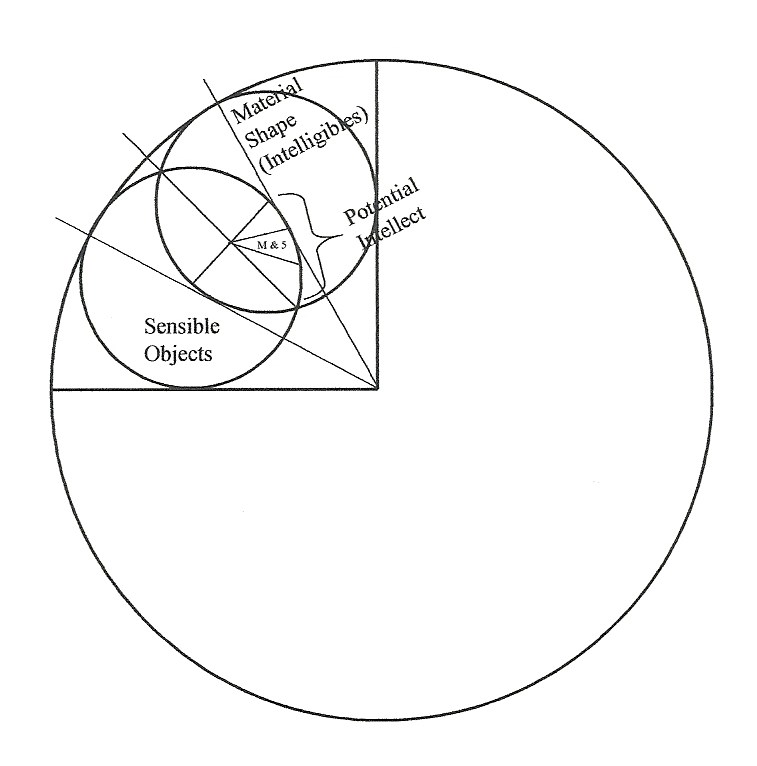
FIGURE 1979 1125a-1. Fourth Quadrant Vesica.
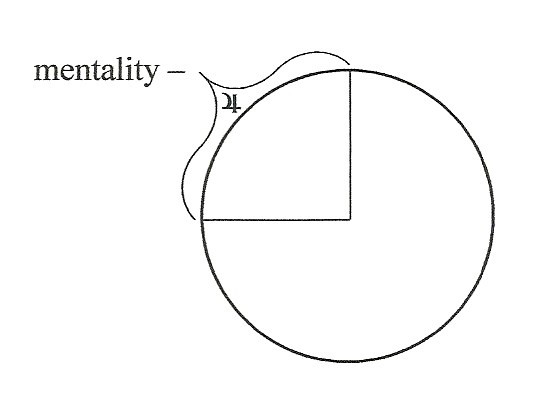
FIGURE 1979 1125a-2. Fourth Quadrant as Mentality.
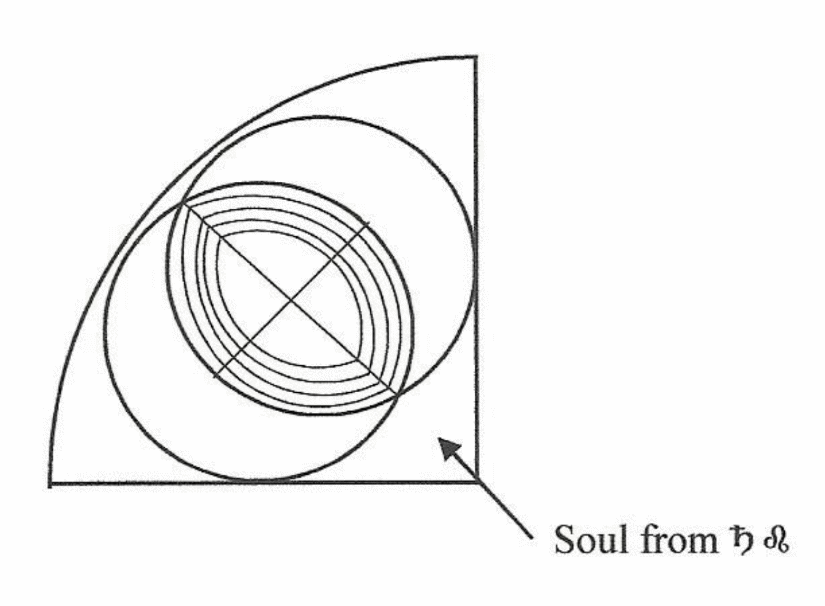
FIGURE 1979 1125a-3. Saturn in Leo and Fourth Quadrant Vesica.
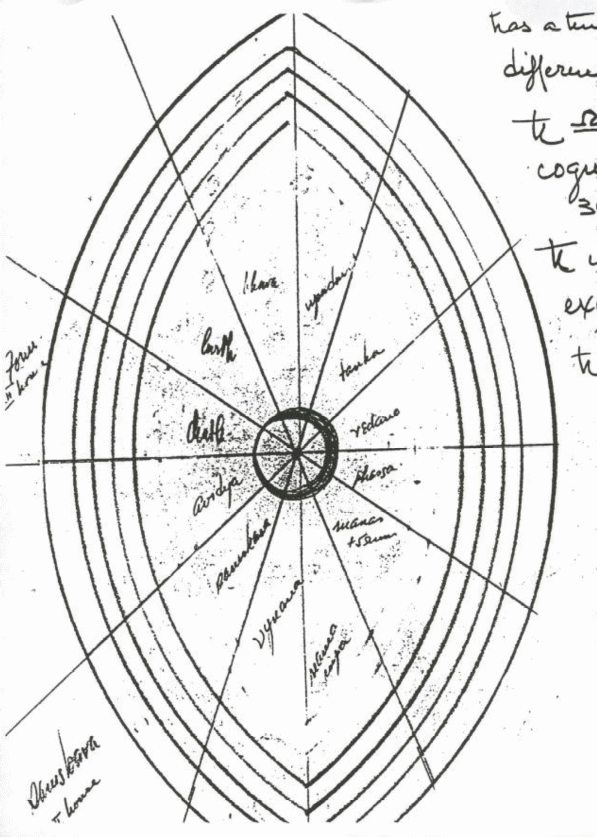
FIGURE AD_A007Bmagnify. Vesica with Nidana Chain.
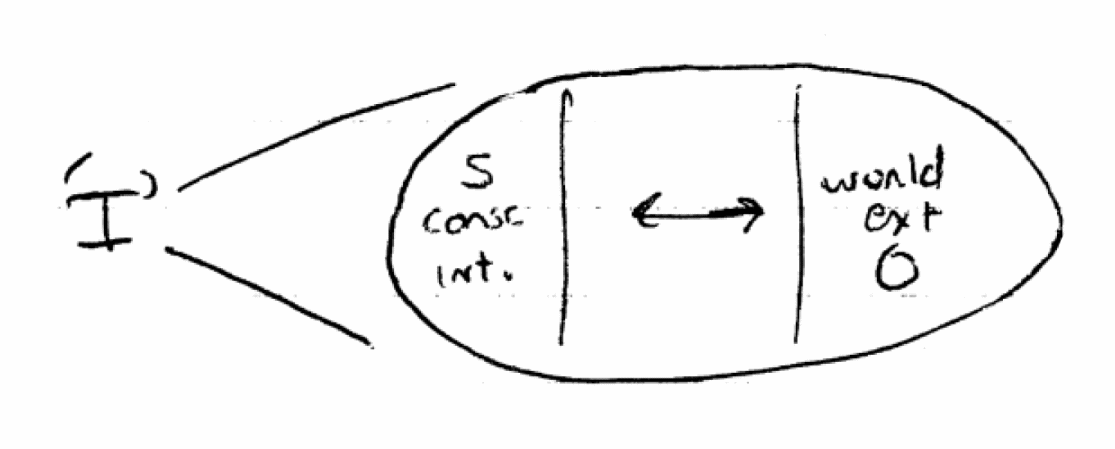
FIGURE 1979 1125a-5-AB. Witness-I, Internal Consciousness, and External World.
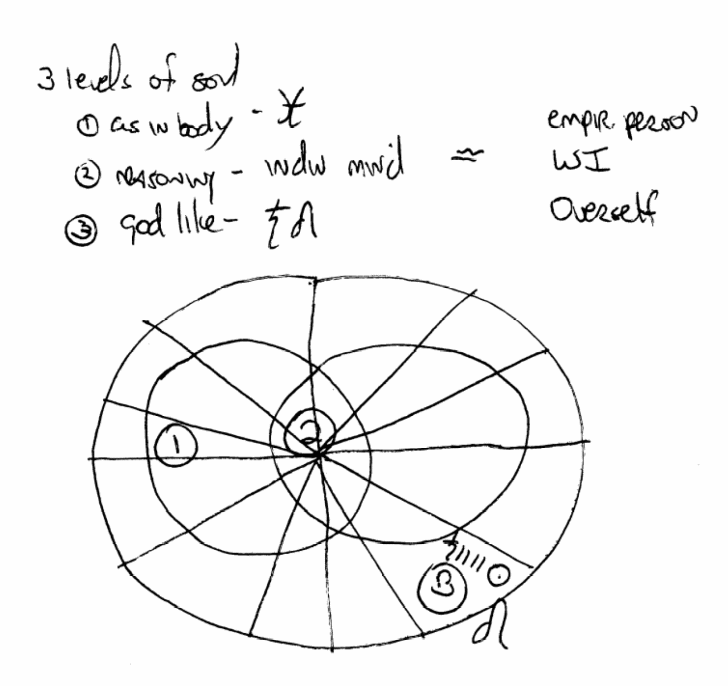
FIGURE 1979 1125a-6-AB. Three Levels of Soul.
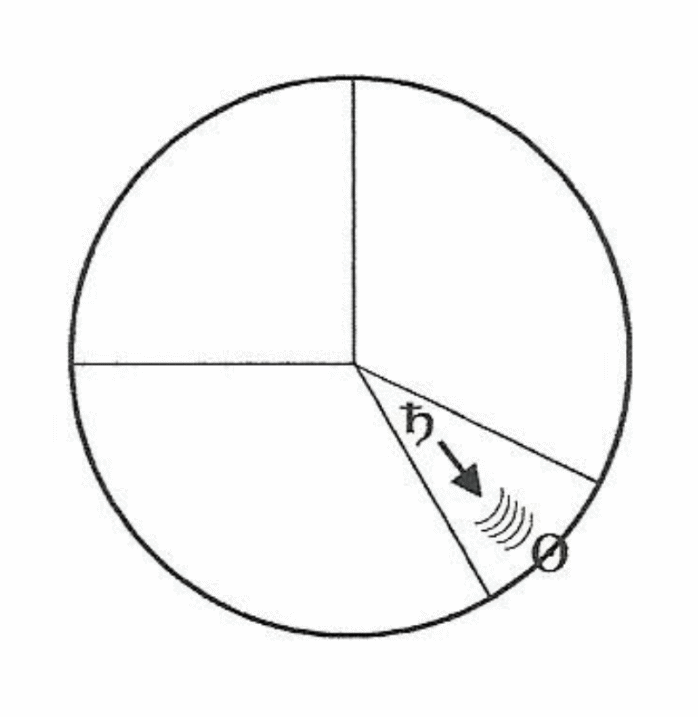
FIGURE 1979 1125a-7. Saturn in Leo to Sun in Leo.
Other diagrams referred to are not with this transcript version. [Transcriber note: [diagram] means the speaker is referencing a diagram as he or she is speaking. If someone is drawing or writing, with audible sounds of chalk on a blackboard, I indicate this by [drawing] or [writing].]
NOTES:
- This is 1979 11/25a, the first event associated with this date. 1979 11/25b = Live Life First Class, a talk with Kenneth Thurston Hurst. As of January 2022, that event has no MP3 audios, though cassette tapes may exist.
TRANSCRIBED Verbatim by IT 2021. In 2024, IT completes TOC, expands Plotinus quotes section, adds new notes within transcript, adds seven diagrams and references within transcript to these diagrams. Archival verbatim transcript – V12a.
AUDIO FILES: 1979 1125a, 1979 1125b. [Note: "Tape" and "Side" refers to original audio cassette tapes that were later digitized into .MP3 Audio Files.]
1979 11/25a at Wisdom's Goldenrod
Buddhism; Tantra; Visualization
[Audio File 1979 1125a Begins]
AD: --Platonists, what was it, the emptiness and prajna. He went over it again last night. [Note: See WG Class 1979 1124.] Coordinate today and continue and, you know, try to make, establish room for Plotinus. Those of you who have this book, if you wish I'm going to start out with a creative visu-- visualization.
S: Yeah.
[short pause]
AD: I personally would like to jump right into the middle of Buddhism but, as I said, any time you catch me flying away, stop me, ok? I'm going to try to understand it from the ground up. The exercise on creative visualization. We'll read parts of it so that we get an idea what the exercise is.
VM (faint): Should I just start at the beginning, [AD simultaneously: Yeah, please.] go right through?
[Transcriber note: I am using The Dawn of Tantra by Herbert V. Guenther and Chogyam Trungpa, Shambhala Publications, Boston and London, 2001.]
Guenther, Trungpa [The Dawn of Tantra, "Visualization," p. 47, VM reading]: "On the disc of the autumn moon, clear and pure, you place a seed syllable. The cool blue rays of the seed syllable emanate immense cooling compassion that radiates beyond the limits of sky or space. It fulfills the needs and desires of sentient beings, bringing basic warmth so that confusions may be clarified. Then from the seed syllable you create a Mahavairochana Buddha, white in color, with the features of an aristocrat--an eight-year-old child with a beautiful, innocent, pure, powerful, royal gaze. He is dressed in the costume of a medieval king of India. He wears a glittering gold crown inlaid with wish-fulfilling jewels. Part of his long black hair floats over his shoulders and back; the rest is made into a topknot surmounted by a glittering blue diamond. He is seated cross-legged on the lunar disk with his hands in the meditation mudra holding a vajra carved from pure white crystal.
"Now what are we going to do with that?"
AD: Ok.
S: Yeah.
VM: That was-- I read that, I-- (laughter)
S (faint): It's (tough/enough).
RG: It's enough.
S (very faint): Yeah.
[short pause]
AS (faint): Living in New York.
Guenther, Trungpa [The Dawn of Tantra, "Visualization," pp. 50-51, VM reading]: "People who live in New York City have very vivid and definite impressions of that city - the yellow cabs, the police cars, the street scene. Imagine, for example, trying to convey this to a Tibetan living in Lhasa. If you wanted to teach him about America starting with New York, you could [VM reads: would] say:"New York City goes like this. There are streets, skyscrapers, yellow cabs. Visualize all that. Pretend you are in it." You could expound Newyorkcityness on and on and on, explain it in the minutest detail; but he would have tremendous difficulty visualizing it, actually having the feeling of being in New York City." (bit of laughter)
VM: Got a mother.
S: Yeah. (laughter)
Guenther, Trungpa [The Dawn of Tantra, "Visualization," p. 51, VM reading]: "He would relate to New York City as being some kind of mystery land. There would be a sense of novelty.
"Teaching Americans to visualize Mahavairochana is like teaching Tibetans to visualize New York City. (student assents, bit of laughter) Americans simply have not had that kind of experience. So how is it possible to bridge such a gap? Precisely by going through the three levels of Buddhist practice. Without the basic mindfulness practices and the development of awareness, there is no way at all of beginning the visualization practice of tantra."
AD: What were the three practices, the three-- You remember?
S: Samadhi.
[students assent, very faint]
AD: I think you can correlate that with the three-- remember they speak about the four s-- three meditations on mindfulness, then the four meditations on forms, [VM, faint: On form.] alright, then the four formless ones, you know.
VM (simultaneously): Four formless meditations, right.
AD: And also that they would be equated, each of those would be equated with one of the tantras, alright. So like mindfulness, four stages of mindfulness would be equated with the lowest what they call tantra, in other words the Kriya tantra. [S, faint: Yeah, Kriya.] Alright, the next level of meditation would be associated with the next tantra. And the third level would be Yoga tantra, which they divide into a lower and a higher. Alright so, they-- they would imply here or what they're trying to suggest here that tantra is a sort of a-- a continuous transformation of one's consciousness or let's say one's mind, using that term to include both. So that the-- the person would be going through a series of progressions that'll bring him to what they ultimately want to bring him to. This is part and parcel of the method that they work with, you know, the skillful means. So they take a person at the lowest level and start him off with Kriya tantra and then work him up to higher and higher tantras.
VM: Are you saying that visualization is not for beginners? Or it is? [AD simultaneously: Well--] Or it depends on the type of visualization?
AD: Yeah, it depends on the type of visualization but, you can see that that's going to require the ability to be able to concentrate. I mean visualization means that you can focus your mind, alright, and keep it focused and build up a, you know, an imagery and be able to maintain that imagery so that means-- well I guess it's steadfastness. Same way like if you have a problem and you're thinking of-- pondering the problem, reflecting on it, and you have to have the ability to fix your attention on it for some length of time without it running away all the time. So to attempt these exercises without some preliminary work in what they call meditation, fixation, it would be very difficult. Now, I'd like to-- I'll just give you the reading material, one in the front, one in the back. Avery, could you read this? I got it underlined, ok? Start from here. Now from Jung's "Psychology of Eastern Meditation", you might be able to get an insight into this technique and also what it is that you're really doing. [short pause] Avery, [AS simultaneously: What--] would you start the reading?
AS: Says--
C.G. Jung [CW 11, Psychology and Religion, "The Psychology of Eastern Meditation," p. 560, paragraph 912, AS reading]: "What, then, is yoga?"
AD: No, where the bracket is, further down.
AS (faint): Alright, yeah.
C.G. Jung [CW 11, Psychology and Religion, "The Psychology of Eastern Meditation," pp. 560-561, paragraph 912, AS reading]: "I have undertaken to describe a yoga text which allows a deep insight into the psychic processes of yoga. It is a little-known Buddhist text, written in Chinese but translated from the original Sanskrit… It is called the Amita-yur-dhyana Sutra, the Sutra of Meditation on Amitayus [AS adds: or Amitabha]. This sutra, highly valued in Japan, belongs to the sphere of theistic Buddhism, in which is found the teaching that the Adi-Buddha or Mahabuddha, the Primordial Buddha, brought forth the five Dhyani-Buddhas or Dhyani-Bodhisattvas. One of the five is Amitabha,"the Buddha of the setting sun of immeasurable light," the Lord of Sukhavati, land of supreme bliss. He is the protector of our present world-period, just as Shakyamuni, the historical Buddha, is its teacher. In the cult of Amitabha there is, oddly enough, a kind of Eucharistic feast with consecrated bread. He is sometimes depicted holding in his hand the vessel of the life-giving food of immortality, or the vessel of holy water."
AD: Alright, now we'll get some representative selections of this exercise. Now I won't-- I won't put you through all of them but-- Could you start with the first quote from the sutra?
AS: Goes like this, um--
C.G. Jung [CW 11, Psychology and Religion, "The Psychology of Eastern Meditation," p. 561, paragraph 914, AS reading, quoting Amita-yur-dhyana Sutra]: "You and all other beings besides ought to make it their only aim, with concentrated thought, to get a perception of the western quarter. [AS: Where-- that's Amitabha's land.] You will ask how that perception is to be formed. I will explain it now. All beings, if not blind from birth, are uniformly possessed of sight, and they all see the setting sun. You should sit down properly, looking in the western direction, and prepare your thought for a close meditation on the sun: cause your mind to be firmly fixed on it so as to have an unwavering perception by the exclusive application of your thought, and gaze upon it more particularly when it is about to set and looks like a suspended drum. After you have thus seen the sun, let that image remain clear and fixed, whether your eyes be shut or open. Such is the perception of the sun, which is the First Meditation."
[short pause]
AS: He goes on.
C.G. Jung [CW 11, Psychology and Religion, "The Psychology of Eastern Meditation," p. 562, paragraph 915, AS reading, quoting Amita-yur-dhyana Sutra]: "Next you should form the perception of water; gaze on the water clear and pure, and let this image also remain clear and fixed afterwards; never allow your thought to be scattered and lost."
[short pause]
AS (faint): You want to go on?
AD: Yeah, little-- little bit.
C.G. Jung [CW 11, Psychology and Religion, "The Psychology of Eastern Meditation," p. 562, paragraphs 916, 917, AS reading]: "As already mentioned, Amitabha is also the dispenser of the water of immortality.
"When you have thus seen the water you should form the perception of ice. As you see the ice shining and transparent, so you should imagine the appearance of lapis lazuli. After that has been done, you will see the ground consisting of lapis lazuli transparent and shining both within and without. Beneath this ground of lapis lazuli there will be seen a golden banner with [the] seven jewels, diamonds, and the rest, supporting the ground. It extends to the eight points of the compass, and thus the eight corners of the ground are perfectly filled up. Every side of the eight quarters consists of a hundred jewels, every jewel has a thousand rays, and every ray has eighty four thousand colours which, when reflected in the ground of lapis lazuli, look like a thousand millions of suns, and it is difficult to see them all one by one. Over the surface of that ground of lapis lazuli there are stretched golden ropes intertwined crosswise; divisions are made by means of [strings of] seven jewels with every part clear and distinct. . . .
"When this perception has been formed, you should meditate on its constituents one by one and make the images as clear as possible, so that they may never be scattered and lost, whether your eyes be shut or open. Except only during the time of your sleep, you should always keep this in mind. One who has reached this stage of perception is said to have dimly seen the Land of Highest Happiness [Sukhavati]. One who has obtained samadhi…is able to see the land of that Buddha country clearly and distinctly; this state is too much to be explained fully. Such is the perception of the land, and it is the Third Meditation." [Amita-yur-dhyana Sutra]
[short pause]
S (very faint): Keep reading.
AD (faint): Yeah.
C.G. Jung [CW 11, Psychology and Religion, "The Psychology of Eastern Meditation," pp. 562-563, paragraph 919, AS reading]: "After the above comes a meditation on the Jewel Tree of the Amitabha land, and then follows the meditation on water:
"In the Land of Highest Happiness there are waters in eight lakes; the water in every lake consists of seven jewels which are soft and yielding. Its source derives from the king of jewels that fulfils every wish [cintamani, the wishing pearl] [AS reads: that is, the wish-fulfilling gem]. . . . In the midst of each lake there are sixty millions of lotus-flowers, made of seven jewels, all the flowers are perfectly round and exactly equal in circumference. . . . The water of jewels flows amidst the flowers and . . . the sound of the streaming water is melodious and pleasing. It proclaims all the perfect virtues [paramitas],"suffering," "non-existence," "impermanence" and "non-self"; it proclaims also the praise of the signs of perfection, and [AS adds: the] minor marks of excellence, of all Buddhas. From the king of jewels that fulfils every wish stream forth the golden-coloured rays excessively beautiful, the radiance of which transforms itself into birds possessing the colours of a hundred jewels, which sing out harmonious notes, sweet and delicious, ever praising the remembrance of the Buddha, the remembrance of the Law, and the remembrance of the Church. Such is the perception of the water of eight good qualities, and it is the Fifth Meditation." [Amita-yur-dhyana Sutra]
AD: Alright, run onto the underlinings now. You probably notice the way they started off in-- in s-- meditation they start off from a simple idea and they gradually elaborate it and you have to conceive of all of this going on in your imagination. That's the point, it's going on in your imagination. And of course oriental imagery, the imagination can be excessive but, the point is that you're imagining more and more detail into this imagery that you're trying to build up. Let's hear some more of the commentary now, Jung's remarks.
AS: Ok, you had a little bit more underlined in the text.
AD: Go ahead, yeah.
AS: He says--
C.G. Jung [CW 11, Psychology and Religion, "The Psychology of Eastern Meditation," p. 563, paragraph 921, AS reading, quoting Amita-yur-dhyana Sutra]: "When you have perceived this, you should next perceive the Buddha himself. Do you ask how? Every Buddha Tathagata is one whose spiritual body is the principle of nature [Dharmadhatu-kaya], so that he may enter into the mind of all beings. Consequently, when you have perceived the Buddha, it is indeed that mind of yours that possesses those thirty-two signs of perfection and eighty minor marks of excellence [which you see in the Buddha]. In fine, it is your mind that becomes the Buddha, nay, it is your mind that is indeed the Buddha."
[10 second pause]
AD: Alright, just imagine that you did such an exercise right now, alright, or that you succeeded in visualizing a-- you know, a pantheon of Gods. Alright. Ok? Some more.
AS: And then Jung has some commentary.
AD: Yeah well-- Well, let's follow his comments now.
AS: Says--
C.G. Jung [CW 11, Psychology and Religion, "The Psychology of Eastern Meditation," pp. 565-566, paragraphs 927-929, AS reading]: "The text is divided into sixteen meditation, from which I have chosen only certain parts, but they will [AS reads: This text has sixteen meditations but I have only chosen certain parts, which should] suffice to portray the intensification of the meditation, culminating in samadhi…
"The exercise begins with the concentration on the setting sun. In southern latitudes the intensity of the rays of the setting sun is so strong that a few moments of gazing at it are enough to create an intense after-image. With closed eyes one continues to see the sun for some time. [short pause] As is well known, one method of hypnosis consists in fixating a shining object… Presumably the fixation of the sun is meant to produce a similar hypnotic effect. [AS adds: But] On the other hand it should not have a soporific effect, because a"meditation" of the sun must accompany the fixation. This meditation is a reflecting, a "making clear," in fact a realization of the sun, [AS adds: of] its form, [AS adds: of] its qualities, and its meanings. Since the round form plays such an important role in the subsequent meditations, we may suppose that the sun's disk serves as a model for [the] later fantasies of circular structures [AS reads: structure]… [short pause]
"The next meditation, that of the water, is no longer based on any sense-impression but creates through active imagination the image of a reflecting expanse of water. This, as we know, throws back the full light of the sun. It should now be imagined that the water changes into ice,"shining and transparent." Through this procedure the immaterial light of the sun-image is transformed into the substance of water and this in turn [AS adds: turns] into the solidity of ice."
AD: So you notice the progression from an immaterial light substance to the density of this lapis lazuli [AD pronounces: lapis luzi] or the frozen ice. And your psyche is going through these transformations from a light principle to a material thing in your-- all this is in your imagination. Alright? Your eyes are closed of course. Some more.
C.G. Jung [CW 11, Psychology and Religion, "The Psychology of Eastern Meditation," p. 566, paragraph 929, AS reading]: "A concretization of the vision is evidently aimed at, and this results in a materialization of the fantasy-creation, which appears in the place of physical nature, of the world as we know it. A different reality is created, so to speak, out of [AS adds: the] soul-stuff."
AD: Now, you followed that point, you see, how you were creating, and how you are creating, just like in a dream you are creating your own reality and all of it is coming from your own soul, if we could use that term, and the degrees, so to speak, of that reality, in other words from a very immaterial to a very dense material corporealization, and you're experiencing all this in your psyche, ok. [S simultaneously: But I do it--] Alright, a little more.
C.G. Jung [CW 11, Psychology and Religion, "The Psychology of Eastern Meditation," p. 566, paragraph 929, AS reading]: "The ice, of a bluish colour by nature, changes into blue lapis lazuli, a solid, stony substance, which then becomes a"ground," "transparent and shining.""
AS: So on. He goes on describing a little this--
C.G. Jung [CW 11, Psychology and Religion, "The Psychology of Eastern Meditation," pp. 566-567, paragraph 930, AS reading]: "The [strange] idea of the"golden ropes" spread over the system like a net presumably means that the system is tied together and secured [in this way], so it can no longer fall apart. Unfortunately the text says nothing about a possible failure of the method, or about the phenomena of disintegration which might supervene as the result of a mistake."
S (very faint): Pretty dangerous here.
S: Uh-hm.
C.G. Jung [CW 11, Psychology and Religion, "The Psychology of Eastern Meditation," p. 567, paragraph 930, AS reading]: "[But] disturbances of this kind in an imaginative process are nothing unexpected to an expert--on the contrary, they are a regular occurrence [AS reads: they may be regular occurrences]."
[short pause]
AS: Um--
[short pause]
AD: Just go on a little more.
AS: (You want/Yeah) just the underlining?
S (faint): Uh-hm.
AS/S(?) (faint): I see, yeah.
AS: I see.
C.G. Jung [CW 11, Psychology and Religion, "The Psychology of Eastern Meditation," p. 567, paragraph 931, AS reading]: "The wondrous sounds [AS reads: sound] of the water consist of two pairs of opposites which proclaim the dogmatic ground truths of Buddhism:"suffering and non-existence, impermanence and non-self," signifying that all existence is full of suffering, and that everything that clings to the ego is impermanent. Not-being and not-being-ego deliver us from these errors. Thus the singing water is something like the teaching of the Buddha--a redeeming water of wisdom, an aqua doctrinae, to use an [AS reads: the] expression of Origen. The source of this water, the pearl without peer, is the Tathagata, the Buddha himself. Hence the imaginative reconstruction of the Buddha-image follows immediately afterwards, and while this structure is being built up in the meditation it is realized that the Buddha is really nothing other than the activating psyche of the yogi--the meditator himself. It is not only that the image of the Buddha is produced out of "one's own mind and thought," but the psyche which produces these thought-forms is the Buddha himself."
JG: Would you please reread the last couple sentences?
AS/S(?): Do it.
C.G. Jung [CW 11, Psychology and Religion, "The Psychology of Eastern Meditation," p. 567, paragraph 931, AS reading]: "[Hence] the imaginative reconstruction of the Buddha-image follows immediately afterwards, [AS: After this water.] and while this structure is being built up in the meditation it is realized that the Buddha is really nothing other than the activating psyche of the yogi--[AS adds: of] the meditator himself. It is [AS reads: It's] not only that the image of the Buddha is produced out of"one's own mind and thought," but the psyche which produces these thought-forms is the Buddha himself."
[short pause]
S (very faint): Right.
S (very faint): Right.
AS: Then you got the ones with crosses.
AD/S(?) (faint): It's hard to [three/few words inaudible]
AD: Let's stop there just for a moment. What'd you think of the last lines?
JG: It doesn't--
VM: That's psychology.
JG: Doesn't make sense to me, it's too-- last sentence he reread with the Buddha-being you realize that the psyche which produces all these-- the whole imagery from beginning to end is nothing more or less than the Buddha.
AD: Itself. That's what he says, Jung.
JG: Yes, and I-- something within me rebels because there has to be more to the Buddha. [student assents, faint] Also one other question I had in the course of the reading is why did you stress all the time that this did occur within the imagination, within the psyche? Was there-- is there a particular reason?
AD: Well, you know, he's-- he pointed out that it's so difficult to understand what the nature of a creative visualization [JG assents] exercise is. And I thought I would just simply take a version and show you-- I don't know if you remember in the readings from Jung, he did develop a technique which he called active imagining, [JG: Yeah.] and that this active imagining very often brings up contents which might have been disturbed in a person, and by portraying them on paper or pen or writing [JG assents] them or painting, whatever, alright, that you begin to experience some kind of release and some kind of therapy was effectuated. And he shows in some of his books, he shows a variety of mandalas which various patients have produced, including him-- including Jung. [JG assents] And some of those plates they're Jung's mandalas, he did them. Now, if-- if we spoke about this in this very Western style, ok, or if for instance you decide to read Saint Ignatius on the exercises, you would see that you're called upon in a similar way to visualize in a very dynamic and calcified fashion, alright, a certain image. The Christians use for instance Christ on a Cross and they end up with the marks, you know, on the-- in the hands, the bleeding hands and bleeding feet. Padre Pio was an example of that. I don't know if you remember him. [S, very faint: Oh (yeah).] But it was effecated and the person actually would bleed on Good Friday. So, in this exercise here, he-- the very last statements that Avery read, the remarks seem to be something to the effect that the psyche is the Buddha. And, that was a-- that's a ticklish point, you know, that that's what we're-- we're going to get into. And you say you rebel and could you tell why you rebelled?
JG: 'Cause that would confine me within the psyche forever, for one thing. If everything becomes a content of my psyche and the Buddha also, then I can never get out of that-- that prison.
AD: That don't sound like a good idea, right?
JG (simultaneously): No, it doesn't, it's awful.
AD: Well of course to Jung the psyche is-- or the unconscious--
JG (simultaneously): Even if you conceive of it on a very high, you know, expansive level, like when you go to the World-Soul, the individual mind being together and producing.
AD: Well, let's--
JG: Sounds like prison.
[Note: See FIGURE 1979 1125a-1 for the following.]
AD (simultaneously): Let's try to remember-- I mean this is my-- [drawing] again this is my opinion, (alright). I don't expect-- I don't expect agreement with this here but, you remember, I spoke about it in this fashion. I said like if we-- if we want to, just think of this here, the tenth and the eleventh house [diagram], think of that as light, and that the entire universe is prefigured in that light, ok. So that [drawing] this may in a sense be what Jung is referring to as the collective unconscious where the totality of the universe to be manifested is contained there but in an unmanifested form, alright, and that the circling of the-- or let's say the functioning of the manas principle [eleventh house] will translate what is here in (light/life), alright, will translate it into this perceptible world, the world of the Mahabhutas [left circle/sensible objects], alright. So that this whole realm here, alright let's-- ten and eleven, alright, [drawing/writing] well ten and eleven, would be what he might be referring to as the collective unconscious, ok, where there is contained within it the prefiguration of the entire cosmos to be.
VM: Yeah.
AD: Alright? And that this is a world of light. [student assents, very faint] Now, if we-- if we say that the eleventh house is the psyche, and then the tenth house would be the psychoid realm, but let's avoid that right now, if we say that this is the psyche and then everything produced here [diagram], or if we say that this is the thinking-ness that is going on which produces and has concomitant with it the sense-manifold, alright, then we could refer to this realm here as where you're located when you're exercising these, you know, powers of creative visualization. It's like you get deeper and deeper into this realm here [eleventh house], not the realm of the sense manifold. Avery, could I borrow that (for a minute)?
AS/S(?) (very faint): (Ok.)
[33¾ second pause, noises, flipping of pages]
AD: If I could take a few minutes now to give Jung's commentary on some important points that he makes on it.
C.G. Jung [CW 11, Psychology and Religion, "The Psychology of Eastern Meditation," p. 569, paragraph 935, AD reading]: "The sun, with which the series begins, is the source of warmth and light, the indubitable central point of our visible world. As the giver of life it is always and everywhere either the divinity itself or an image of the same."
AD: This takes you right back to Akhenaton.
JG: To what?
AD: The Egyptian Pharaoh, [S: Oh.] who worshipped the sun. And then towards the end he realized that that sun he was worshipping was only an image of the real Godhead. Going on-- Then he speaks about the waters. Now--
C.G. Jung [CW 11, Psychology and Religion, "The Psychology of Eastern Meditation," p. 569, paragraph 935, AD reading]: "A meditation on the sun and water evokes these and similar associations without fail, so that the meditator [AD reads: mediator] will gradually be led from the foreground of visible appearances into the background, that is [AD adds: to say], to [AD reads: into] the spiritual meaning behind the object of meditation. He is transported to the psychic sphere, where [AD adds: for instance the] sun and [AD adds: the] water, divested of their physical objectivity, become symbols of psychic contents, images of the source of life in the individual psyche."
AD: Maybe we stop here and we take a momentary example like, in the ordinary everyday physical world we know that water is a necessity of life. And so after many many experiences with water, alright, and with thirst, you can transpose the meaning of thirst not only you're thirsty for water but like for instance you can say you're thirst for life, you're thirsty for this, you're thirsty for that. So that there's been a transformation of the physical meaning of thirst, water-thirst, alright, now in a more universal sense, water in a dream would mean not only the physical water but all the meanings that you can associate with water. And the same with the sun. So he's saying now you're making the transition from the physical level of what the sun means or what water means to a mental or psychical level. Now at the psychical level you're no longer concerned with the physical objectivity of water. Now you're concerned with the redeeming properties, let's say, the ability that it sustains life, meaning, things like that. Alright, so going back.
C.G. Jung [CW 11, Psychology and Religion, "The Psychology of Eastern Meditation," pp. 569-570, paragraph 935, AD reading]: "He is transported to the psychic sphere, where sun and water, divested of their physical objectivity, become symbols of psychic contents, images of the source of life in the individual psyche. For indeed our consciousness does not create itself--it wells up from unknown depths."
AD: I want to run through faster. Those of you who have the book I suggest you read this.
C.G. Jung [CW 11, Psychology and Religion, "The Psychology of Eastern Meditation," p. 570, paragraph 935, AD reading]: "Meditation on the meaning of [AD adds: the] sun and water is therefore something like a descent into the fountainhead of the psyche, into the unconscious itself."
AD: So like for instance, even in ordinary talk when we speak in the Hidden Teaching class, someone would say well this is hard, I know it and we finally convince him that the hardness that he's experiencing is not in his hand but in his mind, a similar transition is taking place in this exercise. It's now you're beginning to recognize that the warmth or the life-giving principle that the sun represents is in the psyche, it's not in the physical sun that you're talking about. Alright? You have to make that transition. I might say, would it be possible for instance to live in that atmosphere? Could you live in a dream world? Well, certainly not in a-- not the physical body but you could live in a dream world and have every and any activity in the dream world or in that subtle consciousness that you could have on this one. You see, our mistake is that we always judge dream consciousness by wakeful consciousness and do not think that the dream consciousness is valid in its own right and that you could have an eon of experience in there and never, you know, be any the worse for it. So going on he says--
C.G. Jung [CW 11, Psychology and Religion, "The Psychology of Eastern Meditation," p. 570, paragraph 937, AD reading]: "…so the yogi [AD: for instance] solidifies the water he contemplates first to ice and then to lapis lazuli [AD says: luzi], thereby creating a firm"ground," as he calls it. He makes, so to speak, a solid body for his vision."
AD: His creative imagining, (ok/alright).
C.G. Jung [CW 11, Psychology and Religion, "The Psychology of Eastern Meditation," p. 570, paragraph 937, AD reading]: "[AD: And] In this way he endows [AD repeats: he endows] the figures of his [AD reads: the] psychic world with a concrete reality which takes the place of the outer world."
AD: You see what you've done? Now you're living in the subtle world, in the psychic realm, ok.
C.G. Jung [CW 11, Psychology and Religion, "The Psychology of Eastern Meditation," p. 570, paragraph 937, AD reading]: "At first he sees nothing but a reflecting blue surface, like that of a lake or ocean [AD reads: like the lake of a-- or an ocean]…but under the shining surface unknown depths lie hidden, dark and mysterious."
AD: And of course he's referring here to the depths or the contents of the unconscious.
C.G. Jung [CW 11, Psychology and Religion, "The Psychology of Eastern Meditation," p. 570, paragraph 938, AD reading]: "As the text says, the blue stone is transparent, which informs us that the gaze of the meditator [AD reads: mediator] can penetrate into the very depths of the psyche's secrets [AD reads: secret]. There he sees what could not be seen before, i.e., what was unconscious [AD adds: before. Now] Just as [AD adds: the] sun and [AD adds: the] water are the physical sources of life, so, as symbols, they express the essential secret of the life of the unconscious. [In] the banner, [AD adds: or] the symbol the yogi sees through the floor of [AD: that is of the] lapis lazuli [AD says: luzi], he beholds, as it were, an image of the source of consciousness…"
AD: Now because he made that mistake before, this mistake, as far as I'm concerned, is consistent. In other words, he's identifying consciousness with this realm here [tenth/eleventh house], the unconscious, alright. He says now you're in here, alright, and there you look into the depths of the psyche and you see that the origin of consciousness is there. Now I'm not going to agree with that but it's-- His point of view is legitimate, I mean-- I'm sure if he was standing here he'll tell me I don't know what I'm talking about.
S (very faint): (Ok.)
S (faint whisper): You get your sticker. (laughter)
AD: Now-- The comparison we making here is the last lines Avery read when he says--
C.G. Jung [CW 11, Psychology and Religion, "The Psychology of Eastern Meditation," p. 567, paragraph 931, AD reading]: "Hence…immediately afterwards [AD reads: after], and while this structure is being built up in the meditation it is realized that the Buddha is really nothing other than the activating psyche of the yogi--the meditator [AD reads: mediator] himself. It is not only [that] the image of the Buddha is produced out of"one's own mind and [AD adds: one's own] thought," but the psyche which produces these thought-forms is the Buddha himself."
AD: So he's equating this whole thing with the Buddha himself. And going back to what I just read, I want you to see how consistent he is even though we disagree.
C.G. Jung [CW 11, Psychology and Religion, "The Psychology of Eastern Meditation," p. 570, paragraph 938, AD reading]: "In the banner…"
AD: That is, you're meditating and in your meditation you've visualized and concreted from the very intensity of your imagination this floor of lapis lazuli [AD says: luzi], alright, it's like a transparent glass or a transparent ice. And underneath this floor at the bottom there is a banner floating. He call-- they call that the symbol which supports. Now the yogi--
C.G. Jung [CW 11, Psychology and Religion, "The Psychology of Eastern Meditation," pp. 570-571, paragraph 938, AD reading]: "…beholds, as it were, [AD adds: there] an image of the source of consciousness, which before was invisible and apparently without form. [AD adds: And] Through dhyana [AD reads: contemplation], through the sinking and deepening of contemplation, the unconscious [AD reads: unconsciously] has evidently taken on form. It is as if the light of consciousness had [AD reads: has] ceased to illuminate the objects of the outer world of the senses and now illuminates the darkness of the unconscious."
AD: So it's like we could say that consciousness is illuminating this world here where we live and the world and the sensible world. Says now you divert the energy and you full-- focus it this way and now it starts illuminating this realm here [eleventh house]. This is always confusing, this diagram, that's why I like it so much, you know. (bit of laughter) Because on the one hand you can see there's only this circle [diagram]. And on the other hand you can see there's only this circle [diagram]. And this one here [diagram] could be and not be.
S: One or the other.
AD: The manas principle. [short pause] So he goes on, he says--
C.G. Jung [CW 11, Psychology and Religion, "The Psychology of Eastern Meditation," p. 571, paragraph 938, AD reading]: "If the world of the senses and all thought [AD reads: all the thoughts] of it are completely extinguished…"
AD: This outer world you close out completely, then that energy which gets introverted, alright, illuminates the unconscious. Now, most of us become aware of this for instance in some kind of experiences that are very intense. Let's say a beloved person dies, alright, someone very close to you, and the psychical energy which flows out into the world and creates a bridge so that you could relate to that world is cut off, you withdraw that energy, alright. And all of a sudden the inward world gets illuminated. [S: Right.] You become aware of depths of feelings that you never knew of, alright. But if that energy goes out then that's lost, ok, you-- you forget that inner world. But over here of course the yogi is very deliberately taking that energy which is extroverted, which goes out and projects out and, so to speak, makes it possible for you to relate to the world and know that there's others, is deliberately and very carefully and calculatedly turned around and introverted in oneself. Now, we don't have to go through horrible experiences in order-- now he's-- [student assents, very faint] You don't have to. We could do it in a more deliberate way like the yogi's plan. And then he makes the remark of course that the Eastern-- Easterners skip over the phenomena which is a source of endless difficulties to Europeans and he points out--
C.G. Jung [CW 11, Psychology and Religion, "The Psychology of Eastern Meditation," p. 571, paragraph 939, AD reading]: "If a European tries to banish all thought of the outer world and to empty his mind of everything outside, he immediately becomes the prey of his own subjective fantasies, which have nothing whatever to do with the images mentioned in our text."
AD: And of course he refer-- this has been referred to as the kleshas, the passions. And he says of these passions, and I'll bring this quotation to an end-- It's not a quotation, actually we're talking about "The Psychology of Eastern Meditation". Um-- [9¾ second pause] He says in the West the question of evil hasn't been answered adequately, and so consequently in the subconscious of the Western man, there's still-- it's still smoldering there. But I want to bypass that discussion and get to a-- the points that we're interested in. He says that occasionally-- if we don't have a setting that's conducive to this, like let's say a Church setting or a monastery setting, the chances are more likely than not that you'd fail in trying to carry out this exercise. He says this would be due mainly to the fact of the kleshas, the passions, the instinctual drives which come up. He says--
C.G. Jung [CW 11, Psychology and Religion, "The Psychology of Eastern Meditation," p. 573, paragraph 943, AD reading]: "…behind or beneath the world of personal fantasies and instincts a still deeper layer of the unconscious becomes visible, which in contrast to the chaotic disorder of the kleshas is pervaded by the highest order and harmony, and, in contrast to their [AD reads: the] multiplicity, symbolizes the all-embracing unity of the bodhimandala, the magic circle of enlightenment."
AD: And I want to go on because we're Westerners. I don't think it matters even if you're an Easterner. But, he says--
C.G. Jung [CW 11, Psychology and Religion, "The Psychology of Eastern Meditation," p. 573, paragraph 944, AD reading]: "What has our psychology [AD reads: What our psychology has] to say about this Indian assertion of a supra-personal, world-embracing unconscious that appears when the darkness of the personal unconscious grows transparent?"
AD: So, if we could eliminate a great deal of our personal unconscious, and he spoke about them in his various writings as the shadow, the animus, the anima, ok, if we could go beyond that, he says that there's an-- a world of harmony which is really-- approaches what he later on calls absolute knowledge. He says, again--
C.G. Jung [CW 11, Psychology and Religion, "The Psychology of Eastern Meditation," p. 573, paragraph 944, AD reading]: "…when the darkness of the personal unconscious grows transparent? [AD adds: Now] Modern psychology knows that the personal unconscious is only the top layer, resting on a foundation of a wholly different nature which we call the collective unconscious. The reason for this designation is [AD reads: in] the circumstance [AD reads: circumstances] that, unlike the personal unconscious and its purely personal contents, the images in the deeper unconscious have a distinctly mythological character. That is to say, in form and content they coincide with those widespread primordial ideas [AD adds: or archetypes] which underlie myths. They are no longer of a personal but of a purely supra-personal [AD reads: super-personal] nature and are therefore common to all men. For this reason they are to be found in [the] myths…"
AD: Etc. Uh--
(Side 1 of original cassette tape digitized as 1979 1125a Ends; Side 2 Begins)
AD: --an ordered harmony, what we referred to previously as the prefiguration of the manifest world but in an unmanifest way, and that this world comes into manifestation through the gyration or the functioning of the planetary spheres or the (soul/solar) principle. I'm going to stop here now from quoting from Jung and see if I could, you know, just in a few minutes talk. If you got the main idea of what was going on-- Ok? Avery, what do you think? I'll have to use some prop.
AS: We could just (read/see) his description.
[short pause]
AD: We'll think of this here twelfth house here [drawing] as the sensible world or the world of the Mahabhutas, ok. Let's say sensible world. And we-- we'll think of this here as the unconscious in Jung's term. [S, faint: Ok.] That would be the tenth and the eleventh [diagram].
SS: Anthony, would you equate that collective unconscious with the World-Soul?
AD: Would I equate it with the World-Soul? No I-- I mean--
SS: But, they analogous in a sense?
AD: No, no, no. Let's not go off the side. First let me-- let's discuss this. You have any ideas on this?
JC: Anthony?
AD: Go ahead.
JC: I would guess-- [S, very faint: Yeah.] In these imaginative exercises, it seems like part of, anyway, what's going on is it's an attempt on the individual trying to gain hold on his own fantasy life, to be able to manipulate it according to his own will--
AD: No, no, if I could stop you [JC: Ok.] and interrupt. I think what you meant was that he was attempting to gain control over his mental processes.
JC: Well, ok, the mental processes.
AD: Because the Easterners are just pushing that aside, they're-- they're not going to be concerned about (fantasy). Ok? So the exercise is an attempt to gain control over your mental processes. Go ahead.
JC: Right. Well, would you say that the creative visualization, if you can do it, it shows you have control over the mental processes and--
AD: And then suppose that those very entities that you bring into being, alright, like you're thinking of Mahavairochana, alright, and let's say with an intense active imagination, concentration, that you can see him in your mind's eye, even your-- even with your eyes open now. [student assents, faint] Doesn't matter, your eyes are open, you see him there in front of you. It is really concreted, right. And then you go to the process of dissolving it back into yourself, in other words, back into these mental processes. How are you going to feel?
S (very faint): [one/two words inaudible]
AD: Yeah, this is the point, how are you going to feel?
JG: Empty.
S (simultaneously, faint): No.
VM: No.
Few students (faint): No.
VM: Just the opposite.
PD: Well your mind's like the Buddha.
AD: I'm sorry?
PD: Like your mind's like the Buddha, like the analogy he made.
AD: Well--
AS: You're a world-creator.
AD: Yeah, I-- I mentioned that I won't agree with that but, let's say I accept that, you-- in other words you feel an inflation, a divine pride. Not a stupid pride, a stu-- you know, an imbecilic pride, but a real divine pride that there-- you recognize there's some kind of divinity in your make-up.
PD: The cosmic forces that are constituting [one word inaudible]
AD (simultaneously): Yeah, that you can manipulate them!
PD: Right.
AD: Yeah. So they would refer to this as divine pride. Yeah.
DB: Well it seemed that the way he was describing the-- the process is that, from the standpoint of the individual mind, his-- starting off before he's doing the exercises is it's kind of in a state of chaos and he starts from a-- from a-- on the one hand with a vision of the light and the sun and then that gets a little bit more corporealized into the water and then to this very elaborate specific concrete, what, the lapis, the stone, the ground. So from the standpoint of the individual mind it's getting more definite and specific and so forth. But from-- in terms of-- if you could speak in terms of the object that he's contemplating, it seems to be starting from the ground and working up that-- because you first start out and you have this concrete image of the sun which you look at and you remember and you hold back. Then you have the image of the water. And so like you're ascending in terms of-- in terms of the object of the meditation. So that-- was that clear?
AD: Go on.
DB: Well I was just going to say that-- I mean it-- it's almost like it's going in two directions in the same-- at the same time. The individual mind is getting more definite, and at the same time the object that the individual mind is-- is concentrated on is getting more refined or, you know, it's coming from the eleventh house more than it is the twelfth house.
[10¼ second pause]
AD: Alright. Any other comments? You see anything else in these remarks?
VM: Well it seems--
JC (simultaneously): Well (I guess/yes) I'd like-- I'd-- go ahead.
AD: Please.
VM: Go ahead Jeff.
JC: As long as we're operating in the sensible world, at least in the sense of being caught up in it, being subject to the-- that you have to project the sensible world it shows you're-- you know, your mind is caught up in that activity, then is Jung pointing out that, you know, you're subject to the personal unconscious in terms of the reactions that you have to experience? So it's like that-- the imagination is manipulated by the forces that have been set in motion through your prior experience in the sensible world? And what you're-- let me continue one step further, that in the vi-- in the visualization it's like you're trying to claim back the right to-- I guess the right-- you claim back control over your mind. Insofar as you're able to work with your imagination, you're freeing it from subject-- from being subject to the personal unconscious's dictates, you know, the dictates of the lower-- the irrational soul.
AD: So your point Jeff, if I could have it again.
JC (simultaneously): Well-- I'm trying to understand this. In the visualization-- well normally we're subject-- our imagination, insofar as we react to experience, we're reacting according to patterns of these archetypes that we've built up, you know, certain patterns of behavior based on maybe deeper principles but yet he puts them in the personal unconscious. Ok, they're the-- the lower-- unless-- I don't know, the habitual patterns of relating to experience along the lines of--
AD (simultaneously): I thought, I thought in the-- the paper there that basically what he was really saying was something like this. If you undertake exercises of this kind, and I think most of us have some kind of experience, that in the very attempt to sit and practice it and achieve some kind of success in it, that we often, we as Westerners, I would say "we" because we're in the world so much, we're not living in a monastery, that we're subject to the influx of the instinctual pattern-behaviors, you know, which are usually in a chaotic condition. And he d-- this he refers to as the kleshas, passions, alright.
So that, he says now, in the texts themselves they never talk about that. They never talk about the fact that you might fail or that you might end up in a psychotic condition, [student assents, faint] alright, they don't talk about that, they just take that aside, they push that aside and they say well, here's the exercise and if you do it these are the results. [student assents, faint] But very often you start out in an exercise and you get going and after a certain while you suddenly find yourself afflicted with whatever dominant vices we have, we get afflicted by them, they really come out and attack us. And, evidently it's taken for granted that if you're going to carry on these exercises that you have traversed and gone through that-- those afflictions and that you can control them and keep them in their place. And I think that was simply the point he was making there.
But the next point he makes is that it's taken for granted. Why? Because it's a prerequisite. In other words, if one has not traversed the personal unconscious, you-- he won't be acquainted with the realm of the psyche and he won't know that there's an order below or let's say above, I don't know the term. But beyond the personal unconscious there is an order and a harmony which becomes available to a person once he got his personal unconscious out of the way, then he could see that more directly. And that would fit in with, you know, what he speaks about, when he speaks about the progression or the-- the development of consciousness in the ordinary individual through various archetype stages, you know, until finally one reaches the level of let's say a magician or [one word inaudible] something like that.
So I think that was basically the point there, that once this inner process of psychological development has been achieved, the person is finished with let's say various contents of his personal unconscious, whether you think of that as the anima or animus or any of those, alright, once that's through, then a deeper layer of the unconscious opens up. Because that's there like-- that's blocking it. And until a person deals with those aspects of his personal unconscious he's not permitted to go forward, to go deeper into the unconscious. And I would assume that this is generally assumed in Eastern texts, that, you know, you're not going to practice any of these texts unle-- any of these exercises unless you've traversed that field. And to talk about doing it without having some success with it is a waste of time. I think that's in general the simple explanation of his remarks. You had something you were (going to--)
S (very faint): (Uh-hm.)
JC: It just-- it seems to me that, in trying to visualize, the interferences are coming from this personal unconscious, from the desires that you're attached to of various sorts. And in learning how to visualize-- in learning how to visualize, it's like activating a mental force or power deeper than the personal unconscious, what you're talking about opening up into the eleventh house or tenth house.
AD: Yes it's true, you're tapping into, you're plugging into the creative potentiality, you know, which can become anything, you know, in terms of appearances.
JC: But then as long as-- as long as the soul doesn't have possession of itself, it's always subject to the-- [AD simultaneously, faint: Yeah.] these personal [AD: Kleshas, yeah.] kleshas, [AD simultaneously: And that's why--] and therefore can't practice the visualization.
AD: That's why there's such a-- like in the Patanjali sutras, Patanjali's sutras, there's an enormous amount of time spent on pointing out that this you have to deal with first before you get into any advanced concentration exercises. And-- But, did you get the feeling, did you get the feeling that these mental processes that you have to manipulate, and that if you can, so to speak, exercise these powers, alright, you get the feeling of almost like an intimate acquaintance with the psyche? You get that feeling? I'm not saying that the psyche is the Buddha, I'm just saying that when one deeply involves himself in let's say these mental processes and thinking in this very abstract way in creating an image of something for himself, just like any great artist, alright, and that he could do it over and over again, then you begin to feel that he's like a master of this. So you think of a Beethoven or a Bach, you say he's a master, you know. You think of a John Cage, you say he-- he's a bum, you know. (laughter) Yeah, this man's a master, he manipulates, day in, day out he has such a mastery over his material, he-- he thinks and then arranges his material and produces. So, in the same way they trying to get you to feel that you can do this in-- in the yogic-- in a yogic way. Alright then, good, if you-- go ahead Michael.
MW: When I was listening to that I-- I got the impression that you really were changing the quality of your consciousness as you were practicing this exercise, I-- Like I-- like as the exercise got so complex, like I was trying to think well, just working with the kind of consciousness I have now to hold that entire complexity as-- as a picture in front of me, it seems like you'd have to get into a subtler kind of consciousness to be able to have that kind of-- almost a complexity built up, is that-- is that wrong?
AD (simultaneously): You may be right but, I-- I don't look at it that way. It isn't that the consciousness changes, you know. [MW: Well--] It's that-- it's that you become-- it's like the mental-- the mental becomes more complex.
MW: Right, I wasn't using it in a technical sense of consciousness.
AD: Well I was.
MW: Yeah, ok.
AD: In o-- in other words, what we could say is like for instance if a person is practicing the piano, alright, and we know that he has to keep time, we know that he has to put his fingers in the right place, that he has to read the notes, he has to do all these things so that there's an increasing complexity of parts of that whole performance, there's so many parts to it that it requires real dexterity and skillfulness, alright. But the consciousness is always of the same quality. It's illuminating the mind's functioning, whether in this dexterous way, very skillful, or it's illuminating the mind's functioning when you're trying to spell cat, c-a-t.
MW: Uh-hm.
S (very faint): Uh-hm.
MW: Ok, [AD simultaneously, faint: (Well--)] and then I just said [AD simultaneously: Alright, fine.] (going) mind's functioning.
AD: Yes, there is an increasing complexity but that's exactly what we meant when we said that now the-- the intimacy with the psychical processes one becomes aware, not only has an intimacy with them but the possibility of arranging them-- Like for in-- In some of the tantric studies where they-- you-- you know, like they'll concentrate on a person and send them heat, alright, or send them some negative thought or, I mean-- they're manipulating forces, yes, [MW assents] alright. And they're more complex but the consciousness remains. I would say the illuminating, discriminating awareness always remains what it is here. [MW simultaneously: Then--] Alright, then we got a feeling for this?
JC/S(?): Anyway--
S: Yeah well--
AD: So the creative visualization exercise isn't going to be like imagining-- you know, like he says, for a Tibetan to imagine New York City, we try to make it a little more accessible to our understanding. Go ahead, Jeff.
JC: When they're speaking of like visualizing say Amitabha or, you know, some exalted entity, and then he says you realize that, you know, it's your mind that's producing this and therefore, you know, you get inflated by this, I'm wondering, are-- are we to really conceive that that's the way it is or if-- what I-- it's hard for me to accept that-- I mean I don't create Amitabha. I may be able to contact say-- you know, the mental processes are so intimate in the connection with the objects that they know that it may seem when they project as the image that you're beholding of this deity that this is-- it is a functioning of your mind, the image is within your mind, but the actual knowledge of that intelligence that's getting projected in an imaged form, it's not you. You may in some way have merged with it or you, you know, rational knowledge is supposed to be very intimate. But I don't see that you actually, your mind is to be equated with these things that you know. I mean is that-- can you say something about that?
AD: I don't think I grasp what you said.
JC: If I project an image, say I concentrate on Amitabha or something like that, and I-- there's a-- after a while there's a breakthrough, if I actually experience the presence of this-- this being and I've-- I've imagined-- of course I've-- it's been within my own imagination that I've formed a-- a picture of this, maybe evoked its presence, [student assents, very faint] but-- and I-- I think also the implication is there that your mind--
AD: Wouldn't that be equivalent to the functioning of the Witness-I? [S: Right.] And the production of the primal image?
JC: Yes I agree. But doesn't the Witness-I have to contact a separate intelligence? I mean isn't it knowing, say, psychic forces?
AD (simultaneously): Well, we're not denying the facticity of whatever is going to appear in the mind.
JC: Right. But I mean the intimacy must be such that this is why they say that your mind is these forces, I mean, it is the forces which are projecting the world for you. But I don't see how you could say that you are Amitabha just because you can project an image and you experience this-- you know, this intelligence or any other psy-- any other, Tara, or any other of these Gods or Goddesses. It seems like you're knowing them and you know them intimately.
AD: Well--
JC: But why do they say you are them?
AD: Well, if you're producing let's say a work of art like we just mentioned, a Beethoven symphony, would Beethoven say that his symphonies are not himself? That they're ontic realities other than himself?
S (faint): No.
S (very faint): Yeah.
[short pause]
JC: I mean when you know a circle you must really know a circle, just that--
AD (simultaneously): No, no, no, no, well let's stick to the example now, let's see--
JC (simultaneously): Ok the symphony, when you know a symphony, you must really--
AD: But he produced the symphony.
JC: Ok.
AD: He produced the symphony.
JC: I mean, it's got to be very intimate with you. I don't know if I would say--
AD (simultaneously): Well, he not only manipulated it but he produced it, it's his creation, it's his progeny. Wouldn't he have the right to say it's mine? [S, faint: Yeah.] It's my functioning that produced this?
JC (simultaneously): Ok, well maybe that example, I mean--
VM: I think (we/they) all take the point of view of saying "Ah" [one word inaudible]
AD (simultaneously): That they have an objective, ontic counterpart?
VM: Well, no, you could say that I gave expression to this inspiration. I mean you could take that point of view and say that there really is something I'm contacting.
AD (simultaneously): But is there, is there-- can you distinguish in the primal image between the facticity of the expression and the agent that's being expressed?
VM: No, I don't think at that level you can.
AD: Well, then why-- why worry about it now?
VM: At this level I think his identification is fine, it's just at a low--
AD: I mean all I'm saying is Jeff is running on into ontology where there's no need for it right now. Question will come up soon enough but right now the point was did-- does one experience himself as this creative visualization.
MB: That means every time we play a Beethoven symphony we're invoking (MB laughs a bit) the spirit of Beethoven?
AD: Well, again, you're bringing in another question. (bit of laughter) You really have a problem sticking to one question at a time. What we're trying to understand now this-- this manipulation of these mental processes, the intimacy of the-- that is brought about by manipulating them, alright, and then the act-- act of creation of the-- the activity of creating them and all this is part of your mind. And part of your mind of course is an incorrect mode of expression because how could the mind have parts. Now how-- now you want me to separate and say there's an objective counterpart to this which is different than the expression and the agent that is expressed through that expression. I don't want to go that far, this is far enough right now. I mean do you see the point, (Michael)? We'll speak about later on whether there really are dakinis and, you know, Gods and Goddesses of which the mind, so to speak, has them as paradigms. That will be an entirely different question. Go ahead, Michael.
MW: Would you say that when you're doing the creative visualization, start out you might think of yourself as the empirical person trying to do this exercise. But, as you actually succeed in doing the exercise, aren't you like reintegrating yourself back into that-- that-- or let's say [couple words inaudible] the Witness-I or that-- that Aquarius in the eleventh house?
AD (simultaneously): Yes, yes, you're coming up to a lot-- you're coming closer to the potential that you really are. Because over here [twelfth house] you're like a concept, you're frozen, you're an effect, it's all over. Over here [eleventh house] you're getting closer to the source of creativity, alright. Sure.
MW (simultaneously): It's like you're-- you're trying to, as it were, duplicate in yourself what that mind is always doing and in so doing it you actually are becoming (turned back).
AD (simultaneously): Alright, you remember, you remember from PB when we speak about-- he makes the remark that the individual mind in cooperation with the cosmic soul or World-Mind produces or fabricates the universe, alright. Now, isn't that simply-- that exercise simply a take off now, instead of just listening to it theoretically actually start seeing if this is possible. [MW assents] Can the intellect be universalized in this fashion? Otherwise what would be the value of the work of-- you know, of our work? Any kind of work. It is an imitation of that, right.
HS: So would it be correct-- correct to say that one of-- like the-- the reproduction of one of these images is a symbol of the spot where the individ-- a place where the individual mind is actually conjoint with the intelligence of the-- of the cosmic soul?
AD: Well-- If you want to put it that way, Herb, I think you can but I think it should be obvious that when you see a-- the potential creativity of your own mind, alright, it makes it much easier to understand the creativity of the cosmic soul within which can arise a whole universe.
HS: So, (you know), you might-- I don't know what you mean then. You're keeping it in the individual psyche at that point and just as-- that itself is the symbol of the cosmic soul's immensity.
AD: Well the point I'm trying to make is that the individual mind has the potentiality to universalize its functioning just like the cosmic soul. [Note: See Plotinus, IV.8.2, fourth paragraph.] And, Plotinus even makes re-- the remark that the reason why the individual mind doesn't fabricate the universe is because the cosmic soul did it first. (bit of laughter) [Note: See Plotinus, IV.3.6, sixth paragraph.]
HS: So then what--
S: Yeah.
AD (simultaneously): That almost makes you feel as though [JG simultaneously: That you could do it too.] that if there wasn't a cosmic soul the individual minds would be going around creating their own universes.
HS: We'd all be bumping into each other.
AD: Maybe. Assuming, assuming that we are things, but if we aren't things, [HS simultaneously: We'd all be in (jail).] and if mentalism is a valid doctrine, then it's not likely we'll be bumping into each other. Anyway you won't be bumping into me. (bit of laughter)
S: Uh-hm.
AD: Go ahead Andrew.
AH: You mentioned that the conclusion of this exercise is to dissolve the image.
AD: Well yes, you have to dissolve, return the image where it came from. I mean you don't want to be stagnant, you don't want to stay in one position.
AH: And if there-- evidently the perception is that the image came from one's own mind and that's where it has to be dissolved into? And then you can talk about the pride or the experience of--
AD: Well after you do the whole exercise you talk-- the-- you know, you've accomplished something worthwhile.
S: (Yeah.)
AD: Ok.
JG: But, one more question as [AD simultaneously: Sure.] to this last sentence where Jung says that-- the Buddha, you realize the Buddha to be your-- the psyche. On the view he has that's the only conclusion he can come to-- to.
AD: Yes, because he regards the psyche as the principle of existence, alright. Now if the psyche is the principle of existence, then the Buddha should be the psyche, [JG assents, faint] alright. I didn't want to get into-- I wanted to avoid this but it-- at previous times I made the remark that this whole realm here, alright, is the psyche, in-- in a very peculiar way, and that is that this whole realm is aligned with the Demiurge [FIGURE 1979 1125a-2], [JG assents] alright. And so everything in there has to be psychic, alright. But then there's another point of view which establishes the psyche so to speak as just this realm here, the eleventh house, alright, and this-- this is not called the psyche [diagram], this is not called the psyche [diagram], alright. So that the only meaning of psyche which would fit that term that he's operating with, let's say-- let's give him the benefit, alright, and we'd say-- alright let's say that this whole realm here would be the psyche [diagram]. And that the Buddha would be the psyche intrinsically or-- alright. [JG assents] [drawing]
But, my interpretation is that the Buddha is over here [FIGURE 1979 1125a-3, Saturn in Leo], alright, and that soul, insofar-- or the mind, whatever terminology, insofar that it resides in this realm here [FIGURE 1979 1125a-3, fourth quadrant], alright, learns to manipulate one at a time, you know, learns first to manipulate the sensible world [twelfth house], and then when it goes beyond that it learns to manipulate the mental processes [eleventh house], alright, then when it goes beyond that has to come into this realm here [fifth house] in order to get to Buddhahood. So, my interpretation would be different. This may produce-- this realm here may produce Buddhas. And you might call that-- now, you have to listen very carefully to the distinctions I'm making, and you might call that the Tathagata, in the sense that this is the womb of the Buddhas, all the Buddhas will be born from here, naturally.
And you remember the way I worked out the relationship, the Nidana chain I put (in/it) here [FIGURE AD_A007Bmagnify]. [S, faint: Yeah.] And that the produ-- the production of an individual in this twelfth house, alright, let's say through a series of incarnations finally reaches Buddhahood. One could say well yes, this is the womb of the Tagatha, the-- the Buddhas get born from this realm here, because the Gods manipulate his experiences and his contribution to that drives the vehicle or the stream of that individual consciousness to the level of Buddhahood. But, that doesn't mean-- that doesn't mean that this is Buddhahood. So it's a little more involved I think than the way Jung paints it. Now, since most of us have this book, alright, we don't have other books, right? Let's turn to "The Levels of Understanding in Buddhism".
[short pause]
S: What paragraph?
AD: And, we'll read this-- I'll-- I'd like to read most of these essays together or we could read them individually but, if we read them-- if we read a couple of them together you get used to Guenther's style and his way of talking. And I think after a while you'll appreciate some of his remarks and perhaps be able to read it by yourself but maybe it'd be a good idea to do a couple of them together, ok. Now I am going to do the second half of "Tantra and Revelation". I'm leaving that alone because I just want to do the easy ones first, Kriya, and that's what we've been working. So why don't we start reading that? Vic, would you--
VM: Start reading the first line?
AD (simultaneously): From the very beginning?
S (faint): Uh-hm.
[Transcriber note: I am using Tibetan Buddhism in Western Perspective by Herbert V. Guenther, Dharma Publishing, Emeryville, CA, 1977.]
H. V. Guenther [Tibetan Buddhism in Western Perspective, "The Levels of Understanding in Buddhism," p. 60, VM reading]: "Buddhism call itself a career…"
AD: Do you believe that? (laughter)
S (laughing): No.
AD: If it isn't, it's not worth anything then.
[few seconds of laughter, faint background student talking]
VM: Well-- Ok, let's try it again.
H. V. Guenther [Tibetan Buddhism in Western Perspective, "The Levels of Understanding in Buddhism," p. 60, VM reading]: "Buddhism call itself a career [(yana)], a progress through life, and what it teaches is designed to fulfill this purpose: to lead man out of his unregenerate state of naïve common-sense to enlightenment or reality knowledge. In more familiar terms this means that a complete change of attitude is aimed at, which it is certainly not too incorrect to define more precisely as a shift from a discursive thought situation…"
AD: Louder.
H. V. Guenther [Tibetan Buddhism in Western Perspective, "The Levels of Understanding in Buddhism," p. 60, VM reading]: "In more familiar terms this means that a complete change of attitude is aimed at, which it is certainly not too incorrect to define more precisely as a shift from a discursive thought situation to an intuitive cognitive situation."
AD: Read a paragraph and then we'll stop.
VM: Ok.
H. V. Guenther [Tibetan Buddhism in Western Perspective, "The Levels of Understanding in Buddhism," p. 60, VM reading]: "The means by which this change is brought about are meditational concentrative processes. Already in the earliest strata of Buddhism intuitive knowledge and meditational practices leading to it have been emphasized. However, in course of time, the methods have become more and more elaborate and refined and it is therefore from the Mahayanic phase of Buddhism that a much clearer picture of both the methods and their attendant phenomena may be obtained. Here I shall not deal with the methods, in the first place, but with the salient features that mark the transition from one situation to the other and I shall try to give as precise statements as are possible, which is all the more necessary because the presentation of Eastern philosophical problems for the most part thrives on the ambiguity of terms due to the complete absence of semantic studies in this particular field." (laughter)
S (amidst laughter): (Talks a lot.)
S (amidst laughter, faint): (A-- a total) [three/few words inaudible]
AD: True!
S: Good.
S (very faint): How do you like that? (bit more laughter)
VM: Well-- I think the good sentence is one that Anthony had me read twice, which is--
H. V. Guenther [Tibetan Buddhism in Western Perspective, "The Levels of Understanding in Buddhism," p. 60, VM reading]: "In more familiar terms this means that a complete change of attitude is aimed at, which it is certainly not too incorrect to define more precisely as a shift from a discursive thought situation to an intuitive cognitive situation."
AD/S(?) (faint): Right.
VM: Would you say he's describing the transition from normal functioning to prajna, the way we were discussing it previously?
AD: Yes, that's a beginning, good.
S (very faint): Uh-hm.
VM: That he's trying to talk about Buddhism is mainly a-- well not mainly but, at least in part the practical aspect of it is-- is a means whereby one can cultivate this prajna intuition. This-- this is a good career too.
S (very faint): Alright, just read.
AD: He says from the discursive mode to the cognitive-intuitive mode, right? And so that would mean a shifting from one's innate ignorance, one's postulated fictions, one in-- one's imaginary beliefs, a shifting from that point of view to a point of view where there's an open dimension in your knowing faculty and you don't project these things, although it won't be that easy as we go along and you'll see that. He says this is what Buddhism is really concerned about, ok, to get you really started there. Because if you can reach that level of mystic intuitive cognition, then you're set on the path of mysticism and towards Buddhahood. But until then, no. Ok. I-- I think it's enough there. If you want, let Avery read the second paragraph. You got your book Avery? So this--
AS: No.
AD: No? Well someone back there read so that people back there hear too. Reason I ask you to read is so that they can hear you and I don't [VM simultaneously: Well--] have to yell!
VM: Alright, I can get a loud speaker.
AD: Alright Avery, second paragraph, ok. Back and forth this much.
H. V. Guenther [Tibetan Buddhism in Western Perspective, "The Levels of Understanding in Buddhism," pp. 60-61, AS reading]: "Buddhist texts, as a rule, make a distinction between the 'assumed' meaning [(drang-don, Skt. neyartha)] and the 'real' meaning [(nges-don, Skt. nitartha)]…"
AD: Ah, this should be familiar. (some laughter)
H. V. Guenther [Tibetan Buddhism in Western Perspective, "The Levels of Understanding in Buddhism," p. 61, AS reading]: "…a distinction which roughly corresponds to the various degrees of the student's intellectual acumen. This distinction as such has nothing to do with the spiritual development aimed at, but it is evident from the general trend of Buddhism that the 'real' meaning can be understood only when the student's intuition has been developed to a certain extent and depth."
AD: That's what we just said.
H. V. Guenther [Tibetan Buddhism in Western Perspective, "The Levels of Understanding in Buddhism," p. 61, AS reading]: "It is this fact that has been emphasized in those texts which are concerned with the actual living of the Buddhist tenets--[AS adds: that is] the Buddhist Yoga texts."
[short pause]
AD: Ok, any-- do you have any problem with that? Assumed and real meanings? We have so many examples of it that I don't think we have to really discuss that. Huh?
VM: That's what we struggle with every time you read a difficult text. We always come with a whole load of associations to the words and we don't really see the real meaning(s) but rather our own associations.
AD: Association, yeah. And of course some of the most preliminary exercises that are aimed precisely at that. Like for instance you're given a vase or a cup to-- to look at, rest your attention upon. And, to the point, to the point where there's a real formal identity with the cup. And it's an identity which precludes or excludes all the psychological associations that a cup may have had with you. And for an instant you may see the thing, alright, without, you know, a name being attached to it, without all the meanings that you've (accrued/occurred) or evolved through the eons of experience being thrown at that cup. And this will be-- this is a necessary prelude to some of the understanding that they're going to ask you to later on get involved in. So in order to really understand-- and like if you want to understand a personal situation in your life, you can see the enormous difficulty because as you frame a question, as you try to frame a question in your mind to understand a situation in your life, you've already loaded it with all of your personal idiosyncrasies, the very possibility of understanding what that problem is is blocked. Because you've already denied yourself a perception of the problem as it really is or the thing as it really is. So then, out of-- out of that superimposition or out of that conglomeration and mixture, you get the kind of answers that, so to speak, you put in to begin with. Alright then-- alright then you read.
VM: Should I read the circle?
AD (simultaneously): Yeah.
H. V. Guenther [Tibetan Buddhism in Western Perspective, "The Levels of Understanding in Buddhism," pp. 61-62, VM reading]: "Starting with a quotation from the Tibetan scholar and saint Mi-la-ras-pa, which in concise terms outlines the salient features of the various levels of understanding, Padma-dkar-po declares: [VM: And this is a quote now.]
"Venerable Mi-la said that
In whatever way the outer world may appear
It is error when one does not intuitively understand it;
For those who intuitively understand it
it appears as the Dharmakaya.
The consummatory stage on [VM reads: of] which one does not
experience any appearance
Is said to be pure like the cloudless sky."
VM: Should I continue?
AD (simultaneously): No, let's stop there [VM simultaneously: Alright.] because Milarepa's quotation is kind of difficult. First two lines.
H. V. Guenther [Tibetan Buddhism in Western Perspective, "The Levels of Understanding in Buddhism," p. 61, VM reading, quoting Padma-dkar-po (who is quoting Milarepa)]:
"In whatever way the outer world may appear
It is [VM adds: an] error [when] one does not intuitively understand it…"
VM: So aren't we sort of taking as inspiration what you were doing last night and-- Usually when we talk about the appearance of the outer world it's always one split up-- split up into lots of fragments and parts where there's vast distinctions, separations really, separation's probably a stronger word, separations between the various component parts, and we fail to appreciate it in intuitive holistic kind of way, or the way that prajna would be able to view it. And, perhaps this is part of what he's speaking about here. Whatever way the outer world might appear is an error when one does not intuitively understand, let's say grasp it as a-- as a whole, seeing all the multiplicity and interrelationships and that it's [AD: (Ultimate.)] in essence empty because there's no self-nature and the whole-- this very [one/two words inaudible]
AD (simultaneously): That's what you mean by intuitive understanding, alright. Then the next line?
H. V. Guenther [Tibetan Buddhism in Western Perspective, "The Levels of Understanding in Buddhism," p. 62, VM reading, quoting Padma-dkar-po (who is quoting Milarepa)]:
"For those who intuitively understand it
it appears as the Dharmakaya."
AD: What would that mean? If you intuitively understand it would appear as the Dharmakaya.
VM: When you see it let's say as the functioning of the-- the-- these-- the planetary spheres let's say, you see it as a-- [MW simultaneously: That's--] a functioning of--
AD: This is Milarepa you're quoting.
VM: Oh, so I gotta get out of the planetary spheres?
S: Go higher.
AD (simultaneously): No, it's Milarepa.
S (faint): We're higher than the planetary spheres.
AD (simultaneously, faint): Yeah.
VM: Functioning of the Intelligible.
AD: Yeah. In other words, [VM simultaneously: So it's not Jung.] what you would see, what you would see would be the Intelligible World. You wouldn't be seeing the sensible world. You know, as soon as they use some of these names like Milarepa, you know, or Tilopa or Naropa or any of these men, always remember they're coming-- they're coming from the top. Alright, so would you reread that line?
VM: Ok.
H. V. Guenther [Tibetan Buddhism in Western Perspective, "The Levels of Understanding in Buddhism," p. 62, VM reading, quoting Padma-dkar-po (who is quoting Milarepa)]:
"For those who [VM adds: would] intuitively understand it
it appears as the Dharmakaya."
AD: For those who intuitively understand. In other words, they see it as the World-Mind's functioning. Go on.
H. V. Guenther [Tibetan Buddhism in Western Perspective, "The Levels of Understanding in Buddhism," p. 62, VM reading, quoting Padma-dkar-po (who is quoting Milarepa)]:
"The consummatory stage on which…"
VM: I mean, I can't say that word.
H. V. Guenther [Tibetan Buddhism in Western Perspective, "The Levels of Understanding in Buddhism," p. 62, VM reading, quoting Padma-dkar-po (who is quoting Milarepa)]:
"[The] consummatory stage on which one does not
experience any appearance
Is said to be pure like the cloudless sky."
VM: In other words, the end product of this kind of deepening of your vision is one in which there is no appearance.
AD: Oh. I don't know why he started off with such a difficult quote but, (bit of laughter) hey, [VM, faint: Well--] he got us right-- he got us right away.
MW: When he says-- is there a difference between what he's calling intuitively understanding the appearance and then when he says you don't experience any appearance?
S (faint): Uh-hm.
AD: There is. I would say there is. The-- the first one would be prajna, discriminative awareness or understanding. The next one would not be, it would be much higher.
S (faint): Uh-hm.
S (very faint): Ok.
S (faint): Ok.
VM: Yeah, in fact the next paragraph really sums it up nicely.
H. V. Guenther [Tibetan Buddhism in Western Perspective, "The Levels of Understanding in Buddhism," p. 62, VM reading]: "There are three situations: the situation of non-intuition [(ma-rtogs-pa'i skabs)], the situation where intuition begins to function [(rtogs-pa shar-ba'i skabs)], and the consummatory situation [(mthar-thug-pa'i skabs)]. These situations are also to be known as the status of a man of ordinary common-sense, [VM: That's no intuition.] the status of a Bodhisattva, [VM: That's the beginning of prajna functioning or intuition.] and the status of a Buddha."
VM: That's where no appearances say.
S: Uh-hm.
AD: So he's making this division, ok. He's saying the inferior man, like us, ok, we have no intuition. The middling has an apprehension of the possibility of intuiting his way through. And the third one does function that way. Go ahead, Crystal.
S: Well that's nice [couple/three words inaudible]
AD: Did you forget last night already? (bit of laughter)
VM: Why he wants to forget it so soon?
AD: Go ahead.
S: He talks about emptiness as being something before the prajna level where he said it-- there seems to be an appearance of something. There's some appearance but--
AD: See, if you bring in last night then I have to review last night.
S: Oh, well, it just seems like he doesn't even-- he jumps right away to prajna when he-- that interpretation here. I mean the-- that-- the line where he talks about how high up, and that would be the prajna level.
AD: But he doesn't jump, this is a quotation from Milarepa.
S: Yeah, [AD simultaneously: And you have to (one word inaudible)] yeah, well, I mean [one/two words inaudible]
VM (simultaneously): It's tricky. He does skip what they call the Sambhogakaya, so--
S (simultaneously): I mean to claim the ordinary man to go right to prajna seems to be not that many.
AD: Yeah. This will happen often, sometimes they'll leave out this and just talk about these two, [AD indicates on diagram] sometimes they'll talk about these two and leave this out. [student assents, faint] That's alright.
S: I guess what I'm asking then to clarify for me. On prajna level, we still talk about appearances.
AD: Yes. Prajna level means discriminating [student assents, faint] awareness.
S (very faint): Oh.
BS: What does it mean how you talk about it?
AD: I'm sorry?
S (very faint): [few words inaudible]
BS: What (does/is) it-- the third part in the quotation, what does it mean when you don't experience any appearance and this is above prajna?
AD: Well prajna will be discriminative awareness or appreciation of whatever object is there [BS simultaneously: Yes I understand.] in itself. And we could rephrase it by saying the object that is-- as it exists in the Void Intellect, alright. But there's a state where neither of those are functioning. That would be the level for instance of what the Hindus very often refer to as turiya or what we might refer to as the-- what the Buddhists I think might refer to as-- not Dharmakaya, the one after it, [VM simultaneously: Svabhava?] Svabhava, ok.
S (faint): What about (this)?
S (faint): Uh-hm.
BS: Would it mean anything to say that-- or, you know, obviously it doesn't but trying to understand these levels, (bit of laughter) (would the) appearance on a prajna or intuitive level would be from the higher level discrete moments?
[Audio File 1979 1125a Ends]
[Audio File 1979 1125b Begins]
BS: --they can always do-- to disappear to understand what he mean by not experiencing any appearance. Does this mean that the moments or images are there but not experienced as an appearance? Or does it mean nothing?
AD: Does it mean nothing, in what sense are you-- do you mean nothing?
BS: That's what I don't understand. What is pure like the cloudless sky, what-- Obviously there's some kind of analogy.
AD: Well let's see if we understand from the next paragraph where he says there's three levels, alright. And the first level is at the level where we are, where you have discursive functioning going on, alright, ordinary mentation. And the second level where intuition begins to function, it's beginning to-- to function, that is the prajna awareness is becoming more and more operative. There-- there is still the ability to distinguish and differentiate objects, perhaps more precisely, because the uniqueness and potential value of each object as object stands as it is, alright, and you're not contributing to that, I mean, you're not saying "Well, this object is good because I can use it" or something like that. But that would be the second level. The third level he-- he refers to almost like the level of a Buddha. He says that's knowledge of a Buddha and that kind of knowledge can be a-- only the kind that would conform to reality as it is. Now, to conform to reality as it is at the level of the Buddha would be like the coincidence of the what we call prajna and what they-- what is referred to as prajna and emptiness. Coincidence of them together, alright, would be what he's referring to as the knowledge at the level of a Buddha. I think it'll get explicated a little bit further on. He's going to give us the explanation of this paragraph. Avery, will you take the next?
AS: "In the first situation…"?
AD: Yeah. Alright, we're going to discuss first the first situation.
H. V. Guenther [Tibetan Buddhism in Western Perspective, "The Levels of Understanding in Buddhism," p. 62, AS reading]: "In the first situation there may be an assertion as to freedom from duality [(gnyis-med, Skt. advaya)] or coincidence [(zung-'jug, Skt. yuganaddha), but intellectually there remains the world of appearance in a dual way or the differentiation into opposites, because the world of appearance in a dual way has not been given up."
AS: That's the one of non-intuition.
H. V. Guenther [Tibetan Buddhism in Western Perspective, "The Levels of Understanding in Buddhism," p. 62, AS reading]: "[AS adds: Now] Since, following the dictates of the intellect, the persons in this situation hold to reciprocally exclusive assertions such as that error remains error, non-error, non-error, relative truth [AS adds: remains] relative truth, and ultimate truth [AS adds: remains] ultimate truth, they busy themselves with the 'assumed' meaning of things. People of low intelligence (i.e., people who do not venture into the realm of critical philosophy) feel compelled to call this (assumed meaning) the Truth."
AD: Alright, Avery would you give us a little on that? (Yeah.) This is the first level of understanding. It's what I've been talking to you now [one word inaudible] (the people).
S (faint): Ok.
AD: Sit down, I'll walk stagnant.
AS: He says-- well he says, in the first situation there may be an assertion as to freedom from duality or there may be one of coincidence. But actually this is all conceptual because you're still talking from the realm of duality. And, to have it-- you still-- there's still complete-- they're separate. You still have the realm of appearance as something separate from the realm of reality. Like the twelfth house. They hold to reciprocally exclusive assertions. So that error is error, or appearance is one thing and the mind which presents it is something completely different.
AD: Remember like when you first got on the path everything is one? And you went around as though it wasn't. (laughter) (Everything is one), continue.
AS: Say anything you want but just that this ego--
AD: Careful of my ego.
S (faint): Did you want to--
[short pause]
AD: Alright.
VM (faint): And you can't conceive it.
AD: Second paragraph?
VM: Ok.
H. V. Guenther [Tibetan Buddhism in Western Perspective, "The Levels of Understanding in Buddhism," pp. 62-63, VM reading]: "As to the second situation it has been stated that"when the conception of the world of appearance in its dual way has subsided there is intuition of non-duality." Due to this (intuition) all interpretative concepts [(rnam-rtog, Skt. vikalpa)] rise as the Dharmakaya, all emotions (and the destructive conflict into which they ordinarily lead man, nyon-mongs, Skt. klesa) as ambrosia, and all error as intuitive knowledge [(ye-shes, Skt. jnana)], and since it is no longer possible to make divisions or differentiations into opposites it is due to this basic feature that then the two truths (i.e., relative truth and ultimate truth) have become indivisible [(dbyer-med)], or (what is the same), that the beneficial expedients [(thabs, Skt. upaya)] and the analytical appreciative understanding of things [(shes-rab, Skt. prajna)] have become indivisible--and many other statements to the same effect--(laughter) so that there is only one truth, viz., (laughter) the ultimately real truth."
JG: He must be German.
S: Yes. (laughter)
VM: Yes.
S: Right. (laughter)
VM: Very succinctly said.
S (faint): That's right.
RG: Right. (bit more laughter)
VM: Somewhat long sentence there.
[14¾ second pause]
AD: Alright, let's try that (fifth) paragraph now without the quotation because he doesn't (punch them good).
VM: You mean the fellow with the quotation doesn't [one/two words inaudible]
AD (simultaneously): No, let's do Guenther.
VM: Yeah, it develops your intuition to read Guenther.
AD (simultaneously): Yeah. (laughter) Helps you to work with your [MW assents] assumed meanings.
VM: Right. I think he's start-- starting to talk about this appreciation. I'll throw it in slightly different language that we've dealt with on Sunday night. We spoke about the two-dimensional epistemic relationship that one can appreciate when you're functioning with the individual mind in conjunction with the World-Soul.
AD: Well, going to have to explain that because some of them don't know what the two-term epistemic relation is.
VM (simultaneously): Oh. Well I--
AD/S(?) (faint): I don't know.
VM: Ok. Let's drop it.
AD: No, no.
VM: No?
AD: Let's take the example that we have right here. The first--
S (faint): How do you--
AD: Just hold onto what you're going to say.
VM (simultaneously): Ok.
[Note: See FIGURE 1979 1125a-5-AB for the following.]
AD: The first one that Avery read, alright, the level of understanding is discursive, alright. So that means that this person here, [drawing] this is a person, he has certain ideas, you know, ideas, alright.
S (faint): Blindfold.
S (faint): Blindfold. (bit of laughter)
S: Certain questions, right?
AD: He has certain ideas about this [drawing] object, ok. So this is the discursive understanding and this-- there does seem to be like a threefold relationship. Here's the object, alright, here's the subject, and there's a relationship between them, and we'll say that's a threefold relationship. Now the twofold relationship will be something like this here. Take out this [diagram], alright, so that there isn't a threefold relationship and that [drawing] all the contents within this field, alright, all the contents within this field, so to speak, are of one homogenous nature, the primal image, ok. But, the primal image, alright, on the one hand is the expression of the agent, ok, the whole of the primal image is the expression of the agent and also there is something illuminating it or understanding it. That would be the twofold epistemic relation. It's in terms of this whole, the twofold epistemic relationship. The threefold epistemic relationship is in terms of within the primal image there's a breaking up of a subject-object and a relationship, ok? Alright.
VM: And one more thing maybe that's worth emphasizing is that subjectivity is no longer invested in this fellow here, [AD simultaneously: Uh-huh.] he's seen as-- I wouldn't say as objectively as the trees but nonetheless at a certain distance.
AD (simultaneously): Yeah, yeah. To this, to this prajna intuition, alright, and this would be sunyata [diagram], on the one hand you have sunyata [one word inaudible] to this prajna intuition [drawing] this subject is as much objective as everything else in that image. He could really look at himself in a very objective way, alright. In this relationship [diagram], it's almost impossible. He may get moments of clarity but basically he works with a discursive mentality, which means that all his innate suppositions are always being projected out, he can't work with that clarity. This person [diagram] can. So, tentatively let's say he's taking a position here of a Witness-I where both the contents of the primal image, alright, and the-- I'm sorry. The totality of all the contents which is the primal image is known by this here [diagram]. But, this prajna intuition, alright, grasps this whole as empty of any self-existence. None of these things have any existence per se in themselves, or-- because of the interrelationship. If you want to say this is a tree, you have to cut off every-- you have to cut if off from everything else, the earth, the air, the sky, and say this is a tree, you-- now you made that a concept. That's dead. Now it's dead. Whereas if you put it back into the picture where it's part of everything, now it's living. So, the twofold epistemic, threefold epistemic, ok.
VM: Well--
S (faint): Ok.
S: This--
AD (simultaneously): So now we're at the second level.
VM: Right, I was trying to use that idea of the twofold epistemic relationship to bring some meaning to this notion here, where he says--
H. V. Guenther [Tibetan Buddhism in Western Perspective, "The Levels of Understanding in Buddhism," pp. 62-63, VM reading]: "…"when the conception of the world of appearance in its dual way [VM: Which is the threefold epistemic relationship.] has subsided there is intuition of non-duality."
VM: In other words, a grasping of the primal image as a whole, an appreciation of the interpenetration, the interrelationship of all the parts and how they're an expression, let's say, of the mind. And then, interpretations that might arise of that situation are going to be called the Dharmakaya or I guess as far up as the Intelligibles rather than interpretations on a psychological level. That would-- would occur in a threefold epistemic relationship. He says--
H. V. Guenther [Tibetan Buddhism in Western Perspective, "The Levels of Understanding in Buddhism," p. 63, VM reading]: "Due to this (intuition) all interpretative concepts…rise as the Dharmakaya…"
VM: So, in the first case, our--
AD: That's almost like saying, if we could use, you know, ordinary vocabulary, it's like all the thoughts you have are coming from your own Overself.
VM (faint): Yeah, ok.
AD: But, you're experiencing it this way now, see. You don't experience it this way now, you say thoughts are coming from within you, you don't know where but-- ok, but over here like they seem to be coming from this far away source, alright.
VM: So, they're not--
JG (simultaneously): (They're/There's) still concepts? Excuse me.
VM: Well, but that's a funny word [couple words inaudible]
AD (simultaneously): Well you experience them as concepts in this level. You will not experience them as concepts if you're functioning with prajna, even-- even painful concepts, as he says, are ambrosia.
S (faint): Ok.
JG: Wait a minute, but he speaks if-- when you have left-- when you have gone up or risen as far as the Witness, the twofold--
AD (simultaneously): The intuitive, yeah.
JG: Yeah. That then, due to this, all interpretative concepts rise as the Dharmakaya. So he still calls that interpretive concepts then.
AD (simultaneously): Yes if you have a thought you know that ultimately this thought is coming from even your-- from your Overself.
JG: Oh so you would still have concepts there, I mean it would be--
AD: Well, of course you could have concepts.
VM: Yes but-- but I--
JG (simultaneously): I-- technically speaking.
VM: But I think I understand, maybe I understand [JG simultaneously: Yes, you do too.] what-- what Johanna is saying. You know, previously when he's spoken about concepts they're always something that close our view of reality, that enchain us in-- in a kind of limited restricted view of experience. [JG assents, faint] And to use the same terms [JG simultaneously: Yeah.] when you're discussing this experience of non-duality and functioning at the level of prajna and so on seems kind of--
JG: Frivolous.
VM: Well I don't know frivolous but it seems somewhat contradictory.
JG: Yeah. That's what was my point.
VM: Right.
AD: Yeah but, if we read this passage he says here--
H. V. Guenther [Tibetan Buddhism in Western Perspective, "The Levels of Understanding in Buddhism," p. 63, AD reading]: "Due to this (intuition) all interpretative concepts [JG: Yeah.]…rise as the Dharmakaya, all emotions (and the destructive conflict into which they ordinarily lead man…) as ambrosia, and all error as intuitive knowledge…"
JG (faint): Yeah, uh-hm, that's--
AD: Yeah. You see that when a man is making a mistake for instance, alright, he can see that that's correct. [students assent, faint] That's a fulfillment of karma.
JG: Oh I see.
AD (faint): Yeah.
VM/S(?) (faint): Look at that.
JG (faint): Yeah.
S (very faint): It's part of-- (bit of laughter)
AD: Well you're-- you've done something in the past for which now-- Even-- even the Sage goes through this, he sees that he has to go through this because it's his karma, alright, some-- something from the past is coming up, alright, and he has to endure it and go through it and get it over with. And he recognizes that that-- that that has its origin in the Overself per se and it's not a fortuitous concurrence or a-- just an evasion. And it's not felt in the way that we ordinarily would feel, you know, at our discursive level, it's not felt as, [S, very faint: (Non-issue.)] well, let's say abandonment, you know, anything like that, you know. "Oh, I've been abandoned, my God has left me" and all that, alright, it's not experienced. That would be a discursive way of understanding, yeah. But to actually know that this is one's karma and that he's fulfilling it and working it out, it is experienced as the correct thing even though he may be doing an incorrect thing from, you know, point of view of interpretative concepts. It's very tricky, tricky, but it shouldn't be.
S: This may be getting off the point and [AD simultaneously: Well I'd ask you not--] if it is you can just shut me down. But, two times now you've used the term Overself in a place where it doesn't seem correct, at least the way I understand Overself. You say that thoughts ultimately come from the Overself and you said that it's also the source of karma. I thought that that would be individual mind and that Overself would be the illuminator of these things. Is Overself-- you're calling Overself the source of thought?
AD: Well, ultimately, yes.
S: Oh. (laughter)
S (faint): Well [one/two words inaudible] (bit of laughter)
AD: Yes ultimately, uh-- Like for instance let's say you get a-- a brilliant idea, you're going to go see a certain person who's a Sage, alright, it's an inspiring idea. Where'd you get it from? Your mind? Yes.
S: Yeah.
AD: And that would mean that the mind was inspired. By what? If the mind is just a functioning machinery, you know, producing thoughts, a thinking process and [couple inaudible student words simultaneous with AD] that the thoughts it produces are according to a certain, you know, pre-organized system or destiny.
S: And I thought that came from the World-Soul. That's the organized destiny.
AD (simultaneously): Well it can come from the World-Soul, I won't deny that either. I won't deny that. But why would you exclude the Overself from inspiring you with the thought one needs to? Even though that thought would be part of the mind and not the Overself.
[short pause followed by bit of laughter]
S: I think I understand what you're saying and I understand it's a-- that the Overself would-- would illuminate--
AD (simultaneously): Here look, here's an example. I know everyone's anxious to run and find out what the creative potentiality of the Overself is, alright. None of us can wait. We got to get that resolved here and now.
S (faint): No.
S: Yes. (laughter)
S: No, I don't-- I don't feel that way Herb.
[Note: See FIGURE 1979 1125a-6-AB for the following.]
AD (simultaneously): No but, if you [S simultaneously: But--] remember, if you remember the quote from Plotinus, IV.3.30, where he speaks about soul, the reasoning part of the soul, up there [diagram], alright, goes into let's say the undivided thought and from this undivided thought spreads it out across the imagination as our sensible world. Now, if this is the reasoning part of the soul [diagram], this is the summit of the soul [diagram], alright, and this is the lowest member of the soul [diagram], then the reasoning part of the soul has to grasp the idea, alright, from here [Saturn in Leo, fifth house], spread it, work with it, reason it out, in other words, prepare it for manifestation, alright. Now, in the process of preparing it for manifestation it could say well let me underline in red this one thought so that when it goes through his mind it'll-- it'll be inspiring. (AD laughs, bit of laughter)
VM/S(?) (faint): Ok.
AD: We'll get to it, I promise you. [S: Yeah.] I promise you. But that'll be in the Wisdom class, the chapter on the Overself.
S (faint): Yeah.
AD: Alright, where were we, um--
VM: I like where-- this part here where--
H. V. Guenther [Tibetan Buddhism in Western Perspective, "The Levels of Understanding in Buddhism," p. 63, VM reading]: "…all emotions (and the destructive conflict into which they ordinarily lead man…) [VM: I guess are experienced] as ambrosia…"
VM: Apparently this epistemic-- apparently the experience of this twofold relationship has been described as, you know, blissful experience and you're standing on [one word inaudible] and so on and so forth, the feelings which arise apparently must be one of some exquisite bliss. Sounds very (appealing). And-- well I can only read on.
H. V. Guenther [Tibetan Buddhism in Western Perspective, "The Levels of Understanding in Buddhism," p. 63, VM reading]: "…and all error as intuitive knowledge…"
VM: So that this must be the reference which you were making before about [JG assents] even error is seen intuitively as what must be, or the living out of--
AD (simultaneously): Yeah, let's say fulfillment-- fulfillment of one's karma.
VM: Right, sure. Well, then he just says that in this condition the paradox of the two truths are resolved. The apparent paradox of the two truths are resolved.
[short pause]
S: Yeah.
S (very faint): Yeah.
[11½ second pause]
AD: Alright, would you read the quotation please?
VM: Ok. Uh--
S (very faint): Uh-hm.
VM: This is a quotation, it says--
H. V. Guenther [Tibetan Buddhism in Western Perspective, "The Levels of Understanding in Buddhism," p. 63, VM reading, quoting rGyal-dbang-rje]:
"As soon as the nature of the interpretative concepts is known,
Whatever rises has the ring of the Dharmakaya."
S (very faint): Uh-hm.
H. V. Guenther [Tibetan Buddhism in Western Perspective, "The Levels of Understanding in Buddhism," p. 63, VM reading, quoting rGyal-dbang-rje]:
"As soon as the nature of the interpretative concepts is known,
Whatever rises has the ring of the Dharmakaya."
[short pause with faint background student talking]
AD/S(?) (faint): Anything.
S: Right.
DB: Can the nature of the interpretive concepts mean that when you see them as being a function of your own mineness that all your interpretive concepts are permeated by that idea? When you see that, do you see that's what the core around which they're operative and that after that anything that occurs will be seen without that veil? That-- is that what--
AD: Without the--
DB: Without that veil. I mean, once you see through what the interpretive concepts, what their common root is, that--
AD (simultaneously): Alright, if we took an example of that for instance, you know, we spoke about the Dhyan Buddhi Ratnasambhava who symbolizes and represents in this realm here [fifth house] universal compassion, alright. But over here [twelfth house], alright, let's say I situate myself here, now I experience this universal compassion of Ratnasambhava as self-centered egotism. And I can see that that arises from ultimately this here [fifth house]. So it would have the ring, it would, you know, be a reminiscence as that egocentricity arises within me, that feeling of being alone and isolated, alright, my feelings being very peculiar, it would have the ring and the recollection that it belongs to the-- part of this universal compassion.
[short pause]
S (very faint): (Go ahead.)
S (very faint): Go ahead.
S (very faint): Go.
DB: Does-- does this mean that-- well, it would mean that the interpretive concepts would still be going on but they would be seen as-- or their source would be apprehended somewhat? Or does this mean that you would just experience the world without them so that anything that happens we would--
AD: Try again.
DB: Well, on the one hand you could say that--
AD: Couldn't we say, could we say, David, that this self-centered feeling is an interpretive concept and that my apprehension of the world is always through that.
DB: Yes.
AD: Alright. Now, if he says that this interpretative concept has the ring of the Dharmakaya or has the nature, the nature of that interpretive concept is from the Dharmakaya, then wouldn't that experience recall (it) in me the universal compassion of the Ratnasambhava and consequently the self-centered feeling is a distortion of that and it would automatically put it in its place, automatically.
DB: Yes.
AD: Alright. You can't go around with this self-centered feeling and identifying it with Ratnasambhava because, you know, he will eventually change that to a feeling for universal compassion, it cannot remain the way it is. It can only remain the way it is like that when we speak about interpreting the world in terms of our own innate ignorance, then of course anything that co-- any feeling that comes through that operation gets distorted and becomes self-centered feeling, whereas if the concepts aren't there then that feeling just comes out, and even though it may be experienced as some self-centered feeling because it's going to be located in a body, still one recognizes its origin and genesis from the higher level. So it would have the ring of the Intelligible. Because ultimately another way of saying it is everyone has self-love, you know, right, that's because everyone loves the Self. And, you could think of the self in the lowest possible way and you could also think of the self as the higher Self and that this love of the lower self is really a distortion and an inversion of that real love. It's upside down. Yeah.
JG: Is that what-- what you said, that that'll apply to that second situation, the epistemic--
AD (faint): Go ahead, uh--
VM: Yeah I think so, I mean because the only reason I'm sure there is because later on he talks about the third case. So apparently he's still discussing the second (situation).
JG (simultaneously): But that's actually-- I try to follow what Anthony said, you know, at least as I understand it, be contradictory to what Anthony says because in the empirical situation, which I think is distinct from the Witness situation, [VM: Yes.] not everything has the ring of the Dharmakaya.
VM: No, it's only when you-- Let me just make one addition [JG simultaneously: Yeah.] to this quote, it says, as soon as the nature of the interpretive concepts are known for what they really are, [JG: Yeah.] then the Dharmakaya starts shining through. In other words, you love yourself and you're selfish and a egotist and this and that and there's a certain fixed notion of what it means to be a person and how glorious it all is and so on, but once you know where that sense of egoity or individuality or self-centeredness is coming from, in other words, you're knowing the nature of the interpretive concepts for what they really are, in other words, the functioning of the five Dhyana Buddhis or one of them in one case, [JG: Uh-hm.] then the Dharmakaya begins to reveal itself or prajna begins to-- [JG assents, faint] to function. I think that's what (his/is)--
JG (laughing): One more question.
VM (faint): Yeah.
JG: In that-- on that level, the second situation you have, is-- is there-- seemed to me that there is no egotistic-- not such an outspoken egotistical attitude.
VM: In the second level?
JG (simultaneously): Yes, if you approach, you know, more like a Witness [VM: Yes.] position.
S (very faint): Uh-hm.
VM: Yeah, I thought that's how I understand too.
JG: Yeah?
VM: But I think he's talking about the transition to that Witness level here, see.
JG (simultaneously): Oh I see. Ok. That's fine.
VM (simultaneously): And that when you know what the interpretative concepts really are then you begin to assume [JG simultaneously: Ok.] the Witness level and the functioning of the Dharmakaya begins to [JG simultaneously: Ok.] reveal itself.
AD: Ok, Avery would you take the third case?
H. V. Guenther [Tibetan Buddhism in Western Perspective, "The Levels of Understanding in Buddhism," p. 63, AS reading]: "In this [AS reads: the] third case it may suffice to quote what rGyal-ba'i dbang-po has [AS reads: what this fellow had] said about the statements made by the intellect of [the] human beings as regards the Buddha-viewpoint: [AS: Says--]
"To measure the sky with a yardstick,
To cut up the all-pervading into little bits:
Though there is no sense in doing so, many people do so." (bit of laughter)
S (faint): Gee.
S: Yeah.
AD: Continue one more paragraph, will you?
S (faint, part of background): Jeanne?
H. V. Guenther [Tibetan Buddhism in Western Perspective, "The Levels of Understanding in Buddhism," p. 64, AS reading]: "While here three levels of understanding have been pointed out nothing has been said about their inner relation. Further, while from purely logical considerations it would be sufficient to have only the [AS reads: this] distinction between the 'assumed' and the 'real' meanings of the teaching, the introduction of a third level, the 'consummatory situation' [(mthar-thug, Skt. nistagata )], is obviously necessitated by practical considerations. In all developmental processes man is but too easily inclined to lose sight of the actual goal and, if not actually falling away from it, at least to remain stuck halfways. Therefore the ideal or goal has to be reintroduced as an additional level to the already existing two levels."
[short pause]
AD: Let's have one more paragraph.
H. V. Guenther [Tibetan Buddhism in Western Perspective, "The Levels of Understanding in Buddhism," p. 64, AS reading]: "The actual process of spiritual development and maturation, however, begins when the individual feels necessitated to change his outlook. It is at this moment that again three different cognitive situations can be distinguished. These three situations are: first to think about the goal, then to apprehend it and thereby to be in a more intimate contact with it, and finally to have a clear view and knowledge of it in a purely non-conceptual manner. With the attainment of the last mentioned situation the foundation [(gzhi)] has been laid from whence it is possible to walk the path [(lam)] to the goal [('bras-bu)], for knowledge is according to the Buddhist conception given to man that he may act. It has further to be noted that the three situations mentioned are distinct levels and not phases within one situation. In other words, the levels of understanding represent distinct attitudes which have an equally distinct bearing on action. The emphasis is thus on the how and not on the what, and it is precisely this feature that distinguishes Buddhism from [the] other Indian systems which, [to judge from the available best material], were mainly concerned with ontological questions."
[short pause]
AD/S(?) (very faint): Oh yeah.
[short pause]
AS (faint): Hm. Well--
AD (faint): Go ahead.
AS: Except I don't un-- I mean I--
AD: Well--
AS: I would--
AD: Go ahead.
AS: I mean I--
AD: We don't understand either. Repeat.
AS (simultaneously): I'm not sure what he's saying, I could make a guess just from my own understanding of what you've been doing what the three levels should be. But they don't seem to completely correspond to what he describes around-- See, when he says that-- so the second level where he says it gives-- whatever rises has the ring of the Dharmakaya. It may have the ring of the Dharmakaya but it doesn't seem that it is the Dharmakaya. It seems like the second level should be an understanding of what we call(ed) the functioning of the mind. It should be-- it should reach a level where you're-- like in the visualization exercise we-- you become very familiar with the-- the processes that have given rise to the empirical situation. And that may have reflected in it the Dharmakaya but it doesn't seem to be the Dharmakaya yet. I mean it-- it seems like the third-- it's the third one that should bring you to this notion of the pure cognitive-isness as something even distinct or beyond-- well, distinct, maybe that's (going) [couple/three words inaudible]
AD: Well, nothing you said I disagree with because they said it's a recollection of the Dharmakaya, not the Dharmakaya.
AS: Yeah.
AD: Yeah.
AS: Ok.
AD: Ok.
AS: I just--
AD: Alright but, I-- that's more clarification, alright, so the second situation you say is the understanding and the intimacy of manipulating that second realm.
S (very faint): Uh-hm.
MB: But it sounds like in the second situation there's still the reference to the threefold. Like they talk about the resolution of the-- of relative truth and a more absolute kind of truth, it sounds like there's still a way for the-- You have the twofold epistemic situation but it's always referring to the threefold. And it's only when you get to the third stage that it's sort of independent if you realize that you have independent [couple/three words inaudible]
AD (simultaneously): (Not yet.) [short pause] Well then go on to the next paragraph, Avery.
AS (very faint): Well--
AD: Whatever you might want to say about that (just/is)--
S: Yeah.
AS: Well the actual--
S (very faint): That's right.
AD: Anything you might want to say about the next paragraph. You know, we don't have to say something about every paragraph but if [AS: No we--] you have something to say about it, say it.
AS: Let's see. Think about--
AD: Think about the whole--
AS (simultaneously): Yeah, just that little line there [couple/three words inaudible]
H. V. Guenther [Tibetan Buddhism in Western Perspective, "The Levels of Understanding in Buddhism," p. 64, AD reading]: "…apprehend it and thereby to be in [AD reads: thereby have] a more intimate contact [with it], and finally to have a clear view and knowledge of it in a purely non-conceptual manner [AD reads: sense]."
AD: What might that mean?
S (faint): Uh-hm.
AS: The third, the clear view and knowledge of it in a purely non-- Well I think that's what Myra was trying to get at. [AD, part of background, faint: Hold on.] There's still some kind of-- even you mentioned, some kind of-- you're not completely freed from that thinking. There's still-- there's still thought processes in the second goal. Then the third one, pure cognitive-isness, there wouldn't be any kind of thought processes whatsoever.
AD: Yes, the approach to the path of a Buddha now is a real mystical intuitive process. [AS simultaneously: Well thought--] And discursive reasoning won't-- won't be of any help.
AS: There's no thinking.
AD: Let's read this quotation by the next-- the next page.
AS (faint): Padma-dkar-po.
AD: He does a very fine job of translating these Tibetan-- he really makes them very incisive, you know, he's-- I think, as far as I can see. "At the beginner's stage…"
VM: Ok.
H. V. Guenther [Tibetan Buddhism in Western Perspective, "The Levels of Understanding in Buddhism," p. 65, VM reading, quoting Padma-dkar-po]:
"At the beginner's stage there is only discursiveness [(go-batsam)]; at the stage of interested
practice [[mos-pa-spyod-pa, Skt. adhimukticarya(bhumi)]] there is the apprehension [(myong-ba)] of reality in a general way; (at the final stage there is) pure intuition [(rtogs-pa)]. Since through it there is no chance that doubts will not be destroyed, it is the attainment [(grub)] of what is called the dispelling of doubts from within independent [VM reads: independently] of syntactically formulated sentences." (student laughs)
VM: Well, at the beginner's stage is only discursiveness, that seems you're still trying to think your way through in a very rational way. At the second stage of interested practice there is apprehension of reality in a general way. Perhaps this is like functioning with a Witness consciousness, seeing the-- the primal image in its unity and totality. And then the final stage there is pure intuition. Let's say you're functioning there with prajna which is free from relationship with appearance. Because it says here that--
H. V. Guenther [Tibetan Buddhism in Western Perspective, "The Levels of Understanding in Buddhism," p. 65, VM reading, quoting Padma-dkar-po]:
"Since [through it] there is no chance that doubts will not be destroyed, it is the attainment [(grub)] of what is called the dispelling of doubts from within independent [VM reads: independently] of syntactically formulated sentences." (student laughs)
VM: In other words, the doubts about reality and the structure of the Dharmakaya can be dispelled without formulating discursive questions and answers, without a reference to, let's say, appearance. I don't know if the footnotes bear that out but--
[9 second pause]
AD: Wait, read it out loud.
VM: Ok, I'll read these two footnotes (uh/up)-- There's one footnote that comes after the word "what is called the dispelling of doubts from within". That's footnote 13 reads--
H. V. Guenther [Tibetan Buddhism in Western Perspective, "The Levels of Understanding in Buddhism," p. 65, footnote 13, VM reading, quoting rNal-'byor mdzub-tshugs]: ""The dispelling of doubts from within is said so, because on account of having directly intuited the natural and real disposition [(gnas-lugs)] of all entities the discursive understanding of reality in a general way and all doubts have subsided in their own place.""
[short pause]
VM: Well--
H. V. Guenther [Tibetan Buddhism in Western Perspective, "The Levels of Understanding in Buddhism," p. 65, footnote 13, VM reading, quoting rNal-'byor mdzub-tshugs]: ""…directly intuited the natural and real disposition [(gnas-lugs)] of all entities the discursive understanding of reality in a general way and all doubts have subsided in their own place.""
VM: Apparently when you function sufficiently deeply with this level of intuition, all the doubts that arise in normal kind of empirical functioning subside because you experience at a non-conceptual level [S: Yeah.] the truths of the Dharmakaya. But then there's the other footnote which comes at the very end of the quote. Oh I better read the last sentence.
H. V. Guenther [Tibetan Buddhism in Western Perspective, "The Levels of Understanding in Buddhism," p. 65, VM reading, quoting Padma-dkar-po]:
"Since through it [VM: Through this final stage of pure intuition.] there is no chance that doubts will not be destroyed, it is the attainment [(grub)] of what is called the dispelling of doubts from within independent of syntactically formulated sentences."
VM: Now there's another footnote, it says--
H. V. Guenther [Tibetan Buddhism in Western Perspective, "The Levels of Understanding in Buddhism," p. 65, footnote 14, VM reading]: "This latter part of the quotation refers to the nature of kalpana or a cognition the content of which is capable of being associated with verbal expressions [(abhilapasamsargayogyapratibhasapratiitih kalpana)]. Valid, however, is only perception free from kalpana [(kalpanapodham pratyaksam)]."
AD/S(?): Wait, wait.
HS (simultaneously, faint): Why don't you just--
VM: Let me-- let me just read it again. [AD, faint: Oh.] Sometimes it helps.
AD/S(?) (very faint): Yeah.
H. V. Guenther [Tibetan Buddhism in Western Perspective, "The Levels of Understanding in Buddhism," p. 65, footnote 14, VM reading]: "This [VM reads: The] latter part of the quotation refers to the nature of kalpana or a cognition the content of which is capable of being associated with verbal expressions…"
VM: Fine, those are cognitions which you could really talk about with somebody else apparently, about the kalpanas. Then the next thing it says--
H. V. Guenther [Tibetan Buddhism in Western Perspective, "The Levels of Understanding in Buddhism," p. 65, footnote 14, VM reading]: "Valid, however, is only perception free [VM emphasis] from kalpana [(kalpanapodham pratyaksam)]."
VM: So real truth can't be formulated in sentences that can be verbally expressed I think is what he's saying. Does that sound too--
AD: Yeah, I see.
VM (faint): [couple words inaudible]
TS (very faint): Guess so.
S (very faint): (Right/Yeah).
S (faint): Quite a big help.
VM: Vikalpa, yeah.
AB: Divides up the whole.
VM (simultaneously): That's-- slices off a piece.
S: Yeah.
AB: And that can be syntactically expressed but that would not be the-- you know, the higher awareness.
VM: That's not functioning in the second quadrant [diagram], right.
AD: Could we have the next quotation and then we'll s-- Just-- just read the next quotation, I'd like to discuss these two together. The next quotation.
VM: Ok.
H. V. Guenther [Tibetan Buddhism in Western Perspective, "The Levels of Understanding in Buddhism," p. 65, VM reading, quoting Dvags-po-lha-rje]:
"The beginner's level is the period for the Path of the Acquisition (of the necessary
prerequisites for spiritual development) [(tshogs-lam, Skt. sambharamarga)], because one is about to bring to maturity the as yet immature stream representing one's existence. The level of interested practice is the period for the Path of Practical Application [(sbyor-lam, Skt. prayogamarga)], because one is only interested in the meaning of sunyata. At this time miserliness and other vices which are opposed to the practice of the perfections, emotional conflicts which can be got rid of by seeing them, as well as all the postulates which veil the knowable as to its real nature have been bent head-down so that they cannot rise again. [S, whisper: That's great.] The Bodhisattvas' levels extend from the first level called 'The Joyous One' to the tenth level called 'The Dharma Cloud'. So also it is said in…"
VM: Some-- I don't know, some-- some sutra.
AS (simultaneously): The ten-- ten-- ten bhumi sutra.
MW (simultaneously): Ten bhumi sutra.
VM: Ten bhumi sutra, oh good, thank you for the translation.
AB (simultaneously): The ten stages of the Bodhisattva.
VM: The ten stages of the Bodhisattva path going from Saturn to the Sun [FIGURE 1979 1125a-7], alright. Should I read that thing again or--
S (faint): Yes.
AD: Right along.
S: Yes.
VM: Should I read it again? A lot of people I guess don't have the book. Three stages again, a little more detail.
H. V. Guenther [Tibetan Buddhism in Western Perspective, "The Levels of Understanding in Buddhism," p. 65, VM reading, quoting Dvags-po-lha-rje]:
"The beginner's level is the period for the Path of the Acquisition (of the necessary
prerequisites for spiritual development) [(tshogs-lam, Skt. sambharamarga)], because one is about to bring to maturity the as yet immature stream representing one's existence."
VM: So, the immature stream is what the Buddhists would call the personality and the first level is where you're sort of clearing away misconceptions about the personality or the lack of reality of the personality, learning about some of the fundamental ideas in a discursive way. That I think is the-- the beginner's level. It's a necessary prerequisite for spiritual development. Then--
H. V. Guenther [Tibetan Buddhism in Western Perspective, "The Levels of Understanding in Buddhism," p. 65, VM reading, quoting Dvags-po-lha-rje]:
"The level of interested practice is the period for the Path of Practical Application [(sbyor-lam, Skt. prayogamarga)], because one is only interested in the meaning of sunyata."
VM: Or void or no-thingness, so on. I guess at this level you're really consumed with trying to know and understand and experience directly the void.
H. V. Guenther [Tibetan Buddhism in Western Perspective, "The Levels of Understanding in Buddhism," p. 65, VM reading, quoting Dvags-po-lha-rje]:
"At this time miserliness and other vices which are opposed to the practice of the perfections, emotional conflicts which can be got rid of by seeing them, as well as all the postulates which veil the knowable as to its real nature have been bent head-down so that they cannot rise again."
VM: Well, I don't know how much they consider [one word inaudible] Then the last section is--
H. V. Guenther [Tibetan Buddhism in Western Perspective, "The Levels of Understanding in Buddhism," p. 65, VM reading, quoting Dvags-po-lha-rje]:
"The Bodhisattvas' levels [VM reads: level] extend from the first level called 'The Joyous One' to the tenth level called 'The Dharma Cloud'. So [also] it is said in the Dasabhumikasutra [VM reads: Ten Levels of the Bhumi]…"
VM: Is that how you say it Avery?
JG: You have it. You don't read that?
VM: I-- You mean you want me to read the Sanskrit?
AS: No, next page.
JG (simultaneously): Why don't you read the next page?
VM (simultaneously): Oh more, more. Oh I'm sorry, I thought I was supposed to stop.
AD(?) (simultaneously): Well (you gotta go) to page three.
H. V. Guenther [Tibetan Buddhism in Western Perspective, "The Levels of Understanding in Buddhism," p. 66, VM reading, quoting Dvags-po-lha-rje]:
"O sons of the Victorious One, these are the ten levels of a Bodhisattva: the Bodhisattva's
level called 'The Joyous One,' and [VM adds: so on] . . . .
"Here, the first level 'The Joyous One' is the occasion for the Path of Seeing Reality [(mthong-lam, Skt. darsanamarga)] to come into existence, it is the intuition of sunyata as a reality."
VM: I would guess that that would be let's say really beginning to function with the Saturn in Leo and then you have another ten levels or nine levels, I'm not sure how to count them, between that and let's say the whole attainment of Buddhahood which would be union with the Sun in Leo [FIGURE 1979 1125a-7].
[Transcriber note: What follows is a strange intrusion by a visitor who goes off on a diatribe about the number 67. AD mentions him about halfway through in the 1979 (11/30, 12/1-2) Columbus transcript where he refers to gurus that get taken over by archetypes. I don't transcribe the whole thing but only the beginning and any words by AD or students.]
Visitor: [couple words inaudible] is he (leaving) you?
H. V. Guenther [Tibetan Buddhism in Western Perspective, "The Levels of Understanding in Buddhism," p. 66, Visitor reading, quoting Dvags-po-lha-rje]:
"O sons of the Victorious One, these are the ten levels of a Bodhisattva: the Bodhisattva's
level [called] 'The Joyous One,' [and] . . . .
"Here, the first level [Visitor reads: Here's the level of] 'The Joyous One' is the occasion for [Visitor reads: of] the Path of Seeing Reality [(mthong-lam, Sky. darsanamarga)] to come into existence…"
Visitor: What is it really saying here? [VM/S(?): Yes.] That we are not yet in existence! You still have to come into existence! [short pause] You don't know we're here this evening, right? You're here.
VM: No but I'm interested to listen.
Visitor: Well I want to ask you a good question. You read this page and that other page. And then I want to ask you why it is written on that page what you read here. That's six, seven thousand dollar question, right? (bit of laughter) We try or we know. But it is right on. And the ones who have the-- I meant the book of course, he might know that when he don't know, but we'll find it out now. But where I come from he knows. He put it all together perfectly. I told my friends tonight who were here, beyond that [couple words inaudible] you know, what he had been talking about.
(Side 1 of original cassette tape digitized as 1979 1125b Ends; Side 2 Begins)
AD/S (?): [one word inaudible]
Visitor: I can tell you that's exactly what I experience. Then took six thousand years for me to come into existence. In other words I came to know that nobody was alive here, on this planet the Earth. And that no one had reached the ultimate reality. They used to [three/few words inaudible] at that time. And he didn't say (it yet/yes). But I think that it could work now, how his temples are all perfect among the world, manifesting that 67 (fulfillment). Is it not strange that a golden Buddha was exposed the first time to the world in year 1967? Is it not strange that in Egypt the biggest pillar ever made by man are 67 (feet high/inside) in the great temple of Karnak? And that the wall or the gate [one word inaudible] is 67 feet high. In other words something took place there in the year '67 what you didn't know of universal reality. And that what fulfilled [few words inaudible] that's what can take place in that year, to speak of [one/two words inaudible] But say [one/two words inaudible] there's going to come a cosmic destruction down to the Earth and destroy the planet for the way we have been living on it. Or there was going to come a cosmic revelation down of the universal truth that man never have dreamed about.
S (faint): Uh-hm, sure.
Visitor: Yeah but [couple words inaudible] (laughter) [visitor keeps talking, 0:51:08.7-0:53:31.5]
AD: Alright, I think next chapter.
[visitor talks for a few more seconds]
PD: What were you saying Tony?
Visitor: Basic--
[faint background AD and student talking, 0:53:43.1-0:54:18.9]
[Audio File 1979 1125b Ends]
1979 11/25a V12a: CLASS: Buddhism; Tantra; Visualization. Copyright 2021 Wisdom's Goldenrod p. iv