DIAGRAMS FOR 1979 1219
Class
Wednesday, December 19th, 1979
Verbatim, unedited transcriptClick the series name to view more
CLASS at Wisdom's Goldenrod, Hector, NY
with Anthony Damiani (AD)
December 19, 1979
PB BOOKS; WISDOM OF THE OVERSELF;
"THE IMMORTAL OVERSELF"
TOPIC: PB Books
SUBJECT: Wisdom of the Overself
SUBSUBJECTS: "The Immortal Overself," Soul, Epistemology, Reflective Consciousness, Idea of Man, World-Mind/Intellectual-Principle, Metaphysical Chart
CONTENTS:
THE UNIVERSALITY OF THE OVERSELF IS RESTRICTED WHEN ITS LIGHT IS REFLECTED IN THE BODY
THE LIGHT REFLECTED IN THE BODY AS THE EMPIRICAL SELF FORGETS IT'S THE OVERSELF
IN THIS TEXT, THE WORD "EXPERIENCE" REFERS TO WHAT FLOWS OR FOLLOWS FROM THE PRIMAL IMAGE
YOU CAN'T SPEAK OF A WORLD UNLESS IT BELONGS TO SOME INDIVIDUAL PERCEIVING SUBJECT
SELF-CONSCIOUSNESS DEVELOPS THROUGH THE EXPERIENCE OF PAIN OR DIFFICULTY
THERE IS NO WORLD WITHOUT THE BODY AND NO BODY WITHOUT A WORLD
UNIVERSAL CONSCIOUSNESS PRECLUDES CONSCIOUSNESS OF THE WORLD
REFLECTIVE CONSCIOUSNESS IS INCLUDED IN THE PRESENTATION, YET THE WORLD IS STILL FELT TO BE OTHER THAN ME
DOES THE PRINCIPLE THAT A BEING CAN KNOW IT EXISTS ONLY BY KNOWING SOME THING OR THOUGHT OTHER THAN ITSELF APPLY TO THE WORLD-MIND?
THE OVERSELF IS AN ETERNAL IMAGE OF THE WORLD-MIND, NOT THE ONE
THE IDEA OF MAN (SUN IN LEO) IS REFLECTED IN THE SOUL (SATURN IN LEO), UNDIFFERENCED ETERNAL LIFE
SINCE THE IDEA OF MAN (FIFTH-HOUSE IDEA) IS A SPECIAL FORM OF THE INTELLECTUAL-PRINCIPLE, THE SOUL (SATURN IN LEO) AS REFLECTING THE IDEA OF MAN (SUN IN LEO) IS MAN MADE IN THE IMAGE OF GOD
THE IDEA OF MAN IS EQUIVALENT TO THE FIVE DHYANI BUDDHAS
THE ENTIRE CONTENT OF THE WORLD-MIND IS PRESENT WITHIN THE SOUL OF EVERY INDIVIDUAL
THE SOUL IS AN ETERNAL UNIT OF CONSCIOUSNESS THAT COULD HAVE AN EXPERIENCE OF UNITY, BUT IT CAN'T BECOME THE UNITY
"OUR WAY IS TO TEACH OUR SOUL HOW THE INTELLECTUAL-PRINCIPLE EXERCISES SELF-VISION"
BOOKS READ FROM OR REFERENCED:
Paul Brunton, The Wisdom of the Overself
Franz Pfeiffer, Meister Eckhart, Volume 1, trans. C. de B. Evans
John N. Deck, Nature, Contemplation, and the One: A Study in the Philosophy of Plotinus
Plotinus, The Enneads (MacKenna translation, 4th ed.)
PLOTINUS QUOTES READ OR REFERENCED: IV.4.23, V.3.6, V.9.8
DIAGRAMS appended to this transcript:
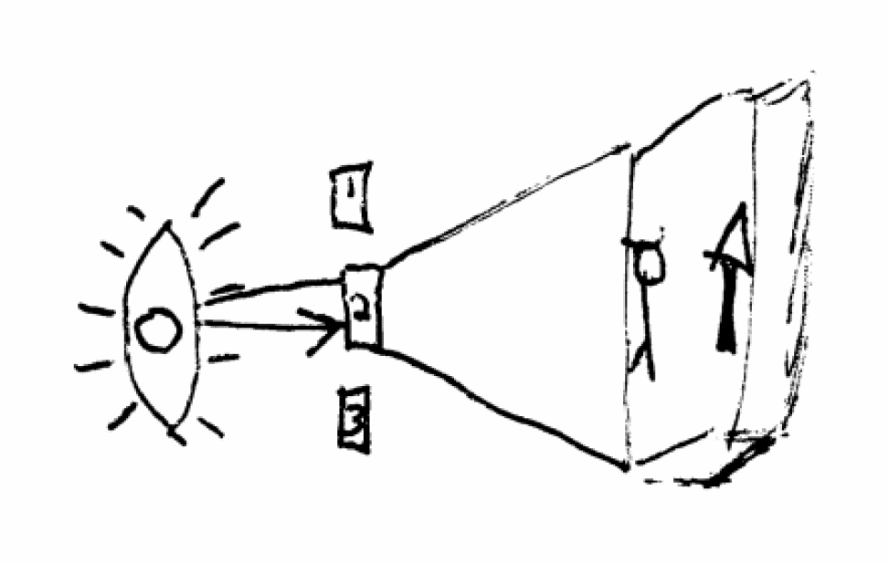
FIGURE 1979 1219-1-AB. Overself, World-Mind's Thinking, Primal Image.
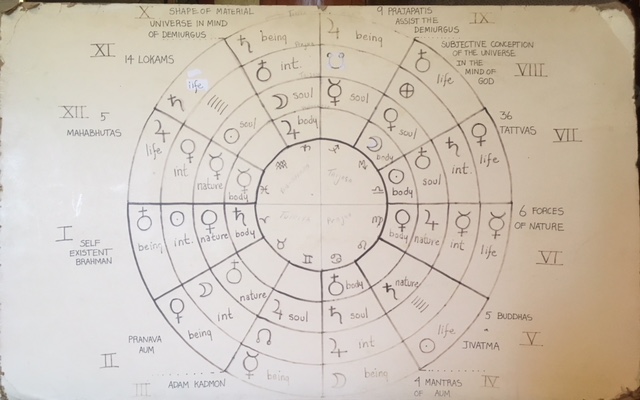
FIGURE IMG_2202-Posterboard Metaphysical Chart.
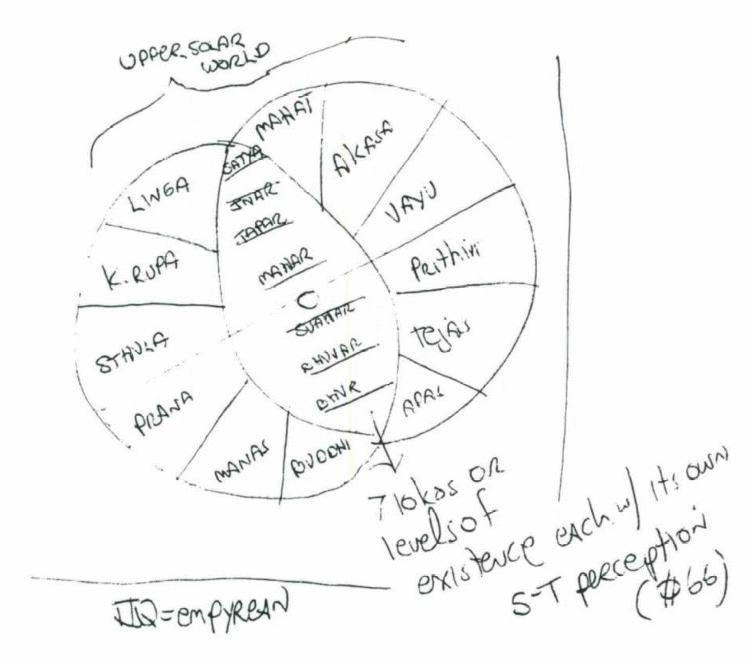
FIGURE 1979 1219-3-AB. Vesica of Houses 10-12 and Seven Lokas.
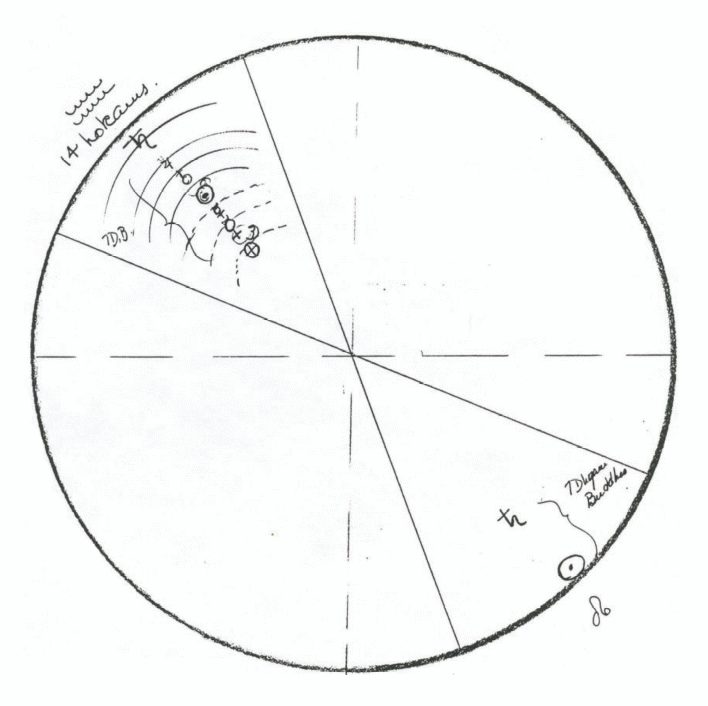
FIGURE AD_A_004b. Fifth and Eleventh House.
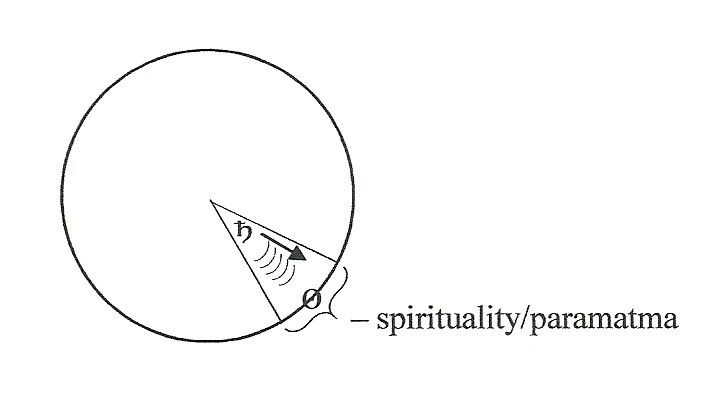
FIGURE 1979 1219-5. Fifth House as Spirituality/Paramatma.
[Transcriber note: [diagram] means the speaker is referencing a diagram as he or she is speaking. If someone is drawing or writing, with audible sounds of chalk on a blackboard, I indicate this by [drawing] or [writing].]
NOTE: Wednesday night class, part of Wisdom series 1979-1980.
TRANSCRIBED Verbatim by IT 2019; reformatted by JRM & JF 2019-2020, with TOC/Subheads by JRM. In 2023, IT updates prefatory matter, footer, and audio file name, fixes Book List, adds Plotinus quotes section, adds new notes within transcript, fixes errors/typos, adds five diagrams and references within transcript to these diagrams. In 2024, MW alters Subheads to make more accurate. Archival verbatim transcript – V14.1a.
AUDIO FILES: 1979 1219a, 1979 1219b. [Note: "Tape" and "Side" refer to original audio cassette tapes that were later digitized into .MP3 Audio Files.]
1979 12/19 at Wisdom's Goldenrod
PB Books; Wisdom of the Overself; "The Immortal Overself"
Archival verbatim transcript
[Audio File 1979 1219a Begins]
[background student talking, laughter; AD starts talking at 0:00.36.8]
AD (faint): (I-- we) left off, diagram trying to illustrate, [S, faint: Yeah.] "Thus the projected person has come into being." Is that--
AS: Uh-hm. Yeah that's good.
S: Anthony you were-- can you start above that, [S, faint: Uh-hm.] the last part of the above paragraph when--
AD: Well why don't you read it? Read where you want me to start.
[Transcriber note: I am using The Wisdom of the Overself by Paul Brunton, Rider and Company, London, 1943.]
PB [The Wisdom of the Overself, "The Immortal Overself," p. 118, S reading]: "Its third step must be to provide this limited ego with a field of experience to complement and complete it, of which it can become conscious as something outside itself."
HS: What paragraph is this?
S (faint): 198.
S (simultaneously): Paragraph [S simultaneously, faint: 17.] 17 on the bottom.
S (simultaneously, faint): What page?
S: And I'm getting very confused about what the field of experience is. And I keep thinking about things that were talked about as related to the cosmic soul and that how those thoughts were made into things seemingly outside of oneself. [short pause] I don't know what that field of experience is.
[24¾ second pause]
THE UNIVERSALITY OF THE OVERSELF IS RESTRICTED WHEN ITS LIGHT IS REFLECTED IN THE BODY
AD (faint): Alright, we-- we should start at the beginning of the paragraph and just read it over. [short pause] Now, remember we ended out that-- that the soul or the Overself is of an eternal and immutable nature.
S (very faint, possibly part of background): Uh-hm, go ahead.
S (faint, possibly part of background): Ok.
AD: That under these conditions there wouldn't be any possibility of experience. And so, I think we restated it a slight different, changed the wording around a little bit but the ideas are basically the same. Do you remember the first section?
PB [The Wisdom of the Overself, "The Immortal Overself," p. 118, AD reading]: "…its first step must necessarily be to limit a part of itself to less than what it really is…"
[Note: See FIGURE 1979 1219-1-AB, Overself, World-Mind's Thinking, Primal Image, appended to this transcript for the following.]
AD: And, if we think of the universality, the pervasive universality of the Oversoul, the Overself, the soul. And consequently in that kind of a situation there wouldn't be any possibility of knowledge or experience. So, the first step, and he refers to it as a step but, we would have to conceive of that infinite soul as restricting itself, you know, becoming finite. Now, I would say that this is really a kind of literary gesture. The-- the soul can't, so to speak, chop itself up into pieces and reveal itself that way. So, if we take it to mean that somehow conditions are going to be set up where the Overself can be revealed in those conditions. But what will be revealed will be not the universality of that soul consciousness, alright. By definition that wouldn't be possible. But what can be revealed would be-- under those conditions, it would be revealed. Soul will be revealed in some fashion or other so one of the conditions he says was to contract away part of its own infinitude and freedom. And you remember we used this kind of a diagram. [short pause while drawing] Now these are only aids, that's all, they're-- they're not-- they're not meant to be a substitute, we-- we reason. [drawing]
We took-- we took an example, we said if we imagine that this was the Overself [diagram], alright, it's immense, universal. And that these were the thought-forms in front of it [diagram]. And as they got illuminated and projected out as the primal image of the world, [short pause while drawing] so that this became this primal image. Now do you remember, we pointed out, this-- this is 1, 2, 3, 4, 5, and they go on and on, the seriality of thoughts one after the other. So, this would correspond with this here [diagram] and then this would correspond with this here [diagram] and then this would correspond with this primal image [diagram]. So that the world was a constant reconstruction, incessant reconstruction going on from instant to instant that the world-image appeared.
Now, included in that world-image was what we said was the body of the entity. And it is through that body that the physical-- that consciousness, so to speak, gets reflected in that body. So that there is a reflection in the body of this consciousness. But if it's a reflection, alright, then the infinitude, you know, the universality of the cognitive-isness, universal soul consciousness, is restricted by this [diagram] by definition. So, like for instance if we had a sunbeam coming through the window, alright, and a dust particle floated through that sunbeam, and we said-- we looked at it and we saw it got illuminated, alright. But, that which got illuminated, in other words, the entirety of that illumination, that light which was being projected, got restricted to that dust mote. So this-- the universality of consciousness, so to speak, gets restricted to this fabrication, the body fabrication by the cosmic soul. And also we have to keep in mind that if this is constantly changing from instant to instant, you know, there's a further limitation of this universal consciousness. That was the first step, alright. Do you follow here?
S (simultaneously): 'Cause it wasn't continuous.
S (very faint): Yeah.
AD: Well yes, by definition this consciousness-- I'm sorry, this consciousness [diagram] is not integral, uninterrupted like this consciousness [diagram].
S: Oh yeah because you're saying that in that there's a space between each one of the points, those thought-points, 1, 2, 3, 5--
AD (simultaneously): Yeah, insofar that each [drawing] one of these thought-forms is a recons-- [S: Yeah.] you know, the image, alright.
S (simultaneously): So it wouldn't be continuous.
AD: It wouldn't be continuous. So the physical consciousness that that entity experiences is not a-- an uninterrupted continuum of consciousness or the self-identity of consciousness or the universal pervasity-- I was going to say perversity. (laughter) I don't know, I'm going to start making a list of these Freudian slips. (bit of laughter)
S (amidst laughter): Right.
S (amidst laugher, faint, possibly same S as above): So people can see.
S: But Tony?
S (very faint): Let go.
AD: That was the first point, [S simultaneously, very faint: Oh I'm sorry.] yeah. Go ahead.
S: What is it that sets up the conditions for these-- for the-- for the soul to reveal itself? Is it something that's inherent in the mind? I mean how do these two-- I mean if you're saying that this-- that the soul can't fragment itself, it has to stay what it is always, and it's revealed through the mind, the mind of that-- the mind is what divides it up to make the soul seem, you know, divided like that, [AD: Yeah.] what is it-- what is it that brings these two things together?
AD: Well that-- this is not a question in the text, is it?
S: No.
S (faint): I know but it's (a) question I have.
AD: Well yeah, it's a question you have but it's not a question in the text right now.
S (very faint): Yeah.
AD: That's why the studies went on in other places where we try to show how the Demiurge creates and fabricates the material universe within which consciousness finds the vehicles necessary for its own development. But that's another question, that's-- that's a whole project by itself.
S: You're saying that's not appropriate, yeah?
AD: Not right now, because this girl wants the third step. And if I answer your question, we'll be here all night. That's a long project. In other words it's like understanding the set-up, you know, when we take the [drawing] four quadrants, it's understanding this set-up here [diagram] and how all this here is being fabricated so that the soul could preside over a body in there. And we pointed out that the cosmic soul fabricates the bodies necessary for the individual consciousness, the soul consciousness. And from then on there is a gradual self-unfoldment of the soul consciousness in those vehicles. See so that takes us away from his question. Not that it's not a legitimate question. Alright, that was the first step. The second step he says what?
[short pause]
THE LIGHT REFLECTED IN THE BODY AS THE EMPIRICAL SELF FORGETS IT'S THE OVERSELF
S: It's--
AD: Narrow intensive concentration?
S (faint): Uh-hm.
PB [The Wisdom of the Overself, "The Immortal Overself," p. 118, S reading]: "…on that which it thus presents to itself and which is now seemingly independent and apart."
[9¼ second pause]
PB [The Wisdom of the Overself, "The Immortal Overself," p. 118, AD reading]: "Every concentration of mental power involves a self-forgetting proportionate to the intensity with which attention becomes absorbed in the thought of that which is external to it."
AD: And, do you remember what we might have said about that?
[17¾ second pause]
AS: Wasn't that what-- "which it thus presents to itself" the-- the empirical self that's within that picture that it must present to itself? And it must be-- and since it has to concentrate, the soul as it were-- that light of the soul gets concentrated on that empirical self which it presents, it forgets its-- it forgets that it's anything higher than that and it limits its-- its awareness to that empirical self within that picture, that bodily phase of experiencer. And see that's the third step is going to be to provide that bodily-based experience with that whole field of (experience).
IN THIS TEXT, THE WORD "EXPERIENCE" REFERS TO WHAT FLOWS OR FOLLOWS FROM THE PRIMAL IMAGE
AD (simultaneously): Well the third step he says--
PB [The Wisdom of the Overself, "The Immortal Overself," p. 118, AD reading]: "…must be to provide this limited ego [AS simultaneously: No, no but go--] with a field of experience…"
S: Well that's where I get (a little/really) confused from the third step. Because the third step sounds like what you were saying about the cosmic soul, that that's what provides the field of experience and not-- and not the-- the Overself. I mean I-- I can understand-- I think I understand how that-- how that consciousness gets forgetful of its-- of its birthplace or its-- where it originated out from. But I don't see how that-- what that had to do with a field of experience. I mean it--
[short pause]
AD: Yeah but he uses the word 'experience' to (recognize that it is--) to what flows or follows from the primal image. You first have to have the thought-- the world presented, alright. There has to be a presentation of the world. In other words this world that-- Now within that image there could take place experience. There can't be experience beyond that although I imagine that we can analogically transfer the word 'experience' to that which is beyond the sensible. But in this text usually when he uses the word 'experience', it's the experience like if we have-- if we have the picture or the primal image [drawing] presented to us, alright, and then we have the object in that, alright, if we call this the ego [diagram], alright, then within this framework the ego can have experience of the objects. So [S: Oh ok I--] experience comes from the primal image. It isn't that we construct the image from our experience but the other way around. First the image, the presen-- [drawing] the presentation takes place. And then within the presentation, the body with the associated consciousness experiences objects or has the expe-- the [S simultaneously: The what?] possibility of experience (within that).
S (simultaneously): Ok. So the whole idea of this whole-- this whole primal image is a different kind of-- it stems from a different concept or a different idea than his ideas-- than the Overself, it's a-- it's a whole different-- it's like two strings coming from two different places it sounds like and then they-- they come together. One has nothing-- they're separate. I mean--
AD: Go on, finish.
S (very faint): Yeah.
S: Well from what you just said I understand that-- that that primal image isn't supplied by the Overself, that's not the sort of experience, it's just that the experience is allowed to happen between the finger or the--
AD: Well if-- if we [S simultaneously, faint: Yes.] say that-- if we say that this is the image-thought or the seed-thought [S simultaneously: Yeah.] or the subtle thought [diagram] which [S: Right.] gets amplified and produces the primal image, then your body is part of that image. And insofar that the images are [drawing] constantly changing, like we remarked, one after the other, that means that this body from moment-to-moment is incessantly being recreated. [students assent, faint] So that-- that's why from the Buddhist point of view there could be no identity-- that there can't be no "I" there because the very nature of the whole process is such that it arises and the moment it arises it disappears or it gets [student assents, faint] annihilated or cancelled out, alright. So this [AD indicates on diagram] cannot have an integral consciousness, [student assents] alright.
Then the next-- the next point was that insofar that this primal image appears, alright, and the body with let's say some sort of association with the consciousness, the consciousness which [drawing] is like being reflected in that, you know-- Because consciousness pervades this image. So when the image gets blown up the consciousness still pervades the bigger image. Now within this image can there be experience. [student assents, very faint] Only within this image there can be experience because whenever you use the word 'experience' it's always like in the threefold term, threefold relationship. The object, the "I", and the means of relating to that and that brings about experience but if you-- if you look at it in a twofold epistemal relation there's no experience as we understand experience.
S: Ok that's cleared up for me.
AD: Ok. Alright.
SS: And what does it mean to say the experience of the Overself?
AD: Well I don't know what you're talking about. Read the quote.
SS: Well, I don't have a-- well, I'll have to look for it.
AD: Well, I can't trust your memory. [student assents] I don't trust mine, why should I trust yours?
[short pause]
JG: What-- one question I have to that last point is, in which sense, referring to the last sentence, is the provision of this field of-- if-- of experience complementary?
S (very faint): Do it again.
YOU CAN'T SPEAK OF A WORLD UNLESS IT BELONGS TO SOME INDIVIDUAL PERCEIVING SUBJECT
JG: No it says--
PB [The Wisdom of the Overself, "The Immortal Overself," p. 118, JG reading]: "Its [JG reads: The] third step must be to provide this limited ego with a field of experience to complement and complete it…"
S (very faint): Uh-hm.
JG: In which-- in which sentence is that?
S (very faint): Yeah.
AS: Complementary?
JG: Yeah and comp-- visionary.
AS (simultaneously): Well, I think he says some place else also that a-- an ego and an apparent subject or empirical subject can only be set up in a relation to an apparent outside world and vice versa. [student assents, faint] So the two are complementary. In this-- right here [diagram] [JG simultaneously: Oh I see.] the [JG simultaneously: Yeah, ok.] empirical ego is complementary to the-- to the world he experiences, [AD simultaneously: That's--] which appears as outside.
AD: That's exactly [S simultaneously, faint: Yeah, right.] what I think the next passage leads into, right?
S (very faint): Uh-hm.
S (faint): What page?
S (very faint): Uh-hm.
PB [The Wisdom of the Overself, "The Immortal Overself," p. 118, AS reading]: "Thus the projected…"
S: Oh yeah, right.
S (very faint): Go ahead.
PB [The Wisdom of the Overself, "The Immortal Overself," p. 118, AS reading (simultaneously with S above)]: "[Thus] the projected person has come into being. [AS: Yeah.] It exists through what is external to it and the latter exists through it…"
AD: Now right there, ok, uh-- right there we have to-- we have to try to see that our body and all that we think our body to represent for us, alright, in order for us to-- Let's put it this way. You cannot think of an ego isolated or in a vacuum. It exists with a world. And you cannot think of the appearance of a world, so to speak, without bodies in it. I mean they're really two sides of one and the same thing. Now if we say that the projected-- the projected person exists-- exists through what is external to it-- uh-- [short pause] Here, you remember when we spoke about that the seed-thoughts rising to the brain amplified and become the world of consciousness as you understand it, alright. Now, right there and then, alright, well-- It's like although the body is a center, the orientation-- orientation point (for/to) you in the world, alright, that world, so to speak, depends upon that body through which it becomes related to the world. But on the other hand, if you speak of a world it must always be of some individual. You can't speak of a world in-- unless it belongs to some individual perceiving subject.
Now if you-- if you think of the world as projection from the individual mind, then you can see that the world which is projected from an individual mind is part of that individual mind so that there's this interconnection, interrelationship between these two, they can't be separated or pulled apart. So you take the example of a dream, alright. In order for the dream to be meaningful there has to be a subject, but there can't be a dream subject without the dream world appearing at the same time. So it's like homogenous, it's part and parcel of the same substance of that manifested dream. So there's this interconnection, interrelationship and they can't be torn apart. They can't be separated, isolated one from the other.
JG: I understand it but I still have-- I still have doubts I must confess. Does it apply solely to a position within the primal image?
AD: Well, [JG: Because if you--] Johanna, we've been-- the [JG simultaneously: Yeah.] sentence he says--
PB [The Wisdom of the Overself, "The Immortal Overself," p. 118, AD reading]: "The two [JG: Yeah.] are inseparably coupled in each indivisible moment of individual consciousness. Thus the person's world-experience is born and in so far as [the] one confronts the other, self-consciousness is aroused…"
AD: Now if we take that sentence, "the two are inseparably coupled in each indivisible [AD says: individual] moment of individual consciousness," and we take this here [diagram] to be the individual consciousness, [JG: Yeah.] and that each moment that this primal image appears, [JG: Ok.] alright, there will be a conjunction, so to speak, of the individual consciousness, [drawing] alright, streaming through or let's say pervasive of these individual thoughts, alright.
JG: I don't-- I don't even get that. You just referred the individual consciousness to the ego, you know, within the primal image.
AD: Yeah.
JG: And then you got something from outside, as it were, you know you-- one factor you contributed from outside in order to explain indivisible--
AD (simultaneously): Well, alright, Johanna, let's read from the beginning, and you follow me, alright?
JG: Yeah, ok.
PB [The Wisdom of the Overself, "The Immortal Overself," p. 118, AD reading]: "Thus the projected person has come into being. It [AD reads: He] exists through what is external to it and the latter [AD: That is, the world.] exists through it; both are inter-locked. The two are inseparably coupled in each indivisible moment of individual consciousness. Thus the person's world-experience [AD reads: Thus the world's experience] is born and in so far as [the] one confronts the other, self-consciousness is aroused…"
AD: Now right here you have-- except for the last sentence, you got it right here [diagram]. You can see that there's a coupling, alright, there's a coupling between consciousness per se and individual thoughts. So the coupling of these two together would give us individual consciousness. But now [JG simultaneously: Self-conscious (one word inaudible)] insofar-- individual consciousness, [JG simultaneously, faint: The ego.] not self-consciousness.
JG: Ok.
AD: In order for self-consciousness to arise, [JG simultaneously: You have to have (couple words inaudible)] you have to go to that scene [diagram]. Now the self-consciousness is going to arise there because of the very nature of the primal image which forces the individual to confront objects and thus build up a self-consciousness. [19¼ second pause] When he says "…both…"
PB [The Wisdom of the Overself, "The Immortal Overself," p. 118, AD reading]: "It exists through what is external to it and the latter exists through it; both are inter-locked. The two are inseparably coupled in each indivisible moment of individual consciousness."
AD: Now, in this example over here in this part of the chart [diagram], I can s-- I think you can see that the two, alright-- What two?
JG: The world and the ego are coupled.
AD (simultaneously): The world and the indiv-- (in/and) the individual.
JG: I mean especially from the example you brought about the-- the body when the motility travels to the head and that only then-- you know, the world is-- [AD: Yeah.] the body's actually a physical center for the world in terms of experience to appear. I mean there is where he-- but he-- that's one aspect. There I can see it very easily but-- [short pause] but out-- does it also have a meaning to say that outside of the primal image, that's my--
AD: Continue [one word inaudible]
JG (simultaneously): --question, if you take into account the individual mind.
AD: No, state your question 'cause I haven't got it yet.
JG (simultaneously): The question-- Does the "it exists through what is external to it", that sentence, does that solely refer to the primal image? 'Cause then I'm not experience-- you know, the world-- the world that is not colored by me. I is-- I experi-- I'm locked up in my own psyche.
AD (very faint): I didn't follow the question. (Try again.)
AB (simultaneously): Yeah the "it exists" is the projected person, not the primal image.
JG: Yes, I know, [AB simultaneously: Ok, sorry.] that it's the projected person within the primal image.
AB (faint): Right.
JG: But it doesn't exist through the world that is projected by the cosmic soul. Is that what is meant?
AD: Well it doesn't exist--
JG: The-- it does not exist through the world that is projected by the cosmic soul or fabricated by the cosmic soul.
AD: What does not exist?
JG: The ego.
[short pause]
AD: The ego does not exist-- go ahead.
JG: Through the world as it is projected by the-- the cosmic soul. I really don't-- I-- [short pause] He said when is-- once the-- to go back to that thing, once the impressions reach the head, the material I have been provided with is not really mine, it's almost-- it's totally colored by my--
[short pause]
AD: You have to keep going Johanna because until you-- until I understand what you're trying to get at I-- [9¾ second pause] Let's try again Johanna. What we're trying to understand, alright, how, insofar that this individual exists, alright, there must be a world for him. And that if there is a world, then it has to be referred back [JG simultaneously: To the individual.] to some consciousness center or some heart center. Right?
JG (simultaneously): Uh-hm.
AD: Now if we do that that would mean that the ego which-- or the individual that is projecting the world, the-- the-- the subtle thoughts that are going through and getting projected as his world, alright, they are both connected, they are both interrelated, you can't separate one from the other. So insofar that a-- a person projects a world, alright, that world that is projected from him and the body within that projection or the-- the "I" associated with a body within that projection have to confront each other. Now in analysis they seem to be like two separate things, [JG assents] I mean in feeling they seem [JG assents] to be two separate things. But when you analyze it you see that you cannot take out of the knowledge situation the object without taking out at the same time the subject. So that means that there's an interconnection between the subject and the object in-- within that presentation.
JG: Ok.
JG/S(?) (faint): Uh-hm, yeah.
AD (simultaneously): I mean-- ok. [student assents, very faint] And then he goes on to say--
SELF-CONSCIOUSNESS DEVELOPS THROUGH THE EXPERIENCE OF PAIN OR DIFFICULTY
PB [The Wisdom of the Overself, "The Immortal Overself," p. 118, AD reading]: "Thus the person's world-experience is born…"
AD: So experience for an individual arises within the [JG assents] context of that image. [JG assents] Unless that image is there, the world, you know, which he's presented, unless that's there there can't be no experience for him. That's what I mean when I say usually when he uses the term 'experience', it's an empirical thing he's talking about. He doesn't use it in a transcendental sense. So if we do have experience, it must be in this context.
PB [The Wisdom of the Overself, "The Immortal Overself," p. 118, AD reading]: "Thus the person's world-experience is born and in so far as the one confronts the other, self-consciousness is aroused…"
AD: Now insofar that this entity, alright, confronts the tiger there and knows he has to run up a tree, there's some s-- some sort of reflective self-consciousness is-- is being born within him. [short pause] Ok?
S (faint): Yes.
AD: This will eventually lead to inquire whether consciousness could-- is more than momentary but for now we have to accept the fact that in our experience which arouses a self-consciousness and some-- you know, for someone to feel self-consciousness, and the possibility of reflecting on these things, then one could inquire about the possibility of this consciousness here [diagram].
S (very faint): Ok.
PB [The Wisdom of the Overself, "The Immortal Overself," p. 118, AD reading]: "…just as the electric current which meets with the obstacle of a piece of carbon during its onward flow strives to overcome the resistance and through this striving generates light. This resistance which the"me" requires…"
JG: For what? Resi--
PB [The Wisdom of the Overself, "The Immortal Overself," p. 118, AD reading]: "This resistance [JG: Yeah.] which the"me" requires is got through the limitation provided by its [AD reads: the] space-time perceptions and sense-operations."
JG: May I ask a question right to that sentence? Uh, for what does the "me" require resistance, for becoming-- in order to become self-conscious?
AD: I didn't think that it was necessary to answer that question.
S (faint): Uh-hm.
S (faint): No.
JG: Why-- why not?
AD: Well because if-- if you-- if you sat under a tree and you ate lotuses and life was, so to speak-- well what would you call it, not a veil of tears but like a-- a cradle of ecstasy, you will never become conscious. The only thing that ever makes you self-conscious is some kind of difficulties.
S (very faint): Like pain.
AD: Pain or suffering. [S, faint: No.] There's no way that you are ever going to become self-conscious. The Buddhists as a matter of fact consider it an unfortunate thing if you're born as a deva or as god.
JG: I know, yeah.
AD: Because you're happy. And if you're happy you're not going to seek self-enlightenment or self-consciousness. You have to try to understand. Now, this is a-- this is really a fundamental truism. We're afraid of self-knowledge. And, you know, it's considered a great discovery, your western Freud said that. But it's axiomatic in all these teachings. We don't want self-knowledge. We want nothing to do with it. Now, if you meet with some unhappy or unfortunate incident in life, alright, which for-- you know, which is painful, self-reflection will arise. You start saying, "Why me?" (bit of laughter) That's the first step--self-reflection. "Why me?" You see, you have to bring a "me" into being. [S, very faint: But then--] Try-- try to become conscious in-- The same thing like a nightmare, you'll only wake up from a nightmare, you know, because it introduces such intense fear that it awakens you. And the only thing that's going to awaken you in this life is pain. And-- I remember a long time ago I think we read something, although believe me I'm not trying to sound masochistic but, [S, faint: Uh-hm.] (some laughter) I think some time-- some time ago Eckhart made a remark, he says the-- the quickest horse that bears us to perfection is suffering. [Note: "The swiftest steed to bear you to your goal is suffering; none shall ever taste eternal bliss but those who stand with Christ in depths of bitterness. Nothing is more gall-bitter than suffering, nothing so honey-sweet as to have suffered." Meister Eckhart, "Detachment"] [short pause] Well, you think about it and you'll see why I don't think that that's a question you should ask.
JG: I mean the-- it sounds so personal in-- in something that's concerned with truth. (JG laughs a bit) And I still can't reconcile that.
[short pause]
AD: Alright--
PB [The Wisdom of the Overself, "The Immortal Overself," p. 118, AD reading]: "This resistance which the"me" requires is got through [the] limitation provided by [its] space-time perceptions and sense-operations. In the case of man the setting-up of the five senses produces the externalization of his perceptions and consequently of experience, thus producing objects for his consciousness and [AD adds: the] "matter" for his belief."
AD: Let's try going over that. [short pause] Would you please Avery read the whole paragraph and let's see-- these people are already on vacation. (bit of laughter)
AS: Do you want to start it from the very beginning?
AD: Yeah right from the beginning.
AS: Ok.
THERE IS NO WORLD WITHOUT THE BODY AND NO BODY WITHOUT A WORLD
PB [The Wisdom of the Overself, "The Immortal Overself," p. 118, AS reading]: "Thus the projected person has come into being. It exists through what is external to it and the latter exists through it; both are inter-locked."
AS: Now-- Are you calling the projected person the self-conscious-- this empirical here [diagram]? Or is the projected person the projected light from the self here [diagram]?
AD (simultaneously, faint): No I would put it in the empirical world.
AS: Keep it there [diagram], yeah.
S (faint): One more time.
PB [The Wisdom of the Overself, "The Immortal Overself," p. 118, AS reading]: "It exists through what is external to it and the latter exists through it; both are inter-locked."
AS: So, um-- the-- in other words he's saying the w-- the notion of an ex-- an external world can only arise through there being a center of experience in that world. And the center of experience in a world can only arise through an-- through there being the external. Otherwise you can't-- you won't have-- that's what he's going to say, like otherwise you won't be able to have an empirical person. It's like a dream analogy. You have-- before the mind can have an experience in the dream it has to set up a center within that dream in order to experience the dream. And vice versa. If it's going to have experience in a dream-- if it's going to be-- if it's going to become a dream character, it has to set up a whole environment also for that dream character in--
AD: Yeah, and did you ever notice a dream having an objective dream environment without a subjective dream (consciousness). And li-- you ever (confuse) those two?
AS: There always seems to be some reference.
AD: Hm?
AS: There always seems to be some reference in the dream.
AD (simultaneously): Always somewhere there's some sort of subjective reference [AS, faint: No matter what.] within which the dream is experienced.
[short pause]
AS: But he says--
PB [The Wisdom of the Overself, "The Immortal Overself," p. 118, AS reading]: "The [AS reads: Those] two are inseparably coupled in each indivisible moment of individual consciousness."
AD: Now what two are inseparably [AS: He says--] coupled?
MW: Yeah.
AS (simultaneously): The objective world that he sees and the apparent subjectivity, the empirical subject, [BS: Yeah.] an empirical person.
AD: Yeah.
S (faint): Empirical person.
BS (simultaneously): That would be the one you-- when you point to the body there as within the (dream). That it would have to be something more perhaps immanent in it. Because if they're interlocked then that is a unit right there.
AD (faint): If they're interlocked--
BS: If they complement-- if the person and the objective world and the environment complement each other, then the image we have there of the body and the tree would have to be the objective world. The person would have to be outside of it. [student assents, very faint] [S, very faint: Go ahead.] Well outside [one word inaudible]
AS: Not but the inde-- but he says they're interlocked in the indivisible moment of individual consciousness. It seems like this whole thing [diagram] is a moment of indivisible-- of individual consciousness.
BS/S(?): Yeah.
AS: And he says that in that, these two are inseparably coupled. The subject-- the apparent subjectivity-- I mean unless you want to say it's a real subjectivity but I don't think that's what's coupled. It's what we just talk about, the projected person--
S (simultaneously, faint): Yeah real subjectivity is what you--
AS (simultaneously): No it-- well it seems like you're saying the projected person [BS: Yeah.] and his apparently external world. He said this is the projected person [diagram], that that pers-- that subjective reference, in-- in this-- in this field there's a-- there's a subjective reference. And that subjective reference is inseparably coupled to the object of appearance.
AD: Good.
BS: But if that-- that is the person, you know, when you point to the heart or the head there, or the whole body, [AS: Well--] and-- let's see. Well what is it interlocked with? It is part of that objective world.
[short pause]
AD: The body is part of the objective world. [S simultaneously: Right.] Now, the objective world is part of the body, it's given.
BS (simultaneously): Yeah.
AD: So then they are interlocked.
AS: They're interlocked.
BS: Well that's what I thought I was saying. But the person--
AD (simultaneously): Yeah, well that's what I thought we were saying too.
BS: Except when you speak of a person--
AD: It's the same-- it's the same thing, if you excuse me for a minute, [BS: Yeah.] if you can get that quote when he speaks about the subtle thoughts rising to the head and in that moment as they go out through the orifices, alright, the subtle thoughts reach the brain, get amplified, go out through the orifices and this is the world that you become conscious of. Now in that statement right there and then, alright, there is, so to speak, a body is a center of orientation. The world gets projected through the senses. At the same instant, alright, one could see that the world which is projected through the senses and the body are interlocked. You're not going to have the world without the body and you're not going to have the body without the world. They're both going to be-- become simultaneously conscious to the-- the subject.
BS: Right, but is it my-- well, my question would be then, where would you point to the person?
AD: The person would have to be in the empirical world, you, I, her.
BS: If you-- could you isolate it [couple/three words inaudible]
UNIVERSAL CONSCIOUSNESS PRECLUDES CONSCIOUSNESS OF THE WORLD
AD: No. No, because then it won't be experience. You see if you isolate it, if you say well, let me talk about just the true cognitive subjectivity, the true subject, the Overself consciousness, [AD snaps fingers] you're out of the primal image. That experience will not be in the primal-- in the imaged world. In other words you're not going to have the experience of a universal consciousness or-- or consciousness of the soul and also have consciousness of the world. [short pause] See by definition universal consciousness will be-- would preclude that. Because we said that the universal consciousness is absolutely pervasive. But the physical subject, alright, is an incessant reconstruction that's going on all the time. So this moment you're awake, the next moment you're asleep, you wake up again and it shows that that consciousness is not continuous and self-identical with itself. The consciousness that we experience is of an entirely different order. It's like the light which is projected onto some sort of substance, a material substance, and we call the combination of the light which is reflected off that object, we call these two things the world and the subject interlocked in that world or we'll call that the primal image. But that certainly will not be the light which is being reflected off that material substance. And the strange thing is we have no other experience, and we can't call it experience, of this universal consciousness. This is the only way that we experience consciousness. So, it's another way of saying like this whole thing, this-- this whole framework is set up so that one can become aware of the fact that he is consciousness. If that isn't set up he can't become aware that he is consciousness.
It's-- you remember the example we gave, if we took a light and we imagine the light going through a glass, that would be one kind of surface. Then we take a thin paper and the light can go through that paper, alright, not completely like in the glass, alright. And then we imagine a brick wall and the light gets stopped there. Now our body is like that brick wall. The light hits that body and from there on the only thing that we know is a reflected consciousness. But if that body is changing from instant to instant, just like if it was possible or if we could imagine-- Let's do it this way. There's a light hitting a-- a-- a metallic wall. And as the light hits the metallic wall there's a reflection of the light off that metallic wall. Now if we imagine that every time-- that every instant we can raise the wall and lower the wall, alright, one would see that there would not be no self-identity and continuity of the light which is being reflected off that s-- off that metallic wall. It will be a broken light, so to speak. This is the kind of consciousness we experience as empirical subjects. We do not experience the other kind at all. In other words like an incessant uninterrupted integral consciousness. We don't know that. And so the whole body mechanism and apparatus is set up so that the soul could read the impressions off that. [short pause]
This is also the Buddhist point of view, you know, they insist that this is the way things are. If the world is constantly being reformulated every instant in time, then to speak about some sort of self-identity for any object or subject or any kind of self-existence for any object or subject they would consider to be absolutely absurd. And the strange thing is that this point of view has been reinforced by science. Scientists have reinforced this point of view. If the world is nothing but an incessant energy, constant-- a-- a constant relocation, so to speak, then it's very hard for anyone to speak about a self-- self-identical entity anymore. You can't go around saying "I" without lying in his face.
[students assent, faint]
[short pause]
S: But then he says it's self-consciousness in the realm of opposition. Is that consciousness-- I mean-- That means (he let it) go today we said that-- that that little self doesn't exist, and that by self-consciousness you mean did you see what you-- this world is a limited projection, or, on the other hand if you take the self-consciousness to be that you would see that that-- that it's only that light. And I don't really know what level-- I don't even know what you mean even if I didn't understand a lot. You know you say well, become self-conscious. Well-- sometimes I think well you're referring to the ego and you're just like God, it becomes like God, it's really sophisticated and all this. Other times (bit of laughter) seems like-- like self-consciousness is to realize that that self isn't conscious, [S, faint: Yeah.] that it isn't a--
AD: Well--
S (faint): Uh-hm.
AD: We first, before we can realize that that self-consciousness is not self-consciousness, we cert-- we first have to become self-conscious.
S (faint): So, the self-conscious(ness) [one word inaudible]
AD (simultaneously): It takes, it takes an acute self-consciousness for one to be able to reflect and theoretically consider all these things.
S: But self-cons--
(Side 1 of original cassette tape digitized as 1979 1219a Ends; Side 2 Begins)
REFLECTIVE CONSCIOUSNESS IS INCLUDED IN THE PRESENTATION, YET THE WORLD IS STILL FELT TO BE OTHER THAN ME
S: --(but) self-consciously, you know. Does it refer to the ego, that kind of con--
AD (simultaneously): Could-- could refer to the ego, sure. He's certainly not referring-- referring to Atma consciousness or--
S (faint): Yeah but you got those two (album), you know, it seems as that self-consciousness grows you realize, you know, that the ego isn't what you thought it was. (S laughs a bit)
S (faint): Definitely.
AD/S(?) (very faint): Yes, uh-hm, uh-hm.
S (faint): Like a two [couple/three words inaudible]
AD: Yeah but, I mean the-- the point we're discussing in the text, alright. What is the point he made in the text, is it-- isn't it that before we can speak about self-realization, instead of-- instead of saying the words "pure self-consciousness", don't we first have to become, so to speak, reflectively self-conscious before we can speak about any higher steps? And if you look around and watch people, I mean I think you'll see that some people haven't even achieved self-consciousness yet, let alone speaking about any higher stage, any higher (grant), alright. But I think-- I think if you read the next part of that and he speaks about self-- [S: Uh-huh.] through sense-perception.
AS (very faint): Where is it?
PB [The Wisdom of the Overself, "The Immortal Overself," p. 118, AS reading]: "This [AS reads: The] resistance which the"me" requires is got through the limitation provided by its space-time perceptions and sense-operations. In the case of man the setting-up of the five senses produces the externalization of his perceptions and consequently of experience, [AS adds: and] thus producing objects for his consciousness and "matter" for his belief."
AD: Alright, we stop there and if we continue the analysis we'll see-- we'll see that what we're speaking about is just ordinary self-consciousness, we're not speaking about anything higher than that. Just let's analyze that sentence over here that we've read.
[10½ second pause]
BS: But this-- the con--
S (very faint): Uh-hm.
BS: I think I follow what you said before but, if I could emphasize that he started with(--/.) He says matter for our belief, "producing objects for his consciousness and"matter" for his belief."
AD: Well, Bert, can I ask you to start at the beginning first? Start at the beginning of the sentence that we just read.
BS: "In the case of man…"?
AD: Yeah, "In the case of man…"
PB [The Wisdom of the Overself, "The Immortal Overself," p. 118, BS reading]: "In the case of man the setting-up of the five senses produces the externalization of his perceptions and consequently of experience…"
AD: Stop there.
S (very faint): Yeah.
AD: Once more. Read that once more.
S (very faint): Again.
PB [The Wisdom of the Overself, "The Immortal Overself," p. 118, BS reading]: "In the case of man the setting-up of the five senses produces the externalization of his perceptions and consequently of experience…"
AD: Now what-- And this is a reviewing of-- a reviewing of something which was said previously, alright. So he's saying in the case of man that the subtle seed-thoughts which rise from the heart and go through the brain and get amplified and projected out through the orifices in the head, alright, he's saying that these senses are what is producing the-- the potentiality of a field of experience. Pull out-- go on a little more.
PB [The Wisdom of the Overself, "The Immortal Overself," p. 118, BS reading]: "…thus producing objects for his consciousness and"matter" for his belief."
AD: Thus producing objects for his physical empirical consciousness.
BS: Yes.
AD: Alright? It produces these objects, so when these-- when these seed-thoughts get projected out through the orifices and there appears a world of objects, then these senses that produce those objects that now he's looking upon.
BS: Yes.
AD: And insofar that it produces these objects he's also going to think that there's some kind of matter which is the underlie of these objects. Rather than saying that it's the mental processes themselves that are underlying the object he says there's some matter underlying the objects.
BS (faint): Something external to his thought.
AD: Yeah. [S, very faint: Yeah. Ok.] And so he's deluded.
BS: Ok.
AD: Alright, read the next sentence.
S (faint): Ok.
PB [The Wisdom of the Overself, "The Immortal Overself," p. 118, BS reading]: "Nevertheless we must not fall into the easy error of forgetting that this felt opposition does not render consciousness independent of the world."
AD: Now there, that sentence. [short pause] Now you can see obviously the consciousness he's speaking about is what we refer to as the empirical subject, the physical empirical consciousness that I experience as a being in this world. And he's saying, if I follow him, that this consciousness is not to be s-- divorced or separated or hyphenated from the very world that it knows. And they are interlocked, interconnected, they can't be separated. It's only in terms of feeling that you think the world is other than you. Like you look at some person that you hate intensely and you feel that there's-- he's other than I am, alright. In terms of feeling there's an absolute distinction and a big hyphen between the two. But in terms of analysis, in terms of what you're doing when you're trying to understand this, you see that that can't be. You cannot have the subject in the dream without the object, the dream object, the dream environment, and you cannot have the dream environment without the dream subject. They're interlocked. One-- one could go so far as to say that they're almost homogenous.
BS: Yes but that's what we mean by a body, right?
MS (faint): But, isn't it also--
S: What--
BS (simultaneously): But not a--
MS (faint): Well if they're known in analytic reflection they're not known by analytic reflection.
AD: They're known in ana-- analytic reflection-- say it out loud Mark so we could all hear you.
MS (simultaneously): That they're known in analytic reflection, not known by analytic reflection.
AD (simultaneously): What is known in analytic reflection?
MS: Sounds like the unity of the subject and the object.
S: Fine.
S (faint): Yeah.
S (faint): But (not/now) if you say that-- but is there no--
AD: But not your feeling, the feelings won't agree with that.
S (very faint): (Well definitely.) (bit of laughter)
AD: Feelings don't go around saying "this is I, this is I, this is I". The feelings say "that's not I, that's not I, that's not I, nah, nah, nah, nah, nah, nah." (laughter, AD laughing) Maybe sometimes not even this is I. Yeah. So we can't-- in other words, our analysis or methods of knowledge will reveal to us a certain truth which our feelings will not agree with. But then when all is said and done, which one are you going to go by? Well, your innate disposition will tell you. [student assents] It can be trained. Because without training this can't be enforced. Go ahead [one word inaudible]
S (faint): (And/In) what we're just saying it seems that a part of that consciousness has to be-- be somewhat separate from the world in order for the reflection--
AD: No. Then you missed the point.
S: Well, because look at anything really valuable--
AD: Yeah.
S: How could you really have any reflection that would give you something unless a part of it was somehow prior to this locked in, you know--
AD: That wouldn't be knowledge as you have it! That wouldn't be empirical knowledge what you're bringing in.
S: No, it's something in between the two.
AD: No, it wouldn't even be in between.
S: Reflective-- reflective knowledge.
AD: If you really know what a tree is you're not speaking about empirical knowledge.
S (very faint): That's not what (I'm talking about).
AD: Then what are you talking about?
S (faint): (Trying to/Can we) get back to that, seems like the self-consciousness where it seems to still be directly-- now as he says the given senses and thought--
AD (simultaneously): Self-- self-consciousness? I didn't hear you.
S (simultaneously, faint): Self-consciousness, that idea you were speaking of before. I mean we're given bodies and senses and thoughts.
AD (simultaneously): Well self-consciousness is not direct, you know-- you understand that.
S: It's not direct.
AD: No, never is. It can't be, by definition. [S, faint: Well, it's not--] But why-- why would one call it reflective consciousness then?
S: Yeah. It's not--
AD: Why call it reflective consciousness and call it direct?
S: Ok, but--
AD: If it's reflected it's not direct consciousness.
S: But isn't that consciousness somehow outside of this situation?
AD: It's within the perceptual (whole/fold). This is the fourth time, Crystal.
S: I know.
AD: Your reflection takes places within the perception, not outside of the perception.
S: Then all the self-consciousness is absolutely-- I think it's useless.
AD: I know I'm de-evaluating self-consciousness for you but think about it seriously and you see all-- all of reflective consciousness is within the perception and not outside or beyond the perception.
S: Still within thought but isn't it still like of a more subtle--
AD: I'm sorry?
S: It's still a thought, still within thought but it's different than knowledge being through the senses. This thing you're calling self-consciousness seems different than knowledge gained through the senses. [short pause] To me it seems less locked into this.
AD: Less what?
S: It seems to me at the level of knowledge that's less locked into this absolute unity of the-- of this man looking at the tree. [short pause] I mean it has intelligence in it that seems to imply--
AD (simultaneously): Yeah, I know you-- you're--
S (simultaneously): I didn't--
AS: But if--
AD (simultaneously): You keep saying that.
S (simultaneously): (And it could go) on to be valuable.
AS: But he says here--
PB [The Wisdom of the Overself, "The Immortal Overself," p. 118, AS reading]: "Thus the person's world-experience is born and [in] so far as the one confronts the other, self-consciousness is aroused…"
AS: He seems to be saying just exactly the opposite, that self-consciousness in fact depends upon this [student assents, faint] felt opposition of the world and the "me".
S: But that's what I figured somehow.
AS (simultaneously): Because otherwise he says it wouldn't arise.
S: That self-consciousness is something different than-- than, you know, just seeing the tree.
MB: But it's not consciousness of the pure self, it's consciousness of-- [S simultaneously: No I didn't think it is.] consciousness of the limited-- consciousness of the person in the world.
S: Yeah but it isn't just the man [MB simultaneously: It--] seeing the tree. The man knowing he sees tree, he knows he's got-- there's a man and tree. That's why he can reflect.
AD: That knowing was still included within self-reflection.
S (faint): I notice(d) that.
[short pause]
AS: 'Cause the guy that he thinks that's seeing the tree is still the guy that's within the-- (AS laughs a bit) [S: Yeah.] the picture. 'Cause the reference is still [one/two words inaudible]
AD (simultaneously): Let's try this way. Maybe the analogy of the dream might help, Crystal. I appear in one of my dreams, alright, and dream Tony is thinking about this bear that's chasing him-- him up the tree and as he's running up that tree, he's reflecting about the, you know-- the evils of life.
S: Yeah.
S (faint): Oh.
S: Ok. (bit of laughter)
AD: Now, is that reflection included in the dream as a total, the total dream? If it is, then his reflections, so to speak, are part of that whole perceptual image and included within it. They are not outside of it. So that when the dream is abolished, alright, everything that went on in the dream including his reflections on the unfortunate situations that life brings about, that too gets abolished. So that self-reflective knowledge is no more than a species of ignorance within the perceptual whole.
S (very faint): Yeah, yeah.
S (faint): Yeah, yeah, I'm just going--
AD: Yeah I-- I know but we've been discussing this for years and--
S: But you got to bring-- but then yours-- but then what-- what you're saying is so valuable, we got to get self-conscious. I mean now you're playing it off as part of the dream so why-- why bother, why talk about it-- (student laughs) Do you know what I mean?
AD: Well I-- I know you're getting anxious but you have to tell me what your question is. (bit of laughter)
S: No. You're always saying how valuable this is and you have to get self-conscious, we got to know we're individuals. But this is all part of the dream.
AD: Yes. So that you could--
S (simultaneously): But why not forget this, what--
AD (simultaneously): So that you could start employing methods to become awake. But we're not discussing that. We're not discussing that. We're not discussing why we should become self-reflective creatures. We're trying to point out that this self-reflection is within the whole perceptual manifold, which he projected from out of himself.
S (very faint): Yeah.
AD: Go ahead uh--
Joscelyn G: So how does the subject of self-reflection differ from the subject you guys drew up on the board?
AD: How does the subject-- please--
Joscelyn G: Of self-reflection differ from the unobjective subject.
AD: Differ from--
Joscelyn G (simultaneously): This is where we find--
AD: Differ from?
S (very faint): Again.
Joscelyn G: How does the self-reflective subject differ from the unreflective subject. Is it just a more refined version of the Overself's limitation [AD: Well--] that he talks about in the Absolute?
AD: How-- Let's ask the question like this. How does the empirical-- I-- see if this is alright as far as wording. How does the empirical self-reflective individual, how does he differ from the consciousness that the soul has.
Joscelyn G: Oh that's it, that the consciousness that the soul has you said has nothing to do with the right-hand side there [diagram]. You said that's just illusion, some (passive roulette).
AD: Go on.
Joscelyn G: So, there's three sorts of consciousness at stake. There's the sort that the soul has which is the example. And there's the sort which the chap (in between) has. And there's the sort that the self-reflective person has who is actually looking at the chap who's looking at the tree. So maybe there should a third figure in that prop. (bit of laughter)
AB: The guy who's looking at the tree is the one who has the self-reflective consciousness.
S (faint): Yeah.
Joscelyn G: Well, in that case you've got sufficiently two. (bit of laughter) Because he's look-- what happens when you look at yourself looking at the tree? Who's the first "you"?
AB: When you look at yourself looking at the tree it's the same self that's looking at the tree and knowing that it sees the tree.
Joscelyn G: Ok, so the object is self plus tree then, the soul plus tree.
S (very faint): Uh-hm.
S (very faint): I know what it is.
[short pause]
AS: I would--
Joscelyn G (faint): Don't respond.
AD: Could someone give me the question?
S (simultaneously, faint): What-- what's the question?
S (simultaneously, very faint): What's the question about?
Joscelyn G (simultaneously): Well, the question--
S (simultaneously, very faint): [couple/three words inaudible]
Joscelyn G: I'll try it again then.
JG (simultaneously): Could you speak loud?
Joscelyn G: What's the difference between the figure you've drawn there and a person who is let's say in the self-reflective state, in the introspective state?
AD: Introspective-- what's the difference between the in-- introspective consciousness--
Joscelyn G: The introspective subject.
AD: Introspective subject, yeah.
Joscelyn G (simultaneously): And the unconscious subject.
AB: The empirical.
AS (simultaneously): The one that's looking at an object.
S (simultaneously): The empirical subject.
AS: No they're both the empirical subject.
AD: Well--
AB: Yeah.
AS: He wants to know what the difference is between just looking at an object and not being aware that you're looking at it and reflecting on that and being self-consciously aware that you're looking at an object. I think that's what--
Joscelyn G: Well actually I want the difference between two subjects now, yeah?
AB: Yeah but see--
AS: There's (nothing).
S (very faint): Nothing, yeah.
AB: It--
Joscelyn G: It has none-- then there's none.
AD: Well I didn't know that there was any difference between an introspective awareness and reflective awareness.
Joscelyn G: That's not what I said.
S (simultaneously, very faint): [three/few words inaudible]
AS: He wants to know the difference between the introspective awareness or self-consciousness and plain old empirical consciousness of an object as external.
S: Isn't the same thing [AS simultaneously: Is that--] about the dream?
AS: Is that what you said?
S (faint): Yeah.
S (very faint): Uh-hm.
AB: Yeah.
S (simultaneously): About the bear chasing Anthony up the tree and thinking about something else and they're-- and they're both in the dream? That's the same thing, (isn't it)?
MW: Could I try?
AD: Yes please, Michael.
MW: I think maybe what he's getting at is that you could have the experience where the person and the world are projected but the sense of there being a confrontation between the two has not arisen or is very minimal. So that's the one that you would call unreflective subject. He still is a subject, he still has a world--
AD (simultaneously): But there is no possibility of having-- as you put it, reflective awareness will be minimal but it will be there.
MW: Yeah, that's why I said [AD: Yeah.] minimal.
AD: It will be there.
MW: Right. And then [Joscelyn G simultaneously: But--] the other one is when it's not minimal but it's very acute, the world really seems to be confronting you and then you would say you become much more self-reflective. But, I think there really isn't a-- it's not as if there's two different subjects there, I think it's the same but it's-- it's that degree of confrontation on-- and degree of self-reflection, just that it seems to be like a [one words inaudible]
AD (simultaneously): Yes I would have to agree with that Michael but I don't know if that's what he was speaking about.
Joscelyn G: Doesn't seem to be, no.
MW: No?
Joscelyn G: Sorry, I just may have put me down.
AD: Well, we got patience.
S (very faint): Yeah. (bit of laughter)
S (faint): Yeah.
AD: We got patience, go ahead Joscelyn.
Joscelyn G: Let-- let me try again then. If-- you said the-- you said you-- some people aren't even self-conscious. Right? Now you'll speak about a certain type of subject as a self-conscious. Now when somebody's not self-conscious--
AD: Well that really can't be.
Joscelyn G: What?
AD: That really can't be.
S: No.
Joscelyn G: (Let me go--)
AD (simultaneously): I mean it's a question of degree, it's a question of degree.
Joscelyn G: Well that-- that answers my question then. [S: Oh.] So it's a difference between [one/two words inaudible] (some laughter)
AD: Oh, oh, I see.
Joscelyn G: It's a difference in degree.
AD (simultaneously): No, insofar, insofar that we inherit the-- the body which has been fabricated by the cosmic soul and we operate through that body, that body inevitably must be a reflective means. It could be minimal or it could be maximal. But it will be simply a question of degree and I would go so far as to say that almost any kind of entity is working with even a minimal self-reflection and probably not even observable. Like when we watch an animal go about performing its instinctual, you know, activities, we can say it's not self-reflective because the very nature of instincts is such that it doesn't require reflection and could do what it has to do without any kind of self-consciousness. But ultimately I would say that the whole purpose in the whole gyration of the evolution of creatures seems to be to lead to a position where the body becomes a vehicle by which consciousness can be reflected.
So if we think of the consciousness which is reflected by the brain, the structure of the brain, the very nature and convolutions of the brain, that very reflection, the light pouring through it, what is retained of that light going through we say is the reflective consciousness and this is what I operate with, alright. But, if a person were to be not there self-reflectively and self-critically to an extreme and acute degree and yet be working, he will be a Sage or an animal. Because a Sage would operate without that self-reflective awareness. And when he does, he does it very knowingly. Or on the other hand an animal who has no self-reflective awareness and does the things his instincts tell him to do. And the whole point is that when that psychic energy gets diverted or deflected by the body so that instead of pouring itself directly into our instinctual nature without any, you know, reflection, when it's-- when that energy starts get deflecting, then we start speaking about self-reflection, self-consciousness. And it can become acute, you know. And the story we like is about the centipede who had no trouble walking until someone asked him how does he manage to move twenty legs at one time. And acute self-consciousness arose and he's still lying in the ditch and unable to move. (laughter, student words) So-- then-- Let's attribute it to my malpractice, you know, formulation. (bit of laughter)
S (very faint): Uh-hm. Yeah.
S: Right.
JG: So that's why he also said in the case of man such-- you know, it's the five senses, in the case of another species it would be some other.
AD: Well I think the emphasis, when he says the externalization of his perceptions--
JG: Yeah. But that's-- I mean that's aside.
AD: That-- that-- that by definition forces you to confront contents within yourself. Again if we fall back on a dream, alright, and we have an unconscious complex, and we externalize that unconscious complex into a nightmare, alright, there we are confronted by that very confrontation and it arouses a kind of self-consciousness, we come into being. Whatever is potential in us is aroused, brought up to the surface. But without that it will not happen. So the senses are the very means that are going to force us through the projection of these ideas into a confronted world into our own development. Everything that you need to develop is provided for.
[short pause]
JG: Anthony? I don't quite get why-- why he wrote ""matter" for his belief"-- or for his belief.
AD: Well, again the point is to realize that in the very act of externalizing your perceptions, alright, the validity or the power, the force of externalization induces you-- in you a belief that there is something there, 'thing' here being some material thing. The crux of the m-- the point here would be externalizing. When you externalize something, alright, then you believe it. After all, if the mind makes it, shouldn't the mind believe in what it made? But that's where you get trapped. The mind makes these objects and now you believe in these objects independently of you. This is almost like the alayavijnana school, isn't it.
JG: I have another question.
AD: Well what are you writing, [JG simultaneously: If I--] a book? (bit of laughter)
JG: No. I try to figure something out. On page 57 in "The Birth of the Universe", I wonder whether or not that quote applies here. Uh-- On the section, "The Birth of the Individual".
AD: Well read it, read it.
PB [The Wisdom of the Overself, "The Birth of the Universe," p. 35, JG reading]: "Although the World-Mind manifests both the individual and world together at the same moment, the individual is the centre around which the world revolves. This is partly because it is only when the world-image is felt to be his own conscious experience that it can assume any reality for him and partly because he is able to call himself"I" and exist as a separated self only through the setting up of an objective environment."
[short pause]
JG: At the time I thought I understood it, I have doubts now.
AD (simultaneously): Oh so you want us to go back and work that out, right?
JG (simultaneously): No, no. Does it-- my only question is, does it relate to this paragraph we were-- we were just studying. Is the-- like-- [short pause] The individual being the center, there are two possibilities, the individual mind or the body.
S (faint): Uh-hm.
AD: Well you could take them together.
JG: Both?
AD: After all, a subject is really some-- a body which is lived in by a mind or a s-- the-- they-- they can't really be separated. You can't have experience with a corpse. They have no experience. So it has to be a lived body, a subject body. Alright now, let's get to your question.
JG: My question was whether or not this paragraph, you know, in "The Birth of the Universe" and what we just were describing, setting up of the five senses really allow-- you know, and the confrontation between the ego and the-- the other, that these two paragraphs really describe the same thing, just from a different perspective.
AS: Yeah, well I think it's similar. I mean he says--
PB [The Wisdom of the Overself, "The Birth of the Universe," p. 35, AS reading]: "…he is able to call himself"I" and exist as a separated self only through [the] setting up of an objective environment."
AS: Isn't that the same thing?
JG: Yeah.
AS (simultaneously): I mean he's going to say that later on too in the next paragraph and so on, that the only way that the Overself could become self-conscious, ev-- even without a-- even if you say that, is through the-- original-- I mean first having to set up some kind of objective environment to-- to oppose itself to. Otherwise it's all one. But-- But also then the other half of it, the only way he can know the world is through its-- the only way he can know his self is through the world being projected and the only way he can know his-- know the world, for example if you take the World-Mind's world, I mean the World-Soul's world, is through it being connected to himself as an empirical subject and projected this way. So both of these get to be known through that empirical knowledge [JG assents] situation. The one-- the two of them are alway-- are interlocked. But I think it's base-- I think [JG assents] it's basically the same-- the same idea in both places. I don't-- I mean I don't see much difference in there.
S (simultaneously, very faint): Uh-hm.
AD: So if we take the middle of the next paragraph he says--
DOES THE PRINCIPLE THAT A BEING CAN KNOW IT EXISTS ONLY BY KNOWING SOME THING OR THOUGHT OTHER THAN ITSELF APPLY TO THE WORLD-MIND?
PB [The Wisdom of the Overself, "The Immortal Overself," p. 118, AD reading]: "For both personality and personal consciousness are modes which limit the pure being of the unlimited Overself. The ego could only have its separate experience by losing awareness of the unique and universal principle that underlies it. We can know that we exist only by knowing that some thing or some thought other than ourself [also] exists. This is a supreme law which must bind all intelligence, both that of the tiniest gnat and [of] the Overself alike."
[17 second pause]
AD: Notice he says there that the ego must lose its awareness of this unique and universal principle. [19½ pause] Can-- could we-- can we understand this now when he says this is a supreme law?
[15 second pause]
JG: We can-- does that refer "We can know that we exist only by knowing…"? That-- that it refers to the la-- that last sentence, you can only-- [AS simultaneously: You can only know--] by self-knowledge as ref-- getting [one/two words inaudible]
S (very faint): Well [one word inaudible]
AS: When he says it refers even to the Overself, that seems to be that point that even the way he describes the Overself as this undifferentiated consciousness, that in order-- in order for that to have self-- to be a self-conscious being the way-- well the way he used the word 'self-conscious', it has to limit itself to know something other, 'cause originally there is-- you'd say there is nothing other. And that's, I mean why not, the whole purpose of this whole experience-- well, one of the purposes of that whole experience in the fourth quadrant [diagram].
DB: Um-- this knowledge of-- in existence, the way he speaks about it as binding-- the supreme law which binds all the intelligence, is this something which is particular to the fourth quadrant? And when he speaks of-- well, that basically it's just self-consciousness of-- considered as a mental activity? [short pause] I mean, it must be in reference to the ant or the gnat or the-- but, when he speaks of here--
PB [The Wisdom of the Overself, "The Immortal Overself," p. 118, DB reading]: "We can know that we exist only by knowing that some thing or some [DB adds: other] thought other than ourself [also] exists."
DB: He says that this supreme law binds the intelligence of Overself and the gnat, but, um-- it seems like more an addition of-- of manifestation rather than something that-- I mean does-- does the law-- does the law apply to the entirety of the Overself or to that part of it which could be understood as (intelligence/intelligent)?
AD: Well he says this is a supreme law.
DB: Yeah.
AD: So consequently we would have to admit that outside of undifferenced knowledge or pure consciousness everything would be subject to this law. In the case of pure consciousness or undifferenced knowledge there would be a homogeneity of knowledge and there would not be one part knowing another part. But everything and anything below that would be subject to this law. So if the World-Mind has contents, those contents are distinct and other than the World-Mind. Not separate from the World-Mind but distinct and other than the World-Mind, so the World-Mind knows the plurality of the Divine Intelligibles and Ideas. The Ideas are the cause of the intellection on the part of the World-Mind but they are distinct without being separate. [DB assents, faint] So this law would bind knowledge even down to the sensible level. And it's-- he refers to it as a supreme law. We've seen that in other studies where we begin to recognize that except for the One itself, the One per se, Mind per se, where you cannot apply the notion knowledge--
It's the same like in Hin-- in Hinduism, in the Vedanta they speak of knowledge but you have to be very careful because they-- they sometimes use knowledge to refer to relative knowledge no matter how extended that may be, and they sometimes refer to it or they sometimes are using the word 'knowledge' to refer to this absolutely undifferenced pure consciousness within which there are no parts and it isn't that one thing knows another thing. That doesn't exist in the pure knowledge. So when they use that word in the Vedanta you have to be very cautious and you got to put it right in its context, otherwise you're going to get more confused. Now over here he's saying-- he's saying that if we are to have knowledge there will always be this distinction between the known object and the knower.
AS: I just got-- does it-- I'm not sure why it applies to the World-Mind per se. I mean I understand what you mean by saying there's a distinction between the-- the Intellect which knows and the Idea which it knows, or the Idea and the Intelligible, and the knower and the known even (though--)
S (faint): Again?
AD: I don't think I follow your question.
AS: I didn't say it again but-- Even though there's a distinction in the-- in the World-Mind per se, in the intelligence and the-- and what it knows, still there we say that the thing is identical with the knowledge of itself, and is not another, because seems to be saying--
PB [The Wisdom of the Overself, "The Immortal Overself," p. 118, AS reading]: "We can know that we [AS emphasis] exist only by knowing that some thing or some thought other [AS emphasis] than ourself [also] exists."
AS: But that doesn't seem to apply to-- I mean, I understand it doesn't apply to the One but it doesn't seem to apply-- I don't know how-- I don't see how it applies to the-- to the Being itself, to the World-Mind itself. Like when-- when Deck speaks about the tree, the knowledge of the tree-- when is a thing itself. [Note: See John N. Deck, Nature, Contemplation, and the One, "Is Nature Real for Plotinus?"] And it seems like that's in the World-Mind, [student assents, faint] the Intellectual-Principle per se. That the thing is itself when its knowledge is identical with itself. So-- (I don't) really--
AD: Well, we'll let that ride right now and go-- we'll leave [AS simultaneously, faint: (What/Well)--] that for Platonism.
AS: Ok.
[10¾ second pause]
S (very faint): Give it to us.
[10 second pause]
THE OVERSELF IS AN ETERNAL IMAGE OF THE WORLD-MIND, NOT THE ONE
AD: Alright let's start "The Hidden Side of Selfishness", right at the very beginning.
[10 second pause, flipping of pages]
PB [The Wisdom of the Overself, "The Immortal Overself," p. 119, AS reading]: "The Overself is truly an eternal image of World-Mind. Therefore it is written in the Bible that God made man in His own image. The reference here could never have been to the lower aspect of man, the petty creature who frets and fumes his way through life. The phrase fits finely however to the immeasurably higher aspect of this twofold species. The fact that men have turned round and denied their person, nay, even sacrificed their person, points to the presence within them of something which is different from the person, points indeed toward the Overself. Each man therefore has two faces. One is downturned toward the earth but the other is upturned toward World-Mind. The first is the"person" and the second is the Overself."
AD: Alright, well, discuss this a little bit. [short pause] Now you notice, Overself is an image of the World-Mind. So we have to keep that in mind. Not an image of the One. Keep that in mind. Because ordinarily some people have tended to equate-- equate God with the One, whereas the correct use will be to equate God with the World-Mind and over and over again in most of the Platonists and the others, they refer to the World-Mind as God, just like when the Hindus say Brahma-- Atma is Brahma, Brahma(n) there being the World-Mind or the Intellectual-Principle and the Atma is the same as the Intellectual-Principle or Brahma. They're simply saying that the soul from the-- the soul and the World-Mind are identical, ok, that is in terms of essence. But, if we follow this very carefully and this is really indeed very important, that the soul is an image of the World-Mind. [11¾ second pause] And that it has two faces. I don't know if you remember the way we spoke about this some time ago but--
THE IDEA OF MAN (SUN IN LEO) IS REFLECTED IN THE SOUL (SATURN IN LEO), UNDIFFERENCED ETERNAL LIFE
JG: We spoke in the second quadrant and you related that to the Sun there in [AD, very faint: Yeah.] Leo [diagram]?
[Note: See FIGURE IMG_2202-Posterboard Metaphysical Chart appended to this transcript for the following.]
AD: Yeah that's-- that's the way I think of this here. Now again this is a kind of personal interpretation but-- [JG: (But--/What?)] [short pause while drawing] And-- well most of you know the chart. And the Saturn in Leo here [diagram] represents the soul and the Sun [diagram] represents, so to speak, the Ideas in the Mind of the World, so each one of these houses will represents an Idea in the Mind of the World or the World-Mind's Ideas.
AS/S(?): I thought--
AD: Go ahead, speak up. I can't hear you if you don't speak up.
AS: Maybe it's [couple words inaudible] but it almost seems to define what he means by Overself there. Insofar as that-- I mean just the-- from the way we've been-- we've done it before, that the soul as part of the Soul ring [diagram], [S: Yeah.] as pure-- as pure, undifferenced and so on, takes on or reflected into it is an image of that Sun. And so it's only when you speak about that [AD drawing] soul in conjunction with that Idea that you speak about it as an Overself. In itself the soul is almost like undifferenced and-- and so when he talks about it's an eternal image of the World-Mind and that God made man in his own image, he seems to be talking about that Sun, the Idea from the Sun being imaged in some way in the Saturn and not (such--) I mean, if you could say it even, not the creation as it were of the soul itself. Not-- not that [couple words inaudible] well--
AD: Now you follow what he said someone?
JG (simultaneously): Could [S simultaneously, faint: No.] you go over [S simultaneously, faint: No.] it again?
AD: Well go over it, Avery.
AS: Well, we made this-- we-- we made a distinction at some time between-- Saturn is part of the Soul ring and insofar as it is it's like this undifferenced-- that's not the word but un-- let's say it's undifferenced, undifferentiated-- well, can't think of the word, something like undifferenced. Ok. Now, that Sun as the-- as the World-Mind, the Idea of Man or the World-Mind, re-- cannot-- that Idea is reflected in that soul, that soul which is undifferenced and-- well-- no that's not the word but--
S (faint): Indeterminate.
AD: That soul is life, [AS simultaneously: Undetermined, yeah, undetermined, that's it, un--] the principle of life itself, eternal life, undifferenced [AS assents] life. [AS: Right.] Life without shape or form.
AS: Right. And that takes on, or-- that takes on an image of the Idea of Man. And now it seems from that-- you can now speak about the soul as an Overself. Because now it is going to work out this Idea of Man and become self-conscious in that way. So when he speaks about it as an image of World-Mind he seems to be talking about this-- the Idea of Man as imaged in that soul. And that's what the image of the Sun is. That's what the image of the World-Mind is. And when he says that God made man in his own image, he seems to be referring to that Idea of Man that's implanted in the soul, and not even to the soul-- not to that-- not to the soul as a pure principle per se. [JG simultaneously: But Anthony, I don't--] Because I'm not sure you would say that the soul per se is made by God. Otherwise it loses touch with the-- with the One, I would say, I mean you-- 'cause otherwise you got to-- And if you say that-- I mean there seems to be some view that there's even something in the soul that is-- that can reach up to the One, that can reach up beyond the World-Mind. But insofar as it's an image--
SINCE THE IDEA OF MAN (FIFTH-HOUSE IDEA) IS A SPECIAL FORM OF THE INTELLECTUAL-PRINCIPLE, THE SOUL (SATURN IN LEO) AS REFLECTING THE IDEA OF MAN (SUN IN LEO) IS MAN MADE IN THE IMAGE OF GOD
AD (simultaneously): Well let me-- let me ask you a question. Do-- you remember the statement Plotinus makes about the Ideas in the World-Mind? He says that each Idea is a special form of the Intellectual-Principle. [Note: Plotinus, V.9.8, third paragraph.] [AS, faint: Yeah.] Remember, those of you who have read Plotinus? Now, he's saying that man is made in the image of the World-Mind.
S (very faint): Right.
AS: Right, because that Idea of Man would contain the World-Mind entire, translating it into his--
AD (simultaneously): In a special way.
AS: In a special way. Translating into his terminology.
AD: And if this, if this special way or unique Idea, alright, is potentially reflected in the soul which is an indeterminate shapeless formless undifferenced principle of life per se, alright, then that soul would have or will contain within itself this potential Idea, Idea of Man, transcendent Man. [S, faint: Right.] Now he goes ahead and says man is created in image of God. It would be meaningful now because if an Idea, the Idea of Man in this case, is a unique and a special form of the Ideas in general, then man as the occasion of all these unique possibilities, alright, is like a smaller version of the principle of World-Mind. [three words inaudible] is determinate.
S (very faint): Yeah [one/two words inaudible]
AS: Yeah he has every-- every-- [AD simultaneously, faint: I got (few words inaudible)] everything that the World-Mind has is also in each of its Ideas, like the Idea of Man, in a-- in a peculiar form you might say, but-- and that's where he says also somewhere that it's identical in-- not in power but in kind.
AB: Yeah, its difference is in scope, not in essence.
AS: Yeah, its difference is in scope, not in essence.
AD: What were you getting at Bert?
BS (faint): Well I think he answered it.
AD: I couldn't hear you. (bit of laughter)
BS: I couldn't distinguish the-- from your statement the Idea-- the Idea in the World-Mind from the World-Mind. Or maybe I'm just staring at the Sun and Saturn and trying to identify [one/two words inaudible]
AD: (What were) the Sun?
BS: Would that be--
THE IDEA OF MAN IS EQUIVALENT TO THE FIVE DHYANI BUDDHAS
AD: Well that's equivalent to the Five Dhyan Buddhis or Seven [BS assents] Dhyan Buddhis. [Note: Dhyani Buddhas.]
BS: But--
AD: And in Plotinus [JG simultaneously: Seven?] that will be equivalent to [AS simultaneously: Yeah, the seven.] the Idea of Transcendental Man.
AS: He only had five of them there.
BS (simultaneously, faint): It would be the Idea (of Man).
AD: So these-- these would be Ideas in the Mind of God. Now let's say that God had twelve Ideas. Alright, [AS simultaneously: Yeah well--] we're going to restrict it, instead of saying three hundred million, twelve Ideas, ok. Now each Idea of the twelve--
[Audio File 1979 1219a Ends]
[Audio File 1979 1219b Begins]
AD: --the special way of looking at the Idea of One. So if you take the Shaivist school, the Kashmir Shaivism school, they have the 36 Tattvas and with that they explain everything, they explain the whole of the Universal Mind. They don't go anywhere else, they don't believe in any other Ideas, this is enough, this comprehends everything else, ok? Now, if you go to some of these schools in early Greek philosophy and some of the occult schools, they take the Fourth Idea, the Tetragrammaton, like they do in the Kabbalah, and through that they explain all the other twelve Ideas. So if you follow what's going on, it's like each one of those Ideas, each one of those twelve Ideas, is the entirety of a-- of the World-Mind but in a special way. Now, take that Idea, the Idea of Man, alright, and you can see the statement, "Man is made in the image of God".
JG: I can't.
AD: You can't?
JG: No I'm sorry.
AD: Ah, we got to send you to another optometrist, that's all.
JG: Oh.
[short pause]
AD: Well, we're getting in deep waters so [one/two words inaudible]
JG (simultaneously): Well for me it's just-- you know, it's very new, I [three/few words inaudible] (JG laughs a bit)
AD: Very new? Well we've been hitting this for a couple years now, [JG simultaneously: I know but it's--] and we're trying to make some sense out of these things. Because certainly a statement like that which has been, ok-- which has been, you know, over and over again enunciated in so many traditions, and especially like-- one of the reasons why I wanted that private place to meet (with) the way it was when the Dalai Lama came because that's the Five Dhyan Buddhis [AD indicates on diagram]. [S, faint: Yeah, ok.] Same thing as their notion of the Five Dhyan Buddhis or Seven Dhyan Buddhis if you would think of it esoterically, and [drawing] the Adi Buddha would be so to speak the integral of all of them. So that would be the Idea of Buddhahood in Buddhist terminology. And all the work that's going on over here [Note: fourth quadrant], alright, is eventually to produce Buddha. But a Transcendental Man is just as good too.
S (faint): Yeah.
S (very faint): (Isn't it.)
AD: The words are-- the words are just dressing.
S (faint): What's the difference?
AD: No difference.
S (very faint): No.
AD: A Sage is a Sage whether you find him in Alexandria, Rome, Paris, Calcutta, Bombay. Same thing.
S: Where-- where did the seven come from?
AD: Well, because the other five elements-- I mean the other--
AS (faint): The other two.
[Note: See FIGURE 1979 1219-3-AB, Vesica of Houses 10-12 and Seven Lokas, appended to this transcript for the following. See also FIGURE AD_A_004b, Fifth and Eleventh House.]
AD: The other two elements are not yet available, they haven't come into manifestation yet. So they usually speak about just five, you know, like earth, air, water-- [student assents, very faint] [S, faint: What?] earth, air, water, fire and ether, alright. [student assents, faint] Then after that there would be two more elements to complete it and you would have a sevenfold. You have to have a sevenfold. [drawing] The same way that over here you got seven principles, seven planets running around [Note: tenth house or right side of diagram plus Sun in center], same way it's got to be over here [Note: twelfth house or left side of diagram plus Sun in center]. [S, faint: Oh.] Alright. And these seven principles in man are already starting to manifest insofar that when we look here we can see it. We'll see the linga sharira, the kama rupa, sthula, the prana, the manas and buddhi [diagram]. You don't see Atma because Atma is over here [Note: Sun in center]. So that presides over this here realm [Note: not clear what is AD pointing to]. And these are being gradually developed so that manas is becoming more and more pronounced. You notice we're getting more intelligent? (bit of laughter) [students assent, faint] And some are getting more intuitive. These are being developed. So that probably, you know-- PB said we're on our way to being supermen. Pretty soon we'll be developing intuitive faculties and apprehend these things without the use of the logical reasoning and discursiveness. So these seven principles that are here [Note: tenth house or right side of diagram, plus the Sun in center], only five have been-- We're becoming aware now of ether and after that there'll be awareness of another and then another. So-- but five is alright for now. I mean five is alright, we can work with five. So, we only have five Dhyan Buddhis, but if you inquire into Nepalese Buddhism and more esoteric Buddhism there'd be seven, seven Buddhas. Blavatsky makes a big point of it so you could look it up in her works too. Alright, so, in these passages of course just hints are thrown out where it says--
PB [The Wisdom of the Overself, "The Immortal Overself," p. 119, AD reading]: "The Overself [AD: or the soul] is truly an eternal image of [AD adds: the] World-Mind. Therefore it is [AD reads: And it's] written in the Bible that God made man in His own image."
AD: And the second part was when he says--
PB [The Wisdom of the Overself, "The Immortal Overself," p. 119, AD reading]: "One [AD adds: face] is downturned toward [AD reads: downward-turned towards] the earth but [AD reads: and] the other is upturned [AD reads: upward-turned]…"
AD: Upward, over here, looking up this way [diagram]. [Note: See FIGURE 1979 1219-5, Fifth House as Spirituality/Paramatma, appended to this transcript.]
THE ENTIRE CONTENT OF THE WORLD-MIND IS PRESENT WITHIN THE SOUL OF EVERY INDIVIDUAL
PB [The Wisdom of the Overself, "The Immortal Overself," p. 119, AD reading]: "…toward [AD reads: towards the] World-Mind."
AD: So that if-- if we think of [drawing] this whole content as the World-Mind [diagram], alright, then within the-- within the soul of every individual, the entire content of the World-Mind is present.
S (faint): Because we talk about the vision of the World-Mind?
AD: Well, it's included, well-- You have to remember what we said. We said this is a unique Idea [AD indicates on diagram]. Right? Each one of these are a unique Idea of what? Of the whole World-Mind. Now if the Idea of Man is in the soul, alright, then he has his version of the whole-- all the Ideas that are in the World-Mind. [student assents, very faint] Go over it again.
S (very faint): That all the Ideas in the soul--
AD: And the Idea of Man is a special version of all the Ideas, then he has within him the contents of the World-Mind. That is he has within his soul the contents of the World-Mind. The soul-- when one reaches the level of the soul, then he finds out that the knower or the content of the soul is going to be this World-Idea, this Idea of Man which contains all the Ideas. So when a Sage talks to you, it sounds as though it's the top of his head but he's speaking from here [diagram]; speaking from the realm of the world of Ideas or the Intellectual-Principle.
S (faint): And, before you were also describing the soul-- the Saturn in Leo as the-- the pure undifferentiated principle of life?
AD: Yeah.
S (faint): Is that how you described it?
AD (simultaneously): Yeah.
S (faint): Is that including it to the Idea of Man?
[Note: See FIGURE IMG_2202-Posterboard Metaphysical Chart appended to this transcript for the following.]
AD: No, no. No, you have to try to remember even-- [drawing] I make these distinctions for the purposes of helping our understanding and not that they are distinctions, alright. You remember when we make the circle and we have the first line, the rulerships [diagram], right? And they follow a certain order. Then we have the exaltations [diagram] and they follow a certain order, ok. [students assent] And then when we put the detriments or the Soul ring [diagram], they follow a certain order. Now, if you remember, the Venus was Nature, Nature of Soul, this is the Soul ring. I'm sorry. [AD drawing and indicating on diagram as he draws] This also-- I'm sorry. [AS, faint: Well--] This is also Nature. Then this becomes Soul, the third one is Soul. This is all part of the Soul ring. This is part of Soul. This is Nature, this is Nature, then over here we have Soul, Soul, Soul, ok. This is Soul, Soul, and Nature. So these here refer to the Nature of Soul [diagram]. Now included within the notion of the Nature of Soul are individual souls. So this is distinct from [drawing] over here when I put the Ideas, 1, 2, 3, 4, 5 [diagram], alright. Let's say this Fifth-- Fifth Idea is distinct from the soul or the Nature of the Soul here [Note: Saturn in Leo]. If this soul represents animation, vitality, life, undi-- unformed, alright, undetermined-- Now, if we-- if this represents the undetermined pure principle of life and this represents the Idea of Man, ok, then this unformed indeterminate life assimilated the Idea of Man. So that the Idea or the potentiality for Buddhahood is locked into it.
S (faint): Oh. Oh, so that's [AD simultaneously: Now--] why that Saturn has to be undifferentiated so that it can--
AD: Yeah, if-- if this wasn't Nature, alright, you wouldn't have it. Because these here, this one, [drawing/writing] 1, 2, 3, 4, 5, 6, 7 [diagram], they are all Soul and they belong to the Soul-- in other words that would be like Universal Soul. That is never anything but itself. You can't break that apart, these seven, you can't break them apart. But these here parts can be broken up where we put Nature [diagram]. So over here for instance we have Nature of Soul [diagram]. What does it mean? Well it could mean the totality of life as invested in the cosmos or life as it is invested in an individual. But you can't do that-- you can't do that with the Sun [diagram] for instance when we say the Sun fabricates the cosmos for us, cosmic soul fabricates the universe, and all the parts, the plurality of objects in it, alright. And it'll go on doing so, it will always do so. It presides over the entire universe. Alright, so you cannot separate this here [diagram] for instance from the Soul per se but you can, only theoretically and abstractly, separate the Nature of Soul here, Nature of Soul here, Nature of Soul here, Nature of Soul here and Nature of Soul here from that Soul ring [diagram]. [S simultaneously: So that--]
Anyway, the point I'm getting to, the point I'm getting to is that if this is life per se, in-- in the sense that it's completely unconditioned and undetermined, and that it represents soul-- Do you remember like when PB says the Overself is life in itself, it's not derived from anything else. That's soul. Now in-- inflected in that or ingested in that the Idea, the potential Idea that this can become a Buddha, or a Transcendental Man. Alright? And that would be, so to speak-- this is what he means when he says that the Overself is an eternal image of the World-Mind. Any thought that God has by definition has to be eternal. I mean it's not like when we think, you know, second to second. He has a thought, it's forever. And not only is it forever but it has the-the power to accomplish itself.
S (faint): And it accomplishes itself through that Saturn [diagram]. Is that what you mean?
AD: Well, more than Saturn because it has to go down into manifestation.
S: Yeah.
AD: Has to go down. The part that goes down into manifestation is [S simultaneously: Right.] he speaks of the downward [S simultaneously: That do that.] face, alright. But once a person achieves this status of soul, like the Overself, then he can reach up to the Idea of Buddhahood [Note: Sun in Leo] and become the Transcendental Man or a Buddha.
S (faint): Now, I don't-- I don't mean to be jumping the gun or anything but, after he reaches that state of identifying with-- I mean becoming a Buddha, now the-- this first part that you refer to as the One?
S (very faint): Yeah.
AD: Yeah.
THE SOUL IS AN ETERNAL UNIT OF CONSCIOUSNESS THAT COULD HAVE AN EXPERIENCE OF UNITY, BUT IT CAN'T BECOME THE UNITY
S (faint): And is that not God or is (the unit--)
AD: No, the One is not God. [S simultaneously: Yeah.] No, God generally refers to what they call the Intellectual-Principle, World-Mind, all these names that they give to that. Generally that's-- because that's-- but that's the functioning, the-- how (do) they put it? How did [one word inaudible] put it? All that the--
AS (simultaneously): Pistorius.
AD: Pis-- Pistorius, yeah. [one word inaudible] is someone else.
AS (simultaneously): He-- he called that the-- what-- what did he call it--
MW (simultaneously, faint): Teleology?
AS: Teleology.
AD: The teleology. In other words the functional, the working principle of the One but not the One itself. There's no distinctions in the One. The One is pure undifferenced knowledge like we spoke about. There's no parts.
S: And you said that-- that that-- that that Buddha who reaches this-- the level of the Sun in the second house [Note: second quadrant] can experience that (One).
AD: Oh yes.
S: But he's not-- but it's not that One.
AD (simultaneously): But he do-- he's not the One. If you become a Buddha you don't become the One. Or, again, if you become the Buddha you don't become the World-Mind. You're still a soul. [9¼ second pause] I know, most people get disappointed. [S: Right. (S laughs a bit)] [student assents, faint] They want to be the One. (some laughter) Well, of course that experience is available to a soul that's reached that maturity. But it doesn't-- it isn't the One. It is still the soul.
S: Can you experience-- can somebody experience the One if they still have physical body?
AD: Oh yeah.
S (faint): Right.
[short pause]
AD: And, there's many exercises in Plotinus he points out how to cut away this, cut away that. Go even beyond the very being of soul and experience the-- what he called unity, alright. But then, whether for an hour, a day, a month, a Manvantara, when you come out, alright, you're no longer the One, you are soul. And you ask yourself how could this happen, what happened. In other words soul is like a unit of consciousness that is eternal, alright, and that could have an experience of unity. But it doesn't become the unity.
S (faint): It's really--
AD: Well, these teachings have been available for a long time. And, it's a question we're making them explicit.
S (faint): Do you mean it's-- that it's distinct but it's still of the same essence?
AD: Yeah, still of the same essence. The second quadrant is the World-Mind [diagram]. So one could see that the soul or this unit consciousness is identical in substance with the World-Mind but different in functioning in the sense it's not-- it doesn't have the power of the World-Mind or in any sense, although like they point out it can get universalized.
[short pause]
BS: Excuse me?
AD (faint): Please, continue.
BS (faint): I was just wondering for-- Saturn now, Leo, would that be where the self-consciousness we-- or(--) really takes place? [9¼ second pause] The Saturn's in the Soul ring.
AD (faint): Yeah.
BS (faint): So, in some sense it's where the soul is determined.
AS: I think that happened in Plotinus. He wants to know if the Saturn in Leo could become self-conscious.
AD (faint): Well let him ask. (some laughter)
BS: Not can become, is it the--
AS: Is it-- is it self-con-- [BS simultaneously: (Well/Or) is it conscious, yeah.] I thought that that law that he said--
S (very faint): Yeah.
AS: Say it again Bert, you're saying is it or [BS simultaneously: Well--] can it become self-conscious?
BS: Whenever self-consciousness takes place, is that where it's taking place?
S (faint): Uh-hm.
AD: No, if you're referring to self-consciousness here as empirical consciousness.
BS: Yeah I guess that's what I was doing.
AD: You see, the same thing [AS simultaneously: It's more--] like Plotinus would say. The soul can only know the sensible world through the intermediary of the body. It cannot know it in any other way. [Note: Plotinus, IV.4.23.]
S (faint): But [one/two words inaudible]
BS: Then the Idea of Man you are-- well, at least now placing in the Sun? In the-- in the Being ring [diagram]?
AD (simultaneously): Yeah, the Idea.
BS: Yeah, in the Being ring.
AD: Yeah.
BS: And that would be representative, so to speak, of-- of the entire World-Mind, the entire Intellectual-Principle as one image of that-- could you say one image of that Intellectual-Principle?
AD: Yeah, well, let's say one form, one [BS simultaneously: One form, yeah.] version of that whole Intellectual-Principle, yeah. This is what's so astounding. And that's why Plotinus was a-- as a, you know, a dialectician and philosopher was probably one of the most precise writers that ever lived, because he makes that very clear. He says if we think of the World-Mind or the Intellectual-Principle, alright, and that it has a content, these Ideas, alright, these Ideas are not different from the World-Mind, the World-Mind is not different from the Ideas, they're a-- a unity-in-duality. Then he goes on and he says now, one Idea from the World-Mind is like that whole World-Mind but a very unique and special form of the World-Mind.
S: Right.
BS: Can we say then that the-- the particular Idea we're working with as a Sun, like the Idea of Man, that would be in the Sun or represented by the Sun.
AD (simultaneously): Yeah. Every place where we put a Roman numeral or the twelve mansions, twelve houses, each one represents an Idea in the Mind of God [diagram].
BS: Yes but the Idea of Man would be specifically Leo or the--
AD: The fifth house [diagram].
BS/S(?) (simultaneously, faint): Fifth house.
BS: Would that also be-- we speak of the Idea of Man, would that also be like the principle of individuality right there?
AD: Well that would have to be included, that would have to be included. But more important here is the recognition is that when you speak of Man in this sense, you do not know his essence, because the very nature of the Idea which-- an Idea in the Intellectual-Principle is its immensity, it can't be torn down, you can't define it. So like in the Buddhist books when they speak about man as immense possibilities and these are restricted or limited by the very nature of his fictional concepts, it shows that we're taking this Idea of Man which is in the Mind of God and through our innate ignorance and, you know, misunderstanding we narrow it down till finally he's reduced to the level of let's say two dollars worth of chemicals. So, from the ancients-- from the ancients the Idea of the Man-- of Man is, you know, absolutely of spiritual significance. And, since that time of course things have improved, steadily worse.
S (very faint): Yeah.
S: You said-- are they Ideas in the Mind of God or Ideas in the Mind of the One?
AD: No, the Ideas in the Mind of the World-Mind or the Ideas in the Mind of God. The One, alright, cannot ever be spoken of in a distinctive way. You can't bring the One in.
S (faint): Ok.
AD: You have to keep it always as undifferenced, undifferentiated knowledge. Or if you want, pure spirit, but-- whatever the terminology.
PC: Anthony, in terms of what Paul just asked, when you put the twelve Ideas around the whole circle and you say that those twelve Ideas are equivalent to the World-Mind but that at other times you refer the World-Mind to the second quadrant, [AD simultaneously: Uh-hm.] I didn't understand that relationship.
AD: Well, we're getting away from the Wisdom. (bit of laughter) But very-- very briefly there's two approaches. You could think of this quadrant-- you could think of the first quadrant as the Unity, the second quadrant as the World-Mind, third quadrant as Soul, and fourth quadrant as the System of Nature or the cosmos [diagram]. Or you could take the rings and have the same thing. This would be Being, Life and Intellect, the first ring, second ring, alright. Third ring would be Soul, fourth ring would be Body [diagram]. So we have two approaches, either through quadrants or through rings.
PC: So when you put them around a circle, they're in the Being ring [AD: Uh-hm.] going all the way around.
AD: Yeah. And if you put them just in the second quadrant, then you're speaking in terms of quadrants or substance. But-- This is a complicated-- Well we better call it quits so that you people could have a vacation.
S: Yeah.
S: I thought that was--
S (simultaneously): Something tells me--
S (simultaneously, faint): (That's what teaching means.)
S (simultaneously with both students above): --that's what Bert asked.
AD: Huh?
S: This is just about what Bert asked, I don't know if I'm misquoting him.
AD (simultaneously): Go ahead.
S: It's just a sentence here, at the bottom of the paragraph you were looking at, where he seems to be tackling--
PB [The Wisdom of the Overself, "The Immortal Overself," p. 118, S reading]: "…when the universal and infinite Overself both limits and differentiates itself in order to acquire self-consciousness…"
S: And then he goes on. But you see here it-- I mean it's-- for me it's very hard discussion of self-consciousness because you know that the-- It's like he's saying, you know, that the Overself has to become self-conscious, which is I think what you were asking Bert, whether or not it's that Saturn has to become self-conscious, if that's the real self-consciousness.
AS: But isn't that what does have to do?
S: But in-- in this last [AS simultaneously: Ultimately.] paragraph I think he definitely was talking about the-- talking about the incarnated [AS simultaneously: Yeah, right, originally this guy is--] soul, it has to be [one/two words inaudible]
AS (simultaneously): Yeah, this guy is a-- he become self-conscious but ultimately the experience is to make the Overself self-- or aware of its own divinity, if you can put it that way. I don't know.
S (faint): Can you put it that way?
S: Well, it's like the--
AS: Well--
S: But it-- it definitely becomes a different question now. By the end of this paragraph it's a-- this idea of self-consciousness becomes very different from what it was before.
AD: Yes.
S: I mean that's some-- [AS simultaneously, faint: Yeah.] I don't even know how we [AS simultaneously: Well he say--] can even talk about it.
AS: Yeah. Well he said Overself's original consciousness is pure, undifferenced and so on. So it seems there it's original.
JG (simultaneously): You mean it doesn't know that it is a Overself?
S (faint): Yeah I don't--
AS: It is but it doesn't know it. It's [S simultaneously, faint: Why do you (couple words inaudible)] divine but it doesn't know that it's divine.
S (faint): (People) [possibly one word inaudible]
S (simultaneously): So it's got [one word inaudible]
AS (simultaneously): I know it sounds--
S (simultaneously): That's language, you got to tell me what you really mean. I mean-- (S laughs)
S: Oh boy.
S: Do you really think the Overself doesn't know-- or what-- or what, I mean--
S (faint, possibly part of background): Finish it(./?)
S: What do you think it is?
BS: The embodied Overself does not know.
AS (simultaneously, faint): Doesn't-- right.
S: No the embodied [couple/three inaudible student words simultaneous with S] Over-- but now we're talking about the Sun and we're talking about the pure principle.
BS (simultaneously): Oh but you was just talking about the pure.
AS (faint): We tried that.
AD (simultaneously): For those of you who have-- anyone here has Plotinus on him?
"OUR WAY IS TO TEACH OUR SOUL HOW THE INTELLECTUAL-PRINCIPLE EXERCISES SELF-VISION"
AS: Yeah right.
AD: Alright, turn to the section where he says "Our doctrine is to teach our Soul". [S, faint: Now you want--] I know-- I know that these things are extremely difficult to grasp but-- [short pause] You have to-- yeah, you have to try to understand Crystal, I'm running against all your understanding, all your presuppositions, all that you think the--
S (very faint): [couple/three words inaudible]
AD: --uh--
AS: V.3.6.
AD: --the Wisdom means (to/for) you.
AS: We've read this already. [short pause, noises] After this? V.3.6.
AD (simultaneously): Yeah, read-- read that to Crystal.
S (faint): Yeah.
Plotinus [V.3.6, AS reading]: "[AS adds: Because] Our way is to teach our Soul how the Intellectual-Principle exercises self-vision; the phase thus to be taught is that which already touches the intellective order…"
AD: Did you see-- did you hear that, the phase to be taught already touches the Intellectual-Principle?
S: Yeah.
AD: Go ahead Avery, continue [S simultaneously: That--] in [one word inaudible]
AS (simultaneously): Right there it's--
S (faint): That looks--
AB: Yeah well then--
Plotinus [V.3.6, AS reading]: "…that which we call the understanding or intelligent Soul, indicating by the [AS reads: this] very name [(dia-noia)] that it [is] already of itself in some degree [AS adds: is] an Intellectual-Principle or that it holds its peculiar power through and from that Principle. This phase must be brought to understand by what means it has knowledge of the thing it sees and warrant for what it affirms: if it became what it affirms, it would by that fact possess self-knowing. All its vision and affirmation being in the Supreme or deriving from it--There where itself also is--it will possess self-knowledge by its right as a Reason-Principle, claiming its kin and bringing all into accord with the divine imprint upon it."
AD: What do you think of that Crystal?
S: I don't think it can be unders-- I mean it-- not logically.
AD (simultaneously): It can't be understood or you don't want to understand it?
S: Well logically you can't understand it but he's saying--
AD (faint): Well what--
S (very faint, possibly part of background): Guess not.
S: It doesn't say--
AD: He's not writing-- he's not writing for Sages, he's writing for us.
S (simultaneously, faint): Right. But I don't think this is a logical description by intellect.
AD: Well--
S: How can-- I mean can you-- it seems like it's a paradox.
MW: You were the one who was just saying how important self-reflective (practice is), and now it's [couple/three words inaudible] (here or would it) be important you're saying. (MW laughs a bit) Gee, you can't do anything.
AD (simultaneously): As a matter of fact Crystal-- what you say Crystal because when someone really and truly comprehends and understands that, the teacher's work is done.
S (faint): Yeah. I mean we don't--
AD: That's why I'm up on the board and I'm talking and explaining and teaching and having seminars.
S (faint): (Well--/Why?)
AD: Maybe by explaining it enough times to you it'll work on me. (bit of laughter) But read-- read just the first three lines, two lines.
AS: "Our way…"
AD (simultaneously): "Our doctrine…"
S (very faint): Yeah.
AD: Go ahead. Yeah please.
Plotinus [V.3.6, AS reading]: "Our way is to teach our Soul how the Intellectual-Principle exercises self-vision; the phase thus to be taught is that which already touches the intellective order…"
AD: You don't like the task, is that it Crystal, that's being imposed on you? It's much easier, make computers and, you know, paint Madonnas and write operas, much easier.
S (faint): No and then I'm perplexed because, I mean you're saying the soul, this thing that touches the intellective order--
AD (simultaneously): But if you remembered, if you recall what I said, that that Saturn in Leo, that soul represents this principle of undifferenced life and life that has no form, no shirt-- shape, no determination. [student assents, faint] And that has to be-- that has to be advised what its purpose is.
S (faint): Be what?
AD: Advised as to what its purpose is, that it contacts the Intellectual, that it lives in the realm of the Intellectual, then you have a formidable task set in front of you. Why do you think they carry on with all these disciplines? You saw it in the case of the Dalai Lama, a absolute and rigid self-imposed discipline, gets up at four in the morning and does it for six, seven hours before he goes about his work.
S (faint): Uh-hm.
S (very faint): (Alarm clock.)
AD: Huh?
S (very faint): (The alarm?)
S: Uh-hm.
S: Ok I--
AD: There's a real one, there's a real alarm clock, the one that tells you you're going to die. That wakes you up. [short pause] The next time you're reborn you don't know where, why, what the circumstances are. You might be reborn in Cambodia, think of something like that, Russia, Congo, in a barbarian country, among the uneducated. You think of the possibilities of rebirth and you'll get to work, believe me.
S (very faint): Brooklyn. (laughter)
AD: There's libraries in Brooklyn! (laughter)
S (faint): It's how (you miss) [couple words inaudible]
AD: Yes, it's an immense thing, that's-- that's what the study of philosophy is about.
S (very faint): Yeah.
AS (faint): It's the Wisdom of the Overself.
S (very faint): [couple words inaudible] (bit of laughter)
AD: Go ahead, go.
S (laughing, faint): [couple words inaudible]
S: Yeah but discursively by--
AD (simultaneously): But you know, I mean you have to admit to me too that you have certain innate ideas as to what the Overself is. And I have to override them or confound you with what you think or actually dispel them. [student assents, very faint] [S, very faint: That leaves (one word inaudible)] And that could take me a lifetime.
S: Oh.
S: Oh God.
S (simultaneously, laughing, faint): I'm sure you won't say (it's over).
AD: No, no, it's not over, it's not over, it's just a question that it takes a long time to dispel these innate fictions that are woven and become the very texture of your mind. Why do you think these disciplines are forced on us? Now, the reading is just like, you know, like he says in the book, he says it's just a map where you want to go. After you understand where you want to go and how to get there, then you got to start going so you can get there. That's a-- that's a horse of another color, because then it starts hurting.
S (faint): But now you've gotten the map. I don't understand. What I'm trying to get to is like the map, you can't even really grasp--
AD: Then why would they make a map for you?
S (simultaneously): --I mean discursively, like this kind of question, I mean, discursively you just can't get to it. You're given-- you've got to go beyond-- I mean, you can't say, yeah the Overself's blind. Well it doesn't know itself.
AD: No, I didn't say blind, I said--
S: I mean--
AD: I said unformed, indeterminate, [S simultaneously, faint: Unformed.] shapeless.
S: And yet the definition of the Intellect--
AD: Isn't universal immutable eternal consciousness precisely that?
S: It isn't the only principle that does (that).
AD: So you have to take the universal consciousness and particularize it in the sense that you as a unique individual are that. [short pause] Otherwise it becomes just another fairytale. [short pause] Alright, you're on vacation for a week.
S: No, there's class Sunday.
AD: Well I know it. (laughter, student words) There's class tomorrow too and Friday and Saturday and Sunday [S simultaneously: What-- what is your--] but you're on vacation.
S (faint): Right.
BS (simultaneously): Who's the "we" that takes on soul and educates it?
AB: Who's the "we" that's on vacation?
S (simultaneously): The "we" that's on vacation. (laughter)
S (amidst laughter): No.
BS: Well yeah [S simultaneously, faint: Avery--] it's me. [S: Where are we supposed to keep going?] I realize that but where are you putting it? That would be that [couple words inaudible] or the top.
AS (simultaneously): Keep going in the introduction.
S: Yes?
[BS and AD continue to talk in background as students get up to leave]
BS (faint): Where would that be?
AD (very faint): Look, it would be right there, (what) [one word inaudible] (said).
S: What?
AS (probably part of background): Let me guess.
BS (faint): The Overself would seem-- it would seem--
AD (faint): (But you have to do it.) [couple seconds of background student talking] You do have to do it.
[Audio File 1979 1219b Ends]
1979 12/19 V14.1a: CLASS: PB Books; Wisdom; Immortal Overself. Copyright 2023 Wisdom's Goldenrod p. iii