APPENDIX: AB CLASS NOTES FOR 1981 0404
[Classnotes AB 1981 0404 Begin]
4/4/81
Emperor Julian - Intro. [Note: Julian (Emperor of Rome), Thomas Taylor (tr.), Two Orations of the Emperor Julian; One to the Sovereign Sun, and the Other to the Mother of the Gods.]
p. 12 [Note: Reference is to pagination as it appears in the 1932 reprint, which is also available at www.sacred-texts.com/cla/toj/index.htm.]
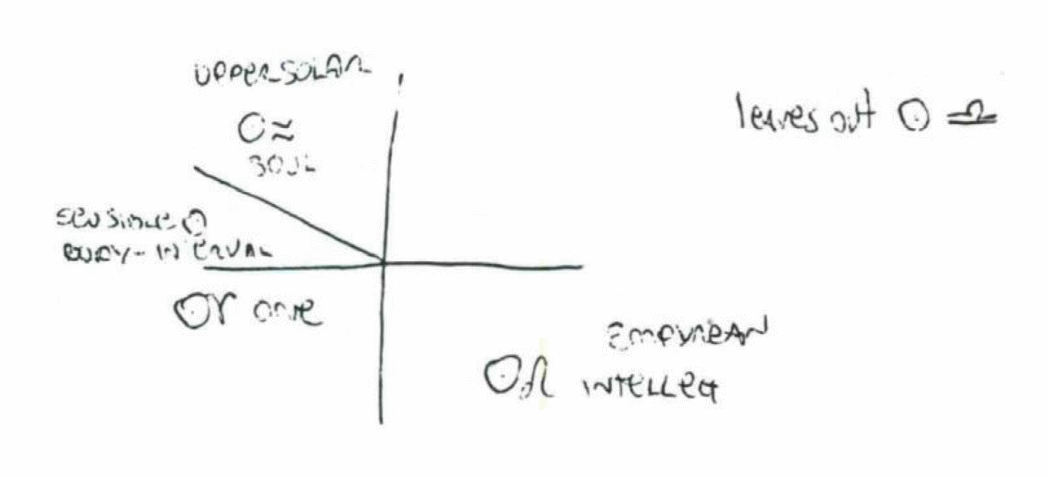
[FIGURE 1981 0404-1-AB. Four Levels of Sun. Facsimile scan from AB class notes.]
p. 14 Unities (Intelligibles - Triad) are all in all.
(Signs) Ideas are all in each -- i.e., they preserve a separate subsistence from each other.
Proclus is wrong to make a hierarchy between Ideas and unities.
p. 18 "Apollo is the light of the Intelligible World" -- wrong.
Apollo is supermundane, not Intellectual.
p. 23 Two progressions of Apollo.
Lower is one of mundane Gods -- 7 cosmocrators.
Higher is above it (liberated) -- not supermundane -- emits essences provided to the mundane Gods.
Example: Two hands are a symbol of Apollo (liberated God) sometimes experienced as a mystical experience.
Powers of Apollo:
3 monads of poem: Prophetic -- enunciative -- mundane Jupiter, Arrow-darting -- liberated Sun, Harmonic -- supermundane Venus, Medicinal - sensible Sun.
Proclus' introduction to the poem interprets it differently than we did in class.
Apollo projects the drops (drops = reason-principles) into the organized body and are surrounded by formed elements.
The diaphanous energy interprets (is subjected to) the forms it is associated with.
Light (a simple and uniform subsistence) is a medium between incorporeal soul and body.
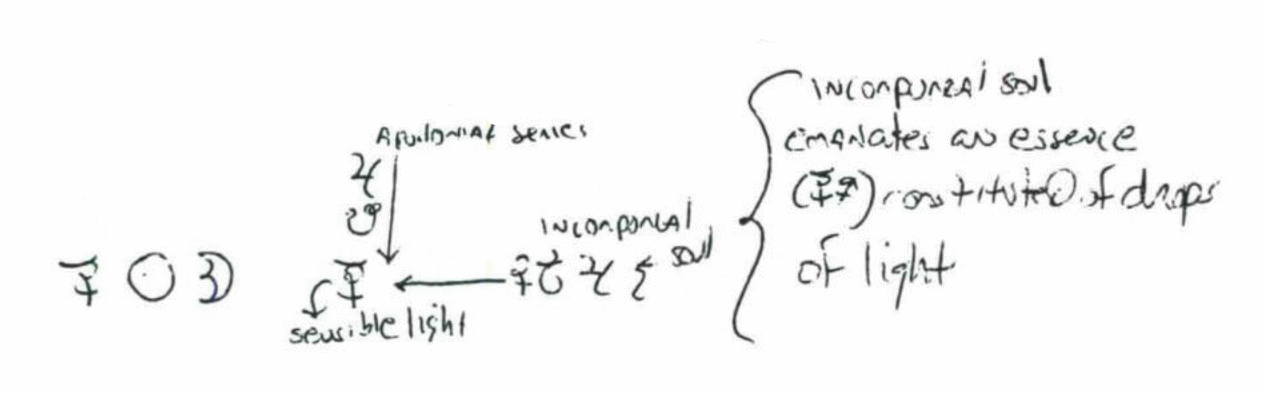
[FIGURE 1981 0404-2-AB. Soul-Light-Body. Facsimile scan from AB class notes.]
That light is the medium which incarnates the reason-principles. Because the light is incorporeal it is the medium through which the soul emanates an essence which can interpret form.
Diaphanous light = drops or seed-thoughts = "the subject of (in) bodies".
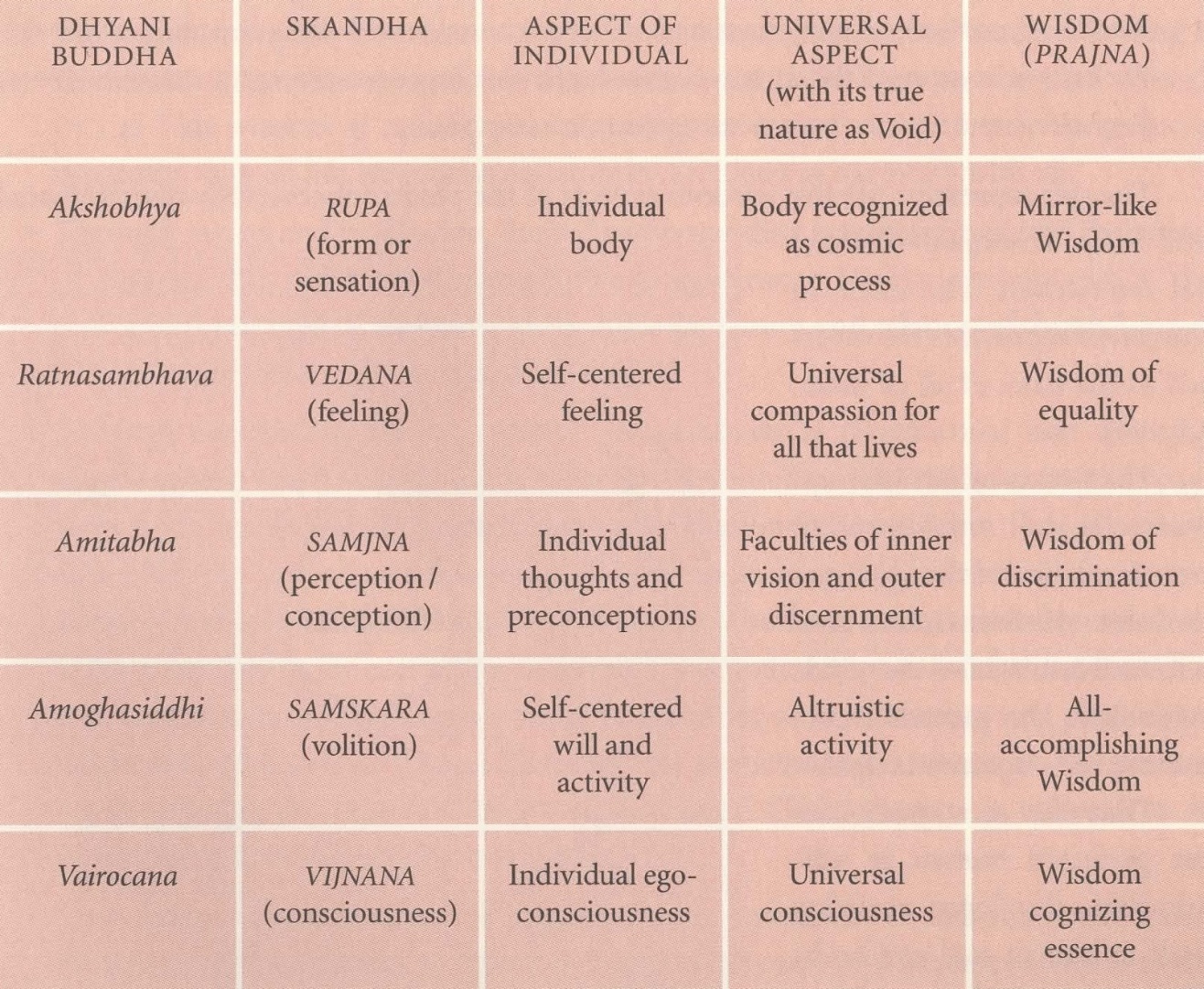
p. 47 Apollo distributes the Intellectual energy of the 5 Dhyani Buddhas into the sensible universe.
[Classnotes AB 1981 0404 End]
DIAGRAMS FOR 1981 0404
Class
Saturday, April 4th, 1981
Verbatim, unedited transcriptCLASS at Wisdom's Goldenrod, Hector, NY
with Anthony Damiani (AD)
April 4, 1981
NEO-PLATONISM; EMPEROR JULIAN
with Appendix: Classnotes AB 1981 0404.
TOPIC: Neo-Platonism
SUBJECT: Emperor Julian
SUBSUBJECTS: Three Levels of Apollo, Light, Soul-Nature-Body Connection, Drops, Seed-Thoughts, Cosmology
CONTENTS:
Discussion of different translations of the Chaldean Oracles (Thomas Taylor, Kroll, Levi, Stanley)
Reading/discussing Thomas Taylor (tr.), Two Orations of the Emperor Julian, Introduction
Thomas Taylor's presentation of Chaldean scheme and four powers of Apollo; how these powers manifest at different levels
AD interprets four powers as three, with the fourth as the sensible Sun itself; three powers equated in sensible realm with Sun Mercury Venus
Reading/discussing Thomas Taylor (tr.), Two Orations of the Emperor Julian, on Sun and light
How does soul get into cosmic circuit?
Sun in Aquarius (Apollo) injects reason-principles into sensible Sun/Nature which inserts them into body
Reason-principles (drops) are surrounded by elements (prakritis) and take on their form
Julian revealed too much about the Sun mystery prematurely; gems of occultism buried in his writings
Light as medium of soul's descent; incorporeal soul emanates an essence (Mercury in Sagittarius) constituted of drops of light
Drops operating through a certain chakra determine how we interpret the world
Diaphanous light (drops) as "subject of bodies"; diffused through body and world
Apollo distributes intellectual energy of five (seven) Dhyani Buddhas into sensible universe
Light emanating from stars governs planetary system which in turn governs activity on Earth
Apollo as medium through which perfection of world is produced; coherence of maya
PB anecdote about spilled food
Sun's "capacity of connecting all things into one": cycles; drops as means of return to oneness of soul; unity of imaginal essence; Sun as principle of individuation; ahamkara
Sun as unifying medium between visible and intelligible gods, two interpretations
Sun and planets as both fabricative and gnostic
Reason-principles/drops of light as incorruptible part of sensibles
Sun as cause of secretion of forms and concretion of matter
Faculty of sight traced back to eleventh house
PB on Plotinus: "It's scripture."
Appendix: AB class notes
BOOKS / MAGAZINES READ FROM OR REFERENCED:
Thomas Taylor (tr.), Collection of the Chaldean Oracles
G. Kroll, De Oraculis Chaldaicis
Yochanan Levi (aka Hans Lewy), Chaldaean Oracles and Theurgy: Mysticism Magic and Platonism in the Later Roman Empire
Thomas Stanley (tr. and ed.), The History of the Chaldaick Philosophy
The Shrine of Wisdom, "The Chaldean Oracles," vi-viii, nos. 23-29 (1925-1926)
Julian (Emperor of Rome), Thomas Taylor (tr.), Two Orations of the Emperor Julian; One to the Sovereign Sun, and the Other to the Mother of the Gods
Isaac Myer, Qabbalah: The Philosophical Writings of Solomon Ben Yehudah Ibn Gebirol or Avicebron
Proclus, Thomas Taylor (tr.), The Six Books of Proclus, the Platonic Successor, on the Theology of Plato, Book VII
Plotinus, The Enneads (MacKenna translation, 4th ed.)
Iamblichus, Porphyry, Thomas Taylor (tr.), Iamblichus on The Mysteries of the Egyptians, Chaldeans, and Assyrians
PLOTINUS QUOTES READ FROM OR REFERENCED: IV.4.23
DIAGRAMS appended to this transcript:
FIGURE 1981 0404-1-AB. Four Levels of Sun.
FIGURE 1981 0404-2-AB. Soul-Light-Body.
FIGURE 1981 0404-3. Table correlating Dhyani Buddhas, Skandhas, Individual and Universal Aspects, and Wisdoms.
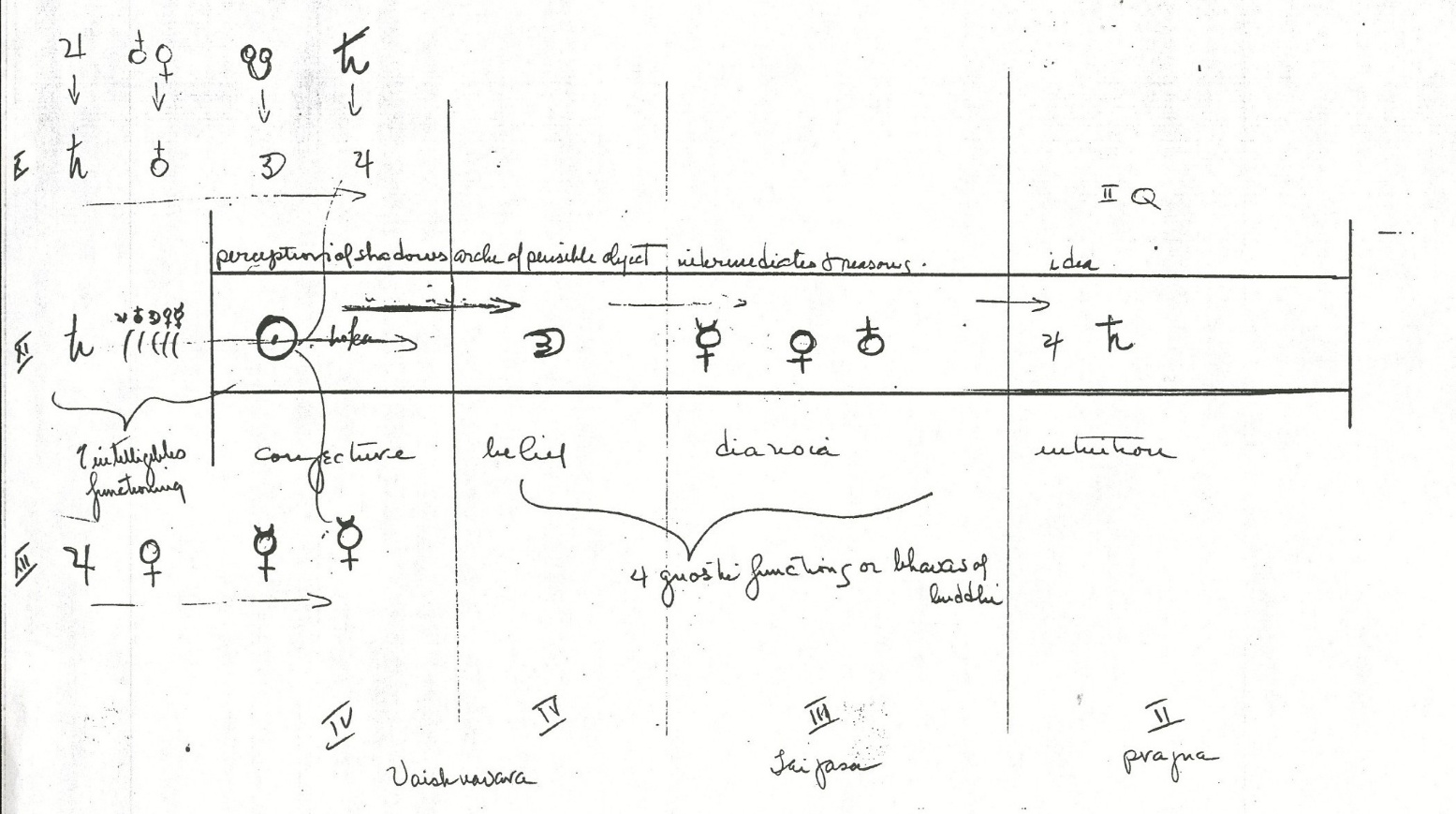
FIGURE AM008. Subject and Object Series with Divided Line.
[Transcriber note: [diagram] means the speaker is referencing a diagram as he or she is speaking. If someone is drawing or writing, with audible sounds of chalk on a blackboard, I indicate this by [drawing] or [writing].]
NOTES:
- AB class notes have been appended because they contain diagrams that AD refers to and also because we are missing one or more audio files for the first part of the class. All spelling, capitalization, and punctuation corrected, all abbreviations and astrological glyphs spelled out in AB class notes.
TRANSCRIBED Verbatim by IT 2022. In 2025, IT updates prefatory matter and audio file markers to match new REP audio. Archival verbatim transcript – V11a.
AUDIO FILES: 1981 0404a, 1981 0404b. [Note 1: We are missing one or more audio files for the first part of this class. Note 2: In 2024, REP Studio fixes all issues associated with file b.]
1981 04/04 at Wisdom's Goldenrod
Neo-Platonism; Emperor Julian
[Audio File 1981 0404a Begins]
AD: --depends who, whose translation of the Chaldean Oracles you read, Thomas Taylor? [Note: Thomas Taylor (tr.), Collection of the Chaldean Oracles.]
JC (simultaneously): Well, I looked--
AD (simultaneously): Or Kroll or Levi? [Note: G. Kroll, De Oraculis Chaldaicis and Yochanan Levi (aka Hans Lewy), Chaldaean Oracles and Theurgy: Mysticism Magic and Platonism in the Later Roman Empire.]
JC (simultaneously): I looked-- I looked both in the Stanley book, [Note: Thomas Stanley (tr. and ed.), The History of the Chaldaick Philosophy.] in the Taylor book, Taylor's translations, and also the Shrine of Wisdom. [Note: "The Chaldean Oracles." The Shrine of Wisdom, vi-viii, nos. 23-29 (1925-1926). See http://iapsop.com/archive/materials/shrine_of_wisdom/.]
AD: Yeah, well that's all Thomas Taylor.
JC: Stanley one too?
AD: Stanley one. PB doesn't have that book.
JC: But, Stanley is very-- I mean he says this is all very confused what these worlds are, I mean sometimes he says, you might think that-- that air, fire, and water are the three material worlds and then the Moon, Sun, and the stars are the three aetherial.
AD: That's-- that's why [JC simultaneously: I mean--] Stanley won't be any use here, ok.
JC (simultaneously): Right, I know. It's so--
AD: So that-- that limits-- that limits [JC simultaneously: Depends on several schemes.] him to Kroll, Levi, and Thomas Taylor.
S: Which one of three?
JC (simultaneously): Ok, I don't have the other. Taylor.
AD: If you read Thomas Taylor you're going to interpret according to Proclus. [student assents, very faint] Well let's continue and we'll see this now.
JC: Ok.
[Transcriber note: I am using Two Orations of the Emperor Julian; One to the Sovereign Sun, and the Other to the Mother of the Gods Julian (Emperor of Rome), translated/annotated/introduced by Thomas Taylor, London: Edward Jeffrey, Pall Mall, 1793.]
Julian, Thomas Taylor (tr.) [Two Orations of the Emperor Julian, p. xliii, AD reading]: "…for among supermundane natures there is a solar world and total light; and this light is a monad prior to the empyrean, aetherial, and material worlds."
AD: Now at the bottom he has a footnote, ok. And the footnote goes--
Julian, Thomas Taylor (tr.) [Two Orations of the Emperor Julian, p. xliii, footnote, AD reading]: "…the celebrated seven worlds of the Chaldeans are to be [JC simultaneously: Right.] distributed as follows: One empyrean; three aetherial, situated above the inerratic sphere; and three material, consisting of the inerratic sphere, and [AD reads: the] seven planets, and the sublunary region. [JC: Right.] As the Emperor, therefore, in this [AD reads: the] Hymn informs us that, according to the Assyrians, the sun moves in the middle of these seven worlds, he must consequently revolve in the last of the aetherial worlds."
AD: How would you-- how would you put that in the diagram? [Note: See FIGURE 1981 0404-1-AB.]
JC: I wouldn't, I couldn't. It's too confusing to me. I mean, I-- I could see the way you're doing it on your diagram, I would do-- I think that's appropriate. But, when he says that among supermundane orders there's a solar world which is a monad prior to empyrean, aetherial, and material, and then he says that there's seven worlds and the Sun moves in the-- the middle, [S simultaneously, faint: Aetherial.] in the aetherial, I mean-- (JC laughs) I mean I can't get anything from that.
AD: And-- and also, you know, is there any Sun moving there?
JC: Well-- no, it's not moving. That's my bad language.
S (simultaneously, faint): Right.
S (very faint): Uh-hm, uh-hm.
S (faint): Right.
JC: (Move), right.
AD (simultaneously): So-- so there's-- there's no planetary spheres moving in the eleventh house [diagram].
JC: No.
AD: No, of course not.
JC/S(?): No.
JC: Yeah I agree, I couldn't make any sense of this. (JC laughing) I mean I wish understood that scheme of the Chaldeans. And sometimes they translate it corporeal worlds but I'm not sure that the Oracles themselves say corporeal worlds. I think they say seven worlds. And there could be a big difference in there.
AD (simultaneously): In the back-- in the back of the book on the Kabbalah by Isaac Myer there's a chart, if you take a look at that. [Note: See Isaac Myer, Qabbalah: The Philosophical Writings of Solomon Ben Yehudah Ibn Gebirol or Avicebron, p. 448, Appendix C.] Chaldean system. [short pause] I wanted to get you another quote but it won't be necessary right now, you-- you want to do this here so that as we-- as we go through his explanation of the poem, and the explanation we did last week, [Note: See WG Class 1981 0328.] I'm going to leave it to you to decide, you know, who-- whose got it out in the open, alright? We have it out in the open or he has it out in the open.
JC: I mean, you know, the way Taylor messed up the seventh book of the Theology, [Note: Proclus, Thomas Taylor (tr.), The Six Books of Proclus, the Platonic Successor, on the Theology of Plato, Book VII, added by Thomas Taylor.] he didn't [AD simultaneously: Well--] present something consistent, I think it's the same thing here. I mean I don't think it's any different.
AD: Alright then. Let's get a little bit of information about on page 25, "It is requisite…" Avery? [Note: Reference is to pagination as it appears in the 1932 reprint, which is also available at www.sacred-texts.com/cla/toj/index.htm.]
Julian, Thomas Taylor (tr.) [Two Orations of the Emperor Julian, pp. xlv-xlvii, AS reading]: "[But] it is requisite to know thus much concerning Apollo, that, according to the first and most natural conception, his name signifies the cause of union, and that power which collects multitude into one; and this mode of speculation concerning his name harmonizes with all the orders of the god. After this, he observes, in answer to the question why Socrates, in the Cratylus, begins from the medicinal power of the gods, proceeds through his prophetic and arrow-darting powers, and lastly ends in his harmonic power, that all the energies of this divinity subsist in all the orders of beings, but that different energies appear to have more or less dominion in different orders: thus, for instance, the medicinal power of Apollo is most apparent in the sublunary region, for
"There slaughter, rage, and countless ills beside,
Disease, decay, and rottenness [AS reads: "There slaughter, rage, and so on] reside. [Empedocles]
"And as these are moved in an inordinate matter, they require to be restored from a condition contrary, into one agreeable to nature, [and] from incommensuration and manifold division, into symmetry and union."
AS: The medicinal one. [few words inaudible]
AD: Yeah, because that's all we're going to (use/do).
Julian, Thomas Taylor (tr.) [Two Orations of the Emperor Julian, pp. xlvii-li, AS reading]: "[But] the prophetic energy of the god is most apparent in the heavens; for there his enunciative power shines forth, unfolding intelligible goods to celestial natures, [and] on this account he revolves together with the sun, with whom he participates the same intellect in common; since the sun also illuminates whatever heaven contains, and extends a unifying power to all its parts. But his arrow-darting energy mostly prevails among the liberated gods; for there ruling over the wholes which the universe contains, he excites their motions by his rays, which are always assimilated to arrows, extirpates every thing inordinate, and fills all things with demiurgic gifts. And though he has a separate and exempt subsistence, he reaches all things by his energies.
"Again [AS reads: Then], his harmonic power is more predominant in the ruling supermundane order; for it is this divinity who harmonizing the universe, establishes about himself according to one union the choir of the Muses, and produces by this means, as a certain Theurgist says,"the [AS reads: a] harmony of exulting light." Apollo, therefore, as we have shewn, is harmonic, and this is likewise the case with the other Apollos which are contained in the earth, and the other spheres; but this power appears in some places more and in others less. These powers too, subsist in the god himself in an [AS reads: a] united manner, and exempt from other natures, but in those attendants of the gods who are superior to us, divisibly [and] according to participation; for there is a great multitude of medicinal, prophetic, harmonic, and arrow-darting angels, daemons, and heroes, suspended from Apollo, who distribute in a partial manner the uniform powers of the god."
[short pause]
AS (faint): Well, maybe a little more now.
Julian, Thomas Taylor (tr.) [Two Orations of the Emperor Julian, pp. li-lii, AS reading]: "[But] it is necessary to consider each of these powers according to one definite characteristic; [as], for instance, his harmonic power, according to its binding together separated multitude; his prophetic power, according to the enunciative; his arrow-darting power, according to its being subvertive of an inordinate nature; and his medicinal power, according to its perfective energy. We should likewise [AS reads: And then we should also-- we would also] speculate these characteristics differently in gods, angels, daemons…"
AS: He has six of them.
S: Yeah.
Julian, Thomas Taylor (tr.) [Two Orations of the Emperor Julian, p. lii, AS reading]: "…for the powers of the gods extend from on high to the last of things, [and] at the same time appear in an accommodated manner in each…"
AS (faint): Uh-hm. Yeah.
[short pause]
S (very faint): (Yeah.)
S (faint): (Go ahead.)
[short pause]
AD: Do you think you'd be able to reconstruct for us from what we just read what he's talking about?
[short pause]
S: Yeah.
JC: I mean he's speaking of these different powers that the Sun has, specific powers which he says that-- um-- entities or-- that participate in that god will carry out. In other words, his--
AD (simultaneously): Well, the first thing we have to understand is what does he mean by arrow-darting, [JC: Arrow-darting.] prophetic, enunciative, alright, [JC simultaneously: Right.] before we try to talk about [student assents] (anything else).
JC (simultaneously): Ok, fine.
[short pause]
Julian, Thomas Taylor (tr.) [Two Orations of the Emperor Julian, p. xlvi, AD reading]: "…medicinal power [JC simultaneously: Maybe you could read that.] of the gods, proceeds through his prophetic and arrow-darting powers, and lastly ends in his harmonic power…"
JC: Ok.
AD (simultaneously): Can you make anything of it, ok?
AS: Well, three of them he got--
JC (simultaneously): Well I mean he goes on to describe a little bit.
AD: Hm?
AS: Three of them he got from the poem. Three of them [student assents] (that) in the poem the way he describes the three monads.
JC: Right, the medicinal is not.
AS (simultaneously): [couple words inaudible] that sentence.
AD (simultaneously): Then why does he have a fourth?
AS: I don't know the medicinal, unless he's-- unless-- unless he's saying the following, that those three, if those three do refer to these, the enunciative, the ha-- the harmo-- harmonizing and the arrow-darting, the fourth would have to be the sensible Sun itself, the medicinal powers of sensible Sun. And that would con-- that-- the other three would work through that.
AD: Uh--
AS (faint): The other three would [student assents, very faint] work through (that, uh-hm).
AD (simultaneously): Yeah. This is the way I interpreted it but I think he-- I think he interpreted it a little differently from me.
JC: Oh I don't know (that his--)
AD (simultaneously): I was going to say that we could summarize these four powers as three powers. I think there's a passage here which is--
S (simultaneously): Yes there is.
AD: Could you track it down?
AS: Yeah, see those-- the-- yeah. 'Cause those three are the three-- the three monads that-- that he has in the poem. I mean there's three of them.
AD (simultaneously): And we equated them-- we equated them in the sensible realm with the Sun Mercury Venus because [AS simultaneously: Right.] they are the inner planets, alright. And usually when you want to under-- get some clue into the inner life of a person you usually look at those three [AS assents, faint] planets, [AS simultaneously: See, but his--] his sensible planets, alright, what Venus is doing and Mercury and the Sun.
AS: See but he's-- his interpretation here is that he's taking these four levels, supermundane, liberated, [S simultaneously: Right.] mundane, and then sublunar, sensible, [AD: Uh-hm.] and he's saying that's what these four powers are referring to, those four levels.
JC (simultaneously): That's where they have their primary operation.
AS: Well, yeah, and these-- but I think he's saying they're-- they're-- they symbolize those-- those different levels. In a-- in other words, the medi-- he has them, the medicinal refers to the-- the actual sensible. Then the other ones in-- like the sublunar or whatever. [S: Yeah.] Then the other ones referred specifically to levels of mundane and then liberated. You could say [one/two words inaudible]
S: Uh-hm.
AS: Like the harmonic is more the boundary for the super-- more like the supermundane. The arrow-darting the liberated primarily. And the prophetic is like carried in the heavens, or the mundane.
S: Yeah.
AS: But I don't-- I mean--
AD: Well that page-- that page 25 and 26 should give you an idea of the way he would interpret the poem. And I'm-- I'm asking you, try to get it ready in a couple of weeks, ok?
JC: You wanted specifically this presentation?
AD: Well any one you could think of, any quote. Well Avery--
JC (simultaneously): Ok I mean I don't think-- I agree, I don't think that this provides you with coherency. I was just talking about an overall schema of the chart, not necessarily that--
AD: Well if you have an overall schema of the chart then all these things would fall into place.
JC (simultaneously): Right, you had-- you could place them various places.
[12½ second pause]
AD: Alright, you want to start reading the Emperor Julian? Start reading the Emperor Julian?
S (very faint): Uh-hm.
AD: Alright, start at the beginning. Pick out the passages [couple/few words inaudible]
[short pause, flipping of pages]
S: I like Thomas Taylor.
[short pause, flipping of pages]
AS: The next quote just starts on these.
[short pause, flipping of pages]
S (faint): Uh-hm.
S (very faint): Yeah I don't know.
S (very faint): Well [few words inaudible]
S: Um--
S: (Which--) an abbreviated paper.
AS: What? [S, faint: That's good.] He starts-- the-- the actual thing starts on 39.
AD: Let's start on 39.
S (faint): Ok.
AS: [few words inaudible]
S: [few words inaudible]
S: Uh-hm.
AS: Specific--
Julian, Thomas Taylor (tr.) [Two Orations of the Emperor Julian, pp. 3-4, AS reading]: "It appears to me that the present oration very properly belongs to all
"--who breathe or creep on earth, [Odyssy 6]
"who participate of being, of a rational soul, and of intellect; but I consider it as particularly belonging to myself; for I am an attendant of the sovereign Sun: and of the truth of this, indeed, I possess most accurate assurances, one of which it may be lawful for me, [without envy], to relate."
AD: I imagine if he was born in India he'd be saying the Gayatri every day.
S: Uh-hm.
AS (faint): (I'm afraid.)
AD: "It is indeed my opinion," [AS simultaneously: Yeah.] page 41.
AS (faint): Uh-hm.
S (very faint): Which one do you want?
Julian, Thomas Taylor (tr.) [Two Orations of the Emperor Julian, p. 7, AS reading]: "It is, indeed, my opinion, that the sun (if we may credit the wise) is the common father of all mankind; for as it is very properly said, man and the sun generate man* [Footnote: A well-known saying of Aristotle.]."
S (very faint): (That's true.)
AD: Keep reading.
Julian, Thomas Taylor (tr.) [Two Orations of the Emperor Julian, pp. 7-8, AS reading]: "But this deity disseminates souls into the earth not from himself alone, but from other divinities; and these evince by their lives the end of their propagation."
S: (Go ahead.)
AD: "Not from himself alone" refers to who here, the sensible Sun or Apollo?
S (faint): Yeah, right.
S (very faint): I don't know.
Julian, Thomas Taylor (tr.) [Two Orations of the Emperor Julian, p. 7, AS reading very quietly to himself]: "[But] this deity disseminates souls into the earth not from himself alone…"
S (very faint): That's right.
S (very faint): Uh-hm.
S (very faint): Oh yeah.
S: Which is disseminating [AS simultaneously: Must be Apollo.] souls into the Earth (needs) to be Apollo, right?
AD (faint): Well, I don't know, I'm just asking.
S (faint): Uh-hm. It would seem so.
AD: Any idea?
JC: Well it could be the soul of the Sun.
AS/S(?) (faint): Yeah.
S (very faint): I don't know if that--
MW: First off, is this [one word inaudible]
AD (simultaneously): How would it disseminate souls [MW: This--] [VM simultaneously with MW, faint: Yeah.] into the Earth?
[short pause]
JC: The souls in-- Well, prefi-- presides over their incarnation?
AS/S(?) (faint): Yeah.
JC: Is that what he's speaking of? That the Sun presides over the incarnation?
AD: How would it disseminate souls into the Earth, onto the planet, anything that creeps or walks or talks or--
JC: Well, you might see the drops in the heart.
VM (simultaneously): Ok, by accusing him of taijasa consciousness 'cause look at these--
S (very faint): [few words inaudible]
AD (faint): Well, possibly.
MW: Are we speaking about--
VM (simultaneously): I mean, insofar they have sense organs and they perceive in some way, the power of the Sun is invested in them.
MW: Are we talking about soul as we've said, you know, the-- the true subjective soul is what we're speaking of?
AD (simultaneously): Any part of the soul.
MW: Well--
AD: You want the answer too?
MW: No but I mean it-- I-- it seems that's a question at this point, what is actu-- what we're speaking about as being disseminated.
AD (simultaneously): (Maybe.) You're not around here that much.
MW: I know.
JC: That's the whole question you're working on is how does the soul get embodied.
AD: Yeah, how does the soul get into the cosmic circuit.
JC: Right.
AD: So if we said that it did so through some congealing of reason-principles, alright, which were drops of light and the Sun would have to disseminate them, alright? [student assents, faint] Then, what is he referring to here? Apollo or the sensible Sun?
S (very faint): Ok.
S (very faint): (Probably) the sensible.
JC: I think it would have to be the soul is--
AD (simultaneously): Well, the-- the sensible Sun, the sensible Sun would be in the twelfth house [FIGURE 1981 0404-1-AB], right?
JC: That's right.
AD: But, the actual Sun which is part of the soul [Sun in Aquarius], [JC simultaneously: Right. That--] the subjective soul, alright, [JC: Yeah.] that's that part of the soul which is liable to division. So it'll be the eleventh house Sun that we would say get-- which injects the reason-principles into Nature and then Nature inserts them into a body. [student assents, faint] So the dimina-- dissemination of souls into Earth, alright, seems to start from Apollo, work through the sensible Sun and go into a body. If we bring some-- something together of what we've understood. [JC assents] [short pause] Any of this feel familiar?
[short pause]
AS (faint): I don't know. [few words inaudible] if you look from the point of view.
AD: Yeah, go on. [few words inaudible] I didn't like how he (doesn't have--/uses that.)
S (faint): (Well--/Right.)
AS: Well there's-- well it's 34 which takes that in relation to the Good, the nature of the (unity).
AD: No, I want to stay away from that, I want to do a special thing on that Good and get it over with, I mean, so that you would have it. Or do you want to do that now?
AS: Well, 46, 47 he says--
Julian, Thomas Taylor (tr.) [Two Orations of the Emperor Julian, p. 17, AS reading]: "[But] according to the opinion of the Phaenicians…"
AS: That's right, I'm sorry, it seemed to me to be quoting. On the bottom of 45.
Julian, Thomas Taylor (tr.) [Two Orations of the Emperor Julian, pp. 15-17, AS reading]: "Let us then begin the contemplation. And, in the first place, is not light the incorporeal and divine form of that which is diaphanous in energy? But whatever that which is diaphanous may be, which is subjected to all the elements, and is their proximate form, it is certain that it is neither corporeal nor mixt, nor does it display any of the peculiar qualities of body. Hence you cannot affirm that heat is one of its properties, nor its contrary cold [AS reads: or cold and so on]…"
AD: Alright, well let's try to understand that.
Julian, Thomas Taylor (tr.) [Two Orations of the Emperor Julian, p. 16, AD reading]: "…is not light the incorporeal and divine form of that which is diaphanous in energy?"
AD (faint): Diaphanous?
S (faint): It means clear.
S: Clear.
CDA: Transparent.
S: Transparent.
S (simultaneously, faint): Yeah, transparent, yeah.
VM: Yeah, see-through.
AD: What's transparent?
CDA: The eleventh, uh-hm.
AD (simultaneously): You're great at the dictionary.
S (faint): What?
S (faint): Nature.
S: (Or) the light.
CDA (faint): And I would say Apollo.
AD (simultaneously): Notice he says--
Julian, Thomas Taylor (tr.) [Two Orations of the Emperor Julian, p. 16, AD reading]: "But whatever that which is diaphanous may be, which is subjected to all the elements, and is their [proximate] form…"
AS/S(?) (very faint): Yeah.
[11½ second pause, AD shuts book]
JC: I think it's that-- what you call that light which has the reason in it, secreted in it, and it's the form for the bodies.
AD (faint): It's the what?
JC: It forms bodies. Like Nature would be an example of that. Nature would be a certain diaphanous energy.
AD: I don't know what you mean it forms bodies.
JC: Well, he says, "is their proximate form", or the form.
AD (simultaneously): I-- I would-- I would suspect that bodies are formed by the sensible Sun. [JC, faint: Sensible Sun.] And that what this is doing is projecting these drops, alright. Apollo is projecting these drops into that sensible organized body. [JC simultaneously, faint: Body. Ok.] And he's saying that these drops--
Julian, Thomas Taylor (tr.) [Two Orations of the Emperor Julian, p. 16, AD reading]: "…which is subjected to all the elements, and is their proximate form…"
AD: So he's saying these reason-principles are surrounded by these elements and that it has the form or takes on the form of these elements or prakritis if you want to use another terminology.
JC: Uh-hm.
AD: This man got killed for talking about these things, I told you. Blavatsky made the point that he was killed in battle, mortally wounded because he revealed a little too much prematurely. I don't know how true this is. But read him carefully, in spite of what Proclus and Thomas Taylor says. Give him a fair hearing. After all he was the Em-- he was an Emperor.
S: Yeah.
S: Uh-huh.
S: Just see.
AD: He was-- he was the kind [VM simultaneously: Almost like a president.] of man that eight secretaries couldn't keep up with him. They used to work in shifts. [couple inaudible student words simultaneous with AD] Eight secretaries (would work) with him one day. The next day another set of eight secretaries would be working because those eight had to recuperate. (laughter) That's how fast he used to work.
S (faint): [couple words inaudible]
S (very faint): Right.
VM (faint): He needed a computer [one word inaudible] (bit of laughter)
AD: So, [one inaudible student word simultaneous with AD] give him a fair hearing.
AS (faint): I needed a spot here.
AD: Read the passage over and see if you can see that there's gems of occultism buried in it.
AS: Yeah. This--
Julian, Thomas Taylor (tr.) [Two Orations of the Emperor Julian, pp. 15-16, AS reading]: "[And], in the first place, is not light the incorporeal and divine form of that which is diaphanous in energy? But whatever that which is diaphanous may be, which is subjected to all the elements, [and] is their proximate form, it is certain that it is neither corporeal nor mixt, nor does [it] display any of the [peculiar] qualities of body."
[12¾ second pause]
AD: Does this sound familiar in-- from the Buddhist text?
S (faint): Yeah.
S (faint): Yeah.
S (faint): (Yeah) the same thing.
AD: The red drops, the white drops?
S (faint): It's also--
AS: Flows through, it's-- Subjected to all the elements just I think means like something like what Plotinus says or what they say that, wherever it stops, this diaphanous energy is going to interpret what's going on in those-- in-- in that body. And so in that way it's subjected to that.
AD: (To/Yeah) those-- those elements.
AS: Subjected meaning the passionate-- the passionate nature. And it will have to interpret it, it will appear to take on those qualities. But he says it actually displays none of the peculiarities of body. It only reads off or appears to take (the pink). Appears-- it appears to.
AD: Go on a little more.
AS: Ok and all that.
S: "But light…"
Julian, Thomas Taylor (tr.) [Two Orations of the Emperor Julian, p. 17, AS reading]: "…nor attribute taste…for a nature of this kind, which is called forth into energy by the interposition of light, is alone subject to the power of sight."
AD: Read a little more.
Julian, Thomas Taylor (tr.) [Two Orations of the Emperor Julian, p. 17, AS reading]: "But light is the form of a diaphanous essence, which resembles that common matter, the subject of bodies, through which it is every where diffused…"
AD: Ok, stop there.
S: [one/two words inaudible]
S (simultaneously, very faint): Uh-hm.
[short pause]
S (faint): That--
AS: I think similar thing you say, this light in the form of a diaphan-- diaphanous essence is everywhere diffused (to what--)
AD (simultaneously): So the-- the essence of the soul can only take on this form in order to descend into the cosmic circuit.
AS: Yeah. This is the vehicle through which that soul-- the soul is going to infuse the body as light.
AD (simultaneously): Now if we go back to Bob, you remember the-- the line I told him to underline?
AS: Yeah.
AD: That the light was what?
AS (simultaneously): You said representation.
BB (faint): Sure, repres-- representation.
AD (simultaneously): Well, you better memorize these things because they'll just keep coming up.
Julian, Thomas Taylor (tr.) [Two Orations of the Emperor Julian, p. xvii, AS reading, quoting Proclus]: ""…contain [AS reads: contains] a [S simultaneously, faint: A uniform and simple subsistence.] representation [VM: It's a simple and uniform subsistence.] of a simple and uniform subsistence.""
AD: So then this could become the vehicle of a [AS assents, faint] soul undivided.
AS: Right. But, some place where Plotinus also says there's a medium is somehow akin to both natures. In one hand, it's the light. It's that very-- the very medium. [Note: Possible reference to IV.4.23.]
AD (simultaneously): And this could on-- this could be the only thing that could be that.
AS: The only medium that's-- In fact, in his peculiar, the way he describes it is as a medium later on, Julian says it's [student assents] almost its peculiar nature is that of a medium. [AD drawing] A me-- seems he's saying a medium between the pure incorporeal soul and the bodily essence which it must come into contact with.
[18 second pause while AD draws]
[Note: See FIGURE 1981 0404-2-AB for the following.]
AD: So we're trying to figure out, you remember we had this discussion and we just left it temporarily. Tentatively we said this is the indivisible part of the soul [Saturn in Leo, Jupiter in Virgo, Mars in Libra, Venus in Scorpio], the higher part of the soul. We can see that's the cognitive-isness, its powers, alright, and its participation in the conception of the universe. And this will remain relatively stable and eternal, alright. If this is so then the soul could never come into manifestation, could never come into the world. So Plotinus makes the remark that it emanates from itself, alright, an essence. And this essence in no way diminishes the soul. So this must be the essence [Mercury in Sagittarius], alright. Now Jeff, you should be able to come in and make your remark.
JC: Which remark?
AD: [drawing] If this is the Apollonic series [Sagittarius/ninth house dignities], [JC: Right.] ok, [AS, faint: Uh-hm.] this [diagram] would be--
JC: Um--
S: I would say [one word inaudible]
AD (simultaneously): If this is superessential light [Jupiter in Sagittarius], [JC: Light, yeah.] intellectual light [Tail in Sagittarius], this would be sensible light [Mercury in Sagittarius].
JC: Sensible, ok.
AD (simultaneously): So what they-- what the hint is here is that through light, through the sensible light, alright, the soul is going to emanate through this sensible light. That's why I don't use Proclus' diagram. But through this here [Mercury in Sagittarius], alright, it's going to come. This would be Apollo [FIGURE 1981 0404-1-AB, eleventh house], alright, and then coming down into here you would have the sensible Sun down here [twelfth house]. [drawing] [AS assents, faint] So the-- this here [Mercury in Sagittarius] is that light, those drops of light, alright, which-- which are going to be distributed.
VM (faint): Anthony, why do you say drops of light? And [AD simultaneously: Well--] maybe that's premature question.
AS (simultaneously): [few words inaudible]
AD (simultaneously): Yeah, no, it comes back to-- it comes back to what we just said previously, didn't we?
VM (faint): I didn't hear it.
AD: What-- what kind of material or medium can the soul ride on or use [few inaudible student words] which at one and the same time, alright, represents a principle of indivisibility, and at the same time the reason-principles could be formulated by it or it can be the reason-principle. Now, if we think of-- if we think of a-- some-- of light, I mean, you yourself know of the tremendous powers inherent in it, we're just beginning to (find that, laser beam), things like that. Or what is the meaning of, how do they call it when, you know, the [CDA simultaneously, faint: Photosynthesis.] plants convert the energy of the Sun into chlorophyll. [JC/S(?) simultaneously, faint: Photosynthesis.] Photosynthesis. What is it? Isn't it-- isn't it a mystery? Alright, so what we're saying is that light is the medium by which the reason-principles-- incarnates those reason-principles and is those reason-principles. But because on the other hand the light is a representation of a-- a simple and indivisible existent, then that light could be the medium [VM assents, faint] through which the so-- the soul could emanate its essence, alright, and bring it and pro-- inject it right into the body. And these are the drops which they speak about the subtle-- subtle--
VM (faint): Tibetans, yeah.
AD: You know, the Tibetan. [student assents, faint] Also the Westerners quite a bit.
VM: Speak about drops?
AD: And, that these-- well, PB speaks about them as seed-thoughts. [students assent, faint] So, they come down into us, alright, they go down into the central channel, and we try to point out at whatever level they stop that's how we're going to interpret the (life in) the world, according to the chakra level that it (stops) at. [student assents, faint] So those are the matters which surrounding that congealed light, alright, and that light breaking through it interpret the world according to those prakritis (around). This was tentatively what we came to as a conclusion. And the point that I'm trying to emphasize now is he's speaking about this diaphanous energy which is incorporeal. That would be equivalent to these drops, these seed-thoughts. They got little wings on them. As they come down you could see little wings on them.
S (faint): Oh yeah.
Julian, Thomas Taylor (tr.) [Two Orations of the Emperor Julian, p. 16, AD reading]: "[But] whatever that which is diaphanous may be, which is subjected to all the elements, and is their proximate form, it is certain that it is neither corporeal…"
AD: It's not a-- it's not a corporeal thing.
Julian, Thomas Taylor (tr.) [Two Orations of the Emperor Julian, p. 16, AD reading]: "…nor mixt, nor does it display any of the peculiar qualities of body."
AD: It's not body I'm afraid.
Julian, Thomas Taylor (tr.) [Two Orations of the Emperor Julian, p. 16, AD reading]: "Hence you cannot affirm that heat is one of its properties…"
AD: Of this body, this-- these drops.
Julian, Thomas Taylor (tr.) [Two Orations of the Emperor Julian, pp. 16-17, AD reading]: "…nor its contrary [cold]; you can neither ascribe to it hardness nor softness…"
AD: Etc, etc, ok?
Julian, Thomas Taylor (tr.) [Two Orations of the Emperor Julian, p. 17, AD reading]: "…a nature of this kind, which is called forth into energy by the interposition of light, is alone subject to the power of sight. But light is the form of a diaphanous essence, which resembles that common matter, the subject of bodies…"
CDA: Hm.
AD: What does that mean? The subject of (bodies/body).
JC: Does he mean subjectivity [couple words inaudible]
AD (simultaneously): You see why I don't-- do you see why I don't want him to interpret the Emperor Julian for me? He can interpret him for you but not for me. I don't want him to interpret those passages. I want me to interpret them. Now what does that mean? Come on.
VM (simultaneously): Is this-- the subjectivity of body is the subjectivity invested in the bodies?
AD: Yeah.
VM: In other words, the-- the ability to perceive through these vehicles?
AD: Yeah. That's the subject then. You have to retrace it in Tibetan Buddhism, you have to go back. You have to go the reverse way to get to the true subject. But that's the meaning [AS simultaneously: But that's the meaning (one word inaudible) (true subject).] that gets you back to the true subject.
AS (faint): Uh-hm, yeah.
AD: Read that last line once more Avery.
Julian, Thomas Taylor (tr.) [Two Orations of the Emperor Julian, p. 17, AS reading]: "But light is the form of a diaphanous essence, which resembles that common matter, the subject of bodies, through which it is every where diffused…"
[short pause]
S (very faint): Uh-hm.
S (faint): Is common matter [couple words inaudible]
AS (faint): Common matter.
S (faint): [couple words inaudible]
VM (faint): Uh-hm. Bless you.
S (very faint): Ok.
SD (faint): Is he using "common" in the sense like [AS simultaneously: Taijasa.] when (they/I) say the common senses that (would be like--)
VM (simultaneously): I think taijasa consciousness.
S (faint): Uh-hm.
AS: Yeah. And as taijasa, yeah. The subject of body.
VM: It's common to all the sense-organs for example.
AD: Read a little more, Avery, go ahead.
AS: Yeah. [S, faint: Uh-hm.] Like--
Julian, Thomas Taylor (tr.) [Two Orations of the Emperor Julian, p. 17, AS reading]: "…that [AS reads: the] common matter, [AS: Well, taijasa.] the subject of bodies, through which it is every where diffused…"
AS: That's the subject.
AD (simultaneously): Through which it is everywhere diffused. You remember the way he spoke about the-- the seeds, when they exfoliate? Alright? Then they-- they would diffuse the entire body, alright, and they'd spread out from the body. In other words, if we think of this-- the body as this point from which these seeds come out and they operate outwardly in an extroverted fashion, alright, then he would be saying that it diffuses the whole body and the world for you. This would be another way for instance when Bhattacharyya speaks about the body as the sensing function which functions in way that is a sensuous way, you feel that the world and the body are coterminous or [AS assents, faint] co-extensive with each other. Go ahead, read some more.
AS: I was putting [couple words inaudible] Also he says undistinguished from space also.
AD: Uh-hm.
AS: Conscious experience. One with or undistinguished from space.
S: Just--
AS: Oh ok.
Julian, Thomas Taylor (tr.) [Two Orations of the Emperor Julian, pp. 17-18, AS reading]: "…through which it is every where diffused; and rays are the summit, and as it were, flower of light, which is an incorporeal nature. But according to [the opinion of] the Phaenicians, [who are skilled in divine science and wisdom], the universally-diffused splendor of light is the sincere energy of an intellect perfectly pure; and this doctrine will be found agreeable to reason, when we consider, that since light is incorporeal, its fountain cannot be body, but the sincere energy of intellect, illuminating in its proper habitation the middle region of the heavens…"
AD: Now, wouldn't that be equivalent to saying that he's saying-- I think what he's saying there is that Apollo distributes the Intellectual Energy of the seven Dhyan Buddhas into the sensible universe.
[short pause]
AS: Uh-hm. From the fifth house [diagram].
AD: Do you remember the chart with the five Buddhas, they had the five Dhyan Buddhas, how each Buddha has-- is in charge of transmuting [AS assents] let's say a-- a certain egotistical way of operating and [AS simultaneously: Into the pure wisdoms.] universalizing it so that self-concern or self-feeling becomes universal feeling or universal compassion? [Note: See FIGURE 1981 0404-3.] [AS assents, faint] But how is that going to be done? They seem to be saying through these material means, alright, the-- the Intellectual Life in the fifth house being reflected in the upper solar world, that is, Apollo, and then that's being distributed to the various universes. [short pause] [AS assents] But they-- they keep leaving out the Sun in Libra [diagram], [Note: See FIGURE 1981 0404-1-AB.] I want you to notice that. [short pause] And later on I think I'll be able to show specifically why they-- they can't conceive of that. Read on.
S: (Whose point?)
AS: So--
Julian, Thomas Taylor (tr.) [Two Orations of the Emperor Julian, p. 18, AS reading]: "…its fountain cannot be body, but the sincere energy of intellect, illuminating in its proper habitation the middle region of the heavens…"
AS: I guess would be the Sun in Aquarius [diagram].
Julian, Thomas Taylor (tr.) [Two Orations of the Emperor Julian, p. 18, AS reading]: "…[and] from this exalted situation scattering its light, it fills all the celestial orbs with powerful vigor, and illuminates the universe with divine and incorruptible light."
[14¾ second pause, flipping of pages]
JC: When he says--
Julian, Thomas Taylor (tr.) [Two Orations of the Emperor Julian, p. 18, JC reading]: "…illuminating in its proper habitation the middle region of the heavens: and from this exalted situation scattering its light, it fills all the celestial orbs with powerful vigor…"
JC: He's saying it's above the inerratic sphere, right? Because that's the way-- that light comes from within these orbs, it's not external. I mean, by reading it you might think that he's talking about the sens-- sensible Sun.
AD (simultaneously): Yeah but I-- I think we can be a little more specific, Jeff, if we-- you know, the way we conceived of-- not-- if we can take the analogy. We say there's the sky with all these pinholes, the stars, ok, and that behind it is this cosmic soul radiating its light through. Now, instead of thinking the-- of these stars as pinholes, let's think of them as the Intellect of the universe, the inerratic sphere. And that the light which is emanating from them, alright, is going to hit the planetary system. And that light, so to speak, is going to have something to say or govern the planetary system. And in turn the planetary system, alright, is going to determine what's going on in Earth in terms of that-- that same light coming down. I think-- I think from astronomy we can say that the Earth is constantly being bombarded by cosmic rays, huh?
S (very faint): (Yes sir.)
AD: Ok? So we could make the analogy more material, you know, more closer to what we're talking about.
JC: When they say that Bacchus is the monad of mundane life, is that the Sun we're referring to as the monad of mundane life? I've never understood that position in this scheme.
AD: Well I think Jeff you-- Avery can give you a nice clue on that but let's work a little more on this here.
S: (Yeah.)
S (faint): Uh-hm, right.
AD: Go on, he's--
AS: I don't know about this next part, maybe we should stick-- Um-- Maybe right here. The bottom there he talks about that analogy again from the Sun.
AD (simultaneously): Well, we don't have to read line by line, they could-- they could read a little bit at home by themselves.
AS: But the main--
AD: 49. "Is it not then highly probable…"
Julian, Thomas Taylor (tr.) [Two Orations of the Emperor Julian, pp. 22-23, AS reading]: "Is it not then highly probable, that the ordination of the intellectual gods, which is more ancient than that of bodies, is analogous to the mundane disposition? Hence we infer his perfective power from the whole phaenomena, because he gives vision to visive natures; [for] he perfects these by his light. [But] we collect his demiurgic and prolific power from the mutation of the universe; and his capacity of connecting all things into one, from the properties of motion conspiring into union and consent; and [AS adds: his] middle position, from his own central situation. Lastly, we infer his royal establishment among the intellectual gods, from his middle order between the planets…"
AS (faint): Yeah.
AD: Well, can we try with the first part?
Julian, Thomas Taylor (tr.) [Two Orations of the Emperor Julian, p. 22, AD reading]: "[Hence] we infer his perfective power from the whole phaenomena, because he gives vision to visive natures…"
[9¾ second pause]
AD: Now, which-- which of the Apollos is he referring to here?
[short pause]
VM: Sun in Aquarius. Insofar as he gives vision to visive natures I-- it sounds like he's talking about taijasa consciousness infuse the-- infuses the, let's say the sense of sight.
AD (faint): I'm inclined to do it-- you know, interpret it that way.
VM: But, precisely what way does he mean perfective power, I mean-- [short pause] Is it through our sense-perceptions and experience in the world that soul becomes perfected, is that the way we use it?
AD (simultaneously): Well we-- well wouldn't you say that our world is a-- [VM simultaneously: It's a school?] a perfect-- is perfection?
VM: The world is perfection or generates perfection in the soul?
AD: Well I was thinking of the world first. In other words, insofar that the cosmocrators construct a world, we're speaking about the physical phenomena, alright. Wouldn't that require the perfecti-- the perfection of an Intellectual God? In other words, if the sensible world is a semblance or a copy of the Inte-- Intellectual World-- the Intellectual World is the archetype, sensible world is the manifestation of that archetype. Then wouldn't it be through the medium of Apollo that the perfection of the world is produced? When he says--
VM (simultaneously): Yes, I guess so, I agree but it doesn't-- I don't see how you get that from this sentence.
AD: (We read.)
Julian, Thomas Taylor (tr.) [Two Orations of the Emperor Julian, p. 22, AD reading]: "…we infer his perfective power from the whole phaenomena…"
AD: Conna-- comma.
S (very faint): Ok.
VM: Whole phenomena would be (what, this) universe or twelfth house [diagram].
Julian, Thomas Taylor (tr.) [Two Orations of the Emperor Julian, p. 22, AD reading]: "…because he gives vision to visive natures; [for] he perfects these by his light."
[short pause]
AD: That-- that might be wrong so if someone can come up with something.
GA: It sounds to me a lot like what you were speaking of Thursday night. There's the primal image. There's the one-to-one correlation between that image and the-- the nature that's seeing it. In other words he gives vision to visive natures. He gives that immediate presentation and he makes sure he perfects it so that it accords one-to-one.
AD: That's quite good.
VM: Accords one-to-one with what exactly?
GA: The primal image [VM: I mean--] and the-- and the visive nature as-- that's apprehending it.
AD: The presentation and the reality.
GA: I mean perfection-- didn't mean to-- the reason we infer it from the whole phenomena is that idea of-- of that you can sort of find the truth of something by seeing that, you know, (the chair's) truth is a (concern) unless we-- we infer from the whole of phenomena the fact that we can operate in the world in a whole [AS: Yeah.] [one word inaudible] perfects our apprehension of-- of that to it [student assents, faint] when he brings about a world.
AD: In other words, when you see a chair you don't see a table. [short pause] Well isn't there-- isn't there a singularity that your organ of vision, alright, can perceive an object which has a function that you can use? I mean look at it this way. [three/few inaudible VM words simultaneous with AD] If everything is maya how come you manage to sit on a chair and not on the table? I'm sorry. Sit on a chair and not on a tree. Isn't there a correlation between the images in our generic mentality--
[Audio File 1981 0404a Ends]
[Audio File 1981 0404b Begins]
AD: Huh?
AB: Maya means--
AD (simultaneously): Well that's only one of the meanings. [student assents, very faint] Alright. You're coming from Coomaraswamy. The Neo-Vedantists have a quite different interpretation. You go ahead and read Malkani and you'll see what I'm talking about. (bit of laughter)
S (very faint): Ok. (bit of laughter)
S: Well--
S (very faint): (I'm stunned.)
AD: You're stunned? Why? If everything is maya how come you manage to sit on chairs?
VM: 'Cause I'm maya too, I mean, [AS simultaneously: Yeah, but that's the--] it's all of a piece.
AD (simultaneously): Oh, for heaven! (AD laughs)
VM: It's all coherence, I agree.
S (simultaneously): That seems to be more harmonics.
AD (simultaneously): Yes, alright, it's all coherent, that's the point!
VM (simultaneously): Yes. That's the perfected aspect of--
AD: Yeah.
VM: Ok.
S: It would seem that that would be more harmonic aspect of it, making everything fit and work together. I mean if you [AD simultaneously, faint: Yeah, yeah, yeah.] want to take the Taylor interpretation, granted.
AD: Yeah. I wouldn't exclude anything that helps.
S: Whereas the perfective-- (laughter)
AD: I'm not Pro-- I'm not Proclus. But I gotta disagree with everyone.
VM: Oh.
S (faint): Well--
S: It's-- (some laughter)
S (very faint): Never said [one/two words inaudible]
S (simultaneously): Thomas Taylor would disagree.
VM: Just come up there.
S: You always disagree.
BS (faint): Everything in the world.
S (simultaneously): Where-- whereas the perfective power, I mean, it seems more involved in the-- in the soul's freeing itself from the-- from the bond of matter to-- you know, to discover its origin, you know.
AS (simultaneously): That's just what-- that's just what Gabriel's saying is the way that that's going to happen. The perfection--
S (simultaneously): It's cert-- it's certainly the way it's going to happen but I think--
AS (simultaneously): No but I'm saying the perfection means that it-- you're being brought in-- that your-- the presentation or your image of the thing is being brought into accord with the sensible. And what brings that into accord with it is-- is the perfection that's going on. So that's its perfective nature.
AD: I gotta-- I gotta [AS simultaneously: The Sun does that.] repeat the story which I really enjoy, and I love it so much. And I was only a distant standby. Edmund King was talking about when he was serving PB and he spilled everything, you know, and there was a real mess. The tray, the food went everywhere. And, then he came back and PB says, "But everything else is alright." (laughter, student assents) You know, but everything else is alright it's like he's saying, well the cosmos is going on, everything else is going on! That's nothing, don't worry about it. (bit more laughter) What a sense of humor he has. (AD laughs, bit more laughter)
AS (laughing, faint): The sense of humor.
[short pause]
Julian, Thomas Taylor (tr.) [Two Orations of the Emperor Julian, p. 22, AD reading]: "But we collect his demiurgic and prolific power from the mutation of the universe…"
AD: His demiurgic power obviously can get rid of some things, (they're/their)--
Julian, Thomas Taylor (tr.) [Two Orations of the Emperor Julian, p. 22, AD reading]: "…mutation of the universe; and his capacity of connecting all things into one…"
AD: Well, the capacity of connecting all things into one. What would that mean?
[short pause]
JC: In the universe we see it in terms of-- of various cycles. Sun-- and Sun is primarily sets up those cycles. The days, the weeks, the--
AD (simultaneously): Week. The seasons.
JC: The seasons, the precession of the equinox and--
AD (simultaneously, faint): Uh-hm, alright, yeah.
JC: That is supposedly one grand cycle which repeats. And the demiurgic-- I think he's just saying that you-- you know that the Sun's creative by-- because of the changes of-- of the u-- the way the universe is changing. You see that the Sun's demiurgic.
SD: And always a variety of sensible phenomena.
JC (faint): Right. It's crea-- creative.
VM: Somehow I'm not satisfied with this capacity of connecting all things into one, I mean Taylor spoke a good deal about this-- this ability of the Sun to unify.
S (faint): (He did.)
VM: But I'm not clear exactly yet--
AS (simultaneously): That's [one word inaudible] he took that from the name too.
VM: Pardon?
AS: He takes that partly from the name. A-pollo means not many.
S (very faint): Uh-hm.
JL: It means what?
VM: (So a--)
AD: Not many.
AS: A-pollo.
VM: Are we to understand that-- that ability to unify as a-- as an aspect of the kind of unity in the light of consciousness or something like this, I-- I'm not sure.
JC: See, in the presence of that light-- the closest body can come to being collected into one if in the presence of that light is to-- to cycle back upon itself, so through the cycles of time. That's the best body can do. But souls can be unified, you can-- soul can withdraw back into itself. In that way its powers are being collected back into one. The Sun would be doing that, retracting the soul back. But body can't be other than what it is in the sense of becoming unified because it's a divisible essence by very planetary nature. [short pause] In other words, the different levels respond to this unifying activity in different ways according to their own nature.
S: Well--
AD: Any more suggestions?
GA: Wouldn't it also refer to that twofold nature of the Sun, like the two hands? Like the way every-- so everything it does in the universe is in terms of this-- this power, its prolific power, and the nature of that power is-- is a polarity. And so that like behind all the mutations of the universe are-- are these cycles that are based on the polarities that-- those two hands you were talking about. So that like they say like between two thought-moments is the occult link or be-- between any two cycles is the Sun. But the cycle or the thought-moment itself is the manifestation of that prolific power, it's a manifestation of the polarities, like-- or like the red and the white drops or the Sun and the Moon, taijasa consciousness. There's always that light behind it which is--
AD (simultaneously): Well, one of the ways I understood him to-- to mean, that it brings everything into one, is that these drops that you-- we just (spoke/talked) about as light which is a reason-principle congealed and a-- and a symbol of the indivisibil-- indivisibility of existence, light symbolizing that would be one of the means by which this return to the oneness of the soul or to the self-sameness of the soul can possibly occur. On a more practical level, like if we-- if we wanted to look for-- if we think of the-- that aspect of the personality which we refer to as the imagined-- imaginal essence or the imagination, there again you have a imagination, this imagination, although contains a variety or can depict a variety of objects going on within us, I mean contents of knowledge going on within us, always remains one imaginal essence. So that all those there-- although there's divisions and distinctions of knowledge within it, it always remains your imaginal essence and not another. So that that would mean that our imaginal essence has a common substratum which again leads or makes possible the Sun to be conceived of as the principle of individuation. [student assents, very faint] In terms of Samkhya there again [student assents, faint] principle of individuation would mean leading everything back into the one, leading everything back into the ahamkara. Doesn't stop there [GA assents, faint] but it's certainly required. I don't know, there's a few ways of looking at it, I-- I'm-- I'm not happy with what I've understood about it yet. Let's go on then, alright?
[30¾ second pause, flipping of pages, faint background student words]
AS (faint): [few words inaudible]
AD (faint): Yeah.
S: Uh-hm.
S (very faint): Uh-hm, yeah.
AD: Yeah, I think-- I think we ought to read 55 because there-- it's an extremely important passage and connects a few things.
AS (faint): [few words inaudible]
AD: Yeah let-- why not read it, Avery.
S (faint): Alright.
AS: It says-- you want-- he says--
Julian, Thomas Taylor (tr.) [Two Orations of the Emperor Julian, pp. 32-34, AS reading]: "[But as] we have asserted that he is allotted a middle situation between the middle intellectual gods, [AS adds: and] what this middle station may be, in the midst of which he is established, may the sovereign sun enable me to explain [AS reads: we wish to explain]. By a medium, therefore, in this place, we mean not that which is observed in contraries, and is equally distant from the extremes; as among colours, yellow, [AS adds: is] between white and black [AS adds: and so on]…but that which unifies and copulates things divided and separate; such as is the harmony of Empedocles, from which he perfectly excluded strife and contention [AS reads: content]. What then are the natures which he connects, and of which he is said to be the medium? We reply, that he is the unifying medium of the apparent and mundane deities, and of the immaterial and intelligible gods, who surround the good; as he is an intelligible and divine essence multiplied without passivity, and augmented without addition."
Julian, Thomas Taylor (tr.) [Two Orations of the Emperor Julian, pp. 33-34, AD reading]: "What then are the natures which he connects, and of which he is said to be the medium? [AD adds: And] We reply, that he is the unifying medium of the apparent and mundane [AD reads: medium of the visible] deities, and of the immaterial and intelligible gods…"
AD: Now, I don't know, I would imagine there's a few ways to show this, huh?
AS: Yeah.
[Note: See FIGURE AM008 for the following. This diagram is not from this class but is used as a stand-in to help follow along. Some minor discrepancies possible but the idea is the same.]
AD: If we use [AS simultaneously: Well--] this example here, [couple inaudible AS words simultaneous with AD] if we put the [drawing] Saturn, what is it, Mars, Moon Jupiter [tenth house dignities], then the Saturn and Sun [eleventh house dignities] surrounding that. [26¾ second pause while drawing] Remember over here we had the-- the soul coming from that direction [Soul ring planets from right to left at level of divided line]. [drawing] Well, here we put the Jupiter, Mars, Venus, Tail, Saturn [top left line], and we said that the Absolute [top left line] for-- informs matter [tenth house dignities], alright. And then from here [eleventh house] we have the combination of vasanas, let's say from here we have the vasanas here or archetypes [diagram], alright. And he-- he's saying here--
Julian, Thomas Taylor (tr.) [Two Orations of the Emperor Julian, p. 34, AD reading]: "…he is the unifying medium of the apparent and [AD adds: the] mundane deities …"
AD: Now if we think of this here as the inerratic-- I mean inerratic, planetary, sublunary [twelfth house levels], ok. [drawing] So we do this here. So the Sun, this Sun [in Aquarius]--
Julian, Thomas Taylor (tr.) [Two Orations of the Emperor Julian, p. 34, AD reading]: "…is the unifying medium of the apparent and mundane deities [AD indicates on diagram], [AD: The visible gods.] and of the immaterial and intelligible gods…"
AD: [drawing] The immaterial and the intelligible gods. So the Sun works with both these here, [Note: Possibly a reference to Sun in Aquarius working with tenth and eleventh house dignities described above.] alright, and over-- over this one too. [Note: Possibly a reference to twelfth house levels.]
Julian, Thomas Taylor (tr.) [Two Orations of the Emperor Julian, p. 34, AD reading]: "…who surround the good…"
AD: Well, who surround the Good, of course [drawing] this surrounds the Good [diagram], this is part of the Intellectual-Principle.
S: Uh-hm.
Julian, Thomas Taylor (tr.) [Two Orations of the Emperor Julian, p. 34, AD reading]: "After this manner, then, the intellectual and all-beautiful essence of the royal sun, consists from no temperament of the extremes, but is perfect and free from all mixture [AD reads: mixtures], both of apparent and [AD adds: of] invisible, of sensible and intelligible gods. And thus we have declared the medium which it is proper to ascribe to his nature."
AD: Alright, would you read on?
Julian, Thomas Taylor (tr.) [Two Orations of the Emperor Julian, pp. 35-36, AS reading]: "But if it be requisite to be more explicit, and [to] explain the medium of his essence, [AD drawing] and how we may separately, and by species, understand his proportion to the first and last… There is, then, an intelligible one perpetually pre-existent, who comprehends the universality of things in one. But what? Is not the whole world one animal, profoundly replenished with soul and intellect, and perfect from the conjunction of perfect parts? Hence, between this twofold unifying perfection, I mean that [AS adds: first] which in the intelligible place comprehends all things in one, and the other which is conversant about the world, and coalesces in one and the same perfect nature, the unifying perfection of the royal sun intervenes [AS adds: between these two], seated in the midst of the intellectual gods."
AD: Now the other diagram that I think is more useful is when we take the fifth house, you know, we take [VM simultaneously, faint: Yeah, talk about (ignorance, or what--)] the fifth house. [drawing] I think this is more useful diagram. [short pause while drawing] And we have a Sun here, Sun here, and sensible Sun here [diagram], ok. [Note: See FIGURE 1981 0404-1-AB; leave out Sun in Aries.] Now if we work with these here, or over here we have the inerratic sphere, the planetary sphere, and the sublunary sphere [twelfth house levels; not shown in FIGURE 1981 0404-1-AB], and this he says is a perfect animal, alright. [drawing] And this [Sun in Aquarius] is the intermediary between these two [Sun in Leo in fifth house and Sensible Sun/twelfth house levels], ok. I think that's the way we can go.
Julian, Thomas Taylor (tr.) [Two Orations of the Emperor Julian, p. 35, AD reading]: "There is, then, an intelligible one perpetually pre-existent, who comprehends the universality of things in one."
AD: Over here [Sun in Leo], alright? Then he says but, so is the world. The wo-- the whole world is one animal. The three spheres here [inerratic, planetary, sublunary in twelfth house] is one animal.
Julian, Thomas Taylor (tr.) [Two Orations of the Emperor Julian, p. 35, AD reading]: "…profoundly replenished with soul and intellect…"
AD: So, we'd say that the soul is the planetary spheres and the inerratic is the intellect.
Julian, Thomas Taylor (tr.) [Two Orations of the Emperor Julian, pp. 35-36, AD reading]: "…and perfect [AD reads: perfection] from the conjunction of perfect parts? Hence, between this twofold unifying perfection, I mean that which [AD adds: is] in the intelligible place comprehends all things in one, and the other which is conversant about the world, [AD: Here [diagram].] and coalesces in one and the same perfect nature, the unifying perfection of the royal sun [AD: The one in the eleventh [diagram].] intervenes, seated in the midst of the intellectual gods. But, posterior to this, [AD adds: after this] there is a certain connection of the gods in the intelligible world, harmonizing all things into one; for do not the heavens appear to revolve about the substance of the fifth body, which connects all their parts, and binds and establishes in itself their mutually dissoluble and flowing natures?"
AD: For this we'll have to wait until Spider's going to do some work on the five elements and this would be the fifth element, in the ether everything is held up-- held together.
Julian, Thomas Taylor (tr.) [Two Orations of the Emperor Julian, pp. 36-37, AD reading]: "Hence the royal sun so collects into one these two connecting essences, one of which is perceived in intelligibles, but the other in sensibles, that he perfectly imitates the connecting power in intellectuals, of which he is the source. But he presides and rules over that last unifying nature which is perceived about this apparent [AD reads: the visible] world. And I know not whether that which is called self-subsistent, which is first among intelligibles, but last in the celestial phaenomena, possesses the middle, self-subsistent essence of the royal sun; from which first-operative substance that splendor emanates which illumines every thing in the apparent [AD reads: visible] world."
AD: You could see this is a really grandiose conception, I mean it's utterly not-- I-- I mean, if I were to tell you that all this is within you, and that you can actually experience all this, alright, I'd have to resign. But there's someone here who's been going through a lot of these things cotemporary-- contemporaneous with our discussion about them. You can speak to her. [9¼ second pause] Let's go to the next page, 59, and there--
AS: To the middle?
AD: No, read those passages from 58 and 59, alright?
S (faint): Sure.
AS (faint): The whole [couple words inaudible]
AD: Spider, you hear the remark I made?
S: Yes.
AD: Ok. Because, those elements are going to be a-- they're going to have to be brought in sooner or later, we're going to have to try to understand the nature of the elements and especially the soul aspect of the elements. No. And that's going to take us a little deeper into a lot of occultism. Alright, read from 58, 59.
S (very faint): Uh-hm.
AS (faint): Um-- well maybe it's this part back here? Says--
Julian, Thomas Taylor (tr.) [Two Orations of the Emperor Julian, p. 38, AS reading]: "Hence it is evident that the fertile life of the sovereign sun is a medium between the two, as the mundane phaenomena perpetually evince. For, with respect to forms, some he perfects, [and] others he fabricates; some he adorns…"
AD: Now wouldn't that be that s-- wouldn't that be like when we say that the Sun or any of the planets is both [AS simultaneously: Fabricative and gnostic.] fabricative and gnostic.
AS (faint): Right. But isn't that--
S: Read.
Julian, Thomas Taylor (tr.) [Two Orations of the Emperor Julian, pp. 38-40, AS reading]: "…some he adorns, [and] others he excites; nor is any thing capable of advancing into light and generation without the demiurgic power of the sun. [short pause] Besides this, if we attend to the sincere, pure, and immaterial essence of [AS adds: the] intelligibles, to which nothing extrinsical flows, and nothing foreign adheres, but which is full of its own domestic simplicity, and afterwards consider the defecated nature of that pure and divine body which is conversant with mundane bodies revolving in an orb, [and] which is free from all elementary mixture, [AS adds: then] we shall find that the splendid and incorruptible essence of the royal sun, is a medium between the immaterial purity of intelligibles and that which in sensibles is sincere and remote from generation and corruption."
AD: Now, (you) stop there. You see what he said. There's something in the sensibles which is remote from generation and corruption. Now what in the world could that be?
AS: And the Sun is the medium for that.
AD: Well we just spoke about it. [S: Ok.] Those drops. [student assents] We just spoke about that.
S (very faint): Uh-hm.
VM: Pure reason-principles you'd say are--
AD (simultaneously): Yeah.
S: (Uh-hm.)
AD: Those-- those reason-principles within us, alright.
VM: Would you say the dissipated essences are the incorruptible part?
AD: Uh-huh. And that's why to a-- to a certain extent I have reservations about accepting the Buddhist position.
VM: No universals.
AD: Not only that.
AS (simultaneously): Yeah.
S (faint): Uh-hm.
AD: Well, let's [couple inaudible VM words simultaneous with AD] not excite any of the Buddhists here. (AD laughs a bit)
S: That everything's [S simultaneously, faint: (Well I--)] in flux in the sensible?
GA (simultaneously): Right, their-- their-- [S, faint: Yeah.] their description sounds real similar, I'd say the-- [AS simultaneously, faint: Because no one has the existence.] the drop has an aspect of light, nature of mantra, and of substance. This seems like [AD: Yeah.] you can correlate it, [AD simultaneously: Uh-hm.] but the light they say has five essential natures within it. And I think the mantra or the mandala would be like the structure that it takes. And then the substance would be the-- the winds or the-- the various fabricative and gnostic forces that--
AD (faint): Alright.
GA: Maybe.
AD: Uh-hm.
Julian, Thomas Taylor (tr.) [Two Orations of the Emperor Julian, p. 40, AD reading]: "[But] the greatest argument for the truth of this is derived from hence…"
AD: What do you think of that, Vic?
Julian, Thomas Taylor (tr.) [Two Orations of the Emperor Julian, p. 40, AD reading]: "…that the light which flows from the sun upon the earth will not suffer itself to be mingled with any thing…"
VM: It's just what I was saying before. You never really come in contact with the light-- light, only its-- let's say the way it jiggles matter if you want.
Julian, Thomas Taylor (tr.) [Two Orations of the Emperor Julian, p. 40, AD reading]: "…nor is it polluted by any sordid nature, or by any contagion; but it abides every where pure, undefiled, and impassive. [AD adds: And] Again, if we consider…"
AD: I'm sorry, go ahead Avery.
AS: Well--
AD: "…not only immaterial…"
Julian, Thomas Taylor (tr.) [Two Orations of the Emperor Julian, p. 40, AS reading]: "Again, if we consider not only immaterial, and intelligible forms, but such as are sensible, subsisting in matter, the middle intellectual situation of forms about the mighty sun will be no less certain and clear: for these afford continual assistance to forms merged in matter…"
AS: That's-- I mean that's almost exactly what we're saying, [AD simultaneously, very faint: Exactly.] that the light that's carried in by those drops is affording a continual assistance to the forms that emerged in the matter and they'd have to interpret that, organize it.
Julian, Thomas Taylor (tr.) [Two Orations of the Emperor Julian, pp. 40-41, AS reading]: "…so that they could neither exist, nor preserve themselves in existence, unless this beneficent deity co-operated with their essence. In short, is he not the cause of the secretion of forms and the concretion of matter? from whom we not only possess the power of understanding his nature, but from whom our eyes are endued with the faculty of sight? for the distribution of rays throughout the word, and union of light, exhibit the demiurgic secretion of the artificer."
AD: It's quite-- that's [VM simultaneously, faint: It's nice.] quite a mouthful.
VM (faint): It's nice.
S: Uh-hm.
S: Keep reading.
AD: I mean these-- these are tremendous insights that the man is delivering.
Julian, Thomas Taylor (tr.) [Two Orations of the Emperor Julian, pp. 40-41, AS reading]: "…is he not the cause of the secretion of forms and the concretion of matter? from whom we not only possess the power of understanding his nature, but from whom our eyes are endued with the faculty of sight?..."
AD: Now you remember, in the Vaibhashika system when we had to like not talk about the organ of sight but say where's the faculty of sight, the habit of seeing ultimately come from? We had to go to the eleventh house. But Plato of course speaks of the Sun as the Lord of sight because he didn't want to get into a disquisition on the soul of the Sun. Because that would be giving too much away and Plato doesn't give anything away. Only Proclus. (bit of laughter) Proclus seems to understand Plato in a very peculiar way. (AD laughing)
S: Yes.
[short pause, flipping of pages]
GA: I think one thing the Buddhists say is that they consider light to be uncreated.
AD: Yes.
GA: They-- they don't-- they don't speak of the light in terms of flux at all [student assents, faint] in-- in their tantric-- It's considered (uncreated), um-- Well, (I don't know what it) is.
AD: Yeah, that-- that was basically one of the things I'm hoping that through the reading of some of these Western texts, you know, we start getting a familiarity with concepts that when we go to the Buddhists we'll start getting, you know-- [GA: Yeah. Answers.] through apperception, you know, we'll be able to assimilate some of their ideas and see what they're talking about. Otherwise we'll just be going cold, going in cold and memorizing--
S: Words.
MW: What are the forms that he says are merged in matter? On page 59? Says it gives assistance to the forms merged in matter. I didn't understand whether he meant by the forms merged in matter the-- the drops themselves that were inserted in the body or we were speaking about the actual images.
AD (simultaneously): Well, if you say body, if you say body, what body are you referring to, Michael?
MW: What body are you referring to.
AD: A human body?
MW: Yeah.
AD: Then that would be forms immersed in matter.
MW: The body itself that we're speaking of.
AD: Well, no, you're speaking about the Idea of Man.
MW: Ok.
AD: Ok? So then that's the form immersed in matter. Then this would aid or contribute towards the evolution of that form which is in the matter. Alright, I think you had a good day.
S: Uh-hm.
VM (faint): You're going to continue with this essay?
AD: Yeah I'm going to continue with this next Saturday, I'm gonna-- I want to go through this again which I think is really a glorious--
VM: Then we go-- go back and read the poem? Or is it necessary?
AD: Well, you can go back and read the poem, you know. I think that what we did with the poem last week was very obvious, very straightforward. And then after we finish this hymn I'd-- I'd like to bring in Pro-- Iamblichus. Now, I'm going to have to work that out because this-- it's not-- but we don't have copies of it. [Note: Iamblichus, Porphyry, Thomas Taylor (tr.), Iamblichus on The Mysteries of the Egyptians, Chaldeans, and Assyrians.] But he's an extraordinarily gifted writer, Iamblichus, so I'm really sorry that there's so little of him left behind. Extraordinary. I think the book disappeared a few times and I always keep managing to get it back. (AD laughs) So it's better that we present it before it disappears.
S (very faint): Well, it's almost the time.
AD: What time is it?
S (very faint): I don't know.
AD (faint): I think because what-- what you'll see happening will be that there will be parts of what they deliver which is true and parts which are not and we have to put it together for ourselves. There is no one, outside of Plotinus, that I know of that has the imprimatur of the One. I mean that. I think PB told people in Columbus once when they asked him why I insisted on Plotinus. And PB answered by saying "It's scripture." And that was enough for me. So Plotinus is the only one that I found. Pauli wouldn't have found him (a) systematic thinker. But I think he's the most highly organized, detailed, systematic, penetrating, one totally comprehensive thing I've ever come across. Ok.
[Audio File 1981 0404b Ends]
1981 04/04 V11a: CLASS: Neo-Platonism; Emperor Julian. Copyright 2022 Wisdom's Goldenrod p. iv