APPENDIX: 1982 0304-06 ALCHEMY PARTIAL TRANSCRIPT
Atwood p. 98-9, 455, 94, 188-90
Macrocosmically, Proteus is the 'power of Pan', the medium of the World Soul's manifestation of forms. Microcosmically, it is the imaginal essence, the astral light, the imagination needing to be purified, stripped so that the mind can conform to things as they are. The imaginal essence of a Sage is virginal and is like a magnet attracting [Partial transcript: AD replaces 'attracting' with 'sensitive to'] whatever is around it. But ours is full of superfluous images from the past which we constantly project out. Thus the multiplicity of images we experience are intrinsic to the [Partial transcript: AD replaces 'the' with 'our'] imaginal essence. The lower astral, the 'Brazen Wall' refers to that psychic belt which is around the individual as well as the world. The zodiacal degrees are outside of the imaginal essence, but manifest through it. As the planets continually return and aspect the natal degrees, the activities become more and more efficient. The imagery is reduced and interferes less and less with the planetary functions. So it is the planets, the faculties of the soul that will be subjected to the discipline, the purifying process which is ultimately to be free of images. [Partial transcript: AD adds "& efficient functioning without self-cons."]
The purification entails returning the images into the very substance of the astral realm; a proper method being the Hua T'ou exercise: before the image or thought gets the opportunity to manifest, you cut them off at the point [Partial transcript: AD adds "just prior to"] where they arise. We have to conceive that all the images in the imagination are being cleansed so that what gets fixed is the imaginal essence in its purity. [Partial transcript: AD changes last part of sentence to "so that the imaginal essence gets fixed in its purity."] You begin to see it more and more as a 'thing' to deal with. Before you can understand the powers [Partial transcript: AD adds '& ideas'] that are manifesting themselves in this flow of sensory imagery (the presentation) the images have to be made fluid, flexible [Partial transcript: AD adds "deprived of our preferences"]. You have to restore the world you perceive back into a matrix of possibilities before there can be a communication and an identity between the inner reason and what nature is trying to manifest. [Partial transcript: AD adds "to your inner sense"] The instantiation of the sensible world is a concretization of the Intelligible World within, and if kept flexible one can understand the reason principles manifesting as the sensible object. So the beginning of the work is to make the energies dominant in your mind absolutely flexible and to fix the imaginal essence [Partial transcript: AD adds 'in transparency'].
This is not the Bodhicitta or Nous Atom per se, but that which is emanated or projected out, the causal light or vital principle -- Mercurius. P.B. speaks of the heart atom as being the origin of Being, Consciousness and Activity. The vital principle has it origin or genesis from that atom. This vitality which has developed over eons of time both phylogenetically and ontogenetically will always tend to go back and recapitulate past ways of operating until it is consciously directed by the will. The Alchemists said that this energy has to be captured and bottled, and the container or bottle is the will. Mercurius escaping from the vessel is like a renegade monk, fleeing from the discipline of the will back to the old ways, among the most noticeable is the tendency towards sexuality and emotionality.
The imagination is very volatile; influences continually flow through it and it wanders everywhere with them; it has to be continually brought back, over and over again through an effort of will. Generally the will would let it go off where it wants, so in this [Partial transcript: AD adds 'disciplinary'] process the will is being purged. It is not a repression but a suppression of this energy; it will take all the conscious understanding you have to do it. Every vital impulse is Mercurius personified. It is such an intimate thing that is going on all the time, you can hardly distinguish yourself from that operation. So the ultimate task is the purgation of the will.
In the Alchemical scheme, Mercurius is not only the projection of the vital principle from the heart atom, but also the introjection of reason principles from without. An image is presented to you and it seems that a meaning goes right into you. We would call that image the presentation or your astral soul. So it seems that the meanings are coming from without to within. On the other hand it can be reversed; there is something out there and you project something from within on to it. Whether you call it introjection or projection, in both cases it is Mercurius. Psychologically this is what Jung calls the anima function -- that which is projected out onto circumstances as well as being the rapport one has with the circumstances in order to assimilate the meaning. This mysterious quality is associated with the mysterious quality of our attention. What is the meaning of attention?
The angular relationship of the planets in the natal chart represents the unadorned powers of the soul (as a set of numerical combinations), the causal light that is being fixed. [Partial transcript: AD adds "or the initial identification of the Nous atom with a specific quality of energy of the moment"] The houses represent the body, the signs represent the mind, i.e. together the body-mind complex. The causal light is thus here embodied and immediately there will arise the process of projection and introjection of [Partial transcript: AD replaces 'what' with 'the task'] the soul powers have to accomplish. They go through the double process of getting refined and manifesting the reason principles buried in the matter [Partial transcript: AD puts single quotes around 'matter']. The body is the medium for the manifestation of the reason principles which are not to be conceived as static, but as functional. Your body is part of, is included in the world body, and is a very specific organized destiny. The soul has to learn certain lessons according to the body it is inserted in. Or, if we use a mentalistic framework we would say the Nous Atom contains the whole Intelligible Cosmos and projects that out (including the body) and then identifies itself with that body; then that material body is the product of the soul's faculties, which means that the level of development of the soul's faculties determine the kind of body it is going to have.
Upon perishing, the gross and subtle bodies return to the elements, and the residue -- the bits of wisdom extracted, remains in the causal body. So the causal body is not a tabula rasa, it carries with it all the development of prior soul functions. [Partial transcript: AD writes in left margin: "here it seems causal body is = to quint. Body…?"] This is what KCB refers to as the Vijnanamaya Kosa -- a body of will-seeds -- where the entity remains between lives. We can call the causal body the abstract ego, and say this ego is the result of all previous egos. In other words, it is not a static conception.
If we think of the individual soul not only as the moment of the first breath, but as the whole ongoing process from birth to death, all the transits and progressions, we see it as a constant radiation of light associated with the planetary configurations. This is what the Buddhists refer to as the mind continuum; at each incarnation the process is continued. Are we to think of this mind continuum as that incessant operation of the projection of the causal light [Partial transcript: Student adds "from the Bodhicitta,"] or are we to think of the Bodhicitta as a substantial entity which is inserted into manifestation, remains and never leaves?
The Buddhist view of the mind continuum is one of continuity without [Partial transcript: AD adds 'excluding'] identity. There is a continuous stream, yet thought A is not thought B. They deny the possibility of a self identical substance, their position is the constant motion of the planetary spheres. Their mind continuum is quanta, granular in structure; moment by moment it is 'shooting out' but is one entity in the sense that it is one mind stream and not another.
For them the Bodhicitta, the Thought of Enlightenment, is part of the mind continuum and is therefore in ever becoming. Their intent is to give the mind continuum a direction so that all the experiences are organized toward the goal of achieving Bodhisattvahood. Buddhahood would be the ultimate outcome of this where the entire world process is comprised within the mind continuum. So there is for them a continuity of thought, the prior thought has some effect or modification on the thought which follows. But the person perishes and is reborn, and they claim it is the same mind continuum, but there seems to be breaks between incarnations. This strictly functional view doesn't explain this. And, if it is just a mind, where is the subject? [Partial transcript: AD writes in margin to the right of the last two sentences: ?]
We have described the Bodhicitta as the spark from the Soul in the Intellectual Principle, which is radiated out and gets immersed in manifestation, [Partial transcript: AD adds 'or'] "inserted into" an organized body. Does this Bodhicitta remain self identical with itself? As we have just stated, the Prasangika-Madhyamikas say no, and refer to it as continuity [Partial transcript: AD or student crosses out 'without identity']. From the mentalistic point of view the entire cosmos is internal to the soul, as Plotinus speaks of each soul containing an intellectual cosmos. [Note: See Plotinus, III.4.3 (last para), III.4.6 (sixth para from end).] This spark then has an eternal immutability, it always remains self identical with itself. The continuity of the projection of the Intelligible content is the mind continuum; it becomes the perceived world which is in constant flux, i.e. the transits and progressions.
Both views have to be combined for a workable thesis. In the sensible world there is reduplicated [Partial transcript: AD puts single quotes around 'reduplicated'] that which is in the Intelligible World. In the Intellectual Principle the Intelligibles are eternal authentic existences and because of the power they embody they radiate out an outward facing hypostasis. Reality must reveal itself in this paradoxical complementarism. On the level of the soul this polarity exists between its eternal contemplation of the Idea of Man and the actualization of that eternal vision in the perpetuity of time. If you say the soul's vision of the Idea of Man is the reality and don't include the actualization, only half the truth is revealed. So unless the Intelligible within is projected out, and the Nous Atom experiences in terms of a subject-object duality under the intensity of waking consciousness, it will not become actualized, fully aware of itself. Thus this pure intelligence has all the elements necessary to project the world, the ideas and the power necessary to instantiate the ideas in a sensorial way. This power can be manifested in two ways – nada or the wave formation and bindu or the particle. [Partial transcript: AD puts the last sentence in parentheses.]
Where is this Nous Atom located in the chart? The chart is a symbolical representation of your entire sensible world. The chart therefore has to apply to a certain Nous Atom otherwise it would be meaningless. But the Nous Atom itself can not be seen in the chart, there is no way to symbolize it. [Partial transcript: AD adds "except that it refers to one –"]
The Nous Atom contains the whole of the Intelligible World, which is not to be restricted to this sensible manifestation or that portion which you perceive. Insofar that the world gets projected from the Nous Atom and then you are located in that world, then the Nous Atom has to be in that body, and that body is the field in which it gains experience.
It is the problem of the simultaneity of the subtle and gross realms. You cannot speak of the one without the other being present. The Nous Atom is a very subtle entity located in the heart, but if we say the physical heart we would be wrong, although, when you experience it, you infer that it is within the heart. As with the experience of kundalini, there is no correlation between the dimensions of the body and the experience of that pillar of [Partial transcript: AD adds 'fire &'] light. There is no geographical topology in the subtle realm [Partial transcript: AD adds "that we could point to"].
The Alchemists used the chemical processes in order to make contact with and fix the volatile subtle forces. When the subtle processes are projected onto a substance (the body) there is an amalgamation of the subtle and the physical; this is the chemical wedding and results in what we experience in our outer consciousness as thoughts and feelings. In the chemical process, for example a metal getting oxidized, there is a combination of two things -- iron and oxygen -- and something new is produced. In the same way, when the subtle combines with the physical body from within [Partial transcript: AD or student adds a comma] a third thing is produced, [Partial transcript: AD adds 'ultimately'] the quintessential body. Eventually there comes a recognition of this process and you begin to play a conscious role in [Partial transcript: AD adds 'directing it']. So it may be that the Alchemists were using those processes the same way we use the chart. For on the one hand, we have a subtle understanding working its way out, and on the other hand, we have to fix it, so we turn it into a diagram or symbolical representation resulting in a fixity of conceptual understanding; it becomes more and more a body of content with structure and organization.
The ego of the next incarnation will be the result of all understanding previously acquired. The quintessential body thus continues with the Nous Atom life after life. When we say the planets signify the powers of the soul it means this wisdom is accumulated life after life, [Partial transcript: AD or student crosses out 'and each incarnation,'] each chart would be a moment fixed as representative of this accumulated knowledge of the soul. And this is what is meant that the ego itself is the causal body. In this way the angular relationship of the planets precisely describes the level of the soul's evolution. At this moment, all the degrees and parts that the soul will have to assimilate are also fixed. So when you look at a natal chart and you try to see what experiences you are going through and what they mean, they have to be in the context of the quintessential body. It [Partial transcript: AD adds 'represent'] the ether, [Partial transcript: AD adds "which is not included in the symbolism"] that is why you do not see it on the chart.
When the quintessential body has been fully developed, the next step is the development of the body of light. Through the mystical experience of the lights the wisdom previously extracted is projected out and becomes the body of light. The man of light projects from within himself his contents, which are reason principles. So he experiences the quintessential body of wisdom that he has built up through eons of time. Plotinus is referring to this level when in III-8-6 he says:
The Sage, then, has gone through a process of reasoning when he expounds his act to others, but in relation to himself he is Vision: such a man is already set, not merely in regard to exterior things but also within himself, towards what is one and at rest: all his faculty and life are inward bent.
Before this evolution, what is projected as the world is not really his. The Nous projects it from within him. But now what he projects is his own wisdom or quintessential body. The Intelligible World is projected and your role in that requires that you become a self-conscious participant thereof. This is what it means to have your own erector set. [Partial transcript: AD changes last sentence to: "Is this what it means to have your own erector set?"]
[File 1982 0304-05-06 alchemy 10p F10.PDF Ends]
DIAGRAMS FOR 1982 0306
Class
Saturday, March 6th, 1982
Verbatim, unedited transcriptClick the series name to view more
CLASS at Wisdom's Goldenrod, Hector, NY
with Anthony Damiani (AD)
March 6, 1982
ALCHEMY; JUNG; ARCHETYPE OF SELF
with Appendix: 1982 0304-05-06 Partial Transcript.
TOPIC: Alchemy
SUBJECT: Jung
SUBSUBJECTS: Buddhism, Bodhicitta, Nous Atom, Mysterium Coniunctionis, Archetype of Self, Mandala, Image of God, Chemical Wedding, Three Conjunctions, Imagination, Quintessential Body, Alchemical Stages (Atwood), Hua T'ou
CONTENTS:
Reading/discussing Maitreya, Obermiller (trans.), The Sublime Science
Absolute Buddha as World-Soul (Sun in Aquarius), defiled germ as individual soul/bodhicitta caught up in manifestation
Unembodied soul in Intellectual-Principle and Nous atom/bodhicitta are one essence
Many schools of thought; use most authoritative texts, many commentaries unreliable; eliminate associations when studying to get to authentic doctrine
Different cognitive frameworks yield different perceptions (ant example); world exists within specific framework, not in Nirvikalpa
Reading/discussing Jung, Mysterium Coniunctionis, "The Conjunction"
Lapis as archetype of self; exemplified in mandala symbolism
Mandala as protective structure; comes from word 'man,' manas; fourfold nature of mandalas and corresponding elements in astrology; natal chart as mandala
Jung draws on Plotinus in a misleading way to justify his notion that there is only one self/soul
Jung's notion of self restricted to inerratic and planetary functioning in twelfth house, excludes soul in Intellectual-Principle and its offspring (bodhicitta/Nous atom)
Discussion of Jung's "image of God" concept and its limitations; image of God as Intelligible World planted in soul of man/bodhicitta
Jung's admission not to know what consciousness is; consciousness as bodhicitta
Quote from Sublime Science to demonstrate that only those who know the doctrine know about the existence of bodhicitta; Jung did not know the doctrine
Bodhicitta mystically experienceable but not understandable; meditating on solar disk in heart
True mandala as natal chart, not artistic representation; natal chart as sacred/lived space
Jung mistakes the self for what Buddhism calls "defiling conditions"
Critique of Jung's understanding of the second degree of conjunction; discussion of difference between Jung's and alchemists' understanding
Chemical wedding as combination of subtle processes with physical body; results in production of quintessential body
Alchemists' use of chemical processes paralleling chart usage to fix understanding
Self-realization according to Jung; debate about whether Jung's self refers to Nous atom or totality of psychic processes; Jung's concept of self perpetuates samsara
Critique of Jung's dismissal of spiritual teachings ("you've seen one guru, you've seen them all")
Quotes from Atwood and Mead on the imagination; contrast between Jung's approach (developing imagination) and alchemists' approach (transcending imagination)
Self-realization according to Jung is the entity evolved to point of operation at level of inerratic sphere; this is still not the true subject/soul
Ego as natal chart is a representation of the self (totality of twelfth house functioning)
Contrast between Jung's understanding of the three conjunctions and the true alchemical meaning
Discipline of the phantastic imagination includes not reading your understanding into a text; necessary to be able to distinguish true doctrine from false
Jung's view of wholeness as bridging conscious and unconscious; his concept limited compared to alchemical wholeness
Quintessential body as bridge between conscious personality and archetypal realm; the Sage as one who can respond adequately to all circumstances
"The Conjunction" chapter is the essence of the book, the rest is verbiage; conjunction as initiation
Jung's failure to understand temporary expediency of reflective apparatus
Reading/discussing Atwood, A Suggestive Inquiry into the Hermetic Mystery
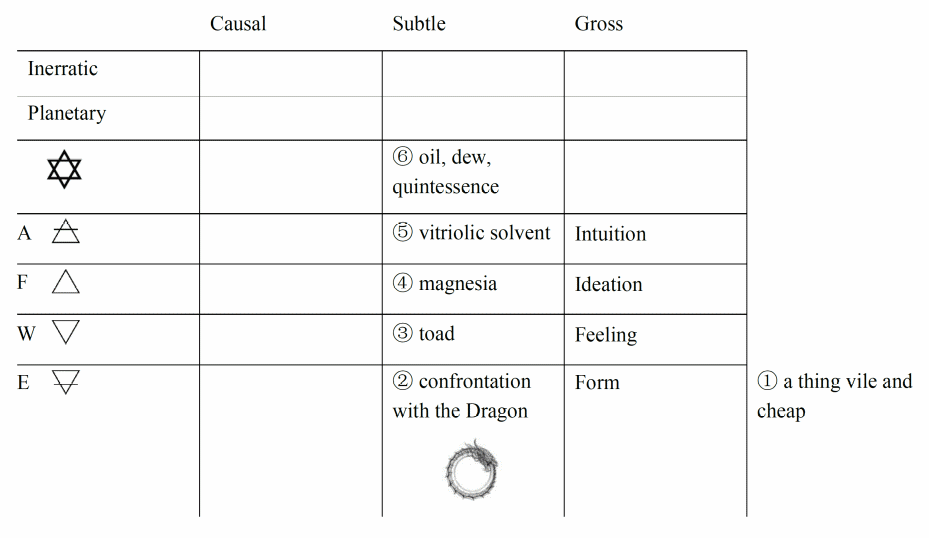
Atwood's description of alchemical stages from serpent/dragon to Red Stone; ethereal body of life and light
Mapping alchemical stages to elements; correlated with stages of meditation
"Ethereality of nature separated by artificial means" as separation of quintessential body from association with the elements
Brazen Wall concept: psychic belt surrounding individuals and the world
Hua T'ou as purification technique: cutting off images/thoughts at their point of arising; dominant energies made flexible; imaginal essence fixed in its purity
Meditation on heart center as globe of light can evoke experience of bodhicitta due to correspondence between imagination and actuality
Restoring perceived world to matrix of possibilities; establishing communication between inner reason and natural manifestation
We directly perceive universals; Nagarjuna argues against this
Appendix: 1982 0304-05-06 Partial Transcript
BOOKS READ FROM OR REFERENCED:
Arya Maitreya, Aryasanga, The Sublime Science of the Great Vehicle to Salvation, Being a Manual of Buddhist Monism, tr. E. Obermiller
C.G. Jung, CW 14, Mysterium Coniunctionis, "The Conjunction", "The Journey through the Planetary Houses" (in Chapter III)
C.G. Jung, CW 9, Part II, Aion: Researches into the Phenomenology of the Self
C.G. Jung, Letters, Volume 1, 1906-1950
C.G. Jung, Aniela Jaffe (ed.), Memories, Dreams, Reflections
Aniela Jaffe, The Myth of Meaning in the Work of C.G. Jung
Plotinus, The Enneads (MacKenna translation, 4th ed.)
Mary Anne Atwood, A Suggestive Inquiry into the Hermetic Mystery
Thomas Taylor (tr.), Proclus' Commentary on the First Book of Euclid's Elements, Vol. 2
Porphyry, Sententiae: Auxiliaries to the Perception of Intelligible Nature
G.R.S. Mead, The Doctrine of the Subtle Body in Western Tradition
Marie-Louise von Franz, Aurora Consurgens: A Document Attributed to Thomas Aquinas on the Problem of Opposites in Alchemy
Plato, Republic
PLOTINUS QUOTES READ OR REFERENCED: III.4.3, III.4.6, III.8.6, IV.1.1, IV.2.1, IV.3.5, IV.9.1, V.5.4
DIAGRAMS appended to this transcript:
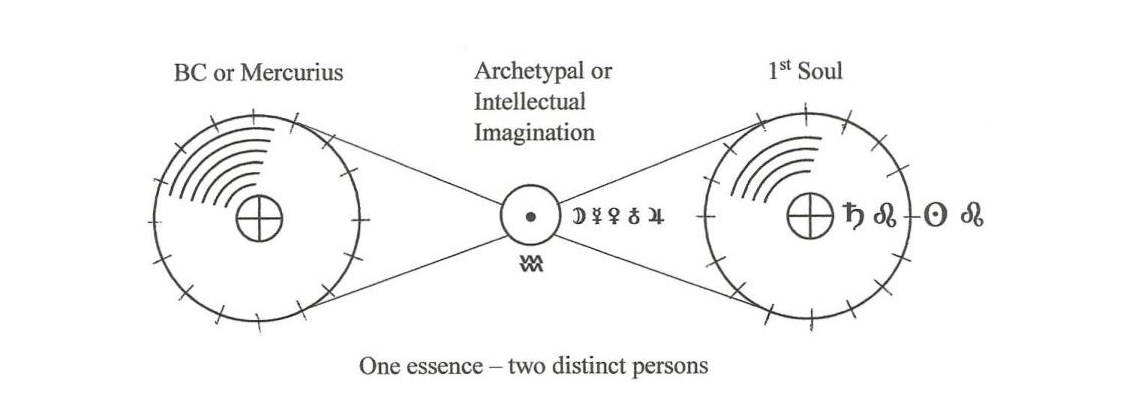
FIGURE 1982 0306-1. Bodhicitta, Imagination, 1st Soul; One Essence–Two Distinct Persons.
FIGURE 1982 0306-2-AB. Alchemical Stages and Elements.
Other diagrams also referred to are not with this transcript version. [Transcriber note: [diagram] means the speaker is referencing a diagram as he or she is speaking. If someone is drawing or writing, with audible sounds of chalk on a blackboard, I indicate this by [drawing] or [writing].]
NOTES:
We have two partial transcripts for this class with identical handwritten AD edits, Scan File 1982 0304 and 05-06 ALC 08R17.PDF and Scan File 1982 0304-05-06 alchemy 10p F10.PDF (both formerly misdated 1982 0305-06-07). Original transcript typed by CdA.
Scan File 1982 0304-05-06 alchemy 10p F10.PDF has two extra pages at the end of it with student handwriting and diagrams that the other version doesn't have. Both the handwriting and the diagrams do not belong to this class and are not appended here.
Since the partial is a summary of three days of classes (3/4, 3/5, 3/6), the AD edits don't fit neatly into the body of the verbatim transcripts and are not included there. Instead, I append the full partial with all AD edits to all three transcripts.
TRANSCRIBED Verbatim by IT 2021. In 2025, IT completes TOC, expands Subsubjects, Book List, and Plotinus quotes section, adds new notes within transcript, adds one diagram and references within transcript to this diagram. Archival verbatim transcript – V12a.
AUDIO FILES: 1982 0306a, 1982 0306b. [Note: "Tape" and "Side" refer to original audio cassette tapes that were later digitized into .MP3 Audio Files.]
1982 03/06 at Wisdom's Goldenrod
Alchemy; Jung; Archetype of Self
[Audio File 1982 0306a Begins]
[Transcriber note: I am using The Sublime Science of the Great Vehicle to Salvation, Being a Manual of Buddhist Monism, The Work of Arya Maitreya with a Commentary by Aryasanga. Translation, Introduction and Notes by E. Obermiller. Publisher not identified, Shanghai, 1940.]
Maitreya, Asanga, Obermiller [The Sublime Science, p. 150, AS reading, parentheses Obermiller's]: "(The Absolute as the Germ) is pure…"
AD (simultaneously): Wait a minute, is Andrew here?
AH: Yeah.
AD: Ok, read it. (some laughter)
S (very faint): Andrew (really is).
S (simultaneously): Can't you see the light?
AS: Somewhere.
S: Where are you reading from?
AS: This is from The Sublime Science, of Maitreya.
AD: Is that good enough an authority, Andrew?
AH: Maitreya?
S (faint): Yeah.
S: Just pretend you like [few words inaudible]
AD/S(?) (simultaneously): Oh (you've been) [couple words inaudible] (laughter)
S (amidst laughter): We all have.
S (faint): I got a [one word inaudible] garage. (bit of laughter)
AD: It's no-- it's not a Geshe, it's not a Lama, it's not a (rupa), alright?
S (faint): Right.
AD: It's Maitreya, Sublime Science. [few seconds of background student talking] Everyone claims that text to be theirs.
AS: Page 150. [short pause, flipping of pages] [S simultaneously: What page, A?] But it's not in your edition, only mine, so--
S (simultaneously, faint): It's a very [one word inaudible]
AS: It says-- it begins with this little verse and then an explanation.
Maitreya, Asanga, Obermiller [The Sublime Science, p. 150, AS reading, parentheses Obermiller's]:
"(The Absolute as the Germ) is pure, but nevertheless in contact
with the defiling (worldly) elements, (1)
(The Absolute as the Cosmical Body) is on the other hand
quite free from every defilement, (2)
The attributes of the Buddha are essentially identical with the
Absolute as contained even in every ordinary being, (3)
(And the Buddha's acts) are free from effort and [(dialectical)]
constructions."
[Note: See FIGURE 1982 0306-1 for the following. This diagram is not from this class but is used as a stand-in to help follow along.]
AD: You could read that whole chapter, and it'll come to this, what we were talking about last night. When he speaks about an element of Buddhahood, the germ of Buddha which is in every living thing, alright, what is defiled because [AS: Yeah.] it's mixed in with all the elements [bodhicitta/left circle]. Then when he speaks about the Absolute Buddha, he's speaking about like for instance the World-Soul, which although it produces and projects the universe is free from the universe [Sun in Aquarius]. It presides over it so it's not defiled by its elements. Now, in contrast you have these two (and/in), you know, Platonic terminology we would change it. Instead of saying Buddhahood, alright, we'd say the World-Soul. And instead of speaking about World-Soul we can speak about individual soul. Individual soul, the germ of that soul which is caught in the elements and becomes part of the manifested world is defiled by those elements. But the cosmic soul which projects the universe, produces the universe, is not defiled by its production. So let's go over that again, you'll see that they also have this notion of the germ of enlightenment or what they call the bodhicitta which is thrown into manifestation, which go-- travels through all the elements and all the kingdoms of Nature and eventually has to rid itself of all these impurities to get back to that situation, to that pristine purity. And that's-- I'm only taking that quotation. (Just) wanted to go through it last night. Go ahead.
BB: Are you talking-- well, so you're saying like-- you're relating that to metaphysical, like the Sun in Aquarius [diagram] [one word inaudible]
AD (simultaneously): Yeah. It's the same thing that [student assents] in-- with-- with PB, what he called the World-Soul for the sake of, you know [one word inaudible] I don't want you to have (to use) foreign terminology. (They) took his notion of the World-Mind and made it the World-Soul because for these people there is no distinction between the Soul of the World and the World-Mind. What difference? There's a distinction that we make for ourselves at this level. But they don't feel any need for that because you're not going to be able to (build) that distinction when you're in the Intellectual-Principle. But for our distinction-- for our purposes we make these distinctions because we're working with such detail. Can't use-- I can't use an axe to perform a surg-- surgical operation.
BB: Yeah the reason I ask was just that, you know, in the discussion last night we were using, what did we have, the concept of bodhicitta coming from the Saturn in Leo [in right circle], the unit soul, and coming through the soul--
AD (simultaneously): That was a fragment of it.
BB: That's a fragment [AD simultaneously: That's a fragment.] that they're talking about.
AD: Yeah. And they [one word inaudible] the fragment, they refer to it as something divine which gets caught up in the world and is evolved through the world. And they call that individual fragment the bodhicitta [left circle]. The-- the whole of it, alright, they refer to as the cosmical body of a Buddha.
BB: But their perspective is more limited than what we're talking about in terms of like coming from the human soul, theirs is more limited to say the Sun in Aquarius, in other words, that-- that from what I-- I-- I try to understand--
AD (simultaneously): They don't make those distinctions. They don't make those distinctions.
BB: They're not--
AD: They won't.
S (very faint): Uh-hm.
S (faint): Go ahead.
VM: Can you read it again?
AH (faint): Seems that-- Just one question [few words inaudible]
S (faint): Go ahead.
AH: The issue--
AS: Sure.
AH (faint): Again it would seem the [S: (Same) thing.] Soul can be spoken of as-- as-- as one or two. We had that book. Let me try it a little differently. I remember a couple of years ago a few classes where Plotinus (would/with) soul and we spoke of the soul that partakes of partibility without partition. [Note: See Plotinus, IV.1.1 (last para), IV.2.1.]
AD: Yeah. Go ahead.
AH (faint): It was an enormously difficult thing to understand, how (this) World-Soul becomes a divisional soul. It's like there are-- there are two somehow a unity?
AD: Yeah. Yeah that's the reference that was made was that it's one essence. In other words, the unembodied soul, the soul in the Intellectual-Principle, and that fragment of the soul, of that unembodied soul, that soul which is in the Intellectual-Principle and which radiates a fragment from itself, alright, the two of them are one essence. Two of them are one essence. So that if one gets to the-- if the-- one gets to the essence in himself which we refer to as the Nous atom, there would be no difference between that and the unembodied soul.
S (very faint): Go ahead.
AD: Go ahead [couple words inaudible]
[student assents, very faint]
[10¾ second pause]
AD: One of the problems we'll always have is that you have many divisions, many schools of thought, let's say, within Buddhism or Vedanta. And so you can justify anything you want to say because you have all these various schools. You know what I mean? And sooner or later you're going to be-- I feel that sooner or later one has to hold these people to account for what they're saying. So you go to the most authoritative text and you use those. And then you go to the commentators and you read them and you can see, they didn't understand. They wrote down what they wanted to be. But if you can eliminate these, you know, proclivities and associations that your mind brings to bear any time it studies a text and eliminate them, I think it's very possible to get to some of-- something of the authentic doctrine. But you have to remember, many of the books you read and which are commentaries, are not-- are not-- I want to repeat that, are not ultimate texts. Like for instance you'll read Suzuki and you'll think him an authority. You'll read other texts, and I'm saying go back to your other texts, and you're going to disagree, if you study them very intensely. Let me-- We got the time.
Maitreya, Asanga, Obermiller [The Sublime Science, p. 151, AD reading, parentheses Obermiller's]: "The immaculate attributes of the Buddha (are completely free from all defilement) and at the same time they have one essence (with the Absolute) as contained even in [the] ordinary worldly beings who are totally obscured by defilement. As there is thus no (essential) difference between the former…and the latter…"
AD: That is the-- the former they refer to as the Absolute with the Buddha and his attributes, that would be the cosmic soul.
Maitreya, Asanga, Obermiller [The Sublime Science, p. 151, AD reading, parentheses Obermiller's]: "…and the latter (the Absolute as the Germ of the living beings) [18 b.1.], [AD adds: now] this subject is inaccessible to (discursive) thought. Indeed, there absolutely exists no living being in whom the Spirit of the Buddha does not fully manifest itself. But as one has a conception (of separate entities), the Spirit of the Lord is not perceived. (On the contrary) when one has got rid of this conception, the Divine Spirit of the Omniscient appears without hindrance to one's own transcendental introspection."
AD: So, if you want to look at it it's a whole chapter. Obermiller did a great service in translating this text, and remember this text, everyone claims to be their text. Madhyamika(s) say is theirs, Yogacara says it's theirs. So, I think you would find that it's important in all schools of Buddhism, and therefore you can use it and interpret it for yourself.
AH: I think the passage you just read would-- would speak to part of last night's discussion in the sense that-- well we were trying to understand how Buddhists a-- are able or-- or insist on avoiding notion of a principle-- self-inherent principle. I think that passage explains that there. They seem to avoid it insofar as it's a conceptual possibility or--
S (very faint): Think so?
AD: And remember we were speaking about those-- we were speaking about that you have black chalk or black charcoal, and you have salt, and you mix them evenly and there's this color, this grayish color of the mixture, alright. Now, it's grey providing that you keep in mind that within the framework you're operating with, alright, there's a correlation between these two. On the other hand if we reduce the-- if I or you reduced ourselves to the stature of one of those grains, then there would be no grey, grey would not exist. It would only be a big black one and a big white one and that's all you'll see, black and white. So grey is a phenomena that's brought about by the actuality of the framework, the cogni-- cognitive apparatus you operate with. So it's correlated with that framework. It's correlated with that framework. Now if you destroy the framework and you say the grey doesn't exist, you have to say for the ant. You cannot say it doesn't exist for a man. So in the same way you cannot say that the world doesn't exist for us. The world does exist for us. Now if you go into Nirvikalpa it doesn't exist, yes. But you've changed frameworks. There is no longer any correlation possible. And when we talk we have to keep that in mind all the time, or we'll end up in something worse than a Serbian smog. Let's return. We were doing-- we were doing this-- Here's another great genius, he knows everything too. (bit of laughter) [10¾ second pause, flipping of pages] (What are/Were) you up to 10? [1 minute 43 second pause, flipping of pages] Avery [couple/few words inaudible]
AS: That's right. Oh. That's right. Ah, this one. This 10, section 10.
C.G. Jung [CW 14, Mysterium Coniunctionis, "The Conjunction," p. 544, paragraph 776, AS reading]: "As I have repeatedly pointed out, the alchemist's statements about the lapis, considered psychologically, describe the archetype of the self. Its phenomenology is exemplified in mandala symbolism, which portrays the self as a concentric structure, often in the form of a squaring of the circle. Coordinated with this are all kinds of secondary symbols, most of them expressing the nature of the opposites to be united. The structure is invariably felt as the representation of a central state or of a centre of personality essentially different from the ego. It is of numinous nature, as is clearly indicated by the mandalas themselves and by the symbols used (sun, star, (AS reads: star, sun) light, fire, flower, precious stone, etc. (AS reads: and so on)). All degrees of emotional evaluation are found, from abstract, colourless, indifferent drawings of circles to an extremely intense experience of illumination. These aspects all appear in alchemy, the only difference being that there they are projected into matter, whereas here they are understood as symbols. The arcanum chymicum has therefore changed into a psychic event without having lost any of its original numinosity."
AD: Let's read the first two lines again. First line.
C.G. Jung [CW 14, Mysterium Coniunctionis, "The Conjunction," p. 544, paragraph 776, AS reading]: "As I have repeatedly pointed out, the alchemist's statements about the lapis…"
AD: The stone.
AS: The stone.
C.G. Jung [CW 14, Mysterium Coniunctionis, "The Conjunction," p. 544, paragraph 776, AS reading]: "…considered psychologically, describe the archetype of the self. Its phenomenology is exemplified in mandala symbolism, which portrays the self as a concentric structure…"
AD: Ok, we'll stop right there. You remember-- you remember anything about the mandala that you people call?
S: Yeah.
AD: Herbie?
S (very faint): That's it.
AS: Herbie doesn't.
AD: Herbie doesn't?
AS (simultaneously): Herbie [couple words inaudible] (laughter) Herbie remembered a lot about it.
RG: Yeah.
AS: Well [one word inaudible] it's-- I thought the basic idea was that it-- I mean it was this containing structure or boundary that protected-- as it were protected the psyche, put it within a certain--
AD: Protected it from hostile, [AS: From the hostile outside.] alien influences.
AS: Of the [S simultaneously, faint: Yes.] unconscious in his terminology.
AD (simultaneously): Enclosed (model).
AS: And it was a whole world, mandala also means a world. It's like that's your world that you're enclosed in. It's protecting the manas.
AB (simultaneously): Doesn't the Kalachakra mandala have that big square in it?
AS: Yeah, a lot of (them--)
AD (simultaneously): Well, I want some [VM/S(?) simultaneously, faint: That's nice.] general information: what is a mandala? Now, he said it--it was an-- an enclosing limit, a boundary, a space that is sacralized. What else you remember about it?
S (faint): What about Richard and--
AD: It comes from the word 'man', manas.
AS (simultaneously): (Yeah/Man). Possibly has a cent-- always seemed to have a central, also a central [AD simultaneously: Uh-hm.] focusing point.
AD: And it seems to be dominated by four--
AS: Fourfold.
AD: Fourfold.
VM: Spoke about the as-- astrological chart as a mandala in the sense that it gives certain structure to a person's-- what shall I say? to a person's nature and that permits a certain stability, a protection from just total invasion by let's say all 360 archetypes at once. So in that sense it's a protecting type of mandala.
AD: So then if, you know, we consider just your personal horoscope, would that be a mandala?
VM: Right, as I understand it, yes. That would be your sacred space which-- within which you evolve.
[short pause]
AD: What about its fourness?
VM: Well you could say the four elements, it's-- would be one option of fourness there and the four points of the ascendant, descendent, nadir, [someone drawing] so on.
AD: What about--
VM: Midheaven.
AD: What else?
AS: Psychological, the four gnostic functions.
VM (simultaneously): Four-- four gnostic functions [AS/S(?) simultaneously, faint: I think it would be--] or the four dignities.
AS: And we particularly [couple/three words inaudible]
AD: Then in other words if we took an astrological chart we can call that a mandala.
VM (faint): Pretty much so, yes.
AD: And there's four there all the time. There's the four [VM simultaneously, faint: It's all fours, yeah.] elements, there's four gnostic functions. Insofar that it structuralizes or let's say represents a structuralization or a channelization, that is, the way the-- the Intelligible World within-- which is within you doesn't inundate you, come, you know, all at once upon you, so that the actual aspects are preserving the integrity of that individual. Can you see how this is more of a mandala than anything they're talking about, [VM, very faint: That's right.] than when you do make a mandala, alright, like if you look at Tibetan Buddhism and they put the four-sided figure within it or sometimes they put the circle within the square. [short pause, someone drawing] So if you try reading the sentence again, Avery, the first sentence.
C.G. Jung [CW 14, Mysterium Coniunctionis, "The Conjunction," p. 544, paragraph 776, AS reading]: "…the alchemist's statements about the lapis [AS reads: stone], considered psychologically, describe the archetype of the self."
AD: Alright. How would you interpret that?
AS: Well, self [three words inaudible] and one of these that-- Well, I think he's saying that the-- I don't know, you could say that the self-- your self is represented in this mandala. But not s-- not s-- not self if we meant the-- the pure-- the pure self.
AD: No, no, you have [AS simultaneously, faint: But--] to re-- you have to remember, for him the self is the totality [AS simultaneously: Totality of psych-- that's (one word inaudible)] of all psychic processes.
AS: That's what I'm saying, it's the representation of the second-- the second soul, by self he would mean the psyche [AD simultaneously: So he--] or the second soul, and this represents that.
AD (simultaneously): So he would be saying, [someone drawing] insofar that you have 360 degrees, alright, which are going to get instantiated or manifested in some way or another, that would be the archetype of the self?
VM: Not all 360, you mean your particular configuration of [S simultaneously, faint: All those planets.] the limits.
AS: But the archetype-- but-- yeah, oh I see.
AD: Go ahead.
AS: But maybe what he means--
AD (simultaneously): If you s-- if you see it say it.
AS: Maybe he means that the archetype of the self, not your particular self but the archetypal-- say archetypal self or Anthropos or Grand Man.
VM: Oh ok, that would the 360.
AS (simultaneously): In that sense would be the 360.
VM (simultaneously): But on the other hand my self being different from yours is expressed by the fact that each horoscope is-- is unique.
AB: But, Jung even says that your self has the totality of all psychic phenomena. Just as your chart would have a lot of [AS simultaneously: Yeah.] degrees in it potentially.
AS: Yeah I on-- I only said that 'cause he mentioned the lapis or the stone, which isn't the original state of things but say somewhat of a-- either for him an end product or at least some, [someone drawing] you know, goal of the work. So in that sense maybe by the stone they mean the archetypal man, archetypal chart say, your chart.
AD: Now let's see. He says somewhere, alright, that the self is 360 degrees, [AS assents] the totality of all psychic functioning. [student assents] So that would [AS simultaneously, faint: (I remember that.)] be the manifestation through the cosmocrators or putting degree meanings. And then the previous passage, I don't know.
AD/S(?) (very faint): If I could find it.
[11½ second pause, flipping of pages]
AD: He quotes Plotinus in one of these.
AS: Unless you got--
AD: You know the quote on Plotinus and--
AS (simultaneously): [couple words inaudible]
[short pause]
AB/S(?) (faint): Page 534.
AS: What did he say?
VM (faint): Page 534 Avery.
AD: Alright, remember he brings Plotinus up as a witness to his notion that there is one self or one soul?
S: Oh yeah.
AD: Would you read that passage?
S (faint): Yeah.
C.G. Jung [CW 14, Mysterium Coniunctionis, "The Conjunction," p. 534, paragraph 761, AS reading]: "In his fourth Ennead Plotinus discusses the problem of…"
AD (simultaneously): He doesn't even give you the tractate?
AS: Yeah, [AD simultaneously: Oh, ok.] IV.9.1. (some laughter)
AD: I thought the number [S simultaneously: What happened?] would in-- I thought the number would interest you, Avery.
AS (faint): He had [couple words inaudible]
S (faint): Yeah.
AS: There's lots of them didn't [one word inaudible] I mean I don't know why he picked on that one. IV.9.1. I mean--
AD: But don't you see when they put down--
AS (simultaneously): Get the feeling it's the only one he read.
AD: The feeling I get with most of these people when they put down-- when they put down these quotations or footnotes, it's like-- it's like drawing in authority, you know, to certify and-- and give credence to what they're saying, and, I get very skeptical about that whole system. But in-- in IV.9.1, yeah.
C.G. Jung [CW 14, Mysterium Coniunctionis, "The Conjunction," p. 534, paragraph 761, AS reading]: "…Plotinus discusses the problem of whether all individuals are merely one soul, and he believes he has good grounds for affirming this question."
AD: Now wouldn't you say, wouldn't you say that that-- that kind of ties in with his belief.
S (very faint): Uh-hm.
S (faint): Yeah.
AD: In other words, Jung believes that the totality of all psychic functioning, alright, is what he calls the self. So that means the 360 degrees here [student assents, faint] and the totality of possible combinations and permuna-- permutations that could be arranged. [AS simultaneously: Doesn't bring in the soul.] That would be the self. But then--
AS (simultaneously): He doesn't bring in the soul.
AD: But then if you do that with everyone, you'll only have one self.
GA: Yeah.
S: Uh-hm.
AS/S(?): So--
S (very faint): Right.
AD: Do you follow?
S (faint): Uh-hm.
VM (simultaneously): Sure.
AD: Do you follow, Dickie? Well, you should speak up.
AH: Say "I follow". (some laughter)
AS: Dickie doesn't follow.
AD: That's probably (to her). He's saying that all souls are one, alright, and he's bringing in Plotinus to certify this opinion that he has. Alright. Now right away, right away, if we go to his definition of the archetype of the self, he refers to it as the totality of all-- of all psychic functioning. So that means you, alright, every possible permutation and combination that could take place here, alright, this will be the archetype of your self. But then what about my self? That too the totality of all possible permutations and combinations that could take place. And if we go around and do that for everyone, we're left with only one self, this self here [diagram]. Because if everyone has for his self this archetype, the 360 degrees, and the totality of psychic functioning which could manifest that, alright, then everyone has one and the same self. So now he goes back and he says, "You see what I told you? Plotinus is reassuring us. (AS laughs) He's telling us that this is the way it is."
AS: There's a-- there's another problem with that too which--
AD: No, wait, I want to see if Dickie follows.
RG: I follow but I don't-- I mean I don't--
AD: Well I know it's going [AS simultaneously: Yeah.] to be a long night, I think I need coffee too.
RG (simultaneously): That's-- no I don't necce-- I don't necessarily agree and I don't think that's really fair.
AS: He follows but doesn't agree.
AD: Oh, well then if you don't agree, fine, that's even better. Go ahead. We'll just make out that you're trying to take Jung's point of view.
RG: I mean, it also could be interpreted and-- and I think-- and there are some good grounds in Plotinus, I'll take his point of view, [S, faint: Yeah.] that the-- that the individual soul is contained within the-- the cosmic soul in some sense and rests on it. And I-- I mean-- and the basic reason-principles that structure one soul structure another. And I don't-- I don't necessarily think he's saying that all souls are one but that the basic structures of the souls are similar, which is very different than to say they're all one.
AD: Well uh-- I can see what you're saying but suppose I just bring in this reminder where he points out [S simultaneously, faint: (He says--)] that some souls never descend.
RG: Well Jung obviously doesn't speak to that level of soul.
AD: Alright.
AS: Oh you see-- see that's the-- when you say they're all-- he has a quote, he says each is a unity but they're all one being. [Note: See Plotinus, IV.3.5, second to last para.] But to say that they're all one being seems to refer to a hi-- much higher level than the cosmos.
RG (simultaneously): Ok, so let's not even take it on that level, let's take it on the cosmic level.
AS: But at the cosmic level I can't see how you would say that all souls are one.
RG: No, we don't say they're all one but don't we say that the-- I mean the basic structuring principles, i.e. let's take it all the planetary spheres that structure one soul's manifestation structure another. Their [AS/S(?) simultaneously: That's--] organization may be different.
AS: But that's also different from--
RG: From what?
AS: But that-- that's saying that, say, all the vehicles that these souls will work through are all structured or are all contained or part of this whole cosmic system.
RG: Uh-hm.
AS: And it doesn't seem to talk to the fact of whether the self-- all these selves or all these souls are the same.
AB: Yeah but Avery, isn't that what he [AS simultaneously: One substance.] says in the next sentence?
VM: Yeah.
AB: Says--
C.G. Jung [CW 14, Mysterium Coniunctionis, "The Conjunction," p. 535, paragraph 761, AB reading]: "The"unity of the soul" rests [empirically] on the basic psychic structure common to all souls…"
AS: Yeah, but then he's talking-- ok, that's fine, if you say that the psychic structure is similar in all-- is-- [AB simultaneously: And we could--] rests on these 360 degrees.
AD (simultaneously): Tell me, what was the unity of soul according to Plotinus?
AS: But that is not the-- yeah.
AD: What was the unity of soul? Come on, someone have a Plotinus with him? You mean you walk around without it? (bit of laughter)
S (amidst laughter, very faint): [three words inaudible]
[students assent, faint]
S (faint): [few words inaudible]
RG: No, I mean, Jung think--
AD (simultaneously): This is Plotinus class. (laughter)
RG: In Plotinus.
AD: These other [RG/S(?) simultaneously: (You/You're)--] people are incidental! (bit of laughter, student words) I mean whether you speak about Jung or anyone else, they're incidental. They don't have none of the grandeur, none of the majesty of vision of Plotinus. These are all school-- what do you call them?
S (very faint): (Shoemaker.)
AD: Shoemakers. (some laughter)
AS: They fix souls. (laughter, student words)
S (amidst laughter): [few words inaudible]
AD (amidst laughter): What was the unity of soul according to Plotinus?
RG (amidst laughter): The soul in the Intellectual-Principle.
AD: What was the unity of soul according to Plotinus?
SC: Essence in the Intellectual-Principle.
S (simultaneously): The soul--
S: Soul in the Intellectual-Principle.
AD: Not the unity of rational processes, or the totality of all psychic functioning. That was not the unity of soul.
RG: For sure, but [S simultaneously: This isn't--] Jung, I mean-- but to be fair to Jung, he's not even talking about that level so why (do you want to--)
AS (simultaneously): In fact, he's not even talking about soul.
AD (simultaneously): But why does he claim to be talking about soul and he can't [AS simultaneously: That's-- yeah.] distinguish which soul he's talking about, let alone that he's not ev-- he's not even [PD simultaneously: But--] aware of the bodhicitta.
AS: [one word inaudible]
PD (simultaneously): But for Jung the Intellectual-Principle is the unus mundus here, it's [RG assents] the-- the 360 degrees. That's how he's interpreting the Intellectual-Principle, like most of medieval philosophy. There isn't an Intellectual-Principle outside of that outer sphere [diagram] in medieval philosophy.
AD: I'm sorry?
PD: There is not an Intellectual-Principle outside that tenth sphere in medieval philosophy.
AD: Well then why bring in Plotinus to back him up?
PD: Well, because the medievals interpreted Plotinus a little different than you do.
AD (simultaneously): No, he quotes Plotinus and--
PD: I'm saying the medievals interpreted Plotinus a little different than you do.
AD: For-- for instance who, Ficino?
PD: The whole-- the whole school tied the soul to the Anima Mundi. Anima Mundi is the World-Soul!
AD (simultaneously): No that's Pla-- that's Platonism. You're talking about Platonism, you're not talking about Plotinus.
RG: But-- but analogically, I mean isn't-- can't you make an analogy between the unity of soul in the Intellectual-Principle and for Jung the highest concept of soul he has rests on the-- on the unus mundus. It may not be Plotinus' concept but he does this to all traditional philosophers.
AD (simultaneously): Again, again, again, I'm bringing this in because my criticism is going to be that not even that, not even that, the unity of all psychical-- the totality of all psychical functions is soul.
RG: Right.
S (very faint): Uh-hm.
AD: Why Andrew?
AH: Why [AD: Yeah.] are not the unity of all psychical functioning soul?
AD: Yeah, in other words would we say-- would we say that that portion or that fragment which is radiated out from the soul in the Intellectual-Principle and which we refer to as bodhicitta or anything else you want to refer to it, is that equivalent to a totality of all psychic function or is it even prior to that?
AH: Prior to that.
AD: That evidently-- evidently Jung doesn't know what he's talking about in philosophy.
AH: Because I-- specifically because--
AD: Because soul, even here, soul even here, is that absolute germ radiated by the Intellectual-Principle, soul in the Intellectual-Principle.
S (faint): I think he--
AH (faint): Would you go over that please? (Difference) between Jung--
AS (simultaneously): Try to get him, I think it was at six [one word inaudible]
AD (simultaneously): I know.
S (very faint): Maybe it wasn't.
LDS: Could I make one comment about that?
AD: You can make a dozen.
LDS: What you're saying then is that Jung is speaking of a product-- the products of the Na-- of Nature. In other words-- or the Nature principle creating these vehicles that the spark of the soul will-- will use.
AD: Yeah.
LDS: And not ever the true spark or the--
AD (simultaneously): Never touch on the soul. Never touch it. He-- I don't think he even knows what it is.
TS: Then doesn't he seem to-- to take the totality of that Nature and claim-- try to wedge the def-- notion of soul into that-- the totality of Nature.
AD: Again Tim.
TS: I could just-- well, following what Louie was saying, that he's speaking of the-- the way in which Nature is forming the vehicle for the bodhicitta. And he seems to be then trying to go from the spec-- an individual's vehicles to that Nature as a whole, try to-- trying to conceive of that Nature as a whole as his idea of self.
AD: Yeah.
TS: And in a sense like that's really--
AD: Yeah.
TS: --perpendicular to the actual--
AD (simultaneously): Go on, Dickie, keep on defending him. [RG simultaneously: Alright but there's a--] I want to make sure that I understand (yeah/Jung).
RG: But there's a purposive direction also in the notion of self, it's not-- I mean it's not just the totality of psychic process, it also-- [student assents, faint] something filters through to the-- to the empirical personality other than the empirical personality. And in that sense it seems to also be organizing the ex-- the-- the particular experience of the individual and isn't just the total-- I mean-- To say the totality of psychic processes, one of those psychic processes is-- is the direction of the-- the personality to go through experience.
AS (faint): Well you-- he had that thing too.
AD: I still don't [RG simultaneously, faint: Right, no?] follow you, I-- [AS simultaneously, faint: You told him that (few words inaudible)] (I--)
RG (simultaneously): I mean insofar that he talks about the interaction of the-- of the ego with this-- with the psyche and its enlargement and that the self seems to always possess this directed tendency and seems to filter through certain ideas to the empirical personality for its development and lead-- lead the-- the personality through its growth, I mean why do you call it the individuation process? Then it a-- it seems to be something more than a non-individual totality of psychic processes, it seems to be something very particular to the individual manifestation.
LR: In other words, (it-it/if it) points out an evolution and it really describes not a general wholeness for the empiric particular.
AD: Well I don't think I would disagree with that. I think my disagreement is basically the-- first of all, he's-- he's drawing on Plotinus in a misleading way. Secondly, the conception of the self that he has is a restricted conception. And thirdly, I'm holding him responsible for making philosophic statements that he can't, you know, justify.
LR: But Anthony, do you-- did you say that you felt that his notion of self has nothing to do with the soul principle?
AD: With the what?
LR: His notion of the unity of the self, did you say that-- that even at the highest point that doesn't touch the soul principle the way--
AD (simultaneously): Uh-hm.
RG: That's what I don't--
AD: The unity of soul as it is in the Intellectual-Principle, [LR: Not the unity.] or the unity of soul as a-- a germ, no. Go ahead, tell me--
LR (simultaneously): Not-- I'm not saying that he describes the unity of soul the way Plotinus does. But I thought you made the statement that even at its highest point, Jung's highest point of describing what he calls unity of self, he doesn't still come close to any part of the soul powers.
AS: Even-- and he just said, which is--
LR: Is that what you said?
AS (simultaneously): You didn't hear the end, which-- and even that highest notion of Jung doesn't even touch the notion of this germ [LR simultaneously: Yeah, yeah, that--] as a spark of the Absolute Soul.
LR: Well that's part of the soul principle.
S: (I know), [RG: Yeah.] but--
PD (simultaneously): But in the same context that Dickie was [LR simultaneously: So--] speaking, where he speaks of the image of Dei or the image of God that's implanted in man, that is the teleological principle guiding the development that is going to assimilate the psychic processes to the image of God in man, I don't see how that is anything different than the germ you just read.
AD: No, I would agree with that.
RG: Yeah.
AD: That's--
PD (simultaneously): But that-- that's Jung no-- that's [RG assents] included in Jung's notion of the self.
S: So--
LR (simultaneously): And what about Jung's notion of the imagination, where he speaks [AD simultaneously: He--] of the imagination, isn't that a (problem/part)?
AD (simultaneously): Wait a minute, wait, one at a time, huh?
LR: Oh I thought--
AD: You say that's Jung's notion of the self, the image of-- of God in--
PD: There's two, the s-- the self he-- is a-- is-- is a ogdoad, is his structural in the essay on-- in Aion. And he uses quite heavily the motif of the Dragon's Head and the Dragon's Tail, the Tail symbolizing its past, its historicity running right down to the serpent and the instinctuality of the body, and the Head is pointing to the image of God that's implanted in man and it's leading to its teleological development within the psychic processes.
AD: Alright, alright.
PD: Now that image of God that is implanted in man I-- seems like the notion of the germ in other traditions that is giving-- that is the only thing that will give meaning to the psychic processes. Without that it's just a raging Dragon.
[14¾ second pause]
AD: I think Paul that that's more you than Jung. (bit of laughter) Yeah. Although I-- I wouldn't be-- I wouldn't deny what you're saying. I think what you're saying is very true, that the image of God is planted in the soul of man. What we refer to the soul of man would be that germ. That's where the image of God is and which we refer to it as the Intelligible World in the-- in the bodhicitta or in the germ, alright, and that it gets projected out and becomes his experience. So I'm not going to disagree with that but I don't think Jung-- I think--
PD (simultaneously): Well I'll-- I could dig up some quotes for you.
AD: I don't think that Jung has that. Because although he-- he often uses the notion of the image of God, he never makes that connection which is the point I'm-- I'm making now, that he doesn't see that. Because all the time when he refers to the reason-principles that are buried in matter, he includes us as one of those reason-principles, and I-- if you remember in a previous class we were saying that we're not those reason-principles but we're these seed-- you know, this g-- seed from the Divine, and it is this seed which contains within it the whole of the Intelligible World. He doesn't make the connection between that, alright, and this here. And insofar you s-- you spoke about an eightfold nature of man, alright, again that would-- that would restrict it to this here [diagram]. The eightfold nature of man that he's talking about is the seven climes and the eighth. The eighth-- the eighth one would be what we would call the realm of archetypal images or archetypal thoughts. These seven here [diagram] plus this one here [diagram], the eighth, he considers that to be the structure of man. [PD simultaneously: Well (one/two words inaudible)] He-- and then he has these fancy diagrams with two pyramids opposite each other and all that.
PD: But the point I'm making is in that section there is that there's two directions or orientations. The self for him is a-- is a process cons-- the eightfold structure is a process. And as a process it has a past and it has a-- a direction ahead of it. The direction ahead of it--
AD (simultaneously): Alright, let me see if I can amplify what you're saying.
PD: --is the image of God.
AD: This eightfold aspect, alright, this is eight, the seven planets and the eighth sphere, alright, that through this here the totality of man's psychic functioning is going to be manifested and worked out in the perpe-- perpetuity of time. Ok? Now, does he also have a notion of the soul as independent of that?
VM: No, I don't think we're going to know.
PD: I don't think there's a necessity to have a notion of a soul apart from the world in which it expe-- it awoke into consciousness. He's-- there's no necessity to come from the meta-- metaphysical position that the soul is liberated and then gets incarnated.
AD: What is this image of God--
PD: That is implanted in the soul?
AD (simultaneously, faint): Yeah.
PD: It's a mystery.
AD (simultaneously): What soul? It's a mystery.
PD (simultaneously): In the developing soul.
AD: Go ahead, alright.
PD: Well, I don't-- I don't have any more.
RG: Well, I mean-- (bit of laughter) well--
AD: No, no the point here is very--
S (simultaneously): Come on Paul, don't back down now. (bit of laughter, student words)
AD: Well the point is-- the point is quite [S simultaneously: (Geez./She's--)] appropriate.
RG: No but in-- look, inso-- Jung is never going to claim that-- that there's anything other than the psyche and that there's any principle-- any soul that-- that transcends the psyche or the psychoid. That's as far as he goes. But insofar that he describes the teleology of it, I-- I agree, he never consciously accepts the principle but it seems in its teleology he shows-- he shows how it works itself out.
AD: Well with that I'm not disagreeing.
RG: Ok, but--
AD: I'm not disagreeing with the second half. I'm just saying that there's only half of the statement to make it complete. We could say a lot of things and we do say many things. But we can't say of everything that we say sentence by sentence, we can't say that it's true or false because it always has a li-- an element of both.
RG: Right. But what I don't-- what I don't understand though is your statement that his self has nothing to do with [LR: Soul.] the germ atom.
AD (intensely): His self is not a self.
RG: And I-- ok, and I-- from all of his descriptions of the way his self interacts with the conscious personality, it seems that it is manifesting the contents of-- of that germ in some way.
S: But Dickie--
AB: Isn't it a content of the germ? In other words, it's the vehicle, not the germ, of the self that he's talking about, but it's not the germ. Isn't that the distinction?
RG (simultaneously): If-- if the germ is implanted in the body like we were talking last night, his self is right there in the body direct-- directing what's going on and I don't see how you could [AS simultaneously: Yeah but that the--] make that distinction (in his way).
AS (simultaneously): You're right, but-- but Richard, it may be implied in-- you know, he speaks about individuation processes, transcendent process, the transcendent function of individuation, the teleology. But he never really explicitly says what that is. He never real-- I mean you're right, it's implicit there, and anybody who speaks about some kind of a development almost-- as you were saying last night, you almost have to come to the conclusion that something is guiding this development and so on. But, he doesn't real-- he doesn't seem to explicitly tie it in with the notion of a s-- of a pure soul or something like that.
RG (simultaneously): Granted, he doesn't [VM/S(?) simultaneously: You see--] tie it in with the notion of pure soul.
AS (simultaneously): And he-- and he almost has it on the other end, he has it mixed in almost with the very processes themselves. All of his things like consciousness both transforms [student assents] and is transformed, he always wants to-- he doesn't want to put that element, he doesn't want to have any element of the process which is ever conceived as distinct from-- from the process.
AD (simultaneously): As a matter of fact, if anything, he admits very clearly that he doesn't know what consciousness is.
RG: But yes he does.
S (very faint): Yeah.
LR: I think [RG simultaneously: But--] what you're saying is that--
AD (simultaneously): And I-- I-- I think any-- any true awareness of the teaching would've says, "Ah, what I mean by consciousness is that germ of enlightenment, is what you might call the bodhicitta" because, if we say that-- if we say that the bodhicitta is a fragment from the Divine, we're saying that it is a particle of that pure consciousness, that pure intelligence.
PD: But you know in the text you're quoting, that Sublime Science, there's a point there where he says this germ is not consciousness. He makes it very clear, [AD simultaneously: Well--] [VM simultaneously: Well Paul the--] it's not consciousness. (bit of laughter)
AD: No I--
VM (simultaneously): Depends on how the word is used though, Paul, I mean--
S: [one word inaudible]
PD (simultaneously): [few words inaudible]
AD (simultaneously): I-- I said intelligence, I changed it to intelligence, because consciousness is too misleading.
LR: But aren't you saying that no--
AD (simultaneously): Consciousness is stripped of any attributes, it-- it is a meaningless term (for/to) me.
PD: And I think Jung would agree a hundred percent that the unconscious has implicit a world of intelligence.
LR: Aren't you saying that Jung's highest principle is that etheric body?
AD: Louder.
LR: Aren't you saying-- what you're saying is that his highest principle is what you're calling the etheric body, and that would be the totality of the chart, or the chart would be [one word inaudible] not the contents of that?
AD (simultaneously): Well, that would be restricting it because he does [AS simultaneously: Even beyond that.] say all these processes, all of them.
LR: Yeah, isn't that what you meant by etheric body last [AD simultaneously: Well-- no I--] night when you said that's in the chart [one word inaudible]
AS (simultaneously): I think he'd go beyond that to the actual archetypal world itself that he speaks of, the 360 degrees. I mean he would--
LR: But didn't we say last night that the chart-- the in-- the particular chart was a representation of all etheric-- I don't think the etheric is limited-- I mean I think the etheric can reflect that archetypal world too.
AD (faint): I didn't pick up what you said.
LR: Befo--
S (faint whisper): (What'd she say?) (AS laughs a bit)
AS: You know what that means. She said that the-- (bit of laughter) Just say it louder, come on. (AS laughing)
LR: He likes to hear booming. (bit of laughter)
AD: No I just like to hear you if you're [AS simultaneously: Just--] going to speak.
AS (faint): Well--
LR: That the--
AS: Just that sentence again. That you think the etheric reflects-- (bit of laughter)
S: Go ahead Linda. (bit of laughter)
S (faint): Do it again.
S: Reflects--
AS: [one word inaudible] (reference).
RG (faint): Come on, Linda.
LR: Last night we said the chart-- I thought we said that the chart-- (light/might) that--
(Side 1 of original cassette tape digitized as 1982 0306a Ends; Side 2 Begins)
LR: --that--
[tape break]
AD: That the ego was basically based on that.
LR: Right, now, doesn't that seem like-- I mean--
S (faint): Go ahead.
AD: I won't argue the point no more. Jung has a self, ok? (bit of laughter)
LR: You won't argue with me.
AD: I won't argue the point! If you think Jung has a self--
LR: Anthony, I wasn't saying that, I was saying-- I thought what you were saying was that he's talking about the etheric body.
AD: No, the point I'm making is that for Jung the self was more than the etheric body, it's the totality of all these processes that go into building that etheric body.
LR (simultaneously): So what is the highest principle then for him?
AD: What is the highest principle what?
LR: If you say it's not a soul, what are you saying his highest principle is?
AD: But I told you what I think his highest principle is, [LR simultaneously: Could you repeat it?] that is everything except the bodhicitta.
LR: What do you mean by everything? What do you mean everything?
AD: The totality of all psychic functioning, alright, all the possible permutations and combinations which will implement that psychic functioning which is perpetual in time. And I'm certain Dickie can come along and remind me and say, well you-- you know, Jung has a version of the bodhicitta. He calls it the two million year old man. (bit of laughter)
AS: Isn't that a-- (laughter) I think it was Mel Brooks.
S (faint): Don't say that, (right)? (laughter)
PD (amidst laughter, faint): This ain't Moses.
AD: Well you remember in his biography he speaks about this fellow he has a dialogue with, alright. And there's this-- he says whenever you're in trouble just ask this two million year-- year old man that you're carrying with you, alright. [Note: See C.G. Jung, Aniela Jaffe (ed.), Memories, Dreams, Reflections.] But again that will be this here [diagram].
AS (simultaneously): (That's right.)
AD: That wouldn't be the bodhicitta.
LR: I don't know what you're pointing to when you say "this here" and you--
AD (intensely): The whole chart!! The whole grid, the whole of the planetary functioning.
AH: There's a--
AD (intensely): How many times do we have to go over this? This is what the self is for him! Show me where it's something else.
AH: I think I-- I think I could show you.
LR (simultaneously): And you say that has nothing to do with soul.
AD (intensely): No, nothing!
AH: Anthony--
AD: In terms of the world-process we know that the soul has to be injected into this stream, alright, and evolve through it.
LR: But it certainly has to do with not--
AD (simultaneously, intensely): And, if you become a Buddha then (the/that) whole thing is you.
LR: And it certainly has a lot to do with cosmic soul, which projects that whole thing, everything. Right?
AD: Yeah.
LR: So his imagination, you're saying, would be-- he does spend a lot of time talking about the-- and approaching the imagination, [AD simultaneously: No, I--] you're saying that's all cosmic soul?
AD: Look. When a man tells me that the highest reality is imagination, [LR simultaneously: I'm not trying to stand for him.] I mean it's obvious what he's talking about. The limitations of his conception are obvious.
LR: Well maybe it's obvious to you.
S (simultaneously, very faint): She doesn't see it.
LR: I'm trying to ask about it. I'm not trying to defend Jung, I'm trying to understand what you-- you're talking about.
AD: Alright. Let's-- let's go ahead.
LR (simultaneously): When he's speaking about the function of imagination, you're saying it's the cosmic soul imagination he's talking about?
AD: I'm sorry, start over.
LR: The function of imagination which he spent so much time speaking about you're saying ties in to the cosmic soul's imagination? I mean when you say this whole thing, everything, all these spheres, that is the projection of the cosmic soul. That is--
AD (simultaneously): Well go back to what we were saying last night. We were speaking about the whole of the Intelligible World is in the individual soul. This is projected out, alright, and becomes the world that you perceive, the sensible entirety. [LR, very faint: (Yeah/Ok).] It is from this sensible entirety wi-- you're inserted in that sensible entirety and you draw from it certain experiences, assimilate that, and go on, so to speak, a few way in building up a quintessential body. Eventually there comes a recognition of the process that's going on and you play a conscious role in that process, alright. Now in all that we've been saying, there's always by, whether implicit or an unconscious assumption, that there's a subject which remains self-identical with itself, and it is this subject that we're talking about as the soul. What that goes through, the processes that it goes through to be-- to awaken itself to its own reality is not the soul! But in a minor way it's included in that Intelligible World. [student assents, very faint] Is that what we said last night?
LR: Yes.
AD (faint): Alright.
LR: But it wasn't what I asked.
AD: No that wa-- I-- I was just recapitulating. Now in terms-- in terms of that, if you want, open to any definition Jung wants to give you of what the self is, and tell me if they coincide or if there's a difference.
RG: Coincide with what, with what you just said?
AD: What I just spoke about as the self.
TS: It seems like if-- that there's a-- a major [S, very faint: (Right.)] flaw in that he leaves out the-- that it's-- that it is the cosmos as a projection through the Nous atom, that-- that the Intelligible universe is being projected through that.
AD (simultaneously): Of course he leaves that out, it's the most obvious thing in the world for me, because he doesn't know it!
TS: And it seems that there's where his notion of self or-- and the teleology it seems to have is not useful in that it-- it is an-- an endless process of (a) projection in Nature which he's trying to conceive of without any-- any reference to the actualization of that Nous atom.
AD: Alright. Now in that text that we just used, The Sublime Science, there's a quotation there and maybe I can find it for you, where they say that only those who know the doctrine know about the existence of that.
TS: Yes.
AD (intensely): And I'm trying to say, therefore Jung does not know the doctrine.
S (very faint): [one/two words inaudible]
TS (simultaneously, faint): No, it seems [one/two words inaudible]
PD (simultaneously): They say a lot of other things there too like you got to be a Buddhist and you got to be a Sangha and-- There's a lot of mythology sir.
AD: No, they're saying that you have to know the doctrine. (some background laughter)
AH (faint): Anthony, it-- it may not be so that he didn't know about it, you might-- if you read some of the letters they're sort of--
S (faint): I think it's (projected).
AH (faint): --several places in his private correspondence where he speculates about the [one word inaudible] self and (cosmos/causing those) principle out of himself. I could pick some of those out.
AD: Yeah, you do that. You do that.
AH: You know, because in his-- in his public work he was adamant about not (taking/thinking) metaphysical presuppositions, that was his axe he was grinding all the time.
AD: I'm denying that too.
VM: Well, you know--
AD: I'm denying that, ok, he doesn't know, and he never did know.
AH (faint): Who was the English minister that he corresponded with?
S (very faint): Reverend White.
S (faint): White?
S: White. Father Reverend White.
AH (faint): (In/On) some of his letters to White--
AD: How would White know? (bit of laughter)
AH: I think Jung--
S (faint): (He was a) [one word inaudible]
AS (simultaneously): Yeah. Hm?
TS/S(?) (faint): [couple words inaudible]
AD (simultaneously): White was a Catholic priest. [RG assents, faint] What are you talking about?
AH (faint): I'll show you.
AD: Yeah you get the letters. As a matter of fact we got them in the library. And Volume 1 is pretty well marked up, I read-- I went through it very carefully.
AH (faint): You didn't find that--
AD: No. There is no indication that he has a knowledge of these things.
AH (faint): He quite specifically in one letter (sees/seems) the necessity to posit a princ-- a principle other than the self, you know, a kind of self or--
S (very faint): [one/two words inaudible]
TS: Yeah, [AH simultaneously: I--] but if I remember those letters Andrew 'cause-- 'cause I-- I r-- this-- those letters especially to White, White came back and said "Yeah, we call that the soul in the Catholic Church" and then he said, "Well I see that you-- you haven't grasped psychology" and he stopped writing to him. (laughter) [S, laughs: He's--] He never dero-- he didn't-- [LD/S(?): Yes.] he split from White at that point.
AS (faint): Well Louis [few words inaudible]
AH (simultaneously, faint): It just seems-- (it just seems) incredible to me that [couple words inaudible]
AD (simultaneously): Well, I'll give you the (plan is) next Friday bring the quotes, you know, other quotes that contradict yours.
AH (faint): It just seems--
VM (faint): Next Friday.
AH (faint): It just seems fantastic that Jung would've penetrated into some of these doctrines and not (known--) not realized that shortcoming right away.
AD (faint): Uh-hm. (Maybe he's arrogant.)
AS (faint): Is this the [one words inaudible] that is the--
S (simultaneously): Oh, that is-- yeah this is perhaps a shortened question but who was [S simultaneously, very faint: What?] Jung's teacher?
AH/S(?) (very faint): I don't know. (bit of laughter)
S (very faint): Yeah, right.
S (simultaneously): Oh this--
PD/S(?): Yeah.
VM: Two-- [S, very faint: See--] two million year old-- year old man. (laughter, student words)
S (amidst laughter): Maybe now--
S (amidst laughter, faint): Dickie. (more laughter, student words)
VM (amidst laughter): That's just what he would say too.
AD: And here's the quotation. This is not the one but it'll do.
Maitreya, Asanga, Obermiller [The Sublime Science, p. 150, AD reading]: "The Absolute [AD: Or that germ of en-- you know, from the Divine Mind.] mingled with defiling elements is at the same time perfectly pure and nevertheless in contact with the defiling forces."
AD: That is, with the whole of the planetary grid, the whole of the twelfth house functioning.
Maitreya, Asanga, Obermiller [The Sublime Science, p. 150, AD reading, parentheses Obermiller's]: "For this reason the point is inconceivable; it is not accessible even to the Pratyekabuddhas who have faith in the profound Doctrine (of Monism). It is accordingly said: --O Goddess, these 2 points are very hard to be cognized. It is difficult to understand that (there exists) the spirit completely pure by nature, and it is difficult to understand that this very spirit is nevertheless influenced by the defiling elements."
AD: I still claim he didn't know the doctrine. He got lost in the intricacies of his own psychological suppositions. Well, let's return now to what we were doing. And you (begi--) you remember what I told you a long time ago? I'll think my way, you think your way. And even if we never meet [couple inaudible AS words simultaneous with AD] we can still say hello. (laughter)
RG (faint): Yeah but its own [one/two words inaudible]
[few seconds of faint background student talking]
AD: Go ahead.
RG: No, no, I-- But, ok, I-- then if everything you s-- if I accept what you just said about Jung [S simultaneously: Right.] then I really don't unders-- still don't understand what the-- the Nous atom is doing.
S (faint): Dickie--
AD: Well, from what I just read you, evidently it's not-- it's not going to be something you can understand. You can have an experience of it, yes, but you won't understand it, you'll never understand it. You might see it and sometimes I even tell some people to meditate with the heart center and imagine a yellow disk, a solar disk. And that's one of my references too. But until-- until you have the experience, and even-- even if you have the experience you will not understand it. It is not conceivable. Remember we spoke about, you can imagine some things and conceive of others, in other words there's-- there's a limit to your imagination, alright, and then you'd even conceive of let's say a billion dollars but you can't imagine a roll of dollar bills to make up a billion, alright. So you can conceive of it but you can't imagine it.
CDA: That's six and a half times around the Earth. (laughter, student words)
VM/S(?) (amidst laughter): Yes (Carol). (more laughter)
S (amidst laughter, very faint): [few words inaudible] (more laughter)
VM (amidst laughter, faint): Yeah but you can't [couple words inaudible] around the (Earth). It just goes a million times [one/two words inaudible]
AD (simultaneously): Well, this is-- this is beyond imagination and conception, it's beyond those, so--
S: What? (bit of laughter)
AD: Alright. Why don't you carry on Carol. (laughter)
S (amidst laughter, faint): Yeah. Go ahead, go ahead.
AS: Tell us some more interesting facts. (laughter)
VM (very faint): (You better) check on that (one).
S: Yeah right.
S (laughing): [couple words inaudible]
S: Proceed.
AD: Well-- well oh, we are? Yeah.
BB: Is-- is what you're saying then if when PB sa-- talks about life (is so ahead of us), or the psychologist's gap or something like that, is that what this-- he's referring to as this--
AD (simultaneously): It's not a gap and-- it's an abyss!
BB: Well that, but, you know, like the psychologist's gap, is that what he's referring to (as--)
AD (simultaneously): Yes!
BB: Ok. In other words, [AD simultaneously: Isn't--] it's not just the lower psy-- psychological thing, you can see it going all the way.
AD (simultaneously): Last night, last night I-- you remember, I was-- I was referring to this here, I said to Vic. We're going to try, we're going to start at the very top or at the very bottom and try to work all the way down or all the way up and make sure that in between there's no gap, so that we can try to see if we can get to Copenhagen.
BB: Yeah. But you're saying even Jung, that as high as he went and his concept--
AD (simultaneously): As high as he went? (bit of laughter)
BB: In his concept of what the self was and so forth, he still ran into that point where there was kind of that gap between his concept of self and what your concept of the bodhicitta is there. In other words, he still ran into that-- that-- not being able to bridge that.
AD: Robert, if the highest reality for these people is imaginal essence, [BB: Yeah.] you as a philosophy student really had to think about what they're saying.
BB: I understand what you're saying, I just-- I was just trying to relate it to-- try to understand what people were saying today.
AD (simultaneously): Alright. We were saying-- we were saying yesterday that the Intelligible World is within, alright, [BB assents] and it gets projected out, [BB: Right.] and the medium by-- or the-- the means by which this gets projected out, the-- the medium or the mechanism is the imaginal essence.
BB: Right, yeah.
AD: This they take as-- as the ultimate reality.
BB: Right, I understand-- I understand what you're saying, I was just trying to understand what maybe PB was saying relative to the psychologist's gap, I always thought of it in a lower way but I'm hearing you saying something in a higher way. In other words, more comprehensive than [couple/three words inaudible]
AD (simultaneously): Alright. Now if we go back to this sen-- sentence here, whenever you think of a mandala for instance, alright, or we see paintings of mandala, we always see these beautiful decorations, you know, that are geometrically, you know, just right, you know, four squares and all that. But I'm saying no, that-- that's-- that's an artistic production of this here [diagram] which is not, alright-- If you look at this visually you say I don't see this fourfold square inside a circle. But if you look at it intellectually, you will say that-- that there's four elements. There you have the quaternity. There's four gnostic functions, there again you have the quaternity. There's a structure to these gnostic functions which prevents an invasion of let's say all the degrees and consequently would lead to some kind of psychosis. There again the meaning of the mandala, it protects the individual from an invasion or an inundation by the unconscious. So if you keep trying to understand this chart, you can see this is what the mandala is. [BB, faint: Yeah.] Not all these fanciful explanations you'll find in artwork. It got nothing to do with the-- this mandala. When they sa-- try to sacralize the place that you live in, this is what we're talking about, [student assents, very faint] the space that you live in. [BB assents, faint] And that's a lived space. I could add to that that it is, like we said in the previous class sometime, and I'm going to quote myself, that-- (laughter)
S (faint): Name the page.
VM/S(?) (faint): 246. (AD laughing)
AD: I forgot the quote. (laughter)
VM/S(?) (faint): That's good.
AD: The actualization-- life actualized is lived space, alright. And that's the way we expressed it the last time and that's-- that's what we're talking about again. So now, you go back and you read-- you read this sentence.
C.G. Jung [CW 14, Mysterium Coniunctionis, "The Conjunction," p. 544, paragraph 776, AD reading]: "Its phenomenology is exemplified in [AD adds: the] mandala symbolism, which portrays the self as a concentric structure, often in the form of [a] squaring of the circle. Coordinated with this are all kinds of secondary symbols, most of them expressing the nature of the opposites to be united."
AD: Now, I know that-- I wo-- I read the text too and it-- it sounds very profound and quite meaningful, alright. But what we're doing is we're pulling out the meaning, alright, and we'll-- we're beginning to recognize what a bare skeleton this is if it is a skeleton at all. [short pause] Paul, do you want me to read that quote to you again, that only Pratyekabuddhas know about that?
PD (simultaneously): I want to see (the book) myself a couple times.
AD: Huh?
PD: I want to see the books myself a couple times.
AD (simultaneously): Yeah.
PD: And there's a lot of mythology there sir. There's more mythology than philosophy in the texts.
AD: Well was that mythology that I read to you?
PD: Yes.
AD: That the Pratyekabuddhas--
PD (simultaneously): Yes. It's the Mahayana point, not the Hinayanas again.
AD: No.
PD: Yes.
AD: Not at all. (laughter) What is a Pratyekabuddha?
PD: Just go on, will you? (some laughter) Might have to go on.
[short pause]
AD: Alright.
DB: (Ex--/Is--) excuse me, Anthony?
AD: Go ahead.
DB: Would you say that-- I mean, from the-- from the quote that Avery read at the beginning there that involved-- concerning the-- the germ of the Absolute, that what Jung has described as being the self would be what they would refer to as the defiling conditions that this is associated with, this--
AD (simultaneously): Exactly, exactly. [short pause] I didn't want to go that far. But since you said it I would say exactly. What they call the defiling conditions he's calling the archetype of wholeness of the self.
AH (faint): That's the way I always understood Jung.
AD: Louder?
AH (faint): That's the way I always understood Jung, so I guess I (understood him).
S (simultaneously, very faint): Yeah Andrew.
AD: You understood Jung that way?
AH (faint): Yeah. [short pause] That his notion of the self was defiling condition.
S (faint): Uh-hm.
AH (faint): How else? I mean--
S (very faint): Yeah.
AD: I think you misunderstood Jung. Because he speaks about that self as all those processes that are going on.
AH (simultaneously): The totality of psychic--
AD: In other words, the mind-continuum.
AH (faint): Yeah.
AD: And the totality of that he speaks about as the self. [AH assents, very faint] He doesn't think of that as defiling the self the way you just pointed out, that that whole process-- In other words, the Buddhists would say, you're starting out in the subatomic world and working your way up through all the kingdoms of Nature and reaching the level of human consciousness and going beyond that to the quintessential body--that for Jung is the self.
AH (faint): And for Buddhism that's the--
AD: For Buddhism they would say that's the self getting defiled by going through that.
AH (very faint): Yeah.
AD: Ok.
S (very faint): (Right.)
AD: Alright.
[short pause]
AH: I mean he is a psychologist.
AD: But, I think he for-- I think he has pretensions to more than psychology.
AH: What was that little business he did on his deathbed with a s-- with some letter to Suzuki or-- Charles Luk.
AD: But the last thing he did was to write a letter to Charles Luk? (bit of laughter) Appreciate-- in appreciation for the translations that Luk had did? Oh I thought you were referring to the vision of the green Christ that he had.
AH (faint): I thought towards the very end of his life-- perhaps you've said this (Paul--)
LDS (simultaneously): He was reading a book by Charles Luk, yeah.
AD: Yeah and he felt grateful for it and he wrote him a complimentary letter. But prior to-- to that he had a vision of the green Christ, which he assumed was equivalent to the emerald vision that the Sufis talk about and therefore he had reached a very high state of enlightenment. I've read Jung too, ok, I read him too. Alright, let's read some more.
AH (simultaneously): (Well maybe) I'm not-- I'm not trying to defend Jung. I'm just trying to--
AD: It's not a question of defending, it's a question of I want to know what the teachings are.
AH (faint): I'd like to-- I'd like to see clearly what you think his shortcomings are.
AD: If you're not acquainted by them by now you never will be. (laughter, AD laughs)
AH (very faint): (Well/Yeah), I think I'm starting to get (appreciation).
[background student talking, laughter, pause, 13½ seconds]
AD: Well, never mind. (bit of laughter) Let's-- let's read on, ok. Next paragraph.
AS: 777?
S (faint): Uh-hm.
S (very faint): That's everybody's favorite.
S (very faint): Yeah, (ok).
AD (faint): Read these two lines, Avery.
AS: 7-- the next paragraph?
C.G. Jung [CW 14, Mysterium Coniunctionis, "The Conjunction," p. 544, paragraph 777, AS reading]: "If we now recall to what a degree the soul has humanized and realized itself, we can judge how very much it today expresses the body also, with which it is coexistent. Here is a coniunctio of the second degree, such as the alchemists at most dreamed of but could not realize."
AS: Yeah. Maybe there's something wrong here.
AB: That should show--
AS/S(?): There's something really wrong here, (laughter) go ahead.
VM: Why can't we just substitute the word 'psyche' for 'soul' here and then proceed? Assume it's a bad translation or something because-- he's not using the word 'soul' like we do, it's really a--
AB (faint): That proves the point.
AS: But what about that sentence, "Here is a conjunction of the sec--" [S simultaneously: Yeah.] modern man in his conjunction with-- this is what the alchemists meant by the second degree of the conjunction? [S simultaneously: Hardly.] It doesn't [S simultaneously: That's--] make any sense at all.
VM (simultaneously): It doesn't make any sense at all, that's why I was--
AB (simultaneously): That just proves that he-- he doesn't.
RG: Agree.
AS (simultaneously): No, no, but I mean there's something-- [S: Yeah.] It must be the translation or something, I mean you have to--
PD (simultaneously): Well if you remember soul is a function of psyche.
S: Yeah.
AS: Yeah.
PD: The anima function.
AS (simultaneously): Yeah but--
VM: I just [S simultaneously: Yeah but--] think that psyche would be--
PD (simultaneously): It's not psyche [AB simultaneously: It would have to--] as the totality.
AS (simultaneously): Yeah right, but Paul, but just the sentence that this is [VM simultaneously: Just (couple words inaudible)] the modern man, [RG simultaneously: Yeah.] he seems to be implying that modern man in his very worldly views now has [PD simultaneously: And their anima function--] achieved the second level of conjunction.
PD (simultaneously): Their an-- the anima function [S simultaneously, faint: (It would) (one word inaudible)] is conjoined to his body much more than it used to be.
S (very faint): Yeah, sure.
AS (simultaneously): Ok but, [VM simultaneously: Also (couple words inaudible)] that-- do you think that's really what the alchemists-- that they-- modern man has attained with the [one word inaudible]
VM: I think he's making [AS simultaneously: (Sorry.)] reference to the psychology of the unconscious or his own doctrine and how in some ways that's superior to the alchemists which of course we would take issue with there.
AB: No but, he said the alchemists were at a lower psychological level because they projected these [VM simultaneously: (few words inaudible) (yeah) these--] contents (of/and) the self into all these chemical processes and then modern man is more advanced because we're not making that projection so that--
S (faint): [few words inaudible]
AD (simultaneously): What do you think-- what do you think the-- what do you think the alchemist was doing when he was projecting these processes, I mean these inner-- inner processes onto an outer substance?
AB: You know, in-- in the middle column of that chart where you said there's a typography of the subtle--I think that they were projecting something onto the matter but it was also inherent in the matter but it was in (a) much deeper level than Jung suspected, it wasn't just psychological but it was the subtle. It was like building up of this quint-- quintessential body, not just projecting, you know, the archetype of the ego or the self onto the matter.
PD (simultaneously): You say that the-- the experimentation that the alchemist was doing was a means they were using to become conscious, manipulate and become-- gain contact with the subtle realm in a controlled environment.
AD/S(?) (very faint): Yeah.
S (faint): Uh-hm.
S: Wouldn't it be the--
PD (simultaneously): And it's using-- it's using an object or using some external medium to deal with the volatile innel-- inner forces. And it acts like a context in re-- a closed experiment kind of to keep it from getting dispersed or lost into the everyday consciousness.
AS: Uh-hm, I think-- I-- I think along with what Paul's saying, is it possible that they were using that symbolism of the chemical work similarly to the way we're using, say, chart as this diagram can fix this inner meaning. And they didn't-- they didn't have this particular symbolism but they had a symbolism of the chemical processes, which at that time had a much different meaning than-- than modern chemistry. And so they used that whole chemical process to-- as, what does he call it, (theory/theoria), I don't know if that's right or not. It's a theoria or a symbol for their-- something to fix that inner one.
S (very faint): Which one?
AS (faint): You know, the symbolic framework.
AD: Well, I-- I think what you three are saying, if we pull it together, would be-- we use an example like if you can imagine yourself or conceive yourself as a subtle being, a mental being, alright. You-- you know like, we mentioned yesterday like for instance sometimes you could have the experiences of the inner realm, the subtle realm. And let's say you have this experience of the kundalini fire in you, you know, going up and down. And I said that there there is no topography that can help you understand, I mean, they-- it could be a mile high like a-- the pillar of Shiva or it could be an inch high. There's no way of correlating, alright. [student assents, very faint] Now you have these very subtle processes, and the way they are in themselves they're almost impossible to-- to understand. But if you project them onto a substance, what substance? The body, the physical body. So you project this column of fire that's going on, you project it onto the physical body. Now there's going to be a combination or an amalgamation of the subtle and the physical. And this combination here or this chemical wedding, alright, is going to-- let's say, the result of that combination is going to be what we experience in our outer consciousness as (us/ours)-- in our-- our feelings, our thoughts and etc.
So that, it's very possible that the chemistry that is-- one purpose of the chemistry they were studying was-- In the-- in the symbolic process, when you see let's say metal getting oxidized, there's a combination of two different things, oxygen and iron and something different is produced, a third thing. In the same way when the subtle body combines with the physical body from within, alright, and combines with it, a third thing is produced. And this third thing that is produced we have been referring to as the building up of this body of understanding or this mental-- this quintessential body.
So it may be that they were using those processes the same way as you said we use this chart here. Because on the one hand we have-- we have a subtle understanding working its way out, but on-- on the other hand we also have to be able to fix it so that it do-- it's so volatile it keeps running away. So we have to tie it in to a diagram or a symbolic representation. And then from the combination of these two, there is fixity of the, let's say, conceptual understanding. It becomes more and more a body with, you know, content and structure and organization. Whereas take that away and the whole thing keeps collapsing on you over and over again. Yes, that may be one of the possible ways of looking at it.
[short pause]
S (faint): You know, this may be besides the point but, sometimes I think too that when we think of chemistry it's like all these numbers and formulas but, when you take a certain volatile chemical and just take it out of a-- an environment where there's no air and put it in air and watch it just change immediately right before your eyes, it's fairly palpable what these-- you know, what these pure chemicals can do, what happens to them just in being put in an environment where they're touched by oxygen. And it's-- it's really quite magical, smoke and change the color and the surface totally changes, it's-- well, they really are a powerful symbol.
AD (simultaneously): Alright, then if [couple words inaudible] If we go that far then let's try one step further. If we take this germ or this Nous atom and insert it into a body--
S (very faint): Uh-hm.
S (very faint): Yes, yeah.
AS: A lot of smoke and fire comes. (laughter)
S (amidst laughter, faint): Yeah.
AD (amidst laughter): Right.
S (amidst laughter): Right.
RG (amidst laughter): Right?
VM/S(?) (very faint): Rust.
S (faint): (Right/Yeah).
AD: You got the point.
S (faint): Rust?
S (faint): Yeah. (bit more laughter)
AD: In the middle of the page he says--
C.G. Jung [CW 14, Mysterium Coniunctionis, "The Conjunction," p. 545, paragraph 777, AD reading]: "The experience itself is the important thing, [AD adds: and] not its intellectual representation or clarification…"
AD: We don't have to go through that, we--
C.G. Jung [CW 14, Mysterium Coniunctionis, "The Conjunction," p. 545, paragraph 777, AD reading]: "The differentiation of dogma not only expresses its vitality but is needed in order to preserve its vitality."
AD: Alright, I guess many of you are-- came across PB's notes, the need to constantly be working and studying and trying to bring these things to life. Next paragraph.
[short pause]
C.G. Jung [CW 14, Mysterium Coniunctionis, "The Conjunction," p. 545, paragraph 778, AD reading]: "The self, in its efforts at self-realization, reaches out beyond the ego-personality on all sides; because of its all-encompassing nature it is brighter and darker than the ego, and accordingly confronts it with problems which it would like to avoid."
AD: And maybe we could understand that or try to. Now, we'll read-- we'll read it once more, ok?
C.G. Jung [CW 14, Mysterium Coniunctionis, "The Conjunction," p. 545, paragraph 778, AD reading]: "The self, in its efforts at self-realization, reaches out beyond the ego-personality on all sides; because of its all-encompassing nature it is brighter and darker than the ego, and accordingly confronts it with problems which it would like to avoid."
[25½ second pause]
AD: Any-- any suggestions?
AH: The e-- the ego represents a conscious perspective within this totality itself. But the totality includes all those unconscious aspects. And, insofar as those contents are being forced into consciousness, it would create a certain problem.
AD: Well, I think the first thing we have to do is establish what does he mean here by the self. When he says the self here, "in its efforts at self-realization…", what does he mean by the self? [AH, faint: The totality.] We're back to the same problem.
S (very faint): It hurts.
RC: I think he might be saying that in you which is capable of knowing how things really are.
AD: I'm sorry?
RC: Think he might be saying-- he might be meaning that in you which is capable of knowing how things really are in this world.
[15¾ second pause]
S (faint): It seems that the self or the true self wouldn't have to make efforts at self-realization, it has to be some lower that-- that's struggling with self-realization. It's not a very elevated idea of self here.
AD: Well I-- I think there you'd be referring to the soul in the Intellect. [student assents, very faint] And I don't think that we're concerned with that. I don't think he is. Now, if it's not that, first of all because he-- he-- I don't think he's aware of that, alright. But if we say, if we say that it's one of these two things, the totality of psychic functioning or the germ, the bodhicitta germ or the Nous atom, whatever you want to call it, and he says-- If-- if we interpret the self here as to be that Nous atom, or the other alternative is to interpret it as all the psychic processes, now if we interpret it as the self-- if we interpret the self as all the psychic processes, then the sentence won't make sense to say "in its efforts at self-realization".
S (very faint): Right. We have to--
S (simultaneously): The chart.
AD: Alright.
VM (simultaneously): No, will [S simultaneously, very faint: Yeah.] the punch line of this whole paragraph make any sense, which is what it's italicized I think.
AD: So then the self here would be what?
S (very faint): Right.
VM: Must be the Nous atom.
AD: It must be the Nous atom but there again, I mean, you-- you have to read into it and you're assuming that this is what he means.
S (very faint): Uh-hm.
VM: But see, I mean the punch line of this whole paragraph is this famous one-liner that we-- that we've used a lot too and that is "the experience of self is always a defeat for the ego" and that's hearkening back to Dickie's notion of teleology or the purposiveness. The development points to something beyond your psychic function, which we're calling in current language the Nous atom or this fragment of Divine which somehow involves itself in this defilement of the elements.
AB: But, I think you could interpret it in the-- as a totality of psychic phenomenon.
AD: Go ahead, go ahead.
AB: In other words, the ego is this limited center of consciousness. Or if you take the example of the horoscope. Like right now I only embody a certain small percentage of the potential meaning, [AD simultaneously: Go ahead.] (ok), embedded in my horoscope, all these degree meanings, whatever, so that the self is trying to realize it by inserting into my limited ego-consciousness and expanding it so that it will embrace more of this meaning, ok.
AD (faint): Uh-hm.
AB: But, if that happens, that's in a sense a defeat for the ego 'cause I like to-- you know, like myself the way I am, I don't want to get bigger or include more understanding. So, self is trying to realize itself is that we're trying to become fully conscious of these 360 degrees and the full potential that it contains for us.
VM: But I don't see how that description is different than the-- the self as a purposive guiding principle.
AB: It's-- well it's just that-- I was just saying that--
AS (simultaneously): And you-- it just doesn't have to bring in that other--
AB: I'm not-- don't-- don't [AS simultaneously: He's not--] have to bring in the Nous atom. I mean, maybe you really do but--
RG (simultaneously): If it was just the totality of psychic--
AD (simultaneously): No but-- but I would say that you are interpreting Jung Jungian way.
AB: Yeah.
S: Right.
AD: Yeah.
AB: Well I just [AS simultaneously: Well--] wanted to say [RG simultaneously: But--] you could do it that way.
RG: But in that understanding, Alan, then how do you-- how do you bring in your concept of the self's effort at self-realization, where is that? If that's-- I mean is that just another piece of the totality of psychic process?
AB: Ok well that's where this-- your-- kind of your point.
RG (simultaneously): No but this-- [S simultaneously: Well--] [AS simultaneously: Or is of a piece with it.] He said that, I'm not-- [AB simultaneously: Wait.] we're not-- I'm not reading that, [couple/three inaudible AB words simultaneous with RG] he (said/says) that [AS simultaneously: But--] here.
AB: Wait. He does speak--
AS (simultaneously): Richard, not that it is a piece of it but it's of a piece with it.
AB: He does speak-- wait, wait, Dickie.
RG (simultaneously): No but it can't be of a piece with it if it-- if it's organizing (some laughter) those-- those psychic processes in or-- for-- [S simultaneously: It does.] for an effort at self-realization, it doesn't make sense.
AD (simultaneously): Wait, wait, let's see if they follow the discussion [S simultaneously: Right.] [S simultaneously: No.] because I want them in on it.
AB (simultaneously): Yeah we've been-- wait, wait, wait.
AD: I want them-- (bit of laughter) I want them in on this.
AS: If--
AB: Everyone else.
AD: Again this becomes crucial because we begin to get a feeling of what he's talking about.
AS: Yeah, let's say that the self is of a piece with that. Now, this self is more than just the ego position. Totality of the psychic processes would like the ego's self-conscious position to expand-- to include the entirety [student assents] of the psyche. And that's the p-- that's the purpo-- purposiveness-- purposiveness of the-- of the--
AB (simultaneously): Yeah but-- but Dickie's saying that if there's a teleo-- an intelligence or a teleology or purposiveness of the self that is guiding this development, then that's just more than the 360 degrees and that presupposes the Nous atom.
AS: Not necessarily.
RG (simultaneously): It's organizing the man's experience in a certain [AB simultaneously: I'm not saying it.] particular way which to me means more [AS simultaneously: The cosmos.] than the totality of psychic process.
AS: The [AB/S(?) simultaneously: Right.] cosmos is what's doing it, the entirety of the psyche.
VM (simultaneously): No that principle which organizes the--
AD (simultaneously): Come on, why don't you others get in?
VM: I-- that [S simultaneously, faint: Ok.] principle which organizes the archetypal degrees must be in some way superior to those degrees, you can't say--
PD (simultaneously): Not necessarily.
VM: You ca-- I mean it doesn't seem to me you s--
VM/S(?) (simultaneously): But they can put it on [AS simultaneously: Why not?] the same ontic status if you say it's just one more [couple words inaudible]
S (simultaneously): Because they're a monad.
AS (simultaneously with VM/S(?) and S): There's quite an intelli-- But Vic, suppose in his view you say the unus mundus is quite an intelligence which is inherent in this unus mundus as you say, and it's guiding this-- it's guiding this ego-consciousness to expand and become-- conform with it and to eventually become almost co-extensive with itself. [couple inaudible student words simultaneous with AS] And that's what it's aiming at, it's aiming at making individual egos grow to such a point where they coincide with the whole of itself, self-conscious individuals which are consciously--
LR: The unus mundus is?
AS: The-- yeah, the intelligence which is--
RG: But that doesn't work with this--
AS (simultaneously): Unus mundus or the collec-- the un-- the totality of psychic processes or the intelligence which is--
RG (simultaneously): But that doesn't (accord) with (his/this) whole idea, Avery.
LR (simultaneously): The unus mundus is directing your development Avery?
AS: This is his view, you don't think so?
VM (very faint): No, Ave.
RG: No, no, because [VM/S(?) simultaneously, faint: No.] each-- [AS simultaneously: Oh, I-- I think it is.] because each individual to him has a particular [VM: Unique.] [AS simultaneously: Place in the unus mundus.] individuation to live out.
AS: Yeah but it's a-- it's-- You could almost say that the unus mundus is the totality of all of those unique individual souls you're talking about.
RG (simultaneously): So how is that different than saying within the cosmic soul all the individual minds are contained but they each have a certain purposive-- and their own karma [one/two words inaudible]
AS (simultaneously): No but it leaves out completely the Overself.
TS: Because when we [few words inaudible]
AS (simultaneously): Fine to talk about them as individual minds with their own karma and so on.
RG (simultaneously): Right. Yeah.
AS (simultaneously): But-- that's ok and that's where he goes to, individual [RG simultaneously: Right.] minds or--
VM (simultaneously): Fine.
RG: That's right.
VM: Who's talking about the Overself?
AS: But-- (laughter)
AD: [couple/few words inaudible] go ahead, get in on this because I like to really [AS simultaneously: Wait a minute.] see how much is going on here.
S (faint): Because for him there's one ego.
RC (simultaneously): (I was) wondering if it isn't [one word inaudible]
AS (simultaneously): I liked Alan's thing.
AD: First of all you got to understand the problem, because it'll just keep coming up, there's no sense [VM: Sure.] going on anywhere, [VM: So so.] [S: Yeah.] alright. It's like we're saying something like this, this the archetypal realm, planetary spheres and sublunary spheres and the creature [diagram], alright. Now, this is-- this is really the Father, Mother, Child Kalachakra. This is an entity [diagram] which is creating offsprings and these offsprings ultimately have to reach the level of the parent which generates it. And this would be his notion of a self. Now, every one being like that, it is natural for him to say [AD hits board] there can only be one soul. Because he's based his argument throughout all his works on this [AD hits board] principle [diagram]. There is no other soul-- In other words, bodhicitta or Intellectual soul, that's-- [VM simultaneously, faint: It's out.] that's out. [student assents, very faint] There's only [AD hits board] this process going on, the world, which is producing a miniature, an offspring of itself. This offspring grows up to be just like itself and merges with that and you can keep this process going on. Now, I'll put it point blank. If there was ever an exponent of samsara, [AD hits board hard] Dr. Jung is it. (bit of laughter)
RG: But-- [couple inaudible student words] but even in the essay we're going to read next on the planet-- on "The Journey through the Planetary Houses", he clearly distinguishes between the-- the journey through the houses.
AD (simultaneously): Well then before-- before we read that, then we'll read his definitions of all the complexes in the entity. Like anima, shadow, ego, (see) and all that, ok?
TS: Oh--
AS: But, Richard, I mean in-- just to take up your point-- yeah.
RG (simultaneously): But if-- if-- if your claim was true, and if-- if in fact the-- the totality of psychic process equals the planetary spheres he couldn't possibly distinguish a journey through them, it would [student assents, faint] just be them. There would be no journey through them.
AD (simultaneously): Now look, [S, faint: No.] [AS simultaneously: It's-- it's a (one word inaudible)] look, let's go back to what we were saying, alright, the world as a whole gives birth to an offspring, alright. Like a tree gives birth to seeds and then those seeds become trees. Now, when that seed becomes a tree then it merges back into the primal archetype of tree. So you only have only one tree with millions of offspring who eventually become merged back in that one offspring. I've heard this argument in many many ways but this presentation is unique. It's the same thing like when-- one of the quotations, the soul or the World-Mind projects something out. Then when it goes through all that wandering it reabsorbs it back into itself or it gets annihilated.
RG: But, it seems though with-- but for him the more you develop the less-- the more unique-- unique you become and the less absorbed you become in a-- in a-- in a one world almost, I mean it doesn't--
TS: But he makes a-- a strong stand that the individuation process has got to keep a tension between the ego and the self, you know, and he-- because he always implies that if--
VM (simultaneously): He doesn't want absorption.
TS: That because the teleology of the self is to absorb the ego, that one has to maintain this tension between the ego and keep consciousness and the ego identified. So that his-- I think implicit in his idea of the self is this-- this idea of the absorpt-- absorption or the annihilation of the ego. And his process of individuation is perpetual because he wants to maintain a-- a partial denial of that accomplishment for the sake of maintaining some kind of reflective consciousness. So I think that he, you know-- I would have to agree that his whole idea of the self is one which is to wipe out the individual, that the-- the manifestation of the Nous atom, but to conjoin the-- the individual psyche with the to-- with the content of soul's projection.
VM: Wait, you just said the opposite though.
S (faint): Uh-hm.
TS: No.
VM (simultaneously): You said-- you said that he always cautions you against identification with the archetypal realm, he says, you know, in many places that total identification with the collective unconscious and so on is not what I consider a proper road to take in a process [TS/S(?) assents] of individuation [TS simultaneously: Well the-- but--] and so on. So he seems to deny that kind of absorption I--
TS (simultaneously): No, no. The teleology of the self, the self-actualization of the self or its purposiveness is one thing. Individuation is another. Individuation is the interrelationship of the ego-consciousness with the self. [VM: Yeah.] Number one and number two in his biography or whatever. But, the self-- the purposiveness of the self and the experience of the ego of that purposiveness is one of absorption or annihilation, that--
VM: I just-- we'd have to read quotes.
TS (simultaneously): But he warned against that over and over again, he says that if you let go of the ego-consciousness and there's megalomania or psychosis pursues because-- ensues because there is a total loss of-- of individual central-- centeredness.
VM: Yes. I agree.
TS: And yet he-- [RG simultaneously: But he's (one word inaudible)] he seems to conceive of the self as being counter-individual, it's going to-- it is only a--
RG: Well-- but he-- I think he conceives of it as counter-ego, not necessarily counter-individual.
TS (simultaneously): No. I think it's coun-- I think it's actually against the individual. But it's not-- it's a--
VM (simultaneously): The self is against it?
TS: His idea of the in-- of the self is-- has no sense of individuality in it.
AB: It's the collective unconscious.
VM (simultaneously): Oh no, disagree. It seems to-- it's transpersonal in the sense that it's-- feels in opposition to the ego. But so far as being--
AB: But--
VM: So that's anti--
TS (simultaneously): It's like saying the mind-continuum without any reference to the-- to the Nous atom [AH: You know--] is going to seek to mirror in itself the processes in Nature. But, the mind-continuum without any reference to the Nous atom isn't intelligible.
S (faint): Yeah.
VM: Well, see one of the difficulties of this kind of conversation is that I feel too far from the actual quotes that we're talking about so in some ways it's just-- [TS: Well--] for me anyway.
AB: Yeah but it's still the same argument you're having.
AD (simultaneously): Well, alright, let's-- let's read this paragraph, he says--
C.G. Jung [CW 14, Mysterium Coniunctionis, "The Conjunction," pp. 545-546, paragraph 778, AD reading]: "The self, in its efforts at self-realization, reaches out beyond the ego-personality on all sides; because of its all-encompassing nature it is brighter and darker than the ego, and accordingly confronts it with problems which it would like to avoid. Either one's moral courage fails, or one's insight, or both, until in the end fate decides. The ego never lacks moral and rational counterarguments, which one cannot and should not set aside so long as it is possible to hold on to them. For you only feel yourself on the right road when the conflicts of duty seem to have resolved themselves, and you have become the victim of a decision made over your head or in defiance of the heart. From this we can see the numinous power of the self, which can hardly be experienced in any other way. For this reason the experience of the self is always a defeat for the ego. The extraordinary difficulty in this experience is that the self can be distinguished only conceptually from what has always been referred to as"God," but not practically. Both concepts apparently rest on an identical numinous factor which is a condition of reality. The ego enters into the picture only so far as it can offer resistance, defend itself, and in the event of defeat still affirm its existence."
[Audio File 1982 0306a Ends]
[Audio File 1982 0306b Begins]
[silence followed by faint background student talking; class continues at 0:00:23.0]
S (faint): Might as well read.
S (simultaneously, faint): What book?
AB: Atwood.
S: Ok.
AS: Yeah.
S: Oh.
S (faint): Oh.
AD: Page 183?
LDS: I think the one on 189 is better. (bit of laughter)
S (very faint): Yeah you're right.
S (very faint): Go outside.
AB: Why don't we try 891?
S: (Connect/Collect).
AS: You're right, there [few inaudible student words simultaneous with AS] is one by Synesius on 189. (AS laughs, bit of laughter)
S (faint): It still happens in every book.
LDS: I think it's-- I think it's more to the point there.
[few seconds of background student talking]
RG (faint): Ok.
AB (faint): We don't want to remember.
S (faint): I remember putting you--
AD: I want-- I want you to try to remember. Jung made a remark about this book which was really quite revealing. He says there's nothing mysterious about it. You know what that-- you-- you know the nature of that claim, I mean what's implicit in a claim like that?
VM: Yes, I understand it all.
AD: Uh-hm.
AB (simultaneously): It's like not going to see Ramana.
VM (simultaneously): He's saying I understand it all.
AD: Yeah, the same thing like not seeing Ramana.
VM (faint): Sure.
AB: That he could have ten of them on top of his head.
S (very faint): [couple words inaudible]
S: What'd he say?
S: What?
VM (simultaneously): That was an actual--
AB: Jung had a chance to see Ramana and he said it's just the same as seeing any of these gurus [VM simultaneously: You've seen one guru, you've seen them all.] and he wouldn't bother. He said you've seen one, you've seen them all.
AS (simultaneously, faint): [couple words inaudible] it's like battling ten million (of them).
VM (simultaneously): Sort of the Spiro Agnew spirituality. (laughter)
S (amidst laughter, faint): That's good.
AD (faint): Alright.
RC (very faint): Scary. (more laughter)
AD: Alright, Louis, would you read the quotation?
AB: Yeah Louis, you forgot 189.
LDS: Well--
S (simultaneously, faint): [few words inaudible] either.
LDS: There's a couple here, I'll read the one that I think is--
AD: Yeah, read the one that you think is appropriate. (bit of laughter)
LDS: I'll probably read the quote on-- (bit of laughter) I got a second paragraph.
S (simultaneously, faint): Read that.
S (faint): Yeah.
S (faint): Yeah.
[Transcriber note: I am using A Suggestive Inquiry into the Hermetic Mystery by Mary Anne Atwood, Belfast: William Tait, London: J.M. Watkins, 1918.]
M. A. Atwood [A Suggestive Inquiry into the Hermetic Mystery, p. 189, LDS reading]: "That is into the identical apperception of true being; which is not possible under the ordinary conditions of thought in this life…"
AD: Where are you at?
AS: 189. I knew that (too).
RG (simultaneously): That's below the quote. (bit of laughter)
AD: Start at 188 down at the bottom. (AD laughing)
LDS: Oh yeah. You're--
M. A. Atwood [A Suggestive Inquiry into the Hermetic Mystery, pp. 188-189, LDS reading, parentheses Atwood's]: "Synesius writes appositely on the early disciplines, showing the phantastical condition also of the natural understanding essence, before it is purified by art and exalted. This Ethereal Spirit, he says, is situated on the confines of the rational and brutal life, and is of a corporeal and incorporeal degree; and it is the medium which conjoins divine natures with the lowest of all. And nature extends the latitude of a phantastic essence through every condition of things; it descends to animals in whom intellect is not present; in this case, however, it is not the understanding of a divine part (as in man it ought to be) but becomes the reason of the animal with which it is connected, and is the occasion of its acting with much wisdom and propriety. And it is obvious, he continues, that many of the energies of the human life consist from this nature, or if from something else (i.e., to say, from reason), yet this prevails most; for we are not accustomed to cogitate without imagination, unless, indeed, some one should on a sudden be enabled to pass into contact with an intelligible essence." [T. Taylor's Proclus on Euclid, the extract from Synesius, Vol. II.]
S (very faint): It's no big deal.
AS (simultaneously, faint): Yeah. Well, let's see, it says--
S (very faint): Right.
LDS: Then he says down here--
M. A. Atwood [A Suggestive Inquiry into the Hermetic Mystery, p. 189, LDS reading]: "…Synesius says, a false imagination, which it is requisite to destroy, as well as to banish all influxions from without, before the understanding spirit can superinduce Divinity."
LDS: Then over on the next page, down at the bottom of it he quotes-- he quotes Olympiodorus. Says--
M. A. Atwood [A Suggestive Inquiry into the Hermetic Mystery, p. 190, LDS reading]: "The phantasy, [says he], is an impediment to our intellectual conception; hence, when we are agitated by the inspiring influence of divinity, and the phantasy intervenes, the enthusiastic energy ceases; for enthusiasm and the phantasy are contrary to each other. Should it be asked whether the soul is able to energize without the phantasy, we reply, that the perception of Universals proves that it is able." [See Porphyry's Aids to Intelligibles. Taylor, p. 207, note.]
AD: Alright, let's stop (here/there). [25¼ second pause] If you have one I brought you one quote. What was the point?
RG: To show us the--
AS (simultaneously): Finish the "Conjunction".
RG: To show how Jung really should have understood [AS simultaneously: Oh.] the mysteries.
TS (faint): (Sure thing.)
VM: No, more specific than that.
CDA: No, he meant this--
AS (simultaneously): Oh you mean the quote [few words inaudible]
AD (simultaneously): No, it was-- yeah, it was more [VM simultaneously: We're--] specific.
VM: We were trying [one/two inaudible AH/S(?) words simultaneous with VM] to understand what the-- what the soul is here, or not the soul, the self rather, whether it is referring to the Nous atom or whether in fact [LR simultaneously: Yeah we were talking about--] it refers to the totality [AH simultaneously: Imagination.] of psychic processes bereft of true subjectivity.
AS: And also the question of the imagination, that his [LR assents, faint] way [VM simultaneously: Right.] is to develop it, [RG: Right.] whereas they say [VM simultaneously: Right, this--] no, you have to [LR assents, faint] transcend it.
VM (faint): That's right.
S (very faint): Oh.
S: Right.
RG: Here they're saying that imagination is an impediment [S: Right.] for the [AS assents] perception of essence.
AS: And he says--
RG: Well I-- and Jung would claim you can't. I mean Jung-- [VM simultaneously, faint: That's right.] I mean Jung would truncate himself there and say you can't. The only vehicle you have is the imagination and that's the best you can do. I mean, which we obviously disagree.
AD: And I think over here in Synesius there was a passage where Synesius in this translation by Mead, who points out, I don't know, I don't-- don't know where the passage is but--
S: I think--
VM: Imagination is the cornerstone of madness.
S (simultaneously): [couple words inaudible] don't know where it is [few words inaudible]
AS (simultaneously): You can see-- you see God with them.
[Transcriber note: I am using The Doctrine of the Subtle Body in Western Tradition by G.R.S. Mead, London: J.M. Watkins, 1919.]
G.R.S. Mead [The Doctrine of the Subtle Body in Western Tradition, pp. 92-93, AD reading, quoting Synesius, brackets Mead's unless indicated]: ""If to see God with one's eyes [in sensible nature] is a felicitous experience, the comprehension [of Him] by means of imagination (phantasia) pertains to a higher order of intuition.
""For this [power of imagination] is the [one] sense of [all differentiated] senses, seeing that the spirit (pneuma), whereby the imagination is brought into play, is the most general sensory and the first body of the soul.
""[AD adds: And] It has its seat in the innermost place, and dominates the living creature, (136a.) as it were from a citadel.""
AD: Alright but-- [AS simultaneously, faint: No, so--] but then he goes somewhere else in a--
AS: Wasn't-- wasn't that what I s-- where the trans-- says the transcending of the imagination is this--
AD (simultaneously): Yeah. On the next page he speaks about--
G.R.S. Mead [The Doctrine of the Subtle Body in Western Tradition, pp. 96-97, AD reading, quoting Synesius, brackets Mead's unless indicated]: ""For [the orders of (AD adds: the) daimones] make [AD reads: makes] thoughts always to have some mixture of imagination, except perchance a man in a flash establish immaterial contact with an idea.
""But the transcending of imagination is as difficult as it is blissful.
""For 'mind and wisdom,' says [Plato, Phileb. 59d], are beloved by him to whomsoever they come even in 'old age,' meaning [by this] the power that transcends imagination."
AD: So now if we go back to the discussion we were having.
[short pause]
AB: Is that the relationship of the ego to self?
AD: Yeah.
AB: If you take the Jungian definition of the self as these 360 degrees or these contents, ok--
AD: Ok. In other words, this whole thing [diagram].
AB: Right.
AD: The eight-- the eight climes.
AB: Right, all the motions and all the degrees, he's saying that the goal of the ego consciousness which is limited is to incorporate into itself as much of the meaning that is invested in this 360 degrees as possible. And that that is done in part through the imagination or through making the ego receptive to these meanings and embodying it into himself. That's one point of view.
RG: The goal of the ego or the goal of the self?
AB: Well the goal of the self is to get the ego to do that. [S, very faint: Ok, but--] No, the goal of the ego is to--
S (very faint): Exactly.
AD: To resist it.
S (very faint): Yeah, to resist.
AB: To resist it but also-- no, but really the goal of the ego is to preserve itself by acquiescing to some extent but not be-- not giving in.
VM: Yeah. Maintain its separateness.
[someone drawing]
AB: But the other point of view which we read, the alchemical one, is that to really realize the self, which in this case would be the Nous atom, you have to completely throw out the imagination and to find what's at the bottom of or beyond it.
[someone drawing/writing]
AS: Or at least attenuate it.
S (simultaneously): (Release) the spheres.
AB: What? Attenuate it, yeah.
[someone drawing/writing]
AD: And that's no-- it's no trifle thing, I mean-- What we're talking about is that this entity here [diagram] eventually should be able to reach the realm of the eighth circle where you have the Ideas in the archetypal realm. These are the Ideas in the archetypal realm [diagram] if you remember, alright, Ideas here. [someone drawing] And they're symbolized by the inerratic sphere. And then over here we have the Ideas as living images in the soul [diagram]. And we made a distinction. The Ideas as living images in the soul, alright, is the vitality which is in our soul. For instance, when we're called upon to make a response to a given situation, if we have not dissipated that vitality, then it would be there to respond to the situation according to the knowledge that's within the soul here [diagram]. It will not be according to the knowledge that's in the head. [someone drawing] There's a res-- there's a difference in response, alright. But at any rate, the point would be to expand the-- the self, if we call this whole thing the self [diagram], is forcing a growth to take place where this entity enlarges its vision and gradually [drawing] little by little includes all the meanings that are found in the 360 degrees, alright. But when it does so, alright, then it should be able-- In other words, the quintessential body is built to such a point that this now becomes the medium, alright, [drawing] to come into contact with that realm [diagram]. And this he's calling the self. And I'm saying he's left out the self!
VM: He's just built up a proper vehicle.
AD: It's the same-- it's the same problem we've faced a couple times when we begin-- when we start studying, we begin to realize these people are talking about objective vehicles that are used by this element of Buddhahood, this bodhicitta, this light coming from the soul, whatever you want to call it, which has got to go through that evolution. And that evolution is being provided by this whole field, this whole twelfth house [diagram]. Now, yes last night I made the distinction, I use a dualistic framework and terminology so you can follow what I'm doing. Because if I use a mentalistic framework you will get lost. Because if everything is coming from within, alright, and in-- in other words, if the whole of this here, the inerratic sphere, [AD hitting board with chalk] the stars, the planetary grid, all of this is within you, you will not accept it, I know you won't. Unless a person has had [AD hits board with chalk] the experience that the world is within him, he's not-- he's not going to accept it. He's going to say no, it's out there, don't tell me otherwise. This is the Yogacara position, this is the mentalistic position.
S: So Anthony, so for Jung self-realization is a conjunction of the individual mind with the cosmic soul? And when he speaks of self-realization is that what he's talking about?
AD: The way I understand his self-realization is that this process is entirely unfolded. [student assents] [S, very faint: (So--)] And that the totality of all the meanings that are hidden in those degrees are made manifest. And that the important thing, a subject, the true subject, what we refer to as that germ or that egg or that fragment from the pure intelligence from the Nous which is going through this process, I'm saying he's left that out.
JC: Anthony, do-- doesn't he speak of that individuation process (that's/as) going on indefinitely. I don't know that he ever says he could see an end to it.
AD: I don't know either, I think it is indefinite. Although his followers would say that this is the culmination. In other words, followers like Owen [Note: Owen Barfield.] and Hillman would say that when you-- when you function imaginally-- in other words, when the psyche-- the wiping out, the elimination of a reflective imagination which restores you back to the primal imagining act, when you reach that, that is the reality. That's the way his followers, and Hillman in particular, would express it. But again, the subject is left out.
JC: You're seeing it as [one/two words inaudible]
AD (simultaneously): It's almost like they're-- they say-- they're saying, well we know there's a subject, alright, but they're leaving that outside of their whole discussion. Of whose is this imaginal act?
JC: Ok, so you're saying they allow for a witnessing type of position without speaking of that-- the actual conscious center that is at the core of that.
AD: Yeah.
JC: They can see the mind as projecting the world, and they believe that the person can have a shift in his center of consciousness such that they could take a stand above the reflective ego consciousness.
AD: Yes, alright. Now there's one way I would submit to criticism and that would be if they mean by psychic, if they mean the Intellectual or the Nous. And that's-- that's kind of difficult. But if-- if they-- if they tell me "Well by psyche we mean the Nous, the intelligence that's in the Nous," then I would say "Well you're absolutely correct now. Everything that you said is true." I don't think that they mean that at all by psyche and for most of these people the psyche is the reality. [student assents, faint] Alright, so--
JC (simultaneously): In these-- in these passages where Jung-- this one we've talked about, "The self, in its efforts at self-realization," it doesn't seem to me in that kind of a discussion he is talking about anything above the-- the finite ego, not in this cosmic sense of the mind projecting the world but as the reflective ego-consciousness being able to assimilate the contents of the self as confron-- is confronting it every moment. You see what I'm saying? I don't see that he's going beyond the ego-self schism in-- in this discussion in terms of wanting to have a shift in the center of consciousness beyond the reflective center and saying well the ego's constantly has to assimilate more of what the self is bringing it. But he-- not-- he's not saying that these-- his reflective consciousness will actually have a-- an inner shift to become those psychic processes as projecting the world for an ego which it's no longer identified with.
AD: Sorry Jeff, I still don't follow.
JC: In this passage we just read, he says the--
C.G. Jung [CW 14, Mysterium Coniunctionis, "The Conjunction," p. 545, paragraph 778, JC reading]: "The self, in its efforts at self-realization, reaches out beyond the ego-personality on all sides…and [accordingly] [JC adds: it] confronts it with problems [which] it would like to avoid."
JC: And then he says--
C.G. Jung [CW 14, Mysterium Coniunctionis, "The Conjunction," p. 546, paragraph 778, JC reading]: "…the experience of the self is always a defeat for the ego."
JC: It seems to me that he's saying there that the ego that he's referring to is the reflective personality, the animal man, alright, it's not the expanded version we've been working with of the ego as say the causal body but rather what has to experience the fructification of what's coming out of the causal realm. And it assimilate it or be swallowed by it or just confused by it, the ego-- my personality has to assimilate the contents of the world (it's) presenting it every moment in order to adapt more to what the cosmic process is trying to lead me to, this goal of broadening my awareness of the forces that are at work. [short pause] Did you follow that?
AD: Do follow it and I-- I'm having difficulty with that. If I understand him here, if we say "The self, in its efforts at self-realization", if we say that this whole thing is the self [diagram], alright, can we say that the ego is only those particular points in your natal chart, alright. That would correspond to the ego. The angular relationship of the planets at that moment in time would correspond to the ego; the totality of the functioning of this would re-- refer to the self, alright. Now it would seem that the self will-- it'll always be a wider conception than the ego which has this relatively fixed angular relationship.
JC: But you're saying the ego as that fixed angular relationship, I would say that that is the configuration of the self for my ego for this life.
AD (faint): Uh-hm.
JC: That is the configuration of the self or the teleology of the self, the way the self has organized itself in this-- in respect to this embodied individual here.
AD: Well, if I follow you, leaving out, leaving out that element which we consider very important, alright, [JC, faint: Yes, I'm talking--] you're saying that an extract from that total process is the ego?
JC: The-- the extract is the-- the way the self-- the archetype of the self is organized for this particular lifetime, which will be experienced by this reflective ego-consciousness. I can't see-- I'm not identified-- currently, I'm not identified with my natal chart. I'm experiencing it in a-- an (effective/affective) way, an (affectual/effectual) way.
S (very faint): I don't understand.
JC: I-- it's being done to me. I have to assimilate what that pattern is indicating in order to grow as an ego-- reflective ego-consciousness.
AD: Well what would it grow on, what would if feed on?
JC: That archetypal pattern. The way the self is directing me.
AD (simultaneously): The whole, the whole, right?
JC: But particularly the configuration that's my chart. Certainly the whole is there but I'm not going to be able to appreciate very easily degrees that I don't have planets on.
AS: Well I-- I see what it-- it's just a different-- he's just doing slightly different use of the symbol. I think you're saying that the natal position of the planets say is like the ego and it's going to assimilate more of the chart through various transits and so on, and Jeff's saying that the original natal positions say and configuration is like a potential that the ego-- that's-- those-- that is the part of the whole cosmos that ego could potentially learn in this lifetime and it hasn't yet assimilated that.
AD: Yes.
AS (simultaneously): The ego is only a fra-- a part-- even a fragment or part of that natal angle pattern, (and then--) and it's like a--
AD (simultaneously): So then the ego would be like a-- the ego would be like a representation [one inaudible student word simultaneous with AD] of that total, of that total self.
JC: I mean, I'm a body-bound individual.
AD: Yeah.
JC: I experience things as, you know-- I'm caught up in the four elements. So those causal processes are going to be experienced only in the living, in a projected way. And I'm not-- I'm not in the standpoint of the causal process projecting this.
AD (simultaneously): Yeah but, isn't the-- the point here that I think is worthwhile is that you're saying is that is a representation. That angular configuration is a representation of the self. Now if we say the self is the totality of all the process, aspects, permutations and combinations, this particular natal chart is a representation of that whole.
JC: Uh-hm. For this individual.
AD: Yeah now, that I think would be quite Jungian.
RG (faint): Uh-hm.
VM (faint): Uh-hm.
AD (faint): Alright.
JC: I'm trying to get to what he's saying. [RG simultaneously: And yet it--] When he says there's an ego-self schism going on, now I can only interpret that to mean that the self is that particular organization for this life, and that's what's trying to come in to me, I-- as a ego or body-centered consciousness.
AD: But-- but doesn't this-- I mean, doesn't it sound like-- I think what you're saying is that this whole thing [S, faint: Yeah.] has a part of itself represent the whole of it, alright, and feeds on itself to expand its version and go on in that process. But then this would bring us back to what we were saying before, that this is his version of a self, or what-- what Alan was trying to explain.
JC (simultaneously): Yes, I agree, it's not [S simultaneously: Uh-hm.] talking about the bodhicitta here. I'm just [AD simultaneously, faint: Uh-hm.] trying to understand him.
AD: Yeah.
JC: Because in reading some of these passages on the conjunction, I'm not sure that Jung-- Jung's description of the three conjunctions has anything to do at all with what the alchemists are talking about. And insofar as that-- I don't know that he wants to transcend in his discussion here the reflective consciousness point of view. And insofar as I've got to assimilate the contents of the self, you know, the first conjunction would be reflectively something is brought into me. I mean I've become-- I can begin to understand reflectively that there's a-- a center-- an unconscious center that's guiding you closer.
AD (simultaneously): Well, let me pick-- let me pick up. You don't think he understands the conjunction, alright.
JC (simultaneously): And I don't think-- I think he leads us maybe to the point of those [one word inaudible]
AD (simultaneously): Alright, the three conjunctions, let's go over them, what were the three conjunctions.
JC: The first was a unified mind [AD: Uh-hm.] where there was some notion of a self came in-- came to birth. Now, I could say that reflectively at some point--
AD: No, no.
JC: Ok.
AD: No, let's slow down [JC, faint: Ok.] because-- because I think what you're saying is worthwhile. The three conjunctions, the unified self, [JC: Unified self.] which required the services of a higher aspiration or love. These two together was the first conjunction.
JC: Then--
AD: Now-- now let's start there. What would that-- if we try to interpret it in our framework, what would you have to bring out? Go ahead Alan, you're smiling. (laughter)
AB: If I smile he starts to think of his interpretation but-- In our interpretation--
AD (simultaneously): Yeah, after a while, after a while, you'll see that by getting the wrong doctrine out, and I call this the wrong doctrine--you don't have to follow, but I call it the wrong doctrine--by understanding the wrong doctrine, I must have the right doctrine. And by going through something like this, alright, I crystallize out my understanding, the-- what I think is the right understanding.
AB: Well, let's [AS simultaneously: And that's (few words inaudible)] say there's this Nous atom, ok, or this higher soul or light within me, [AD: Uh-hm.] that, in order to have a unified mind or to actualize that light within my experience, I have to have this aspiration or this desire to achieve or--
AD (simultaneously): Simply, what's the first conjunction?
AB: The union of the lower mind with that atom.
AD: The union of the bodhicitta?
AB: Right.
AD: With what?
AB: With-- with the lower.
S (very faint whisper): That's--
S: Well it's (what they) call wholeness.
AB (simultaneously): Or with this whole thing.
AD: The whole of the psychic function.
AB: Uh-hm. Ok.
S: But-- but doesn't that mean that you would have to realize after that first conjunction that there is a soul?
AD: Well, the potentiality, [S simultaneously: Or that you--] the potentiality now exists. Don't get carried away, alright. I mean the potentiality, the maturity comes into the-- into a person, now he knows that there is a soul. That doesn't mean he's experienced it. [S, faint: Right, that's (one word inaudible)] But-- but that conjunction refers to two substances, alright, a divine [AD hits board] substance and this mental substance or these psychic processes. This is the chemical wedding, the first one.
JC: Could you say that the bodhicitta now is no longer caught up in the sublunary world?
AD: Uh-huh.
JC: It now sees its position in a mental world. Ok, now that's a-- a shift in the center of one's being.
AD: Yeah but that-- in Hindu-- in Hindu terms wouldn't that be the recognition of the mental purusha?
JC: Yeah but, I-- in reading Jung I don't see that that shift actually occurs in his description of his-- the cases he gives. He's saying, you know, maybe reflectively you realize oh there's an unconscious and I have-- there's a center there that's directing me. And now I have to learn to deal with that instead of just adapting at the outer world.
AD (simultaneously): Ok, now what was the second conjunction?
JC: It was something about, now that the mind-- now that you have a-- the bodhicitta has recognized its situation in the mental world, in this causal world, it has to reorganize the body, to rationalize the processes that are in the body such that it is no longer [one/two words inaudible]
AD (simultaneously): Now you can take-- now-- now you can take the vow. Now you can generate the thought of enlightenment, where you want to direct those mental processes and the body.
JC: See for Jung it seems like now he was talk about ac-- he talks about active imagination in the next step. How are you going to assimilate this unconscious which is coming at you all the time from within? And so you-- you learn to allow this-- these ima-- images to proceed and to assimilate them reflectively to get to the meaning of what-- what is happening. But in that description I don't see that he's talking about a man who's shifted his center to the mental world. He's still operating in an animal man point of view and who's now has to deal not only with the outer world but with an inner world. And the way he deals with the inner world is through dealing with this process called active imagination where he can become-- realize or understand reflectively that-- the inner pressures from the unconscious.
AD: Whereas the-- whereas the man who has achieved the unus mundus, alright, would deal with that world according to what we were reading from Atwood where she points out how the ancients would insist upon the-- first the control of the imagination and then the elimination of the imagination. So his way is actually the opposite.
JC: I think he just fell completely apart when he got to the unus mundus part because he can't appreciate rationality free from imagination, I mean the way we use rationality. And to be-- to have-- to have the imagination so purified that it becomes merely a vehicle for the-- for the rational soul, I don't think he could ever appreciate that. So, in his discussion of unus mundus the first thing he does is to talk about how the shadow takes over. And I don't see that a person with a unified mind, or let's say who's achieved the unus mundus, (if/that) that's even a consideration.
AD: Alright Jeff but I was kind of premature to bring this up, I didn't want to bring up the three conjunctions because I thought it was premature, that first we should try to work out his understanding, see it in his life and then hopefully get Atwood and show what she means by these conjunctions. So let's go back to where we are so we could finish this chapter. I really want to go on to Atwood.
JC (very faint): Right.
AD: Read-- if you reread that paragraph. I think one of the things that's happening that perhaps we should be aware of is that, right now I think for many of us, as we're reading people that we have respect for, and Jung is one of them, there's a tendency to read into these people your understanding. You have to be very careful. Do not attribute to them what they don't have. I mean if it isn't there don't put it there. That's part of the training and discipline, and also the disciplining of the phantastic imagination that has to take place as you study philosophy. It has to take place, so that you can understand and distinguish a true doctrine from the false one. Now false doesn't mean that there's someone, you know, actually going around trying to misinform us. But it is very subtle and so difficult that you'll just keep slipping. Like Plotinus pointed-- pointed out if you remember, you aim for the bull's-eye but the slightest deviation and (you/you'll) end up in the many and you're away from the truth. [Note: See Plotinus, V.5.4, third para, first sentence.] Let's reread those passages, just go right through them now.
S (faint): Wait, do you read the whole paragraph or do you want to--
AD: The passages we've picked up. [13 second pause] Well, read it out loud. (some laughter)
C.G. Jung [CW 14, Mysterium Coniunctionis, "The Conjunction," pp. 545-546, paragraph 778, AB reading]: "The self, [AD simultaneously, faint: Read out loud, yeah.] in its [AD simultaneously: Go ahead.] efforts at self-realization, reaches out beyond the ego-personality on all sides; because of its all-encompassing nature it is brighter and darker than the ego, and accordingly confronts it with problems which it would like to avoid. … From this we can see the numinous power of the self, which can hardly be experienced [in] any other way."
AB: This is when you have all these moral conflicts and stuff. He says--
C.G. Jung [CW 14, Mysterium Coniunctionis, "The Conjunction," pp. 546-547, paragraphs 778, 779, AB reading]: "For this reason the experience of the self is always a defeat for the ego. The extraordinary difficulty in this experience is that the self can be distinguished only conceptually from what has always been referred to as"God," but not practically. …
"In contrast to the ideal of alchemy, which consisted in the production of a mysterious substance, a man, an anima mundi or a deus terrenus who was expected to be a saviour from all human ills, the psychological interpretation…points to the concept of human wholeness. This concept has [primarily] a therapeutic significance in that it attempts to portray the psychic state which results from bridging over a dissociation between conscious and unconscious. The alchemical compensation corresponds to the integration of the unconscious with consciousness, whereby both are altered. Above all, consciousness experiences a widening of its horizon."
[9 second pause]
AB/S(?) (faint): That's all.
AD: Um--
DB/S(?): Don't they--
TS (very faint): [couple words inaudible]
AS: Hm?
[12¼ second pause]
C.G. Jung [CW 14, Mysterium Coniunctionis, "The Conjunction," p. 546, paragraph 779, AD reading]: "…the psychological interpretation…points to the concept of human wholeness. [AD adds: And] This concept has primarily a therapeutic significance in that it attempts to portray the psychic state which results from bridging over a dissociation between conscious and unconscious."
AD: Um-- So, this mysterious substance, I think what is being claimed here, which is the quintessential body, alright, and we refer to that as a body of understanding, the essence of understanding that we have picked up on our journey through-- through life, through living, and that this-- this concept he says has a therapeutic significance. I-- I think yesterday we said something to the effect that if an informed astrologer points out to a person in his chart that he's-- he's assimilating certain meanings, alright, but then he can't tell him why assimilate and accumulate all these meanings, if you can't bring in the notion that this is going to be the medium through which he will become-- he will come into contact and have a greater understanding of what's going on-- In other words, when you have a certain aspect, let's say you got a Pluto on Saturn and something about the-- these degree meanings are brought up to the surface and you accumulate a little understanding. Then that understanding as it builds up becomes the very means that you're going to use to understand further, you know, aspects or developments as they accrue. So when you have more major con-- aspects going on, because you have as a background this quintessential body, this developed body of meanings and understanding, you apply it onto that, alright. So that that-- that is one of the reasons why you're going through that. But then there will be another reason and that would be that ultimately the quintessential body would be to connect you, alright, that it would be to connect let's say the seven spheres, alright, to this eighth sphere where the archetypal meanings are. So it is a bridge between the conscious personality, what we're working with, what we don't understand, what's in the unconscious, the quintessential body is the connection between these two. So that a person who has developed the quintessential body then begins to understand these ideas more in their archetypal form than in their reflect-- in the reflected awareness. So--
S (very faint): Ok.
AB: I think also this passage could show the difference between the two points of view that we've been discussing, this concept of wholeness, because for Jung that the wholeness or the bridging of the consciousness with the unconscious is like (his/this) ego point of view incorporating this-- the contents of the self or these degree symbols. But for the alchemist the mysterious substance or the-- you know, the god in matter would be the unification with the bodhicitta or the spark. So that the alchemical wholeness would be a greater wholeness than the Jungian wholeness.
AD: Yeah, on the terms, on the terms that Jung wants to consider wholeness, that could never be.
AB/S(?) (very faint): Uh-hm.
VM: Which is the that you're referring to Anthony, the conjunction?
AD (simultaneously): In other words, if you think-- if you think of this here, you remember we spoke about the ego as being representative-- the natal chart as a representative of the whole. Now, on these terms there could never take place wholeness. Because it is out of the question that the-- an extract or a fragment--
VM (faint): Could embody the entirety.
AD: Yeah, could embody the entirety or understand the entirety. [students assent, very faint] But it is conceivable if you think of the bodhicitta united, alright, with that body of understanding to assimilate all the meanings. That is conceivable. So, if he in-- [VM simultaneously, very faint: It doesn't mean (couple words inaudible)] if he insists on interpreting the alchemists according to his way, then they'll never be able to create that substance, that heavenly substance. But, if we can conceive of the first conjunction as the bodhicitta united with the quintessential body, then you have there the means of bringing about that wholeness. And certainly the Sage is one who knows how to respond adequately-- adequately to each and every circumstance or situation as it arises. And if that isn't wholeness, then I-- the only other way I can think of wholeness is this quantita-- quantity, you know, this total addition of all the itemized units.
JA: That's why, you know, it seems that his conception of wholeness is really inimical to the description of bodhicitta in that it's a static concept per se and a-- it comes from an ego point of view almost that wants to fix-- fix an image. It's in this-- what seems to be the--
AD: Yeah, I agree, yeah. It is inimical. [short pause] Is there any other part of this chapter you want to go through?
RG: I don't think there is.
AD: I've chosen this chapter because I-- you-- you get right to the essence of the book in this chapter. And all the rest is a lot of verbiage. Everything preceding this chapter is just a lot of verbiage. He wants to justify what he's going to do and he wants to show us that he went through these alchemical studies. But, in this chapter "The Conjunction"-- and you're going to have to deal with the conjunction in a different way. Another term, another way of expressing conjunction would be to say initiation.
S: Anthony what-- Last night, we said that the chart can be seen as a-- what's coming from the past-- like the-- the lifetime before can be-- can be seen in some way in a chart that's presented in this life.
AD: Theoretically, the possibility that something of a previous incarnation could be grasped.
S: Right, well that would mean that there would-- there would have been meanings that would have been distilled in-- in the past and-- which are seen in this-- in this one. If the quintessential body is those meanings that are distilled and we're talking about the conjunction, the first conjunction is this-- um-- [short pause] Let me say this. Can the first conjunction be seen as the embodiment as opposed to something that occurs, you know, after the process of embodiment or later during that life, that in fact the embodiment itself is the first conjunction of that light with this whole psychical process. You know what I'm saying?
AD: Yeah, that's what we said the first conjunction is.
S: That (is in--) Ok, it's not something that's--
AD (simultaneously): That's the first conjunction. The unification of the bodhicitta with the mental processes and the recognition or the consequent unification of those mental processes into a whole. You now beco-- you now have the potentiality for maturity.
S: Ok [one word inaudible] at--
AD: But prior to that you don't.
S: Ok, but it's not something that occurs, say-- you know, we talk about the reflective-- reflective awareness coming to birth, you know, in a lifetime. That in the beginning of their life they're not reflectively aware and it sort of comes to birth as the person grows and matures. A baby comes in and doesn't have a reflective awareness or a reflective apparatus. But this first conjunction, he's talking about that embodiment from birth, not something that comes in after the reflective awareness is in process. Not necessarily when that reflective awareness is in process.
AD: I'm sorry, I did not follow.
AB (faint): It wouldn't-- it wouldn't be conscious.
LR (simultaneously): Lauren, you're trying to say that the first conjunction is birth?
S: Is that-- is that-- is the conjoint of the light with this--
LR: I don't think so. I don't think that's what's being said. I mean it-- it is a kind of birth but it's not the-- the kind about, you know, when you're a baby and that kind of birth.
S: No-- yeah.
AD: You remember-- you remember the [S simultaneously: The soul--] difficulty Jung had I think in one of these-- in a-- in an exchange of letters with Erich Neumann? And in one of the books about him, he speaks about the importance of this reflective apparatus. And he says well, you know, why would the Creator build million and millions of little mirrors to reflect the creation when he already knows what it's all about. And he felt that there was an extreme importance of the reflective apparatus. You remember those passages? [Note: See Aniela Jaffe, The Myth of Meaning in the Work of C.G. Jung, Chapter 13.] Do you also-- did you also remember that he felt that there was an extreme importance to the reflective apparatus but that he could-- he didn't recognize that it was an expediency. [student assents, very faint] Remember that? He couldn't see that it was just a temporary expediency, that eventually that would get dropped.
RG: He couldn't?
AD: He couldn't see that. Let's open to the Atwood book, let's-- let's start with some passages there. She got all those papers in there if you need.
AB: Anthony? One quick question. Well I'll wait till the end, go ahead.
[13¾ second pause]
AD: Which one you want to start, we still got a little time. [S, very faint: Yeah.] First quotation.
S: [couple words inaudible]
AD: No, because it'll be in contrast to what we-- some of the things we just did.
AS: Did you want to do some of the ones that we read the other night?
AD: Ok, let's start with them. Yeah.
AS: This one on 94.
[short pause, flipping of pages]
LDS: Where Avery?
AD: 94? [11¼ second pause] Top of page 94? Go ahead, read it.
M. A. Atwood [A Suggestive Inquiry into the Hermetic Mystery, p. 94, AS reading]: "In the common estate, as the Spirit is in nature, said to be everywhere, it is called a thing vile and cheap; in its perfectly prepared form, [AS adds: it is] a medicine the most potent and precious in the whole world; and the intermediate stages partake of the predominance of either extreme; being sublimed at first, it is called a serpent, dragon, or green lion, on account of its strength and crude vitality, which putrefying, becomes a stronger poison, and their venomous toad; which afterwards appearing calcined by its proper fire, is called magnesia and [AS adds: the] lead of the wise; which again dissolving, becomes their vitriolic solvent and most sharp acetum; and this afterwards is changed into an oil, which, whitening, is called milk, dew, quintessence, and by many other names; until raised to the final perfection it is henceforth a phoenix, salamander, their royal essence and Red Stone."
[Note: See FIGURE 1982 0306-2-AB for the following.]
[13½ second pause]
AS: Well-- well-- Of course here it's-- I mean just in reading one passage it's not clear which thing she's talking about but we had that diagram of the elements. I mean not-- I mean from the other diagram where we spoke about the spark of the soul is immersed all the way down into the elemental realm, all the way down into the form in fact, the form realm, the lowest one of earth. And then began this development of this spark or tracing itself-- tracing its way back to its origin through these several levels, which we depicted as first the four elements and then the ether and the planetary and so on but that it was this spark which was developing out of this immersion into matter. Now-- and it seems two ways to speak of but it's--
M. A. Atwood [A Suggestive Inquiry into the Hermetic Mystery, p. 94, AS reading]: "In the common estate, as the Spirit is in nature, [AS adds: is] said to be everywhere, it is called a thing vile and cheap; in its perfectly prepared form, [AS reads: and in its perfected prepared form] a medicine the most potent and precious in the whole world…"
AD: Alright. Go ahead.
AS: I think she's talking about the development of that spark. These stages seem more or less to correspond--
(Side 1 of original cassette tape digitized as 1982 0306b Ends; Side 2 Begins)
AS: --the other names seems that-- that one is the level of the quintessence we spoke about.
M. A. Atwood [A Suggestive Inquiry into the Hermetic Mystery, p. 94, AS reading]: "…until [AS reads: and then finally] raised to the final perfection it is henceforth a phoenix, salamander, their royal essence and Red Stone."
AS: And of course the question is who or what is going through this sixfold process.
AD: Alright, maybe you better put up the diagram because I think they'll get lost in it.
[short pause]
AS (mostly faint): This quote just seemed to go with the other one you did last Saturday. [22¾ second pause, bit of laughter] On the other hand-- (bit of laughter) Ok I'm not-- [drawing] right. I was just hoping [three words inaudible]
AD: While you're getting that chart up I'll read just a little more. On the next page, 95.
M. A. Atwood [A Suggestive Inquiry into the Hermetic Mystery, p. 95, AD reading]: "…the separation of the ancient philosophers is made upon Water, dividing it into four substances, [Tract. Aur. cap. i, prop. v.] that it is not the common elementated [AD reads: elemented] water to which he alludes; any more than did Thales when he said [that] all things were generated from thence [AD reads: from water]…"
AD: If you read any academic texts on the history of philosophy, they will tell you that Thales said that everything has its origin from water, alright. And they-- they actually think he was that naïve, that stupid, you know, but that's the academic world. Then at the bottom they-- he goes on, "or as rivers, the empir--"
M. A. Atwood [A Suggestive Inquiry into the Hermetic Mystery, pp. 95-96, AD reading]: "…but it is the ethereal body of life and light which they profess to have discovered,--a certain tortured water, having suffered alteration by art and become [AD read: becoming] corporified. …
"The sense of all these philosophers is the same and from their gathered evidence we may infer that their Stone is nothing more or less than the pure Ethereality of nature, separated by artificial means, purified and made concrete by constriction and scientific multiplication of its proper Light--the preparation, generation, birth, specification--all proceeding…"
AD: And then at the bottom she says--
M. A. Atwood [A Suggestive Inquiry into the Hermetic Mystery, p. 96, AD reading]: "Thus nature, by the help of art, is said to transcend herself, and Light is the true fermental principle which perfects the Ether in its proper kind."
[10 second pause]
AD: In some-- in some ways this will be more difficult than Tibetan mythology. [9¾ second pause] You want to give it your explanation?
AS: Well--
AD (faint): Maybe [one/two words inaudible]
AS: Yeah maybe [couple words inaudible] She starts off with the-- "In the common estate, the Spirit in nature is said to be everywhere-- the Spirit-- as the Spirit is in nature, it is called a thing vile and cheap". Well I have several places in the Aurora [Note: Marie-Louise von Franz, Aurora Consurgens.] where he speaks about this wisdom or I-- I was trying to understand that as when we spoke about this spark of the soul is first immersed all the way in-- in the elements, in fact in the very low-- all the way down in the form body, in the-- in the earth element. And through this whole alchemical process-- well, what they're speaking of as the eventual evolution of this spark or the working its-- this spark working its way out of this association with the elements through these various stages. Says--
M. A. Atwood [A Suggestive Inquiry into the Hermetic Mystery, p. 94, AS reading]: "…in its perfectly prepared form, a medicine the most potent and precious in the whole world…"
AS: That must refer to the bodhicitta but that's just--
S (very faint): Yeah.
S (very faint): Uh-hm.
AD: Go on, just go on.
AS: Ok. And-- so she says it goes through these stages. Now the stages seem to be the successive stages through these various levels that we had of the elements and then the ether and finally the inerratic.
AD: The first stage is the confrontation with the serpent.
AS: The serpent, yeah.
AD: Or Dragon.
AS/S(?) (very faint): Uh-hm.
M. A. Atwood [A Suggestive Inquiry into the Hermetic Mystery, p. 94, AS reading]: "…putrefying, becomes a stronger [AS reads: strong] poison, and…"
AS: And then--
M. A. Atwood [A Suggestive Inquiry into the Hermetic Mystery, p. 94, AS reading]: "…which putrefying, becomes a stronger poison, and their venomous toad…"
AS: You know, I-- I was taking this-- the-- well-- but it seemed you could speak [drawing] about them as going up-- these stages going through these levels [diagram]. Then this toad and then--
CDA: What's the venomous toad?
AS: Well those-- that's the question that I don't--
CDA: I (don't/won't) throw that out.
AD (simultaneously): Don't get too detailed yet, wait. Wait till we get to build up the outline.
AS: But these four. Anyway she's got four before she gets to the quin-- the oil which is changed into a quintessence, the stages of the serpent, dragon, or green lion, crude vitality and so on, ok, that-- then becomes their venomous toad, a stronger poison, and then appears--
M. A. Atwood [A Suggestive Inquiry into the Hermetic Mystery, p. 94, AS reading]: "…calcined by its proper fire, is called magnesia and [AS adds: the] lead of the wise; which again dissolving, becomes their [AS reads: the] vitriolic solvent and most sharp acetum…"
AS: I thought those were the stages of the big earth, water, fire, and air that we had.
M. A. Atwood [A Suggestive Inquiry into the Hermetic Mystery, p. 94, AS reading]: "…and this afterwards is changed into an oil, which, whitening, is called milk, dew, quintessence, and by many other names…"
AS: So-- And then finally, it is--
M. A. Atwood [A Suggestive Inquiry into the Hermetic Mystery, p. 94, AS reading]: "…raised to the final perfection it is [AS reads: perfection and] henceforth a phoenix, salamander, their royal essence and Red Stone."
LR: But Avery aren't-- or not but, but I mean also aren't there correlations between this and the twelvefold, I mean she mentions calcinations, dissolution.
AS: Yes, I know she mentions them, and in a certain order too.
LR: Yeah. Do you see a connection with that?
AS: Yeah, well I-- she's talk--
AD (simultaneously): No, this is-- this is different.
AS: Talking about a process but I think--
AD (simultaneously): This is different, this is the stages that you go through in meditation. This is almost-- if you think of the sky of your mind, alright, these are the various colors that it might assume as you go through this process of introspective analysis and a deepening of your consciousness. And they would correspond to these stages. In other words, there is a certain kind of substantial aspect to feeling and to ideation and to intuition and to the (etheric/ethereal) body. The etheric body is actually-- like the sky of your mind will be filled with this white foamy mass of substance, alright. So, just let him lay out the general thing before we go into the details.
AS: And, you know, what you read next--
M. A. Atwood [A Suggestive Inquiry into the Hermetic Mystery, p. 95, AS reading]: "…it is the ethereal body of life and light which they profess to have discovered…"
AS: But, she also makes the point that the pu--
M. A. Atwood [A Suggestive Inquiry into the Hermetic Mystery, p. 96, AS reading]: "…their [AS reads: the] Stone is nothing more or less than the pure Ethereality of nature, separated by artificial means, purified and made concrete by constriction and scientific multiplication of its proper Light…"
S (faint): Which is?
[16¼ second pause, flipping of pages]
AS: I think we spoke about this whole-- the process of it-- of the building up of this quintessential body and the eventual sepa-- the separation of it by artificial means would seem to be the separation of this quintessence from its association with the four lower-- with the elements. And that that would be their whole-- their whole first process that they speak of would be concerned with separation, the separation of the-- by artificial means, as she says, of the-- of this quintessential body. And the means to do it though would be through the multiplication of this proper Light that--
RC (faint): I think Plato expresses that same thing when he talked in Book VII [Note: Plato, Republic.] about coming finally to working with ideas and on the basis of those ideas developing further ideas so that the analysis proceeds without necessary reference to the sensible.
AS: Yeah.
CDA: Also, sparks of light, would that-- would that be the same as that-- you know that quote we read in Al-Farabi about the sparks of light? Remember that Anthony?
AD: Yes.
CDA: Is that-- would that be the same thing, multiplication of-- from something else?
AD: I don't think so because [CDA simultaneously, faint: No?] the sparks of light there will-- of light were indications or representations in-- in the imaginal essence of the ideas that (we're/were) approaching. And-- and that is a--
S (very faint): Yeah.
S (faint): Yeah.
AD: But could you make any sense out of this here?
M. A. Atwood [A Suggestive Inquiry into the Hermetic Mystery, p. 96, AD reading]: "…we may infer that their Stone is nothing more or less than the pure Ethereality of nature, separated by artificial means…"
AD: So, we have to separate this quintessential body, alright, from nature or from the whole of things.
M. A. Atwood [A Suggestive Inquiry into the Hermetic Mystery, p. 96, AD reading]: "…purified and made concrete by constriction and scientific multiplication of its proper Light…"
AS: Right. The constriction I think we spoke about was really again that whole opposition with Jung, the cutting off of all of the imag-- imaginations and fantasies that accompany this quintessence rather than developing them, to constrict its operation so it-- or to attenuate its operation so that it can become a proper vehicle for the light, for the light of the bodhicitta. I mean-- I think the one-- most of her references to light seem to be to the light of the bodhicitta itself, and that the ether is-- is-- she does distinguish between the ether or Proteus and so on and that multiplicative light. And that light itself is almost like the magnet which is going to-- if we say that the bodhi-- that the quintessence is going to be drawn out or separated from the elements, it seems to be the magnet which is doing that as it were analogously is the light of the bodhicitta. And that's the-- its proper light which he spoke about-- which she speaks of later on also, this multiplicative light. And the other place she speaks about the magnet of its own infinite self-multiplicative light.
AD: Alright, let's-- let's get another quotation because we're going to need a few before we get enough idea.
AS (simultaneously): Yeah. There's one on 98. [S: Hm.] [couple words inaudible] On 98. She says--
M. A. Atwood [A Suggestive Inquiry into the Hermetic Mystery, p. 98, AS reading]: "Just so is the Vital Spirit said to be, by the art of Alchemy, promoted from one form of being into another by its own prepared must or leaven; [and] as such, in turn, it reacts convertively on the elements of its original extraction; having previously passed on, through many stages, from imperfection to perfection."
AS: And then at the bottom she says--
M. A. Atwood [A Suggestive Inquiry into the Hermetic Mystery, pp. 98-99, AS reading]: "…the will of the philosophic Proteus [AS: Which we equated with this imaginal essence.] is free to be drawn without hindrance to form itself about the universal magnet of its own infinite self-multiplicative Light; which being transmuted, transmutes; [and] multiplying, multiplies its proper substance freely, in proportion to the virtue which it has [AS reads: had] acquired [in the] fermentation."
[short pause]
JC: Does this refer to the fact that once the ether is free to be drawn to and by the bodhicitta that it can directly develop from that bodhicitta rather than through the processes of Nature? [short pause] Do you know what I'm saying (Avery)?
AS: I thought--
S (very faint): Yeah.
JC: What's multiplying?
AS (simultaneously): Once the ether or imaginal essence or the quintessence is-- is somewhat freed from its association with the elements the way we were speaking then it is a more proper or suitable vehicle for the-- the light of the bodhicitta which can now begin-- you know, on the one hand the light of this life can become more and more actualized say, the more that this quintessential body is becoming [one word inaudible]
JC: What I'm trying to say [couple inaudible AS words simultaneous with JC] is like knowledge can be assimilated directly [AS, faint: Yeah.] from the bodhicitta rather than through the lessons that are being brought by the order of the planetary spheres and so on, the life experiences. 'Cause you can sit down and say study an idea and get some meaning without-- and you get the intuition from within and that forms the bodhi-- the etheric substance directly.
[15¾ second pause]
AS: Maybe we should read a few more. We read this one on 455 where she speaks about breaking through the wall, attenuating that [one word inaudible] [S simultaneously: Right.] Alright, do you just want to read randomly or--
AD (simultaneously): They're just a-- just a few more.
AS (simultaneously): [couple words inaudible] Ok.
AD: Because, because I don't [AS simultaneously: We're just--] think many people have this book.
AS (faint): No it's fine.
S (faint): There's one on 97 (which is) [couple words inaudible] this knowledge.
AD: Well, read 455, read 455.
AS: Here she has a kind of summary. Says--
M. A. Atwood [A Suggestive Inquiry into the Hermetic Mystery, p. 455, AS reading]: "…[AS adds: there are] other revolutionary arts, [too], by which the human spirit may be involuted and converted to its proper spheres. But to effect this was…a beginning only [AS reads: only a beginning] of the Hermetic art; the medium in its natural state is volatile, immanifest, phantastic, irrational, and impotent, compared with what it subsequently is able and by artificial conception suffers itself to become. The Alchemists, [we repeat therefore], did not [AS reads: didn't] remain satisfied with a few passes of the hand, or any first phenomena [whatever], but they proceeded at once scientifically to purify, depriving the ether of its wild affections and impressures by a dissolution of the circulating body in its own blood. [For] this is…"
AD (simultaneously): Think-- think of the-- what they refer to as the astral, the lower astral. [student assents] The lower astral is filled with all kinds of images of which, you know, can be very frightening unless you have some preparation and a pretty strong ego structure. But, if you think of the astral, alright, "they did not remain…"
M. A. Atwood [A Suggestive Inquiry into the Hermetic Mystery, p. 455, AD reading]: "…but they proceeded [at once] scientifically to purify, [AD: And we're speaking about the astral.] depriving the ether [AD reads: depriving it] of its wild affections [and] impressures by a dissolution of the circulating body in its own blood."
AD: That's like we're returning the images back into the very substance of the astral realm. Alright, and this is the Brazen Wall. Brazen Wall refers to that whole-- the belt that surrounds the individual as well as the world, this belt we've read they refer to as the psychic belt is this imagery, this astral world, "celebrated by the Ancients". Go ahead.
DB: Anthony? This process of dissolving these images back into the-- their source, would that have-- would that be effectuated by being confronted with an image, sort of images, actually concentrating on them with that intent?
AD: It's too late. The [DB simultaneously, faint: Too (what/late)?] Hua T'ou exercise is the proper way to return it to its source.
DB: The Hua T'ou?
AD: Before the thought arises or before the image gets the opportunity to manifest, you cut it off right there. [DB: So--] So you're returning-- you're returning-- In other words those traces of imagery which like to manifest themselves as images are prevented from doing so at that point where they wish to arise. So the Hua T'ou exercise was directed at, you know, keeping your attention on your mind and soon as a thought would be a-- Well, in the beginning of cou-- of course the thought would arise and you'd cut it off but it would be too late. But then after a while you begin to develop like a feeling, almost a sixth sense. And you can almost feel it's about to arise and you cut it right off, alright, and that's returning these images back into the viscousity or, what could we call it, the s-- their substance.
[10¾ second pause]
M. A. Atwood [A Suggestive Inquiry into the Hermetic Mystery, p. 455, AD reading]: "Take the occult Nature, which is our Brass, says Albertus, and wash it that it may be pure and clean…" [Secret. Tract. Alberti Mag. in fine; Ars Aurifera, p. 130 and another.]
AD: Now of course you think they're doing their laundry. (bit of laughter) But it's obvious--
AS (simultaneously): It's called psychical laundry.
AD: It's psychical laundry, it's because all these images that come up he calls-- which he refers to as the Brass, he says clean it, alright. Now it's very hard and we refuse to accept the fact that our mind is like a huge garbage can (bit of laughter) loaded with all these images, we refuse to accept it. But from their point of view, that's like a cesspool.
S: (Yeah.)
AS: Right. You know, again, this whole thing seems to be saying-- she seems to be saying the alchemists say, the first thing you have to do is to purify this imaginal essence completely. And if it's really a different-- you know, it's a different road from Jung.
AD: Yeah, well Jung actually wants you to activate the [AS/S(?) simultaneously, faint: (Just) move on, yeah.] imagination and involve yourself in it and live as one of the participants in it. Now for therapeutic reasons it may be a-- a correct way to go. But when he-- when it claims to also be philo-- philosophy, then I have a right to say "Wait a minute now. There is no such thing according to your definition. There's only psychology." But, he goes on and he says--
M. A. Atwood [A Suggestive Inquiry into the Hermetic Mystery, p. 455, AD reading]: "…wash it that it may be pure and clean; dissolve [AD adds: it], distill [AD adds: it], sublime [AD adds: it], incerate [AD adds: it], calcine [AD adds: it], and fix it; the whole of which is nothing else than a successive dissolution and coagulation to make [AD adds: this astral body, thi-- to make] the fixed volatile, and [AD adds: the] volatile fixed. The beginning of the whole work is a perfect solution." [Secret. Tract. Alberti Mag. in fine; Ars Aurifera, p. 130 and another.]
AD: So evidently he's making it very clear that the beginning of the work is to make your mind or the energies that are dominant, alright, to make them absolutely flexible.
AS: Yeah. Now on the oth-- We made the point in the other place. To make the energies of the mind and so on volatile, fluid, and (on/at) the other hand to begin to fix that which wasn't available before, namely the light from the-- from the bodhicitta say or-- uh-huh.
AD (simultaneously): Yeah, so if we wanted to speak a little more commonly we would say on the one hand, you have to conceive that all these images which are in the imagination are being cleansed or they're being wiped away. [student assents, faint] So that what gets fixed in your mind is this imaginal essence in its purity. You begin to see it more and more as a thing to deal with, alright. You see what I'm saying? [student assents, very faint] [pause] What was the other passage?
AS: Well, alright, but there was one on-- She says-- she has a little more on 106 where she says just this-- just more on that 106 and then 108, on 106 where she says--
M. A. Atwood [A Suggestive Inquiry into the Hermetic Mystery, p. 106, footnote 4, AS reading]: "…for [AS reads: that] the properties of the Universal Spirit are abstrusely included in all existence, and to be understood only by its own intimate analysis and introverted light. But nothing is done except the matter be decompounded; for there are many heterogenous images and superfluities adhering to this subject in its natural state, which render it unfit for progress; these therefore must be entirely discharged; which, say the adepts, [AS reads: which the adepts say] is impossible without the theory of their Arcanum, in which they show the medium by which the radical element is discovered and set free to the accomplishment of its inclusive law." [See The Scholium -- Paracelsus 1st book to the Athenians. R. Lullii Theoria et Practica, cap. iii. Norton's Ordinal, cap. v. Ripley's Third Gate, &c. Introitus Apertus ad Occlusum Regis Palatio, cap. viii.]
AS: That was just-- that seemed-- seems on the same point of purifying the (transits). And then there's one more on 108 (where/as) she goes [one word inaudible] (secret). [short pause] It's [one word inaudible] on that first footnote [one/two words inaudible]
AD: Down at the bottom?
AS (simultaneously): Down at the bottom, right here, uh-hm.
M. A. Atwood [A Suggestive Inquiry into the Hermetic Mystery, p. 108, footnote 8, AD reading]: "That which is within, [viz.] the causal light, must be drawn forth by art and fixed; and that which is without, [viz.] the sensual spirit of life must be made fluxile and occulated before reason can become into that Identity by which the powers of the Universal Nature are made manifest and intrinsically understood. But intending to enlarge inquiry on this head, we defer our comments."
AS: Yeah, yeah. Again I think something like, that which is the causal light, that which is within, would seem to be the light of this-- the consciousness of the bodhicitta.
S (faint): Uh-hm, yeah.
M. A. Atwood [A Suggestive Inquiry into the Hermetic Mystery, p. 108, footnote 8, AS reading]: "…[AS adds: this] must be drawn forth by art and fixed; and that which is without, [AS: the complementary process, that which is without] [viz.] the sensual spirit of life [AS: the images and so on] must be made fluxile and occultated [AS: diminished] before reason can become into that Identity by which the powers of [the] Universal Nature are made manifest…"
AD: Let's discuss this sentence. [couple inaudible student words] Maybe we'll have to read (it at--) How many of you have this book? Oh, quite a good number, good. No wonder I couldn't find a copy. (bit of laughter) Alright.
M. A. Atwood [A Suggestive Inquiry into the Hermetic Mystery, p. 108, footnote 8, AD reading]: "That which is within, [viz.] the causal light, must be drawn forth by [AD adds: the] art and fixed…"
AD: Well that's obvious, right?
S (very faint): How would you do that?
AD: Huh? That-- you know, that meditation on the heart center as a globe of light, you try to bring-- that-- that's why they-- they use these symbols because there's a correspondence between, you know, the imagination, you take this sphere of golden light, you know, you concentrate on that and you throw all your attention on that, because there's a resemblance to the actuality of the bodhicitta, alright, it helps bring it out. That has to be brought out by the hidden-- these hidden processes which are not hidden anymore. It's meditation.
M. A. Atwood [A Suggestive Inquiry into the Hermetic Mystery, p. 108, footnote 8, AD reading]: "…and that which is without…"
AD: Alright, the images that we deal with. These must be made-- what would you say fluxile is?
AS: Fluid, I don't know.
AD: I couldn't even find it in the dictionary. Fluid, yeah.
AS (simultaneously): Flux is-- flux is what makes things flow [S, faint: Right.] in the (modern) [one word inaudible]
AD (simultaneously): So, these images must be made, let's say, [S: (Plain?)] flexible, and at the same time hidden, or suppressed--
AS (faint): Yeah I think-- yeah.
M. A. Atwood [A Suggestive Inquiry into the Hermetic Mystery, p. 108, footnote 8, AD reading]: "…before reason can become [AD reads: come] into that Identity by which [AD reads: with which] the powers of [the] Universal Nature are made manifest…"
AD: So in other words before-- before I can understand the powers that are manifesting themselves in this flow of sensory imagery or-- well, the presentation, they have to be made really flexible. I can't so to speak-- these images that are in front of me can't be concreted. They have to be-- in other words, I have to restore the world that I perceive back into a matrix of possibilities [students assent, faint] before there can be a communication between my inwar-- inner reason and what Nature is trying to manifest.
AS: I guess--
S (faint): They have--
AD: Am I hearing an echo?
S: You have echo?
S (faint): That's [one word inaudible]
AB (simultaneously): [one/two words inaudible]
AD: Oh. (bit of laughter)
AS: But I think what-- You know like the-- what-- [VM simultaneously: Occult (couple/three words inaudible)] he's (almost/already) saying like, these-- if these images are fixed, the images themselves are projected by Nature or by these [AD simultaneously, faint: Yeah.] powers. As long as they're fixed they are the projection, you'll never get to the obverse side that we would speak of, the power that's manifesting them, as long as they remain fixed, they have to become fluid so you can get, as it were, be-- dissolve them back into their original-- where they came from before you can get to the powers.
AD (simultaneously): So if-- if I restore, if I restore the-- [AS: (Projected.)] what do they call it, the reified object, back into a matrix of possibilities, the contact with the Universal Reason of Nature and the reasons within me become possible. Not only a contact but an identity. It's back to what we were speaking about. [S: Exactly.] The instantiation of the sensible world is like a concretization of the inner intelligible, alright, and if I fix it too well, then I've-- I [student assents, faint] stopped it, alright, whereas if I keep it flexible, if I keep it as a matrix of possibilities, I can understand the reasons that are manifesting as this sensible object.
AS: Yes, whereas as long as-- when the image--
AD: Would you get back to your quotation Louis? And read the last line of the quotation?
LDS: The one on Synesius?
AD: Yeah.
AS: When the image is projected they certainly help reveal that Universal Reason. But on the other hand they block it also [AD simultaneously: Also, yeah.] insofar as they're fixed.
M. A. Atwood [A Suggestive Inquiry into the Hermetic Mystery, p. 189, LDS reading]: "…but reason is always more or less debilitated in its energies…"
AD: The last sentence that's italicized.
LDS: From Synesius, not from a Atwood.
AD (simultaneously): I don't remember exactly.
S: Olympiodorus.
LDS: Olympiodorus?
AD: Yeah, Olympiodorus, huh?
LDS: Ok.
M. A. Atwood [A Suggestive Inquiry into the Hermetic Mystery, p. 190, LDS reading]: "The phantasy, says he, is an impediment to our intellectual conception; hence, when we are agitated by the inspiring influence of divinity, and the phantasy intervenes, the enthusiastic energy ceases; for enthusiasm and the phantasy are contrary to each other. Should it be asked whether the soul is able to energize without the phantasy, we reply, that the perception of Universals proves that it is able." [See Porphyry's Aids to Intelligibles. Taylor, p. 207, note.]
AD: What does that mean Louis?
LDS: That--
AD: Perception of universals indicates that it is possible, alright--
LDS (simultaneously): To have an identity-- in other words--
AD (simultaneously): With Universals.
LDS: Yeah. With the reason-principles or--
AD: How about that, sir? I'm referring to the argument where we said that man was a self-nature.
LDS (simultaneously, faint): Ok [one/two words inaudible]
AS: Yes.
S (very faint): (Deny.)
AD: And that you were saying he has no self-nature and I says well then I got nothing to talk to you about, we can't talk about this man. In other words, what I was saying was that I perceive directly a universal. And Nagarjuna was trying to tell me that there is no such perception. And I said if there is no such perception, then we got nothing to talk about because discourse is based on the uniformity of a universal which is prevalent in the language. She's saying the same thing here, that you directly perceive the universal(s). You directly see, there's a man, wh--
AH (faint): Directly perceive but not directly conceive.
AD: Yeah, perceive, yeah. Once you can see, then of course you're in the realm of their daemonic influence. Alright, we'll call it quits.
S: Uh-hm.
S (faint): Fine.
AD: The fun's just beginning.
S: But there's so many classes.
[Audio File 1982 0306b Ends]
1982 03/06 V12a: CLASS: Alchemy; Jung; Archetype of Self. Copyright 2025 Wisdom's Goldenrod p. iv