CHARTS FOR 1982 0401
Class
Thursday, April 1st, 1982
Verbatim, unedited transcriptClick the series name to view more
CLASS at Wisdom's Goldenrod, Hector, NY
with Anthony Damiani (AD)
April 1, 1982
ASTROLOGY; HOROSCOPE-JUNG
TOPIC: Astrology
SUBJECT: Horoscope-Jung
SUBSUBJECTS: Classifying the types, Transits and progressions for Aion, Jung's heart attack vision and transits
CONTENTS:
Jung's classification of philosophers by psychological type: Kant (thinking), Goethe (feeling), Nietzsche (thinking/intuitive), Spinoza (intuitive)
Different ways of classifying types: elements, quadrants, rings, threefold system, cross, Jung's seven psychic functions
Functions at cross are fixed in body; ascendant always perception; signs more like ethers
AD favors dignities but might be a combination of all different ways
All functions held in abeyance in mediumship
Aion deals with concept of higher self in Western tradition
Review of transits for Aion
Transiting Uranus conjunct natal Mercury: intuition that self is life, embodied in flesh; communicating idea of a real self for first time
Transiting Sun Saturn conjunct natal Tail: resolution of inability to accept idea of self outside of ego
Snake represents Idea of Man embedded in matter; kundalini
Uranus at Leo 15: carni-val, people acting like animals; intelligence embedded in flesh and blood
Transiting Uranus conjunct natal Mercury: direct insight into reason-principles embedded in flesh
Pluto at Taurus 24: spiritual power
Transiting Pluto conjunct natal Mercury: wrote what later became chapter 4 of Aion
Saturn at Aquarius 25: thinking developed
Tail at Libra 11: had to present what he knew in terms of a rational discussion
Transiting Saturn conjunct natal Tail: discussion of what this kindly old professor knew; presentation in Aion is intuitive, not well thought-out; Saturn capable of pulling out contents of the intuition
Musicians aren't always feeling types, feeling often their inferior function
Debate about Jung's dominant function (thinking vs. intuitive)
Progressed Sun conjunct natal Tail: intuited something about his past; stopped all counseling the previous year (1950)
Analysis of Jung's 1944 vision/heart attack
Timeline of events (February-April 1944) and listing of transits for vision
Van der Post and von Brohm consider Jung intuitive type; Jung considered himself thinking type; possible blind for academic reasons
Review of transits for vision
Head at Aries 11: president of republic is presented
Transiting Head conjunct natal Sun: presentation of higher self to Sun
Reading from Memories, Dreams, Reflections on Jung's mystical experience/vision; experiences of empirical personality incorporated by Witness into itself
Student interpretation of transiting Neptune and Uranus sextiles to natal Sun
Sun in Leo functions intuitively (rulership); minimum distortion in presentation of reason-principle; importance of well-aspected planets in dignity for unobstructed manifestation of content
Debate about whether Jung's unaspected Sun-Neptune square a detriment or a boon
AD: squares not always bad, put you to work; Neptune feeding his whole chart
Using cross to analyze Jung's type
Sun near descendant points to possibility of intuitive function being emphasized; Saturn near ascendant regards itself as rational; Pluto near nadir (thinking)
Comparative analysis with Goethe (extroverted feeling type)
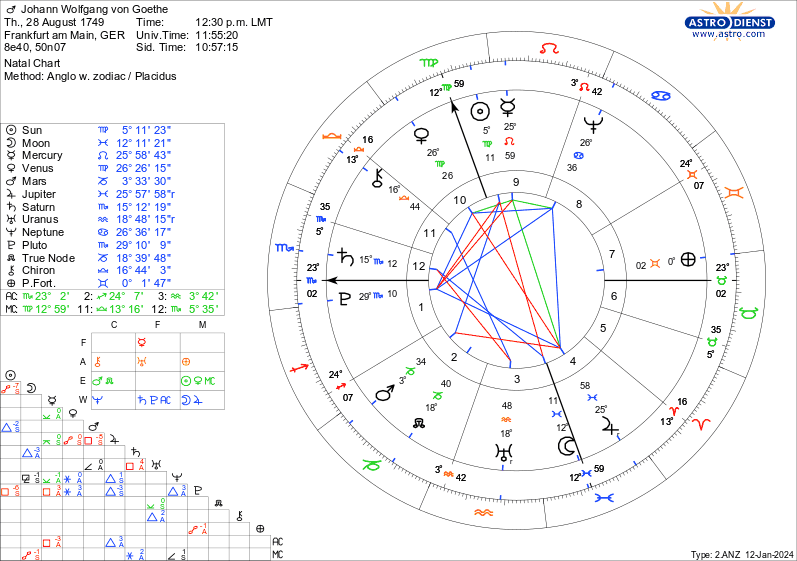
Goethe's Sun on midheaven in Virgo; Virgos mostly feeling types
Brief look at Goethe's scientific approach
Student technique for determining dominant function: look for continuity across different analysis methods
Future research direction: need to study more charts of notable figures
BOOKS READ FROM OR REFERENCED:
Marc Edmund Jones, The Astrology of Concepts
C.G. Jung, CW 6, Psychological Types
C.G. Jung, CW 8, The Structure and Dynamics of the Psyche, "Instinct and the Unconscious"; "Spirit and Life"
C.G. Jung, CW 9, Part II, Aion
C.G. Jung, CW 12, Psychology and Alchemy
C.G. Jung, Memories, Dreams, Reflections
C. G. Jung, The Red Book: Liber Novus ("Septem Sermones ad Mortuos")
Johann Wolfgang von Goethe, John Oxenford (tr.), A. J. W. Morrison (tr.), The Autobiography Of Goethe: Truth And Poetry, From My Own Life
Alan Leo, The Art of Synthesis
SABIAN SYMBOLS: Aries 11, Taurus 4, 16, 24, Cancer 14, Leo 4, 15, Libra 11, Aquarius 25
DIAGRAMS and CHARTS embedded in and appended to this transcript:
FIGURE 1982 0401-1. Quadrants, Rings, Threefold, Elements, Cross, Psychic Functions. (embedded)
FIGURE 1982 0401-2. Planets, Quadrants, Threefold, Rings, Cross. (embedded)
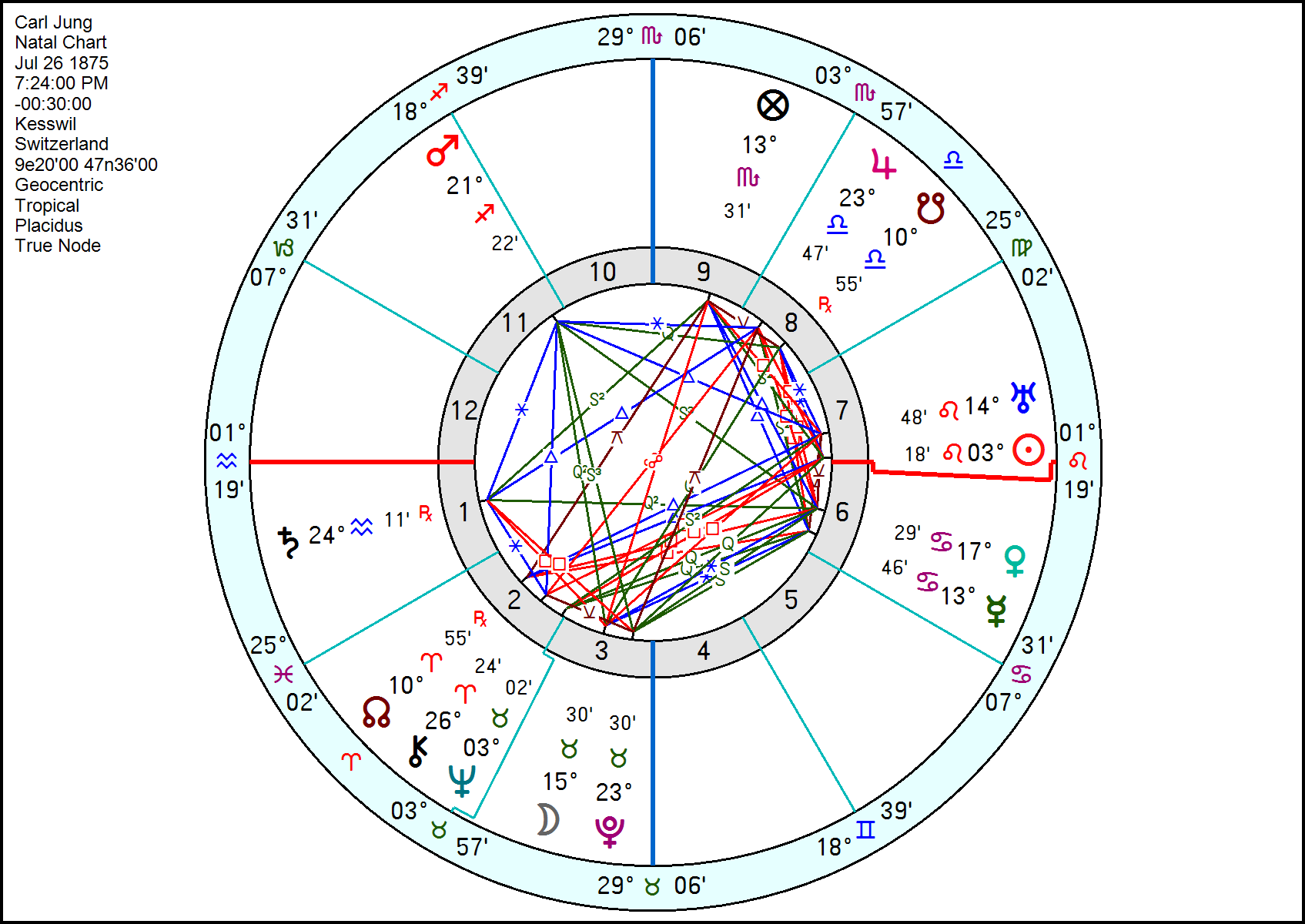
FIGURE 1982 0401-3. Carl Jung Natal Chart (astro.com). (appended)
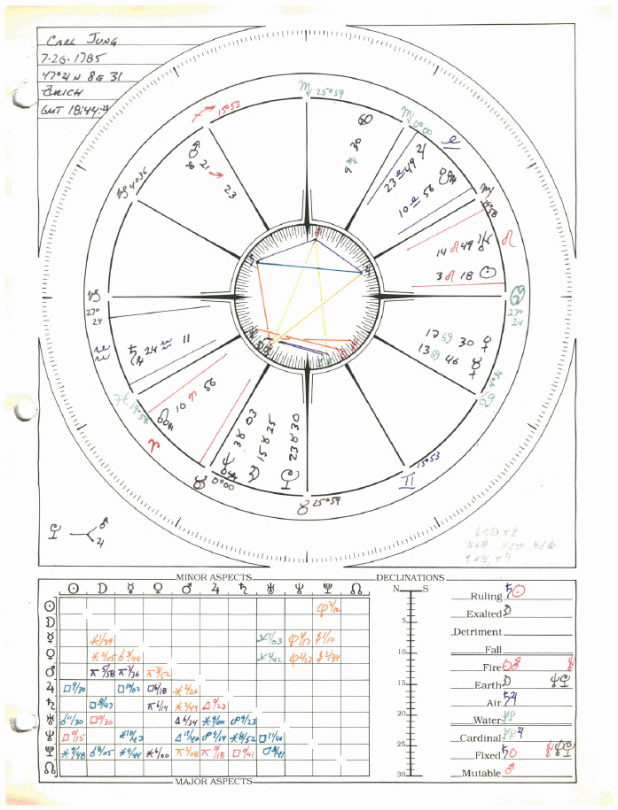
FIGURE 1982 0401-4. Carl Jung Natal Chart (WG version). (appended)
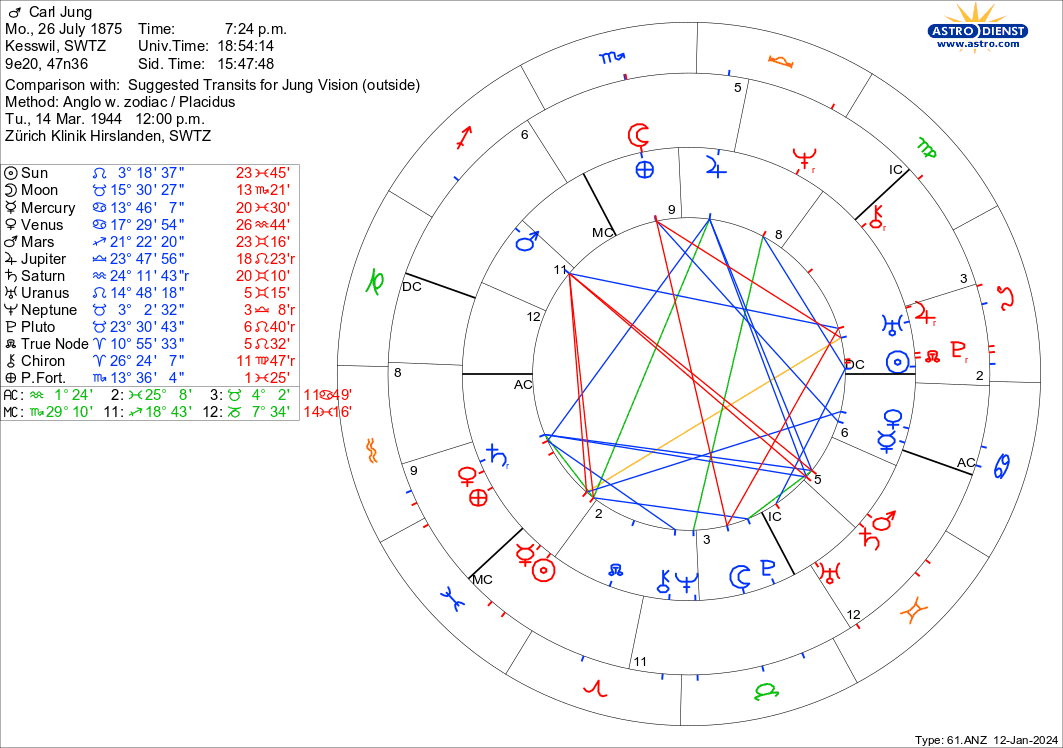
FIGURE 1982 0401-5. Suggested Transits for Jung's Vision of March 14, 1944. (appended)
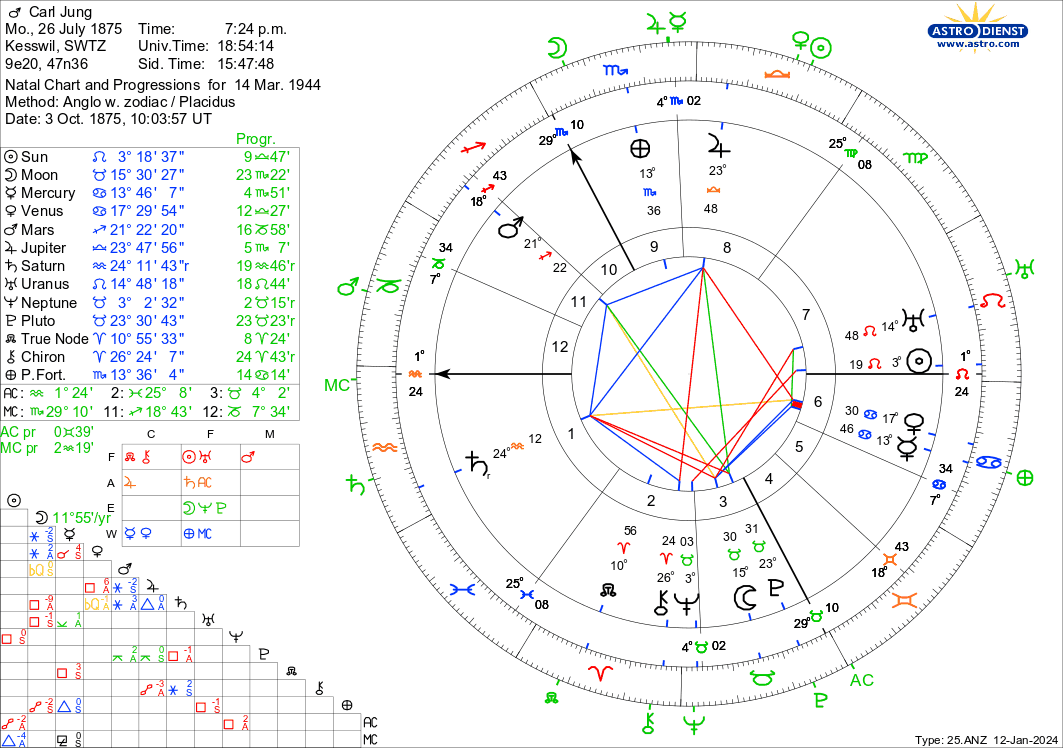
FIGURE 1982 0401-6. Carl Jung Progressions for March 14, 1944. (appended)
FIGURE 1982 0401-7. Johann Wolfgang von Goethe Natal Chart. (appended)
Other diagrams referred to are not with this transcript version. [Transcriber note: [diagram] means the speaker is referencing a diagram as he or she is speaking. If someone is drawing or writing, with audible sounds of chalk on a blackboard, I indicate this by [drawing] or [writing].]
NOTES:
We have a partial transcript for this whole class (Scan File 1982 0401-06R06.PDF) but audio only for the last part of it. The partial was typed by Tim Smith and Anthony probably saw/reviewed it. The verbatim transcript follows the partial and replaces the last two pages of it.
The partial transcript was retyped by IT, with some formatting by JF to make "useful", including replacing astrological glyphs with spelled out astrological terms and digitized diagrams by IT/NT.
This class took place on a Thursday.
TRANSCRIBED Verbatim by IT prior to 2018, reformatted by jf 2018. In 2023, IT updates prefatory matter, footer, and audio file name, alters Subject, expands Subsubjects, completes TOC and Book List, fixes errors/typos, adds new notes within transcript, replaces Jung chart with two new ones and adds transit, progressed, and Goethe charts and references within transcript to these charts, reformats to accord with new conventions. Archival verbatim transcript – V12a.
AUDIO FILES: 1982 0401a (formerly 1982 0424b). [Note 1: We only have audio for the last part of this class, we are missing the rest. Note 2: In 2024, REP Studio separates off Audio File 1982 0401a from Audio File 1982 0424b.]
1982 04/01 at Wisdom's Goldenrod
Astrology; Horoscope-Jung
[Partial Transcript (Scan File 1982 0401-06R06.PDF) Begins]
[Note: Sabian degrees are from Marc Edmund Jones, The Astrology of Concepts. See FIGURES 1982 0401-3 and 1982 0401-4, Carl Jung Natal Charts, appended to this transcript for all references to Jung's chart.]
4/1/82 Write-Up, Classifying the Types
Jung says Kant is introverted thinking type, Goethe an extroverted feeling type, Nietzsche he calls an introverted intuitive type and an introverted thinking in another place. Spinoza he calls an intuitive type.
AD: See if we understand the various ways of classifying the types. [See below FIGURE 1982 0401-1 showing embedded figures as in original transcript -- next two paragraphs.]
Take the elements, Fire, Air, Water, and Earth, relate them to Intuition, Thinking, Feeling, Sensation; another probability is to take the quadrants [Circle with Four Quadrants]; another way is the Rings: R [Rulership] = Intuition, Ex [Exaltation] = Thinking, Detriment = Feeling, Falls = Sensing. Threefold [Circle Divided into Three with W-F-K (willing-feeling-knowing)] but this leaves out sensing -- that's the function of the Real. 3-fold applies to a higher level. CFM [Cardinal Fixed Mutable], as Extroverted, Introverted, and Centroverted; these might be associated with the elements. [Planets with Moon in Center, Sun at top, then clockwise Mercury Jupiter Saturn Mars Venus.] The cross itself [Cross with F (feeling) at top, counterclockwise I (intuition), T (thinking), S (sensation)]; the true North in the chart is at the IC.
Jung gives 7 psychic functions: Dream or Imagination = Sun; Intuition = Mercury; Recognition = Moon; Instinct = Jupiter; Value = Venus; Will = Mars; Self-Apperception = Saturn.
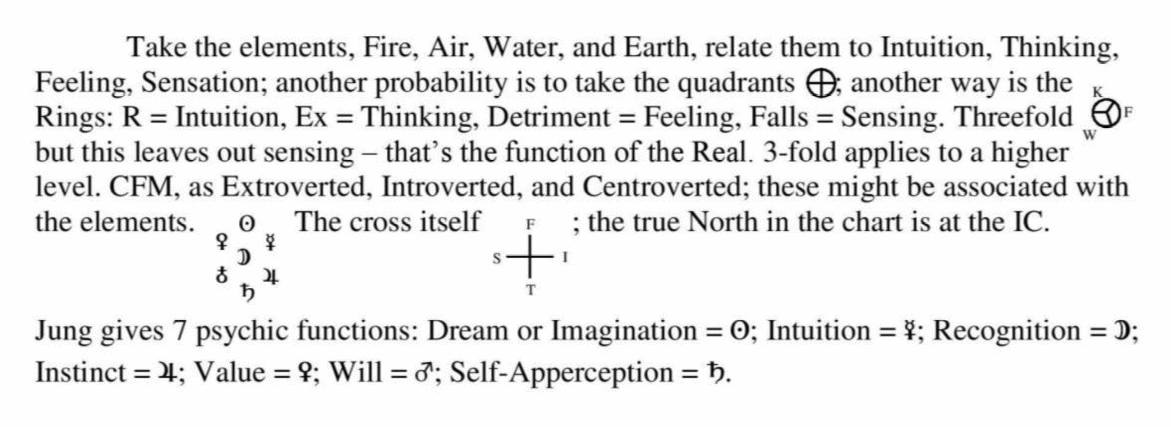
[FIGURE 1982 0401-1. Quadrants, Rings, Threefold, Elements, Cross, Psychic Functions. Figures and text here placed as in originally typed transcript; figures digitally redrawn by IT/NT.]
TS: What I mean by types is that there's a kind of field in which the psyche tends to work -- they're habitual adaptations and seem to be body-based.
Venus, for example is more of an evaluative function than a feeling function.
Another possibility is the aspects, or orbs.
These are all possibilities of indicating the 4 functions.
Q: What does it mean to put the functions at the Cross?
AD: These are fixed in the body; the signs are more like the ethers; the Ascendant is always perception; it has a degree, a sign, which is ruled by a planet which is aspected in a certain way. So look at the Ruler and the aspect -- to show what archetypes are built in, in the substratum of his perceptions. Why we see in a certain way. I still favor the dignities of the planets; it may be a combination of all these.
TS: Favors beginning with dignities and applying to the quadrants, and elements. [See below FIGURE 1982 0401-2 which was in original transcript.]
Perhaps a shift in the level of the consciousness might shift the functioning of the chart.
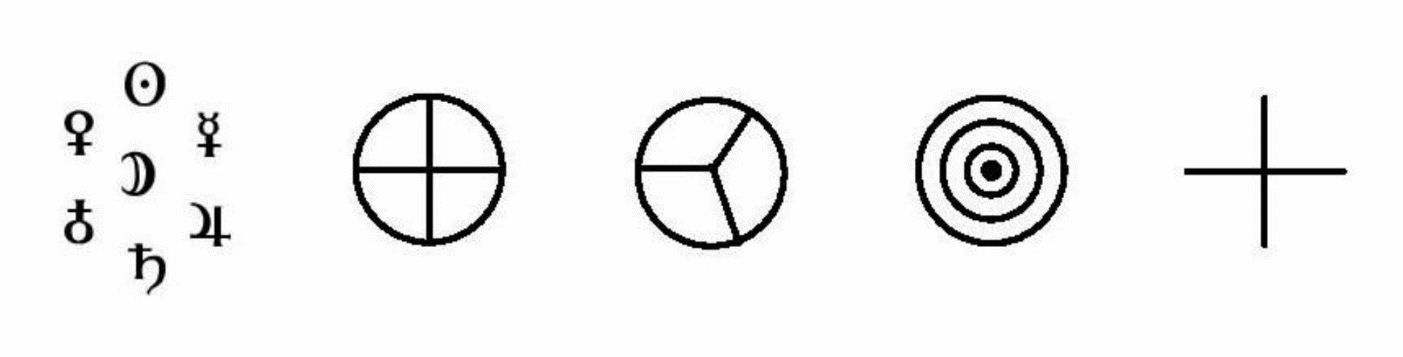
[FIGURE 1982 0401-2. Planets, Quadrants, Threefold, Rings, Cross. Figures here in originally typed transcript; digitally redrawn by IT/NT.]
AD: I can't see the aspects as the functions. Take an event that he knew or felt a sense or intuited. I want to get an event that was important in terms of the gnostic functions and see what was going on at that time. How about the dawning of the notion of archetypes. 1918 he wrote the "Instinct and Archetype". [Note: "Instinct and the Unconscious".] Find a book that he was compelled to write, anything that's solid as far as date. The big event is when it comes in, not what follow after, most people won't let things in.
Q: What about his break with Freud -- when he began thinking for himself?
AD: He was thinking for himself before that. Sometimes Jung would start writing to bring the idea in.
Q: What about the breakdown and breakthrough and the Septem Sermones.
AD: That's all 9th house stuff -- it's mediumship, and I don't think you'd see the functions working in mediumship, 'cause they all have to be held in abeyance.
Aion: There was an inner compulsion to write it, he couldn't stop. Look up Aion -- 1951. He died in 1961; they were expecting a world cataclysm in 1962.
In 1951 [?]
Aion seems to be dealing with the concept of the higher self in the Western tradition, in terms of Western Gnosticism and how in a sense Christianity distorted the tradition and forced it to come up through diverse symbols -- Alchemists, Gnostics. It's a big book in terms of content.
Jung had reached a ripeness, wouldn't the aspects to the Tail indicate he was picking up the past and bringing it to the present, he was excavating and refining the one that he took out.
Uranus Mardi Gras. (Conjunct Mercury) (Moon Motley Group) was a dramatization of the beast, celebrating the R.P. [reason-principles] in the flesh, the actual tropes embedded in matter.
Mercury is a beginning of a mystic journey (facing the NE) [NE = Northeast].
The archetypal thinking he was working with would be reflected and communicated.
Mercury is intuition; so Uranus Conjunct Mercury "the intuition that the self is life, embodied in the flesh."
Saturn Opposite Sun was his never being able to accept an idea of self outside of the ego; when this Uranus Conjunct Mercury happens it's communicating this idea of self for the first time, of a real self.
The Sun & Saturn are on the Tail, so that's getting resolved. Doesn't it seem odd that for an introverted thinking type that the intuition is functioning. Read Aion and tell me he's a thinking type. Read p. 234 -- the shadow quaternity, etc. = it's [word(s) missing] he's talking about; the ideas are embedded in matter. The snake represents the Idea of Man embedded in matter -- kundalini and all that's burned (?) in its power.
Intuition can't be used that often; in Jung thinking is the auxiliary function.
The Sun & Saturn is Intuitive natally; in this case the Mercury is intuition and is also in rulership of Exaltation by house. We're just picking out what's factual -- Mercury is intuition.
Uranus is Mardi Gras = people acting like animals; instinctuality looking you in the face. If you look at the behavior of an animal and you say there's a certain instinctual functioning or pattern, nonetheless there's some kind of revelation of a Reason Principle working its way through even at that animal level. There must be some great intelligence embedded in that flesh and blood which is causing it to act in a certain way -- Uranus Transiting Conjunct Mercury he got a direct insight into the reason principles embedded in flesh and matter--because of the degree symbol--carni-val and exhibition of the flesh, like a strip tease act.
When he had Pluto on Mercury he wrote what was to become Ch. IV of Aion. Pluto is Mounted Brave = power. A spiritual and physical conquering. There's a transpersonal power that was working through him.
Tail is kindly old professor from his battered desk looks out.
Saturn is butterfly is emerging from right wing = thinking developed.
Tail is the past = a man who has to give out the knowledge of what he knew, he had to spell out in terms of a rational discussion what he knew.
Saturn Conjunct Tail a discussion of what this kindly old professor knew. Is this a rational discussion or is he delivering intuitions? It's not a well thought-out presentation. He's intuitive. Beethoven was a thinking type--his music was charged with thought--musicians aren't always feeling types, in fact feeling is often their inferior function.
Quote: Thinking definition from Psychological Types = Rational but not dianoetic. Thinking makes explicit the contents of the idea, the images and the image is the multivalent function of the productive imagination. Thinking is conceptual and logical, but not dianoetic.
Saturn Butterfly with right accentuated would show that the rational faculties that the ego complex represents was capable of pulling out the content of that intuition.
[Partial Transcript (Scan File 1982 0401-06R06.PDF) Ends]
[Audio File 1982 0401a (formerly 1982 0424b) Begins, Verbatim Transcript Begins below]
AD: Here let me-- let me go back to what I said the other day. I said if the dream occurs to you, alright, that the most important approach is not the itemization of the various objects in the dream and looking 'em up in the dictionary and so you get a symbolic definition, but to get the feeling-tone of the entirety of the [S: Image.] dream image. That is the intuitive basis of what it's going to mean. [student assents, faint] That's like the nexus that connects all your sequences of logical thought. Ok? [student assents, very faint] Now, that's why his writing is so often jerky, [student assents] because he has the-- he has that feeling-tone, that intuition of what that [AD snaps fingers] image has, alright, and then when he starts to write it, it's awfully difficult.
S: Yeah.
S (faint): Definitely.
AD: And it's jerky too. But I-- go ahead.
VM: Nothing.
AS: This-- this may (be general) [couple words inaudible] not in this particular specific example but you brought up the thing of the archetype. That seems to be probably if-- of any, if you were to pick out one of his major-- like his major theme would be this notion of the archetype, and the whole way he operates seems to be in that method, that archetype. Not a thing-- not a thought-out method but more like the numinosity of an archetype comes up [student assents] (as/has) this whole feeling-toned intuition and he works off of those archetypes more than anything, and it seems that that's very close to what he means by intuition. And in fact that is-- that-- that is his central-- [student assents, faint] his central theme in most of his gen-- most of his writings his predominant theme is the-- was the nature of the archetype, the structure of this productive imagination and that's where it's-- (he/it) seems to be coming from a lot.
LR (simultaneously): Yeah. Also it would be hard to conceive that anybody that is a really strong [couple inaudible student words simultaneous with LR] thinking type would-- would pro-- would produce the notion and expound the notion of the active imagination, the creative-- the active (ima--) [student assents] imagining, you know, a real letting go of the rational and letting his active imagination take over. [couple/three very faint inaudible student words] Because the strong thinking type would be really trying to impose an order on-- on the content, yeah.
AH: And just to look at the volume of his work would suggest that there's some sort of primal compulsion that was driving (this effort), that if he was a thinking type, alright, how would he be-- how would he have motivated to sustain that-- that level of energy and work that he accomplished?
LDS: Isn't it possible that he could've been-- the thinking function could've been old hat for him, his ability to articulate? Even if he's suggestive in his writing he's also very-- in most places very precise, you know. You read other mystical or mediumistic types of writers and I don't think that they write anywhere near the precision that Jung uses.
AD: You know, you're falling into the same danger I am. I may be accusing him of being intuitive and I'm really speaking about myself.
LDS: But, we-- we spoke earlier about how his-- his Tail function was involved at this-- at this period of time.
AD: Yeah, the Tail function seemed to indicate that he was acquainted with long drawn-out battles or bouts of thinking. Sure.
LDS (simultaneously): Yeah, with this professor.
AD: Sure.
LDS: And that was hit at this time when he was writing I think, when we took-- checked the transit. So it's like the intuitive function seemed to be the function that was leading him in this life or let's say coming into him but the thinking function had already been developed, was already old hat.
LR (simultaneously): Louis, it's what he-- it's what he called (the) (billion/billiard)--
AD (simultaneously): What do you mean "been developed"? When does it stop?
LDS: Well I mean, it was [LR: Natural.] mature.
AD: Oh yeah.
LDS: So that the intuition then could be articulated, you know.
AD (faint): Yeah.
AH: He also had the benefit of a classical education and that shows in his articulation, [student assents, faint] you know, like-- That whatever thinking function he was operating with certainly had the very finest training that it could've had.
AD: Well, we'll agree with that. Let's-- let's read the next symbol. What's the next aspects?
TS: Oh, so you want Sun on the-- progressed Sun on the Tail?
AD: Progressed Sun on the Tail?
S (faint): Yeah.
LR: Well, we've got the professor again and the Sun is the man look-- gazing at [TS simultaneously: Hm.] the moosehead. [Note: Leo 4, "An elderly man in evening clothes, of poised and military bearing, stands alone before a lovely mounted moose head."] (Are the other two) [couple words inaudible] (some laughter, student words) Would you like to hear that symbol again?
AD: The Sun is about the man looking at the moose? Yeah. And the Tail is a kindly old professor. [Note: Libra 11, "A kindly old professor from his battered desk looks out over his eyeglasses at a class eagerly awaiting his words."] [short pause] So, it's obvious that he's capitalizing on his past, right?
S: Uh-hm, uh-hm.
LR (simultaneously): (And) that he's trying to reveal the notion of the "I".
[student assents or one/two inaudible words]
TS: Really?
AD: If he's capitalizing on his past, alright, and we're speaking about the progressed Sun now reaching that Tail, so it's extracting from the past something also. Again, it's intuiting something about his own past.
TS: There's almost the-- it's also the culmination of the thread of his life because that year-- the year before, about 1950, he-- he stops all clients. Day before he wrote Aion he stopped practicing 'cause he was-- he was-- what, he was almost 80 then. Well he was 75 in 1951, in 1950, so he was 76 when he wrote Aion. Then he stopped all client-- all kinds of contact with any counseling the previous year and withdrew to just live with himself and Toni Wolff and Emma. (laughter, student words) And--
S: He's-- he was really looking for trouble. (some laughter)
TS: Well they both died off the next year so it didn't last long. In his-- in his-- let's see, Toni Wolff died the next year, she died in '52, and Emma Jung was-- become an invalid from (their) '52 to '55 when she died, she broke her hip and she was more or less incapacitated so-- His whole life really came to a culmination point in that he was really pretty much isolated from the world from that point on until his own death in '60, the last ten years or so. There was very little contact with the world, you know, though he did all the writing. It seems like a lot of the big ideas started coming out, just of his own rewriting and the work in secret, you know, the Buddhism and stuff.
AD: See if we can get (an/a) publica-- see if we can get another-- a-- a date for another book that you might consider important.
TS: Well, I was looking up here, uh--
AD: How about-- how about Religion and Alchemy, any dates on that?
TS: Religion and Alchemy?
AD (faint): Uh-hm.
TS: Psychology and-- (oh) [one word inaudible]
S (simultaneously): Psychology and Alchemy (in other words).
AD: Psy-- Psychology and Alchemy.
TS: Psychology and Alchemy is-- let's see if I can check the date on that. Nice thing, everywhere you go they-- they print his collected works.
VM: Yeah but they give you the recent date.
TS: I know but it gives me a jumping off place. Um-- Oh. 1944. That was a big year for him.
AD: 1944.
TS: Yeah. That was the-- February of 1944 is when he had his heart attack.
[Note: On Feb. 11th, 1944, while out on a walk, Jung slipped on some ice and fractured his fibula. He was admitted to the Klinik Hirslanden in Zurich. Ten days after his admission, he suffered a heart attack. See https://carljungdepthpsychologysite.blog/2022/04/21/a-visit-paid-to-jung-by-alwine-von-keller/.]
AD: Let's get that one, let's get that.
TS: Ok.
AD: That's where he had the vision?
TS: That's where he had the vision, I [student assents] don't know what month but I guess it-- [student assents] I'm guessing February.
AD: Good, start there.
S (simultaneously): So was the--
AD: He was in the hospital for about a month.
TS: Yeah, he was--
AD: So, it had to be in that-- within a month's time.
TS: Yeah. See--
AD (simultaneously): We could-- we could take a guess.
TS: Ok. Oh boy.
LR: [one word inaudible] you think you'll be able tell by the transits.
S: [one/two words inaudible]
TS (simultaneously): Hopefully uh-- (some laughter)
S: [one/two words inaudible]
TS: Turn in my card.
LR: When he was-- went above the [one/two words inaudible] and [one/two inaudible student words simultaneous with LR] saw the (whole Earth moving)?
TS: Let's see here.
LR: (And knew) [few words inaudible]
TS/S(?) (simultaneously): I have Pluto was at--
VM: (No, no), I still don't know why.
S (simultaneously): Uh-huh. (bit of laughter)
S: (He got--) he got well.
LR (simultaneously): He got well and the doctor died.
S (very faint): Oh no.
TS: That was a weird story.
RC (faint): (I still) remember that patient.
AD (very faint): It's to the point that he was asking about.
VM: He was actually--
TS (simultaneously): No, it was some time(--) according [VM simultaneously, faint: Some recuperation here.] to his-- [student assents, very faint] yeah.
LR/S (simultaneously): Well he was uncon-- He was in a coma like for (the longest) [one word inaudible]
TS (simultaneously): He was unconscious [LDS simultaneously: Yeah I think (couple words inaudible)] for ten days.
S (faint): Wasn't--
VM (simultaneously): Well not that he was-- he would be in this sort of unconscious state most of the time, then he would come out of it and be in a great depression [TS assents] because of the beauty of the visions and so on that he was having.
S (simultaneously): He didn't want them--
TS: Yeah.
LR (simultaneously): Well no, that was on his-- [couple inaudible VM words simultaneous with LR] that's when they were pulling him back. I thought-- remember he said they were pulling him back and they were trying to make him get well and he didn't want to come back.
VM (simultaneously): But, don't we have Memories, Dreams running around here?
TS: After I got here I (got/get)--
VM (simultaneously): Nobody's got Memories, Dreams?
TS: I-- well it's in Memories and Dreams, it's also in here it's true. He had his heart attack and he was-- for about ten days he-- he had many different visions and things and then he was recovering for three weeks, that they didn't know whether he was going to live or not. At the end of that time-- it was April 4th when he recovered, so that gives us some-- it would be a month before that that-- about then. There must have in March that he had his heart attack.
VM (simultaneously): Is that the time when a nurse-- I may be confused here but the nurse also said that the-- she saw a light around him (or something)?
AD (simultaneously): She saw (a light) [couple words inaudible]
[Note: See FIGURE 1982 0401-5, Suggested Transits for Jung's Vision of March 14, 1944, appended to this transcript for the following. This is the date used per TS remarks later in the transcript.]
TS (simultaneously): Yeah, yeah, a golden light around him. Ok, he had-- let's see, Neptune was at 3 Libra so Neptune was sextile the Sun and quincunx itself [diagram]. I could just put it down here, Neptune. [drawing/writing] [short pause] Pluto was at 6 of Leo so that it just passed over the Sun [diagram]. It came back to the Sun. It was retrograding back to the Sun. Uranus was at 5 of Gemini, so he had Uranus sextile the Sun also [diagram]. So there-- Neptune and Uranus were in trine in the sky and they were straddling this and making a sextile to the Sun. Let's see here. He had Saturn at 23 right about-- Oh, yeah that makes sense. He had Saturn at 20 of Gemini, which-- no, that doesn't-- that would-- oh yeah it is. [couple/three very faint inaudible student words simultaneous with TS] It was opposite his Mars. [drawing/writing] It was at 20 and change so Saturn was opposite Mars [diagram]. Jupiter was at 17 of Leo so he had Jupiter square the Moon [diagram]. [one faint inaudible student word] And earlier in the month-- no. It was retrograding back, Jupiter was-- ha-- wasn't on Uranus, it was-- it was months away from being on Uranus. And-- last and least the Head, the North Node was on the Sun [diagram]. And I'll get his progressions here, hold on, progressions.
AD (simultaneously): What was that North-- North, the Head symbol again?
LR: We didn't read that.
[students assent, very faint]
Marc Edmund Jones [The Astrology of Concepts, Aries 11, LR reading]: "The president of the republic or ruler of his country is presented."
LR: That's pretty amazing. (bit of laughter) [S simultaneously, faint: What was it again?] There he is above the Earth looking down. (LR laughs)
[student assents or one/two words inaudible]
[short pause]
LR (faint): Dealing with the whole thing.
AS: Yeah, the Sun too, [one/two words inaudible] the Sun also, the Moon-- the man who's a fool.
LR (simultaneously): It seems like the older he gets the more literal he (could--) Looking at the Mercury?
AS (faint): Oh, that's what (she was saying).
AD: Well what do you [few inaudible AS words simultaneous with AD] think, he was a thinking type or an intuitive type?
AS (simultaneously): Five aspects to his Sun in rulership.
AD: Huh?
S: Why, is it 7 Libra?
AD: Who else says he's a thinking type besides Jung?
LR: I don't know, I never read that. Tim [one/two words inaudible]
TS (simultaneously): Jung doesn't-- yeah.
LR: I always heard he was an intuitive type, [TS simultaneously: Well--] I mean people describe him as an intuitive type.
TS: Both Van der Post and von-- Brohm here, why(,) I found it, both disagree with him. They say--
AD (simultaneously): Disagree with him?
[sounds like student assents]
TS (simultaneously): Yeah. Both his--
AD (simultaneously): About what?
TS: Well they both say what you say, that he was an intuitive type. They say although Jung considered himself a thinking type, they felt that he [couple inaudible student words simultaneous with TS] was an intuitive type.
LR: Well you know, I can understand how a guy who sits and writes that many books decides he was a thinking type.
AD (simultaneously): Do you think maybe [student assents] he was doing it deliberately?
LR: But we have-- trying to fool them?
VM: I think it was for academic pretenses.
S (simultaneously): Uh-hm, right.
VM: It's not respectable to be an aca-- to be an--
AD (simultaneously): Consider yourself an intuitive type.
VM (simultaneously): --intuitive type in that vantage.
LR (simultaneously): It's not respectable?
VM: No.
AD: No.
VM (simultaneously): He's [PD simultaneously: Not in the academic world, no.] writing for a very academic clientele.
[sounds like student assents]
AD: That's the last thing they [S simultaneously, faint: (It's not right) (one/two words inaudible)] want you to say is it's your intuition.
[student assents, faint]
VM: No, you have to have some--
AD (simultaneously): "I thought it out." "Oh, we'll listen [student assents, very faint] to you."
S: Yeah.
AD: "I in-- I got a hunch." "Get out of here."
S: Yeah. (some laughter)
S: (PB) forgot.
AD: It's alright Tim, after a while you'll hate me a lot, don't worry. Go ahead. (TS laughs a bit) You'll throw stones. Start in with those aspects. Read them off.
TS: (But I--) (TS laughs a bit)
LR: Well, we just did the [one word inaudible]
AD (simultaneously): Oh wait, how about progressions?
TS: I don't have his progressions with me. I forget them, um--
AD (simultaneously): Ok, yeah. Alright but, when you go home look them up anyway.
TS: I sure will. (TS laughs a bit, bit of laughter)
AD (simultaneously): Just for that-- that occasion, look up the progressions. [Note: See FIGURE 1982 0401-6, Carl Jung Progressions for March 14, 1944, appended to this transcript for all references to Jung's progressions for this event.]
TS: I can run them off here, you know, also.
AD (simultaneously): No, it's alright, no. Just-- just start off with the Head and the Sun.
LR: We just did. The Sun, the man and the moose, are on the president of the republic.
[faint background student words, some laughter]
VM/S(?) (amidst laughter): (What?)
S (very faint): Read the whole--
AD: Read [student assents] the president of the republic, read the whole thing.
Marc Edmund Jones [The Astrology of Concepts, Aries 11, LR reading]: "The president of the republic or ruler of his country is presented."
[short pause]
AD: Presented to who?
LR: Yeah.
AD: The "who" would be what?
LR: What would be what? (laughter, student words)
AD: Would you say it's-- would you say it's the Sun?
LR: The "what" or the "who"? (some laughter)
TS/S(?) (amidst laughter): Sun is being presented, Sun is being presented.
AD (simultaneously): Would you say that the Head is presenting itself [LR: To the--] to the Sun?
LR: To the moose.
AD: The moose. No, not to the moose, not to the moose, but to the man [LR simultaneously, faint: The man looking at the moose.] looking at that moose. [students assent, very faint] You know, in military bearing and--
VM/S(?) (faint): (That's not so easy) [couple/few words inaudible]
LR: Yeah. [student assents, very faint] Well I mean it does-- it is a good description in a way of a death experience. That was a death experience.
AD: Well what [LR simultaneously: 'Cause--] do you mean, what do you mean?
LR: Well, I would assume that when you--
AD: What was presented to this-- [LR simultaneously: Something--] to the Sun?
LR: It seems like the ru-- it was the ruler.
AH: The head moose.
LR: No, I [many students at once simultaneous with LR, mostly inaudible, disagreeing with AH] don't think so, I think it's a ruler of a much larger land, the soul, you know.
VM (simultaneously with LR and students): The soul was presented, soul was presented [couple/three words inaudible]
AD (simultaneously): The man had a vision, he was three, four thousand miles from the Earth looking down upon it like a-- it was a fruit in the palm of his hand.
LR: Yeah. [AH simultaneously: He was--] And-- and in fact he--
AD (simultaneously): Now, now, just stop and think. What was presented?
[short pause]
S (very faint): (The individual.)
PD: He was [few inaudible student words simultaneous with PD] given to experience as the higher self experiences.
S: Yeah. Yeah and he (went and turned around).
AD: Yeah.
VM: Yeah. (He's/Here's)--
AD (simultaneously): That was the president.
[student assents, very faint]
LR: That's a ruler of the country.
VM: Here's a--
AD: The ruler of the country presented itself to the Sun. Yeah. In other words, that pervasiveness which he experienced when he was out in space looking at the-- the planet, you know, as a nice little fruit, ok, that was the presentation of the ruler, the president of the coun-- coun-- country or whatever. In other words, his own higher self was presenting itself to him and says "This is who you're talking about."
VM: Ok. Can I read a little bit from this vision [AD simultaneously: Uh-hm.] Anthony, it's really quite beautiful. After he has this vision of seeing the-- the whole Earth and so on he then sees this great block of granite and there's a temple inside the block of granite [S simultaneously, very faint: Oh yeah.] and he's supposed to ascend the steps and as he is ascending the steps-- well, I'll read that part.
LR: And they won't let him in?
[Transcriber note: I am using Memories, Dreams, Reflections by C.G. Jung, Vintage Books, Reissue edition, New York, 1989.]
C.G. Jung [Memories, Dreams, Reflections, Chapter X, Visions, VM reading]: "As I approached the steps leading up to the entrance into the rock, a strange thing happened: I had the feeling that everything was being sloughed away; everything I aimed at or wished for or thought, the whole phantasmagoria of earthly existence, fell away or was stripped from me--an extremely painful process. Nevertheless, something remained; it was as if I now carried along with me everything I had ever experienced or done, everything that [had] happened around me. I might also say: it was with me, and I was it. I consisted of all that, so to speak. I consisted of my own history, and I felt with great certainty: this is what I am."I am this bundle of what has been, and what has been accomplished."
"This experience gave me a feeling of extreme poverty, but at the same time of great fullness. There was no longer anything I wanted or desired. I existed in an objective form; I was what I had been and lived."
VM: Well I could go on I-- if you'd like or not, I--
AD: Well, it's up to them.
[short pause]
C.G. Jung [Memories, Dreams, Reflections, Chapter X, Visions, VM reading]: "At first the sense of annihilation predominated, of having been stripped or pillaged; but suddenly that became of no consequence. Everything seemed to be past; what [VM reads: whatever] remained was a fait accompli, without any reference back to what had been. There was no longer any regret that something had dropped away or been taken away. On the contrary: I had everything that I was, and that was everything."
VM: Now he has different type of vision but that (seemed/seems) [S, very faint: Powerful.] the most specific sort of reference to that higher self in a way. [LR simultaneously: He tries (to--)] Later in that vision he has to cut--
AD: If you wanted to, like you-- if you wanted to you could perhaps make a classification like this. On the one hand you have the empirical personality here [diagram]. On the other hand you have the Witness above [diagram]. [VM assents] And then above that you have the permanent [one/couple words inaudible]
VM (simultaneously): Yes. I don't think that's at referent, the third.
AD: And the-- the experiences of the empirical personality are all converted into some value or-- they're-- they're-- what the-- the Witness, alright, incorporates into itself now as part of itself and that whole history, alright, later on reincarnates and let's say that ego will embody many [VM assents] of those qualities within itself. [VM assents] Now, again, it seems that what's being pointed to is the enormous importance of the Sun. That's it.
VM (simultaneously): (Yeah.)
LR: Well even the way he describes it you can see that he turns the self then into [student assents, faint] an objective content to the ego.
VM: I would-- wouldn't you say he was discussing the Witness consciousness as you talk about (it)?
LR (simultaneously): Yeah.
AD (simultaneously): Yeah.
VM: That sort of summation of all the experiences.
AD (simultaneously): Yeah, all [LR simultaneously: (We--)] that he-- all that he (learned).
VM (simultaneously): So forth. Not that that's any (meager) vision, (right)?
AD (simultaneously): And that's not going to be enclosed in the brain.
VM: No, clearly not.
AD: His brain wasn't even functioning.
[students assent, very faint]
AD: You want to try the next aspect? But notice, every time you pick on something important what's going to happen, the way those planets are going to be so important.
TS: [couple/three words inaudible] look how many are-- there are to the Sun, [AD simultaneously: Huh?] you know. He had all three trans-Saturnians on the Sun, [AD simultaneously: On the Sun.] to the Sun.
LR: It was a heart attack.
TS: Yeah. Uranus sextile and Pluto on the Sun, Neptune sextile the Sun, the Head on the Sun. And it seems like it was-- I think he-- he would have had progressed Sun sextile Sun also [diagram], roughly, so--
AD: Of course, what's enormously interesting is that the Head, you know, usually represents something extra-terrestrial, something from beyond, pointing, you know, way beyond anything terrestrial. [short pause] Let's pick the next one just out of curiosity, Pluto on the Sun?
LR: Well that's the Indian brave, with that [student assents] scalps on his belt. [Note: Taurus 24, "A mounted Indian brave rides proudly with human scalps as trophies at his belt."]
AS: When was he born Tim, '75?
TS: Yeah.
AS: And this was in '44?
TS: Yeah.
AS: So--
VM (simultaneously): But Tim, this is-- excuse me-- this is [AS assents] important in terms of your dates. He just says after-- you know, his doctor comes up and delivers a message so he's not able to enter the temple that he's been trying to prepare himself to enter. Then he says--
C.G. Jung [Memories, Dreams, Reflections, Chapter X, Visions, VM reading]: "In reality, a good three weeks were still to [TS assents or one/two inaudible TS words simultaneous with VM] pass before I could truly make up my mind to live again."
VM: So if we could subtract three weeks from that date that you say he popped up out of bed--
TS: Yeah, that's what I just did.
S: April.
VM: Oh, and that's how you got February?
[student assents, very faint]
TS: No, I thought I got March. April 4th is when he popped up out of bed. So I did-- I subtracted three weeks and then put in--
VM (simultaneously): Ok, so good, good. And what's where you're getting these dates, from that--
TS (simultaneously): Yeah.
VM: Oh excellent. [TS simultaneously: Yeah (right).] So [one/two words inaudible] we were two steps [S simultaneously: Go ahead.] ahead of you.
TS: No, just--
AS: It looks like that progressed Sun was either-- was either close to opposite the Moon or trine Mercury.
TS: No, no, it wouldn't be opposite the Moon Avery.
AS: Seventy years.
TS: What?
AS: Seventy years, right? Sixty-nine, seventy years?
TS: Sixty--
AS: It's sixty-nine years.
TS: Forty-four--
AS (simultaneously): '44 from seventy-- '75 to-- that's twenty-five and forty-four.
TS (to himself): (Sixty/Fifty)-five, sixty-nine.
AS (simultaneously): Sixty-nine, not fifty-nine. So it'd be about-- about 14. Anyway, (it doesn't) [one word inaudible] [sounds like a reply to some very faint student talking in background: What?] About 14--
TS: Can't be. Well I'll have to [AS simultaneously: Libra.] check it out.
AS: I'm sorry, 14 Libra.
S (faint): No.
TS (simultaneously): No, because he didn't have progressed Sun on the Tail 'til four years later.
AS (simultaneously): No, 14 Libra.
TS: (So/Seven)-- But he-- he had-- I know when he had [student assents] progressed Sun on the Tail and that was when-- that was in '51. So I'll have to figure it from there.
AS: (Yeah/No) but, that's a ye-- I mean it's a (year/year's)--
TS: No, it's not quite.
AS (simultaneously): --it's a degree a year.
[student assents, faint]
AS: It's not off by that much.
TS: Well, I'll have to check it out.
AS: That can't be. I mean (you have to--) (AS laughs a bit)
VM: [couple words inaudible]
AD (simultaneously): Well Tim, go over it now in your mind, Uranus on the Sun, Pluto on the Sun, [TS: Pluto on the Sun, Uranus--] Neptune sextile the Sun.
LR: Pluto and Uranus are [couple faint inaudible student words simultaneous with LR] both on the Sun?
TS: No.
S (simultaneously, faint): No, [S simultaneously, faint: (No), Uranus (possibly one/two words inaudible)] Uranus is (sextiling it).
TS (simultaneously): Uranus is sextile it.
S (faint): (But Tim--)
AH: Pluto was conjunct the Sun?
[short pause]
AD: Neptune sextile the Sun, right?
TS: Yes.
S (simultaneously): Uh-hm.
AD: Uranus sextile the Sun?
TS: Uh-hm.
AD: And Pluto on the Sun.
S: And the Head on his--
AD: And the Head on the Sun, yeah. Well we just discussed that. Alright now, you got the Neptune and the Uranus sextiling the Sun. What does a sextile mean?
TS: Well, generally I take it to mean a transformation of-- of something. It's-- Let's see, Uranus was in-- [short pause] well I take it to be-- from what we did once a long time ago with the different-- there's two different sextiles, there's the one which is from the [AD simultaneously: No--] 1st house to the 3rd [diagram] and that's a kind of a new definition where the other is a-- a-- there's a definition that goes on on the one side, on the other side [diagram] there's a-- an-- a raising up to a new loka of a functioning. [sounds like AD assents, very faint] Now let's see if I can get which date was-- which one was where. Uranus was in Gemini so Uranus-- it's saying that the Uranus was giving a new definition to the Sun so that archetype or that-- that living, that experiencing of meaning through life would be giving a new definition to the purpose of life and he did-- and it would be-- he did come back, he had some new job to do as it were from that point on. And then the other thing would be Neptune sextiling the Sun that-- well, what I would think that would mean is that he did have some need thereafter to begin to incorporate mystical or spiritual reality into his understanding. It was after that that he started struggling in a more serious way I think with the idea of s-- you know, spiritual truths, and I would take that to be initiated with that Neptune sextile the Sun.
AD: Neptune-- Neptune was-- the symbol of Neptune was what, do you remember, just--
TS: Pot of gold. [Note: Taurus 4, "The rainbow's pot of gold is revealed in the midst of a shower of sparkling and flashing colors."]
S (faint): The rainbow.
AD: Pot of gold.
TS: The rainbow's pot of gold. See it was-- it was the year right after that that he wrote things like the essay on "Spirit and Life," stuff like that. Seems like he did get some whiff of spiritual experience in that-- that-- those visions and I think that I would blame-- I would connect that with the Neptune and a bringing it up to the-- a new level, the sense of-- the sense of meaning that the Sun (has in it) or a sense of imagination that the Sun has in it.
AD: If-- if we took now-- if we took his-- you know, the sevenfold system of the planets, the Sun was the imagination, [TS assents] right? So, if it's in rulership, then the presentation of whatever the archetype is should be in terms of an intuitive functioning. What-- what I would be saying will be that the presentation of the-- presentation of the reason-principle would have the minimum interference.
[short pause]
TS: Over the course of life.
AD: Yeah, in general. It'll-- it'll tend to present-- it'll tend to present whatever it has to present without too much distortion.
S (faint): Say that one more time (again), I got [one word inaudible]
AD (simultaneously): Sun in Leo.
LR: Rulership, yeah.
[short pause]
AD: If, let's say, if the Sun wasn't in Leo, let's say it was in Aries or in a di-- another exalta-- a different [TS simultaneously: Dignity.] dignity, I think, I think the imagination would be interfered with accordingly.
[student assents, faint]
AD: So, what I'm saying is it's like the imagination conforms as [TS simultaneously: To the reason(--/.)] closely as it can to the archetypal dominants of consciousness and just reveals them. So we're back to the position that-- it seem-- it almost seems like the planets are really quite significant here.
[short pause]
VM: Anthony, (when) (you/we) say the planets are significant, I mean there's no doubt about that but in precisely what way do you mean it? In terms of describing the content?
AD (simultaneously): In terms of [one word inaudible] in terms of being-- in terms of symbolizing the psychological functioning.
VM: The psychological function, not just a content.
TS: Uh-hm.
AD: Well, you always have to have a content.
VM (simultaneously): Obviously you got have them together, I know.
AD: Yeah, the point is here, if you have a planet badly aspect or not in dignity, alright, on a degree, it's going to manifest a content, [VM assents] but will there be a distortion, a great amount, little, [VM: Sure.] alright. Would feeling interfere? Can you look at the image directly without, you know, interferences, obstructions, veiling? How is his Sun aspected natally uh--
TS: The Sun is very badly aspected natally actually. It's got a [LR simultaneously: Square to Neptune.] square to Neptune exact [diagram] and then it has practically no other aspects at all.
S (faint): How's the Sun?
AD: But why do you say bad?
S (faint): Yeah.
S: [couple words inaudible]
VM: Squares to Neptune are bad.
LR (simultaneously): No it's not.
S: Just by house.
S (faint): Close enough.
AS/S(?) (faint): (That's right.)
AD: Unless you mean by aspects everything is bad.
S (very faint): (That's right.)
TS (simultaneously): No. (bit of laughter) Just using the historical foolishness of astrologers. The--
AD: Do you remember anything about KC's [Krishnachandra Bhattacharyya] chart? [S, very faint: KC?] KCB?
LR: Everything was in Taurus, wasn't it? (student assents, bit of laughter)
AD: Didn't he have quite a few squares? [TS simultaneously: He was born a month before--] And wasn't it the squares that put him to work?
AS: Saturn in Aquarius must have been square a lot of the planets but-- Right? I mean, there were a lot of [one word inaudible]
TS (simultaneously): Bhattacharyya (was/is) born-- is a Taurus [Note: May 12, 1875.] in the same year that Jung is a Leo.
LR: Hm.
AD: No, all I'm trying to get at is that a square isn't necessarily bad unless, [VM/S(?) simultaneously: No.] you know--
TS: Well, but Anthony, insofar as that-- I mean, just speaking from what little [couple inaudible student words simultaneous with TS] astrology I know, that that aspect-- the Sun Neptune aspect is not integrated with the rest of the chart. And that's int-- seemed to be an autonomous function and not like-- (In/And) some of its modes of expression for example, [VM: No.] he always felt himself to be an outcast and that-- that whole-- to me the-- it's to [S simultaneously: (What--)] that aspect that I would take his [couple inaudible student words simultaneous with TS] tendency to-- to bias his thinking and his intuitions to try to make them palatable to the collective.
S (simultaneously, faint, possibly part of background talking): That's ok.
AS: No, but wouldn't that also be his concern, you know, his whole-- his whole big thing with the collective unconscious, the archetypes of the collective unconscious. Wouldn't that relate-- I mean I'm, you know, just-- [TS simultaneously: Well you're probably right, I--] the Nep-- the square (the) Neptune. If the Neptune does(,/--) you know, the way those big Uranus, Neptune, and Pluto.
AD: Wouldn't you say Neptune [couple/three inaudible student or AS words simultaneous with AD] was feeding the whole chart?
[student or AS assents, very faint]
[couple/few very faint inaudible student words]
VM: Feeding it the intuitions [student assents] here. Feeding it--
AD/S(?) (simultaneously): Oh.
AD: Just read the Neptune symbol.
[student assents, very faint]
VM (faint): What is the Neptune symbol?
S (faint): Pot of gold.
LR: Rainbow's pot of gold.
AS (simultaneously): Yeah, [S simultaneously: Pot of gold.] pot of gold, that's his-- I think that's his collective unconscious with all the archetypes in it [couple words inaudible] 'cause--
TS (simultaneously): Well I think according to me Neptune is the-- is the symbolic or the symbolical consciousness or the mythological [student assents] consciousness. I don't know that it would be the archetypes but it would be the mythological consciousness that would [S simultaneously: Oh(--/.)] perceive meaning [one/two inaudible student words simultaneous with TS] as-- as having imaginal form.
VM: But what structures [MW simultaneously: Then all--] the myth though [AS: Yeah.] are the archetypes.
AS: (That's--) I mean I--
TS: I know but I would-- I would consider Uranus to be more tied to the archetypes because--
AS (simultaneously): Yeah but I'm-- but I mean arch-- the way he uses-- [student assents] the way he uses archetypes as productive and so on, structuring the whole of imagination, exactly that, look-- I mean-- right [one/two words inaudible] to say the Neptune square the Sun, the structuring of that imagination by those archetypal images is one of his-- you know, it's just one of his really primary concerns always.
LR: Actually, you know, the fact that the Neptune and Sun square was autonomous is probably what allowed him to do what he did, [student assents] [AH/S(?) simultaneously: That would become (couple words inaudible)] insofar as it wasn't fed into-- I mean the fact that they're autonomous doesn't mean they're bad. It means that they're autonomous, that there is a whole region of his self which is really kept very private and unincorporated into the main-- the rest of the stream of his functioning.
S: That's it.
LR: You know, in terms of integration it's not assimilated but it probably was a great boon to his thinking, just that autonomous Neptune Sun, in [student assents] terms of his imagination anyway.
AH: You think you can see that as the necessity of his having to break with Freud, rather than accept the status quo of the Sun?
S (whisper): (I don't think so.)
LR: And then the first thing--
AS (simultaneously): But (why he was) thinking, not his intuition?
LR: What?
AS: You said something about something with his thinking, why not say it was intuition?
LR: Well I wasn't using the term precisely. [student or AS assents, very faint] But then doesn't-- isn't the first aspect that it makes to Saturn? What does it do there?
TS: Sextile. I think there would be-- yeah. Yeah. 4 degrees of Taurus is thirty-four degrees of Aries, thirty-four degrees of Aries is a nine degree sextile to Aquarius, 25 Aquarius [diagram]. And Saturn at 7 is sextile the Neptune [diagram] [LR simultaneously: Oh right, ok.] and then Jupiter is opposite Neptune [diagram]. Those are the first aspects it makes.
AD: Now, here's-- here's another possible way of looking at it. If we take that-- you know, the cross there and we put perception on the ascendant, then we're putting intuition on the descendant [diagram]. [Note: FIGURE 1982 0401-1, Quadrants, Rings, Threefold, Elements, Cross, Psychic Functions, above.] [student assents, very faint] [short pause] It seems that it has-- that's very close to the descendant [diagram].
TS: (In/You mean) the Sun?
AD: Uh-hm. 7th house. [short pause] You think that might have anything to do with the intuitive function being emphasized?
TS: Well--
AD: How far is it from the descendant?
TS: Six degrees. So you mean(--) by that you have Pluto right on the nadir [diagram](--/.)
AD: Yeah.
[short pause]
TS: Saturn isn't-- see Saturn-- the sensation function would be Capricorn, Saturn's in-- both in rulership-- ok, Saturn's in very dominant rulership here and it rules the ascendant [diagram]. The intuition function would be ruled by the Moon which is in exaltation [diagram]. Now the Moon has got the square to Uranus and sextile to the Venus and Mercury [diagram]. The Moon is a pretty well-aspected planet, I mean my own foolish way of looking at things.
AD (simultaneously): Well Pluto was practically on the nadir.
TS: What?
AD: Pluto's practically on the nadir.
TS (simultaneously): I know. But that you say is a thinking function.
AD: Yeah.
[student assents, very faint]
TS: The-- the thinking would be ruled by Venus in S-- Cancer [diagram] and the feeling by Mars in Sagittarius [diagram].
AD (simultaneously): No, I'm not saying that Pluto is thinking function. But [LR simultaneously: No(--/,) it--] it's close to that, if we-- if we think of the-- the cross. But now look at a strange thing, the Saturn which would be near perception, aright, regards itself as rational. The Sun which is near the descendant is the intuitive. Pluto which is-- I mean Taurus which we would say would be the nadir [TS assents] where thinking should take place you got Pluto right next to it. Now the only thing that we're going to have to do is to take a couple other charts and see if by compa-- the comparative method, [student assents] some of this starts showing up again and again.
TS: Well, he talks about Goethe as an extroverted feeling type and the first-- by that same cross Goethe's Sun's on the midheaven [diagram]. [Note: See FIGURE 1982 0401-7, Johann Wolfgang von Goethe Natal Chart, appended to this transcript.]
[student assents, faint]
S: Really?
AD (simultaneously): And Goethe's Sun is on the midheaven?
S: [few words inaudible]
TS (simultaneously): Exactly, it's-- (oh/I mean) yeah, it's-- That seems to be pretty well [student assents] accepted. And it's one of the people that Jung talks about.
AD: What sign was it in?
TS: Virgo.
[student assents, very faint]
AD: Virgo. [Note: Virgo 6, "Children's voices, and the smiles of elders; it is a merry-go-round with blatant music and unrestrained joyousness."]
[student assents, faint]
S: Extroverted feeling?
AD: That's what Jung says he is, is an extroverted feeling type.
AS: You're [few words inaudible]
AD (simultaneously): Well, if you're a Virgo [TS simultaneously: That's not how.] (you've had--)
TS: What?
AD: Most people think of Virgo as an introverted thinking, they-- they don't know what they're talking about. A Virgo's a feeling type most of the time. (AD laughs a bit)
TS: Well at least I agree with you on one thing, yes.
VM: But you know with Goethe I don't know (what he did). (bit of laughter)
LDS: Remember he's the one that came up with the thing about, was it some animal or some plant had to have a [AD simultaneously, faint: Yeah.] (center), and he came up with the--
TS (simultaneously): Yeah, but that's Mars [S simultaneously: But you-- he--] in Capricorn.
S: Huh?
TS: He had Mars in Capricorn.
S (simultaneously): Had to have a what?
LDS: I forgot, there was something missing that no one could find, he said it has to be there [S simultaneously, faint, possibly part of background talking: What was it?] and he kept find-- looking for it.
AD (simultaneously): Maximillian bone.
TS: Uh-hm.
LDS (simultaneously): Is that what it's called?
VM: Yeah.
AD: Uh-hm.
TS: Maxillary, yeah.
AD: And also his notion of the archetypal plan.
LDS: Yeah, yeah.
TS: Color theory.
AD: Color theory.
LDS: See, [TS simultaneously: But see, that--] it's all intuitive, that--
TS: Well--
S: (Ummm.)
S (simultaneously, faint, possibly part of background talking): [couple/few words inaudible]
TS: No, it was-- he produced experiments with color that are so an-- that just go completely against Newtonian theory.
AD: But that doesn't-- [TS: But that--] (it) doesn't necessarily mean it's wrong.
TS: No, no, [LDS/S(?) simultaneously: I know.] but there-- but I'm saying that there-- there's a sensation function there. He had Mars in Capricorn in the 2nd house in a-- in very close [VM simultaneously: So (did Jung).] trine to the Sun at-- Sun at the midheaven in Virgo [diagram]. After that I run out-- I don't know the rest of his chart, I have to (look it up/work it out) but that part--
AD: Well you got his chart?
TS: Yeah I do.
AD: Well maybe we'll do that the next time.
TS: Hopefully we'll do his biog-- autobiography that-- It's only two volumes. (bit of laughter) [Note: See Johann Wolfgang von Goethe, John Oxenford (tr.), A. J. W. Morrison (tr.), The Autobiography Of Goethe: Truth And Poetry, From My Own Life.]
AD: We'll just have to-- [LDS, faint: Three (volumes).] Well who's-- who's is that, which autobiography?
TS: Of Goethe.
S (simultaneously): Goethe.
AD: Yeah, who?
S: By who.
S (simultaneously): [one word inaudible]
VM: (If) it's-- if it's an autobiography [LR simultaneously: Autobiography.] [S simultaneously: Oh, autobiography.] (there's/it's) only one. (laughter, student words)
GA (amidst laughter): Witness self or the empirical ego. (laughter, student words)
TS (amidst laughter): I think-- I-- I think the Mars wrote the first--
LDS (amidst laughter): How many autobiog-- how many guys write two volumes (really)? (some laughter, LDS laughing)
VM (amidst laughter): Extraverted feeling.
S: Huh.
S: Yeah. (S laughing)
VM: If he were an [LDS(?) simultaneously: (He's) what you call intuitive (one/two words inaudible)] introvert he wouldn't-- it would've been a pamphlet if he were an introvert. (bit of laughter, student words)
LDS: He was actually an intuitive feeling extraverted sensation.
AD (simultaneously): Well, could you read us a description of extraverted feeling?
LR: I can't (though), I only have (von Franz) and--
S: [couple words inaudible]
TS (simultaneously): [couple words inaudible] yeah.
LR: (Count Espelini) too.
TS: (Le Comte.)
VM (simultaneously): You're always trying to smoke everybody's feathers.
AD (simultaneously): Well be-- before you s-- before we start we'd have to have Goethe's chart.
TS: Yeah. You want it up? I've got it here.
AD (simultaneously): No, it's too late now. But I think-- I think Tim, I think you see that if you go on working this way for a while, after a number of comparative readings, I think you'll be able to get a smell or a clue which way to follow.
TS: Can I show you something about this chart then?
AD: Sure.
TS: 'Cause I'd like to suggest something. Let me do it over here.
[student noise or one inaudible student word]
[few seconds of background student talking]
TS: Just to finish this up.
S (possibly part of background talking): [three/few words inaudible]
AD (faint, possibly part of background talking): Alright.
[10½ second pause while TS draws/writes]
TS: If we work this out with Jung's chart, and that when I was looking at it yesterday and-- Well I (want/wanted)-- I would like to just go through it quickly. [drawing/writing] He had the Sun in rulership, Saturn in rulership, Moon in exaltation [diagram], right? I don't think he had any other dignities.
S: [couple/few words inaudible]
VM (simultaneously): What about [couple words inaudible]
TS: Well by house he had Mercury [writing/drawing] in rulership and exaltation, [S simultaneously, very faint: Saturn's in fall.] Venus in fall, Sun in fall, Saturn in fall [diagram].
AS: Right.
TS: Is that right?
AD: What-- what do you got? Venus, Saturn--
TS: And the Sun are in fall by house, ok. Now, in the 1st quadrant by sign which would be Aries, Taurus, and Gemini he's got [writing/drawing] Moon, Neptune, and Pluto [diagram], ok. By house he's got Saturn, Moon-- Neptune, Moon, and Pluto [diagram], ok. By sign in the 2nd quadrant he's got Venus, Mercury, Sun, Uranus [diagram]. And by house he's got Venus and Mercury [diagram]. 3rd quadrant would be Jupiter in Libra and Mars in Sagittarius [diagram]. Here would be Sun, Uranus, Jupiter [diagram]. 4th quadrant is Saturn in Aquarius and Mars in the last house [diagram]. [student assents, faint] Last one folks. He's got Sun in fire, Uranus in fire, Mars in fire, Jupiter in air, Saturn in air, Venus and Mercury in water, and Neptune, Pluto, and Moon [diagram]. Right? And then here it's Neptune in the 1st [diagram] and that's it, right? And the 2nd, 3rd he's got Moon [diagram]--
VM (simultaneously): Do you mean Neptune in the 1st or S-- (you mean about) Saturn?
TS: Saturn in the 1st [diagram]. Neptune and Pluto in the 3rd, [drawing/writing] Uranus Sun in the 5th-- 7th, and Mars in the 11th [diagram]. So he's got lots of water-- air. Then Jupiter by water is the only one-- I think that's it. Let's see, two-- no, Venus, Mercury [diagram]. Now, what I noticed was this. If I try to look at any one of these-- [short pause] There's major changes from one side to the other [diagram], as you go from one-- one of these to the other. Here [diagram] there's what we would-- what I would say is an extroverted thinking or a very sanguine temperament, to use that sort of thing. Let me just tell a fairytale for a minute. Here [diagram] there's more of an introverted thinking function that's dominant and an extroverted intuition function. But-- and then up here [diagram] there's this extroverted sensation function and the introverted intuition function on those different levels, those different ways. But when I look at it here actually-- when I looked at the three groups together over and over again, the one thing that stands out as being the consistent function and the consistent place in all of these that-- that provides a continuity from one of these [student assents, faint] mo-- or one of these approaches to the other is this one [diagram]. It's the introverted intuition, ok. That's-- you know, there's three here [diagram] and there's three down here [diagram] too, ok. So Uranus Sun shows up here [diagram] and this-- this conjunction here [diagram] shows up, ok. So-- and when I did a few of them, Anthony, I found that-- that it was-- very often you-- I would see a continuity, one thing would stand out as being what would provide the continuity, it would show up-- no matter how you look at the chart it's going to keep showing up.
AD: All the time.
TS: All the time. And other things may be emphasized just sort of in one context, ok, and so they would be [AD(?): Uh-hm.] to me more like what you would call the auxiliary functions for that person, [AD, very faint: Uh-hm.] ok, but the main function would seem to be or provided some kind of unity so the person could shift from one level to another, ok, in other words, from sort of a causal to a subtle to a gross level. What gets it out, what provides the connection, you know. And in my own chart it turns out to be feeling shows up everywhere, ok, that's the one thing that's consistent from one to the next. Ok. [student assents] But, I could do that with a couple of other charts.
AD: Yeah, we should do that, as we go along with each chart do that.
TS: Ok. See, 'cause if I look at just one set by itself [student assents, faint] it's, you know, it changes but-- see here it's going to be either one of these two on the inside [diagram], ok. Here, it's-- it's one of the two main functions [diagram] and up here it's obviously the main function [diagram]. But then if you look at all three and look at what the planets are, these [diagram] are really powerful and this is the Sun Uranus aspect that, you know.
AD: No, I-- I think, I think we'll be able to get the clue and a taste of what it means to have, you know, a dominant function. But that's not enough. Then we also have to get a clue into what contents are dominating that function.
TS: That's what I was trying to suggest at the beginning, that to me, especially to understand Jung--
AD (simultaneously): No, we first have to go this way, we have to go this way first.
TS (simultaneously): Yeah. There's-- that's a whole other question (of course).
AD (simultaneously): No, I mean I like to be like the other guy, you know, jump on a horse and go everywhere at one time. But we can only-- only do a few at a time and it's going to take a little time to work out a few charts of notable men who made achievement in a field so that-- you-- you know, we-- we have no doubt they've ach-- they've accomplished something, they've produced, even if they're unknown.
TS: The only other person-- well I don't know if you'd want to use him. I do have some dates for Coleridge for ideas coming into his head. [students assent, faint] Yeats probably we could dig up. I-- I could go through some more of Jung and Jung's notes and here and there (and) see if I could can s-- pull out more information as to when the actual ideas came to him. It's very hard 'cause he doesn't seem to--
AD (simultaneously): I know, it's hard, and also-- I mean I don't know what people here have read in terms of a biography, it would be nice if we could pick on-- know something-- some knowledge we have in common.
VM: What about Steiner, does he have much information on him? Or is that hard to come by?
TS: Steiner? [student assents, very faint] Well Alan Leo writes his chart up. [Note: See Alan Leo, The Art of Synthesis, pp. 206-211.]
[Audio File 1982 0401a (formerly 1982 0424b) Ends. As of 2018, we have no more audio files for this class.]
1982 04/01 V12a: CLASS: Astrology; Horoscope-Jung. Copyright 2023 Wisdom's Goldenrod p. v