DIAGRAMS AND CHART FOR 1982 0424
Seminar
Saturday, April 24th, 1982
Verbatim, unedited transcriptClick the series name to view more
SEMINAR at Wisdom's Goldenrod, Hector, NY
with Anthony Damiani (AD)
April 24, 1982
ALCHEMY; IMAGINATION
TOPIC: Alchemy
SUBJECT: Imagination
SUBSUBJECTS: Thrice Greatest Hermes/Poimandres, Anthropos, Jung, Soul Powers as Categories of the Imagination (operating through Fantasy and Active Imagination), as Embodied in the Productive/Archetypal Imagination, and as Unembodied, Reason-Principles, Archetypes, Vasanas, Epistemology, Astrology, 12-fold Alchemical Process, Divided Line, Dignities, Astral Body, Archetypal Topography
CONTENTS:
Goal: establish frameworks for understanding different conceptions of the Self
Reading of Corbin's translation of the Hermes/Poimandres vision from Avicenna and the Visionary Recital; vision of manifestation received in archetypal imagination; similar to Genesis
Sage is full of vision: reason-principles directly available, not filtered through imagination
Three levels of soul powers: 1) unembodied; 2) embodied in productive imagination; 3) categories of imagination; distorted by bodily vasanas
Productive imagination as Cosmic North; no interference from physical senses
Jung working at level of categories; fantasy images not random but organized by principles; example: daydreaming about rescuing a woman shows multiple archetypes at work
Anthropos presenting himself to Hermes as his Mind represents totality of 360 degrees organized by planetary spheres into an image
When a planet is on a degree, what is being manifested, the planet, the degree, or both?
Can one distinguish between a category of imagination and its content?
Does one observe one's projections through another category or through a gnostic function outside the categories?
Differentiating Jung's seven archetypes (senex, hero, etc.) and 360 archetypal degrees
Discussion of Jung's sliding scale for archetypes; speculation about whether Jung's archetypes are closer to planetary functions or material content organized by these functions
Soul as one-many: one entity, many reason-principles
Jung is coming from the point of view of the gnostic functions when he distinguishes between the various categories
Gnostic functions and categories operate simultaneously; possibility of directly perceiving the knowledge content independent of the image
Reciprocal alchemical refining process of categories and archetypes (degrees); develops psychosomatic entity to operate with soul powers
Dignities refer to Earth's knowledge/gnostic functioning which we participate in
Philosophy/reasoning unavailable if gnostic functions unable to shine through categories; example of Archimedes' "Eureka!" moment as accessing reason-principles directly
What is the meaning of dignities as reflected in the imagination (tropical zodiac)?
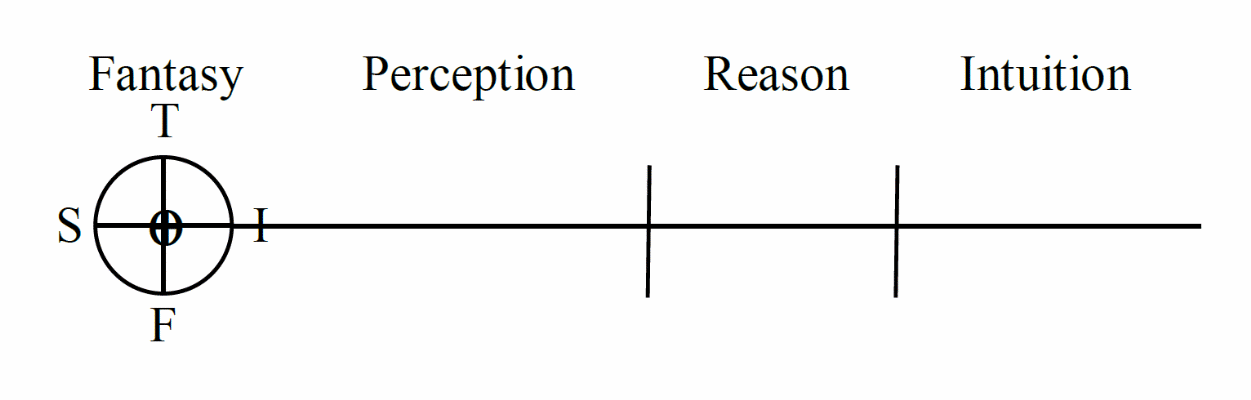
Divided line and Jung's psychological functions; Jung's functions all in lowest segment (imagination/fantasy)
Ontological damage done to immaterial knowledge by clothing it in imagination
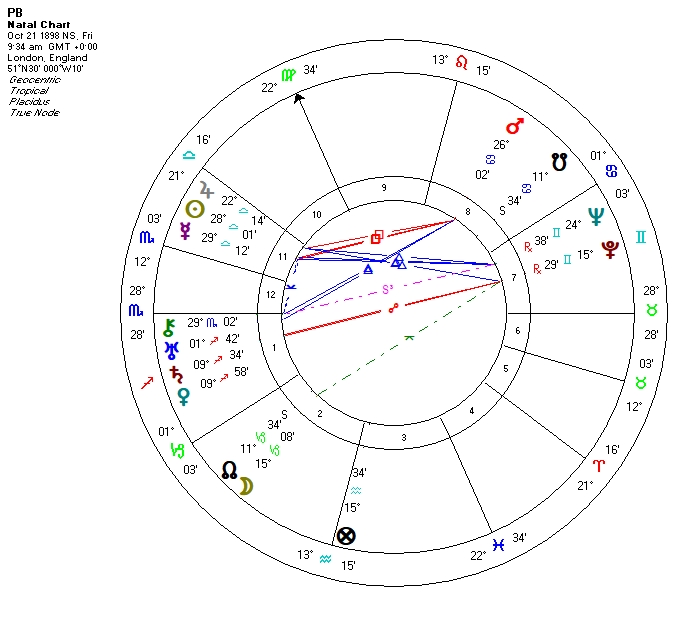
PB's Uranus Saturn Venus conjunction; could grasp intelligibles directly; bodily organism purified
Reading/discussing quotes from Synesius via Mead, The Doctrine of the Subtle Body in the Western Tradition, on astral body and imagination
Astral body as community sense, true sensory organ; categories organize its functioning; Jung's work of healing addresses its malfunctioning
Imagination as a borderland between unreason and reason; need for imagination to be purified for visions to occur
Quote from Miller, The New Polytheism; contents in our imagination a revelation of Gods and Goddesses and the world of meaning they embody
Jung's archetypes as principles which structure the vasanas in the tropical zodiac into a psychosomatic entity and manifest themselves through it
Three sets of reason-principles: in 1) fifth house, 2) eleventh house, 3) twelfth house
Heavenly cities located in archetypal imagination, not on Earth
Reading/discussing Corbin, Mundus Imaginalis, or, The Imaginary and the Imaginal
Description of the "country of no-where" beyond Mount Qaf
The paradox of going inward to find oneself outside, "on the convex surface" of the ninth Sphere; Intelligible World as truly objective
Three distinct worlds: 1) physical, sensible world (body); 2) supersensible world of Soul/Angel Souls (imagination); 3) world of pure archangelic Intelligences (intellect/mind)
Each world has its appropriate organ of perception
Mundus imaginalis as having its own ontological reality; immaterial materiality with extension and dimension; forms that aren't purely mental yet aren't physical
Alchemical process as refining the categories of imagination; purified imagination becomes the organ by which the archetypal realm is grasped; allows for action in conformity with the Tao
Quote from Swedenborg about spiritual space being based on states of being rather than physical distance; recommendation to read The Star of the Unborn
BOOKS READ FROM OR REFERENCED:
Henry Corbin, Avicenna and the Visionary Recital
G.R.S. Mead, Thrice-Greatest Hermes, Studies in Hellenistic Theosophy and Gnosis, Volume II–Sermons
Bible, Genesis, King James Version
The Secret of the Golden Flower, Richard Wilhelm (translator), C.G. Jung (commentary); also in C.G. Jung, CW 13, "Commentary on "The Secret of the Golden Flower""
Plotinus, The Enneads (MacKenna translation, 4th ed.)
A.J. Penny, Studies in Jacob Böhme
T. Lake Harris, Arcana of Christianity, Vol. 1
C.G. Jung, CW 8, The Structure and Dynamics of the Psyche, "On the Nature of the Psyche"
Marc Edmund Jones, The Astrology of Concepts
G.R.S. Mead, The Doctrine of the Subtle Body in the Western Tradition
David L. Miller, The New Polytheism: Rebirth of the Gods and Goddesses
Henry Corbin, Mundus Imaginalis, or, The Imaginary and the Imaginal; also in Spring 1972: An Annual of Archetypal Psychology and Jungian Thought, James Hillman (Ed.)
C.G. Jung, CW 14, Mysterium Coniunctionis, "The Journey through the Planetary Houses" (in Chapter III)
Franz Werfel, Star of the Unborn
PLOTINUS QUOTES READ OR REFERENCED: I.3, III.5, III.8.6, V.8
SABIAN SYMBOLS: Aquarius 25
DIAGRAMS and CHART appended to this transcript:
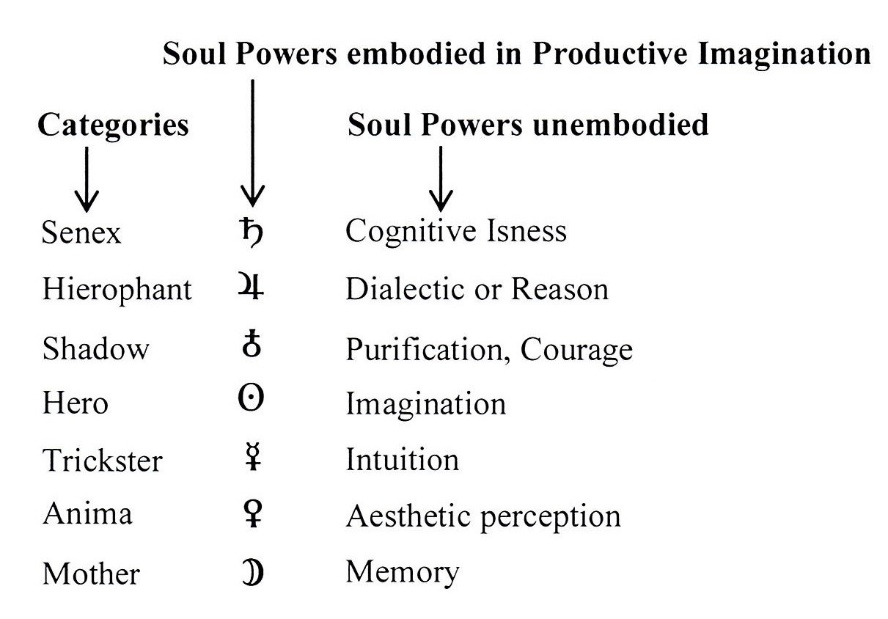
FIGURE 1982 0424-1. Soul Powers: Unembodied, Embodied, Categories.
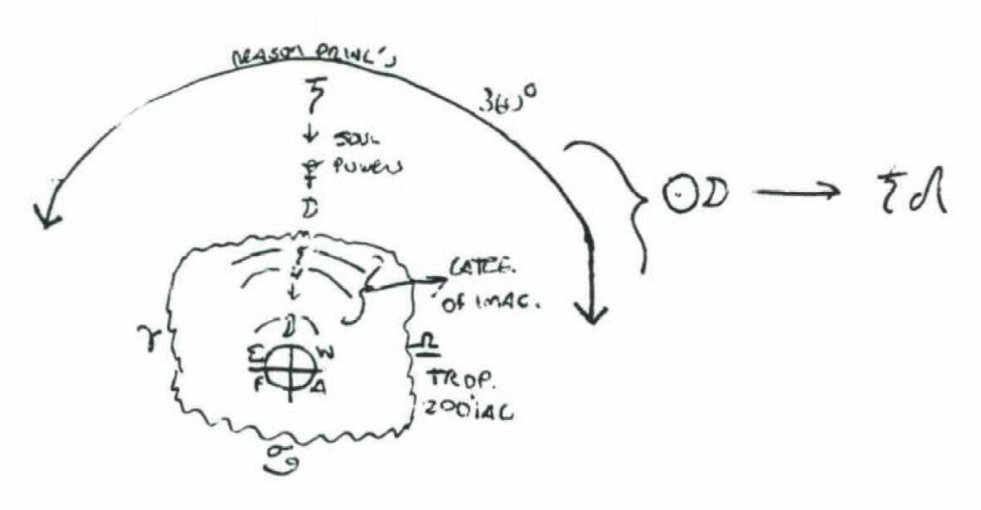
FIGURE 1982 0424-2-AB. Three Levels of Cosmos, also showing Sun in Aquarius, Moon in Capricorn, and Saturn in Leo.
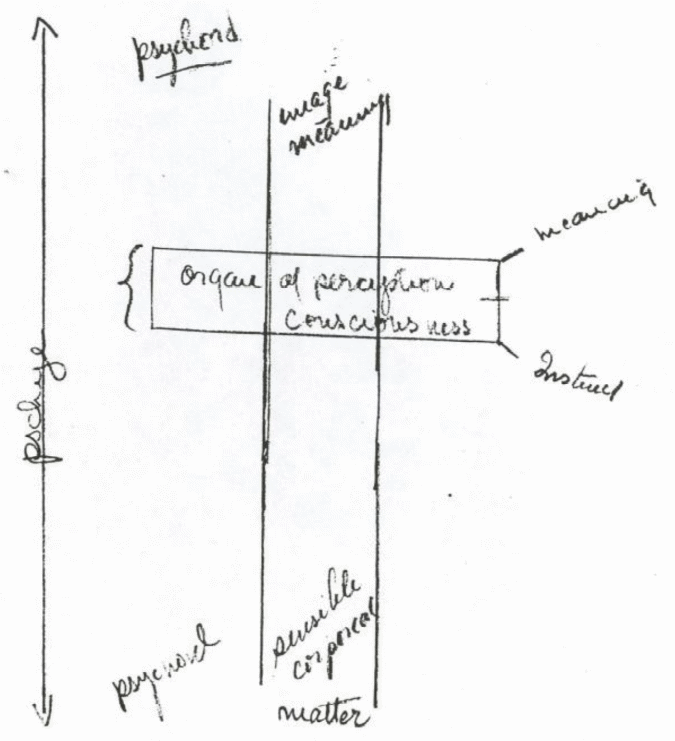
FIGURE AD_G_019 merged (excerpt). Spectrum of Psyche, from Matter to Meaning.
FIGURE 1982 0424-4. Divided Line with Four Functions Under "Fantasy".
FIGURE 1982 0424-5. Paul Brunton (PB) Natal Chart ("official").
Other diagrams also referred to are not with this transcript version. [Transcriber note: [diagram] means the speaker is referencing a diagram as he or she is speaking. If someone is drawing or writing, with audible sounds of chalk on a blackboard, I indicate this by [drawing] or [writing].]
NOTES:
We have a partial transcript for this class with no AD edits, Scan File 1982 0424 ALCHEMY Imagination 8p.PDF, originally typed by CdA. It has no AD edits and has a partially hand-drawn version of the diagram appended to this transcript.
This was a Saturday AM class.
TRANSCRIBED Verbatim by IT 2021 (V12a). This V12a has Book List completed; all notes corrected; numbers spelled out where appropriate; listening errors corrected; diagram from partial added; much that was inaudible is now audible; class fragment from another class has been removed. It has also been reclassified as a Seminar, as AD refers to it as such in the transcript. In 2025, IT completes TOC, expands Subsubjects and Book List, adds Sabian Symbol section, adds new notes within transcript, adds three diagrams and chart and references within transcript to these diagrams/chart. Previous Transcription History: Transcribed by IT in 2018 (as V11a) from MP3 Audio Files. Archival verbatim transcript – V12a.
AUDIO FILES: 1982 0424a, 1982 0424b. [Note 1: "Tape" and "Side" refer to original audio cassette tapes that were later digitized into .MP3 Audio Files. Note 2: In 2024, REP Studio separates off Fourth Quadrant Dignities and Astrology class fragments from file b.]
1982 04/24 SEMINAR at Wisdom's Goldenrod
Alchemy; Imagination
[Audio File 1982 0424a Begins]
[AD and student background whispering/talking; class starts at 0:01:07.0]
AD: It'll be more in the nature of a seminar today, we'll try to discuss (everybody/every volume). In a general way what I think we should try to do is to establish the frameworks within which we're going to try to understand some of these things. Now somebody here wants to-- (or is/was) going to try to give a presentation of Jung's conception of the Self, the symbolic-- symbolically speaking. Now in order to properly understand, I think, Jung's conception on the Self, you're going to have to put it in the context or the framework within which the revelation of the Self symbolically takes place. So if we can establish-- if we can establish the framework so that when someone's talking, whether this version of the Self, symbolic Self, or when let's say a Vedantist is speaking about his version of the Self, we'd be able to locate tentatively and roughly what framework they're coming from or where you could place it. So, this also coincides with a problem that arose in Monday astrology class and that was to try to understand and distinguish between let's say the archetypes, the reason-principles, and the subject that has experience of those reason-principles through what we call the-- what he would refer to as the facets of his-- his personality. [short pause] I'd like to reread, I found a translation by Corbin on the Hermes-- [students assent, very faint] Remember some time ago we read this vision of Hermes? [Note: See WG Class 1982 0130.] It was from the Mead translation. Here's a-- here's Corbin's translation of the same passage. Would you read it, his paragraph?
AS: Yeah.
AD: To-- That's all. This is from the Avin-- Avicenna and the Visionary Recital.
[short pause]
[Transcriber note: I am using Avicenna and the Visionary Recital by Henry Corbin, translated from the French by Willard R. Trask, Routledge & Kegan Paul, London, 1960.]
Henry Corbin [Avicenna and the Visionary Recital, p. 22, AS reading]: "Just as, in Avicenna and Suhrawardi, the"reciter" receives his vision either in sleep or in a state between waking and sleep, so the Nous [('aql, kharad)] appears to Hermes while "his bodily senses were under restraint" during a deep sleep. It seems to him that a being of vast magnitude appears before him, calls him by name, and asks: " 'What do you wish to hear and see, to learn and come to know by thought?' 'Who are you?' I said. 'I,' said he, 'am Poimandres, the Mind (brackets Corbin's) [Nous] of the Sovereignty. . . . I know what you wish, for indeed I am with you everywhere.'. . . Forthwith all things changed in aspect before me, and were opened out in a moment. And I beheld a boundless view; all was changed into light, a mild and joyous light; and I marveled when I saw it." Later in the course of the vision: "He gazed long upon me, eye to eye, so that I trembled at his aspect. And when I raised my head again, I saw in my mind (brackets Corbin's) [Nous] that the light consisted of innumerable Powers, and had come to be . . . a world without bounds. . . . And when I was amazed, he spoke again, and said to me, 'You have seen in your mind (brackets Corbin's) [Nous] the archetypal form, which is prior to the beginning of things, and is limitless.' Thus spoke Poimandres [AS reads: Poimandres spoke] to me." It is of this ecstasy of Hermes that there is a trace in Suhrawardi, when the Form of Light replies to Hermes: "I am thy Perfect Nature.""
[short pause]
AD: Later on in this vision is also the-- in the vision he goes on and Hermes, that is this(--) Hermes, sees how the universe is unfolded through the matter--fire, earth, air, and water--how it is invested with the fire or the Logos, the Word, and that from out of this comes all of manifestation. If you have, or if you get a chance, it's in Volume 2 of this book here and it's a nice-- it's worth reading. But anyway, could we--
LR (simultaneously): Which book where?
AD: Thrice-Great Hermes, Volume 2, very first chapter. [Note: G.R.S. Mead, Thrice-Greatest Hermes, Studies in Hellenistic Theosophy and Gnosis, Volume II--Sermons.] It's not very long. And it's worth reading because he gives an inner description of the process and the genesis of manifestation which one could ha-- a mystic, for instance, would get an ar-- would receive in the archetypal imagination this whole process. It's just the same thing like when you read Genesis (of/in) Moses. He speaks about it (in--/and) true, the words don't convey exactly the arch-- the way the imagination, the archetypal imagination, pictured forth these reason-principles, but it's enough to give you an idea that this whole thing takes place within you.
At any rate-- If we go back to that quotation. This vast Man that appears within the vision (of) Hermes refers to Himself as the Nous, his Mind. And it's almost the same like when PB says that it is your mind that produces the world; it's your mind that makes possible the experiences that you have. So that when the term or the word 'Mind' is used, it is required that we really investigate the meaning of that word, otherwise we might be satisfied with the most immediate answer provided by our own experience, you know, the reflective imagination.
Now, insofar that the Nous is within you, insofar that he speaks about the Nous as within him, say "I'm your Mind," this vast man is telling Hermes, "I'm your Mind," the point will be-- the point that we want to grasp here is, what does he mean when he says "I'm your Mind"? Is he referring to the same thing that we speak of when we say that in your mind or in the Nous of your mind there is the totality of all the reason-principles that you will ever employ regardless of what the experience is that you may have? And that if these reason-principles are what is ultimate, and that we trace down these reason-principles which combine with the powers of the soul to produce in our imagination its contents, then I think we would be on the right track. Now--
S (faint): Yeah.
[32¼ second pause]
AD: Now maybe the way we could tackle this problem is, I hope you all have this here, maybe the way we could tackle this problem is see if we can understand and distinguish, ok, in our understanding the experiences that take place within the categories-- within the functioning of the categories of the imagination and the experience that takes place outside of those categories of the imagination.
So, when Plotinus says that the Sage is full of vision--that means he-- the-- the reason-principles I-- are directly available to him--I would say he is speaking from position that's outside the imagination and that he's directly grasping the contents of the Nous. [Note: See Plotinus, III.8.6, last para.] When we, on the other hand, speak about our experiences and our understanding of those experiences, they have to be filtered through the imagination. So the imagination for us is really a very fundamental thing that we have to investigate into the nature of. And I think this is one of the points that Jung insisted upon, that he be understood in those terms, the terms being that the experience that we have is in terms of the categories of the imagination.
[Note: See FIGURE 1982 0424-1 for the following.]
Now what are these categories? And he listed them, you remember? [student assents, very faint] The-- I think we have them there. Yeah, on the left-hand side [diagram] we have the-- what he calls the categories of the imagination: the senex, hierophant, shadow, hero, anima, trickster, and the mother. Now he says it is through those categories-- those-- those are the categories that structure our imagination, and consequently, insofar that they structure our imagination, everything that we understand or all that we understand of our experience in the imagination will be dominated by the functioning of these categories. Now on the other side, on the left-hand side [sic; right-hand side], we have those same categories but they're not embodied, they're-- they're the powers of the soul.
Let me-- let me do it this way. On this side here [right side] if we think of the Saturn in Leo going all the way down, we think of these as unembodied powers of the soul. We could also take this-- these total powers and think of them as in the Sun [in Aquarius] or in the imagination [middle column]. So we can say that the productive imagination embodies all these powers. [students assent, very faint] (Right/Ok)? Alright? So the-- the framework would be something like this, on the one hand you have all these powers of the soul unembodied [right side]. Then you have these powers of the soul as embodied in the Sun or the archetypal imagination [middle column]. And then you have the next level where the archetypal imagination or the productive imagination produces. And let's say what it produces is the body that we have. And that this body that we have will provide a medium. And the medium here is the imagination which reflects [left side]. So then we would have three levels to talk about.
You have the Ideas here or the soul powers here [right side] and then-- then those soul powers embodied in the productive imagination [middle column], and then the productive imagination, so to speak, insofar that it produces a creature, this creature will act as a reflecting medium and in his imagination there will be reflected this activity of the productive imagination [left side]. But, it'll be distorted because it must operate through the proclivities, tendencies, vasanas, that are built into the body, so they will deflect that operation. You follow this much?
[short pause]
LD (faint): Is that only in the reflective part of the imagination or the productive too where it becomes distorted? In the projection, is that a distortion too?
S (faint): Right.
AD (simultaneously): No. Productive imagination cannot lie. It-- it does precisely what it is told to do. And, the productive imagination is that realm that the mystics speak about as the Cosmic North. Or they speak about it as the subtle world which has a topography of its own. When one penetrates into the-- into the subtle world, what he perceives there and what he understands is provided to him by the immediacy of the productive imagination, there's no interference on the part of the s-- senses in the body. And that's why it's so-- it's almost a prerequisite in order to have any of the mystical experience or psychical experiences that they speak about, that the senses must be put out of order, they cannot be functioning. So if a person could remain conscious, stop the senses from functioning, he will generally [one/two inaudible student words simultaneous with AD] get involved in the archetypal imagination.
S (faint): Hm.
[short pause]
AD (faint): You can't have a seminar, you have to be ready to talk. (bit of laughter) [short pause] Alright, if you follow that then that's irrelevant, it's--
S (very faint): Not relevant.
AD (faint): Can we quickly go over that chart on the left [diagram] so that we could erase it?
S (very faint): (Uh-hm), uh-hm.
AD (faint): Have any problems on that now in astrology?
S (very faint): Well, talk to Pat.
SS: Anthony, what is the faculty that the Sage would use to perceive directly in the Nous, to understand in the Nous? Since it's not the imagination.
[short pause]
AD (faint): Absolute-- absolute silence is required, and that means that all those lower functionings are cut out, put away. [short pause] It's-- another way of putting that is that (between) stillness and absolute passivity. But, also one has to recognize that he's gone through a previous purification, otherwise in the functioning of that intuition would be intrusion of those parts of his being we have not [one/two words inaudible] will distort his reading of the intuitions that are coming to him. (But/So) that's taken for granted so basically intuition always is operating.
SS: Also, are you making a distinction here between the embodied soul powers of the imagination and some sort of imagination working through the body or are they both the same?
AD: Well that's-- that's what we have to try to (illumine). The soul powers as they are functioning through the body [left side], the soul powers as they are in the archetypal imagination [middle column], the soul powers as they are unembodied [right side]. Now-- now I think the difficulty is going to be, in order to place-- in order to understand (this/Mr.) Jung position, we have to work in this realm here [left side] where-- if-- if we say for instance that we have knowledge of something, we're speaking about that knowledge as represented by the images in our imagination, alright, so we have-- you think about something, you get an image of it, and you have some knowledge of the imagery in your imagination.
But there's a dis-- there's a distinction here that has to be noticed very carefully. You can have-- you have imagination and you have imagination in the sense that imagination, per se in itself, can conjure up all these fantasies which he speaks about as being whimsical, you know, unreliable, sheer fleeting impressions. Nonetheless, even though they are sheer fleeting impressions, there is some principle behind that is organizing those fantasies. [student assents, faint] They just don't come out of nowhere, alright. And consequently, one begins to realize that this is his most important point, this is where he must-- this is what he must tackle, the imagination, that's why meditation is so important, bring the imagination under control.
Now, the statement that's being made here is that, whatever images appear in the imagination, they are the formulation of certain-- of certain unknown principles behind it. An image appears in your mind, alright. Let's say you're daydreaming about a-- a woman that you saw, alright. [student assents, very faint] We could say, well, the category of the anima is operative, alright? And then if we go on and say that in his fantasy you see yourself as a hero rescuing her from the perils of the world, you can see that included in that fantasy would be the Apollon(ic) consciousness, the Sun, [S, faint: Hero.] the hero. And you can go on-- you can go on elaborating, like in the fantasy some horrible man is attempting, and you can see the shadow coming out, alright. So what we're saying, in the fantasy you can see all these archetypes coming in, not as archetypes, alright, [student assents, very faint] they-- they don't present themselves and say "I am the hero," but in the very weaving of the fantasy itself, every one of these categories is playing its role. So then what would be interesting would be to try to understand that within the very fantasies that are taking place, and even within the active imagination, all these things that are taking place is the Gods playing out their roles.
Now, the discussion that we got into last week somewhat was that, on the one hand, there are a group of psychologists in the analytical school who believe that this is all-important. [Note: See WG Class 1982 0417a.] The soul through its imagery is reflecting its contents and one has to permit the soul to manifest the totality of all its contents, and then by investigating into the nature of these contents we get an idea of which Gods are playing the game and what they're doing, alright. So a person may whisk by you and you get a certain intuition about something. The intuition may be right or wrong. Well, that's the trickster. Everybody says "I have an intuition", but if you're dealing with Mercury that's a trickster. [S: Hm.] And-- and you can go around saying you got as many-- as many intuitions as you want but ultimately that fellow is going to put you to the test, he's going to say "Prove it." Alright, so-- I think it's symbolically very interesting to refer to (it/him) in that way.
S: Yeah.
[Note: See FIGURE 1982 0424-2-AB for the following.]
AD: Now, the problem that arose was this here. If we-- if we take the circle or 360 degrees, and we say that those are all the reason-principles [diagram]. And then we put the planetary spheres within those [diagram], we'd say that's the powers of the soul. And then, again, we take the creature which is made of the four elements and put him within that [diagram]. And then this vision that Hermes is speaking about, the appearance of the Mind, when he says "I am your Mind," it seems, it seems that that would be the totality of all the reason-principles, all the Ideas in the Nous but in terms of these archetypal degrees, are presenting themselves to Hermes as this vast Man or the Anthropos. And this vast Man says, "Look, I am your Mind. I'm the Nous in you."
Now if that-- if that is so, obviously(,) that the planetary spheres would seem to represent that medium, that intermediate stage which organizes those reason-principles into an image, the image that you receive, this vast Man, this Anthropos. So that we would be saying in effect-- we would be saying in effect that these-- the totality of these reason-principles appear to Hermes, and their appearance to Hermes as an image, regardless of how vast it was, and let's say it was in the archetypal imagination because he had-- they had to put these senses out of order, would be a presentation, this Man would be a presentation of all these reason-principles in a pictorial form announcing this in itself to Hermes. [student assents] Then that means that the planetary-- the planetary souls are organizing all these reason-principles in such a way that they made possible this image.
Now, would these planetary souls or would these embodied powers of the soul, are they in the realm of the archetype, and if so what do you mean by archetype here? Because every time a planet goes over a degree, alright, and you say that a certain meaning is being manifested to you, what is being manifested? Is it the Saturn on one degree Libra or is it the one degree Libra that's being manifested or is it both?
S: It would have to be both. [short pause] Since it is through the medium of that planetary sphere, you couldn't have one without the other. You could have the-- the reason-principle by itself but I don't know what you mean.
AD: Well, let's take an example to see if we could clarify. A person is in-- is in the grip of an anima complex, alright, and there's a projection going on. Now can he distinguish, can he distinguish it-- can he distinguish that category of the imagination which you call the anima complex from the content?
[short pause]
LR (very faint): What does he distinguish?
AD: Hm?
LR (faint): What does he declare first?
AD: So he would be in the grip of a complex.
S (very faint): Oh yeah.
AD: Now, let's say that he-- he-- he grows in maturity and detachment and begins to see as though from a distance that that is happening. Would it be operating within the category of the imagination, in this case this particular one? [RC simultaneously: In his perception of--] Or would he be outside of it?
RC (faint): You mean the perception, if you're seeing it operating would that perception take place in the imagination?
AD: Would that take place within the imagination?
RC (faint): Yeah [couple/three words inaudible] that perception.
AD: Then-- then what you're saying is that the perception or the insight into that event will be taking place through a gnostic function.
RC: Like something non [one/two word inaudible]
AD (simultaneously): Something outside of that.
RC (faint): You'd be observing the imagination.
RG: Or it's taking [S simultaneously: What--] place from it's-- from a different archetype.
LR (faint): Yeah. I could see that.
RG: In other words, there's-- um-- the-- I mean either from let's say Saturn, for example, one could-- one could see it or from outside the imagination, and either could be the case.
AD: If he saw it from Saturn, let's say, ok, then he'd be operating through the senex or the wise old man. And through that he would be able to-- to s-- to see within-- within that content, you're saying, he would be able-- because he has a different perspective he can see that that went on?
RG: Uh-hm.
AD: So it would be within the imagination then.
RG: In that case, yeah. [student assents] But it would be through a different structure of the imagination, maybe say another aspect of it.
AD: Well, let's assume this is so. Then we would be saying that the archetype of the imagin-- the archetype of a senex is delivering a meaning to this psychological entity, and that that meaning which is being delivered, you know, makes available to him this perception.
RG (faint): In fact, he even has that exact line somewhere, I forget where, [CDA simultaneously: But that's saying--] where he said the senex is-- delivers the archetypal meaning or the attitude of the archetype.
S (very faint): Well he did say--
RG (faint): Forget what he said (now).
RC: I think though that the way Plotinus talks--
AD (simultaneously): The Secret of the Golden Flower. [Note: The Secret of the Golden Flower, Richard Wilhelm (translator), C.G. Jung (commentary).] I'm sorry?
RC: I think though that like when Plotinus talks in those articles about the Intellectual Beauty [Note: See Plotinus, V.8.] and Love [Note: See Plotinus, III.5.] and so on that he doesn't abandon the manifestation of the archetype or take the position of some other archetype, and that he-- he gets right behind the one archetype that's manifesting and sees how it's taking form on a lower level but he seeks out the same manifestation on a higher level. He doesn't go to the senex to view the anima but he gets to the root of where the anima's coming from.
AD: Yeah that's--
RG (simultaneously): Yeah but what--
S: Yeah.
RG: So what faculty do you use [S simultaneously: Right.] though to do that?
S (faint): Yeah.
AD: I'm sorry.
RG: I agree with you, Randy, but isn't-- isn't there also-- I mean, are you doing it straight through the Venus or are you also imposing other soul powers on there to transform the level that--
[AD drawing]
RC: Well I agree with you that it could be either way but I think that the way that Plotinus talks about knowledge, to get within the context of the same archetype, to get to the ground of that particular function rather than to change-- change which part of the imagination you're identified with.
RG (faint): And I mean I-- I agree with you (with) that, but [couple words inaudible] kind of a method, but even in that (now) wouldn't he be using in this schema the Jupiter or the dialectic in order to do that and not-- You know what I mean? Like there's also in that level an interpenetration of archetypes-- of soul powers that are used to get to that point.
[9¾ second pause while AD draws]
[Note: See FIGURE 1982 0424-2-AB for the following.]
AD: Let's-- let's try this here, alright? We'll put all the reason-principles around. This is in your chart, everyone's natal chart, right, he's got 360 degrees whether he wants them or not. So they're all around. [students assent] And I'm going to call them reason-principles so that we could distinguish, alright. And then we're saying that over here these are the powers of the soul [diagram], ok. [short pause while drawing] Now, over here we put the tropical zodiac around the Earth or think of-- think of the astral belt around the Earth [diagram]. And, [drawing] we would say some creature is born on the Earth, alright, and that the matter that constitutes his body will be constituted of fire, earth, air, and water and each one of these elements will have within it the appropriate traces of life that are being recycled so that the body which is built up has all these re-- vasanas built into the very organism. So then, we would say that within-- within this person, alright, within this psychosomatic entity, [drawing/writing] we could put the archetypes of the Saturn, the senex, alright, so, let's just say for short the categories of the imagination [diagram]?
S: Both of the degrees and the planets would have to be inside of that-- that [AD: Now--] squiggly line?
AD: No, no, no, no. I'm making the dis-- I'm making distin-- the distinction specifically to avoid the confusion between the reason-principles and the archetypes.
RG (faint): Uh-hm.
S: But you'd still put 360 down at that level though too.
AD (simultaneously): There's 360 degrees, reason-principles.
S (faint): Right.
AD: Alright. Over here [tropical zodiac] they're 360 degrees but as in matter.
S: Ok. Right.
AD: These [tropical zodiac] we'll refer to as archetypes.
[AD drawing/writing]
S: And they're the soul powers and then at the lower level they'll be--
AD: I'm sorry, slow.
S: There are the soul powers.
AD: Where?
S: The-- the planets that you have in that--
AD (simultaneously): These are the soul powers [diagram].
S: And then inside [AD simultaneously: Inside.] there are the categories of the imagination [diagram].
AD (simultaneously): Categories of the imagination. So the categories of the imagination are based on the structures of-- they're-- they are the structuralizing agencies of the kind of functioning that's going to take place in terms of these principles here [diagram], alright. So we've distinguished, you have the archetypes, alright, which are the recycling of the vasanas in the elements, fire, earth, air, and water, alright, uh-- And then we have the reason-principles which are outside this realm altogether, alright. We have the sou-- powers of the soul. Now--
RG: One question first. If you put the archetypes as the 360 within the imagination, how are-- how do you distinguish that from the seven categories of the imagination which we--
AD: Well, that's the question.
AS (simultaneously): Well that's the-- that's the problem.
RG (simultaneously): But-- but we-- but those are archetypes, you don't know.
AS (simultaneously): Yeah, he calls them archetype.
AD (simultaneously): That's the question!
S (faint): To what?
LR (simultaneously): Bingo!
RG: I understand. (some laughter)
S: You got it. That's it.
AD (simultaneously): Bingo, yes, that's the question.
AS: No, that's-- that's the problem.
AD: Now--
AS: Right.
AD: Maybe you go over it. Go over the problem.
AS (simultaneously): In other words, he doesn't distinguish them. You're right, that's the point, that's part of the point that we're-- we're calling those-- he-- he has those archetypes, the senex and so on.
RG (faint): Yeah.
AS: But these are also archetypal images, the 360 deposits of these archetypal images.
RG: Let me try (again).
AS (simultaneously): Well--
RG: What do you mean though by those too?
AS: That's the question, [LR simultaneously, faint: That's right.] yeah. I mean what do you-- how do you distinguish between-- I mean, suppose you take-- say something like-- you have these pure soul powers, now they're operating within the imagination. So each one of those is like organizes a complex or the soul powers are organizing these complexes.
RG: Uh-hm.
AS: So, like the peculiarity of that complex or that category would come from the soul power, [RG assents] but it also has this whole imaginal content, this archetypal imaginal content, which you would say symbolically it gets from the degrees.
RG: Uh-hm. Right.
AS: Ok. So, within this-- within the archetype you're making a further distinction and saying wait, you know, there's this functional complex aspect of the archetype which we're calling the image of the planetary function and there's also the content, the imaginal content.
RG (faint): How could I (get--) [one word inaudible] I forget.
S (very faint): (Forget it)(?/.) (laughter)
AS (amidst laughter): No, no, no, no.
LR: No, it's because [one/two words inaudible]
AS: No, but Richard, you-- I mean you s-- you-- I mean just take the astrologic(al) example, you have a planet on a degree. [student assents] Now take that within [RG assents] the imagination there's these categories of the imagination [RG assents] organizing it, you know, and the-- and those contents, the degrees, tropes, as-- not as reason-principles but now as imagine--
RG: Yes, but we seem to [one inaudible AS word simultaneous with RG] mean something very different.
LR: Yeah.
AS (simultaneously): Yeah, yes, I know.
RG: Right.
AS: And what's-- that the que-- what is the distinction between calling those seven the seven archetypes [RG: Right.] and calling all these degrees archetypes also.
RG: Well (you/we) shouldn't call all those degrees archetypes if we're going to call these archetypes.
AS: Or we shouldn't call those archetypes [RG simultaneously: Right.] if we're going to call the degrees arch-- [RG simultaneously: Right.] Like you take the shadow, it could be simply at any one of the degrees.
RG: Right.
AS: So you can't really--
RG (simultaneously): Or any one of the degree(s) can be manifested by any of these seven [AS: Right.] powers.
AS: So you can't-- on the one hand you can't say that the shadow is any particular one of those degrees. [RG: Right.] But any one of those degrees could be the content of the shadow that the shadow is projecting.
RG: Right.
AS: Like the Mars is at a certain degree, you may be projecting that or the opposite degree, [RG assents, faint] and that would be the content. And what's the distinction between that content of the shadow and the shadow function?
S (faint): (We'll) try.
S: Yeah.
S (faint): [couple words inaudible] yeah.
AS: I mean that's-- yeah, exactly.
RG (simultaneously, faint): Yeah.
AS: What do you think?
RG: Well, I mean I think Jung-- from Jung or from what--
AD (simultaneously): Uh, wait before we go on, you follow what is going on?
S: No.
S (faint): Uh-hm.
FW: Avery--
AS (aside): Oops, I'm sorry.
S (very faint): Yeah.
FW: When you're speaking of the 360 within the Earth sphere there--
S (faint): You mean the trope(s).
FW: The tropes, are they wholly mat-- wholly of a material essence made from the Earth elements or do they have some commingling from some higher principle as well, I'm a little confused at that level.
AS: Well I think they're saying life traces.
AD (simultaneously): Well you could say ultimately that they came from the reason-principles.
AS: Yeah. Life traces.
AD (simultaneously): In other words, the vasanas that are inherent in the matter which we'd find on Earth, fire, earth, air, and water, you could say that ultimately those vasanas could be traced back to the previous functioning [AS simultaneously: Yeah, in fact--] of the reason-principles, the way they embedded themselves in matter, and after that life was lived, alright, the traces of that functioning were left behind in matter. So you could [AS assents] say that there is some correlation between the vasanas or the traces of life which are left behind in matter with the reason-principles. You can say that there is some sort-- sort of correlation between them.
AS: But-- but there they're embedded in the matter, they're actually part of-- they're part of the Earth atmosphere, they're the traces in the Earth's atmosphere. In fact, they cons-- I mean, they constitute your psychosomatic organism.
AD: You remember the discussion in one of the quotations we had by Jacob Boehme where-- no, it was in the Arcana of Christianity where there was this quotation from Harris, he pointed out that the atmosphere which surrounds the Ear-- Earth's belt was getting polluted by the mass of mankind and that it was changing colors from white to black. [Note: See T. Lake Harris, Arcana of Christianity, Vol. 1; also in A.J. Penny, Studies in Jacob Böhme. See also WG Class 1982 0313 where this quote is read and discussed.] [S: Hm.] [student assents, very faint] And that consequently, insofar that human creatures or human beings or any kind of life on the Earth was incorporating those vasanas, there was a tendency towards greater and greater materialization, concretization. You remember that quotation? [student assents, very faint] And that the Earth's atmosphere was suffering this inequity on the part of the race of men. [student assents, very faint] You remember that quote, right? [student assents] That's what they're-- that's what I think they were referring to, this belt surrounding the Earth, alright, where the traces of matter are left in the astral region and they get incorporated-- For instance, the airy element of the body would retain the traces let's say of mental functioning, alright, [student assents, faint] the-- the earthy part, you know, the physiological functioning [student assents, faint] (could be a/of the) [one word inaudible] So, we're speaking about something quite specific. It would make a lot of difference whether a person is born in Shanghai or New York or Colorado. [student assents, faint] Just think of a--
S (faint): Could be.
RG: Well, if it isn't--
AD (simultaneously): It may not be as polluted as some places. (AD laughs a bit, bit of laughter)
RG: Insofar that you have a substance and function distinction between the reason-principles and the soul powers, then you have the same distinction between the archetypes as functional as the planets and this embedding of the reason-principles in matter. And it seems from Jung, Jung's definition of archetypes seems closer to the-- the planetary distinction than the-- than the s-- than the material one, than the substantial one. In o-- I mean it seems his archetypes are unfolders of meaning, and in that sense they're more functional and they-- they refer [AS simultaneously, faint: Yeah, I understand.] more to the planetary aspect.
AS: But-- but, you know, even-- that's a good point, you know, he has that level, you know, he says the archetype goes from this, what does he call it, the instinctual--
RG: Instinctual to the--
AS: Up to whatever he's calling the--
RG (faint): The red zone.
AD: The ideational level which (we) refer to as spiritual. [Note: See C.G. Jung, CW 8, The Structure and Dynamics of the Psyche, "On the Nature of the Psyche".]
AS (simultaneously): Now maybe the instinctual-- maybe the instinctual he's talking about the planets functioning to reveal or manifest something of the tropes embedded in the matter whereas you could conceive that if these-- if the imagination was purified to a certain extent he would talk about this process of purifying to a point where something of the truer soul power, the cognitiveness of the truer soul power would come through to deliver the real reason-principles, you know, the meaning of the-- the reason-principle. I mean that would-- that would fit-- I mean I s-- in that case you're saying that his notion of archetype is closer to the planetary functions but on the other hand he also calls the cont-- he-- I think he would say that the contents of that archetype are also part of the archetype.
RG: See, I don't know about that, I mean like in our [AS simultaneously: Well I don't know.] discussion last week when we were talking about the archetype of the Self, insofar that [AS simultaneously, faint: I know.] everybody-- he would claim everybody's-- the essence of the-- the content of every-- of every individual self in-- in his sense is distinct and is unfolded by the archetype, it would leave the content not within the archetype. The archetype would be unfolding the meaning that's inherent in the de-- in the, let's say, his degree, the degree his Sun was on let's say, we'll use that example.
AS (simultaneously): What would he--
RG: He wouldn't call that-- I don't think he would call that the archetype, he would call it the content.
AS: The content.
RG: (simultaneously): The actual [student assents, faint] essence of the-- of the entity. But it's the archetype that's unfolding the meaning.
AS: You're saying something like, you may have this collective-- he calls these archetypes of the collective unconscious. Now what he means by that is that-- that they're-- ok, we say the planetary functions. Now you're saying that my particular anima, and he might speak like that, has a certain historicity to it, I mean I-- mine is conglomerated or com-- what do you call it, constellated a certain way. You're saying well I could look at like the degree that first Venus is on and all the parts to it and that would be like what he would call the particularization of that archetype, localization for me would be the certain configuration of contents of, you know, images [RG assents] that are going to constitute or be organized by my Venus function. [RG assents, faint] You say, well he might be reserving the word anima more for the-- Severin knows what. (bit of laughter)
SD (faint): I don't think that's the same distinction that we-- [AS simultaneously: Oh, yeah, that's--] we had talked about as distinction between [S, faint: It's the same thing.] something more universal and (something) more particular [RG simultaneously: No, no, I agree-- I agree--] or historical, it's not the distinction between function and (content/consciousness).
RG: No, I agree with that though. Yes it is. The function in his case is universal because it's an archetypal structuring principle of the human mind. And the particulars are given by the particular aspects and parts that the-- that particular planet has in his chart.
AD: Well, let me-- let me pose the question at a more practical level. Let's say you have the Mars, shadow, sitting on a degree. [student assents] Something gets manifested. What's getting manifested, is it the Saturn-- is it the Mars or is it the meaning, the degree meaning? And can you distinguish between those two?
RG: But-- yes, I think you can--
AD (simultaneously): No, try to think of a very specific example, you know. You know, in your own case.
RG: Yeah, uh-huh. I think you can distinguish the Mars from the degree, from the content, and it depends one time or another more the degree and sometimes the Mars. (I might) says, you know, you have Mercury go over the Mars (or up) to the Mars, the-- the Mars get revealed along with the degree.
AD: Well, let's not complicate it, let's start simple. The Mars is on a degree, here now a content is being manifested. Is this the degree or is this the Mars that is being manifest?
RG: Well when you get irritated when we-- when we argue, do you-- do you get irritated at the degree or do you get irritated at the Mars functioning? You get irritated at the Mars functioning.
LR (faint): Well maybe the-- (at both of them). (laughter)
RG: Right?
AS: Well what's the degree Richard, we'll-- we'll be able to see. (some laughter) Like, there was an example, you know, like the Sun-- I think the Sun is just about opposite your Mars today anyway.
RG: Right.
AS: So what-- (AS laughs a bit, some laughter) what is that degree? We'll see if it's-- if it's [one word inaudible] (some laughter) to the degree functioning or it's either the [few inaudible student words simultaneous with AS] function of Mars functioning. Or both. (AS laughing, some laughter)
RG: No idea. (laughter)
AD: Yeah let's-- let's discuss this a little bit because it's-- it-- it's worthwhile. And, I think we're going to need to do so because when we, you know, look into the contents of our imagination or the experiences that we're having, alright, it certainly seems that you could bring in at least another two hundred and fifty Gods. [student assents, very faint] You know, like you could bring in (Plotinus), Diane, you could bring in so many-- like you can say, "I just had a, you know, a whiff. Diane just (brushed/rushed) past me." In other words, you're referring to something in the imaginal experience that will remind you of that principle. [short pause] Let's go far for a minute because, first of all we all have this interest in astrology, seeing if that-- It-- the important thing is you remember in that vision, the Anthropos had said to Hermes, "I am your Mind. I am the Nous in you." Now if--
(Side 1 of original cassette tape digitized as 1982 0424a Ends; Side 2 Begins)
AD (faint): --as a result.
AS: Yeah. And, it seems you would say, I mean it seems reasonable to say that those powers of your soul also have a peculiarity. I mean, see that's the funny thing, you know. It sounds-- you know, we've made it sound historical, but if you take the point of view that now this entity is incarnating over and over, then even-- the soul powers he comes in with have a certain peculiarity. My soul powers ha-- o-- of my soul are peculiar, and they will have a tendency to operate differently from yours. And so it seems it isn't just the, you know, historical content that that power is functioning with, it's not just the imagery, but there is something even in that function which is peculiar and is determining that, you know, my shadow is going to operate differently from yours, [RG simultaneously: Yeah, the degree.] even aside from the fact that there's a different degree.
RG: I don't see how you [S simultaneously, very faint: (What do you mean?)] could know that.
AS: No I-- well, you take an example two people with Mars on the same degree.
RG: Yeah, but they have different parts to Mars.
AS: That's right, all the other a-- all the other relations of the other soul powers will be different. [students assent, very faint] And doesn't that seem to indicate more of the fact that that-- that's because-- that that shows up that my Mars function itself, my soul power of the Mars, the purification or whatever, is to begin with, you know, as it were, "begin with" I mean as in terms of being outside of the bodily instantiation, is already a distinct power, [RG assents, faint] is different for me than for you.
RG: Well--
AD: (The) thing seems [couple words inaudible] and that is that the variety and the totality of the experience that life offer us, that these degrees, I mean the reason-principles are available to that part of our soul which functions and which could make available to us some understanding of what they are, what's going on, even if it has to, you know, repeat the experiences enough times so that the reason-principle becomes precipitated or let's say one could see the reason-principle as embedded in the actual imagery that's operating. So to that extent it seems that the totality of all the reason-principles as embodied in the vasanas are necessary in order for our experience to amount to anything. And then this would be the Nous that he's speaking about, he says "I'm with you all the time only you don't recognize it. [student assents, faint] You're not aware of this. [AS: See--] I'm your perfect nature."
AS: Also from that view-- but that almost reverses what we said before and shows it from the other side, that, you know, your-- we're saying well the planets are really the structuring principles determining what's going to manifest. But then suppose you say embedded in these degrees is this Nous, is this intelligence, that in a way that's determining what's going to be manifest as well. So in that sense the degree mea-- the degrees or the reason-principles are more archetypal (AS chuckles) than--
RG: No, no but-- but it's both and--
AS: Yeah, well that's--
AD (simultaneously): It's both, then-- then what you're saying that the soul is a [student assents] one and many. [AS assents, faint] A one and many. It's a one insofar that we're speaking about this one entity, alright. It's a many and it has all these reason-principles [diagram], alright, and these are the powers of the soul [diagram], so it's a one and many.
LR: What are the four levels of the archetypes that he spoke of?
RG: Hm, what?
LR: Avery?
AS: Hm?
LR: Said there were four levels at which the archetype could manifest as the spiritual, and then I forgot (the other).
AS: Didn't mention four. Just said-- Jung talked about the sliding scale of the archetype, that it [LR simultaneously: Well--] could function in the [AD simultaneously: Somewhere--] instinctual level--
S (faint): Uh-hm.
RG: But Jung does have [couple/few words inaudible] fourfold.
AD (simultaneously): Somewhere he's got--
AS (simultaneously): But he does have--
S (faint): Yeah.
LR (faint): That's his best (friend), you know?
[Note: See FIGURE AD_G_019 merged (excerpt) for the following. This diagram is not from this class but is used as a stand-in to help follow along.]
AD (simultaneously): He's got a diagram and [drawing] [RG assents] [couple inaudible AS words simultaneous with AD] on one end he puts the instinctual [AS: Yeah.] and on the other he puts the spiritual, right. And he says that the archetype could operate, so to speak, here [diagram] or it could operate here [diagram] or it could operate here [diagram]. [students assent, faint] In other words-- well I think he referred to this as the ultraviolet [meaning] [drawing] and this is [RG simultaneously, faint: Yeah, infrared.] the red [instinct]. Referred to this as red and this is violet.
LR (very faint): [few words inaudible]
AS: Well it's not clear.
AD (simultaneously): And I don't know about four levels.
TS(?): (Me too.)
LR: He doesn't delineate the different levels?
BS (faint): Only he knows.
AD (simultaneously): No. He just points out.
LR (simultaneously): Oh, you're talking about with the anima?
RG: Yeah, he does do a fourfold (there).
AD (simultaneously): Now, it would seem, it would seem that towards the ultraviolet level [AD indicates on diagram], [S simultaneously, faint: Me too.] alright, he was speaking about, if this is spiritual he would be speaking about the fact the one is penetrating through the imagery into the reason-principle, [student assents, faint] alright, and that would be this here [diagram], (alright).
LR (simultaneously): So it'd be more and more gnostic more on the right [top in this diagram].
AD: Yeah. And as let's say it's going down towards the instinctual level, alright, it's getting more and more immersed [couple inaudible student words simultaneous with AD] in matter.
S (faint): Yeah, right.
AS: But then, [AD simultaneously: And now--] he could ask, what is.
AD: Yeah.
AS: In other words, is it the planetary-- it's probably both but on the one hand you have the planetary function itself as operating-- now I don't know how-- is it the planetary function or is it that the reasoning, the reason, the intelligence is getting more and more freed from the imagery? Seems both at the same time. In other words, as the function-- the planet is functioning at a higher and higher level, it's able to deliver a more and more intrinsic meaning of the degree it's on, or it's tending more towards the reason-principle. On the other hand what it's manifesting has less and less of an imaginal content or less and less distortion.
RG: Uh-hm.
AS: So, I mean--
S (simultaneously, faint): (It's) nice.
TS: So it seems that as it approaches the-- what he calls the spiritual side or the realm of spirit, the category of the imagination itself would become more distinguished from the content that it was manifesting. [student assents, very faint] As the reason-principle became more clear also the particular-- whether it was the anima or the hero was al-- seemed to me would be more [one/two words inaudible]
S (simultaneously, faint): Yeah, that's (good).
RG (faint): Uh-hm.
AD: But then you're disagreeing with Dickie's former statement when he said that you would be looking at the anima functioning from the senex archetype. What you're saying is, you're really getting an-- a view of what the anima complex is because you're operating from the gnostic functions of the soul.
AS (faint): Right.
S (very faint): Uh-hm.
AD: In other [LR assents, faint] words, in order to distinguish within the categories of the imagination, the totality of the categories of the imagination which represents our empirical personality, alright, in order to distinguish-- Let's put it this way: when Jung is distinguishing between the various archetypes which are the categories of the imagination and which are the condition by which something could manifest in our consciousness, in our mind, alright, when he's doing that, he's coming from the point of view of the gnostic functions.
S: So you're saying--
RG: I don't know what that means.
LR: But also--
RG: [three/few words inaudible]
AD (simultaneously): He's coming from the point of view of knowledge outside of the categories. What I'm saying is something like this, simpler. I'm looking at a box, a square box, and I know it's a square box, because the knowledge of square does not depend on the box but it's inherent in the soul itself and I directly, alright, directly perceive that knowledge. [student assents, faint] In other words what I'm saying is, you have a knowledge of the object that goes right through the imagination to beyond.
S (very faint): Well, yeah.
S: Would you say--
RG (simultaneously): But-- but it would seem if Jung had that he would've-- he wouldn't have-- he would've been able to get out of the bind that-- that he never could get out of.
AD (simultaneously): Not necessarily, no not--
MW: He didn't have the (requisites) there.
AD (simultaneously): Those are just-- I-- I mean there's no guarantee in life.
RG: But-- alright, I don't get you, I don't see why [one/two words inaudible]
AD (simultaneously): There's no guarantee in life that "this must happen".
RG: No, no, but why-- I don't-- I don't get it. I don't get the point.
AD: Well the point I'm making is this here, that the gnostic function, alright, and the so-called categories of the imagination which represent those gnostic functions in some manner or other are operating simultaneously, and that inherent in the perception of an imagery, of some kind of imagery, let's say the image represents a matrix of possibilities, that there is the possibility of directly perceiving the knowledge content independent of the image. [student assents, very faint] [LR simultaneously: It al--] If-- if that's so, then you're coming from the gnostic function.
RG: If you do that, right, I mean if you get-- if you-- if you do-- if you perceive it that way. But if you don't perceive it that way--
AD: Then you're operating within the categories of the imagination and you take the appearance of the image as expressive of reality in itself, [RG simultaneously: And it seem--] that that is the reality.
RG: Right, but isn't that where he was coming from.
TS: Well it seem--
AD: Oh yeah, I'm not going to disagree with that.
AS: Well, Richard, you know, in his descriptions he seems to be coming from the imagination but maybe the point is that he actual-- I mean even from that analysis we did of his chart, it really seems like with those, you know, especially the rulership [RG, faint: Oh, but doesn't he?] that he had [Note: Jung's Saturn at Aquarius 25 (from M.E. Jones): "A butterfly struggles to emerge from the chrysalis and it seems that the right wing is more perfectly formed."] that he really was coming from-- in order to even describe what he did he really had to be coming from a point of view that was making use of reason, but [RG simultaneously: Oh yes.] you know the reason as the true--
RG: Yeah, but didn't-- wouldn't-- I mean from an analysis of his chart we did wouldn't you say that he was coming from his Saturn, coming through--
AD: Oh yes, definitely, that he was working and incorporating into the Saturn the rationality, [student assents, faint] [RC simultaneously: But how would the--] [couple/few inaudible student words simultaneous with AD] reason-principles.
AS: Oh I see. You know, there was another good point that came from--
RC (simultaneously, faint): He kept saying over and over and over again (that/of) the need of [AD simultaneously: What?] recognizing (this) ego--
AD (simultaneously): I'm sorry, start again.
RC: He's-- there are a number of places where he says, yes, this is the process of becoming conscious is working through this Saturn. But then over and over again in many places he talks about, he sees the ego as one complex among many other complexes in the human consciousness and stresses the importance of not being subsumed under any one of the-- that the psychic integrity (should) be maintained and so on. Even though it seemed that of the complexes operating in that chart the ego was dominating it, he seemed also to be aware that it could fully well [few words inaudible] from without. [student assents, very faint] That he had to keep his eye on that also.
RG: Yeah, but wasn't the point from-- at which he was aware of that also his reflective consciousness?
TS: I don't think so [couple words inaudible]
AS (simultaneously): But why-- why can't you allow that within-- you know, within the so-called reflective consciousness that there is some knowledge, [RG simultaneously: Well, sure.] some-- and that's what's-- and if there is something in there that is delivering you this point of view it really is that.
RG: Yeah.
AS: It's kind of, I mean--
RG (simultaneously): Sure.
AS: I'm sorry, go ahead.
LR: There was also the point that-- [S, very faint: Louie just left?] There was also the point that-- that only within the imaginal sphere was there subjective and objective pole, that you would make the distinction between the subject functioning and the content that was being projected or revealed, and that if there was a piercing through that, I mean, a grasping or an image of the reason-principle which is operating it would be seen as non-distinct from the subject, the content and the subject there would be seen as non-distinct. So that the problem of can you distinguish the content and the function arises in a very specific place, namely within the imaged sphere. And-- Oh. Well it's--
S: Linda--
AD: Yeah that's-- that's quite good, yeah.
S: What (if/is)--
LR: And-- oh, I'm sorry. That's [one/two words inaudible] the other thing and the further speculation that possibly the natal degree of the planet would be describing or circumscribing more the natal, the subjective pole within the noosphere and then possibly the parts would be delineating the way that it would all be unfolded objectively.
AD (simultaneously): So then you're saying that there's a sort of mutual reciprocal activity going on. On the one hand, the categories of imagination are revealing the reason-principles, alright, or let's say the archetypes first, they're revealing the archetypes. Insofar that they reveal one of the 360 or any combination thereof, alright, they themselves are going through a-- a process-- let's call it an alchemical process that starts with calcination and ends up with projection. So that means that each of these categories are going through that process. On the other hand, the degrees that are being manifested are also going through that process and they are necessary in order for this alchemical process to take place. [student assents, faint] So on the one hand, what we're saying is the categories of imagination require the-- the degrees in order for them to develop, and on the other hand the degrees require the powers-- these categories in order for them to get manifest and there is a mutual and reciprocal relationship between these two. [student assents]
Now if we can conceive that this is a process which is going on, an alchemical process, where the categories of the imagination by their very functioning and manifesting the degree meanings are themselves becoming more and more transparent, so that one could see that an aspect of his personality, the trickster or the shadow or whatever, alright, becomes much more transparent, he sees it as part of his own personality structure. Then that means that the powers of the soul are becoming refined, developed, alright, and at the same time in that very process of their going through that, going through that refining process, alright, the degree symbols in the matter are becoming more and more referring to the reason-principles. So, we have distinction without separation going on, we have a one and many, alright, we have this interrela-- relationship of the two going on all the time to develop this phylogenetic entity or the psychosomatic entity to a point where he can operate with the soul powers.
LR: Did you-- did you also want to bring in that point about Uranus, Pluto, and Neptune?
AD (faint): No not yet. I'm not ready.
S (very faint): Yeah.
S: In--
S: Well--
AD: Go ahead, I-- See if you can follow these things.
S: What-- what way are-- are the gnostic faculties being thought of if you say it's from them that you can then see what's going on in the imagination, as if they're from a-- a viewpoint [AS simultaneously: A higher view.] that's outside of the imagination. But wait a minute.
AS (faint): They're from above.
S: But how, if even (though/now)-- on the gnostic faculties I was thinking of the divided-- like the divided line?
AD: Yeah.
S: Is that correct?
AD: Uh-hm.
S: What does the fantasy-- like if the fantasy level of the gnostic-- within the gnostic faculties, are you saying that that's outside of the imagination?
AD (simultaneously, faint): I'm sorry, repeat that? I'm sorry, repeat?
S: What level of the gnostic faculties are being used to see--
AD: There are no levels in the gnostic functions. The gnostic functions, remember we said they-- they refer to the dignities and there's four dignities that are-- these dignities or the knowledge that they are referring to is the Earth's knowledge and we're participating in that knowledge. So consequently if we're functioning through the gnostic functions, we directly perceive the truth of a reason-principle.
S: So the gnostic functions-- gnostic functions are only, well--
AS: In the diagram-- in the diagram there'd be this-- where the soul powers are and we had those seven powers of the soul [FIGURE 1982 0424-2-AB]. As functioning outside of the imagination they're gnostic-- gnostic powers would be the functions-- would belong to the soul. [couple inaudible RG words simultaneous with AS] And then when that soul was operative in the imagination organizing it, then they could be present right with-- the immaterial knowledge could be present with it.
LR (simultaneously): What are the dignities she's asking now.
RG: It's not even that, I think she's--
LR (simultaneously): She's asking can you still correlate the dignities with the gnostic functions.
AS: Why not?
LR (simultaneously): That's one of the (things). That--
AS (simultaneously): Why not?
S: Well, would the--
AD (simultaneously): The-- they're [AS simultaneously: (There you go.)] four level of dignities.
AS: Yeah.
LR: Yeah but--
AD: And that would be [AS simultaneously: That would be--] the totality figure [LR simultaneously: No.] which he said expresses the unity of the soul.
LR: Yeah. But we said that when-- when one gets to the-- is this ok? When one gets to the gnostic aspect, he's not-- his knowing wouldn't be in the imaginal realm. We said that. And he sees the actual reason-principle and the function being revealed.
AD: No, it's not that simple [AS simultaneously: No. They're right here.] because they're operating simultaneously.
LR: What is?
AD: The gnostic functions [AS simultaneously: And the imagination.] and the categories of the imagination.
LR: Of course they are, but [AS: Well-- (laughs a bit)] a piercing through the imagination will [AS simultaneously: It could--] reveal the gnostic power that's operating.
AS: No, the gnostic power piercing through will reveal the imagination.
LR (simultaneously): Either-- either way you want to say it.
AS: No but-- but--
AD (simultaneously): Well this-- the latter way is more correct.
LR: Good. [student assents] Ok, say it that way, it does not abolish the question.
AS: Well he's just saying right here, if you have an insight right here, suppose, you know, you-- you know, all of a sudden you really see some projection. Now I just-- you know, just an example. You really realize and you catch it right as you're doing it, some example like that, now wh-- it seems that in that example this gnostic power of the soul is what really has shone through and revealed something about that imagination.
LR: Good.
AD: If this [AS simultaneously: And you-- and--] wasn't possible, [LR simultaneously: That's fine, that's--] if this wasn't possible, [AS simultaneously: Right, uh-hm.] alright, philosophy would-- would not be available [LR simultaneously: (Alright/Ok).] to us. [AS simultaneously: And primarily I think--] Reasoning processes would be wiped out.
RG: But I thought [one word inaudible]
AS (simultaneously): And wouldn't that primarily be correlated with one of the dignities, you see, [LR simultaneously: Oh.] depending on the way that [LR simultaneously: (Well) when (one/two words inaudible)] that in-- the way that that insight came through, depending on the way that that reason came through it would be one of these-- you know, like it might come through as an intuition or you might have reason.
LR (simultaneously): It could come through any of those.
AS: Any of those four.
LR: But the dignities are within the imagination.
AS: I don't follow that.
LR: We put the zodiac around the astral belt of the Earth.
AD (simultaneously): No, now [AS simultaneously: I don't follow that.] we're referring to outside the imagination, outside the-- the [LR simultaneously: Moon .] sphere of the Moon.
LR: We're referring what to it?
AD: The [AS simultaneously: Gnostic (power).] reasoning processes that are simultaneously present [LR simultaneously: Yes.] in the functioning of the categories of the imagination [LR simultaneously: That's right.] are simulta-- are outside the realm of the imagination. [LR simultaneously: That's good.] We're making this distinction so that we could discuss this.
LR: That's right, that's the way I started this. But you also said that the animal belt, the astral belt you can't--
AD (simultaneously): It must operate through that.
LR: Yeah, now, that astral belt is comprised of the animal, the zodiacal man. The tropical zodiac?
AD: Let's-- let's go back to an example. We all remember the famous example of "Eureka!"
AS (faint): Uh-huh, yeah.
[students assent, very faint]
AD: You heard of "Eureka"? (bit of laughter) Now, he was looking at this matter, or take any-- any problem that you had to work at, at some time you could not find the solution. You're actually looking, he takes off this ring and he puts it in the water and he says "Now how in the world am I going to figure out how much brass and how much gold is there," alright. There's just images. And he concentrates very intensely on the problem. Now, obviously you can see there's a shift taking place in the attention where he's no longer looking at the image, the gold, alright, and some way to find it, but he's looking within himself to find a reason-principle. And you remember he steps in the bathtub and the water rises and he-- he screams, "Eureka, I got it, I know how to figure this out!" Now, at that moment would-- wouldn't you say that [AS simultaneously: Present (couple words inaudible) soul.] in the imagery there was present these reason-principles and it was the acuity and intensity of attention on the problem which, so to speak, divorced the imagery, separated it out and went directly to the reason, that [AD hits board with chalk] moment he had knowledge. [LR assents, faint] Before that there was no knowledge. [LR assents, faint] Now that would mean that he was participating directly what we would say in the gnostic functioning of the soul, [LR, faint: Yes.] not in the categories of the imagination, they would not deliver that.
LR (faint): Yeah, that's what I started saying (before) this question started.
AD: Ok, alright. Let's continue.
LR (faint): Ok, can I--
AD: We got no answers and questions, right?
LR: We spa--
AD: Just discourse.
LR: So getting to that gnostic reason-principle was beyond the categories of the imagination.
AD: And they are the basis upon which one stands to recognize the categories of the imagination.
LR: Right, now, furthermore, putting that aside for a second, we have the problem of the dignities. Now, when we say dignities what we mean is that a certain planet is-- has a certain power and a certain [one/two words inaudible] the actual planet and that's-- that's what we mean by dignities, right? And which we combine those planetary powers with signs. [AS simultaneously: No. But the--] So we come up with dignities.
AD: Yeah, you have dignities here, yeah, (go ahead).
LR (simultaneously): Ok. Those are within the realm of the imagination. They have [AS simultaneously: No.] to be. Or, you know, that's--
AS (simultaneously): No, the pow-- ok, but the other view is that [couple inaudible student words simultaneous with AS] those gnostic powers bel-- those gnostic functions belong to the soul prior to any embodiment.
LR: Wait a minute, wait a minute, wait a minute.
AS: What do you mean wait a minute?
LR (simultaneously): We're calling too many things gnostic functions, I'm getting confused.
AS: No I'm-- what do you mean? Each of those-- each of those seven powers can operate through what we call the four gnostic functions. [LR simultaneously: Ok, the (TS simultaneously: Right.) second--] Right?
TS: But then when you have the archetypes as the 360 degrees in the imagination, [AS: Yeah.] [S, very faint: Ok.] we've spoken about that as the tropical zodiac.
AS: Yeah.
TS: And we've spoken about the categories of the imagination as functioning within those 360 degrees.
AS: Right, yeah.
TS (simultaneously): And those categories of the imagination we've associated with the planets.
AS: They're the image of the planets.
TS: They're the [LR simultaneously, faint: (That's right.)] image of the planets [AS simultaneously: And they don't have gnostic--] and the 360 degrees are the image of the zodiac. Now, [AS simultaneously: In a way.] when you speak about the categories of the imagination functioning with respect to the 360 degrees in the imagination, [AS: Yeah.] we have also there a set of dignities, [RG assents] as well as the gnostic functions [S simultaneously: No.] as pow-- powers of the soul functioning with the reason-principles.
AS: Yeah. But wait, you're not calling-- I'm not calling the gnostic functions just those dialectic, purification, imagination.
TS: No, they're the dignities--
AS: Yeah, the dignities.
TS: But those are the dignities with respect to the 360 degrees which are the reason-principles, 'cause that's--
AS (simultaneously): But I don't believe that the categories of the imagination have any gnostic functions.
RG: See, I thought his claim is--
TS (simultaneously): So there is no zodiac.
RG: No, that it--
AS (simultaneously): No, no, not--
S (faint): They--
RG: Isn't your claim that within the zodiac wherever you have a dignity you have a gnostic faculty, regardless of the distinction you (made/make).
AS: Yeah, becau-- in a way.
TS (simultaneously): It would be the immanence of the-- of the gnostic faculties within the imagination.
AS: In-- in a way, ok, if you want to say it's represented there. [S simultaneously, faint: Can we see that--] I'm not sure, I mean (that's/this is) a good-- it's a question.
TS: That's the question.
LR (simultaneously): (Find the answer.)
RG: Ok [one/two words inaudible]
AS (simultaneously): Yes but--
TS (simultaneously): [couple words inaudible] that-- that that's [students assent] the question [LR simultaneously, faint: Thanks Tim.] that we-- trying to be asked.
RG: Right, and then to further that question which I think we--
AS (simultaneously): I follow the question.
RG: Wait.
AD (simultaneously): Wait, [S simultaneously, faint: Just answer the question.] let's-- let's have the question again.
S (faint): Yeah.
TS: The question is, within the 360 degrees as the archetypes, as within-- and the categories of the imagination, can we speak-- what is the meaning of the dignities [students assent, very faint] within that realm? Are they the gnostic pow-- are they the gnostic facul-- are they an insertion of the gnostic functioning of the powers of the soul into the imagination or are they some stratification of that imagination itself? [student assents, very faint] What is the meaning of those [student assents] dignities?
S (faint): Yeah.
AS: Yeah, I follow that that was the question but I-- again I--
RG/S(?) (faint): You're not quite-- yeah.
AS: Well, I don't know.
TS (simultaneously): I always-- I-- I mean [AS simultaneously: Well--] one thought that I wanted to ask further than that was, when Anthony was speaking about the difference between the way the categories of the imagination might become more purified through the alchemic process and they themselves become more distinguished, at the same time that you have the reas-- the archetypes or the reas-- the images being purified through that same process and getting closer to the reason-principles, could you ask the question that, for a planet in dignity and in the imagination that there was more of a-- an emphasis on what is getting manifested is the purification of that category of the imagination. Whereas if it's the reason-princip-- if it's a planet that's not in dignity, is it the Sabian reason-principle which is primarily being evolved through the alchemical process?
AD (simultaneously): Well that question has to wait until [AS simultaneously: Yeah, I follow the question.] this [one/two words inaudible] is first worked out.
LR: You blew it.
RG: No, but-- Well let me-- (some laughter) let me just-- let me just--
AD (simultaneously): No, he didn't blow it, no. [RG: Wait.] The first part is still-- [RG simultaneously: No, that's good.] you still have to first-- face the first part.
AS: Yeah.
RG (simultaneously): But that-- but I think Lauren's question also was, if you claim that the-- the gnostic faculties are prior to the imagination, what do you do with the one-- the gnostic faculty that you call fantasy. [students assent, faint] Isn't that [S simultaneously, faint: Yeah, but that's--] also below [student assents, faint] the imagination? Haven't--
AD (simultaneously): No, isn't that in the imagination?
AS (simultaneously): Within the imagination.
RG (simultaneously): Within the imagination, [S simultaneously, faint: Yeah, yeah.] right, and not prior to it. So it seems [S simultaneously: (Say again?)] you're talking about a certain level of the gnostic faculties when you're claiming that, not the entire realm of the gnostic faculties.
AS: Well, if you have the divided line, [RG simultaneously: Yeah.] within the lowest level of the divided line [RG: Yeah.] there's obviously the lowest aspect of that function [LR simultaneously: Put it up, Avery.] is the-- [LR simultaneously: Put the divided line (up there).] [RG simultaneously: Is-- is the imagination.] is there, yeah, and you would have to say, I-- I mean I think-- it seems you would say, once you had that imagination that then you have functioning-- the other three as it were would function within that, you know, knowing, willing-- or if you do it the other way, knowing, willing, feeling, sensing. So you have sensing it means you're going to now have the whole manifested imaged world and within that the other three are going to be simultaneous or concomitant with it. Because as the imaged world is being manifested as it were, the immaterial-- the knowledge has to be going on, the meaning.
LR (simultaneously): So that you'd have a reflection of those three [AS simultaneously: Somewhere.] as the dignities within the imagination?
AS: Well that's-- I guess that's the question you were asking, is there--
LR (simultaneously): No, is that what you're saying?
S (simultaneously, very faint): No.
AS: No, I wa-- I didn't really say that that's what it was, it seems that that would be the representation of it would be the dignities.
LR (simultaneously): Well you're saying you have knowing, willing, feeling, and sensing, or you have intuition, reason, feeling, and sensation, ok. Now you say [RG assents] the lowest level or the fantasy [AS simultaneously: The imagination.] is the imagination, that whole realm. So there you have three prior to that.
AS: Well, that's [AD simultaneously: Yes, go on.] the way it seems to me.
LR (simultaneously): At the same time, you've got-- because you have this power or this-- this-- the level of sen-- sensing, you've got all the other three formalized or formed [AS simultaneously: Are going to be in it.] in it [AD drawing] and they would have to be imaged in that. So then you're going to have--
AS: And all I'm saying is that when the [LR simultaneously: So--] example like of Aristotle or, you know, he had-- got this "Eureka!", that it was-- you couldn't refer that knowledge that he got to the very lowest level, [S, very faint: Why not?] that what [LR simultaneously: But--] was coming through there--
LR: It was within, but it was still within the images. It was coming all the way down through.
AS: Well, when he had the actual-- [couple inaudible student words simultaneous with AS] when he actually got it, he wasn't really in the imaged world then. [LR: No.] He was contacting the reason-principle and that means he had to be working with [student assents] the higher-- you know, the higher li-- side, the higher half of the divided line.
RC (faint): But his insight was also into the structure of the body monad.
LR: Right.
S (faint): Uh-hm.
AD: I'm sorry?
AS: Well that's ok, the structure of the [couple inaudible student words simultaneous with AS] body monad is also a reason-principle.
RC: Exactly but, in that the insight was a-- was a knowing of what was going on in the body monad, couldn't that [AS simultaneously: He probably had a fall.] [one/two words inaudible] be a gnostic functioning at the fall level.
[Note: See FIGURE 1982 0424-4 for the following. This diagram is not from this class but is used as a stand-in to help follow along.]
AD: Alright, let's [AS simultaneously: Yeah.] try this way, let's try this way. This is the Platonic division of the gnostic function [diagram], [RG assents] alright. This-- this refers to the visible [left half], this refers to the invisible [right half]. And the totality of this constitutes knowledge, [students assent, very faint] ok. Now, if you were to-- if you were to put the Jungian psychological functions, where would you put them? Would you [RC simultaneously, faint: Inside (the imagination).] equate them with that [diagram]?
RC (faint): No, [S, faint: No.] inside [S simultaneously, faint: No.] the imagination.
AD: Inside the imagination. What would that mean?
RC (faint): The reflection of that line within the imaginative process.
[students assent, faint]
AD: Well, I don't know what you mean. [drawing] I'll put [VM(?) simultaneously, faint: In other words--] it in here [diagram], the four functions?
RC (simultaneously, faint): Yeah, he derives all of his-- he derives all of his psychological functions out of(--) the sensation and intuition is difficult [few words inaudible]
AD: Alright, over here, over here we had [couple inaudible student words simultaneous with AD] sensation, intuition, thinking, feeling, [AD indicates on diagram] alright. [student assents] Now, this is inside the realm of the imagination, [RC, faint: Yeah.] ok? And we're saying that his four psychological functions are within [AS simultaneously: It's right here.] this realm.
RC (faint): Yeah.
AD: Now, how does he know anything going on, alright, in there?
RC: How does he know it?
AS (simultaneously): [three/few words inaudible] by those other ones.
AD (simultaneously): Wouldn't you say that these [diagram] are all [AS: Present.] present in there?
RC (simultaneously, faint): (Yes.) Exactly.
AS (simultaneously, faint): Yeah.
RC (faint): Exactly.
TS: Are they immanent or are they reflected, or is there a reflection of them?
AS: They-- they have to be if the-- the reflection is efficacious.
AD (simultaneously): When-- when you get an instant of real knowledge, is it reflected or is it an instant of real knowledge?
TS: It's an instant of real knowledge but is that in the imagination?
AS: No, it's-- it's not effica-- if it's just an image of real knowledge, it's not efficacious it seems. [student assents, very faint] You already ha-- well--
AD: So, what we're doing here then is something like this. We have an instant of immaterial knowledge. We can't deal with it, so we must immediately clothe it in the imagination--correct?--so that we can deal with it. But that means that there has been some ontological damage done to the knowledge by the very fact of clothing it in our verbal expressions. [students assent, very faint] Suppose he wasn't functioning in this (realm/way). Then that antelo-- that ontological damage would not be done to the, let's say the intelligible or the knowledge which was pure. Then in that case he would be this kind of a person who is full of the reason-principles, alright, without clothing them in verbal imagery, in an imaginal essence.
[students assent, very faint]
AS: Yeah but when-- the-- the Aristotle example of the "Eureka!" he-- he got-- he got--
AD (simultaneously): It's not Aristotle, it's Archimedes. (laughter)
AS/S(?) (amidst laughter): Exactly.
AS: Yes. Tim's example was probably wrong if--
AD (simultaneously): The fellow was so intently-- so intensely concentrating on a problem that when the Roman soldiers came in and [AS simultaneously: I know.] tried to dislodge him, [AS: They speared him.] they speared him.
AS: Yeah I know.
AD: He was functioning in the imagination? No, [AS simultaneously, faint: No, above.] he was in the realm of reason, in [AS assents, faint] dianoia. [student assents, very faint] And the Platonists insist that that's where you get knowledge. [AS assents] But look at the difficulty we have when we try to get the knowledge through the imagery. How many times you look at a problem over and over again and it doesn't make itself available, that meaning doesn't come through? [student assents] And this-- [student assents, very faint] this is practically automatic because most of us has the-- have the experience of not understanding something and it just keeps coming back to us. When we really understand and we solve that meaning, then of course that problem is over with.
AS: I mean in fact-- I mean you could just take this divided line and streak-- you know, just put it right here [vertically alongside FIGURE 1982 0424-2-AB]. Then you'd have-- [student assents] just what-- everything you've called conjecture here is really this [tropical/categories]. The belief we said is when you have-- a belief in something means you recognize that it's been fabricated by these planets here. The reason would be the planets themselves and the intuition would be [few words inaudible]
AD (simultaneously): And again, the dignities here might very well refer not only to the dignities in terms of the signs, they might also refer to-- the dignity might refer to an aspect. You could have planets not in dignity well aspect that will deliver intuition, let's say the correct reasons. [student assents, faint] [S simultaneously, faint: That's (one word inaudible)] Anyway, we're still back-- we still have to see if we understand them, the distinction between the archetype, category, and the degree. Do we?
RC (faint): Well what Dickie was saying was-- that made a lot of sense when he was talking about--
AD: Shh, don't talk like that. (laughter, student words)
RC: That everybody who has a Venus has some sort of an anima, and in that sense you could speak of an archetypal functioning. And--
AD: Ok, let's take PB's chart [FIGURE 1982 0424-5], [RC, faint: Uh-huh.] with Uranus, Saturn, and Venus intercepted in Sagittarius, tell me about his anima.
RC: Well it seemed that-- [S: He--] that the [one/two words inaudible] the value principle would function in conformity with making the higher reason-principles available to the reflective consciousness.
AD (simultaneously): Immediately, right? [student assents, very faint] Alright. So that he would directly grasp the-- through the aes-- aesthetic sensibility the value of something.
RC (faint): Yeah, and it would-- and it being intercepted it would lift it right out of--
AD (simultaneously): Well-- [S simultaneously, faint: Not in Cancer.] I'm sorry?
RC (faint): And the aspect of it being intercepted would lift it right out of what's ordinarily called the imagination certainly.
VM (faint): (I don't know.)
AD: I don't know about that interpretation of interception but he certainly was very private person with that kind of-- these three in there--archetypal thinking, ego, the senex, and the anima (in it). I would say, I would say he just had vision. [student assents, very faint] There was no-- there was no functioning through the category of the imagination of the anima. Yeah, that's what I'm saying. In other words, if it is at his discretion-- Let me put it this way. If it was at his discretion that (one/when) he could either perceive the manifested world or not perceive the manifested world, if he could operate that-- at that level, then he could be full of the intelligibles without any imagery. [RG, faint: Sure.] Then he could grasp the intelligibles directly without the categories. Ok.
RC (faint): It was in the first house (too).
RG (faint): Well-- I think he did.
S: Yeah. And that's why we have the evolution, you know, of-- of the archetype.
AD: Well, [student assents, faint] I'd like to leave that problem until more-- We tried tackling that problem, we had to back off of it but I think we got a clue now that through the alchemical process the alchemists were speaking about the-- the development, refinement, and the evolution of those categories of the imagination till the person achieved a status where he was-- they became transparent. [students assent, very faint] And that-- [AS simultaneously: Oh. I'm sorry, (yeah).] that necessarily will bring about a detachment.
AS: In that exa-- in the example you gave, I don't know if you want to use that anymore but, you spoke about the Venus, the Saturn, and Uranus. But, now, on the other side, how would you describe now the way that the intelligence represented by those particular degrees is operating? Those too would be not at all in terms of the-- the tropes or the vasanas but supposedly the degrees also now would represent the actual reason-principles themselves. Because I'm just looking at the other side of it.
AD: Well no you s-- I think you're still looking at the same side. If we say-- if we say that the-- the [AS simultaneously, faint: (Yeah/Right).] category of the imagination [AS simultaneously: Particular meaning.] or that the category of the anima reached such a transparent refinement, alright, what are we in effect saying, that he's operating--
AS: Directly with the reason-principle.
AD: But what would that-- [AS: The Nous.] what would that mean in terms of the bodily organism that he has to operate through? That it went through the process of purification.
AS (simultaneously): Very purified.
S (simultaneously with AD): Right.
AS: Yeah.
RG (faint): I mean it's a pure vehicle (so it's) [AS assents] [AD simultaneously: Uh-hm.] supposed to know those reason-principles.
AS: Yeah.
AD: So then--
AS: The imagination has been purified or the reason-principle has been purified of the imagination or the imaginal essences that it accumulated around it. But--
AD: Well--
AS: All I'm saying is you describe the example in terms of the anima function say, now he was at the level of aesthetic perception. Like this aesthetic perception was free to work with something in the world or it could turn its attention--
RG: Well, wouldn't you-- I mean, if you read the degrees and tried it with this, [AS simultaneously: I guess it's (the) (one word inaudible)] wouldn't you-- you have to read the degrees and say then-- it would probably give you some vision of the content of his soul.
AS: That's what I'm-- yeah, that's all I'm asking.
RG (simultaneously): Yeah, of his particular-- of his particular method.
AS: I mean we asked the question originally of distinguishing between the categories and the archetypal images in the imagination. With this example I thought maybe we could do it at the high-- at the upper end of the scale and distinguish between the soul powers and the reason-principles. [RG assents] And it might be easier in that [RG assents] example because it would be more transparent perhaps.
RG (faint): Uh-hm.
RG/S(?) (faint): Yeah.
AD: Let's go back, let's go back to a quotation that we used and perhaps now it-- its meaning has deepened. This was from Synesius. The nice thing about Mead, he picks quotations out of Synesius, alright, which always and directly disagree with Jung's selection of (bit of laughter) quotations. Uh-- You remember this, he says--
[Transcriber note: I am using The Doctrine of the Subtle Body in the Western Tradition by G.R.S. Mead, London: J.M. Watkins, 1919.]
G.R.S. Mead [The Doctrine of the Subtle Body in the Western Tradition, p. 68, AD reading]: ""[Wherefore also] Aristotle says, in his Metaphysics (brackets Mead's) [p. 455, 20], that properly sense is one…""
AD: We think of senses as five but he says sense is one.
G.R.S. Mead [The Doctrine of the Subtle Body in the Western Tradition, pp. 68-69, AD reading]: ""…and the true sensory one, by sensory meaning the spirit, in which the sense-power as a whole, through the whole (brackets Mead's) [sensory], lays hold of the manifold objects of sense.""
AD: Let me continue because this is quite interesting. So he's saying here that the sense, the community sense is one thing. Like the best example is you-- if you go to the imagery in a dream, alright, there's no objects present. But you can smell a rotten potato or a rotten egg in a dream. It has colors, alright. In other words, there's a manifestation of all the sense functioning but all this is taking place in the one sense, the imagination.
S (very faint): Right.
G.R.S. Mead [The Doctrine of the Subtle Body in the Western Tradition, pp. 69-71, AD reading]: "But if it [AD reads: If you] have no organs, how can it be said to account for [AD adds: images or] phantasms which apparently have organs, and manifest sometimes in the forms of men and sometimes in other animal forms? [AD: To the answer.] …
"[To this they say]"it is probable that, when the soul desires to manifest, it shapes itself (brackets Mead's) [that is, the spirit-body], [AD: The spirit body here would be the astral body.] setting its own imagination in movement; or even that it is probable with the help of daimonic co-operation that it appears and again becomes invisible, being condensed and rarified"--a theory that may not be without interest to modern spiritists and those familiar with the phenomena of 'materialising' séances…
"It is, [moreover], laid down as a general dogma that the power of sensation resides not in the physical body but in the spirit [(161, 4)]. [AD: And again here that's the imaginal-- the astral body.] It is, for instance, not the ear, nor even the membrane or drum of the ear, that is the hearing sensory, but the spirit [AD reads: the astral, the spirit] [(353, 32)].
"In brief, it is the spirit-body that is the unitary or common sense-organ [(433, 34)]. …
""The first sensory, in which is the sensing power, is the spirit, [AD: Or what we refer to as the astral body.] the substrate of the irrational soul; for in this the sense has first of all its being.
""Eyes, ears and nostrils are sense-organs only, they do not come first, for the feeling soul is not in them. They are the means whereby sensible experience is referred [AD adds: back] to the spirit."
"And again [(239, 3)], according to Aristotle: [AD paraphrases this as: Again, and still going by Aristotle.]
""The powers of sensation are established in the spirit, for the whole, through the whole of it, both sees and hears and is active in the rest of the senses. And thus all the senses are in it…" [AD: Continuing.] …
""The common sense, [AD: Community sense, the astral body, all these are one and the same thing.] which in itself is incorporeal, functions in the body which is its ground.""
AD: It functions in the body and the body is (its/this) ground. When Jung says that it is in the body that we experience the images and the emotionality, he has not said anything which is not known. Don't think it's something new.
G.R.S. Mead [The Doctrine of the Subtle Body in the Western Tradition, pp. 71-72, AD reading]: ""Thus the various orders of sensible phenomena, though different from one another, occur in the spirituous body [AD reads: this astral body], now in one portion, now in another of it. Subsequently the power itself (brackets Mead's) [i.e. the (AD reads: this) common sense] discriminates the sensible experiences in the spirit. And so we keep the reason free (brackets Mead's) [from sense], and do not say that [AD adds: the] different forms occur in that which has no parts…" [AD: Continuing.]
"The spirit-body being thus regarded as the true sensory, it was also thought to be the medium for what are now called thought-transference and telepathy…"
AD: Etc., etc. [21¼ second pause, flipping of pages] Can't find it. Do you remember the article now where he speaks about a-- a knowing without the imagination?
AS: Uh-hm. I think it's right here in--
AD: Alright, would you read it? Now look, so far I think you're beginning to see that what Jung is talking about is the categories of and what it functions as our astral body. We'll-- we'll use a different word. So these are the categories that basically are organizing the functioning of the astral body. Now, that means that all that we know, all that we experience, all that-- all of this is nothing but our own astral body that we are experiencing all the time. Now if that's so then Jung is certainly justified in saying, "Look, when I have to deal with a neurotic or with a sick person, I've got to find out by tracing back the images that are in the astral body, tracing them back or see where they're not functioning properly or where they're in disagreement with each other and bringing about neurotic symptoms." Now, there's no disagreement here with Jung. But we just want to know exactly what framework to put him in. [student assents, faint] So when Plotinus says that dialectic [Note: See Plotinus, I.3.] is a knowledge of the true verities, he's not coming from within the astral body. Because I can assure you if you go into the astral body you will not find any verities. [students assent, faint] You found it?
AS: Yeah, where he says--
AD (simultaneously): Alright, read it.
G.R.S. Mead [The Doctrine of the Subtle Body in the Western Tradition, p. 96, AS reading]: ""[But] the transcending of imagination is as difficult…""
AD (simultaneously): No, just prior to that where he speaks about the attenuation of the imagination first.
AS (simultaneously, faint): Oh. Sure. [flipping pages] Pretty difficult. [couple words inaudible] Oh here--
G.R.S. Mead [The Doctrine of the Subtle Body in the Western Tradition, p. 92, AS reading]: ""[7. (135D.)] If to see God with one's eyes (inner brackets Mead's) [[in sensible nature]] is felicitous experience, the comprehension (brackets Mead's) [of Him] by means of imagination [(phantasia)] pertains to a higher order of intuition.""
AD: Alright, so that would mean that it is possible for you to have some experience of God through your imagination. So the intense-- let's say when a person has an inten-- an experience in meditation and there's a representation of Krishna, Christ, or Buddha or whatever, alright. There is the felicity and the bliss that accompanies that and one recognize it if he-- recognizes it right there and then, you know, the very force and power of its compulsiveness is a revelation of that-- there's something there in that image, but it is not the image, alright. Nonetheless, the imagination must have been sufficiently attenuated for that image to take place. [student assents, very faint] If it's thick, heavy, gross, loaded with memories, you know, constantly looking in every direction but this direction, if like we say the imagination is loaded with this-- its attachment to all of these vasana, then it cannot act as a vehicle by which this vision could take place. But going through a certain process, alright, and-- of reasoning and purification and all this and the memory gets-- I mean the mind gets attenuated, the imagination becomes more and more transparent, now the possibility of-- of visions occurring can take place, alright. But you're still within the imagination. [student assents, faint] So a person could have the experience, let's say, of Christ coming to him and telling them "You are my Messiah." Now you could see--
[Audio File 1982 0424a Ends]
[Audio File 1982 0424b Begins]
G.R.S. Mead [The Doctrine of the Subtle Body in the Western Tradition, pp. 93, 94 AS reading]: ""…the spirit [(pneuma)], whereby the imagination is brought into play, is the most general sensory and [the] first body of the soul. …
"[And so] let no one whose imaginative spirit [(phantastikon pneuma)] is diseased, expect clear and unconfused visions.""
AD: We just said that, right? If your imagination, if-- if your-- the general tenor of your life is such that it doesn't permit because of whatever, you know, peculiarities, then you are asking for trouble if you interpret your experiences. Continuing.
G.R.S. Mead [The Doctrine of the Subtle Body in the Western Tradition, pp. 94-95, AS reading]: ""Before, however, the (brackets Mead's) [body of] imagination can receive God, the incomings (brackets Mead's) [of sense must] flee away out of [AS reads: from] it.
""But he who keeps it pure, by living a life according to nature, has it ever in readiness, to be the most extended common-sensory…
""Spirit so purified is sensible of the dispositions of the soul, and is not unsympathetic in itself…""
AD: He's saying the astral body in itself is not unsympathetic to reaching out to the higher, alright. It is only when it is loaded with certain tendencies that it tends to sink down.
G.R.S. Mead [The Doctrine of the Subtle Body in the Western Tradition, p. 95, AS reading]: ""[For] this spirit is precisely the borderland between unreason and reason, between body and the bodiless. It is the common frontier of both…
""Therefore it is difficult for its nature to be comprehended by philosophy (brackets Mead's) [alone]." [Footnote 1: Sc. [AS reads: That is] philosophy as distinguished from 'mystic philosophy.']"
AD: Alright, then philosophy will be theoretical speculations, mystical philosophy be the application of what one learns too. Continuing.
AS: Oh well, and then he quotes--
G.R.S. Mead [The Doctrine of the Subtle Body in the Western Tradition, pp. 95-96, AS reading]: ""[8. (137B.)] For it lays under contribution what suits it, from both of the extremes, as from neighbours, and images in one single nature things that are poles apart.
""As to the extent of this imaginative essence, nature has poured it into many divisions of being. Indeed it goes down even as low as irrational creatures, so as the better to [AS reads: so as to better] extend itself. …
""As for man he is conscious of many things by means of this (brackets Mead's) [essence] even when by itself, and of more when there is another (inner brackets Mead's) [[? a daimon or spirit]] with it. …
""But the transcending of imagination is as difficult as it is blissful.""
AS: Sorry. And he has this line here--
G.R.S. Mead [The Doctrine of the Subtle Body in the Western Tradition, p. 96, AS reading]: ""For (brackets Mead's) [the orders of daimones] make thoughts always to have some mixture of imagination, except perchance a man in a flash establish immaterial contact with an idea.""
AD: Alright? [student assents, very faint] We get the drift now?
S (faint): Uh-hm.
AD: So according to Synesius, there is a distinction between anything within the imagination and something outside of the imagination, but that middle point is what we're calling the archetypal imagination.
S: Right.
AD: We got that?
[students assent, very faint]
CDA: See in a flash, experiencing in a flash this--
AD (simultaneously): Yeah that's-- usually when that happens you say "Gee, I knew nothing at that moment." That was the only time you knew anything. I think there was someone here come over and told me, complained that he saw-- that he had a flash of (uh/a)-- and he didn't know what it was about. [short pause] Alright. A few minutes on this here before we go on now? Because, we-- we have some idea, some understanding, a little bit insight into what fantasy is like and what the active imagination is. The next thing we're going to try to tackle is the topography of the archetypal imagination, that open (ground/realm).
S (faint): Uh-hm.
RC (faint): When we talked in terms of that divided line as relating to the soul's gnostic functions, how closely synonymous is the lowest end of that line with what we then start to speak of as imagination?
AD (faint): I don't think I followed your question, how closely synonymous is it?
RC: Like we speak of imagination representing within itself and in its own terms the gnostic activity of the soul. [student assents, faint] And we speak of that soul as having these four levels--
AD (simultaneously): Well-- one minute Randy. Wouldn't it be better now to say that the gnostic ima-- the gnostic faculties are ordering the imagination?
RC: Yeah. Well-- I guess what I'm trying to see is how closely synonymous the word-- we're using now fantasy (for) the lower end of the divided line, how closely synonymous or exactly what the difference is between that term and then what we speak of as the imaginal realm also.
S (faint): I don't know if there's many.
AD: Between that term 'fantasy' [RC: Yeah.] and imaginal realm? [RC/S(?) assents, very faint] Ok.
S: Hm.
AD: Let's pick up this article by Corbin now called the Mundus Imaginalis. [short pause] Uh-- Wait, before we start that, can I-- I just-- Let me quote one of the revisionist psychologists, ok. [short pause] (In there) somewhere. This is a book by David Miller called Polytheism.
[1 minute 5 second pause with shuffling about, paper noises, faint background student talking]
[Transcriber note: I am using The New Polytheism: Rebirth of the Gods and Goddesses by David L. Miller, New York: Harper & Row, 1974.]
David L. Miller [The New Polytheism: Rebirth of the Gods and Goddesses, pp. 55-56, 57, AD reading]: "Hillman begins by assuming that most understandings of the psyche have in the past been based on a fundamental mistake of artificially separating"in here" and "out there," subject and object. This mistake can be rectified "by remembering that behaviour is also fantasy and fantasy is also behaviour, and always." This means that fantasy is physical. "We cannot be in the physical world without at the same time and all the time demonstrating an archetypal structure." The corollary to this is that behaviour is itself imaginal, symbolic, metaphoric. Freud named one of our many imaginal fantasy structures by the name Oedipus. Presumably that [AD reads: this] is just the beginning. We enact many myths in the course of our lives. We feel deeply the configurations of many stories. We are the playground of a veritable theater full of Gods and Goddesses. What do the Gods and Goddesses want with us? Our task is to incarnate them, become aware of their presence, acknowledge and celebrate their forms, so that we may better be [AD reads: be better] able to account for our polytheism.
"The psychological advantage of naming the unconscious structures of behaviour and feeling by the names of divinities is that this strategy accurately identifies the nature of the dynamics of the psyche. This dynamic works as an impersonal force through our persons. It is not obedient to our ego will power. Further [AD reads: Furthermore], the dynamic of the psyche is a collective factor, belonging to all men, not just to the personal biography of one. The stories of the Immortals are a joy because they are splendid, concrete, powerful, yet real, personal, full of feeling. The Gods and Goddesses give to the psychological understanding an Archimedean point of leverage on what would otherwise be isolated, anecdotal, biographical meaning. … [student assents] [short pause]
"The image of the self implied by this kind of argument makes Babel"a psychological improvement" over a psychological goal that is just a subtle form of an old rationalistic theology…"
AD (faint): (Did/Do) you read it or not?
[students assent, very faint]
David L. Miller [The New Polytheism: Rebirth of the Gods and Goddesses, p. 61, AD reading]: "…Hillman reaches below or beyond the merely personal [AD: That is, in your imagination.] and discovers that the Gods and Goddesses are worlds of being and meaning in which my personal life participates. The transpersonal nature of the archetypal structures performs a"transcendent function" in our life; it gives us an Archimedean point of leverage, a perspective on the world from the standpoint of the world whose name is that of a God or a Goddess."
AD: So then what he's saying here is that insofar that we have contents in our imagination, these contents are the revelation of Gods and Goddesses and the world of meaning that they embody and which they try to project through our imagination. So when you write back to Sidney you can tell him Gods and Goddesses are coming out of your ears and your eyes too. (bit of laughter)
S (faint): Up in my eyes.
AD: Alright, that'll be enough. Then the question that would-- we would ask ourselves, well, if this is so, alright, what is the nature of that realm which is beyond the pic-- the tapestry of sense-manifestation which is taking place in my imagination? What kind of world is that archetypal imaginative world? [student assents, faint] That would seem to be the next question to logically follow. But if we followed that, then we would be going from the categories of the imagination, alright, from here [FIGURE 1982 0424-1, left side], alright(,/--) if we could put in the middle the archetypal imagination [middle column], we would be going to that middle realm, the archetypal imagination. And if we went beyond that archetypal imagination we would get to the powers of the soul as unembodied [right side].
RG: When you're distinguishing between [one/two words inaudible] the words now, and if the categories of the imani-- imagination Jung calls archetypes [AD simultaneously: Yeah.] and now you want to call another realm the archetypal imagination. But what's the difference?
S (faint): Yeah.
AD: Well, I think that will be the distinction that will be coming out, that what he's calling the archetypes, alright, are really the organization of the vasanas, the principles that organize the vasanas, and then reveal themselves through that organization, [RG assents] alright. Those are not really archetypes or reason-principles, we distinguished-- we distinguish those two. [short pause] (Alright?)
RG (faint): Fine.
AD: (Go ahead), Dickie, [RG simultaneously: I don't know, (when--)] we've got to clear this up.
S (very faint): [one word inaudible]
RG: Say it again?
AD: I forgot what I said.
AS/S(?): Yeah.
RG: But I thought the--
S: Yeah.
S (simultaneously): You said the archetypes are the principles which structure that.
AD (simultaneously): Yeah. Yeah, the archetypes are the principles which are structuring the vasanas which are within the tropical zodiac into a-- a psychosomatic ac-- entity, and then reveal themselves or manifest themselves through that. But we're saying that the reason-principles are not that.
RG: Right.
AD: The reason-principles are quite different.
RG: Right. But I thought the reason-principles was the same analogy to the soul powers as the tropical zodiac was to the categories of the-- the imagination.
AD: That the reason-principles are the--
RG: Are to the soul powers what the vasanas as the tropical zodiac are to the categories of the imagination.
AD: Well, do you remember, we put-- we put it something like this. If we start with the Saturn in Leo, alright, and there you have a set of reason-principles which the Saturn is contemplating, [RG assents] alright, from the Sun in Leo [diagram], that's one set of reason-principles. [students assent, faint] Then we have-- we have that transferred to the Sun in Aquarius [diagram]. In other words, all the reason principles and the powers of the soul are embodied by the productive imagination or the intellectual imagination. [RG assents] Alright. That's the second set right there. And then that, so to speak, produces, and in the production is going to be produced a third level [diagram] a-- but a lower level of the same thing which existed at the very highest level. But over here it has to go through these descending levels and also a spreading out of the concentration of reason-principles which (he/we) find in the fifth house to what we find let's say in the sensible twelfth house functioning. [RG assents, faint] Now, I'm making all these distinctions for the purposes of being able to place precisely any statement that he might make.
RG: So now you're going to talk about the eleventh house productive reason-principles [AD: Well--] as the middle term.
S (very faint): (Alright.)
AD: As the middle term, yeah, yeah.
RG (simultaneously): As the archetypal imagination.
AD: In other words, then, what-- what we would be investigating now, if-- you-- you know, this article and a few other, will be what is the topography of the subtle world, alright, and what are the structures there. Is it possible that we could pick up information from various sources to understand the nature of that subtle world? And that means that we have to get into the archetypal imagination. So the distinctions we had up there, you remember we had fantasy, the lowest level of imagination, then there's the next, active imagining, alright, and then the third was the archetypal imagination. [RG assents, very faint] And these are the three levels that we've been looking into. And then, I think the last one's going to be difficult, the nature of the archetypal imagination, but I think it's also necessary. Shall we give it a try? Alright let's-- let's-- if we got any energy left.
TS: In this diagram you have here on the board, where you speak of the powers of the soul manifesting the reason-principles, that's what you're now going to speak of as the archetypal realm or the productive imagination? [Note: Possibly a reference to FIGURE 1982 0424-2-AB, soul powers.]
AD: Yeah. Actually the-- the Sufis and most of the Middle Easterners call this [diagram] the realm of the archetypal imagination, they call this [diagram] the eighth clime. So that means that you got to get out of this whole s-- all of these spheres to get into the archetypal imagination. [Note: Not clear to transcriber what is being pointed to, either 360 degrees or Sun in Aquarius.]
TS: So then it's not the powers of the soul themselves but it's the-- it's the image of the powers of the soul in the productive imagination or what you now want to investigate as this archetypal realm [FIGURE 1982 0424-1, middle column].
AD: Yeah. And they say that the heavenly cities are located there and if you think that the new Jerusalem is somewhere, you know, on the map of the Earth then you don't understand what they're talking about. [student assents, very faint] These holy cities, alright, they locate in this archetypal imagination in that realm. And they should not be confused with Baghdad, Damascus, or any other point on the map. (bit of laughter)
S (faint): Uh-hm.
S (very faint, possibly part of background): Move over.
AD: Yeah, go ahead.
S: Before you go on I'm just confu-- is that stating the archetypal realm that we're going to discuss now, that the reason-principles [student assents, faint] within that particular--
AD: The archetypal realm would be in here [FIGURE 1982 0424-2-AB, tropical zodiac]. [S simultaneously: You mean archetypal imagination.] I'm trying to stick to Jung's-- alright. So that means that the very formation, the way our body is organized, it's organized by these archetypes that are, let's say, organizing the vasanas to [student assents] produce a body and then they manifest through that, [student assents, faint] alright. So that's in here [diagram]. The reason-principles which are organized by-- well we can call them the archangels or whatever you want to [student assents, faint] call them, to produce everything's that's below it, they're going to refer to this here as the realm of the divine reason-principles [FIGURE 1982 0424-2-AB, 360 degrees]. [student assents, faint] And as a matter of fact-- I haven't been able to make available to myself the mystical astrology of Ibn 'Arabi as portrayed by Titus Burckhardt, and I was hoping to do that. But I think Titus Burckhardt doesn't understand it either. So I'll have to investigate other sources. And we'll-- we'll try them. Because they evidently wrote a great deal on this, especially the Sufi mystics. And Corbin is an exponent of the Middle East mysticism. Could you read the things that, you know, we have marked out there?
AS: Ok. This is called the Mundus Imaginalis, or, The Imaginary and the Imaginal. This is Corbin.
AD (simultaneously): This is an article from Spring magazine. [Transcriber note: Spring, Zurich, 1972.] [student assents, very faint] It's not a book, it's just an article in here.
AS: (It's/Says)-- Yeah.
[Transcriber note: I am using Mundus Imaginalis, or, The Imaginary and the Imaginal by Henry Corbin, translation from French by Ruth Horine, Ipswich: Golgonooza Press, 1972. This was originally a paper delivered at the Colloquium on Symbolism in Paris in June 1964. It also appears in Spring magazine, Zurich, 1972.]
Henry Corbin [Mundus Imaginalis, or, The Imaginary and the Imaginal, p. 2, AS reading]: "After a brief out…"
AS: This is what he's going to do.
Henry Corbin [Mundus Imaginalis, or, The Imaginary and the Imaginal, p. 2, AS reading]: "After a brief outline of this order of reality, [AS: The mundus imaginalis, which he also correlates with the eighth clime.] [AS adds: then] we shall study the organ which perceives it, i.e., the imaginative consciousness, [AS adds: or the] cognitive Imagination; [AS: Ok.] and finally, [we shall] draw some conclusions from the experiences of those who have really been there."
[students assent, faint]
AS: That last is rather brief, (laughter) that paragraph. I mean in the article. (bit more laughter) That's the briefest (one/part). So first he's describing the eighth clime which in Arabic is "Na-Koja-Abad". Literally it means "the country of no-where." [students assent, very faint] Ok. Then he gives this example, country of no-where. He says that this narrative, Sohrawardi speaks of it, and--
Henry Corbin [Mundus Imaginalis, or, The Imaginary and the Imaginal, p. 2, AS reading]: "…the captive, who has just escaped the watchful eyes of his gaolers, i.e., [who has] momentarily left the world of sensible experience, finds himself in the desert in the presence of a being who appears to him [to be] endowed with all the graces of adolescence."
AS: And talks to him and Sohr-- the guy asked him--
S (very faint): Seriously?
S (faint): [couple words inaudible] (laughter)
S (amidst laughter): Graces of adolescence? (more laughter, student words)
AS (amidst laughter): I-- you know, you--
CDA (simultaneously): Well, it's probably re-- [AS: And--] referring to the young Buddha [couple/three words inaudible]
AS (simultaneously): Yeah, and the guy asks him "Where do you come from?" [RG: Hm.] He says--
Henry Corbin [Mundus Imaginalis, or, The Imaginary and the Imaginal, p. 2, AS reading]: "His origin gives the clue…it is the [AS reads: a] colour of a being that is pure Light, whose brilliance is attenuated to a twilight purple by [AS reads: attenuated in] the darkness of the world of earthly creatures. [AS: And the guy says--]"I come from beyond Mount Qaf.""
AD: Meru, Mount Meru.
AS (simultaneously): Meru, right.
Henry Corbin [Mundus Imaginalis, or, The Imaginary and the Imaginal, p. 2, AS reading]: ""[AS adds: And] This is where you were [AS: He's saying to the pilgrim,"This is where you were] at the beginning and it [AS reads: this] is where you will return, once you are free of your shackles."
"Mount Qaf is the cosmic mountain, which, summit after summit [and valley after valley], is built up of celestial spheres, all enveloping one another."
AD: So you can climb right up that ladder of Jacob, sphere after sphere. You remember "The Journey through the Planetary Houses". [Note: See C.G. Jung, CW 14, Mysterium Coniunctionis, "The Journey through the Planetary Houses" (in Chapter III).]
Henry Corbin [Mundus Imaginalis, or, The Imaginary and the Imaginal, p. 2, AS reading]: "Where then is the road that leads out of it? What is the distance?"However far you may journey", it is said, "you will always come back to the point of departure"… Does this simply mean that you leave yourself to come back to yourself? Not quite, because, in the meantime a very important event will have changed everything. The self one finds yonder, beyond Mount Qaf, is a higher self, the self experienced as a "Thou"."
[student assents, faint]
AD (faint): We refer to that as the bodhicitta, or the, you know, the higher self [couple words inaudible]
Henry Corbin [Mundus Imaginalis, or, The Imaginary and the Imaginal, p. 2, AS reading]: "…the traveller has [AS adds: first] to bathe in the Spring of Life."
AD: Don't say that so lowly.
AS: So what?
AD: That should be yelled.
AS: Yeah, yeah, but-- [S, very faint: (Ok/Uh-hm).] It says--
Henry Corbin [Mundus Imaginalis, or, The Imaginary and the Imaginal, pp. 2-3, AS reading]: "Like Khezr (or Khadir, the mysterious prophet…) the traveller has to bathe in the Spring of Life. [AS: Then he has this quote.]
"He who has discovered the meaning of True Reality has arrived at this Spring. When he emerges from the Spring, he is endowed with a Gift that likens him to the balsam of which a drop, distilled in the hollow of one's hand held up against the sun, trans-passes to the back of the hand. If you are [AS adds: like] Khezr, [AS adds: then] you, too, can pass beyond Mount Qaf without difficulty."
AS (faint): (I'm not sure I'm (one word inaudible)/And that's where I'm stuck).
VM (very faint): (Stick it out.)
AD: Alright, that's all preliminary.
[short pause]
AS: Then he says--
Henry Corbin [Mundus Imaginalis, or, The Imaginary and the Imaginal, p. 3, AS reading]: "I believe it is indispensable [here] to be clear in our minds as to the real meaning and impact of the mass of information about the topographies explored in a visionary state, i.e., the intermediary state between waking and sleeping… [short pause] [S: Uh-hm.] It is made [AS adds: In Sohrawardi, in same description,"It is made] quite clear that topographically this region starts at the "convex surface" of the ninth Sphere, the Sphere of Spheres, or the Sphere that envelops the Cosmos as a whole."
AD: And you won't get there with a rocket ship. Go on.
Henry Corbin [Mundus Imaginalis, or, The Imaginary and the Imaginal, p. 3, AS reading]: "This means it begins at the very moment [AS adds: when] one leaves the Supreme Sphere, which defines all the types of orientation possible in our world (or on our side of the world)…"
AD (simultaneously): You see what he's saying there?
S (very faint): Uh-hm.
S (faint): No, I don't see it.
S (simultaneously, faint): Yeah.
S (simultaneously with previous S, faint): Uh-uh.
AD: He's saying only when we get to this realm here [diagram], beyond the stars, alright, when we get to this realm here, the various possible ways of situating ourselves in the world, that's where it takes place. [Note: Not clear to transcriber what is being pointed to, possibly Sun in Aquarius.] That determines how you will appear here [diagram]. [Note: Not clear to transcriber what is being pointed to, possibly twelfth house.]
S (faint): That's what he's calling the ninth Sphere?
AD: Yeah, beyond the ninth Sphere, the convex, the-- the outer side of that [AD indicates on diagram].
S (very faint): (Yeah.)
AD (faint): Some more.
AS: Says-- ok, this--
Henry Corbin [Mundus Imaginalis, or, The Imaginary and the Imaginal, pp. 3-4, AS reading]: "…defines all the types of orientation [AS reads: all the orientations] possible in our world…the"Sphere" to which the cardinal points refer. [It] becomes obvious that, once this [border] has been crossed, the question "where" [(ubi, koja)] becomes meaningless [AS: because everything--] at least in terms of [the] meaning it has in the realm of sensible experience [AS reads: of sense]. Hence we find the expression [AS: they use for this place as a no-place] [Na-Koja-Abad], which is [AS reads: or] a place out [AS reads: outside] of space, a "place" that is not contained in any other place… What precisely do we mean, however, when we talk of "leaving the where"?"
AS: Says--
S (very faint): Uh-hm.
Henry Corbin [Mundus Imaginalis, or, The Imaginary and the Imaginal, p. 4, AS reading]: "As suggested at the end of Sohrawardi's tale [AS reads: of Sohrawardi]…it is essential to go inward, to penetrate to the interior. Yet, having the reached the interior, one finds oneself paradoxically on the outside, or, in the language of our authors,"on the convex surface" of the ninth Sphere, [AS adds: or] in other words "beyond Mount Qaf"."
AD: This is a difficult point, it's a very difficult point because we all think we're on the outside and the Intelligible world is on the inside. A trip here will assure you that it's the reverse. It's the other way around. The real world that you want to know is truly objective, what you're living in is something quite different and quite internal. You'll only get to the really objective world when you have that experience that he's speaking about, you begin-- that's the doorway into it.
S (faint): Yeah.
AD: Going on.
S (very faint): Yeah.
Henry Corbin [Mundus Imaginalis, or, The Imaginary and the Imaginal, p. 4, AS reading]: "[Yet] strange as it may seem, once the journey is completed, the reality which has hitherto been an inner and hidden one turns out to envelop, surround, or contain that which at first was [AS adds: taken as] outer and visible. As a result of internalization, one has moved out of external reality. Henceforth, spiritual reality envelops, surrounds, [AS adds: and] contains so-called material reality. Spiritual reality can therefore [AS reads: Therefore spiritual reality can] not be found"in the where" [AS reads: in a-- "in any where"]. The "where" is in it. In other words, [AS adds: the] spiritual reality itself is [AS reads: is itself] the "where" [AS adds: or locus] of all things."
[short pause]
S (very faint): Yeah.
AS: Yeah it says, in a sense it is everywhere.
AD: Everywhere is within it.
S (faint): Yeah.
[short pause]
AD: By the way, it's obvious to you now that when the philosophers, you know, refer to the ultimate truth and are driving home just at that point, that all these intermediate steps are left out. Now that doesn't mean that it isn't possible for one to have glimpse of truth right in a moment without going through all this directly, alright, but generally these intermediary steps are part of the path.
[short pause]
Henry Corbin [Mundus Imaginalis, or, The Imaginary and the Imaginal, pp. 4-5, AS reading]: "To understand the hint [AS reads: this point] [AS: that he's been speaking of, he said] we would in any event have to have a cosmology that cannot even be compared with the most outstanding discoveries of modern science in relation to our physical universe."
S (faint): (Or objective.)
AS (faint): [one/two words inaudible]
Henry Corbin [Mundus Imaginalis, or, The Imaginary and the Imaginal, p. 5, AS reading]: "For as long as we are exclusively concerned with the physical universe, we remain tied to the mode of being"on this side of Mount Qaf"." [AS reads: "As long as we do so, we remain"on this side of Mount Qaf.""]
[students assent, faint]
AS: So--
Henry Corbin [Mundus Imaginalis, or, The Imaginary and the Imaginal, p. 5, AS reading]: "There is [AS adds: then] the physical, sensible world encompassing both our terrestrial world [(governed by the human souls)] and the sidereal universe [(governed by the Souls of the Spheres)]."
AS: What did he say, that--
Henry Corbin [Mundus Imaginalis, or, The Imaginary and the Imaginal, p. 5, AS reading]: "There is the [AS reads: this] physical, sensible world encompassing [AS: which encompasses] both our terrestrial world (governed by the human souls) and the sidereal universe (governed by the Souls (AS reads: Soul) of the Spheres). The sensible world is the world of [the] phenomenon [AS reads: phenomena] [(molk)]. [AS: Then, second] There is also the supersensible world of the Soul or Angel Souls, [the Malakut], [AS adds: and] in which the above mentioned mystical Cities are located, and which starts at the"convex surface of the ninth Sphere". And [AS reads: Third] there is the world of pure archangelic Intelligences. Each of these three worlds has its organ of perception: the senses, imagination, and the intellect…"
AS: What he calls imagination.
AD: Alright, so right there [AS simultaneously: And that's our three.] is a-- he ran through the three levels of the imagination that we spoke about.
AS: Yeah, or-- or the three-- or would it be the three levels, the soul powers-- well corresponding to these--the lowest, the imagination, the second one being in the-- the soul powers in the intellective imagination and the highest one being outside the imagination [FIGURE 1982 0424-1].
CDA (faint): That's if-- in there too.
AS (simultaneously): The world of pure archangelic Intelligence.
AD: No, that's still in the productive imagination.
CDA: So, would he-- I'm confused, when you say it's beyond the ninth Sphere, I feel like he was equating that intelligence (with) beyond the ninth Sphere. Is that what--
AS: Oh yeah. The sensible world, ok, that's-- that-- actually he's taking the sensible world as everything all the way up to the Saturn [diagram] I think.
AD: Yeah.
CDA: Ok.
AS (simultaneously): That's the seven climes. [CDA simultaneously: Ok.] Now this eighth clime, and sometimes he calls it the ninth Sphere but I don't-- there's just some discrepancy. There is-- now, above the sensible world, which I think (that) it goes all the way up to the Saturn--
Henry Corbin [Mundus Imaginalis, or, The Imaginary and the Imaginal, p. 5, AS reading]: "There is also the supersensible world of the Soul or Angel Souls, [the Malakut], [AS: ok] in which the above mentioned mystical Cities are located…"
CDA: And that would be the--
AS: Beyond it.
AD (simultaneously): Wait, let him finish.
CDA: Ok.
Henry Corbin [Mundus Imaginalis, or, The Imaginary and the Imaginal, p. 5, AS reading]: "…and which starts at the"convex surface of the ninth Sphere"."
AS: So this is the second world that he's speaking of.
CDA (faint): So this is the-- the world of-- of the reason-principles?
AD (faint): Yeah.
CDA (faint): Ok.
AS: Yeah. And then--
CDA (simultaneously): (It's nothing like--)
AS (very faint): I'm sorry.
CDA (simultaneously, faint): Ok.
AS: And then, third--
Henry Corbin [Mundus Imaginalis, or, The Imaginary and the Imaginal, p. 5, AS reading]: "[And] there is the world of pure archangelic Intelligences."
AD (faint): Go on, keep reading (a little).
Henry Corbin [Mundus Imaginalis, or, The Imaginary and the Imaginal, p. 5, AS reading]: "Each of these three worlds has its organ of perception: [AS: namely, for the first] the senses, [AS adds: for the second] imagination, [AS: the way he's using it] and [AS adds: third] the intellect, corresponding [AS reads: these correspond] with the triad: [AS adds: of] body, soul and mind."
AS: Nous, my mind (is) Nous.
AD (simultaneously): Mind here will be Nous. So then the first one, body, would be the whole realm up to the-- and passing the Saturn. The second one would be the-- the archetypal realm and the third is the intellect, so that has to be the spirit itself or--
S (simultaneously): Yes.
CDA: The soul unembodied.
AD (simultaneously): The-- the soul unembodied.
CDA: Ok, ok.
AS (simultaneously): Yes, that's what I was speaking of.
RG/S(?) (faint): Yeah.
AS: That's what I was saying, those-- that those-- uh-hm.
CDA: Ok.
AD: It would correspond then to that division we made, the imagination on this side, the imagination in the middle, and then beyond it [FIGURE 1982 0424-1].
AS (simultaneously): (Well), the pure soul.
CDA: Yeah.
AS (faint): Yeah, (uh-hm). [short pause] Um--
Henry Corbin [Mundus Imaginalis, or, The Imaginary and the Imaginal, p. 5, AS reading]: "Between them [AS reads: Between the empirical world and the world of the intellect] there is [a world that is both] [AS reads: an] intermediary [and intermediate], described by our authors as [the'alam al-mithal], the world of the image, the mundus imaginalis: a world that is ontologically as real as the world of [the] senses [AS reads: sense] and that of the intellect. This world [AS reads: And it] requires its own faculty of perception, [namely], [AS adds: an] imaginative power, a faculty with a cognitive function, [AS adds: that is] a noetic value which is as real as that of [AS adds: the] sense perception or intellectual intuition."
[student assents, very faint]
AD: Now, you see what he's doing there? Again, he's taking this intermedia, what we refer to as the middle between those two extremes, and he's saying each is a-- each world is real, alright. Each world has its own method of cognition. So in the lower part, the one on the right hand side [FIGURE 1982 0424-1, left side in this version of the diagram], it has its way of perceiving and cognizing the world, but in the intermediate there's also a method that's appropriate to it, a method of perception which is appropriate to it, as well as in the realm of the spirit where you had the eye of the intellect which, you know, is the soul in the Nous. And that has its method of perception which is appropriate to it. But the area he's going to investigate is that middle realm, the archetypal imagination or the intellectual imagination. Let's read just a-- the major points, don't try [AS simultaneously: Ok.] reading too much.
AS: Don't try, um-- So--
Henry Corbin [Mundus Imaginalis, or, The Imaginary and the Imaginal, p. 5, AS reading]: "We [AS reads: So he] must be careful not to confuse it with the imagination identified by so-called modern man with"fantasy" [AS reads: with the imagination of the so-called moderns, namely "fantasy"]…"
AD: That's why he uses the term mundus imaginalis, he don't want you to confuse it with what we generally call imaginary and we think is unreal. Continue.
AS: Ok, and again he says that this is outside of all the seven climes, outside of any place. He has this-- I--
Henry Corbin [Mundus Imaginalis, or, The Imaginary and the Imaginal, p. 5, AS reading]: "[For] all our thinkers the sensible world consists of [the] seven climes belonging to traditional geography."
[10¾ second pause, flipping of pages]
AS: Um--
Henry Corbin [Mundus Imaginalis, or, The Imaginary and the Imaginal, p. 5, AS reading]: "The [AS reads: This] term…"
S (faint): What is it?
[short pause, flipping of pages]
AS (faint): He has this thing about the Platonic Ideas here.
Henry Corbin [Mundus Imaginalis, or, The Imaginary and the Imaginal, p. 6, AS reading]: "Whenever the term is used to describe the world of the eighth clime it refers, on the one hand, to the archetypal images…"
[short pause]
AD (very faint): Just read it (to them).
AS (mostly faint): I'm sorry. Um-- I'm trying to get started here. These aren't (here--) these aren't (very) [one word inaudible]
S (very faint): Mark 'em [couple/three words inaudible]
AS: Um--
S (very faint): Uh-hm.
AD (faint): Alright, read this part here.
AS: Alright, "To use once more…"?
AD (simultaneously): Yeah, yeah.
Henry Corbin [Mundus Imaginalis, or, The Imaginary and the Imaginal, p. 6, AS reading]: "To use once more the technical language of our thinkers, the 'alam al-mithal [AS reads: this world] is also designated as the world of"Images in suspense [(mothol mo'allaqa)]. Sohrawardi [and his school] understand by this a [AS reads: the] mode of being corresponding to the realities of this [AS reads: in the] intermediary world, [and] which we shall designate as Imaginalia. This well-defined [ontological] status is based on visionary spiritual experiences… Of course, the forms and figures of the mundus imaginalis do not subsist in the same manner as the empirical realities of the physical world, otherwise anyone [AS reads: anybody] would have the right to perceive them. The authors also noticed that these forms and figures could not subsist in the purely intelligible world, [that] they had indeed [AS reads: they did indeed have] extension and dimension, an "immaterial" materiality [compared to the sensible world], but [that] they also had a corporeality and spatiality of their own. … For the same reason [AS reads: Now for this reason], they considered it impossible for one mind to be the sole substratum for [AS reads: of] these forms and figures; and the possibility that they must be unreal, sheer nothingness, was also discarded, as otherwise we would not be able to discern, to [AS reads: or] grade or [to] evaluate them. The existence of this [AS reads: an] intermediary world [AS adds: then], the mundus imaginalis, [therefore], became a metaphysical necessity. Imagination is the cognitive function of this world."
AS: Then he has this point here, I think he says, "What is the mode of being of these intermediaries?" He says it is--
Henry Corbin [Mundus Imaginalis, or, The Imaginary and the Imaginal, p. 7, AS reading]: "…described as"being in suspense". Like that of the Image or Form this mode of being constitutes its own "matter" and is independent of the substratum to which it is immanent as if by accident."
AD: Let's reread that.
AS/S(?) (faint): Yeah, uh-huh.
AS: He says--
Henry Corbin [Mundus Imaginalis, or, The Imaginary and the Imaginal, p. 7, AS reading]: "Their mode of being…"
AD (faint): Once before that.
S (faint): Yeah.
AS: Ok.
Henry Corbin [Mundus Imaginalis, or, The Imaginary and the Imaginal, p. 7, AS reading]: "In short, this is the world of"subtle bodies", of which it is indispensable to have some notion in order to understand that there is a link between pure spirit and material body. Their mode of being…"
AS: Of these spiritual bodies--
AD: But what was the organ by which these were apprehended?
AS (simultaneously): Oh I'm sorry.
S (simultaneously, faint): I'm sorry [one word inaudible]
AD (simultaneously): I'm sorry.
AS: I had read that wrong.
Henry Corbin [Mundus Imaginalis, or, The Imaginary and the Imaginal, p. 6, AS reading]: "Imagination is the cognitive function of this world."
AD: Now, we have to stop there. What is that?
S (faint, to himself): What is that world?
AD: Yeah?
FW: It's what (you call) thinking before.
AD: Yeah but, what did we refer to before? Didn't we say that [TS simultaneously: It's reflected imagination.] this whole thing [FIGURE 1982 0424-2-AB, tropical zodiac/categories], this whole astral body, alright, is the imagination but the imagination is ordered, you know, and producing a certain creature here. Now, we were saying before that if this astral essence, this imaginal essence, this community sense is absolutely clear(ed) of all debris, alright, then this whole thing becomes the organ by which is perceived what's here [diagram]. [Note: Transcriber thinks reference is to 360 degrees, per discussion below.] So you have to have this kind of a mental body purified of any accretions, adventitious defilements, you know the famous classical Buddhist phraseology, in order for this to become an organ by means of which this [AD indicates on diagram] can be grasped. So this [AD indicates on diagram] is the imagination by which it can grasp the archetypal realm. And this is part of the reason of the alchemical process. The alchemical process is purposely working at the refinement, the ultimate refinement of what we call the categories of the imagination so that when they get refined, clarified, you know, all the defilements, then it becomes like o-- you become aware that it is one organ, one s-- one community sense. That becomes the means of grasping the contents of the archetypal realm.
S (very faint): The reason-principle.
AD/S(?) (very faint): (Uh-hm.)
AD: So, if we think of a-- a man, you know, a Sage, regardless of who, this would be his organ by which he apprehends and comprehends the archetypal realm and directly perceives reason-principles. Read a little bit more, we'll call it quits.
S (faint): Uh-hm.
AD: I told them at 12 o'clock they can go outside in the Sun.
AS (faint): What?
S (faint): We go outside?
AD (faint): Go out and play. (bit of laughter)
AS: Says-- The archetype--
Henry Corbin [Mundus Imaginalis, or, The Imaginary and the Imaginal, p. 7, AS reading]: "[AS adds: The] Active imagination is the mirror par excellence, the epiphanic place for the Images of the archetypal world."
AD: So he's saying that this whole realm here [diagram] is the place in which can take place the portrayal of what's out here [AD indicates on diagram]. [Note: Not clear to transcriber what is being pointed to, possibly tropical zodiac portraying 360 degrees.] But it can't as long as, you know, we're looking downward into the fantasy life.
Henry Corbin [Mundus Imaginalis, or, The Imaginary and the Imaginal, p. 7, AS reading]: "[This is why] the theory of the mundus imaginalis is closely bound up with a theory of imaginative cognition and [of] the imaginative function, which is the truly central, mediating function… The imaginative function [AS reads: This] makes it possible for all the universes to symbolize with each other and, [by way of experiment, it] enables us to imagine that each substantial reality assumes forms that correspond to each respective universe…"
[short pause]
S (very faint): (Go ahead.)
AS: (Sometimes) these-- he has a quote from Swedenborg.
AD: Yes, read that quote, read that quote.
AS (simultaneously): [three words inaudible] To explain what the nature of this is he says--
Henry Corbin [Mundus Imaginalis, or, The Imaginary and the Imaginal, p. 8, AS reading, quoting Swedenborg]:
"Although all things in heaven appear in place and in space as they do in the world, still the angels have no notion or idea of place and space. (brackets Corbin's) [In fact,] all progressions in the spiritual world are effected by changes of [AS reads: in] the state of the interiors… Hence, those are near each other who are in a similar state, [and] those are far apart whose state is dissimilar; and spaces in heaven are nothing but external states corresponding to internal ones. This is the only case that the heavens are distinct from each other… When…anyone proceeds from one place to another…he arrives sooner when he desires it, and later when he does not."
AD: You remember that book The Star of the Unborn? [Note: Franz Werfel, Star of the Unborn.] It's a wonderful caricature of this here. It's why I suggested you read the novel. I mean his intent was evil but the illuminations were good. [short pause] Alright, we'll call it quits, they can go out to the Sun right now.
S (faint): That's justified right now.
AD: We're making a little progress, I don't think you follow. We've been making progress, I don't how much of it you'll retain.
[shuffling about, background student whispering/talking; continues until end of class]
AS (possibly part of background): Yeah.
FW: When this-- when this is cleansed it becomes the perfect mirror for the--
S (faint): I don't know.
AD: Yes. And that's why he'll operate in conformity. In other words, he-- he will act in conformity with the Tao. He'll be doing just what he's supposed to do.
[Audio File 1982 0424b Ends]
1982 04/24 V12a: SEMINAR: Alchemy; Imagination. Copyright 2025 Wisdom's Goldenrod p. v