DIAGRAMS FOR 1982 0515a
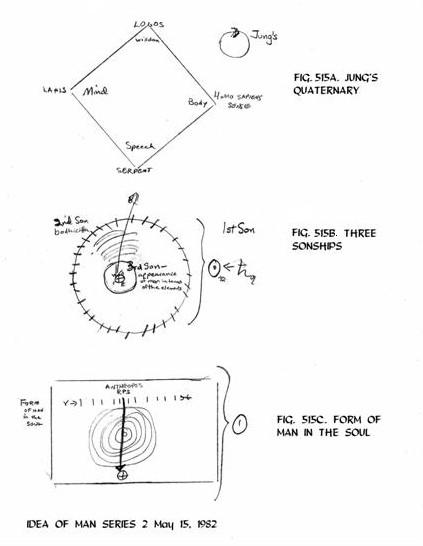
[FIGURE 1982 0515a-2. Three Sonships (Fig. 515B). Scan of redrawn image, JF's class notes.]
[FIGURE 1982 0515a-3. Form of Man in the Soul (Fig. 515C). Scan of redrawn image, JF's class notes.]
Class
Saturday, May 15th, 1982
Verbatim, unedited transcriptClick the series name to view more
CLASS at Wisdom's Goldenrod, Hector, NY
with Anthony Damiani (AD)
May 15a, 1982
ALCHEMY; JUNG; ANTHROPOS; IDEA OF MAN
TOPIC: Alchemy
SUBJECT: Jung
SUBSUBJECTS: Anthropos, Idea of Man, Bodhicitta, Astrology, Imagination
CONTENTS:
Reading and discussion of PD's paper on Jung's notion of Anthropos
Jung's quaternary and levels of Soul
Three Sonships, levels of Idea of Man
Goal, aim is philosophy
Jung and imagery
Three worlds & respective faculties of perception
Sublime Science, Plotinus, intelligible realm within soul
Threefold Sonship
Realm of God in realm of Being
Three Sonships diagram & bodhicitta
Bodhicitta imaged as bird
Plato Republic Book IX, lion, serpent, man
Emanation = relation of Nous & bodhicitta
Earth realm as serpent
Shadow & serpent, dragon
Conventional & ultimate bodhicitta
Bodhicitta as rational incarnating into flesh vehicle
Third Sonship, descent
Four quaternities
God-image as Christ, Augustine
Origen, Longinus, Plotinus
Bodhicitta as soul-image
Saturn in Leo, Christ as reason-principles imprinted on soul
Soul & Nous, true self-knower
First and Second image
Process spiral not circular
God-image in Man not destroyed by Fall
World not a defilement
Psychology interferes with assimilation of reason-principles
Chemical wedding = conjunction of bodhicitta with sublunary elements, = between Saturn in Leo and bodhicitta
Alchemists different presuppositions than modern chemists, working with reason-principles
Gold-making or rummage sale
Alchemical transformation of bodhicitta
Study astrology to get to meaning
Reason-principles in bodhicitta
Sagehood
Second Soul
Assimilation of reason-principles in collective unconscious
God-image & human meaning
Collective unconscious, AD would call Nous
Each individual soul contains I.P. within, subjective and objective
Aspects and degrees
Objective knowledge of the self
Ego, making conscious, & self-knowledge
Psychological level versus higher
Who & What
Sage & ego
Three-level cosmos with reason-principles
Get to images to get to reason-principles: Meno
Teaching our soul
Higher soul and bodhicitta
Need something of doctrine
PB and tea
BOOKS READ FROM OR REFERENCED:
C.G. Jung, CW 12, Psychology and Alchemy
C.G. Jung, CW 9, Part II, Aion
C.G. Jung, CW 14, Mysterium Coniunctionis, "The Conjunction"
Arya Maitreya, Aryasanga, The Sublime Science of the Great Vehicle to Salvation, Being a Manual of Buddhist Monism, tr. E. Obermiller
Plato, Phaedrus, Republic, Meno
Henry Corbin, Creative Imagination in the Sufism of Ibn 'Arabi
G.R.S. Mead, Fragments of a Faith Forgotten
Archibald Cockren, Alchemy Rediscovered and Restored
Plotinus, The Enneads (MacKenna translation, 4th ed.)
A. H. Armstrong, The Architecture of the Intelligible in the Philosophy of Plotinus
H.J. Blumenthal, Plotinus' Psychology: His Doctrines of the Unembodied Soul
PLOTINUS QUOTES READ OR REFERENCED: III.8.6, V.1.1, V.3.4-7, VI.4.4
DIAGRAMS appended to this transcript. [diagram] means the speaker is referencing a diagram as he or she is speaking. If someone is drawing or writing, with audible sounds of chalk on a blackboard, I indicate this by [drawing] or [writing].
FIGURE 1982 0515a-1. Jung's Quaternary (Fig. 515A).
FIGURE 1982 0515a-2. Three Sonships (Fig. 515B).
FIGURE 1982 0515a-3. Form of Man in the Soul (Fig. 515C).
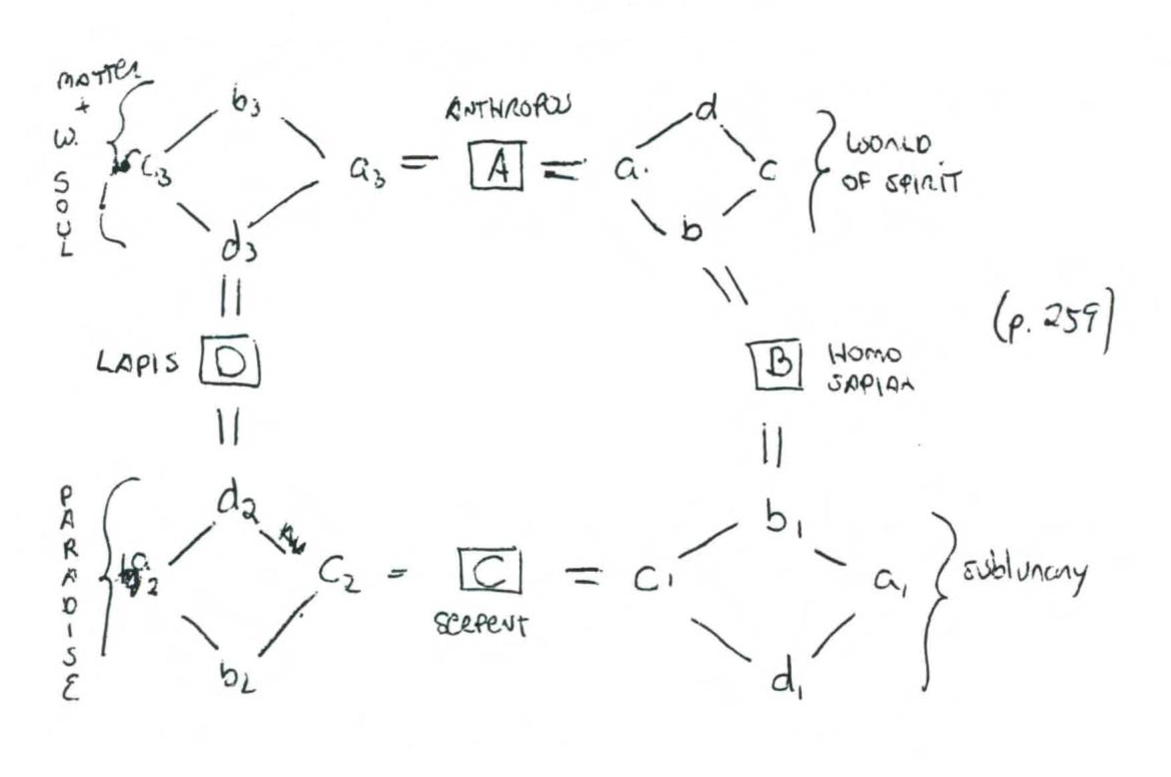
FIGURE 1982 0515a-4-AB. Jung's Archetype of the Self (Aion, p. 259).
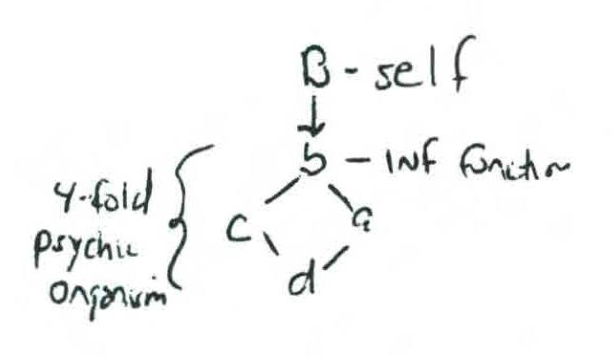
FIGURE 1982 0515a-5-AB. Self, Inferior Function, and Fourfold Psychic Organism.
PD PAPER read in class:
- "Anthropos: Archetype of the Self". Retyped as 1982 0515b V09M. Alchemy - Jung - Anthropos.
INITIALS: AD = Anthony Damiani, PD = Paul Damiani, AS = Avery Solomon, all other initials are those of students.
NOTES by Transcriber (jf):
This is 1982 05/15a, Alchemy; Jung; Anthropos Class, and the first entry associated with this date. 1982 05/15b = Anthropos: Archetype of the Self Paper.
This class was held Saturday AM.
Air conditioner makes places on audio hard to hear.
This class (and 5/22/82 and 6/5/82) is transitional; it is near the end of Anthony's 1982 Alchemy series (quotes from Jung's Aion) and is somewhat hard to place as to TOPIC; SUBJECT. At this time, I think the best fit is ALCHEMY; JUNG - ANTHROPOS. The class also contains many allusions to alchemy concepts, Anthony's discussion of the bodhicitta, the Idea of Man (from 1981), etc. Note that the Idea of Man is not gender specific, though Anthony used that particular term – it really means Idea of Human or Idea of Mensch.
TRANSCRIBED Verbatim by IT (V12ap) in 2020 from Audio Files (and also using V11r). This V12ap is completely verbatim, including first side of first audio file which V11r had mistakenly indicated had no AD present and so wasn't done but does have AD – so this is the whole thing. Almost all that was inaudible is now audible. V12ap has updated Contents; quotes reformatted to current standard; Book List completed; two diagrams have been added from Classnotes AB 1982 0323 to 1982 0517.PDF (pp. 17, 18). Previous Transcription History: Transcribed by jf 2005 from Audio Cassette Tapes; reformatted by jf 2018 (as V11r, which is the basis for this V12ap). Previously printed, distributed 2007 as part of a set on the Idea of Man, series 2. Archival verbatim transcript with Paper – V12ap.
AUDIO FILES: 1982 0515a, 1982 0515b. [Note: "Tape" and "Side" refer to original audio cassette tapes that were later digitized into .MP3 Audio Files.]
1982 05/15a at Wisdom's Goldenrod
Alchemy; Jung; Anthropos; Idea of Man
[Audio File 1982 0515a Begins]
PD: --as to some correlates to Jung's schemata. And then if we want to discuss it or go back over points.
[10¼ second pause, someone drawing]
[Transcriber note: I have no access to the following paper by PD, quotes need to be checked.]
PD [Paper, "Anthropos: Archetype of the Self," PD reading]: "The Anthropos or the Archetype of the Self is tied to or conjoined with a mystical source."
PD: That becomes very clear in the text. Whether we call this mystical source God the Father, Nous, Arch-Anthropos, in terms of imagery at that level it becomes very indistinguishable.
PD [Paper, "Anthropos: Archetype of the Self," PD reading]: "This aspect of the Self is clearly distinguished in many of the references in the Demiurgic and cosmical processes which are powers that bind or involve the soul into the natural processes."
PD: In a couple quotes which I didn't read last week which maybe you came across, he s-- they speak of several references of an astrological framework where the astrological powers are the vehicles that bind the soul or the handwriting on the soul that tie the soul to Nature.
VM: Are those the archetypes for Jung?
PD: The--
VM: The powers that bind the soul to Nature, or are those-- I mean where would the archetypes fit?
PD (simultaneously): Well, I-- I think the notion of archetypes in Jung's terminology equals our notion of reason-principle. He uses it all over the place, [student assents, faint] and it doesn't denote a specific level to experience, just like a reason-principle has multiple levels. He keeps it very vague. So it has many implications depending on his context.
[short pause]
PD [Paper, "Anthropos: Archetype of the Self," PD reading]: "A second important point is that the Anthropos is the teleological cause of the subjective psychic development. The subjective psyche belongs to the former as a vehicle for its unfoldment."
[short pause]
PD: Another point that has to be kept in mind is that--
PD [Paper, "Anthropos: Archetype of the Self," PD reading]: "The Self is the principle of continuity throughout the multiple states of our existence and becoming."
PD: Even though pragmatically it demands our effort in order to become, let's say, self-conscious. [short pause] In fact the-- one of the quotes I think he pointed out, without the presence of the Self archetype, there is no human personality to speak of. It's purely animal existence. [18¾ second pause, flipping of pages, someone drawing in background] This is a general comment about, I think, Jung's preoccupation in the latter half of his life was-- it was much less in terms of specific psychological problems that people were having but the broader more universal meanings operative and inherent in humanity as such. Which is something I feel many of his followers did not pick up on.
[short pause]
LR/S(?) (faint): Paul, could you repeat that one?
PD: I felt that-- I feel that Jung became increasingly involved in researching the broader, more universal meanings operative in humanity in the latter half of his life, in the later works, and not specific problems in terms of a specific person's psychology. [11 second pause, flipping of pages]
I had mentioned at the end of last week's class where Jung refers to an earlier alchemical treatise as an earlier version of this idea that he's trying to explicate here. And he's got a schemata of it in Psychology and Alchemy. I'm just wondering if anyone had a change to look that over, stay on-- It's a-- it's a four-by-four diagram where they speak of four levels of the existence. And, they speak of the four soul functions in Platonism on that in the diagram. [short pause] And it goes from the realm of natural things to natural things becoming differentiated and separated out, just an exaltation of the distinctions within Nature, to the third level where soul emerges from the natural processes as the anima rationalis, and the fourth level is to perfection. So it's an obvious-- has an obvious foundation in early, well, let's say Platonism. But again it's-- is conjoined with the Gnostic and alchemical tradition.
And I think part of my thesis is that the-- the capital letters, A, B, C, D in the diagram [Note: For the following discussion, please see FIGURE 1982 0515a-4-AB, Jung's Archetype of the Self, and FIGURE 1982 0515a-5-AB, Self, Inferior Function, and Fourfold Psychic Organism, appended to this transcript.] are referring to the four gnostic functions of the soul (on/in) the technical expression. And the psychological development of the smaller world of the ego-consciousness is represented by the quaternities within each level. So you have-- at any given world of experience you have a twofold implication, what it means or what's happening from the perspective of Anthropos or the higher man, and what it-- what it means and what's happening from the perspective of the ego-consciousness. [short pause, someone drawing in background]
And that-- that was one of the things that Jung always harped on is-- is the imagery that's active in a person, or the symbolic images that are active, have to act as a bridge for the conscious and unconscious to communicate to each other, so let's say the higher perspective and lower perspective. Lower pers-- Higher and lower probably isn't the right words, let's say via narrow mind of our own consciousness, functioning consciousness, and the-- a higher being operative within us is going to communicate to each other through symbolic images. And it's acting as a connecting reference between the-- let's say diagrammatically between B and small b [diagram].
[25 second pause, flipping of pages]
PD [Paper, "Anthropos: Archetype of the Self," PD reading]: "If we take the capital letters of the diagram as referring to the primary modes through which the idea is going to unfold as a totality experience, A, B, C, D, the four levels of reference…"
PD: And what I want to do is just conjecture a minute now.
PD [Paper, "Anthropos: Archetype of the Self," PD reading]: "…B, C, D…"
PD: Capital B, C, D, or the homosapien, serpent, and lapis.
PD [Paper, "Anthropos: Archetype of the Self," PD reading]: "…as [PD reads: are] intermediate states or stages of Anthropos [PD corrects himself: as intermediate states or stages of Anthropos] are the levels or stages of experience. Each stage in turn unfolds or becomes differentiated through a fourfold, and thus making that level of experience conscious. This would then relocate the locus of experience and identification. This point of unconscious identification is correlate to the inferior function and equals the point where the objective non-ego psyche can operate or unfold on the individual. In the schemata where capital A contacts or equals small a, capital B, small b, this is symbolizing that within that specific level of experience, the Anthropos will infect, infuse, enliven the operations of consciousness through the inferior function, as if the Self hold(s) back a quarter, a portion of the conscious personality. This is one possible way to interpret how the archetypal arrangement of the Self is determining the orientating functions of consciousness. Thus from a perspective of Anthropos, the capital letters A, B, C, D are its modes of existing, whereas the small letters a, b, c, d represent the smaller world of ego-consciousness."
[short pause]
SD: Paul, you were just talking about the one on the upper right [diagram], which is the world of the Logos?
PD: No, the capital letters, A, B, C, D all represent aspects of the total-- the Grand Man, Anthropos.
SD (simultaneously): But, I thought your last part they were-- you were sort of zooming in on that smaller [VM simultaneously: That's right.] quaternity on the upper right.
PD: No, I didn't mean to, no.
SD (simultaneously): Oh ok, alright then.
VM: Well you know, it'd be helpful for me, I don't know about others, if you would just review briefly what-- what these levels are. In other words, how homo sapien is distinct [PD simultaneously: Ok.] or different from reason or lapis or-- it doesn't seem to be labeled lapis but you referred to it before as lapis.
PD: Right.
VM: How the shadow is different than the serpent, things like that.
PD: Ok.
VM: Maybe you was going to go do that in the course of the paper.
PD: No, no, but I'll-- I'll reread that-- that section.
VM: Oh would you? I'd appreciate it.
PD: The-- let me just reread (the-- well) the paper, [student assents, very faint] first page.
PD [Paper, "Anthropos: Archetype of the Self," PD reading]: "The symbolism is an attempt to schematize the Idea of Man, Anthropos, in the Western Gnostic and alchemical tradition, which Jung considers as his basis. This transcendental Idea, the Idea of Man, manifests as a system of complimentary and contradictory images,"though this does not mean that it is anything [like] as contradictory in itself." (Jung, Aion, p. 225, paragraph 355)
PD: And that's a quote from Jung.
PD [Paper, "Anthropos: Archetype of the Self," PD reading]: "The structure of the symbolism is grounded on the alchemical tetrameria. The unity will become explicit through a fourfold. The symbolism, on the one hand, is attempting to convey and express the immanence and presence of the Anthropos in and through all the states and stages of our existence."
PD: And by that it's like an immanent aspect that you're driving at, that in all the turbulent states of becoming, without that being present, whether through the imaginal activity-- like he calls the imaginal de-- dei an active force molding and structuring consciousness. So it's like an immanent aspect he's trying to characterize. Then the other--
PD [Paper, "Anthropos: Archetype of the Self," PD reading]: "On the other hand, this concept of Anthropos is seen as being the total extent of our evolution in and through the world of Nature, and thus it is an image of totality."
PD: So that's an attempt to portray it almost as being and becoming. You know, in one sense it's-- it's always there, it's the guiding teleological cause of becoming, and yet it is what has become. It becomes-- you become a Grand Man, an accomplished man.
PD [Paper, "Anthropos: Archetype of the Self," PD reading]: "In a very rough and cryptic manner of characterizing this schemata would be firstly a pure natural instinctive life, [PD: It's the level of homo sapien.] to secondly a rejuvenated and reborn life endowed with meanings…"
PD: That would be over here (in) paradise [diagram].
[short pause]
VM: You jumped from capital B--
PD (simultaneously): Now, homo sapien-- I'm-- I said that homo sapien is the aspect of the Anthropos. As a world of experience I should-- should have said the shadow or sublunary of the conscious--
VM (simultaneously): Ok. Ok yeah, that's the instinctual psychology, that one there.
PD (simultaneously): Right, that's the collective life where something higher hasn't come to birth in the consciousness. And that-- the distinction between the capital letter and the small letter and the s-- the quaternities between them, if I'm following him is that the-- the quaternity represents the world of experience for-- for the smaller ego framework, whereas the capital letters I think are kind of like the reference points or levels of the Grand Man.
VM: Ok so if-- if the Anthropos is going to have any impact on that man's life, let's say he's working through the instinctual level of his psychology, [PD simultaneously: Right.] the shadow, then the Anthropos will, let's say, reach him through wisdom of the instincts or something like that.
PD (simultaneously): Something like that, right. I think that's his point is that, if that's where the consciousness is functioning and living at, in order for a point of contact to occur--
VM: It has to come right through that level.
PD: It has to-- right. [short pause] So the-- the third level is the opus or restoration process of the Original Man, that's the lapis which is at this point for me the most interesting phase of this thing because it offers a twofold perspective. On the one hand the lapis is often seen as a material process and a process of matter. In fact he spends a lot of time trying to correlate it with some of the developments in physics, where it represents like a resolving of the material constituents of the vehicle back into Nature. Now at the same time that process is going on, the soul is becoming freed from its conditioning or its conditionedness of matter. So the soul is like separating itself from matter on the one hand, and becoming free of that-- of the material constraints, and on the other hand, the material vehicles are resolving themselves back into their-- their objective base. And, it is very analogous I think to like in Buddhism where they speak of returning the mind to emptiness, or in Samkhya where they speak of process of liberation is free of viveka which is on the one hand buddhi lapsing back into prakriti and the center of consciousness rising to purusha.
VM: We used to talk about that or Anthony used to speak about that as a-- you-- you have to purify the vehicles and return them to Nature.
PD: Right.
VM: Get the dirty laundry and clean it up and give it back.
[short pause]
PD: And then the fourth level is a-- is characterized as a marriage relationship with Logos or one's mystical source.
[short pause]
PD [Paper, "Anthropos: Archetype of the Self," PD reading]: "One important structural aspect of the symbol is to be noted in the polarity of Anthropos in itself, A, above the cosmocrators and Demiurgic processes, and C, the serpent, that system of higher powers in the lower."
PD: Jung spends an awful lot of time in his works on this basic polarity. [short pause] Uh--
PD [Paper, "Anthropos: Archetype of the Self," PD reading]: "In many ways the dichotomy gets characterized as light and dark, up and downward tendencies."
PD: He spends a lot of the text on how those two aspects of the total Idea of Man got fragmented in the Western tradition and they refused to let the two sides ever meet. [short pause] But the-- I think the basic point he's driving at is all of those polarities are generative of self-consciousness and the resulting individual responsibility(--/.)
PD [Paper, "Anthropos: Archetype of the Self," PD reading]: "The serpent thus is the carrier of that in and of ourselves which is yet to be developed and integrated. This condition results in furthering one's involution into experience through the powers of projection and embodiment. And as such, the serpent becomes an aspect of the totality imagery and not a privation (bona) as it was conceived in Christianity."
[12¾ second pause, flipping of pages]
PD: Did-- did you want me to quickly hit those things?
S (faint): Whatever you think Paul.
PD: See what I wanted to-- to conjecture is that, in the text Aion he speaks of the third quaternity, the lapis, from the point of view of the resolution of the material basis. And if you recall when we did the Mysterious Conjunction he spoke of three levels of the conjunction of Dorn. And, viewing the third quaternity, the lapis, as-- subjectively viewing it as a process of the soul and not of resolving the vehicles, I think we can make a correlate with those three stages he puts forth in the Mysterium, where the first stage of the conjunction is Eros and reason. And then the second stage is with senses or the-- not really the senses, I think I said that wrong, the world-thought. Let's put it that way. 'Cause it represents a conjunction with your locus in experience. And then the third stage is with the potential world, which would be the man in himself who contains the potential world within him.
VM: We have four-- four things you enumerated there, the three--
PD: Three conjunctions, [VM simultaneously: Conjunctions.] four things, right.
S: [one word inaudible]
VM (simultaneously): Yeah right. Now, must be one of those you're--
LR (simultaneously, faint): No.
SD: No, you have to conjoin-- that's like the connections, right? You first conjoin D to C, that's your first conjunction.
PD: Right.
SD: Then that composite conjoins to B is your second conjunction.
VM: Oh I see.
SD: And then that [student assents, very faint] conjoins to A.
VM (faint): I see.
PD: [drawing] That's the first conjunction [diagram].
VM: Then you take three, put them together.
PD [drawing] And that's the second [diagram]. And that's the third conjunction [diagram]. [short pause] I don't know how well yous remember those three conjunctions that we had-- which--
LR (simultaneously): You said it-- Paul, isn't that the last synthetic process before the whole, the archetype, the whole archetype? You're saying you think those three conjunctions belong to the last five-- last purificatory process.
PD (simultaneously): Yeah, to-- to the lapis, that they represent-- they're viewing the process from the subjective or soul perspective rather than the way he viewed the process in Aion where it was from resolving the components within you that are of Nature back to Nature.
LR (faint): I don't think I followed what you just said. In fact I (know/don't).
PD (simultaneously): In the-- in Aion, Jung spends a lot of time with-- well let's take the-- the parallel with physics in the world of lapis. Ok? And, he calls this fourth quaternity the space-time continuum, which represents a total extent of the visible universe or the manifest world. And it's re-- it's resolving those components which your soul has borrowed from Nature to gain experience back into Nature, back in-- into the continuum that they were borrowed from. Now he's spending-- in Aion he speaks of that in terms of the objective material processes returning-- returning-- like on the one hand it's an exaltation of reason or that phase of the soul which becomes freed from its material involvement. On the other hand, in order for that to happen, the material constraints that are conditioning the soul are no longer conditioning the soul and as such get resolved back into their principles. I don't know if that's helped, Linda.
LR (faint): Yeah I-- somehow I-- I'm not following the point yet here.
PD: You mean in terms of the lapis as-- as a total reference or specifically?
LR: Would you just repeat it one more time?
PD: In Aion we speak of the-- Jung speaks of the lapis [drawing/writing] in terms of a resolution of the material conditions that the soul has used to gain experience back into the s-- the material source that they were borrowed from.
LR: Yeah what does that mean?
PD: Well, in order to gain experience, let's just take it physically, you have to have a body to have experience of this world. Now at a certain point in time, those constituents get returned back from Nature where they got borrowed from. And the same-- the same is true at the-- the psychic level.
LR: What do you mean return(ed) [one word inaudible] that makes [one word inaudible]
AD (simultaneously): When you recognize that it's a cosmic functioning going on in you, the subjective pole or attachment is-- is out.
LR: To those-- to those--
AD: Yeah.
LR: I mean you still have a body obviously and you still have--
AD: Yes but there's a difference in between [LR simultaneously: Yeah no I understand.] I imagine that it's-- it's a body which is [LR simultaneously: It's not what's ordered--] fabricated by cosmic tattvas, and that it's something that's peculiarly yours. So, the example we often use is when you recognize the functioning of cosmic or the planetary spheres, and you really recognize this, then you return this functioning back to its source, you don't claim it as subjective or yours (anymore). You get a brilliant intuition and you recognize, wait a minute, this has been given to me. You trace it back to its source and you see that [one/two words inaudible] attachment or the subjective attachment is dissolved. Your ego has less and less prominence in this matter.
LR: Ok, that's what you meant.
PD: Yeah, that's what like when he calls it-- he says in modern terms the third quatern-- quaternity is symbolized by the-- the concept of the space-time continuum.
LR (very faint): I (don't) [one word inaudible]
PD: Well, again that's the totality of the outer circumstances which you have-- which are the cosmocrators aren't yours.
VM: That's the body schemata [couple/three words inaudible]
PD: The body schemata.
LR: But we're talking about a-- a cosmic level.
VM: Yeah, but that's what the body schemata is.
LR (simultaneously): Talking about [few words inaudible]
PD (simultaneously): That's-- that's what the body gets seen as I would think, Linda.
LR (simultaneously): Right.
PD: Right.
LR: Right, I follow. And then you said something after that.
PD: Now, what-- what I put up here is I'm viewing that process subjectively, and that-- from the Mysterium where he speaks of the three stages of the conjunction in Dorn.
LR: Oh I see. Ok, I get it this time.
PD: Now we're speaking of what's happening in the soul rather than what's happening in terms of the-- the vehicles that the soul is operating with. And the-- you know, the three conjunctions were Eros and reason which form the un-- unio mentalis, which then became conjoined to-- back to the world of experience. And then at-- through a mysterious process which Jung acknowledged he didn't understand, where that conjunction occurred to the uni mun-- unus mundus or the potential world prior to creation.
JL: Can't-- can't the conjunctions also be referred to as the connecting links between different larger categories?
PD: I think-- yeah I think it could, John.
JL: I mean in terms large B, large C and c to b and b to a?
SD: Yeah.
JL: I mean I-- is that particular quaternity a reflection of these other [couple words inaudible]
PD: I don't know, um-- On one hand I can see within each quaternity the fourfold structure of the Grand Man being reflected. So at each-- at each level of individual experience, that is based on the paradigm of the Grand Man all the time. So the psychological functions are based on the paradigm of the gnostic functions.
VM: Can say that might-- that might be a higher octave of what goes on and above evolution. In other words, the confrontation with the shadow and the kinds of psychology that one goes through there is distinct from this evolution within the lapis. But perhaps the fourfold structure can be seen at each of them and so on.
PD: Yeah.
AB: Just what John is saying, I mean you could say that the different-- the shadow quaternity is like the first where you differentiate and unify the feelings with the reasoning and that'd be like integrating the inferior function, and then going through the paradise would be like objectifying the vehicles of the soul, you know, the one with the body, then the third one will be, you know, the whole union with the potential world. I mean you could just make that analogy.
PD: Yeah. No I-- I think the-- the point I'm trying-- the reason why I didn't characterize it that way, let me put it this way, is that this does represent a certain developmental process. And, what's conscious at the lapis quaternity is not conscious at the lower quaternity.
VM: Yeah.
SD/S(?): 'Cause (then--)
PD: And the Grand Man doesn't need the conjunctions. It's-- you know, in a sense the Grand Man isn't in need of conjunction. It's the developing framework that is in need and goes through that process.
SD: I'm not sure exactly what the significance of this would be but, if you go through the large one so you get a different sequence-- So I'm not sure whether you could make a total analogy between the large quaternity and the small one. If you go from the large one you're going D, C, D before you get to A, whereas in that small quaternity up there it's d, c, (e/b) [diagram].
PD: Well, [SD, faint: Sort of(--/.)] if homo sapien represents the world of natural existence, there's no possibility of conjunction until one has had some experience of the serpent. Because there is no consciousness yet-- self-consciousness to go through the process. So the con-- I don't see how the con-- or the conjunctive process that Dorn is speaking of can occur prior to this stage at least.
AB: Speaking of a self-conscious entity which is going through these conjunctions.
PD: Right.
AB: You would say until you have a-- a confrontation with the shadow and assimilate it, until that tension is experienced, you don't have self-consciousness.
PD: Right, without-- the serpent is the vehicle for generating self-consciousness.
S (very faint): Yes [one/two words inaudible]
[11¾ second pause]
PD: The quaternity of Anthropos, rather than using some of the Gnostic nomenclature in this imagery there which I don't think any of us is very well acquainted with, I-- I think we had a parallel in when we were reading from Obermiller's introduction to The Sublime Science where he spoke of the aggregates and the lower personality get transformed into the cosmical body of the Buddha, the Dharmakaya, into the Sambhogakaya or the body of bliss, and into the Nirmanakaya as the body of transformation. So, [drawing/writing] if we say there's Svabhavakaya which he-- Obermiller doesn't distinguish, this is referring to the self-nature body [diagram] which refers back to the Grand Man. But then the-- the Dharmakaya would be the truth body, the Sambhogakaya is the body of communications of unfolding the doctrine, communicating it, that's how Guenther translated the term, and with the Nirmanakaya as being the body of transformation or appearance.
And the parallels unfold-- Like B here is again referring to a homo sapien or ma-- or level of sense and existence. And there's a certain continuity in each one of these things. Like C is always referring to that-- the power aspect. D is always referring to the mind or reason aspect [diagram]. And within each level there's a-- a different arrangement, different level of meaning to those four functions. And at this level [diagram], the four-- the three lower functions of the soul which, you know, reason, imagination and sense, now become vehicles for the Grand Man to unfold, let's say, the-- the aqua doctrine and act as a vehicle to connect the higher and the lower. His-- his functions of his soul become vehicles for the doctrine at this point. He's operating from the Self body or the-- let's say in permanent in-- an intuition continuum with the higher Self, he's operating from that perspective so he-- the mind, speech, and body become vehicles for communicating and unfolding that intuition to the rest of the Sangha.
[short pause]
SD: In both of the examples where you really broke down the smaller quaternity in-- and then you see the aspects, there is a continuity as I point out between what B and C and D present in each case. But, what about-- like what would be-- you know, like the A there is Svabhavakaya and the other one is the unus mundus. There's some sort of a totality, you know, in either one of them. But that's because in both of those quaternities you're connected to that Anthropos. What would that be let's say in one of the others, what would--
PD: What would A be like [SD simultaneously: Yeah.] here [diagram] you mean?
SD: Or-- or in the shadow realm.
PD: To be honest, I haven't thought that-- you know, I haven't had time to go into trying to research that.
LD: Are those vehicles of communication, do they come naturally once the intuition of the Anthropos comes? Did you say--
PD (simultaneously): No, I think that's a developmental process that-- well especially like the Buddhists spend a lot of time on developing the body, speech, and mind. And each one of them is developed through certain-- certain practices or-- [short pause] But, Severin I haven't, you know-- I'm sure research could be done there. I just haven't had the time. [9 second pause] But I think that's a-- you know, that's about all I have on the notion if there's no further questions.
RC (faint): Would you say a little more [S, faint: Uh-hm.] about the capital letter A, B, C, and D [couple words inaudible] just one statement. Go through it one more time.
PD: Ok, um-- A, B, C, and D are different modes of the Grand Man or Anthropos. In one sense they could be seen as its-- as levels of existence or the levels through which the Grand Man functions in contacting the smaller world of the developing entity. I-- Jung acknowledges an earlier correspondence with an alchemical framework where those seem to become correlate to the Platonic gnostic functions. And from that statement of his, I made the-- I've made the assumption that they are definitely correlate, that they seem to refer to the functions of the soul and the smaller quaternities, which again he acknowledges as the differentiation, becoming conscious, referring to the e-- the psychological functions.
RC (faint): How would you correspond (them), like one-to-one?
PD: Yeah, I think homo sapien [drawing/writing] refers to senses, this refers to imagination, or fantasy I think. This refers to reason. And this refers to intuition or Nous [diagram]. [11½ second pause] I mean this-- homo sapien is the le-- is the level of natural existence, collective instinctual which is existing at the level of sense consciousness only.
S (faint): Could you say those four letters since we can't hear?
PD: Pardon?
S (faint): Could you say only the letters since we can't hear you?
PD: Ok, senses refers to homo sapien or B. Imagination I correlated to the serpent or C. And reason corresponds to D or the lapis, with Nous to A or Anthropos. [short pause] And there's a-- the mandala-- the Kalachakra mandala is almost identical, I just-- I can't help making a correlate. They speak of four poles-- the four directions in a Kalachakra mandala, or body, [drawing/writing] speech, mind, and wisdom [diagram]. [9¼ second pause] So again it seems like the-- there's a totality image ref-- again referring to the Grand Man.
[short pause]
AD (faint): Paul, go ahead.
VM (very faint): I wish you would.
S (faint): Oh I think last week you would.
AD (very faint): That's not (fair). Speech [couple/three words inaudible]
S (faint): The body's what it is now. Speech and mind and--
VM: Interchanged?
AD: Yes.
PD: Well, no.
VM (faint): Yeah.
PD: But what in the Kalachakra mandala is a little different sequence. See Jung is portraying the idea [drawing] of the rotundum. Ok? You know, as a s-- as a rotary process. In the Kalachakra mandala, it's not portrayed as a rotary process. When they establish the-- the points of reference, if I remember right--
S: It's easy to remember.
[short pause]
PD: The vajra body is at the North, and then they went to the-- so body was at the North. [drawing/writing] And at the South was speech, which was the second step. This was the first step in the initiation process was the establishment of the vajra body. The second step was vajra speech, which was at the South. See, so Jung is going this way [diagram], they're going opposite, like that [diagram], in the Kalachakra mandala.
VM (faint): (Map/Mapped) exactly, of course.
PD: The four points are-- so it-- one's in, you know-- working with I guess the alchemical tradition at the rotunda. And in fact, that's another term he uses for the Anthropos is the rotunda. It's symbolized as the-- the wheel of becoming.
[short pause]
JC: Paul, I don't understand how say the large B and C are evolved in that corner you call the shadow or D and C are evolved in that corner. There was--
PD (simultaneously): You mean like analogous what we did here [diagram]?
JC: I think I follow these two, the conjunctions which he had, but it seems the way the diagram is organized that each of the larger functions has something in particular-- two of the larger ones have something in particular to say about the structure of one of those-- one of the (core/four) quaternities. And-- like for instance, body and what you called imagination, sense and imagination, B and C, might be particularly involved with the development of the shadow. You said it's [couple words inaudible] I'm just trying to understand how the structure [one word inaudible]
PD (simultaneously): Yeah I haven't-- I haven't thought enough.
JC: Or reason and imagination working together develop, (let's say)--
PD (simultaneously): See if we say--[chalk on board sounds] that's why I think in Jung in the diagram each one of these, C1, B1, A1, etc, the fourfold is always remaining and it-- see B always relates to the prototype of homo sapien or to the senses [diagram]. So, I think you're right Jeff that it come-- it can be thought out, I just haven't spent time.
VM: Why can't you say something like this, let's say you start at B, capital B. That's the-- the light of the soul at that level, at the bodily level. And the wisdom of Anthropos comes through the body then to activate let's say the instinctual man or the shadow in the lower right-hand corner [diagram], ok. Development that takes place in there eventually results in a certain kind of activated imagination which you can say is C, alright, or-- Well, maybe imagination maybe is not quite the right word but subtle. And then that C now becomes the activating higher principle which then can give rise to this paradise which the development in-- in the imagination there eventually results in a sufficiently purified reason where now you can progress to the stage of the lapis. And then within-- within the lapis the reason is the activating function but it must give rise to this mystical identity which occurs in the unus mundus, I don't know, that's a very [PD simultaneously: No, I think that-- that is a--] rough but I'm trying to make the connections all the [PD assents] way around.
PD: I mean another way to [VM simultaneously: In other words, I'm trying to--] characterize it instead of imagination is say the feeling intensities.
VM: Oh ok, feeling.
PD: That C1 becomes such-- the contradictoriness of the feeling intensities become-- force [VM simultaneously: Forces--] the issue of self-consciousness to come to birth.
(Side 1 of original cassette tape digitized as 1982 0515a Ends; Side 2 Begins)
PD: It's coming from different perspectives.
VM: Yes, yeah.
PD: Yeah. So like the serpent get characterized as the-- almost like the power aspect of the archetype or of the Anthropos, which in our experience become correlate to feeling intensity in a psychological manner. It's the intensity of feeling or power in experience. And that-- that's what gives reality to the experience you're having is that intensity of feeling that comes to birth in it. [short pause] I'm not sure if I-- Yeah.
JC: I was wondering for instance in this picture [couple words inaudible] [S, very faint: (couple words inaudible) fourfold.] because it's fourfold, but, I mean the relationship of sensing and what you're calling imagination or feeling in the first level might be the lowest level functioning of an archetype or like the anima functioning, that would be the Eve level where it's just purely instinctual processes, but when-when reason is working with the imagination, B and C, (that's/there's) a differentiation of the individual becoming more evident. So you would go up to the next level where you're still in the realm of the individual psychology but Helen level where there's some differentiation of (individual space/individual's taste). I see those (two/too).
PD (simultaneously): I-- I had even conjectured, now I didn't pursue it very far, but that if you take the inner processes here [diagram], ok, these represent the introverted functions. These represent the extroverted functions [diagram]. Introverted insofar as they're part of the continual process of self-transformation of the inner being, whereas these represent the functions that are projected in dealing with the-- what appears to be external in that level of reference. But, I haven't thought much on it but I'm--
VM: I thought Jeff was doing is the anima if you put Even in a corner, Helen (more) on the left, Virgin Mary up there in C, (D) [one/two words inaudible]
PD: Yeah I-- I think that's based on the same paradigm, there's no two ways about it as far as Jung, that those four levels of the anima against four levels [VM simultaneously, faint: Of the (soul).] that the consciousness is operating at.
S (very faint): Right.
JC (faint): But the point of that example is to show that the-- conscious identifications shifting between, say, sense and imagination, then imagination and reason become more important. Eventually reason and intuition (you got) sort of sensing, imagination, now it just more-- much more externalized when you're working with-- with reason and imagination and that's how (the) intuition is the intern-- internal core on [one/two words inaudible]
PD: So at this level [diagram] then you-- let's say the two functions that are operative are sense and feeling.
JC: Yeah I agree with you, those are like the center of conscious identifications [PD: Right.] with sensing and feeling.
PD: And at this level [diagram] it becomes feeling and reason, feeling and thought.
JC (simultaneously, faint): Of-- right. Because that's the-- the center of (identification). [student assents, faint] And we say the-- the conjunction with-- as a mental purusha happens at the next one where intuition and reason, you know, the central core of a person.
PD: That's-- yeah. I-- I didn't pursue that thought, you know, it-- it was there to pursue.
[16½ second pause]
AB: Paul, based on what you were saying last week, you're interpreting this whole schemata, transformation through these four levels, the Self, as eventually bringing you back to the Idea of Man in the Nous.
PD: Right.
AB: And that Jung understood it as doing that.
PD: He und-- he makes very clear reference that this whole process is a happening within the Self, and that the Self comes-- comes out conscious but otherwise unchanged in the process or through the process. [AB assents] So-- I-- being weak on metaphysics, I-- you know, at that level I can't really distinguish very good.
AB: But it would be like with the Tibetan schema where he's speaking about the lower bodhicitta and then that gets purified until the higher comes right through. And then the higher really would never change.
PD: Right.
AB: The Self returns to itself and what it was to begin with. It's kind of this transformation process going on here.
CdA: What? [short pause] The fact that it-- the only thing that changes is that it becomes conscious, would that include the-- this conception of the body of light, that the-- that those-- this actual vehicle that is built to reflect the wisdom of the-- of the higher?
PD: Well that's what-- I think that's how I was trying to interpret that fourth quaternity, Carol, that at the l-- the quaternity at the level of Anthropos, the other three functions become vehicles for this-- for the Anthropos to-- to incarnate into the world of existence, the higher doctrine. So now no longer are the functions spoken of as vehicles of gaining experience but as vehicles of bringing a doctrine into let's say mankind.
CdA: Yeah. But then to say that the only thing that's different is that it's conscious is somehow-- you know, it sounds like it's truncating the process because [PD: I agree.] something quite profound is really taking place, you know.
S: But it--
PD: In terms of the man itself, it hasn't changed. I think that was the question.
CdA: You mean in terms of the Anthropos--
S (simultaneously, very faint): Anthropos, Idea of Man.
PD (simultaneously with CdA and S): Anthropos itself it hasn't changed. But its relation to humanity let's say has changed.
[short pause]
JL: I mean, can you go counterclockwise [referring to Fig. 515A]?
VM: That's the left-hand path. (laughter)
PD: Well, counterclockwise I think represents from a metaphysical perspective how existence becomes. Once this is going this way [clockwise], you're speaking of evolving out of the natural process, the world of existence. [VM: The (turn/term).] But that assumes that the world of existence has been established.
AB (faint): Yeah because cosmology is building up [one/two words inaudible]
PD: Right. It'd be cosmology going the other way.
AB: Or else regression.
JL: Well the thing that I was sort of indicating when I talked to you, there was-- there seems to be a direct link between A and B. I mean it seems to be inherent in, you know-- albeit unconsciously, it's there even in a-- even in body-mind complex of the homo sa-- homo sapien. [one/two inaudible PD or student words simultaneous with JL] The germ of the-- the-- the germ of bodhicitta is-- is even there in-- in homo sapien (again).
PD: Yes, definitely.
JL: If you speak-- some speak like mind underlying the individual psyche.
PD: There's a-- a parallel I didn't bring out where Jung was speaking of Basilides, a Gnostic. And-- and he speaks of a threefold sonship which was brought forth by the non-existent Logos or non-existent God.
S (very faint): Threefold what?
PD: Sonship. S-o-n.
S (very faint): How about [one word inaudible] (laughter)
PD: The three, you know-- One-- one was the son that remained with the Father; one was a-- a s-- the son that had wings and remained-- and remained in the highest levels of the firmament; and the third son was that which incarnated into body. And it's that sonship which has to go through the process of becoming and purification. And I think that's often the correspondence with the-- when they speak of the body. (It's/Its) implanted in the very body, the human body, the seeds for becoming a higher man.
JL: Do you think those three also correspond to the-- three of those quaternities [one/two words inaudible] and possibly aspects of the Svabhava-- Svabhavakaya, like the natural being the shadow element, the embodied the angelic, the paradi-- paradisiac, and the-- the higher one being the-- the upper one there, (the one) between (blackness) and--
PD: Well, I was taking them more as being the-- at the level of the Anthropos itself, that that was referring to that quaternity. Now, I don't know. That would involve, you know, more research into the Gnostic--
AD: What are those three sonships over again?
PD: The first sonship stayed with the Father. The second sonship remained in the empyrean or the higher firmament. It had wings, as Plato spoke of the soul in the Phaedrus. And the third sonship was the body, which des-- which had to go through the process of purification. In fact-- let's see if I can find it.
AD (faint): Well would-- wait, would that correspond to the three aspects of the Idea of Man? First aspect or the Idea of Man is the permanent possibility in the Nous, alright, and that would-- that's the Anthropos. The second one doesn't descend, it remains in the empyrean. That would be equivalent to what we might refer to as the Idea of Man as embodied in the universe or the reason-principles, the Nous. Hasn't descended and it's still, so to speak, co-administrative with the Demiurgus in regard to the administration of the universe. Third level--
PD (simultaneously): In fact the second--
AD: Huh?
PD: The second son-- I read the-- I read through Mead on it, the second sonship is spoken of as the-- as being wiser than the Demiurgic processes, or the Demiurgus.
AD: Why does the third son, why is it in the Demiurgus, (in other words, now)?
PD (simultaneously): No, the second-- the second sonship which exists with the Demiurgus is wiser than the Demiurgus.
AD: Yes, but why?
PD: Well, 'cause he knows something outside of the cosmos which the Demiurgus--
AD (faint): Is unaware of.
PD: Is unaware of.
AD: But, that means then that the third son must go through the entire process [PD: Right.] to gain this knowledge which is greater than that of the Demiurge. So, if we look at-- if we look at-- this is the Platonic threefold Man or the threefold soul. And if we look at these three aspects of what Plato refers to as the Interior Man, it has these three aspects, and they would correspond in the chart to the Saturn, the Jupiter, and the Mercury [in Leo, Virgo, Pisces, respectively]. That's the-- that's-- that's the true Man in Plato. But the first one is the permanent possibility of the Idea of Man which would correspond to the Buddhist notion of Buddhahood, alright. There's the possibility that someday we might become that. (One or two.)
[slight pause, laughter]
VM: Probably by the cosmic [one word inaudible] (laughter)
AD: The second possibility was the soul at the level of the empyrean and in conjunction with the Demiurge rules over and administers the universe. Then the third is the fall of Man, what in Christianity is referred to as the fall of Man where this Interior Man descends into generation. And when he reaches generation that means he's living in a body. Shadow, body to me are synonymous.
PD: Yeah. No they are for Jung too.
AD: So, this-- this is like a-- his understanding in Gnosticism and alchemy of the Platonic doctrine. What I'd like to do is to show-- is to show that he attempts, he attempts to penetrate into the core of a philosophic doctrine through an imagery which I think is going to trigger off(--/.) The imagery involved that he works with will trigger. There are levels of this transformative process that require (you use) kind of reasoning without any imagery get lost. And I thought it might be a good idea if we correlate that right now to the Platonic doctrine, the whole of the Neoplatonic tradition. That is, if yous don't want to go out and chop wood and carry water. (bit of laughter)
[few seconds of faint background student talking, laughter]
VM: I don't understand precisely what you meant.
S (very faint): Yeah.
S: (You--) he wants to show (you on the--)
S (faint): Right.
AD: We want to work this out in some detail. I want to also go over some of the quotes that Paul pulled out which are really quite demanding. Well this-- this will be cause for many people to get upset.
S: (Right.) (bit of laughter)
AD: What I mean by that is that here-- I'm no more a Buddhist than I am a Jungian. [short pause] My goal, my aim is philosophy. Dedication and devotion is to philosophy, not to any tradition, to any man or philosopher. So we can have some fun now. [S, faint, possibly part of background: How about me?] You can say it now. (laughter) Well, I'm going to need to ask you some questions.
VM (simultaneously): [couple words inaudible] [S simultaneously, faint: Yeah, that's what I've got.] if I have a car. (laughter, student words)
AB: Is that the third sonship? (some laughter)
[few second of background student talking]
AD: Do you understand what we just said?
VM/S(?) (very faint): I guess so.
[short pause]
AD: Hm?
AB: Well, you're saying that the--
AD: What we just said. Do we understand the three sonships?
CdA: Was the last one the Merc-- You said the-- these three were represented by Saturn, Jupiter, and Mercury?
AD: Uh-hm.
CdA: Which Saturn, Jupiter, and Mercury, in the Soul ring? Which Saturn, Jupiter, and Mercury?
AD: Saturn in Leo, Jupiter in Virgo, the Mercury in Pisces [diagram].
CdA (simultaneously): Well that's what I was just asking. In Pisces, I see.
[short pause]
AD: We've gone through this a long time ago when we were speaking about the construction of the Ideal Man in the Platonic tradition. [short pause] We understand what we just said?
S: We should just go over it again. I--
VM (simultaneously): I don't understand why you chose those-- why you chose those planets to symbolize three levels.
AD: Let's worry about that later.
S: Uh-hm.
VM: Ok.
S (faint): Yeah.
AD: That's not important. And besides it'll blow up everything we've done.
VM: Oh! Good, let's not do it now then. (VM laughing)
AD: Let's-- let's go back to the quote, what we have.
VM: Those three-- three sons quote?
AD: Three sons quote.
S: Where is that, Andrew?
AH (faint): That's a animal.
S (faint): What?
[10¼ second pause with faint background student talking]
AD: What page was that? Anyone have it?
S (very faint): I'm not sure.
S (faint): All the pages [three/few words inaudible]
S (simultaneously): Pa-- it's paragraph three.
S (faint): What do you-- what do you have to do?
S (faint): Page (six).
AD: Yeah I personally think Paul was trying to do something impossible because he was depending on Jung and trying to see into the core. In other words, what Paul was trying to do was read the same way, read the imagery the same way that Jung was reading it, and trying to penetrate through the imagery into the meaning that's behind that imagery so that imagery itself was the very organ of perceiving these truths. But like I pointed out there's a possibility of error here because imagery is really always a very tricky thing. One has to-- I have to surmise that Jung can read images accurately and perfectly at each and every reading, and that's really a task of Hercules. Remember the quotation?
PD: I'm looking.
AD: Ok.
S (faint): It's right here.
S (faint): It's page 64.
VM: The distinction is, Anthony, in philosophy you try and dispense with the imagery as much as possible to get to meanings, you say, and that's a better vehicle for the transmission of this-- this idea.
AD: You'll need imagery-- you need imagery up to a certain point. But assuming-- assuming an intensity of concentration and of purpose, then there'll be a point where you pass up with the active imagining and archetypal imagination. If you remember-- if you remember the Corbin article on the mundus imaginalis, he said that there are three o-- three worlds, and that these three worlds have organs of perception necessary for each level. So at the sense you have the senses, the functioning of the senses and the perception of a sensible world. And then he speaks about the ima-- the mundus imaginalis. There the organs of sensation-- I mean the organs of perception was the active imagining itself. And then he spoke about the third world, the Intellectual, which is beyond either. Now each one of these-- and here I have to agree with Jung, of course, what he's trying to do, what he was trying to do, and that is that each world in its own-- at its own level is meaningful and proper. So at the world of sense you need senses, and you have to operate through the senses. And at the world of active imagining, the active imagination is the organ perceiving the suspended images in the imaginal world. And at the level of the Nous, alright, the organ of perception there is the Intellect or the eye of the soul. And each one is appropriate at its place. That is not to say that a person cannot experience here at one and the same time while he's looking at a sensible object, the imaginal world, or the world of the imagination. Very often people get that experience, right? I mean, they're looking at an object, and a denizen of the imaginal-- the imaginal world also appears with that. So someone like Blake says he can see infinity in a grain of sand, although I'd like to see how the dickens he saw it.
S (very faint): He's a poet.
AD: You can't see infinity.
RC (very faint): But I said the universe (in a grain).
AD: Huh?
RC (very faint): I said you see the universe in a grain.
AD: Oh. Universe in a grain of sand. Oh, that's correct, I-- I misquoted. (laughter) That's just like the example we had in Sunday's class in The Sublime Science. If you remember the example. This man says now look, imagine there are three thousand, thousands of worlds, alright, I'm going to paint them on a big silk canvas. It must be a pretty big silk canvas. And they paint all the worlds on it. He says now we compress it. It's more like a tiny seed, and we insert it in an atom. Then he goes on to say now, if there was a man who knew about that, he would try to find ways and means to bring that out. Now you can see the whole imagery is-- what he's saying is that inside soul of every person is the whole of the Intelligible World. That's-- that's his way of-- And that's axiomatic in Platonism. All of the Intellectual Realm is in the soul of the individual. All of the reason-principles-- well, we have to qualify now. The soul's version of the Nous, the entire version of the Nous, is in that individual soul. And then Jung goes on to make the point, well, if that is so, if the reason-principles of the entire Nous are in each individual person, then that means that they are objective. Correct? The Nous in you, the Nous in me, the Nous in him--that means that the Nous is one in all of us. So it's one in itself but one in all of us insofar that it-- Well, of course, if one doesn't understand that, Plotinus here exchanges the-- he exchanges-- he doesn't look at the spiritual world the way we ordinarily would look at it, you know like we would say one body excludes another and is different from another body. Plotinus points out that in the Nous all bodies-- I mean all souls include all other souls. [Note: See Plotinus, VI.4.4, last para.] So there you have the notion of mutual inclusion, one soul includes another in the Nous principle. Over here that can't happen, my body does not include your body. Ok. Now-- You find the quote Paul?
PD: Yeah. 64, Pat had.
AD: You want to read it?
[14¾ second pause]
C.G. Jung [CW 9, Part II, Aion, pp. 64-65, paragraph 118, PD reading, Greek words in Jung's text not read]: "According to the rather complicated teachings of Basilides, the"non-existent" God begot a threefold sonship. The first "son," whose nature was the finest and most subtle, remained up above with the Father. The second son, having a grosser nature, descended a bit lower, but received "some such wing [PD reads: wings] as that [with] which Plato . . . equips the soul in his Phaedrus." The third son, as his nature needed purifying, fell deepest into "formlessness." This third "sonship" is [obviously] the grossest and heaviest because of its impurity. In these three emanations or manifestations of the non-existent God it is not hard to see the trichotomy of spirit, soul, and body. Spirit is [PD reads: as] the finest and highest; [PD: Then you have some Latin here. And] soul, as [the ligamentum spiritus et corporis, is] grosser than spirit, but [has] "the wings of an eagle," so that it may lift its heaviness up to the higher regions. Both are of a "subtle" nature and dwell, like [the] ether and the eagle, in or near the region of light, whereas the body, being heavy, dark, and impure, is deprived of the light but nevertheless contains the divine seed of the third sonship, though still unconscious and formless. This seed is as it were awakened by Jesus, purified and made capable of ascension, by virtue of the fact that the opposites were separated in Jesus through the Passion [(i.e., through his division into four)]. Jesus is thus the prototype for the awakening of the third sonship slumbering in the darkness of humanity. He is the "spiritual inner man.""
PD: Um-- And then he-- [reading from table on Jung, p. 66] The first sonship is called "Christ of the Ogdoad." The second sonship is "Christ of the Hebdomad". And the third sonship is "Jesus". [short pause] And now you--
AD: Alright. That's a nice quote. If we went over it in our mind, alright, we try-- we try to understand it, the first sonship who remains with the Father would be--
S (faint): [couple words inaudible]
JC (simultaneously): I would say it would be the (Sun/son) in the--
AD: Soul in the Nous.
JC: Well-- [VM simultaneously: Yeah. Intellectual soul.] or even the soul-- just the Intellectual soul or the whole Soul ring (bring out) the twelfth house.
AD: Well, say that again.
JC: I'd say that it's the soul freed of any type of body, could be from the Sun in Aquarius all the way up to the soul that's in the chart [diagram].
AD: But isn't he speaking about this as the soul staying with the Father? Now who would the Father be? Wouldn't the Father be the Nous?
S (simultaneously, very faint): (Intellectual-Principle.)
JC: Could be the cosmic soul.
PD: Well, [S, faint: Right.] in (that) he calls it the non-existent God. And it-- it's-- if it's staying with the non-existent God I would have to say it's above--
AD: Being.
PD: Yeah.
AD: Above sensible being.
PD: Above the fourth quadrant in our--
AD: So you're saying that the non-existent really means the authentic eternally Being.
PD: He has similar ways to say the same thing.
AD: Soon as you say "existence", you're putting it in the fourth quadrant, you're putting it in the realm of becoming. Now there cannot be any God in the realm of becoming in that sense. No God becomes anything. So God has to be an eternally existent-- existent, or the eternal Being, a Being in eternal actuality. That means it has to be in the Nous. So that would be the Father. That would be the highest level of the soul, the soul, so to speak, remaining with the Nous. Now the Nous is often referred to as the Father and if you remember, there's a couple of passages in Plotinus where he speaks about the Nous is the Father [cf. V.1.1 for example] which cares for its offspring, the soul, and guides it. So then that would be the first-- the first level of the soul. Now, what would the second level of the soul be?
AB: Soul would have some kind [LR simultaneously: Powers?] of subtle vehicle.
AD: No he-- you said that the second one was in the empyrean.
PD: In the higher re-- Is the-- does anybody have Fragments of a Faith Forgotten by [G.R.S.] Mead right here, because he goes into it a little more, you know, the actual quotes in that. But in there he speaks of the second son as staying with the upper regions of the firmament.
AD (simultaneously): Yeah. I read-- I read the fragments. Ok.
PD (simultaneously): And the-- in fact, the Demiurgus puts the second sonship on his right side. And, the second sonship is spoken of as having-- being wiser than the Demiurgus. And--
AD: You see, among the Gnostics they considered the Demiurge an evil person, because he created the world of forms and then incarcerated us in those world of forms and he doesn't want us to get out. Now the Gnostic theory was that he was therefore evil--he wanted to keep us there--and anyone who wants to get out he keeps pushing back in.
S (faint): Uh-hm.
S (very faint): [few words inaudible]
S (faint): Yeah.
S: [few words inaudible]
AD (simultaneously): Remember that story?
S (faint): Yeah.
LR (faint): Well I know it personally.
AD: You know it personally? (laughter, student talking) [short pause while AD draws; cf. Fig. 515B] Alright so, if we call this here the empyrean, [drawing] alright, wouldn't that be equivalent to what we refer to as-- wouldn't that be equivalent to what we refer to as the bodhicitta? [student assents, very faint] In other words this is the twin soul? Here's the first soul. [drawing] This is the twin soul [diagram]. The reflection of this here. Now this rules over the empyrean. And-- and you remember, Plato even speaks about it, remember, he says, if you break your wings, you're gonna come down here. [drawing] He speaks about the descent or the fall of man as a-- the broken-- the-- the wings of the soul are broken. Remember that, yeah?
JL: He-- he calls it hebdomad though, and that would-- it would possibly have some relationship with the planetary [VM: Seven--] powers, no?
VM: --planetary spheres.
S (very faint): Uh-hm.
S (very faint): (Yeah/No).
AD: Alright then, if this is the bodhicitta, [drawing/writing] alright, and we said that the bodhicitta contains within itself-- or we could call it the reflection of the soul, an emanation of the soul-- you see how important the term emanation here is? You got the same term here, emanation.
VM: Anthony, if I can just ask you a question here. Before you were saying that this first sonship must be, let's say, the Intellectual level of the soul completely, let's say, abstracted from manifestation or becoming. And that you said was the Saturn in Leo, [AD: Yeah.] so on. But now you seem to be diagramming it as the entire Soul ring, is that what you're doing there by Sun through Saturn?
AD (simultaneously): Yeah, to-- to keep-- to keep--
VM: Keep Jeff happy?
S: Yeah. (bit of laughter)
S: No.
AD: To keep you all happy right now.
VM: Oh ok.
CdA: But not for long.
AD: No, I won't allow you to be happy very long.
VM: That wasn't [one word inaudible] (laughter) That was not making me happy but that's alright. That's not the criteria, true. (bit of laughter)
AD: Anyway, then this here would be the bodhicitta [diagram]. And we said that in the bodhicitta there's a prefiguration or the whole of the plan of its evolution, growth, unfoldment, [VM assents] development, alright. [student assents, very faint] Alright, so that was a second soul.
VM: (This is/The souls)--
AD (simultaneously): [drawing] This is the archetypal region, over here you have wings [diagram]. Very often in mystical experience you get images or pictures of a bird, and that's usually referring to that soul.
S (faint): Do wings also imply the soul falling? That circle?
AD: They imply? Well they will be included within-- within the bodhicitta. They'd be included in that. And then the third, the third would be the appearance of man in terms of the elements. [drawing] And that-- what he calls [one word inaudible] All the force, all the vitality, for instance, let's say of Leo, alright, is coming through that. Do you ever watch a man when he gets real angry, you could see that Leo coming out? [VM, faint: I've seen it.] All that power that he can't control? You remember the st-- you remember the-- do you remember in Book IX [Republic], Plato's remark? Avery, you remember it. Tell us about it, go ahead. Make it into a little story for us.
AS: Yeah, takes the three components of a man.
AD: Yeah.
AS: Says make a-- "let us make an image".
AD: This is a little fairy tale from Plato. He was good-- he was good at these (fairytales).
AS (simultaneously): Is there a microphone? Hello.
AB: You should say "once upon a time".
AD: Once upon a time, ok.
S (simultaneously): Yeah.
AS: Once upon a time, (bit of laughter) there was this book called Plato. And, he says let us make an image of man, what the man is like, and he talks about this three components. And the one he talks about as being in the shape or image of a lion, and the other one as being-- the second component being this hydra-headed beast, and the third one-- he says both of these are interior and are put into the outward form of a man, you know, the shape of a man, a human being, head and arms and so on. And, I don't-- I don't really remember completely the whole descriptions. I don't remembers-- I remember the middle one is like the animal nature, the irascible nature.
AD: You could think of the hydra-headed beast or Draco as [AS: The Dragon.] constellation that goes from Cancer all the way to Scorpio.
AS: Yeah. That's like the Dragon.
AD (simultaneously): So if we think of the Leo-- alright, so the I-nature is the Leo, the desire [AS simultaneously: In this--] nature [AS simultaneously: Yeah. In this--] is the hydra-headed beast, and then the form of the man Aquarius. [student assents] Remember?
AS: That would be like this--
AD: All-- so all that's-- he says, we're going to make a statue of man, but we'll make the statue out of words, it's easier than trying to make it out of stone. So, he has this beautifully concocted story about how a man is made in terms of imagery, in terms of figured words.
JC: You're saying the lion is the Demiurge.
AD: No I'm not saying anything, I'm just saying-- I'm just repeating the story Plato said.
S (faint): Uh-hm.
JC: You're saying the lion's the anger part? And hydra-headed beast is the desire nature?
AD: Yeah. Something like that. Anyway, I forgot the point.
VM: We were talking about the three sons.
AD: Yeah, the three sons, oh yeah. Well, if we looked at this diagram then could we say we have three sons here? Saturn in Leo, the reflex of that Saturn in Leo, bodhicitta, which would be the emanation of the soul itself. [student assents, very faint] Now you remember what we said about emanation yesterday? Everything-- everything that is-- there is in the One a superior version, a transcendent model, of everything which is found in the Intellectual-Principle. Now notice the same thing is being applied. There is in the Intellect, or in the soul in the Intellect, a superior version, a transcendent copy of everything which is going to be found in the bodhicitta. That's what we mean by emanation, that's why the principle is so crucial, without understanding (it/with) I don't know why Armstrong and Blumenthal [Note: See A.H. Armstrong, The Architecture of the Intelligible in the Philosophy of Plotinus and H.J. Blumenthal, Plotinus' Psychology: His Doctrines of the Unembodied Soul.] and all these other people go around trying to expound Plotinus or Plato or anyone else. And they go on, we go on with that. Well then in that case, in the bodhicitta there's already-- there's already the whole plan of the development of this creature. Now that would include his immersion into matter, getting right down-- could we call it the serpent? I would. I would say that that's the serpent.
BS (faint): The whole thing.
CdA: [couple/three words inaudible]
AD: Whole thing.
PD (simultaneously): Yeah the homo sapien.
AD: Your incarnation in the body. The body is the serpent.
BS: You mean that whole diagram [couple words inaudible]
AD (simultaneously): No, no, no listen to me Bert. The body is the serpent.
BS (faint): I understand.
AD: It's-- no, no, you don't yet. You don't. If you take a look-- if you take a look at the Earth, alright, [drawing] and you think of the Earth-- and you think of the shadow thrown on the Earth by-- by the Sun, you'll see a serpent on it. That's the tropical zodiac. The incarnation in that matter, you're in the serpent. You follow?
S: Yeah.
AD: Ok. That's the serpent [knocks on board].
EC (faint): The larger circle is the [one word inaudible] I got mixed up listening.
AD: Same thing!
EC (faint): Oh it's the same thing?
BS (very faint): He answered it before.
AD: Same thing. The shadow and the serpent is the same thing. If this soul which is going to fall down into carna-- in-- into the elements, alright, and we're-- we're saying that all these elements--fire earth air and water--which contains all the vasanas and traces of life which have been going on in the past, and these traces of life are the result of the Sun's journey through the zodiac which forms this belt around the Earth which looks like a serpent, it is a participation in the life of this serpent that this body is functioning with. So when he says that it's incarnating in the serpent, he's literally-- he's speaking the literal truth. You want to call it the Dragon, call it the Dragon. If you want to call it the Orphic egg, call it anything you want. But get the point. Now once the soul comes into the body, it's going to have to deal with all the power and force that have been for eons of time accumulating in the matter of the Earth. And when that's put together as a body, you have those forces to contend with.
AS: Yeah, that's his-- that's his picture at the beginning of Aion.
PD (simultaneously): That's the main [S simultaneously: Oh yeah.] picture in the [one word inaudible] book.
SC: Would you say that the bodhicitta [PD: Aion.] included as part of that plan that insertion of the soul in the body?
AD: How is the bodhicitta included in part of the body?
SC: No that-- not that the bodhicitta is included in the body but that the bodhicitta in its plan includes the insertion of the soul into the body. That that would be the lower aspect of the bodhi--
AD (simultaneously): That would mean the bodhicitta is included in the body. That's what they call-- that's what they call the conventional bodhicitta.
SC: Yeah.
AD: But the ultimate bodhicitta would be that soul--
SC (simultaneously): Would-- would be up in (here). [short pause] The ultimate bodhicitta would be the-- the soul that-- [AD simultaneously: That reflex.] that's the image of the Nous?
AD: Yeah, a reflex of the soul. That would be the ultimate bodhicitta. Now an appearance of that in the body is the conventional bodhicitta.
BS (faint): You see possibly, when (you--) when you-- when you put that diagram up there, my original thought was-- my first impression was the bodhicitta was outside of the inerratic sphere and once it descended through it, it took everything into the body and there's some form of imagination or some kind of bodily conjunction that takes place as soon as it hits the outer circle [diagram]. At least from a subjective point of view.
AD: Yeah I think-- I think what you're saying, you're saying that this is the bodhicitta out here, [drawing] the second soul in its descent through the spheres, it picks up certain qualities which are brought in-- into the actual physical body that, let's say, is being prepared. [couple/three inaudible BS words simultaneous with AD] That doesn't disagree, that doesn't disagree with what we're saying. Over here we're speaking about the flesh and blood of an individual, alright, which is composed of material drawn from the serpent, alright. [drawing] What he be-- what the bodhicitta soul would be coming down and incarnating into would be reason-principles of its own from above. So that these two memories would be in one and the same person.
S (faint): Yeah.
S (faint): Yeah.
AD: Now, do you think-- do you think that the-- do you think the word that he uses so often, the-- what does he call it, the anima rational?
VM/S(?) (faint): Rational soul.
AD: Yeah, you think that might be the bodhicitta?
S (faint): It could be.
AS: Could be [one word inaudible]
AD (simultaneously): Because he says it's the rational part of the soul of man. And that means that it's within the rational part of the soul of man that the whole prefiguration of that unfoldment and development and the possibility of that man developing is going to be worked out. So the bodhicitta would be the Alchemist or the Latin equivalent of what the Buddhists would refer to as bodhicitta, or what, for instance, Eckhart might refer to as the spark, synderesis, the spark from the soul. So within that would be included all this. Now I think the third sonship is very obvious, the third sonship would be the descent--the wings of this-- of the soul are broken. He descends, goes through the planetary spheres, picks up certain reason-principles, alright, and then goes into a body which is a body organized of reason-principles. These reason-principles have to organize the vasanas, the traces or tendencies in the flesh and blood of a creature, alright, organize them into a vehicle through then which it must manifest. So if this vehicle is composed of these vasanas, or past tendencies and traces, the very first thing you're going to encounter would be the shadow or your own negativity. No matter-- I'm using negativity in this broad sense to include let's say the strength and weaknesses of the body and shadow and all. So in this broad sense this is the first encounter. Now the thing I don't understand is why, and what is he referring to when he speaks about this fourfold arrangement, there's a fourfold arrangement here, and there's a fourfold arrangement here, and there's a fourfold arrangement here, that I don't understand. [cf. Fig. 515A]
LR: Why not?
AD: Well, I'm not omniscient.
LR: No but, could you be more specific about the problem? I mean just to say you don't understand it-- Certainly you unders--
AD (simultaneously): Well-- well if you remember, Paul made the remark, he says, you have the arrangement of the square, alright, the [writing] A, B, [LR: Yeah.] C, D. And in between there was a fourfold arrangement, ok. [short pause while drawing/writing] And if we go around this way-- what did you say, this was homo sapiens, alright, this was the Anthropos, [AS: It seem--] this was what, [S simultaneously, faint: Serpent.] the shadow?
PD: Serpent.
S (simultaneously): Serpent.
AD: Serpent?
S (faint): Uh-hm.
AS: It seems like--
AD (simultaneously): I can't tell the difference. [writing] Serpent. And this was the lapis?
PD (faint): Uh-hm.
AD: Alright, the--
AS (simultaneously): Seems like the first one is the elements, I mean if you start from the first quaternity, or the homo sapien or the third man is embedded in the elements, the first quaternity you're speaking of is the elements, the lowest quaternity. Now I don't know [one word inaudible] (is on--)
PD (simultaneously): Yeah, he refers to it as the sublunary world.
AS: The first one would be the elements.
AD (simultaneously): Well Avery, you're saying this one here [diagram]?
VM: (No), that one to right.
AS (simultaneously): No, the-- I don't know where it is on his diagram. On our diagram--
AD: Between here [diagram].
AS: Or whatever diagram, the lowest-- [AD: So--] the lowest one is the base-- the fourfold basis for the individual man is the elements.
AD: [drawing/writing] Alright, that's the first quaternity?
AS: Yeah. And the--
S (simultaneously): And that'll be the lapis.
AS: No, no.
LR (simultaneously): No, no.
AD (simultaneously): Well, [AS simultaneously: No, wait.] let's not worry about the hierarchy now.
AS: It just is-- the four elements is the lowest basis--
AD (simultaneously): Ok. The next quaternity would be what then?
AS (simultaneously): The next one up would have to be the four gnostic functions, the mental, [AD drawing/writing] the four-- the four gnostic functions.
PD (simultaneously): You mean pa-- the paradise quaternity? Is that what you're--
AS (simultaneously): I-- no I-- [PD simultaneously: (Well/Then) I don't know.] I don't know which one he has in his. May-- yeah, the paradise quaternity, that would refer to the planetary spheres as it were. And then the next one up would have to be the gods. I don't know if I got that right. I mean what would the next-- I mean the-- you know, you sy-- you're symbolizing it as the fourfold of say the Dhyan Buddhis. [AD simultaneously: So--] That would be the fourfold constituents of any reason-principle I think.
AD (simultaneously): So when we-- when we think of the [AS simultaneously: Where you have the (one word inaudible)] 360 reason-principles, and I think-- [AS simultaneously: And the Vairochana (one/two words inaudible)] I think he said that they're in the-- in the matter, whatever the matter is, the element. But when we release or penetrate into the very meaning of our experience, alright, we come up [drawing] with the four g-- with the four--
[Audio File 1982 0515a Ends]
[Audio File 1982 0515b Begins]
AS: --of this you'd have the Idea of Man per se. That would be-- you wouldn't talk about it in soul, I mean that would be like the Idea of Man per se would be a fourfold, and that would be his first-- that would be beyond manyness.
AD (simultaneously): But why would the Idea of Man be a fourfold, [drawing/writing] you--
VM/S(?): What happened to the fifth Dhyani Buddhi?
LR: That was the one that [one word inaudible]
AS: The one in the middle. (And/In) the unity of-- Just the picture of the--
AD (simultaneously): He'll appear gradually.
AS: What I mean is-- I was thinking of the paradigm where above even the soul-- just speaking about the Idea of Man as part of the Nous, as a unique-- unique form of the Intellectual-Principle, it would have to have a Unity, Being, a Soul and a Body per se, the Idea of Man per se. Now I don't know if that's-- you know, if he's reaching up to that or not.
LR: I don't follow that Avery.
AS: Well--
AD: She's very demanding this time.
AS: Well, yeah, ok, well, if--
LR: No I mean I--
AS (simultaneously): Don't-- not e-- I'm-- I'm going to explain it now. You mean you don't-- ok. You don't want me to try to explain this. You're not going to follow it is what you're saying. (laughter) And so the expression, ok.
LR (faint): I was going to try to articulate the first [one word inaudible] (You probably) answer the first part.
AS: Sorry.
LR: Go ahead.
AS: Well--
[short pause]
AD: Can we go through some of your quotes again? Let's-- let's go over some of the quotes, assuming-- assuming that you read them, paragraph 72. [19¼ second pause, paper noises] Can-- can I start with 71? Just one paragraph, or 72.
C.G. Jung [CW 9, Part II, Aion, pp. 38-39, paragraph 71, AD reading]: "[St.] Augustine [(354-430)] distinguishes between the God-image which is Christ and the image which is implanted in man as a means or possibility of becoming like God. The God-image is not in the corporeal man, but in the anima rationalis [AD reads: rational soul], the possession of which distinguishes man from animals."The God-image is within, not in the body. . . . [AD adds: But] Where the understanding [AD: And I'm putting in the "but". "But where the understanding] is, where the mind is, where the power of investigating truth is, there God has his image." [quotation from St. Augustine, Enarrationes in Psalmos] … [AD: And then--] Like Adam before the Fall, Christ is an [AD reads: the] embodiment of [the] God-image, whose totality is especially emphasized by [St.] Augustine. "The Word," he says, "took on complete manhood, as it were in [its] fulness: the soul and body of a man.""
AD: And, I think this-- this is-- and 72 we'll get into, but I think this is worth just trying to pinpoint, ok?
PD: You know, maybe we should read the-- this--
AD: The whole book I assume.
PD: No, no, no. (bit of laughter) The paragraph before, Origen makes a more explicit distinction than Augustine does. 'Cause Augustine doesn't distinguish between God's image and image Dei in man.
AD: Was Origen also a student of Ammonius Saccas?
PD: I wasn't around.
AD: Huh?
S: Yeah he was.
AD: He was? (laughter) He wasn't in Alexandria?
PRC: You don't remember, Paul?
PD: Get out of here [one word inaudible]
AD (simultaneously): And wasn't there another one, his name was Longinius [Longinus]?
S: That man?
AD: And another one, Plotinus, and the three of them took a vow never to reveal the doctrine of Ammonius Saccas. And so one of them started revealing it--Longinus--who was later, you know, executed. Isn't it strange?
LR: What are you trying to say, Anthony? (bit of laughter)
S: Yeah, right, yeah.
AD (simultaneously): I'm saying it.
HS: You are? Origen has a--
AD: So, at any rate, Plotinus realized that the doctrine had to be revealed correctly. And so Plotinus undertook to write speeches. Now Origen was also a very extraordinary man. As a matter of fact when he stepped into the lecture hall where Plotinus was giving a lecture, Plotinus stopped, and says "I got-- I can't teach you anything." There-- all the delight in teaching is gone, you know. So he evidently regarded him as a man of equal stature, ability, and of spiritual significance. So, Paul's insistence that we read Origen I think is to the point.
PD: Well he says--
C.G. Jung [CW 9, Part II, Aion, pp. 37-38, paragraph 70, PD reading]: "…The imago Dei imprinted on the soul, [not on the body], is an image of an image,"for my soul is not directly the image of God, but is made after the likeness of the former image." [quote from Origen] Christ, on the other hand, is the true image of God, [after] whose likeness our inner man is made, invisible, incorporeal…"
PD: Etc. In other words between God and the image Dei active in us, there's let's say intermediate the Overself or Christ-principle.
VM: Let me just see if I follow what you're trying to say, Paul. You can't--
PD (simultaneously): But Augustine doesn't make that distinction.
S: (Describing it), I mean--
AD (simultaneously): Well here, let-- let's repeat what he just read.
C.G. Jung [CW 9, Part II, Aion, p. 37, paragraph 70, AD reading]: "…The imago Dei [AD reads: image of God] imprinted on the soul, not on the body, is an image of an image…"
AD: So is he saying that the second soul is a reflex of the first soul? [S simultaneously: It's (couple/three words inaudible)] It's an image of [S: Right.] the primal image.
S: Ok.
C.G. Jung [CW 9, Part II, Aion, p. 37, paragraph 70, AD reading]: "…"for my soul…""
AD: And now he would be referring to the bodhicitta.
C.G. Jung [CW 9, Part II, Aion, p. 37, paragraph 70, AD reading]: "…"[for] my soul is not directly the image of God, but is made after the likeness of the former image.""
AD: Now you can see the correspondence here between Plotinus and Origen. On the other hand--
LD: I don't-- I don't under--
C.G. Jung [CW 9, Part II, Aion, p. 37, paragraph 70, AD reading]: "Christ, on the other hand…"
LD: I don't understand that, uh-- So my soul is not directly the image of God.
AD: The bodhicitta is not the soul in the Nous.
S (faint): (What does that mean?)
AD: Your bodhicitta is a reflex of the soul in the Nous.
C.G. Jung [CW 9, Part II, Aion, pp. 37-38, paragraph 70, AD reading]: "Christ, on the other hand, is the true image of God, after whose likeness our inner man is made…"
AD: What would that be? Christ is the true image of man.
AB (faint): Christ [one word inaudible] would be like in our souls.
S (very faint): Uh-hm.
S (faint): Well, no.
S: Uh-hm.
VM: Why can't you say that the [couple words inaudible]
AD (simultaneously): No, he's evidently making a distinction between Christ here and the first image of your soul.
C.G. Jung [CW 9, Part II, Aion, pp. 37-38, paragraph 70, AD reading]: "Christ, on the other hand, is the true image of God…"
VM: Yes but, [S simultaneously: Yeah, (uh-huh).] why can't we say that's the Overself, the Saturn?
AD (simultaneously): Why can't you say it's the reason-principles?
VM: Well I was going to say more specifically what it was was the-- If you say the image of man or the Idea of Man is a true-- [AD simultaneously: Is Christ.] a true Idea in the Platonic sense of the word-- hang on just a minute, is a true Idea in the Platonic sense of the word, let's say the fifth house Idea, and that is imaged in Saturn in Leo, imaged in a very exalted sense of the word 'image', [AD: Uh-hm.] and that is, let's say, imprinted on that indeterminate matter that Saturn represents, that's the first image. That's the Intellectual soul.
AD: Yeah, that's the Intellectual soul.
VM (simultaneously): And that's the Christ.
AD: Uh-huh.
VM: And then that gives rise to yet another image.
AD (simultaneously): But then, what is the Christ?
VM: I was trying to say that that-- what the Christ was.
LR: Wouldn't that be the Logos that descends?
AD (simultaneously): Well, isn't the Christ, isn't the Christ the Logos or the reason-principles imprinted on the soul?
VM: Well, it depends on what level are you using reason-principles. I'm trying to say that the Christ is the imprint of the Idea of Man in the Intelligi-- Intelligible Cosmos.
AD (simultaneously): In the Intellectual soul.
VM: Yeah if the--
AD: The imprint is the reason-principles. [student assents, faint] That's the Christ, that's the Cosmic Christ.
VM (simultaneously): Right, but I thought we were saying the same thing now, maybe I'm wrong.
AD: Let's go on to 70-- 71.
C.G. Jung [CW 9, Part II, Aion, p. 38, paragraph 71, AD reading]: "St. Augustine [AD reads: He] [(354-430)] distinguishes between [the] God-image which is Christ and the image which is implanted in man as a means or possibility of becoming like God. The God-image is not in the corporeal man, but in the anima rationalis [AD reads: rational soul], the possession of which distinguishes man from animals."
AD: Go ahead, Vic, continue.
VM: Continue to read, you mean?
AD: No, continue your explanation.
[9½ second pause]
VM: Ok, let me just start at the top of 71 now. The God-image which is Christ, let's say that's the Saturn in Leo which has the image of the Idea of Man right in it. Or if you want to say that's the--
AD: Yeah.
VM (faint): If you wanted to speak about it.
AD: What you just said.
VM: Right.
C.G. Jung [CW 9, Part II, Aion, p. 38, paragraph 71, VM reading]: "…which is implanted in man as a means or possibility of becoming like God. [VM, faint: Alright.] The God-image [VM: This particular image.] is not in the corporeal man, but in the anima rationalis…"
VM: Or the bodhicitta or the Witness-I or-- Let me [AD simultaneously: Yeah.] just say bodhicitta, that's the terminology we're using lately. So that-- that higher soul or the Intellectual soul is then reflected or emanated into some bodhicitta that oversees the development of the lower individual.
AD: Ok. Let's go to the next part of this here.
LR: Are you saying the Christ-image is the first, is the image that the Saturn in Leo gets?
VM: That's what I was trying to say, I'm--
AD (simultaneously): Uh-hm.
PD: I think when they say it's an image of the Father, I mean they're speaking at a very exalted level, like when-- that's how PB interprets that quote when he speaks of Christ as an image. It's not the lower personality but it's the higher-- the Overself which is an image of the Nous.
VM: That's just the way--
AD (simultaneously): Yeah, yeah, that's just what he said.
PD: Yeah.
AD: Yeah.
VM: This is just the way that Eckhart uses the notion of image too.
S (faint): Yeah.
AD: He also-- he also uses the term Christ in the sense [VM simultaneously: Eckhart?] (sort) of the divine reason-principles, he uses it that way. The difficulty is going to be the one that Jeff-- I always pick on Jeff. The soul in the Nous, alright, can perceive the contents within itself, the Nous-principle, alright. There the subject as knower is the soul. Now the soul could take a higher position and regard itself as the Nous. When it is-- when it regards itself as the Nous, then it could see itself functioning and understanding the Nous or the reason-principles within it. So the soul as identified with the Nous is now like a higher level of the subject who can see himself functioning and perceiving the reason-principles, alright, so he can see his own act of perception.
CdA: Well, wait a minute, you--
VM: This is what--
PD: I didn't understand that one.
VM (simultaneously): Would that be referring to for example in that section of Plotinus where he talks about true self-knowledge can only be attained by identification with the Nous? [Note: See Plotinus, V.3.4-7.]
AD/S(?) (faint): Uh-hm.
AD: Now the true self-knowledge that is attained when the soul identifies with the Nous means that now the Self-- the soul, as identified with the Nous, can understand itself and all its contents. Ok, do you follow?
CdA: But I [VM simultaneously: I think so, yeah.] have understood in the past that you've used that in reference to the bodhicitta also.
AD Uh-uh.
CdA: You haven't.
AD (faint): No. No.
MB: I'm still a little confused. What's the second image?
AD: But you were sitting over there.
MB: I guess not. (bit of laughter)
VM: That's why you're confused. (some laughter)
S (faint): In other words, this image.
MB: What the second image he's working? The second-- the second image in this sentence. The-- the first image-- first image which is Christ--
C.G. Jung [CW 9, Part II, Aion, p. 38, paragraph 71, MB reading]: "St. Augustine [MB reads: He] [(354-430)] distinguishes between the God-image which is Christ and the image which is implanted in man as a means or possibility of becoming like God."
MB (faint): What does that second image refer to?
AD: Bodhicitta. Which is a reflex of the soul in the Intellect.
AB (faint): Which is the first Intellect.
AD: Which is like a Christ.
MB: That's the first image?
AD: (No), that's the first image.
MB: Ok, now what's the second image?
AD: The second image is a reflex or an emanation from that, which is the bodhicitta, and within which is planted, implanted, his God-image. God-image here would be the total working out of his destiny.
MB: Ok.
AD: The possibility that he might become a Buddha. A Man.
MB: Ok. And it seems-- I mean I can't figure out the point but it seems in some places where it seems to talk about the-- the notion of the Christ descending all the way down into the physical realm to work that transformation.
AD: Yes.
MB: Is that referring to the reflection?
AD (simultaneously): That would be equivalent, that would be equivalent now to the bodhicitta incarnating into a body, which we're going to call now the conventional bodhicitta following the Buddhist terminology. Now, when that incarnates into a body, let's-- let's think of a native's chart, alright, the conventional bodhicitta is going to assimilate the reason-principles which are operative within him, and in the assimilation of those reason-principles, alright, we say will expand his interpretation or view of itself. [MB simultaneously: Ok.] This would be-- this will be the bodhicitta or the Christ-image or the Adam who's fallen and now is trying to make the ascent back up.
MB: So are you saying--
AD: Now I would, of course, not equate this that the beginning reaches the end or the-- I don't interpret this as a uroboros. It's not a circular process. It's a spiraling process that goes on forever, whereas a circle comes to an end. [MB: Ok.] I don't expect to come to an end.
MB: I'm still trying to understand how that notion relates to the two images which are in this sentence. Is the-- is that bodhicitta which descends, is that the first image that descends or does that second image descend?
AD (simultaneously): That's the second image, that's the second image, the bodhicitta's the second image of-- of the first image, alright. Now, included in that totality, that absolute inclusiveness that the bodhicitta is, it will reincarnate periodically throughout periods of time the series of incarnations you can refer to as conventional bodhicittas assimilating the reason-principles which is the imprint of the rationals-- of the rational or the Idea of Man in that particular bodhicitta. [short pause] Then the next, 72 was pretty good.
C.G. Jung [CW 9, Part II, Aion, p. 39, paragraph 72, AD reading]: "The God-image in man was [AD reads: is] not destroyed by the Fall…"
AD: When you lose your wings, alright, and you come down here, the image in you is not destroyed.
C.G. Jung [CW 9, Part II, Aion, p. 39, paragraph 72, AD reading]: "…but [was] only damaged…"
AD: Now you see, again, this is the same talk like Buddhism, the defilements. Now how in the world-- you-- you mean to say that all this entire panorama is a defilement? This whole-- this whole arrangement of destiny which goes on for Manvantaras, which requires the utmost subtlety and intelligence, the wisdom of the Gods, this is a defilement? But aren't you abusing my intelligence? But you see, they-- they insist on trying this propaganda to-- you know, like a priest would come along and say, "Look, you're going to go to hell if you don't turn around and start being good" and all that. So they use that kind of language. But philosophically, it's absolutely wrong. All the experiences that are being arranged for you, transformation of-- of the possibility of the Idea of Man into the permanent actuality of Sagehood? That's why-- that's why I try to point out, when we had that Rinpoche here, we didn't have a dialogue. But eventually we're going to get to a dialogue with these people. They're gonna-- they're-- they come here, they can teach us. But, if it's not a two-way street, it's going to be brought to a stop because it's got to be a two-way street or it won't go on. Most people here just felt that they were being put through their previous classes all over again. Continuing. Oh I gotta wear this. (some laughter)
C.G. Jung [CW 9, Part II, Aion, p. 39, paragraph 72, AD reading]: "…can be restored through God's grace."
AD: We'll all agree with that.
C.G. Jung [CW 9, Part II, Aion, p. 39, paragraph 72, AD reading]: "The scope of the integration is suggested by the descensus ad inferos [AD reads: descent into hell], the descent of Christ's soul to hell, its work of redemption embracing even the dead. [AD adds: Now] The psychological equivalent of this is the integration of the collective unconscious which forms an essential part of the individuation process.
AD: Now, isn't he saying here the psychological equivalent of this is to bring into--
VM (faint): The reason-principles in that--
AD: Into your understanding. Now, in-- and he says-- he says a psychological equivalent, so he's saying we've got to bring these reason-principles into some kind of imagery that we can operate and deal with. Whereas a philosopher would say let's get that out of the way, that's going to interfere with my assimilation of reason-principles. You need images? Fine, for you, fine, but philosopher says, "I want to get rid of them. I want to get directly to the reason-principles." Ok? But, he does say "the psychological equivalent". So it shows that there's an awareness which is there. And--
C.G. Jung [CW 9, Part II, Aion, p. 39, paragraph 72, AD reading]: ""[Therefore] our end must be [our] perfection…""
AD: Well that's nonsense, there is no perfection. Only the One is perfect. [short pause] Well let's-- let's read this last thing which I think is good.
C.G. Jung [CW 9, Part II, Aion, pp. 39-40, paragraph 72, AD reading]: "Concurrently with the continuance of this hieros gamos in the dogma and rites of the Church, the symbolism developed in the course of the Middle Ages into the alchemical conjunction of opposites, or"chymical wedding," thus giving rise on the one hand to the concept of the lapis philosophorum [AD reads: philosophic stone], signifying totality, and on the other hand to the concept of chemical combination."
AD: Now, how would you interpret chemical combination, because this is really interesting.
PD: Well I think Jung makes the point in a couple of places that the-- this symbol of conjunction which developed in alchemy and religious symbolism became the very organizing idea which was-- organized their understanding of chemical processes in natural science. So the notion of how chemical compounds formed-- that very material notion of how chemical compounds formed was based on the paradigm of the conjunction.
AD (simultaneously): On the paradigm-- on the paradigm of the conjunction of the bodhicitta with the sublunary elements.
PD: Yeah.
AD: That's the paradigm, yeah. Then you know what the chemical wedding is.
LR: Paul, do you want to repeat yourself please?
PD: In a couple of places Jung speaks of the-- the understanding modern science has of Nature, their very models that they've used to understand the physical processes are based on these symbolic images that were operative in Middle A-- in the Middle Ages. And this idea of the mystical conjunction which was so powerful in the religious symbolism became--
AD: Paradigm.
PD: --the paradigm for their understanding of physical processes and he speaks in one place--I can't think of it--of the scientist who came up with the notion of the carbon ring. [Kekule's dream and benzene ring example]
S (very faint): (August Kekule.)
S (faint): Think it was Kekule.
S (very faint): Yeah.
AD: Yeah.
PD: And that as an example of the-- how the idea found in [one word inaudible]
AD (simultaneously): The archetypal idea manifested through that imagery in his dream.
PD: Right.
AD: Ok. Now, alchemical wedding, the reason-principles combine with the fire, earth, air, and water-- isn't that the prime example of alchemical wedding? What do you think?
VM: I thought actually he was referring to the wedding between the Saturn in Leo and the bodhicitta.
AD: Alright, that too.
VM: Ok. But I [AD simultaneously: That too.] think that follows [AD simultaneously: But--] more directly from this quote. But I grant you it would have to be [one word inaudible] of flesh.
AD (simultaneously): But if we do this here, because this here, this here-- Like if we see that we got pure reason-principles, [VM assents, faint] you got matter here, [VM, faint: Something like that.] the four elements. [knocking on board] The conjunction between them-- if-- if this body is going to be a revelation of reason-principles, then there has to take place a wedding [knocks on board] between reason-principles and the four elements [diagram]. This is the first primary conjunction, [VM, faint: Right.] and he's saying that's the paradigm by which they understood what was taking place in the chemical world. Now, you can see that that would lead to a kind of science that I don't think a chemist could possibly conceive of.
S (faint): No.
S: Definitely. (bit of laughter)
AB (faint): (There/They) wouldn't be defilements (then).
AD: So what do you think? Wait, wait, wait a minute.
[something is dropped, laughter]
VM: I-- you know, if you want to bait me you gotta give me more bait.
AD: More bait. (laughter) How about you and I making some gold then?
VM: I can't see us make gold.
AD: Well, I say, suppose we continue then.
VM: Let's continue.
AD: If they wanted to make gold, they would have to understand--
VM (simultaneously): Well, I'm not-- but I'm not talking about gold with 110 protons and a hundred and some twenty neutrons or whatever.
AD (simultaneously): Yeah but-- but look, look. In terms of their chemistry they were working with a different principles. In other words, it wasn't that they were accepting-- when a chemist works with its-- when he works in the laboratory, he accepts the laws of Nature and he tries to enunciate them and clarify them, you know, make them available so that he can manipulate them. I think these people are a deeper level.
VM: Yeah I agree.
AD: They're saying it's possible for us to so manipulate the reason-principles that we could re-constitute or re-order matter according to our desire.
VM: Well, let's talk about that a little.
AD: No. (laughter) [VM simultaneously: But, you can ask--] That's a lifetime study.
VM: You can answer this question (sharply) I'd suggest. You're claiming that these alchemists-- you see, this question about the alchemists making gold. There's two levels of interpretation.
AD: Oh yeah.
VM: One, you can say well they're trying to make spiritual gold, that's their primary aim, they're trying to change the base metal-- let's say the elemental, what do they call it, deformation or whatever, they're trying to transform that into the higher soul, that's the fundamental metaphor.
AD (simultaneously): Yeah, to restore [VM simultaneously: Ok?] man to his integrity.
VM: Fine. But you're also saying that they also could make real gold, the kind you make rings out of.
AD: Yeah. Now, [VM simultaneously: Yeah. I'm not (totally/entirely) interested in that (model).] if anyone interprets-- if anyone interprets [VM: It might be a nice hobby.] the alchemists in a-- in a-- you know, mono-- monistic fashion, that all they're talking about is just this kind, no, that's not true.
VM: The lower gold.
AD: As a matter of fact, there are a few alchemists even today. And one of them-- there's a book by Cockren, [Note: Archibald Cockren, Alchemy Rediscovered and Restored.] an English scientist of the past, I don't know, thirty, forty years, wrote a book called Alchemy Rediscovered and Restored.
VM: And you say there's some gold in the British Museum.
AD: Listen. They can do things-- they can do things. And I'm not-- I'm not interested in that. But I would be a fool to deny that these people didn't have understanding of laws which are beyond our understanding, or a different kind of understanding. They were more interested in manipulating reason-principles so that these reason-principles could produce entirely different kinds of matter, for whatever purposes they had in mind. And I-- I think you can easily find for yourself all the references you want of things like for instance a battery which was discovered and dated back to the ninth century and a steel column which never rusted from 1500 years, yeah, you could go look up those things for yourself.
VM: Look Anthony, maybe we should take a little time aside because, you know-- and do this properly.
AD (simultaneously): I'm not interested.
VM: Well, all this rummage sale and stuff, we could dispense with all this, you know? (bit of laughter) We can have a little gold-making. (laughter, VM laughs)
AD: You know-- you know what makes-- you know what makes black magic, black magic? The slightest--
VM: Yeah, the slightest desire on the part of the ego.
AD: There it's all over.
VM: Ok, it's better to have rummage sale, (to say--/it's safe.)
AD: Yeah. [few words inaudible] (laughter)
S: Relocate the clowns.
JC: Anthony? Anthony, would you say that this chemical marriage has to do with the transformation of the serpent to make it an image of the bodhicitta that's operating in that body?
AD: That too, yes.
JC: Sort of like the Long Path process.
AD (simultaneously): Yeah, that would be their gold-making. That would be their gold-making.
JC: That one's being referred in experience.
AD (simultaneously): Yeah. That-- that's-- that's what they're interested in now. And that's a whole ball game all by itself. When he says now--
C.G. Jung [CW 9, Part II, Aion, p. 39, paragraph 71, AD reading]: "…Christ is an [AD reads: the] embodiment of the God-image, whose totality is specially emphasized by [St.] Augustine."The Word," he says, "took on complete manhood, as it were [in] its fullness…""
AD: Now obviously, if we're speaking about "whose totality", "Christ is the embodiment of the God-image took on complete manhood", all this is referring to the reason-principles that are in each and every individual soul. [CdA: Can I--] All this is eventually going to lead you to investigate into your chart to try to understand every one of those degrees that is important for you. Not on a-- in terms of, you know, mundane, but what spiritual significance does this aspect mean for my-- Because if we're interested in soul-making, alright, we're not going to worry about stocks and bonds. Yeah go ahead.
CdA (simultaneously): I-- I'm confused about which level--
AD (simultaneously): Don't start all your sentences with "I'm confused, I'm"-- [AS simultaneously: Take it (one word inaudible)] You've been doing this for twelve years!
CdA: "Needless to say"--
AD: Needless to say. (laughter)
CdA: My understanding is lacking. (laughter, student words) When you speak of the reason-principles in the soul, the only reason-principles that are available to us are those that we speak of as in the bodhicitta. Isn't that correct?
AD: But these reason-principles as they are in the bodhicitta are not available to you primarily except through how they're manifesting in terms of your perceived world.
CdA: Right, right, no the-- right. But when you-- so when you speak of the Christ-image, when you speak about becoming poised--
AD (simultaneously): You ever hear me speak of the Christ-image?
CdA: Well you are right-- you're referring to this.
AD (simultaneously): No, he's-- alright now--
CdA (simultaneously): He's speaking about it. Um-- (laughter)
S (very faint): [few words inaudible]
S (simultaneously): See, confused. (laughter)
AD: I do that on purpose, you think I'm dopey? (laughter) The slightest thing will throw her off, don't worry about-- (AD laughing, laughter, student words)
CdA: If we can have knowledge of reason-principles, is that knowledge that we have of the reason-principles in the bodhicitta or is it in the Nous beyond the bodhicitta?
AD: It's in the-- it's in the bodhicitta, it's--
CdA (simultaneously): It's in the bodhicitta.
AD (simultaneously): Yeah. It's not till you get to the bodhicitta, in other words, not till you become a Man, a Man in the sense of Sagehood, that the true reason-principles in the Nous are available to you.
CdA: Ok.
AD: So when Plotinus speaks about the person who's achieved that level, then he is full of the vision of the Nous. [Note: See Plotinus, III.8.6, last para.]
CdA: Now when he's full of the vision of the Nous on that-- on that level, is it the Nous as in the bodhicitta or is it the Nous as we speak of it in the second quadrant?
AD (faint): Oh.
CdA: Is it the first soul or is it the second soul?
AD (simultaneously): Now, going back, it isn't a question that you're confused, it's a question that you're lazy and you don't want to think these things through. Ok? Now let's-- we straighten out that point, ok? (bit of laughter) Now, if-- if the person achieves the status where he recognizes the reasons that are being manifested in his perceived world, which includes his body, and these are a manifestation of the reason-principles from the bodhicitta, ok? Now, when he recognizes that and he knows he is the knower, that means he's identified with the reason-principles in the bodhicitta, now he is-- now the reason-principles of the Nous are accessible to him. Because he has to operate with those reason-principles in the bodhicitta in order to comprehend, or let's say have the vision of the Nous. In other words, you have to be the knower. And, when you-- when we say you have to be the knower, it's like saying you have to be that second-- that second soul, [CdA simultaneously: But I thought we--] which is a direct-- which is a direct reflection. Now go back to what we said yesterday. [5/14/82, transcript on One/emanation] If the-- if the bodhicitta is a direct emanation, then wouldn't it know its source? That it would know the reason-principles in the Nous itself.
CdA: So when you speak of knower, you-- you don't-- you-- in-- in essence there's no distinction between--
AD: No longer, no longer.
CdA: --the first soul and the second soul.
AD: Except a verbal one. We-- we're-- we're using the distinction here to help us understand.
CdA (faint): Ok.
C.G. Jung [CW 9, Part II, Aion, p. 39, paragraph 71, AD reading]: ""The Word," he says, "took on complete manhood…""
AD: The Nous, the Ideas.
C.G. Jung [CW 9, Part II, Aion, p. 39, paragraph 71, AD reading]: ""…as it were in its fulness: [AD adds: and] the soul and body of a man.""
AD: Well, that's Augustine. Now, we get to the paragraph 72. Oh, no we did that.
C.G. Jung [CW 9, Part II, Aion, p. 39, paragraph 72, AD reading]: "The psychological equivalent of this is the integration of the collective unconscious which forms an essential part of the individuation process."
AD: Now, let's say we're working at the level that Jung is working, alright, and he's saying that through these very images, that is, the perceived world and the body which is in it, these are the images we're talking about. He says through that, you must assimilate, alright, the collective unconscious, the reason-principles which are behind that. The assimilation of that is what he calls an essential part of the individuation process. Ok?
VM: Yeah. We would say the planets were put here to teach us time.
AD: And Number.
VM: And Number of time. The essence of time is Number. Of course Number is the ordering of those reason-principles.
S (faint): Same, yeah.
S (very faint, possibly part of background): Why would you [one/two words inaudible]
S (very faint, possibly part of background): I don't know.
AD: Next paragraph was what, 70-- 7-- 160?
[short pause, flipping of pages]
S (faint): (What?)
S (very faint): Page 170.
[short pause, flipping of pages]
S (faint): 63.
AD: You excuse me if I ignore that? 170?
S (very faint): Yeah could you drop that.
AD: No I-- I find them very meager, those quaternity figures that he draws. [short pause] It's a very good paragraph, 170. But-- You know, it's-- The important statement I think was read by Paul.
C.G. Jung [CW 9, Part II, Aion, p. 109, paragraph 170, AD reading]: "…the destruction of the God-image is followed by the annulment of the human personality."
AD: We won't (have to agree) with that. [short pause] Now I think you see enough of that when you see a person when his life has no meaning, the personality gets destroyed. And if it has meaning it provides you with all (you--) all the conflict and battles that you need. Brings out all the negativity that you can handle. 252, 253? [short pause, flipping of pages] Just preceding that he has a nice quotation.
C.G. Jung [CW 9, Part II, Aion, p. 164, paragraph 251, AD reading]: "The alchemist, however, had at the very least an indirect inkling of it: he knew definitely that as part of the whole he had an image of the whole in himself, the"firmament" or "Olympus," [as Paracelsus calls it]. This interior microcosm was the unwitting object of alchemical research."
AD: So the alchemists were searching for this signature of the whole which was within him.
C.G. Jung [CW 9, Part II, Aion, p. 164, paragraph 251, AD reading]: "Today we would call it the collective unconscious…"
AD: No, I would call it Nous, or Intellectual-Principle, I wouldn't call it collective unconscious.
PD: But I mean that's-- you got--
AD (simultaneously): That's his terminology. Yeah, that's his terminology.
PD (simultaneously): Yeah, he's trying to make these concepts borderline to an academic world, and trying--
AD (simultaneously): Yeah, and also make them available to the mentality that he had to deal with, sure, I can understand.
C.G. Jung [CW 9, Part II, Aion, p. 164, paragraph 251, AD reading]: "…we would describe it…"
AD: Now--
C.G. Jung [CW 9, Part II, Aion, p. 164, paragraph 251, AD reading]: "…we would describe it as"objective"…"
AD: Now he's describing the collective unconscious objective; we would say that the reason-principles are objective.
C.G. Jung [CW 9, Part II, Aion, p. 164, paragraph 251, AD reading]: "…because it is identical in all individuals and is therefore one."
AD: So each individual soul contains the Intellectual-Principle within him. So we could say on the one hand, you know, it's subjective, it's within my soul; but on the other hand, insofar that it's common to everyone, it's objective, obviously. So that the way we use these things, you know, the context in which we put something is determining our definition of it. So a man could be right and wrong. Are you a subjective idealist ? Sure. Are you an objective idealist? Sure. Go ahead, you keep-- keep it up like that. And I'll give you all the answers that will baffle you.
C.G. Jung [CW 9, Part II, Aion, p. 164, paragraph 251, AD reading]: "Out of this universal One there is produced in every individual a subjective consciousness, i.e., the ego. This is, roughly, how we today [would] understand Dorn's [AD reads: Dorn]…"
AD: Now the way we understood it and the way we put it was this way: All the reason-principles, alright, all the reason-principles are combined by the angular relationship of the planets. This fixed angular relationship of the planets is what gives us what we call our continuing identity. He's saying this native, you're referring to that. Now, let's reverse it. It is the reason-principles that are determining the angular position of the planets and saying this is the kind of faculties that entity is going to work with. No question, Linda?
PD: (There's) a paragraph 212 which I did not read is--
AD: Ok, let's go back.
PD: --is a astrological paragraph which-- um--
C.G. Jung [CW 9, Part II, Aion, p. 136, paragraph 212, PD reading]: "As the anima mundi, the soul revolves with the world wheel, whose hub is the Pole. This is why the"heart of Mercurius" is found there, for [PD adds: the] Mercurius is the anima mundi. The anima mundi is really the motor of the heavens. The wheel of the starry universe is reflected in the horoscope, called the "thema" of birth. This is a division of the heavens into twelve houses, calculated at the moment of birth, the first house coinciding with the ascendant. Divided [PD reads: Dividing] up in this way the firmament looks like a wheel turning, and the astronomer Nigidius is said to have received the name [Figulus] ("potter") because the wheel of heaven turns like a potter's wheel. The "thema" (that which is "set" or "ordained") is indeed [a] [Greek word not read], 'wheel'. The basic meaning of the horoscope is that, by mapping out the positions of the planets and their relations to one another (aspects), together with the [PD reads: a] distribution of the signs of the zodiac at the cardinal points, it gives a picture first of the psychic [PD reads: psyche] and then of the physical constitution of the individual. It represents, in essence, a system of original and fundamental qualities in a person's character, and can therefore [PD reads: therefore can] be regarded as an equivalent of the individual psyche."
AD: Or ego.
PD: Yes and no.
AD: Yeah, yeah.
PD (simultaneously): Yeah, ok.
AD: In order to make it more accessible. So, we're back to that paragraph which was, what, 252. [short pause, flipping of pages] Now of course that's a real confirmation of what we've been saying all along I think. Was it 252?
S (simultaneously, faint): 322.
[11½ second pause]
AD: Now, this is a really interesting one. Want to read it someone? Read it, Paul.
PD: Which one you want?
AD: 252, the objective knowledge of the self.
C.G. Jung [CW 9, Part II, Aion, pp. 164-165, paragraph 252, PD reading]: "This objective knowledge of the self is what the author means when he says:"No one can know himself unless he knows what, and not who, he is, on what he depends, or whose he is [or: to whom or what he belongs [bracket added by Jung]] and for what end he was made." This distinction between "quis" and "quid" is crucial: whereas "quis" has an unmistakably [PD reads: unmistakable] personal aspect and [PD adds: therefore] refers to the ego, "quid" is neuter [PD reads: neutral], predicating nothing except an object which is not endowed even with personality. Not the subjective ego-consciousness of the psyche is meant, but the psyche itself as the unknown, unprejudiced object that still has to be investigated. The difference between knowledge of the ego and knowledge of the self could hardly be formulated more trenchantly than in this distinction… An alchemist of the sixteenth century has here put his finger on something that certain psychologists…still stumble over today. "What" refers to the neutral self, the objective fact of totality, since the ego is on [the] one hand causally "dependent on" or "belongs to" it, and on the other hand is directed towards it as [to] a goal. This recalls the impressive opening sentence of Ignatius Loyola's "Foundation": "Man was created to praise, do reverence to, and serve [God] our Lord, and thereby save his soul.""
PD: And then Jung's interpretation of that for a minute.
C.G. Jung [CW 9, Part II, Aion, p. 165, paragraph 253, quoting Loyola's "Foundation", PD reading]: ""Man's consciousness was created to the [PD reads: that] end that it may (1) recognize [(laudet)] its descent from a higher unity [(Deum)]; (2) pay due and careful regard to this source [(reverentiam exhibeat)]; (3) execute its commands intelligently and responsibly [(serviat)]; and (4) thereby afford the psyche as a whole the optimum degree of life and development [(salvet animam suam)].""
[9¼ second pause]
AD: The sentence before was interesting.
C.G. Jung [CW 9, Part II, Aion, p. 165, paragraph 253, AD reading]: "They can only be corrected through conscious insight and moral determination, which is why self-knowledge, being so necessary, is feared so much. Accordingly…"
AD: Ok, what is he saying there? Now this is an argument at a lower level that PB made you acquainted with when he's-- when he gave you Ramana's dictum, you know, ask yourself "Who am I?" [VM simultaneously: Yeah, "What am I?"] And PB says--
VM: You have to change it to "What am I?"
AD: Now when you grow a little bit you're going to start asking "What am I?"
VM: How about say it's something (like--)
AD (simultaneously): Now, what's the issue?
VM: Well, uh, let me put it in Jungian terms first. Jung would say instead of doing ego-psychology or trying to discover the nature of your functioning ego and so on, what you really want to discover, what you really want to know, is this impersonal Anthropos principle that is really guiding teleology behind your life, and that-- that's objective because it seems to confront the ego with certain kinds of demands. He said every victory for the Self is a defeat for the ego, so it really feels objective and other at a certain level. On the other hand, it's the innermost mystery at the same time so--
LR: Wouldn't it also be the V.3.4 quote--
VM: Well I don't know the number that well.
LR (simultaneously): --that's referred to? The-- the quote about the double knower? I mean couldn't it be seen-- rather than seeing it as the ego.
VM: Well, I'm taking it at the level--
AD (simultaneously): Well that will be a higher level.
LR: At a higher level.
VM (simultaneously): Yes, I said-- I said let me start--
AD (simultaneously): He's doing a psychological level.
VM: We start with the level that Jung is doing.
LR (simultaneously): I see.
AD: But certainly the higher level would seem to be the one that you're referring to.
VM: Yeah, right.
AD: In other words, at the higher level, the Who or-- Let's start this way at the low-- At the lower level, we would say that fixity of aspectual patterns that the chart reveals between the planets would be the Who.
VM: Alright.
AD: Alright. The ideas that are being manifested through that functioning is going to be the What. Now, an emphasis could be on either one. One could emphasize the ego, the identity of the soul functioning powers, or what's coming through them, the objective reason-principles. But it becomes very obvious what would have to be done.
VM (faint): Sure. In fact the highest level of this argument or this discussion may be what you were discussing before when you say soul identifies with its-- its--
(Side 1 of original cassette tape digitized as 1982 0515b Ends; Side 2 Begins)
VM: I was going to go try and even go up one level higher than that, and maybe it's inappropriate but-- Before you were speaking about, if the soul stays in its place in the Intellectual, let's say, it knows the reasoning principles within it. On the other hand it can also identify with the Nous and know itself as knowing the reason-principles, or have an appreciation of how--
AD: It perceives it.
VM (simultaneously): --as an Intellectual-Principle it perceives reason-principles. In some sense that would be another octave of this Who versus What dichotomy.
AD: Yeah, you come across that also in the Kabbalah, that's a big issue, Who and What. But you can see the philosophic Sage and the same thing we were pointing out yesterday. This is where thought has to be balanced and take both points of view into consideration and not slip from one to the other. Now the Sage is very impersonal. That includes also taking care of his body. Alright? It isn't just a one-sided affair, he's just reason-principles, he's also that subjectivity which is a manifestation of those reason-principles, so he gives the ego a certain reality. Not an ultimate, a certain reality. [VM, very faint: Yes.] Whether it's 3% or 10, in some cases 60, 90.
S (very faint): I can do that one.
AD: Next paragraph, 257?
AB (faint): Changed from 3% to 2%.
AD: Oh, he changed it, oh. (bit of laughter) Let's-- let's do one other way, let-- Let's look at this one other way which Avery and I worked at for some time and I think became available, when we did this here. If we think of these here as the reason-principles [drawing; see Fig. 515C] or the zodiac, from Aries to Pisces ok, and that's-- that's the form of Man in the soul. And then the planetary spheres here, ok, going around (over) here. And then the sublunary realm here. Now, this would be the Anthropos. And through the medium of manas will get manifested down here, alright. So these reason-principles are going to be in here. The paragraph that he had us read before where he speaks about this here. This act-- these reason-principles ultimately and actually get embodied in the body and mind of an individual. And that means that your perceived world which includes a body has these reason-principles and one has to directly try to get to them. Jung of course being an empiricist says, "They'll never get to those things. But at least they can get to the images, the perceived world, and try to understand." And the Platonists of course agree with that: We start out with the imaged world and from that-- You remember the Meno, the way he takes the slave boy and brings him all the way up to the-- to the top of the reason-principles. So we can think of the Anthropos in that sense. Now again, you see the Anthropos is included-- is included in the act of the Intellectual imagination [Note: Sun in Aquarius]. [drawing] You remember the quotation that Avery read 28 times? The Idea of Man or the forms in the soul are subordinate to that? So that when the soul projects it projects the Anthropos and all these powers. Ok. We're getting somewhere I think. What do you think the paragraph 257's about?
[short pause]
S: You have to sit down, I have to reread.
S (very faint): Why is that?
AD: Well we can go to the nice one, 259, unless I copied wrong. 258, 259 is nice.
PD: Well my point in 257, the middle of the (page--)
C.G. Jung [CW 9, Part II, Aion, p. 167, paragraph 257, PD reading]: "…we know from experience that it [PD: the Self] had [PD reads: has] [long] been there and is older than the ego, and that it [is] actually the secret [spiritus] rector of our fate. The self does not become conscious by itself, but has always been taught, [PD adds: as] if at all, through a tradition of knowing…"
AD: Yes. You remember Plotinus, the remark he made? It is our teaching, our doctrine, to teach our soul, and everybody (starts) complaining, "How can we teach our soul?" [Note: See Plotinus, V.3.6, seventh para.] What are you doing here? You think you're a natural-born Buddha? All the Buddhaheads around.
S (very faint): [couple/three words inaudible]
S (very faint): Yeah right.
AD: Yeah. Sooner or later we're going to find out that we're going to have to do the work. And if you read PB's notes, it'll be driven home with a sledgehammer. Of course we all dread that o-- that day but-- [short pause] 59?
C.G. Jung [CW 9, Part II, Aion, p. 168, paragraph 259, AD reading]: "We learn from it that the stone is implanted in man by God, that the laborant is its prima materia [AD reads: prime matter], that the extraction corresponds to the so-called divisio or separatio [AD reads: division and separation] of the alchemical procedure, and [that] through this [AD reads: his] knowledge of the stone man remains inseparably bound to the self."
AD: That's pretty obvious.
C.G. Jung [CW 9, Part II, Aion, p. 168, paragraph 259, AD reading]: "We learn from it that the stone is implanted in man by God…"
AD: Think of your higher soul, first soul, as God, ok. And implanted in the bodhicitta is this reasoning-- animal-- I'm sorry, this rational soul. And then think of-- again think of that rational soul, so to speak, or the bodhicitta as (incarnated) through a representation of itself which we're going to call this individual psychosomatic organism. And then he says that "that laborant is its prime matter". You, the way you are, all of (it), is the prime matter from which you're going to have to extract the rational soul. And "the so-called division and separation of the alchemical procedure, and that through this knowledge of the stone man remains inseparably bound to" that bodhicitta or that higher self. And this process--
C.G. Jung [CW 9, Part II, Aion, pp. 168-169, paragraph 259, AD reading]: "…could easily be understood as the realization of an unconscious content. Fixation in the Mercurius of the wise would then correspond to the traditional Hermetic knowledge, [AD adds: and] since Mercurius symbolizes the Nous; through this knowledge the self, as a content of the unconscious, is made conscious and"fixed" in the mind. For without the existence of conscious concepts apperception is, as we know, impossible. This explains numerous neurotic disturbances [AD: Well--] [which arise] from the fact that certain contents are constellated in the unconscious but cannot be assimilated owing to the lack of apperceptive concepts that would "grasp" them."
AD: So, again, what we're saying is something like this. We have to have something of the doctrine. And if we do have something of the doctrine, we can assimilate the presence in the world, or in our perceived world, of the intelligence which is manifesting itself through it. But without that doctrine, we're going to be left wandering around like lost sheep. And then he goes on, he says this is why it's important to tell children fairytales and legends. You see I even try to tell fairytales and legends and stories. But I think you had enough. Go home and [couple words inaudible] But all these quotes are quite good if you get a chance and read them over and try to interpret them. Otherwise it's meaningless, they're just dead words. Sometimes if you have the opportunity, see if you can get-- see if you can get Avery to go over the Idea of Man in Platonism with you, because I won't do it anymore.
S: Couldn't [AD simultaneously: Very (good).] really hear (some--) [S: I did.] Couldn't figure that out. (bit of laughter)
[tape break]
AD (faint): --his tea. Sipping the tea--
AS (simultaneously): Two minutes, two minutes.
AD: "Two minutes and a half. And make sure you stir it three times this way and one way this." So Red figured he wouldn't do it the one way this way, he would do the three ways this way but wouldn't-- PB told him, "Did you stir it the opposite?" (bit of laughter) Red just was abashed! (bit of laughter)
[Audio File 1982 0515b Ends]
1982 05/15a V12ap: CLASS: Alchemy; Jung; Anthropos. Copyright 2021 Wisdom's Goldenrod p. vi