DIAGRAMS FOR 1982 0605a
Class
Saturday, June 5th, 1982
Verbatim, unedited transcriptClick the series name to view more
CLASS at Wisdom's Goldenrod, Hector, NY
with Anthony Damiani (AD)
June 5a, 1982
ALCHEMY; PHILOSOPHICAL TREE
TOPIC: Alchemy
SUBJECT: Philosophical Tree
SUBSUBJECTS: Idea of Man, Universal Man Levels, Vehicles/Sheaths, Divided Line, Jung, Symbolism, Subtle Body
CONTENTS:
Plotinus quote on levels of man and perception (VI.7.6)
Reading of paper/notes on the Idea of Man
Three levels of Idea of Man: 1) Essential Man (Saturn in Leo); 2) Reason Man (Jupiter in Virgo, etc.); 3) sensible manifestation (12th house levels) containing image of its priors
Essential Man imaged in cosmos as inerratic sphere (noeron); Reason Man imaged as planetary spheres (sunlike); lowest level as Sensible Man (psychosomatic), man of birth
Correlation with divided line: 1) upper two levels (noeron, sunlike) under Sun in Aquarius; lower two levels (moonlike, shelly) under sensible Sun
Jung's process of spiritual evolution within this structure: breaking out of bondage to common sensorium; activating level of reason (sunlike), then noeron; Jung's Grand Man as inerratic, a reflection of Essential Man in Nous
Discussion of distinction between Soul and Nous; Soul as principle of Life/Motion vs. Nous as principle of Stable Identity/Knowing
Soul's eternal vision of Idea of Man translated into Time/Cosmos through its powers
Soul's attention distracted by contents of cosmos, forgetful of its eternal vision; Plotinus IV.3.30
Discussion of whether planetary (sunlike) and noeron vehicles are distinct
PD introduces Jung's paradise quaternity concept; symbolizes development of individual; corresponds to second level "Exaltations of the divisions of nature" in alchemical lapis diagram; located between serpent and lapis in the transformation process
Four levels of Grand Man correspond to four levels of the alchemist: homo sapien, serpent, lapis, Anthropos
PD outlines main points of tree symbolism in Jung's "The Philosophical Tree"
Tree vs. mandala symbolism: tree represents developmental process (profile view); mandala represents structural or cross-section perspective; tree shows verticality and directionality
Reading/discussing Jung, "The Philosophical Tree"
Tree representing growth of arcane substance; soil as purified Mercurius; Saturn, Jupiter, Mars, Venus as trunk; Sun and Moon as seeds or fruits
Tree's roots in earth vs. inverted tree with roots in heaven - implications
Dorn's philosophical tree: tree as system of blood vessels with liquid like blood
Challenges in articulating symbolic meanings conceptually; must be understood through feeling, sensibility, and thought
Suggestion that tree is an actual description of the experience of the subtle body, not a symbol
Seed of tree as heavenly spark planted in earth/water of shelly/moonlike; develops seven supersensory organs/powers and functions at level of lapis (sunlike); reaches up to Anthropos (noeron)
PD suggests paradise quaternity a reference to topography of subtle world/planetary spheres
PD rereads his Tree outline
AD on tree: reason-principles implanted in matter and evolving through life into subtle understanding which reaches up to inerratic sphere; this is your higher individuality; same as Platonic conception of dew falling from heaven to earth and having to re-ascend
Reading quote from Jung, Psychology and Alchemy, on imaginatio; shows familiarity with Kant's position
Dorn's philosophical tree cont.: golden tree with seven branches containing seven metals; tree putting forth blossoms as material causes colors to appear; two substances: rose-colored blood and virgin's milk
Nature as distinct from matter; Nature as psychic world or world of planetary spheres; awakening to symbolic attitude as start of consciousness transformation
Once process starts, personalistic psychology can interfere
BOOKS READ FROM OR REFERENCED:
Plotinus, The Enneads (MacKenna translation, 4th ed.)
Anthony Damiani, Astronoesis
G.R.S. Mead, The Doctrine of the Subtle Body in Western Tradition
Paul Brunton, Notebooks [V16, 26:4.257 & Persp., Ch. 26, #49]
Ashok Kumar Chatterjee, The Yogacara Idealism
Thomas Taylor (tr.), The Parmenides: A Dialogue on the Gods (Vol. 3), in The Works of Plato, viz. His Fifty-Five Dialogues, and Twelve Epistles
C.G. Jung, CW 9, Part II, Aion
C.G. Jung, CW 12, Psychology and Alchemy
C.G. Jung, CW 13, Alchemical Studies
PLOTINUS QUOTES READ OR REFERENCED: I.1.8, III.5.7, III.5.10, IV.3.30, IV.7.13, V.1.3, V.3.4, V.3.8, VI.7.2, VI.7.6, VI.7.17
DIAGRAMS appended to this transcript:
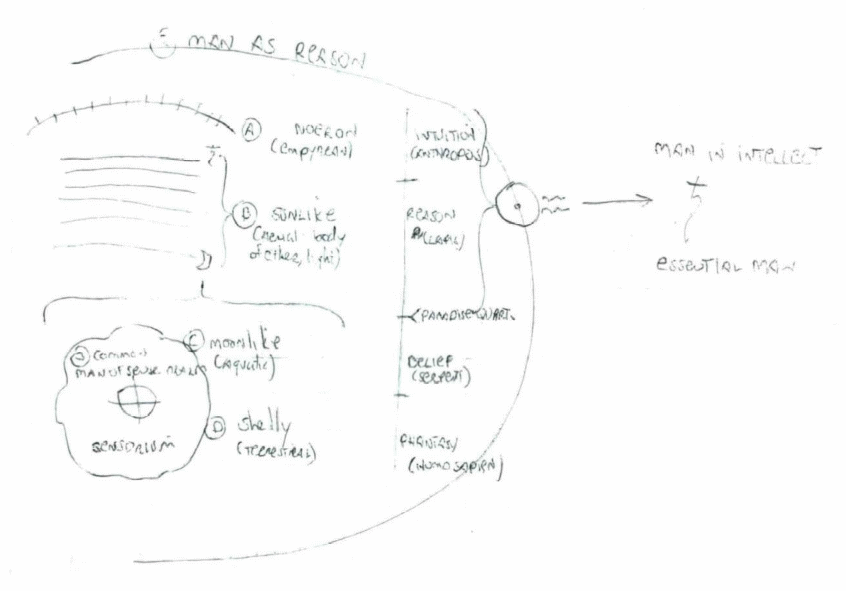
FIGURE 1982 0605a-1-AB. Idea of Man, Divided Line, and Cosmic Bodies.
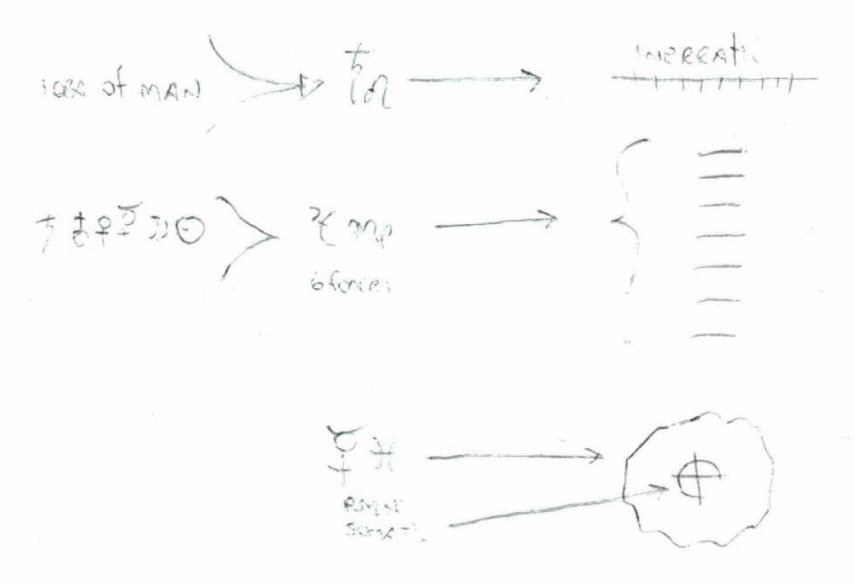
FIGURE 1982 0605a-2-AB. Three Levels of Idea of Man correlated with Three Levels of Cosmos.
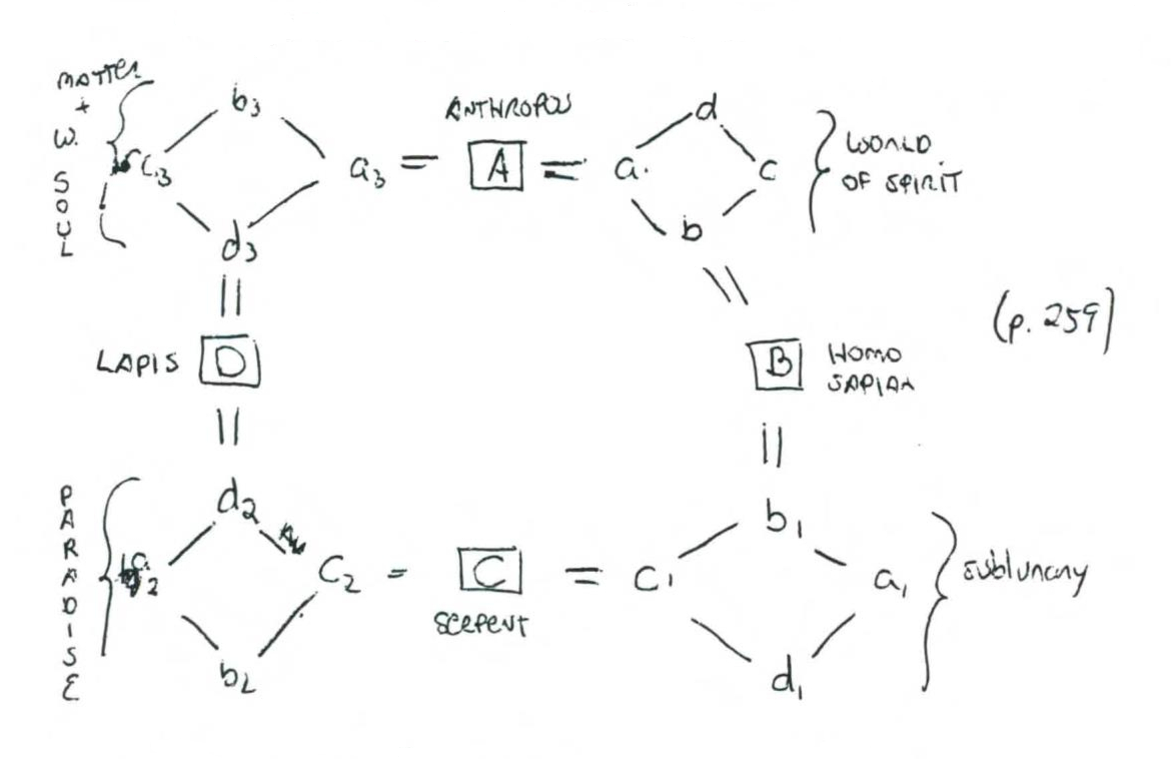
FIGURE 1982 0605a-3-AB. Jung's Archetype of the Self (Aion, p. 259).
Other diagrams also referred to are not with this transcript version. [Transcriber note: [diagram] means the speaker is referencing a diagram as he or she is speaking. If someone is drawing or writing, with audible sounds of chalk on a blackboard, I indicate this by [drawing] or [writing].]
INITIALS: AD = Anthony Damiani, AS = Avery Solomon, PD = Paul Damiani, all other initials are those of students.
PAPERS / NOTES read in class:
Paper/Notes on Idea of Man
PD outline of tree symbolism in C.G. Jung's essay, "The Philosophical Tree"
NOTES:
This is 1982 06/05a, Alchemy; Philosophical Tree Class, and the first entry associated with this date. 1982 06/05b = Philosophical Tree Outline.
Not a lot of AD in this class. All significant AD comments found on pp. 28, 32, 35-37.
Textual quotation that prefaces the class is referenced for potential usefulness.
This class was held Saturday AM.
TRANSCRIBED Verbatim by IT 2021 (V12ap) from Audio Files and using V11r as a basis. V12ap is completely verbatim, also continues discussion from 5/22 that was originally untranscribed but is now transcribed. Most of what was inaudible is now audible, all quotes are in the same form as in other transcripts, numbers spelled out where appropriate in transcript. Book list completed, Plotinus quotes section added, two diagrams from AB class notes added. In 2025, IT completes TOC and adds another diagram and references within transcript to this diagram. This completes the set of all alchemy transcripts verbatim. Originally transcribed by jf 2005 from Audio Cassette Tapes; reformatted by jf 2018. Archival verbatim transcript with Papers – V12ap.
AUDIO FILES: 1982 0605a, 1982 0605b. [Note 1: "Tape" and "Side" refer to original audio cassette tapes that were later digitized into .MP3 Audio Files. Note 2: Class cuts off abruptly halfway through 1982 0605b, Side 1. We have no more audio files for this class.]
1982 06/05a at Wisdom's Goldenrod
Alchemy; Philosophical Tree
[Audio File 1982 0605a Begins]
Plotinus, beginning of VI.7.6, "under-parallel" [not read here but quote needed for context; cf. Astronoesis p. 158ff]: "6. But how can that higher soul have sense-perception?
"It is the perception of what falls under perception There, sensation in the mode of that realm: it is the source of the lower soul's perception of the correspondences in the sense-realm. Man as sense-percipient becomes aware of these correspondences and accommodates the sense-realm to the lowest extremity of its counterpart There, proceeding from the fire here to the fire Intellectual which was perceptible to the higher soul in a manner corresponding to its own nature as Intellectual fire. If material things existed There, the soul would perceive them; Man in the Intellectual, Man as Intellectual soul, would be aware of the terrestrial. This is how the secondary Man, copy of Man in the Intellectual, contains the Reason-Principles in copy; and Man in the Intellectual-Principle contained the Man that existed before any man. The diviner shines out upon the secondary and the secondary upon the tertiary; and even the latest possesses them all--not in the sense of identifying itself with them all but as standing in under-parallel to them. Some of us act by this lowest; in another rank there is a double activity, a trace of the next higher being included; in yet another there is a blending of the third (i.e., highest) grade with the others: each is that Man by which he acts while each too contains all the grades, though in some sense not so. On the separation of the third life and third Man from the body, then if the second also departs--of course not losing hold on the Above--the two, as we are told, will occupy the same place. No doubt it seems strange that a soul which has been the Reason-Principle of a man should come to occupy the body of an animal: but the soul has always been all, and will at different times be this and that."
[Transcriber note: AS is reading a paper/notes on the Idea of Man, author unknown. I do not have access to it, quotes need to be checked. I transcribe it just as AS reads it, including any alterations made during rereading.Note from jf: For more on the Idea of Man cf. Anthony Damiani, Astronoesis, pp. 116-17, 156, 157-165, 280-81, 327-29, and AD Supp Folio D.]
AS: Ok so--
Paper/Notes ["Idea of Man," AS reading]: "Here he's making a distinction between the sensible man and the Idea of Man. The Idea of Man is, however, our very essence, or the essential Man, the Man in the Intellectual-Principle."
S: Again.
Paper/Notes ["Idea of Man," AS reading]: "This essence of Man is in identity with the primal or highest phase of our soul."
AS: Now in Platonism they have a peculiar notion of this-- of Idea, which is a little different from the normal way we think of idea.
Paper/Notes ["Idea of Man," AS reading]: "For example, he says that the Idea is the cause of our existence, and the Idea unfolded reveals all the causes and reasons that are inherent in it."
AS: Says--
Plotinus [VI.7.2, AS reading]: "Take for example the Idea of Man; Man entire is found to contribute to it; he [AS reads: Man] is in that Idea in all his fullness including everything that from the beginning belonged [AS reads: belongs] to Man. …Man exists from eternity and must therefore be complete; the man born is the derivative."
[short pause]
AS: So, within the Idea of Man is included everything that's going to be manifested from the Idea of Man, all the various levels all the way down, even including in some way all the sensible men that are going to be manifested from it. And, he brings in three levels or three grades of Man. He speaks about, ok, [Note: AS possibly reading the rest of this sentence and the next sentence from Paper/Notes.] first of all Man in the Intellect, which he calls the Intellectual soul or the presence of Idea of Man in the first soul's pure vision; and second, the Idea of Man as the multitude of reason-principles and as constituted by various reasoning powers. And third, the third man, is the sensible manifestation, the third or empirical man, which contains all the priors in under-parallel. [Note: See Plotinus, VI.7.6, second para.] [short pause] Ok? Or contains an image of the priors. Ok, now there-- the first-- this first basic division I think is important because it kind of shows you where they're coming from. I think we've done this diagram before. They seem to be making this division--we could use the other one also--where--
S: Uh-hm.
[Note: See FIGURES 1982 0605a-1-AB, Idea of Man, Divided Line, and Cosmic Bodies, and 1982 0605a-2-AB, Three Levels of Idea of Man correlated with Three Levels of Cosmos, appended to this transcript for the following discussion.]
AS: They're starting with this notion of the Idea of Man per se, [9¼ second pause while drawing/writing] which the Essential Man-- the pure soul has this vision of the Idea of Man. And that from there is going to determine all of the manifestations of particular men. Now, at the second step-- now this remains a pure vision-- at the second stage he speaks about the Reason Man, the Man in rea-- as reason-principles. And that-- in that stage, we're going to have the unfoldment of all of these various soul powers, which is still prior to the cosmos in a way. Then at the third stage we're going to have the embodiment or imaging of all these soul powers and of this vision of the Idea of Man in the cosmos, and the actual-- and a birth of an actual Sensible Man, the third man, ok, which is the man who comes to birth life after life. [student assents, very faint] Ok?
Now with-- within-- within twelfth house [diagram] or within [drawing] the manifested cosmos, he says we have in under-parallel the prior two also, these prior two phases, the Intellectual Man, which is the soul's continuous vision of the Idea of Man, the Reason Man, that is, all the reasoning powers of soul, and all the reason-principles which are contained in those, and then finally of course the Image Man himself. So within the cosmos-- maybe this shows it more clearly-- Sure, but, if this is the twelfth house, [drawing] then within the twelfth house, within the cosmos, first of all there's going to be this image of the Intellectual Man, the Idea of Man per se or the Idea of Man in the Nous, the Essential Man. And that's going to be the whole of the inerratic sphere [diagram]. Ok and that first image, that highest-- that highest-- the highest association with the cosmos in the inerratic sphere, they're gonna-- they have a name for that called the noeron. [writing] And again which corresponds to the Knower, the noeron or the Intellect.
And the second one, the second level, the soul in the cosmos, there's an image of all of these reason powers or the second Man, Man as Reasoning Man, and so they have the seven soul powers imaged as the planetary spheres, from Saturn down to the Moon [diagram]. Ok? And they have a word for that. So that would correspond also to the second division of Reason, which in the quote we read last week from Mead he calls that the sunlike body. [Note: See G.R.S. Mead, The Doctrine of the Subtle Body, pp. 82-83. See also WG class 1982 0522 for discussion of this quote.]
And then, ok, in a way, these two then combine, the combined operation of these will give us the third man, the psychosomatic man, the man of birth, the man who comes to birth life after life, who yet has within him these other two men, and has these sensible images, but he himself as here [drawing] is going to be the sensible man, the last two divisions--belief, phantasy--which he calls the moonlike body and the shelly body [diagram]. So, again within-- in this-- we call this the whole realm of the imagination, the common sensorium, ok, or the Dragon, [drawing] alright, and that's here. But this is the earth with the four elements [diagram]. And this is the man which has come to birth as having a body and having a certain psyche [diagram]. And the psyche and body are constituted by the operation of the planetary spheres.
Now, I think it fits in also with the way we've understood the Divided Line [drawing] in some way, that the upper two levels which are an image of those first two men, the Intellectual and the Reason-- and the Rational, are directly under the Sun in Aquarius [diagram], ok, they're above the reproductive imagination. And the next two levels are directly under the sensible Sun [diagram], ok? Even if you watch the path of the sensible Sun, that'll be involved in generating all of the images and all of the creatures which are down here in this sensible realm [AS indicates on diagram], ok, including the man of birth, the man of the sense realm.
Now, he's going to have present in him, of course, these two-- these two prior levels. But I think part of the process that Jung is going to speak about is, first of all, in breaking out of the bondage, or the attachment, to this realm of the common sensorium, and beginning to activate [drawing] first of all the level of Reason, and then the level of Nous, that are always within him. And that would correspond to his developing or differentiating or activating these higher vehicles, through which he can exercise the reasoning powers of the soul, namely this one [diagram], and finally exercise Intellect, which corresponds to the highest man, man in the Intellectual-Principle. Ok? But, I think primarily he's going to be dealing with not these things in themselves, like not the pure soul, not the pure reasoning powers, but the way that they're going to be activated in a man starting here, in the common sensorium, in the realm of birth, and trying to work his way out, trying to work his way out into some kind of activation of these powers. And so everything is going to happen within the context of the cosmos. And so that means, analogously, [drawing] that I think for Jung what he calls the Grand Man will be the reflection of this First Man, the Essential Man, which will be the inerratic sphere with all the reason-principles.
S (faint): Why do you (call it--)
[short pause]
AS (faint): I'm not sure that was--
S (faint): That was good?
AS: Yeah.
DB (faint): Are the four gnostic faculties of the soul and four powers that-- are they an image of that Idea of Man or is it simply the contents that those powers contemplate [AS, faint: Yeah.] which are given to it by the Idea of Man and those four powers are already latent within the soul.
AS: Oh I think those are directly an expression-- that they're already contained within the Idea of Man or the Intellect. Ok? In other words, that they are un-- they are-- the Idea itself contains everything that will be unfolded, including the various levels through which it will be unfolded.
DB (faint): Right, so--
AS (simultaneously): I think this is-- this-- Of course not as phantasy or as belief but they're all-- are potentially contained in the Idea of Man, [DB simultaneously: Right, so that--] those four levels of (knower).
DB (faint): So that-- I guess that's the-- the part I have a little difficulty with in the sense that I think that's what it is Plotinus-- you quoted him saying that the intellective phase of the soul as phase of the soul is identical with Essential Man. And, at the same time that I'm trying to keep the two notions distinct, that is, soul and-- I have difficulty now seeing how I can do that. And I don't know, maybe--
AS: Ok well, that would involve a whole other thing but briefly I think the notion of Soul is quite distinct from the notion of Idea of Man. The notion of Soul we've equated with an indeterminate Life, [DB: Right.] it's a Principle of Life, [DB: Yes.] Principle of Motion, [DB assents, faint] ok, as distinct from the Intellectual-Principle, which is not a principle of motion per se, primarily, [DB assents, faint] but is a Principle of Stable Identity and pure Knowing. So, I think as we pointed out, all-- all of the knowing which is going to go on here really, the real Knower in this is going to be the Nous, and so it's going to be the presence of the Nous in the soul that's going to make it intellective, primarily. So its Knowledge and its Being are primarily derived from the Idea of Man [AS indicates on diagram], [DB assents, very faint] but its Life and its Motion and Activity are its own. [S, very faint: Ok.] And we-- we would have to distinguish those kind of carefully.
DB: So that-- that the soul's contemplation of the Nous is the Idea of Man for it.
AS: In-- [drawing] yes, in the soul's contemplation of the Nous, ok, it-- Let's see if I can say this right. In the soul's contemplation of the Nous, it is-- it has a vision of the Idea of Man, which then it takes into itself. So within-- what is a stable Idea-- maybe we-- maybe we could put it this way. [drawing] The Idea of Man of course is one of the Ideas, it's eternal, self-gnostic, and so on, self-subsistent. The highest phase of the soul has a vision of that, ok, and in that vision, the Idea of Man is like translated into the Life of the soul. The soul is primarily a principle of Life and Motion; the Idea of Man is primarily an Intellectual-Principle. In that vision, that Intellectual-Principle, the Idea of Man, is taken into its Life and now it's going to be put into Motion, into Life. So what's an eternal [drawing] vision here [diagram], the soul is going to translate into Time. The soul's Motion, the soul as an operative principle, through its powers which it has, is going to translate this vision into an image, namely, the cosmos. And that vision constitutes the Essential-- that vision-- I said it (wrong--) the Idea of Man it contains and its Life or Motion together constitute the Essential Man, the highest phase, in other words the phase in which it's continually in contemplation.
DB (faint): Uh-hm.
AS: Yeah.
S (faint): Well, maybe I should do it.
AS: Well--
DB (simultaneously): You know, it (seem--)
AS (simultaneously): Did that make sense?
AS/S(?) (very faint): I mean I don't know.
[10¾ second pause]
DB: So um-- (well/so) you have the whole cosmos as (constituted/constitutive) as an image of this Idea of Man. Yes. Is that correct?
AS: Yeah I think that's what this is-- [DB, faint: Ok.] In this view, [drawing] the whole of the cosmos for you.
DB (simultaneously): So, that-- that would [one word inaudible] then that what the Idea of-- On the one hand you have to speak of the Idea of Man as existing in the Intellectual Cosmos as part of that totality, I mean, in the-- [AS assents] alright. But, that when the soul contemplates the Intellectual-Principle, alright, it-- like its vision of that totality is the Idea of Man.
AS: No, no, the Idea of Man is a self-- he says it's a self-determined Idea. Its vision is conjoined to that peculiar Idea, say, the Idea of Man; it's not going to see the entirety. Just for now, I mean this is really-- Let's say its vision is of that Idea, the Idea of Man, our u-- our unit soul, our individual soul's vision is of the Idea of Man, through which it would have-- And since each Idea is the Intellectual-Principle entire, through that, that will be its contact with the Intellectual-Principle. And that Idea within it, ok, is what's going to be essentially intellective in the soul. Now that's-- you have to imagine that as continually-- as an eternal vision, that relation [AS indicates on diagram], [DB: Right.] that vision. But now, it has an outward aspect also, the soul. It has a vision of the Idea of Man which is eternal, but soul is this Principle of Motion. And also it wants to actualize that vision, [chalk on board sounds] let's say it's an indeterminate vision here, it wants to actualize it, individuate it and so on. And then we have that quote from PB for example where he says that this ego then, it sends out this ray of light which is going to go through this whole development in order to individualize and activate and actualize that vision. [Note: See Paul Brunton, Notebooks, V16, 26:4.257 & Persp., Ch. 26, #49.]
So at a second stage the soul has all these reasoning powers or it appropriates those reasoning powers from Universal Soul. Ok that's what I tried to show here in this diagram. [Note: See FIGURE 1982 0605a-2-AB, Three Levels of Idea of Man correlated with Three Levels of Cosmos, appended to this transcript.] [drawing/writing] On the one hand at the first level, the Essential Man has this vision of the Idea. And that's going to be the guide for all of the whole-- for the rest of the development of soul of man. That's going to be its [drawing] primary paradigm, [student assents, very faint] and it's going to pervade all the way down. The second Man, Man as Reason-Principle, is going to have all these reasoning powers. (Well) that's like the outflow now, the outward-- the outward phase of this thing.
DB: That would be a consequence of the Motion of the soul in conjunction with this Idea which would produce reasoning as a-- as a-- not as a statically eternally established principle but--
AS (simultaneously): Yeah, as a Principle of Motion it inherently has these Six Forces [diagram]. Maybe you could do it that way.
DB: Ok. But it would be that which takes this Idea and, so to speak, makes it into reason-principle(s).
AS: Ok, let's say, and is going to translate it in terms of reason-principles. [drawing] It's going to break it up, and that means it's going to put it into life and activity so that it can then produce this whole vision in which this third Man [diagram] is now going to get his experience. Now after these primal phases-- now this third Man is going to forget, I mean, he [chalk on board sounds] loses contact with that original. He's plunged into this whole productive-- produced image. He finds himself in it. And in his association with the cosmos, ok, over here [diagram], in this association he's going to forget his divine origin as Reasoning Soul and as Nous. In fact the--
JC (simultaneously, faint): Would you do that last part again?
AS: Yeah I know, let me go over the last part.
JC: In its contact with the cosmos.
AS: Ok, well, first of all the cos-- in this view-- well-- In its cos-- in-- I think he says in several places that although-- now although the inner man has this vision and it's an eternal vision, since the attention of the soul is going to be on the contents of the manifested cosmos, he's not going to be aware of this eternal vision eternally. He says we are always thinking but we are not therefore always aware of our Thought, [Note: See Plotinus, IV.3.30, last para.] and so on. I mean that explains why even while we're here we're not aware of our-- if we have an-- I mean the question, if we have an eternal vision how come we're not aware of it here. Ok, and he says because the attention is distracted to all of it-- the sensible world.
[short pause]
JC (faint): Avery, when you speak of the highest phase of the soul and as receiving this gnostic-- its vision of the Nous from the Nous, it seems like s-- that's like saying that the Saturn in Leo in itself is not gnostic, it's [one word inaudible]
AS: Right.
JC (faint): And it's very hard for me to understand how the soul in itself, in its own essence, in its own definition, what makes it to be soul, does not have that gnostic capability inherent but is like saying some other subject knows the content of the Nous than the soul.
AS: Yes, the Nous.
JC (simultaneously, faint): It's the Nous that knows them [one/two words inaudible]
AS (simultaneously): Yes. In a way-- I know but I-- if-- if I follow the way we have been interpreting this and the way Plotinus-- I'm-- you know, I'm coming mostly from Plotinus' view, you know, the thing on the two self-- the two knowers.
JC (simultaneously, faint): Yes, that will be the (Nous).
AS: If-- (AS laughs, bit of laughter) Um-- [S: Uh-hm.] I could-- I'll have to get out all the quotes but just briefly, I think he's saying that the principle which is this-- the principle which is primarily the Knower is the Nous. And the soul has a borrowed light. Its light is borrowed from the Nous and its Being is borrowed from the Nous. And so in fact, it has its knowing borrowed from the Intellectual-Principle. It is not a principle of self-knowledge. The principle of self-knowing, or of intellection, is the Nous. Soul is a principle of intellection only so far as [drawing] it has this vision. I would suppose that if you could, and I mean this-- I don't think you can but, in one of the tractates he almost speaks about this indeterminate Life of the soul which is determined in a way in its vision of the Idea of Man. [Note: Possible reference to VI.7.17.] It's that which makes it determined in this way of being intellective, or of having the knowing power. It gets its Knowing and its Being from being rooted in the Nous. And that's eternal. I mean it doesn't-- it doesn't ever leave that. I mean in this view, the soul doesn't ever completely descend, that phase of the soul which is primarily Knowing and Being and in contact with the Idea is always-- is eternally there, doesn't come down. But it does have phases which do. But I know that's extrane-- (I mean) he has many-- many places. I mean there are lots and lots of quotes where he says that.
JC (simultaneously, faint): Well that one quote you're referring to, he's talking about the-- in reference to the Double Act, the Intellectual-Principle as it pours out its power, so to speak, and this looks back and is determined by it in that looking. [student assents] Just like the Nous (looks/looked) back [AS: Right.] and is determined by the I-- in terms of the Idea.
AS: Yeah, in fact that's exactly what he's--
JC (faint): Um--
AS: And that's the analogy.
JC (faint): You might s-- I mean-- I mean could you say that the Nous is what's primarily gnostic and that that's what primarily defines the Nous to be what it is is that it's gnostic [AS simultaneously: Gnostic. Yeah that--] or Soul as Life but-- and insofar as Soul is an outpouring of the Nous, its gnostic power would be said to be derived from the Nous, it's not primarily [possibly one word inaudible]
AS (simultaneously): Not-- yeah, it's-- that's the way I would-- For example this quote--
Plotinus [V.3.8, AS reading]: "This [AS read: The] light [AS adds: of Intellect] shining within [AS reads; into] [the] Soul enlightens it… …
"If [the Soul is] questioned as to the nature of [that] Intellectual-Principle…it has but [AS reads: only] to enter into that Principle [AS reads: the Intellectual-Principle]…and at once it shows itself to be in effective possession of those priors [AS reads: …to show itself in possession of those priors]…"
Plotinus [VI.7.17, AS reading]: "…whenever [AS adds: the] Intellectual-Principle becomes the determinant of soul it shapes it into Reasoning Soul…"
Plotinus [V.3.4, AS reading]: "…man becomes Intellectual-Principle [AS adds: the higher self-knower] when…he sees through [AS reads: by] that only and sees only that [AS: The Intellectual-Principle.]…"
Plotinus [III.5.7, AS reading]: "In each particular human being we must admit the existence of the authentic Intellective Act…"
Plotinus [V.1.3, AS reading]: "In two ways, then, the Intellectual-Principle enhances the divine quality of the Soul, as father and as immanent presence [AS reads: Intellectual-Principle is an immanent presence to Soul]…"
[short pause]
AS: Um-- [short pause] And so on. Now-- [short pause] I think they also have this notion in many other traditions that we've talked about and even in Buddhism, where they speak about the five wisdom-consciousnesses, Five Dhyan Buddhis, [short pause] ok, as-- as constituting that Essential Man. I don't know if they would call it Man but, they would call it Buddhahood. [short pause] Ok well-- Let's see. [9 second pause] Ok and then on the second phase he has several places, like for example "in two ways we possess the Ideal-Forms: as concentrated in the Intellectual-Principle, in the summit, and as unrolled, as spread out in the reasoning phase." [Note: See Plotinus, I.1.8, third para.] [10½ second pause] He's-- he summarizes this whole thing, he says--
Plotinus [III.5.10, AS reading]: "On this principle we have, [here], Soul (successively) dwelling with the divine Intelligence, breaking away from it, and yet again being filled to satiety with Reason-Principles…"
AS: You have--
Plotinus [III.5.10, AS reading]: "…Soul (successively) dwelling with the divine Intelligence, breaking away from it, and yet again being filled to satiety with Reason-Principles…"
[11 second pause]
AS: These other ones. 'Cause we have these-- he says now we have three soul-- three phases of soul, [Note: AS possibly reading the rest of this sentence from Paper/Notes.] soul as essentially pure, soul as conjoined with the Soul of the All, and c) soul as administering the partial, as a body. [Note: See Plotinus, IV.7.13.] So again he has these phases with [chalk on board sounds] the soul, the soul as administering the All with the Soul of the All and then Man as administering to the partial, the soul of the Nous and of the partial. [10¼ second pause] Well I--
[16¾ second pause]
S (faint): Why do we--
AS/S(?) (very faint): (Go ahead.)
[short pause]
AS: I didn't think we should get into a whole discussion of the first soul and so on.
[short pause]
JC (faint): Avery, do you think the [few inaudible AS words simultaneous with JC] sunlike body is really a body distinct from the noeron body? In other words, this-- the body-- the vehicle of the soul when it's in the planetary spheres you're thinking-- I don't know, I'm asking you, not-- not [AS simultaneously: Oh.] from the book, that [AS simultaneously: (Yeah/Oh).] that's a distinct vehicle from the fixed stars?
AS: Do I think it's a distinct vehicle from the fixed stars. Well I-- yeah I-- From the powers I could unders-- I mean these are definitely distinct powers [AS indicates on diagram].
JC: But if I could see--
AS (simultaneously): There must be a distinction of-- I mean, that seems to be an especially big distinction between Intellect-- between intuition and the Intellect.
JC (faint): The powers are very different, in other words. In as far as the planetary spheres represent-- (as/he has) an image of the soul powers, [AS: Yeah.] which are like an extension from the Nous, you can say well it's the same-- it's a ve-- same vehicle but in the stars it's moving in a quiescent manner and then it becomes extended by these various powers into other kinds of motion. So really what's different is the kinds of powers that are active in the vehicle rather than the vehicle itself.
AS: Ok. I would say that these-- there's an essential difference which we can trace all the way back to here [diagram]. I mean even in the chart, [drawing] this would represent the degrees [diagram]. We went into this example of the chart. And this would be-- what's the model for this Knower? The model for this, the noeron, would be the Nous itself knowing in the soul, or the presence of the Nous in the soul. The model for the planetary functionings would be the soul-- rational soul powers themselves. [student assents, very faint] I mean, there seems like there's a very big difference. This one [diagram] would be the Nous knowing within the soul, or analogous to the first Knower, and this would be the second knower [diagram], the powers of the soul as appropriating the reason-principles. [student assents, very faint] [short pause] Ok, and then--
JC (simultaneously): Yeah it's the same-- it's the same soul. In the first (face/phase) it's quiescent in the stars. Corresponding to the soul in the Nous it puts away its own activity. And then in the-- and in the-- the latter portions where it breaks away and it acts according to its own [AS, faint: Yeah.] inherent-- well--
AS (simultaneously): [drawing] (Well) I-- yeah I didn't want to get into this, I don't think we should but, the other night when we were doing this, we had these three phases. I think we did a little. But there-- the soul has three phases. And they always speak about the soul as tripartite and this is a traditional way of discussing soul, you know, the highest phase, in the second phase which is reasoning, in the third pha-- and productive, and the third phase which is sensible, or conjoined with the sensible order. And these we discussed a little bit I think. [student assents, faint] These three phases of the nature [couple words inaudible]
JC (simultaneously): You mean in astrology.
AS: Yeah, in astrology, where we spoke about, you know, [drawing] quite a distinction between these two even, the first and the second.
EC: But they're both under [S simultaneously: But--] the Intellectual order in the highest phase, that-- that's what-- that's what is a-- a problem to me, that separation. Even though they're doing different things, Jupiter and-- and Saturn [AS simultaneously: And Saturn] both (are) Intellectual-Principle [diagram].
AS (simultaneously): Principially are both there, this is true.
EC: How can you make that one lower, I mean, to make that lesser, I don't-- that's hard (for me to see) in that-- in that area, (and/I mean)--
AS (simultaneously): Not necessarily making it lesser. I'm just saying it has a different function. In one's-- in-- in the one example, the soul has stopped its activity, has stopped its-- its reasoning activity, has stopped its own activity so that the Nous can operate in it. In the second example, the soul activates its characteristic activity, and in doing so, that first vision is going to be broken up. So--
JC (faint): There's a-- you know, a quote where he talks about the soul lives in the starry realm and has a spherical body. And then as it descends it becomes elongated or conical-shaped, begins to take other forms. [Note: Reference not found.] So, that's where I'm coming from is sort of that [AS assents] kind of description where, if you're working with the same celes-- well, let me call it celestial vehicle or [AS assents] what's a permanent vehicle (of/or) the soul or causal body, certainly the planetary powers would be conceived of as part of the causal activity that's going to project the image of the world, the psychosomatic world.
AS: I-- if you're pointing out that there's [drawing] a continuity of levels I certainly would agree with that.
JC (simultaneously): Well, not of the Moon.
AS: Oh I would say even-- I mean if you're going to do that I would say [drawing] even all the way down there's a continuity. It's not separated.
JC: Well, but the--
AS: Even the imagination here [diagram] is really the presence-- [drawing] I mean, there-- at this level, the third level, we would have the presence of all these unembodied powers in [JC simultaneously, faint: In there, yes.] the psyche, in the guy's psyche. And [JC simultaneously, faint: But--] in fact these two middle levels [diagram] being equal in a way, in one case the powers would be unembodied, in the other case, as we did in the astrology, here they would be pure powers of the soul [diagram], within here they would be the archetypal structures of the imagination [diagram]. [JC simultaneously, very faint: Imagination, yes.] And I-- I mean even-- there's even less of a-- even more of a continuity, even less of a dis-- disjunction. But I-- I could follow that.
JC (simultaneously, faint): Ok, well let me see if I can--
AS: Yeah.
JC: There's a difference in the elements though. Like above the Moon you have the-- you have ether, which is a permanent-- I mean it's a stable element, there's a-- the body that's made out of [AS drawing] the four elements is actually destroyed at some point.
AS (faint): Ok.
JC (faint): And the traces of-- are held in the ether. So really, below the Moon there is a difference in terms of a vehicle which is temporary instead of the-- and the gross body which has like seventy years and then there's the astral or whatever you want to call it, the sublunary, you know, vehicle which you are in after the physical body has dropped away. For a certain period of time we experience the effects of your life (through) um--
AS: Ok Jeff, I-- I follow.
JC: You see, and that one too [one/two words inaudible] away.
AS: [drawing] Yeah you said there's a big break here, I mean--
JC (simultaneously): There's a big break there.
AS: Sure, this would be under the [drawing] sensible Sun in his analogy, ok, this whole realm [diagram], the bottom-- the man of sense would be under the sensible Sun. [JC assents, faint] The inerratic and the planetary wouldn't be under the sensible Sun. They would be under this Sun [diagram], the Sun in Aquarius. So in a way they have a kinship and these [diagram] have a kinship. In fact, Paracelsus does that too, he has this division, he distinguishes [JC assents, very faint] between [drawing] this man-- he just-- he has these two in one place.
JC (faint): You could almost say immortal and mortal, or maybe-- I mean can you say instinctual.
AS: Ok, but there's still a-- ok.
JC (faint): But it's still what?
AS (faint): (Yeah.)
JC (faint): No I'm s-- I'm still trying to-- back at the basic question of if the planetary realm is to be conceived of as a separate vehicle from the stars or is it separate powers operating in the same vehicle, a distinct set of powers operating in the same (vehicle).
AS (faint): Well, I think they're the same thing.
JC (faint): [few words inaudible] And then there would be the purification process would-- withdrawing from those powers until you gradually rise into the noetic form-- the noetic form of the vehicle. I mean you'd call it consciously achieved augoeides. Like--
LR: Jeff?
AS: Yeah but the [three words inaudible]
LR (simultaneously): I can't hear you [one word inaudible]
JC: I'm sorry. I was just saying that--
LR (simultaneously): I don't know what you're trying to say.
JC: I don't think the sunlike vehicle is really a distinct vehicle from the noeron, but it's a question of the powers that are working in the vehicle.
S (very faint): Yeah.
LR (faint): But one is never just on the powers and the other a meaning?
JC: On the gno-- on the gnostic power, pure, you know, intuition.
S (faint): (Uh-hm.)
LR (faint): Well that wouldn't be [AS simultaneously: But--] so different.
AS: No.
JC: But we do in other classes, (we've really) been distinguishing between alaya, the Mars [diagram], so on and so on [one word inaudible]
AS (simultaneously): Yeah-- oh but, even in the-- even in the Yogacara though they make the point very clear that all of these vijnanas, although functionally distinct, are not separate-- there's not these separate principles. He even makes the point in the Idealism book, that it's all vijnana. [Note: See Ashok Kumar Chatterjee, The Yogacara Idealism.]
LR: Well and also, I mean we--
AS (simultaneously): And that they're just phases of that one-- of that one principle of vijnana. [LR simultaneously: And also maybe--] And you can't separate them.
LR (faint): Excuse me (Avery).
S (faint): Uh-hm.
S (simultaneously, faint): Uh-hm.
AS (faint): Go ahead.
LR (faint): Just maybe, not even bringing in Buddhism or just think about it astrologically, you're not-- you can't speak about those degrees without speaking about a functional aspect which ma-- which [AS assents] manifests, I mean you can't speak about the functional aspect without the substance which is embo-- you know, which is inherent in them and [JC: Right.] it seems like one emphasizes the substantial and one functional but, [JC: Right.] pulling them apart could never--
JC (faint): No I agree and I think sometimes that's why they're lumped as causal body. They're both called that--
LR (simultaneously): So I-- I don't understand the disagreement.
JC: Well, in this particular quote for me he seems to say that there's this noeron body and that the sun--
AD (simultaneously): You have to speak up.
JC: I'm sorry, there's a noeron body and there's a sunlike body.
AS: I don't see what's wrong with that, I still don't see the objection.
LR: But--
JC: You're seeing it as a distinction in terms of the functioning and not really a different substrate.
AS: No well you said that. (bit of laughter)
S: Yeah.
S (faint): Right.
JC: Well that's what I'm seeing. (laughter) So but aren't--
AB: (We'll just work) to say yes. (bit more laughter)
AS: But [one/two words inaudible]
PD (simultaneously): Didn't we call that the body of light before in earlier discussions? [AS simultaneously: Well--] I mean that--
AS (simultaneously): But-- This one [diagram]. [drawing/writing]
PD: Yeah, the sunlike body.
JC: Well it must be pretty light up there at the top too [diagram]. (laughter) But I'm asking, that's--
AB (simultaneously): Seems like this-- seems like there's two ways of looking at it. I mean you could say that you have one body continuously and it starts out being very impure and you purify it and as you gradually purify it you ascend through these different levels, and it's the same powers operating through the same sheath but it's very, you know, disturbed down here. Or you could say that you go to different ontic stages and you actually have a different body composed of the different elemental, you know, substance at each level.
AS: I think that's where Jeff's coming from, [AB simultaneously: Yeah, that distinction.] the notion of elements but, I would say suppose you are established here [diagram], suppose you have a Sage established here, now, wouldn't it seem like-- he's still going to have these others. He's still going to have a shelly body. He's still going to have these powers of reason, [JC assents, very faint] ok. Now he can use any of them, let's say, he can use any of them appropriately. But there's still you'd have to distinguish, I mean, the Sage using [drawing/writing] his powers of reason is different from-- is to be distinguished from the Sage as remaining in his own inward vision or the Sage as walking around in the world. Now there's a continuity, it's all the same soul. But there are these [drawing] distinctions here.
JC: But we might say in that [AS simultaneously: Don't know--] case the-- what we've been talking about as the light of the soul would be primarily centered in the nou-- noeron body, [AS: Yeah.] and it will use these lower powers but is not-- like it doesn't limit itself to a functioning of those lower powers.
AS: Yeah, ok, and [JC simultaneously: So (couple words inaudible)] that I would agree with, right.
JC (simultaneously, faint): Ok. Now [AS assents] that would deny the lower functioning.
AS: No in fact I mean I think that's what-- you know, what's the whole thing-- [drawing] like where Jung's coming from is, now that light of the soul we spoke about has been immersed all the way in here [diagram], and trying to activate these higher principles within it.
PD: And from the point of view of the development of-- self-development of the individual consciousness, you can't start out operating from the no-- noeron body. You're going to start out from the sensible body and work your way up. And you-- you're not going to be starting out from the-- the top level.
JC: Right, sure.
PD: So in the developmental processes, that'll be imaged as a-- a goal or a direction that you're heading.
AS: In fact what about the sixth element too? I mean I think you're basing most of your argument on saying well this is all ether [diagram]. [student assents] And I would say well if you really want to go that way, [drawing] this-- this one may be ether [diagram], but I'll bet you'll find that this is going to [JC simultaneously, faint: Well--] be its sixth-- this would have to [JC simultaneously: Maybe.] be of a sixth quality [diagram] [JC simultaneously, faint: Maybe.] and will be qua-- I mean will be qualitatively [drawing] different from this [diagram] in the same way as this [diagram] is qualitatively different from this [diagram].
JC (faint): That may well be.
AS: I'm just-- I--
JC (faint): (Maybe) just enough to come out in the fifth.
AS: I mean they always speak about seven, I mean the five is just, you know, [JC assents, faint] as far as we're [chalk on board sounds] concerned primarily there's five [JC assents, very faint] but they always speak about seven.
DB: He does make a di-- I think-- well I can't quote it exactly [AS simultaneously: But--] but in the Mead book he does make that distinction between the sunlike, helio body and the augoeides, which I think is the-- the starlike body which is eternally conjoined with the soul.
AS: Yeah. Well he does make the distinction, I think Jeff is just asking if it's a valid one. I mean some of the other things he says are not valid also but--
S (very faint): That's (true).
AS/S(?) (faint): Uh-hm.
AS: Says--
JC: I mean even the way he says it here, Avery, that when soul-- I guess it's soul [couple words inaudible] Yeah.
[Transcriber note: I am using The Doctrine of the Subtle Body in Western Tradition by G.R.S. Mead, London: J.M. Watkins, 1919.]
G.R.S. Mead [The Doctrine of the Subtle Body, pp. 82-83, JC reading, quoting Porphyry]: ""[But] when it [JC reads: soul] proceeds from reason [(logos)] into the projection of [JC adds: the] imagination [(phantasia)], it has cognate with it the sunlike [(helioeides)] [following brackets Mead's] [body].""
JC (faint): You were using reason as the planetary spheres. Then we'd say when you're perceiving reason (in/into) the projection of the imagination which would be sublunar, projection of the imaginative powers, we'd have the sunlike body, so it wouldn't even be correlated this way.
AS: Yeah. No I-- I know what you're talking about.
JC: I mean it's a weird quote (and) [one word inaudible] never seen it (that way in other) normal ways of reading these passages about this vehicle. Pretty unusual.
AS: Well he also has the quote in the Parmenides footnote where he goes through those vehicles, the celestial, the empyrean, the aerial, the aquatic, and the terrestrial. [Note: See Thomas Taylor (tr.), The Parmenides: A Dialogue on the Gods (Vol. 3), in The Works of Plato, viz. His Fifty-Five Dialogues, and Twelve Epistles, p. 42, footnote 1.] Remember those. [student assents, very faint] And I think those would fit also-- the terrestrial and aquarian-- [writing] the terrestrial and the aquatic would be here [diagram], bottom two. And then this one would be what they call aerial [diagram]. And this one is empyrean [diagram]. [short pause] [LR simultaneously: You know--] Ok and I think there they would have an e-- a-- in the sense there this-- [drawing] the celestial one would be even prior to this whole thing.
JC (faint): Yeah. I mean he doesn't in that quote seem to specify that they're bodies. When he says celestial man or empyrean man it may [AS simultaneously: Right.] be soul with its rational aspect. Forget the casual and just be one of those, you know.
AS (simultaneously): Yeah but that's what I think like the light of the soul.
JC (faint): Right.
S (very faint): Uh-hm.
[short pause]
AS: What?
S (very faint): [couple words inaudible]
AB: Avery you--
AS (simultaneously): [couple words inaudible] statement.
AB: The basic thing you're trying to say with this whole scheme, referring it back to the Jung presentation, is that the fourfold evolution of the Self that Jung speaks about is really taking place in this twelfth house. And the highest level of man that is achieved as the Self is this noeron or this man as reason and is not going into the-- you know, the second quadrant [diagram].
PD: Well, he's got [AS: Well--] the four functions right there [diagram] though, Alan, intuition is the noeron.
AS/S(?) (faint): Yeah.
AB: I know, but that's a-- but that's the problem we're-- Is it-- well is that what you're saying Avery, that-- that somehow where you (see/say) Jung coming from? And that those four functions are in--
AS (simultaneously): Well we'll have to see when we-- I-- I mean I would think so but we'll have to see when we read-- read the quotes, [student assents, faint] and it has-- what he means by the Anthropos.
AD (simultaneously): Do you mind speaking up?
AS: What-- we'll have to see when we read the quotes as to what-- what he means by the Anthropos. But I think it'll probably turn out to be equivalent to the whole of the inerratic sphere. [11 second pause] Well why don't-- you want-- you want to go to some of those quotes?
PD: Well, what I-- I had tried to come up with a little more meaning to amplify what he had called the paradise quaternity, which was kind of vague and, you know, it's just very schematic. I think before it's always said of it, [short pause] you know, was that it was the activation of the meanings within oneself and the-- and the development of oneself as an-- an individual. And I think he brings out this meaning of the paradise quaternity and the paradise symbolism an awful lot in his essay on "The Philosophical Tree", or it's the tree in the Garden of Eden, or as metallic tree of the alchemists which is composed of the seven metals or the seven planetary spheres, which is very similar to the structure Avery's got up here in a schematic fashion where he's got the different levels with intuition as the top, reason as the planetary spheres, and belief and phantasy as the earthy element. And the philosophical tree in some of the images is seen as the-- the earth is seen as Mercurius or the soil in which the tree grows, the branches of the tree are the planetary spheres, and the fruit and leaves of the tree are the Sun and Moon which we might be able to get into a little. Or it's also called the fruits of heaven. So it seems like a very analogous image or structure that's working here. And I was going to try to--
LR (simultaneously, faint): [couple words inaudible] But para-- but in paradise quaternity you-- you're speaking about going from the, what we call the Dragon that's spread around the earth to the planetary spheres, that realm in between [FIGURE 1982 0605a-1-AB]?
PD: Well, if you-- remember the second qua-- the quaternity that stems off of the serpent [diagram]? [Note: See FIGURE 1982 0605a-3-AB, Jung's Archetype of the Self (Aion, p. 259), appended to this transcript.]
LR: Yeah. The lapis.
PD (simultaneously): That's the quaternity.
LR (faint): Right, and didn't we put that between-- Last week, two weeks ago, [Note: See WG Class 1982 0522.] I believe we placed that between the imaginal sphere and the planetary sphere.
PD: Um, I don't remember [LR, faint: Ok.] the placement, and I-- I take it-- I take the paradise quaternity as referring to the development and unfoldment of the individual psyche, [LR assents, very faint] of the meanings that he's endowed with as an individual, that differentiation and an un-- and unfoldment.
LR (faint): Yeah. That was it.
(Side 1 of original cassette tape digitized as 1982 0605a Ends; Side 2 Begins)
AS: --who are clearer of the alchemists.
S: Yeah.
AS: He says-- he-- this-- this one section on "The Quaternity of the Homo Maximus"--
S (faint): Page?
AS: On page 167 in Alchemical Studies. Says--
C.G. Jung [CW 13, Alchemical Studies, "Paracelsus as a Spiritual Phenomenon," pp. 167-168, paragraphs 206, 207, AS reading; bracketed words not read by AS but included here for completeness]: "In this last chapter [AS reads: In the last chapter of this work he's talking about], Paracelsus makes [AS adds: an] almost untranslatable allusions [AS reads: allusion] to the four Scaiolae, [AS: Or the four kinds of knowledge.] [and] it is not at all clear what could be meant. [AS adds: However] Ruland, who had [AS reads: has] a wide knowledge of the contemporary Paracelsist literature [AS reads: wide knowledge of Paracelsus], defines them as"spiritual powers of the mind" (spirituales mentis vires), [AS reads: (spirituales), ok] [qualities and faculties which are fourfold, to correspond with the four elements. They are the four wheels of the fiery chariot that swept Elijah up to heaven.] The Scaiolae, he says, originate in the mind of man, "from whom they depart and to whom they are turned back"… [AS, faint: Ok?]
"[Like the four seasons and the four quarters of heaven, the four elements are a quaternary system of orientation which always expresses a totality. In this case it is obviously the totality of the mind (animus), which here would be a better translated as"consciousness" (including its contents).] The orienting system of consciousness has four aspects, which correspond to four empirical functions: [thinking, feeling, sensation (sense-perception), intuition]. This quaternity is an archetypal arrangement. [AS: And so on.] [As an archetype, it can be interpreted in any number of ways], as Ruland shows: he interprets the four [AS reads: And anyway, Ruland says that he can interpret these] first of all psychologically, as [AS: So basically the four functions.] phantasia, imaginatio, [AS adds Jung's footnote: Which he says is "An image-making, form-giving, creative activity of the mind."] speculatio, [AS adds paraphrase of Jung's footnote: which is thinking, reasoning] and [AS adds: then] agnata fides (inborn faith). … [AS: So he says, then these--] …Scaiolae correspond to the traditional quadripartite man and express his all-encompassing wholeness."
[short pause]
S (very faint): (You have to--)
AS: Um-- [short pause] Maybe last week we-- [short pause, flipping of pages] Ok and then he says that these four belong to the Great Adam, the Anthropos (p. 169, paragraph 209). Then he says [short pause] that-- I-- I got to break it in the middle of this page.
C.G. Jung [CW 13, Alchemical Studies, "Paracelsus as a Spiritual Phenomenon," p. 172, paragraph 212, AS reading]: "And this does indeed seem to be the [AS reads: It does not indeed seem to be that]…"
AS (faint): Well--
C.G. Jung [CW 13, Alchemical Studies, "Paracelsus as a Spiritual Phenomenon," p. 172, paragraph 212, AS reading]: "…he [AS reads: Paracelsus]"counts himself" among [the Scaioli], the philosophers, or "implants himself" in the Scaiolae, the quaternity of the Original Man--which seems to me a quite possible conception since another synonym for the [AS reads: this] quaternity is Paradise with its four rivers, or the eternal city, the Metropolis, with its four gates…"
[short pause]
AD (faint): He (reads) carefully.
S (faint): Yeah.
AS: Anyway.
LR: It helped Avery.
AS: That help a lot? (laughter)
PD: Well, [couple inaudible AS words simultaneous with PD] it's hard because he is working with the-- the imaginal and symbolic approach. And you're not-- there's not philosophical clarity to it. On-- but on the other hand, it is contai-- containing something of the feeling and qualitative tastes, certain insights and states. So, you're gaining something and you-- you're losing something when you take this approach. But you've gotta keep the symbols and images flexible and attempt to use them to gain perceptions through. Don't stop with the image. You've got to use it as a stepping-stone to see with.
[short pause]
AS: Yeah.
PD: That's-- that second stage, Linda, that-- the paradise quaternity, he-- where he says there's an earlier correspondence in the alchemical texts to 16 by 16: it's called the "Exaltations of nature and the divisions in nature". And in the third step is the "Exaltation of soul" and the fourth is the "Exaltation of intellect" or the completion. And the first was the "Operations of natural things." [cf. table of Jung, Psychology and Alchemy, p. 262] [LR assents, faint] So, what we're dealing with here is-- is the second level, the "Exaltation of the divisions of nature". Now, when we get into Michael Maier's and Dorn's philosophical tree, we'll see this Nature is contrary to material things. [short pause] Just, before I read some of the quotes on the philosophical tree, I just want to bring out some distinctions which hopefully will make it more meaningful.
[short pause]
SD: I'm sorry Paul, could you go through those four stages or the names that they give to them?
PD: Of the--
SD: Those--
S: Exaltations?
SD: Yeah, those Exaltations.
PD: Ok the earlier-- what Jung considers as an earlier alchemical version of the lapis diagram we had put up a couple weeks ago, is on page 262 in his Psychology and Alchemy as well as in Aion. But he's got a more complete presentation in the Psychology and Alchemy. And there's four levels. The first level is "The operations of natural things". The second is the "Exaltations of the divisions of nature". The third is the "Exaltation of soul". And the fourth is the "Exaltation of intellect".
AS: Yeah, which is-- which is basically this-- [drawing] it's the individual.
PD (simultaneously): Yeah. Yeah.
AS: I mean, the Intellect, soul. Divisio naturae would be the belief in the actual sensible object. [drawing] And then the last one would be the composite nature of the sensible nature. Sense.
[short pause]
PD: Now, those four levels he's saying is a correspondence to his homosapien, which is the natural level, then the serpent, then the lapis, and then the Anthropos in itself. That's-- that's the correspondence Jung's making.
AS: Yeah, and that's-- I think that's similar-- [drawing] that's the one we're making. So this would be his first-- you know, in the A, B, C, D diagram [FIGURE 1982 0605a-3-AB; see also FIGURE 1982 0605a-1-AB for the following] this would be--
PD: Homosapien.
AS: Yeah, [writing] homosapien [diagram]. And this one the serpent [diagram]. And this one over here would be [LR, faint: Lapis.] the lapis. [short pause while writing] And this one would be the [PD: Anthropos.] Anthropos [diagram]. [11½ second pause while writing] Yeah.
HS: And the paradise quaternity is reference to what?
LR: Between the serpent and the lapis. [AS writing]
PD: Right. It's-- it's the-- it's-- [short pause while AS writing] It's a world of development or unfoldment. Let's say it represents the-- the perspective of the developing phase of the-- of consciousness. The-- that consciousness going through the transformation process.
HS (faint): You're trying to establish where-- to what-- what-- where it belongs or--
S (very faint): Yeah.
PD: No, I'm trying to bring out the meaning of what-- what that is, the paradise quaternity. And I think the-- the symbolism of Jung's essay on the Tree and the symbolism he tries to bring out brings this perspective out. In fact he-- he prefaces the whole section with a little quote from Goethe.
C.G. Jung [CW 13, Alchemical Studies, "The Philosophical Tree," p. 252, PD reading]: "All theory, my friend [PD reads: friends], is grey, But green life's golden tree. [(Faust I)]"
PD: This is the perspective I think he's trying to bring out here, in the paradise quaternity.
AB: I'm just not sure which four you're equating with [AS simultaneously: Yeah.] which four. You read the four from Psychology and Alchemy, the second one is the Na-- you know, the realm of Nature. You know, there's four levels there.
PD: Right.
AB: Now, are you equating those with the four levels of man or the four quaternities, the transformations, or just the four levels of the paradise quaternity?
PD: I didn't follow you. (No I'm--) there's the four levels of the Grand Man which [AB simultaneously: Right.] Avery put up as the correspondence here.
AB (simultaneously): Right. I just asked in between each of those terms.
PD (simultaneously): Those four levels of the Grand Man correspond to four levels of the alchemist.
AB: Ok. That's all I want to know.
PD: Ok.
AB: Just didn't know which four we--
PD (simultaneously): Now-- now, if-- the perspective is always going to be a sliding scale, a sliding reference. Because you per-- the perspectives that Jung is going to predominantly take is that of the consciousness that's undergoing this transformation. So he's not taking the perspective of, well, the non-individual Anthropos. He's taking the perspective of the individual experiencing the Anthropos, which is then going to be the paradise quaternity. The-- the four worlds, the four small worlds Jung put within the Grand Man, represent the perspective of that consciousness developing and differentiating itself. So it's always-- it's going to be a sliding-- sliding image. [10¾ second pause] Just to read some of the-- a little schematic before we go into it.
[Transcriber note: PD is reading an outline of tree symbolism in C.G. Jung's essay, "The Philosophical Tree". I have no access to it, quotes need to be checked.]
PD Outline ["The Philosophical Tree," PD reading]: "1) In the tree symbolism, the multiplicity of (its) leaves, branches, fruit and roots can be seen as referring to the development and differentiation of the psyche or mental being, the planetary spheres, this being the unfoldment of the meaning that the individual psyche is endowed with or constituted of. 2) The directionality inherent in the developmental processes of the psyche is also being symbolized by the tree. The tree is growing from somewhere towards some complete form. 3) Through this development, pathways and channels of communication occur between the different levels of oneself reaching up to heaven and down to earth, or our innermost meanings and our outermost activities and involvements. 4) In a sense, this becomes the level that the active imagination exercise is employed at to reestablish a nexus of relationships to those aspects of oneself which have been thwarted by our collective conscious framework, those innermost aspects of ourself. 5) The tree symbolism often contains a reference to a treasure hidden in it or the birth of Christ occurring within it. And it's through this opus or work that the birth of the Anthropos or Christ or the lapis or treasure hidden within can make its first appearance to consciousness. 6) The alchemical tree is called a living thing of Nature in distinction from living things in matter, sustained by a rose-colored-like fluid and a material like virgin's milk, which is a contradiction of Nature, which are related to the Sun and Moon and are the seeds as well as the fruit of this tree."
[10¾ second pause]
PD: I think, you know, that's kind of the schematic summary of what I'm going to try to read and elucidate from the symbolism that Jung presents.
[19¾ second pause, flipping of pages]
PD Outline ["The Philosophical Tree," PD reading]: "The tree symbolism is like a profile view and represents the developmental processes in distinction from the mandala image which is more a structural or cross-section perspective."
[15½ second pause]
AS: But you mean by that Paul--
S (very faint): That's really (good). (bit of laughter)
PD: Well-- Like the mandala shows the four-- four point reference. But what is not-- is brought out in a mandala structure is the development and the-- the directionality that is implicated in the tree symbolism. The tree symbolism always has a certain directionality to it, a higher and lower, which the mandala structure doesn't seem to portray as well. But the pro-- the mandala seems to portray more this-- what he calls a cross-sectional view of the Self, whereas the tree symbolism he says por-- portrays like a profile view.
HS: Profile in the sense it's like a-- that you get vertical information in-- in that view?
PD: Right, there's a vertical and a-- there's a-- a depth and direction. There's a higher and a lower.
HS (faint): Ok but a ma-- mandala is not necessarily two-dimensional, a valid-- it's a multi-dimensional thing but--
PD: Well I'm speaking of, you know, paintings and specific im-- imaginal symbols, I don't know what you're referring to.
HS: Ok. So you mean like in the tree symbolism you could get not presently psychic information in your symbol?
S (faint): (What's that?)
PD (faint): Try again.
HS: Information that-- that's not necessarily presently to the psy-- present to the psyche, but-- Well you get information about those higher realms in the tree that way.
PD: Right, that's some of the-- that's what I meant by the communications between heaven and earth, that's one-- that's one thing that's implicated by the tree symbolism. It represents an ascent and descent, the soul ascending to its heavenly partner and achieving some type of ecstasies or communication with that higher self. And that's what this-- that's one thing that's often brought out in like the shaman-- shaman's experience through the cosmic tree or world tree.
HS (faint): Ok this is not-- just [couple words inaudible] So you'd say that the-- the cross-section you'd be-- take a cross-section of the trunk, that's what he meant by a cross-section, by the mandala, something like that?
PD: No, I don't think so, I don't think it meant that way. It's not a cross-section of the tree, Herb.
HS (faint): Why not?
PD: I think-- I-- I look at the mandala more as the structural implications. With Jung, unity-- a unitary idea, a transcendent unitary idea, will get unfolded to consciousness through a quaternity structure, which is a basic import of the mandala symbol.
SD: Well he's [PD simultaneously: Yeah.] saying that if the mandala represents more like a-- a fourfold substantial point of view, that the tree would be like your sevenfold functioning view?
PD: Yeah that's-- that's probably it Severin, something along those lines, yeah.
LR: What'd you say, Severin?
SD: That if the mandala represents more your fourfold substantial view, the tree seems to-- representing sevenfold functional view.
[17 second pause]
PD: Um, he says about this-- this tree symbolism in-- in one person here.
C.G. Jung [CW 13, Alchemical Studies, "The Philosophical Tree," p. 254, paragraph 306, PD reading]: "These traits give expression to the inner process at work in the painter, and show that it has nothing to do with his personal psychology. Here the tree represents a symbol that is universal and alien to the personal consciousness."
[10¾ second pause, flipping of pages]
PD: Well, paragraph 323 if you have the text for-- He's speaking of a-- Well, let me just read it.
C.G. Jung [CW 13, Alchemical Studies, "The Philosophical Tree," pp. 259-260, paragraph 323, PD reading]: "The [PD reads: This] picture shows an initial state in which the tree is unable to raise itself from the earth in spite of its cosmic nature. It is a case of regressive development, probably due to the fact that while the tree has a natural tendency to grow away from the earth into a cosmic space filled with strange astronomical and meteorological phenomena, this would mean reaching up into an eerie [PD reads: uneerie] unearthly world and making contact with otherworldy things which are terrifying to the earthbound rationality of [the] natural man. The upward growth of the tree would not only endanger the supposed security of his earthly existence but would be a threat to his moral and spiritual inertia, because it would carry him into a new time and [a] new dimension where he could not get along without making considerable efforts at re-adaptation. The patient in these cases is held back not [PD reads: is not held back] by mere cowardice, but by a largely justifiable fear that warns him of the exacting demands of the future, without his being aware of what these demands are or knowing the dangers of not fulfilling them. His anxious resistance and aversion seem quite groundless, and it is only too easy for him to rationalize them away… The result is just the psychic situation shown by our picture: an inturned growth which throws [PD reads: thwarts] the supposedly solid earth into increasing turmoil. Secondary fantasies then arise which, according to the patient's disposition, revolve around either sexuality or the power drive [or both]. This leads sooner or later to the formation [PD reads: to later formations] of neurotic symptoms and to the almost unavoidable temptation for both [PD adds: the] patient and [PD adds: the] analyst to take these [PD adds: secondary] fantasies seriously as causative factors and thus to overlook the real task."
[10½ second pause]
PD: I think that really-- that very nicely portrays a difference in perspective that try-- that Jung is trying to introduce and bring into psychology, which, you know, that the-- the spiritual perspective is primary, and very often it gets looked at and interpreted through the effects many levels down. [30½ second pause, flipping of pages] Ok now I'm going-- I'm going to go through some alchemical symbols and some general meanings of tree symbolism.
C.G. Jung [CW 13, Alchemical Studies, "The Philosophical Tree," p. 272, paragraph 350, PD reading]: "The outward form of the tree may change in the course of time, but the richness and vitality of a symbol are expressed more in its change of meaning. The aspect of meaning is therefore essential to the phenomenology of [the] tree symbol. Taken on [PD adds: the] average, the commonest associations to its meaning are growth, life, unfolding [PD reads: unfoldment] of form in a physical and spiritual sense, development, growth from below upwards and from above downwards, the maternal aspect (protection, shade, shelter…), [PD adds: and then] old age, personality, and finally death and rebirth."
C.G. Jung [CW 13, Alchemical Studies, "The Philosophical Tree," pp. 272-273, footnote 1, PD reading]: "There is a very ancient, indeed primitive idea that the tree actually represents the life of a man; for instance, a tree is planted at the birth of a child, and its and the child's fates [PD reads: fate] are identical."Therefore the tree is the image and mirror of our condition"…""
[12 second pause]
PD: Which-- which I think very aptly portrays a perspective of the planetary spheres, and that the-- [short pause] And in the alchemical tree you'll bring this out even clearer.
[short pause]
C.G. Jung [CW 13, Alchemical Studies, "The Philosophical Tree," pp. 274-275, paragraphs 354, 355, PD reading]: "The tree appears frequently in the medieval alchemical texts and in general represents the growth of the arcane substance and its transformation into [the] philosophical gold… We read in the treatise of Pelagios that Zosimos had said the transformation process was like"a well-tended tree, a watered plant, which, beginning to ferment because of the plentiful water, and sprouting in the humidity and warmth of the air [PD reads: and etc, etc], puts forth blossoms and fruits by virtue of the great sweetness and special quality…of nature."
"A typical example of this process is [to be] found in the treatise of [Jodocus] Greverus… The whole opus is depicted as the sowing and nurturing of the [PD reads: a] tree in a well-tended garden, into which nothing extraneous might enter. The soil consists of purified Mercurius; Saturn, Jupiter, Mars, and Venus form the trunk (or trunks) of the tree [PD reads: the trunk of the tree (or trunks)], and the sun and moon supply their seeds. These planetary names refer partly to the corresponding metals, but we can see what they meant [PD reads: mean] from the author's qualifying remark:"For there enters into this work not the common gold, nor the common Mercurius, [nor the common silver], nor anything else that is common, but [Note: the following brackets Jung's] [the metals] of the Philosophers." … The planetary names refer ultimately not only to metals but, as every alchemist knew, to the (astrological) temperaments, that is, to psychic factors. … [short pause] Avarice as one of the original motives of the royal art is still apparent in the term aurum non vulgi [PD reads: vulgar], though it is just here that we discern the change of motivation and the displacement of the goal to another plane. In the parable that comes at the end of the treatise the wise old man says to the adept: "Son, lay aside the snares of worldly appetites." Even when, as is often undoubtedly the case, the [PD reads: For the] procedure given by an [PD reads: the] author has no other aim than the production…"
PD (faint): I'm lost.
C.G. Jung [CW 13, Alchemical Studies, "The Philosophical Tree," p. 275, paragraph 355, PD reading]: "Even when, [PD reads: For when, even] as is often undoubtedly the case, the procedure given by an [PD reads: the] author has no other aim than the production of the common gold, the psychic meaning of the opus nevertheless comes through [PD reads: comes out, though] in the symbolic nomenclature he employs [PD rereads: through the symbolic nomenclature he employs]…"
[short pause]
PD: So thi-- that's-- There's a couple different versions of the tree, or the tree symbolism. One with the planetary spheres, Saturn and Jupiter, Mars, Venus forming the trunks and branches of the tree, with the soil that the tree grows in as Mercurius; and the Sun and Moon being looked at as the fruit, on one hand, as well as the seeds. And, in this perspective we have a triad and a quaternity to deal with, the Sun Moon and Mercurius being the triad and the other four planets being a quaternity.
AS (faint): Paul? Well that's (ok).
PD: Go ahead.
AS: Just for a little conversational purpose. Isn't it possible that he's got that thing backwards?
S (very faint): Uh-hm.
PD: What do you mean Avery?
AS: I mean upside-down.
PD: Well, I don't know what you're referring to.
AS: Well, would you-- I mean would you normally say that the person is rooted-- I mean this has one way of looking at it, that the person is rooted in the earth and then grows upward to the heavens, but at that he would be always permanently rooted in the earth, and like that would be where his roots were. Whereas they often-- I mean I-- he may bring this in later on about the reverse symbolism, that the tree is rooted above and the grow-- the growth takes place downward.
PD: There's-- there's both sets of symbols. There is both and he brings out both. There's the inverted tree, like the Asvattha tree of the Vedantic pan-- pantheon, that has its roots in heaven. But most of the alchemical trees have its roots in the earth. [AS simultaneously: Yeah, I mean--] Which again represents the--
AS (simultaneously): Seems to be--
PD: Yeah, go ahead.
AS: Which again represents?
PD: Well, the conflict between the developmental perspective towards something versus working from the assumption of metaphysics down.
HS: And there is a conflict?
AS (simultaneously): Well I--
PD: Pardon me?
HS: Is there real conflict or is this a perspective, this has to be outlined?
PD: Well maybe it's a real psychological conflict as to which way a person is developing from, and I don't know. But the symbolism seems to be, you know, two discordant sets of symbols.
HS (faint): Ok but it could be that one's a symbol, as you say, of the metaphysical or ontological and-- or you see, you know, cosmological, and the other's symbol of the development within that cosmological. And maybe that's a (pro--) problem that, (you know--)
AH: I thought that--
PD (simultaneously): That's--
AH (faint): I thought you made it pretty clear in your preface when you described this perspective was from the point of view of this developing consciousness which has its roots here.
PD: Here.
AS: Right, but then what does he mean by consciousness, developing consciousness?
PD: The individual conscious understanding, conscious mind.
AH (faint): Well, you mean a person.
RC (simultaneously, faint): And, he speaks directly to that in that article on the Lapis-Christ, [Note: See C.G. Jung, CW 12, Psychology and Alchemy, "The Lapis-Christ Parallel".] um-- (He/It) says that the-- to the higher part of the individual that-- that Christ symbol that-- you know, that Christianity developed [couple words inaudible] as taking out of the individual. (I mean this/Venus) is going to-- going to provide for the purpose of the transformation of instinctual (libido), and it has to work from the bottom up. [student assents, very faint] [few words inaudible] [short pause] But he really does-- at least there he really does speak to alchemy as coming in for what was left out.
[short pause]
PD: As complementing the--
RC (faint): In the orthodox dogmatism of the Church.
PD: Yeah. And that he makes that statement too, that most of the alchemical spec-- perspective in dealing with the tree symbolism is with its roots in the earth and growing up towards heaven.
S (very faint): Right.
AB: I-- I'm not clear yet from what you've read why you're identifying the philosophical tree with the paradise quaternity. It just seems like the symbolism is just general symbolism of transformation from a lower to a higher, and I-- I can't see yet why within the fourfold, you know--
PD: Well I briefly had touched on the lapis, the world of the lapis as referring to the three stages of the conjunction.
AB: Right.
PD: Whereas the paradise quaternity is referring to the-- the multiplication and development and unfoldment, the fullness of development of the psychic sphere of mental being. [AB assents, faint] Whereas the lapis is-- is not going to be referring to that, that's going to be referring to the conjunction eventually with the unus mundus or potential world. [AB assents, faint] So the symbolism of the tree, just what a tree normally does in its growth, represents the fullness and development in life of the idea. And, [S simultaneously: But--] in the paradise quaternity, in some of these symbols here, you'll see this tree symbolism is spoken of as being the tree in-- in paradise or the tree in Eden. [AB assents, faint] It's the tree that the serpent is coiled around, he--
SD: Also it's not the first quaternity because you start off with this purified soil and [PD simultaneously: Right.] you have to-- the garden is well tended, nothing extraneous gets in, you have to have attained a certain level before that (level).
PD (simultaneously): Exactly. You've gone through and established yourself let's say in the natural world to some extent.
AH: Paul--
AS (very faint): Go ahead Andrew.
AH (faint): In terms of what you said about-- you (refer/referred) to this quote and he refers to a sliding kind of pers-- perspective to grasp the meaning of the symbol. I don't see why this tree couldn't be looked at as having its roots in the earth. And at some point the tree is turned upside-down, realize that it really had its roots in heaven the whole time. Either way. It seems that that symbol can function either way.
PD: It does, he-- um-- I think that there's both perspectives and he-- he'll bring out the other perspective too with the-- the tree symbolism that has its roots in heaven. I think the import at this point is to try to follow the symbol. Once-- once the symbol's followed and a certain meaning is brought out it can be discarded. You can take it whichever way we want.
AH (faint): Or you might say from the point of view of the developing consciousness the view [few words inaudible] process. So I thought the tree grew toward the earth. But eventually in the process you realize that--
PD: I mean, Andrew, just speaking in terms of your own consciousness, if you want to speak of some type of self-development you have to take real your initial starting point, where you're at now, and a discipline's required to change and transform that consciousness.
AS: Yeah but--
AH (faint): I can't say that-- I don't know, because I really haven't, that everything's going to be alright.
[short pause]
PD: Avery?
AS (very faint): Yeah (I don't know). Go ahead.
S (very faint): Let Paul go.
PD/S(?): Yeah.
AS (faint): Well, go on.
[19 second pause]
PD: 70. I'm going to go right to Dorn's tree. [short pause] Looking at Gerald Dorn-- Gerard Dorn's philosophical tree.
C.G. Jung [CW 13, Alchemical Studies, "The Philosophical Tree," p. 287, paragraphs 375, 376, PD reading]: "[Gerard Dorn says of the tree:] After nature has planted the root [PD reads: roots] of the metallic tree in the midst of her womb…and has set its trunk [PD reads: trunks] in the earth, this trunk is divided into different branches, whose substance is a liquid… The branches spread [PD adds: out] in such a way that one is separated from the other by a space of two or three climates and as many regions: from Germany even as far as Hungary and beyond. [S: Hm.] [S, faint: In the fairytale.] In this way the branches of different trees spread through the whole globe of the earth, as in the human body the veins spread through the different limbs, which are separated from one another. …
"In this text Dorn draws an impressive picture of the growth, expansion, death, and rebirth of the philosophical tree. … The tree is [obviously] thought of as a system of blood vessels. It consists of a liquid like blood, and when this comes out it coagulates [PD adds: instantaneously] into the fruit [PD reads: fruits] of the tree."
[short pause, flipping of pages]
LR: But Paul-- Can you elaborate what he means? I mean to say, you know, man is like a tree-- Just not quite enough for me and I heard that symbol-- to say the symbol doesn't-- It's k-- it's kind of such a cliché symbol to me that I don't appreciate the-- I'm not appreciating this (some laughter) the way I should, you know, it's not-- I think you have to elaborate what you're trying to bring out because it's not-- it's not um--
PD: Well--
LR (simultaneously): I mean I appreciate what you're saying about not making symbology too conceptual, but it's just not coming out.
AS (simultaneously): But what's he talking about. But what's the tree, I mean what does he mean by the philosophic tree. [LR, faint: Well--] What do you think Jung means by it?
AD (faint): The subtle body?
LR: Yeah, keep going. (laughter)
S (very faint): Yeah.
AD (faint): Well, perhaps.
PD: I mean if you can't-- on the other hand Linda, if you can't follow an image, then your understanding isn't active.
AS: Ok well [LR simultaneously: Isn't what?] she's asking you though, I mean what--
S (simultaneously): Don't (get) insulted.
LR: Isn't accurate?
PD: Isn't active.
LR: True.
AS: Well, for those whose understanding is not active Paul-- (some laughter)
AS/S(?): [one word inaudible]
LR (amidst laughter): Ok. That doesn't help.
PD (simultaneously): No, but I'm saying that's the-- that's the whole point of the symbolic method [LR simultaneously: Paul, it's just not--] is to have your understanding permeate and see.
LR: Paul-- That may be to-- I mean when a symbol hits you then the understanding is active, that's terrific.
PD: Ok.
LR: But just to state the words 'tree' is like a--
PD (simultaneously): I haven't done that. I've tried to paint what they're saying is this tree in different images. Now, saying what something is will never contain the what that something is.
LR: That's true, it doesn't come in words.
PD: Right.
LR: But does that mean no one should talk?
PD: No! I'm trying to talk.
LR: Well--
S: She wants you to talk a little more about a certain thing. (bit of laughter)
LR: Well I'm just asking for some elaboration of what you're meaning. Like Tony says ok, it's the subtle body, can we discuss that, can you see that? Do you see the operation, the parts, the growth of the subtle body?
LR/S(?): Go ahead.
PD (simultaneously): Well-- (bit of laughter)
LR: You have to speak louder or you're not allowed. (bit of laughter)
PD: That's what I meant in my initial schemata. (laughter)
HS (amidst laughter, faint): Right. I like that.
S (very faint): Sorry Lou.
LR: [couple words inaudible]
PD (simultaneously): That's what I call the development of the psychic or mental being, the individual psyche. I very-- My initial abstract summary was a-- was what I'm attempting to expand through-- expand upon. And I said there's four or five points to the symbol.
LR (faint): Maybe read the summary again? I mean I'm-- you know, I'm just trying to get grounded somewhere in the symbolism, (you know)?
PD: Well, I-- there's four or five points to the symbolism that I tried to, I think-- I'm not very good at it Linda but I'll try to bring out the schematics of it, ok?
AH (faint): Paul, could I ask a question? The-- the notion of getting grounded in the symbolism, isn't that like-- that isn't the approach that you're expressing, it's not possible to be grounded in the symbolism, is it? The symbolism is about dynamic possibility.
AD (simultaneously): You got to speak up, Andrew.
PD: The symbol's got to be understood through more than just the thought-process, it's got to be understood with a certain amount of feeling, sensibility, and thought.
AH (faint): And I'm just wondering if this view, like from the-- from Goethe, he says "All theory's grey, Green life's growing tree". To theorize about the symbol, or to try to have a theoretical grasp of-- of what's being symbolically expressed is to kill the symbol.
LR (simultaneously): Oh come on, Andrew. That's-- but-- I mean, when you put a chart up on the [AH simultaneously: Oh I'm not putting it--] board and you say let's not talk about the chart, just look at it and the symbol will hit you. [AH simultaneously: Well that's--] We should all just sit there and look at it, I mean what--
AH: Well that's a model.
PD (simultaneously): No. But the point is--
AH (simultaneously): That models the fact this chart is a living symbol for-- for you if--
LR: But if it's not a living symbol, what do you do to make it a living symbol?
AH: Uh--
LR: You're saying there's nothing that can be done, it is and it isn't, if it is it is, [AH simultaneously, faint: No that--] that's baloney.
AH: No, there's something to be done but I'm not sure it's just cogitation, I think perhaps it's kind of openness toward the symbol. A certain way of it looking in the--
LR: Yes you have to be open. I agree.
AH (faint): A certain kind of interior glance towards the meaning (developed), a strenuous kind of cogitation as kind of a-- I don't know. I'm just asking if-- what it means to talk about life's growing tree. I guess I'm asking the same question you are.
[short pause]
AS: That-- well I-- I thought maybe Severin's clue was a good one and also the one that-- the way Paul's putting it over here [diagram] [drawing] in terms of the relation to this realm of the planetary spheres. And a lot of his quotes he gives the rela-- he gives this thing with seven branches, he talks about the sea-- the three as having seven branches. [LR assents, faint] And there are a few quotes here where he talks about--
C.G. Jung [CW 13, Alchemical Studies, "The Philosophical Tree," p. 310, footnote 20, quoting Coomaraswamy, "The Inverted Tree," AS reading]: ""The tree is a fiery pillar [as] seen from below, a solar pillar as seen from above, and a pneumatic pillar throughout; it is a tree…""
AD (simultaneously): A little louder.
C.G. Jung [CW 13, Alchemical Studies, "The Philosophical Tree," p. 310, footnote 20, quoting Coomaraswamy, "The Inverted Tree," AS reading]: ""The tree is a fiery pillar as seen from below, a solar pillar as seen from above, and a pneumatic pillar throughout; it is a tree of light.""
DB: Suppose [couple words inaudible] symbol what (would) [one word inaudible]
AS (simultaneously): And he says the tree has these seven branches that he refers to.
DB: What if it's not a symbol? What if that's really the way it looked?
AS (simultaneously): Sounds similar to something we've seen before. (bit of laughter)
S (faint): Yeah.
DB: I mean-- What if that's really the way it looked? I mean that's what it is. It's not-- it's not a symbolical thing in some abstract [couple words inaudible] of relationships but if you could actually see it, that's what it would be.
S (faint): Well, if I can't see it then it's still a symbol for me.
DB: No, I mean, like when I-- if I tell you how to get from here to there in Washington, I mean, it's real description. What I'm saying is it's a description of something.
LR: Right, of the subtle body.
DB: And it's not a-- it-- and-- you say well it's a symbol but suppose it's really, I mean, like I said, [AS simultaneously: What Lou?] if you could see it, that's what it would look like.
AS: [drawing] Right in this picture [S simultaneously, faint: People see that.] here where he says-- Suppose he says-- sup-- I mean I-- I don't know, Paul, is this reasonable, you say well here's this sensible man and this seed of-- this seed is planted within him, and what's going to grow out of that is this whole understanding. This whole subtle understanding is going to grow out of him. Ok, and the model of it is the seven planets [AS indicates on diagram]. Ok 'cause he's talking about it in terms of the paradiso quaternity. And I'm just trying to follow it. He's saying-- say this is the ground for that understanding is all of your experience here, that's what's going to nourish this tree, ok, earth and water, [chalk on board sounds] ok, takes earth and water here, [Note: aquatic and terrestrial levels] earth and water are what are going to nourish the understanding. The earth and water are these two lower elements. So within this man of the sense realm-- And that's where he's going in as-- and that's where he's putting the paradiso quaternity too. I mean just following what-- [PD: Yeah.] with what you're saying. The paradiso was going from the serpent to the lapis. So within the bottom two, if this is earth and water here [diagram], the sensible man and the imaginal man, and this is the earth and water, in which-- in which experience this tree of knowledge is going to grow. I mean I think also it relates to the tree-- the tree of knowledge, you know, that knowledge which is going to be extracted. I'm trying to take his view rather than the other-- you know, the view that it's from the bottom up, the view that the tree of knowledge is going to grow when the seeds of this knowledge are planted within the earth and water, within the sensible man. Out of that experience which is going to nourish this tree, the tree of knowledge is going to grow, [HS: Ok and when you say--] tree of understanding.
And the tree will have seven functions, [drawing] you know, the seven limbs will be those-- the-- he's going to develop those powers within himself, ok, he has-- his understanding is going to develop in this sevenfold way which is eventually going to get him to this lapis. When this tree is grown, it's going to become then-- through that tree he's going to reach up to the Anthropos and at that point, I mean I guess what Andrew-- this whole tree is going to be seen turned around. He could just see well the seed may have been planted here in the earth and water, but what was that seed really was a spark from the heavens, which has come down into the earth and been planted there. The earth may be what nourishes it, but the seed itself is not of the earth and the water, the seed itself is something which has been implanted from this intelligence of the stars and it's going to grow up out of the nourishment of the earth and water but it itself is not of that.
HS: The thing that you just said, from below, that you read it as fiery, to the fiery (thing). [couple inaudible AS words] Isn't that how you speak of tejas?
AH (simultaneously): Or below it's fiery, above it's (solar pillar).
HS (simultaneously): Yeah isn't that how you speak of the taijasa or tejas, that it's fiery?
AS (simultaneously): The nature of taijasa.
HS: Yeah and from bel-- from above it looks like the Sun? It's--
AS: I think the tree-- the tree symbol is just the-- I mean maybe another one, the-- when the Buddhists have the whole-- you know, the whole-- the whole subtle body system, the three channels with all the branches coming out of that, with the nodes, you know, those-- the chakra system, I think it's their--
AB (simultaneously): Serpent at the bottom.
AS: Yeah, it's just-- the [S simultaneously, faint: Ok.] serpent at the bottom of the tree, the serpent wrapped around the tree and so on, I mean it-- it seems in that way a very similar symbol. [PD: He--] And especially when he relates it here through these fiery--
PD (simultaneously): He correlates it with the chakra system too.
AS: Yeah. Especially here when he-- when he brings in this fiery nature which goes up and down the tree. I mean-- [few inaudible student words simultaneous with AS] Seem to be at least some similarities, these fluids which flow up and down the tree and get-- and branch out through the branches, (to/through) the leaves or your experience.
JA (faint): I thought that distinction that Paul made between the static symbolism of the mandala, fourfold structure, and then the tree, you know, that-- the developmental as-- aspect would be like the transformation of that whole--
[Audio File 1982 0605a Ends]
[Audio File 1982 0605b Begins]
AB: One is as the paradise quaternity going from, you know, the serpent level to the lapis level. But the other is as embracing this whole diagram connecting, you know, the corporeal all the way up to the inerratic.
AD: Yeah.
S (faint): (Oh no/I know).
[19¾ second pause, flipping of pages]
PD: Well, I don't know, I had-- I am not capable to schematically state the what of what he's doing, and-- It's just like trying to say what the color yellow is. After a while you're going to have to get a taste, see it, and it's a perceptual process. There has to be experience. And I-- that's what I'm trying to follow through in the symbology. You can define yellow now until doomsday, you won't know what yellow is.
AS: Ok but when he-- well--
[9¼ second pause]
PD: No, I-- I mean I think the symboli-- symbolism of the tree is correlating with what we're doing, you know, what you've done, Avery, with your schematic of the different levels. And I'm just trying to add some body to the schemata. Let's put it that way. Some flesh and blood.
S (very faint): Yeah.
S (very faint): Yeah.
AS (faint): Oh well, I wanted to get-- See-- see if he's got some more in here (that) may want to add some more.
S (very faint): Isn't it also [one/two words inaudible] Jacob's ladder.
PD: That's another-- that's another form, yeah. That's the-- it's very-- the Shamanistic [PD pronounces: Shamistic] World-Tree is seen very similar to that where it's the channel of ascent and descent for the shaman to experience ecstasis with his grander personality and develop his mystical organ(s).
S: Yeah.
AS: That's just-- just the way we spoke of the channels, you know, we spoke about these points, these-- in the man of light where he begins [chalk on board sounds] opening these subtle or psychic organs.
PD: Yeah, that it's-- that's [AS simultaneously: And that's the realm-- that's what he's speaking of.] what I'm bringing-- that's why I brought it in, Avery, to-- to expand the notion of the-- what I meant-- or what I think Jung means by the paradise quaternity [AS assents, faint] which is the-- that meaning of the subtle topography or the world of light and the planetary [AS assents] spheres.
AS: Well see that's what I mean, I think that's what Linda's asking was some [student assents, faint] kind of-- You know, I mean you've got all these levels here, you could say well the tree is the whole thing, the tree is this guy [diagram], the tree is this [diagram]. But I-- I think they are-- maybe Jung doesn't-- I don't want to talk anymore. I think they were speaking of something specific. I mean I-- it's not just a catch-- you know, these-- these symbols were not just catch-all symbols. They weren't meant to represent everything in the world.
LR (faint): Right.
AS: I mean even though a symbol has to be fluid, there's a-- there's a realm of application to it, it's not just a-- well it's not just-- doesn't mean anything if-- it doesn't mean anything at all.
LR (simultaneously): (Can't/Can) take anything (on) [one/two words inaudible]
AS: I mean--
HS (faint): Uh-hm.
LR: But Paul I knew you had ideas about it but I also fixed your ideas.
PD (simultaneously): Well, I mean, I didn't schematize it but the five or six points that I said at the beginning was what I think the symbolism is referring to.
HS/S(?) (faint): Go on.
LR (simultaneously): Right, that's why I was [couple words inaudible]
HS (simultaneously): Do you want to go over that again?
S: Yeah, would you read that thing again?
S (very faint): Go over it.
AS/S(?) (faint): Yeah, please.
PD Outline ["The Philosophical Tree," PD reading]: "1) The multiplicity of leaves, branches, etc, of the tree is referring to the development and differentiation of the psyche or mental being, the planetary spheres, this being the unfoldment of the meanings that the individual psyche is endowed with or constituted of."
PD: That's point 1.
LR (very faint): Uh-hm.
PD: Point 2.
PD Outline ["The Philosophical Tree," PD reading]: "2) The tree symbolism has a directionality inherent in it. This directionality inherent in the developmental processes of the psyche, it's always growing from somewhere towards some complete form."
PD: So that's the second point, there's a directionality and teleology in these processes. I-- the third point was--
PD Outline ["The Philosophical Tree," PD reading]: "3) Through this development that the psyche is undergoing at this stage, pathways and channels of communication occur between the different levels of oneself, symbolized by the tree reaching up to heaven and down to earth, or psychologically our innermost meaning and our outermost activities and involvements."
S (very faint): Right.
PD: So it becomes a means of communication through different levels of-- of a being. [short pause] Fourth point, I think--
PD Outline ["The Philosophical Tree," PD reading]: "4) This is the level of active imagination or that active imagination is employed at to establish a nexus of relations to those aspects of oneself which have been thwarted by our collective conscious framework."
[short pause]
PD: Fifth point--
PD Outline ["The Philosophical Tree," PD reading]: "5) It is through this opus or work, psychic development, that the birth of the Christ or the lapis or the treasure hidden within can first make its appearance."
PD: My sixth point is that--
PD Outline ["The Philosophical Tree," PD reading]: "6) This alchemical tree is called a living thing of Nature, in distinction from living things in matter, sustained by a rose-colored like fluid and a material like milk."
PD: And I bring this point up because I think this correlates with some other traditions. So those-- those were the six ideas I had in mind about the schemata of the symbolism. [11 second pause] And what I had planned afterwards was to-- to read some of the quotes verifying the schemata. [student assents, very faint] [10 second pause] Um-- Let's just go right to one or two symbols.
[short pause]
AS: Again maybe there's another-- well--
PD: Go ahead.
AS: I don't think-- maybe you're saying in the paradiso this notion here is-- I don't know, the symbolism of the connecting of heaven and earth, saying if this is the heavens up here [diagram], and then this is the earth, that the tree represents what is going to link, eventually connect the heaven with the earth. You see [PD assents] and this whole-- this whole realm of knowledge is what's going to-- this interior realm it's developing is going to connect the sensible man eventually with his origin again, you know, give it completed-- completed form to connect the sensible man of birth with the heavens, you know, the tree is rooted in the earth but reaches up to the heavens, [PD: Yeah.] and maybe-- Then this-- this paradiso quaternity you're using to symbolize that connection depicting (enlightenment).
PD (simultaneously): Right, it's the development of those organs [AS simultaneously, faint: Yeah, subtle organs.] through which that communication can occur.
AS: Yeah.
AB: Or the subtle body allows you to ascend through the sphere(s).
S (very faint): Yeah.
AS: And again the etheric--
AB (simultaneously): To the inerratic.
S (very faint): Uh-hm.
AS: It'd be [PD simultaneously: Right.] the growth [one/two inaudible student words simultaneous with AS] of the-- the quintessential-- the quintessential body we spoke about.
[short pause]
S (very faint): [one/two words inaudible]
LR (faint): But Paul maybe I'm just saying that you-- it would be helpful at least, I don't know, if you would point out through the points that, well, as you're reading from the book.
AS (faint): Yeah, then he-- yeah he's got a lot, maybe he's got to read a few more quotes in here. Those were just some of the introductory general--
AH: What Avery just said sounds to me--
AD (simultaneously, faint): You should all try to see it for yourself. You should see it for yourself what-- for yourself-- yourself by now. You could see all that he's speaking about is the reason-principles implant-- implanted in matter, alright, and evolving through life into a subtle understanding or heavenly reason which reaches up to the inerratic sphere. [AS simultaneously: Yeah that--] And that's the tree that they're talking about, the Asvattha tree. That is your higher individuality. The lower individuality would be the body and mind that's (here now for you).
AS: Yeah. That's-- I think that's what I tried to--
AD (simultaneously): That's all he's saying. Gets caught up in all the symbolism. You've been doing that with the chart. You're trying to understand the reason-principles that are within you, and which organize and structure the perceptions that you operate with and from which you extract the meanings that are inherent in them, so that there's an expansion of consciousness. This is a continuous process of development. He hasn't said anything there that you don't know. He's been using symbolical concepts and you have to make the effort to step into them.
AS: That's what I-- I think that was what I was trying to say with the reason-principles flowing into the earth and the water.
AD: Remember the Platon-- the Platonic conception about the dew that falls from heaven [AS simultaneously: Yeah. That's what I was--] into earth and has to re-ascend [AS simultaneously: Yeah.] all the way back to heaven.
AS: Also that-- you know, that quote I r-- I mean, the--
AD (simultaneously): It's a good lesson for you, you know.
AS: You know, that-- it's also that quote I read ear--
S (very faint): Oh I have a copy of that footnote.
AS: Where he says--
Plotinus [III.5.10, AS reading]: "On this principle we have, [here], Soul (successively) dwelling with the divine Intelligence, breaking away from it, and yet again being filled to satiety with Reason-Principles--the beautiful abounding in all plenty, so that every splendour become manifest in it with the images [AS reads: image] of whatever is lovely…"
AS: It's like those seeds which the soul has to begin with have to be brought to fruition or fulfillment or actualization through its being immersed-- Through the soul coming down and actually being immersed in this-- in the experience, it's going to grow those seeds which it contains into actual flowering forms, they ac-- to actualize that-- that wisdom which is within it to begin with in a seed form. I don't know, Paul.
PD: It's the very development of the higher personality in a sense. That is what the personality is made of. [9¾ second pause, flipping of pages] There's an interesting quote on the imagination.
C.G. Jung [CW 12, Psychology and Alchemy, pp. 282-283, paragraphs 399, 400, PD reading]: "The"greater things" [(majora)] correspond to the "higher" [(altiora)], referring to the world-creating imagination of God; but because these higher things are imagined by God they at once become substantial instead of lingering in a state of potential reality… …
"The imaginatio [PD reads: imaginal], as the alchemists understand it, is in truth a key that opens the door to the secret of the opus [(fig. 140)]. We now know [PD reads: know now] that it was a question of representing and realizing those"greater" things which the soul, on God's behalf, imagines creatively and extra naturum [PD reads: extra-naturally]--or, to put it in modern language, a question of actualizing those contents of the unconscious which are outside nature, [i.e.], not a datum of our empirical world, and therefore an a priori [of] archetypal character. The place or the medium of realization is neither mind nor matter, but that intermediate realm of subtle reality which can be adequately expressed only by the symbol. The symbol is neither abstract nor concrete… It is always both…"
PD: I think that's kind of the-- the perspective I've been trying to-- to follow but I'm not very successful (at it).
AD (simultaneously, faint): (Notice the) familiarity with-- with Kant's position.
PD: Pardon?
AD (faint): Notice the familiarity with Kant's schema. Would you read that last sentence again.
PD: You mean with the productive imagination? I think it's-- I think probably Jung has brought out the implications of that epistemological framework and brought-- and put some depth to it which wasn't apparent and what the imagination means. [short pause] Well, I don't know whether it's worth starting, I mean--
[14 second pause, flipping of pages]
AS: You want to try one quote?
PD: Well, I'm trying to pick out, you know-- to-- to present just one image here. [short pause] Ok, this is Dorn's interpretation of the tree symbol, which will require interpretation in turn.
C.G. Jung [CW 13, Alchemical Studies, "The Philosophical Tree," pp. 289-290, paragraphs 380, 381, PD reading]: "[…Dorn writes:] On account of likeness alone, and not substance, the Philosophers compare their material to a golden tree with seven branches, thinking that it encloses in its seed the seven metals, and that these are hidden in it, for which reason they call [PD reads: called] it a living thing. Again, even as natural trees bring forth divers blossoms in their season, so the material of the stone causes the most beautiful colours [PD reads: flowers] to appear when it puts forth its blossoms. Likewise they have said that the fruit of their tree strives up to heaven, because out of the philosophic [PD reads: philosophical] earth there arises a certain substance, like [to] the branches of a loathsome sponge. Whence they have put forward [PD reads: forth] the opinion that the point about which the whole art turns lies in the living things of nature…and not in the living things of matter; and also because their stone contains within it soul, body, and spirit, as do living things. From a likeness not altogether remote they have called this material virgin's milk and blessed rose-coloured blood… For this reason the Sophists have supposed that the philosophic [PD reads: philosophical] matter consists of animal or human blood.
"… These"Sophists" take the symbolical [PD reads: symbolic] names concretely and attempt to make the magistery out of the most unsuitable ingredients. They were [obviously] the chemists of those days, who, as a result of their concretistic misunderstanding, worked with [PD adds: the] common materials, whereas the philosophers
[Dorn cont.] "called their stone animate because, at the final operations, by virtue of the power of this most noble fiery mystery, a dark red liquid, like blood, sweats out drop by drop from their material and their vessel."
PD: This is the-- this is the-- In this tree that Dorn's painting here, there's two substances that perva-- pervade the tree. There's a rose-colored-- rose-colored blood or-- and there's this etheric water of Khunrath or the virgin's milk. And all of these symbols are portraying something that's contradictory to Nature, a virgin doesn't have milk. Or-- the-- the comment with the Sophists taking these things in a literal sense. So the ingredients that's we're speaking about here in this tree and in this process is not something that's a datum of an empirical consciousness or the empirical mundane perspective, but it's a-- it's a symbolic imaginal content.
AH (faint): Paul-- I think one thing in that passage seems important to me to understand, talking-- we're using Nature in this very specific sense, like Nature is in distinction to matter.
PD: Yeah.
AH (faint): And they say that this Nature is actually the psychic vessel or the subtle vessel. Is that so?
PD: It's that-- it's a subtle world-- it's-- [AH simultaneously: It's not--] if this-- it almost it sounds like to me the psychic world.
AH: It's not the natural world, that's the world of matter. But what he speaks about the philosophic earth, it seems it's a way of-- a perspective upon matter from the point of view of the psyche.
PD: Like-- like yous-- the mundane world becomes a basis, but--
AH (simultaneously): Its reality is a psychic (order). Therefore these symbols have the numinous power to transform. It's like a way of looking at matter from the point of view of Nature which is really the point of view of the psyche.
PD: Exactly. That it's-- it's experiencing the world in a symbolic mode.
AH: Yes. And then the symbol is neither concrete nor abstract.
PD: Right.
S (very faint): Uh-hm.
AH: They have this power.
PD: Because then it becomes a fluid image that contains the influxes of things that are outside the individual rationalistic conscious mind.
AH (faint): But the way they use Nature, I think it's important to-- to keep that very clear, that it's not-- it's not the natural world.
PD: It's like in Paracelsus where we spoke of the natural lumina, the natural light, the light of nature, which is what it will-- I think is part pertaining to in our schemata the planetary spheres.
AH: And that Nature is responsible for planting this tree in matter. It's not the natural process of biology.
PD: And in the earlier quote where he spoke of this process once it starts unfolding in a person is an impersonal process. And the personalistic psychology can even interfere in its unfoldment.
AH (faint): How is the personalistic or the-- that the individual psychology be plugged into this scheme, like is that bound to matter in some sense? A consequence of the bondage to matter?
PD: I don't think I follow what you--
AH (faint): Like, the person who begins this work, the aspirant who takes up the-- the alchemical work is-- his image, his self-image, so to speak, or his view of himself, is that a consequence of-- of matter, of Nature?
PD: Well, that's-- I think you have to say you start, person generally starts from a certain perspective and in fact, um, you would say you'd s-- you can start, you know-- imagine yourself thirty years ago, and you would say you were in a purely natural-- naturalistic attitude about life, (very) [one word inaudible] conscious about it, or consciousness about it. But some point something happened in you that forced consciousness to look elsewhere and forced it to start--
[Audio File 1982 0605b ends abruptly. We have not more audio files for this class.]
1982 06/05a V12ap: CLASS: Alchemy; Philosophical Tree. Copyright 2021 Wisdom's Goldenrod p. iv