CHARTS FOR 1983 0207
Class
Monday, February 7th, 1983
Verbatim, unedited transcriptClick the series name to view more
CLASS at Wisdom's Goldenrod, Hector, NY
with Anthony Damiani (AD)
February 7, 1983
ASTROLOGY; HOROSCOPE-PATTON
TOPIC: Astrology
SUBJECT: Horoscope-Patton
SUBSUBJECT: Patton's Valhalla vision
CONTENTS:
Reviewing aspects for breaking of leg, Valhalla vision
Natal Pluto, Gemini 3, natal Jupiter, Virgo 30
Pluto sextile Jupiter: release from the round of inane activities to preserve the values of courage, valor, leadership
Natal Saturn, Cancer 8, natal Mercury, Sagittarius 6
Saturn trine Mercury: an appropriation of an ideal into the senex consciousness and a re-dedication to that ideal; mental union with the ideal and rejection of doubts and confusion
Epistemology of astrology; enormous complexity weaves itself into every experience that we go through; naïve to look at just one aspect
Natal Saturn, Cancer 8, natal Venus, Capricorn 6
In Jones, 'Self' is reference to Witness-I, 'personality' is reference to ego
Capricorn 6: Witness-I must preserve its own integrity, and will do so through the personality
Saturn square Venus: sense of the higher self operating in the situation
Trine is incorporation of something new, square is manifestation of content
Natal Mars, Virgo 2: absolute devotion to the ideals of courage, etc.; became reckless
Mars opposite Neptune: a horse being trained; society/reason will correct the wild untamed libidinal energy
Transiting Mars sextile natal Head (Virgo 24): use your courage and trust in your own inner being, follow its lead; his Mars had to submit to his inner being
A.E. trusted implicitly the inner being within him
Grand trine: tendency to operate in accordance with world-image; Patton reintegrated back into world-image with Neptune trine Moon, Jupiter conjunct Moon
Natal Sun, Scorpio 20, natal Mercury, Sagittarius 6
Imagery of Valhalla vision provided by early childhood reading; what organized this imagery into a vision?
Mercury square Sun: manifestation of hero myth
Mercury as spinal column, central nervous system
Solar consciousness is real storehouse of imagery; Mercury square selects from this storehouse to present a communiqué
Witness-I communicating with personal "I" through the vision
Patton didn't believe in natural forces; he believed in himself
More discussion of Mercury square Sun transit and related aspects
Specificity of time, context of circumstances absolutely important to meaningfully place vision
Meaningful events happen when all component factors that constitute ego-complex are aligned and capable of delivering the message within the ego
Discussion of conscious and unconscious components of a vision
Does meaning of vision come from trans-Saturnians?
Cosmic being seems to be indicated by Head and Tail; is there a higher source from which cosmic being is operating?
Any planet capable of manifesting in a visionary way
PB: look to Neptune Moon aspects for suitability of mystical path
AD: Neptune Moon aspects common among mediums
Always a mixture of personal entity and World-Idea
Battle of the Bulge
PB: Napoleon was meant to bring in idea of democracy, not crown himself emperor
Complexity involved makes Kant's categories of thought seem like child's play
Chart gives us insight into spiritual basis of personality; can't possibly be concerned with understanding complexity of World-Idea
Not even Sage or Prophet can comprehend totality of World-Idea, only Earth Mind; we're given only little pieces
BOOKS READ FROM OR REFERENCED:
Editors of The Army Times, Warrior: The Story of General George S. Patton, Jr.
Marc Edmund Jones, The Astrology of Concepts
Marc Edmund Jones, The Sabian Symbols in Astrology
George William Russell (A.E.), The Candle of Vision
George William Russell (A.E.), Song and Its Fountains
SABIAN SYMBOLS: Aries 5, Taurus 25, Gemini 3, Cancer 8, Virgo 2, 24, 30, Scorpio 20, Sagittarius 6, Capricorn 6
CHARTS appended to this transcript:
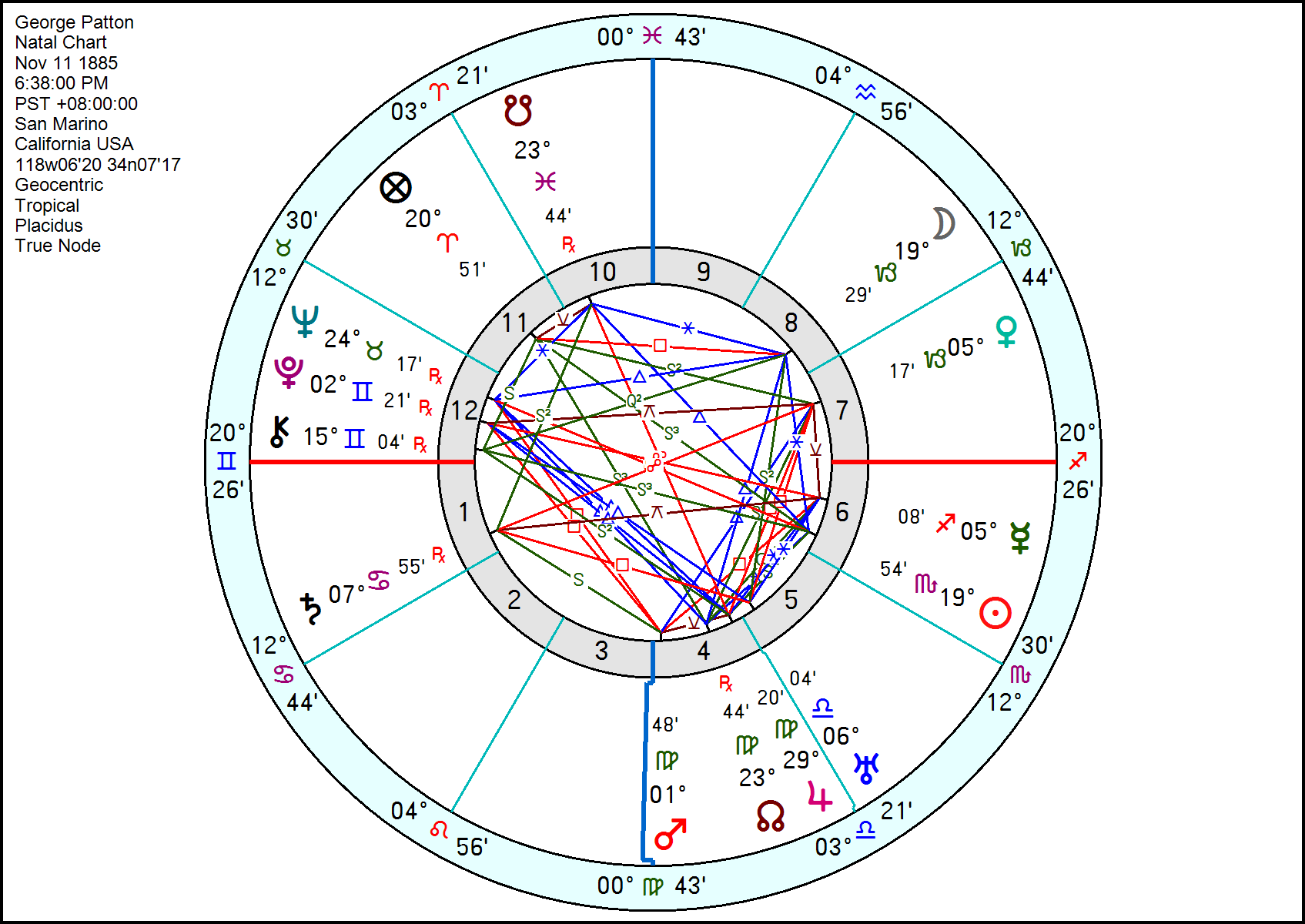
FIGURE 1983 0124-1. George Patton Natal Chart (astro.com).
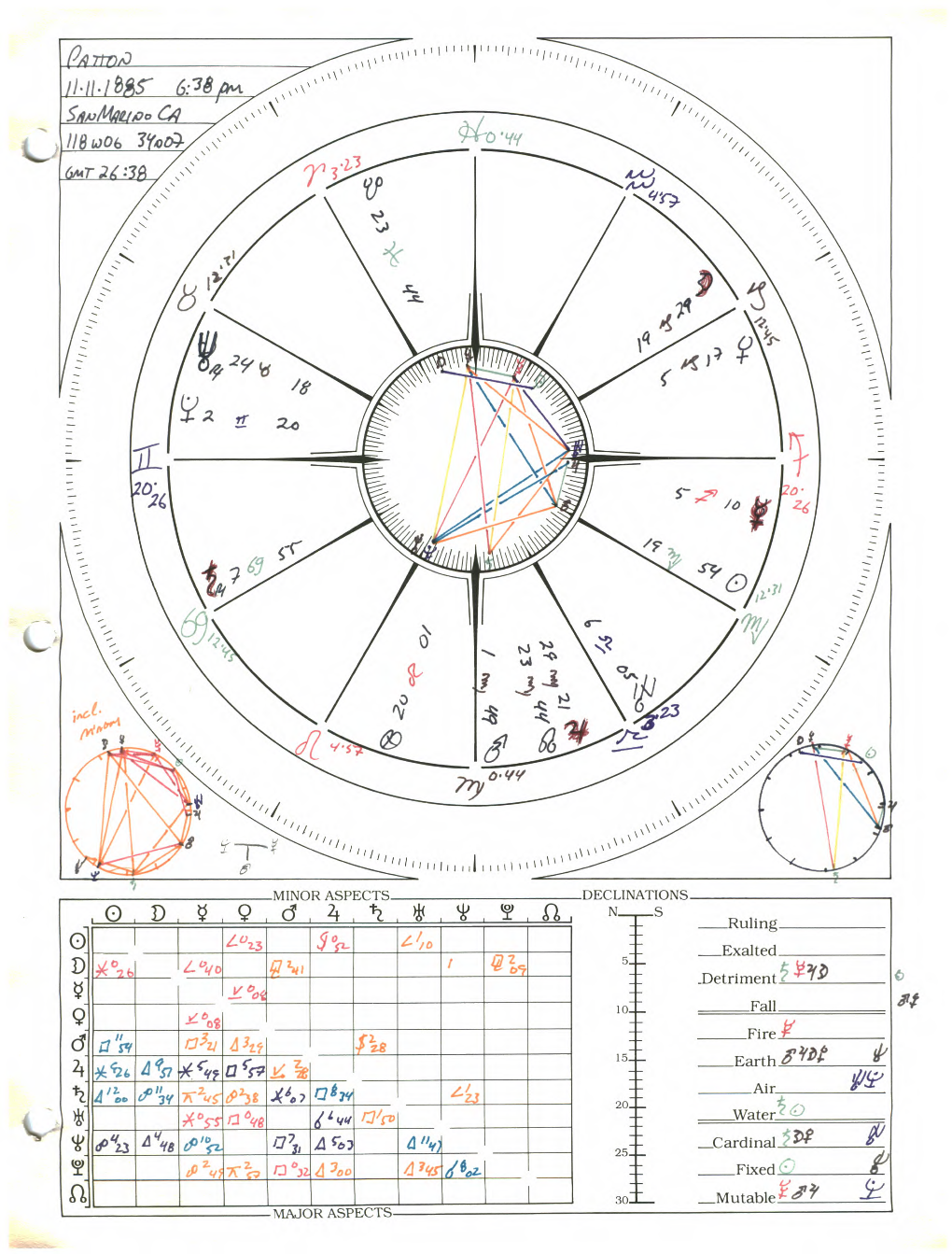
FIGURE 1983 0124-2. George Patton Natal Chart (WG version).
Other diagrams also referred to are not with this transcript version. [Transcriber note: [diagram] means the speaker is referencing a diagram as he or she is speaking. If someone is drawing or writing, with audible sounds of chalk on a blackboard, I indicate this by [drawing] or [writing].]
NOTE: Earlier partial transcript version also exists.
TRANSCRIBED Verbatim by IT prior to 2018 (V11a). This is V12a (2023) and has: updated prefatory matter, footer, and audio file name; Book List and TOC completed; new notes within transcript; new Patton chart added; new formatting to accord with new conventions. Archival verbatim transcript – V12a.
AUDIO FILES: 1983 0207a, 1983 0207b. [Note: "Tape" and "Side" refer to original audio cassette tapes that were later digitized into .MP3 Audio Files.]
1983 02/07 at Wisdom's Goldenrod
Astrology; Horoscope-Patton
[Audio File 1983 0207a Begins]
BC: Let's see, the year is 1937, which is-- well gettin' on close to the next war but still between 'em.
LR: What's the year (Jeff)?
BC: 1937. [TS drawing/writing on board] 7/25, 1937. He has just returned from active duty in Hawaii, he's stationed somewhere in Massachusetts. And, one day he and his wife go out riding and his wife's horse, Fox, kicking him in the leg, breaking his leg, and, he passes out and he has this vision, I think I read this last time, I'll just read it again to refresh your memory.
AH (faint): Yes.
[Transcriber note: I am using Warrior: The Story of General George S. Patton, Jr. by the Editors of The Army Times, G.P. Putnam's Sons, NY, 1967.]
Editors of The Army Times [Warrior: The Story of General George S. Patton, Jr., p. 61, BC reading]: ""I know that I passed out…and then [I] was aware that I was lying on some battlefield on a big Norse shield. After a while two armored Vikings came and started to lift me up on that shield to carry me to Valhalla. Then one of them shook his head, and they gently put me down again, and I came to. . . . I guess they're not ready to take me yet. I still have a job to do.""
BC: So, that's the-- that's the event that we're gonna do, start off with. It was-- it's amazing. When you're in the army even when you break your leg they bring a board and commission together to find out if it was in the line of duty. And, just for the record it was determined that he-- it was by no fault of his own. It was an accident. But it [one/two words inaudible] some of the vets (there would want to) point out that it seemed like he had a bit of indiscretion at actually going out riding that day. You would too if you had 23 transits. (bit of laughter) (Are) these all-- I think Tim's breaking them up in patterns here but these are all aspects one and a half [TS simultaneously: These (few words inaudible)] degree and closer. So, Tim's going to sort them out for you.
TS: They're almost done. Let me see what I--
[short pause while TS draws/writes]
AH: Bo, I guess I missed the im-- import. Why--
BC: Oh. Ok, yeah.
AH (simultaneously): The board-- the board examined (Patton--)
BC (simultaneously): Oh you mean-- They just-- they just-- to-- to see if-- if it was negligence on his part or actually what the cause of the accident was, they just--
AH: I see.
BC: And then they-- during the board they determined if he is fit to continue in command and they-- they register him fit for command as soon as his leg properly heals. He's 53 at this time, so-- 53, 6 foot 1, 198 pounds. (bit of laughter) I mean it's amazing, they give that [one/two words inaudible] 20-30 vision.
DH (simultaneously): (The/To) subscripts which square(--/?)
TS: Yeah. Subscript for--
BC(?): The order that they come to.
TS: Right.
LR: And if you're lucky enough to see that.
TS: Well--
S(?): It's not like there's a--
TS: I don't know if you can see the colors from back there, can hardly see them from up here. But, I'll underline them. In white are the one de-- these aspects are zero degrees and change. [drawing/writing] And, these little groups of things are according to the natal planet. So in other words the right-hand planet. So he had 1, 2, 3, 4 aspects to his natal Moon, 1, 2, 3, 4 aspects to his natal Sun. Ok, now what we (try/tried) to do this afternoon was come up with some kind of interpretation of the-- all of these aspects in white as to what they contributed to the experience, [possibly another student: ok]. And, I didn't really go-- we didn't really discuss a whole lot this afternoon the-- the one-degree aspects which are in yellow, ok, or the two-degree aspects which are in blue. Excepting to note that when you add them in, it does show an emphasis on the Sun and the Moon. And that the overlying long-range transit he was going through would be Neptune sextile the Sun and Neptune trine the Moon during this time, you see that's the only-- Well, there's this strange thing, Neptune quintile Saturn, I just put this down being as last Saturday we-- we talked about those guys, not that I have any understanding or reason to put it up other than that. These little subscripts, like David said, are for the first and second sextile and square and like that. So that in other words, that sextile is Aries to Gemini [diagram]. This trine would be Aries to Sagittarius [diagram], just so-- to get them all-- In case we need them they're there. And I-- this order of the wide aspects excepting for the Sun one 'cause I forgot I admit, I-- we worked them out in this order because this is the longest aspect, I mean Pluto sextile Jupiter was within a degree but obviously that was there for a whole long time, it wasn't just this one day when he fell off his horse, ok. And moving down to the-- the Mercury and Venus aspects and Sun aspects which would have been accurate for that day. Ok? So-- Now I'll tell you my little fairytale. And see if they're, you know, (emanations) and omissions. So far so good? Could see all-- all the aspects more or less? This is the only part of the night that's likely to be clear so-- (bit of laughter) I think for sake of-- some modicum's sake of clarity, I'm going to stick with the natal Sabian symbols rather than the Sabian symbols that the planets were on at the moment that they were-- that-- that this event happened. We can bring them in later unless you want to start with them too, Anthony.
AD: No, you-- no, (you're correct/you go ahead).
TS: Good, we can get into the transits to progressions. He had transits to progressions also going on, which I guess-- Oh, yeah. In terms of patterns like transits to progressions, this one is-- turns out to be important. He had-- Saturn was in Aries. Saturn was at 6 degrees of Aries, ok. So Saturn was opposite Uranus, square his Saturn, square his Venus, ok. Now this is when he knew-- it was with this vision that he-- he knew that he still has something to do, ok. When Saturn hit Saturn the first time or got within a degree is when he took command of the Third Army, ok. When it came exact was the Battle of the Bulge. When it returned the second time the Germans surrendered. Second time though if it's passive, you know, just going back and forth on that degree. So, the-- from this time in 1937 to the time Saturn came to its exact point was really sort of the fruit (of/in) his life in a way. So, these aspects are-- although they were just approaching at this time the opposition and the square, I think they do show a continuity with what's going on later on. And--
LC: Tim, would you repeat the Saturn-- the three Saturn transits?
DH: The (two Neptune) square too?
S (faint): Repeat.
TS: Huh?
DH: It squares that too?
TS: No. From Aries to Cancer would be one. [DH/S(?) assents] I put the transiting planet on the ascendant.
DH: Oh.
TS: Ok? That's just a convention I invented myself for no-- no real reason. [DH: Ok.] But that's the way I do it. I figure they know better than the natal person so I put them on the ascendant. Well, ok. Saturn square Saturn, the first time that-- you want that one? Well that's this one where he fell off his horse, ok. Saturn-- Saturn hit his natal Saturn, the first time it got within a degree, the Third Army, that's his army that Bo told us about last time, became operational. When-- when it got exact, then that was the Battle of the Bulge. A third time when it was on there, it went, you know, retrograde and came back the third time is when the Germans surrendered and for him his life is over. I mean he was dead, what, seven months later, six months later?
BC: Six months later.
TS: He was-- that was it. Also, because Neptune is aspecting the Sun and Moon-- if you look at the chart-- well, (I don't know), in terms of that later time, he had transiting Neptune was on his progressed Head, and when it came to the Head and Jupiter that's when World War II began. So that may be also connected. That's enough of this right now. So, we'll start with the Pluto sextile Jupiter. Pluto degree is Mr. Tuileries.
S (possibly part of background): [few words inaudible]
Marc Edmund Jones [The Astrology of Concepts, Gemini 3, BC reading]: "An etching of rare beauty displays a charming vista of [BC adds: the] court life at the garden of the Tuileries under Louis XIV."
Marc Edmund Jones [The Sabian Symbols in Astrology, Gemini 3, TS reading]: "This is a symbol of the self-confidence and authority which come to man through social position and wealth, and of his ability to bring all his capabilities to some graceful and exquisite self-expression. Here are the more exalted or immortal constants of everyday values, evident as they are given a solid foundation in human achievement or are preserved through a concern for them by people in general. [The] keyword is LUXURY. When positive [TS reads: Positively], the degree is the creative stability which enables each individual to participate in the full gamut of satisfactions [TS reads: satisfaction] developed and cherished by his fellows as well as [TS adds: by] himself, [and] when negative [TS reads: negatively], [complete selfishness and] a joy in lording it over others."
TS: Now the Jupiter degree-- you got that one?
BC: Uh-hm. Jupiter is--
Marc Edmund Jones [The Astrology of Concepts, Virgo 30, BC reading]: "A suburbanite grins; an emergency call to the house of a neighbor frees him from some item of household drudgery."
TS: Well I guess I should read Jones', that one seems so obvious but--
Marc Edmund Jones [The Sabian Symbols in Astrology, Virgo 30, TS reading]: "[This is] a symbol of human responsibility as [an] immortality of the soul, and of a way of living which has achieved an absoluteness of attitude or understanding and is able in consequence to dramatize a high personal competency in everyday problem solving. Each individual creates his place for himself among his fellows, [and] thereafter all life tends to protect him in his way of going and all circumstances somehow seem to shape themselves for his convenience and encouragement. [The] keyword is SAFEGUARD. When positive [TS reads: Positively], the degree is exceptionally gratifying self-fulfillment through the development of a genuine integrity, [and] when negative [TS reads: negatively], consistently witless indiscretion."
TS: Now, this here Pluto is sitting in-- oh I forget where it's sitting, it's-- it's gotta be in the 2nd house. Ok? It's in Cancer, it's at 28 Cancer. Now, the way I understood this so far is that in general the Pluto sextile the Jupiter, that, if you say the Jupiter is the instincts of the person, their reactions, their biological pattern of living, that with Pluto sextiling that that there was some kind of higher will that was forcing some transformation or positive change and definition of that daily life. Ok, that would be one part of it that I've seen. The-- I think that in general Jupiter in the 4th house would be general, like the 4th house is oftentimes the image that a person tries to bring into being, you know, the kind of individuality that they try to will into themselves, will into life. And with Jupiter there, Jupiter on the Head, one would think that here is a person who, besides being a warrior, with Mars in the 4th house, also wanted to be a leader. Now at this point in his life, we might mention that this was between the wars, he was 52 years old, he was elderly for a general, right, he was considered over-- over the hill as far as he-- his career was concerned. So, he really thought that he probably would be known for being an excellent polo player but not really have much more of a military career. And it was this event that caused him to think-- have some faith that maybe that wasn't going to be so, ok. Then he-- as far as Bo could inform us that, he didn't really change, he was always studying tactics and keeping up to date with what the Europeans were doing, the Germans were doing in terms of technical developments and tactical developments throughout this time, there wasn't a change in that that seemed to come from this time forward. I asked him, well did he make a significant change in his studies or his habits, and that doesn't seem to be so.
BC: Well it's interesting that's-- I just-- the six months directly following the accident is the only six months in his record-- in his records that is not documented. It said, "There's no personal record [one word inaudible] six months enforcing activity resulting from Patton's broken leg." So, I mean if-- I've got 1200 hundred pages from his 17 volume. This was the only six months that they don't have documents.
TS: He was otherwise occupied.
S (very faint): Might as well.
BC (simultaneously): Otherwise occupied. You could only speculate what he was doing.
TS: Now I kind of think-- I don't know. The feeling I get about that Pluto degree is that it's both-- there's a certain kind of naturalness in the degree, in that the garden of the Tuileries themselves are very sort of natural place. They're not a formal garden, you know, it's a informal setting, and also highly ritualized, ok. Now I thought that perhaps it might indicate that here was a person who had developed a sharp receptivity to a certain level of higher will. But that that level of the will might be rather more or-- well likely, he-- he wasn't ahimsa, you know, he was-- that the level that he worked with would be more directly in Nature than say mental. Ok, so that will was working into-- working into the world in some way. And there's a certain kind of richness that that degree seems to carry. So you'd say that there was a certain-- perhaps speculate there's a certain amount of richness in his ability-- his experiences, his past experiences of working with that higher kind of sense of destiny or willing and conforming to it. I think that that would be in the degree itself. Now that came and sextiled his Jupiter which was this suburbanite stuck doing-- playing polo, you know. And there's a chance that-- in this vision perhaps there's sense that maybe he had some-- some other life to lead rather than just that of retired army colonel. [short pause] See here [one/two words inaudible] I guess that's a way I see that transit as being the kind of background building up of his confidence that he really did have a destiny still to achieve and that-- he always had a feeling of it but that this was some kind of a-- a certification from outside himself that his destiny was available, was going to come to pass. 'Cause he always had that feeling, right, that he was-- [BC assents] he had some destiny to live out but he hadn't lived it out yet.
S: Right.
TS: We'll go on and you can come back once you have specific objections or questions.
S (very faint): They're still sleeping.
TS: They're still asleep? [S simultaneously, faint: Yeah.] Oh ok.
LR: (Really?) I don't understand the Pluto degree. Can you stop on Pluto and just try to do that one?
[short pause]
TS: Well what of it did you understand? What part of it makes sense? [19 second pause] I mean to me you're starting with the very superficial meaning of his life. You say it's "a symbol of self-confidence and authority which comes to man through social position and wealth." In fact, he lived very wealthily considering he was in the military. His daily environment and his daily life was better than average 'cause his wife was from a moneyed family, and now--
BC: He had just bought a yacht and sailed back from Hawaii, bringing [S simultaneously: Really?] his polo ponies with him.
LR/S(?): Happy?
TS: So as-- on an-- on an immediately psychological or superficial level it certainly seems to be the interpretation applies to his-- his life.
LR: But it's also this planet which is in some way ushering in (his/its) destiny, showing him to-- introducing him to the sense of his destiny it seems. That at that point in his life he--
BC: No. I wouldn't say it was an introduction into his destiny, I think it was just at that point he was aware, yes, there was something that I have to fulfill. I would say later on, if we get to it, another event, it becomes very clear what he's going to do. It seems at this point he just has the inspiration and--
LR (simultaneously): That he has something to do.
BC: That he has something to do, not what yet, just something's left to be done.
S (very faint): Yeah.
LR: That's right, you know, I get the sense that this Pluto is destiny for him, is the [BC simultaneously: Well--] sense of his dharma, his specific historic role. I mean I think in some ways the degree has to do with that, it has to do with some kind of historic scene, setting. Now I mean can you see Pluto as being somewhat the dharma that has to be lived out in a life?
[short pause]
BC: Pluto per se or Pluto in that degree?
LR: Well, I'm not sure. I mean I can see the sextile something got defined, you know, something got created or defined at that point, brought into consciousness. Say that was the sextile. The Jupiter, something of his natural libido, his-- the way he was going, the way his-- his just patterning of life was altered at that moment, the Sun, I mean he broke his leg.
TS (simultaneously): Was it altered in the sense it was confirmed(./?)
LR: Uh-huh.
TS: Yeah but it was really more confirmed than it was really stopped, it was confirmed that he-- that the deeper s-- drives within him were really still worth pursuing or [LR: Right.] developing. [LR/S(?) simultaneously: I don't think--] I don't think he-- it wasn't like he-- his life really changed that much other than he was confined to bed for six months which probably [student assents] slowed him down little.
LR: I'm sure that's a huge change (for a general).
JA: Are you saying that he recognized that he's a member of an aristocracy that went deeper than being just a playboy?
LR: Yeah I think-- yeah. That there was a historic--
JA (simultaneously): That he was really a-- a warrior class and-- and it was in his body.
LR: That's the kind of thing I think that [student assents] Pluto means, sense of historic destiny, there's a--
JA (simultaneously, faint): [possibly one/two words inaudible] a real natural(--/.)
JC: One way of looking at that Pluto symbol I think is that he as a leader and then-- I mean he as a person in unfolding his own life involves many other people, which makes him a leader. And that's what I think this garden, the royal garden is all about. And-- well, that's all. No I think that-- I would say too that the Jupiter might be an indication of this future direction. And the sextile would in terms of the defining of that, showing that he had a destiny yet to fulfill, a mission, and his life hadn't unfolded completely in terms of the role he had to play as [LR assents] some force in society. And that was indicated by the defining through the sextile to Jupiter.
[22¾ second pause]
TS: I mean I think in terms of the experience, I mean the guy-- he nearly died, alright, did you-- did you make [couple words inaudible]
BC: No.
TS: For when he-- he broke his leg, he had im-- blood clots and he-- it wasn't just a broken leg, he nearly died. And so, I think that the vision of the-- these guys coming and picking him up was authentic in that sense, that there was a real brush with death that he had to go through. And where it says here, "Here are the more exalted or immortal constants of everyday values, evident as they are given a solid foundation in human achievement," that I think probably if one had that kind of an experience of coming very close to death that it would change one's perspective somewhat, you know, that there-- there would be a sense of-- of there being an immortality within oneself that would change one's idea of one's-- one's own being, and then that aristocracy would also include the aristocracy of his own-- his own sense of immortality. 'Cause he did have a belief that there was a warrior heaven, that when you died-- if you died as a warrior, you went someplace else than everybody else did. (bit of laughter)
LR: Well that was what Valhalla is, you know, that's-- [TS: Yeah.] that is Valhalla.
BC(?): Yeah.
TS: So, yeah.
AH: It also [few words inaudible] fear.
AD: I don't think you should interpret it that way.
TS: No? Ok.
AD: I told you the story, the morning that I had my heart attack? [student assents] I had a dream where two people were putting me in a suit of black clothes. And they said, "No. No, we better make it brown this time." And I woke up from that and rushed to the hospital, I knew something was wrong and everything was-- Now they were two men, and the imagery used wou-- would be contemporary image because I didn't particularly care to read Norwegian mythology even then. (laughter) But you notice the similarity of the message.
TS: Yes. And how is that-- I didn't--
AD: Well I think the way the-- well, I'm not-- I'm-- I'm going to try just changing it a little bit, not very much from what you said. I thought that that sextile was referring to the fact that he was re-- released in a way, he was released from the round of inane activities that he was practicing and carrying on for that period of six months to preserve these qualities like courage and valor that he was obsessed with.
AH: Is that-- is that to suggest Anthony perhaps that six-month period was like a period of some sort of almost like spiritual tapas or period of introversion or gathering of the energies?
AD: Yeah, yeah. And that, you know, there was a re-evaluation and-- well a-- a-- a re-evaluation but basically he stood by these values that he thought were worth standing by. And I thought the Pluto degree represented these immortal values, you know, valor, bravery, courage, leadership, that the Pluto represented, and that sextile seemed to me to mean that (it/he) was released from that inane round of activities, you know, polo playing, general [student assents] parties and this and that, by this accident.
AH: But this--
AD: And then of course he could carry on with a kind of spiritual tapas or introversion.
AH: I-- I don't understand the connection with the vision he had with what you've said.
AD: Well, I don't think we'll get it all at once, I mean--
TS: We got 23 aspects-- 22 aspects to go, you know.
AD: I'll go by the one degree aspects basically.
AH: But for him, for him personally, given this-- this transitional state, this line, like the fact that the vision was of Viking warriors and the reference to Valhalla, like that's in some sense a symbol of the ideal that his life was at least--
AD: To be dedicated to.
AH: Dedicated to, yes. [one word inaudible]
AD (simultaneously): But what they're going to try to do, I think what they're trying to do, is they're going to try to understand this total, this experience, you know, in terms-- in terms of all the-- that complex of-- of aspects that was going on at that time. So that's-- [student assents] it's a big mouthful. Anyway, I don't know if that disagreed too much with what you were saying. I don't think so.
TS (very faint): (No.)
AH: It's certainly reinforced by the fact there's absolutely no records of that period of his life.
AD: Well that wouldn't-- that would seem to indicate, you know, that he didn't have any time to go running around playing polo or doing things of that nature, I think it was a kind of subdued retirement, a forced retirement. [PD simultaneously: Almost like it freed--] It's that Jupiter degree.
PD: It freed Jupiter from the superficial ways it had kind of acted in life, spreading out into sports activities and throwing his enthusiasm in those spheres of life.
AD: Uh-hm.
PD: And kind of realigned it back to its purpose in life.
AD (simultaneously): To its fundamental values, values that he was obsessed with.
[13 second pause]
TS: That helps, yeah.
AD: Let's try the next one.
TS: Ok. I am just going to-- I mean I just worked out the one degrees, I just put the others for context in case it seemed appropriate. So the next aspect he had that was close was the Saturn trine Mercury. I guess we should do those symbols as well.
BC (faint): Which one first?
TS: Saturn. [couple words inaudible, possibly another student]
BC (simultaneously): Saturn? Saturn degree, yes.
Marc Edmund Jones [The Astrology of Concepts, Cancer 8, BC reading]: "An imaginary land of [BC adds: the] rabbits is revealed, with its citizens faultlessly dressed, and on dignified parade."
[short pause]
LR: Well Saturn, when it was in Leo there?
TS: The Saturn was in Aries.
BC (simultaneously, very faint): Aries.
LR: I'm sorry.
TS: So it was a-- making a second trine to Mercury. See the Saturn interpretation that Jones gives us is-- not that one, it's--
S (very faint): The other one.
Marc Edmund Jones [The Sabian Symbols in Astrology, Cancer 8, TS reading]: "[This is] a symbol of the upward reach of consciousness towards spirit, or of the necessity in all worth-while experience that events in some fashion make their continual and stimulating contribution to whatever values the self may be building into its own nature. The habiliments of higher implication are always available for a lower life to wear experimentally, thus sharing in what as yet it has not been able to assimilate to itself. The real is established as it is dramatized. [The] keyword is APPROPRIATION. When positive [TS reads: Positively], the degree is unlimited assurance in any projection of self into [a] superior dimension of reality, [and when] negative, [an] ingenuous substitution of affirmation for accomplishment."
TS: And that was in a trine, exact trine to the Mercury, 6 (Gemini).
S (very faint): 6 Sag.
Marc Edmund Jones [The Astrology of Concepts, Sagittarius 6, BC reading]: "There is [TS simultaneously: I know.] a great display of colorful coming and going in a large concourse of people; it is a cricket game."
Marc Edmund Jones [The Sabian Symbols in Astrology, Sagittarius 6, TS reading]: "[This is] a symbol of man's insatiable desire to refine and strengthen every last potentiality of his own personal character and skills, [TS: Sounds awful like that Saturn.] and of his need to gain recognition for his success in this area-- in this from each area of life in which he finds himself. Here is his capacity for holding steady in any given milieu of confusion in which he may participate, and for bringing a measure of stability to every situation in which he may be involved. Man is here at his best when he is most seriously challenged to be himself, and to play his part in strict accordance with the rules [TS reads: rule]. [The] keyword is SPORTSMANSHIP. When positive [TS reads: Positively], the degree is exceptional competency in crisis, [and when] negative, false pretense to personal excellence."
TS: Now-- Again, this had to be a background kind of thing that was going on and it was, you know-- it wasn't-- I'm not going to look to this to be only-- the only thing adding to the accident but-- I think of the Mercury in the 6th house as being part of his generalship, part of his work. If you just take the 6th house as-- one of the mundane meanings of the 6th house is your work, what you do, ok.
AD: If you got nothing there, you're unemployed? (some laughter)
TS: No, no.
S (faint): (I don't got) anything there.
TS: That means you don't have any confusion about what it is you have to do. (bit of laughter, TS laughs a bit) Not unless you have planets in Virgo. (TS laughs) [short pause, faint background student talking] So with Mercury there I think that-- besides the Sun, as being someone who-- who would be very self-disciplined and by and large oriented towards being productive in this career, whatever that could be, that with the Mercury he would be a person who would tend to be somewhat intellectual or organizational. I think this degree gave him a capacity to mobilize or organize the armies. Then again maybe it-- (TS laughing, some laughter)
AD (amidst laughter): Yeah, yeah [few words inaudible]
S (simultaneously, faint): That helps Tim. Really good job. (some laughter)
TS: With red lights and green lights there's a [one word inaudible] for all. (TS laughing, some laughter) Not that that was the way (it went) at this moment, um-- (bit of laughter, student assents)
BC (very faint): Quickly, he's got [one word inaudible]
TS (simultaneously): Quick, moving-- (laughter)
AD: What do you want to do?
TS: What?
AD: Come on, let's go.
TS: Ok. We said that Saturn is some kind of self-apperception, it's the way that the person sees himself. Now he's got Saturn in the 1st house in Cancer so he sees himself pretty clearly, (TS laughs) and he likes what he sees. There seems to be a certain sense of disciplining his psychology and disciplining his talents, whatever they are, that that Saturn in the 1st house has to do with, I mean it's this-- the sense of these rabbits. Well, he had-- (laughter, student words) I was thinking of more personally that the-- the irrational functions of the psyche as being almost like, you know, things which had to be disciplined and put-- capable of putting on those greater values that like the Pluto was providing in a way, that the rashness that his Mars operated with and so forth, that through the Mercury there was some way in which he could orient his psycho-- through his Saturn, there was some way in which he could orient his psychology to bring in real spiritual or soul values into the psychological realm of the-- the military man.
LC: The imagination-- the fact that it's an imaginary realm is what you're saying (here)?
TS (simultaneously): No, no. The interpretation where he says, "The vestments of a higher implication are always available for a lower life to wear experimentally," that the lower life here I was taking as psychology and the higher-- the vestments of a higher form of life being the-- the soul's life that the-- [LR: I think--] I see.
LR: I think so-- one of the things you said really has a lot to do with his personality, I mean in that he-- he had Saturn in the 1st house and he would tend to be identified with that functioning. I mean I think it's by virtue of that Saturn symbol that he couldn't accept things like fear and anything less than courage in the incident like he slapped those boys for shell-shock. Because, what you said about the-- I mean, rabbits are usually seen as a weak preyed upon animal in many senses, you know, they don't have a whole lot of defense mechanisms. And, the fact that the-- they-- they're in-- they're all dressed up in lines and everything, it is a more disciplining of that kind of-- of-- of a weakness, I mean it's that overstepping of a certain weakness to me. At least that's what it says [TS assents] to me and-- Maybe that [one/two words inaudible] that symbol is really where a lot of his quality of discipline and--
TS (simultaneously): Sense of will of disciplining himself to overcome his weaknesses you're saying.
LR: Comes from that Saturn.
TS: Yeah, I [LR simultaneously: I would--] could see that. And I thought of that as being--
LR (simultaneously): He turned it on himself, I mean he demanded that of his own ego. And--
TS: See so I thought that right now with the Saturn trine Mercury, that he had an intuition that that was the kind of work he had to do at this time was to start overcoming some of his weaknesses. Not that it was-- I mean later on I think that--
LR: Why do you see the weakness in the Mercury symbol, [TS simultaneously: No, no but--] and how do you see it?
TS: The Mercury sym-- Mercury in the 6th house, an intuition into what it is of self-refinement you have to undertake, just simply Mercury is being the function of intuition, it's in dignity in Sagittarius. And that with Saturn trine it there would be some clear communication, he got a message, "Hey. [student assents] Get yourself into shape," you know. Now here I was thinking of it as being-- getting himself into shape psychologically. Later on when we do the battles we make-- we'll find that Mercury rather prominent but in this case I thought of it as being a-- an intuition that he had work to do on himself, which I think goes along with and it's amazingly compatible with the other transits like the Pluto sextile Jupiter, that there was a-- a release from a certain trivial way of living or there was a sense that there was a destiny that was still yet to be fulfilled, a reminder that he had this destiny he still ought to go with. And so with the Saturn trine Mercury there was a feeling that yeah there was work for him yet to do on himself, that he had to begin to overcome some of his--
PD: You know if you're laid up for six months or however long you're laid up with a broken leg, it does kind of force more mental operations and less polo playing and physical getting around. [LR and TS assent] So it would force-- he was a tactical master with tanks which was a first, it really didn't even have a historical background to base yourself on. So, I think-- I'm just trying to [TS: Yeah.] follow up with what you're saying that his mind started, you know, [TS simultaneously: (Awesome.)] becoming freed and getting energy to go into this direction of developing these tactical plannings. Without having mental energy you couldn't-- you can't, you know, take up a creative activity, which it did demand.
TS: Yeah. Well I think-- because it's true, later on when-- when Bo showed me the-- the list of his transits for the battles, almost always that Mercury was quite prominent. And the Mercury doesn't have any aspects natally, does it?
PD: Square Mars, which--
TS ({simultaneously): Square Mars, oh yeah it does.
PD: --would be an interesting thing, it's like those two are working-- working together.
TS (simultaneously): In the sky in other words. Yeah. Yeah.
S: (I get/Look at) you.
AD (simultaneously): Yeah but on that day what was he doing, with the Saturn trine the Mercury?
TS: Well this-- on that day with the Saturn trine Mercury I thought he got a message as to what kind of work he had to do on his own psychology.
PD: Well Saturn trine Mercury is not a day aspect though either, is it Tim? I mean that must have been around for a while.
TS: No, that was around for a couple of weeks but this was catalyzed and the-- you know. Well this one, there weren't anything underneath it but Mercury was involved, you see a couple of aspects by Mercury also, so-- But, what did you see that as meaning Anthony?
AD: I thought of it as an appropriation on the part of the Saturn, you know, the ego-complex, an appropriation, so to speak, of his ideal. Or let me put it better this way--union, a mental union with the ideal.
LR: The ideal?
AD: Yeah.
LR: The ideal being [slight pause] the Saturn you're saying or that Mercury?
AD: And to [TS simultaneously: Mercury.] reject any counsel of confusion.
LR: Which is that?
AD: Well, I'm-- I'm not looking for that one here.
LR: I'm sorry, I didn't follow what you just said.
AD: Yeah I know because first I let go of the symbol so I could just say it in English and then go back to the symbol.
LR (simultaneously): That's fine, just if you say--
AD (simultaneously): So, what I'm trying to say is that the Saturn which represents let's say the reflective consciousness, you know, was here appropriating or imbibing the mental union with his ideal, and the repulsion of all counsel of confusion was taking place, any-- if there was any doubt at this time, he got cleared of it. [students assent] [couple very faint inaudible words]
AH: That's the rabbit symbol?
S (faint): Uh-uh, no.
S (simultaneously, faint): Uh-uh.
S (faint): [couple words inaudible]
TS (simultaneously): Mercury [couple/three words inaudible] chaos.
S (simultaneously): It is cricket game.
TS: The cricket match is an ordering [S simultaneously, faint: Oh yeah, yeah.] of a chaos. 'Cause it's in a midst of a big crowd [one/two words inaudible]
Marc Edmund Jones [The Sabian Symbols in Astrology, Sagittarius 6, AD reading]: "…capacity for holding steady in any given milieu of confusion in which he may participate…"
[student assents, faint]
AD: Alright. And I would say he was in the middle of confusion in 1936, '37, you know, the round of polo playing and parties and all that.
Marc Edmund Jones [The Sabian Symbols in Astrology, Sagittarius 6, AD reading]: "…a measure of stability to every situation in which he may be involved. Man is here [AD reads: here is] at his best when he is most seriously challenged to be himself…"
AD: And then you have the-- the Mercury degree which speaks about--
Marc Edmund Jones [The Sabian Symbols in Astrology, Cancer 8, AD reading]: "…the upward reach of consciousness towards spirit, or [of] the necessity in all worth-while experience that events in some fashion make their [continual and] stimulating contribution to whatever values the self may be building into its own nature."
AD: Alright--
LR (simultaneously): That-- that's the Saturn. [S simultaneously, faint: (Saturns), yeah.] So you happen to read--
AS (simultaneously): [couple/few words inaudible]
AD: It doesn't matter.
LR (faint): Oh, excuse me.
AD: It doesn't matter, I'm just trying to understand how the reflective consciousness is trying to appropriate and bring about or assimilate, alright, that higher state of consciousness which in (his/this) case was valor, bravery, courage. And that this was the goal, this was a goal of his life. So he would have to by necessity push aside all confusion and go back and, so to speak, mentally unite with this goal that he has in mind.
TS: Yeah. One thing that--
AD (simultaneously): And he had to dramatize it to himself I imagine.
TS: Would you say that-- one thing I was thinking about this is, coming from the-- my understanding of the second trine, that I've written down here was that, if you say that the Saturn is also the self-discipline, that the fruit of his self-discipline made him receptive to seeing the real-- the real goal or the real situation, which is that World War II is about to-- I mean it really hit him that World War II was gonna happen and that out of the chaos of his personal event-- life (and/in) the world politics I think he-- he-- it-- (or approved his--) all the years of self-discipline sort of gave him a glimpse that-- of himself almost.
AD: Yeah I think basically it was a re-dedication to his original goals in life to be a warrior, alright, and there was a real recognition of that taking place. And he probably dramatized that. Because, if you remember, '37, in '38, '39, when was it '38 when Hitler marched into Poland? I mean anyone, anyone who had any understanding knew it was inevitable the World War was on its way. [short pause] When was that Bo, '38? Or '39?
BC: I think it was '38, I can check real quick.
AD: September?
LR: Look at this one?
TS: No, the oval [diagram].
AH: Anthony it seems like the personal fascination of the ideal that he had-- that he had participated in all his life was like in some sense a superficial unreal sort of participation in-- in the archetype of the warrior. But, like at this point, when you speak of that being mentalized or--
(Side 1 of original cassette tape digitized as 1983 0207a Ends; Side 2 Begins)
AD: But this was like a re-dedication and re-affirmation of the goal of his life. [short pause] See the Saturn is supposedly sitting on a degree where there is a tendency to incorporate higher realms of consciousness or spiritual consciousness. And the Mercury degree kind of points out and helps him to understand how to do that, how to go about doing that…and holding fast to his ideals. So this trine I-- I thought was, you know, like part-- it's woven into the very context, the very texture of the experience of that day. It's all part of it, I mean, our difficulty is here we have an image, alright, and this image prior to let's say the concepts of the understanding working on it and making it into a phenomenal object for you, alright, these are the images prior to that happening. It is only after the concepts of the understanding work through that image that you could say an object, a phenomenal object crystallizes out of that matrix. And you begin to see clearly, or at least more clearly than you did before.
TS: So then you're saying these are the underlying sort of components in this-- the world-image for him at this time.
AD (simultaneously): Yeah, for him, yeah.
AH: But if you-- if you trace the virtue of courage and you say well, he had obviously had the virtue of personal courage in the sense that he could offer his own life up. But it's a completely different kind of courage that was going to be required, he had to offer the lives of thousands of men up, like-- [BC simultaneously: First off--] there's like another level of that ideal had to have been brought into him, [AD(?), very faint: Uh-hm.] you know, it's like the responsibilities and the destiny of a thing. [couple inaudible student words] It's like a different--
AD: More specifically he was going to need a lot of courage to go through all the difficulties that the Washington politicians put in his way.
AH: Yeah.
AD: And I think this was a clear vision of what was going to be required on his part to be able to go through this. But basically if we restricted ourselves to just that trine I would say that it was an appropriation, so to speak, of an ideal into the ego, the senex consciousness, alright, and a re-dedication to that ideal.
[9½ second pause]
LR: I wish you could explain it in term, I mean-- I'm not doubting what you're saying but I want to be able to see the degrees now that (were/we're) here. Can you say-- I think I see what you're saying about the Saturn. The Saturn is the rabbits and the [one word inaudible] rabbits I guess. You know, that it was a certain grasping of a higher level of your life. But I don't know--
AD: Well look--
Marc Edmund Jones [The Sabian Symbols in Astrology, Cancer 8, AD reading]: "…the upward reach of consciousness towards spirit, or [of] the necessity in all worth-while experience that events in some fashion make their continual and stimulating contribution to whatever values the self may be building into its own nature."
AD: That's the senex consciousness. [LR assents, very faint] Now what is it he's trying to build into his own nature? We turn to the Sagittarius, alright.
Marc Edmund Jones [The Sabian Symbols in Astrology, Sagittarius 6, AD reading]: "Here is his [AD reads: a] capacity for holding steady in any given milieu of confusion in which he may participate, and for bringing a measure of stability to every situation in which he may be involved."
LR: Yeah, ok.
AD: Again--
Marc Edmund Jones [The Sabian Symbols in Astrology, Sagittarius 6, AD reading]: "Man [AD reads: He] is [here] at his best when he is most seriously challenged to be himself, [and] to play his part in strict accordance with the rules."
TS: Yeah.
LR/S(?): What's this?
TS: That was something he definitely had to incorporate. (TS laughs, bit of laughter)
AD (faint): Yeah.
TS (faint): It wasn't natural. I could see that plan.
AD: I think, I think you'll see those one degree aspects are really constitutive of the psychical context which constituted the whole matrix, you know, the contextual-- like the substratum-- In other words, we see objects, ok. And we can deal with objects because they're phenomenal--this is a cup, this is a saucer, this a pole, this a tree, ok. But just prior to the making of an object, your mind is unconsciously so to speak organizing those varied sensations, alright, and then pervading them with concepts. As soon as that happens, alright, then you've got what we call experience. So what we're trying to see is that substratum of the phenomenal objects, of what he understood, what he saw, what he perceived, we're trying to understand the-- the background, this [one/two words inaudible] on which all this was taking place. And so we're isolating this fragment, that fragment, the other one, alright, and then maybe we figure that if we get them all together or isolate them all and then we put them all together and we'll get the background of the whole context in which he was operating. [TS, faint: Yeah, yeah, that's right.] And you could see the enormous complexity that weaves itself into each and every individual experience that we have to go through.
TS: Wow.
[students assent, faint]
AD: Well you saw that for instance in the artist. To bring about one work of art how many things had to be involved. It will be very naïve if any-- anybody now, here, looks to one aspect and says this is what's going on. [short pause] Let's try the next one.
TS: Ok, well, it was his wife's horse that kicked him and he had Saturn squaring his 7th house Venus. (AD laughing, laughter, student words)
AD: Yeah, I think that's enough. Let's go to the next. (laughter, student words)
LDS: Sounds like a Sibyl.
TS: Well I can draw some rather interesting conclusions but--
AD: Yeah, go ahead, Saturn square Venus.
TS: Ok.
AD: What was that, one degree too?
TS: Yes. I think it's-- yeah, that's one degree.
Marc Edmund Jones [The Astrology of Concepts, Capricorn 6, BC reading]: "A dark archway in the forest leads to a great-- greater depths and darkness beyond, in its shade lie an even ten logs."
[short pause]
Marc Edmund Jones [The Sabian Symbols in Astrology, Capricorn 6, TS reading]: "[This is] a symbol of the illimitable resources of self in preserving its own integrity through the varying fortunes of everyday living, and of the satisfaction anyone may know through a conscious direction of his own destiny. Personality comes to fulfillment as it realizes that its function is an unending exploration of its own potentialities. Man remains unimpeachably himself because he is able to extend himself indefinitely. [The] keyword is THOROUGHNESS. When positive, the degree is [a] high competence in the interpretation of life's purposes or unusual persistence in employing its ramifying potentials effectively, [and] when negative [TS reads: negatively], fear of experience [and] bondage to mystery."
TS: Some fear. Ok. What I thought this was, this would be the second square of-- and usually I find that that would be a transformation or a-- a re-forming of that Venus, that to go and-- I think this goes along with things you've said earlier Anthony that-- that with the Saturn that he was-- his sense of self-worth which would be his Venus and his dedication to his-- his-- that he had a strong sense of being worth something to the world. And with Saturn square this that there was a kind of a transformation of that and a recognition that he really should give back to-- to those things which are of value, and that sense of valuing himself as a man of destiny and being ready-- being able to face the unknown in front of him rather than go into the shallows, that to look deeper into things again.
JC: Looks to me like he kicked his wife. (bit of laughter) You know, I mean, you know, cu-- he-- up to that time you said he was partying and carrying on doing things. That's very much can be interpreted as a Venus function. She was probably involved with a lot of that. And Saturn said let me, you know, go ahead bring you back to the-- your fundamental duty to yourself, you know.
TS: Into your destinies.
JC: To your destiny.
AD: Tim, there's another thing I very often find useful when I try to understand what Jones is saying. Like in this-- [aside: Where you going? Just (one word inaudible) you know.] You see, at times he says "the illimitable resources of the self," and at another time he'll says-- [short pause] I thought he said "personality" somewhere. Oh yeah, "Personality comes to fulfillment as it realizes that its function is a never ending…" Now very often I can understand this, and quite adequately, by recognizing that by "self" Jones is referring to what we would call the expedi-- you know, in expedient terms the Witness-I. And "personality" is the empirical person. So when he says "the illimitable resources of self in preserving its own integrity through the varying fortunes of everyday living," I would add "through the personality". So that it's-- "This is a symbol of the illimitable resources of the self." Now, if you think-- if you think of the personality, its resources are not illimitable. But if you think of the Witness-I, its resources are illimitable. Now those resources of the self in preserving its own integrity-- in other words, the Witness-I must preserve its own integrity…and it will do so…but the means and the medium through which it does so is the personality. So you're going-- every now and then if you-- if you read these very carefully you can see on the one hand the higher self or the Witness-I is operating, manipulating things, alright, but on the other hand it's the personality which is suffering the consequences of that manipulation.
TS: Uh-hm. [student assents, faint] And that seems to be the case here you're saying, this higher self--
AD (simultaneously): Yeah, quite often, quite often when Jones uses these symbols, if you-- if you read very carefully, there is, whether it's conscious or not I don't know, but there is this bifurcation of the self into a higher and a lower which is going on all the time.
TS: Hm. I think he had some notion of that himself, I mean-- I mean, I know that Jones tried to incorporate some of Plotinus into his ideas. Not that he succeeded very well. [12¾ second pause] So you're saying that with this aspect that maybe he got a sense of that hand of his higher self operating in this situation. That would certainly seem to be part of that vision also which we didn't--
AD (simultaneously): Yeah and of course a square forces-- forces out into the open or manifests a meaning. Anytime Saturn is involved you gotta be real blockhead not to get at least a glimpse of what's going on.
TS: This is true.
[short pause]
JC: Maybe the Saturn brought him back to a deeper sense of the values that Venus represented [few words inaudible]
TS: That's part of what I was thinking too, Jeff. His sense of values were-- like you said he got-- he kicked some of the more superficial values and re-eval-- re-asserted the-- a deeper sense of values.
JC: The-- those would be the illimitable resources [couple/three words inaudible]
TS: That he had within him this ability to look at the unknown instead of not wanting to look at the unknown and sort of just superficially going on into writing papers and stuff that he realized, no, he wasn't over the hill, he still had a-- a destiny to-- to look at, to look for.
LR: Now this is a s--
TS: And he had to be ready-- he had to be willing to scope-- to keep an eye open. He even says that, I ran across this some place, he said-- and it's this wonderful quote about fate in here, he (says/said) every-- in-- he said in every man's life, two or three times in his life fate will reach out and touch him. And he said, if you happen to have the courage to look at that moment, it'll change your life but you have to be ready to look. And it seems like to me that this moment was one of those moments when he was getting ready to look. I don't think that he saw his destiny here but that he realized he had better-- that was re-awoken in him, that he would be ready-- a readiness to be receptive to it whenever it did show up. 'Cause I think when he got his tank command that's when he realized what it was he had to do. But I think first of all his anima, his feeling function and his intuition had to be made attentive to that-- that possibility. And I thought that's what this event was about, part of what this event was about, these aspects are showing.
LR: How would you characterize the difference in the trine and square of the last two?
[short pause]
TS: He liked being sick, he was mad at his wife, uh-- I-- it's a-- (bit of laughter) the-- the way I saw it Linda was that the-- that being as a-- that's from Aries but that would be like-- well it is, it's Aries to Sagittarius and Aries to Capricorn, it's those two kinds of relationships that with the trine the Mercury that there would be a fruition-- through that sense of self-discipline in senex that there would be a positive experience of fulfilling some intuition or image or a mental ideal that an-- that may put-- that-- that he had and had been looking to build into himself all his life. So I would see that as being something he would experience positively and be a natural accomplishment, natural experience. The square I don't think would be s-- I think that as Jeff said there would be a letting go of a certain superficial level of his anima at the same time that there was a deepening of it and a tri-- a somewhat more turbulent transformation of the feelings. Again, usually with a Saturn square [one word inaudible] it's not that-- that brutal, I mean it's difficult but it's not-- you realize that there's something you've gotta do.
LR: So you're saying that the trine is a building up of something in his being and the other is a bringing into consciousness?
AD (simultaneously): It's a manifestation of the content.
TS: Yeah.
LR (faint): The content?
AD: The trine is the incorporation and appropriation of something which hasn't really been put into him yet. The square represents a manifestation of the contents or what basically we're talking about. [16¼ second pause] Mars opposite Neptune.
TS: That's interesting. Mars opposite Neptune, he had that aspect when he got shot. (TS laughs)
PD: That was the last-- the other vision he had, right?
TS (simultaneously): Yeah. Right, and-- [BC simultaneously: Should've got off (couple words inaudible) he--] Every two years, you know, he-- (TS laughing) He must have had lots of bullet holes in him I take it. [student assents, faint] So [one/two words inaudible] as you say is-- One way-- one fairytale I can spin out of that is if you say that Neptune is the higher-- higher feeling consciousness or the sense of reason in the person, that the Mars is a planet of violence or irrat-- of rashness, sort of flooded his consciousness temporarily, I mean he-- it was partly bad judgment that he would-- His tendency was you-- to work with horses that were a little unpredictable. He didn't like docile animals. So these horses that the-- you know, that both his-- you know, the horses in his stable weren't exactly predictable critters, you know. And so there was a rashness, you know, he always liked to operate with. And I would think with the Neptune opposite Mars one of the things that would happen is that that would again show-- get him into trouble physically. Also it's in the 6th house, house of illness, 12th house, chronic problems. How did you see it last time, Jeffrey?
JC: Well um-- well last time when he got shot I thought that the Mars being the planet of courage and willpower was being up against something that was much bigger than-- than himself, you know, like that was a-- the opposition represented the [one word inaudible] planet, the Mars didn't have the-- couldn't deal with it. It gave out, so to speak, it, you know, he lost his courage in that-- (right at) that(--/.) But, I would agree with you that-- I thought about it afterwards that I don't think-- I think fear is more a Saturn function. But there's something about the-- the loss of the strength of the Mars [TS assents] when it's confronted with Neptune that perhaps with the horse thing that lost his ability to deal with the power of that irrational animal in that moment to-- was of his ability to move, manipulate, act, you know, in a-- in a way that he could handle that animal was blocked by that aspect. [TS: Or--] [few words inaudible]
TS: The-- slightly different was I was thinking that he had a certain sort of rashness that he always operated with. I mean he liked taking risks, like the average jump for a horse was 3 foot 6 inches, he built one that was 5 feet and had set it firmly in the ground so it wouldn't fall over if the horse didn't make it, you know. He liked pushing, you know-- It was-- he called it his qualifying jump and his-- somebody says "Qualifying for what?" He says, "Well if you can jump it, you're qualified," (AD laughs, laughter) you know. But I see that that kind of pushing the vital and the animal and the will, the lower will then, was something he always extended as far as he could and with Ne-- with opposite Neptune, Neptune was saying "You're--" you know, "you're not being too reasonable here," you know, that he had-- if he came back to-- just before this when he'd come back from his-- or from Hawaii with-- on-- onboard ship it was a gale and he didn't wait for good weather to come across, he latched his son to the pole and off he goes. (TS laughs, bit of laughter) So, I think that--
AH (simultaneously): There was one other thing that occurs to me about the horse and (the/these)-- this-- the tactics for tank warfare that like Paul mentioned earlier it was a brand new thing, that really the only tactics they had as a model was cavalry tactics. The tank was like a replacement of the horse. In a very real way, you know. And, the fact that the horse kicked him and broke his leg, and put him in this position where he had to do the six-month tapas, preparing himself for the tank battle, it's almost like the instincts were-- as represented by the horse were like (chaperoning) to directly the whole thing, you know, like--'Cause his horse days were over after the leg was broken. Isn't that so?
S: Well--
S: He [RG(?) simultaneously: Yeah.] kicked the horse.
BC: But a year later he's--
AH (simultaneously): I mean both figuratively and literally he was now going to become not a colonel in the U.S. cavalry, but he's going to be a tank general. Like it's another whole mode of the way that Mars function is going to have to work. But it's just a thought, you know, I mean the horse is obviously a very dramatic symbol, especially the kind of horses that he wanted to have around him.
TS: But I think that-- I don't know, I think that this would be more just the incident of the-- of the, you know, getting kicked than the whole breaking of his identification as being a cavalry officer and so forth. 'Cause I think that the-- I mean he had Saturn square Saturn in the background here.
AH: Well about that time, the Polish cavalry was being destroyed by the Panzer division.
BC: Two years later.
TS (simultaneously): Or a year-- two years later, see. [AH assents] Saturn was approaching the square to Saturn, I think that that would be a redefinition of his self-- himself as a person. And when he saw himself as being no longer cavalry, I think that that would be--
AH (simultaneously): It was true that there was-- there's a destiny for him at some point. I'm trying to see like how that destiny was tied into his individual circumstance(s).
TS: Because I don't think that at this time he got the message "You're not a horseman anymore." He just was-- it was just cut off from his social life and realized that there was something he had to do but I don't think it was really clear yet that the tanks were in the picture or that he was going to, you know-- maybe-- Did he see himself as losing-- as being over-- ended with the cavalry on that [couple words inaudible]
BC (simultaneously): That didn't really s-- that didn't really officially happen till about two years later.
AH: Well that--
BC: I mean, it [AH assents] seemed like-- as I said before, it seemed like he knew there was something he had to do, the "what" was not yet--
AH: Well the-- the idea that his wife kicked him is interesting because the world of his wife was the world of the Southern gentile aristocracy, the whole tradition of the civil war and horses and-- It's like, there's some kind of a break with that too maybe. I was just fishing for-- trying to tie up some of these things with things that were mentioned.
AD: Well if you want to use the symbolism of the horse I think the most appropriate way to look at the Neptune opposite the Mars is precisely a horse being trained.
PD: It's like both this vision and the former vision were the Mars being judged by the archetypal standards of the warrior.
AD (faint): Yeah.
PD: And he was found wanting, you know, in a certain sense.
AD: If you think of that Mars as, you know, wild, untamed libidinal energy, society is going to correct it.
S: That's a--
AD: It's the most obvious of all the symbolism there.
TS: Yeah. He got (someone/somewhere).
S: [couple/few words inaudible]
AD (simultaneously): The horse represents the irrationality with which he was operating with and society just came down, [AD hits something for emphasis] said no! That's it.
LC (faint): How do you see that in that degree, in the 2 degrees Virgo?
AD: What?
TS: That's what he idealized.
AD: Well the 2 degrees Virgo was-- was precisely this absolute devotion [LC: Oh.] to the ideals of bravery and courage and all that. But it became reckless.
AH: Anthony, that's what I was trying to get to. The horse cavalry that-- if you read it in history, it had a reputation like the-- the-- the riders had to have this reckless kind of quality. It was like a glamorous way to die. The tank warfare against Rommel was a much more precise and logical undertaking. Like, I'm trying to see--
AD: But if I could use his own statement, he says "I don't want you to die, I want you to-- the Germans to die." (bit of laughter) Remember that statement he made?
BC: Yeah.
AH: Yeah.
BC: No man-- I was going to say, "No man does a duty for his country dying before he makes the other man die for his country."
AD (simultaneously): Let the other man die for his country. (laughter, student words) That's the Mars opposite Neptune. He was doing precisely the opposite of what he was advising later on his others.
AH: By being--
AD: By being reckless, getting these horses that were unpredictable, alright, half wild, alright, putting up a five foot banister. All this-- none of this was called for on his part. That doesn't prove you're brave.
AH: But--
AD: In other words, his libido was reckless.
LR: You've also [AH simultaneously: So--] spoken about the Neptune as the-- as higher reason of some [AD simultaneously: Yeah, but--] kind, that it was really that--
AD (simultaneously): But if you notice his Neptune degree, how public it is?
TS: Uh-hm, yeah, it's an amazing Neptune degree.
BC: It's--
Marc Edmund Jones [The Astrology of Concepts, Taurus 25, BC reading]: "A magnificent public park spreads its charm before the eye in a vista that awes the loftiest spirit."
Marc Edmund Jones [The Sabian Symbols in Astrology, Taurus 25, TS reading]: "[This is a] symbol of [the] everyday integrity of society at large, and of the community divisions of labor through which each person gains the resources for well-being and self-enjoyment which obviously he could never create for himself through his own isolated efforts. There is here [TS reads: Here is] an emphasis on the common experience of mankind as the setting for an individual's worth and achievement in their more characteristic lineaments… [The] keyword is RECREATION. When positive [TS reads: Positively], [the degree is a] high devotion to [the] practical welfare of all people collectively…"
AD: Including him! Now read the Mars.
TS: Um--
BC: Mars is--
Marc Edmund Jones [The Astrology of Concepts, Virgo 2, BC reading]: "A simple but impressively large white cross has been set up in splendid isolation on top of a commanding eminence."
TS: With two pearl-handled pistols laid (neatly) by it. (laughter, student assents)
AH (amidst laughter): I-- I agree, I agree. It's no-- it sounds like-- it sounds like there was a-- certainly some change in that li-- libidinal force of his Mars. But--
AD (simultaneously): Yeah, that had to be changed, yeah.
AH: But he wasn't exactly, you know, sedate in the way he fought the battles of World War II. It's like that Mars had been changed, but changed appropriate to circumstances for tank warfare. That's the point I was driving to. [student assents] It was a much more logical [AD: Yeah.] kind of fighting.
AD: Yeah and that's exactly what he had to learn as a person.
JC: You're saying to change it to fit more the needs of the milieu that he was in, [AD: Yeah.] the society that he was in, rather than just sitting--
AD (simultaneously): You don't get no bravery by getting on a horse and jumping five-- over a five foot thing here. He had to deal with tanks. It called for the utmost rationality. [PD simultaneously: You know, just to be a little obnoxious (one word inaudible)] You're not going to [couple words inaudible] (somehow).
PD: That Mars aspect is only going to last a day or two. (You know, and--)
AD: Yeah but, [TS simultaneously: Yeah, that's right.] before that he got shot.
PD (simultaneously): And I think the point-- let me finish, I think the point is that there's a-- a vision created in his own consciousness through the opposition of his Mars with the archetypal standards of Neptune that he has within him. I mean that seems to be more the point of the Mars Neptune opposition, that-- that awareness was created in him.
AD: Of a greater authority.
PD: That there's a certain obligation that he has.
AD: Yeah. Yeah. Ok, that's another way of putting (it).
JC (simultaneously): I mean in the use of the Mars.
PD: That-- well, in terms of yourself, I mean that's you, that he-- that he himself personally had. You know, we speak of the Mars as if it's something external to the-- to him. But I'm sure he didn't experience it that way.
JC: Yeah.
PD: That, it's the obligation he has, that he himself felt in that-- in the vision of being spared by the gods of Valhalla says that, that he has an obligation to society to fulfill.
AD (simultaneously): Yeah. To be the-- to be the-- to be the general of the Third Army.
S: Yeah.
AD: I was-- I was explaining to them that a couple of instances I remember very clearly where I had Mars opposite Neptune. Two of them I won't tell you about but the third I could mention. The others were embarrassing. But, (some laughter) I had Mars opposite Neptune and I had this big Chevy, you know, the V8 and all that. It was snow like now. And I was going to drive the car right up into the barn. I got halfway, slid back. Hey! I'm (horse)! Zoom! Pushed the car up. Well, I got up halfway again. This time-- what was it, third time, no the third time I try, the-- the motor jumped right off the (mounts). (some laughter) I mean if I didn't get the message, I would've had to be stupid. "What are you trying to do Tony, are you crazy?" "Yeah!"
S: Yeah. (laughter)
AD: Mars opposite Neptune. It's like that primitive will, you know, which thinks it can conquer everything instead of seeing the-- that even bravery has to be played out, the role of bravery has to be in the appropriate circumstances where it's called for, and-- and not in this reckless fashion. So it's like the reason which is inherent in the very world-image was correcting it…or me.
JL: I think-- I think though, as far as the-- the reckless part, I think he was probably able to-- to develop strategy in a very unconventional way. I mean he didn't have any-- any standards by which to-- to fight tank warfare.
LR: Well that's interesting because the last time we talked about this aspect was the time he got shot, I mean the point of what we discussed about it last time was that he at that time overcame fear in some way. [JL assents] And that was many years before, it was eighteen years before that or [TS assents] something? And so, at this point it seems like that fear has in some way been overcome and that's the quality that you're speaking of, the ability to maneu-- to b-- to maneuver things which were outside of what anyone would think humanly possible. Because he wasn't limited by--
LDS: By conventions.
LR: Yeah.
TS: But I think that-- yeah that T-square.
LR: So now it's gotten completely re-- I mean-- [TS: Yeah.] When you overcome a certain amount of limitation, fear of convention, then the possibility for the kind of recklessness he had is even greater it seems.
TS: But then-- now it was thrown back [LR simultaneously: So now it's--] into the context of reason.
LR: Right.
TS: That he-- he's reckless or-- or innovative but in-- he's innovative rather than reckless, say, see 'cause Mars is also the initiator, I mean if you're going to actually do something new, it's usually with Mars that you do it. [student assents] Ok, you're not going to just repeat things 'cause Jupiter tends to just repeat or the rest of-- you know, that seems to be the planet that initiate things. You know, Mars in Aries. [few words inaudible]
AH: You know the-- actually the specifics of some of the battles were really remarkable, the Germans had better tanks in every way. And Patton used his tanks with such precision, the timing was perfect. He wouldn't commit them until he was absolutely sure that the odds were the very best he could demand. He wasn't reckless at all, he was like cunning and extraordinarily innovative the way he fought the battle.
BC: Well the-- the Germans were a hundred percent incorrect in predicting what Patton was going to do. [AH assents, faint] It was an amazing record that they were perfectly wrong every time where he was going to attack.
TS: He said that-- there's-- he really made a study of their psychology, see.
S: He read their books.
TS/S(?) (faint): No. (bit of laughter)
TS: Going to try to figure out-- he said he never wanted to go into a situation where he didn't know the psychology of the Germans so where he wasn't able to predict. He had to listen to their music, read their books, in it, you know, studied their heroes.
AD: You got the Mars sextile-- was that transiting Head or--
TS: Yeah, yeah. No, the tr-- transiting Mars was sextile his Head. Now I-- I just threw that in being as it was exact, and being as that his Neptune natally is exactly trine his Head. Ok, and then when the Neptune came to the Head that's when he really got involved with the beginning of the war. So it seemed that this-- that if we wanted to look at aspects to the Head this might be a chart to look at it with. I-- and I had a little fairytale for that too, um-- That, it seemed like that if-- if you say that the Head is some kind of direction(,) that one has to orient oneself towards some real concrete future, and with Jupiter there that Jupiter only had-- being a person who would be some kind of leader. He would have to have trained himself to be a real leader. And his whole perception of what it was to be a leader of men seemed to be something that he really worked at and tried to intuit. That with his Mars sextiling the Head, there was some upliftment of or evolution of-- of that-- the Head direction. That he-- he saw that he had to train that fearlessness or whatever, that irrational, not just for himself but for some-- some greater whole.
PD: Is that like the-- you can say in the vision he had that was the purpose of why his Mars was saved was for the Head.
TS: Yeah, yeah.
PD (simultaneously): You know, in terms of his being not taken to Valhalla, it was because of that fulfillment of the Head.
TS: There was something of his-- it wasn't-- it was something more than for him [PD: Yeah.] in that sense. The Head degree is 24 Virgo?
BC: Yes.
Marc Edmund Jones [The Astrology of Concepts, Virgo 24, BC reading]: "A [BC reads: The] large book [for children] is open at a colored page; here Mary with [BC reads: and] her yellow curls leads an immaculate white lamb."
TS: It's a misprint in the original.
AD: [couple words inaudible]
TS: She doesn't have yellow hair.
BC (faint): It's black, so I might have-- (bit of laughter)
LR: I don't understand it.
BC: Excuse me?
Marc Edmund Jones [The Astrology of Concepts, Virgo 24, TS reading]: "A large book for children is open at a colored page; here Mary with her yellow curls leads an immaculate white lamb."
LR: Oh.
S (very faint): (That's the fact ma'am.)
LR/S(?): Cherry pudding, (yeah).
TS: Carrying her mint jelly with her.
Marc Edmund Jones [The Sabian Symbols in Astrology, Virgo 24, TS reading]: "[This is] a symbol of [the] self-adequacy of-- (TS laughs a bit) a symbol of the self-adequacy of experience on the inner or subjective side, or of that fullness of life which comes through a cherishing of young ideas. The healthy approach to heaven through a child's wide-eyed expectation is a clue to the adult's responsibility for his potentials. These he must take with him in a very conscious fashion wherever he goes if he is not to find himself divided within himself and so defeated by his own confusion. [The] keyword is ARTLESSNESS. When positive [TS reads: Positively], [the degree is] a highly ingenuous creativity by which an individual is able to make all contact with others a worth-while relationship of self…"
[short pause]
TS: You know, I guess the way I would try to understand that degree is that he-- Does it make any sense Anthony to think of that degree as his sort of spiritual relationship to the god of war? That he always had this certain kind of faith with him. He had a faith that if you worked with it there was some divinity of war and he speaks about it in his books, that-- And then if you devoted yourself to that that it would-- that that god would be-- stand you in good stand. I was thinking of Mary with her little lamb as like the faith, the lamb represents her kind of faith. He calls it a spiritual artlessness. And he had a very straightforward kind of faith that well, that he was on the right side, there was no reason he shouldn't win, you know. Does that make any sense at all that that might come from that degree, that faith?
[10 second pause]
AD: You're saying that was the goddess he worshipped (within/was in) the Head.
TS: Well the Jupiter Head. I'm wondering if that might-- I hadn't been able to see it so far but-- [26½ second pause] [Transcriber note: Sound quality degrades here, lasts until end of file.] See, well he starts out "a symbol of the self-adequacy of experience on the inner or subjective side". That there was some feeling that he had within him that he always-- he felt adequate to his task because of this faith.
AD: In that destiny.
TS: Well the destiny being in the Jupiter.
LR: Well, if I can [S simultaneously: Right.] bring in--
S (very faint): Go ahead.
S (very faint): Yeah.
TS (faint): I see.
LR: I know, (was waiting for you).
AD (faint): Yeah.
LR: You know, if you think of the Head in the context of the Tail, the Tail's the degree with the island cut off and--
TS (simultaneously): Uh-hm, yeah.
LR: And, we spoke about the symbol of that as being a certain kind of independence of-- of thought, of living, of soul in a way. And so if you think of that being past to that, that he had acquired a certain self-dependence, self-reliance, and that's what he came in with, it seems like the Head would be-- to have a certain kind of faith would be the only way that-- I don't know how to say this. An unconditional faith in something like we're speaking of would be almost it seems to me a prerequisite or a necessary concomitant of certain kind of self-reliance. That to speak of self-reliance without that kind of faith is unimaginable right? There has to be something of that nature of going along with it. Do you know what I'm trying to say (about--)
PD: It's like-- it's that one theory. It would've been just a matter of self-aggrandizement.
LR: Then you could-- exactly, and it's--
PD (simultaneously): But in-- well he wasn't a warrior in that sense. It was a warrior as being dedicated to something larger than himself. That's [one/two words inaudible] something.
AD (simultaneously): Yeah, what was he dedicated to?
PD: I-- I don't-- I don't know.
AD (simultaneously): If you read that degree wouldn't you say it was to his own inner being? That all this was leading him to trust to that inner being within himself? And wouldn't the Mars sextile the Head is like telling him, use your courage and trust in your own inner being, follow its lead. Because, that's what this is the symbol about. Large book, children, Mary with her yellow curls leads an-- an im-- immaculate white lamb. "The self-adequacy of experience on the inner or subjective side, the fullness of life" which is within a person is what he was being asked to have that confidence in. To trust in that inner being. And those of you who have read A.E. would understand this much more easily. You remember, Fountains of Songs [Note: A.E., Song and its Fountains.] where he trusted implicitly in this inner being within him which actually was guiding his life although he may or may-- may or may not know that it was going on?
PD: Who's A.E.?
AD: He's an Irish man. I've been telling people to read a couple of books of his, Candle of Vision and Song-- Fountain Songs.
AH: Anthony, how did Patton experience that, as like being the creature of destiny? How did he experience that, the trusting of that inner being?
S: Where's that little book?
AD: Well the-- the vision for instance that he had of the Viking taking him to Valhalla, alright, is a vigil-- a vision which is fabricated and brought forth in his consciousness by that creative and cosmic being within him and which was guiding him, trying to indicate to him what was happening. [9 second pause] We're getting a little mystical now but basically it-- I think there's a great deal of truth in it. Because, it's really quite interesting if you ever try to understand how your dreams are brought together in the meaningful way that they are, and you get these absurd statements that it's a wish-fulfillment, I mean if you got any depth of penetration or profundity you'll just go away hysterically laughing.
LR: But, you know, if-- that Head symbol, if it is a faith, the certain inherent (custom) of the inner being, it's-- it's a very big step it seems to me to actually have the voice of intuition operative. Let me put it this way. It seems like everybody at some point or often even has intuition as an operating faculty, but the diff-- knowing how to listen to it is quite a large achievement. In other words, it seems like a very large step when one actually can take some kind of inner voice and use it as a guide, actually see it as a voice of authority. That Mar-- and I-- I see something of that in that, of Mars leading him in that direction, that if-- that if you could actually get to a point where you saw that an inner voice was something you could follow rather than follow along all the other possible voices that are handling [one/two words inaudible] a long time, it's very-- it's a huge leap. It's not that getting the intuition is-- itself is such a huge thing but actually harnessing it and being able to have faith or trust in it is-- is quite a large step.
AD: Well, I would agree with that except that I would reverse it. His Mars had to submit to the inner being.
LR: Yeah.
AD: That's what he had to learn.
LR: Yeah, that's what is--
AD (simultaneously): And it was shown to him that that was precisely the correct thing for him to do.
LR (faint): Yeah.
AD: Um--
S (faint): Well--
AD: I think that that's really quite significant because there-- there the willingness to submit--
[Audio File 1983 0207a Ends]
[Audio File 1983 0207b Begins]
AD: --it's really-- that's a tremendous, you know, assortment of data that you might say which combined in-- in the way it is does produce this critical time in his life where he submits to the higher being within himself. Do you understand now, "This is a symbol of the self-adequacy of experience on the inner or subjective side"? This language is simply saying I think, you know, to recognize the fullness of your own inner being, the competency.
[short pause]
TS: Well I was trying to find a statement on faith but I couldn't find it.
AD: Well, the way you expressed it was good enough. A s-- a statement like that would probably be made as a result of all these. (AD laughs a bit)
TS: He had Jupiter trine that as well, Jupiter trine the Head. He had a-- an interesting thing that this event was is-- [short pause] He has this Neptune Jupiter trine. He has a grand trine, Neptune to Jupiter to the Moon. And at this time, Neptune had come down to here [diagram]. And Jupiter was on the Moon, [AD, faint: Uh-hm.] ok. And it hadn't quite gotten to Jupiter yet. When it got to Jupiter he hit Sicily. And it was there throughout his active duty in World War II. But--
S (simultaneously): Neptune on Jupiter?
TS: Neptune on Jupiter. But this was the beginning of it, when Neptune-- Neptune was right here at 18 degrees, and Jupiter was on the Moon. So there was a kind of a-- how can you say it, a fruition of that grand trine?
AD: Yeah.
TS: The practical consciousness was really beginning to start and bear fruit. First-- here personally 'cause it's Jupiter. He got rebuilt first. When Neptune got into the act then it had to do with a little more than himself, that public Neptune, then-- then himself being a leader of men I think that it came in more, that he--
AD (simultaneously): Yeah, it seemed that that movement in the trine itself where he got reintegrated back into the image, the World-Idea image.
TS: Hm.
AD: I mean if I understand the function of a grand trine.
LR: Say it again please.
TS: I almost [couple words inaudible]
AD (simultaneously): It's like if you got a grand trine, you tend to operate basically in accordance with the world-image that you're within. And anything relates to that, any aspects to that usually shows you in cooperation or in accordance with world-image.
[9 second pause]
CDA: Was it-- wasn't he in-- I just-- I don't understand how you would distinguish that coopera-- cooperation with any kind of aspect that one would be compelled to operate with. You know?
AD (faint whisper): I'm sorry, I'm--
CDA: Well-- I know you're saying something specific and I don't quite get it. It seems to me that any aspect especially with a trans-Saturnian would-- you will-- you would be compelled to operate in accordance with the World-Idea.
[student assents, faint]
AD: Yeah, that's what [CDA simultaneously: How is the grand--] a grand trine signifies.
CDA: Well how is the grand trine different than say, you know-- Is it in terms of operation that you would see it in difference than a square say?
LR: You know like they say a T-square you're-- you have-- you're strapped to a certain destiny, you're on a cross [student assents] or something. She's asking specifically why the grand trine would bring you-- would operate in accordance with the World-Idea. 'Cause it seems like they say that of things like grand crosses or T-squares. In what way is the grand trine a co-- a cooperating with the World-Idea? Is it-- is it that it's more in life that it's--
[11¼ second pause]
AD: I don't know. I don't know the rationale behind it.
LR: You just said it.
S (very faint): Yeah.
TS: Ok. Now, certainly seems that this will-- I un-- I think I understand what you were saying, that there was a-- that-- I guess there's certainly a kind of a-- a fullness of life or the fullness of contact with actual life the grand trine would give the person, that they're con-- connected inwardly and outwardly with the actual progress of their life which is not always, you know-- If you look at a T-square like Kant, you know, he might have been-- might not have been drawn out into his, say, objective or cosmic function. He lived inwardly. He went inward and lived in a-- in a mental or an internal world.
LR (simultaneously): That's why I say it's more in the mode in which it's done.
TS: Yeah, it seems like you're saying here that with that grand tine sort of turning on itself, that-- that there was a kind of a-- a reminder or a reverberation or a harmonic kind of re-instigation of that connection to the primal image within himself. Is that what you're saying?
AD: Well, give me your rationale.
TS: Well, it's just that I-- no, I-- I'm just trying to understand you.
S: I--
AD: Yeah, something like that, it seems that the grand trine is locked in-- it is as though you're locked in with that world-image and you work in accordance with that world-image in regard to those things that are a part of the grand trine.
TS (very faint): Ok.
[18 second pause]
AD: Let's try the next one-degree aspect.
TS: Ok, um-- I don't know if you want to do the Sun semi-sextile the Mars, that's certainly a minor aspect in this group, I mean (we can do it).
S (very faint): (You can do it.)
TS: It's--
AD (simultaneously): No let's do the major aspects first.
TS: Ok, uh, Mercury square the Sun. Now-- I could be nice and I-- well-- that's-- that's rhetorical, uh-- uh-- (bit of laughter) Putting that aside, uh-- I think that it's the Mercury square the Sun and the Mercury quincunx the Moon that made it a vision. We've been trying to figure out all day what-- where the vision came from. And, I think that it may come from those two aspects together, ok, because first of all the Sun Moon sextile-- Sun Moon are in exact sextile natally, ok, between the 6th house Scorpio and the 8th house Capricorn Moon. Now, they do not aspect any of the other planets but Neptune, natally. Three of them are more or less-- if you look there they're very sparsely aspected excepting for Neptune, natally. Now Mercury came-- Mercury which is in dignity in Sagittarius came to a point where it's contacting those two. Now on the one hand I know and we-- you mentioned this afternoon, I not-- don't mean to be disagreeing with the idea that usually with Mercury square the Sun, some-- some kind of bad judgment might take place and usually some kind of circumstantial interference or block or difficulty is un-- is likely to arise. One expects to find Mars and Mercury and the Sun involved in-- in accidents. 'Cause the Sun tends to circumstantialize or make things physical in one way or the other, and aspecting the Moon it makes them physical to him, it was him which got hit, his body. So, the Moon and the Sun, both circumstances and body being involved in a-- a malefic aspect or a-- there was certainly a-- seems to be that much of it coming out of that, that there was-- the way in which this message was delivered to him was through difficult circumstances. He didn't have a nice dream after a pleasant supper, you know, he got-- he nearly died, you know. So, there is that possibility, that being part of the as-- that this being part of the accident situation and the pain that he had physically.
AD: When you say vision you're referring to the Valhalla scene?
TS: Yes.
AD: Ok.
TS: I--
CDA (simultaneously): I don't see how you-- how you made the connection to the vision.
TS: Well it's because I haven't done it yet.
CDA: Oh, I see.
TS: I'm going to try. I'd like to read the Sun symbol and the Moon symbol to that end. We already know the Mercury is a cricket game, which is the ability to see what is order or planned out of a b-- in the midst of chaos, like a rowdy crowd watching a cricket match, then there's this formal and sense of clear order that is-- he's able to pick up with the Mercury. I mean if you're falling off a horse and dying you might not pay attention to the images, I don't know. It's probably not your average person who's-- who notices those things. So, the Sun degree is the-- You get to read this, [BC simultaneously, faint: Ok.] [few words inaudible] portieres.
BC (faint): Let's see here.
Marc Edmund Jones [The Astrology of Concepts, Scorpio 20, BC reading]: "An immensely tall entranceway is closed by heavy and dark velvet portieres [BC reads: curtains]; a woman in white draws these [BC reads: them] aside."
Marc Edmund Jones [The Sabian Symbols in Astrology, Scorpio 20, TS reading]: "[This is a symbol of the] enduring values which the average individual visualizes behind the outer facade of everyday existence, and of his desire to penetrate to more worthy dimensions of experience. Implicit in the symbolism is the essential courage of the soul, and the vital concept of life as unrewarding except as it provides a way to cross every threshold of common limitation. Man's being is not his own unless he can gamble on its continuance. [The] keyword is DARING. When positive [TS reads: Positively], the degree is the psychological indomitability [with] which the human spirit plunges ahead in every new adventure of accomplishment, [and] when negative [TS reads: negatively], a personality debased by fatuous self-exhibition."
TS: Um--
LR: Well that's not such a-- I mean-- that's probably has something to do with that accident, the negative part.
TS: True. Um--
[short pause]
AD: Let me see if I-- I think what Tim is trying to say is a little different, Linda. You know, if we have an aspect let's say between two planets and you're looking at a composer's chart, it's like you're trying to get to the psychical essence which is the underlie, alright, the underlie of the-- let's say the mental formulation.
[9 second pause]
LR: Go on.
AD: The imagery itself is probably supplied by his early childhood reading. I mean he probably read about the fact that, you know, in Norse mythology when a hero died or in Teutonic mythology, that the warriors would come down, put you on a shield and carry you to Valhalla. I mean he probably was supplied with that imagery in his early reading or reading of the classics, the heroes and all that. So, that imagery is going to come from the present-- from the life, you know, that he-- he lived recently, he just-- he's lived through, alright, and that's retained in his memory. Now, what is it that-- what essence-- I'm using the word without asking, what essence is it that underlies and organizes these past images into this coherent meaningful picture that is presented to him? I think that's what Tim is trying to get at.
TS: In other words it's the Sun as the organization of meaning, a producer of meaning in this sort of-- well you would say the centralizing sort of energy of this-- of the primal image for that person that's being invol-- that's present in this activity. The Sun's in Scorpio, so there would tend to be some kind of subjective imagination that would be part of the Sun degree in the first place. And the Moon's in the 8th house which also would tend to-- towards a certain amount of occult or-- well I guess that would be a-- a good enough word, [AD, faint: Yeah.] receptivity. And surely also he had Jupiter on the Moon, it's-- he had a brush with death, it's the 8th house has that-- that quality to it.
JL: Isn't his-- his myth of the hero also that's being affected?
TS: Yeah. Yes, I mean the keyword of the Sun is Daring. So there's a part of this-- seems to be-- in other words that in this vision there's something of the fabric of his personal myth as being a hero that is being kind of conveyed to him. He-- it was objectified, he saw, "Oh yeah this is my myth, this is what I really am, this is-- is-- my life purpose is one of-- of being a hero." Does that make sense?
AD: Yeah, and the Mercury square it is a manifestation of that myth.
[10½ second pause]
CDA: So, are you agreeing that this was the essence of the vision then?
AD: Well, more than any others so far. And also if you think of Mercury as representing the spinal column, you know, the whole of the central nervous system. And if images are stored in the brain, then where else would you look for--
[student assents, faint]
TS: You know, I think I have that (only) as quickly as I do. Um--
[18 second pause]
S(?): I mean there were--
[short pause]
TS: I was looking for some of these other guys.
JC: So the image is stored in the substance of the Sun. Mercury pulls out the ones that--
AD (simultaneously): Yeah, now you're speaking about the subtle.
JC: That's what I'm-- 'cause the Sun supposedly rules the fantasy.
AD: Uh-hm.
JC: And so Mercury's picking out the appropriate image to portray the meaning that has to be delivered.
AD (simultaneously): And manifesting it in the body, yeah. Yeah because, you have images in the brain so-called, engrams, you know, imprints on the brain and all that. But the-- the real storehouse of images is the solar consciousness or the solar consciousness in you. Because they can take out a part of the brain, alright, and according to their theory at one time they would say well you can't have those images no more but they found out other parts of the brain can take over that function and the images get returned. [student(s) assenting, very faint] So therefore, there has to be a storage of images first in the physical brain itself and second (in/of) this-- the same-- the same igame-- images are s-- are stored in what they call the subtle brain. And that subtle brain is the Sun's consciousness in you. And that's a subtle memory. And a square is-- is concerned with manifesting and selecting from that storehouse of images, alright, which we call, you know, that cosmic being within us, and making for it-- making for the individual the-- let's say presenting them with a communiqué. It isn't that the-- the simplistic idea that Freud has, you know, that you wish for something and then by some kind of magic, you know, the synapses get together and produce this image and here you have this dream, you know, which is perfect in every detail. Whereas I'm quite sure if my brain ever worked on it it'd be a patchwork of-- (bit of laughter) Yeah you're getting there, go ahead.
TS (simultaneously): Be coffee rings all over.
AD: After we analyze one of his experiences I think anyone who wants to be an astrologer would have to be berserk. (some laughter, student words)
TS: That was the easy part. (TS and AD laugh, some laughter) It's the veneer of coherence that's harder to maintain.
AD: Anytime anybody wants me to read his chart I want to run. (bit of laughter)
AH: Anthony, that Mercury square in some sense articulated those-- those images? Like--
AD: Organized-- the cosmic being within us organized those images into a meaningful presentation which you're going to call a vision.
AH: And because it was Mercury, it was a vision, is that it?
AD: No, not because it was Mercury. It was a vision. And we're trying to understand what elements or what aspects were involved or let's say prominent in that vision. That's what we're-- we have to work backward. [AH assents] In other words, it wouldn't be-- it wouldn't be Mr. Patton who would, so to speak, be fabricating from all these aspects. It wouldn't be him that is presenting himself with a vision. But it will be what I refer to as the Self in Patton that was fabricating these images to give him a message, the personality. So the Witness-I was communicating with the personal "I" through these visions.
AH: May I ask please, the vision we've-- we've accounted for the vision because it's probably what he'd read as a child, the actual vision of the two warriors. Now, what-- where's the meaning of the vision come in, (and I forgot) to look at the vision in a-- in a-- in a direct symbolic sort of way.
AD: Well I-- I think we've been doing that all along, where's the meaning of the visions comes in is all those aspects that we've been reading and we have to finish reading all those one-degree aspects to see the total significance of the vision within the context of the circumstances that (it happened in/are happening).
AH: If-- oh I see.
AD (simultaneously): If that vision had happened let's say in a dream state, alright, or in a childhood, you know, period when-- after reading mythology or something, it would be quite meaningless in this context. In this context it's quite significant.
TS: You know Anthony, I'd like to suggest a possible addition to this, which is that, if the chart was wrong by four minutes of time Mercury would've been on his part of fortune. And, the difference between the two parts of fortune-- as the one he's suggested to have there is the intoxicated chickens. Which is a nice degree, granted, but-- I think of this, the 20-- 20 degrees which is where Mercury was when it would've also been aspecting this is the Zuni Sun worshippers.
Marc Edmund Jones [The Sabian Symbols in Astrology, Leo 20, TS reading]: "[This is] a symbol of man's recognition of higher and natural forces from which he receives his life and strength…"
S (faint): He could've had the intoxicated chickens degree.
TS: Well-- It seemed to me that this Mercury-- this degree, this 20 Leo was operative in this-- this vision as well, that he sensed-- that-- I mean he was-- he did have that sense that he was being-- that these natural forces were at work, something outside of him, what he knew of himself, something outside of what he knew of himself was operating and they put him back down. And that would be-- and I've also seen aspects to the part of fortune in accidents. That's just a possibility, I don't know that it's nece-- you know, I don't really have to see it that way, you know, I don't see that it's [one word inaudible]
AD (simultaneously): Well then what you would have to do is substitute the two or three different versions that you think in that whole general context in order to see that-- if it would be valid.
TS: I-- yeah, well that's what-- it was just a--
AD: I don't-- I don't believe he belie-- he believed in natural forces. He believed in himself.
DC: Anthony, could I-- could I ask a question? I don't-- Would it also be possible to look for the rationale for this being a vision to the Neptune sextile the Sun? Ju-- both Jupiter and Neptune were sextiling the Sun at the time. And, he had a natal Sun Neptune opposition. And, I-- I had thought that perhaps the-- the-- something of the higher-- higher collective purpose of his life was getting integrated into his waking myth through the transiting sextile of the Neptune and Jupiter to the Sun. And I-- I-- it's hard for me to understand the-- the Mercury Sun [LR simultaneously: I--] square being the source of that rather than the other.
LR: I don't think they would contradict. I think what you're speaking of is a much larger meaning. And I think what Tim is speaking about is actually just the-- like the mechanics of how such a thing-- how such imary-- i-- imagery gets organized at a particular time.
DC: I can't even understand it from that point of view exactly, could-- but just maybe if you can explain just a little more.
AD (simultaneously): Well first of all could I ask you what-- what aspect are you referring to?
DC: I'm sorry?
AD: What aspect are you referring to?
DC: Well, at the time that he had that experience, both Jupiter-- according to Tim's schema on the board, both Jupiter and Neptune were sextiling his natal Sun.
TS: By two degrees.
DC: Yes, but those are fairly substantial aspects, and he's got-- and natally, he ha-- and natally in his-- in his natal horoscope he's got a Sun Neptune opposition. So, in some sense there may have been up to that time a problem between his own personal sense of purpose and say a greater social purpose that he may have later had to operate from. So when the Jupiter and Neptune came around during this experience and sextiled that natal Sun, it seemed to me that that would've been perhaps bringing that higher [AD simultaneously: Prec-- precipitating that vision?] vision into his individual myth [AD: Uh-huh.] and that because of that na-- because Neptune is often the indicator for certain kinds of mystical states, I-- I would've thought that that might have been the source of-- of the vision-ness, you know, of the experience also.
AD (simultaneously): Yeah I follow now, I follow what you're saying.
RC: Yeah, the Moon's in on it too.
DC: Yeah and the Moon-- yeah, the Moon's also involved with it. And natally he's got a Moon Neptune trine too, which might have given him that tendency to visualize things in that subtle state naturally. And I couldn't quite understand why-- what the rationale was for crediting the Mercury Sun square for the vision part, I just-- I just didn't-- haven't been able to grasp that.
JL: That would actualize the imagery.
S: Yeah.
TS: If you say [JL simultaneously: The mea--] that Mercury is intuition and Sun is imagination, and you put them in aspect where intuition is manifesting imagination, that would seem to be in itself a visionary, you know-- have the quality of precipitating a vision, he had an intuition into the basic imagery of his hero myth. I mean I don't have problems with that, it's--
DC: I do, maybe it's just my limited understanding about the functioning [couple words inaudible]
AD (simultaneously): No I don't disagree with you but I don't think it's applicable here because when these things happen-- I'm not-- I'm limiting myself to strictly my opinion, is that they happen when the-- the aspects are one degree or exact. Now what you're speaking about I think is true. But I think of that as the background, the general backdrop. [TS assents] In other words the Sun-- the Mercury Venus o-- Mercury Neptune opposition is almost a vis-- mystical background(,) that he's always in that context.
TS: It would seem that with that Neptune Sun opposition and then with these-- this being the context of Neptune and Jupiter sextiling the Sun and trining the Moon and on the Moon that-- that the receptivity he would have to past lives, to the reality of after-death states and so forth was working in his favor so that he would be able to interpret these-- this message that came to him in some kind of-- in say more complete way. I mean some people might have such an image and not recognize its import and I would see that surely that would be the background but-- I mean Neptune two degrees sextile the Sun was practically a two year transit. So, it's not-- why today, why that day when he got kicked did he have that picture in his eye-- mind? You know, I can't s-- I think that that came-- had to come from something of the one-degree aspects and we would have to blame it on that first or associate it--
DC (simultaneously): [couple words inaudible] is the tr-- you have to say one of the Chaldeans triggered, I mean--
TS: What are the transiting aspects, I mean it doesn't have to be a Chaldean but what among the one-degree aspects which were exact at that moment. I mean those-- tho-- he had seven one-degree aspects [DC assents, faint] right then and there. And, I mean if you go out to the two-degree aspects he had 23 aspects all told, you know. So I think there's plenty--
DC (simultaneously): There was (more he had--) Right, no I understand what you're saying about that, I guess I just-- it's just a question about the Mercury functioning that way as create--
TS (simultaneously): Well Mercury is intuition, and the Sun is imagination, we worked that out with the--
DC (simultaneously): I know but, we (are/were) talking not just about the intuitive function, I mean it could've come into him any number of ways, but you were-- my understanding was that you were presenting it as specifically--
TS: As a vision.
DC: Right, the visionary quality of it. I mean it's not an important major thing, I just-- [TS simultaneously: Well like I say if it--] (tell me) if I could grasp it here.
TS: If you're-- I think the visionary quality of it too Devon comes from the-- the Sun being in Scorpio on the particular degree it's on, that woman drawing [DC simultaneously: The veil? Yeah.] aside these curtains and trying to look into the unknown. And the Merc-- the Moon which we didn't read yet which is--
Marc Edmund Jones [The Astrology of Concepts, Capricorn 20, TS reading]: "There is no service in the church but rising full and clear come [TS reads: comes] the voices of a hidden choir [TS adds: singing] in rehearsal."
TS: Yeah that's in the 8th house that Moon. Ok that's-- also that Moon's in dignity, it's in detriment, ok.
DC: Right he was also having Neptune trine the Moon and Jupiter on the Moon.
TS: Yeah. But that Neptune trine the Moon again two degrees. [DC assents, faint] Right, he had Mercury exactly quincunx it so the-- we-- one way I see that first quincunx is that it tends to produce imagery. So--
AH: You know, this-- this event or this vision is not unique for him. If you read his poetry, you'll see that his poetry is like filled with this kind of imagery.
TS: Yeah.
AH: This was like his way of imagining.
S (simultaneously): Processing (meaning).
TS: Yeah, [one/two inaudible student words simultaneous with TS] of processing meaning.
AH: And also there's some real suggestion that he may have not only been-- he also had access to these feelings about reincarnation. [student assents] Like, he sensed himself as being a very ancient entity. And it was connected in a visual imaged way by his poetry.
TS: I know. And I think that would come from--
AH (simultaneously): So, it's hard for me to see the uniqueness of this vision unless you go behind the vision, or to the consequences of that vision. I don't see how this particular thing about two warriors from Valhalla, at the moment of the accident given these transits has any unit of meaning for him apart from the kind of mythology he lived his whole life in. And that's the question I asked a few minutes ago. I don't mean to-- to--
S (simultaneously): No it's alright.
TS: You mean you didn't get any of these seven aspects at all?
AH: Well-- yes, I understand that but I'd like to see the link between the symbol of the two warriors and how his life was changed.
TS: Well, I think what we'd s-- tried to suggest, Andrew, was that perhaps, as you say, that-- and again going with the Sun in Scorpio, that it's common among Suns in Scorpio I would bet, there is a certain rich life of the imagination, first of all. The Moon in the 8th house again there's a certain sense of the occult or the hidden, the mystery, that's na-- naturally part of his own self-identity, Sun Moon sextile, ok. But it's not connected to the rest of his chart. So that was something he lived himself and didn't necessarily have to-- I mean he exposed excepting at appropriate points but it was certainly a daily diet in the sense of the Sun sextile the Moon; he certainly he had that like-- I know he had both in his poetry, which is sort of interesting stuff, and his other visions, that this was not unique that he should have such a vision. (Oh/Well) I thought-- think what we said was that-- we tried to synthesize all the meanings of these aspects, that the way in which his conscious or say his imaginative faculty tried to communicate to him the meaning that was happening to him at this-- through this whole event, both the warriors and getting kicked by the horse and getting put in bed for six months, that that all-- that that impacted him, alright, at once. And that what happened in terms of an internal im-- (like--) that being as he did have a continual kind of or say a regular contact with his own sort of imaginal stream, that there too he would see this picture. And (that what) he saw it pictured there would be-- he would draw on the imagery of his vocabulary, which would be warriors in Valhalla. But it's not saying that the vision, the picture in his mind was catalytic to the rest of the things but that it was one of the elements [AH: Yes.] which like the-- you know. If you take the little aspects, the Mercury Sun square the Mercury Moon quincunx and the Mars Neptune opposition, I think those three to-- those three in particular would be the things that show that he-- he experiences at once as a physical accident and also was(--) as a communication. He knew he was getting a communication. And it took him a little while to work out what that communication was.
AH: I guess what I-- I guess what I-- I just realized what I'm really missing is you said that the square to Mercury is in some sense an articulate unit of meaning that came forth out of a common way of his mind's functioning through these archetypal images and heroic vision(s).
TS: Yeah, that's the Sun.
AH: Ok. Now, the six-month period where you have no records--
AD: No, it's this day that counts. You're going to get away from the point. The specificity of time, the context of the circumstances which-- [AH simultaneously: Well then--] within happens, this is ultimately absolutely important.
AH: Well then tell me what happened to him that's so specifically unique to this day, I-- I see-- I don't see any-- all I see is like this general view of all these aspects but, like I don't have any sense of--
AD (simultaneously): I thought we were pretty specific in the past two hours regarding each one of those aspects and itemizing them each one. When you add the totality of them up you're going to have the general context-- contextual circumstances [AH: Alright.] within which the vision is meaningfully placed.
AH: I'm not able yet to connect all of those things that we've talked about.
AD (simultaneously): Well, that's what you have to do as we're going along, you're going to have to itemize, hold the item-- the revealed meaning of each item into your mind so that we-- you can collocate them together and see the whole of the circumstances and the vision placed in those circumstances in order for it to be efficacious the way it was and not the way it's written in poetry!
AH: Then what we've said tonight the last two hours is that this specific day's--
AD (intensely): No, what we said tonight was the Pluto sextile Jupiter, the Saturn trine Mercury, the Saturn square Venus, I mean each one of those things. And here's another thing I would mention to you in specific. You have to watch the transits in your own chart to see how specific they are when they're within the degree, not when they're two degrees away, it don't count. It don't count. It's when it's on that degree [AD hits something for emphasis] that it counts.
JC: You mean that the event happens?
AD (intensely): You have a trine there going on or a sextile with Neptune for two, three years, why is it that one day out of that two years is selected to bring you the message?
DC: Anthony, I mean, I agree with you--
AD: Why?
DC (simultaneously): --that you've got to watch for, you know, to see the one-degree triggers.
AD (simultaneously, intensely): Well you'll have to-- you have to answer my question [DC simultaneously: What's that?] though: why? [DC simultaneously: Why what?] Why that day? Because all the component factors that go to constitute the ego-complex are aligned to and capable of delivering the message, within the ego.
DC: That's right.
AD: If you go through all the [DC/S(?) assents] trouble of figuring out that the ego-complex is this organization of the Chaldean planets and which is the modification of the-- let's say the psychosomatic organism, alright, then you de-- you deprive yourself of all that understanding, and say well why can't I bring in something that's been happening for two years?
DC: No I mean it's almost like saying that it happens in brain consciousness.
AD: Yeah!
DC: I know-- I-- but the specific-- I mean I do-- I accept your criticism and I do understand that it-- you know, one has to tune in more finely and watch the one-degree but my specific question was that I didn't-- I-- and I still have not quite understood-- the question I thought had arisen somewhere in class, someone had said well, why did this idea occur to him in the form of this vision, that it had this visionary quality? It wasn't just an intuition that came without the pictures and so forth. It had this-- [AD simultaneously: Well, what do you--] it had this picturing, alright, and then s-- and the explana--
AD (simultaneously): What do you mean by it? What do you mean by vision?
DC: Well, they can--
AD (simultaneously): A vision, a vision is the intrusion(--/.)
DC (simultaneously): He was in a semi-- semi-waking state or whatever. He was in a-- he wasn't in waking consciousness, he was in some semi-waking consciousness where he had a--
AD: So that means that there's a fusion, so to speak, of material from the conscious level and from the unconscious level.
DC: Yes.
AD: The two of them are mixed up.
DC: Yes but not in waking consciousness. But, the meaning came--
AD (simultaneously): Yes, now what does he bring from waking consciousness into that vision? Wouldn't you say it was the imagery of Valhalla?
DC: Yeah, that came from his brain. That's right.
AD (simultaneously): Yeah. Ok, those images came from the experience he had in reading about these things.
DC (simultaneously): Right.
AD: Ok.
DC: Well, it might not have but [AD: No?] perhaps in his case it did.
AD: Well in-- in my case for instance why did I see two undertakers and not two [DC simultaneously: Well I mean--] Valhalla?
LR (simultaneously): Brooklyn's got one on every corner.
DC (simultaneously): But Anthony--
AD: Huh?
DC (simultaneously): But Anthony, [LR simultaneously: Brooklyn's got one on every corner.] Jung, I mean, part of his--
AD: No because my childhood associations are with undertakers [DC simultaneously: But it doesn't--] who are dressed in black suits.
DC: Well, insofar as the images are located in-- in the brain and they're historically there from your genetic inheritance, [AD simultaneously: Yeah. Uh-huh.] in that sense they're in the brain, [AD simultaneously: That's the material--] they may not be your personal brain memory.
AD (simultaneously): That's the material that the consciousness brings in, [DC simultaneously: Ok.] the brain consciousness brings in.
DC (simultaneously): Right, right.
AD: Alright. Now what organizes that material, alright, in the sense that they say well no, we'll give him a brown suit. No, we'll carry him on the sh-- we won't carry him on the shield.
DC: Oh, that's almost incidental.
S (faint): (Oh/No), Devon.
DC: No I mean-- the fact-- I mean you saw-- what I mean by that is that you saw undertakers and he saw Norse so forth, Norse people, and that was brain-- brain inheritance.
AD (simultaneously): But look-- look at the identity of the message. When they said no we won't put him in a black suit, [DC: Yes.] we'll put him in a brown suit, I knew I was going to survive.
DC: Right.
AD: In his case, when they refused to put him on the shield he knew he was going to live for something else.
DC (simultaneously): That was the meaning.
AD: That was the meaning.
DC: Yes.
AD: But that doesn't come from the consciousness, the wakeful consciousness.
DC: No, that's right, that comes from--
AD (simultaneously): That comes from the undercurrent.
DC (simultaneously): That comes from (the being level) [couple words inaudible]
AD (simultaneously): Alright, the two of them are joined together and we call this a vision.
DC: Right.
AD: Ok, that's all, I just wanted to explain what the vision was.
DC: Ok, now I couldn't-- I just didn't understand why Mercury-- I can understand that the mythology is in the Sun principle. I couldn't understand why Mercury was being credited for the visionary quality of the implantation of that piece of information. It seemed to me like a much more lunar or Neptunian or even Jupiterian kind of function than a Mercurial function. I understand the meaning was being put a bit-- was being perhaps manifested by Mercury, I understand that the intuition was probably being ground out by Mercury but I don't understand that the actual visionary character of the experience was--
AD (simultaneously): The implications of that vision, right, you don't understand as coming from that square.
DC: I beg your pardon?
AD: The implications of that vision [DC simultaneously: No I understand that--] do not come from that square. I agree.
DC (simultaneously): The implications-- oh.
LR: No.
DC: No, that's not what I was saying either. [couple/few inaudible student words simultaneous with DC] I agree with you also but that's not what I was saying. Why-- Maybe if I put it another way.
AD (simultaneously): Where do you think they come from? Where do you think the implied meaning, the meaning in that vision, where do you think it came from?
DC: That's not the question I was asking but I'll try to answer.
AD: Yeah. (DC laughs a bit)
DC: I would say the meaning was probably coming in from the trans-Saturnians. Or, there was a revelation of a deeper level of his own Sun principle brought in by the trans-Saturnians, I mean it was not other than his own purpose in life that was being revealed to him, and another octave of it. I mean he had been living at a certain level for a certain number of years and all of a sudden he was having to drop into a much deeper level of the purpose of his life and that was being presented to him (at/in) that time.
AD (simultaneously): Well, then again Devon let me ask you. If we say that the meaning of the vision was basically his recognition that he was going to live for something important, alright, [DC assents] where would you say that was coming from?
DC: That understanding?
AD: Yeah.
DC: I-- I thought that that meaning was coming-- that that higher octave of that life was coming from his Neptune. [short pause] That the meaning was coming from the Neptune, I--
AH: But if it's a higher octave of his life in a sense that it was no longer really a personal--
AD: You're saying the higher knower.
[student assents]
AH (simultaneously): The higher knower.
AD: The higher knower.
DC: Well, the Neptune symbolism, well-kept, what is it, garden, [S simultaneously: Tuileries.] well-kept-- No, it's not-- that's his-- that's the other one.
S (simultaneously): Well-kept public park.
DC (simultaneously): The Neptune is also-- well-kept park. It's also this symbol of public kind of-- the public domain, [AD simultaneously: Uh-hm.] you know, a sphere in which the public played. And he-- his life was sort of a-- sort of actually freed people up so they could continue their lives because he kept a-- you know, evil forces out.
AD: Well let me say I won't disagree with you but I can't agree with you yet.
DC: Anthony, where-- I mean, why did he have-- why-- where in the chart, what planet was responsible for his having a-- a vision, what we defined through our dialogue as a vision?
S: As opposed to just an intuition or a--
DC (simultaneously): As opposed to just an intuition or someone coming up to him and telling him something and him having an immediate insight into the--
LR (simultaneously): He fell off a horse and got knocked unconscious.
DC: Hm?
LR: Partly 'cause he fell off a horse and got knocked unconscious.
JC: But that didn't have to bring a vision.
S: Yeah I know but [couple/few words inaudible]
LR (simultaneously): No, it didn't have to bring a vision [couple/few words inaudible] I'm just--
DC (simultaneously): I mean he could've been (knocked out) and then wake-- awakened later.
AD: Well this-- this may be a little more difficult right now and I didn't want to get into it until a more appropriate time. But, if you were to ask me where that vision came from, I would say that it's the inner being within you that manipulates perfect-- with perfect artistry the meaning it wishes to communicate to you through the imagery. And I would say that that cosmic being seems to indicate his presence in terms of the Head and the Tail. In other words, the images that are going to accompany a person's life and which is going to be the contents of its consciousness are manipulated by this cosmic being. Now, the point, the difficulty I have right now and I ha-- I haven't seen through it yet was that, given that the cosmic being within us does manipulate these images and conveys certain meanings to us which he wants us to become aware of, is there a higher source from which the cosmic being is operating, in other words, is there a regulator of the regulator?
DC: Uh-hm.
AH: In the case of Patton's life you'd have to say so because like the events of his life, getting kicked by a horse and all that were so inexorably bound up with the-- with the world's karma. Like it's not just his personal horoscope or position of the trans-Saturnians. It's like there's something absolutely transpersonal in a man of destiny's--
AD: Yeah well, that's the point of view--
(Side 1 of original cassette tape digitized as 1983 0207b Ends; Side 2 Begins)
AD: --the significance and the influences that are coming from the higher, alright, and which interprets that is a whole different ballgame.
TS: You know, if you go to the progressions, there's-- there's both big progressions going on, big directions going on, solar arc directions which I know you've looked at a few times. There was a number of those operating, and transits to progressions. And the most particular one is that Neptune was sitting on his progressed Head.
AD: Is going on now?
TS: What? At this time, yeah, Neptune had just come to the progressed Head. And when it got to the natal Head, then he-- you know, then he-- he be-- began in being involved with World War II.
DC: Then you said during this accident he had Neptune on the progressed Head?
TS: Well, he had it for a year and half but [DC assents] it was on the Head at this time, yes, it was-- obviously it was-- the Head and Tail transiting were not anywhere that I could find meaningful, they were at 14 degrees of Sag-- Sag and Gemini, which in this chart I-- I couldn't find anything either by progression or transit either to or from.
AD (simultaneously): See, the only trouble Tim is, you have a trans-Saturnian on a planet you've got it there for a long time.
TS: I know, I know.
AD: And-- and when we're speaking about images, we're speaking about something which bodily modification was produced in a moment of time.
TS: See that's where I have to-- I'm reduced to, fool that I am, the Mercury square the Sun, the-- if I say the Sun is the imagination and the psyche, that-- that this communication had to come through there. Alright, 'cause that's the thing that went through in a moment, you know.
AD (simultaneously): Yeah, but I think what Devon was pointing out, alright, that may be the mechanism, let's say the Mercury represents the sensory mechanism, you know, the central nervous system which differentiates the images which are in the brain consciousness, alright. Let's say that. That would be the medium or the mechanism by which this is manifested. But the implication or the meaning which is, let's say, thrust into that, she suspects is coming from a trans-Saturnian, I'm not gonna disagree, I just don't know.
TS: Well, I mean he's got Pluto sextile Jupiter exactly at this time, it's-- I-- I mean if you add together the-- all of these aspects it seems to me both the Mars sextile the Head and Pluto sextile Jupiter, I mean that-- I thought that that was the-- if you were trying to say what is the constituents of the meaning of the event, that it-- I thought that that was adding to that, that the-- you have here some sense of higher will or cosmic-- you say that there's a transpersonal destiny. Certainly Pluto, I mean-- For example, Gandhi has a Pluto Jupiter conjunction natally, ok, in his chart and you see that here's a person whose life was always being overridden by some kind of destiny for a greater whole, [LR simultaneously: He discipline--] the-- you know. [JC(?) simultaneously: I agree.] And he constantly was being forced [JC assents] into discipline because he had, you know-- So, of course--
JC (simultaneously): Yeah Tim, I would agree, I mean I thought the same, that Pluto Jupiter seemed to indicate-- if a meaning of the vision was, you got a job to do, you're not ready to die, that's the way Lenny started the class when we were [TS simultaneously: Yeah.] talking about(,/--) there's still some future that you have to fulfill in the cosmic purpose.
TS: Or even that that was the meaning that was really being forced into him is-- at this time and it came to him through both a vision and through the events, both the long-range events, being held down for six months, and the short-range events of being physically hurt and having a brush with death at that moment. But it seemed to me that that was the meaning that was trying to work itself into him and that this is one of the things that it sort of pointed at. And if we had other events around that we might find other hints that were trying to come into him, "Hey, look, you should really be getting back on the track," you know. And I think that that-- that would be enough for me I think, Pluto trine the-- Pluto sextiling the Jupiter, especially since that when Neptune hit Jupiter, that that was-- that was when he did all of his real work in leading the Third Army. When Neptune hit the Head he started getting involved with World War II but Neptune hit Jupiter he landed in Sicily. And, from the-- throughout the whole time that he was really empowered he had Neptune on Jupiter, you know. So it seemed like this Pluto sextiling Jupiter was a definition or a re-- or a refinement and specification of that Jupiter for some greater good or for some higher purpose. (some laughter, student words)
AD: No, it's just very complicated, [DC(?) simultaneously: No I-- it is.] it's very complex. I think Tim's thesis is right now we take all these one-degree aspects, alright, perhaps the Mercury in-- squaring the Sun is the closest that he can come to it. But, I would-- I would say that ultimately he's going to say that combination is going to be required in order for that vision to be meaningful.
TS: It has to be the--
AD: That whole c-- that whole combination, the way it's woven together into one fabric, one seamless fabric which we're referring to as the totality of the image that-- or the experience that we're having at that moment. But you see how Neptune sitting on Jupiter goes on for a year and a half and he's in charge of the armies for that year and a half.
DC: If you-- do you-- I mean but-- could you say what planets are typically-- give a tendency towards the physical capability of having visions? [short pause] That give a-- literally a physical leaning toward that kind of phenomena?
AD (simultaneously): I-- I-- I don't know, I tend to think any one of them can do that.
RC: You mean [DC simultaneously: Any one?] what made him a mystic?
AD: Yeah. Any one of them since they have inherent meaning within them, alright, because they're sitting on a certain reason-principle, can always possibly manifest in a visionary way that meaning.
RC: I did ask [DC simultaneously, faint: That's what I was asking.] PB if there was any way to tell from-- He mentioned not everybody is suited to travel a mystical way. And I asked him if you could tell-- if there was any way you could tell from a person's chart whether or not the mystical way was suitable for them and he said look to the aspect between the Moon and Neptune.
AD: Neptune, yeah.
DC: (Sid), he has a Moon Neptune trine.
AD: Yeah that's also-- Moon Neptune is [couple inaudible student words simultaneous with AD] something you find very common among mediums. Very common.
TS: Yeah. And it would seem like that he would have to have that background so he would be-- and that's what I was trying to say, that there has to be a background surely that he would be receptive to it, that he noticed it I mean in the midst of the shock of falling off his horse and, you know-- and his-- and his blood, he went through an embolism, he was-- I think his heart stopped, isn't that what an embolism does? So a blood clot in the brain. That he was--
AH (simultaneously): That's a blood clot in the heart, my-- it's-- my dad had that, he didn't-- he didn't come back. That's what he died of.
TS: Yeah well they said that it was very close call, it was--
AH: Close to the heart (and hit) the lungs.
BC (faint): He had a couple of them.
TS (simultaneously): I see. So he was-- he was kind of busy, you know. So, you know, that he was receptive to the imagery that went through there when they-- and was able to make sense of it would certainly seem to come from that Neptune Moon-- I think from the Neptune Moon and also the Sun, the Sun in Scorpio, you know. He was able to refer back to it and he al-- and he had developed that as a talent, as-- as Andrew points out, that he-- he was constantly able to pull out the imagery in things.
AH: Actually his poetry I think is visionary.
TS: Yeah.
AH: I think he's [S simultaneously, faint: Some of it's really nice.] actually-- I think he's actually describing past lives.
TS: Even-- yeah, I just found out where he reads (a-- well, we've already got the--) (If I put)(--) Verdi got Nabucco, he had Mercury on Saturn, when he had that "Fly, thought, on golden wings". His Saturn was that wi-- that--
AD: Uh-huh.
S: Triangle. [Note: Aries 5, "A white triangle is seen; it has golden wings."]
TS: Triangle? And he had Mercury on Saturn. When he wrote it, he had Saturn on Saturn, when he performed it he had Jupiter on Saturn. Of course he had a few other aspects too.
AH: Anthony, could I ask a general question? Perhaps-- if it's inappropriate (we/you) just skip it. We talk about these men of destiny where their lives are somehow bound up with-- with a much larger arena. And in this case it's clear, I mean, the arena was the world. The world was locked in a struggle of good and evil. You know at some point you just-- I just lose any sense to talk about a personal meaning coming into a personal individual horoscope. Like, the matricas-- matrix of events in his chart or-- are beyond understanding. And if you just like consider the possibility of the absolute infinitude of possibilities that were manifesting at that time for the world that he was somehow dovetailed with, like it just-- the whole sense of finding meaning just evaporates for me, like it's so-- so enormously complicated. Like at the point where his life becomes destined and no longer his, I don't see how we can really trace with any degree of confidence what the meanings of the events of his life were, you know, it's--
TS: To me that's exactly where the chart would come useful.
S: Yeah.
AH: As an individual.
TS: Yeah.
AH: But-- but those individual circumstances are tied to innumerable matrix of circums-- circumstance.
AD: Yes, alright, we're not the World-Mind, [AH simultaneously: But--] we only want to understand certain specific areas. (We/You) don't intend to grasp the World-Idea in its original total form. I'm satisfied with little pieces.
AH: But hasn't-- hasn't-- haven't we talked about Patton like in some sense giving up his personal life?
AD: He didn't give up his personal life, there's always a mixture of the two. It is-- it's not possible to conceive of a non-existent personal life or an entity who is, let's say, carrying out the wishes of the World-Idea and that there is no personal entity there, that's nonsense.
AH: (There is--) there's still a-- there's still a personal entity there.
AD: Yes, and that's-- that's what we're-- that's what we're studying.
AH (faint): I see.
AD: All these people are locked in and that's why we said if you took the charts of many of the generals of that time and politicians there would be probably very meaning-- ma-- you know, a lot of meaningful coincidences going on among their charts. But if you took the charts of people let's say of the ordinary life, you know, there wouldn't be anything like this. You couldn't find such, you know, significant aspects going on expect for a very specific, you know, their death or something like that.
AH: It just seems to make more sense we talk-- talk about a chart where like-- like most of us that live our lives out in some sort of quiet desperation. When you talk about a chart of a man who has a connection with the destiny of the world, I just-- I just-- my mind just ex-- it kind of spreads out to the point where I can't find any sense.
AD (simultaneously): Well, I think you'll s-- you'll see it more and more so, especially if you get a hold of a chart like a man of Napoleon, where you see a man of destiny who was-- [aside: be-- you got-- use the stationary].
S (in background): Yeah.
AD: A man of destiny like Napoleon, and you-- you could see his rise and his fall on the chart very easily, and I think you'll see that next week. And it's not something-- it's not something you just push aside as irrelevant.
AH: Well I wasn't suggesting that at all.
AD (simultaneously): But, here we've been dealing with just one circumstance, one event which bored everybody to hell, everybody's running out, but this is exactly-- this is the exactly the complexity of everyone's individual experience, what's involved.
TS: Yeah. You know Anthony and just to also answer Andrew that, one thing that I noticed that when we go to the Battle of the Bulge, which we'll do this evening, uh no, uh-- (bit of laughter) [S: Yeah.] that he had 24 aspects (with--)
AD (simultaneously): [few words inaudible] Battle of the Bulge, [TS: What?] do it this evening.
TS: Yeah. Well, that-- something that Robert here pointed out what-- going through Sicily and even landing in France, he had Neptune on Jupiter, and most of the aspects were trans-Saturnian to Chaldeans, ok. But when the Batt-- when he had the intuition, I don't know if you remember from last week or you probably know that when he-- he went away he had left his plan, this emergency plan, and-- and that-- I saw a map today of how far and how fast he got his people to move to be there at the Battle of the Bulge so that the Third Army really saved that-- Europeans from that last thrust of the Germans.
AD: The counter-attack of the Germans, yeah.
TS: You know, he-- [student assents] he had Neptune on Uranus then. Then he had a trans-Saturnian to a trans-Saturnian.
[student assents, faint]
AD: And we can see how different the whole scheme was. There he knew and anticipated the counter-attack and was prepared to handle it.
AH: Yeah.
TS: See there also--
AD (simultaneously): These things are not irrelevant.
S: Yeah.
TS: It seemed to me like this event is for Patton, you know, I mean this was his Chaldeans, hi-- his psy-- his individuality. I mean there was no trans-Saturnian to trans-Saturnian aspect here. This is primarily just for Mr. Patton, so he could get himself ready to be part of World War II. [student assents] But when he hit the Battle of the Bulge, that wasn't just for Mr. Patton.
S: Right.
DC: I mean Andrew, I even see two--
TS (simultaneously): See there you could see there's a channel of that.
DC (simultaneously): --there are two different things happening too, I mean one is the person himself getting in touch with a deeper level of his own individuality and a second issue is him participating in a-- in a world social fabric, you know, as opposed to his own individual, you know, town of Ithaca fabric.
AH: Well, the point, the point I was driving, let me try once again. See, we're making a distinction between like a person who lives a-- a reasonably normal life and a person who's destined for some thing, like Napoleon, Patton, etc., etc., like-- As soon as-- as soon as you make that distinction, that distinct-- you know very distinct way to-- I'd like to understand what it means to be destined, like, you know-- like [one word inaudible]
RC (simultaneously): It doesn't always work out though.
S (faint): Not at all.
RC: There was that one remark I told you about that--
LR: Well, we all had Uranus on Neptune and Pluto on (it/there). (bit of laughter)
S: Right.
S: What was that?
RC: PB said if Napoleon had stuck to what was chalked out for him it would have been different.
AH: Well, I don't know that, I don't know what you're talking about.
RC: Yeah, he said that the reason that he had to lose was because he didn't follow what was exactly chalked out for him, he was supposed to bring in the idea of democracy, he wasn't supposed to make himself into an emperor. And when he did that, then the-- the task of bringing in the idea of democracy fell to England to pick up. That if Napoleon had done differently, it was Napoleon and France that was supposed to bring that idea in.
AH: I see. Well, if--
TS: Screwed up as usual. (bit of laughter)
RC: But it seems the individual does have to prepare himself adequately in order to be able to fulfill the potential of [JC assents] the destiny.
[short pause]
AD: Well, thank you Tim. You know, a lot of people have these archetypal feelings when they get into the studies of the occult, whether it's astrology or psychology. And they got this primitive enthusiasm which lasts about couple weeks, you know. But as soon as they start getting acquainted with the dirty gritty details that they have to go through, they go back to the pool room.
S (faint): What [possibly one word inaudible] I didn't hear that one.
AD: Andrew, it's a lot of work. But I think after a while you'll begin to see a complexity that is involved that makes the categories of thought that Kant speak about seem like, you know, child's play.
AH: Actually that-- that's really what I'm wondering about is the complexity of this chart.
AD: Well, yes, I have to agree with you, the complexity is really mind boggling. But you know, if you want to understand a person within the context, or you want to deal with a person, you have to remember our knowledge will always be a limited knowledge. But it starts giving us an insight into the spiritual basis of the personality. And that's-- that's all I'm interested in. How can I recognize what is spiritual in me. Will the chart help me to understand that and bring that into fruition. I'm not unders-- I can't possibly be concerned with understanding the complexity of the World-Idea. Little bits, little portions here.
LR (simultaneously): You can't be concerned with that?
AD: Huh? No.
LR: Oh.
AD: Not even a Sage. Not even a Prophet. [S simultaneously: Just the One.] We're given just little pieces of this thing. Nothing but the World-Mind can comprehend this, and I'm speaking about the Mind of our planet. I'm not even speaking about anything beyond that. Thank you boys.
S (faint): [couple words inaudible]
[Audio File 1983 0207b Ends]
1983 02/07 V12a: CLASS: Astrology; Horoscope-Patton. Copyright 2023 Wisdom's Goldenrod p. iv