DIAGRAMS AND CHARTS FOR 1983 0418a
Class
Monday, April 18th, 1983
Verbatim, unedited transcriptClick the series name to view more
CLASS at Wisdom's Goldenrod, Hector, NY
with Anthony Damiani (AD)
April 18a, 1983
ASTROLOGY; HOROSCOPE-GANDHI
TOPIC: Astrology
SUBJECT: Horoscope-Gandhi
SUBSUBJECTS: Aspects (regular, quintile, septile), Undivided Mind, Epistemology, Cosmology, Transits for Gandhi's Hartal Vision
CONTENTS:
Epistemology of Astrology
Review of diagram with three levels of cosmology and three levels of aspects
Regular aspects correlated with psychosomatic and circumstances, quintiles with functioning of undivided mind, septiles with functioning of vijnanamaya kosha
Transiting quintile and septile aspects almost as frequent as regular aspects
Discussion of diagram to help mark off quintiles and septiles
Aspects always going on, on average day you have five aspects
Anything that happens within Dragon is not knowledge
Regular aspects = meaning for the psychosomatic, septile = illuminating idea from inerratic
You as an individual mind are the transiting Chaldeans (quintile level); read natal chart from position of transiting Chaldeans and not other way around; this gives opportunity to identify with illuminating idea from inerratic (septile level)
Living in the present, flowing with the Tao
Natal chart as karmic continuum, your ego individuality, expression of your undivided mind's continuity in terms of tendencies
Ego as mirror by which to grasp something of archetypal individual in Nous; have to look at series of lives
Sages are unique, distinct individuals
Vijnanamaya kosha correlates functioning of divided and undivided mind
More epistemology
All science, art come from the soul
Satyagraha, soul-force; soul works through persuasion
What is a natal quintile/septile?; still being worked out
Brief introduction to hartal and Gandhi's hartal vision
Transiting two degree aspect is too wide, one degree is limit
Psychosomatic organism not altered by septile and quintile transits
Review of regular transits for Gandhi's hartal vision, referring to actual circumstances of psychosomatic
Regular transits only present the problem, are not the illuminating idea needed to solve the problem
Is it possible to take point of view of undivided mind if only regular transits?
Undivided mind's faculty of understanding which creates concepts and employs them in fabricating an entity is no kind of knowledge; this is what regular transits refer to
Soul is motion
When there are Chaldean transits to natal, stop conceptual activity and you will experience flowing with the Tao
Plato: true knowledge only in the stars
Need quintile transits to natal to take point of view of undivided mind, otherwise you will act according to natal tendencies
Review of quintile and septile transits for Gandhi's hartal vision
Tracing Mars regular, quintile, and septile transits for Gandhi's hartal vision
Know Thyself is the most difficult undertaking
BOOKS READ FROM OR REFERENCED:
Plotinus, The Enneads (MacKenna translation, 4th ed.)
Marc Edmund Jones, The Astrology of Concepts
Marc Edmund Jones, The Sabian Symbols in Astrology
Susanne K. Langer, Philosophy in a New Key: A Study in the Symbolism of Reason, Rite, and Art
Isidore Kozminsky, The Symbols and Meaning of Numbers
Louis Fischer, The Life of Mahatma Gandhi
PLOTINUS QUOTES READ OR REFERENCED: IV.3.6, V.3.6
SABIAN SYMBOLS:
Gandhi's Natal: Taurus 4, 17, 18, 19, 21, Cancer 22, Leo 6, Libra 9, Scorpio 4, 17, 19, Sagittarius 13
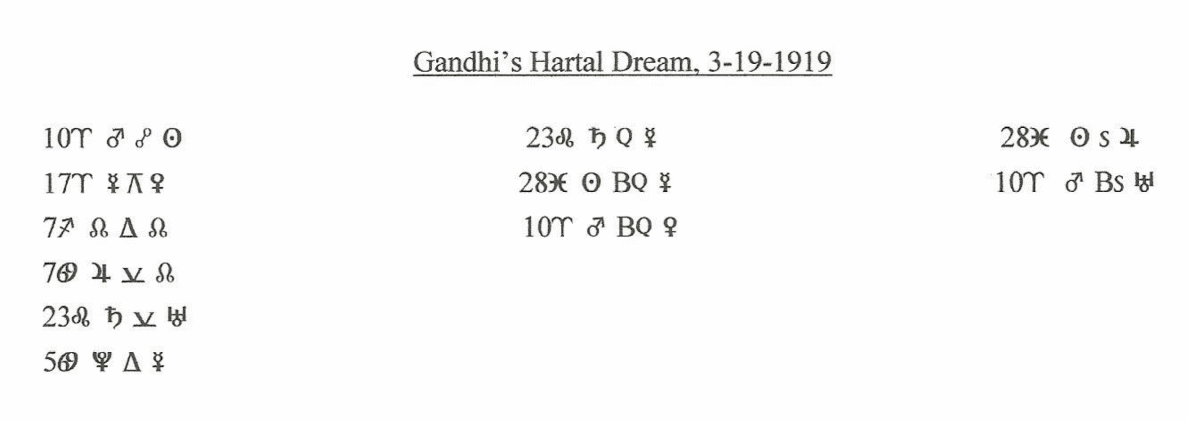
Gandhi's Transiting: Aries 10, 17, Cancer 5, 7, Leo 23, Sagittarius 7, Pisces 28
DIAGRAMS and CHARTS appended to this transcript:
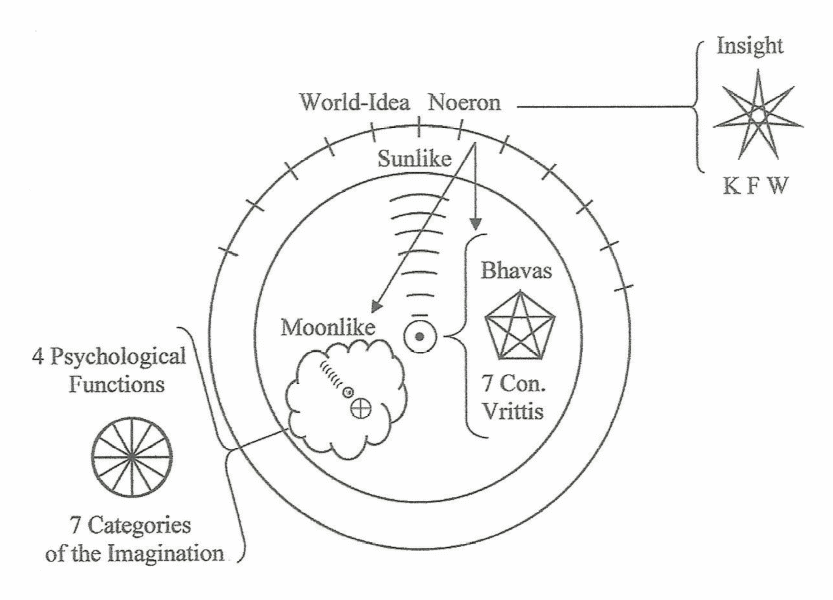
FIGURE 1983 0418a-1. Three Levels of Cosmology and Three Levels of Aspects.
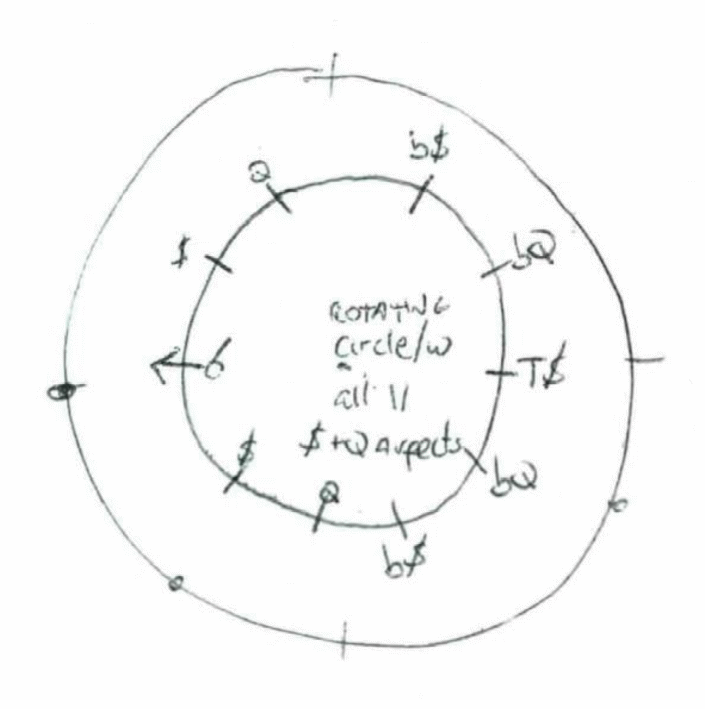
FIGURE 1983 0418a-2-AB. Circle of Quintiles and Septiles.
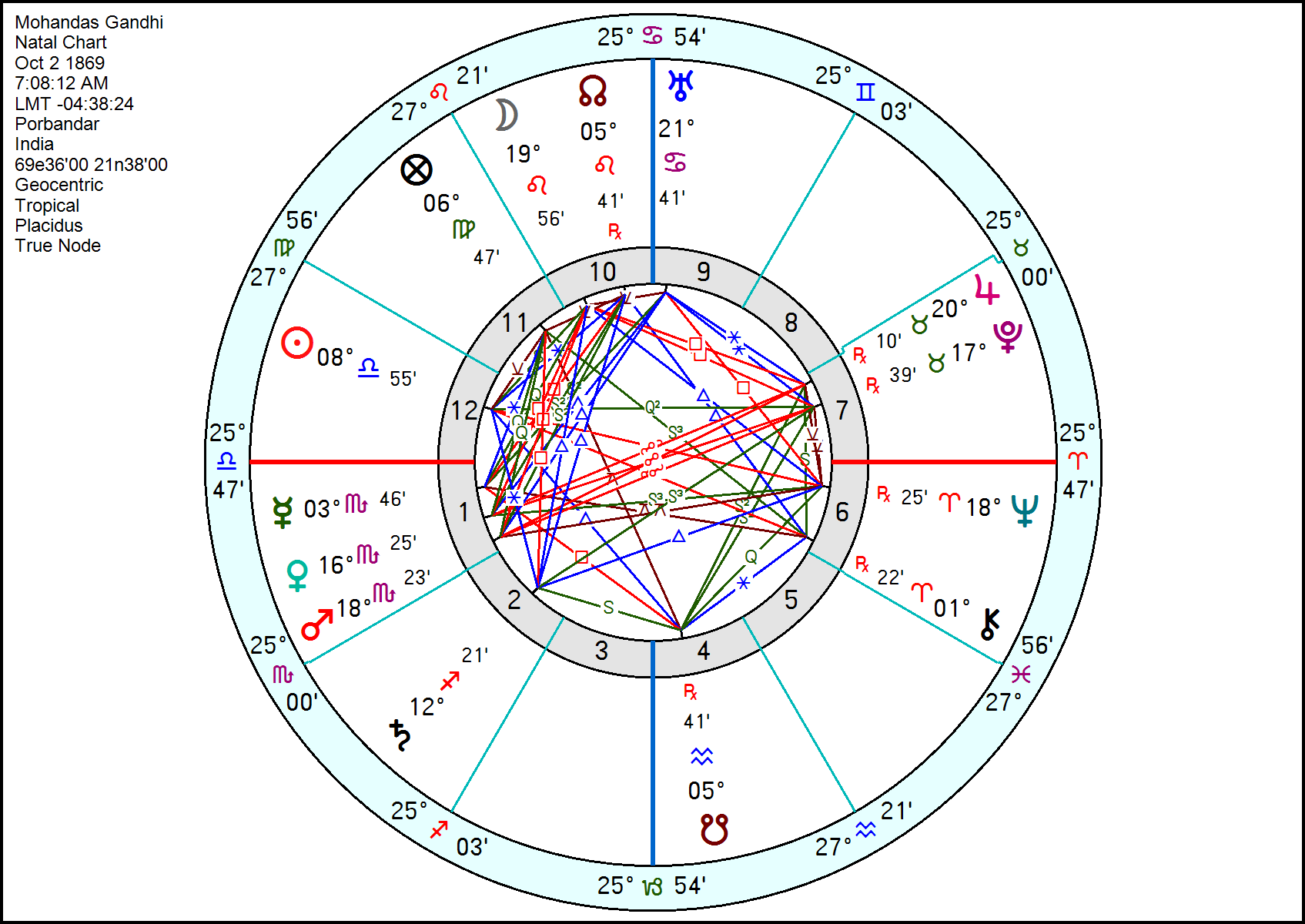
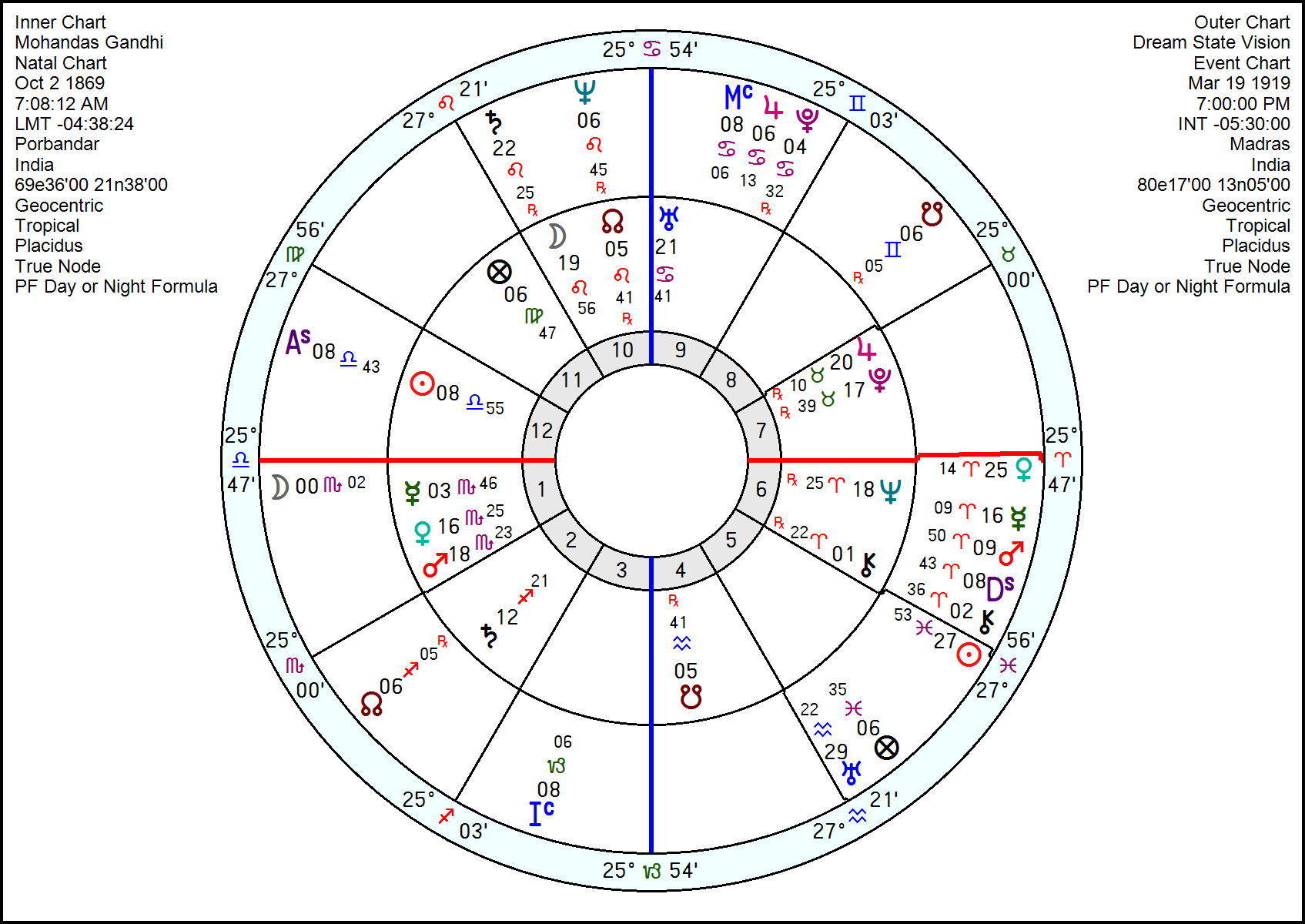
FIGURE 1983 0418a-3. Gandhi Natal Chart (astro.com).
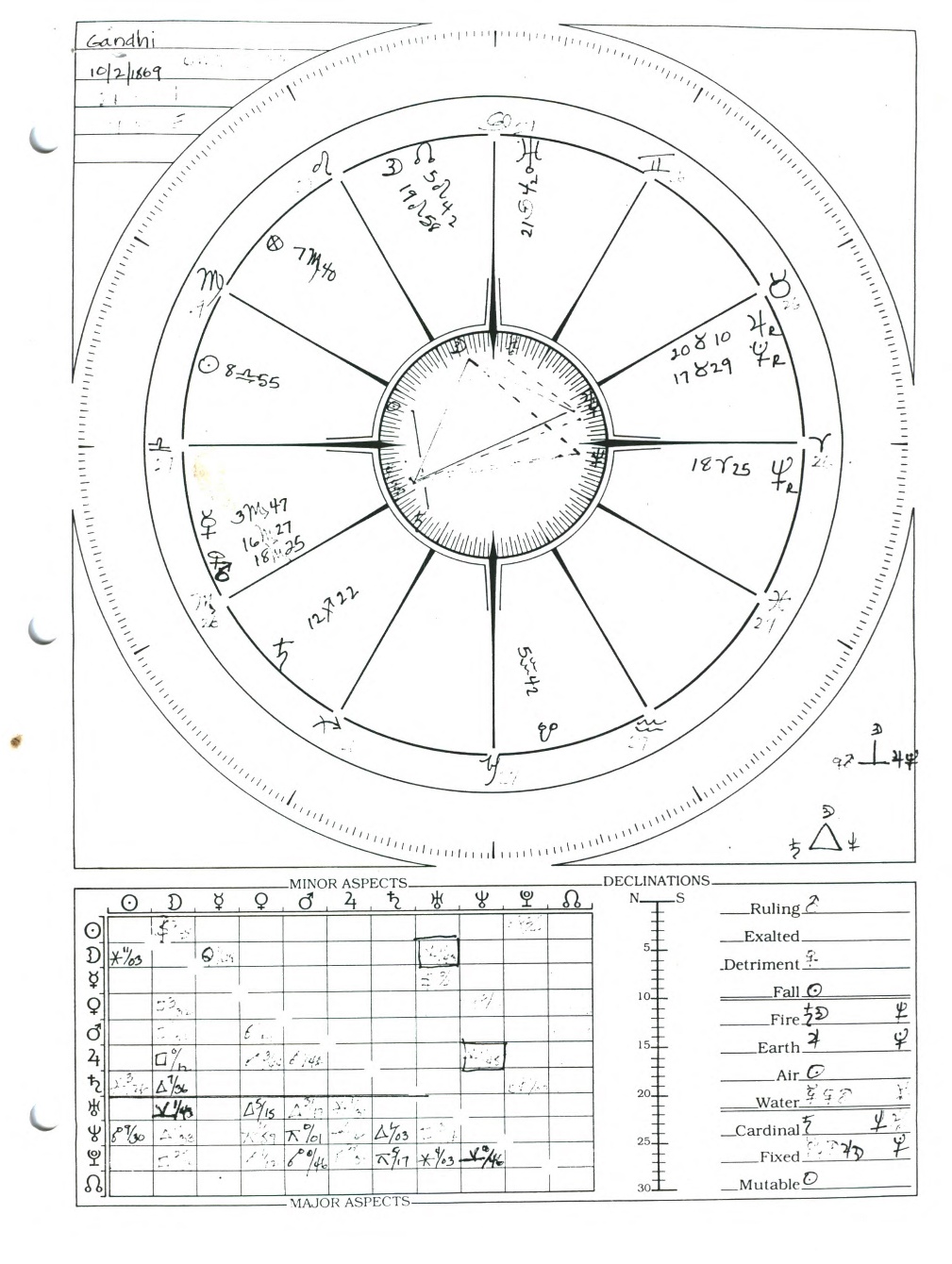
FIGURE 1983 0418a-4. Gandhi Natal Chart (WG version).
FIGURE 1983 0418a-5. Table of Regular, Quintile, and Septile Aspects for Gandhi's Hartal Vision.
FIGURE 1983 0418a-6. Transits for Gandhi's Hartal Vision.
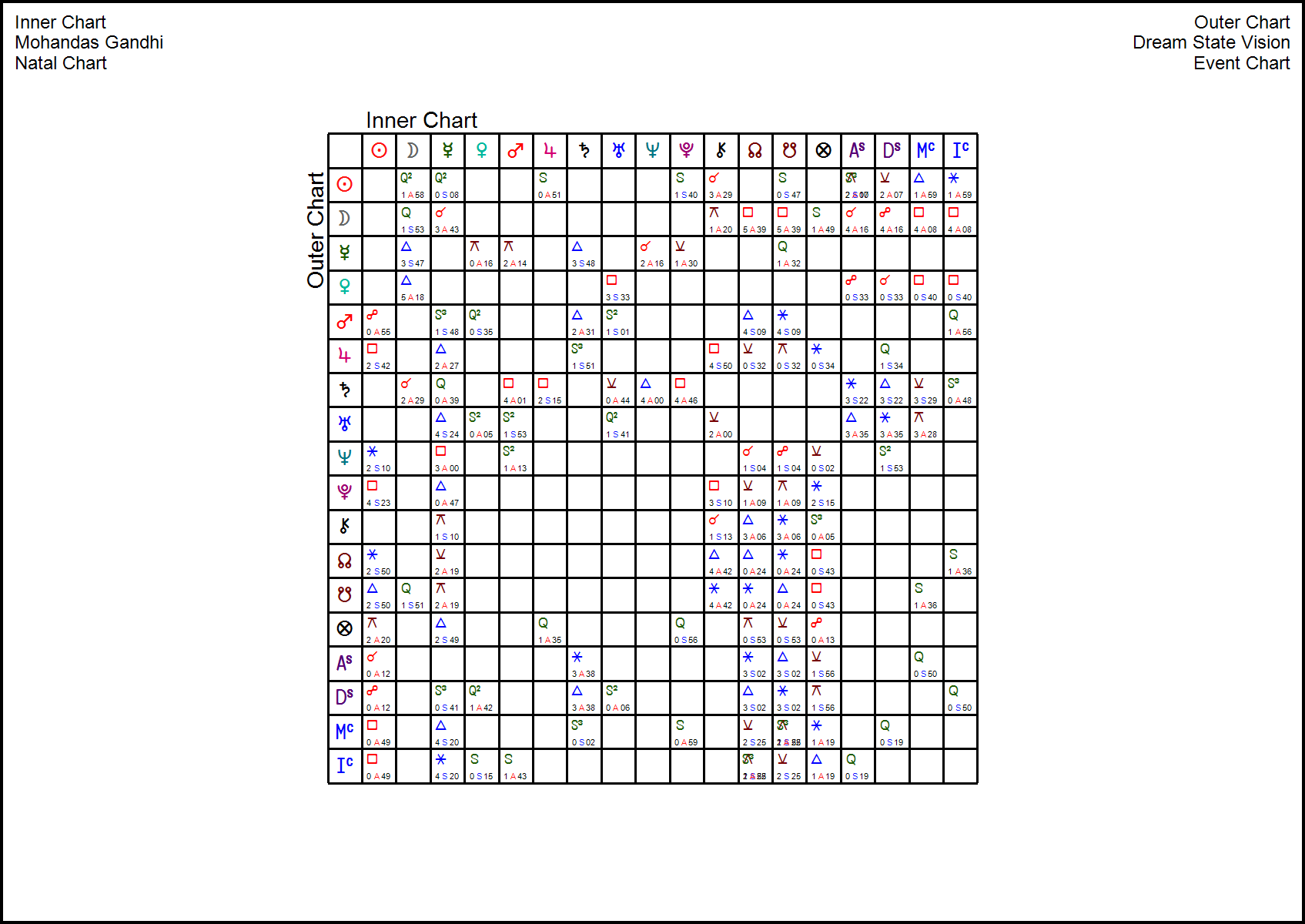
FIGURE 1983 0418a-7. Transit Grid for Gandhi/Hartal Vision.
[Transcriber note: [diagram] means the speaker is referencing a diagram as he or she is speaking. If someone is drawing or writing, with audible sounds of chalk on a blackboard, I indicate this by [drawing] or [writing].]
PAPER associated with this transcript:
- "Gandhi's Natal Chart". Retyped as 1983 0418c V09P. Astrology - Horoscope - Gandhi. This paper is not read in class and the authorship of this paper is unknown. Possibly written by LR.
NOTES:
This is 1983 04/18a, Astrology; Horoscope-Gandhi evening class, and the first entry associated with this date. 1983 04/18b = afternoon Gandhi seminar, for which we have no audio, just JF notes. 1983 04/18c = paper on Gandhi's Natal Chart.
Earlier partial transcript, Scan File 1983 0418-11R17.PDF, also exists.
An excerpt from this transcripts appears in Astronoesis in "Editor's Epilogue," p. 295.
TRANSCRIBED Verbatim by IT prior to 2018 (V11a). This is V12ap (2023) and has: two more passes with various listening errors and typos corrected; updated prefatory matter, footer, and audio file name; Book List and TOC completed; Plotinus quotes section added; new notes within transcript; diagram section redone, multiple new diagrams added with references in transcript to these diagrams; new formatting to accord with new conventions. In 2025, IT updates audio file markers to match new REP audio. Archival verbatim transcript with Paper – V12ap.
AUDIO FILES: 1983 0418a, 1983 0418b, 1983 0418c, 1983 0418d. [Note: In 2025, REP Studio cuts dead air from files b, d and equalizes sound.]
1983 04/18a at Wisdom's Goldenrod
Astrology; Horoscope-Gandhi
[Audio File 1983 0418a Begins]
TS: [Note: The partial transcript includes the following words: The regular 12-fold series of aspects refer to] the event, the circumstances, which would include the-- the mental activity that might be a part of that event but was no new meaning outside of that which is intrinsic to the ps-- the psyche functioning in itself. So thoughts or ideas which-- you know, an event occurs and you think you understand what's going on. Then years later you see that it had a different meaning than that which you imputed to it at the time. Well we'd say at this point that the kind of meaning that it has at the time it's being experienced would be inherent or innate in the-- in this-- this kind of aspect pattern and in the natal degrees and the natal chart. So, one way we could do it is we--
S (very faint): Well, talk some more then.
S (faint): Yeah, that's (right/good).
S (faint): (So--)
S (faint): Uh-hm.
TS: So, within this [drawing] psychosomatic field, we have the-- the seven categories of imagination. [short pause while drawing] And we have the four psychological functions of Jung. [Note: See FIGURE 1983 0418a-1, Three Levels of Cosmology and Three Levels of Aspects, appended to this transcript for the following.] You know, I found an essay in Jung, a later essay in which-- written about 1936, where he talks about the fact that he drew his four typologies from the grand trine in air, fire, water, and earth in astrology. I just ran across that. I always sort of suspected that, he actually comes out and says it. It's-- [drawing] So then we have this-- this kind of aspect pattern [diagram]. Then we-- we talk about the way in which the undivided mind takes sensations from the World-Idea and forms-- organizes them into something that this-- that the psycho-entui-- entities, such that the psychosomatic organism could project that as imagery and experience it for itself. And we talk about this Sun as being-- together with the seven powers that it has, as being what is needed to form a-- an organi-- organized group of images from the sensations that it makes up of the World-Idea. [students assent, very faint]
Ok well I-- I realize I started backwards. World-I-- the-- an undivided mind, as far as I understand this, has a sensation of the World-Idea. And it takes those multiple sensations and organizes them and projects them into this psychosomatic organism, which then projects it out as the ego-world split, as circumstances. So this-- this activity of the undivided mind is a kind of unre-- un-self-conscious or unreflective knowing. It knows but it doesn't have to know that it knows. Ok, that kind of reflective knowing would go on within this psychosomatic organism. We talked about the Sun (degree) as the central purpose [drawing] of the life and the seven Chaldeans as functioning within this psychosomatic entity to make that Sun aware of itself. So over here [diagram], this has got the bhavas of buddhi, which is knowledge, attachment, efficient willing, what's the other one, dharma. Now these are the different bhavas of buddhi and they will-- [writing/drawing] those seven conative vrittis. So those things, cesta, jivana, life-force, transformation, power, and those we associated with the planets. And then we also said that there's a form of aspect which seems to be indicative al-- also of the level of this indivi-- of this un-- functioning of the undivided mind and that would be the quintile series. And that would include the conjunction, the quintile, and the bi-quintile. Ok?
[short pause]
S: Tim, could I ask a question? That little circle you have there with the outer--
TS: The Dragon? Yeah.
S (simultaneously): Right. Is that Dragon the individual imagination or is that the World Dragon, is that the Earth Soul or--
TS: Well this Dragon, as far as I understand it, would be those tropes which are residual (on/in) the Earth.
S: So that's the Earth.
TS: Yeah.
S: So really that's all filled up with (lessons).
TS: But on the other hand this is the individual mind [diagram].
S: Yeah. Those [few words inaudible] (bit of laughter)
TS: Well, insofar as that the in-- the--
AD (simultaneously): Well do the whole thing and then we'll ask you questions, Tim.
TS: Oh ok. Now tentatively, I mean we got some-- I got some wild fairytales for all these guys and this one, the quintiles and bi-quintiles, I think one very simple tentative observation is to say that-- [drawing] that it-- it needs this form in order to take whatever sensations it has and project them into a subject-object split within the psychosomatic organism. Anything that's going to occur within the psyche got to be split into a pair of opposites. And it seems to me that this quintile series, part of it's involved with providing the ability of this undivided mind to form-- providing it with the ability to split its contents up into a subject-object duality. Now also it seems to provide it with some kind of choice as to whether it directs its attention as it were towards the fabrication of the psychic, the maintenance of this ego structure, or towards the inerratic, ok. The last set of these then would be in the-- this is-- this is [drawing/writing] what we call the Moonlike body [diagram], and this the Sunlike body [diagram], in the Greeks. And then the one which is outside of that is the 360 degrees. This is Noeron, or Vijnanamaya kosha [diagram] if you like that (word).
Now it seems like, well-- that one possible fairytale I had for this one is that, to continue this kind of split here, is that where here we have the seven categories of the imagination or the seven conative vrittis [diagram], here we have to have [writing] willing, knowing, and feeling as functions of this Vijnanamaya kosha [diagram]. And here, in terms of the bhavas where we have a-- four psychological functions or the-- these eight-- or four or eight bhavas [diagram], up here I was thinking that this might be something like insight or the-- these-- the gnostic s-- gnostic aspect of this is-- oh there you are, ok. So this would be insight or the concept of the Absolute [diagram] and this would be the alternative functions which are trying to grasp that [diagram]. And the forms it has available to itself to do that would be the seven-pointed star, the seven-- the quinti-- septile series, and all the subsets of that.
S (faint): Oh boy.
TS: Ok. Now it seems like this Noetic mind then has to take those el-- those ideas within itself and organize the way in which those are going to be inserted into both the undivided mind and the psychosomatic entity. And it's one way which we've thought about this crazy septile thing is that if you take it-- [drawing] you could talk about the conjunction, this-- the septile, bi-septile, and tri-septile as giving some tri-partite form within these two realms [diagram]. And they're-- That's about as far as the-- [S, faint: Ok.] We might have gotten farther but I-- I didn't retain any more. Is there more that should be added then?
AD: No, I can't think of anything.
S: A minute ago you had World-Idea written up there, [TS: Yeah.] right? [TS drawing/writing] Could you explain any more on that World-Idea?
TS: Well, it's saying that the essences or reason-principles that, well-- are within it as this kind of-- let's see-- potentially poly-numeric circle. The subdivisions of the circle are not quantized, ok, because that's why-- that's (what) we in fact assoc-- having attempted to associate the septile with it, you just cannot absolutely-- this is an irrational number, the septile, ok. Once you get inside that all things are quantity, they're quan-- they're quantitative, ok, the divisions are quantitative and rational, (but) up here discrete. Up here you [drawing] can't do that. So it seems like in some way the-- the infinity that-- that is within the line itself or the circle itself is somehow represented by this form, septile, more. So that-- yeah it's the World-Idea but it's as evolving.
S (simultaneously): Isn't the World-Idea usually thought of as being somehow exclusively associated with the Earth Soul?
TS: No, I mean-- I don't know of any-- the copyright that (it/it's) associated.
S: Yeah, well--
VM (faint): [few words inaudible]
TS: I got Mr. Gandhi slopping around.
[short pause]
S (faint): Then, when we say World-Idea we're really thinking of a more extensive world than our own Earth world.
TS: That's probably true but right now I don't know that [S simultaneously: That's (odd).] it's gonna, you know-- We're just talking about different levels, in other words, that this-- this field of the Noeron is an unmanifest essences which are going to be-- trying to manifest through the activity of the un-- in-- undivided mind and organize the tropes or the psychosomatic organism. Now that sequence, from what I understand presently, is more or less identical for the individual mind that it-- and our sister soul, the Solar Logos. But the Solar Logos got there first as it were, as Plotinus says, [Note: See Plotinus, IV.3.6, sixth para.] and that there's bi-- it-- you know, we participate in its activity throughout all of these levels. But these are-- this is a distinction of level of one, you know-- for one mind, one individual soul, ok. So I don't know that, you know, getting off into realms and lokas and stuff is going to help.
S (faint): But--
S: What's this business of the-- that the World-Mind's dealing with relationships? Insight is giving you a septile and--
TS: Well no. So you have three things here, got a gnostic function which are the bhavas. [student assents] I've got some set of aspects or ordering, which is any-- typical of this undivided mind, there's the signature of it, and functions. So I've got a-- a fabricative and a gnostic mode of it operating, and the fabricative here is the conative vrittis, the gnostic is the bhavas. [student assents, very faint] And I just was extrapolating, perhaps unjustly, that-- that there would be a similar fabricative and gnostic quality with the Noeron itself but that here that gnostic would be, you know, unit-- uniate, uniform, [student assents, faint] it wouldn't be split up, divided in any way whatsoever.
S: But you had that affecting both the [TS: Yeah.] undivided and the divided mind? Well is the rel-- I mean what's the re-- I haven't seen that relation.
TS: Obscurely.
S: Ok.
TS: I could see it well, um--
S (very faint): Yeah.
S: Um--
TS: [couple words inaudible]
AD (simultaneously): Don't a-- don't ask for more than we can do.
S: I don't understand what Tim has written on the board, I mean I don't know how to ask the question of what I mean.
AD: Well look, here's-- here's what we-- we're doing, we're trying to lay it out according to what we've done in the past, how much we've done, what we know, alright, and we're trying to put it all together. And then instead of you asking questions, see if you can have some answers. What we appreciate would be some answers. (some laughter, student words) So don't-- [PD simultaneously: I'd like--] don't think you're smart by asking questions. (bit of laughter)
PD: Can I paraphrase you, Tim, see if I [AD simultaneously: What do you think, Richard?] understand what you-- your level?
AD: Basically [TS(?) simultaneously, faint: Sure.] what we're doing is the circle represents the Absolute. The three planets there of course represents the power to know the Absolute. We say that you gotta use the septile, bi-septile, tri-septile. Then we got un-- in-- within that, we have the Solar Logos, alright, and its powers, the buddhi-- the bhavas of buddhi and the conative [AD pronounces: connotative] vrittis, which are (reduplicating/reduplicated) as the categories of the imagination and the four gnostic functions [diagram]. There the individual can become self-reflectively aware, alright, whereas prior to that you have the functioning of the undivided mind which is a transcendental imagination, it-- it doesn't need reflection. It has no use for reflection, alright, but we do because we want to get back to our source, alright. And, what we-- and these are the big points is that the twelve regular aspects are included in the Dragon, the quintile aspects are the rational soul, and the septile aspects belong to the inerratic sphere. We're just making these rough classifications, then when you take a certain event you're going to have these three kinds of aspects, that is the regular, the quintile and the septile. And, then Avery went ahead and made some diagram which shows the frequency of the aspects, quintile and septiles. They're so frequent he says that they-- they're a little less than 50%. Whereas you would think that they occur seldom, he says that they occur maybe 45% of the time.
VM: Does that-- you're counting the-- the quintile and the septile and every multiple thereof, is that right?
TS: Right.
VM: Yeah, I can believe that.
S (faint): Sure.
TS: So you got eleven of those and twelve regular aspects so--
VM: Right.
AD: And he's even worked out a nice little thing about how you could do that. Avery, you want to show that? [someone drawing] Remember, all this is tentative, speculative.
S: Oh.
S (faint): Sure.
VM: (It's not like we're) trying to enforce this. (bit of laughter)
TS (simultaneously): That's why we [one/two words inaudible]
RG: Wait a minute, then--
VM: It's just a--
RG: Do you mean [AS simultaneously: The wheel of fortune.] then-- do you mean to correlate those as willing, knowing, and feeling with only the trans-Saturnians up there [diagram]?
AD: Yeah.
RG: Because you're putting them in that realm?
AD: Yeah. But you-- you know the difficulty we have because then they're reduplicated down below and we don't understand, you know-- Well we're going to have to try work with-- try to understand what those superior kind of knowing, willing, and feeling is compared to the imitation that goes on over here. Go ahead, Avery.
S (faint): Well--
S (faint): [few words inaudible]
AS (faint): (I think) I told you.
S (very faint): Uh-hm.
AS (faint): And I don't-- this is just a little device, you can play with this. [short pause] Maybe this will do. [drawing] I mean all you have to do to make it, you just lay out the 360 degrees, lay out your twelve division(s). [Note: See FIGURE 1983 0418a-2, Circle of Quintiles and Septiles, appended to this transcript for the following.] And then start playing with (it/this). Can put those on a piece of a paper like here, or like here. [short pause] And it's very convenient if you mark your natal planet's positions on it. (bit of laughter)
VM: And that's been done, yes. (RG laughs)
AS: It's called a chart. (bit of laughter)
VM: Right.
AS: I mean it's--
S (faint): Yeah.
VM (faint): Well by now--
AS: Now we have this extra little gizmo that you stick in the middle here. (bit of laughter)
[few students at once, includes AS, few seconds mostly inaudible, congratulating AS on his invention, etc.]
AS: It's a variation. So in order to put it really you put the middle. You've got to make it turn, otherwise it always points the same place and you don't want that to happen. (some laughter) Or else you'd be stuck with the same as-- transits all the time and that's not very good. (bit of laughter) So you can just mark on this, you have to mark it very carefully (the/via) compass. We'll wait till they come out, 'bout a year. (laughter)
S (amidst laughter, faint): [couple/three words inaudible]
AS: [couple/three words inaudible] (some laughter) [drawing] Anyway, you know, you mark off the eleven-- you don't have to mark the regular ones 'cause it's easy to figure out when you have transits to those 'cause it's the same degree in every sign.
VM (simultaneously): Sure, sure.
AS: The problem with this is it's always hard to figure out, [VM, faint: Oh.] you know, 'cause it's different [VM simultaneously: Yeah, you can't add, subtract, (ever do) that.] for every sign and all of-- It's crazy, so with this-- if you just have this [LR simultaneously, faint: This (is easy), right?] little wheel that you can put in the middle of the chart. Let's see, bi-- then you have [writing] septile and quintile, bi-septile, bi-quintile, and then tri-septile, you work them all out and you get eleven. Now, all you have to do is point the pointer to wherever-- wherever there's a transit. Suppose that there's a transiting planet here at 23 Pisces. So you point your-- [VM, faint: You need (couple words inaudible)] you point your pointer 23 Pisces and we can pick off which of your planets are being aspected in one of these crazy things by the-- [couple/three inaudible student words] by the transiting planets. (bit of laughter)
S: (By) this gizmo.
AS: Now on the other hand you can work it backwards so if you point the pointer at any one of your [VM simultaneously: So one (few words inaudible) right.] natal planets, you can see what positions of the 360 [VM simultaneously: So tomorrow I'm going to have eight.] make these crazy aspects. Well if you do-- you [VM simultaneously: Bi-quintile to my ascendant.] can do that and you'll see it gets tremendously complicated, 'cause if you point the pointer at all ten of your natal planets, you get ten other positions for each one of those at least.
VM: Something's always going on. (VM laughs)
AS: So-- well, pretty much if you figure it out, (some laughter) there's about--
RG: I just figured [couple words inaudible] (eight). (some laughter)
AS: Counting doubles, there's this one, you know, some of them-- both are on the same degree. I had about 180 of the 360 degrees.
VM: You're never at rest.
AS (simultaneously): In other words, any planet on any one of those 180 degrees is making an aspect to my natal chart. [student assents] So the av-- so on an average day any given planet has a one in two chance of making an aspect. And that means on-- a lot of the things, like [S: Sure.] it's only on the average one in a thousand days you don't have any aspect at all. And on the average day actually you've got five aspects.
TS (simultaneously): That's your day off.
VM: That's your day off. (VM laughing, laughter, student words)
AS: However, that day there's a seminar so you won't get off. (laughter)
S: Doesn't matter.
VM: (Hey/Ok), that's good.
AS: But anyway you could see that there's a-- it's just a-- the poin-- the only-- they make it-- it just gets so complicated that it's, you know, the--
VM (faint): Actually, you could make it even (have glasses). (some laughter)
S: Oh. I don't know.
TS (simultaneously, faint): [couple words inaudible] I have it all on my [one word inaudible]
VM (laughing, faint): Right!
S: Better to use it here than [couple/three words inaudible]
AS (simultaneously): Well, [VM, faint: Hopeless. (VM laughing)] the only thing, it's useful because it's real hard to, you know, [student assents, faint] always be [VM simultaneously: It is, yeah.] calculating what you have I think.
VM (faint): [few words inaudible] set me up too?
RG (simultaneously): That's nice, Avery, when are you going to copyright it?
AS: Well that goes with the parts chart, [RG simultaneously: Right.] that's [few words inaudible]
VM (simultaneously): Oh they go over the-- the septile and quintile but not all the bi's and tri's and [one/two words inaudible]
TS: I can put up the sequence for the TR7, you know.
VM: It's too nasty, too many keystrokes.
S (very faint): Uh-hm.
TS (very faint): I mean there's a way to--
S (faint): Yeah. Uh-hm, yeah.
TS: So--
LR: Well now that everyone-- next week everyone has to come with their little devices.
S (whispering): Well, they're on sale today.
LR: (They're on sale?)
[student groan followed by laughter]
AD: Well, [S, very faint: Yeah, right.] you're going to need an astrological word-processor.
S: Yeah.
S: Yeah.
S (faint): Uh-hm.
S (faint): It's priceless.
VM (faint): Funny you mention it. (bit of laughter)
TS: I've been calling around for one.
RG: No, I'm going to ans-- no, I'm not going to-- no more questions, (that) was [S simultaneously, faint: You're such a good person.] just connecting those answers.
S: What-- what, Richard?
S (faint): Words of wisdom.
S (simultaneously, faint): We'll listen to your answer.
TS (faint): (Anyhow.)
AD: Well you could always offer us some of your wisdom.
RG: No. [S simultaneously, faint: Yeah.] (I don't have an answer.)
S (faint): Let Tim go over it.
TS: So I guess we were going to try to illustrate what we don't understand. (laughter)
LR: We've got to [couple words inaudible]
TS (simultaneously): Oh yeah, events that we barely grasp, why not. (laughter)
S: Yeah.
AD: So, we'll repeat the one we did last week just for the sake of review and also maybe a deepening insight.
LR (simultaneously): Just in case someone didn't get it.
AD: Huh?
TS: Yeah.
LR: Just in case someone didn't get it. (bit of laughter) Right?
AD: Don't get smart. (bit of laughter) You can be replaced by an absentee. Go ahead. (some laughter)
TS: (You might.)
RG: Um--
LR: Who's not here [S simultaneously: Who--] and give up--
AD: Yeah. Wait a minute.
RG (simultaneously): Well I-- I don't-- I don't know. (laughter)
S (amidst laughter): Oh.
S (amidst laughter): [few words inaudible]
TS (amidst laughter): You're (back).
AD: Good, you're back in shape, let's go. (AD laughing, laughter)
VM: Only wisdom [S simultaneously: Does that mean--] Dickie, no questions.
RG: I'm trying to be sympathetic. (RG laughs, laughter)
AD: I know it's against your grain, but try. (AD laughing, laughter)
RG: I'm trying. I don't know.
S (very faint): You don't know.
AD: I don't know either, Dickie.
LR (simultaneously): He has nothing to say.
RG: No but I don't e-- I don't-- I don't--
AD (simultaneously): I mean that's--
TS (simultaneously with AD and RG): I think that's how--
RG: But I don't [S simultaneously: Really.] see the need for the mul-- the multiplication of these kind of quant-- quantities yet. I mean--
AD: I'll tell you why, Dickie, before you even go any further. (RG laughs a bit)
S: Good.
AD (simultaneously): Because anything that happens inside this Dragon I don't consider knowledge. [Note: See FIGURE 1983 0418a-1, Three Levels of Cosmology and Three Levels of Aspects, appended to this transcript.]
RG: Right.
AD: What goes on in there I don't consider knowledge.
RG: Right.
AD: It's got nothing to do with those trans-Saturnians.
RG: Right, ok. I don't see the-- I don't see the separation of the-- of the twelve aspects theoretically from the other-- the other aspects yet, really how you come to that intuitively or irrationally or however you come to it. Int-- [VM simultaneously: I-- I thought it was just a working hypothesis.] well intuitively then-- but you-- [AD simultaneously: Well--] but if you come to it intuitively you have to (expose) those rational--
AD (simultaneously): Well I think-- I think now if he puts up the event, the one we did last week, alright, you will see that there'll be a breakdown into regular aspects, quintile aspects, and septile aspects.
RG: I know, I was-- I s-- I watched that last week.
AD: That's why I want to go over it.
RG: Ok. (AS laughs)
TS: Ok, we'll go over it and then back and forth. See-- well, the assertion was that the regular aspects are going to show the actual experience, thoughts that were on this gentleman's mind at the time, and the, you know, circumstances, he was up all night having-- ok. The septile series is going to provide the meaning that may be actually coming in as-- as a new idea or as a solution to the crisis that is being precipitated by the regular aspects. And the quintile series is going to show us some idea as to whether or not he's capable of linking those two things. That's all. So I'll put Mr. Gandhi up over here. [Note: See FIGURES 1983 0418a-3 and 1983 0418a-4, Gandhi Natal Charts, appended to this transcript.] Put the hartal over there. [Note: See FIGURES 1983 0418a-5, Table of Regular, Quintile, and Septile Aspects for Gandhi's Hartal Vision, 1983 0418a-6, Transits for Gandhi's Hartal Vision, and 1983 0418a-7, Transit Grid for Gandhi/Hartal Vision, appended to this transcript.]
S (faint): Uh-hm.
AD: Maybe, maybe for the sake of a little terminology and clarification we could use this-- this kind of language, just temporarily, ok? Within the natal chart where you have the regular aspects going on, alright, we'll speak about that as the meaning that situations or circumstances may have for the psychosomatic organism. In other words, psycho-somatic, alright, they're both within the realm or they are both included when we s-- use the term 'circumstances', [students assent, faint] alright. So, if I see a hen running across the road, alright, and I think that that's my possible dinner, the thought that that's a dinner, alright, they're both included within that, so let's call that meaning, alright. But let's say any idea that comes from the inerratic s-- realm, like let's say when Einstein was-- recei-- was-- there was an illuminating idea which permeated into that psychosomatic realm, let's call that ill-- an illuminating idea and not use the term 'meaning' which will confuse us, alright.
RG (simultaneously): Uh-hm. Yeah.
AD: Alright, so the basic stand I'm taking is something like this. You, I, all of us here as individuals, are the transiting Chaldeans. That's what we really are.
RG: The transiting Chaldeans?
AD: The transiting Chaldeans.
RG: I don't know what you mean by that.
AD: The at-- the--
TS: Individual undivided mind.
AD: What do you mean you don't know what I mean?
RG: I'm sorry, I don't know what-- what you mean. I don't know what those words linked together mean, that we are the transiting Chaldeans.
AD: Yeah.
RG: Who is that?
AD: That is your undivided, spontaneously active mind. That's what you really are. But, you-- you and I don't know that. [student assents, faint] [RG simultaneously: But that--] We insist that we are this ego structure, this body with these tendencies is what we think we are, we insist that this is what we are, alright. And, as-- if we conceive of ourselves as this spontaneous active mind, alright, the transiting Chaldeans, and take our positions there, not in the natal chart, don't take your position in the natal chart, don't say that "That Jupiter Mars opposition, I'm that," alright. But, take the-- take the stance that you are these transiting-- transiting Chaldeans, which may be aspecting those natal aspects. [student assents] Instead of-- instead of reading the transiting Chaldeans from the position of the natal, read the natal from the position of the transiting-- transi-- transcendent Chaldeans. And also that would give you the opportunity of either identifying with that illuminating idea which is coming in or with that illuminating idea as it permeates the psychosomatic organism, alright, and you identify with that. This also will give us the three knowers too, the ego as knower, the, you know, reflective knower, what we call the rational soul, and the super-reflective. It'll give us those three levels of knower, knowing. So now if we go back to the incident, a certain event in his life.
S (simultaneously, very faint, possibly part of background): [few words inaudible]
TS (simultaneously): Yeah.
RG: What do you do with the natal trans-Saturnians in this scheme that we're the transiting Chaldeans?
AD: What do we do with them?
RG: I mean how do you understand them.
AD (simultaneously): We-- we throw them away for a-- a brief period. (AD laughs bit)
RG (faint): Ok.
AD: I'm going to ignore them just for a short while.
LDS: Anthony, to say that we are the transiting Chaldeans, or let's say that's available to us if we want it, if we want to take it, are you saying that that would be-- that would be operating in a dian-- dianoetic mode, and would re-- would-- would place a person in the present all the time, he would be li-- living totally in the present. You know, rather than with samskaras--
AD (simultaneously): Yeah, and he'll be li-- he'll be living totally in the pra-- present, yes. And he would not be depending upon past.
LDS: In other words, everything would be novel for-- for him every instant in time.
AD: Every-- every moment would be a novel, fresh influx of knowledge will be coming in. [students assent, faint] I know-- I know, we're all going to feel uncomfortable right away. The only stability we have is this imaginary stability that from moment to moment the ego persists in maintaining. And with this pseudo-identity it operates with, alright, the new event that comes in is always conceived of in terms of what you have been in the past. [student assents] And the next-- and when that becomes the past and included in the past then the next event is also conceived in that way. So that we never get a chance to think of ourselves in this very fresh and [student assents] novel way, you know. I am no thought, I have no thought, and as it comes I'll do accordingly. I would say that this would be living according to the Tao, [student assents] from moment-to-moment.
S: So you're--
RG: But you know, that-- I like the idea, I mean I-- (AD laughs, laughter) But I s--
AD: No you don't, Richard. (laughter)
RG: You-- I mean, in this view, I mean if you are the transiting Chaldeans, then we all have exactly that same mind, I mean, it's the cosmic soul unfolding itself at every moment. Right?
AD/S(?) (very faint): Uh-huh.
RG: Now, how do you mesh that idea together with the aspect that retains the rea-- the-- that-- of the person that retains the rea-- his individuality say, which you'd like to keep?
LR: There's no ego from that point of view at all.
RG: But there's still an individual, I'm not talking about an ego.
LR: No I know, I'm saying it's somewhat theoretical because from the point of view of just the transiting aspects, there-- the individual's absolutely egoless.
RG: Right, but I thought there was also a higher kind of individuality higher than the ego that was not the [LR assents, faint] cosmic soul that we could identify with. Or something that retains some-- not an ego individuality but some sense of a higher individuality that you said-- you say that doesn't get obliterated when one realizes his undivided mind, it seems in this view you-- everyone's has to be the same because we're all, you know, one transit-- transiting system.
[short pause]
TS: But two things, wouldn't-- first of all there would be still a retention of the-- the natal configuration in terms of the Sabian symbols that the planets are on, you know. When transiting Saturn is going through my chart it's starting out from Virgo, it's not starting out from Libra or-- or Li-- you know, Scorpio. And it seems like there's some still residual interpreta-- association with the natal degree and sign and so forth [RG assents] it's within. And second of all the way in which the resonances occur within the transits to the Chaldeans, the way in which it refers back to the natal chart, seems to be different for every individual.
RG: Right, but both those examples refer to the egotistical part of the individuality which we say the-- you know, has [TS assents] to be transcended. So where's the higher individual part? Not the one in-- not the ego part. And maybe we don't need it, I don't know.
AD: Well, I wasn't thinking of obliterating the ego part because that's the-- could we-- could we refer to the natal chart as the continuing karmic continuum of an individual. That is his individuality. And that natal chart represents the traces that he's leaving behind of himself in the natal chart. [RG: Sure.] Those are-- those are the actual traces of this individual that are perceptible and noticeable to us. So that, I can say that in a sense I can't distinguish your undivided mind from his undivided mind but I can distinguish your in-- individuality that is the result of the functioning of your undivided mind from the functioning of his undivided mind. [RG assents] So that the individuality is kept in the ego, there-- the ego is an-- an expression of one's undivided mind's continuity, but in terms of tendencies and probabilities. [RG, faint: Right.] I-- I never want to get rid of the ego because it's always going to be there. It's always going to be part of the World-Idea and will variously and continuously be reflecting the changes that are going on in the World-Idea, because as the World-Idea is modifying itself so are all the egos within it getting modified, each according to their peculiarity. [RG assents, faint] But, they will go through that and that endures, as long as the soul manifests itself that will endure, that-- it'll go on depositing this karmic, you know, continuity.
RG: No doubt.
VM: But still, Dickie I thought was asking that, I mean-- If I understand what you're saying, Anthony, you're saying that the reflection of the higher individuality in the Dragon is the ego. It's not the higher individuality [AD simultaneously: Yeah.] but the sort of the shadow of it or the projection or reflection or traces, whatever. But is there in the symbolism something that you can actually point to to say this is the higher individuality? Maybe it gets translated through the functioning of a-- of the transits and leaves these traces which you call a natal horoscope. Maybe it's a sidetrack to get-- to ask that question, I don't know, but it-- I don't know if I made myself clear or not.
AD: Yeah, you're saying that-- I think you're saying that the ego is a reflection of the soul's higher individuality, [VM simultaneously: Yes.] its distinction from other souls in a sense.
VM (simultaneously): Good, good, can I point to that higher individual?
AD (simultaneously): Yeah, I think we could do that.
VM: We can point to the higher individuality?
AD: I don't think we could point to it now except the way it's manifested in the ego.
VM: Ok.
S (faint): Yeah.
RG: Right.
AD: I mean the ego is the very mirror that we're going to use to grasp something of that higher individuality.
VM (faint): Yes, yes.
AD: So we could say that, you know, you take the-- an attitude that Michelangelo worked with was a "tragic" attitude. It wasn't anything in his life, it was just something built into his soul, the way he saw the idea, you know, that's the way he worked it, he had that kind of attitude. And you can almost distinguish that let's say from a painter like da Vinci or a more, you know-- an individuality that was very distinct from the other. [student assents, faint] And these distinctions between these two individ-- individuals, disregarding the Easterner's conception, I think are worthwhile and they're meaningful. I certainly would hate to, you know, be saying hello to an ego and find out that every ego I say hello to is the same, is a mirror-like reproduction, you know, and that one he-- if I met one I met them all. (bit of laughter) Then it'd be a very boring world.
VM: That's mass production. (VM laughing)
RG: Right but tho-- those distinctions (I thought) reflect a higher level of distinction. They-- I mean they don't stop when you-- in other words, you-- you get to the undivided mind, you're talking about the transiting rational soul. And the individual still retains something not-- maybe not it's a-- the ego is a reflection of it but there is something of which it is a reflection which is more than the transiting rational soul.
AD: Yeah but--
RG (simultaneously): Maybe you're going to call that Uranus, Neptune, and Pluto [few words inaudible]
AD (simultaneously): Yeah, I was thinking of that possibility and, you know, the fact that this ego, insofar that it is reflecting that individuality, alright, that individuality is the archetypal individual in the Nous, [RG assents, faint] and that the reflection we see of it is only like a little section of that vastness, you know, through-- In other words, the archetypal soul of Socrates is going to-- or if we take PB, the archetypal individual soul would be reflected in a series of life, alright, where after you look at a series of life you begin to get an idea of that ar-- archetypal individual soul. I don't think you can get it out of one [RG assents] incarnation. But when you can review a few of them, then you begin to see the distinction of soul that must exist in the Nous from the this whole linear series. So if you took for instance the possibility that this one-- one and the same soul incarnating or manifesting itself first in let's say the-- well I don't know, Alexander and Julian and, you know, you go down the line until you come to Wang Yang-ming and Molinos and Napoleon, and you begin to wonder, you know, what is the archetypal individual soul here that is manifesting itself? [RG assents, faint] What is its nature in comparison to let's say if we could find another series, you know, and compare, alright. And I think you'll come up with a definite fixed number of souls, individual archetypal souls, that have achieved perfection and reached Sagehood.
LR: Repeat a few words, Avery.
RG: Hm.
AD: Go ahead, Avery.
AS: I don't know. Seems that the way you're answering the question, ok, is-- seems that there's-- there-- is kind of an inversion in some-- in some sense, in that-- I think Ri-- Richard's looking for a higher person, a higher individuality. But actually I think what we're saying is the higher individuality, if we want to say there is such, is even beyond this whole business [diagram], [RG: Right.] is like it's in the Nous.
AD (faint): Uh-hm.
AS: Now, withi-- within-- within the cosmos, within the whole cosmic framework, there is an image of that "individuality" and that-- that is actually the ego, it's re-- it's kind of an inverted picture. Whereas the conj-- the-- the way that the individual soul is conjoined with the cosmic soul and the inerratic even is in some way less individual than that ego, even though if you were to invert the whole thing, [RG assents] the-- again at the higher level flipped up as it were you'd find, you know, like some kind of unit soul or something. But the reflection of it down here seems to be that the individuality part is mirrored in that natal chart whereas the powers, you know, the rational soul powers are mirrored as kind of a cosmic powers, [RG assents] conjoined with that, and even the higher one is mirrored as Uranus, Neptune, and Pluto. But at some point you say all-- all of that is really just an image itself of the higher soul, of the real soul, [RG assents] something like that, so, if you ask where within the cosmos you're finding a picture of his individuality, we could look at the-- the ego structure. Or if you looked at a whole series of them you'd get some idea what that Idea was in the Nous that the soul contemplated, [RG assents] seems implied here.
AD: So I was thinking it also in a higher sense like, if you study the life of a Sage or two, you know, and you get a feeling of the personality of PB. And you study Atmananda and you get the feeling of his personality and some of the o-- you see they are distinct individual personalities. I don't care how many times they say everything is one. Because, I mean the actual contact with these people shows you that there is something very unique about this person, alright, and it's distinguishable from that. [RG assents] And no one would-- even a-- I would say even if they were identical in appearance, alright, you would be able to distinguish let's say Atmananda from PB, with your eyes closed and your ears buttoned up. [RG assents, faint] Well at any rate, I ho-- I think that's worth mentioning because we tend to downgrade the ego and, you know, for good reason. But (bit of laughter) if you remember many of the quotes from PB, he also pointed out to the more magnificent aspect, the greater-- the possibility that the ego could be refined, developed to such a point, alright, that it becomes a willing tool of the higher self. And there is-- there we can speak about real individuality. Over here we got the collective mass man. I mean it's pretty hard to separate the mass-- among the-- the mass man one from the other. There's very little individuality among us.
CDA: So really in a sense you're saying that the-- the individuality of the ego is not-- it's not true individuality until it's somehow functioning with-- with the divided mind.
AD: It's somehow functioning--
CDA (simultaneously): That it-- until it is functioning in the now.
AD (simultaneously): That's-- that's-- that's the remark we made when we [CDA assents, faint] said that the Vijnanamaya kosha includes the functioning that's going on in the Sunlike body and the Moonlike body. Vijnana means [VM: Two.] [S: Two.] knowledge-- [S, very faint: It means divided (into two).] divided knowledge, alright, and there would be the knowledge which is in the divi-- undivided mind and the knowledge which is in the divided mind and the Vijnanamaya kosha would include these two. So, from the Vijnanamaya kosha's point of view, alright, that kind of knowledge is comprehensive enough to understand the spontaneity, the act-- the activity of the undivided mind, and the product which is going to appear in the Dragon and correlate these two. So the Vijnanamaya kosha is superior to the Manomaya kosha, just like the Anandamaya kosha is going to include every possibility that the principle of asmita can possibly function with.
And again, you know the other thing we did we took the ca-- the so-called epistemology-- epistemology of Kant and we showed that there's a similarity too, the mind receives the World-Idea, it makes a representation for itself of that World-Idea to his-- it makes-- turns it into a sensation which-- which sensation is then pervaded by or, you know, permeated by the functioning of the bhavas. This is what appears in the Dragon as a psychosomatic organism. So that what I-- when I refer to this body of mine, alright, the only way I can know this body, alright, is that it's a sensation, overlaid, alright, with all the stuff that, you know, is the-- included in the [couple/three inaudible student words simultaneous with AD] natal chart when you start speaking about the four psychological functions and the way it perceives or understands that psychosomatic organism which it calls its body. Alright now that's a sensation, that's-- that's a sensation and the correlation there between the fact that I accept my body as a-- you know, something I sense, I sense my body. That's the sensation which we said the undivided mind has made of the World-Idea. So the correlation is really quite good. I think-- I think very often that Kant's very abstract reasoning was all about this here but without any of the diagrams, any of the illustration, no astrology because he didn't know what that-- he wouldn't have known what that was anywhere. And he worked this out abstractly whereas we have the advantage of following what he's saying step-by-step, alright, in terms of the diagrams. Anyway, if you got questions, ask them. [RC simultaneously: Maybe that's--] We'll see if we can put our-- our heads together on this one.
RC: The sensation you were just talking about, you conceive that as actually formative of the body?
AD: That is the body.
RC (very faint): Ok.
AD: When you speak about "I have a body," what you mean is you have the sensation of the body. Now the "I" that has the sensation of the body, that "I" is found within the Dragon, alright, and it-- it becomes aware of the-- it having this sensation through the categories of the imagination which reflects that activity which brought that sensation of the body into being.
RC: Ok, I'm wondering if, like in that series that PB uses with the first of our thoughts is "I" and that that is followed by the body-thought, and then the body-thought is followed by the world-thought, if that has a parallel here in the sense that our contact with the undivided mind is the-- is the "I", the sensation that is formed is the body.
AD: Yeah.
RC: And then the reflection of it in terms of the Moonlike body would be the-- the world-thought.
AD: Yeah, the reflection-- the reflection of the functioning, so to speak, is the world-idea which accompanies the sensation of the body. They go--
[Audio File 1983 0418a Ends]
[Audio File 1983 0418b Begins]
AD: --ego and its functioning, you have the ego and the world-idea, right then and there. And this would be the "I", alright, which is followed by the body, alright, and which-- which body it'd be-- the identification to the body is an identification to the body and its functioning. So you have a body, you have eyes. The eyes can see in a certain way. What it sees of course is its own functioning.
RC: Ok. So then that parallel that we talked about in terms of an individual organ, that the-- the faculty creates its own organ, like sight creates the eye [AD simultaneously, faint: Uh-hm.] and so on, that here we'd be making it complete in saying that these senses that we're speaking of at this level, for each organ, all the organs that they needed is exactly the production of the whole.
AD: And, you know, that's also a biological fact. A creature which has its own world needs a certain organ, that organ is brought into prominence, sooner or later it's-- the potential which is in the soul is forced to bring about an organ that would make it adaptable to its environment. I don't believe, you know, in haphazard mutation and all that, that-- I mean if the soul doesn't have the faculty to create an organ by which it can function in the environment, you're wasting our time. I mean we're wasting our time being here. And if you think about it, practically all the sciences, you know when you think of the sciences, the arts, the-- all these things came from man's own inner potential. I mean where else can they come from? They-- if they invent a science, mathematics or stereoscopy or whatever, it's something coming from within his own-- his own soul, he finds within his own soul the very thing, alright, by which to do what he wants to get done. That's why it's good to be forced into a corner. When a person is really shoved into a corner, in a crisis, he's got to find a solution from within himself. Any other solution isn't worth anything. Nobody can give you these answers. And I think also that that was the basic meaning of the satyagraha, the soul-force, that that's what Gandhi was talking about when he was speaking about soul-force. The soul, you remember Plotinus said, operates through persuasion. [Note: See Plotinus, V.3.6, fifth para.] And that's what he wanted to do, he wanted to persuade his opponent or his enemy to act according to the dictates of soul. No longer according to the dictates of the animal but according to soul. Now, as one soul to another, how would you handle this problem? Well you remember the way the British did. They just clubbed them, they kept on clubbing them. And he kept on sending them in. So the soul was going to win through patience, perseverance, its search for truth and humility. This is the way he felt that the soul would be eventually able to persuade the British to give ('em/him) up, you know, to give them their freedom, rather than take, you know, recourse to arms and have a revolution. [short pause] Anyway, you got some kind of diagram of what we think we're doing?
RG: How do you understand the natal mass of quintiles and septiles in this view?
AD: That's-- those are problems, Dickie, we haven't worked them out.
RG: No but what's funny is that you--
AD (simultaneously): Like you have a quintile in your natal chart, you know. What does it mean?
RG: Yeah well I mean, you--
AD: I mean we've read the-- we read the meanings Jones gives us, talent, you know. And the septile, destiny or-- [RG simultaneously: Septile.] Well what the hell are you (really) talking about?
S (very faint): Yeah.
RG: But, ok, not-- not even the particular meaning but, you have now a meaning for the transits.
S (very faint): Yes.
AD: Maybe from there, maybe from there we can work out. If we find out for instance when you have a transit which, let's say, makes a quintile aspect, if we find what that means, maybe then we'll find out what it means to have a quintile natally.
VM: But Anthony, could you make a simple extrapolation like the following, if you say that the twe-- that the seven Chaldean planets in the natal horoscope represent the-- the deposit of the soul's functioning in the Dragon, could you say something like the quintile would-- a quintile in the natal horoscope could perhaps also represent a deposit but of a different type, a deposit of let's say an effort at incarnating rationality or something along those lines. And similarly for the septile in a natal horoscope, that would be--
AD (simultaneously): Yeah, I'm willing to do that.
VM (simultaneously): --the traces of meaning that have been accrued over previous lives. I don't [AD simultaneously: I--] know, I mean it's too [AD simultaneously: Yeah.] simple perhaps but--
AD (simultaneously): I'm willing to do that, and I'm also willing to do the other thing too, alright, and that is it may not mean anything at all.
VM: (Well), that's a good one too, yeah, sure.
AD: I want to keep those both open and then see as we proceed if, you know, one or the other works. Because I don't assume that I read it in an astrology book that therefore [VM assents] this is so. [VM: Of course.] Because I've looked at many books, tried to find out what is this-- what-- this guy's got a quintile, what does it mean? You know, Mozart had five quintiles. Alright, what does it mean? I'm sure everyone here has quintiles and among the Chaldeans but what the hell does it mean, where-- where's the meaning to all this? I mean what is the idea behind it, not the meaning in terms of the psychosomatic [S: No.] entity. I don't think we know. I mean that's-- that's my theory, I don't think we know. I don't think any astrologer knows. And the very, you know, scarcity of information in a man like Jones [S, faint: Yeah.] is enough to make you start saying, wait a minute, let's-- let's do some empirical work here, maybe we'll get somewhere, maybe not. So if we took this one aspect that we were working on Gandhi last week, and go over it again. You know, it's possible like septile may mean you only need one idea. Bi-septile need-- may mean you need the two ideas. Tri-septile means all three, Uranus, Pluto, and Neptune had to be brought into operation, and not just one of them. [student assents] These are all possible meanings. [student assents] But I know one thing, there's enough mysteries in here to keep us busy for a long time.
Look at how-- it's really remarkable and I-- I think we made the point in the afternoon that the medieval astrologers were fabulous in their accuracy of the description of circumstances, of events [AD banging on board] that would take place. Never do they bring out what does it mean. [student assents] They never brought that out. You know, like one of the Florentine queens would keep everybody's-- anyone of significance, any nobleman, they'd have his chart, the astrologer would have his chart. "Well, he's gonna die on such and such a day, good." That's a circumstance, that's something, you know, that's a modification of the world-- alright. Now, they wanted that information so they'd-- they'd make their move, when this man die they were prepared to make a move, alright. They weren't concerned about, "The idea of nationality is working its way through mankind now and diversifying." They weren't interested in that. (laughter) They just want, "If that king dies then is my son ready to take over the throne, make sure-- I'll make sure he has an army ready." (bit of laughter)
TS (very faint): That's more important, yeah.
AD: Try--
TS: Why?
[12½ second pause]
AD: We made one remark, we said last week-- go ahead then Tim. We said if there's any truth in what we're seeing, then the solution [TS drawing/writing] to a crisis should be indicated in the chart. Remember? If there's any truth in this, then the astrologers will have to become spiritual men and try to figure out what those new i-- illuminating ideas are that can be brought to bear on circumstances.
[short pause, TS drawing/writing]
VM: Would you say the precipitation of the crisis is in the Chaldean, the natal horos-- or let's say the Chaldeans or the-- the solution would be from the quintiles or the septiles?
AD: Yeah. It may not always be agreeable but we would be saying something to the effect that the transiting trans-Saturnians may be indicating what the solution is to that particular problem.
[short pause, TS drawing/writing]
S: It sounds like the quintile and septile are-- are some kind of connecting link between a lower level and a higher.
AD: Well the septile is the higher. Quintile is the middle one. It's the connection between the ego and the World-Idea the-- And I-- I'm-- that's why I said, we have to take the poise that we are in that middle realm. The same thing like when Plato says, when the soul looks downward into the sea of generation it gets lost, alright. He's saying, if the s-- if the soul which is the transiting Chaldeans identifies with the natal Chaldeans, then it's-- it's stuck, so to speak, in the habit tendencies of that individual. Whereas if it looks up to the higher, to the aspects that the trans-Saturnians are making, aspects here I mean what ideas they're sitting on and how they're aspecting each other, then if it gets the illuminating idea from that realm it will apply it to the lower realm, and that should be the solution to the problem in the lower realm. [Note: Along with this class, see also WG Class 1983 0502a Astrology; Horoscope-Napoleon for an example of this.]
S (faint): Uh-hm.
[TS drawing/writing, faint background student talking]
[Note: See FIGURES 1983 0418a-5, Table of Regular, Quintile, and Septile Aspects for Gandhi's Hartal Vision, 1983 0418a-6, Transits for Gandhi's Hartal Vision, and 1983 0418a-7, Transit Grid for Gandhi/Hartal Vision, appended to this transcript for the following.]
LR: This event that Tim's putting up, for people who weren't here last week, or if you were here last week, the circumstances surrounding the event were these. In of-- on March 18th, 1919, the British-- World War I had ended and the British-- and the Indians felt that they deserved some recompense for the efforts they made serving the British in the war. And, the retaliation by the British was certain restrictions imposed on the civil rights, the civil liberties of the Indian people, certain censorship of their publications and things like that, which Gandhi felt was very unfair. That-- that act was called the Rowlatt Act that was passed then. And on March 19th, 1919, Gandhi had a-- was (confirmed/conferred) to be a vision of some-- of some kind, of hartal, which was envisioning a complete non-cooperation effort country-wide, meaning that no work would go on, none of the Indian people would serve in any capacity. They would fast and pray and work on self-purification rather than service to any British ends. And he called that a vision that came to him, ok, and that vision is what Tim's putting up there, the transits for that vision. What happened was, he announced that vision and he announced that a couple weeks hence, there would be a na-- there should be a nationwide hartal attempt. And in fact on March 30th and April 6th, in Bombay and most of the other large cities in India that was effected and their cities virtually shut down. Unfortunately, what happened in between, or as a result, rather than a certain purification there was a great deal of rioting. And I'm not exactly clear what the causes were except that the British weren't real happy with the Indians. Oh I know exactly what happened actually. The British started confiscating some of their goods, they said "Well if you're not going to come to work, we're not going to give you this, this, and this, and…" Certain riots broke out, which ended in a murder of-- the murder, which may have been in the news, you have three bank offi-- British bank officials. At which point, this Brigadier Dyer announced that there could be no congregations, no meetings whatsoever, no gatherings of the Indian people, and that resulted on April 13th in the massacre. So, Gandhi-- in-- the final thing was that Gandhi revoked this idea and went into a 72 hour fast for penance. He felt that the people will-- and especially himself weren't pure enough to try something like this. So, this was a very intense period of a few weeks and this date that Tim has up there is the date that he had the vision of the hartal and he was (talking).
S (faint): Uh-hm.
S: I've been wondering, Tim, if his interpretation of the vision was inappropriate or misunderstood. In other words, his whole-- his whole life was devoted to this non-violent resistance and he's had this vision of that but he immediately put it into effect rather than taking it gradually. And a lot of people were-- were killed and-- and it was a lot of violence and I guess there was some recognition of that afterwards. So that-- I don't know, something happened, I mean maybe a pure vision was given to him but somehow he, you know, took it too literally.
TS: Well you know in the idea of the hartal, the hartal wasn't just a day of not working for the British. But I mean he-- he made the-- it was tra-- a traditional Hindu practice, as far as I understand commentary, and it means a day of purification. And, I think that, if I understood his own solution it wasn't just a solution to the-- to the way the British were treating the Hindus but also some sense that by undertaking this kind of day of fasting and prayer, that perhaps it would help the Hindu people as well in being able to more-- function with more equanimity in their way of resisting the British. The-- I think that in the intuition or the vision was a knowledge-- there was an idea of how something could be resolved (with/for) both. It could be that it, you know-- seems as though there's some-- the timing was poor in some way.
LR (simultaneously): Well that should show up then, I mean, the fact that-- one other thing that the commentators say, and that is that this was his first overt political move against the British government. [student assents, faint] Before that there had been the incident at Champaran, which was the indigo farmers, where he was dragged up there to fight for the indigo farmers but that was not his own initiative and that wasn't considered a political coup on his part. So this was the first-- considered to be the first organized move that he made in the hartal.
AB: That was nationwide, that was the whole country.
TS: Yeah.
LR: Well they say it's [S simultaneously: At all?] the first period. They say that nothing he did before was his own initiative-- initiated organized will.
AB: It was also the first time he brought in the religious perspective into dealing with the political problem I think.
S (very faint): Uh-hm.
S (very faint): Right.
S (very faint): Yeah.
[short pause]
TS: What I got up here is just the-- the bottom here which you may or not be able to see is just the-- this is for-- position of the transiting planets [diagram]. So if we need to look up their Sabian symbols or anything this is what they are. The one thing I just noticed as I went by was that, it seems Venus, Mars, Jupiter, and Saturn were all in dignity [LR simultaneously: By transit.] by tran-- by transit. [RG assents] So that, that may add into-- I just happened to notice that a lot of them are in dignity. [RG assents] Here we got these three columns. We have the-- the natal aspects. Then we have the five-fold, the quintile series, and then the septile series. And I tried to-- well I didn't do a very good job. In the-- in this-- this first series, the Chaldean to Chaldean are [writing] the top and then the tra-- the Chaldean to the trans-Saturnian and then trans-Saturnian to Chaldean. I just put them-- put them up in that order. [student assents] In the-- in this series here, in the quintile series there are no trans-Saturnians involved either way. And in the septile series it's a transit to a natal trans-Saturnian, but there are no transiting trans-Saturnians involved (with/in) this. That's just sort of overview or oversight.
RG: Now Tim, these are exactly within one degree?
TS: Yeah these are one degree, if you let me do two degrees--
LR: You had to force it [possibly one/two words inaudible]
RG (simultaneously): Right, I mean but you have Uranus there as 3 Aquarius, that doesn't make a square to Mercury?
TS: 30 Aquarius.
RG: 30? Oh ok.
TS (simultaneously): 30 .
RG: 30.
AD/S(?) (very faint): Oh yeah.
TS: 30 Aquarius. I mean these are-- these are 0 [RG: Ok.] to 0.59, ok. So some of them-- when you put up the Sabian symbols it's gonna-- some things are gonna look like-- you look at Mercury and you say "Well geez, maybe Mercury was [RG: Yeah.] on Neptune." But tha-- I had to round off for [RG assents] the Sabian symbols, ok. But these are only 0 degrees. If we go out to two degrees--
AD: No.
RG: Uh-hm.
TS (simultaneously): Um--
AD: No, things [RG simultaneously: Right.] don't happen when you have a two-degree aspect. [RG assents] I don't get-- I don't get a 100 cc's of hydrochloric acid until the thing is exact. (VM laughs a bit)
TS: Right.
RG: Yeah.
S: Yeah.
TS (simultaneously): Except when it's dark. (bit of laughter)
VM: [few words inaudible]
RG (simultaneously): That's your-- [S: Oh.] that's your-- that's your stomach.
AD: That's my criteria, yes. (bit of laughter) [VM simultaneously: Astrological meter.] The sensation actually has to be altered. [S, faint: Ok.] It has to be an actual alteration of the sensorial component part of my understanding. [TS simultaneously: Some of us are very good (couple words inaudible)] Hey I'm a-- I'm a bigger materialist than you are in many ways and you don't see it.
RG: Well, I don't--
VM: Gut level understanding.
AD: Yeah. (laughter)
S (amidst laughter, faint whisper): Gut level understanding.
VM: Burning gut level understanding. (VM laughing)
AS (simultaneously): I-- are-- are you s-- are you speculating there that in the quintile and the septile aspects there is no modification of the bodily organ?
AD: Uh-hm.
LDS: There is none or there is?
AS (simultaneously): There is no modification.
S: Bodily-mental?
AS: No, no, bodily (organs).
AD (simultaneously): The psychosomatic organism is not [S simultaneously: That's why (few words inaudible)] altered by those things [AS simultaneously: No but I meant-- I was saying specifically.] up there, the quintile and septile series.
S: Ok what you're saying-- Avery was specifying the body and you were saying both the psycho and somatic?
AD (simultaneously): The psychosomatic organism, alright, is not altered by septiles and qui-- quintiles. That is the work of the regular aspects. If I have a bi-quintile going on to my planets, I don't get hydrochloric acid.
RG: Yeah, what do you get?
S: But (it's just) going to be (real). (RG laughs)
S: He likes it.
RG: That's still speculation.
AD: I sometimes get "Eureka".
TS: So, we gotta do these here aspects.
LR: Oh the last thing in that, Tim, was that he-- he had dysentery and was very sick at the time. So any speeches he gave at that time were delivered by other people, that's how weak he was. Which might show up in that, you know, [TS simultaneously: Yeah well that's Jupiter I believe.] psychosomatic transits, such as Mars opposite the Sun.
S (faint): Yeah.
[10 second pause]
TS (faint): It's funny the Pluto-- Pluto trine Mercury [couple words inaudible] So we're trying to figure out this incident now. Didn't we-- didn't we go through this a little bit last time?
LR: Yeah.
S (simultaneously): Yeah, yeah, we did.
TS: What do we do? Uh--
AD: Well what we did was the left-hand column [TS simultaneously, faint: We did some of that.] which was seen to refer to the actual circumstances of the psychosomatic situation.
S (very faint): Uh-hm.
S (very faint): Uh-hm.
TS (very faint): Yeah [one/two words inaudible]
S (faint): Uh-hm.
S: [few words inaudible]
LDS (simultaneously): Well we talked about how he was struggling in his-- in his mind with the idea or some kind of resolution of the problems that were presented.
AD: The problem was presented.
LDS: Yeah.
TS: Ok. I think I can-- I can spin out a-- a reasonable facsimile of the same fairytale. That's what you want to do to review.
AD: Yeah.
TS: Yeah I'll-- start off with these guys--
AD (simultaneously): You see, they think I'm telling them a fairytale, alright, so I want you to tell them a fairytale.
RG (simultaneously): The same fairytale?
TS: Ok.
AD: No!
TS: Once upon a time there was goldilocks and the four bears. (TS laughs, bit of laughter)
VM: Goldilocks and the five quintiles.
TS: The funny bears? (laughter)
S (amidst laughter): Ah.
RG: I don't-- (VM laughs)
TS: Ok. [drawing/writing] These guys over here are the natal aspects of the natal Chaldeans [diagram], more or less, so they would be-- that would be-- we-- we could talk about them as categories of the imagination which in some way are being conditioned and altered by these functions which are in the individual mind, undivided mind [diagram], alright? So far so good. So-- Well, I won't try to use all the fancy words but, we said that the Sun in his chart was that sense of purpose, ok, which is being-- trying to be made self-reflectively aware through the natal aspects and through the activity of the transits. And that Sun is this idea of accord. The keyword in the Sun degree is Accord or Harmony, ok. Now it seemed like one of the things that was going on here was that that Mars was energizing or fully manifesting the need to act to bring about some kind of harmony, ok, that-- I cou-- I could see this both as being a positive and a negative aspect. Positively it's saying that the situation-- circumstances have reached a point where he circumstantially is going to have to act. So this Mars was going to have to-- his Mars or his-- which is that parrot I believe, right? [LR: Yep.] --is now going to have to start list-- acting according to what that Sun is, his ability-- his skill in action is going to have to define itself in terms of accomplishing the Sun-- Sun purpose. That is to say, there's a situation in which accord is needed 'cause the country's-- is in riot, ok. The other way to say it is that the stress to act and the sense of purpose were-- were blocking each other by transit.
S (faint): Uh-hm.
LR (simultaneously): Except that, aren't we seeing the transiting planets as the rational soul now?
TS (simultaneously): Yes. So you might say that the transiting-- the kind of action-- that the tendency to act within the individual soul was being somewhat blocked by his own preconceptions of how his sense of purpose was to be accomplished. I mean I could see his-- an opposition as a conflict.
LR: Or that--
TS: Ok. He wanted to stay non-violent, he wanted to take that equanimity as non-violence, that soul-force here is non-violence, he didn't want to act. On the other hand, his individual mind--
LR (simultaneously): No, no. No, I disagree with that, action and non-violence were not-- were not-- were not opposing in his-- his non-violent idea was not non-action. So I mean I-- If the Mars-- if we're tr-- if we're trying to say that the rational soul is on the level of-- of the transits, it's hard, you know, to-- [S simultaneously: You just-- yeah.] then, you would say that the rational soul or the power of the rational soul towards purification, courage, that kind of thing, I don't remember what you called the Mars [few words inaudible]
TS (simultaneously): Lately we've been calling it shakti.
LR: Shakti.
TS: Power.
LR: Was demanding something of the nascent or of habitual way of thinking of the purpose of life, was demanding a change of [TS simultaneously: Uh-hm. Yeah, that's what I was saying.] the memory of the purpose or some--
TS: Right.
LR: Ok.
TS: That-- what I was saying was that this-- the way in which the Sun, the natal Sun was operating, was he had a certain idea of how that purpose was going to get accomplished and that this Mars was bringing up a certain conflict in that. In other words, he had to act in a situation-- he had a certain faith that-- or hope I would say, that things would work-- if he worked in a quiet way that things would-- would move along without a lot of effort, without a lot of conflict or confrontation. But it seems like situa-- in this situation there was the recognition that no, he was actually going to have to initiate, I mean which Mars is certainly the initiator, that it was up to him to do something. And it was a question of now what was he-- was he going to do. This-- he had to act. He-- this is I think part of the actual situation. He was being required upon to act and he didn't know how. That's-- that was the problem.
AD (simultaneously): Yeah. And that's enough, that's enough.
TS (simultaneously): Ok.
VM (faint): Yeah.
TS: Now, um-- [drawing/writing] Then he had transiting Mercury quincunx his natal Venus. Now I could see that very simply in that-- oh dear, the Venus degree is the--
AB (faint): Pregnant woman, yeah.
LR (simultaneously): It's where the pregnant--
TS: Pregnant lady?
LR (simultaneously): Preg-- self-pregnancy.
TS (faint): I know.
LR (simultaneously): Self-inspired pregnancy?
TS (simultaneously): Self-aspiration?
LR: The woman made pregnant by her own inspiration.
S (simultaneously): [few words inaudible]
TS (simultaneously): What's the keyword?
LR: Nucleation.
TS: Oh ok. That some kind of communication, transiting Mercury, that is to say the news that this act was in fact passed, was producing a strain on his ethics. Ok, I'm just trying to do the-- lay out the situation.
AB: We also spoke of the Mercury as that unquenchable, you know, faith he had, the optimistic faith in like the goodness of human nature, and that was kind of broken in this event [TS drawing/writing] because [TS simultaneously: I--] he had-- ok, [S simultaneously: Yeah.] sorry.
TS: Yeah. I think that's this guy here, Pluto's trine the natal Mercury [diagram]. His psychological attitude of unquenchable faith in-- in the goodwill of the British, this higher will was pointing out situations through-- through the World-Idea of his circumstances which were going to break that down. He could really see that that-- that attitude was a psychological expectation of his own which was going to have to be transformed because it was no longer appropriate here. In fact, it's true, his-- this is one of those things where he had-- we were just mentioning that they had wanted the British to give them some recompense for what they had done during World War II and he was seeing, British weren't going to do that. I could see that coming off of this aspect and this being the basic, you know-- the major aspect that all of these others are a subdivision of. But just in terms of the event, circumstances, he had to act, he was being called upon to initiate some action, there was a communication which was putting a strain on his own ethics. In other words, his had this ethic, well most of his life anyway, that-- sort of Socratic, that, well, if you're a citizen of a state you ought to follow the laws of that state. And then the question came up, what do you do when the law is unethical? Ok, like when the British went to war against the Boers he said well ok, he's a British citizen, he ought to go to fight with the British, ok. But, I mean I would see this as being a-- a strain for himself, it wasn't he was a natural rebel and said, well, the British laws are something I can ignore. Now the next one I have no idea. The Head trine the Head. I don't even know if we can-- how to deal with that at this time, the Head's gone out of focus for me.
AD: Alright, do the next one.
TS: Ok. (bit of laughter) I'm not going to get off that easy 'cause the next one's Jupiter semi-sextile the Head. That's a little easier 'cause that's a-- the natal Head, the natal North Node and South Node I think I still understand. So some kind of-- we said that Jupiter by transit [writing] represents dharma. Ok now this Jupiter is in Cancer so-- we could say that that-- that-- that kind of right action or the aspiration towards right action that perhaps the Jupiter would represent, ok, and the-- remember his Jupiter is that finger points to a book, his instinctual [AD simultaneously: Yeah.] capacity to-- Yeah what?
AD: Wouldn't you say that he's asking himself, what is the right act?
TS: Yeah. And that it was forcing him towards seeing, you know, what direction he was going to have to reorient his whole psychological attitude towards, that there was going to be an empowerment of the direction he-- he was gonna have to go in. This is 1919, he's got a long ways to go as far as his relationship to India. Saturn semi-sextile Uranus. [writing] Ok well let's see if I could put some of these [one/two words inaudible] So this is the reverse one. Saturn was the--
LR: Public failure.
TS: Public failure.
LR (simultaneously): A widow surprised into a new relationship.
TS: Yeah.
LR: I--
S (faint): Oh.
LR (faint): It's an interesting one. Go on.
TS: Well what I remember we said about this last time was that Saturn rep-- Now this is a problem I have, well, I don't know. Setting aside overlapping definitions at the moment, we talked about transiting Saturn (TS laughing a bit) as nidra-- as nirodha, as a stoppage, ok. There's gonna be a problem there. And, I would say this-- this is the upper semi-sextile which is usually some kind of detachment which is forced on the individual, and I would say that-- that through his sense of responsibility for-- he-- at that point his own recognition of his-- his culpability for either acting or not acting would be very strong and would be forcing him from-- into a position where his ability to sort of sit back and wait, to rely on that Uranus, he was going to get separated out from that idea. You don't agree.
AD: Yeah, I agree.
TS: Oh, ok.
AD: It's-- that Saturn was putting a stop to the equanimity.
TS: Yes.
AD: "You're gonna do something here."
TS: Yeah. He wasn't allowed to wait for this message to come out, he had to make a decision now because, [TS taps on diagram] you know, these things were sitting there in the sky, ok.
LR: Also can I-- if I could add to that. I think the Saturn degree has a lot to do with the recognition that anything of the ego is-- is doomed to certain failure. That's one of the things we said about this degree. Not only that but those failures or defects in the ego are going to actually be what guides you. In other words, yes, the ego's doomed to failure but yes you have to listen to each one of those defects because that's going to show you the way to the right-- the next-- that'll lead you to the next direction. And it has-- it had a good-- it's good for both those reasons. So that in this, in the actual design for what he was going to do I think had-- in other words, call a stop to the public work, anything the Indians would do-- gonna do for the British and number two, to fast and pray to purify the intentions of the Indians. I think a lot of that would come from the Saturn.
AD: What is the quintessential meaning of that Saturn, that transiting Saturn, alright, on the Uranus? What is the quintessential meaning, in a-- in terms of a presentation?
TS: I would say if it just-- that-- that he was going to have to be stopped from functioning on this-- in terms of this Uranus, in terms of that symbol.
AD (simultaneously): He was going to be stopped from sitting on his butt and waiting for an answer.
LR: Ok but you haven't explained the degree or the semi-sextile. [TS simultaneously, faint: The fall--] You've just said Saturn as stoppage so Saturn--
AD (simultaneously): I thought we--
TS (simultaneously with LR and AD): I thought we said that the Saturn is stoppage, semi-sextile is forced detachment, [S, faint: Right.] transiting-- yeah. Upper semi-sextile, this one in here. [few inaudible student words simultaneous with TS] The upper semi-sextile is a forced detachment.
LR: Did you just come up with that (to) [one word inaudible] your answer?
TS: No.
LR: Oh.
TS: No, no. (bit of laughter)
S (very faint): Oh good.
S (faint): Good.
TS: I came up with it-- with it last week for this transit. (bit of laughter) No I've seen that-- I've been using that theory for a little-- And Uranus is the-- the role or the habitual way of operating, relying on this intuitive faculty. Now I mean obviously usually this-- the Sa-- to say that this is a benign aspect-- Maybe it would've been easier on him and the world if he had been allowed to wait for that guidance. I'm just saying that this would force a detachment from it whether he wanted it or not. Actually, you know, I think I got a-- a little thought of what this one might be, the Head trine the Head, in that I think that the Head in his chart represents the goal of being able to take the best from India's past and India's future, that his mind-- his habit was not to integrate the technical evolution of the West to the needs of India, but that I think that that was what the Head was pointing towards as being one that he could try to accomplish or try to achieve. His ability was to draw on the-- the most ancient traditions and forms in India to give India some kind of pride and himself some kind of stability. But to actually blend that with the past-- I was thinking of the Head symbol as the furtive, you know, the modern belle and the--
LR: Flapper.
AD: Yeah.
TS: Flapper. So I was thinking that this Head trine the Head was-- he (used) in a situation which required that he bring this into life, that he not just solve it in terms of what was going to be satisfactory for the British but also for the-- the Hindus. Well, not just for the Hindus but for the British as well, he was-- there was some sense of maintaining a balance of efficacy in terms of the-- the theory or idea that was behind it, behind the action. And the Pluto trine Mars I think-- [drawing/writing] we talked about that a lot last week I think. This one was going on for a while but exact. So at this step, Mercury which is unaspected natally by-- in terms of the twelvefold anyway, that Mercury, it is indefatigable goodwill and expe-- in point of view (and) [one word inaudible]
AD (simultaneously): What was the Pluto degree?
TS: The dirty linen.
S (simultaneously): The [one word inaudible] 5-- 5 Cancer.
AD: No, what was it on?
AB (faint): 5 Cancer.
TS: 5 Cancer. Yeah I like--
AD (simultaneously): Read 5 Cancer. (bit of laughter, student words)
S: We all know 5.
TS: Yes.
AD: No, we don't all know it.
TS: Ok. You want the Sabian symbol?
AD (simultaneously): Train [possibly one word inaudible]
S (faint): The train.
AS: Man in the speeding [S simultaneously, faint: Car crash.] automobile--
AD (simultaneously): Ok, ok,
AS (faint): --races that [one/two words inaudible]
TS (simultaneously): [few words inaudible]
S (faint): [couple words inaudible]
LR: Lust for speed.
AS (faint): A man, maddened by lust for speed--
Marc Edmund Jones [The Astrology of Concepts, Cancer 5, LR reading (simultaneously with AS above)]: "…maddened by the lust for speed, races with a fast train and loses; he is killed."
RG: Hm, yes.
AD (simultaneously): Would you read that? Would you read the meaning of that?
TS (faint): (Disgusting.)
AD: That was trining his Mercury, natal Mercury, right?
TS (simultaneously): Yes.
[short pause]
Marc Edmund Jones [The Sabian Symbols in Astrology, Cancer 5, LR reading]: "This is a symbol of the irresistible power of completion inherent in the very make-up of man's world whenever a sequence of events once is set in motion, as is evident continually on the objective side of things. Implicit in the reversed symbolism is the concept of control, or the assurance that it is not necessary to continue any given action to the point of self-cancellation."
LR: Well, that's your-- that's the reversed symbolism.
AD: Yeah that's the reverse, we're not interested in that.
LR: No, sorry.
Marc Edmund Jones [The Sabian Symbols in Astrology, Cancer 5, LR reading]: "The ultimate obligation of the individual is to himself, and not to the narrow and momentary direction of circumstances."
LR (faint): That's reverse too.
Marc Edmund Jones [The Sabian Symbols in Astrology, Cancer 5, LR reading]: "The keyword is DISPERSION. When positive, the degree is a special genius for a creative reorganization of all experience, and when negative, an insensitive recklessness."
[short pause]
AD: Creative reorganization? Pluto was on that degree that was going to reorganize the way he could operate with that Mercury that wished-- you know, or operated with goodwill towards all men. [14½ second pause] I think-- I think in all those aspects, I don't think you have any solution to a problem. You just have the problem presented to you. In this case Gandhi's problem was presented to him. And all those aspects showed what the problem was. In other words, it was the arrangement and the sig-- not the s-- not the illuminating answer to the-- this-- you-- you know, this problem which was being presented.
LR: Well it shows that he would act. I mean it sho-- it demands some kind of action. [short pause] Or, maybe put another way, it seems to represent some kind of completion of an old way of operating. Something new had to come out of him at this point, I guess that's what I want to say. [student assents, very faint] [10½ second pause] But you're saying there's an actual-- somewhere we should see exactly what had to-- what had to be-- become as a solution, that that-- [AD simultaneously: Yeah, ver--] that should show up as well.
AD: Very simply, the transit-- transiting Chaldeans was showing him the problem, was forcing the problem on him. Recognize, here's a problem we got. Not a solution.
[short pause]
RG: Would [AD simultaneously: Go ahead.] you des-- what do you think the Pluto is doing, say it again, the transiting Pluto, what your differentiation between--
AD: I think, I think the Pluto was the-- precisely that was showing him that he-- he couldn't accept the Mercurial functioning at the level he was operating with it and that it needed a reorganization. And that was a problem. Because if in your thought you suspect or you-- you postulate that every man that you're going to face faces you with goodwill, you got a problem. But you may not know it until that Pluto [VM simultaneously, faint: Hits you on the head.] trines it. Now you know you got that this-- this problem. This is also part of the problem that Gandhi had in suspecting or thinking that everyone was going to act from motives of goodwill. And the Pluto very clearly showed that wasn't so. Now, the basic thing we're saying is, this is the circumstances, the perceptual, sensorial content of the circumstances. No solution is presented here. And I think you could analyze any aspects you have, regular aspects, I think you'll-- if you analyze them you'll see it's only the presentation of the circumstances. When you claim that there is an understanding of that, it is still within the Chaldean structure, it is still an understanding that is coming from within the psychosomatic organism, it is not the illuminating idea that you need to solve the problem. You can kid yourself for instance, if something comes up, alright, in this here, and you could think, you could think to yourself that you can supply an answer to the problem from within the resources of the ego itself. Alright, you could think that. But when you have a problem for instance in the sciences, you can't kid yourself, because that has to be put to verification in laboratory techniques, [student assents] alright, so you can't say, "Well, I'll do it." Over here, over here, the suspi-- the suspicion is that when a person has a trine, a square, or, you know, the sextile, the suspicion is that he works with is he thinks that this has some meaning to him and I'm saying no, this is just presenting the circumstances, there's no meaning to that.
LR: But Anthony, wouldn't you-- couldn't you add to that that, [VM, faint: I can dig it.] even if there's no meaning that certain motions are set into play? Bare motional-- [AD simultaneously: I--] motion.
AD (simultaneously): I'm not objecting to that.
LR: I know you're not, I'm asking [one word inaudible]
AD: A square, a sextile, a trine, these are all motions, yes.
LR (simultaneously): Right. So I would-- I would just add that besides the problem being presented to him, there were certain movements in his psyche which got set off by such as-- such things as the Pluto trine.
AD (simultaneously): But that's-- you're not saying anything because when you say trine, sextile, you're speaking about movements in the psyche.
LR: Good, I just wanted to add that.
AD: Ok good, fine, we understand each other.
LR (faint): No, I wouldn't go that far.
AD: Oh good, I'll agree with you. (AD laughs a bit, some laughter)
S: Yeah. Go ahead.
AD: The modification of the psyche in no way, even though it delivers certain concepts to your attention, is in no way any understanding of that.
LR: I'm not arguing that point.
AD: Ok, good. Now, you people disagree, go ahead. Go ahead Avery, nobody else will.
AS: How much detail are-- are you interested in [TS/S(?) simultaneously, faint: Oh, this is (one/two words inaudible)] here or do you want to just stick with the general formulation?
LR (simultaneously): Let's hear you disagree, Avery.
AS (faint): Well, I wanted to disagree.
[Audio File 1983 0418b Ends]
[Audio File 1983 0418c Begins]
AS: --Dragon all twelve of those degrees are potentially connected with that natal Sun. And now when you're saying Mars is coming by opposite the Sun, it's not like Mars is itself on a reason-principle out in the-- in the undivided mind but really that Mars is sitting on or activating that trope which is in the Dragon which is the opposite degree of the Sun degree which is part of this whole twelvefold packet that goes with that Sun. That's like-- I'm just trying to get a model for how the thing is actually working. It's like you seem to be saying by taking the transiting planet on a degree you could say that the Mars is organized by this reason-principle but you could also be saying that that power of the undivided mind, the Mars, is effecting that natal Sun through the-- through the relationship to this other trope, namely the opposite trope. And like each of those natal planets would have like a whole packet of twelve-- twelve tropes as it were that are really-- [RG assents] you can't really separate them. Like if you take the Sun degree as at 9 Libra, 9 Scorpio, Sagittarius and so on all the way around form like a whole-- there-- there would be thirty-- in other words, [RG assents] [HS simultaneously, faint: Thirty, Avery?] in the-- the whole chart there are thirty packets, as it were, of the trope. Yeah I'm saying that they're--
AD: Yeah I follow what you're saying.
AS: --su-- dividing the Sun degree. And the Mars-- the way the communication is going about it seems you're saying is that the Mars is having some effect on that opposite degree of the Sun, the 9 Aries, if you forgot that [one word inaudible] or 10 Aries [few words inaudible]
TS: No the [AS simultaneously: I don't know if that (made/make)--] Sabian symbol, see that's-- the Sabian symbol's off by a degree, although [AS simultaneously, faint: Yeah I (know).] it's within a degree of aspect. Yeah. I don't know.
AS: Well I was just [TS simultaneously, faint: Oh I see.] trying to see if it made some sense to say that-- that all-- all those-- I'm just making a general--
TS: Well I follow what you're saying, Avery. It may-- that may bring up a-- this-- and it may be that then you have a problem with these kinds of aspects if what you're saying is true.
AS (very faint): I mean, maybe it's not a problem.
TS: Then, you know, this-- this is out of orb although it's within one [student assents] degree.
AS: I guess what I'm sa-- there are two models I can see for how these-- even just this level are operating. One model I say to myself, Mars is on a certain degree and therefore-- the transiting Mars, transiting Mars is on a degree. That means that transiting Mars is being organized by that reason-principle, 10 degrees Aries. And then that is opposite my natal S-- his natal Sun which is at 9 Libra, and so the Mars organized in a certain way is or-- is affecting the Sun. The other way though I can-- the other model is that the-- the opposite degree is already associated with the Sun degree. In other words, the degree that the Mar-- Mars doesn't carry that reason-principle with it. It's just that Mars shakti is activating the opposite degree to his natal Sun within the Dragon as it were, and that the whole transmission takes places in the Dragon, the link up of degrees. See there are two models, one is that there's a link up of degrees within the Dragon, the other model is that there's a link up of reason-principle outside [AD simultaneously: Yeah well I was thinking, I was thinking--] the Dragon (to/the) degree inside.
AD: Yeah and that's the way I was thinking of it, [AS simultaneously: Ok.] the latter way.
AS (faint): Yeah, ok.
AD: In other words, the transiting Mars was not linked to the reason-principle within the Dragon because then it could offer me no help.
AS: Well, from what you were saying it's not (very pleasant).
AD (simultaneously): In other words, you're caught within-- you're caught within the-- [AS: Yeah.] the circle and you're not going to see a solution out. But a transiting Mars outside the Dragon, in other words, the rational soul's functioning was that, because it was in opposition to the Sun was going to illuminate, you know, bring in some kind of understanding to that standing pat Sun.
RG: Uh-hm.
LR: Ok, so you're saying you shouldn't read the symbol.
AS (simultaneously): But I could still see it that-- could I-- wait, can I [LR, very faint: Yeah.] finish the idea. You could still say though that the Mars itself as a soul power was bringing that in without having to say-- because you seem to want to shy away from saying that there's some new meaning being brought in. Like it just the soul-- the soul power is reorganizing the natal chart and the-- and thereby creating some problem which needs to be solved or bringing out some problem-- well, maybe not if you say problem but something in there.
AD (simultaneously): Yeah, basically a soul power was in opposition to one of the categories of the imagination.
AS: Yeah, all I'm saying is, you're considering that that soul power itself was organized by the degree it's on.
AD: The transiting soul power, yeah.
AS (simultaneously): The transiting soul power you consi--
AD: Yeah.
AS (simultaneously): So-- so in that sense you're considering the degree it's on as a reason-principle and not as a trope.
AD: Not as a trope, not as a trope.
AS (simultaneously): Ok, that's what I wanted-- So you cou--
LR (simultaneously): So then we sh-- right, [AS simultaneously: Ok.] so then we should-- we should not read-- from what you just said, Anthony, we should not read the natal-- attribute the natal degree to that transiting planet.
S (very faint): Uh-hm.
AS: No.
AD: I didn't.
AS: And we're reading the transit.
LR (simultaneously): No but we have always in the past done--
AD: Yeah, but I didn't.
AS: That's why I was asking.
AD (simultaneously): The transiting-- the transiting Mars I ask you what the symbol was [AS simultaneously: Yeah.] and to read it, alright.
AS: That's why I asked you.
AD: Yeah, and the assumption was that I was reading the trope but I wasn't.
AS: Right. No well I-- if you're reading--
LR: Wait a minute. Tran-- the symbol for the-- the tra-- the actual position of the transiting Mars, not the natal Mars is what [AD/S(?) simultaneously: Wait.] you're saying.
S (faint): Uh-hm.
AS: I ju-- all I was saying is that within-- even within that framework of reading the transiting degree, there are two models you could look at it but now it's-- I think it's clear which one you're saying. In that case though I s-- it still seems, although this-- maybe this is an aside too. It still seems that even in the regular aspects, you can identify with the right-hand side, the Sun, and that wouldn't be so-- but there is some possibility even within a regular aspect of identifying with the transiting planet and its organization by a reason-principle. And that alone would take you outside of the ego point of view somewhat [AD: That's what--] to the position of the [AD simultaneously: Yeah.] power ra-- the power that-- the power of the undivided mind rather than the ego structure.
AD: Exactly.
AS: And that's-- [student assents, faint] that's-- [AD: Yeah.] that's something, I mean that's better than being identified [AD simultaneously: Uh-hm.] with it. In other word-- yeah, well--
AD: That's-- that's where I'm coming from.
AS: Yeah. And the way Tim was using those seven designations there mostly is the conative. The best you could do there would be to identify with just that power of the undivided mind, we're still-- we'd have to make kind of artificial distinction of the conative from the gnostic. You still seem to be saying somehow that-- See as soon as you bring in [RG simultaneously: And I would say--] that the transiting-- soon as you bring in the transiting planet is organized by a-- a reason-principle that's in the undivided mind itself, it seems that there is something new coming in organizing.
AD (simultaneously): I don't think-- I don't think it's-- I don't think that if we speak about a transiting planet, alright, let's say in this case it was on 5 Cancer.
S (simultaneously): (Take) the Mars.
AS: Yeah, well that's (Pluto).
AD (simultaneously): I don't think that the 5 Cancer organized the transiting Mars there.
AS: It was-- yeah.
LR (simultaneously): Pluto.
AD: See.
AS (simultaneously): But whatever. That's what I'm asking.
AD (simultaneously): That-- it can't organize it.
AS: That-- that's-- see that's what I'm trying to get at.
AD (simultaneously): It's transiting, yeah.
AS: That's-- it's like this-- it's more-- it seems to be more-- take the Mar-- oh the Pluto one, doesn't (matter), but how about the-- like the Mars one. Now that Mars you're saying, in the case of a natal Mars, the Mars would be organized by that degree.
AD: Yeah.
AS: In the case of the transiting Mars, it's like the sphere of Mars contains all these, I'm trying to get at that, the sphere of Mars contains all the 360 [AD simultaneously: Uh-hm.] reason-principles, wherever it is it could like utilize that [AD simultaneously: Yeah.] reason-principle. I'm trying to understand how-- it's not organized by that reason-principle but it somehow is using that reason-principle to organize the Sun, the natal Sun or, how would you-- how would you formulate that? What's the relation of that degree that the Mars was on, which you're calling reason-principle, the Mars is on 10 A-- 10 Aries. Ok, [couple inaudible student words simultaneous with AS] the natal Sun is 9 Libra. Now the Mars power or shakti, transiting Mars, is organizing or modifying that natal Sun, his [one/two words inaudible]
AD (simultaneously): Well wouldn't you say that that transiting Mars was unfolding the consequences or the result of the Sun if it rece-- if it remained in that position? [S, faint: That's good.] It was saying "Look, if you want to stay the way you are, alright, they-- there's only gonna be one consequence."
AS: You have to take some kind of action.
AD: Yeah, because that Sun [AS assents] wanted everything to be, you know, in accord, [AS simultaneously: Right.] sweet and harmony and all that. And the Mars was just showing that that couldn't be.
AS: Right, now Mars-- an opposition by Mars would-- you would think would normally do that anyway, and you're saying that the degree, the 10 degrees-- actually that's (beautiful). Oh yeah, I see, a new--
Marc Edmund Jones [The Astrology of Concepts, Aries 10, AS reading]: "A savant is revealed, a man who has created new forms for old symbols…"
AS: All I'm saying-- I guess all I'm trying to say is that, that degree is certainly evident in the transit.
AD: The transit.
AS: And, isn't that some kind of a-- a new meaning? I mean it's not-- the 10 degree Aries is not part of his natal chart.
TS: Yeah but in that [student assents] particular case [AS simultaneously: Right?] maybe, Avery, that transiting Mars is bi-quintile Venus [writing] and (as) septile or bi-septile Uranus.
LR (simultaneously): Ok, so just find one that isn't.
TS: So--
S: Jupiter.
RG: I mean--
AS: Yeah, I agree, but find-- [TS simultaneously: Couple of them.] then do one that isn't.
LR: Pluto wasn't.
TS: Yeah Pluto.
AS (simultaneously): Maybe it won't be so evident, yeah.
S: Pluto is one too.
VM (simultaneously): Pluto's a bad one to use though 'cause it's not a Chaldean.
AS: Oh I don't know.
LR (simultaneously): So? [TS simultaneously: Uh-- hm.] It's still saying it has no meaning.
AS (simultaneously): It's just that that-- maybe you're s-- yeah I was just saying that that one is particularly evident but you're right, it may be coming in on the other ones. Well then [TS simultaneously: The dig--] do one that's not.
LR: So use [TS simultaneously: Mercury.] one that isn't a quintile like that.
TS (simultaneously): Yeah.
S (faint): Jupiter.
TS (simultaneously): Mercury-- transiting Mercury degree.
RG: No it's too [couple words inaudible]
AS (simultaneously): That's 7 Aries [one/two words inaudible]
TS (simultaneously): 17 Aries.
AS: And I hope this is not off the point but if it is [few words inaudible]
RG: See but from what you're saying Avery, it seems that-- and this would go with the-- the idea that what you were trying to do is identify with the undivided mind and the transits-- [AS simultaneously: Yeah.] the Chaldean transits, there seems to be a lot more than just circumstances being unfolded. I mean if you could really identify with [student assents] those transits in relation [AS simultaneously: Go on.] to your natal chart, you would have a lot of knowledge about it [AS simultaneously: Ok, I--] and some-- some-- some detachment from it.
AS: I think rather than knowledge the point that I can't--
S (faint): Good for you.
AS: Here's what we're saying, you could identify with the soul power that's organizing that ego rather than being the recipient or the guy being affected by the stuff.
RG: Right.
AS: Now the question still seems to be the one of knowledge. [RG simultaneously: Right but--] Is there also some knowledge-- isn't that reason-- is that reason-principle that transiting planet is sitting on there, [RG assents] like the Mars [RG simultaneously: Yeah I agree.] on the 10 or whatever, isn't that some kind of a-- it's a reason-principle, [RG simultaneously: Right.] doesn't it include also some kind of new [RG assents, faint] fresh idea or something [RG simultaneously: But it also bring-- right.] or is it only coming through conatively?
RG: It also brings up this distinction in aspect though in terms of transits.
AS: But you know-- but you know, Richard, if those reason-principles are conative and cognitive, the reason-principles themselves, [RG: Uh-hm.] it might be saying that the only power that the transiting Chaldeans have in these aspects is to bring in the conative aspect of that reason-principle.
LR: That's what he already said.
S: Yeah.
RG (simultaneously): I know, but then if you have a (dream)-- yeah.
AS (simultaneously): Yeah, yeah, no I'm just trying to--
LR: But--
RG (simultaneously): Or then-- yeah.
LR: What about what you just said?
AS: No, no, that-- that-- no, no.
LR (simultaneously): Oh I thought you were questioning that. I thought you were saying there has to be meaning.
AS (simultaneously): No, I'm saying, I think that's-- that's the-- that's what we're s-- that's-- [LR simultaneously: Yeah.] seems to be a consequence here.
LR (simultaneously): I thought you were just bringing up the point that there has to be some new meaning coming in from the rational soul if it--
AS (simultaneously): No. I was bringing in the point that if it is a reason-principle, I'm just trying to suggest in there, what is reason-principle, I mean we keep saying reason-principle means just-- well what-- what the heck is a reason-principle?
LR: Well there's four levels of reason-principle.
AS: No but I mean-- I'm just suggesting that the reason-principle it's-- if those planets in the undivided mind can function conatively and cognitively [LDS assents] with those very same reason-principles, then the reason-principle itself may be modalized according to will or according to knowledge. And if it's modalized according [RG assents] to the will, which we're saying is happening in the regular aspects, you-- the cognitive aspect of it might not be available. [LDS assents, faint] And I don't know, that's what the-- I mean that seems to be the way the-- what the theory [LR simultaneously: No but--] [few words inaudible]
RG (simultaneously): Yeah, well that seems to be the theory.
AS: Now, I mean I don't know how else to explain that the transiting planet's on a reason-principle and yet we're saying there's not really a knowledge of that order, whereas there is an activity of that order.
LR (simultaneously): Well Anthony-- well one thing that was said this afternoon is that when the rational soul or the undivided mind receives the World-Idea, it makes-- it cannot convert meaning into sensation. It only can convert the fabricative [AS: That's--] part. So--
AS (simultaneously): That's kind of what I'm saying.
LR: Yeah it-- I don't know why that is, I mean I don't know why meaning can't get-- I don't know why meaning can't be received [AS simultaneously: By the (ego).] by the undivided mind [AS simultaneously: Oh can't be.] from the World-Idea but that is what he seemed [student assents, faint] to be saying.
AS: Meaning can't be received by--
LR: When the-- when the World-Idea is given to the mind, the mind makes-- the mind receives the World-Idea from what Anthony was saying in terms of the sensation it makes to represent.
AS (very faint): Oh, yeah.
LR: Ok? Now, the theory was that those sensation cannot be of meanings. They can only [AS assents, faint] be of--
AD: Yeah.
AS: An activity. [LR simultaneously, faint: Yes.] But there-- but there's the bhava function that accompanies that sensation and that can carry meaning. (And) why not?
LR (simultaneously): Well that apparently wasn't meaning either, that's--
AD (simultaneously): Yeah but the meaning there would be the modification of the entity that you're speaking about. [LR: Right.] And it's a meaning [one/two inaudible LR words simultaneous with AD] for the undivided mind, if you wanted to speak of meaning. I'm still trying to consistently carry through that the undivided mind's functioning, the bhava and power functioning, is to produce a psychosomatic entity. [AS: Yeah.] It is not-- in other words, the bhava of the undivided mind is not for the sake of bringing in the idea but producing modifications of the psychosomatic organism, regardless of what modification you're speaking [AS simultaneously: Right.] of. So that's the way-- I'm just-- I'm just going down consistently. Now, within-- within the-- within the four psychological functions and the seven categories of the mo-- imagination, if you want to speak of-- of any interplay within those two as some kind of knowledge, I can't object, but it's not knowledge the way I said we start out with when we said that anything coming from the inerratic is the illuminating idea, alright, which makes those modifications in the psyche and in the somatic-- it illuminates what they are. So the example we took was, if you take the idea of a circle as a universal substance, you give it to the undivided mind. The undivided mind with its two powers, alright, bhavas and powers, creates the circle, alright, a sensory representation of the circle, and supplies it with the necessary beliefs, alright, all the radii from the center to the circle, etc, all these things, alright, so that you have the sensorial representation of the circle and you have the system of beliefs necessary to give us a definition of that circle or a system of beliefs to help us understand that sensorial representation. But these two things together are not the illuminating idea which still stands outside of that.
AS: Yeah, I don't-- Ok. I'm [S simultaneously: Right.] sorry I missed-- you said that before, I didn't hear it before but I-- I don't-- I don't think that was--
AD: Alright, based on that notion then, alright, if I base myself on that, then I can't say that the Mars which is going opposite that Sun, alright, is going to introduce meaning. It's only going to modify the categories of the imagination or one of the four psychological functions.
AS: Ok, and--
AD (simultaneously): That's what I'm saying in order to be consistent.
AS (simultaneously): I'm taking an intermediate-- I know but I'm taking an int-- I'm-- I--
[short pause]
LDS: Are you saying that-- that it can only modify in the sense that the Sun, the natal Sun couldn't receive anything more than a modification? It's incapable--
AS (simultaneously): Yeah but-- but Lou-- but Louis, it can't receive it but you got a transiting Mars there. [AD: Yeah.] The transiting Mars we're saying is this power. Why can't-- if the guy identifies with that power, then [LDS simultaneously: Oh doesn't--] he's not identified with the ego.
LDS (simultaneously): That's right, that's right, I would--
AS: What about that point of view?
LDS: I think Anthony was saying that.
AS (simultaneously): And if-- and if that Mars, transiting Mars, is at 10 degrees Aries, that-- and we're saying that 10 degrees Aries is [LR simultaneously: There's meaning.] a reason-principle, then it's not-- then you're-- then you-- you seem to be bringing in something which is outside the ego, and I was just suggesting a solution to that is to say that the reason-principle can operate through a conative mode or a willing mode or a fabricative mode.
LDS (faint): It depends on what you argue (for that).
AS: Yeah, no, but I'm-- I'm just saying that.
AD (simultaneously): Yeah, I follow what you're saying, Avery, I follow what you're saying, I-- I think I do. And basically what I'm saying, (AS laughs) it will alter-- it will alter-- let's say the transiting Mars will bring about some alteration on-- on the-- on the Sun, alright, does bring it about. But I don't-- I don't think it's going to bring in meaning. Now in this way it does: If I identify with the transiting Mars, [AS assents, faint] then that opens up-- [LR: Yeah, yeah.] opens me up [one/two inaudible AS words simultaneous with AD] to the meaning coming from above.
LR: Well that's what I was--
S (simultaneously, faint): Opens you up.
AD (simultaneously): And-- I thought that that's what made that Mars so significant, it goes right across.
LR: Or else why would [AS simultaneously, faint: It's a nice one.] you read the-- Otherwise there'd be no reason to read the symbol that the transiting Mars is on. Otherwise you would just read Mars as shakti or as some kind of power. There'd be-- there'd be absolutely no reason to read the symbol.
VM: No not quite.
AS (simultaneously): No. No.
VM (simultaneously): You can say the particular form of modification of the Sun is given by that degree. You're still--
LR (simultaneously): And then you're talking about meaning.
VM: Not necessarily, I could see where [LR simultaneously: Not necess--] a modification-- no, a modification of a particular form or a peculiar kind of form doesn't necessarily have to be meaning in I think the exalted sense or relatively exalted sense Anthony's trying to use. [student assents, faint] It could be, you know--
LR (simultaneously): Again, we have to define what we mean by meaning now, (well/no)--
AD (simultaneously): I told you that anything that arises within the psychosomatic organism [LR simultaneously: No.] is what I'm calling meaning.
LR (simultaneously): Right. And we gave a definition to meaning in the inerratic and meaning in the psychosomatic but now we need-- now you're gonna have to define meaning to the rational soul, because that is the sphere of the transiting planets you're saying.
LDS: I don't think Anthony wanted to use the term 'meaning' for the higher-- the su--
LR (simultaneously): Well, he did-- I know, he changed [LDS simultaneously, faint: Ok.] the word so new idea or revelation or-- or what comes in from the inerratic and some kind of conceptual understanding for what is in the [student assent, faint] Dragon. [VM: Alright.] [S simultaneously: You're asking for--] Now what is that-- what are those reason-principles which the rational soul works with?
AB: You're asking for how the undivided mind understands the situation.
LR: Um, [AB, faint: Yeah.] I'm not sure that's even-- I mean--
VM: Why not? You have three knowers.
LR (faint): Certain kind of [one word inaudible]
VM: The ego knows through the traces in the Dragon. The undivided mind knows through its own particular configuration of reason-principles. And the higher knower, perhaps it's the--
AS: No, the middle one-- I think that's where he's saying the middle one--
AD (simultaneously): No, the middle's not a knower of that kind.
VM: [few words inaudible] knows.
AS (simultaneously): He's saying the middle one either knows either way, I think that's the point you're saying, but I don't understand that, that the middle one doesn't have its own proper sphere of-- It either looks down to the ego and knows through the ego.
AD (simultaneously): It fabricates the ego.
AS: Or else it looks up to the Ideas and knows through those, that are coming in from the inerratic.
AD: Let me-- let me put it drastically then. The faculty of the understanding which can create concepts and employ them in the process of fabricating an entity-- an entity, is no kind of knowledge.
AS: Right.
S (faint): Uh-hm.
AS: Uh-hm. I don't understand it but (I) [couple words inaudible]
LDS (simultaneously): Anthony--
AD: But that's what I'm saying.
AS: Yeah.
LR: Yeah.
AD: Even if you don't understand me, that's what I'm saying.
VM (faint): I guess I hear your words.
AD: Because as soon as I say that there's some kind of meaning there, then I'm talking about either the divided mind or the superior mind.
AS: Ok. That's fine, then I'll-- I mean--
LDS: Anthony, you're saying it doesn't know in any sense of that term but it does act in accordance with some intelligence, that is, the intelligence that's in-- in that reason-principle. When it fabricates anything of the psychosomatic, it--
AD (simultaneously): In what reason-principle?
LDS: The reason-principle that that soul power is transiting on.
AD: No.
LDS: Wait. (some laughter) What-- Ok, let me say it again, I-- maybe I-- I just--
AS (simultaneously, faint): That didn't come out. It just [couple words inaudible]
LDS (simultaneously): I thought what you were saying is that the transiting soul power, ok, sitting on a degree, on a reason-principle, [AS simultaneously: Where is (one word inaudible)] doesn't know that reason-principle but acts in accordance with it. In other words, if it's gonna fabricate something in the psychosomatic, it will fabricate according to that. It will translate whatever it's-- would h-- has imbibed from that degree and tr-- and translate it into the psychosomatic sphere. Isn't that what you were saying or something along the line?
VM (faint): Sounds like that, I think so Lou.
AS (simultaneously): One little problem Lou is that-- what you-- that first thing you said, that reason-principle.
LDS: If I call it a reason--
AS: Where is that thing? You're saying well there's-- there's these tropes within the imagination that those soul powers are organizing. Now that's ok.
LDS: Yeah.
AS: And then there may be some kind of meaning or whatever within the Dragon.
LDS: But that would be only an excerpt from that reason-principle or whatever we call it.
AS (simultaneously): No well--- well we haven't talk-- what is-- no, no reason-principle yet. Or you could say that the-- the soul powers are looking up to the Ideas and they're being guided by the Idea?
AD: Yeah, [AS simultaneously: But--] that-- that I would say.
AS: That one, but then s-- seems like it can't really look to itself, and it doesn't have its own proper sphere of--
LR: Meaning.
AS: Meaning, well ok, meaning, well-- ok.
LDS: Well then to read [AS simultaneously, faint: That's (one word inaudible)] the degree that the transiting planet is on wouldn't make sense.
AS: No it does make sense, you just have to make a different sense of it. You have two models still for what it means. It either means the trope within the Dragon, it's a-- it's-- or it means-- at the higher level it means some idea. 'Cause if you don't s-- if you don't bring that in then you can't explain the quintiles and septiles for-- for transiting Chaldeans. I mean in those septile aspects if you say the Sun or Mars there is bringing in an idea, then it has to be the idea where the Ma-- let's say the Mars is at 10 degrees Aries, now you're reading 10 Aries as an idea.
AD: Yeah.
AS: Ok.
AD: That's to help me understand a little bit but I-- I'm not working with that, basically I'm working with the idea that if the soul is anything, alright, it's a doing, it's an activity. [AS assents] And what we're calling its bhava and its powers is still an activity. It in no way knows reflectively or cannot be bifurcated. All of that is out, there's none of that in it.
S (faint): Uh-hm.
LR: Anything that knows in the soul is not soul properly.
RG: That's true.
LR: That's what you're saying.
AS/S(?) (simultaneously, faint): (I said that.)
AD: Yeah. So when we speak [LR simultaneously: I remember this now. (three words inaudible)] about the four psy-- the four gnostic functions, alright, again, we're not speaking about these gnostic functions of, you know, the undivided mind, we're speaking about them the way they insert themselves in-- as psychological functions, the way they get reduplicated in our psychological functioning. But as they are in themselves you wouldn't be able to itemize them like that.
LR: So you're saying soul is action, ok, soul proper is action.
AD: Soul is act, yeah, [LR simultaneously: When it looks to--] motion. Soul is motion.
LR: When it looks-- right, when it looks to the inerratic sphere it can properly be said to be gnostic but only by virtue of the inerratic sphere's presence or the Nous' presence.
AD: Within it, yeah.
LR: When it looks to the lu-- the sublunary sphere, it can only be fabricative.
AD: Uh-hm.
LR: I think that's what you're saying.
AD: Yeah. And when it looks into the-- into the-- into the sublunary sphere doesn't it reduplicate the gnostic?
LDS (faint): It would have to on the lunar.
AD: When you speak about four psychological functions?
LR: Well, no, that's--
VM: (No.)
LR: I don't know what you mean then [RG simultaneously: That's right.] when you say reduplicate the gnostic.
TS: Duplicates them as the gnostic of the inerratic.
RG: Ok, so Anthony [couple words inaudible]
LR (simultaneously): But it-- without itself knowing anything.
TS (very faint): Or, it would be something [one/two words inaudible]
AD (simultaneously): Yes. I'm trying to conceive or bring about some idea of the undivided mind's functioning which is not the way, you know, we ordinarily [students assent] think about-- about it. There-- this division between fabricative and gnostic is really besides the point. If it's an undivided mind you can see how artificial it is to speak about it as having these two things. [RG assents] [VM simultaneously: But as (one/two words inaudible)] We speak about its creativity, its spontaneity, that there's a predetermined order of the modifications of everything in the sublunary realm already indicated by the orderedness of all the possible aspects that are going to take place. To speak about it as knowing anything is beyond the point for me.
RG: Then-- ok then these distinctions we're making start to lose some meaning.
LR (simultaneously): Well let's see.
AD: Some [student assents] distinctions that we're making [RG simultaneously: 'Cause you--] about what the-- the soul powers are?
RG: I'm-- no these three levels then, can-- I'm-- I'm losing it.
LR (simultaneously): Let's see what happens [RG simultaneously: No I'm losing it, yeah, the bhavas (too).] (in his chart), let's see what happens with these bi-quintile, tri-quintiles.
VM (simultaneously): Yeah let's get into some of those [couple/three inaudible student words] [RG: Yeah. Right.] Chaldeans.
LR/S(?) (faint): See--
RG (simultaneously): Because when you s--
S (simultaneously): What do you think [few words inaudible]
RG (simultaneously): Just one-- one more q-- when you say it looks upwards there right, that's fine, [AD simultaneously: Yeah.] from where-- is it that the transiting soul power is looking up to the higher level through the as-- through these special kinds of aspects? Is that how you're thinking of--
AD: Well I think that's figurative when you say it's looking up.
RG: Right.
AD: What we really mean is that it's simply acting in accord with the illuminating idea that provides [RG assents] let's say its content for it.
RG: Ok.
AD: But it's not looking up.
RG (simultaneously): Right, sure, right.
S: Does that--
AD (simultaneously): Now--
RG: Ok.
AD: Now the-- the re-- the net result of this is is by reflex a certain product is produced, by reflex, alright, and in that product there's going to be a duplication of its functioning.
RG: Uh-hm.
AD: Now I don't see why we have to go in and try to figure out the undivided mind's way of operating. Except to say, well, when I have transits from the Chaldeans to my natal, that I should try to understand that or put myself in a silence so that I can see what is to be done. [RG assents] Whereas if I have a concept I know I'm coming from down below. If I have no concept, then an activity will take place which will be appropriate for the circumstances that have been presented. [RG assents] And actually Plato does say that knowledge properly speaking is only in the inerratic spheres, in the stars, not-- not in the wandering planets.
RG: So then-- ok but in that view then no aspect between the planets could give you knowledge, so when you're-- you mean knowledge.
AD: No aspects between--
RG: Any planets [S: No.] couldn't really mean-- could give you what you're ca-- justifying as knowledge, if it's really in the inerratic. Could they? I mean you said knowledge wasn't in the planet-- in the planetary sphere.
AD: I'm sorry, I [one/two inaudible RG words simultaneous with AD] didn't follow what you just did with what I just said.
RG (simultaneously): I was just following what you were saying. What Plato said.
AD: Yeah.
RG: That-- I don't know, that knowledge wasn't in-- was only in the inerratic, not--
AD: Knowledge-- yeah, scientific knowledge is only available in the inerratic sphere.
RG: (Right/Yeah).
AD: Because there you have the Ideas.
RG: Ok.
S: Right.
RG: Not in the planetary sphere.
AD: No, not there. Properly speaking, no.
RG: Ok. And yet you're conceiving that in the septile aspects there is a content with the inerratic knowledge?
AD: Yeah.
RG: Ok. And that gets communicated to the-- to the native in this-- in these aspects.
AD: Yes. And of course, you know, what do we mean by 'contact' and what do we mean by 'communicated' is [RG and another student assent] going to be the subject of discussion.
RG: Uh-hm. Right. Ok.
AD: Because as far as I can see, any knowledge, true knowledge, that we have, is, to use an expression, the adornment of a cada-- cadaver.
RG: Right.
[short pause]
AS: Well, but again going back then, in those regular aspects then it does make sense to say that the best position you could take is of the pure functioning of this undivided mind and it is proper to call it a conative functioning and you could identify at best with the functioning rather than with the ego that's being modified.
RG: Right, but if what Anthony just said was that you can't split up, Avery, the conative and cognitive aspects of the undivided mind it would seem that if you did identify with it you couldn't distinguish whether it was conative or cognitive.
AS: Yeah but I thought you couldn't split them up because it simply didn't have a cognitive aspect. (AS laughs)
RG: But how could it not ha-- that's-- [LR simultaneously: That's the question.] I don't understand that at all, [AS simultaneously: Well, ok, that would explain that then.] how could it not have a cognitive aspect. How could it just will and not know what it wills, it would be a completely unordered and chaotic universe.
AS (simultaneously): It-- no, but why would it have to know [student assents] what it wills? What it wills is determined for it, it doesn't like have to think about what it wills.
RG: So it's unknown.
AS: Not unknown.
RG: Uncognitive, unknowing, just randomly receives what--
AS (simultaneously): And-- it just what--
LR: No, that's not random.
RG: Not random [AS simultaneously: Not random, no.] but doesn't know anything. I don't unde-- really know what that means.
AS (simultaneously): What do you mean by 'know'?
RG: I don't see how it could act without simultaneously know-- I mean we've had this argument before.
AS (simultaneously): It can act by its being.
RG: And, isn't that the best kind of knowing?
AS: Isn't that the best kind of be-- best kind of act, it's not necessarily the best kind of knowing.
RG (simultaneously): Yeah but, at that level the act is the knowing, there is no distinction.
LR (simultaneously): No, no. [AS simultaneously: 'Cause the act is the being.] Now you're talking about the Nous, the quality of Nous in it.
AS: (In a) way it is is (a fact).
LR (simultaneously): We're trying to say if you could subtract that rational soul from its content [AS assents] or the Nous, which you can't anyway. It's theoretical.
RG (simultaneously): But the rational soul, think of what you're saying, rational soul, it's [LR assents] not Nature, it's not irrational, it's rational.
LR: No, you're [AS simultaneously: What does that mean?] equating rational with knowledge.
RG: Yes, that (it's/had) something to do with knowledge.
LR: Ok.
RG: Can't just be conative.
LR (simultaneously): And Anthony is saying or somebody I think here is saying that--
AS (simultaneously): Yeah, who's saying this? (some laughter) You're saying it. (laughter)
LR: I'm definitely not saying. (more laughter)
HS (amidst laughter): You-- you, Avery, and Anthony.
RG/S(?) (simultaneously): At least you're a good [couple words inaudible]
LR: That the part of the rational soul which really is knowing is the Nous with-- its contact with the Nous, not properly soul. So what we're trying to do is that-- which is hypothetical, is say soul in itself, if you could just [RG simultaneously: Right, by itself.] get a vision of that rational soul in itself, it would be pure motion. Pure turning over of the Ideas into the-- to the ego. That would be pure motion, pure communication as it were without any stasis of contemplation.
RG: Right, and I agree that at the highest level knowledge is in the Nous but I also think there's a middle level where knowledge is also in the soul.
LR: I know, that's why I said this is a familiar argument. I mean this is a real fundamental--
JA: But Richard didn't--
AS: Well maybe that is that middle level, the quintile then.
S: (Probably.)
S (simultaneously, very faint): Uh-hm.
S (very faint): Uh-hm.
AD: Well, I think basically what you're speaking about the knowledge which is in the soul is an inference which you're deriving from the functioning which is going on in the natal chart. And you're tracing its source back to that.
RG: (Maybe.)
AD: I think that's what you're doing.
RG (faint): Ok.
AD: Because I'm saying, I'm saying that we can't ever know it that way, that that's not the kind of knowledge that an instance of its functioning, of-- is about, it's-- [RG simultaneously: Well--] it doesn't work like that.
RG: Ok, more concrete.
AD: Concretely? Well, [RG simultaneously: No, no, what--] what could I give you for an example?
RG: No, no, no, not concretely but-- you're saying it's an a-- I mean it's-- it's more like an act, it's not-- I'm not thinking of it as a piece of knowledge, but that this principle of undivided mind that we want to identify with has within it simultaneously both will and knowing, and I don't know what-- I don't know what knowing means at that level but it has a certain gnostic aspect as well as conative or--
AD: Yeah.
RG: Do you-- do-- would you agree with that?
AD: Yeah.
RG (faint): Ok.
AD: Because, what we're doing is we're saying well the psychological functions are traceable back to the dignities and the fabricative in our chart or the seven powers, the categories, are traced back to the powers.
RG: Uh-hm.
AD: Now, what are these two like in unison, I mean undivided?
RG: Uh-hm.
S (simultaneously, very faint): (Right.)
AD: I mean-- that's why I'm saying, let's leave that problem alone because in a way we might get it-- some glimpse at it if we work across the Mars through the other three.
S (very faint): Yeah.
RG (faint): Ok.
AD: Now let's see what happens.
RG (faint): Yeah.
AD: But I'm almost positive that any time you function without conceptually trying to understand but you flow with the idea, the idea that is being produced by the undivided mind, you'll have the experience that you're flowing with the-- what do they call it, the Tao? You're [RG assents] flowing with it, and there will be no need for any kind of thinking, and yet for y-- for you to be doing everything absolutely correct and perfect.
RG: Well isn't that the best [LR simultaneously: But no thinking doesn't mean no knowledge.] kind of knowing? No thinking doesn't mean not knowing.
AS: Yeah.
RG: Right.
AD (simultaneously): But-- yeah, that's-- [few inaudible student words simultaneous with AD] that's the problem. [RG: Well, I mean why--] What do we call that middle realm then?
TS: The Tao.
RG: But wait-- but you see An-- ok but--
AD (simultaneously): Yeah, that might be a-- a way around it.
RG: The pr-- there's still a theor-- a problem here to go to the second level (yet) by take-- I mean, which I think we're all running into. That if you make this division and say that it's in the second level that you have some kind of knowing or it's in the-- it's in the regular aspect transits that you have willing, that then you're-- we're not really allowing for that kind of experience of identifying with the-- with the motion of the rational soul in any regular transiting aspect, in other words, Pluto trine Mercury, he didn't have the capacity in that aspect to identify with the Pluto, or in the-- or in the Mars opposite the Sun he couldn't identify with the Mars 'cause then he would be identified with the rational soul and that would give us the kind of experience that you were just talking about.
[11 second pause]
AD: Well simply said-- simply said, (we'd/you'd) say that that transiting Mars has to be an aspect of that undivided mind if we should-- in order for us to be capable of identifying with it.
RG: Right.
AD: Yeah. I don't disagree with that. But neither at the same time do I agree with your criticism.
RG: You don't think that--
AD (simultaneously): That to me is a problem, not a criticism.
RG: Well I-- oh, I didn't mean it to be a criticism, only that--
AD: No I mean a criticism of the undivided mind.
RG: I don't want to criticize the undivided mind.
AD (simultaneously): I mean when I say, when I say that Mars is an aspect of the undivided mind or Venus or any of that, alright, it's a criticism in the sense how the dickens can it be undivided and yet have these aspects?
AS (simultaneously, faint): (That's--) yeah that's--
S (very faint): (Right.)
RG: Right, it wasn't meant to be a critique of the undivided mind, it was meant to be a-- [S, faint: A paradoxical--] a question about the distinction between these-- the meaning we've given to these kinds of aspects, the difference between the quintile and--
LR (simultaneously): Ok. But you see what we've done. We've been talking about the levels of the planets. We haven't been talking about the kind of aspects. So-- do you know what I mean?
RG: I know.
LR: So now, this whole discussion on the different levels that the planets operate on is going to be converted to a discussion of the three levels that the aspects subsist on.
RG (simultaneously): Right. And that conversion right now-- right, and that conversion runs like this, in the natal tr-- in the regular aspects--
LR: Twelve aspects are simply vegetative [one word inaudible]
RG (simultaneously): Are willing, connotative; the middle level translate the higher into the connotative and the higher ones give you some insight into the Noeron.
LR (simultaneously): Right, now we drop the discussion of the planets to do that and we just say well, everything from conjunction to semi-sextile, you know, twelve aspects, merely have to do with [RG simultaneously: Right, I-- right.] fabricative activity of the psychosomatic organism.
RG (simultaneously): And on that point I ask, [S: Yeah.] then you can't really speak about identifying with the transits at the level of those twelve aspects otherwise you would have that (consciously/consciousness). That's my question, it's not meant to be a criticism.
TS (simultaneously): I don't see-- I-- I mean, just looking at this-- this example, [RG: Yeah.] I-- I don't see that necessity there, I can see-- [S, faint: Yeah.] in other words, if you run over-- I was trying to do this. You guys were working out the theory I was trying to say-- I could [drawing] see a totally different situation arising as circumstance according to whether the individual seats himself [LR simultaneously: There.] in the conative mode or the psychological mode, ok. And-- and just in the situation itself, the guy's sitting here and he's saying, ok, from the point of view of the ego, the ego says, "Look. I don't-- I'm not going to pay attention to these warnings, I'm going to maintain this belief in goodwill no matter what," [RG assents] ok. "I'm going to keep my role of equanimity rather than do anything, I just want to keep that role," ok. "I'm not worthy, I-- to-- to live up to these pressures that are being put on me." 'Cause he had that feeling all the time--how [LR simultaneously: Baloney.] could I get all this? [RG assents] What?
LR: That's baloney though. I mean you could say that but if you have those transits that's never going to be the case.
TS (simultaneously): Well let me tell my story.
LR: (Oopsie.) Ok.
AD (simultaneously): It's not baloney. It happens to be the truth. You'll never feel that you can live up to your ethical ideals. [AS, faint, possibly part of background: That's it.] [LR: Oh no.] Otherwise there wouldn't be ideals.
LR: That's not what I was saying is baloney.
TS (simultaneously) And, le-- just let me tell my story.
S (faint): What?
S (faint): Go head. Continue.
[someone drawing/writing]
TS: And that you-- you want to keep this sense of purpose or sense of meaning which is that God is going to take care of bringing the world and yourself together and you (aren't/weren't) going to have to personally a-- engage in it. And this is the way in which the ego would like to stay in the situation.
LR: Right, right.
TS: Now--
AD (simultaneously): I think that's a nice analysis, that's the way it would like to stay, yes.
TS (simultaneously): Ok. Now along comes the rational mind and the rational [RG assents] mind says, "Well first off"--
AD: It doesn't-- it doesn't say anything, it just alters things.
TS: Yeah, that's right.
LR (simultaneously): Right. (bit of laughter)
TS: Says, "We're going to get you good and sick, we're going to put a lot of these guys over here in your sixth house. So you're going to be weak enough such that we can get a message across to you. [RG assents] Ok, we're going to get you-- you're going to make you want to do something about this, ok. We're going to put-- take legal action against you by putting this nice big Pluto in your ninth house, ok. We're going to make you sen-- feel aware of yourself in terms of your responsibility to the world by putting Saturn in the tenth house. And we-- we want to make you do right by others by your-- by your [TS taps on board with chalk] relationship to your own leadership of your own organization."
AD (simultaneously): That-- there's only one objection I have here, you see. It's-- it's not doing this knowingly, [LR, faint: Right.] it's just-- [TS simultaneously: I didn't say--] [S, faint: Right.] it's just altering things.
TS: No I didn't say knowingly.
LR: Yeah.
AD (simultaneously): Alright.
TS: I just was saying that-- (bit of laughter) that this-- [RG: Alright.] this-- if you identi-- if you identified with this side [diagram] in the situation, you're going to have to act, look for a message, try to do the right thing, stop doing something you're doing, and acquiesce to a higher will.
LR: Right.
VM: I'll take one of [few words inaudible] something.
RG (simultaneously): When there's no-- right, [TS simultaneous with VM: Right.] and--
TS (simultaneously with VM): Right. That these are the con-- that this is the coalescence of modes, modifications of the mind, which he could either take this side [diagram] or he could take this side [diagram].
AD (faint): Uh-huh.
TS: Ok, now in neither case is there any sense-- ok. The message, he's going to look for a message but the question of what message it is, what action it is, what it is he's gotta stop doing, what it is that the meritorious thing that en-- engender, ok, and what he has to submit to.
AD (simultaneously): Yeah, I think-- I think that's a nice presentation, Tim. [student assents, faint] Then you see that something must give.
TS: Right.
AD: The crisis is presented. [student assents, faint] Not the answer, the crisis is presented.
TS: And there's no-- there's no-- there's no content [TS and another student, few words inaudible]
AD (simultaneously): That's the very basis for making you say, "Well what the hell does this mean that my cat died on me?" I mean the cat did die, something was changed. But now you start looking for the meaning and if you look there, you'll look forever. And you're gonna only come up with a-- the deposits of-- in your memory as to what that means. [students assent, faint] You're going to have to get a flashing illuminating idea coming from above telling you what that means! This is the same criticism I made, you remember when we quoted Susanne Langer? She says, "But we don't have to look for a transcendent principle in man. It's enough we know that there's nervous responses." [Note: See Susanne K. Langer, Philosophy in a New Key: A Study in the Symbolism of Reason, Rite, and Art.]
RG: I thought we-- well--
LR: It's just-- I mean the thing I said baloney was that he really had-- like he really had a choice. Just--
TS: Well, maybe he did have a choice.
LR: You think you could purely stay with that Sun Venus [couple words inaudible] and thereby have no reaction to the Mars transit?
AD (simultaneously): [to some students snickering in background] Oh come on, if you got a joke come out here and tell us, we can laugh too. (bit of laughter)
LR: But I would guess that there's a mixed-- that what really happens is there's a mix.
TS: Yeah I was just trying to isolate it [LR simultaneously: Right, right.] and say [RG assents] this side here [diagram], you [LR simultaneously: Right.] could-- you could interpret this trans-- this set of transits, you-- in fact I would [LR simultaneously: (It's) a choice.] say you have to do both. You say-- [drawing/writing] on the one hand you have the transiting Mercury in his sixth house but the guy's sick. [LR: Yeah you--] Every time he gets sick or fasts, it's going to provide some r-- some drawing on his own resources, those three planets in the first house. Because every time they go through the sixth they're going to pull out that Mercury Venus Mars, ok. And, the-- every-- it's going to oppose his Sun as well. These--
LR: Yeah, no, I got you, I'm just saying what-- in actuality I think there's a combination of both, I think something of the ego resists--
TS (simultaneously): Well, why can't, you know-- I usually try to see it one and then the other rather than [drawing/writing] synthesizing [LR simultaneously, faint: Ok.] them first.
RG: I would just say there's a possibility of interpreting the meaning from the trans-Saturnian transits as to what the meaning is and not just the particular circumstantial changes that go on, and that that could represent the higher knower also, as well as your-- you know, the other aspects. [student assents, faint] That in other words I could look at that [S simultaneously, faint: No.] Pluto in the ninth house reorga-- reorganizing its entire experience for the Mercury and that actually was part of the result, that was a lot of the message and that's what drove him to-- to become the leader that it did and that experience was really the transformative experience. It re-orientated his whole philosophy.
TS: Well wouldn't you say that this is-- I mean this [drawing/writing] aspect was kind of, how can you say it, the permanent transmutation of the psychosomatic organism, that in other words in this case-- These guys obviously are gonna go by a few times but this guy, the Pluto, during this next couple of months, I mean this aspect was exact for-- from the time that he got the idea of the hartal through the massacre.
RG: Uh-hm.
TS: Now during that time, his idea of the goodwill both of the British and of the Hindus was really shook up. [RG assents] And his basic way in which he leaned on that Mercury was going to have to be transformed. And he actually knew about this problem long before this. He knew that his-- his naiveté or his habitual expectation of goodwill in others was something that got him into trouble and was not good for himself or others. And there was this example of his-- when he was in South Africa. Well (anyway) I don't [RG assents] have to go through the incidence but, he knew the problem but he didn't have any way of-- any particular either urgent motivation to change that attitude, [RG: Right.] or any ability to change that attitude but it seems like through these events that this Pluto was going to change it. But it seems like that's a-- an actual re-fabrication or alteration of the psychic structure of the individual and there's still no meaning as meaning.
[Audio File 1983 0418c Ends]
[Audio File 1983 0418d Begins]
RG: Ok, I don't--
LR: Let's try the f--
RG: But go ahead, let's see the-- let's see the septile, let's see the other aspects.
LR (simultaneously): --let's try the septile and see if suddenly all the meaning comes in.
RG: Right. Ok. (bit of laughter)
AS: Input data.
RG: Yeah let's--
VM: Maybe we could-- if he gets hit by illuminating idea the--
LR: Oh.
S (very faint): But the meaning [few words inaudible]
VM (simultaneously): Or pillow, if Anthony comes in. (VM laughs)
S (faint): Right.
LR (simultaneously): Excuse me, the sep--
TS: Right, we're claiming that-- we're hanging all of the ideas that came to him--
AS: Tim, I thought-- what you seem to be saying is that all the things that we're trying to put on those regular aspects you're saying is really the point of view that the quintile is going to bring in, [student assents, faint] in the for-- in your formulation here. Saying well, he can take the point of view of the transiting soul or he can take the point of view of the rational soul rather. You're saying that really that's-- is a good formulation but ac-- in actuality that's going to come in only when he has a quintile aspect.
AD: Yes.
AS: As a matter of fact if he has one of these regular aspects he's gonna be stuck in that ego point of view, we might as well leave it.
AD (simultaneously): Yes, exactly, yeah.
AS: I mean, forget about the other business, he's gonna be stuck there.
AD (simultaneously): And, what we're saying now or at least what I'm saying, [AS: Yeah.] is that any activity, any modification, any change in the Moonlike body, to speak about knowledge is absurd.
AS (simultaneously): Right. And you're even-- but I want [few inaudible RG words simultaneous with AS] to say one for-- one further is that he can't-- essentially really can't even take a point of view of that undivided mind there, he's going to be taking the ego point of view. Now what-- he may tend towards-- he-- not taking the ego point of view, there may be two-- as Tim was pointing out, which I think is good, there's two sides of it, but he's still oriented towards the ego. Whereas it's only in the-- you're saying only in the quintile aspect that he could have a com-- a reorientation, that he could take [TS simultaneously: Yeah this is sort of-- yeah.] the point of view of that undivided mind and make some [one/two words inaudible]
TS: Yeah you're-- we're saying that if you didn't have any of these guys going on at all, which would be fairly rare actually, [RG assents] that there would be times when one would know that one was stuck within one's own psychological reactions to things [student assents, faint] and incapable of finding that footing within the rational perspective.
VM (faint): That you're still caught there, uh-hm.
TS: Right. [AB simultaneously: But (in case--)] Well I guess there would be--
AS: So, I see.
TS (simultaneously): Well, the opportunity may be rejected [AS simultaneously: So--] rather more frequently by [one/two words inaudible]
AS (simultaneously): Oh, Tim maybe you could formulate it like this, you're saying that the locus for all those experience has to be those regular aspects. But now whether within that given locus he's going to identify with that undivided mind will be determined by the quintiles. In other words, what I'm saying, we said well Mars opposite the Sun. He-- he's stuck in the ego.
AD (simultaneously): Yeah, it seems like the quintile gives you an opportunity to [AS simultaneously: Yeah.] say no, I'm not that-- [AS simultaneously: I'm not the Sun and the Mars.] those tendencies, I'm this here.
AS: Yeah, and that's-- maybe that's what you're saying, well, if he didn't have the Mars bi-quintile or whatever, he wouldn't have any chance, he'd be that Sun no matter what. But with the bi-quintile you're saying he can take the point of [AD simultaneously: He's taking--] view of the transiting Mars.
AD (simultaneously): Yeah. And I think what-- [AS: Ok.] what Tim did was really to the point because I've noticed it in myself and I've noticed it in others over and over again. Given that layout there, you will take the right-hand side [diagram] and you will act according to the structure of your planetary-- your planets sitting on your degrees in your natal chart, that's how you will act!
AS: I know, I know.
AD: And unless you have Chaldeans aspecting that and modifying it and there's a quintile present, you will not take the other point of view.
AS: So actually you're saying you won't take the left-hand point of view [diagram] in a normal regular aspect unless [AD simultaneously: Yeah.] there's a quintile.
AD: Yeah.
AS: I think that's what his-- what the formulation is more precisely now. The--
TS: Yeah, so--
AS (simultaneously): You may be-- you may have those transits going on but you're not going to identify with the transiting planet unless there's a quintile or a septile. I mean [TS simultaneously: What-- yeah.] that's what you're saying, that's what--
TS: (I think) a corollary to that is that if you have natal quintiles, that's going to-- natal aspects [S, faint: Right.] (with) the fivefold series, that that's going to pre-- give you a greater predilection or a greater potential for-- for identifying with this rational simply because whenever there's a transit to one of these planets, there's going to be a resonance of-- into the quintile series more frequently. Alright, in other words if you have two planets in quintile here like you've got Moon and Mercury, alright--
AD: But tr--
AS: [few words inaudible] represent.
AD: Why don't you go across with that Mars, just [TS simultaneously, faint: Ok.] show how in-- in these three different places it's operating.
TS: We got the Mars opposite the Sun. And now we got Mars bi-quintile Venus. The new Q. The big Q, alright. Mars is-- let's see. [few faint inaudible words to himself] just one. Mars is in-- in Aries. So let me--
S (very faint): Well both of them (are) in Aries.
TS: That's perfect. [drawing/writing]
S (very faint): Oh a definition.
TS: Huh. So it's the upper, the left-hand [diagram]. So you got Mars as the savant, right? The degree it's on is the savant gives new ideas-- new forms to old ideas.
RG (faint): Uh-hm.
TS: So we're saying now this is some kind of shakti or activity which is going to produce some kind of modification of his ethics? [short pause] Venus? Now what is this Venus here [diagram]? (bit of laughter) Is that the same one that's over here [diagram]?
AD: Well you tell me. Is that the natal Venus?
S: Yeah [couple/few words inaudible]
TS (simultaneously): Yeah, it's the natal Venus.
S: Fine.
AD: And the Mars is transiting?
TS: Yeah, the Mars is transiting.
AD: Now, you say it's bi-quintile his Venus.
TS: Yes.
AD: How many degrees away exactly is it?
TS: How many degrees away exactly?
AD: That would be 51--
S: 144.
RG (simultaneously): No, 144.
AD: Huh?
S (faint): 1--
TS (simultaneously): 144.
AD: 144?
TS: Yeah.
AD: Then why not read that degree, 144, that bi-quintiles the-- the Venus?
S: Yeah [one/two words inaudible]
S (simultaneously): We did already.
LR (simultaneously): That's the savant.
TS: Yeah that's the savant.
AS: 10 Aries.
AD: 10 Aries.
TS: We just read it.
RG: Yeah.
AS: Yeah that's where the [couple inaudible student words simultaneous with AS] Mar-- the transiting Mars is at 10 Aries, [student assents] [TS simultaneously: And which is--] which is that same degree, [S, faint: Yeah.] [RG: Right.] the savant.
TS: Ok, which is the savant [couple words inaudible]
AD (simultaneously): Wou-- would you read it please uh--
LR: Mars.
S (simultaneously, faint): Yeah.
AD: Read it.
LDS: Yeah.
Marc Edmund Jones [The Sabian Symbols in Astrology, Aries 10, LDS reading]: "This is a symbol of the continuous and necessary rectification of understanding through direct and everyday experience, such as brings every factor of inner realization into immediate and personal significance. Here the wisdom of the race is revivified and made available for all through its recurrent and continual validation in human affairs. There is a serving of the many by the one who provides a momentary dramatization for each spe…"
AD (simultaneously): Ok, and the Venus, the Venus was the--
LR: Pregnant lady.
RG (simultaneously): Woman impregnated.
[short pause, background whispering]
LR: The woman--
AD: Well, could you think of that Mars degree, so to speak, as like a sperm which impregnates the activity of Venus?
S (faint): Uh-hm.
AB: Right. 'Cause the solution was an ethical solution.
AD: Yeah.
AB: I mean you didn't-- weren't taking on-- a day off of work and being violent or something, you were, you know, making good use of the time.
AD: So he had to incorporate that into that anima functioning, alright, and give it a validity, and also it had to be-- it had to be a modern way of doing things, in other words, change was required. The way the Venus was functioning, alright, was not sufficient but by bringing in that idea into his ethical understanding, now he had the answer to the problem.
TS: Yes. I have a-- an offering that-- that is--
AD: Please.
TS: Um--
LR: But that's--
TS: Applying my widely accepted theory (bit of laughter) of the five points [drawing/writing] as being the five buddhi vrittis--right knowledge, wrong knowledge, vikalpa--
AD: Uh-hm.
TS: --ok, memory and sleep, ok, I would like to suggest as an o-- possibly interpretation of this-- this event that what hit him was that this was one time when his-- his-- his way an anima was always operating was, "Well, I'm going to have to do it myself." And in this situation one of the things that was being in-- insinuated into that way of hi-- operating was, "No, you can't do this one, you're going to have to get everybody else to do something." That in other words, most of the time when he took political action he would fast or he would do something, he would go on a salt march. And this hartal was an idea where he recognized that the action required wasn't an action uniquely some-- to be undertaken by himself. He didn't have to be purified but the Indians, the people-- the masses had to do something. And the way in which his anima tended to be reflexive, to swing back on himself, had to be stopped. It had to be-- see I'm saying that by-- that this Venus was-- was shut down temporarily so that he would be able to act and not totally take that power and direct it towards himself but give it out to other people, give them the encouragement to purify.
S (faint): Yeah.
AD: Well I-- I can see it. And I can see the other one, that a vivifying idea had to be incorporated by his feeling function to expand the ethical values he was working with. [LR simultaneously: But that--] Because I-I'm-I-- I'm working basically that each man, each individual, alright, is the product or is the manifestation of the ideas within him.
AS: Can I ask-- Anthony? Now-- so you're saying-- in-- if we contrast the two, the Mars opposite the Sun and the Mars with Venus, you're saying in the Mars-- Mars is on that same degree, 10 Aries, but in the Mars opposite the Sun, in that regular aspect, you're saying all-- there's an activity of the Mars to reorganize or to modify that ego, the Sun, to modify the Sun, present some kind of problem, I don't know how you want to say.
AD: Block-- block that S-- that purpose that [AS simultaneously: Yeah.] the Sun was working with, yeah. Show him that there was a block (here).
AS (simultaneously): To-- to do some-- in this-- in this case it's blockage 'cause it's the opposition. So, something has to be done.
AD: Yeah.
AS: Now, in the next one, the Mars on that degree, now you're saying that the Mars is actually bringing in something new [AD: Uh-huh.] into that Ven-- into this case it's the Venus function. But, are you saying that now the Mars is actually transmitting something of the 10 degrees Aries whereas in the Mars opposition to the Sun it wasn't really communicating something of that 10 degrees Aries.
AD (simultaneously): Yeah, yeah.
AS: That's what I was trying to [AD simultaneously: Yeah.] get at before or that whole time is to understand how that 10 degree Aries is operative in the regular aspect versus how it's going to be operative if he can actually take the point of view of that 10 degree Aries or if that 10 de-- Now you're saying the 10 degree Aries actually carries a meaning [AD: Yeah.] that's coming in [AD: Uh-huh.] or-- or an idea or--
AD (simultaneously): Whereas before it was not, it was just altering something, blocking something, changing something.
AS (simultaneously): Yeah, that's what I was trying to say, that the reason-- those reason-principles are both-- they function conatively and they function meaningfully or however you want to say. Here it seems-- Now one other thing. The guy-- here it seems you-- you can say that the guy can actually identify with the Mars, with the transiting planet, with the undivided mind, I mean--
AD: Uh-hm.
CDA: But wait a minute, this is a quintile.
AS: Right. And in the quintile [CDA simultaneously: Yeah.] he should-- the quintile is equated with the level of the undivided mind.
S (faint): Yes this--
CDA (simultaneously): So how does the degree come in here, [AS simultaneously: Because--] meaning of the degree get in here?
AS: That's-- well that's a good (point). [RG, faint: That's right.] But I would say-- I mean I think there are reason-principles in all three levels. There's the tropes in the Dragon, there's the 360 degrees, why are there not all-- why doesn't each planet itself, [student assents, faint] each of those-- I mean if you want to-- each of this whole spheres have its own-- operate with those reason-principles?
CDA: Well, I know, but that's what we were discussing before and I thought that Anthony kept saying there's-- [AS simultaneously: If you--] there's-- there's only right action in terms of conformity to [student assents] the pro-- production or the--
AS (simultaneously): If you allow the higher mind, the undivided mind, [CDA simultaneously, faint: There's no knowledge.] to have even in an undivided way these soul powers, I don't see why you don't allow it to have a higher version of reason-principles than in the tropes or have access to them. Otherwise Mars at 10 degree Aries-- fir-- ok, let me ask you this. Mars at 10 degree Aries transiting can't be-- can't-- that 10 degree Aries can't represent the trope, 'cause [CDA simultaneously: No. Oh, ok s--] it's-- we're in the quintile and we're talking about the transit [CDA simultaneously: So you're--] so what does 10 degree Aries represent then?
CDA: You're saying it would-- 10 degrees Aries was that right action of Gandhi, it wasn't that he knew what he was doing but there was some-- because he was able to stand wi-- within the undivided mind, his anima was able to make this change of direction and be in conformity with-- with the undivided mind but he was not aware [AS simultaneously, very faint: Ok.] of what he was doing. I mean it-- if-- [AS simultaneously: Well I--] if we're consistent--
TS (simultaneously): Well maybe that's where this [TS indicates on diagram] comes in and says, yeah, maybe he was a little bit aware. This provided him this--
LR (simultaneously): What about the septile? We're supposed to get the solution from the septile.
CDA (simultaneously): Well I was just trying to speak about that one aspect of that--
TS: Ok, it seems like this is just some-- some kind of way in which the power that that reason-principle or that 10 degrees Aries has to in-- to vivify or infuse the anima function in such a way that it would be capable of being receptive to maybe what the meaning of it is that's being presented to that incredible in-- you know, that soul force, that intuition into the soul force that the Uranus provided him with. And that that's going to go to accomplishing his purpose.
AS: That's what I thought he was saying, that the quintiles are actually modifying the planetary function or the rational function or gave you access to that view. [TS: Yeah.] And the higher, the septile, represented the i-- the way the idea was coming through.
TS: Yeah, so here [drawing/writing] you got the idea.
AS: The lower one modified the ego.
TS: Then you got--
S (simultaneously): Oh so, so the--
AS (simultaneously): But it's like it's re-- well I guess what I'm saying is it's really that-- that soul-- in the quintile it's the soul power itself that's being infused with the new w-- with some way of acting. In other words, I was trying to say-- what I was trying to attribute or what we were trying to attribute as a possibility to the regular aspects, that you could take the point of view of the soul power or the soul power being infused, really that's what you-- that's what we have to attribute to the quintile. That it's there you could talk about the soul power being infused with some kind of vivifying activity. Now you-- there you could take the point of view of the rational soul power. I don't know. Maybe you want to just never mind the theory and just [TS: No, no.] go ahead with the-- go ahead with the knowledge.
AD: Look I wish we had a unifying principle by which we can grasp everything, you know. Like Rumpelstiltskin. (bit of laughter) One word and get it all said.
VM (faint): Right, right. (VM chuckling)
AS: Well, but Anthony it's-- it's just that it's-- without some kind of-- some kind of words on the theory I-- or else just [one word inaudible] them, if not then just go ahead then.
AD (simultaneously): Well, tell me, what do you think-- what kind of reason-- wha-- how would you distinguish reason-principles in the middle column from the right-hand column [diagram], you know.
AS: I don't know.
AD: You got no--
AS: I don't have any idea.
AD (simultaneously): --no idea?
AS: If I can't even-- if I don't even know the difference between the normal ego functioning and the-- and what the undivided mind's activity is like, I certainly don't know (AS laughing) the difference between the undivided mind's activity and the Nous' activity, I mean I-- it's-- so, go ahead describing the way they operate empirically.
LDS (simultaneously): What do they say about-- what do they say about reason-principles in the soul as opposed to in the Nous? [S, faint: That--] I mean-- I mean I'm just--
AS (simultaneously): Well we're-- that's what we're talking about.
RG (simultaneously): [couple words inaudible] in the Nous. How could you-- I don't know what that means that-- talking about transits of planets. What do the-- I-- how do you put that-- what do you think, Tim? I mean you obviously think it means-- has a meaning to it.
TS: Which?
RG: What's the difference in the-- in the two levels?
TS: These two [diagram]?
RG: Yeah.
TS: As opposed to this [diagram], or as opposed to each other?
RG (simultaneously): Yeah, as opposed to each other. We just described the quintile, right?
TS: Uh-hm.
RG: And, so now how would you talk about the septile level?
TS: As opposed to this, that's--
RG (simultaneously): Yeah.
TS: Ok. I mean it seemed to me that we're saying here that in the-- let me reiterate what we said here, [S: Yeah.] see if we got that far. I mean we're saying-- first of all I think we're saying in terms of the degree. Over here [diagram] if you had to, which we-- we're saying maybe you don't at all but if you had to, you would read the interpretation Jones provides. Ok, that's the trope associations or the degree meaning. Here [diagram] you read the symbol itself we said one time when we were doing these things, that the actual image in the-- in the Solar mind would be associated here, the degree image would be available here. And we're saying that in some way that-- that the power of that degree, power because the Mars is the function of the undivided mind which is being associated with that degree, is trying to uplift or vivify the anima function or feeling [student assents, faint] or ethics of this individual. That it's saying--
LR (simultaneously): In order to make him receptive to some idea.
TS: Well yes. So that he can receive some idea which would be, [LR simultaneously: Coming from there.] ok, coming from over here [diagram].
RG: Uh-hm.
LR (simultaneously): Then you'd say you wouldn't even read the symbol, you'd read the number.
TS: Yeah. That would be-- this is 10 Aries. [RG assents] That would be a possibility, to run go get Kozminsky's book on number. Yeah he wrote another book on number, just on the symbolism of number itself. [Note: Isidore Kozminsky, The Symbols and Meaning of Numbers.] We're saying here this is a bi-septile of Uranus to--
RG: Mars Aries.
TS (faint): Yeah it was.
AS: Tim, didn't we say something last time about the Uranus now as that quiescent knower in that bi-septile, it really-- that's where that 10 degree Aries meaning or the-- the idea that 10 degree Aries represents is apprehended by that quiescent knower [TS: Yeah.] of Uranus. And the middle one-- again I-- I mean--
LR (simultaneously): Well that's the visionary.
AS: Yeah the vision, that-- [LR simultaneously: That's what the symbol--] well that's why I said. Well that's a-- Yeah, but that's what I was talking about.
LR (simultaneously): I'm not arguing.
AS: Oh ok. Oh I'm sorry, I'm sorry.
LR (simultaneously): That's the woman with the eyes softened by dreaming. So what would you say the idea was there, 10 Aries?
AS (faint): Well--
S (very faint): Uh-hm.
TS (faint): That's the savant.
AS: But I think that was the-- the whole idea that he was-- of bringing in new-- new forms for old. Yeah that-- that was really the guiding idea in all-- that was going to be the guiding i-- he saw that that was a possible way that a Mars function could-- that was a whole-- he saw a whole other way that a Mars function could be guided or a whole other idea that could come in to guide his actions.
LR: Or-- or 'and', not 'or' but and what about Mars itself, the highest representation of Mars itself, courageous action, the purification? I mean [AS simultaneously: I mean--] couldn't that have been given to that [RG: Yeah.] Uranus as an idea in some way?
AS: (Well) but I [RG simultaneously: Or the Ura--] thought the emphasis was more on the idea.
RG: Yeah. And, or, that what really came through was the idea of Uranus to the Mars, which communicated to the rest of his being, that non-violence was going to be the principle by which he acted.
S: Uh-hm.
AS: Now you-- except-- now you're bringing in the Mars saw something in the Uranus.
RG: The what? Yeah, yeah.
AS (simultaneously): Now you're bringing in that the Mars saw something in the Uranus.
RG: Uh-hm. Right.
TS: Well supposing we take that [one word inaudible] what-- another part of my set of unpublished theories-- (RG laughs) This is-- this one's for you, [S simultaneously, faint: Great.] Richard.
RG: I'm listening, go ahead. Well?
TS: That the septile is the functioning of the-- this essence, [drawing/writing] the instilling of the essence into the subject, bi-septile is into the world-ideas, and the tri-septile is into the relation between the two, the way in which the ego and the world-idea are going to get interchanged. So that this would be some kind of willing, some kind of knowing, and some kind of feeling [diagram].
RG: Uh-hm.
TS: Ok. And I de-- I came up with that particular order from the signs that are the archetypal, in other words, Taurus, Cancer, and Virgo, [RG assents] ok, so that's-- that's where I think I came up with it, by free association. (TS laughs a bit) Anyway so, forging ahead, that this Mars is seeing some kind of-- is taking this i-- intuition into the soul force and then it's seeing that some kind of action, which is not an action-- it's not an action he's gotta take. He doesn't have to war-- march up to Lord Mountbatten.
RG: Uh-hm.
TS: But it's an activity that's going to have to be taken-- be inserted into the world-idea, into the world order, into the world around him, ok. And I could see that as being, you know, why it's a bi-septile here. That in other words, if it had been a septile, Mars septile, no, there was. Ok, there was a septile here [one word inaudible] then he just(--) change within himself, but there's also here this-- this Mars is seen as an idea of how other people could act, [RG assents] see. How can they act, or in-- with reference to others, this idea of soul force with reference to others expressed in terms of their activity. It wasn't that they were all going to write their congressman, if Mercury had been there, [RG assents] you know. [S, very faint: What?] Or whatever. [RG assents] It's just a kind of-- so it's-- it's a rebellion.
AD: What was Uranus, on what degree was that?
LDS: 30 Aquarius.
AD: Huh?
LDS: 30 Aquarius.
AD: And the Mars was at 10 Aries?
[students assent, faint]
TS: Well 30 Aquarius [RG simultaneously: No, no.] is transiting Uranus. [RG simultaneously, faint: That's his (one/two words inaudible)] But that's not-- [AD simultaneously: Oh he--] the natal Uranus is the--
LR: Woman looking for the-- waiting for the sailboat.
AD (simultaneously): Yeah.
TS: Yeah. See transiting Uranus, transiting Neptune, and the transiting Sun are the only three things that aren't involved here. Somewhere-- nope, I lied. There's one other one.
AS (faint): Transiting Venus.
TS (simultaneously): Venus. Are the three-- three transiting planets that aren't involved.
AD (simultaneously): Yeah but, don't we want to trace the Mars septile Uranus, [student assents, faint] [TS: Yes.] the Mars quintile Venus, the Mars [TS simultaneously, faint: Opposite the Sun.] opposite the Sun and see if there's some kind of progression?
TS: Yeah. I was trying to do that. (laughter)
AD: Well I-- I mean you were trying to do it-- Would you repeat it then? (bit of laughter) And I don't mean the geometry. I mean could you do it with the ideas?
TS: Well, ok, I guess I'll try to get it together, uh-- You could start either way, I mean we're starting-- we started over there I went this way and I'm going to start with septile and go down.
AD: Start with the septile and go down. Uranus--
TS: Ok, Uranus is this-- this capacity to say the intuition into soul-force which is a potential always within it. We had said that the degree symbol is equanimity and [one/two words inaudible]
AD (simultaneously): Yeah, now you want to read the natal degree, is that right?
TS (simultaneously): Yes. So this is the natal Uranus. [writing] I want to read the natal degree of Uranus and say that within his so-- within his heritage as a s-- as an ego is this intuition into the power of the--
AD: Alright. [TS, faint: Into--] And the-- and the Mars was 10 degrees?
TS: Aries.
AD: 10 degrees Aries?
LDS: Yes.
AD: And that was the symbol of--
TS: The savant giving new forms to old ideas.
AD: Ok.
TS: So, he's giving a new form, that is to say in Mars it's going to be some new form in terms of action I would say rather than, you know, one of the other six categories.
AD: Alright. Then in the quintile aspect the Mars is still that same degree, right?
TS: Yes.
S (very faint): Yeah.
AD: But now it's aspecting the natal Venus.
TS: Yes. Which is the person impregnated by their own aspiration.
AD: So that means that that idea that is represented by the 10 degrees Aries is being incorporated into that Venus function?
TS: Yes.
AD: Now what is the natal degree of Venus?
TS: The woman impregnated by her own aspiration.
AD: And, in the left-hand column, what aspect is Venus making?
TS: None.
AD: No I mean in the left-hand column, the regular aspects. Is there a Venus aspect there?
TS: No.
RG: Mercury semi-sextile to Venus.
S (simultaneously): [couple/few words inaudible]
AB (simultaneously): There's an aspect there by Mercury.
TS (simultaneously): See Mercury is quincunx-- [RG: Ok, right.] transiting Mercury is quincunx the natal Venus, is that what you want?
AD: Yeah.
TS: Oh.
AD: Now, what would that mean?
TS: This? Well, I think that this would mean that hi-- on a positive side, that this would be the thing which would give it to him as a vision.
AD: Uh-huh.
TS (simultaneously): He's looking for a communication. And it's coming from his own aspiration, he's-- he knows he gotta come up with it himself. That Venus is-- that the anima is oriented towards going within himself, the first house.
AD (simultaneously): And in the meantime the Mars above--
TS: Is saying that he gotta get a vision of what to do. This is the-- this is a-- the problem.
AD (simultaneously): That-- there's a stalemate up above, alright.
TS (simultaneously): Yeah.
AD: Yeah, so then he's got to know what to do, he's got to find what to do, and he's told what to do by the Mercury which is [TS simultaneously, faint: Oh I see what you (just--)] aspecting that Venus?
RG: Uh-hm.
TS: Yeah. Well I'm saying that he's looking to find an intuition. He's predisposed to find an intuition or a vision through this Mercury quincunxing the Venus. He's under a lot of strain, the Mercury's in the sixth house, he was sick that day. [short pause] Well I see what you just did, you're saying that-- that the Mercury-- that this Mars quincunx [Transcriber note: TS misspeaks, should say Mars quintile] Venus is going to apply to this transit here, the Mercury [AD simultaneously: Yeah.] quincunx Venus. And this Mars septile Uranus really is going to apply to that [TS indicates on diagram], the Saturn semi-sextile Uranus.
AD: Yeah, I was thinking of that as a possible way.
TS: That's a different way of following. I mean--
AS: Well now you're following the planets that are being aspected whereas first what you were trying to follow was [TS simultaneously: Was the--] the aspecting planet.
TS: Yeah.
AS: It seems you should be able to follow both. [S simultaneously, faint: Well don't (we/you)?] I mean you have a link between the-- yeah, well you have [TS simultaneously: Yes.] a link between the transiting Mars aspecting three different kinds of aspects, which seems unusual. In fact that is unusual. [RG assents] And you also have-- You know, in fact, Tim, that-- that particular thing is something-- Anthony, you know, you could look in the natal chart and see whether even [RG assents] such a thing is possible.
S: Right, possible.
AS: In other words, you can't-- you can't-- not everybody's chart can have any-- [S simultaneously, faint: All three.] can ever have a transit, one transit making all three different kinds of tran-- [RG assents] of aspects.
TS: Yeah.
S (faint): Uh-hm.
AS: That's unusual.
RG: Right. Well-- [student assents, faint] Yeah in this ca-- right.
AS (simultaneously): It's pretty unusual.
VM: And that's the [one/two words inaudible]
RG (simultaneously): Well, why is it that unusual, [S simultaneously, faint: Yeah.] because you have-- you had [LR simultaneously: Ah-ha!] three different kinds [VM simultaneously: Ah-ha! That's it.] of septiles to choose from.
AS: No but, if you-- if you--
RG (simultaneously): Why (is it) that unusual?
AS: 'Cause if you mark out all the possible quintile, septile positions with the regular ones and so on, it's not very usual that three of those kinds would all fall [student assents] on any one degree, that's what has to happen.
RG: Well no, the one planet does but you have ten possibilities and [AS simultaneously: I know.] more than that for the others.
AS: But even if you do all-- you lay all of yours out, [RG assents] the likelihood of-- I'm sorry [couple/three words inaudible]
TS (simultaneously): Yeah that's what I was trying to say earlier.
RG (simultaneously): Yeah.
AS: I'm getting off the point.
TS (simultaneously): This shows you a pre-- [chalk on board sounds] predis-- predilection in the natal chart such that there will be events which will be-- resonate on all three levels. [student assents] He will have--
AS (simultaneously): Yeah I'm just saying that that's kind of unusual.
TS (simultaneously): And incidentally it's not [RG simultaneously, faint: That's right.] necessarily the case, you know, some people might very seldomly have this [AS: Yeah.] or never have it.
AS (simultaneously): The-- the only other way it could happen is if three different planets are aspecting the same [TS simultaneously: Same.] natal, like you're saying there, like following the one that's aspected. [students assent] Like the Venus is being aspected quintile and the Venus is being aspected by a regular. Or Uranus is being aspected by a septile and Uranus is being aspected by a regular. That could happen no matter what kind of natal configuration they have. Two different planets aspecting the same one by different modes, by different types of aspect.
AD: Yeah I think that's unusual.
TS: So you're saying that here [S simultaneously, faint: I agree.] that this Mars septile Uranus, [AS simultaneously: Might be impossible, that's why.] bi-septile Uranus, is supplanting-- over here the Saturn semi-sextile Uranus is stopping a certain kind of way of operating and what's being supp-- that's being supplanted by this septile that-- such that he's getting an intuition into a way of giving new form through some activity to what-- the way in which this-- this soul force is going to operate in the future. [student assents, very faint] Something [AD simultaneously: Uh-hm.] like that. And if this-- that this Mercury quincunx Venus is showing that the events and the communication, i.e. the-- well that he knows that-- that the British are-- are up to something, that the-- the act-- the communication that in fact the law did get passed, ok, that his message came through to him and he's looking for an intuition which will rel-- alleviate the strain he has on his aspirations and his desire to act ethically. And here the Mars quintile that, bi-quintile that Venus is showing him that there is some activity that he can undertake which will be able to allow him to continue to act ethically, that there's gonna be some solution such that he can undercate-- undertake some project or action which will-- well, I can't think of the right word-- allow that Venus to continue functioning, it's not going to go against this Venus, he isn't going to have to surrender his ethics. There's some solution which is going to allow him to maintain his ethical standards, here [TS indicates on diagram]. Is that sort of what you're doing?
AD (simultaneously): Yeah, yeah.
TS: That's one way to follow it, in other words, the Mars is a-- here's a problem, here's a solution [TS indicating on diagram]. And the solution here isn't an idea but that act-- some kind of activity--
AD: Way of acting.
TS (simultaneously): --his way of acting. Here [diagram] it is an idea. You're saying that this is some kind of idea.
AD (faint): Uh-hm.
TS: And the idea here is-- is that-- that-- is going to supplant something that's stopped over here [diagram]. Or--
AD: Well, thank you, Timothy. I think we explored a lot of possibilities. [student assents, very faint] You're probably spread very thin.
S (faint): Yes.
LR: (Now) you can go to all your friends in those astrology [one word inaudible] that you're in.
S (faint): Sure.
AS: 'Cause that is kind of unusual, that's not--
LR: Write this up, we'll prove it. (some laughter, student words)
[RG and AS discussing in background about why this is unusual; continues to the end]
LR: This is just the kind of [three/few words inaudible]
TS: I know.
AD: It certainly doesn't look that hard when I try to figure out what to do.
LR: I'd rather think out the solution myself.
[few students at once, mostly inaudible, laughter]
LR: Than go through that every time I had to make a decision, Dickie. (LR laughs, some laughter)
TS: (Right. If) you'd rather be wrong.
LR: But I'd rather make decisions blind.
AD: They say-- the saying is that man-- for man to know himself is the most difficult undertaking and is an arduous Herculean task. I didn't realize how true that was.
[9¾ second pause, includes background student talking which continues to the end]
TS (faint): Twelve Labors of Hercules, he had to clean out the stable(s).
VM (faint): Yes.
LR/S(?) (very faint): Clean out the (stable).
AD: Yeah, well I don't remember the twelve, I don't even remember one. I don't want to remember.
S (faint, possibly part of background): Cleaning up [few words inaudible]
LR: There were a few sties, there was a pigsty and the horse stables and--
S (faint): He had to work at the [one/two words inaudible] (morgue).
AD: I'd rather read a text by Nagarjuna any time.
[background student talking until the end]
[Audio File 1983 0418d Ends]
1983 04/18a V12ap: CLASS: Astrology; Horoscope-Gandhi. Copyright 2023 Wisdom's Goldenrod p. iv