APPENDIX: 1983 0506, 0507 PARTIAL TRANSCRIPT
[File AD SUPP 1224-1230 1983 0506, 0507 S.PDF Begins]
THE DRAGON CLASSES, FRI. & SAT., MAY 6 & 7, 1983
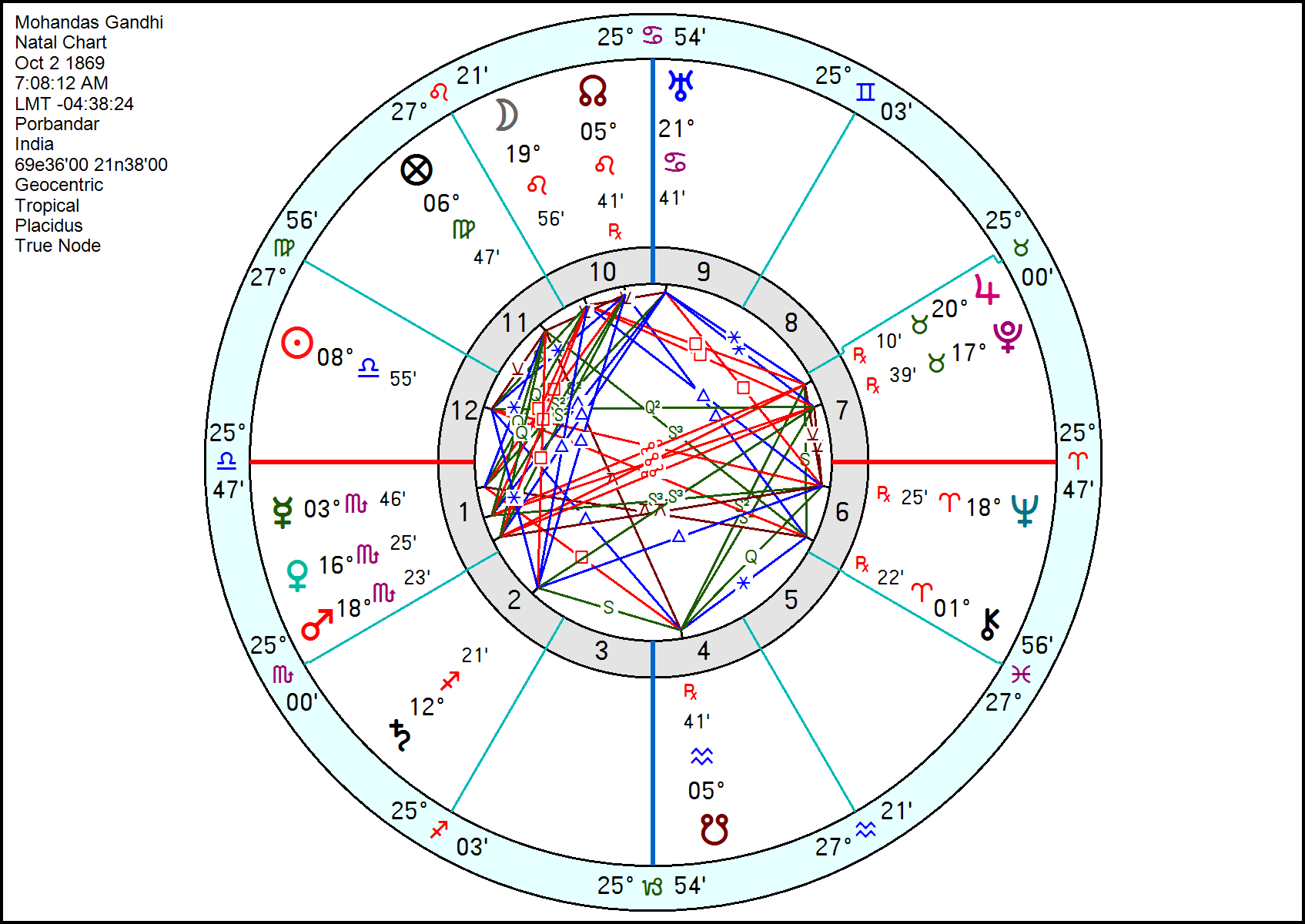
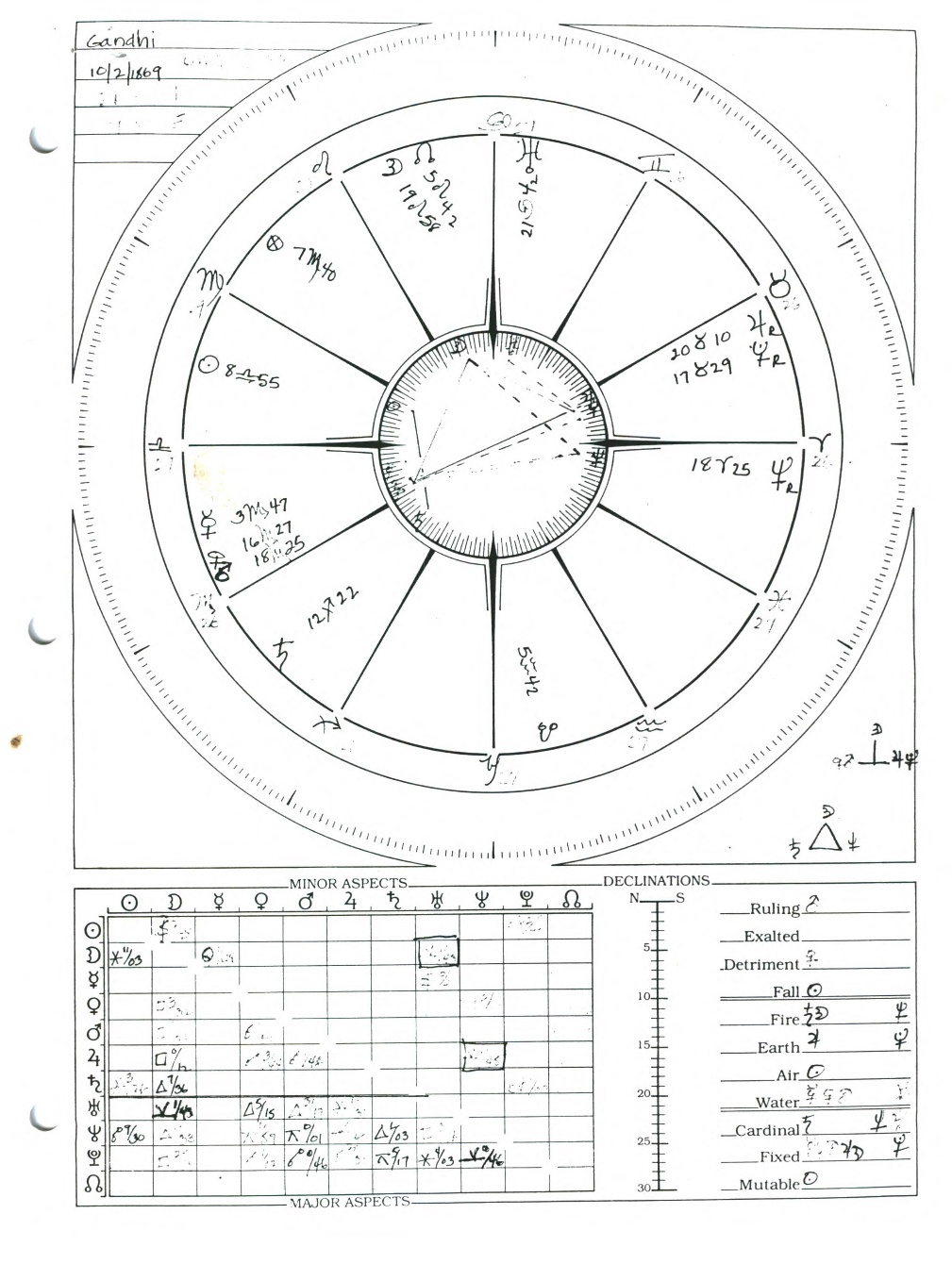
* What is the nature of the 'dragon'? What is the difference between the tropes and the categories of the imagination? What is the nature of the degree symbols and their meanings? These questions were discussed, and then examined in the light of an empirical example (Gandhi's chart).
* This predisposition to operate in a certain way is formulating the thoughts; it's the structure that predisposes one to think one way or another.
* Earth's memory; human memory--analogy of a human being's memory. Our own memory is an organism living in its own right, manifesting through images in its mind. At the times when you remember something, you recall the image in its peculiarities, its shapes, colors, etc. Such is a comparison of the microcosm and macrocosm.
* These images are the sensations organized by the (creature's) conceptions into a representation of the world. The higher part of the mind--the abstract schemata-- organizes the images into a picture of the world. The individual in that organization is the psycho-somatic organism which is nothing but a composition of the imaginal essences or memory of the Earth, and has a dreamlike quality. Each one of those sense qualities or forms has a certain mode of operating which is included in that organism.
x * We're constituted of memory images of the Earth storehouse organized by aspects in the (natal) chart--and images can work in harmony or in conflict with each other. These images are welded into a hylomorphic entity.
x * The DIVINE VITALITY = the energy of the Ideas. These tropes are invested with energy (like the rolled-up paper under the bed). The power of the Ideas to manifest themselves as creatures into imaginal essences or tropes remains in those images. In the dragon are the traces of the energy of the Ideas (divine vitality).
* What does it mean to say that "a man has conquered himself"? In this body, all these images have a compulsive activity. But the Soul can control them; the Soul can get out of the cave. We later have to understand how the Soul gradually disidentifies with the psyche.
* Outside of the dragon, with all its memories, is the functioning of the cosmocrators. The dragon belt supplies the very material, the very sense qualities, that are being organized to form different pictures from moment to moment. This is done by the Cosmic Circuit, and the abstract schemata it represents organizes these qualities into images, which we assume as reality. These images in the life or mind of the Earth are organized into a psychosomatic organism in the following manner. We take seven of those degrees, the ones that have a (natal) planet sitting on them. The aspectual relationship of the planets to each other manifests a peculiar (& changing) entity in this way.
x * Jung's categories of the imagination are the organized memories of the Earth, which are only imagination. So the anima function is the way the memory of the Earth delivers that function. The categories constitute a human personality, & impersonally looked at as the imagination functioning as an entity. The ego is the activity of the imagination or these memories, which is a pseudo-identity.
* In a chart analysis, we want to find out what went prior to the reflective awareness.
x * If, for example, Saturn or Mars is on a certain degree, it is part of the dragon's life. The relationship is reciprocal: it is organized by that degree, and is manifesting that degree.
x * The planet in your chart is not a cosmocrator; it is exemplifying one of the categories of the imagination.
* We want to investigate the nature of a degree symbol to amplify the nature of that memory image (in the dragon). We have to sort out the psychological interpretation from the nature of that memory trace (not the Idea).
* The nature of that Earth's memory trace in itself subsumed under that symbol is a nexus of relationships, has a plurality of meanings, so that the symbol can be used in diverse ways. Life has gone through a web of relationships and deposited a variety of experiences that form a nucleus, and in this nucleus are tied together, forming a matrix of tendencies.
* Re Jones' symbols. Jones' psychological interpretation is an abstraction from the symbol. Jones' symbol is not a symbol, but a picture. The mind has the ability to transform itself into that function--not just the symbol--because the way the mind looks at its whole heritage, and because the symbol is included in that process, the mind has the capacity to do this.
* Is the mind that very functioning? The empirical mind is the very ability to pictorialize and modalize itself into these images.
x * The permutations and combinations are infinite, and only for the sake of convenience can we speak of 360°. There cannot be two charts alike, because there are no two psychosomatic organisms composed of the same imagery.
x * These patterns of functioning can be grouped. One symbol is multivalent. For example, ten symbol books have ten different symbols, each of which has one slice of the matrix of possibilities, but they all converge around the same quality or aura. The symbol is the best representation of the matrix of possibilities that the mind presents to you.
* Since the symbol is the matrix of traces of past experience, it can be added to, and so we can see evolution in symbol books.
x * The symbol is a best representation of these tendencies that are grouped together and related to a certain theme. If a person dwells on a certain experience, the mind makes a symbol of those tendencies, but the memories are not in isolation, but in a common substratum.
* When you forget something, the object did not fall into the unconscious but it becomes a certain tendency or activity of the vital energies.
* The cosmocrators and the intellectual part of our mind, conjoined together, formulates an image, and the formulation of the images into a unity is the psychosomatic organism. The whole cosmic panorama is the preconditions for me to understand what there is to know.
* The redness that you see in the sunset is a sense quality. The intellectual part of your mind takes the sensations and organizes them, makes an abstract schemata of the World Idea coming in, instant by instant. The only thing that can make an image is the memories of the Earth, which it makes into a functional image or unity, your body. The body is nothing but a cluster of sensations, left behind in the Soul of the Earth's memory.
* In the realm of the cosmocrators we can speak of epistemology, but not in the dragon belt.
x * In psychological experience, the eight bhavas of buddhi become the four psychological functions; the powers of the Soul become the seven categories of the imagination.
* The category of imagination as a function has a way of tuning in to the rational soul. The functioning of the category of imagination is reflected or assimilated by the organism--the body of imagination--which ordinarily cannot see how the rational is coming into the psyche.
* The rational soul powers 'fix' themselves ((by transit)). In what way do they reflect themselves in the imagination? The 7-fold classification is a reflection of the rational Soul. ((What is rational in a horse or dog is the fabricative activity that is going on.))
* We distinguish the seven categories (the presence of the Soul powers associated with and working with the imagination) and the tropes (the traces of life in the Earth's memory).
* Ex: Gandhi. Gandhi is an ego identified with the functioning of the rational Soul, not the ego. In the next incarnation it will seek a suitable psychosomatic organism to associate with based on the achieved level of functioning.
* An ego or body is composed of imagination, ie thought, and can function in six different ways – Jung referred to it as instincts – the imagination is the central purpose or idea which the other 'instincts' are unfolding.
x * All 360° are content, some are more emphasized than others. The psychosomatic organism, this body of imagination embraces them all.
x * The Soul powers are reflected in the imagination as the categories. The light of the Soul shining into the psyche can now identify with the images belonging to the Earth & superimpose them on the world ((this is maya)). We can recognize that our perception of the world is the perception of the psychosomatic organism's functioning.
* However, the horse cannot identify with the knower in him but be only that functioning--that is a peculiar quality specifically human is the criterion for the differentiation
x * In this there are 3 levels: The (a) intellectual part of the mind organizes sensations into a functional unity (b) which when operating reveals its own content (c). Or ascending: (a) the functioning of the ego structure when operative produces (b) the appearance of the phenomenal object, and (c) a judgment can be made on that object by the mind.
x * The intellectual part of Nature grasping the Idea is intuition or direct perception. When the undivided mind identifies itself with the shelly and moonlike body there can only be indirect perception. The undivided mind can only deal with the Ideas or the imaginal essence--the phenomenal or the imaginal.
* Plato conceived of real knowledge as coming from the stars--any real knowledge is contact with Ideas outside the dragon. An example: the law of specific gravity is not the images, nor in the printed or spoken word (about it), nor in the water.
x * The central significance of a person's life will be manifested in the Sun (or a woman's Moon before age 40). The other planets support that functional unity to make it reflectively aware of the central purpose of the life.
* The natal Sun embodies the principle, the central significance, of your life. The other planets manifest that central idea.
x * The nature of the tropes organized into a psychosomatic organism that the Soul operates through shows the level that the Soul is operating with. The more highly evolved the Soul, the more highly evolved the tropes it operates with--this is the true meaning of evolution. In the eleventh house there are seven levels of existence, and what distinguished one level from another is the totality of tropes from one level to another. Each of the seven levels has 360°, and each degree can function at seven levels. The function of vasanas reveals entirely different worlds--seven different kinds of epistemologies.
Each of the tropes is interpreted according to the Soul level of that individual.
* Degree & opposite degree. The whole universe can be brought within the intellectual functioning of the mind. The individual mind (not the ego) can bring the whole universe into itself--this illimitable potential is to experience the whole intellectual world.
* Jung based his psychological types on the four elements. In the process of living the inferior function becomes refined, becomes introverted, and then gets projected out, and gets worked on by the World Idea.
* Gandhi's Mercury (4° Scorpio--a youth holding a lighted candle) -- How is this a trope? Tim: It's sheer religiosity. In the least of our experiences is the recognition of the presence of the numinous. The trope is that in circumstances, you look for a sign of what to do. The transcendental is always impinging into the empirical--these are the depositing of mankind's experience with that.
* Examples: An apple falling on Newton's head is an example of the transcendental in the empirical. Wang Yang Ming. P.B.: The organization of the World Idea is present in a planet, in each atom. In an individual--or even an amoeba--each has its own mind with which to manifest the World Idea.
* The power of that Idea which manifested a certain species of animals and tropes represent the residue of the Ideas in matter. Depending on our depth of penetration, those Ideas that are present in those tropes ascend to the Idea in matter or the meaning of the Idea.
* We never find unformed matter. (II.7.3) We're reading a degree as if we are that--in terms of the imagery within the ego.
* Because Gandhi's Mercury is unaspected, we can see how it is concerned only with manifesting his Sun degree.
[File AD SUPP 1224-1230 1983 0506, 0507 S.PDF Ends]
[Note: The following sentence is found upside down on the last page (p. 7) of File 1983 0506 PLO F07 0506 and 0507.PDF.]
* The fundamental depth of this trope descends all the way.
[File 1983 0506 PLO F07 0506 and 0507.PDF Ends]
CHARTS FOR 1983 0507
Class
Saturday, May 7th, 1983
Verbatim, unedited transcriptClick the series name to view more
CLASS at Wisdom's Goldenrod, Hector, NY
with Anthony Damiani (AD)
May 7, 1983
ASTRONOESIS; NATURE; DRAGON
with Appendix: 1983 0506-07 Partial Transcript.
TOPIC: Astronoesis
SUBJECT: Nature
SUBSUBJECTS: Dragon, 360 Degrees, Tropes, Epistemology, Astrology, Gandhi natal chart
CONTENTS:
Gandhi's Sun at Libra 9: universal reality can be embodied in the ego
Human mental experience deposited in air element
Tropes are compulsive
Dragon as enemy and friend
Tropes can be transformed to higher levels of functioning
Sun as central significance, provides functional unity of psychosomatic
Sun degree lived out in life, Mercury degree lived out in mentality
Individual soul, conjoined to cosmic soul, participates in organization of ego structure and then functions through it; soul is where it loves
More highly evolved soul will operate with more highly evolved tropes; this is nature of true evolution
Seven degrees of existence in eleventh house, each degree distinguished by totality of tropes at that level; seven levels of 360 degrees
Different epistemologies at each level
Ideas in Intellectual-Principle as samskaras of the One
Savikalpa and nirvikalpa samadhi
Trope is interpreted according to individual soul level
Opposite at Aries 9: individual mind can experience the Intellectual World; individual mind looking into depths of Intellectual Idea coming into it and through aspiration transforming itself into it
First part of Jones interpretation of many Sabian symbols is an attempt at metaphysical understanding
In Jones interpretations, positive and negative concomitant, AD doesn't use those words
Meaning hidden in Sun degree is manifested by functioning of other Chaldeans
Libra 9-Aries 9: if he remains true to the notion that the universal reality can be lived out and embodied in an ego, this results in the inner awareness that the mind can encompass the potentiality which is hidden in the Intelligible
Outer becomes inner, inner becomes outer; fundamental occult law
Epistemology of astrology
Regular aspects indicate how psychosomatic is organized, don't give knowledge
If you study chart deeply enough, you get feeling of this person and no other; no such thing as fiction
Jivanmukti Viveka: ultimate liberation takes place when samskaras burnt in fire of knowledge; cannot think clearly as long as compulsive nature of tropes is operative
Refining the hunger trope; entire organized system of tropes must be refined
Gandhi's Moon at Leo 20: recognition of and gratitude for being an embodiment of natural forces and ritualization of this
Opposite at Aquarius 20: peace, cognitive side of Leo 20
Be a good solipsist for a while: what does this mean to me?
Leo 20-Aquarius 20: if you act in a way that shows gratitude for the source of all life, this will inevitably produce peace
Gandhi's Jupiter at 21 Taurus: the means should not conflict with the goal, ends don't justify the means, skillful means
Opposite at Scorpio 21: Gandhi learned from his mistakes the first time around
Gandhi's Jupiter Moon square
Gandhi's unaspected Mercury at Scorpio 4: in the least of our experiences is the presence of the numinous that can guide us
Presence of World-Idea is immanent in the individual mind's manifestation of it
Tropes as residue of Ideas in matter; can deal with Idea as in matter or ascend to meaning of Idea
Notion of samskara is fundamental to understanding Eastern philosophy
Reading Plotinus, II.7.3
Appendix: 1983 0506-07 Partial Transcript
BOOKS READ FROM OR REFERENCED:
Marc Edmund Jones, The Astrology of Concepts
Marc Edmund Jones, The Sabian Symbols in Astrology
Swami Vidyaranya, Jivanmukti Viveka
Paul Brunton, The Hidden Teaching
Immanuel Kant, Critique of Pure Reason
Immanuel Kant, Critique of Practical Reason
Immanuel Kant, Critique of Judgment
Dane Rudhyar, The Astrology of Personality
Krishnachandra Bhattacharyya, Studies in Philosophy, Vol. 1, "Studies in Samkhya Philosophy"
Plotinus, The Enneads (MacKenna translation, 4th ed.)
PLOTINUS QUOTES READ OR REFERENCED: II.7.3, IV.3.13
SABIAN SYMBOLS: Aries 9, Taurus 21, Leo 20, Libra 9, Scorpio 4, Scorpio 21, Aquarius 20
CHARTS appended to this transcript:
FIGURE 1983 0507-1. Gandhi Natal Chart (astro.com).
FIGURE 1983 0507-2. Gandhi Natal Chart (WG version).
NOTES:
Correct Dates (per IT & JF) for the Two Classes on the Dragon (Astronoesis; Nature; Dragon) are May 6, 7 (Fri, Sat) – NOT May 4, 5 (W, Th).
We have two partial transcripts for this class, one with and one without Anthony's editing. The partial transcript with Anthony's editing, Scan File AD SUPP 1224-1230 1983 0506, 0507 S.PDF, is appended to this transcript. The version without Anthony's editing, Scan File 1983 0506 PLO F07 0506 and 0507.PDF, has an additional sentence at the end which the edited version does not have; it has been added for completeness.
May 7 is a Saturday, and a continuation of the Friday night (May 6) discussion. See also WG Class 1983 0513 (Friday) for more on the Dragon.
TRANSCRIBED Verbatim by IT prior to 2018 (V11a). This is V12a (2023) and has: updated prefatory matter, footer, and audio file name; Book List and TOC completed, Plotinus quotes section added; typos corrected and new notes within transcript; corrected note in the Appendix; different Gandhi chart appended that matches the birth info from astro.com; new formatting to accord with new conventions. Archival verbatim transcript – V12a.
AUDIO FILES: 1983 0507a, 1983 0507b, 1983 0507c (formerly 1983 0505a, 1983 0505b, 1983 0505c).
| NEW FILE NAME | OLD FILE NAME |
| 1983 0507a | 1983 0505a |
| 1983 0507b | 1983 0505b |
| 1983 0507c | 1983 0505c |
1983 05/07 at Wisdom's Goldenrod
Astronoesis; Nature; Dragon
[Audio File 1983 0507a (formerly 1983 0505a) Begins]
AD: Yeah. But-- and anyway you see why-- the way I look at this here when I read this is a little different, I mean-- You'd probably say I'm taking liberties and I certainly am. But when he says here--
Marc Edmund Jones [The Sabian Symbols in Astrology, Libra 9, AD reading]: "This is a symbol of man's capacity for embracing a universal reality within his own personal experience…"
AD: This Sun degree means to me that within the structure of the ego, there's a possibility of realizing that the ego is a suitable vehicle within which a larger perspective can become manifested. [RC assents, faint] When he goes on with a "representation of fundamental faculties of self-expression", that was already included in what I said, that the ego has an organized structure. It's capable of expressing these wider realities, these more universal realities. That would have to be so if the universal i-- let's say, more universal or supra-consciousness has to represent itself or particularize itself into an individual. So that the very structure of the ego has to have that capacity to be able to ex-- embody this here.
RC: Uh-hm. Can you talk about that now as how to understand that capacity as a trope?
AD: Yes. I'm thinking of this simply as tropes, I'm thinking of everything that is said up to the point of accord, you know, keyword is accord, I'm thinking of all of that as this tremendous range that is to be found in a trope, especially let's say in a mental trope, you know, like a-- a degree in an airy sign. [student assents, very faint] I'm thinking specifically of that. And if we think of tropes as in the air, you know, the element air, you're in a sense saying all the experience that man has had with thought is deposited in that element [RC assents] and now it's going to be manifested when that particular trope or that degree is incorporated into an individual. [RG assents] Now I don't-- I don't understand her objections to what we're doing. [RG: That's right.] Except that maybe if we do a couple of them we'll be able to see in what way tropes are to be understood. I'm not particularly interested in understanding the tropes of the reptile or the snake, we're talking about the human mentality here. And the-- the deposit of all of these-- of human mental experience in the element of air, alright, it is that particular trope that is incorporated as his Sun degree.
RC: This particular one being in the air (on that) would be like more specifically an inherited way of thinking about [AD: Uh-huh.] oneself.
AD: Yeah. The element air, Libra, ok, is precisely what we're referring to as a trope left behind in that element.
RC: Ok, so for example every-- every time a human being entertained the thought of man as a microcosm, that would be deposited [AD: Uh-hm.] in the air element (human beings) [one word inaudible] work with. And you're saying that here maybe that particular idea or something similar to it is being built into this ego structure.
AD: That particular kind of trope, [RC assents] yeah, is in his ego structure. So if the Sun is in Libra, which means an airy sign, is incorporating this trope, what we're in effect saying is that included in the mental processes that he operates with is a presupposition that he has the experience of man's (very/varied) and almost indefinite capacity to recognize the fact that a universal can be expressed within the limits of the-- these tendencies.
RC: And as a tendency, it would be a tendency to entertain a certain thought here.
AD: Yeah.
RC: Whereas in another element he might not--
AD (simultaneously): Compulsively.
RC: Yeah.
AD: (It's like) there's a compulsion built into this, that he has to, so to speak, operate or think in this way. But if we go back to this here.
Marc Edmund Jones [The Sabian Symbols in Astrology, Libra 9, AD reading]: "This is a symbol of man's capacity for embracing a universal reality within his own personal experience."
AD: If we say that personal experience, the way we understand personal experience is the ego. I mean what else could it mean? So then within the very basis of our ego structure, alright, there's the possibility or there-- there can be built into it the capacity, alright, to think in this peculiar way that universal reality can be embodied in our ego structure. But it won't be the way it is in itself. But only the way the ego can interpret that. So-- and the ego can, let's say, entertain the idea of a universal reality present in him.
RG: And in fact this entertaining because it's the Sun in fact is the substance of his-- of his being and it's not just his mental processes, it's in fact the way he pictures the world for himself.
AD: Yeah. So it's really very central. Go ahead.
CDA: Ok. From what I understood last night, you were speaking about these tropes as clusters of sense qualities. That was-- that was one-- one--
VM (very faint): No.
CDA: Right?
RG (simultaneously): No, no, no, no.
VM: No but they give rise-- let's say that they (are) [AD simultaneously: Go to your question please.] picture(d) forth in terms of sense quality.
CDA: Well, when you-- when you speak of this kind of intelligibility that's going to be available to the ego or that's going to be actually (spiritual on) ego-- Well there was two things-- two-- two distinctions that were made, one was the tropes and one was the categories of the imagination. Now with the categories of the imagination, you spoke about the actual immanence of the rational soul within the ego structure. And, when you read a degree, you're reading that Sun on this degree. And, I wonder if-- if you're-- if you're ex-- in-- I cannot see where-- where the distinction lies between the Sun and that intelligibility that-- that's already available to us by seeing Gandhi's life and the actual trope--
AD (simultaneously): I'm sorry, try again.
CDA: I don't-- I don't-- I-- it could be that it's not necessary at all that-- this being available to him but-- You're reading Gandhi's Sun on this degree.
AD: Uh-hm.
CDA: Can you-- can you eliminate the-- the rational quality of his Sun immanent in his life from this-- the-- what this 9 Libra is describing as the trope.
AD (simultaneously): Can I eliminate the Sun?
CDA/S(?) (faint): Uh-hm.
S: (You mean--/Right) right.
LR: You're asking if you can-- if you can abstract the functioning of the Sun from the ni-- from the meaning of the symbol?
S (very faint): Yeah.
CDA: I'm trying to apply the theory of the Dragon to the degree, you know. And if-- and I cannot see how that is being done. That's the basic problem.
AD (simultaneously): This degree is in the Dragon, right?
CDA: This degree is in the Dragon.
AD (simultaneously): Is in the Dragon.
CDA: But the Sun you were saying is not--
LR (simultaneously): Is in his twelfth house.
CDA: Is not-- the Sun--
AD: Well see the Sun is not a trope.
CDA: Sun is not a trope.
AD: No, of course not.
CDA (simultaneously): No. And it's bringing the higher-- the intellectual part of the Sun is immanent in the category of the imagination.
RG: Right but--
CDA (simultaneously): I mean so--
LR: And we said it was a soul power which by virtue of its acquaintance with the trope is a category of the imagination.
RG: Yeah. But Carol, we had a double reflection also. I mean the trope on the one hand is a reflection of the World-Idea that-- as its prior just as the Sun as the category of the imagination is a reflection of the cosmocrator as soul power.
CDA/S(?): Yeah.
RG: So, the fact that there are these deposits in human experience of prior ideas, some of which the ideas include the elevation of the human to its rational part, why-- can't you include that in the idea of tropes that deposited--
CDA: I can but not from what I've heard described [one word inaudible] (today).
RG (simultaneously): Why? That's what we said last night.
S: Pardon?
RG: That's what we said last night.
S: Right.
S: Yeah.
AD: I think you have a-- a negative notion of the Dragon because the Dragon includes all these qualities. (bit of laughter) You know, it could be a terrible enemy but it could be your best friend, the Dragon. Now, the Dragon is going to include all the qualities necessary in order for a man's rational consciousness to come into experience too. These tropes are capable of being transformed to higher and higher levels of functioning. So that for instance if we go into the eleventh house and you pick(ed) one of the higher realms of existence, Satya or any of them, alright, you will have tropes there by which you can function. And if that wasn't possible, it wouldn't be conceivable how there could be evolution.
CDA: Ok, I just needed to hear you say that 'cause I-- you know, from-- I don't-- I've never had--
AD (simultaneously): Now look suppose I put-- suppose I put Mercury on this degree, alright, of the three old masters. Now, one would I think very easily recognize that instead of this idea being, if I can use the term that I didn't understand, the very texture of the imagination, it would be basically an airy or mental kind of realization that would take place in his life and not the actual life itself realizing the ideas.
RG: Right. Right.
AS: Uh-hm, yeah.
JA (simultaneously): Could you explain that term, like the paradigm(,) airy?
AD: Explain what?
JA: Texture of--
CDA/S(?): Oh. (AD laughing, some laughter)
JA: (I/You) still didn't say anything, I didn't understand you.
AD (simultaneously): I take it back.
RG (simultaneous with JA): Right, right, right.
AD: Instant karma. (bit of laughter)
RC: Could I try (Vic/that)?
AD: Next one.
RG: [one word inaudible] phrase for (Vic).
RC (simultaneously): I don't know if I follow-- if I follow it either but-- You know how like a person has a certain-- what's the word, like a certain just psychic physical presence when they come into a-- a room or the way that they operate that you can really distinctly feel the difference between having them actually there and talking and operating as opposed to not being there and talking and operating. It seems that that conversion of their life force into an animated being is really what we're talking about as this imagination, this cosmic imagination producing them as an empirical person. And you'll get like, especially I think if you watch dancers, you'll really see the difference between-- well I guess there it would be more with the Moon sign, but you would really see a substantial difference in the way that their motion translates the ideas that they're trying to translate, there's actually a-- something tangible, tangibly different about the way they-- they convert their thought into a physical movement. And it seems that that's what people are trying to talk about as imagination as the fundamental power that's putting this person in the world.
[short pause]
AD: Yeah, and we could add to that the remark we were making before and that was something like this, at the moment of birth, the sensible Sun which is the transcendental imagination, that sensible Sun is on that degree. And you would expect it to be reduplicated in the natal chart, alright, [AS assents] in a reflective mode, and by that I mean that the memories which have been organized into this psychosomatic organism, their functional unity is based on that Sun degree. [AS assents, faint] Because if you think of the Sun as a center, you know, of the heliocentric system, then the Sun would be the central meaning and significance and the very texture of that man's life in the sense that it is a composite of all these memories of the Earth. So that's what provides the functional unity.
RC: And his life would be the actual example of the idea(s).
AD: Yeah because if it's not lived out in life, alright, that degree isn't effective.
RC: Like when you see-- when you think Gandhi or you see Gandhi you think, "This is not a theoretician, this is an example."
AD: Yeah. Exactly. This is an example. It's being lived out in the life. Alright, now it's possible to put Mercury on that degree and then you would see it will be more in the realm of the mental.
S (faint): Mercury, huh?
TS: He had Mercury--
AD (simultaneously): His life might even be taking a different direction.
TS: If he had Mercury on that degree he'd be Anton Bruckner or Gustav Holst. (bit of laughter)
BS: (Yeah.)
TS: That's their Mercury degree.
AD (simultaneously): I don't think it's that simple Tim but-- (laughter)
TS (amidst laughter): Well it's not but-- (more laughter, student words)
VM: You have to change the other planets too.
S: Yeah. (laughter)
AD: But, if I'm allowed then, if I read it this way--
Marc Edmund Jones [The Sabian Symbols in Astrology, Libra 9, AD reading]: "[This is] a symbol of man's capacity for embracing a universal reality within his own personal experience. [Here is] [AD adds: a] representation of the fundamental faculties [AD reads: faculty] [AD emphasis] of self-expression [S: Ok.] as they may be established in effective alignment with each other…"
AD: And I subsume all of this under the fact that the-- or the-- the notion that the ego is the very means by which these universal truths can be turned into realities for us. [RG assents] And that this is the very texture of that man's life.
[student assents, very faint]
CDA: Could you-- could you say--
RG (simultaneously): Now, you know it might-- it might be interesting too, I mean, [VM simultaneously: It's what's recent but he died.] not now but-- but watch-- watch another man-- a person with the Sun degree on-- on that degree and see how he unfolded that same idea and in a different way. To get-- [student assents] circle around the idea. I mean interestingly enough, I mean we could do Jones, and it happened to be Jones' Sun degree. So it's the little-- (RG laughs)
S: Oh yeah?
S: Oh really.
RG: It just works out.
S: Oh.
S: Could you say that when you take-- this may be too simplistic but, if you take like a presupposition that the soul is picking the vehicle that it's going to incarnate in, that actually with the Sun on that degree being a trope, I think the way you're talking about it, that they would actually pick-- it would almost be there would be this tendency in the Earth's memory to-- to have this larger capacity for universal truths and that it would-- that that soul would actually-- as it evolved, when it was at that level of evolution would-- say by Gandhi-- would actually go towards that Sun degree as being-- would actually like almost pick it as being the expression of that higher capacity, larger capacity.
AD: What you say that-- what you're saying is that the individual or the intellectual nature of the individual mind, individual person, soul, alright, which was conjoined to that cosmic soul has chosen this moment [student assents] in which to incarnate because this is precisely the degree it needs to further unfold, alright, and evolve.
S: Right.
AD: Yeah, uh-huh. And if you apply that to all the other (ten) planets, alright, then you would see that the soul, the individual soul presided or in some way, because it's conjoined to the-- to the cosmic soul, participates in the organization of the ego structure, you know, the way the memories of the Earth are organized into an ego structure, and then-- I think the remark Avery made was now comes the point where the soul imparts to that animate a light which illuminates its functioning.
[student assents, very faint]
AS: Perhaps this is also the meaning of this remark when he says each soul is near to the image to which it will tend. [Note: Plotinus, IV.3.13.]
AD: Yeah.
AS: It's like the soul above this realm of the Dragon is already, as being omnipresent and not material in any way, is already-- has a propinq-- what's that word, propinquity?
AD (simultaneously): Propinquity.
RG: Propinquity.
AS (simultaneously): Yeah. Has a propinquity to the-- to the tropes, and so therefore already is near to that image to which it's going to incarnate.
[students assent, very faint]
LR: What was the thing about the animate, I missed that part.
AS: But just, that that's the-- that-- just the point about light, that, you know, this light-- the light of the soul that gets conjoined with that image.
LR: Yeah?
VM: It's an organized body and then the light-- the tropes would be the organized body this--
LR (simultaneously): Wait, just make a full sentence 'cause I didn't hear what the-- what was the light of the-- what--
AS: But the way that the ra-- the way the light of the rational soul or the rational soul powers are going to now operate through this natal chart. It's the proper-- first of all it picks the proper moment as it were when these particular tropes are going to be organized and therefore these imaginal categories or [half/one word inaudible] well, these tropes are the best expression for his soul powers to operate through. They're the appropriate ones.
LR: But I thought you were saying something about what the animate was actually.
AS: This is the an-- the animate [LR simultaneously: Would you say--] is this thing conjoined with that light of the soul. It is the living entity. [S simultaneously: Wouldn't that mean--] The whole system of organized tropes [LR simultaneously: All those degrees.] as pervaded-- yeah.
LR (simultaneously): All the aspects?
AS: (Well) the whole thing as pervaded by the light of the rational soul with the soul functioning through it.
AD: And there's one other thing I think we ought to mention here. And perhaps by exaggerating the example, Carol will understand that the-- the nature of the tropes which is organized into a soma-- a psychosomatic organism in which your soul is going to be operational and express itself, that that itself shows the level that the soul is operating on. And this-- this need to recognize the fact that the more highly evolved soul, alright, the more highly evolved tropes it will operate with. [AS assents] And this is the very nature of true evolution. [students assent] Evolution is not that I develop six fingers or a third ear. That's got nothing to do with evolution. But the kind of tropes that you operate with in the past will be manifested to you now again in this life and you'll see this is the kind of tendencies you've been working with. You either improve on them so that you're entitled to higher kinds of functioning or you remain there.
VM: But why can't you say the same thing about the who-- the entire what we call physical body is a trope that's been built up by the soul's-- by the experiences of mankind over the years. So, wouldn't you just subsume normal biological evolution under this notion that you're talking about?
AD: Biological evolution?
VM: Be subsumed under this particular view of evolution that you're speaking about, evolution of choice-- tropes.
AD (simultaneously): Yeah but I'm not-- I'm saying, that's not biological.
VM: No. [RG: Right.] Well I'm saying you sa--
AD (simultaneously): It's mental evolution that's going on all the time.
VM (simultaneously): Of course, of course. But I'm just saying you would subsume what people normally speak about as Darwin, Darwinian-type evolution underneath your notion of-- or within your notion of [AD simultaneously: Yeah.] the evolution of the tropes.
[student assents, faint]
AD: Now, the same thing would take place for instance when we talk about the eleventh house where we have the seven degrees or levels of existence, alright. At each level, alright, what distinguishes one level of existence from another is going to be the totality of the tropes in one degree of existence from another.
VM: In fact, the notion of biological evolution is some ways an example that you can expand to appreciate this notion of let's say tropic evolution that you're speaking about. Because the body that we have, let's say this-- the sort of physical inheritance of-- of the species on Earth and this-- the psyche is distinct or-- let's say from the body, is also the inheritance of the Earth's-- the experience [AD simultaneously: (Mm.)] on Earth of man. I mean just a sort of side-- side issue I suppose at this stage.
RG: Anthony-- would you understand that Anthony that in those seven lokas for example there would be seven levels of the 360 or that so--
AD (simultaneously): Yeah.
RG: Yeah. So that each-- any of those degrees could function at any of those seven levels.
S: Yeah.
AD: Now, the-- the difficulty here of course is to understand that-- the different functioning of the vasanas or different levels. But the functioning of vasanas reveals an entire different kind of world. So that the-- let's say the kind of understanding that will be appropriate at one level will be meaningless at another.
RG: Right.
AD: Absolutely and completely different. As a matter of fact se-- you'd have to have different kinds of epistemologies.
RG: Right.
VM: Anthony when you go to the genuine Intelligible realm I can't see where the tropes leave off, the way you're speaking about them now.
S: Right, (uh-hm/Vic).
RG: Yeah.
SC: Yeah then you're not really just talking about the Dragon, you're talking about the whole World-Idea, [student assents] the tropes.
VM: When you speak about the tropes going up all the way through the various realms [AD: Uh-hm.] in the eleventh house, where do you leave, so to speak, in an ascent upward--
RG: At the level of the World-Idea, which includes all of it, I guess [three/few words inaudible]
AD (simultaneously): If you remember-- if you remember the last level was Satya or Being.
RG: Hm.
AD: Now, if we imagine a Sage who was continuously in identity with Being, universally pervasive, you know, Being, then he would have to be operating with tropes of that nature.
LR: That's a different usage of the word.
VM: It just seems that you've extended the word 'tropes' now to include that.
AD (simultaneously): No, no, [LR simultaneously with AD and VM: Well last night you said that don't control--] I-- I don't think-- I-- I don't think you understand the nature and the pervasive meaning of tropes or samskaras.
LR (simultaneously): Well obviously not, but you're using it differently than you did last night.
VM: No I think [S simultaneously: No.] you're supposed to extend it. It's not different.
AD: It's just because we've brought in the eleventh house. Because when you say samskaras you can say that all the Ideas in the Intellectual-Principles are samskaras of the One practically.
LR: Ok, [RG simultaneously: Right, right.] so that's-- so it's a sli-- it's another one of those words that mean (everything).
AD (simultaneously): Yeah. But I didn't want to get into that, I just wanted to [VM: It's like reason-principle.] take the problem Carol was having, [LR simultaneously: Yeah, and this--] alright, which was basically that she can't see this significance which is buried in the tropes.
[students assent, faint]
LR (simultaneously): But if you don't carefully look at or define a word then it means nothing, if you use tropes to--
AD: Alright, let's try the next, the opposite, ok? (some laughter)
S (amidst laughter): That's just great.
EC (simultaneously): Can I just ask something?
[one/two inaudible student words or weird noise]
S: Right.
EC: Depending upon the level of the business one is on in those seven levels, say someone have a samadhi on-- and he's on a second level, and somebody has a samadhi on a-- the last level, then that samadhi would be appro-- he could only incorporate what he has experienced on that level, is that so, it would be a different kind of experience, wouldn't it? 'Cause they can-- I mean anybody can have a high experience on all these levels, can't they?
AD (simultaneously): Well it could mean-- it depends on what you mean by samadhi, if you mean with seed or with thought then naturally the kind of knowledge that's delivered at one level of samadhi would be different than the knowledge delivered at another. But if you speak of samadhi without any seed, then (they/there) would have to be the same. Nirvikalpa samadhi is nirvikalpa, period.
EC: Right.
AD: Alright? But, the samadhi [EC simultaneously: (But--)] with seed-thought which is for the purposes of delivering knowledge about a, you know, given object, then that-- you know, that declares the level that you're on will tell you the kind of knowledge you're going to get. Because it's the functioning of these vasanas or samskaras.
AS: That's what they say, yeah. And in that savikalpa they speak of it on some seed, and seed is a samskara. And now you're-- But again you're going beyond the notion of the Earth Dragon to that of the Celestial Dragon.
AD (simultaneously): Yeah, yeah.
RC: See that [S simultaneously: (Oh yeah.)] example from the Banquet where Plato talks about the gradual transformation of the tendency to love from being toward one person, then toward(s) more-- toward ethics.
AD: Yeah.
[student assents, faint]
RC: Would that be an example of different levels of the same trope, that the-- the tendency toward the-- to admire something would be the trope [S simultaneously: (Well--)] [couple words inaudible]
S (faint): Yeah.
S: Yeah.
LR: Love isn't a trope.
AS (simultaneously): Or would it be levels of Venus.
RG: Yeah, right.
RC (simultaneously): Well that's what I'm asking. I'm still trying to understand the trope.
AD (simultaneously): It may very well be.
AD/S(?) (very faint): (You) don't know about that.
LR: But love isn't a trope, I mean if you say love is a trope then you're just saying [AS: Well--] love is an I-- you're saying the trope is an Idea. Right?
AS: So?
AD: At the lowest level the way that that Idea is understood is the mutual attraction that creatures may have for each other. And that would certainly be a manifestation of the Idea of love.
LR: Ok, good.
AD: But it would be a very rudimentary and primitive expression of that Idea.
[student assents, faint]
LR: Right.
AD: At a much higher level, alright, there could be this universal reverence for life and that would still be an expression [LR: Right.] of that Idea of love but now at a much higher--
LR: Right.
RC: So I-- of course [LR simultaneously: That's--] it had-- I guess to talk about that we'd actually be talking about a person having Venus on a certain degree but it seems that we're also saying that that one degree is going-- different levels of that one degree is going to be the different levels of that person's evolution.
AD: So, then basically we're saying that each of these tropes, alright, will be inter-- interpreted according to the soul level [RG assents] of that individual.
RC: Uh-hm. Uh--
RG: The soul level as opposed to [one/two words inaudible]
AD (simultaneously): So when you look at Venus's-- when you look at Vivekananda's Venus it's certainly not the kind of meaning to the word 'love', you know, the trope of what we call mutual attraction, you wouldn't find-- find it expressed that way anymore.
AS: Yeah, but Anthony-- but I don't-- if you don't want to-- I don't think you want to continue this (discussion) much more.
AD (simultaneously): No, I don't want to continue because it's going to-- [LR assents] the [few inaudible AS words simultaneous with AD] eleventh house Idea is so huge that-- [AS simultaneously: Well I--] that you have to have seven incarnations to handle one at a time.
AS: Well I-- I just-- I just got a little confused. I'm not [S simultaneously: Yeah.] sure, could I clarify, you're saying that the possibility is maybe both of them are happening. You're-- when you're talking about the level that a trope is operating on, and at least-- forgetting about the lokas in the eleventh house, ok, we're just saying particular degree. Now, you're saying that the trope itself can-- has these various lokas-- let me see-- has these various levels within it.
AD: It could be interpreted variously according [AS simultaneously: Yeah, in--] to the functioning of the powers of the soul.
AS: In other words, you could have two people with a planet on the same degree, the same planet, and they will be operating with different-- at different levels, their souls will be operating at different levels, and that trope is capable of bearing the interpretation at various levels. Right? I mean that's just the way--
AD: Yeah well, that's the speculation [AS simultaneously: Yeah.] now, yeah.
RG: Uh-hm.
AS: Ok, thanks.
AD: So if we continue with the opposite now.
Marc Edmund Jones [The Sabian Symbols in Astrology, Aries 9, AD reading]: "[A] crystal gazer. [This is] a symbol of man's capacity for bringing an entire universe within the purview of his mind."
AD: Now, in the opposite symbol he says personal experience, now he's saying mind.
RG (simultaneously): Right, right.
[short pause]
Marc Edmund Jones [The Sabian Symbols in Astrology, Aries 9, AD reading]: "[There are] higher faculties of human understanding, but as no more than [the] illimitable…"
AD: I don't know what the hell that means.
RG: Where's Randy?
Marc Edmund Jones [The Sabian Symbols in Astrology, Aries 9, AD reading]: "There are higher faculties of human understanding, but as no more than the illimitable possibilities of personal experience in the realms of potentiality."
S: Can't (write/right) that [one word inaudible]
AD: It's not even English.
VM: I know, this is [one word inaudible] (VM laughing)
RG (simultaneously): This is the conceptual counterpart though to the experience of-- of the other degree.
AD: Yeah, but you see the way I interpreted it, on the one hand, on the right, on the Li-- Libra 9, alright, there's the recognition that the ego can incorporate these universal values within itself. But in the Aries 9 degree I interpret it to mean now not any longer the ego but the mind. In other words, I'm going to bring in here the notion that the intellectual nature of an individual mind, alright, is that the whole of the universe can be brought in within that functioning.
RC: Could you talk about this--
AD (simultaneously): Here, let me-- let me put it this way. In this degree he is showing or he is saying that the individual mind, not ego, can bring the whole universe into itself and this is (a) illimitable potential to be able to experience the Intellectual World.
VM: Hm. Can you just read--
AD (simultaneously): Of course he won't say that.
VM: No, not his language. Could you just read the symbol part, not the interpretation.
AD: "Crystal gazer."
[student assents]
RC: Could you also refer to the element the way you did with the air Sun?
RG (faint): Uh-hm.
S (faint): (No.)
S (faint): Uh-hm.
AD: Fire?
RC: Uh-hm.
AD: That this [VM simultaneously: You know, it makes sense.] trope is buried in fire?
RC: Like you referred to the air Sun as a tendency to think in a certain way, like what--
AD: Well what would the element fire represent?
RC: I guess--
AD: We said that [VM simultaneously: Uh-oh.] air seemed to have to do with the mentality, you know, thinking. Thought.
RC (simultaneously): I guess I tend to think of it in terms of initiate-- the mind's ability to initiate its own transposition.
[15 second pause]
S: What does that mean?
AD: Yes, ok, uh-hm.
S (faint): Is that what you mean?
[short pause]
AD: Let's see, fire is present in us insofar as what? Let's say the whole metabolic and digestive system is concerned, fire must be present, right?
RC: Uh-hm.
TS: You know, in the Jung volume on the typology there's-- the last essay in there, which he wrote after WWII, he comes out and says that he based his differentiation into four types on the-- the four elements in astrology.
RG: Right.
TS: Ok? And one suspected after a while, not that-- and it would seem that in that context that-- that you're using air as a kind of thinking, a con-- ability to conceive and communicate.
AD: But we said that of air.
TS: I know, that's what I just said.
RG: Right, if you use for that air then fire--
TS (simultaneously): I said if you use that for air then it follows that for fire you use what Jung calls intuition, which is the capacity to formulate possibilities or see, alright, see the kind of long-range effects of things. It's a funny idea of intuition I think but it's his, you know--
VM: It likes to see connections without the underling rationality or [TS assents] something like that.
[students assent, very faint]
TS: I mean, it would seem like that might be one useful vocabulary or framework for the elements.
S (very faint): [couple/three words inaudible]
TS: What?
RG: I don't know, it's (very interesting).
TS (simultaneously): I think it seems choleric, I mean it's [couple words inaudible]
RG (simultaneously): Yeah. It's a strange idea, yeah. I mean Jones uses the word 'self-sufficiency', doesn't he, for fire? I think the subjective-- similar to what Randy said, I mean in your interpretation of the degree there's a-- there's a-- a completion within the subjective self, he doesn't have to go outside of himself to experience in fire. Where [three/few words inaudible] if you go to-- if you go to thought.
RC: Yeah, it's a reference to some kind of like laws of thinking, yeah.
RG: Yeah but in fire, in any of the fire signs it seems there's always a sub-- the subjective reference utterly primary and the objective secondary.
AD: Yeah. I agree with that. So then if you read that, alright--
Marc Edmund Jones [The Sabian Symbols in Astrology, Aries 9, AD reading]: "…man's capacity for bringing an entire universe within the purview of his mind."
[short pause]
RG: Well I think its own posi-- in that refle-- in that reflection (then), the opposite degree, he felt he could embody those ideals on a-- [VM assents] on a universal scale almost within his own mind, within his own experience.
AD: You got it, yeah.
RG: So when he fasted it was for all of India, I mean he had that power.
S: Right.
AD: Remember what we said in regard to the intellectual portion of the mind. We said that it is that part which receives the World-Idea and encompasses that World-Idea and then tries to sensorialize it by, you know, using the sense images or the memories of the Earth. But then it is in the very nature of the individual mind to have that aspiration or that ability to transform its subjectivity into that whole content, [RG assents] and this is-- this is what he's referring to as a crystal gazer. This is the crystal gazer. [RG assents, faint] The crystal gazer is that individual mind looking into the depths of the intellectual Idea that's coming into it, alright, and through aspiration transforming itself into it. So, if we took that interpretation and then we put it in the sixth house, you know, as the-- alright, this is the readjustment necessary for the functioning of the-- this ego as a totality, or, better still, rather than the ego as a totality, the ego as an expression of that totality.
RG: Uh-hm. It was almost like the mark by which he judged this-- his-- his solar consciousness. His manifestation in the sixth house was his test.
AD: I think buried in the-- I think buried in the first part of the explanation, before he gets to the keyword, alright, I think there's his attempt, alright, to describe those symbols in a metaphysical way, to try to understand them in a metaphysical way.
RG: You know, be--
VM(?): [three/few words inaudible]
RG: You know you can-- right, that's his-- that's his Sun degree. But you get those in the long version of the symbol book too 'cause he doesn't have any psychological interpretation there, he just has--
VM (simultaneously): Yeah, I think I'd like those better.
RG: He just has one sentence which-- and they were written earlier, it's almost as if there's a direct-- a little-- sometimes more directness in those interpretations that gets to what you're talking about.
S: Yeah, uh-hm.
TS: Seems like there it's much more spotty, it's either much [VM simultaneously: It's either right on or--] more acute or it's just--
RG (simultaneously): Right, or it's way off. But sometimes it's right-- it's right on.
TS (simultaneously): Yeah.
AD: And then I think it's much more available when we read the keyword and we read the following, alright--
Marc Edmund Jones [The Sabian Symbols in Astrology, Aries 9, AD reading]: "…the degree is consummate insight in planning the course of events or organizing them in the light of immediate convenience, and…an idle curiosity and a surrender of all reality to the vagaries of the moment."
AD: I leave out the negative and positive, I don't use those words. These things are concomitant. You can have [student assents] tremendous insight into what's going on, at the same time, alright, be practicing the opposite, the negative.
S: Negative, yeah.
RG: Right.
[student assents, faint]
AD: Alright now, if that's his Sun degree, now the thing for us to do is to see if that Jupiter Moon square is manifesting something about the meaning of that Sun degree. And the suspicion is that all the other Chaldeans are bringing out that meaning.
RG: Uh-hm.
AD: Yeah, alright.
AS: Can you just go over again a little more on the-- the opposites? And we had a little discussion about if one of them represents the inner organization of the psyche and the other one is what must necessarily follow, or is it the other way around.
AD: Well, [couple/three inaudible AS words simultaneous with AD] the Libra 9 degree, we're saying that this is the understand-- the understanding here is that it is possible within the structure of the ego to embody a universal reality. [AS assents] Ok. And then the consequences that flow from applying that psychologically is-- In the opposite degree, the application is not to the ego but that the mind of this individual can get a view of the whole Intelligible World and experience that intellectual Idea, [student assents] and that this-- this would be a manifestation going on in the sixth house, the necessary readjustment, you know, in terms-- in terms of the functioning of this degree.
RG: Uh-hm.
AD: Let me try it this way. If we assume the meaning of the Libra 9 degree to be correct, the consequence of that kind of functioning is to deliver into the subjectivity of the person or let's say the-- the inner being of the person, in terms of the way we spoke about it yesterday, all the-- the reflection of everything in the world, this totality of all the reflected objects in the world, phenomena(l) or otherwise, and which constitutes what he means by his "me". That's what we refer to when we say "me", alright, we're not going at a deep level, we're [student assents] just saying at this level I consider my "me" to be the totality of all the memories of everything I've ever experienced, alright. Now-- I forgot what I was getting-- Well--
LR: [couple words inaudible] readjustment.
AD: Yeah. So what we're saying is that if he practices-- if that functions in the twelfth house, given whatever circumstances or situation he finds himself, and he remains true to the notion that the universal reality can be lived out and embodied in an ego, then the result or the manifestation of that would be the inner awareness that the mind can encompass the possibility or the potentiality which is hidden in the Intelligible.
AS: But this-- this-- that may be but this is-- this is now-- you're almost saying--
VM (faint): The reverse.
AS: When we were talking about [three/few words inaudible] when we were talking about these categories can [one word inaudible]
AD (simultaneously): Before you continue, I want you to look at-- I want you to read this carefully because you can see the confusion here.
Marc Edmund Jones [The Sabian Symbols in Astrology, Aries 9, AD reading]: "…an entire universe within the purview of his mind. There are higher faculties of human understanding, but as no more than the illimitable possibilities of personal experience in the realms of potentiality."
AD: That's a kind of awkward way of saying that the individual-- this degree makes it possible to experience the Intellectual.
RG: Uh-hm.
AS: Yeah.
S (simultaneously, faint): Yes.
AD: Ok.
Marc Edmund Jones [The Sabian Symbols in Astrology, Aries 9, AD reading]: "Implicit is the concept of the world and the individual as irrevocably in partnership, each reflecting the other and thereby providing a foreview of every possible mood or situation."
S: But don't you think this is--
RG (simultaneously): But they both are ways of doing that, in the Libra degree it says the Idea is coming into the ego, in the other one he-- ego sort of aspires out of itself to the Idea in some way?
AD: That would seem to be a more sensible way of explaining it. But I'm really throwing out, you know, feelers in the sense that I'm trying to understand that he at times makes an attempt to understand the intellectual Idea and he's trying to explain the symbol by the use of an intellectual-- an intellectuality. So when he says here--
Marc Edmund Jones [The Sabian Symbols in Astrology, Aries 9, AD reading]: "There are higher faculties of human understanding, but as no more than the illimitable possibilities of personal experience in the realms of potentiality."
AD: I think here he's simply trying to say it is possible for the individual to experience the potentials that are buried in the World-Idea that is going to be given to the mind.
RG: Uh-hm. Yeah.
AD: So that if he functions this way with that Sun degree in the twelfth house, the consequence of that is this inner satisfaction of recognizing that his mind can experience the potential or the intellectual Idea of the World and be guided by that understanding.
RG (simultaneously): Uh-hm. Hm.
AD: Then if you want, then you can go ahead with the--
Marc Edmund Jones [The Sabian Symbols in Astrology, Aries 9, AD reading]: "…[AD adds: the] consummate insight in [AD reads: is] planning the course of events or organizing them in the light of immediate convenience…"
VM: Anthony, do you still try and make this distinction between the objective and subjective poles of the degree?
AD: Yeah.
VM: And you're still seeing the Sun as let's say the subjective expression or realization of the degree and the outward realization is the-- [AD: Yeah.] the opposite.
AD: The-- yeah, the-- the opp-- the manifestation of that functioning is the opposite degree, alright, and this is what you incorporate into yourself.
VM: Ah, see, so in Gandhi's case then, he would have these intuitions of a-- or grasping of the World-Idea but outside in the-- in the let's say public world, [S: I would say--] in the world of service let's say, his-- he had a very public role.
AD (quietly): Yeah.
VM: And so these intuitions that he-- (or these/his) ability to grasp the World-Idea wasn't just an inner realization but something that had to be played out in terms [AD simultaneously: Yeah it's-- yeah.] of service to the whole-- you could say whole race of India.
S: Yeah it is.
LDS: And there must have been--
AD (simultaneously): Yeah, it's an inner [couple inaudible student words simultaneous with AD] realization. I mean but it's the consequence of that functioning, the Sun on that degree.
VM: But I'm trying to see how this would express itself in a outer way in Gandhi.
LDS: Wouldn't it be (like/that)--
VM (simultaneously): I guess you could say his mission was played out.
AD (simultaneously): Express-- what expresses itself in an outer way?
VM: The ability of the ego to incarnate these higher ideals.
RG: But you see-- but it's hard 'cause he has Neptune in the sixth, it'd be hard to distinguish that in this case 'cause Neptune is there in the sixth house which is obviously a huge [couple words inaudible]
VM (simultaneously): Well I'd have to pass on this one then.
LDS: Vic, Vic, maybe to answer partially to what you're asking, how was it played out, well, he must have been operating with some kind of certitude to believe that what he came up with for programs and practices and [VM: Yeah.] ways of dealing with the problems that he was going to deal with, that he felt there was something valid in the way he saw things, his vision, and he went ahead and implemented it. So there was this kind of certitude that there was a validity to his vision that applied universally.
VM (simultaneously): I see, so this gives him the courage of his convictions then.
LDS: Yeah. That he really operated with that certitude.
S (very faint): That was good.
VM: Ok. Well--
RG: But also [one inaudible AS word simultaneous with RG] what we said last night-- I'm sorry, go ahead.
AS: No.
RG: No, no, go ahead.
AS: I didn't say [possibly one word inaudible]
TS: While you guys are going in [one word inaudible] (laughter)
S (simultaneously): Well Tim-- Tim went.
AS(?): Yeah.
TS(?): Right.
AS: Can-- (bit of laughter) can we just-- can I go back to what I was--
AD: Sure.
AS: If you want to go on, it's ok.
AD: No, go ahead.
S (faint): No, go.
AS: So--
RG: Go ahead, he wants to hear it.
AS: No I [one/two words inaudible] (some laughter)
S (very faint): No [one/two words inaudible]
RG (simultaneously): Avery!
VM: Don't be ridiculous.
S (simultaneously): (Nice.)
AS: It's ok [possibly one word inaudible]
S: If (you/he) want, we go on.
AS: That's-- no I--
[short pause]
BS: Well Avery, [AS simultaneously: Well go on Bert.] I didn't follow your question. (some laughter)
S (amidst laughter): [three words inaudible]
S: [couple words inaudible]
TS (simultaneously): I think that the way (we're) responding to Vic was that there is a-- we suggested one time the planets above the horizon it's going to function differently than [student assents] when it's below the horizon in [VM assents] terms of the-- what is objective and what is subjective, that he would-- it's possible to say or suggest that when a planet is above the horizon that its direct functioning is objective and the manifestation of that--
[Audio File 1983 0507a (formerly 1983 0505a) Ends]
[Audio File 1983 0507b (formerly 1983 0505b) Begins]
TS: --(yeah), so that it was in terms of the degree itself, ok, that he did embody or embrace this universal reality, that-- in his own experience.
RG: Uh-hm.
S: Ok.
TS: But the next effect of that-- that act was an internal subjective capacity to try to see the World-Idea and the individual, that inter-blending, where it says the world and the individual is irrevocably in partnership, that was an internal state that was given to him as a by-product or the manifestation of the Sun's action.
VM: It almost sounds like, Tim, I don't want to spend a lot of time on this but it sounds like you're saying that where the planet is is-- is in some sense an expression of its functioning. When it's above the horizon it can be an objective functioning, when it's below the horizon it can be subjective. Now the result of that functioning is always the opposite degree and where that opposite degree is above the horizon that functioning results in outward or objective expression and when it's below the horizon the opposite.
TS (simultaneously): Yeah, that's just one-- one way we had approached it before.
VM: I remember that [couple words inaudible] ok?
AD (simultaneously): So what is outer, what is outer becomes the inner and what is inner becomes the outer.
VM: When you go above and below the horizon.
AD: If you take that Sun in the twelfth house, what is outer becomes inner, sixth house manifestation, what is inner is going to become outer. There would be-- we could put it this way, that in the very process of living, the, let's say, inferior functions get refined. Once they're refined and then reach a level of [VM simultaneously: They become assimilated, yeah.] functioning, alright, then they're introverted, and the introverted, which usually is a more primitive and raw strate-- state, gets projected outwardly and the world is going to refine that. And this process is a fundamental law of all occultism.
S (very faint): Yes, it is.
AD: But in thi-- in the-- within that we're-- we've got to hang onto it because we're really concerned with working out the implications of epistemology, is that if we do this with the Sun, alright, and then we do it with each one of the Chaldean planets, the net result of the totality of this functioning in terms of aspects and the opposites and all that, is it will produce the phenomenal world for the individual. [RG assents] This is the-- this is the world that he's going to say is real for him and he's going to make judgments about that world, so it brings him the-- the intellectual nature of the mind. In other words, on the one hand you have the intellectual nature of the mind which is grasping the o-- World-Idea, alright, and then converting it-- converting it into this organized sense imagery, alright. Now think again, that intellectual nature of the mind is now identified with that psychosomatic organism and through the functioning of the planets which is manifesting will make judgments upon what it previously put into operation. [students assents, faint] So you're your own judge, jury and executioner.
VM (faint): Yeah, I know (I'm an executioner).
[student assents, very faint]
AD: Now try the Sun-- try the Jupiter Moon.
TS: Well do you want to do it that way or do you want to spin out through the heliocentric order of the planets, do Mercury, Venus, Sun, Moon--
AD (simultaneously): It-- it doesn't matter. Once I got the Sun it doesn't matter.
RG (faint): Uh-hm. Do the Moon Jupiter.
TS: The Moon Jupiter? Alright.
RG (faint): Yeah. I think that's--
TS: Yeah it's the closest-- The-- the reason I suggested that one is because it's the closest aspect [RG assents] in the chart.
AD: Sure.
TS: And it was an exact square. Moon-- [short pause] Moon is what, 20 Leo?
RG: Uh-hm.
AD: Now that-- not to get confused, alright, and just speculative, we're saying that the regular aspects are indications of the way the psychosomatic organism has been organized. We're not saying that it necessarily will give any knowledge. [students assent] Ok?
TS: You know I-- what-- in light of that, the first time I wrote up his chart, the aspect pattern, I started with the closest aspect which is this Moon Jupiter square and incorporated into the kind of building up a cohesive structure of the Chaldean planets the septiles and quintiles that are amongst the Chaldean planets. And the second time we did it I left those guys out and it was very interesting to see the more explicitly psychological and less rational mode of the individual that was the result, that by-- in other words, if you take this chart and you leave out the-- well there's the couple that are on there [couple words inaudible]
LR (simultaneously): There's an exact quintile and--
S: [one/two words inaudible]
TS (simultaneously): An exact quintile and there's an exact septile also [RG assents] that involved the Suns and-- I forget what.
AD: I don't know if you've had the experience Tim, if you study the chart intensely and deeply enough, you almost get the feeling of that person [TS: Oh yeah.] and no other.
TS: That happened with this chart, it was very clear that this chart had to be Gandhi, you know, you couldn't [couple words inaudible]
AD: Can't be anyone else. And I don't think that there's even any such thing as fiction.
LR: What? (bit of laughter)
AD: Never mind.
S (faint): Yes.
TS: Some of us would-- aren't sure there's anything such as [possibly one word inaudible]
[students assent, faint]
[short pause]
Marc Edmund Jones [The Astrology of Concepts, Leo 20, LR reading]: "[A] group of prehistoric American Indians [are] seen in the course of an elaborate and impressive invocation to the sun."
LR: Is the Moon, (Tim/ok).
S: What degree is it?
LR: That's 20 Leo.
S (very faint): Alright.
Marc Edmund Jones [The Sabian Symbols in Astrology, Leo 20, LR reading]: "[This is a] symbol of man's recognition of higher and natural forces from which he receives his life and strength, emphasized in his everyday ritualization of his loyalties and in [his] self-buttressing through a preservation of older values in any evolution of new ones."
RG: Hm.
LR: So--
S: Uh-hm.
AD: We're saying that here he is trying to understand that symbol that the mind of a clairvoyant conjured up.
RG: Uh-hm.
VM: Would you say not just understand it but express it in-- in ritual--
AD (simultaneously): Try to express it, yeah, try to-- try to--
LR (simultaneously): He means Jones.
RG: I think he means Marc Edmund Jones.
VM: Oh.
LR: He means Jones' (translation).
CDA: 'Cause wouldn't you agree-- weren't you implying before [VM simultaneously: I'm sorry.] that he is really trying to go beyond the symbol to an-- the intellectual Idea? That he-- in this first part of the interpretation--
AD (simultaneously): Yeah, there seems to be-- there seems to be attempts or indications that he's trying to understand it at a deeply intellectual level. I'm not saying he succeeded or hasn't succeeded, I'm just saying it seems that the attempt is there, because the first part seems to be very abstract, whereas the second seems to be a concrete application or the consequences that would flow from imagining or conceiving that degree as incorporated into a psychosomatic organism.
RG: Right, but wouldn't you say at the first level he's re-- he's trying to understand it on a level of the trope.
AD: Yeah. Oh that's metaphysical.
RG (simultaneously): And the second level is psychological. Right?
AD: That's metaphysical.
RG: Right, ok. Right. In the way you just expressed it, yeah, before, yeah.
AD: I mean, if you take the whole of the Hindu culture, it's practically pivoted on the notion of samskaras. And the fundamental and ultimate liberation can only take place when the samskaras are scorched or burnt in the fire of knowledge. Now burnt in the fire of knowledge I don't think means they're destroyed. They're understood. [short pause] In the-- you know, like the Jivanmukti Viveka [Note: Swami Vidyaranya, Jivanmukti Viveka.] is an indication that that person has reached a level where he's directly confronting these vasanas and has to deal with them. And that by overcoming them in-- in this act of absorption and understanding and transcendence, he frees himself from that-- their compulsive activity. So that now he can have an understanding which goes beyond them. But I think it becomes available to us when we understand the compulsive nature of the tropes and that we have to operate the way that intensity requires of us, that we can't get an understanding of philos-- philosophic principles. It wou-- it's out of the question. As long as they dominate-- as long as they dominate the thinking processes, we cannot think clearly. It's only when we're-- we're free from their domination that we can guide, control thinking according to the premises that we're operating with.
VM: But Anthony, I get confused when you say free of their domination. [student assents] Isn't it a question of you're more like free of their more instinctual or more material manifestation? But--
AD (simultaneously): Free-- free of their compulsiveness. [student assents, faint] As long as they have this compelling power, you have to think the way they want you to think.
[student assents, very faint]
VM: My-- it's just that before when you were speaking, not to descend or ascend as the case may be into the eleventh house, you spoke about tropes as having a very wide range of application. So it's difficult for me to understand how you could ever be truly free of them unless one actually ascended to say the Intelligible Realm, which the way you're using tropes is then the highest octave of a trope. I don't-- if this is a-- a [AD: No, no, no, no.] wrong direction let's just drop it and move on.
BS: Well it's interesting to me too.
S: Me too.
[short pause]
AD: Uh--
RC: Yeah, might have an extreme example of that kind of freedom. There was one point when PB was checking to get a treatment for something that had been bothering him. That doctor came up with a cure that could get rid of the problem but it involved using a medicine that had some extract from an animal evidently. The doctor first told him that he couldn't cure it without using that medicine. And so PB had to go through deciding, well, would he accept the treatment and have the cure or would he reject it because it involved using something that he didn't want to use. It would seem that within the organism the tropes would be exercising a certain compulsion that would be saying well, yeah, do the treatment, get it done. But, he took the position of no, I'm not going to do that. And just to be able to make that kind of a choice where definitely there's a certain physical problem that could be taken care of, possibly it might even be the individual's physical life being shortened. And to be able to say well no, principles that I stand by are more important than those tropes asserting themselves.
VM: But why can't you say that's another trope?
RG: Yeah.
S: Why can't [three/few words inaudible]
VM (simultaneously): I mean the way we were speaking about before, Anthony [couple/three words inaudible]
AD: No look, look, well [one/two words inaudible] Hunger is a trope, right? You're [VM simultaneously: Sure.] going to eat.
VM: Sure.
AD: Alright, you refine(d) that trope, haven't you?
VM: Well-- (laughter) Don't embarrass me but go ahead. (laughter)
TS: Differentiate.
AD (simultaneously): And-- and if you-- if you think-- well if you think of PB's own example, the continuous pressure which is exerted on that trope until the refinement of that trope takes place where his diet automatically excluded anything that was irrelevant to satisfying that trope. So now it became a question that he only had a limited range of things he could eat whereas before he had an un-- unlimited range, alright. So there's a trope being refined and the compulsiveness with which you experience for instance when you east-- when you would eat meat, alright, you no longer experience. If you continue that, it will be breaking it off completely. It wouldn't be operative any longer that you have to eat meat.
S: Yeah.
RG (faint): Yeah so then he had to break [couple words inaudible]
S: Yeah.
AB: Yeah, wouldn't the--
AD: Haven't you transformed the trope?
VM: Sure, and now I've got a-- now I've got a [S simultaneously: Another (one word inaudible)] compulsion to meet so in [S simultaneously: Yeah (one word inaudible)] some sense that's-- [RG simultaneously: That's a trope too.] that's a trope too isn't it? I mean, like if I see people eating meat I don't-- you know, I try not to embarrass myself to them but (a long time ago--)
AD (simultaneously): Yeah but-- what you're saying is, let's look at it a different way, it's another trope.
VM: Yes it is, isn't it?
AD: And I'm saying no, it's not another trope, it's the refinement of that trope.
RG: Alright, it's a higher level of the same trope--
S (simultaneously): The same trope.
S: Ah, ok.
AD (simultaneously): Yeah.
RG: --of the hunger trope. (laughter)
LR: Yeah, you gotta eat. I mean no one's gonna--
AD (simultaneously): You're trying to make it another trope and I'm saying no, it's the same trope!
S: Right.
LR: Nobody's going to dissolve the trope [RG simultaneously: Right.] of hunger 'cause you gotta eat, that's-- that's--
RG: It's just a refinement [couple words inaudible]
LR (simultaneously): But it does seem that refinement diminishes the compulsion.
RG: Uh-hm.
LR: Refinement of anything diminishes the compulsion. At least the beastly compulsion. (bit of laughter, student words)
AD: So if there are certain attachments that you have, alright, and these very-- the very nature of these attachments, alright--
VM: [couple words inaudible]
AD: Well, le-- you could think any-- of any you want, alright, and you can see the way the compulsions these tropes operate force you to think in one way rather than another. So that means that the entire organized system of tropes have to go through this pro-- you have to put them through this process of refinement. We're back to the notion of evolution, of how the individual soul is evolving. [RG assents] [S: So then--] He's not going to become better and greater simply because in the twentieth century they have more computers. That may be-- it may very well be the reverse taking place!
VM: Yes it could be.
TM: So in Randy's example it's the same trope only say you have a trope of self-perpetuation--
AD (simultaneously): Yeah but notice what trope was he dealing with there?
TM: Well, I don't know, I would describe it as extending a--
AD (simultaneously): No, the instinct for self-preservation.
TM: Yeah.
AD: Yeah, not life under any conditions but certain conditions.
RG: Uh-hm.
RC (simultaneously): I would contrast that with [TM: Or--] when he said in one-- he said Mahadevan had to deal with the same problem, [students assent] you know.
AD: Yeah.
VM: His diabetes.
S (simultaneously): Yeah.
RC: He-- he decided to take the product. [S: Right.] And I think that-- [student assents] from some other things that he said, I think in that case that with Mahadevan at the time he made the decision, that the tropes rationalized his action, that because they actually wanted to-- they-- they have-- self-preservation was stronger, he said "Well, rather than die I'll take this." And PB was saying exactly the opposite.
AD: Yeah.
RC: Say, "If I have to take this, I'll die first."
S: Gandhi made a similar choice, I'm sure you've read, [student assent] and-- but he made-- it came out in relationship to his son's death but he made an internal choice to not give his kid meat. And I think he made it for himself as well but there was that--
S: He made the same decision for his wife?
S: Yeah. There were these strong-- there were these--
S: For his wife, for his kids, (well--)
RG: Easy to [one word inaudible]
S: No I mean-- (some laughter) He has a feeling it was made as a principle for himself and in choosing he had to choose for his son, his son wasn't old enough to choose yet.
S: So--
VM: Yes in fact that comment he made about Mahadevan, I-- you know, to try and interpret PB is always tricky but it did appear that he was critical. I don't [RC assents] know if you--
RG/S(?): Yeah.
RC: He was critical [couple/three inaudible VM words simultaneous with RC] at least that Mahadevan did not explore alternatives.
VM: In fact-- yeah. [S: Yeah] At least that he talked about-- PB talked about a synthesis-- synthetic version of that drug, [S simultaneously: (At one point.)] and he was surprised that he's--
S (faint): Yeah.
AD: That he didn't investigate that possibility.
VM (simultaneously): That he didn't-- [student assents] didn't get into it farther, you know, trying to (convert--) But anyway I don't want to get off on Mahadevan.
RC: But I think that's an example of like actual freedom from the trope if self-preservation is taken as being one of the-- the basic tropes that gets built into the way we operate, that a person can actually say "Well, if those are the terms, I don't accept them."
RG: No but then he was incarnating the prin-- the trope of self-preservation, it just wasn't his bodily [student assents] self-preservation, [RC simultaneously: I don't know if--] it really was this--
AD: Ah, I-- I think-- I think now you-- [S: Yeah.] I think now you're--
RC: Yeah. No but--
VM (simultaneously): The self [half/one word inaudible]
RG (simultaneously): But you wanted to raise the level of the trope to--
AD (simultaneously): I-- you're bandying words around.
RG: You wanted to raise the level--
AD (simultaneously): How can the soul be interested in self-preservation, why, it's going to die? (bit of laughter)
RG: I was just trying to-- you were taking the tropes to the level of Satya loka before.
AD: Yeah, but are you going to die?
RG: The soul? No.
AD: Is soul going to die?
RG: No.
S: But you're preserving the principles that the soul wants to stand for. Isn't that a certain kind of preservation? [LR simultaneously: Self-preservation. (LR laughs a bit)] It's not preservation of life.
AD (simultaneously): Yeah, it's preservation of the principles that the soul believes in, not [students assent] preservation of a bodily life.
RG: Right.
S: Yeah.
S: So that-- [LR simultaneously: Yeah.] so that's what I mean.
RG (simultaneously): Right, that's what I said.
RC: But that's (hardly a) preservation, I mean [VM simultaneously: Just--] [one or more inaudible words]
[few students at once, few words inaudible, laughter]
AD: I don't think any of us are thinking [one/two words inaudible] [few inaudible student words] the instinct of self-preservation at that level.
S (simultaneously): True.
RG: Alright.
AD: Alright now--
RC (faint): I could imagine.
S: Why not?
S (very faint): Why not, yeah.
VM: Ok.
AD: When we-- if we do one chart like this then you're going to see the-- the ordered chaos everywhere.
S: Why?
S: Great.
AD: You could live happily.
S: Well great.
S: Yeah, right.
S: Uh-hm. (bit of laughter)
AD: Let's try it, go ahead. Tim.
TS: Then we'll go (on) to see [one/two words inaudible]
AD (simultaneously): Read one, Jupiter or Moon.
LR: Moon, we just read [one word inaudible]
RG (simultaneously): We read the Moon.
S: Yeah.
AD (simultaneously): Don't you want to-- (bit of laughter)
RG: The Sun worshippers.
AD: Yeah, the Sun worshipper. Go ahead Tim.
S: (It's/Is) clear.
S: It's clear [one word inaudible]
TS (simultaneously): Uh--
Marc Edmund Jones [The Astrology of Concepts, Leo 20, TS reading]: "A group of prehistoric American Indians are seen in the course of an elaborate and impressive invocation to the sun."
Marc Edmund Jones [The Sabian Symbols in Astrology, Leo 20, TS reading]: "[This is] a symbol of man's recognition of higher and natural forces from which he receives his life and strength, [short pause] emphasized here in his everyday ritualization of his loyalties and in his self-buttressing through a preservation of older values in any evolution of new ones."
[student assents, very faint]
AD: Perhaps we shouldn't say intellectual but what concept, you know, is being elaborated here?
VM: Why can't we say it's elaborating the mission of the Sun or-- of the vision in the Sun, that he actually lived it out with the body through his fasting and through his putting the body--
AD (simultaneously): But why not-- why not stick to the Moon?
RG: Right, what idea is it, what essence does the Moo-- that degree embody.
LR: Yeah but that [VM simultaneously: This invocation of the Sun--] degree-- the symbol is Sun worshippers.
RG: Right, (worship now), worship.
VM (simultaneously): This invocation of the Sun, I'm claiming that's it's a particularly fit reflector or manifester [RG simultaneously: (one word inaudible) right.] of the purpose of the Sun, [couple/three inaudible student words simultaneous with VM] 9 degrees Libra.
RG: Right.
TS: Or say it's the-- [VM simultaneously: You know, the actual--] it is the trope of embodying the Sun's purpose at whatever the degree the Sun happened to be at.
VM: Right, yes, no I'm not saying that-- the Sun could be any-- the Sun there, 9 degree Libra, could be 20 Libra or 15 Pisces, whatever, but, it seems that this invocation of the Sun that these Indians are involved in-- And maybe it's too literal interpretation.
RC: Can I try something a little-- just a little bit different, like-- you know how he wanted to represent the whole of India and didn't want to represent just the elite and then on that basis he decided well if I'm going to represent these people I should dress like these people, I should do the practices that they do. It seems that in the context he was in, he was calling upon the natural forces that were operating directly in the environment he was working in. Like even on a very superficial level like one of the things a Leo Moon is known for is wanting to dress appropriately to the particular moods that it's expressing so-- and he actually carried it all the way to-- to that level of-- about wear the traditional clothing and that's what I'm going to be expressing with my-- you know, in my physical personality. And in doing that he was able to tap the-- the natural resources of the environment that he was in. He was trying to call upon the soul of India so he dressed and acted in such a way that he could actually call those-- he could become a focal point for all the racial imagery and-- of the natural environment.
LR: I don't think that's in-- I think that's a different degree. You'll see it in the-- you'll see it in another place, what you're speaking of. I mean I know what you're saying about ritualization but-- The Jupiter has a lot to do with what you're [TS assents] speaking of. [RG assents, faint] It's this degree-- I don't think it has to be the particular Sun but he says "higher and natural forces from with"-- I mean there's a self-humiliation in this degree that the lower is going to be, he says self-buttressed, the lower-- the bodily-based consciousness is always going to be brought to its knees in favor of the older and the higher value. And that that was the way his actual brain-consciousness worked, that there was always something greater than the individual ego, [RG assents] the body, that had to come through. And whether you say it's this particular Sun or, you know, a higher principle, [RG simultaneously: Right, well in fact (couple words inaudible)] the body-- the bodily-based consciousness will always humble itself to that higher value.
RG (faint): (Right.)
RC: But you're talking about a tenth house Leo Moon, I mean even that--
LR: You know I-- I'm not saying-- you're speaking--
RC (simultaneously): I mean even that act of incorporating the humility into the person seems to be as an expression of the person rather than as a denial of the person.
LR: Well, he's--
RG (simultaneously): Yeah, there's no denial-- I mean I don't get the sense of denial in this degree.
LR (simultaneously): Ok, his Saturn is very heavily [couple inaudible student words simultaneous with LR] self-denial so I think it comes into his-- his ritualization is very heavily on the part of self-restraint. But I don't think the self-restraint is in this particular symbol.
RC: No, I didn't say anything about the self-restraint being in the symbol, I'm saying that the-- the Leo expressiveness, the Moon expressiveness is expressing the i-- he's actually making himself into a physical expression of the soul imagery that he's trying to become a focal point for in the world. He's actually acting in such a way as--
LR (simultaneously): Yeah that's true.
RG (simultaneously): Uh-hm.
RC: --as to be an appropriate hook for those forces to come up and operate through him.
AD: So if we took an example. Like at sunrise the elephants in the forest pick up bunches of flowers and throw them up to the Sun.
LR: They do?
S (very faint): Yeah.
S: Yeah.
S (very faint): They do.
AD: Or if we take birds, you know, they start chirping away and singing before the sunrise.
S: That is (sad).
LR: That-- (laughter) that's what they call [one word inaudible]
S: Sometimes that's-- (S laughing)
VM: Yeah, (but) 1970's [one/two words inaudible]
LR: I'd rather the elephant.
AD: You or-- [VM simultaneously, faint: The elephant is a much more beautiful symbol.] if-- if-- if you-- if you read I think and lis-- listen to many anecdotes, you'll see that all animals in some way or another have this recognition, alright, of these natural forces which are embodied in them. And they dutifully, you know, return with gratitude, alright. Now, if-- if we think of this-- of this elephant doing this every time he sees the Sun rise in the morning and just picks up a bunch of grass or flowers and throws it up as an offering, and he keeps doing this, you can see that this is a ritualization of this natural, let's say, recognition that he is an embodiment of those forces. [RG assents, faint] [BS simultaneously: So prehistoric--] Would you say that that's the idea behind [LR: Yes.] this explanation?
S: Sure.
NR: Only an example of that would be Gandhi every morning had one of his people who knew the particular language and background of the various faiths read different passages and different-- you know, sing different songs, do different texts from the various religions.
AD: Yeah, uh-hm. And now, now if we go on to the next part he said the keyword is fidelity, we could see that this would be a kind of natural expression of the elephant's gratitude, alright, that he's faithful to this, he's-- he's doing it all the time, every morning he [S simultaneously: Yeah that has to be done every morning.] sees the Sun he just throws up this offering, alright. Now this is a ritualization. This is made into an act. The same way like primitives, alright, they ritualize the myth that is being lived out and then that ritual remains as their possession. They may forget the original meaning of the myth that is being lived out but the ritual retains that. [student assents, faint] And keeps it, preserves it, so to speak. So I think that the basic idea, the intellectual Idea that's being expressed here is really quite good, alright. [RG assents] And there's this loyalty that he has to that.
RG: Right. You know, just [couple/three words inaudible] but he does have a septile between the Sun and the Moon that isn't written up here so it was almost as if that Moon is embodying his solar consciousness.
AD: Ok, but you see now you're bringing in the aspects.
RG: Right.
AD: Yeah.
RG: Right.
AD: Yeah, it's alright.
RG: Right.
AD: But-- that's why I say, first try to understand the gr-- the degree [RG assents] in itself and then the aspects will sh-- will point out, you know, in relation to what other of the categories of the imagination it's more in lined or lined or connected with. Then how about the opposite? [short pause] Yeah [S simultaneously: (It's alright) (one word inaudible)] go ahead now, go ahead, read the opposite, big white dove.
Marc Edmund Jones [The Astrology of Concepts, Aquarius 20, LR reading]: "A large white dove [LR pronounces with long"o" to match AD's pronunciation]…" (bit of laughter)
S: Go ahead.
Marc Edmund Jones [The Astrology of Concepts, Aquarius 20, LR reading]: "A large white dove circles about and about overhead…" (laughter)
VM: It's just tropes, they get all excited.
RG: The dove [pronounces with long "o"] trope. (bit of laughter)
Marc Edmund Jones [The Astrology of Concepts, Aquarius 20, LR reading]: "A large white dove circles about and about overhead and then descends and proves to be a carrier with a message."
S (faint): Hm.
Marc Edmund Jones [The Sabian Symbols in Astrology, Aquarius 20, LR reading]: "This is a symbol of man's recognition of a transcendental or superior wisdom from which he may always receive his inspiration and assurance, emphasized here by his inner faith and his self-strengthening through an ever-constructive attitude of mind."
RG: Hm.
AD: So very simply there again the intellectual Idea that's being expressed? And the dove is always bringer, a messenger of what? Peace.
S (simultaneously): Holy Ghost.
S: Yeah.
AD: Ok.
RG: Well it seems to be the cognitive side of the subjective experience of the Leo side.
AD: Yeah but the cognitive side-- yeah, but the cognitive side is taking place. It's like this-- [student assents] it's the outer manifestation, alright--
RG (simultaneously): Right, in kn-- in knowledge.
AD: Yeah, in knowledge, which is becoming like an inner acquisition.
RG: Right, 'cause it's in the fourth house.
AD: Yeah.
RG: Uh-hm.
RC: That seems to be a natural-- I mean, to speak of the conduct of a-- a ritual it seems to always be to that end, that in the course of doing the ritual the meaning getting delivered.
LR: Yeah or assimilated.
RC: What gets manifested through the--
S: [few words inaudible]
AD (simultaneously): Yeah but, you know what could happen, very often a ritual persists and it's lost its value and meaning, no [student assents] longer is applicable and people will go on doing the ritual and it's just hypocrisy.
RC: But then-- yeah, then it-- it's lost its life but insofar as it still has life, [AD: Yeah.] it's through the doing of that ritual that the person--
AD: Yeah, and very often a person does experience some satisfaction from it but it's still like unconscious and unless he brings it out, alright, despite what (Ghazal) and Guenon say, that to make the tradition conscious is to lose it. [student assents] I don't buy that.
S: Right.
RC: I wonder if in-- in his particular case that in his actual outward doing of these rituals, making himself a figurehead for the continuity of-- of those rituals, that way of life, that it actually did come to have a personal significance but that perhaps it didn't have a (point).
AD (simultaneously): It came to have a personal significance insofar that it got rid of the personal.
RC: Ok.
[student assents, faint]
AD: You're laying down the basis, the groundwork for epistemology and cosmology. When you combine all these tendencies and possibilities that are going to constitute this entity, and the result in the world, alright, I think it's going to become available to us, we'll see that the ego has its own-- I'm sorry, that the soul which is manifesting through that chart, alright, it's like in its own world, and that's why primarily I say always look at the chart as the manifestation of an individual soul as much as possible. Be a good solipsist. Only you exist, nothing else. That's why PB wrote the Hidden Teaching the way he did, with such a heavy, you know, injection of the solipsistic doctrine. It's my mind I experience and its functioning. And if I speak about the events in the world I'm speaking about the way I understand that World-Idea, the way I'm reacting to that World-Idea. [RG assents] Be a very pronounced solipsist for a while, it's good. What does this mean to me? See? Go ahead.
[22½ second pause]
RC: Did he actually say at one point in the movie if I'm going to lead these people I have to look like them?
S: Uh-hm.
VM: Something like that [student assents] anyway.
RG: Hm.
LR: Well that was always his style, and when he went to London to school.
AH: He looked like a Hindustani there, yeah.
LR: He got all dressed up and spiffy and everything, paraded around like the rich Indians [S: (Oh right/Alright).] till he realized there were really a lot of poor Indians in London and he would rather be part of that. He took off the nice clothes and started fastings. But he always had the sense of the common man.
AB: How are we seeing the fact that this is also above the horizon and, you know, the natal degree and so it would be-- the opposite would be expressed objectively below the horizon in the fourth house?
RG/S(?): Also(--/.)
LR: Yeah, that was just [AB simultaneously: (Can you repeat that?)] said, (Anthony--)
RG (simultaneously): It's what Anthony just said, that in-- I mean with the Moon on the worshipful degree it was this ritualization in a public attitude [student assents] and the result of that in the 20 Aquarius degree was an incorporation internally of the cognition of that idea.
[student assents, faint]
AB: And that was (what he said)?
TS: Well it seemed like that's the, you know, his-- when they said it cost him a lot to keep him in [one word inaudible] but--
RG: Right. (RG laughs)
TS: You know, that he recognized that by living that simple life, by keeping himself close to a kind of a natural consciousness, natural Hindu consciousness, that that was the necessary outer activity that he had to maintain in order to-- to nourish his inner faith of conviction, that's where he drew his famous strength from, psychological strength.
AD: Yeah. I think I would add to that, if that Moon functioned the way it's supposed to, I mean in the tenth house, that the inevitable inner state of his being was one of peace. Despite, you know, being in the vortex of political upheaval.
RG: Uh-hm.
TS: And as long as he stayed on his course, as it were, as long as he responded to the Sun, that there was a--
AD: Because he was acting or let's say living out that Moon in the tenth house, alright. There was a recognition on his part that he should act in a way that shows the gratitude that an individual life has for the source of all life. And acting in conformity with that, alright, des-- despite the turmoil, would inevitably produce peace. And most of us I think have experienced [couple/three words inaudible] when we are sincere to ourselves and act according to our in-- innermost convictions, we do know peace, whereas when we're allowed to be swayed by things which aren't ourselves we do-- we experience turmoil. [short pause] Now, you say that that was a square, that-- oh we have to do the Jupiter.
S: Uh-hm.
TS (simultaneously): Yeah.
AD: Let's do it.
[16 second pause while flipping pages]
Marc Edmund Jones [The Astrology of Concepts, Taurus 21, LR reading]: "A moving finger points to the significant passages in a large open book."
AD (very faint, in background): I thought it was in (your book).
S (very faint, in background): (No.)
Marc Edmund Jones [The Sabian Symbols in Astrology, Taurus 21, LR reading]: "This is a symbol of the rectification of experience on the side of ends and meanings, and of the fine discrimination of which man is capable. There is [LR adds: here] a dramatization of the racial wisdom as this becomes incarnate in conscious individuality. Purp…"
LR: Should I go on?
AD: Well, yeah, go ahead.
LR (simultaneously): There's a little more.
Marc Edmund Jones [The Sabian Symbols in Astrology, Taurus 21, LR reading]: "Purpose and interest sharpen the attention, which in turn quickens the insight and permits an outreach into events which thereupon are ordered by the self's potentials."
AD: What's the basic trope here?
S: (Sun?)
S: Direct--
S: (Rulership?)
S: It seemed to be directional.
[student assents, very faint]
S: Intuition?
[students assent, faint]
[9 second pause]
AD: I would say the basic trope here is the recognition or that mankind's experience of the world points out or-- mankind's basic experience of the world is that the means should not conflict with the goal. [student assents] This is the basic trope, that you can't use war to get to peace, you can't use evil methods to get to the good.
[student assents, faint]
S: This is anti-Machiavellian degree.
VM: Anthony I--
AD: I'm just trying to get to the basic idea that these-- this symbol is about. And it means that we have to make a few efforts at trying to pull out that trope.
VM: That's the part that I can't understand Anthony, I'm sorry.
Marc Edmund Jones [The Sabian Symbols in Astrology, Taurus 21, AD reading]: "[This is] a symbol of the rectification of experience on the side of ends [AD reads: goals]…"
S (faint): Oh, uh-hm.
VM: Ok, I-- I hear that and I understand how you could say that means that we cannot seek [student assents] peace with war and so forth. I'm sorry to be so repetitious but I haven't the faintest idea how that comes from that symbol of a finger pointing at a book, passage in the book.
AD: Well how many times do I point out a passage for you to read so that I don't have to explain your misunderstanding? [short pause] I mean, isn't it-- isn't it one of the things that presents itself when-- if you score a symbol, a picture, alright, and-- Let me [VM simultaneously: Oh you say--] put it this way. [VM simultaneously: I-- yeah, please.] How very often you'll open a book of PB and right to the passage that you need at [VM simultaneously: Yeah, yeah, and then I say "Ah, crazy."] that moment in time. That's a finger pointing-- pointing out this is what applies to you here and now. This is what's meaningful for you, alright. I think the symbol there is-- is basically revealing that-- that within the experience of mankind, alright, there has been-- there has come about the realization that when we have a certain goal or end in view, alright, that our experience has to be rectified or changed or brought into alignment with that goal, and that you cannot use any means to get to a goal. And I think this was the wisdom that was inherent in his Jupiter functioning. So that for instance in his relationship with others, alright, who was it, the General--
LR: General Smuts.
AD: General Smuts. I mean, he didn't want him just as an ordinary enemy, he wanted him to be the best that he was and then he would accept him as an enemy. Notice the peculiar way he operated. He-- in other words, he wasn't reacting to General Smuts at his worst but at his best.
LR: You know General Smuts read the Critique of Pure Reason every night?
AD (simultaneously): Yes, in between battles too.
LR: He was no uh-- (LR laughs a bit)
AD: Yeah, in between campaigns he would stop and read the Critique of Pure Reason. (bit of laughter)
VM: He had a holistic philosophy, isn't that right? He wrote-- in fact--
AD (simultaneously): Well, that's the name he gave to his reflections on--
VM (simultaneously): In fact Jones-- no not Jones--
AB(?): Rudhyar I think.
VM: Rudhyar, ok, got involved in it and wrote about it in his [LR simultaneously: About Smuts?] Astrology of Personality. [Note: Dane Rudhyar, The Astrology of Personality.]
LR: Wrote about Smuts?
VM: Yeah.
AB: Yeah, he's really into Smuts.
VM/S(?): Yeah.
VM: Read the Astrology of Personality, that's if you can bear it, [AB simultaneously: Right.] but just [AB simultaneously: (Uh-oh/Uh-huh).] fool around with the beginning of it, he talks about the holistic [one inaudible student word simultaneous with VM] philosophy of General Shmuts.
S: Hm.
S: Shmuts.
AD: Ok but--
LR(?): Shmuts. (laughter)
S: Is that a trope Vic?
VM/S(?): It's a little opaque but--
AD: Well, well Kant of course in a sense, we had made the remark before that those of us who have studied Kant and were willing to spend a little time besides reading the title and buying the book was that when you read his three critiques, alright, the Critique of Pure Reason and the practical judgment, the critique on judgment, [Note: Immanuel Kant, Critique of Pure Reason, Critique of Practical Reason, and Critique of Judgment.] you will see there very clearly that it first develops an epistemology, a theory of knowledge, alright, then the fulfillment of that theory of knowledge in our moral actions, alright, and then the ultimate unfoldment and fulfillment of the will through that moral-- moral action. So he does have an organistic-- he does have a philosophy of the whole, but-- I think Rudhyar never saw it.
VM: Prob-- I am sorry to bring up Dane Rudhyar. (bit of laughter) I was bringing up General Smuts.
LR: But didn't I just-- I think I just saw why this symbol-- why this particular image. And I think it has to do with the way he's interpreting book. Now that--
VM (simultaneously): Book is a form of guidance.
LR: No I think, I think his-- from the way he des-- he interprets it, Jones interprets it, he means the book to be the book of man's experience, man's living, man's [half word inaudible]
VM (simultaneously): How is the symbol actually written, the long one?
Marc Edmund Jones [The Astrology of Concepts, Taurus 21, LR reading (simultaneously with VM above)]: "A [LR reads: The] moving finger points to the significant passages in a large open book."
LR: And I think that's where he gets his interpretation of the dramatization of racial wisdom.
VM: Oh it's almost like the akashic record (you're looking at).
LR (simultaneously): Yeah, there's a book of lives lived, [VM simultaneously, faint: Oh yeah (few words inaudible)] and the-- [TS simultaneously with LR and VM: It seems like that's (one word inaudible)] [couple inaudible student words simultaneous with LR] the passage is like pointing to the specific, you know, thing in this huge book and that's why he calls it dramatization of racial-- racial wisdom. I couldn't understand how he got that out [VM: Me either.] before but I think that's the way [student assents] he thinks of the book, don't you?
TS: It seems to be that idea of the akashic records is almost like that in the very beginnings of any life lesson there's a natural ability to recognize the [one/two words inaudible] that's implicit in that, such that whether it's in reacting to General Smuts or to a-- his own psychology or to the mass mobs, he would know as soon as like when the-- they started the hartal and he realized that it was going to lead to a lot of violence, there was a fairly rapid recognition. He didn't persist and say well we'll try again and again, he-- he saw the point, he saw no, this-- the-- that this tendency has got this natural outcome. And I see in this degree a capacity to see sort of the cause and effect latent in any-- in any trope or in any life experience.
LR: And also which one-- I mean I think this degree has everything to do with his choosing of which-- [AB simultaneously: Right, the appropriate means.] which political move he should make next. It's Jupiter, it's in the seventh house where he related to people, it's leadership and it-- it's pointing to-- within this whole scope of the masses it's pointing to which thing is gonna have the significant mark.
TS: How it's going to affect the masses.
LR: Yeah.
[student assents]
TS: Yeah I think that's-- it's where he came from in terms of first of all dealing with his own reactions to things and then dealing with both the British and the Hindu reactions to things, he would know, this-- if you do this action this is going to have to be the necessary reaction.
LR (simultaneously): Or he wouldn't know and then he'd have to withdraw that as a--
TS: Yeah.
LR: Yeah.
TS: But he-- if-- when he didn't know, the amazing thing was that when he didn't know and he made the mistake, he saw through it right away, he didn't have to try it again and again and again, you know, he would make an effort and if it failed he would see that it had failed, you know, that's-- that's actually quite an accomplishment (it seems).
LR: But I think Randy-- oh, where is he? I think this is what Randy was talking about. (LR laughs a bit)
[11¼ second pause]
RC: Uh-hm.
AB: Yeah Ra-- because what Randy was saying about his dress and everything, I mean, if he had gotten up there, you know, dressed up as an Englishman like all the other Indian leaders were doing it wouldn't have worked. And he just somehow knew the appropriate vehicle for his objective.
AD (simultaneously): You say he had really learned his lesson, huh? Read the opposite degree.
Marc Edmund Jones [The Astrology of Concepts, Scorpio 21, TS reading]: "A soldier runs the risk of court-martial in remaining absent without leave, but a lovely miss clings to him."
LR: What? (some laughter)
Marc Edmund Jones [The Sabian Symbols in Astrology, Scorpio 21, TS reading]: "[This is a] symbol of the necessary adjustments of life on the side of decisions and consequences, and of the penalties for man's lack of discrimination in any given set of circumstances. The reversed symbolism dramatizes the tragedy when obligations and desires come into conflict with each other, but suggests that the inherent divinity of the individual makes it ever impossible for him to continue in any course which does not prove rewarding. [The] keyword is DEVIATION. When positive [TS reads: Positively], the degree is effective responsibility to the inner stirrings of self, and a willingness to face the consequence of true self-assertion, [and] when negative [TS reads: negatively], complete faithlessness to the common welfare."
TS: Yeah.
Marc Edmund Jones [The Sabian Symbols in Astrology, Scorpio 21, TS reading]: "…the necessary adjustments of life on [TS reads: upon] the side of decisions and consequences, and [of] the penalties for man's lack of discrimination…"
AD: So he learned in the first experience.
TS: Right. Like that experience when his father died or something, after that he didn't-- he didn't try to go tell himself some fairytale about, you know, well, maybe that was a fluke or something and, you know, these-- he stopped, you know, he saw something was wrong. He acknowledge it and that was the end of it.
S: Did he have an aspect on that when his father died?
TS: I don't know.
LR (simultaneously): We don't have [S simultaneously: It was--] an exact date on that.
S: Oh.
S: The symbol is-- (S laughs a bit)
TS: Yeah. (TS laughs a bit)
AD: Tim, would you try to combine now these two for us?
TS: Well I wrote a little fairytale, I'll--
AD: Go ahead, please, go ahead.
TS: Let me see if this speaks to it in some-- I don't know, this is three days old so it, uh-- [S, faint: Oh, ok.] [couple words inaudible]
S (simultaneously): [couple words inaudible] (bit of laughter)
HE(?): (Something) new turns up.
TS/S(?): Give us this ancient doctrine, Tim.
[Transcriber note: I do not have access to TS notes so the following quotes need to be checked. I transcribe it just as TS reads it, including any changes made during re-reading.]
TS [Notes, TS reading]: "Closest aspect is an exact square between his Taurus Jupiter in the seventh and his Leo Moon in the tenth. The Moon is applying to the upper square of Jupiter. Gandhi's Moon gave him his immediate subjectivity, a powerful orientation towards embodying the Sun's intent, and his Jupiter provided him with a sensitiveness to the instinctual pattern…"
[Audio File 1983 0507b (formerly 1983 0505b) Ends]
[Audio File 1983 0507c (formerly 1983 0505c) Begins]
TS [Notes, TS reading]: "…so when he sensed a political action was going to awaken the wrong elements in the crowd he'd back off. He saw that the need to overcome these forces in the populace as a necessary part of his purpose, the accord of his solar consciousness."
S: Slow down Tim.
[student assents, faint]
TS [Notes, TS reading]: "As Jupiter is the energy in the chart, the Moon Jupiter square would give Gandhi a tremendous amount of energy to devote to his conscious immediate goals and also allow him to bring his own hopes and ideas to a whole and practical expression in his lifestyle."
[short pause]
TS: No? Well, um--
LR: I-- I thought you spend a lot of time talking about the Mars Venus in Scorpio.
[short pause]
AD: Would you read the fairytale once more?
[students assent, faint]
VM/S(?) (simultaneously): Once upon a time, try it.
[student assents]
TS (simultaneously): Once upon a time.
S (faint): Yeah, I think this is [one/two words inaudible]
TS [Notes, TS reading]: "The closest aspect is an exact square between his Taurus Jupiter and the Moon in the tenth. The Moon is applying to the upper square. Gandhi's Moon gave his immediate subjectivity a powerful orientation towards embodying the Sun's intent. [TS: Which we know to be this idea of accord.] And his Jupiter provided him with a sensitiveness to the instinctual patterns of his culture and the lessons they bear. I think that this Moon square Jupiter would be his constant struggle, first with his own instincts and later with the instincts of the populace. For Gandhi saw himself as a very passionate man and one who learned many bitter lessons from succumbing to his lower nature. Yet he only had to learn these lessons once. Even when he sensed that a par-- and later on then when he sensed that a political action was going to awaken the wrong elements in the populace, he'd back off. He saw the need to overcome these negative forces in the public as a necessary part of his purpose, the accord of his solar consciousness."
TS: So I was seeing in the Moon Jupiter square there's a struggle to embody, to find practical or natural ways of resolving and avoiding an arousal of the potential (stripes) that are within the Indian-- within the Indian unconscious, the Moslem-Hindu split [student assents] and so forth. And he constantly was struggling with that. It wasn't like he found easy ways, he was always, always working on how to do that, how to find actions which would avoid bringing that stuff up.
AB: Yeah, it seems like he took it as a personal failure [TS assents] when it-- when it-- at the end of his life it didn't work out and that was-- and that was the meaning we're giving to the Sun degree, you know, that incorporated these things into himself, his own sense of himself, so he felt that he had failed in his whole life because, you know, this big [TS assents] partition of India.
TS: And I think that this-- it's from this square that he would experience his work as a failure, not from the Sun itself.
[student assents]
TS [Notes, TS reading]: "As Jupiter is the energy in a chart, the Moon Jupiter square would give Gandhi a tremendous amount of energy to devote to his conscious immediate goals, that is, the Moon, or the Moon degree, and also allow him to bring his own hopes and ideas to a fuller practical expression."
TS: That is, that he had so-- he-- every time he got an idea of how to do these things, like everybody-- every Hindu child should learn five languages, ok-- (bit of laughter)
S: That was his [one/two words inaudible]
TS (simultaneously): That was one of his ideas.
S: Oh really?
VM: Local languages or what?
TS: No, Hebrew-- no, what are they-- Greek, English, and three s-- three local languages, Sanskrit, Bengali--
S: English?
TS: You know, he would get these ideas and he thought everybody should do them and he wanted everybody to embody them. You know, some of them obviously were accepted like the spinning wheel and stuff, but he came up with some [S simultaneously, faint: Easier.] that weren't so popular.
VM (faint): [few words inaudible] languages. (bit of laughter)
TS (faint): Surprisingly not here. [13¼ second pause with some laughter, faint background student words] Well-- Yeah we don't have as much about [one word inaudible] (bit of laughter)
RG: Well, I mean [S simultaneously, faint: Tim would know.] (you're paying) for that, I think also in that square, I mean, to just focus on the struggle of himself as a person embodying the ideals he wanted to live out, like getting back to the basic Hindu-- Hindu philosophy, to the Moon as incarnating this ritualization in his own life, and the Jupiter I think square it where he really was forced to be-- to be the leader of-- of the Indian people and that constant conflict of his own personal development in the Moon or just having to be the guru of India. And the Jupiter was a tremendous battle (for him). And always a problem trying to balance those two elements out. And when they would call him out to try to-- to go out and do things and he would want to stay and, you know, do the spinning wheel or whatever he was doing, I think it was a constant struggle. His public image and his-- But I think the public image in this case is more from the-- the Jupiter in a sense and it's the Moon that is embodying himself as the incarnation of this ritual activity.
TS: Well you said (actually) that the Moon, Leo in the tenth house is a-- his relationship to the world was one of a very personal kind of simplicity.
RG: Right.
TS: But with a Pluto Jupiter conjunction that his relationship to others wasn't just his immediate sense of others but drew him into being a-- an image or--
RG (simultaneously): Right, for the whole people.
TS: For the whole people.
RG: Right.
TS: And see, he was obligated to appear in that-- I think it's the Pluto Jupiter conjunction that would give him-- make him feel as though the role of Mahatma or the image of Mahatma was forced upon him. [RG assents] And a square to the Moon would just find that very awk-- [RG: Hard to take.] very awkward. [RG assents] Which might have been very fortunate that he had a-- he had that sense of--
RG (simultaneously): He never lost his personal sense, he never got [one/two words inaudible]
TS (simultaneously): He never got inflated or [RG assents] abused that image, he constantly [RG assents] was trying to--
LR: You know-- I'm sorry. That example that o-- that was in the movie, that really beautiful example when the guy came to him, he was dying, [VM: Oh.] he was fasting, [RG simultaneously: Yeah.] and he said [RG simultaneously: He'll be (one/two words inaudible) right, right, gotcha.] he had just bashed some Moslem's head in or [couple/three words inaudible] The-- and Gandhi came up with: what did you do? That Jupiter, you know, what Anthony was saying about having exactly the right means for accomplishing a certain end. [student assents] Somehow I see that very much in this complex, you know, given a set of all these possibilities, all these people, you know, the masses, he could just pull out the appropriate ones. [student assents] Really that Jupiter [student assents] operated so much. And I think that was really, like you said, the Mahatma, yeah that was really--
[student assents, faint]
AB: And he had a cognition of the meaning of that ritual.
LR: Well yeah, that would--
AB: That's what would--
LR (simultaneously): Well--
AB: I mean the Moon and its opposite.
LR: Yeah, I'm trying to see the square then to the Moon as-- the Moon must be then (a/the) more personal goal.
RG (simultaneously): That's what I think, his personal-- I mean he really liked that simple life he lived out in the farmland of India.
TS (simultaneously): Yeah. Or--
LR: And in South Africa [TS and RG assent] [AS(?) simultaneously: On South Africa.] where he s-- so he started the Tolstoy farm there.
RG: Right. I mean that degree of worshipping-- as Anthony was saying, you know, he liked being with the elephants, you know, I mean--
TS: Well, you know, even in London he did that, they-- he-- they-- he fell into a very simple lifestyle in London, you know, cooped in his own room. People [student assents] were blown away that he didn't have a-- someone that came and cooked for him and stuff. And they kept asking him to be the head of the vegetarian club and [RG: Right.] [couple words inaudible]
LR (simultaneously): Which he was.
TS: Yeah, but he didn't want-- he didn't-- he struggled against that a lot, he felt very uncomfortable. People [RG assents] even then were already recognizing a certain ability that he had. And he didn't want to have nothing to do with it.
S (faint): Right.
RG: Right. I mean I-- I think you see that in the seventh-tenth house.
LR: Yeah.
RG: I think there's a constant struggle of the personal and public nature that goes on.
TS: Or your relation to the public and your relation to the person. [RG assents] But, here the personal relationship is to the world [RG and another student assent] and the public relationship is-- or that his relationship to others is to the general public.
RG: Right.
TS: And to help him-- And I think too that that's-- it's in that square that the-- the feeling of wanting to avoid bringing up-- like his recognition that what was needed for India to become itself, the recognition of trying to not stimulate the negative vasanas within the-- the unconscious, the collective unconscious of India, and the struggle to find ways of drawing on natural resources [student assents, faint] to solve that I think is in that square a lot and he kept-- he didn't try to import anything from the British or, you know, anything outside, he always was trying to find in-- indigenous solutions [student assents] to overcome any of those problems 'cause he knew where they were going to lead it seemed, and yet he didn't really feel at peace with accepting that they were going to go-- that they (had to deliver) themselves up.
[student assents]
[9¾ second pause]
LR: Of course [couple words inaudible] it was a T-square.
RG: Right but--
[13½ second pause]
AS: Could you add that the-- this square means that the-- these means, the m-- you know, if they take the-- the Jupiter you're saying is the-- he can see the means, skillful means, you know, he can see the proper means to an end. Those proper means could be various kind of means. 'Cause the Moon is kind of saying whatever means you do will have to manifest this notion that the bodily experience incorporates the worship of the higher mind. You can't just-- [student assents] the main point [couple/three words inaudible] the point seems to be that this-- these appropriate means have to not just be appropriate to the condition of the country or-- not just-- they don't have-- they're not just appropriate to the nature of the people that are going to do them but they have to also incorporate a sense of worship of the higher. You can't just have any kind of skillful means, I mean-- In some cases even violence might even be the skillful-- I mean, maybe in some cases war or something might have been skillful but that's-- who knows-- but in-- in some way it had to come into conformity with the worship, whatever means they were, [student assents] and to incorporate or manifest the worship of the higher.
TS (simultaneously): Yeah. Yeah that's what I--
AS: [few words inaudible]
TS: Ok, in the Jupiter there would be the ability to recognize-- there's a shrewdness of how given a certain action, the kind of numinosity that-- how people-- the collective reaction to that action. So it would be a political shrewdness I think in the Jupiter. But in the Moon it would be constantly struggling with that shrewdness, it's saying well wait a minute, is this bringing in that sense of harmony and accord and say even spiritual appropriateness to those actions, you know. It's interesting 'cause in this one guy [one word inaudible] the other biographer that was writing on him, he says when he began working with Gandhi he couldn't understand why this guy kept muddling up his political astuteness [VM simultaneously: Oh yeah.] with his relation. He couldn't understand it, ok. [student assents] Of course he was--
AS (simultaneously): That was that other-- that-- that one-- that one example [VM: Yeah.] where he started this whole mass movement, it was working well but then there was violence broke out and he just cut it off immediately.
LR: Yeah.
AS: I mean it wasn't-- [student assents] it-- the means might have been ok but they just weren't incorporating this sense of worshipfulness, [student assents] they weren't-- they just weren't the-- doing it properly. So he (admitted--) he said no, got to stop it, came in conflict with that Moon.
TS: Yeah well (that/de)-- I think it's from the Jupiter in Taurus too that like when he went to-- to England, they mentioned that-- that he went up to visit the people in Manchester and Leeds and-- and he happened to mention to them that well, you know, if they voted for the independence of India that they probably-- their factories would probably come back into business, you know, and he hit-- he knew-- he wasn't politically naïve, you know.
LR: Well, but he also went up there to apol-- to tell them that-- that was after he convinced (everyone) [one/two words inaudible] in the [couple words inaudible] He went up there to see how it was affecting the people in England who weren't making as much money as they used to. But they were completely behind him. Much to his surprise they were really supportive of them because [few words inaudible]
RN: Tim-- Tim, when you're talking about this political shrewdness, you're making it sound like there's a shrewdness that he's bringing to the events but I thought that the-- the-- the striking symbolism of this degree was that it's the events that are rectifying his outlook and that there's a lesson in-- you know, you said well he only had to learn the lesson once because he was so-- so capable of learning from the experience that he had had already. And I-- may-- maybe that, you know, applied the second time, having learned the lesson you could call it shrewdness but you're-- you seem to be implying that he is approaching the event already from this savvy point of view where I thought that point was such an openness to learning from the event. Or--
[student assents, very faint]
TS: Well I thought the idea was that in the Jupiter degree there's an a-- it's a-- a ability to recognize the cause and the effect of an action, you know. This would be-- you know, this-- what Anthony was saying about, you know, that you don't get to peace through war, that there's a recognition of an action and the effect of an action. [student assents] Now sometimes he would get-- recognize the effe-- the effect after the action. And sometimes he would right-- you know, know it before. You know, it seemed to me that it could function either way, that whenever he did fail to see the real effect of an action, he would see it very quickly. Like when he started the hartal and realized no, this is just the wrong time for this, ok. Other times though he would I think with that degree see very clearly that if you take this action it will have this effect, like the salt march, [student assents, faint] ok, now you see. If you do this action it's going to have this effect on both the British and the Hindu population, which is it is-- it is going to embody this or be of non-violence, it is going to embody this idea of home rule and self-sufficiency in a way which is going to symbolize in a very clean way the independence of the Hindus, the Indians. Now, I would say-- I mean there is an innocence and a naiveté and a trusting in Gandhi. And I think that's where we bring in the T-square. When we get into the Mercury degree and the Venus degree there is a certain inborn trust that he operated with as well, ok. And I think that-- but I-- in un-- thinking about this Jupiter and the way it operates I would say there is a [one word inaudible] some kind of knowledge or savvy was available.
LR: Tim? You know, it's interesting from what you said too Richard that-- the thing that we said about the rulerships and-- and the dignities versus non-dignities. Because both the Moon and the Jupiter are non-dignities whereas the o-- you know, except for Mercury, Sun, Moon, Mars-- I mean Sun, Venus, Mars are in dignity. And I think there is something in the quality of these functions being built up, that the degree meaning is there but the actual astuteness of the function is what's occurring, what's getting accrued from the manifestation of the meaning. Whereas what we said about the dignities were that they were a functioning which was very developed at the start. I mean I could see some of that in these two planets. That the life is really developing that advanced functioning.
LDS: Yeah, along those same lines, it seems like it-- in his biography he-- he realized soon after the train incident in South Africa that he had to go out bodily and find out or get data, collect data for, let's say, that Jupiter function. In other words, when he was in India he would travel in the rural areas and go on the farm to see what the people were actually experiencing and going through. And then, after collecting this data by bodily putting himself in these different situations, he could then-- you know, he had this ability to put things together, cause and effect situations. But first he had to go out and get the data so in a sense I agree with Richard. [student assents] So that Jupiter was getting built up in a sense.
[55¼ second pause]
AD: Read the Mercury, read the Mercury. That was freewheeling, right?
LR: Freewheeler, right.
S: (Free/The) what?
LR: The Mercury's unaspected, [RG: Right.] except for the [RG simultaneously: Quintile to the Moon.] quin as-- the quintile but leaving quintiles out it's-- it's freewheeling.
S: Freewheeling Mercury. Alright.
Marc Edmund Jones [The Astrology of Concepts, Scorpio 4, TS reading]: "In an old-fashioned candle-lighting service a youth gains for the first time a sense of the great other world."
Marc Edmund Jones [The Sabian Symbols in Astrology, Scorpio 4, TS reading]: "[This is] a symbol of a [TS reads: the] true contact with inner and transcendental realms of reality, and of the rewards to the spirit which come from a realization of the continuing ties between the least of individuality and universal life as such. There are always evidences of [TS adds: a] higher meaning and immortal value in each moment's detail of everyday living, and there is an enthusiasm which arises from an ever-clear vision to bring every possible sustainment to man in his outer and practical world. [The] keyword is RELIANCE. When positive [TS reads: Positively], the degree is an unquenchable and irresistible confidence in the goodness and integrity of all things, [and] when negative [TS reads: negatively], a simple-minded impracticality if not a very unhealthy self-obsession."
[19¼ second pause]
AD: Alright, let's try to understand the first part here. The first part is a trope, alright?
S: Could you just reread it?
Marc Edmund Jones [The Sabian Symbols in Astrology, Scorpio 4, TS reading]: "…a true contact with inner and transcendental realms of reality, [and] of the rewards to the spirit which come from a realization of the continuing ties between the least of individuality and universal life as such."
RG: Ok.
[short pause with faint background student talking]
AD: Let's examine that trope.
[11 second pause]
AS: It's like he's saying each separate life lives by soul entire, the second part of the sentence. There's a recognition-- his-- his intuition or the Mercury function is organized to recognize that each separate life lives by the universal life or by the soul. [short pause] And that it's always in touch with that.
[33 second pause]
AD: Any more elaboration or magnification?
[13¼ second pause]
BS: Does seem to have penetrated his whole personality because it's a youth that's holding a candle, the ideas or the idea that's coming through it has not been circumscribed or fixed in any way, it's free-flowing, there's like a self-effulgence that's continuous. It's a true content. [10¾ second pause] But I don't know why he says the least.
RG: Well the least of individuality is the most of universality in his language.
BS: Oh.
S: Uh-hm. (bit of laughter)
RG: He means the least personal of the [one word inaudible]
S (simultaneously): Oh.
LR: No.
S (simultaneously): He never [one/two words inaudible]
HE (simultaneously, faint): No he meant-- no he means the lowest.
AS (simultaneously): No he meant (the meanest/to mean this--) I thought he meant [student assents] even the lowest [LR simultaneously: The lowest is tied to the high-- universal.] activity [RG simultaneously: Is tied to the higher.] is an expression of that higher soul.
BS: So everything.
RG: Either way.
AS: Yeah I-- yeah I-- [BS simultaneously: Yes, that's what he means (couple words inaudible)] but I thought he meant the l-- the very lea-- even in the very least of--
VM: Even the untouchables.
LR: The youth has--
AS (simultaneously): Even in the untouchables he recognizes--
VM (simultaneously): He had an intuition of divinity right there.
AS: Yeah. And it's a-- a new thing, the-- this seems also implicit in the symbolism that it's a new-- it's new for that Mercury, it's a fresh recognition of something that maybe (this) degree will-- the youthfulness too is literally but it's a fresh or it's a new realization that [three/few words inaudible] but--
TS: No.
S: I think that's the first time he had, (it's true).
AS (simultaneously): That the least-- that the very meanest of things has a divine link because it's inspi-- because it's infused with the-- [student assents, faint] the universal life. [RG assents] And that's what's relevant.
BS: But you're bringing it already into a subjective viewpoint.
AD: Carol, how about you?
RG (faint): Uh-hm.
[student assents, faint]
TS: 'Cause he says "gains for the first time" there.
AS: Yeah.
S (faint): I see (the quote).
Marc Edmund Jones [The Sabian Symbols in Astrology, Scorpio 4, AD reading]: "There are [AD reads: There's] always evidences of higher meaning and immortal value [AD reads: values] in each moment's detail of everyday living."
AD: How do you think that be thought of as a trope? (bit of laughter)
CDA: Very good question. Only-- only insofar as the rational soul is present.
S (faint): No but he--
AS: It's a trope because that's the way his thinking is organized to see that.
[students assent]
TS: I think of it almost as a-- I get a sense of it as like a pure religiosity [VM assents, faint] and a sincere religiousness.
[student assents, faint]
VM: It pervades every-- every action [student assents, faint] of life. Remember in the movie where those guys came and the big [one word inaudible] [RG assents] came and he's playing with his goat or fix-- doing something with the goat. And that he couldn't understand why this man of affairs, of importance and so on, is going to attend this little detail before he's-- guy's going to have this big discussion, make these plans and so on.
TS: Or when he-- the-- he took the-- they were served tea and he took the tea service from the [VM simultaneously: Oh, right.] (seat).
RG: Yeah.
VM: Right. (VM laughing)
TS: Everybody was [couple words inaudible]
AD (simultaneously): Is it-- is it--
VM: Right.
S (simultaneously): Yeah.
AD: Is it possible Carol that in the experiences of mankind there's always the recognition or the recognition is available to us, that in the least of our experiences there's something like the present-- the presence or the-- the (view--) the presence of the numinous.
S: (And/In) every moment is--
CDA: But is the present-- is the recognition of the presence of the numinous a compulsive unconscious activity or is it [S simultaneously, faint: (Maybe/Could be).] an actual [AS/S(?) simultaneously: Could be at first.] recognition [RG simultaneously: Yes, yes.] [students assent] of the-- of the numinous?
AB (simultaneously): For him it was.
AD: Have you noticed perhaps when your life is in a quandary or some serious problem, you keep looking for some sort of signs giving you an indication of what to do, as though-- as though you unconsciously believe that in the very circumstances themselves something will be pointed out that you should do?
CDA: You're saying that's the trope.
AD: Yeah.
S (faint): It usually is, yeah.
S: Uh-hm.
S: Hm.
AD: Think for instance of a-- a person living under very primitive state of civilization and he's in the jungle, alright, and he has to somehow survive it. And there's always a feeling in him of this presence somewhere around him even in the most trivial things. [student assents, faint] So, you know, like the story of the Roman when he steps out the door and let's say he slips or there's some-- [VM simultaneously: Stays home, yeah.] and he backs off and he takes that as an indication, "Don't go today, stay home"? Can you see that in a lot of the activity which-- This is a trope, alright, I'm saying this is a trope. It's something within the experience of mankind that he is always, so to speak, orientated in such a way as trying to see that the transcendental is always impinging into the empirical. Now, generally that's regarded as superstition. "Don't walk under the ladder. Don't take the thirteenth floor." But, these are, so to speak, the depositing of mankind's experience with that.
CDA: But it doesn't necessarily go with-- that-- that there's going to be an actual experience of-- I mean the trope does not include in itself the experience of-- of the numinosity being actually present but mere-- mere-- merely that-- that looking, the habit of looking for it, [AD: Ok.] of being aware of its possibility.
AD (simultaneously): The expectancy, the possibility [CDA: Ok.] that-- alright. And if you-- if you just go over in your behavior and the behavior of countless others, I think you'll see that there is that expectancy, alright, that the transcendental is right there, you know, when people are saying, "Well now, what does it mean I got a flat while I was going--" you know, [CDA: Yeah.] you know, and-- as though they expect that the transcendental will manifest itself through that empirical event, alright. So then, [S simultaneously: Uh-hm, did you get a flat tire?] if-- if you think-- (laughter, student words) What'd you say?
LR/S(?) (faint): Nothing.
VM: Oh, it was a little sarcasm. (bit of laughter)
AD: So--
Marc Edmund Jones [The Sabian Symbols in Astrology, Scorpio 4, AD reading]: "There are always evidences of higher meaning and immortal value in each moment's detail of everyday living…"
AD: Or, when he says--
Marc Edmund Jones [The Sabian Symbols in Astrology, Scorpio 4, AD reading]: "…a true contact with [AD adds: the]…transcendental realms of reality, and of the rewards to the spirit which come from a realization of the continuing ties between the least of individuality and universal life as such [AD reads: between any individual and the world, you know, that's his world]."
CDA: But the-- but, what you j-- how you just explained it in Jones' words, he says "a true contact with inner and transcendental realms." Now that to me is something different than how you explain it. A true contact is an actual-- an act-- being in the actual presence of the higher, you know, [S simultaneously: Yeah (couple words inaudible)] of living in the actual presence. And--
AD: Then--
TS (simultaneously): But as a trope wouldn't you say that there was even through--
AD (simultaneously): Then for instance, then for instance that when Newton was sitting down and minding his own business and this apple fell on his head, (VM chuckles) wasn't that a true contact of the transcendental with the empirical?
VM: It certainly was.
AD: And that [S simultaneously: Right.] because the-- of the lack of awe and wonder on our part we take it for granted that the tree should be cut down. (bit of laughter) Rather than trying to understand that the mind which is instantiating the World-Idea for you includes that miraculous presence in that very trans-- transposition of the World-Idea into your everyday world. [students assent] I-- all I'm-- all-- look, I'm after one thing, for you to see that this is a trope. [RC assents] And not to restrict the meaning of a trope to the naiveté that the biologists are operating with. [VM: Right.] But we're speaking of something that's on a world-wide scale, that, you know, the en-- human race has experienced over countless millions of years. And that this becomes an organized way of mentality, (a/an) compulsiveness within our nature if you have this degree, alright, to be searching out for these things. [student assents] [CDA simultaneously: So would--] So that his Mercury sitting on that degree would only be concerned with trying to actualize and realize that all the time.
VM: Yeah.
AB: It seems that the trope itself is like an extraverted attitude, it's like you're looking for some meaning in things. But the degree also brings about an introverted realization of the trope so that you see the meaning. Like the youth realizes the other world in the ceremony. So that it's more than the-- you know, the unaware looking-- superstitious looking for something. But it's the realization of what is really in it, [RG simultaneously: But also why--] the-- which is an introversion.
RG: But why are you saying that the trope is extraverted, it seems that trope is-- is a-- or is a pointing of the inner being towards that realization. It is the introversion of the-- of the Mercury function in this case.
AD: You remember KC's Bha-- KC's version of prakriti as potential substance? [Note: Krishnachandra Bhattacharyya, Studies in Philosophy, Vol. 1, "Studies in Samkhya Philosophy".] [S simultaneously: And actual function?] And, then the next phase was the functioning of that substance and the [student assents] result of that was aviveka? [RG assents] So if-- this is the trope. This is-- this is how fundamental the trope is. Now, go back to (the/this) [one word inaudible]
RG: But-- yeah, and (it's) subsequent [couple/three inaudible student words simultaneous with RG] to prakriti.
AD (simultaneously): He-- I'm trying to get away from a discussion right now of the personality, I'm just trying to get to this abstract-- you know, abstraction, which is stripping away all the appearances, alright. If we say that the-- that you have some kind of matter which functions, alright, and that this functioning is revealing the content of the matter, forget the appearance or the revelation of the content. Just try to understand the nature of that functioning of that substance. And you-- I think you'll zero in as to what a trope means.
AS: Go ahead. But you-- another one seems to-- another-- or I thought of one-- the Wang-- when Wang Yang-ming says the penetration on-- the penetration of the lower delivers the penetration of the higher, or the way to get to the higher understanding is to have a penetration on the lower level and that'll deliver the penetration of the higher. Seems that's the way his Mercury is organized. He doesn't go look for-- he doesn't go look for this wisdom some place in the ideal realms or something or in a philosophy book or something, he-- he sees-- he sees-- in the manifestation of the lower he sees the embodiment of the higher and through-- through a penetration of the lower he sees the higher wisdom there.
AD (simultaneously): Yeah, Wang Yang-ming said that very clearly, he says that we learn about the transcendental through the empirical.
AS: Yeah. And that's the way his Mercury does seem to work.
RG: Yeah, don't you think that's-- I mean that's also seems to be describing the Moon quintile.
LR: Yeah.
RG: That seeing it in the Moon if it's his only aspect (to--/here.)
TS (faint): Yeah, I guess.
AD: So then this-- if this is pervasive, alright, you know, as-- this remark here--
Marc Edmund Jones [The Sabian Symbols in Astrology, Scorpio 4, AD reading]: "…the least of individuality [AD reads: individuals] and [AD adds: the] universal life as such."
AD: Now, if we say that the least of individual, an amoeba, alright, or a human being, each, alright, each has its own mind that it's-- is manifesting to it the World-Idea. It is inevitable that the presence of the intellectual Idea of the World is somehow immanent in that mind's manifestation of that World-Idea. It's right there! It has to be there. This is a trope. Now look at how deep the meaning of a trope goes. [student assents, very faint] The mind which is (transcendent), the intellectual part of the mind, which is translating the World-Idea for you into the image world that you perceive has to be present right in that functioning.
[students assent, very faint]
RG/S(?): Pretty good.
AS: That was also that remark by PB that the organization of the World-Idea is present in a-- in a-- in a planet and in a [one/two inaudible RG words simultaneous with AS] very atom.
RG/S(?) (very faint): Yeah.
AD: Yeah. It reincarnates itself.
AS (simultaneously): He said even-- even in a tiny atom. The World-Idea is incarnated in that-- the structure of the World-Idea is incarnated in each atom.
CDA: So-- which is the-- is that the same as saying [AS simultaneously, faint: The activity of each atom.] that the-- these powers of the rational soul or-- are organizing these tropes, are present in the tropes that organized it. That's the same-- same thing.
AD (simultaneously): Yeah, we pointed out that the celestial Ideas, the intellectual Archetypes, alright, which when they're combined in various ways, alright, is going to form the World-Idea and then the intellectual portion of the mind takes that World-Idea and spreads it out in the imagination, alright, then-- then we're pointing out the fundamental depth of this trope, alright, which extends all the way to the functioning of the intellectual part of the mind when it received the World-Idea and then has to make that World-Idea, which is an intellectual Idea, make it available and make it immanent in that very-- in that very manifestation.
CDA: Wait, you said the tropes go so far as to the-- you're carrying this notion of tropes into the level of the [student assents] mind receiving the World-Idea.
AD (simultaneously): Yeah. Now, that's going to be present in the least empirical thing. Just like the Celestial Ideas themselves, they are not there in, let's say, a species of bugs of some kind, alright.
CDA: But there is--
AD: But the power of that Idea which ultimately manifested a certain species of animal, alright, and this was point we made yesterday, that this very power or energy of that Idea which manifested itself in that species of animal, and then we say that tropes represent the residue of the Ideas in matter, what we're saying is that in some mysterious way those Ideas are present in those tropes and that depending upon our depth of penetration into the Idea or into the meaning of a trope, to that extent you either deal with the Idea as in matter or we ascend to the very meaning of the Idea.
CDA: And it seems to me that these tropes that we read in a chart that have a planet assigned to them are on a-- are distinguished from the other tropes in the chart where these-- these can be read from the point of view of the rational soul. We do tend to see them as-- as that immanence [student assents] of the-- of the higher-- of the higher in the body.
RG (simultaneously): Well Carol--
AD (simultaneously): You can, you can, sure.
RG: I don't think you need to know-- see it with the planets on it to see that. You can just read this degree [CDA simultaneously: But if we read--] and those are the very incarnations of the rational World-Idea and you don't need to bring in the planets to see them as unfolding rationality. I don't see what you're talking about.
CDA (simultaneously): But if we read other degrees that Gandhi does not have a planet on, [RG: Right.] I think you would be hard pressed to see that reason-principle being rational in his life.
RG: Oh in his life, oh. But you [CDA simultaneously: That's all I'm saying, I'm saying that--] wouldn't deny that it's rational per se, would you?
CDA: No.
HE (simultaneously, faint): No.
RG: Ok.
CDA: No.
AD: Do you mind if I put blinkers on you like a horse and get you to look in just one direction for now? Forget about the rational soul.
CDA: But Anthony, you just--
AD (simultaneously): I--
CDA: --you just explained to me--
AD: I-- I want to zero in on just getting the feeling of a samskara or a trope. I want you to get that under your belt before you think about rational soul or anything else. That's really fundamental. I don't think it's possible in any way to explain Eastern philosophy, absolutely unexplainable unless you understand the meaning of samskara.
CDA: Ok then, I--
AD: And I'll take for granted that your rational soul is going to cooperate and try to understand with you. (bit of laughter)
RG(?): [one/two words inaudible] of course. (bit of laughter)
VM: You know they can power-- the whole power of tropes.
AD (simultaneously): Leave that part alone now.
AS: (I don't--) I don't-- I-- there's this little quote from Plotinus which I think is relevant, in fact, I-- where he's-- he says--
Plotinus [II.7.3, AS reading]: "[And] if it is a Reason-Principle, [one] whose incoming constitutes the body, [then] clearly this Principle contains embraced within itself all the qualities. If this Reason-Principle is to be no mere principle of definition exhibiting the nature of a thing but a veritable Reason [constituting the thing], then it cannot itself contain Matter but must encircle Matter, and by being present to Matter elaborate the body: thus the body will be Matter associated with an indwelling Reason-Principle which will be in itself immaterial, [AS adds: or] pure Form, even though irremovably attached to the body. [AS adds: And] It is not to be confounded with that [AS reads: the] other Principle…which dwells in the Intellectual World [AS reads: that is, the Intellectual World]…"
[9¾ second pause]
AS: Ok, I thought that's what the idea was.
AD (simultaneously): Yeah, ok. You will never find unformed matter.
LR: Where's that from?
AD: What does that mean?
AS (simultaneously): II.7.3.
LR: II.7.3?
CDA: I-- I am trying to find some definitive way that-- that a trope-- the kind of intelligibility that you can find in a trope is distinguishable. I want-- you know, if the wh-- if the path is to be able to see these vasanas functioning and to free oneself from them, you need to be able to define the level upon which they're functioning. And that's all that, you know-- that's the difficulty I'm having [AS simultaneously: Don't have it.] because when we interpret these symbols it seems on-- I'm a-- it seems that-- Rather I can ask. Is the interpretation-- the way we're interpreting these symbols solely on that level of vasana?
AS: Of which?
CDA (simultaneously): When you say straight out [LR simultaneously: I know.] that you are interpreting these symbols straightly on the level of vasanas--
LR: How about this?
CDA: This may--
S (faint, possibly part of background): Oh.
LR: Oh.
AS: But what's vasana?
LR: Yeah, this--
S: Right.
S: Yeah.
AD: It's an unaskable--
AS (simultaneously): No really. It's--
AD (quietly): It's a no-- it's an unaskable question.
LR: See, what about this, what if you looked at these as tropes as being what is given, what the soul enters in terms of psychosomatic, ok, so that these things are given, they-- you know, they're not something which are sought after or imbibed into or--
CDA (simultaneously): Yes, yes, (right/yeah).
LR (simultaneously): They're just given, ok. [CDA assents] Now that could be distinguished, the bare givenness of this organism [student assents] could possibly be distinguished from the rational soul which is attempting-- which is affecting some change. You know, if you-- if-- if you take the point of view that the rational soul is bound with the transiting planet, this is the givenness, the given substance onto which the rati-- you know-- I mean what if you make that kind of distinction instead of trying to subtract all the intellectuality from its tropes 'cause I don't think you would be able to do that.
CDA: No I'm asking what level of intelligibility exists within-- how-- how do you determine the level of intelligibility that is the trope?
LR: And what do you mean by level?
AD: What you're trying to say is when you're understanding the trope, alright, are you understanding the trope as it is embodied in matter, as-- are you understanding the trope as the soul would understand it divorced from matter, in itself, are you understanding the trope as an intellectual Idea. But these things are irrelevant right now. I keep putting the blinkers on you and you keep taking them off!
CDA: Well it-- ok but--
AD (simultaneously): I want you to zero in just on the trope now. Then later on when the thing gets somewhat defined, then I think you'll be able to see at what level you're understanding the trope.
RG: Uh-hm.
[student assents, faint]
CDA: So [AD simultaneously: You want to understand--] you're using the word 'trope' no different than Idea.
VM: No, that's not so.
RG (simultaneously): No he is, very [CDA simultaneously: I don't (one word inaudible) the--] different than Idea, Carol. [VM: No.] Idea in the-- in the Intellectual-Principle, idea in rational soul, it's idea with some matter attached [student assents] to it, [CDA simultaneously: Ok but--] some level of matter at any level.
CDA (simultaneously): But it's not-- it--
[Audio File 1983 0507c (formerly 1983 0505c) Ends. We have no more audio files for this class. ]
1983 05/07 V12a: CLASS: Astronoesis; Nature; Dragon. Copyright 2023 Wisdom's Goldenrod p. iv