CHARTS FOR 1983 0725
Class
Monday, July 25th, 1983
Verbatim, unedited transcriptClick the series name to view more
CLASS at Wisdom's Goldenrod, Hector, NY
with Anthony Damiani (AD)
July 25, 1983
ASTROLOGY; HOROSCOPE-EMERSON-JUNG
TOPIC: Astrology
SUBJECT: Horoscope-Emerson-Jung
SUBSUBJECTS: Emerson and Jung natal charts (quintiles)
CONTENTS:
Septiles as "fixed ideas," regular aspects as psychosomatic structure/sensible manifestation
Quintile as: 1) life process; 2) rational form; 3) cultural access; 4) motion, translation of ideas into expression
Survey of charts: quintile distribution
Preliminary conclusion: quintiles mark individual unfoldment, not creativity per se
Emerson's quintile
Moon (Leo 4): mastery of form; disciplining the animal nature
Pluto (Pisces 9): divine compulsion to manifest potential
Moon bi-quintile Pluto: harnessing and rationalizing the vital nature; detachment as a rational posture, not asceticism; embodying higher will in everyday life
Degree of detachment in Pluto–Moon: impersonalization as a style, not suffering
Vic's skepticism: can the hypothesis be tested? How do you "nail it down"?
Testing by asking whether the interpretation adds something not visible elsewhere in the chart
Possibility of testing via transits (Pluto cycles, Moon cycles); Emerson's journals as a potential resource
AD's soup analogy: the organ of perception for character is thinking; you either taste the bay leaf or you don't
Distinguishing quintile from septile and from trine
AS's three-level analogy: skills (regular aspects), forms that organize skills (quintile), inspiration (septile) — craftsman, artist, genius
"No quintiles" problem
LR's recap: Emerson's quintile as the rational soul's built-in form for translating higher will into lived action
Bulwer-Lytton comparison as empirical test
AD's one-liner: the will's eagerness to implement morality immediately
Quintile as intermediary between regular aspects and septiles; the relationship between planets is the point
Jung's quintiles
Moon (Taurus 16) bi-quintile Mars (Sagittarius 22): individuation through the shadow; the mystery is the particularity of each individual psyche
AD's one-liner: he was having difficulty convincing his contemporaries that the seeds of individual growth lie in the inferior functions
Venus (Cancer 18): instinctive normalcy exalted; the barnyard as highest value
Saturn (Aquarius 25): emergence of reflective consciousness
Venus bi-quintile Saturn: instinctual life and reflective awareness are reciprocal; instinct is the ground from which self-awareness springs
Mercury (Cancer 14): fearlessness before the unknown; strength built on yesterday's foundations
Neptune (Taurus 4): promised treasure
Mercury quintile Neptune: empirical orientation toward the psyche — face the unknown in thought and tangible guidance will follow; the formulation of the collective unconscious as a concept
Venus quintile Neptune: benign intent within the collective unconscious
Sun (Leo 4) quintile Pluto (Taurus 24): individuation process as ego–Self interaction
AD's insight: he abrogated power that belongs to the Self to his ego — the moose head is the Pluto, Jung's Sun claimed it
The "macho" element: Jung's known power, telekinesis anecdote (cracking the bookcase before Freud)
Quintile = the facility and ease with which psychic functions interrelate; the ease or readiness with which the psyche operates in a certain way
Next steps: more charts needed before any general definition of the quintile can be offered
BOOKS READ FROM OR REFERENCED:
Marc Edmund Jones, The Astrology of Concepts
Marc Edmund Jones, The Sabian Symbols in Astrology
Ralph Waldo Emerson, Journals of Ralph Waldo Emerson, ed. Ralph Waldo Emerson and Waldo Emerson Forbes, 10 vols.
Ralph Waldo Emerson, Representative Men: Seven Lectures
Plotinus, The Enneads (MacKenna translation, 4th ed.)
C.G. Jung, Aniela Jaffe (ed.), Memories, Dreams, Reflections
C. G. Jung, The Red Book: Liber Novus ("Septem Sermones ad Mortuos")
PLOTINUS QUOTES READ OR REFERENCED: I.6.9
SABIAN SYMBOLS: Aries 28, Taurus 4, 16, 24, Cancer 14, 18, Leo 4, Sagittarius 22, Aquarius 25, Pisces 9
CHARTS appended to this transcript:
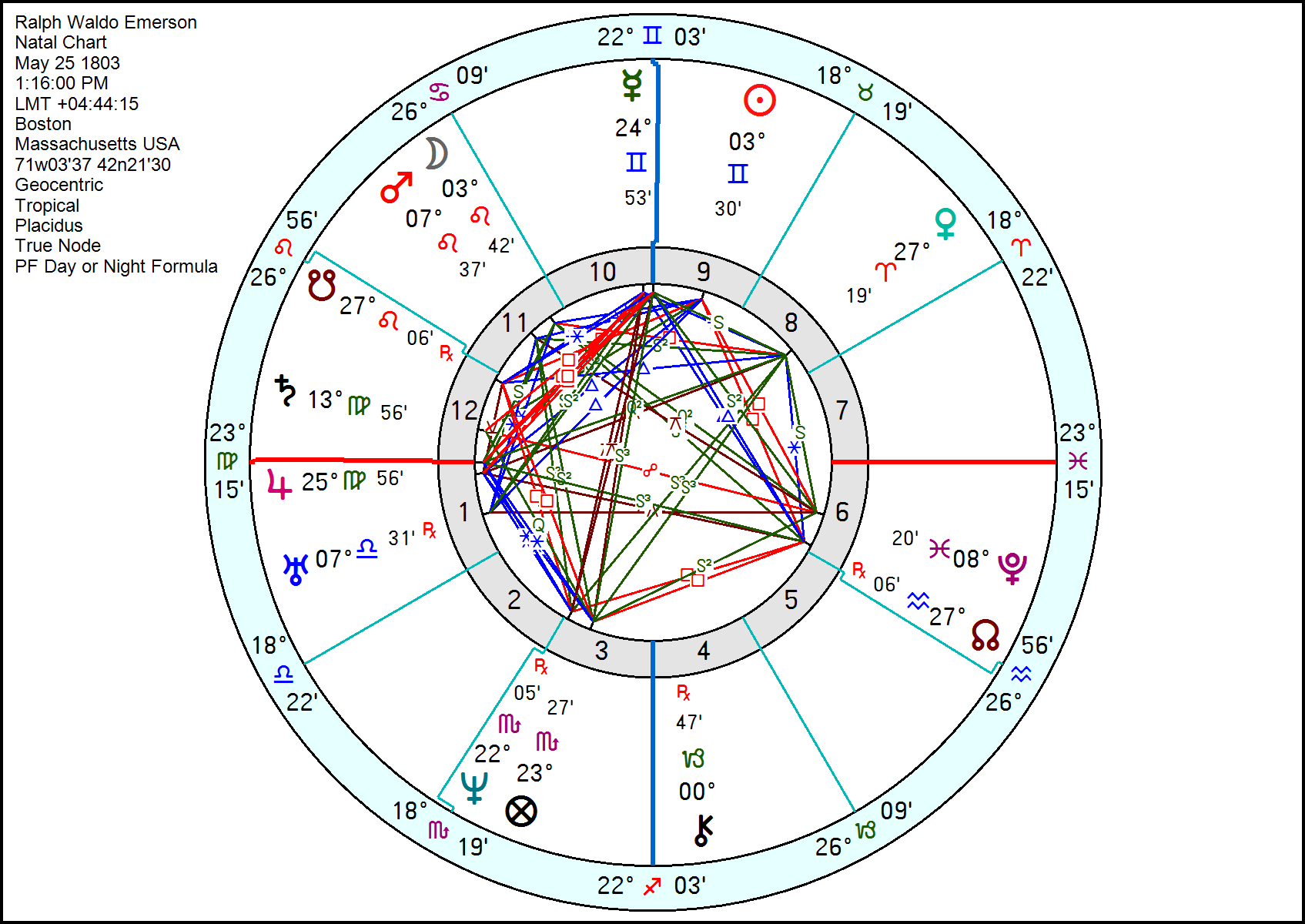
FIGURE 1983 0725-1. Ralph Waldo Emerson Natal Chart (1:16 PM).
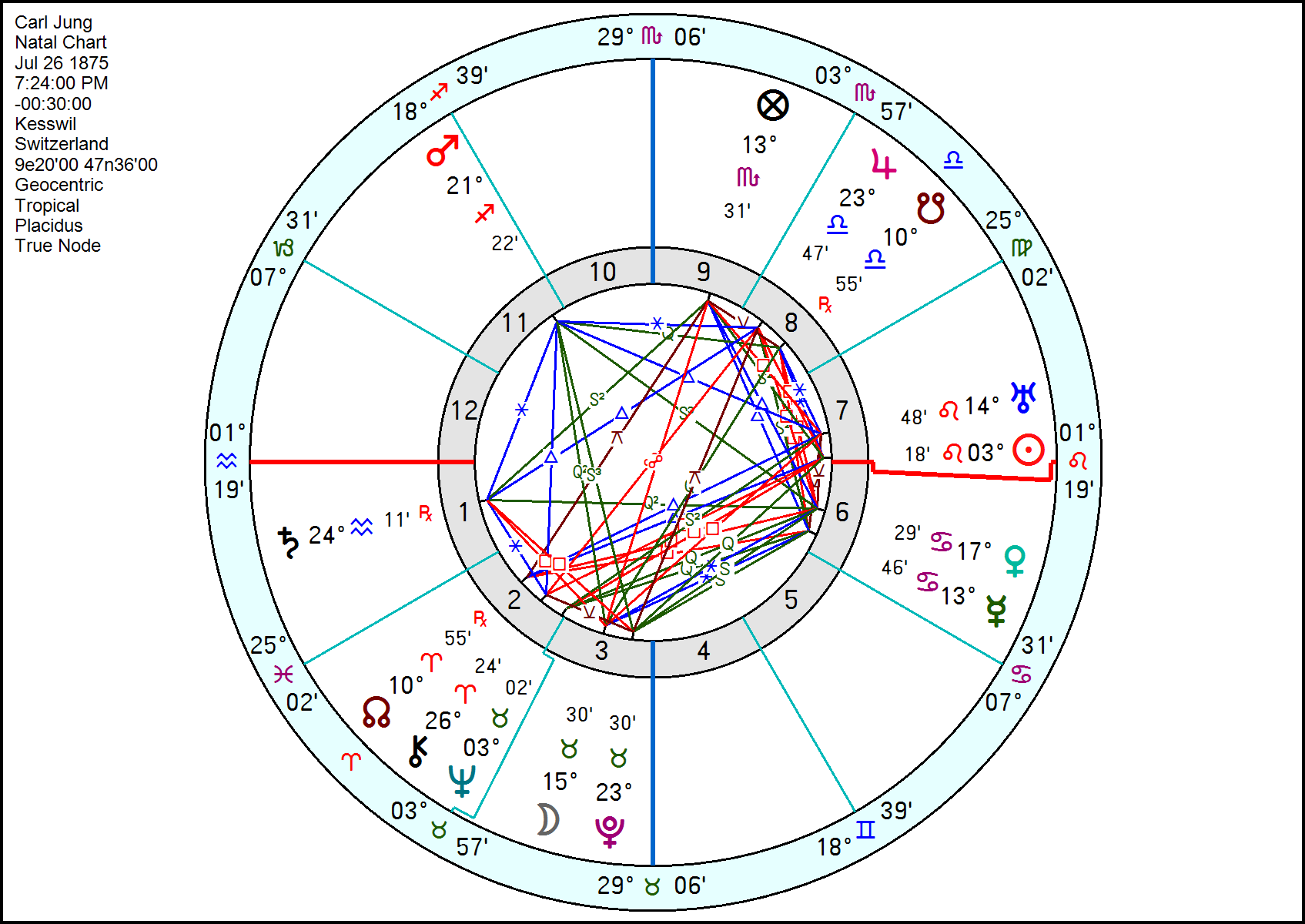
FIGURE 1983 0725-2. Carl Jung Natal Chart (astro.com).
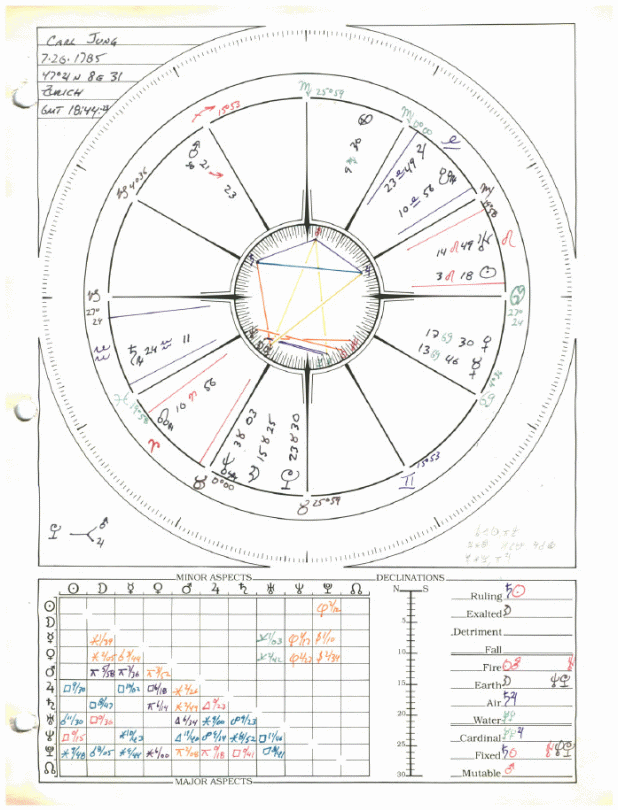
FIGURE 1983 0725-3. Carl Jung Natal Chart (WG version).
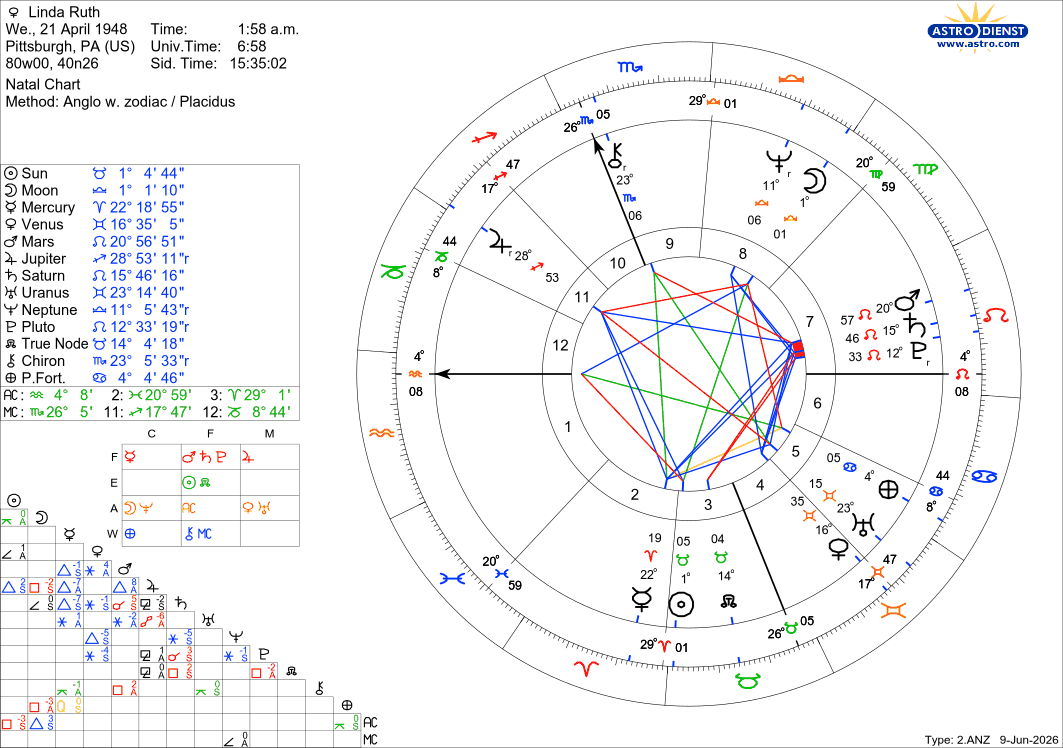
FIGURE 1983 0725-4. Linda Ruth Natal Chart.
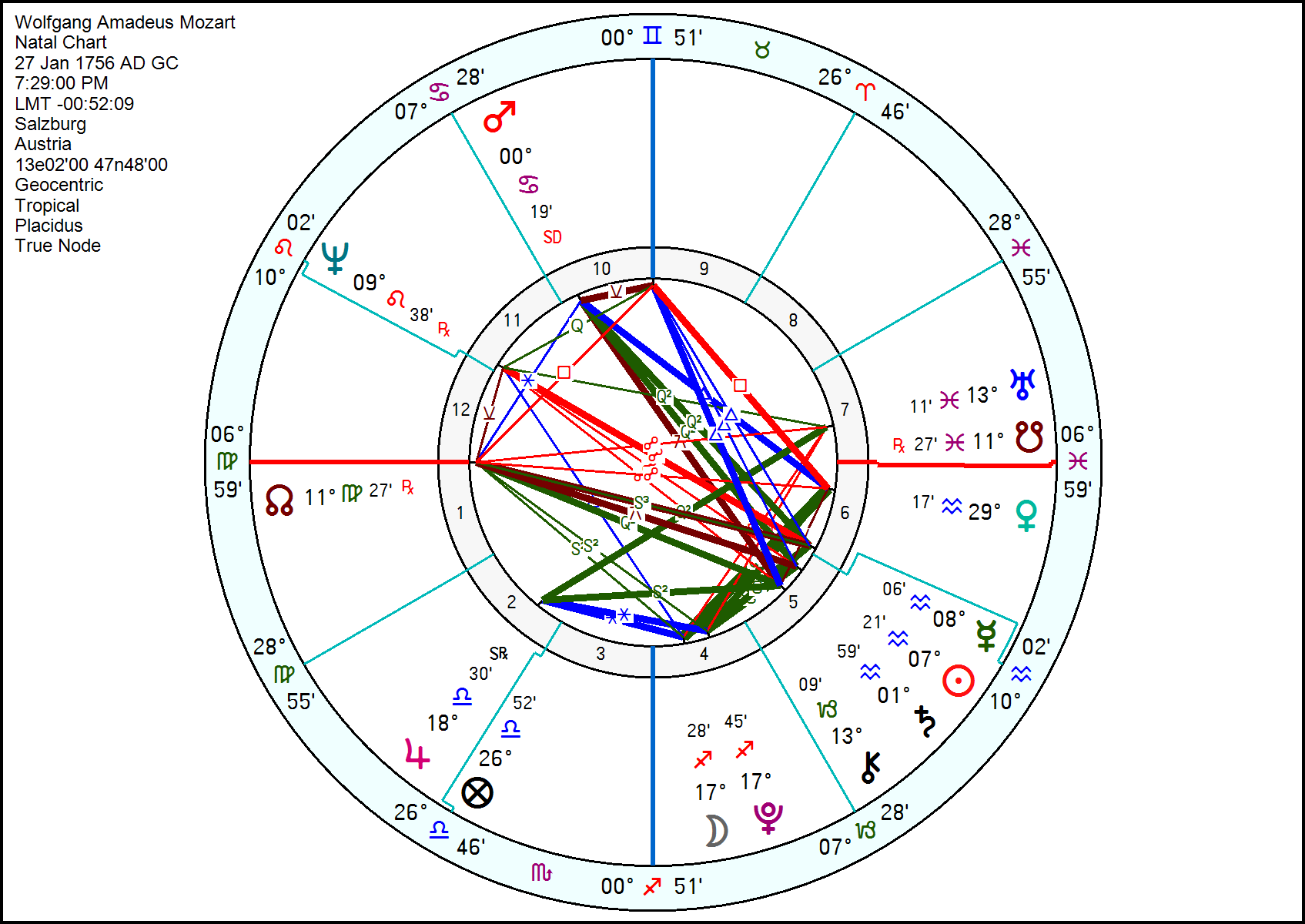
FIGURE 1983 0725-5. Wolfgang Amadeus Mozart Natal Chart.
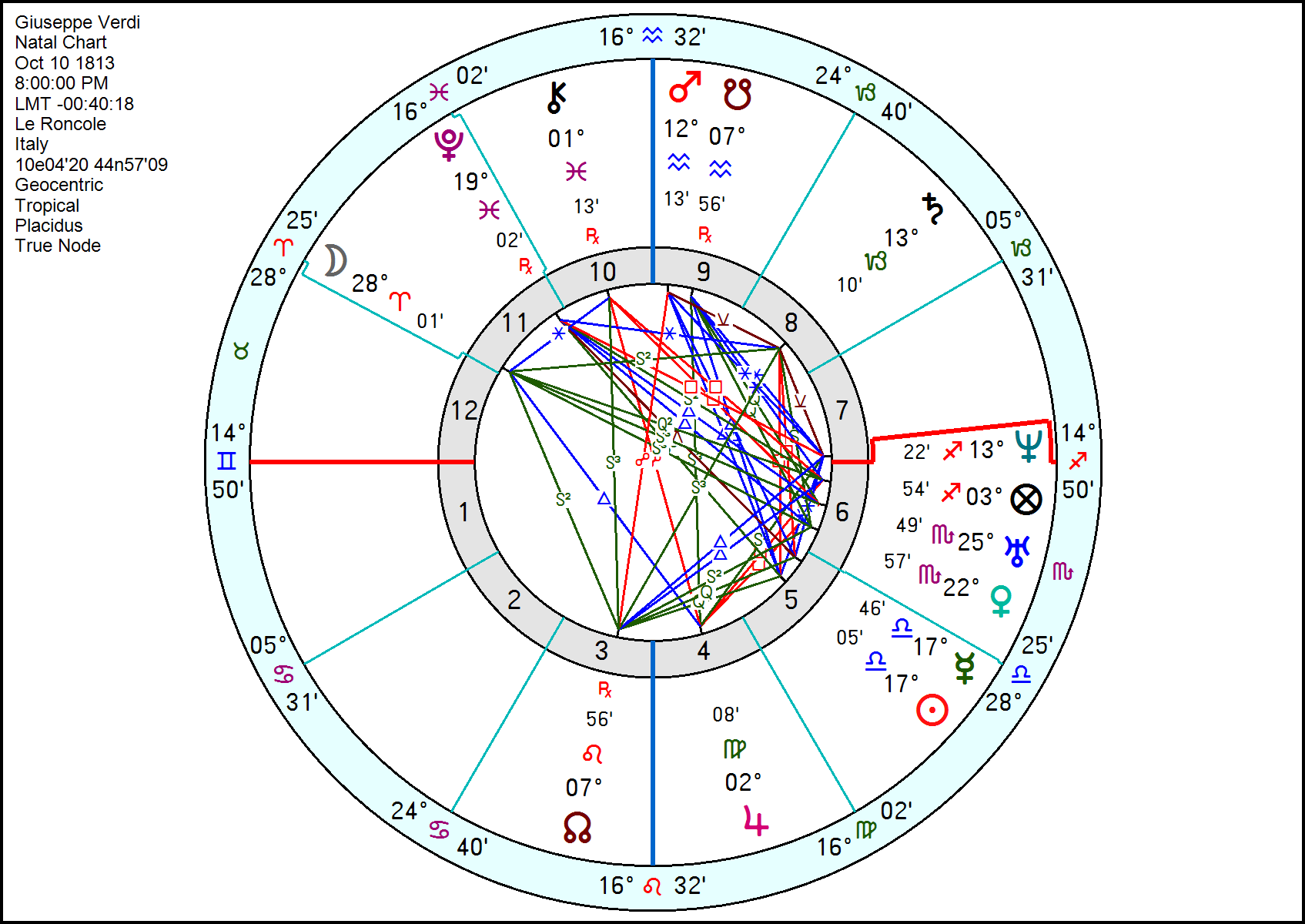
FIGURE 1983 0725-6. Giuseppe Verdi Natal Chart.
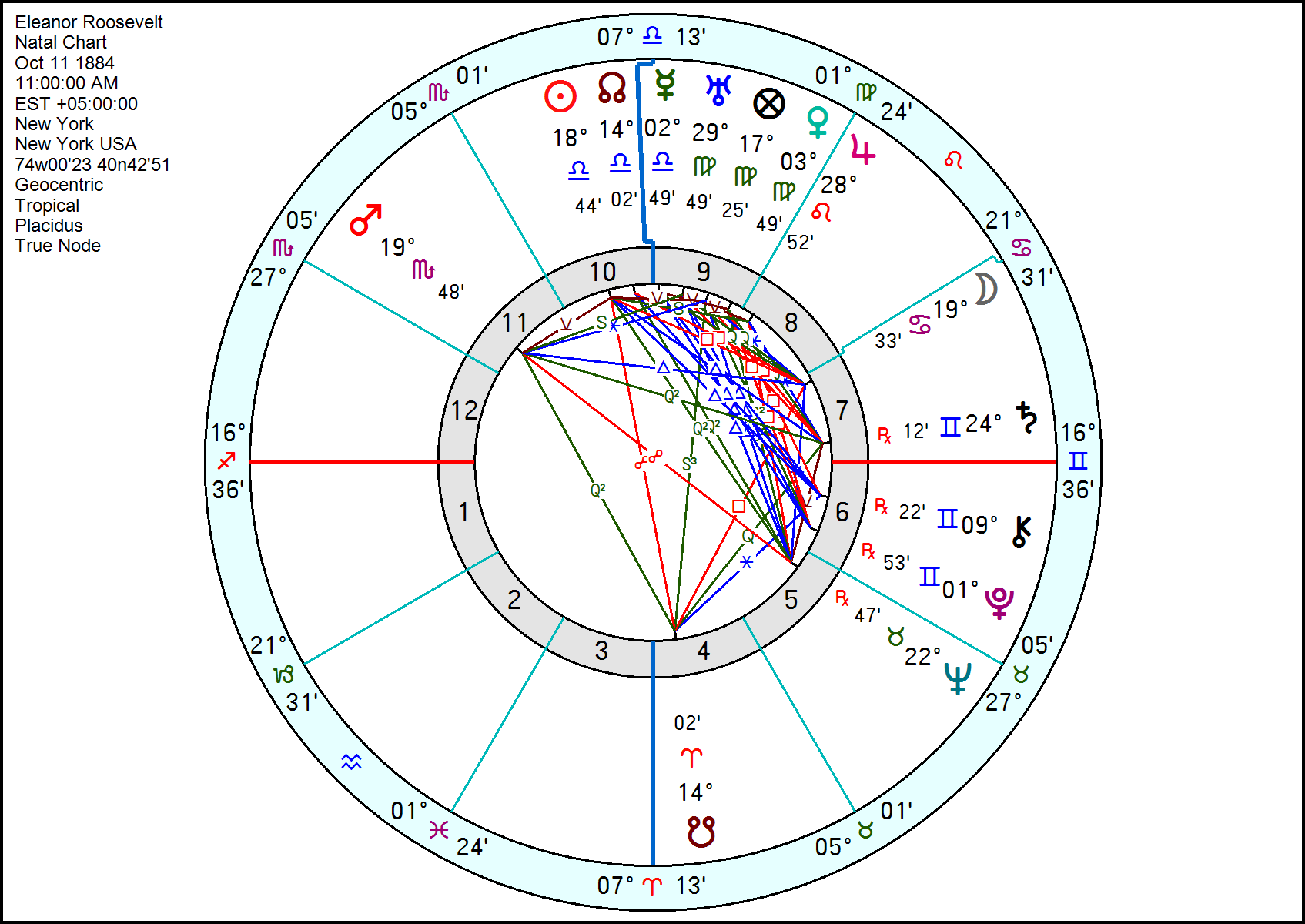
FIGURE 1983 0725-7. Eleanor Roosevelt Natal Chart.
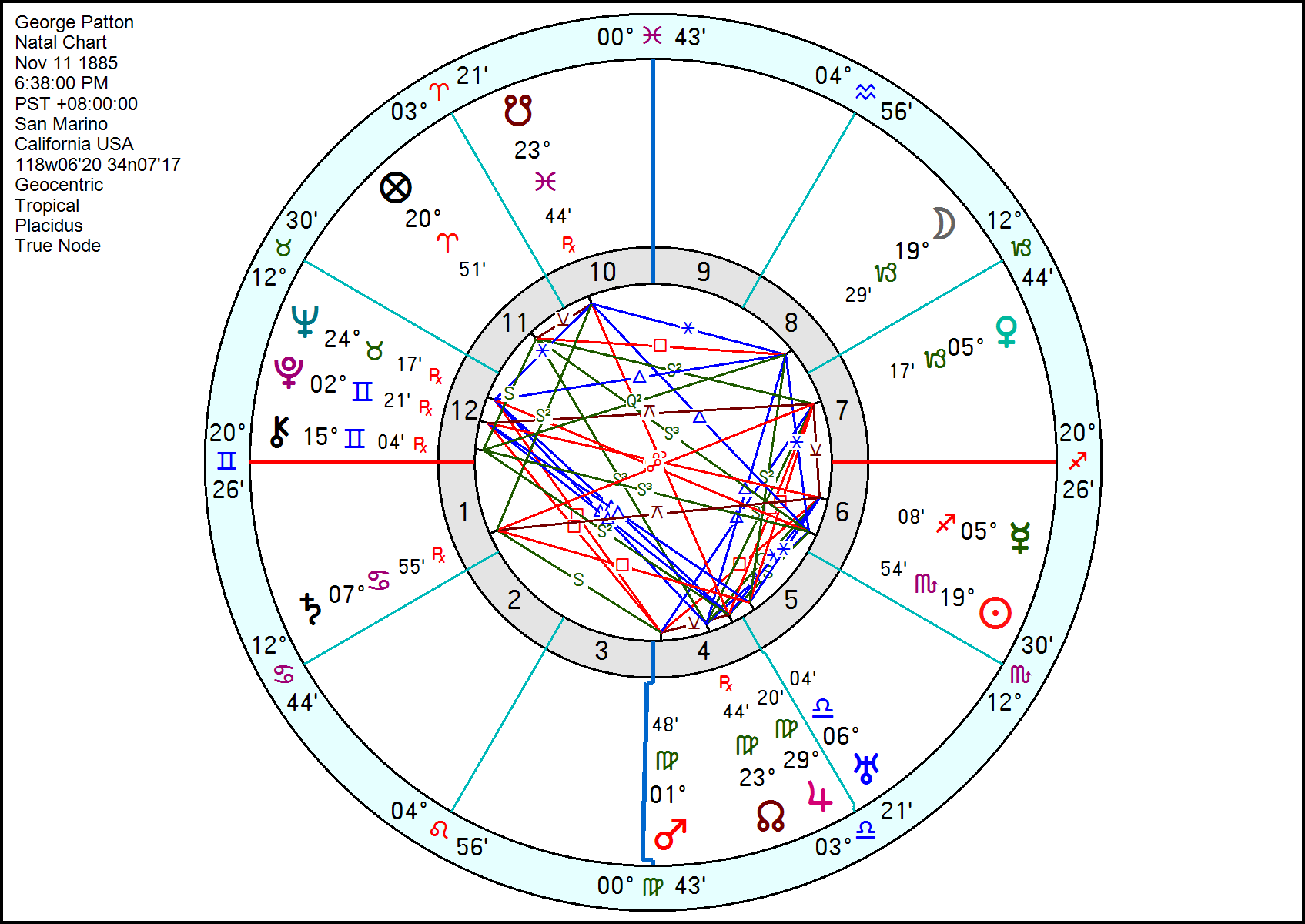
FIGURE 1983 0725-8. George Patton Natal Chart.
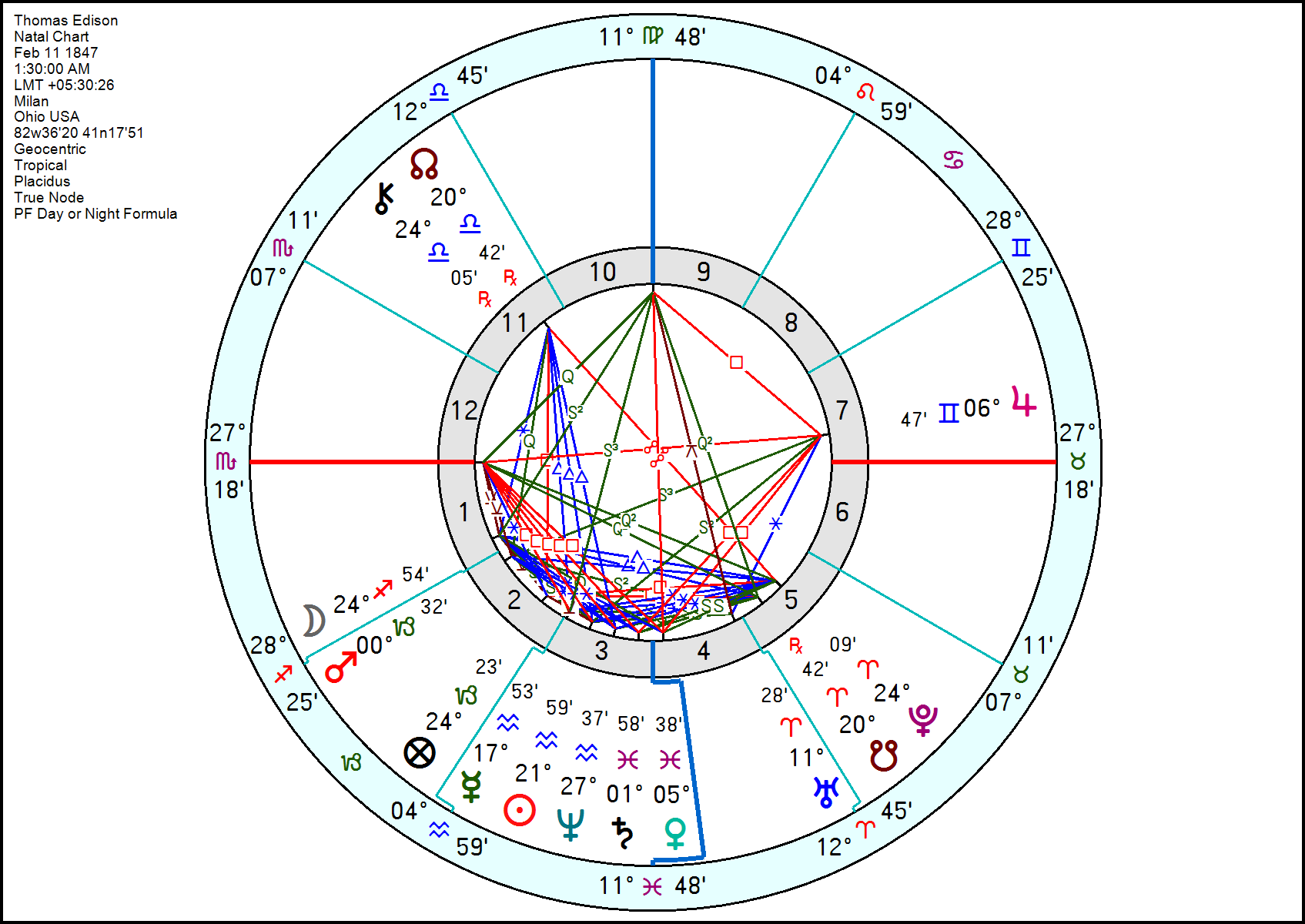
FIGURE 1983 0725-9. Thomas Edison Natal Chart (1:30 AM).
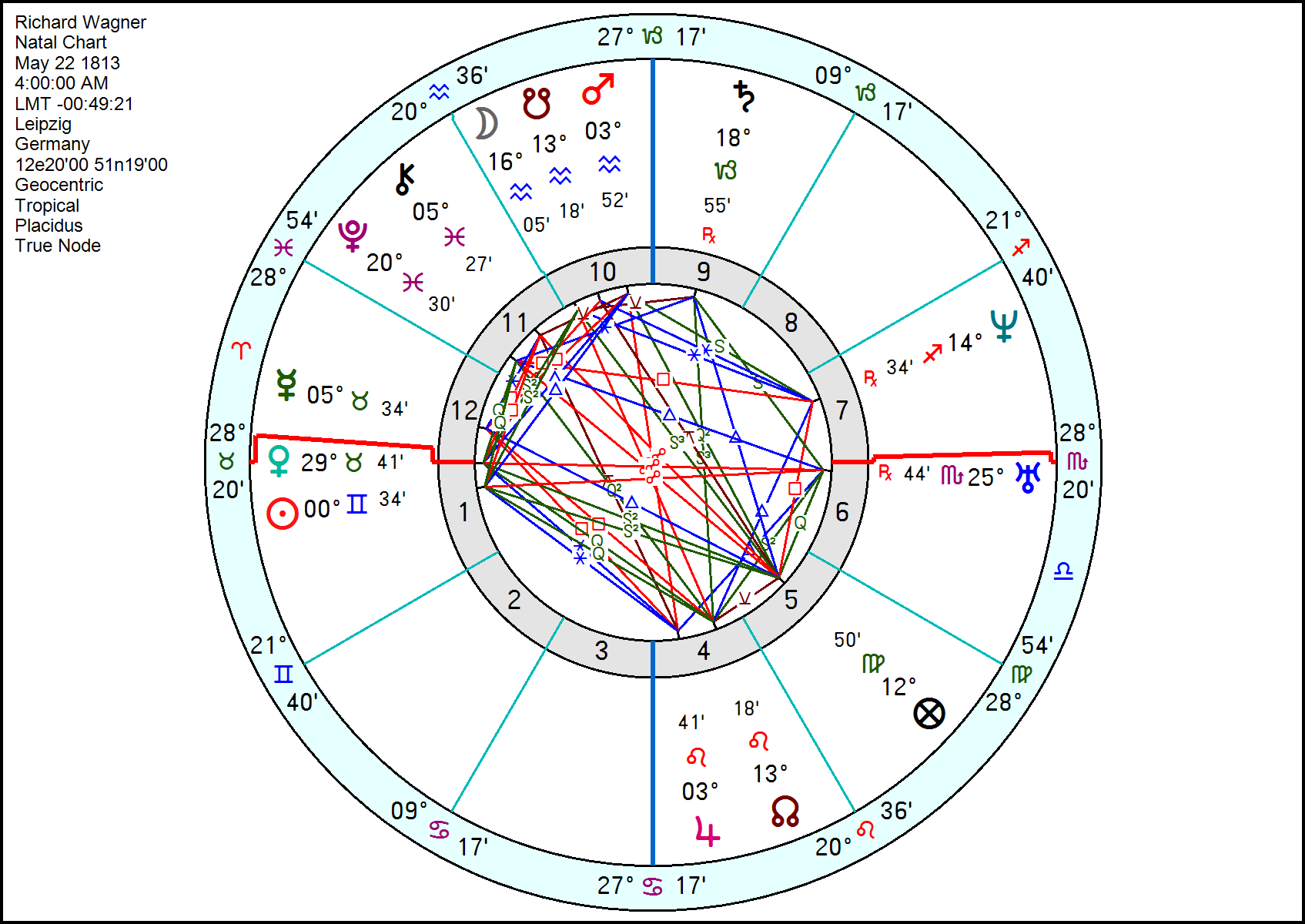
FIGURE 1983 0725-10. Richard Wagner Natal Chart (4:00 AM).
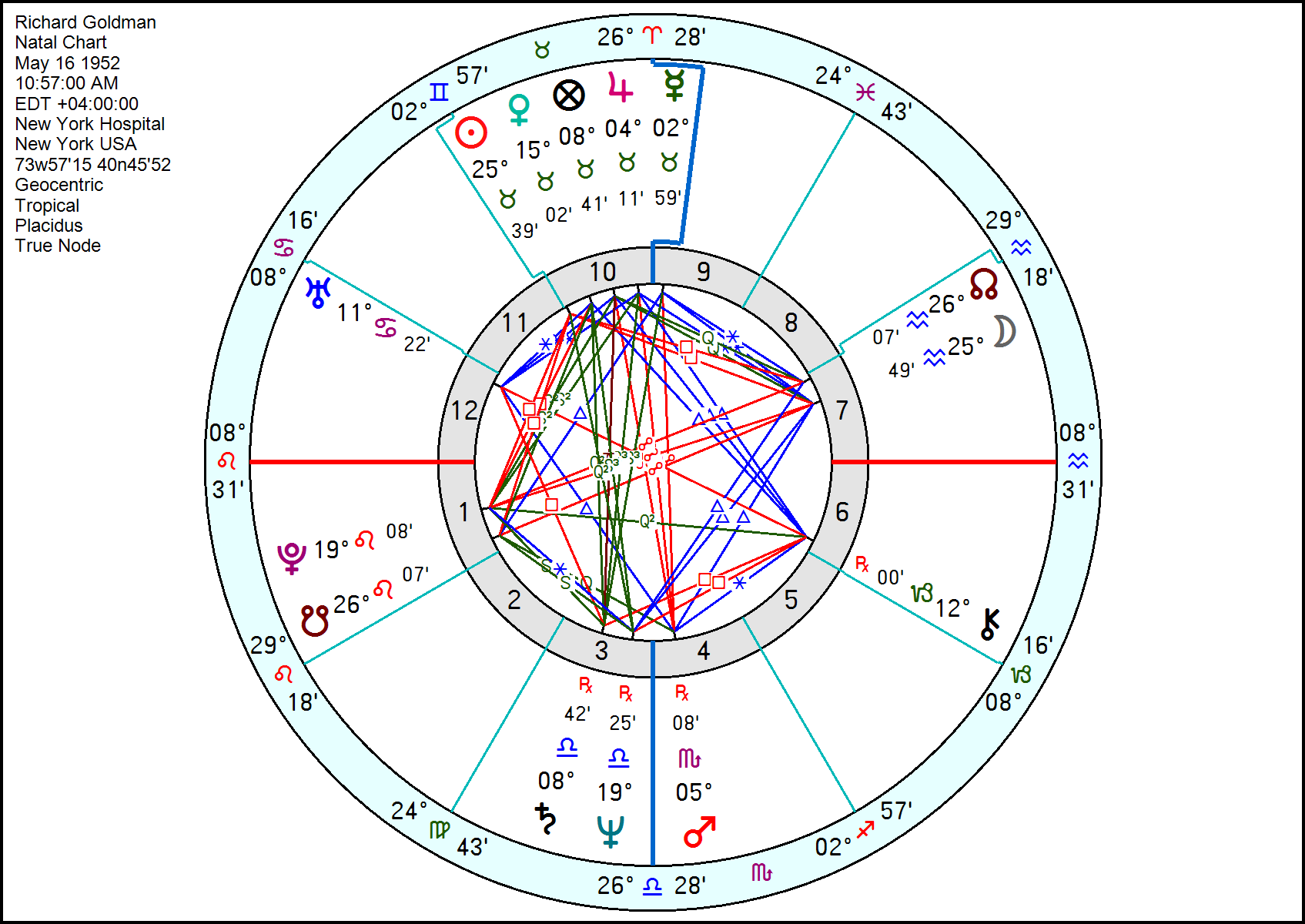
FIGURE 1983 0725-11. Richard Goldman Natal Chart.
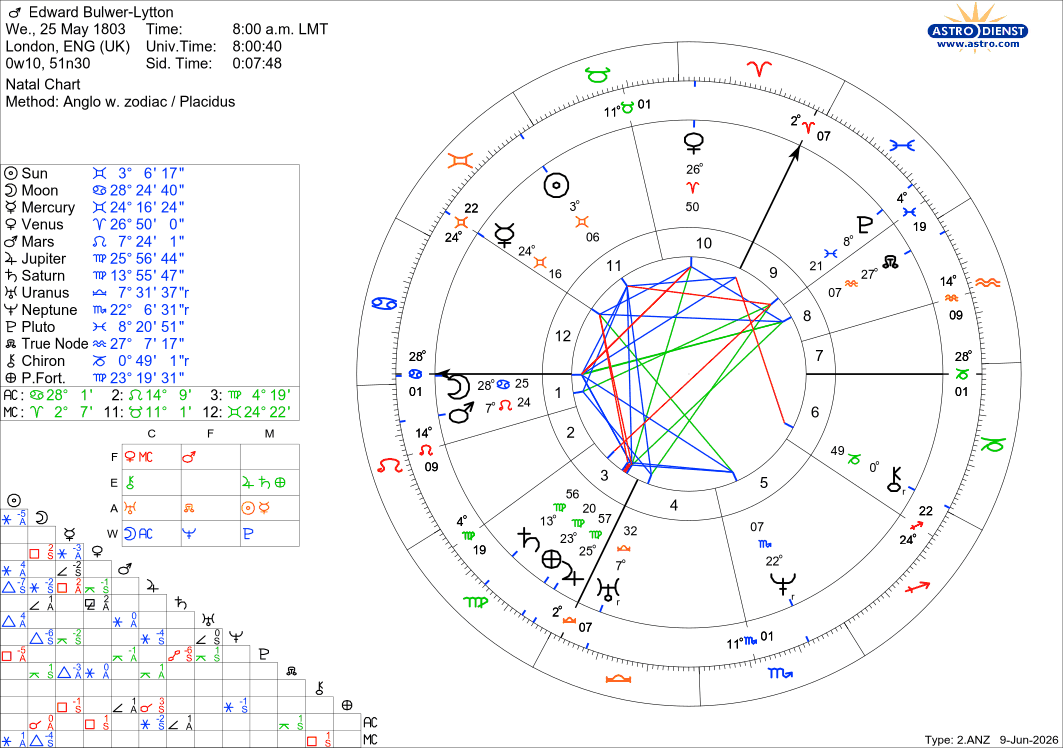
FIGURE 1983 0725-12. Edward Bulwer-Lytton Natal Chart.
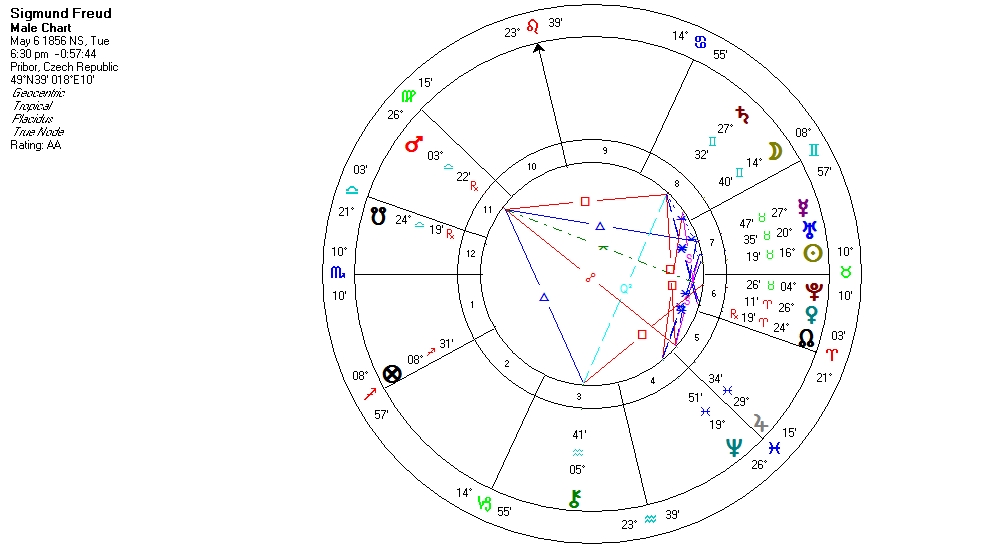
FIGURE 1983 0725-13. Sigmund Freud Natal Chart.
TRANSCRIBED Verbatim by IT, LCB 2026. Archival verbatim transcript – V11a.
AUDIO FILES: 1983 0725a, 1983 0725b. [Note 1: "Tape" and "Side" refer to original audio cassette tapes that were later digitized into .MP3 Audio Files. Note 2: Audio File 1983 0725b was originally recorded with sides in reverse order (2, 1). Sequence corrected by REP Studio, 2026.]
1983 07/25 at Wisdom's Goldenrod
Astrology; Horoscope-Emerson-Jung
[Audio File 1983 0725a Begins]
[few seconds of background talking]
LR: Good morning, Mr. Smith.
[10 second pause with shuffling about, noises]
TS: We're going to try to do Mr. Jung's quintiles.
RG: Oh, you've read [couple words inaudible]
TS: We can do that one if you want. I brought it up here.
LR (faint): How about you just do the quintile(s)?
RG: Yeah, why don't we do the quintiles in the context of our fears?
LR (faint): Yeah right, let's--
TS: Be my guest.
LR (faint): It isn't that bad.
RG: I know. (RG laughs) Yeah. (Or) we both (can/can't) take it.
S (very faint): Oh yeah?
S: Did you take it?
RG: That is [couple words inaudible]
S (faint): Yeah?
S: Ooh.
RG: I'm not just [one/two words inaudible]
AD (simultaneously): Come on, let's go.
RG: Quintiles.
AD: Let's hear your fairytale.
S: Ok.
LR: That must mean you. There's only one storyteller up here.
[short pause with faint background student talking]
S: See--
RG: Remember how we were talking about septiles as an image in the ego or-- of Intellect, or a vestige of intellectuality that was left from past experience. And how the natal aspects represent the sensible--
AD: Vestige of Intellect?
RG: That's what you said.
AD: You try to make fixed ideas sound good.
RG: That was what we--
AD (simultaneously): Opinionated persons [RG: Ok.] now all of a sudden have vestiges of Intellect, (huh)? (laughter)
RG: A euphemism of personality.
LR: It's pure intellection, Anthony. Nothing short of.
RG: That was your image, vestige of intellection.
TS (simultaneously): That one I know, but that was last week.
LR: That was till he found out how many septiles I had.
RG: Oh, right. Now we have to reverse it. You know, Linda has nine septiles, no quintiles [FIGURE 1983 0725-4].
AD: I know that.
RG: So now we have to [LR simultaneously: So now it's fixed--] reinterpret the septiles.
AD: You ever try to change her mind?
RG: Fixed opinions. That's all. Ok. So the septiles represent the fixed opinions in the ego or the vision of reality that the ego has. That the fixed opinions in the ego, or the vision of reality that the ego has, especially for Taureans who have a lot of septiles. Now--
S: (Start) over.
RG: And the regular aspects we talked about basically as part of the psychosomatic organism, how total-- you know, how the-- how the ego manifests itself sensibly. And it seems we could think about the quintile one way about how those two interact, or how the ego might reflect this vestige of myopic vision into the sensible manifestation.
Well, we talked-- and usually, I mean, it's talked about as aspects of sensible manifestation. Well, we talked-- and usually, I mean, it's talked about as aspects of-- as the way the individual actually manifests his own individual rationality in the ego. And that happens through the creative process of his life and we called it a-- you know, definite life-- kind of lifestyle.
S: Oh yeah.
TS: They talk about pranas in some-- you know, in Samkhya or whatever systems, they talk about the-- the different life energies and we-- we were thinking that the quintiles might be some pattern of-- of some vi-- pattern in the vitality or life of the individual which organizes the development of the tropes, the-- where your regular aspects more or less are a persistent regurgitation of the tropes within themselves and there's nothing really new that occurs within the tropes, that the quintiles actually show that there's some way that the individual's life itself will develop or evolve or even regress the-- those patterns of the regular aspects. Yeah.
RG: The other formulation was maybe, you know, we-- just to contrast that we spoke about the regular aspects as the organization of the tropes. And, it's almost as if in the quintile there's a vestige of rationality that's experienced as in the trope. But the idea that's very important is like a first level of formulation or form that's embedded in the trope and one has a sense of that. And one might-- you might say, one-- one develops a form of life out of it, or a form of creative expression rather than just living out the tro-- the trope nature of the-- of the experience.
LR: We also said that quintiles could represent different modes of knowledge, different ways in which knowledge is perceived by a kind of cultural [student assents] unconscious, cultural--
TS: Well access to culture.
LR: Access [RG assents] to cultural historicity or memories, [RG assents] so that people with a lot of quintiles usually have a-- an access to a lot of different modes of content, you know, like picking up many languages or acquiring techniques for things, just very-- a facility for those kinds of investigations.
S (very faint): Yeah, that's true.
TS: Yeah, 'cause we were thinking that the quintile is-- as the im-- as having to do with humanity or the individuality that we give those forms in the collective unconscious which are uniquely human which would be cultural or social. That those would be more accessible to the quintile series. So when you see like someone like Mozart, he's got nine quintiles [FIGURE 1983 0725-5], you would think that there's a certain ability to draw on techniques and skills that have been developed, you know, before he was born, you know.
LR: The ability to manipulate the forms that organize the tropes?
TS: Yeah.
LR: Or that there's certain organizational patterns of the tropes and that quintiles tap into that. So [student assents] someone like Mozart could manipulate all those patterns very easily. And also we spoke about it as the process of translating thoughts into form or giving form to-- You know, if we thought of the septiles as vestiges of fixed thought, well, the quintiles would be much more-- the quintiles seem to have a lot more to do with motion than the septile thing, really seem to be moving processes that were described, and it was like the processes of finding forms for those thoughts almost. [RG assents]
And, you know, I thought just in the analogy, and this might be nothing but analogy, but when we were talking about the mathematicals as the intermediary between Idea, you know, the-- It's like the manipulation of those mathematicals, those things which go into organizing the tropes.
S (faint): Uh-hm.
S: Yeah.
LR: And there'd be, you know, an infinite variety of manipulation of those things that-- that would reveal knowledge or reveal the soul.
RG: Ok. Yeah? That's-- that's background?
TS: So far so good?
S (faint): [few words inaudible]
TS (faint): There's plenty going on I think.
LR: Addition, subtractions.
S: [few words inaudible]
MC: Can you distinguish between septile and quintile something about personal and impersonal? I just remembered something to the effect of the septile being more of a habit built into that soul, not so much on the social-cultural level, if I understood, maybe I didn't.
LR: Say more.
TS: You know, it seems like there-- there are a hierar-- there is a hierarchy, that the septile seems to reflect (the--) (It/If)-- we're taking the natal septiles and quintiles as still in the psychosomatic organism that-- yours truly, you know, we're not thinking of them as-- but we are seeing them as somewhat hierarchical in the sense that the septile does seem to be a-- an image in the ego structure of the ideas that are fixed in the mind of that individual, or certain ideas or (first/of course) points of view which are given and have a certain essential quality to them, you know, in the sense that they're-- Well, as an essence they aren't evolving, we think of them as just as having-- being unchanging in some way. Where it seemed like the quintiles would be between-- an intermediate phase between those and the regular aspects. And that would be an image in the psyche of some rational patterning or forms of evolution of reason-principles which are uniquely human. Whereas the tropes themselves seem to be-- you could draw on the instincts which are common not just to humans but, you know, warm-blooded animals I would (think), that there's a-- a broader base in the-- in the tropes
VM: Snake consciousness. I wish you were right here last night.
RG: That's cold-blooded.
S: Cold what?
S (very faint): [one/two words inaudible]
RG: (Go ahead.)
TS: You know, you-- there's--
S: Yeah. No but we pay you.
S (faint): [few words inaudible]
LR: Let's not pursue.
RG: Yeah. Ok, so Emerson's chart. You want to go on? I think we should do it.
TS: Ok. Emerson's chart's easy.
RG: Emerson's chart luckily has one quintile [FIGURE 1983 0725-1]. And we did all his septiles last week. [Note: See WG Classes 1983 0711, 0718.] So we should be able to get an access to-- to this one quintile if we look at it, so--
S (faint): Yeah.
TS: Yeah, it seemed to be interesting. (Now if) we went through all these different people and, for example--
LR: Yeah, why don't we do that? [RG simultaneously: Yeah.] That's good.
TS: Mentioned a couple of them.
LR: Yeah, go through some of those.
TS: There's Verdi. Verdi, for example, has got nine septiles and no quintiles [FIGURE 1983 0725-6].
RG: And that's really--
TS: The myth that-- or the idea that the quintile means creativity seems to be somewhat distorted in that, you know--
RG: That he's a--
TS: You know, that there's-- that there's an individual who has no quintiles at all.
LDS: No septile. Or no quintiles.
TS: No quintiles. The person who has the most quintiles of anybody we (use) is Eleanor Roosevelt. She had seven or eight of them [FIGURE 1983 0725-7]. She also had a bunch of septiles, four septiles. Most people we did have a few of each. Emerson-- Patton I think you said had no quintiles [FIGURE 1983 0725-8]. Or the other one, Edison. Edison also had no quintiles [FIGURE 1983 0725-9].
Well, there are those of us who will take the knowledge of absence (as good enough). So anyway, it seems like when we're looking at quintiles, the idea of them as being artistic or creative isn't quite adequate because obviously, you know, you take Verdi as a [RG assents] artist or-- and Edison as an inventor, something's going on there, [RG assents] you know. So, it seems like it doesn't mean necessarily creativity but a pattern of developing something about the individual.
And again like if you look at someone like Wagner who has six quintiles and four septiles [FIGURE 1983 0725-10], you would certainly say that part of the meaning of studying Wagner would be his own personality, the development or evolution it went through, such as it was, that-- that there is certainly a significance or a sense of subjectivity and a pattern of subjectivity which is more marked in Wagner. You know, his personality is more obvious in a way. I would think that that would be a reflection or meaning of the quintile.
S: Say that again?
S: I see what you're (doing).
TS (simultaneously): You see the-- there's a certain-- you see that they actually develop a groove as a person.
S: Yeah.
RG: Right, no, people, I know.
TS: Whereas Verdi or Emerson, you know, like pretty much he's 17 and from then on he was pretty much the same in terms of his psychology. (bit of laughter)
RG: Alright, so let's do his quintile.
TS: So the one that Mr. Emerson has is a Moon Pluto quin-- bi-quintile. Now we have no-- having stuck ourselves out on the tiny parts of the tree by just figuring out what quintiles mean, we're not going to go into bi-quintiles and, you know, kryptiles and whatever else might drop out of the sky. (TS chuckling)
PF: Tim? But you're reasonably certain that they do have validity, the bi-, the-- (laughter) That I--
[few seconds of laughter and inaudible student talking]
PF: I mean, even though you don't know the meaning--
RG (simultaneously): Only you could-- only you can judge for yourself.
VM: These guys will spin a story for you. (bit of laughter)
S: [couple words inaudible] Peggy.
PF: I rely on testimony.
LR (simultaneously): Well it seemed to show up in the septile!
RG (simultaneously): That's his point. (RG laughs)
LR: Didn't it?
RG: Yeah, it does, ok, but this is [couple words inaudible]
LR (simultaneously): I mean it did seem to show up in Emerson's chart in the [PF: Yeah.] bi-septiles in the chart. At least we could find something there.
PF: And in Dickie's chart too [FIGURE 1983 0725-11] that was a-- the connection. [Note: See WG Class 1983 0630a.]
RG (simultaneously): Those are all-- yeah.
LR: Yeah.
TS: Alright.
RG: Yeah, no. Uh-hm.
S (faint): (I don't know.)
S: Ok.
TS: Logic demands that-- I mean that-- not that we use logic with great rigor, but it certainly would stand to some kind of thinking or reason that if you use one of a set of-- if you take one-- one part of the geometric form that you should use all parts of it. I mean we do with all the other aspects. We'd say square, a square forms this-- the conjunction, square, and the opposition. [student assents, faint] And-- and the sextile includes the trine within itself and so forth. So, you know, in the other cases, especially when you think of them in terms of transits, you would think of them as firing off several points on the circle, and I often think of as-- as when you're thinking of the transiting aspects as what part of the-- what cycle they are sort of involved in. So when a planet's making a square it's, you know, a fourfold form. And it seems like when you're doing a quintile, there are those five points. And for example, I don't know if we want to try it, but in Jung's chart [FIGURES 1983 0725-2, 3], if we get to it, I worked on this morning you see. He has a Moon Mars bi-quintile, and I tried reading all the five degrees that were-- 'cause they happen to be all the right Sabian, you know-- numerically consistent. You know, they don't slop over one degree, one (to) the other. And it was real interesting, I mean I could see a certain continuity between those five degrees.
RG: Right, so the Moon and Pluto.
LR: So this is Emerson who has one.
S: Oh ok.
[short pause]
LR: Some of you may remember Emerson's Moon degree. But if you don't Dickie you will read it for you.
TS: That doesn't help (before) we get the--
RG: Ok, the Moon degree.
Marc Edmund Jones [The Astrology of Concepts, Leo 4, RG reading]: "An elderly man in evening clothes, [of] poised and military bearing, stands alone before a lovely mounted moose head."
S (faint): Uh-hm.
RG: And the Pluto degree--
TS: [three words inaudible]
S (simultaneously, very faint): Ok.
Marc Edmund Jones [The Astrology of Concepts, Pisces 9, RG reading]: "A tiny jockey [RG rereads: A tiny jockey] from his magnificent horse looks about eagerly and as the race starts he becomes a god of speed."
[short pause]
LR: Should we read any of this?
S (faint): Uh-hm.
LR: Yeah?
RG (faint): Read the part that (I've circled).
LR: Ok. The jockey's the Pluto. Jones says--
Marc Edmund Jones [The Sabian Symbols in Astrology, Pisces 9, LR reading]: "This is a symbol of the eagerness for life an individual must show in any true revelation of himself, and [of] the concern he must have for the struggles and competitions of everyday experience. It is only through thoroughly consistent performance of his skills and talents that man establishes himself among his fellows, and as this develops in excellence he is under increasing obligation to be successful in exhibiting them. Implicit in the symbolism are very harsh penalties for any failure to drive the capabilities of self to the limit."
S (very faint): (Vic), I forgot about that.
LR: Oh you have that degree?
VM: No, no. I don't see the harsh reality that these people are-- But other than that, I don't want to speculate.
Marc Edmund Jones [The Sabian Symbols in Astrology, Pisces 9, LR reading]: "The keyword is PRACTICE. When positive, the degree is a spectacular gift for rising to any occasion, [and] when negative, witless gambling of every resource and potentiality."
LR: So, according to Jones, the keynote seems to be that this symbol has implicit in it or-- a struggle to completely manifest whatever potential lies within the person, you know, a real strong driving to fulfill some potentiality, and this is Emerson's Pluto. So you would say there-- there is tremendous compulsion or-- of divine will or there was a-- you know, he had a tremendous thrust to work. And, you know, of course the degree itself doesn't describe what form that's going to take but now we try to see what form that might take in the quintile to the Moon.
JA: What is the divine will part of it?
TS: Pluto.
S: Cosmic willing.
LR: Just that it's Pluto, that, you know, [JA simultaneously: Ok.] there's a real compulsion to-- extra-personal compulsion.
RG: Which is also in the degree but--
TS: Yeah, it's a handy degree to have Pluto.
RG (simultaneously): It's a handy degree for Pluto.
JA: Yeah but, it didn't say divine will.
RG: Well actually he does in this so-- For the degree he does in this interpretation.
S: Read it.
RG: He says--
Marc Edmund Jones [The Astrology of Concepts, Pisces 9, RG reading]: "This is a symbol of the infinite capacity of man to throw himself into whatever he may be doing or the semidivine participation of the soul in all life."
JA: Semi-divine.
RG: Right.
LR: Alright Jeanne.
RG: You could quibble if you like.
[short pause]
TS: So let's do the Moon.
RG: And the Moon which is an elderly man-- that moose head degree.
S: Yeah.
S (faint): But that you don't know about (that degree).
LR: Well we should just call on people to interpret this degree.
TS: Right, Jeff.
[short pause with background student talking]
LR: Jeff, [JC simultaneously: I have-- I have no idea.] you have an interpretation of this degree?
JC: No I don't.
S: Of course you can.
RG: We interpret everybody's.
S (faint): I know you do.
TS: Ok well, let's give it another shot, alright.
RG (simultaneously): We could forget-- forget that degree.
Marc Edmund Jones [The Sabian Symbols in Astrology, Leo 4, TS reading]: "[This is] a symbol of self-assertion at a point of effective impact on the world…"
TS: I'm just reading [couple words inaudible] so much.
Marc Edmund Jones [The Sabian Symbols in Astrology, Leo 4, TS reading]: "Formality becomes a magical ordering of the [automatisms] of lesser things…"
S: Right.
TS: Ok, that's-- And keyword is MORALE, an exceptional-- Well that's it, I mean-- That there's a certain formalism, and the consciousness of the power that form-- formalism or putting things into order would provide an individual with. We said that-- last week we said of this degree, although I think, you know, not adequate, that the Moon degree showed that in Emerson's immediate preoccupation with himself was constantly-- keep the animal nature-- to conquer the animal nature and to keep it-- keep it down, you know, the (Moon--) That his sense of disciplining of the vitality in the psyche was always there, always present in himself. I think that when we-- we would say that there is a capacity to use form to capture living meaning and to assimilate that living meaning to the conscious self. That would also be in the degree. I've got something [one/two words inaudible]
RG: Yeah.
TS: Well--
S: Yeah.
RG: Yeah. And it-- how do you put that with the Moon, Tim? 'Cause the Moon seemed a little contradictory to this degree.
TS: No, I think of the Moon as the immediate subjectivity, the felt "me".
RG (simultaneously): Well, right, so he felt himself as being in control and in command of his instincts.
TS: Yeah.
RG: Right.
TS: I mean this guy, (then) he's-- when he was-- actually I think he was about twenty when he sat down and said, well, you know, I better look at myself real closely here and he goes through this self-analysis, [student assents] you know. And I mean from the time he was sixteen on, he kept-- he kept his diaries, he kept a diary and kept them [couple words inaudible] he referred back to them. So, the sense of being very objective about his own states, you know, and-- 'cause his Aunt-- Aunt Mary said, there's no jokes in his diary, you know, that there's-- You know, if you look at his diary there's not any--
S (faint): No levity?
TS: No levity, no carping about other people or whatever, you know, it's just a straight kind of--
LR: It's not your "Dear diary" (thing).
TS: Yeah, right. "Today," you know--
VM: Damn guy.
TS: Yeah, right. Good old Hawthorne did it again, you know, whatever.
RG: Yeah, he had a few. That was his only one, [TS simultaneously: I know.] Nathaniel Hawthorne. (RG chuckles) Didn't like Nathaniel.
TS: I don't blame him, uh--
RG: Alright, so you put those degrees in quintile. So then what do you get?
[9 second pause]
VM: You know, well Jones doesn't say anything about the Pluto degree in terms of the fact that the guy's riding a horse. This is another subjugation of animal or using the animal.
S: Harnessing.
VM: You know, harnessing [RG assents] from it some ways because, you know, the same thing could be said about a guy running a footrace. (But these) guy's riding a horse. [RG assents] In some ways it seems to fit very nicely almost in that degree, the moose head degree.
RG: Right. And it's almost--
VM (simultaneously): (I think) there's a tremendous impulse to take control over the vital nature [LR and RG assent] coming from the conjunction of those two, I would say conjunction, look--
RG (simultaneously): The unit fusion of--
VM: Effective functioning of these two degrees.
RG: Right. And--
VM: And it's done with a certain kind of rationality. The guy isn't doing it just with blind compulsion.
TS: Yeah. It's not an asceticism some way there.
VM: Right, it's not an asceticism [TS simultaneously: A rational--] but reasoned, if you like, asceticism.
TS (simultaneously): Yeah.
RG: You know, the one thing that struck me though about Emerson, if you want to talk about the quintile as like a creative unfoldment of your individuality, you know, something like that, that-- I mean, what was creative-- most creative about him was that he actually lived his ideas and that that was his creativity, that he really embodied what he saw. [student assents, faint] And I think this is the higher will from Pluto had to embody all the principles that-- that were in the higher will in his-- in his personality, in the Moon.
VM: He never felt this stuff was theoretical.
RG: No theory. And Pluto and the Moon are really like the two planets that are [S: Theory.] talking about embodiment.
[students assent, very faint]
AS: Or that-- or maybe more generally that maybe the Moon says that he could embody in concrete-- in his bodily experience or he-- he could put into concrete form in his bodily experience what the higher will was delivering, or what the higher will was trying to express. And I think it was pointed out could-- in his life, certainly in his life, but also the everyday forms of tremendous amount of writing that he did, which was just continually expressing, you know, in everyday writing in other words, [S: Oh.] [S, faint: That's fine, I could--] continually expressing in a concrete form that higher will. I think also the nature of that higher will seems to be able to-- I don't know what to say, well, like take a single track, you know, to push aside all lesser or unimportant aspects of his life and just really get at-- you know, go straight for the-- go straight for the highest point of view or go straight for what, you know, the-- [RG assents] the divine or the-- and the higher part of any experience. And that that's what he could-- it seemed to-- that's what he seemed to want to embody all the time.
RG: Yeah.
AS: Push aside any of the lesser things. Like even in the journal, I mean, there was no chitchat, no side issues, I mean he just very objective went right to the point of the experience as much he could, tried to embody it in--
LR: You know how we were talking about [AS: --objective form.] the quintile as being, say the form of one's individuation or something like that maybe, or the way one-- one's vision of what rationality was. I mean rationality to him was the living, [S: Living.] the living down to the most minute detail of one's ideals in a sense. I mean the Moon would be like that very minute-- [S simultaneously: Every day.] minute to minute, (I know he was--) So that that would be the rational mapping and it wouldn't be someone like-- wouldn't be like-- who's this fellow-- Alcott. [AS: Yeah.] Because he wouldn't take [AS simultaneously: Too idealistic, yeah.] and actually [RG: Right.] [couple/three inaudible AS words simultaneous with LR] act on it. He would [RG assents] be great up there behind the podium and say all these wonderful things, but when-- when the demand came for him to act on any of his ideas, he copped out.
AS (simultaneously): He was always broke.
RG: Right.
LR: And Emerson really, you know-- that was like his shadow was that kind of person who wouldn't actually--
TS: I think there's a certain impersonality too, there's a thoroughgoing detachment or impersonality to him. That there were-- if you think of that Pluto Moon as-- we said that there's a style of life or a pattern of living that the quintile gives. I could [student assents] see Pluto in Pisces working over the Moon in Leo as being a kind of complete detachment or impersonality to every aspect of his life. And on the converse side that there was an assimilation of the-- or a use of a very common kind of or accessible imagery in order to-- [LR assents] to capture or embody the intuitions and insights that he was working with. In other words, like he uses like the essays Representative Men, [Note: See Ralph Waldo Emerson (1850), Representative Men: Seven Lectures.] you know. If you read the essays, they're not exactly authentic biographies all.
S: No, certainly not.
TS (simultaneously): So--
S: Break from it, yeah.
TS: But they illustrate certain points and they're very readable. And I think that the focus or that skill at using the imagery within his reader's mind, his knowledge of that will I think-- I would speculate would come from something like that quintile. You know, in other words, how to take an accessible form of personality and use it to illustrate a transcendental point. Of course [couple words inaudible]
LR: I mean it's true. If you take that definition of quintiles as some kind of life stance or lifestyle, [RG: Uh-hm.] you'd have to-- you'd have to interpret it with that (incipient) demand for detachment, yeah.
TS: I mean a real detachment, not [few words inaudible]
S (simultaneously): I don't understand where the detachment comes in here.
LR: The Pluto Moon aspects. Any Pluto Moon aspect would be.
VM: Oh, I see. Not [couple words inaudible]
LR (simultaneously): An undermining of the personal.
VM: I understand. I thought you were getting it out of the quintile and I [S simultaneously: No.] couldn't quite see where it came from there.
TS: In that the quintile has-- is saying that-- if you take Pluto and the Moon as some kind of detachment, especially Pluto in Pisces--
VM: Like with square or opposition or whatever, you would say that.
TS: Well, that would be-- ok, but this is saying that this kind of understanding of detachment is taken as rational, as you were saying, and that's the-- the quintilianess [couple words inaudible]
RG (simultaneously): That's right. And in a-- in a regular Pluto Moon aspect it's not experienced [VM simultaneously: Just taken as being.] as rational. You're getting [TS simultaneously: Yeah, I think that--] beaten and you're fighting every inch of the way.
S: Yeah.
TS: Whereas this would be a natural develop-- in the rest of the psyche or the rest of the circumstances of the individual would be allowed a certain actual development, you know, evolution [student assents] by virtue of accepting that kind of context of becoming a more detached or impersonal individual. And that certainly every-- you know, I can see that in his way of going through his writings, you know, that there is a kind of impersonalization, you know. Even like, you know, the death of his first wife and stuff, you know, there's like a certain kind of-- of experience and then a letting go of things that-- that bring-- allows him to maintain a rational perspective which he seemed to value so much.
RG: Yeah. Yeah, it's good.
VM: How do we test this hypothesis?
RG: Look at your own chart.
VM: No, I'm serious.
TS: [few words inaudible] hypothesis.
RG (simultaneously): What do you mean? How do you test any astrological hypothesis?
VM (simultaneously): It was in this bigger chart.
LR: Well that was the only quintile.
RG: Yeah, that's the only quintile [one/two words inaudible]
LR: And, first of all we have to make sure that we're clearly defining something of the quality of a quintile and not septile, not the other aspects. [student assents] I would think, you know. Like we're not confusing this with any of the other things we've said. And that's hard, he had quite a lot of septiles which we went through in the last few classes.
RG: And-- and the only thing to test is, does it add to your understanding or not? If you can't-- if you can't see an element of this that you can't see in everything else, I mean, there should be some unique experience of Emerson (or supported) by this that we don't see directly in the other aspects. Very hard in his case.
S (faint): Yeah.
VM: Yes, I can't--
RG: But I--
S: Anyone?
TS: I think [LR simultaneously: Well--] that in some cases we might be able to test it by transits, when they go-- like when, you know, Pluto making the quintile. I mean unfortunately, you know, for some of these people we're limited in our knowledge of their day-to-day lives and, you know--
VM: But I would think Emerson because of his diaries might afford a nice opportunity for it. On the other hand, I wouldn't know exactly which kinds of transits we'd want to look at.
TS: Pluto.
VM: Trigger off-- yeah, I know, but which--
RG: The quintile, then we'll see. You look at dates for the whole quintile.
VM (simultaneously): Oh you want to look at the whole quintile. Yeah, yeah.
TS: Yeah but unfortunately (you're) only going to get one (with--)
RG (simultaneously): One with Pluto, Pluto.
VM (simultaneously): Because Pluto's too slow. Unless [TS simultaneously: Right.] you look at the Moon.
RG: No you can't.
TS: Right.
RG: You can't.
S: Pick one period or something.
RG: Like every week.
VM: Every month.
S: Yeah, (I agree).
TS (simultaneously): Unfortunately, at least in the-- there's sections of his paragraphs and they're often--
VM: They're not that pretty.
RG: They're not dated, they're months.
TS: They're dated by month.
S: Oh yeah. Right.
RG: But I-- you know, everyone should look at their own charts and look at their-- these aspects in their own charts and see if they can see anything interesting in the everyday [one/two words inaudible] presentation.
TS: Yeah we feel them when we get-- if we get to Jung, for example. Some of his we can trace by transit a little better, you know.
VM: Since I've been immersing myself in modern philosophy last week, I just-- (I know/even though) it's a bad experience to start with, but they're so critical, you know, so-- so I'm infected, [S, faint: No.] I'm sorry.
S: Yeah [few words inaudible]
RG (simultaneously): No, I mean that's fine, how do you-- how do you test any astrology with it?
LR (simultaneously): Well wait, I don't even know what he was going to say.
S: Yeah.
VM: But I don't have any. I was just asking, how do you [RG simultaneously: He was being critical.] really-- I'm not-- I'm trying not to be destructively critical but-- Maybe that's (a lot for) me.
LR: No, you're bringing it down e--
VM: But how do you really nail it down? You guys are so persuasive and you can spin so many stories. (laughter) So I sit here I go, yeah, yeah, that's good. But, you know, you can turn it upside down next week and do something else, I say yeah, yeah, that's good.
AS (simultaneously): Tim, that's how we get him. (VM laughs)
VM: Maybe that's because I like discrimination, you know?
RG: I mean--
VM: [three words inaudible] it's not really a [one/two words inaudible] just can't see myself [one/two words inaudible]
TS (simultaneously): Well let's see here [couple words inaudible]
PC: Are you asking, how could we ever show a skeptic there was anything to this.
S: Yeah.
VM: Skeptic lives in me in a sense, you know, I care, I do care.
LR: Well--
VM: But it's hard to decide.
PC (simultaneously): You think it's impossible-- you think it's impossible to prove to a skeptical person that there's any validity in--
RG: Yeah. You either know or you don't know.
S (faint): Yeah, ok.
S (faint): That's what [one word inaudible]
LDS: It depends on how rational the skeptic is.
AS (simultaneously): You could-- you showed a skeptic. [S: When?] You've showed the skeptic (finally), didn't you?
S (faint): I've shown skeptics.
S: Yeah.
VM: Well let's not-- let's not sidetrack.
RG: No, big element. Maybe you can. But they have to [AS simultaneously: John and Karey?] be rational skeptics.
AS: Yeah, John and Karey.
S (faint): Yeah.
AH: Well, let me ask a question from the point of view of skepticism. Those of you who have-- have looked into this, do you believe that you have your hands on something authentic about interpretation of the septile, quintile? You-- I mean-- In your heart of hearts do you believe what you're saying is so?
RG: From the heart of [AH simultaneously: Basic (one word inaudible)] hearts I don't believe anything I say is so. (RG laughs)
AH: I sympathize with Vic's comment, I--
RG: So do I, (answered) a little.
S (faint): Uh-hm.
AD: What time?
S: [couple words inaudible]
LR: Well I would--
S (faint): Yeah.
AS: No but you have to-- you have to try a hypothesis for a while, I mean, before you can--
VM (simultaneously): Yes, yes, but I'm willing to try it, I like it. I just want to know how can you really get a [AS simultaneously: You mean--] handle on it? Is it just an improper question, an improper desire?
TS (simultaneously): I think it's a little-- is a--
VM: Premature maybe?
TS (simultaneously): We said this morning that we're walking on thin water at this point, you know, it's-- (laughter) But-- Wait till we get out there in the stratosphere before you start shooting at us, you know. (TS chuckles)
RG: Well, you know, you know, (in/an) astrological interpretation--
VM: Let me just--
RG: Let me-- let me just say like, you can see everything, I think, from one aspect in a chart. Like you could see the whole chart from any single point. And I-- you know, I think it becomes a-- in some sense an inadmissible question in astrological interpretation.
VM: Well--
S (simultaneously): You can't.
TS: I don't think so, I mean--
AD (simultaneously): I don't buy that, Dickie.
VM: It can't be.
AD: Can't buy that.
VM: It can't be. Look at, we make fun of these guys for--
AD (simultaneously): I mean that's carrying the immanence of the theory of powers right to the nth degree.
RG: Too bad. No I--
VM: No we've made fun of these guys who are charting unknown planets and looking at the asteroids and this and that--
AD: Well, look Vic, it's something like this, if I followed you. You bring me a bowl of soup, alright, and it's got all kinds of ingredients and I taste it with my, you know, tongue, and I say, there's abs-- I'm absolutely sure there's bay leaf in here.
VM: Yeah.
AD: Ok? And I taste it again. I'm absolutely sure there's tomato in here, [VM assents] ok. Now, of course the soup is [VM simultaneously: All that stuff.] homogeneous, you can't see anything.
LR: [few words inaudible]
AD: Now, when you analyze a chart of a person, you don't have no tongue that's going to taste the flavor of that personality. The only thing that you have, the organ of perception that, you know, can see what's going on is your thinking. That's all you got. That's what you got to go by. So, in the totality, (and), you know, the complexity of the human personality, can you pick out the strands, you know, like this is the bay leaf, this is the tomato, this is the green peas. Can you do that? And when you do it, are you sure, you know, that you're not mistaken, you know, this is onion, no it's potato. I-- I mean, you either know or you don't know. So now, you have to ask from Mr. Voltage Incorporated, alright-- (RG laughs)
S: Who's Mr. Voltage [couple words inaudible]
RG: He already (invented--) (RG laughs)
S: Oh God.
RG: He's the merry maker now.
S: [one word inaudible]
AD: You want a very specific, you know, hypothesis that you could work with.
VM: Yeah, yeah, uh-huh.
AD: Now, did he satisfy you with the meaning of a quintile?
VM: I think it's a reasonably nice formulation. I mean [AD simultaneously: Well, what is it?] I've seen it shift around and [one word inaudible] a little bit.
AD (simultaneously): What is it?
VM: What is it?
AD: Yeah.
VM Well this discussion of the rationality, you mean the thing that people been speaking about, the idea of rational unfoldment in the psyche.
CDA: What's rational in the ego?
VM: Pardon?
CDA: What's rational in the ego?
S: Well, not a (whole) [one/two words inaudible]
TS: A Leo has to ask that?
RG: Oh, come now.
CDA: Yes sir.
TS: Go ahead [one/two words inaudible]
RG (simultaneously): If there was nothing-- well, we better start.
TS: No. You were finishing [one word inaudible]
CDA (simultaneously): Quite [one word inaudible]
VM: No, you guys are finishing.
TS: No, you.
AD: Well, rational [VM simultaneously: You guys have to do it.] or not, rational or not, we're trying to understand the quintile.
VM: Yeah, yeah.
AD: Assuming, you know, that we got an insight into the septile, assuming you have some insight into the regular aspects, we'll assume naturally a quintile also has some kind of meaning that we should be able to communicate.
S (simultaneously): (Think of), yeah.
AD: We have to delineate it and deliver it to ourselves. Now, are you satisfied with what they told you? And if you are then I assume that you can tell me back what they-- what you--
VM: Oh I wouldn't say-- I wouldn't say I could tell you back or I'm thoroughly satisfied, although I've heard a lot of words and some of it seems to make some sense and so on, I don't know. I guess that's part of my question, you know, can you nail it down some more, can you test this hypothesis, can you draw it out in some way?
AD: Uh-hm.
VM: I admit it's a difficult-- and that's a difficult task. On the other hand, philosophy, you know, admits of myriad of interpretations and levels of approach and so forth. On the other hand astrology at least seems to me to be a more empirical subject. And so I don't think it's out of order to ask for a more empirical verification of a principle. And if it's just a subjective satisfaction that I'm supposed to go by, ok, then--
RG: By the way, isn't the empirical verification seeing the thing in a person's life?
VM: I think astrology is ultimately empirical, you know, if somebody says "Does it work?", I say you're going to have to look at your own chart, you tell me.
RG: Yeah but you--
VM: I don't want to sell anybody on the idea. But we're looking at not the whole validity of astrology, that's certainly not an issue.
RG: Isn't it the same principle, you have to see if it works. If the interpretation [couple/three words inaudible]
VM (simultaneously): Ok. How do you do that? How do you do it?
LR (simultaneously): Yeah, and he's just saying, how are you seeing this work?
RG: By seeing. That's-- I mean, by thinking about it.
AD (simultaneously): Yeah. Over here, seeing-- again, I think Dickie means by seeing, you know, with your thinking you can actually see this characteristic in a person. I mean, when you-- when you are acquainted with a person, let's say, and you have some insight into his character, you could almost pull out the strands, you know, these different characteristics that in a way are pretty bedrock in the personality. I mean you could always rely on them manifesting.
S (faint): Yeah.
TS: Yeah, that would seem to me to be the difference between the quintile series and the regular aspects. That you might say that, for example, a person has a certain square or opposition within a chart, and it might not be operative at a given moment or period of their life, they might-- it might have been suppressed by virtue of Pluto or some other friendly transit. But when it's operative it will operate just like it did last time you saw it, you know. There's a certain persistence of the psychological pattern that that--
VM (simultaneously): Wait. I thought we were talking about the septiles as a fixity of thought, [RG assents] as the image of the intelligible in the psyche or [TS assents] in the ego and that there was fixity there whereas the rationality that's embodied in the septile is a more continuous unfoldment.
S (simultaneously): In the quintile.
TS: No, no, no.
VM: I'm sorry, I meant quintile.
TS: Ok, well, let me make a distinction [few words inaudible] ok.
VM (simultaneously): I can't-- I'm getting a little lost I guess.
TS: Well, to me in a septile, there's a certain fixity of understanding a point of view that one brings to the fixity of the ego structure or the pattern of the psyche. And there's a difference in that the psyche is a cer-- there may not be a reflective awareness of the functioning of it. A person might not know that they have a mother complex, but they still might, you know, fixedly operate with one nonetheless.
VM: Whereas the quintile you would reflectively know you have a mother complex and still act it out.
TS (simultaneously): Well we-- well [one/two words inaudible]
VM (simultaneously): I'm trying to be--
RG: Maybe, maybe. [few words inaudible]
TS (simultaneously): No, no, no. [few words inaudible] caricature.
RG: Yeah.
TS: I don't like to think of the quintiles just right now as being reflective awareness so much as a developmental-- a kind of-- a knowledge of how to development-- to develop or evolve those attitudes which the psyche is born-- with the pattern-- if you take the natal chart, you'd run the dossier out of the ego's-- the patterned ego structure. Now and I think if you superimpose the quintile's planets on that, quintile aspect, you'll see that this person has a certain built-in idea of how to develop or improve that ego structure. That it will start at one point, and it will not be the same, you know, twenty-five years later. That there will-- and there will be a context. And I think of the quintiles as providing a context of development, an environment, a boundary, where the septile is the understanding-- the person-- you know, it's like, you go through an experience and you know you've been through that kind of conflict before and you say, well, this is what I learned from it, ok. Now what you learn(ed) from it in some ways I would say comes from the septiles. You draw on certain basic ideas which you see in many different areas of life. And unless you happen to be philosophically trained in some sense, it seems to me you wouldn't necessarily be conscious of how frequently you apply those same ideas to every department of life. Ok. So the septiles are a set of ideas or understandings that you apply to your life experience.
S: That's fine.
TS: The life experience itself seems to be determined by the regular aspects themselves. And an improvement or perhaps an occasional [LR: Artistry.] artistry or civilization of the ego I think would come out of the quintile. Ok?
LDS: Tim? Ok, if I follow, you're saying about the quintiles, that they're like the way a person would find modes for creatively unfolding some aspect of his life, that would [student assents] be the aspect concerned with those planets and so on. In other words, unlike let's say a square, the quintile would have something to do with a kind of organic natural unfoldment in a creative mode of some ideas that are within the psyche [RG assents] or some--
RG: That's too close.
VM: Sounds like a trine.
TS: No.
LDS(?): Well [couple words inaudible]
RG (simultaneously): We differentiate it from a trine.
VM: I mean, you know, [LDS simultaneously: What I--] I'm just trying to get [student assents] my hands on it, so slippery.
TS: Ok well--
LDS: It would be that place where there would be creative modes operative.
RG (simultaneously): Right, but let me finish. You have to add something.
LDS: Go ahead.
RG: It's not just creative modes. 'Cause you could say in a trine that there is a certain modal-- mode of creation that's happening in the trine and you often use the word "creation" for a trine. Something's getting created. But it seems to be a different order of creation.
LR: It's a different strata, it's--
RG: It's a creation in which there's a touch with reason. As it reflected in the ego, there's a touch with some rational principle.
LDS: But would that be reflected let's say in some kind of development of facility? Like any-- any inkling of facilities that are developed. Like in--
RG (simultaneously): Not just facility. Facility has to be touching rationality I think in some (form).
LDS: Well, if something is formal or if something is any kind of facility, then it-- it must be somehow--
RG: There are facilities in sextiles, in trines, I don't-- I don't see how you're going by facility.
S (simultaneously): You mean culmination?
LDS (simultaneously): Well-- in other words, some kind of form or mode that-- that is-- you know, is lawful in some way, and in that way rational.
RG: Yeah, ok.
LDS: I don't know, I'm-- I'm-- I'm struggling.
RG (simultaneously): Yeah, yeah, I (like) that.
S (faint): Certainly [one/two words inaudible] you know?
RG (simultaneously): But I want to-- we have to try to please Vic and get a precise definition and not slide into the regular aspects.
TS (simultaneously): Yeah.
AS: You have to show [one/two words inaudible] try to answer, I have a question. Well, I try to form-- Ok, if-- [short pause] Ok?
S: It's ok, Avery. (bit of laughter)
AS: You know when we spoke of-- (laughter)
VM: Everybody (hates me) so far.
AS (simultaneously): If we use-- if we use the-- (some laughter)
LDS: This one this (morning).
AS: I mean this is coming from a different direction rather than the empirical, [S: Ok.] it (can/can't) be verified, but-- If we use the model that we have of the rational soul organizing the tropes, this is-- this is supposed to be an image of that. That we have the tropes, we have the-- you know, the energization and the-- you know, the organization of all the tropes, in this case then rational soul--
(Side 1 of original cassette tape digitized as 1983 0725a Ends; Side 2 Begins)
AS: --you could say a continual reworking of those tropes and habits and so on. And then you say the quintiles seem to indicate the degree to which this ego is somewhat freed from just the collective-- from totally instinctual functioning, one which is more an individualized kind of function. Still within the context of the tropes 'cause that's the material that's working with. But that it seems that it's the degree to which these have become truly, say, individualized. Because of the traces of prior organization by the rational, it indicates a more individualized kind of form or the way that the individuation of this ego is really proceeding. [RG assents] And, I just-- I could mention this, I don't know if it's valid but, you know, throw that other thing in there in terms of the elements you mentioned, and I don't know if it makes sense. That in the regular aspects you're always talking about an aspect between elements. You're really talking about an organization or an energization that's within the-- the substance of the five, the substance above the planets, namely the elements. Whereas in the quintile, you're not relating elements, but, you know, it's not-- it's not a one-twelfth of the circle so you don't have-- you're kind of more into the realm of what I think Tim was calling the prana, [student assents] you know, the life forces which are organizing the elements more.
RG: Or the realm of number.
AS: Or the realm of number, yeah, which is-- which is more the organization of those tropes rather than the tropes themselves. [RG assents] You know, I tried to-- I tried to think if we could use a music example or an art example or some kind of example where you can talk about-- at the first level you talk about having to get a tremendous facility, just, you know, like art, you might work three years just painting lines, or in music you might work years just practicing scales until you got a really excellent talent down. I mean, no genius or anything, just a complete facility with these notes. And that would be like a regular aspect. [RG assents] Ok, and then at the next level up, you might be able to develop some individual or creative way of expressing these forms. [RG assents] But the high-- and then if it's a septile level you really have to be able to bring in [three inaudible RG words simultaneous with AS] a great idea, get an inspiration or an idea that you can use the forms that you've developed and then the talent or the skill. Like the natal-- the regular aspects seem to be like skills, you know, skills that you develop. And that the quintile seems to be more like the very forms that these-- that can organize these skills into an [one word inaudible] And the septile is more the inspiration that's coming in.
S: Right.
AS: They're all-- you know, it's all within your own (reason).
S: Craftsman, artist, and a genius.
AS: What?
S: You get a craftsman, an artist, and then a genius.
AS: Quintile-- yeah, something higher.
AH: But in terms of the--
S (simultaneously): [few words inaudible]
AH: Well, excuse me, in terms of the quest for a[n] empirical kind of definition to work with, certainly there are individuals without quintiles who have individuated to some extent. So--
S (faint): (Not always.)
AS: True. Except the empha-- yeah.
AH: So-- so the definition then is-- is not a restrained or restricted one. Like, you may-- you may be able to see this happening in a particular chart. But it's not--
AS: May not be the emphasis in this life, it might've gone on before.
AH: There's not the requirement of a certain process, it may be attended-- or attendant to a process. But it's not prerequisite to--
AS: In other words-- yeah, in other words, you're saying they're pro-- they're-- obviously there are people with charts with no quintiles [RG simultaneously: And I would--] and a lot more individuated than people who have.
RG (simultaneously): No, but I would say the people with no quintiles might have the most demand for individualization.
AS: Oh, if you do the negative.
RG: Yeah. I don't think-- having no quintiles doesn't mean that you're not-- you don't have (interest).
AS: Also you have 'em by transit all the time, Andrew, that's the most important thing.
TS: Another point of view would be, I mean, I can't buy this Richard.
RG: Why?
S: But--
S: I don't think they're the same.
TS: Yeah.
VM: You do that with all the aspects.
TM: Yeah, because you don't have--
RG (simultaneously): You do, you do.
S: Thank goodness.
RG: Jones does. Jones (purposes) [couple inaudible VM words simultaneous with RG] negative emphasis of all the aspects. I think it's a legitimate tool. I've seen it work.
TS: Well, ok, I haven't.
AH (simultaneously): Could you explain what it is again?
VM: Yes.
LR: What's your argument, Dickie?
AH: I missed-- I missed the point, Richard. What is it? I don't--
RG: If you have no conjunction-- I mean Jo-- oh. I mean there's this whole concept of negative emphasis. You have no water in your chart, there's a negative emphasis of no water. You have no mutable signs, there's a negative emphasis. You have no conjunction, negative emphasis on that very principle is like a gap in the being that gets flooded, it has to get filled up by that very thing that has a negative emphasis on.
LR: Are you sure [couple words inaudible] differentiated or specific.
LDS: But it becomes a big deal in your life.
RG: Yeah. A very big deal in your life.
S: What's that?
BS: Yeah but with a quintile you expect more fluency rather than stress.
AS (simultaneously): Can you technically [few words inaudible] (laughter)
[few students talking at once, inaudible]
RG: But that's so. Oh my God.
S: No [couple words inaudible]
AH: So it's like saying quintiles-- [few inaudible TS words simultaneous with AH] quintiles and their absence are really the same.
S (simultaneously): [few words inaudible] yeah. (laughter)
[few students talking at once, inaudible; continues for a few seconds as class continues]
RG: Ok, so--
LR: No, I don't mean we should talk about what it means to have none right now. [TS: Right.] We're just trying to get an idea of what they are.
TS: So what's the--
LR: Well, I just-- it was a conversation I believe [couple words inaudible]
RG: I thought it'd be fun. No, he'd be unfolding feelings, (like) let's see if we can apply it to this.
JA: Tim, I know you haven't really talked about aspects to [couple words inaudible] quintiles, not so much but, have you looked at them?
TS: Aspects to-- what do you mean?
JA: Transiting aspects.
TS: Transiting aspects.
JA: I mean do you--
TS: Like a transiting quintile or a transiting septile or a transiting conjunction to a natal septile?
JA: Yeah, have you looked at anything like that or do you or [couple words inaudible]
TS: Oh I look at anything right now.
S: Yeah.
S (faint): (Can't you tell?)
JA: You know, you [couple words inaudible]
TS: So far the only-- like what we did with Emerson that-- I don't know if it was (late) another night but, I took all of Emerson's septiles, (paired/prepared) the planets, and took all the points in the septile, the seven-pointed star that the slower moving planet made to the faster moving planet to see if I could see an outlay-- an evolving or revelation of that particular thing and then-- [S: What?] Some cases it was pretty clear that there was such an evolution, such a revelation of the natal pattern of the septiles. Having worked on quintiles for a full six hours, (TS chuckles) you know, I've tried it, I've tried it with this-- the quintiles, you know. This week I've been trying to see something but I can't honestly say that I have enough information to, you know-- to present you with.
It would seem to make sense that the next step we would have if we can see that they are a legitimate-- have a legitimate meaning in the natal chart, then it would seem as though from there that they would have a [VM: Corresponding transiting.] corresponding meaning or some kind of meaning or-- by transit. [VM: Right.] Ok, and then the first set of those we'd want to look at are the cycle of the natal patterns to themselves. But so far it seems like that's an extrapolation, you know. Certainly seems like they should be-- that there's a certain fixity to the natal chart or character or-- that that provides, you know. If we can't find it there, we're going to be running around forever with the transits.
JA: Well, if you do it, I'm just curious, you know, when Emerson first went to Europe and came back after seeing Carlyle and a whole bunch of other people, he saw that Carlyle's book was published in the United States. And I would-- I would just be curious to see, you know, if there is--
TS: (Like) I happen to have that very one.
AS: Which aspect did you think that might relate to?
JA: Well, look, I just happen to think of it along with this-- the-- a [one/two words inaudible]
AS: Oh, so you think-- well--
JA: I shouldn't have even [few words inaudible]
AS (simultaneously): Right, that would seem-- You weren't-- you said it might not be the quintile.
JA: Yeah.
AS (faint): It's ok.
TS: Ok. You want when he went his-- when he returned from his first trip to Europe.
JA: Yeah. [short pause] Oh you don't have to do it now.
VM: Yeah let's--
TS: That was the third transit of Neptune square Venus. Let's see, do I have-- [short pause] And then Uranus transit. Well, ok, I'll look at it in [VM simultaneously: Yeah, let's go--] a little bit. I did look at it and it-- I remember it falling out of the Neptune. Remember he had the Neptune tri-septile Venus? And, which one is the-- the group disillusioned? Yeah. The Venus is a disillusioned audience. [Note: Aries 28, "A large audience is seen rejoicing in some disillusionment to which it has just been subjected."] And it was aspects to that Venus that were going on when he just came-- the last month he was in Europe and when he came back. I didn't-- you know, I haven't worked on the Pluto Moon cycle yet. [10¾ second pause] Well, that's as far as I got, but I thought that, you know, if we get done with the-- if we get these two people worked out, then maybe if we go to the transits we can go back through these pages I've written down, although I can't-- well--
LR: So people-- do people feel satisfied enough to go to Jung's chart and look at his?
AD: Could we have a repeat on this quintile on Emerson?
LR: On Emerson? Um--
AD: I'm really doing this for Vic now.
LR: Ok.
VM: I appreciate your concern with me.
LR (simultaneously): One thing that was said was that there was a certain posture, a certain creative mode of expression that seemed to him to be-- that-- to be an adequate representation of rationality. And that posture was peculiarly one of detachment from personal ego-consciousness. That was the-- that was a process which man to become man had to embody. That was one thing we said. In other words, that he had-- the form of creative expression in all his writings were the same kind of-- of the same theme, that he-- that there was a ready availability to translate his thoughts into action, whether it was literature, which in this case it was. But that that form was something that was in the rational soul, that it was a given form, translation of those processes, mainly what we call Pluto and the Moon. That there was a certain humanizing of the instincts that-- that was again-- the organization of the tropes could be seen that way.
AH: Linda? Linda?
LR: Yeah?
AH: I think-- I think you described very adequately what-- you hypothesized what the quintile (was). I would feel more comfortable if I could see more clearly how is this peculiarly Emerson's quintile.
RG: Ok yeah.
AH: Because we would say-- we would say these things about any evolved soul who did some writing. You know, we may perhaps even think of ourselves in that way as aspirants towards [one word inaudible] Sort of like--
LR (simultaneously): Well I wouldn't think of myself that way but--
RG: Yeah but-- (now) there's an interesting thing here. [one word inaudible] Bulwer-Lytton had the same chart but he doesn't have this quintile [FIGURE 1983 0725-12]. He was born four hours away. Right, Tim?
TS: Yeah but it's [couple words inaudible]
S: I don't know. You can (ask).
RG (simultaneously): If-- and thi-- and that this is the only quintile and Lytton didn't have it, then you see a huge difference between the way this quintile-- I mean, Lytton didn't manifest in his life his ideas the way Emerson did. Emerson ultimately had to live everything that he was told to do. And I think that is this quintile.
AH: That would be a very powerful argument [couple words inaudible]
RG (simultaneously): That's right. There's a good empirical example.
S (simultaneously): Who was born (where)?
RG: Bulwer-Lytton, four ho-- four, five hours different.
AS: That's two degrees.
RG: Two degrees.
AS: It's already on the borderline.
TS: Yeah, it's a two degree bi-quintile so--
AS: And another two degrees [few words inaudible]
RG(?) (simultaneously): But it depends which way we--
AS: No, it's the right way. It would be four degrees off.
LR (simultaneously): In here they have his Moon in Cancer.
RG: Ok. So there you go.
AS: Who's Moon in Cancer?
RG: Lytton.
LR: Lytton.
TS: (34) earlier.
VM: Well--
S: (But he) said himself there's two charts of the-- I think one of the--
RG: But that was--
VM: I'm (bringing) all the empirical shadow you guys like, but, I would say the guy's chart is going to be sufficiently different that I wouldn't say this is an acid test for distinguishing out the quintile. [few words inaudible] different houses and so on.
RG (simultaneously): Ok, this is only one quintile, this is only one quintile. That's the chart [S simultaneously: It should show (one word inaudible) it should show.] [couple words inaudible] Lytton's, (we're/were) not this-- This one is peculiarly the way that you embody the higher will's vision for you into your body. And Bulwer-Lytton did not have that as his lifestyle.
AK: Well, this-- this is confusing, that aspect, but where's the rational--
LR: Ok, I think that's a good point because I think the word "reason" or "rational" is one of those words that we [VM simultaneously: You could pin anything on it.] use and assume. [VM: Yeah.] And I agree that-- That's why I tried to bring in the analogy of the mathematical or to the manipulation of forms because I-- I was trying to-- on working-- after working on this a bit, I really thought that I could taste a different flavor about the quintile than the septile, you know. And to say rational doesn't-- doesn't carry it. And, one of the things that we expressed and that we seem to see would be peculiar aspect of moving, of motion in the quintile, that there was kind of creative force constantly being embodied, that one-- that one could have a certain manipulation of. Or that he had a certain vision of himself as a process of individuation that could be [few words inaudible] Whereas the septile seemed to-- just in contradistinction, just to distinguish between the septile, it seemed to be non-evolving in the being, a presupposition of one's whole being.
AK: But, is there-- is there a sense of raw materials being brought to a sense of wholeness, that the-- the tropes that are in the natal chart being [AS assents] concentrated into a perfect form, and then another set of the tropes being worked up to another form in a particular expression, a kind of cultivation?
TS (simultaneously): Yeah [one word inaudible] a cultivation, yeah, or civilization of something, you know. Like I-- I think of something like where-- That's right.
VM: Well, go ahead, please.
TS: That in Emerson's life you take any experience, any personal experience, whether it's his first wife's death or his son's death or his dealing with the Church, you know, we take things which would be-- usually you would-- well, in the-- and in his case as well, certainly you would look to the Moon and it's conditioned in such situations, there's a personal emotional and impacting experience. And yet when you look at the diaries of those times, there is a constant compulsion to-- towards detachment. But it is a detachment which is one which is an assimilation of the experience and a perspective on it which is a kind of a bringing a universal perspective to these things. He, you know-- he didn't say, well, I don't feel a thing because my wife died, he didn't say that, he says something, well I'm filled with grief, but yet--
LR (simultaneously): You've said the moving image, right?
TS: But yet he would-- he would always say, but the lethargy I feel for the rest of the world will soon pass unfortunately and this wonderful state of detachment I'm in is going to-- I'm afraid will go. [Note: See Journals of Ralph Waldo Emerson, vol. 2, Journal entry, 13 February 1831, pp. 356-357.] And it seems like he would use this idea of detachment and impersonalization of his personal life as a way of rationalizing or civilizing his experience.
BS: And you'd look at that as a collective ideal that's fixed in his psyche? In other words--
RG: The septile, in other words.
BS: Hm? No, the quintile. Which one are we on?
TS: I would think of it-- no, I would say-- and to go back to--
BS: That is [one/two inaudible TS words simultaneous with BS] a symbol, a-- let me just-- a collective symbol that he feels one way or another unconsciously let's say to-- to further--
TS: No.
BS: It's a collective idealization of a higher form.
TS: No, I don't see it that way. I mean I think of it as being an inborn skill that he knows if he's got this skill, by applying a pattern of depersonalization or detachment or--
S: Why is he doing [one/two words inaudible] though?
S: That's why what?
S (faint): Uh-hm.
S: What? I guess--
LR: Oh Pluto Moon.
RG: See that was just the way we described the Venus Neptune septile.
VM: Yeah, the detachment, the crowd, the-- you know, the disappointed crowd.
RG: That's the way we talked-- we talked about it.
VM: Yeah, that's true.
LR/S(?): Pluto in Pisces too.
AK: But I always [TS simultaneously: Yeah.] feel like, you remember-- you remember in the di-- in the diaries where he's making an inventory at the end of the year of-- of what quality he's advanced in himself, what virtues he's been working on. Not in terms of an aesthetic discipline that it comes up, but having-- having the i-- like the form in his mind that he has certain virtues that had to be developed, and the way he does it is by applying this very stepwise approach to(--) a certain amount of consciousness being brought to it and-- And I could see that, especially in terms of like I only spent x amount of money on wine this year. On the other hand, I've gotten this amount of exercise, you know. Yeah, that sort of thing where he-- he's, you know, looking at himself as like an art object that he's working on, the way Plotinus (starts talking about) go and examine yourself; whatever you find short or, you know, cut everything else away. [Note: See Plotinus, I.6.9, fourth para.]
LR: So what you're saying almost is the way one pictures himself as a rational being can be-- can be seen in the quintile.
TS: Uh-hm.
AK: No, how one must do it.
LR: Well, ok, but it's also seeing. I mean if [few words inaudible]
AK (simultaneously): It's like the septiles are "what" and the quintiles are "how".
VM: [one/two words inaudible] of your rational self-image, something like that?
S: Uh-hm. Yeah.
AK (simultaneously): But that's-- but just the possibility of it, the image part of reason in a psyche, that it's possible at all to bring a reason into the psyche, even image of reason. Or is the psyche an image of reason?
BS: Like a refinement of his personalities.
AK: Yeah, yeah, very much so. But the way-- but the way--
AD (simultaneously): Vic, you satisfied yet?
S: Is that previous [one/two words inaudible]
AD (simultaneously): Are you satisfied yet?
VM: Anthony I'll never be satisfied. It's a relative term, but, you know, I'm ok. I don't know, maybe I--
AD (simultaneously): I know it's relative, I know. Everything is relative. Don't give me that, huh?
VM: I'm not terribly satisfied, no, I happen to think--
AD (simultaneously): Good, good. That's what I want to hear.
VM: Well, hey, I'm trying to be-- I'm trying not to let my negativity rule the day, you know?
AD (simultaneously): Let it out, let it out! Let it out, it's alright. This is when you're supposed to let it out.
VM: Oh. Ok.
S: And it's totally ok, Vic. (some laughter)
VM: I want it to be a higher form of negativity. I always feel like I'm swimming around in this class. I have to say I'm obviously over my [few words inaudible] It's probably my own fault.
AD (simultaneously, intensely): Well, that's because-- that's because it's got to be very clear what you're saying. You can't go meandering around what a quintile is or a septile or a square. You got to know precisely what you're talking about. You got to delineate that character precisely. A sentence or two is enough!
S: Right.
VM: It should be a short [one word inaudible]
AD (simultaneously): Otherwise, yeah. I don't want you to drag in the whole philosophy when I-- what I want delineation of what these two planets are about.
RG: I agree, sure.
S (faint): Sure.
S (faint): Yeah.
VM: Ok. Dickie--
AD: How about the will's eagerness to implement morality immediately?
RG (faint): That's good. Yeah. I like that.
VM: Anthony, could I ask you, is that a general formulation or for these--
AD: Very specific to him.
S (simultaneously): No, to the Pluto Moon.
VM (simultaneously with AD and S): These two.
AD: To him. Mr. Emerson.
RG: Very specific. Uh-hm.
AD: I'm glad none of you people are writing novels. How'd you read Tolstoy, backwards?
VM: Great delight.
AH: From-- from the specific description of Emerson's quintile, what can we say generally about quintiles?
S (faint): Sure.
RG: We only did one. Maybe we should wait.
AD: I want to do a half a dozen [RG simultaneously: Yeah. You only did--] before I start, you know, summarizing any insight I have.
RC: Anthony, how would it differ, like-- in saying the will's eagerness to implement morality immediately, how would it be different if it were a septile rather than a quintile?
AD: Well, I don't know. If my aunt--
RG (simultaneously): You can't-- Randy, wait.
S: No.
VM: Were my uncle.
RG: Right. Wait, Randy, Randy--
AD (simultaneously): I didn't want to say the rest. (VM laughs)
RG: --it's an inadmissible question because you can't-- this formulation is peculiar to these two degrees which are only in quintile. [RC: Yeah.] These two degrees could never be in septile, and it's a totally different idea that would be coming in rather than these two as a quintile even. Now, what's the functional difference between a quintile and a septile you might ask.
S: Yeah [few words inaudible]
RC (simultaneously): [few words inaudible] septiles [RG: Septile.] are like a certain disposition within the psyche.
AD: A septile would be I think quite different. It would say this is what you should be doing.
S: Oh.
S: Would he be doing it?
AD (simultaneously): The quintile says you're doing it.
S (faint): Uh-hm.
AD: But, I think it's wise just to be as specific as you can be and make your brain as microscopic as possible. Just zero in on this one characteristic, don't-- don't go around. Otherwise Vic is going to let all his negativity out. (bit of laughter)
VM: You wouldn't want that, believe me.
AS (simultaneously): I'm sorry, I thought that's what Vic-- that Vic had asked the question of what the quintile meant in general and wanted a general [one word inaudible]
RG (simultaneously): But I don't know (if) we've done enough (for it).
AD (simultaneously): I refuse to answer the question. I'll pick up [AS simultaneously: No, I know. I'm saying it (couple words inaudible)] just what he means here. And then I'll go to another place.
VM: Yes, I--
AS: I know but I thought that's what Vic had [couple words inaudible]
VM (simultaneously): Yeah, I admitted it may have been premature though, I mean, you know, [AS: And that's why--] if you're trying to build it up from the angle.
AS (simultaneously): That's why we went into some of these other machinations about the meaning of quintiles [RG simultaneously: I just wasn't sure.] because you-- [VM: Alright.] you seemed to want some general--
S: Yeah.
VM: Like my original-- Oh the hell with it. It's absurd.
AD: Good.
VM: Why [few words inaudible]
AD (simultaneously): Alright. Good. (This was) [AS: (It's) this example that (few words inaudible)] the first one. Let's go to another quintile. (bit of laughter)
JA: Could I ask first, we're welding together the two degrees in the septiles. Are we doing the same with quintiles?
AD: Obviously.
S (faint): Ok.
JA: No.
AD: (No.) Obviously.
JA: Obviously what?
LR: That's the attempt. Only (effective--)
JA (simultaneously): Why is it obvious? It wasn't obvious to me, that's why I asked the question.
S: Yeah, it's a (really--)
LR (simultaneously): Alright, the answer's yes.
AD (simultaneously): Well--
JA: Thank you, Linda, we can go on.
[10¾ second pause]
AD: We spoke about a little bit about the interrelationship that has to take place at the psychic level between the various functions. And I think that that's where the realm of the quintile is operative. Because we already have seen that the regular aspects are concerned more with the ordering of the sensible and the septile more with the ordering of the preconditions or the predetermining factors of our thinking. So the quintile would seem to be the intermediary necessary in order to bring these two together. Not that they have to be brought together. But you do that with any aspects you have, don't you? What is it you relate when you got a square Pluto Moon?
JA: Sometimes you see it in tension, the ideas in conflict. Or I guess--
AD (simultaneously): Yes, but you relate-- you have to relate the two things that you're speaking about being an aspect.
JA: Yeah.
AD: And you do that with a septile. You do that with a regular aspect. Why shouldn't I do it with the quintile? I gotta bring these two into some kind of relationship and understand the nature of the relationship. In other words, it's not so much planet A and planet C, but the relationship, B, between these two that I have to understand.
JA: Yeah, well-- actually I'll tell you what I was thinking of. When-- when we speak of the rulership, (we/you) also speak of it functioning very automatically almost, and (a) certain unconscious (to stand on) [couple words inaudible] And I was actually sort of unconsciously using that kind of model and I'm thinking that there might be a more-- more of a consciousness in the two ideas in the quintile and in-- than (trine). I just wondered if there was any--
AD: Well, I'm not bringing-- I'm not bringing that in, whether it's conscious or unconscious to the person.
JA: Or more defined. So that the relationship is more defined in the sense in terms of an activity, you know, maybe even a certain causality.
AD: Well, I'll accept the first, not the second, that the relationship must be defined, must be understood. Otherwise we don't know what the aspects are that we're talking about. As far as causality, I don't even bring that in. I'll leave causality out.
RC: Would you say that in the quintile particularly that it seems to be a need to understand the relationship between the two planets rationally?
AD: No. A person could operate that way without even being concerned about, you know, understanding it.
S: But too, this is--
AD: An artesian or a craftsman, a person who has a certain facility, alright, can operate with that facility without ever being concerned about making it conscious.
RC: Ok, I guess I didn't mean the-- I didn't mean to understand in that way. That-- [short pause] that the process is a vehicle itself or an understanding of-- there when it's going on.
S: Yeah.
S: I follow.
AD: I'm sorry Randy, I didn't hear.
RC: That the-- that-- that the process itself of exploring the relation between the two planets while it's operating is a certain kind of understanding of-- Like I'm wondering if for Emerson to actually be doing this writing in his journal, as he's doing this writing and doing this process, that the understanding he's looking for is coming to him in the process of his doing it and that's why--
AD: I don't think you necessarily have to find that in that particular aspect. It could be in other parts of the chart. In Emerson's, you know, belief, I would say that to him the highest of all arts was the art of living. And the understanding of that I don't think came from that aspect, that quintile. I think it came from other aspects of the chart, but that aspect alone simply indicated that he practiced morality as soon as he was able to walk and talk and think. But if-- if he tried to understand it I think he'd be coming from another place.
S (faint): Right.
RC: I guess I'd be saying that in his p-- in his practice of it was his understanding of it. I guess--
AD: Was his what?
RC: In his practice of it was his understanding of it. That--
AD: Well, you certainly could say that, in the doing, there's knowing. It's not cognitive, it's a non-cognitive kind of knowing, but it's knowing.
RC: Like I would see in a sense that by contrast, for example, that the septile could really remain unconscious.
RG: Well I-- Randy, I think-- I don't think you could make a case (for) either way, that septiles and quintiles could remain as unconscious or as conscious I think. [couple words inaudible]
AD (simultaneously): I think you have to look into the chart as a whole.
RG: A whole. The level that those are working on I think is the whole-- like a whole level, mystic level.
LR: The generation of consciousness of what one's doing is not--
AD (simultaneously): You know, you take an extraordinary person like Mozart who had what, nine [RG: Nine.] quintiles or something, he didn't investigate the nature of the facility of his artistry. [RG simultaneously: Did it.] He just took it for granted and wrote symphonies. He didn't have to investigate that. He didn't have to become conscious of it, he just took it for granted. But in the case of Emerson I think he was quite conscious and knew what he was doing, but it wouldn't be coming from the quintile. The quintile was an assurance that the will was translated immediately and effectively into a morality, actual morality. That's it. Period.
RG (simultaneously): Yes, right.
AD: One sentence, I want-- I want to understand it. I don't want a philosophy. If I'm going to delineate a character, I'm going to-- and there's enough aspects there to make a page or two pages. That's more than-- one sentence should do it.
RG: Yeah. If you can't do it in one sentence, you don't understand it.
AD: Now, I don't know if this is a quintile. I don't know what the quintile means. But is this a clear delineation of these two?
RG: Yes.
AD: Let's try another one. We do a few, then we maybe get a feeling of what a quintile is. We have to first do it-- we have to do an anatomy on the corpse, you know, before we do it on the living. So we first do it in the ego structure, then maybe we'll get an idea outside, you know, the transits, the bigger ones. Let's try another one, Jung [FIGURES 1983 0725-2, 3]. You're familiar with him. See, we're restricted by the fact that you're restricted. We're restricted as to the number of people we can use because of your limited education. The fact that you never study anything else except read the comic books. Otherwise we should-- we should have a repertoire of thirty, forty, fifty men. Let's go.
RG: Getting ready for Mars Moon septile I see. (RG laughs) Quintile.
LR: Ok, in Jung's chart, there are five quintiles, and I'll tell you what they are. [10½ second pause] Moon bi-quintile Mars, 03 [degrees] 02 minutes.
RG: Press harder, Linda. (referencing the chalk not working on the chalkboard)
AD: Press real hard. (some laughter)
S: Break (all--)
S: There is no chalk.
TS: Harder.
S (faint): (There you go), Linda.
VM(?): There you go, Linda.
LR: Venus bi-quintile Saturn, 0 degrees 41 minutes. Mercury quintile Neptune.
VM: (You ought) to read in one sentence the Moon to Richard.
VM/S(?): Yeah, one sentence.
S: Yeah.
LR: No problem. Come on.
TS: This is ten to fifteen years of (hardly) awareness.
[few seconds of background student chatting]
S: Linda, what's after Mercury?
BC: Neptune quintile Mercury.
LR: Sun quintile Pluto, 2 [degrees] 12 [minutes]. Neptune quintile Venus, 2 [degrees] 27 [minutes].
VM: What sort of orb do you use on these, I mean--
LR: Three degrees.
RG: Three degrees.
VM: Three degree orbs are canonical value?
S: Try again.
VM: Just want to know.
S: Yeah.
S: That's all.
TS: You mean they--
AS: By the way, this is a Mars Moon in a tri-quintile, but that doesn't matter. (AS laughing)
S: [one/two words inaudible]
TS: Well--
S: Can be.
VM: Depends on which way you want to go.
S: Take it.
AS: No, it's a-- Oh.
S (simultaneously): [few words inaudible] quintile. It's a bi-quintile.
RG: It can't be a tri-quintile.
S: Right.
RG: The Mars quintile (no way). (laughter)
[few seconds of inaudible student comments, laughter]
RG (laughing): Ok.
LR: Alright.
S: Rack them up.
LR: Moon bi-quintile Mars is exact, exact. The two degrees symbols are--
RG: Oh. The Moon degree.
Marc Edmund Jones [The Astrology of Concepts, Taurus 16, RG reading]: "An old man is attempting with a degree of success unsuspected by him to reveal the Mysteries to a motley group." (laughter)
RG: That can't be Anthony's chart.
TS: Ok, I can feel was have (an opposition. It is) a degree of lack of success, thoroughly suspected by him.
S: Oh.
[students assent, faint]
S: Ok.
Marc Edmund Jones [The Sabian Symbols in Astrology, Taurus 16, LR reading]: "This is a symbol of the need to share whatever may be the ultimate substance of selfhood, as here brought to a personal realization on the intellectual side. Implicit in the negative symbolism is an awakening to a transient inadequacy, and a stirring to the effort which of itself is a promise of fulfillment once the proper conditions have been established. There is revolt against an inertia which threatens the very core of selfhood. The keyword is PERTINACITY. When positive, the degree is the uncompromising integrity of higher vision [and] an unshakable determination to dramatize it, [and] when negative, a failure in accomplishment through [a] loss of touch with everyday practicality."
RG: The Mars degree.
LR: Mars degree. 22 [RG simultaneously: 22.] Sagittarius.
Marc Edmund Jones [The Astrology of Concepts, Sagittarius 22, RG reading]: "A perfect bit of the old world is found in the new; a Chinese laundry has its shutters up and is now itself."
Marc Edmund Jones [The Sabian Symbols in Astrology, Sagittarius 22, LR reading]: "This is a symbol of complete self-refinement through [the] unsuspected or even generally unaccepted activities of the community, and of a consummation of the being through specialized interests which may tend to deny man his more superficial communion with his fellows."
RG: It's very good in here.
LR: Yeah.
Marc Edmund Jones [The Astrology of Concepts, Sagittarius 22, RG reading]: "This is a symbol of the reality of the interior world to which man often shuts his eyes or of the retreat of the soul where none but itself may enter."
LR: That's real good.
S: Much nicer.
RG: Yeah, I know.
LR: I think that's (why) [one/two words inaudible]
RG: Yeah I like this one.
LR: That was Mars. The teacher as the Moon.
[19½ second pause]
S (faint): What did you say?
VM: No, it's just like you'd never get the keyword "Seclusion" from just saying Chinese laundry. But from that one where he's shut up and so on.
RG: Uh-hm. Right. And his [couple inaudible VM words simultaneous with RG] keyword-- his keyword in here is CALMNESS, (right)? [Note: In Astrology of Concepts.]
S: Where did you get [couple words inaudible]
RG (simultaneously): [couple words inaudible]
S: Ok.
RG: So they come together [three words inaudible]
S (simultaneously): [three/few words inaudible]
VM: Oh [couple words inaudible]
RG: Yes, right, [LR simultaneously: That's right, right.] sure.
VM: Thanks guys. I'll pass up on the opportunity and listen to a master speak.
S (very faint): Uh-hm.
S: Yeah?
TS: Ok, well the being of the master [few words inaudible] for identity.
S (simultaneously): We got the [few words inaudible]
RG: That doesn't mean--
S (very faint): Good for you.
S: Ok.
LR: Put it into one sentence, [RG simultaneously: You got it.] that's right. The image of rationality was that the person had to individuate psychologically through the form of translation of the shadow, you know.
S: [three words inaudible] line.
S: Right.
S: It's close.
RG: Do it.
LR: The individuation of the psyche occurs to the unique transformation of the shadow.
VM: Where's the shadow come in?
S: Mars.
TS (simultaneously): Mars.
VM: Oh I see.
RG: Or to put it another way, the individuation through the shadow was hi-- was-- was his way of unfolding the doctrine and thinking--
LR (simultaneously): Of individuation.
RG: His way of-- yeah. You got to bring in the Moon degree there. [student assents] [one/two words inaudible] Moon degree.
LR: Changing of psychological (affairs). The mysteries were contained within--
RG: Within.
LR: Ok.
S: I didn't get a [one word inaudible] I know.
RG: Tim, go ahead, we--
LR: Sure.
VM: Five words or less.
TS: Thank God [few words inaudible] He presented the inviable [sic; inviolable] and indestructible continuity of the ego as a mystery. [short pause] We want one sentences, there's one sentence.
RG: Or-- or that's--
S (simultaneously): That sounds more like a septile here.
RG: Ok [TS simultaneously: No.] but it was a process, 'cause this really was the beginning-- one element of his process of individuation was a demand to individuate according to the separative part of the ego shadow, [student assents, faint] to look [couple words inaudible] And that this was the way-- that your entry into the mysteries was through this process for him. It wasn't-- you know, that (I understood), that was the mystery.
TS: No, he says all throughout his life, we can never conceive of consciousness without the ego.
LR: So it's a revelation of the mystery of the psyche [S simultaneously: Through the individual.] through the unfoldment of the individual.
RG (simultaneously): The individuation process. In this case particularly through the ego's shadow. 'Cause we'll see the individuation process in some of these other quintiles too. Or that it's-- [student assents] Yeah.
VM: I don't get the Chinese laundry flavor yet.
LR (simultaneously): Ok, that's the-- that's [S simultaneously: That's right.] the absolute insistence on the individual as a unique-- each individual (has/as) this unique wholeness, and that's what the mystery is about. It's unfolding the particularity of that Mars, of each individual (Mars). [TS assents, faint] An insistence on the interiority of-- or the integrity of one's own--
S: Right.
TS: But Jung was the first psychologist to listen to the babblings of psychotics and actually figure out what they were really-- and he could understand what the person was trying to say. [VM: Right.] And that he had a respect, he-- this-- there was an innate assumption that you could understand an individual if you saw that there was a self-contained kind-- a self-contained coherence to that individual psyche. And by assuming that that was true, then there was a kind of discovery of a benign intelligence governing the processes within that psyche. [student assents] I mean he always would-- he never assumed [one word inaudible] in the extrinsic into a-- into the process of an individual's psychological development. It was contained within that individual's conscious and unconscious processes. Ok, so I see-- that's where I see the Chinese laundry. There's a certain sense of seeing a self-containment to the divided-- the-- the divisible soul, the soul of, you know, or the-- that consc-- that subjectivity which is infused in the psychosomatic. And he saw that as a mystery constantly. And he was constantly able to see the mystery in it.
LR: And there was a certain facility in being able to do that, [TS assents] which is the quality of the quintile.
AK: So it was a rational functioning [one/two words inaudible] this--
TS: Or an intelligent-- it was ordered.
VM (simultaneously): [few words inaudible]
TS (simultaneously): Yeah, ordered.
RG: We went away from our one liner then.
AD: You want a one liner?
RG: We went away from our one liner.
AD: Yeah.
TS: Well--
VM: Well, but sometimes you have to. Cut it down a little.
TS (simultaneously): How would you say it, Anthony?
LR: Yeah, yeah.
RG: Anthony, how would you say it?
AD: He was having difficulty convincing his contemporaries that the seeds of individual growth lied in the inferior functions.
S (faint): (Genius.)
RG: Ok. You know, it's an interesting--
S (faint): It's ok.
S: Sorry.
RG: No it's an interest--
TS (simultaneously): Alright. Venus Saturn.
RG: Ok. Venus Saturn. (bit of laughter)
S (faint): No [one word inaudible]
RG: Alright, listen, it's an interesting contrast because Freud has a Moon Mars trine [FIGURE 1983 0725-13] and Jung has the quintile. And what was Freud's view of the instincts of-- of the shadow? It was always to be normalized, make them normal, make them part of the collective world, get rid of the neuroses at all costs. But Jung's view was follow it. It's a creat-- it's actually a creative mechanism by which the individual is brought closer to himself.
AD: Yeah.
RG: And I think that's the quintile part of it.
S: Yeah.
AD: Well it's true, someone mentioned that it sounds like a septile.
RG: It does?
AD: It sounds like, it sounds like a septile.
RG: Alright, but how was it for him? I don't think we've yet got to his life process in it. And how--
LR: And it wasn't just an idea that he assumed, it--
RG: He lived it. It was his life (proc--)
LDS (simultaneously): And you say that's the basis of his whole therapy.
RG: Yeah, and-- and in that-- I mean he certainly found it for himself before he unfolded it as a view. It wasn't just a view, he went through it.
LDS: Yeah, and then he--
RG: Even from the time he was a kid we know he had this other-- other guy in him and he listened to him and he actually had a creative dialogue with these parts of himself.
LR (simultaneously): Listen, if you read [couple inaudible LDS words simultaneous with LR] Memories, Dreams, and Reflections, that's an unfoldment of an interior process, his own interior process. It's not "Here's my philosophy," you know?
RG: Yeah right.
LR: There's nothing in there that--
RG: There's no theory.
LR: There's not a static theory in there, it's a process of meaning unfolding from say his dreams or his-- you know--
TS: Or a confrontation with his inferior nature, his lower nature, I mean that part I think is-- follows it. Whereas in the Moon-- you say the Moon is a-- is a-- yeah I don't know how you want to say it but there's a sense of mystery or learning something that's in the Moon degree. And it seems like there's a sense that he would constantly go into those experiences [LR simultaneously: Willingly.] and willingly [RG assents] and through assuming that there was a kind of intelligence in them, transform them. He didn't come out of the-- he didn't become less of a person or less human by assimilating his inferior functions to himself.
VM: But the point that Anthony made, he had trouble, you know, convincing people that the path of individuation is through the inferior function. That's a perversion of the way he said it perhaps but I was picking up that the-- the teacher had a difficulty conveying the mysteries to this motley crew.
S (faint): Yeah.
AD: Yeah, well it's very difficult to convince people that that by which they fall they will rise.
VM (simultaneously): Yeah. Is their salvation, sure. No but I'm just-- I brought that back up because I didn't quite see it in what-- the way you were trying to develop it.
AD (simultaneously): No, these people are kind of--
VM: Maybe it was there.
AD: I think, I think you people did hit on the difference though between the septile and the quintile. The quintile seems to be an actual process going on in the psyche whereas a septile seems to be a judgmental view of the psyche's functioning or operation. [student assents] You see, you could say things in one line, two line(s). It's the only way you're going to cut through the whole fog.
S: What's going on?
AK: [few words inaudible] function. But, this kind of functioning (didn't have) [one/two words inaudible] rational course of action for attaining this kind of mind, which is a quintile or is it a [one word inaudible]
RG (simultaneously): Rational course? I mean, he didn't experience it. I mean, it was-- what do you mean by rational course?
AK: Something that seems a practicable method of getting into the deep.
RG: I don't think he lived-- I don't-- I don't think he would formulate it like that, I mean, it was really more an inner--
AK (simultaneously): No, I didn't-- I didn't think it was discursive or sort of--
[Audio File 1983 0725a Ends]
[Audio File 1983 0725b Begins]
S: --that person that was it.
S (faint): (Unfortunately.)
TS: Yeah.
LR: Yeah.
S (faint): Ok.
AK: Faith that this was a-- this was a rational process.
RG: Not even rational, he had faith in the process.
AK: Well he-- he had faith in the process of rational person.
LR(?): Yeah.
AD: I don't know. What are you, wedded to that word today?
AK: I'm trying to figure out how it's an image of rationality in the ego.
RG: Faith-- the faith alone is enough, I mean--
AK: Because in the septile we thought he had a certain kind of stability because it was-- it had sort of imaged the unity of the ideas. (And) the unific quality give it stability in the ego.
AD: I think that would be the commentary we would deliver, not that he would operate with that.
RG: Right.
AD: Because his conception of reason went-- never went beyond biological adaptation. That's-- he even defined reason just by that definition.
VM (simultaneously): That's right. Right.
S: Yeah.
TS: Yeah.
VM: Right, except he--
S: No thanks to (Pauli).
AK: So what-- is the quality of rationality in the noti-- in the ego that gives the quintile it's quality.
RG (simultaneously): Yes.
AK: [three words inaudible]
RG: And in this case Anne, in this case, he had an inherent faith that to follow the weakest-- you know, to follow your inferior function to its roots would-- you would grow out of it. Now that's an image of rationality I think [one/two words inaudible] But for the Mars and the Moon, I mean I don't know what more you could get out of the Mars and the Moon. It was in that process that you grow as a human.
AK: Then I guess I'd want to push it back to the-- there being faith in there being processes of growth.
RG: Yes, ok. Fine.
AK: Like the quintile aspect of it.
RG: Yes.
AK: Ok. The evolution of this [RG assents] entity as possibility.
RG: Sure.
S (faint): Ok.
S (faint): [few words inaudible]
RG (faint): Uh-hm.
TS: Yeah.
AK(?) (faint): Uh-hm.
LR: Do you want to do another one?
AD: Sure.
RG: Ok. And-- you got that one?
AD: You (got/have) [one/two words inaudible]
LR: Venus Saturn.
S: Venus?
RG: Here you go.
AD: His quintiles are very obvious.
RG: Right. Saturn.
LR: Venus Saturn. Venus Saturn.
RG: Saturn.
Marc Edmund Jones [The Astrology of Concepts, Aquarius 25, RG reading]: "A butterfly struggles to emerge from the Chrysalis and it seems that the right wing is more perfectly formed."
RG: [couple/three words inaudible]
Marc Edmund Jones [The Sabian Symbols in Astrology, Aquarius 25, LR reading]: "This is a symbol of man's capacity to overcome any handicap imposed on him by the abnormalities which at times become an inevitable part of his own nature, and of his underlying stamina or psychological integrity. Here is a functional integration of conscious existence, with the variations which constitute an individual remaining the basis of all self-knowing on any or every level of experience. The self mobilizes its powers effectively as it takes full advantage of the significant differences in both itself and its world. The keyword is UNIQUENESS. [When positive, the] degree is a genius for turning deficiency into [a] real asset…"
RG: The Venus degree--
Marc Edmund Jones [The Astrology of Concepts, Cancer 18, RG reading]: "On all sides is the bustle of the barnyard, and in its old-fashioned and natural life a hen clucks among her chicks."
AD: Turkey. Turkeys can be pretty stupid, you know?
RG: What?
AD: Never mind. I'm just saying turkeys are stupid.
RG: Alright, so Jung's Venus is pretty stupid. I don't know. (bit of laughter)
Marc Edmund Jones [The Sabian Symbols in Astrology, Cancer 18, LR reading]: "[This is a] symbol of [LR reads: for] the maximum protection which life [at large] will provide for the individual in general, [here given] emphasis on the personal side."
LR: You must have a better one there.
RG: Um--
Marc Edmund Jones [The Astrology of Concepts, Cancer 18, RG reading]: "This is a symbol of the constructively practical approach to life as life is to be seen in conventional and normal aspect, or an uplifting of the simple joys of being."
Marc Edmund Jones [The Sabian Symbols in Astrology, Cancer 18, LR reading]: "Normality is exalted in the simple business of self-being."
RG: Ok, so we have a one-line interpretation.
LR: Right, let's (get--)
S: The barnyard [couple words inaudible]
S (simultaneously): [few words inaudible]
RG: No he had that.
LR: His conception of the development of reason never went beyond the biological adaptation. (laughter)
S (faint): Wait a minute. (bit of laughter) Wait a minute. (bit of laughter)
S: Wait a minute.
S: Wait.
JL (simultaneously, in background): That's-- that's what I'm talking about, big (pack).
TS: Moving on to the next. (some laughter)
RG: That was a direct quote. On-- let me--
AD: I think she said it better. Instinct exalted.
RG: To the level of reason.
AD: To the level of normality, yeah, reason.
RG: Ok. Let's elaborate a bit. In the Venus degree there seems to be a tremendous value placed on Nature, or the natural processes of life, I mean, but totally undifferentiated. And it's the natural processes in Cancer giving--
S: Just say yeah.
S: Barnyard.
RG: Ok, relax a bit.
S: Alright.
RG: Now in Saturn we have very opposite view here. We have Saturn which is the reflective consciousness.
TS: The emergence of, yeah.
RG: The emergence of reflective consciousness. But in that degree, based on-- in the individual differences of each psyche. And it seemed Jung's peculiar vision on this--
VM (faint): But why-- why do you see--
RG: Because of the abnormality of the wing.
LR (simultaneously): The right wing.
VM: Oh yeah.
LR: It's an anomaly.
RG: Ok? Definitely about-- through the abnormalities of the psyche, the reflective consciousness (fits) a peculiar term or a peculiar bent. And it's like in the contemplation of the reflective consciousness of the instincts, one determines their reflective consciousness particularly for his own being. And Jung seemed to have this peculiar ability to interact between-- look at reflective consciousness as arising from the instincts, and also looking at reflective consciousness as an instinct, and tried to balance in his view and in his life reflection and the natural life processes. And like the sliding scale of the archetypes and the instinct for the conscious side. Seems this creative-- that was a tremendously-- and that was also his view--
LR: Dynamic process of that.
RG: Right.
VM: But could you say that this degree with the butterfly, something about focusing in on the abnormalities and trying to get an insight into the individual or his uniqueness through that.
RG: Uh-hm.
VM: Not looking at his strengths necessarily, [RG assents] or his smoothly adapted functioning and so on, but looking at his distortion as a personality.
RG: Yeah.
VM: You know, sort of the depth psychology approach is always pulling up weeds.
RG: And how do you relate that to [three/few words inaudible]
VM (simultaneously): Well, I don't know, I was [RG simultaneously: Yeah.] just trying to-- to tie that in with this. But I don't know how to put it in with a barnyard.
RG: Ok. You know, there are a few-- there--
MB (simultaneously): Because he took care of his (table). His feelings were very invested in feeling. And by [one word inaudible] of the actual function in those immortal instincts he was able to lift some of those chicks out of the barnyard. I mean there is a positive side to the fact that his reason became engrossed in the instincts.
TS: I-- yeah, I thought that that-- that his skill as a therapist came from that Saturn Venus.
S: Yeah.
RG: Uh-hm.
S: Uh-hm.
TS: The Saturn in the first house is a stance of always developing his own reflective awareness of himself. And the Venus in the sixth house is a kind of valuing of normalcy through the process of therapy. And that his own skill of the Jungian motif of saying that-- that in the act of counseling that he's learning as well as the other person put them on some kind of quasi equal basis. And I could see that as being that Saturn Venus quintile.
LR: Also the idea that reason was a biological adaptation.
TS: Yeah [few words inaudible]
LR (simultaneously): It grew out of it.
TS: By being reflectively aware.
LR (simultaneously): Instinctual processes.
S: Right.
AD: Not reason, reflective awareness.
LR (simultaneously): Reflective--
TS: Yeah.
LR: Ok. The instinct of reflective awareness.
TS: And that by bringing that reflective awareness to the processes in the psyche, that itself was a-- a civilizing or evolving [one/two words inaudible] [RG: I mean--] the function.
RG: (That's when--)
TS: Just by being aware of the function itself, that alone would-- would transform. And I think that would be the quintile.
VM: If we try to do it again, one line? I have this very short little buffer to say and it fills up.
RG (simultaneously): Go ahead, go.
VM: No I can't do it, I want you guys to do it. I'm sorry, just--
AD: No, you do it.
RG: You do it. Come on, try.
VM: I don't got it. I feel completely [TS simultaneously: But (your ego) (one/two words inaudible)] swimming around. [student assents] I only take in.
[short pause]
LR: As the assimilation of instinctive life as a means for the growth of reflective consciousness.
AH: Part of his thesis was the transmutation of instinctive life was a means by which reflective consciousness could-- [LR: That's it.] could be born.
S (simultaneously): Ok, yeah.
RG: Uh-hm. Yeah.
VM (simultaneously): The transmutation would fit nicely with the butterfly.
RG: Uh-hm. Yeah.
AH: Like he would give many examples in his writing from primitive societies of different rites and rituals to-- whereby that transformation was-- was effected.
RG: Uh-hm. And I think there's another part to this, that this feeling value could never be totally divorced from the reflective functioning. And that he had a-- he had an in-- an intuition or his lifestyle was that you always had to keep the feeling-tone together with reflection, [TS assents] and they shouldn't be divorced from each other, 'cause that leads to stability.
LR (simultaneously): Ok, except that to fuse the feeling function with the reflective could come from a lot of aspects [one/two inaudible AD words simultaneous with LR] between Venus and Saturn.
RG: No, but usually in a very-- No, but I'm-- well--
LR: Well--
TS (simultaneously): You want to do one again?
S: Yes.
S: Right.
RG: What?
AD: So you came to a conclusion?
S: Yes.
TS: Reflective-- (excuse me), I thought the growth of reflective consciousness is an instinctual process.
AD: Is based on instinctual process.
RG: Right. And the transmutation of the instincts can-- I mean can result in the arisal of a--
AD: I mean imagine if every day, every morning, you have to eat strawberries and cream, alright? Every morning.
TS: You have Mars in Taurus. (bit of laughter)
AD: After a while you're going to reflect and say, "Damn it, do I have to have them every morning?"
TS (faint): You have no idea.
S (faint): (Strawberries and cream pie?)
TS: Yeah.
AD: Commonality of instincts, alright, is the very basis for-- on which the individual awareness or reflective consciousness springs from it.
TS: Yeah.
S: Yeah, that's ok.
AD: And he always gives-- he always gives a priority to the-- to the instinctual nature. You remember his dream about the Church, big blob, as though saying, well, you know, the instincts are superior to any dogma. [Note: See C.G. Jung, Memories, Dreams, Reflections, ed. Aniela Jaffe, trans. Richard and Clara Winston (London: Collins and Routledge & Kegan Paul, 1963), p. 46 ff.] [RG assents] That was that quintile. That was built in.
LDS: But Anthony, you're talking about the ideas there. Now what about the Venus function?
AD: That's all I ever talk about.
LDS: What about the Venus function itself?
LR: (Yes.)
S: It doesn't count?
RG/S(?): Another paragraph?
LDS: I mean I think what Dickie's comment was, that this is where he--
AD: The Venus function is the barnyard, right?
LDS: Yeah, that's the idea.
AD: And that means that the instinctual nature of the person is exalted as the utmost normality, the highest value. That's ok?
LDS (simultaneously): In other words, his value-- [TS: Yeah.] his value--
AD (simultaneously): Why?
LDS: Venus?
AD: Yeah. Why?
LDS: Wait a minute. Venus is the value function up there.
AD: Yeah, of the instincts.
LDS: So it's on that idea.
RG: Right.
AD: Huh?
LDS (simultaneously): And that's going to become an important value for him, that idea, [AD: Yeah.] because Venus is there.
RG (simultaneously): Yeah. Right.
LDS: Ok.
RG: The value of the instincts.
LDS: But also you were talking about the-- this whole emphasis of the feelings always having to be involved in any-- any kind of wholeness or growth.
RG: Right.
LDS: And I think that Saturn-- the Saturn being the reflective development or of--
AD: Well we're not talking about wholeness and growth now, we're [LDS simultaneously: No.] talking about the Venus function has given a high value to the normal instincts.
RG: Right.
AD: And we're speaking about the Saturn as the development of the reflective consciousness. He says-- he says rationality.
LDS: He calls that rationality.
AD (simultaneously): I think-- I think in the text.
LDS: Yeah.
AD: Ok. Now, two of them is quintile would mean a sort of frictionless easy transmission in terms-- within the psyche of these two functions.
LDS: Yeah.
AD: In other words, he would automatically recognize that from instinctual functioning a reflective awareness springs up.
RG: How about if we say [one/two words inaudible]
LDS (simultaneously): There's a reciprocal kind of [one word inaudible] between these two things.
AD (simultaneously): Yeah, reciprocal, sure. It's always reciprocal, quintiles.
LDS (simultaneously): And it's proc-- it's processional, it's going on developing.
AD: Yeah.
LDS: That's the-- that's the quintile [AD: Yeah.] part.
RG: Wouldn't you say that in his life any time his fee-- his feelings or the instincts were totally divorced from his reflective functioning he got very suspicious, and that was [AD simultaneously: Yeah, yeah, uh-hm.] like his mode of his lifestyle.
AD: Yeah, definitely.
RG: They had to be present along with the reflection or they were just abstract.
AD: Definitely, uh-huh. That's why he was so suspicious of philosophy.
RG: Right. Uh-hm.
S (faint): Yeah.
AD: But if we stick just to the quintile, alright, then we could see the interrelationship of these two things. On the one hand, the value that he lays on the instinct as the ground or the soil from which self-reflective individuality arises. And this thing-- this thing is like built into his-- his-- the way his psyche functions.
AH: Yeah this particular quintile I think could represent a general thesis for his life's work really. [student assents] Like-- And insofar as that's true, I guess I'd like to understand how-- how the Venus function is specifically connected to the instincts. Is it just from the--
AD: No, it's not connected to the instincts.
RG: It's his value function.
AD: It's that the high value it gives to the instincts.
AH: So we're basing-- we're basing our conclusion primarily on the imagery of the clucking-- [RG: Right.] clucking birds in the [RG assents] barnyard as very specifically a Sabian symbol dealing only with instinctive life.
AD: Yeah, that's why I mentioned the turkey.
S: Yeah.
AH: Could we-- could we-- could I hear that symbol again please?
Marc Edmund Jones [The Astrology of Concepts, Cancer 18, RG reading]: "On all sides is the bustle of the barnyard, and in its old-fashioned and natural life a hen clucks among her chicks."
S: [couple words inaudible]
MB (faint): And you also get [one word inaudible] uh-hm.
AD: The turkey would disprove that but he's got a yet-- a hen here, so we'll just have to go along with it.
S (faint): Of course.
S (faint): Where Mars is today?
AH (simultaneously): You know, I-- I just can't-- I just can't make that connection now.
RG: With the instinct?
S (simultaneously): That was the turkey [couple words inaudible]
AH: No, with the instincts certainly but--
RG: Well Venus is value and you value the instincts. Wherever Venus is, on whatever degree is what you value. [short pause, some laughter] Simple.
S: Uh-hm.
RG: No, I mean--
LR (simultaneously): Let's--
TS(?): No, why can't you make (the degree--)
AH (simultaneously): Well--
LR: He doesn't want to (restrict). (LR laughs)
RG: You don't want to restrict the Venus in Jung to this-- to the idea of the instincts. To the evaluation of the instincts.
S: That's right.
AH: Certainly he values a lot of other things. I mean he wrote 37 volumes and that--
AD: Yeah, [RG simultaneously: Doesn't mean anything.] and about twenty of them are dealing with the instincts. He never gets away from that.
RG: Say the tro-- you know, the level of the tropes, Andrew. He never would admit that you could get anywhere-- Here, let's try it this way. He could never admit that you could transcend the psychosomatic organism. That's another way to say what his Venus degree is valuing. The natural life is paramount and primal and you could never get beyond it. And when you think you do you never are. You're always within it. And that's his bottom line, isn't it?
AH: Yes, it certainly is his bottom line. But I guess I'm not able to see that as an aspect of his feeling function as much as it is an aspect of the conclusions that he arrived at in terms of his discriminative function.
RG (simultaneously): Yeah, and what do you think-- what do you think motivated his discriminative function, which is Saturn? This Venus, that's exactly the point. [VM assents] That relationship is what motivated him to reflect on experience. Exactly right.
AH: And what's the Saturn symbol again?
VM: Butterfly.
RG: Butterfly emerging from a chrysalis with a more perfectly formed--
S (very faint): What?
S: Third wing.
LR: Right wing.
AH: It's like he almost--
RG (simultaneously): Right wing.
AH: He almost sees it alchemically. Like here's this instinctive power and it gets transformed via the Saturn into his thesis, his life's thesis.
RG: Yeah. It is a way of individuation for him I think, you know, it is a life process. But, again I don't thin-- I think we have to emphasize the life process, otherwise we'll think of it as a septile.
TS: Yeah, one thing to keep in mind is that practically every one of these planets that we've-- I mean so far the ones we have discussed--Moon, Mars, and Venus--do have septiles to them. [RG: Right.] So you're going to see traces of his doctrine in these degree meanings as well. But we're trying to see the septile-- the quintiles as life process.
LR: These have to be quintile. I mean Jung wouldn't be Jung without [student assents] all these quintiles.
RG (simultaneously): Right.
TS: Yeah, that's for sure.
LR (simultaneously): Because the process of therapy or his [RG assents] self-unfoldment is-- [TS/S simultaneously: That's (two/three words inaudible)] is a process, it's not a philosophy or a--
TS: I understand. It's an a-- [RG: Yeah.] it's an activity.
LR: You know? [S simultaneously: It's integrated with the ego.] It's all-- Pardon?
S: He integrates with (the/an) ego.
RG: But you know it could be Jung if Jung just was a theoretician. You could formulate from septiles the theory of analytical psychology. But he actually lived them, I mean it grew out of his experience.
LR (simultaneously): Well he was a practitioner.
RG: Right, but it grew out of his own experience also, [student assents] which I think is a lot the quintiles do.
TS (simultaneously): Yeah. Yeah.
S (simultaneously): Ok, well that's the major source of his own vitality.
RG (simultaneously): Yeah. But--
TS (simultaneously): You know, I would think in the Saturn-Venus you would see lived out in things like his trips to Africa and so forth, [LR assents] you know, where he would value the primitive. There was a certain attraction for the primitive life (and he--) you know, whether-- and yet like when he was in the plain in Mount Elgon and he had the vision of the second cosmogony and he says the act of man is reflective awareness. [Note: See C.G. Jung, Memories, Dreams, Reflections, ed. Aniela Jaffe, trans. Richard and Clara Winston (London: Collins and Routledge & Kegan Paul, 1963), pp. 240-241.] [student assents] And that seems to me a direct kind of [student assents] part of his process. Or when him-- whenever he was scrambled up he'd go down to the lake and get on his sailboat and--
AD (simultaneously): But that was really a question there. He couldn't understand why biology was building all these millions and billions of reflective apparatuses. That was a question, that wasn't a statement.
S (very faint): Yeah.
S: Right. And?
AD: Let's take the other one.
S (faint): Sure.
LR: Yeah.
VM (faint): Come on [one word inaudible]
LR: Mercury quintile Neptune?
AD: Sure. One sentence.
RG: Neptune degree.
TS: False expectations of the collective unconscious.
VM: Hey wait a minute, you guys didn't even read the-- (laughter)
S (amidst laughter): It's getting shorter and shorter.
[few students at once, inaudible, laughter]
S: What was the question?
RG: That's right. The answer is (turn--)
LR (simultaneously): What if you say, and we'll tell you the one line and you have to say what the symbol of that.
RG (simultaneously): Right.
AH: (X planet.)
TS: X planet.
RG: What planets is it referring to on what degree. That would be good training. How about that? Here's the Neptune degree.
Marc Edmund Jones [The Astrology of Concepts, Taurus 4, RG reading]: "The rainbow's pot of gold is revealed in the midst of a shower of sparkling and flashing colors."
TS: Now more [couple words inaudible]
RG: I remem-- right. (RG laughs)
S: What is it?
S: 4-- 3 Taurus.
S: 4 Taurus.
RG: 4 Taurus.
S: You want to read a little of their description?
[couple students at once, few words inaudible]
S: What is it, Mercury or the Venus?
RG(?): Mercury?
S: Mercury.
S: When do we go?
TS: See if I can read this with the proper feeling.
Marc Edmund Jones [The Sabian Symbols in Astrology, Taurus 4, TS reading]: "This is a symbol of the true incentives of an outer and physical world, and of the rewards which are guaranteed by an eternal covenant between the least of individuality and the universal matrix of life itself. [There is always] the [TS reads: a] promise of a treasure which at the end proves to be a gratifying complementation in physical tokens of whatever spirituality the self has brought into manifestation…"
TS: This seems to be a definite focus on the-- the--
VM: Make a lot of money doing individuation?
TS: Yeah, correct. (laughter)
S (amidst laughter): Well come on you guys.
RG: Alright, now let's read-- let's read the Mercury. Alright, the Mercury [one word inaudible]
S: This is Neptune.
S (faint): Is it?
Marc Edmund Jones [The Astrology of Concepts, Cancer 14, RG reading]: "A very old man, whose feebleness adds strangely to his dignity, stands alone, facing the darkness in the northeast."
TS: He'll give you the one-liner here.
Marc Edmund Jones [The Astrology of Concepts, Cancer 14, RG reading]: "This is a symbol of the fearlessness and self-perpetuating strength that arises from knowledge and supports today on the foundations of yesterday."
[10¾ second pause]
S: Yeah.
RG: I mean I would say here-- in this quintile is his formulation of the collective unconscious.
LR: Well--
RG: Well what?
LR: There's also Venus Neptune.
RG: Oh I know.
VM: I just don't see it.
RG: Give it-- alright, well--
VM: I don't understand this degree very well. Let me get a--
TS: Which one, the Neptune?
VM: The one we just read, Cancer 14. You could spin that out a little more.
TS: Well you say-- you say this is his Mercury. The is the point of view or intellectual outlook that the individual has. It seems on the one hand you'd say that here's a man whose mind is constantly willing to confront what he doesn't know. On the other hand, he casts a sense of unknowability upon those things which are beyond the imagination. So it seems to be both a positive and negative force. I mean it's a very forceful mind and one where he's always saying, look, I just-- I-- I'm just an empiricist, I don't really know these things, you know. On the other hand-- and he's always confronting what he doesn't know. So he's constantly developing his understanding. On the other hand, he says well, being as I don't know it, and I've been standing on the psyche for 25 years [VM simultaneously: Can't do it. I don't know.] and I never saw-- and I never saw a Platonic Idea so it must not exist, you know. I mean it's a--
LR: So on the one hand he believed that the truth had to be found in the collective experiences of mankind, and that that collective experience was a-- I say that because of the Neptune symbol partly, ok? And that-- that one could-- that in that unknowability or in the darkness say of that collective unconscious, one had to face that and in facing that and going into that in thought, he would unbury-- unbury the truth that needed to be found.
VM: True riches are in the collective unconscious.
LR(?): Collective [one word inaudible]
VM: Yeah. And (I'm equating) [S simultaneously: (That's not--)] the true riches from the pot of gold
LR: Yeah.
VM: That--
LR: I don't think of act-- a full formulation of this collective unconscious can come out till we see the (VP). [couple inaudible TS words simultaneous with LR] Mercury is quintile Neptune and Venus also is quintile Neptune, you know?
RG (simultaneously): The Mercury Venus conjunction.
S (faint): Oh yeah.
LR: So you have to add to that the barnyard symbol to get I think the full value of the notion of collective unconscious.
S (faint): Yeah.
RG: But the Mercury is the formulator.
LR: But in his thinking, one could face that darkness and come out with the truth from the riches of his psyche.
S (faint): Ok.
AH: The darkness being the collective unconscious.
LR: Well, in Mercury the man is facing the darkness in the Northeast. [AH: I--] So I think what Tim said, or one of you guys said, the willingness to face the unknown in general was part-- was part of his thinking function. His thought-- he wasn't afraid of that, it would say he would confront that. But, it-- the Mercury is conjunct the Venus. Both of them are quintile Neptune. In that the Mer-- here's the way I'm seeing it Andrew, in that the Mercury is conjunct the Venus, that unknownness is connected with the instinctual life.
AH: Yes.
LR: Ok. And Jones says that implicit in the Mercury symbolism is the value on the past experience of mankind. So, that connected with the Neptune which is the strong belief that there'll be rewards at the end of this process.
AH: See, everything-- everything you're saying I could agree with utterly, but I'm just not able to unravel these threads because you described the Mercury Venus conjunction in the way we're just talking about the prior quintile.
RG: Ok, well, I don't think [TS simultaneously: Ok.] so because--
TS: Well [one/two words inaudible] so the conjunction is part of a quintile.
VM: Oh, it's part of the septile? Oh I--
RG (simultaneously): Yeah wait, but wait.
S: Yeah.
RG: If you just had the Mercury Venus conjunction, [VM(?): Ok.] you could say there would be an interest in looking into the unknown recesses of the instincts, as we just said. But that isn't what he did, and that isn't all he did. Out of this vision of the instincts, or the fusion of his thinking and feeling in this natural state, a natural investigative empirical attitude, there aro-- there arose naturally an idea of something that was-- that was organizing the tropes or organizing the instincts. And that grew into this concept of-- very organically grew into this idea of the collective unconscious. Now it was also a great limitation on the idea. Because in fact if you take Neptune principially to mean, let's say, his higher feeling or the level of reason-principles as a whole, it's a great limitation to see them only as embedded in the tropes and organizing the tropes. He-- and yet it's also a great revelation and exultation to see them as just not instincts. So the quintile gave-- seemed to give him this ability to formulate a level of collective experience that was greater than just social custom but less than-- [S, very faint: Philosophy.] less than philosophy.
S (very faint): Ok, yeah.
VM: That helped, yeah.
TS: Yeah I seem to think that you could say in the Mercury Neptune quintile that he had an-- a s-- he relied upon the process of thinking, that if he was to undertake dealing with the problem, that there would be tangible and objective phenomenon which would guide him in his thinking processes. And in that way he was kind of a psychic empiricist. He wasn't an empiricist in the sense of, you know, you know, laboratory, you know, behaviorist, but there was a sense of empiricism and that things would-- you know, in his ideas of synchronicity and so forth, if I face what-- if I deal with the problems that I have to deal with, then there will be a tangible indication that I'm on the right track. And I think of that as the Mercury Neptune quintile. But the Venus Neptune quintile is that-- that there is a certain sense of normalcy within the-- the collective unconscious, where the-- every individual psyche is a subset within the greater intelligence of the collective unconscious, that there's a kind of benign intent in that collective unconscious.
AH: What was hard for me to see, and I think I'm beginning to understand, was certainly he's interested in man and his symbols, the collective history, or history of man, but his-- his real-- his energies were directed toward his own psychic unfolding. So it's like, I can see both sides of that, ok. [student assents, faint] Very interior orientation to what he's doing. [few words inaudible]
RG (simultaneously): Right, I think that's the-- I think that's the quintile aspect, that interior orientation in some sense. You know, we mentioned today too, and I mean Anthony's often called him the greatest medium of the twentieth century and that in this Mercury Neptune quintile could be a tremen-- you know, a lot of the mediumship.
MB: Do you remember that experience-- well not experience but when he described when he attempts to-- he-- I think he described a few years during his-- early in his life when he attempted to plumb his own unconscious and he-- it was-- he said he was sort of hanging on by a thread and only the normalcy of his everyday existence [LR: Right.] kept him going. Would you ascribe that hanging on by a thread to the Mercury or to the Neptune, the persistence of that Neptune?
RG: Why would you pick it-- [MB simultaneously: I mean would you-- would you put it--] why would you pick either?
S (simultaneously): Either or, yeah.
MB: No I don't-- I mean I--
RG: Why would you pick either?
MB: I was just wondering whether it was due to the quintile or to one or the other of the functions.
LR: Oh I think that was a transit of Ne-- if I remember correctly, [TS: Neptune on the descendant.] Neptune was right on the descendant at that time. And was just-- it ended, that whole thing ended when Neptune hit the Sun and he wrote the Septem Sermon. [Note: See Septem Sermones ad Mortuos (The Seven Sermons to the Dead) in Jung's Memories, Dreams, Reflections (1962), Appendix V, or in The Red Book: Liber Novus, ed. Sonu Shamdasani (New York: Norton, 2009).]
TS: Uh-hm.
S: Yeah, right.
LR: I mean, Neptune on the descendant there's just-- there's usually a tremendous upsurge of--
MB: Unconscious contents. See I was kind of wondering about that, the persistency that he had, that hanging on because that-- the-- the description does say something about holding steady in a course of his choosing and so forth, the rainbow symbol.
RG: Yeah.
MB: Searching for the pot of gold.
LDS: Now-- you've been calling the Neptune his notion of the collective unconscious, but why couldn't we think of it as his notion of the Self, and that he spoke of the Self as what orders and delivers the archetypes at the appropriate times for your development. So-- and that being quintile to his Mercury and his Venus, both, I mean it seems like that would be that sense of order and lawful unfoldment he always thought was going on and being presided over by the Self, this--
RG: Why do you see that in the Neptune? I don't see that in the symbol.
LDS: Ok, the Neptune-- ok. But, Neptune in general.
RG (simultaneously): I don't see that as the content of Neptune, but you have to relate it to the symbol.
MB: I see that in the symbol. The pot of gold is the Self. I think we described that [S simultaneously: I think--] symbol that way.
LDS: Well--
TS: It could be, I mean I--
MB: Yeah.
LDS: If you call it the higher reasoning, I mean--
RG: Yeah, it could be. The Self as the higher feeling, higher-- as the totality of collective processes.
TS: But there's a sense of Neptune as the Great Mother, [RG: Right.] you know, and there's a sense of-- you know, that there's a kind of a-- in the collective unconscious there's a matrix of possibilities [RG assents] and images and patterns of development that I-- I think in his idea of the Self there's a certain sense of antimony and intentionality.
LDS: Oh yes. [few inaudible TS words simultaneous with LDS] In other words, like you don't see that in the-- the [student assents] idea that Neptune's sitting on.
TS: No, no.
RG: But could you hold that for a minute 'cause [LDS assents] I think we'll see that in the next quintile.
TS: Yeah, the next-- the Pluto Sun quintile.
RG (simultaneously): With the Pluto Sun quintile.
TS: It jumps right out.
S: (What's) antinomy and an intentionality?
TS: It means that the-- the Self sta-- Self wants to tear you apart. His definition of the Self. That it tends to polarize as positive and negative psychological processes.
S (faint): [three words inaudible]
VM: Syzygy.
S: Yeah, syzygy.
S: He makes big deal of it.
TS: Yeah. It's how the psyche makes (earth, wind), and fire.
S: [couple words inaudible]
[short pause]
S: What time is it now?
RG: You don't want the Pluto Sun, Anthony?
AD: Sure.
RG: Ok. So we know the Pluto degree.
S: Oh yeah?
TS: No we don't. We haven't read either one of them.
S: Ok.
RG: 24 Taurus.
Marc Edmund Jones [The Astrology of Concepts, Taurus 24, RG reading]: "A mounted Indian brave rides proudly with human scalps as trophies at his belt."
S (faint): Oh yeah?
TS: That's what I gave last week.
S (faint): Uh-hm.
Marc Edmund Jones [The Astrology of Concepts, Taurus 24, RG reading]: "This is a symbol of the intrusion of primordial or original worth into a realm where the sense of general proportions has [RG reads: have] become warped."
AH: Those proportions being Freud's imbalance, right?
S (simultaneously): Can I hear that again? You say that again?
RG: Which, the symbol?
S: Yeah.
Marc Edmund Jones [The Astrology of Concepts, Taurus 24, RG reading]: "A mounted Indian brave rides proudly with human scalps as trophies at his belt. … [The] keyword is CONQUEST."
TS (faint): I can [couple words inaudible] (his) power.
AD: What in the world was that interpretation?
VM: No, let's just hear-- I wonder what he said [S: Yeah.] [couple words inaudible]
RG: It is interesting. You want to hear his--
AD: Yeah.
TS: His interpretation?
RG: 'Cause that one-- 'cause that one says it.
VM: Well let's just hear that one first.
Marc Edmund Jones [The Astrology of Concepts, Taurus 24, RG reading]: "This is a symbol of the intrusion of primordial or original worth into a realm where the sense of general proportions has [RG reads: have] become warped."
S: It's very--
S (faint): Uh-hm.
TS: Yeah?
S: Exactly.
S: He [one word inaudible] for a--
AD: Could we hear the book?
RG: Yeah.
VM: Yeah.
TS: Yeah.
Marc Edmund Jones [The Sabian Symbols in Astrology, Taurus 24, TS reading]: "[This is] a symbol of [TS reads: in] pride in personal prowess…exceptional capacity for gaining and administering authority among men. [S: That's ok. (bit of laughter)] There is here an appreciation of the potentials in nature herself, and of the senses as they can be brought to the full service of an individual's aspiration and ambition. The conquest of an enemy becomes not so much a momentary supremacy over him as an acquisition and subsequent use of his particular genius."
TS: Yeah. Think-- (bit of laughter) You don't mess with the kid, you get in trouble. (bit of laughter)
RG: And you put that together with that Sun, the mounted moose head-- (bit of laughter)
S (faint): [one word inaudible] a violent (image).
VM: Better take notes [couple/three words inaudible]
AD (simultaneously): You put it together.
RG: Well, I know how you want to-- (some laughter) I give it a relatively optimistic interpretation.
AD: It's obvious the Pluto is power.
RG: The Pluto is power.
AD: Yeah.
RG: And the Sun is his ego?
TS: The imagination.
RG: It's his imagination?
AD: I don't know. [RG: What do you--] You tell me.
RG: Well, I think this i-- it-- I think these two together in this quintile is his idea of the Self.
AD: But go ahead, Dickie, finish.
RG (simultaneously): That-- that Pluto as the hi-- as the-- representing the higher will is org-- is always organizing the-- the imagination of the psychosomatic or the-- or the ego. And that it's-- it is what has the power, and the Sun-- and the Sun as the moose head always has to rel-- has to relate and draw on the power of the Self. And there's an interaction between them that always goes on but the-- the Pluto is always regulating it.
VM: How about this one, that--
LR: But you don't want it to be an idea like a septile, it has to be (some--)
RG (simultaneously): No, it's constant process, [TS: It's a process.] it's a constant process.
TS: [couple words inaudible] 'cause his-- if he was going to formulate the individuation process per se, I would think it'd come off of this [student assents] Pluto Sun, ok. The Self is going-- the Self-ego relationship is going to be described in terms of the Self attributed to Pluto and the ego to the Sun. [RG assents] And that the ego's defense against being completely inundated by the Self is its kind of-- its formalism, its ability to give form through the processes in the unconscious. And on the other hand, the Self is completely-- his idea of the Self, that it was a psychic totality, has its own intentionality of what the person is going to confront and what abilities or skills are going to be developed.
VM: This reminds me of his famous dictum that you either have a choice of being dragged by sort of the scruff of your neck or cooperating in some sense and I think that kind of imperious [TS assents] demand that's Pluto to the center of life's meaning, Sun.
TS: Yeah.
S: Yeah, alright.
S (faint): We'd have to [couple words inaudible] yeah.
LDS: Used to always say too that any influx of the Self would be a death experience for the ego in some way.
[short pause]
RG: What are you thinking?
LR(?) (faint): Yeah, thinking.
[short pause]
TS: You know, we could always go through [couple words inaudible]
AD (simultaneously): Yeah, I think I follow you, Dickie. Could we put it in a line or two again?
RG: Yeah, that-- that his concept-- that this was ultimately the individuation process for him where the Self was organizing the unfoldment of contents of-- of the ego taken as the Sun, and the Sun had to assimilate the power without getting blown away. And that interaction was a creative demand and was a creative lifestyle that he lived.
[short pause]
LDS: And he said the process was endless.
RG: Yeah, [TS: Yeah.] the process was endless for him.
TS (faint): That was the top producing [one word inaudible]
RG: And the quint-- you know, [S simultaneously: That was the quintile.] with this quintile too I could see how he could say the ego-- that there is no-- can't be any consciousness [TS: Yeah.] without the ego. Because the Sun was so much a-- so inevitably and irrevocably a part of that process, he couldn't conceive of it without it.
S (faint): Uh-hm.
MB: Are you identifying Pluto with the Self?
RG: Yeah. The will of the higher Self.
TS: I mean we're talking about Jung's-- his perc-- in Jungians' terms like he would call it the Self [couple words inaudible]
RG: Right, we-- I-- (you) don't mean Self the way we mean soul is extracted from the psyche, but in Jung's terms I think it-- the Self is a willing entity. It is a regulating functional power.
S (faint): Within his soul, right.
S: Right.
TS: And it seems like there's a difference between--
S (faint): Within his own soul it sounds like, the way we talk about it.
TS: The reproductive soul.
S: Yeah.
TS: And it seems like he fragments that from the collective unconscious in some ways. And his idea of the psychic totality as the original or the archetype of the Self comes up with Pluto Sun. And that his idea of the collective unconscious comes up with Neptune Mercury Venus.
S (simultaneously): Right.
S: Yeah, that seems to be the point.
TS: And those two-- those two ideas don't seem to have coalesced.
LR: I think you guys are forgetting about the septile.
RG: What? I'm not.
LR: In which we say his idea of--
RG: No, but as process.
LR: But here's-- but the septiles are what, Mercury Pluto, Venus Pluto--
RG: Ok, but I'm-- let's-- alright, then let's-- this is the-- this-- this was his organic process of therapy. [student assents] And listen-- how do you listen to the Self? You have-- you know, it's this constant interactive process between the ego and the-- and the unconscious. I mean I don't think it's theoretical or judgmental, it really is an organic process we're talking about here.
LR: Ok, but you keep saying his idea of the Self was that--
RG (simultaneously): Right.
LR: What?
RG: Ok.
LR: Ok, and I think you're going to see [RG: Ok.] a lot of those [RG simultaneously: So this was the idea--] sort of presuppositions-- a lot of those ideas coming through the septile. This-- the fact of-- that the practice of unveiling [one/two words inaudible] so to speak.
RG: And how would you talk about that?
LR: Individuating-- individuate.
RG: Individuate?
LR: Would be the third house. I just want to [RG simultaneously: Ok.] keep it in that realm and not make it a fixed idea that he had because-- They were fixed ideas but that those are-- [RG: Ok.] but also, what, five or six septiles also?
S (faint): Yes.
RG: But I think we could look at the process of individuation in two streams through these quintiles, the Pluto Sun being the individual process, and the Mercury Venus Neptune being how the individual differentiates the self or incorporates the coll-- yeah-- collective. And he never really put those two together in a-- in a satisfactory way, they were always kind of two streams that were unfolding and--
S (faint): Yeah right.
TS: Yeah. See I would say that, you know, that he [one/two words inaudible] the Mercury Venus Mars septile to the Pluto would be-- give different ideas about the Self and that (you mean) why-- the why of the psyche or that the-- what was the psychic totality. And I think the Pluto Sun would be the process of using the individual sense of purpose or life or imagination as a way of giving form to that intentionality or power of the Self. And that this-- this skill of incorporating power of the Self into the individual. And he was a man of power. And I think that his-- he got that power through act-- his act or use of active imagination.
RG: Right. [couple words inaudible] that they were [one word inaudible] functions. And that was Neptune.
TS (simultaneously): Yeah. And I could see that was more-- if that makes you happy I'll say it that way.
AD: Would you read that Sun degree again now? I think that we'll (repeat) it well.
Marc Edmund Jones [The Astrology of Concepts, Leo 4, RG reading]: "An elderly man in evening clothes, of poised and military…"
AD: No, no, the--
RG: You mean the Pluto.
S (faint): Yes.
AD: The meaning of that.
TS (simultaneously): Interpretation, meaning.
AD (simultaneously): The meaning.
RG: (What meaning?)
S: [couple words inaudible]
TS: Yeah, in terms--
AD: Just a few lines from the--
Marc Edmund Jones [The Sabian Symbols in Astrology, Leo 4, TS reading]: "…self-assertion at a point of [TS adds: an] effective impact on the world, dramatized [here] on the side of an established and everyday reality. Formality becomes a magical ordering of the automatisms of lesser things, enlisting them in an enduring service to each individual's more outstanding talents. His achievements become evident…"
AD (simultaneously): I think-- I think I see now what I-- about his Sun degree. [short pause] That moose head is the Pluto. [short pause] He abrogated power that belongs to the Self [RG simultaneously: To the Self.] to his ego. Now I see why that degree always bothered me.
RG: It always bothered you.
AD: Oh yeah.
S: How?
AD: Ok.
S: Uh-hm.
AD: That's just from my--
RG: Ok, uh-hm. That's true. It's true.
S (faint): Ok.
RG: Yeah.
VM: Scalp (is always out).
S: Really?
RG: That's right.
AD: You don't get your moose head.
VM: Moose head got scalped it seems to me.
AD: If I didn't figure out what it meant in Jung's chart, she [re: LR] was going to get a moose head.
VM: Oh, yeah, right.
S (faint): That was moose head.
LR: Well, that's also-- this is good. Certainly that degree in Emerson's chart [RG simultaneously: Doesn't mean--] doesn't mean that at all.
RG: Right.
TS (simultaneously): Yeah.
AD: The degrees never mean anything, you know. I think you'll find that they mean something quite different in every chart.
LR: Yeah.
AD: That's why I try not to remember them.
RG: But Emerson had a Pluto Moon quintile.
TS: [couple words inaudible]
RG: Bi-quintile on-- to this degree too.
S: Yeah, but it was a different Pluto.
RG: And this is a Pluto Sun quintile.
AS: [one/two words inaudible] right.
TS(?): [few words inaudible]
RG (simultaneously): He had different (thing).
TS (faint): Yes because Sun's (now--) is the backdrop of it.
AH: You've described-- you describe this aspect in a way that's-- [LR simultaneously: He agrees with you too.] in a way that's hard to resolve with the general definition that we're working with. Like, it's almost a negative sort of interpretation.
AD: It's not negative, although I may describe it that way. What's the contemporary colloquialism? Macho or moocho?
RG: Macho.
S: Macho.
LR: Macho.
AD: Macho?
S: Macho.
S: Macho.
S (faint): Moocho.
S: We've got [AD simultaneously: Yeah.] everything [couple words inaudible]
S: (Mucho.) (laughter)
AD: And that's in reference to, you know, (all of) man and dominating woman and all that.
RG: Yeah.
AD: But over here it isn't a woman that he's dominating.
S (faint): The ego.
AD: It's the-- yeah, it's the ego's ability to, you know, assimilate, abrogate, take into itself the power that belongs to that primeval will.
S: Right.
VM: That's strange, isn't it, because he-- one of the things he always talked about as far as the Indian doctrines was, oh you should never allow an identification of the ego with the Self and this would be the height of inflation and abnormality and so on and so forth. [AD simultaneously: Yeah, and I'm s--] [S simultaneously with VM and AD: (few words inaudible) get on his (one/two words inaudible)] And you're saying that's precisely what he did. (VM laughing)
AD: Now you got the point. That's why I said [student assents] macho, moocho, whatever.
RG: Alright but--
LR: Macho.
RG (simultaneously): So that if we could-- right.
AD: Macho.
LR (simultaneously): Macho.
RG: But-- but while--
VM (simultaneously): Macho!
RG: But while it is negative from an ultimate--
AD: It's not negative, it's [RG simultaneously: But let--] just a (spiritual--)
RG: While it-- why-- yeah, at-- (why/while) it's in complete error in regards to philosophy, as you would say, it's a complete mistake from a philosophical standpoint, from the point of view of sensible phenomena, it's a great elevation.
AD: Yeah. And also he had to have it in his profession. He had to have power.
RG: Right. And in-- yeah, right. And in fact, you-- I don't-- I can't conceive of his doctrine and his utter integrity to bring-- letting all the contents of the collective unconscious come out if he didn't have the strength--
(Side 1 of original cassette tape digitized as 1983 0725b Ends; Side 2 Begins)
RG: And you can't get this interpretation without this quintile, [AD: Yeah.] Andrew. This definitely adds a distinct level of understanding to the chart, distinct level [one word inaudible]
AH (simultaneously): See that's the problem I'm having. You see the relationship of Pluto and the Sun, but we have to see it specifically as quintile relationship. Now what-- what's specific about quintile that allows a usurping of power?
RG: Well, let's say in any Pluto Sun aspect the question of power is going to be there--how do I handle it, how do I relate to it. But here there was like almost a creative fusion between the will of the Self and the ego. Now in some sense you could say appropriated, but in some sense he still had to stand as some strength against the infusion of the content and--
LDS: Yeah because he was painfully aware of something outside his ego, you know, in terms of this power.
RG: And I think it's that creative interplay [couple words inaudible]
AD (simultaneously): You see, I think what's coming out with the quintile is basically the interrelationship of the functioning of the psyche. [RG assents] Of course you have to always bring in the ideas because you can't speak about one function except the way that it's [S: Related.] organized by the idea. But basically that's what the quintile seems to be talking about, the interrelationship of the psychic functions.
RG: Right. [few words inaudible] too, I mean it's more the psyche than the psychosoma-- [AD: Yeah.] somatic part. [AD: Yeah.] It's the psychical part.
AD: Let's say it's the facility or the friction-- but more the facility, the ease, the readiness with which the psyche functions in a given way rather than another way seems to be the quintile.
[short pause]
S: It's good.
AH: (Could--) you could-- to touch again on--
AD: But it's still tentative. Well we better not jump on that.
AH: In terms of the general thesis of Jung's life's work and attitudes, could you see-- in any way see this Pluto, this particular aspect is what you talk about as power. Before we say like power of Nature, um--
AD: You should be familiar with that.
AH: Well that's perhaps why I'm asking so many questions about it.
RG: I don't know that there is power of Nature with the Pluto, it's--
S (very faint): Uh-hm.
S (faint): Right.
S (very faint, to himself): It's a power of (Na--)
AD: I think it's better if you think of it as a kind of primeval will, Pluto represents a kind of primeval will, and not necessarily fashioned or refined through, let's say, rational processes. That in order for the ego to develop it has to appropriate a certain amount of that will gradually little by little. Too much at one time will inundate, you know, produce a psychotic.
MB: But are you-- [student assents] were you saying that Jung was inflated with this power or that--
AD: What do you think?
MB: Well--
AD: You think he was a modest, shy, retiring man?
MB: No, he certainly was not that.
S (simultaneously): (Sun) was Leo.
AD: Huh?
MB: He certainly was not.
AD: Oh, good.
MB (simultaneously): But he seemed--
AD: Then you got the point.
MB: But he seemed to use it in a-- in a conscious intentional sort of way.
AD: Yes, yes. He wasn't a stupid man by any means. He was quite an intelligent man.
MB: But I'm not sure that he was--
AD: But it doesn't-- that doesn't change the color, right?
MB: No, I'm not-- then I'm not sure that he was swamped by it either. I mean he-- he didn't seem to be totally inundated, but he wasn't psychotic.
VM: Yes but didn't he assume all this--
AD (simultaneously): He-- he recognized his power, he knew he had power. And he exerted it at times very consciously and he knew he was doing it. And I think he also knew that that power wasn't the ego's [MB: Yeah, that--] but the ability of the ego to grapple with it, confront it, channelize it and use it.
S (faint): Yeah, so--
MB: But the other thing is, I mean, and here's where I'm on very shaky ground 'cause I don't understand that much of his theory but I don't think that he gave it a place as an individuating influence per se in the psyche the way somebody like Adler might have done. And this is more theoretical and I don't know if it--
RG: But the theoretical part doesn't speak to [VM simultaneously: This is not theory.] the quintile. This is his life.
VM (simultaneously): It's (manifest).
RG: This was his-- his unfoldment of his life.
MB: I know. But I'm won--
AD (simultaneously): This was-- this was his psyche functioning.
RG: Yeah.
MB (simultaneously): His psyche fun--
AD: I mean he-- he was intimate with these processes. As a matter of fact he knew that if he didn't have this power to confront the unconscious he would've gone under. And that's what I think that that Sun degree represent, that-- his ability to confront that power. Because when it came, the inundation is overwhelming.
S: Anthony, do you think there's another aspect of this power too? If you look at Jung, I guess Freud, as European psychiatrists go, right, they seem to be differentiated from so many of their followers by their ability to somehow project a power into the people who are sitting near them. In other words, als--
AD (simultaneously): We're talking about real power.
S: I'm talking about--
AD: I'm talking about real power.
S (simultaneously): [couple words inaudible] patients.
AD: No, no, no, no, that's-- [S simultaneously: No?] that's hypnotism. That's hypnotism. I'm talking about real power. You want an example?
S: Yeah.
S (faint): Uh-hm.
AD: You remember the example with the knife and Freud? Tell him.
TS: I (guess). Freud-- Jung came to Freud with the idea of the para-- parapsychological phenomenon, para-- yeah, remember, and there was the bookcase. And they were arguing whether or not such things could appear like poltergeists and so forth. So in the midst of the argument, the bookcase cracked. [VM: Oh yeah.] And Freud said, oh that's just a happenstance. And Jung says, "Oh, you want to see me do it again?" And (bit of laughter) Freud said, you know-- it went on and so Jung-- and then if you read the autobiography he points out that he-- he felt this tremendous iron ball of heat form in his stomach and then he cracked it again, it snapped, cracked the boards in the back, cracked the-- you know, there's a plank that was the back of the bookcase and it snapped, it split. [Note: See C.G. Jung, Memories, Dreams, Reflections, ed. Aniela Jaffe, trans. Richard and Clara Winston (London: Collins and Routledge & Kegan Paul, 1963), p. 152.]
AD: You see the difference now? This man actually had familiarity with telekinesis. It wasn't theory. It was actual use of telekinesis. You know, you've heard of a man who could bend a spoon with his mind, never touch it. That's power. What Freud had was theory.
S: But I think he had it at some point.
AD: (Yes.)
VM: Can he bend spoons?
S: [few words inaudible]
AD (simultaneously): Alright ladies and gentlemen. But you see how long it's going to take us to get to an understanding of a quintile. I think if we do another half a dozen we'lls-- we'll be able to make some kind of a, you know, general remarks. But it has to be distinct Vic, that's why--
VM: I agree, Anthony, that's-- trust me, I was--
AD (simultaneously): You've got to be able to delineate in a line. Alright, I don't want to be mathematical. In a sentence or two you've got to delineate exactly what it is you see. When I taste that soup, I say, "Hey, this is bay leaf, there's no two ways about it!" And in one sentence I told you an ingredient. And in the same way I'm trying to understand a personality. I've got to be able to delineate in one or two sentences exactly what that characteristic of that man is. Otherwise I don't know what I'm talking about. Everybody can read an astrological chart. The question is, who can read it correctly? (laughter)
TS: Oh yes.
[Audio File 1983 0725b Ends]
1983 07/25 V11a: CLASS: Astrology; Horoscope-Emerson-Jung. Copyright 2026 Wisdom's Goldenrod p. iv