Seminar
Sunday, February 12th, 1984
Edited transcriptSEMINAR at Wisdom's Goldenrod, Hector, NY
with Anthony Damiani (AD)
February 12, 1984
WESTERN TRADITION; PHILOSOPHIC SYNTHESIS
TOPIC: Western Tradition
SUBJECT: Philosophic Synthesis
CONTENTS:
Important questions about philosophic synthesis
What is philosophy?
It's the nature of understanding to work with relationships and contrast; must get into conflict, where the truth lies
Diversity of standpoints in one tradition; diversity is needed
How much bias will there be?
Can't get rid of bias completely
Language
Basic questions in philosophy
Approach for reading the articles and books on philosophic synthesis
BOOKS / ARTICLES READ FROM OR REFERENCED:
Paul Masson-Oursel, Harold E. McCarthy, "True Philosophy is Comparative Philosophy," Philosophy East and West, Vol. 1, No. 1 (Apr., 1951)
Paul Brunton, The Hidden Teaching Beyond Yoga
RETYPED AND REFORMATTED by IT 2021
NOTES:
RETYPED PARTIAL TRANSCRIPT (hence V10). From AD Supplementary Material, pp. 1181-1184. THERE ARE NO AUDIO CASSETTE TAPES EXTANT.
This Seminar was held on a Sunday morning.
JF originally typed from her notes.
Selected in 2022 for possible inclusion in a book of Anthony Damiani inspirational essays (From the Heart), in honor of his 100th birthday.
All spelling, capitalization and punctuation has been corrected, all numbers and most abbreviations spelled out.
1984 02/12 SEMINAR at Wisdom's Goldenrod
Western Tradition; Philosophic Synthesis
[AD Supp, pp. 1181-1184 Begins]
2-12-84, Sunday A.M. --Seminar, Remarks on "PHILOSOPHIC SYNTHESIS"
---------------------------------------
OUTLINE:
I. Basic questions about Philosophic Synthesis
II. Discussion on "What is Philosophy"
III. Basic questions in Philosophy
IV. Approach for reading the articles and books on philosophic synthesis
------------------------------------------------------
I. IMPORTANT QUESTIONS ABOUT PHILOSOPHIC SYNTHESIS
1. What does synthesis mean?
2. What is the criterion by which I accept a valid answer?
a) What is a valid question?
b) How do the different systems ask the questions?
c) How do the questions they ask determine the answers they get?
3. How can these systems elaborate what is the nature of philosophy, or add to the system of philosophy?
4. What is a Sage's thinking?
a) How do a Sage's words symbolize what he expresses?
b) How does one synthesize another Sage's ordering and thinking?
5. Is there a real distinction between human beings because of their environment, heredity, etc., or are there basic units of meaning that every human being must work with?
------------------------------------------------
II. WHAT IS PHILOSOPHY?--DISCUSSION.
A. In the Paul Masson article [Note: Paul Masson-Oursel and Harold E. McCarthy, "True Philosophy is Comparative Philosophy," Philosophy East and West, Vol. 1, No. 1 (Apr., 1951), pp. 6-9, published by University of Hawai'i Press.] the theme is that philosophy can only be comparative; the study of one tradition is theology only. Synthesis doesn't mean you'll amalgamate and come up with one mixture, nor, in contrast to Santayana's view, that you can't homogenize because richness and variety is necessary.
Conflict demands a person understand and expand his mental horizons. If you only knew the color yellow, you'd know no colors, likewise with philosophy. It's in the nature of understanding to work with relationships and contrast, etc. You must get into the conflict, where the truth lies.
B. DIVERSITY OF STANDPOINTS IN ONE TRADITION.
In the Greek tradition, the diversity of opinion forced an expansion of understanding. Or, take the example of Buddhism. Why should it evolve four schools?--because diversity is needed. Philosophy can't be understood unless that growth takes place. These four views are needed to get to the integral truth. In the case of Buddhism, it grew within its own soil, because Buddhism didn't allow comparison with other schools.
Vedanta evolved out of Samkhya and thereby brought in comparison with other points of view.
C. HOW MUCH BIAS WILL THERE BE?
You can't get rid of bias completely. According to the Eleventh House idea there are seven epistemologies, but we are limited to one.
You cannot start out with choiceless awareness--you must start out with some formulation. There is the criterion of truth vs. tool. You have to formulate in some way. Thought by its very nature is finite and any thought will restrict it, so you have to find the least restrictive, the one with the least amount of presuppositions.
To rotate the questions in a circle, whether there be three, twelve, etc, questions, is better than having a number one question. The ordering is itself an answer, but that can't he helped. Later you can rectify that pre-determination. Some preference can't be helped, but in exploring you can find out the forms.
The point is not to get rid of your presuppositions--you can't--but to know what your presuppositions are.
In the dragon belt (here) there is a reduplication of truth in the order of the images--like wax in a seal. It's a beginning. If the images are taken for the truth themselves, you're in trouble.
D. LANGUAGE
Even though languages are not totally equivalent, and a word in a language will have very specific nuances, the objection of words is not a valid obstacle to synthesis. This is because one can use a couple of words or even a couple of pages to express an idea. Any word can be expressed in another language somehow.
--------------------------------
III. BASIC QUESTIONS IN PHILOSOPHY--under which all other questions can be subsumed:
A. PB's three important questions in the Hidden Teaching are:
a) What am I?
b) What is the meaning of the world and experience?
c) What is the object of existence?
B. Questions and Answers by Quadrants.

C. Questions in a circle around the houses, one through twelve, in which questions lead into one another, no first question. (Each Idea is a special and unique form of all the other Ideas.)
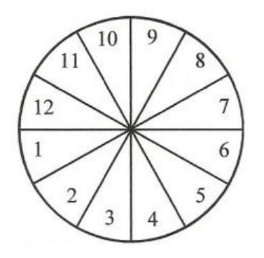
1. What is reality?
2. What is its potential?--What is power?
3. What is mind? How is it limited?
4. What is Being? What is universal?
5. What am I? What is individual?
6. What structures the universe? How do the individual and universe relate?
7. What is cosmos?
8. What is the Soul?
9. What orders the Soul and the Cosmos?
10. What is existence?
11. What is creation? Where is the path, what is evolution?
12. What is appearance?
---------------------------------------
IV. APPROACH TO WHAT TO DO NEXT
A. With each article, itemize the points, one, two, three, and elaborate them with their pros and cons. Answer in your own mind so it's clear. Come up with some kind of body of understanding from the reading, and from that distill your questions. Organize and communicate your understanding and balance that by reflection. In the summary of the articles you'll get a general definition of synthesis.
B. You can also use an existential approach to the article, in for example pointing out how a person's life contrasts with what he wrote. (Example: Tucci)
C. Keep the synthesis open-ended.
D. Articles & books to read: Philosophy East and West, Radhakrishnan, Northrup, Malkani, Coomaraswamy, the Traditionalists.
[AD Supp, pp. 1181-1184 Ends]
1984 02/12 V10: SEMINAR: Western Tradition; Philosophic Synthesis. Copyright 2021 Wisdom's Goldenrod p. ii