APPENDIX: PB NIGHT MEDITATION
A night meditation is a unique practice - it requires sacrifice and dedication, but the rewards are far reaching and include special sleep following the meditation. When you wake, you will feel very close to what you are seeking.
Wake around 3 a.m. to begin the meditation. The exercise is for the night time specifically, but if this is too difficult, do it at dawn or slightly after. It is better to sleep afterwards. Start by drawing attention to the special point below the solar plexus, about one and a half inches below the navel. Breathe in very slowly, and hold breath, but with no strain. Try again, hold breath comfortably, again, no strain. Resume normal breathing for a while. During this phase eyes should be lightly closed or slightly open with hazy effect, eyes turned downward.
Let nothing unpleasant come from holding of breath. While you hold the breath, mind must be one pointed and centered on thought of Overself or highest form you can think of. Must keep your mind centered on a point while you hold breath. After a while, move the focus up to the heart region and breathe very slowly (no longer holding breath) with mind centered on the heart region.
Let your mind stop on thought of Overself, either thinking that you are actually in the Overself, or thinking of your thought as being projected out by Mind, and that very Mind being in the projected thought. The feeling that you are in the thought of the Overself is really the same as: "Your thought of the Overself is really a feeling." Think very strongly on the thought of the Overself then let it go. From this point you have to be carried to the next stage by yourself. Continue with this feeling. Eventually you may be able to stay there in the Overself - let yourself do this for an hour or two.
After the meditation sleep 1 -2 hours. It will be a great sleep. When you wake you will feel very close to what you are seeking. Act very deliberately and slowly when you dress, etc. Very important - everything is there then.
DIAGRAMS FOR 1984 0323
Class held on multiple days
Friday, March 23rd, 1984
Verbatim, unedited transcriptMultiday Class Held in Columbus, Ohio
with Anthony Damiani (AD)
March 23-24-25, 1984
PB Paras; Mind, World-Mind, Overself
TOPIC: PB Paras
SUBJECT: Mind, World-Mind, Overself
SUBSUBJECTS: Soul, Cosmology, Meditation, Metaphysical Chart, Astrology
CONTENTS:
1. METAPHYSICS MAYA {26:1.182}
2. READING PB NOTES
3. COSMOLOGY {Persp. p. 343 and 25:1.71} {FDI, cosmic mandala, Overself, 3 levels: intellection reasoning mentation, Primals, vehicles, embodied}
4. OVERSELF/SOUL {nature of soul, Overself and WM, Plotinus, Primals, FDI}
5. OVERSELF AND COSMOLOGY {inerratic, reason principles}
6. SOUL OVERSELF DOUBLE KNOWER {Persp. p. 382 and 28:1.52 NO COMMENT}
7. COSMOLOGY. CHART TO EXPLAIN PB. SUN AND EARTH. INFINITE MIND OF EARTH. EARTH AURA. 360 DEGREES {Persp. p. 382 and 28:1.45} {Sun and Earth, unit soul and 3 Hypostases, soul of Sun}
8. REPRODUCTIVE SOUL AND LEVELS OF KNOWING
9. MIND IS THE ESSENCE OF ALL CONSCIOUS BEINGS {Persp. p. 382 and 28:1.45} {cosmology, I AM, powers of Sun, emanation and simultaneity}
10. SAMKHYA {koshas}
11. GERM OF CONSCIOUSNESS
12. PHILOSOPHY {Persp. p. 259 and 20:2.289} {educating the individual}
13. PLOTINUS AND PB
14. READING PB NOTES: make an outline
15. PLOTINUS AND PB. FOUR FOLD {Persp. p. 348 and 25:2.109}
16. WITNESS-I {Persp. p. 320 and 23:6.88}
17. PB: "This path is a master stroke. This method of destroying the illusion of the…" {20:3.79}
18. AD ON HIS COMMENTS!
19. ON USING THE PB NOTES
20. SELF RECOGNITION. READING PB QUOTES. {Persp. p. 254 and 20:4.132}
21. SOUL AND WORLD-IDEA. SOUL DOUBLE NATURE. NIRVIKALPA. {Persp. p. 204 and 16:2.71}
22. MEDITATION {Persp. p. 340 and 23:8.6}
23. MEDITATION AND NIRVIKALPA {20:4.54}
24. LIGHT OF OVERSELF, EGO IDENTIFICATION LEVELS
25. PLOTINUS
26. TRADITIONALISTS
27. ASTROLOGY AND DIVINE IDEAS
28. FALLACY OF DIVINE IDENTITY. INSIGHT. PB QUOTE ON CHASM. {Persp. pp. 384-385 and 28:2.79}
29. MENTALISM {HTBY}
30. CHASM AGAIN {Repeat 28:2.79} {mentalism discussion continues}
31. CHASM AGAIN. FALLACY OF DIVINE IDENTITY. COSMOLOGY. INSIGHT. {28:2.79}
32. COSMOLOGY/ASTROLOGY. DIVIDED LINE {kwf and Insight, trans-Saturnians}
33. MORE OF THE CHASM QUOTE {28:2.79}
34. INSIGHT AND SAGE {28:2.79} {kwf and Insight}
35. CHASM CONTINUES. FALLACY OF DIVINE IDENTITY. {28:2.79}
36. ENLIGHTENMENT {28:2.79}
37. PB NOTES, ASTROLOGY, TRANSITS, ENLIGHTENMENT
38. SUPREME IDENTITY. CHASM QUOTE CONTINUES. SOUL AND ONE. {28:2.79}
39. PLOTINUS AND PB
40. EVOLUTIONARY JOURNEY OF THE SOUL
41. PARADOXICAL NATURE OF SOUL
42. WITNESS-I (and 360 degrees) {astrology, 360 degrees}
43. PLOTINUS AND ASTROLOGY DEGREES
44. REASONING, MENTAL BODY, AHAMKARA, AHA [Samkhya, three levels of subject}
45. COSMOLOGICAL DIAGRAM AND ASTROLOGY {Sun, Dragon, Mind of the Earth}
46. MEDITATION AWARENESS OF AWARENESS {Persp. p. 36 and 4:1.128}
47. SUTRATMA
48. WORDS AND UNDERSTANDING
49. PERSONAL: SOUL IS WHERE IT LOVES
50. THE DOUBLE KNOWER and NONDUALISM
51. DEMIURGE/UNIVERSAL SOUL
52. MATTER
53. SEPARATIVE INTELLECT
54. SAMKHYA
55. SAMKHYA BHAVAS AND INTELLECT {metaphysics}
56. READING PB QUOTES SEPARATELY
57. MEDITATION ATTENTION LIGHT {Persp. p. 36 and 4:1.172} {Persp. p. 37 and 4:1.131}
58. READING PB NOTES
59. READING A SYMBOL: 13 PISCES
60. REAL THINKING IS CONTEMPLATION
60A. MORE MEDITATION QUOTES {Persp. pp. 40, 41}
61. HEART CENTER
62. PHASES OF MEDITATION {4:1.213}
63. EGO AND DWELLER
64. THINKING
65. ABSORPTION AND VACUUM {4:1.214}
66. GRATITUDE
67. CONTEMPLATIVE ATTITUDE
68. EGO
69. MORE ON MEDITATION
70. ATTENTION REVISITED {Aha, Archimedes}
71. EINSTEIN, ASTROLOGY, SEPTILES
72. READING PB PARAS
73. INTUITION
74. INTUITION AND ASTROLOGY
75. STAGES OF MEDITATION {4:4.29} {4:1.253} {Persp. pp. 321-322 and 23:7.11}
76. CONTEMPLATION
77. SERAPHIM AND EARTH MIND {Discover Yourself}
78. MEDITATION {Persp. p. 322 and 23:8.7} NO EXPECTATION {2:3.20}
79. GLIMPSES AND CHARACTER
80. BETWEEN LIVES {evolution}
81. HAVE NO EXPECTATIONS/STILLNESS {23:7.167}
82. PSYCHIC PHENOMENA
83. AD PERSONAL
84. AWARENESS AND FAITH IN HIGHER {meditation} {22:3.186}
85. Those notes will be a perpetual delight.
86. THE TOPIC: MIND IN ITSELF {Persp. p. 379 and 28:2.99}
87. REVULSION (CONTINUATION OF FAITH IN HIGHER) {Persp. p. 379 and 28:2.99}
87A. [NO REAL COMMENT {22:3.4}]
88. MEDITATION SUGGESTIONS AND MIDDLE OF THE NIGHT
89. THE EGO {8:1.8}
90. PLOTINUS AND PB: INTELLECTUAL-PRINCIPLE AND WORLD-MIND {Persp. p. 382 and 28:1.53}
91. INTUITION AND INSIGHT
92. MAYA AND BRAHMAN
93. EVOLUTION OF CONSCIOUSNESS
94. METAPHYSICAL CHART
95. ASTROLOGY SYMBOLISM AND DEGREES {astrology, intelligible astrology}
96. PB AND BRAHMAN {PB notes}
97. AD COMMENTS ON DEMIURGE PAPER {cosmology, hierarchy, soul}
98. WATER ANALOGY
99. TEACHER AND UNDERSTANDING
100. INTUITION
APPENDIX. PB NIGHT MEDITATION
BOOKS / JOURNALS READ FROM OR REFERENCED (Note: Editions used for transcript quotations are those available in 2017, not necessarily those read from in 1984):
Paul Brunton, Notebooks. 16 vols; Vol. 1 entitled Perspectives [Persp.]. Some Paul Brunton Notebook paras are, as of 2017, unpublished, and are noted as such.
Plotinus, The Enneads (MacKenna translation, 4th ed.)
I.K. Taimni, The Science of Yoga
Upanishads
Paul Brunton, A Search in Secret Egypt; The Wisdom of the Overself; The Hidden Teaching Beyond Yoga; The Spiritual Crisis of Man; Discover Yourself (The Inner Reality)
Rene Guenon, Introduction to Hindu Doctrine; Man and his Becoming According to the Vedanta; The Reign of Quantity; The Symbolism of the Cross
Studies in Comparative Religion, Vol. 16, No. 1 and 2 (Winter-Spring, 1984)
Marco Pallis, Peaks and Lamas; The Way and the Mountain
Julius Evola, The Doctrine of Awakening; The Metaphysics of Sex; The Hermetic Tradition; Theory of the Absolute Individual
Margaret Montague, Twenty Minutes of Reality
Werner Heisenberg, Physics and Philosophy: The Revolution in Modern Science
Brother Lawrence, The Practice of the Presence of God
Marc Edmund Jones, The Astrology of Concepts (for Sabian degrees)
Marc Edmund Jones, The Sabian Symbols in Astrology (for Sabian degrees)
Vyasa, Bhagavad Gita
Samuel Taylor Coleridge, Kubla Khan; or A Vision in a Dream
T. Subba Row, A Collection of Esoteric Writings, "The Twelve Signs of the Zodiac"
H.P. Blavatsky, The Secret Doctrine
Bible, John (1:1)
Plato, Seventh Epistle
Sri Aurobindo, The Upanishads: Texts, Translations and Commentaries
Sir John Woodroffe, The Garland of Letters; The World as Power
I Ching
Arthur Koestler, The Act of Creation; The Lotus and the Robot
W.C. Dampier, A History of Science
Fritjof Capra, The Tao of Physics
PLOTINUS QUOTES READ OR REFERENCED: I.1.8, II.3, II.3.9, III.4.3, III.4.6, III.8.6, IV.2.1, IV.2.2, IV.3.1, IV.3.2, IV.3.8, IV.4.27, IV.8.4, V.1.10, V.3.4, V.5.8, V.5.9, VI.5.7, VI.9.11
SABIAN SYMBOLS: Pisces 13 (& implicitly Aries 23, Libra 23)
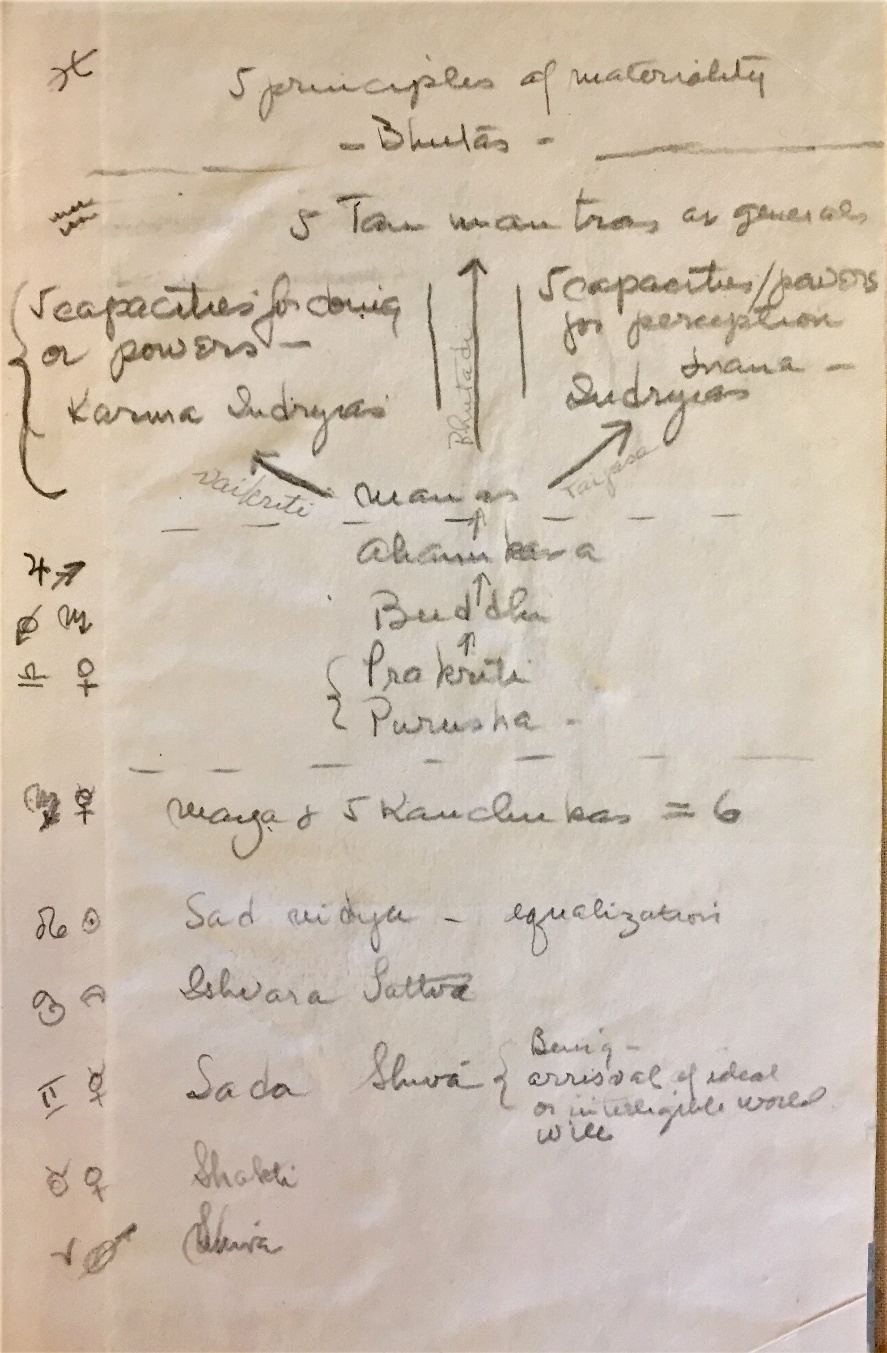
DIAGRAMS appended to this transcript:
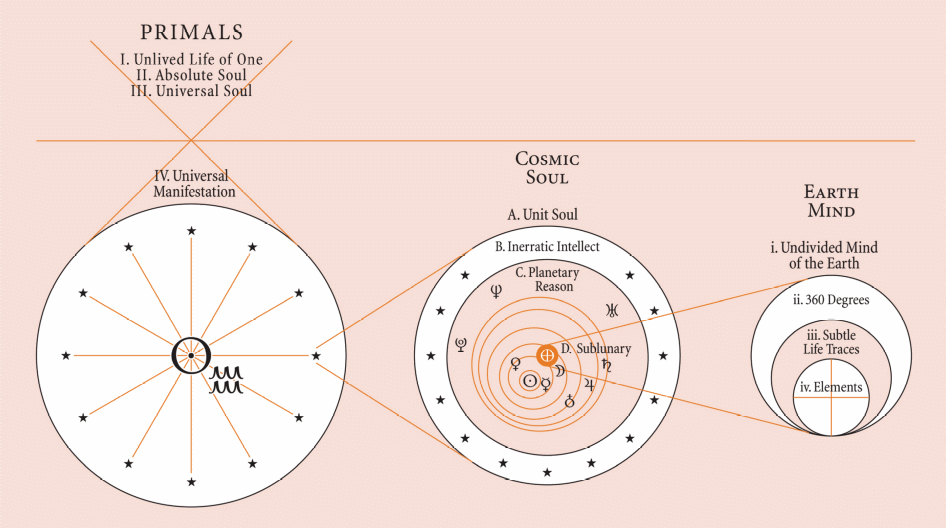
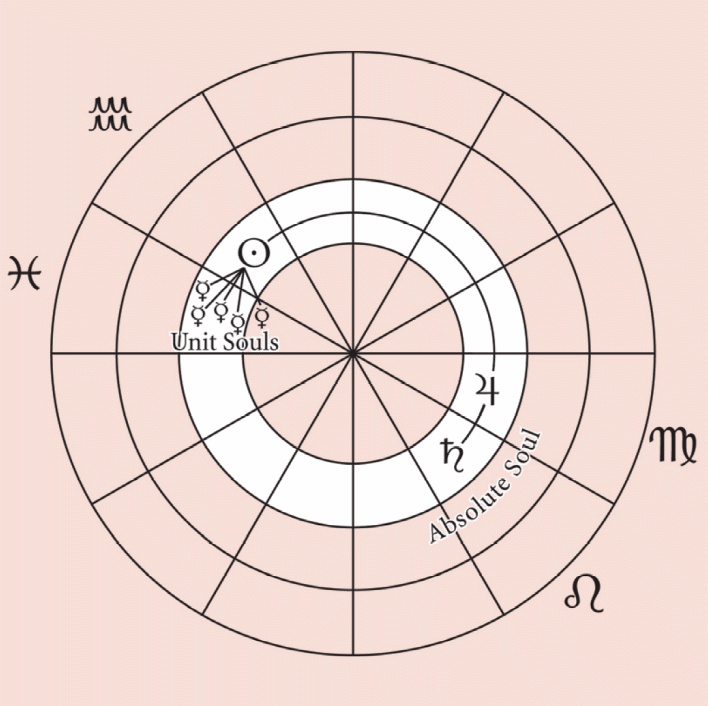
FIGURE 1984 0323-1. Nested Levels.
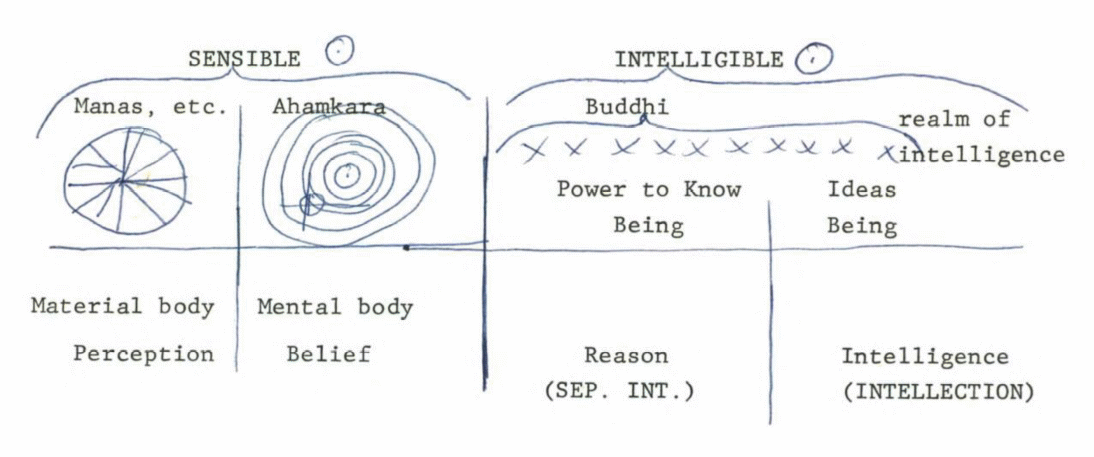
FIGURE 1984 0323-2. Samkhya Scheme mapped onto Divided Line.
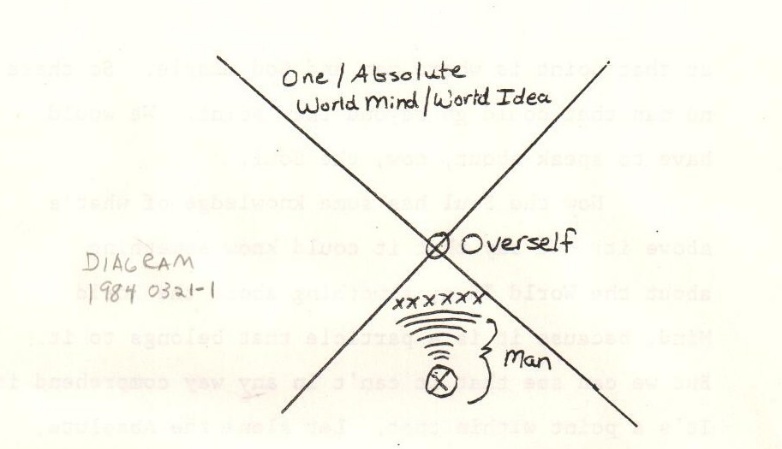
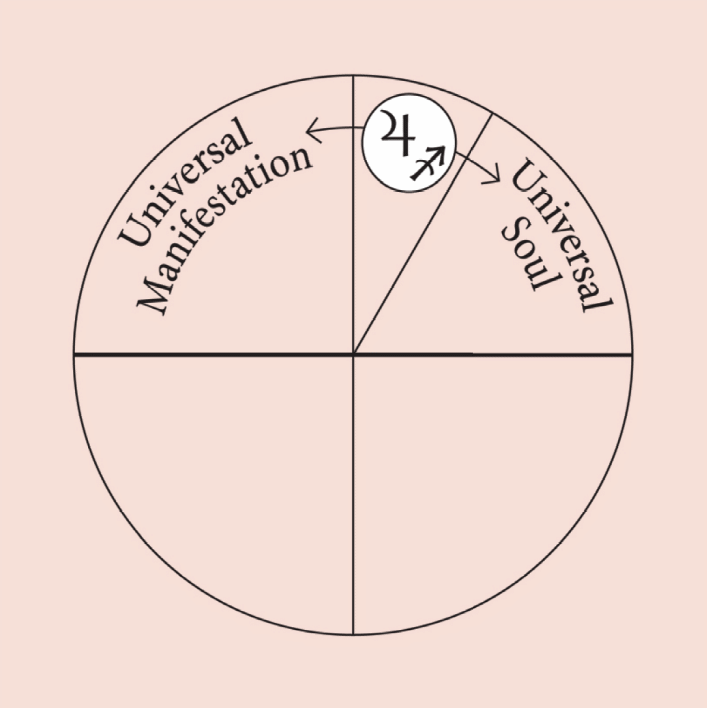
FIGURE 1984 0323-3. Overself as Intersection of God and Man.
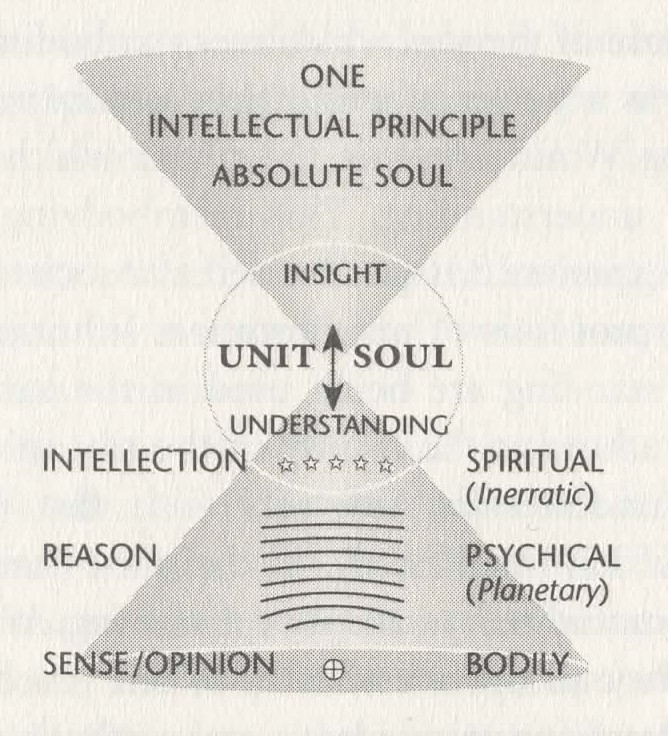
FIGURE 1984 0323-4. Double Knower Scheme.
FIGURE 1984 0323-5. Tripartite Soul in Soul Ring.
FIGURE 1984 0323-6. Twofold Zeus
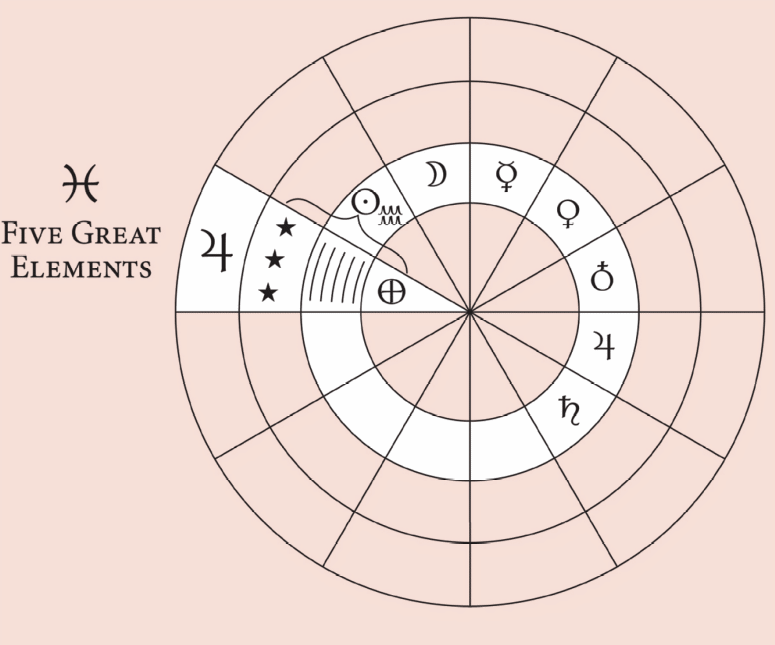
FIGURE 1984 0323-7. Ring Diagram of Universal Soul and the Levels of Pisces.
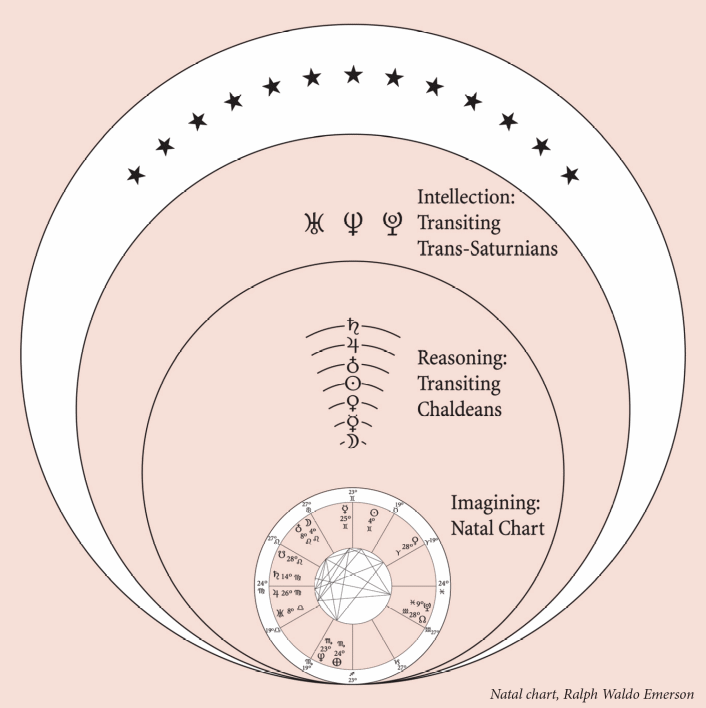
FIGURE 1984 0323-8. Three Levels of the Cosmos and Astrology.
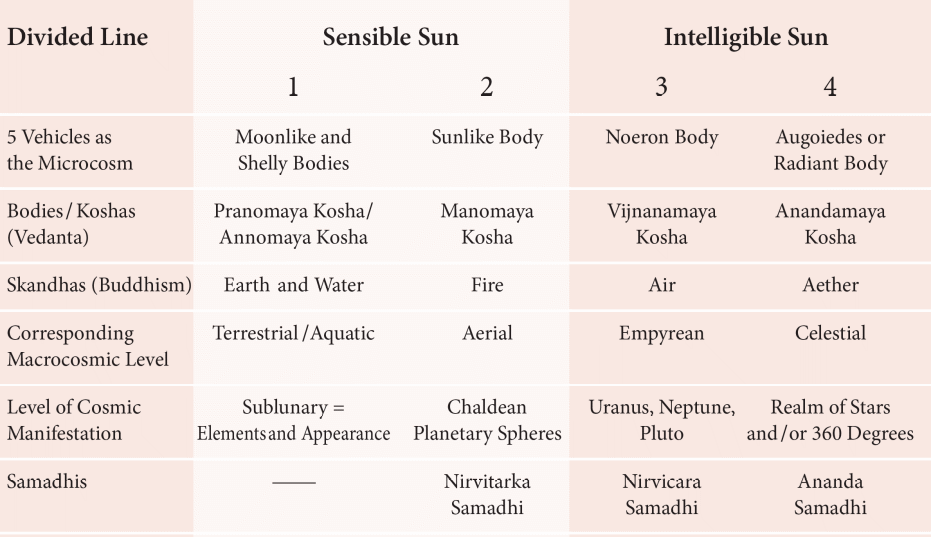
FIGURE 1984 0323-9. Table correlating Divided Line, Sheaths, Skandhas, Levels of Cosmic Manifestation, and Samadhis.
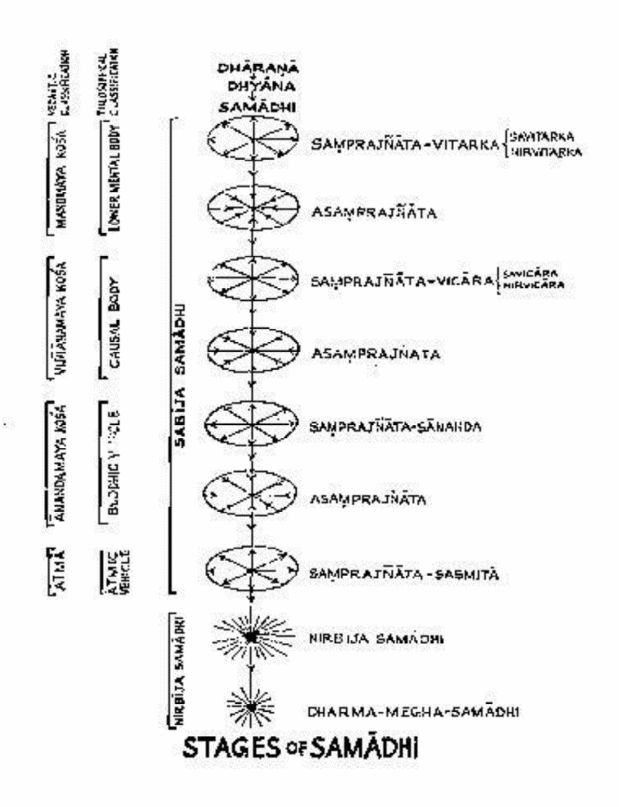
FIGURE 1984 0323-10. Stages of Samadhi.
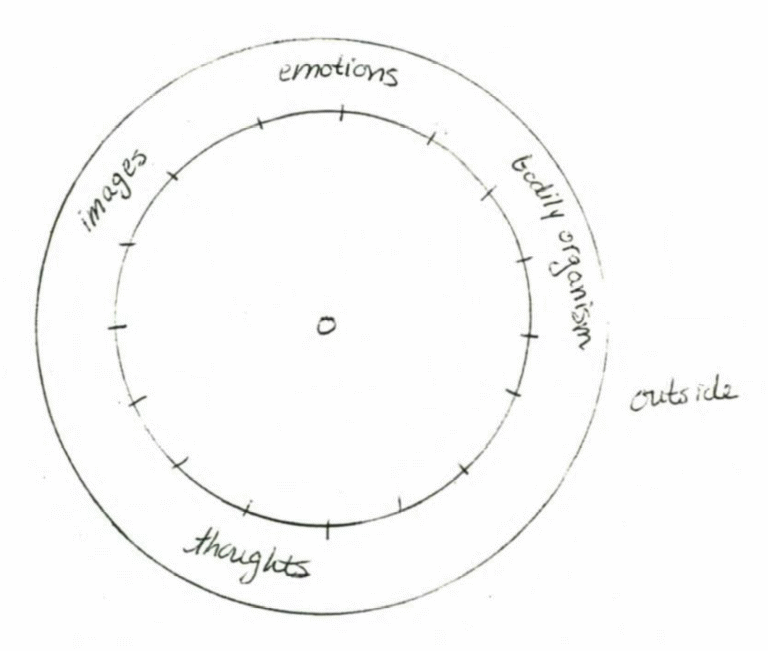
FIGURE 1984 0323-11. Psychosomatic Organism.
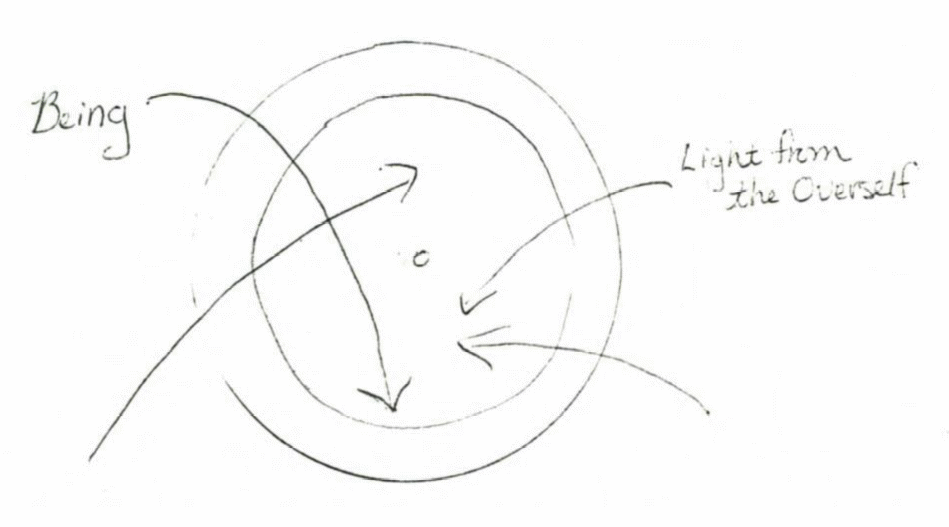
FIGURE 1984 0323-12. Light of Overself in Psychosomatic.
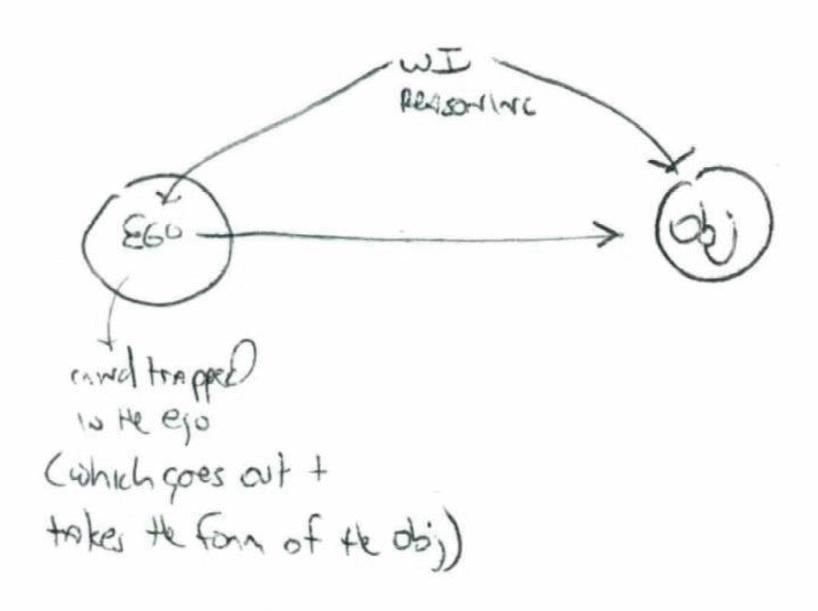
FIGURE 1984 0323-13-AB. Witness-I, Ego, and Object.
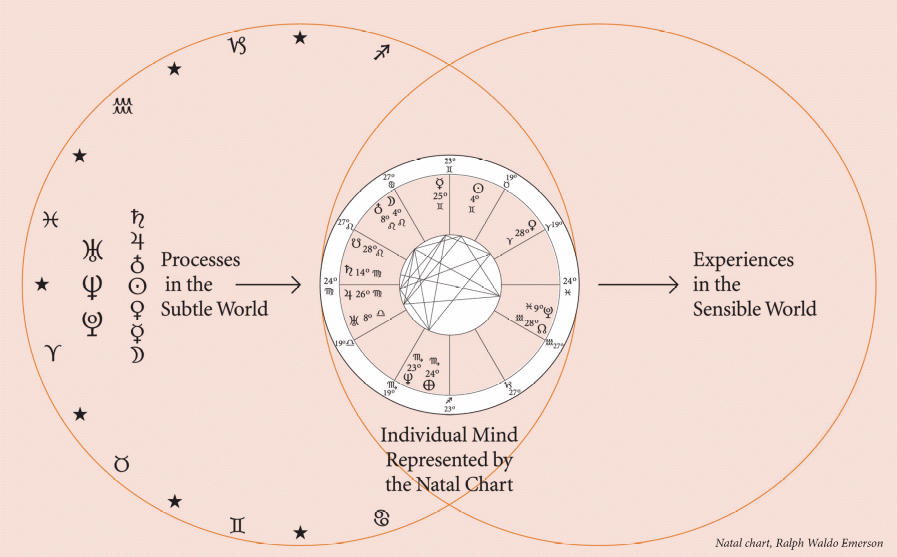
FIGURE 1984 0323-14. Individual Mind Transforms Subtle Forces of the World-Mind into Our Experience.
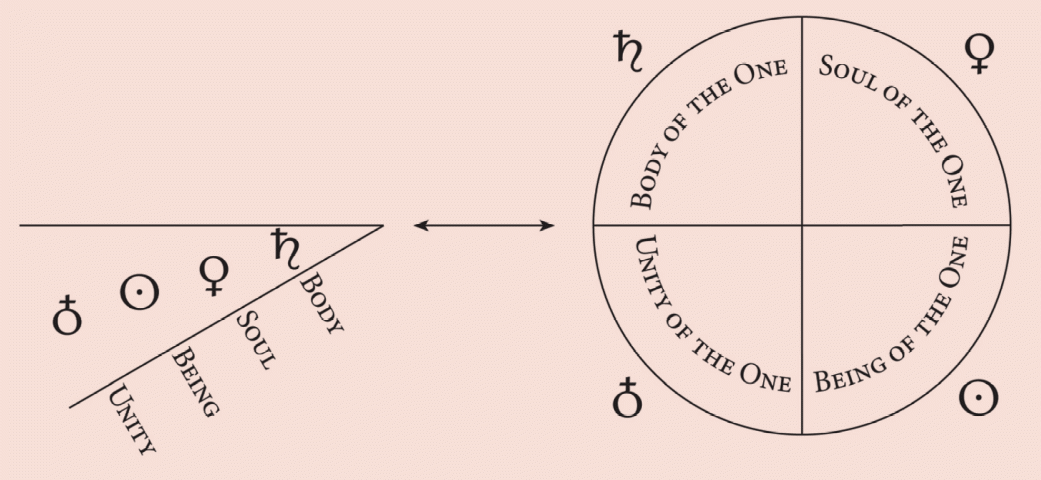
FIGURE 1984 0323-15. Fourfold Nature of the One.
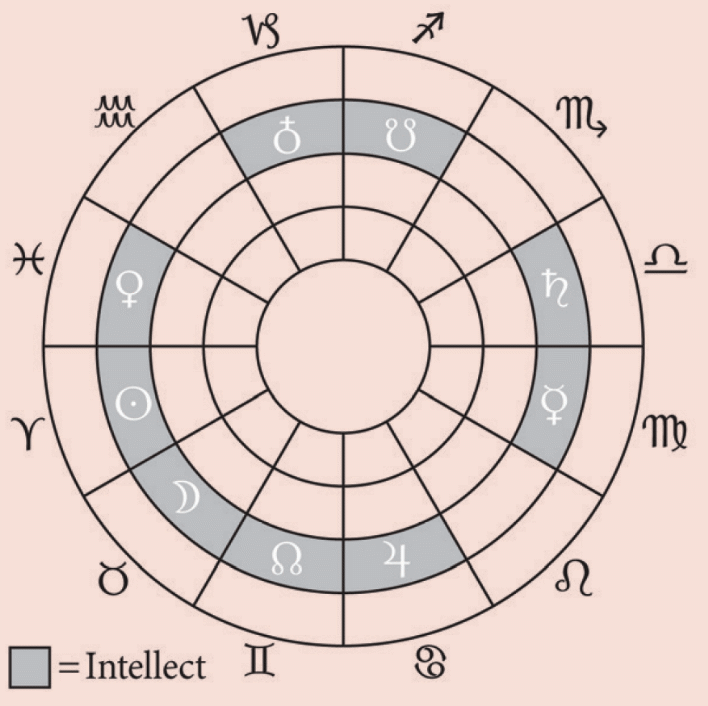
FIGURE 1984 0323-16. Separative Intellect.
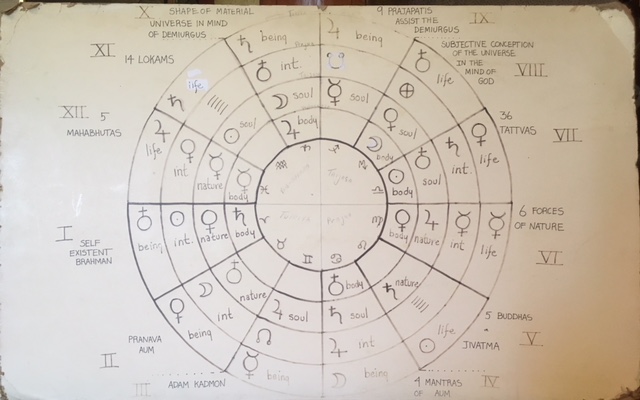
FIGURE IMG 2202-Posterboard Metaphysical Chart.
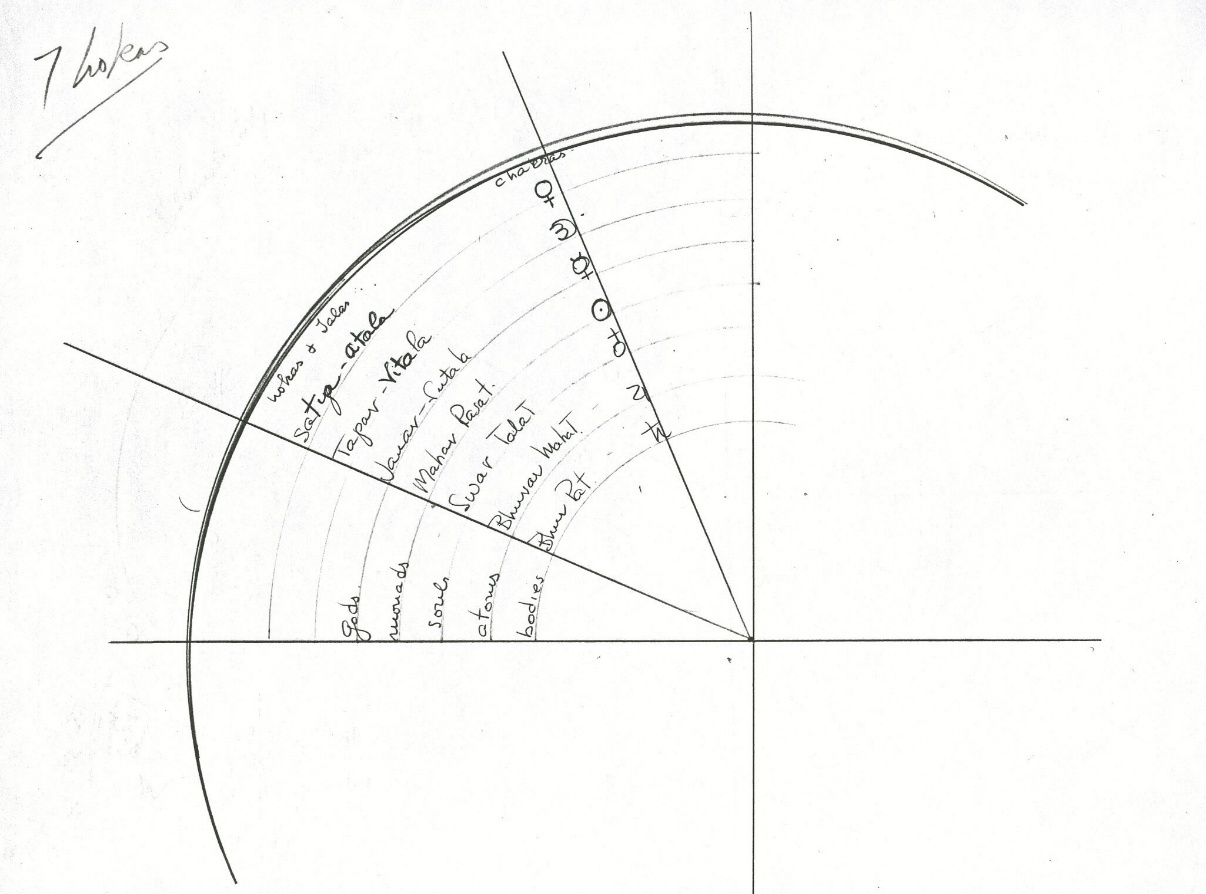
FIGURE AD_D_017. Seven Lokas and Talas, Chakras in Eleventh House; Gods, Monads, Souls, Atoms, Bodies in Twelfth House.
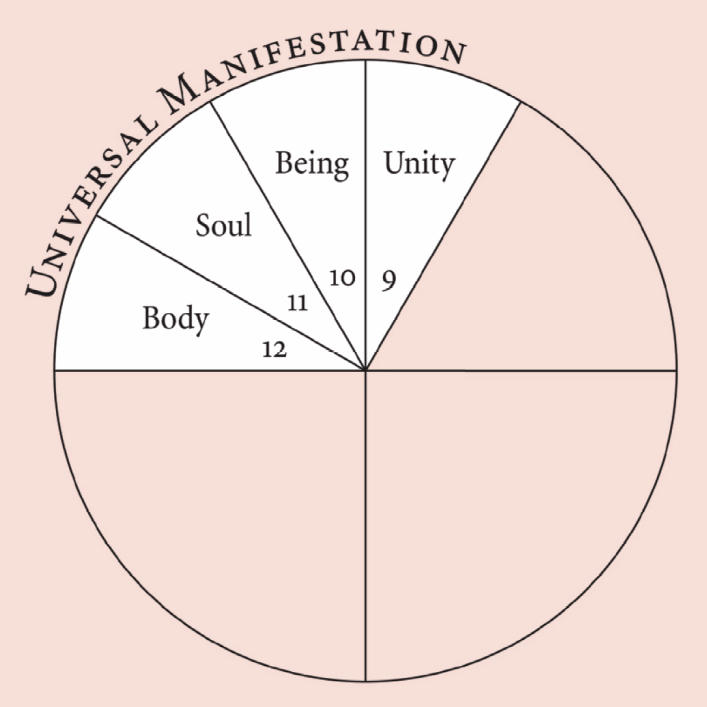
FIGURE 1984 0323-19. Universal Manifestation: Houses 9-12.
FIGURE 1984 0323-20. Kashmir Shaivism Tattvas, in the mandala of the houses.
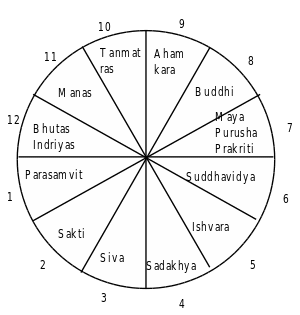
FIGURE 1984 0323-21. Kashmir Shaivism Tattvas.
[Transcriber note: [diagram] means the speaker is referencing a diagram as he or she is speaking. If someone is drawing or writing, with audible sounds of chalk on a blackboard, I indicate this by [drawing] or [writing].]
ABBREVIATIONS:
FDI = Fallacy of Divine Identity
WM = World-Mind
AD = Anthony Damiani
PD = Paul Damiani
PB = Paul Brunton
RW = Richard Witter
HTBY = The Hidden Teaching Beyond Yoga (by PB)
kwf = knowing, willing, feeling
NOTES:
CONTENTS & SUBHEADS by Avery Solomon. Paragraph breaks in AD commentary by jf. Edits for readability: cuz = because; gonna = going to; gotta = got to; yeah = yes; yous = you.
Breaks to designate DAYS of this event. Audio files don't quite divide straightforwardly by date. It is possible that the material at the beginning of Audio File 1984 0324a is still 03/23/84 so the day break indicating 3/24/84 is not necessarily exact. Also, 3/25/84 starts on Audio File 1984 0324e, Side 2.
PB Night Meditation given by PB to Tim and Devon (referred to by AD and students) appended to this transcript.
This transcript was used as the basis for Discussions on Perennial Philosophy (2025).
TRANSCRIPTION & VERSION HISTORY. Transcribed Verbatim by IT 2018 (with Subheads and a few Notes by Avery Solomon); reformatted and some checking of audio by jf 2018 – this was printed as V11a. (Several older, "almost" verbatim partials exist, some of which may have been using different audio cassette tape versions as a basis–among them: Mark Scorelle (MS) 1986; HP et al. 1993.)
In 2020, the BLUE COLOR Subheads & TOC V14a version was included in the PB set given to PBPF. It had updated prefatory matter and running footer, as well as standard-format-quality Subheads and Table of Contents, thus getting classified as V14a. There is also a Greyscale V14a version, which doesn't include the updates, corrections, and diagrams in the V14.1a version; it is in the "alternate versions" folder.
In 2024, IT updates prefatory matter and footer again, alters Topic and Subject, expands Subsubjects, expands Book List, adds Plotinus quotes section, correctly relabels last audio file, removes all "Audio File cont." in preparation for website, corrects typos/errors, adds new notes within transcript, adds 21 diagrams and references within transcript to these diagrams, gets rid of stuttering. Archival verbatim transcript – V14.1a.
AUDIO FILES: 1984 0323a, b; 1984 0324a, b, c, d, e; 1984 0325a (formerly 1984 0324f). [Note: "Tape" and "Side" refer to original audio cassette tapes that were later digitized into .MP3 Audio Files; "tape break" refers to hiatus in audio; tape recorder apparently turned off for a meal, etc.]
1984 03/23 Class Held in Columbus, Ohio (Friday of 3-Day Weekend)
PB Paras; Mind, World-Mind, Overself
Archival Verbatim Transcript
1. METAPHYSICS MAYA {26:1.182}
<Audio File 1984 0323a Begins; corresponds to pp. 1 - 27 of MS manuscript>
AD: --we've been reading it.
S: Yes.
S: Uh-hm.
[48½ second pause with shuffling about, faint background student talking]
S: Do you want us just to start with a quote?
AD: Any quote, any quote that you'd like to go over with me.
[students assent, faint, possibly part of background]
S: This isn't a big one but if you--
AD: It's a big one?
S: It's not a big one.
AD: It doesn't matter to me.
PB [V16, 26:1.182, S reading]: "The world is neither a trap nor an illusion, neither a degradation of the divine essence nor an indication of the divine absence."
[short pause]
S: Would you read it again?
S (faint): Read it again Mary Ann, louder this time.
PB [V16, 26:1.182, S rereading]: "The world is neither a trap nor an illusion, neither a degradation of the divine essence nor an indication of the divine absence."
[short pause]
AD: Would you like to try that one? Well you can see what he's referring to after he says it's not an illusion. You can see who's he-- who he's answering, alright, [student assents] the Vedantists who insist on turning the world into an illusion. "It's not a trap." Well, there's many among us, you know, with strong religious affiliations who feel that the world is like the devil's trap, you know, you don't-- you wo-- you don't want to get caught in it, you know. And, I-- I suppose that would be mostly religious men see the-- think of the world as some sort of abode of evil. What was the other (one/word)?
PB [V16, 26:1.182, S rereading]: "…neither a degradation of the divine essence [AD (faint): Uh-hm.] nor an indication of the divine absence."
[short pause]
AD: Well, to many-- many schools of philosophy, it's difficult to understand how the divine essence ever permitted such a thing to take place. And they do consider the-- the man-- the manifestation as a falling down, you know, of the divine essence.
[short pause]
S: So when you talk about the ego, and we read the quotes on ego, there is something that has to be [short pause] disciplined or you have to know that you aren't the ego, how far-- I guess one of my questions when I'm doing this was, to-- that-- would-- would that or would that not include the ego?
[short pause]
AD: Well what-- what do you understand to be the ego? See, that's very complicated question. The whole notion of the ego is very complex.
S: I-- but I know that there are-- that it's described through different ways, that limitation. I've heard some discussions that might go with-- I have equated it with the psychosomatic body.
AD: Psychosomatic organism?
S: Yes.
[short pause]
AD: And how did you want to relate that to the quote?
S: I'm part of the world. And, in trying to see through the ego or what it is, often I have used these same terms, that it's, you know, an illusion or that-- a degradation. And I was just trying, you know-- in seeing the ego and the world as, you know, not as se-- seeing myself and the world as not a separate thing.
[22¼ second pause]
AD: I still don't follow, maybe I've [S simultaneously: Ok.] been doing it.
S: Maybe um-- [S: Yes.] [short pause] Think I can't go any further with this.
2. READING PB NOTES
AD: You know, Mary Ann, I generally advise people to read these quotes, each one on its own merit, you know, and not mix it up with other quotes. And, it's-- for a while to do this, it's wise to do this, and not try to amalgamate or try to put them together. You should try-- you should try to extract kind of outline, a philosophic outline that PB is working with. That would be worthwhile. Because he does have an outline and there-- there's a-- a metaphysics in the background that he's coming off of, and he's working with that. And, maybe there might be some questions that might lead us into that, (you know/will) lead us into the kind of-- it would force us to try to see the basic outlines of the system he's working with. I use the word "system" but, I mean more than system. So, if we could concentrate for a few minutes, a minute or so, see if you could think of some of those questions or notes, ideas that have to do with doctrine. And then we could ela-- try to elaborate that, ok. You know what I'm referring to?
S: I'm sorry.
AD: We could try to elaborate some of the ideas he works with into his basic doctrine. You know, we could make a rough outline for ourselves of the kind of doctrine he's working with. We've been working for instance, I've been working a great deal with the ones on the-- the fallacy of-- what was it? Fallacy of mystic identification or-- Because there he reveals a-- quite a number of-- quite a number (of) fundamental points that if they're not understood, alright, if they're not understood you won't-- you won't see the point he's making.
S: Oh the section on the fallacy of the divine unity-- identity?
AD: Yes. [short pause] Did you go over those notes?
S: Uh-hm.
AD: How'd you find them?
[25 second pause with flipping of pages and shuffling about]
S: (Or) the way Anthony didn't bring extra (questions).
AD: They're the ones you did-- Oh, your [S simultaneously: (It's very) (couple/three words inaudible)] intuition's working-- your intuition's working wonderfully.
S: Yes.
[short pause]
S: I-- I don't have the quote, in reading those pages at the time and I was spending some time at home, and [S: Somewhere.] somewhere had the quotes but-- PB had said that you can never go any higher than your own Overself.
AD: Yes, why don't you get a hold of that quote.
S: That quote?
S: Yes, it's with Cindy?
S: Yes it's one-- yes.
S (simultaneously): Really, you don't even have to read that, I (have/had) some notes on that.
S: Yes, it seems to me [few words inaudible]
S: That-- it depends on what PB's Overself is as to what that really means.
AD: What PB's O--
S: Right.
AD: What he means by [S simultaneously: Right.] soul, yes?
S: Right.
AD: Uh-huh.
S: And, because-- [short pause] In trying to-- I mean I know we don't want to bring in other things but, [S simultaneously in background: This is the one?] in trying to correlate what I understand about PB, what he's referring to, I-- you know, I can bring in some Plotinus but you see if that would go all the way up to Intellectual-Principle, and even the One.
AD: You're too strict, I'm going to smoke. No, it won't go that far. Won't go that far.
S (faint): Get the quote.
AD: That's why I want the quote.
[13 second pause]
S: Cleta did you want the (orange--) that other quote, maybe you have it here?
S: I've-- I've got those papers on the divine (I think).
S: Because he's-- he says it in so many different ways.
S: What date is that?
S: July 6th and 13th.
S: Oh.
S: And 20th. [11¾ second pause] May I read one of this, [AD simultaneously: Sure, please.] it isn't the exact one that Cleta was referring to but he says-- [Note: Classes of July 6, 13, 20, 1983: PB Paras; Philosophy; Fallacy of Divine Identity]
3. COSMOLOGY {Persp. p. 343 and 25:1.71} {FDI, cosmic mandala, Overself, 3 levels: intellection reasoning mentation, Primals, vehicles, embodied}
PB [V16, 25:1.71 & Persp., Ch. 25 #11, S reading]: "No mortal may penetrate the mystery of the ultimate mind in its own nature--which means in its static inactive being. The Godhead is not only beyond human conception but also beyond mystic perception. But Mind [S: Capital Mind.] in its active dynamic state, that is, the World-Mind, and rather its ray in us called the Overself, is within range of human perception, communion, and even union. It is this that the mystic really finds when he believes that he has found God."
[short pause]
AD: That was the one, right? Was that the one?
S: Yes it is.
AD: Well, it'll certainly do, it's as-- it's as complicated as any of the others. Well what do you think he's saying?
[9¾ second pause]
S: You read it again Joyce.
S: Yes.
RW: And where were you reading from Joyce?
S: This is the July 20th class, the fallacy of divine identity. And it's page 8.
PB [V16, 25:1.71 & Persp., Ch. 25 #11, S rereading]: "No mortal may penetrate the mystery of the ultimate mind in its own nature--which means in its static inactive being. The Godhead is not only beyond human conception but also beyond mystic perception. But Mind in its active dynamic state, that is, the World-Mind, and rather its ray in us called the Overself, is within range of human perception, communion, and even union. It is this that the mystic really finds when he believes that he has found God."
AD: He has quotes there if you remember, he has some quotes where he says that-- [AD snaps fingers] oh he quotes Al-Hallaja who says "I am the Reality," or the Christians who speak about union with God, the Vedantists also speak about the Supreme Identity. And, what he is saying, of course, is that that's not true, that the highest experience that's available to any mortal would be the experience of his own soul. Now, we could also think of it as a mind, yes, your own [S simultaneously: That's right.] mind, [student assents] your own mind. Soul and mind, they're the same. And, in the experience, the Sa-- or-- the Sage or the mystic could reach up to the very summit of his being, the soul. But he can't go beyond that. Because essentially he is soul. He's not Intellectual-Principle, but that doesn't mean he can't know something about the Intellectual-Principle or the World-Mind. So, he is in effect saying something to this-- On the one hand, you have let's say the-- the-- the mysterious Void, the Godhead. And you could think of that, you know, in the same way that Plotinus speaks about the One, the Intellectual-Principle, and Soul, Absolute Soul. You could think of those three as the mysterious Void, you could think of that as God. [student assents] And, you make a dividing line, alright, and on-- on the other side you put soul, individual souls. Now, he is in effect saying that if you struggle and of course if you, through intense inward-- inwardization, attention, now you reach the highest level of consciousness and you reach consciousness, awareness itself, you should not i-- you should not think that that is the same as Intellectual-Principle or the One. [Note: See FIGURE 1984 0323-1 for the following.]
So if we made a little picture for ourselves, something like this. [short pause while drawing] You'll put Universal Mind here, the I-- Idea, ok, (we/you) put Overself here, or the soul, and put the human being [diagram]. And, if we put mortal man over here [diagram], you put mortal man there-- I don't know if your terminology will get confused, the others, but, in terms of the way we work Cleta, if you think of the whole of the-- let me do it this way. It's a conception of man that was-- well-- or maybe-- the conception of man he's working with is still-- not only him but Plotinus, is so vast that it's going to take all our wits to, you know, [student assents] understand it. But if we think of this as manifestation [diagram], alright, and within the realm of manifestation [drawing] we speak about the inerratic spheres, right? [student assents] Stars. That's where the Ideas are. One of the stars is our Sun. [student assents] Alright, that's-- that's a star too. And then in the Sun, alright, you have the s-- powers of the soul, the Sun, soul of the Sun. And one-- and on one of them is located planet Earth, alright. [student assents] [S: Really?] In the-- on the planet Earth, ok, you have the organization of the psychosomatic organism, alright.
S: Of the planet, of the Earth.
AD (simultaneously): Yes, in other words-- [S simultaneously: Ok.] Well, ea-- an-- ea-- any planet [student assents] would create bodies appropriate to its own idea of what the world should be but, if we think of our own planet, planet Earth, we would say that there, on the planet there, the psychosomatic organism is fabricated, alright, and this would be mortal man. Now he says mortal man-- now it's more for a diagrammatic purpose, mortal man can never comprehend this [diagram]. The furthest you can go is up to this point, this is the section point [diagram]. [Note: See FIGURES 1984 0323-3, 4, Overself/Unit Soul.]
You could think of-- you could think of-- the way he puts it, he says the Overself is a particle of the Divine Mind. And, you could also say that the Divine Mind or World-Mind is within the Overself. Now if you use both terms, it cancels out spatial references. You-- but you won't be able to do it, see. So, if you cancel out spatial references you'd be [one/two words inaudible] then that means you'd have to follow this very abstractly.
If we take the notion of the mind, and we say that within each human mind or each soul the-- the World-Mind is present to it, you could look at it like the World-Mind is present to every individual Overself [AD indicates on diagram]. Let alone what's above, we don't have to worry about that. And, this is the innermost of our being. [student assents, faint] Now, you remember we spoke about the-- the personality as an organization of the tropes in matter and the way we spoke about this is organized by the planetary functionings, alright, and the planetary functions represented the rational soul-- soul of man? [students assent] The rational soul of man is properly man, alright. You can't go beyond the rational soul of man and still call him man, because when he-- when he leaps beyond that and goes into the Overself then he becomes something other than man, he becomes something God-like. [Note: See FIGURE 1984 0323-3.] Now--
S: Did you say that the--
AD: Yes.
S: The planetary soul are the rational powers of man, is that what you said?
AD: Yes. In other words in the di-- the diagrams we work from, when we-- when we take the [drawing] solar system as a whole and we speak about the planets within it, alright, then we speak about the-- the Earth, alright. And, these planets, let's say, would represent-- the functioning of these planets is what brings about the organization of this World-Idea, the way it (will--) or any other planet. [student assents, very faint] So that on the planet Earth there's an organization of the human body done by the planetary powers, ok? Now, this here part [diagram] can be referred to [drawing/writing] as the reasoning phase, the reasoning soul of man. [student assents, faint] And, this part here could be referred to as a psychosomatic organism [diagram].
[short pause]
S: Ok. The diagram though that we were using before, the psychosomatic organism would be on that-- the Earth.
AD: Yes, yes.
S (simultaneously): That man would be on the Earth [AD simultaneously: Uh-hm.] and with his-- the gross, subtle, causal, all that making up the psychosomatic organism. [student assents, faint] Now, [AD simultaneously: But--] you're saying--
AD: Let me add to that or qualify that by saying that the reasoning soul [AD indicates on diagram], alright, and the mentation, you know, [drawing] the ideas around the-- what we call the degrees of the zodiac which is equivalent to the mentation.
S: The de-- the 360 degrees?
AD (simultaneously): Yes.
S (very faint): Yes.
S: Yes.
AD: That's equivalent like with the ideas that have to be combined in order to produce the entity, the [student assents] psychosomatic entity and its functioning.
S: Right.
AD: Alright. The point, the point I wanted to make is that this here part [drawing] is unembodied [diagram].
S: Ok.
AD: (Uh--/Up.)
[AD writing]
S: But wouldn't you say that on the Earth--
AD: This part is embodied [diagram].
S (simultaneously): --the man, the subtle and-- the subtle and causal are-- [AD: Yes.] like they're embodied. [student assents, faint] Because they're in the sensible realm.
AD: Yes, in other words, in other words what we're saying is that on the one hand you have [AD indicates on diagram] the highest level, intellection, or intuition if you want to call it that, ok, insight, and you have the reasoning phase of man [AD indicates on diagram], alright, and mentation. These three, alright, are equivalent to unembo-- they really are unembodied. But, they also get embodied in a specific organism. So in other words, each individual, any embodied individual, has these three not only unembodied, but he also has them in the psychosomatic organism, functioning through the psychosomatic organism. Another-- another terminology that they would use would be [writing] something like this, buddhi [Inerratic Intellect in middle circle], you've heard this, ahamkara [Planetary Reason in middle circle], alright, that's the Samkhya translation, right, and this one would be equivalent to manas [Sublunary/360 Degrees of Earth Mind]. And those three, alright, exist in an unembodied state and they also exist in an embodied state. [Note: See also FIGURE 1984 0323-2.]
S: Yes.
AD: You follow?
S: (Yes.)
AD: Well, right away we're in the deeps of-- [student assents] This is the Greek conception, the Platonic and especially the Plotinian doctrine, that the human being is constituted of these three-- three different levels of understanding: intellection, reasoning, and-- [student assents, faint] you know like, he-- they would call it opinion, combination of sense and the sense-perception and the archetype of the object of sense-perception. [Note: See FIGURE 1984 0323-4.] Well--
At the same time you have to conceive that these people are pointing out that the same way that there is this highest level of reasoning, alright, the same kind of reasoning that the Sun for instance, the soul of the Sun employs to bring about the organization of every body, you know, in the-- in its world-system-- In other words, the Sun is the core or the Mind of our world, and through its powers, it so to speak superimposes on each and every one of the planets, and we'll speak only about ours, it superimposes on it the World-Idea that is to be, alright, and then the world of course, our planet complies or follows that dictum. Now the point here is that, as strange as it may seem to us, this conception, the Greeks are pointing out that the highest-- the highest is available to man, intellection or-- let's call it intellection, reasoning, alright, and sense-perception, these things are all available to man. On the one hand they exist in an unembodied psychic state. On the other hand they exist as psychically embodied. They exist both simultaneously in a human being. Now, maybe I'd have to--
S: It's hard to see how the subtle or causal realm is embodied.
AD: Well, we could, you know, take instances or-- and perhaps embodiment is too strong a word but--
S: See in dream state you can see that, that-- you can look at that as embodied but--
AD: What I mean is that the soul has to have, or the mind has to have a vehicle through which it could work through. That's what I mean. So, perhaps embodied is too strong a word but-- You know, if we take instances, various instances, and we worked many of these out in the charts. Well, you take the time that Einstein discovered the theory of relativity, he had a septile going on between the transiting planets and his natal planet. And, the morning that that idea came af-- after many years of work. But, there was a specific time when all of a sudden he knew, alright. Now, the soul always knew. The soul knows the theory of relativity, I mean it's one of the ideas in-- I mean, insofar that you speak of universal manifestation, that would be a property that belongs to the soul. But, that it was made available to him at a certain time, alright. If he wasn't there, we wouldn't get the idea, so it had to have a body or a vehicle through which it can become operative and reflect upon itself. So at that specific moment or that specific day when the idea of relativity came to him, and ignoring the astrological data that, you know, we try to present, and he was aware that he knew but he didn't know precisely what it was he knew, he had to work it out, he had to bring in all the sense images he worked with and the physics he understood and bring that to bear and then he saw what the intuition was telling him and he followed it out.
Now, that knowledge we cannot speak about it unless we're speaking about some embodied being. To say that-- to say that it's hard to understand how the psyche could be embodied, I grant you, that's very difficult but we can conceive it, ok, so-- At any rate, those principles which the Samkhyas call buddhi, ahamkara, manas, the Greeks call intellection, reasoning, and sense-perception, they could exist in two different ways. They could exist as unembodied in a psychosomatic organism and they could exist as embodied in a psychosomatic organism. [student assents] I forgot what the question was.
[short pause]
4. OVERSELF/SOUL {nature of soul, Overself and WM, Plotinus, Primals, FDI}
S: Ok, back to the Overself question. (S laughs a bit) I guess-- you know, what really confuses me is I think of the Overself as the ray, as the pu-- the purusha or the life force, the life itself that-- that [AD simultaneously: You think of--] seeks a receptacle which is the prakriti, I mean I kind of relate it to that, (or/are) the receptacles, the vehicles that are provided by Universal Soul, call it Universal Soul, and for us to put the Overself there, you know, [AD simultaneously: Uh, can I borrow-- could I borrow--] say that all this content is-- well, ok.
S: Doesn't PB have a quote where he-- he gives a definition of the Overself as the ray plus the World-Idea equals the-- the Overself, so within that Overself is both the ray and the World-Idea.
S (simultaneously): What other philosophers might break out(--/.) If everything is prefigured in the Overself.
S: Right.
[12¼ second pause]
AD: Um-- [short pause] The Overself or soul, he says in many places, PB, is a particle of the World-Mind, alright. What would that mean to you? He speaks about it as having something of the flavor of the World-Mind, the infinite World-Mind. He speaks about it as being essentially that in you, that which is within you, and which is, so to speak, which makes possible the universe or the world that's manifested (through/to) you. And so that means that the-- the Overself is the very summit, the core of your being. And if we were to ask questions, well what is this Overself like, I would have to refer to some of the notes that you might have picked up when you were studying Plotinus. You remember how he speaks about soul?
S: (Yes.)
[short pause]
S: I-- I re-- remember from old papers and when he speaks about soul. But I don't know what you're referring to [couple/three words inaudible]
AD (simultaneously): Well, these are passages which--
S: One-many and--
AD: Huh?
S: One and many?
S: (I think) so.
AD: Well, he speaks about the nature of soul, the nature of your mind, think of your mind, alright, when-- I'll read a few of these passages. He says something like this.
S: You're talking about Soul as the third Hypo-- Hypostasis or--
AD (simultaneously): No, you're not talking about Soul, its third Hypostasis.
S: What are we talking about?
AD: You're speaking about individual soul.
S (simultaneously): This-- ok.
AD: You see--
S (simultaneously): Individual soul.
AD: Yes. Over here-- if you want to-- if you use Plotinus' scheme and you say this is the One and over here you have the Intellectual-Principle, alright, [writing] [student assents] plus the Absolute Soul [diagram], ok. [Note: See FIGURES 1984 0323-3, 4.]
S: Ok.
AD: [writing] Put knowing [diagram]. These three he refers to as the three [S: Right.] Hypostases. Don't get that confused [AD indicating on diagram] with an individual Overself.
S: Ok, that-- let me ask one question about that. In the Absolute Soul that-- doesn't he say that-- that within Absolute Soul you have Universal Soul and individual soul, both--
AD (simultaneously): Yes, yes.
S: --within Absolute Soul.
AD: Well he says that Absolute Sel-- Soul is the progenitor of the individual soul. And if the individual soul traces its origin, it will lapse back into Absolute Soul. But when it lapses back into Absolute Soul you cannot [AD indicating on diagram] speak about individual soul anymore. [Note: See FIGURE 1984 0323-5.]
S: Right. Ok.
AD: Ok? So, our preoccupation is-- is with these here [AD indicates on diagram]. [writing] In Plotinus you had the One, the Intellectual-Principle, and Absolute Soul, ok. [student assents] Now, try to remember, this is the same as God. [drawing/writing] You could say God.
S: Are they Void, all three of them [couple words inaudible]
AD (simultaneously): Mysterious Void.
S: Uh-hm.
AD: Alright. This [diagram] they would call the Absolute, alright. But this [AD indicates on diagram] is the same as God. Now, we are [AD draws a line] separated off from that. Try to accept it, even if I exaggerate it a little bit. Individual soul is on this side now [diagram], alright.
S: And so is Universal Soul?
AD: No. This-- Universal Soul will be here [diagram]. You-- do you mean the Demiurge?
S: But-- yes, looking [AD simultaneously: Oh.] back and looking forward.
AD: Oh I ha-- I'll have to go through all of Plotinus then. (laughter)
S: Just one sentence on that then we'll leave it. (S laughing, laughter) [student assents, faint] No, [AD simultaneously: Look--] I'm just trying to get oriented with that.
AD (simultaneously): Absolute Soul, (I think), has [drawing/writing] following from it the Demiurge which has two aspects, alright, one contemplating the Ideas and the other concentrating on producing manifestation, laying a ground plan for the universe [diagram]. [Note: See FIGURES 1984 0323-6, 7.] Then individual star souls come along and take their place according to the plan he laid out, [student assents] alright. And then within the individual star souls there would be planetary souls, and then within that there'll be individual souls. [Note: See FIGURE 1984 0323-1.] [student assents] I don't want to go into that. [S simultaneously: Ok.] Because I'll never [S simultaneously: Ok.] get to those notes.
S: No, that's ok, I won't--
AD: Alright, but the thing here is to-- because this would hold through with PB too, alright, up to here [diagram]. Ignore this [diagram], because these are details that PB won't go into.
S: (Ok.)
AD: The important thing here is this here. These three [AD indicates on diagram] intellectual-- the intellectual understanding of these concepts that we're working with, these three are referred to as God, mysterious Void, alright, the Absolute, anything you want to, alright. [Note: See FIGURES 1984 0323-3, 4.] But these are utterly, utterly, alright, [drawing] distinct from the individual soul [diagram]. This individual soul has its origin here [diagram], it is an emanant from the Intellectual-Principle. It is similar but not identical [AD indicates on diagram]. [Note: See FIGURE 1984 0323-5.] This here has an eternal value. In other words, it's an Intellectual Being. Nature of soul is of such a nature that it has an eternal reality. It is authentic, it has real Being, it is. And when I say it is, it's neither sophistry nor the-- nor a tautology. So-- you have [S simultaneously: Ok I understand that.] to try to get that clear. Now if you don't understand this division that they-- they both work with this division, alright. If you don't understand this division then you're going to get a lot of confusion. Now, in a sense what he's saying is, this is the principle [AD indicates on diagram], this is the principle, the Lord of our soul, the God within us, alright, and he [S simultaneously: That is the Overself.] calls this the Overself, (right/alright). [writing] Now this is not the same as Absolute Soul. [student assents] But it comes [AD indicates on diagram] from Absolute Soul. [student assents]
So, you could say that the Overself (as/is) an eternal generation, it's eternally born from this principle [AD indicates on diagram]. Now having-- working with this principle and only this principle, alright, keep the others are above it, [S: Ok.] he's saying that this Overself is a particle, it's within [drawing] the World-Mind, alright. There's the Overself within the World-Mind [diagram]. Think of the circumference as being boundless, ok. Now reverse it. The World-Mind is also within the Overself because the World-Mind and the World-Idea are going to be (manifesting/manifested) through your own mind. Anything that you experience is going to be through your own mind. I won't argue this point, I mean, you pick it up in epistemology, alright.
When a man like Carl Sagan (exalts/exults) in the fact that he is the result of the structure of molecules, I'm not going to argue with him, I'm not going to talk to him. The most immediate experience you have of anything is your own mind. That is immediate, indubitable, and without controversy. Everything else follows upon that. If I have to discuss things like that, I usually recommend people to do it on their own, you know, I'll have a few arguments with them and then I'll get out, you're on your own there.
Alright, so we got to this point. Now, that principle, the Overself, is very difficult to understand and it's not available. You won't find it in any of the texts. Except perhaps in PB, Plotinus, and one or two others that you wouldn't know about, you know, people like Dionysius the Areopagite, ok. But, this is a very very difficult concept to understand because-- because, it's like you have to try to understand that the Intellectual-Principle, the World-Mind, and the World-Idea, the W-- the Absolute Soul, they produce-- they produce eternally the soul. Now, when they say that what they mean is, it wasn't born some time. [student assents] If you say eternally that means it's an eternal generation, and you dare not speak about events in time when you speak about eternal generation. And our soul is of such a nature. Or our mind of such-- is of such a nature, you can't imagine it ever having a beginning and you cannot imagine it ever having an ending because it's an immaterial authentic reality, and it has Essence or it has Being because it is it's own principle, it generates its own Being. Now that's very difficult concept to understand. But only those things that are ultimately real are the cause of their own existence.
So on the one hand you could say, that soul is the cause of its own existence, on the other hand you could say that the Absolute Soul gives it existence. And both statements are correct, because-- how could I-- but-- [short pause]
Well, if I-- if I took the point of view of the One and the Intellectual-Principle, alright, we say that the One gives rise to the Intellectual-Principle, but how? Not that it gives it birth but insofar that the Intellectual-Principle is an authentic existent, as long as there's the One, the Intellectual-Principle arises. If there was no One, it couldn't arise. But if there is One, the One, the Absolute, then it must arise by its own inherent necessity. Alright? That's what they mean by causa sui, it's self-cause. And that would be true of all real Beings, that they generate their own existence. Alright, if we-- if we go on from here a little bit.
When you try to understand something about the nature of the Overself, the quotes that I picked out from Plotinus were very much to the point. Um-- Let me point out IV.2-- IV.2-- what is it, IV.2.1, yes. See if you can understand something now, he uses the word "soul" but translate it as mind, alright.
[short pause]
Plotinus [IV.2.1, AD reading]: "In whatsoever bodies it occupies--[AD: Mind.] even the vastest of all, that in which the entire universe is included--it gives itself to the whole without abdicating its unity.
"This unity of an Essence [AD: Of mind.] is not like that of body, which is a unit by the mode of continuous extension, the mode of distinct parts each occupying its own space. Nor is it such a unity as we have dealt with in the case of quality."
AD: Now, here's the point.
Plotinus [IV.2.1 cont., AD reading]: "The nature, [AD: of this mind is] at once divisible and indivisible, which we affirm to be soul [AD reads: mind], [AD adds: it] has not the unity of an extended thing: it does not consist of separate sections; its divisibility lies in its presence at every point of the recipient, but it is indivisible as dwelling entire in the total and entire in any part."
AD: And then he goes on and he says--
Plotinus [IV.2.1 cont., AD reading]: "To have penetrated this idea is to know the greatness of [the] Soul and its power, the divinity and wonder of its being…"
AD: And-- and in 2.
Plotinus, [IV.2.2, AD reading]: "2. It can be demonstrated that soul [AD reads: mind] must necessarily be of just this nature, [and] that there can be no other soul [AD: or mind] than such a being, one neither wholly impartible nor wholly partible but both at once."
AD: You're going to have to squeeze your brain to, you know-- [21 second pause] Um-- So, if we want, you know, in our own simple English, he's saying something to the effect that mind is of this very strange nature. It is at once capable of being divided among body not because it itself is divisible but because body has extension. But it'll be present at every point in the body, and yet it itself retains its unity. So that the nature of the soul, he says, is of such a kind. And, like for instance, if you think with any of the powers that you have, reasoning, memory or any, the totality of all the-- the whole of the mind is called forth. If you think of a little pinhead or if you think of the Tower of London, you don't need a little piece of the mind to think of a pinhead and a big piece of mind to think of the Tower of London. It's one and the same mind that operates in this way. It is indivisible, and yet, it can be present at many points at one and the same time. So it's present in your toe and in your (head/hand) [Note: MarkS version = head], alright, but it itself is not divided the way the body is. Now you've got to try to keep the nature of mind in your mind.
S: Ok, we're talking about mind here as the Overself, [AD simultaneously: Yes, yes, sure.] as the substratum.
AD: It's the Overself!
S: Ok.
AD: It's the Overself. When you get to the essence of what your mind is it's impenetrable, it's a mystery. Because it's of that nature. Ok? But then [student assents] that means that your mind, alright, and through your mind the whole World-Idea can get manifested. Only your mind, alright, mine will manifest the world for me. When I dream I see a city and I'm looking at the city my mind is doing it for me, not for you. Also similarly, the whole World-Idea that is given to an individual is given to this individual through his mind. No one else's mind. [student assents] There may be a greater mind behind all little minds, but the fact is that each and every one of us gets his experience through his own mind.
[student assents]
S: There you're talking about like what the ideas, the 360 degrees, is that--
AD: No, no.
S (simultaneously): --coming down through that?
AD: No, [S simultaneously: No.] I'm saying that all this is going to get [drawing] manifested down here and later on [diagram].
S: Right.
AD: Alright.
S: To my mind.
AD (simultaneously): This is the principle of manifesting [drawing] all of this here which is-- this is unmanifestable [diagram]. This is manifestable [diagram]. [Note: See FIGURES 1984 0323-3, 4.]
S (simultaneously): Uh-hm, right.
AD: The Overself is the pivot between these two things [AD indicates on diagram].
[student assents, very faint]
S: Ok.
AD: Now the point he was making was that this is the highest [AD indicates on diagram] that a man could reach. You can't go beyond this point. Ok?
S: Uh-hm.
S: Then I have to ask, where does the impetus for all of the Higher Self come if no mortal can ever see beyond the Overself?
AD: He said mortal, he didn't say immortal.
S: So--
S: We're not mortal at that point.
AD: When you [S simultaneously: But--] become the Overself you're not mortal anymore.
S: I know but where-- where did the schemata come from above, I mean who-- if nobody can ever penetrate [S simultaneously: No (couple words inaudible)] beyond the Overself, then how can it be that we know about the doctrine beyond the Overself?
AD: Well, it is possible for (a--)
<Side 1 of original cassette tape digitized as 1984 0323a Ends; Side 2 Begins>
AD: --man.
S: And so, it was given to these people who had that experience.
AD: It is given to these people [drawing] that are in union with their Overself [student assents] to receive revelations from above.
S: I see, alright.
AD: Alright. But he would-- a person who's identified with the Overself or with his mind, completely identified with (it), you can't say of him he's a mortal anymore, you can't say he's man. He returns out of that-- out of that trance state or out of that conditions, he returns from it, and becomes man again, alright. But he'll never forget that this is what he really is. That's a-- it's a very rare stage. Well it's-- it's usually people that you might refer to as Sages that can achieve this identification with your-- with their own soul or with their own mind. There, the i-- when they're in identification with their mind, or let's say they achieve a complete union with it, there is no longer any man. There's no memory of your past, there's no memory of your body, there's no memory of any of these things. There's no appetites, there's no desires, all that's gone. That's why he says, no mortal can perceive this realm [diagram].
S (faint): I see. Well maybe we should leave out the first part.
S (faint): I see.
AD: Well, now if we try to answer the question that we were working with. [student assents, very faint] I'm sorry, could I trouble you again for the quote?
S: You'll find that above?
AD: No, the same [RW simultaneously: Same one.] quote, same quote.
S (simultaneously): Oh you want the same quote? Ok.
PB [V16, 25:1.71 & Persp., Ch. 25 #11, S rereading]: "No mortal may penetrate the mystery of the ultimate mind in its own nature--which means in its static inactive being. [The] God…"
AD (simultaneously): Now there, there you see, he would be speaking about the One. [drawing] This would be the static inactive being [diagram], that would be Absolute. [Note: See FIGURES 1984 0323-3, 4.] [student assents] That's the Absolute, no one can understand that, ok. No mortal can ever have any understanding of that. Any man who tells you he knows about this here is talking nonsense.
PB [V16, 25:1.71 & Persp., Ch. 25 #11 cont., S reading]: "The Godhead is not only beyond human conception…"
AD: Human conception would be in this realm [diagram], right? The embodied reason, [student assents] ok. [Note: See FIGURES 1984 0323-1, right circle, 1984 0323-4, sense/opinion.]
PB [V16, 25:1.71 & Persp., Ch. 25 #11 cont., S reading]: "…but also beyond mystic perception."
AD: Now, how-- what do you make of that? He says it's also beyond mystic perception.
S: We're still-- [S simultaneously: Where are you putting--] mystic perception is still down here, within this body.
S (simultaneously): But where are you putting the soul has mystic perception though?
AD: Read it a little more.
S: Uh--
PB [V16, 25:1.71 & Persp., Ch. 25 #11 cont., S reading]: "But Mind in its active dynamic state, that is, the World-Mind, and rather its ray in us called the Overself, is within range of human perception, communion, and even union. It is this that the mystic really finds when he believes that he has found God."
AD: So he's saying that the most that we can expect to find in our search for the ultimate is our own soul, but, we're saying that our soul, alright, (is/is) a particle of the World-Mind. It doesn't-- it-- it doesn't have the fullness, the grandeur, or anything like that, but nonetheless something of the flavor of the World-Mind is, can we say, tasted through your own individual Overself, through your own soul.
So, the remark he's making is something to this effect. When Al-Hallaja went around saying "I am the Ultimate Reality," and you know they put him to the Neronian tortures for doing that, Al-Ghazali who was also about that time didn't even stand up to support him. Because he knew that this man was wrong, he hadn't-- First of all he shouldn't have said things like that because people can't understand it. But what Al-Hallaja was saying was, [drawing] "I am That. I am the Ultimate Reality [diagram]." [Note: See FIGURES 1984 0323-3, 4.] That's what he was saying.
Whereas PB, Plotinus and, you know, the Sages would say, "No, this is what you are. [drawing] You're the Overself. That's as far as you can go, that's the God within you." This is very God-like. It's an In-- authentic Intellectual Being which PB spoke about as having eternal and ultimate, you know, authenticity and existence. And that's as far as we can go. And, when you get that far, you'll find that your ultimate essence is this pure Intellectuality, this pure mind, this pure Being, alright, within which [drawing] is being reflected something of the principles above it. And also, whatever-- let's say-- there's another quotation where he says now, if you deepen the perception of the Overself, you'll go into these various levels [AD indicates on diagram]. Not that you will have permanent union, not that you can become the One, not that you can become the Intellectual-Principle [AD indicating on diagram]. You are soul and you will always be soul, you won't be these other things [AD indicating on diagram]. But you can, let's say, taste something of this or even experience the touch of the untouchable. But you don't become those things. [student assents, very faint] So that-- that was as far as you go. Now, if you understand this remark, this one note, you see what he does with many of the mystics, especially, you know, a lot of these people go around saying "I'm God." And he calls that a kind of madness. Calls that a madness. [short pause] A person can have this experience of the Overself and think he is God, alright. It doesn't take away from the reality and the authenticity of the experience. Because it's so overwhelming that you actually think you are God, I mean, there's no getting away from it. [short pause]
And in order to prevent that, it's necessary that a person understands the philosophic doctrines. If he doesn't, then of course he's going to make those kind of mistakes. But if a person is prepared, that is, if he's understood the philosophic doctrines, and he's labored at the teachings, the metaphysical teachings, has purified himself, humbled himself, alright, he will never make that kind of a remark "I am God," alright. It's the person that's unprepared, who hasn't studied the doctrine, who was going to make these kind of mistakes.
S: Tony, is everybody going to have to be philosophic? You know, that's sort of (beyond/non) comprehensible for me, that we had to become a philosopher to understand that rational point of view?
AD: Well, there again, see, it depends. There's a-- an order he works with, there's a-- a listing he works with and he says there's these different kinds. He refers to the philosophic Sage as the highest. And, the mystical Sage, and then the prophet, and the mystic, who's somewhat-- In other words, he has a classi-- he has a series of classifications. And for many, for many, it's enough that they find their own soul, alright, that's enough, they don't want to go any further and they're satisfied with that. There are others who want to know the ultimate truth and the ultimate reality, and they'll go beyond their own soul and try to understand-- try to understand the nature of the World-Mind and the World-Idea which their soul is manifesting. So for these people, it's not enough to experience their soul, the divinity of their soul. But with that experience they must bring it to bear on the nature of the World-Idea and understand that, and see that the ultimate reality is expressing itself through that Idea. And these people of course lean towards or have a-- an inclination to become philosophic Sages. But we don't have to worry about that now.
S (faint): Sure don't. (student laughs)
5. OVERSELF AND COSMOLOGY {inerratic, reason principles}
S: Anthony, is the Overself-- I know speaking of higher doesn't make any sense but, is the Overself in terms of progression or initiation or whatever, higher than the inerratic sphere? Or that-- that level.
AD (simultaneously): But you see, the inerratic spheres, you see the inerratic spheres would be part of the World-Idea, wouldn't they? [student assents] I mean they-- you see them. [student assents] So they're part of universal manifestation here, ok, whereas the Overself is a pure immaterial spiritual principle, we call it mind to, you know, [S simultaneously: Ok.] try to get a little familiarity with it and not feel it's too far away. [S simultaneously: Ok--] So that the inerratic sphere--
S: It's embodied and is a sheath.
AD: They're reason-principles that are embodied.
S: Ok.
AD: So, the reason-principles that are unembodied are above the Overself. But the reason-principles that are embodied are manifested as part of the inerratic sphere. Inerratic sphere simply means the Ideas that govern universal manifestation are of an immutable nature. Inerratic sphere does not mean what they have translated to mean the fixed stars, that's not what the Platonists had in mind. Inerratic means that it's not-- there cannot-- it cannot even be (an/in) error. The Ideas that the inerratic sphere has are the Ideas of universal validity. So, any Idea that is of universal validity, alright, is one of those Ideas, alright, and we refer to the totality of them as the Ideas, Plato would refer to them as the Ideas. So whether you speak about the Idea of Man or whether you speak about the Idea of a Horse, alright, they're embodied by the sensible representation. But the reason-principles themselves, the true Ideas, are unembodied, and they are part of the World-Mind.
[short pause]
S: Say that the Overself is a celestial level, is a celestial-- the Overself.
AD: Well you have to tell me more, I don't know what you mean.
S: Well like--
AD (simultaneously): Is a celestial.
S: --in the different [one/two words inaudible]
AD (simultaneously): Well, a celestial, what does it mean celestial, what does it mean to you?
S: I don't know. (S laughing)
AD: Well-- I mean-- I--
S: I mean it's been called that, uh--
6. SOUL OVERSELF DOUBLE KNOWER {Persp. p. 382 and 28:1.52 NO COMMENT}
AD: Well, yes, of course, it's been called many things. They call it a God-like being, they call it a celestial, they-- they call it the progeny of the World-Mind. [short pause] The Overself is beyond even man. You keep this in mind. The very nature of this spiritual principle is beyond even man. And like Plotinus says in one place, he says, when man develops the highest reasoning phase of his soul, alright, and he gets winged for the flight into the Intellectual, he takes only the highest portion of the soul, the highest aspect of the soul, and with that he flings himself over into the Intellectual-Principle and becomes something utterly different than even man.
S: I'm sorry Anthony, would you say that again?
AD: Well, let's read it.
S (simultaneously): I'm sorry.
AD: Let's read it. [S simultaneously: Is this the one?] I think-- I think I could find it. [short pause with flipping of pages] The nice thing about reading Plotinus was because he kind of gave you a good background. [15 second pause with flipping of pages] You know where the quote on the double knower is?
RW: Uh-hm.
AD: Yes here it is [one word inaudible]
Plotinus [V.3.4, AD reading]: "[Thus] the self-knower is a double person: there is the one that takes cognizance of the principle in virtue of which understanding occurs in the Soul or mind; and there is the higher, knowing himself by the Intellectual-Principle with which he becomes identical: this latter knows the self as no longer man but as a being that has become something other through and through: he has thrown himself as one thing over into the superior order, taking with him only that better part of the Soul which alone is winged for the Intellectual Act and gives the man, once established There, the power to appropriate what he has seen."
AD: So you see this-- this notion of the Overself is even beyond the conception of Man as a spiritual principle. It's soul. Now, if we think of soul as an-- an indeterminate life, a life that's not been molded or shaped according to an Idea, you'll get the feeling of what soul is. But once the Idea of Man comes into soul, now soul has adopted Man as a vehicle. So soul creates for itself this Idea of Man and lives through that Idea of Man and becomes Man. But soul is-- in itself is not Man. Soul is Life. Psyche means Life. So that-- that's a principle, so to speak, sui generis, in itself, alright, and then you have the Idea of Man which comes into soul and now soul wants to become Man. But when soul wants to become, let's say, Intellectual-Principle, then it has to detach itself even from the Idea of Man to reach that level.
S: Would you explain what unit soul is?
AD: Yes, we've been explaining, your soul, my soul. It's this here [diagram]. [Note: See FIGURES 1984 0323-3, 4.]
S (simultaneously): Those [S simultaneously, faint: I see.] are the unit souls that are--
AD (simultaneously): This here [AD indicates on diagram].
S: Well, I--
AD: The Absolute Soul, the Absolute Soul in the Intellectual-Principle [drawing] generates, eternally generates unit souls. [Note: See FIGURE 1984 0323-5.]
S: A whole bunch of Mercuries.
AD: Yes.
S: Ok. Uh--
AD: But, if you trace them back here [diagram], they're no more unit souls, they're Absolute Soul. [student assents] We can't speak about [AD indicates on diagram] individual soul here. [student assents] We only speak about individual souls here [diagram]. But if you restore them back into the Intellectual-Principle they're no longer unit souls. So you could think of a unit soul or unit mind as a principle of manifestation, an Intellectual-Principle which can manifest the World-Idea, each one for himself.
S: But that unit soul could be a cosmos.
AD: It does-- [S simultaneously: That's why I would--] it isn't the cosmos, but the Idea [S simultaneously: Because--] of the World comes into it. Did you have a quote where PB speaks about this mysterious aura which emanates from the Intellectual or the World-Mind [RW assents] into the Overself? [Note: See Paul Brunton, Notebooks, V16, 28:2.79 and Perspectives, Ch. 28, #26; read later in this transcript.]
RW: Right.
AD: See if you could find it.
S: But at one point, one of the papers was talking about the emanation from the Intellectual-Principle.
AD: This here, this here [diagram].
S (simultaneously): Ok. And that within that all of the Sun souls interpenetrating one another and the unit souls were connected to the Sun soul.
AD: Yes. The Self of the Sun is my soul but, don't go into that.
S: Well I'm-- I just-- I want to understand what unit soul is and now I understand and-- (I think).
AD (simultaneously): Well, it's very hard because you can't-- you can't think of it as quantitative. It isn't a one thing, alright. For instance, if I put it to you this way: when I'm in heaven and you're in heaven, alright, [RW assents] I'm going to enjoy your blessedness and you're going to enjoy my blessedness. Now how many souls are there? [short pause] See, it's not one in that sense. What I'm-- [student assents] what I'm trying to get at is, when you start speaking about a unit soul, you're speaking about this Intellectual mind that you are, this spiritual principle that you are. When you say one, you think of one apple and then another apple and it has boundaries, this one has boundaries, that one has boundaries, the other one has boundaries, ok. But when you're speaking about mind, alright, my mind and your mind or my Overself and your Overself aren't mutually exclusive of one another. [student assents] My mind includes your mind and your mind includes my mind. [student assents] So in heaven I could experience your blessedness and you experience my blessedness, but that doesn't make us two things, [student assents] alright. You're speaking about Intellectual or egoless Being, alright. So, again, when you say unit soul, you have to keep in mind the qualifications I'm making.
I'm trying to point out-- I'm trying to point out that in the realm of Being, you cannot apply the logic from the sensible world to that realm. Over here my body excludes your body and vice versa. But in the realm of Being my mind does not exclude your mind and your mind does not exclude my mind. And the-- the rapport or the communication that takes place there doesn't need words.
S: Uh-hm.
[student assents, faint]
S: Anthony, I--
AD (simultaneously): Well, could I-- we'll--
S: Are there words to really define that? I'm really stuck on what-- what you were just saying because we were-- we've been talking in cla--
AD (simultaneously): I'm looking for my quote and so I can keep on talking to you.
RW (simultaneously): Right here.
AD: You've gots it? (some laughter, student words) Go ahead, I'll-- I'll keep it [one word inaudible]
S (simultaneously): Well we-- we've-- in talking about this, the fallacy of divine identity we're trying so hard to get away from the idea of this merger with the One, the impossibility of that. So now like we're trying to-- to flip back and you're talk-- See, I was trying to think of the word like "participation," to talking about it as heavenly realm. Are you saying like you participate in this Being? Be-- because we always retain it-- our-- some individuality. And yet-- in that-- and yet there's a sameness. I mean it's-- it's-- it's very-- it's like we're applying-- obviously we're not applying logic here but it's-- it's really hard to grasp.
AD: Well, I'm trying to avoid the use of the word "participation," I'm trying to explain it in a terminology which, you know, we're familiar with. And, even if-- even if the logic that, you know, you're used to doesn't work here, that's alright, for a little while, I mean it's only a couple hours and then you go back and you could apply the logic you want. It is difficult to understand but you can follow what I'm saying is that there-- that there is such a realm where minds are not exclusive. Bodies are exclusive of one another. This body by definition excludes that body, alright. But, if you think of minds which are immaterial, how could you say one mind excludes another mind? Rather you would say that one mind includes the other mind and that mind includes the former. So that there is a mutual recipr-- reciprocal reprici-- pricity.
S (simultaneously): Reciprocity.
S (simultaneously): Recipricity.
AD: Prepricos-- good, now I'm really confused. (bit of laughter) But, that wouldn't-- that wouldn't hold with bodies. Right?
S: Yes.
AD: Alright now, in-- in that state of being, the awareness of the other is available to you, just as he is-- just as you are available to him. Now, it-- it-- this is not Aristotelian logic but so what? It is-- [couple inaudible RW words simultaneous with AD] it is-- it is experience that a person can have.
S: Well what about that analogy of feeling? That's the closest that they can come to it on this level and I don't know if that's correct or not, that you-- it's-- you can get a feeling like there's an identi-- almost like an identity of feeling between another person-- just between two people. Would that be some kind of an analogy?
[15½ second pause]
AD: I guess you can use that although later on I would like to-- in some of the later quotes I would have to show you that you-- willing, feeling, and knowing are three very distinct functions, and that the confusion of these functions leads to the arisal of illusion or misunderstanding. So, if you find it useful use it but I don't use it because I know that I'm going to say some other things about these functions which is going to be difficult and bring about a lot of confusion. I think of these very specifically, these three function(s). And feeling is a way of knowing that's n-- non-cognitive but still it is a-- it is a value judgment. And as soon as you have value judgment, you're speaking about a process of ideation which is not egoless Being.
S: Egoless Being?
AD: Uh-hm. (You'll/You) be patient we-- maybe we'll (wander) off a little bit.
S: Are you-- are you saying that in that-- that feeling has that quality of ego, is that what you're saying?
AD: Yes.
S: Ok.
S: Do we exist as an ideation of the Universal Mind? Is that where our individual comes-- individuality? [AD simultaneously: But--] (The stage one) from another comes as an idea from the World-Mind?
AD: Well, you could say that but you have to remember if the World-Mind thinks its thought is eternal and forever. Doesn't have a thought and then another thought.
S: No, I understand that, not in a line.
AD: Yes. And what it thinks has to be forever, if it's a universal Mind. If it's an eternal universal Mind, what it thinks is forever. So, it thinks the Overself. The Overself is an eternal Idea in the Universal Mind. You could put it that way. But you could also say that the nature of the Overself is such that if there's the Universal Mind, it causes the Universal Mind to think it into existence. You could put it that way too. So that would make the Overself an eternal Being. Because as long as there's World-Mind and the Overself causes the World-Mind to think it into existence, then this is forever. You could think the other way, you could say the Overself-- the World-Mind thinks the Overself. But if the World-Mind thinks, and its thinking is of an eternal nature-- in other words it doesn't have a thought of today and tomorrow because the thoughts it has is for all time. In other words, or another way of putting it would be, it en-- its vision is in the-- is a-- a fixed vision of everything that will ever be, has been, and is.
S: But it's happening to us in sequence.
AD: Yes, to us it's happening in sequence because we're down here [FIGURES 1984 0323-1, right circle, 1984 0323-3, 4, bodily level]. [student assents] But up there its vision would be a total fixed moment that lasts forever.
S: But what I'm saying is that what we perceive in sequence and as differentiation one from another really has its source as a thought somewhere.
AD: Ultimately, ultimately you could say that the thoughts that you think would be derived from that principle, yes, ultimately. But there's a whole sequence that you have to follow all the way down to get to that. In other words, the sequence that I gave to the-- to some of the people here was, we have these three principles here and the Overself manifests (it). And here you have the inerratic sphere and within the inerratic sphere you have the solar system and within the solar system the planetary systems. Within one of them the Earth, alright, and on that Earth you'd have so to speak bodies which are fabricated according to the Ideas which are up here [AD indicating on diagram as he speaks; see FIGURE 1984 0323-1]. So it's a long process, it's a winding-- In other words--
S: And we're at the bottom of the heap.
AD: Well, yes. (some laughter) Yes, you've got it. We're at the bottom of the heap, but there's also a way up again. And the thing that we've been doing, at least I've been doing is, to show how the Ideas come all the way down and go all the way up. And you have to see this like an unbroken circle. In other words, [AD indicates on diagram] the Idea of Man is originally in the Mind of God. This Idea of Man eventually is going to be fabricated down on Earth [FIGURES 1984 0323-1, right circle, 1984 0323-3, 4, bodily level.]. But this Idea of Man isn't only the man that we know here, there's higher and higher versions of what this Idea of Man is. But if we start at the dregs where we are and think of going gradually up the scale of evolution, then eventually we should be able to reach something about what those Ideas in the Mind of God are like.
S: No wonder the path of humility, if we're at the bottom of the heap.
AD: Well, in comparison to some of the-- in comparison to some of the entities, let's say, that are above us, we're like slugs.
S: Yes.
AD: You didn't find it, did you?
RW: I've got one that's close. It's not the same [few words inaudible]
AD (simultaneously): Oh, so you people didn't do your homework.
[few inaudible student words as RW begins to read]
PB [V16, 28:1.52 & Persp., Ch. 28 #17, RW reading]: "[RW adds: If] The Mind's first expression is the Void. The second and succeeding is the Light, that is, the World-Mind. This is followed by the third, the World-Idea. Finally comes the fourth, [RW adds: the] manifestation of the world itself."
S: Read that over Red.
S (faint): There he goes.
RW: This is the imposition of the World-Idea into the soul.
PB [V16, 28:1.52 & Persp., Ch. 28 #17, RW rereading]: "The Mind's first expression is the Void. The second and succeeding is the Light, that is, the World-Mind. This is followed by the third, the World-Idea. Finally comes the fourth, [RW adds: the] manifestation of the world [RW adds: in] itself."
AD: No let's [couple words inaudible]
RW (simultaneously): This is what he was [three words inaudible]
AD (simultaneously): Yes, let's pick on something a little easier, that would be a difficult. [10¼ second pause] Which one did I mention to look for?
RW: The one where there's this mysterious aura emanating.
AD (simultaneously): Oh, uh--
RW: I've heard the expression a hundred times but I can't remember where the quote is. Do you remember where you put it? You know [AD simultaneously: Well--] what month it was mentioned?
AD: No.
S: 16th of May. (S laughs)
S: Prior month.
AD: No, ba-- basically the quote went something like-- like this, to the effect that the Overself is the recipient of the World-Idea or the World-Mind. How the-- how it receives this is it's like a mysterious radiation that comes into the Overself or into the soul or into the mind. And this later on is going to be unfolded or manifested as the World-Idea and with your participation in it. Plotinus says the same thing.
RW: Uh-hm.
AD: He says the soul is the recipient of these Divine Beings, [Note: See Plotinus, IV.3.1, second paragraph.] the World-- the Ideas, and will manifest the World-Idea according to their, you know, prerogative. It's alright, I'll-- don't worry about it.
S: I won't.
RW (simultaneously): That says what it-- the quote says anyway.
AD: Alright, let's pick an easy quote. Go ahead, try. I think you'll see that despite the simplicity of the words PB uses, and the-- the seeming obvious meaning, as soon as you start scratching the surface, [student assents] you realize it's got treacherous depths to it so-- Let's work with an easy one, Barbara.
S: Yes.
AD: Go ahead.
S: I don't know if this is so easy but it was one I had picked out before.
7. COSMOLOGY. CHART TO EXPLAIN PB. SUN AND EARTH. INFINITE MIND OF EARTH. EARTH AURA. 360 DEGREES. {Persp. p. 382 and 28:1.45} {Sun and Earth, unit soul and 3 Hypostases, soul of Sun}
PB [V16, 28:1.45 & Persp., Ch. 28 #18, S reading]: "Mind is the essence of all conscious beings. Their consciousness is derivative, borrowed from it; they could know nothing of their own power; whereas Mind alone knows all things and itself. When it knows them in time, it is World-Mind; when it knows itself alone, it is the unknown to man and unknowable Godhead."
[short pause]
AD: Alright let's-- let's start at the beginning. "Mind…"
PB [V16, 28:1.45 & Persp., Ch. 28 #18, S rereading]: "Mind is the essence of all conscious beings. Their consciousness is derivative, borrowed from it; they could know nothing of their own power; whereas Mind alone knows all things and itself."
AD: See why I evolve these diagrams to try to understand these thing(s)?
[students assent, faint]
S: I believe it.
AD: It's almost impossible to understand in-- in their very abstract sense. And they are-- they're quite abstract, for those, you know-- I mean the man who is speaking to us is a man who's speaking from experience, and he's-- his experience of these things. And he has to translate them into words. And what I did was translate them into pictures. (AD laughs) Words are too-- If we start-- if we start with this notion of Mind. Where did I put the eraser? Oh.
RW: Right here.
AD: Did I throw it at you?
RW: Uh-hm. (bit of laughter)
S (faint): Did he?
[13¾ second pause while AD erases]
AD: Before we go on to that point, Cleta, you-- you try to hold on to what I said now [student assents] about that human soul being separate from the God, [drawing] separate from the three principles. And, hold onto that because that's going to be a key to understand almost any of the teachings. Some people, like Guenon, refers to that as personality. But the way he uses the word "personality" was according to the Latin etymological derivation. In Latin it means "one in and through itself," per-so-na. Ok? [student assents, faint]
So that that-- that-- that emanant that we refer to as a unit soul is a personality. When he uses the word you have to be very careful not to confuse it with empirical psychology because he's not talking about that at all. He means it in terms of the Latin derivation, that which is in, through, and by itself, it has its own Being from itself. That's what he means by personality. So, that's the principle that you'll find almost unavailable in any of the mystical texts, they don't know what you're talking about, they all say "Oh no, I achieved union with God." Now, he-- That's a big statement, would you say something like that? [13 second pause] Alright. I'm sorry. Uh, how was it we were thinking about that quote?
I hope you people don't mind if I use this diagram, it's the only diagram I've been able to evolve, there probably are better ones but-- but it's one we worked on for years. And-- [student assents] [37¼ second pause, drawing] [Note: See FIGURE 1984 0323-1 for the following.]
Let's say that this is a schematic sketch, alright, this is the solar system. And you have the planets running through here. This is the Sun. And this-- this is the Earth, let's say it belongs here, you have Saturn, Jupiter, Mars, Earth, going around [AD indicating on diagram], ok, Mercury. Now this may sound very-- very bizarre. You say what in the world has all this got to do with-- with me? Well, maybe as we go along it might-- it might-- you might be able to make correlations; that the world you live in is a world manifested, is-- it's part-- it's an Idea of God, and that no Idea of God is senseless, alright, it has a-- has a purpose, it has a meaning, it is doing something, it is evolving.
And we're-- our souls come from beyond the World-Idea, alright, the way we said, you know, that it's an immaterial. It comes into the World-Idea. It comes in or you could reverse it and say the World-Idea is manifested through an individual mind, it doesn't matter. And, we could say that the soul comes into the cosmic circuit, alright. And finds-- finds a home over here [AD indicates on diagram]. [drawing] Human being here, in this body. Now, what we're saying in effect is something like this. This here, the solar system-- [short pause while drawing] the solar system, these seven planets represent the powers of the soul of a Sun. The Sun is a mighty Being, a-- we call it the Solar Logos, you can call it God. In almost all the religions, when they reach-- when they speak about God that's what-- what they're speaking about. In other words, the soul of your Sun is your God. Now this-- this-- this Sun has the master plan for everything [drawing] that's going to exist in all of these planets, alright. And we're only going to be concerned with our Earth. And these represent [drawing] different powers that the Sun has [diagram]. Now I won't go into detail. You could do that later on. Now, on the other hand, if I take-- if I make the diagram something like this, [drawing] if I do this with the diagram-- alright, just imagine there's seven spheres, ok. And you put the Earth in the center. I'm still using the same diagram. This is from the point of view of the Sun [diagram], this is from the point of view of the Earth [diagram]. From the point of view of the Earth we have a geocentric system, from the point of view of the Sun we have a heliocentric.
Now, if we take this here [AD indicates on diagram], this Earth here, alright, as part of the system, you could see that at any time they-- these planets will be all in various positions, and we could speak about-- we could speak about it in this way. [drawing] The Earth has the elements, fire, earth, air, and water, alright. And we speak about-- we speak about that as, you know, the-- the matter. And then we speak about the traces of life left behind in matter which we call the tropes, alright. And then we speak about [drawing] the degrees, the 360 degrees which are around the Earth. And we speak about that as the intellectuality or the-- the mind of the Earth, ok? Not the mind, (what's/but its)-- go ahead.
If we think of [drawing/writing] the elements as (the/a) body, and if we think of the s-- the life which is left behind in the elements themselves, in other words, the memories that the Earth retains of every living thing that ever occurred here, we think of that as the psychical, ok, then the degrees would represent the ideas around the Earth, alright. And then, the functioning of all these planets, in other words, the solar-- the position of all the planets in the solar system at any one time would represent the Undivided Mind of the Earth [AD indicates on diagram] or the Mind-- the Earth-- the Earth's Mind as infinite wisdom. Can you follow that?
Now, that would be true of any planet. Any planet, so to speak, would be constituted in this way, it would have what you would call fire, earth, air, water. Or you can change the words and think of radiation, you know, mobility, cohesion. Same thing. [S: I--] They changed the words. Sounds more scientific. In other words when you say earth, what you really mean is cohesion. When you say air what you mean is mobility, the principle of mobility, principle of cohesion. This-- this is what they mean by fire, earth, air, and water. So that would represent the body of the Earth. Ok. Now, any-- any of these elements would have left in it traces of life. Anything that's ever lived leaves behind traces of life in the elements, and these memories belong to the Earth. They're like the Earth's unconscious.
Just like you have an unconscious. Anything you've ever saw has left an impression on your mind, and if you think about it, you know, you go back to when you were two years old and you saw a pretty girl five years old, and you think back sixty years ago, she still looks the same, right? She hasn't changed. See the-- the mind retains those memories. So we're saying the Earth retains the memories of anything that ever lived and that would be like the psychical element in-- or the tropes in the matter. [student assents] Now these two things are combined, alright, by the ideas to produce a psychosomatic organism. Every living thing is constituted by these two entities, on the one hand, the life which is inherent in the elements because it's the memory of-- it's the tropes, and on the other hand, the so-called substance of the Earth.
[student assents]
S: Are you saying body is the mind of the Earth? That, you know, is-- past that is the Undivided Mind.
AD: No, this is the body [diagram], [S: Right.] alright. The life left behind in the elements [S: Right.] is the life.
S: Ok.
AD: Ok. And the degrees around the Earth is the intellectuality of the Earth.
S: And that's the Infinite Mind of the Earth.
AD: No, the Infinite Mind of the Earth would be all of these [diagram] functioning at any one time.
S: Ok.
AD: Now you could say that [student assents] of any planet here [AD indicates on diagram]. Ok?
S: And that would be the Earth's aura.
AD: This-- yes, this is equivalent [drawing] to the Earth's aura [diagram] or, I know Avery likes to talk about it, the Dragon. [short pause] Now, we're saying something like this. When a person is born, at a certain specific moment, there's a certain arrangement, combination, of the various planets, alright, and that is prefigured in your natal chart. At that moment, the person is born, you say this is the embodied psyche. In other words, this is an embodied psyche [FIGURES 1984 0323-1, right circle, 1984 0323-8, Imaging: Natal Chart]. Now, this part, this part is unembodied [FIGURES 1984 0323-1, Planetary Reason in middle circle, 1984 0323-8, Transiting Chaldeans and Trans-Saturnians]. [student assents, faint] The reasoning phase of the Undivided Mind of the Earth is unembodied, it's always in motion, alright. Those are the transiting planets whenever you look at a transit. And you want to figure out, "Well what's going to happen to me?" and you look at the ephemeris, alright, and you get sometimes an idea, "Oh, this is what's in store for me," [AD indicating on diagram]. So this is like the Undivided Mind of the Earth [AD indicates on diagram], ok. Now the strange thing is that the Undivided Mind of the Earth or the Undivided Mind of any of these planets is equivalent to the powers of a soul of the Sun. Now, let me try to explain that a little.
We think of the Sun as a hot mass, you know, a big rock that's red hot, radiating constantly in a (fueled fission/full vision/fission). That's the corporeal aspect. There's another part of the Earth-- I mean of a Sun, which we referring to as the soul of the Sun, which is nothing but pure light. Let me-- let me try this example. You experience yourself, you say "I am this body," alright, this is a corporeal, corresponds to the Sun as a-- a rock or a big-- big stone up there, very hot stone. Now let's say you have a mystical experience and you experience yourself just as pure light, alright, you don't experience your body, the body's forgotten, you experience yourself as this infinite light that's-- light that's pervasive of everywhere. You would say "Well that's my soul." Alright. Apply that to the Sun, alright. So when we're speaking about the soul of the Sun, we're speaking about this infinite (life/light) of the Sun. And this is pervasive of the whole universe. It is the recipient of all the Ideas that are in the universe [FIGURE 1984 0323-1, left circle]. Now the room's getting hot. Getting complicated, huh?
S: Uh-hm.
S: Well, the light is the recipient of all the Ideas, is that what you said?
AD: Yes.
S: Ok. But then you already--
AD (simultaneously): Just like-- just like you-- the-- just like if we took the case of a human being and we said well, in mystical trance he experiences himself as this vast boundless light, alright. If he is trained sufficiently, he will realize in that light that he is rec-- the recipient or he is receiving the presence of spiritual beings within that light, after a while he begins to distinguish and he sees that they're in that light, they're part of him. And, this later on may gestate into mentation but that's besides the point. The analogy I'm trying to show is that the Sun is also of such a nature that it has this vast boundless infinite light and in this light it receives all the Ideas. It is that phase of the Sun which receive-- and is the recipient of all the Ideas. The way we see it in a sensible way is, like you're looking at the Sun and it's 1 Aries and then we look at the Sun and we see that it's 2 Aries the next day and 3 Aries the next day, alright? That's the sensible representation. And there, Ideas are taken in one at a time.
But when we think of the soul of the Sun and(--) as this boundless light, then it receives all the Ideas all at one time, there is no sequence. Now, it is [AD speaks rest of sentence slowly, with emphasis] with that phase of the Sun that our soul is conjoined to.
S: Our individual Overself?
AD (simultaneously): The Overself, the Overself is conjoined to that phase of the Sun, its soul. And that's why in the Gayatri you could speak about the soul-- you could speak about the Sun as the Selfhood of your soul. I don't know if you remember the Gayatri.
S (simultaneously): The Gayatri mantram?
AD (simultaneously): Yes. [student assents, faint] That's why they worship it. I know this is very difficult but it's also very beautiful, you don't have to follow the logic. Some day maybe you're looking at the Sun, it might hit you over the head and, you know. (AD laughs a bit, some laughter) And you begin to see why people have always worshipped the Sun, it's always been a symbol of the Divinity, always. It's only today that we never get a chance to look at it. You got tall buildings and you're always in a car, or in a building.
S: And in Columbus it doesn't shine very often. (laughter)
AD: Well you should be in New York. You wouldn't even know. (AD laughs a bit)
S: Yes, one day in ten the Sun comes out.
S (very faint): True.
AD: Well, at any rate, the--
<Audio File 1984 0323a Ends>
8. REPRODUCTIVE SOUL AND LEVELS OF KNOWING
<Audio File 1984 0323b Begins; equivalent to pp. 28 - 61 of MS transcript>
AD: --scends, it descends all the way down to the Earth. Now, Plotinus has an interesting quote, he says as long as the soul remains with the Sun, with the reasoning phase of the Sun, the God-like reasoning phase of the Sun, all is well. But if it descends, (bit of laughter) it's in trouble. [Note: See Plotinus, IV.8.4.] [student assents] So what do-- what does our soul do, it has to descend. It descends, goes to Earth, let's say, or one of the planets, let's say it goes to the Earth, alright, and there it incarnates. Now, here's another thing that's very difficult to understand and PB has some very beautiful quotes on this. He says the soul has a paradoxical nature, Plotinus also says this. On the one hand it's an eternal Being, alright, and there's no such thing as past, present, or future for it. But on the other hand, it has the power to project itself anywhere it wishes. So on the one hand the soul is this eternal Being, you know, magnificent, in a state of serenity and tranquility. As a matter of fact that's what Nirvikalpa samadhi is, when you get into that state of Nirvikalpa, you experience the serenity and the tranquility of being without any thoughts and experiencing the bliss of the soul.
But-- [short pause] but there is a desire on the part of the soul to embody. And so it sends a part of itself out, projects this part. And you can call it the reproductive soul. And it projects this part out, and that part which it projects out, alright, gets embodied. And he speaks about this part-- PB has a beautiful quote where he says now this-- this part which is projected from the soul and has no beginning and no end. You remember that quote? It's a very long quote. Well at any rate, he speaks about this part of the soul which goes out, and it starts out as a germ or a very primitive kind of consciousness, the level of an amoeba, and travels through all the kingdoms of Nature until it evolves, the consciousness evolves to the level of man. And there's no end for it. It can-- it can go on and on and on, just like there was no beginning. And he points out, he makes one remark in regard to this, he says now, this-- the Buddhists call this the bodhicitta, alright. And he says no, this will never be merged, it will not be absorbed, it will not be annihilated, it goes on forever. Unless a Sage willingly, you know, pulls-- withdraws from manifestation. [RW/S(?) simultaneously: Withdraws.]
So it is this entity, alright, which has an existence in time, travels through the kingdoms of Nature, reaches up to the level of human evolution, begins to reason, alright, because it's being taught to reason in this cosmic circuit. Circumstances, situation, events, relationships teach you to reason, ultimately. And when that entity becomes fully self-conscious, alright, then it starts seeking its own origin. In other words, like I'm sitting and I'm thinking about the world and that's one thing, alright. Or, I'm sitting, I'm thinking about all the images in my mind, that's another thing. Finally the day dawns when I say, "Well what about the thinking itself? Where did that come from?" Not thinking about outside, not thinking about inside, but thinking about thinking! "Where does this--" Now you're on track, now you're trace-- now you're going to trace the origin of your own being. So that's the way of the mystic, to trace the-- this core of consciousness which is within him. So through that he starts evolving, alright, and becomes a person, let's say, that reasons upon the meaning of life and then starts trying to understand what it means and he gets involved in himself, (he/and) becomes a mystic. Now he's got to be concerned about thinking itself or consciousness itself and he penetrates into it. [Note: See FIGURES 1984 0323-1, 3, 4 for the following.] And when he does that, he has to leave this realm [diagram]. Generally, we could say over here sense-perception takes place [diagram], alright, and the reasoning phase of the soul is over here [diagram], and intellection is over here [diagram], alright? So when the-- when this person starts reasoning-- Now, we're speaking about an embodied person, alright.
So we won't think about this as unembodied, but if you take a great thinker, a great Sage, a savant, you know, a Sage, savant, he reasons, he thinks, he understands [AD indicating on diagram], alright, he has all these powers at his disposal and he orders his life so that he could get-- get into the source of his being, try to understand the depths of his own being. And that means he has to penetrate into his mind. But when he does that, he'll be leaving this realm and he'll be going into the Undivided Mind of the Earth. When he leaves that realm he'll be going into the soul of the Sun. When he leaves that realm he'll be going into the realm of the stars or intellection [AD indicating on diagram].
Now, I always thought it was very easy to get enlightened. All you had to do was really practice real hard for a few years, you'd get enlightened. (laughter, student words)
And as a matter of fact a strange-- one of the strange correlations we made was something like this, that, if you study Patanjali's Yoga Sutras, and he has this division of the four different kinds of meditation, [slight pause] they would correspond to what we just did over here. The lowest kind-- the lowest kind is where you stop all sense-perception, alright, [drawing] we leave that. And then there's an-- the next kind where you stop all reasoning, you leave that. Then there's the next kind where you stop the-- the bliss or the happiness that comes from knowing yourself, alright. Then you stop that and you get to intellection, you get to the Nous itself [AD indicating on diagram]. [Note: See FIGURE 1984 0323-9.] And they have that in the Yoga Sutras but they have them in these very strange way. Do you have The Science of Yoga?
S: Taimni?
AD: Yes?
S: Yes, back there I think.
AD: I don't know if Avery ever show-- showed you [RW simultaneously: Yes, we have.] the-- that [S simultaneously: We have.] diagram in there? [RW assents] You-- if you get a chance go over that diagram, you'll see what we're talking about. [Note: See FIGURE 1984 0323-10.] So far confusion is rampant, right?
S: Yes, uh-hm.
S (simultaneously): [few words inaudible]
AD (simultaneously): No?
S: Well I follow.
AD: You follow this?
[students assent]
AD: Ok. (You/You'll) do better than I do. (bit of laughter)
S (faint): Worse than I do.
RW: What's Tim say, "If you understand what I just said you weren't paying attention"? (AD laughs, laughter)
S: "I know you think you understand what…"
RW: Yes.
S: Just like Proclus.
S: "Well I know you think you heard what I said but I must have [three words inaudible] What you heard is what I said to Mrs. Ybor."
AD (simultaneously): Well, Tim is the only one that's unintelligible and wrong and-- (laughter)
S (amidst laughter): Richard--
S (amidst laughter): [couple words inaudible]
S: So even if we understood him we'd be wrong.
RW: That's what he's trying to tell you. (student assents, bit of laughter)
S: I thought that (we) came.
S: [couple/few words inaudible]
AD (simultaneously): So, we were on that quote. Now, let's-- let's go to that quote now.
9. MIND IS THE ESSENCE OF ALL CONSCIOUS BEINGS {Persp. p. 382 and 28:1.45} {cosmology, I AM, powers of Sun, emanation and simultaneity}
PB [V16, 28:1.45 & Persp., Ch. 28 #18, S rereading]: "Mind is the essence of all conscious beings."
AD: Let's stop there now.
[student assents, possibly part of background]
[12½ second pause]
S: Don't you see what degree?
[12 second pause]
AD: Even beyond the starry spheres themselves, the inerratic sphere, alright, beyond that, is what we might symbolically say is where Mind is, alright. But, remember, I'm speaking very awkwardly, and in a sense in a meaningless way. Because Mind is everywhere. But for the sake of a diagram, we'll say beyond the inerratic sphere, beyond the very stars themselves is where Mind is, Universal Mind, ok. But, anything that-- any manifestation that's going to occur we know is within Mind. But for the sake of the diagram, there beyond the stars where there's nothing that we can see, we'll say that's-- we'll label that Mind, ok? [Note: See FIGURES 1984 0323-1, Primals, 1984 0323-3, 4.] Now he says Mind is the essence of every conscious being. So if you take a conscious being, locate it down here, right in that sphere of the Earth [FIGURE 1984 0323-1, right circle, 1984 0323-3, 4, bodily level], the essence of your being is Mind. Now, we have to try to examine what does that mean, that the essence of your being is Mind. What do you think Barbara, since it's your quote?
S: Well, that essence is the very stuff of-- of you.
AD: The very stuff of your selfhood?
S: Of your selfhood.
AD: Yes, well, could we pinpoint it more?
S: You-- nothing you know can be other than Mind, and your-- Even the type of-- of reflection that takes place will be done about this process.
AD: I think we know what we're saying but we want to try to see if we can say it so that [S: Be--] it's startling, you know, like it startles us out of our sleep. [short pause] What do you think Red, any ideas how we could say it?
[short pause]
RW: Well, the same paradigm would hold that you use for the soul analogy with Nous, that the soul was within Nous and that conversely the Nous is within the soul, shake you out of this [S simultaneously: Is this--] time-space manifestation.
AD: Yes. But not so-- you got to find something really (recent/reasoned).
S: The closest thing you have to you, the most intimate experience that you have is Mind. It's the essence.
S: It's the only experience.
RW (simultaneously): It's like a thought [S simultaneously: It's the only--] that's going to come up.
[students assent, faint]
AD: Do you feel that? I mean, yes-- well anyone, you know, I'm just trying to make conversation. (bit of laughter)
S (very faint): That's true.
S: Isn't it [S simultaneously: That's right.] activity, does that have to do with activity?
AD: Yes, but even activity is something that is known, and--
S: No I'm not talking about activity, I mean just like energy or--
AD: Well, no, even-- [S simultaneously: Mental energy.] even energy isn't quite close because what we're s-- I think what she's saying is something to the effect that, the essence of my being is really my knowing. Insofar [student assents] that there is knowing taking place in me, that is the real "I". [S simultaneously: Promises.] What it knows is secondary, is not real, or not as real as, alright. What do you feel is the most priceless possession you have?
S: Reasoning ability.
[students assent, very faint]
AD: What do you think is your most priceless possession?
S: Awareness.
AD: Awareness?
S: Awareness or reasoning ability.
AD: Yes but you see, you-- reasoning ability, you have to be aware that you're reasoning. So awareness [S simultaneously: Yes, that's true.] is prior to that, see, alright. But is there something more fundamental that you could think of yourself than awareness?
S: [one/two words inaudible]
S: Energy and activity [student assents] or--
AD: Yes but you see, energy is already the activity or the, well, you know, the relationship-- a relationship between things and that's already a, you know, something after the fact. But try to think of something which is so fundamental in you that if it's taken away from you, you say-- you'll say "They've taken away my-- my actuality, my reality."
S (faint): It would be (gone)?
RW: The mind.
[couple students at once, few words inaudible]
S (simultaneously): The mind, existence.
AD: I'm inclined to [S simultaneously: Uh-hm. My consc--] say consciousness, awareness, this I am before I am anything else. If I am not this then I can't know anything else, so this is really the most intimate possession, alright, and I wouldn't even say possession, it is I, this is what I mean when I say "I". When I say "I am this body," alright, body is an idea within that awareness. [student assents, faint] If I say "I'm this thought," thought is an awa-- is something that I'm aware of. So, it's awareness or consciousness which is this really fundamental being. Yes.
S: And that's our link with the "I".
AD: Yes, that's the link with the "I".
RW: (Yes/Hm).
AD: Well anyway, he said-- so he says that the essence of-- this Mind is the essence of every conscious being. So now if you go down to a creature down here, alright, and you ask, you know, what is the essence of your being, he's going to say "My awareness," this is, what we would say, a truthful answer although some people would say that's your opinion.
RW: Hm.
AD: But if--
S: Do we mean self-awareness when we say awareness or-- or is it-- Because that's what we're trying to really achieve [S simultaneously: Ok.] is self-awareness but I'm--
AD: Well, providing that the self that you speak of isn't some particular thing then there's no harm in saying that this awareness has a selfhood and that you conceive of yourself as that selfhood. But if you think of self-awareness as something which is within a boundary then that-- that's not the self we're speaking of. [short pause] You see how that [student assents] quote gets you involved (in/and) all? Alright, so he's saying that the essence of Mind, or Mind is the essence of every conscious being. [student assents, very faint] Go on little (more).
PB [V16, 28:1.45 & Persp., Ch. 28 #18 cont., S reading]: "Their consciousness is derivative, borrowed from it…"
AD: So the consciousness that we say the native has, his chart are making, that consciousness is derived from that realm beyond the stars, yes.
[student assents, very faint]
PB [V16, 28:1.45 & Persp., Ch. 28 #18 cont., S reading]: "…they could know nothing of their own power; whereas Mind alone knows all things and itself."
AD: "They could know nothing of their own power." So, in other words, you know, without this consciousness, I can't even know about reasoning, memory, thinking, none of those things would be available unless consciousness is first taken for granted.
PB [V16, 28:1.45 & Persp., Ch. 28 #18 cont., S reading]: "…whereas Mind alone knows all things and itself. When it knows them in time, it is World-Mind…"
AD: Uh-huh. In other words, as soon as you put-- as soon as the Idea of the World is manifested, alright, now the World-Mind knows itself in that process.
PB [V16, 28:1.45 & Persp., Ch. 28 #18 cont., S reading]: "…when it knows itself alone, it is the unknown to man and unknowable Godhead."
AD: Yes, well we spoke about that before, (you forget), that can't be known. It's unknowable to man. Because by definition, if that Infinite Mind is infinite, then there can't be anything outside to know it. If there was anything outside of it, it wouldn't be infinite. So nothing could know Infinite Mind. By definition. Pick on an easier one Barbara. (some laughter) Let's get as easy as we can. You see, they're so deceptively simple. You read the words, you say "But I understand every word here."
S: Uh-hm, true.
RW: What about when he limits the i-- the word "infinite" to the Infinite Mind of the Earth though?
AD: Well, it-- there-- there is a truth in what you're saying like, Plato usually speaks about the Mind of the Earth, you know.
RW: Uh-hm.
AD: Plotinus goes beyond that, he speaks about a greater Mind than that of the Earth. But you have to re-- remember that from the poi-- our point of view, the spontaneous wisdom which is constantly functioning and which we refer to as the Undivided Mind of the Earth, and we refer to that as infinite, it's infinite as far as we're concerned.
RW: Uh-hm.
AD: No individual mind, yours or mine, can encompass that, [RW assents] alright. Now, in turn, the Undivided Mind of the Earth, alright, is not equal to, let's say, the powers of the soul of the Sun. That's greater, alright. But then, that too is not as great as let's say the Ideas of the inerratic sphere in their totality. So, what you have is like one idea reaches a certain level where it touches upon the next idea. [RW assents] That next idea is greater than this one, alright, but smaller than the one above, alright, so you reach(ed)-- In other words, what they do is they have like wholes enclosing wholes, getting bigger and bigger. [RW assents] And, from our point of view, we could certainly with justification speak about the Infinite Mind of our Earth as infinite, [RW assents] as far as we're concerned. Because it operates with a wisdom that is infinite.
RW: Uh-hm. But it does become the-- part of the, as you say, the larger, because it blends into this undivided powers-- or the Undivided Mind of the Sun.
AD (simultaneously): Soul, yes.
[student assents, very faint]
RW: So there is a hierarchy there.
AD: Yes. You see, the-- in the whole Platonic tradition there is a hierarchy of cause, a hierarchy of knowledge, a hierarchy of m-- of value. [RW assents] In other words, you have the One, have the Intellectual-Principle, have Soul, [RW assents] you have the Universal Soul, star soul, there's a definite hierarchy of values [RW assents] all the way down, and all the way up. And these are of an eternal order.
RW: Uh-hm.
AD: Ok. Now that's one view. There's another view, if you make everything-- if you use the analogy of water, then everything is reducible to Mind, [RW assents] see. So you have to work with the two analogies to get a proper understanding. You have to work with two points of view. You have the point of view of emanation, [RW assents] alright, and you have the point of view of simultaneity, [RW assents] where everything is Mind. Then, you have no need for explanations or anything like that. From the point of view of universal relativity, then you have to have a fix-- fixed hierarchy. So that I will not make the mistake of saying, for instance, that everything is equal, everything is not equal. So when--
RW (simultaneously): Well the reason I asked that, this was the question that-- from whence Cleta was coming and you just explained the difference between the two hierarchies, whether the individual or--
AD: Uh-hm.
RW: You got that?
AD: That's very important. You see otherwise, [couple/three inaudible RW words, possibly part of background] if you come from the point of view, let's say-- you remember the analogy of the ocean. You got the ocean, you got waves, you got spray, you got foam, alright, and then a man comes along and says it's all water. Everything's wiped out because it's all water, ok, that's one analogy. Now the Vedantists use that analogy, alright, and they will say "Well it's all Mind, therefore this is an illusion." You follow that? [students assent] You've come across that reasoning.
S (simultaneously): Uh-hm, or-- yes.
AD: If everything is all Mind, then what appears, alright, is an illusion. In that kind of reasoning, alright, they're ignoring the fact that within Mind there is a fixed hierarchy. In other words, if we say that Intelligence differentiates itself, [student assents] and insofar that it differentiates itself it does so according to certain principles, then these principles have an eternal validity. So if you say you got the One, you got Intellectual-Principle, Absolute Soul, these are absolutes. [student assents] In other words, Soul never becomes the One. The One never becomes the Intellectual-Principle, Intellectual-Principle doesn't become Soul. Ok? Now from that point of view, alright, you can't say this is an illusion. Do you follow?
S: Yes, it was [one/two words inaudible]
AD (simultaneously): You keep the two-- keep the two of them-- [RW simultaneously: Then you missed (few words inaudible)] keep the two in mind, keep the two in mind and it'll prevent you from going into some of these stupid and absurd notions that come around where they try to tell you the world is an illusion. Well you just try getting away with your rent, you'll find out. (laughter) It's an illusion from one point of view, it's a reality from another point of view, and the paradoxical nature of reality has to always be kept open. You always have to have these two points of view. Just like, you remember, Plotinus speaks about the Double Act. It's the very nature of the One to have this Double Act. One, passively-- passive stillness, absolute stillness. On the other hand, absolute power to create everything that'll be. And the two points of view have to be held always simultaneously.
S: But--
10. SAMKHYA {koshas}
S: Yes, Red and I did get in a discussion on this. I got real confused, I'm still real confused, about the different points of view but I think what we-- what I was saying is that it's a looking down and looking up, that you cannot correlate from the human point of view-- Particularly I was looking at the various koshas. If-- coming down, if you-- if you put all of the different koshas or the bodies, anandamaya kosha at the inerratic [AD simultaneously: Uh-hm.] sphere level and you come all the way down to the sensible realm with the pranamaya kosha and the annamaya kosha, [AD: Uh-hm.] and then-- but from the human point of view on this Earth, you start trying to go back the other way, and the first place-- if you look at the Earth, and you look at the gross, the subtle, and the causal level and those correspond to koshas, those are the first three koshas. Ok, then you would say that the fourth kosha would be at the Witness-I level, I think. Let me look at my notes and--
AD: Well go-- well get to your point, go ahead.
S: Well, it stopped correlating. I could not get it going down and going back up, it-- I couldn't get it to correlate and-- just it--
S: What about that way?
S: Ok.
RW: The question is the one which you just answered by-- from the human being's point of view in which the Infinite Mind of the Earth, everything's infinite from there on, taking a step off to the side where you can see the whole picture of the four layers-- four levels of the Overself. From a more universal point of view you can see that there is a hierarchic subsuming if you take these principles one into the other, like the Infinite Mind into the Undivided Mind, rather than equating, she was equating them. And she was trying to take this universal point of view of the koshas through the Overself and keep them all within the 360 degrees.
AD: Yes, uh-hm.
S: Yes.
S: Keeping them all in the 360 degrees?
RW: That's what you just said.
S: No I wasn't.
S: [one word inaudible] 360 degrees?
RW (simultaneously): That's what you just said.
S: No, I passed-- well ma-- if I said that that was more like, I think--
AD (simultaneously): Well, let's not worry about it, [student assents] let's not worry.
S: The-- you only go through the first three koshas of the individual still on the-- on the Earth. You have the body, the soul, and the intellect, you have the annomaya kosha, the pranomaya kosha, and the manomaya kosa-- kosha at the 360 degree(s).
AD: Yes. That would [S simultaneously: And then--] be-- this would be-- this would be the manomaya kosha, [drawing] the de-- the degrees [FIGURE 1984 0323-1, 360 Degrees of Earth Mind], ok.
S: Yes, yes.
AD: The annomaya kosha [drawing] would be the body of food [FIGURE 1984 0323-1, Elements]. The pranomaya kosha would be the air body [FIGURE 1984 0323-1, Subtle Life Traces]. [RW assents] In other words, the-- [student assents] the force of the air, you know, [student assents] the [S: Right.] pressure of the air which-- but these three together would be called annomaya kosha, pranomaya kosha, manomaya kosha [AD indicating on diagram]. [S simultaneously: Manomaya kosha.] Manomaya kosha would be the mind as identified [drawing] or associated with all the ideas surrounding [diagram].
S: But wouldn't that be at the sol-- oh yes, that is the solar system, ok.
AD: No, this is the Earth [AD indicates on diagram].
S: Yes, like the 360 degrees.
AD (simultaneously): What's the next kosha?
S: Vijnanamaya kosha? [FIGURE 1984 0323-1, Uranus Neptune Pluto in middle circle]
[AD drawing]
S: Yes.
S: Oh really, that's cut off [one/two words inaudible]
AD (simultaneously): And the next kosha?
S: Anandamaya. [FIGURE 1984 0323-1, Inerratic Intellect in middle circle.]
AD: [drawing] Totality.
S (simultaneously): Thank you.
AD: Now anandamaya kosha refers to the totality of all the possibilities that the soul could live out. So that means the Ideas.
S: Ok.
AD: Vijnanamaya kosha-- Also, you could do this with Samkhya.
S: That puts that as the inerratic sphere though.
AD: Yes.
S: Ok.
AD: [drawing] In Samkhya this would be buddhi, ok. Let's see. No, I'm sorry. [few inaudible student words simultaneous with AD] This would be buddhi [FIGURES 1984 0323-1, Inerratic Intellect in middle circle, 1984 0323-2, 4, Intellection/Spiritual]. [students assent] [RG simultaneously: Ahamkara.] This would be ahamkara [FIGURES 1984 0323-1, Planetary Reason in middle circle, 1984 0323-2, 4, Reason/Psychical]. This would be manas, around here [FIGURE 1984 0323-1, 360 Degrees of Earth Mind]. [Note: See also FIGURE 1984 0323-2.] [student assents, faint] Alright?
S: All of the sensible realm would be the manas.
AD: Yes, that would--
S: Exactly.
AD: No, manas identifies i-- with the ideas that are surrounding the world.
S: Only.
AD: The best way to show you that is for instance if you look at a natal chart of a person, a philosopher or something, and you see the planets sitting on certain degrees, and you will see that the thoughts he expresses, unless he's a Sage, alright, the thoughts he expresses are those degrees, and the aspects that are [student assents] being made to those degrees. So you can call that the manomaya kosha. That's the mind, that's your mind, you think it's your mind. [student assents] But it's the Witness consciousness conjoined with or associated with the ideas, the 360 degrees. [S, faint: Yes it is.] That's the manomaya.
Then above that, above that the-- the Samkhyas for instance refer to ahamkara. Ahamkara means the maker of the "I", the I-maker. So this-- this whole system, alright, this whole system [AD indicates on diagram], the solar system, is producing these individuals, [S: Right.] alright, so that after a while this pure-- this consciousness be-- you know, we spoke about this germ of consciousness traveling through the kingdoms of Nature, and when this consciousness keeps getting the s-- body after body, it begins to start thinking of itself as an individuated consciousness. They refer to that as ahamkara [AD indicates on diagram]. Yes. The Platonists would call that the reasoning phase of the soul. In other words, what individuates us is the fact that after a while we assimilate so many reasons that we begin to feel that we are an individual consciousness. And then beyond that of course is pure intellection.
RW: When you [S simultaneously: But--] talk about Plotinus or what Plotinus says, there's a power of the soul to project itself any whither. [Note: See Plotinus, IV.3.8, second to last paragraph.] Ok now, that any whither then is the Witness [AD: Yes.] position or what you are calling here the manas--
11. GERM OF CONSCIOUSNESS
AD (simultaneously): It is that germ of consciousness which is going to traverse the various realm of Nature, [RW: Yes, ok.] and as it goes along, alright, gets individuated but also at the same time expands constantly. [RW assents] So the consciousness you have now as a human being or having, let's say, the consciousn-- the way your consciousness has experienced the cosmic circuit through a human body [RW assents] has individuated this consciousness, alright. Whereas, when your consciousness let's say was identified with lower forms of organisms, it was not really in-- capable of becoming individuated. Individuation starts, so to speak, when the reasoning principles that constitute the Earth's intellectuality starts getting assimilated by the soul. Then that process of individuation is on its way.
RW: Would you say that that begins with the human being in the--
AD (simultaneously): Yes.
RW: --in the systems of Nature?
AD: Uh-hm. Not until you're self-conscious is it possible to assimilate the meaning that things may have, situation, events. So an animal, let alone plant, the mineral kingdom and all that, an animal is locked into his subjectivity, he can't get out of it. Whereas a human being can reason and understand the causes that bring about, let's say, certain events in your own subjectivity. Once you can do that, you have an exit. But if you think of an animal, he's locked in.
Let me-- let me exaggerate this because it's very important. The body is organized in a certain way, alright. It has five senses, different functions and all that. Any modification that takes place in a body gives rise to an appearance. So I rub my eye or I close my eye and rub it and I see the light, alright. Now, the light that I see is the effect or the modification of my bodily sense-organ, and that would be true of all the senses, ok. [AD speaks the next sentence more slowly and with some emphasis] Now, these appearances that are concomitant with the arisal of the body's functioning is what you going to call the world appearance. [RW assents] Now no animal can understand that world appearance. All he knows is he's got to do what he's told to do, his instincts tell him how to operate. But in the level of the human being, these appearances arise, but there's a reasoning that starts operating on them which is not part of them. [RW assents] Ok? That's the-- that's why the human being can assimilate the meanings that things have but no animal can do that. I know that they speak about how smart the orangutans [RW simultaneously: I know.] are. [student assents, faint] [one/two inaudible student words] Sometimes I think they're smarter than a psychologist.
S: Yes. (laughter)
RW: This is why you can say then if you-- if you remove this light, you don't have an ego, but you have a functioning organism.
AD: You have a functioning psychosomatic organism but there's no one there.
RW: Yep.
AD: And that body, the functioning of the psychosomatic organism is kept alive, so to speak, by Nature or [RW assents] what you might call the Soul of the World.
RW: Well, it's still ensouled.
AD: Yes, it's still ensouled.
RW (simultaneously): It's just there's no ego.
AD: Yes. But to speak about an ego there you're speaking about a soul that has projected its consciousness into that body and must operate through that body. [RW assents] Now that body can only offer these modifications of the sense organs. [RW assents] And all that this attention or this light of consciousness within the body will see will be the way these organs function. Ok? He's locked in, so to speak, into a situation where the only thing he knows is what the bodily functioning informs him about. Now, if it was like that it would be hopeless. But insofar that the reasoning soul of man comes into operation, it can start telling him what those various appearances symbolically represent. So you look at a wagon wheel and you say "There's a circle." Well the idea of a circle is coming from the soul. But the wagon wheel is something that your bodily organism has shown you. [13½ second pause]
You see the value of studying Plotinus? (McKenna was) the training you need, you know. I've read a note by PB on Plotinus. He says Plotinus has probably gone back to his star.
S: [one word inaudible] (S laughs a bit)
AD: Probably got tired and says "That's enough of this place. (AD laughs a bit) Out."
RW: What was the quote on "Burn all the other books"?
S: Uh-hm.
AD: After he read Plotinus he says "Burn all the other books."
RW: "Burn all the books in all the libraries but save this book."
AD: This-- this is the book, yes. [short pause] But, he gives you good background, preparation, forces you to think and try to fight, you know, your way to these understandings and so when you get to PB he says it much easier. [student assents] PB doesn't go, in some-- in some places he doesn't go into the depth that Plotinus goes into. Because PB's more concerned with trying to initiate a large number of people into these mystical things rather than getting them involved in metaphysics, alright. As a matter of fact when Tim spoke to him, "Why don't you say more about these things," and PB told him, he says "That's not my job."
[11½ second pause]
12. PHILOSOPHY {Persp. p. 259 and 20:2.289} {educating the individual}
S: Somebody just passed a quote here.
AD: Sure, read it, [student assents] I-- somebody who doesn't want to read it they gave it to you. (bit of laughter)
S (very faint): (Yes), mostly.
PB [V13, 20:2.289 & Persp., Ch. 20 #31, S reading]: "Philosophy is faced with the problem of educating each individual seeker who aspires to understand it. There is no such thing as mass education in philosophy."
[9¼ second pause]
AD: Should we try to explain that (or) [one/two words inaudible] (as) it is? [short pause] You know, one of the things I think we all-- those of us who have studied astrology have noticed, and that is something to this effect. That each individual's experiences are very unique to him and no one else. Ok? Consequently that means that the lessons that you have to learn are very peculiar to you, in other words. But, in order-- in order for you to learn these lessons, circumstances, situation, events, relationships have to be provided so that the soul entering into a body, getting those experiences, and let's assume that it's going to try to understand the meaning of those experiences, then that's very peculiar to this person and not to another person. So, in the study of astrology, you know, I think one of the things that's very noticeable is that every person's experience are very peculiar to him, and they apply only to him, and they're not good for anyone else. So in that sense, this is one way we could look at it, philosophy, or this greater wisdom, is trying to provide for that individual everything he needs in order to unfold more and more the potentialities in his own soul. And so if he's forced with a crisis situation where, let's say, a power that he doesn't have but nonetheless exists potentially in the soul is forced out upon him. Like I've been forced to learn patience, even though I have none. (AD laughs, bit of laughter) But little by little it been forced out, you know, and I had to learn to be patient about things. But what I'm trying to get at is that the situation-- that you're put in such a situation that you must learn this, alright.
Now, what-- you know, what incomprehensible wisdom is required to see that each one of these people who needs certain lessons and not other lessons is provided with these lessons at the-- at the opportune time, at a meaningful time, not any time. You're aware of that, I mean, if the lesson isn't given at a certain time, it just as well not be given. And when you think of all the people that have to be-- are being sent through various lessons, then you begin to understand why I'm saying that the Undivided Mind of the Earth is like a-- an incomprehensible wisdom that arranges all these matters, alright.
Now, in that sense I understand philosophy, alright, to be-- by philosophy I mean this wisdom of the planetary Mind, that this wisdom is the only wisdom that is capable of providing each and every one of us the lessons necessary for the unfoldment and the evolution of our soul, the assimilation of understanding or reason-principles building up the soul, alright. And it cannot be done on a mass basis. You all are going to have the same experience tomorrow, ok, it doesn't work like that. Everyone tomorrow will be faced with a different problem. I don't have to tell you that, every one of you knows that. And I'm quite sure nobody is willing to change problems with anyone else. Whereas, you know, generally mass education is not based on that, it's based on something quite different. You want to be a doctor then everyone has to study anatomy. And there-- there you have mass education and principles are being applied of a mass nature. But, you may become a doctor for one reason, he may become a doctor for another reason, that you're not going to find in any physiological textbook. You'll only find in your experiences of life why you became a doctor and why he became a doctor. See, is there another way we could look at it?
RW: Think there were two aspects to the quote. Read the quote again.
PB [V13, 20:2.289 & Persp., Ch. 20 #31, S rereading]: "Philosophy is faced with the problem of educating each individual seeker who aspires to understand it. There is no such thing as mass education in philosophy."
RW: In the first place, the masses are not going to aspire to, right? And you really can't go out and proselytize [AD simultaneously: No don't--] without creating a huge amount of negativity.
AD: Don't do that, don't.
RW: It's almost you have to wait for somebody to come to you asking for the teaching, you can't go out and-- you-- with a religious fervor unless you want to be stoned.
[short pause]
AD: Did what we say make any sense as to why philosophy cannot deal with mass?
S: Anthony, I've just been recently rereading Search in Secret Egypt. And, he talks-- goes on at length about what was known about the initiation into the-- into the Mysteries and in the different levels of the initiations who were ready for it and this quote just-- was just reminding me of that but obviously, you know, only a few were accepted and initiated, those who were ready but, that is-- I guess I'm confused about it because, apparently the initiation was-- it was in-- an actual experience, it was experiential and then when they came back to this level again, they applied the wisdom, the-- of the experience, you know, that they had gone through. That isn't-- but that kind of initiation doesn't appear to be available to us at this point. Now is-- I-- I don't know that that's true but I'm assuming that that is not the way of this particular point in evolution. But you were just saying earlier that PB's purpose, he wanted to initiate us, in a sense. Isn't that-- isn't that what [one/two inaudible AD words simultaneous with S] this teaching is?
AD: Yes.
S: But we have to do it in a different way.
AD: Yes, sure, the times are different.
S (simultaneously): Nobody can help us. Well, some people.
AD (simultaneously): Well, as a matter of fact-- as a matter of fact initiations can take place but-- let me-- let me-- let me put it this way [three words inaudible] The only real initiation is my mind. It's when your own soul takes over. That's really real initiation. The rest is all--
S: Well I was reading that, I was-- I was really wondering what you'd say. (S laughs a bit) Because it-- this is a terrible analogy but it's-- I almost got the feeling, just a flash of a feeling, that is was in a sense analogous to like somebody taking a drug, and-- which would be a pseudo-experience but when they came back out of that experience they maybe went on and sought for that which they had experienced.
AD: It is true that in ancient times, there were certain schools set up for the purpose of helping a person reach certain levels and then they would initiate them, and, it goes without saying, you know, the mysteries of Eleusis and Karnak and all that, that those things existed. But the world has changed so radically now, you know, and there's no denying that the masses, and that means us, (are) more and more coming to our own, we want to understand some of these things. And given-- given that a few from the masses will choose to understand these things, and given the nature of the kind of civilization we're living in now, the initiations that'll come to us will come in very strange ways, there won't be any curtain calls, there won't be anyone, you know, rolling a drum or anything like that. But there'll be-- you'll know that something has happened, either in meditation or in some kind of numinous experience. Well you know your soul has taken a hand in it and is actually informing you or-- you know, by bringing you up to its level. And, when I say that, it's like we of our own strength cannot rise to that level. Even-- even when we meditate and meditate successfully, there ha-- there's this x-factor that comes into operation and the soul actually does lift a person up above his consciousness and ... [Transcriber note: Audio cassette Side 1 audio cuts off here. The rest of Side 1 transcript is from a 1985 version of this transcript by Mark S., with corrections by HP et al. in 1993/1994. Probably not completely verbatim.] ... initiates him into the realities of its being. It tells him what soul is about, not with words, but by actual experience of being identified with soul. And then we come out of it and no one knows it was carried on in the deepest quiet and stillness. No one is going to announce it, the papers won't carry it. It will be an utter mystery to anyone else, they won't know whatever happened. But it is a true initiation and more real than the others because it happened from within whereas in the case of the Mysteries they were like trying to force you into it and if you had the stuff you made it and if you didn't, you failed. But what I think PB is doing in these writings and they really will not come into their own for another 100 years, is that he's putting out all the information that is absolutely a prerequisite. And if a person reads this he has been told, if he ignores it, he does so at his own risk. But it will be the way of the future because more and more we're getting away from religion. I mean it's just become meaningless and each man and woman has to find within their own heart these meanings. You can't go to anyone anymore.
13. PLOTINUS AND PB
S: PB and Plotinus are our high priests?
AD: No, Plotinus was my doing. I'm responsible for that.
<Side 1 of original cassette tape digitized as 1984 0323b Ends; Side 2 Begins>
AD: --found it in Plotinus and that's why I hammered Plotinus at you people. Also because I was a student, yes. I felt kind of close to him. And, he has-- he has that view, like, you-- you know, where almost any aspect of the doctrine you can find it. Whereas if you study-- well, you know, open a text, the Upanishads. Read one Upanishad. It'll just zero in on one aspect. That's it. Read another Upanishad, try to get another aspect, alright. But, half of them are unintelligible. Whereas this is written in a Western language, it's in my tradition, it's a Western tradition. And I feel an affinity for it that I don't feel with the others. But that doesn't mean that they're not true. I wouldn't-- I would never say that. So to me he is-- he's-- I feel very warm friendship for him, so I kind of imposed it on you people. (student laughs) Well I think you'll benefit by him.
[short pause]
S: Anthony, can we-- I've been picking out, for instance like when you're studying Plotinus or you're studying PB, problem that I get into is to decide which level we're working on. In other words, when you're working something out and you say "mind", it's such a generic term, it could mean the Overself or it could mean the One. Now is it applicable--
AD (simultaneously): You don't even have to say that. When we say soul or mind in Plotinus, which one is he referring to? [S simultaneously: You could, uh-hm.] Is he-- is he referring to human soul? Is he referring to planetary soul? Star soul? Universal Soul? Absolute Soul?
S: Yes.
AD: Just there. [students assent] [aside] Good night.
S: So, I mean, sometimes, you know, when you're working things out and you even have the charts, because that's (when/where) you were starting with Barbara, when we were talking about Mind, and then I got-- I was thinking well, let's see, could this be applicable if we s-- if we took it down a level and said the Overself, mind, consciousnesses, but you know I just wonder if can you slip the levels, I mean is it a microcosm and a mac-- I mean do you see what--
AD (simultaneously): No, the quotation said-- was to the effect that Mind is the essence of every conscious being. Now every conscious being. Can't be soul then.
S: Well I didn't-- I wasn't sure because then I could say the Mind is the essence, now we're just talking about me, Mind is the essence of my being, so I could say--
AD: Of every being.
S: Alright, yes. I-- well I was just making "of every being" me. If you [AD simultaneously: Yes.] put a total-- there is Mind-- that is everybody and our Overself is the-- yes, is [one/two words inaudible]
AD (simultaneously): Yes, but every being would me-- would mean even cosmic beings.
S: Oh alright. Ok.
AD: Every being.
14. READING PB NOTES: make an outline
S: But will there-- there are times though where it is difficult, I mean that would, if I explored it further I could have seen that but if-- are there not times when it will be difficult for us to tell what level we're--
AD (simultaneously): Yes, there will be times and he-- I-- I mean if you can pick out a quote I can show you how difficult it is to pin down precisely [student assents] what he's referring to.
S: Uh-hm.
AD: Sure. That's part of the problem with these quotes.
S: Yes.
AD: That's why-- that's why I was interested in trying to work out a kind of diagram or an outline of PB's philosophy so that when you read a note, you know, if you have the outline in the back of your mind you'll have a rough idea of [student assents] approximately where to put the particular idea that he's talking about, in what kind of a context to put it in. But if you don't have an outline of-- of the philosophy he's expounding, alright, and you read a-- an idea or a note, you're not going to be able to put it in its proper context and that's--
S: But, you know, it seems to me like when you're working with a paradigm because even-- like in the One you have the Double Act, and that almost seems applicable when you get to the Overself to say doub-- the double knower, it's-- you know it's a-- I don't know if they intertwine or if I am just jumping to conclusions but sometimes it seems to me I can-- I can bring it down to a level, is that--
AD: You got to be specific, you got to give me a note.
S: Well, I was just in Barbara's thing, I-- well I was listening before you went into the explanation and he was talking about knowing it-- knowing(--) the Mind knowing itself. I mean that could sound like the double knower where it knows itself and then it projects itself forth, I mean it--
AD (simultaneously): But, wouldn't it be better, Joan, I mean for-- well you people in general, before you really try to make a correlation between PB and Plotinus to try to understand PB in his own terms first, [student assents] and then you could make the correlation with Plotinus if you wish. [student assents] But if you're not sufficiently aware of PB's schemata, you know, his doctrine of metaphysics, then you would have a lot of difficulty making correlation.
S (simultaneously): Right. I can see that, uh-hm.
AD (simultaneously): So like for instance when-- when PB speaks about the metaphysics of truth and [student assents] the philosophy of truth, you know the difference?
S: Between the metaphysics of truth and--
AD (simultaneously): Truth, and the philosophy of truth.
S: No.
AD: Well I-- I'm only picking [student assents] on one, I mean, but-- by the way you understand those I'll be able to tell if you have a-- [student assents] an outline in your mind of PB's [student assents] teaching.
S: Yes.
S: You know, I hear it in the Center, I hear you talking because people will do the same thing that I'm trying, to just correlate incorrect-- But it's so difficult in your mind because you think, I have been studying for ten years, now there must be something I know from the past that I am supposed to be connecting with what we're doing, it's not like I'm a tabula rasa now, I mean after ten years there must be something that Anthony has been-- we've been working towards, so it's very difficult to get those guidelines of not letting yourself correlate something that's incorrect because you can lead yourself around the wrong path so easily.
AD (simultaneously): Well, look at it this way, the ten years haven't been exactly wasted, I mean if you look back ten years ago, I mean, you didn't know anything but you have some modicum, some understanding [student assents] now. The fact that it's not complete shouldn't bother [student assents] you, you know, it takes a long time, takes a long time. But, yes, that's what I'd like you to strive for, you know, in reading PB is to try to extract from this body, this massive compilation of ideas, try to extract an organized outline. It doesn't have to be very extensive, [student assents] a few pages will more than do it. And then you can see that when you-- when you read a note, you'll see in what context in terms of his, you know, presentation, where it fits. Otherwise he'll use a word like "mind" and you say "Well which mind is he referring to? Overself? Individual mind down here? World-Mind up there? Absolute Mind?"
S (simultaneously): Confuse.
AD: Yes.
S: In paragraphs he'll go from one level to the other [AD simultaneously : Yes.] and if you don't understand which--
AD: You remember in Plotinus I did that for the [student assents] class because they-- they kept confusing Universal Soul, Absolute Soul, star soul, [student assents] individual(,) planetary souls. To them it was all soul but it's not so, there are these distinctions. [student assents] There are, and-- and after a while, when you study him you'll begin to see, when he's speaking about Universal Soul and when he's speaking about All-Soul-- I mean Absolute Soul, and when he speaks about cosmic soul, he has certain ideas, distinctions in mind. The interesting thing is in this translation, the MacKenna translation, over and over again the word "All-Soul" is used, ok, you've come across that. [student assents] And he uses that word because he doesn't know to which one it applies. (laughter) So I went through passages, one after the other, until I was able to very clearly, "This means Universal Soul, this is Absolute Soul," alright, and I had to go through passages. And then I wrote together, I strung them all together and show how he use the various-- how he uses the term "soul" in these various ways. So sometimes he'll say All-Soul but Plotinus doesn't mean All-Soul, he means the soul of this cosmos. [student assents, faint] If you say All-Soul you'd say the Soul of an-- universal manifestation, but he didn't mean that. So by the context I was able to-- to see which one he was referring to.
[student assents, faint]
S: You have been saying from the Center too I-- you know, that you'll point to a diagram and I just-- because we have so many diagrams and now I'm trying to understand PB, are we working from a special diagram, [AD simultaneously: No, no.] (I wonder) if we just--
15. PLOTINUS AND PB. FOUR FOLD. {Persp. p. 348 and 25:2.109}
AD: No, I don't need no diagram although you may-- you may find it helpful, [student assents] or I'll use a diagram because it might be helpful to others. But PB's schemata is very clear. He's working with a very clear metaphysics of truth. You remember the quotation when he speaks about insight deepening, the first level, second level, the third level? [students assent, faint] Well if you read-- if you read that quote, alright, [students assent] did you see the correlation? He was saying psychologically what Plotinus was saying metaphysically. In other words, the deepest level of insight reveals the Absolute. Alright? And, Plotinus would say that's the One, [RW assents] the next level, awareness of the Intellectual-Principle. [RW assents] The next level Absolute Soul. But PB says, when you reach the level of insight, there are three stages now. In this deepening insight you become aware of a certain level. Then there's an insight which is beyond that, a second. And then he says there's an insight which is beyond that. He says "That I won't even speak of to the contemporary mind, (it would smear the-- lip smear)." [student assents] Remember that?
RW: Uh-hm.
S: Yes, I have it here.
RW: (You have to be willing to fight.)
S (simultaneously): But this is a reference to the second and third stages of insight. Right Red?
PB [V16, 25:2.109 & Persp., Ch. 25 #32, S reading]: "The deeper one penetrates into the Void the more he is purified of the illusions of personality, time, matter, space, and causality. Between the second and third stages of insight's unfoldment [there are really two further subsidiary stages] which [S reads: they] are wrapped in the greatest mystery and are rarely touched by the average mystic or yogi. For both of them are stages which lead further downwards into the Void. The yogi touches the edge of the Void, as it were, but not its centre. These two stages are purificatory ones and utterly ahilate-- a--"
AD: Annihilate.
PB [V16, 25:2.109 & Persp., Ch. 25 #32 cont., S reading]: "…annihilate [AD: Right.] [S, laughing: I can't even say it.] the last illusions [S reads: illusion] and the last egoisms [S reads: egoism] of the [S reads: a] seeker. They are dissolved forever and cannot revive again. Nothing more useful can and may be said about it here. For this is the innermost holy of holies, the most sacred sanctuary accessible to man."
AD: Now, do you-- do you feel that there's a correlation between those three levels and the three primal Hypostases?
[student assents]
[short pause]
S: Yes. And that's why I, you know, was saying earlier about the Holy of Holies you could almost equate with the One.
AD: Yes. Sure.
S: With the Void, the-- a level-- the three levels of the Void and--
AD: If you think of-- if you think of the way we spoke about it, we said now the Overself, alright, is a particle of the World-Mind, the World-Mind's within it, ok. Now, the World-Mind and the World-Idea are the offspring of the One. Ok? And they're within the soul in a very strange mysterious way, through this mysterious emanation or aura. Now, the soul, each individual soul contains within itself an Intellectual Cosmos. [Note: See Plotinus, III.4.3 (last paragraph), III.4.6 (sixth paragraph from end).] This is what Plotinus said, ok. That means that, once you reach the level of the soul, the highest-- the level of the soul, the summit of the soul, you can investigate or at least feel an identity with the Intellectual-Principle that's in your soul. But, if you feel an identity with this Intellectual-Principle which in your soul and you in-- go deeper into it, you'll know that the Intellectual-Principle in your soul is an offspring of the One. So you'll know that the One is there somewhere, alright. [student assents] And this-- this was Plotinus' presentation. That's PB's presentation. They're not going to disagree, I-- I think, I think you'll see that there's a lot [student assents] of close clo-- correlations but they're speaking-- they're speaking to a different audience. [student assents] Plotinus was speaking to students of philosophy who were versed in metaphysical understanding, alright. PB is speaking to people who have a very very minimum amount of metaphysical understanding but let's say a large desire to try to understand something about their mystical development and he'll speak to like-- he'll speak to them in psychological terms so that they could grasp what he's saying. But the purport behind both is the same.
S: Is that what PB meant when he said that insight is the function of the psyche? [Note: PB, Notebooks, V13, 20:4.184 & Persp., Ch. 20, #80.]
AD: Well-- Is that what he meant, I mean tell me more. If you think of psyche as life--
S (simultaneously): Didn't he sort of speak-- didn't he sort of speak to the man-- to the man-- to the embodied man? And therefore if he's going to realize (this/it), he will realize it.
AD: No, I don't think so Barbara. When he made that statement, insight is a function of the psyche, it was just one note all by itself. That's all it said. And I think all he was trying to say was something to the effect that [short pause] life understands itself. And that's a natural thing for it to be able to understand itself because the understanding is included in life. I'm calling life "psyche," ok. Life contains or intrinsically has an understanding of itself and that's insight. And that's-- that's a statement of universal applicability. All life has this. [short pause] Now the way life understands itself is not the way we understand it through the processes of reasoning, sense-perception and all that. But, the way life understands itself is intrinsic to life itself, it's part and parcel of what you mean when you say life.
[students assent, faint]
S: So insight's built into life.
AD: Built in? Yes, intrinsic. You can't have life without it having intr-- intrinsically self-cognition.
[23½ second pause]
16. WITNESS-I {Persp. p. 320 and 23:6.88}
RW: Can I pursue that a little bit?
AD: Sure.
RW: When you say life and psyche, are you-- well, I'm reluctant to use the word "equate" but, I lost my other word.
AD: Yes, I-- to me they're identical.
RW: Let's say-- well, I want to equate with something else. Can we equate that then with the totality of this Overself? So that we're really talking at the level of insight where now the soul knows itself as the Nous knows the soul, which would require the totality of the entire Overself. I think psyche sometimes gets limited to--
AD (simultaneously): To the embodied self.
RW: Right, and that-- that's not what you're saying.
AD: No.
RW: Ok.
AD: Most people think of psyche as embodied, but it's also an unembo-- [RW assents] unembodied. It's the principle of all existence.
RW: Uh-hm.
[26½ second pause]
S: Anthony, ahamkara and Witness-I, are they equated? Are they the same? You know?
AD: But--
S: On the diagrams that we did, the Witness-I would be outside of the 360 degrees?
AD: Identified with the 360 degrees. [Note: See FIGURE 1984 0323-1, right circle.]
S: It is identified with.
S (very faint): Yes.
AD: See, this is all--
RW: It's conjoined with the content(s) per se.
AD: Yes, conjoined with the content. [RW assents] Because you have to also keep in mind that the Witness-I could go to other planets and there it is associated with the reasoning principles of those planets. So the Witness-I acquires an understanding of the reason(ing) principles in other places, other planets.
S: Oh wait a minute. (bit of laughter)
RW: You have a Venus Witness-I, an Earth Witness-I, a Saturn Witness-I.
S: Yes, you-- you're putting the Witness-I up in the solar system, right? [RW simultaneously: It's good.] In this realm (right/out) here [diagram].
RW: Let's stick with the Earth, it's interesting.
AD (simultaneously): No, the Witness-I is that ability of the mind to send forth from itself a piece of itself, let's talk [three/few words inaudible] (clumsy), alright. And this consciousness which it sends forth from itself can identify or associate with any of the reason-principles anywhere in the universe, in our solar system. The assimilation of the reason-principles that is required of the soul is all over the place, not just the Earth.
S: Uh-hm.
S: I have a quote.
AD: Have a quote, yes, have a quote.
PB [V15, 23:6.88 & Persp., Ch. 23 #42, S reading]: "Although the aspirant has now awakened to his witness-self, found his"soul," and thus lifted himself far above the mass of mankind, he has not yet accomplished the full task set him by life."
S: And it goes on from there but-- Then he has to realize that the witness-self is only a part of the All-self. And here he's equating the witness-self--having found his "soul"--and he quoted soul. Please comment on that.
AD: That's not what he said.
S: Hm?
AD: That's not what he said, read it.
PB [V15, 23:6.88 & Persp., Ch. 23 #42, S rereading]: "Although the aspirant has [AD simultaneously: Yes.] now awakened to his witness-self, found his…"
AD (simultaneously): The soul, soul.
S: Hm?
AD: Yes, found his soul. In other words, when you awaken to this impersonal consciousness, alright, you have found your soul.
S: Ok is he-- is he saying witness-self there, that's what we're calling the Witness-I?
AD: Yes.
S: Ok.
AD: That's a-- that's a very exalted state. It's an impersonal consciousness. [11 second pause] And then he goes on and he speaks about from there you go further on and you have to find the All-self. The Overself would be like the All-self.
[students assent, faint]
S: Well I would ima-- I-- I don't understand the Witness-I and then all those [one/two words inaudible] and I don't want to take your time on that. [couple/three words inaudible]
RW: That's like not being identified anymore with the apparent subject, which in reality to the Witness-I is just an object. When you identify with the apparent subject you make it the subject which then makes everything else in the content objective to it. [students assent, faint] As in the dream analysis.
[student assents, faint]
S: Well, I can understand that and I thought I understood the Witness-I from that but when you brought in the planets, that threw me.
S: Yes it did.
AD: Well he-- look at it-- let's look at it this way. There's a string vibrating, alright, at 440 frequency.
S: Wait, a what?
AD: A string is vibrating, [S simultaneously: String vibrating, ok.] I hit a piano key. [S: Oh.] And it vibrates at 440 frequencies. [student assents] And your ear receives or interacts with that frequency 440, ok. Now who knows that that's the tone A?
S: Not me! (S laughs, some laughter)
AD: On the one hand, on the one hand you have to have the physical, the so-called physical occurrence of a frequency, alright. On the other hand you have the organism which is like inter-locked with that, alright. [student assents] These two things, alright, are objective to who? [S: But then--] When you say "I know that's the tone A," who is this "I" that knows? [student assents] You see, you'll say "this," you say "me". But that's obviously not so because this me is part of what is being known.
S: Uh-hm, I understand.
AD: You follow that?
S: Uh-hm.
AD (simultaneously): Alright, let's go to the chart, let's do something like this. In a chart, you have the Sun or let's say the plan-- planet sitting on a degree, [student assents] and that represents the subjective functioning. The outward manifestation of that subjective functioning is the opposite degree. [student assents] You apply that to all the planets and their [students assent] aspects, alright. All this is a content to the "I". The "I" cannot be included in that. [S: Right.] So on the one hand you have the ego organism, alright, and the world that it creates but both of these are objective to this knower which you think you know because you say "I know" and you point to this here. But this doesn't know anything! [student assents] It's the mind that knows and that mind is impersonal. Now, let's go just a-- another step further. How come it knows? How come it know-- that could have such knowledge? If you think of it as pure consciousness, alright, pure consciousness has no knowledge. It is itself. [student assents] It isn't anything else. Then what kind of consciousness could be the recipient of this knowledge? It would have to be a consciousness which is associated with all the intelligence of the Earth. [S: Ok-- oh yes.] So that it cr-- in other words, the Earth's ideas is what creates this phenomena, alright, so it's the Earth's ideas, alright, which the consciousness is associated with that knows, "That is the tone A."
S: Right.
S: So is that the Witness that knows?
AD: Yes!
RW: Uh-hm, uh-hm.
S (simultaneously): Ok, alright.
AD: Now that's-- that position is one of expediency. From a long point of view, from the highest point of view, you get to that position so that you can go on to the position of reaching the summit of the soul. You don't make a leap from what you are to the summit of the soul without going through the Witness-I. The Witness-I could also be explained another way. A person that is an entirely and highly evolved person in the sense that he-- his willing, feeling, and knowing are distinguished one from another and that they function in that way, so that they cannot create illusion, then you can say that person is at the level of the Witness-I.
Look, let me try this way: snake and the rope, ok? [short pause] When you see a snake where there's a rope, there's a confusion of three functions. One function, the belief in the thisness, this-ness, alright, that's coming from the feeling. The idea of a snake is coming from the knowing function. The willing of these two things into perception is coming from the willing function. The three of them confused together gives us an illusion. Now, all you have to do is analyze your experience and you'll see, alright, you can see that the confusion of these three function gives rise to an illusion. Analyze the illusion and you'll separate these three different functions one from the other. [short pause] Now, it is these three functions that PB speaks about that have to be, how did he put it, they have to be refined, they have to be developed and evolved to the highest pitch. And then the three of them together would lead you into a fu-- when they fuse they'll lead you into insight.
[short pause]
17. PB: "This path is a master stroke. This method of destroying the illusion of the…" {20:3.79}
S: I have a quote here.
S: Go ahead.
PB [V13, 20:3.79, S reading]: "This path is a master stroke. This method of destroying the illusion of the self by means of the intellectual function [S reads: functioning] which is its primary activity stands supreme and almost alone. That very function automatically ceases when directed upon itself in the way that is herein taught. And with its cessation, the self is dissolved, appropriated by the Universal."
[short pause]
AD: Once more Barbara.
PB [V13, 20:3.79, S rereading]: "This path is a master stroke. This method of destroying the illusion of the self by means of the intellectual function [S reads: functioning] which is its primary activity stands supreme and almost alone. That very function automatically ceases when directed upon itself in the way that is herein taught. And with its cessation, the self is dissolved, appropriated by the Universal."
[23¼ second pause]
AD: (You) see if you can read it?
S (faint): Uh-hm.
AD: I got to keep it. (bit of laughter)
[tape break]
AD: You know, the greatest enemy to mysticism and idealism is language. You know that, I don't have to tell you, so you have to excuse the clumsy and awkward expressions I use. But, maybe you could, so to speak, make a leap in your imagination (AD laughs a bit) about it. (RW laughs a bit) If-- if you could-- if you could think of yourself as attention, just pure attention. Ok? Now conceive of yourself, this attention, examining or introspecting into itself. Now you can see that you're beyond worrying about what the body is or what the world is, you're not concerned with that at all right now. Let me repeat this because it's-- it's kind of subtle. You're pure attention-- you reach the stage in your meditation where you are nothing but attention. And, you're going to take this attention and you're going to force it to examine itself. [slight pause] Is that right? That would be like the general way he speaks about thinking examining itself, inquiring into its own origin. Attention or thinking saying, "Where did I come from, who am I, what am I?" alright. Now in what sense is that a master stroke? [short pause] Read it again.
PB [V13, 20:3.79, S rereading]: "This path is a master stroke. This method of destroying the illusion of the self by means of the intellectual function [S reads: functioning] which is its primary activity stands supreme and almost alone. That very function automatically ceases when directed upon itself in the way that is herein taught. And with its cessation, the self is dissolved, appropriated by the Universal."
[student assents]
[short pause]
AD: So if-- I think so far we could say that, right, attention introspecting into itself bec-- comes to a position or it ceases functioning. And, if it ceases functioning, then how is the lower self destroyed, I would ask.
S: Because it feeds off of it. It-- it only exists by virtue of the higher function.
AD: Uh-huh. So, insofar that introspection into thinking or thinking introspecting into itself, then-- and it comes to a state of cessation, in other words, thoughts stop, alright, then at that moment you could say that the lower self is cut off. There is no lower self, there isn't anything, there's only this thought concentrating-- concentrated upon itself, attention concentrated upon itself. There would be no connection then with any lower self. [short pause] But then if that happens-- The last sentence?
PB [V13, 20:3.79, S rereading]: "That very function automatically ceases when directed upon itself in the way that is herein taught. And with its cessation, the self is dissolved, appropriated by [the] Universal."
AD: Uh-hm. I want to hear you talk now.
[10 second pause]
S: I-- I think that he's referring to-- I'm not sure what he calls it and I just found it in my notes, I have it written too. But, he talks about mysticism and just going up through the point of dropping attention and-- I don't mean his exact words but, bec-- getting to a no-thought state. But he says that's not enough.
AD: Yes, but that's something--
S (simultaneously): At that point you have to--
AD: Yes, but that's something else, he's not talking about that.
S: Oh, ok.
AD: He's talking about you-- I mean in that quotation, alright-- what you're talking about is like the ultimate, in the sense that you have to go beyond even Nirvikalpa and all that, alright, but what he's talking about here, he's saying, "Look, we have a certain technique which is really a master m-- a master method by which you can come to this realization, alright, that you are a universal being, an Intellectual being, a spiritual being." What is the method? And he would say well, you're not thinking about the outside world. You're not thinking about any images in the inside world, neither outer nor inner, alright. You're preoccupied with the function of thinking, thinking is preoccupied with itself, what is its nature. And the more it is engrossed by trying to understand what its own nature is, it stops thinking. At the moment that it stops thinking, alright, then the lower self is gone and the higher takes over.
S: That's the master stroke. (bit of laughter)
AD: Yes. He speaks about that in the Wisdom doesn't he? [S simultaneously: A lot of places in--] He speaks about that in quite a few places.
S: Using the intellect.
AD: Most of the ways are usually like you take an object, you look at a picture, alright, let's say of a guru, I-- there's nothing wrong with these ways but few-- this is one way, ok. You concentrate on the picture and you finally focus your attention to a point where the attention is riveted and the picture becomes very real for you. Or, you turn inwardly and you look at an idea in the mind and you constantly contemplate the idea, alright. These are the two methods that are generally employed, either external aids or internal kind of meditation. But he's saying, neither of these two is going to be as satisfactory and as thorough as having thinking be preoccupied with itself. Because in that very preoccupation with itself, it comes to a halt. If thinking ceases, [AD says the following with some emphasis] then you are at that moment in a state of egoless Being. [student assents, faint] Right then and there.
S: Anthony, when you say thinking being preoccupied with itself, are you-- you said earlier that you thought that you were attention. When you say thinking do you mean attention--
AD (simultaneously): I'm using them synonymously.
S: --attending to itself?
AD: Yes, I'm using them synonymously. Uh, let-- Probably for personal preferences because that's the way I read (them). I wasn't thinking of thinking and I was just think-- I was just preoccupied with attention and engrossed in it and then try to understand the nature of attention itself. And what happens is like there's a deepening, an inwardization of your attention, you get deeper and deeper. And then there all of a sudden you're-- everything is thrown out, there's nothing there, nothing at all, you're just this pure attention, alright. And you-- you're like in a state of being where there's no ego. You are. If anything characterizes that state, is the-- if anything characterizes that state is the characteristic of existence, sheer existence, of not ex-- being anything in particular. Yes that-- that's a good way. There's one sentence in Plotinus I give out to some people as a mantram. Remember the one where he says, "To know without images is Being." [Note: See Plotinus, VI.5.7: "To know without image is to be."] And I tell you, just concentrate on that intensely enough, it'll get you there, it'll give you a whiff, within a couple of weeks you'll get a whiff of what he's talking about. "To know without images is Being." Go ahead. Let's try another quote.
[16½ second pause]
PB [V5, 7:1.153, S reading]: "We cannot underestimate the importance of the leading i…"
18. AD ON HIS COMMENTS!
AD: Now look, are you asking me about quotes you have trouble with or you-- [student assents, very faint] I--
S: Uh-hm.
S: Well, yes.
AD: I want you to ask about quotes you have trouble with.
S: Uh-hm, yes.
[short pause]
AD: I have trouble with them too. [9½ second pause] You notice on the tapes the long pauses whenever I don't talk? It's not because I want to be silent, it's because I don't know! (AD laughs, some laughter, student assents) [short pause] Think of some of the quotes that you-- you know, you-- are difficult for you. I may or may not be able to help, I don't know.
[11¼ second pause]
S: You know the Anthony quote(s)?
AD: No, no, no.
S (very faint): Yes. (some laughter)
S (very faint): What'd he say?
S (very faint): What did he say?
S: He'll lie the most. (S laughing)
AD: You must-- you must understand, all of you must understand, I don't particularly like those commentaries to go out because I never revised them, I never (edit/added) them. So take them with a grain of salt. Don't be surprised if there's mistakes in there because-- I won't read them because there are mistakes. (AD laughing, bit of laughter) But they do really need to be revised.
S: (Because you) need to understand (more).
[26¾ second pause]
AD: Yes, uh-- I brought up a question. You remember, I asked Joan, I said "You know the difference between the metaphysics of truth and philosophy of truth?" According to PB, he said something like this. I may be-- I may be (a little weak/able to read) though. When he's speaking about the philosophy of truth, he is speaking about a man who has achieved these experiences, that is a man who has actually identified and united with his own Higher Self. [student assents, very faint] Ok? Then he proceeds to the next step where he has deepened that insight so that he becomes aware of the soul as belonging to part of the Intellectual-Principle or the World-Mind. And then by the Grace of Heaven is given the revelation that Mind Essence, Absolute Essence, alright, is that which Is. The only thing (he/you) would say about it is that's the Holiest of Holies and that he'd rather not talk about it. Plotinus does talk about it but Ploti-- PB prefers not to talk about it. Now, a person who's had those experiences and then comes out of that, alright, and in other words experienced the complete annihilation of the ego, there's no ego left after you go through anything like that. And then has gone through all these various levels that we spoke about where, as a s-- as a soul, he experienced the soul wrapped in these robes of glory, the reason-principle(s), and has experienced the soul as part of the or conjoined to the soul of the Sun, where it was the reason-principles of our solar system, and then further down experienced himself as that Witness consciousness conjoined to the intelligence of the Earth. In other words, it is-- he is speaking from the actual experience of these things. And he refers to that as a philosophy of truth. Now the formulation of his experiences, and let's say I understand and I read these expe-- you know, this formulation, but I don't have the experience, that's a metaphysics of truth. But that's not the philosophy of truth. Because to him a philosopher is he who has achieved that state. That's the philosopher. The other guy is a-- what do you call him?
S (faint): Metaphysician.
AD: A rapper, you know. (bit of laughter, student assents) So, when you read someone like Guenon, alright, and they-- and he has an understanding-- let's say-- let's say that he has encompassed in his writings, whether this is true or not doesn't matter, but he has understood and expressed the doctrine [student assents] properly, we'll say he has the metaphysics of the truth. It's another thing to say he's a Master because to say he's a Master that means he's also accomplished and achieved within his own mind these truths, realized these truth(s). So, that was [student assents] the (difficulty/difference here). That's a very beautiful distinction because a lot of people can understand these doctrines quite well. But they haven't had any of the experience. They may have had it in the past. I don't mean the ultimate realization but they may have had mystical experiences in the past. Many people who study these doctrines have had it in the past. And in the present will be deprived of these mys-- my-- mystical ecstasies until they get to work and do some of these things.
You remember Mrs. Ybor, she's got-- she had tremendous experiences. Now, she couldn't understand any of it. Now I'm quite sure the next incarnation will be devoted to understanding "What happened to me?" Now she as a personality will not exist, the personality gets destroyed, another personality is assume(d), alright, but the soul will be lingering there with questions about "What happened?" And, there'll be a preoccupation with that, to try to understand what happened. And it may be-- you know, it may be that you're unaware that this is what's driving you, but it's behind you. Because I don't think you'll get interested in these things unless you've had some experience in the past, whether at a religious level or a mystical I don't know but, that each person has to find out for themself. But there's been quite a few people I know who got involved in these studies and I know, I know personally that they had the experiences in the past, many mystical experiences. But they don't recall them. And I'm not about to get involved.
S: Uh-hm, (oh yes).
AD: So let's pick one more.
RW: Finish your question. We'd like the original question between the metaphysics and the philosophy of truth. What was it?
S: Well I wasn't intelligent enough to ask it that way, I just said if-- was there any way we could--
AD: Oh she wanted-- she wanted--
S (simultaneously): --know what levels we would-- you know, I'd love it--
AD (simultaneously): Yes, in other words, [S: Yes.] like in the explanation we just gave, you see, [RW assents] like you have to have this diagram in the back of your mind, just imagine you have this outline in the back of your mind and someone ask(s) you a question and you know just where to relate it in terms of the schemata, alright, and-- it's like a schemata basically, a scheme of the whole thing. Now you can't-- you can't carry ten books in the back of your brain and say "Well this is what he meant, I--" and you pick out all the-- You got about ten books there in those notes, I mean when they're-- when they're completed, those 28 categories will amount to at least ten full-sized volume(s). So, you can't carry that around but you can make a schemata for yourself and then as you go on reading you can see where to apply it. There's a lot of things you won't have to, I mean when he starts talking about the negatives, you know, negative emotions and all that, you don't need a schemata.
S: Yes. (AD and S laugh a bit)
S: But we can read about--
RW (simultaneously): Well let's just see what he--
<Audio File 1984 0323b Ends>
1984 03/24 Class Held in Columbus, Ohio (Saturday of 3-Day Weekend)
PB Paras; Mind, World-Mind, Overself
18 cont. AD ON HIS COMMENTS!
<Audio File 1984 0324a Begins; equivalent to pp. 62 - 93 of MS transcript>
[NOTE: THE FOLLOWING IS A REFERENCE TO MAHADEVAN]
AD: --remember, who was it, Queen Frederika, she had a two and a half hour Nirvikalpa samadhi trance with him. [students assent] She went-- and Princess Irene, she-- they stayed with him and they studied with him, and they both had mystical experiences.
RW: Would it be any benefit to-- to listen to him doing chanting like that with the group, is that helpful unless you're ready for it?
AD: It's wiser not to think about it, you know, if it-- if it's meant to be, I think it'll happen very naturally. It'll come to you very naturally to do so. But you have to remember that's in a foreign language, it's in Sanskrit.
RW: Uh-hm.
AD: It's very hard to-- for us to appreciate it.
RW: Uh-hm.
S (very faint): What's very hard to appreciate?
19. ON USING THE PB NOTES
S: PB doesn't seem to, well-- in some of the quotes, I don't have the quotes here in front of me but, do you recall where he-- he wasn't really-- well I remember when he was here and-- and we were talking about Avalokiteshvara and I had read in one of the Buddhist books that it brought a blessing to you every time you said the word. It was supposed to and-- [S: Yes.] "Where is that, where was that!?" He wanted to see it in print. It was just like he-- I have a feeling he's very critical of using the Sanskrit word but in India of course it's revered to use the Sanskrit word.
AD (simultaneously): Yes. (That) was an indefatigable worker, he would always be looking up where these things came from, if they were hearsay, you know, whether they were in the original text.
[students assent, very faint]
[short pause]
S: Didn't you say he-- he was-- he very much wanted to use the language as it's used today?
AD: Yes. He had quite-- I think you'll be aware of something. When you read these things very carefully, after a while you get a feeling that there's a kind of white magic in them. [short pause] There is magic, you know, there's black magij-- magic and white magic. But the way he uses the English language, the sobriety, the simplicity, and also a classic simplicity, you know, like a Doric column. And then the-- the-- there's a-- a veridity that just comes from him being what he was, without any fanfare, you know, just ver-- utter simplicity itself. There's no deflection in that simplicity.
[short pause]
S: Yes. Isn't that the-- that's the power of the inspired-- of scripture.
AD: Yes, that's the power of scripture but-- well what I was trying to get at is, most of us are so complicated, you know. We have such devious psychological ways of functioning. We're constantly imploiting ourselves in self-deception, you know? It's only a man who has pierced, so to speak, through the under-- the underlie of perception, ok, and has been able to dismantle that whole process that could really be simple. Because, if we understand the nature of our thinking, every-- every time you have a thought, if you watch the thought very carefully, you can see that you're always engaged in a process of enga-- of creating a lot of-- well creating a lot of suffering or conflict. But what I really mean is, every time we have a thought, we are in the process of creating a dualistic world for ourselves. So if I think about something I enjoyed yesterday, alright, what I'm doing is creating a world, alright, an object and a subject, and I'm doing this with every thought. And if I'm constantly creating a subject and an object, that means that I am always fragmenting my consciousness which is unitary into these conflicting opposites. And then I wonder why I'm in pain all the time. (bit of laughter)
Now, a person like PB who's gone through that, who's been able to destroy the process by-- the process by which our thinking is constantly creating this world that we're living in, the world of our own thoughts, once you have destroyed that, then you live in a state, so to speak, where what is is without any superimposition from you. And that kind of world is quite different than the one that you see now. In other words, if-- if that process was to stop, the perception of the world would still go on but the world that you perceive would be quite beautiful and quite different than the one we're looking at now. Because the one that you're looking at now is a combination of what is and what you superimpose on it.
S: Personal thought.
AD: Yes.
S: Yes.
AD: Alright, now if you could remove the psychology and just see what is, then it would be quite different than what you ordinarily think it is. That's what I mean when I say that there's an elegant simplicity in the person who doesn't-- all that is out of the way and he speaks direct to you, alright. And that's rare, that's rare. I think it's unavailable to us.
And there again there was a quote there where he speaks about-- he speaks about that and he says that there's four levels to that. You-- have you come across such a quote? In other words, a man is looking through the window and the window is dirty, alright. [student assents] Then the first initiation is the window gets cleaned a little bit and you see a little better what's out there. The second initiation, the window is really cleaned much better and you see much more clearly what-- Do you remember that quote?
[students assent, faint]
RW: The Buddhists talk about that too.
PD: I was just thinking, in the-- in the Awakening of Faith they have the four stages in the actualization of enlightenment, and the first step is the suppressing of wrong thinking. The second step they call "enlightenment in appearance" where the egoity is not liking and disliking with regard to what's appearing in phenomena. So subjectivity is just wiped out from interfering in, like you were saying, the appearances that are occurring, and they call that step "enlightenment in appearance". The next step is the approximate enlightenment, where the lower mental principles are not even employed.
AD: Uh-hm.
PD: And then final enlightenment was realize the essence of mind.
S: (Oh/Well) yes.
AD: He'd correspond to his four, yes.
[short pause]
RW: I'll read your quote.
AD: I don't care.
RW: You brought it. (laughter)
AD: It's your break. (laughter) Go ahead.
S: Ok, I have a quote but some of it I [couple words inaudible] whether I'm having trouble with it or not but if it--
20. SELF RECOGNITION. READING PB QUOTES. {Persp. p. 254 and 20:4.132}
PB [V13, 20:4.132 & Persp., Ch. 20 #14, S reading]: "The hidden teaching starts and finishes with experience. Every man must begin his mental life as a seeker by noting the fact that he is conscious of [an] external environment. He will proceed in time to discover that it is an ordered one, that Nature is the [S reads: that] manifestation of an orderly Mind. He discovers in the end that consciousness of this Mind becomes the profoundest fact of his internal experience."
AD: Yes?
S: Well I thought it would be nice if we go through the chart and-- (some laughter)
S: Uh-hm.
AD: You don't need a chart for everything! [S: Well do--] Well why do you want an elaboration of that? That's-- it's like elaborating the obvious.
S: Well not really. I think there might be-- I-- it seems to me with PB when you think it's obvious that's just exactly when it wasn't because I--
AD (simultaneously): Alright, let's start with the first sentence.
S: Alright.
PB [V13, 20:4.132 & Persp., Ch. 20 #14, S rereading]: "The hidden teaching starts and finishes with experience."
AD: Well that's-- go ahead. (laughter) [one/two words inaudible] (AD laughs)
S: But I don't want to go ahead, I want to stop right there so, then (he/it) starts with experience, alright, starts with sensible experience and ends with sensible experience? Starts with physical--
AD: Experience would include all of it, right?
S: Uh-hm.
S: But we s-- we start with sensible and we end with spiritual, is that what you--
AD (simultaneously): Yes, that's the first we start with, uh-hm. That's the first thing we start with is sensible experience.
S: Alright. And it finishes with experience. And couldn't we come full circuit and finish it with sensible experience or do we end up in-- with spiritual experience?
AD: Well, isn't he saying there that the preoccupation is, what is the m-- what is the meaning-- first of all what is the meaning of this experience, alright. What does it all mean? Because that's what sensible experience leads you to.
S: Ok.
S: Alright, and so if you say the hidden teaching starts with experience then we mainly-- it starts with the experience in the fact that we have to understand that it is a mental experience, that-- is this all implied in that sentence or am I going--
AD(?) (very faint): No.
[short pause]
S: Can I--
AD: Sure, please.
S: Yes.
S: I thought he simply meant that we start in this world, we go through all the levels of experience and you can't-- and then we've got to come back into the world and apply it as a philosopher.
[9 second pause]
AD: Anyone else?
S: Yes but he does seem in a lot of the quotes to say that the philosopher has to come back and deal with the world. What's (going to be different) in this one?
[short pause]
S: Can you read the whole quote please?
S: Uh-hm.
PB [V13, 20:4.132 & Persp., Ch. 20 #14, S rereading]: "The hidden teaching starts and finishes with experience. Every man must begin his mental life as a seeker by noting the fact that he is conscious of [an] external environment. He will proceed in time to discover that it is an ordered one, that Nature is the [S reads: that] manifestation of an orderly Mind. He discovers in the end that consciousness of this Mind becomes the profoundest fact of his internal experience."
[short pause]
PD: In a-- in a sense that's one of the fundamental principles of mentalism, that-- that you never go outside consciousness and mind and you don't maintain-- he doesn't maintain something that's not experienceable in some fashion. Any idea maintained in mentalism can be verified. Any standpoint that he maintains is personally verifiable if you took the-- go through the-- the inwardizing of consciousness necessary for-- or whatever. He makes that real-- a point somewhere else. And in that sense that all of mentalism, all the principles that he expounds in mentalism can be found and verified in your own personal experience.
S: Ok, and is (the) [couple words inaudible]
RW: Well it almost sounds like it's the verification of it just in the text, the Hidden Teaching, before he takes you out into the Wisdom.
PD: Yes, that's the method there employed to-- [RW assents] is to negate the scientific materialism.
RW: Right.
PD: Because they had to bring in something that they cannot verify.
RW: Uh-hm.
S: Hm.
[short pause]
S: The scientific materialism brings in something-- something it cannot verify?
RW: Going to bridge that gap sooner or later.
[students assent]
AD: Well I-- I don't know, I-- I still say the thing is too obvious. All I think he's saying is-- not that I'm disagreeing with what's I said, but I think all he's simply saying is that the world provides us with the experience necessary for the evolution of our consciousness until it reaches a point of self-recognition. That's all I think he's saying.
S: Until--
AD: It reaches the point of self-recognition.
S: What reaches the point of self-recognition?
AD: The consciousness that is evolving. The world is providing us, or if you want to say the World-Idea, the world is providing us with the experience necessary by which the evo-- the evolution of our consciousness is brought to that point where it recognizes its own self. [S simultaneously: I thought--] See the-- you-- you see, what I'm trying to say here is that this is not like a n-- a note that would require an elaboration or an understanding of what his doctrine is. This is more a note which, in a sense, is-- stands by itself. It doesn't need an elaboration. It's more like a comment that he's making.
[students assent, faint]
S: But you know, it doesn't-- but it seems to me, as I read it, the reason I just kind of had (alerts) to it is because there are so many things that seem so simple in PB that I think well maybe, you know, there's like "He discovers in the end that consciousness of this Mind," which he has capital M, "becomes the profoundest fact of his internal experience."
AD (simultaneously): Well we could-- you know, we could put it the way Emerson put it. Something to the effect, in-- in the final-- in the final analysis, man discovers himself in the world. All his explanations are nothing but man writ large. And that-- that's basically all he's saying. Nature or the world provides us with those experiences that are going to evolve our consciousness and that consciousness is going to evolve to the point where it recognizes that the grandest thing of all is itself.
21. SOUL AND WORLD-IDEA. SOUL DOUBLE NATURE. NIRVIKALPA. {Persp. p. 204 and 16:2.71}
S: Alright, which brings up a question and this is one that I had, when it's said that Nature is providing us with these experiences which will help our evolution or-- or our development of the soul powers or however you want to put it. So, you know, it seems to me in this there was a-- I picked up or detected a-- an emphasis on-- on kind of, if I could say it, like the "what" that is directing us. Yet I see a dichotomy in this like with Nature directing the soul or directing the [AD simultaneously: Yes.] ego or whate--
AD (simultaneously): Yes that-- that of course is implied, sure. And I think that's implied also when we say for instance, the World-Idea, the World-Mind, is within the soul. Now the soul manifests this World-Idea. [student assents] It also is part of what it's manifesting. In other words, on the one hand the soul receives the World-Idea, manifests the Idea, but it, alright, sends a part of itself into that World-Idea and evolves with that World-Idea, ok. [student assents] So then the World-Idea is for the purposes of eliciting or let's say bringing about the soul's understanding of itself.
S: Alright.
AD: Now only the World-Idea can be big enough to do that. So the World-Idea, alright, is actually instructing the soul and guiding it through this vast evolutionary phase.
S: Uh-hm.
AD: Yes.
S: Ok, now, so that brings up in my mind that there is a dichotomy that I was not aware of or I did not think of until I read this or-- and I heard some of your tapes from the Center, is that when you-- when I pray or when I evoke spiritual feelings towards something, I have always done so towards my own individual Overself but it seemed to me as I was reading this and listening to some of the things, that perhaps it was like maybe to the soul of the Earth, I don't-- you know it seems like the God that we pray to or the God that we hope to know is not the Overself but it is indeed the World-Idea or the--
AD: Yes, but if you remember that diagram with the x, [students assent] you know.
S: Yes, yes.
AD: This one here? [drawing/diagram]
S: Uh-hm.
AD: And we said that was the Overself. [Note: See FIGURES 1984 0323-3, 4.]
S: Uh-hm.
AD: And that is the highest that the mortal could ever reach.
S: Yes.
AD: So this is your God. [students assent, faint] This is your God. That-- that doesn't deny that each one of these degrees is a God in his own right, [student assents] alright. But we're concerned about your God. When I pray to my God I pray to the--
S: But that God is not the one that's teaching me, right? It's Nature or it's-- that's providing me the experience [AD simultaneously: But-- yes.] and there is a certain intelligence in that (one).
AD (simultaneously): Yes. But you remember, all that we could know of the World-Mind's Ideas in the World-Mind [S: Yes.] is above this point [drawing/diagram], alright. [student assents] In other words, we put the World-Mind, the World-Ideas [couple/three words inaudible] ok, we put that up here. [student assents] Anything that we know about this here [AD indicates on diagram] must come to us through the Overself.
S: Uh-hm.
AD: So it is your mind that is manifesting what's above it, and this [AD indicates on diagram] is the ultimate point that you can reach. You can't know anything about this here [diagram] except through the intermediary of this here [diagram]. [student assents] But it's not an intermediary because it's part and parcel of the World-Mind.
S: The Overself [AD simultaneously: Yes.] is part and parcel of the World-Mind.
AD: That's again another indication about the paradoxical and dual nature of the soul. On the one hand you could think of the soul as standing in its own nature, alright, and on the other hand you could think of the soul as the recipient of the World-Idea and manifesting that. So that gives it a dual nature, ok. Now, in ma-- in some states of trance where you cut off all thought, [student assents] alright, and you reach Nirvikalpa, there's no ideas, none at all. So then what do you reach there? [short pause] Well, obviously your soul. [student assents] Now, the soul in its own nature has this serene and tranquil nature, alright. But it isn't knowledge in the sense of knowledge of the World-Idea, what's implicit in the World-Idea. And that's something else. [S: (Perfect.)] You could reach Nirvikalpa samadhi, the way he points out. [student assents]
Like in the Hidden Teaching that's one of the things that you become aware of, he-- PB reached this level of Nirvikalpa samadhi where he was capable of cutting off all thought, alright, and yet he (wasn't happy/was unhappy). And people used to say, "Why are you unhappy? You reached the peak." And he knew that that wasn't the peak. Well, obviously he knew it because there was the-- when he'd come out of Nirvikalpa, alright, and he confronted the world, that was still unexplained, what is the meaning of the world. He came to a recognition of what the [students assent] soul is but not of the world, alright, the World-Idea. So he had to come back out of-- from that Nirvikalpa and understand the nature of the World-Idea. [student assents] Now, to him a philosopher is one who on the one hand is capable of realizing union with his own soul, Nirvikalpa, alright, and also on the other hand could bring that Nirvikalpa, that peace of mind, bring it into his understanding in-- in-- to understand the World-Idea. [student assents] Now, if he could do that, then you get Sahaja. In other words, the peace is natural, you don't have to cut thoughts off, the thoughts could remain there if-- they don't bother you anymore because you recognize that those thoughts are also of the nature of mind. [student assents] So that's a natural peace. No matter what the thought is it's not going to disturb that peace, alright. So this paradoxical nature of the soul is something that you'll find in Plotinus as well as PB.
S: Alright, then he says "And-- and he discovers in the end that consciousness of this Mind," which he has capital M, which leads you to wonder, I mean we've already discussed that it would not certainly be the One that he's talking about here, he must be talking about the Overself.
AD (simultaneously): Consciousness of-- yes.
S: Yes.
AD: Yes but you see, but all these things I said will not apply to that quote. Because that quote is simply saying, if you notice, for instance, if you take an Australian Bushman, he's preoccupied with facing the vigors of the kind of culture he's caught in, alright. You take a man in a more advanced civilization, there the culture he's caught in, the environment, is forcing him to make certain recognitions, [S simultaneously: Oh I see, mm.] adjustments and all that, alright. Then if you go to a more advanced [student assents] culture, where a man is let's say in a civilization that's scientifically organized and dedicated to science, and this man understands more of the World-Idea than those two previous men, [S simultaneously: I see, yes.] alright, but he understands nothing about himself, alright. [student assents] Now take the same man and now stick him into a civilization or a culture where the emphasis is on knowing the soul. So now he starts knowing something about himself, alright. And then if we go on another step, we begin to realize that all this [student assents] evolution was to lead him to recognize that his mind was the wonder of it all!
S: Uh-hm.
S: I see(,) perfect.
S: That's all he said.
S (simultaneously): Good.
AD: That's all the quote-- I mean, the quote-- [RW: It's what he said.] I can't put into that quote, I can't bring in the dual and paradoxical nature of the Wor-- of the soul and bring the World-Mind, because that-- [S simultaneously: Is just--] the quote doesn't ask for that. [student assents] It's just trying to show this, you know, panoramic development of the human mind until it reaches the stage of [S simultaneously: I see.] self-recognition. [student assents] Otherwise in that case, every time we read a note we'd have to bring the other ten volumes into it. (laughter, student words) But there are certain notes that are very specific and they make-- they're making a demand on your understanding, what you understand of the metaphysics, you know, the [student assents] doctrine of the metaphysics of truth.
[short pause]
S: I read a quote that pertains to that. This is on mysticism and philosophical mysticism, making a distinction. And--
PB [V11, 16:2.71 & Persp., Ch. 16 #43, S reading]: "There are [S reads: The] three major [and] progressive goals open to the mystic. [The first] is to become conscious of the fringe or aura of his divine soul, the Overself [S reads: of the Overself, his divine soul]. … [The second is] to penetrate to its serene centre and pass during trance into the undifferentiated void of its non-sensed, non-thinged essence."
S: Most stop there. Then you can go on the third level, into philosophical mysticism--
PB [V11, 16:2.71 & Persp., Ch. 16 #43 cont., S reading]: "…to bring the true self, the essential emptiness and the universal manifestation, into a harmonious, unified experience during full normal wakefulness [S reads:"…to bring the true self, the essential emptiness and the universal manifestation, during full normal wakefulness into a harmonious, unified experience]."
AD: Yes, could you--
S (simultaneously): Wakeful [AD simultaneously: Yes but--] full everyday life.
AD: Yes but, that's a quote for instance where he's showing you the difference, [student assents] the difference between the various levels, you know, that the mystic himself has to become aware of. There is the mysticism which is satisfied-- you know, like St. John of the Cross represents the ultimate that mysticism could go to. [student assents] To go beyond that, you'll have to become a philosophic mystic. You-- in other words like, remember we spoke about going beyond being man and knowing the kind of-- or having the kind of knowledge which is in the Nous. That's philosophic mysticism. Whereas a man like-- or a person like St. John of the Cross, who had achieved a very high status, a spiritual status of very high order, alright, only went as far as mysticism. He not only became aware of the Overself but he penetrated into the Overself and identified with it. But he didn't go beyond that step, bring back that knowledge into the world, and understand the nature [couple inaudible student words simultaneous with AD] of the world with that. [student assents]
It's something like this, let's-- let's imagine that we're having a dream, alright, I'm dreaming. And I wake up in the dream and I'm trying to understand what's going on because it's all bedlam, you know? But then I get instruction by somebody upstairs telling me that there is a state where I can be awake and be aware of everything and understand everything. So he wakes me up, I wake up, he says "Alright, now you go back to your dream. Do not forget what I have taught you." So when now you're back in the dream and you say "But everything is an idea here!" And you've got to vigorously apply that all the time in the dream. Now you're a philosophic mystic. [short pause] Why do you think they call us sleepwalkers? (some laughter, AD laughs) But you see the logic in that?
S: Yes.
AD: In other words-- in other words, this ultimate knowledge that you have, if you think of yourself when you're dreaming and you go through all these, you know, excruciating experiences, nightmares and what not, and then someone tells you "But that's not really you, the real you is beyond all that." So he wakes you up, he says "Now this is really you. You're this mind that's having the dream. Now go back into the dream and when these frightening experiences come, remember, they are thoughts in your mind, you are not these thoughts," and you've got to apply it. Well that's-- that's the practice, that's the hard part. (AD laughing) When someone comes over and says, "Hey look, I'll give you a million bucks, forget all about your beliefs, I got something for you to do," now you're applying the doctrine. "That's only a thought, million bucks." (AD laughs, laughter) [short pause after laughter subsides]
22. MEDITATION {Persp. p. 340 and 23:8.6}
S: Another quote, question.
PB [V15, 23:8.6 & Persp., Ch. 24 #54, S reading]: "If he has succeeded in holding his mind somewhat still and empty, his next step is to find his centre."
[9¼ second pause]
AD: [sighs] There is no center. (bit of laughter) The center here means that he finds himself to be an infinite and egoless Being, that is his center. In other words, when you meditate and you penetrate and you realize yourself in the heart, alright, if you go one more step beyond that, then you aren't any place. You can't locate yourself. That's your center, that's your true center. But if you think that you are this body, alright, and you say "My center is here," [AD possibly indicating] alright, then that's-- that's not it. One's real center is a state where there is no reference to any center. That's what (we're/you're) really are like. How could the mind have a center any place? Is it some kind of a thing? [short pause]
Sometimes he-- in another quote he used that, he spoke about the circumference and the center. I forgot the quote, I'm sure she forgot. Sometimes he'll use a paradoxical statement to get you to wake up to what he's saying. [short pause] That's an experience that's also-- this experience of the center, we could state it in another way. When there is no center in the brain, in other words, there's no observer there who refers to himself as a-- a referent-- in other words, when your brain has no one to refer to, then you experience a state of being, so to speak, without any referent. As long as the brain is busy, it keeps saying "me, me, me, me, me," you know, it refers everything to itself, you speak of a center, alright. Take away that center, take away that referent to itself all the time and you get this feeling of your-- an impersonal Being that you are, this egoless Being that you are. Let that referent come back in and you'll see everything gets centered again in this dualistic way. But as long as you're referring to yourself as a center, you're going to have the opposite, the non-center. As long as you refer to this as the "I am" or the "me", there's the not-me out there. I'm sure he has other quotes like that which would clarify what he means by center.
[short pause]
S: Do you think it's a good idea-- well do you think it would be a good idea for us to try to-- to make a concordance of these writings, to systematize in some way?
AD: And how would you do that?
S (simultaneously): Well what you were saying before, you said perhaps we can-- can get a-- an-- an idea of the way PB works. And, you know, now he does have some quotes that refer to what is philosophy and some that refer to meditation, you know. Do you think it would be a good idea?
AD: Well, that's [S simultaneously: Yes.] going to happen, isn't it, I mean, in 28 categories. Every quote, every note, every idea that relates to what is philosophy is put in that category. Every quote that has to do with meditation is put in that category. So he has these 28 categories, and each one has subdivisions. Now the way Randy is going to do it I think is that way, these 28 categories with the subdivisions in each one. And then he also plans on a huge index. Any time the word "meditation" is used, for instance, alright, whether in this category A or in that category B, alright, it'll be listed in the index in what category you will find this idea. So for instance, mediation may be spoken about under category eleven, "Reflection", alright, in a general sense that many civilizations enjoined this and all that. And, he may speak of meditation, a specific kind of meditation which would be in category five. But insofar that meditation was used in both, it'll be in the index and it will be pinpointed in, you know, category such and such and category such and such. And that's the plan Randy has in mind and that's-- In other words, a real good index so that you could criss-- you could criss-cross a whole 28 subjects. In other words, you're looking up something very specific and you can go through all the 28 categories and find anything pertinent on that particular subject in the index. That's one of the things he has in mind doing. And they got the machinery today, you know, the-- what do they call them, computers, to do a lot of that. But a lot of that is just mechanical work. It's a lot of work too. But those computers seem to be able to do these things. I don't want to even bother with them. [student assents] I want nothin' to do with computers. (laughter, AD laughs) I have enough trouble driving my car. (bit of laughter)
[student assents, very faint]
[9 second pause]
S: Anthony, is this quote saying much the same thing that you were just discussing a few minutes ago about having some kind of realization and then coming back down into the dream and trying to apply it? Or--
23. MEDITATION AND NIRVIKALPA {20:4.54}
PB [V13, 20:4.54, S reading]: "When the mind withdraws from its creations after understanding their mentalness and looks into itself, it discovers the final truth. But when it does this prematurely--that is, before such enquiry into the world's nature--it discovers a half-truth: the nature of the"I.""
[12 second pause]
AD: No I think the emphasis is a little different here, Judy. [short pause] Remember what we were speaking about before? If-- if a person is preoccupied with himself and he's meditating, and he gets to the state of Nirvikalpa samadhi, alright, he is let's say basically orientating his meditation to answer the question "Who am I?", alright. But, if a person wants to go beyond that, not only "Who am I?" but also "What am I?", alright, then he has to come back after that realization and investigate the nature of the World-Idea. Because-- let me stop here or-- or in a-- in a sense this way. Insofar that the soul is involved in the World-Idea, alright, and to that extent participates in the World-Idea, it has a certain nature which we can say is a whatness. In other-- in other words, man is a "what". Now, what basically do you mean by that? Well, you give a definition of what man is, alright, you would have to characterize him, his attributes, his features and all that, he's a reasoning person, a reasoning animal, etc. And that would give you an understanding of the whatness. But it won't give you an understanding of the "who". Because you're speaking about what a thing is and not the who the thing is. So that these two have to be done, not necessarily simultan-- simultaneously, they're done, so to speak, in a sequence. Now if a person is unprepared, let's say if a person is unprepared in the sense that he hasn't studied philosophy, when he-- when he gets involved in a mystical situation or in mystical trance and he gets into the nature of his own self, alright, he becomes preoccupied with that, basically because he hasn't spent enough time understanding that he is also a "what", that these two things come together. Or, let me put it another way. The "who" would refer to the Overself, the "what" would refer to the presence of the World-Mind and the World-Idea in the Overself. The two have to be understood, not just one. So it's a little different (from this quote). [18¾ second pause] Weakening?
[students assent, very faint]
S: Me?
S: Uh-hm.
AD: Are you weakening?
24. LIGHT OF OVERSELF, EGO IDENTIFICATION LEVELS
S: No, I have a question, I don't have a quote (S laughing) so I'm just waiting to hear another quote.
AD (simultaneously): Alright, what's the question?
S: Yes, go on.
S: Oh dear.
S: Yes.
S: At one time you were talking about the emanation from the Overself into manifestation clear down to right here. So-- and, at the higher levels you were thinking of that and looking at that as a Mercury principle, the asmita ascending or the--
AD: Yes, man.
S: --and using-- ok. So, as-- and I'm just trying to understand then, as that life or ray descends through the various levels, it assumes the vehicle of those levels, whatever that is, or some knowledge from those levels, then it gets down to the-- the Earth realm, 360, the whole bit, and [slight pause] at the Witness-I-- before-- well at the Witness-I level, it-- it is the Witness-I, is it not? If-- I guess I'm-- yes, is that life or that ray from the Overself, does it assume the body or that level of the Witness-I? And then as it identifies with the 360 degrees, the natal, the subtle, it identifies with the ego body, the psychosomatic organism. I'm-- I know that's not really what I meant to ask but something close to that [one word inaudible]
AD (simultaneously): Why don't you ask the question instead of going through all that.
S: I beg your pardon?
AD: Ask the question instead of going through all that.
S (very faint): Yes.
S: I'm-- well I guess my question is, does the Overself, the li-- the light of the Overself, is it the consciousness that shines all the way down through to right here and now in this-- this body-mind that I am, that gives it life? You know, I distort that by that-- that light, it identifies with an ego body--
AD (simultaneously): It gives your body life, yes.
S: Right.
AD: Ok.
S: And the-- the ego, you know, claims it as its own, this life, you know, "This is me," and at every level that perhaps it does that the Witness-I identifies-- or that light identifies with the 360 degrees and those ideas. I guess my question is, does that light descend all the way down to right here and now and it simply gets distorted in terms of what I think it is. Is that a correct way to look at it? Well that's a real bad way to say it but--
AD: Does the light get distorted and-- Not really. Because the principle of awareness which is functioning within you, alright, and is the real you, its nature isn't altered in any way.
S: Its nature is not altered?
AD (simultaneously): Not altered in any way. [short pause] If it-- if its nature was altered in any way, alright, then you couldn't speak about it as being mind or consciousness. You'd speak about it as becoming something else. But it always remains that. The problem, the problem would be something like this, when--
S: Who distorts it then?
AD: Well, that's what we're trying to understand. Do you remember, we spoke before and well-- we spoke about the psychosomatic organism functioning with all these various different functions that it has, the sense functions and all that. And we speak about this consciousness coming into the body or identified with this body and working with that body. Now what does the psychosomatic organism provide that consciousness with?
S: Really, vehicle.
AD: Yes but-- but more precisely, we said that it provided it with the apparent concomitant appearance of a world. As soon as there's any functioning of the sense-organs, an appearance arises. Now this appearance we going to say is the world-idea for that ego. Now look at what we're saying. We're saying in a sense that the ego has a mechanism by which it makes its own imaged world, all these images that arise. Like for instance if I pinch myself, alright, certain kind of activity takes place in the body or if I close my ears, alright, I-- I'm depriving myself of some kind of sense functioning and the appearance is quite diff-- in other words, any alteration of any of the sense functions and the bodily functions alters the appearance of the world that I perceive. [student assents] Now this is what we say, this is the ego with its own machinery to evolve an imaged universe, an apparent universe. Now the light or the consciousness which is identified with that body has to work through those appearances. [student assents] It illuminates those appearances. [student assents] But it itself does not get altered [S simultaneously: Ok.] by those appearances.
S: Ok I-- I believe that. But then-- it would seem then that-- that ego-complex has an awful lot of power to take on as though it were the "I".
RW: Uh-hm.
AD: Yes but now, now the ego complex that [S simultaneously: There's something that--] you're speaking of, what-- what is this ego complex? Is it just this projected power of the soul, this power that the mind has to project part of itself? Is that what we mean by ego? [S simultaneously: Yes.] Or do we mean by ego, alright, this power that the mind has to project attention wherever it wishes, into this body or that body, alright, [student assents] and then identifying with that body, and the genetic-- the phylo and ontogenetic development of that body, it identifies with that. Is that what you mean by ego? Or do you mean a combination of both? Ego is a very difficult thing to understand because I think most of the time what we mean is, sure, a power of the soul, the mind has this power of draw-- projecting its attention to a body. Now this body is the result of a long phylo and ontogenetic development. It has its own way of functioning. It produces an a-- an appearance of a reality, alright. And the mind is identified with that.
S: Right, ok.
[student assents, very faint]
AD: Now, on the one hand you could see that that body is part of the World-Idea.
S: Right.
AD: On the other hand you could see the soul inhabiting that body, alright, has proclivities or tendencies that incline it to that body rather than another body. [S simultaneously: So (one/two words inaudible)] In other words, the desire nature within the embodying soul has to correspond to the body that it's receiving. So ego-complex is a very complicated thing. It's a combination of these two. [short pause] But nonetheless, in the ego-complex, alright, the thing you did want to know, is that-- that attention or that power that the soul has to project itself anywhere, alright, remains unadulterated. If you introspect into your attention, and this is a very simple experiment, alright, if you get to the pure attention which is within you, it's the same as that power of the soul, identical with it, never changed, never altered. But once it's identified with the functioning of the body, it gets confused.
S: Ok, that's what I don't understand is how is it at each one of those levels get identified with that, and in this case the body-mind--
AD: How does it get identified?
S: Yes. How does it get disidentified, (ok). (S laughs a bit) [S: Yes.] Yes. What I say is that the consciousness--
AD: Now, let's talk about how does it get identified. It comes into the body, ok. And in the body, which we said is an organization of six or seven different instincts. And one of the instincts is that of what you might call the lower intellect. That part of our intellect or of the intellect which is always naming, classifying, you know? Now, the strange thing about that intellect is that it's always got to give a thing a name. Now if I give a thing a name, I'm making it distinct from myself, the intellect says "That's Rumpelstiltskin, that's a boudoir," ok. Soon as it starts doing that, you see what it's doing? [slight pause] Let me try this way. [slight pause] The mind projects the world that we see. And when I say the mind-- in other words, there's the whiteness of the cloud over there, ok, and there's the greenness of the tree here. And there's a sensa--
<Side 1 of original cassette tape digitized as 1984 0324a Ends; Side 2 Begins>
AD: --of the mind which is in the body, does not identify with the whiteness of the cloud or the green leaf, the greenness of the leaf, alright, but it identifies with the sensation of the body. Once it does that, it creates a dualism. "This is I." I've i-- the m-- this part of the mind is identified with the sensation of the body and says "This is I". Once it does that then that's "the other". Once it creates the dualism, alright, now, you've got to see this, it creates this dualism within perception…it's lost. It'll get confounded in that perception. [slight pause]
Here, may-- maybe the dream would be better. You're-- you're looking at a dream, well, you're sleeping, alright, you're looking at a dream, there's this dream where you are in the dream, alright, and there's all this scenery. Now you, alright, are looking at the dream. You don't identify with the green tree, the white cloud. You identify with that dream body. If you identify with the dream body, then you've created a subject. Everything else is now an object. Now you locate yourself in this dualistic structure and you say "Why am I confused?" [RW assents] [short pause] And the thing you have to understand also is that the mind or the tendencies within the mind had this inclination to identify with that body. And that until that is destroyed, alright, the person will not be free. Well, there's a very good passage in Plotinus. You ever read that passage about the embodying soul?
RW: Uh-hm.
AD: Did you ever read that thing?
RW: We have.
AD: Where was it in, remember? "The Happiness of the Sage"? [Ref. = Plotinus I.4] [short pause] I forgot how the--
RW: (It's right) in here.
[12½ second pause]
S: So, where is it?
S (faint): Yes.
[short pause]
S (faint): Oh.
S: I'll look for it.
RW: Uh-hm.
AD: It's in the Sage?
[31¼ second pause]
S: I mean it's like these energy complexes that draw that, it's the same way from incarnation to incarnation there is no self that incarnates, that incarnates, there are tendencies and patterns that come together in vehicles that draw you to them. Then till you break that pattern, you just keep incarnating.
AD: Yes. We don't have to say that they're-- it's true. There isn't an entity that reincarnates, that's true. Otherwise, it's a very animistic notion [student assents] of what reincarnation is. But on the other hand we could think of this incarnation(,) that the soul is incarnating, that there's this steady stream or flow of life coming from the soul, alright. We could think of it that way. [student assents] We don't have to think of it as an individual entity. If you think of it that way, that would correspond to the Hindu conception of the sutra-atma, the thread soul. In other words, that there's this flowing of life from the soul, [student assents] alright, which is the thread upon which the beads of all the individual lives are strung. But there is no entity that's reincarnating. Now, the Buddhists I think would accept this because it's meaningful to them because that means we're speaking about a karmic continuity of this life stream. [student assents] But not of an entity.
[student assents, faint]
[short pause]
RW: Just the one about the-- that which becomes divisible among body?
AD: No. No, it-- there was just a quote where he speaks about the Sage as the one who's capable of withdrawing, he withdraws this projection. [Note: See Plotinus, III.4.6, fourth to last paragraph.] And, he speaks about the fact that the Sage could take this power of the soul to with-- you know, to project itself, he says he withdraws it. The Sage can do that, and he doesn't have to reincarnate. When he does have to reincarnate he has to make an effort of will to project that out again. [student assents] Whereas with us it's always projecting out, [student assents] ok. Well it's alright if you don't remember the quote then. I don't remember it either.
25. PLOTINUS
RW: I remember you talking about it.
S (faint): Yes me too, yes.
RW: Uh--
AD: You see with Plotinus, the hints are very guarded. They're very guarded hints. You have to remember, he was writing in the third century A.D., [RW assents] at the height of Roman decadence, right in Rome. And he had to be very careful. Those books, those Enneads, were not available. You couldn't go out and buy a-- the Enneads. They were very very carefully given to the students to study. They weren't-- it wasn't a public tractate. Even today it's not a public tractate, (you/they) don't have to worry. [14¾ second pause] But, you-- yes--
I think after a while you'll begin to see the dimensions of this doctrine. So overwhelming. There's so many aspects to it, there's so mu-- there's such a subtlety to it. And of course the beautiful thing is that this is what we are. And, I'll mention it, PB had a note that Plotinus was one of those who was-- gave this doctrine in Rome and kept it alive. In other words, he was one of those that was given the task of keeping it alive, so when he came there and he wrote about this he kept it alive and then others came. So he was one of those, you know, who were involved in keeping this doctrine alive. And it was very esoteric. This is-- these are not public teachings, they never were. They never will be. No one will put himself through a lifetime trying to understand this, and another lifetime trying to understand another point, and another five lifetimes trying to actualize them.
S: And it'll be mass (torture).
AD: What's that say, keep the quality? Oh, keep the quality up. (bit of laughter) [short pause]
But-- you know, but it's a beginning, and as long as we're going in the right direction that's what matters. [student assents, very faint] Direction is very important (for/to) us. We have the right direction, we make a few steps in that direction. That's-- that's plenty good. You've met a couple Sages. You know, I mean, you got a good summary.
RW: A good send-off. (some laughter) Now all you have to do is keep the quality up. (bit of laughter, student word(s))
S: Don't blow it.
[11¾ second pause]
[Note from JF: Following about driving to Columbus extraneous, but possibly important for AD bio etc.]
S: You drove?
AD: Hm?
S: You came in a car?
AD: Yes, Paul drove. I just navigate.
RW: Paul's (sitting/standing) over there in shock. (AD laughing, laughter, student words)
S: Well you said--
S (simultaneously): [few words inaudible]
AD (simultaneously): You know-- you know we drove through a blizzard? It was practically a blizzard.
S: Really?
S: [few words inaudible]
S (simultaneously): Where I think [one/two words inaudible]
AD: All the way up to-- till we got out of New York.
S: Oh.
S: [couple words inaudible]
S: Oh boy.
S: And-- and you got into Ohio?
AD (simultaneously): No, we went the southern route, [couple students at once, few inaudible words simultaneous with AD] we figured we'd get away from the blizzard and we run smack into it!
S: There you go.
AD: It took us five hours, right, to get to Erie.
S (faint): Oh my God.
S: Oh no.
S (very faint): (It) was because of the blizzard, yes.
AD: Yes it was-- it w-- it was very surprising.
S (simultaneously): And (you got) somehow the Sun was shining and welcoming you. (bit of laughter)
AD: Almost.
S (very faint): Yes, ok.
S: At least it was a nice day down here.
AD: And I asked Red for a weather report, he says "Well it's going to be nice here." (AD laughs, bit of laughter)
S: [couple/few words inaudible]
RW (simultaneously): All the way (to drive but--) (laughter, AD laughs) He lied to me again. (laughter, AD laughs)
S (amidst laughter): That's here, he didn't say in transit.
S (amidst laughter): Right. (more laughter)
S: Anthony, when I woke up this morning it was snowing in Akron and I said-- I had complete faith, "It'll be alright, Anthony chose this weekend and there's going to be no problem," and it just cleared up fine for me, I just, you know, (laughter) straight on down.
AD: Well it was alright for me, I mean Paul drove. (AD laughs, some laughter)
S: Paul?
[tape break]
26. TRADITIONALISTS
AD: --on Guenon, Evola, Schuon, Coomaraswamy, there's some Coomaraswamy, Marco Pallis. There are quite a few of these writers. And they feel that their understanding of the doctrine is unimpeachable. You heard about papal infallibility. Well they have that kind of attitude. And very often you read them and they make these pronouncements, or I should say judgments, that "if you don't believe what I'm telling you you just aren't a metaphysical student". I find them a little arrogant. And--
RW: Are they all from the same period?
AD: Well, they're mostly [RW simultaneously: Is that--] contemp-- yes, they're mostly contemporary writers. I would say in the past 50 years or so that they appeared, a few of them. And there's more than that. And, they-- they made their mark, you know, I mean, that there is such a tradition, that there is such a philosophy and that it's perennial and it's always been around. Another one is this Professor Nasr, the Islamic cosmologist and philosopher. And they're-- they're very learned and they're very academic. If you read Nasr, for instance, and he's got one chapter 25 pages and he's got 20 pages of footnotes, you know, he's very impressive.
RW: I was reading in a reference piece that I came across that the-- at the end of the Neo-Platonic school there was a group that was-- were called Traditionalists then. Was that a different kind of--
AD: Yes, they basically were concerned with trying to keep alive the Platonic tradition.
RW: So this is not a-- [AD simultaneously: No, no.] this group hasn't picked that up (then).
AD (simultaneously): Well, as a matter of fact this group, the contemporary group, is hardly aware of Platonism. They make-- they pay lip service to it but their understanding of the Platonists I found to be not only shallow but actually kind of quite misleading. But still, you know, they have written some nice stuff, and-- like in Guenon's Introduction to the Hindu Doctrine(s), very fine, very well-written book, brilliant exposition of Hindu doctrine. And I remember reading a quote from PB, he said that in a book review, he reviewed this book, he said if the Hindus study it they might learn something about their own tradition, (AD laughs) [student assents] probably from reading that book.
RW: What was-- what was Guenon's background? Frenchman or [one/two words inaudible]
AD (simultaneously): Yes, he's a Frenchman, went--
RW (simultaneously): Was he a monk or--
AD: No, he went through a traditional upbringing. I think he majored in math, and, in his early years, well, he was very interested in joining all kinds of groups, you know. Whatever the group was, he joined it, he wanted to find out. And he studied with occultists like Papus, you know, Huxley, and few others. But, at a certain time he met two Hindus and they introduced him to the Vedantic doctrine. And he put aside all of that, he put aside all of the previous things, and he just plunged into the study of Sanskrit and Vedanta. And between the ages of 23, (26/27) he wrote three or four of his major works, Introduction, Man and his Becoming, Reign of Quantity, and I think another one, Symbolism of the Cross. And then many years later, about 20 years later, he revised them and published them. So, it's quite amazing, you know, within that short three-- three year period he wrote these things. And, they're quite good, I mean considering what was available. He-- he got into some controversy with some of the great theologians of France--Maritain and Gilson. There's even-- some of those I think-- I think they're available, you can find them in the library. After that I think he left-- left France and went and lived in Cairo. And he was introduced to the Sufi doctrine by some Swedish painter, [Note: Ivan Agueli, see Wikipedia.] and he accepted the Sufi doctrine and in time became a Sufi, lived in Cairo, stayed there for the rest of his life. I think he was married twice. I think he had four children.
RW: So he was a Sufi.
PD/AD(?) (very faint): Yes.
S: Is Titus--
AD (simultaneously): And strangely enough a Sufi-- a Sufi branch that didn't believe in reincarnation. So, you'll see that very often in his books, he will ridicule people who believe in reincarnation. But there are o-- other Sufi orders that do believe in reincarnation. But it happened the one he joined didn't believe in it. (AD laughing)
S: Is-- is Titus Burckhardt a Traditionalist?
AD (simultaneously): But he's another one, it's another one. He just died too, you know.
S: Yes he did.
AD: And, Tomorrow magazine is putting out a-- an issue, a double issue with, you know, kind of celebration of his writings and his birth. [Note: See Studies in Comparative Religion, Vol. 16, No. 1 and 2 (Winter-Spring, 1984). This journal was established in 1963 by Francis Clive-Ross and published under the name Tomorrow from 1963 to 1967.] But, you know, there's quite a few of them around. You ever read Marco Pallis, Peaks and Lamas and The Way and the Mountain, things like that? He was another one. Julius Evola, but he's a little more independent. I think you've studied or [RW assents] read some-- one of his books, The-- The Doctrine of Awakening?
RW: Uh-hm.
AD: And you can see he's a master mind, [RW assents] tremendous grasp. And they just published a book of his called The Metaphysics of Sex. And it's really quite an extraordinary book.
RW: The Metaphysics of Sex, huh? (bit of laughter)
AD: He's got about a dozen titles.
S: But recommended any of (them)?
AD: It's-- it's quite a difficult book, I mean don't think you're going to read about sex [couple words inaudible] don't-- (AD laughs, bit of laughter) It's an explanation of some of the basic understanding of Nature that's required in order to penetrate into this mystery of what sex is. And he goes into a long inquiry through various civilizations, how it's been used to advantage for the pursuit of the quest, things like that. And he goes through the Mediterranean cultures and the Hindu cultures and the English culture. But, Randy was telling me the book's-- is a big seller. And PB said that it's a very good book but it's [one word inaudible] I think people buy it because they see [RW simultaneously: The wrong reason.] the title. (AD and RW laughing) [student assents] When they open it-- (AD laughing) But he's written about a dozen books, Evola. Some of them are extraordinary. One is called The Hermetic Tradition where he examines the Hermetic philosophy. There's one book which I want to read but I can't because it's so difficult, and it's called the [Theory of the] Absolute Individual. And I'm quite sure it has to do what we refer to as the Mercury, that principle, this-- the soul that we are. [RW assents] And he calls that the absolute individual, what PB calls the God within. [student assents] And this is-- it's-- it's one I'd want to read but it's in Italian. [Note: Julius Evola, Teoria dell'individuo assoluto [Theory of the Absolute Individual] (Turin: Fratelli Bocca, 1927); cf. the companion Fenomenologia dell'individuo assoluto.] And, you wouldn't believe how difficult Italian could be until you try, you know. French is like English badly spelled. But Italian grammatically is very complex. And, you know, when you read a book, a French book in philosophy, metaphysics, you'll know half of the words because they're just badly spelled English words, you know. But that's not so in Italian, you have a whole different problem. And I'd like to see that book translated, I'd like to read it. But he's a-- he's a man of very powerful dimensions, he has a really extraordinary background, his understanding is enormous. But, again, he tends to be a little arrogant and filled with a feeling of superiority.
S: Are we talking about Evola?
AD: Yes.
S: Yes.
S: (Or) are you talking about (all). (S laughing, some laughter)
S (amidst laughter): Yes, I see.
RW: Where did you get (those cornflakes) this early?
S (faint): Last night. (bit of laughter)
[11¼ second pause]
AD: So they're quite-- they're quite good.
[short pause]
S: Did Evola have any mystical experiences (at all)?
27. ASTROLOGY AND DIVINE IDEAS
AD: I don't know. I haven't-- I haven't been able to find out or get any personal material. At the C-- the Center they're going to study Guenon for a while. And, they're going to read several-- four or five of his major works and hopefully try to outline the main ideas in each, you know, and then have a discussion about him. And when they're finished with that we also want to read his chart, see. And we want to see how much of the--
When-- when the chart is understood in depth, you can see that many of the ideas are built into the personality and that the personality is expressing these ideas. And so, we'll do that after so that there's, you know, we'll avoid of being prejudiced about the man himself. But we've done that with a few like Einstein, Santayana, Atmananda, Fermi. And you can see that the-- the re-embodying soul takes on that kind of a vehicle or associates with that kind of vehicle which are expressive of the uppermost tendencies in this person. So if a person, let's say, is-- [short pause] If let's say a person is particularly concerned with understanding some phase of philosophy, very often as you read his chart you'll see some of the major planets sitting on certain degrees or ideas which are these tendencies in the-- And he gets re-embodied or reincarnates and in that-- in that very embodiment these ideas-- these ideas, alright, are-- you will see those expressed, so-- Like for instance when a person-- when you have a dream, say that it represents those-- the manifestation of some hidden complex, alright. So you could say that the hidden complex is getting embodied in the dream, sensibly portrayed, you know. And we begin to see that also when we begin to-- when we do that chart, very often you'll see that this person, his life (was/is) an expression, the expression, blossoming, (the/and) manifestation of these basic ideas. And, it's quite a revelation.
And of course this is-- I think that this is probably (a/uh) glorious-- a really glorious indication of the Platonic notion about the Ideas, because-- well you know the Platonists pointed out that all we ever could know, all that we are ever expressing, all-- all in our life that we communicate with one another, all this-- all these are ideas and nothing more. And PB says the same thing. When you examine your experience very carefully you'll see that no matter how intense the experience, you look back and you'll see that it was just a manifestation of an idea. So, once-- once you go that far then you go all the way and you'll see that everything is idea. [10½ second pause] Well what did you want to do?
RW: I think that maybe (we've been/from) studying them last night and some questions for some quotes today.
[short pause]
AD: You said you had a long three page quote?
RW: Yes.
AD: Which one was that now?
RW: This is the one on the mysterious aura.
S: Read that one.
[short pause]
RW: That there's a-- I-- there are a number of questions through that quote, it's not just about-- this is the one you were looking for last night. [short pause] It's at the very last page, I just didn't know (statement), they're(--) almost the last sentence.
[9½ second pause]
AD: Well, they never heard this? [S, faint: Uh-hm.] Why don't you read it to them, it's a very beautiful letter. [short pause] By the way, occasionally I would tell Pat not to type out or not to make a transmission of (the/a) Wednesday class. Occasionally. [RW: Yes.] And maybe-- maybe I did it twice or (two/three) times.
RW: Uh-hm.
AD: Because I consider it below a certain level of significance and I don't want it recorded. I would really hate to [RW simultaneously: But we--] stabilize our stupidity.
S: Who?
RW: We were notified that they're-- of that, that there were two just last month that [couple/three words inaudible]
AD (simultaneously): That I cancelled out, yes.
RW (simultaneously): Right. And then they're keeping us in touch with that. This is from red 16, page 30, number 18. And we do not have this. I don't think. If we have it I'm not aware of it, it's just at the library at the Center. And what I would like to do, if somebody would be willing to type this up, it's a beautiful quote and we need to get a copy of it. I got it this morning. I called the parrot. Told him his parakeet was in trouble. (bit of laughter) He liked that. It made his weekend. (AD and RW laugh a bit) Remember we were down here and we needed his help? (AD and RW laugh, laughter)
28. FALLACY OF DIVINE IDENTITY. INSIGHT. PB QUOTE ON CHASM. {Persp. pp. 384-385 and 28:2.79}
PB [V16, 28:2.79 & Persp., Ch. 28 #26, RW reading]: "The chasm between the Real and man seems entirely impassable. The intellect is conditioned by its own finitude, by its particular set of space and time perceptions [RW reads: perception]. It is unable to function where absolutes alone reign. The infinite eternal and absolute existence eludes the grasp of man's logical thought. He may form mental pictures of it but at best [RW reads: last] they will be as far off from it as a photograph is far off from flesh and blood. Idea-worship is idol-worship. Everything else is an object of knowledge, experienced in a certain way by ourself [RW reads: Overself] as the knower of it; but the Infinite Real cannot be an object of anyone's knowledge simply because it cannot be conditioned in any way whatsoever. It is absolute. If it is to be known to all [RW reads: at all] it must therefore be in a totally different way from that of ordinary experience. It is as inaccessible to psychic experience as it is impenetrable by thought and feeling. But although we may not directly know Reality, we may know that it is, and that in some mysterious way the whole cosmic existence roots from it. Thus whichever way man turns he, the finite creature, finds the door closed upon his face. The Infinite and Absolute Essence is forever beyond his vision, unreachable by his knowing capacity and inaccessible to his experience, and will forever remain so. The point is so subtle that, [unless its development is expressed with great care here], it is likely to be misunderstood. Although man must pause here and say, with Socrates,"None knoweth save God only [RW reads: alone]"--for with this conception he has gone as far as human thought can grasp such mysteries--nevertheless he may know that the seers have not invented an imaginary Reality. He has neither [RW reads: not] been left alone in his mortality nor abandoned utterly to [RW reads: in] his finitude. The mysterious Godhead has provided a witness to its sacred existence, a Deputy to its evidence-- to evidence its secret…"
RW: I'm sorry.
PB [V16, 28:2.79 & Persp., Ch. 28 #26 cont., RW reading]: "The mysterious Godhead has provided a witness to its sacred existence, a Deputy to evidence its secret rulership. And that Witness and Deputy can be found for it sits imperishable in the very heart of man himself. It is indeed his true self, his immortal soul, his Overself. Although the ultimate principle is said to be inconceivable and unknowable, this is so only in relation to man's ordinary intellect and physical senses. It is not so in relation to a faculty in him which is still potential and unevolved [RW reads: uninvolved]--insight."
AD: Unevolved.
RW: Right. [short pause] Let me reread that.
PB [V16, 28:2.79 & Persp., Ch. 28 #26 cont., RW reading]: "It is not so in relation to a faculty in him which is still potential and unevolved--insight. If it be true that even no adept [RW reads: that no adept even] has ever seen the mysterious absolute, it is also true that he has seen the way it manifests its presence through something intimately emanated from it. If the nameless formless Void from which all things spring up and into which they go back is a world so subtle that it is not really intellectually understandable and so mysterious that it is not even mystically experienceable, we may however experience the strange atmosphere emanating from it, the unearthly aura signifying its hidden presence."
[31 second pause]
29. MENTALISM {HTBY}
RW: We have talked here in class a-- a lot in trying to talk about the epistemology of Overself and this pure principle of soul that's emanating and how the World-Idea then is imposed upon that to become the content of the Overself. And we use this as this mysterious aura emanating from the Intellectual-Principle, and-- But we have-- with this it's a lot of-- a lot more discussion about it, (RW laughing) (period), than what we've done.
AD: Could-- or, could we speak about it a little bit, well, first part where he tried to show how the intellect is absolutely incapable of comprehending this, could we try to see if you understand that? Why is that so?
RW (simultaneously): Reread the first couple of sentences then?
AD: No he--
RW: Ok.
AD: Why is that so? Maybe if we could explain to ourselves why that is so, you know, you'd be able to live with it.
RW: Well it appears-- (are) you asking the question or-- for discussion?
AD (simultaneously): Yes I'm asking the question. You know, in the Hidden Teaching, remember in the Hidden Teaching he makes the remark about, we are locked into the immovable spectacles of our sense-perception and that not to realize this is to miss the most elementary significant lesson in epistemology that each one of us must sooner or later realize. Really nice para. I'm-- I'm not quoting it correctly but, I think you know the passage [RW assents] I'm referring to. Do you remember it Paul, in the Hidden Teaching?
PD (simultaneously): That's it. Yes I remember that um--
RW: I think everybody's heard the-- the one about the immovable spectacles in the-- and-- But it seems that, when we were talking earlier about paradox, these paradoxes of the quest and it-- it's always-- PB has quotes where he talks about how it is absolutely necessary that we penetrate the mysteries with hard intellectual [AD simultaneously: At first, yes.] pursuit and nailing down hard facts that are in-- doesn't say uncontradictable but a word almost to that point. Then on the other side, he says here that the intellect is conditioned by its own finitude. Given the fact that we are limited to a space-time perception when we are within the intellect and that we are delimited by our own thoughts and thinking abilities (because) we've talked about intellect being that part of the space-time limitation. But at the same time we have to use those-- that vehicle of the accumulation of thoughts to get this understanding where we can reach the point where with the very (strain/straining) of our intellectual approach we can reach this point of-- described in one of these quotes as the awareness of the awareness that is beyond the limitations of the-- [AD/S(?), very faint: Yes.] That's kind of the way I see him starting this thing out, and introducing us to the fact that we are-- we have the limitation but we also had the advantage of the intellect that's within that.
S (very faint): Nice, Red.
[Note: See FIGURES 1984 0323-11, 12, 13 for the following.]
AD: You know, if we-- if we did something like this, if we imagined-- let's say, this circle [diagram] represents the--
RW (simultaneously): Here's that quote.
AD: You got it? Read it, yes, [RW simultaneously: Show me (something).] go on.
S: Well someone try and read it. (S laughs)
[Transcriber note: I am using The Hidden Teaching Beyond Yoga by Paul Brunton, E. P. Dutton & Co., Inc., New York, 1941.]
PB [The Hidden Teaching Beyond Yoga, "From Thing to Thought," pp. 257-258, RW reading]: "The point which must be grasped--and it will need a concentrated subtlety of thought to grasp it--is that we never know the panoramic external world in itself. We see that world only through the immovable spectacles of the sense-reports which we receive concerning it. We cannot bring it under direct observation. What we directly observe is--our mental reaction to it, i.e., ourselves! Without ever being conscious of this certain and simple truth we live day and night in no other world than that whose form is figured for us through what is termed sensation."
AD: You get the feeling for that?
RW: Uh-hm.
AD: You know like if we said that this was the-- let's start at the lowest level, the psychosomatic organism, our body, ok. And we say that it has five senses. And various kinds of-- various kinds of function, alright. [drawing] And we put the-- we imagine the light of the Overself within this, alright. And all it could know is what these are doing [AD indicates on diagram]. It can't know, it can't know the tree directly. This light which is locked in, so to speak, it can't know the tree directly, it could only know, so to speak, the interaction that's taking place between these two [AD indicates on diagram]. So that all that this ever knows is the modifications of the bodily sense organ. And if you do that with all of them, alright, then you could see that the-- well, what he's referring to as the lower intellect [AD indicates on diagram] is always s-- the intellect which is tied [drawing] to the various functioning. So then, from the very beginning of our, you know, birth and incarnation, alright, these organs and the body are always going through certain changes and these changes are recorded by what we would say the light of the soul inside the body. And it's locked into that, it can't get out of that. So that's all it ever knows [AD indicates on diagram] is these here modifications. So any images that arise, alright, any kind-- any kind of images, and images here in the general sense, the sound, hearing, taste, touch, all these are images of one kind or another. And this is all that it knows, it knows these images. And so it classifies them, names them, categorizes them, registers them, alright, and this is what the intellect could do. But, he says, it can't know the external world directly. Under any condition this cannot know [AD indicates on diagram] this external world directly, it can only do so through the senses. Well that means we never know the tree directly, we only know the functioning of our senses. But then if that's true, it's like we're prisoners, you know, encased in this body, alright, the body is like a tomb within which it has to function and work through. And it never knows anything beyond that.
So, when you look at the functioning of your own mind, all that you ever really know is what you've already known. In other words, there'll be memories, recollections, um-- It'll always be of the past or anticipations of the future in terms of the past. So you're always living in a-- a world that you've known, past. And not only that, a past is dead, I mean, they're only ashes. Now with-- with this available [AD indicates on diagram], alright, and that's all that the intellect has available to it, how could it ever possibly know the Real, what's Real? So most people would say "Look, this is the Real [AD indicates on diagram], what my senses are telling me, that's the Real." But he's already pointing out how the senses-- all that you know then is really the way the fun-- the body function(s). What's that got to do with Reality? So if you read the first paragraph, let's see if we get a feeling-- See I-- it would be good if you could-- "good", I don't know if that's proper but-- it would be interesting if from reading this and examining it very carefully, you begin to get a feeling of being in bondage, that the spirit that you really are, alright, when it recognizes this says, "Wait a minute, I'm a prisoner. No matter which way I twist and turn, that's all I could ever know. I'm locked into this thing and there's no way I can know anything beyond it." Now, you say "Well what about another person or a third per--" it doesn't matter. Anything that's incarnated, insofar that it's incarnated, will have to operate through the psychosomatic organism, and the psychosomatic organism is what provides what we call the perception. So that's all we ever know. [RW assents, faint] And, when you study it very carefully and examine it, it's frightening. I'm locked in my own subjectivity, my own organism, and I can't know what is Real. That's what-- that's one of the things they mean when-- when they speak about being in bondage. And of course you're going to be subservient to the needs, wishes, desires and-- of the organism because it has its own, you know, request. Well, let's read that a little bit.
RW: Ok.
30. CHASM AGAIN {Repeat 28:2.79} {mentalism discussion continues}
PB [V16, 28:2.79 & Persp., Ch. 28 #26, RW rereading]: "The chasm between the Real and man seems entirely impassable. The intellect is conditioned by its own finitude, by its particular set of space and time perceptions."
AD: Right? All those are space-time perceptions. They're in space and they're in time. That locates you right in the brain. The brain can't have a perception except that it puts it in space and time. That means at this instant the eye sees something, alright. So it's-- it-- there's a sequence.
PB [V16, 28:2.79 & Persp., Ch. 28 #26 cont., RW reading]: "It is unable to function where absolutes alone reign. The infinite eternal and absolute existence eludes the grasp of man's logical thought."
AD: You see that? The intellect could do all this logical work. It could name a thing, describe it, you know, classify it, put it in a certain order, alright, manipulate them all around. I mean if you watch your brain that's what it's doing. When you have a real problem you keep manipulating all the pieces of the jigsaw puzzle and try to put them together. And you could do that for a long time and never come to any real conclusion. And of course the-- you know-- later on we'll bring in the fact that sometimes this is what happens, a person has a problem, and he starts thinking about it and he works real hard at it and the intellect can't solve it. But all of a sudden some kind of light comes into him, an intuition comes into him, and he seizes and relates things that before were never related together in that way and he has the solution to something. Well let's read that.
S: Could I ask a real-- you know, because we were talking about the real tree of that-- is that how you're equating it? You read-- at the beginning I thought when you say the intellect cannot the know the Real, I was assuming that you meant the intellect cannot know the Void or the One.
AD: Yes, uh-hm.
S: But then you mentioned the tree, that none-- then you-- your description of going into the Overself, not being able to get out except through the modifications of the senses and could never know the tree.
AD: That too has to be realized, that the so-called external world is an-- a world of inference, it's something you infer. [student assents] You have no guarantee.
S: Is that two different things though, knowing the Real and knowing that you cannot ever know the--
AD (simultaneously): Well, what would the object-- what would the object be in itself?
S: What would the obj-- like the tree you mean, [AD simultaneously: Yes.] you know, what would the object be in itself.
AD (simultaneously): Be like in itself.
S: It would be--
AD: If you can't get to it and all you can get to is the functioning of the senses, then what you call the external world, alright, is not available to you. And if it's not available then you don't know what's really out there.
RW (faint): Uh-hm.
S: Right.
AD: So in that sense we could think of it also as real. But, that'll be qualified a little bit as we go along.
[student assents, very faint]
RW: Ok, um--
PB [V16, 28:2.79 & Persp., Ch. 28 #26 cont., RW reading]: "He may…"
AD: Do you get the feeling of what we're talking about, the way the intellect, this light is just in there and locked up in there?
[short pause]
PB [V16, 28:2.79 & Persp., Ch. 28 #26 cont., RW reading]: "He may form mental pictures of it but at best…"
AD (simultaneously): Be-- before he may form mental pictures of the Real--
RW: Of the Real.
AD: Yes. In other words, someone tells you Mind, you know, "I experience Mind," so right away that logical intellect will search in its memories and try to put together, you know-- try to create some kind of concept or image with which it can handle what you just told him when you said "I experience Void Mind". But now as soon as he does that, he's made an image for himself, and he's going to look upon that image as symbolically representing, let's say, what the Void Mind is. But you can see that it's as far from the Void Mind as day is--
S (faint): Uh-hm. Go.
RW: He says--
PB [V16, 28:2.79 & Persp., Ch. 28 #26 cont., RW reading]: "…but at best they [RW: The mental pictures.] will be as far off from it as a photograph is far off from flesh and blood. Idea-worship [RW reads: Ideal-worship] is idol worship."
AD: You follow that? People worship ideas.
S (simultaneously): Ideas or (ideal)?
S: The idea.
S (simultaneously): Yes, the idol.
AD: And that's the same as an idol. [students assent] Instead of-- you know, instead of [S simultaneously: Different kind of idol.] worshipping a stone statue, you say "Well I don't, I believe in the one God." But the one God, [S simultaneously: That's an idea.] that's a concept, isn't it? They're words you strung together, isn't that an i-- ideal-- a-- an idol too? And then you begin to really recognize, well it might be a little higher in the scale of evolution but it's still an idol. And boy, you start thinking that because you believe in a book you have a closer, you know, understanding of Reality or experience of Reality than the fellow who can't make a concept.
RW: Couldn't that be true not only of a religionist but isn't that a trap that a mystic might [AD/S(?): Oh yes.] easily fall into?
AD: You'll see that-- I think most of us will see that when all is said and done-- how many wars has there been? In the past two thousand years there's been I think about 15,000 wars. And I'm quite sure most of them were over different opinions. (AD laughs)
RW: Often religious.
AD: Yes.
RW: Right.
AD: They may not call it but that's what it comes to.
PB [V16, 28:2.79 & Persp., Ch. 28 #26 cont., RW reading]: "Everything else is an object of knowledge, experienced in a certain way by ourself as the knower of it; but the Infinite Real cannot be an object of anyone's knowledge simply because it cannot be conditioned in any way whatsoever. It is absolute."
AD: In no way can it become an object. You cannot, so to speak, to think of this consciousness, this ultimate awareness that you are, and turn it into an object. You can't see your own face. You cannot make an object out of the knower. Because once you make an object out of the knower, he's no longer the knower, something known. [short pause] Go ahead.
RW: I was just thinking [one word inaudible] of another quote when you said that. Well, I'll save that for later (then/on), just stay with this one.
PB [V16, 28:2.79 & Persp., Ch. 28 #26 cont., RW reading]: "If it is to be known to all [RW reads: at all] it must therefore…"
<Audio File 1984 0324a Ends>
31. CHASM AGAIN. FALLACY OF DIVINE IDENTITY. COSMOLOGY. INSIGHT. {28:2.79}
<Audio File 1984 0324b Begins; equivalent to pp. 94 - 132 of MS transcript>
PB [V16, 28:2.79 & Persp., Ch. 28 #26 cont., RW reading]: "…as inaccessible to psychic experience as it is impenetrable by thought and feeling. But although we may not directly know Reality, we may know that it is, and that in some mysterious way the whole cosmic existence roots from it."
AD: Let's stop there for a minute, [RW simultaneously: Yes.] let's-- let's get something [one/two words inaudible]
RW (simultaneously): So "It is as inaccessible to psychic experience as it is impenetrable by thought and feeling."
AD: Alright, it's inaccessible to psychic-- [AD indicates on diagram] to the psychic as well as to thought and feeling. Now, if we say that this represented the body and this light was in the body, alright, and that it was locked in and all it could know is what-- [AD indicting on diagram] that modifications, then how could-- how could this thing [diagram], you know, be available to us? Well, if we do this here. [short pause while erasing] That's all you have [diagram]. In other words what I'm saying is the light, the consciousness, the awareness, the attention, whatever we call it, which we say [drawing] is enclosed in the body or caught in the body, if that attention is concentrated upon itself, alright, in other words, this attention, instead of being concerned about these changes that are going on in the world outside [AD indicates on diagram] or the images that are arising within the world inside, if instead this attention introspects into itself to such an extent that it loses awareness of the images outside, I mean the world outside, and the images within, and only becomes preoccupied with itself, then this has to lapse [diagram]. Because, once the attention is entirely riveted upon itself, it forgets the space-time world. It forgets the images-- it forgets tfhe images within the logical intellect or the brain, and only becomes preoccupied with itself. But if attention gets preoccupied with itself, it's another way of saying consciousness is just trying to know itself, so it has to become that. Then-- then we're saying what in effect he's saying there, that we have to find a different way if we want to know the Real, we can't know it through those, you know, openings. If you notice, they're all situated in the head.
[students assent]
RW: You and we-- how do you define psychic experience? Is that-- do you limit it to the intellect or--
AD: Yes, because they-- what he-- what he's referring to there of course is the psychic as embodied. [RW assents] Now the psyche as embodied, alright, is a functioning psyche. And no matter how it functions, it can't know the unembodied psyche. That's the way I would interpret that passage.
RW: So when he takes unembodied psyche, projects it into embodiment, he is then using the word "psychic" [AD simultaneously: Yes, yes.] experience to describe that part [AD simultaneously: (No./Now--)] of the psyche.
AD: Yes, that [RW simultaneously: Ok.] part of the psyche which is involved with a-- with an organism. [student assents, faint] And the kind of experiences that arise when the psyche gets embodied, one of the things that arises is usually what you might call emotivity, [RW assents] alright.
S: Is what?
AD: Emotivity.
S: Emotivity?
AD: Emotivity.
S: Emotion.
AD: Emotionality.
S (simultaneously): E--
S: Oh ok.
AD: It's inherent in the very nature of that psychic function. When you say emotion you're speaking about a motion that's going through the body. [students assent] Which is a little different from feeling. But, the way I also understand this is like I think of the seven Chaldean planets that in their togetherness, alright, in their organization into a unitary being, they're going to become the field of perception or the form of perception.
RW: So you're (then) (seeing/saying) the emotivity beginning at that level and it just becomes more concretized when we feel it acting through our body.
AD: Now, this part may be a little more difficult in terms of astrological background, but if you think of the Chaldean planets, they represent the way the basic instinctual instincts are organized so that perception could take place. You have to give it a little thought [RW assents] and you'll see that um-- It's another way of saying for instance that if the faculty of perception-- the faculty of perception is invested in the body. That's what we're saying when we say that the organization of the Chaldean planets represents the form of perception. [short pause]
In other words we have-- let's try this way. We have willing, feeling, and knowing. What-- in regard to what? When you say you know something, what are you speaking about? You're speaking about what the organism as a whole offers. The organism is what offers the field within which willing, feeling, and knowing takes place. When you say "I know something" you're speaking about the imagery that arises within this organized psycho-- psychosomatic organism, the functioning of that is the field of perception. And the knowing, willing, and feeling operates on that. If you a-- we just admitted that you don't know the world per se, all that you know is the way the bodily senses are functioning. And the result-- the resulting of that functioning, alright, concomitant with that function, there's an apparent world, a picture world. Ok?
RW: Uh-hm.
AD: Now, knowing, willing, and feeling operates on that. [short pause] You think about it for a little while and you'll s-- you'll see what has been said.
RW (simultaneously): Just to-- to pursue that for a second. I don't want to get away from the quote but-- [AD: Yes.] it has-- my understanding of perception and apperception has been in a state of flux over the last few years, and, my question is then, if this is perception, then apperception would be a-- to reflect on that-- through the reasoning faculty of the soul reflecting on that then gives you the apperception.
AD: Yes.
RW: Ok.
AD: There cannot be an-- any apperception without perception. [RW: Ok.] You can only assimilate, so to speak, the unknown through something that you know. You can't-- like if you were-- if you were an Austral-- Australian Bushman, ok, in the deeps of the jungle, and I drive up with a-- a 19-- oh, 1985 Cadillac, you can't-- you don't know what that is. There's no way that you could assimilate that, you can't bring it into yourself. "What the dickens is that? Not a lion, it's not a rhinoceros, it's not a kangaroo," you-- you have no concepts by which you can assimilate something unknown and bring it into yourself and make it known, alright. So apperception is always a reflection on a perception. But in the case where a perception is completely unavailable, content is unknowable, [RW assents] then e-- apperception can't take place. Ok?
S: Does he see it at all?
AD: Huh?
S: Would he see it at all?
AD: Oh yes, you'd see it.
S: But he wouldn't know what--
AD: But he wouldn't know what it is.
RW (simultaneously): Just (depends how) you learn it. Just ride the kangaroo.
S (simultaneously): So why does he fear?
AD (simultaneously): And that's why we say, apperception can't take place in that case.
RW: Uh-hm.
S: There's no reference for us.
AD (simultaneously): But, if it-- if it moved around or crawled, a creature, alright, some kind of creature, even though he never saw it before, he would be able to assimilate it through apperception by saying, "Well look, it has legs, you know. So does a lion, a giraffe, a zebra, that has legs too, you know." Alright. "And it has a mouth. I see it eating," alright, or biting, alright. So with those he'll be able gradually to assimilate and bring it into himself and be able to handle it. But when it's a Rolls Royce you got to-- "Gad, I don't know what the dickens that is," he never saw-- alright. Or better still bring it to an Eskimo. Al-- although today maybe they're all-- or maybe--
RW (simultaneously): No they got them today.
[one/two students, few words inaudible]
AD (simultaneously): They got-- they got it, yes. (some laughter) Ok.
RW: But one more quick question about that and then I'll drop it.
AD: No don't drop it, pursue it.
RW (simultaneously): Would-- would that then have-- would that then be in the-- [short pause] the third level of the divided line going from the top down?
AD: Uh--
RW: If the-- if the divided line-- if the perception occurred in the bottom level of the divided line, the apperception would occur at the level that's prior to that fourth section.
32. COSMOLOGY/ASTROLOGY. DIVIDED LINE. {kwf and Insight, trans-Saturnians}
AD: Well, there you would have to combine the second and the third section [diagram].
RW: With apperception.
AD: Yes.
RW: Ok.
[Note: See FIGURE 1984 0323-14 for the following.]
AD: Now-- You know, that's what we were doing here, I didn't get into it yesterday and I didn't want to, alright, but I [drawing/writing] refer to the trans-Saturnians as the knowing, willing, and feeling. [RW assents] These are the planets or the functions that know, will, and feel [AD indicates on diagram]. These here provide the form of perception [diagram]. [RW assents] And this is what they know. [drawing] This is what they make a judgment on, what's going on here [diagram], ok. So, if we keep in mind what we said before, that if this represented the body and the organization of the instincts, and each one of these [diagram] is related to some function in the bodily organism, ok, then in their totality they're going to constitute the way this body is organized, and the way it functions produces certain concomitant appearances, and then these [diagram] pass judgment on those appearances.
RW: Uh-hm.
AD: Ok? Now that's [RW simultaneously: But ok, now if they--] part, that's not the whole thing, but-- yes.
RW (simultaneously): If they pass judgment on these appearances-- these [diagram] are passing judgments on the perception.
AD: Yes.
RW: And then-- the reflection then becomes, this is the apperception now.
AD: The apperception--
RW: Would be a combination here.
AD: Yes. But basically it would be this here [AD indicates on diagram] un-- trying to understand this [diagram].
RW: Yes. Ok.
S: Well I didn't understand(--/.)
S: Go ahead.
S: Did I just hear you correctly, you said the trans-Saturnians provide the forms of perception?
AD: No, not the-- the-- the Chaldeans [S simultaneously: The Chaldeans.] provide the form. Here's an interesting experiment. Some day when you have a real heavy-- heavy aspect, you know, and let's say Saturn is sitting on your Moon, you know, make it really pleasant, you go look in the mirror and you won't see yourself the way you saw yourself the day before. There's an actual alteration of the perception. Because those things that are organized to constitute or make possible the way you see something are slightly modified or changed. Now I'm not saying this is the cause. I don't know what the cause is. All I'm saying is that there's-- there's a conjunction, alright, and I-- I wonder why in the world I'm so depressed, you know, I go over everything in my mind, I paid all my bills, I get along with my wife, this, that, [S simultaneously: That's why you're depressed.] why am I so depressed!?, yes. (laughter, AD laughing) You feel like (your shoes/you choose) rubbing the ground. And you go look at the ephemeris and, "Oh wait a minute, Saturn's on the Moon! Sure I'm going to be depressed." And some people, you know, get a bad headache and they can't function with a thing like that. That's what I mean, the form of perception is altered. Now, those seven together, in their completeness, in their totality, alright, [AD claps or hits something] are perception, is the form in which you're g-- you're going to see something. Now, for instance, if it was possible to take one away, ok, one of the planets, then it would minus-- it would be minus that function, alright, and consequently there'll be an alteration of the-- of the modifications of the organism. So for instance some people that have bad aspects between Sun and Moon have trouble with their eyes. Alright, that's altering the form of perception.
[student assents, faint]
S: Perfect.
RW: I mean it's-- for most of us it's always going to be altered, we're never going to have [AD simultaneously: Yes, but--] this on an even-weighted scale.
AD: Yes, the difficulty is that most of the time the-- they're imperceptible, [RW assents] you know, because the changes are so slight and they're so subtle that they're imperceptible. And that's why I said, look at it when you have real heavy aspects and you'll see 'em.
S: Or they're so com-- the aspects are so complex you can't separate one from the other.
AD: Yes, in that case then-- (AD laughs a bit)
S: Oh dear.
RW: Look in the mirror and scream.
S: That's it. (some laughter)
S: Are you saying that-- that knowing, willing, and feeling-- knowing, willing, and feeling are apperception?
AD: No.
S: Ok, alright.
AD: Well, we'll do a little bit of this because it's pretty interesting. Like I was trying to explain to you yesterday the example of the snake and the rope. You see a snake where there's a rope, alright. And I pointed out that's because these three functions are fused together.
S: Uh-hm.
AD: Ok? The Pluto-- let me put it this way. The Neptune operates with the belief, with the feeling, there's something here, this-ness is there, alright. Uranus operates with the function of knowing. What does it know? A snake, a snake is a universal, it's an idea, ok. So, these two are con-- are fused together, mixed together. [student assents] So I see there-- this rope which is there, I see the snake there. In other words, Uranus superimposes on the feeling belief that something is there the idea of a snake, alright, and the Pluto wills it into perception. And, when these three functions are confused like that, we're subject to illusion. We don't see things as they are.
S: Isn't that pretty much constant?
AD: Yes, sure. (S laughing) [S simultaneously: It's a common state of mind.] And there's-- there's some very nice quotes where PB speaks about the absolute need, in order to develop-- in order to make possible the faculty of insight, these three functions have to be highly differentiated, refined, and evolved. In other words, what is attributable to knowing you've got to understand as knowing, what is attributable for feeling-- each one of them has its own validity, ok, and each one has to be developed.
S: Well couldn't you spend lifetimes developing just one function?
AD: Sure, sure. Are you in a rush?
RW (simultaneously): You're going to have a short trip?
S (faint): He's so (obsessed/upset). (bit of laughter)
S: You've got lots of time.
S: Well, you know how impatient I am.
RW (simultaneously): If these have to be refined, and if these are at this level of the Separative Intellect [see FIGURE 1984 0323-2] which is separating out the true Ideas, it really pushes home the fact that they have to be in a balance and in refinement and everything before you can even talk about insight.
AD: Insight, yes.
RW: What we're getting here are just intuitions until the refinement occurs.
AD: Yes.
RW: And the intuitions can be very misleading because we don't have that balance.
S: Is it-- is it possible to function without the knowing, willing, feeling?
AD: You answer that.
S: I beg your pardon?
AD: You answer that. [9 second pause] Well you know, [S simultaneously: You know they-- I think that--] they-- think of the-- think of the little centipede walking along minding his own business.
S: I can see that in lower life forms, [AD simultaneously: Yes.] so to speak. But even in the-- the human individual--
AD: But as the-- as the individual consciousness evolves then these are brought into operation more and more. But you can function without them, very often we do. And the animal form shows that that is so. [S simultaneously: Is that insight?] It's almost like-- it's almost like we're not interfering, you know. Like when you learn-- once you've learned let's say to do something very well, then you do it automatically without thinking about it, you just function that way. But, look, we first have to learn it. And that's where these functions come into operation. Let's say you had to learn--
S (simultaneously): [couple/three words inaudible] to learn?
AD: Yes. Let's say you're a musician, a pianist, alright. All three functions have to be employed, the feeling, alright, and the thinking that's required in order to read a script and understand all the notations and all that, alright. And then the execution requires the willing. So, these three functions are employed in-- in becoming a great-- a good pianist. But once you've learned it then you could dispense with them. But we get into that a little bit, I just wanted to bring this in to complete the statement he was making. You get--
S (simultaneously): Anthony before I-- I just wanted to ask a question about the Bushman before we leaving, ok?
AD: Did I looking as if I left?
S (simultaneously): I-- I want to know what happens, I want to know why-- because the Bushman has his Witness also. If the-- if he does see the Rolls Royce the perception is there. But there can be no judgment of it because there is no pre-knowled-- I don't-- and--
AD (simultaneously): There's no experience of it.
S: Alright, so the Witness is not-- I mean the Witness still sees, correct, I mean it still perceives but there cannot be--
AD (simultaneously): And it knows that it perceives.
S: But that's all-- that's as far--
AD: Yes, that's as far as-- that's as far as it'll go.
S: And so to correct the situation then this Bushman would have to be carefully taught what this is, [AD simultaneously: Yes, he would have to (be--)] is that-- I mean there is a correction to the situation, right?
AD: And that shows the need for experience, why we have to assimilate, accumulate and assimilate the experiences. Because that inner being has to be rich, has to have a storehouse of-- yes.
S (simultaneously): Before our Witness-- I mean that would be the point of-- of some of [one/two words inaudible]
AD (simultaneously): A storehouse of images with which it can work with and understand its experience of the world.
S (very faint): That's right.
S (very faint): That's right.
S: But we-- but then on the other hand we say that the forms are in-- in the soul.
AD: Yes.
S: That-- I mean, I could understand that-- everything we've been saying but then you go back to the-- well, if the forms are in the soul then, if they're already there why can't he recognize it.
AD: Or why can't the Bushman recognize the circle and write a textbook on Euclidean geometry? They're in his soul.
S: Right.
AD: You see, [student assents] you see why it's necessary to keep in mind on the one hand, we have-- you-- we speak of a soul with all the forms within it, but on the other hand the need of the World-Idea to elicit from the soul the potentials in the soul, bring it out and put it to work. And the soul is always producing. So it's only the World-Idea, by imposing necessity upon it, forces it to do so. Otherwise-- you remember Jung's cryptic remark, mankind's greatest passion is inertia. He won't do anything. Necessity forces us to do it. We won't do it any other way, unless we're, you know, very evolved beings but that's not our problem so…how are we going to do anything? Well, necessity comes along and says, "You notice, you're going to get hungry today, you better go out and get your organic bread." (AD laughs) Yes. So the-- that notion that the Greeks have that the-- only the World-Mind can teach the soul and bring out from it what it needs for its own development, only the-- only s-- a comprehensive wisdom like that of the World-Mind could do that. If we-- if we think of human wisdom it will be totally incapable. And remember you're thinking of this long drawn-out evolution that we're involved in. Yes.
S: Could I ask a question that's not from the notes but [AD simultaneously: Sure, sure.] from The Spiritual Crisis? In the chapter on "God Is!", PB writes--
[Transcriber note: I am using The Spiritual Crisis of Man by Paul Brunton, Samuel Weiser, New York, 1974.]
PB [The Spiritual Crisis of Man, "God Is!", p. 143, S reading]: "[Indeed] our physical existence is spent in less than one-tenth the period of our super-physical existence."
S: And I wondered first of all what he meant by that and if he's talking of all incarnations that we go through before enlightenment and if so, how is it possible to put a percentage on that since we're all evolving at different rates?
AD: I don't know.
S (faint): Ok, uh-hm.
AD: I know one thing, like for instance he was telling someone, "Well, when you get enlightened there'll be left-- 3% of your ego will be left so that you can go on functioning," then he says, "No, it's actually 2½%." I don't know (if--/it.) (AD laughs, some laughter) But I know he's very accurate about these things, very down-- almost like as correct as you can make it, that's what he wants, he doesn't want to guess. I don't know how he comes to those things. But it is true that in comparison to the spiritual principle within us, the-- the totality of lives that are manifest, through which it works, are, you know, almost null and void in comparison to that principle…it's so immense. [short pause] Let's try a little bit more.
[student assents, faint]
RW (simultaneously): Ok. Um--
33. MORE OF THE CHASM QUOTE {28:2.79}
PB [V16, 28:2.79 & Persp., Ch. 28 #26 cont., RW reading]: "Thus whichever way man turns he, the finite creature, finds the door closed upon his face."
AD: Correct, we ha-- we have to go back into the circle and realize that no matter which we try, we can't get to that spiritual reality.
S (faint): Ok.
PB [V16, 28:2.79 & Persp., Ch. 28 #26 cont., RW reading]: "The Infinite…"
RW: Go ahead.
S: Before we go on, you know, I think part of the-- what I'm seeing here is that we just kind of take-- or I take for granted what knowing, willing, and feeling is. And that, you know-- and if I really think about it and how that comes into this field of perception, it's almost like the ego-- when you talk about ego development, what you're talking about is the conscious development of yourself to bring in those functions more and more, the conscious living of the life, so to speak, and--
AD: But it's usually the other way around. They intrude upon you. In other words, certain experiences happen to you and you say "Why me?" [S: (You sure do.)] All of a sudden now you're forced to try to understand why this happened to you. And that means that you bring-- you bring into operation thinking about it, [student assents] alright.
S: But-- but what you s-- can see with some people who have kind of similar kinds of experiences and some of them will never understand what the significance [AD simultaneously: That's (true).] of that was, they never learn from that [AD: Uh-huh.] apparently or gain and others will get some meaning and change directions or whatever. And, [S: So--] yes, they may intrude but there has to be something active on this side--
AD (simultaneously): There has to be a response there, sure. [students assent] And I think you'll notice again and again if you take from-- if you do some chart reading, that in the case of people that are not too bright, you know, not too evolved, that when they have big trans-Saturnian aspects they don't even notice them, unless something physical happens, you know, like they break their neck or something, ok. You know, one person I knew had Uranus on the Sun and he broke his neck, he recognized something happened but he didn't know what it was. But, for those people that are more sensitive, when they get a big aspect like that, they know something is up, you know? So a person let's say might have Pluto on Neptune or something and feels inwardly wiped out, devastated, you know, like a complete state of ambiguity, no direction at all, all of it is taken away. Now, he's sensitive, he knows this is going on, and he's aware that something is happening. But he has to employ these powers in order to get into them and find out what's going on. In other words, the experience is given to you, not the explanation too.
RW: Hm, mm.
S: Ok, and I'm hearing that the experience is given as an intrusion from these planets. And--
AD (simultaneously): Well, yes. I'm minding my own business and all of a sudden I feel wiped out, devastated. I'm a good fellow, I'm a good Joe, why pick on me?
S: Right.
AD: That's what I mean that it's [S simultaneously: Ok.] like a cosmic circuit, the cosmic Idea forces itself on you. [student assents] "Alright, you're not going to go anymore like that, you're not going to continue in this way." So this happens to you and you're forced to start thinking about it. That's what I mean, on the one hand, on the one hand the cosmic occasion forces upon us certain situation, circumstances, relationships, whatever, ok. And on the other hand the soul has to respond by bringing into actuality these functions of willing, knowing, and feeling.
S: Ok, I see.
RW: You know it's probably a gross simplification but I've had the feeling that this paradigm of this activity that's being forced upon you really begins when you get this pure soul principle in its impassive bliss and then it gets the World-Idea imposed on it.
AD: Yes.
RW: And that just gets carried all the way down.
AD (simultaneously): Yes. But there's also that very positive side like I try to point out which is-- it's almost like a feeling that God is watching over you. Because it's only that kind of wisdom that could guide the soul through eons of time, you know, to its ultimate development and perfection. So that, after a while one begins to almost have like a reliance or faith that the world is friendly and is encouraging his growth, his development. And that if he learns to take each situation as it arises with that positive and proper attitude, the growth, you know, takes place. And most of us fail, you know that.
S: Uh-hm.
RW: This is what [S simultaneously: Yes we do.] I was talking about when I said that-- just like in the 23rd Psalm. There's a philosophy of truth is right there--
AD: Oh yes.
RW: --in those very simplistic statements.
AD: Yes but those-- (AD chuckles)
RW: Yes, I know.
AD: Those psalmists are-- many of them were, you know, liberated, you know, spiritual people. Psalms are not written by, you know, secular poets.
S: Anthony--
S: It is the soul that learns from these intrusions, if the soul that knows what-- [student assents, faint] [AD simultaneously: It's going to know. Let me--] the meaning and it extracts from over there. How is the soul knowing, let's say, different than a knowing of Neptune?
AD: How is the soul's knowing different from that of Neptune?
S: Yes, yes.
AD: Well Neptune symbs-- in a chart Neptune would simply symbolize for you that activity of feeling. In other words, it symbolizes the way the consciousness, universal consciousness, is modalizing itself into this particular function.
S: I'm sorry, that would be Pluto, wouldn't it?
S: No, [S simultaneously: No, Uranus.] knowing is Uranus.
S (simultaneously): Uranus.
S: Uranus.
S: Sorry, Uranus. Let's go to Uranus. (S laughs a bit) How is the knowing of Uranus different than the knowing of the soul, what the soul knows?
AD: Uh, let's put that aside, we'll get to it. I know it's an interesting question now. I want to finish the quote and then we'll pick it up.
RW: Ok.
PB [V16, 28:2.79 & Persp., Ch. 28 #26 cont., RW reading]: "The Infinite and Absolute Essence is forever beyond his vision, unreachable by his knowing capacity and inaccessible to his experience, and will forever remain so."
[short pause]
RW(?): Go on(./?)
AD: Ok.
PB [V16, 28:2.79 & Persp., Ch. 28 #26 cont., RW reading]: "The point is so subtle that, [unless its development is expressed with great care here], it is likely to be misunderstood. Although man must pause here and say, with Socrates,"None knoweth save God only [RW reads: alone]"--for with this conception he has gone as far as human thought can grasp such mysteries--nevertheless he may know that the seers have not invented an imaginary Reality. He has neither [RW reads: not] been left alone in his mortality nor abandoned utterly to [RW reads: in] his finitude. The mysterious Godhead has provided a witness to its sacred existence, a Deputy to evidence its secret rulership. And that Witness and Deputy can be found for it sits imperishable in the very heart of man himself."
S: You should read over.
PB [V16, 28:2.79 & Persp., Ch. 28 #26 cont., RW reading]: "It is indeed his true self, his immortal soul, his Overself. Although the ultimate principle is said to be inconceivable and unknowable, this is so only in relation to man's ordinary intellect and physical senses. It is not so in relation to a faculty in him which is still potential and unevolved--insight. If it be true that even no adept [RW reads: no adept even] has ever seen the mysterious absolute, it is also true that he has seen the way it manifests its presence through something intimately emanated from it. If the nameless formless Void from which all things spring up and into which they go back is a world so subtle that it is not really intellectually understandable and so mysterious that it is not even mystically experienceable, we may however experience the strange atmosphere emanating from it, the unearthly aura signifying its hidden presence."
AD: Well, you see how difficult that is but we could talk about it a little bit, just to maybe get some ideas about it.
S: Anthony, is-- does adept actually mean Sage or does it have a-- a-- a lot of [one word inaudible]
AD (simultaneously): Well, it's-- it's a word that's used to mean basically a-- a proficient.
S: Yes.
AD: It means proficient in certain specialized skills.
S: But not necessarily a Sage?
AD: No, not-- sometimes [S simultaneously: Ok.] it's not used in a connotation that he's a Sage. But he is very highly proficient, let's say, in magical evocation, alright, but he's not necessarily a Sage. So it's a word that's used that way. But it can be used like in the context here, you get the feeling that what he means by an adept is one who's very proficient in spiritual matters.
S: Uh-hm.
AD: But if we-- where we left off? Do you get a feeling of the passage here, these [student assents] quotations are--
34. INSIGHT AND SAGE {28:2.79} {kwf and Insight}
S: I'm very curious about insight and if we had that-- we've seen on some of the diagrams that you've done, insight is equated is it not with the Stillness or the-- [AD simultaneously: Yes.] the very highest level.
[student assents, very faint]
AD: Whereas knowing, willing, and feeling is below it. [student assents, very faint] And he points out that when they are refined and they're fused then this new quality arises which he calls insight or which is the perception by life of its own meaning or its own significance without any intermediary.
[short pause]
S: Is that-- that's what that means, that insight could function in itself.
AD (simultaneously): In a way, yes. Again, there-- all these are very clumsy counters to try to give us some kind of clue what insight is, that there is a faculty in us that perceives the ultimate Reality regardless of what situation we're in. So that, let's say, a Sage will see that the basic substratum of an object or a person is this pure Consciousness. It doesn't mean that he doesn't see the person too, he sees both, he sees the person but he's also aware of the Reality which underlies that person. So on the one hand he has this faculty of insight which is perception of life into its own significance, its own meaning without the use of any intermediaries, alright, and on the other hand, he also has a developed critical understanding and can understand what reason-principles in their togetherness produce this personality. So both are functioning for him. Whereas for us, it's only one, let's say we're re-- let's say that we're very highly intelligent and we can see what principles brought about the way this personality is organized and why it functions the way it does, we can see that. But we cannot see that underneath that all is this ultimate Reality. So, we don't have the insight but we have the use of the critical understanding and reasoning. Now when that does develop, then you have both and a Sage basically operates with both. He can seize the intelligible reason-principles that are buried, so to speak, in the actual perception, and he can also perceive directly without the use of any intermediaries that that's-- that's the pure Reality there too.
It's-- Let me try a fairytale. You're sitting back, you know, you're relaxed, very comfortable, and all of a sudden you get this magnificent ecstasy, this feeling that there's nothing but beauty and harmony underlying the world, love, harmony, beauty is all there. Not a leaf moves but it moves in that feeling of harmony, of beauty. And you feel that it's part of that substratum of Reality…no matter what's going on. A horse is trotting by with a-- a rider on it and somebody's honking the horn and a dog is barking at someone trying to steal its bone. But all of that is like it's got to be embedded into this Reality, this glimmering happiness, you know, which you want to share with everybody. There's a love there, a love for everyone and everything that's equal. It doesn't make a distinction, "I like you better than her," you know. It's absolute and for all, alright. Now, I-- I'm just-- it's just a fairytale so--
Now, that's what we're speaking about as a feeling of what insight is, that ultimate Reality is underlying the leaf that's moving in the wind, the bird-- I was watching this bird. I got to tell you this. I think they call it a wren, it was singing. Then it went down, picked up this branch, brought it to its nest, and tried to put it in its nest and couldn't. So he dropped it and went up to his tr-- branch again and started singing some more. Then it (swung/swooned) down again, picked up this branch but at one end, and brought it into the nest and now it could go into the nest. Before it couldn't go into the nest because he had it like in the middle and he couldn't bring it into the nest, alright. But this time he got it at the end and he went into the nest and-- I was amazed, this bird knew more than I did! (AD laughing, laughter) He had the patience to say, "Well, I don't succ-- succeed now but the next time maybe I'll get help," went up there and started singing some more. (AD laughing)
RW: Got a little help. (AD laughing, laughter)
AD: And then I chased him away. (laughter)
S: Ok. (S laughing)
AD: Well anyway, that's what I was trying to get there, it's just like a-- I'm just trying to make a little picture, alright. There's this Reality, the Sage always sees that, it's always there, alright, but then there's also the person there. You know like PB made the remark that Mahadevan-- Mahadevan said well the Sage sees only Brahman. And PB says, "No, he jolly well sees the world too.
S: But it's just--
S: Brahman is the world too.
AD: Yes, but he sees both. He sees the underlying Reality, alright, this beauty, this harmony, this glittering ecstasy and happiness, you know. It's all there. Nothing in that manifestation is outside of it. It's all embedded in it. Now naturally the dog barking doesn't know that it's enjoying such a supreme peace and the-- you know, the vendor calling somebody names, he doesn't know he's living in such supreme peace. [student assents, faint] But there-- there it is, he's right embedded in there. [student assents, faint] And that's the kind of perception. So we're trying to say he sees that ultimate Reality there but he also sees the person that is embedded in that ultimate Reality and what goes to organize him and make him to be what he is. [student assents] So both these are there, the insight and the critical faculty of understanding are both operative.
S: Ok, when you're saying the-- the critical understanding is-- is understanding the-- the reason-principles? That's-- is he distinguishing out one reason-principle from another or is-- is this--
AD (simultaneously): Well sure, you give him a plate of food and he say "I don't like this. This is kale, it's too hard to digest." [S, faint: Ok.] Sure he distinguishes. A Sage is not immobile like a stone, he reasons.
S: Ok, so this is-- he's reasoning in a space-time--
AD: Yes.
S: It's not like all reason-principles presented at once.
AD: Well, they can be, I mean there's no-- there's no necessity that they be presented sequentially all-- all together, it varies, it depends on the experience. In one case you can see all the reason-principles that are organized to constitute this personality and he understands why that person must be the way he is. But he also sees him as part of that Reality, alright, and living in this Reality and he can't escape it no matter what he does, he sees both right there. [students assent, faint] That's like a Chinese Buddha, you know, his eyes are half-open. See, he doesn't want to miss what's going on outside and he doesn't want to miss what's going on inside. (AD laughs, laughter)
S: See that's-- you're talking about the insight of a Sage who's able to bring that level back and-- and use that insight. But for ordinary folks like me and others, do we-- [AD simultaneously: You'll be surprised.] is that a glimpse, is that what they call it, is just to be able to touch that insight or something?
AD (simultaneously): Yes, that would be a glimpse. But you'll be surprised how often it happen. You'll be surprised how often that happens. How many people-- That's the nice thing about PB's library, you know? He has all these books by various people, like Hammer [sp?] and Thorson, you know, people that you never heard of, and you say "What the dickens is he doing with these?" Well you read them, and they're just ordinary people who have had some experiences, you know, and write about them and he used to go around picking (up--) And it's really a valuable collection because it shows that these things are-- they're not that far away, I mean, we're living in it all the time. It's not something up there, it's right here. [student assents, very faint] Sometimes like I-- in class, you know, I'll tell people, "Look, read this," you know. Because they're getting too abstract, they're getting too theoretical or academic.
So there's a little book called Twenty Minutes of Reality about this poor little woman, she didn't ever do anything, she was minding her own business, sitting down, and all of a sudden the world was gorgeous, marvelous, beautiful, ecstasy! alright. Woman never read a book in metaphysics! (AD laughing) Didn't know anything about that. But she was a good woman, she was a-- in her heart, you know, (she was/she's) a good person, and it was granted to her to have this vision. So that-- PB makes the remark that like Prince Charles had the experience once, minding his own business, all of a sudden he knew he was not the body, and he's looking at it, you know. PB writes about that. You ever read it, [RW assents] (you don't know)?
[students assent, faint]
AD: He speaks about, for instance, Heisenberg, who concentrated so intensely on some of the problems in quantum physics that he used to go into Nirvikalpa samadhi! So you-- you know, I mean, don't put no boundaries on these things.
RW: Vic got me interested in that one time and I bought one of his texts on physics and I read it and he just-- it's not-- you know, I hated physics in school but this isn't a book on physics.
AD: No.
RW: It's really a book on philosophy.
AD: Yes. What was it, Physics and Philosophy?
RW: No, it was just a book on his-- about Heisenberg and his physics but you can-- He said, "You read this and tell me what you think" and you read this through and the man is so close to being a philosopher that [AD: Uh-huh.] it made the reading interesting.
AD: Yes, he was quite a thinker.
RW: Yes.
AD: And he's a man who never knew anything about yoga, never studied yoga. He didn't know what-- I mean, what did he care about yoga? He's got problems in quantum physics he's got to solve. (AD laughing, bit of laughter) So, it-- you know, we have to avoid making this too abstract and too intellectual because it isn't like that at all. It's full of life, it's the most living thing we can imagine.
RW: PB is like, who would have ever picked Brother Lawrence to have the insight that he had and-- and PB encouraged a lot of people to read that.
AD: That's a classic. [Note: See Brother Lawrence, The Practice of the Presence of God.] [student assents] But remember, that man trained himself for ten years in the kitchen, feeding three hundred monks every day. So, let's read a little bit more.
[19½ second pause]
PB [V16, 28:2.79 & Persp., Ch. 28 #26 cont., RW reading]: "…for with this conception…"
RW: I forgot where I ended up, I'll just start here some place.
PB [V16, 28:2.79 & Persp., Ch. 28 #26 cont., RW reading]: "…for with this conception he has gone as far as human thought can grasp such mysteries--nevertheless he may know that the seers have not…"
RW: Yes we did that.
S: Insight was your last--
S: Yes.
RW: Yes, why don't I get down to insight. Here it is.
PB [V16, 28:2.79 & Persp., Ch. 28 #26 cont., RW reading]: "If it be true that even no adept [RW reads: no adept even] has ever seen the mysterious absolute, it is also true that he has seen the way it manifests its presence through something intimately emanated from it."
AD: Ok, right there, read that again.
PB [V16, 28:2.79 & Persp., Ch. 28 #26 cont., RW reading]: "If it be true that even no adept [RW reads: no adept even] has ever seen the mysterious absolute, it is also true that he has seen the way it manifests its presence through something intimately emanated from it."
35. CHASM CONTINUES. FALLACY OF DIVINE IDENTITY. {28:2.79}
AD: Now, what do we-- I-- I mean I'm inclined to think of it this way. Alright, true, no adept has ever seen the face of the Absolute, that's out of the question. Nonetheless, he is saying something to the effect that the adept is aware of this mystery in the heart of his being where the World-Idea comes to birth in his heart, in his mind. And the birth of the World-Idea in the soul or mind of this individual which he is going to in some way manifest or reinterpret as the world of experience later on but, at this point here which is very strange is this experience of this mysterious radiation which is in the soul of this person. And he becomes aware of that. In other words, he becomes aware of the Intelligible World which is present in his heart, the world of the Intellectual Cosmos or the world-- the spiritual world as it really is. And that-- that-- that's in his heart, alright, and then, you remember, from there it goes up to the brain and exfoliates and becomes the world that we perceive. But, putting that aside, it's only that person who has pren-- penetrated into the deepest and inmost recesses of his heart becomes aware of this mysterious aura which is constantly radiating. Yes. And-- If you know that world of course you know-- you-- you could know anything that-- in other words, they call that spiritual knowledge, that's gnosis, when you become aware of that world that's within the heart, alright. And, it's the adept who is aware of that world, that aura which is emanating in his heart. We could imagine, so to speak, the Intellectual-Principle, the World-Idea and the World-Mind, radiating within his heart, alright, this mysterious, like an effusion, like a-- an emission, alright, a transmission is taking place and then that's going to be translated by the soul into a world that's going to become for him. I don't know if that's the way you've been understanding this passage.
[short pause]
RW: I may have taken it in the wrong direction, I-- I guess what I was seeing here was--
[short pause]
PB [V16, 28:2.79 & Persp., Ch. 28 #26 cont., RW reading]: "…he has seen the way it manifests its presence through something intimately emanated from it."
RW: I see--
<Side 1 of original cassette tape digitized as 1984 0324b Ends; Side 2 Begins>
AD: --you are, so to speak, this attention. You're no longer concerned about the lower self. And then I think(--/.) Now, if this person ever has this experience of this pure consciousness, he's going to say "Tony, what the hell are you talking about, what lower self?" My whole language is incorrect because [AD tapping on board while he talks] the experience of attention or consciousness as consciousness deprives you of any lower self. There's no lower self. But, from our position like where we are situated, I speak about lower self as different from this attention and all that, and it's only a pedagogical thing but the actual experience, the guy comes out and says, "I don't know what lower self you're talking about, there wasn't any there." And there isn't any.
S: But when you said the mystic going into the depth of the heart, are you talk-- is that saying that he's gone like to the causal level?
AD: I don't know what you mean by that word "causal".
S: Well PB talks about three levels of consciousness and he equates with them like the wakeful consciousness, the dream state, and dreamless state, and the--
AD (simultaneously): Yes but, I wouldn't-- you're saying Prajna is causal and Taijasa is subtle [student assents] and wakefulness--
RW: Vaishvanara.
AD: Vaishvanara?
S: Yes.
AD: Well yes, you can use that.
S (simultaneously): Uh-hm.
S: Yes.
AD: If that's what you mean by(--) Prajna [student assents] is causal.
S: Right [couple words inaudible]
[short pause]
AD: Read a little more.
[couple seconds of background student whispering/talking]
[tape break]
[couple seconds of background student chatting; continues as RW talks]
RW: It's just-- I--it's hard for me to just understand that these people are just jumping right back. They're talking about that's all been taken care of a few lifetimes ago.
AD: Yes, everything has been taken care of.
RW: Yes.
[few seconds of background student chatting]
S: Red? That was--
[tape break]
36. ENLIGHTENMENT {28:2.79}
AD: No, no, enlightenment or-- enlightenment is in manifestation, not out of manifestation. So I wouldn't put it that way. But, one way maybe of putting it would be first of all the function of egotism is overcome. And that means that-- the consequences of that would be that the soul would be able to directly guide that individual in whatever role it has to play in life. And that that guidance, alright, that guidance would be, so to speak, one of wisdom, you would be living in the house of wisdom, you'd be sharing in its consequences. Also I think another thing about enlightenment is this state of perpetual happiness, like (when we see)(--/.) He's no longer-- you know, I think that was one of Freud's greatest discoveries when he said the ego is the seat of anxiety, I-- that's 185% true. The ego's constant manipulation of thoughts so that we're s-- we become submissive to them and then the consequences of following through with that identification leads, you know, to a state of conflict, frustration, sorrow, despair and all these things.
So, I would include in enlightenment the fact that the ego no longer has that power. And the consequence of that, the release from the egotism, not the ego because ego must go on, but release from the egotism, the release from the compulsion to identify with any of the thoughts that the ego may have is-- is a kind of happy state, it's the state like I spoke about where the world is always of that nature, alright. And, you know, there's even-- you-- there's even in early Zoroastrianism for instance, they would-- they considered it unspiritual to be sad. I mean, that's how much and how completely they negate, you know, the ego and all its manipulation. So, I think it's more than just one thing to speak about enlightenment. I think it can-- one thing you can say it's characterized by the fact that one feels this union with his Higher Self always(,) perpetual, it's never broken. Secondly it's this constant state of happiness. And third, it's guidance by the highest wisdom.
37. PB NOTES, ASTROLOGY, TRANSITS, ENLIGHTENMENT
AD: So it's more than just a, you know-- [9½ second pause] One of the ways that I might describe it pictorially-- You know, someone asked me about these notes of PB for instance. And they're like aphorisms. At times they're very short and at times they're couple sentences and all that. And, very often PB would be doing something and all of a sudden stop and write down an idea. I mean, any time of the day, night, it didn't matter. And Plotinus refers to this as detached intellections. Now, we could think of it something like this. Think-- think of the natal chart, alright, and that you have constant transits going around. Now, at certain times certain transits will occur where a certain wisdom is being delivered, alright, and let's say we have to manifest it within ourselves and we have to clothe it with words, you know, pin it down, "this is what the idea is," write it down, alright, and then go on doing what we're doing. And then again this will occur. Now, what I'm trying to say is like there's this receptivity on the part of the person that's enlightened to receive that higher wisdom, which is the wisdom that belongs to, let's say, the totality of all the spheres, the power-- the s-- the soul of the Sun, so to speak, or, we could think of it as the Undivided Mind of the Earth, either way it doesn't matter, but the person is a recipient of that wisdom and he puts it down. And that's why many of his writings, these later writings are in what you might call aphoristic style. They're not drawn out into a book. Because each idea as it came is given, you know, verbal expression, written down, and then, you know, revised so that it's made as precise as possible. There's an example for instance of what I mean or what I think is-- can be understood as a wise man. And when that intellection isn't taking place, he's not thinking, he's not-- he doesn't have fantasies, memories and all-- that's-- that's all gone. Doesn't operate with that. Which, as hard as it may be to believe, when a person stops that process, he enjoys an extreme happiness. It's like you're in a state of peace. I suppose that much more could be said about what enlightenment is but, you know, a couple of things are enough for us. No luck?
RW: Nothing. I just wanted to [couple/three words inaudible]
AD: You read it this morning, didn't you know enough to pull it out?
RW: I had insight and intuition not function.
S: What's the quote on?
AD: Well, the-- the point that was made there-- well I have to answer a question Philo asked me, I'll wait. You're finished with that or was there any more to it? [short pause] You can see--
RW: He says that thing that's--
[short pause]
38. SUPREME IDENTITY. CHASM QUOTE CONTINUES. SOUL AND ONE. {28:2.79}
PB [V16, 28:2.79 & Persp., Ch. 28 #26 cont., RW reading]: "If the nameless formless Void from which all things spring up and into which they go back is a world so subtle that it is not really intellectually understandable [and] so mysterious that it is not even mystically experienceable, we may however experience the strange atmosphere emanating from it, the unearthly aura signifying its hidden presence."
RW: Now--
AD: Yes that-- I guess--
RW: You saw my list of questions on the title page.
AD (simultaneously): No, I didn't see your questions yet.
[short pause]
RW: And they may be beyond what we want to get into here. I was--
AD: Does the soul-- can the soul have the experience of the One, [RW or another student assents] the first question? In other words, is there a possibility of the Supreme Identity?
RW: Yes. Like the problem I'm having is trying to reconcile some of the things that I've read in PB and the things that I've read in Plotinus.
AD (simultaneously): Plotinus. What is--
RW (simultaneously): And, in trying in my own way to understand something that's obviously beyond my understanding. (RW laughs a bit) We could at least have some intellectual concept of what it is that the two of them are saying that really should be complementary in some way. I'm sure that there's some place there's a complementary understanding.
[10¼ second pause]
AD/S(?): (Speak/Please).
RW: I've had these questions for a long time but this quote kind of crystallized them I guess.
AD (simultaneously): Well, let's say like this question, what is the relation between knowing the Intellect in the soul and knowing the Intellectual-Principle direct then? Now, the knowing the Intellect in the soul, there the soul knows the reason-principles unfolded, discursively, one at a time, and, we could speak about it knowing the Intellectual-Principle in that way, in the soul. [RW assents] But when you speak about does the soul know the Intellectual-Principle directly, well, if the soul traces its origin back, alright, traces itself-- traces its origin, what produced it, what is eternally generating it, it would come to a recognition of the Absolute Soul within the Intellectual-Principle, alright. There you can speak about knowing the Intellectual-Principle directly. But knowing there would-- would be a state of identification with Being. Now, in one case it would seem-- it almost seems like when the soul directly knows the Intellectual-Principle, knowing is no longer any kind of knowing that we can understand, it's insight, [RW assents] a deepened insight. There is no object to intellection there. That's knowing directly. But knowing the Intellect in the soul, there there is an object of intellection, there is an Idea which it entertains or it is the recipient of an Idea, a Divine Being within the soul, and is aware of its presence.
RW: Ok, let me pursue that point just a minute. If the soul in its identification with the Absolute Soul in the Nous, if that is knowing the Nous in the soul, and if the intrinsic (or the--)
AD (simultaneously): In the Absolute Soul. That's knowing.
RW: Yes.
AD: Yes.
RW: Ok. If that's what we have called intrinsic or inherent self-cognition, it appears then that there is a nature of the soul at that point having the knowledge of the Nous in it which it becomes identified with, the Being of the Nous, it would then have the object of its cognition-- or of its knowing, not cognition, [AD, faint: Yes.] the object of his knowing then would be the soul.
AD: Yes.
RW: That's how then the soul would know the soul.
AD (simultaneously): But then-- but then you're not-- yes but then you're not that soul. [RW simultaneously: Right. You're now the Nous.] You are the Nous at that time.
RW: Yes. So if you can reach that point of identification, you are really the Nous that we have previously said was in the soul, knowing the soul which brought you to the point where you now know the Nous and are one with the Nous. Now, my question is, at that point, are you-- is that identification or that knowing having the soul as it object, even though it's the soul doing this, is that different or is that the same as intrinsic self-cognition or insight?
AD: Yes, that's-- let's change the wording. That is the Universal Self. In other words, if you know as the Nous knows, then you're identified with the Universal Self. In other words, the World-Mind is the Self of all souls, [RW: Yes.] alright. Then you are that Universal Self.
RW: Yes.
AD: So one would be justified referring to the Intellectual-Principle as the Selfhood of the soul.
RW: Uh-hm. It just-- after listening to the discussions about it it-- all of a sudden [AD simultaneously: Well Plotinus-- yes but--] it [one word inaudible] that you are then the Intellectual-Principle knowing the soul and-- It was such a flip to see what the object of that knowing was. [short pause] Ok.
AD: Didn't we read a quote yesterday where PB refers to the fact of the Universal Self of all selves? But, this-- what we're saying is something like this. Remember we took the diagram, we said this is the Overself, the point of intersection in this cross [FIGURES 1984 0323-3, 4], [RW assents] ok. This is the most that you could know, the Overself, ok. [RW assents] But the Overself is a particle or a point within the World-Mind, [RW assents] alright. So in order to really know the Overself, it's like you have to identify with the World-Mind, you deepen and you reach the World-Mind, you identify with that. Then the soul, you can see, is the object of the knowledge of the World-Mind. [RW assents] So at that-- at the time that a person is identified with the Intellectual-Principle, soul is objective to it. But you have to remember that that's not a permanent situation. [RW assents] He m-- he lapses back as soul [RW simultaneously: That's like--] and remains soul.
RW: That's like the paradigm of the glimpse for [AD: Yes.] the mystic down below.
AD (simultaneously): Yes, down below, good.
RW: Ok.
AD: Now the only thing, can the soul directly know the One? Let's reverse that. Remember he speaks about the One as-- Plotinus speaks about the One as-- it is in no place but everywhere present. [Note: See Plotinus, V.5.8, 9.]
RW: Uh-hm.
AD: In that way the One or the Absolute can reveal itself to the soul. So that whether it's PB or whether it's Plotinus, when they speak about the incomprehensibility of God, try to understand that that's knowledge.
RW: Ok, now my dilemma with that part of the quote is different. It may be connected and I'm not picking it up but-- PB says that we'll know the One in our Overself. It's almost like knowing the unity of the Overself is knowing the One, the essence of the One. Plotinus doesn't say that. Plotinus says that you can have this direct identification, even if it's momentary, with the One in itself, the Absolute.
AD: Uh-hm.
RW: Not the Absolute in the Overself. Now, there's an additional problem-- and those are two big enough problems for you, the additional problem is that it appears from what Plotinus says, maybe not opposed to what PB says, that you can have this identification without necessarily hierarchically having the identification with the Absolute Soul. It's like you don't go from insight to the Absolute Soul to the One but almost like there is some nature of this principle of life itself that emanates from the One that is always accessible in addition to having it accessible through the Absolute Soul. I don't know if that's right or not, it just-- from what I've read in the quotes I've had that sense without any way to prove it.
AD: Yes, well basically what you're saying is that if psyche or life is derived ultimately from the One, [RW: Right.] then the psyche or the soul, by understanding its own nature, should be able to reach its origin, the origin, [RW: Yes.] without going outside of itself.
RW: Yes.
AD: That's one way of looking at it. The complementary way of looking at it would be to say that since the One is everywhere present-- present without being any place, alright, then that effort that the soul makes to reach the One can also be understood as the One attracting it to itself, [RW assents] goading it on to make that effort. [RW assents] So that ultimately, the reason why the Supreme Identity-- that there could be the Supreme Identity is because the One is revealing itself (through/to) the soul, [RW assents] not that the soul could reach to the One. Now I know Plotinus speaks about the soul making the arduous effort try and reach the Intellectual-Principle and nullify it and through the Grace of that Intellectual-Principle reach the One and achieve the Supreme Wisdom. Yes, I'm aware of that but you could also put it this other way, [RW assents] that the One being everywhere present, alright, is present to the soul and guides it in the efforts to, you know, achieve that union.
S: Hm.
39. PLOTINUS AND PB
RW: Do you find then that this apparent different approach to this by two Sages is not really a contradiction, it's just that one Sage, Plotinus, has gone more into the details of all of this, as we have spoken of earlier, whereas PB has just painted a broader brushstroke.
AD: Yes, not only that, PB's preoccupation-- if you notice the last three categories are minimal in comparison to the other categories. It's-- it's like his concern is not with metaphysic for the intellectual elite. His writings are much more concerned with bringing a-- a greater number of people into the awareness of this possibility.
RW: Yes.
[student assents, very faint]
AD: So Plotinus would pounce very heavily on the intellectual aspect of the doctrine whereas PB would pounce very heavily on what you need to do in order to get a glimpse and get going.
RW: Uh-hm. Ok.
AD: So it's a question of relative emphasis.
RW: Ok.
AD: But insofar that PB speaks about in such glowing terms the incomprehensibility of the One, what does that lead you to suspect? (AD laughs)
RW: Oh, yes, I agree with you a hundred percent. I never for a moment doubted that he wasn't referring to that. It's just that I couldn't find in his quotes or in his writings, in the Wisdom for instance or in the quotes I've seen since but I haven't seen them all, where he had gone into the details that Plotinus had gone in. That was-- I just stewed with it for several months and wondered(--/.)
AD: Plotinus also points out that when he speaks about intellection he speaks about the kinds of intellection. [RW assents] The first kind is the knowing of the Intellectual-Principle directly. The second is the knowing of the Intellectual-Principle discursively as unfolded in the soul. Now, the second kind is what the individual soul, you may speak of the indi-- individual soul as properly having. The first kind, there's no more individual soul. [Note: See Plotinus, I.1.8 (first three paragraphs), V.3.4.]
RW: Uh-hm.
AD: Because it's become the Nous, there's no-- no soul there.
RW: Well then you bring up another dilemma in that that's expressed both ways in his writings though. In one place there are multiple units of Overself, in another place there are one Overself, [AD: Uh-hm.] uh-- I think that again is the same situation, that he just didn't take the time to(--) (he didn't/even) bother to explain it.
AD: Well, he does speak about a soul being one and many, as many as its inward contemplation gives rise to it. Now, when you speak about many souls, you're speaking about those principles, you know, each individual manas, so to speak, which will manifest a universe, and which we're calling the emanant, a sequent, the one that-- within which it projects a part of itself, evolves through the kingdoms of Nature until it reaches self-recognition, alright. Now, that's the unit soul. But when you trace the origin of the unit soul and let's say it identifies with the Intellectual-Principle per se, you cannot anymore speak of an individual soul that has achieved that.
RW: Ok.
AD: There you can only speak about Absolute Soul in the Intellectual-Principle. There--
RW (simultaneously): Yes, if the Nous-- if the Nous has the soul as object at that point, that it's almost like you're to the position of this universal-- universality objectively viewing what was, prior to that change, [AD simultaneously: Yes.] a unit soul.
AD: Because when you are the Nous, alright, [RW: Yes.] regardless of how momentary it is, at that time there is no experience of yourself as any sort of individual, even the higher individuality.
RW: Uh-hm. Uh-hm.
AD: Alright, we didn't find that other quote, did we? [RW simultaneously: No.] There was no luck (then/here).
RW: Is this what you-- you didn't find any--
S: It's three pages long, is that what you said?
40. EVOLUTIONARY JOURNEY OF THE SOUL
AD: It was about three pages long, yes. [Note: Anthony is referring to PB's "What is the use?" quote, Persp. p. 368 & V16, 26:4.257.]
RW: Do you remember what the subject material, was it like-- was it the Fallacy of Divine Identity or--
AD (simultaneously): No, basically what PB said in that quotation was that the-- that it would seem to be a very stupid and senseless thing that the soul which has evolved through the kingdoms of Nature and has gone through so much travail and suffering, that finally when it reaches this level of self-recognition, it should be either annihilated or absorbed. And PB said, "But isn't this stupid." He says "What sense does it make philosophically that the soul should go through all this only, you know, to be absorbed or to be annihilated?" He-- and he gives the example, he says that it's like a man banging his head against a wall so that it feels good when he stops. So it just don't make sense. He said it's much more sensible--
S (simultaneously): Hey John, we got it. (student laughing)
AD: You got it?
S: Yes, we kind of-- [couple inaudible student words simultaneous with S] well we were going to ask you about it. (laughter, AD laughs)
AD: Why not-- why not read it?
RW (simultaneously): Which one is it? (more laughter)
S (faint): Oh dear.
S (simultaneously): September 7th, [S simultaneously: Yes.] 1983.
RW: September 17th?
S (simultaneously): 7th.
S: 7th.
S (simultaneously): September 7th, 1983.
RW (simultaneously): 7th. Ok.
S: Uh-hm.
S: Yes.
S: Wonderful.
S: Uh-hm.
S: Yes.
S: (Yes/It is).
S: (What's the number) for that?
S: Oh boy.
S: [few words inaudible]
AD (simultaneously): You know, that probably-- that probably has bothered all of us who have studied these things a little bit. And you say well, it-- you know, if I achieve the-- this great samadhi and I become one with the World-Mind, I get absorbed, I'm no longer, it don't make any sense, you know. I went through all this work so that I could disappear? (AD laughing) Then the other one says, "Well, you'll be annihilated, there'll be nothing left." And that don't make any sense. As a matter of fact that used to make me nauseous.
S: (That) seem to accompany-- (AD laughing)
[few seconds of background student talking]
RW: Would some-- get somebody to read it.
S: Yes, (that'll pay him).
S (simultaneously): The officer who lived through--
S (simultaneously): (Oh/Yes), [S simultaneously: Well that's (one/two words inaudible)] that's [student assents] right.
S: Oh yes.
S (simultaneously): The officer who had lived [S simultaneously: Yes.] through-- He talked about it this morning all the way in.
S: Uh-huh.
AD (simultaneously): Oh.
S: The audience paid to hear (that/it).
AD (simultaneously): Alright, then let's hear it.
S: Uh-hm.
PB [unpublished Notebooks, 26d-d.0 (R1/30/1), S reading]: "An officer who had lived through and survived the great slaughters [S reads: slaughter] of World War I asked me afterwards:"The teaching that we are pure spirits come down from God to live in the mire of earthly life and in misery [of] earthly sufferings [S reads: suffering], only to return afterwards to the heavenly state we started from, [seems senseless. It] is like banging one's head against a stone wall in order to enjoy the relief felt after one stops. I [S adds: do] want the meaning of life, but this! How can you believe in such an absurdity?" "There are some who accept this doctrine," I replied, "and not only among Orientals as you believe but also among Christians. But there are others, myself included, who hold this to be an over-simplified miscomprehension of a different concept which is the philosophic [S reads: a philosophical] one. Each of us started [S adds: out] as a seed, not only physically but also spiritually. We have had to grow and gradually unfold the latent human nature within [S adds: us]. But just as the seed of a flower does not have the full nature and appearance of the grown plant, so the human seed was [S reads: is] not more than potentially conscious of its spiritual origin. What we are moving toward is fullness of development, a fullness which we did not have in the beginning. So your objection, reasonable enough as it is, is not relevant to the philosophic concept.""
S: Ok. [couple words inaudible]
41. PARADOXICAL NATURE OF SOUL
AD: You see the-- what's paradoxical is that we said on the one hand, there's this emanant, the soul, which is eternally abiding in a state of self-- serene tranquility. But on the other hand, alright, there's this other nature that it has, it's a paradoxical thing, where it emits a portion of itself, alright, or projects itself anywhere it wishes. You-- that quote now from Plotinus that we didn't read last night that you said you had? (laughter) You remember the one about-- the one about the embodying soul?
S (faint): Which quote was that?
AD: No, in Plotinus.
RW: I know. I got it. I'm with me now. [11 second pause] About the Sage.
Plotinus [III.4.6, RW reading]: "Emancipated souls, for the whole period of their sojourn there above, have transcended the Spirit-nature and the entire fatality of birth and all that belongs to this visible world, for they have taken up with them that phase of the Soul's existence in which the desire of earthly life is vested. This phase may be described as 'that which becomes divisible among bodies', for it is what enters bodily forms and multiplies itself by this division among them."
AD: Alright?
RW (simultaneously): It's where we're at.
AD: No, no, you see there you have this paradoxical nature that Plotinus is speaking about, you have soul, alright, in the sense that it is whole, complete, eternally abiding, self-satisfied and all that. But then it also has a nature, it could project a portion of itself, and now we're speaking awkwardly, alright, and this portion of itself, alright, which will traverse all the kingdoms of Nature and rise up to a level where it recognizes its own source, alright, this-- this is what he's calling the re-embodying soul, alright. Now, in that quote, alright, and this here, it's like we're asking the question, well what's the sense in the soul doing that? I mean, if it is so that it gets absorbed or annihilated the whole thing don't make sense. But, if we understand that this phase of the soul which is constantly going forth, getting embodied, enriching its understanding of the World-Idea, alright, and this process goes on ad infinitum, there is no end to it. Otherwise you're going to conceive of the end either as annihilation or absorption.
And what he is saying there is no, once-- once you reach the level of Sagehood, then you can withdraw that faculty at any time you wish. So that the Sage can withdraw that phase of the soul which seeks embodiment, alright, and like in the case-- in the case of the Sage when he withdraws that, he will not appear in manifestation. But given that the time is right and then he wants to reappear, whether as a Bodhisattva or a Buddha, yes, you know that's unimportant, the point is that this here is under his control [RW assents] and he projects it forth again at a certain time and a certain place to do a certain work. So that this is forever at his disposal. It wouldn't make sense that after having gone through all this so that it is now trained, alright, that he should get rid of it. So the point that-- the point that both Plotinus and PB are making is that this long evolutionary process of this germinal consciousness which evolves until it draws out from within itself the potential powers that the soul has and it could use them in manifestation, the whole purpose is so that eventually it will be guided by the World-Idea and work with the World-Idea. So when it is called upon to make an appearance in manifestation, the Sage has at his disposal these-- this power to do so. And PB made a remark too, he says when the Sage is ready to reincarnate, alright, he has to will that into action, into activity. Whereas you and I when we die, we come back willy-nilly because of the nature of our desire. In other words, the re-embodying soul is so strong that it'll bring us back. I don't know if you've experienced that but if you've ever watched the nature of desire sooner or later it has its way. [student assents] And he's saying that the Sage is not subject to that anymore. And in that quotation, of course when he speaks about the emancipated soul(s), he's speaking about a Jivanmukti. [RW assents] It's a Buddha.
42. WITNESS-I (and 360 degrees) {astrology, 360 degrees}
RW (simultaneously): And when he's talking about that it's embodied, he's talking about the Witness.
AD: Yes.
S: Thinking of a quote [one/two words inaudible] to that.
[Note: See FIGURE 1984 0323-1 for the following.]
AD (simultaneously): But Witness, Witness is a very specialized term-- terminology. In other words-- and this-- this may be a-- a shortcoming, I don't know, it's the way I understand it, ok. If we think-- if we think of like in this diagram here where we said, well, the entity comes down into manifestation, starts out like a protozoa, alright, he keeps-- keeps evolving through the various life forms until it reaches the level of man and has developed a rational consciousness, alright. It develops this rational consciousness. Now what do we mean by a rational consciousness? We mean that [drawing] all these ideas which are surrounding the-- the Earth, it has assimilated all these reason-principles. It understand them. When it goes to different planets and takes abode up in different planets, it assimilates the reason-principles surrounding each one. Now that-- that's-- that's the notion of the Witness-I I work with. Now, over here it assimilates these here or over here it assimilates different powers [AD indicating on diagram], alright, or I mean different ideas. So, you begin to see in that notion that the Witness-I is like an evolving consciousness. Now it's not restricted to just the solar system, it can go other places. But it does get its training and reasoning [AD hits board with chalk] because it's subjected to the solar system which is under the guidance of the Solar Logos. So all that it has to learn about, all that it needs to reason about is going to be provided for by the Solar Logos itself because it gives it the situation and circumstances that are necessary to develop that reason. So the Witness-I is like a-- an expediency, an evolving consciousness, a developed consciousness. If you think of it starting off as a germinal consciousness and reaching that level of reasoning, alright, that we're speaking about as having assimilated the intellectual nature of any and every planetary Mind, then you can understand that it's an evolving concept, it's not a static fixed [RW assents] notion. (Yes), that's the way I understand the Witness consciousness. Now, let's say it reaches that level, then there is no-- no more need to talk about it as a Witnessing-I.
S: It reaches what level?
AD: Of being in complete subservience to the Overself, to the-- to the Higher Self. Now, I don't know how you'll take this, but I think there are some quotes in PB, and I'm not quite sure yet, I haven't given them the necessary attention, where I get the feeling that he uses the term "ego" all the way up to that level. [RW assents] In other words, when he says ego, it could be at the lowest gross level but also at the highest level where it has assimilated all these reason-principles. But, that's just a-- uh--
S: Would that be like whatever ego there is of a-- a highly developed mind in an incarnation or are you talking about it through an accumulation of lifetimes? Or did I completely misunderstand that?
AD (simultaneously): Well, if we think of-- if we think of the ego as an ongoing flow and not reduce it to a fixed static concept, then we would have to say that the ego is and isn't. In a sense it's always in a process of constant evolution and in-- in that sense we-- we can say it's not a fixed entity. But insofar that we talk about it as some sort of process that is always going on, in other words, the soul projects that germinal consciousness and evolving it continuously, we can speak about this as a process, the ego as a process, alright, and it's con-- continuous. Now, if we say-- if we speak about the Buddha, for instance, it would be foolish to say there's nobody there, there's no ego. There's an ego there. Sure, it's a very highly refined ego, it reached the ultimate development possible but there's still someone there that you refer to as this and not that. [students assent, faint] So to that extent I-- I can see the meaning of ego in its integral sense as extending all the way that high.
S: But it would have [S simultaneously: Well--] to be in a Buddha or a Sage.
AD: Well, we all are in the process of mani-- of evolving such an ego.
S: Yes.
AD: I mean, the ego is going to evolve, it's going to learn the finest manners or highest consideration for others, all-- all the noblest ethics that are possible. But it's still an ego that has to go through this. But the ego cannot get enlightened. [S: (Hm.)] Enlightenment means the cessation of the ego. In other words, [student assents] entering into the Void, there's no more ego. Or, let me put it this way. If the soul withdraws that projection, then there's no more projection, for that time no projection. So it's not the ego that gets enlightened. And yet we're forced, we're constrained to say he's enlightened and not him. [S: He--] And so we're referring, we're referring to a specific soul that projected itself and evolved and reached that high level of development. So--
RW (simultaneously): We're really speaking of a [S simultaneously: When they--] human soul--
AD: Yes, speaking of a human soul.
RW: --that's evolved.
AD: I don't know of any other kind. (bit of laughter)
RW: Well the-- part of the-- one of the things that keeps coming up is the confusion, the-- Why don't you ask your question then that you've been asking about. But--
S: Which one? (some laughter)
RW: The one where you-- [S: Any one.] you get to the point of the-- the 360 degrees and you lose track of the-- of the Mind of the Earth and as-- as its-- let's see, how did you ask it? The [AD simultaneously: Yes, yes. ] difference between the Mind of the Earth, the Infinite Mind of the Earth, [AD simultaneously: Yes.] and this mind of a human--
AD: Yes, but the point, the point I think that you're not-- I mean that we haven't emphasized is that, let's say in the development of the organ of sight, alright, insofar that that organ and that function is developed, I don't have to remember all the things I saw in the eons of time that it took me to develop it. There may be traces of that development left behind in the organ of sight, but I don't need them anymore. In the same way, the Witness consciousness as it assimilates the reason-principles and becomes an understanding critical consciousness, doesn't have to retain the memory of each idea that it has assimilated. Insofar that it assimilated the ideas and becomes an organ through which understanding can take place, it doesn't have to have a memory of all the reason-principles that it assimilated.
S: I think that's right, and I-- I mean I'm-- to me that's right. (S laughing, laughter)
S: That makes sense.
S: Right.
S: And it even makes sense that the ego can go all the way up to the Void state in a-- in a way, ok, but what--
AD (simultaneously): But it cannot enter the Void, yes.
S (simultaneously): Right, right. But even what we're talking about, the evolution of the ego, I can see right here in this life. My sense of "I", what I think of as my ego, what I think about as my self has changed since I was just a toddler [AD simultaneously: Uh-hm.] and on up. And yet that sense of "I" that we talked about in class has stayed the same. That's when I identify with it as my ego. And yet I don't know-- the ego to me is the sense of "I", the sense of self, whatever that is, and that changes as I have grown and developed.
AD: No. The sense of "I" doesn't change. [S simultaneously: The sense of "I" does not change.] The content changes.
S: That's correct, that's correct. So in that sense it is the content that I identify with that is the ego. Ok. That-- that changes [couple/three words inaudible]
AD (simultaneously): So, it's this karmic continuity [S: Yes.] which we tend to identify with.
S: And so then I can see the same thing in terms of various lifetimes, it's the sense-- the content changes but the sense of "I" stays the same after-- life after life and so on. Now, in going back up, like either through development or perhaps meditation-- oh I don't know the word to use but-- [short pause] it would seem that that sense of "I"-- the ego is illusory. Don't know how to say that. Because the contents change and that is what I ide-- I identify as the ego, in that sense the ego is illusory. Ok?
AD (simultaneously): Ok.
S: Now, once I get to the level of the Witness-I, by whatever means, it would seem that that sense of "I" would still stay the same but the contents would change, the contents would be the ideas, the 360.
AD (simultaneously): Yes, let's say there would be an expansion, [S: Ok, right.] a greater comprehension of its own significance.
S: Right. But then as I go higher in approaching the Void, it would seem that that sense of "I" would stay the same, the contents are what would change.
AD: Well if you went into the Void, there wouldn't be no change, it would be left outside and you would be entering into your, what we refer to as your Selfhood.
S: And there would be what?
AD: You would be entering what we referred to before as your true Selfhood.
S: Right, it would be the true "I" that you're-- ok. So in that sense, the "I" which is your true Self is the same down and through the lives and life and everything. But it's the content that that "I" identifies with that gives it the reality and makes it either an ego or at a Witness-I or whatever all the way up. [AD: Yes.] And, that's-- [student assents] Now-- I think I'm going to quit right here. (S laughs a bit)
43. PLOTINUS AND ASTROLOGY DEGREES
AD: Alright, stop, stop. Do you remember the passage where he speaks about the soul con-- not being able to contemplate the Ideas the way they exist in the Intellectual-Principle has to come down here and by getting embodied actualizes those Ideas. You remember that passage? [Note: See Plotinus, III.8.6: "…what they have not been able to achieve by the direct path, they hope to come at by the circuit."]
RW: Let me try.
AD: There's a very beautiful passage where Plotinus says something to the effect like this. The soul contemplates the Ideas, alright. Now some of the Ideas it doesn't achieve. Now the only way it can achieve these Ideas is by coming down and getting embodied. But getting embodied means that it becomes these Ideas, [student assents] and actualizes these Ideas in its very life and that way assimilates the reason-principles that it couldn't do up there. [student assents] Now, that's why I said like, the way I try to work astrology and understand astrology is I look at the basic ideas that constitute or are constitutive of the personality. And these ideas blossom as that personality. This is the way that man is contemplating these ideas, by being them. So our life is a manifestation of these ideas and an actualization of these ideas. And, if you understand astrology that way and then you study your chart, you begin to be amazed of what a miraculous thing your life is. And that here you are looking everywhere else except within yourself to find this marvel of existence. But of course I said this a couple of dozen times and then I got tired. And Kathleen came screaming in, "Ain't that great, wow!" (AD laughs, laughter)
S: And it's-- and it's the-- the natal chart that shows what ideas you [AD simultaneously: Yes.] are manifesting.
AD: Yes, just take a look at--
S (simultaneously): If you understood that.
AD: Just take a look and you'll see that. You'll see the ideas [student assents] that are being actualized. [student assents] The easier way to do it is take a planet sitting on a degree and study the meaning of that degree. Study it very carefully. Now in the beginning it's very hard, you'll only see the psychological manifestation of that idea. But when you penetrate deeper than the psychological level, you become aware of the intellectual meaning, the intellectual idea that your psychosomatic organism is organized or constituted by these ideas and you begin to see this deep level of meaning that you're born with. You could either fulfill it or just forget about it.
S: What we get caught up in if we look at it as symbol, we s-- you know, we immediately go to that like psychology of which is the positive manifestation and what is the negative, it's so--
AD (simultaneously): There's no such thing. Don't-- don't read it that way, don't look at-- It's not positive and negative. They're complementary.
S: Yes. [AD simultaneously: You know like--] But I mean that's the-- that's the problem we get into right away.
AD (simultaneously): Yes, that's complementary.
S: Yes.
AD: He will manifest both these things. Now Jones does use the notion of positive and negative [student assents] but I don't work (with that/that way). Because you'll notice that there'll be certain characteristics that are very good and other characteristics which seem to be like the necessary accompaniment. And he calls that negative and I don't buy it. Like some people find joy in being dissatisfied. (student laughs) [S, faint: What do you mean?] Now you could take that negative, alright, but another person could take it in a very positive sense in recognizing that there's a real reason why he-- he's finding joy in dissatisfaction because things are not good! There's no way that you can convince him that the gla-- the glamour of the world can't deceive him anymore and so it's better that he remains in a dissatisfied state than he should be complacent. So, don't buy that negative-positive thing. [S: Alright.] It's alright if you didn't find it. I'm just pointing out that there are those passages there [RW: Yes.] where he points this out, alright, and the-- the whole purpose in--
<Audio File 1984 0324b Ends>
<Audio File 1984 0324c Begins; equivalent to pp. 133 - 171 of MS manuscript>
AD: --is the (One/one). (bit of laughter)
[short pause]
S: Dionysius consciousness and Apollonic would be the Earth consciousness vers-- versus the Sun consciousness.
AD: Yes, and the Sun consciousness would be Apollonic. [student assents] Dionysius would be the submergence into the Dragon and the forgetfulness or the unconsciousness of everything divine. So he has these two planets in less than one degree opposition, they're almost exact. [Note: It seems that AD is talking about Nietzsche's Sun (23 Libra) Pluto (23 Aries) opposition.] And in all his writings you'll see this constant conflict coming out all the time. And then you begin to get a deeper unto-- understanding into the philosophy of this man and why in all his works he has to express this.
44. REASONING, MENTAL BODY, AHAMKARA, AHA {Samkhya, three levels of subject}
RW: See if this is a-- of any help, this is a-- yes. [fumbling with papers] There's some key lines and there are the quotes along here. This-- there is [AD simultaneously: Oh.] the subject matter. And over here is another one with subject matter.
AD: Look at that, he's getting organized.
RW: No, I-- and then this is another one of those su-- now any of those today that ring a bell? [short pause] Put one in four-- I forgot reason.
[23½ second pause]
AD: Philo, did that help you understand [S simultaneously: Yes.] the-- the way I--
S (simultaneously): But I still don't quite know where to put the mental body.
AD: The mental body? Alright. [to RW] No, I didn't see a thing.
S (simultaneously): I think [RW to AD, simultaneously: Ok.] I-- I think I understand the Witness and I-- [AD knocks on board] [AD simultaneously: You see--] and I think I understand the embodying soul but the mental body sounds a little bit like the embodying soul.
[Note: See FIGURES 1984 0323-1, 2 for the following. Bracketed references are to Fig. 1 but most are also diagrammed in Fig. 2 in a slightly different way.]
AD: Yes. The-- [drawing] the consciousness that's identified with all these ideas [360 Degrees of Earth Mind], [student assents] alright, that's the mental body. So if over here-- if over here we put buddhi [Inerratic Intellect in middle circle] and over here we put ahamkara [Planetary Reason in middle circle], alright, then this here would be manas [360 Degrees of Earth Mind]. Alright? So the consciousness that's associated with the totality of the ideas, that could be referred to as a mental body, alright, or mind body. This [Planetary Reason in middle circle] could be referred to as the I-maker. The ahamkara is the I-maker. This [Inerratic Intellect in middle circle] could be referred to as intellection at the highest level. Now ahamkara means the I-maker. This is making this mental body. When it makes enough of these, you know, like life after life, body after body, then a kind of "I" comes into existence. Because we have to try to keep in mind, here's this consciousness, alright. It's undifferentiated, alright. How do we make it into an individual, make it feel like it's an individual? So you keep inserting this consciousness into a body, and after a while the consciousness begins to feel or think of itself as individual because of its long-standing association with an individual body. So it starts thinking of itself as an I-consciousness. That's what they mean when they say [drawing] ahamkara, the I-maker. It makes all these little-- all the totality of lives that go into finally individualizing your consciousness. So this would be the Samkhya terminology, buddhi, ahamkara, manas, [AD indicating on diagram] alright, and then these three principles, the three of them, are inserted in a body, a physical body. They call it the body of bhutas. It's inserted in there. So at one and the same time, there's these disembodied reason-- the-- this disembodied consciousness, disembodied reason, alright, and then these three are embodied in a body.
So, if you take-- you remember the example I like to use, Archimedes, he couldn't figure out-- he had to think-- oh he had to find out, "They made-- they gave me this crown and I think they-- I think they [RW: Cheated.] cheated a little bit, (RW laughs) they mixed some brass in it. Now, I don't want you to destroy the crown but you got to find out if there's brass in it," so Archimedes went around scratching his head, "How do you do that? How do you figure it out?" And so for months he was pondering the problem, he's reasoning, right, he's thinking very hard. Then one day he's taking a-- goes to his bathtub to take a bath and he sits in the water and the water rises to the level of the tar mark. And he looks at it and he says, [AD hits board with chalk] "Eureka! That's it!!" Right? And what was it, you know? He recognized that all metals have a specific gravity and so that you can tell-- you can tell if it's pure gold because the gold will displace a certain amount of water, brass will displace a certain amount of water, so by putting the crown in the water and seeing how much was displaced, he found out that they did mix a little brass in the gold, alright. So, there's an example, alright, of the man reasoning.
Now the reasoning here you can see he was an embodied creature. But there was times when they write about him where he was like in a state of absolute stillness and like in a trance, alright. That's disembodied reasoning without any images. Both of them were-- are present for him. He could use either one. And when you get very very intensely preoccupied in contemplation, you forget about the physical body, it doesn't exist for you and you're just in this very intense concentrated state, there you could say you're identified with unembodied reason. But when you're in the world and you're looking at the problem and you're working with the problem there you can say reason is embodied. So both of them have to be available in order to understand, in depth, what the human being is like.
So, the witnessing-- this [diagram] can be called the mental, alright. But all of this-- you see, here's where our language is troublesome. All of this [diagram] in Samkhya is referred to as mental. Buddhi is mental, ahamkara is mental, manas is mental. And they call this-- this-- they'll call that the mental body, [S simultaneously, faint: Uh-hm, I wondered about (that).] see, and they make these distinctions within the mental body. So, we have to try to, you know, say a few words on it that we understand that what-- but they would really mean-- Or the way KCB does it is nice. He calls these three levels of subjectivity. [Note: See FIGURE 1984 0323-4.] This is the subject as identified with the body [diagram]. This is the subject as identified with the reasoning part of the soul [diagram] and this is the subject as identified with the-- [RW: Spiritual.] the spiritual [diagram]. And so he calls these three levels of subjectivity that are inherent in a human being.
RW: At-- at one time that-- the three levels of subjectivity were all within the 360 [student assents] degrees.
AD: Yes, it will be there too.
RW: Ok.
AD/S(?) (simultaneously): Uh-hm, yes.
RW (simultaneously): Just same--
S: Yes.
AD (simultaneously): Yes, the same principle. Insofar that you're speaking about these three levels of subjectivity as embodied, as-- in other words, buddhi, ahamkara, and manas [AD indicating on diagram] are in-- in the body of a person, then you would have the correspondence that the ideas [360 Degrees of Earth Mind] would represent the highest spiritual subjectivity and then the psychical [Subtle Life Traces] would represent the in-- [drawing] the ahamkara subjectivity and the ideas-- I mean the elements themselves [diagram] would represent the-- what did we say, the manas, or the way they're organized is the principle by which the manas is organized and then there you'd have three levels of subjectivity in the body. So-- that's what I wanted because I had to see the three levels of subjectivity outside of the body and I had to see them in the body and both of them together give us a complete description.
45. COSMOLOGICAL DIAGRAM AND ASTROLOGY {Sun, Dragon, Mind of the Earth}
[Note: See FIGURE 1984 0323-1 for the following.]
RW: Ok now, here are some terms that keep endlessly coming up in class for definitions on just the embodied part of this diagram.
AD: Sure.
RW: I'll just read them through and then I'd like for you to show on the chart where they are.
AD: Yes. I'll try.
RW (simultaneously): The Dragon, the Infinite Mind of the Earth, the 360 degrees, the mental body, the manas, and the Undivided Mind of the Earth, and the awareness of the awareness.
AD: Yes but we--
RW (simultaneously): Now those are all terms that have been [AD simultaneously: Yes.] used on the tapes.
AD: Yes but we went through all that. Didn't we?
RW: But-- yes, you did. [student assents] Just [S, faint: You didn't write it.] write it out there so that it's very--
AD: Now don't turn it into a dogma.
S: Uh-hm.
S (simultaneously): Alright.
S: Yes, uh-hm.
S (simultaneously): Never.
S: That's right.
[53 second pause while AD draws; bit of faint background student talking]
AD: Alright, let's start. [short pause] If we think of the planet Earth, alright, as situated in the Chaldean scheme, alright, and we say-- we say well, there's the elements, fire, earth, air, and water, that's the body [diagram], [RW assents] alright. Then we have the traces of life left in the elements, that's the psychical, the tropes in matter [diagram], alright. And then we have [drawing] the ideas around the Earth. Ok? Look, like if the Sun is in 1 Aries, ok, that means that this is where [diagram]? 1 Libra.
RW: Oh, I see, ok.
AD: So as this is going around, [RW assents] alright, it too is-- it has its own reason-principles just like the Sun in Aries is assimilating the reason-principle of the 1 degrees Sun in Aries [AD indicating on diagram]. But, the Earth too is doing the same thing. [RW assents] And, you're going to see that when you read 1 degree Aries you got to read 1 degree Libra to make sense out of the chart. Alright, so then [drawing] these ideas here would represent the intellectual part of the-- of this God, the Earth. Now, what is the Undivided Mind of the Earth would be the functioning of all these planets [diagram]. This would be the Undivided Mind of the Earth, all these planets functioning, making relationships [RW assents] to each other. The degrees would represent the intellectuality of the Earth [diagram]. The tropes in matter would represent the psychical [diagram], the memories of the Earth, the lives-- the-- the lives that have been lived on Earth of which the Earth retains a memory. And then the elements themselves would represent the body of the Earth [diagram].
So the Earth-- [writing] the Earth is a statue of the Gods. [RW assents] And it would have a body, it would have a life, alright, it would have an intellectuality, alright, and it would have Being. Or, if you want, you can say unity. The unity is represented by the functioning of the planets, the intellectuality the ideas around it, alright, [AD indicates on diagram] and going down that way. Every-- every body in the universe will have this basic constitution. [student assents] So if you think of Jupiter or any body it will have this fourfold constitution. This could ultimately be traced to the fact that, you remember, the nature of the One is of such-- [drawing/writing] remember, it has Being [Mars], it has Intellect [Sun], it has Nature [Venus], [RW: Nature and Body.] and a Body [Saturn]. [Note: See FIGURE 1984 0323-15.] You remember [RW assents] that? [student assents] It's based on (it), that's the paradigm for every body. Now the Greeks refer to every body in the universe and our Earth, they refer to it as a statue of the God, the body of a God. And in Plotinus he refers to the (life/light) [writing/drawing] and the intellectuality-- I forgot but he uses the name--
S: Demeter and--
AD: And Hestia. [Note: See Plotinus, IV.4.27, last paragraph.]
S (simultaneously): And Hestia.
RW: Hestia.
AD (simultaneously): Yes. They actually-- they actually have a name, just like for the Sun-- how many words do we have in (this--) in English that represent the Sun? (bit of laughter) [S: One.] Maybe three, you know. In Greek they have over eighty different words for the Sun, each one a certain characteristic of the Sun. That's how m-- how much of a living reality the Sun was for them. We only have like a plurality of a lot of words on one thing, you know, when it's meaningful. In other words, when there's a lot of words that are about the same thing it's a meaningful object in our experience. So for the Greeks, it was quite a-- you know, quite a-- an experience to speak about Apollo and the Intellect of Apollo and they even had terminology. And I'm not talking about philosophic Greek, I'm talking about Greek mythology. Like (Aritictus/ Aripictus/ Erechthictus) [Note: Audio File 1984 0324c, 13:43. JF, IT, MS unable to figure out what word AD is using, should be checked.] was the Intellect of the Sun. Intellect of the Sun, if you told any modern person he says, "What the hell's the matter with you? It's only a hot stone up in the sky!" But that's because they don't have reverence for the universe. Which, you know, you can see in the way we're behaving. We don't hesitate to contaminate anything and everything. But what was the other one?
RW: Well he had-- the terms were the Infinite Mind of the Earth--
AD: Alright, can you see that this would be the Infinite Mind of the Earth [diagram]?
RW: So you're equating that with the Undivided Mind?
AD: Yes.
RW: Now that has not always been [AD: No.] the case. Ok, alright.
AD: Well, I mean terminology is something that's evolved but [RW: Ok.] if I speak about the Infinite Mind of the Earth, alright, it's like I'm correlating that with the functioning of the whole solar system.
RW: Ok.
AD: Now I could say the Infinite Mind-- let's say I'm living on Mars and I say the Infinite Mind of my planet Mars. That would be this here too. In other words, this is the Infinite Mind of each and any one of them [AD indicates on diagram]. Now, this is the paradox, that if the Sun [drawing] is a soul it has seven powers, alright, ok. Now, these here represent the seven powers of the soul of the Sun [diagram]. [RW assents] That coincides with the Infinite Mind of each of and any one-- or I should say it coincides with the Infinite Mind of all the planets.
RW: Yes.
S: Together.
AD: Yes.
S: Ok.
AD: Or singly, or [S simultaneously: Oh.] singly. If you say the Infinite Mind of the Earth, when you sit down and you pray, you say "Thank you, O Lord, for this food," who you thanking? [AD indicates on diagram]
S: And the-- the human individual, does it participate in or correspond to the-- the Earth body, the life of the Earth, the intellect and the unity of this Earth?
AD: Yes.
S: Ok, all the way up.
AD: Yes, in the same way your physical body is participating in the elements, your body is made of clay, [student assents] these elements, fire, earth, air-- liquids, solids, you know, gaseous and-- what was the other one?
S: Air? Or not, excuse me.
AD: [simultaneously] Liquid, solid, gas--
S: Fire.
S: Cosmic radiation.
AD: [simultaneously] Radiation, fire, alright. So, your body participates in that. The traces of life in this matter is what makes it possible for instance, like when you eat something, alright, and your body takes certain things from it and rejects other things, those things that it's taking from it are life forces in that and it incorporates into its own functioning. That would be your participation in the life of the Earth, alright. [student assents, faint] The intellect-- [drawing] this you can see when you study astrology. When you study the chart of an individual and you try to probe and understand his mind, you will come up with the degrees of the zodiac, alright, and that's these around here [diagram]. And then when you want to understand the unity of that mind, you turn to the ephemeris and you say "What's going to happen tomorrow?" and you say "Oh I got Saturn on the Moon, I'm going to be depressed for a week," [AD indicates on diagram] alright. That's the unity. That's what you look up to. [couple inaudible RW words simultaneous with AD] Ok? Go ahead.
RW: Then, mental body.
AD: Same as this here [AD indicates on diagram].
RW: Same as--
AD: The consciousness [S simultaneously: 360.] associated with that. But--
RW (simultaneously): So that's the Infinite Mind of the Earth.
AD: No.
S: No.
AD: [drawing] The intellectuality, the ideas [RW simultaneously: Ok, ok.] around the Earth. But, if mental body is used in Samkhya, then in Samkhya mental body is constituted by buddhi, ahamkara, and manas.
RW: Yes, I gotcha. So the intellect of the Earth and the mental body of the Earth, the 360, [AD: Yes.] are equatable.
AD: Yes.
RW: Ok, then you have the Dragon.
AD: This here [diagram], everything under-- everything-- the degrees and everything underneath.
RW: Yes, ok. And--
AD: Now remember, there's two Dragons, this is the earthly Dragon [diagram]. [RW: Yes.] Then there's the celestial Dragon [diagram]. [drawing] In other words, the constellations [RW simultaneously: Yes, I understand, yes.] in the sky, that's the celestial Dragon, alright, and then this-- that celestial Dragon is duplicated down here and that's-- they call this the worm too sometimes. (some laughter)
RW: Ok, uh, then when we talk about manas, it seems like manas is almost this projection of the soul that this is all incorporated in or this is like the witnessing almost--
AD: Yes, it's that consciousness which is [RW simultaneously: Yes.] evolving and going through all this (now).
RW (simultaneously): Yes, ok, so it's like the Witness-I and then the--
AD: The other thing you have to keep in mind is, you know, words have no fixed meaning.
RW: I understand that.
AD: And it's always the context or more often the context that will tell you what the meaning of the word is [RW assents] than any meaning that you might be carrying along in your head.
RW: Ok, when you reach this point where PB speaks of awareness of awareness, it's almost like reaching a point where you are penetrating through the 360, one of those degrees say, to the light of the Undivided Mind beyond it seems.
AD: Yes.
RW: It's almost like you're just under the level, you know, if we're going to do it diagrammatically, it's almost like you're just under that level of the 360. I had the sense that it was almost like if you took KCB, it would be like that s-- if you kept the body and the subjective and the spiritual subjectivity within the 360 and don't use it in the whole scheme, but it would be reaching that spiritual subjectivity that's-- sees through a degree. Because I-- I get lost with that part of it, exactly where we can [student assents] talk about awareness of awareness.
S: PB has a lot of quotes on it.
AD: Huh?
S: I said PB has a lot of quotes on that awareness of awareness.
AD: You want to try one or two?
[12½ second pause, students look for quote]
S: I don't seen one.
S (very faint): I don't either.
S: I was just reading one of those.
[11 second pause, students look for quote]
AD: Remember, I refer to this here the Sun, ok, the soul of the Sun, I speak of that that that's where [drawing] the soul conjoins the planetary system and comes into manifestation [diagram]. And so I speak of the soul of the Sun as my true Selfhood. And consequently that would be pure awareness.
[AD writing]
RW: Right. And--
AD: You follow me?
RW: Yes.
AD: But this is an awareness, so to speak, associated with ideas [diagram], alright, [RW assents] even if it becomes let's say an awareness that has become individuated.
RW: Yes.
AD: This-- this is awareness of awareness [diagram]. And this would be pure awareness [diagram].
RW: And I see that. But I guess what I'm trying to do is just this association with these ideas or degrees, I'm trying to schematically place those, I probably shouldn't be doing that. There seems to be-- as you have the awareness of-- the understanding of the degree, [AD simultaneously: Yes.] almost like you then have the awareness of an-- of the pure awareness.
AD: Yes, I can see reading it both ways. In other words, awareness of awareness would be in the realm of the degrees, alright, [RW assents] and the pure awareness would be beyond it. Ok, yes.
RW (simultaneously): Right, that's what I was--
AD: I can see understanding it both ways.
RW: Now would you-- where would you put awareness of awareness in another way?
S: Here's one that he forgot.
AD (simultaneously): Ok, yes.
S: He says--
46. MEDITATION AWARENESS OF AWARENESS {Persp. p. 36 and 4:1.128}
PB [V4, Pt 1, 4:1.128 & Persp., Ch. 4 #8, S reading]: "The true state of meditation is reached when [S reads: where] there is awareness of awareness, without the intrusion of any thoughts whatever. But this condition is not the ultimate. Beyond it lies the stage where all awareness vanishes without the total loss of consciousness that this normally brings."
AD: Yes.
S (faint): (That's not a) a bad quote.
AD: See I would-- I would translate that that what happens for instance in meditation, when a person reaches the stage of contemplation, contemplation is on ideas, the ideas that are in the Earth's Mind. So, when you're in a-- a state of contemplation, you don't decide what you're going to contemplate. It spontaneously arises in your mind and you contemplate that, alright? But, as the contemplation deepens, alright, there-- the experience that follows is one where, you know-- [possible aside: this is (corrupted/corrected)--] where you are not there, alright, but you experience these ideas, but these ideas are in a sense nothing but consciousness and you're aware of that consciousness. Now that awareness of that awareness forces you to go back further or deeper where there's only awareness and you leave the awareness associated with ideas behind you. Now awareness of awareness I translates as awareness of the ideas of the Earth's intelligence. [RW assents] Because these ideas are the same as awareness, they're emptiness. Alright? They're forms of intelligence. [RW assents] And intelligence has no substantial being in the sense that there's some stuff to it. [RW assents] Alright.
And that's why I was trying to-- I was trying to explain before, and it's almost impossible but, if words can do it at all-- You remember I gave the example, in the process of developing an organ, a functioning organ, the eye or the memory or the ear, alright, you go through a tremendous variety of experiences in the world where finally and ultimately this organ gets perfected. In the perfection of the organ, let's say, are to be found or there can be traces of all that experience. But all that experience is forgotten. All that now counts is that this organ functions perfectly.
RW: It takes just what it needs [AD: Yes.] to function.
AD: To bring it to that point of [one/two inaudible RW words simultaneous with AD] efficient functioning. And now it's a perfect organ.
RW: Yes.
47. SUTRATMA
AD: Now in a sense, this undifferentiated consciousness, this primal germ, alright, has to go through something similar. [RW assents, faint] By identifying over and over again with various bodies which are organized by ideas, alright, it assimilates these ideas and in that process this undifferentiated consciousness gets differentiated into a self-standing consciousness, a consciousness that abides in itself. I'm trying to make the analogy, [RW or another student assents] the same way the eye organ develops, in the same way that Witness consciousness develops in that-- in that way, so that this "I," alright, this expediency, this expedient "I", becomes an organ, a function. [RW assents] (Right), ok? In that sense. I know that the Egyptians went into-- a lot into the Witness-I but, you know, all I find is traces here and there which tell me they knew about this. [RW assents] And-- I think in one of Lubicz, is that-- or was it his wife? She wrote a book on that. I haven't read it yet but someone told me that there's quite a bit on the notion of the Witness-I, that there's this intermediary consciousness which benefits by the experiences that we go through in the world and that that's what's getting built up. But the personality as such, the empirical personality, perishes after its experiences. [RW assents] So, the Witness-I can also be thought of as what the-- what the Hindus call the sutra-atma, the thread-soul, the thread on which all the beads or all the individual lives are strung.
48. WORDS AND UNDERSTANDING
RW: I thought that was-- I thought the sutra-atma was the asmita principle.
AD: Well, alright. But then you're using it in a different sense.
RW (simultaneously): Oh I see, right, yes, [one/two inaudible student words simultaneous with RW] ok, ok, right.
AD (simultaneously): But the sense you're using it is that all manifestation is strung on that.
RW (simultaneously): Yes, yes.
AD: But that wouldn't be the sutra-atma. That's the purusha that they're talking about, the asmita is a reflection of the purusha.
RW: Yes, I understand that.
AD: But the sutra-- sutra means thread, [RW assents] thread, atma, soul, thread-soul.
RW: Ok, yes, I can see then using it in that kind of a--
S: You said that the (asmita ray)--
AD (simultaneously): You're probably aware then, I have no respect for words.
RW: I'm aware of that.
AD: They got to mean something or I throw them out, I don't care who gave them to me.
RW: I think if there's one thing we've all learned here is not to stand flat-footed.
AD: On any of these things.
RW: Yes. (RW laughs a bit)
AD: Because understanding is an organic process.
RW: Yes, yes.
AD: I mean if you say that the tree is growing, alright, and you say that's an organic plant, it's got to grow, you got to give it water, sunlight, well so is my understanding!
RW: I understand.
AD: So if today I got to grow this bough, you know, you grow it. Tomorrow I got to lop it off, I lop it off, I'm not going to get tied to it. That's why that quotation that Avery picked out (AD laughing) is really humorous. Because that's a form of detached intellection while you're thinking. You know what I mean? When you're thinking real hard and you're thinking truthfully, alright, for that moment of that time it's a revelation taking place and if you could put it in a context it'll give you (a) significance. But if you try to jam it into a coherent system that your mind's working with, it won't work. And that's why Emerson said, we don't have to be consistent. Why should we try to be consistent? Who the hell understands the consistency of the universe? What time is it?
S: 4:35.
S (simultaneously): 4:36.
49. PERSONAL: SOUL IS WHERE IT LOVES
AD: Would you like to sit for [RW: Yes.] a little while?
RW/S(?): That would be important.
AD: You know because, it may be a long time when I-- if I come back again. I was trying to point out that it isn't that I don't want to come back but, I think it'll get more difficult for me. You know, the Buddhist law. You remember. Everything rots. (laughter) And I'm finding out I'm rotting away little by little. So-- Look, Madame Curie got the Nobel Prize for that. (some laughter) So, uh-- You have to keep that in mind, that it isn't that I don't want to come but, that leaves the door open for you to come and see me. So whenever you can, you know, you-- you come and see me. But if I do feel better then I'll make a point of coming and see you now and then. And, meditation is a way that we can be more related to each other, at least inwardly. Those who-- those who learn to meditate, you know, could always be aware of the people that they love because-- how did Augustine put it? The soul is where it loves. Yes. So if, you know, you love someone, the soul is there with him. It's not in the room, you're sitting and not noticing. (AD laughing) Alright, you take five minutes and then we'll sit? They said it was 4:30?
[tape break]
50. THE DOUBLE KNOWER and NONDUALISM
S: --1984.
AD: What time? (some laughter)
S: After dinner. (bit of laughter) "The double knower is the best expression of the non-dual doctrine." (student is quoting AD)
[short pause with very faint background student talking]
S: Now you may not want to get into that but that was one (S laughing) that I had.
S: The double knower is--
S: Is the best expression of the non-dual doctrine.
[24 second pause]
AD: You want an explanation.
S: Yep.
[12½ second pause]
AD: Uh-- [short pause] Maybe the analogy of a dream might help? The-- when you have a dream, and you are producing the dream, and you appear in the dream as a dream character. So now there's two knowers. There's the one who's producing a dream and is a spectator of the dream, and there is the person who is a dream character. Now, these two you-- we can consider as the double knower, one will produce the dream and is a spectator and the other one in the dream, alright, so to speak, he too knows. [student assents] Now, both of these or let's say the-- the dream character is reducible to that knower that is producing the dream, the mind that produces the dream. So, although you do have what seems to be a double-- a double knower, in actuality there's only one there. So, when Plotinus speaks about the double knower or when, you know, even PB speaks about it, and he says the Overself is a particle of the World-Mind or a part, you know, a ray from the World-Mind (or) whichever way, alright, you have-- you have really two knowers. You have the World-Mind as the ultimate knower and the soul as capable of critical understanding, which means reasoning, you know, sense-perception, etc. But, insofar that the World-Mind produced the soul, it's an eternal offspring of the soul [Note: AD means World-Mind], you could reduce the double knower back to the original. Springs up from him. So, in the case of a double knower, when we speak about a double knower, you can say that that's like an expression of the non-dual doctrine. Not two, but one. But they don't say one because that leads to monism. So they say not-two. They're not two different [S simultaneously: Oh.] knowers.
S: Alright. Non-dual does not necessarily mean monism.
AD: No, doesn't mean monism.
S (simultaneously): Oh alright, that's what I was--
S: [couple/three words inaudible]
AD (simultaneously): See, non-dualism permits you to re-- to retain at one and the same time the Mind and its expressive act, [S simultaneously: Yes I-- I understand, uh-hm.] its thoughts, alright. Now, if we're speaking about non-dualism, we mean that we can reduce the thoughts, or you can conceive of the thoughts lapsing back into the Mind. [student assents] And that that would be non-dualism. Because even though you do have thought and you do have Mind, they're not different. [S: Yes.] But when you say monism and you reduce everything to Mind, then you can't explain the arisal of an appearance.
S: Right, that's where I was get-- because I thought non-dual was synonymous with monism, (I thought/why not)--
AD/S(?) (simultaneously): No.
S: So you're saying that it's Mind with two aspects, can-- would that be another way of saying--
AD (simultaneously): Yes, you could say that. [student assents] That it has a double aspect, [student assents] alright, and that its paradoxical nature or the reality of that is such that it is on the one hand absolute stillness and on the other hand absolute activity.
S: Yes.
S: Alright I understand, it was the non-dual that I did not understand before.
AD: And if-- if we are to understand non-dualism, you do have to understand it in the sense that the activity of Mind, thought, can be reduced to Mind. If it wasn't capable of being reduced to Mind, then we don't have a non-dual doctrine.
[student(s) assenting, faint]
S: Now an expression or a-- Plotinus-- would his beliefs would be a non-dualism. PB's would be non-dualism, [AD simultaneously: Oh yes.] but Vedanta would be [AD simultaneously: Non-dualism.] monism, is that right?
AD: No, non-dualism.
S: Oh they are non-dual? Well then what--
AD: There's wrong interpretations of the Vedanta where they refer to it as monism but that's misinterpretation. They always characterize their doctrine as non-dual, the non-dual (school).
S (simultaneously): Is there any-- there are Buddhists-- who believes in monism then?
AD: Well there are various philosophical schools that believe in monism. I don't know what-- which of the sects but there is one sect of Vedanta that believes in monism.
S: Oh alright.
S (very faint): Yes.
AD: And there's also one of the Yoga schools in Buddhism that believes in monism. But monism is basically the notion of one, just oneness, there-- there isn't any variety in the oneness, alright. Whereas we have to maintain and insist upon the variety which is included in Mind.
S: In monism would they believe that everything is the One and all else is illusion, is that part of that doctrine?
AD (simultaneously): Yes, yes, yes. Yes. If you believe in monism, you cannot accept any other reality. [students assent, faint] In other words, you've reduced the Absolute to its static aspect and only that and there is no other aspect. And you've read enough passages where Plotinus points out that the-- the-- the One has a double Act.
S: Yes.
AD: Remember that?
S: Yes.
AD: And you can also conceive of the One as including within itself metaphysical infinity and total possibility; one is active and the other is passive, alright, and you can conceive of non-dualism in that way. But basically, that's the core of the gist of the argument, that in non-dualism it allows for a person to keep the hierarchy that's there, universal relativity, but it can all be reduced back to the original Mind.
S: Right. (So/But) you would not take the double knower all the way up to the One, that would be a--
AD: No.
S: You don't do that, not be-- you couldn't use that terminology, it would be a double Act [AD simultaneously, faint: Yes.] when you're talking about the One, like Act and Repose or--
AD: Yes, because-- to think of the One or the Absolute simply as a knower is to ignore the infinity of aspects that it has. [student assents] It has an infinity of aspects. And we may-- we may speak about the aspect of Being or Knowledge or Life, but it ha-- those are just to help us, you know, [student assents] in the sense that our intellect isn't capable of conceiving the infinity of aspects that the Absolute is. And so we have to give ourselves a little leeway and we think of the One and we say well, it has unity, it has Being, has Being, alright. It has power. All these various characterizations of the Absolute are really devices for us to help us understand something about It. But they cannot be applied to It, because these aspects do not exist in the One in a-- (amid) any distinctive way.
S: When we talk about a double knower then are we referring distinctly to the soul?
AD: Yes.
S: Alright, now, and in the soul, are there-- is this a particular soul that is the double knower, like the Demiurge that we used to speak of, is-- would that be--
AD (simultaneously): Yes, but here's the problem. If you speak of the soul as a double knower, and the lower-- the lower knower is the one that's capable of critical reflection and understanding, but the higher is that which identifies with the Nous, alright, then the higher is not, so [S simultaneously: Soul.] to speak, soul.
S: Yes, I see where you're going.
AD: So it's only-- it's only a kind of metaphor to speak about the soul as a double knower because one part of it is soul, yes, but the other part is soul as identified with the Nous and appropriates the knowledge that the Nous operates with, alright, and to that extent we call it a double knower. [student assents] But try to understand that when it is identified with the Nous and cons-- considers itself as the Nous, then it's not soul.
S: Yes.
S: Alright.
AD: So, to speak about soul as a double knower is really more poetical metaphor than an actuality.
S: Are we speaking of the Overself as being a double knower?
AD: Yes.
S: Yes.
AD: Yes.
51. DEMIURGE/UNIVERSAL SOUL
S: Are we speaking of the Demiurge as being a double knower, is this a paradigm for any soul, for a--
AD (simultaneously): Well, the-- No, the Demiurge is something else. [S simultaneously: In its--] Universal Soul still follows-- if we said that there is a paradigm of the double Act in-- in the One, that's a paradigm for the way the Demiurge operates, [S simultaneously: Alright, I see that, right.] that's absolute stillness [student assents] and absolute activity. So the Demiurge, insofar that it contemplates the Ideas in the Nous or in the World-Mind, there it is static and abiding and has an eternal contemplation for its Act. But when we think about it going forth and laying the groundwork or the foundations of the universe, there we could think about it as active. [Note: See FIGURES 1984 0323-6, 7.] [student assents, faint] Now of course some people, and I tend to agree with them, they say that the really active aspect of the Demiurge is that which contemplates the universe, I mean the Ideas. [S, faint: The Ideas.] And the sta-- the passive is the part that goes out.
S (simultaneously, faint): Yes, but that's what I was trying to say.
52. MATTER
S: And in that contemplation it supplies the matter of-- by that-- gross and subtle matter to the individual soul or to the World-Idea?
AD: Supplies the matter?
S: [half/one word inaudible]
S (simultaneously): Avery?
AD: Supplies the matter?
S: Uh-hm, provides the matter.
PD: More like being.
S: What?
PD: More like its being.
S: Ok.
[short pause]
AD: I-- I wanted to avoid that discussion and I'll tell you why, because to understand matter-- [short pause] The notion of matter that Plotinus works with is one of sheer indeterminacy, matter is sheer indeterminacy. And to grasp that concept I find to be really quite difficult. Uh-- [10½ second pause]
You remember we spoke about the three functions, knowing, willing, and feeling? That when they act in fusion or mix, you know, they create an illusion, like a snake, you know, superimposed on the rope? Now, the-- the fact of their malfunctioning produces a perception, and here we come very close to the notion that malfunctioning of the functions [10½ second pause] is a perception based on sheer indeterminacy. Alright. We better back off and try a different way. [12¾ second pause]
There's no matter for Plotinus in the sense that there's something there. The-- for the Platonists matter is incorporeal. We know that, alright, it's absolutely incorporeal. It has no size, no shape, no form, none of those things. Then what is it? Now if we say it's sheer indeterminacy, you'll start asking, "Indeterminate? What do we mean when we say that it is sheer indeterminacy?" Well, insofar that the three functions are not organized in any systematic way, there's a certain element of indeterminacy in regard to their relationship to one another. Now insofar that there is this indeterminacy of their relationship to one another, they can bring about a perception. Now notice, that which is perceived then therefore is based on the indeterminacy of the knowing functions in relation to one another. [student assents, faint] You see why I say let it go. The thing to do is to try to get acquainted and get a feeling what these things are, knowing, willing, and feeling. And when those-- when those faculties are better understood, I think you'll be able to understand the notion of matter. It's not one of those notions that you go out and grab, it-- [student assents, faint] You remember the way Plato spoke about it? Reasoning cannot deal directly with matter. It's like a bastard concept, we cannot directly get to it. And so we do it through a spurious kind of reasoning. And, I was trying to, unsuccessfully, give a different interpretation or a different way of seeing what Plato was saying, that matter is sheer indeterminacy. That-- that it has no existence insofar that functional-- cogn-- cognitive functions are capable of indeterminate relations, there can arise a perception. If a perception arises, then it seems as though there's something there. But there's nothing there except the functioning of these cognitive modes of consciousness. [student assents] So, can I use Red's technique? Don't ha-- get hanged up on it. (laughter)
S: Don't get hanged up on it Red.
RW: We've got to change it to "don't get hanged up". (RW laughs, some laughter)
S: Anthony, I've heard about PB's doctrines referred to as qualified non-dualism. Is that correct? And--
AD (simultaneously): No.
S: What is qualified non-dualism? Is that--
AD: If they're referring to the Vedantic notion, alright, there's a division between the personal God, Ishvara, and the ultimate Reality which-- they're like two distinct principles and they can't be brought together.
S (faint): I see.
AD: It must-- it's dualistic right down the middle. You can't reduce one to the other. Whereas even in PB or Plotinus, the Intellectual-Principle is the offspring of the One. Insofar that it gazes upon the One it becomes in turn from the One, etc, and all that. So it is basically, you know-- it is a dual-- it is a doctrine of non-dualism but not qualified non-dualism. To understand them you really have to use what I refer to as both, the point of view of a hierarchy of causation and the simultaneity principle. You have to use both to understand them, the paradox of Reality is of such a nature that it cannot be reduced. Even-- you can't-- you can't push it that far. It's like the same kind of thinking that takes place in physics.
S: Yes. Light is waves and particle?
AD: It's inherent in the very nature of the thinking principle. And even-- even if you try to wipe it away, you know, you won't come up-- you won't come up with monism. You won't come up with anything. We can't because beyond that there isn't anything.
[9¾ second pause]
RW: Before we drop the i--
<Side 1 of original cassette tape digitized as 1984 0324c Ends>
53. SEPARATIVE INTELLECT
<Side 2 of original audio cassette tape digitized as 1984 0324c Begins>
RW: --trying to conceive of that-- indeterminacy of that. Is there any advantage to trying to understand what Samkhya says about the bhavas in association with knowing, willing, and feeling? I know there's been some effort to equate the bhavas with the Separative Intellect.
AD: Ok.
RW: And I'm just wondering if-- if-- in through Sam-- Samkhya that there would not be some insight into that sheer indeterminacy that Plotinus is talking about. Or is that [AD: No.] not equatable?
AD: No.
RW: Ok.
AD: The Separative Intellect, so-called Separative Intellect, is that principle in the Intellectual Realm that is responsible for what you might call the unity of any Idea. [Note: See FIGURE 1984 0323-16.] [RW assents] So if we take any Idea, Fourth House Idea, Seventh House Idea, the Separative Intellect will give us a clue into the nature of what constitutes that Idea. [RW assents] So we say that, for instance, the Idea has a unity and then has a both-- a-- an active and a passive aspect, that would be houses 1, 2, and 3, [RW assents] ok. Now, that's the Separative Intellect. The Sun, Moon, and the Head [diagram] is responsible for that-- for giving us an insight into that-- into the nature of a unity. Then the next three-- the next two houses (are/or) Four and Six [diagram], gives us some kind of clue as to the nature of the power that's invested in that Idea and how it's working out everything in terms of a fourfold nature, so that sound must have a fourfold nature, consciousness must have [RW assents] a four-- ev-- everything must have a fourfold nature. So this-- from-- the way I understand the Separative Intellect is-- is that it is the principle that organizes a-- an Idea into a unit-- unity and makes it-- makes that unity to be what it is. [RW assents] And it'll do that with each one of the Ideas. [RW assents] So it's quite-- quite, you know, removed from that problem.
RW: Ok. I've heard that too, not-- the exaltations in-- [AD: Yes.] using that as the Separative Intellect but-- I don't know or I got the idea some place that there must-- there might be an association in that way. It was just a speculative thing.
AD: (Giving) more coffee? [18¾ second pause] I ate too much, I got to wait a little. It's their fault. (bit of laughter)
54. SAMKHYA
RW: I got a question for Paul. I heard you on a tape, somebody in the class was attacking the version of Samkhya and you were going-- you were identifying who-- the question I guess that was proposed in the class was, where did Samkhya come from and where did Yoga come from. And you identified some original sources and I couldn't catch what you said.
PD: Well Kapila supposed to be--
RW (simultaneously): How do you spell that? K-a-- yes, I don't know.
AD (simultaneously): K-a-p-i-l-a.
PD: He's supposed to be the chief expounder of Samkhya and Patanjali Yoga. And in fact there's a lot in the Bhagavad Gita on Sam-- Samkhya and Yoga. Their terminology is used quite freely throughout [RW assents] the Bhagavad Gita. And there's one line in the Gita that says, "He who sees Samkhya and Yoga as one sees the truth." But those are the two chief ex-- expounders.
RW: Uh-hm.
PD: And then there's the original karikas of Samkhya. [one/two words inaudible] And I think there's two sets of-- two different of texts which we have xeroxed and passed around the Center and most people have them, the-- the Sanskrit names [RW assents] I-- I can dig them up if you-- you know, if you're interested but there's two different sets of karikas that are, you know, like the texts for Samkha-- Samkhya, which is what Bhattacharyya used to try to-- [student assents, faint] as the basis for his essays.
AD: Yes, to reconstruct it.
RW: Uh-hm. I find Samkhya to be a rigorous intellectual attempt, to try to understand that and-- and it's-- I find it a beneficial--
AD: Oh yes.
RW: --intellectual effort.
PD: It's like the chief model for s--
AD: For all forms of materialism. (AD laughing)
S (simultaneously): (Uh-hm.)
S: [couple/three words inaudible]
RW (simultaneously): Uh-hm.
AD: But they don't deny soul, (yes, you know that).
RW (simultaneously): Yes, I understand.
AD: Actually, their notion of matter is not matter, you know that. [RW assents] They-- they mean Nature, they don't mean matter. Pradhana is Nature. They don't have a concept of matter like the moderns do.
RW: Uh-hm.
AD: The never did. They speak about the gunas and you'll find [RW assents] out that they're intangible, you know, invisible, unavailable and etc.
55. SAMKHYA BHAVAS AND INTELLECT {metaphysics}
RW: See, that's what led me to that question really. There was some correlation but there wasn't enough that I could put it together and obviously it-- And, you know, when you think of the bhavas and how they-- they just take the form of an object, it's like there's an indeterminacy there that can take the form of anything.
AD (simultaneously): Uh-huh, yes. It's--
RW (simultaneously): That's what led me into that.
AD: Yes but you see, in that realm, the bhavas that are let's say constitutive and organ-- organizing the Idea to be what it is, there's no indeterminacy there. [RW assents] It's a very precise formulation, very exact. In other words, what we're saying, in the Intellectual-Principle, the Ideas are very highly shaped. [RW assents] They're not amorphous, they're not ambiguous. [RW assents] Whereas in the realm-- in the sensible world, you have that amorphousness, that ambiguity. [RW assents] That's-- that's where you can speak about the knowing functions as being based on the indeterminacy of their relations which produces what we would call our notion of matter. But that couldn't take place in the Intellectual Realm because there is no indeterminacy in the relationships of the knowing functions [RW assents] of the Intellectual-Principle.
RW: Well I didn't see those as being in the Intellectual Realm, I've-- I'm updating my position.
AD (simultaneously): Oh, (they're combined), they are. They are, you look at the chart, they belong to the Intellectual (Ideas/World).
RW (simultaneously): The bhavas?
AD: Yes.
RW: Oh, I see.
AD (simultaneously): The exaltations are part of the Intellectual Idea(s).
RW: Ok. I saw that, but I guess what I was trying to do then was to make the bhavas maybe a step-down reflection of those exaltations and that-- that's [AD simultaneously: No.] probably where I lost track.
AD (simultaneously): That's-- that's one of the arguments that Dickie and I keep having. Because you can't step it down. It is the generator, the progenitor of the Idea as an Idea. So if we say what goes into organizing the Solar Logos or a-- any soul as a Logos, you have to call on the Intellectual bhavas. [RW assents] In other words, you have to call on the functioning of the Intellectual-Principle to explain that. [RW assents] And its-- and in its functioning there is no indeterminacy. It either knows or it doesn't know. [RW assents] There's no hesitancy around that. [RW assents] [short pause] Alright let's-- let's go back to some more PB quotes, ok? And see if we could appreciate or--
[10¾ second pause]
S: Do you think there is an-- any-- there would be any benefit to us in discussing some of his quotes about different stages in meditation? I thought--
AD: Sure.
S: --of all those ones that I really had questions about, it was those. He seems to give a lot of information on identifying-- I'll get a specific quote, ok?
AD: Good.
[21½ second pause while looking for quote]
S: Well, we could take any of them, um-- He says a-- about meditation:
PB [V4, Pt 1, 4:1.172 & Persp., Ch. 4 #6, S reading]: "It is a means of severing attention from its ever-changing objects, and then enabling the freed mental force to study its own source."
AD: That's one quote?
S (faint): Yes.
56. READING PB QUOTES SEPARATELY
S: Uh-hm, but there are three-- three together that are the same
AD (simultaneously): Well don't-- no, don't-- don't do that.
S: You don't want to do that. That's one quote.
AD: I don't do that. One of the reasons(,) I tried to explain to you, you remember when we spoke about detached intellections, and, I would be very hesitant to tie quotes together. [student assents, faint] I suppose that there are, you know, a certain-- very often you could take a half a dozen quotes and see that there is a certain order. But, I prefer to leave each quote alone and to deal with that quote. Then another quote. And if I could relate the two quotes in my understanding, fine, but I'd rather first work this way until I get the general schemata. Then I-- I won't have any problem relating quotes, or even putting them in a sequential order. But I won't do that now. I don't feel the s-- I don't feel a sufficient familiarity with the (thought mode) of his writings. At any rate, if we read that again?
57. MEDITATION ATTENTION LIGHT {Persp. p. 36 and 4:1.172} {Persp. p. 37 and 4:1.131}
PB [V4, Pt 1, 4:1.172 & Persp., Ch. 4 #6, S rereading]: "It is a means of severing attention from its ever-changing objects, and then enabling the freed mental force to study its own source."
AD: Remember the example we use where we thought of this light which was encased in a body? We thought of this light as functioning within a body, and that this consciousness would have at its disposal only the modifications of the bodily organism. And this would be all that that consciousness in the body has as its object. Remember when we were speaking about that? [students assent, very faint] Now, that consciousness which is enclosed or trapped in the body and which is preoccupied and constantly preoccupied with the thoughts, or let's say these bodily modifications or memories of these bodily modifications which are images of course, no matter which way we look, alright, what we're saying is that as long as the attention is preoccupied with that, alright, then there will be a kind of diffusion or extroversion. But, if the a-- if the attention could loosen itself, not be preoccupied with the bodily functions, the modification of the senses, the images that they produce, the names that it's going to give, if the attention ignores all that and turns inward upon itself, then it'll cut its connection with the body. Now, that vital force which is inherent in the attention, instead of spending itself on the understanding what's going on in here, alright, it gets preoccupied with itself, that vitality is preserved, and so it turns inward on itself and it could use that vitality to understand its own nature. [short pause] Makes any sense?
[students assent, faint]
[short pause]
AD: Try the n-- try another one.
[student assents, very faint]
PB [V4, Pt 1, 4:1.131 & Persp., Ch. 4: #13, S reading]: "The novice must be warned that certain ways of practising concentration, such as visualizing diagrams or repeating declarations, as well as emptying the mind to seek guidance, must not be confused with the true way [S reads: story] of meditation. This has no other object than to surrender the ego to the Overself and uses no other method than prayerful aspiration, loving devotion, and mental quiet."
AD: Well, we could see from the example we just spoke of, that when the attention is introverted into itself, first of all what-- what will be required is very intense aspiration, I mean a real strong desire to want to do that. Without that desire the attention can't get introverted. And this-- this is a sort of dedication, if a person does this, this is a kind of dedication that's going on. He's dedicated to try and understand the nature (of/or) the source of (his/this) consciousness or this attention with which he is dealing with. This is quite different than for instance using the attention and projecting it or superimposing it, let's say, on an idol outside of you, let's say a statue of Buddha or a picture of PB.
It's quite different from that because, on the one hand, in the introspective act of attention, when attention looks into itself, everything else is cut off. There isn't anything else, there's only this tremendous introversion. So everything else is cut off. Now, as I said, this is really an act of dedication and devotion because unless one has the aspiration you won't be able to do it. And also, it's an-- it's-- it's-- what is required is that the attention is not dissipated by getting extroverted. The attention, insofar that it gets intros-- introverted and is concerned only with itself, alright, then it builds up the necessary force to penetrate into itself. But when our attention is, so to speak, extroverted, thrown out, you will see that there's a kind of weakening of that vital force. And you could see that in yourself. If you spend a day in complete extrovertive activity, at night you're going to be utterly exhausted. [student assents] Whereas if you spend a day in, so to speak, introverted attention, constantly poking in, being quiet and all that, there'll be strength and there'll be a feeling of well-being in comparison.
[short pause]
S: Anthony? What is that attention when it is disidentified, disassociated with the--
AD (simultaneously): Consciousness.
S: Ok. Just consciousness.
AD: I use the word "attention" because we're all familiar with that, you know? I mean everybody is familiar, everyone at some time or another has experienced attention. Like you're reading a novel and you're very engrossed in it. You're so engrossed in it that somebody's knocking at the door and you don't hear them, alright. That's introverted attention, the attention is introverted. [student assents] Now, if you could drop the book, the novel, the song, the poem, whatever, and remain in that s-- remain in that condition, alright, you-- you would see that this is like a meditation that's going on. [student assents] It's not truly meditation while you're reading the book. When you drop the book and there's nothing there but just the attention engrossed in itself, that's meditation. And I like the word "attention". Because everyone's familiar with attention. [RW assents] Everyone knows what I mean. And then you say, "Well what is this attention?" and you begin to realize it's quite mysterious. Quite amazing too.
RW: Is this like Plotinus' use of deliberate usage, to turn the attention to the higher soul, in that tract? He has a line where he uses that to describe turning the attention of the soul to the higher aspiration. Do you recall?
AD: No, I don't recall.
[13¾ second pause]
RW: He says--
[short pause]
Plotinus [II.3.9, RW reading]: "There is another life, emancipated, whose quality is progression towards the higher realm, towards the good and divine, towards that Principle which no one possesses except by deliberate usage but so may appropriate, becoming, each personally, the higher, the beautiful, the Godlike [AD: Uh-hm.] and living, remote, in and by It…"
AD: Yes. Yes, there he is saying that-- something similar, that if you trace back attention to its origin, it would ultimately land you right in the Intellectual Realm. [RW assents] But, like I said, it's hard for us to make that effort because it requires quite an effort. [RW assents] For attention to be preoccupied with itself and only itself is a very-- a very abstract-- [student assents, faint] But still like he pointed out, he says "This is the master stroke," you remember in the quote yesterday? [students assent, very faint] This is the master stroke. When you understand this, then you have the direct path, a short cut. Whereas all the others are long and devious. You first learn to concentrate let's say on an object, we look at an object, concentrate on it, and you perceive the object and then you could visualize the object, alright, so it's right there. Now all this has been a concern with learning to concentrate. Now taking for granted that you can concentrate, take the attention and let it concentrate on itself. See, so it's a little different in the sense that it goes directly to the problem. But a person won't be able to concentrate on the thinking principle directly unless he's got some ability to be quite abstract. Because, I mean, there's no-- nothing there that you can put your hands into or onto. Your teeth have nothing to bite into. The attention preoccupied with itself sounds like an airy nothing.
58. READING PB NOTES
S: Yes, for instance if you take the-- a spiritual theme that's-- like compassion or whatever, and reflect on that, I-- yes, I mean, I tried that kind of thing. And then I realized just how very very difficult [AD simultaneously: It is.] that is and I-- you know I read the quotes and I think I understand. And then I started it all and I don't understand.
AD (simultaneously): No they're-- they're difficult. That's why I thought we would spend the-- this-- the little time we have in trying to get you to realize that if you scratch you'll see that the surface is very deceptive, that there's treacherous depths hidden underneath. And that we must always make the effort to try to penetrate into those depths. And that also could be a form of meditation, again it's not the direct attack, but when you read the notes and you carefully study them and you try to assimilate them, and there'll be times-- there'll be times when there's some notes that you'll understand, you know. [student assents] Your heart will immediately respond to them. You have the feeling, you know what it means, but now you got to make it articulate. And that will require an effort.
So-- [S, faint: Oh yes.] Like some person told me, he says "You know, I read these notes and I felt I understood them. [student assents] And then I went to class and I realized I didn't understand them." And I tried to tell her, "Well you probably did-- did understand them in a feeling way. But as soon as you try to make it articulate and conceptualize it, you're going to be led astray by the very nature of the psychology we operate with." So take-- take for granted that sure, your heart responded, it understood something, but then the work of making it available and objective to yourself is a different task. And that's why I ask you, you know. I don't like to tell anyone "This is what PB means" because I-- I feel, you know, it's offensive, it's bad taste, bad manners. I don't want to come over and tell you "This is what it means." Who the hell am I?
RW: Tell us.
AD: No. (laughter) No the point is that I spoke to quite a few people and-- before the classes started and I began to realize that they really had to go through some of this stuff then, [RW assents] alright, force them to make it articulate so that they could see how the objective understanding is one thing and the feeling in the heart is another and that you got to bring these two together. At any rate.
S (faint): Uh-hm.
S (simultaneously): Anthony, when you're doing it (is-- and) this-- when you're reading PB's notes, and you take them as an aphorism, you take each one individually, and then in-- would a good method be to do it and then just-- You know, the way I try to do it is I always-- I read it and then I say, "And what if I was sitting in class and Anthony asked me"What does that mean?" I (don't) really try to envision that I'm explaining to you what that means. But then it gets to be very tricky because in trying to pull out all this, you know, that's your knowledge, you fall into the trap of using some bit of knowledge that is not relevant, you know, you start-- but there is no Anthony there to say, "No, you-- this is not the one we're doing," it's easy-- you know, it's kind of a tricky thing to do. Do you have any method that you could recommend for us?
AD (simultaneously): Well, I can-- I could try explaining. Like one thing I do is like, let's say I have all these quotes on the ego. One quote on one page, alright. So let's say I have a hundred quotes, a hundred pages, alright, and I read them one after the other, ok. Then I shuffle them all up. Because I want to make sure that the next quote I don't know. I got to face it [student assents] fresh again. But, this is a method that-- I'm going to mention it, it might not be worth anything. But one of the things that I had hoped, which did not materialize except in a very small way, the astrology classes that we do, you know, was that in order to understand a symbol that your planet is (based/fixed) on, ok, what is required is that you look at the symbol very intently. But, you don't think about it. You don't bring up any associations that the symbol may have. [student assents, faint]
59. READING A SYMBOL: 13 PISCES
AD: So, um-- If we took an example like-- [short pause] Well I'll use one of mine that I'm familiar with, like my Uranus is based on 13 Pisces. And it says "Sword-- An ancient sword in a glass case in a museum." Now what does that mean? You say, what in the world could that possibly mean? What is the idea, what is-- In other words, what I'm saying is that this degree represents an idea in the intellectuality of the Earth. It's an idea that belongs to the Earth, alright. There-- all these ideas belong to the Earth. These ideas are put together in such a way that make you to be what you are. Now if I could find out the nature of every idea of which I am constituted, then I will have some understanding of the meanings with which I am born. They're actually born, I'm born with them. They're part of my heritage. (AD laughs a bit) [S, faint: Ok.] Now, I look at the degree and I say "Well, sword in a museum," you know. Now I could-- I could read the psychological definition that Jones has, alright, but it doesn't satisfy me. And if you read it you'll see why, I mean, you'll see that he's-- he's explaining the psychological behavior, which is a manifestation of the idea. So I'm not to the idea yet. So I try-- I try contemplating that, [student assents] alright. I contemplate the degree, I keep thinking about it, but I think by not thinking. No associations, no thoughts. Hey look, did you ever see a real handsome man and you just look? (bit of laughter) Or I see a beautiful woman, I just look. No comments are necessary! Just look, see what's there! Now, that's very hard.
S: So are you see-- what-- ok, you're-- are you visualizing this sword in the museum in the case, how are you-- how are you seeing this?
AD (simultaneously): Yes well I visualize it first, I memorize it or, you know, hold-- retain it in my mind. Then--
S (simultaneously): Or are you seeing words as symbol?
AD: Well, first the words, naturally, because the words stand for some kind of-- they stand for some kind of meaning and once I have memorized the words then I'm preoccupied with the meaning and I forget the words. But I try-- I try to gaze at that meaning without bringing in any associations because any associations I bring in will be from my past. And that's dead, that-- I'll get no fresh knowledge that way. Anything I superimpose on it, alright, will be the ashes of memory. The idea is to look at it and see it for what it is without superimposing any of your psychology on it. Now a symbol is very strange because it has multivalent meanings. Doesn't have one meaning but it's a whole cluster of meanings. And one of these may strike you immediately. And that would come to you like a kind of intuition, you start grasping to try to bring it into the reflective consciousness. So a symbol like that, alright, it turns out that what it ultimately really means is discrimination. Sword is a symbol of discrimination. And so the-- one of the ideas that's included in the way I function is the fact that I must always discriminate between two things and try to get to the essence by understanding the difference between two things. Now, that leads me to an idea--discrimination, in this sense, is a kind of idea.
Then I do that with the next and the next and each-- I do that with each symbol until I begin to get to the idea that each symbol more or less is trying to portray. But then if I do another chart, that very same symbol will alter. Because like I said the symbol has a cluster, a variety of meanings. It's a matrix of possible tendencies. And which tendency is going to become available to you depends upon the configuration of the whole chart. That will stand out rather another meaning. So, what I'm trying to get at is that when I read PB, alright, [student assents] and I-- I contemplate, I just try to keep my mind still, I try not to bring in any associations and thoughts. When the mind does get quiet, then a meaning, so to speak, comes to the surface. And very often the meaning is not articulate in the beginning, it's more or less the feeling or the presence of an idea. And then I have to make it articulate to myself. [student assents] So it's really-- it's really learning to keep quiet and not throw, project out there, anything.
S (simultaneously): So what you're really trying to do is-- when you see it, is not to think.
AD: Yes.
S: Ok so what we-- like discursive thinking.
AD (simultaneously): Yes, that's what I call thinking.
S: Yes.
AD: That's what I call thinking.
S: Is not to think.
S: Is-- are you calling that also contemplation?
AD: Yes.
S: Yes.
AD: But thinking, real thinking is contemplation. [student assents] What most people call thinking is not thinking, it's a regurgita--
S: Of the past.
RW: Regurgitation.
AD: Regurgi--
S: Uh-hm.
RW (simultaneously): Gurgitation.
AD: --gurgitation, thank you, of everything that you've already experienced, so it's in the realm of the known. How could you call it thinking? Thinking for me is always fresh, novel, new. Whereas if I pull out something from the past, how could I-- That's memory, that's not thinking.
[student assents, very faint]
S: Are you-- Ok. You see this-- the image, the pictorial image of this sword. And what you're really trying to do is to stop thinking. But your focus is on, your attention is focused on that visual symbol?
AD: Unfocused.
S: Unfocused. (laughter)
S (amidst laughter): Oh my gosh, that's what I just said.
S: I don't understand.
AD: No look, if it's focused, alright, if it's focused, it's like the whole psychological apparatus [S simultaneously: (He's the boss), ok.] comes into-- alright. Or let's say, let's say--
S: Yes but it's attention.
AD: Yes, it is attention. But it's very peculiar. It's a sort of unfocussed attention, there's a kind of diffused attention. Insofar that it's a diffused attention, alright, if an intuition comes, I'll be there, alright. [S: Ok.] Whereas if it's a focused attention, an intuition comes, [S simultaneously: You're blocking it.] alright, I'm going to block it, I'm even going to deny it, I'm going to say "I'm not interested in you." In other words what I'm saying is, a focused attention is a predetermination as to how you're going to see something. Whereas an unfocussed attention is there's no determination, there's no judgment. What's there is there.
S: Now is that the same process then that PB's talking about in-- That doesn't sound like it's the same thing we were talking about. Going through the different levels you're exhausting the thinking--
AD: No, this is--
S (simultaneously): Ok, alright.
AD: This is just a technique.
S (simultaneously): Sorry. Ok.
AD: Insofar that a lot of people in class would ask me, "Well how did you get it?" alright. Now I have no method, alright, I just (try/tried) to describe the technique I employ when I conc-- concentrate on the chart and try to understand the basic meanings that a person is endowed with when he's born. And-- Like let's say you walk into a room, alright, you scan everything in the room like in an instant, alright, but you focus on nothing. And intuitively you know, "Wait a minute. That doesn't belong there, that--" alright. You see, your [S simultaneously: Ok, uh-hm.] attention isn't focused, [student assents] alright, and so you're-- you're susceptible of intuition, whereas a focused attention is really a prejudgmental set of the mind. [S simultaneously: I see, uh-hm.] So when I read a symbol in a chart, I try to keep that kind of attitude. Now, a few people have begun to pick up on this in the class. But strangely enough, one of the kids that goes to Linda's class, somebody I don't know, I never met, he comes to class and he's operating the same way I am. So it is a technique which we evolve unconsciously, you know, without even realizing that we're doing it. And I s-- you know, I tell them, this is the way I work. The same thing when I read something of PB. If I already have focused my mind, put it in a set, predetermined condition, then anything I read is already predetermined, I already know what I'm going to read, if I could use that term. [student assents] Whereas a mind that's open, receptive, unfocused, alright, doesn't cling to any of its memories, keeps them at a distance, that mind is capable of receiving an intuition. Now if that's a technique, fine, use it. [student assents] What can I tell you?
60. REAL THINKING IS CONTEMPLATION
S: That's what's [S simultaneously: Yes.] called contemplation?
AD: Huh?
S: Is that the same thing as what was called contemplation?
AD: When it gets very intense, yes. Because in contemplation, if you sit down and let's say you've gone through the first and second stage of concentration, the third stage is referred to as contemplation and you're capable of keeping the mind very still, then a certain theme will arise and suggest itself that you contemplate it. So you're sitting very quietly, and let's say the theme of compassion arises, and you contemplate that. You don't sit down and say "I'm going to do this." In contemplation that's out. In other words, the Higher tells you what to contemplate on. But at the lower stages of concentration you say "Well I'm going to concentrate. And I'm going to keep my mind on this," alright, "and every time my mind deviates I'm going to bring it back to this here," alright. So I keep looking, looking, looking. Then I see my mind is wandering, I bring it back, "Back over here, over here, stay there!" alright. Or if you're saying a mantram, you're saying "Om Bitsu, Om Bitsu, Om Bitsu," and every now and then, "Oh, did I pay the telephone bill?" "Wait a minute you. (some laughter) Right back there!" alright. Those are the lower stages of concentration. And there comes a time when "Om Bitsu, Om Bitsu" just goes on naturally, the concentration flows smoothly, there's no break. Then you're ready for the next stage of concentration where the f-- there's a cess-- how could I put it, there's like a stoppage, the thought remains more and more fixed, doesn't fluctuate at all. And then there's only the thought and you're not there. That's a second stage. Then the third stage is contemplation.
S: But how about when you use the-- a seed-thought as a form of--
AD: A seed-thought of the formless?
S: Yes-- a seed-thought as your point of focus.
AD (simultaneously): (Well), same technique, same technique. Om Bitsu is a seed-thought.
S: Ok, good.
AD: So you concentrate on [student assents] a seed-thought, Om Bitsu, Om Bitsu, yes.
S (simultaneously): So you're repeat-- so you're repeating--
AD: Yes but with attention.
S: Ok but if-- well if you say like the subject of compassion, are you repeating the word "compassion"? Yes, this is what I don't-- this is what I don't understand.
AD (simultaneously): No, when the theme-- when the thing arises in the act of contemplation, it's a-- a feeling state. You're experiencing compassion in its universality. It's got nothing to do with--
S: Yes, but how did you get there?
AD: Well that's why I said, when you're at the third stage, when you've already achieved concentration, ok, um--
S: But he does-- there are notes where he talks about taking a theme, I mean that's one way, taking a theme and reflecting.
AD: Yes but, that's not contemplation, we're talking [S simultaneously: That's using like concentration.] about something very very specific. If you're reading a novel, and you get in a very concentrated state of mind, and then you take the novel away, the story away, and you remain in that state of mind, alright, you remain in that state of mind, now contemplation can take place. If you can keep that state of mind, then a theme will come up and suggest itself to you and you contemplate that until you become that theme. You actually are compassion. Which is quite different from concentration on a-- on a thought. Because when you concentrate on a thought, all you could do is become united with the thought of your mind. But the idea of cont-- of compassion is a universal. It's a Real Being. [student assents] It's a God. That's what you experience if you contemplate. You experience the Being of that God. And those 360 degrees, each one of them is a God. And you can experience them as such in contemplation. But we're-- we're getting ahead of ourselves. Let's go back to some of these quotes because there is a little bit order there and I think-- I think we could explain it as we go along.
S: Ok.
S: Next one.
60A. MORE MEDITATION QUOTES [Persp. pp. 40, 41]
PB [Persp., Ch. 4 #28, S reading]: "To sit down for meditation with the secret expectation, the half-hidden hope, or the fully conscious desire for a dramatic glimpse, a sudden transformation, or a speedy result is to introduce the ego and thus block the way to the [egoless plane of the Overself]."
AD (simultaneously): That doesn't need no commentary.
S: Ego is blind, oh dear.
AD: That doesn't need no (comment).
S: Ok, there's one more.
PB [Persp., Ch. 4 #34, S reading]: "It is not enough to lull the mind: the heart's feeling must be stimulated and directed in aspiration and devotion, warm and strong toward the Overself, which by reaction, arouses a certain force, the Spirit-Energy, which acts for [S reads: in] a short time to prepare him for deeper, more concentrated contemplation."
[16¾ second pause]
61. HEART CENTER
S: Were you saying earlier this afternoon that from the heart center the World-Idea in its pure-- purity is received?
AD: From the heart center. When you say the heart center, you mean in the deepest recesses of the mind. Don't think of the physical organ, the heart.
S (simultaneously): No.
[short pause]
S: So you could see everything as it really is.
AD: You s-- you see the Intelligible World. The perception there is of the Intelligible World. What-- what gets manifested of course is that Intelligible World. But there you can have spiritual knowledge. Over here you can only have sensible knowledge. So when those seed-thoughts travel through the brain and, so to speak, project the world for us, then the world that we get to know would be by what we could call, what we would call second-hand knowledge almost. Because it now has to react with the body and from there some kind of apperception has to take place. So it's all indirect knowledge. Whereas to perceive directly the seed-thoughts in the heart or the reception of the World-Idea there is to have direct knowledge of the spiritual realities. That-- that quote that you just read, what I'm trying to get at is quotes where he speaks about actual classification, first level, second level, third, you know.
S (simultaneously): Yes, that's what I thought, I don't see any.
AD: The point he makes there of course is very valid, that when a person aspires very intensely towards his Higher Self, there's released in him what he calls this spiritual energy. And those who have had some experience could almost see it, you know, see it getting activated. And unless one has seen it it would-- it would be like trying to talk about, you know, what-- But it's a very delicate en-- energy, it's not like a kundalini which is violent and (rips/grips) a person and causes him to shake, you know, perspire and get cold and perspire and-- It's not like that. It's a very delicate energy. It's got a spiral form like a thread, golden thread, and you could actually see it come into you. And that's the energy that a person needs in order to get deeper and deeper into meditation.
62. PHASES OF MEDITATION {4:1.213}
AD: But, what I'd like you to pick out if possible is, when he speaks about meditation and he u-- like he's-- he divides it into three stages, medita-- what does he call it, concentration, meditation, and contemplation. He has that kind of division. And he also has another division where he divides concentration into three steps.
[couple seconds of background student talking]
S: Well he divides one into five steps too also, [AD: Yes.] I got that one.
AD: Yes, well--
S: Got that one--
AD (simultaneously): Any one of those where there's a kind of schematic representation.
S: Well here he says--
PB [V4, Pt 1, 4:1.253, S reading]: "The second and third stages may have five stations [S reads: stages] from start to finish…"
AD: That's not the beginning of the quote.
S: Right. Well, it is here, and I know, I was [AD simultaneously: No.] trying to find the other.
RW: How about this?
PB [V4, Pt 1, 4:1.213, RW reading]: "The stages of deepening meditation may be progressively differentiated from each other thus [RW reads: as follows]: first, there is a general, feeble, and vague fixing of thoughts upon the aspiration or object…"
AD: Ok.
RW: (Which/This) is what you do.
S: Yes.
AD: Yes, we're all familiar with that and--
[student(s) assenting, very faint]
PB [V4, Pt 1, 4:1.213 cont., RW reading]: "…second, [RW adds: it's] a general withdrawal…"
RW: This is on August 24th, 1983.
PB [V4, Pt 1, 4:1.213 cont., RW reading]: "…second, a general withdrawal of attention from external things on all sides; [AD: Uh-hm.] third, a definite but intermittent concentration of thoughts upon [RW reads: on] the aspiration or object…"
AD: See how he's going step by step, step--
RW (simultaneously): And he's starting to get it but it's-- it still is-- you haven't caught it yet.
AD: No.
PB [V4, Pt 1, 4:1.213 cont., RW reading]: "…fourth, [RW adds: is] a continuous and unbroken concentration upon the same…"
RW: Meaning the aspiration and the object.
AD: Uh-huh.
PB [V4, Pt 1, 4:1.213 cont., RW reading]: "…fifth, the object [RW adds: is] dropped from focus but the concentrated mood [RW adds: is] still [AD simultaneously: Remains, yes.] successfully maintained in pure self-contemplation."
RW: Which you had described as dropping the novel.
AD: Novel, yes, and just remain--
RW (simultaneously): Holding the attention.
AD: Remaining in that state where you're absorbed with yourself. And of course there's no feeling of self like, you know, in--
RW: I mean but--
AD (simultaneously): Sometimes, sometimes you see this, whether in a child or yourself, you're looking at something and like you're very absent-minded, you're just-- you ever watch a child so they're-- "Hey, [AD snaps fingers] sonny, c'mon!" [student assents] "Oh, oh," you know. That's like a state of self-absorption. And, we have to learn to produce that, you know, consciously, any time we want.
S: Well it's frustrating if you only think how involved that you can get in-- when you're reading something and you can achieve that state. And then we have such trouble when we're trying to meditate.
AD: Yes, but you have to remember, when you sit down and you read a novel, the ego is in on it. "Hey, I enjoy this, [S simultaneously: Right.] let's go!" (laughter) And zoom! alright.
RW: [couple words inaudible] and kept going.
AD (simultaneously): Now-- [S: Right.] now you say "Alright ego, now we're going to sit down and try to get rid of you." "Wait a minute, wait a minute! (AD laughing, laughter) You think I'm going to preside over my own liquidation?" So the implacable hostility of the lower self to any spiritual aspiration take for granted. It will always be there. You will never be able to pull off let's say a spiritual discipline without the ego trying to undercut you. Never in a million year(s). And that's only the beginning. I can tell you stories about the ego that will rock you to your foundations and scare the daylights out of me just by remembering about it. (student laughs)
S: God.
AD: Let me get a drink. (laughter, student words) Let me get a drink.
RW (simultaneously): Is that a little vodka or bourbon or-- (laughter)
AD: Any of that. (more laughter, student words)
S: Something in his coffee for goodness [RW simultaneously: Yes.] sake. (some laughter)
S: That could be your new book, "Stories of the Ego".
[10 seconds of background student chatting]
AD: I don't want to write anymore.
[couple seconds of background student chatter; continues for a bit as class continues]
63. EGO AND DWELLER
AD: You know, like stories you hear about the threshold, the dweller of the threshold. You've all heard stories like that. The dweller of the threshold is supposed to be like an amalgamation-- an amalgamation of your entire past history. Everything that the ego at one time was. So you can imagine how ugly this beast is going to be. (AD laughing)
RW: Cerberus.
AD: Yes.
S: Anthony, I remember years ago (Ione) saying that-- she used to write poetry. And when these ideas for a poem would come to her she would inevitably be at the sink, as soon as she got her hands in the water. Now, was that--
AD: Maybe she didn't like to wash dishes. (AD laughs, laughter, student words)
S: She got a little [one word inaudible]
S: Yes. (laughter)
S: (He/You) used to do that deliberately.
S: [few words inaudible]
RW (simultaneously): Psychical answers (and/then) Barbara. (RW laughing, some laughter)
S: I know exactly what you-- (S laughing)
AD: I know, I was the same way. No, (Ione's) a little different.
S: Anthony, I thought I was beginning to understand something about the ego, and then you just blew that. (student laughs) [S: Uh-huh.] Tonight as-- as we've been going over and thinking about that, it hit me that what I am, what we all are, is this soul.
AD: Yes. And also the ego.
S (simultaneously): And this consciousness-- wait. (bit of laughter) I know, I know, I'm coming back. (S laughs)
AD: Even if only one-tenth of your existence is in a body, that's enough. (AD laughs a bit)
S: Ok. That one-tenth is this-- the soul and (this/the)--
<Audio File 1984 0324c Ends>
<Audio File 1984 0324d Begins; equivalent to pp. 172 - 205 of MS manuscript>
S: --that-- that this light identifies with, you know [couple/few words inaudible]
AD (simultaneously): Because it has-- because it has a proclivity [S: Ok, right.] to that identification.
S: Ok, maybe proclivity to that, ok, it's drawn to that. Ok.
AD: To that kind of a body.
S: Right, ok.
AD: Because you have to remember, the moment of a person's birth [S simultaneously: Of course, yes. Yes.] indicates the basic tendencies that he's identified with.
S: Right, and that's why even also times when we can see just silly little old complexes, you can't get rid of them.
AD: Yes.
S: Ok. But, when you can, will you have enough energy and willpower built up that you can disidentify with whatever-- Wait. When you identify and that "I" says "this is me," whatever it is, that is the ego.
AD: Uh-hm.
S: And that is egoism.
AD: Yes. A conceit, a conceit [S: Alright.] that this is I.
64. THINKING
S: Right. And when you see the fallacy of that, there's still some proclivity to that but the conscious identification with it is sort of severed or--
AD (simultaneously): Starting to wither away.
S: Right, ok. Uh--
[12 second pause]
AD: Cleta, do not be annoyed and do not feel upset if you cannot organize all the ideas that you have about these things now. That comes later. You know what I mean? Don't feel that everything-- you know, like a real true Virgo, this nut goes in this box, this screw goes in this file, you know, (Tim is--) (bit of laughter) Don't expect that yet. Later on that will happen.
S: I'm just trying to get an in. (some laughter)
AD: You'll be able to organize all these ideas in proper relationship to each other. But that's-- that's something that's given to you. It's not something that you can do. You know like when a person is practicing to type forty words a-- a minute and he gets up to twenty and then up to thirty and then no matter how much he practices [student assents] he can't get up to forty. And he keeps practicing and practicing and then [few inaudible student words simultaneous with AD] sheer desperation he gives up, sits down, and he's doing forty words a minute. [S: Right.] What happened? Well integration took place at an unconscious level [student assents] and then it's presented to him. So we have the problem or we have the task of trying to assimilate as many of these ideas as we can and understand them as much as we can. But there comes a time when the integration of all this is presented to you, it's organized by the deeper part of our being and presented. So that, when a person talks to me, I know that just by going inward and thinking very deeply. What's thinking?
S: What is thinking?
S (simultaneously): Not thinking. [S simultaneously: That's true.] It is not thinking, it's not what you-- what is thinking, real thinking?
RW: [few words inaudible]
S: Yes I'm drinking my coffee. (laughter) I can't drink coffee and think at the same time.
RW (simultaneously): Mine was [one/two words inaudible] (laughter)
S: And I wasn't [S simultaneously: Yes.] expecting you to [one/two words inaudible]
RW (simultaneously): You caught-- you've got her on the road to Hector. (AD laughing, laughter)
S: She was so complacent because [few words inaudible]
RW: [few words inaudible]
AD (simultaneously): Honey, I didn't mean to-- (some laughter) I didn't mean to be offensive but, [S: No.] you see by asking you the question, right then and there you were thinking. You didn't know how to respond. [S simultaneously: Oh.] That's the state.
S: Oh.
S (simultaneously): Yes. (bit of laughter)
S: Ok.
S: [couple/three words inaudible]
S (simultaneously): That means you are done. (laughter)
S (amidst laughter): Uh-oh.
S: (It's real) coffee but-- (student laughs, student words)
[short pause, background student talking]
AD: Very often, Joan, sometimes I'm talking in the class and before the sentence is finished the person is already asking me a question, I don't bother. [student assents] Because he's been forming a judgment while I'm talking, he's never been listening. Listening is very difficult. I find myself, I don't know if you notice on the tapes how many times I've told someone to repeat it. Have you noticed? Again and again I'll tell a person, "repeat, repeat, say it again," alright, because I got to put myself in that state of mind otherwise I-- I don't penetrate into the essence of what he's saying. I got to get the mind quiet. Whereas if I'm trying to outwit him or undercut him or agree or disagree, any of that is already-- already disqualifies me as think-- a thinker. [RW assents] I'm not thinking anymore. I'm going to take the memory out. I'm going to say "You go search for the right answers, bring back an image that will answer that." (AD laughing) That's got nothing to do with what we're talking about.
S: You know, actually what I was-- while you were going on I was immersed in mental thought, which was obviously I'm not concentrating on yours because I'm waiting for the time to come to say, what is it that's doing this thinking, you know, what is this [couple words inaudible]
AD (simultaneously): That's a good way to get out of it.
S: But that's-- [S simultaneously: Yes, that's a good tool.] but I wasn't-- I wasn't doing what I should be doing, I mean I obviously--
RW: You were just reading it. That's my point [couple/three words inaudible]
AD (simultaneously): Oh no. Do you-- do you see what I'm saying?
S: Yes.
AD: As soon as you say, you say-- say to me, well what's doing the thinking, and I would answer, "Alright, you want to play that game, forget about it."
S: Uh-hm, I meant [couple words inaudible]
AD (simultaneously): I want you to do this, I don't want you to talk about it, you know. Just like for instance if I-- if I say to you, you've got to understand the way the intellect is creating for you all these problems. And you say "Well I understand." And no, that's not what I want. I want you to perceive this. I want you to actually see, not with your fleshy eyes but with the eyes of the mind, I want you to see how the mind is putting together all these things and creating trouble! In other words, the mind says, "Let me see, I'll think of something nice. Oh, last week I went out with this beautiful gorgeous blonde," alright. Right away, alright, right away the intellect has created me as a subject. If I'm a subject now I must have an object. In other words, my consciousness is fragmented, divided in two. If that happens then I must suffer. There can't be a dualistic consciousness without suffering. As soon as there's dualism in my consciousness I'm suffering. But if the mind is unified, not dualistic, not bifurcated, then you're peaceful, you're happy, you have no questions.
[short pause]
65. ABSORPTION AND VACUUM {4:1.214}
S: Yes.
AD(?): [couple words inaudible]
S (simultaneously): What is the difference between absorption and just creating a vacuum?
AD: We can't create a vacuum, there's no such thing.
S: Mr. [one/two words inaudible]
AD (simultaneously): You know some place in the-- (bit of laughter) you know some place in the universe that's a vacuum, let me know! (AD laughing, laughter, student words)
RW: I'll (bend/pin) those ears. (laughter)
AD: Do you know Red's famous trick? What's this here? A blood-sucker? What's it doing?
RW (simultaneously): Brain-sucker.
AD: Brain-sucker. Starving to death! (AD laughing, laughter)
S: I know it.
[7 seconds of laughter, background student words]
S: Yes, PB even makes a reference that-- to that though, you're not just creating a vacuum.
S: Yes, blank--
AD: A blank mind.
S: Blank mind.
S: A blank mind.
AD (simultaneously): Yes.
S: Ok.
S: In fact he says that's dangerous.
S: What?
S (simultaneously): Uh-hm.
AD: That's dangerous [S simultaneously: He said it's dang-- (couple words inaudible)] because it's a s-- [S simultaneously: Uh-hm. Ok, yes.] it's a passive state honey, and entities could crawl in, take over, and make it very uncomfortable. And these things do really exist.
S: What-- how do we know when your thinking stops and everything's very still that that just isn't a vacuum? (some laughter)
S: Your consciousness will.
S: Yes I mean you've been concentrating and you-- you reach(ed)--
AD: Well again, take the example that you're reading a novel, that you're very self-- you're very concentrated on the novel. The novel's taken away and you remain in that self-absorbed state. Is that state a-- a vacuum state? Absorbed in oneself.
S (simultaneously): (But then/Depends) on what they say that--
AD (simultaneously): Huh? There may-- there may be no thoughts in it but it's not a vacuum. It's a mind that's absorbed, that's very self-intent. Which is quite different from being a vacuum or having a passive mind where a person is just sitting down, so to speak, and he is not absorbed but the mind is, so to speak, not functioning, just lying inert. Now that's quite a different state, you-- you won't experience the almost-- the almost exalted state of being when you're self-absorbed, because you do experience a kind of self-exaltation in that state. And then when it's-- like when it's gone, you feel like you've stepped down from what you're really like. Like for instance if you're listening to a beautiful piece of music, very inspiring, you get caught up in it. And you can feel this exaltation running through you, you can feel your being, alright, and there-- there we could say now, [AD snaps fingers] attention here has an object, it's very concentrated, alright, so you'll make allowance for this. But nonetheless, one can see the distinction here that in a state of intense self-absorption, it's not a vacuum, there's not an inertia. One isn't inert like a stone, immobile like a stone. Although it might seem to a person looking at him, "Look, he's not moving, he's utterly still and, you know, he might be dead for all I know." No, he's quite alive, much more alive than when he's walking around, calling you names or something. And then-- and then again, these are things that you do have to try to experience. You've been studying long enough now where you have to try to make the effort.
S: Right.
[student assents, very faint]
S: Will-- And if you come to the meditation with a-- you know, a very aspirational feeling and you may, you know, start out by praying and feeling more and more stillness and you have that feeling of-- of aspiration and of reverence and all that and you may then use some sort of-- of mantra, short mantra, to get to that concentration and then-- then all of a sudden it stops, could you-- could you possibly be in a blank state at that point?
AD: No, it's very u-- very unlikely.
S: Ok.
AD: Very unlikely. As a matter of fact very often intense devotion and aspiration brings the mind to a state of stillness, quietness. Alright, so let's read that again. Who's reading what?
[few students at once, few words mostly inaudible]
RW (simultaneously): Oh go ahead. This goes on-- go ahead-- to the next quote which follows it.
S: See that was for you [one/two words inaudible]
RW: Go ahead. I'll listen.
PB [V4, Pt 1, 4:1.213, S rereading]: "The stages of deepening meditation…"
S: That one?
RW: No.
S: Which is that one?
RW: Next one.
S: The next, "To shut off all perceptions…"?
RW (simultaneously): Yes.
PB [V4, Pt 1, 4:1.214 & V15, 23:7.53, S reading]: "To shut off all perceptions of the outer world, all physical sense-activities of seeing hearing and touching, is the goal and end of the first stage. It is achieved when concentration on one subject or object is fully achieved. To shut off all movements of the inner world, all mental activities of thinking, reasoning, and imagining, is the goal and end of the second stage. It is achieved when the subject or object pervades awareness so completely that the meditator forgets himself and [thus] forgets even to think about it: he is it. To shut off all thoughts and things, even all sense of [a] separate personal existence, and [S adds: to] rest in contemplation of the One Infinite Life-Power out of which he has emerged, is the goal and end of the third stage."
[short pause]
AD: Alright. [11 second pause] Do you follow (the idea) (like/that) he follows that thought?
66. GRATITUDE
RW: I have a question about it. We were talking earlier today about the feeling of just sheer gratitude sometimes in meditation. And, they-- it's almost like it becomes the object of your meditation or concentration or contemplation, whatever you happen to be. And you become so overwhelmed that the sheer gratitude just-- you know, during the meditation there is just overflow of tears and-- I mean but then there comes a point after the emotion has kind of run its course, there's still the sheer attention on gratitude. But there's really no object anymore, there's no emotion anymore, it's like we've spent that. And what is left is this-- just almost this attention that you're talking about, of the gratitude.
AD: Yes but now it's calm and peaceful.
RW: Yes, yes.
AD: But in that moment when one experienced very very intensely gratitude, he isn't there. All that's there is gratitude.
RW: Yes.
AD: He becomes that gratitude, he is that gratitude. This is what they mean, contemplation of the idea. Now gratitude, like a lot of other psychological or-- let's call them moral virtues, are part of that-- of the ideas of the world. And they are objective realities. And they-- they're being built into our consciousness. And that's why for instance they recommend that a person contemplates the great moral qualities. Like, here's an example. Johannes Brahms, whenever he ha-- was going to write music, he had to think about something of a universal significance. He couldn't think about petty or trivial things but he had to concentrate his mind on a-- on universal realities, something like kindness or like compassion or gratitude or love, and then his creative-- his creativity came out. Alright? Now, what we're saying in effect is that that very intense experience of gratitude, when you become gratitude, at that moment you're experiencing the idea in its integrity, in its purity. You're not there, the personality is not there. He is that, ok. Like you can't know dru-- drunkenness by reading about it. I give you a couple of shots and you get drunk and you know what drunkenness is. The same way, you don't know what anger is, I come and kick you in the shins and you get angry, you know what anger is. Because at that moment you became the anger.
67. CONTEMPLATIVE ATTITUDE
Now, in the contemplative attitude when a person contemplates an idea, he has to become that idea. And that's the third stage of concentration. [RW assents] The first stage is like, you know, you've got your mind pivoted on a seed-thought or an idea and you keep hammering away at it. And then a second stage is where that falls away, so to speak, in a sense like it i-- the sequence or the-- there isn't a dis-- a noticeable discontinuity of the images in the mind but it seems like one long drawn-out image but it really isn't so, alright. Generally the-- when we concentrate on an object, let's say you're looking at a bottle in your mind, and you have to constantly reformulate or restructure that bottle so that you could keep looking at it. You no sooner form it, it falls apart, ok. A very concentrated state is like you form the image of the bottle in your mind and you retain it, you don't let it melt away, dissolve, alright. Now this is getting very intense, the concentration is getting very powerful. Then the next (spirit--) well a stage that occurs here which sometime-- I don't think he speaks about it, but one of the strange things that happen is when that-- when that's-- when that image of the bottle, let's say, is clearly visualized in your mind, clearly, you're not there. You don't feel your personal self is there at all. There's just a bottle shining in you mind's eye. Now-- now you're at the stage where if you drop the bottle, your mind is sufficiently concentrated that an idea, one of those ideas [diagram] could suggest itself to you to meditate on. Now you could experience let's say the integrity, the universality of gratitude, compassion, kindness, truthfulness, honesty, all these things. But not before that. Before that it would be just a concept. There's a vast difference [RW assents] between a concept, compassion, and the inundation by con-- compassion. You are nothing but compassion. They're quite different these two things. There's an-- there's always a danger that a person could easily identify himself with a concept than with the actuality of the idea.
68. EGO
RW: Sometimes when you're being haunted over a period of time with a concept like gratitude or commitment, then you will be-- just the idea of the concept keeps-- [AD simultaneously: Come--] it comes up at strange times. Yes. And then you meditate on that and you-- the same experience that, you know, that you had before emotionally with the tears and everything, [AD simultaneously: Yes.] this gratitude, comes in another way. It's almost like giving the ego its-- I'm asking I guess, I'm describing it instead of asking, it seems like-- it's almost like giving the ego its due to a point. Because it began with the ego. But even in the meditation the ego has its-- gets its--
AD: It has its share in this.
RW: Piece of the flesh, and then it kind of-- of dissipates, it almost runs its course and there's a moment there where it seems like there's something happens that's a little bit more than just the ego.
AD: Yes, but don't you see in that process the ego itself is being transformed.
RW: Uh-hm.
AD: It's being ennobled. You know, like the person who-- this thief who watched a Sufi. He went over to ask, "I want to be like you." The Sufi says, "Fine. Why don't you return all those things you stole that you got stored in your tent?" He says, "Do I have to do that?" "Yes." Now, what the-- in a way what we're saying is that the ego wants to become better, wants to get ennobled, it has to practice these things. And in the practice of these things it has to give up lesser things, things that are less important, alright. So that the ennoblement of the e-- ego is being carried forth. Its transformation is being worked out. That's a long, long winding process, that's-- [RW assents] goes on and on and on. And, one of the points that I think is well taken up by PB, he says fundamentally we have to keep in mind that we are referring to the ego's efforts to achieve enlightenment, to reach that level. So, to despise the ego, to, you know, criticize it, to do this and that, to deny its existence, all that is besides the point. The work has to be done on the ego in order for us to-- This is a better way of putting it. To the extent that you are prepared through disciplines, both moral, you know, moral discipline, you know, disciplines of the understanding, to that extent you get illuminated. Where there's a deficiency, to that extent you will not get illuminated. So, the ego has to be put through this. And we won't do it ourselves. Necessity, [student assents] Nature will force that upon (us/it). [RW assents]
[short pause]
69. MORE ON MEDITATION
AD: If you read those notes on meditation, after a while you can see that it's very very well done, very clear. It's-- there's no confusion there. You just have to study them a little bit. And there's a very clear formulation of the doctrine, what you're to do. And so, once that's understood then you know what you're to do when you sit down to meditate. You won't have illusions whether you're meditating or not. You'll know, "Hey look, I'm just sitting, taking it easy. I'm not meditating."
S: He speaks some place about the-- the light sleep that-- [student assents] you know, the light sleep that you-- you may fall into when you [AD: Yes.] begin to meditate. I have experiences of that kind so, I thought it was a-- a deficiency on my part or some--
AD (simultaneously): No, that'll happen occasionally.
S: Alright.
AD: The mind is very quiet now.
S: It's very restful.
AD: Yes, very restful.
S: So it does have some benefit.
AD: Yes. It's not a deep sleep like you're, you know-- [S, faint: No, certainly not.] like sometimes [S simultaneously: No.] if you're at the [S simultaneously: Ok.] Center you'll hear someone snoring, I mean it's not that. (laughter, student words)
S: Well see that o-- well see that often happens. (RW laughs) I mean, you know, [student makes snoring sound] sometimes I [AD simultaneously: Of course it happens.] don't even know for sure whether that's what happened or not.
AD: Yes, that happens. Look, we're working people, we're not monks. We have a busy schedule with children and family to raise, job to do. And believe me, if you sit down and meditate, very often that fatigue will just come over you and you suddenly realize, "Hey, I'm tired." So you-- we have to accept that.
S: But as you come out-- I often [AD simultaneously: Well, yes.] come out of it feeling very good [AD simultaneously: Yes, you-- you can.] and a sense of peace.
AD: Sure, you know.
RW: Just the thought of it.
S: But that's what I'm saying, (that/but) isn't this-- are you saying that that's an aid--
AD (simultaneously): But that's not the deep sleep (noise).
S (simultaneously): No, that's an aid to meditation.
S (simultaneously): No, no, no, if you can follow that--
AD: No. I'm talking about these fellows actually-- [AD snoring]
S: No I-- no that never-- well, that never (happens).
AD (simultaneously): Really go into it and-- you know, you figure the guy's worked eight hours, he rushes to the Center, he sits [student assents] down to meditate, boom! Can I criticize that? Who am I?
RW (simultaneously): I had a friend who was a Carmelite monk who really got these big brown robes with the big hoods. (bit of laughter) And they'd go in for meditation, then he said it was such a phony deal. They would fill the chapel and all these guys flip these things over and you'd hear a whoomp, whoomp [snoring noises]. (laughter) [few words inaudible amidst laughter] And everybody looked forward to it--"Got to take a nap now." (RW and AD laughing, laughter)
AD: Siesta time.
RW: Yes.
S: [one/two words inaudible] both of us, oh.
S (faint): Yes.
AD: Oh yes.
S: But is it [couple words inaudible] (the same)?
AD (simultaneously): But I don't think, I don't think we can fool ourselves. You know.
S (simultaneously): Doesn't [one word inaudible] will be the same?
S (faint): Yes.
[couple students, few words inaudible]
S: It's different, right?
S: Can I just--
S (simultaneously): Yes, I can't blame you Tony.
70. ATTENTION REVISITED {Aha, Archimedes}
S: Can I ask you to backtrack just a little bit? I realize that this may be more involved and more [couple words inaudible] things you don't know but earlier you were talking about attention and that if you quiet yourself completely and breathe that a feeling will come to you and then you have to articulate it into some [one word inaudible] Can-- can you talk a little bit about the process--I realize it's a life-- lifetime process, lifetime process--of how you go about getting some feeling or articulating that feeling?
[15¼ second pause]
AD: Well, these are more conjectures than actualities. You remember we spoke about before the experiment about Archimedes, he sat in a bathtub, the water rose, and then it suddenly dawned on him. Now the "suddenly dawned on him" is the whole thing, what happened? At that moment it seems like he took two different and unrelated frameworks and in a strange way related them. Here. Let's try to be specific. He sat in a bathtub, the water rises up to the smudge mark, alright, and he gets a feeling that water gets displaced when a body goes into it, everybody knows that, alright. What does this got to do, what does this got to do with trying to find out, you know, if there was any brass in the gold throne-- crown that the artist made? If-- it's almost like some kind of mysterious knowledge comes in, well, we're just talking loosely, alright, that is capable of relating these two different and-- these two different frameworks that-- the water rising in the bathtub is one thing, alright. But the-- the fact that a metal, any metal, lead, gold, silver, that each metal has a specific gravity, alright, and that when you put a certain-- let's say you take a pound of lead and you put it in water, it displaces a certain amount of water. And then you take a pound of iron and put it in lead-- I mean in water and that displaces a certain amount of water but different from what the lead. So each metal displaces a certain amount of water that's very specific to the metal. What was this knowledge or this inspiration that came in and made him relate these two facts, these two different frameworks [AD claps hands] together? You see what I'm-- [student assents, very faint]
So, one thing we could say is well, we know he was preoccupied, he was thinking about the problem, alright, he was concentrating on the problem very intensely and he was in a state, let's say, in a state of suspended attention. Like the attention was always there, alright, but it reached a point where he stopped thinking about it, he couldn't understand. And then these two inc-- this incident happened where he steps in a bathtub and immediately something in him seizes that and relates it to the specific gravity of a metal. Right then and there he sees how he could figure out if there was any brass in that gold. And the whole point is, what came upon him was a kind of feeling that there's a relationship between these two frameworks. And he would have to elicit or pull out from that feeling the meaning that was contained in it. Now how do you do that? All I could say is, all I could say is, from my own experience, is that somehow as you're concentrating on the problem, alright, the-- what springs up into consciousness or what arises almost of its own accord is the necessary concepts by which you could grasp this idea. It springs up of its own.
It's almost like saying if-- if I'm intensely concentrating, alright, then all of a sudden there springs up into view this poem, alright. You remember like Kubla Khan. [Note: Kubla Khan; or A Vision in a Dream, a poem by Samuel Taylor Coleridge.] Or something like that where just sheer contemplation, self-intention, self-quest, introversion, alright, there springs up in his imagination this whole poem, complete, everything in it, he just wrote it down, alright. And when we try to understand what happened, I would say that there's a certain element of mystery about it. But it does happen and that's what's important. And in my-- in my experience I notice(d) that being concentrated on the problem, and then the intuition comes [one word inaudible] alright, from that feeling I know that if I keep working at it, I'll pull out what's inside. Now it doesn't mean that what I pull out is going to be correct. I may have to keep pulling and keep applying it and then eventually, alright, it's like reason has to take that and elaborate it and draw it out and then say "Ah, it works," or "It doesn't work." But reason is what does that pulling out and forces you to see if it fits in with the-- let's say the organized system of concepts that we work with. So it's really a-- it's really a thing that you do rather than, you know, that you could evolve and say well, step one, step two, step three. All you could do is that if you do it you know that this is going to happen. And very often it does happen. I'm concentrating, I'm trying to understand it, I get this feeling, "Wait a minute." And I-- I stay with that feeling. I live with it. Like very often I'm looking at something and I know through a feeling, "Something's missing here, it's not right." And I dwell on that feeling. Boom! something springs up, "Ah, that's it," and I put it down, work it out again, see if it operates, "Yes, it operates, that's what it was missing," alright.
71. EINSTEIN, ASTROLOGY, SEPTILES
AD: So, I don't know if that helps you but, generally that's the process I've noticed. And that I've seen hundreds of times. And, like in the reading of the history of science, it's such an amazing thing. Every scientist that, you know, has done something great has had this problem. You know, like when we work the chart of Ei-- the chart of Einstein, that was amazing. For months he was studying the problem of relativity, I should say for years, the years 1904, 1905 were extraordinary-- a extraordinary time for him. And, he wrote four, five papers on relativity and they were models of clarity. But the strange thing is that the theory of relativity sprung almost like into his mind as this feeling one morning when he got up. And that morning he had an exact septile, Uranus onto his Saturn Mercury conjunction exact. And that usually means that some kind of knowledge, an idea, is coming into you. And when this idea comes into you it doesn't have a label, a name. It-- it comes in as a feeling and then you've got to pull it out. When Einstein got up he knew that he knew something but he didn't know what it was and he had to work all day and then finally he began to articulate what that was about and the theory of relativity came out. On the other hand, when he had Uranus squaring that, he came up with the unified field theory and wasted twenty years.
S: Oh, I--
S: But Anthony, [AD simultaneously: So--] it does have to have some kind of-- for instance, if I were to do that I'd never come up with the theory of relativity because I've never studied any kind of mathematics so to have this-- or Archimedes, I mean he had all the-- the [AD simultaneously: Well we're talking about--] laws, I mean some--
AD (simultaneously): Yes but we're talking about people engaged in a particular field of activity where they bring to bear on it their expertise, you know, their understanding, their knowledge, and they're stumped at a certain level, alright. But, an intuition could arise in a person, let's say in-- let's say, something about his life, you know, [student assents] an intuition would arise and tell him "Don't do that," alright. And because of the strong tendencies the ego has it would just ignore it and suffer terrible consequences. Or let's say he'll listen and follow it and benefit by that. So an intuition, alright, can arise, you know, to almost anyone. But he has to cultivate that faculty of learning to listen.
72. READING PB PARAS
S: Alright, ju-- very good but in doing-- I'm going back and-- with your suggestion about doing each of PB's paragraphs individually and just in looking at it, do we not have to have some kind of groundwork done before there's any possibility because then-- see I mean I can't-- if I haven't done any of the groundwork there's no possibility that I could pro-- understand.
AD: Take my word, you've done groundwork.
S (simultaneously): (We/You) can follow.
S: We (have it all worked out). (S laughing)
AD: Yes you've done some groundwork, you know.
S: Uh-hm.
AD: I mean that's when philosophy gets interesting, after a few years or, you know, ten, twelve years of effort and direction and work at it, but then, you know, you start reaping some of that, you know, expertise, you begin to get intuitions. These intuitions could drive you deeply into a deeper understanding. Sure. You'll get (that/there/them). [short pause] We're not speaking about things that are outside of us, we're speaking about our own inner being. And they're processes that we be-- we can become very intimate with. And after a while you begin to respect them, this is the way your inner being works. Give it a chance to operate. Don't always let the brain, you know, keep everything out and say "No, I always don't know," you know? Give it a chance and it may be quite surprising.
73. INTUITION
RW: That's something I wanted to get and I thought was important to this subject matter. You were encouraging the nourishment of vagueness on a subject, and you've pressed as far as you can go and there still is a vague understanding and--
AD: Like what I just telling (you/her).
RW: Right, exactly. And just almost in holding the attention even in the vagueness, that that allows an intuition. If you-- if you start to detail it too much, you lose the advantage of the vagueness with the detail and the intuition then can't come through because you filled up the vessel with all of your--
AD: Yes, with a lot of clap-trap.
RW: Yes, a lot of junk.
AD: So in trying to explain to her I can roughly indicate some of the things that a person would have to, you know, be aware of and [RW assents] try to work that way. But I avoid too much studious details, you know, because then that'll block the process. And so it's-- we have to leave a certain amount of it vague so that you could work at it, you know. And after all, the mind isn't so to speak a set of nuts and bolts, I mean, it's not like that. It's a-- it's a spirit and it's very hard to dic-- dictate to the spirit, you know, "You-- I want you to work this way." It might say "Goodbye."
RW: That doesn't preclude the efforts or the--
AD: Oh no, no. These people that we spoke about, you know, and-- if you ever read a history of science, it's so amazing, hundreds of people--inventors, artists, scientists--work like this. And, it's so amazing that they haven't accepted intuition as one of the higher faculties. (RW laughs a bit) It's going to-- it just dumbfounds me. And probably the greatest place is in mathematics. I mean everything is intuitive and then they elaborate and prove what their intuition already showed them.
S: You know, in reading some of these stories about great people who've made great discoveries, it seems like often times it's a great deal of concentration and struggling related--
AD (simultaneously): Preceded it.
S: --that goes on and then it's like at a certain point when they back off from it, they take a bath or back off from [couple words inaudible]
AD (simultaneously): Yes. Yes and the moment that they relax--boom!
S (simultaneously): --back off, right.
AD: Well you know what Edison used to do. He used to go on the counter and go to sleep. He used to call it his brown study and he'd fall asleep. He'd get up, "Oh, I know what to do" and he'd go right to it. He was extraordinary.
[student assents]
RW: He'd did a lot of cat-napping, around the clock.
AD (simultaneously): Yes, cat-napping and then when he get up he knew what to do. [students assent] He was extraordinary and I mean the man has made hundreds of inventions and they-- he'd always do that, cat-nap, go on top of the couch, lay down on the table, the laboratory table, fall asleep there, get up twenty minutes later and know what to do. But it's like he trusted something in himself that was much deeper and that would give him clues what to do.
74. INTUITION AND ASTROLOGY
AD: And after a while you begin to suspect, "Hey wait a minute. There's something in me that knows a hell of a lot more than I can ever know." And you begin to have respect for that source which is within you. And of course sometimes that source will also drop you. "Oh, so you haven't listened to me for a couple years, now you want me to come over and tell you what to do! (AD laughing, laughter) You suffer a little bit."
RW: Uh-hm [one word inaudible] (RW laughs)
S: Don't look at me that way. (RW laughing, laughter)
AD: And that's why meditation in a very large way is very intuitive. And astrology, very intuitive. You know, you could add up a lot of things in astrology and you could go by a lot of empirical investigation. But boy I've seen when sometimes the real problems come, all the empirical stuff is equally divided. It could be either way and you would say "What do I do?" No astrology is going to help you now. The intuition has to become a factor. Very often sometimes someone will read a chart and then-- has a chart read and they'll come over to me and say well, "This is what I should do according to astrology." And I'll ask them, "Well what do you really want to do, what in your heart do you want to do?" He said, "Direct opposite." "Go do it. You willing to suffer the consequence?" "Yes." "Go do it." After all, what's more important, the principles that we live by? Or is it the interpretation of a chart, which is always faulty, it's always fragmentary.
Good example was Elaine, you know. She wanted to study nutrition. So, the time she wanted to do that she asked someone. He says "No, you got squares, this, that, and the other thing, don't do it." She came over to me, I said, "Elaine, you really would like intuition-- nutrition, you really like to study, you'd like to be into the field?" "Yes." "Go do it." She says "But I got square this, that." "The hell with them, go do it!" And she studied, [RW: Yes.] pushed right through. And sure it was difficult but sometimes that's the only way that we're going to do anything, it's got to be through a lot of difficulties.
So we have to remember that we are human beings and that there is a certain element of contingency. You know, even the Dalai Lama said, "Up to the last moment don't give up hope." He said up to the last moment, right up to the last moment. You never know. All of a sudden the soul come-- steps in and takes a role. It starts saying "Let's do this," and you'll find that all your theories get thrown out and you just go ahead and do it. So, well we have to keep these things very gingerly, you know. Don't turn anything into a dogma. Alright, let's try another quote.
Oh by the way, in meditation very often intuition will come and tell you, "Do this. Don't do that." [S simultaneously: You said intuition and what?] Intuition in me-- in meditation. Very often the only guidance you will have would be intuition. I was going through some extraordinary things, PB was in Australia, I had no one to guide me, no one to tell me what to do. But every now and then I would get an intuition, "Do this," and I'd just follow it, it was perfect. So there it was really important. Like one person was concentrating very intently on an image of-- a God-image. And, the intuition came very strongly "Drop it, now!" And he went ahead and dropped it. And he remained in a self-absorbed trance for about two hours, right at the Center. And I-- I asked him, I said "Well what made you do it?" He says "I had this feeling that I was supposed to do it, and that if I didn't do it, you know, I would regret it. And so I dropped the mantram, I dropped the image and just stayed that way, like I froze" and went right into-- plunged right into a very deep level of concentration and stayed with a still mind for about two hours. But the intuition came right in and told him what to do. And generally when you get on in meditation, you have to really ask it. Not the teacher or a friend, you really have to ask the guide within to give you the advice, the guidance necessary. In the beginning, yes, we all need a little help but once you get going, you really have to do it on your own. [short pause] Shall we try for a little bit more?
S: Uh-hm.
RW: They seem [one word inaudible] and confused, (I don't know).
AD: Good, go on.
S (simultaneously): (Well/Ok) I--
RW: Go on Barbara. It's just-- it's a continuation of--
S (simultaneously): Good, go ahead Barbara.
S: Ok--
75. STAGES OF MEDITATION {4:4.29} {4:1.253} {Persp. pp. 321-322 and 23:7.11}
PB [V4, Pt 1, 4:4.29, S reading]: "The difference between the first stage, concentration, and the second stage, meditation, is like the difference between a still photograph and a cinema film. In the first stage, you centre your attention upon an object, just to note what it is, in its details, parts, and qualities, whereas in the second stage, you go on to think all around and about the object in its functional state. In concentration, you merely observe the object; in meditation, you reflect upon it. The difference between meditation and ordinary thinking is that ordinary thinking does not go beyond its own level nor intend to stop itself, whereas meditation seeks [S reads: intends] to issue forth on an intuitional and ecstatic level whereon the thinking process will itself cease to function."
[short pause, faint background student words]
AD: You want to try the next one, the third?
[10 second pause]
S: Well, I think that's--
S: I think that--
S: Wait.
AD: Oh, is that it?
S (simultaneously): But the next one I have-- yes.
S (simultaneously): That's it. Is it the one that I had earlier?
AD: Sub-- no.
S (simultaneously, faint): Uh-hm.
S: This was the beginning or the next paper of it. I'm not sure that that's what you're talking (about).
RW: Yes, that Randy didn't read the-- that night in our class or it wasn't--
S: Well doesn't he talk about the--
S: Oh yes.
[short pause]
PB [V4, Pt 1, 4:1.253 & V15, 23:7.56, S reading]: "The second and third stages may have five stations [S reads: stages] from start to finish…"
S: Is that the right one or--
AD (simultaneously): Go on, go on a little bit more.
PB [V4, Pt 1, 4:1.253 & V15, 23:7.56 cont., S reading]: "…although this is not the experience of all aspirants. In the first, the body becomes numb and its weight vanishes. In the second, a fiery burning force uplifts the emotions and energizes the will. In the third, a [S reads: the] sensation of being surrounded by light is felt. In the fourth, the man is alone in a dark void. In the fifth he seems to dissolve until there is nothing but the infinite formless being of God."
AD (simultaneously): Yes, that's not a continuation, that's-- that's another quote.
PB [V15, 23:7.11 & Persp., Ch. 23 #47, S reading]: "There is, in this [S reads: There is a] third stage, a condition that [S reads: which] never fails to arouse the greatest wonder when initiation into it begins. In certain ways it corresponds to, and mentally parallels, the condition of the [S reads: an] embryo in a mother's womb. Therefore, it is called by mystics who have [S reads: who've] experienced it"the second birth.""
AD: Let's read that whole-- let's read that whole thing, ok?
S: Ok.
AD: From the very beginning.
S: (From) the get-go.
S: [couple words inaudible]
S (simultaneously): This is 8/31, first page.
S: Right.
S: But we start there?
AD (simultaneously): Ok. Uh-hm, yes.
S (simultaneously): Ok.
PB [V15, 23:7.11 & Persp., Ch. 23 #47, S rereading]: "There is, in this [S reads: the] third stage, a condition that [S reads: which] never fails to arouse the greatest wonder when initiation into it begins. In certain ways it corresponds to, and mentally parallels, the condition of the [S reads: an] embryo in a mother's womb. Therefore, it is called by mystics who have experienced it"the second birth." The mind is drawn so deeply into itself and becomes so engrossed in itself that the outer world vanishes utterly. The sensation of being enclosed all round by a greater presence, at once protective and benevolent, is strong. There is a feeling of being completely at rest in this soothing presence. The breathing becomes very quiet and hardly perceptible. One is aware [also] that nourishment is being mysteriously and rhythmically drawn from the universal Life-force. Of course, there is no intellectual activity, no thinking, and no need of it. Instead, there is a k-n-o-w-i-n-g. There are no desires, no wishes, no wants."
<Side 1 of original cassette tape digitized as 1984 0324d Ends; Side 2 Begins>
PB [V15, 23:7.11 & Persp., Ch. 23 #47 cont., S reading]: "Therefore, it is called by mystics who have experienced it"the second birth." The mind is drawn so deeply into itself and becomes so engrossed in itself that the outer world vanishes utterly. The sensation of being enclosed all round [S reads: around] by a greater presence, at once protective and benevolent, is strong. There is a feeling of being completely at rest in this soothing presence. The breathing becomes very quiet and hardly perceptible. One is aware [also] that nourishment is being mysteriously and rhythmically drawn from the universal Life-force. Of course, there is no intellectual activity, no thinking, and no need of it. Instead, there is a k-n-o-w-i-n-g. There are no desires, no wishes, no wants. A happy peacefulness, almost verging on bliss, as human love might be without its passions and pettinesses, holds one in magical thrall. In its freedom from mental working and perturbation, from passional movement and emotional agitation, the [S reads: this] condition bears something of infantile innocence. Hence Jesus' saying: "Except ye become as little children ye shall in no wise enter the Kingdom of Heaven." But essentially it is a return to a [S reads: the] spiritual womb, to being born again into a new world of being where at the beginning he is personally as helpless, as weak, and as dependent as the physical embryo itself."
[15½ second pause]
AD: Do you have any idea or feeling for this? It's not (clear).
RW: I don't feel I connected.
AD (simultaneously): In the stage of-- huh?
RW: I don't feel I connected, no. It's like that feeling of-- that carried me without any missing link.
AD (simultaneously): But he starts out by saying it's in the third stage.
S: Yes, if it's not just a continuation.
AD: Well that means-- that means the third stage-- If-- if we-- if we take the notion of meditation, in a general sense, [RW assents] the way he works is he divides it up into three sections, concentration, meditation, and contemplation. [RW assents] Contemplation is the third stage. When a person reaches the level of contemplation, now you read that, ok, and he speaks about-- he speaks about this third stage as what the mystics refer to as the rebirth. And the way I-- I understand him, now remember this is provisional on-- I'm willing to kick that thing in the mouth but it's your machine. But, this is the level where for instance contemplation is taking place, where the consciousness, the Witness-consciousness, is identified with all the ideas of the Earth [FIGURE 1984 0323-1, 360 Degrees of Earth Mind]. [RW assents] And that's why he refers to it as a knowing consciousness. Not a mental consciousness, not that any discursive reasoning or mentation is taking place. But it is a knowing consciousness. And it's-- it's a-- it's a consciousness where you are in a state of innocence in the sense that you have surrendered or you've gotten rid of everything below that--[RW assents] the body, the mind, its thoughts, its memories, all that is gone, [RW simultaneously: All around.] all that is gone (here/yes). And you-- you're in a state of repose in this realm of the Gods or what we could call this protective beneficence that surrounds you. You know that around you there's these presences that are protecting you. And you feel that that is what is the source and the origin of your life, of everything in you, that's where it's coming from. And there, there is no feeling of separation from any-- anyone or anything. Because--
RW (simultaneously): There's nothing which is separating our self.
AD (simultaneously): Yes. Because these Gods, what we (were/are) referring to as the ideas, these are Gods and the very nature of their being, like the Buddhists would say, is emptiness. They don't have a demarcation, this God is different from that and there's a boundary between these two, that's-- that's not the notion of what the Gods are. You remember I spoke about the Gods in the sense that when a person is in the realm of heaven or in Being, he experience the blessedness of another person just like that other [RW assents] person experience his blessedness, alright, and in this realm of egoless Being, there isn't a distinction of knowing one thing from knowing another thing. Knowing is like amalgamated into a-- one generic knowing. You just know everything. And it's a very strange state because very often when you come out of that, he's-- he's very inflated, you think you know everything. But that's only in that state, when you come out of it you lose that.
RW: Really then you're just pure awareness.
AD: Yes-- Not pure awareness. It's awareness that's associated with a knowing. And he refers to this as a knowing awareness. It's a-- it's a knowing awareness. It's a very distinct thing. You have the feeling when you're in that state that you know everything--not anything in specific, not anything in particular. It's not that kind of knowing.
RW: And what function are you (working/looking) [one/two words inaudible]
AD (simultaneously): As a matter of fact, as a matter of fact you think of yourself as om-- omniscient.
RW: I've heard that said in these quotes, that mystics think they're God oftentimes.
AD: Yes. But that was in reference to other things but over here I'm speaking about the fact that this experience, you actually think that you're omniscient while you're in the experience. [RW assents] It's when you come out if you still think so, alright, that you'll [RW simultaneously: Oh yes.] be mistaken. But in that state there is a knowing awareness, an awareness that you know anything you need to know. And it will-- it will be given to you to know if it's needed for your, let's say, your growth. But at any rate, would you pick up from there where he speaks about that knowing awareness?
PB [V15, 23:7.11 & Persp., Ch. 23 #47 cont., S reading]: "Instead, there is a k-n-o-w-i-n-g. [AD: Yes.] There are no desires, no wishes, no wants. A happy peacefulness, almost verging on bliss, as human love might be without its passions and [AD simultaneously: Yes, uh-hm.] pettinesses [S reads: pettiness], holds one in [S adds: a] magical thrall. In its freedom from mental working and perturbation, from passional movement and emotional agitation, the [S reads: this] condition bears something of [S adds: an] infantile innocence. Hence Jesus' saying:"Except ye become as little children ye shall in no wise enter the Kingdom of Heaven.""
AD: Yes, that's the state of contemplation.
RW: [couple/three words inaudible] So you're free from the body.
AD: Oh yes, uh-huh.
RW: And there-- but the thing that he says, that he's almost in a state of bliss.
AD: Well, um-- You know the word "bliss" suggests a very intense emotional rapture, ok, [RW assents] and it's not quite like that, [RW assents] alright. It's not intense like that. But on the other hand, it's a state of extreme happiness, but without that petulance, you know, that turmoil which emotional rapture will produce. Emotional rapture and ecstasy usually is something which is brought about by identification with the body. That's when you have the experience of intense emotional rapture. But when you're free of the identification with the rapture, it's experienced more like a-- a peace, a n-- a noble peace rather than, you know, in-- you know, excitation. [short pause] Yes, you certainly like (the preview). Is that quote on that?
S: Uh-hm.
AD: Let's see.
S (simultaneously): Yes, you talked-- right after that you talked about the mystical death [AD, very faint: Yes.] comes with the third stage of contemplation. You want me to read (it/them)?
AD: No.
S: Ok.
AD: (No/Well) I can't stand (up). (some laughter)
RW: (Ego) doesn't want to hear that. (bit of laughter)
76. CONTEMPLATION
S: Anthony, could I ask you a question just to make sure I have that clear. Were you saying that at this stage you are at the same level as the Undivided Mind of the Earth?
AD: Well-- you're so close to it that you can hardly tell the difference.
S: Yes.
AD: Because-- I don't know if I could-- if I could even show it. But if we say that all these ideas, alright, which are organized to constitute an entity, what organizes them are the Undivided-- is the Undivided Mind of the Earth. So the distinction between being in this state and the way his-- these ideas are organized by the Undivided Mind of the Earth you can see is really almost impossible to differentiate. Here's the powers of the soul, the Sun, alright, or the Undivided Mind of the Earth [FIGURE 1984 0323-1]. And it has the wisdom to organize these ideas into entities. Now before they become entities, you're speaking about the state of contemplation is before that becomes an entity. So, when a person is in a state of contemplation, it's almost like he experiences his being prenatally, before it gets organized and fixed to a certain structure. And that's why it's almost impossible to distinguish that from the functioning of the Undivided Mind.
S: Prajna consciousness?
AD: Yes, it's prajna consciousness. [short pause] Saint John also writes a lot about contemplation [couple/few words inaudible]
S (faint): That's (right).
S: [couple words inaudible]
[13 second pause]
AD: Hobble, hobble, hobble.
S (faint): Linda, (let's go).
[short pause]
PD: Also the fact that he speaks of receiving nourishment at that level seems to imply that it's the archetypal powers or the Gods instead of [student assents] just [one word inaudible] of life.
AD: Yes, definitely. And, they nourish you with real food. [9¾ second pause] Want to read another one?
S (very faint): Uh-hm.
AD: Hm? What time is it?
S (very faint): I don't know.
S: It's about a quarter after ten.
AD: Oh, ok.
S: Uh-hm.
AD: Let's read a couple more.
RW: (Anybody here) Discover Yourself maybe? [Note: Paul Brunton, Discover Yourself, also published as The Inner Reality.]
S: Sure.
S: Oh no.
S (simultaneously): Oh yes, it's on top of the--
RW: Oh don't block. [couple/three inaudible student words simultaneous with RW] There's one.
S: This one here?
S: Keep going Red.
RW: No, it's the other one.
[17 seconds of background student talking; continues as AD talks]
AD: You know what Plato called that, Paul? He called that the plane of Truth. The realm of contemplation, he called it the plane of Truth, the meadow of the Truth.
[couple seconds of background student talking]
S (faint): What did he call it?
S: The plane--
S: Plane of Truth.
S: [few words inaudible]
AD (simultaneously): I mean some of these that go around (reading) [student assents] (bit of laughter) and they all know the right words. [short pause with background student talking] If it's not [couple words inaudible] you can have it. (bit of laughter)
[short pause with background student talking]
S: This seems to be like "Oh, somebody refers to it" but is he (AD laughs) [one/two words inaudible] (S laughs)
[background student talking while AD talks]
AD: You see the boys at the Center walking around with [one/two words inaudible] Plotinus.
[few seconds of background student talking]
RW (possibly part of background): Do it right.
S (possibly part of background): Really?
RW: We haven't changed Barbara, you're as bad as ever.
S (simultaneously): You're as bad as ever. That's right.
AD/S(?): (Yes), uh-hm.
S (possibly part of background): All his [few words inaudible]
AD: If you break that down.
S (simultaneously): Ok.
[few seconds of background student talking, laughter]
S: Well, we're acquainted with [couple/few words inaudible]
RW (simultaneously): Normally we didn't [one/two words inaudible] right?
[45 seconds of looking for book/quote, background student talking]
RW: I am a reader. Are you [one/two words inaudible]
AD: I have to respect it.
[20½ seconds of background student talking; continues as RW talks]
77. SERAPHIM AND EARTH MIND {Discover Yourself}
RW: You know, I was reading this Wednesday night, Randy was (talking with me) how powerful it is to--
[Transcriber note: I am using Discover Yourself by Paul Brunton, Samuel Weiser, Inc., York Beach, Maine, 1983. This book also published as The Inner Reality.]
PB [Discover Yourself, p. 103, RW reading]: "…understand that back of the mind there is the great stillness of the Witness-Self, and [if] they try [RW reads: tried] to find it, and [RW adds: they] do find it, then they would know what it means to be inwardly calm whilst outwardly [AD simultaneously: Aah.] active in the world, and yet not of it. I know of no more important boon than this--the attainment of true felicity. [RW: We were trying to come up with a word for heaven.] If few attain this seraphic state, it is because most do not seek for it.
RW: And what I was trying to say to Barbara, his choice of felicity and seraphic state is very meaningful in trying to describe this because he goes to the root word of felicity and it comes from fitness and that you need to (enact) through the state.
AD: Yes.
RW: You have to be fit for that state.
AD: How does a seraphim function, do you know? You know how a seraphim functions?
S: I don't know what it is.
AD: It's a very high order of angel.
S: Angel.
RW (simultaneously): Six-winged angel.
S (simultaneously): Yes. It's very high and ethereal.
AD: Huh?
RW (simultaneously): They have six wings (that we know).
S (simultaneously): Oh, the seraphim? (some laughter) Does that happen to (Seraphim)?
RW (simultaneously): They have-- they have three of each [one/two words inaudible]
S (simultaneously): I don't think so.
S: [couple/three words inaudible]
S (simultaneously): Oh no.
RW: [few words inaudible] but--
AD (simultaneously): How does it function?
S: Really?
AD: You got any idea how it functions?
RW: No.
AD: They say in one vision it grasp everything.
RW: We got it. I though this was very pertinent to what you were saying.
AD (simultaneously): Well, wait, I'd like you to read it to them, I'd like you to read it to them because that's really important. There again-- where's that from?
RW: It's from Discover Yourself, Inner Reality.
AD (simultaneously): Discover Yourself? So you could see when he wrote that book already how far gone he was.
RW: Remember it talking about-- (AD laughs, laughter)
[few seconds of inaudible background student talking]
AD: He wrote a (nice note) to me about it.
[50½ seconds of background student talking, few AD words as well]
AD: Uh-oh.
S: Calm down Charlie.
S (simultaneously): What?
AD: Uh-oh.
[few seconds of background student talking, laughter]
AD (amidst laughter/talking): What do you want me to say, it sounded good. You see a piece of chocolate, (you want pieces).
[few seconds of background student talking]
AD: We go to the opera one night and I met-- I met Tim and he gave me one M&M. (laughter) So I ate it, you know. And then I walked over and called Kathy and Paul, and I opened my mouth and Kathleen stuck her hand out, "Give me some!" (laughter)
S (amidst laughter): Oh my God!
S: [couple words inaudible] that's right.
S: That's right.
S: M&M's do go down here.
[20 seconds of background student talking, couple AD words as well]
AD: Let's listen to this quote which is [RW simultaneously: Come on in!!] really (precious/prescient).
RW: Get 'em in here.
[few seconds of background student talking]
RW: Stephanie's on, get 'em in here. (RW laughing)
[few seconds of background student talking]
PD: But I couldn't tell (what/if) they had-- you had class tomorrow.
S: Uh-hm, yes. (bit of laughter)
RW: You can pass it to Becky, she'll eat all [one/two words inaudible]
S (simultaneously): I ate all [couple words inaudible]
[few seconds of background student talking]
S: Ok.
PB [Discover Yourself, p. 103, S rereading]: "[S adds: The] People who believe that they have to carry all the burden of their personal lives cannot find peace. If, however, they could understand that back of the mind there is the great stillness of the Witness-Self, and [if] they try to find it, and do find it, then they would know what it means to be inwardly calm whilst outwardly active in the world, and yet not of it. I know of no more important boon than this--the attainment of true felicity. If few attain this seraphic state, it is because most do not seek for it."
[short pause]
AD: You see, while we're talking about this, you see how important in a sense it is to understand the nature of, you know, your-- the Mother, our Mother? And why the Greeks would refer to it as, you know, Hestia and Demeter and all that? I mean they have-- they have this notion, you know, here's the Mother Earth nurturing us, bringing us into growth, evolving us, going through all these problems, taking care of us and all we could do is pollute the air, water, and anything else that we put our hands on. But, remember also in the Search in Secret Egypt the back, the last page? [students assent] So you see how it places us in the context that we need to be placed in, you know. When you--
S (simultaneously): That's you-- that's what we were talking about [students assent] is that soul, you know.
AD: Now, the interesting thing is that the seraphims, the way the-- the way it's understood is that in one glimpse the seraphim has the total-- all the images, alright, all the images, all the ideas are present to it in one glimpse. So that to be identified with that, alright, with that state that we're calling the-- we refer to as the contemplation, is to be in accord with that seraphim, to be like identified with its knowing awareness, with that total image of everything. Because the different orders of angels have different orders of knowledge. And the highest angels like they can encompass all imagery, all ideas, in one glimpse. Others are differently organized, they grasp let's say a world in terms of epochs, each-- One angel was given an ability to understand a world epoch, another angel was given the ability to understand a Manvantara, now they vary in their-- in the scope of knowledge that they operate with. But the point that we're trying to get here is that if the seraphim is identified with the totality of all the ideas, then you could see an identification with that impersonal Witness-consciousness is (thus/this--) in some way to participate in this knowing consciousness, this knowing awareness. And that was the point that [one/two words inaudible] And it is, like you said, a very beneficent-- you feel as though you're in the care or like-- that everything is being taken care of, you don't have to worry, there's nothing to worry about. And of course when you come out of that and you get back into the ego it all starts again. But you remember that. And you know that that's the way things really are, that everything that can be done is being done. I remember once I asked PB that question. And he says, "Yes, you take one step towards them, they'll take ten steps towards you." They're so anxious to help. But we, you know, by negating and denying, all that, we just stop ourselves. But it's hard for us because we're ingrained skeptics--"Show me," (ok). And the story I told someone today was: someone went to the Buddha and he told him, he said "Why don't you give Nirvana to everybody?" He says, "Alright," the Buddha said, you know, said more or less, "You think you're a wise guy. You go around ask them what they want." So he went from house to house--"What do you want?" (bit of laughter) "I want a big barn." Goes to-- "What do you want?" "I'd like to have a son." "What do you want?" "I want a boyfriend." "What do you?" And he goes all through every house in the village, comes back, he says, "You know, you're right, nobody wants-- nobody wants Nirvana." (bit of laughter)
S: Well apparently this--
S: Uh-hm. (laughter, student words)
[short pause]
RW: Enlightenment's great but I don't want to do this full time. (laughter)
S: It's a holiday.
S (possibly part of background): No.
S (possibly part of background): No thanks.
AD: Shall we read another one, Barbara, or--
S: Sure.
S: You got one?
S (faint): Uh-hm.
S: Oh it's the blue?
S: Do you want another one with levels?
S: (No/Yes).
AD: On meditation, yes.
[9¾ second pause]
S: That's not [S simultaneously: Right.] the third one.
S: (Well/No) it's ok.
78. MEDITATION {Persp. p. 322 and 23:8.7} NO EXPECTATION {2:3.20}
PB [V15, 23:8.7 & Persp., Ch. 23 #49, S reading]: "The inner movement is like no other which he has experienced for it must guide itself, must move forward searchingly into darkness without knowing where it will arrive. He must take some chances here, yet he need not be afraid. They will be reasonable and safe chances if he abides by the advice given in these pages."
S: Can you read the first sentence?
PB [V15, 23:8.7 & Persp., Ch. 23 #49, S rereading]: "The inner movement is like no other which he has experienced for it must guide itself, must move forward searchingly into darkness without knowing where it will arrive."
AD: In very(--) very profound and deep states of meditation where you have no orientation at all, you know, spatial or any of-- none of that is available. But you're like in this blackness and this darkness, this void darkness, and you're groping. It's-- it's a-- it's a kind of peculiar thing. On the one hand, you're aware that, in a sense there's this infinitude all about you and you don't know what direction to take. But on the other hand there's this assurance, alright, that the right thing will happen. So you depend on this unknown-- this unknown movement that's taking place within your soul, alright, and like going down deeper and deeper into itself. But that's more like a description, that isn't-- that's not a schema-- schemata. [student assents] You know, it's like a diver who dives so deep, the water is so black and dark and he can't see anything. And yet he goes on plunging, forcing himself deeper and deeper and he knows that he's going to reach the bottom, the direction is correct, and he just trusts in that direction, that blind faith, and it takes him to where he wants to go. It's really a description of that inner-- that inner movement of-- of the being in search of himself. So it's not like part of it. That's included-- that's included in that transitional state between the second and the third, from meditation to concen-- from meditation to contemplation.
[student assents, faint]
[13 second pause]
RW: Got one here on meditation which doesn't have anything to do with the states. And, [student assents] I think it's kind of interesting because one of the complaints I've heard over the years, both at the Center and here, are people who have not had the experience.
S: Yes right.
AD: It's very--
RW: He had a quote on that. He says--
PB [V2, 2:3.20, RW reading]: "Many are the aspirants who complain that they have had no mystical experiences, no rapt exaltations, [RW: And I can't read this word.] no great awe-inspiring enlightenment."Give me just a single Glimpse," they cry disheartened, "and I will [then] be sure that your path is correct, your way is the one for me. Otherwise…" Some of them drift away to join sects, teachers, cults, [or] to embrace new doctrines, techniques, [RW adds: and] systems. Some remain but are halfhearted, apathetic, and often critical. A few concern themselves with [RW adds: the] fundamental issues and work patiently on, holding the view that this quest must be followed to the end for its own sake, whether Glimpses do or do not come."
S: Uh-hm.
AD: That's-- that's why I tell people very often: Meditate. But, no expectations. Do it without any expectation.
79. GLIMPSES AND CHARACTER
RW: And he has a quote that he gave Alan when he was over there and he was-- And I got it [couple/three words inaudible] and I (would/was)-- Or when he was asking PB about this very situation. Anyway, people heard (foreign scripture) who had not had any experience. And they were telling people about this. PB said, "The highest aspirant doesn't expect anything. He goes on, does his work, doesn't demand experiences. What he has is stable. His character is growing and changing." Just pretty strange that sometimes when for a lot of people on the quest because they hear a few [AD simultaneously: Yes, well, yes.] bragging about experiences or something and then, "Gee whiz, I'm not doing anything right."
AD: Yes well, that's one of the reasons of course it's wise not to bring it out, you know, if you have experience, don't talk about them unless it really absolutely necessary. Because it's kind of braggadocio, you know, [RW assents] like you kind of say, "Well, you know, I've had this and you haven't." Now, there is some truth in that a person who's had a glimpse, alright, there's no denying the fact for him, as far as he's concerned he's-- he's been-- he's got solid proof of this. And-- you know like Jung said, well the person who's had the glimpse, there's nothing you could do with him, you know, you can't tell him that God doesn't exist, it's over for him, he knows this is it, alright. Nonetheless, the fact is that sometimes the person who has-- has had no glimpse is at a higher level than those who do have glimpses. So, you have to be very careful and-- and not assume that just because the person had the glimpse he's superior. And we've seen that all-- over and over again with so many people. And sometimes you even wonder how in the world can this person have a glimpse when their character is so, you know, deformed and evil and-- and here am I, you know, striving (and--) (laughter)
RW: But nobody cares.
AD: Well, yes. (more laughter)
80. BETWEEN LIVES {evolution}
AD: Yes. There's one consolation I was telling someone, that PB says that at least-- I don't know if it's a consolation, but for me it is, and that is something to the effect that when a quester dies, it's not like an ordinary person. He gets a chance to see that soul, to glimpse that soul. Whereas the ordinary person doesn't get that. So the quester has that opportunity when he dies to recognize the soul. He is given that opportunity, he-- it is presented to him. So he dies and this is presented to him whereas the other people, no such thing happen. So, the dying of an ordinary person and a person on the quest is quite different.
RW: And then in their next incarnation really carries [couple words inaudible]
AD (simultaneously): Yes. If-- if the person-- if the person in the post-mortem state recognizes the reality of his glimpse, it carries right through, the remembrance of that is in his next incarnation, he knows that. And you have to remember that many of our experiences are out of the body, not in the body. Many of the great experiences we have are out of the body. But he also pointed out that in his early writings, he made it sound like, you know, it's something very simple to get, you know. You sit down, you meditate, you get enlightened. And he had to correct that attitude somewhat.
S: What-- what do you just mean by [one word inaudible] his experiences are out of the body?
AD: Well, [RW: Yes.] you got to remember that more in an unembodied state than in an embodied state. More learning takes place out of the body than in the body.
S: Do you mean between lives or--
AD: Yes, it could be in between lives but--
S (simultaneously): Or often in the sleep state?
AD: No, [S simultaneously: Uh-hm, ok.] you're still embodied (there/here). When you're dead.
S: Ok.
AD: You're not, you know, attached to a vehicle and you have to work through that vehicle.
RW: But he also says that the-- sometimes that the-- the most rapid growth, the most effective growth, I forget his [AD simultaneously: Oh yes, because it's independent, yes.] terminology, happens in wakeful consciousness embodied, right, rather than--
S: Well, for some.
AD: And, you remember, he tells you don't make dogmas out of any of these things, that some people will reincarnate after a few years and others after a lifetime, it varies with the individual and the experiences he's had. So some individuals have, let's say, a short life and a minimum of experience and there's enough vitality left that it would almost force him back into reincarnation within a few years. Whereas a person who's lived out his life, you know, wants to take a rest and mull over the things that happened and understand and-- well he could take a little longer. But the Buddhists insist that everybody comes back within 49 days.
S: 49 days?
S: Uh-hm.
S: Everybody? (bit of laughter)
S: A very (long--)
RW (simultaneously): That's it, those Tibetans do.
S (simultaneously): They have a very long day.
S: The Tibetans do.
AD (simultaneously): Uh-hm, uh-hm.
RW/S(?): They do.
S: [one word inaudible]
S (simultaneously): Well (Tony), does it matter if the body is dissolved or been cremated or [one/two words inaudible]
AD (simultaneously): They won't-- they won't speak about that.
S (simultaneously): Doesn't matter.
[student assents]
AD/S(?) (faint): Right.
RW: They do cremate though.
S: No they don't, they--
AD: They have birds who does the [one word inaudible]
RW (simultaneously): Yes, feed 'em to the birds, yes.
S (probably part of background): Oop, I've got your jar open.
AD: And they also have cremation too, they also have cremation. I just [couple words inaudible]
RW (simultaneously): But they would feed the ashes to the birds.
[student assents, very faint]
AD: I keep it up although it was (just) a long time ago.
S: They don't have any food [couple words inaudible]
S (faint): Right. I think they just [couple words inaudible]
AD (simultaneously): They have-- they have no [one word inaudible] no [one word inaudible]
S (simultaneously): Right, but there's rocks there.
S (simultaneously): Oh but there are rocks.
S: I found another one, I don't know how you feel, [couple/three inaudible student words] how you feel (about it).
S: Read it slow.
81. HAVE NO EXPECTATIONS/STILLNESS {23:7.167}
PB [V15, 23:7.167, S reading]: "If he does not practice keeping himself--his body and mind--still, this presence which emanates grace is not given the chance to activate his consciousness. Here is the first secret of meditation--Be still! The second secret is--Know the I am, God! The stillness will have a relaxing and somewhat healing effect, but no more, unless he has faith, unless he deliberately seeks communion with God."
AD: Yes, the stillness in itself will not give you (the--/that.)
S: Ok, right.
AD: Very-- very often many people are in a still mind, it's very quiet, still. But, because of the lack of the aspiration, the intense aspiration to know their Higher Self, it doesn't appear. That's very important that the person has the inward desire, the very strong intense inward desire to achieve that glimpse, to see the soul, to know the soul.
S: So it's-- depends how far along you are that-- that to go into meditation with no expectations and (not-- really) you have to go into it with a-- [RW simultaneously: Aspiration.] the aspiration?
AD: Uh-hm.
S: Well--
RW (simultaneously): Aspiration but no expectation.
S (simultaneously): Ooh, well.
AD: Why, don't you love your child without any expectation? Or do you expect later on that the child is going to come over and say "I love you because you love(d) me"?
S: You love them no matter what.
AD: No matter what. You love [S simultaneously: Love would be odd.] the Overself no matter what. And I think that mothers know-- they know more than anyone else. They can't help giving their-- their love to the child regardless of the child, you know. "Oh, you're a bad mommy." Doesn't stop the mother's love. And you know the expression, "A face only that a mother could love"? (laughter) Well, we're being taught that…being taught that.
RW: You have quoted PB as saying-- It's one that I like and even (here there's--) "Better the tears of repentance than the joys of ecstasy." [Note: PB, Notebooks, V5, 6:1.453.]
AD: Oh yes. How often I and I think many of us got deluded about that. [short pause] Usually when we're in ecstasy, you know, we think everything is alright, you don't have to do anything. And so nothing gets done. (laughter) (We/You) do nothing, alright, we won't work at it. But let a person go through a little anguish, you know, a little suffering, and he's right away thinking, "How do I get out of this, what am I going to do?" You're in a burning house, you have one thought, "Get out!" You can't-- you can't think that way when you're in joy, when you're happy, you know, when-- or you're sucked into the glamour of the world, "Oh, everything's alright," you know. "Everything's fine."
[short pause]
S: What you were saying a little bit ago about not talking about your experiences, you're talking about-- talking about any experience you might have had because it arouses feelings in others. You know, I asked PB about that, if-- if that was not a good idea to do that. And he said, "If there's a reason [couple words inaudible] you know, do it but [couple/few words inaudible]"
AD: Yes. That's why I think sometimes I speak a little freely, you know. That's my [couple/three words inaudible] I've been doing that.
S (simultaneously): Yes. He said that right before (you came), he says it's not wise in public though.
AD: (It/They) would be petrified. [student assents] I mean, I would know if I'm talking to someone let's say, you know, outside, interacting, to try to explain to-- to him what it would be like to get a glimpse of the soul, the marvel, the glory, the felt reality, the immortality, he-- he would just say, "Oh, you're crazy," you know, and he'd have you locked up. Believe me, I have seen these people, their hostility immediately will turn upon you. But in a group where sometimes there is a need to make a certain point and you think the point is worth it and you've examined the motives of why you're saying that, and you could-- Alright [couple/three words inaudible] it's not nice. But you do have to, you know, keep in mind that ego's always in there, "I want you to pray." (AD laughing a bit) I thought I told [one/two words inaudible] about the kundalini I was going through. "I'm going through these things." Who's going through it? (AD laughing) Right then and there, boom! the guillotine, the axe came down.
82. PSYCHIC PHENOMENA
S: Now some of us [one word inaudible] anything about glimpse other than just mention in PB's notes about psychic-- the psychic manifestations or phenomena that might arise. He and all of them say just to stay away from that or you ignore that or you just, you know--
AD: But he has a category on that.
S: The book that's on Paul's lap?
AD (simultaneously): He has quite a (big) category on that. For us generally it's wiser to stay away from psychic phenomena. [student assents] It can really-- it can really be a tricky thing, a very precarious situation. And it's never wise to-- unless you-- you really have an understanding and you have some spiritual-- some spiritual understanding, it's wiser for us to stay away from these people, you know, spiritualists and things like that. Very often like a person, you know, a child or a young adult or something, would play with let's say the Ouija board. It will affect them all their life. These entities will, you know, become part of your mind and possess you, to some extent. You-- they have a very damaging effect. And [couple words inaudible]
S (simultaneously): [three/few words inaudible] that it would not be something that you would speak of or that you would entertain but just a karmic thing that-- that would-- that could occur in meditation, how will you avoid them or [few words inaudible]
AD (simultaneously): Oh no, if they happen, if they happen, take note of them but go on, don't stop there, don't-- don't make that the goal of the meditation. The goal of meditation is to achieve this silence wherein you could worship the Higher Self, that's-- that's what meditation is for. And, if you get waylaid or, you know, brushed aside by phenomena that occurs, and there's no end to it, believe me, you could have psychic visions from now to doomsday. [student assents] They'll never bring you any closer to enlightenment. So the point is, you could take note of them, "Oh yes, I see what they are," but stay away from them, just-- just go after what your goal is, the silence wherein you can worship your Higher Self in the shrine of your heart. Never mind these-- It's all-- it's all part and parcel of this whole-- Basically that's because there's these-- this realm, you know, that-- between the spiritual and the physical there's this intermediate realm, [student assents] the astral realm. And it's such a deceptive realm. You can get-- you can get lost there forever. (AD laughs a bit) There's a higher and a lower psychic too, alright, the higher astral and the lower astral. And many of the great ideas and many of the great inspirations come from the higher psychic. But also many of the worst and most evil comes from the lower psychic. And either one can inspire a person. So, you do have to be careful. You know, someone will come along and say "This is inspired music" and you'll turn it on and you know it's like the worst, but-- (bit of laughter) [students assent] It's inspired alright, but inspired by what? (AD laughs)
S: Yes.
AD: That's why very often impulses arise within us, we have to watch out. Because these impulses come from-- from there. And there's part of our nature which also comes from there, you know, the lower self, so it's very easy for us to hook onto it, anchor it until we can say "This is what I want to do" and the impulse or the thought is-- has never really been yours but it's like this entity getting satisfaction through-- through living out the impulse.
RW: I can tell you a personal situation so it's a laugh on me, but several years ago meditating I had one of these experiences, I had-- you probably remember it. I was-- I was really on an ego trip. I was able to (float/play) in and out of this experience. And I thought, "Boy, this is really a big deal" and I told you about it. (RW laughs) And you said, "You cluck! (RW laughs) That was the time that you were really supposed to break through this and do something with your mantra."
AD: Uh-hm, yes.
RW: I was just having [one/two words inaudible]
S (simultaneously): Good old competent ego. (laughter)
RW (simultaneously): Yes! (RW laughing) That's really the first time I thought, "Boy, this is really good stuff." It was nothing! (RW laughs)
AD (simultaneously): That's-- Yes that could happen, I also thought that I was going through some marvelous experiences and I told PB. And he looked and he made this grimace, said "That's psychic."
S: Yes, yes.
RW (simultaneously): Yes.
AD: It was like he was telling me, you know, you're in the pit and you think you're spiritual? (AD laughing)
RW: That's right, right. When I heard "cluck" I knew where I was. (laughter)
S (amidst laughter): Barnyard.
S (amidst laughter): Yes. Right.
S: Tony I have a question I'd like to ask you. Recent-- you've been talking so much recently about the Overself. Is it-- is-- is it an expediency often? Well we use-- it used to be-- well I-- I remember in that-- in talking to PB I said something about the Overself. And he said "The what?" And I never understood that and I asked you later and you said "Well he was trying to help you." And I interpreted that as me-- that I was-- while referring to my soul but I was calling it the Overself. That it would-- it was-- I wasn't able yet to see that it was the soul, that maybe it wasn't a feeling [one/two words inaudible] but I was talking Witness, I think so. It's not-- you're not going to call it just an expediency now. And it never was.
RW: There's a part of that story that Barbara-- when you told it the first time, that you were trying to explain to PB what the Overself was. And rather--
[13 seconds of laughter, student talking/joking, AD or student joins in, says "Thank you anyway."]
AD: He probably listened.
[few more seconds of laughter, student talking/joking]
<Audio File 1984 0324d Ends>
<Audio File 1984 0324e Begins; equivalent to pp. 206 - 238 of MS manuscript>
S: I didn't know you were back? (laughter)
AD: Barbara, (I'll listen).
RW: (Right.) (laughter)
AD: I wasn't there. (AD laughing, laughter, student words)
S: Oh.
S: How did you get (to/through) the [one word inaudible]
S: Maybe not. (laughter)
S: I hope not! (more laughter)
S: Oh Grace.
[13 seconds of laughter, student talking/joking]
[short pause]
83. AD PERSONAL
AD: That's the nice thing about these notes, everything that is in these notes are an expression of his experience. I mean, they're not-- n-- nothing of this is theory, it's all [RW assents] stuff that he has proven in his un-- in himself. Like some person wanted to know about dying, he says, "Oh, I can tell you about it, I've been there." (AD laughs) I mean he-- he's coming-- you know, it's right from the horse's mouth and it's not-- it's not any-- anything he speculates about or anything like that. Actually went through all these things that he's talking about. It's why these-- these notebooks are-- they're unbelievable, unbelievable. [short pause] The amazing thing is from like the lowest level all the way to the top; he traverses the whole field. Now who was it? I think it was-- oh Coomaraswamy said of Guenon that it's remarkable the way he always ref-- he's always in reference to the highest point of view, he never lowers himself and speaks about a lower point of view, I-- (AD laughing) I wanted to say, "Because he can't." (AD laughing, some laughter) [S: Uh-hm. Oh, (huh).] But, they have some notion that only from the-- only if you can hold on and keep the metaphysical doctrine in its purity do you really understand. But the fact of the matter is a person like PB can understand the least and the most insignificant experiences that a person had as well as the highest experiences that a person has because he's traversed the entire field and has this, you know, firsthand knowledge, this intimacy with these experiences.
And I would try and ask him things that, you know, just made my hair stand up. The precision and the accuracy (with) which he answered the question(s). Not like, you know, writing for the public. He even told me about, you know, things that were going on in my mind that just boggled me, "How could he possibly know?" That-- they were utterly secret. No one knew about them including me at times! (AD laughing) How could he know about it? But, he knew. The descriptions and-- you know, like he'd lay out a map of something you're-- you were going through and with such an accuracy. Just like the map you drew for me to come here. Every step, every detail. [short pause] That's what we call a Master. Not a man who knows the textbooks. Anything short of that is not a Master, it's not a philosopher, in the sense of the word that he uses it.
RW: Yes that-- when I listen to people and describe their interviews with PB and how many people came out of the interviews feeling like, "I don't really know what he said." It almost takes a few years sometimes or longer for the understanding of the interview to even--
AD (simultaneously): Yes. Even percolate down.
RW: Yes, right.
AD: But you know when-- these notebooks, when I started reading (them/it), you know how you feel like-- like when you-- there's no more need of your services? (RW chuckles) I started reading it, I just-- there's no need for any more-- any gurus, you know, why bother? (AD laughing)
RW: Just read these notes.
AD: Yes, just read the notes. (AD laughing) Why have all these teachers running around and these swamis with dhotis, you know, going around teaching doctrine? (AD laughing) They don't know what they're talking about. So I-- I thought I was going to join the unemployed.
RW: You'd lose your union guru card.
AD: Yes. Benefits, etc.
RW: Overtime.
AD: Overtime. (AD laughing)
[student assents]
S: Here's a beautiful quote on the Overself.
AD: Oh.
S (simultaneously): Why don't you read? I thought it was beautiful.
AD: So many on the Overself.
84. AWARENESS AND FAITH IN HIGHER {meditation} {22:3.186}
PB [V14, 22:3.186, S reading]: "Although awareness is the first way in which we can regard the soul or [S adds: the] Overself, the latter is also that which makes awareness possible and hence a sub- or super-conscious thing. This explains why it is that we do not know our souls, but only our thoughts, our feelings, and our bodies. It is because we are the soul and hence we are the knower as well as the act of knowing. The eyes see everything outside yet do not see themselves."
AD: Now, if you really believe that, alright, Judy, if you really believe that and a thought, you know, a memory, an association, a dream, a reflection comes up in your mind, and you have faith in what he said, what will happen? That thought will have no admittance, you will not permit it, you know. In other words, a memory arises, "Oh, ten years ago I was in ecstatic pleasure, you know, I was going out with this gentleman and it was such a (beautiful--)" That's cut right off and it's n-- it won't come in because you believe in the higher, that you are the soul. You won't pay attention to those memories. If you have faith in the higher, this is what faith means, that you no longer pay attention to the lower. Now, if you listen to the lower, if you let those enticing images come up and take hold of you, you have no faith. I mention this because very often we'll ask ourselves, you know, but am I living the higher life? This is the higher life, when you believe that you are that soul. [S simultaneously: Thank you.] No qualifications, no ifs, no ands, no buts! A thought comes up and says [AD claps hands or hits board with chalk] "Let's steal this-- you know, it's a nice little gadget." The thought can't come up, it's not allowed.
S: Yes I-- I think we have to-- to try to discriminate what our soul is being taught.
AD: But don't you see what I'm saying? What I'm [S simultaneously: Yes, I think I do, (I think).] saying is that every-- every qualification of this point of view will never give you the direct and ultimate path.
S: Wait, every qualification?
AD: Any qualification you make of this statement. As soon as you say, "Oh but wait, I've got to find out what experiences I need," you're qualifying the statement that you are pure awareness.
S: But that can only af--
AD: If you have the faith that moves mountains, alright, right then and there you're free.
S: A what? I need to just-- (S laughing)
AD: But we don't have it, right, [S simultaneously: Right.] you don't have it. [student assents] [short pause] We'll go on listening to that chattering idiot. Like, who was it, what were you telling me, in a dream you're listening to this character and you felt very distressed? (AD laughs a bit)
S: Distressed all the time.
AD: Yes. That's what the lower intellect is.
S (faint): Uh-hm.
[tape break]
AD: If something takes time, if you believe-- if you believe that in order to get to God you got to do this, that, and the other thing, then you've just denied God his eternity and his infinity.
[short pause]
S: If you really believed.
AD: If you think about it.
S: Yes.
AD: If you think about it. As soon as you say "Well, I've got to become a better person and then a better person and a better person until I become good enough so that I can, you know, reach God," you don't believe in God. You believe in your goal, the projects you have, what the ego's, you know, conjuring up. "Oh, let's have this for a goal" and we start working towards this, so the-- the ego is perpetuating its existence. If you understand metaphysically that God is, so to speak, absolutely eternal and metaphysically infinite at this instant, you're free. But we can't understand that. [S simultaneously: Well--] Oh, we intellectually say we understand it, we-- [student assents] what I mean is we can't perceive that because if we do right there and then you're free.
S (simultaneously): I don't think we understand what belief means.
AD: Huh?
S: I don't think I understand what belief means. I mean I think, "Oh this sounds very true, it sounds right, I believe this." But, in fact, I don't believe it, is what you're saying.
AD (simultaneously): But, but, if this memory comes crawling, you know, tip-toeing into your brain, and says "Yoo-hoo!" and you turn around and look at it, (student laughs) it's obvious that you don't believe in your Higher Self, you believe in that thought!
S: Of course.
AD: That's the point. Whereas a person with a very intense belief in God and God only doesn't even know of the existence of these thoughts. They can't even arouse a suspicion, a little attention. They can't, it-- he just will not turn to them. You remember like Saint Theresa, she was leaving home, she was going to run away and go to a monastery. So she steals a penny just in case she needed bread. She started walking out and she says, "Oh! I put my faith in a penny!" (AD laughing, some laughter)
S: No. (bit of laughter, student words)
AD: She was quite an extraordinary woman. [student assents, faint] But you see, you see, right away she knew, steal a penny so that just in case of an emergency I can buy a piece of bread. And then she thought, "Oh my God. (AD laughing) I put my faith in a penny!" [students assent] As though the Higher Power won't provide. It provide what you need, (don't worry/no hurry), whether it's good or bad it'll provide it. (AD laughing)
S: I think that's what it's doing. (laughter)
[short pause after laughter subsides]
S: Well someone told me that funny joke about the guy that's standing on top of his house and the flood waters are coming up, do you-- do you-- do you know that joke?
AD: No.
S: He's standing on top and the rowboat comes up and, you know, said "We've come to rescue you," and he says "No, I have faith in God, God will-- God--"
AD: Yes, well God sent the rowboat.
RW: Yes. (RW laughing a bit)
S: That's the joke, it goes on and on (students assent, bit of laughter) and he drowns and he goes up to-- you know, three times the-- the last one was a helicopter come and he says, "No, my faith is in God, God will save me" and then he drowns. Because he didn't, you know, accept the help and then he gets up to Saint Pete and he said-- he says "I want in" and he says-- he says, "You all let me down," he says. "But we sent, you know, a boat and whatever, a big helicopter!" (AD laughing, laughter)
AD: Yes.
S: But that's like--
AD: Oh no, that's quite different than this here. (AD laughing) There's no analogy here.
S: Well, there's nothing in saying that we have to take the human steps to help ourselves?
AD: I'm sorry?
S: We have-- we-- well you were using Mother Theresa, she threw away the penny and said "God will provide" because she was putting her faith in that penny, I understand that. What I'm [AD simultaneously: She had to steal the penny.] saying on the other-- and the other si--
AD: She had to steal the penny. [short pause] On the other hand, remember Ramana when he left home and he took from his mother enough coins that would buy him a ticket from where he was to Arunachala. [students assent] And he intended to pay her back but he was going to leave home. So he goes to the train station and buys a ticket. And he had enough to buy the ticket all the way but he didn't know that the train went all the way to Arunachala. So he bought a ticket that only got him, what was it, two-thirds of the way and then he had to walk the rest of the way. God provided for him but he didn't realize it! (AD laughing, RW chuckles) Aah. [short pause] Those notes will be a perpetual delight.
85. Those notes will be a perpetual delight.
S: Yes.
RW: Delight. (RW laughs)
AD: Yes, that's what they are.
S: They are.
RW: Painful delight.
AD: They're a delight. They've taken so many years off that are required to study and understand and appreciate, they've taken so many years away that would be required. It's hard to believe but, you can see yourself that in understanding Plotinus, the effort required, the vigorousness and also how little of it got done. But with these notes, years and years of work have just been lopped off and you can get to the core and the essence of these teachings with a minimum of time, minimum of effort. That's the way PB wrote. He always aimed at simplicity, always. The thing had to be said straightforwardly as possible and as direct as possible. And he's not, you know, hiding behind anything. It's all out there, all out there. Whereas you can see in Plotinus, you can see very often how guarded he is, he don't want you to really know unless you already have some understanding. What was it he said? Something to the effect, "Nothing to the uninitiated is divulged." [Note: See Plotinus, VI.9.11, first sentence.] That's what the statement in the Enneads-- But now you can see even that's being thrown out and this is co-- coming out into the public. You don't even need to be an initiate. It's being divulged anyway.
S: Well I was just--
RW: We're in a different time.
S: Yes.
AD: Yes, [RW: Yes.] of course. (Curtain) is almost--
RW (simultaneously): Yes we're-- the advantage of living in this time is tremendous. And we're encouraged to have the freedom of expression and the [AD assents] freedom of thought and--
AD: But worse than that, you're living in a time of Armageddon.
RW: Well I think that kind of goes--
AD: That goes hand in hand, sure.
RW (simultaneously): Yes, goes hand in hand and then it-- you know, it's almost like you have to seize the opportunity.
S: Yes and-- and, what was the word, intensity is right, but there is an in-- intensity about just this time of living.
AD: Oh yes, very very much so. It used-- I mean people who have been born in the 20th century have been given an opportunity that's very very unusual, very rare. First of all, most of us live four, five lives in one life. The amount of experience that we get in one life is so much, so varied, that it's almost like having five, six incarnations in a lifetime. And secondly, the amount of knowledge that is pouring out, pouring through is so vast it's frightening. And yet, you know, 90% of the population is still at the stage of Neanderthal man, they're still using stone axes. It doesn't matter that they're using computers. That-- that could be a worse barbarian than the man with a stone axe. I'm talking about, you know, there's a possibility of very extensive and deep knowledge is made possible in our time. But-- So, they are very unusual time(s). And I-- I don't know Barbara, perhaps it's my age but, flow of time seems to have been speeded up, [student assents, very faint] (you know). Now we have to be careful Judy, we're a little older than-- and elderly people do feel that. [S: Oh.] I don't know if the younger people feel that as intensely.
S: That's funny.
RW: Yes, we do. (laughter)
S (amidst laughter): Very good Red!
S: Boy, you are. (more laughter)
S: Oh.
S: Boy.
S: I'm not laughing. (bit more laughter)
S: In a lot of ways though, I mean just from the world situation itself that, you may not necessarily be conscious that there's a-- there's an underlying anxiety I think that [couple words inaudible]
AD (simultaneously): Anxiety?
S: Yes.
AD: Psychosis, what do you [S simultaneously: Psychosis, right.] mean anxiety? (AD laughing) Remember what I told you? 15,000 wars in 2,000 years. And more or less give or take couple of hundred on either side of that 2,000.
RW (simultaneously): It was poetic license there. (RW laughs)
AD (simultaneously): Yes. But roughly that's been the estimate, 15,000 wars inside of, you know-- 15,000 wars inside of-- inside of 2,000 years. And some of them go even higher.
S: Well two global wars in this [couple words inaudible]
AD (simultaneously): Yes, and this on top of--
S: (47) years.
AD: So, it's obvious that, you know, we're coming to a crisis, unbelievable crisis. [1 minute 21 second pause] Well--
86. THE TOPIC: MIND IN ITSELF {Persp. p. 379 and 28:2.99}
S: Can I read this one? I think this is-- this is-- sums up what I was saying.
PB [V16, 28:2.99 & Persp., Ch. 28 #2, S reading]: "The topic with which all such metaphysical thinking should end after it has pondered on mentalism is that out of which the thinking principle itself arises--Mind--and it should be considered under its aspect as the one reality. When this intellectual understanding is brought within one's own experience as fact, when it is made as much one's own as a bodily pain, then it becomes direct insight. Such thinking is the most profitable and resultful in which he can engage, for it brings the student to the very portal of Mind where it stops activity by itself and where the differentiation of ideas disappears. As the mental muscles strain after this concept of the Absolute, the Ineffable and Infinite, they lose their materialist [S reads: materialistic] rigidity and become more sensitive to intimations from the Overself. When thinking is able to reach such a profound depth that it attains utter impersonality and calm universality, it is able to approach the fundamental principle of its own being. When hard thinking reaches a culminating point, it then voluntarily destroys itself. Such an attainment of course can take place deep within the innermost recesses of the individual's consciousness alone."
AD: You like that quote, huh?
RW: Yes.
S: Uh-hm.
[21½ seconds of background student talking]
AD: Do you want to go over it or--
S: Sure.
S: Well-- it-- although he doesn't actually in the quote say "meditation", although it's in the class on meditation, he doesn't specifically say the word "meditation". When he says--
PB [V16, 28:2.99 & Persp., Ch. 28 #2, S rereading]: "When hard thinking reaches a culminating point, it then voluntarily destroys itself."
S: I guess it's part of the, you know, the m-- the meditation process that I was talking about earlier. I guess I--
AD: Well, it doesn't necessarily have to be meditation because people like Kant, you know, and Hegel, [student assents] who realized that thinking is a holy service, thinking properly done has vast implication(s). If I were to use an analogy, let me try this analogy. The dream analogy, alright. Joyce, you're having a dream, and you're in the dream and Joyce is hitting the books in the dream, trying to understand, "What is the meaning of my existence?" And she's thinking real hard. And in that thinking she realizes she is the product of the mind picturing activity, the mind's differentiation. And for an instant there's like a blankness in the dream character. She realizes, "I am that principle that thinks me into existence."
Now, when we study metaphysics and we do it with that intensity, alright, there'll come flashes of insight: "I am this very mind that's thinking myself into existence." Then the desire to think starts peeling off. But, you can see that's the culmination of a long effort. [student assents] I mean-- It's also a preparation because while you're trying to understand these things, you're putting yourself through this process of getting concentrated. And you get so concentrated that the mind introverts upon itself and recognizes itself as what, so to speak, is the origin of any kind of being that would get differentiated from this undifferentiated mind. It is available, sometimes it happens to people who-- I think people like Hegel for instance had that experience. Some of the Buddhist [one word inaudible] had the-- had that experience. I know it hit at one time in a booth while I was very intensely-- I experienced a few minutes of absolute blankness, everything just dissolved and disappeared. There was nothing. And I noticed not then but like weeks later, the desire to, you know, think and try to think consistently and work had left me. I didn't care to do it anymore, and it last(ed) quite a period. I had to force myself back to be able to get interested in the problems and work them out for myself.
87. REVULSION (CONTINUATION OF FAITH IN HIGHER) {Persp. p. 379 and 28:2.99}
AD: And, sometimes the Buddhists speak about it in the sense of-- they speak about it as revulsion. The mind or the being that is embodied recognizes that this is what's happening and the revulsion takes place. And again, there's a turning-about, a complete turning-about of the being and his interest in manifestation, his interest in the external world just collapses. It's like if someone that-- you know the example that we often use, someone that you love very much is-- means the whole world for you, die. At that [AD snaps fingers] instant the whole world is de-evaluated. There's no more any meaning. Something like that happens. All of a sudden there's the recognition that everything that you were ever interested, alright, [AD snaps fingers] just collapses, it's gone, because you recognize that all it is is an expression of Mind, the essence of Mind is expressing itself in this act. And so all interest in that expression loses its glamour, its validity. And then the thinking processes just automatically slow down. Then they come to practically a standstill. This is one way of doing this, you know. You see how many of these ways are open to us if we're, you know, really willing and are desirous of having some of this understanding. There are many, many ways open to the human being. But that's a beautiful quote because he says there, it's got to become as real for you as pain.
Now, when you have pain-- by the way, pain proves mentalism more than anything else. If I ever learned anything from pain, alright, (AD laughing) it's the most mentalistic phenomena that you can experience. But, in that-- in that exaggeration almost, you can see that only when one experiences the activity of Mind, experiences that activity of Mind in the same way that he experiences pain, so intimate that you can't like put an interval between you and the pain, it's almost like an identity, only when one understands this doctrine in that way, alright, is there this lapse of thinking, (it) starts slowing down. It's quite-- quite a meaningful experience. It's really a very beautiful one too. You stop carrying the world on your shoulders. [short pause] Any other part of that?
S: Well, again, he says--
PB [V16, 28:2.99 & Persp., Ch. 28 #2, S rereading]: "Such thinking is the most profitable and resultful in which he can engage, for it brings the student to the very portal of Mind where it stops activity by itself and where the differentiation of ideas disappears. As the mental muscles strain after this concept [AD simultaneously: I said (one/two words inaudible) yes.] of the Absolute, [the Ineffable and Infinite], they [S adds: will] lose their materialist [S reads: materialistic] rigidity and become more sensitive to [S adds: the] intimations from the Overself."
S: See I-- I'm still connecting this with other quotes that I can't find.
AD (simultaneously): Yes well-- well naturally once one stops believing in the reality of the manifested world and he stops paying attention to it, then he is much more open and receptive to the intuition. Because he doesn't-- he doesn't believe in it anymore. So the interest turns inward. Your attention is turned inward and is, you know, receptive or is waiting for intuition.
S: And so the inclination and draw toward those things is lessened.
AD: Yes, the glamour is gone.
S (simultaneously): The whole-- the whole reflection.
AD: Glamour is gone. [student assents, faint] Because that's always pulling us out, you know, sucking us into the world and "Oh, ain't it a great place and--" You take a beautiful girl for a cup of coffee and you're just drinking coffee and you feel so absorbed (in all--/and all.) That's all gone. You say "What the hell's going on?" you know. And sometimes, sometimes you even think, you know, "There's something wrong with me." [student assents] Yes. It's just gone. You don't want to be a great man, you don't want to be a great warrior, you don't want to be anything! (AD laughing) You just don't want to be that way!
S: That's because you're no longer attached to all those compulsions.
AD: Yes. [student assents, very faint] Yes that's the-- I would say that that's the char-- characteristic. The-- the compulsion is gone. And you feel a release from that compulsion. That's what I mean when I say it feels as though a two-hundred pound rock just fell of you and you're not carrying it anymore. That's why one feels light and airy. Not me. Do you notice the way I got to hobble around? (bit of laughter) That's a very beautiful quote.
S: How is that different from depression, when people get, you know, what you call depressed, depression?
AD: How is it different?
S: Uh-huh.
AD (simultaneously): In a depression you're preoccupied with the ego. Why are you making that a problem? As soon as you're depressed you can rest assured the ego is there in full force. The ego is the most depressing thing you can get acquainted with! (laughter) Haven't you noticed that Linda? (laughter) No, you wouldn't notice it, you got Uranus in the 7th house.
S: There's nothing wrong.
AD: As a matter of fact, the ego when it's too preoccupied with itself becomes neurotic. And if that continues it becomes psychotic. And besides, I didn't say it, Freud said it, right? [student assents] The ego is the seat of anxiety. Proof enough? [short pause] I tell-- I tell the-- the students there, you know, I tell them in the morning, the very first instant you awake, alright, the world is presented and your ego isn't in it. And in that instant you're happy. The next instant the ego comes in. You get depressed. [student assents] The day of dread begins. (AD laughing, some laughter) Alright, class dismissed. I don't want you to fall asleep here.
S (faint): Yes, uh-hm.
87A. [NO REAL COMMENT {22:3.4}]
S: I want to-- to end it with one more Overself quote.
AD (simultaneously): Sure, sure, fine.
PB [V14, 22:3.4, S reading]: "[The other part of the answer is that] the Overself is always here as man's innermost truest self. It is beginningless and endless in time. Its consciousness does not have to be developed as something new. But the person's awareness of it begins in time and has to be developed as a new attainment. The ever-presence of [S adds: the] Overself means that anyone may attain it here and now. There is no inner necessity to travel anywhere or to anyone in space or to wait years in time for this to happen. Anyone, for instance, who attends carefully and earnestly to the present exposition may perhaps suddenly and easily get the first stage of insight, the lightning-flash which affords a glimpse of reality, at any moment. By that glimpse he will have been uplifted to a new dimension of being. The difficulty will consist in retaining the new perception. For ancient habits of erroneous thinking will quickly reassert themselves and overwhelm him enough to push it into the background. This is why repeated introspection, reflective study, and mystical meditation are needed to weaken those habits and [S adds: to] generate the inner strength which can firmly hold the higher outlook against these aggressive intruders from his own past."
[short pause]
AD: So, you see, you don't need a teacher anymore, you got everything you need right there. As soon as we put out the ten volumes, I'm going to retire. (bit of laughter) We could disband the gurus union, the lamas union, the preceptors union. The only trouble is nobody will read them. (AD laughs a bit, some laughter) Probably have to wait till the next century.
S: Is that a guarantee, we're going to have a next century?
AD: (That'd/There'll) be enough next century.
RW: And of those who read them who's going to understand them?
AD: Well there'll be a few. [student assents] There's always a few around.
S: Might be the only ones around.
AD: But you know--
88. MEDITATION SUGGESTIONS AND MIDDLE OF THE NIGHT (Detached comments of Anthony's after class regarding a student's meditation)
S (simultaneously): No I do Jeff, I do, and I got up to meditate, it was about 3:15. And I sat down, it was just a good working meditation, (S laughing) you know, concentration, and I finished my meditation, I thought about 45 minutes went and I went and looked. Two hours had passed. And, I wasn't aware of falling asleep or being out of timelessness or anything. And it was just a strange feeling to realize two hours had passed. And it was like I had just been sitting there for 45 minutes and I was just like "What happened?" Nothing happened. I just worked, nothing happened, I didn't experience anything (S laughing) but the two hours had passed. I couldn't figure out what happened, you know. And I just said well, it was just psychic thing, you know, and I-- it was no big deal but--
AD (simultaneously): No, oh no, no, you may have-- you may have been in eternity.
S: Well, I don't think so. (S laughs) I didn't know anything. (S laughing)
AD: Yes, you don't know anything. There's nothing there to know. The mind in that state doesn't have any object but cognizing.
S: I wasn't aware of-- of not being aware.
AD: You wasn't aware of being unaware?
RW (simultaneously): Of not being aware, yes, yes.
AD (simultaneously): Of being unaware?
S: Yes, well--
S: Yes, because that's goodbye.
S: Yes, yes.
[short pause]
S: There was [AD simultaneously: But that's--] no remembrance, there was no awareness.
AD: But none of these things are in that state. There's no remembrance.
S: There was just like a chop.
AD: Yes, but there's no remembrance, (bit of laughter) when a person-- when a person has a trance state or is experiencing the eternal in what you might call the sudden, the now, there's no remembrance of anything. There's no-- there's no indication or feeling of the flow of time. Time isn't.
S (simultaneously): In that--
AD: It's actually a state of timelessness. And you can't tell. I mean, it could last an hour, it could last six hours, you wouldn't be able to tell. You'd have to go to the watch to find out.
S: But--
S (simultaneously): There wouldn't be any experience of that.
AD: No. The-- when we-- when we use the word "experience", it's only analogical so that we could refer to someone who's had it. But the experience is actually non-experience.
S: As we-- as we normally think.
AD: Yes, as you normally think of experience, a subject-object relationship. When there is a unitary consciousness, there's no experience of a subject-object relationship, flow of time or any of these things. There's no memory of any kind. [S: Very good.] The mind is still and clear.
S: I don't even know that the mind was still and clear. (S laughing) I was working, I was work-- (S laughing)
AD (simultaneously): You wouldn't know it. Yes, but that's [S simultaneously: Exactly.] the point, you wouldn't know it. If you knew that the mind was still and clear then it wasn't. (S laughs)
S: You were working, what were you doing?
S: I was concentrating.
S: Oh ok.
AD: But that's one of the ideal times to meditate, [S: Right.] between 3 and 4 A.M., that's-- that's an ideal time. Especially about 4 A.M. because it's very, very quiet, the atmosphere is very still. As a matter of fact I understand that many people die about that time, 4 A.M.
S (simultaneously): Really?
AD (faint): Yes.
S: And are born also.
AD: Hm?
S: And are born.
AD: And are born. [student assents, faint] That's why it's so important not to have in your mind any idea of what it is to be in that state. No idea. It's better to have none. You just don't know. You know like, who was it, Patty was trying to figure out PB, how-- you know, how does he know, what does he know. And PB turned around and says "Don't try to conceive it."
RW: Oh yes, right.
AD: Something to that [one word inaudible]
RW: Yes, don't speculate.
AD: Yes, don't speculate. Speculations are utterly useless over here.
RW: Not for dinner trash.
S: Mm.
S: But what-- but when we come back, then we have to-- we're trying to understand that experience.
AD (simultaneously): Yes it's true we're trying to understand but don't make the-- don't make the mistake of interfering with that state when it happen(s). You have to remember that there's different goals. Some people want just mystical experience, some people want understanding and mystical experience, some people want to retain constantly Sahaja, you know, state of natural happiness, alright. It depends on what the goal is that the person has in mind. And in-- as far as we're concerned with PB, you know, his orientation is that you aim for the highest, the philosophic Sage, where you not only enjoy perpetually Sahaja, peace, noble peace, but you also have some understanding of what the World-Idea is and you're cooperating with that, alright. And this is the highest ideal. In other words, the Bodhisattva ideal, ok. There is one paper, somewhere he has a-- a-- an exercise that you should perform in the middle of the night. [Note: PB Night Meditation, appended to this transcript.]
RW: They've got it.
AD: You get it-- got it? That's [RW simultaneously: Uh-hm, did that in class.] a marvelous exercise, one of the most efficacious and, (you know--)
S (simultaneously): Which one is that Red?
RW: May 14th.
AD: (1984.)
RW (simultaneously): You've got it.
S: Uh-hm.
AD: One of the most [S simultaneously: I do?] efficacious exercises (to do/he gave). Even two weeks will do the trick, will give you something, you know, of extraordinary--
S: Really?
S: Uh-hm.
AD: Night meditation? [S simultaneously: Is that the shrine or what?] He gave it I think [RW simultaneously: No we've-- we xeroxed it.] to Tim. He gave it to Tim. [S simultaneously: Well say it.] We got it xeroxed.
S: Oh good.
S: Maybe I wasn't here.
AD: These--
S (faint): Uh-hm.
AD (faint): Well that may be, I don't know.
RW (simultaneously): Well I've-- I've got a copy that we could have.
S: Can we?
AD: But for many people very often what happens at 3 o'clock in the morning or 4 o'clock in the middle of the night, all of a sudden they [AD snaps fingers] get bolted upright, [students assent] and they awake. Go meditate. That's what it's telling you.
S: Oh.
S: Yes. I remember that discussion.
AD: And you could meditate for an hour and then go back to sleep and it will be extremely beneficial.
RW: In fact PB even says that the sleep that you have after that is so refreshing that you don't really lose any sleep today. You're not tired or--
S: Uh-hm.
AD (simultaneously): It's recuperative, [S simultaneously: Yes, yes.] it has tremendous recuperative value. I've seen Mrs. Ybor do that. Right after a good meditation I used to force her to go to sleep. She would get up and feel so refreshed and used to be so amazed. Because it's like-- it's like a very deep peaceful sleep. It's not the sleep that's, you know, agitated. And very often you'll get up out of that state and you'll even-- you're willing to swear that you know everything because it's of that nature. You're almost in contact with the-- the Higher Self. Read that exercise, try it.
RW: I'll bring it tomorrow.
S: Would that-- would--
S: Please.
S: Thank you.
S: Yes, do that.
S (simultaneously): Would that be like you would be at the prajna level?
AD: Oh yes. I told you, I don't know, when I was in California I met a fellow, his name was Farwell Hull. He was an engineer. And he studied these teachings for many many years. And he told me, he says he got to a point of desperation. He wanted to get some kind of inward, you know, experience or understanding. So he made it-- he made up a plan. Every night he would go to bed at 10 o'clock. He would get up at 4:30 and he would meditate for two hours. And he did that. He did that for two years. And then all of a sudden a crashing, you know, flood of experiences started coming to him. But there was a man and he was almost 70 when this happened. But he had made up his mind. (AD laughs a bit) You know, you figure here's a man storming the gates of heaven. [RW: Yes, his--] He had made up his mind he was going to get it. You know at 70, like I mentioned to someone, you know the sentence of death has been passed, you have no more any illusions that you're immortal, you know you're going to die. Let me find out. (AD laughs) I was really amazed, he had such determination. So, when I went out there PB told me, "You know, get in touch with him, you'll enjoy him," and he was really quite-- quite a remarkable person. He had told me that for years and years he had studied and studied and a-- after a while the studies got dry and arid, they didn't mean anything, you know. And PB told him that was the time that he's got to try-- he's got to change, something's got to-- life has to be brought into these things because they're gone, their meaning's gone. And so he employed this technique. And he worked hard, he used to work eight, ten hours a day, mechanical engineer. He was still working at 70 years old. And he made up this plan, every morning get up at 4:30, meditate for two hours. But he made it also very clear that he would go to bed at 10 o'clock. He eliminated all, you know, social life and all that. Go to bed at 10 o'clock, get a good night's sleep and get up and meditate. He knew that you can't meditate if you were tired. So he had to promise that. [student assents] But, with a ferocity and a determination that I couldn't-- you know, listening to him I couldn't believe it. I guess he stormed the gates of heaven and got in! (AD laughing) [S: What incredible--] We do that we'd get a cracked skull! (AD laughing, student assents, some laughter)
S: Go ahead.
S: Go ahead.
[10½ seconds of background student talking about getting a copy of the exercise]
AD: Well it's available so you don't have to [couple/three words inaudible]
RW (simultaneously): Yes, don't worry about it, it will be available.
[23½ seconds of background student talking about getting a copy of the exercise]
AD: Well, shall we meet tomorrow?
S: Yes.
S: Oh yes, (we're meeting).
RW (simultaneously): 10 o'clock.
AD (simultaneously with S): 10 o'clock?
S (simultaneously): Yes, [S simultaneously: Call up here.] just call ahead though.
S: And then--
RW: Well we're going to break and all have lunch at Joyce's house, she's fixing lunch for everybody. (bit of laughter)
S: Yes, Red put all the food in my car already. (S laughs) I won't be here tomorrow, I'll be cooking. (student assents, some laughter)
S: You better be here Joyce.
S: Just little Joyce.
S (simultaneously): Well I'll be here. I'll be here, I'll [one/two words inaudible]
S (simultaneously): Brother Lawrence. [S simultaneously: Please (couple words inaudible)] Brother Lawrence.
S: Yes.
S (simultaneously): Is this--
[tape break]
S: You have--
RW: I did it.
S: Did you? I'll try and bring you the other one. (bit of laughter)
S: When we're done Red.
RW: Oh wait a minute, wait a minute.
<Side 1 of original cassette tape digitized as 1984 0324e Ends>
1984 03/25 Class Held in Columbus, Ohio (Sunday of 3-Day Weekend)
PB Paras; Mind, World-Mind, Overself
89. THE EGO {8:1.8}
<Side 2 of original cassette tape digitized as 1984 0324e Begins>
RW: Ok, do it again, please.
PB [V6, 8:1.8, PD reading]: "Think! What does the"I" stand for? This single and simple letter is filled with unutterable mystery. For apart from the infinite void in which it is born and to which it must return, it has no meaning. The Eternal is its hidden core and content."
[52¾ second pause]
S: What happens if you use the word "I", you know, as a silent mantram? I've thought-- I've never done it with just the word "I" but, you know, I've often thought about the power of the word. And of course the I AM. You know when you repeat the-- the I AM, the-- the sound of the syllables is very similar maybe to the Om when it's repeated over and over again, there's a similar-- same kind of feeling.
AD: Yes but these are-- these are all basically devices or tricks [student assents] to throw the conscious mind out of gear, alright, that's all they [student assents] really amount to. But-- and it'll always come down to the basic fact of intensity. Ramana used that formula, you know, "I, I, I" and repeating it like a koan, you know, [student assents] the "I". But, you have to remember that it has to be done with an intense aspiration to find out its meaning. It always-- it will always come back to that, the intense-- intensity of the desire or aspiration to penetrate into the meaning. And it's a very short while the-- the word "I" is thrown out the window like all other concepts and one comes into this-- the feeling awareness of his own self. That's-- that's the important part, once that's started then you start investigating into the nature of this I-ness but without any external (me/need). Consciousness or the awareness itself does that. [12¾ second pause] (Want to go deeper)(?/.) [S, faint: Oh no.] We're open for anything, anything you want to talk about, since we've [couple/few words inaudible]
S (faint): What did he say?
AD: Be leisurely about it today and relax. And--
S: Can I ask the question about [one/two words inaudible]
AD (simultaneously): Ask the right question or else… (AD laughs, laughter, slapping noise)
S: Uh-oh. (bit more laughter)
AD: But really-- [AD rings bell] this bell, the other one. (RW laughs)
RW: You need a better bell.
[AD rings another bell]
S: Think we used it.
AD: That.
S: That's ok. (RW laughs)
AD: When I heard that-- (AD and RW laugh)
RW: I snuck that from the grandchildren. (RW laughs)
S: School bell.
S: I'm used to it.
S (simultaneously): You got a new nice bell [one word inaudible]
S: Well I have a new one. (bit of laughter)
S: Well we all want to know when it's like that old thing [one/two words inaudible] (student laughs)
S (faint): Yes.
S: Maybe Father's Day.
AD: Oh.
S (simultaneously): Uh-hm.
S: Uh-hm.
S: At this moment.
S: Your brains don't think.
S (faint): I keep asking.
AD: If we bring-- (bit of laughter)
S (faint): Do it.
S: Red, on page 2-- You're familiar with this.
RW: Yes.
S: What page?
S: In the beginning of that paragraph it says now when you have done that for a while, it depends on your intuition as to how long then-- and then because you stay focused on the solar plexus for many meditations. [Note: See Appendix, "PB Night Meditation".]
RW (simultaneously): Oh yes.
S: What--
RW: This ought to be discussed Anthony. There's a contradiction in this that needs-- I'm glad that you brought that up. Let me show you where it is. Yes, right here. He says-- he gives an idea of where the solar plexus is. And he has a discussion about it here and then he has another statement here. If you would look at that and-- and kind of straighten that out for us. [short pause] This was given to Tim and Tim was afraid to ask him about the contradictions. So he just didn't have the courage to ask. (RW laughing)
[11 second pause]
S: What is this perennial nature? Is he talking about real [half/one word inaudible]
RW (simultaneously): You have to use your intuition [S simultaneously: I don't know Judy.] on that.
S: Like for many nights or--
RW: It may be for years.
S (simultaneously): Few years [couple words inaudible] said he did it.
S: Yes. Well I wasn't sure he was talking about in one period.
RW: He did not detail that.
S: Yes.
RW: He just left that open. [43 second pause] I found it helpful to keep that by your bed and-- if you're going to try it, read it each time for a while.
[short pause]
AD: Now, can you tell me what-- [shuffling of papers] No.
RW: And the question that was-- let me reread this. Oh yes, here it is, this is where it starts. It says "Draw your attention down to the point behind the solar plexus which is the higher-- 1½ inches below the navel." That's (his little) solar plexus. Then you begin. Alright, then at a certain point you bring it up to the heart center. And, it's-- it's almost like maybe he meant for us to start here and then bring it up to the heart center because the heart center gets close to the solar plexus. [short pause] Almost means like kundalini effect here that he's almost describing. Except I don't know much about kundalini.
PD: Isn't the whole sympathetic nervous system like right here, [RW: Yes.] from the navel up to the--
RW (simultaneously): Yes. [13¼ second pause] It ju-- just there's a confusion with where he meant for the solar plexus to be and where he meant for the heart center to be anatomically. [10 second pause] And you know, this, you know, this was given to Tim and I asked Tim about it and Tim said that this is what he said and this-- I wasn't going to-- [9¾ second pause] I just-- I had adapted it to my own situation and practiced it the best way I thought I understood it was-- [S: Yes.] [short pause] And I think that's what Tim is doing too. [44¼ second pause] Would it be helpful for me to talk to Tim and see how it was presented to him and then I could get in touch with you at a later date and--
AD: [few very faint inaudible words]
RW (simultaneously): Because you may sense something from what Tim tells you how it was presented to him that I don't.
AD/S(?): [couple/three very faint inaudible words]
RW: Granted.
[short pause]
AD: And then I raised it up to the heart.
RW: Uh-hm.
AD: And, I stay put. So it's no problem in the exercise.
RW: Uh-hm.
AD: I think the-- I think talking about it makes it sound more complicated than it is.
RW: Yes I think so too. That's-- I did essentially what you did, I just concentrated on it lower and raised it after 30 minutes.
S: Well, why do we start with the solar plexus?
AD: Well it's-- it's really the-- what you might call the second brain that you're working with. Parasympathetic nervous system. There's a lot of power in the solar plexus. And very often by bringing that power up to the heart, it will evoke an immediate response, if you can bring that power up to the heart. And it has to be intensely imagined so that you can aid the process of almost like leading it up to the heart center. Let me limber up and then we'll go to this [RW assents] here and I'll try to-- [short pause] So anything you want to talk about (of any kind). Stock market, the news reports, anything you'd like. No?
RW: I have a question.
AD: Sure let's--
RW: Now this is a quote.
90. PLOTINUS AND PB: INTELLECTUAL-PRINCIPLE AND WORLD-MIND {Persp. p. 382 and 28:1.53}
PB [V16, 28:1.53 & Persp., Ch. 28 #19, RW reading]: "The Supreme Godhead is unindividualized. The World-Mind is individuated (but not personalized) into emanated Overselves. The Overself is an individual, but not a person. The ego is personal."
RW: The last two sentences I follow. I just wondered-- [short pause] The Supreme Godhead is unindividualized. It sounds like a--
AD (simultaneously): Yes it's un-- it's pure undifferentiated intelligence or consciousness.
RW: Yes, he's talking about--
AD: The Absolute.
RW: That's what I thought. He-- he meant the Absolute.
AD: You could talk--
S (simultaneously): Not the God within.
RW: Then he says the World-Mind is individuated. Now is he talking now, when he says World-Mind, is he talking about the Absolute Soul or the--
AD: Well it would be both, it would be the Intellectual-Principle and the Absolute Soul. These two together we could think of the Nous, alright, [RW assents] and that is individuated. Now, [RW simultaneously: Ok.] individuated here means that from the, you know, ocean of possibilities a certain selection has taken place. [RW assents] And this selection amounts to what you might call the individuation or the differentiation of that pure intelligence into a One in the sense that it represents-- it represents-- oh, maybe you can do it with the chart, ok. This might be an interesting thought, it just came to mind. I don't know if we have a chart here.
RW: Which one you want?
[Note: See FIGURE IMG 2202-Posterboard Metaphysical Chart for the following.]
AD: Yes here. [short pause] You know, if we think of these as all the Ideas [diagram], alright, [RW assents] as far as we're concerned all the Ideas, twelve, the-- that's enough. Now, this is precipitated out of the Absolute, if we think of the white cardboard as the Absolute and this would represent the precipitation out of that Infinite Intelligence this collocation or gathering of certain Ideas. Now the strange thing about these Ideas is something like this. If we think of any world, any universe, any solar system, any galaxy, there would be the underlie or the basic plan of any one of them would be this organization of Ideas.
In other words, if we take a solar system, alright, as an example, it would have to have a certain unity, a unity which is constituted by the totality of possibilities (and/in) a meta-- the infinity of power [diagram], ok. Every universe would have to have this [drawing] kind of arrangement, alright. And every universe would in a sense be also constituted of all these Ideas, like it would have to have a fourfold nature [diagram]. So if you have sound there would be four levels of sound starting from inaudible or causal sound all the way to gross sound, alright. The same with consciousness, there would have to be four levels of consciousness. All would be, so to speak, differentiated into four. It would have to have, so to speak, these Six Forces of Nature [diagram]. Now each universe, like we said, would have to have this as the basic underlying principle of that universe. And it would have to have all of these here, in other words, it would have to be constituted-- or this principle of 36 Tattvas would have to be included [diagram]. Let's say 24 because that makes it easier for you to accept and understand. [RW assents] The twelve higher ones are very difficult. But, no matter what universe you talk about, there would have to be-- it would have to be constituted of prakriti, alright, and all the element-- or all the tattvas that come down. [RW assents] And you can go around like that. Every universe, for instance, would have to have a certain shape. You remember the Idea here was the Shape of the Material Universe in the Mind of God [diagram]. [RW assents] Well if it's a universe in the Mind of God it can't be a material universe in the way we think of it. It's a thought in the Mind of God and this has a certain structure, a certain shape. And that each universe would have to traverse the Seven Levels or Degrees of Existence [diagram]. And each universe would have to, so to speak, in order for it to get manifested as a sensible universe would have to participate in the Five Mahabhutas [diagram]. So now see if you can get the feeling. No matter which universe, galaxy, solar system, planet we're talking about, this would be the underlying samskaras or groups of I-- the group of Ideas which is the plan for any and every universe. It's not concerned with the details of the universe. It's concerned with the basic structure that is, so to speak, the underpinning.
RW: That would hold true then whether you're talk-- you're talking about the soul of the universe or the soul--
AD: No, I'm speaking about a universe. [S: In the universe.] A universe, any universe, any galaxy would have to have Unity, Being, Life or Soul, and Body [AD indicating on diagram]. Any universe, any galaxy.
S (simultaneously): Those tattvas would-- wouldn't that be different?
AD: Hm?
S: The tattvas would be different but there--
AD: No, they would have to be the same tattvas no matter what universe you talk about.
S: Ok.
AD: Let's try. No matter-- no matter what human being you talk about, there would be a certain organization of his physiology. Right? [RW assents] The heart, the lungs, etc, the endocrine system, all these things. No matter what individual you talk about, and you're not speaking about the specifics, what he's-- what he's going to do. We're not speaking about that, what kind of experiences he's going to have. We're speaking about basically the organization of a human being. What is the underlying plan of this human being. So you'd s-- you'd-- you know, study the anatomy and the physiology, alright, and the endocrine system and etc. Now, without looking at any other human being you know that he will also be organized in that way. In the same way, without looking at any other universe, you know that this would be the basic underlie or plan that will be involved as far as that universe is concerned. Because you have that(,) insofar that in terms of the metaphysical chart you know that every universe must have a unity. [RW assents] Alright. It must have being or intellectuality and intelligence in it. It must have the vitality or the power of life. And it must become sensibly manifested. Now, if you break that down, well what is unity, well unity is constituted of this here [diagram], and what is being, it's constituted of that [diagram], and what-- ok. So, you get the feeling so to speak that this collocation or organization of Ideas, alright, which supposedly T. Subba So-- T. Subba Row said represented the primeval wisdom, the Ideas in the Mind of God, these Ideas in the Mind of God will underlie any and every universe that exists or will ever exist. [Note: See T. Subba Row, A Collection of Esoteric Writings, "The Twelve Signs of the Zodiac".] [RW assents] And the vastness of this conception is really quite-- quite amazing. This-- this for instance alone, you know-- [AD indicates on diagram] I-- you remember we were speaking about the seven degrees of existence. [Note: See FIGURE AD_D_017.] The whole of the manifested universe has seven degrees of existence. And even our solar system for instance starts at the lowest level and keeps traveling up until it-- until it reaches the highest level. And I don't know, I don't remember, bhur-- bhuvar-- remember the seven?
RW (simultaneously): Uh-hm.
S (simultaneously with AD): Yes, Bhuvar, Svar--
AD: Yes. Those are the seven degrees of existence. So even our solar system for instance will start at the lowest level, the lowest degree of existence, and [drawing] traverse these ideas until it reaches the highest level of existence.
RW: Tell me again why it's 14 instead of seven.
AD: No it's seven, it's not 14. It's seven pairs.
RW: Why is there 14 there?
AD: Well, that's a Hindu word but actually-- what they do is they say [drawing] that you have Being, alright, this is one degree of existence, alright, then two, all the way down to seven [diagram], alright. You have Being, you have Knowledge, the highest level of the seven degrees of existence. So that this would be-- we would think of it objective and this is subjective [diagram]. So there's seven lokas, seven talas, not 14 lokams.
RW (simultaneously): Oh, ok.
AD: Now, you can see like for instance, if you're reading Blavatsky's Secret Doctrine she'll point out, she says that our solar system, our Sun, is located at the level of bhuvar, the third level, third degree of existence. [Note: The third level is svar, the fourth is mahar.] And that, you know, through infinite eons of time you can't even conceive of, it will rise to the fourth level of existence. I forgot what it was, jana-tattva.
S: Svar.
AD: Svar. And then it'll rise to the fifth. So, these seven degrees of existence are enormous, unbelievable, and I was-- we were speaking about it and the Jains, which is a very a-- ancient religion in India, they have seven epistemologies. Or they s-- they say that there is seven epistemologies. In other words, each degree of a-- of existence has its own epistemology, you cannot apply the epistemology here to another degree of existence. (RW chuckles) So you begin to get an idea of the scope of these Ideas, if you just, you know, scratch a little bit. [student assents] They become unfathomable. (bit of laughter) They really become [couple words inaudible, possibly student]
That's why I considered that little thing that T. Subba Row-- T. Subba Row wrote, the-- I consider that a stroke of genius and-- I don't know where he got it, his intuition or whatever. But he says that basically this-- this scheme was conceived of or extracted from the zodiac, the real zodiac, the sidereal zodiac. So, when you look at Aries, Aries is supposed to represent the principle of anything, the-- the principle or unity of anything. And Taurus and Gemini would represent that unity so to speak as containing metaphysical and infinite power and to-- the total possibilities that are in that principle. So you could think of the universe as having a kind of unity. And run through this whole circle of Ideas and that would u-- underlie that universe. You do it to another universe, the same series of Ideas. So that's why these Ideas now, I mean maybe now-- now you-- maybe we can grasp what they mean when they say these Ideas are eternal. The universe is not. Universes will come and go. And you know, PB makes a remark they'll be like bubbles rising in the water. From the point of view of the Void Mind, universes arise, they take billions of years, and they go back, lapse into the Void, they rise. He says it's like bubbles. That's from the point of view of [possibly one word inaudible] and Void Mind, ten billion years, ten minutes, what's the difference? From the point of view of Void Mind, not from the point of view of relative mind, that's quite different in-- Must be quite a treat.
S: Did you say at the beginning that--
AD: And, as a matter of fact what he was saying in a sense is that in comparison to our real nature, you know, the secret, the mystery of our "I", the Void Mind, it's like a galaxy is like a terrestrial incident in the eternity of that consciousness. So no wonder they got rid of all these philosophies. (AD laughs, bit of laughter) They're really so encompassing, so awesome. Can you imagine that? A galaxy, think of Andromeda, ok, is like a terrestrial momentary incident in the eternity of your consciousness. Take it from there.
S: Who said that?
S (very faint): (Who said it?)
S: Oh, (Richard).
AD (simultaneously): I did.
S: Oh you did, ok. (laughter)
AD: I mean this is the implications of what they're saying. [students assent] Sometimes they don't state these things so brutally. But I like to make-- you know, pull them out, "Oh, this is what you're saying." And then think about it for a couple of weeks, try to really draw out every ounce of meaning that it could have, for me.
S: Did you say Anthony at the beginning of your explanation that each of these is manifested on four levels?
AD: Each of--
S: Each of the twelve signs is manifested on four levels in every universe? Did I hear that correctly?
AD: No.
S (faint): Oh.
AD: Each universe, each galaxy, each world system, even each planet, must have some kind of underlying plan, structure, organization. Now this underlying plan or organization or structure is one and the same for all universes. These are the Ideas in the Mind of God or God's Wisdom. These Ideas are in eternity. You remember like it says in John: "In the beginning was the Word, and the Word was with God, and the Word was God." [Note: Bible, John, 1:1.] So it's like saying that these Ideas, alright, are the Wisdom of God, they are with God, and they are the same as God.
Now, of course, we make a distinction and Plotinus makes a distinction. The Godhead, the Supreme, the Absolute, alright, they distinguish off from his Ideas and they say well, the Ideas are of God, and from the-- from many points of view, it's impossible for us to distinguish or separate God from his Wisdom. But, the philosophers like Plotinus or Plato, they do that. They speak about the One as Absolute, utterly Absolute, impersonal pure Intelligence. But, then they differentiate that with his Wisdom, from his Wisdom, and they say now God has Ideas. But, in that realm, it's impossible to distinguish the Ideas of God from God. So, very often in the early Christian Patristic literature, they don't make that distinction, like Saint John. "In the beginning was the Word, the Word was with God, the Word was God." See so he's-- he's not going to separate them and say they're two different principles, whereas Plotinus does distinguish God from his Wisdom. God is utterly ineffable whereas we can get some glimpse of his Wisdom. A glimpse, you know, nothing-- let's not get carried away. But even, even to-- even like when you study science, the enormous complexity, the intelligence that is manifested in, you know, bringing a universe into being is mind-boggling, just staggers any intelligence we have. So, that would be the universe that you live in, and to that extent we all, to-- to some extent are interested in trying to understand the nature of that World-Idea, alright. Now from the point of view of the philosophic mystic, he knows that that universe is a manifestation of the Ideas of God. The universe in its totality is a manifestation of that Wisdom. And so when we try to trace back the source of the principles that are being manifested as a universe, we get to these Ideas. And what T. Subba Row said that each of the zodiacal signs, like Aries, Taurus, Gemini, is one of these Ideas. That's where they got them from. They claim that if they-- if you investigate the Sanskrit words, each one of these words has-- if you trace back to the etymological root of the word, you come up with these Ideas, [RW assents] you read the article, said that's--
S: I thought you said something about four levels.
AD: Well, that was in regard to this Idea [diagram].
S (simultaneously): Oh, that was just one of them.
AD: The Fourth House Idea, alright, the Tetractys or the four levels. Any universe that is, any universe that is, alright, will have im-- im-- implicated in it four levels of consciousness for instance, Turiya, Prajna, Taijasa, and Vaishvanara. No matter what universe we speak about there will be four different levels of sound, what they call apara, [Note: I believe AD means para.] you know, and they go down the list, empirical sound is the lowest and apara sound is the highest. And that's true of any of the principles, they will have this fourfold division. In other words, it would have to exist in four different levels of consciousness. [student assents] The fourth-- the Greeks used to call this the Tac-- Tetractys. Is that right, remember this here? [student assents, faint] [S simultaneously: That's right.] And the Hebrews used to call it the Tetragrammaton. And they swore by this.
Now, it's a very important Idea because the-- the Fourth House Idea is always coming out. You know like if you try to understand the nature even of the human personality you'll come out with four gnostic functions or you'll come out with four initiations as far as-- So it's a-- it's a very important Idea which is constantly manifesting. Like when we were speaking about our planet, the world, and you can see it has a fourfold nature, it has a body, then it had the psychical life in the elements, then it had the intellectual ideas, and then its unity was the Undivided Mind of the solar system [FIGURE 1984 0323-1, right circle]. Now if you do that with the Sun, the Sun would also have a fourfold system but it-- now it's much more difficult. You think of the sensible Sun. You think of the soul of the Sun, alright, which would be the light, that infinite boundless light which the Buddhists call Amida. Namu Amida Bitsu refers to that infinite boundless light of our Sun. And then that Sun has an Intellectuality which is in the Intellectual realm. And then that has a unity, so even our Sun has a fourfold. And, the universe itself has fourfold, you remember? Ninth house represented unity, tenth house represented the intelligence, eleventh house represented the soul of the universe, and the twelfth house represented the body of the uni-- [Note: See FIGURE 1984 0323-19.] So the totality of universal manifestation can also be thought of in that way. So these Ideas are really quite-- what could we say? Totally comprehensive. They're supposed to cover-- Now they're not going to tell you like-- these Ideas are not going to tell you what's going on in the universe. But it will say something like this, if you have a universe, then you're going to have these 36 Tattvas in that universe. You're going to have the Nine Prajapatis constantly building that universe. You're going to have-- that universe is going to have a shape to it, a structure. And that universe is going to traverse seven realms of-- or seven degrees of existence [AD indicates on diagram as he speaks]. So, this is applicable to any and every universe as its underlying structure and organization. That doesn't mean we can conceive, like if we think of another universe, alright, there'll be the 36 Tattvas in it. That doesn't mean we can con-- we-- we'll know what kind of creatures are there. Because there-- it's utterly inconceivable, I mean from the point of view of the World-Mind we can't even conceive of creatures that makes-- will make us feel like slugs or grubs or worms or--
S (faint): Yes it would.
S: Did I hear you correlate like Turiya, Prajna, those levels with the four aspects: Turiya with unity, [S: Yes.] Prajna-Intellect, so on.
AD: You can, sure, sure. Just like, what would sound be like in the Intellectual Realm? Well it's no kind of audible sound. It's causal sound, it's even beyond causal sound. It's in no way in manifestation. But then the next level of sound would be something like prajna sound. Now, what kind of sound is that? Well you won't hear it with the physical ears, you have to be deep in meditation, there where the creative Word comes into operation you'll hear that kind of sound. And then you could speak about sound in the subtle realm, well the kind of sound you hear when you're dreaming, what kind of sound is that? No one's banging anything, right, but there's sound there. And then we could speak about empirical sound, the sound we hear in the physical world, alright, and that's the lowest level. So every principle will have this fourfold division too. Anything that's necessary in order to constitute a world will have a fourfold. [student assents] So it's quite a conception that-- that whole-- that whole scheme is quite extraordinary.
RW: I just need a clarification. You stopped short. You said even the planets have these twelve Ideas, what about the-- the human being?
AD: What about the human being?
RW: Doesn't that carry down through the human being too, the-- all of these twelve Ideas?
AD: Yes.
RW: We're using a hu-- you're using a chart which is the symbolism of that.
AD: Well if you take a soul, not a human being. Think of a soul.
RW: Ok.
AD: Now a soul will have a fourfold nature--[RW assents] Saturn [in Leo], Jupiter [in Virgo], and the double Mercury [in Pisces]. [Note: See FIGURE 1984 0323-5, with the addition of Mercury Pisces Body in Fall Ring.]
RW: Right.
AD: Same thing. So you start-- you start with the-- let's say you start at the lowest level, the apparitional body that is within the Mercury which is the principle of manifestation for an individual soul.
RW: Ok.
AD: That also you can-- you can say has its origin in the Jupiter Saturn in the Nous [diagram]. When you trace it back there you're speaking about its unity, alright, and-- you're speaking about its unity when you think of the Saturn in Leo, you're speaking about its Intellectuality or its Being when you're thinking about the Jupiter there. Ok? And then you're thinking about its soul when you're thinking about the I AM principle, the Mercury. [RW assents] And then the manifestations that take place within the I AM principle will be that last Mercury, [RW assents] the double Mercury that we use. So the human soul also has that. And if you remember, Plotinus says that the interior man is also constituted the same way like the principles of the universe. [Note: See Plotinus, V.1.10, third paragraph.] Remember that passage?
RW: Yes.
[9¾ second pause]
AD: We just started about two weeks ago, we returned to a study of Intellectual in Plotinus. Now we're going to go over it again.
S: Of what in Plotinus?
AD: The Intellectual-Principle. [S: Right.] We started a review of that. [student assents, very faint] But this is--
S: The fourth through the sixth, [AD simultaneously: Hm?] the fourth through the sixth houses in the-- in the Intellectual-Principle [diagram], is that what you mean, that was the--
AD (simultaneously): Yes. Either that way or the two rings, [student assents] rulerships and exaltations [diagram]. And the chart is very useful because very often we can see things by simply riding on the formalism of the chart. We could see things that we can't without it. [S simultaneously, faint: That's true.] Because it does give us some clue as to what the structure of Being is like. [student assents, faint] Also it gives us some validity in the sense like, if we say that the astrological chart, the way we do it, ok, is-- has been given to us by some clairvoyant, a Sage or some, you know, wisdom, then the astrological chart would have some validity because it represents that basic structure that runs throughout the universe, from the universe all the way down. Remember the way PB put it? He says the World-Mind incarnates in an atom, in a human being, in a solar system, you name it, the Wo-- the World-Mind is evolving through that, incarnating in that and manifesting itself through that. [Note: See PB, Notebooks, V16, 26:1.72.] So the basic plan or structure would seem-- would s-- have to be similar. [10¾ second pause] But how did we get into this?
RW: We were talking about this quote.
AD: Oh.
S: [couple words inaudible]
AD: What quote?
S (faint): Wonderful.
S: Honest?
PB [V16, 28:1.53 & Persp., Ch. 28 #19, RW rereading]: "The Supreme Godhead is unindividualized. The World-Mind is individuated (but not personalized) into emanated Overselves. The Overself is an individual, but not a person."
AD (simultaneously): Now, now, that part there. The unin-- the World-Mind is individu--
PB [V16, 28:1.53 & Persp., Ch. 28 #19 cont., RW reading]: "The World-Mind is individuated (but not personalized) [AD: Ok.] into emanated Overselves."
RW: So there--
AD: Now what does he mean by that?
RW: Well he's saying that the-- the Overself is a unit soul, a-- an individualized soul but it's not-- there's no personality, there's no personalization yet. That comes at the lower level. When he gets down at the very last sentence he says the ego is personal. So he's-- he's just carrying it down step by step. I just-- my curiosity with the quote was-- is always this trying to hold whether I'm listening to PB or Plotinus and-- (AD laughs a bit, student assents)
AD: Well, [RW: And--] if you're reading PB hold on to PB.
RW: Yes, and I know, I just-- I keep slipping off. I just wanted to be sure that the Supreme Godhead for him was the One.
AD (simultaneously): Yes, it's the same thing.
RW (simultaneously): Ok. [short pause] Says the next quote, I'm--
[Transcriber note: RW blends these two paras into one.]
PB [Persp., Ch. 22 #13, RW reading]: "The Overself is utterly above all personality yet is not bereft of a kind of individuality."
PB [V14, 22:3.365, RW reading]: "The personality is always limited and chained, the higher individuality always infinite and free. [RW reads: Personality is always limited and chained individuality always infinite-- chained individuality always infinite and free.]"
S: Hm.
PD: That's-- something doesn't sound right there Red. (PD laughs)
RW: Something's wrong.
AD: Let me see.
S: Unchained, Red.
RW: That's what it says. (RW laughing) It's not-- it's not right.
[short pause]
AD: Chained individuality? (RW laughing)
RW: I-- I think it was a mistyping here. (RW laughing)
S: Changed?
RW: I think we've got this-- the point. (RW laughs) Is that when you talk personality you talk ego.
AD: But don't they read them before they send them?
RW: Obviously I haven't read it since I received it. (RW laughs)
[9½ second pause after laughter, faint background student talking]
AD: But you get the progression, the way [RW assents] he's working, the progression all the way down.
RW: Uh-hm.
S: Anthony, it would seem like when PB talks about the individual Overself, that that would be the unit soul.
AD: Yes.
S: And that in terms of realization that unit soul or Overself is what we would realize, would know as our own Self. And that yet, I don't know if I can say above that but behind that is the substratum which we also call--
AD (simultaneously): Of the Universal Self.
S: Of the U--
AD (simultaneously): The Wor-- Universal Self, the World-Mind. Beyond that.
S: Ok, I was just--
AD (simultaneously): And that's where, and that's where, so to speak, you cannot speak of unit soul anymore. [student assents] In other words, when you trace the origin of the individual Overself, alright, and he says it has a higher individuality, if you trace its origin back to the principle that generated it, and if you trace everyone back to its origin, then that distinction is abolished. But for-- fortunately you can't, you can't. You can theoretically trace it back but you can't existentially push it back there [student assents, faint] because it always remains that unit-- unitary Overself that-- that is eternal and immortal. And PB even says, that is man made in the image of God.
S: That is man made in the image of God.
[sounds like student assents, very faint]
[13¾ second pause]
AD: You know, Tim had asked PB about Plotinus and his system. And PB said "There's many sim-- many similarities," you know. But that he had to present it in his own way to suit contemporary needs and modern times. But they-- (there/they) are sufficient similarities.
RW: Oh I find it very similar, I just-- it's when-- the minute you get into the Intellectual-Principle or the Godhead, Supreme Godhead, I always have to pay very strict attention to which one I'm reading so I know what they're talking about. Because sometimes they're talking about the One in the Overself.
AD: Yes but you see that's--
RW (simultaneously): And I'm way-- I'm [AD simultaneously: Yes.] soaring up into something else in [one word inaudible]
AD (simultaneously): Yes but that's why-- that's why you've got to read it very carefully and [RW assents] let the context determine the meaning [RW assents] of the word. Don't let the word determine the meaning of-- of the sentence. Look, if I say "The night/knight was approaching," how do you spell night/knight?
S: [one/two very faint inaudible words] (bit of laughter)
S: Yes I know.
AD: You can't tell, right?
S: Right.
AD: You have to read little bit more. And then the guy's-- the author or the writer might be speaking about his lance shining in the moonlight and you know what knight he's talking about. Because it might be bright daylight. So you have to let the meaning determine the context of the word. And try not to zero in and lock these meanings onto the word. That-- that's one of the trainings that, you know, almost all early training in Zen schools is to break that tie with the words that have such powerful associations that they automatically suggest a meaning for you before you even finish reading a sentence. That--
S (simultaneously): It's a lot like what you were saying yesterday about, what is it, contemplating the-- the symbol, trying to get rid of the-- [AD: Yes.] all those associations.
AD: Very good.
S: Preconceived ideas.
AD: To be openly sensitive to these things and let them come into you. And don't have a filter in front of you so only some things can come in and the other has to stay out. And that's the way our mind is, it's like a set, it's like a filter. You shine light into it and the filter only permits certain rays to come in and keeps out all the others. A mindset is pre-judgmental.
S: I think what confuses me in what has just been said, it's like this process you go through trying to learn, trying to get a grasp, you know, using charts to-- to understand, you know, the continuity. And then you're tell-- almost telling us to let it go. But don't you al-- you have to go through that first process--
AD (simultaneously): Yes, you have to go through a training, [student assents] sure.
PD: Well in Plato's Seventh Epistle he speaks, he-- a good deal on the nature of human understanding. And he says the human understanding is one thing and then you have the nouns that you use and you have verbal description and you have images. [student assents] And to de-- to acquire understanding you need the facility to flow through any three of them, of those means of understanding but not be locked into a verbal description, to see it described in a different framework or to see it symbolized in pictures. But, the understanding isn't any one of those means that you use to acquire the understanding.
AD: See just like this paper that Tim rewrote. They thought it was good. All I did was change the meanings. Basic meanings are the same. Whether you call the Mercury the trickster or communicating, what's the difference? You get the point what Mercury is? That's enough. But I found out that every now and then, you know, I've got to say things in an-- using entirely different word(s) that they never heard and (they/I) think it's great. As soon as it gets--
<Audio File 1984 0324e Ends>
91. INTUITION AND INSIGHT
<Audio File 1984 0325a (formerly 1984 0324f) Begins; equivalent to pp. 239 - 261 of MS manuscript>
AD: Now you want to eat the fish, not the net, throw the net away, eat the fish. You want to get to the meaning of the thing, once you got the meaning throw away the words. But then people feel uncomfortable. Soon as you tell them get rid of the words and now start living in that meaning--
S: The meaning is really coming from a higher level.
AD: Always, (yes/right).
S (simultaneously): From an intuitive--
AD (faint): Yes.
S: Or insight.
AD: And remember the example we use. We spoke about a primitive is looking at a wagon wheel. He doesn't see any circle there. You look at a wagon wheel you see the wagon wheel but you see implied in the wagon wheel it's the idea of the circle, because there's a higher intelligence functioning through it. If that higher ins-- intelligence wasn't functioning, you wouldn't see no circle, you'd see a wagon wheel. You look at a box and you're looking at it, it's square at the same time that you see the box. So implicated in the sensible is already the intelligible. But it takes a higher phase of reasoning to recognize that implicit in that sensible manifestation is already an idea which is in no way sensible. You won't find the idea of a square in the box. And it's-- it may sound peculiar but when you think about it then you see already within you is all this knowledge, and that the purpose of experience is to draw it out of you. And if you haven't done it, it will-- it will be done. (RW laughs a bit) If Nature has to club you over the head ten times to bring home a certain point, it will do so. And we notice that, for instance, if we have a certain habit which is detrimental, and you're told once, you're told twice, and then finally you're told in such a way that you will never forget. And then you let go, he says, "Oh, I don't want that no more, it's a trouble maker." Then you go on to your next vice.
RW: Waiting in the wings.
AD: Waiting in the wings. (AD and RW laughing, bit of laughter)
[short pause]
S (part of background): Where's Gina?
92. MAYA AND BRAHMAN
S: The concept of eternal maya, would that--
AD: Eternal what?
S: Maya. Would that-- and maybe this is way out but would this be the same as Plotinus' Soul?
[short pause]
AD: No, the-- the word "maya" I think in Hinduism would mean any and all differentiation of that pure intelligence.
S: I couldn't hear. Any and all differentiation--
AD: Of that pure intelligence is maya. They wouldn't restrict it just to the production of the Soul but even the differentiation of the Ideas out of that Infinite Wisdom would be considered maya. Whereas Plotinus wouldn't do that. Plotinus does speak of the Absolute Mind and everything coming out of the Absolute Mind. But he would also insist on a strict hierarchy of the principles would-- which emanate from that Absolute Mind. And each of those principles is of eternal duration. [student assents] See he doesn't say like Plotinus that the Intellectual-Principle arises like a cloud out of the sky and dissolves back into this-- The eternal Intellecti-- the Prin-- Intellectual-Principle is an eternal principle that's always eternally contemplating the One. Doesn't-- it doesn't dissolve. Whereas the Hindus would say it dissolve.
Now, I think what they would be referring to would be more likely that the soul of the Sun can go into pralaya, withdraw its manifestation, alright. And in that case they could speak about it dissolving back into the Mind. [S simultaneously: Who is--] But, but, Plotinus would say insofar that that principle of manifestation which belongs to the Sun, its asmita principle, is of an eternal nature. So they-- they won't use the word "maya" that way. Plotinus is-- is a-- I think quite insistent upon the fact of-- upon the-- the paradoxical nature of reality. He's very insistent on it. Same way PB is. There's a phase of Mind, Absolute Mind, which is utterly passive, still, static. There's a phase of that Mind which is eternally active. And he calls this the Double Act. And he insists on keeping the two together. Don't try to reduce one to the other, he insists upon that. In other-- in other words he would be saying something like this. True, there is Absolute Mind, this Absolute Essence, and there's a point of view from which everything can be seen from that point of view and there's nothing else in existence. It is also true that there's another point of view where insofar as there is this Absolute Essence there will eternally be an active manifestation of that Essence. In other words he's saying is you'll never find a time where Absolute Mind isn't manifesting the universe. You'll never find such a time. So, he doesn't use the word "maya". And the word "maya" is like almost-- you have to forgive me, it's a kind of personal feeling, it's like almost a mythological concept. I don't like it. I want details. What do you mean by maya? I know what Plotinus means by maya, this--
S: I would-- I was thinking the way Aurobindo in introduction to The Upanishads had talked about it as being, well undescribable, can think of it as the Mother of the Universe involved in the casting of the shadow of Parabrahman prior to-- [Note: See Sri Aurobindo, The Upanishads: Texts, Translations and Commentaries, "Philosophy of the Upanishads".]
AD (simultaneously): Yes but don't you see how mythological this talk is?
S: Well sure.
AD: That's the whole point. The same thing like PB. Why doesn't he-- why doesn't he buy or give credence to any of the-- or let's say a person like Jung.
S: Jung?
AD: Yes. He says "Why the hell should I pay attention to a symbolical-- a symbolical life? I want the thing expressed in the clearest concept that I can express it so that I can communicate it to others. As soon as I-- I start dealing with symbolism, I've-- I'm offering to this person a kind of unknown."
S: Well I-- I don't know that Plotinus (S laughing) is terribly easy for me, you know, in terms of--
AD: But can't you see like-- it was written in the 3rd century, alright. Can't you see that all mythological language is thrown out and a very articulated conceptual organization takes place?
93. EVOLUTION OF CONSCIOUSNESS
AD: Now, we could do something like this. We could think of it in this way. In the evolution of mankind we could think of a very early phase of consciousness which we can call what, primitive or something like that. And then in the next phase of mankind there's what we might call a magical consciousness. And then in the next phase of mankind you might call it a symbolical or mythological consciousness. And then in the next phase or evolution of mankind is what we might call a conceptual or mental development taking place. Now, for some students, alright, there's no longer any need for a mythological description of philosophical principles. You have to give it to them in the form of the mentality they work with, so that means you got to give it to them in concepts. Now you go to another person, he can receive it much more readily with a mythological consciousness, he can understand it much more easily. So if you present him with the notion of the Eucharist or some dogma of that nature, symbolically he can receive that, and so you have to give it to him in that way. If you go to a society where the shaman is the chief instructor, alright, then you have to deliver the teachings with the magical connotations, alright, it has to be basically embedded in a magical consciousness. So we have to, so to speak, keep in mind the person we're addressing, alright, and the means that would be appropriate to that person. So, from this point of view, it's not that Jung is wrong, alright. We're just saying it's no longer adequate to the advancing mentality of contemporary man. Now, if you take some religious people, that wouldn't hold, you got to give it to them in mythological form. They've got to feel that they're participating in Christ through the Eucharist. And in those symbols they-- they live a symbolical life and it becomes a meaningful life for them. And if you deprive them of that you'll be doing them harm. But there will come a time when either they go direct to the conc-- conceptual understanding of what these things are about or to the experience of what these things are about. But in either case, they have to get beyond the symbolical life.
That's why I don't particularly care for the terminology that the Hindus employ. They're using-- they're using the mythological concepts which were evolved, you know, the first thousand years of A.D., they're still employing them. But, if you read some of the more contemporary Hindus like Das and Murti and KCB and people like that, alright, you can see this highly technical conceptual language that they're working with. And you could see, they're creative, they're independent, they put that aside. Not that they disbelieve it or call it hokum, they know it has its value, but this is 1984. We got 47,684 nuclear warheads. Let's hurry up, shove this stuff out.
[student assents]
94. METAPHYSICAL CHART
S: Ok. How are we to think of the 36 Tattvas and Pranava Om?
AD: Oh, they require deep studies and--
S: They require what?
AD: Deep studies.
S: I'm sure they do. (S laughing)
[Note 1: See FIGURES 1984 0323-20, 21 for the following. Note 2, by AS: Parasamvit (not counted as a tattva), Shakti, Siva; Sadasiva and Mahesvara in 4 and 5, but in reversed order; Suddhavidya in 6 (with Siva/Sakti are 5 "pure" tattvas); Purusha/Prakriti in 7 (which is really Purusha + Maya and 5 Kanchukas (delimiters) = 7 more tattvas pure and impure); Buddhi (Mahat is cosmic form) in 8 (idea form of universe); Ahamkara (cosmic I-maker = Demiurge) in 9; 5 Tanmatras (subtle elements) are shape of Material Universe in 10th; Manas, 5 sense organs, 5 action organs in 11th house. 12 is 5 gross elements (Bhutas). One tattva left out: the Antahkarana is Buddhi, Ahamkara, Manas and Citta. But Citta (consciousness) is not a tattva. Note 3: See "Shaivite View of the 12-Fold" paper for more information.]
AD: I mean, if you take the notion of the 36 Tattvas, you have to go to Shaivism and you have to study their system, their philosophic system, alright. Their philosophic system would say something like this. I don't know Paul, maybe you remember, I forgot most of these things, fortunately. Parabrahman would be their first tattva. Then they have five-- five other tattvas or-- They add up to twelve, twelve tattvas. And they spread across here [diagram]. Then the next 24 tattvas spread across here [diagram]. In other words, forget this arrangement and they use just 36 tattvas and they go around the circle with the 36 tattvas. It is one Idea from the twelve, alright. This one Idea is for them the explanation of everything. We could do the same with any one of these Ideas, any one of these Ideas can be put in the 1st house, alright, and that be considered the unity and it could be worked out in this way. So if you want to work out this Idea of the 36 Tattvas-- You don't have any of Woodroffe here, do you?
S: Uh-uh.
S: Uh-hm, yes.
AD: Because he has a diagram there of the 36 tattvas and-- [RW: We do.] I forgot the book that--
[students looking for book, couple seconds of background student talking]
S: The Great Liberation?
[short pause with faint background student talking while looking for book]
AD: Anyone? No that was in--
S: (This/There's) one here.
AD: Just out of curiosity one day you look at it. [student assents, faint] [short pause] No, this wasn't it. It was The World as Power, The World as Power [sic; The Garland of Letters]. And there he has a-- he has a diagram there of the 36 tattvas organized. You know, in a certain way you could see them, Parabrahman, then Shiva and Shakti and then Aishvara [AD indicating on diagram] and-- alright. Those six would represent these here [diagram]. And then he has the 24 principles. Prakriti, 24 principles of prakriti and purusha, and he works them out accordingly. Then you have buddhi, ahamkara, manas, and you go around like that [AD indicating on diagram]. [student assents, faint] And with-- [S simultaneously: I'll work on it afterwards.] with that, they worked out this whole system. Now, if we study this very carefully then we'd say something like this. Then there should be twelve absolute philosophies. You see? But in this scheme, in this scheme, the twelve absolute philosophies, each one of them is an Idea in the Mind of God. Now, this is only a sketch, Cleta. Any one of these things would require very intense profound studies. Because like when you speak about the Tetragrammaton, you're speaking about the mysteries of the Kabbalah. You've got to be acquainted with the Kabbalah. Or if you speak about the Tetractys, you're speaking about the mysteries of Pythagorean philosophy. So that each one requires a very special effort. But it's enough that we have a clue. I-- we mentioned this before. We spoke about the fact that the profundities of these philosophies can only be glimpsed, we have no details. I told you, we're slugs, little grubs crawling on the ground, alright. But there are spiritual beings whose knowledge is so vast that it's-- they-- they're incomprehensible to us.
95. ASTROLOGY SYMBOLISM AND DEGREES {astrology, intelligible astrology}
S: When you use symbolism in astrology or the symbols, I'm sure it's different than mythological thinking. But--
AD: There it's a kind of special language that we're using. It's like hieroglyphic(--/.) In other words, a symbol here could stand for such a variety. One and the same symbol like Jupiter can have such a cluster and variety of meanings, alright, that unless-- like when you're using it, and you're using it in a spec-- let's say in-- you're speaking about something very specific and you're using the symbol Jupiter, one of those meanings will be adequate to what you're trying to say, not all of them. So it's a-- it's a deific language in the sense that it's a language that is spoken by the Gods, symbolism. This is not mythological. [student assents, faint] Symbolic language has always been in use and always will be in use. Because you could say with one symbol an indefinite polyvalent number of meanings.
What does this mean? [21 second pause while drawing] I can't draw. This is an eye in a triangle. What does that mean? Try to exhaust the meanings in that symbol. The same thing happened in Egypt, you know. The hieroglyphics had a variety of meanings and only the most highly advanced and spiritually evolved priest knew the metaphysical meanings of the hieroglyphics. The other people did not know what those meanings were. The same-- one and the same symbol meant a variety of different things to different people. So to the advanced priest and initiate it meant one thing. An ordinary person would look at it, would mean something utterly different. So it's that kind-- it's a-- it's a deific language. What we mean by that, it has a plurality of meanings all en-- encased in that one symbol, and dependent upon the understanding of the individual who's receiving that, that's what it'll mean. There's no fixity in these things. And so, most of the symbolism that is used in astrology is of that nature. Each symbol is a cluster of meanings. And as you use it, you'll reveal how much you know and how much you don't know.
S: When you're talking about cluster of meanings are you-- I didn't understand you to mean strictly in deeper and deeper levels, al-- that would obviously be one of the meanings, but a variety.
AD: A variety, yes. Sure. And so when you read even a degree in a chart, you know, or you'll look at the Sabian symbol, and let's say it has a description, "A woman standing by an open grave" and, you know. What does it mean? If you think of just-- if you're looking at just a symbol, of course you can see that it can have an indefinite number of meanings. But in terms of the context you'll find it, then you know what it-- it might mean to you. So, if I take-- if I take these three straight lines, [drawing] alright, what does it mean? Well, I could make an A, three straight lines, I could make an N, alright. What does it mean, which one does it mean? [couple very faint inaudible student words] Yes. [short pause] The same thing with the hexagrams in the I Ching. They're symbolical meanings. So you can see what has happened in a sense that as mankind has evolved into a mental consciousness, there was a need to articulate and make more and more precise these meanings. That's the way he's evolving. I don't know what the next step after conceptual consciousness or the mentality would be. But I suspect-- I suspect it would be in the nature of a more synthetic understanding. In other words, the possibility that our consciousness may evolve where it will include the conceptual meaning, alright, the magical meaning, the mythological meaning, all these would be syn-- synthesized in that kind of a consciousness. Because we do not cancel, we do not throw away that which we have worked our way through, it becomes part of us, in the sense you remember like I said the evolution of the eye. Built into that structure of the eye now is that long phylogenetic and ontogenetic development that it went through in order to reach the stage. It's built into the organ itself. [short pause]
And the other thing about astrology, too, is of course, I'm working with a-- what you might call an intelligible astrology. I don't even need the solar system. I don't-- I don't need it. Because my meanings are basically concerned with what these things mean in the Intelligible World. It doesn't follow necessarily that the sensible world can adequately express those meanings. It could only do so maybe partially. It can't do it completely. And that's why, if you remember, in Plotinus he points out that the (group movement/group-- groupment) that takes place in the heavens when they look at the stars and they say "Uh-oh. This is a-- and such," he says that's just announcing. We're not saying that that's causing anything. [student assents] Yes. He's very specific about that. [Note: See Plotinus, II.3.] [student assents] Because you know, the modern mentality is "Oh, Saturn squares Jupiter, it's causing this." It's not causing anything, you don't have the right to say that. I mean you're inferring and your inference could be damn wrong. But if you say it's announcing, alright, then you're safe. It's announcing something that's going on in the Intelligible World. And you're safe, you're-- you don't have to get into the ludicrous situations where because Venus is squaring my Saturn now I-- I'm going to attribute my, let's say-- you know, sexual promiscuousness to Saturn and Venus, I don't have to do that. Because it would be ridiculous. What does Venus care about my promiscuousness? [12¼ second pause]
So Cleta, you get the point I'm trying to make, huh, that each one of these requires a very deep and profound studies. And I think that in the future things like that will occur. Just like in the future I think people will see-- like for instance if I want to read a certain philosopher I want his chart. In the book. I want to see his chart before I read his philosophy. I don't want to waste my time. I don't have that much time. Very often I look at a chart and I'll say "I don't really want to read this guy." Why waste my time? On the other hand sometimes if a philosopher is a Sage, then you got a whole different story. He may have to express himself through those degrees, but what he's-- what he's expressing is not those degrees. He's free of them. And we've done that, people like Atmananda, Krishnamurti, you know, that-- people that are free inwardly from the compulsion to constantly manifest the degrees. They're free from it so they can formulate the doctrine which is coming from a higher realm, alright, but manipulate those meanings that are in their degrees to express that doctrine and not to express their personality. [10 second pause] Alright, let's move right along.
96. PB AND BRAHMAN {PB notes}
S: Why did PB not like the term-- the-- the term Parabrahman?
AD: Well-- [short pause] From his point of view, how could you distinguish between Being and the Absolute? Beyond Being and Being has a suggestion, alright, has a suggestion that there's a fence between the two of them, like between the Wisdom of God and God there's a fence. And God is Parabrahman and the Wisdom of God is the Intellectual-Principle. His preference was always not to make such sharp demarcations. But more so in terms of the Hindus rather than the Westerners. Perhaps, perhaps it would be better to do it this way. To think of Being as the Intellectual-Principle, to think of pure Being or Universal Being as the One. Universal Being like is utterly undifferentiated, alright, whereas Intellectual-Principle some differentiation has already occurred. So, you could think of it that way, you could think of Being per se, in other words, the Intellectual-Principle, pure Being as undifferentiated intelligence. But I'm quite sure PB-- I mean, like for instance, when we speak about the three Hypostases, he would point out to you, says, well that's for beginners. Once you really understand the three Hypostases you recognize that you're talking about God, period. [short pause] But Plotinus would put you through this discipline because he wants you to have some feeling or some understanding of the enormous and unbelievable mind-boggling wisdom that's inherent in God. Just glimpse, clue here, glimpse there. Very often it gives rise to a sense of humility too…when-- whenever you think that you know (any/anything). (bit of laughter)
[students assent]
97. AD COMMENTS ON DEMIURGE PAPER {cosmology, hierarchy, soul}
S: Alright, would you be willing to say anything about the Universal Soul? We had the Universal Soul--
AD: Got a paper on that, what do you want me to say?
S (very faint): Ok.
S: We haven't seen it.
AD: Well, you got bad communications, go-- (bit of laughter) Wrote a whole paper on that. Enormous paper, about 35 pages. Speaking about the Demiurge.
S: Yes.
AD: Yes.
S: We seen it in our class discussions, that seems to be the point where we don't-- don't have much knowledge to-- to draw on. And-- [short pause] even-- even from the point of view of-- [short pause] Is it the aura?
AD (simultaneously): Well-- well Barbara, I'll do this here, I'll send you those-- that transcript, ok? And-- it's based on Plotinus. And we have quotes following one upon the other, and each quote, so to speak, has an explanation accompanying it and we go along that way. And we worked out all that we could and all that we could understand about the Demiurge in Plotinus. It would take you a couple weeks. But we did work that out. We worked out the notion of the Universal Soul, to the best of our knowledge. In Hinduism also they have something similar like-- like that. They speak about-- they speak about the three-- in the Bhagavad Gita you'll see this very clearly. They'll speak about the three primal Hypostases in their way, you know, Parabrahman, Brahman, etc, and Atma. And then the fourth principle is Atma-Sakti or the power of the Soul. And that would be equivalent to what in the Greeks they refer to as the Demiurgic Soul. And they speak about that as producing and manifesting the universe. But that's as far as they go. Whereas Plotinus will then introduce, once the Demiurgic Soul has laid down the ground-plan or the foundations of the universe, then within that ground-plan, individual star souls come and take their place in that ground-plan. Each individual star soul, so to speak, is an Idea, symbo-- symboli-- symbolizes an Idea which is in the Nous. And then each star soul evolves from within itself its own universe. And within that universe let's say like our Sun is a star soul. It unfolds its world from within itself. And within that world would be planets. And each one of them is, so to speak, a soul in its own right, ok. And each planet, so to speak, is a soul in its own right, like the soul of the Earth has a body and etc, ok. And within that there's created an atmosphere or let's say an environment [student assents] within which an individual human soul can come and occupy or preside over a body, a-- you know, could be a human body or any kind of a body. [Note: See FIGURE 1984 0323-1.] And that would be, so to speak, including the individual soul now within itself-- I'm sorry, within the planetary soul, ok. And so you could see the succession of Universal Soul, star soul, the Sun soul, and within the Sun soul planetary souls, and within them the individual human soul. And we worked it out in that order and tried to show the accompanying quotations that were used in Plotinus. I thought you had that, because--
RW (simultaneously): Avery came and presented it.
AD: Oh.
RW: So we got a lot of notes on it. But we don't have the paper per se. He did that couple years ago where he came and spent a weekend doing the Universal Soul.
AD: Well--
S: You must not have been ready for it. (S laughs)
S (very faint): That's depressing.
S: Thank you.
AD (simultaneously): Yes, the paper [S simultaneously: He doesn't like that.] was written about four months ago, five months ago.
RW: Well we haven't seen that. This was-- [S: Yes.] this is back when we were doing the diagram of how the soul as it descends through the third quadrant, [AD: Oh.] how the Ideas inform it and then those become-- looking from the fourth quadrant and then out of that comes a star soul which is the Sun and the [couple words inaudible]
AD: Alright, but basically the idea that we did that was to give you kind of pictorial representation, you know, of the vastness of this scheme and the various planes within that scheme. In other words, the hierarchy, alright. And this hierarchy is what we referred to before when we said for Plotinus, it's a system of emanations because each emanation is a hierarchy of principles and this hierarchy of principles is of eternal value and duration. So, for Plotinus he has on the one hand what we would call Absolute Mind or the non-dual position, but on the other hand he also has the emanation principle, alright, in other words, the Double Act, absolute static Repose of the Divine, alright, and then its Activity or the Power of that Divine. And there you have a system of hierarchies. And these two positions always have to be kept for a philosopher, you always have to keep both positions going. And, that is my understanding of the true non-dualistic doctrine.
S: Anthony, it seems when you're talking about the levels of the soul starting with the Absolute Soul and then the star souls and then you-- you get to a point where you say-- and then our solar system you said and then you get to a point where an individual soul. Now, are we talking about-- I'd have this feeling in my mind of a dichotomy between like a "who" and a "what", I mean the cosmic soul is given. But then introduced is the individual soul which is the subjective consciousness, is that correct or is it all coming down at the same--
AD: It's your Overself. When we're speaking about an individual soul it's your Overself (now).
S (simultaneously): Yes, ok I-- but is that-- is that individual Overself, is that a part of the Absolute Soul or is it coming in from another--
AD (simultaneously): No, no, you see you can't say it. If you speak about the soul in the sense-- if you speak about what generates the individual unit soul, alright, and you say well, it's generated by the Absolute Soul and that's-- that's the progenitor and that gives birth, alright, then you could speak about an individual unit soul. When you're speaking about Absolute Soul there is no unit souls to speak about. [student assents] So, again we have to keep in mind, the context is all-important. You can speak about a unit soul when you're speaking about manifestation. But if you're speaking about the three primal Hypostases, no unit soul. Ok?
S: Alright.
AD: The context determines whether you can use it or not, that term.
S (simultaneously): Yes, alright, I think I understand but I think one of my problems, I just have this concept in my mind of substance and function or however you want to call it and I'm wondering, is there a split, for instance is there like in the cosmic soul, I mean is there a "who" and a "what" and where do we--
AD: Is there [S simultaneously: A "who" and a "what", it's--] a "who" and a "what" in the cosmic soul?
S: Yes I mean, is-- you know like when you say you are being taught by the cosmic soul, it's like the World-Idea, what is given to you and what is you and what is not you, I-- to me there is-- I don't have any clear concept. I-- you know, I started out with like the ring and the quadrant, I felt really comfortable about that, that was--
AD (simultaneously): No, no, no, you have to leave the diagram alone for now and try to understand this in the abstract way it can be presented. If you speak about the human soul, alright, your individual Overself, there you could speak about it as an entity per se.
S: Excuse me now, is this subjective? Or I can't even put that word on it.
AD: Well, what do you mean subjective?
S: (Mine/Mind).
RW: Anthony, I can help with (that).
AD (simultaneously): Same thing, Overself, soul, mind.
RW: What she's trying to say is that-- she's done this before. [S simultaneously: I have.] She's trying to make the world, the content, the World-Idea as the what-ness and the pure principle of soul as the who-ness, and then trying to [couple words inaudible]
AD (simultaneously): Yes you could do that, you could do that.
S (simultaneously): Well excuse me, and to go further I-- you know, there is a level-- there is a level of the content and then there is a-- the-- the content or-- at the level of understanding of that, you know, so I keep separating these two, one that's understanding, one that is being developed, you know, subconscious is (mine/mind), the World-Idea is developing me. So this is what my question is. Maybe Red said it better, I do want to (clear it up).
RW (simultaneously): She's like taking the Yogacara school as the subjective and each categories (is/as)-- as the what-ness. And then you put them down together and then the-- as the Witness becomes identified with the content of the primal image, then this is what is teaching the who-ness. [S: Well--] That's what she's doing with that, yes.
AD (simultaneously): Yes, sure, you can do that, sure.
RW: Isn't that what you meant?
S (simultaneously): So my question is, when we-- in coming down, like we're starting with the Absolute Soul and then the star souls, you know, as you're making your descent, and then it seems to me in the paper then you said-- or on the tape and you say and now we can speak of an individual soul. So my-- my question is, is that individual soul, is it-- is it something that just appears when certain-- certain events are correct and it now-- it's now available and now appears or is it coming from a different-- you know, like is your Overself, is that part of the World-Idea or is it my subjective, my very own, and coming from a purusha in separation from our--
AD: Yes, the World-Idea is separate from the "who".
S: Alright.
RW (simultaneously): Uh-hm.
AD: You remember where he spoke about the Overself in the quotation yesterday? And he says it receives this mysterious emanation?
S: Yes.
AD: Alright? Now you can see the "who" taking in the "what".
S: Yes.
AD: And manifesting that "what". And in manifesting that "what", it's also present as a "who" in that "what".
S: Alright.
RW: And the "what" is developing the "who".
S: Yes, [AD simultaneously: Exactly.] (or I/I already) knew.
AD: Now--
RW (simultaneously): That contains the "what". (laughter)
S: On [AD simultaneously: Exactly.] first and second, yes.
AD: Yes. Now you begin to see the enormous complexity [student assents] of any question you're going to ask, [student assents] and what is involved in trying to, you know, understand it. Because it means like you have to distinguish and disentangle all the threads in this cloth. [student assents] And then put them all back and see the cloth and not the threads. Remember, I spoke about it. There's-- there comes a point when-- when you're going to try to investigate and understand what the ingredients are of this cake.
S: To continue along this line, was like getting on a very personal level of prayer, you know, this was something then see-- in going I say well I'm going to in-- in personal prayer am I praying to my Overself or am I praying--
AD (simultaneously): Yes, of course.
S: Alright--
AD: Yes.
S (simultaneously): --or am I praying-- or is there no difference in praying to the--
AD (simultaneously): Whatever-- whatever you will know of the Mind behind the universal or of-- whatever you can know about the Mind of the World you must get to it through your Overself.
S: But I thought I heard you say on a tape that in praying the God that you hope to know would be the Mother Earth. And--
AD: Well, that doesn't-- that doesn't contradict that.
S: It does in my mind, that's why I'm--
AD (simultaneously): Why?
S: Because they seem se--
AD (simultaneously): Why can't the soul have knowledge, for instance, of the Mother Earth?
S: Well I can understand that.
AD: Is there anything wrong in the "who" thanking the World-Soul for the food that it's providing for that body?
S: No, but that it seems like there's still two different things because then I'm still s-- in praying I still am-- you know, one seems separate than-- from the other to me. The Mother Earth seems separate to me from the Overself.
AD: It is separate from the Overself, sure.
S: Oh alright. I can pray to both.
AD: Why not? [student assents] But [S simultaneously: I do.] if you're eating the food that the Mother Earth has prepared for you, you want to thank the-- [S simultaneously: There's an intelligence behind-- uh-hm.] the Mind of that-- of that, you know, God that has made this possible. But [RW simultaneously: Like PB prays--] there's no contradiction in it.
[student assents]
RW: Yes. PB [S simultaneously: Alright.] said, "I give thanks to the Infinite Mind of the World," that's the way he ended his [student assents] meal time prayer. And but-- what--
AD (simultaneously): Because that's what's responsible [student assents] for providing the nourishment that that body needs in order, [student assents] you know, to persist.
S: Alright, I just--
AD: But there wouldn't be nothing wrong if you decided also to say "I want to thank my Overself too." [students assent] You remember the way the Greeks used to put it? The world is full of the Gods. Today we say the world is full of scientific principles. We've changed the words. We haven't changed the facts.
S (faint): Yes.
98. WATER ANALOGY
S: But alright, in my concept now it-- just in the-- in what you had just told us about the Absolute Soul in answer to Barbara's question and then you-- we came to the same point. And now we have the individual soul or now we can speak of the individual soul. Now does that individual soul not arise or appear, even though it is eternal, until there are certain events that happen that make it possible for--
AD (simultaneously): In other words, the individual soul, alright, ha-- must have as a prerequisite the conditions that are being prepared for it by let's say the planetary soul and the Solar Logos. These are all prerequisites. [student assents] Let me, let me try this way. I have a glass of water here. Alright? I drink it, I could drink it, right? Now, let's say I'm a chemist. I analyze this water and I come down to the fact that it's composed of H2O, etc, ok. Now, suppose I'm a physicist. The same glass of water, alright, now instead of H2O I start breaking it down and understanding it in terms of let's say sub-atomic particles, ok? [student assents] Still the same glass of water. [student assents] Now, suppose I go deeper into that and I'm a metaphysician. I try to understand that this basic quanta energy, alright, arises from this energy which is invisible, intangible, has no form, shape, color, etc, ok. [student assents] Now look, within that one glass of water, alright, there's these positions that I can understand. I can see, so to speak, the gross aspect, a subtler aspect, even a subtler and deeper and deeper.
Now in the same way, in analyzing my experience, alright, I come to-- I come to the realization of this level of understanding. The planetary Mind provides, so to speak, the material nutriments and the life in-- in these-- in these matters, alright, to provide me with a body. Then I can go deeper and understand that the ideas are organizing this, alright. Then I can go further and recognize that the Infinite and the Undivided Mind of the world is organizing the ideas which in turn organizing the elements into a body, alright. [student assents] Now, it-- isn't it an analogy like this glass of water? [student assents] The deeper I get into myself, alright, I begin to traverse-- in other words, I begin to see that there's a planetary soul as I examine and then deeper than that there's a Solar Logos, then deeper than that there's the Universal Demiurge, then deeper than that is the Absolute Mind, [student assents] which is located-- alright. And you see this hierarchy, so to speak, of-- and different degrees which are all simultaneously present in that glass of water. [student assents]
Well this is part of the marvel of existence. Didn't PB say somewhere in a very beautiful that existence itself is the miracle? Didn't he say that somewhere? I think it was in the end of the Wisdom. And, you know, when a Zen Master says "I chop wood and I carry water. How marvelous!" You see what he's referring to? [students assent] He's not referring to the wood (AD laughs) per se but all that's implied in just being.
That's why I got such a-- I happened to see this picture, oh, few years ago, called Being There. It's a-- I rolled over the seat, people couldn't see what was humorous but, [S: Oh I (was).] I th-- I thought it was the greatest presentation of this whole teaching, oh. Just being is a miracle! These people want all kinds of explanations about it! (AD laughing) So of course I had to keep quiet, stop laughing, (RW laughs) mind my business. So-- [student assents] And that's why even to answer one question, you know, is like opening a can of worms. [short pause]
99. TEACHER AND UNDERSTANDING
AD: But this is what you're working towards, [student assents] you're working towards that-- that understanding, which when it gets completed like it has-- it's a life of its own. And then when it gets completed, it's not that you're carrying around in-- in the back of your mind this huge filing system and you open it if someone asks you a question. "Oh, the answer, ok." (AD laughing, laughter) It's not like that. It's like it's a living thing within you. You might call it the Logos in your soul. And so a question is asked. And that-- that in you comes forth and answers the question. And so very often, very often, I can't get an answer to a question what I want and a student will ask a question and out rolls the answer. And I feel kind of abased about that. (AD and RW laugh) I can't get it for myself but the student wants it and I got it for him.
S: Well then [couple/three inaudible student words simultaneous with S] did you just use the-- you use that teacher archetype to get it?
AD: Well, that would be one way of putting it but basically I would say that the Logos within the soul responds to the student. And that the personality is utterly, you know, indifferent, he don't care about that person. "The student wants to know something, tell him," and the Logos just talks to him. And of course, the adequacy or the inadequacy of the teacher's training will come into play. [student assents] If he has a very limited and-- let's say a very limited understanding of these things, then he's going to be restricted. The vehicle, personality, is going to restrict the meaning that can be conveyed. The more expansive, the more, let's say, understanding that personality has, the more capable it is of delivering that (into him). And so PB makes that-- you remember he speaks about the philosophic Sage is the one who is equipped to do this. Whereas the Sage like Ramana is not equipped to do this. He doesn't have that, a broad, a comprehensive understanding which he can bring into operation when a student asks him something. [student assents, faint] [S simultaneously: Usually that--] And so he makes the distinction between the various Sages.
S: In order to answer a student's question or hear the question that is asked, then that-- then you have to bring in that Logos principle [AD simultaneously, whispering: Yes.] of a soul.
[10 second pause]
AD: And try to remember too that the teacher too, to some extent, as far as I'm aware of, if he's sincere, he too will go through a process of development. He's not omniscient. As a matter of fact, he's quite imperfect. And speaking from my own personal experience I can say some teachers are worse off than their students. (AD laughs, bit of laughter)
S (possibly part of background, faint): It's a very big problem.
S: When you use the term "unit soul," does that come from Plotinus when he speaks in IV.3.2 of the unit comma soul holds a little--
AD (simultaneously): Yes. But you notice, PB also used the term. He says our Overself has a kind of higher individuality. Now, that too is suggestive of the fact that there is such a thing as a unit soul or mind. But remember, "unit" here is not quantitative. Do you remember, I don't know if you went through the distinction between four different levels of the meaning of numbers, what number means at the quantitative level, what number means at the essential level, what number means at the archetypal level. No, you didn't go through it?
S (simultaneously): No. We'd like--
AD (simultaneously): What's the matter with Avery, (slowing/is he going) (down)?
S (simultaneously): We'd like to. (bit of laughter)
RW: He's liable to get fired. (some laughter) We'll dock his pay.
S: Anthony, is the origin of--
AD: No, I can't fire him because he's the only one I could have a real dialogue with right now. I think others will develop and they are already begun. But--
<Side 1 of original cassette tape digitized as 1984 0325a (formerly 1984 0324f) Ends>
100. INTUITION
<Side 2 of original cassette tape digitized as 1984 0325a (formerly 1984 0324f) Begins>
AD: --when he (talk/told) I'd say "Shut up! (laughter) Now let's listen." (AD laughing, laughter) But with Avery you can have these dialogues and we can-- [BB: Right.] like he'll see that coming, he'll see the intuition coming because he's recognized the resistance in himself is going to start fighting it, and now he's at a level where he can push it aside and let's grab the idea, let's pull it out from under the rug and see what's there. And then we'll decide whether it's valid or not. But if we don't pull it out-- Remember like Stephanie was asking about, well when you get an intuition what do you do? Well you got to work at it. You go after it hammer and tongs, you know. It's like-- what's that story about, you start pulling the rope out and you keep pulling and pulling, (AD laughing) you thought it was only a few feet, turns out to be a few miles! (AD and RW laughing) Then you pull it all out, it's wrong! Aah. Back to the drawing board. (AD laughing, some laughter) But we have no assurance that in articulating the intuition that it's going to necessarily be true. Nonetheless there's enough quotes in PB where he points out that this has to be done. That very often intuition can be absolutely wrong. Because it's not like insight. In insight there's no wavering, there's no uncertainty, it's absolute. But intuition is different. Intuition is still concerned about relativities. I have an intuition of something. So that means it's in the realm of relativity, I've got to pull it out. So, like in the example we used about many scientists, they get an intuition, they spend-- they-- they may spend years trying to work out all the implications and then throw it away, was no good. On the other hand sometimes they see, "Ah, this con-- is confirmed by all the other knowledge we have, this fits in, you know, kind of-- another piece to the jigsaw, let's-- let's get it there." And it's proven correct. So PB keeps emphasizing the fact that reason must be applied to intuition. You just can't say I got an intuition and go to it. You may find that you're dead wrong. And it's a lot of hard work and I-- that's why I recommend to people, you know, read a good history of science over, you know, two hundred years. You will be amazed how these people are doing the very things that mystics should be doing. Get an intuition, apply your reason to it, understand it. So when Archimedes got the intuition then he had to apply his reason and see if this actually worked out. And all scientists do that. (Go ahead.)
S: Do you know a good history of science that we might read?
AD: Well I know one that you'll enjoy tremendously if you can get it. It's not a history of science but he uses so many examples from the history of science. The Act of Creation, Arthur Koestler, is that his name? Yes. [S simultaneously: Oh yes, that-- he's the one that wrote The Lotus and the Robot?] Koestler. It's a beautifully written-- I mean you'll enjoy every minute of it.
S: Is he the one that wrote The Lotus and the Robot?
AD: Yes, [S: Oh.] yes.
S: Who's the author?
S: Arthur Koestler.
AD: It's a pretty big-- big book about five, six hundred pages. But he's got hundreds of examples there, hundreds. And it was so entertaining that I couldn't put it down, it was better than television. (bit of laughter) I actually didn't go to a movie one night because I was reading this here and I was enjoying it so much. And it's six hundred pages of delight. He's a good one. There's A Science of History, Dampier, [Note: See W.C. Dampier, A History of Science and Its Relations with Philosophy and Religion.] and another one by Sarton. But they tend to be more a r-- a recitation of facts, things like that, you know. (But) I think if you can get The Act of Creation, I think you'll thank me because I found it extremely enjoyable. And this man is quite versatile, Koestler, you know, really quite-- He got, he got a glimpse, PB mentions, he got a glimpse studying the proof for the existence of a-- an infinite number of primal-- an infinite amount of primal numbers. [Note: See PB, Notebooks, V14, 22:5.10.] In studying the-- Proclus' proof of that, he got a glimpse of the soul. Yes, he was kind of pretty unusual man. He committed suicide not too long ago. He had a bad disease, him and his wife. And he committed suicide. I think he was over 70, he didn't want to go through the ordeal. He went through such a hard life. I mean he was a prisoner, he joined the international brigade in Spain during the civil war, he was made a prisoner. He was sent to France and the French were going to give it-- give him to the Germans and the Germans-- Oh, poor guy. (AD laughs) But, I enjoyed him tremendously and some of the other books like his visit to India, China, Japan, and all that. And, you could see he's a Westerner to his bones, you know, he doesn't like the Eastern approach to truth. He prefers the Westerner. So I'll tell you that now so that you know he's inclined that way. But like, you know, he'll talk about the Japanese when they do these trees and they twist them and [S simultaneously: Origami or the bonsai?] bend them and-- (AD laughing) He say, "What the hell do you call that art for! They're-- what are they, deforming the trees [S simultaneously: Bonsai.] and they call it art? (AD laughing) So-- they take stones and put them in a square and they call that a picture." (AD laughs, laughter) Well even the way he was criticizing them was delightful. Not that I agree with him but it was-- it was done with such a-- a humor, very enjoyable. So try it if you can get it. I don't-- I know it's not in print, I've been trying to get copy for the library.
S: What about the Capra-- Capra's book(')s The Tao of Physics and he's a-- another [one/two words inaudible]
AD (simultaneously): Oh, I found it very very childish. Very childish. I was so surprised. I expected something.
S: Which book is it?
S: The Tao of Physics.
S: I don't know.
S: I think we're back to them to recognize mentalism?
S: About-- you said [one word inaudible]
AD (simultaneously): There's no-- there's no coherent or really any profound discussion of the doctrines. There's a parrot repetition that goes on throughout the book but I have found no depth of perception in his writings. I don't even know why he thinks he knows anything. He may know some physics but he certainly doesn't know philosophy. He has a very meager understanding, or depth of understanding about the Eastern doctrines. But it's very strange how--
RW (simultaneously): I got to get you on the road.
AD (simultaneously): Huh?
RW: (If) we're going to get you on the road by-- get you home by midnight, you better start--
AD: Why, what time is it?
S: Little after 12.
S (whisper): Yes.
S: Yes.
AD: Already?
S: 12:05.
S: Uh-hm, [RW simultaneously: Uh-hm, yes.] yes. Time flies.
S: When you're having fun. (S laughs)
RW (simultaneously): I mean there's-- there's some more snow where you're going.
AD: Oh no.
S: Why, there is?
S: Let--
AD: Huh?
S: Let me--
S (simultaneously): So maybe you'll have to stay.
S: --point out all of you please try and park on the house side of the street because there's-- as you know there is--
AD (simultaneously): You hear a report? Who said?
RW (simultaneously): I just read it in the paper, it said--
AD: What'd it say?
S (simultaneously): Kind of rain.
RW (simultaneously): --rain and some light snow.
AD: Oh [S simultaneously: (That's/It's) wonderful Ohio weather.] that's alright, we'll take the freeway.
S: Would someone like to drive with me and navigate? (bit of laughter) Three (person/percent).
[16¼ seconds of student talking about best driving directions; continues for a bit as class continues]
AD: Oh let me-- let me remind you. I want to say one thing. I want to thank you all. Mary? Namaste. I too learn when I come and see you. Alright. (cracks a stick noise) (laughter)
S (amidst laughter): Oh. What ha-- what happened?
AD (simultaneously): Linda! (AD laughing)
S: I'm enlightened!! (laughter, student words)
S: Get on the stick there.
S: Now we'll be able to try.
S: [couple words inaudible]
AD (simultaneously): Oh, this is going to be delightful. (laughter) [8 seconds of background student talking, laughter] Let's see, who gets the first blow?
S: Joyce didn't even know--
S (simultaneously): I didn't even know he gave it to Joyce.
AD (simultaneously): Anytime. First blow.
[43¼ seconds of students and AD discussing driving directions; student talking continues in background till the end]
AD: Red, I hope you know the way. I didn't really get into that, I don't know [few words inaudible]
RW: Oh, I thought it was great. (You enjoy) the way I did it.
AD (simultaneously): (I didn't want to--) I even [couple words inaudible]
RW: No, no, I agree with you 100%. I wouldn't have changed that for anything.
<background student (and possibly AD) talking to the end of Audio File 1984 0325a (formerly 1984 0324f)>
1984 03/23-24-25 V14.1a: CLASS: PB Paras; Mind, World-Mind, Overself. Copyright 2024 Wisdom's Goldenrod p. vii