Uncategorized
Undated written documentAnthony Damiani Handwritten Materials
Supplementary Material (AD Supp) pp. 1-244
Typed V09
WHAT THIS IS:
This is a typed version of Anthony Damiani's [1922-1984] handwritten materials, the first 244 pages of Notes and Papers ("AD Supp"). They include a number of his hand-drawn diagrams. These handwritten Notes and Papers are somewhat fragmentary, and in some cases stream-of-consciousness. Pages 245+ of the AD Supplementary Material are not part of this document; they include more intact papers, including partial class transcripts, and material not by Anthony – see below. Also NOT included in this document are AD Handwritten Folios and Scans.
HISTORY OF THIS MATERIAL (entirety of AD Supplementary Material):
Originals in a box left by Anthony Damiani, and in the possession of his widow Ella May Damiani after his death Oct. 2, 1984. This original is now lost. All of this material dates PRIOR to 1985.
1988, one photocopy made, and cataloged by SH [Sarah Hillsman] and JF [June Fritchman] "Cataloging Department": C.D. , with page numbers and a few notes on photocopying added.
1988, eight additional photocopies made and distributed. Other copies made in future years
1988+. Other AD Handwritten Materials added to the Archives, as it was found.
1999. A few excerpts and diagrams used in Astronoesis by Anthony Damiani.
2017. PDF scan created from AD Archives file cabinet copy (entirety of AD Supplementary Material).
2015-2021. Typing Project (typing, diagrams, proofreading) of pp. 1-244 only. Typed by IT from facsimile photocopy. Plus Handwritten AD material from Folios and Scans. Nadia Turov and IT computer generated diagrams. Avery Solomon and June Fritchman helped decipher handwriting.
2022-2023. IT proofreads, fixes typos and makes other corrections; rescans and reinserts a number of diagrams that were poorly scanned and/or inserted. AD Supp p. 203 has been replaced with a corrected diagram.
2026. IT & MW: TOC items and subheads for most epistemology sections revised, notes added, Book List expanded, TOC and List of Diagrams reformatted as tables.
See also miscellaneous retyped pages pp. 1338, 1339.
ABBREVIATIONS AND CONVENTIONS:
C.D. = A note handwritten on page from "Cataloging Department" 1988. In most cases this refers to the 1985 version held by Ella May.
Notes by Typist, etc, in square brackets, e.g., [Note: …]
[SQUARE BRACKETS]. All changes, including minor ones related to spelling or punctuation are in [square brackets], including notes about misspelled words, a few added punctuation marks. Most text by Anthony not edited at all. To avoid confusion, if Anthony used square brackets in his text, they've been replaced by parentheses ( ).
Strikethrough= material crossed out in facsimile copy.[SUBHEADS], in Blue Font, added by jf.
[sic] = "thus it stands" = text as left by Anthony, misspellings, if meaning unclear, etc.
Astrological glyphs = spelled out in square brackets, e.g., [Mars in Aries].
(Parentheses) either in AD's copy - or for somewhat illegible word/words. Examples: (this/the) (one).
CONTENTS (of this document pp. 1-244):
| THE ONE: OUTLINE | 1 |
| FRAGMENTS AND DIAGRAMS: THE ONE, SOUL, NIDANA CHAIN | 2-9 |
| ASTROLOGY, CHALDEANS, TRANS-SATURNIANS, NIDANA CHAIN | 10-16 |
| ON P.B. AND PLOTINUS | 17-18 |
| DIAGRAMS: MONADS AND HENADS | 19-22 |
| DIAGRAMS: SOUL | 23-26 |
| DIAGRAMS: THE ONE | 27-29 |
| FRAGMENTS: UNCONSCIOUS, ANIMA MUNDI, 360 DEGREES | 30-32 |
| FRAGMENTS: SAGE, MIND, LEVELS | 33-35 |
| THE STRUCTURE OF BEING | 36-38 |
| EPISTEMOLOGY | 39 |
| THE SYNTHESIS OF EPISTEMOLOGIES | 40-41 |
| FRAGMENTS: MUSIC, SOUL | 42-45 |
| ABRIDGMENT OF S.K. CHATTOPADHYAYA'S "THE OBJECT AND SENSIBILITY" AND "THE REAL, THE GIVEN, AND THE OBJECTIVE" | 46-60 |
| LOGOS OF THE SOUL | 61 |
| ABRIDGMENT OF SOME PASSAGES FROM RENÉ GUÉNON'S THE REIGN OF QUANTITY AND THE SIGNS OF THE TIMES | 62-65 |
| BEING AS THE OBJECT OF INTELLECT | 66 |
| THE SUPREME UNITY | 67 |
| SCHOLASTIC EPISTEMOLOGY | 68-75 |
| DIAGRAM: LEVELS OF REALITY ACCORDING TO RENÉ GUÉNON | 76 |
| SCHOLASTIC EPISTEMOLOGY | 77 |
| UNITY, BEING, AND PREDICATION | 78-81 |
| OVERSELF, WORLD-MIND | 82-86 |
| GODS OF THE VESICA | 87-98 |
| FRAGMENT: CHITTA | 99 |
| DIAGRAMS: ONE, BEING, STATES OF CONSCIOUSNESS | 100-103 |
| SCHOLASTIC AND SAMKHYA EPISTEMOLOGY | 104-107 |
| ABRIDGMENT OF G.R. MALKANI'S "EXAMINATION OF THE MAIN REALISTIC ARGUMENT" | 108-121 |
| ABRIDGMENT OF CHANDRODAYA BHATTACHARYA'S "THE THEORIES OF DRISHTI-SRISHTI AND SRISHTI-DRISHTI" | 122-132 |
| VEDANTIC EPISTEMOLOGY AND LOGIC | 133-134 |
| ABRIDGMENT OF S.K. CHATTOPADHYAYA'S "THE REAL, THE GIVEN, AND THE OBJECTIVE" | 135-136 |
| ILLUSION, REALITY, AND THE GIVEN | 137-139 |
| THE RELATION OF CONTENT TO CONSCIOUSNESS | 140-141 |
| ABRIDGMENT OF P.J. CHAUDURY'S "SCIENCE AND EPISTEMOLOGY" | 142-143 |
| ABRIDGMENT OF G.R. MALKANI'S "KNOWLEDGE BY SYMBOLIZATION" | 144-148 |
| ABRIDGMENT OF A.C. MUKERJI'S "REALITY AND IDEALITY IN THE WESTERN AND THE INDIAN IDEALISTIC THOUGHT" | 149-153 |
| HOSTILITY TO EPISTEMOLOGY | 154 |
| ABRIDGMENT OF A.C. MUKERJI'S "SUGGESTIONS FOR AN IDEALISTIC THEORY OF KNOWLEDGE" | 155-160 |
| FRAGMENTS: ONE, INTELLECTUAL-PRINCIPLE | 161-165 |
| PHYSICS AND WATER: DIFFERENT DUALISTIC VIEWS | 166-169 |
| DOUBLE STANDPOINT / DYAD | 170-180 |
| DIAGRAMS: THE ONE AND DIGNITIES | 181-183 |
| FRAGMENTS: FRAMEWORKS | 184-187 |
| THE TRIAD - THE ONE'S INDIVISIBLE ASPECTS | 188-189 |
| THE ONE: ANOTHER OUTLINE VERSION | 190-192 |
| THE ASTROLOGICAL MANDALA / CIRCLE AND THE 'VISION' (Alt. draft … Invocatory Prelude) | 193-200 |
| DIAGRAMS: DOUBLE ACT AND 'GRID' | 201-204 |
| FRAGMENTS: THE ONE, DOUBLE ACT, TRIAD | 205-215 |
| FRAGMENTS: NOUS, DIGNITIES, DOUBLE ACT, TRIAD | 216-221 |
| FRAGMENTS: IDEAS, MATTER, WORLD | 222-228 |
| DIAGRAMS: MONADS, HENADS | 229-231 |
| DIAGRAMS: THE ONE, ETC. | 232-242 |
| FRAGMENTS: SERPENT'S PATH, ETC. | 243-244 |
(AD Supp pp. 245-1341 – not in this document):
245-271. Commentary on "The Tantra of the Reality of Transcendent Awareness" (paper)
272-286. Imagination
287-595. Plato: Divided Line and Other Papers
596-652. Astronoesis, Intro (Invocatory Prelude) rough drafts
653-875. Astronoesis, One rough drafts
876-923. Astronoesis, Intellectual-Principle, Number rough drafts
924-1101. Astronoesis, Soul rough drafts
1102-1119. Astronoesis, Nature, astrology theory rough drafts
1120-1138. Quotes and Resources
1139-1159. Samkhya, KCB
1160-1230. Class Transcripts, Notes
1160-1163. Plotinus quotes list.
1164-1180. Plotinus class 3-9-84 (Soul)
1181-1184. "Philosophic Synthesis." 2-12-84
1185-1195. "On Numbers" 5-10-81
1196-1198. Quintiles & Septiles. 3-31-83 (formerly 3-31-82)
1199-1207. 6th House Idea. 1-7-83
1208-1213. Plotinus class - Soul 9-22-83
1214-1223. Plotinus - I.P. 5-3-82 etc.
1224-1230. "The Dragon" 5-6, 7-83
1231-1246. Divided Line
1247-1270. Eight Hypotheses (paper)
1271-1325. Plato, Misc.
1271-1286. Seventh Epistle paper, revised by AD
1287-1295. Plato's Two-fold Being (paper)
1296-1325. Quotes and resources
1326-1341. Charts, Astrology material (not necessarily by Anthony)
LIST OF ILLUSTRATIONS / DIAGRAMS: (Note: All diagrams have both Digital and AD facsimile version):
| Nidana Chain with Geo- and Helio-centric Cosmos | 6 |
| First Quadrant Unities, with Jupiter, Saturn Henads | 8 |
| First Quadrant Unities, with Mars, Venus, Mercury, Sun, Moon Henads | 9 |
| Nidana Chain and Astrological Houses | 10 |
| Table of Aspects: Chaldeans, trans-Saturnians – natal, transiting, progressed | 12 |
| The Divided Line and Pisces Dignities | 16 |
| Quadrants with Henads (Signs) | 19 |
| Monads and Henads | 20 |
| Ideas (Houses) as Unities with Powers | 21 |
| Dignities of the Triad | 22 |
| Archetypes and Planets Keywords; Planetary Henads and Rulership, Exaltation, Detriment, Fall Rings | 23 |
| Double Knower with Subtle Bodies / Realm of Nature and Absolute Soul | 24 |
| Generic Soul: Soul (Detriment) Dignities in the Quadrants / Monads | 25 |
| Dignities of the First Quadrant and States of Consciousness | 27 |
| First Quadrant with One-Infinity-Bound and Triad; Double Act | 28 |
| The One: Active Perfection and Passive Perfection | 29 |
| Table of Levels of Consciousness | 35 |
| 1st Cosmic Duality | 62 |
| Levels of Reality according to René Guénon | 76 |
| Rulers and Exaltations of first four Signs; Guénon, Aurobindo references | 81 |
| One-Above; One in Being; One as Being (tree diagrams) | 100 |
| The Thomistic Division of Being: Preliminary Schemata | 101 |
| The Thomistic Division of Being: Developed Schema | 102 |
| Table of Matras of A-U-M | 103 |
| Scholastic Epistemology | 107 |
| Main Arguments of Realist | 108 |
| Physiology of Sense Perception | 111 |
| Nama Rupa (Name & Form) with Sensible Qualities | 113 |
| The One - Fourfold and States of Consciousness; The One - Dignities Showing Double Act | 165 |
| The Double Standpoint and Levels: Three Pure Hypostases / Three Principles in Nature | 173 |
| Dyad / Primals / One | 178 |
| The One: States of Consciousness and Monads / Henads | 181 |
| Signs and Dignities | 182 |
| Monads | 183 |
| Four Levels of Chart | 186 |
| Quadrants and Rings (Substance and Function) | 201 |
| Triad, Double Act, and Circle | 202 |
| The Grid: Fabricative and Gnostic | 203 |
| First Quadrant Dignities; Dignities in the 12 Signs | 204 |
| Triad Dignities with Substance and Function | 211 |
| Four Brahmas | 213 |
| Falls (Body Monad) and Nature Quadrant Soul Ring Dignities | 216 |
| The One: First House | 218 |
| Triad Dignities | 220 |
| World and Objective / Subjective | 224 |
| Sheaths | 225 |
| Monads | 229 |
| Aspects of the One; Emanations of the One; Genera | 230 |
| Divided Line, and Dignities in Signs | 232 |
| The One: Double Act: Houses 1, 2, 3; and Dignities | 234 |
| One, Dyad, Triad | 235 |
| Dignities of First Quadrant Triad with States of Consciousness, Monads | 236 |
| Planets: Uranus Neptune Pluto, and Chaldeans (tree diagram) | 237 |
| Grades of Vaishvanara; Gnostic – Fabricative; trans-Saturnian, Chaldean Planets | 238 |
| Triad / First Quadrant Dignities, 4 and 7, 3 x 3 +1 (Saturn) | 240 |
| The Transcendent One – First House | 241 |
| The One: Triad Dignities | 242 |
BOOKS / ARTICLES QUOTED FROM OR REFERENCED:
Paul Brunton, The Notebooks
Paul Brunton, The Wisdom of the Overself
Plotinus, The Enneads; MacKenna edition
John Deck, Nature, Contemplation, and the One. For some Plotinus translations.
T. Subba Row, "The Twelve Signs of the Zodiac"
Krishna Chandra Bhattacharya [KCB], Studies in Philosophy, 2 volumes
René Guénon, The Reign of Quantity and the Signs of the Times
René Guénon, Man and His Becoming according to the Vedanta
Laurence Jay Rosán, The Philosophy of Proclus: The Final Phase of Ancient Thought
Thomas Taylor (tr.), The Six Books of Proclus On The Theology of Plato
Thomas Taylor (tr.), The Hymns of Orpheus
Pierre LeComte Du Nouy, Human Destiny
T.S. Row, Philosophy of the Bhagavad Gita
The Bible, Psalm 19
The Mandukya Upanishad
The Bhagavad Gita
P.V. Pistorius, Plotinus and Neoplatonism: An Introductory Study
S.K. Chattopadhyaya, "The Object and Sensibility" (in Philosophical Quarterly 24, 1952)
S.K. Chattopadhyaya, "The Real, the Given, and the Objective" (in Philosophical Quarterly 28, 1955)
J.J. van der Leeuw, The Conquest of Illusion
G.R. Malkani, "Examination of the Main Realistic Argument" (in Philosophical Quarterly 24, 1952)
G.R. Malkani, "Knowledge by Symbolization" (in Philosophical Quarterly 31, 1958)
Chandrodaya Bhattacharya, "The Theories of Drishti-Srishti and Srishti-Drishti" (in Philosophical Quarterly 26, 1953)
P.J. Chaudhury, "Science and Epistemology," in Reflections on Science, Philosophy and Art
A.C. Mukerji, "Reality and Ideality in the Western and the Indian Idealistic Thought," in Radhakrishnan: Comparative Studies in Philosophy Presented in Honour of His Sixtieth Birthday (1951)
A.C. Mukerji, "Suggestions for an Idealistic Theory of Knowledge," in Contemporary Indian Philosophy by S. Radhakrishnan (1952)
Also referenced:
Hegel
Plato
Kant
Aurobindo
Sharma
OTHER NOTES:
A few Excerpts and Diagrams from this Supplementary Material used in Astronoesis (and referred to as "Anthony Damiani Notes and Papers"); most diagrams here are also scanned for diagrams set, I-series.
Also Introduction to the Mandalas of AD has some AD Supp material: AD Supp 195, 201, 232, 596, 622, 625, 636, 638, 640, folio fragments b, c.
FILE NAMES FOR RELATED DOCUMENTS:
AD Supp 1-244, PDF scans of AD Archives = SCANS NOT ENTERED, AD SUPP 1-32, AD SUPP 33-45, etc.
Facsimile Diagrams from AD Supp that were scanned as part of set of "Mandalas" are prefixed -I. Example: AD-I-202. A few of the AD Supp diagrams were published in Astronoesis, where they are prefixed "Notes and Papers", such as Notes and Papers, p. 202 for Fig. 144 on p. 144 Astronoesis.
Anthony Damiani Handwritten Materials
Supplementary Material (AD Supp) pp. 1-244
Typed V09
[THE ONE: OUTLINE. AD Supp p. 1]
[AD Supp p. 1]
1. The absolute -- mind -- meta-ontological infinity, synonyms for the One --
2. Intrinsically complete perfection & utterly self-sufficing
3. Reveals or exhibits itself thru paradox: pure - stillness or passive perfection and unlimited or active perfection
4. The One's interaction with this dyad or power amplifies the aspects into the 1st Quadrant
5. Each aspect of meta-ontological infinity is a way or mode of its universality
6. If each mode of its universality considered by itself is a transcendent model of principles found in the order of emanation ie I.P. [Intellectual-Principle]
7. The I.P. has the aggregate of all the intelligibles & ideas etc.
8. This ordered and abiding wisdom; this God; truth itself a reflection or emanation whose contents organized by the principle of number
9. And its locus is within a second one that is within the midst of the One without a second -- (Saturn in Aries)
10. The principle of number in the triad is Head; an aspect of divine Unity -- which in fact is the essence of IP [Intellectual-Principle]
11. Number therefore as the force & regulatory activity of meta-ontic unity which is the impression of unity that the I.P. [has] of the One.
12. There must therefore be in # [Number] itself a peculiarity or aseity that is responsible for organizing the internal schema of the I.P. and this Idea of number itself as an aspect of divine unity must be searched into.
[FRAGMENTS AND DIAGRAMS: THE ONE, SOUL, NIDANA. AD Supp pp. 2-9]
[Note: Pp. 1-29 appear to be written on the same paper - top-bound spiral ring notebook.]
[AD Supp p. 2]
It would be advisable for us to reconsider our attitude towards one of the means that the ancients employed -- in their investigation of reality. Our Sage's acquaintance with the techniques
[AD Supp p. 3]
[Intelligence is self-recognizing regardless of how slight the perception --
Intelligence is self-evidencing, regardless of how slight the perception. and onto this axiom we must focus . . . for an understanding of the controversy between substance & function or mind & matter, being & becoming.]
Intelligence is self-evidencing -- regardless how slight the perception. This is axiomatic & must be further explicated even though means employed and the end sought only strengthen the original intuition and an unsuspected dignity asserts itself in the process. The life lived is an expression of this intrinsic intimacy between intelligence & its power of self-expression. Our preference to substitute the word intelligence for substance is its facticity. Conviction or certitude is its presence even in error for it is ultimate. Leaving aside for the present the task of understanding how the cognitive & non-cognitive organs for its self recognition are brought about ['evolved' handwritten above 'brought about'] . . . we will focus on this issue: its undeniable immediacy in everyone's experience including the I that declares itself momentary, in that very declaration it has established its [looks like: presence] by & through the body's impermanence. For the ascending and descending intensity of intelligence is prior to any experience of self-evidencing in our reflective understanding . . . and we must not refund this active power into the arms of passive but perfect substance.
All this is a preamble in the attempt to follow the inner thread of discussion in the upanishad quote above. In these twelve terse verses it presents a very abbreviated version of the fourfold nature of the One from the side of passive intelligence. The highest p of v [point of view] is the Turiya state or that intrinsic and un-particible [un-participatable] unity is unavailable in any kind of intellection
[AD Supp p. 4]
The mythologically descriptive terms can be transposed into and diagramed. Vaishnavara [Vaishvanara] or the intelligence referred to as the universal male has 19 mouths & 7 limbs. It is suggest [suggested] that this wakeful consciousness or intelligence is an entity with power -- to objectify its contents or inwardness and be the subject. In other words we are asked to conceive the world in its gross form as an indivisible whole within which exist a subjective part and an objective content . . . the division does not sunder its unity.
[AD Supp p. 5]
For the instant let us attentively examine this nugget of gold -- a capital point -- and insistently push our mind in this direction; the utter simplicity and complete perfection of the One. The immediate example that comes to mind is itself. If we take the logically irrefutable position of mentalism [subjective idealism] (that would lead us ultimately into mentalism (mind as nous)) that all we can know are our own ideas; states of our mind and consider these contents in our wakeful state of consciousness which will be divide [divided] into a so called objective or external aspect and an internal or subjective.
But this uniqueness of the One -- the identity -- being in all its universality with an [looks like: int] appropriate sort of consciousness presents us with an absolute that does not spread itself out among the lower orders of reality -- this absolute remains intact
[AD Supp p. 6]
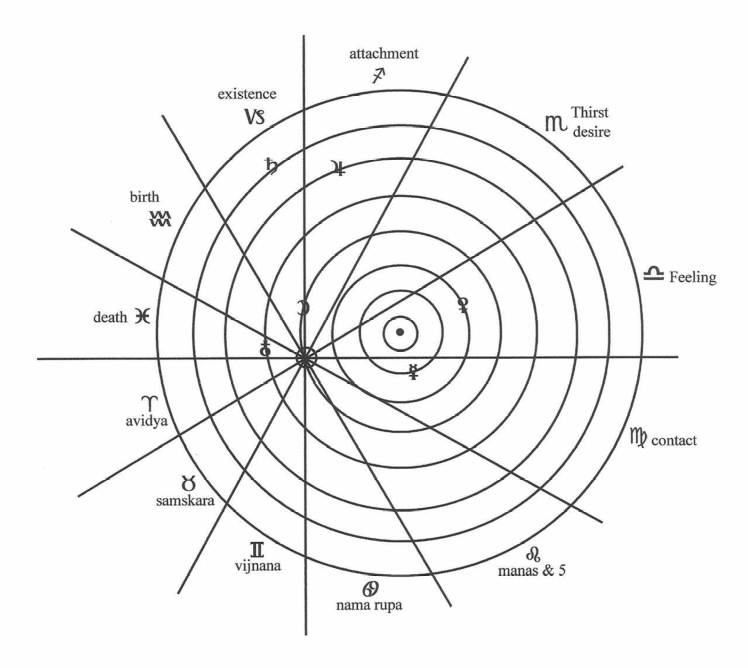
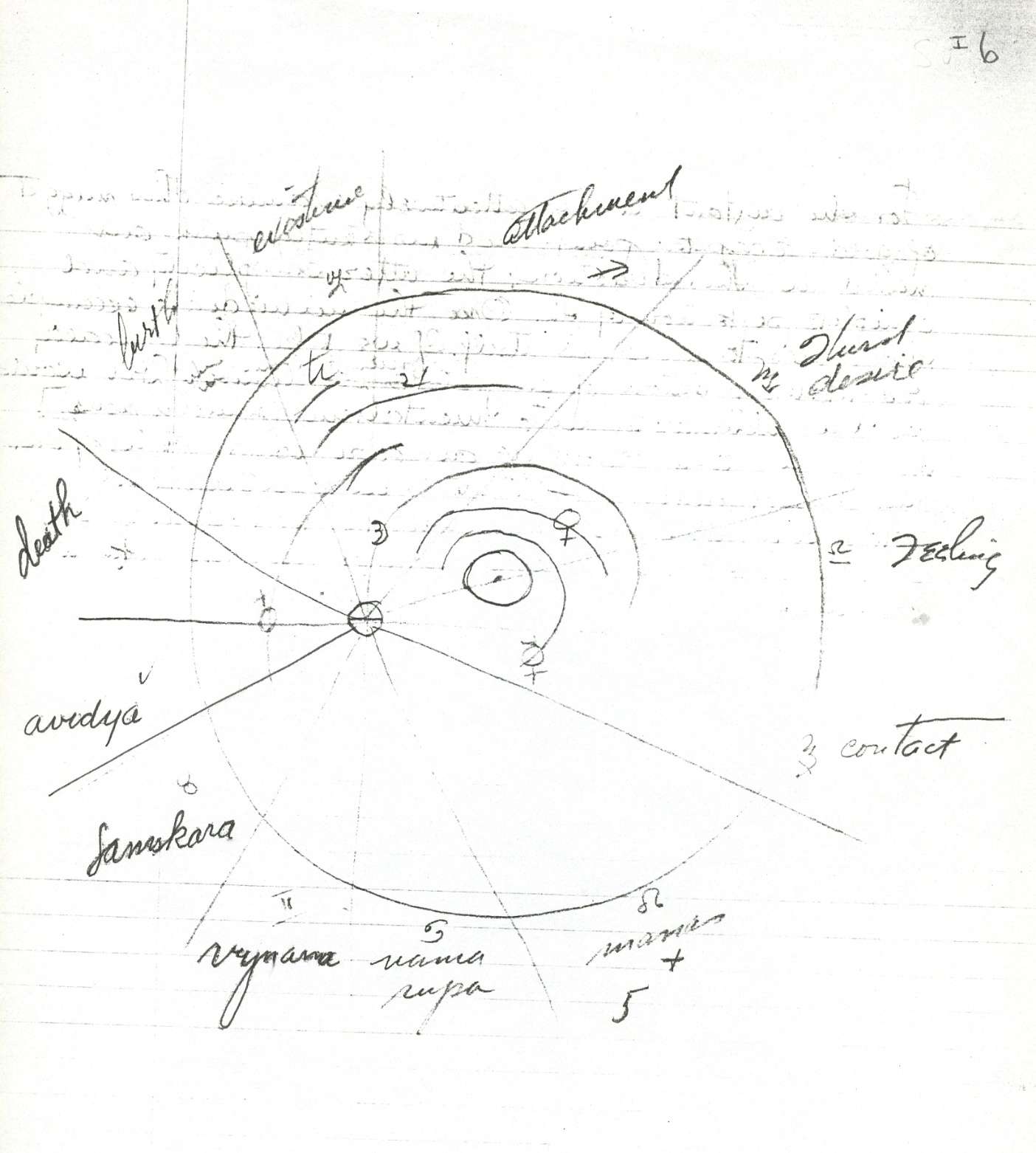
[Fig. AD Supp AD-I-006: Nidana Chain with Geo- and Helio-centric Cosmos. Facsimile scanned from AD Supp p. 6.]
[AD Supp p. 7]
These quotations bring forth -- into light -- the miracle and mystery of our subjectivity which has its roots deep in that intelligence and wisdom that produces and guides the world. The intellectual paradigm or idea of the world which is brought forth thru the instrumentality of the soul was considered to be of a higher order of reality than the soul. Nonetheless thru soul or rather some lower phase of soul -- the fabrication of the world occurs and within the manifested sensible world there is a representation of these immaterial reason principles or guiding intelligences. Soul, or the mind -- and we are now speaking of individual sages -- can so completely identified [identify] itself with that higher & to such an extent that it is identified with it. Soul is then this higher knower have [has] this intelligence universal intelligence as its Self. In other words the the [sic] self-hood of soul is this universal consciousness which underlies the cosmos and imperfectly reveals or manifest [manifests] itself as the sensible world. The progidial [prodigious] sublimity and grandeur of such an achievement has been spoken of in deific terms in other traditions such as the omniscience of a Buddha. The reverence due to such a true man has been overlaid by mythological trappings and embellishments but the magnificence of this possibility is held up as a goal to the spiritually orientated. Plotinus in this series of quotes speaks of them. Soul as knower is the completion of man -- the rare fruit from the tree of man and here man poised in the universal intellect (void) includes man as soul. We thought it proper to include this digression into the nature of the sage Gnani so that allowances for our difficulties can be made to function as a knower is the prerogative of [AD Supp p. 8 top] rarity -- for this breed is almost extinct nowaday [nowadays] --
[AD Supp p. 8]
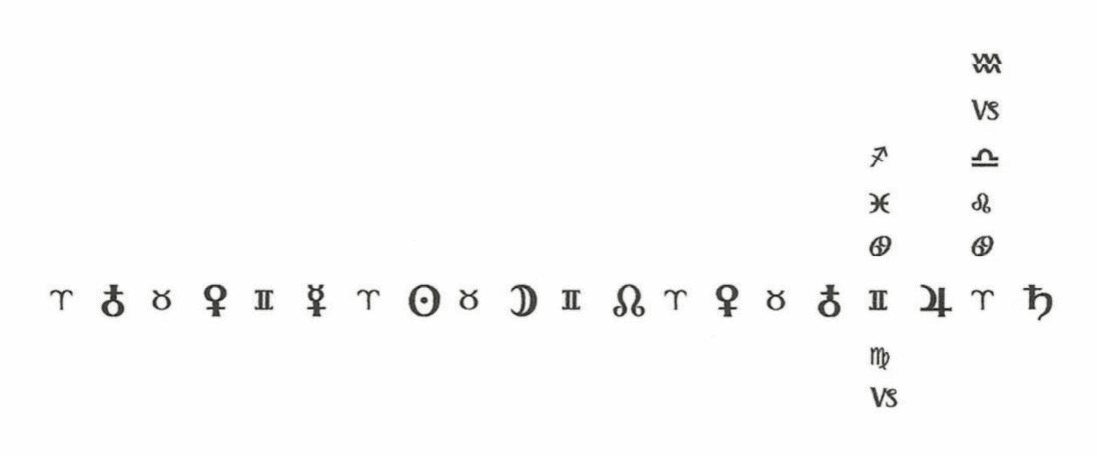
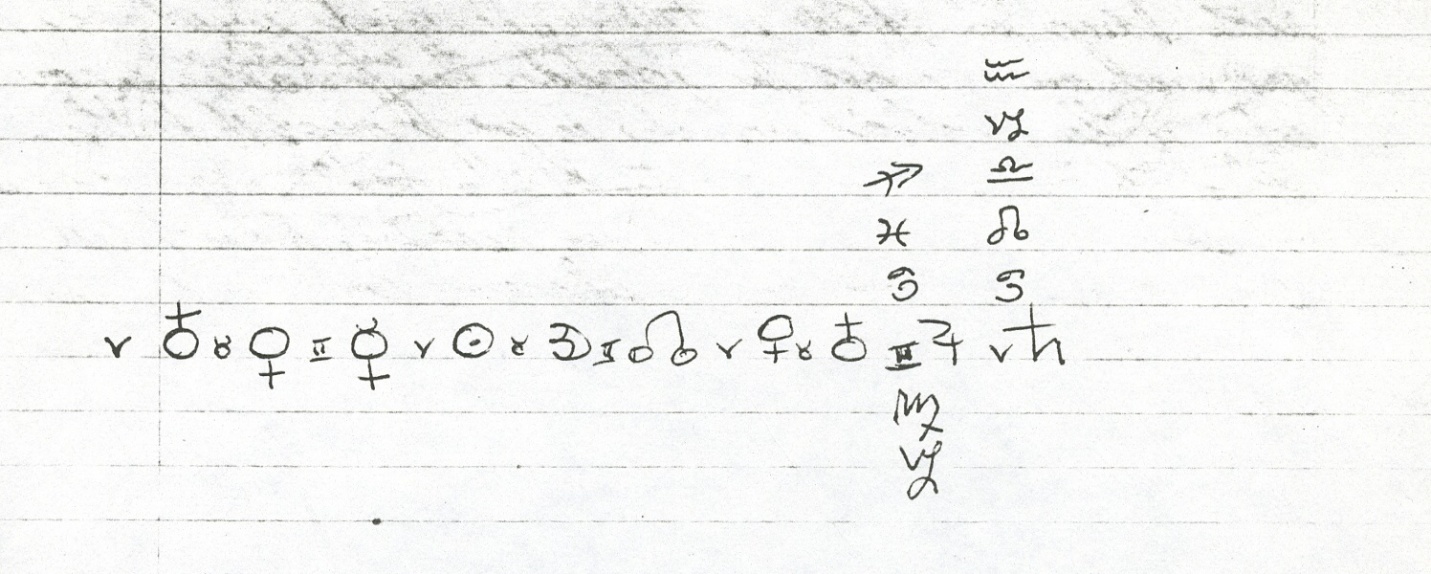
[Fig. AD Supp AD-I-008: First Quadrant Unities, with Jupiter, Saturn Henads. Facsimile scanned from AD Supp p. 8.]
[AD Supp p. 9]
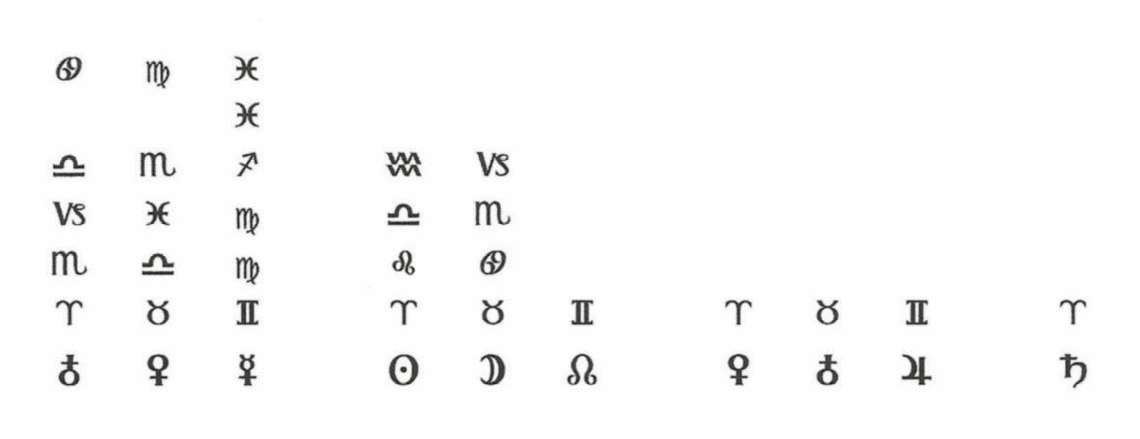
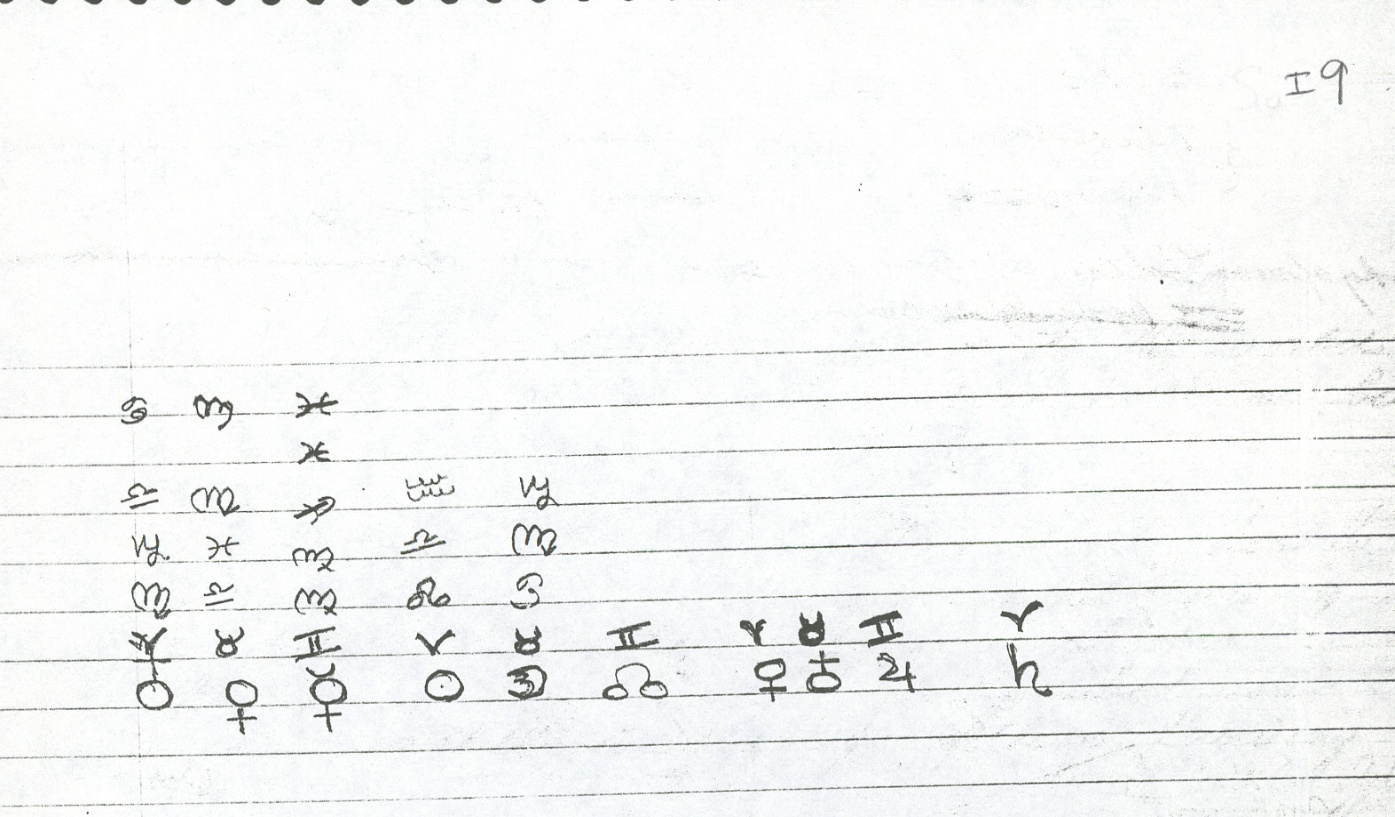
[Fig. AD Supp AD-I-009: First Quadrant Unities, with Mars, Venus, Mercury, Sun, Moon Henads. Facsimile scanned from AD Supp p. 9.]
[ASTROLOGY, CHALDEANS, TRANS-SATURNIANS, NIDANA CHAIN. AD Supp pp. 10-16]
[AD Supp p. 10]
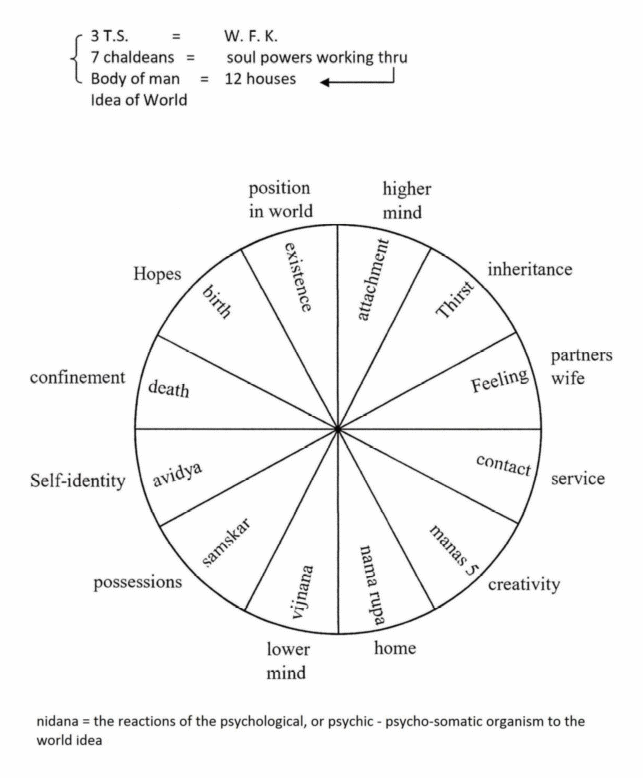
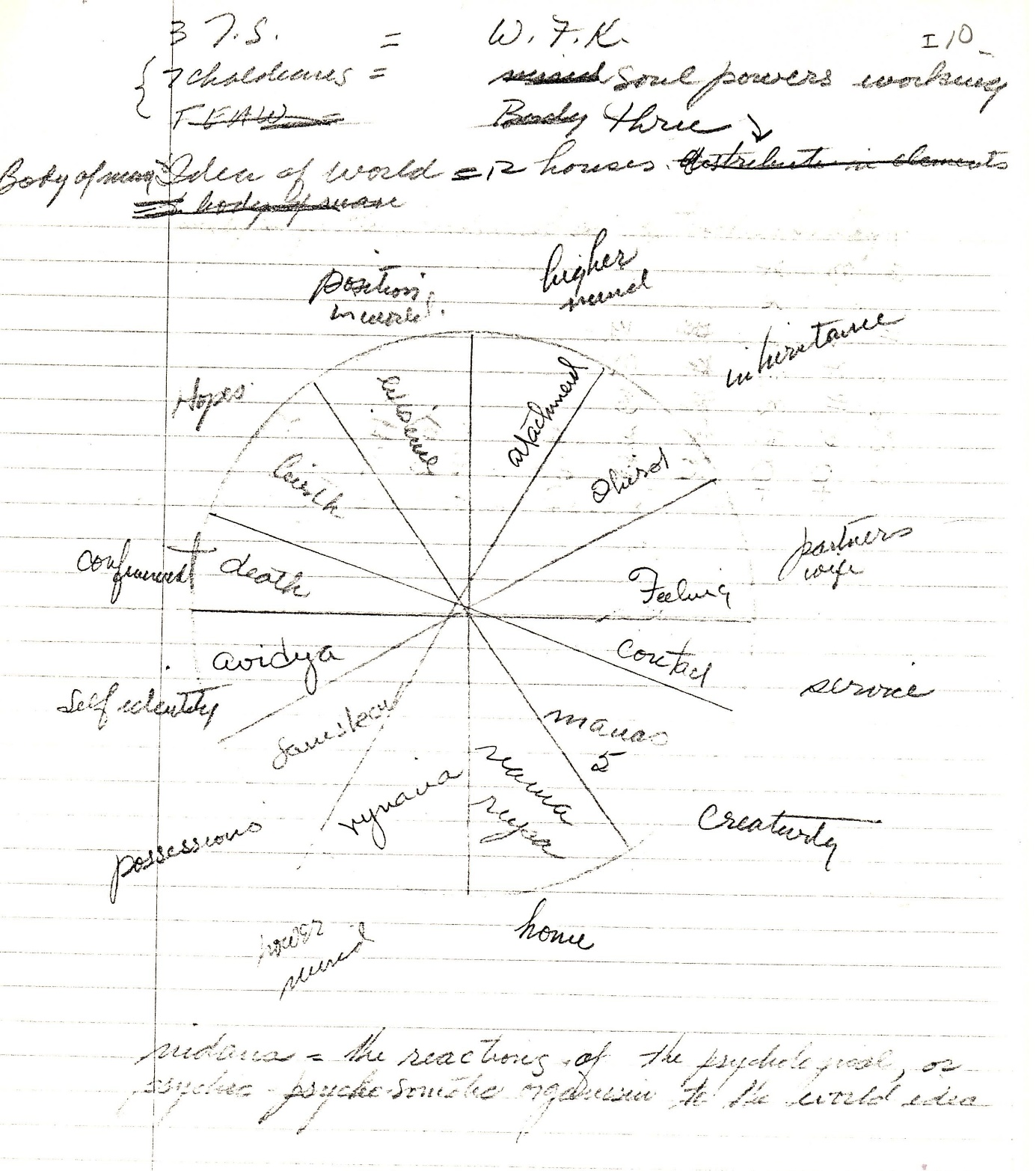
[Fig. AD Supp AD-I-010: Nidana Chain and Astrological Houses. Facsimile scanned from AD Supp p. 10.]
[AD handwritten phrase at bottom:] nidana = the reactions of the psychological, or psychic - psycho-somatic organism to the world idea
[AD Supp p. 11]
Assume: The 12 houses correspond to the world idea which includes the native's possessions, body, lower mind
The aspectual patterns of planets indicates how the soul understands or knows itself. This knowing itself dictates the reason principles it chooses -- i.e. planets on a degree & aspects -- and embodiment as categories of the imagination follows. Knowing itself thus, its reaction to the evolving World Idea brings about those links which constitute the nidana chain
[AD Supp p. 12]
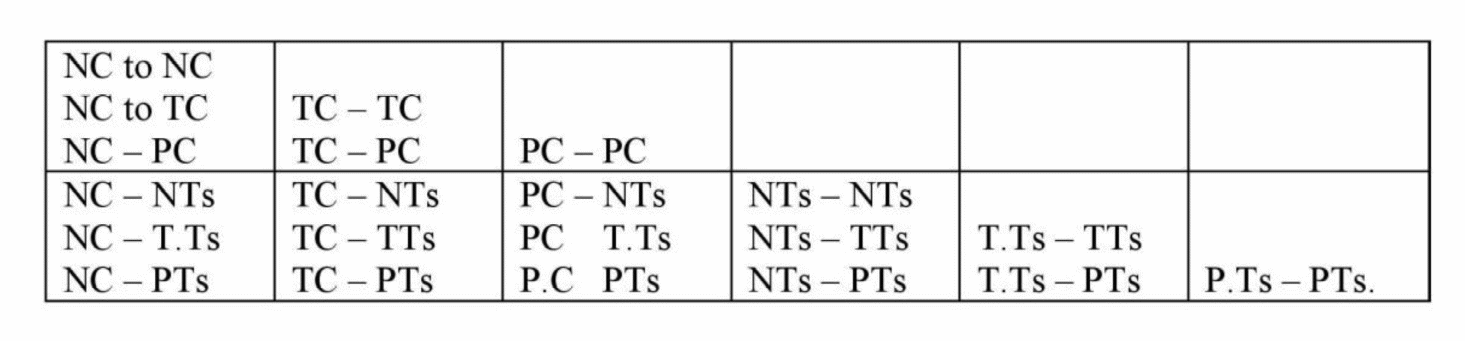
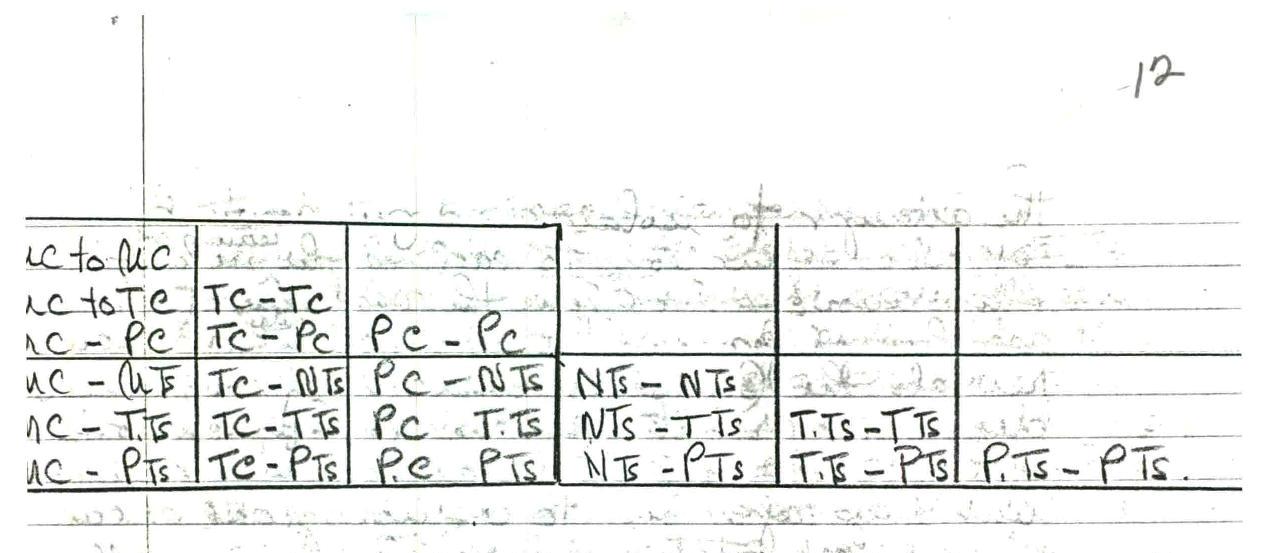
[Fig. AD Supp AD-I-012. Table of Aspects: Chaldeans, trans-Saturnians -- natal, transiting, progressed. Note: NC = natal Chaldeans, NT = natal trans-Saturnians, TC = transiting Chaldeans, TT = transiting trans-Saturnians, PC = progressed Chaldeans, PT = progressed trans-Saturnians.]
Natal chaldeans to natal chaldeans in the horoscope . . . represent the powers of this individual soul (in the over-all context of houses, signs etc) and they are seven. The degrees that each chaldean planet is conjoined to indicates how that peculiar soul power or function is organized and its aspectual relationship with the other chaldeans -- that is in combination they reveal the basic matrix or the potentialities for experience as the resources of this ego. This relatively permanent flux of tendencies which constitutes the quasi stable personality is an aggregate or depository -- a vital summation and in a certain sense a unique individual forever in the process of actualizing itself . . . nor does the process cease for an instant. The flowing rivers of vitality-- symbolized by the transiting chaldeans -- incessantly modifying and metamorphizing this continuum of thought from within and without is elementary astrological observation.
[AD Supp p. 13]
The attempt to isolate and pin down a specific definition to each of the terms of relationships above -- let alone the vastness of the astrological framework operative -- convincingly reveals the Buddhist insight of combined dependent origination. The presuppositions of experience in its broadest sense cannot but help refer us to cosmological speculations or stated differently: we really do not have an adequate conception of what the conditions must be in order to make perception & knowledge possible. And regardless of how fragmentary our grasp of this situation, nonetheless it is at least a step in the right direction.
We return to the cosmic identity that an individual horoscope attempts . . . Situated within the canvas of perception and taking for granted the pictures painted thereon, we claim that the transiting planets announce certain meanings such as f.i. [for instance] the sun's journey around the earth back to its original position is equivalent to a progressed sun or one degree added on to its natal position . . . an accrual of meaning within the flux of events is being congealed around the original matrix and combines with it. It may be observed that environmental factors of the native's early life provide the necessary factors or circumstances that get incorporated into the inherently existing psychic dispositions to bring about the karmic traits & results indicated by the horoscope, childhood karma that moulds & sets the personality for life.
[AD Supp p. 14]
The transiting chaldeans may or may not be aspecting themselves in the sky . . . indicative of the subtly pervasive & peculiar influences operative at that particular time but not the cause of such. So f.e. [for example] even though an individual's chart shows no aspectual relationship to them nonetheless it may become thru introspection -- aware of certain subtle qualities of the environment. A saturn sun conjunction announces an undertow of quietness, a Mars in Capricorn activity; Mercury Venus conjunction -- clear & lucid transparency either in the weather or the realm of perception or both. There is relationship but in the sense of the particular within the general. It is worthwhile in [sic] observing this subtle influence -- for that is the prerequisite feeling necessary in our attempts to apprehend the qualities we find in the natal chart of a person born at that time and which we can later on see operative in him.
In the next relationship -- progressed planets -- in the natal chart -- in relationship to other progressed planets. We are considering the 'relatively' permanent ego's modifications of itself based on the flow of events or experience -- the confrontation of the our [sic] innate meaning meanings we are born with, yes -- innate ideas -- predetermined selected responses with the (addition of/additional) [Note: Photocopy page cut off.] incoming thoughts. Sometimes in these aspects one may perceive positively or negatively the implication implicit in the vital genetic inheritance.
[AD Supp p. 15]
Tran S [Trans-Saturnians] -- how the higher knower is organized in aspect to themselves --
Transiting Ts [Trans-Saturnians] in relation to natal Ts -- revelation or awareness of higher knower.
Natal chaldeans aspects [aspect] Transtarunines [Trans-Saturnians] --
Our truer subjectivity, comporting super flective [reflective] Knowing, Feeling, Willing is symbolized by those planets beyond the powers of (chaldeans = rational soul) the rational soul
[AD Supp p. 16]
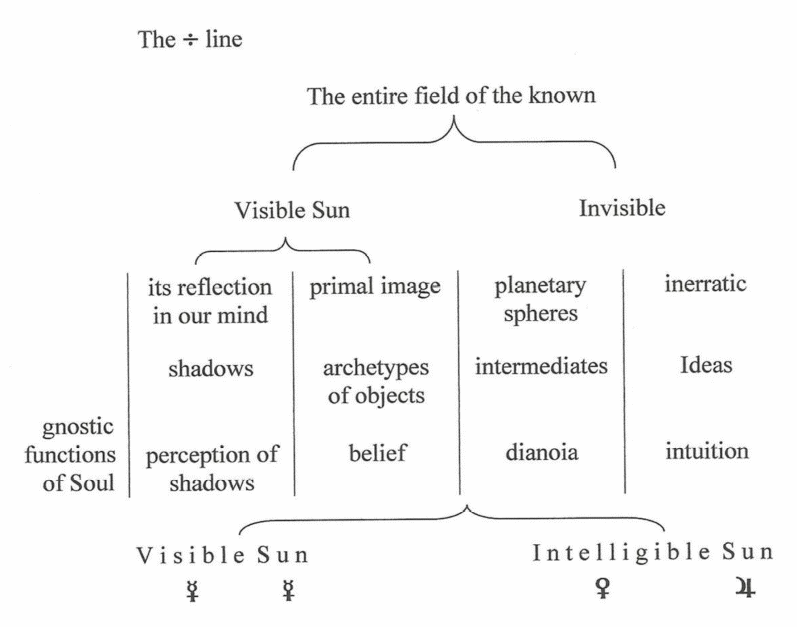
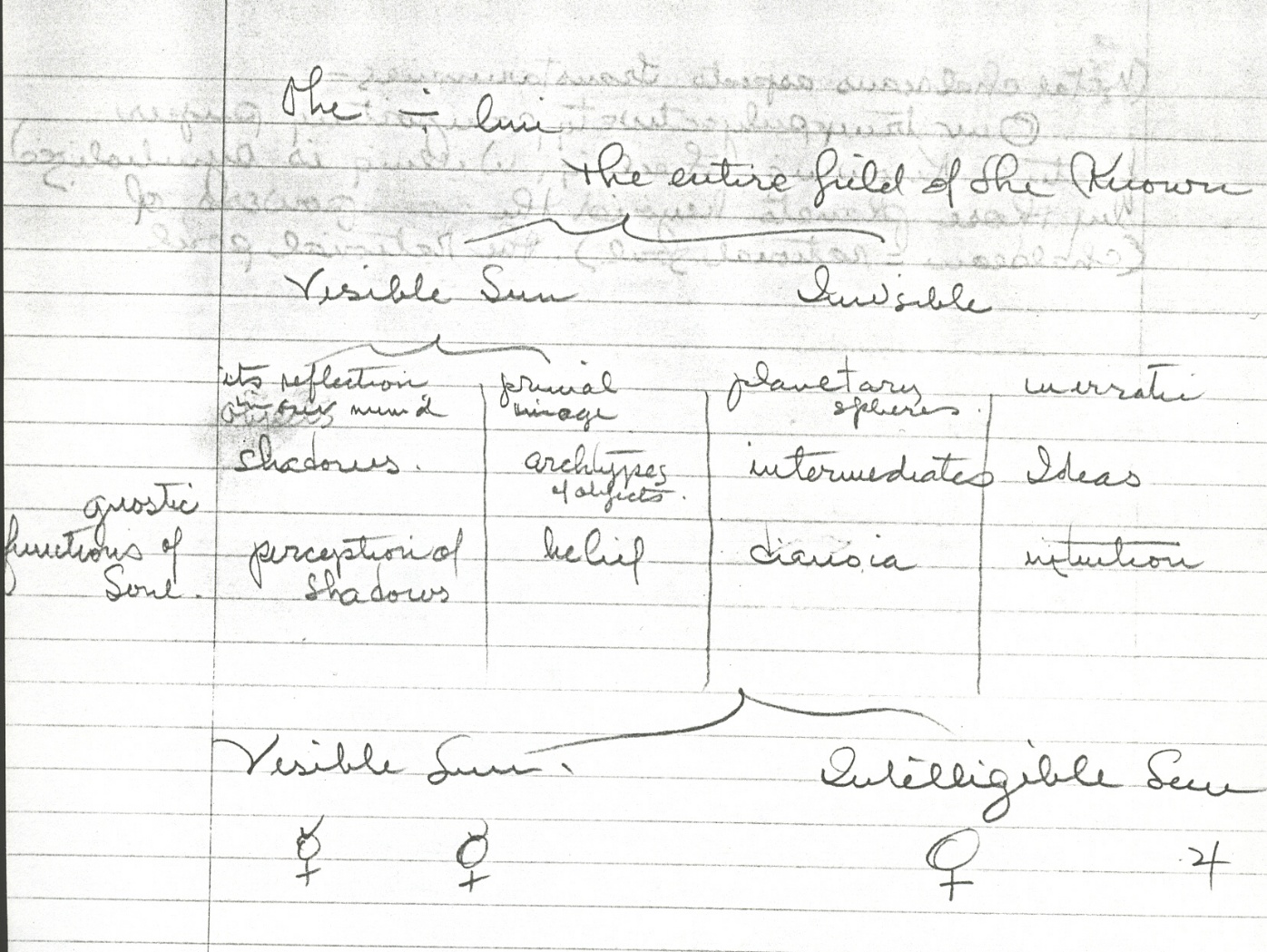
[Fig. AD Supp AD-I-016: The Divided Line and Pisces Dignities. Facsimile scanned from AD Supp p. 16.]
[ON P.B. AND PLOTINUS. AD Supp pp. 17-18]
[AD Supp p. 17]
Our most precious heritage -- philosophy -- is restored and renewed in a most thoroughly comprehensive fashion in these posthumous writings of P.B. We will find within these volumes in the most transparent clarity an extensive survey in our own modern idiom of every necessary item and detail needed by any seeker of truth. Regardless of how few or many. Irrecovably [Irrevocably] & finally -- the challenge of our times with its degrading dehumanization, is confronted and point by point, answered by this master of the subtle. Thru his life -- the heroism and personal achievement of his idealism, there blossoms forth an indescribable beauty & felicity of the spirit as a benediction to any sincere devotee of truth. We have been denied our rightful sources of wisdom thru a variety of causes -- but certainly among them can be included the hypocritical word-monger and sophist that thru out our history claimed knowledge but sported egotistical fanaticism and ignorance. We have had our sages -- repeatedly ignored as the commentaries abundantly reveal . . . . for their penetrating intellectual analysis was confounded by their incapacity to understand themselves . . . without which
[AD Supp p. 18]
The inner vision that Pl. [Plotinus] is objectifying is of such magnitude that it requires some sort of comprehensive symbolism -- vast enough to include the indeinte [indefinite] number of details -- which will become available as we proceed in this expos. [exposition.] The writings of the Platonist provide us with such a schema . . . the astrological horoscope, the cosmic identity of an individual that indicates something about his parentage and status.
Now the only phenomena vast enough with which we can understand man -- the proper context -- is the sensible universe itself, not as a theatrical background but as the actual medium within which the role we played was woven from its very fabric . . . Our thoughts & deeds were written & announced by the stars, even though something of ourselves is immune from its endless acts. At any rate the mandala symbolism is a device designed to transform the perceptual into the conceptual, & this hypothetical understanding referred back to the perceptual after empirical verification. In a sense the horoscope is a sort of transcendent function that correlates our beliefs with images -- but stands above either. It is to this
[DIAGRAMS: MONADS AND HENADS. AD Supp pp. 19-22]
[AD Supp p. 19]
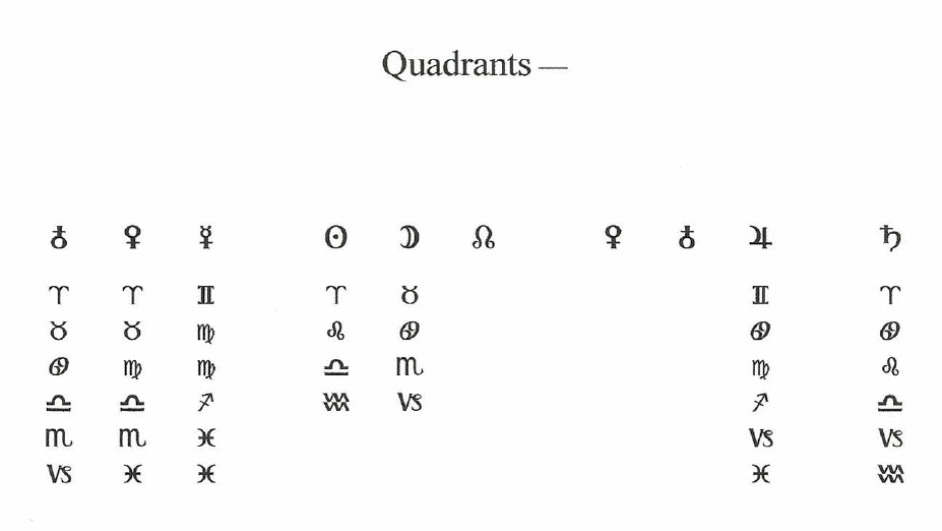
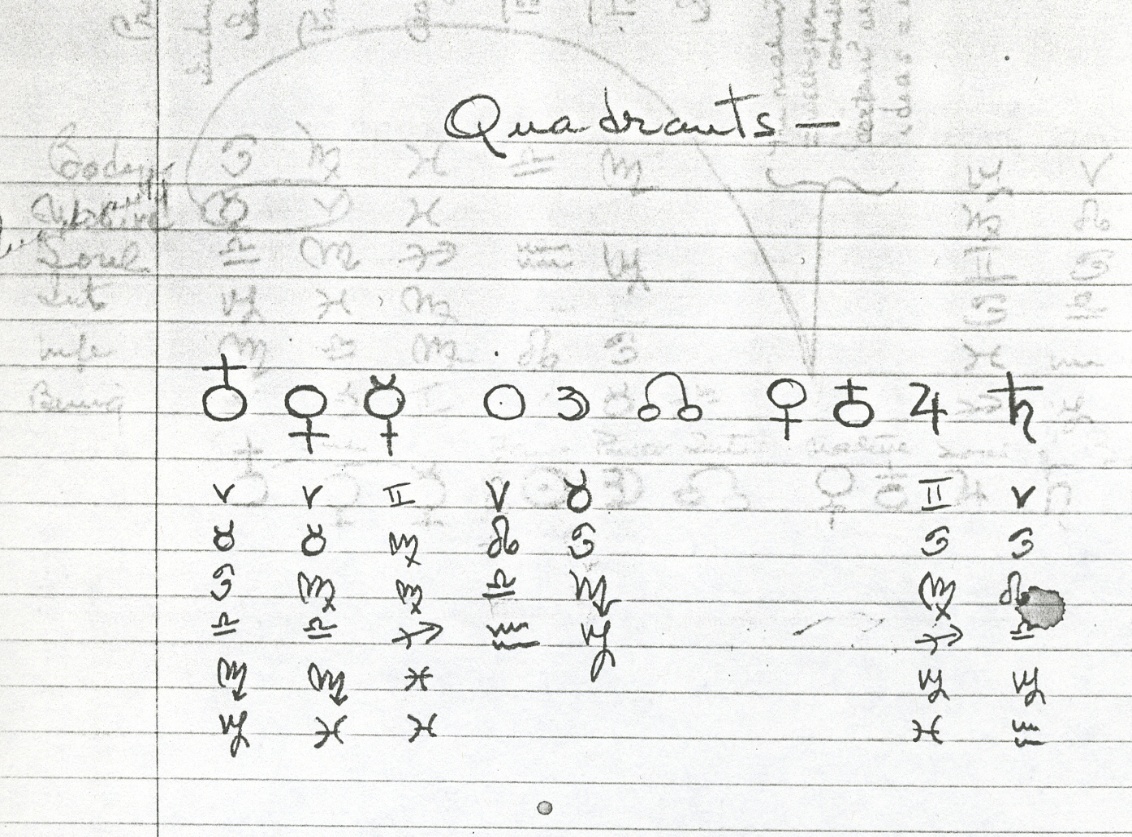
[Fig. AD Supp I-019. Quadrants with Henads (Signs). Facsimile scanned from AD Supp p. 19.]
[AD Supp p. 20]
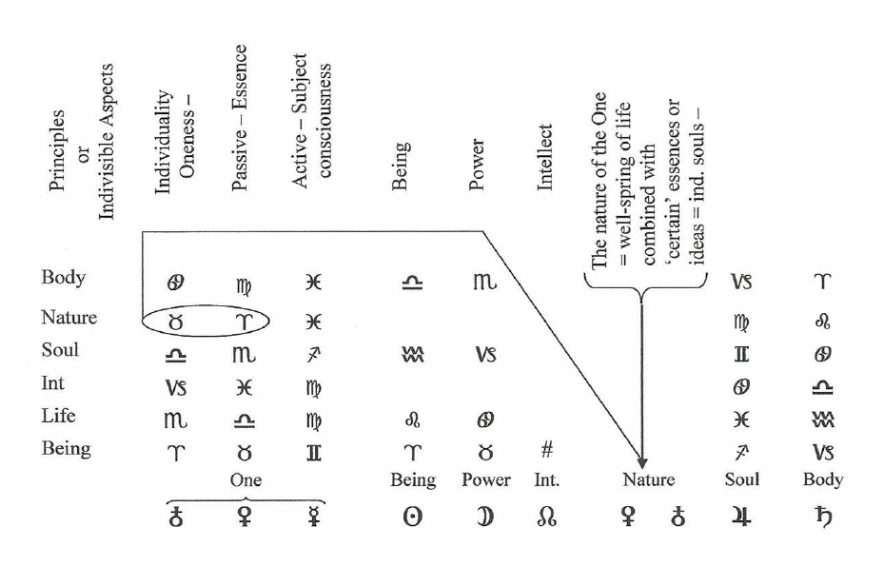
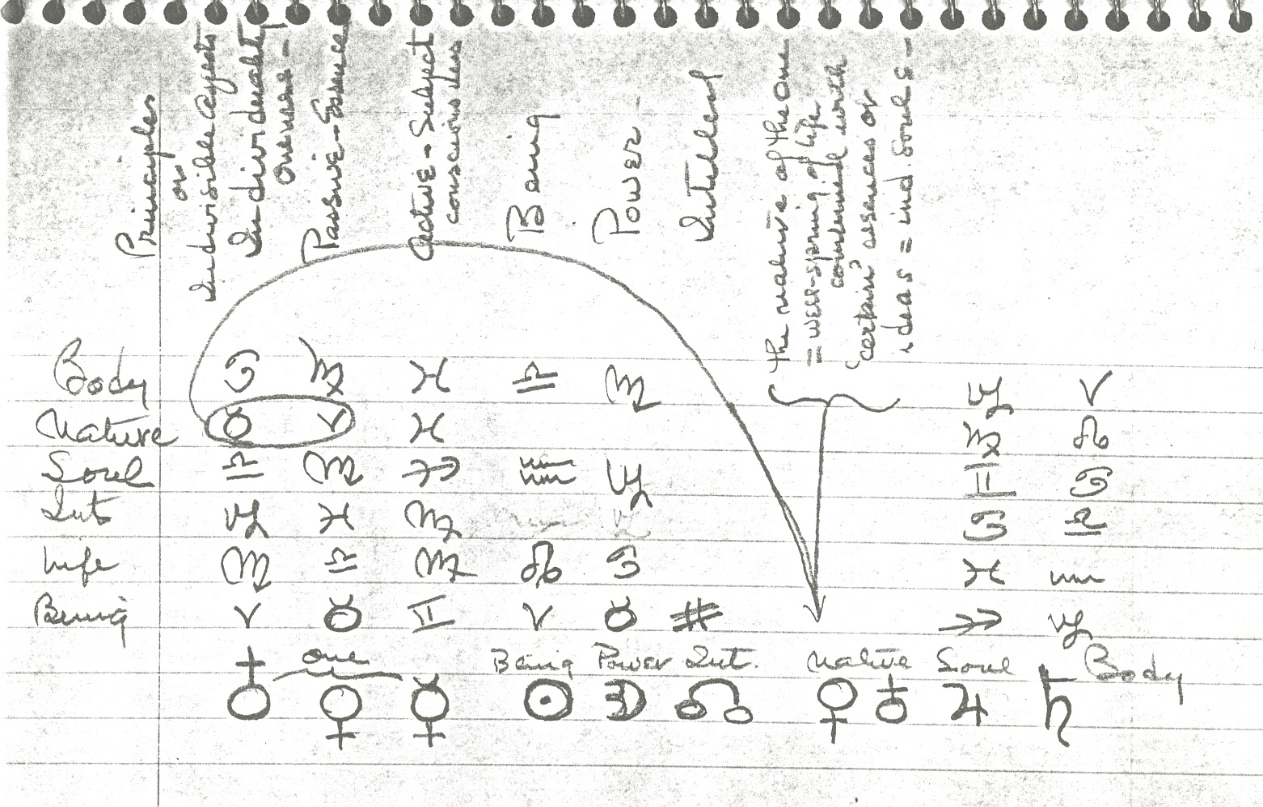
[Fig. AD Supp AD-I-020. Monads and Henads. Facsimile scanned from AD Supp p. 20.]
[AD Supp p. 21]
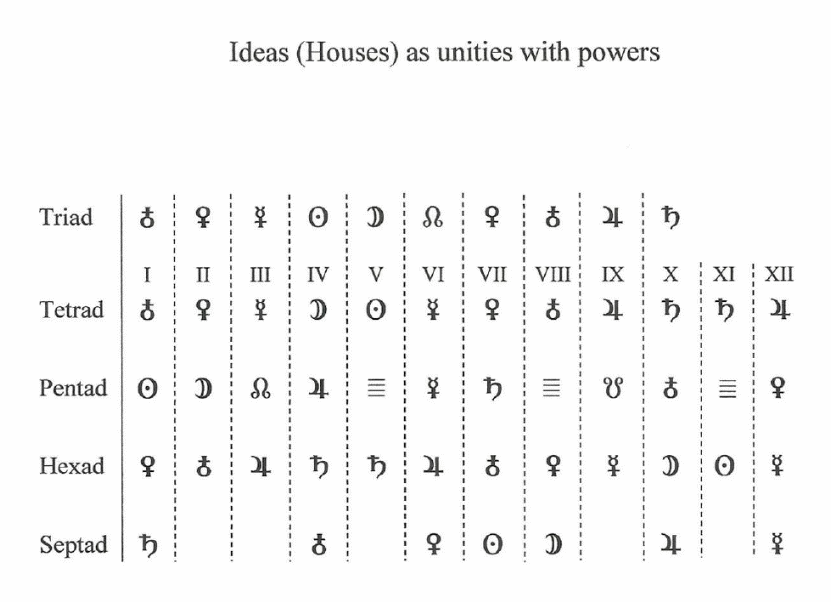
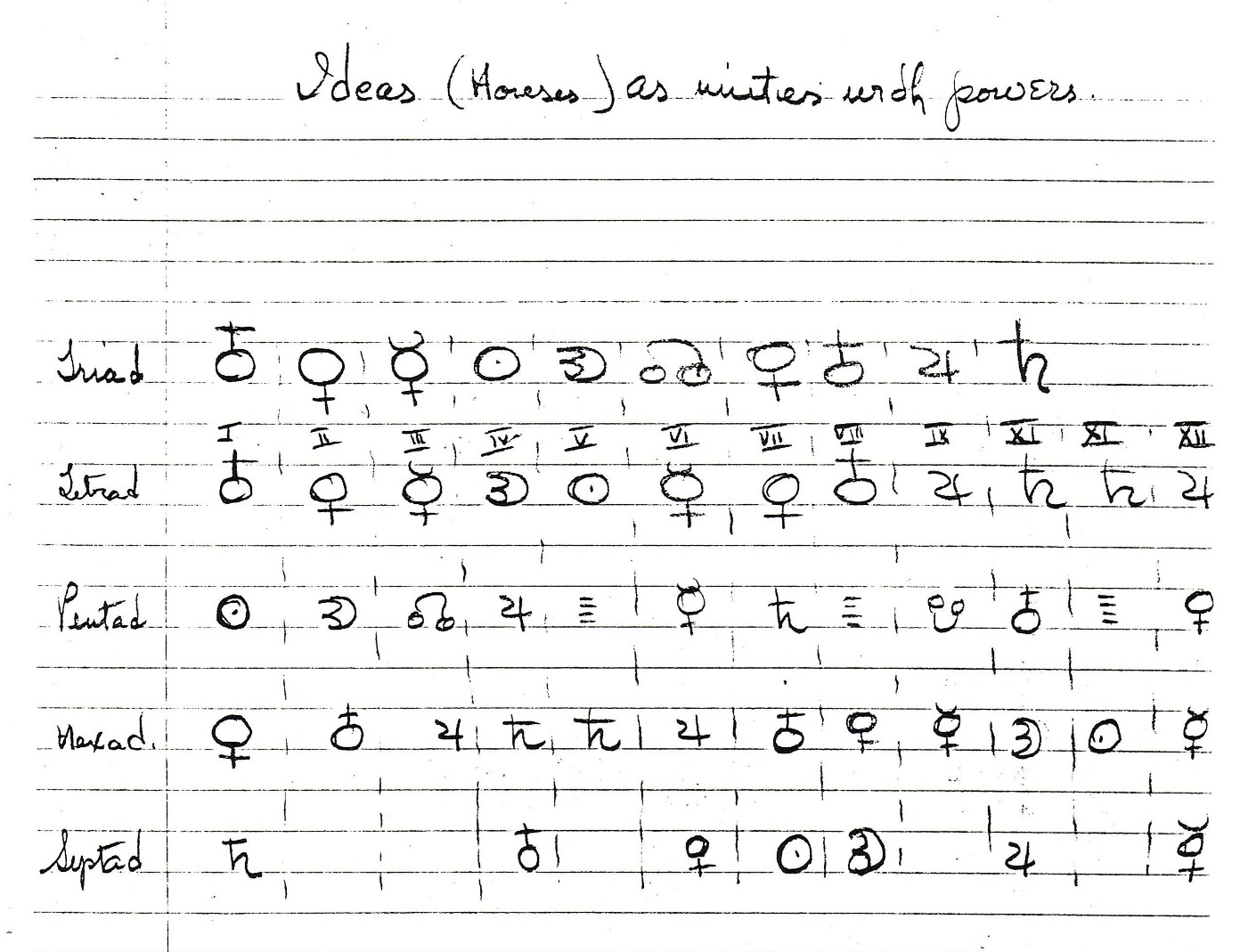
[AD Supp AD-I-021. Ideas (Houses) as Unities with Powers. Facsimile scanned from AD Supp p. 21.]
[AD Supp p. 22]


[Fig. AD Supp AD-I-022. Dignities of the Triad. Facsimile scanned from AD Supp p. 22.]
[DIAGRAMS: SOUL. AD Supp pp. 23-26]
[AD Supp p. 23]
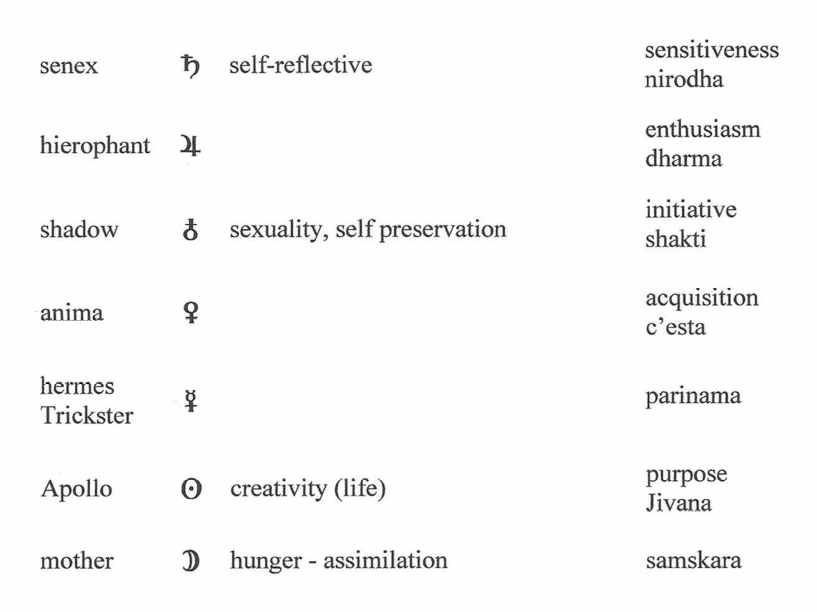
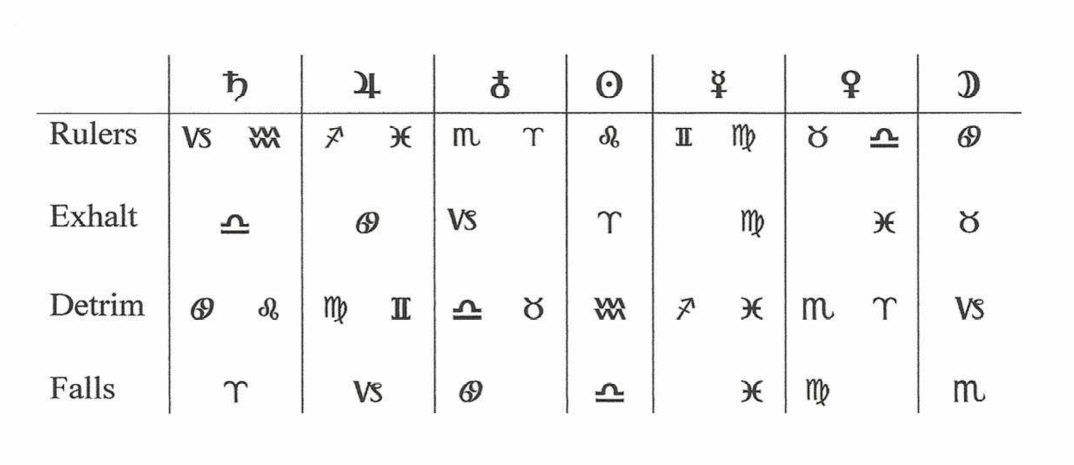
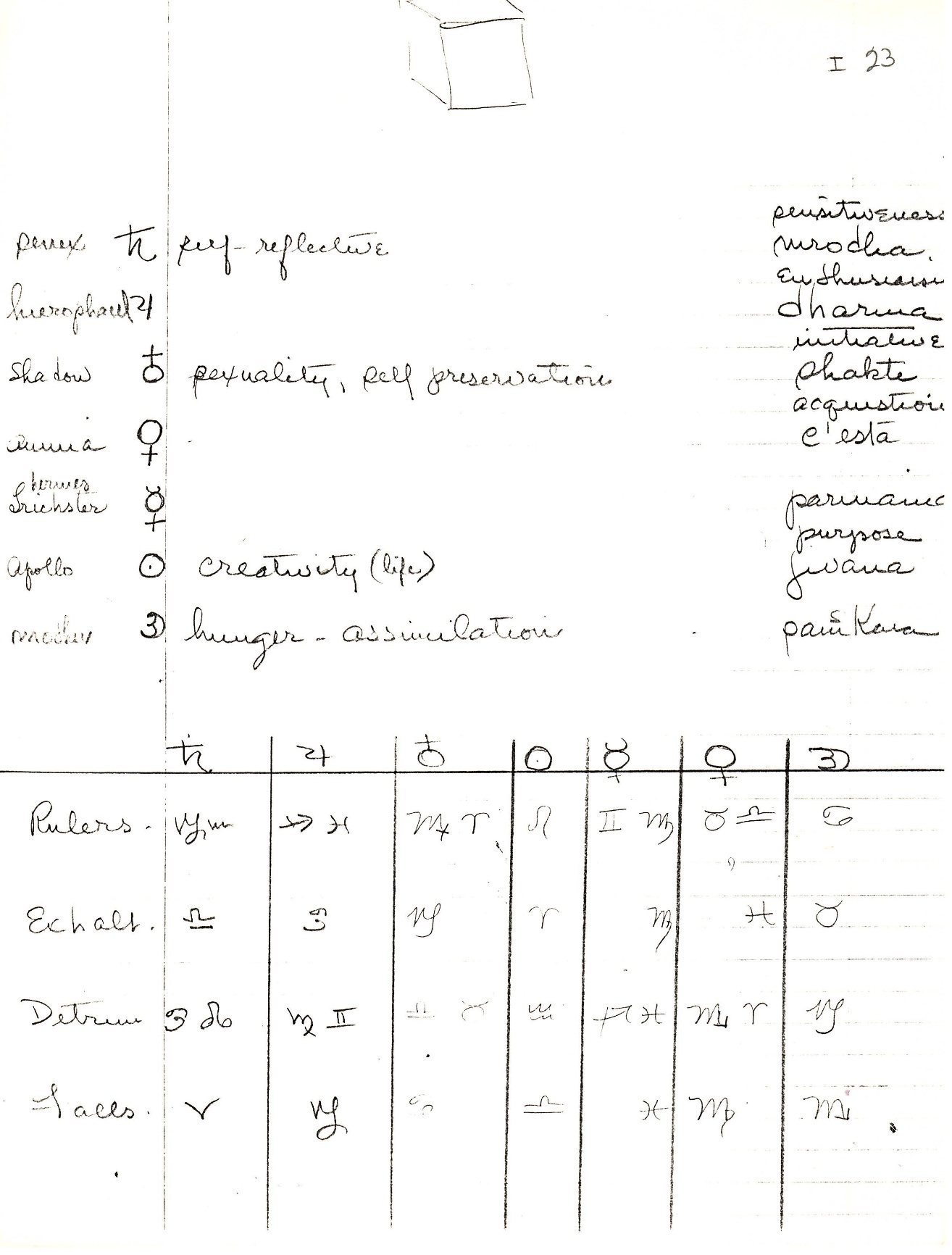
[Fig AD Supp AD-I-023. Top: Archetypes and Planets Keywords. Bottom: Planetary Henads and Rulership, Exaltation, Detriment, Fall Rings.]
[AD Supp p. 24]
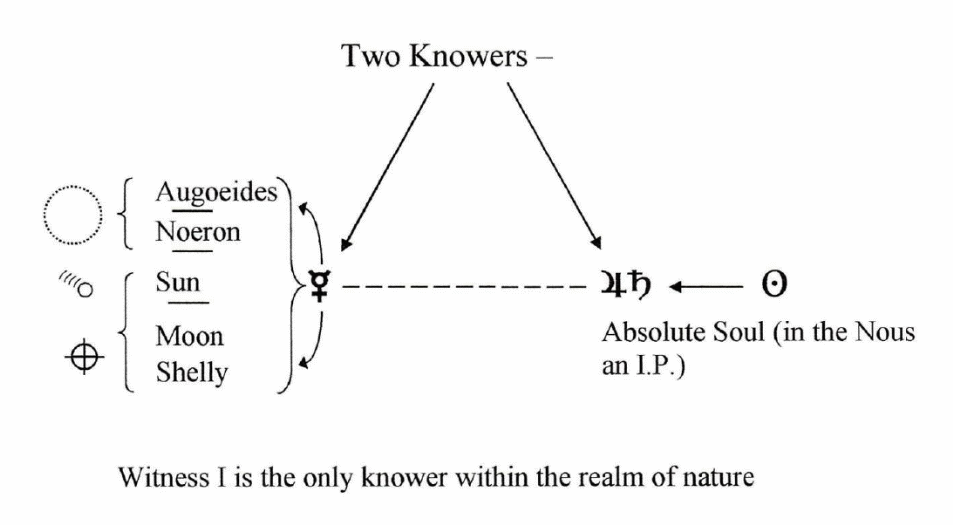
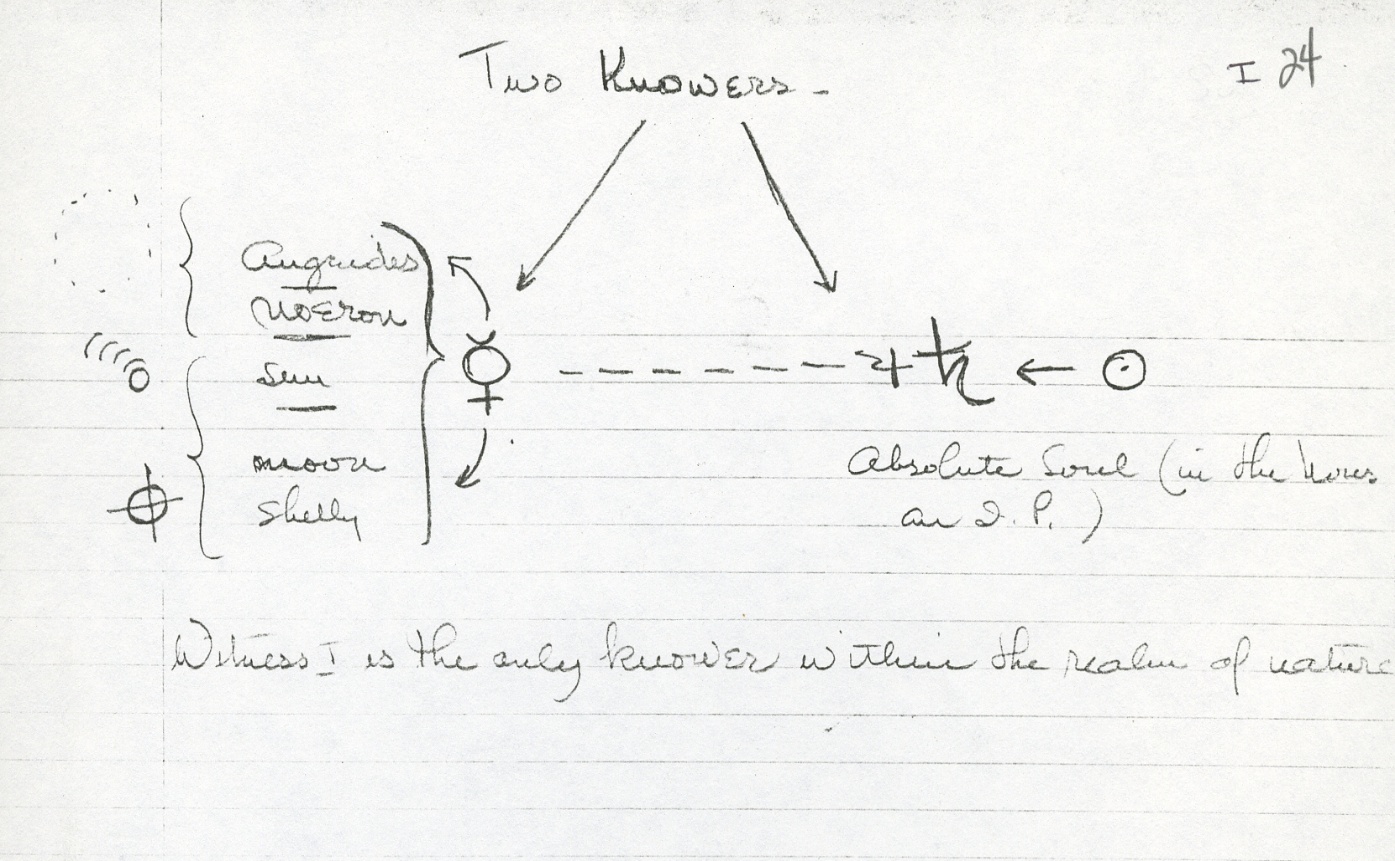
[Fig. AD Supp AD-I-024. Double Knower with Subtle Bodies / Realm of Nature (left) and Absolute Soul (right). Facsimile scanned from AD Supp p. 24.]
[AD Supp p. 25]
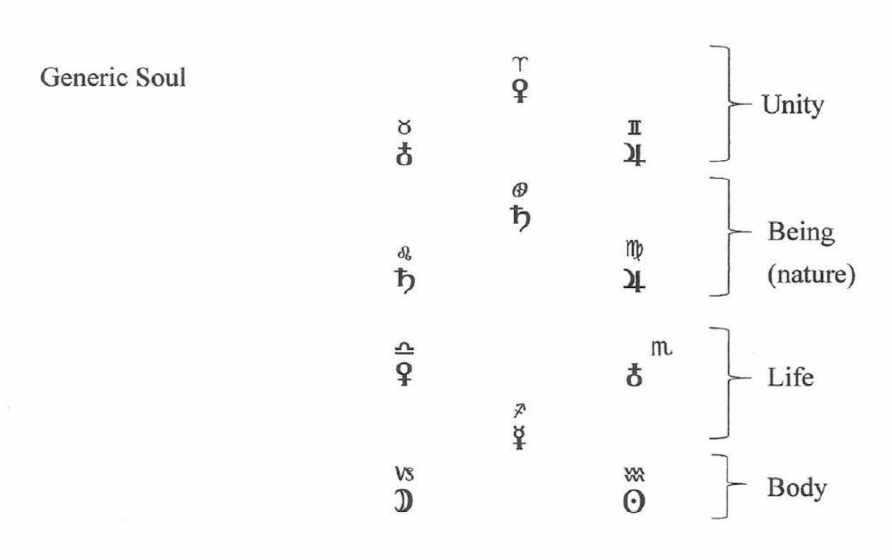
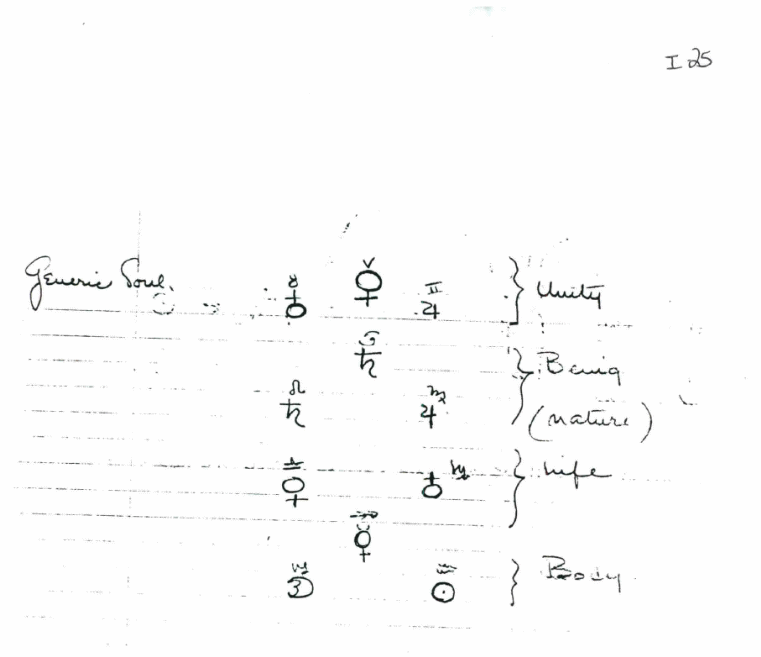
[Fig. AD Supp AD-I-025. Generic Soul: Soul (Detriment) Dignities in the Quadrants / Monads. Facsimile scanned from AD Supp p. 25.]
[AD Supp p. 26]
Order of charts to introduce chap. on Soul.
The different charts necessary to view soul --
a. The unity or paradigm of soul in the One.
b. Soul as suspend from the I.P. [Intellectual-Principle] is its logos --
c. Soul generic (Tree)
d. Soul as providing universe with its R.P. [Reason-Principle] or unity
e. Individual Souls elaborating their individual worlds.
f. Souls inhabiting the above worlds because of [looks like: their]
g. -- tripartite nature -- the third phase of soul
In order to properly view the vast complexity of soul -- in its generic amplitude -- we will take recourse to these illustrations.
[DIAGRAMS: THE ONE. AD Supp pp. 27-29]
[AD Supp p. 27]
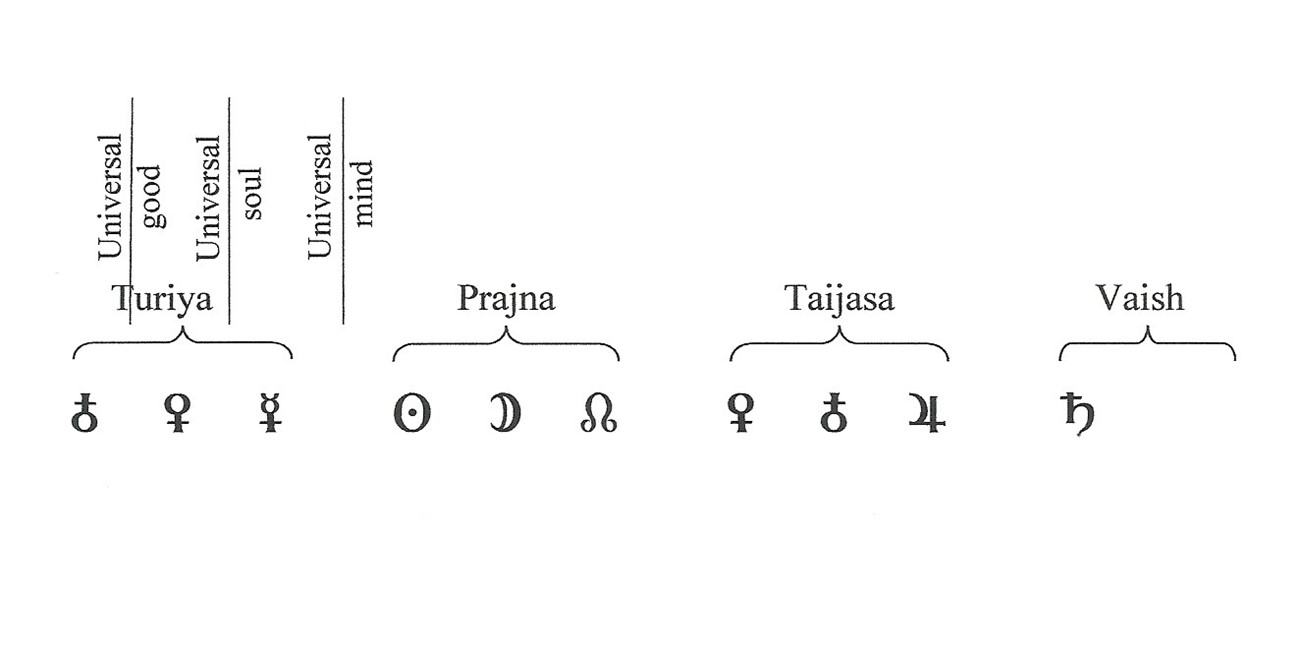
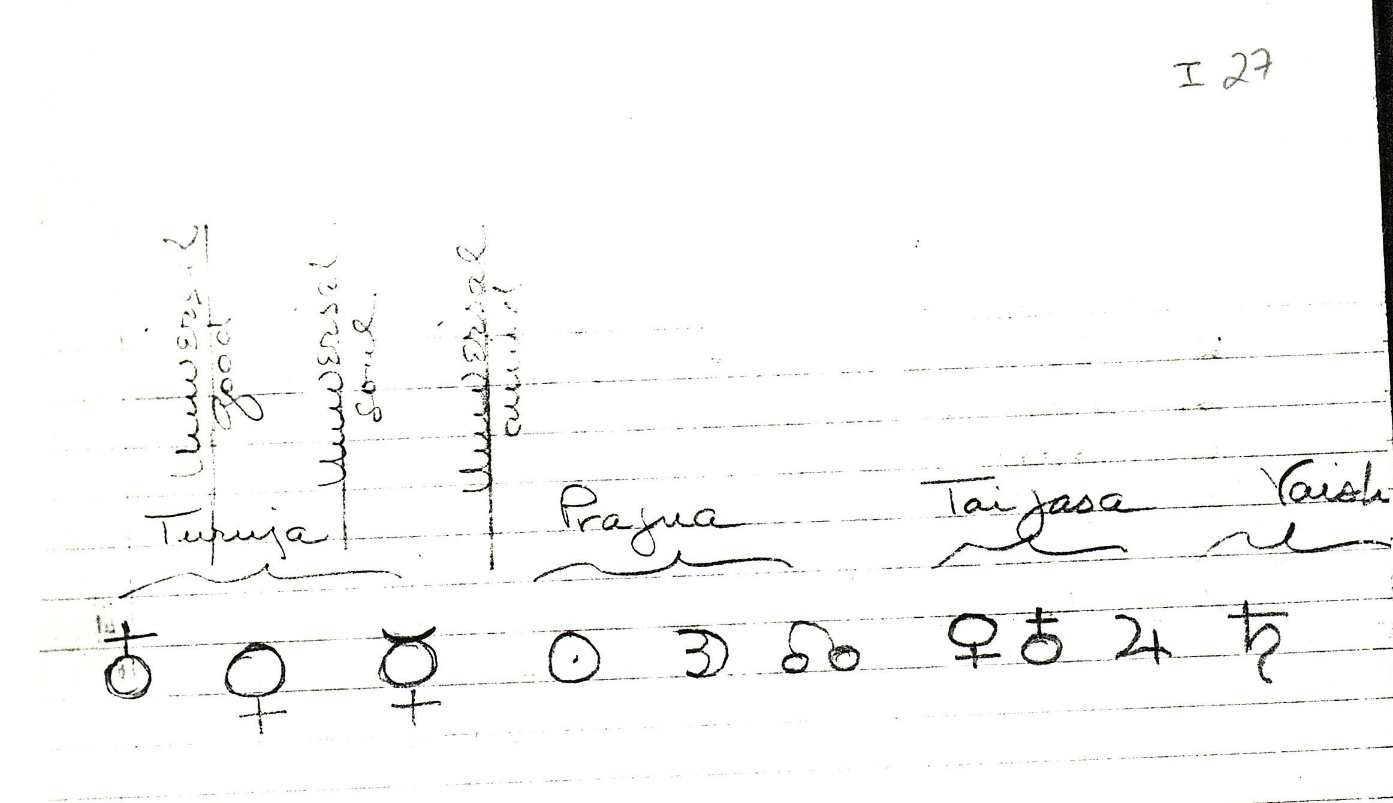
[Fig. AD Supp AD-I-027. Dignities of the First Quadrant and States of Consciousness. Facsimile scanned from AD Supp p. 27.]
[AD Supp p. 28]
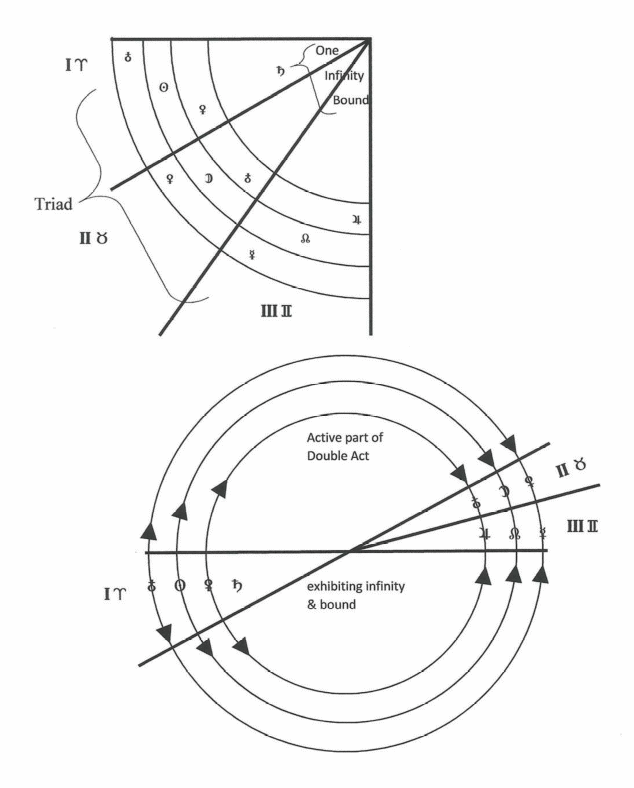
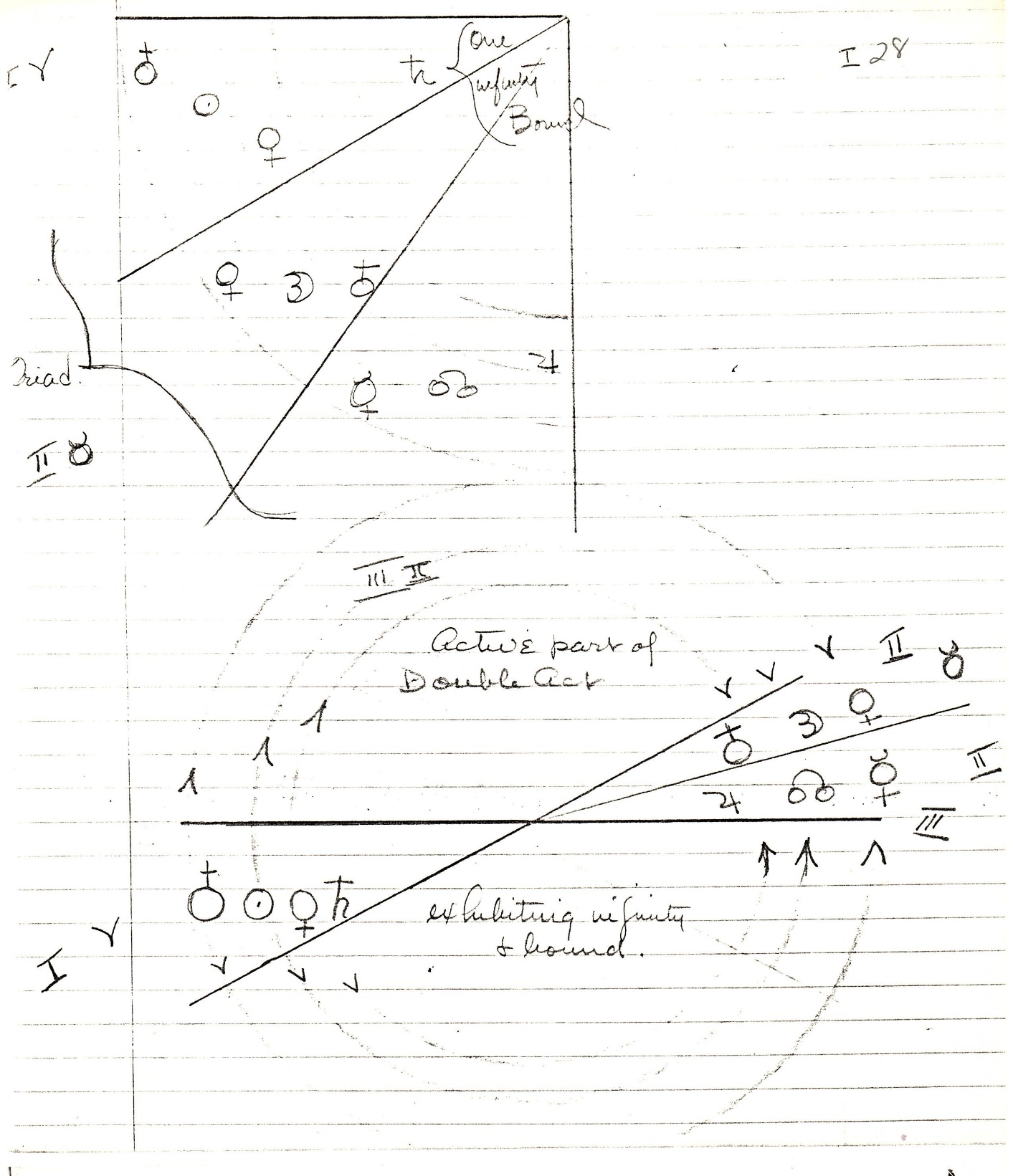
[Fig. AD Supp AD-I-028. Top: First Quadrant with One-Infinity-Bound and Triad. Bottom: Double Act. Facsimile scanned from AD Supp p. 28.]
[AD Supp p. 29] [Note: (CD: last page of orig. n.b.)]
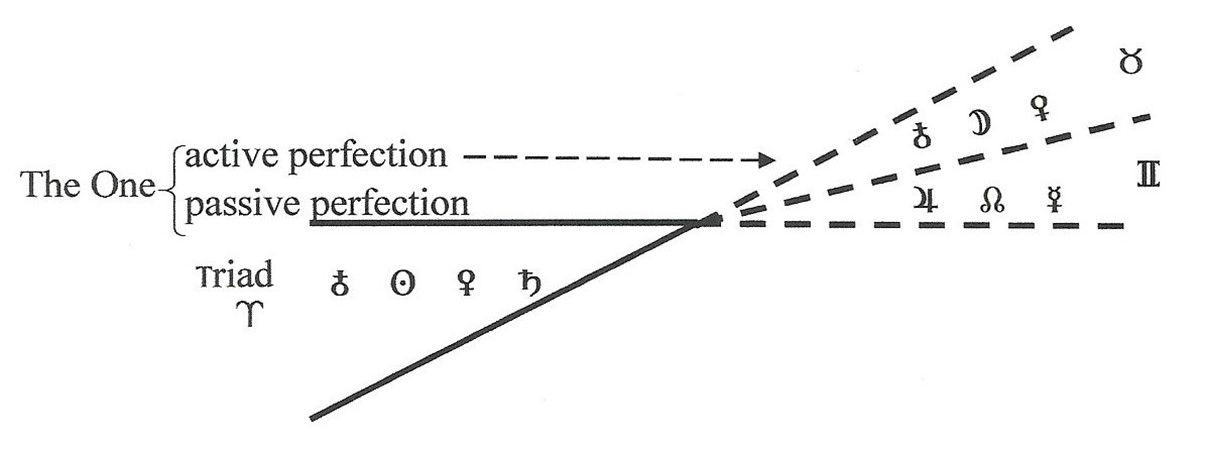
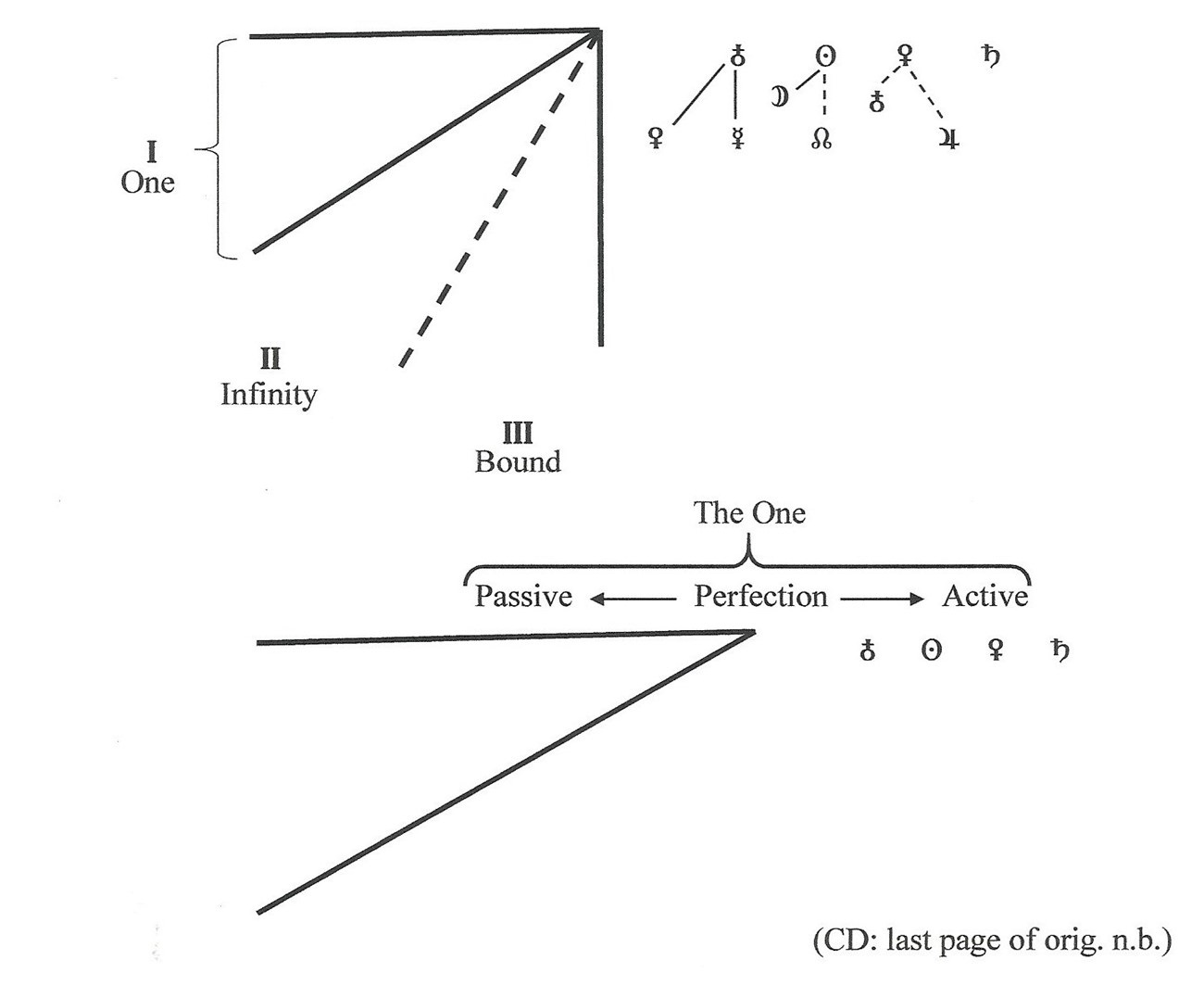
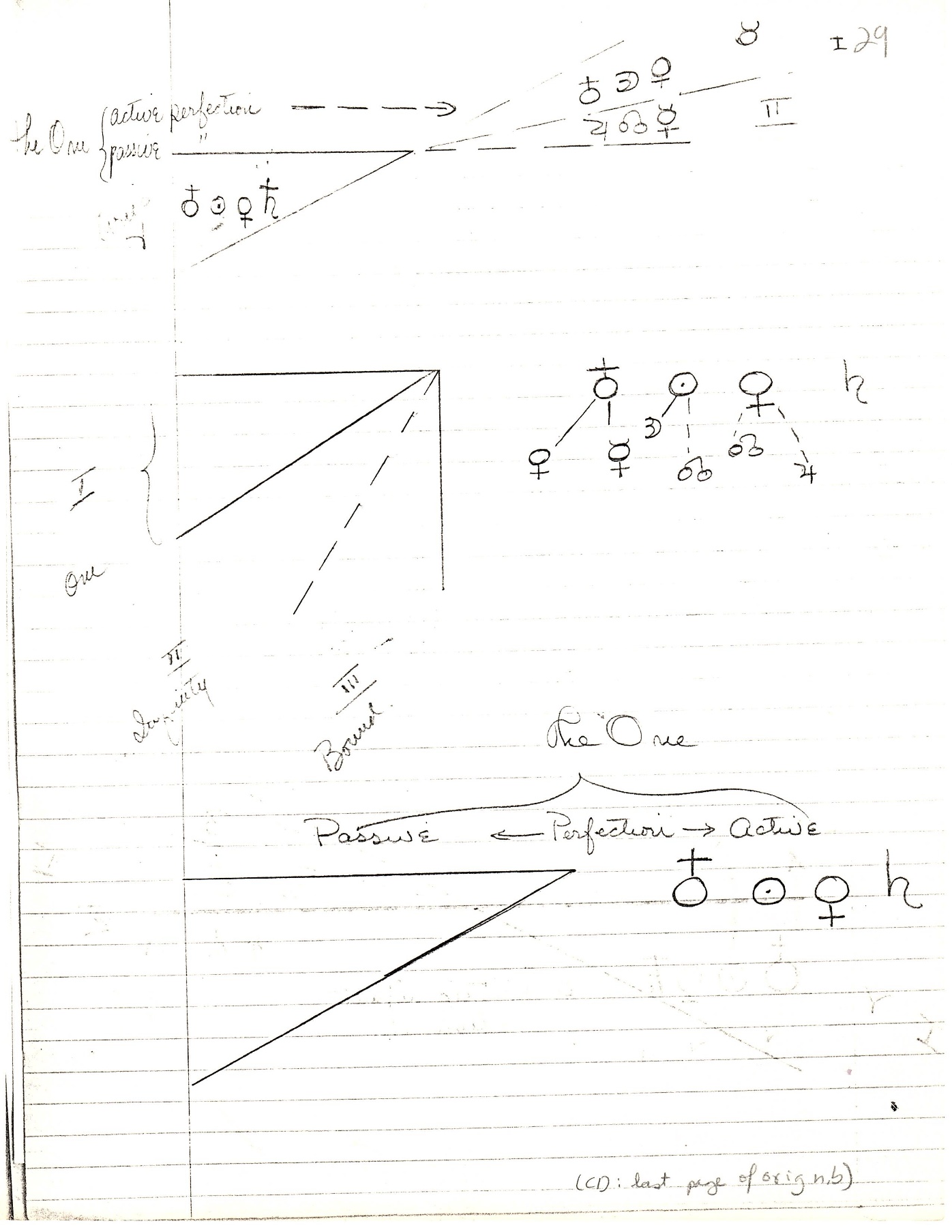
[Fig. AD Supp AD-I-029. The One: Active Perfection and Passive Perfection. Facsimile Scan from AD Supp p. 29. Note: Should be Mars and Jupiter under Venus.]
[FRAGMENTS: UNCONSCIOUS, ANIMA MUNDI, 360 DEGREES. AD Supp pp. 30-32]
[Note: (CD p. 29: last page of [previous] notebook; pp. 30-32 are copies of loose sheets found in n.b)]
[AD Supp p. 30]
Letters Anna, Robert, DL
Writings Commentary on P.B. class notes
Plotinus
dragon --
The ch(illegible)
The discovery of the unconscious is one of the fictions of modern education
The soul of our world is an example of the notion that there are forms (ideas) within it -- with which it produces the various species
[AD Supp p. 31]
The rediscovery of the unconscious awaits reintegration into a meaningful context. This is not immediately likely to happen (for it would require a world view in keeping with the doctrine of mentalism.) for the assimilation of the mentalistic doctrine requires a different breed of civilization. nonetheless we will put forth our understanding of the picturesque way the ancients understood the unconscious and the importance they attached to it
[AD Supp p. 32]
The degree [degrees] are the forms or ideas in a mode peculiar to the soul or anima mundi, that is these forms have this kind of being, they are self subsistent manifestation in the life of the earth and provide the vital, living & creative ingredients that are constitutive of the psycho-somatic entity and provide at the same time the mode for their behavior and in so doing reveal the fundamental ways or potentials of our being in the world. But in themselves these degrees are of universal applicability to the race of men and often referred to as gods. In other words these forms -- the earth's memory of the ideas --
[Note: Following handwritten upside down bottom p. 32.]
Thoughts about Journal
Articles
[FRAGMENTS: SAGE, MIND, LEVELS. AD Supp pp. 33-35]
[Note: Pp. 33-45 seem to be all on same kind of lined notebook paper, although written with different pens/pencils, and apparently at different times.]
[AD Supp p. 33]
For the sage only mind is, however this does not exclude its expressions which are not outside [one word cut off] for there can't be any outside infinite being. Therefore if he speaks of eternals spontaneously arising and are the cause of their own being, the First or one-only is not their cause in the sense of antecedent & consequent. Pure intelligence internally differentiates itself without losing its intact identity yet this eternal self generation of infinite life of wisdom is a spontaneous causa-sui
[AD Supp p. 34]
Only within the context of this glorious and inspiring world idea, revealed to us thru the prepared vehicles which are included as parts of this vast whole do we have the premises grand enough to permit the possibility of understanding how knowledge arises within the human soul. Only the intelligence revealing itself in the manifestation of this world -- from the minutiae of the infinitesimal to the immensities of the galaxy -- is the sufficient background within which we may meaningfully speak of knowledge.
[AD Supp p. 35]
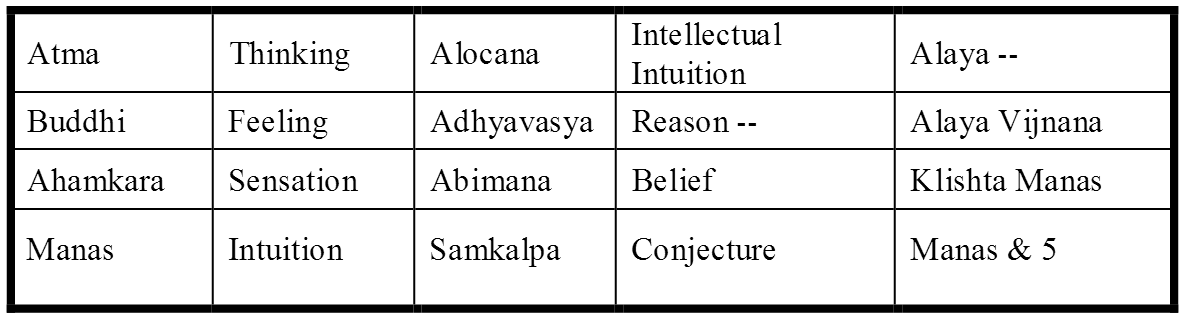
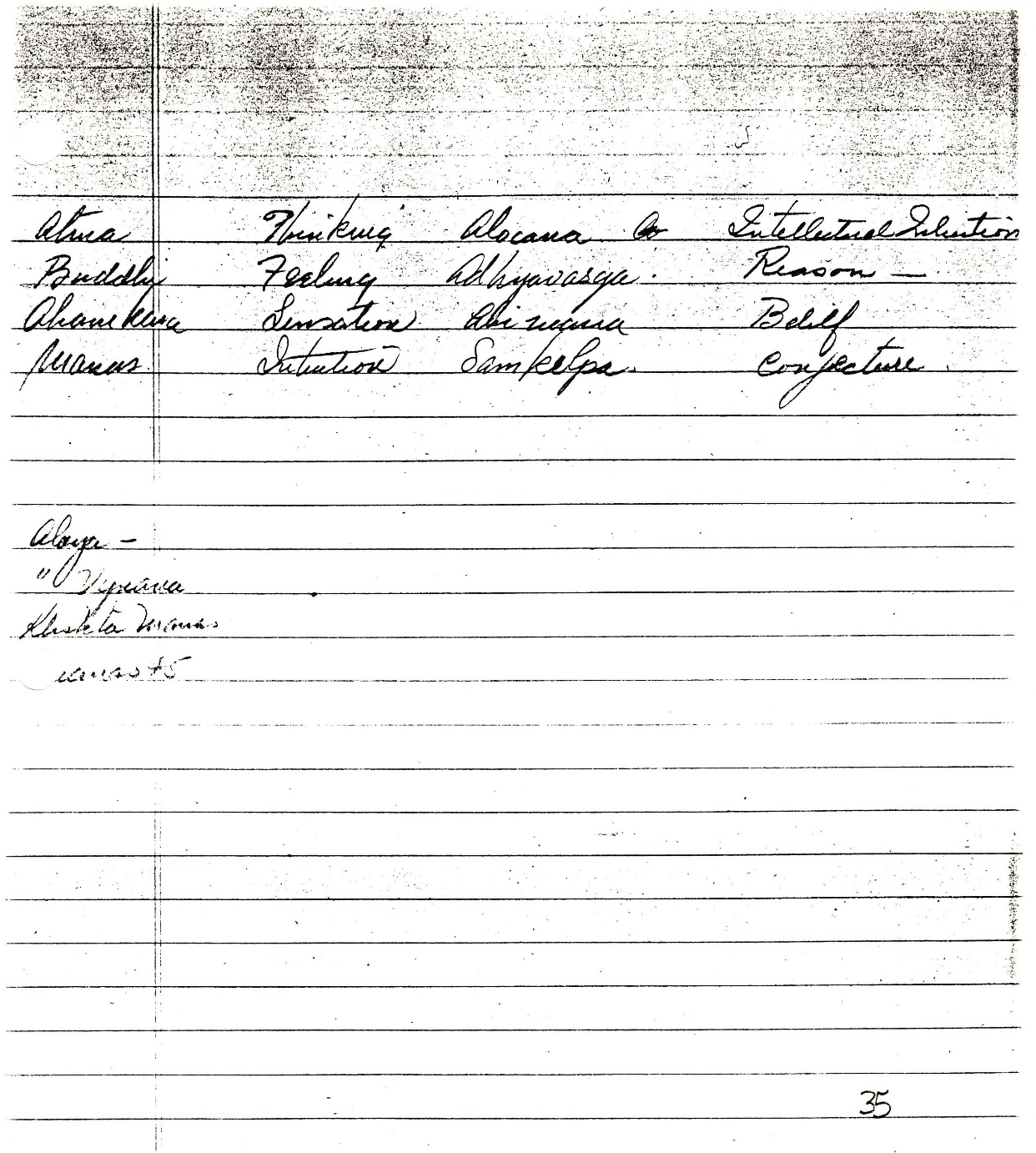
[Fig. AD Supp AD-I-035. Table of Levels of Consciousness. Note: Correct spelling = Abhimana.]
[THE STRUCTURE OF BEING. AD Supp pp. 36-38]
[AD Supp p. 36]
The Structure of Being
The intuitive & speculative method used by T.S. Row in discovering the ideas that underlie the Zodiac affords us a basis for understanding how the Ideas are the sovereign wisdom, that unvarying background to the limitless universes or manifestations that occurs. The circle of ideas is the fundamental of every universe that was, is & shall be. Let us examine this impregnable rock -- of undecaying time.
[AD Supp p. 37]
I. Certain framework is a necessary prerequisite in order to provide astrology with the background needed to understand itself.
a) The system of nature -- of Plotinus -- is a vast attempt to explain manifestation
b) Once the above is properly secured the chart falls into perspective if the nature of soul is accessible.
[AD Supp p. 38]
After postulating the principle of manifesting for the solar logos with which individual soul [souls] are conjoined -- we may interrupt our excursus to apply the 8 hypotheses --
[Note: (CD: this is at bottom of previous page in orig)]
[EPISTEMOLOGY. AD Supp p. 39]
[AD Supp p. 39]
The various traditional epistemologies
1. The Yogacara school --
2. Prasangika
3. Vedanta (3 schools)
4. Samkhya
5. Platonist
6. Scholastic
7. Modern (Kant etc)
The vedantic definition of antakarana
samkhya (definition)
yogacara 8 vijnanas
especially klista manas --
Jung -- 4 functions
3 Levels of Subjectivity (K.C.B.)
Powers of Soul Plotinus
[THE SYNTHESIS OF EPISTEMOLOGIES. AD Supp pp. 40-41]
[AD Supp pp. 40-41]
The Synthesis of Epistemologies
Now and only within the context of the glorious & inspiring heavens do we have initial premises grand enough to permit an understanding of the different and conflicting viewpoints expressed in the various theories of knowledge. Not that each claim will receive approval but at least we can perceive the presuppositions that each of these schools operate with. For this is only a step on the way to that inborn and unlimited desire to know. This sketchy scheme of a vast cosmology -- the world idea -- is one of those requirements needed in order to answer such questions as relate to the nature of knowledge [--] what conditions are necessary for its arisal ie the different parts of our cosmic soul's manifested w-i [World-Idea] in certain relations to @ [each] other and to the whole are requirements that precede or accompany the psychical & physical changes of the vehicles [vehicles'] conditions that permit a constant influx of knowledge[;] in other words cosmogony or true astronomia is the "foundation or . . . . ." (find quote). in order to study man we must place him in the environment & context that is always taken for granted in a (minimum/illegible) sort of way and the unbelief in the presence of intelligence & providing guidance of the Idea of the World -- is integrated into our psyche. We will arrive at a philosophy global in its dimensions
[Note: CD: p. 41 bottom of previous page in original, i.e., pp. 40-41 one page but photocopied as two.]
[FRAGMENTS: MUSIC, SOUL. AD Supp pp. 42-45]
[AD Supp p. 42]
A -- How wondrously strange and full of grace this appreciation of inspired music continues to be throughout my life. After many, many years of intense imaginative recreation in my mind of those living flames organized by great masters to portray their own sacred inwardness -- vitally experienced and stored in my own psyche. These memories are re-evoked at certain times . . . .
[AD Supp p. 42A]
I. The framework provided by Plotinus (representative of the Platonic tradition) is a necessary prerequisite in order to understand astrology
II. Soul or mind as an intellectual essence -- our true being must also be thoroughly grasped in all its ramifications
[Note: P. 42A reverse side of p. 42 per CD note.]
[AD Supp p. 43]
IV-2-1
Speaks of offspring soul as intermediary between the I.P. [Intellectual-Principle] and cosmic circuit
repeating the above he goes on to say that it holds on to its indivisibility which is derived from its prior but tends towards the partible -- an Essence and an entrant (ie into the W.I.) [World-Idea]
even so it does not abdicate its unity, for it is a nature that is simultaneously indivisible & divisible "indivisible as dwelling entire in the total and entire in any part. This is reiterated in IV-2-2 -- and it is necessary that this description be thoroughly understood if we are to get a peek at the abysmal depths this principle suggests. It simply will not do to refer to it as Animism closer to us than our breath for it is ourselves yet remains inscrutable, unknowable and ungraspable yet is manifested as motion, thinking, perception, reason entirely present regardless which activities we are engaged in . . . but escapes identification by the entire range faculty of understanding. Evidently if it is to be known -- and this word is misleading for it suggests that cognition is adequate -- it must be some sort of intrinsic self-awareness that could never be articulated or form-u-lated since such expressions could not include its integral omni presence [omnipresence] nor excluded it. This marvel of wonder
[AD Supp pp. 44-45]
The extraordinary & penetrative analysis of the Soul that Pl. [Plotinus] offers may startle our mind into self-recognition. This glimpse could guide our understanding aright as we plunge without any thought into its paradoxical nature. By disengaging from our preconceptions and conditioning a radically novel insight/in-seeing about our soul may come into actuality. A complete turning about.
The soul as an immaterial principle -- real being -- must be distinguished & separated from the way our understanding has been conditioned by the life in the sensible world. A different orientation is required in order to properly apprehend Pl. remarks concerning this being that we really are. 1st he speaks about how this spiritual principle has a unity & this is not like in body which is a continuous magnitude and can be infinitely divided.
This nature -- mind is indivisible, self identical completely present in each and every function. Mind remains a unity and entire even when present in the ego or animal body and intrinsically itself while attending to any or several functions at once. It has no form, size, mass etc. yet is available for a variety of uses without it being fragmented. It is the source of identity in the midst of the psychosomatic diversity -- which misappropriates or wrongly assumes this presence as its offspring. The idea that we may have of this intangible and immaterial principle is not the principle itself. Further if we cannot in any way grasp it, never have we left it.
[Note: Pp. 44-45 originally one legal-size page, but photocopied as two pages. The bottom of p. 44 and top of p. 45 begins with words "wrongly assumes". CD note on p. 45: (CD: this is bottom of previous page in orig.)]
[ABRIDGMENT OF S.K. CHATTOPADHYAYA'S "THE OBJECT AND SENSIBILITY" AND "THE REAL, THE GIVEN, AND THE OBJECTIVE." AD Supp pp. 46-60]
[Notes: Circled numbers 1-14 at the top of each page (fronts only, not backs) in this paper, possibly by Anthony or Ella May. Omitted in this typed version. This was written on small notebook paper.]
[AD Supp p. 46]
A thought so far as known/thought refers to an act of thinking -- apart from that context it is not a thought.
As a relative term it is meaningful only thru reference to a subj [subject] or thinker/bhava that thinks it. When not thus related it may be anything but should not be called a thought (content) [--] the thought is that which we think. So a thought is or forms the content of thinking[.] it is something -- not a mere nothing. this its being something or felt as something may be regarded as its generic character. the thought (content) is as much something as the tree or stone is something which we call thought. the specific character of this something which we call thought [AD Supp p. 47] its differentia is its related-ness to some act of thinking Can we conceive a thought which is not so related. Or a thinking without thought? a neutral thought? thoughtless thinking? what is this 'may-be' thought before it is ever think'ed'[?] What does B. R. [Bertrand Russell] mean by a 'possible thought' which is not actual but a possible content of thinking[.] It cannot be anything given [--] what is it before it is thought
Before our thinking of it -- it was something, had it not been anything, it would be nothing when actually thought. Thus this possible thought (content) is the prior being of the thought (as content) before appropriated by [AD Supp p. 48] thinking as its actual content
this we may allow.
Yet although logically admissible the neutral thought (as content) is not conceivable as a thought (content). It is not immediately thought (known) as such . . . Since that would render it as a thought actual. And could we think a 'possible' thought before experienced – omniscience
[AD Supp p. 50]
We find in any inquiry faced with
Thinking -- its content
thought & its reference to a subject or thinker
the content is given in thinking . . . & it is impossible to conceive a thought out of the context of thinking.
All thought (content) delivered to the thinker must be thru the thinking
[Note: (CD: p. 50 back of previous page [p. 49])]
[AD Supp p. 49]
An obj/thought [obj = object] so far as known refers to an act of knowing -- apart from that context its not an obj. [object]
As a relative term meaningful only thru reference to a subj. [subject] that knows it. When not thus related -- it may be anything but should not be called an obj. The object is that which we know or that which is known. (not concerned with nature, status or locus) (A possible obj is a mere mode of talk -- unless substantially like the known obj.) So an obj. forms the content of a cognition -- it is something & not mere nothing This its being something or felt as someth. [something] may be regarded as its generic character. The obj. as obj. is as much something as the tree is something which we call obj. The specific character of this something which we call obj -- its differentia [AD Supp p. 51: continues from p. 49] is its relatedness to some act of knowing
Can we conceive obj which is not so related. Or a knowing act with no content?
a neutral obj -- objectless knowing? B. R. [Bertrand Russell] says we can!
What is this 'may-be' obj. before it is ever known
What does he mean by possible obj? which is not actual but a possible content of cognition
it cannot be anything 'given'! what is this before it is known, can there be an apriori [a priori] idea of a possibility possible?
The possible obj is the neutral being of the obj or the thing before it is known & made into an obj. of cognition. Our knowing presupposes it -- But before our knowing of it, it was something. Had it not been anything it could be nothing when [AD Supp p. 52] actually known. Thus the possible obj. is the prior being of the obj. before appropriated by the knowing as its actual content -- this may be allowed
Yet though logically admissible the neutral obj. is not conceived as an obj. It is not immediately known as such. -- since that would render it into an actual obj. And could we know a possible obj before experienced we could claim omniscience. No --
Is [sic] there other modes of knowing to accommodate B. R.?
Now in so far as an obj. is known in some sort of sensuous representation Is [is] a non sensuous way of cognition of an obj. possible. The possible or neutral obj. is a post experience construct subsequent to our knowing of the object
[AD Supp p. 53]
The existence of a thing or obj is its perception & that forces us to think of the obj as capable of remaining outside our knowing, when it is no longer known & also as being somewhere before our knowing it.
In knowing we have it & do not construct it out of nothing[,] prior existence & posterior being in relation to our actual knowing of it are thought constructions made up hypothesis [sic] which hinge upon as axis of reference the actual knowing of it[;] past & future are inconceivable without reference to a living present. Thus a neutral obj. is not known as such but referred to, thought of --- based on our actual knowing
[AD Supp p. 54]
We distinguish obj known from our knowing of it & since knowing is not making the obj out of nothing we are led to believe it was something before we knew it & will remain something after the knowing[.] This It [sic: 'This' handwritten above/over 'It'] is not a self evident truth that cognition makes no difference to content cognized. For outside of that cognition it is not known to be this or that.
Since obj. is a content of knowledge & is intra-cognitive, its extra cognitive being rejects against its objecthood. It can no longer be object What it will be then is unknowable & indeterminable
the object is apprehended as something other than the knowing act because it is given to the knowing act. Its otherness & independence can be [AD Supp p. 55] explained as to its being given to the knowing act. The cognition doesn't conjure it up. It presupposes it as something given. The faculty to which it is given is the sensibility of the subject. Cognition reveals it as sensed, given, intuited. It is not itself the faculty of sensibility -- it presupposes that Reason is that our faculty of cognition awaits the given & does not enjoy (the/this) position to conceive it in any way it likes
A similar thought led Kant to admit 2 (states) of knowl. [knowledge.]
object [arrow symbol] sense given & by means of apriori [a priori] thought functions it is cognized.
The felt otherness from the act is a direct proof of its giveness [givenness] & may be said to constitute the objectivity of the object
[AD Supp p. 56]
To be an object to a knowing act is the equivalent as being given to the knowing act.
What is known is what is given & knowing makes it its content. It is as it is given & it is given as it is known. We know it as it is given to us . . . & as given to us it is something different both from ourselves & our knowing acts. It becomes a given content in being intuited by our sensibility & when not given or sensed it is no more an object
What is it when not given? it is no longer itself -- & so ? [the question] is meaningless
This givenness gives rise to our notion of a transcendental background.
Is it a thing in itself or Avyakta or Avidya or Maya, or Reality. The givenness of the known [AD Supp p. 57] content presupposes it -- but tells us nothing concerning this ungiven & transcendental background of all giveness [givenness].
It is thinkable as the many -- in reference to the plurality of objects we know things in themselves; this can only be thought; or as (one) avyakta of samkhya even this has thinkability but not knowability or has an indeterminable ['anirvacaniya' handwritten below 'indeterminable'] --
This unintelligible background of all giveness [givenness] -- transc. thing in itself is a presupposition of the object as given
Next -- Sense & understand. when mind works thru the senses -- when mind works thru imagination latter is individual -- former collective
[AD Supp p. 58] [Note: Entire page crossed out.]
Sense gives us the matter of knowledge which comes from outside while understanding gives us the generic forms that are in it
Sense gives the sense data[,] the indefinite sense matter undistinguished from the subj Understanding gives the specific relations of identity & difference & spatio temporal order Sense cannot distinguish the obj from the subj. but understanding can & it does this thru the relations which it first gathers from experience. These relations are the determinants of objectivity They are so just because they are found to be in nature & not in the understanding itself
[AD Supp p. 59]
The real, given & objective are often confused . . . to be real means not constructed -- giveness [givenness] The ultimate foundation of any construction has always been acclaimed as real. The given is the real & the real is the given
As the real is the objective -- that which doesn't owe a cent to the subj. but independent of & indifferent to the subj.
The subj may be a substantive entity or epiphenomena -- (or/as) cross section of obj. [objective] facts defined by specific response of the nervous system -- desubjectify the subj. & reduce it to a shadow of the obj. etc
(All agree that to be real means to be objective, to be independent of the subj)
[AD Supp p. 60]
Is the real same as given same as objective & to be independent of subj. Objectivity becomes criterion of reality
That the given or obj. is in some sense real -- I'll let pass but the point here is whether the real is the same as the given the same as the objective. We are concerned with the criterion of reality. Can giveness [givenness] or objectivity be that criterion Evidently not.
The given is presented, forced upon us -- & free from any subj. [subjective] construction. But is it always real? Is not the false also presented? Are all our experiences of reality
[LOGOS OF THE SOUL. AD Supp p. 61]
[AD Supp p. 61]
Logos of the Soul --
The necessity for differentiation between obj [object] & subj [subject] -- so as to permit an understanding of 'soul' II & & [sic] juxtaposition I
[Notes: (CD: p. 61 back of previous page [p. 60]). P. 62 is on different paper.]
[ABRIDGMENT OF SOME PASSAGES FROM RENÉ GUÉNON'S THE REIGN OF QUANTITY AND THE SIGNS OF THE TIMES. AD Supp pp. 62-65]
[AD Supp p. 62]
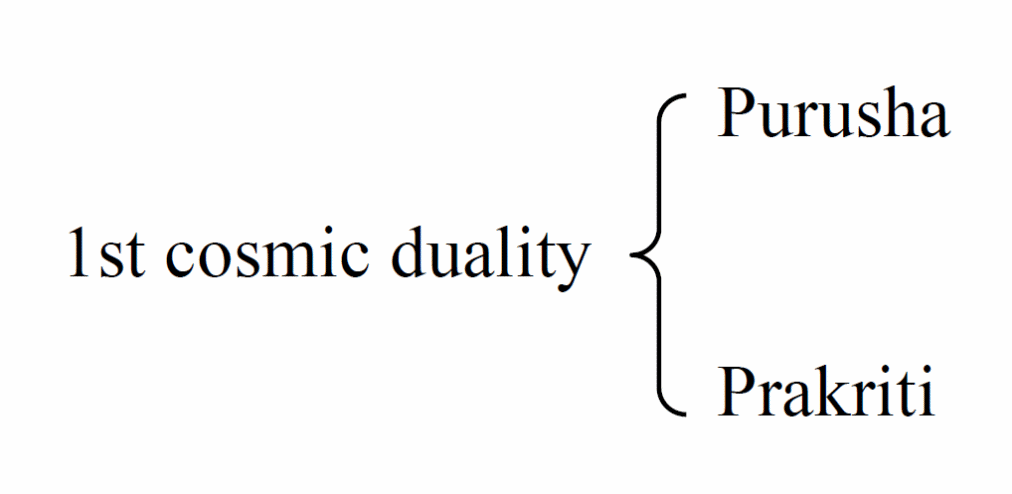
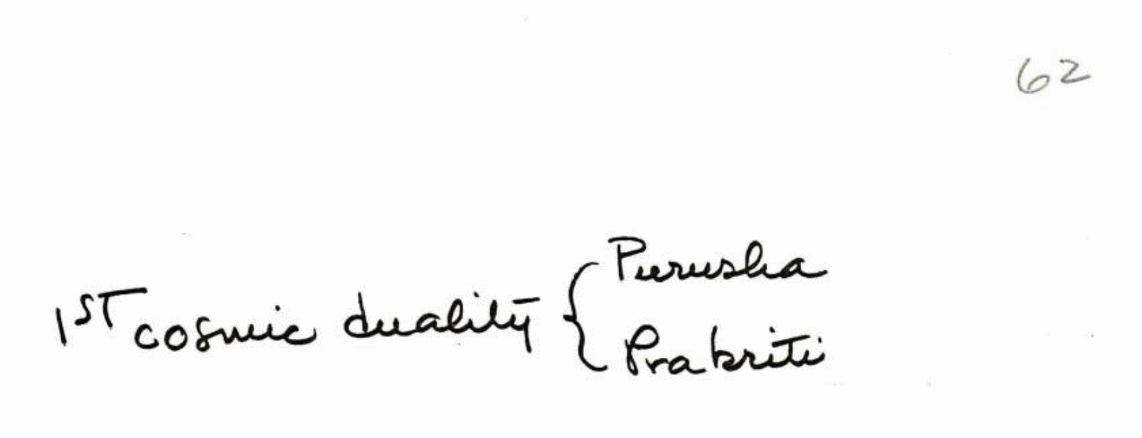
[Fig. AD Supp AD-I-062. 1st Cosmic Duality. Facsimile scanned from AD Supp p. 62.]
these 2 terms as universal principles Essence & Substance -- Between which all of manifestation is produced. Every being is a composite of 'form & matter' & its existence proceeds there from [therefrom]. The being is a resultant of their union (nama rupa)
Species is a nature or an essence of a purely qualitative order . . . & innumerable -- indivisible & entire in every individual belonging to that species -- (idea)
[AD Supp p. 63]
Quantity has an immediate connection with the substantial side of manifestation. Materia -- not the matter of the moderns [--] includes many other notions within it which must be weeded out & distinguished from matter . . . the naming of which will be substance. (Essence & substance) will be seen to re-present to [two] sides of a particular existent. Pure substance or prime matter is the only principle which is unintelligible . . . There is nothing in it to be known[,] but serves as 'root' to whatever is manifested, which latter can only be forms implanted[,] [AD Supp p. 64] which amounts to saying we must return to what can be known. In order for this prime matter to be the basis or support for this world in space & time -- quantity would be the necessary precondition. For everything that exists therein (World of Form) is subject to quantity, its basic or fundamental condition & referred to as secondary matter . . . but this explains nothing --
when P.B. says that the mind must provide its percepts with relationships -- time, space, etc we still have no sensible world.
[AD Supp p. 65]
Prakriti plays the material part in relation to manifestation
measure or mâtra = material & what is measured are the possibilities of manifestation in Atma . . . so must be directly linked with continuous quantity (spatial character) consequently concerned with extension itself & what is contained therein
[BEING AS THE OBJECT OF INTELLECT. AD Supp p. 66]
[AD Supp p. 66]
The functioning of intellect or understanding inevitably & unavoidably must confront being or its modes.
Whatever I know must be being in some form, or mode.
The green (quality) of a tree, its size or 'matter'. In all these cases being is common.
So affirm on the contrary that the object of our intellect is idea of being which it forms in itself, or that we apprehend only our ideas is . . .
By intelligible is meant knowable.
[THE SUPREME UNITY. AD Supp p. 67]
[AD Supp p. 67]
The Supreme unity is without aspects & unpossessed . . . it cannot be know [known] along side [alongside] anything else . . . The object of Divine, immediate & undifferentiated knowledge.
& yet Unity is the principle of all distinctions -- definiteness itself The principle aspects of Being are also the fundamental modalities of knowledge
[SCHOLASTIC EPISTEMOLOGY. AD Supp pp. 68-75]
[AD Supp p. 68]
Scholastic epistemology will be our beginning: Thinking or a trying to think reaches within, it penetrates or tries to reach into the very essence or substances of things. For it deals with this sort of goods. What is it that is behind all these phenomenal qualities & holds them together
Man alone attempts to escape his subjectivism; and man alone can grasp things in their universal character & also reflect on its own operations
He of all creatures his knowledge can be the most intimate.
[AD Supp p. 69]
The union between subj. [subject] & obj. [object] for it is only by becoming a thing that we know it -- & serves to deepen the subjects [subject's] knowledge of himself For the possession of obj. knowl [knowledge] means possession of subj. knowl. [knowledge]. Unity of intentional being is an essential condition of ideation -- an idea is like a second cousin or self efflux -- in as much as it is self as thought Intellect in its act of understanding is 'perfectly' identified with the thing understood. It does not mean that the essence of intellect becomes the thing or image understood
[AD Supp p. 70]
But that in that moment of understanding it is completely in-formed by the species or nature of the thing understood. This is a fundamental axiom.
In the beginning man is completely dependent upon his senses which are continuous with the world of time & space
Its first info is to the effect that there is a universe of sensible reality & from then on a quest to find out what this is
[AD Supp p. 71]
corresponding to sense is sensible [Note: Phrase at top of page, written in afterwards (smaller AD handwriting).]
The obj. of sense is a sensible & the object of intellect is an intelligible[;] the medium of knowl. in both is a species . . .
An image is a species of sensible order; an idea of the intelligible
how a sensible datum is transformed into an intelligible datum -- ?
The scholastics [Scholastic's] solution -- Human intelligence is a dual -- it can abstract (active) & it can understand (passive). Now what is sensible is only potentially intelligible -- It is material & must be made immaterial
[AD Supp p. 72]
To [Two] sorts of species are involved here[:] active int [intellect] -- its product an impressed intelligible species & the product of p.i [potential intellect] expressed intelligible species. The faculty of understanding is determined to a new mode of existence where in [wherein] it becomes intentionally the obj. it understands. It generates as fruit the word or concept or image of an intelligible order. In the consummation of the union (subj. & obj) the p.i. becomes the very obj. it understands The Intelligible in act is identical with the intellect in act.
The expressed species is that by means of which we understand [AD Supp p. 73] not that which is understood (obj.) What is known is the obj. The idea is simply an instrument of knowledge representing the medium & its content -- not the obj. If this is ignored no grounds are left between the thing as it is in itself & the thing as it is known to us.
Existence in the intentional order is diff[erent] from the real order.
Intellect reaches out & conquers the world by becoming it. The species or nature is not the thing which is known but only the cognitive instrument whereby a knowledge of the thing is made possible
[AD Supp p. 74]
knowledge is an apprehension of obj. [objects] as they are as well as a development of the self by the assimilation of things to the mind. Intellect must be made like the obj it understands sharing with it a common nature, but this union cannot be achieved without abstraction. Understanding requires a preliminary act of abstraction -- just as abstraction requires a preliminary act of sensation. The essences of corporeal things are proper objects of human intellection -- & are very obscure in our vision because of the matter?
[AD Supp p. 75]
These essences are opaque rather than translucent -- so far as we underst. [understand].
For our apprehension of the essences of sensibles -- not in themselves -- but in the symbols which these essences manifest to the senses. So that the process of knowl is concerned with the separation of form from matter (pace P[lotinus]) since a thing is known precisely because its form is received into the knower. And in the knower acc. [according] to the mode of being that he possesses
[DIAGRAM: LEVELS OF REALITY ACCORDING TO René Guénon. AD Supp p. 76]
[AD Supp p. 76]
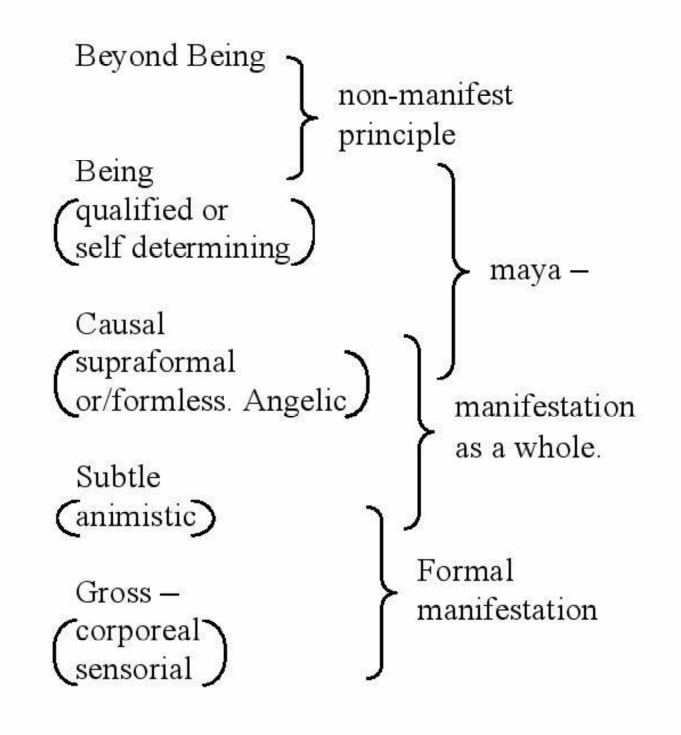
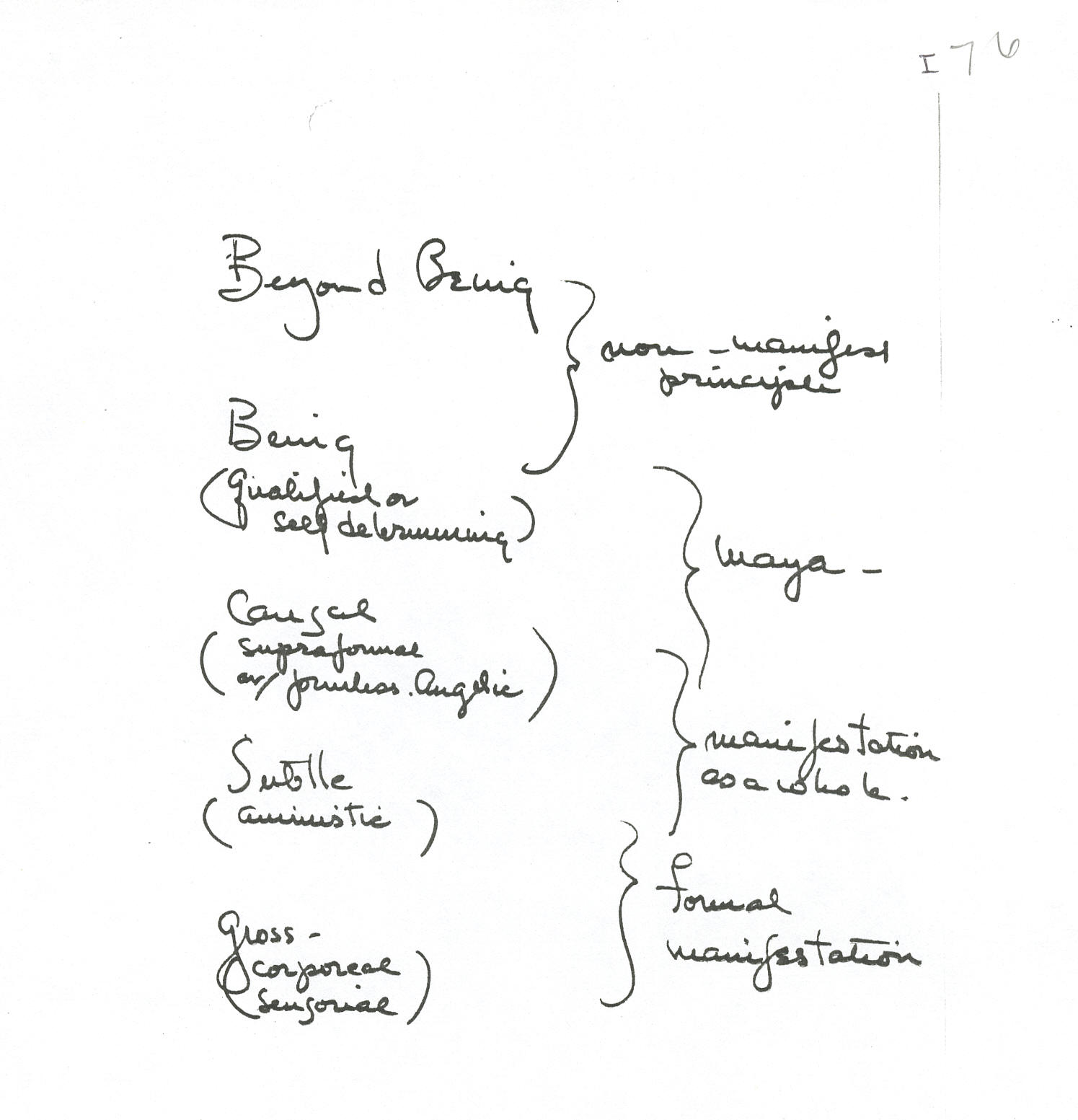
[Fig. AD Supp AD-I-076. Levels of Reality according to René Guénon. Facsimile scanned from AD Supp p. 76.]
[SCHOLASTIC EPISTEMOLOGY. AD Supp p. 77]
[AD Supp p. 77]
To understand [therefore] means the freeing of form from matter[;] senses know the form[;] particularized intellect knows essences generalized.
1st The idea is to be elaborated [--] the sensitive stage -- senses operate upon material object
2nd Active intellect separates the phantasm -- abstraction a liberating function. (These/Those/Thus) intelligible datum released now a concept results
[UNITY, BEING, AND PREDICATION. AD Supp pp. 78-81]
[AD Supp p. 78A]
unity & its power 'above being' or manifestation -- unity alone exist
[Note: (CD: 78A back of p. 77)]
[AD Supp p. 78]
Relationship or what does it mean for something to be related to something else
Predication -- what it means for something to be something else.
[Note: (CD: page in orig after p. 77)]
[AD Supp p. 79]
1st the individual thing
or To be
prior to all categories & to all particular kinds of being; there must be some most basic kind of being that includes them all.
it must be in some sense -- which is after all only a tautology. Everything that is in-some-sense can be considered by itself, or in relation to something else. In the former it has existence of its own. Its existence & itself are one & the same thing . . . to say the it exist [sic] is another way of saying the thing in itself. If it is to be an individual thing it must have its own existence. You cannot separate a thing from its own existence -- .
[AD Supp p. 80]
It must be in some sense
it must have its own existence
(if it is to be by itself or individual thing)
It must have its own power if it is to exist, continue existing & to be related to something else
[AD Supp p. 81]
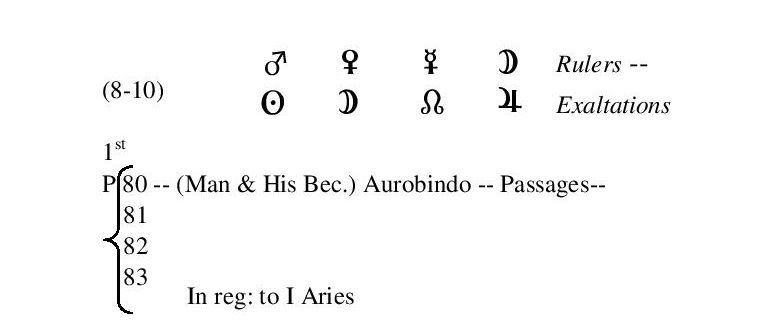
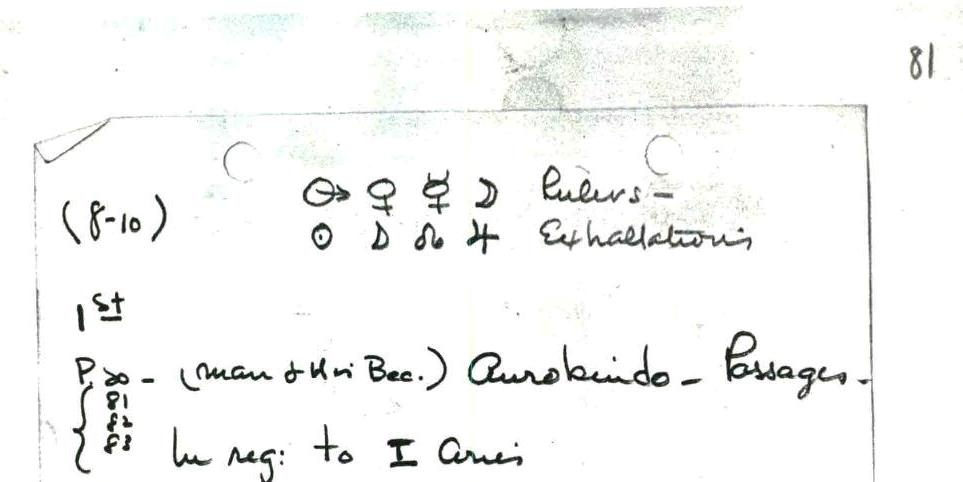
[Fig. AD Supp AD-I-081-top. Rulers and Exaltations of first four Signs; Guénon: Man & His Becoming and Aurobindo references. Facsimile scanned from top AD Supp p. 81.]
[AD Supp p. 81 bottom, text:]
The Self-existent Brahman; the rest is only illusory [illusorily] distinguishable . . . the theory of vivarta is employed.
[Note: The following quote is from Laurence Jay Rosán, The Philosophy of Proclus: The Final Phase of Ancient Thought, footnote 14, pp. 102-103. Rosán's own source is given as Proclus, The Platonic Theology, ed. with Latin translation by Aemilius Portus. Hamburg, 1618.]
There is a oneness which is prior to being (Self-existent B [Brahman]) which gives rise to being & which is the cause of all being. But that which is prior even to this (oneness) & beyond even oneness itself, is without relationship to anything else & is the unpossessed & absolutely transcendent
--- cf to
Aurobindo's Absolute --
Ramana's Absolute
[OVERSELF, WORLD-MIND. AD Supp pp. 82-86]
[AD Supp p. 82]
If it (O.S.) [Overself] creates from the memory of that vision it never fell -- Pace Proclus.
[AD Supp p. 83]
So we must distinguish Overself & its products. The O.S. & W.M [World-Mind] are one entity but different aspects The activity of O.S. goes beyond the Cosmic Idea in the universe
or)
God in his teleological aspect remains the unmoved archtype [archetype] or plan, blueprint of the universe but God as Immanent principle by whom all things are made does not remain unmoved but immanates [sic] in the entities of the space-time world. (Cosmic Christ) Gods [God's] life which is God himself becomes the life of all existing entities, & by virtue of this all entities have their being
[AD Supp p. 84]
The world mind & its ideas
thinking principle & cosmic content does not per se explain the particular entities of the visible universe
The O.S. an inherent phase of W.M. [World-Mind] one simultaneous existence with the cosmic idea
The Mind is a trinity in this sense we have 3 aspects of one entity some more primal -- clean & logical distinctions between these phases -- no separation. So that the O.S. as active Principle is without stages or change It possess a timeless & unchanging life It is only the lower phase which is immanent in the universe
[AD Supp p. 85]
The O.S. yet must not be separated from W.M.
There must be differentiation without separation An entity generating without volition & without any resultant change in the generating entity (vivarta). The characteristic act of the (O.S.) is performed by virtue of it vision of W.M. It is the power, or creative logos creates the universe & maintains it by its immanence.
All in All, All in every part
'The soul containing the ideal principles of Real being & itself an ideal principle includes all in concentration within itself' [Note: reference unknown]
It is the active principle in the cosmic idea. It translates/transposes what it sees in the W.M. elsewhere. It includes all the content of the cosmic idea in itself a complex idea
[AD Supp p. 86]
If we regard the O.S. as a separate entity which originated in the W.M. we will have the same difficulties between the latter & mind.
The essence of the W.M. is self-vision & its product the visible universe
There is no room for a third entity
The O.S. is a form representing W. M [World-Mind] just as the latter was an idea in mind
This active power (O.S.) sprung from being is O.S. and it arises as idea & act of the motionless W.M.
Thought is WM. [World-Mind] -- cosmic idea (ideal universe) is Being[.] Overself is [therefore] logos. The creative principle of the cosmic idea. (like Demiurgus.)
[GODS OF THE VESICA. AD Supp pp. 87-98]
[Note: Most/much of text of this section direct quotations copied from The Hymns of Orpheus, T. Taylor Translation. Cf. www. sacred-texts.com.]
[AD Supp p. 87] [Note: Sun symbol in Apollo/Sun section spelled out in typed version, below.]
Apollo
In the intelligible world is the demiurgus of the universe, & comprehends in his essence the archetypal [archetypal] ideas of all the sensible forms -- possesses the figured seal of which every visible species is nothing more than impression In the great seal all forms subsist in indivisible union & immateriel [immaterial] perfection In the imitative impressions in bodies they are found full of multitude & material imperfection
Trietericus is the nostic [gnostic] power or intellect of the sun, & the sun is in the sensible world what phanes is in the intelligible world. ie Sun is the phanes of the materiel [material] world. As the sun of the materiel [material] world he is the offspring of the Gods. (Adonis)
[Note: Trietericus reference at https://www.sacred-texts.com/cla/hoo/hoo56.htm. From The Initiations of Orpheus (Hymn LI), footnote 10: "Of Gods the father, &c. According to the fragment preserved by Ficinus, and translated in our Dissertation, Trietericus is the nostic power, or intellect of the Sun; and the Sun is in the sensible world, what Protogonus or Phanes is in the intelligible world, or, in other words, the Sun is the Phanes of the material world, for Trietericus is expressly called in this Hymn Protogonus. With perfect agreement, therefore, to the Orphic theology, Protogonus, considered as the first of the secret genera of the Gods, is the father of the Gods; but considered as the Sun of the material world, he is the offspring of the Gods."]
[AD Supp p. 88]
Sun. Triple Apollo.
Every order of Gods begins from a monad (subjective wholeness?) or proximately exempt producing cause[;] every divine cause should be to its progeny, what the first cause is to all divine orders, since it can in nowise produce in the best manner than by imitating that which is best. But the 1st is an imparticible one -- or not con-subsistent with its progeny, hence every order must have a presubsisting & primary principle of its progression which from its similitude to the first cause is very properly called a monad. Following immediately upon the monad is a very well ordered series of progressions similar to its prior. The reader who knows scientifically the number of the divine orders, that as the ineffable one [AD Supp p. 89] who is superior to the intelligible essence, is the monad of the first intelligibles which he illuminates with superessential light; so phanes or intelligible intellect -- extremity of intelligible order is the monad of intellectuals whom he illumines with intelligible light. Again, Jupiter who is the boundary of the Gods (intellectual) is the king or monad of the supra-mundane Gods whom he illuminates with intellectual light & consequently the sun must subsist at the extremity of the supra mundane order[,]must be the monad of the mundane gods.[,] & must illuminate sensible natures with supra mundane light -- otherwise the mundane gods would not be suspended from a monad analogous to other divine orders. Lastly Bacchus [AD Supp p. 90] or the mundane intellect is the monad of the Titans or the ultimate artificer of things whom he illuminates with light of a mundane characteristic. Bacchus is the cause of the mundane properties of light (those properties which are inseparable from a corporeal nature & found to subsist in visible light ----)
[AD Supp p. 91]
The Sun is the same in the sensible as Apollo in the intellectual, & Good in the intelligible world.
From the occult union subsisting between Good, Apollo & Sun King of the Universe
[AD Supp p. 92]
Vesta
Earth is the mother of everything of which heaven is the father, Rhea the mother of the Gods, the earth, & Vesta are all one & the same divinity[.] Pole of the world = seal of Rhea.
Fire is placed in the middle at the center -- the Vesta of the universe[,] house (tower) [Note: '(tower)' handwritten above 'house'] of Jupiter -- the mother of the Gods & the basis, coherence & measure of nature
[AD Supp p. 93]
Vulcan
Adorns by his artifice the sensible machine of the universe which he fills with certain reasons, proportions & powers of Nature -- Requires Venus assistance -- may invests [sic] sensible effects with beauty & by this means cause the pulchritude of the world.
[AD Supp p. 94]
Mars --
Perpetully [Perpetually] discerns & nourishes & constantly excites the contrarieties of the universe, that the world may exist perfect & entire from all its parts. But requires Venus [Venus's] assistance that he may insert order & harmony into things contrary & discordant.
[AD Supp p. 95]
Venus
The cause of all harmony & analogy in the universe, & the union of form with matter, connecting & comprehending the powers of all the mundane elements (& although among the supramundane) her role is in beautifully illuminating the order, harmony & communion of all mundane concerns.
[AD Supp p. 96]
Ceres --
When considered as united to Saturn by the most exalted part of her essence = Rhea[,] but as considered producing Jupiter & together with Jove unfolding the universal & particular orders of the Gods = Ceres.
'Earth, mother of all things, Ceres, source of wealth.'
[AD Supp p. 97]
Minerva --
Nature is the last of the demiurgic causes of this sensible universe -- boundry [boundary] of incorporeal essences. Full of reasons & powers by which she governs the universe everywhere connecting parts with wholes. & she evinces agreement with Minerva[,] fabricates the variegated viel [veil] of nature from that wisdom & virtue which she is the presiding diety [deity]. She connects all the parts of the universe together containing in herself intellectual life. By which she illumines the whole. & unifying powers by which she superintends all the opposing natures of the world into union & consent.
Diana, Prosperine [Proserpine] & Minerva -- these 3 divinities exist together.
[AD Supp p. 98]
Juno --
The source of the soul's procreation
[AD Supp p. 98a]
[Diana.] [Note: Is actually AD Supp p. 160, loose page in the same style handwriting, has heading Diana but no accompanying text about this goddess.]
[FRAGMENT: CHITTA. AD Supp p. 99]
[AD Supp p. 99]
Individual mind -- its substance -- abstract as it may appear to us is referred to as chitta . . .
The functioning of chitta, or the finite mind must always retain it unity even when considered as process. Discursive reasoning, memory, sensation, pain feeling etc refer to 'an entity which is identical to itself at any & every spot', although ultimately speaking these things have nothing to do with Soul (Purusha) [Note: 'Purusha' handwritten above 'Soul'] (I) as such. For the soul in the ideal world has nothing whatever to do with the 2nd or reasonable phase of soul
[DIAGRAMS: ONE, BEING, STATES OF CONSCIOUSNESS. AD Supp pp. 100-103]
[AD Supp p. 100]
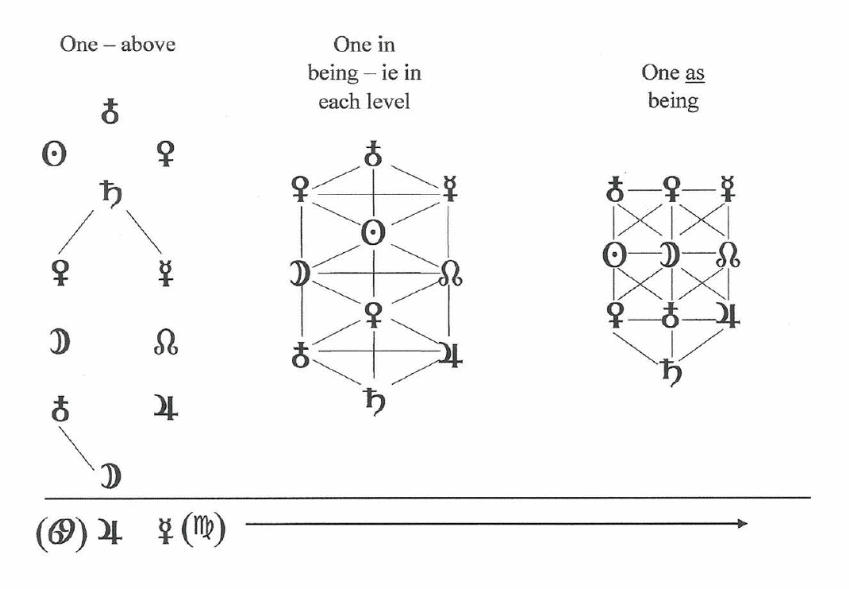
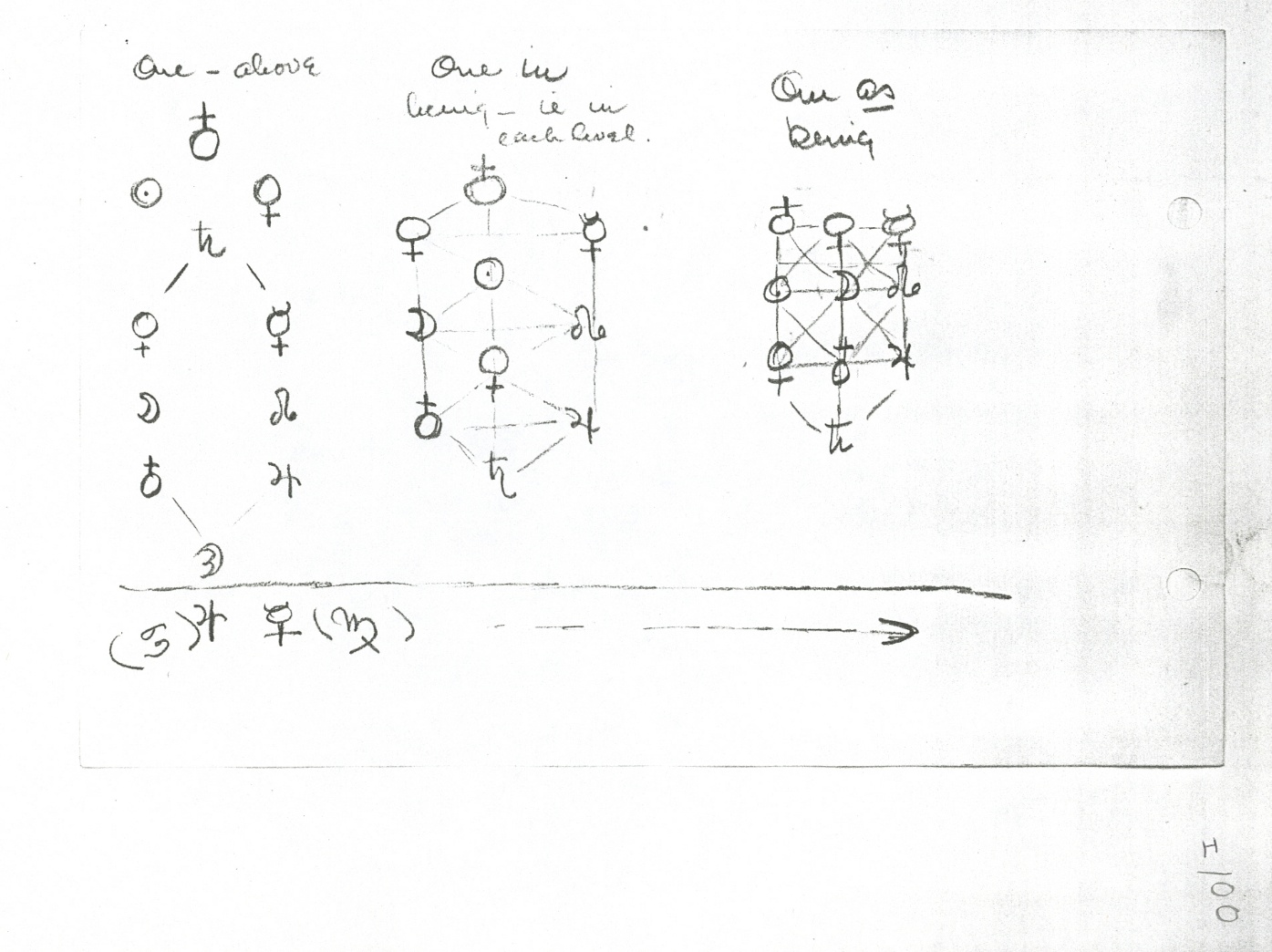
[Fig. AD Supp-AD-I-100. One-Above; One in Being; One as Being (tree diagrams). Facsimile scanned from AD Supp p. 100.]
[AD Supp p. 101]
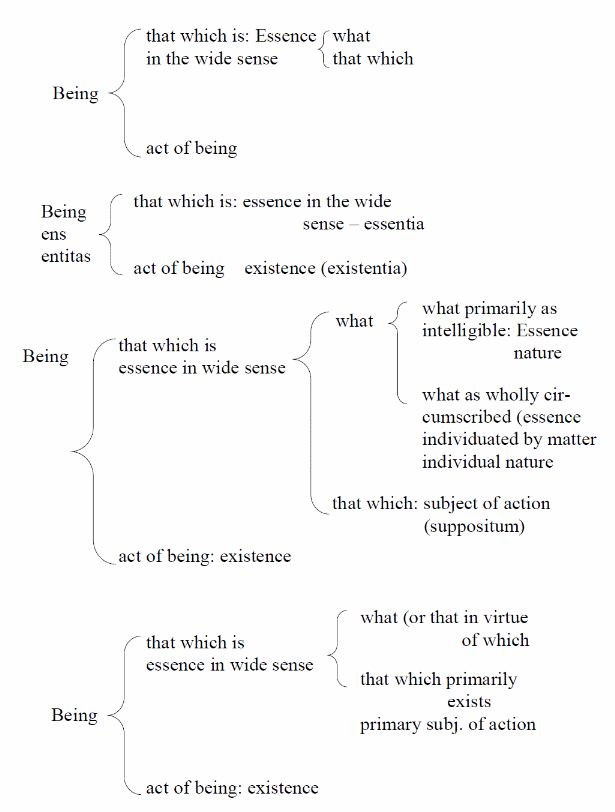
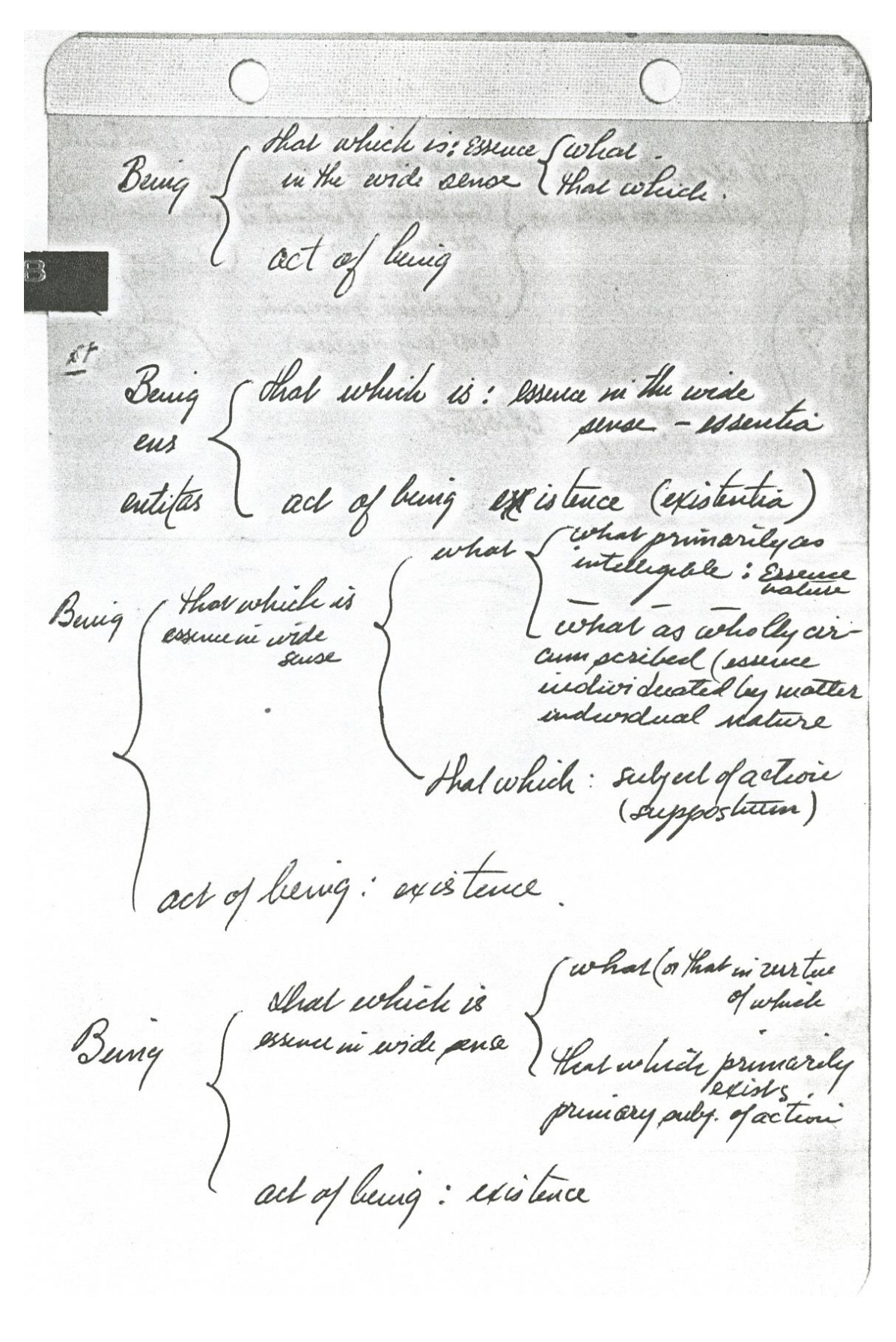
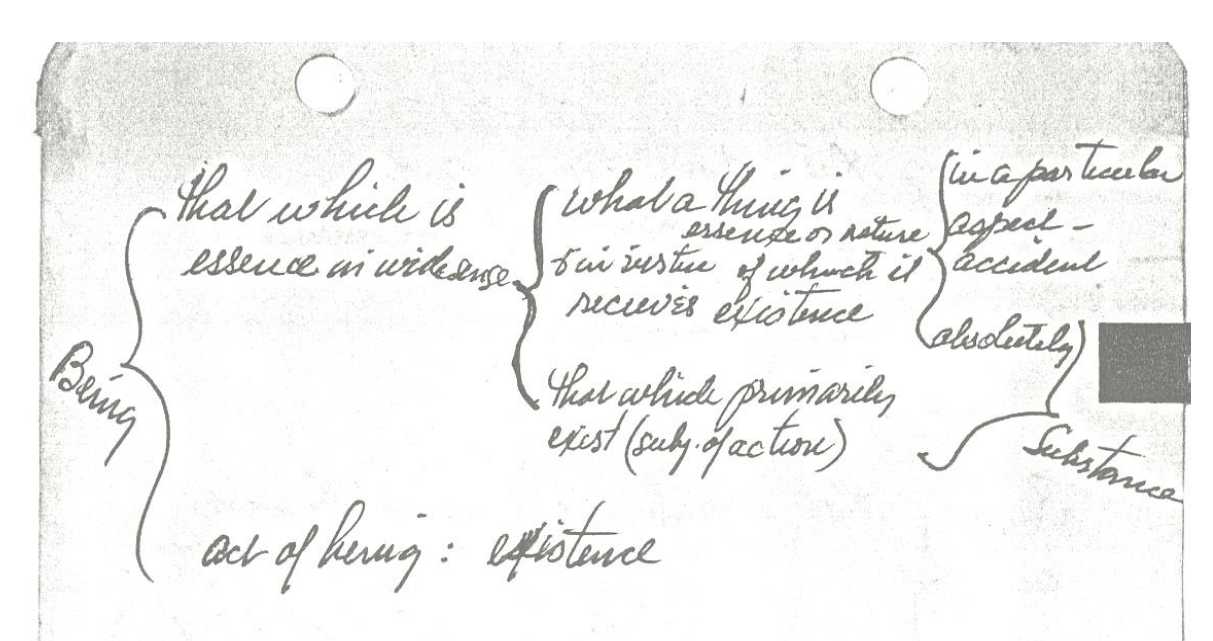
[Fig. AD Supp AD-I-101. The Thomistic Division of Being: Preliminary Schemata. Facsimile scanned from AD Supp p. 101.]
[AD Supp p. 102]
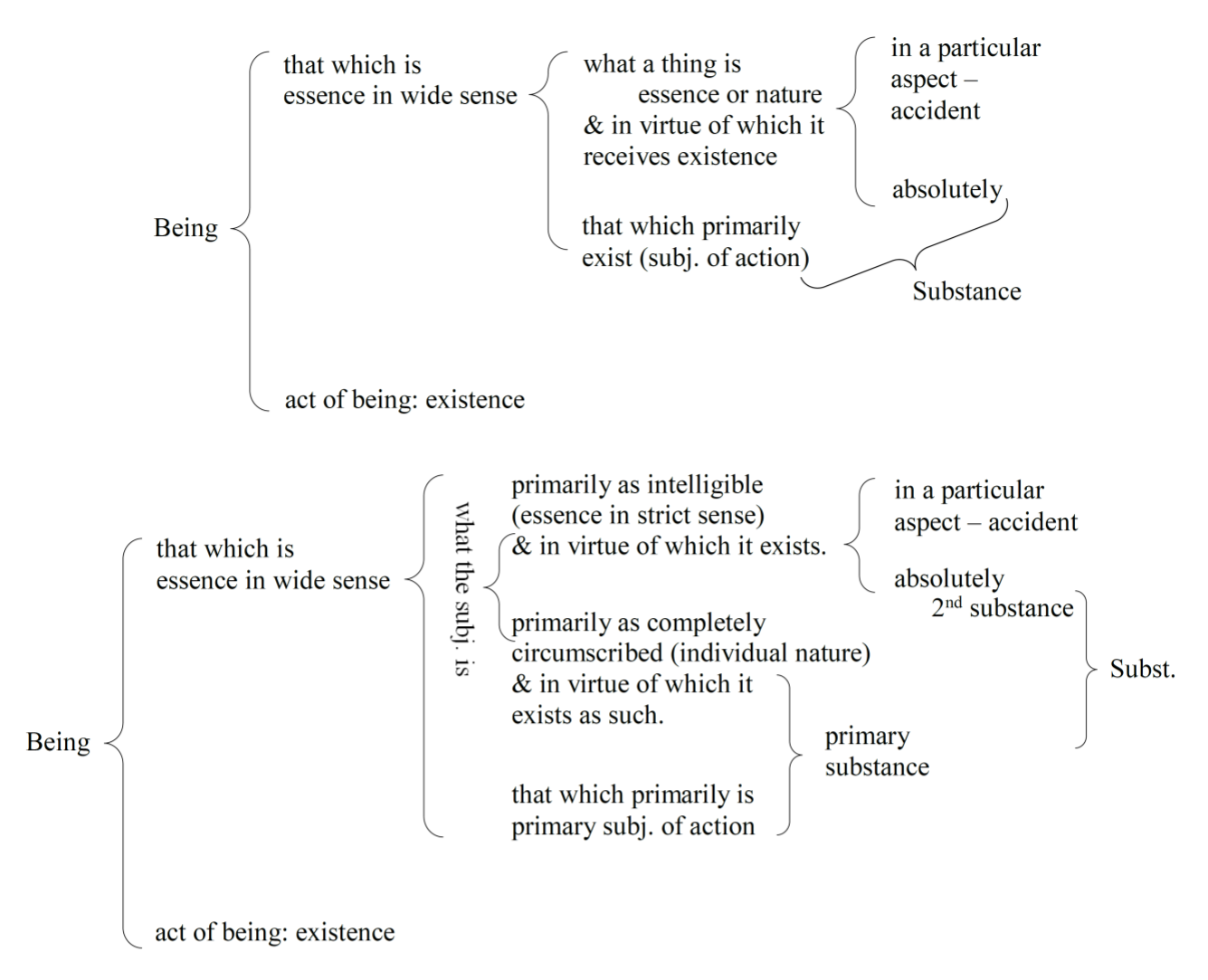
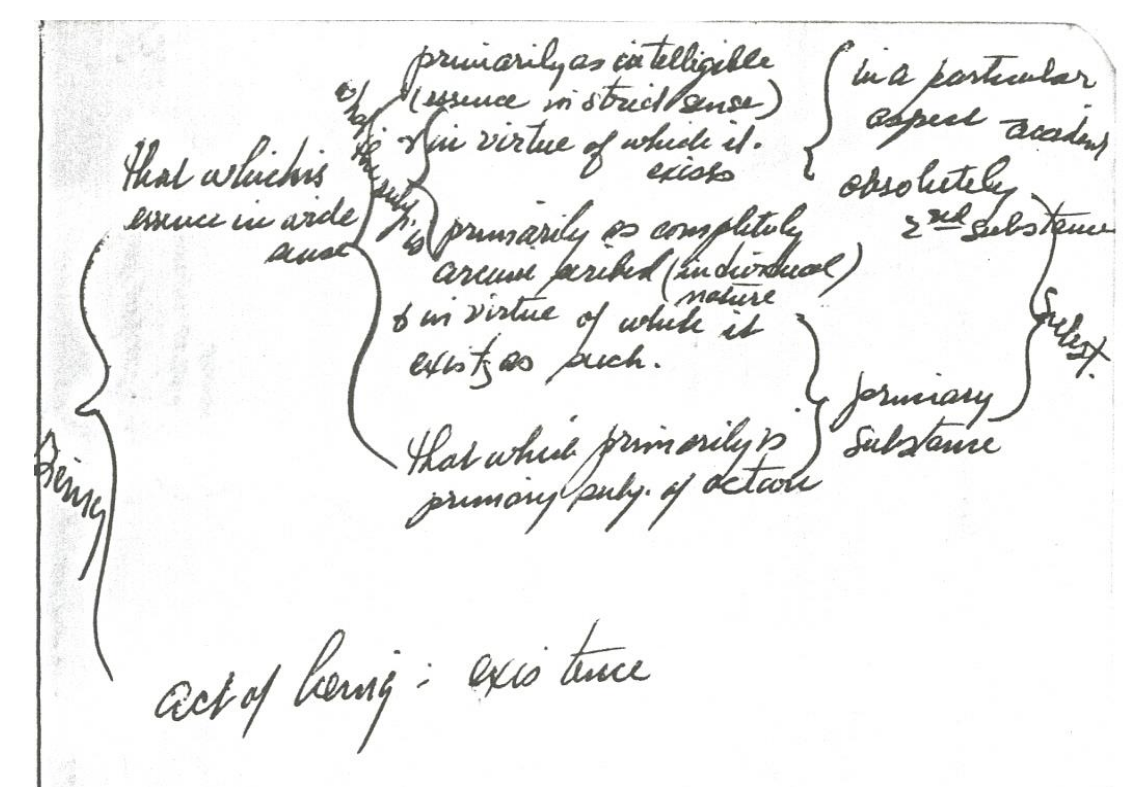
[Fig. AD Supp AD-I-102b (bottom). The Thomistic Division of Being: Developed Schema. Facsimile scanned from AD Supp p. 102, rotated 90 degrees.]
[AD Supp p. 103]
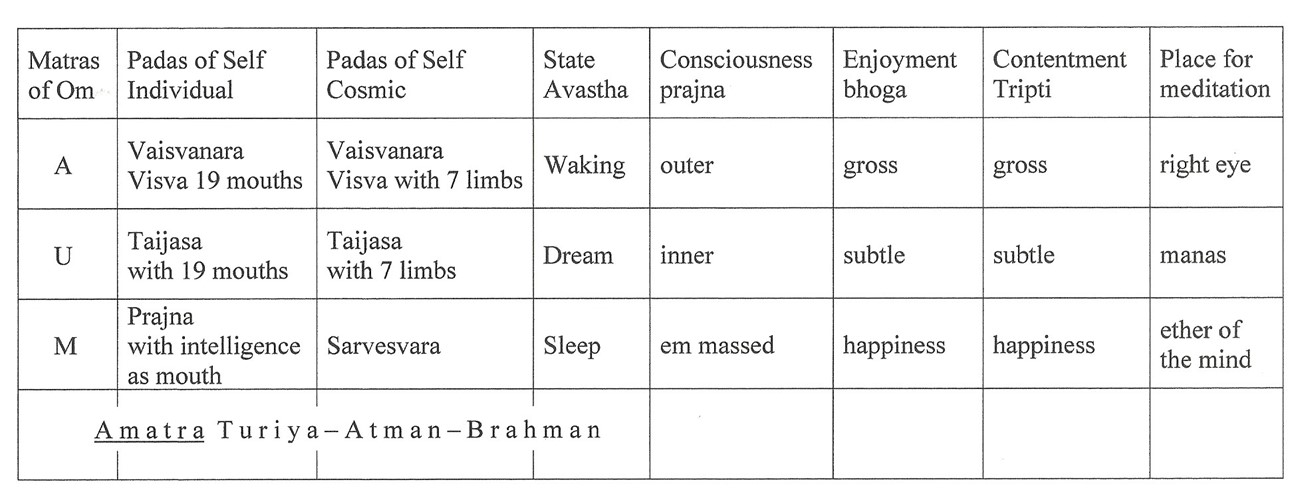
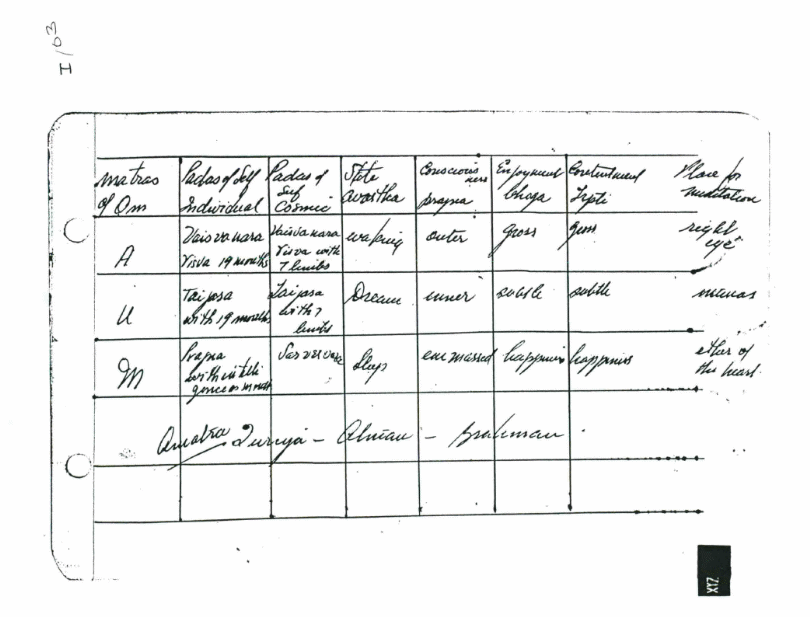
[Fig. AD Supp AD-I-103. Table of Matras of A-U-M. Facsimile scanned from AD Supp p. 103, rotated 90 degrees.]
[SCHOLASTIC AND SAMKHYA EPISTEMOLOGY. AD Supp pp. 104-107]
[AD Supp p. 104]
The sense images resulting from the activity of thought is the basis upon which our intellect works . . . ie from the 'image' perceived -- the concept is derived (even the wrong concepts) but eventually meaning is brought into being in the realm of knowness [knownness] -- a knowing within the ignorance.
Truly miraculous
[AD Supp p. 105]
yes consc. [consciousness] is primal but unless reflected in some medium (the sattvic or intelligible aspect) there is no object to understand or perceive
[AD Supp p. 106]
That aspect of things by which they become related to consciousness as existent(s) facts. But for this inherent intelligibility, this transparency to consc [consciousness] which all ponderables have, nothing like thought would have been possible. The universal transparency of objects to thought, thus inherent luminousness Sattva manifest [manifests] itself as prakasa[.] There remains the mass which possesses sattva or intelligible being; ideas have their tamas. Relation between buddhi & ahamkara is that of cons [consciousness] & self cons. Ahamkara does not individualize universal cons. For Purusha shows cons. [consciousness] is individual per se. It individualizes the impressions that come from the world.
[AD Supp p. 107]
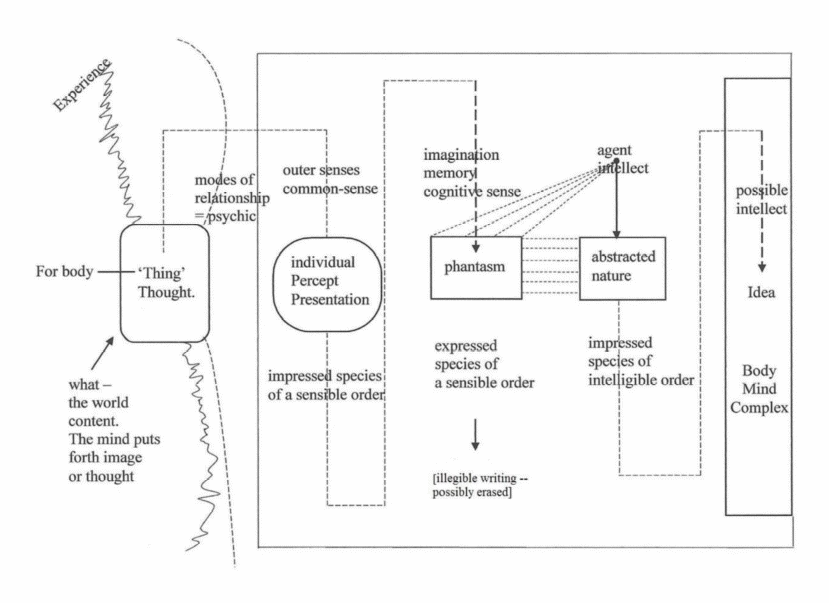
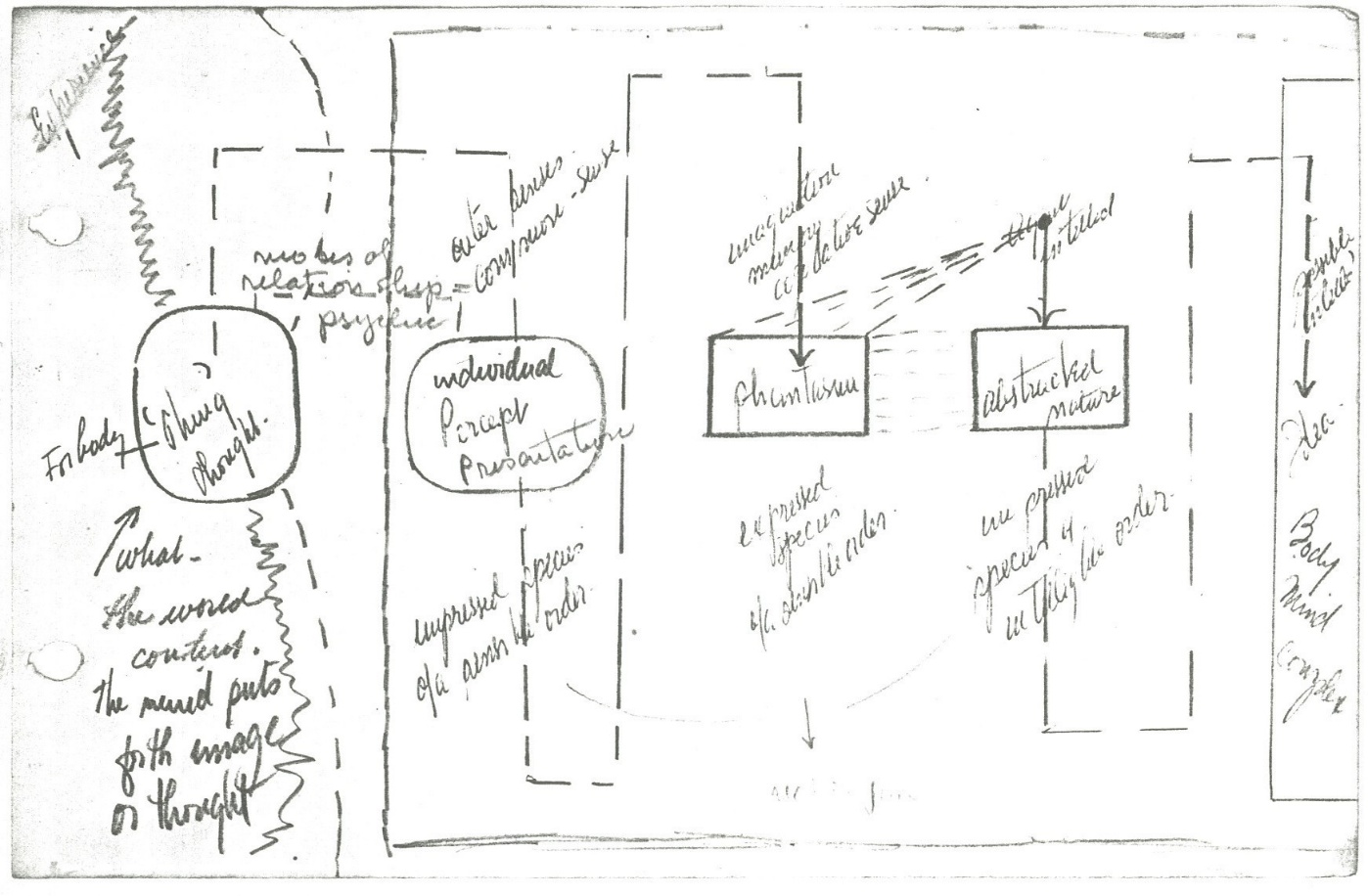
[Fig. AD Supp AD-I-107. Scholastic Epistemology. Facsimile scanned from AD Supp p. 107.]
[ABRIDGMENT OF G.R. MALKANI'S "EXAMINATION OF THE MAIN REALISTIC ARGUMENT." AD Supp pp. 108-121]
[AD Supp p. 108]
[Note: AD Supp pp. 108-132 have handwritten circled numbers at top of some pages -- omitted in this typed version.]
Main arguments of Realist:
Knowledge is of the real.
& the real is what exist prior to & independent
of the knowledge of it.
Knowledge is true when it is determined by the real. → connect this with 1st Lect. [Lecture]
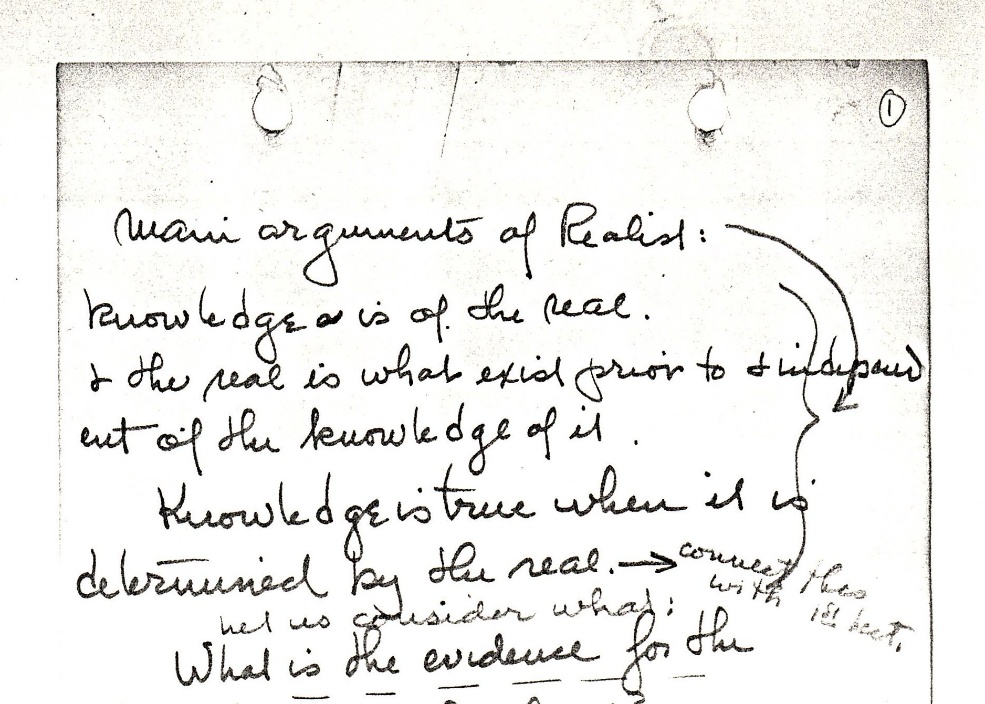
[Fig. AD Supp AD-I-108 top. Main Arguments of Realist, showing bracket. Facsimile scanned from AD Supp p. 108.]
Let us consider what:
What is the evidence for the independence of the object?
separation of Being & Intellect!
The prior existence of the object.
& what will that be -- some sort of Kn [Knowledge].
But all that Kn can prove is the simultaneous existence of obj. [object]
How about the independence of obj.
A some thing in the Kn. [Knowledge] relationship
the Knowness [Knownness] of the thing is an essential part of the existence (2nd level or reflective Kn --) [Note: (over) = p. 109 which was reverse of p. 108.] [AD Supp p. 109] of the thing so far as evidence from Kn is concerned . . . how can any knowledge provide for the un-knowness [un-knownness] of a thing! (example PB speaks about World Mind tendencies) which is what is meant by its independence. & how could it prove its existence when it was not known.
Realist tries again
Lets try this way
Kn. itself is the evidence because it is kn [knowledge]. Kn. reveals the self-existent the indep. [independently] real.
This is begging the Question
this very conception we are trying to justify.
Does Kn. reveal the self existent
What. Kn. does this?
[Note: Following fragment, bottom of p. 109 back of previous page in orig., per CD note.]
a deeper consideration reveals that the knowness [knownness] (is sui generis) & has no contact at all with the thing --
[AD Supp p. 110]
Again an obj. is related to a sub. [subject] in many ways. ie concieving [conceiving] an obj., willing it feeling it etc
Now Kn. is one such function When we know we accept an obj.
We do not make it or imagine it[,] it follows that the obj. must be there[;] this is the deliverance of a specific kind of activity we call kn.
We merely establish contact & it is revealed in our cons. [consciousness]. There is more to the object kn . . .
it is in itself
[AD Supp p. 111]
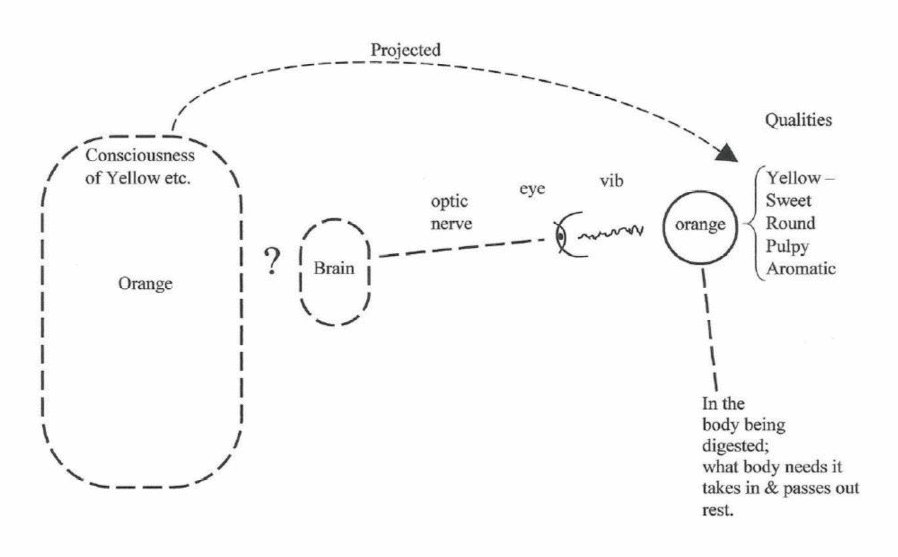
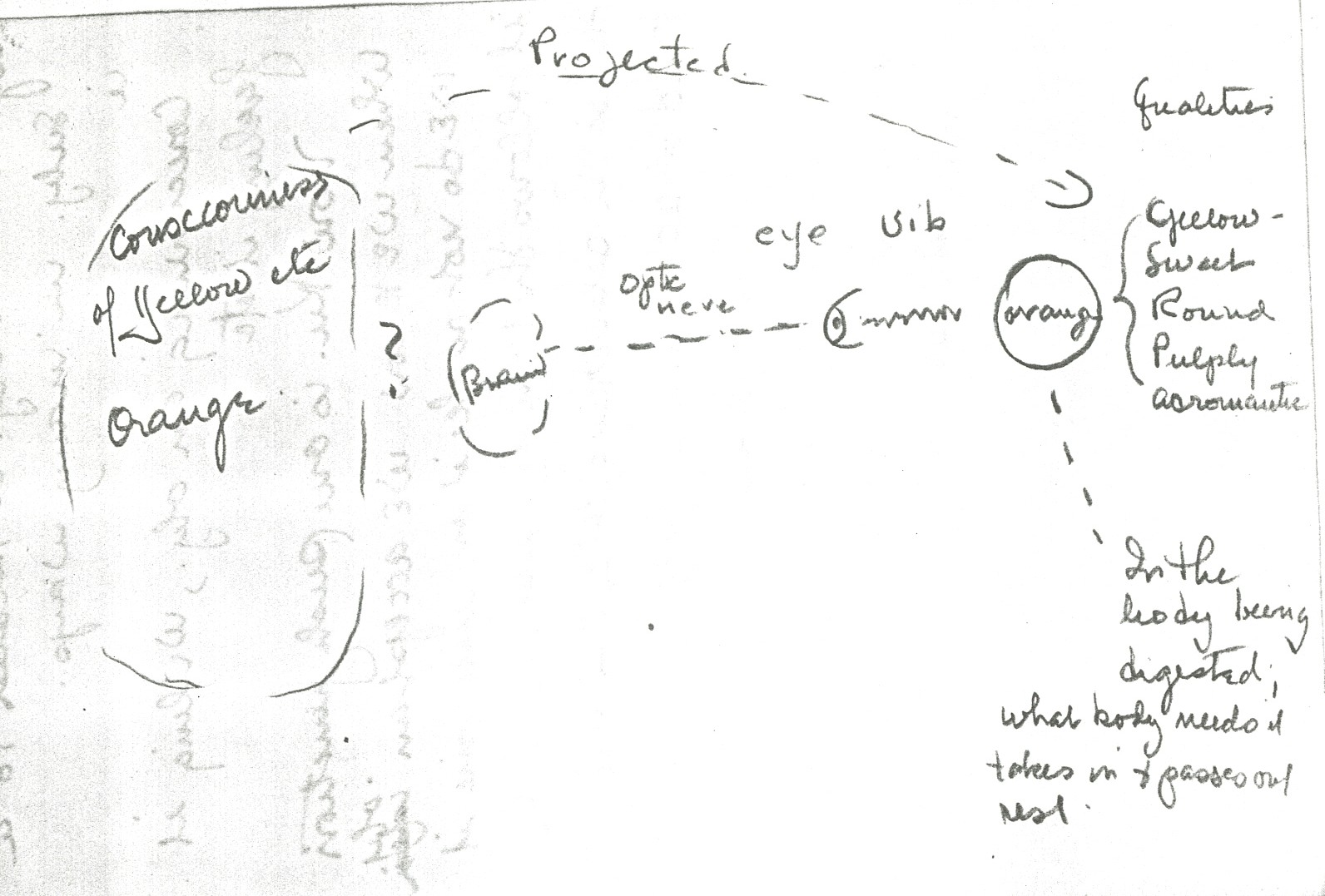
[Fig. AD Supp AD-I-111. Physiology of Sense Perception. Facsimile scanned from AD Supp p. 111.]
[AD Supp p. 112]
Lets [Let's] take sense-awareness which is suppose [supposed] to deliver to us this independent obj.
Logically even the vaguest kind of perception is mediated. explain [Note: AD has a miniature picture of the epistemological diagram on AD Supp p. 111 drawn here. Diagram difficult to see -- omitted in this typed version.] There is no direct contact with the thing as it is. It is literally not given in knowledge. That alone is given that is put there by the mind imagined or concieved [conceived]. I give to myself the things I'm supposed to percieve [perceive]. It is not quite evident that we exactly know. It constructs thru the mental forms the things it knows . . . & apprehend [apprehends] that form, not the real thing
[AD Supp p. 113]
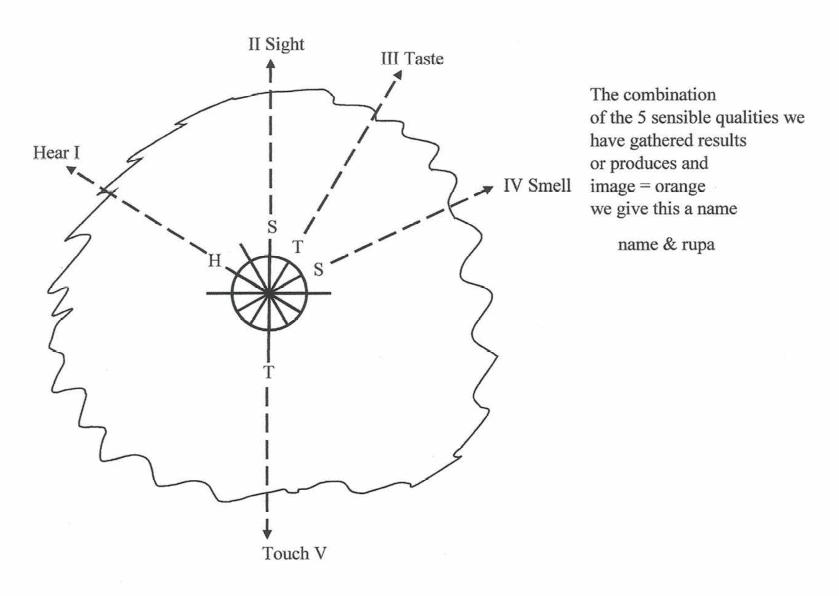
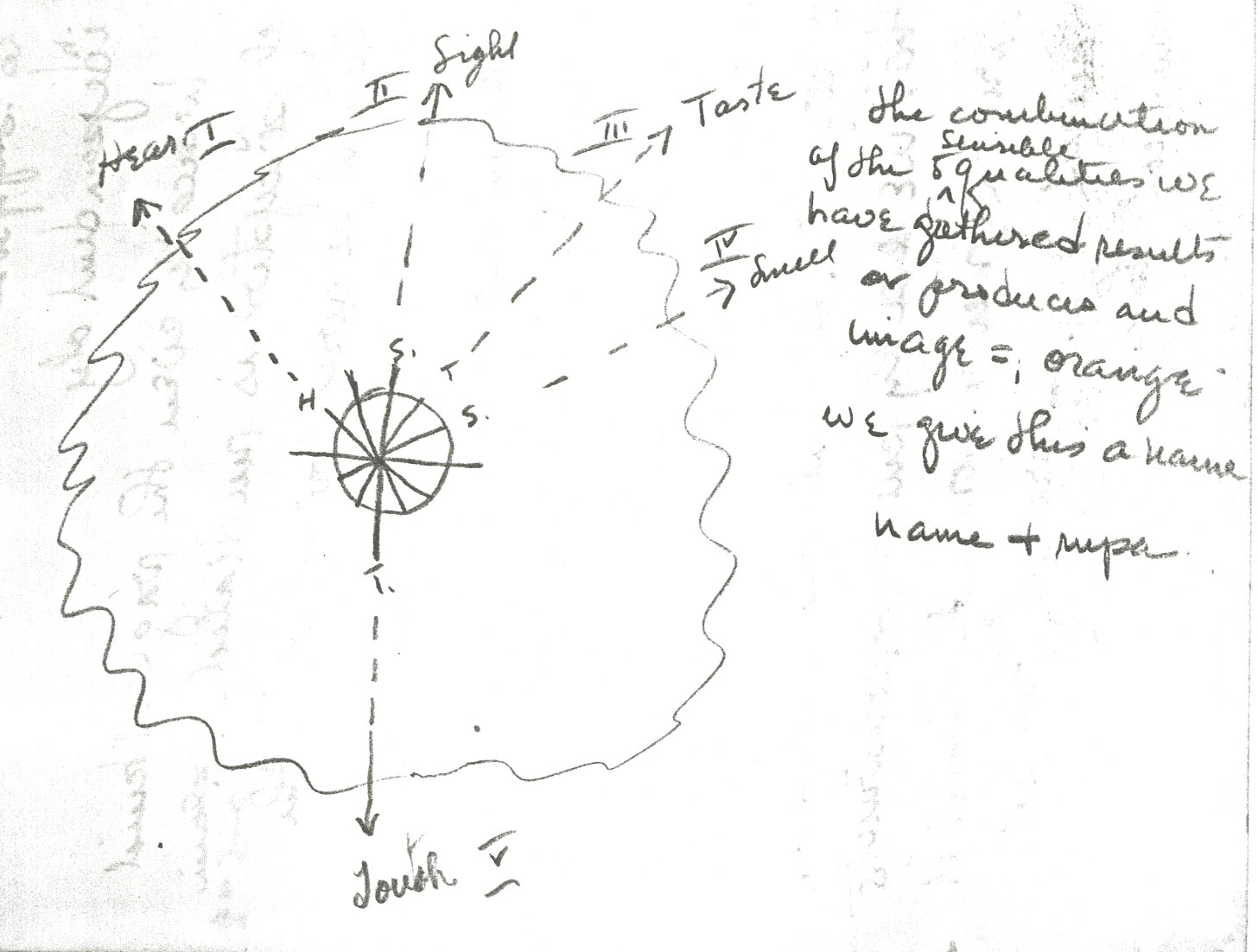
[Fig. AD Supp AD-I-113. Nama Rupa (Name & Form) with Sensible Qualities. Note: perhaps "or produces an image" rather than "produces and image". Facsimile scanned from AD Supp p. 113.]
[AD Supp p. 114]
It will be said there is only one kind of Kn we all possess. & if that is not kn. the term should have no meaning in our experience
If I sensibly perceive anything then for that 'reason' alone the thing in question is or exist [exists].
We have given up one form of the creativity of sensible knowl. ie imagination, conceptualization for another more subtle & insidous [insidious]. When we create an image (sensible obj) by holding back & then naming what we hold back -- the complication of our psychology
Diagram above [Note: AD here is referring to AD Supp p. 113.]
however start by [one word illegible] being the cosmos & as we shrink and inhabit the body [AD Supp p. 115] what was always (& still is) within us now is outside & other -- exist [exists] by itself
[AD Supp p. 116]
Then we move on & create the illusion of otherness -- independence -- reality
Examples--
What Knowl does --
What has kn. done?
geometrical
illusions
1. made obj. kn. to Subj. [object known to Subject]
2. Subj. is knowing ie enlightened
3. Imports into it a new meaning
it goes beyond simple presentation to me . . . but produces in the obj. the character of prior existence. How else can the reality of the obj. emerge -- & without this emergence would reality have been revealed? Without projection can we know the contents of ourselves -- & doesn't that require 3 dimensions? So this independent existence or existence as unknown
no amount of the analysis of sensible kn. will reveal this trail
psychology will
[AD Supp p. 117]
For it is no ['ie projection' inserted here above sentence] part of the obj. as such. It belongs exclusively to our perceiving or knowing activity as such. The quality of unknown existence does not belong to what is perceived which can only be as perceived ---- can be traced to our perception of it To know is to create in the obj. the appearance of prior unknowness [unknownness] -- & with it otherness & reality
Do we then really know
It is one thing to say that the thing is independent & [therefore] we perceive it
uncritical assertion & (no evidence can transcend itself)
We percieve [perceive] it & [therefore] it is independent.
[AD Supp p. 118]
What are the implications
It is our sensible knowledge that has created the appearance of independence, otherness, etc. ['In imag-ing -- the object has (looks like: indep. otherness), prior existence' handwritten above 'of independence, otherness, etc.'] Has it not created an illusion for us? (refer to previous lecture)
What is not indept. [independent] appears so thru our very perception of it --
[Guenon examples]
d.s. [drishti-srishti] I perceive & [therefore] the world exist [exists]
opposed to
world exist [exists] & [therefore] I perceive it
[AD Supp p. 119]
The world mystery can be solved in this way. There is no self-evident or certifying reason for saying that in knowledge -- the world exist [exists]. It appears to exist!
Existence is never created --
Appearance is.
& if anything is created it is this appearance of reality. The real is never created
And so there is only one way in which anything can be said to have been created: Perception.
The Lord has created it in percieving [perceiving] it. We too percieve [perceive] a world Do we not thereby create the world.
[AD Supp p. 120]
If no piece of knowledge was ever cancelled that would constitute evidence for the independence & reality of the world All knowledge would be true: for the very reason that it is knowledge.
But we find it otherwise. It can be declared & seen as false. No perceptual knowledge can make this claim.
If a doubt arises one must give it its full value.
If an object percieved [perceived] turns out to be illusory -- anything else percieved [perceived] is equally illusory
In Vedanta anything that is percieved [perceived] is for that reason alone illusory.
[AD Supp p. 121]
We are confined within the 4 walls of our thought (knowledge) Imprisoned by our knowledge which is symbolical or representative; ie not immediate
[ABRIDGMENT OF CHANDRODAYA BHATTACHARYA'S "THE THEORIES OF DRISHTI-SRISHTI AND SRISHTI-DRISHTI." AD Supp pp. 122-132]
[AD Supp p. 122] [Note: Circled handwritten numbers 12-20, at top of pages of this paper, omitted in this typed version.]
S.D. & D.S
Theory of D.S maintains that the existence of the world is its knowledge & S.D maintains that it has an existence which is different from & independent of its knowledge. Now the meaning of knowledge here is in terms of finite cognitive acts (thoughts) . . . that is to say that the things of the world are independent of the mental acts by which they are known -- the other is contrary. Common sense supports the first -- the chair I'm seeing now existed before I saw it & will exist after the seeing it It is outside . . . while the act of seeing it is inside my mind. The obj. [object] therefore must be diff. [different] from & indepd. [independent] of the act. but matter or obj [object] is an appearance & it must not precede or succeed the cons. [consciousness] to which it appears.
[AD Supp p. 123]
S.D counters this by saying that the obj. (existence independent of perception) still is not independent of the eternal & trans [transcendental] knowledge which is ground of world . . . & which reveals it as long as it exist [exists]. Really speaking it is the same eternal intelligence which knows the table sometimes trans [transcendentally] & sometimes empirically (with modes) although the modes are diff [different] from @ [each] other yet both of them are modes of knowing.
The D.S. maintains that the table which I am seeing now is not diff -- from my act of seeing it ['thought' handwritten above 'my act of seeing it'] It neither precedes or succeeds the act. nor do the act and the obj. differ from each other
But is not the cognition ['perception' handwritten above 'cognition'] of table & table diff. from its cognition ['perception' handwritten above 'cognition']
[AD Supp p. 124]
What the trans. cons. [transcendental consciousness] reveals may according to advaita be false
[AD Supp p. 125]
D.S. points out there is no evidence for existence of obj. in an unperceived state. To say one is inner & the other outer is not valid for this distinction is already implied in outer & inner
It would not be proper to think that the act of seeing the table knows also the distinction between act & table For in knowing this distinction the act must also know itself -- this seems impossible. An act of cognition is transitive & must be directed to an obj other than itself (like) (Ex.) [words hard to read] (Knowledge of the act is no finite & particular act)
The specific & determinate character of cognition must be due to its object Otherwise how is one cognitive act different from another
[AD Supp p. 126]
Finally D.S ans. [answers] this objection
a piece of knowledge must have some obj which is diff from it . . .
is it being said that unless there be some obj to a cognitive act it is incapable of originating at all?
Now a cognition comes into being as soon as all its preconditions are fulfilled & the obj of a cog [cognitive] act is not found to precede the act invariably. It is admitted that the apparent obj of an illusory piece of Kn. [Knowledge] is not a precondition of that Kn. & also it is possible that an act of (?) cognition is self-differenced from itself in order to maintain its distinction from other acts or the knowledge of the obj can be supposed to have [AD Supp p. 127] a qualitative distinction which falls wholly within its own nature & is not relative to & derived from obj. Thus this world can be regarded as nothing but a series of cog acts founding the mental history of subj [subject].
Then there is nothing in the world that persist [persists] & judgments of identity would be invalid.
But these judgments are no more valid that those in dreams etc.
Since the sense organs need the physical snake which must be prior to & simultaneous to knowing[,] thence the obj. of Kn. must be diff. from its Kn. whatever may be the case of an apparent obj of illusion
[AD Supp p. 128]
consc. [consciousness] of my W.I [World-Idea] suggests that residing in or behind
[AD Supp p. 129]
The above is a circular argument. The validity of a cog. act (thought) is sought to be determined by the presence of sense activity; while the presence of the latter is sought to be determined by the validity of act.
Object which is believed to exist even when it remains unknown must be considered to be the absolute itself (from r.p. [Note: presumably Richard Platek classes] advaita) for the word unknown in this connection means concealed by ignorance & it is the absolute alone that can be concealed by ignorance
Things originate only after maya has done its work of concealing the true nature of the absolute . . . ie they are illusory being products of maya [therefore] there is no sense in saying that they [AD Supp p. 130] are concealed by ignorance. For illusory obj. can never remain unknown[;] as long as they exist they must appear to some cons. Since the esse of maya itself is its perception which is the Absolute it follows that the existence of obj. which are the products of this ignorance is their perception
In the triple division of maya -- sense-organs & their functioning in regard to chairs are all illusory & should be understood on the analogy of dream experience. Their being, too just like the being of dream objects depends on their knowledge.
[AD Supp p. 131]
These 2 doctrines are diff. expressions of the advaita fundamental. Both maintain that this world is not absolutely real but only apparently so & that the only reality that there is is mind, Brahman, etc which is absolutely simple & unitary in nature. Now S.D holds that within this sphere there is a legitimate distinction between what is empirically false &/or true what persists in time, what is momentary, what is mental, what is extra mental -- In contrast, D.S. maintains that such distinction within apparent reality is not ontologically legitimate & significant[,] that appearance & illusion are identical[,] nothing persist [persists] in time, everything is mental[,] entire world of experience is a series of successive & momentary mental states
[AD Supp p. 132]
D.S. is simpler -- it accepts only two grades of reality, but that may make it seems [seem] that the complexity of human experience is not given its due. as f.i. [for instance], the distinction between empirical, & illusory.
In the Wisdom it is held that -- we actualize the 'forces' in the world mind & this actualization which belongs [to] us produces our perceived world -- the perception is given in cons or Kn & is mental. The 'forces' in the W. M. [World-Mind] or the 'master ideas' prior to those perceptions are also mental -- so that in the final analysis & ultimately all is in knowledge or Kn. [sic]
[VEDANTIC EPISTEMOLOGY AND LOGIC. AD Supp pp. 133-134]
[AD Supp p. 133] [Note: These seem to be notes summarizing an article, but as of 8/11/26 we have not been able to identify the source. Pp. 133-134, handwritten circled numbers 1, 2 at top of page, omitted.]
Epistemology distinct from metaphysics or theory of knowledge distinct from conception of being.
1) Theory of Knowledge is a theory of empiric cognition.
Whatever is, is consciousness.
Hegel's dictum is completely accepted (versus/reverses/minus(?)) the (logical) becoming. For Shankar Being is an ever accomplished fact & not a process. Intuition is not only a faculty of the soul but the transcendent truth
[AD Supp p. 134]
Sankara's Logic has two forms.
a) empirical
b) transcendental, when the latter arises the empiric consciousness assumes an ideal character. that which appears so long as real now appears as ideal. This transcendental intuition modifies the logic of realistic consciousness by higher logic. The organon of super cons [consciousness]
[ABRIDGMENT OF S.K. CHATTOPADHYAYA'S "THE REAL, THE GIVEN, AND THE OBJECTIVE." AD Supp pp. 135-136]
[AD Supp p. 135] [Note: This page numbered -1- at top, number omitted.]
real, given objective are interchangeably & confusedly used.
the given is simply not the constructed -- the core or foundation around which construction by the subj. [subject] takes place . . . around which some sort of conceptualization takes place. But it is the given that is real & the real is given. Also it is objective[;] it doesn't owe a penny to the subj. but is independent of & indifferent to the subj.
What about subj. -- write it of [off]
Most of the 'realist' [realists] would agree to be real means to be obj. [objective] & indept. [independent] of subj. Thus obj. is the criterion & for the empiricist the given [AD Supp p. 136]
& since obj. is often the given & the latter often obj [objective] . . . .
Is the real definable as the given or obj . . . or rather is the real the same as the given, obj?
— Lets see
The given is presented or forced upon us, it may be free from any subj. [subjective] construction. As it is, it is, in some sense real. As we have it know it or assert it, we believe in it & take it to be real . . . & can't do otherwise. But is a presentation always real. Is not the false also presented given & experienced. Or do we always experience the real & never the false[;] all are reality experiences?
[ILLUSION, REALITY, AND THE GIVEN. AD Supp pp. 137-139]
[AD Supp p. 137] [Note: These seem to be notes summarizing an article, but as of 8/11/26 we have not been able to identify the source.]
When you experience the snake in the rope but don't experience the rope . . . the snake is the presented reality ie anima, guruhood, Quest, optical illusion. When corrected you see the rope & reality passes over to the rope & characterizes it. If you then remember the rejected snake it turns out to be a really rejected content once truly experienced & not as an appearance which is not even a real illusory experience. Experience what you may, if you exp. [experience] as a matter of fact you take your exp. as true & the content as experienced as real in relation to that exp. Without reality thus figuring ['inserting itself' handwritten above 'figuring'] in the content & truth characterizing it for the time being, your experience or knowledge, [AD Supp p. 138] you have no knowledge &/or content[.] You may change from one knowledge to another & pass from a rejected truth & reality to a new truth & reality but you cannot shut yourself from them.
Reality thus seems to have an adventitious character not intrinsic to the given. The given becomes real but is not the real nor is the real the same as given. The given is a sort of officiating post for reality to convert any particular, given to hold indefinitely but it can not [cannot] claim to have it as a matter of right -- or in virtue of its character as given. Thus the given assumes the form of the given
The real is revealed in every experience & there is no experience without it.
[AD Supp p. 139]
The real is revealed in every experience & there is no experience without it.
[Note: Appears to be repeat of the last sentence on p. 138. Looks like photocopied twice.]
[THE RELATION OF CONTENT TO CONSCIOUSNESS. AD Supp pp. 140-141]
[AD Supp p. 140] [Note: Per student notes, this is Anthony Damiani's reworking of passages from K.C. Bhattacharyya's "The Subject as Freedom."]
To be real something must be believe [believed] in, must be asserted . . . & comes to distinguish itself from that which asserts It assumes the form of the given, objective[.] [T]he halo of reality continues the [to] characterize the asserted, given or objective only so long as belief does not cease. This is the manifesting, revealing. This phenomenal form underlies all experiences & their contents, the general that underlies the particular judgments, beliefs
& Empirically the content is independent of even indifferent to that particular experience that reveals it. But this its independence or indifference does not make it real. It is in being asserted or believed that it acquires that characteristic. The characteristic of being real is adjectival to it because it derives it by floating in the self manifest or self revealing
[AD Supp p. 141]
With the self revealing it is its self-substantive as a character[;] reality is the self-revealing consc. [consciousness] the substratum of all phenomenal existence & content
The self-revealing cons. [consciousness] is the Reality & in its self expression it becomes a cons. asserting itself, and a content asserted This is ideal. It is the simple unity or pure unity of both. The phenomenal realities or adjectivally real can be found as not necessitated by the being of Reality but as merely seeming, the 'as-if' existing The 'as-if' is eternally an is not in a transcendental sense, but it is eternally the same as-if in the same transcendental sense.
Reality is everywhere & always substantially or adjectivally
This is the ridde [riddle] of universe.
[ABRIDGMENT OF P.J. CHAUDURY'S "SCIENCE AND EPISTEMOLOGY." AD Supp pp. 142-143]
[AD Supp p. 142]
Science starts with perception & implicitly identifies the perceptual contents with the existent objects . . . ['refer 1st lect.' written below '. . .'] which are thus held to be percieved [perceived] as they are. Perception is taken as ultimate fact & so are perceptual truth & existence. This is realism. Science unreflectively holds that objects exist out there & that they are percieved [perceived] by the scientist truly. There are errors of course . . . but these are exceptional Reality is coherent & will weed them out
But when science reflects it gives up its faith that the content of perception is identical with the obj. [object], for this is never percieved [perceived] apart from the former
[AD Supp p. 143]
So science can't go beyond the actual content of perception to posit an obj. & thus can't transcend the immediacy & subjectivity involved in such knowledge ---
He is preforced [sic] to say this appears to be so & so & not this is so & so. More it cannot speak of truth & falsity of perception or coherence which again cannot be proved in the reflective attitude.
& with the reflective attitude it finds existence or reality as distinguished from illusion is not an empirical character & so knowable by science.
[ABRIDGMENT OF G.R. MALKANI'S "KNOWLEDGE BY SYMBOLIZATION." AD Supp pp. 144-148]
[AD Supp p. 144]
But
All our kn. [knowledge] needs symbols. & in diff [different] kinds of kn. they preform [perform] different functions . . .
There is just a kn. of pure symbols. & the highest kn. that has for its object the Ultimate
math kn. is not so in a literal sense; but deals with symbols. Thru abstraction from real things we get points lines etc
so its [it's] symbolical, & concerned with certain thinkables.
We get actual kn [knowledge] in sense exp. [experience] but not directly & without symbolization We can't think without language & so the most general character [AD Supp p. 145] of reality is that is, is speakable -- This symbol has a further function here -- It has literal meaning It refers beyond itself to reality[,] a case of genuine kn. thru the symbol
We have to learn how to use this symbol . . . which refers to reality by the rules of language
It is natural to suppose that as we learn a language by reference to reality in sense experience, so we must use it to refer to objective reality which can be sensibly known As we learn so we must use.
Scientific kn. is based on upon sensible intuition. All scientific concepts & theories are [therefore] analyzable in terms of those intuitions
[AD Supp p. 146]
Lets [Let's] accept the direct reference of symbol to the symbolized in all genuine kn. ok! Now what is the nature of the relation between them.
A complete symbol in the form of a proposition represents or pictures an objective situation
We know an actual fact in the objective world . . . & all truth is ultimately based upon sentences which directly refer to a reality that can be sensibly known.
Obj:
We have a picture & an original they can be (cfs). But it's not possible here.
[AD Supp p. 147]
We know the sentence or symbolism o.k. We know that it refers to reality but we do not know this reality independently of the symbolism ['sentence' handwritten above 'symbolism', 'speech' handwritten below 'symbolism']
We know it only in so far as it is symbolized. A reference to reality which can not [cannot] be substantiated thru independent evidence is useless. We have a picture without an original & this of course leads us into subjectivism
or let us admit there are propostion [propositions] which truly represent reality & sentences which do not. How do we know the difference. They both claim to refer to reality
[AD Supp p. 148]
What enables us to do so is a subj. [subjective] criterion -- ref. [reference] to our whole system of knowledge or criterion of coherence. but that means to give up the criterion of sensible intuition ? on which this whole theory of the meaning of sentences is based.
[ABRIDGMENT OF A.C. MUKERJI'S "REALITY AND IDEALITY IN THE WESTERN AND THE INDIAN IDEALISTIC THOUGHT." AD Supp pp. 149-153]
[AD Supp p. 149]
If reality is external to knl [knowledge] no enquiry can start; if within knl. [knowledge] the enquiry is gratutous [gratuitous].
Reality is inside & [as] well as outside & in certain respects we are in possession of an absolute knl. of reality . . . ie certain principles which may be said to be supra temporal -- constituting a body of knl. regarded sub specie aeternitas.
The Kantian revolution in epistemology by his theory of transcendental apperception with its implication of the double aspect of mind as one object among other objects & mind as the [AD Supp p. 150] ultimate presupposition of all objects. The first would correspond to notion mind in psychology -- as in their analysis of knowing mind & matter. And the subj. [subject] object relation which is the most generic & presupposed by every specific relation. The former and intra objective; [Note: incomplete]
Thought, Knowledge, or Cons. [Consciousness] is the foundational principle which invests each term of the triple distinction with meaning & significance; we fall into the error of supposing that knowledge is the product of a certain type of [AD Supp p. 151] relation between one thing & another Once this egotistic intrusion is rooted it gives rise to impossibilities in our thinking . . . my thought, my knl.
In a triple distinction the foundationality of thought is missed leading to its identification with one of the superstructural items[.] [T]hinker - thinking - thought.
It is ingrained in our objectivistic attitude of mind. The transference of the characters of the obj. [object] of thought or cons. to thought itself (adhyasa) (a characteristic of empirical & realist analysis of knl.)
It is impossible to have a correct notion of cons. by ascribing to it the characters that belong to the objects
[AD Supp p. 152]
In placing knl. (transcendental principle) on a level with the objects conditioned by it is a mistake analogous to placing the law of non-contradiction on a level with the judgments which it conditions
Thought has a different part to play from what it has if we speak of a faculty of thought, one among a crowd of other faculties such as perception conception, will etc., with which it stands on the same level. Thought in its objective meaning is the nous. It is not a subjective process. We must therefore realize that man is a being that thinks & as a thinker he is universal & feels his own universality. Thought as the universal [AD Supp p. 153] background of all distinctions cannot be identified with a particular faculty. Universal & & [sic] irrepresible [irrepressible] & trans [transcendental] principle lying at the foundation of all we can ever think -- & of all distinctions between one obj. & another . . .
Thought when used in a transcendental sense falls beyond relational description & yet it supplies the basis of every object of thought that is necessarily ideal.
(the [ditto marks] from P.B. Wisdom)
thought here is not a subjective process of mind . . . but its basis including feeling thought will etc is grounded in the objective thought (nous) & [therefore] ideality is an inalienable feature of all finite things; it would be a disaster to characterize thought itself as ideal [Note: Last phrase found on p. 154 with CD Note: bottom of this page is back of previous page in orig.]
[HOSTILITY TO EPISTEMOLOGY. AD Supp p. 154]
[AD Supp p. 154] [Note: As of 8/11/26 we are unable to determine whether this is taken from an article or is original writing by Anthony Damiani.]
When philosophy sits loosely on our life can we despise logic & epistemology. For the principles that determine truth or falsity of theories have to be presupposed by every theory -- otherwise they are merely dogmatic statements . . . or psychological exclamations. The general hostility to epistemological [sic] is due to a lack of understanding the difference between the principles of reason & a theory. The former is a logical implicate of all theories & is the ground, a fundamental attribute which the other [sic] lack. A distaste for logical compulsion results in the misologue.
[ABRIDGMENT OF A.C. MUKERJI'S "SUGGESTIONS FOR AN IDEALISTIC THEORY OF KNOWLEDGE." AD Supp pp. 155-160]
[AD Supp p. 155]
A sharp dualism between knower & known each having an exclusive & self centered existence cannot explain knowledge which essentially implies self transcendence on the part of the knower. A spirit which is to be distinguished from matter by the attribute of thought must be concieved [conceived] as leading an (looks like 'abstract', possibly crossed out) existence by the side of things that it is expteced [expected] to know. This it can't do.
The paradoxes of an ultimate dualism percepitates [precipitates] the necessity of raising philosophy from a psychological to a transcendental level. Dualism implies two different items distinguished from each other by this rejective & peculiar characteristics & which as belonging to the same genus [AD Supp p. 156] are coordinate in their status Knowledge becomes a compresence between 2 things of equal status. The impossibility forced upon us for an ans [answer] is how spirit could ever know matter. Concieved [Conceived] as a quality knowledge would necessarily be confined within the subjective life of the spirit substance in which it inheres & as such could not be a relation
The fallacy of transcendental dislocation levelling down the status of presuppositions to that of the ideas they condition
ie causality is an inescapable concept which renders an empirical theory of knowl. [knowledge] intelligible, then to show the empirical origin of the concept would be . . .
[AD Supp p. 157]
A principle is irrepressible when it is reasserted in the very act of deducing doubting refuting it.
The subject is a universal precondition of all objects of knowledge -- its relation to the objects is in no way reducible to any of the inter objective relations, (ie relation of space to geometrical figures) The subj. [subject] here supports the ontic super-structure of the world of objects including mind & matter, the electron & psychological complexes. True idealism does not reduce all reality to mind dependent psychical states
For we cannot trace the origin of transcendental principles of knowl [knowledge] to the mind conceived as a member [AD Supp p. 158] of the democratic universe. The genealogy of ideas owes its intelligibility to the formative principles of self cons. [self-consciousness] which are not of empirical origin A carful [careful] consideration makes a naturalistic analysis of thought unprofitable.
Every speculative analysis presupposes thinking, we cannot turn around and make thought itself an object of analysis in the same way in which we analyze objects of thought. Thought is not a mere subjective process or a particular faculty among the crowd of other processes but is the universal precondition of all the objects that are thought of. In this sense every subj. [subjective] process [AD Supp p. 159] & in fact every item of analysis presupposes thought. And from this peculairty [peculiarity] of thought it follows that whatever is involved in thinking cannot be coordinate with the 'things' about which we think. Being the foundation of all objects, thought can't be levelled down to the status of the structure it builds up.
An imperfect perception of the heterogeneity of the transcendental pr. [principles] from the objects they condition have [has] given rise to the error of misapplying the pr. governing the obj. [object] of thought to thought itself
(distinctions are within thought)
[AD Supp p. 160, top]
Diana [Notes: Belongs with Gods of the Vesica; see AD Supp p. 98a. (CD on p. 160: top and bottom = 2 pages in orig); different handwritings, Diana page (AD Supp 98a) belongs to "Gods" section but nothing else about Diana on it.]
[AD Supp p. 160, bottom]
I think, I know, Iam [I am] conscious cannot possess the character of ideality nor an un meaning [unmeaning] abstraction
[FRAGMENTS: ONE, INTELLECTUAL-PRINCIPLE. AD Supp pp. 161-165]
[AD Supp p. 161]
The mandala form makes possible a diagrammatic conception & understanding of the I.P [Intellectual-Principle] . . . that is almost visionary. We will speak of it in greater detail later on -- but for now we will present it for the support it may provide in our attempt to grasp the indivisibility of aspects of the One. In his incisively descriptive remarks about the I.P. he states that each Idea is a special & unique version of the I.P. And it should be possible for a philosopher to consider One Idea at a time and describe it around the astrological wheel of 12 houses. Each idea is a unity & may consequently be treated as such having a passive & active perfection etc. Now this is similar to saying that the I.P. has aspects, each & every aspect is include [included] in the I.P. entire and each Idea is a special version of it. This is directly [AD Supp p. 162] prior to the ego's existence, the incorporeal reason principles were organized by the mundane Gods (planets) into energy patterns that constituted the substratum of the world image or world-idea which included the individual bodies . . . and transmitted thru the sensitive faculty of each living creature. So that the sensitive or image-making faculty of each creature provided it with its environment, or its version of the world idea and then included itself within that reproductive image. Thus the horoscope made available thru it's [its] diefic [deific] imagery the combination of subtle forces that organized the traces of life left behind on earth into entities or animal bodies for the experience of the souls that were to preside over them. This was considered the necessary pre-requisite or condition for the possibility of knowledge . . . first of the sensible world which embodied r p [reason principles] & & [sic] later of the intelligible. A Symbolical method by which some understanding of the sensible world was extracted by penetrating into the topography & functioning of the subtle world.
[AD Supp p. 163]
The 'ideas' or reason principles that are the paradigms of all living forms or species is symbolized by the archtypal [archetypal] zodiac or the inerratic sphere -- which represents the immutability of 'the Ideas'. And the highest phase of our sun -- its intellect contemplates these universal intelligences (substances) or infinite force fields and thru its own powers organizes the forms within itself into incorporeal species which preside over the organization of the elements that form animal bodies & they reflect these forms -- functional images -- thru which the universal-activity-consciousness particularizes itself.
[AD Supp p. 164]
In the light of our discussion on Plotinus' notion of the complete and unfailing perfection of 'the One' and in our consideration of the many & inexhaustible aspects it presents to our view, there gradually emerges a sphinx like indescribable holy silence . . . the One without second. Which in its simplicity included an ocean of possibilities integrally Perfected.
It is necessary for us to affirm of this (function/principle) publicly our conviction that the application of the Vedanta 'Vivarta' theory is appropriate here, and only here. Our study of the select inspired passages from Pl [Plotinus], that permitted Its glorious light to shine thru reassures us thru assertions the application of illusory manifestation to any other principle or combination of principles leads to a philosophic error of capital demensions [dimensions] & will lead to perpetual confusion and semantic contortions of major proportion and is leading to a crisis in the understanding for the student of the philosophic quest!
[AD Supp p. 165]
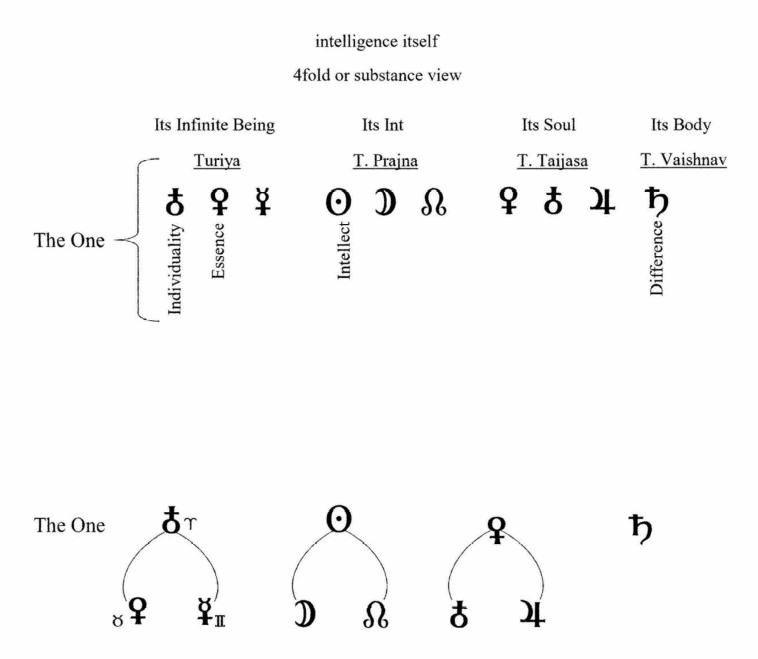
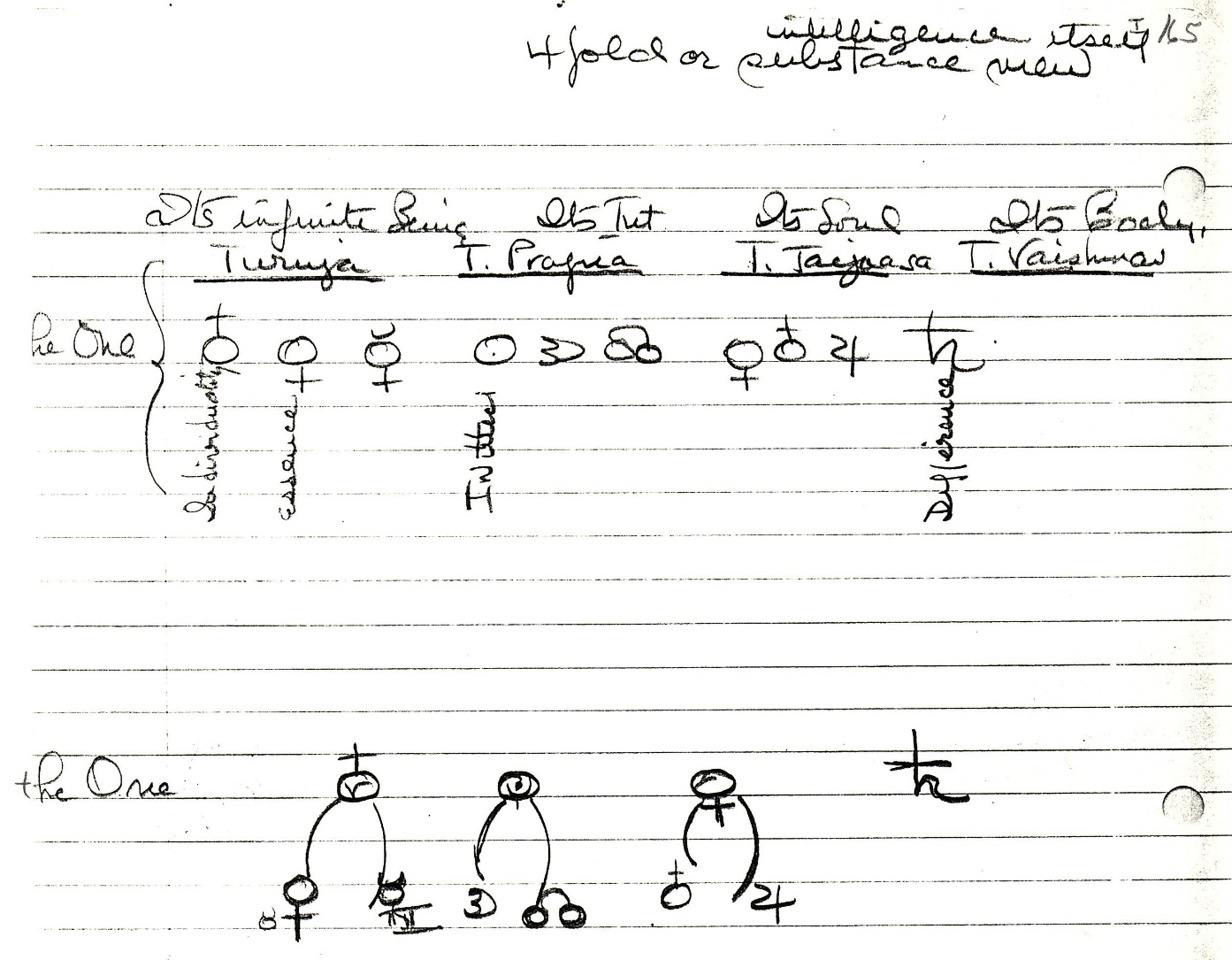
[Fig. AD Supp AD-I-165: Top: The One - Fourfold and States of Consciousness. Bottom: The One - Dignities Showing Double Act. Facsimile scanned from AD Supp p. 165. Note: Vaishnav = Vaishvanara.]
[PHYSICS AND WATER: DIFFERENT DUALISTIC VIEWS. AD Supp pp. 166-169]
[AD Supp p. 166]
Finally the most modern research of physics will re assure [reassure] us that these ultimate particles are reducible to waves of probability, an intangible & invisible energy whose paradoxical nature defies reification. At any rate -- each perspective brought into view a level of reality that is distinct from other levels. And given the standpoint -- the boundries [boundaries] are demarcated. It is natural for us to claim that all these aspects of water are included in the original -- especially if our standpoint insist [insists] that the sensible is real.
[Note: (CD: pp 166-169 are on one sheet of yellow paper, front & back, in orig.)]
[Note: About a third of the way down p. 166 in different and very light handwriting, "Septile according to Krishnamurti" ... seems to be unrelated and difficult to read.]
[AD Supp p. 167]
Another example we may use to suggest the profoundity [profundity] of this idea -- comes from science. Water may be regarded from different points of view. . . . We may drink it & the life processes are maintained[;] the biological sciences are equiped [equipped] to supply the relevant data. Next we ask the chemist for a description of its composition and we are informed accordingly. The classical physicist then goes into a detail analysis of the the [sic] nature of the particles the chemist deals with
[AD Supp p. 168]
(This/The) water is used to symbolize mind or Brahman and when reference is made to the fact that the spray, foam, waves etc all these are water (mind) it does not at the same time exclude the simultaneous presence of the internal differentiation or the hierarchy of levels that will exist in the foam, waves etc. this will be much closer to the meaning of non-dualism
[Note: A personal note is scrawled in between the lines on p. 168. It reads: Dear Anthony, As you'll see, I've read the book. The "conditioned" way = without worldview[?] and [markly? Mankind?] and the "unconditioned" way (highlighting some places). Enjoy it any[?]. Be free to mark anything that you wish. Peace be with you.]
[AD Supp p. 169]
But an equally valid position may be formulated by the quantum physicists that this unknowable, indefineable [indefinable] & indeterminate energy is the original from which the rest is an outflow . . . . a consequence
If the stock example of the ocean is used by Vedantist is carefully considered then this paradoxical nature of water -- which we may refer to as the vertical & horizontal demensions [dimensions] is revealed & must be examined
It will have a monolithic and ultimate pervasiveness
[DOUBLE STANDPOINT / DYAD. AD Supp pp. 170-180]
[AD Supp p. 170]
In IV-2-1 he speaks openly about this mysterious unit Soul -- although a secondary, an emanant distinct from its source, nonetheless characterize by indivisibility -- a one Being -- that he places between the 3 hypostases & the cosmic circuit or rather has It will enter into the cosmic idea and seemingly be dismembered -- but this way of stating the matter is misleading. For the nature of mind or soul is indivisible, self identical, and unsundered entirety . . . it has no form, size, mass etc. How can such enter into anything? And how can the World Idea even in its present form enter it? What modern day commentator can say he still [one word/symbol illegible] -- so still that there was no coming or going and perceived the W.I. [World-Idea] within his soul in its universal form -- light -- within?
Plotinus' description of soul or mind is the experience of our integral Being in all its universality and not a concept by postulation . . . ground consciousness, the ultimaticy [sic] of our being
[AD Supp p. 171]
…that first utterly indisble [indivisible] Kind must be accompanied by subsequent essence, engendered by it & holding indivisibility from it but, in virtue
[AD Supp p. 172]
(what this view is focused on the paradox that the emanating power of the One contains & reflectively displays the double act as I.P. [Intellectual-Principle])
(The IP. [Intellectual-Principle] in its entirety 'exhibits' the transcendental paradigms or indivisible aspects of the Superknowledge which may be referred to as synonymous with the One.) This verbal distinction we are tentatively establishing between the One & its issuing act is for our clarification for this [these] higher principles will be majestically duplicated within the realm of universal manifestation & then again within its parts. Consequently it will ultimately give rise to the practical truth alongside the Only-Truth and this will be the cause of much confusion & semantic obscurity in the relative. For the very nature of this [these] principles & their decise [decisive] application to the practical questions we ask here will be obvious
[AD Supp p. 173, lefthand column]
The Advaitic Viewpoint & Plotinus
The One emanates the I.P. & Soul which is its eternal life Lower aspect of Soul produces thru reason principle the Logos of Universe[;] it is within = without the universe Within defined portion of universe an individual (cosmic) soul elaborates from this universal logos a particular world system[;] within this particular world idea & environment is [are] located other souls which preside over certain portions & other souls over certain bodies within which they 'incarnate' & is announced by portion of the world idea –
[AD Supp p. 173, righthand column, diagram]
[Text of diagram:]
the double standpoint required by Philosophy & speculative metaphysics [bracketed to include both The 3 Pure Hypostases, and The 3 Principles as they exist in Nature]
the 3 pure Hypostais [Hypostases]: they can be enumerated (1,2,3): the One, the Intellectual-Principle, Soul
in the way Pl. [Plotinus] does (illegible) indivisible aspects[;] Perfection = causeless cause[;] & there emanates I.P. [Intellectual-Principle] etc
or
All three together may be concieved [conceived] as the Absolute from the side of manifestation[.] Pistorius & Gita conceive this as the Trinitarian Absolute
The 3 principles as they exist in nature
Unity of U.M. [Universal Manifestation --
its Being--
its Soul--
its Body-- [which includes the following, all bracketed]
Unity
Intellect
Soul
Body
(quote Gita p. 90)
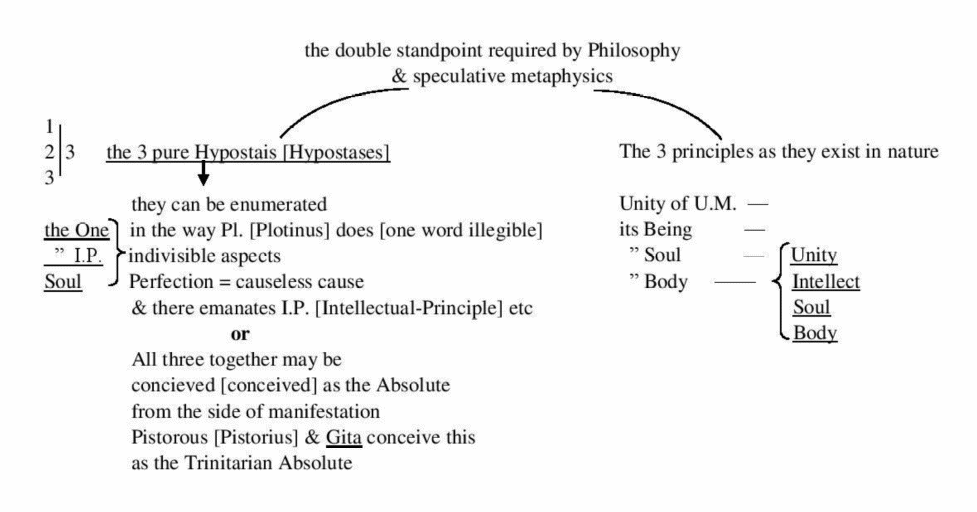
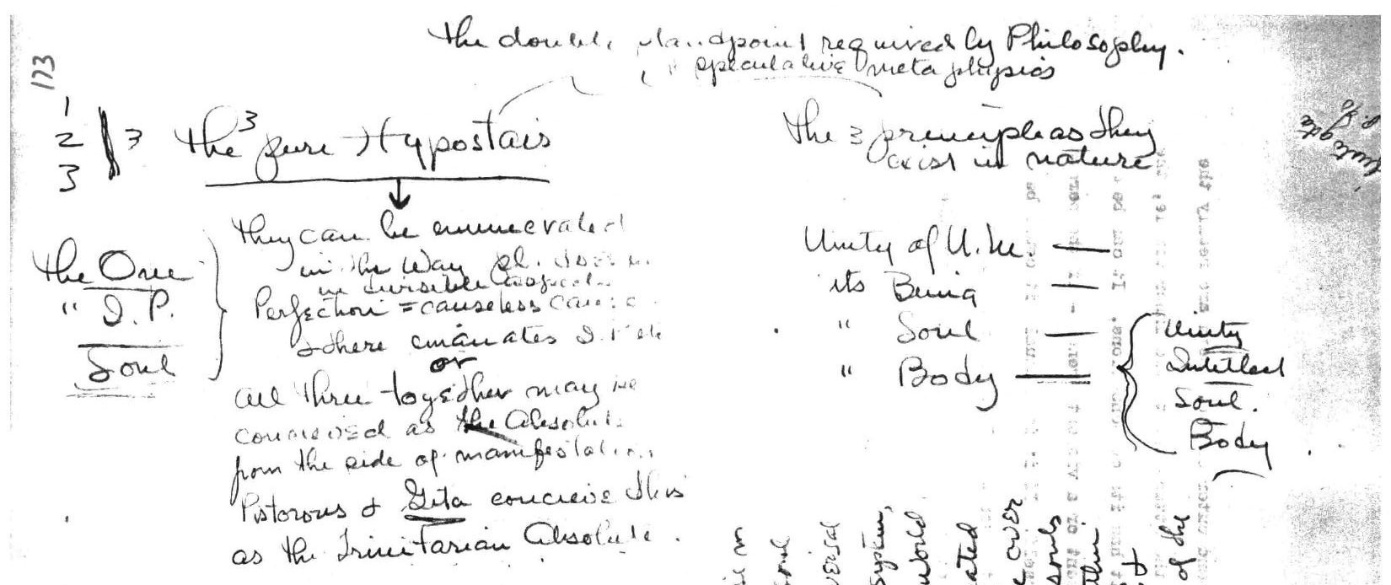
[Fig. AD Supp AD-I-173-righthand side of page. The Double Standpoint and Levels: Three Pure Hypostases (left) and Three Principles in Nature (right). Facsimile scan AD Supp p. 173, cropped and rotated.]
[AD Supp p. 174]
Advaita viewpoint to contrast the Plotinian
[Note: Remainder of page crossed out. It is a copy of Avery Solomon's typed-out 1975 interview with PB. Avery says AD's handwritten comment on Advaita above is a reply to the interview.]
Avery Solomon -- July 1975
XI. LONG AND SHORT PATHS
Try to imagine an inner and outer circle. Both are really the same mind. You must give up the attachment to the inner circle, the ego. It may be painful but it has its compensations. It can be a gradual letting go of attachment or a violent wrench -- if the person does not begin letting go himself. If it is gradual, it could be kept -- and only the attachment given up. If he is more heroic, the aspirant may pray to be set free, and the ego may be wrenched from him. It is according to karma.
The short path is a combination of bhakti and jnana. On the long path there is struggle and will. On the short path the feelings are steady -- there is no struggle or up and down emotions. You should try constantly to remember -- as often as possible, the thought of The Overself -- even 50 times a day, continually turn back to that feeling. Here he gave the analogy of the two lovers, and of Plato's Cave.
He said, when I asked, that in the 4th exercise in the Wisdom, on sudden dropping of the normal attitude, that you use your will -- it differs from the remembrance in that respect. Most people need a combination of both -- more long at first. P.B.'s way is to use both -- according to the individual. Most people look for the emotional or mystical experience, but on the short path it is the smooth flow, not the violent ups and downs.
[Note: (CD: back of previous page (173) of orig)]
[AD Supp p. 175]
A look at the horoscope would reveal 360° -- ideas in the nous and in their totality can be concieved [conceived] as a single entity or monad. These ideas which are beyond & the ref. [reference] is not spatial are associated with certain portions of the stars & ref. [referred] to as the zodiac. Universal forces [force] fields or substances that have a boundless & radiant wisdom that a sensitive reverence recognizes as a source. Included within the (pervasive) amplitude are smaller integral units or worlds that
[AD Supp p. 176]
in these matters -- it is not simply a matter of knowing Greek -- or the history of Greek philosophy[;] this does not necessarily entail a transformative process within consciousness which is precisely one of the existential requiste [requisites] for the completion of discriminative understanding. So that our leader and guide must be Uniate Plotinus the proficient himself or the uniate. In his own words Pl III-8-6 last
that his being is constituted by this self originating self-tendance -- at once act & repose -- etc. Here and now we are to extract the quintessential meaning of the 'primordial' We must try to visualize in our mind's eye the following: the absolutely transcendent is a unity And this is all -- everything -- metaphysical infinity, the denial of all determinations etc.
In the Deck quotation we saw how the One contains everything and is [AD Supp p. 177] & in a sense everything is in it and of it. we are called upon to concieve [conceive] super-knowl. [super-knowledge] or the coincidence of infinite substance & absolute function as one and the same their own intrinsic & homogeneity. now our next step would be to concieve [conceive] this unity exhibiting or revealing & including the entirety or total & [of] objective contents & on the other hand the subjective consciousness which would correspond to Plato's limit & unlimited (dyad) or shiva & shakti of the Shaivites, (thought of in this way the 1st H [House] would be the unity per se the second & 3rd house as a sort of division within this continuum which remains intact (despite our views.) we can note this in our chart
[AD Supp p. 178]
Consequently the dyad or primals would be gathered so to speak around the King of all --
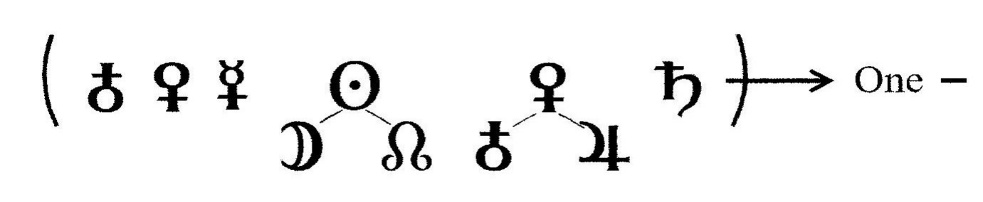
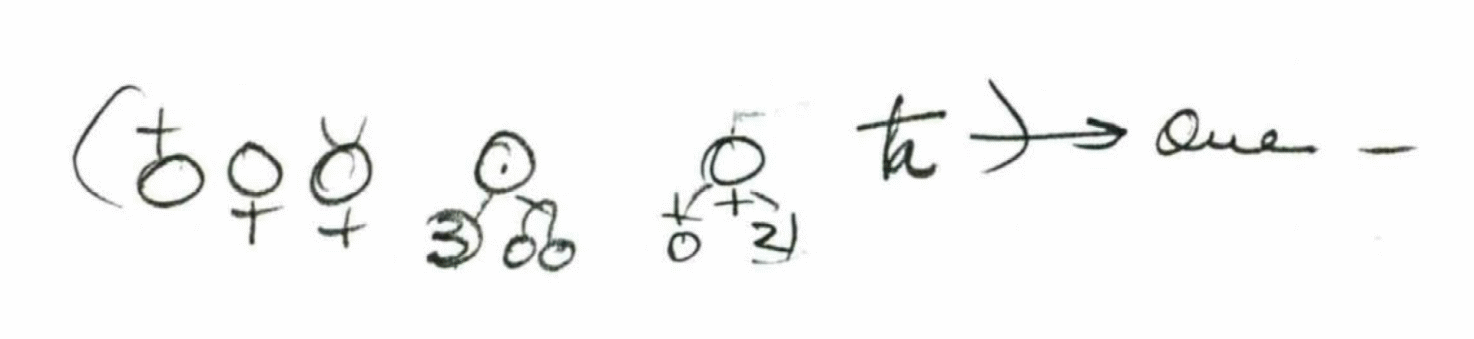
[Fig. AD Supp AD-I-178 top. Dyad / Primals / One. Facsimile scanned from AD Supp p. 178.]
We must enlarge and amplify. Let us use as an analogy the example of our mind.
There is mind per se -- absolutely itself, self identity would be a meaningless gesture in the face of its total simplicity and integrity. No differentiating or distinguishing within it as though it were a whole within which we could concieve [conceive] a perfect & smooth interrelationship of parts . . . this would not be a one what we in our analogy have called mind (as corresponding to Plotinus one.)
We mean by one -- just that -- One
There appears simultaneously within it 12 thoughts, @ [each] one of them a special and unique version of all 12. Of these thoughts it may be said that they (1) are (being) (2) each is self-identical with itself (3) each is different from the others (difference), (4) related to others
[AD Supp p. 179]
Now all these categories listed cannot be in the thoughts themselves f i [For instance] difference is not found in the dissimilarity between two thoughts but is prior & inherent in the mind that produced (or do the thoughts arise of themselves) these 12 thoughts and one with it. We can say this of all prior presuppositions They are one with the mind and cannot be included with the particularization of any thought. Therefore these basic categories (or primals or dyad) & there [their] 'interrelationship' with the mind ((illegible) example) are beyond the presentation or appearances of the thoughts & must be of mind itself Now just as in our analogy of mind, similiarly [similarly] if we transpose this example to the Plotinian notion of the One --
[AD Supp p. 180]
The soul must be guided in this difficult task by a proficient, one versed in the stilling of his mind and also capable of rationally excercising [exercising] it to the utmost, ie co-inciding with the heavens themselves. It is necessary that he reveal himself thru a medium that is available to our understanding thru words (which we must translate into symbol)
For us Plotinus [is] the mystical philosopher par excellence who achieved the familarity [familiarity] with the soul in its fathomless depth & breath [breadth] and actualized the percept Man Know Thyself.
[DIAGRAMS: THE ONE AND DIGNITIES. AD Supp pp. 181-183]
[AD Supp p. 181]
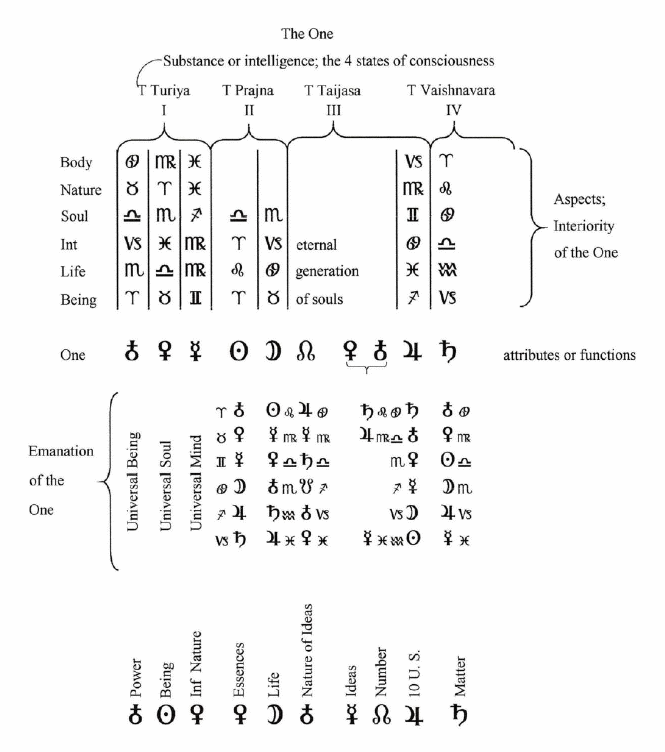
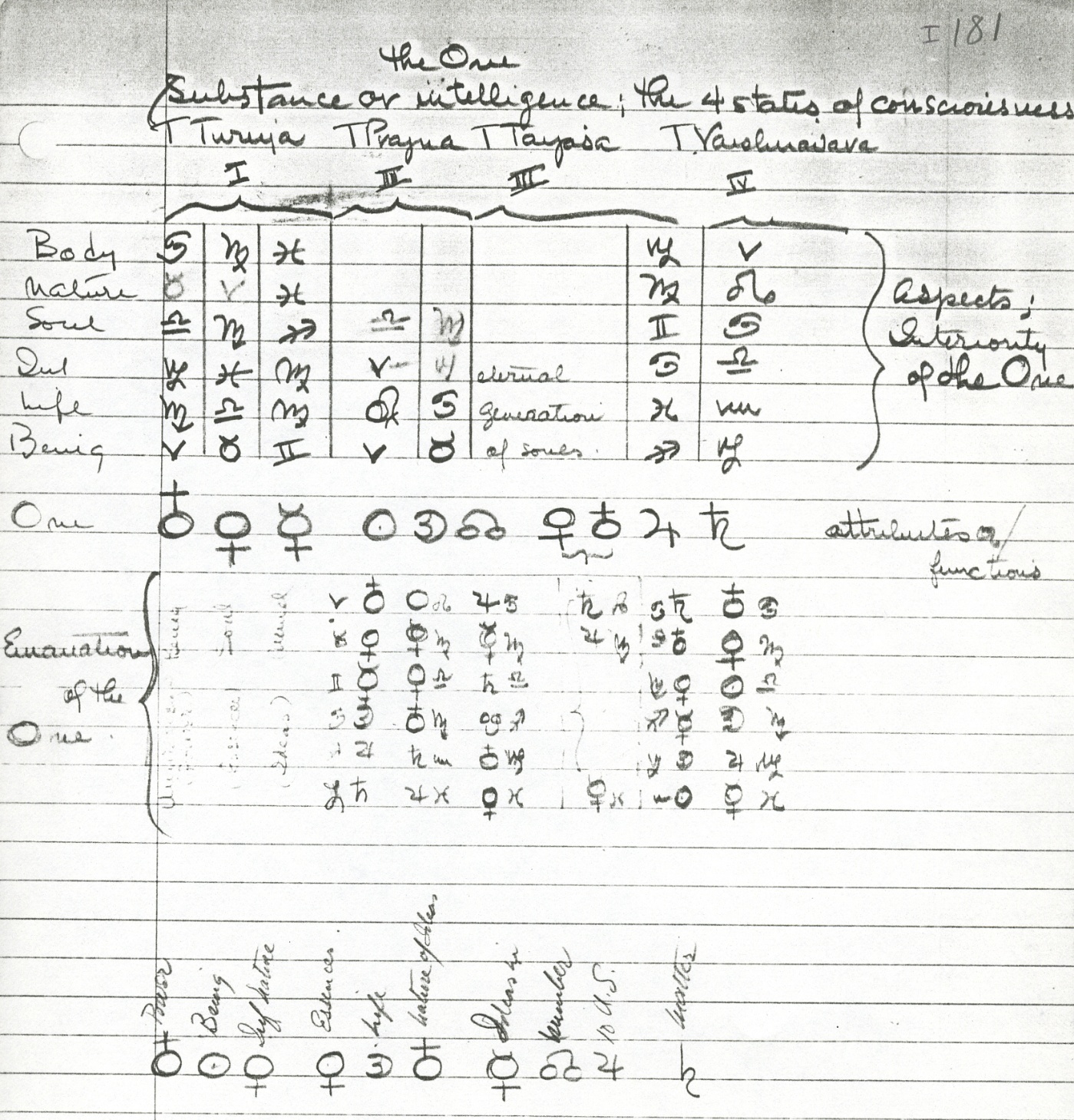
[Fig. AD Supp AD-I-181. The One: States of Consciousness and Monads / Henads. Facsimile scanned from AD Supp p. 181. Note: Correct spelling is Vaishvanara.]
[AD Supp p. 182]
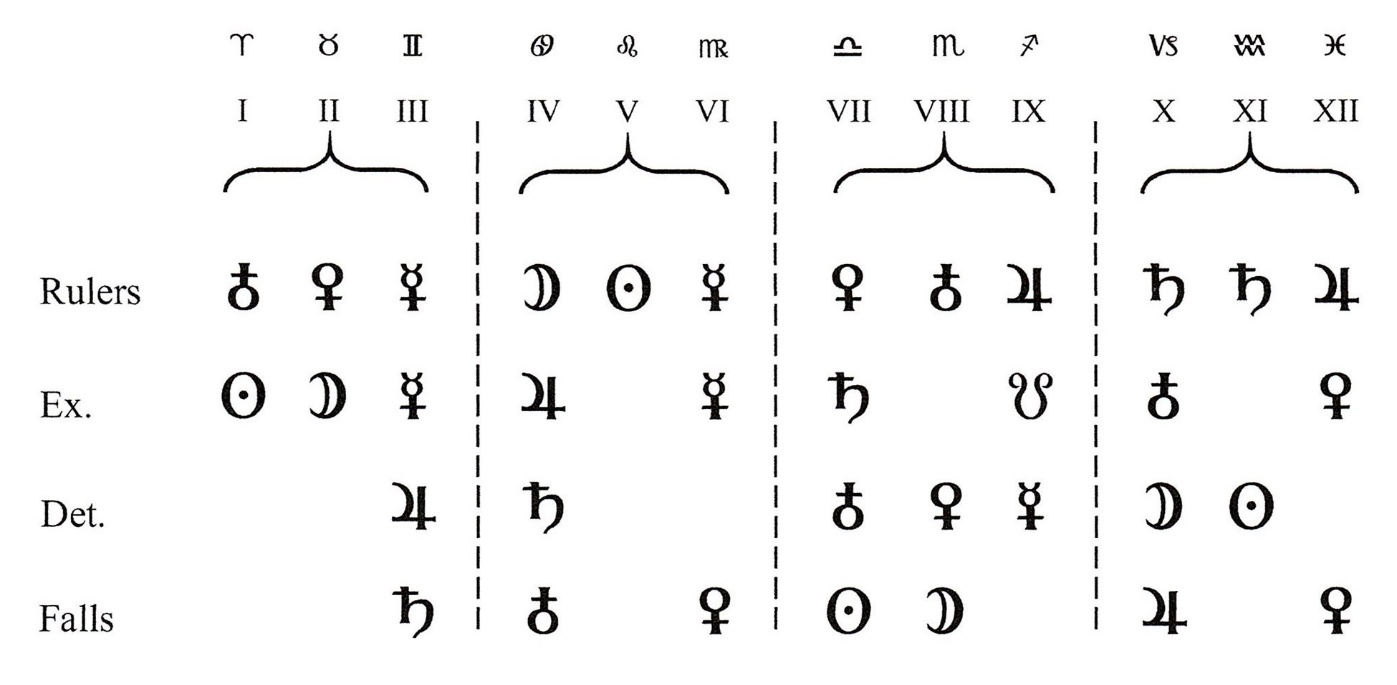
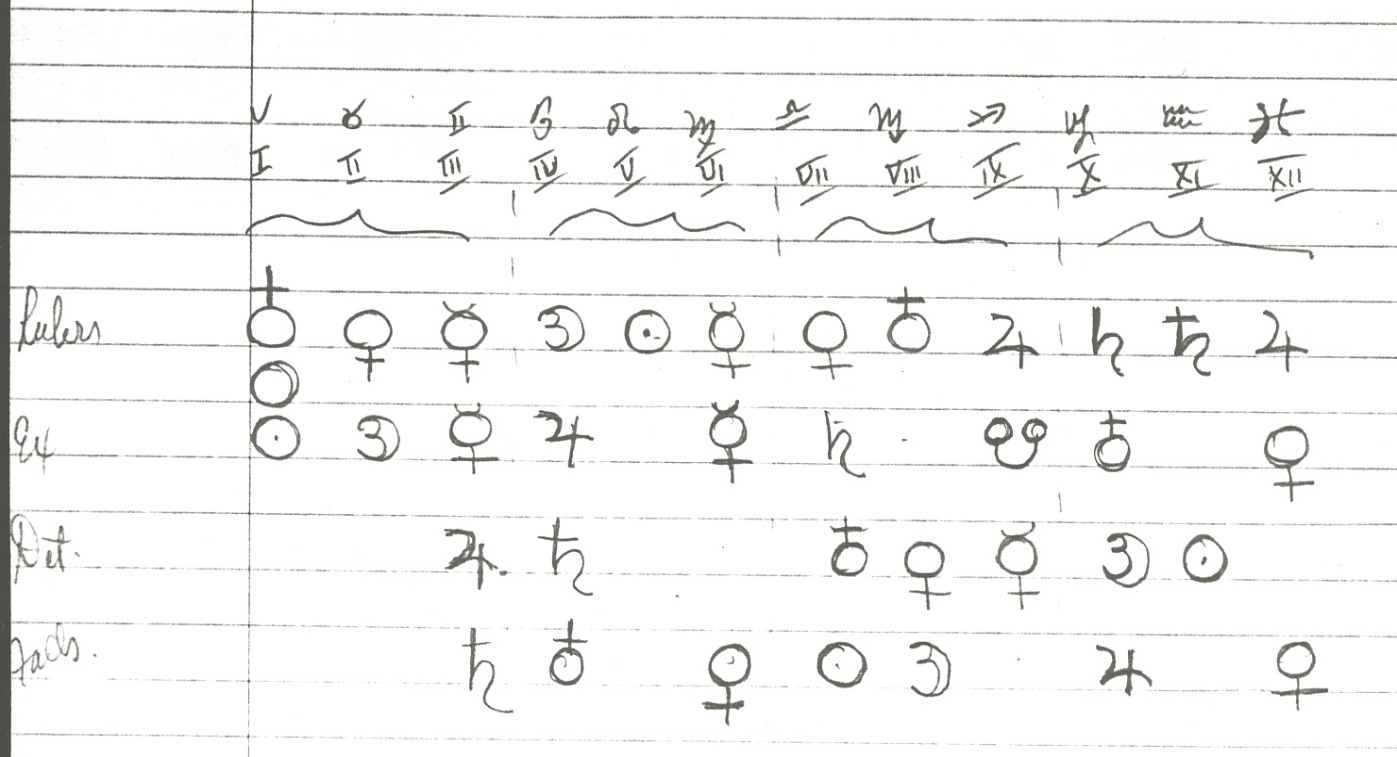
[Fig. AD Supp AD-I-182. Signs and Dignities. Facsimile scanned from AD Supp p. 182. Note: Please see note above regarding errors in this diagram.]
[AD Supp p. 183]
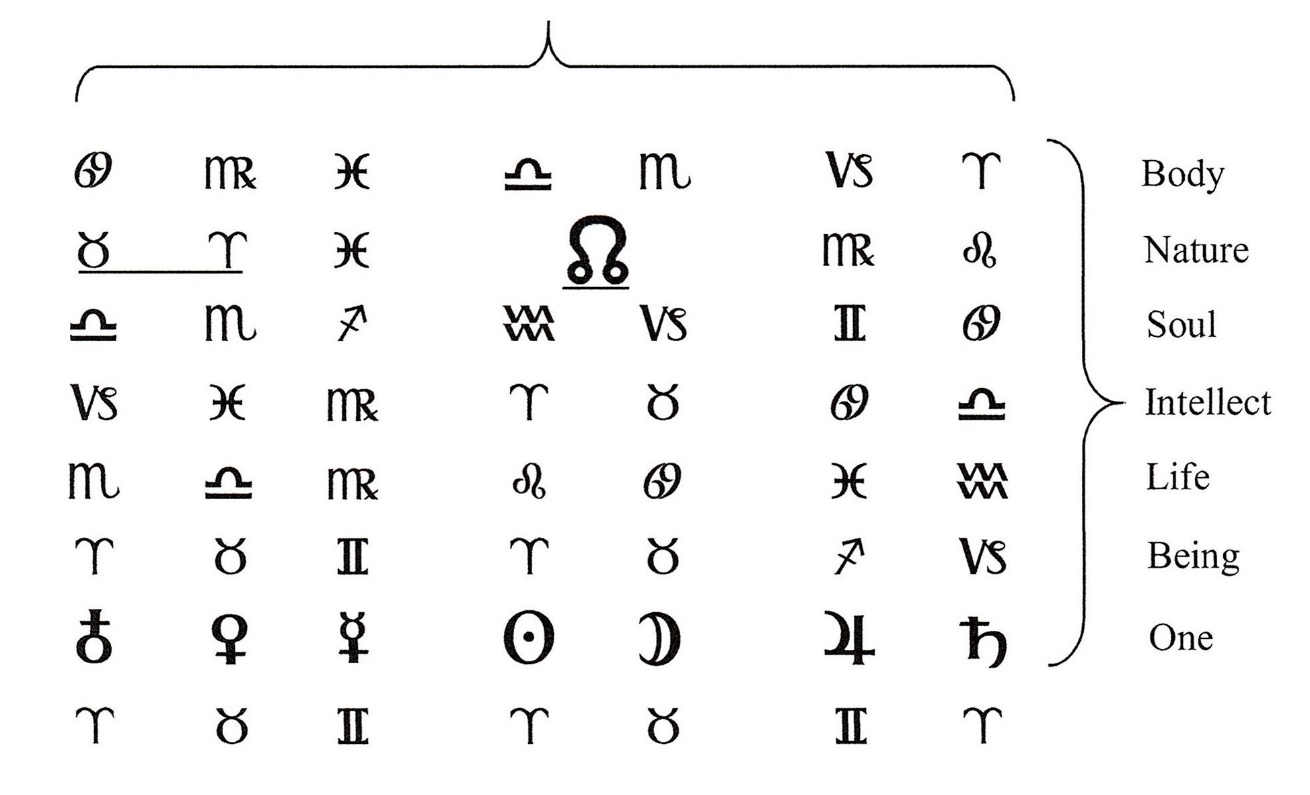
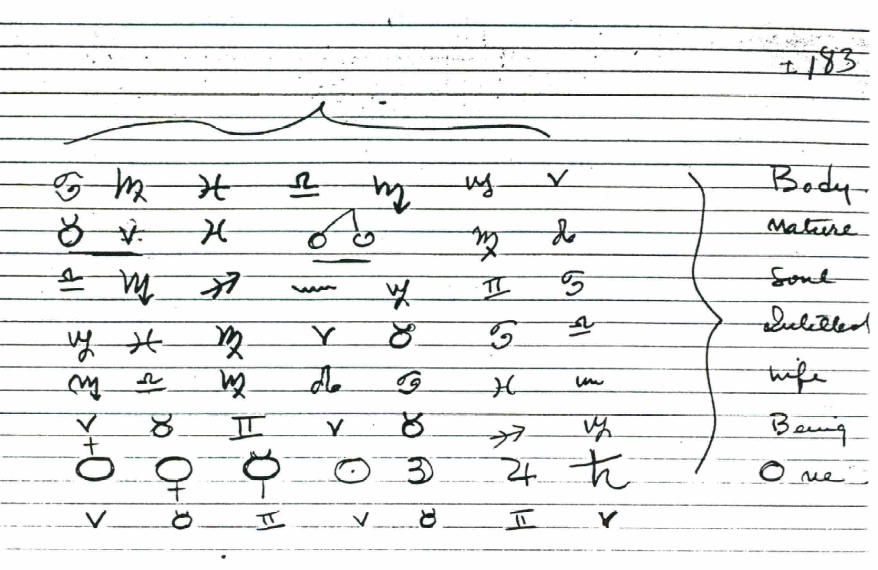
[Fig. AD Supp AD-I-183. Monads. Facsimile scanned from AD Supp p. 183.]
[FRAGMENTS: FRAMEWORKS. AD Supp pp. 184-187]
[AD Supp p. 184]
. . . the scale of perception determines the reality of the phenomena . . . and if we change it our perception is altered. This provides us with an important clue. It can be enlarged thus: the ways of knowing (& that includes non-cognitive modes) Intuition reason or understanding, belief & conjecture are the frameworks as well as the means the instruments of our knowledge. Nor should we forget the ontogenetic & phlyogenetic [phylogenetic] development that has & is taking place if we speak of or about living beings.
[AD Supp p. 184 bottom] [Note: (CD: bottom of this page is clipped to top in orig)]
Write: essay importance of framework . . . de Nuoy [de Noüy] & any others -- need to establish uniformity of variety, scales of perception
[AD Supp p. 185]
From de Nouy's book Human Destiny we quote p. 10-11.
It may be worth our while to amplify & transpose the notion that the scale of perception determines the reality of the phenomena that the frameworks we operate with are decisive in the formulation of our understanding.
The enormous complexity of the human being, the idea of man involves the stretching of the mind to its breaking point & beyond. In the process it traverses many levels, progressive series that are included in his composition. All these constitutent [constituent] parts of his person are included in a single judgement [judgment] that resist [resists] the simplistic analysis we are accustom to from our intellectual mileu [milieu]. The full implications of the phylogentic [phylogenetic] & ontogentic [ontogenetic] development of an individual are still in the process of unfoldment. That man recapitulates in his psycho-somatic being -- a course parrallel [parallel] to
[AD Supp p. 186]
The purpose of these diagrams is to symbolically spread out the complexity of applications Pl. [Plotinus] is operating with
1st Metaphysical Chart [with sketch of 4 rings, see Fig. AD-Supp 186-digital]
2nd Tabulated [with sketch of 4 levels of dots, see Fig. AD-Supp 186-digital]
3rd 12 house.
4th last four houses --
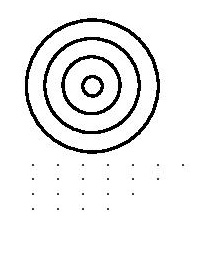
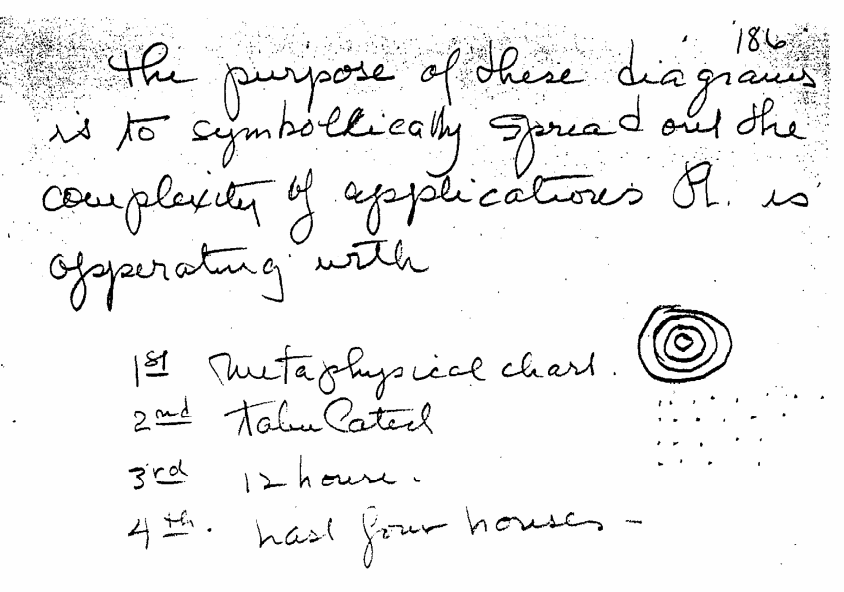
[Fig. AD Supp AD-I-186. Bottom of Page: Four Levels of Chart. Facsimile entire page scanned from AD Supp p. 186.]
[AD Supp p. 187]
Philosophy must also be considered from its aspect of the Beautiful, the Beloved. Truth is like a many faceted diamond. Each aspect is brought out -- but never in its glorious fullness -- by a certain school of thought that excludes the other facets of the diamond Perhaps in imitation we can point to the musical form known as variations on a theme The theme is one -- each variation is composed with a (illegible) aspect and unfolds it thru a form that fully elaborates the theme . . . It is not in contradiction to the next creation or those that follow. Rather all together harmoniously unfold the given -- not completely of course for that is not possible. Yet a marvelous Beauty shines thru
[THE TRIAD - THE ONE'S INDIVISIBLE ASPECTS. AD Supp pp. 188-189]
[AD Supp p. 188]
These indivisible aspects of the One, each and everyone [every one] may be viewed as the One entire is [in] a certain way . . . and this totality is the One in all possible ways. This description seems to provide us with the model for the I.P. [Intellectual-Principle] or the One-many. The second Hypostasis is concieved [conceived] of as an aggregate Thought or mind thinks and its thoughts, each divine and self-determining is the Intelligible object the [that] causes mind to think -- them. Mind is itself that which it thinks into being and these beings with mind constitute the I.P. Further each Idea is a special & unique version of this divine mind act. So that the I.P. is a one-many which has for its paradigm the indivisible aspects of the One.
[AD Supp p. 189]
Within the Triad there is another aspect which we may refer to as sevenfold functioning or the hebdomad and is also included as an indivisible aspect.
The application of this idea of the four-fold nature of the Transcendant [Transcendent] Unity shows up in the work of T. S. Row in his book the Phil. of the B. G. [Philosophy of the Bhagavad Gita]. Similarly as in the article by Scharma [Sharma] where the B. Gita [Bhagavad Gita] is the primary reference and support for the theory of the 3 primal Hypostases & their immanence in the Universal Soul from which Universal Manifestation proceeds. We refer our readers to these above mentioned works
[THE ONE: ANOTHER OUTLINE VERSION. AD Supp pp. 190-192]
[AD Supp p. 190]
Outline of signifacnces [significances] of 1st Hypostasis [bracket here]
Absolutely transcendent -- Alone -- the Viewing itself the Pure Intelligence that is homogenous with total possibility, complete affirmation
The proficient, the mystical philosopher's friendship with the One (sometimes called identity) when presented to his auditors re-organizes the structure & meaning of their under-standing accordingly. It is the offering of wisdom-knowledge. (And This wisdom knowledge will be refracted into diverging streams & interpretations which will accord with the individual mind's (its whole phylogenetic & ontogenetic history) apprehension & comphrension [comprehension].) Now our guide Plotinus stands pre-eminently poised (use of the intellective phase of soul) and expertly skilled in the art of transmitting the primeval 'touch of the untouchable'. (the cultural background of Hellenism, which is not to be confused with the spiritual attainment of Pl. [Plotinus])
He speaks of the One -- the Supreme Reality -- in its simplicity, without any qualities or aspects totally homogenous -- inviolable. The (glowing/glorious) conceptions of our friendly & gentle philosopher is to impress upon our minds his certainty: God 'is' & this isness is blessedness & utterly sufficing.
[AD Supp p. 191]
Next he cautiously proceeds to provoke in our innermost being something about the nature of this One The immeasurable complexities of this simplicity are confronted with the suberb [superb] concentrative ability of our mentor -- who has the faculty of absolute stillness; ie stationing himself in the awakening; beyond thought. Then, and only then can philosophic insight articulate in symbolism, chanting or words something about the nature of universal being. The differentiation of the unities within it, regardless of their order, arrangements & combinations so no new production is even concievable -- all these distinctions exist in an undifferentiated or distinctionless mode of the U. [Universal] Being.
But prior to this discussion of totall [total] possibilities and all the permutations & combinations they are succeptible [susceptible] of, he speaks of their 'matter'. This matter is the power of the One, the awful and unfathomable abyss which may only be characterized as sheer indeterminacy or the dyad. The consequent indeterminacy of Power as the support for the relationship of these unities and this interaction of the One & dyad from which will arise the Intellectual Principle are among some of the most subtle & intricate passages to be found anywhere in the inspired literatures of the world, Second to none. With an impeccable scrutiny as to the range of human reason -- he formulates within it -- a paradigm meaning which words like a boat -- convey from the other shore to this something about the nature of the causeless cause; the ultimateless ultimate . . . the nirguna Brahma and the metaphysical infinity or absolute of some westerns [Westerners]
There is a very particular way in which our symbolism -- almost graphically and specifically portrays the notion of causeless cause. It includes & emphasizes the absence ultimately of any hierarchy there, this requires the amplification that only the astrological symbolism can provide the precise & inclusive defination [definition] of causeless cause. i.e., a symbolic concept
[AD Supp p. 192]
verbal distinctions yes! – here, [Note: Arrows circulating between yes! and here.] Let us repeat
Implicit in the One, a transcendent copy or paradigm of the ideas & number . . . the 2nd & 3rd Hypostasis make them explicit[;] these two combined help us to understand the transcendence of the One which is the only way the individual soul can know (touch) it! We may then properly say that the I.P. [Intellectual-Principle] will be the teleology of the One; & soul the life of the One . . . the skillful means devised are for the mind's mode of ascension and not to be reified into some sort of objective referents. Moreover if we exclude from our minds thinking, if we subtract existence and temporality -- we more closely approach the meaning & understanding based on the nous. That is the distinctions established conceptually are dissolved and atma is incapable of being distinguished from brahman.
Also included in this "awakening without an awakener" not only the hypostasis which can never exhaust the potentiality there, (that in a similar manner universal manifestion [manifestation] can never depotentialize the ideas . . .) but the divine number which correlate the ideas with beings & the order of their procession Or in other words -- ideas or the intellectual realm remain the manifestations indeterminable.
[THE ASTROLOGICAL MANDALA / CIRCLE AND THE 'VISION' (Alt. draft ... Invocatory Prelude). AD Supp pp. 193-200]
[AD Supp pp. 193-194]
True philosophy -- the same as wisdom knowledge -- transmits thru its representatives primarily the certitude that truth . . . is. To think is to prevent & even destroy the possibility of its presence . . . this is for the advanced practitioner of meditation and not for the neophyites [neophytes] that we are. Consequently it will be our preoccupation to try and clearly formulate and express this understanding rather than go on mouthing about its ineffability. So when Plotinus repeats that the One is a simplex, 'the Alone' the 'Utterly Self-Sufficing' he is using the language of negation to reject all mental conceptions about it let alone what they are referring to. The sublime grandeur of Tractate 6 E. 9-7 [6 Ennead 9-7] (quote)
A statement on the 'One-only' is presented -- which incisively & sharply cuts off all & everything else (the mind cannot stand poised at the outermost stretch of its being -- it would burst & temporarily be pure being -- it would retreat and discover what we are leaving behind. Exactly what is it that we negate) He invites us to ponder upon his enunciations and seek help in amplifying speakable meanings which do not exist. Perhaps we might say "the principle unity is absolutely indivisible, it can nevertheless be said to be of an extreme complexity, since it contains 'eminently', all that constitutes 'the essence or qualitative side' of manifested beings, when considered from the point of view of a 'descent' into lower degrees . . . . to see that the unity is that wherein all qualities [AD Supp p. 194] subsist . . ."
[AD Supp p. 195]
Among the many symbols used in astrological lore, the circle -- for the Greeks the most perfect of the geometrical forms -- in its appearance resembles zero, sunya or the void for the Buddhist. This form, like the others, perpetuates those properties that make it especially suitable as a support for our thoughts in depicting those principles that Plotinus spreads out before us in his writings. Difficulties that constantly arise have to do with the incredible wealth of meanings that develop as the web of interconnections and relations pyramid. For many of us who wish to penetrate deeply into his thought find this vast web of ideas (so/to)[too] proteus] [Protean, transforming themselves in the very process of understanding them. Some method had to be found to a) isolate principles, one from another b) follow these principles as they related to others in forming a network of different degrees of reality which previously did not exist. c) To be able to spread out for viewing the total. This pictorialization has a stabilizing effect on the illusiveness that must face anyone who wishes to have something more than an acquaintance with Pl [Plotinus].
Tractate V-1-10 can be our jumping off into this classifactory [classificatory] system and we will let it evolve as we proceed.
[AD Supp p. 196]
What is this vision?
Is it granted to all . . . yes, but the degree of penetration varies.
For the Heavens are spread out in that vast placelessness & directly percieved [perceived]. The infinite treasure, the holiest temple and abode of the Sun of Glory. The unfathomable word of God made manifest. This is the primal scripture expertly revealed by the 19 Psalm
[quote this in full]
[AD Supp p. 197]
What is this vision
[And is it granted to all men? An affirmative answer must be qualified]
[AD Supp p. 198]
To explore this vision -- this contemplation the utmost stillness of mind and all its faculties is required The extreme difficulty of attaining that stage of introversion beyond even the archetypal imaginal reality has not yet dawned on the horizon of our mentality. Only the sage can guide us thru our murky reflective consciousness or intelligence that is infested with the potentialities or traces of experiences that re-insert themselves and distort our observation & understanding. It is to Plotinus the mystical philosopher par excellence that we refer to -- and who has hardly been granted the deserved status of a sage -- in the technical sense of the word
[AD Supp p. 199]
For this notion is not yet generally available among irreverent and secular cultures. We, for our part, disagree with this lack and hope to show that Plotinus' uncanny precision and skillful dialectic -- his exposition of the doctrine -- can only be the result of the final stages of the ultimate human intelligence -- and this is required for a comprehensive and encompassing philosophy of truth. To him -- we turn for guidance in our attempt to penetrate some aspect of the world mystery & our presence within it.
Consequently we have gathered a garland of quotations whose thread can only be this intimacy with the grace of divine understanding. Our inclination will be to use MacKenna's quasi-poetical and inspiring interpretation of the Enneads and when necessary supplement it with other translations. We shall list a series of quotations and, in the ordering of this list, follow with amplificatory comments hopefully guided by his contemplation, in so far [insofar] as we are able. This will be extremely difficult for Plotinus is poised in the Intellectual Principle and is a knower. (ie, makes use of the Intellectual Principle)
[AD Supp p. 200]
In our discussion of unity or the One -- we have been creating for ourselves a way of looking -- an organized structure of thought -- which we will be able to apply to anything that is truly a One, Being, Idea or number. In penetrating into the secret adytum of Plotinus' thoughtful revelations concerning the One, a series of quotes were recited ['recruited' handwritten above 'recited'] that not only accompanied his unfoldment of its mysterious complexity but simultaneously ordered the monads which were emananted from the many formless grades in the shapeless, the Unfigured. And in this inquiry concerning the One we slowly became conscious of the meta-ontic status of his reasoned revalation [revelation].
Furthermore by properly unfolding the sequence of distinctionless principles within this undifferenced complexity we have unwittingly followed the path of Plato's nine hypothesis [eight hypotheses]. For the discourse in the parmendies [Parmenides] -- after the preliminary doubts have been dissolved, is an insightful summary and investigation of the nature of the Good or the One. Not only are they an absolute affirmation of the positivity of the One -- but they proceed to state & prove that its complexity (or or [sic] multiplicity) in no way cancel [cancels] out its indivisible and unique asiety [aseity]. And that whenever a true one is found (such as the Good) and at whatever level of reality the totality of hypothesis [hypotheses] can be applied.
We are saying that metaphysical infinity provides us with the example par excellence for an understanding of any true principle and should guide our investigations into such problems. Yet -- an important reservation must be kept in mind
[DIAGRAMS: DOUBLE ACT AND 'GRID'. AD Supp pp. 201-204]
[AD Supp p. 201]
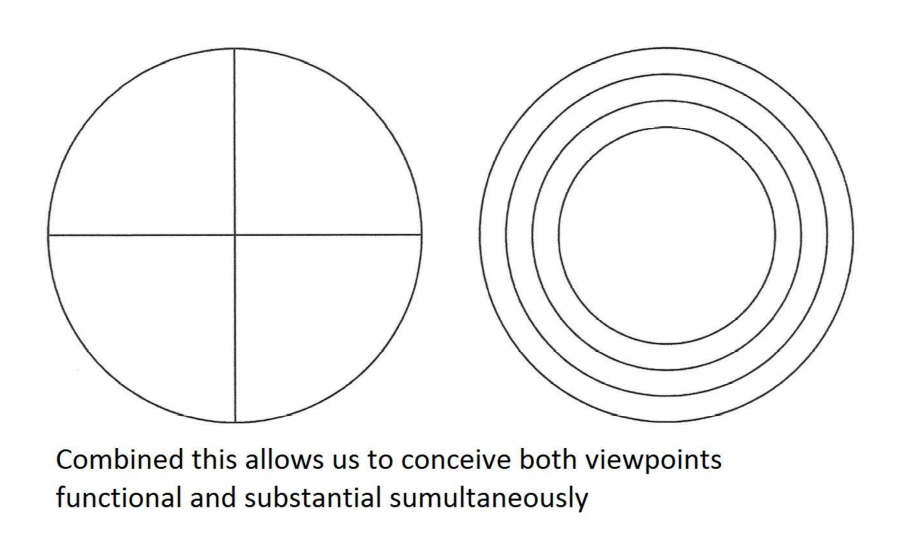
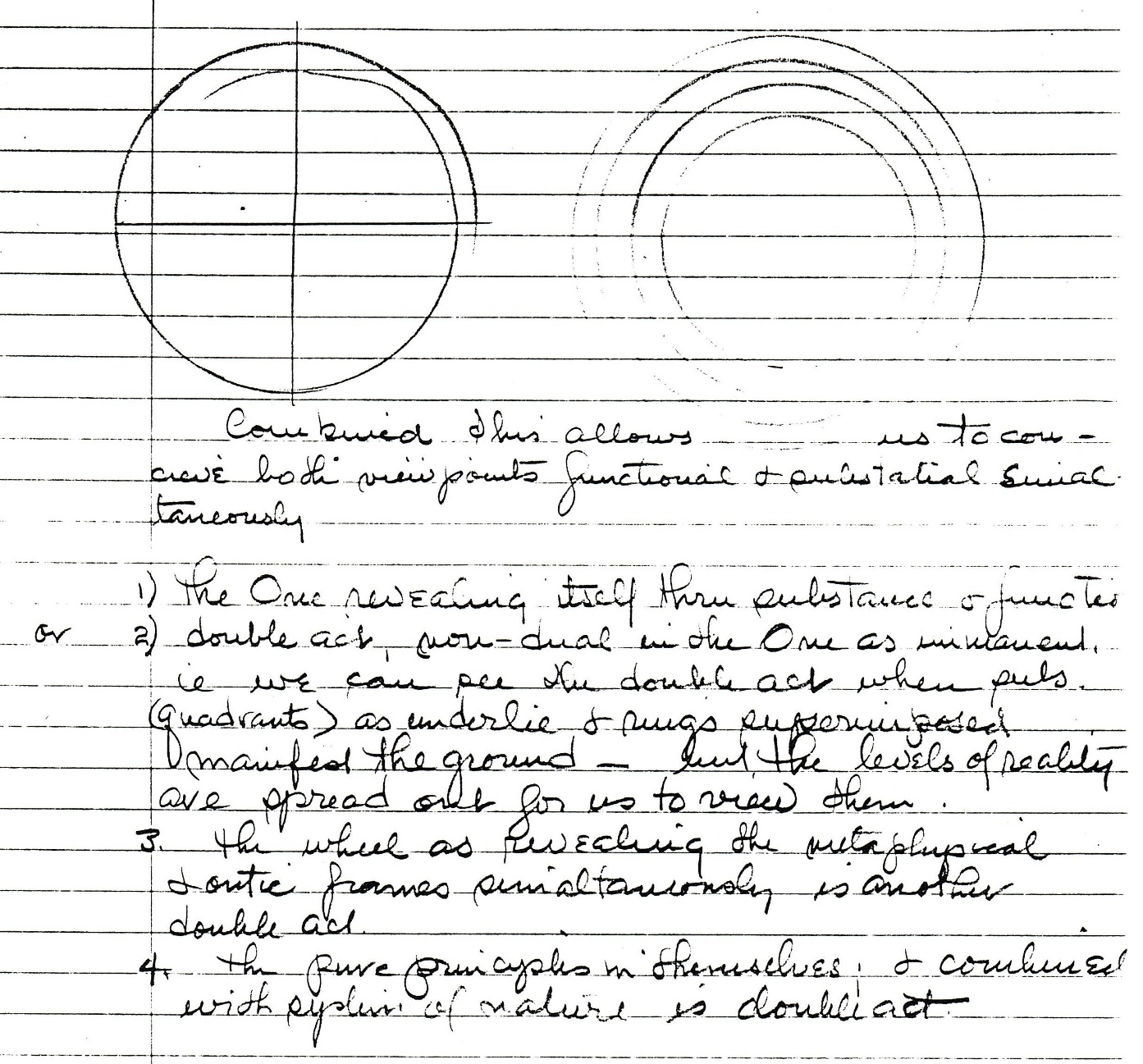
[Fig. AD Supp AD-I-201. Quadrants and Rings (Substance and Function). FULL PAGE Facsimile scanned from AD Supp p. 201.]
[AD Supp p. 201, typed text]
Combined this allows us to concieve [conceive] both viewpoints functional and substantial simultaneously
1) The One revealing itself thru substance & function
or
2) double act, non-dual in the One as immanent. ie we can see the double act when subs.
[substance] (quadrants) as underlie & rings superimposed manifest the ground -- but the levels of reality are spread out for us to view them.
3. the wheel as revealing the metaphysical & ontic frames simultaneously is another double act.
4. The pure principles in themselves; & combined with system of nature is double act
[AD Supp p. 202]
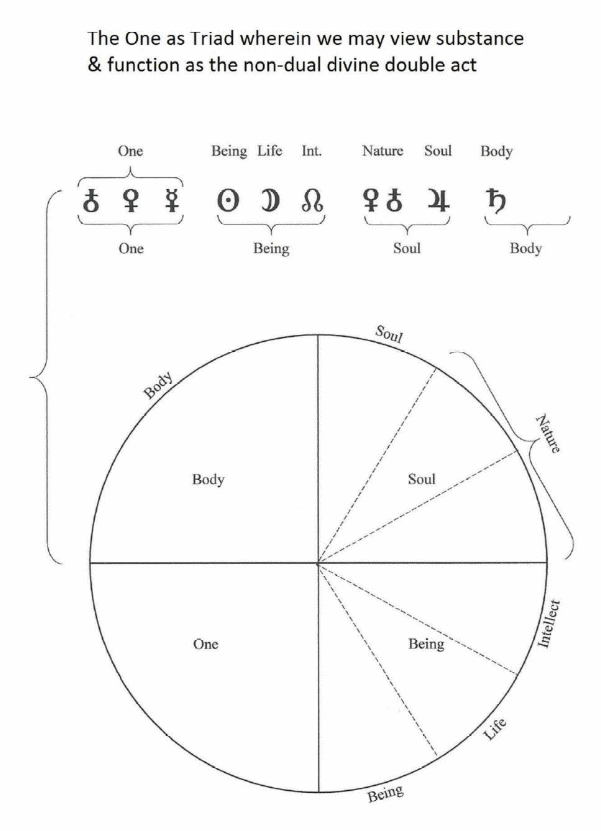
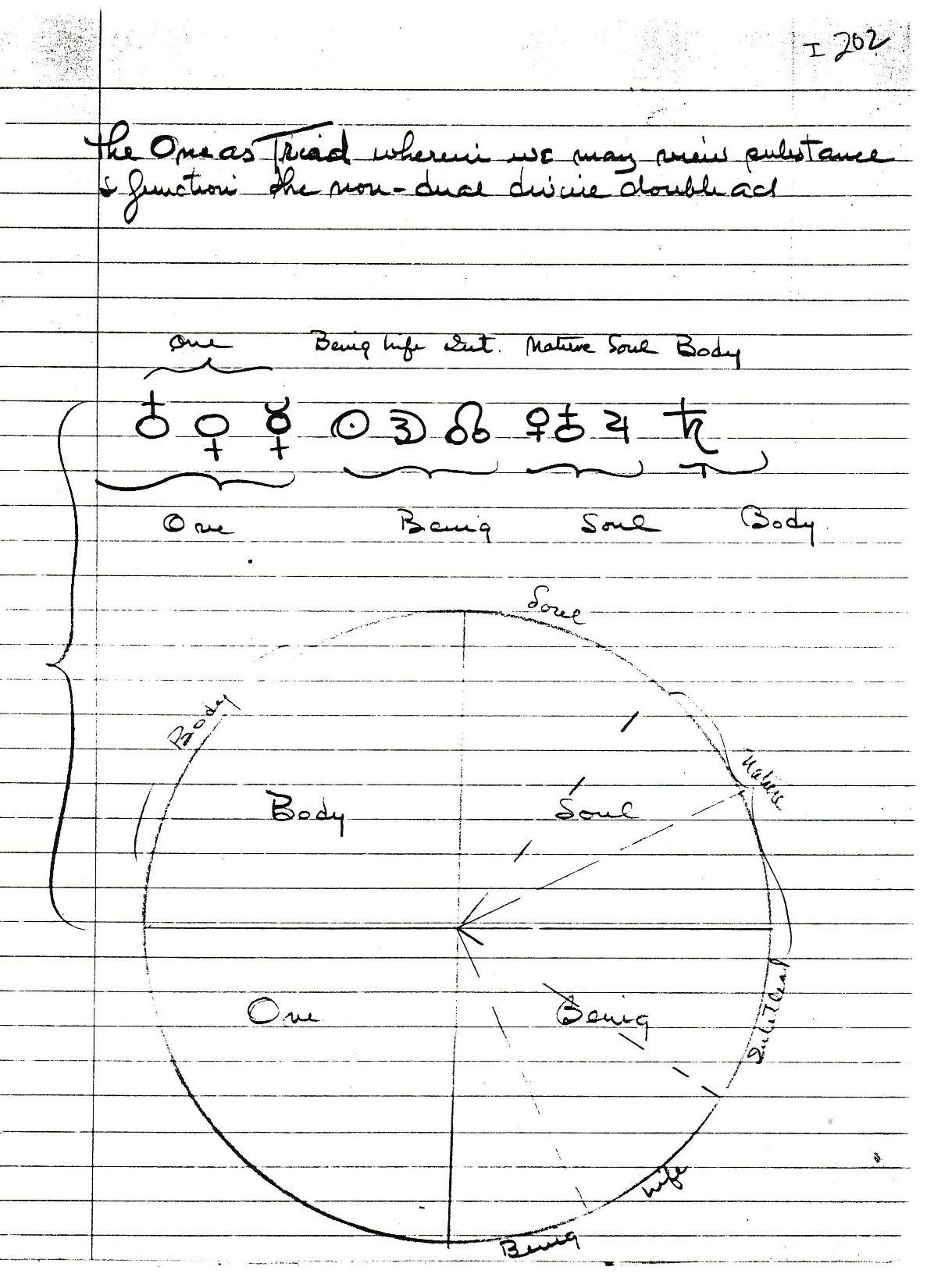
[Fig. AD Supp AD-I-202. Triad, Double Act, and Circle. Facsimile scanned from AD Supp p. 202. Note: Facsimile also appears on Astronoesis, p. 322.]
[AD Supp p. 202, text at top of diagram:]
The One as Triad wherein we may view substance & function the non-dual divine double act
[AD Supp p. 203]
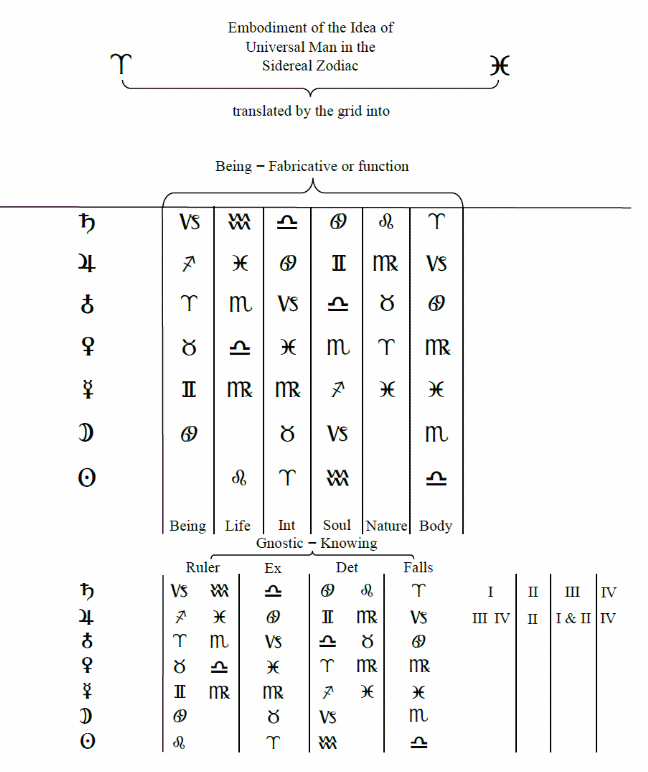
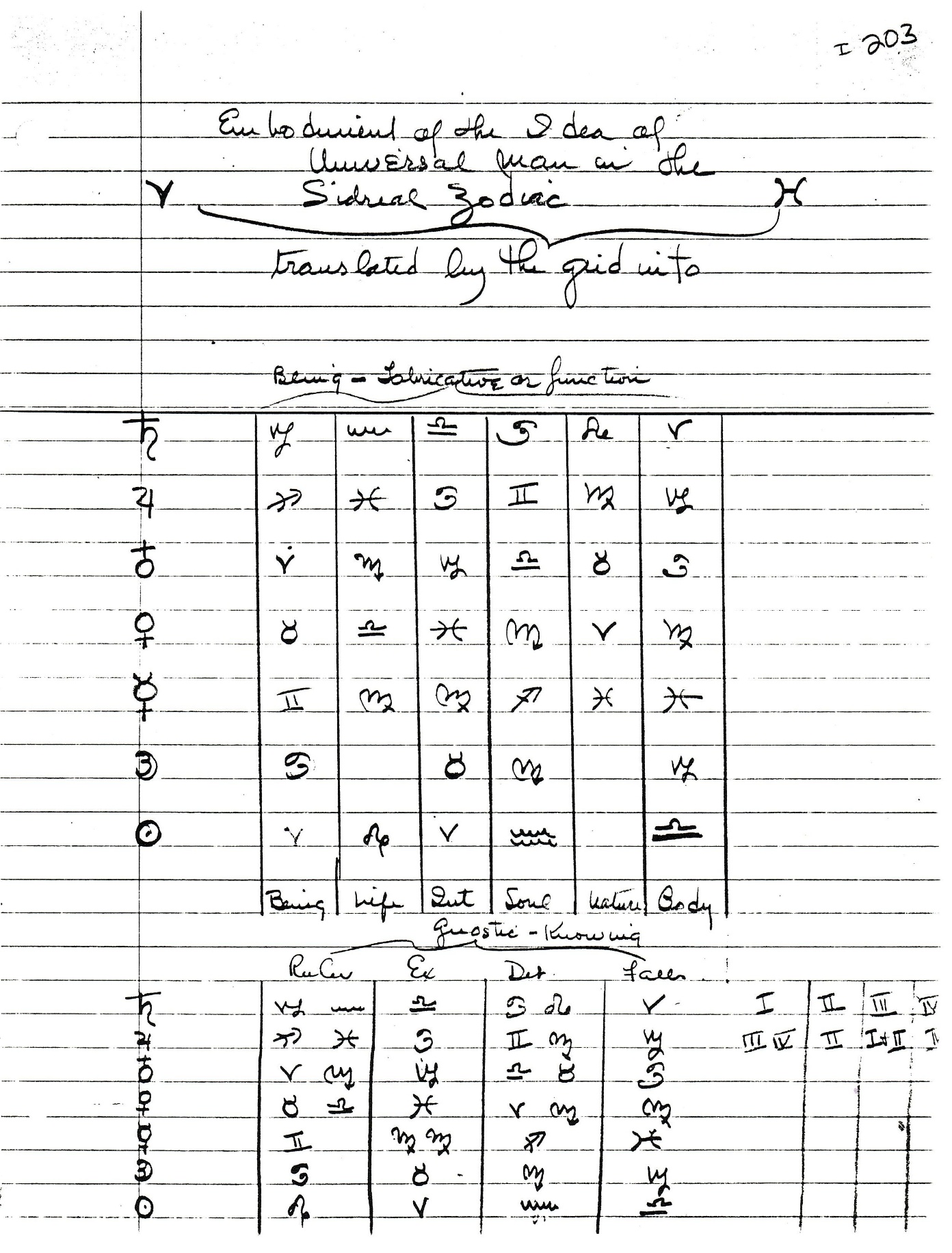
[Fig. AD Supp AD-I-203. The Grid: Fabricative and Gnostic. Facsimile scanned from AD Supp p. 203. Note: Sidreal = Sidereal. This diagram has a number of mistakes, see corrected digital version above.]
[AD Supp p. 204]
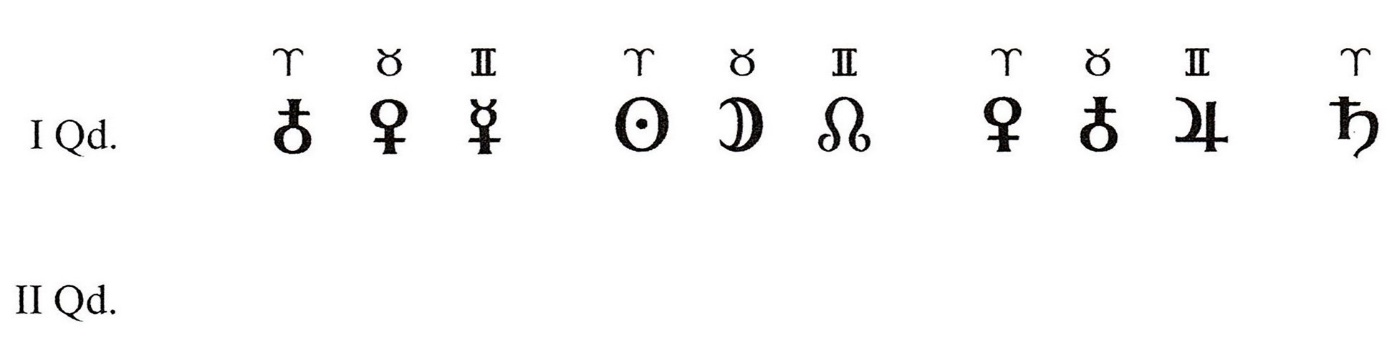
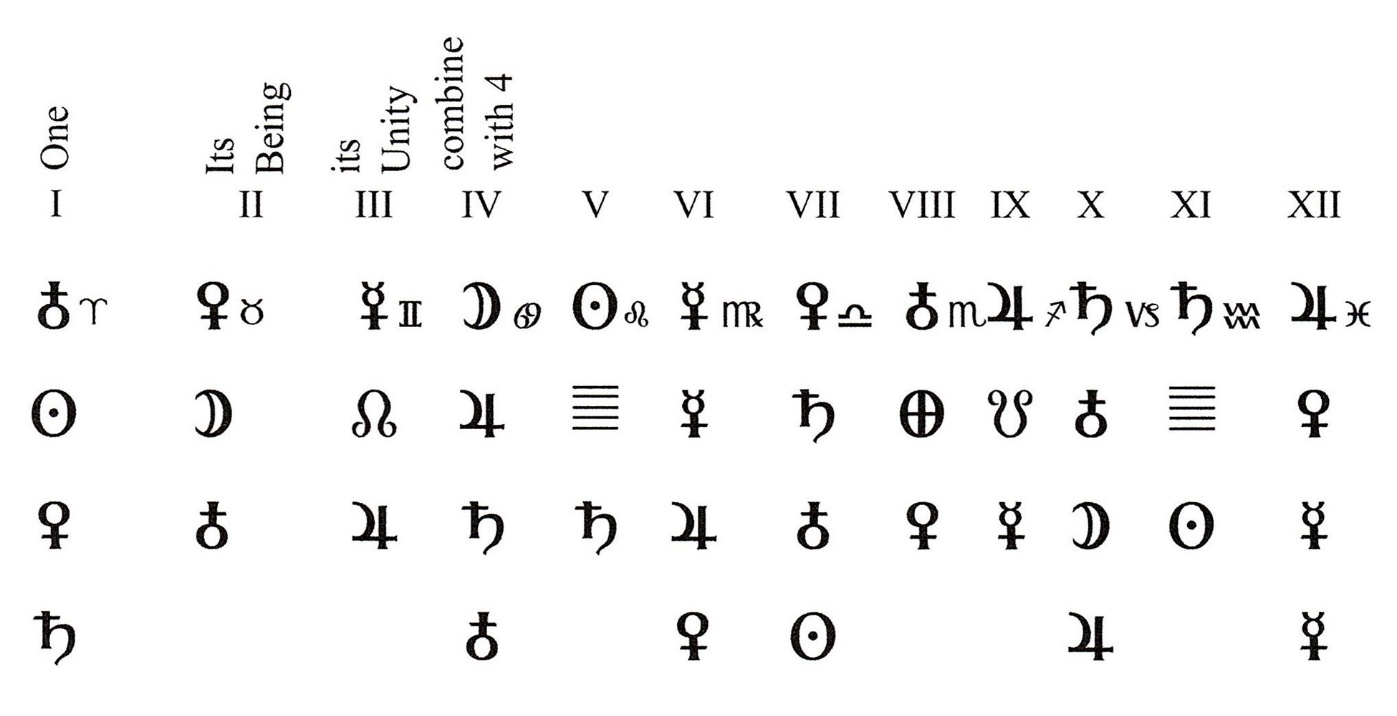
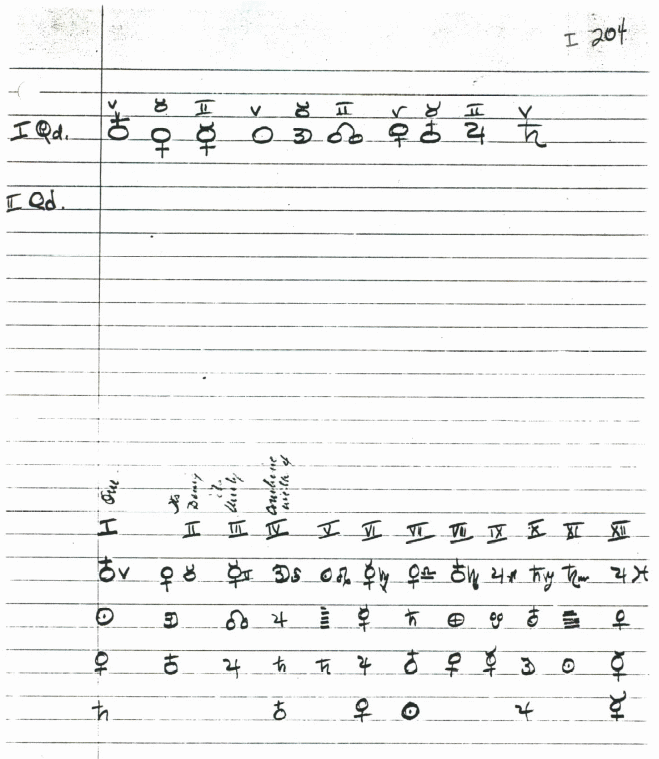
[Fig. AD Supp AD-I-204. Top: First Quadrant Dignities. Bottom: Dignities in the 12 Signs. Facsimile scanned from AD Supp p. 204.]
[FRAGMENTS: THE ONE, DOUBLE ACT, TRIAD. AD Supp pp. 205-215]
[AD Supp p. 205]
1st view
The One is perfect -- the simplicity of infinite knowledge & which includes transcendent paradigms of nous, being, etc. These paradigms may also be considered as indivisible and unconditioned aspects of unity . . . . or the viewing of unity from a certain individual aspect as its infinite being, or the infinity of its intellect, etc. Each modality or aspect of this unity includes all the others[,] but secondarily because of the attempt to look at it, as already predetermined what we shall perceive of . . . That. Regardless of how these 'aspects' of the One are shuffled about, combined arranged & rearranged, in the end it amounts to an illusory modification of the One's innate perfection. Here and only here is the application of the theory of vivarta possible, absorbing the full weight of all its implications. Unless thru semantic obscurity & legerdemain we insist on denying the world which is there for the Sage alongside Brahman. We are saying that the vivarta theory – illusory
[AD Supp p. 206]
Let us put our doctrinal understanding of each of these different points in an isolated framework for closer inspection & then together again We may for instance concieve [conceive] of the 3 pure hypostasis as intrinsically indistinguishable one from the other, situated as we are within the realm of nature. The differentiation among these principles that Plotinus speaks, is only for neophites [neophytes] -- verbal distinctions necessary for the approach to ones [one's] soul which is absolute for the individual & ultimate in a metaphysic that insists upon the distinct reality of different degrees of being & existence. In one sense the statement may be reduced to the proposition that the intelligible & sensible world is the paradoxical & ultimate opposition thru which the Transcendent, the absolute expresses itself.
-------------- [line here before point II]
II
In the higher philosophic wisdom there is revealed to the individual intellectual soul which is included in the undiff. [undifferenced/undifferentiated] realm of the 3 p. [principles] something about the nature of the holy stillness or the One. This -- of which we can't say anything whatsoever -- an ultimateless ultimate nothingness -- & the only such instance of . . . beyond even the authenticity of the principle of falsity or non-being as well as being. It seems that something about the interiority of this simplicity [AD Supp p. 207] given in revelation to Plotinus . . . for he speaks of the One's inner perfection and defines & separates it in thought from I.P. [Intellectual-Principle] [arrow indicating insert here -- Other p.]
In this view, the vivarta theory is applicable only within the utter simplicity of the innately perfect. Here within these unfathomable depths of infinite knowledge -- we may unreservedly apply Guenon's vivarta notion [quote from Man & his becoming]. And ['Now' handwritten above 'And'] if we strictly follow Plotinus the vivarta is most applicable. We cannot in all sincerity apply this theory to the totality of universal manifestation, or declare that the universe is an illusion, let alone declare the Int. Pr. [Intellectual-Principle] to be an illusion.
[AD Supp p. 208]
manifestation is a contradiction when spoken in the same breath like conjoining circle & square
[AD Supp p. 209]
In these quotes we have presented the official orthodox position by the erudite & learned 'traditionalist' R. [René] Guenon, & in our opinion the statement by a true advaitist regarding the vivarta theory. In contrast we will juxtapose the remarks of Pl. [Plotinus] & the savant – sage P.B. whose laying of the foundations for our future contemporary spiritual culture from ground zero all the way up to the dizzy himalyan [Himalayan] philosophical heights a survey of the philosophic path charged with the authenticity of true intellection & vision . . . The rare blossoming of pure cosmic intelligence in the [looks like: universalized] man . . . illuminating the recesses of our existence regardless of our level -- by the power & light from wisdom herself . . . is quoted for the purpose of exhibiting contrasting but very precise delineation. If the sage's unbroken and continuous (Turiyic) consciousness sees the world as idea & which nonetheless operates in the sense realm and understands the vast cosmic background that is presupposed in order to bring [AD Supp p. 210] about this 'illusory manifestation' or the epistemological presuppositions that are necessary we are quite certain that this use of the term has radically different connotations than generally employed. For if this vast web of interrelationships among the hierarchy of principles (Gods) is the necessary prerequisite for possibility of experience & knowledge to arise
[AD Supp p. 211]
The Triad ['or One + power' handwritten above 'Triad'] -- is a balance poised of the double Act On the one hand the immutable stillness that pertains to passive perfection & on the other the completing act -- that is the power of the One -- extending totally & completing each & every aspect of infinity eternally . . . what Plotinus referred to as its completing act. The power which is the underly [underlie] or matter for the One & the emanating & informing principle of I.P. [Intellectual-Principle]. The One revealing itself to itself by means of itself . . . the intrinsic & undifferentiated homogeneity synonymous with perfection may be diagramed thus as the paradigm of paradigms.
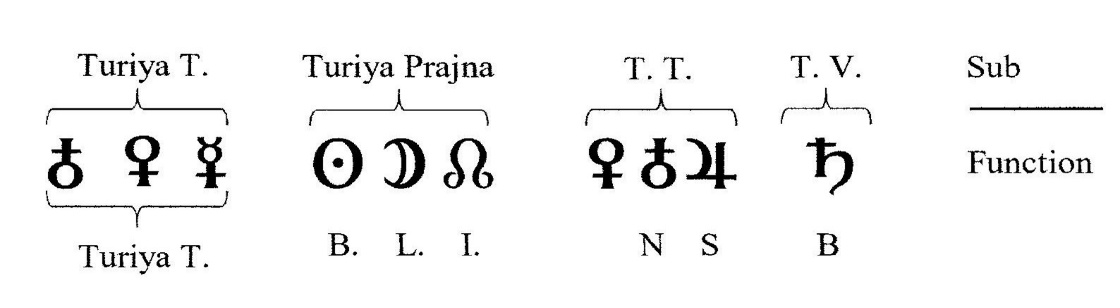
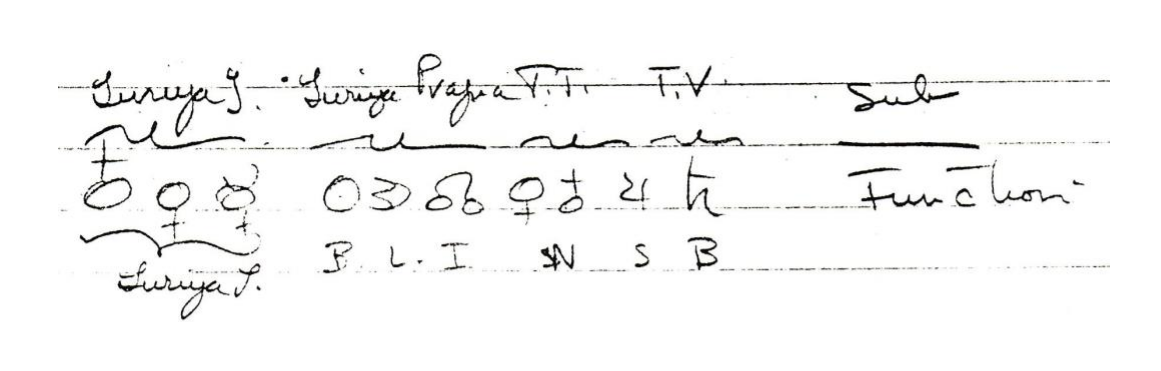
[Fig. AD Supp AD-I-211-digital. One-Triad Dignities. Facsimile scanned from AD Supp p. 211.]
A supremely encompassing intelligence – truths [truth's] sacred majesty.
We must take note in this illustration
First: The One only itself
Second: The identity or non-duality of its double Act
3rd: The radiation of power as the equillibrium [equilibrium] between the One & its eternally engendered emanations -- B. L. I. N. S. B. [Note: (S.) also written under N.]
[AD Supp p. 212]
4) It's [Its] fourfold nature substance or intelligence the grades of cons. [consciousness].
5) The One is totally present in each aspect & [therefore] they are one
6) no finality
7) 7 Grades of Power -- even when reflected in its emanations they are not to be considered as principles of negation (maya) but manifestors of the all intelligence thru emanation
[AD Supp p. 213]
The fourfold nature of the One is discussed with considerable ernestness [earnestness] by Vedantic exponents and we [have] chosen to apply their interpretations to this particular aspect of the triad without limiting Pl [Plotinus'] defination [definition] of the absolute to their version
The Mandukya itself -- & Guenon [Guénon's] contrasting & complementary interpretation K.C.B. & Sharmas [Sharma's] & T.S. Rows [Row's] interpretation of Gita
Perhaps we should permit K.C.B. to speak for himself ['his version of the traditional Hindu viewpoint' handwritten above 'for himself'] -- and in the Studies in V [Vedantism] We believe that a useful & general introduction to substance theory of reality is here being expounded This theory recognizes the perfection of the One just as Pl [Plotinus] does[;] the difficulty arises when an accounting of the lesser principles
The Vedantic theory allows for tentative understanding of the 3 Brahmas hypostasis (just as Pl.)
B Avyaya
B Aksara
B Atmaskara [Note: first three Brahmas bracketed]
B Visvarit [Visvasrit]
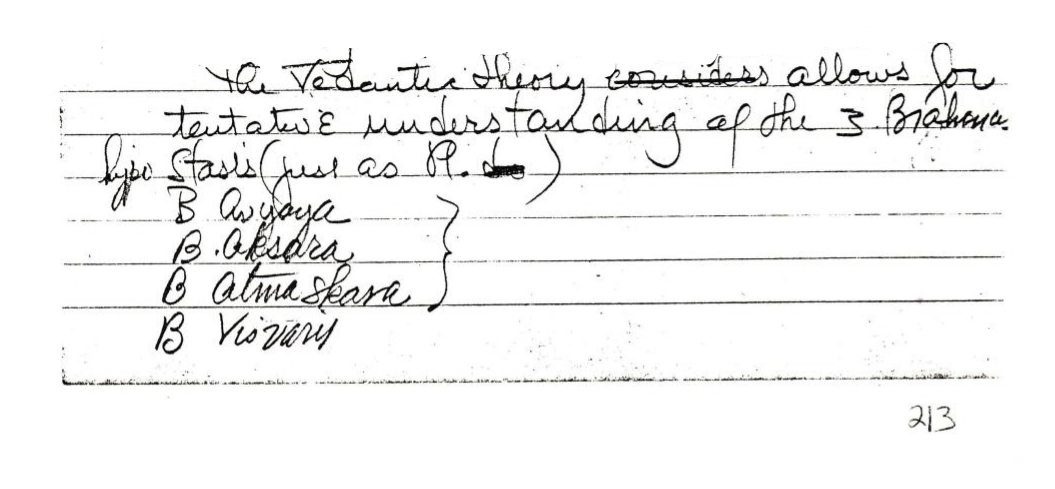
[Fig. AD Supp AD-I-213-bottom. Four Brahmas with first three bracketed. Facsimile scanned from AD Supp p. 213.]
[AD Supp p. 214]
In principle when speaking of the 3 hypostasis [hypostases] or three Brahmans they are making verbal distinctions necessary for our elementary understanding[;] actual experience does not permit such distinctions
As stated elsewhere the emptiness of the subj. wisdoms cons [subjective wisdom consciousness] is only verbally distinct from the objective wisdom cons. [consciousness] when we realize that emptiness (or voidness) is the substratum of both. beyond that voidness . . . the Brahman Nirguna or the One
[AD Supp p. 215]
The similarity to the 3 hypostasis [hypostases] of Pl [Plotinus] is obvious . . . He speaks of these 3 hypostasis [hypostases] as pure and following that -- he refers to their existence in the entire system of nature & also Plato's interior man.
In the Gita again a similar arrangement is to be noticed.
We have 3 aspects to Brahman which are referred to respectively as Brahman Avyaya, (then) B. [Brahman] Aksara, Atmaskara with Virajsavit as the fourth -- the presence of these 3 in cosmic soul.
[Note: (CD: following this are 9 sheets of blank lined paper + 1 piece cardboard)]
[FRAGMENTS: NOUS, DIGNITIES, DOUBLE ACT, TRIAD. AD Supp pp. 216-221]
[AD Supp p. 216]
Welkin – upper firmament – where the clouds float.
[AD Supp p. 216]
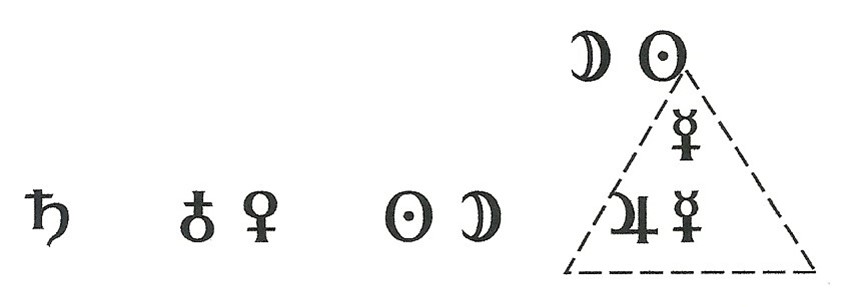
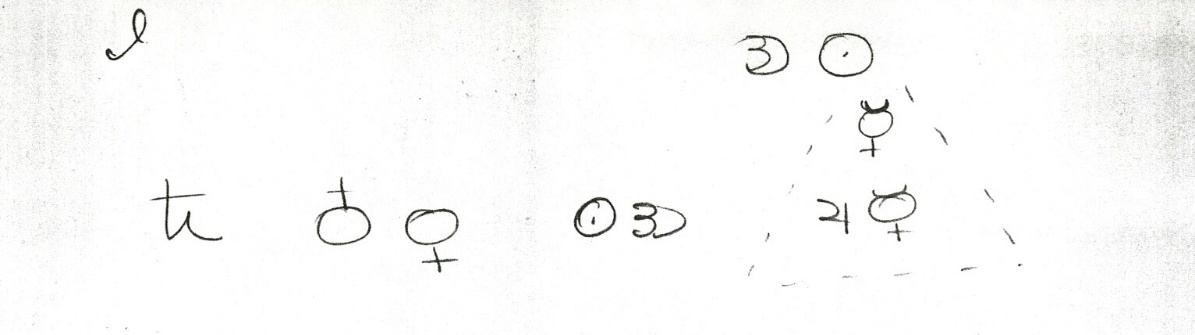
[Fig. AD Supp AD-I-216-top. Falls (Body Monad) and Nature Quadrant Soul Ring Dignities. Facsimile scanned from AD Supp p. 216.]
I P
show in chart -- that any sensible human being is composed of contrarities [contrarieties] -- a heap of aggregates (cosmic skandhas) hermetically fused into an adventitious one . . . Experience however forbids true acceptance . . . & logic is constrained -- the actuality must be given preference. This is the immediate experience.
II P
Faulty analysis involves us in participation[,] that of matter, life, psyche -- all these mislead. that of explanations is also defective & of imitation we may say.
[AD Supp p. 217]
Consequently if we wish to illustrate this by the chart -- do we participate ['imitate' handwritten above 'participate', both words bracketed together] in the unity of @ [each] of the chaldean planets? or as collected together? or imitate their unique
[Note: (CD: bottom of previous page (216) in orig)]
[AD Supp p. 218 top]
this implication & importance of this passage, & others of this sort, is our concern at the present. What must seem to Armstrong as a dual act -- for the One loves itself -- wills itself, is to us an attempt on the Part of Pl. [Plotinus] to describe the non-dual double act [Note: this entire paragraph bracketed]
[AD Supp p. 218 bottom]
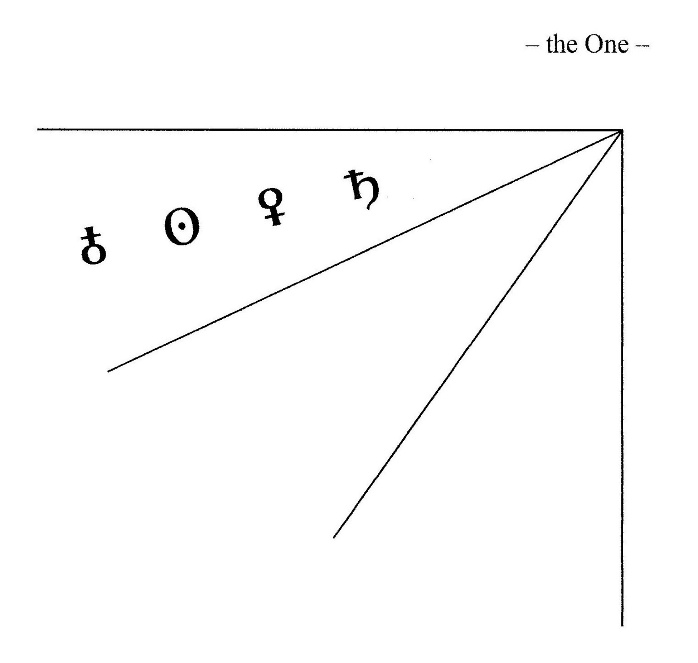
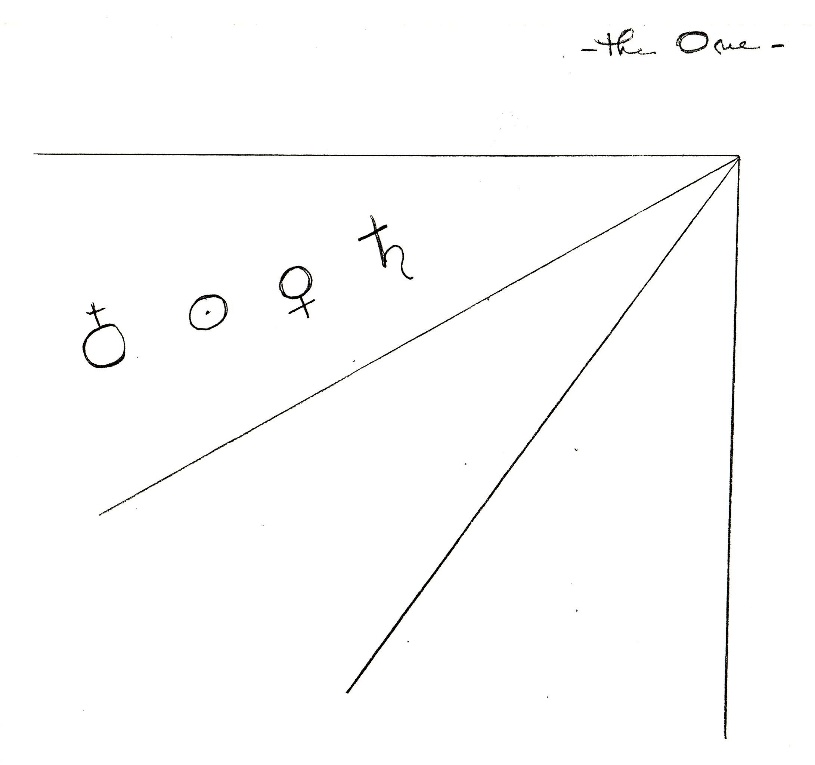
[Fig. AD Supp AD-I-218. The One: First House.]
[AD Supp p. 219]
We are now faced with trying to understand the Triad how it more than any other of the aspects of meta-ontological infinity provides us with the modeless distinctions, an eternal simultaneity . . . and timeless stasis . . . The One continuum is a totally complete Perfection . . . Absolute Mind. There could never have been or will there ever be a lapse from this Fullness. immaculate Virginity of Isness . . . about to be imposed upon by
The triad presents us with the first number
[Note: (CD: there are 7 sheets of blank double size Cornell reunion paper following this)]
[AD Supp p. 220]
Anyway only when we have the manifestation of the double act posit the 2 & 3 house with the powers that inhere with them are we in a position to recognize the 10, U.S. each a focus or sphere of total power or activity expressive of the sign substance and we could throw them into a variety of forms --

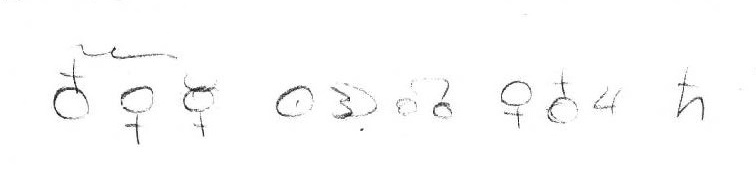
[Fig. AD Supp AD-I-220. Triad Dignities. Facsimile scanned from AD Supp p. 220. Note: AD Supp page diagram is landscape.]
[AD Supp p. 221]
Perhaps here as anywhere else it may be appropriate to introduce the varied splendor [and] magnificence of the notion of Soul as told by Plotinus. The divinely Diversified requires that we attempt to itemize the numerous connotations that spring up when we are reading the text into some order
[FRAGMENTS: IDEAS, MATTER, WORLD. AD Supp pp. 222-228]
[AD Supp p. 222]
In this analysis which can be applied to other 'systems' (ie Aurobindo, P.B, Buddhism etc) the 'x raying' reveals clearly its ontic structure but not its metaphysics. The 1st notion within the universe is that of Being . . . which may be defined as that Idea ['thing' handwritten above 'Idea'] possessed by everything (a thing, entity) that is 'a' particular thing if it exist [exists]. Now it is obviously not as fundamental an Idea as ('a') unity & its (causing) power. (Unity cause of its existence.) Consequently being itself must possess this unity. Now being is possessed only by things which are & specific . . . but Unity may be participated in by things which are not actually or particular (power-void is a unity) Now being functions as a cause of the world.
The 2nd Idea Life or Power or K -- this will function as the power of this cause. The idea of power (karma) is really the power of Being to imply all the variety found in the world. We have already learn [learned] to hypostatize this notion (K) that is power can be considered as an Idea by itself
The 3rd is Nous or mind -- Ignore its history which can be related to the 3 versions of Intellect but consider it as the Idea possessed or participated by anything which is specific in so far [insofar] as it is specific. Its behavior or particularity is caused from above ie mind
Plotinus wrote treatise the Ideas are within Mind --
[AD Supp p. 223]
In saying individual or specific entity, thing -- and the defination [definition] must emphasize its uniqueness we are pointing to it as the effect or possession of the Idea Mind. It is the Mind's activity which contains all these activities within itself potentially. If Being is cause, & power function [functions] as its power of cause then Mind will function as the activity of being or any existing thing (177 E.) (Being stresses the existence of things & Mind its particularities)
4 Idea The cause of motion in the material world is referred to the soul -- it functions as intermediary between Nous & the world. Everything that moves or changes from one idea to another -- is brought about by the Soul It is said to copy the eternal forms & to make them actual for a certain time. The Soul functions as the power of the mind & makes its multifarious content actual
When an idea of the soul refers to an individual intelligence then we have a double take
1st the Soul can exist without body without destroying its identity
2nd Its function as cause of motion is taken over by nature.
5) Nature
[AD Supp p. 224]
Plato III-8 The perceived world is the summation of self-metamorphosing perception.
For Plotinus matter is not matter as we know the concept. Invisible attributeless 'pure' non being, it is uncreated, the eternal nothing, it can never become anything & stands in the way of our vision --
The product of non-thinking, a pseudo-conception 'caused' by the W.M. [World-Mind] activity
Another thing: it has no mass -- this is a quality produced from I.P. [Intellectual-Principle] or Logos -- A thing man is created or rather manifested which has a certain magnitude When he no longer exists neither does mass or magnitude
Every quality is latently present in the I.P. & only in the visible universe does it come to actuality
Matter (& evil) are not realities -- Its negations yes & because of that link with the real we notice its lack in others -- note Dr Jung
Negation absolute stands in direct opposition to Absolute reality.
(The world [is divided into/ divided by] [Note: division symbol] objective quantitative -- Sub. [Substance] [and] subj. [subjective] qualitative -- Ess. [Essence]
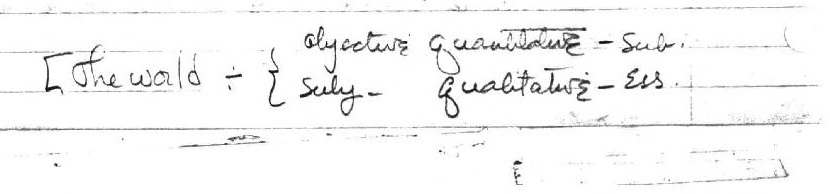
[Fig. AD Supp AD-I-224-bottom. World and Objective / Subjective. Facsimile scanned from AD Supp p. 224.]
[AD Supp p. 225]
What we perceive as energy is subjectively Will Each consciousness center experiences it & is it. F.i. [For instance], in dissolution 'matter' is resolved into potentiality (samskara's) [samskaras] It then is the power of Being as a tendency towards manifestation The tendency of chit-sakti -- forces 'of, in' the W.M. [World-Mind]. Matter [therefore] is the Self as its own object. When the self knows itself as other there is creation Matter is 'developed' from power & is reabsorp [reabsorbed] in the power that issues it.
Now with this conception of 'matter' we can go on to say: The material or actual world which is the last in Proclus' system functions as the effect of all the above mentioned causes.
The analogy of correspondence between macrocosm & microcosm may be useful here.
Sat Chit Ananda [bracketed in margin]
Atma -- One --
Anandamaya -- Being
Vijnanamaya -- Intellect
Manomaya -- Soul
Annamaya (Pranomaya) – Body
Matter understood as above – is the ultimate receiver and possessor.
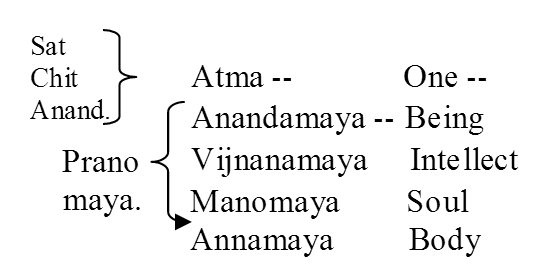
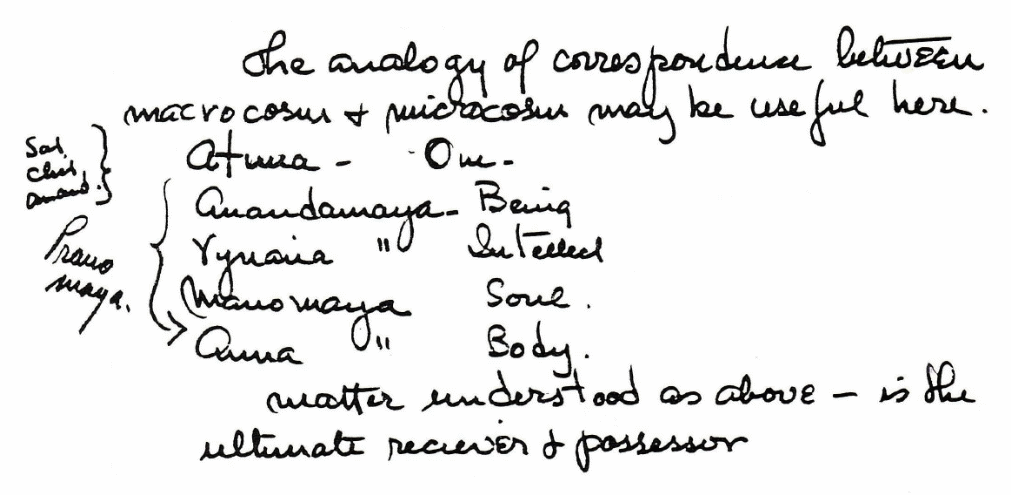
[Fig. AD Supp AD-I- 225-bottom. Sheaths. Facsimile scanned from AD Supp p. 225.]
[AD Supp p. 226]
It -- the ultimate reciever [receiver] & cannot itself be idea, thing, matter -- it is the 'result' of all the previous ideas as they appear when received & when it is in constant change due to the motion of soul & nature within time. Consequently the world cannot be truly real; but only an appearance
[AD Supp p. 227]
V-4-1
I A simplex
II free from all attributes or characterizations
III Yet the One is totally in all that arises from it
IV because it is truly a one
V Beyond all knowledge --
VI Without this there is no Source
The compressed and concentrated thought of Pl [Plotinus] . . . and its impact on the quiet mind -- is overwhelming. It has the Spartan simplicity of a doric column combined with the complications of a mosaic —. This quote is an example of concentration into the pure intelligence or thought free state and an exposition of it -- through thought.
Standing above all is its source -- the utterly pure without any contaminating traces of difference . . . nonetheless it is present totally -- for it cannot be divided -- in every other. Now is this pure I -- a sum, for if it was it could be spoken of! And how could we know anything which cannot be distinguished
[AD Supp p. 228]
Take 7th H. [House] idea & illustrate --
[DIAGRAMS: MONADS, HENADS. AD Supp pp. 229-231]
[AD Supp p. 229]
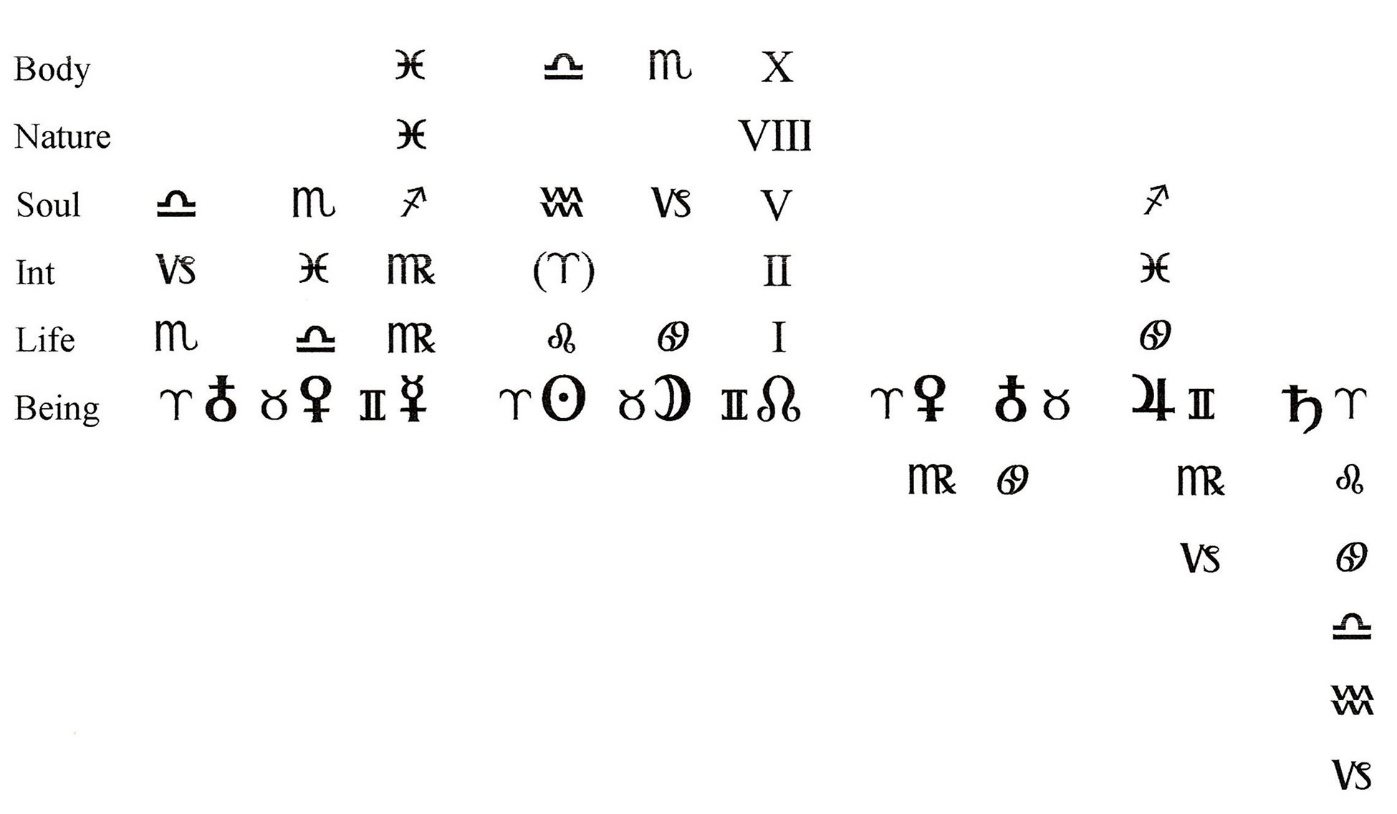
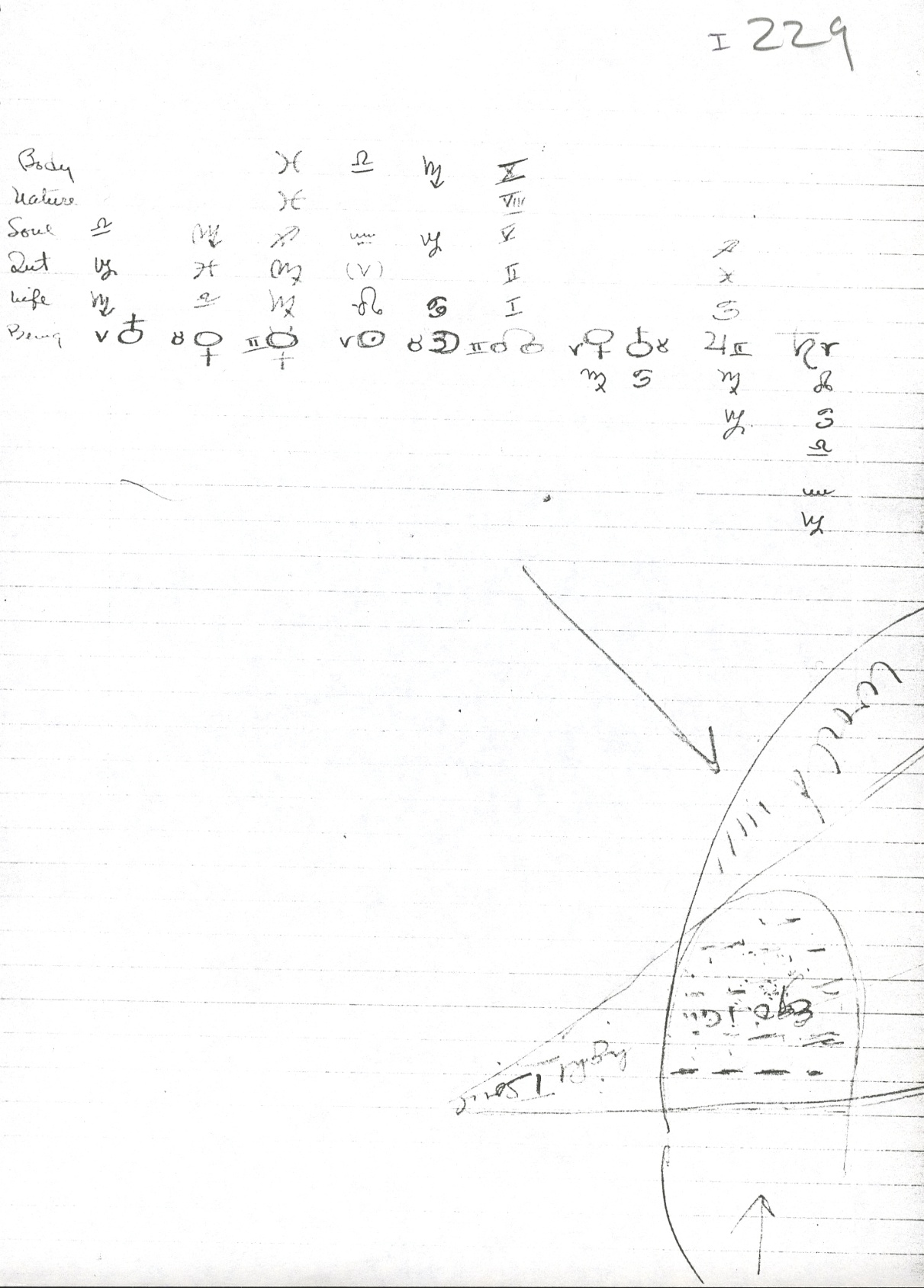
[Fig. AD Supp AD-I-229. Monads. Facsimile scan from AD Supp p. 229. Note: top part of diagram – bottom right shows diagram that may have been erased.]
[AD Supp p. 230]
the One imparts (thru its power, [Mars in Aries], principle of separation) to every aspect of itself essence ([Venus] makes it to be what it is) and being ([Mercury] ideas – substance; ie existence.)
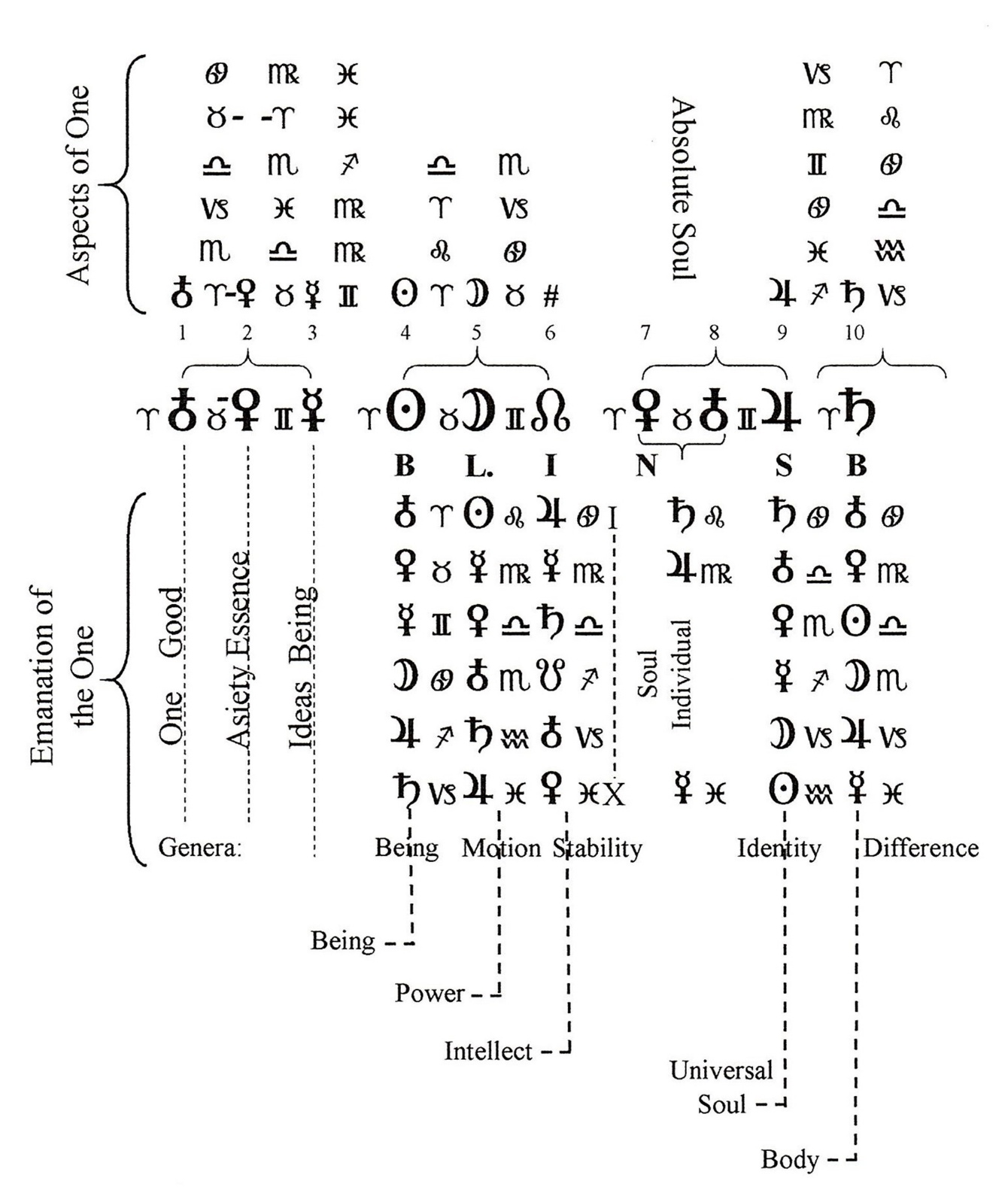
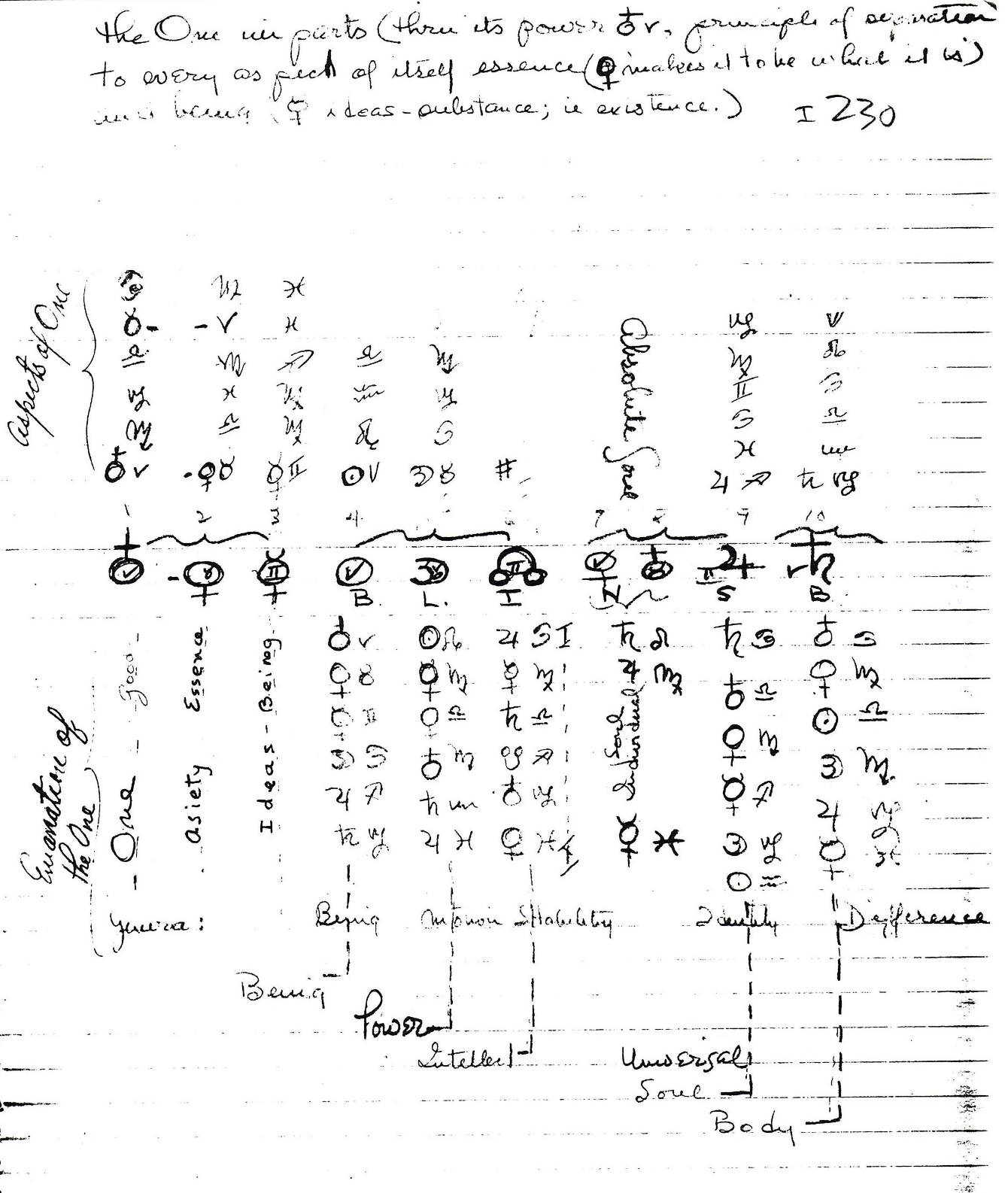
[Fig. AD Supp AD-I-230 - entire page. Aspects of the One; Emanations of the One; Genera. Facsimile scanned from AD Supp p. 230, with handwritten phrase at top of page. Note: 'Asiety' should be 'Aseity'.]
[AD Supp p. 231]
A possible approach to handling the One -- is to think of metaphysical infinity or absolute mind as being available to our mental processes thru aspects. We may permit ourselves to incorrectly concieve [conceive] each aspects [aspect] of the unity as the totality of infinity in that way. then handle each aspect independently of the others until completion [Therefore] Apply to the One itself the interpretation found in the intellectual principle -- that is instead of saying the each idea is a special & unique version of the entire -- each and every aspect is a special & unique version or way of looking at the One . . . We can say that each Idea in the I.P. [Intellectual-Principle] is a special & unique version of the whole because it first applies to the One's aspects.
[DIAGRAMS: THE ONE, ETC. AD Supp pp. 232-242]
[AD Supp p. 232]
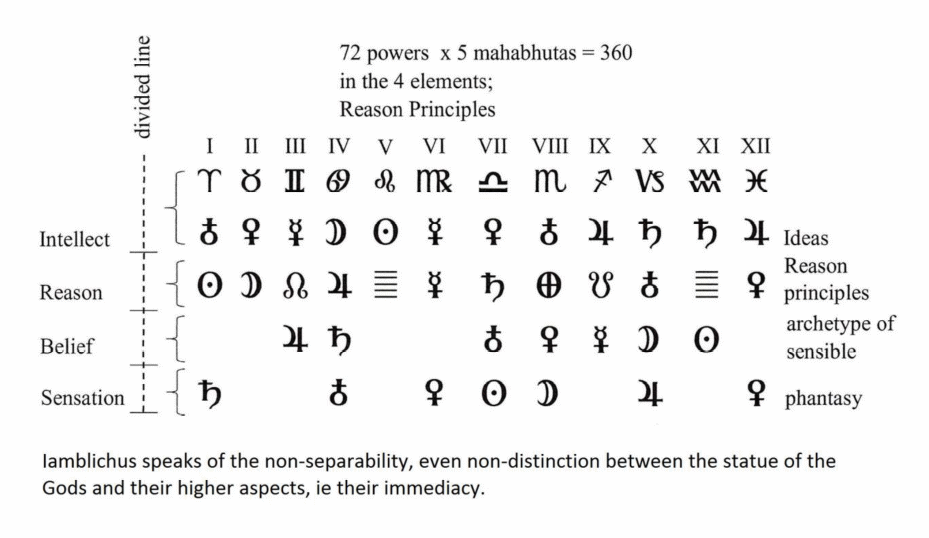
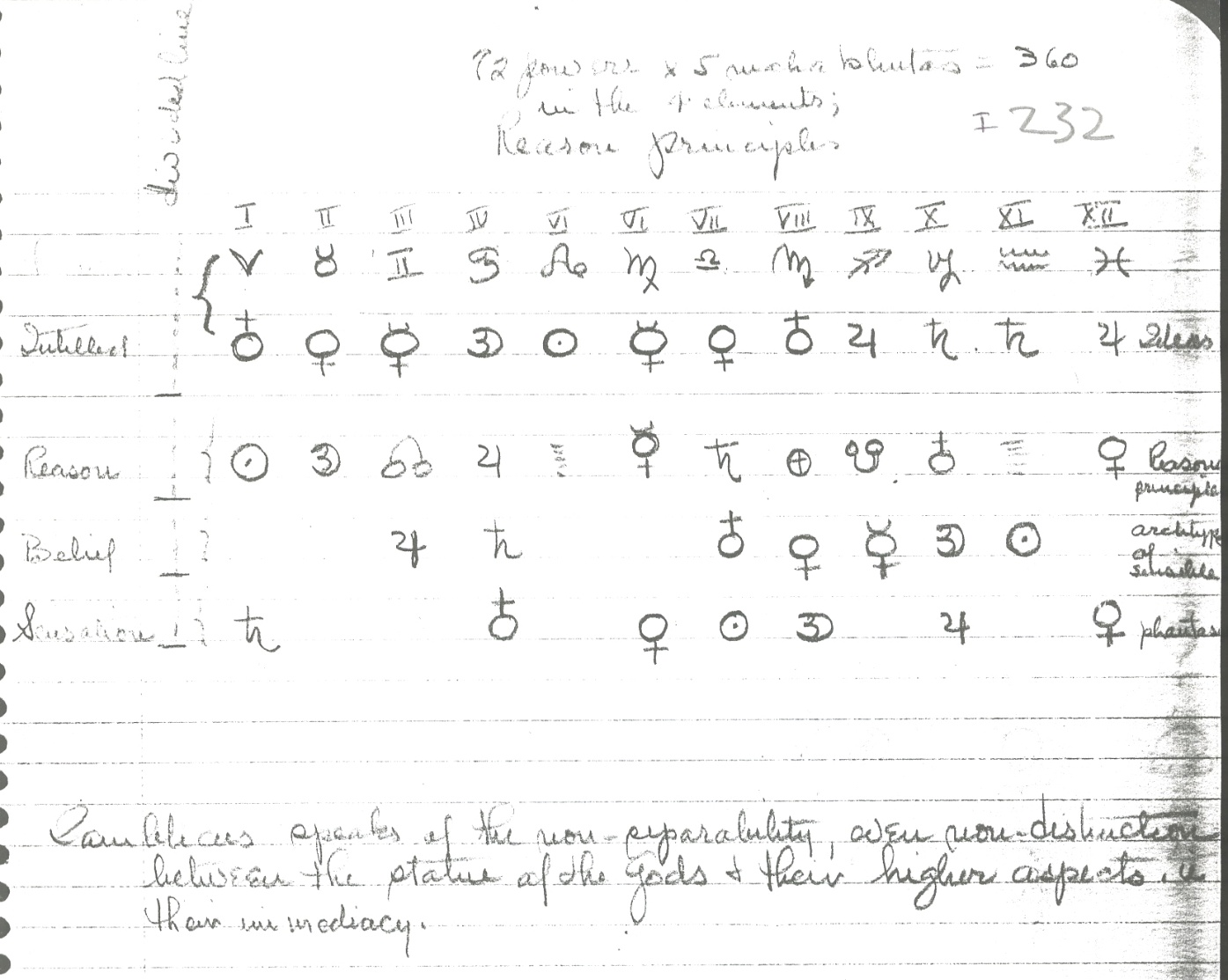
[Fig. AD Supp AD-I-232. Divided Line, and Dignities in Signs. Facsimile scanned from AD Supp p. 232.]
AD Supp p. 232 – bottom:
Iamblichus speaks of the non-separability, even non-distinction between the statue of the Gods & their higher aspects, ie their immediacy.
[AD Supp p. 233]
Fludd's diagram should be made into a thanka.
[AD Supp p. 234]
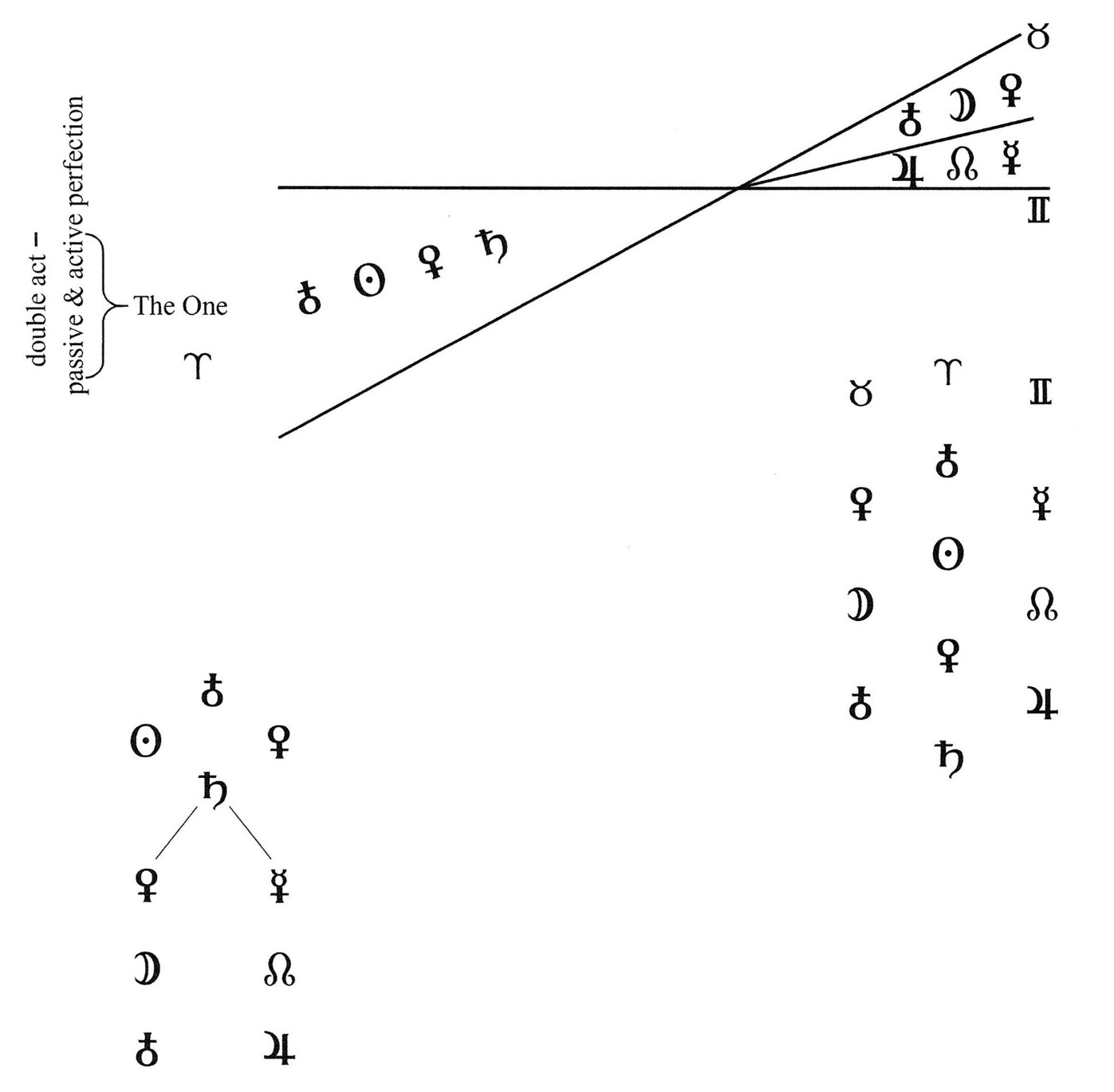
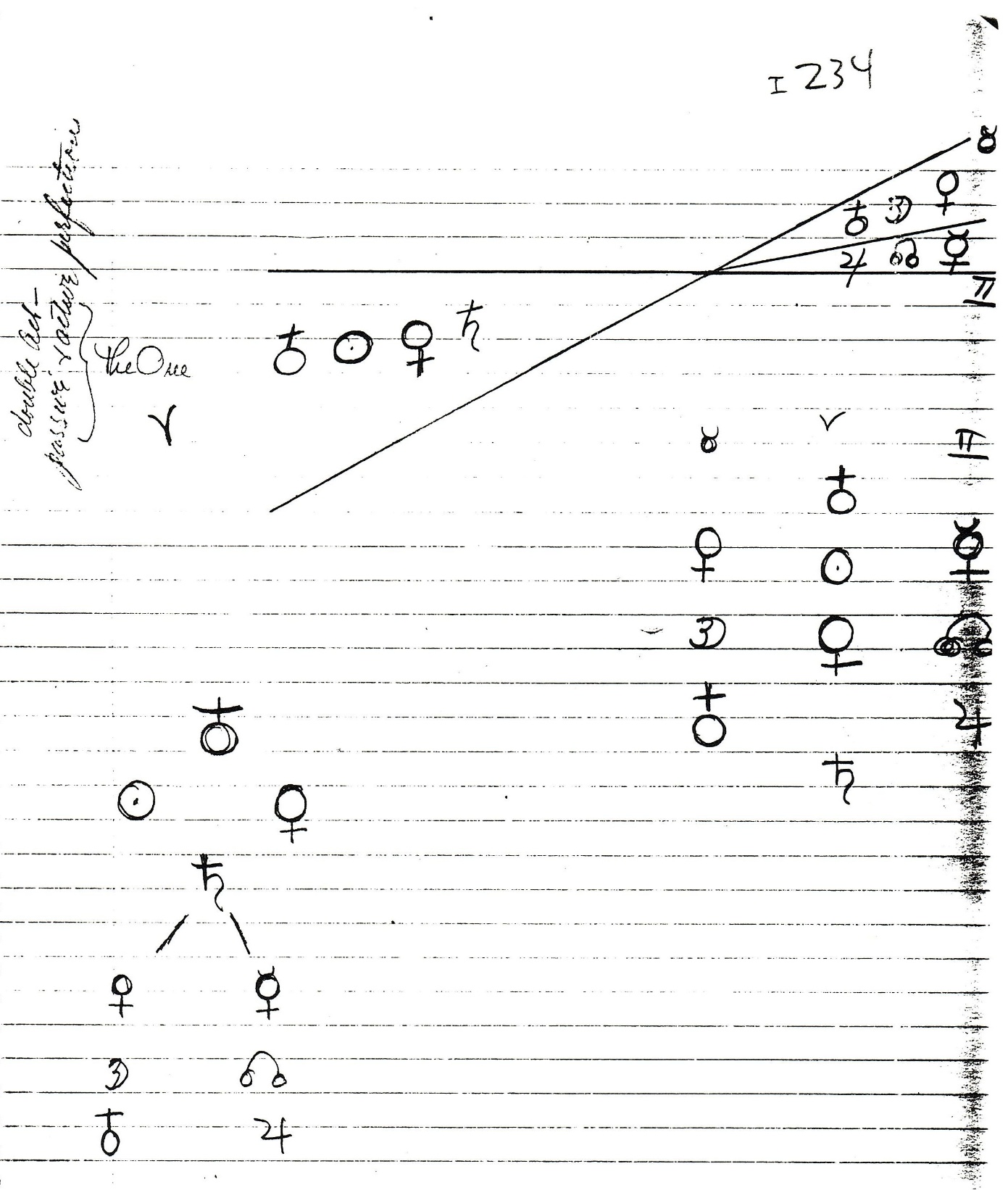
[Fig. AD Supp AD-I-234. The One: Double Act: Houses 1, 2, 3; and Dignities. Facsimile scanned from AD Supp p. 234.]
[AD Supp p. 235]
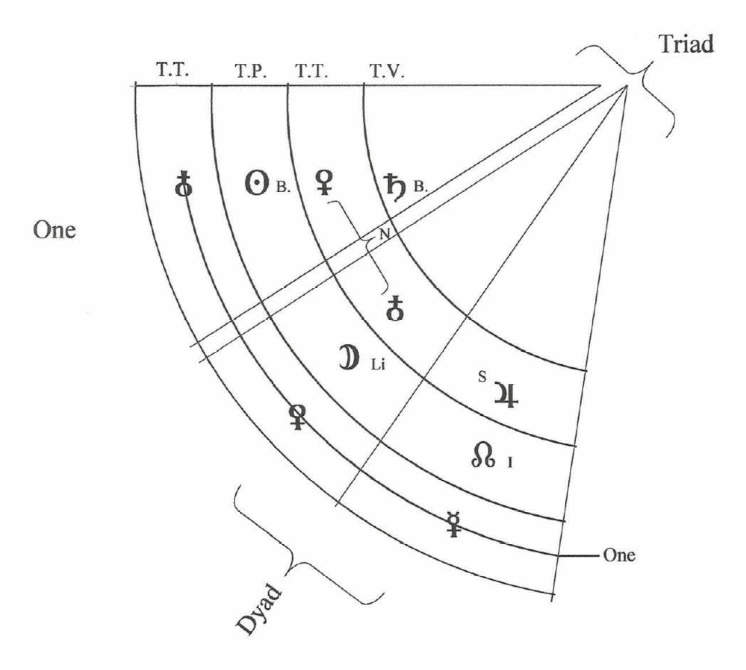
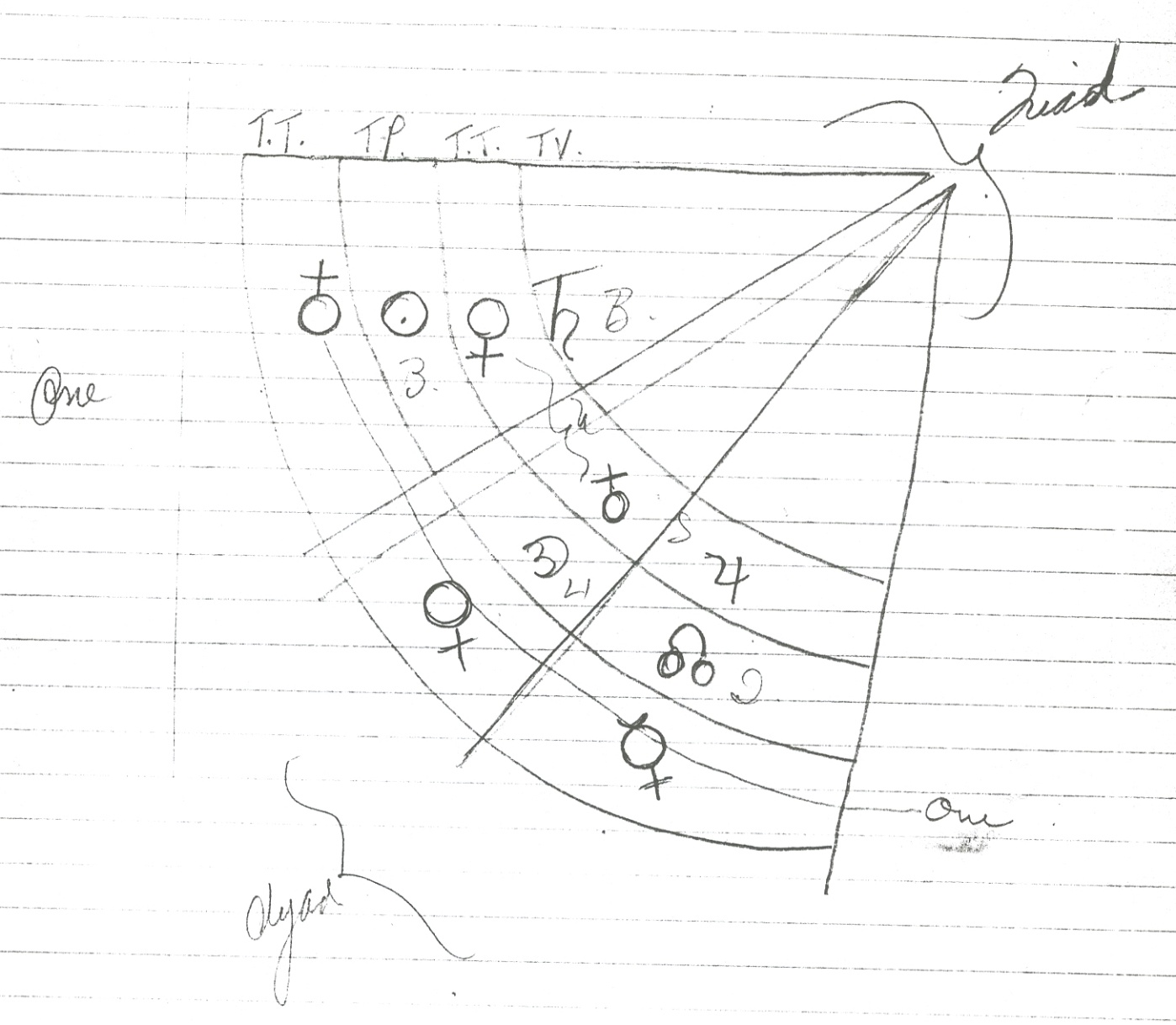
[Fig. AD Supp AD-I-235. One, Dyad, Triad. Facsimile scanned from AD Supp p. 235.]
[AD Supp p. 236]
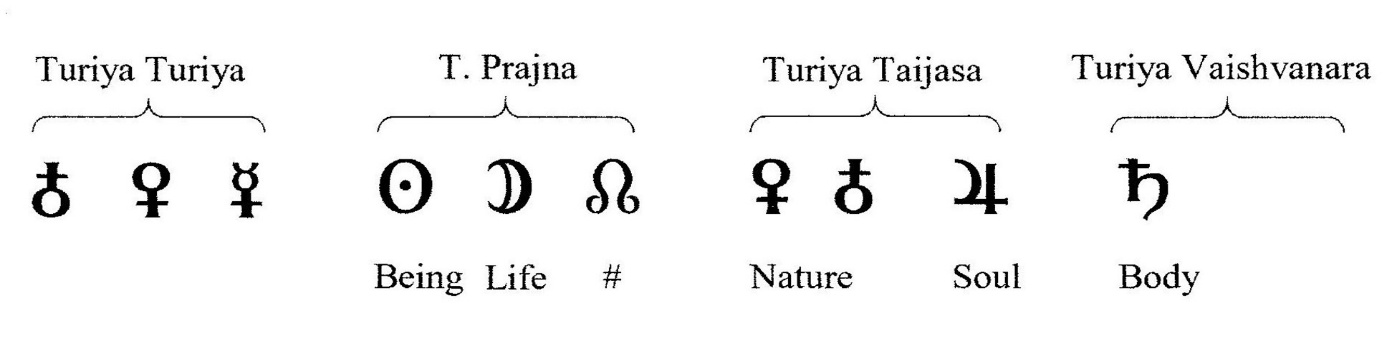
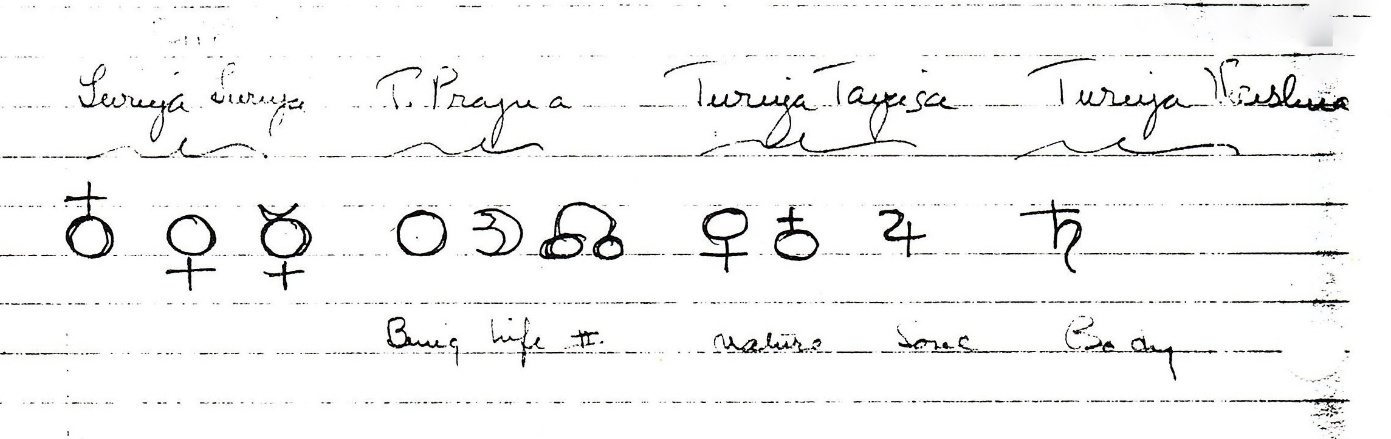
[Fig. AD Supp AD-I-236. Dignities of First Quadrant Triad with States of Consciousness and Monads. Facsimile scanned from AD Supp p. 236. Note: Vaishna = Vaishvanara.]
[AD Supp p. 237]
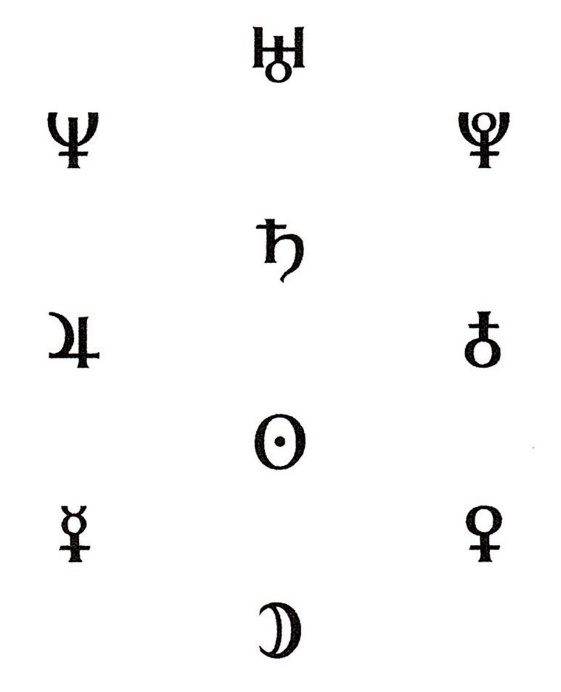
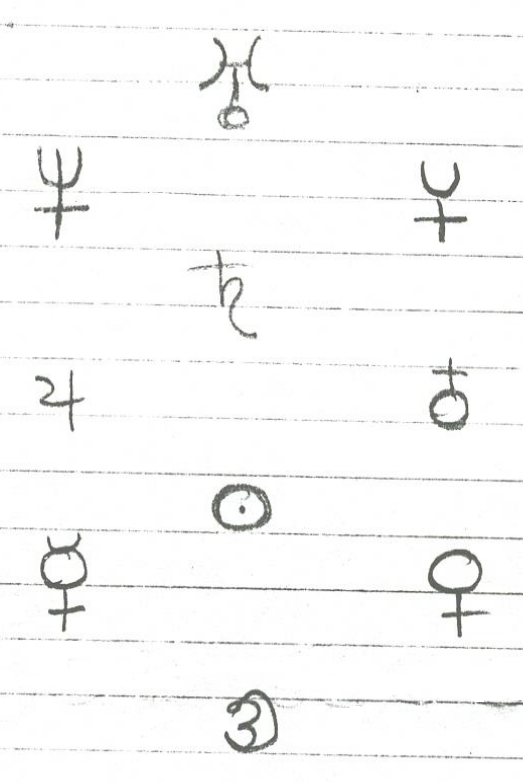
[Fig. AD Supp AD-I-237. Planets: Uranus Neptune Pluto, and Chaldeans (tree diagram). Facsimile scanned from AD Supp p. 237.]
[AD Supp p. 238]
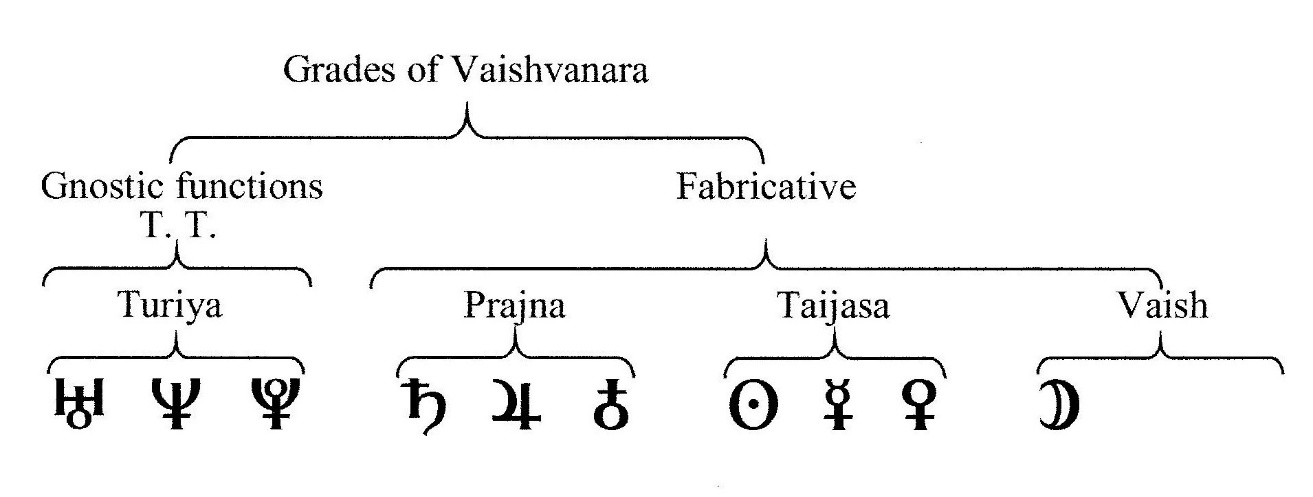
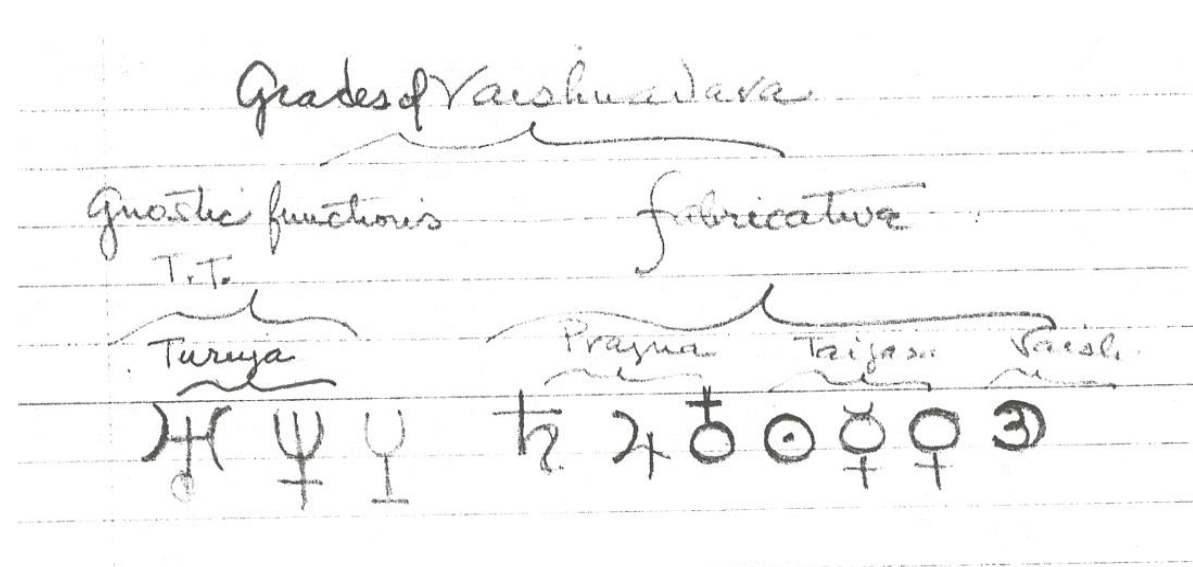
[Fig. AD Supp AD-I-238. Grades of Vaishvanara; Gnostic – Fabricative; trans-Saturnian and Chaldean Planets. Facsimile scanned from AD Supp p. 238.]
[AD Supp p. 239]
The Plotinian affirmative description of the One does not preclude the possibility that the unity of every principle is paradigmatically included in the Ones [One's] superknowledge. The thread theme we are devolping [developing] as we proceed is to use our symbolizism [symbolism] to illustrate the precise way in which the 'Ideas' are unorgniatedly [unoriginatedly] and indivisbly [indivisibly] actual in the One and flow forever into the lesser orders of reality in such a way that the adventious [adventitious] unity found in creatures necessarily follows.
[AD Supp p. 240]
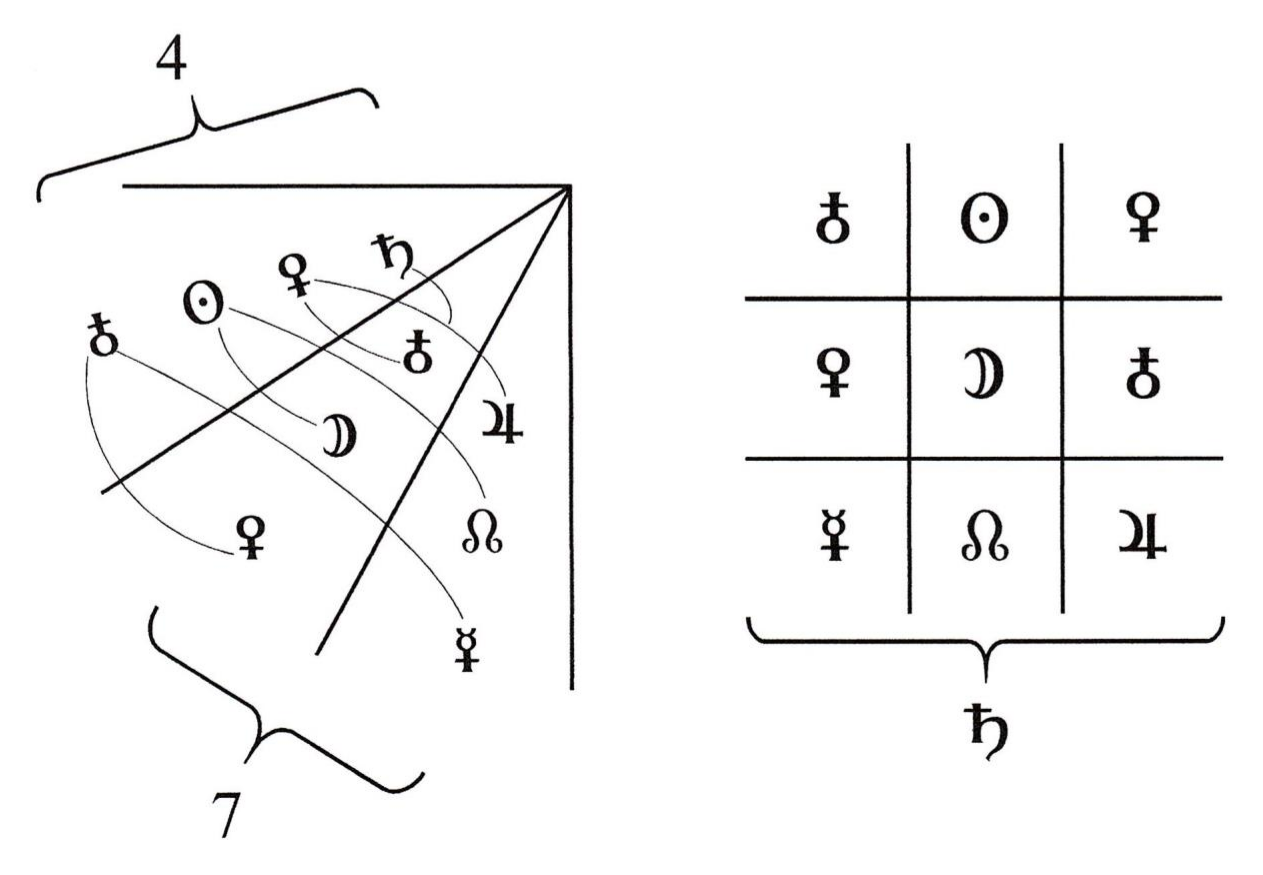
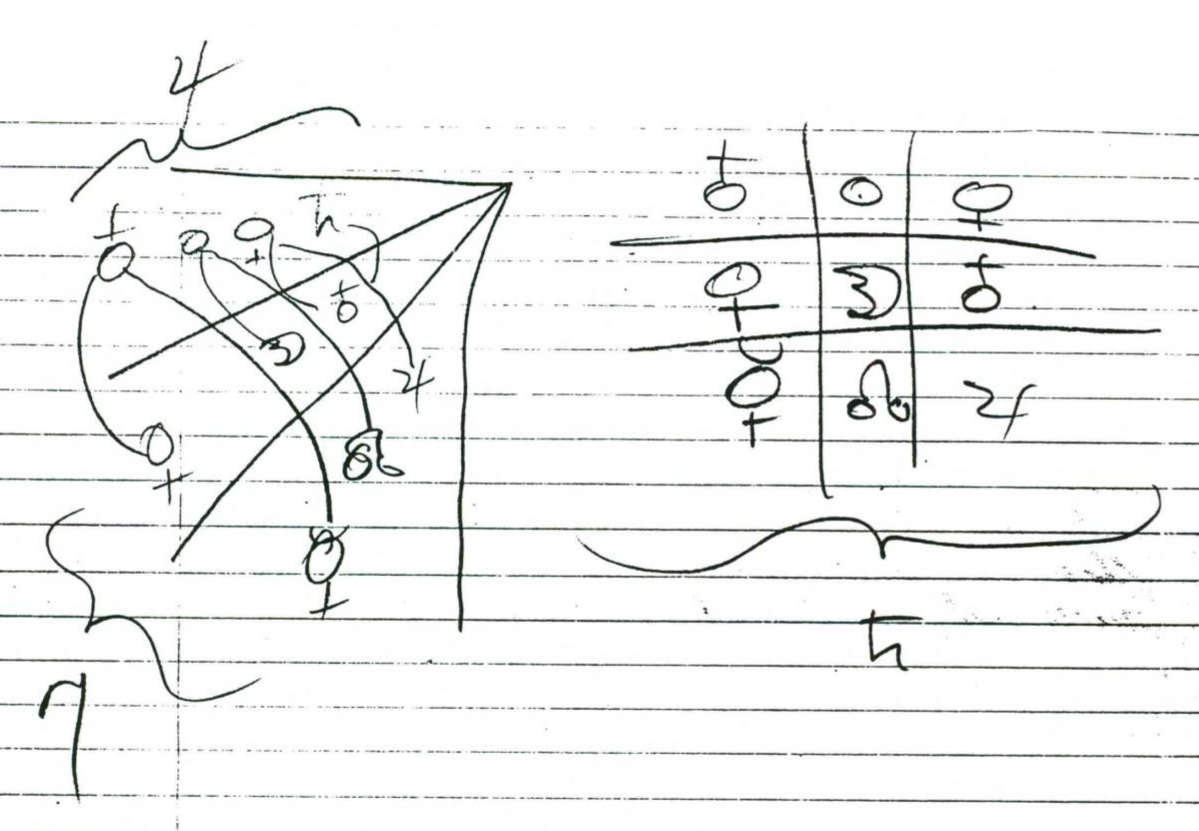
[Fig. AD Supp AD-I-240. Triad / First Quadrant Dignities. Left: 4 and 7. Right: 3 x 3 + 1 (Saturn). Facsimile scanned from AD Supp p. 240.]
[AD Supp p. 241]
[AD Supp p. 241 right side, text:]
The One -- Transcendent.
includes substance (house) [together with]
function (dignities)
the illusory division of the passive perfection into 2nd & 3rd house
& likewise for its powers may be diagramed thus:
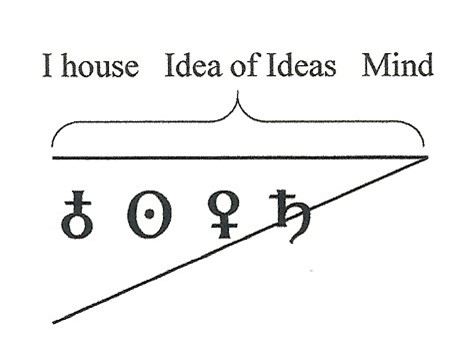
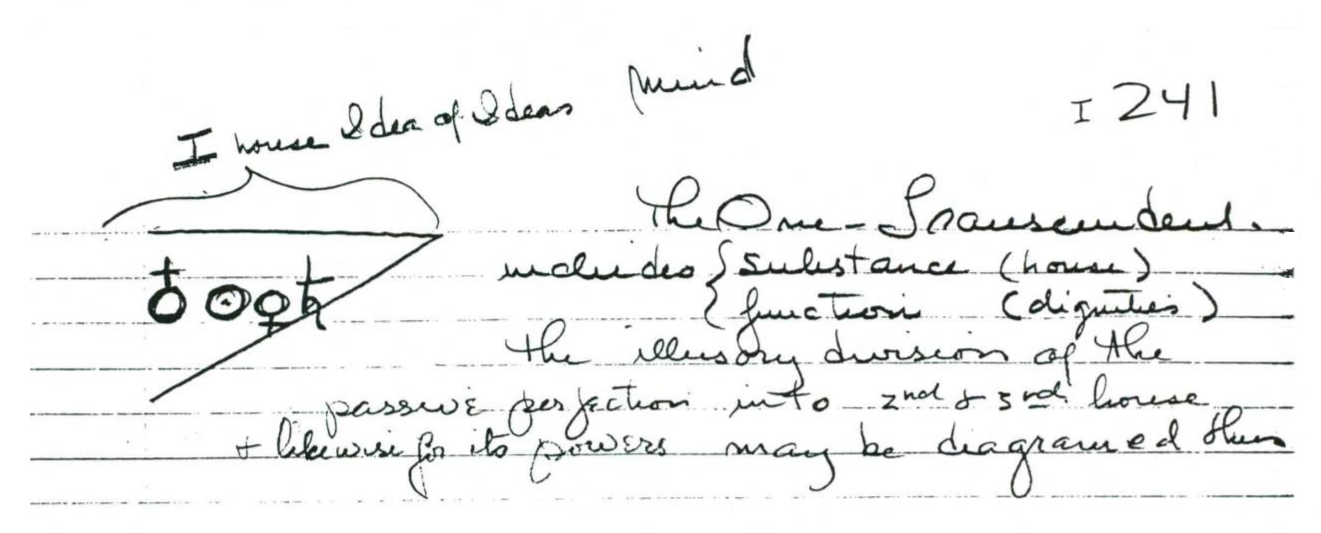
[Fig. AD Supp AD-I-241. The Transcendent One – First House Includes Substance and Function. Facsimile scanned from AD Supp p. 241.]
[AD Supp p. 242]

[Fig. AD Supp 242-digital. The One: Triad Dignities.]
[AD Supp p. 242, text:]
The infinite nature of the One is composed of the double Act.
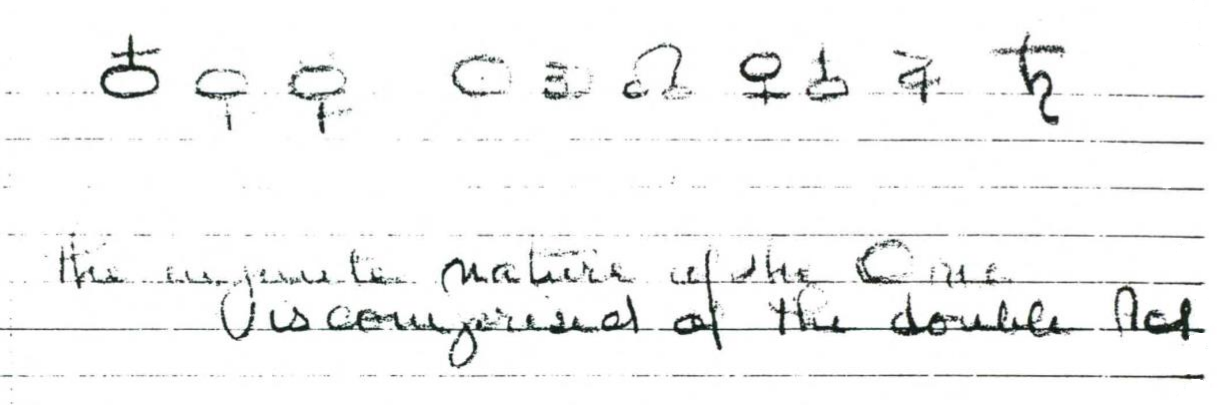
[Fig. AD Supp AD-I-242. The One: Triad Dignities. Text: The infinite nature of the One is composed of the double Act.]
[FRAGMENTS: SERPENT'S PATH, ETC. AD Supp pp. 243-244]
[AD Supp p. 243]
3/1800 Jupiter square Uranus
5/1800 Jupiter trine Pluto, Saturn quincunx Pluto
7/1800 Jupiter trine Neptune
8/1800 Saturn square Neptune
ego consciousness is included in the world idea. & -- the latter is composed of a series of stills [therefore] discontinuous. Between each still which is a thought there is an infinitissimal [infinitesimal] gap . . . . . which betrays the background of these thoughts . . ie from mind there arises an incessant series of images of the world within it. The ego thru expectation, craving, desire to become practically speaking connects these flashing images into a seamless whole . . . which results in our inferring the world to be self-identical and of a continuing existence. Now attention must be brought into, or inserted into that interval. First seek to get the thought back to its primal state The 'presentation' must be returned to its origin and presentation includes the 'I' thought with which it is fused . . . Hence the world is a constructed image within the mind and within which mind gets immersed ie his understanding recognizes the the [sic] world-image & the I-thought are included within itself. Each thought must be subject to this recognition that mind is present with the mental activity which is producing thoughts.
[AD Supp p. 244]
Deed Land to W. G R
Rewrite charter
======================= END of AD Supp 1-244 retyped =======================
AD Supplementary Material (AD Supp) – pp. 1-244 – retyped from handwritten version. Copyright © 2023 Wisdom's Goldenrod p. xv