APPENDIX: TS CLASS NOTES FOR 1982 0419
[File ASL Horoscope JNG Degrees 2p.PDF Begins]
Jung's Degrees
[Note: The following symbols are from Isidore Kozminsky, Symbology of the Zodiacal Degrees, and Marc Edmund Jones, The Astrology of Concepts.]
Kozminsky:
Sun, 4 Leo: An ambassador leaving the presence of a prince who is smiling significantly to his chancellor.
Moon, 16 Taurus:A white dove, adorned with a rose-coloured ribbon to which is attached a little bell, standing on the right shoulder of a man drinking wine.
Mercury, 14 Cancer: A crab climbing up an upright iron spear, above which is a circlet of seven stars. [Note: The scan file mistakenly has the Kozminsky symbol for 14 Leo here, "Two men tossing coins whilst another looks on."]
Venus, 18 Cancer: A hand grasping gold pieces, some of which are falling through the fingers.
Mars, 22 Sagittarius: A dog on a wall baying the moon.
Jupiter, 24 Libra: A whirlwind scattering a mass of papers into the air.
Saturn, 25 Aquarius: A victor in a duel with a look of agony breaking his sword over his knee.
Uranus, 15 Leo: A mass of black rock in the centre of which is a large diamond.
Neptune, 4 Taurus: The arena of a circus during a night performance, the ringmaster in the centre urging forward the movements of a large white horse galloping round the ring, a lady gymnast standing on the animal's back holding a hoop of fire.
Pluto, 24 Taurus: A prisoner having escaped from his prison is endeavoring to break his fetters with the aid of some large flinty stones.
Head, 11 Aries: A little child tying a ribbon round a lamb's neck, the flock playfully frolicking around.
Tail, 11 Libra: A crow with a large rat in its beak.
Jones:
Sun, 4 Leo: An elderly man in evening clothes, of poised and military bearing, stands alone before a lovely mounted moose head.
Moon, 16 Taurus: An old man is attempting with a degree of success unsuspected by him to reveal the Mysteries to a motley group.
Mercury, 14 Cancer: A very old man, whose feebleness adds strangely to his dignity, stands alone facing a vast dark space to the northeast.
Venus, 18 Cancer: On all sides is the bustle of the barnyard, and in its old-fashioned and natural life a hen clucks among her chicks.
Mars, 22 Sagittarius: A perfect bit of the old world is found in the new; a Chinese laundry has its shutters up and is now itself.
Jupiter, 24 Libra: A marvelously colored and figured butterfly is spread before the eyes; on its left side is an extra and third wing.
Saturn, 25 Aquarius: A butterfly struggles to emerge from the chrysalis and it seems that the right wing is more perfectly formed.
Uranus, 15 Leo: The great American carnival, the Mardi Gras at New Orleans, is seen with a wealth of floats, decorations and merriment.
Neptune, 4 Taurus: The rainbow's pot of gold is revealed in the midst of a shower of sparkling and flashing colors.
Pluto, 24 Taurus: A mounted Indian brave rides proudly with human scalps as trophies at his belt.
Head, 11 Aries: The president of the republic or ruler of his country is presented.
Tail, 11 Libra: A kindly old professor from his battered desk looks out over his eyeglasses at a class eagerly awaiting his words.
Saturn 1° square Pluto
Saturn 1st -- identity with Saturn
Saturn 1° square = unconscious, unreflective identification with the ego.
Pluto = Indian warrior; represents tremendous power. Therefore Jung is identified with the power in Pluto.
Pluto square Saturn =
Saturn 1° trine Jupiter -- His ego is incorporating the unknown (third wing) that Nature very often reveals.
Jupiter in 8th -- ST [Something] is due him in this incarnation.
Saturn sextile Mars
Sextile -- Subjective awareness that the process is going on.
-- A definition is being built up -- that is of his (Saturn) ego.
-- The orb of the sextile is 3°. There is a knowing of it and a deliberateness -- an intellectual formulation of the sextile.
A sextile represents "definition".
A 3° aspect -- There is a first awareness in some fashion, of the aspect.
Saturn 7° quincunx Venus (Venus = Barnyard)
Saturn 10° opposite Uranus
Saturn 9° sextile Neptune
[File ASL Horoscope JNG Degrees 2p.PDF Ends]
CHARTS FOR 1982 0419
Class
Monday, April 19th, 1982
Edited transcriptClick the series name to view more
CLASS at Wisdom's Goldenrod, Hector, NY
with Anthony Damiani (AD)
April 19, 1982
ASTROLOGY; HOROSCOPE-JUNG
with Appendix: ASL Horoscope JNG Degrees 2p.PDF.
TOPIC: Astrology
SUBJECT: Horoscope-Jung
SUBSUBJECTS: Jung natal chart, transits, aspects, Aspects, Orbs
CONTENTS:
Aspect and orb meanings
Orbs related to nidana meanings; some aspects past 7 degrees are operative
Jung's chart analysis
Sun through Pluto, Head/Tail Sabian symbols; ascendant at 28º Capricorn
Saturn intercepted in first house: Jung's "I" identified with ego
Saturn square Pluto, 1-degree: ego actualized in fourfold way; unconscious identity with power
Jupiter trine Saturn, 1-degree: incorporation of strange things in Nature into rational structure of ego; reflectively unaware that this is being done
Saturn sextile Mars, 3-degrees: research into alchemy/traditions gives definition to his ego; intellectual formulation of an ego process
Saturn quincunx Venus, 7-degrees: objectification of ego structure through incorporation of relationships
Venus at Cancer 18: valuation of instinctual relationships with others
Saturn square Moon, 9-degrees: incorporation of an understanding of the body into his ego
Saturn opposition Uranus, 10-degrees: trying to incorporate reason-principles embedded in matter into ego; continually intensifying dialogue between unconscious and ego
Saturn sextile Neptune, 9-degrees: recognition of continuity of collective unconscious
Saturn claims Sun's work
Neptune on Sun: first heart attack; vision of Earth; imagination corporealized what Neptune gave him; Saturn claimed it
Sun at Leo 4: central purpose is to have pride in life as presented in his imagination; pride in his accomplishments; divine pride
Look at Saturn and its aspects to give dossier on someone you've never met
Witness-I represented by whole chart; Witness-I assimilates the reason-principles but ego takes credit and builds up reflex of what Witness-I really does
No ego self-perception (Saturn) without life (Sun); Saturn circumscribes Sun's infinity of life
Sun as life thrust rather than ultimate purpose
Meta-language nature of astrological symbols
Appendix: TS class notes: Kozminsky and Jones symbols for Jung's chart; notes on Saturn aspects
BOOKS READ FROM OR REFERENCED:
Marc Edmund Jones, The Astrology of Concepts
Isidore Kozminsky, Symbology of the Zodiacal Degrees
SABIAN SYMBOLS: Aries 11, Taurus 4, 16, 24, Cancer 14, 18, Leo 4, 15, Libra 11, 24, Sagittarius 22, Capricorn 27, 28, Aquarius 25
CHARTS appended to this transcript:
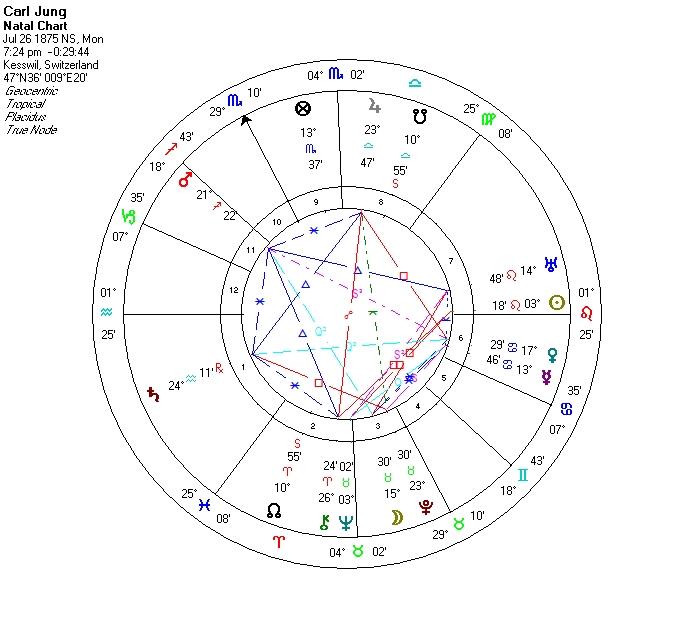
FIGURE 1982 0419-1. Carl Jung Natal Chart (astro.com).
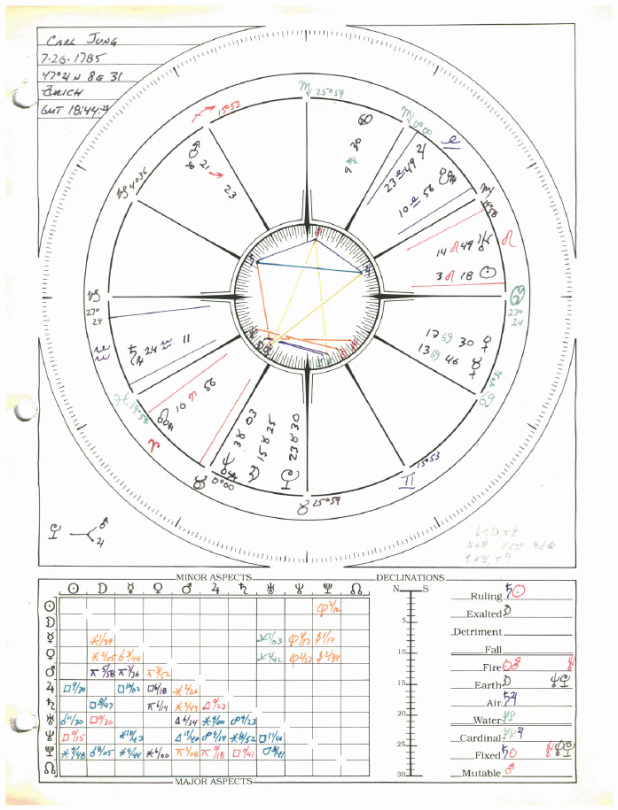
FIGURE 1982 0419-2. Carl Jung Natal Chart (WG version).
RETYPED AND REFORMATTED by IT 2021
NOTES:
RETYPED PARTIAL TRANSCRIPT (hence V10). From 1982 0419 ASL Jung 06p.PDF. Originally typed by TS. THERE ARE NO AUDIO CASSETTE TAPES EXTANT.
To make more readable, most Anthony commentary has been separated off to stand on its own and indicated by AD.
Scan File ASL Horoscope JNG Degrees 2p.PDF, two pages of handwritten TS notes associated with this class, has been appended for completeness. All astrological glyphs (except degree glyph, which wasn't retyped, meaning clear without it) spelled out.
Partial transcript: All spelling, punctuation, and capitalization errors have been corrected, all astrological glyphs (except degree) spelled out, some numbers spelled out. I use Head/Tail instead of North Node/South Node.
1982 04/19 at Wisdom's Goldenrod
Astrology; Horoscope-Jung
[File 1982 0419 ASL Jung 06p.PDF Begins]
Astrology 4/19/82 Jung
[NOTE: All Sabian degree symbols in this transcript are from Marc Edmund Jones, The Astrology of Concepts.]
( ) = Anthony's comments [as noted explicitly in partial transcript 1982 0419 ASL Jung 06p.PDF.]
The aspects of Jung's chart and corresponding orbs are as follows:
1° -- conjunction -- identity
2° -- semi-sextile -- a kind of power or strength; a vasana, it is not fully objective or conscious, however. (AD: In that case, you'd be speaking of this power as moving away from identity.)
3° -- sextile-- definition and limitation
4° -- square -- actualization; it brings something into being. (AD: It brings something into totality then.)
5° -- trine -- creativity, it brings things out into life and into the objective, an apprehension through life. (AD: Number 5's meaning is incarnation, so that is also a description of a [trine].) The other meaning for trine since we'll only discuss the first seven orbs is that it builds up something. (AD: Incarnation.)
6° -- quincunx -- contact, (AD: strain), ambivalence; an experience of subjective content, incomplete objectification, but there is a recognition of content; substantialization. Aries to Virgo is a quincunx [trine symbol is mistakenly written]. With the orb it means transformation, the relationship between container and content, an unresolved dual nature between empirical and transcendent subjectivity. It's also the relationship of Aries to Scorpio. (AD: It's not finalized.)
7° -- opposition -- a blockage, or a completion or fulfillment; an objectification and differentiation.
The orbs sort of mean the same things as the aspects do. On empirical observations, the orbs seem to be associated with the nidana meanings. 7 brings out the feelings, 4 the being or individuality of a person, 2 compulsions or samskaras. Some aspects past 7 are operative, depending on the chart. Freud didn't have any aspects closer to 5 of his, but they could be seen operating.
Sun 4° Leo -- "An elderly man in evening clothes, of poised and military bearing, stands alone before a lovely mounted moose head."
Moon 16° Taurus -- "An old man is attempting with a degree of success unsuspected by him to reveal the Mysteries to a motley group."
Mercury 14° Cancer -- "A very old man, whose feebleness adds strangely to his dignity, stands alone facing a vast dark space to the northeast."
Venus 18° Cancer -- "On all sides is the bustle of the barnyard, and in its old-fashioned and natural life a hen clucks among her chicks."
Mars 22° Sagittarius -- "A perfect bit of the old world is found in the new; a Chinese laundry has its shutters up and is now itself."
Jupiter 24° Libra -- "A marvelously colored and figured butterfly is spread before the eyes; on its left side is an extra and third wing."
Saturn 25° Aquarius -- "A butterfly struggles to emerge from the chrysalis and it seems that the right wing is more perfectly formed."
Neptune 4° Taurus -- "The rainbow's pot of gold is revealed in the midst of a shower of sparkling and flashing colors."
Uranus 15° Leo -- "The great American carnival, the Mardi Gras at New Orleans, is seen with a wealth of floats, decorations and merriment."
Pluto 24° Taurus -- "A mounted Indian brave rides proudly with human scalps as trophies at his belt."
Head 11° Aries -- "The president of the republic or ruler of his country is presented."
Tail 11° Libra -- "A kindly old professor from his battered desk looks out over his eyeglasses at a class eagerly awaiting his words."
(AD: He's doing the same thing he did in his last life.)
(AD: We said the first house represents the adventitious unity of the person. The ascendant seems to be 28° Capricorn, rather than 27° Capricorn: "A large aviary, built as a wing of a rural mansion reveals a host of singing and contented feathered citizens.")
Saturn stands for self-identity and it's in the first house -- a huge house for Jung, with 52 degrees in it -- out of the chrysalis of subjectivity, the ego gains the function of rationality, but he is identified with that process. The first aspect to Saturn is square Pluto. The experience of power that he got from his intuitions, and his ability to get to those meanings, was the actuality that brought his ego into full being, and being identified with that ego structure, he identified with that power.
(AD: The fact that the Saturn is in the first house, in our approach, shows that Jung's "I" is identified with the ego. What you most strongly identify with is what is in the first house. If there is no planet there, then the ruler of that house is what you're most identified with. If you had a different planet in the first house then that planet is what you'd be primarily identified with. Insofar as Saturn is in the first house and is intercepted, his ego is very strong and subjectively biased. So being very identified with his ego, it is actualized in a four-folded [sic] way. The fact that it's a 1° means that with its power, it's almost an unconscious identity. We have to see how the unity of the person is unfolded by the square.)
This involves the two butterfly symbols in Jung's chart and stands for the fact that he had access to the collective unconscious or archetypes that were not unique to his own personal unconscious, and that his ego brought these out into the life for others to know.
(AD: With Pluto square Saturn and this trine, he was trying to incorporate these strange things in Nature into himself. With Jupiter in the eighth house, thus inherited from the past, he was a mouthpiece for the strange things in Nature, and that they had to be incorporated into the rational structure of his ego. With the 1°, he is reflectively unaware that these things are being incorporated into his ego.)
Jung allowed his own understanding to be directed by the disordered dreams of his patients. He didn't bring in his preconceptions into the sessions he had with psychotics. Jung, whereas he stuck to his general point of view, he could easily discard old concepts he had that were no longer useful.
Saturn sextile 3° Mars -- His researches into alchemy and old traditions is structured in a conscious way by his ego. Mars in the eleventh house; planets in this seem to be working towards making a contribution to the world in the form of a future result. He seems to try to understand psychology in terms of how the ancients thought. From Mars to Saturn is sextile (1/6); the presuppositions in his own thinking defined how he used old traditions to understand libido, free will, etc, and was limited by it, i.e., Saturn limited Mars by his thinking for himself. But Saturn to Mars (5/6); represents his encounter with traditional views toward psychology in general, gave him a new view and deeper understanding of his own thinking processes; i.e., Saturn was enriched by Mars.
(AD: Insofar as the Mars is the division of different traditions, (sextile) it gives definition to his ego. It is an intellectual formulation of ego process. It's not a full actualization, as in a square. I'm trying to understand the development of conscious relationships in terms of the orbs. 1° is an identity or unconscious compulsion. 2° is the power that is brought out of the intensity of identification. 3° breaks away for the first time, but only in an intellectual sense. At 4°, it becomes fully actualized and is manifest right down to the corporeal level. 3°, there is a kind of intensity where there is a first awareness in a self-conscious way. We have to see if this vision of the chart we get compares with the one we did last time. I wanted to go by the house -- avidya first house, samskaras second house, etc, rather than the nidana chain.)
Jung was a leader of a brood, in a sense, and 7° is that which is being objectified, and the orb is in terms of feelings (AD: through stress).
(AD: The quincunx represents stress or strength and would bring out all the unknowables in terms of relationships with others in that aspect. What is happening is that insofar as he is incorporating into his ego structure the relationships that existed between his students or patients, to that extent there is an objectification of his ego structure. That is an incorporation; there's a great deal of awareness in a 7° aspect.)
He was very attached to normal, everyday life. His married life was characterized by being very Swiss. This degree has more to do with his desire to be conventional.
(AD: The only way Jung could find out what his ego structure was like was through his relationships with others.)
There was a smooth outpouring from his ego structure for the teacher role for Jung, regarding the Jupiter aspect. But as far as personal relationships were concerned, there was a constant stress or strain, but did produce differentiation. There are indications all over his chart, however, that he was a teacher. It doesn't have to be confined to Saturn quincunx Venus.
(AD: With Venus on that degree, there is a valuation of the instinctual relationships with others. It's his relationship to his instincts and the value he places on them is what is being incorporated into his ego structure.)
Saturn square Moon 9° -- (AD: The Moon is the awareness of the materiality of the body, distinguished from Saturn, that would be self-apperception, which includes thinking and feeling. Jung incorporated an understanding of the body, apart from the ego, into his ego.) -- Anthony
[Typist's note: In the following paragraph, which was hand-written in the margin, the first parenthesis is missing so we don't know if the whole paragraph is attributable to Anthony or only part of it. I add the first parenthesis based on how the above paragraph was done but it's possible only the second sentence is attributable to AD.]
Saturn opposite Uranus 10° -- (AD: The ego through the tension and total objectification through the opposition with Uranus was trying to incorporate the reason-principles embedded in matter i.e., animal nature. During his life the opposition got down to 2°, so that there was a continually intensifying dialogue between the contents of the unconscious and his ego.)
Saturn sextile Neptune 9° (cannot hear what Anthony has to say) -- Yes, the ceremony he carried out, he later found out to be an exact duplicate of an aboriginal ceremony. This gave him the recognition, later in life, of the continuity of the collective unconscious.
(AD: Do you get the same picture as we got the last time? (No) This way we're focusing in on his ego's standpoint. We still have to bring the Sun standpoint to get at the central purpose of his life.)
Would you say that the reason Jung conceived of consciousness in rationalistic terms, not being able to transcend his ego or reflective consciousness, was because of the special emphasis on the first house?
(AD: The degree meaning of Uranus represents the reason-principles in matter or the unconscious, but in order for the development of it, these experiences had to be incorporated into it.)
An interesting observation is that these aspects we've been discussing seem to relate very strongly to the Sun degree. But whereas it was said that in order to see the central purpose in life, all the aspects to the Sun would have to be examined. However, the central purpose of the life is indicated in an interwoven way all throughout the chart, and not having to do directly with the Sun.
(AD: The hunter stands before his animal trophy and feels proud that he conquered it. This is the Sun, but the Saturn comes along and says "I did this," the Sun's work. Let's say I identify with my thinking or feeling. It doesn't mean that in my next chart, Mercury or Venus should be looked at for what the person identifies with, it's still the "I" that the person identifies with the Mercury, etc. So you always have to look at the Saturn for that, with the possible addition of the Tail for indications of the past.)
When Jung had his first heart attack in 1944, Neptune was on Sun. This is when he had the vision of the Earth.
(AD: When Neptune broke through the Sun, there was given colors to what Neptune was saying. The imagination was corporealizing or verbalizing what Neptune gave to him, but Saturn claims that it was "me". The purpose of Jung's life was to have pride in life as is presented in his imagination.)
In the symbol, there is a formalized relationship between the man and the moose head. It seems that whenever a planet goes over the sign, this formalized relationship manifests on a different level. The man is poised and the animal poses no threat. Each time there's a transit to the Sun, a different level of the unconscious becomes objectified in a higher form, with a greater distance from it. The man in front of the animal is reflecting about it on a conceptual level, not living with it; about the reason-principles as they are embedded in matter. The difference between a live moose in the woods and as a trophy is that the former represents the vitality of the living instinctual process, whereas the latter is an imaging of the instincts in a static way. In other words, the chaos of the instinctual world is rendered intelligible by imaging static reason-principles.
(AD: The purpose of his life was to be proud of his accomplishments and this is incorporated into his ego structure. You look at or read about various saints and there is a great dignity about them. The Tibetans called it "divine pride".)
He had to live with greatness; he lived in very bold strokes. What interested him, he did for himself, he didn't just read books on such things. He lived out those things he was interested in and understood -- a celebration of life.
(AD: If you had to give a dossier on someone's life whom you never met, the most reasonable thing to do would be to give a description of Saturn and its relationship to all the other planets. I think we were viewing Jung's chart subconsciously from Saturn's point of view, last time as well.)
What is the difference between the ego as Saturn and as identified with the first house? It turns out in Jung's case that Saturn is in the first house so a difference can't be easily seen. What is the unity of this identity is the bodhicitta or body of light?
(AD: The planets represent the soul powers as psychically and physically manifested, through the degrees. There is the Witness-I that comes into incarnation and is represented by the chart as a whole. The ego takes credit for assimilating the unfoldment of the chart, whereas the Witness-I is doing the actual assimilating of the reason-principles. The ego builds up a reflex of what the Witness-I really does.)
The Saturn seems to be the sum total of all the past reason-principles built up and crystallized from past incarnations. The sum is the field of potential that the Saturn has to incorporate into itself in the current incarnation.
(AD: We couldn't speak of ego self-perception if it didn't have any life (Sun) to begin with. There could be life without self-apperception, but then we wouldn't be speaking about any individual. The Saturn in the first house circumscribes the Sun's infinity of life of the particular individual. The Sun is the purpose of this life -- that's what must be looked at.)
Wouldn't the purpose of a particular life be to distill wisdom garnered into permanent knowledge? The purpose has to do with an inner relationship between the bodhicitta and the higher self. Are we so sure that the Sun on a particular degree indicates what the purpose of the life is?
(AD: It seems to indicate more what happens to that life in an incarnation.)
There's been a confusion. We've been looking at the Sun to see what the ultimate purpose of a life is, but it is really the life thrust.
(AD: That's because this is a meta-language we're using, so we can't nail down definitions to the planets so precisely, in fact, because they're metaphors.)
[File 1982 0419 ASL Jung 06p.PDF Ends]
1982 04/19 V10: CLASS: Astrology; Horoscope-Jung. Copyright 2021 Wisdom's Goldenrod p. iii