CHARTS FOR 1983 0502b
Paper
Monday, May 2nd, 1983
PaperClick the series name to view more
Napoleon's Natal Chart
by Linda Ruth
Paper V09MP
3-LETTER CODE: HOR
TOPIC: Astrology
SUBJECT: Horoscope-Napoleon
SUBSUBJECT: Napoleon natal chart
ORIGINAL LOCATION & FILE NAME (of PDF used for typing): ASL horoscope Napoleon P 11p.PDF (formerly ASL horoscope Napoleon P 7p.PDF)
CONTENTS:
Dossier of Napoleon's natal chart
Sun: imaginative texture of mind, central purpose which all other functions will reflectively unfold
Sun at Leo 23: reveals selfhood through dynamic activity, careful balancing of all aspects of himself; adeptness at translating vision into action
Opposite at Aquarius 23: ability to see consequence of action as or before it's performed
Napoleon: "My actions were as prompt as my thoughts"
Saturn: outer reflected definition
Saturn at Cancer 26: poised self-confidence
Opposite at Capricorn 26: has to see himself as constantly embodying an ideal
Sun and Saturn semi-sextile, bound together in power
Mercury: formulation of thought out of formless substance
Mercury at Leo 7: saw his thinking as cosmic in scope; spoke of himself as "child of destiny"
Opposite at Aquarius 7: unlimited resourcefulness
Venus: values
Venus at Cancer 8: uplifting the state of the common man; idealism; self-worth conceived in terms of witness consciousness
Opposite at Capricorn 8: ability to install the ideal in the real circumstances of everyday life
Mars: desire nature, outward thrust
Mars at Virgo 13: ability to assert order, command over chaos; some function in the individual will be changed; one's destiny is within one's hold
Opposite at Pisces 13: discrimination
Jupiter: instincts, wisdom of instincts
Jupiter at Scorpio 16: gregarious and friendly; complete receptivity to wisdom buried in the instincts
Opposite at Taurus 16: need to share with others
Sensitively at one with the leadership he displayed
Moon: brain consciousness, moment-to-moment bearer of stamp of man
Moon at Capricorn 29: body could sense the celestial destinies in everyday circumstances; judgments based on portents given to body
Napoleon had unified psyche
Natal Uranus Neptune Pluto stand as hyparxis of natal Chaldeans; or natal Chaldeans are a limited expression of these universal functions
Uranus at Taurus 12: fought his battles in his mind first; almost cosmic imagination
Neptune: social obligation, higher feeling
Neptune at Virgo 9: Napoleon part of a scheme whose true purpose would be revealed in the future; expansion of the psyche occurred through creative and original expression in action
Pluto: dharma, willed content of the life, connection of ego to wisdom of the world
Pluto at Capricorn 14: concrete sense that he was a historical figure carrying out the World-Idea; Napoleon's conceit, arrogance, final undoing due to a misappropriation of this power
The "instant" is critical in this chart
BOOKS QUOTED FROM OR REFERENCED:
Marc Edmund Jones, The Astrology of Concepts
Marc Edmund Jones, The Sabian Symbols in Astrology
Ralph Waldo Emerson, The Complete Works of Ralph Waldo Emerson, v. 4, Representative Men
Paul Brunton, The Quest of the Overself
SABIAN SYMBOLS: Taurus 12, 16, Cancer 8, 26, 29, Leo 7, 23, Virgo 9, 13, Scorpio 16, Capricorn 8, 14, 26, 29, Aquarius 7, 23, Pisces 13
CHARTS appended to this paper:
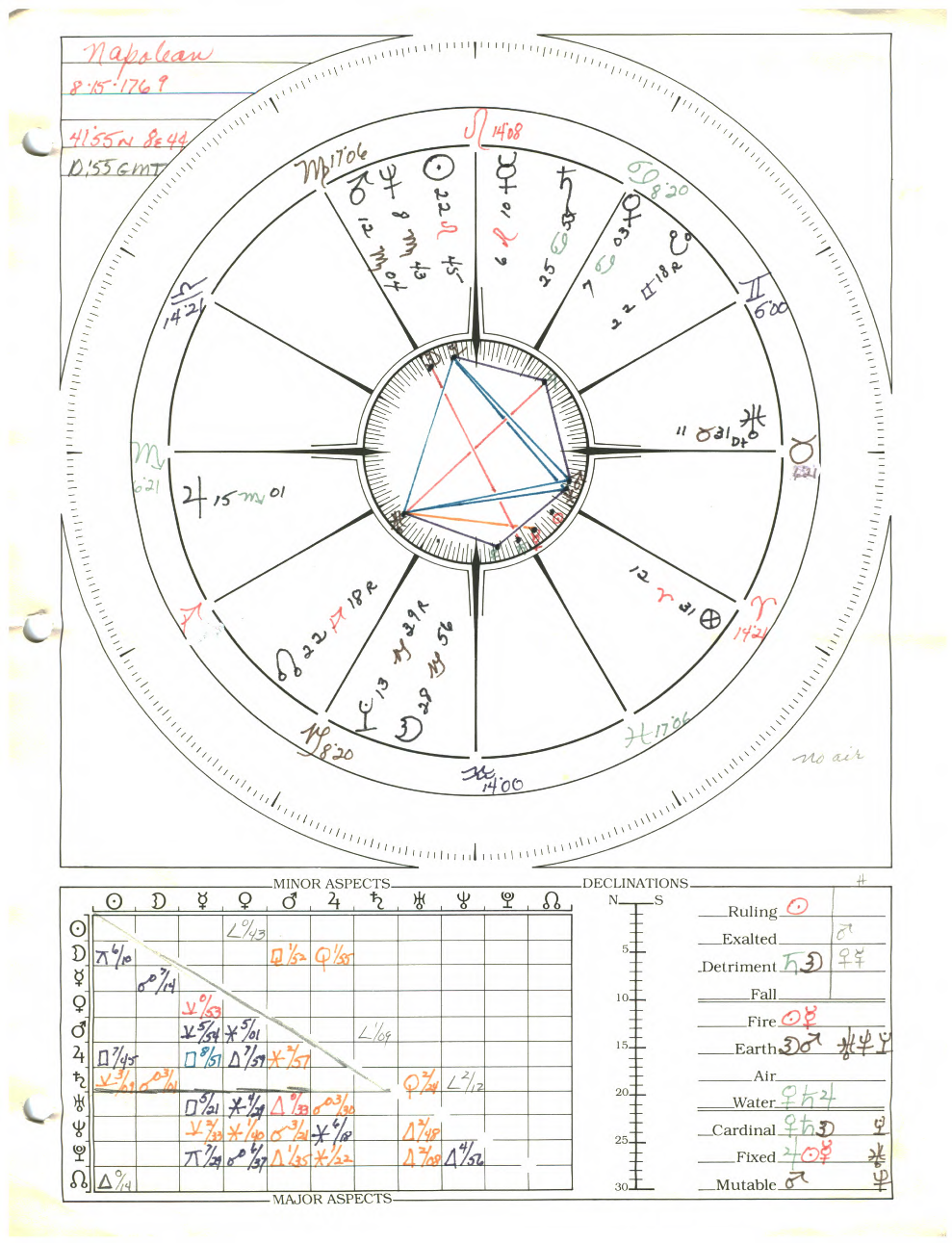
FIGURE 1983 0502b-1. Napoleon Natal Chart (WG version).
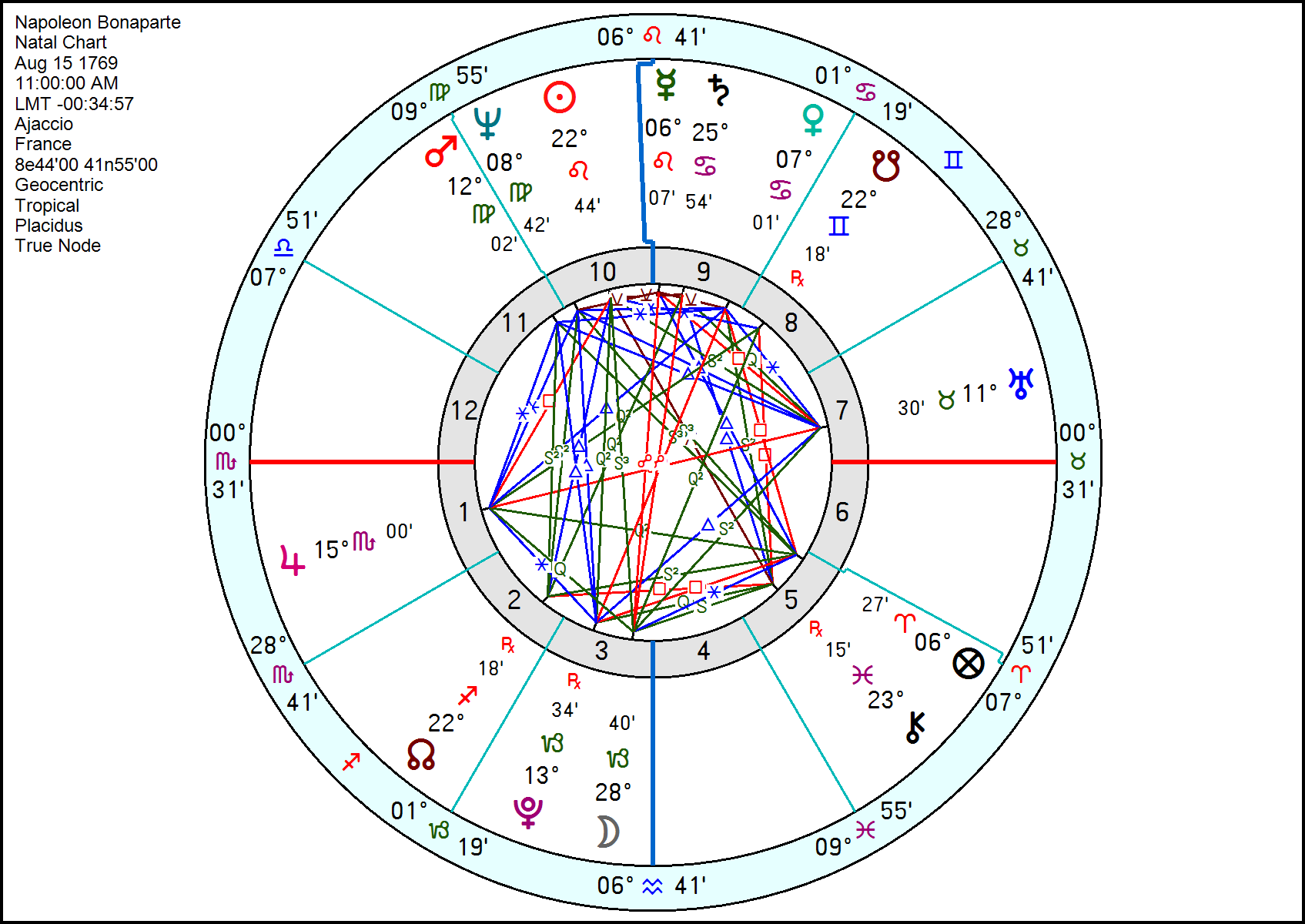
FIGURE 1983 0502b-2. Napoleon Natal Chart (astro.com).
AD HANDWRITING: Typewriter typed, few AD edits. AD also makes spoken corrections to this paper as part of the class discussion.
COMPLETENESS: Full Paper
PUBLISHABILITY: Yes
DATE ASSOCIATED WITH THIS PAPER: 1983 0502
RETYPED AND REFORMATTED by IT 2022
NOTES:
RETYPED STUDENT PAPER presented in class (V09MP).
This is 1983 05/02b, a paper on Napoleon's Natal Chart, and the second entry associated with this date. 1983 05/02a = Astrology; Horoscope-Napoleon class.
All quotes from Emerson and Napoleon are from The Complete Works of Ralph Waldo Emerson, v. 4, Representative Men, and have been made to conform to the quotes as published. All astrological glyphs (except for degree) have been spelled out. This paper has a couple of AD handwritten revisions in the first paragraph which I indicate in brackets.
Napoleon's natal chart
[File ASL horoscope Napoleon P 11p.PDF (formerly ASL horoscope Napoleon P 7p.PDF) Begins]
Since we do not have the sensible appearance, the vital atmosphere of Napoleon before our eyes, and yet wish to attempt astrologically the task of conjuring up the shade of the man -- how he moved through the world, how he thought and experienced himself and the times and culture onto which he would most vehemently make a mark -- we should first assume the Sun degree as the heart of the man, the imaginative texture of the mind, through which all the other functions will take their stance. [Note: AD has edited last part of sentence to read as follows: "…we should first assume the Sun degree as the heart of the man, the imaginative texture of the mind embodying this central purpose of his life which all other functions will reflectively unfold."]
This central posture -- 23° Leo -- the Apollonic consciousness, is doubly characterized as master: the Sun as the vital core of the being, and the bareback rider as the sensitively alert and balanced master of the beast on which it rides. Just as in the symbol, the artist reveals his achievement in dramatic and active performance of his art, Napoleon is thought to have revealed his selfhood through dynamic activity involving the careful balancing of all aspects of himself whilst poised for any slight change in direction. The demand is for adeptness, as revealed through a kind of persistent courageous concentration which can actualize its control and vision immediately from mind to hand at any moment of the process. Reflected in the opposite symbol is the inward ability to see first in the mind's eye every consequence of the action as or before it is performed. It seems it is to the Sun degree that Emerson's apt description of Napoleon applies: "He had a directness of action never before combined with so much comprehension. … He sees where the matter hinges, throws himself on the precise point of resistance, and slights all other considerations. He is strong in the right manner, namely by insight. … His principle means are [in] himself." And in Napoleon's own words, "My actions were as prompt as my thoughts", and, "As to moral courage…I mean unprepared courage; that which is necessary on an unexpected occasion, and which, in spite of the most unforeseen events, leaves full freedom of judgment and decision."
If the Sun is the illuminating center of the imagination, Saturn should be its outer reflected definition, the eyes which look back, and provide the quality of the ego's frame of reification. Napoleon's Saturn at 26° Cancer is stable, comfortable and confident about the being it circumscribes. This ego is not in infancy and coming to be developed, but rather, its maturation was assured from the first; i.e. Napoleon was the conqueror. The symbolism of the fabulous library with guests reading suggests both full exposure to potential, and relaxed application, much as a cat is at once fully relaxed yet at every second ready to strike victorious. The opposite symbolism describes the attitude consequent upon this poised self-confidence: Spontaneity, restlessness, caution as exercised to continually assure transcendency over the ordinary or commonplace involvements of human nature. Napoleon had to see himself as constantly embodying an ideal rather than as participating in banality. "Men of my stamp" he said, "do not commit crimes." … "I have always marched with the opinion of great masses and with events. Of what use then would crime be to me?" So speaks the self-reflective apperceptive mind. As inner to outer, it is not surprising that we should see an obvious harmony between the symbolism of the Sun and Saturn. Tied together in semi-sextile, the ego and central purpose are bound together in power.
From the Mercury degree -- 7° Leo -- we can understand some of what bred in Napoleon the conviction that he was in fact a man of destiny: "The night heavens are seen in their wonder as in the desert when the moon is dark; the constellations are at play." If Mercury describes the formulation of thought out of a formless substance, we could say that Napoleon saw all his thinking as cosmic in scope and ordination. Therefore could he constantly allude to his star and style himself a "child of destiny", speak of changing the face of the world, and have the perspective to incite his men in Egypt with "From the tops of those pyramids, forty centuries look down on you…" The realization of divine power in every one of his acts guaranteed Napoleon the self-assurance he seemed to exude. As Jones says of this degree, "his assurance lies in his own being and experience." Although much of his later actions may have distorted the revelation of the world-idea, the Mercury symbol guarantees the penetration into it and the recognition that a world-conqueror was needed. The opposite degree, "a child born of an eggshell" says that from the recognition of divined birth is born the promise of constant self-renewal in a temporal sequence. Jones speaks of this degree as unlimited resourcefulness, existence continually creating itself anew. Napoleon was in fact viewed this way: untiring, ceaselessly devising new and creative modes of execution of his plan, his destiny. His self-consciousness was being born of the instant, and yet he was capable with this degree of an unsurpassable concentration and self-absorption which won him the title "unconscious yogi".
With Venus on the symbol for rabbits in dignified parade, 8° Cancer, we might assume that for Napoleon prime value lay in uplifting and aggrandizing the state of the common man or the state of the lower nature. In fact it was this intent which supposedly drove him to many of his conquests. Emerson is most fond of describing Napoleon as representative of the common man, emerging out of him, comprehending him, transcending him, and thus being capable of guiding him. Although falling a prey to power himself, he openly displayed his disdain for kings and aristocracy. Napoleon's idealism must at least have been born in part of this degree as well, as the symbolism does imply an appropriation of the garments of the higher ideal, perhaps, whether political or otherwise. This theme will be repeated in the trans-Saturnians. More inwardly, his value or own self-worth was conceived in terms of witness consciousness, which at all times he had to struggle for because of his position. The opposite degree speaks to his ability to actually install this ideal in the real circumstances of everyday life; the capacity to maneuver available resource, whatever is at hand, and make of imagination an established order or else be overwhelmed by the same imagination into what Jones calls "idle narcissism", which too had its role in Napoleon's character. Jones says of the opposite symbol, "here is the actual and impregnable independence of the individual, evident as at length he is able to make his world his own and call on all to share it with him."
This image then flows naturally into the Mars symbol, 13° Virgo, representing the nature of desire or outward thrust of the individual. The intelligence here also endowed Napoleon with the ability to assert order and command over chaos, to effectively dramatize the potentiality of his desires. Here we barely have to look past the literal image for meaning: "A statesman stands before the mob; his strong hand can be seen in a transforming of hysteria into new enthusiasm." The power intended here is obvious but there is also the implication in this symbol that some function in the individual will be changed. (We have to see the mob as well as the statesman within the domain of this psyche.) Perhaps the full expenditure of the desire was in this life being supplanted, checked, given a new order; and perhaps Josephine, as never quite surrendering to the wants of Napoleon, not even in the vision on his death-bed, could stand to symbolize the transformation. There is also in the symbol the realization that one's destiny or karma is within one's hold, that is, actually belongs to the realm of individual responsibility; that only when we fully take command of our lives does the "making of history" come within our ken and affect anything outside ourselves.
Born of this command, as the opposite symbol indicates, is a sharp discrimination -- the sword in the museum -- the treasure of intelligence, and one of the lasting marks of greatness. Jones says "thus wisdom becomes incarnate in the leadership to counsel confusion." So in many senses this was an empowerment of both intelligence and act.
If we next look to Jupiter in the first house as the function Napoleon would have most identified with, we find, I think, a description of the kind of temperament he manifested which made his life so endearing to his followers. The other symbols of power and vision may have given him a cold and somewhat cruel nature but for the Jupiter (16° Scorpio). "A girl's face is revealed of fine and delicate aristocratic features; suddenly these break into a glorious smile." Here is the "magic of personality," the generous and rewarding quality of Napoleon's leadership. The nature here is described as gregarious and friendly, open and outward. And, if we were to interpret it in a more introverted language, we could say that Napoleon had a complete receptivity to the wisdom buried in the instincts. In that the instincts dictate preconceptual action, or immediate reaction to circumstances, communication with those instincts was unhampered and open, so that he was able to meet every "Toulon" and every opportunity. The opposite symbol -- the old man trying vainly to reveal the mysteries to a motley group -- tells of the direct need to share as the promise of fulfillment born of this kind of receptivity. The vision must be dramatized or else it is only half-realized. If Napoleon fell short in other ways, we would at least have to say that he was always true to an inner essential selfhood -- whether lower or higher. He knew in what leadership consisted and how to seize it. Emerson says, "Bonaparte was the idol of common men because he had in transcendent degree the qualities and powers of common men. … He is so largely receptive, and is so placed, that he comes to be a bureau for all the intelligence, wit and power of the age and country. … He filled his troops with his spirit, and a sort of freedom and companionship grew up between him and them…", and in Napoleon's own words, "In all battles a moment occurs when the bravest troops, after having made the greatest efforts, feel inclined to run. That terror proceeds from a want of confidence in their own courage, and it only requires a slight opportunity, a pretence, to restore confidence to them. The art is, to give rise to the opportunity and to invent the pretence, to seize that moment of lassitude…" [Note: Published quote reads, "The art is, to give rise to the opportunity and to invent the pretence. … I seized that moment of lassitude…"] With this Jupiter, he was sensitively at one with the leadership he displayed.
Finally, we should be able to see in the Moon a mirror reflection, a kind of summation of all the others in the brain consciousness, the moment to moment bearer of the stamp of the man. "Afternoon tea is served in a gypsy parlor patronized by socialites and here a young lady reads the tea leaves." What better symbol for the bringing of the higher or invisible forces into the hub or mainstream of everyday life. For to Napoleon, these two realms were fused; i.e. the body could sense the celestial destinies in everyday circumstances. His body was the actual instrument -- like the tea leaves -- for things intuited or caught on the wing. His judgments were based on portents given to the body, not the reason, and herein lies a large margin of error. Jones calls it "signature", or "naïve insight", and in the opposite symbolism -- a muse weighing twins on golden scales -- we can again sense the demand for balance of the celestial with the sensible, the union of the two in the bodily function. Intelligence and action over and over in all these symbols are made to unite in what Jones calls an "integrity of selfhood", or what we may call a unified psyche, an efficiently tuned vehicle of destiny.
Criticisms of Napoleon's character and mistakes born of it may be justly lodged, yet it must also be seen from these symbols or reason principles that his was a position of command efficiency, stationed between mundane and spiritual, and ever poised toward action in an attempt to manifest the greater good.
When we now turn to the trans-Saturnians, we find a peculiar familiarity there. Functioning as the highest faculties of the man, super-reflective knowing, willing, and feeling as they have been called, Uranus, Neptune, Pluto, seem to capture the essence of all the meanings investigated so far. In other words, rather than standing apart, over, or above the Chaldean symbols, they stand as their hyparxis, capturing the very heart of what the ego so laboriously was seeking.
But perhaps this situation has in fact been stated incorrectly in reverse; i.e. perhaps these three are in reality universally prior; the ego functions, thinking themselves independent, but acting as reflections or specific revelations of the higher faculties of knowing-willing-feeling, attempting to mirror them in a highly limited or circumscribed space; act here, being an attempt to return to conscious contemplation of the source. If this is the case, then turning to the Uranus Neptune Pluto should reveal to us a broader consciousness than what any one segment of the ego could contain, albeit not unrelated to that modalized being.
The meaning of the Uranus (12° Taurus), "A quiet young couple is walking down a busy street, stopping to peer into every window with joyful eye," leans heavily on the side of imagination or the interior space of the mind. It must have been to the meaning of this symbol that the description of Napoleon as fighting his battles first in his mind, and only secondarily in the battlefield, was addressed. Jones says, "This is a symbol of human imagination as the real corrective for man's experience, enabling each individual to know in advance whether the choices he will make are in line with his desires." P.B. in the Quest of the Overself describes Napoleon as "flickerless in inward thought", and the symbol seems to imply that the unflickering mind of thought was able to penetrate to the heights of knowledge while the world kind of "flickered by"; that is, the world was like a stage for the airing of this higher penetration which came through the power of imagining, just as the window shopper witnesses, imagines, and enjoys, but indulges himself only mentally, not physically. The keyword is "visualization", the direct presentation of the "immediate potentials of human achievement." But in what way can we see in this functioning, the penetration by a higher order of reality, namely Uranus? In what way was this a faculty not of the lower mind, but of the higher? We must think of this imagination not as we attribute it to the Sun, for instance, but as a "seeing" or inner vision leaning toward freedom; in Emerson's words, "Whatever appeals to the imagination, by transcending the ordinary limits of human ability, wonderfully encourages and liberates us."
The Neptune (9° Virgo), a futuristic artist whose work is unintelligible, powerfully directed this inner vision toward some collective good. Signifying social obligation or the function of higher feelings in us, we could perhaps speculate that for Napoleon the expansion of the psyche (Neptune's ACT) occurred through creative and original expression in action. Jones says that it is through "personal uniqueness that man is able to establish himself," and we may add here that the uniqueness of which he speaks was to come through an enlargement of the feelings which embodied future direction through experimentation of purpose. Through this were his feelings enlarged, or rather, in this process would Napoleon feel himself to be more than himself, that is, to be the powerful creator or conqueror. There is the implication in the symbolism here, that the work is unintelligible. Perhaps Napoleon was part of a scheme which couldn't be understood or grasped at all by his contemporary culture, or himself, a work whose true purpose would only be revealed in the future.
Finally, the Pluto symbol describes the dharma or willed content of the life outside of the ego's conception of it, the connection of the ego to the embodied wisdom of the world. "A vast pile of Mayan ruins in tropical America discloses a perfectly preserved bas-relief carved in granite." In living his life, Napoleon had a concrete sense that what he was doing was integrally connected to a world process, that he himself was an historical figure in the carrying out of the world-idea, and was to take his place among the Alexanders and other "greats". This indication is given by the Pluto symbol. Jones says that the present moment is "a recurrent manifestation of all that has ever been or that ever can be," and thus can man "capitalize on the opportunities brought to focus in himself and his world at large." The intelligence in the degree accedes to no limitation, and considering that Pluto is the dictator of what will be embodied by the will in the substance of the life, we may blame him, or rather the misappropriation of his power, for Napoleon's grand conceit, arrogance, and final undoing. He simply did not believe in humiliation or failure for men of his historical breed.
Perhaps we can summarize: through Neptune and Pluto, Napoleon was being expanded through feeling -- forced to operate towards and bring about some future unknown goal, while being made constantly aware of his important role as a giant figurehead of historical import. The "instant", the present, is critical in this chart. Only in the instant is the past of Pluto and future of Neptune embodied; so the instant here is represented by the power of an almost cosmic imagination, Uranus.
[File ASL horoscope Napoleon P 11p.PDF (formerly ASL horoscope Napoleon P 7p.PDF) Ends]
1983 05/02b V09MP: PAPER: Astrology; Horoscope-Napoleon. Copyright 2022 Wisdom's Goldenrod p. iii